window.__IS_SSR__=true
window.__INITIAL_STATE__={
"attachmentsReducer": {
"audio_0": {
"type": "attachments",
"id": "audio_0",
"imgSizes": {
"kqedFullSize": {
"file": "https://ww2.kqed.org/news/wp-content/themes/KQED-unified/img/audio_bgs/background0.jpg"
}
}
},
"audio_1": {
"type": "attachments",
"id": "audio_1",
"imgSizes": {
"kqedFullSize": {
"file": "https://ww2.kqed.org/news/wp-content/themes/KQED-unified/img/audio_bgs/background1.jpg"
}
}
},
"audio_2": {
"type": "attachments",
"id": "audio_2",
"imgSizes": {
"kqedFullSize": {
"file": "https://ww2.kqed.org/news/wp-content/themes/KQED-unified/img/audio_bgs/background2.jpg"
}
}
},
"audio_3": {
"type": "attachments",
"id": "audio_3",
"imgSizes": {
"kqedFullSize": {
"file": "https://ww2.kqed.org/news/wp-content/themes/KQED-unified/img/audio_bgs/background3.jpg"
}
}
},
"audio_4": {
"type": "attachments",
"id": "audio_4",
"imgSizes": {
"kqedFullSize": {
"file": "https://ww2.kqed.org/news/wp-content/themes/KQED-unified/img/audio_bgs/background4.jpg"
}
}
},
"placeholder": {
"type": "attachments",
"id": "placeholder",
"imgSizes": {
"thumbnail": {
"file": "https://cdn.kqed.org/wp-content/uploads/2024/12/KQED-Default-Image-816638274-2000x1333-1-160x107.jpg",
"width": 160,
"height": 107,
"mimeType": "image/jpeg"
},
"medium": {
"file": "https://cdn.kqed.org/wp-content/uploads/2024/12/KQED-Default-Image-816638274-2000x1333-1-800x533.jpg",
"width": 800,
"height": 533,
"mimeType": "image/jpeg"
},
"medium_large": {
"file": "https://cdn.kqed.org/wp-content/uploads/2024/12/KQED-Default-Image-816638274-2000x1333-1-768x512.jpg",
"width": 768,
"height": 512,
"mimeType": "image/jpeg"
},
"large": {
"file": "https://cdn.kqed.org/wp-content/uploads/2024/12/KQED-Default-Image-816638274-2000x1333-1-1020x680.jpg",
"width": 1020,
"height": 680,
"mimeType": "image/jpeg"
},
"1536x1536": {
"file": "https://cdn.kqed.org/wp-content/uploads/2024/12/KQED-Default-Image-816638274-2000x1333-1-1536x1024.jpg",
"width": 1536,
"height": 1024,
"mimeType": "image/jpeg"
},
"fd-lrg": {
"file": "https://cdn.kqed.org/wp-content/uploads/2024/12/KQED-Default-Image-816638274-2000x1333-1-1536x1024.jpg",
"width": 1536,
"height": 1024,
"mimeType": "image/jpeg"
},
"fd-med": {
"file": "https://cdn.kqed.org/wp-content/uploads/2024/12/KQED-Default-Image-816638274-2000x1333-1-1020x680.jpg",
"width": 1020,
"height": 680,
"mimeType": "image/jpeg"
},
"fd-sm": {
"file": "https://cdn.kqed.org/wp-content/uploads/2024/12/KQED-Default-Image-816638274-2000x1333-1-800x533.jpg",
"width": 800,
"height": 533,
"mimeType": "image/jpeg"
},
"post-thumbnail": {
"file": "https://cdn.kqed.org/wp-content/uploads/2024/12/KQED-Default-Image-816638274-2000x1333-1-672x372.jpg",
"width": 672,
"height": 372,
"mimeType": "image/jpeg"
},
"twentyfourteen-full-width": {
"file": "https://cdn.kqed.org/wp-content/uploads/2024/12/KQED-Default-Image-816638274-2000x1333-1-1038x576.jpg",
"width": 1038,
"height": 576,
"mimeType": "image/jpeg"
},
"xxsmall": {
"file": "https://cdn.kqed.org/wp-content/uploads/2024/12/KQED-Default-Image-816638274-2000x1333-1-160x107.jpg",
"width": 160,
"height": 107,
"mimeType": "image/jpeg"
},
"xsmall": {
"file": "https://cdn.kqed.org/wp-content/uploads/2024/12/KQED-Default-Image-816638274-2000x1333-1-672x372.jpg",
"width": 672,
"height": 372,
"mimeType": "image/jpeg"
},
"small": {
"file": "https://cdn.kqed.org/wp-content/uploads/2024/12/KQED-Default-Image-816638274-2000x1333-1-672x372.jpg",
"width": 672,
"height": 372,
"mimeType": "image/jpeg"
},
"xlarge": {
"file": "https://cdn.kqed.org/wp-content/uploads/2024/12/KQED-Default-Image-816638274-2000x1333-1-1020x680.jpg",
"width": 1020,
"height": 680,
"mimeType": "image/jpeg"
},
"full-width": {
"file": "https://cdn.kqed.org/wp-content/uploads/2024/12/KQED-Default-Image-816638274-2000x1333-1-1920x1280.jpg",
"width": 1920,
"height": 1280,
"mimeType": "image/jpeg"
},
"guest-author-32": {
"file": "https://cdn.kqed.org/wp-content/uploads/2025/01/KQED-Default-Image-816638274-1333x1333-1-160x160.jpg",
"width": 32,
"height": 32,
"mimeType": "image/jpeg"
},
"guest-author-50": {
"file": "https://cdn.kqed.org/wp-content/uploads/2025/01/KQED-Default-Image-816638274-1333x1333-1-160x160.jpg",
"width": 50,
"height": 50,
"mimeType": "image/jpeg"
},
"guest-author-64": {
"file": "https://cdn.kqed.org/wp-content/uploads/2025/01/KQED-Default-Image-816638274-1333x1333-1-160x160.jpg",
"width": 64,
"height": 64,
"mimeType": "image/jpeg"
},
"guest-author-96": {
"file": "https://cdn.kqed.org/wp-content/uploads/2025/01/KQED-Default-Image-816638274-1333x1333-1-160x160.jpg",
"width": 96,
"height": 96,
"mimeType": "image/jpeg"
},
"guest-author-128": {
"file": "https://cdn.kqed.org/wp-content/uploads/2025/01/KQED-Default-Image-816638274-1333x1333-1-160x160.jpg",
"width": 128,
"height": 128,
"mimeType": "image/jpeg"
},
"detail": {
"file": "https://cdn.kqed.org/wp-content/uploads/2025/01/KQED-Default-Image-816638274-1333x1333-1-160x160.jpg",
"width": 160,
"height": 160,
"mimeType": "image/jpeg"
},
"kqedFullSize": {
"file": "https://cdn.kqed.org/wp-content/uploads/2024/12/KQED-Default-Image-816638274-2000x1333-1.jpg",
"width": 2000,
"height": 1333
}
}
},
"mindshift_54086": {
"type": "attachments",
"id": "mindshift_54086",
"meta": {
"index": "attachments_1716263798",
"site": "mindshift",
"id": "54086",
"found": true
},
"parent": 54082,
"imgSizes": {
"twentyfourteen-full-width": {
"file": "https://ww2.kqed.org/app/uploads/sites/23/2019/08/rural-health-mcgregor-20_enl-315a3aae66e426edf8d42f613eca86cf1c178bd8-1038x576.jpg",
"width": 1038,
"mimeType": "image/jpeg",
"height": 576
},
"thumbnail": {
"file": "https://ww2.kqed.org/app/uploads/sites/23/2019/08/rural-health-mcgregor-20_enl-315a3aae66e426edf8d42f613eca86cf1c178bd8-160x107.jpg",
"width": 160,
"mimeType": "image/jpeg",
"height": 107
},
"post-thumbnail": {
"file": "https://ww2.kqed.org/app/uploads/sites/23/2019/08/rural-health-mcgregor-20_enl-315a3aae66e426edf8d42f613eca86cf1c178bd8-672x372.jpg",
"width": 672,
"mimeType": "image/jpeg",
"height": 372
},
"kqedFullSize": {
"file": "https://ww2.kqed.org/app/uploads/sites/23/2019/08/rural-health-mcgregor-20_enl-315a3aae66e426edf8d42f613eca86cf1c178bd8.jpg",
"width": 2000,
"height": 1333
},
"large": {
"file": "https://ww2.kqed.org/app/uploads/sites/23/2019/08/rural-health-mcgregor-20_enl-315a3aae66e426edf8d42f613eca86cf1c178bd8-1020x680.jpg",
"width": 1020,
"mimeType": "image/jpeg",
"height": 680
},
"complete_open_graph": {
"file": "https://ww2.kqed.org/app/uploads/sites/23/2019/08/rural-health-mcgregor-20_enl-315a3aae66e426edf8d42f613eca86cf1c178bd8-1200x800.jpg",
"width": 1200,
"mimeType": "image/jpeg",
"height": 800
},
"full-width": {
"file": "https://ww2.kqed.org/app/uploads/sites/23/2019/08/rural-health-mcgregor-20_enl-315a3aae66e426edf8d42f613eca86cf1c178bd8-1920x1280.jpg",
"width": 1920,
"mimeType": "image/jpeg",
"height": 1280
},
"medium": {
"file": "https://ww2.kqed.org/app/uploads/sites/23/2019/08/rural-health-mcgregor-20_enl-315a3aae66e426edf8d42f613eca86cf1c178bd8-800x533.jpg",
"width": 800,
"mimeType": "image/jpeg",
"height": 533
},
"medium_large": {
"file": "https://ww2.kqed.org/app/uploads/sites/23/2019/08/rural-health-mcgregor-20_enl-315a3aae66e426edf8d42f613eca86cf1c178bd8-768x512.jpg",
"width": 768,
"mimeType": "image/jpeg",
"height": 512
}
},
"publishDate": 1565235068,
"modified": 1565269106,
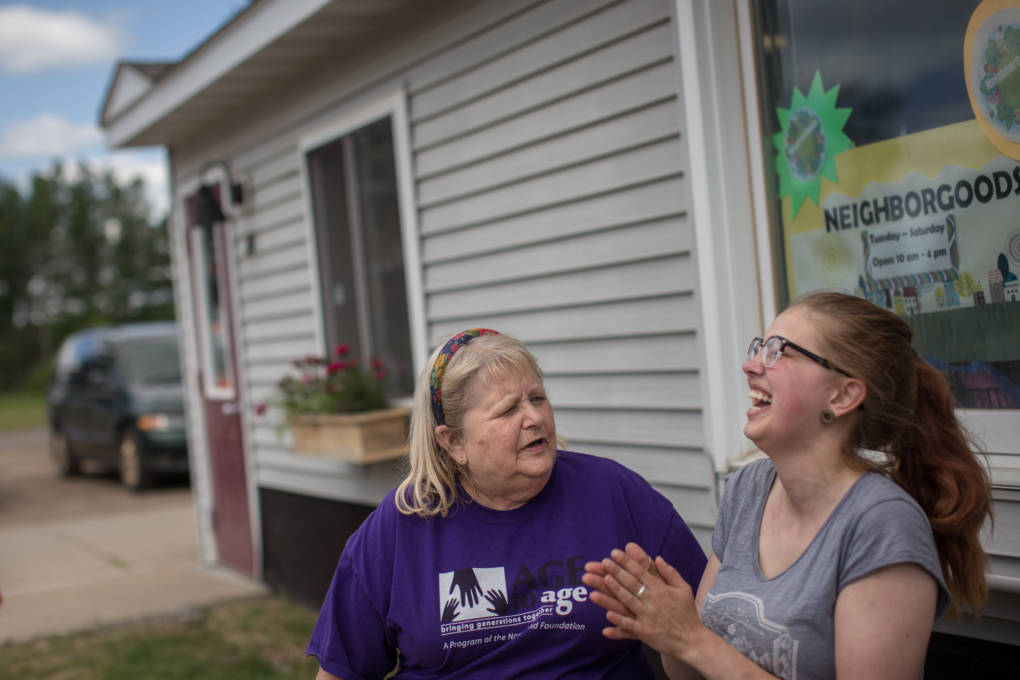
"caption": "Barbara Coplan and Annastazia Vierkandt catch up outside the Kids Plus office. Vierkandt calls Coplan her second mother. They have remained in touch over the years.\n",
"description": "Coplan and Vierkandt catch up outside the Kids Plus office. Vierkandt calls Coplan her second mother. They have remained in touch over the years.",
"title": "Coplan and Vierkandt catch up outside the Kids Plus office. Vierkandt calls Coplan her second mother. They have remained in touch over the years.",
"credit": "Meredith Rizzo/NPR",
"status": "inherit",
"isLoading": false,
"fetchFailed": false
},
"mindshift_54067": {
"type": "attachments",
"id": "mindshift_54067",
"meta": {
"index": "attachments_1716263798",
"site": "mindshift",
"id": "54067",
"found": true
},
"parent": 54064,
"imgSizes": {
"twentyfourteen-full-width": {
"file": "https://ww2.kqed.org/app/uploads/sites/23/2019/08/iStock-1046867296-1038x576.jpg",
"width": 1038,
"mimeType": "image/jpeg",
"height": 576
},
"thumbnail": {
"file": "https://ww2.kqed.org/app/uploads/sites/23/2019/08/iStock-1046867296-160x107.jpg",
"width": 160,
"mimeType": "image/jpeg",
"height": 107
},
"post-thumbnail": {
"file": "https://ww2.kqed.org/app/uploads/sites/23/2019/08/iStock-1046867296-672x372.jpg",
"width": 672,
"mimeType": "image/jpeg",
"height": 372
},
"kqedFullSize": {
"file": "https://ww2.kqed.org/app/uploads/sites/23/2019/08/iStock-1046867296-e1565106191246.jpg",
"width": 1920,
"height": 1280
},
"large": {
"file": "https://ww2.kqed.org/app/uploads/sites/23/2019/08/iStock-1046867296-1020x680.jpg",
"width": 1020,
"mimeType": "image/jpeg",
"height": 680
},
"complete_open_graph": {
"file": "https://ww2.kqed.org/app/uploads/sites/23/2019/08/iStock-1046867296-1200x800.jpg",
"width": 1200,
"mimeType": "image/jpeg",
"height": 800
},
"full-width": {
"file": "https://ww2.kqed.org/app/uploads/sites/23/2019/08/iStock-1046867296-1920x1280.jpg",
"width": 1920,
"mimeType": "image/jpeg",
"height": 1280
},
"medium": {
"file": "https://ww2.kqed.org/app/uploads/sites/23/2019/08/iStock-1046867296-800x533.jpg",
"width": 800,
"mimeType": "image/jpeg",
"height": 533
},
"medium_large": {
"file": "https://ww2.kqed.org/app/uploads/sites/23/2019/08/iStock-1046867296-768x512.jpg",
"width": 768,
"mimeType": "image/jpeg",
"height": 512
}
},
"publishDate": 1565106055,
"modified": 1565106212,
"caption": null,
"description": null,
"title": "iStock-1046867296",
"credit": "Courtney Hale/iStock",
"status": "inherit",
"isLoading": false,
"fetchFailed": false
},
"mindshift_54046": {
"type": "attachments",
"id": "mindshift_54046",
"meta": {
"index": "attachments_1716263798",
"site": "mindshift",
"id": "54046",
"found": true
},
"parent": 54045,
"imgSizes": {
"twentyfourteen-full-width": {
"file": "https://ww2.kqed.org/app/uploads/sites/23/2019/08/lajohnson-immigrant-generations_custom-60bc9b35d5d935d32ab325e3db37f469bf5fb7f7-1038x576.jpg",
"width": 1038,
"mimeType": "image/jpeg",
"height": 576
},
"thumbnail": {
"file": "https://ww2.kqed.org/app/uploads/sites/23/2019/08/lajohnson-immigrant-generations_custom-60bc9b35d5d935d32ab325e3db37f469bf5fb7f7-160x100.jpg",
"width": 160,
"mimeType": "image/jpeg",
"height": 100
},
"post-thumbnail": {
"file": "https://ww2.kqed.org/app/uploads/sites/23/2019/08/lajohnson-immigrant-generations_custom-60bc9b35d5d935d32ab325e3db37f469bf5fb7f7-672x372.jpg",
"width": 672,
"mimeType": "image/jpeg",
"height": 372
},
"kqedFullSize": {
"file": "https://ww2.kqed.org/app/uploads/sites/23/2019/08/lajohnson-immigrant-generations_custom-60bc9b35d5d935d32ab325e3db37f469bf5fb7f7-e1564985494828.jpg",
"width": 1920,
"height": 1198
},
"large": {
"file": "https://ww2.kqed.org/app/uploads/sites/23/2019/08/lajohnson-immigrant-generations_custom-60bc9b35d5d935d32ab325e3db37f469bf5fb7f7-1020x637.jpg",
"width": 1020,
"mimeType": "image/jpeg",
"height": 637
},
"complete_open_graph": {
"file": "https://ww2.kqed.org/app/uploads/sites/23/2019/08/lajohnson-immigrant-generations_custom-60bc9b35d5d935d32ab325e3db37f469bf5fb7f7-1200x749.jpg",
"width": 1200,
"mimeType": "image/jpeg",
"height": 749
},
"full-width": {
"file": "https://ww2.kqed.org/app/uploads/sites/23/2019/08/lajohnson-immigrant-generations_custom-60bc9b35d5d935d32ab325e3db37f469bf5fb7f7-1920x1198.jpg",
"width": 1920,
"mimeType": "image/jpeg",
"height": 1198
},
"medium": {
"file": "https://ww2.kqed.org/app/uploads/sites/23/2019/08/lajohnson-immigrant-generations_custom-60bc9b35d5d935d32ab325e3db37f469bf5fb7f7-800x499.jpg",
"width": 800,
"mimeType": "image/jpeg",
"height": 499
},
"medium_large": {
"file": "https://ww2.kqed.org/app/uploads/sites/23/2019/08/lajohnson-immigrant-generations_custom-60bc9b35d5d935d32ab325e3db37f469bf5fb7f7-768x479.jpg",
"width": 768,
"mimeType": "image/jpeg",
"height": 479
}
},
"publishDate": 1564985248,
"modified": 1564985512,
"caption": "Generations of immigrants.",
"description": "Generations of immigrants.",
"title": "Generations of immigrants.",
"credit": "LA Johnson/NPR",
"status": "inherit",
"isLoading": false,
"fetchFailed": false
},
"mindshift_54040": {
"type": "attachments",
"id": "mindshift_54040",
"meta": {
"index": "attachments_1716263798",
"site": "mindshift",
"id": "54040",
"found": true
},
"parent": 54032,
"imgSizes": {
"twentyfourteen-full-width": {
"file": "https://ww2.kqed.org/app/uploads/sites/23/2019/08/cdf_graduation-0339-edit_custom-f13389ebbc94609a4e3b604d114fe65a858d869e-1038x576.jpg",
"width": 1038,
"mimeType": "image/jpeg",
"height": 576
},
"thumbnail": {
"file": "https://ww2.kqed.org/app/uploads/sites/23/2019/08/cdf_graduation-0339-edit_custom-f13389ebbc94609a4e3b604d114fe65a858d869e-160x107.jpg",
"width": 160,
"mimeType": "image/jpeg",
"height": 107
},
"post-thumbnail": {
"file": "https://ww2.kqed.org/app/uploads/sites/23/2019/08/cdf_graduation-0339-edit_custom-f13389ebbc94609a4e3b604d114fe65a858d869e-672x372.jpg",
"width": 672,
"mimeType": "image/jpeg",
"height": 372
},
"kqedFullSize": {
"file": "https://ww2.kqed.org/app/uploads/sites/23/2019/08/cdf_graduation-0339-edit_custom-f13389ebbc94609a4e3b604d114fe65a858d869e-e1564763020188.jpg",
"width": 1920,
"height": 1279
},
"large": {
"file": "https://ww2.kqed.org/app/uploads/sites/23/2019/08/cdf_graduation-0339-edit_custom-f13389ebbc94609a4e3b604d114fe65a858d869e-1020x679.jpg",
"width": 1020,
"mimeType": "image/jpeg",
"height": 679
},
"complete_open_graph": {
"file": "https://ww2.kqed.org/app/uploads/sites/23/2019/08/cdf_graduation-0339-edit_custom-f13389ebbc94609a4e3b604d114fe65a858d869e-1200x799.jpg",
"width": 1200,
"mimeType": "image/jpeg",
"height": 799
},
"full-width": {
"file": "https://ww2.kqed.org/app/uploads/sites/23/2019/08/cdf_graduation-0339-edit_custom-f13389ebbc94609a4e3b604d114fe65a858d869e-1920x1279.jpg",
"width": 1920,
"mimeType": "image/jpeg",
"height": 1279
},
"medium": {
"file": "https://ww2.kqed.org/app/uploads/sites/23/2019/08/cdf_graduation-0339-edit_custom-f13389ebbc94609a4e3b604d114fe65a858d869e-800x533.jpg",
"width": 800,
"mimeType": "image/jpeg",
"height": 533
},
"medium_large": {
"file": "https://ww2.kqed.org/app/uploads/sites/23/2019/08/cdf_graduation-0339-edit_custom-f13389ebbc94609a4e3b604d114fe65a858d869e-768x511.jpg",
"width": 768,
"mimeType": "image/jpeg",
"height": 511
}
},
"publishDate": 1564762420,
"modified": 1564763014,
"caption": "Marian Wright Edelman (center) talks to some of the young people she hopes will become part of a new generation of social justice activists.",
"description": "Marian Wright Edelman (center) talks to some of the young people she hopes will become part of a new generation of social justice activists.",
"title": "Marian Wright Edelman (center) talks to some of the young people she hopes will become part of a new generation of social justice activists.",
"credit": "Shawn Poynter for NPR",
"status": "inherit",
"isLoading": false,
"fetchFailed": false
},
"mindshift_53643": {
"type": "attachments",
"id": "mindshift_53643",
"meta": {
"index": "attachments_1716263798",
"site": "mindshift",
"id": "53643",
"found": true
},
"parent": 53640,
"imgSizes": {
"twentyfourteen-full-width": {
"file": "https://ww2.kqed.org/app/uploads/sites/23/2019/05/iStock-914470432-1038x576.jpg",
"width": 1038,
"mimeType": "image/jpeg",
"height": 576
},
"thumbnail": {
"file": "https://ww2.kqed.org/app/uploads/sites/23/2019/05/iStock-914470432-160x120.jpg",
"width": 160,
"mimeType": "image/jpeg",
"height": 120
},
"post-thumbnail": {
"file": "https://ww2.kqed.org/app/uploads/sites/23/2019/05/iStock-914470432-672x372.jpg",
"width": 672,
"mimeType": "image/jpeg",
"height": 372
},
"kqedFullSize": {
"file": "https://ww2.kqed.org/app/uploads/sites/23/2019/05/iStock-914470432.jpg",
"width": 1998,
"height": 1500
},
"large": {
"file": "https://ww2.kqed.org/app/uploads/sites/23/2019/05/iStock-914470432-1020x766.jpg",
"width": 1020,
"mimeType": "image/jpeg",
"height": 766
},
"complete_open_graph": {
"file": "https://ww2.kqed.org/app/uploads/sites/23/2019/05/iStock-914470432-1200x901.jpg",
"width": 1200,
"mimeType": "image/jpeg",
"height": 901
},
"full-width": {
"file": "https://ww2.kqed.org/app/uploads/sites/23/2019/05/iStock-914470432-1920x1441.jpg",
"width": 1920,
"mimeType": "image/jpeg",
"height": 1441
},
"medium": {
"file": "https://ww2.kqed.org/app/uploads/sites/23/2019/05/iStock-914470432-800x601.jpg",
"width": 800,
"mimeType": "image/jpeg",
"height": 601
},
"medium_large": {
"file": "https://ww2.kqed.org/app/uploads/sites/23/2019/05/iStock-914470432-768x577.jpg",
"width": 768,
"mimeType": "image/jpeg",
"height": 577
}
},
"publishDate": 1557518001,
"modified": 1557518053,
"caption": "Teachers can actively cultivate habits that lead to more resilience.",
"description": null,
"title": "human and love spirit powerful energy connect to the universe power abstract art watercolor painting illustration design hand drawn",
"credit": "iStock/Benjavisa",
"status": "inherit",
"isLoading": false,
"fetchFailed": false
},
"mindshift_53751": {
"type": "attachments",
"id": "mindshift_53751",
"meta": {
"index": "attachments_1716263798",
"site": "mindshift",
"id": "53751",
"found": true
},
"parent": 53744,
"imgSizes": {
"twentyfourteen-full-width": {
"file": "https://ww2.kqed.org/app/uploads/sites/23/2019/05/inquiry-collaboration-school-culture-1038x576.jpg",
"width": 1038,
"mimeType": "image/jpeg",
"height": 576
},
"thumbnail": {
"file": "https://ww2.kqed.org/app/uploads/sites/23/2019/05/inquiry-collaboration-school-culture-160x160.jpg",
"width": 160,
"mimeType": "image/jpeg",
"height": 160
},
"post-thumbnail": {
"file": "https://ww2.kqed.org/app/uploads/sites/23/2019/05/inquiry-collaboration-school-culture-672x372.jpg",
"width": 672,
"mimeType": "image/jpeg",
"height": 372
},
"kqedFullSize": {
"file": "https://ww2.kqed.org/app/uploads/sites/23/2019/05/inquiry-collaboration-school-culture.jpg",
"width": 1732,
"height": 1732
},
"large": {
"file": "https://ww2.kqed.org/app/uploads/sites/23/2019/05/inquiry-collaboration-school-culture-1020x1020.jpg",
"width": 1020,
"mimeType": "image/jpeg",
"height": 1020
},
"complete_open_graph": {
"file": "https://ww2.kqed.org/app/uploads/sites/23/2019/05/inquiry-collaboration-school-culture-1200x1200.jpg",
"width": 1200,
"mimeType": "image/jpeg",
"height": 1200
},
"medium": {
"file": "https://ww2.kqed.org/app/uploads/sites/23/2019/05/inquiry-collaboration-school-culture-800x800.jpg",
"width": 800,
"mimeType": "image/jpeg",
"height": 800
},
"medium_large": {
"file": "https://ww2.kqed.org/app/uploads/sites/23/2019/05/inquiry-collaboration-school-culture-768x768.jpg",
"width": 768,
"mimeType": "image/jpeg",
"height": 768
}
},
"publishDate": 1559173625,
"modified": 1559173702,
"caption": "When teachers work collaboratively to identify specific student skill gaps, they can push learning for all students more quickly.",
"description": null,
"title": "inquiry-collaboration-school-culture",
"credit": "iStock/bobmadbob",
"status": "inherit",
"isLoading": false,
"fetchFailed": false
},
"mindshift_54009": {
"type": "attachments",
"id": "mindshift_54009",
"meta": {
"index": "attachments_1716263798",
"site": "mindshift",
"id": "54009",
"found": true
},
"parent": 54008,
"imgSizes": {
"twentyfourteen-full-width": {
"file": "https://ww2.kqed.org/app/uploads/sites/23/2019/07/ygateau_npred_borders1-c4f22c33fac1a9806e5df963b8b11ae67e707927-1038x576.jpg",
"width": 1038,
"mimeType": "image/jpeg",
"height": 576
},
"thumbnail": {
"file": "https://ww2.kqed.org/app/uploads/sites/23/2019/07/ygateau_npred_borders1-c4f22c33fac1a9806e5df963b8b11ae67e707927-160x120.jpg",
"width": 160,
"mimeType": "image/jpeg",
"height": 120
},
"post-thumbnail": {
"file": "https://ww2.kqed.org/app/uploads/sites/23/2019/07/ygateau_npred_borders1-c4f22c33fac1a9806e5df963b8b11ae67e707927-672x372.jpg",
"width": 672,
"mimeType": "image/jpeg",
"height": 372
},
"kqedFullSize": {
"file": "https://ww2.kqed.org/app/uploads/sites/23/2019/07/ygateau_npred_borders1-c4f22c33fac1a9806e5df963b8b11ae67e707927-e1564073278477.jpg",
"width": 1920,
"height": 1439
},
"large": {
"file": "https://ww2.kqed.org/app/uploads/sites/23/2019/07/ygateau_npred_borders1-c4f22c33fac1a9806e5df963b8b11ae67e707927-1020x765.jpg",
"width": 1020,
"mimeType": "image/jpeg",
"height": 765
},
"complete_open_graph": {
"file": "https://ww2.kqed.org/app/uploads/sites/23/2019/07/ygateau_npred_borders1-c4f22c33fac1a9806e5df963b8b11ae67e707927-1200x900.jpg",
"width": 1200,
"mimeType": "image/jpeg",
"height": 900
},
"full-width": {
"file": "https://ww2.kqed.org/app/uploads/sites/23/2019/07/ygateau_npred_borders1-c4f22c33fac1a9806e5df963b8b11ae67e707927-1920x1439.jpg",
"width": 1920,
"mimeType": "image/jpeg",
"height": 1439
},
"medium": {
"file": "https://ww2.kqed.org/app/uploads/sites/23/2019/07/ygateau_npred_borders1-c4f22c33fac1a9806e5df963b8b11ae67e707927-800x600.jpg",
"width": 800,
"mimeType": "image/jpeg",
"height": 600
},
"medium_large": {
"file": "https://ww2.kqed.org/app/uploads/sites/23/2019/07/ygateau_npred_borders1-c4f22c33fac1a9806e5df963b8b11ae67e707927-768x576.jpg",
"width": 768,
"mimeType": "image/jpeg",
"height": 576
}
},
"publishDate": 1564073218,
"modified": 1564073305,
"caption": "Divisive school district borders.",
"description": "Divisive school district borders.",
"title": "Divisive school district borders.",
"credit": "Yasmine Gateau for NPR",
"status": "inherit",
"isLoading": false,
"fetchFailed": false
},
"mindshift_54000": {
"type": "attachments",
"id": "mindshift_54000",
"meta": {
"index": "attachments_1716263798",
"site": "mindshift",
"id": "54000",
"found": true
},
"parent": 53999,
"imgSizes": {
"twentyfourteen-full-width": {
"file": "https://ww2.kqed.org/app/uploads/sites/23/2019/07/ap_19199784366764-c502cba66ce83654b2b0a8f47557c3e560d8bdff-1038x576.jpg",
"width": 1038,
"mimeType": "image/jpeg",
"height": 576
},
"thumbnail": {
"file": "https://ww2.kqed.org/app/uploads/sites/23/2019/07/ap_19199784366764-c502cba66ce83654b2b0a8f47557c3e560d8bdff-160x120.jpg",
"width": 160,
"mimeType": "image/jpeg",
"height": 120
},
"post-thumbnail": {
"file": "https://ww2.kqed.org/app/uploads/sites/23/2019/07/ap_19199784366764-c502cba66ce83654b2b0a8f47557c3e560d8bdff-672x372.jpg",
"width": 672,
"mimeType": "image/jpeg",
"height": 372
},
"kqedFullSize": {
"file": "https://ww2.kqed.org/app/uploads/sites/23/2019/07/ap_19199784366764-c502cba66ce83654b2b0a8f47557c3e560d8bdff-e1563949209997.jpg",
"width": 1920,
"height": 1441
},
"large": {
"file": "https://ww2.kqed.org/app/uploads/sites/23/2019/07/ap_19199784366764-c502cba66ce83654b2b0a8f47557c3e560d8bdff-1020x765.jpg",
"width": 1020,
"mimeType": "image/jpeg",
"height": 765
},
"complete_open_graph": {
"file": "https://ww2.kqed.org/app/uploads/sites/23/2019/07/ap_19199784366764-c502cba66ce83654b2b0a8f47557c3e560d8bdff-1200x901.jpg",
"width": 1200,
"mimeType": "image/jpeg",
"height": 901
},
"full-width": {
"file": "https://ww2.kqed.org/app/uploads/sites/23/2019/07/ap_19199784366764-c502cba66ce83654b2b0a8f47557c3e560d8bdff-1920x1441.jpg",
"width": 1920,
"mimeType": "image/jpeg",
"height": 1441
},
"medium": {
"file": "https://ww2.kqed.org/app/uploads/sites/23/2019/07/ap_19199784366764-c502cba66ce83654b2b0a8f47557c3e560d8bdff-800x600.jpg",
"width": 800,
"mimeType": "image/jpeg",
"height": 600
},
"medium_large": {
"file": "https://ww2.kqed.org/app/uploads/sites/23/2019/07/ap_19199784366764-c502cba66ce83654b2b0a8f47557c3e560d8bdff-768x576.jpg",
"width": 768,
"mimeType": "image/jpeg",
"height": 576
}
},
"publishDate": 1563948910,
"modified": 1563949230,
"caption": "(From left) Sam Adamson, Lori Riddle, Hailey Hardcastle, and Derek Evans pose at the Oregon State Capitol in Salem. The teens suggested legislation to allow students to take \"mental health days\" as they would sick days.",
"description": "(From left) Sam Adamson, Lori Riddle, Hailey Hardcastle, and Derek Evans pose at the Oregon State Capitol in Salem. The teens suggested legislation to allow students to take \"mental health days\" as they would sick days.",
"title": "(From left) Sam Adamson, Lori Riddle, Hailey Hardcastle, and Derek Evans pose at the Oregon State Capitol in Salem. The teens suggested legislation to allow students to take \"mental health days\" as they would sick days.",
"credit": "Jessica Adamson/AP",
"status": "inherit",
"isLoading": false,
"fetchFailed": false
},
"mindshift_53993": {
"type": "attachments",
"id": "mindshift_53993",
"meta": {
"index": "attachments_1716263798",
"site": "mindshift",
"id": "53993",
"found": true
},
"parent": 53992,
"imgSizes": {
"twentyfourteen-full-width": {
"file": "https://ww2.kqed.org/app/uploads/sites/23/2019/07/finalnew_wide-2fce0981296cf5599cc43a2cb46fb83057fc0880-1038x576.jpe",
"width": 1038,
"mimeType": "image/jpeg",
"height": 576
},
"thumbnail": {
"file": "https://ww2.kqed.org/app/uploads/sites/23/2019/07/finalnew_wide-2fce0981296cf5599cc43a2cb46fb83057fc0880-160x90.jpe",
"width": 160,
"mimeType": "image/jpeg",
"height": 90
},
"post-thumbnail": {
"file": "https://ww2.kqed.org/app/uploads/sites/23/2019/07/finalnew_wide-2fce0981296cf5599cc43a2cb46fb83057fc0880-672x372.jpe",
"width": 672,
"mimeType": "image/jpeg",
"height": 372
},
"kqedFullSize": {
"file": "https://ww2.kqed.org/app/uploads/sites/23/2019/07/finalnew_wide-2fce0981296cf5599cc43a2cb46fb83057fc0880-e1563776015283.jpe",
"width": 1920,
"height": 1080
},
"large": {
"file": "https://ww2.kqed.org/app/uploads/sites/23/2019/07/finalnew_wide-2fce0981296cf5599cc43a2cb46fb83057fc0880-1020x574.jpe",
"width": 1020,
"mimeType": "image/jpeg",
"height": 574
},
"complete_open_graph": {
"file": "https://ww2.kqed.org/app/uploads/sites/23/2019/07/finalnew_wide-2fce0981296cf5599cc43a2cb46fb83057fc0880-1200x675.jpe",
"width": 1200,
"mimeType": "image/jpeg",
"height": 675
},
"full-width": {
"file": "https://ww2.kqed.org/app/uploads/sites/23/2019/07/finalnew_wide-2fce0981296cf5599cc43a2cb46fb83057fc0880-1920x1080.jpe",
"width": 1920,
"mimeType": "image/jpeg",
"height": 1080
},
"medium": {
"file": "https://ww2.kqed.org/app/uploads/sites/23/2019/07/finalnew_wide-2fce0981296cf5599cc43a2cb46fb83057fc0880-800x450.jpe",
"width": 800,
"mimeType": "image/jpeg",
"height": 450
},
"medium_large": {
"file": "https://ww2.kqed.org/app/uploads/sites/23/2019/07/finalnew_wide-2fce0981296cf5599cc43a2cb46fb83057fc0880-768x432.jpe",
"width": 768,
"mimeType": "image/jpeg",
"height": 432
}
},
"publishDate": 1563775878,
"modified": 1563776037,
"caption": "Parents on their phones.",
"description": "Parents on their phones.",
"title": "Parents on their phones.",
"credit": "Katherine Streeter for NPR",
"status": "inherit",
"isLoading": false,
"fetchFailed": false
},
"mindshift_53987": {
"type": "attachments",
"id": "mindshift_53987",
"meta": {
"index": "attachments_1716263798",
"site": "mindshift",
"id": "53987",
"found": true
},
"parent": 53986,
"imgSizes": {
"twentyfourteen-full-width": {
"file": "https://ww2.kqed.org/app/uploads/sites/23/2019/07/molly_approved_custom-4fd4462a2c5abefc308739f14d767a277e2b1d4c-1038x576.png",
"width": 1038,
"mimeType": "image/png",
"height": 576
},
"thumbnail": {
"file": "https://ww2.kqed.org/app/uploads/sites/23/2019/07/molly_approved_custom-4fd4462a2c5abefc308739f14d767a277e2b1d4c-160x76.png",
"width": 160,
"mimeType": "image/png",
"height": 76
},
"post-thumbnail": {
"file": "https://ww2.kqed.org/app/uploads/sites/23/2019/07/molly_approved_custom-4fd4462a2c5abefc308739f14d767a277e2b1d4c-672x372.png",
"width": 672,
"mimeType": "image/png",
"height": 372
},
"kqedFullSize": {
"file": "https://ww2.kqed.org/app/uploads/sites/23/2019/07/molly_approved_custom-4fd4462a2c5abefc308739f14d767a277e2b1d4c-e1563519419119.png",
"width": 1920,
"height": 914
},
"large": {
"file": "https://ww2.kqed.org/app/uploads/sites/23/2019/07/molly_approved_custom-4fd4462a2c5abefc308739f14d767a277e2b1d4c-1020x486.png",
"width": 1020,
"mimeType": "image/png",
"height": 486
},
"complete_open_graph": {
"file": "https://ww2.kqed.org/app/uploads/sites/23/2019/07/molly_approved_custom-4fd4462a2c5abefc308739f14d767a277e2b1d4c-1200x571.png",
"width": 1200,
"mimeType": "image/png",
"height": 571
},
"full-width": {
"file": "https://ww2.kqed.org/app/uploads/sites/23/2019/07/molly_approved_custom-4fd4462a2c5abefc308739f14d767a277e2b1d4c-1920x914.png",
"width": 1920,
"mimeType": "image/png",
"height": 914
},
"medium": {
"file": "https://ww2.kqed.org/app/uploads/sites/23/2019/07/molly_approved_custom-4fd4462a2c5abefc308739f14d767a277e2b1d4c-800x381.png",
"width": 800,
"mimeType": "image/png",
"height": 381
},
"medium_large": {
"file": "https://ww2.kqed.org/app/uploads/sites/23/2019/07/molly_approved_custom-4fd4462a2c5abefc308739f14d767a277e2b1d4c-768x366.png",
"width": 768,
"mimeType": "image/png",
"height": 366
}
},
"publishDate": 1563519359,
"modified": 1563519459,
"caption": "In the PBS program Molly of Denali, Alaska Native Molly Mabray helps her mom run a trading post in an Alaskan village.",
"description": null,
"title": "In the PBS program Molly of Denali, Alaska Native Molly Mabray helps her mom run a trading post in an Alaskan village.",
"credit": "WGBH Educational Foundation",
"status": "inherit",
"isLoading": false,
"fetchFailed": false
},
"mindshift_53979": {
"type": "attachments",
"id": "mindshift_53979",
"meta": {
"index": "attachments_1716263798",
"site": "mindshift",
"id": "53979",
"found": true
},
"parent": 53978,
"imgSizes": {
"twentyfourteen-full-width": {
"file": "https://ww2.kqed.org/app/uploads/sites/23/2019/07/steel-city-academy-podcast-club-06-bill-healy-44c6676695069bc443e1b090cd4f1164287eaf9b-1038x576.jpg",
"width": 1038,
"mimeType": "image/jpeg",
"height": 576
},
"thumbnail": {
"file": "https://ww2.kqed.org/app/uploads/sites/23/2019/07/steel-city-academy-podcast-club-06-bill-healy-44c6676695069bc443e1b090cd4f1164287eaf9b-160x120.jpg",
"width": 160,
"mimeType": "image/jpeg",
"height": 120
},
"post-thumbnail": {
"file": "https://ww2.kqed.org/app/uploads/sites/23/2019/07/steel-city-academy-podcast-club-06-bill-healy-44c6676695069bc443e1b090cd4f1164287eaf9b-672x372.jpg",
"width": 672,
"mimeType": "image/jpeg",
"height": 372
},
"kqedFullSize": {
"file": "https://ww2.kqed.org/app/uploads/sites/23/2019/07/steel-city-academy-podcast-club-06-bill-healy-44c6676695069bc443e1b090cd4f1164287eaf9b-e1563374693386.jpg",
"width": 1920,
"height": 1439
},
"large": {
"file": "https://ww2.kqed.org/app/uploads/sites/23/2019/07/steel-city-academy-podcast-club-06-bill-healy-44c6676695069bc443e1b090cd4f1164287eaf9b-1020x764.jpg",
"width": 1020,
"mimeType": "image/jpeg",
"height": 764
},
"complete_open_graph": {
"file": "https://ww2.kqed.org/app/uploads/sites/23/2019/07/steel-city-academy-podcast-club-06-bill-healy-44c6676695069bc443e1b090cd4f1164287eaf9b-1200x899.jpg",
"width": 1200,
"mimeType": "image/jpeg",
"height": 899
},
"full-width": {
"file": "https://ww2.kqed.org/app/uploads/sites/23/2019/07/steel-city-academy-podcast-club-06-bill-healy-44c6676695069bc443e1b090cd4f1164287eaf9b-1920x1439.jpg",
"width": 1920,
"mimeType": "image/jpeg",
"height": 1439
},
"medium": {
"file": "https://ww2.kqed.org/app/uploads/sites/23/2019/07/steel-city-academy-podcast-club-06-bill-healy-44c6676695069bc443e1b090cd4f1164287eaf9b-800x599.jpg",
"width": 800,
"mimeType": "image/jpeg",
"height": 599
},
"medium_large": {
"file": "https://ww2.kqed.org/app/uploads/sites/23/2019/07/steel-city-academy-podcast-club-06-bill-healy-44c6676695069bc443e1b090cd4f1164287eaf9b-768x575.jpg",
"width": 768,
"mimeType": "image/jpeg",
"height": 575
}
},
"publishDate": 1563374545,
"modified": 1563374716,
"caption": "Students podcasts from the Steel City Academy in Gary, Indiana, Erin Addison (left), Evan Addison, and Andrew Arevalo (right), look over a planning map of the City of Gary.",
"description": "Students podcasts from the Steel City Academy in Gary, Indiana, Erin Addison (left), Evan Addison, and Andrew Arevalo (right), look over a planning map of the City of Gary.",
"title": "Students podcasts from the Steel City Academy in Gary, Indiana, Erin Addison (left), Evan Addison, and Andrew Arevalo (right), look over a planning map of the City of Gary.",
"credit": "Courtesy of Bill Healy",
"status": "inherit",
"isLoading": false,
"fetchFailed": false
},
"mindshift_53975": {
"type": "attachments",
"id": "mindshift_53975",
"meta": {
"index": "attachments_1716263798",
"site": "mindshift",
"id": "53975",
"found": true
},
"parent": 53974,
"imgSizes": {
"twentyfourteen-full-width": {
"file": "https://ww2.kqed.org/app/uploads/sites/23/2019/07/19-0710-nprcribver01_custom-b92f4e76881086abee62144f66723c6c96471452-1038x576.jpg",
"width": 1038,
"mimeType": "image/jpeg",
"height": 576
},
"thumbnail": {
"file": "https://ww2.kqed.org/app/uploads/sites/23/2019/07/19-0710-nprcribver01_custom-b92f4e76881086abee62144f66723c6c96471452-160x92.jpg",
"width": 160,
"mimeType": "image/jpeg",
"height": 92
},
"post-thumbnail": {
"file": "https://ww2.kqed.org/app/uploads/sites/23/2019/07/19-0710-nprcribver01_custom-b92f4e76881086abee62144f66723c6c96471452-672x372.jpg",
"width": 672,
"mimeType": "image/jpeg",
"height": 372
},
"kqedFullSize": {
"file": "https://ww2.kqed.org/app/uploads/sites/23/2019/07/19-0710-nprcribver01_custom-b92f4e76881086abee62144f66723c6c96471452-e1563260014479.jpg",
"width": 1920,
"height": 1098
},
"large": {
"file": "https://ww2.kqed.org/app/uploads/sites/23/2019/07/19-0710-nprcribver01_custom-b92f4e76881086abee62144f66723c6c96471452-1020x583.jpg",
"width": 1020,
"mimeType": "image/jpeg",
"height": 583
},
"complete_open_graph": {
"file": "https://ww2.kqed.org/app/uploads/sites/23/2019/07/19-0710-nprcribver01_custom-b92f4e76881086abee62144f66723c6c96471452-1200x686.jpg",
"width": 1200,
"mimeType": "image/jpeg",
"height": 686
},
"full-width": {
"file": "https://ww2.kqed.org/app/uploads/sites/23/2019/07/19-0710-nprcribver01_custom-b92f4e76881086abee62144f66723c6c96471452-1920x1098.jpg",
"width": 1920,
"mimeType": "image/jpeg",
"height": 1098
},
"medium": {
"file": "https://ww2.kqed.org/app/uploads/sites/23/2019/07/19-0710-nprcribver01_custom-b92f4e76881086abee62144f66723c6c96471452-800x458.jpg",
"width": 800,
"mimeType": "image/jpeg",
"height": 458
},
"medium_large": {
"file": "https://ww2.kqed.org/app/uploads/sites/23/2019/07/19-0710-nprcribver01_custom-b92f4e76881086abee62144f66723c6c96471452-768x439.jpg",
"width": 768,
"mimeType": "image/jpeg",
"height": 439
}
},
"publishDate": 1563259959,
"modified": 1563260039,
"caption": null,
"description": "Taking care of a newborn can be relentless and at some point, many parents need the baby to sleep — alone and quietly — for a few hours. So what does science say about the controversial practice of sleep train",
"title": "Taking care of a newborn can be relentless and at some point, many parents need the baby to sleep — alone and quietly — for a few hours. So what does science say about the controversial practice of sleep training?",
"credit": "Scott Bakal for NPR",
"status": "inherit",
"isLoading": false,
"fetchFailed": false
}
},
"audioPlayerReducer": {
"postId": "stream_live",
"isPaused": true,
"isPlaying": false,
"pfsActive": false,
"pledgeModalIsOpen": true,
"playerDrawerIsOpen": false,
"liveAudioPlayStartedAt": 0,
"liveAudioPlayContext": ""
},
"authorsReducer": {
"byline_mindshift_54082": {
"type": "authors",
"id": "byline_mindshift_54082",
"meta": {
"override": true
},
"slug": "byline_mindshift_54082",
"name": "Rhitu Chatterjee",
"isLoading": false
},
"byline_mindshift_54045": {
"type": "authors",
"id": "byline_mindshift_54045",
"meta": {
"override": true
},
"slug": "byline_mindshift_54045",
"name": "Jacqueline Nkhonjera",
"isLoading": false
},
"byline_mindshift_54032": {
"type": "authors",
"id": "byline_mindshift_54032",
"meta": {
"override": true
},
"slug": "byline_mindshift_54032",
"name": "Debbie Elliott",
"isLoading": false
},
"byline_mindshift_54008": {
"type": "authors",
"id": "byline_mindshift_54008",
"meta": {
"override": true
},
"slug": "byline_mindshift_54008",
"name": "Elissa Nadworny and Cory Turner",
"isLoading": false
},
"byline_mindshift_53999": {
"type": "authors",
"id": "byline_mindshift_53999",
"meta": {
"override": true
},
"slug": "byline_mindshift_53999",
"name": "Dani Matias",
"isLoading": false
},
"byline_mindshift_53992": {
"type": "authors",
"id": "byline_mindshift_53992",
"meta": {
"override": true
},
"slug": "byline_mindshift_53992",
"name": "Anya Kamenetz",
"isLoading": false
},
"byline_mindshift_53986": {
"type": "authors",
"id": "byline_mindshift_53986",
"meta": {
"override": true
},
"slug": "byline_mindshift_53986",
"name": "Mandalit del Barco",
"isLoading": false
},
"byline_mindshift_53978": {
"type": "authors",
"id": "byline_mindshift_53978",
"meta": {
"override": true
},
"slug": "byline_mindshift_53978",
"name": "Matt Ozug",
"isLoading": false
},
"byline_mindshift_53974": {
"type": "authors",
"id": "byline_mindshift_53974",
"meta": {
"override": true
},
"slug": "byline_mindshift_53974",
"name": "Michaeleen Doucleff",
"isLoading": false
},
"katrinaschwartz": {
"type": "authors",
"id": "234",
"meta": {
"index": "authors_1716337520",
"id": "234",
"found": true
},
"name": "Katrina Schwartz",
"firstName": "Katrina",
"lastName": "Schwartz",
"slug": "katrinaschwartz",
"email": "kschwartz@kqed.org",
"display_author_email": false,
"staff_mastheads": [
"news"
],
"title": "Producer",
"bio": "Katrina Schwartz is a journalist based in San Francisco. She's worked at KPCC public radio in LA and has reported on air and online for KQED since 2010. She covered how teaching and learning is changing for MindShift between 2012 and 2020. She is the co-host of the MindShift podcast and now produces KQED's Bay Curious podcast.",
"avatar": "https://secure.gravatar.com/avatar/edb4ee79070447a018538c9aae6eeecf28786515b8a0c30e43b6b7dce5aa44c8?s=600&d=blank&r=g",
"twitter": "kschwart",
"bluesky": null,
"facebook": null,
"instagram": null,
"linkedin": null,
"sites": [
{
"site": "",
"roles": [
"editor"
]
},
{
"site": "news",
"roles": [
"editor"
]
},
{
"site": "mindshift",
"roles": [
"administrator"
]
},
{
"site": "stateofhealth",
"roles": [
"author"
]
},
{
"site": "science",
"roles": [
"editor"
]
}
],
"headData": {
"title": "Katrina Schwartz | KQED",
"description": "Producer",
"ogImgSrc": "https://secure.gravatar.com/avatar/edb4ee79070447a018538c9aae6eeecf28786515b8a0c30e43b6b7dce5aa44c8?s=600&d=blank&r=g",
"twImgSrc": "https://secure.gravatar.com/avatar/edb4ee79070447a018538c9aae6eeecf28786515b8a0c30e43b6b7dce5aa44c8?s=600&d=blank&r=g"
},
"isLoading": false,
"link": "/author/katrinaschwartz"
},
"dfkris": {
"type": "authors",
"id": "11087",
"meta": {
"index": "authors_1716337520",
"id": "11087",
"found": true
},
"name": "Deborah Farmer Kris",
"firstName": "Deborah Farmer",
"lastName": "Kris",
"slug": "dfkris",
"email": "dfkris@gmail.com",
"display_author_email": false,
"staff_mastheads": [],
"title": null,
"bio": "\u003cem>\u003ca href=\"https://twitter.com/@dfkris\">Deborah Farmer Kris\u003c/a> has taught elementary, middle and high school and served as a charter school administrator. She spent a decade as an associate at Boston University’s \u003c/em>\u003cem>\u003ca href=\"http://www.bu.edu/ccsr/about-us/\">Center for Character and Social Responsibility\u003c/a>, \u003c/em>\u003cem>researching, writing, and consulting with schools. She is the mother of two young children. You can follower her on Twitter \u003ca href=\"https://twitter.com/@dfkris\">@dfkris\u003c/a>.\u003c/em>",
"avatar": "https://secure.gravatar.com/avatar/48efe6f17031ed31222b74af9605fe5a?s=600&d=blank&r=g",
"twitter": "dfkris",
"facebook": null,
"instagram": null,
"linkedin": null,
"sites": [
{
"site": "mindshift",
"roles": [
"author"
]
}
],
"headData": {
"title": "Deborah Farmer Kris | KQED",
"description": null,
"ogImgSrc": "https://secure.gravatar.com/avatar/48efe6f17031ed31222b74af9605fe5a?s=600&d=blank&r=g",
"twImgSrc": "https://secure.gravatar.com/avatar/48efe6f17031ed31222b74af9605fe5a?s=600&d=blank&r=g"
},
"isLoading": false,
"link": "/author/dfkris"
}
},
"pagesReducer": {
"mindshift_tag_featured": {
"type": "terms",
"id": "mindshift_20784",
"meta": {
"index": "terms_1716263798",
"site": "mindshift",
"id": "20784",
"score": 7.656306
},
"featImg": null,
"name": "featured",
"description": null,
"taxonomy": "tag",
"headData": {
"twImgId": null,
"twTitle": null,
"ogTitle": null,
"ogImgId": null,
"twDescription": null,
"description": null,
"title": "featured Archives | KQED Mindshift",
"ogDescription": null
},
"ttid": 20061,
"slug": "featured",
"isLoading": false,
"title": "featured",
"pageMeta": {
"site": "mindshift",
"WpPageTemplate": "page-topic-editorial",
"currentPage": 14
},
"blocks": [
{
"blockName": "kqed/post-list",
"attrs": {
"layout": "cardArticle2",
"query": "posts/mindshift?tag=featured",
"seeMore": false,
"paginated": true,
"page": 14
}
},
{
"blockName": "kqed/ad"
}
]
}
},
"pfsSessionReducer": {},
"postsReducer": {
"stream_live": {
"type": "live",
"id": "stream_live",
"audioUrl": "https://hls.kqed.org/hls/kqed_app/playlist.m3u8",
"title": "Live Stream",
"excerpt": "Live Stream information currently unavailable.",
"link": "/radio",
"featImg": "",
"label": {
"name": "KQED Live",
"link": "/"
}
},
"stream_kqedNewscast": {
"type": "posts",
"id": "stream_kqedNewscast",
"audioUrl": "https://www.kqed.org/.stream/anon/radio/RDnews/newscast.mp3?_=1",
"title": "KQED Newscast",
"featImg": "",
"label": {
"name": "88.5 FM",
"link": "/"
}
},
"mindshift_54082": {
"type": "posts",
"id": "mindshift_54082",
"meta": {
"index": "posts_1716263798",
"site": "mindshift",
"id": "54082",
"score": null,
"sort": [
1565269938000
]
},
"parent": 0,
"labelTerm": {
"site": "mindshift"
},
"blocks": [],
"publishDate": 1565269938,
"format": "standard",
"disqusTitle": "Bringing Together Young And Old To Ease The Isolation Of Rural Life",
"title": "Bringing Together Young And Old To Ease The Isolation Of Rural Life",
"headTitle": "MindShift | KQED News",
"content": "\u003cp>Priscilla Bogema lives in a rural town called McGregor, Minn., in a part of the state that has more trees and lakes than people.\u003c/p>\n\u003cp>She came here about 20 years ago seeking solitude during a major crisis in her life. She had just gotten divorced and was dealing with some health problems. \"So I came to a place where nobody could see me,\" she says.\u003c/p>\n\u003cp>Now, Bogema is in her 60s, frail and mostly confined to her house. Her arthritis and other health problems have limited her mobility. She struggles with the upkeep of her home and yard. She drives into town once a week for groceries and a movie with other seniors. But she doesn't have close friends she sees regularly and her children and grandchildren only visit once every few months.\u003c/p>\n\u003cp>The solitude she once sought is no longer as comforting. \"It can get lonely, very lonely,\" she says.\u003c/p>\n\u003cp>According to a recent poll by NPR, the Robert Wood Johnson Foundation and the Harvard T.H. Chan School of Public Health, Bogema is one of about 2.5 million rural residents (about 7% of the total rural population) who say they have no friends or family nearby to rely on. An additional 14 million (about 39%) say they only have a few people. Like Bogema, many feel isolated.\u003c/p>\n\u003cfigure id=\"attachment_54104\" class=\"wp-caption alignnone\" style=\"max-width: 1920px\">\u003cimg class=\"size-full wp-image-54104\" src=\"https://ww2.kqed.org/mindshift/wp-content/uploads/sites/23/2019/08/rural-health-mcgregor-18_enl-1e6c34c52073035cbd581b0929629582028c01b8-1-e1565235566501.jpg\" alt=\"\" width=\"1920\" height=\"1280\">\u003cfigcaption class=\"wp-caption-text\">McGregor, Minn., is one of 18 communities in north-eastern part of the state that is participating in a program that addresses loneliness and social isolation by connecting the young with the old. \u003ccite>(Meredith Rizzo/NPR)\u003c/cite>\u003c/figcaption>\u003c/figure>\n\u003cp>People in rural areas report \"feeling lonely or left out,\" says Carrie Henning-Smith, the deputy director of the \u003ca href=\"https://www.ruralhealthresearch.org/centers/minnesota\">University of Minnesota Rural Health Research Center\u003c/a> and one of the authors of a recent \u003ca href=\"https://www.ncbi.nlm.nih.gov/pubmed/30609155\">study \u003c/a>on rural isolation, despite the fact that rural communities often have \u003ca href=\"https://www.npr.org/sections/health-shots/2019/05/21/725059882/poll-many-rural-americans-struggle-with-financial-insecurity-access-to-health-ca\">stronger social networks than urban ones\u003c/a>. She notes that many communities have become more socially isolated in recent years as rural economies have declined and young people moved away.\u003c/p>\n\u003cp>[ad fullwidth]\u003c/p>\n\u003cp>Social isolation is increasingly recognized as a \u003ca href=\"https://academic.oup.com/ppar/article/27/4/127/4782506\">public health issue\u003c/a>. Studies show that isolation and loneliness puts people at a higher risk of long term\u003ca href=\"https://heart.bmj.com/content/heartjnl/102/13/1009.full.pdf\"> physical\u003c/a> and \u003ca href=\"https://www.ncbi.nlm.nih.gov/pmc/articles/PMC4225959/\">mental health problems\u003c/a>, including \u003ca href=\"https://journals.plos.org/plosmedicine/article?id=10.1371/journal.pmed.1000316\">premature mortality\u003c/a>. And Henning-Smith's preliminary research suggests that in rural areas, isolation can reduce people's ability to meet daily needs, like access to health care and food.\u003c/p>\n\u003cp>A group in northeastern Minnesota is tackling this problem in a novel way: They're trying to reconnect a fragmented social fabric by bringing together generations to support each other — kids and the elderly.\u003c/p>\n\u003cp>McGregor is one of 18 rural communities running the program, called\u003ca href=\"https://northlandfdn.org/news/publications/age2age-outcomes-2013.pdf\"> AGE to age\u003c/a>. It connects more than 4,000 youth with almost 2,500 older adults annually.\u003c/p>\n\u003cp>The initiative is not just geared to help the elderly — the support runs both ways. It also helps children and young people in these communities feel more supported, giving them work experience and mentors. Children and seniors work on projects together — the kind of activity varies from community to community, and can range anywhere from participating in a reading club, to building and maintaining a community garden, to helping local food pantries, to working on art projects. Along the way, they develop meaningful relationships that can last beyond the program.\u003c/p>\n\u003cfigure id=\"attachment_54105\" class=\"wp-caption alignnone\" style=\"max-width: 1920px\">\u003cimg class=\"size-full wp-image-54105\" src=\"https://ww2.kqed.org/mindshift/wp-content/uploads/sites/23/2019/08/rural-health-mcgregor-19_enl-a69e86f0a4679c4995ecb002de8680906bf7bc4c-1-e1565235619118.jpg\" alt=\"\" width=\"1920\" height=\"1282\">\u003cfigcaption class=\"wp-caption-text\">Daryl Doering (center) of Kids Plus explains how certain yard tools work to volunteers Amelia Seybold (left) and Jason Ponthieux during a popsicle break at Barbara Coplan's house. Kids Plus connects kids with adults and seniors to foster relationships in the community. \u003ccite>(Meredith Rizzo/NPR)\u003c/cite>\u003c/figcaption>\u003c/figure>\n\u003cp>Cheryl Meld is the director of\u003ca href=\"https://www.facebook.com/KidsPlusOfMcGregor/\"> Kids Plus\u003c/a>, a local McGregor group that runs the AGE to age program in this community. She hopes it can help give the town a different future. \"I would like to see a more connected community, and one that sustains those connections,\" she says.\u003c/p>\n\u003cp>The initiative is \"truly unique,\" says \u003ca href=\"https://www.linkedin.com/in/carterflorence\">Carter Florence\u003c/a>, senior director of strategy at \u003ca href=\"https://www.mealsonwheelsamerica.org/\">Meals on Wheels America\u003c/a>, who grew up in rural Appalachia, in Hazard, Ky., and has spent much of her career working in rural areas. Many places around the country, she says, \"are trying to support community connections and grow the close-knitness of their communities,\" she says. But most of these efforts are small-scale, she adds.\u003c/p>\n\u003cp>\"Having such a big program covering such a wide area, that is really intentionally focused on the intergenerational connectedness is unique,\" agrees Henning-Smith.\u003c/p>\n\u003cp>\u003cstrong>A once-bustling town empties out\u003c/strong>\u003c/p>\n\u003cp>Social isolation and loneliness weren't always a problem in McGregor and neighboring towns, says Meld, who grew up in the next town over, Tamarac. These were once thriving, connected communities, she says.\u003c/p>\n\u003cp>\"There were large families,\" she says. \"There were a lot of people doing things together, and a real sense of neighbors and neighborhoods.\"\u003c/p>\n\u003cp>McGregor once had a bustling downtown, full of stores, bars and restaurants. People shopped and socialized there, running into each other and stopping by each other's homes, Meld remembers. But that started to change a couple of decades ago, she says, when the local economy began to decline.\u003c/p>\n\u003cfigure id=\"attachment_54106\" class=\"wp-caption alignnone\" style=\"max-width: 2000px\">\u003cimg class=\"size-full wp-image-54106\" src=\"https://ww2.kqed.org/mindshift/wp-content/uploads/sites/23/2019/08/rural-health-mcgregor-4_enl-70857a2ab1322c1add85b0b687292c1d1ba6ba56-1.jpg\" alt=\"\" width=\"2000\" height=\"1333\" srcset=\"https://ww2.kqed.org/app/uploads/sites/23/2019/08/rural-health-mcgregor-4_enl-70857a2ab1322c1add85b0b687292c1d1ba6ba56-1.jpg 2000w, https://ww2.kqed.org/app/uploads/sites/23/2019/08/rural-health-mcgregor-4_enl-70857a2ab1322c1add85b0b687292c1d1ba6ba56-1-160x107.jpg 160w, https://ww2.kqed.org/app/uploads/sites/23/2019/08/rural-health-mcgregor-4_enl-70857a2ab1322c1add85b0b687292c1d1ba6ba56-1-800x533.jpg 800w, https://ww2.kqed.org/app/uploads/sites/23/2019/08/rural-health-mcgregor-4_enl-70857a2ab1322c1add85b0b687292c1d1ba6ba56-1-768x512.jpg 768w, https://ww2.kqed.org/app/uploads/sites/23/2019/08/rural-health-mcgregor-4_enl-70857a2ab1322c1add85b0b687292c1d1ba6ba56-1-1020x680.jpg 1020w, https://ww2.kqed.org/app/uploads/sites/23/2019/08/rural-health-mcgregor-4_enl-70857a2ab1322c1add85b0b687292c1d1ba6ba56-1-1200x800.jpg 1200w\" sizes=\"(max-width: 2000px) 100vw, 2000px\">\u003cfigcaption class=\"wp-caption-text\">McGregor was once a vibrant community, but around two decades ago, the local economy declined and people began to move away in search of other opportunities. Those changes affected the social fabric of the town. \u003ccite>(Meredith Rizzo/NPR)\u003c/cite>\u003c/figcaption>\u003c/figure>\n\u003cp>Stores like Walmart and Costco arrived, pushing out local businesses. Minnesota's timber industry, a big source of employment, began to struggle. And family farms did too, as the farms became less profitable and young people moved away looking for other careers.\u003c/p>\n\u003cp>\"So we lost the sense of generational businesses and families living here,\" says Meld.\u003c/p>\n\u003cp>Today, downtown McGregor is eerily quiet, with only a handful of businesses, such as a car repair shop, a bowling alley, a health center, a church, and a funeral home.\u003c/p>\n\u003cp>\"People don't just get together or drop by for a visit [anymore],\" Meld says. \"You don't see kids playing pick up games, you don't see them get together to play a game of softball.\"\u003c/p>\n\u003cfigure id=\"attachment_54114\" class=\"wp-caption alignnone\" style=\"max-width: 700px\">\u003cimg class=\"size-full wp-image-54114\" src=\"https://ww2.kqed.org/mindshift/wp-content/uploads/sites/23/2019/08/rural-health-mcgregor-23_custom-059c149a2da74483b8cc5eb70414df48b2e9d65a-s700-c85.jpg\" alt=\"\" width=\"700\" height=\"466\" srcset=\"https://ww2.kqed.org/app/uploads/sites/23/2019/08/rural-health-mcgregor-23_custom-059c149a2da74483b8cc5eb70414df48b2e9d65a-s700-c85.jpg 700w, https://ww2.kqed.org/app/uploads/sites/23/2019/08/rural-health-mcgregor-23_custom-059c149a2da74483b8cc5eb70414df48b2e9d65a-s700-c85-160x107.jpg 160w\" sizes=\"(max-width: 700px) 100vw, 700px\">\u003cfigcaption class=\"wp-caption-text\">Cheryl Meld, who grew up in the town adjacent to McGregor and now runs the Kids Plus and the AGE to age program, says that as local businesses closed, families had to work harder to make ends meet. \u003ccite>(Meredith Rizzo/NPR)\u003c/cite>\u003c/figcaption>\u003c/figure>\n\u003cp>The recent poll by NPR, Harvard and the Robert Wood Johnson Foundation found that low income contributes to isolation. The poll found a higher proportion — about three in ten — of rural adults in households earning less than $25,000 a year say they always or often feel lonely and isolated from others, compared to those who earn more money. Previously published studies show that poverty is associated with a greater experience of social isolation.\u003c/p>\n\u003cp>The economic decline has affected the well-being of the entire community, Meld says. Older adults are increasingly aging in isolation. And young and middle aged people are having to work harder to make ends meet.\u003c/p>\n\u003cfigure id=\"attachment_54115\" class=\"wp-caption alignnone\" style=\"max-width: 600px\">\u003cimg class=\"size-full wp-image-54115\" src=\"https://ww2.kqed.org/mindshift/wp-content/uploads/sites/23/2019/08/fallback.png\" alt=\"\" width=\"600\" height=\"813\" srcset=\"https://ww2.kqed.org/app/uploads/sites/23/2019/08/fallback.png 600w, https://ww2.kqed.org/app/uploads/sites/23/2019/08/fallback-160x217.png 160w\" sizes=\"(max-width: 600px) 100vw, 600px\">\u003cfigcaption class=\"wp-caption-text\">Source: NPR/Robert Wood Johnson Foundation/Harvard T.H. Chan School of Public Health \"Life in Rural America — Part II\" survey of 1,405 adults living in the rural United States, conducted Jan. 1-March 2. The margin of error for the full sample is +/- 3.5 percentage points. For purposes of this poll, \"rural\" was defined as areas that are not part of a Metropolitan Statistical Area, as used in the 2016 National Exit Poll. \u003ccite>(Alyson Hurt/NPR)\u003c/cite>\u003c/figcaption>\u003c/figure>\n\u003cp>Poverty and social isolation have contributed to rising addiction rates in the community, says Meld.\u003c/p>\n\u003cp>All this has led to children growing up in difficult family circumstances, with hardly any opportunities to escape their realities.\u003c/p>\n\u003cp>\"If you talk with kids, they'll tell you their parents are separated or divorced or going through some kind of substance [abuse] issue, and that's commonplace\" Meld says. \"The reality of their life is a lot of disruption, a lot of sadness, a lot of kids filling adult roles in their family's lives, helping raise their siblings.\"\u003c/p>\n\u003cp>\u003cstrong>Supporting vulnerable children\u003c/strong>\u003c/p>\n\u003cp>AGE to age program leaders in each community make an effort to engage the most vulnerable kids, says Lynn Haglin, director at the \u003ca href=\"https://northlandfdn.org/\">Northland Foundation,\u003c/a> a Minnesota foundation which started the AGE to age program and funds it.\u003c/p>\n\u003cp>Without help, many kids — \"children in the shadows,\" as she calls them — end up struggling on their own, Haglin says. These are \"young people that kind of move through school very quietly and they just don't have those moments where they are made to feel like, 'Wow you are really something you really have a lot to offer,' \" says Haglin.\u003c/p>\n\u003cfigure id=\"attachment_54091\" class=\"wp-caption alignnone\" style=\"max-width: 1920px\">\u003cimg class=\"size-full wp-image-54091\" src=\"https://ww2.kqed.org/mindshift/wp-content/uploads/sites/23/2019/08/rural-health-mcgregor-6_enl-990a58a90fcc99f00f7e05bad369700ecca263c6-e1565236026924.jpg\" alt=\"\" width=\"1920\" height=\"1280\">\u003cfigcaption class=\"wp-caption-text\">Annastazia Vierkandt is now raising her two sons Hamilton (center) and Jack in McGregor, where she grew up. When she was in the seventh grade, she signed up with the AGE to age program and met Coplan, who became a mentor to her. \u003ccite>(Meredith Rizzo/NPR)\u003c/cite>\u003c/figcaption>\u003c/figure>\n\u003cp>Annastazia Vierkandt, now 20 years old, mostly grew up in McGregor. She says the Kids Plus AGE to Age program was a lifeline for her.\u003c/p>\n\u003cp>When she was a kid, she and her family rarely saw their neighbors or friends. She had three siblings and three half-siblings but they were on their own a lot.\u003c/p>\n\u003cp>\"Being the oldest sister, I was just expected to take care of the kids,\" she says. \"My mom wouldn't go out and play with them or anything like that. Sometimes, we'd just be inside playing, and she'd be inside in her room, or sitting on her phone.\"\u003c/p>\n\u003cp>Her father lived in another town, and her step father worked long hours. Vierkandt spent much of her childhood feeling alone.\u003c/p>\n\u003cfigure id=\"attachment_54101\" class=\"wp-caption alignnone\" style=\"max-width: 1920px\">\u003cimg class=\"size-full wp-image-54101\" src=\"https://ww2.kqed.org/mindshift/wp-content/uploads/sites/23/2019/08/rural-health-mcgregor-26_enl-9a1f119bd915ad7b9394f698560b584cd18c21f9-1-e1565236113402.jpg\" alt=\"\" width=\"1920\" height=\"1282\">\u003cfigcaption class=\"wp-caption-text\">Vierkandt says growing up, there wasn't a lot for kids to do. \"If you're not in school doing stuff, you're going to hang out with the wrong people and end up doing the wrong things. And I've seen people do that,\" she says, referring to drugs and alcohol use, which is a problem in the community. \"That's not where I wanted to be.\" \u003ccite>(Meredith Rizzo/NPR)\u003c/cite>\u003c/figcaption>\u003c/figure>\n\u003cp>Studies show that social isolation puts people at risk of a range of physical and mental health problems. And by the time Vierkandt was about 12 years old, she began to struggle with anxiety and depression.\u003c/p>\n\u003cp>Then, in seventh grade, she signed up to work with Kids Plus and met Barbara Coplan, who remembers her when they first met.\u003c/p>\n\u003cp>\"A very bubbly happy girl, but she would be stressed and inward,\" Coplan, who is now 70. \"And she needed some encouragement to be Anna, because Anna's a really cool person!\"\u003c/p>\n\u003cp>The two of them would meet up after school and head out into the community to work on various projects — helping out at community meals, a soup kitchen, a bake sale, a flower sale.\u003c/p>\n\u003cp>\"Anything that they did, I was usually there, because I didn't want to be at home,\" Vierkandt says.\u003c/p>\n\u003cfigure id=\"attachment_54099\" class=\"wp-caption alignnone\" style=\"max-width: 1920px\">\u003cimg class=\"size-full wp-image-54099\" src=\"https://ww2.kqed.org/mindshift/wp-content/uploads/sites/23/2019/08/rural-health-mcgregor-7_enl-85616f224a63666988f2fc31b23db6f9ba58b567-1-e1565236160541.jpg\" alt=\"\" width=\"1920\" height=\"1279\">\u003cfigcaption class=\"wp-caption-text\">Vierkandt says she appreciated her mentor Coplan's support and guidance during difficult years. \"For the older generation, they've lived life. They can tell you 'Oh that doesn't matter,'\" she says. \u003ccite>(Meredith Rizzo/NPR)\u003c/cite>\u003c/figcaption>\u003c/figure>\n\u003cp>As she got to know Coplan better, Vierkandt started to open up to her about her home life, Coplan recalls. And Vierkandt was also anxious about a lot of things and afraid to talk to people.\u003c/p>\n\u003cp>Coplan, who has worked with over 50 children through the program over the years, realized that Vierkandt didn't have much support from the adults in her life. \"It's hard for the kids to fight when they feel like they don't have the support they need,\" she says.\u003c/p>\n\u003cp>So she began to give Vierkandt lots of encouragement to come out of her shell.\u003c/p>\n\u003cp>She says she would say to her: \"Hey, you're a great person! You talk to people, and communicate with them like you want. You're loving, you understand things. And if they don't want to talk to you, what's the worst that can happen? They'll say get away from me, OK!\"\u003c/p>\n\u003cp>Coplan was a positive role model, says Vierkandt. \"If I got frustrated or didn't understand how to do something, she was very patient and able to explain it in a way that would help me understand,\" she says.\u003c/p>\n\u003cp>The relationship, she says, helped her get through some difficult years, and helped her stay away from drugs, which is what a lot of kids she knew were doing.\u003c/p>\n\u003cfigure id=\"attachment_54116\" class=\"wp-caption alignnone\" style=\"max-width: 1300px\">\u003cimg class=\"size-full wp-image-54116\" src=\"https://ww2.kqed.org/mindshift/wp-content/uploads/sites/23/2019/08/rural-health-mcgregor-22-x_custom-a3d8b11f415b12a78465bce7c97f86fe1fc6aa84-s1300-c85.jpg\" alt=\"\" width=\"1300\" height=\"431\" srcset=\"https://ww2.kqed.org/app/uploads/sites/23/2019/08/rural-health-mcgregor-22-x_custom-a3d8b11f415b12a78465bce7c97f86fe1fc6aa84-s1300-c85.jpg 1300w, https://ww2.kqed.org/app/uploads/sites/23/2019/08/rural-health-mcgregor-22-x_custom-a3d8b11f415b12a78465bce7c97f86fe1fc6aa84-s1300-c85-160x53.jpg 160w, https://ww2.kqed.org/app/uploads/sites/23/2019/08/rural-health-mcgregor-22-x_custom-a3d8b11f415b12a78465bce7c97f86fe1fc6aa84-s1300-c85-800x265.jpg 800w, https://ww2.kqed.org/app/uploads/sites/23/2019/08/rural-health-mcgregor-22-x_custom-a3d8b11f415b12a78465bce7c97f86fe1fc6aa84-s1300-c85-768x255.jpg 768w, https://ww2.kqed.org/app/uploads/sites/23/2019/08/rural-health-mcgregor-22-x_custom-a3d8b11f415b12a78465bce7c97f86fe1fc6aa84-s1300-c85-1020x338.jpg 1020w, https://ww2.kqed.org/app/uploads/sites/23/2019/08/rural-health-mcgregor-22-x_custom-a3d8b11f415b12a78465bce7c97f86fe1fc6aa84-s1300-c85-1200x398.jpg 1200w\" sizes=\"(max-width: 1300px) 100vw, 1300px\">\u003cfigcaption class=\"wp-caption-text\">Doering, Seybold and Ponthieux, all with Kids Plus, clean up a flower bed in Coplan's yard. Coplan has worked with over 50 kids in the program. As her health declined in recent years, she turned to the community's children for help with maintaining her house and yard. \u003ccite>(Meredith Rizzo/NPR)\u003c/cite>\u003c/figcaption>\u003c/figure>\n\u003cp>Connecting kids with an older adult is a way to give them the support of a mentor and a chance to feel like a valued member of the community, says Haglin.\u003c/p>\n\u003cp>\"It's really quite powerful, the impact [of having a] caring adult who takes an interest in this child who is struggling a little bit, who just needs that one-on-one to give them that lift or boost they need,\" she says.\u003c/p>\n\u003cp>Previous studies in other communities show that an older mentor can help children in all kinds of ways, like improving their \u003ca href=\"https://onlinelibrary.wiley.com/doi/10.1111/josh.12735\">academic performance,\u003c/a> increasing their awareness and self-confidence and even \u003ca href=\"https://journals.sagepub.com/doi/abs/10.1177/0743554896111007\">reducing their risk\u003c/a> of drug use.\u003c/p>\n\u003cp>Surveys by the Northland Foundation show that 85% of children and youth participating in AGE to age across Northeastern Minnesota say they have created new friendships with their peers and adults, says Haglin. And all the adults who participate in the program say it has increased interactions between older adults and youth in their community.\u003c/p>\n\u003cp>And for the older adults, says Meld, the chance to help kids gives them a sense of purpose.\u003c/p>\n\u003cp>\"Ninety five percent of older adults report a renewed sense of purpose and community connection,\" says Haglin. \"And 94% of older adults report decreased feelings of isolation.\"\u003c/p>\n\u003cp>\u003cstrong>'Lifesavers'\u003c/strong>\u003c/p>\n\u003cp>It's a bright but cool summer morning and Bogema is dressed in a sweatshirt and jeans. She is expecting a group from Kids Plus to help her with some yard work. \"I'm dressed to work in the yard today,\" she says with a smile. \"Even if I don't pull weeds, I'm ready to go.\"\u003c/p>\n\u003cfigure id=\"attachment_54110\" class=\"wp-caption alignnone\" style=\"max-width: 998px\">\u003cimg class=\"size-full wp-image-54110\" src=\"https://ww2.kqed.org/mindshift/wp-content/uploads/sites/23/2019/08/rural-health-mcgregor-11x_enl-19164188d4630f03d8e9b3bd501a8aeb3614dd45-1.jpg\" alt=\"\" width=\"998\" height=\"747\" srcset=\"https://ww2.kqed.org/app/uploads/sites/23/2019/08/rural-health-mcgregor-11x_enl-19164188d4630f03d8e9b3bd501a8aeb3614dd45-1.jpg 998w, https://ww2.kqed.org/app/uploads/sites/23/2019/08/rural-health-mcgregor-11x_enl-19164188d4630f03d8e9b3bd501a8aeb3614dd45-1-160x120.jpg 160w, https://ww2.kqed.org/app/uploads/sites/23/2019/08/rural-health-mcgregor-11x_enl-19164188d4630f03d8e9b3bd501a8aeb3614dd45-1-800x599.jpg 800w, https://ww2.kqed.org/app/uploads/sites/23/2019/08/rural-health-mcgregor-11x_enl-19164188d4630f03d8e9b3bd501a8aeb3614dd45-1-768x575.jpg 768w\" sizes=\"(max-width: 998px) 100vw, 998px\">\u003cfigcaption class=\"wp-caption-text\">Bogema greets Darian Morgart (left) and Mason Jokamaki, both from Kids Plus who arrived to rake her yard, along with Lisa Belinger, an employee of Kids Plus. \u003ccite>(Meredith Rizzo/NPR)\u003c/cite>\u003c/figcaption>\u003c/figure>\n\u003cp>Soon, a team of three — Lisa Belinger, an employee with\u003ca href=\"https://www.facebook.com/KidsPlusOfMcGregor/\"> Kids Plus\u003c/a>, and two 14 year-old boys, named Mason Jokamaki and Darian Morgart — arrive at Bogema's.\u003c/p>\n\u003cp>Bogema takes them to her garage so they can grab some rakes, and the team gets to work raking her yard.\u003c/p>\n\u003cfigure id=\"attachment_54111\" class=\"wp-caption alignnone\" style=\"max-width: 1920px\">\u003cimg class=\"size-full wp-image-54111\" src=\"https://ww2.kqed.org/mindshift/wp-content/uploads/sites/23/2019/08/rural-health-mcgregor-5_enl-30ab49275caf817201ee106a72255232d5a63c4e-1-e1565236442365.jpg\" alt=\"\" width=\"1920\" height=\"1280\">\u003cfigcaption class=\"wp-caption-text\">Morgart (left) says he joined the Kids Plus program as a way to see friends like Jokamaki during a time of the year when they wouldn't normally see each other. And, he says, it's a way to meet older people in the community \u003ccite>(Meredith Rizzo/NPR)\u003c/cite>\u003c/figcaption>\u003c/figure>\n\u003cp>\"Oh gosh you guys, thank you!\" says Bogema. \"Lifesavers!\"\u003c/p>\n\u003cp>Not only is she grateful for their help, she also appreciates their company. Their presence, the sound of their voices — talking and joking with each other — comfort her, she says: \"It's like I'm not alone.\"\u003c/p>\n\u003cp>The program has made her feel more plugged into the community. In fact, this year, she signed up to volunteer herself. Starting this fall, she will join the group's Reading Pals program, where seniors read to children and help them improve their reading skills.\u003c/p>\n\u003cfigure id=\"attachment_54112\" class=\"wp-caption alignnone\" style=\"max-width: 1920px\">\u003cimg class=\"size-full wp-image-54112\" src=\"https://ww2.kqed.org/mindshift/wp-content/uploads/sites/23/2019/08/rural-health-mcgregor-13x_enl-4a291011b65b7220adb6384c5ebe740703ef24b0-1-e1565236528618.jpg\" alt=\"\" width=\"1920\" height=\"881\">\u003cfigcaption class=\"wp-caption-text\">Bogema says that the AGE to age program has made her feel more connected to the community. She says just hearing the sounds of kids talking in her yard makes her feel better. \"It's like I'm not alone,\" she says. \u003ccite>(Meredith Rizzo/NPR)\u003c/cite>\u003c/figcaption>\u003c/figure>\n\u003cp>As for 14-year-old Morgart who's helping Bogema rake her yard, he says he decided to work with Kids Plus \"just to hang out in the summer [with friends], because other than that we don't hang out normally.\"\u003c/p>\n\u003cp>People live far away from each other, so without a ride from a parent, seeing friends outside of school isn't easy, he says.\u003c/p>\n\u003cp>His friend Jokamaki says he likes working with his friend. \"It doesn't feel like work. It feels like fun,\" he says.\u003c/p>\n\u003cp>The program also makes them feel more connected to other people in the town. \"If I'm doing something for other people ... and then, I see them further down the line, like somewhere else, then they recognize me and I recognize them,\" says Morgart. \"It's just nice.\"\u003c/p>\n\u003cp>And those community connections can last well beyond the program, as they did for Anna Vierkandt.\u003c/p>\n\u003cp>Today, Vierkandt is happily married with two children. She is no longer in contact with her own mother, but thinks of her AGE to age mentor Coplan as her second mother and continues to stay in touch with her. Coplan was the first person she texted with pictures after she gave birth to her son earlier this year.\u003c/p>\n\u003cp>Coplan and the program changed her life, says Vierkandt, by giving her \"a sense of purpose and belonging.\"\u003c/p>\n\u003cp>[ad floatright]\u003c/p>\n\u003cp>The program benefits the entire community, says Coplan. \"Because all it does is pull everybody together.\"\u003c/p>\n\u003cfigure id=\"attachment_54117\" class=\"wp-caption alignnone\" style=\"max-width: 1300px\">\u003cimg class=\"size-full wp-image-54117\" src=\"https://ww2.kqed.org/mindshift/wp-content/uploads/sites/23/2019/08/rural-health-mcgregor-25x_custom-8fead743d14afffe05a90af9534813f174c5f86e-s1300-c85.jpg\" alt=\"\" width=\"1300\" height=\"866\" srcset=\"https://ww2.kqed.org/app/uploads/sites/23/2019/08/rural-health-mcgregor-25x_custom-8fead743d14afffe05a90af9534813f174c5f86e-s1300-c85.jpg 1300w, https://ww2.kqed.org/app/uploads/sites/23/2019/08/rural-health-mcgregor-25x_custom-8fead743d14afffe05a90af9534813f174c5f86e-s1300-c85-160x107.jpg 160w, https://ww2.kqed.org/app/uploads/sites/23/2019/08/rural-health-mcgregor-25x_custom-8fead743d14afffe05a90af9534813f174c5f86e-s1300-c85-800x533.jpg 800w, https://ww2.kqed.org/app/uploads/sites/23/2019/08/rural-health-mcgregor-25x_custom-8fead743d14afffe05a90af9534813f174c5f86e-s1300-c85-768x512.jpg 768w, https://ww2.kqed.org/app/uploads/sites/23/2019/08/rural-health-mcgregor-25x_custom-8fead743d14afffe05a90af9534813f174c5f86e-s1300-c85-1020x679.jpg 1020w, https://ww2.kqed.org/app/uploads/sites/23/2019/08/rural-health-mcgregor-25x_custom-8fead743d14afffe05a90af9534813f174c5f86e-s1300-c85-1200x799.jpg 1200w\" sizes=\"(max-width: 1300px) 100vw, 1300px\">\u003cfigcaption class=\"wp-caption-text\">Vierkandt says the program has taught her empathy and compassion. \"That's just kind of how I live my life now,\" she says. \u003ccite>(Meredith Rizzo/NPR)\u003c/cite>\u003c/figcaption>\u003c/figure>\n\u003cdiv class=\"fullattribution\">Copyright 2019 NPR. To see more, visit https://www.npr.org.\u003cimg src=\"https://www.google-analytics.com/__utm.gif?utmac=UA-5828686-4&utmdt=Bringing+Together+Young+And+Old+To+Ease+The+Isolation+Of+Rural+Life&utme=8(APIKey)9(MDAxOTAwOTE4MDEyMTkxMDAzNjczZDljZA004)\">\u003c/div>\n\n",
"disqusIdentifier": "54082 https://ww2.kqed.org/mindshift/?p=54082",
"disqusUrl": "https://ww2.kqed.org/mindshift/2019/08/08/bringing-together-young-and-old-to-ease-the-isolation-of-rural-life/",
"stats": {
"hasVideo": false,
"hasChartOrMap": false,
"hasAudio": false,
"hasPolis": false,
"wordCount": 2968,
"hasGoogleForm": false,
"hasGallery": false,
"hasHearkenModule": false,
"iframeSrcs": [],
"paragraphCount": 67
},
"modified": 1565270023,
"excerpt": "In rural communities, loneliness and lack of social connection are taking a toll on the elderly and young alike. One group in Minnesota is trying to solve the problem by connecting the generations. ",
"headData": {
"twImgId": "",
"twTitle": "",
"ogTitle": "",
"ogImgId": "",
"twDescription": "",
"description": "In rural communities, loneliness and lack of social connection are taking a toll on the elderly and young alike. One group in Minnesota is trying to solve the problem by connecting the generations. ",
"title": "Bringing Together Young And Old To Ease The Isolation Of Rural Life | KQED",
"ogDescription": "",
"schema": {
"@context": "https://schema.org",
"@type": "Article",
"headline": "Bringing Together Young And Old To Ease The Isolation Of Rural Life",
"datePublished": "2019-08-08T06:12:18-07:00",
"dateModified": "2019-08-08T06:13:43-07:00",
"image": "https://cdn.kqed.org/wp-content/uploads/2020/02/KQED-OG-Image@1x.png"
}
},
"guestAuthors": [],
"slug": "bringing-together-young-and-old-to-ease-the-isolation-of-rural-life",
"status": "publish",
"nprByline": "Rhitu Chatterjee",
"nprImageAgency": "Meredith Rizzo/NPR",
"path": "/mindshift/54082/bringing-together-young-and-old-to-ease-the-isolation-of-rural-life",
"audioTrackLength": null,
"parsedContent": [
{
"type": "contentString",
"content": "\u003cdiv class=\"post-body\">\u003cp>\u003cp>Priscilla Bogema lives in a rural town called McGregor, Minn., in a part of the state that has more trees and lakes than people.\u003c/p>\n\u003cp>She came here about 20 years ago seeking solitude during a major crisis in her life. She had just gotten divorced and was dealing with some health problems. \"So I came to a place where nobody could see me,\" she says.\u003c/p>\n\u003cp>Now, Bogema is in her 60s, frail and mostly confined to her house. Her arthritis and other health problems have limited her mobility. She struggles with the upkeep of her home and yard. She drives into town once a week for groceries and a movie with other seniors. But she doesn't have close friends she sees regularly and her children and grandchildren only visit once every few months.\u003c/p>\n\u003cp>The solitude she once sought is no longer as comforting. \"It can get lonely, very lonely,\" she says.\u003c/p>\n\u003cp>According to a recent poll by NPR, the Robert Wood Johnson Foundation and the Harvard T.H. Chan School of Public Health, Bogema is one of about 2.5 million rural residents (about 7% of the total rural population) who say they have no friends or family nearby to rely on. An additional 14 million (about 39%) say they only have a few people. Like Bogema, many feel isolated.\u003c/p>\n\u003cfigure id=\"attachment_54104\" class=\"wp-caption alignnone\" style=\"max-width: 1920px\">\u003cimg class=\"size-full wp-image-54104\" src=\"https://ww2.kqed.org/mindshift/wp-content/uploads/sites/23/2019/08/rural-health-mcgregor-18_enl-1e6c34c52073035cbd581b0929629582028c01b8-1-e1565235566501.jpg\" alt=\"\" width=\"1920\" height=\"1280\">\u003cfigcaption class=\"wp-caption-text\">McGregor, Minn., is one of 18 communities in north-eastern part of the state that is participating in a program that addresses loneliness and social isolation by connecting the young with the old. \u003ccite>(Meredith Rizzo/NPR)\u003c/cite>\u003c/figcaption>\u003c/figure>\n\u003cp>People in rural areas report \"feeling lonely or left out,\" says Carrie Henning-Smith, the deputy director of the \u003ca href=\"https://www.ruralhealthresearch.org/centers/minnesota\">University of Minnesota Rural Health Research Center\u003c/a> and one of the authors of a recent \u003ca href=\"https://www.ncbi.nlm.nih.gov/pubmed/30609155\">study \u003c/a>on rural isolation, despite the fact that rural communities often have \u003ca href=\"https://www.npr.org/sections/health-shots/2019/05/21/725059882/poll-many-rural-americans-struggle-with-financial-insecurity-access-to-health-ca\">stronger social networks than urban ones\u003c/a>. She notes that many communities have become more socially isolated in recent years as rural economies have declined and young people moved away.\u003c/p>\n\u003cp>\u003c/p>\u003c/div>",
"attributes": {
"named": {},
"numeric": []
}
},
{
"type": "component",
"content": "",
"name": "ad",
"attributes": {
"named": {
"label": "fullwidth"
},
"numeric": [
"fullwidth"
]
}
},
{
"type": "contentString",
"content": "\u003cdiv class=\"post-body\">\u003cp>\u003c/p>\n\u003cp>Social isolation is increasingly recognized as a \u003ca href=\"https://academic.oup.com/ppar/article/27/4/127/4782506\">public health issue\u003c/a>. Studies show that isolation and loneliness puts people at a higher risk of long term\u003ca href=\"https://heart.bmj.com/content/heartjnl/102/13/1009.full.pdf\"> physical\u003c/a> and \u003ca href=\"https://www.ncbi.nlm.nih.gov/pmc/articles/PMC4225959/\">mental health problems\u003c/a>, including \u003ca href=\"https://journals.plos.org/plosmedicine/article?id=10.1371/journal.pmed.1000316\">premature mortality\u003c/a>. And Henning-Smith's preliminary research suggests that in rural areas, isolation can reduce people's ability to meet daily needs, like access to health care and food.\u003c/p>\n\u003cp>A group in northeastern Minnesota is tackling this problem in a novel way: They're trying to reconnect a fragmented social fabric by bringing together generations to support each other — kids and the elderly.\u003c/p>\n\u003cp>McGregor is one of 18 rural communities running the program, called\u003ca href=\"https://northlandfdn.org/news/publications/age2age-outcomes-2013.pdf\"> AGE to age\u003c/a>. It connects more than 4,000 youth with almost 2,500 older adults annually.\u003c/p>\n\u003cp>The initiative is not just geared to help the elderly — the support runs both ways. It also helps children and young people in these communities feel more supported, giving them work experience and mentors. Children and seniors work on projects together — the kind of activity varies from community to community, and can range anywhere from participating in a reading club, to building and maintaining a community garden, to helping local food pantries, to working on art projects. Along the way, they develop meaningful relationships that can last beyond the program.\u003c/p>\n\u003cfigure id=\"attachment_54105\" class=\"wp-caption alignnone\" style=\"max-width: 1920px\">\u003cimg class=\"size-full wp-image-54105\" src=\"https://ww2.kqed.org/mindshift/wp-content/uploads/sites/23/2019/08/rural-health-mcgregor-19_enl-a69e86f0a4679c4995ecb002de8680906bf7bc4c-1-e1565235619118.jpg\" alt=\"\" width=\"1920\" height=\"1282\">\u003cfigcaption class=\"wp-caption-text\">Daryl Doering (center) of Kids Plus explains how certain yard tools work to volunteers Amelia Seybold (left) and Jason Ponthieux during a popsicle break at Barbara Coplan's house. Kids Plus connects kids with adults and seniors to foster relationships in the community. \u003ccite>(Meredith Rizzo/NPR)\u003c/cite>\u003c/figcaption>\u003c/figure>\n\u003cp>Cheryl Meld is the director of\u003ca href=\"https://www.facebook.com/KidsPlusOfMcGregor/\"> Kids Plus\u003c/a>, a local McGregor group that runs the AGE to age program in this community. She hopes it can help give the town a different future. \"I would like to see a more connected community, and one that sustains those connections,\" she says.\u003c/p>\n\u003cp>The initiative is \"truly unique,\" says \u003ca href=\"https://www.linkedin.com/in/carterflorence\">Carter Florence\u003c/a>, senior director of strategy at \u003ca href=\"https://www.mealsonwheelsamerica.org/\">Meals on Wheels America\u003c/a>, who grew up in rural Appalachia, in Hazard, Ky., and has spent much of her career working in rural areas. Many places around the country, she says, \"are trying to support community connections and grow the close-knitness of their communities,\" she says. But most of these efforts are small-scale, she adds.\u003c/p>\n\u003cp>\"Having such a big program covering such a wide area, that is really intentionally focused on the intergenerational connectedness is unique,\" agrees Henning-Smith.\u003c/p>\n\u003cp>\u003cstrong>A once-bustling town empties out\u003c/strong>\u003c/p>\n\u003cp>Social isolation and loneliness weren't always a problem in McGregor and neighboring towns, says Meld, who grew up in the next town over, Tamarac. These were once thriving, connected communities, she says.\u003c/p>\n\u003cp>\"There were large families,\" she says. \"There were a lot of people doing things together, and a real sense of neighbors and neighborhoods.\"\u003c/p>\n\u003cp>McGregor once had a bustling downtown, full of stores, bars and restaurants. People shopped and socialized there, running into each other and stopping by each other's homes, Meld remembers. But that started to change a couple of decades ago, she says, when the local economy began to decline.\u003c/p>\n\u003cfigure id=\"attachment_54106\" class=\"wp-caption alignnone\" style=\"max-width: 2000px\">\u003cimg class=\"size-full wp-image-54106\" src=\"https://ww2.kqed.org/mindshift/wp-content/uploads/sites/23/2019/08/rural-health-mcgregor-4_enl-70857a2ab1322c1add85b0b687292c1d1ba6ba56-1.jpg\" alt=\"\" width=\"2000\" height=\"1333\" srcset=\"https://ww2.kqed.org/app/uploads/sites/23/2019/08/rural-health-mcgregor-4_enl-70857a2ab1322c1add85b0b687292c1d1ba6ba56-1.jpg 2000w, https://ww2.kqed.org/app/uploads/sites/23/2019/08/rural-health-mcgregor-4_enl-70857a2ab1322c1add85b0b687292c1d1ba6ba56-1-160x107.jpg 160w, https://ww2.kqed.org/app/uploads/sites/23/2019/08/rural-health-mcgregor-4_enl-70857a2ab1322c1add85b0b687292c1d1ba6ba56-1-800x533.jpg 800w, https://ww2.kqed.org/app/uploads/sites/23/2019/08/rural-health-mcgregor-4_enl-70857a2ab1322c1add85b0b687292c1d1ba6ba56-1-768x512.jpg 768w, https://ww2.kqed.org/app/uploads/sites/23/2019/08/rural-health-mcgregor-4_enl-70857a2ab1322c1add85b0b687292c1d1ba6ba56-1-1020x680.jpg 1020w, https://ww2.kqed.org/app/uploads/sites/23/2019/08/rural-health-mcgregor-4_enl-70857a2ab1322c1add85b0b687292c1d1ba6ba56-1-1200x800.jpg 1200w\" sizes=\"(max-width: 2000px) 100vw, 2000px\">\u003cfigcaption class=\"wp-caption-text\">McGregor was once a vibrant community, but around two decades ago, the local economy declined and people began to move away in search of other opportunities. Those changes affected the social fabric of the town. \u003ccite>(Meredith Rizzo/NPR)\u003c/cite>\u003c/figcaption>\u003c/figure>\n\u003cp>Stores like Walmart and Costco arrived, pushing out local businesses. Minnesota's timber industry, a big source of employment, began to struggle. And family farms did too, as the farms became less profitable and young people moved away looking for other careers.\u003c/p>\n\u003cp>\"So we lost the sense of generational businesses and families living here,\" says Meld.\u003c/p>\n\u003cp>Today, downtown McGregor is eerily quiet, with only a handful of businesses, such as a car repair shop, a bowling alley, a health center, a church, and a funeral home.\u003c/p>\n\u003cp>\"People don't just get together or drop by for a visit [anymore],\" Meld says. \"You don't see kids playing pick up games, you don't see them get together to play a game of softball.\"\u003c/p>\n\u003cfigure id=\"attachment_54114\" class=\"wp-caption alignnone\" style=\"max-width: 700px\">\u003cimg class=\"size-full wp-image-54114\" src=\"https://ww2.kqed.org/mindshift/wp-content/uploads/sites/23/2019/08/rural-health-mcgregor-23_custom-059c149a2da74483b8cc5eb70414df48b2e9d65a-s700-c85.jpg\" alt=\"\" width=\"700\" height=\"466\" srcset=\"https://ww2.kqed.org/app/uploads/sites/23/2019/08/rural-health-mcgregor-23_custom-059c149a2da74483b8cc5eb70414df48b2e9d65a-s700-c85.jpg 700w, https://ww2.kqed.org/app/uploads/sites/23/2019/08/rural-health-mcgregor-23_custom-059c149a2da74483b8cc5eb70414df48b2e9d65a-s700-c85-160x107.jpg 160w\" sizes=\"(max-width: 700px) 100vw, 700px\">\u003cfigcaption class=\"wp-caption-text\">Cheryl Meld, who grew up in the town adjacent to McGregor and now runs the Kids Plus and the AGE to age program, says that as local businesses closed, families had to work harder to make ends meet. \u003ccite>(Meredith Rizzo/NPR)\u003c/cite>\u003c/figcaption>\u003c/figure>\n\u003cp>The recent poll by NPR, Harvard and the Robert Wood Johnson Foundation found that low income contributes to isolation. The poll found a higher proportion — about three in ten — of rural adults in households earning less than $25,000 a year say they always or often feel lonely and isolated from others, compared to those who earn more money. Previously published studies show that poverty is associated with a greater experience of social isolation.\u003c/p>\n\u003cp>The economic decline has affected the well-being of the entire community, Meld says. Older adults are increasingly aging in isolation. And young and middle aged people are having to work harder to make ends meet.\u003c/p>\n\u003cfigure id=\"attachment_54115\" class=\"wp-caption alignnone\" style=\"max-width: 600px\">\u003cimg class=\"size-full wp-image-54115\" src=\"https://ww2.kqed.org/mindshift/wp-content/uploads/sites/23/2019/08/fallback.png\" alt=\"\" width=\"600\" height=\"813\" srcset=\"https://ww2.kqed.org/app/uploads/sites/23/2019/08/fallback.png 600w, https://ww2.kqed.org/app/uploads/sites/23/2019/08/fallback-160x217.png 160w\" sizes=\"(max-width: 600px) 100vw, 600px\">\u003cfigcaption class=\"wp-caption-text\">Source: NPR/Robert Wood Johnson Foundation/Harvard T.H. Chan School of Public Health \"Life in Rural America — Part II\" survey of 1,405 adults living in the rural United States, conducted Jan. 1-March 2. The margin of error for the full sample is +/- 3.5 percentage points. For purposes of this poll, \"rural\" was defined as areas that are not part of a Metropolitan Statistical Area, as used in the 2016 National Exit Poll. \u003ccite>(Alyson Hurt/NPR)\u003c/cite>\u003c/figcaption>\u003c/figure>\n\u003cp>Poverty and social isolation have contributed to rising addiction rates in the community, says Meld.\u003c/p>\n\u003cp>All this has led to children growing up in difficult family circumstances, with hardly any opportunities to escape their realities.\u003c/p>\n\u003cp>\"If you talk with kids, they'll tell you their parents are separated or divorced or going through some kind of substance [abuse] issue, and that's commonplace\" Meld says. \"The reality of their life is a lot of disruption, a lot of sadness, a lot of kids filling adult roles in their family's lives, helping raise their siblings.\"\u003c/p>\n\u003cp>\u003cstrong>Supporting vulnerable children\u003c/strong>\u003c/p>\n\u003cp>AGE to age program leaders in each community make an effort to engage the most vulnerable kids, says Lynn Haglin, director at the \u003ca href=\"https://northlandfdn.org/\">Northland Foundation,\u003c/a> a Minnesota foundation which started the AGE to age program and funds it.\u003c/p>\n\u003cp>Without help, many kids — \"children in the shadows,\" as she calls them — end up struggling on their own, Haglin says. These are \"young people that kind of move through school very quietly and they just don't have those moments where they are made to feel like, 'Wow you are really something you really have a lot to offer,' \" says Haglin.\u003c/p>\n\u003cfigure id=\"attachment_54091\" class=\"wp-caption alignnone\" style=\"max-width: 1920px\">\u003cimg class=\"size-full wp-image-54091\" src=\"https://ww2.kqed.org/mindshift/wp-content/uploads/sites/23/2019/08/rural-health-mcgregor-6_enl-990a58a90fcc99f00f7e05bad369700ecca263c6-e1565236026924.jpg\" alt=\"\" width=\"1920\" height=\"1280\">\u003cfigcaption class=\"wp-caption-text\">Annastazia Vierkandt is now raising her two sons Hamilton (center) and Jack in McGregor, where she grew up. When she was in the seventh grade, she signed up with the AGE to age program and met Coplan, who became a mentor to her. \u003ccite>(Meredith Rizzo/NPR)\u003c/cite>\u003c/figcaption>\u003c/figure>\n\u003cp>Annastazia Vierkandt, now 20 years old, mostly grew up in McGregor. She says the Kids Plus AGE to Age program was a lifeline for her.\u003c/p>\n\u003cp>When she was a kid, she and her family rarely saw their neighbors or friends. She had three siblings and three half-siblings but they were on their own a lot.\u003c/p>\n\u003cp>\"Being the oldest sister, I was just expected to take care of the kids,\" she says. \"My mom wouldn't go out and play with them or anything like that. Sometimes, we'd just be inside playing, and she'd be inside in her room, or sitting on her phone.\"\u003c/p>\n\u003cp>Her father lived in another town, and her step father worked long hours. Vierkandt spent much of her childhood feeling alone.\u003c/p>\n\u003cfigure id=\"attachment_54101\" class=\"wp-caption alignnone\" style=\"max-width: 1920px\">\u003cimg class=\"size-full wp-image-54101\" src=\"https://ww2.kqed.org/mindshift/wp-content/uploads/sites/23/2019/08/rural-health-mcgregor-26_enl-9a1f119bd915ad7b9394f698560b584cd18c21f9-1-e1565236113402.jpg\" alt=\"\" width=\"1920\" height=\"1282\">\u003cfigcaption class=\"wp-caption-text\">Vierkandt says growing up, there wasn't a lot for kids to do. \"If you're not in school doing stuff, you're going to hang out with the wrong people and end up doing the wrong things. And I've seen people do that,\" she says, referring to drugs and alcohol use, which is a problem in the community. \"That's not where I wanted to be.\" \u003ccite>(Meredith Rizzo/NPR)\u003c/cite>\u003c/figcaption>\u003c/figure>\n\u003cp>Studies show that social isolation puts people at risk of a range of physical and mental health problems. And by the time Vierkandt was about 12 years old, she began to struggle with anxiety and depression.\u003c/p>\n\u003cp>Then, in seventh grade, she signed up to work with Kids Plus and met Barbara Coplan, who remembers her when they first met.\u003c/p>\n\u003cp>\"A very bubbly happy girl, but she would be stressed and inward,\" Coplan, who is now 70. \"And she needed some encouragement to be Anna, because Anna's a really cool person!\"\u003c/p>\n\u003cp>The two of them would meet up after school and head out into the community to work on various projects — helping out at community meals, a soup kitchen, a bake sale, a flower sale.\u003c/p>\n\u003cp>\"Anything that they did, I was usually there, because I didn't want to be at home,\" Vierkandt says.\u003c/p>\n\u003cfigure id=\"attachment_54099\" class=\"wp-caption alignnone\" style=\"max-width: 1920px\">\u003cimg class=\"size-full wp-image-54099\" src=\"https://ww2.kqed.org/mindshift/wp-content/uploads/sites/23/2019/08/rural-health-mcgregor-7_enl-85616f224a63666988f2fc31b23db6f9ba58b567-1-e1565236160541.jpg\" alt=\"\" width=\"1920\" height=\"1279\">\u003cfigcaption class=\"wp-caption-text\">Vierkandt says she appreciated her mentor Coplan's support and guidance during difficult years. \"For the older generation, they've lived life. They can tell you 'Oh that doesn't matter,'\" she says. \u003ccite>(Meredith Rizzo/NPR)\u003c/cite>\u003c/figcaption>\u003c/figure>\n\u003cp>As she got to know Coplan better, Vierkandt started to open up to her about her home life, Coplan recalls. And Vierkandt was also anxious about a lot of things and afraid to talk to people.\u003c/p>\n\u003cp>Coplan, who has worked with over 50 children through the program over the years, realized that Vierkandt didn't have much support from the adults in her life. \"It's hard for the kids to fight when they feel like they don't have the support they need,\" she says.\u003c/p>\n\u003cp>So she began to give Vierkandt lots of encouragement to come out of her shell.\u003c/p>\n\u003cp>She says she would say to her: \"Hey, you're a great person! You talk to people, and communicate with them like you want. You're loving, you understand things. And if they don't want to talk to you, what's the worst that can happen? They'll say get away from me, OK!\"\u003c/p>\n\u003cp>Coplan was a positive role model, says Vierkandt. \"If I got frustrated or didn't understand how to do something, she was very patient and able to explain it in a way that would help me understand,\" she says.\u003c/p>\n\u003cp>The relationship, she says, helped her get through some difficult years, and helped her stay away from drugs, which is what a lot of kids she knew were doing.\u003c/p>\n\u003cfigure id=\"attachment_54116\" class=\"wp-caption alignnone\" style=\"max-width: 1300px\">\u003cimg class=\"size-full wp-image-54116\" src=\"https://ww2.kqed.org/mindshift/wp-content/uploads/sites/23/2019/08/rural-health-mcgregor-22-x_custom-a3d8b11f415b12a78465bce7c97f86fe1fc6aa84-s1300-c85.jpg\" alt=\"\" width=\"1300\" height=\"431\" srcset=\"https://ww2.kqed.org/app/uploads/sites/23/2019/08/rural-health-mcgregor-22-x_custom-a3d8b11f415b12a78465bce7c97f86fe1fc6aa84-s1300-c85.jpg 1300w, https://ww2.kqed.org/app/uploads/sites/23/2019/08/rural-health-mcgregor-22-x_custom-a3d8b11f415b12a78465bce7c97f86fe1fc6aa84-s1300-c85-160x53.jpg 160w, https://ww2.kqed.org/app/uploads/sites/23/2019/08/rural-health-mcgregor-22-x_custom-a3d8b11f415b12a78465bce7c97f86fe1fc6aa84-s1300-c85-800x265.jpg 800w, https://ww2.kqed.org/app/uploads/sites/23/2019/08/rural-health-mcgregor-22-x_custom-a3d8b11f415b12a78465bce7c97f86fe1fc6aa84-s1300-c85-768x255.jpg 768w, https://ww2.kqed.org/app/uploads/sites/23/2019/08/rural-health-mcgregor-22-x_custom-a3d8b11f415b12a78465bce7c97f86fe1fc6aa84-s1300-c85-1020x338.jpg 1020w, https://ww2.kqed.org/app/uploads/sites/23/2019/08/rural-health-mcgregor-22-x_custom-a3d8b11f415b12a78465bce7c97f86fe1fc6aa84-s1300-c85-1200x398.jpg 1200w\" sizes=\"(max-width: 1300px) 100vw, 1300px\">\u003cfigcaption class=\"wp-caption-text\">Doering, Seybold and Ponthieux, all with Kids Plus, clean up a flower bed in Coplan's yard. Coplan has worked with over 50 kids in the program. As her health declined in recent years, she turned to the community's children for help with maintaining her house and yard. \u003ccite>(Meredith Rizzo/NPR)\u003c/cite>\u003c/figcaption>\u003c/figure>\n\u003cp>Connecting kids with an older adult is a way to give them the support of a mentor and a chance to feel like a valued member of the community, says Haglin.\u003c/p>\n\u003cp>\"It's really quite powerful, the impact [of having a] caring adult who takes an interest in this child who is struggling a little bit, who just needs that one-on-one to give them that lift or boost they need,\" she says.\u003c/p>\n\u003cp>Previous studies in other communities show that an older mentor can help children in all kinds of ways, like improving their \u003ca href=\"https://onlinelibrary.wiley.com/doi/10.1111/josh.12735\">academic performance,\u003c/a> increasing their awareness and self-confidence and even \u003ca href=\"https://journals.sagepub.com/doi/abs/10.1177/0743554896111007\">reducing their risk\u003c/a> of drug use.\u003c/p>\n\u003cp>Surveys by the Northland Foundation show that 85% of children and youth participating in AGE to age across Northeastern Minnesota say they have created new friendships with their peers and adults, says Haglin. And all the adults who participate in the program say it has increased interactions between older adults and youth in their community.\u003c/p>\n\u003cp>And for the older adults, says Meld, the chance to help kids gives them a sense of purpose.\u003c/p>\n\u003cp>\"Ninety five percent of older adults report a renewed sense of purpose and community connection,\" says Haglin. \"And 94% of older adults report decreased feelings of isolation.\"\u003c/p>\n\u003cp>\u003cstrong>'Lifesavers'\u003c/strong>\u003c/p>\n\u003cp>It's a bright but cool summer morning and Bogema is dressed in a sweatshirt and jeans. She is expecting a group from Kids Plus to help her with some yard work. \"I'm dressed to work in the yard today,\" she says with a smile. \"Even if I don't pull weeds, I'm ready to go.\"\u003c/p>\n\u003cfigure id=\"attachment_54110\" class=\"wp-caption alignnone\" style=\"max-width: 998px\">\u003cimg class=\"size-full wp-image-54110\" src=\"https://ww2.kqed.org/mindshift/wp-content/uploads/sites/23/2019/08/rural-health-mcgregor-11x_enl-19164188d4630f03d8e9b3bd501a8aeb3614dd45-1.jpg\" alt=\"\" width=\"998\" height=\"747\" srcset=\"https://ww2.kqed.org/app/uploads/sites/23/2019/08/rural-health-mcgregor-11x_enl-19164188d4630f03d8e9b3bd501a8aeb3614dd45-1.jpg 998w, https://ww2.kqed.org/app/uploads/sites/23/2019/08/rural-health-mcgregor-11x_enl-19164188d4630f03d8e9b3bd501a8aeb3614dd45-1-160x120.jpg 160w, https://ww2.kqed.org/app/uploads/sites/23/2019/08/rural-health-mcgregor-11x_enl-19164188d4630f03d8e9b3bd501a8aeb3614dd45-1-800x599.jpg 800w, https://ww2.kqed.org/app/uploads/sites/23/2019/08/rural-health-mcgregor-11x_enl-19164188d4630f03d8e9b3bd501a8aeb3614dd45-1-768x575.jpg 768w\" sizes=\"(max-width: 998px) 100vw, 998px\">\u003cfigcaption class=\"wp-caption-text\">Bogema greets Darian Morgart (left) and Mason Jokamaki, both from Kids Plus who arrived to rake her yard, along with Lisa Belinger, an employee of Kids Plus. \u003ccite>(Meredith Rizzo/NPR)\u003c/cite>\u003c/figcaption>\u003c/figure>\n\u003cp>Soon, a team of three — Lisa Belinger, an employee with\u003ca href=\"https://www.facebook.com/KidsPlusOfMcGregor/\"> Kids Plus\u003c/a>, and two 14 year-old boys, named Mason Jokamaki and Darian Morgart — arrive at Bogema's.\u003c/p>\n\u003cp>Bogema takes them to her garage so they can grab some rakes, and the team gets to work raking her yard.\u003c/p>\n\u003cfigure id=\"attachment_54111\" class=\"wp-caption alignnone\" style=\"max-width: 1920px\">\u003cimg class=\"size-full wp-image-54111\" src=\"https://ww2.kqed.org/mindshift/wp-content/uploads/sites/23/2019/08/rural-health-mcgregor-5_enl-30ab49275caf817201ee106a72255232d5a63c4e-1-e1565236442365.jpg\" alt=\"\" width=\"1920\" height=\"1280\">\u003cfigcaption class=\"wp-caption-text\">Morgart (left) says he joined the Kids Plus program as a way to see friends like Jokamaki during a time of the year when they wouldn't normally see each other. And, he says, it's a way to meet older people in the community \u003ccite>(Meredith Rizzo/NPR)\u003c/cite>\u003c/figcaption>\u003c/figure>\n\u003cp>\"Oh gosh you guys, thank you!\" says Bogema. \"Lifesavers!\"\u003c/p>\n\u003cp>Not only is she grateful for their help, she also appreciates their company. Their presence, the sound of their voices — talking and joking with each other — comfort her, she says: \"It's like I'm not alone.\"\u003c/p>\n\u003cp>The program has made her feel more plugged into the community. In fact, this year, she signed up to volunteer herself. Starting this fall, she will join the group's Reading Pals program, where seniors read to children and help them improve their reading skills.\u003c/p>\n\u003cfigure id=\"attachment_54112\" class=\"wp-caption alignnone\" style=\"max-width: 1920px\">\u003cimg class=\"size-full wp-image-54112\" src=\"https://ww2.kqed.org/mindshift/wp-content/uploads/sites/23/2019/08/rural-health-mcgregor-13x_enl-4a291011b65b7220adb6384c5ebe740703ef24b0-1-e1565236528618.jpg\" alt=\"\" width=\"1920\" height=\"881\">\u003cfigcaption class=\"wp-caption-text\">Bogema says that the AGE to age program has made her feel more connected to the community. She says just hearing the sounds of kids talking in her yard makes her feel better. \"It's like I'm not alone,\" she says. \u003ccite>(Meredith Rizzo/NPR)\u003c/cite>\u003c/figcaption>\u003c/figure>\n\u003cp>As for 14-year-old Morgart who's helping Bogema rake her yard, he says he decided to work with Kids Plus \"just to hang out in the summer [with friends], because other than that we don't hang out normally.\"\u003c/p>\n\u003cp>People live far away from each other, so without a ride from a parent, seeing friends outside of school isn't easy, he says.\u003c/p>\n\u003cp>His friend Jokamaki says he likes working with his friend. \"It doesn't feel like work. It feels like fun,\" he says.\u003c/p>\n\u003cp>The program also makes them feel more connected to other people in the town. \"If I'm doing something for other people ... and then, I see them further down the line, like somewhere else, then they recognize me and I recognize them,\" says Morgart. \"It's just nice.\"\u003c/p>\n\u003cp>And those community connections can last well beyond the program, as they did for Anna Vierkandt.\u003c/p>\n\u003cp>Today, Vierkandt is happily married with two children. She is no longer in contact with her own mother, but thinks of her AGE to age mentor Coplan as her second mother and continues to stay in touch with her. Coplan was the first person she texted with pictures after she gave birth to her son earlier this year.\u003c/p>\n\u003cp>Coplan and the program changed her life, says Vierkandt, by giving her \"a sense of purpose and belonging.\"\u003c/p>\n\u003cp>\u003c/p>\u003c/div>",
"attributes": {
"named": {},
"numeric": []
}
},
{
"type": "component",
"content": "",
"name": "ad",
"attributes": {
"named": {
"label": "floatright"
},
"numeric": [
"floatright"
]
}
},
{
"type": "contentString",
"content": "\u003cdiv class=\"post-body\">\u003cp>\u003c/p>\n\u003cp>The program benefits the entire community, says Coplan. \"Because all it does is pull everybody together.\"\u003c/p>\n\u003cfigure id=\"attachment_54117\" class=\"wp-caption alignnone\" style=\"max-width: 1300px\">\u003cimg class=\"size-full wp-image-54117\" src=\"https://ww2.kqed.org/mindshift/wp-content/uploads/sites/23/2019/08/rural-health-mcgregor-25x_custom-8fead743d14afffe05a90af9534813f174c5f86e-s1300-c85.jpg\" alt=\"\" width=\"1300\" height=\"866\" srcset=\"https://ww2.kqed.org/app/uploads/sites/23/2019/08/rural-health-mcgregor-25x_custom-8fead743d14afffe05a90af9534813f174c5f86e-s1300-c85.jpg 1300w, https://ww2.kqed.org/app/uploads/sites/23/2019/08/rural-health-mcgregor-25x_custom-8fead743d14afffe05a90af9534813f174c5f86e-s1300-c85-160x107.jpg 160w, https://ww2.kqed.org/app/uploads/sites/23/2019/08/rural-health-mcgregor-25x_custom-8fead743d14afffe05a90af9534813f174c5f86e-s1300-c85-800x533.jpg 800w, https://ww2.kqed.org/app/uploads/sites/23/2019/08/rural-health-mcgregor-25x_custom-8fead743d14afffe05a90af9534813f174c5f86e-s1300-c85-768x512.jpg 768w, https://ww2.kqed.org/app/uploads/sites/23/2019/08/rural-health-mcgregor-25x_custom-8fead743d14afffe05a90af9534813f174c5f86e-s1300-c85-1020x679.jpg 1020w, https://ww2.kqed.org/app/uploads/sites/23/2019/08/rural-health-mcgregor-25x_custom-8fead743d14afffe05a90af9534813f174c5f86e-s1300-c85-1200x799.jpg 1200w\" sizes=\"(max-width: 1300px) 100vw, 1300px\">\u003cfigcaption class=\"wp-caption-text\">Vierkandt says the program has taught her empathy and compassion. \"That's just kind of how I live my life now,\" she says. \u003ccite>(Meredith Rizzo/NPR)\u003c/cite>\u003c/figcaption>\u003c/figure>\n\u003cdiv class=\"fullattribution\">Copyright 2019 NPR. To see more, visit https://www.npr.org.\u003cimg src=\"https://www.google-analytics.com/__utm.gif?utmac=UA-5828686-4&utmdt=Bringing+Together+Young+And+Old+To+Ease+The+Isolation+Of+Rural+Life&utme=8(APIKey)9(MDAxOTAwOTE4MDEyMTkxMDAzNjczZDljZA004)\">\u003c/div>\n\n\u003c/div>\u003c/p>",
"attributes": {
"named": {},
"numeric": []
}
}
],
"link": "/mindshift/54082/bringing-together-young-and-old-to-ease-the-isolation-of-rural-life",
"authors": [
"byline_mindshift_54082"
],
"categories": [
"mindshift_192"
],
"tags": [
"mindshift_20784",
"mindshift_1040",
"mindshift_21010",
"mindshift_21213",
"mindshift_20627",
"mindshift_223"
],
"featImg": "mindshift_54086",
"label": "mindshift"
},
"mindshift_54064": {
"type": "posts",
"id": "mindshift_54064",
"meta": {
"index": "posts_1716263798",
"site": "mindshift",
"id": "54064",
"score": null,
"sort": [
1565185102000
]
},
"parent": 0,
"labelTerm": {
"site": "mindshift"
},
"blocks": [],
"publishDate": 1565185102,
"format": "standard",
"disqusTitle": "How Parents Can Help Middle Schoolers Build Confidence and Character",
"title": "How Parents Can Help Middle Schoolers Build Confidence and Character",
"headTitle": "MindShift | KQED News",
"content": "\u003cp>\u003cspan style=\"font-weight: 400\">For many adults, the words “middle school,” evoke a negative, gut-level response. These reactions are grounded in our own potent memories from that time, says Phyllis Fagell, a school counselor, psychotherapist and author of \u003c/span>\u003ca href=\"https://www.hachettebookgroup.com/titles/phyllis-l-fagell/middle-school-matters/9780738235097/\">\u003ci>\u003cspan style=\"font-weight: 400\">Middle School Matters: The 10 Key Skills Kids Need to Thrive in Middle School and Beyond – and How Parents Can Help.\u003c/span>\u003c/i>\u003c/a>\u003cspan style=\"font-weight: 400\"> \u003c/span>\u003c/p>\n\u003cp>\u003cspan style=\"font-weight: 400\">“Middle schoolers experience every feeling as a polarity,” says Fagell, “and we are wired to \u003c/span>\u003ca href=\"https://www.kqed.org/mindshift/44408/how-to-get-past-negativity-bias-and-hardwire-positive-experiences\">\u003cspan style=\"font-weight: 400\">remember the negative\u003c/span>\u003c/a>\u003cspan style=\"font-weight: 400\">.” So our own memories of being rejected by a friend or embarrassed by a teacher have an outsized place in our long-term memory. “And you are bringing all of that to the table as your child approaches middle school.” \u003c/span>\u003c/p>\n\u003cp>\u003cspan style=\"font-weight: 400\">When it comes to how we talk about and interact with middle schoolers, we need a new mindset, says Fagell. “Rather than looking at this phase with dread, see it as an opportunity to share your values and solidify your relationship with your children.” \u003c/span>\u003c/p>\n\u003cp>\u003cb>The Magic of Middle School\u003c/b>\u003c/p>\n\u003cp>\u003cspan style=\"font-weight: 400\">Fagel, who has spent much of her career working with middle school students, describes these years as a magical time in child development. “These kids are such a mix of intellectual capacity, malleability, and passion. They have an interest in taking moral action and fixing everything wrong with the world, and yet they are complicated and can create major drama in their own social lives that’s inconsistent with their heightened sense of justice.”\u003c/span>\u003c/p>\n\u003cp>[ad fullwidth]\u003c/p>\n\u003cp>\u003cspan style=\"font-weight: 400\">It is the inherent messiness of this stage that gives parents an opportunity to “get in there and make a difference,” says Fagell. “Middle schoolers are impressionable, curious and raring to go. That makes middle school the perfect time to build their character and confidence.” Rather than stepping back, she encourages parents to lean in and provide vital coaching as children navigate the waters of early adolescence. \u003c/span>\u003c/p>\n\u003cp>\u003cb>Strengthening the Parent-Child Connection\u003c/b>\u003c/p>\n\u003cp>\u003cspan style=\"font-weight: 400\">At this age, children are like young anthropologists: They are remarkably attuned to the actions and reactions of the people around them, and they are \u003c/span>\u003ca href=\"https://www.kqed.org/mindshift/50556/being-popular-why-it-consumes-teens-and-continues-to-affect-adults\">\u003cspan style=\"font-weight: 400\">hardwired to seek\u003c/span>\u003c/a>\u003cspan style=\"font-weight: 400\"> peer approval. But middle schoolers are also hyperaware of the adults in their lives and \u003c/span>\u003ca href=\"https://www.kqed.org/mindshift/40845/as-teens-push-away-what-can-parents-do-to-support-success\">\u003cspan style=\"font-weight: 400\">hungry for their love and attention.\u003c/span>\u003c/a>\u003c/p>\n\u003cp>\u003cspan style=\"font-weight: 400\">“Kids have a Ph.D. in you,” says Fagell. “They are watching everything you do. As a role model, you can transmit messages about your values through what you say and what you do. And they are capable of absorbing those messages. Developmentally, it is imperative for them to pull away from you, but they still care about what you think, and they are not as set in their ways as high schoolers.”\u003c/span>\u003c/p>\n\u003cp>\u003cspan style=\"font-weight: 400\">Most middle schoolers are insecure, says Fagell. After all, they are undergoing a profound \u003c/span>\u003ca href=\"https://www.kqed.org/mindshift/43020/harnessing-the-incredible-learning-potential-of-the-adolescent-brain\">\u003cspan style=\"font-weight: 400\">physical and neurological growth spurt,\u003c/span>\u003c/a>\u003cspan style=\"font-weight: 400\"> and “no one gets out unchanged.” Because of that, they constantly question whether they are good enough, smart enough, attractive enough or athletic enough. “They are so hungry for reassurance that says ‘You are OK just the way you are.’ ”\u003c/span>\u003c/p>\n\u003cp>\u003cspan style=\"font-weight: 400\">The fastest way to shut down parent-child communication is to express disapproval, says Fagell. Instead, middle schoolers need parents to be an anchor – “a consistent, unwavering source of love and support” as they go through ups and downs of this stage. \u003c/span>\u003c/p>\n\u003cp>\u003cspan style=\"font-weight: 400\">“Expect that they will make mistakes,” says Fagell. “Your job is to help them recover from mistakes, not prevent mistakes, because you can’t.” And that’s a good thing, she argues, because, by and large, middle school is a safe time to stumble, develop better strategies through trial and error, build good habits and strengthen resilience.\u003c/span>\u003c/p>\n\u003cp>\u003cb>Keep the Lines of Communication Open\u003c/b>\u003c/p>\n\u003cp>\u003cspan style=\"font-weight: 400\">Middle schoolers need adult mentors who can help them make responsible, healthy and ethical decisions. They need to talk through social dilemmas, social media and scary events in the news. They need guidance on how to handle gossip and sexting, \u003c/span>\u003ca href=\"https://www.kqed.org/mindshift/52180/how-to-help-kids-manage-sleep-schoolwork-and-screens\">\u003cspan style=\"font-weight: 400\">sleep and homework\u003c/span>\u003c/a>\u003cspan style=\"font-weight: 400\">, peer pressure and difficult emotions. And they need coaching on how to treat themselves and others with compassion. \u003c/span>\u003c/p>\n\u003cp>\u003cspan style=\"font-weight: 400\">Yet just when the problems seem bigger, many parents discover that their child is less inclined to want to talk. Be patient, says Fagell. “With a middle schooler, you often have to sit there and just be present before they disclose to you. This may require restraint. Give them a long runway to talk to you without having to overextend themselves.” You might discover that they are most open during rides in the car, walks around the block, after lights out at night, or while shooting some hoops.\u003c/span>\u003c/p>\n\u003cp>\u003cspan style=\"font-weight: 400\">In an attempt to be empathetic, parents sometimes make the mistake of “interviewing for pain or mining for misery,” says Fagell. “This means asking a leading question: Were the kids mean to you again today? Is that kid still poking you with a pencil? Are people still saying nasty things on group chats?”\u003c/span>\u003c/p>\n\u003cp>\u003cspan style=\"font-weight: 400\">Every day is filled with multiple events and emotions. If parents constantly zero in on the negative, it doesn’t honor children’s full experience – and it encourages them to focus on pain points that might be out of their control. Instead, says Fagell, try asking open questions such as, “Who did you have an interesting conversation with today? or Did your teachers do anything silly?’” \u003c/span>\u003c/p>\n\u003cp>\u003cspan style=\"font-weight: 400\">If you are tempted to offer a lecture, stop yourself and try sharing a story from your own life, says Fagell, such as a moment when you felt brave, discouraged, or confused. “You will not reach kids this age unless the information is relevant and pertains to their life. Otherwise, it will not go into long-term memory.” \u003c/span>\u003c/p>\n\u003cp>\u003cspan style=\"font-weight: 400\">Fagell also recommends watching a movie or show together, talking about a story in the news, or reading a book in common. “This provides emotional distance, and you can zero in on something that has relevance to their life.” In her own parenting, Fagell once capitalized on her child’s interest in a matchmaking reality TV show to talk about healthy relationships – even though Fagell herself didn’t particularly enjoy the show. “It got the job done!” \u003c/span>\u003c/p>\n\u003cp>\u003cb>An Attitude of Curiosity\u003c/b>\u003c/p>\n\u003cp>\u003cspan style=\"font-weight: 400\">When adults rein in their own emotional reactivity, they can offer children something better: authentic curiosity about their lives. \u003c/span>\u003c/p>\n\u003cp>\u003cspan style=\"font-weight: 400\">“When you approach middle schoolers with an attitude of curiosity, that means you are putting judgment aside and treating them as the expert of their life. You are asking them to help you understand their reality. If you approach them that way, you are much more likely to get to the root of \u003c/span>\u003ci>\u003cspan style=\"font-weight: 400\">why\u003c/span>\u003c/i>\u003cspan style=\"font-weight: 400\"> they are cutting class or vaping in the bathroom.” In contrast, if you start with the behavior -- and shutting down that behavior -- “you shut down the lines of communication.”\u003c/span>\u003c/p>\n\u003cp>\u003cspan style=\"font-weight: 400\">Curiosity supports the development of honesty. Instead of telling overt lies, most middle schoolers choose to conceal information that they suspect will get them in trouble. While they know honesty is important, “they are also motivated to protect their privacy, social life or privileges,” says Fagell. “So if they sense they will get drama from you, they will conceal the information.” Parents can remind children that telling the truth can feel hard and takes courage – and express gratitude for their honesty when they share difficult information. \u003c/span>\u003c/p>\n\u003cp>\u003cspan style=\"font-weight: 400\">Middle schoolers are less likely to lie if they feel like adults care about their perspective. If they skip a class, talk about their experiences in that class and what motivated their choice. If they cheat on a test, explore how they prepared for it and what they could do differently the next time. And if you catch them in a lie, instead of shaming them, try asking, “What did you fear would happen if you told me the truth?” When parents have a full understanding of what motivates a child’s behavior, they can help them examine their choices and develop strategies for making better ones. \u003c/span>\u003c/p>\n\u003cp>\u003cb>Coach Through the Interference\u003c/b>\u003c/p>\n\u003cp>\u003cspan style=\"font-weight: 400\">Fagell recommends that parents head into the middle school years with a coach’s mentality: “Tell yourself, they are going to make lots of mistakes, and this is an opportunity to give them the skills they need for life.” \u003c/span>\u003c/p>\n\u003cp>\u003cspan style=\"font-weight: 400\">Capitalize on your child’s growing sense of justice to articulate an attractive vision of who they can be. “Vocalize your family’s values, such as ‘In this family, we value kindness, and we treat each other well,” says Fagell. “Help them understand the impact they are having on others. When they hurt someone’s feelings – and they will – ask ‘How would you feel if someone did this to you or your sister or brother? How can you make it better? Instead of just saying sorry, how can you make amends?’ ” \u003c/span>\u003c/p>\n\u003cp>\u003cspan style=\"font-weight: 400\">Fagell offers this image to help parents reconcile why middle schoolers make poor choices: “Your child is an inherently good kid, but there will be all kinds of interference in middle school.” That interference might be fear – e.g., “If I stand up for this person, will I be targeted?” That interference might also be jealousy or insecurity. Remind children that these emotions are normal. While we cannot always control our feelings, we do have a lot of control over how we respond to them. As psychologist Susan David \u003c/span>\u003ca href=\"https://www.kqed.org/mindshift/47616/emotional-agility-as-a-tool-to-help-teens-manage-their-feelings\">\u003cspan style=\"font-weight: 400\">notes\u003c/span>\u003c/a>\u003cspan style=\"font-weight: 400\">, “Emotions are data, not directions.” \u003c/span>\u003c/p>\n\u003cp>\u003cspan style=\"font-weight: 400\">Fagell hopes her work will help parents reframe their perception of these critical developmental years. \u003c/span>\u003c/p>\n\u003cp>[ad floatright]\u003c/p>\n\u003cp>\u003cspan style=\"font-weight: 400\">“In middle school, you are involved enough in your child’s life -- and they are open enough to your intervention -- that you can get your hands dirty and help them navigate. This is the best time in childhood development to really focus on turning out a good human being,” she says. “If you can take a child at an age when they are the most insecure and help them accept themselves – that they are wonderful, idiosyncrasies and all – you will help them create an authentic life where their choices are consistent with their values.” \u003c/span>\u003c/p>\n\n",
"disqusIdentifier": "54064 https://ww2.kqed.org/mindshift/?p=54064",
"disqusUrl": "https://ww2.kqed.org/mindshift/2019/08/07/how-parents-can-help-middle-schoolers-build-confidence-and-character/",
"stats": {
"hasVideo": false,
"hasChartOrMap": false,
"hasAudio": false,
"hasPolis": false,
"wordCount": 1762,
"hasGoogleForm": false,
"hasGallery": false,
"hasHearkenModule": false,
"iframeSrcs": [],
"paragraphCount": 32
},
"modified": 1565194800,
"excerpt": "Adults can pass on their own negative feels about middle school onto their own adolescent children. However, the incredible brain development that happens during adolescence can provide parents a unique opportunity to share their values and solidify their relationship with their children.",
"headData": {
"twImgId": "",
"twTitle": "",
"ogTitle": "",
"ogImgId": "",
"twDescription": "",
"description": "Adults can pass on their own negative feels about middle school onto their own adolescent children. However, the incredible brain development that happens during adolescence can provide parents a unique opportunity to share their values and solidify their relationship with their children.",
"title": "How Parents Can Help Middle Schoolers Build Confidence and Character | KQED",
"ogDescription": "",
"schema": {
"@context": "https://schema.org",
"@type": "Article",
"headline": "How Parents Can Help Middle Schoolers Build Confidence and Character",
"datePublished": "2019-08-07T06:38:22-07:00",
"dateModified": "2019-08-07T09:20:00-07:00",
"image": "https://cdn.kqed.org/wp-content/uploads/2020/02/KQED-OG-Image@1x.png"
}
},
"guestAuthors": [],
"slug": "how-parents-can-help-middle-schoolers-build-confidence-and-character",
"status": "publish",
"path": "/mindshift/54064/how-parents-can-help-middle-schoolers-build-confidence-and-character",
"audioTrackLength": null,
"parsedContent": [
{
"type": "contentString",
"content": "\u003cdiv class=\"post-body\">\u003cp>\u003cp>\u003cspan style=\"font-weight: 400\">For many adults, the words “middle school,” evoke a negative, gut-level response. These reactions are grounded in our own potent memories from that time, says Phyllis Fagell, a school counselor, psychotherapist and author of \u003c/span>\u003ca href=\"https://www.hachettebookgroup.com/titles/phyllis-l-fagell/middle-school-matters/9780738235097/\">\u003ci>\u003cspan style=\"font-weight: 400\">Middle School Matters: The 10 Key Skills Kids Need to Thrive in Middle School and Beyond – and How Parents Can Help.\u003c/span>\u003c/i>\u003c/a>\u003cspan style=\"font-weight: 400\"> \u003c/span>\u003c/p>\n\u003cp>\u003cspan style=\"font-weight: 400\">“Middle schoolers experience every feeling as a polarity,” says Fagell, “and we are wired to \u003c/span>\u003ca href=\"https://www.kqed.org/mindshift/44408/how-to-get-past-negativity-bias-and-hardwire-positive-experiences\">\u003cspan style=\"font-weight: 400\">remember the negative\u003c/span>\u003c/a>\u003cspan style=\"font-weight: 400\">.” So our own memories of being rejected by a friend or embarrassed by a teacher have an outsized place in our long-term memory. “And you are bringing all of that to the table as your child approaches middle school.” \u003c/span>\u003c/p>\n\u003cp>\u003cspan style=\"font-weight: 400\">When it comes to how we talk about and interact with middle schoolers, we need a new mindset, says Fagell. “Rather than looking at this phase with dread, see it as an opportunity to share your values and solidify your relationship with your children.” \u003c/span>\u003c/p>\n\u003cp>\u003cb>The Magic of Middle School\u003c/b>\u003c/p>\n\u003cp>\u003cspan style=\"font-weight: 400\">Fagel, who has spent much of her career working with middle school students, describes these years as a magical time in child development. “These kids are such a mix of intellectual capacity, malleability, and passion. They have an interest in taking moral action and fixing everything wrong with the world, and yet they are complicated and can create major drama in their own social lives that’s inconsistent with their heightened sense of justice.”\u003c/span>\u003c/p>\n\u003cp>\u003c/p>\u003c/div>",
"attributes": {
"named": {},
"numeric": []
}
},
{
"type": "component",
"content": "",
"name": "ad",
"attributes": {
"named": {
"label": "fullwidth"
},
"numeric": [
"fullwidth"
]
}
},
{
"type": "contentString",
"content": "\u003cdiv class=\"post-body\">\u003cp>\u003c/p>\n\u003cp>\u003cspan style=\"font-weight: 400\">It is the inherent messiness of this stage that gives parents an opportunity to “get in there and make a difference,” says Fagell. “Middle schoolers are impressionable, curious and raring to go. That makes middle school the perfect time to build their character and confidence.” Rather than stepping back, she encourages parents to lean in and provide vital coaching as children navigate the waters of early adolescence. \u003c/span>\u003c/p>\n\u003cp>\u003cb>Strengthening the Parent-Child Connection\u003c/b>\u003c/p>\n\u003cp>\u003cspan style=\"font-weight: 400\">At this age, children are like young anthropologists: They are remarkably attuned to the actions and reactions of the people around them, and they are \u003c/span>\u003ca href=\"https://www.kqed.org/mindshift/50556/being-popular-why-it-consumes-teens-and-continues-to-affect-adults\">\u003cspan style=\"font-weight: 400\">hardwired to seek\u003c/span>\u003c/a>\u003cspan style=\"font-weight: 400\"> peer approval. But middle schoolers are also hyperaware of the adults in their lives and \u003c/span>\u003ca href=\"https://www.kqed.org/mindshift/40845/as-teens-push-away-what-can-parents-do-to-support-success\">\u003cspan style=\"font-weight: 400\">hungry for their love and attention.\u003c/span>\u003c/a>\u003c/p>\n\u003cp>\u003cspan style=\"font-weight: 400\">“Kids have a Ph.D. in you,” says Fagell. “They are watching everything you do. As a role model, you can transmit messages about your values through what you say and what you do. And they are capable of absorbing those messages. Developmentally, it is imperative for them to pull away from you, but they still care about what you think, and they are not as set in their ways as high schoolers.”\u003c/span>\u003c/p>\n\u003cp>\u003cspan style=\"font-weight: 400\">Most middle schoolers are insecure, says Fagell. After all, they are undergoing a profound \u003c/span>\u003ca href=\"https://www.kqed.org/mindshift/43020/harnessing-the-incredible-learning-potential-of-the-adolescent-brain\">\u003cspan style=\"font-weight: 400\">physical and neurological growth spurt,\u003c/span>\u003c/a>\u003cspan style=\"font-weight: 400\"> and “no one gets out unchanged.” Because of that, they constantly question whether they are good enough, smart enough, attractive enough or athletic enough. “They are so hungry for reassurance that says ‘You are OK just the way you are.’ ”\u003c/span>\u003c/p>\n\u003cp>\u003cspan style=\"font-weight: 400\">The fastest way to shut down parent-child communication is to express disapproval, says Fagell. Instead, middle schoolers need parents to be an anchor – “a consistent, unwavering source of love and support” as they go through ups and downs of this stage. \u003c/span>\u003c/p>\n\u003cp>\u003cspan style=\"font-weight: 400\">“Expect that they will make mistakes,” says Fagell. “Your job is to help them recover from mistakes, not prevent mistakes, because you can’t.” And that’s a good thing, she argues, because, by and large, middle school is a safe time to stumble, develop better strategies through trial and error, build good habits and strengthen resilience.\u003c/span>\u003c/p>\n\u003cp>\u003cb>Keep the Lines of Communication Open\u003c/b>\u003c/p>\n\u003cp>\u003cspan style=\"font-weight: 400\">Middle schoolers need adult mentors who can help them make responsible, healthy and ethical decisions. They need to talk through social dilemmas, social media and scary events in the news. They need guidance on how to handle gossip and sexting, \u003c/span>\u003ca href=\"https://www.kqed.org/mindshift/52180/how-to-help-kids-manage-sleep-schoolwork-and-screens\">\u003cspan style=\"font-weight: 400\">sleep and homework\u003c/span>\u003c/a>\u003cspan style=\"font-weight: 400\">, peer pressure and difficult emotions. And they need coaching on how to treat themselves and others with compassion. \u003c/span>\u003c/p>\n\u003cp>\u003cspan style=\"font-weight: 400\">Yet just when the problems seem bigger, many parents discover that their child is less inclined to want to talk. Be patient, says Fagell. “With a middle schooler, you often have to sit there and just be present before they disclose to you. This may require restraint. Give them a long runway to talk to you without having to overextend themselves.” You might discover that they are most open during rides in the car, walks around the block, after lights out at night, or while shooting some hoops.\u003c/span>\u003c/p>\n\u003cp>\u003cspan style=\"font-weight: 400\">In an attempt to be empathetic, parents sometimes make the mistake of “interviewing for pain or mining for misery,” says Fagell. “This means asking a leading question: Were the kids mean to you again today? Is that kid still poking you with a pencil? Are people still saying nasty things on group chats?”\u003c/span>\u003c/p>\n\u003cp>\u003cspan style=\"font-weight: 400\">Every day is filled with multiple events and emotions. If parents constantly zero in on the negative, it doesn’t honor children’s full experience – and it encourages them to focus on pain points that might be out of their control. Instead, says Fagell, try asking open questions such as, “Who did you have an interesting conversation with today? or Did your teachers do anything silly?’” \u003c/span>\u003c/p>\n\u003cp>\u003cspan style=\"font-weight: 400\">If you are tempted to offer a lecture, stop yourself and try sharing a story from your own life, says Fagell, such as a moment when you felt brave, discouraged, or confused. “You will not reach kids this age unless the information is relevant and pertains to their life. Otherwise, it will not go into long-term memory.” \u003c/span>\u003c/p>\n\u003cp>\u003cspan style=\"font-weight: 400\">Fagell also recommends watching a movie or show together, talking about a story in the news, or reading a book in common. “This provides emotional distance, and you can zero in on something that has relevance to their life.” In her own parenting, Fagell once capitalized on her child’s interest in a matchmaking reality TV show to talk about healthy relationships – even though Fagell herself didn’t particularly enjoy the show. “It got the job done!” \u003c/span>\u003c/p>\n\u003cp>\u003cb>An Attitude of Curiosity\u003c/b>\u003c/p>\n\u003cp>\u003cspan style=\"font-weight: 400\">When adults rein in their own emotional reactivity, they can offer children something better: authentic curiosity about their lives. \u003c/span>\u003c/p>\n\u003cp>\u003cspan style=\"font-weight: 400\">“When you approach middle schoolers with an attitude of curiosity, that means you are putting judgment aside and treating them as the expert of their life. You are asking them to help you understand their reality. If you approach them that way, you are much more likely to get to the root of \u003c/span>\u003ci>\u003cspan style=\"font-weight: 400\">why\u003c/span>\u003c/i>\u003cspan style=\"font-weight: 400\"> they are cutting class or vaping in the bathroom.” In contrast, if you start with the behavior -- and shutting down that behavior -- “you shut down the lines of communication.”\u003c/span>\u003c/p>\n\u003cp>\u003cspan style=\"font-weight: 400\">Curiosity supports the development of honesty. Instead of telling overt lies, most middle schoolers choose to conceal information that they suspect will get them in trouble. While they know honesty is important, “they are also motivated to protect their privacy, social life or privileges,” says Fagell. “So if they sense they will get drama from you, they will conceal the information.” Parents can remind children that telling the truth can feel hard and takes courage – and express gratitude for their honesty when they share difficult information. \u003c/span>\u003c/p>\n\u003cp>\u003cspan style=\"font-weight: 400\">Middle schoolers are less likely to lie if they feel like adults care about their perspective. If they skip a class, talk about their experiences in that class and what motivated their choice. If they cheat on a test, explore how they prepared for it and what they could do differently the next time. And if you catch them in a lie, instead of shaming them, try asking, “What did you fear would happen if you told me the truth?” When parents have a full understanding of what motivates a child’s behavior, they can help them examine their choices and develop strategies for making better ones. \u003c/span>\u003c/p>\n\u003cp>\u003cb>Coach Through the Interference\u003c/b>\u003c/p>\n\u003cp>\u003cspan style=\"font-weight: 400\">Fagell recommends that parents head into the middle school years with a coach’s mentality: “Tell yourself, they are going to make lots of mistakes, and this is an opportunity to give them the skills they need for life.” \u003c/span>\u003c/p>\n\u003cp>\u003cspan style=\"font-weight: 400\">Capitalize on your child’s growing sense of justice to articulate an attractive vision of who they can be. “Vocalize your family’s values, such as ‘In this family, we value kindness, and we treat each other well,” says Fagell. “Help them understand the impact they are having on others. When they hurt someone’s feelings – and they will – ask ‘How would you feel if someone did this to you or your sister or brother? How can you make it better? Instead of just saying sorry, how can you make amends?’ ” \u003c/span>\u003c/p>\n\u003cp>\u003cspan style=\"font-weight: 400\">Fagell offers this image to help parents reconcile why middle schoolers make poor choices: “Your child is an inherently good kid, but there will be all kinds of interference in middle school.” That interference might be fear – e.g., “If I stand up for this person, will I be targeted?” That interference might also be jealousy or insecurity. Remind children that these emotions are normal. While we cannot always control our feelings, we do have a lot of control over how we respond to them. As psychologist Susan David \u003c/span>\u003ca href=\"https://www.kqed.org/mindshift/47616/emotional-agility-as-a-tool-to-help-teens-manage-their-feelings\">\u003cspan style=\"font-weight: 400\">notes\u003c/span>\u003c/a>\u003cspan style=\"font-weight: 400\">, “Emotions are data, not directions.” \u003c/span>\u003c/p>\n\u003cp>\u003cspan style=\"font-weight: 400\">Fagell hopes her work will help parents reframe their perception of these critical developmental years. \u003c/span>\u003c/p>\n\u003cp>\u003c/p>\u003c/div>",
"attributes": {
"named": {},
"numeric": []
}
},
{
"type": "component",
"content": "",
"name": "ad",
"attributes": {
"named": {
"label": "floatright"
},
"numeric": [
"floatright"
]
}
},
{
"type": "contentString",
"content": "\u003cdiv class=\"post-body\">\u003cp>\u003c/p>\n\u003cp>\u003cspan style=\"font-weight: 400\">“In middle school, you are involved enough in your child’s life -- and they are open enough to your intervention -- that you can get your hands dirty and help them navigate. This is the best time in childhood development to really focus on turning out a good human being,” she says. “If you can take a child at an age when they are the most insecure and help them accept themselves – that they are wonderful, idiosyncrasies and all – you will help them create an authentic life where their choices are consistent with their values.” \u003c/span>\u003c/p>\n\n\u003c/div>\u003c/p>",
"attributes": {
"named": {},
"numeric": []
}
}
],
"link": "/mindshift/54064/how-parents-can-help-middle-schoolers-build-confidence-and-character",
"authors": [
"11087"
],
"categories": [
"mindshift_192"
],
"tags": [
"mindshift_21093",
"mindshift_20811",
"mindshift_21078",
"mindshift_20784",
"mindshift_1040",
"mindshift_145",
"mindshift_20568",
"mindshift_21159",
"mindshift_1038"
],
"featImg": "mindshift_54067",
"label": "mindshift"
},
"mindshift_54045": {
"type": "posts",
"id": "mindshift_54045",
"meta": {
"index": "posts_1716263798",
"site": "mindshift",
"id": "54045",
"score": null,
"sort": [
1564985664000
]
},
"parent": 0,
"labelTerm": {
"site": "mindshift"
},
"blocks": [],
"publishDate": 1564985664,
"format": "standard",
"disqusTitle": "Coming To America: Our Best Student Podcasts About Immigration",
"title": "Coming To America: Our Best Student Podcasts About Immigration",
"headTitle": "MindShift | KQED News",
"content": "\u003cp>When Fahmo Abdi and her family immigrated to the United States from Kenya, they lost contact with all of their loved ones. While living in a refugee camp, Abdi's mother decided to move her family to the United States in search of a better life. \"She knew she had to work hard to provide for us and [for] her family back home,\" Abdi recalls.\u003c/p>\n\u003cp>But once they arrived, it was difficult to stay in touch. After eight years of attempting to contact relatives in Kenya, Abdi's mother learned that her brother — Abdi's uncle — was still alive.\u003c/p>\n\u003cp>\"But he was really struggling and he was like a stranger,\" she says. \"Their relationship will never be the same.\"\u003c/p>\n\u003cp>Nevertheless, she still considers her family fortunate: \"Not every immigrant gets to find their loved ones alive.\"\u003c/p>\n\u003cp>Abdi is now a sophomore at Auburn Riverside High School, east of Tacoma in Washington State, and she tells her story in an entry for NPR's Student Podcast Challenge.\u003c/p>\n\u003cp>[ad fullwidth]\u003c/p>\n\u003cp>[soundcloud url=\"https://api.soundcloud.com/tracks/581155650\" params=\"color=#ff5500&auto_play=false&hide_related=false&show_comments=true&show_user=true&show_reposts=false&show_teaser=true&visual=true\" width=\"100%\" height=\"300\" iframe=\"true\" /]\u003c/p>\n\u003cp>It's one of many we received, out of nearly 6,000 total, that touched on the lives and experiences of immigrants: stories of students struggling with adapting to life in the U.S., or their journeys to get here, or, in some cases, reaching back a generation or two to learn about where they came from.\u003c/p>\n\u003cp>Here are some of the standout student podcasts about immigration.\u003c/p>\n\u003cp>\u003cstrong>My Mother, My Hero\u003c/strong>\u003c/p>\n\u003cp>In this podcast, a ninth grader, Souleymane Diallo, interviews 12th grader Marwa Ahmad Jamshid, 11th grader Bibi Amina Safi, and 10th grader Djeinabou Diallo about their countries of origin, their journey to the United States with, as the title suggests, a special focus on their mothers.\u003c/p>\n\u003cp>Their entry, submitted by teacher Jeremy Dudley of Albany International Center, in Albany, N.Y., concludes with a piece of advice for their listeners: \"Love your parents. We are so busy growing up, we often forget that they are also growing old.\"\u003c/p>\n\u003cp>[soundcloud url=\"https://api.soundcloud.com/tracks/597972384\" params=\"color=#ff5500&auto_play=false&hide_related=false&show_comments=true&show_user=true&show_reposts=false&show_teaser=true&visual=true\" width=\"100%\" height=\"300\" iframe=\"true\" /]\u003c/p>\n\u003cp>\u003cstrong>Between Two Worlds\u003c/strong>\u003c/p>\n\u003cp>\"Is it possible to strike a balance between competing ideologies?\"\u003c/p>\n\u003cp>This is the question that 11th graders Alina Naseer and Umema Siddiqui discuss with 12th grader Efrain Citle-Palestino in their podcast.\u003c/p>\n\u003cp>Focusing on \"the culture clash that exists between immigrants and their children,\" the first-generation students talk about hard work, sacrifice, pressure and rebellion — all in the context of their relationship with their parents.\u003c/p>\n\u003cp>This entry was edited by 10th grader Benjamin Joseph, and was submitted by teacher Justin Shepherd of Walt Whitman High School in Huntington Station, N.Y.\u003c/p>\n\u003cp>[soundcloud url=\"https://api.soundcloud.com/tracks/598099953\" params=\"color=#ff5500&auto_play=false&hide_related=false&show_comments=true&show_user=true&show_reposts=false&show_teaser=true&visual=true\" width=\"100%\" height=\"300\" iframe=\"true\" /]\u003c/p>\n\u003cp>\u003cstrong>Foreign Natives\u003c/strong>\u003c/p>\n\u003cp>Eleventh-graders Somya Thakur, Sakeena Badrane, Meryem Marasli, and Grace Lee are also first-generation Americans, and they explored what it's like to grow up in an immigrant family in their podcast.\u003c/p>\n\u003cp>With the guidance of teacher Dave Morris at North Allegheny Senior High School in Wexford, Pa., the students delve into the feeling of being \"stuck between two cultures.\"\u003c/p>\n\u003cp>[soundcloud url=\"https://api.soundcloud.com/tracks/598595985\" params=\"color=#ff5500&auto_play=false&hide_related=false&show_comments=true&show_user=true&show_reposts=false&show_teaser=true&visual=true\" width=\"100%\" height=\"300\" iframe=\"true\" /]\u003c/p>\n\u003cp>\u003cstrong>Stories from Arkansas\u003c/strong>\u003c/p>\n\u003cp>Inti Rios, a ninth grader when she created her podcast, introduced us to guests from all over the world, including South Africa, Mexico, El Salvador and Colombia. In an entry submitted by teachers Sam Slaton and Ian Heung of Thaden School, in Bentonville, Ark., Rios shared the immigration stories of immigrants who now call Arkansas home. She asks listeners to remember that, \"We are all people. Legal or illegal. And most of all, we are all equal.\"\u003c/p>\n\u003cp>[soundcloud url=\"https://api.soundcloud.com/tracks/598988214\" params=\"color=#ff5500&auto_play=false&hide_related=false&show_comments=true&show_user=true&show_reposts=false&show_teaser=true&visual=true\" width=\"100%\" height=\"300\" iframe=\"true\" /]\u003c/p>\n\u003cp>\u003c/p>\n\u003cp>\u003cem>You can find out more information about the NPR Student Podcast Challenge \u003c/em>\u003ca href=\"https://www.npr.org/2018/11/15/650500116/npr-student-podcast-challenge-home\">\u003cem>here\u003c/em>\u003c/a>\u003cem>. You can read more about the winners \u003c/em>\u003ca href=\"https://www.npr.org/2019/05/15/721729850/periods-why-these-eighth-graders-arent-afraid-to-talk-about-them\">\u003cem>here\u003c/em>\u003c/a>\u003cem> and \u003c/em>\u003ca href=\"https://www.npr.org/2019/05/15/722236763/the-town-that-hanged-an-elephant-is-now-working-to-save-them\">\u003cem>here\u003c/em>\u003c/a>\u003cem>. \u003c/em>\u003c/p>\n\u003cdiv class=\"fullattribution\">Copyright 2019 NPR. To see more, visit https://www.npr.org.\u003cimg src=\"https://www.google-analytics.com/__utm.gif?utmac=UA-5828686-4&utmdt=Coming+To+America%3A+Our+Best+Student+Podcasts+About+Immigration&utme=8(APIKey)9(MDAxOTAwOTE4MDEyMTkxMDAzNjczZDljZA004)\">\u003c/div>\n\n",
"disqusIdentifier": "54045 https://ww2.kqed.org/mindshift/?p=54045",
"disqusUrl": "https://ww2.kqed.org/mindshift/2019/08/04/coming-to-america-our-best-student-podcasts-about-immigration/",
"stats": {
"hasVideo": false,
"hasChartOrMap": false,
"hasAudio": false,
"hasPolis": false,
"wordCount": 792,
"hasGoogleForm": false,
"hasGallery": false,
"hasHearkenModule": false,
"iframeSrcs": [],
"paragraphCount": 28
},
"modified": 1564985664,
"excerpt": "The NPR Student Podcast Challenge received dozens of submissions about immigration. The student podcasters shared their stories of hope, struggle and success.",
"headData": {
"twImgId": "",
"twTitle": "",
"ogTitle": "",
"ogImgId": "",
"twDescription": "",
"description": "The NPR Student Podcast Challenge received dozens of submissions about immigration. The student podcasters shared their stories of hope, struggle and success.",
"title": "Coming To America: Our Best Student Podcasts About Immigration | KQED",
"ogDescription": "",
"schema": {
"@context": "https://schema.org",
"@type": "Article",
"headline": "Coming To America: Our Best Student Podcasts About Immigration",
"datePublished": "2019-08-04T23:14:24-07:00",
"dateModified": "2019-08-04T23:14:24-07:00",
"image": "https://cdn.kqed.org/wp-content/uploads/2020/02/KQED-OG-Image@1x.png"
}
},
"guestAuthors": [],
"slug": "coming-to-america-our-best-student-podcasts-about-immigration",
"status": "publish",
"nprApiLink": "http://api.npr.org/query?id=746677793&apiKey=MDAxOTAwOTE4MDEyMTkxMDAzNjczZDljZA004",
"nprByline": "Jacqueline Nkhonjera",
"nprStoryDate": "Sat, 03 Aug 2019 08:57:42 -0400",
"nprLastModifiedDate": "Sat, 03 Aug 2019 08:57:55 -0400",
"nprHtmlLink": "https://www.npr.org/2019/08/03/746677793/coming-to-america-our-best-student-podcasts-about-immigration?ft=nprml&f=746677793",
"nprImageAgency": "NPR",
"nprImageCredit": "LA Johnson",
"nprStoryId": "746677793",
"nprRetrievedStory": "1",
"nprPubDate": "Sat, 03 Aug 2019 08:57:00 -0400",
"path": "/mindshift/54045/coming-to-america-our-best-student-podcasts-about-immigration",
"audioTrackLength": null,
"parsedContent": [
{
"type": "contentString",
"content": "\u003cdiv class=\"post-body\">\u003cp>\u003cp>When Fahmo Abdi and her family immigrated to the United States from Kenya, they lost contact with all of their loved ones. While living in a refugee camp, Abdi's mother decided to move her family to the United States in search of a better life. \"She knew she had to work hard to provide for us and [for] her family back home,\" Abdi recalls.\u003c/p>\n\u003cp>But once they arrived, it was difficult to stay in touch. After eight years of attempting to contact relatives in Kenya, Abdi's mother learned that her brother — Abdi's uncle — was still alive.\u003c/p>\n\u003cp>\"But he was really struggling and he was like a stranger,\" she says. \"Their relationship will never be the same.\"\u003c/p>\n\u003cp>Nevertheless, she still considers her family fortunate: \"Not every immigrant gets to find their loved ones alive.\"\u003c/p>\n\u003cp>Abdi is now a sophomore at Auburn Riverside High School, east of Tacoma in Washington State, and she tells her story in an entry for NPR's Student Podcast Challenge.\u003c/p>\n\u003cp>\u003c/p>\u003c/div>",
"attributes": {
"named": {},
"numeric": []
}
},
{
"type": "component",
"content": "",
"name": "ad",
"attributes": {
"named": {
"label": "fullwidth"
},
"numeric": [
"fullwidth"
]
}
},
{
"type": "contentString",
"content": "\u003cdiv class=\"post-body\">\u003cp>\u003c/p>\n\u003cp>\u003c/p>\u003cp>\u003cdiv class='utils-parseShortcode-shortcodes-__shortcodes__shortcodeWrapper'>\n \u003ciframe width='100%' height='300'\n scrolling='no' frameborder='no'\n src='https://w.soundcloud.com/player/?url=https://api.soundcloud.com/tracks/581155650&visual=true&color=#ff5500&auto_play=false&hide_related=false&show_comments=true&show_user=true&show_reposts=false&show_teaser=true&visual=true'\n title='https://api.soundcloud.com/tracks/581155650'>\n \u003c/iframe>\n \u003c/div>\u003c/p>\u003cp>\u003c/p>\n\u003cp>It's one of many we received, out of nearly 6,000 total, that touched on the lives and experiences of immigrants: stories of students struggling with adapting to life in the U.S., or their journeys to get here, or, in some cases, reaching back a generation or two to learn about where they came from.\u003c/p>\n\u003cp>Here are some of the standout student podcasts about immigration.\u003c/p>\n\u003cp>\u003cstrong>My Mother, My Hero\u003c/strong>\u003c/p>\n\u003cp>In this podcast, a ninth grader, Souleymane Diallo, interviews 12th grader Marwa Ahmad Jamshid, 11th grader Bibi Amina Safi, and 10th grader Djeinabou Diallo about their countries of origin, their journey to the United States with, as the title suggests, a special focus on their mothers.\u003c/p>\n\u003cp>Their entry, submitted by teacher Jeremy Dudley of Albany International Center, in Albany, N.Y., concludes with a piece of advice for their listeners: \"Love your parents. We are so busy growing up, we often forget that they are also growing old.\"\u003c/p>\n\u003cp>\u003c/p>\u003cp>\u003cdiv class='utils-parseShortcode-shortcodes-__shortcodes__shortcodeWrapper'>\n \u003ciframe width='100%' height='300'\n scrolling='no' frameborder='no'\n src='https://w.soundcloud.com/player/?url=https://api.soundcloud.com/tracks/597972384&visual=true&color=#ff5500&auto_play=false&hide_related=false&show_comments=true&show_user=true&show_reposts=false&show_teaser=true&visual=true'\n title='https://api.soundcloud.com/tracks/597972384'>\n \u003c/iframe>\n \u003c/div>\u003c/p>\u003cp>\u003c/p>\n\u003cp>\u003cstrong>Between Two Worlds\u003c/strong>\u003c/p>\n\u003cp>\"Is it possible to strike a balance between competing ideologies?\"\u003c/p>\n\u003cp>This is the question that 11th graders Alina Naseer and Umema Siddiqui discuss with 12th grader Efrain Citle-Palestino in their podcast.\u003c/p>\n\u003cp>Focusing on \"the culture clash that exists between immigrants and their children,\" the first-generation students talk about hard work, sacrifice, pressure and rebellion — all in the context of their relationship with their parents.\u003c/p>\n\u003cp>This entry was edited by 10th grader Benjamin Joseph, and was submitted by teacher Justin Shepherd of Walt Whitman High School in Huntington Station, N.Y.\u003c/p>\n\u003cp>\u003c/p>\u003cp>\u003cdiv class='utils-parseShortcode-shortcodes-__shortcodes__shortcodeWrapper'>\n \u003ciframe width='100%' height='300'\n scrolling='no' frameborder='no'\n src='https://w.soundcloud.com/player/?url=https://api.soundcloud.com/tracks/598099953&visual=true&color=#ff5500&auto_play=false&hide_related=false&show_comments=true&show_user=true&show_reposts=false&show_teaser=true&visual=true'\n title='https://api.soundcloud.com/tracks/598099953'>\n \u003c/iframe>\n \u003c/div>\u003c/p>\u003cp>\u003c/p>\n\u003cp>\u003cstrong>Foreign Natives\u003c/strong>\u003c/p>\n\u003cp>Eleventh-graders Somya Thakur, Sakeena Badrane, Meryem Marasli, and Grace Lee are also first-generation Americans, and they explored what it's like to grow up in an immigrant family in their podcast.\u003c/p>\n\u003cp>With the guidance of teacher Dave Morris at North Allegheny Senior High School in Wexford, Pa., the students delve into the feeling of being \"stuck between two cultures.\"\u003c/p>\n\u003cp>\u003c/p>\u003cp>\u003cdiv class='utils-parseShortcode-shortcodes-__shortcodes__shortcodeWrapper'>\n \u003ciframe width='100%' height='300'\n scrolling='no' frameborder='no'\n src='https://w.soundcloud.com/player/?url=https://api.soundcloud.com/tracks/598595985&visual=true&color=#ff5500&auto_play=false&hide_related=false&show_comments=true&show_user=true&show_reposts=false&show_teaser=true&visual=true'\n title='https://api.soundcloud.com/tracks/598595985'>\n \u003c/iframe>\n \u003c/div>\u003c/p>\u003cp>\u003c/p>\n\u003cp>\u003cstrong>Stories from Arkansas\u003c/strong>\u003c/p>\n\u003cp>Inti Rios, a ninth grader when she created her podcast, introduced us to guests from all over the world, including South Africa, Mexico, El Salvador and Colombia. In an entry submitted by teachers Sam Slaton and Ian Heung of Thaden School, in Bentonville, Ark., Rios shared the immigration stories of immigrants who now call Arkansas home. She asks listeners to remember that, \"We are all people. Legal or illegal. And most of all, we are all equal.\"\u003c/p>\n\u003cp>\u003c/p>\u003cp>\u003cdiv class='utils-parseShortcode-shortcodes-__shortcodes__shortcodeWrapper'>\n \u003ciframe width='100%' height='300'\n scrolling='no' frameborder='no'\n src='https://w.soundcloud.com/player/?url=https://api.soundcloud.com/tracks/598988214&visual=true&color=#ff5500&auto_play=false&hide_related=false&show_comments=true&show_user=true&show_reposts=false&show_teaser=true&visual=true'\n title='https://api.soundcloud.com/tracks/598988214'>\n \u003c/iframe>\n \u003c/div>\u003c/p>\u003cp>\u003c/p>\n\u003cp>\u003c/p>\n\u003cp>\u003cem>You can find out more information about the NPR Student Podcast Challenge \u003c/em>\u003ca href=\"https://www.npr.org/2018/11/15/650500116/npr-student-podcast-challenge-home\">\u003cem>here\u003c/em>\u003c/a>\u003cem>. You can read more about the winners \u003c/em>\u003ca href=\"https://www.npr.org/2019/05/15/721729850/periods-why-these-eighth-graders-arent-afraid-to-talk-about-them\">\u003cem>here\u003c/em>\u003c/a>\u003cem> and \u003c/em>\u003ca href=\"https://www.npr.org/2019/05/15/722236763/the-town-that-hanged-an-elephant-is-now-working-to-save-them\">\u003cem>here\u003c/em>\u003c/a>\u003cem>. \u003c/em>\u003c/p>\n\u003cdiv class=\"fullattribution\">Copyright 2019 NPR. To see more, visit https://www.npr.org.\u003cimg src=\"https://www.google-analytics.com/__utm.gif?utmac=UA-5828686-4&utmdt=Coming+To+America%3A+Our+Best+Student+Podcasts+About+Immigration&utme=8(APIKey)9(MDAxOTAwOTE4MDEyMTkxMDAzNjczZDljZA004)\">\u003c/div>\n\n\u003c/div>\u003c/p>",
"attributes": {
"named": {},
"numeric": []
}
}
],
"link": "/mindshift/54045/coming-to-america-our-best-student-podcasts-about-immigration",
"authors": [
"byline_mindshift_54045"
],
"categories": [
"mindshift_193"
],
"tags": [
"mindshift_20822",
"mindshift_20646",
"mindshift_20851",
"mindshift_397",
"mindshift_20784",
"mindshift_1040",
"mindshift_74",
"mindshift_21166"
],
"featImg": "mindshift_54046",
"label": "mindshift"
},
"mindshift_54032": {
"type": "posts",
"id": "mindshift_54032",
"meta": {
"index": "posts_1716263798",
"site": "mindshift",
"id": "54032",
"score": null,
"sort": [
1564763516000
]
},
"parent": 0,
"labelTerm": {
"site": "mindshift"
},
"blocks": [],
"publishDate": 1564763516,
"format": "standard",
"disqusTitle": "'Freedom Schools' Grow A New Generation Of Social Justice Activists",
"title": "'Freedom Schools' Grow A New Generation Of Social Justice Activists",
"headTitle": "MindShift | KQED News",
"content": "\u003cp>Children's Defense Fund founder Marian Wright Edelman is sitting in a rocking chair on a farmhouse porch in the hills of rural east Tennessee. She's granting a rare interview on the farm she bought 25 years ago to use as a retreat to train a new generation of activists.\u003c/p>\n\u003cp>\"Everybody needs beauty,\" she says, looking out on the verdant landscape. A creek meanders through the 150-acre property, once owned by \u003cem>Roots\u003c/em> author Alex Haley, in Clinton. There are porch-wrapped farmhouses, an apple orchard, a fishing pond and two structures designed by architect Maya Lin — the cantilever barn library and a chapel in the shape of an ark.\u003c/p>\n\u003cp>\"It's a metaphor for hope,\" Edelman says.\u003c/p>\n\u003cfigure id=\"attachment_54033\" class=\"wp-caption alignnone\" style=\"max-width: 1920px\">\u003cimg class=\"size-full wp-image-54033\" src=\"https://ww2.kqed.org/mindshift/wp-content/uploads/sites/23/2019/08/cdf_graduation-0984-edit_custom-bbe0ba10cd2bbbd6cb81addfb0fc0405b859b0ec-e1564763332202.jpg\" alt=\"\" width=\"1920\" height=\"1279\">\u003cfigcaption class=\"wp-caption-text\">LaKevia Dismal (center, left) and Maya Covington (center, right) celebrate their graduation from the Children's Defense Fund Freedom School training program. \u003ccite>(Shawn Poynter for NPR)\u003c/cite>\u003c/figcaption>\u003c/figure>\n\u003cp>Haley Farm harks back to the Highlander Folk School, where leaders of the civil rights movement trained in the 1950s.\u003c/p>\n\u003cp>Edelman says it's home to a new social justice movement — \"a modern movement that goes beyond the civil rights movement that ends poverty.\"\u003c/p>\n\u003cp>[ad fullwidth]\u003c/p>\n\u003cp>\"Can we be an inclusive country with all of our diverse people? There should not be any poor children in America,\" she says.\u003c/p>\n\u003cp>Edelman worked with Martin Luther King Jr. on the Poor People's Campaign before founding the Children's Defense Fund. In the past 45 years, the organization has pushed child-focused policy, including Head Start and the Children's Health Insurance Program.\u003c/p>\n\u003cp>Now, on Haley Farm, the focus is on movement building.\u003c/p>\n\u003cfigure id=\"attachment_54035\" class=\"wp-caption alignnone\" style=\"max-width: 1920px\">\u003cimg class=\"size-full wp-image-54035\" src=\"https://ww2.kqed.org/mindshift/wp-content/uploads/sites/23/2019/08/cdf_graduation-2762-edit_custom-b6794217d570b44a06f42493dafe8bced3a4a314-e1564762749348.jpg\" alt=\"\" width=\"1920\" height=\"1279\">\u003cfigcaption class=\"wp-caption-text\">The 150-acre property includes the Riggio-Lynch Interfaith Chapel, which was designed by architect Maya Lin. “We think of the ark as our boat carrying all the children in America to a place where they are safe, healthy, happy, morally taken care of, and educationally taken care of,” says Haley Farm Librarian Theresa Ven \u003ccite>(Shawn Poynter for NPR)\u003c/cite>\u003c/figcaption>\u003c/figure>\n\u003cp>In June, more than 1,300 teenagers and young adults gathered under a giant tent in a pasture while chanting a call and response, \"Good morning. Good morning!\"\u003c/p>\n\u003cp>They're here to prepare to go back into their communities, where they'll run summer enrichment programs called Freedom Schools. The Children's Defense Fund created them in the 1980s to keep kids in low-income communities safe and still learning.\u003c/p>\n\u003cp>Edelman says the inspiration came from her work as a civil rights attorney during the Freedom Summer in Mississippi in 1964.\u003c/p>\n\u003cfigure id=\"attachment_54036\" class=\"wp-caption alignnone\" style=\"max-width: 1920px\">\u003cimg class=\"size-full wp-image-54036\" src=\"https://ww2.kqed.org/mindshift/wp-content/uploads/sites/23/2019/08/ap_670315019_custom-17a9e31e255de88d5a9b298a61773b9e6fd6ec7e-e1564762803210.jpg\" alt=\"\" width=\"1920\" height=\"1331\">\u003cfigcaption class=\"wp-caption-text\">Marian Wright Edelman, as an attorney for the NAACP Legal Defense Fund, testifies before Congress about the government's anti-poverty program in 1967. \u003ccite>(Henry Griffin/AP)\u003c/cite>\u003c/figcaption>\u003c/figure>\n\u003cp>\"Freedom Schools were a way that the young volunteers could keep children out of harm's way,\" says Edelman. \"My first Freedom School that I visited was in Greenwood, Miss., under an old oak tree, with rocking chairs like the ones here at the farm.\"\u003c/p>\n\u003cp>The trainees, called \"servant leader interns,\" start their day with a high-energy motivational routine called Harambee, which in Swahili means \"pull together.\"\u003c/p>\n\u003cp>It includes chants, cheers, spiritual songs, readings and history lessons about the civil rights movement — the same activities the interns will replicate in their classrooms back home.\u003c/p>\n\u003cp>\"You're here to carry on the work, at least the unfinished work, of the civil rights movement,\" Freedom Schools Director Philippa Smithey tells the group.\u003c/p>\n\u003cp>Listening from the audience are college students from Edelman's hometown, Bennettsville, S.C. They attended Freedom Schools as kids and are now ready to lead them.\u003c/p>\n\u003cp>Maya Covington, 22, says it's empowering to think of her new role in relation to the civil rights movement.\u003c/p>\n\u003cfigure id=\"attachment_54037\" class=\"wp-caption alignnone\" style=\"max-width: 1920px\">\u003cimg class=\"size-full wp-image-54037\" src=\"https://ww2.kqed.org/mindshift/wp-content/uploads/sites/23/2019/08/cdf_graduation-0202-edit_custom-276b29f773e6b3bc0c8e215b8f0c317e269fe8af-e1564762841733.jpg\" alt=\"\" width=\"1920\" height=\"1279\">\u003cfigcaption class=\"wp-caption-text\">Maya Covington, once a Freedom School student, is now teaching at a Freedom School near Bennettsville, S.C., the hometown of Children's Defense Fund founder Marian Wright Edelman. \u003ccite>(Shawn Poynter for NPR)\u003c/cite>\u003c/figcaption>\u003c/figure>\n\u003cp>\"Wow, these people really paved the way for us to do this for these kids,\" Covington says.\u003c/p>\n\u003cp>Team-building games emphasize values such as respect, cooperation and compassion. The key theme is making a difference — at home and in the broader world.\u003c/p>\n\u003cp>It has the interns from Bennettsville thinking about how they might have an impact.\u003c/p>\n\u003cp>\"You have an opportunity to be you, to be free,\" says 22-year-old LaKevia Dismal.\u003c/p>\n\u003cp>\"You don't have to worry about judgment or you don't have to worry about someone treating you less than.\"\u003c/p>\n\u003cp>Dismal says even if you come \"from a place of poverty, you can still feel like you are able to better someone else's life.\"\u003c/p>\n\u003cfigure id=\"attachment_54038\" class=\"wp-caption alignnone\" style=\"max-width: 1920px\">\u003cimg class=\"size-full wp-image-54038\" src=\"https://ww2.kqed.org/mindshift/wp-content/uploads/sites/23/2019/08/cdf_graduation-0159-edit_custom-1a612602c58377a25169fd8b91b8f772f265d355-e1564762931194.jpg\" alt=\"\" width=\"1920\" height=\"1279\">\u003cfigcaption class=\"wp-caption-text\">LaKevia Dismal sees education as a tool to improve the lives of future generations. \u003ccite>(Shawn Poynter for NPR)\u003c/cite>\u003c/figcaption>\u003c/figure>\n\u003cp>She knows some of her students may come from homes that aren't the best, and she wants to make a good place for them in her classroom.\u003c/p>\n\u003cp>\"It's like when they come to school and they have good educators, they feel like, 'OK, someone loves me, so I do have a shot at life,' \" Dismal says.\u003c/p>\n\u003cp>\"We expect this generation to pick up the torch because the struggle is not over,\" says Theresa Venable, the librarian at the Langston Hughes Library at Haley Farm.\u003c/p>\n\u003cp>\"It's a unique special collection,\" Venable says. \"Books written by African-American authors, children's books illustrated by African-American illustrators, any book that relates to the black experience.\"\u003c/p>\n\u003cfigure id=\"attachment_54039\" class=\"wp-caption alignnone\" style=\"max-width: 1920px\">\u003cimg class=\"size-full wp-image-54039\" src=\"https://ww2.kqed.org/mindshift/wp-content/uploads/sites/23/2019/08/cdf_graduation-2708-edit1_custom-8a78c706e9d1d7081cec6b04af38cab073249ddf-e1564762968394.jpg\" alt=\"\" width=\"1920\" height=\"1279\">\u003cfigcaption class=\"wp-caption-text\">The Langston Hughes Library at Haley Farm was designed by architect Maya Lin. It's a cantilever barn, rustic on the outside, but with a sleek, modern interior. \u003ccite>(Shawn Poynter for NPR)\u003c/cite>\u003c/figcaption>\u003c/figure>\n\u003cp>Books are the cornerstone of Freedom School's rigorous reading curriculum. Some 70,000 books go home with students every year.\u003c/p>\n\u003cp>\"Freedom Schools work,\" says Edelman. \"The books work.\"\u003c/p>\n\u003cp>The Children's Defense Fund says it has demonstrated measurable improvements in reading comprehension among students who attend Freedom Schools.\u003c/p>\n\u003cp>This summer, about 12,000 students in 28 states are enrolled. The schools are run in churches, schools, even juvenile detention facilities. Participants have gone on to become local leaders and educators.\u003c/p>\n\u003cfigure id=\"attachment_54034\" class=\"wp-caption alignnone\" style=\"max-width: 1920px\">\u003cimg class=\"size-full wp-image-54034\" src=\"https://ww2.kqed.org/mindshift/wp-content/uploads/sites/23/2019/08/cdf_graduation-2587-edit_custom-6c7a1f7df82145fa8d8aacec5b114321c6c092d2-e1564762702298.jpg\" alt=\"\" width=\"1920\" height=\"1279\">\u003cfigcaption class=\"wp-caption-text\">Children's Defense Fund founder Marian Wright Edelman sits on the porch at Haley Farm in Clinton, Tenn. The farm was once the property of author and civil rights activist Alex Haley. \u003ccite>(Shawn Poynter for NPR)\u003c/cite>\u003c/figcaption>\u003c/figure>\n\u003cp>\"A lot of what Freedom Schools has taught me, I use it in the classroom and it works,\" says South Carolina guidance counselor Jasmine Brown.\u003c/p>\n\u003cp>Now 28 years old, Brown started going to Freedom School when she was just 5. She works summers as a site coordinator for the program.\u003c/p>\n\u003cp>\"Freedom Schools are still relevant,\" she says, \"because there's still change that needs to happen — leveling the playing field. Equality for everyone.\"\u003c/p>\n\u003cp>Another site coordinator, South Carolina middle school teacher Nay'Toniyan Green, says the program is also relevant academically, because it molds the curriculum to provide what the students need and embraces who they are.\u003c/p>\n\u003cp>\"It teaches not only that literacy, which is what we lack a lot in the United States overall,\" Green says, \"but it actually teaches about knowing your self-worth ... knowing your history, knowing where you come from.\"\u003c/p>\n\u003cp>At a school outside Bennettsville, Covington and Dismal — the interns from Haley Farm —are celebrating the morning Harambee routine with their fifth- and sixth-grade students.\u003c/p>\n\u003cfigure id=\"attachment_54041\" class=\"wp-caption alignnone\" style=\"max-width: 1920px\">\u003cimg class=\"size-full wp-image-54041\" src=\"https://ww2.kqed.org/mindshift/wp-content/uploads/sites/23/2019/08/img_2001-edit_custom-b11281453b08df21af51869daea8987db533f512-e1564763070870.jpg\" alt=\"\" width=\"1920\" height=\"1279\">\u003cfigcaption class=\"wp-caption-text\">LaKevia Dismal's students work on posters illustrating the theme of the book the class is reading. \u003ccite>(Debbie Elliott/NPR)\u003c/cite>\u003c/figcaption>\u003c/figure>\n\u003cp>\"One, two, three, four, let me see you find a book,\" Covington chants as some 80 kids run around the cafeteria responding \"find, find a book\" and picking up volumes strategically placed around the room.\u003c/p>\n\u003cp>\"I feel like I'm making a big difference in my class,\" Covington says. \"They are getting close, and getting close to me.\" She says they want to stay in touch once the program is over.\u003c/p>\n\u003cp>In the classroom next door, Dismal's students are scattered in groups around poster boards, the tables and floor covered with stencils and colored pencils.\u003c/p>\n\u003cp>They're making signs to illustrate a book they've just read about immigrant workers banding together to demand fair wages. One reads \"we want equal rights.\" Another says \"more pay.\"\u003c/p>\n\u003cp>Dismal says they're learning how to advocate for themselves.\u003c/p>\n\u003cp>\"I'm glad that they're able to have a voice and feel like, 'Oh, my input matters,' \" she says.\u003c/p>\n\u003cp>That's how to create tomorrow's leaders, says Max Lesko, executive director of the Children's Defense Fund.\u003c/p>\n\u003cp>\"Learning from a young age the power one can have in both their own life and the environment in which they live — there's incredible power there,\" says Lesko.\u003c/p>\n\u003cfigure id=\"attachment_54043\" class=\"wp-caption alignnone\" style=\"max-width: 1300px\">\u003cimg class=\"size-full wp-image-54043\" src=\"https://ww2.kqed.org/mindshift/wp-content/uploads/sites/23/2019/08/cdf_graduation-2119-edit_custom-c98eaa56bc953d4342780fc71aaf350dbca3019f-s1300-c85.jpg\" alt=\"\" width=\"1300\" height=\"865\" srcset=\"https://ww2.kqed.org/app/uploads/sites/23/2019/08/cdf_graduation-2119-edit_custom-c98eaa56bc953d4342780fc71aaf350dbca3019f-s1300-c85.jpg 1300w, https://ww2.kqed.org/app/uploads/sites/23/2019/08/cdf_graduation-2119-edit_custom-c98eaa56bc953d4342780fc71aaf350dbca3019f-s1300-c85-160x106.jpg 160w, https://ww2.kqed.org/app/uploads/sites/23/2019/08/cdf_graduation-2119-edit_custom-c98eaa56bc953d4342780fc71aaf350dbca3019f-s1300-c85-800x532.jpg 800w, https://ww2.kqed.org/app/uploads/sites/23/2019/08/cdf_graduation-2119-edit_custom-c98eaa56bc953d4342780fc71aaf350dbca3019f-s1300-c85-768x511.jpg 768w, https://ww2.kqed.org/app/uploads/sites/23/2019/08/cdf_graduation-2119-edit_custom-c98eaa56bc953d4342780fc71aaf350dbca3019f-s1300-c85-1020x679.jpg 1020w, https://ww2.kqed.org/app/uploads/sites/23/2019/08/cdf_graduation-2119-edit_custom-c98eaa56bc953d4342780fc71aaf350dbca3019f-s1300-c85-1200x798.jpg 1200w\" sizes=\"(max-width: 1300px) 100vw, 1300px\">\u003cfigcaption class=\"wp-caption-text\">Edelman hugs trainer Stephen Hibbit at the end of the Children's Defense Fund Freedom School training program. \u003ccite>(Shawn Poynter for NPR)\u003c/cite>\u003c/figcaption>\u003c/figure>\n\u003cp>Marian Wright Edelman says the work underway at Haley Farm and in communities around the country is the organization's most important yet.\u003c/p>\n\u003cp>[ad floatright]\u003c/p>\n\u003cp>\"We build hope and put meat on hope's bones,\" she says.\u003c/p>\n\u003cdiv class=\"fullattribution\">Copyright 2019 NPR. To see more, visit https://www.npr.org.\u003cimg src=\"https://www.google-analytics.com/__utm.gif?utmac=UA-5828686-4&utmdt=A+Tennessee+Farm+Grows+A+New+Generation+Of+Social+Justice+Activists&utme=8(APIKey)9(MDAxOTAwOTE4MDEyMTkxMDAzNjczZDljZA004)\">\u003c/div>\n\n",
"disqusIdentifier": "54032 https://ww2.kqed.org/mindshift/?p=54032",
"disqusUrl": "https://ww2.kqed.org/mindshift/2019/08/02/freedom-schools-grow-a-new-generation-of-social-justice-activists/",
"stats": {
"hasVideo": false,
"hasChartOrMap": false,
"hasAudio": false,
"hasPolis": false,
"wordCount": 1521,
"hasGoogleForm": false,
"hasGallery": false,
"hasHearkenModule": false,
"iframeSrcs": [],
"paragraphCount": 49
},
"modified": 1564763585,
"excerpt": "The Children's Defense Fund is training young people at its Haley Farm in east Tennessee to run summer enrichment programs modeled after civil rights era Freedom Schools.",
"headData": {
"twImgId": "",
"twTitle": "",
"ogTitle": "",
"ogImgId": "",
"twDescription": "",
"description": "The Children's Defense Fund is training young people at its Haley Farm in east Tennessee to run summer enrichment programs modeled after civil rights era Freedom Schools.",
"title": "'Freedom Schools' Grow A New Generation Of Social Justice Activists | KQED",
"ogDescription": "",
"schema": {
"@context": "https://schema.org",
"@type": "Article",
"headline": "'Freedom Schools' Grow A New Generation Of Social Justice Activists",
"datePublished": "2019-08-02T09:31:56-07:00",
"dateModified": "2019-08-02T09:33:05-07:00",
"image": "https://cdn.kqed.org/wp-content/uploads/2020/02/KQED-OG-Image@1x.png"
}
},
"guestAuthors": [],
"slug": "freedom-schools-grow-a-new-generation-of-social-justice-activists",
"status": "publish",
"nprByline": "Debbie Elliott",
"nprImageAgency": "Shawn Poynter for NPR",
"path": "/mindshift/54032/freedom-schools-grow-a-new-generation-of-social-justice-activists",
"audioTrackLength": null,
"parsedContent": [
{
"type": "contentString",
"content": "\u003cdiv class=\"post-body\">\u003cp>\u003cp>Children's Defense Fund founder Marian Wright Edelman is sitting in a rocking chair on a farmhouse porch in the hills of rural east Tennessee. She's granting a rare interview on the farm she bought 25 years ago to use as a retreat to train a new generation of activists.\u003c/p>\n\u003cp>\"Everybody needs beauty,\" she says, looking out on the verdant landscape. A creek meanders through the 150-acre property, once owned by \u003cem>Roots\u003c/em> author Alex Haley, in Clinton. There are porch-wrapped farmhouses, an apple orchard, a fishing pond and two structures designed by architect Maya Lin — the cantilever barn library and a chapel in the shape of an ark.\u003c/p>\n\u003cp>\"It's a metaphor for hope,\" Edelman says.\u003c/p>\n\u003cfigure id=\"attachment_54033\" class=\"wp-caption alignnone\" style=\"max-width: 1920px\">\u003cimg class=\"size-full wp-image-54033\" src=\"https://ww2.kqed.org/mindshift/wp-content/uploads/sites/23/2019/08/cdf_graduation-0984-edit_custom-bbe0ba10cd2bbbd6cb81addfb0fc0405b859b0ec-e1564763332202.jpg\" alt=\"\" width=\"1920\" height=\"1279\">\u003cfigcaption class=\"wp-caption-text\">LaKevia Dismal (center, left) and Maya Covington (center, right) celebrate their graduation from the Children's Defense Fund Freedom School training program. \u003ccite>(Shawn Poynter for NPR)\u003c/cite>\u003c/figcaption>\u003c/figure>\n\u003cp>Haley Farm harks back to the Highlander Folk School, where leaders of the civil rights movement trained in the 1950s.\u003c/p>\n\u003cp>Edelman says it's home to a new social justice movement — \"a modern movement that goes beyond the civil rights movement that ends poverty.\"\u003c/p>\n\u003cp>\u003c/p>\u003c/div>",
"attributes": {
"named": {},
"numeric": []
}
},
{
"type": "component",
"content": "",
"name": "ad",
"attributes": {
"named": {
"label": "fullwidth"
},
"numeric": [
"fullwidth"
]
}
},
{
"type": "contentString",
"content": "\u003cdiv class=\"post-body\">\u003cp>\u003c/p>\n\u003cp>\"Can we be an inclusive country with all of our diverse people? There should not be any poor children in America,\" she says.\u003c/p>\n\u003cp>Edelman worked with Martin Luther King Jr. on the Poor People's Campaign before founding the Children's Defense Fund. In the past 45 years, the organization has pushed child-focused policy, including Head Start and the Children's Health Insurance Program.\u003c/p>\n\u003cp>Now, on Haley Farm, the focus is on movement building.\u003c/p>\n\u003cfigure id=\"attachment_54035\" class=\"wp-caption alignnone\" style=\"max-width: 1920px\">\u003cimg class=\"size-full wp-image-54035\" src=\"https://ww2.kqed.org/mindshift/wp-content/uploads/sites/23/2019/08/cdf_graduation-2762-edit_custom-b6794217d570b44a06f42493dafe8bced3a4a314-e1564762749348.jpg\" alt=\"\" width=\"1920\" height=\"1279\">\u003cfigcaption class=\"wp-caption-text\">The 150-acre property includes the Riggio-Lynch Interfaith Chapel, which was designed by architect Maya Lin. “We think of the ark as our boat carrying all the children in America to a place where they are safe, healthy, happy, morally taken care of, and educationally taken care of,” says Haley Farm Librarian Theresa Ven \u003ccite>(Shawn Poynter for NPR)\u003c/cite>\u003c/figcaption>\u003c/figure>\n\u003cp>In June, more than 1,300 teenagers and young adults gathered under a giant tent in a pasture while chanting a call and response, \"Good morning. Good morning!\"\u003c/p>\n\u003cp>They're here to prepare to go back into their communities, where they'll run summer enrichment programs called Freedom Schools. The Children's Defense Fund created them in the 1980s to keep kids in low-income communities safe and still learning.\u003c/p>\n\u003cp>Edelman says the inspiration came from her work as a civil rights attorney during the Freedom Summer in Mississippi in 1964.\u003c/p>\n\u003cfigure id=\"attachment_54036\" class=\"wp-caption alignnone\" style=\"max-width: 1920px\">\u003cimg class=\"size-full wp-image-54036\" src=\"https://ww2.kqed.org/mindshift/wp-content/uploads/sites/23/2019/08/ap_670315019_custom-17a9e31e255de88d5a9b298a61773b9e6fd6ec7e-e1564762803210.jpg\" alt=\"\" width=\"1920\" height=\"1331\">\u003cfigcaption class=\"wp-caption-text\">Marian Wright Edelman, as an attorney for the NAACP Legal Defense Fund, testifies before Congress about the government's anti-poverty program in 1967. \u003ccite>(Henry Griffin/AP)\u003c/cite>\u003c/figcaption>\u003c/figure>\n\u003cp>\"Freedom Schools were a way that the young volunteers could keep children out of harm's way,\" says Edelman. \"My first Freedom School that I visited was in Greenwood, Miss., under an old oak tree, with rocking chairs like the ones here at the farm.\"\u003c/p>\n\u003cp>The trainees, called \"servant leader interns,\" start their day with a high-energy motivational routine called Harambee, which in Swahili means \"pull together.\"\u003c/p>\n\u003cp>It includes chants, cheers, spiritual songs, readings and history lessons about the civil rights movement — the same activities the interns will replicate in their classrooms back home.\u003c/p>\n\u003cp>\"You're here to carry on the work, at least the unfinished work, of the civil rights movement,\" Freedom Schools Director Philippa Smithey tells the group.\u003c/p>\n\u003cp>Listening from the audience are college students from Edelman's hometown, Bennettsville, S.C. They attended Freedom Schools as kids and are now ready to lead them.\u003c/p>\n\u003cp>Maya Covington, 22, says it's empowering to think of her new role in relation to the civil rights movement.\u003c/p>\n\u003cfigure id=\"attachment_54037\" class=\"wp-caption alignnone\" style=\"max-width: 1920px\">\u003cimg class=\"size-full wp-image-54037\" src=\"https://ww2.kqed.org/mindshift/wp-content/uploads/sites/23/2019/08/cdf_graduation-0202-edit_custom-276b29f773e6b3bc0c8e215b8f0c317e269fe8af-e1564762841733.jpg\" alt=\"\" width=\"1920\" height=\"1279\">\u003cfigcaption class=\"wp-caption-text\">Maya Covington, once a Freedom School student, is now teaching at a Freedom School near Bennettsville, S.C., the hometown of Children's Defense Fund founder Marian Wright Edelman. \u003ccite>(Shawn Poynter for NPR)\u003c/cite>\u003c/figcaption>\u003c/figure>\n\u003cp>\"Wow, these people really paved the way for us to do this for these kids,\" Covington says.\u003c/p>\n\u003cp>Team-building games emphasize values such as respect, cooperation and compassion. The key theme is making a difference — at home and in the broader world.\u003c/p>\n\u003cp>It has the interns from Bennettsville thinking about how they might have an impact.\u003c/p>\n\u003cp>\"You have an opportunity to be you, to be free,\" says 22-year-old LaKevia Dismal.\u003c/p>\n\u003cp>\"You don't have to worry about judgment or you don't have to worry about someone treating you less than.\"\u003c/p>\n\u003cp>Dismal says even if you come \"from a place of poverty, you can still feel like you are able to better someone else's life.\"\u003c/p>\n\u003cfigure id=\"attachment_54038\" class=\"wp-caption alignnone\" style=\"max-width: 1920px\">\u003cimg class=\"size-full wp-image-54038\" src=\"https://ww2.kqed.org/mindshift/wp-content/uploads/sites/23/2019/08/cdf_graduation-0159-edit_custom-1a612602c58377a25169fd8b91b8f772f265d355-e1564762931194.jpg\" alt=\"\" width=\"1920\" height=\"1279\">\u003cfigcaption class=\"wp-caption-text\">LaKevia Dismal sees education as a tool to improve the lives of future generations. \u003ccite>(Shawn Poynter for NPR)\u003c/cite>\u003c/figcaption>\u003c/figure>\n\u003cp>She knows some of her students may come from homes that aren't the best, and she wants to make a good place for them in her classroom.\u003c/p>\n\u003cp>\"It's like when they come to school and they have good educators, they feel like, 'OK, someone loves me, so I do have a shot at life,' \" Dismal says.\u003c/p>\n\u003cp>\"We expect this generation to pick up the torch because the struggle is not over,\" says Theresa Venable, the librarian at the Langston Hughes Library at Haley Farm.\u003c/p>\n\u003cp>\"It's a unique special collection,\" Venable says. \"Books written by African-American authors, children's books illustrated by African-American illustrators, any book that relates to the black experience.\"\u003c/p>\n\u003cfigure id=\"attachment_54039\" class=\"wp-caption alignnone\" style=\"max-width: 1920px\">\u003cimg class=\"size-full wp-image-54039\" src=\"https://ww2.kqed.org/mindshift/wp-content/uploads/sites/23/2019/08/cdf_graduation-2708-edit1_custom-8a78c706e9d1d7081cec6b04af38cab073249ddf-e1564762968394.jpg\" alt=\"\" width=\"1920\" height=\"1279\">\u003cfigcaption class=\"wp-caption-text\">The Langston Hughes Library at Haley Farm was designed by architect Maya Lin. It's a cantilever barn, rustic on the outside, but with a sleek, modern interior. \u003ccite>(Shawn Poynter for NPR)\u003c/cite>\u003c/figcaption>\u003c/figure>\n\u003cp>Books are the cornerstone of Freedom School's rigorous reading curriculum. Some 70,000 books go home with students every year.\u003c/p>\n\u003cp>\"Freedom Schools work,\" says Edelman. \"The books work.\"\u003c/p>\n\u003cp>The Children's Defense Fund says it has demonstrated measurable improvements in reading comprehension among students who attend Freedom Schools.\u003c/p>\n\u003cp>This summer, about 12,000 students in 28 states are enrolled. The schools are run in churches, schools, even juvenile detention facilities. Participants have gone on to become local leaders and educators.\u003c/p>\n\u003cfigure id=\"attachment_54034\" class=\"wp-caption alignnone\" style=\"max-width: 1920px\">\u003cimg class=\"size-full wp-image-54034\" src=\"https://ww2.kqed.org/mindshift/wp-content/uploads/sites/23/2019/08/cdf_graduation-2587-edit_custom-6c7a1f7df82145fa8d8aacec5b114321c6c092d2-e1564762702298.jpg\" alt=\"\" width=\"1920\" height=\"1279\">\u003cfigcaption class=\"wp-caption-text\">Children's Defense Fund founder Marian Wright Edelman sits on the porch at Haley Farm in Clinton, Tenn. The farm was once the property of author and civil rights activist Alex Haley. \u003ccite>(Shawn Poynter for NPR)\u003c/cite>\u003c/figcaption>\u003c/figure>\n\u003cp>\"A lot of what Freedom Schools has taught me, I use it in the classroom and it works,\" says South Carolina guidance counselor Jasmine Brown.\u003c/p>\n\u003cp>Now 28 years old, Brown started going to Freedom School when she was just 5. She works summers as a site coordinator for the program.\u003c/p>\n\u003cp>\"Freedom Schools are still relevant,\" she says, \"because there's still change that needs to happen — leveling the playing field. Equality for everyone.\"\u003c/p>\n\u003cp>Another site coordinator, South Carolina middle school teacher Nay'Toniyan Green, says the program is also relevant academically, because it molds the curriculum to provide what the students need and embraces who they are.\u003c/p>\n\u003cp>\"It teaches not only that literacy, which is what we lack a lot in the United States overall,\" Green says, \"but it actually teaches about knowing your self-worth ... knowing your history, knowing where you come from.\"\u003c/p>\n\u003cp>At a school outside Bennettsville, Covington and Dismal — the interns from Haley Farm —are celebrating the morning Harambee routine with their fifth- and sixth-grade students.\u003c/p>\n\u003cfigure id=\"attachment_54041\" class=\"wp-caption alignnone\" style=\"max-width: 1920px\">\u003cimg class=\"size-full wp-image-54041\" src=\"https://ww2.kqed.org/mindshift/wp-content/uploads/sites/23/2019/08/img_2001-edit_custom-b11281453b08df21af51869daea8987db533f512-e1564763070870.jpg\" alt=\"\" width=\"1920\" height=\"1279\">\u003cfigcaption class=\"wp-caption-text\">LaKevia Dismal's students work on posters illustrating the theme of the book the class is reading. \u003ccite>(Debbie Elliott/NPR)\u003c/cite>\u003c/figcaption>\u003c/figure>\n\u003cp>\"One, two, three, four, let me see you find a book,\" Covington chants as some 80 kids run around the cafeteria responding \"find, find a book\" and picking up volumes strategically placed around the room.\u003c/p>\n\u003cp>\"I feel like I'm making a big difference in my class,\" Covington says. \"They are getting close, and getting close to me.\" She says they want to stay in touch once the program is over.\u003c/p>\n\u003cp>In the classroom next door, Dismal's students are scattered in groups around poster boards, the tables and floor covered with stencils and colored pencils.\u003c/p>\n\u003cp>They're making signs to illustrate a book they've just read about immigrant workers banding together to demand fair wages. One reads \"we want equal rights.\" Another says \"more pay.\"\u003c/p>\n\u003cp>Dismal says they're learning how to advocate for themselves.\u003c/p>\n\u003cp>\"I'm glad that they're able to have a voice and feel like, 'Oh, my input matters,' \" she says.\u003c/p>\n\u003cp>That's how to create tomorrow's leaders, says Max Lesko, executive director of the Children's Defense Fund.\u003c/p>\n\u003cp>\"Learning from a young age the power one can have in both their own life and the environment in which they live — there's incredible power there,\" says Lesko.\u003c/p>\n\u003cfigure id=\"attachment_54043\" class=\"wp-caption alignnone\" style=\"max-width: 1300px\">\u003cimg class=\"size-full wp-image-54043\" src=\"https://ww2.kqed.org/mindshift/wp-content/uploads/sites/23/2019/08/cdf_graduation-2119-edit_custom-c98eaa56bc953d4342780fc71aaf350dbca3019f-s1300-c85.jpg\" alt=\"\" width=\"1300\" height=\"865\" srcset=\"https://ww2.kqed.org/app/uploads/sites/23/2019/08/cdf_graduation-2119-edit_custom-c98eaa56bc953d4342780fc71aaf350dbca3019f-s1300-c85.jpg 1300w, https://ww2.kqed.org/app/uploads/sites/23/2019/08/cdf_graduation-2119-edit_custom-c98eaa56bc953d4342780fc71aaf350dbca3019f-s1300-c85-160x106.jpg 160w, https://ww2.kqed.org/app/uploads/sites/23/2019/08/cdf_graduation-2119-edit_custom-c98eaa56bc953d4342780fc71aaf350dbca3019f-s1300-c85-800x532.jpg 800w, https://ww2.kqed.org/app/uploads/sites/23/2019/08/cdf_graduation-2119-edit_custom-c98eaa56bc953d4342780fc71aaf350dbca3019f-s1300-c85-768x511.jpg 768w, https://ww2.kqed.org/app/uploads/sites/23/2019/08/cdf_graduation-2119-edit_custom-c98eaa56bc953d4342780fc71aaf350dbca3019f-s1300-c85-1020x679.jpg 1020w, https://ww2.kqed.org/app/uploads/sites/23/2019/08/cdf_graduation-2119-edit_custom-c98eaa56bc953d4342780fc71aaf350dbca3019f-s1300-c85-1200x798.jpg 1200w\" sizes=\"(max-width: 1300px) 100vw, 1300px\">\u003cfigcaption class=\"wp-caption-text\">Edelman hugs trainer Stephen Hibbit at the end of the Children's Defense Fund Freedom School training program. \u003ccite>(Shawn Poynter for NPR)\u003c/cite>\u003c/figcaption>\u003c/figure>\n\u003cp>Marian Wright Edelman says the work underway at Haley Farm and in communities around the country is the organization's most important yet.\u003c/p>\n\u003cp>\u003c/p>\u003c/div>",
"attributes": {
"named": {},
"numeric": []
}
},
{
"type": "component",
"content": "",
"name": "ad",
"attributes": {
"named": {
"label": "floatright"
},
"numeric": [
"floatright"
]
}
},
{
"type": "contentString",
"content": "\u003cdiv class=\"post-body\">\u003cp>\u003c/p>\n\u003cp>\"We build hope and put meat on hope's bones,\" she says.\u003c/p>\n\u003cdiv class=\"fullattribution\">Copyright 2019 NPR. To see more, visit https://www.npr.org.\u003cimg src=\"https://www.google-analytics.com/__utm.gif?utmac=UA-5828686-4&utmdt=A+Tennessee+Farm+Grows+A+New+Generation+Of+Social+Justice+Activists&utme=8(APIKey)9(MDAxOTAwOTE4MDEyMTkxMDAzNjczZDljZA004)\">\u003c/div>\n\n\u003c/div>\u003c/p>",
"attributes": {
"named": {},
"numeric": []
}
}
],
"link": "/mindshift/54032/freedom-schools-grow-a-new-generation-of-social-justice-activists",
"authors": [
"byline_mindshift_54032"
],
"categories": [
"mindshift_193"
],
"tags": [
"mindshift_648",
"mindshift_21126",
"mindshift_20701",
"mindshift_20784",
"mindshift_1040",
"mindshift_96"
],
"featImg": "mindshift_54040",
"label": "mindshift"
},
"mindshift_53640": {
"type": "posts",
"id": "mindshift_53640",
"meta": {
"index": "posts_1716263798",
"site": "mindshift",
"id": "53640",
"score": null,
"sort": [
1564554272000
]
},
"parent": 0,
"labelTerm": {
"site": "mindshift"
},
"blocks": [],
"publishDate": 1564554272,
"format": "standard",
"disqusTitle": "12 Ways Teachers Can Build Resilience So They Can Make Systemic Change",
"title": "12 Ways Teachers Can Build Resilience So They Can Make Systemic Change",
"headTitle": "MindShift | KQED News",
"content": "\u003cp>When Elena Aguilar started her teaching career in Oakland public schools 25 years ago, she was sure there was no better job than teaching. She loved her work, but she couldn’t help noticing how many teachers left her Oakland school each year. And she started taking note of how disruptive that cycle is to the school community and to the school’s ability to implement new programs.\u003c/p>\n\u003cp>“We’d get everyone trained and then two years later 75 percent of teachers who had been in that training were gone,” Aguilar said. It’s very hard to make progress on long term goals like improving school culture, deepening reading instruction, or improving how special education teachers and general education teachers work together when half the staff is turning over each year.\u003c/p>\n\u003cp>Several years into her teaching career Aguilar helped to found a new school. “This was the dream school to teach at,” she said. “We had so much support and small classes and resources, but there was still burnout and stress that led to so much turnover.”\u003c/p>\n\u003cp>Eventually Aguilar began to coach colleagues, but the stress and exhaustion she’d noticed at the beginning of her career was always at the center of those coaching conversations. She was supposed to be a literacy and leadership coach, but most conversations ended up focusing on emotions and building educator resilience.\u003c/p>\n\u003cp>“It’s all about finding your own power and being able to recognize your own power and what you can influence,” Aguilar said. “What you can control is your own response, the way you make sense of things, and the story you tell about something.”\u003c/p>\n\u003cp>[ad fullwidth]\u003c/p>\n\u003cp>When things are hard in the classroom, it’s tempting to blame the kids, their parents, or the communities they come from, but those are not things an individual teacher can control. Building personal resilience is about responding to adversity, to setbacks, to getting knocked down. The resilience comes from learning something in those moments.\u003c/p>\n\u003cp>“Resilience is about thriving and not just surviving,” Aguilar said. “Because I think there are places where people use the term and they’re just talking about survival. But resilience is when you experience a challenge or a setback and you come out stronger than you were before, having learned something new.”\u003c/p>\n\u003cp>After decades of teaching and coaching, Aguilar has written a book that joins her years of experience in classrooms around the country with the research about resilience. Called \u003cem>\u003ca href=\"https://www.onwardthebook.com/resources/\" target=\"_blank\" rel=\"noopener\">Onward: Cultivating Emotional Resilience in Educators\u003c/a>\u003c/em>, the book offers \u003ca href=\"https://www.onwardthebook.com/author/elena-aguilar/\" target=\"_blank\" rel=\"noopener\">practical ways\u003c/a> educators can build their resilience mapped to months of the year, and the ebbs and flows of energy that dictate school life.\u003c/p>\n\u003cp>But this isn’t the average self-help book. Aguilar, like many educators, sees real issues in the systems and structures of education. But she also knows teachers are too overwhelmed and tired to pick their eyes up and see the bigger issues. Aguilar believes that building personal resilience leads to action. In Onward she writes:\u003c/p>\n\u003cblockquote>\u003cp>\"Here is my theory of action: If we boost our individual resilience, then we will have more energy to address organizational and systemic conditions -- to elect officials who will fund public education, organize against policies that dehumanize educators, and push back on punitive assessment policies and scripted curriculum that turn teachers into robots and students into depositories to be filled. With more energy and more resilience, we can build and strengthen the kinds of communities in which we can thrive, where we can engage in professional development that allows us to reflect on our own biases, and where we can observe and learn from each other.\"\u003c/p>\u003c/blockquote>\n\u003cp>As a coach, Aguilar is action oriented. She wanted to give educators things they can do, habits they can form to boost their resilience. The current research isn’t framed that way; it describes dispositions, which are more like attitudes or ways of being. Resilient people tend towards optimism, for example, and they’re curious and courageous.\u003c/p>\n\u003cp>Aguilar has taken that research and developed a sequence of reflections and activities that teachers can do throughout the year to build habits that cultivate a resilient disposition. She thinks they will be most powerful if educators do them together.\u003c/p>\n\u003cp>\u003cstrong>1. Know Yourself\u003c/strong>\u003c/p>\n\u003cp>“You’d need to do this in the summer when you have a bit of a break,” Aguilar said. She recommends June, when school has ended and teachers have had a little time to recover. In June many educators are reflecting on the end of the year anyway, so why not go a bit deeper to think through the values, socio-political identity, strengths and personality traits that define each of us?\u003c/p>\n\u003cp>In Onward, Aguilar writes: “Self-knowledge helps us to be more confident about our actions and clear on our decisions. It’s what enables us to show up in a way we want to show up.”\u003c/p>\n\u003cp>This is foundational work. Everything else depends on self-knowledge because so much of how one reacts to a situation is rooted in experience, context, identity and perception.\u003c/p>\n\u003cp>\u003cstrong>2. Emotions\u003c/strong>\u003c/p>\n\u003cp>There’s been an increased focus on \u003ca href=\"https://www.kqed.org/mindshift/49870/setting-school-culture-with-social-and-emotional-learning-routines\" target=\"_blank\" rel=\"noopener\">social and emotional learning for kids in classrooms\u003c/a>, but much less attention is paid to helping teachers manage the array of emotions that come up over the course of a school day. Just because teachers are adults doesn’t mean they’ve had practice recognizing, \u003ca href=\"https://www.kqed.org/mindshift/52946/angry-how-naming-and-understanding-the-different-kinds-of-anger-can-help\" target=\"_blank\" rel=\"noopener\">naming and reckoning with their emotions\u003c/a>.\u003c/p>\n\u003cp>“Embedded within emotional resilience is emotional intelligence,” Aguilar said. “And I find so many adults have never had an opportunity to really learn about emotions.”\u003c/p>\n\u003cp>In the\u003ca href=\"https://www.wiley.com/en-us/The+Onward+Workbook%3A+Daily+Activities+to+Cultivate+Your+Emotional+Resilience+and+Thrive-p-9781119367277\" target=\"_blank\" rel=\"noopener\"> workbook\u003c/a> that accompanies \u003cem>Onward\u003c/em>, Aguilar offers activities that walk educators through a process of thinking through what an emotion is, how to understand their own, and offers language to talk about emotion. This is reflective work, perfect for July when teachers have a little distance from the classroom.\u003c/p>\n\u003cp>\u003cstrong>3. Tell Empowering Stories\u003c/strong>\u003c/p>\n\u003cp>“It really might be the most important habit, but you can’t practice it well without understanding your emotions, so they all connect,” Aguilar said.\u003c/p>\n\u003cp>The stories educators tell \u003ca href=\"https://www.kqed.org/mindshift/52620/four-pillars-of-a-meaningful-life-that-could-be-part-of-every-learning-community\" target=\"_blank\" rel=\"noopener\">dictate the experience they’ll have\u003c/a>, she said. The story could be about kids and parents that don’t value education. Or, it could be that teaching in a particular context is hard because the political and economic systems aren’t set up to support this community. “You can tell really different stories about the same thing,” Aguilar said.\u003c/p>\n\u003cp>She has found that educators often get excited about this habit: “When they realize they have the power to reframe a situation, it's actually very empowering. It can be a big relief to people.”\u003c/p>\n\u003cp>It can also open up avenues of creativity. Sometimes teachers can feel so overwhelmed that it’s difficult to see a situation in any other way than the one they’re already locked into. Aguilar has seen this time and again when coaching. She often asks teachers and leaders probing questions to shift the way they see \u003ca href=\"https://www.kqed.org/mindshift/48468/how-constraints-can-stimulate-creative-solutions\" target=\"_blank\" rel=\"noopener\">the constraints\u003c/a> and structures within which they are working.\u003c/p>\n\u003cp>“I think it’s really critical because so many educators almost can’t imagine how things could be better,” she said.\u003c/p>\n\u003cp>\u003cstrong>4. Build Community\u003c/strong>\u003c/p>\n\u003cp>Aguilar imagines this habit tied to September when school is back in session and people have energy and hope for the year ahead. “One of the visions I had when I wrote this book was that teachers would read this book together,” she said. “They’d talk about it together, and they’d do the workbook activities together.”\u003c/p>\n\u003cp>And in doing so, they’d deepen relationships with one another. Those relationships can be a \u003ca href=\"https://www.kqed.org/mindshift/47954/a-mindset-shift-to-continue-supporting-the-most-frustrating-kids\" target=\"_blank\" rel=\"noopener\">crucial source of resilience\u003c/a> when setbacks occur.\u003c/p>\n\u003cp>\u003cstrong>5. Be Here Now\u003c/strong>\u003c/p>\n\u003cp>This section draws from \u003ca href=\"https://www.kqed.org/mindshift/46150/why-teachers-say-practicing-mindfulness-is-transforming-the-work\" target=\"_blank\" rel=\"noopener\">mindfulness practices\u003c/a> and their power to ground educators in the present moment. Mindfulness in schools has exploded over the past few years, especially on the West Coast where Aguilar lives. So she was surprised when readers from elsewhere in the country had never heard of it.\u003c/p>\n\u003cp>“The ability to be present in the moment allows you to be clear on what story you’re telling,” Aguilar said. “It’s really hard to tell powerful stories if you’re not able to recognize when you’re telling a story.”\u003c/p>\n\u003cp>She equates this set of strategies with October because towards the end of this month things can start to get hard for educators. It’s a time for deep breaths, \u003ca href=\"https://www.kqed.org/mindshift/53228/nine-ways-to-ensure-your-mindfulness-teaching-practice-is-trauma-informed\" target=\"_blank\" rel=\"noopener\">creating some metacognitive space before reacting\u003c/a> to students, and taking care of oneself.\u003c/p>\n\u003cp>\u003cstrong>6. Take Care of Yourself\u003c/strong>\u003c/p>\n\u003cp>November is often a hard month for teachers. The excitement from the beginning of the year has worn off, the days are getting shorter and darker, and \u003ca href=\"https://www.kqed.org/mindshift/52281/secondary-traumatic-stress-for-educators-understanding-and-mitigating-the-effects\" target=\"_blank\" rel=\"noopener\">exhaustion becomes a factor\u003c/a>. Most educators have probably heard they should take care of themselves and yet many still don’t. Aguilar uses this section to help educators interrogate why this might be.\u003c/p>\n\u003cp>“Teaching is so dominated by women and there’s so much messaging to women about self care, but they also get messages about giving to everyone else,” Aguilar said. Sometimes deep values come up about who deserves rest and what it means to prove one’s worth.\u003c/p>\n\u003cp>“It’s intended to help people untangle what’s going on,” Aguilar said.\u003cbr>\n\u003cstrong>\u003cbr>\n7. Focus on the Bright Spots\u003c/strong>\u003c/p>\n\u003cp>“This is an opportunity to focus on strengths and assets and skills and shine a light on what’s working,” Aguilar said. Again, in the heart of winter it can be easy to let a \u003ca href=\"https://www.kqed.org/mindshift/44408/how-to-get-past-negativity-bias-and-hardwire-positive-experiences\" target=\"_blank\" rel=\"noopener\">natural negativity bias\u003c/a> take over. It requires \u003ca href=\"https://www.kqed.org/mindshift/52402/changing-how-educators-see-negative-experiences-in-the-classroom\" target=\"_blank\" rel=\"noopener\">active work to push back\u003c/a> against those thoughts and create structures to notice the progress students have made and the many beautiful things happening in schools and classrooms.\u003c/p>\n\u003cp>“Resilience has a lot to do with how often we experience what is thought about as positive emotions. That is in part how we get to the thriving part of the definition, and not just the surviving,” Aguilar said.\u003c/p>\n\u003cp>It’s easy to dwell on the negative, the lesson plan gone awry, the one kid who won’t engage. But Aguilar says that unless educators actively work to refill the reserves of satisfaction, meaning and connection it’s hard to keep going.\u003c/p>\n\u003cp>\u003cstrong>8. Cultivate Compassion\u003c/strong>\u003c/p>\n\u003cp>In January it might seem like teachers would return from a vacation and feel rested, ready to jump back into the classroom with energy. That’s partly true, but Aguilar has also found that the time off can decrease people’s tolerance for stuff they have to deal with in the classroom. They’ve felt like a normal human for a few weeks and they don’t want to go back. That’s why she suggests \u003ca href=\"https://www.kqed.org/mindshift/52854/how-self-compassion-supports-academic-motivation-and-emotional-wellness\" target=\"_blank\" rel=\"noopener\">cultivating compassion for oneself, colleagues and students\u003c/a> during this time.\u003c/p>\n\u003cp>“Recognize that if you’re cultivating compassion you can have greater understanding with a student who lost their temper and did whatever they did, and you can respond differently in that moment.”\u003c/p>\n\u003cp>\u003cstrong>9. Be A Learner\u003c/strong>\u003c/p>\n\u003cp>Learning is something resilient people do. They take away a lesson from hardships they experience.\u003c/p>\n\u003cp>“One of the most useful prompts for someone when they’re in a challenging situation is to ask, is there any possibility I could learn something from this experience?” They don’t even have to know what they’re learning yet, but just asking if there’s something that will reveal itself later can make it feel possible to get through.\u003c/p>\n\u003cp>Aguilar used the example of her mother’s battle with cancer and ultimate death. In the moment, she felt horrible and couldn’t see her way out of the pain and grief she was experiencing.\u003c/p>\n\u003cp>“When I think back to that time, now I can see there were things that I learned,” Aguilar said. “But it’s definitely not a situation in which I would say that was a great gift because I learned this or that. Without question I would rather have my mother back.”\u003c/p>\n\u003cp>In those difficult moments, it helps to acknowledge and value the emotions someone is feeling. Without that acknowledgement people don’t feel heard and they can get stuck in the negative emotions.\u003c/p>\n\u003cp>\u003cstrong>10. Play and Create\u003c/strong>\u003c/p>\n\u003cp>There’s a lot of research showing that \u003ca href=\"https://www.kqed.org/mindshift/52136/five-proven-benefits-of-play\" target=\"_blank\" rel=\"noopener\">play is fundamental to learning\u003c/a> and to human nature. Yet it’s often stripped from schools. \u003ca href=\"https://www.kqed.org/mindshift/47841/how-play-is-at-the-heart-of-many-world-changing-inventions\" target=\"_blank\" rel=\"noopener\">Play also helps people to be creative\u003c/a>, deal with stress and solve problems, all qualities connected to a common disposition of resilient people -- courage.\u003cbr>\n\u003cstrong>\u003cbr>\n11. Ride the Wave of Change\u003c/strong>\u003c/p>\n\u003cp>“Springtime is when things start changing in schools,” Aguilar said. “Spring time can be really unsettling and difficult.” New initiatives are launched, hiring happens, teaching assignments change, it can be hard for teachers and deplete their energy.\u003c/p>\n\u003cp>Aguilar recommends that teachers engage with change, but think carefully about whether the change is within their sphere of influence. Making that distinction can help an educator decide where to spend their energy.\u003c/p>\n\u003cp>“We all have a finite amount of energy and we can make decisions about how and where we use it. Change gives us an opportunity to reflect on that.”\u003c/p>\n\u003cp>\u003cstrong>12 Celebrate and Appreciate\u003c/strong>\u003c/p>\n\u003cp>“We need to end the year on a note of celebration,” Aguilar said. Taking time to recognize growth and show gratitude offers a different perspective on what can be a tiring time of year. Many schools have end of year rituals to celebrate the achievements of the year, but personal rituals, as well as class rituals can also be powerful.\u003c/p>\n\u003cp>Aguilar has no illusions that teachers will pick up this book, do a few exercises, and magically become more resilient. She knows these qualities require cultivation and time, but from personal experience she also knows they work. She now has a daily gratitude practice, and she finds herself repeating over and over again the activities that help her deconstruct her thoughts and beliefs to gain a deeper understanding of her values.\u003c/p>\n\u003cp>[ad floatright]\u003c/p>\n\u003cp>She hopes that with practice and dedication teachers can increase their own resilience and regain some power over their professional experience. It’s unpleasant to feel like an actor in a system over which one has no control. But even when curriculum is mandated, testing overzealous, and students don’t want to listen, teachers are making choices. The more resilient a teacher feels, the more able they are to see those moments of choice and make the most of them.\u003c/p>\n\n",
"disqusIdentifier": "53640 https://ww2.kqed.org/mindshift/?p=53640",
"disqusUrl": "https://ww2.kqed.org/mindshift/2019/07/30/12-ways-teachers-can-build-resilience-so-they-can-make-systemic-change/",
"stats": {
"hasVideo": false,
"hasChartOrMap": false,
"hasAudio": false,
"hasPolis": false,
"wordCount": 2510,
"hasGoogleForm": false,
"hasGallery": false,
"hasHearkenModule": false,
"iframeSrcs": [],
"paragraphCount": 60
},
"modified": 1564554272,
"excerpt": "Author Elena Aguilar hopes that when educators build their own resilience they'll not only continue teaching, but they'll have more energy to change the systems that are depleting them.",
"headData": {
"twImgId": "",
"twTitle": "",
"ogTitle": "",
"ogImgId": "",
"twDescription": "",
"description": "Author Elena Aguilar hopes that when educators build their own resilience they'll not only continue teaching, but they'll have more energy to change the systems that are depleting them.",
"title": "12 Ways Teachers Can Build Resilience So They Can Make Systemic Change | KQED",
"ogDescription": "",
"schema": {
"@context": "https://schema.org",
"@type": "Article",
"headline": "12 Ways Teachers Can Build Resilience So They Can Make Systemic Change",
"datePublished": "2019-07-30T23:24:32-07:00",
"dateModified": "2019-07-30T23:24:32-07:00",
"image": "https://cdn.kqed.org/wp-content/uploads/2020/02/KQED-OG-Image@1x.png"
}
},
"guestAuthors": [],
"slug": "12-ways-teachers-can-build-resilience-so-they-can-make-systemic-change",
"status": "publish",
"path": "/mindshift/53640/12-ways-teachers-can-build-resilience-so-they-can-make-systemic-change",
"audioTrackLength": null,
"parsedContent": [
{
"type": "contentString",
"content": "\u003cdiv class=\"post-body\">\u003cp>\u003cp>When Elena Aguilar started her teaching career in Oakland public schools 25 years ago, she was sure there was no better job than teaching. She loved her work, but she couldn’t help noticing how many teachers left her Oakland school each year. And she started taking note of how disruptive that cycle is to the school community and to the school’s ability to implement new programs.\u003c/p>\n\u003cp>“We’d get everyone trained and then two years later 75 percent of teachers who had been in that training were gone,” Aguilar said. It’s very hard to make progress on long term goals like improving school culture, deepening reading instruction, or improving how special education teachers and general education teachers work together when half the staff is turning over each year.\u003c/p>\n\u003cp>Several years into her teaching career Aguilar helped to found a new school. “This was the dream school to teach at,” she said. “We had so much support and small classes and resources, but there was still burnout and stress that led to so much turnover.”\u003c/p>\n\u003cp>Eventually Aguilar began to coach colleagues, but the stress and exhaustion she’d noticed at the beginning of her career was always at the center of those coaching conversations. She was supposed to be a literacy and leadership coach, but most conversations ended up focusing on emotions and building educator resilience.\u003c/p>\n\u003cp>“It’s all about finding your own power and being able to recognize your own power and what you can influence,” Aguilar said. “What you can control is your own response, the way you make sense of things, and the story you tell about something.”\u003c/p>\n\u003cp>\u003c/p>\u003c/div>",
"attributes": {
"named": {},
"numeric": []
}
},
{
"type": "component",
"content": "",
"name": "ad",
"attributes": {
"named": {
"label": "fullwidth"
},
"numeric": [
"fullwidth"
]
}
},
{
"type": "contentString",
"content": "\u003cdiv class=\"post-body\">\u003cp>\u003c/p>\n\u003cp>When things are hard in the classroom, it’s tempting to blame the kids, their parents, or the communities they come from, but those are not things an individual teacher can control. Building personal resilience is about responding to adversity, to setbacks, to getting knocked down. The resilience comes from learning something in those moments.\u003c/p>\n\u003cp>“Resilience is about thriving and not just surviving,” Aguilar said. “Because I think there are places where people use the term and they’re just talking about survival. But resilience is when you experience a challenge or a setback and you come out stronger than you were before, having learned something new.”\u003c/p>\n\u003cp>After decades of teaching and coaching, Aguilar has written a book that joins her years of experience in classrooms around the country with the research about resilience. Called \u003cem>\u003ca href=\"https://www.onwardthebook.com/resources/\" target=\"_blank\" rel=\"noopener\">Onward: Cultivating Emotional Resilience in Educators\u003c/a>\u003c/em>, the book offers \u003ca href=\"https://www.onwardthebook.com/author/elena-aguilar/\" target=\"_blank\" rel=\"noopener\">practical ways\u003c/a> educators can build their resilience mapped to months of the year, and the ebbs and flows of energy that dictate school life.\u003c/p>\n\u003cp>But this isn’t the average self-help book. Aguilar, like many educators, sees real issues in the systems and structures of education. But she also knows teachers are too overwhelmed and tired to pick their eyes up and see the bigger issues. Aguilar believes that building personal resilience leads to action. In Onward she writes:\u003c/p>\n\u003cblockquote>\u003cp>\"Here is my theory of action: If we boost our individual resilience, then we will have more energy to address organizational and systemic conditions -- to elect officials who will fund public education, organize against policies that dehumanize educators, and push back on punitive assessment policies and scripted curriculum that turn teachers into robots and students into depositories to be filled. With more energy and more resilience, we can build and strengthen the kinds of communities in which we can thrive, where we can engage in professional development that allows us to reflect on our own biases, and where we can observe and learn from each other.\"\u003c/p>\u003c/blockquote>\n\u003cp>As a coach, Aguilar is action oriented. She wanted to give educators things they can do, habits they can form to boost their resilience. The current research isn’t framed that way; it describes dispositions, which are more like attitudes or ways of being. Resilient people tend towards optimism, for example, and they’re curious and courageous.\u003c/p>\n\u003cp>Aguilar has taken that research and developed a sequence of reflections and activities that teachers can do throughout the year to build habits that cultivate a resilient disposition. She thinks they will be most powerful if educators do them together.\u003c/p>\n\u003cp>\u003cstrong>1. Know Yourself\u003c/strong>\u003c/p>\n\u003cp>“You’d need to do this in the summer when you have a bit of a break,” Aguilar said. She recommends June, when school has ended and teachers have had a little time to recover. In June many educators are reflecting on the end of the year anyway, so why not go a bit deeper to think through the values, socio-political identity, strengths and personality traits that define each of us?\u003c/p>\n\u003cp>In Onward, Aguilar writes: “Self-knowledge helps us to be more confident about our actions and clear on our decisions. It’s what enables us to show up in a way we want to show up.”\u003c/p>\n\u003cp>This is foundational work. Everything else depends on self-knowledge because so much of how one reacts to a situation is rooted in experience, context, identity and perception.\u003c/p>\n\u003cp>\u003cstrong>2. Emotions\u003c/strong>\u003c/p>\n\u003cp>There’s been an increased focus on \u003ca href=\"https://www.kqed.org/mindshift/49870/setting-school-culture-with-social-and-emotional-learning-routines\" target=\"_blank\" rel=\"noopener\">social and emotional learning for kids in classrooms\u003c/a>, but much less attention is paid to helping teachers manage the array of emotions that come up over the course of a school day. Just because teachers are adults doesn’t mean they’ve had practice recognizing, \u003ca href=\"https://www.kqed.org/mindshift/52946/angry-how-naming-and-understanding-the-different-kinds-of-anger-can-help\" target=\"_blank\" rel=\"noopener\">naming and reckoning with their emotions\u003c/a>.\u003c/p>\n\u003cp>“Embedded within emotional resilience is emotional intelligence,” Aguilar said. “And I find so many adults have never had an opportunity to really learn about emotions.”\u003c/p>\n\u003cp>In the\u003ca href=\"https://www.wiley.com/en-us/The+Onward+Workbook%3A+Daily+Activities+to+Cultivate+Your+Emotional+Resilience+and+Thrive-p-9781119367277\" target=\"_blank\" rel=\"noopener\"> workbook\u003c/a> that accompanies \u003cem>Onward\u003c/em>, Aguilar offers activities that walk educators through a process of thinking through what an emotion is, how to understand their own, and offers language to talk about emotion. This is reflective work, perfect for July when teachers have a little distance from the classroom.\u003c/p>\n\u003cp>\u003cstrong>3. Tell Empowering Stories\u003c/strong>\u003c/p>\n\u003cp>“It really might be the most important habit, but you can’t practice it well without understanding your emotions, so they all connect,” Aguilar said.\u003c/p>\n\u003cp>The stories educators tell \u003ca href=\"https://www.kqed.org/mindshift/52620/four-pillars-of-a-meaningful-life-that-could-be-part-of-every-learning-community\" target=\"_blank\" rel=\"noopener\">dictate the experience they’ll have\u003c/a>, she said. The story could be about kids and parents that don’t value education. Or, it could be that teaching in a particular context is hard because the political and economic systems aren’t set up to support this community. “You can tell really different stories about the same thing,” Aguilar said.\u003c/p>\n\u003cp>She has found that educators often get excited about this habit: “When they realize they have the power to reframe a situation, it's actually very empowering. It can be a big relief to people.”\u003c/p>\n\u003cp>It can also open up avenues of creativity. Sometimes teachers can feel so overwhelmed that it’s difficult to see a situation in any other way than the one they’re already locked into. Aguilar has seen this time and again when coaching. She often asks teachers and leaders probing questions to shift the way they see \u003ca href=\"https://www.kqed.org/mindshift/48468/how-constraints-can-stimulate-creative-solutions\" target=\"_blank\" rel=\"noopener\">the constraints\u003c/a> and structures within which they are working.\u003c/p>\n\u003cp>“I think it’s really critical because so many educators almost can’t imagine how things could be better,” she said.\u003c/p>\n\u003cp>\u003cstrong>4. Build Community\u003c/strong>\u003c/p>\n\u003cp>Aguilar imagines this habit tied to September when school is back in session and people have energy and hope for the year ahead. “One of the visions I had when I wrote this book was that teachers would read this book together,” she said. “They’d talk about it together, and they’d do the workbook activities together.”\u003c/p>\n\u003cp>And in doing so, they’d deepen relationships with one another. Those relationships can be a \u003ca href=\"https://www.kqed.org/mindshift/47954/a-mindset-shift-to-continue-supporting-the-most-frustrating-kids\" target=\"_blank\" rel=\"noopener\">crucial source of resilience\u003c/a> when setbacks occur.\u003c/p>\n\u003cp>\u003cstrong>5. Be Here Now\u003c/strong>\u003c/p>\n\u003cp>This section draws from \u003ca href=\"https://www.kqed.org/mindshift/46150/why-teachers-say-practicing-mindfulness-is-transforming-the-work\" target=\"_blank\" rel=\"noopener\">mindfulness practices\u003c/a> and their power to ground educators in the present moment. Mindfulness in schools has exploded over the past few years, especially on the West Coast where Aguilar lives. So she was surprised when readers from elsewhere in the country had never heard of it.\u003c/p>\n\u003cp>“The ability to be present in the moment allows you to be clear on what story you’re telling,” Aguilar said. “It’s really hard to tell powerful stories if you’re not able to recognize when you’re telling a story.”\u003c/p>\n\u003cp>She equates this set of strategies with October because towards the end of this month things can start to get hard for educators. It’s a time for deep breaths, \u003ca href=\"https://www.kqed.org/mindshift/53228/nine-ways-to-ensure-your-mindfulness-teaching-practice-is-trauma-informed\" target=\"_blank\" rel=\"noopener\">creating some metacognitive space before reacting\u003c/a> to students, and taking care of oneself.\u003c/p>\n\u003cp>\u003cstrong>6. Take Care of Yourself\u003c/strong>\u003c/p>\n\u003cp>November is often a hard month for teachers. The excitement from the beginning of the year has worn off, the days are getting shorter and darker, and \u003ca href=\"https://www.kqed.org/mindshift/52281/secondary-traumatic-stress-for-educators-understanding-and-mitigating-the-effects\" target=\"_blank\" rel=\"noopener\">exhaustion becomes a factor\u003c/a>. Most educators have probably heard they should take care of themselves and yet many still don’t. Aguilar uses this section to help educators interrogate why this might be.\u003c/p>\n\u003cp>“Teaching is so dominated by women and there’s so much messaging to women about self care, but they also get messages about giving to everyone else,” Aguilar said. Sometimes deep values come up about who deserves rest and what it means to prove one’s worth.\u003c/p>\n\u003cp>“It’s intended to help people untangle what’s going on,” Aguilar said.\u003cbr>\n\u003cstrong>\u003cbr>\n7. Focus on the Bright Spots\u003c/strong>\u003c/p>\n\u003cp>“This is an opportunity to focus on strengths and assets and skills and shine a light on what’s working,” Aguilar said. Again, in the heart of winter it can be easy to let a \u003ca href=\"https://www.kqed.org/mindshift/44408/how-to-get-past-negativity-bias-and-hardwire-positive-experiences\" target=\"_blank\" rel=\"noopener\">natural negativity bias\u003c/a> take over. It requires \u003ca href=\"https://www.kqed.org/mindshift/52402/changing-how-educators-see-negative-experiences-in-the-classroom\" target=\"_blank\" rel=\"noopener\">active work to push back\u003c/a> against those thoughts and create structures to notice the progress students have made and the many beautiful things happening in schools and classrooms.\u003c/p>\n\u003cp>“Resilience has a lot to do with how often we experience what is thought about as positive emotions. That is in part how we get to the thriving part of the definition, and not just the surviving,” Aguilar said.\u003c/p>\n\u003cp>It’s easy to dwell on the negative, the lesson plan gone awry, the one kid who won’t engage. But Aguilar says that unless educators actively work to refill the reserves of satisfaction, meaning and connection it’s hard to keep going.\u003c/p>\n\u003cp>\u003cstrong>8. Cultivate Compassion\u003c/strong>\u003c/p>\n\u003cp>In January it might seem like teachers would return from a vacation and feel rested, ready to jump back into the classroom with energy. That’s partly true, but Aguilar has also found that the time off can decrease people’s tolerance for stuff they have to deal with in the classroom. They’ve felt like a normal human for a few weeks and they don’t want to go back. That’s why she suggests \u003ca href=\"https://www.kqed.org/mindshift/52854/how-self-compassion-supports-academic-motivation-and-emotional-wellness\" target=\"_blank\" rel=\"noopener\">cultivating compassion for oneself, colleagues and students\u003c/a> during this time.\u003c/p>\n\u003cp>“Recognize that if you’re cultivating compassion you can have greater understanding with a student who lost their temper and did whatever they did, and you can respond differently in that moment.”\u003c/p>\n\u003cp>\u003cstrong>9. Be A Learner\u003c/strong>\u003c/p>\n\u003cp>Learning is something resilient people do. They take away a lesson from hardships they experience.\u003c/p>\n\u003cp>“One of the most useful prompts for someone when they’re in a challenging situation is to ask, is there any possibility I could learn something from this experience?” They don’t even have to know what they’re learning yet, but just asking if there’s something that will reveal itself later can make it feel possible to get through.\u003c/p>\n\u003cp>Aguilar used the example of her mother’s battle with cancer and ultimate death. In the moment, she felt horrible and couldn’t see her way out of the pain and grief she was experiencing.\u003c/p>\n\u003cp>“When I think back to that time, now I can see there were things that I learned,” Aguilar said. “But it’s definitely not a situation in which I would say that was a great gift because I learned this or that. Without question I would rather have my mother back.”\u003c/p>\n\u003cp>In those difficult moments, it helps to acknowledge and value the emotions someone is feeling. Without that acknowledgement people don’t feel heard and they can get stuck in the negative emotions.\u003c/p>\n\u003cp>\u003cstrong>10. Play and Create\u003c/strong>\u003c/p>\n\u003cp>There’s a lot of research showing that \u003ca href=\"https://www.kqed.org/mindshift/52136/five-proven-benefits-of-play\" target=\"_blank\" rel=\"noopener\">play is fundamental to learning\u003c/a> and to human nature. Yet it’s often stripped from schools. \u003ca href=\"https://www.kqed.org/mindshift/47841/how-play-is-at-the-heart-of-many-world-changing-inventions\" target=\"_blank\" rel=\"noopener\">Play also helps people to be creative\u003c/a>, deal with stress and solve problems, all qualities connected to a common disposition of resilient people -- courage.\u003cbr>\n\u003cstrong>\u003cbr>\n11. Ride the Wave of Change\u003c/strong>\u003c/p>\n\u003cp>“Springtime is when things start changing in schools,” Aguilar said. “Spring time can be really unsettling and difficult.” New initiatives are launched, hiring happens, teaching assignments change, it can be hard for teachers and deplete their energy.\u003c/p>\n\u003cp>Aguilar recommends that teachers engage with change, but think carefully about whether the change is within their sphere of influence. Making that distinction can help an educator decide where to spend their energy.\u003c/p>\n\u003cp>“We all have a finite amount of energy and we can make decisions about how and where we use it. Change gives us an opportunity to reflect on that.”\u003c/p>\n\u003cp>\u003cstrong>12 Celebrate and Appreciate\u003c/strong>\u003c/p>\n\u003cp>“We need to end the year on a note of celebration,” Aguilar said. Taking time to recognize growth and show gratitude offers a different perspective on what can be a tiring time of year. Many schools have end of year rituals to celebrate the achievements of the year, but personal rituals, as well as class rituals can also be powerful.\u003c/p>\n\u003cp>Aguilar has no illusions that teachers will pick up this book, do a few exercises, and magically become more resilient. She knows these qualities require cultivation and time, but from personal experience she also knows they work. She now has a daily gratitude practice, and she finds herself repeating over and over again the activities that help her deconstruct her thoughts and beliefs to gain a deeper understanding of her values.\u003c/p>\n\u003cp>\u003c/p>\u003c/div>",
"attributes": {
"named": {},
"numeric": []
}
},
{
"type": "component",
"content": "",
"name": "ad",
"attributes": {
"named": {
"label": "floatright"
},
"numeric": [
"floatright"
]
}
},
{
"type": "contentString",
"content": "\u003cdiv class=\"post-body\">\u003cp>\u003c/p>\n\u003cp>She hopes that with practice and dedication teachers can increase their own resilience and regain some power over their professional experience. It’s unpleasant to feel like an actor in a system over which one has no control. But even when curriculum is mandated, testing overzealous, and students don’t want to listen, teachers are making choices. The more resilient a teacher feels, the more able they are to see those moments of choice and make the most of them.\u003c/p>\n\n\u003c/div>\u003c/p>",
"attributes": {
"named": {},
"numeric": []
}
}
],
"link": "/mindshift/53640/12-ways-teachers-can-build-resilience-so-they-can-make-systemic-change",
"authors": [
"234"
],
"categories": [
"mindshift_192",
"mindshift_193"
],
"tags": [
"mindshift_21027",
"mindshift_20784",
"mindshift_1040",
"mindshift_21038",
"mindshift_20716",
"mindshift_21263"
],
"featImg": "mindshift_53643",
"label": "mindshift"
},
"mindshift_53744": {
"type": "posts",
"id": "mindshift_53744",
"meta": {
"index": "posts_1716263798",
"site": "mindshift",
"id": "53744",
"score": null,
"sort": [
1564381357000
]
},
"parent": 0,
"labelTerm": {
"site": "mindshift"
},
"blocks": [],
"publishDate": 1564381357,
"format": "standard",
"disqusTitle": "Inquiry Into Student Learning Gaps Leads To Better Teaching And Shifts School Culture",
"title": "Inquiry Into Student Learning Gaps Leads To Better Teaching And Shifts School Culture",
"headTitle": "MindShift | KQED News",
"content": "\u003cp>When Nell Scharff Panero walked into the high school math classroom, she couldn’t believe how bad it was. The teacher was at the board teaching his math, barely looking at the kids, while they ignored him and threw things across the room. She thought to herself: This guy shouldn’t be a teacher.\u003c/p>\n\u003cp>So she was amazed to see his transformation on a visit a few years later. He was curious to know whether students were actually learning what they were taught and actively searched for gaps he needed to help fill in so they could move forward. The transition was stark; and she thought to herself, “This is really working.” It upended her narrative that there was such a thing as good and bad teachers. If this guy, who epitomized bad teaching in her mind, could transform so dramatically with a good professional development program, so could many other teachers.\u003c/p>\n\u003cp>Scharff Panero, a \u003ca href=\"https://education.hunter.cuny.edu/about/faculty-staff/nell-scharff-panero/\" target=\"_blank\" rel=\"noopener\">distinguished lecturer at Hunter College\u003c/a> and executive director of \u003ca href=\"https://strategicinquiry.com/\" target=\"_blank\" rel=\"noopener\">Strategic Inquiry Consulting\u003c/a>, has been implementing and researching what she calls \u003ca href=\"https://www.hepg.org/hep-home/books/strategic-inquiry\">Strategic Inquiry\u003c/a> with teachers for over 15 years. She became confident in her approach after watching it transform the professional culture and student outcomes at New Dorp High School.*\u003c/p>\n\u003cp>Peg Tyre documents the New Dorp High School turnaround in an Atlantic article, \u003ca href=\"https://www.theatlantic.com/magazine/archive/2012/10/the-writing-revolution/309090/\" target=\"_blank\" rel=\"noopener\">“Writing Revolution,” \u003c/a>describing how teachers used \u003ca href=\"https://www.thewritingrevolution.org/method/hochman-method/\" target=\"_blank\" rel=\"noopener\">techniques based on Judith Hochman’s work\u003c/a> to transform students’ writing ability. Staff realized students, at what was then a persistently low-performing school, did poorly in many content areas because they were missing fundamental building blocks of good writing. Together they drilled down into the specific skills students were missing and discovered that many struggled with coordinating conjunctions like “but, because, and so.”\u003c/p>\n\u003cp>Scharff Panero was the lead facilitator of a new professional development program at New Dorp called Scaffolded Apprenticeship Model (SAM) that led to this transformation. She saw how powerful it was for teachers to work together to identify gaps in student learning, test strategies, and collectively assume responsibility for moving students forward. Not only had the process unearthed important insights into students’ writing, it was a powerful way to improve teaching, too. This on the ground work with teachers at New Dorp helped her study and refine the underlying model, which later formed the basis for Hunter College's \u003ca href=\"https://education.hunter.cuny.edu/academics/graduate-programs/class-educational-leadership-sblsdl-msed/\" target=\"_blank\" rel=\"noopener\">educational leadership program\u003c/a>.**\u003c/p>\n\u003cp>[ad fullwidth]\u003c/p>\n\u003cp>The success of the New Dorp program led New York City education leaders to implement a similar program in several high schools that had been identified as low-performing -- called \u003ca href=\"https://www.schools.nyc.gov/about-us/initiatives/renewal-and-rise-schools\" target=\"_blank\" rel=\"noopener\">Renewal Schools\u003c/a>. To keep costs down, Scharff Panero trained teacher-leaders to be inquiry facilitators at their school sites. \u003ca href=\"https://strategicinquiry.com/wp-content/uploads/2019/07/Download-the-full-article-here.pdf\" target=\"_blank\" rel=\"noopener\">She wasn’t sure this lower-touch model would work\u003c/a>. When she facilitated inquiry groups at New Dorp, she’d been there three days a week to move the work forward. The leadership program work at Baruch College was also more hands-on. The train-the-trainer model was new and potentially risky -- implementation is everything.\u003c/p>\n\u003cp>A \u003ca href=\"http://strategicinquiry.com/wp-content/uploads/2018/12/Strategic-Inquiry-Final-Report-1.0-1.pdf\" target=\"_blank\" rel=\"noopener\">report from Columbia Teachers College\u003c/a> found that students in Renewal high schools that adopted Strategic Inquiry were almost 2½ times more likely to be on track to graduate than students at comparable schools without Strategic Inquiry.\u003c/p>\n\u003cp>“I really do think that this model is different and pushes against typical ways of thinking,” Scharff Panero said.\u003cbr>\n\u003cstrong>\u003cbr>\nHOW TO DO STRATEGIC INQUIRY\u003c/strong>\u003c/p>\n\u003cp>On the surface, Strategic Inquiry sounds like standard professional learning community (PLC) work: Teachers get together, look at student work, and design interventions to target skill deficits. But Scharff Panero points to subtle but important differences at the core of what makes Strategic Inquiry effective. Two things are especially important: the size of the problem the group works on and using student work as the evidence for both making instructional tweaks and determining if they worked. Assumptions about why kids can’t do something are actively discouraged in the process.\u003c/p>\n\u003cp>Scharff Panero used the medical drama “House” as a metaphor. In every episode, a patient comes in with an ailment that no one can figure out. Established tests and traditional diagnostic practices don’t give Dr. Gregory House enough new information to make a diagnosis. He has to invent new ways to access the problem until he gets to a small enough signal that he’s sure is the crucial issue and not a red herring.\u003c/p>\n\u003cp>Similarly, when teachers are tackling a broad problem like English Language Learners' ability to pass an accountability test, it’s easy to list all the things students can’t yet do. Teachers get overwhelmed by all the ways their kids are struggling. And that makes it hard to move from talking about the problem to action. Scharff Panero coaches teachers to look at the test itself, identify a section where students struggle the most, and then look for patterns in why they aren’t scoring well in that section.\u003c/p>\n\u003cp>She calls this identification process a high-leverage educator skill because even though it sounds like “teaching to the test,” identifying particular skill gaps and teaching to them is also an important instructional technique that many teachers haven’t had a chance to develop. Scharff Panero wants inquiry groups to be asking: What is the most foundational thing this group of students needs to be able to do in order to improve their scores? What skill do they need to improve the most quickly and is it something we can measure explicitly?\u003c/p>\n\u003cp>“It’s always an answer that’s equally offensive to teachers,” Scharff Panero said. Often by high school, students have deep learning gaps. In English, they may not understand \u003ca href=\"https://www.kqed.org/mindshift/47069/is-it-time-to-go-back-to-basics-with-writing-instruction\" target=\"_blank\" rel=\"noopener\">coordinating conjunctions, which prevents them from writing rich, complex sentences\u003c/a>. In math, it may be that they never understood fractions or they can’t express relations between things. It takes a lot of inquiry work to dig down to that level and choose a problem that’s the right “grain size.”\u003c/p>\n\u003cp>“The process is mostly about shifting beliefs for people on the team,” Scharff Panero said. It’s easy to see the many problems that exist in a kid’s life and to say they can’t do work at the expected level. But when they narrow it down with the help of a trained facilitator, and teach a small skill that moves learning, “they’re really transformed. ‘Oh my god, the problem is not the kids. The problem is they didn’t know this.’ ”\u003c/p>\n\u003cp>That process provides the beginning of a culture shift on staff. It can take all semester to drill down enough to find the high-level skill that teachers are going to focus on across disciplines, but the inquiry process with teachers requires going slow at first to make big strides in both student learning and in school culture, Scharff Panero said.\u003c/p>\n\u003cp>“Basically this is about how do we organize to make new learning,” Scharff Panero said. “We’re kinda doing what we know as a field and it’s not enough. So, how do we learn something new?”\u003c/p>\n\u003cp>\u003cstrong>STRATEGIC INQUIRY AT LONG ISLAND CITY HIGH SCHOOL\u003c/strong>\u003c/p>\n\u003cp>This process has profoundly changed teaching and learning at \u003ca href=\"https://ny01000947.schoolwires.net/\" target=\"_blank\" rel=\"noopener\">Long Island City High School\u003c/a> (LICHS). Four years ago they started doing Strategic Inquiry work as part of the Renewal School program. In 2012, the school had a high school graduation rate of 57 percent. In 2018, after years of working collaboratively in inquiry groups to identify and teach skills, they’ve raised the graduation rate to 75 percent. This is the first year Long Island City High School has been in “good standing.”\u003c/p>\n\u003cp>“Looking at the data is really the buy in,” said Julie Bingay-Lopez, assistant principal of mathematics who helped facilitate this work at LICHS. Teachers looked at papers of students who came to school every day and did their work. “They were students who wanted to be successful,” so the fact that their writing didn’t have the richness it should have for ninth grade created buy-in for teachers.\u003c/p>\n\u003cp>“The hardest part of that first year was teachers sharing their own work and getting feedback,” Bingay-Lopez said. “They needed to refine the kinds of tasks they wrote so the students could show what they understood from the content part and the writing part.”\u003c/p>\n\u003cp>This is particularly important because the inquiry groups worked as cross-disciplinary teams, identifying skills that made a difference across classes. Often writing skills are high leverage because students have to write about their math thinking, explain their science conclusions, and expand on ideas in history and English. But after doing the work for several years, the LICHS teams continue to find new skill gaps that make a big difference: For example, students have trouble with multi-step problems and understanding implicit questions, ones that don’t start with a question word or end in a question mark.\u003c/p>\n\u003cp>“In the beginning we didn’t have a large sample of activities for teachers to try, and the hard part was having them write them,” Bingay-Lopez said. Task writing became powerful professional development. The granular focus, which allowed teachers to separate out various challenges and narrow in on one, is not present in most test prep or textbook materials, nor does it show up in an actionable way on benchmark tests. And learning to think like diagnosticians, without assumptions, improved teaching skills.\u003c/p>\n\u003cp>“Now we’re at a place where teacher teams are sharing all the sentence strategies they’ve tried, what were the ones that helped students the most,” Bingay-Lopez said.\u003c/p>\n\u003cp>In fact, inquiry team facilitators were shocked when right before the midyear holiday break, when staff are more than ready for a vacation, teachers enthusiastically attended a professional development session where the groups got to share their work with one another. There was a gallery walk and each group handed out exercises that had worked particularly well for their students. Those handouts went like hotcakes.\u003c/p>\n\u003cp>“There’s real ownership of the idea that we can shift achievement for students, and that’s part of the practice and culture of our school,” said Leo Smith-Serra, an English Learner teacher and inquiry facilitator.\u003c/p>\n\u003cp>As teachers at LICHS got comfortable with the Strategic Inquiry approach, the work became seamless. They meet twice a week for 45 minutes -- time that principal Vivian Selenikas makes sure to protect -- and facilitators often visit one another's groups to get ideas and be thought-partners. Selenikas also sits in on inquiry groups, using a low inference formative note-catcher to give feedback, and demonstrate by example that formative feedback is part of the learning culture at the school.\u003c/p>\n\u003cp>As teachers saw their students succeeding in concrete ways, the buy-in became even stronger. After the second and third year, Smith-Serra said she could see her students performing better on writing tasks across content. By looking at the work of just five students, teachers identified skill gaps that applied to almost all students in their classes and made measurable gains. That’s what going small to get big results can achieve.\u003c/p>\n\u003cp>“When you are looking at data, and when you’re keeping your vocabulary, your language, your focus on what you’re seeing in the work, it really does remove the conversations that aren’t grounded in anything that’s observable or isolated in what you see in front of you,” Smith-Serra said.”\u003c/p>\n\u003cp>\u003cstrong>SPREADING A CULTURE SHIFT\u003c/strong>\u003c/p>\n\u003cp>As LICHS teachers improved their ability to use Strategic Inquiry they also began looking at larger systems that supported or hindered their work. They began to make changes to their curriculum to ensure that certain skills are taught across content areas. And teachers who led the inquiry work became leaders in the school, pushing for other systematic changes.\u003c/p>\n\u003cp>When they started the work, LICHS had a ninth-grade academy to help students transition into high school. One group of teachers worked with those students, but then they went on to a whole different group of teachers for 10-12th grades. Only the ninth-grade teachers, and those who worked explicitly with language learners, were doing Strategic Inquiry in the first year. Those teachers soon realized they needed to reorganize their small learning communities so that all teachers across grade levels were engaged in the inquiry work. If they didn’t, they wouldn’t make enough progress to dramatically shift achievement in the ways they needed.\u003c/p>\n\u003cp>“I think it’s countercultural,” Scharff Panero said of this process. “Either people hear it and they think ‘that’s what we’re doing already’. Or they hear this piece about getting small and they actually don’t like it without knowing why.”\u003c/p>\n\u003cp>Her critique of a lot of inquiry work that goes on in PLCs is that it’s not focused enough or based on the evidence from student tasks. To know if an intervention is working, teachers have to pick a clear goal and a way to measure it that will give good information on whether teaching that new skill worked. Too often, teachers are trying to change many variables at once.\u003c/p>\n\u003cp>“I really do think that this model is different and pushes against our typical ways of thinking,” she said.\u003c/p>\n\u003cp>And when it spreads beyond classroom interventions this type of inquiry can have ripple effects. It forces staff to see how the systems work and to use their power as teacher-leaders to advocate for change.\u003c/p>\n\u003cp>“Get people thinking about how things actually work instead of how it should work,” Scharff Panero said.\u003c/p>\n\u003cp>The biggest takeaway from this work is that big shifts in culture and student achievement come from starting small. When the targets are clearly specified, measurable and high leverage, it not only creates teacher buy-in, but it may upend a lot of latent assumptions about what students can and can’t do. And when students start to have success because teachers have figured out how to close the disconnect between what they’re being taught and what they know, they’re more motivated. Success is motivating for everyone involved.\u003c/p>\n\u003cp>\u003cem>* This paragraph has been edited to clarify that Scharff Panero facilitated an existing professional development program at New Dorp. She did not pilot the SAM program there.\u003c/em>\u003c/p>\n\u003cp>[ad floatright]\u003c/p>\n\u003cp>\u003cem>** This paragraph has been edited to clarify that Scharff Panero was the lead facilitator of the SAM program at New Dorp. Her work there helped her study and refine the model that she later started calling \"Strategic Inquiry.\"\u003c/em>\u003c/p>\n\n",
"disqusIdentifier": "53744 https://ww2.kqed.org/mindshift/?p=53744",
"disqusUrl": "https://ww2.kqed.org/mindshift/2019/07/28/inquiry-into-student-learning-gaps-leads-to-better-teaching-and-shifts-school-culture/",
"stats": {
"hasVideo": false,
"hasChartOrMap": false,
"hasAudio": false,
"hasPolis": false,
"wordCount": 2508,
"hasGoogleForm": false,
"hasGallery": false,
"hasHearkenModule": false,
"iframeSrcs": [],
"paragraphCount": 41
},
"modified": 1565197676,
"excerpt": "When teachers across disciplines can work together to investigate problems students are facing, they can work towards a more complete solution for the child. ",
"headData": {
"twImgId": "",
"twTitle": "",
"ogTitle": "",
"ogImgId": "",
"twDescription": "",
"description": "When teachers across disciplines can work together to investigate problems students are facing, they can work towards a more complete solution for the child. ",
"title": "Inquiry Into Student Learning Gaps Leads To Better Teaching And Shifts School Culture | KQED",
"ogDescription": "",
"schema": {
"@context": "https://schema.org",
"@type": "Article",
"headline": "Inquiry Into Student Learning Gaps Leads To Better Teaching And Shifts School Culture",
"datePublished": "2019-07-28T23:22:37-07:00",
"dateModified": "2019-08-07T10:07:56-07:00",
"image": "https://cdn.kqed.org/wp-content/uploads/2020/02/KQED-OG-Image@1x.png"
}
},
"guestAuthors": [],
"slug": "inquiry-into-student-learning-gaps-leads-to-better-teaching-and-shifts-school-culture",
"status": "publish",
"path": "/mindshift/53744/inquiry-into-student-learning-gaps-leads-to-better-teaching-and-shifts-school-culture",
"audioTrackLength": null,
"parsedContent": [
{
"type": "contentString",
"content": "\u003cdiv class=\"post-body\">\u003cp>\u003cp>When Nell Scharff Panero walked into the high school math classroom, she couldn’t believe how bad it was. The teacher was at the board teaching his math, barely looking at the kids, while they ignored him and threw things across the room. She thought to herself: This guy shouldn’t be a teacher.\u003c/p>\n\u003cp>So she was amazed to see his transformation on a visit a few years later. He was curious to know whether students were actually learning what they were taught and actively searched for gaps he needed to help fill in so they could move forward. The transition was stark; and she thought to herself, “This is really working.” It upended her narrative that there was such a thing as good and bad teachers. If this guy, who epitomized bad teaching in her mind, could transform so dramatically with a good professional development program, so could many other teachers.\u003c/p>\n\u003cp>Scharff Panero, a \u003ca href=\"https://education.hunter.cuny.edu/about/faculty-staff/nell-scharff-panero/\" target=\"_blank\" rel=\"noopener\">distinguished lecturer at Hunter College\u003c/a> and executive director of \u003ca href=\"https://strategicinquiry.com/\" target=\"_blank\" rel=\"noopener\">Strategic Inquiry Consulting\u003c/a>, has been implementing and researching what she calls \u003ca href=\"https://www.hepg.org/hep-home/books/strategic-inquiry\">Strategic Inquiry\u003c/a> with teachers for over 15 years. She became confident in her approach after watching it transform the professional culture and student outcomes at New Dorp High School.*\u003c/p>\n\u003cp>Peg Tyre documents the New Dorp High School turnaround in an Atlantic article, \u003ca href=\"https://www.theatlantic.com/magazine/archive/2012/10/the-writing-revolution/309090/\" target=\"_blank\" rel=\"noopener\">“Writing Revolution,” \u003c/a>describing how teachers used \u003ca href=\"https://www.thewritingrevolution.org/method/hochman-method/\" target=\"_blank\" rel=\"noopener\">techniques based on Judith Hochman’s work\u003c/a> to transform students’ writing ability. Staff realized students, at what was then a persistently low-performing school, did poorly in many content areas because they were missing fundamental building blocks of good writing. Together they drilled down into the specific skills students were missing and discovered that many struggled with coordinating conjunctions like “but, because, and so.”\u003c/p>\n\u003cp>Scharff Panero was the lead facilitator of a new professional development program at New Dorp called Scaffolded Apprenticeship Model (SAM) that led to this transformation. She saw how powerful it was for teachers to work together to identify gaps in student learning, test strategies, and collectively assume responsibility for moving students forward. Not only had the process unearthed important insights into students’ writing, it was a powerful way to improve teaching, too. This on the ground work with teachers at New Dorp helped her study and refine the underlying model, which later formed the basis for Hunter College's \u003ca href=\"https://education.hunter.cuny.edu/academics/graduate-programs/class-educational-leadership-sblsdl-msed/\" target=\"_blank\" rel=\"noopener\">educational leadership program\u003c/a>.**\u003c/p>\n\u003cp>\u003c/p>\u003c/div>",
"attributes": {
"named": {},
"numeric": []
}
},
{
"type": "component",
"content": "",
"name": "ad",
"attributes": {
"named": {
"label": "fullwidth"
},
"numeric": [
"fullwidth"
]
}
},
{
"type": "contentString",
"content": "\u003cdiv class=\"post-body\">\u003cp>\u003c/p>\n\u003cp>The success of the New Dorp program led New York City education leaders to implement a similar program in several high schools that had been identified as low-performing -- called \u003ca href=\"https://www.schools.nyc.gov/about-us/initiatives/renewal-and-rise-schools\" target=\"_blank\" rel=\"noopener\">Renewal Schools\u003c/a>. To keep costs down, Scharff Panero trained teacher-leaders to be inquiry facilitators at their school sites. \u003ca href=\"https://strategicinquiry.com/wp-content/uploads/2019/07/Download-the-full-article-here.pdf\" target=\"_blank\" rel=\"noopener\">She wasn’t sure this lower-touch model would work\u003c/a>. When she facilitated inquiry groups at New Dorp, she’d been there three days a week to move the work forward. The leadership program work at Baruch College was also more hands-on. The train-the-trainer model was new and potentially risky -- implementation is everything.\u003c/p>\n\u003cp>A \u003ca href=\"http://strategicinquiry.com/wp-content/uploads/2018/12/Strategic-Inquiry-Final-Report-1.0-1.pdf\" target=\"_blank\" rel=\"noopener\">report from Columbia Teachers College\u003c/a> found that students in Renewal high schools that adopted Strategic Inquiry were almost 2½ times more likely to be on track to graduate than students at comparable schools without Strategic Inquiry.\u003c/p>\n\u003cp>“I really do think that this model is different and pushes against typical ways of thinking,” Scharff Panero said.\u003cbr>\n\u003cstrong>\u003cbr>\nHOW TO DO STRATEGIC INQUIRY\u003c/strong>\u003c/p>\n\u003cp>On the surface, Strategic Inquiry sounds like standard professional learning community (PLC) work: Teachers get together, look at student work, and design interventions to target skill deficits. But Scharff Panero points to subtle but important differences at the core of what makes Strategic Inquiry effective. Two things are especially important: the size of the problem the group works on and using student work as the evidence for both making instructional tweaks and determining if they worked. Assumptions about why kids can’t do something are actively discouraged in the process.\u003c/p>\n\u003cp>Scharff Panero used the medical drama “House” as a metaphor. In every episode, a patient comes in with an ailment that no one can figure out. Established tests and traditional diagnostic practices don’t give Dr. Gregory House enough new information to make a diagnosis. He has to invent new ways to access the problem until he gets to a small enough signal that he’s sure is the crucial issue and not a red herring.\u003c/p>\n\u003cp>Similarly, when teachers are tackling a broad problem like English Language Learners' ability to pass an accountability test, it’s easy to list all the things students can’t yet do. Teachers get overwhelmed by all the ways their kids are struggling. And that makes it hard to move from talking about the problem to action. Scharff Panero coaches teachers to look at the test itself, identify a section where students struggle the most, and then look for patterns in why they aren’t scoring well in that section.\u003c/p>\n\u003cp>She calls this identification process a high-leverage educator skill because even though it sounds like “teaching to the test,” identifying particular skill gaps and teaching to them is also an important instructional technique that many teachers haven’t had a chance to develop. Scharff Panero wants inquiry groups to be asking: What is the most foundational thing this group of students needs to be able to do in order to improve their scores? What skill do they need to improve the most quickly and is it something we can measure explicitly?\u003c/p>\n\u003cp>“It’s always an answer that’s equally offensive to teachers,” Scharff Panero said. Often by high school, students have deep learning gaps. In English, they may not understand \u003ca href=\"https://www.kqed.org/mindshift/47069/is-it-time-to-go-back-to-basics-with-writing-instruction\" target=\"_blank\" rel=\"noopener\">coordinating conjunctions, which prevents them from writing rich, complex sentences\u003c/a>. In math, it may be that they never understood fractions or they can’t express relations between things. It takes a lot of inquiry work to dig down to that level and choose a problem that’s the right “grain size.”\u003c/p>\n\u003cp>“The process is mostly about shifting beliefs for people on the team,” Scharff Panero said. It’s easy to see the many problems that exist in a kid’s life and to say they can’t do work at the expected level. But when they narrow it down with the help of a trained facilitator, and teach a small skill that moves learning, “they’re really transformed. ‘Oh my god, the problem is not the kids. The problem is they didn’t know this.’ ”\u003c/p>\n\u003cp>That process provides the beginning of a culture shift on staff. It can take all semester to drill down enough to find the high-level skill that teachers are going to focus on across disciplines, but the inquiry process with teachers requires going slow at first to make big strides in both student learning and in school culture, Scharff Panero said.\u003c/p>\n\u003cp>“Basically this is about how do we organize to make new learning,” Scharff Panero said. “We’re kinda doing what we know as a field and it’s not enough. So, how do we learn something new?”\u003c/p>\n\u003cp>\u003cstrong>STRATEGIC INQUIRY AT LONG ISLAND CITY HIGH SCHOOL\u003c/strong>\u003c/p>\n\u003cp>This process has profoundly changed teaching and learning at \u003ca href=\"https://ny01000947.schoolwires.net/\" target=\"_blank\" rel=\"noopener\">Long Island City High School\u003c/a> (LICHS). Four years ago they started doing Strategic Inquiry work as part of the Renewal School program. In 2012, the school had a high school graduation rate of 57 percent. In 2018, after years of working collaboratively in inquiry groups to identify and teach skills, they’ve raised the graduation rate to 75 percent. This is the first year Long Island City High School has been in “good standing.”\u003c/p>\n\u003cp>“Looking at the data is really the buy in,” said Julie Bingay-Lopez, assistant principal of mathematics who helped facilitate this work at LICHS. Teachers looked at papers of students who came to school every day and did their work. “They were students who wanted to be successful,” so the fact that their writing didn’t have the richness it should have for ninth grade created buy-in for teachers.\u003c/p>\n\u003cp>“The hardest part of that first year was teachers sharing their own work and getting feedback,” Bingay-Lopez said. “They needed to refine the kinds of tasks they wrote so the students could show what they understood from the content part and the writing part.”\u003c/p>\n\u003cp>This is particularly important because the inquiry groups worked as cross-disciplinary teams, identifying skills that made a difference across classes. Often writing skills are high leverage because students have to write about their math thinking, explain their science conclusions, and expand on ideas in history and English. But after doing the work for several years, the LICHS teams continue to find new skill gaps that make a big difference: For example, students have trouble with multi-step problems and understanding implicit questions, ones that don’t start with a question word or end in a question mark.\u003c/p>\n\u003cp>“In the beginning we didn’t have a large sample of activities for teachers to try, and the hard part was having them write them,” Bingay-Lopez said. Task writing became powerful professional development. The granular focus, which allowed teachers to separate out various challenges and narrow in on one, is not present in most test prep or textbook materials, nor does it show up in an actionable way on benchmark tests. And learning to think like diagnosticians, without assumptions, improved teaching skills.\u003c/p>\n\u003cp>“Now we’re at a place where teacher teams are sharing all the sentence strategies they’ve tried, what were the ones that helped students the most,” Bingay-Lopez said.\u003c/p>\n\u003cp>In fact, inquiry team facilitators were shocked when right before the midyear holiday break, when staff are more than ready for a vacation, teachers enthusiastically attended a professional development session where the groups got to share their work with one another. There was a gallery walk and each group handed out exercises that had worked particularly well for their students. Those handouts went like hotcakes.\u003c/p>\n\u003cp>“There’s real ownership of the idea that we can shift achievement for students, and that’s part of the practice and culture of our school,” said Leo Smith-Serra, an English Learner teacher and inquiry facilitator.\u003c/p>\n\u003cp>As teachers at LICHS got comfortable with the Strategic Inquiry approach, the work became seamless. They meet twice a week for 45 minutes -- time that principal Vivian Selenikas makes sure to protect -- and facilitators often visit one another's groups to get ideas and be thought-partners. Selenikas also sits in on inquiry groups, using a low inference formative note-catcher to give feedback, and demonstrate by example that formative feedback is part of the learning culture at the school.\u003c/p>\n\u003cp>As teachers saw their students succeeding in concrete ways, the buy-in became even stronger. After the second and third year, Smith-Serra said she could see her students performing better on writing tasks across content. By looking at the work of just five students, teachers identified skill gaps that applied to almost all students in their classes and made measurable gains. That’s what going small to get big results can achieve.\u003c/p>\n\u003cp>“When you are looking at data, and when you’re keeping your vocabulary, your language, your focus on what you’re seeing in the work, it really does remove the conversations that aren’t grounded in anything that’s observable or isolated in what you see in front of you,” Smith-Serra said.”\u003c/p>\n\u003cp>\u003cstrong>SPREADING A CULTURE SHIFT\u003c/strong>\u003c/p>\n\u003cp>As LICHS teachers improved their ability to use Strategic Inquiry they also began looking at larger systems that supported or hindered their work. They began to make changes to their curriculum to ensure that certain skills are taught across content areas. And teachers who led the inquiry work became leaders in the school, pushing for other systematic changes.\u003c/p>\n\u003cp>When they started the work, LICHS had a ninth-grade academy to help students transition into high school. One group of teachers worked with those students, but then they went on to a whole different group of teachers for 10-12th grades. Only the ninth-grade teachers, and those who worked explicitly with language learners, were doing Strategic Inquiry in the first year. Those teachers soon realized they needed to reorganize their small learning communities so that all teachers across grade levels were engaged in the inquiry work. If they didn’t, they wouldn’t make enough progress to dramatically shift achievement in the ways they needed.\u003c/p>\n\u003cp>“I think it’s countercultural,” Scharff Panero said of this process. “Either people hear it and they think ‘that’s what we’re doing already’. Or they hear this piece about getting small and they actually don’t like it without knowing why.”\u003c/p>\n\u003cp>Her critique of a lot of inquiry work that goes on in PLCs is that it’s not focused enough or based on the evidence from student tasks. To know if an intervention is working, teachers have to pick a clear goal and a way to measure it that will give good information on whether teaching that new skill worked. Too often, teachers are trying to change many variables at once.\u003c/p>\n\u003cp>“I really do think that this model is different and pushes against our typical ways of thinking,” she said.\u003c/p>\n\u003cp>And when it spreads beyond classroom interventions this type of inquiry can have ripple effects. It forces staff to see how the systems work and to use their power as teacher-leaders to advocate for change.\u003c/p>\n\u003cp>“Get people thinking about how things actually work instead of how it should work,” Scharff Panero said.\u003c/p>\n\u003cp>The biggest takeaway from this work is that big shifts in culture and student achievement come from starting small. When the targets are clearly specified, measurable and high leverage, it not only creates teacher buy-in, but it may upend a lot of latent assumptions about what students can and can’t do. And when students start to have success because teachers have figured out how to close the disconnect between what they’re being taught and what they know, they’re more motivated. Success is motivating for everyone involved.\u003c/p>\n\u003cp>\u003cem>* This paragraph has been edited to clarify that Scharff Panero facilitated an existing professional development program at New Dorp. She did not pilot the SAM program there.\u003c/em>\u003c/p>\n\u003cp>\u003c/p>\u003c/div>",
"attributes": {
"named": {},
"numeric": []
}
},
{
"type": "component",
"content": "",
"name": "ad",
"attributes": {
"named": {
"label": "floatright"
},
"numeric": [
"floatright"
]
}
},
{
"type": "contentString",
"content": "\u003cdiv class=\"post-body\">\u003cp>\u003c/p>\n\u003cp>\u003cem>** This paragraph has been edited to clarify that Scharff Panero was the lead facilitator of the SAM program at New Dorp. Her work there helped her study and refine the model that she later started calling \"Strategic Inquiry.\"\u003c/em>\u003c/p>\n\n\u003c/div>\u003c/p>",
"attributes": {
"named": {},
"numeric": []
}
}
],
"link": "/mindshift/53744/inquiry-into-student-learning-gaps-leads-to-better-teaching-and-shifts-school-culture",
"authors": [
"234"
],
"categories": [
"mindshift_193"
],
"tags": [
"mindshift_20784",
"mindshift_1040",
"mindshift_1041",
"mindshift_486",
"mindshift_21269",
"mindshift_21270",
"mindshift_21197"
],
"featImg": "mindshift_53751",
"label": "mindshift"
},
"mindshift_54008": {
"type": "posts",
"id": "mindshift_54008",
"meta": {
"index": "posts_1716263798",
"site": "mindshift",
"id": "54008",
"score": null,
"sort": [
1564073913000
]
},
"parent": 0,
"labelTerm": {
"site": "mindshift"
},
"blocks": [],
"publishDate": 1564073913,
"format": "standard",
"disqusTitle": "How This Supreme Court Case Made School District Lines A Tool For Segregation",
"title": "How This Supreme Court Case Made School District Lines A Tool For Segregation",
"headTitle": "MindShift | KQED News",
"content": "\u003cp>Roughly 9 million children — nearly 1 in 5 public school students in the U.S. — attend schools that are racially isolated and receive far less money than schools just a few miles away. That's according to \u003ca href=\"https://edbuild.org/content/dismissed\">a sweeping new review\u003c/a> of the nation's most divisive school district borders from EdBuild, a nonprofit that investigates school funding inequities.\u003c/p>\n\u003cp>\"Inequality is endemic\" in America's public schools, the report says, identifying nearly 1,000 school district borders where schools on one side receive at least 10% less money per student than schools on the other side and where the racial makeup of the two sides' students varies by 25 percentage points or more. It is the story of segregation, in 2019.\u003c/p>\n\u003cp>EdBuild says the disadvantaged districts in these cross-district comparisons receive, on average, about $4,200 less per student than their wealthier neighbors, largely because of differences in what they're able to raise through \u003ca href=\"https://www.npr.org/series/473636949/schoolmoney\">local property taxes\u003c/a>. To put that gap into perspective, schools spent an average of $12,000 per student in 2017, according to the \u003ca href=\"https://www.census.gov/data/tables/2017/econ/school-finances/secondary-education-finance.html\">U.S. Census Bureau\u003c/a>. This means that disadvantaged districts have about one-third fewer dollars per student than their peers up the street.\u003c/p>\n\u003cp>Imagine you're a principal with one-third less funding to pay for teachers, textbooks, buses and counselors.\u003c/p>\n\u003cp>Now imagine you're a child living at the center of that inequity.\u003c/p>\n\u003cp>[ad fullwidth]\u003c/p>\n\u003cp>\"You know it as soon as you look at the school. You know it the minute you walk into a classroom,\" says Rebecca Sibilia, EdBuild's founder and CEO, of these funding differences. \"There are kids who see this every day, and they understand.\"\u003c/p>\n\u003cp>They understand, Sibilia says, that the scales are tipped against them. Their schools are still segregated and underfunded more than 60 years after the Supreme Court issued one of its most famous rulings, in \u003cem>Brown v. Board of Education,\u003c/em> unanimously declaring that separate but equal schools are neither equal nor constitutional. So why are so many U.S. schools still so separate and unequal?\u003c/p>\n\u003cp>\"That's all thanks to \u003cem>Milliken\u003c/em>,\" Sibilia says.\u003c/p>\n\u003cp>\u003cstrong>\"No hope of achieving actual desegregation\"\u003c/strong>\u003c/p>\n\u003cp>EdBuild timed the release of its report to coincide with the 45th anniversary of another Supreme Court ruling, one not nearly as well-known as \u003cem>Brown\u003c/em> but a case that has had just as much impact: \u003cem>Milliken v. Bradley. \u003c/em>This case posed an essential question in 1974: Who should be responsible for desegregating America's schools?\u003c/p>\n\u003cp>The case arrived two decades after \u003cem>Brown \u003c/em>began the push for school desegregation. In those intervening years, the federal government achieved meaningful progress in the South, and the movement ultimately worked its way north, to cities like Detroit. But many white voters grew anxious, even angry, about these efforts.\u003c/p>\n\u003cp>That anger helped propel Richard Nixon to the White House in 1969. In just a few years, he filled not one but four vacancies on the Supreme Court. And it was this new court that would hear oral arguments in \u003cem>Milliken\u003c/em>.\u003c/p>\n\u003cp>Leaders from the state of Michigan and the city of Detroit had been sued for policies that had helped segregate Detroit's schools. At the time, two-thirds of students there were African American, while growing suburbs were almost exclusively white.\u003c/p>\n\u003cp>The plaintiffs argued that school policies reinforced racist housing practices that had trapped black families inside the city. It was a story playing out across the United States.\u003c/p>\n\u003cp>\"The story was the story of American apartheid,\" says Michelle Adams, a professor at Cardozo School of Law in New York City. She's writing a book on \u003cem>Milliken \u003c/em>and says \u003ca href=\"https://www.youtube.com/watch?v=O5FBJyqfoLM\">federal redlining\u003c/a> of neighborhoods and race-based restrictions on house sales, known as covenants, had made it nearly impossible for black families to move to the suburbs.\u003c/p>\n\u003cp>\"Over and over and over again, the plaintiffs used this phrase, 'contained.' \"\u003c/p>\n\u003cp>While black parents had been contained by racist housing policies, their children were being contained by school district lines. The state was pouring money into new suburban schools but was building them behind district lines that acted like fences. A lower court judge ruled that the only way to meaningfully desegregate Detroit was to tear down those lines — those fences — and to bus students between the city and 53 suburban school districts. The suburbs fought that ruling in the Supreme Court.\u003c/p>\n\u003cp>\"There is no evidence in this case that any school district in the state of Michigan, including Detroit, was established or created for the purpose of fostering racial segregation in the public schools,\" said attorney William M. Saxton in \u003ca href=\"https://www.oyez.org/cases/1973/73-434\">oral arguments\u003c/a> on Feb. 27, 1974.\u003c/p>\n\u003cp>The suburban districts did not deny that their schools — and Detroit's — were segregated. But, they countered, that segregation was not the result of discrimination. It was not intentional.\u003c/p>\n\u003cp>\"[The suburbs were] making this issue a question of white guilt or innocence,\" says Elise Boddie, a professor at Rutgers Law School. She says they were essentially saying: \"We know there may be a problem of segregation, but it's not our fault. We're not responsible for it.\"\u003c/p>\n\u003cp>The fight in \u003cem>Milliken \u003c/em>was over who was responsible. Because the state had opposed an earlier desegregation effort, it seemed liable. But what about those dozens of booming, largely white suburbs? Should the federal courts do as they had done in the South for years: step in and force these communities to share their schools with black children?\u003c/p>\n\u003cp>The suburbs argued that their school district lines had been drawn without malice and that the federal courts had no right to interfere in the local control of schools unless the black parents who brought the case could show that the suburbs were responsible for school segregation in Detroit.\u003c/p>\n\u003cp>A divided court agreed, finding in a 5-4 ruling that if these suburbs weren't actively hurting Detroit's students, then they couldn't be forced to help them either. Of the five justices in that majority, four had been appointed by Nixon. Ultimately, Detroit was told to somehow desegregate itself.\u003c/p>\n\u003cp>An unrealistic demand, said the court's only African American justice:\u003c/p>\n\u003cp>\"The Detroit-only plan simply has no hope of achieving actual desegregation,\" said Justice Thurgood Marshall in his dissent. \"Under such a plan, white and Negro students will not go to school together. Instead, Negro children will continue to attend all-Negro schools. The very evil that \u003cem>Brown\u003c/em> was aimed at will not be cured but will be perpetuated.\"\u003c/p>\n\u003cp>Marshall knew that because schools are funded through local property taxes, these segregated big-city schools weren't just separate but were also clearly unequal. As an attorney in the early 1950s, Marshall had argued — and won — the historic \u003cem>Brown v. Board \u003c/em>case, and he called the \u003cem>Milliken \u003c/em>ruling a \"giant step backwards.\"\u003c/p>\n\u003cp>\"Our nation, I fear, will be ill served by the court's refusal to remedy separate and unequal education,\" Marshall warned, \"for unless our children begin to learn together, there is little hope that our people will ever learn to live together and understand each other.\"\u003c/p>\n\u003cp>Nearly half a century later, EdBuild's new report affirms Marshall's fear. \u003cem>Milliken \u003c/em>established the sacredness of school district lines and severely limited federal courts' ability to change the status quo. Today, Detroit is even more segregated than it was back in 1974. And that's the case not just in Detroit.\u003c/p>\n\u003cp>\u003cstrong>On the island\u003c/strong>\u003c/p>\n\u003cfigure id=\"attachment_54013\" class=\"wp-caption alignnone\" style=\"max-width: 800px\">\u003cimg class=\"size-full wp-image-54013\" src=\"https://ww2.kqed.org/mindshift/wp-content/uploads/sites/23/2019/07/enadworny-houses_custom-e649fa734bf7724d0638e299e57350e24c6ee030-s800-c85.jpg\" alt=\"\" width=\"800\" height=\"265\" srcset=\"https://ww2.kqed.org/app/uploads/sites/23/2019/07/enadworny-houses_custom-e649fa734bf7724d0638e299e57350e24c6ee030-s800-c85.jpg 800w, https://ww2.kqed.org/app/uploads/sites/23/2019/07/enadworny-houses_custom-e649fa734bf7724d0638e299e57350e24c6ee030-s800-c85-160x53.jpg 160w, https://ww2.kqed.org/app/uploads/sites/23/2019/07/enadworny-houses_custom-e649fa734bf7724d0638e299e57350e24c6ee030-s800-c85-768x254.jpg 768w\" sizes=\"(max-width: 800px) 100vw, 800px\">\u003cfigcaption class=\"wp-caption-text\">On the left, homes in Hempstead Union Free School District on Long Island, N.Y. On the right, a home in nearby Garden City. \u003ccite>(Elissa Nadworny/NPR)\u003c/cite>\u003c/figcaption>\u003c/figure>\n\u003cp>Often called the first modern suburb in America, Long Island stretches out from New York City, north and east toward the sea, with water on both sides. In between the waves, it's one of the most racially and economically segregated places in the United States.\u003c/p>\n\u003cp>Nowhere is this more evident than in the school districts that dot the island (there are more than 125 districts). One example of this stark contrast: Hempstead Union Free School District and Garden City Union Free School District. Enrollment in Hempstead's schools is 2% white, while immediately to the north, the school district in Garden City is 87% white, according to the state. You can drive from the high school in Hempstead to the high school in Garden City in about 15 minutes.\u003c/p>\n\u003cfigure id=\"attachment_54012\" class=\"wp-caption alignnone\" style=\"max-width: 1362px\">\u003ca href=\"https://apps.npr.org/dailygraphics/graphics/school-districts-newyork-20190723/\">\u003cimg class=\"wp-image-54012 size-full\" src=\"https://ww2.kqed.org/mindshift/wp-content/uploads/sites/23/2019/07/New-York.png\" alt=\"\" width=\"1362\" height=\"490\" srcset=\"https://ww2.kqed.org/app/uploads/sites/23/2019/07/New-York.png 1362w, https://ww2.kqed.org/app/uploads/sites/23/2019/07/New-York-160x58.png 160w, https://ww2.kqed.org/app/uploads/sites/23/2019/07/New-York-800x288.png 800w, https://ww2.kqed.org/app/uploads/sites/23/2019/07/New-York-768x276.png 768w, https://ww2.kqed.org/app/uploads/sites/23/2019/07/New-York-1020x367.png 1020w, https://ww2.kqed.org/app/uploads/sites/23/2019/07/New-York-1200x432.png 1200w\" sizes=\"(max-width: 1362px) 100vw, 1362px\">\u003c/a>\u003cfigcaption class=\"wp-caption-text\">Source: EdBuild report: \"Dismissed\"; National Center for Education Statistics \u003ccite>(Alyson Hurt/NPR)\u003c/cite>\u003c/figcaption>\u003c/figure>\n\u003cp>\u003ca href=\"https://apps.npr.org/dailygraphics/graphics/school-districts-newyork-20190723/\">\u003cem>\u003cstrong>Don't see the graphic above? Click here. \u003c/strong>\u003c/em>\u003c/a>\u003c/p>\n\u003cp>Just south of Hempstead's district line is Rockville Centre, another village and yet another school district, where enrollment is 76% white, according to the state.\u003c/p>\n\u003cp>There's a stark difference in funding too. Compared with schools in Hempstead, Garden City's schools get almost $5,000 more per student per year, and Rockville Centre's schools get about $7,000 more.\u003c/p>\n\u003cp>\"What Long Island shows us is how \u003cem>Milliken \u003c/em>has been used to reinforce all of these negative and detrimental policies of the past,\" explains Sibilia. \"What I'm talking about here specifically is housing segregation.\"\u003c/p>\n\u003cp>On a drive through Nassau County, it's easy to see what Sibilia means.\u003c/p>\n\u003cp>\"You know immediately when you've left Garden City and you're in Hempstead,\" explains Elaine Gross, who runs a local \u003ca href=\"http://www.eraseracismny.org/index.php\">nonprofit called Erase Racism\u003c/a>. On one side of the line: big houses and tree-lined streets. On the other: laundromats, gas stations and apartment buildings right up against the sidewalks.\u003c/p>\n\u003cp>Gross says what really astonishes her is the quality of the road between the two communities. On one side, potholes. On the other, \"the pavement is just so smooth.\"\u003c/p>\n\u003cp>This division, Gross says, \"was baked into the beginning of Long Island.\" This area was once potato fields, but then housing developers arrived and started building homes. Many of those communities \u003ca href=\"https://www.npr.org/2017/05/03/526655831/a-forgotten-history-of-how-the-u-s-government-segregated-america\">sold new homes only to white families\u003c/a>, and often restrictions, or covenants, in the deeds kept the discrimination going, saying original owners could resell those houses only to other white people.\u003c/p>\n\u003cp>\"The intention was to forever keep out black people,\" says Gross. \"Talk about a structural impediment. You can't get more obvious than that.\"\u003c/p>\n\u003cp>Because school funding is largely tied to local wealth — for example, through property taxes — these invisible yet powerful district lines create unequally resourced schools.\u003c/p>\n\u003cp>\"All of this is very connected. The schools. The housing. The government,\" says Gross. \"All of this is a part of the structural racism which is still very much in place in Long Island.\"\u003c/p>\n\u003cp>In most places, states have not been able to make up the difference in that local money, despite decades of funding formulas designed to do just that.\u003c/p>\n\u003cp>On Long Island, the state of New York \u003cem>does\u003c/em> give more money to Hempstead, but it's not enough to make it equal to its neighbors. \"In essence,\" says Sibilia, \"states are upholding not just separate school systems but unequal school systems.\"\u003c/p>\n\u003cp>\"It takes a lot to change the way people think,\" says Daraeno Ekong, a recent graduate of Hempstead High School. She went to Hempstead's public schools her whole life, and in the fall, she'll start as a freshman at Yale University. This spring, she visited Yale's campus, meeting other students from districts across the country, and in conversation, she picked up that many of them had more resources at their high schools. It's making her a bit nervous, she says, \"so I'm kind of finding a way to catch up to them.\"\u003c/p>\n\u003cp>The fact that some of these students were also from Long Island but went to very different schools came as a surprise. Ekong says she has never been to any of the schools in Garden City or ever spent time with any of their students.\u003c/p>\n\u003cp>It's a missed opportunity, she says, for all the students. \"They could see from our perspective, and we could see from their eyes,\" she says. \"We might be thinking the same way, or we might do the same thing, you know.\"\u003c/p>\n\u003cp>[ad floatright]\u003c/p>\n\u003cp>Ekong's words echo those of Justice Thurgood Marshall's dissent in \u003cem>Milliken v. Bradley,\u003c/em> 45 years later.\u003c/p>\n\u003cdiv class=\"fullattribution\">Copyright 2019 NPR. To see more, visit https://www.npr.org.\u003cimg src=\"https://www.google-analytics.com/__utm.gif?utmac=UA-5828686-4&utmdt=This+Supreme+Court+Case+Made+School+District+Lines+A+Tool+For+Segregation&utme=8(APIKey)9(MDAxOTAwOTE4MDEyMTkxMDAzNjczZDljZA004)\">\u003c/div>\n\n",
"disqusIdentifier": "54008 https://ww2.kqed.org/mindshift/?p=54008",
"disqusUrl": "https://ww2.kqed.org/mindshift/2019/07/25/how-this-supreme-court-case-made-school-district-lines-a-tool-for-segregation/",
"stats": {
"hasVideo": false,
"hasChartOrMap": false,
"hasAudio": false,
"hasPolis": false,
"wordCount": 2036,
"hasGoogleForm": false,
"hasGallery": false,
"hasHearkenModule": false,
"iframeSrcs": [],
"paragraphCount": 50
},
"modified": 1564073913,
"excerpt": "Today, \"inequality is endemic\" in America's public schools, according to a new report.",
"headData": {
"twImgId": "",
"twTitle": "",
"ogTitle": "",
"ogImgId": "",
"twDescription": "",
"description": "Today, "inequality is endemic" in America's public schools, according to a new report.",
"title": "How This Supreme Court Case Made School District Lines A Tool For Segregation | KQED",
"ogDescription": "",
"schema": {
"@context": "https://schema.org",
"@type": "Article",
"headline": "How This Supreme Court Case Made School District Lines A Tool For Segregation",
"datePublished": "2019-07-25T09:58:33-07:00",
"dateModified": "2019-07-25T09:58:33-07:00",
"image": "https://cdn.kqed.org/wp-content/uploads/2020/02/KQED-OG-Image@1x.png"
}
},
"guestAuthors": [],
"slug": "how-this-supreme-court-case-made-school-district-lines-a-tool-for-segregation",
"status": "publish",
"nprByline": "Elissa Nadworny and Cory Turner",
"nprImageAgency": "Yasmine Gateau for NPR",
"path": "/mindshift/54008/how-this-supreme-court-case-made-school-district-lines-a-tool-for-segregation",
"audioTrackLength": null,
"parsedContent": [
{
"type": "contentString",
"content": "\u003cdiv class=\"post-body\">\u003cp>\u003cp>Roughly 9 million children — nearly 1 in 5 public school students in the U.S. — attend schools that are racially isolated and receive far less money than schools just a few miles away. That's according to \u003ca href=\"https://edbuild.org/content/dismissed\">a sweeping new review\u003c/a> of the nation's most divisive school district borders from EdBuild, a nonprofit that investigates school funding inequities.\u003c/p>\n\u003cp>\"Inequality is endemic\" in America's public schools, the report says, identifying nearly 1,000 school district borders where schools on one side receive at least 10% less money per student than schools on the other side and where the racial makeup of the two sides' students varies by 25 percentage points or more. It is the story of segregation, in 2019.\u003c/p>\n\u003cp>EdBuild says the disadvantaged districts in these cross-district comparisons receive, on average, about $4,200 less per student than their wealthier neighbors, largely because of differences in what they're able to raise through \u003ca href=\"https://www.npr.org/series/473636949/schoolmoney\">local property taxes\u003c/a>. To put that gap into perspective, schools spent an average of $12,000 per student in 2017, according to the \u003ca href=\"https://www.census.gov/data/tables/2017/econ/school-finances/secondary-education-finance.html\">U.S. Census Bureau\u003c/a>. This means that disadvantaged districts have about one-third fewer dollars per student than their peers up the street.\u003c/p>\n\u003cp>Imagine you're a principal with one-third less funding to pay for teachers, textbooks, buses and counselors.\u003c/p>\n\u003cp>Now imagine you're a child living at the center of that inequity.\u003c/p>\n\u003cp>\u003c/p>\u003c/div>",
"attributes": {
"named": {},
"numeric": []
}
},
{
"type": "component",
"content": "",
"name": "ad",
"attributes": {
"named": {
"label": "fullwidth"
},
"numeric": [
"fullwidth"
]
}
},
{
"type": "contentString",
"content": "\u003cdiv class=\"post-body\">\u003cp>\u003c/p>\n\u003cp>\"You know it as soon as you look at the school. You know it the minute you walk into a classroom,\" says Rebecca Sibilia, EdBuild's founder and CEO, of these funding differences. \"There are kids who see this every day, and they understand.\"\u003c/p>\n\u003cp>They understand, Sibilia says, that the scales are tipped against them. Their schools are still segregated and underfunded more than 60 years after the Supreme Court issued one of its most famous rulings, in \u003cem>Brown v. Board of Education,\u003c/em> unanimously declaring that separate but equal schools are neither equal nor constitutional. So why are so many U.S. schools still so separate and unequal?\u003c/p>\n\u003cp>\"That's all thanks to \u003cem>Milliken\u003c/em>,\" Sibilia says.\u003c/p>\n\u003cp>\u003cstrong>\"No hope of achieving actual desegregation\"\u003c/strong>\u003c/p>\n\u003cp>EdBuild timed the release of its report to coincide with the 45th anniversary of another Supreme Court ruling, one not nearly as well-known as \u003cem>Brown\u003c/em> but a case that has had just as much impact: \u003cem>Milliken v. Bradley. \u003c/em>This case posed an essential question in 1974: Who should be responsible for desegregating America's schools?\u003c/p>\n\u003cp>The case arrived two decades after \u003cem>Brown \u003c/em>began the push for school desegregation. In those intervening years, the federal government achieved meaningful progress in the South, and the movement ultimately worked its way north, to cities like Detroit. But many white voters grew anxious, even angry, about these efforts.\u003c/p>\n\u003cp>That anger helped propel Richard Nixon to the White House in 1969. In just a few years, he filled not one but four vacancies on the Supreme Court. And it was this new court that would hear oral arguments in \u003cem>Milliken\u003c/em>.\u003c/p>\n\u003cp>Leaders from the state of Michigan and the city of Detroit had been sued for policies that had helped segregate Detroit's schools. At the time, two-thirds of students there were African American, while growing suburbs were almost exclusively white.\u003c/p>\n\u003cp>The plaintiffs argued that school policies reinforced racist housing practices that had trapped black families inside the city. It was a story playing out across the United States.\u003c/p>\n\u003cp>\"The story was the story of American apartheid,\" says Michelle Adams, a professor at Cardozo School of Law in New York City. She's writing a book on \u003cem>Milliken \u003c/em>and says \u003ca href=\"https://www.youtube.com/watch?v=O5FBJyqfoLM\">federal redlining\u003c/a> of neighborhoods and race-based restrictions on house sales, known as covenants, had made it nearly impossible for black families to move to the suburbs.\u003c/p>\n\u003cp>\"Over and over and over again, the plaintiffs used this phrase, 'contained.' \"\u003c/p>\n\u003cp>While black parents had been contained by racist housing policies, their children were being contained by school district lines. The state was pouring money into new suburban schools but was building them behind district lines that acted like fences. A lower court judge ruled that the only way to meaningfully desegregate Detroit was to tear down those lines — those fences — and to bus students between the city and 53 suburban school districts. The suburbs fought that ruling in the Supreme Court.\u003c/p>\n\u003cp>\"There is no evidence in this case that any school district in the state of Michigan, including Detroit, was established or created for the purpose of fostering racial segregation in the public schools,\" said attorney William M. Saxton in \u003ca href=\"https://www.oyez.org/cases/1973/73-434\">oral arguments\u003c/a> on Feb. 27, 1974.\u003c/p>\n\u003cp>The suburban districts did not deny that their schools — and Detroit's — were segregated. But, they countered, that segregation was not the result of discrimination. It was not intentional.\u003c/p>\n\u003cp>\"[The suburbs were] making this issue a question of white guilt or innocence,\" says Elise Boddie, a professor at Rutgers Law School. She says they were essentially saying: \"We know there may be a problem of segregation, but it's not our fault. We're not responsible for it.\"\u003c/p>\n\u003cp>The fight in \u003cem>Milliken \u003c/em>was over who was responsible. Because the state had opposed an earlier desegregation effort, it seemed liable. But what about those dozens of booming, largely white suburbs? Should the federal courts do as they had done in the South for years: step in and force these communities to share their schools with black children?\u003c/p>\n\u003cp>The suburbs argued that their school district lines had been drawn without malice and that the federal courts had no right to interfere in the local control of schools unless the black parents who brought the case could show that the suburbs were responsible for school segregation in Detroit.\u003c/p>\n\u003cp>A divided court agreed, finding in a 5-4 ruling that if these suburbs weren't actively hurting Detroit's students, then they couldn't be forced to help them either. Of the five justices in that majority, four had been appointed by Nixon. Ultimately, Detroit was told to somehow desegregate itself.\u003c/p>\n\u003cp>An unrealistic demand, said the court's only African American justice:\u003c/p>\n\u003cp>\"The Detroit-only plan simply has no hope of achieving actual desegregation,\" said Justice Thurgood Marshall in his dissent. \"Under such a plan, white and Negro students will not go to school together. Instead, Negro children will continue to attend all-Negro schools. The very evil that \u003cem>Brown\u003c/em> was aimed at will not be cured but will be perpetuated.\"\u003c/p>\n\u003cp>Marshall knew that because schools are funded through local property taxes, these segregated big-city schools weren't just separate but were also clearly unequal. As an attorney in the early 1950s, Marshall had argued — and won — the historic \u003cem>Brown v. Board \u003c/em>case, and he called the \u003cem>Milliken \u003c/em>ruling a \"giant step backwards.\"\u003c/p>\n\u003cp>\"Our nation, I fear, will be ill served by the court's refusal to remedy separate and unequal education,\" Marshall warned, \"for unless our children begin to learn together, there is little hope that our people will ever learn to live together and understand each other.\"\u003c/p>\n\u003cp>Nearly half a century later, EdBuild's new report affirms Marshall's fear. \u003cem>Milliken \u003c/em>established the sacredness of school district lines and severely limited federal courts' ability to change the status quo. Today, Detroit is even more segregated than it was back in 1974. And that's the case not just in Detroit.\u003c/p>\n\u003cp>\u003cstrong>On the island\u003c/strong>\u003c/p>\n\u003cfigure id=\"attachment_54013\" class=\"wp-caption alignnone\" style=\"max-width: 800px\">\u003cimg class=\"size-full wp-image-54013\" src=\"https://ww2.kqed.org/mindshift/wp-content/uploads/sites/23/2019/07/enadworny-houses_custom-e649fa734bf7724d0638e299e57350e24c6ee030-s800-c85.jpg\" alt=\"\" width=\"800\" height=\"265\" srcset=\"https://ww2.kqed.org/app/uploads/sites/23/2019/07/enadworny-houses_custom-e649fa734bf7724d0638e299e57350e24c6ee030-s800-c85.jpg 800w, https://ww2.kqed.org/app/uploads/sites/23/2019/07/enadworny-houses_custom-e649fa734bf7724d0638e299e57350e24c6ee030-s800-c85-160x53.jpg 160w, https://ww2.kqed.org/app/uploads/sites/23/2019/07/enadworny-houses_custom-e649fa734bf7724d0638e299e57350e24c6ee030-s800-c85-768x254.jpg 768w\" sizes=\"(max-width: 800px) 100vw, 800px\">\u003cfigcaption class=\"wp-caption-text\">On the left, homes in Hempstead Union Free School District on Long Island, N.Y. On the right, a home in nearby Garden City. \u003ccite>(Elissa Nadworny/NPR)\u003c/cite>\u003c/figcaption>\u003c/figure>\n\u003cp>Often called the first modern suburb in America, Long Island stretches out from New York City, north and east toward the sea, with water on both sides. In between the waves, it's one of the most racially and economically segregated places in the United States.\u003c/p>\n\u003cp>Nowhere is this more evident than in the school districts that dot the island (there are more than 125 districts). One example of this stark contrast: Hempstead Union Free School District and Garden City Union Free School District. Enrollment in Hempstead's schools is 2% white, while immediately to the north, the school district in Garden City is 87% white, according to the state. You can drive from the high school in Hempstead to the high school in Garden City in about 15 minutes.\u003c/p>\n\u003cfigure id=\"attachment_54012\" class=\"wp-caption alignnone\" style=\"max-width: 1362px\">\u003ca href=\"https://apps.npr.org/dailygraphics/graphics/school-districts-newyork-20190723/\">\u003cimg class=\"wp-image-54012 size-full\" src=\"https://ww2.kqed.org/mindshift/wp-content/uploads/sites/23/2019/07/New-York.png\" alt=\"\" width=\"1362\" height=\"490\" srcset=\"https://ww2.kqed.org/app/uploads/sites/23/2019/07/New-York.png 1362w, https://ww2.kqed.org/app/uploads/sites/23/2019/07/New-York-160x58.png 160w, https://ww2.kqed.org/app/uploads/sites/23/2019/07/New-York-800x288.png 800w, https://ww2.kqed.org/app/uploads/sites/23/2019/07/New-York-768x276.png 768w, https://ww2.kqed.org/app/uploads/sites/23/2019/07/New-York-1020x367.png 1020w, https://ww2.kqed.org/app/uploads/sites/23/2019/07/New-York-1200x432.png 1200w\" sizes=\"(max-width: 1362px) 100vw, 1362px\">\u003c/a>\u003cfigcaption class=\"wp-caption-text\">Source: EdBuild report: \"Dismissed\"; National Center for Education Statistics \u003ccite>(Alyson Hurt/NPR)\u003c/cite>\u003c/figcaption>\u003c/figure>\n\u003cp>\u003ca href=\"https://apps.npr.org/dailygraphics/graphics/school-districts-newyork-20190723/\">\u003cem>\u003cstrong>Don't see the graphic above? Click here. \u003c/strong>\u003c/em>\u003c/a>\u003c/p>\n\u003cp>Just south of Hempstead's district line is Rockville Centre, another village and yet another school district, where enrollment is 76% white, according to the state.\u003c/p>\n\u003cp>There's a stark difference in funding too. Compared with schools in Hempstead, Garden City's schools get almost $5,000 more per student per year, and Rockville Centre's schools get about $7,000 more.\u003c/p>\n\u003cp>\"What Long Island shows us is how \u003cem>Milliken \u003c/em>has been used to reinforce all of these negative and detrimental policies of the past,\" explains Sibilia. \"What I'm talking about here specifically is housing segregation.\"\u003c/p>\n\u003cp>On a drive through Nassau County, it's easy to see what Sibilia means.\u003c/p>\n\u003cp>\"You know immediately when you've left Garden City and you're in Hempstead,\" explains Elaine Gross, who runs a local \u003ca href=\"http://www.eraseracismny.org/index.php\">nonprofit called Erase Racism\u003c/a>. On one side of the line: big houses and tree-lined streets. On the other: laundromats, gas stations and apartment buildings right up against the sidewalks.\u003c/p>\n\u003cp>Gross says what really astonishes her is the quality of the road between the two communities. On one side, potholes. On the other, \"the pavement is just so smooth.\"\u003c/p>\n\u003cp>This division, Gross says, \"was baked into the beginning of Long Island.\" This area was once potato fields, but then housing developers arrived and started building homes. Many of those communities \u003ca href=\"https://www.npr.org/2017/05/03/526655831/a-forgotten-history-of-how-the-u-s-government-segregated-america\">sold new homes only to white families\u003c/a>, and often restrictions, or covenants, in the deeds kept the discrimination going, saying original owners could resell those houses only to other white people.\u003c/p>\n\u003cp>\"The intention was to forever keep out black people,\" says Gross. \"Talk about a structural impediment. You can't get more obvious than that.\"\u003c/p>\n\u003cp>Because school funding is largely tied to local wealth — for example, through property taxes — these invisible yet powerful district lines create unequally resourced schools.\u003c/p>\n\u003cp>\"All of this is very connected. The schools. The housing. The government,\" says Gross. \"All of this is a part of the structural racism which is still very much in place in Long Island.\"\u003c/p>\n\u003cp>In most places, states have not been able to make up the difference in that local money, despite decades of funding formulas designed to do just that.\u003c/p>\n\u003cp>On Long Island, the state of New York \u003cem>does\u003c/em> give more money to Hempstead, but it's not enough to make it equal to its neighbors. \"In essence,\" says Sibilia, \"states are upholding not just separate school systems but unequal school systems.\"\u003c/p>\n\u003cp>\"It takes a lot to change the way people think,\" says Daraeno Ekong, a recent graduate of Hempstead High School. She went to Hempstead's public schools her whole life, and in the fall, she'll start as a freshman at Yale University. This spring, she visited Yale's campus, meeting other students from districts across the country, and in conversation, she picked up that many of them had more resources at their high schools. It's making her a bit nervous, she says, \"so I'm kind of finding a way to catch up to them.\"\u003c/p>\n\u003cp>The fact that some of these students were also from Long Island but went to very different schools came as a surprise. Ekong says she has never been to any of the schools in Garden City or ever spent time with any of their students.\u003c/p>\n\u003cp>It's a missed opportunity, she says, for all the students. \"They could see from our perspective, and we could see from their eyes,\" she says. \"We might be thinking the same way, or we might do the same thing, you know.\"\u003c/p>\n\u003cp>\u003c/p>\u003c/div>",
"attributes": {
"named": {},
"numeric": []
}
},
{
"type": "component",
"content": "",
"name": "ad",
"attributes": {
"named": {
"label": "floatright"
},
"numeric": [
"floatright"
]
}
},
{
"type": "contentString",
"content": "\u003cdiv class=\"post-body\">\u003cp>\u003c/p>\n\u003cp>Ekong's words echo those of Justice Thurgood Marshall's dissent in \u003cem>Milliken v. Bradley,\u003c/em> 45 years later.\u003c/p>\n\u003cdiv class=\"fullattribution\">Copyright 2019 NPR. To see more, visit https://www.npr.org.\u003cimg src=\"https://www.google-analytics.com/__utm.gif?utmac=UA-5828686-4&utmdt=This+Supreme+Court+Case+Made+School+District+Lines+A+Tool+For+Segregation&utme=8(APIKey)9(MDAxOTAwOTE4MDEyMTkxMDAzNjczZDljZA004)\">\u003c/div>\n\n\u003c/div>\u003c/p>",
"attributes": {
"named": {},
"numeric": []
}
}
],
"link": "/mindshift/54008/how-this-supreme-court-case-made-school-district-lines-a-tool-for-segregation",
"authors": [
"byline_mindshift_54008"
],
"categories": [
"mindshift_192"
],
"tags": [
"mindshift_20701",
"mindshift_20784",
"mindshift_1040",
"mindshift_228",
"mindshift_21281"
],
"featImg": "mindshift_54009",
"label": "mindshift"
},
"mindshift_53999": {
"type": "posts",
"id": "mindshift_53999",
"meta": {
"index": "posts_1716263798",
"site": "mindshift",
"id": "53999",
"score": null,
"sort": [
1563862570000
]
},
"parent": 0,
"labelTerm": {
"site": "mindshift"
},
"blocks": [],
"publishDate": 1563862570,
"format": "standard",
"disqusTitle": "Oregon Students Allowed To Take 'Mental Health Days' as Excused Absences",
"title": "Oregon Students Allowed To Take 'Mental Health Days' as Excused Absences",
"headTitle": "MindShift | KQED News",
"content": "\u003cp>Oregon's suicide rate has \u003ca href=\"http://geo.maps.arcgis.com/apps/MapSeries/index.html?appid=9c59be59ef7142dfad40d95e3b36f588\">outpaced \u003c/a>the national average for the past three decades. In an effort to combat stigma around mental illness, four local teen activists took matters into their own hands and championed a proposed state law.\u003c/p>\n\u003cp>Oregon schools will now excuse student absences for mental or behavioral health reasons, as with regular sick days. In other words, if a student is feeling down, they can stay home from school without getting docked for missing classes.\u003c/p>\n\u003cp>\u003ca href=\"https://shs.4j.lane.edu/wp-content/uploads/2018/10/4J-Attendance-Handbook-Doc-6-18-18.pdf\">Previously\u003c/a>, students were only allowed to miss school due to physical illness, a family member's physical illness, doctor or dentist appointments or an emergency. According to state law, students are allowed up to five excused absences within a three-month period, the Associated Press reported. Further excused absences require a handwritten note to the principal.\u003c/p>\n\u003cp>The law, signed by Gov. Kate Brown last month, will take effect this coming school year and is \u003ca href=\"https://www.apnews.com/b2ce8f6a019846f7844f59af449ad567\">widely believed\u003c/a> to be one of the first of its kind in the country to treat physical and mental health equally.\u003c/p>\n\u003cp>The mental health of teens and young adults in the country has \u003ca href=\"https://www.apa.org/pubs/journals/releases/abn-abn0000410.pdf\">dropped dramatically\u003c/a> since the mid-2000s.\u003c/p>\n\u003cp>[ad fullwidth]\u003c/p>\n\u003cp>\"We're not talking about 'I just don't feel like going to school.,' We're talking about real disorders, real things that have real impacts,\" Chris Bouneff, the executive director for the National Alliance on Mental Illness in Oregon, told NPR. \"It's hard to address them systematically if they have to stay hidden because of stigma and prejudice and shame.\"\u003c/p>\n\u003cp>Critics have argued that students can technically already take mental health days by lying or pretending to be sick. Taking a mental health day often carries a negative connotation, therefore some claim this new law will prompt students to find more excuses to miss school. Oregon has one of the worst absenteeism rates in the nation — during the 2015-16 school year, \u003ca href=\"https://www.oregon.gov/ode/students-and-family/healthsafety/Pages/Chronic-Absenteeism.aspx\">more than 1 in 6 children\u003c/a> were chronically absent from school.\u003c/p>\n\u003cp>Bouneff said the new law not only creates equity for health care conditions that are commonly hidden away. It also allows students to be honest about their reason for not going to school. It may lead to greater acceptance and encourage individuals to seek help and get on track to recovery.\u003c/p>\n\u003cp>\"You would have circumstances where students have a mental health disorder that impacts their ability to attend school at a given day but they would have to hide the reasons that generated their absences and you don't do that for any other health care condition,\" Bouneff said.\u003c/p>\n\u003cp>The national suicide rate increased 33 percent from 1999 to 2017, according to the \u003ca href=\"https://www.cdc.gov/nchs/products/databriefs/db330.htm\">Centers for Disease Control and Prevention\u003c/a>.\u003c/p>\n\u003cp>Suicide is the second-leading cause of death among Oregon residents aged 15 to 34, and the eighth-leading cause among all ages in the state, the \u003ca href=\"http://geo.maps.arcgis.com/apps/MapSeries/index.html?appid=9c59be59ef7142dfad40d95e3b36f588\">Oregon Health Authority\u003c/a> said.\u003c/p>\n\u003cp>Taking this statistic into account, 18-year-old Hailey Hardcastle, along with three other students, started lobbying for the mental health bill.\u003c/p>\n\u003cp>Exactly a year ago, Hardcastle was at summer camp for the Oregon Association of Student Councils where she assisted in holding workshops for students across the state regarding mental health issues. There, students brainstormed the importance of taking \"Mental Health Days\" from school.\u003c/p>\n\u003cp>\"A big issue for students with mental health is when you have to miss a day because you're going through depression or you have a therapy appointment,\" Hardcastle told NPR. \"It's really hard to make up tests and homework because teachers or the administration might not take it as seriously as a physical illness.\"\u003c/p>\n\u003cp>She realized nearly all of her peers had a story about someone they knew who had tried to commit suicide or was dealing with a mental health problem.\u003c/p>\n\u003cp>Hardcastle said she herself struggled with handling anxiety in high school where she was \"always pressured to do as much as I can all the time so that way you could be competitive in college and jobs.\" Along with witnessing her closest friends struggle with depression, she knew it was time to help fix the problem rather than just hear about it.\u003c/p>\n\u003cp>Hardcastle will attend the University of Oregon where she plans to study political science. Despite feeling nervous talking to government officials for the first time, this entire process made her aware of how receptive the political system is.\u003c/p>\n\u003cp>\"When I went down [to the Capitol] I saw people who looked just like me walking around and trying to make a difference so it really made me realize that if you believe in something, you can do something about it, no matter how old you are or where you come from or what you already know about politics,\" she said.\u003c/p>\n\u003cp>Inspired by the change she helped influence, Hardcastle said she hopes to become a lobbyist one day. For her, the new law is definitely not the end.\u003c/p>\n\u003cp>\"I have three younger sisters who are in middle school right now...and part of the reason I do this is so high school and beyond will be even easier for them than it was for me,\" she said.\u003c/p>\n\u003cp>\u003c/p>\n\u003cp>\u003cem>If you or someone you know may be considering suicide, contact the National Suicide Prevention Lifeline at 1-800-273-8255 (En Español: 1-888-628-9454; Deaf and Hard of Hearing: 1-800-799-4889) or the Crisis Text Line by texting HOME to 741741.\u003c/em>\u003c/p>\n\u003cdiv class=\"fullattribution\">Copyright 2019 NPR. To see more, visit https://www.npr.org.\u003cimg src=\"https://www.google-analytics.com/__utm.gif?utmac=UA-5828686-4&utmdt=Feeling+Blue%3F+Oregon+Students+Allowed+To+Take+%27Mental+Health+Days%27+&utme=8(APIKey)9(MDAxOTAwOTE4MDEyMTkxMDAzNjczZDljZA004)\">\u003c/div>\n\n",
"disqusIdentifier": "53999 https://ww2.kqed.org/mindshift/?p=53999",
"disqusUrl": "https://ww2.kqed.org/mindshift/2019/07/22/oregon-students-allowed-to-take-mental-health-days-as-excused-absences/",
"stats": {
"hasVideo": false,
"hasChartOrMap": false,
"hasAudio": false,
"hasPolis": false,
"wordCount": 914,
"hasGoogleForm": false,
"hasGallery": false,
"hasHearkenModule": false,
"iframeSrcs": [],
"paragraphCount": 23
},
"modified": 1563949295,
"excerpt": "The state, which has one of the higher suicide rates in the U.S., hopes the law will combat stigma around mental illness. Four teen activists encourage others to \"admit when they're struggling.\"",
"headData": {
"twImgId": "",
"twTitle": "",
"ogTitle": "",
"ogImgId": "",
"twDescription": "",
"description": "The state, which has one of the higher suicide rates in the U.S., hopes the law will combat stigma around mental illness. Four teen activists encourage others to "admit when they're struggling."",
"title": "Oregon Students Allowed To Take 'Mental Health Days' as Excused Absences | KQED",
"ogDescription": "",
"schema": {
"@context": "https://schema.org",
"@type": "Article",
"headline": "Oregon Students Allowed To Take 'Mental Health Days' as Excused Absences",
"datePublished": "2019-07-22T23:16:10-07:00",
"dateModified": "2019-07-23T23:21:35-07:00",
"image": "https://cdn.kqed.org/wp-content/uploads/2020/02/KQED-OG-Image@1x.png"
}
},
"guestAuthors": [],
"slug": "oregon-students-allowed-to-take-mental-health-days-as-excused-absences",
"status": "publish",
"nprApiLink": "http://api.npr.org/query?id=744074390&apiKey=MDAxOTAwOTE4MDEyMTkxMDAzNjczZDljZA004",
"nprByline": "Dani Matias",
"nprStoryDate": "Mon, 22 Jul 2019 18:28:35 -0400",
"nprLastModifiedDate": "Mon, 22 Jul 2019 18:30:31 -0400",
"nprHtmlLink": "https://www.npr.org/2019/07/22/744074390/feeling-blue-oregon-students-allowed-to-take-mental-health-days?ft=nprml&f=744074390",
"nprImageAgency": "AP",
"nprImageCredit": "Jessica Adamson",
"nprStoryId": "744074390",
"nprRetrievedStory": "1",
"nprPubDate": "Mon, 22 Jul 2019 18:28:00 -0400",
"path": "/mindshift/53999/oregon-students-allowed-to-take-mental-health-days-as-excused-absences",
"audioTrackLength": null,
"parsedContent": [
{
"type": "contentString",
"content": "\u003cdiv class=\"post-body\">\u003cp>\u003cp>Oregon's suicide rate has \u003ca href=\"http://geo.maps.arcgis.com/apps/MapSeries/index.html?appid=9c59be59ef7142dfad40d95e3b36f588\">outpaced \u003c/a>the national average for the past three decades. In an effort to combat stigma around mental illness, four local teen activists took matters into their own hands and championed a proposed state law.\u003c/p>\n\u003cp>Oregon schools will now excuse student absences for mental or behavioral health reasons, as with regular sick days. In other words, if a student is feeling down, they can stay home from school without getting docked for missing classes.\u003c/p>\n\u003cp>\u003ca href=\"https://shs.4j.lane.edu/wp-content/uploads/2018/10/4J-Attendance-Handbook-Doc-6-18-18.pdf\">Previously\u003c/a>, students were only allowed to miss school due to physical illness, a family member's physical illness, doctor or dentist appointments or an emergency. According to state law, students are allowed up to five excused absences within a three-month period, the Associated Press reported. Further excused absences require a handwritten note to the principal.\u003c/p>\n\u003cp>The law, signed by Gov. Kate Brown last month, will take effect this coming school year and is \u003ca href=\"https://www.apnews.com/b2ce8f6a019846f7844f59af449ad567\">widely believed\u003c/a> to be one of the first of its kind in the country to treat physical and mental health equally.\u003c/p>\n\u003cp>The mental health of teens and young adults in the country has \u003ca href=\"https://www.apa.org/pubs/journals/releases/abn-abn0000410.pdf\">dropped dramatically\u003c/a> since the mid-2000s.\u003c/p>\n\u003cp>\u003c/p>\u003c/div>",
"attributes": {
"named": {},
"numeric": []
}
},
{
"type": "component",
"content": "",
"name": "ad",
"attributes": {
"named": {
"label": "fullwidth"
},
"numeric": [
"fullwidth"
]
}
},
{
"type": "contentString",
"content": "\u003cdiv class=\"post-body\">\u003cp>\u003c/p>\n\u003cp>\"We're not talking about 'I just don't feel like going to school.,' We're talking about real disorders, real things that have real impacts,\" Chris Bouneff, the executive director for the National Alliance on Mental Illness in Oregon, told NPR. \"It's hard to address them systematically if they have to stay hidden because of stigma and prejudice and shame.\"\u003c/p>\n\u003cp>Critics have argued that students can technically already take mental health days by lying or pretending to be sick. Taking a mental health day often carries a negative connotation, therefore some claim this new law will prompt students to find more excuses to miss school. Oregon has one of the worst absenteeism rates in the nation — during the 2015-16 school year, \u003ca href=\"https://www.oregon.gov/ode/students-and-family/healthsafety/Pages/Chronic-Absenteeism.aspx\">more than 1 in 6 children\u003c/a> were chronically absent from school.\u003c/p>\n\u003cp>Bouneff said the new law not only creates equity for health care conditions that are commonly hidden away. It also allows students to be honest about their reason for not going to school. It may lead to greater acceptance and encourage individuals to seek help and get on track to recovery.\u003c/p>\n\u003cp>\"You would have circumstances where students have a mental health disorder that impacts their ability to attend school at a given day but they would have to hide the reasons that generated their absences and you don't do that for any other health care condition,\" Bouneff said.\u003c/p>\n\u003cp>The national suicide rate increased 33 percent from 1999 to 2017, according to the \u003ca href=\"https://www.cdc.gov/nchs/products/databriefs/db330.htm\">Centers for Disease Control and Prevention\u003c/a>.\u003c/p>\n\u003cp>Suicide is the second-leading cause of death among Oregon residents aged 15 to 34, and the eighth-leading cause among all ages in the state, the \u003ca href=\"http://geo.maps.arcgis.com/apps/MapSeries/index.html?appid=9c59be59ef7142dfad40d95e3b36f588\">Oregon Health Authority\u003c/a> said.\u003c/p>\n\u003cp>Taking this statistic into account, 18-year-old Hailey Hardcastle, along with three other students, started lobbying for the mental health bill.\u003c/p>\n\u003cp>Exactly a year ago, Hardcastle was at summer camp for the Oregon Association of Student Councils where she assisted in holding workshops for students across the state regarding mental health issues. There, students brainstormed the importance of taking \"Mental Health Days\" from school.\u003c/p>\n\u003cp>\"A big issue for students with mental health is when you have to miss a day because you're going through depression or you have a therapy appointment,\" Hardcastle told NPR. \"It's really hard to make up tests and homework because teachers or the administration might not take it as seriously as a physical illness.\"\u003c/p>\n\u003cp>She realized nearly all of her peers had a story about someone they knew who had tried to commit suicide or was dealing with a mental health problem.\u003c/p>\n\u003cp>Hardcastle said she herself struggled with handling anxiety in high school where she was \"always pressured to do as much as I can all the time so that way you could be competitive in college and jobs.\" Along with witnessing her closest friends struggle with depression, she knew it was time to help fix the problem rather than just hear about it.\u003c/p>\n\u003cp>Hardcastle will attend the University of Oregon where she plans to study political science. Despite feeling nervous talking to government officials for the first time, this entire process made her aware of how receptive the political system is.\u003c/p>\n\u003cp>\"When I went down [to the Capitol] I saw people who looked just like me walking around and trying to make a difference so it really made me realize that if you believe in something, you can do something about it, no matter how old you are or where you come from or what you already know about politics,\" she said.\u003c/p>\n\u003cp>Inspired by the change she helped influence, Hardcastle said she hopes to become a lobbyist one day. For her, the new law is definitely not the end.\u003c/p>\n\u003cp>\"I have three younger sisters who are in middle school right now...and part of the reason I do this is so high school and beyond will be even easier for them than it was for me,\" she said.\u003c/p>\n\u003cp>\u003c/p>\n\u003cp>\u003cem>If you or someone you know may be considering suicide, contact the National Suicide Prevention Lifeline at 1-800-273-8255 (En Español: 1-888-628-9454; Deaf and Hard of Hearing: 1-800-799-4889) or the Crisis Text Line by texting HOME to 741741.\u003c/em>\u003c/p>\n\u003cdiv class=\"fullattribution\">Copyright 2019 NPR. To see more, visit https://www.npr.org.\u003cimg src=\"https://www.google-analytics.com/__utm.gif?utmac=UA-5828686-4&utmdt=Feeling+Blue%3F+Oregon+Students+Allowed+To+Take+%27Mental+Health+Days%27+&utme=8(APIKey)9(MDAxOTAwOTE4MDEyMTkxMDAzNjczZDljZA004)\">\u003c/div>\n\n\u003c/div>\u003c/p>",
"attributes": {
"named": {},
"numeric": []
}
}
],
"link": "/mindshift/53999/oregon-students-allowed-to-take-mental-health-days-as-excused-absences",
"authors": [
"byline_mindshift_53999"
],
"categories": [
"mindshift_192"
],
"tags": [
"mindshift_20589",
"mindshift_20784",
"mindshift_1040",
"mindshift_20865"
],
"featImg": "mindshift_54000",
"label": "mindshift"
},
"mindshift_53992": {
"type": "posts",
"id": "mindshift_53992",
"meta": {
"index": "posts_1716263798",
"site": "mindshift",
"id": "53992",
"score": null,
"sort": [
1563776262000
]
},
"parent": 0,
"labelTerm": {
"site": "mindshift"
},
"blocks": [],
"publishDate": 1563776262,
"format": "standard",
"disqusTitle": "How Parents Can Model Better Screen Time Behavior for Their Kids",
"title": "How Parents Can Model Better Screen Time Behavior for Their Kids",
"headTitle": "MindShift | KQED News",
"content": "\u003cp>\u003cem>Anya Kamenetz is an NPR education correspondent, a host of \u003c/em>\u003ca href=\"https://www.npr.org/lifekit\">Life Kit\u003c/a> \u003cem>and author of \u003c/em>The Art Of Screen Time\u003cem>. This story draws from the book and recent reporting for Life Kit's guide, \u003c/em>\u003ca href=\"https://www.npr.org/podcasts/510346/kids-and-screen-time\">Parenting: Screen Time And Your Family\u003cem>.\u003c/em>\u003c/a>\u003c/p>\n\u003cp>Elise Potts picked up her 17-month-old daughter, Eliza, from daycare recently. When they got home they were greeted by a strange scene.\u003c/p>\n\u003cp>\"My husband ... he's waving his arms around like a crazy man.\" Potts says. \"He has these things in his hands, he has a black box on his face ... and [Eliza] looks and she points, all confused, and she says, 'Daddy?' \"\u003c/p>\n\u003cp>Daddy, it turned out, had a new Oculus virtual reality headset.\u003c/p>\n\u003cp>Potts, who lives in Seattle, can't help but wonder what her daughter is making of all the digital technology that surrounds her. Eliza's reaction, she says, is \"really cute, but it's also terrifying, because I think of it from her perspective. What does that mean to her?\"\u003c/p>\n\u003cp>[ad fullwidth]\u003c/p>\n\u003cp>It's a good question. The mobile tech revolution is barely a decade old, and it brings special challenges to parents and caregivers, says pediatrician Jenny Radesky, who sees patients at the University of Michigan and is one of the top researchers in the field of parents, children and new media.\u003c/p>\n\u003cp>\"The telephone took decades to reach 50 million global users, and we had \u003cem>Pokémon Go\u003c/em> do that within, like, two and a half weeks,\" Radesky says. \"So we all feel like we've been blown over by a tidal wave of all this new stuff.\"\u003c/p>\n\u003cp>Most of us feel like we're failing, at least at times, to manage the competing bids for attention that come from work, kids, partners and from our digital devices.\u003c/p>\n\u003cp>While she doesn't want to come off as \"judgy of parents,\" Radesky and other experts shared four takeaways from the research that can guide parents who want to improve their relationships both with their kids and with technology.\u003c/p>\n\u003cp>\u003cstrong>Put your phone away whenever possible when you're with your kids.\u003c/strong>\u003c/p>\n\u003cp>Most of us would balk at a family member coming to the dinner table with headphones in, let alone a VR headset. But phones can be just as disruptive to small interactions with children — a phenomenon that some researchers have dubbed \"\u003ca href=\"https://www.childtrends.org/videos/technoference\">technoference\u003c/a>.\"\u003c/p>\n\u003cp>For Potts, like many parents, this is a point of contention. \"It just really drives me crazy when we're all sitting at the dinner table and [my husband] will get a notification on this phone, and he thinks as long as he holds the phone out of [Eliza's] eyesight that it's OK.\"\u003c/p>\n\u003cp>Parents of young children pick up their phones an average of almost 70 times a day, according to a \u003ca href=\"https://www.ncbi.nlm.nih.gov/pubmed/31195401\">pilot study\u003c/a> Radesky recently published. But most of the parents in that study underestimated both how often they picked up their phones and how much time they spent on them.\u003c/p>\n\u003cp>If glancing at the phone is partly an unconscious habit, as Radesky's study suggests, it could get dangerous. In at least two situations, distracted parenting can be a literal life or death issue — when you are driving and when you are at the pool.\u003c/p>\n\u003cp>But Radesky has insights about the more subtle, emotional effects of this dynamic — what she calls the \"micro-interactions\" among parents, kids and screens.\u003c/p>\n\u003cp>\u003cstrong>Stop using the phone as a pacifier — for you or your kid. \u003c/strong>\u003c/p>\n\u003cp>Potts frets over this situation with her daughter: \"We're on a bus, we stayed out a little too long somewhere and we're going home and we're late for nap time and she's going to have a meltdown ... so I pull out the phone.\"\u003c/p>\n\u003cp>She wants to know, \"Is that a bad thing?\"\u003c/p>\n\u003cp>Radesky says this is incredibly common. Her research has found a correlation between behavior problems and screen use by children \u003cem>and\u003c/em> by their parents.\u003c/p>\n\u003cp>By following families over time, her research has documented what she calls a \"bi-directional flow\" between parents' screen use, kids' screen use and kids' emotional issues, whether tantrums and acting out, or conversely, becoming more withdrawn.\u003c/p>\n\u003cp>In other words, the more kids act out, the more stressed parents get. The more stressed parents get, the more they turn to screens as a distraction — for themselves and for their kids.\u003c/p>\n\u003cp>But, the more parents turn to screens, for themselves or their kids, the more their kids tend to act out.\u003c/p>\n\u003cp>Radesky adds that when you check out by pulling out your phone in tough moments, you miss important information that can help you be a better parent — and help prevent more tough moments in the future.\u003c/p>\n\u003cp>\"We need to be watching, listening and gathering evidence so we can respond in the right way and help our children develop their own self-regulation skills,\" she says.\u003c/p>\n\u003cul>\n\u003cli>Use apps like Moment or Screen Time to track your screen use and block the phone from working at certain times — like during dinner.\u003c/li>\n\u003cli>Keep it out of sight and out of mind: Create a charging station near the front door; leave it in your bag during stressful times like the morning or evening routine.\u003c/li>\n\u003cli>Turn off notifications, so you decide when to check the phone.\u003c/li>\n\u003c/ul>\n\u003cp>But life isn't perfect, and sometimes we need to be in two places at once. If you do need to use your phone around your kids:\u003c/p>\n\u003cul>\n\u003cli>Wait for moments your kids are truly engaged and happy doing something else.\u003c/li>\n\u003c/ul>\n\u003cul>\n\u003cli>Narrate what you are doing, says researcher danah boyd. \"Let's check the weather to see what you should wear to school,\" for instance, or, \"Let's ask Mom to pick up milk on her way home from work.\"\u003c/li>\n\u003c/ul>\n\u003cul>\n\u003cli>If you are in the habit of using a screen to calm your child, instead try a short video or audio track that teaches more mindful calming techniques. Radesky suggests an \u003ca href=\"https://ny.pbslearningmedia.org/resource/sesame-belly-breathe/belly-breathe-sesame-street/\">Elmo \"belly breathing\" video\u003c/a> from \u003cem>Sesame Street\u003c/em>. GoNoodle has similar videos \u003ca href=\"https://family.gonoodle.com/channels/flow\">targeted to older kids\u003c/a>.\u003c/li>\n\u003c/ul>\n\u003cp>\u003cstrong>Before you post a picture or share a cute story about your kids on social media, think twice and get their permission if possible. \u003c/strong>\u003c/p>\n\u003cp>A British study found that \u003ca href=\"https://parentzone.org.uk/article/average-parent-shares-almost-1500-images-their-child-online-their-5th-birthday\">parents share about 1,500 images \u003c/a>of their children by the time they are 5. Stacey Steinberg, a law professor at the University of Florida, believes we should think twice about this behavior, which she calls \"sharenting.\"\u003c/p>\n\u003cp>Steinberg specializes in children's rights. She's also a photographer and mother of three, and she started to wonder: \"How could we balance our kids' right to privacy with our interest in sharing our stories?\"\u003c/p>\n\u003cp>Steinberg wants parents \"to consider the well-being of their kids not only right now but years into the future if they were to come across the information that had been being shared.\"\u003c/p>\n\u003cul>\n\u003cli>Check your privacy settings on all social media sites.\u003c/li>\n\u003cli>Don't share naked or partially clothed pictures or videos online.\u003c/li>\n\u003cli>Give kids veto power over what you share as soon as they are old enough to grasp the concept of \"sending Grandma this picture\" — 3 or 4.\u003c/li>\n\u003cli>Don't openly share personally identifiable information of your children, like their faces, names, birthdays or exact addresses. That can expose them to data brokers, who build profiles and sell them to marketers; or to hackers, who can create fraudulent accounts and spoil kids' credit before they start kindergarten.\u003c/li>\n\u003c/ul>\n\u003cp>For example, after her 8-year-old's gymnastics meet, Steinberg put the laptop on the kitchen counter so they could look through photos together and pick the ones to post. Then they responded together to comments from family and friends.\u003c/p>\n\u003cp>This is a best practice for a few reasons, she says. It protects kids' privacy, and it helps them stay connected with friends and family.\u003c/p>\n\u003cp>Also, it's a great way of role modeling respectful behavior and good judgment on social media. Kids need these training wheels to understand how to interact online.\u003c/p>\n\u003cp>\u003cstrong>Don't use technology to stalk your children. \u003c/strong>\u003c/p>\n\u003cp>Apps like Find My iPhone give us the ability to see where our children are at all times. You can also check their browser history, look up grades, read their group chats and text them all day long.\u003c/p>\n\u003cp>But should you?\u003c/p>\n\u003cp>Devorah Heitner, a parent educator and the author of\u003cem> Screenwise\u003c/em>, says, \"When our kids feel trusted, they often will make better decisions than if they don't feel trusted, because we're not encouraging them to feel like they need to lie or be deceptive.\"\u003c/p>\n\u003cp>[ad floatright]\u003c/p>\n\u003cp>Ultimately we are raising adults who will grow up and need to make their own choices. We have to balance protecting them with empowering them.\u003c/p>\n\u003cul>\n\u003cli>When your children turn 13 and get their own social media accounts, write down their passwords and put them in a sealed envelope. Let them know that if they seem to be in trouble, their grades slip or they skip out on curfew, you will open the envelope and find out what you need to know.\u003c/li>\n\u003cli>Researcher danah boyd, author of\u003cem> It's Complicated: The Social Lives of Networked Teens\u003c/em>, says your kid may or may not choose to be your \"friend' on social media. As they get later on into high school, It's good to recruit trusted people in their network — older siblings, cousins, family friends or aunts — to follow them and also keep an eye out. It really does take a village.\u003c/li>\n\u003c/ul>\n\u003cdiv class=\"fullattribution\">Copyright 2019 NPR. To see more, visit https://www.npr.org.\u003cimg src=\"https://www.google-analytics.com/__utm.gif?utmac=UA-5828686-4&utmdt=Parents%2C+Sometimes+You%27re+The+Problem+When+It+Comes+To+Tech+Use&utme=8(APIKey)9(MDAxOTAwOTE4MDEyMTkxMDAzNjczZDljZA004)\">\u003c/div>\n\n",
"disqusIdentifier": "53992 https://ww2.kqed.org/mindshift/?p=53992",
"disqusUrl": "https://ww2.kqed.org/mindshift/2019/07/21/how-parents-can-model-better-screen-time-behavior-for-their-kids/",
"stats": {
"hasVideo": false,
"hasChartOrMap": false,
"hasAudio": false,
"hasPolis": false,
"wordCount": 1592,
"hasGoogleForm": false,
"hasGallery": false,
"hasHearkenModule": false,
"iframeSrcs": [],
"paragraphCount": 39
},
"modified": 1563776262,
"excerpt": "Parents of young kids pick up their phones an average of almost 70 times a day — often to escape a stressful parenting moment. Here's how to stop using your phone as a pacifier, for you or your kids.",
"headData": {
"twImgId": "",
"twTitle": "",
"ogTitle": "",
"ogImgId": "",
"twDescription": "",
"description": "Parents of young kids pick up their phones an average of almost 70 times a day — often to escape a stressful parenting moment. Here's how to stop using your phone as a pacifier, for you or your kids.",
"title": "How Parents Can Model Better Screen Time Behavior for Their Kids | KQED",
"ogDescription": "",
"schema": {
"@context": "https://schema.org",
"@type": "Article",
"headline": "How Parents Can Model Better Screen Time Behavior for Their Kids",
"datePublished": "2019-07-21T23:17:42-07:00",
"dateModified": "2019-07-21T23:17:42-07:00",
"image": "https://cdn.kqed.org/wp-content/uploads/2020/02/KQED-OG-Image@1x.png"
}
},
"guestAuthors": [],
"slug": "how-parents-can-model-better-screen-time-behavior-for-their-kids",
"status": "publish",
"nprApiLink": "http://api.npr.org/query?id=742168987&apiKey=MDAxOTAwOTE4MDEyMTkxMDAzNjczZDljZA004",
"nprByline": "Anya Kamenetz",
"nprStoryDate": "Sun, 21 Jul 2019 07:01:28 -0400",
"nprLastModifiedDate": "Sun, 21 Jul 2019 15:23:23 -0400",
"nprHtmlLink": "https://www.npr.org/2019/07/21/742168987/parents-sometimes-youre-the-problem-when-it-comes-to-tech-use?ft=nprml&f=742168987",
"nprImageAgency": " Katherine Streeter for NPR",
"nprStoryId": "742168987",
"nprRetrievedStory": "1",
"nprPubDate": "Sun, 21 Jul 2019 15:23:00 -0400",
"path": "/mindshift/53992/how-parents-can-model-better-screen-time-behavior-for-their-kids",
"audioTrackLength": null,
"parsedContent": [
{
"type": "contentString",
"content": "\u003cdiv class=\"post-body\">\u003cp>\u003cp>\u003cem>Anya Kamenetz is an NPR education correspondent, a host of \u003c/em>\u003ca href=\"https://www.npr.org/lifekit\">Life Kit\u003c/a> \u003cem>and author of \u003c/em>The Art Of Screen Time\u003cem>. This story draws from the book and recent reporting for Life Kit's guide, \u003c/em>\u003ca href=\"https://www.npr.org/podcasts/510346/kids-and-screen-time\">Parenting: Screen Time And Your Family\u003cem>.\u003c/em>\u003c/a>\u003c/p>\n\u003cp>Elise Potts picked up her 17-month-old daughter, Eliza, from daycare recently. When they got home they were greeted by a strange scene.\u003c/p>\n\u003cp>\"My husband ... he's waving his arms around like a crazy man.\" Potts says. \"He has these things in his hands, he has a black box on his face ... and [Eliza] looks and she points, all confused, and she says, 'Daddy?' \"\u003c/p>\n\u003cp>Daddy, it turned out, had a new Oculus virtual reality headset.\u003c/p>\n\u003cp>Potts, who lives in Seattle, can't help but wonder what her daughter is making of all the digital technology that surrounds her. Eliza's reaction, she says, is \"really cute, but it's also terrifying, because I think of it from her perspective. What does that mean to her?\"\u003c/p>\n\u003cp>\u003c/p>\u003c/div>",
"attributes": {
"named": {},
"numeric": []
}
},
{
"type": "component",
"content": "",
"name": "ad",
"attributes": {
"named": {
"label": "fullwidth"
},
"numeric": [
"fullwidth"
]
}
},
{
"type": "contentString",
"content": "\u003cdiv class=\"post-body\">\u003cp>\u003c/p>\n\u003cp>It's a good question. The mobile tech revolution is barely a decade old, and it brings special challenges to parents and caregivers, says pediatrician Jenny Radesky, who sees patients at the University of Michigan and is one of the top researchers in the field of parents, children and new media.\u003c/p>\n\u003cp>\"The telephone took decades to reach 50 million global users, and we had \u003cem>Pokémon Go\u003c/em> do that within, like, two and a half weeks,\" Radesky says. \"So we all feel like we've been blown over by a tidal wave of all this new stuff.\"\u003c/p>\n\u003cp>Most of us feel like we're failing, at least at times, to manage the competing bids for attention that come from work, kids, partners and from our digital devices.\u003c/p>\n\u003cp>While she doesn't want to come off as \"judgy of parents,\" Radesky and other experts shared four takeaways from the research that can guide parents who want to improve their relationships both with their kids and with technology.\u003c/p>\n\u003cp>\u003cstrong>Put your phone away whenever possible when you're with your kids.\u003c/strong>\u003c/p>\n\u003cp>Most of us would balk at a family member coming to the dinner table with headphones in, let alone a VR headset. But phones can be just as disruptive to small interactions with children — a phenomenon that some researchers have dubbed \"\u003ca href=\"https://www.childtrends.org/videos/technoference\">technoference\u003c/a>.\"\u003c/p>\n\u003cp>For Potts, like many parents, this is a point of contention. \"It just really drives me crazy when we're all sitting at the dinner table and [my husband] will get a notification on this phone, and he thinks as long as he holds the phone out of [Eliza's] eyesight that it's OK.\"\u003c/p>\n\u003cp>Parents of young children pick up their phones an average of almost 70 times a day, according to a \u003ca href=\"https://www.ncbi.nlm.nih.gov/pubmed/31195401\">pilot study\u003c/a> Radesky recently published. But most of the parents in that study underestimated both how often they picked up their phones and how much time they spent on them.\u003c/p>\n\u003cp>If glancing at the phone is partly an unconscious habit, as Radesky's study suggests, it could get dangerous. In at least two situations, distracted parenting can be a literal life or death issue — when you are driving and when you are at the pool.\u003c/p>\n\u003cp>But Radesky has insights about the more subtle, emotional effects of this dynamic — what she calls the \"micro-interactions\" among parents, kids and screens.\u003c/p>\n\u003cp>\u003cstrong>Stop using the phone as a pacifier — for you or your kid. \u003c/strong>\u003c/p>\n\u003cp>Potts frets over this situation with her daughter: \"We're on a bus, we stayed out a little too long somewhere and we're going home and we're late for nap time and she's going to have a meltdown ... so I pull out the phone.\"\u003c/p>\n\u003cp>She wants to know, \"Is that a bad thing?\"\u003c/p>\n\u003cp>Radesky says this is incredibly common. Her research has found a correlation between behavior problems and screen use by children \u003cem>and\u003c/em> by their parents.\u003c/p>\n\u003cp>By following families over time, her research has documented what she calls a \"bi-directional flow\" between parents' screen use, kids' screen use and kids' emotional issues, whether tantrums and acting out, or conversely, becoming more withdrawn.\u003c/p>\n\u003cp>In other words, the more kids act out, the more stressed parents get. The more stressed parents get, the more they turn to screens as a distraction — for themselves and for their kids.\u003c/p>\n\u003cp>But, the more parents turn to screens, for themselves or their kids, the more their kids tend to act out.\u003c/p>\n\u003cp>Radesky adds that when you check out by pulling out your phone in tough moments, you miss important information that can help you be a better parent — and help prevent more tough moments in the future.\u003c/p>\n\u003cp>\"We need to be watching, listening and gathering evidence so we can respond in the right way and help our children develop their own self-regulation skills,\" she says.\u003c/p>\n\u003cul>\n\u003cli>Use apps like Moment or Screen Time to track your screen use and block the phone from working at certain times — like during dinner.\u003c/li>\n\u003cli>Keep it out of sight and out of mind: Create a charging station near the front door; leave it in your bag during stressful times like the morning or evening routine.\u003c/li>\n\u003cli>Turn off notifications, so you decide when to check the phone.\u003c/li>\n\u003c/ul>\n\u003cp>But life isn't perfect, and sometimes we need to be in two places at once. If you do need to use your phone around your kids:\u003c/p>\n\u003cul>\n\u003cli>Wait for moments your kids are truly engaged and happy doing something else.\u003c/li>\n\u003c/ul>\n\u003cul>\n\u003cli>Narrate what you are doing, says researcher danah boyd. \"Let's check the weather to see what you should wear to school,\" for instance, or, \"Let's ask Mom to pick up milk on her way home from work.\"\u003c/li>\n\u003c/ul>\n\u003cul>\n\u003cli>If you are in the habit of using a screen to calm your child, instead try a short video or audio track that teaches more mindful calming techniques. Radesky suggests an \u003ca href=\"https://ny.pbslearningmedia.org/resource/sesame-belly-breathe/belly-breathe-sesame-street/\">Elmo \"belly breathing\" video\u003c/a> from \u003cem>Sesame Street\u003c/em>. GoNoodle has similar videos \u003ca href=\"https://family.gonoodle.com/channels/flow\">targeted to older kids\u003c/a>.\u003c/li>\n\u003c/ul>\n\u003cp>\u003cstrong>Before you post a picture or share a cute story about your kids on social media, think twice and get their permission if possible. \u003c/strong>\u003c/p>\n\u003cp>A British study found that \u003ca href=\"https://parentzone.org.uk/article/average-parent-shares-almost-1500-images-their-child-online-their-5th-birthday\">parents share about 1,500 images \u003c/a>of their children by the time they are 5. Stacey Steinberg, a law professor at the University of Florida, believes we should think twice about this behavior, which she calls \"sharenting.\"\u003c/p>\n\u003cp>Steinberg specializes in children's rights. She's also a photographer and mother of three, and she started to wonder: \"How could we balance our kids' right to privacy with our interest in sharing our stories?\"\u003c/p>\n\u003cp>Steinberg wants parents \"to consider the well-being of their kids not only right now but years into the future if they were to come across the information that had been being shared.\"\u003c/p>\n\u003cul>\n\u003cli>Check your privacy settings on all social media sites.\u003c/li>\n\u003cli>Don't share naked or partially clothed pictures or videos online.\u003c/li>\n\u003cli>Give kids veto power over what you share as soon as they are old enough to grasp the concept of \"sending Grandma this picture\" — 3 or 4.\u003c/li>\n\u003cli>Don't openly share personally identifiable information of your children, like their faces, names, birthdays or exact addresses. That can expose them to data brokers, who build profiles and sell them to marketers; or to hackers, who can create fraudulent accounts and spoil kids' credit before they start kindergarten.\u003c/li>\n\u003c/ul>\n\u003cp>For example, after her 8-year-old's gymnastics meet, Steinberg put the laptop on the kitchen counter so they could look through photos together and pick the ones to post. Then they responded together to comments from family and friends.\u003c/p>\n\u003cp>This is a best practice for a few reasons, she says. It protects kids' privacy, and it helps them stay connected with friends and family.\u003c/p>\n\u003cp>Also, it's a great way of role modeling respectful behavior and good judgment on social media. Kids need these training wheels to understand how to interact online.\u003c/p>\n\u003cp>\u003cstrong>Don't use technology to stalk your children. \u003c/strong>\u003c/p>\n\u003cp>Apps like Find My iPhone give us the ability to see where our children are at all times. You can also check their browser history, look up grades, read their group chats and text them all day long.\u003c/p>\n\u003cp>But should you?\u003c/p>\n\u003cp>Devorah Heitner, a parent educator and the author of\u003cem> Screenwise\u003c/em>, says, \"When our kids feel trusted, they often will make better decisions than if they don't feel trusted, because we're not encouraging them to feel like they need to lie or be deceptive.\"\u003c/p>\n\u003cp>\u003c/p>\u003c/div>",
"attributes": {
"named": {},
"numeric": []
}
},
{
"type": "component",
"content": "",
"name": "ad",
"attributes": {
"named": {
"label": "floatright"
},
"numeric": [
"floatright"
]
}
},
{
"type": "contentString",
"content": "\u003cdiv class=\"post-body\">\u003cp>\u003c/p>\n\u003cp>Ultimately we are raising adults who will grow up and need to make their own choices. We have to balance protecting them with empowering them.\u003c/p>\n\u003cul>\n\u003cli>When your children turn 13 and get their own social media accounts, write down their passwords and put them in a sealed envelope. Let them know that if they seem to be in trouble, their grades slip or they skip out on curfew, you will open the envelope and find out what you need to know.\u003c/li>\n\u003cli>Researcher danah boyd, author of\u003cem> It's Complicated: The Social Lives of Networked Teens\u003c/em>, says your kid may or may not choose to be your \"friend' on social media. As they get later on into high school, It's good to recruit trusted people in their network — older siblings, cousins, family friends or aunts — to follow them and also keep an eye out. It really does take a village.\u003c/li>\n\u003c/ul>\n\u003cdiv class=\"fullattribution\">Copyright 2019 NPR. To see more, visit https://www.npr.org.\u003cimg src=\"https://www.google-analytics.com/__utm.gif?utmac=UA-5828686-4&utmdt=Parents%2C+Sometimes+You%27re+The+Problem+When+It+Comes+To+Tech+Use&utme=8(APIKey)9(MDAxOTAwOTE4MDEyMTkxMDAzNjczZDljZA004)\">\u003c/div>\n\n\u003c/div>\u003c/p>",
"attributes": {
"named": {},
"numeric": []
}
}
],
"link": "/mindshift/53992/how-parents-can-model-better-screen-time-behavior-for-their-kids",
"authors": [
"byline_mindshift_53992"
],
"categories": [
"mindshift_192"
],
"tags": [
"mindshift_822",
"mindshift_968",
"mindshift_20784",
"mindshift_1040",
"mindshift_20568",
"mindshift_21116",
"mindshift_20816"
],
"featImg": "mindshift_53993",
"label": "mindshift"
},
"mindshift_53986": {
"type": "posts",
"id": "mindshift_53986",
"meta": {
"index": "posts_1716263798",
"site": "mindshift",
"id": "53986",
"score": null,
"sort": [
1563519605000
]
},
"parent": 0,
"labelTerm": {
"site": "mindshift"
},
"blocks": [],
"publishDate": 1563519605,
"format": "standard",
"disqusTitle": "Now Starring In Children's Cartoons: Authentic Indigenous Characters",
"title": "Now Starring In Children's Cartoons: Authentic Indigenous Characters",
"headTitle": "MindShift | KQED News",
"content": "\u003cp>For decades, animated children's stories included negative stereotypes of Indigenous people.\u003c/p>\n\u003cp>There was Disney's \u003cem>Pocahontas\u003c/em>, which presented the daughter of a Powhatan chief in a romantic love story with Captain John Smith. Crystal Echo Hawk, CEO of the media watchdog group IllumiNative, says it was a false narrative about a girl who in reality was \"taken by force and sexually assaulted.\"\u003c/p>\n\u003cp>There was Tiger Lily in the classic film \u003cem>Peter Pan\u003c/em>, the princess of the \"Piccaninny\" tribe who smoked a peace pipe and spoke in one-syllable gibberish. The same went for the various \"injuns\" in old Bugs Bunny cartoons.\u003c/p>\n\u003cp>More recently, Disney and Pixar got kudos for more authentic representations of Native people in the films \u003ca href=\"https://www.npr.org/2016/11/23/503066811/moana-actress-grew-up-with-the-polynesian-myth-that-inspired-the-movie\">\u003cem>Moana\u003c/em>\u003c/a> and \u003ca href=\"https://www.npr.org/2017/11/20/564385036/mexico-music-and-family-take-center-stage-in-coco\">\u003cem>Coco\u003c/em>\u003c/a>. Now, TV networks and streaming services are reaching children with realistic portrayals on the small screen — where they consume most of their media.\u003c/p>\n\u003cp>The new PBS show \u003cem>Molly of Denali\u003c/em> is the first nationally distributed children's series to feature an Alaska Native lead character. She's 10 years old; her heritage is Gwich'in, Koyukon and Dena'ina Athabascan. She lives in the fictional village of Qyah, population 94. She goes fishing and hunting, and also looks up information on the Internet and on her smartphone.\u003c/p>\n\u003cp>[ad fullwidth]\u003c/p>\n\u003cp>\"Molly is computer-savvy,\" says the show's creative producer, Princess Daazhraii Johnson. \"I think it's really important for us to show that, because we are modern, living people that are not relegated to the past. That stereotype, that romanticized notion of who we are as Native people, is rampant.\"\u003c/p>\n\u003cp>Johnson says when she travels, she still meets people who assume all Alaskans live in igloos and are Eskimos — \"which isn't a term that people really even use anymore up here,\" she says. \"We have 229 federally recognized tribes in Alaska; we have 20 officially recognized Alaska Native languages here. We are so diverse and dynamic. And that's something else that we're going to be able to share out to the world.\"\u003c/p>\n\u003cp>In one episode, Molly learns that her grandfather stopped drumming and singing as a child when he was taken away to a Bureau of Indian Affairs boarding school. \"At the school we weren't allowed to sing the songs from our people,\" an elder tells her. \"We were made to feel bad about who we were.\"\u003c/p>\n\u003cp>Johnson says this storyline really happened to one of the elders on the show's advisory board. It's a kid's show, so it has a happy ending: Molly and her grandfather sing together.\u003c/p>\n\u003cp>\"We're just over the moon about \u003cem>Molly of Denali\u003c/em>, because this is exactly the type of thing that can really began to shift perceptions in this country,\" Echo Hawk says.\u003c/p>\n\u003cfigure id=\"attachment_53988\" class=\"wp-caption alignnone\" style=\"max-width: 1920px\">\u003cimg class=\"size-full wp-image-53988\" src=\"https://ww2.kqed.org/mindshift/wp-content/uploads/sites/23/2019/07/pachamama.23_wide-3a5bb4ddd45e54ea7090e0b7f02f69126549522c-e1563519484190.jpg\" alt=\"\" width=\"1920\" height=\"1080\">\u003cfigcaption class=\"wp-caption-text\">In the Netflix film Pachamama, set in the Andes during the time of Spanish conquest, 10-year-old Tepulpai and his friend Naira go on a journey to retrieve their village's treasured statue. \u003ccite>(Netflix)\u003c/cite>\u003c/figcaption>\u003c/figure>\n\u003cp>Echo Hawk says that for years, Hollywood didn't produce stories about or by Native people because it didn't think a market existed for them. But that, she says, was shortsighted. Her organization polled more than 13,000 Americans, and found that nearly 80% of them said they want to learn more about Native peoples.\u003c/p>\n\u003cp>\"Media makers have always used the excuse 'the Native population in the United States is statistically insignificant ... there's not a demand because you guys are so small,'\" she says. \"But what this new research shows is that there is demand well beyond the Native population in this country.\"\u003c/p>\n\u003cp>For several decades, the Australian and Canadian Broadcasting Corporations have spotlighted shows by and about their indigenous populations. Now, Netflix is \u003ca href=\"https://globalnews.ca/news/5379809/netflix-partners-indigenous-groups/\">partnering with three Indigenous cultural organizations\u003c/a> to develop the next generation of First Nation creators across Canada.\u003c/p>\n\u003cp>And in the U.S. and in Latin America, Netflix is running the animated film \u003cem>Pachamama\u003c/em>. The story centers on a 10-year-old boy in an Andean village who dreams of becoming a shaman. His people suffer under both the Spanish conquest and the Incan Empire.\u003c/p>\n\u003cp>\"It's told from the point of view of the Indigenous people,\" says Juan Antin, who wrote and directed the film. He says he wanted to give a realistic view of domination in the region.\u003c/p>\n\u003cp>Antin, who is from Argentina, says he was inspired by his travels with his anthropologist wife in Bolivia and Peru. \"There, I fell in love with the culture of Pachamama, which is how the indigenous people call Mother Earth, having respect, love to the Earth,\" he says.\u003c/p>\n\u003cp>The Cartoon Network series \u003cem>Victor and Valentino\u003c/em> features two half-brothers in a fictitious Mesoamerican village, exploring myths that come to life. For example, they follow the dog Achi into the land of the dead, where they encounter a \u003cem>chupacabra \u003c/em>and other legends.\u003c/p>\n\u003cp>Animator Diego Molano, whose heritage is Mexican, Colombian and Cuban, began drawing his characters in college before writing for cartoons like \u003cem>The Powerpuff Girls\u003c/em>. He says with his new series, he wanted to share the folk tales his grandfather used to tell him.\u003c/p>\n\u003cp>\"I love the myths, but sometimes the myths are not kid-friendly,\" Molano says. \"So I kind of use what I like about them and kind of make a story that is relatable.\"\u003c/p>\n\u003cp>Molano says it's about time networks began showing cartoons with Indigenous characters and themes. He just hopes it's not just a fad.\u003c/p>\n\u003cp>\u003c/p>\n\u003cp>\u003cem>Ted Robbins edited this story for broadcast.\u003c/em>\u003c/p>\n\u003cdiv class=\"fullattribution\">Copyright 2019 NPR. To see more, visit https://www.npr.org.\u003cimg src=\"https://www.google-analytics.com/__utm.gif?utmac=UA-5828686-4&utmdt=Now+Starring+In+Children%27s+Cartoons%3A+Authentic+Indigenous+Characters&utme=8(APIKey)9(MDAxOTAwOTE4MDEyMTkxMDAzNjczZDljZA004)\">\u003c/div>\n\n",
"disqusIdentifier": "53986 https://ww2.kqed.org/mindshift/?p=53986",
"disqusUrl": "https://ww2.kqed.org/mindshift/2019/07/19/now-starring-in-childrens-cartoons-authentic-indigenous-characters/",
"stats": {
"hasVideo": false,
"hasChartOrMap": false,
"hasAudio": false,
"hasPolis": false,
"wordCount": 929,
"hasGoogleForm": false,
"hasGallery": false,
"hasHearkenModule": false,
"iframeSrcs": [],
"paragraphCount": 23
},
"modified": 1563519605,
"excerpt": "An Alaska Native girl (\u003cem>Molly of Denali\u003c/em>), an Andean boy (\u003cem>Pachamama\u003c/em>), two half-brothers in Mesoamerica (\u003cem>Victor and Valentino\u003c/em>): Three new animations feature Native people without bygone-era baggage.",
"headData": {
"twImgId": "",
"twTitle": "",
"ogTitle": "",
"ogImgId": "",
"twDescription": "",
"description": "An Alaska Native girl (Molly of Denali), an Andean boy (Pachamama), two half-brothers in Mesoamerica (Victor and Valentino): Three new animations feature Native people without bygone-era baggage.",
"title": "Now Starring In Children's Cartoons: Authentic Indigenous Characters | KQED",
"ogDescription": "",
"schema": {
"@context": "https://schema.org",
"@type": "Article",
"headline": "Now Starring In Children's Cartoons: Authentic Indigenous Characters",
"datePublished": "2019-07-19T00:00:05-07:00",
"dateModified": "2019-07-19T00:00:05-07:00",
"image": "https://cdn.kqed.org/wp-content/uploads/2020/02/KQED-OG-Image@1x.png"
}
},
"guestAuthors": [],
"slug": "now-starring-in-childrens-cartoons-authentic-indigenous-characters",
"status": "publish",
"nprApiLink": "http://api.npr.org/query?id=740804272&apiKey=MDAxOTAwOTE4MDEyMTkxMDAzNjczZDljZA004",
"nprByline": "Mandalit del Barco",
"nprStoryDate": "Wed, 17 Jul 2019 12:01:20 -0400",
"nprLastModifiedDate": "Wed, 17 Jul 2019 12:01:20 -0400",
"nprHtmlLink": "https://www.npr.org/2019/07/17/740804272/now-starring-in-childrens-cartoons-authentic-indigenous-characters?ft=nprml&f=740804272",
"nprImageAgency": "WGBH Educational Foundation",
"nprStoryId": "740804272",
"nprRetrievedStory": "1",
"nprPubDate": "Wed, 17 Jul 2019 12:01:00 -0400",
"path": "/mindshift/53986/now-starring-in-childrens-cartoons-authentic-indigenous-characters",
"audioTrackLength": null,
"parsedContent": [
{
"type": "contentString",
"content": "\u003cdiv class=\"post-body\">\u003cp>\u003cp>For decades, animated children's stories included negative stereotypes of Indigenous people.\u003c/p>\n\u003cp>There was Disney's \u003cem>Pocahontas\u003c/em>, which presented the daughter of a Powhatan chief in a romantic love story with Captain John Smith. Crystal Echo Hawk, CEO of the media watchdog group IllumiNative, says it was a false narrative about a girl who in reality was \"taken by force and sexually assaulted.\"\u003c/p>\n\u003cp>There was Tiger Lily in the classic film \u003cem>Peter Pan\u003c/em>, the princess of the \"Piccaninny\" tribe who smoked a peace pipe and spoke in one-syllable gibberish. The same went for the various \"injuns\" in old Bugs Bunny cartoons.\u003c/p>\n\u003cp>More recently, Disney and Pixar got kudos for more authentic representations of Native people in the films \u003ca href=\"https://www.npr.org/2016/11/23/503066811/moana-actress-grew-up-with-the-polynesian-myth-that-inspired-the-movie\">\u003cem>Moana\u003c/em>\u003c/a> and \u003ca href=\"https://www.npr.org/2017/11/20/564385036/mexico-music-and-family-take-center-stage-in-coco\">\u003cem>Coco\u003c/em>\u003c/a>. Now, TV networks and streaming services are reaching children with realistic portrayals on the small screen — where they consume most of their media.\u003c/p>\n\u003cp>The new PBS show \u003cem>Molly of Denali\u003c/em> is the first nationally distributed children's series to feature an Alaska Native lead character. She's 10 years old; her heritage is Gwich'in, Koyukon and Dena'ina Athabascan. She lives in the fictional village of Qyah, population 94. She goes fishing and hunting, and also looks up information on the Internet and on her smartphone.\u003c/p>\n\u003cp>\u003c/p>\u003c/div>",
"attributes": {
"named": {},
"numeric": []
}
},
{
"type": "component",
"content": "",
"name": "ad",
"attributes": {
"named": {
"label": "fullwidth"
},
"numeric": [
"fullwidth"
]
}
},
{
"type": "contentString",
"content": "\u003cdiv class=\"post-body\">\u003cp>\u003c/p>\n\u003cp>\"Molly is computer-savvy,\" says the show's creative producer, Princess Daazhraii Johnson. \"I think it's really important for us to show that, because we are modern, living people that are not relegated to the past. That stereotype, that romanticized notion of who we are as Native people, is rampant.\"\u003c/p>\n\u003cp>Johnson says when she travels, she still meets people who assume all Alaskans live in igloos and are Eskimos — \"which isn't a term that people really even use anymore up here,\" she says. \"We have 229 federally recognized tribes in Alaska; we have 20 officially recognized Alaska Native languages here. We are so diverse and dynamic. And that's something else that we're going to be able to share out to the world.\"\u003c/p>\n\u003cp>In one episode, Molly learns that her grandfather stopped drumming and singing as a child when he was taken away to a Bureau of Indian Affairs boarding school. \"At the school we weren't allowed to sing the songs from our people,\" an elder tells her. \"We were made to feel bad about who we were.\"\u003c/p>\n\u003cp>Johnson says this storyline really happened to one of the elders on the show's advisory board. It's a kid's show, so it has a happy ending: Molly and her grandfather sing together.\u003c/p>\n\u003cp>\"We're just over the moon about \u003cem>Molly of Denali\u003c/em>, because this is exactly the type of thing that can really began to shift perceptions in this country,\" Echo Hawk says.\u003c/p>\n\u003cfigure id=\"attachment_53988\" class=\"wp-caption alignnone\" style=\"max-width: 1920px\">\u003cimg class=\"size-full wp-image-53988\" src=\"https://ww2.kqed.org/mindshift/wp-content/uploads/sites/23/2019/07/pachamama.23_wide-3a5bb4ddd45e54ea7090e0b7f02f69126549522c-e1563519484190.jpg\" alt=\"\" width=\"1920\" height=\"1080\">\u003cfigcaption class=\"wp-caption-text\">In the Netflix film Pachamama, set in the Andes during the time of Spanish conquest, 10-year-old Tepulpai and his friend Naira go on a journey to retrieve their village's treasured statue. \u003ccite>(Netflix)\u003c/cite>\u003c/figcaption>\u003c/figure>\n\u003cp>Echo Hawk says that for years, Hollywood didn't produce stories about or by Native people because it didn't think a market existed for them. But that, she says, was shortsighted. Her organization polled more than 13,000 Americans, and found that nearly 80% of them said they want to learn more about Native peoples.\u003c/p>\n\u003cp>\"Media makers have always used the excuse 'the Native population in the United States is statistically insignificant ... there's not a demand because you guys are so small,'\" she says. \"But what this new research shows is that there is demand well beyond the Native population in this country.\"\u003c/p>\n\u003cp>For several decades, the Australian and Canadian Broadcasting Corporations have spotlighted shows by and about their indigenous populations. Now, Netflix is \u003ca href=\"https://globalnews.ca/news/5379809/netflix-partners-indigenous-groups/\">partnering with three Indigenous cultural organizations\u003c/a> to develop the next generation of First Nation creators across Canada.\u003c/p>\n\u003cp>And in the U.S. and in Latin America, Netflix is running the animated film \u003cem>Pachamama\u003c/em>. The story centers on a 10-year-old boy in an Andean village who dreams of becoming a shaman. His people suffer under both the Spanish conquest and the Incan Empire.\u003c/p>\n\u003cp>\"It's told from the point of view of the Indigenous people,\" says Juan Antin, who wrote and directed the film. He says he wanted to give a realistic view of domination in the region.\u003c/p>\n\u003cp>Antin, who is from Argentina, says he was inspired by his travels with his anthropologist wife in Bolivia and Peru. \"There, I fell in love with the culture of Pachamama, which is how the indigenous people call Mother Earth, having respect, love to the Earth,\" he says.\u003c/p>\n\u003cp>The Cartoon Network series \u003cem>Victor and Valentino\u003c/em> features two half-brothers in a fictitious Mesoamerican village, exploring myths that come to life. For example, they follow the dog Achi into the land of the dead, where they encounter a \u003cem>chupacabra \u003c/em>and other legends.\u003c/p>\n\u003cp>Animator Diego Molano, whose heritage is Mexican, Colombian and Cuban, began drawing his characters in college before writing for cartoons like \u003cem>The Powerpuff Girls\u003c/em>. He says with his new series, he wanted to share the folk tales his grandfather used to tell him.\u003c/p>\n\u003cp>\"I love the myths, but sometimes the myths are not kid-friendly,\" Molano says. \"So I kind of use what I like about them and kind of make a story that is relatable.\"\u003c/p>\n\u003cp>Molano says it's about time networks began showing cartoons with Indigenous characters and themes. He just hopes it's not just a fad.\u003c/p>\n\u003cp>\u003c/p>\n\u003cp>\u003cem>Ted Robbins edited this story for broadcast.\u003c/em>\u003c/p>\n\u003cdiv class=\"fullattribution\">Copyright 2019 NPR. To see more, visit https://www.npr.org.\u003cimg src=\"https://www.google-analytics.com/__utm.gif?utmac=UA-5828686-4&utmdt=Now+Starring+In+Children%27s+Cartoons%3A+Authentic+Indigenous+Characters&utme=8(APIKey)9(MDAxOTAwOTE4MDEyMTkxMDAzNjczZDljZA004)\">\u003c/div>\n\n\u003c/div>\u003c/p>",
"attributes": {
"named": {},
"numeric": []
}
}
],
"link": "/mindshift/53986/now-starring-in-childrens-cartoons-authentic-indigenous-characters",
"authors": [
"byline_mindshift_53986"
],
"categories": [
"mindshift_192"
],
"tags": [
"mindshift_273",
"mindshift_20784",
"mindshift_1040",
"mindshift_21026",
"mindshift_21067",
"mindshift_21025",
"mindshift_150"
],
"featImg": "mindshift_53987",
"label": "mindshift"
},
"mindshift_53978": {
"type": "posts",
"id": "mindshift_53978",
"meta": {
"index": "posts_1716263798",
"site": "mindshift",
"id": "53978",
"score": null,
"sort": [
1563374885000
]
},
"parent": 0,
"labelTerm": {
"site": "mindshift"
},
"blocks": [],
"publishDate": 1563374885,
"format": "standard",
"disqusTitle": "These Teens Started Podcasting As A Hobby, Then It Turned Into Serious Journalism",
"title": "These Teens Started Podcasting As A Hobby, Then It Turned Into Serious Journalism",
"headTitle": "MindShift | KQED News",
"content": "\u003cp>Twin brothers Erin and Evan Addison had never heard a podcast before joining the podcasting club at their school. And they managed to convince their best friend, Andrew Arevalo, to join as well.\u003c/p>\n\u003cp>\"We were just looking for a hobby and Erin was like 'hey, you know we could do podcasting — it will be fun,' \" says Arevalo.\u003c/p>\n\u003cp>That was two years ago, when the three boys were in seventh grade at Steel City Academy, a charter school in Gary, Ind. In March of 2018, however, their reporting took a serious turn. Students learned about a proposal to build a waste management facility next to their school — and they weren't happy about it.\u003c/p>\n\u003cp>[mindshift-podcast]\u003c/p>\n\u003cp>They started interviewing classmates and teachers. They learned how to submit a Freedom of Information Act (FOIA) request. They also attended informational meetings and peppered representatives from Maya Energy, the company behind the plant, with questions — their recorders rolling, of course.\u003c/p>\n\u003cp>[ad fullwidth]\u003c/p>\n\u003cp>At one protest outside a Gary City Council meeting, about 150 students showed up to demand that the council reject the proposal. Student Malik Hubbard told Erin, \"I really want Steel City to stay here. And that dump gotta go somewhere else.\"\u003c/p>\n\u003cp>Maya Energy disputes the use of the term \"dump\" to describe the facility, and claims that the project will create as many as 124 full time jobs. In a statement to NPR, Maya Energy also writes: \"The Maya Facility will recycle about 90% of the incoming waste and will divert the waste from it going to landfill, resulting in a positive environmental impact: reduction in greenhouse gas!\"\u003c/p>\n\u003cfigure id=\"attachment_53982\" class=\"wp-caption alignnone\" style=\"max-width: 800px\">\u003cimg class=\"size-full wp-image-53982\" src=\"https://ww2.kqed.org/mindshift/wp-content/uploads/sites/23/2019/07/2019-07-03-studentpodcast-shuang-01_custom-cacccb9c4026d8c65e83d16fd6c46041c4ccd732-s800-c85.jpg\" alt=\"Evan Addison (left) and Erin Addison, students of the Steel City Academy in Gary, Indiana, pose for portraits.\" width=\"800\" height=\"260\" srcset=\"https://ww2.kqed.org/app/uploads/sites/23/2019/07/2019-07-03-studentpodcast-shuang-01_custom-cacccb9c4026d8c65e83d16fd6c46041c4ccd732-s800-c85.jpg 800w, https://ww2.kqed.org/app/uploads/sites/23/2019/07/2019-07-03-studentpodcast-shuang-01_custom-cacccb9c4026d8c65e83d16fd6c46041c4ccd732-s800-c85-160x52.jpg 160w, https://ww2.kqed.org/app/uploads/sites/23/2019/07/2019-07-03-studentpodcast-shuang-01_custom-cacccb9c4026d8c65e83d16fd6c46041c4ccd732-s800-c85-768x250.jpg 768w\" sizes=\"(max-width: 800px) 100vw, 800px\">\u003cfigcaption class=\"wp-caption-text\">Evan Addison (left) and Erin Addison, students of the Steel City Academy in Gary, Indiana, pose for portraits. \u003ccite>(Shuran Huang/NPR)\u003c/cite>\u003c/figcaption>\u003c/figure>\n\u003cp>But school administrators, teachers and other students were not convinced by Maya Energy's statements. In interviews the boys conducted, many people were worried about noise and air quality. The company says it won't burn anything at the facility, but hundreds of trucks a day could be needed to bring all the waste in to the facility.\u003c/p>\n\u003cp>\"It's exhibit A for environmental injustice,\" says Kim Ferraro, senior staff attorney at the Hoosier Environmental Council, a non-profit environmental group in Indiana which has opposed the facility. \"You have well-resourced industries that have political connections and the ability to run roughshod over existing communities that don't have the resources to fight back.\" ( More than a third of residents live below the poverty line in Gary.)\u003c/p>\n\u003cp>Initially all of the student activism seemed to have an impact. In October of last year, citing the concerns of Steel City Academy students, the Gary City Council voted 8-0 to reverse their earlier zoning approval for the Maya Energy project. Steel City Academy students were elated. One student activist, Danielle Sipp, told the Steel City Podcast, \"People say young people can't accomplish but yeah we can do these things if we put our minds together and act as a unit.\"\u003c/p>\n\u003cp>But Maya sued the council in February and Gary City Council reversed \u003cem>back\u003c/em>, clearing the way for Maya to build the plant. In March, the state's Department of Environmental Management awarded Maya its solid waste permit.\u003c/p>\n\u003cp>Still, podcaster Erin Addison told NPR's Audie Cornish the experience hasn't diminished his pride in his city. \"I've seen Gary for all of what it is. With the good and bad you take it all together and you'd get so much more good than you get bad. And I just love Gary, honestly.\"\u003c/p>\n\u003cp>The boys all say the reporting has also increased their pride in themselves and shown them how much power they have. \"I was always told to stay in a child's place,\" Evan says. \"But now I know there are times where you have to tell people that they're wrong.\"\u003c/p>\n\u003cp>\"We are definitely going to keep on the story,\" adds Erin Addison. Evan and Andrew agree: The reporting will continue.\u003c/p>\n\u003cp>\u003c/p>\n\u003cp>\u003cem>Producer Bill Healy leads the podcasting club at Steel City Academy and helped produce this story. \u003c/em>\u003c/p>\n\u003cdiv class=\"fullattribution\">Copyright 2019 NPR. To see more, visit https://www.npr.org.\u003cimg src=\"https://www.google-analytics.com/__utm.gif?utmac=UA-5828686-4&utmdt=These+Teens+Started+Podcasting+As+A+Hobby%2C+Then+It+Turned+Into+Serious+Journalism+&utme=8(APIKey)9(MDAxOTAwOTE4MDEyMTkxMDAzNjczZDljZA004)\">\u003c/div>\n\n",
"disqusIdentifier": "53978 https://ww2.kqed.org/mindshift/?p=53978",
"disqusUrl": "https://ww2.kqed.org/mindshift/2019/07/17/these-teens-started-podcasting-as-a-hobby-then-it-turned-into-serious-journalism/",
"stats": {
"hasVideo": false,
"hasChartOrMap": false,
"hasAudio": false,
"hasPolis": false,
"wordCount": 694,
"hasGoogleForm": false,
"hasGallery": false,
"hasHearkenModule": false,
"iframeSrcs": [],
"paragraphCount": 17
},
"modified": 1566331652,
"excerpt": "An energy company announced a proposal to build a waste management facility next to a school. So these three students turned to podcasting to get to the bottom of what has happening.",
"headData": {
"twImgId": "",
"twTitle": "",
"ogTitle": "",
"ogImgId": "",
"twDescription": "",
"description": "An energy company announced a proposal to build a waste management facility next to a school. So these three students turned to podcasting to get to the bottom of what has happening.",
"title": "These Teens Started Podcasting As A Hobby, Then It Turned Into Serious Journalism | KQED",
"ogDescription": "",
"schema": {
"@context": "https://schema.org",
"@type": "Article",
"headline": "These Teens Started Podcasting As A Hobby, Then It Turned Into Serious Journalism",
"datePublished": "2019-07-17T07:48:05-07:00",
"dateModified": "2019-08-20T13:07:32-07:00",
"image": "https://cdn.kqed.org/wp-content/uploads/2020/02/KQED-OG-Image@1x.png"
}
},
"guestAuthors": [],
"slug": "these-teens-started-podcasting-as-a-hobby-then-it-turned-into-serious-journalism",
"status": "publish",
"nprApiLink": "http://api.npr.org/query?id=738429366&apiKey=MDAxOTAwOTE4MDEyMTkxMDAzNjczZDljZA004",
"templateType": "standard",
"nprStoryDate": "Wed, 17 Jul 2019 09:29:20 -0400",
"nprLastModifiedDate": "Wed, 17 Jul 2019 09:30:27 -0400",
"featuredImageType": "standard",
"nprHtmlLink": "https://www.npr.org/2019/07/17/738429366/these-teens-started-podcasting-as-a-hobby-then-it-turned-into-serious-journalism?ft=nprml&f=738429366",
"nprAudio": "https://ondemand.npr.org/anon.npr-mp3/npr/atc/2019/07/20190705_atc_steel_city_podcast.mp3?orgId=1&topicId=1013&d=490&story=738429366&ft=nprml&f=738429366",
"nprImageAgency": "Courtesy of Bill Healy",
"nprAudioM3u": "http://api.npr.org/m3u/1742606968-e48bcc.m3u?orgId=1&topicId=1013&d=490&story=738429366&ft=nprml&f=738429366",
"nprStoryId": "738429366",
"nprByline": "Matt Ozug",
"audioTrackLength": 490,
"nprRetrievedStory": "1",
"nprPubDate": "Wed, 17 Jul 2019 09:30:00 -0400",
"path": "/mindshift/53978/these-teens-started-podcasting-as-a-hobby-then-it-turned-into-serious-journalism",
"audioUrl": "https://ondemand.npr.org/anon.npr-mp3/npr/atc/2019/07/20190705_atc_steel_city_podcast.mp3?orgId=1&topicId=1013&d=490&story=738429366&ft=nprml&f=738429366",
"parsedContent": [
{
"type": "contentString",
"content": "\u003cdiv class=\"post-body\">\u003cp>\u003cp>Twin brothers Erin and Evan Addison had never heard a podcast before joining the podcasting club at their school. And they managed to convince their best friend, Andrew Arevalo, to join as well.\u003c/p>\n\u003cp>\"We were just looking for a hobby and Erin was like 'hey, you know we could do podcasting — it will be fun,' \" says Arevalo.\u003c/p>\n\u003cp>That was two years ago, when the three boys were in seventh grade at Steel City Academy, a charter school in Gary, Ind. In March of 2018, however, their reporting took a serious turn. Students learned about a proposal to build a waste management facility next to their school — and they weren't happy about it.\u003c/p>\n\u003cp>\u003c/p>\u003cp>\u003caside class=\"alignleft utils-parseShortcode-shortcodes-__mindshiftPodcastShortcode__mindshift\">\u003cimg src=https://cdn.kqed.org/wp-content/uploads/2023/02/mindshiftLogo.png alt=\"Bay Curious Podcast\" loading=\"lazy\" />\n \u003ca href=\"/mindshift/category/mindshiftpodcast\">MindShift\u003c/a> has a podcast! Listen on Apple Podcasts, Google Podcasts, NPR One or your favorite podcast app.\n Subscribe on \u003ca href=\"https://podcasts.apple.com/us/podcast/stories-teachers-share-mindshift/id1078765985\" target=\"_blank\" rel=\"noopener noreferrer\">Apple Podcasts\u003c/a>,\n \u003ca href=\"https://play.google.com/music/listen?u=0#/ps/I4hhfs3azg3avjzbuowzeal5sze\" target=\"_blank\" rel=\"noopener noreferrer\">Google Podcasts\u003c/a>,\n \u003ca href=\"https://one.npr.org/?sharedMediaId=669511148:669511150\" target=\"_blank\" rel=\"noopener noreferrer\">NPR One\u003c/a>,\n \u003ca href=\"https://www.stitcher.com/podcast/kqed/stories-teachers-share\" target=\"_blank\" rel=\"noopener noreferrer\">Stitcher\u003c/a>,\n \u003ca href=\"https://open.spotify.com/show/0MxSpNYZKNprFLCl7eEtyx\" target=\"_blank\" rel=\"noopener noreferrer\">Spotify\u003c/a> or your favorite podcast platform.\u003c/aside>\u003c/p>\u003cp>\u003c/p>\n\u003cp>They started interviewing classmates and teachers. They learned how to submit a Freedom of Information Act (FOIA) request. They also attended informational meetings and peppered representatives from Maya Energy, the company behind the plant, with questions — their recorders rolling, of course.\u003c/p>\n\u003cp>\u003c/p>\u003c/div>",
"attributes": {
"named": {},
"numeric": []
}
},
{
"type": "component",
"content": "",
"name": "ad",
"attributes": {
"named": {
"label": "fullwidth"
},
"numeric": [
"fullwidth"
]
}
},
{
"type": "contentString",
"content": "\u003cdiv class=\"post-body\">\u003cp>\u003c/p>\n\u003cp>At one protest outside a Gary City Council meeting, about 150 students showed up to demand that the council reject the proposal. Student Malik Hubbard told Erin, \"I really want Steel City to stay here. And that dump gotta go somewhere else.\"\u003c/p>\n\u003cp>Maya Energy disputes the use of the term \"dump\" to describe the facility, and claims that the project will create as many as 124 full time jobs. In a statement to NPR, Maya Energy also writes: \"The Maya Facility will recycle about 90% of the incoming waste and will divert the waste from it going to landfill, resulting in a positive environmental impact: reduction in greenhouse gas!\"\u003c/p>\n\u003cfigure id=\"attachment_53982\" class=\"wp-caption alignnone\" style=\"max-width: 800px\">\u003cimg class=\"size-full wp-image-53982\" src=\"https://ww2.kqed.org/mindshift/wp-content/uploads/sites/23/2019/07/2019-07-03-studentpodcast-shuang-01_custom-cacccb9c4026d8c65e83d16fd6c46041c4ccd732-s800-c85.jpg\" alt=\"Evan Addison (left) and Erin Addison, students of the Steel City Academy in Gary, Indiana, pose for portraits.\" width=\"800\" height=\"260\" srcset=\"https://ww2.kqed.org/app/uploads/sites/23/2019/07/2019-07-03-studentpodcast-shuang-01_custom-cacccb9c4026d8c65e83d16fd6c46041c4ccd732-s800-c85.jpg 800w, https://ww2.kqed.org/app/uploads/sites/23/2019/07/2019-07-03-studentpodcast-shuang-01_custom-cacccb9c4026d8c65e83d16fd6c46041c4ccd732-s800-c85-160x52.jpg 160w, https://ww2.kqed.org/app/uploads/sites/23/2019/07/2019-07-03-studentpodcast-shuang-01_custom-cacccb9c4026d8c65e83d16fd6c46041c4ccd732-s800-c85-768x250.jpg 768w\" sizes=\"(max-width: 800px) 100vw, 800px\">\u003cfigcaption class=\"wp-caption-text\">Evan Addison (left) and Erin Addison, students of the Steel City Academy in Gary, Indiana, pose for portraits. \u003ccite>(Shuran Huang/NPR)\u003c/cite>\u003c/figcaption>\u003c/figure>\n\u003cp>But school administrators, teachers and other students were not convinced by Maya Energy's statements. In interviews the boys conducted, many people were worried about noise and air quality. The company says it won't burn anything at the facility, but hundreds of trucks a day could be needed to bring all the waste in to the facility.\u003c/p>\n\u003cp>\"It's exhibit A for environmental injustice,\" says Kim Ferraro, senior staff attorney at the Hoosier Environmental Council, a non-profit environmental group in Indiana which has opposed the facility. \"You have well-resourced industries that have political connections and the ability to run roughshod over existing communities that don't have the resources to fight back.\" ( More than a third of residents live below the poverty line in Gary.)\u003c/p>\n\u003cp>Initially all of the student activism seemed to have an impact. In October of last year, citing the concerns of Steel City Academy students, the Gary City Council voted 8-0 to reverse their earlier zoning approval for the Maya Energy project. Steel City Academy students were elated. One student activist, Danielle Sipp, told the Steel City Podcast, \"People say young people can't accomplish but yeah we can do these things if we put our minds together and act as a unit.\"\u003c/p>\n\u003cp>But Maya sued the council in February and Gary City Council reversed \u003cem>back\u003c/em>, clearing the way for Maya to build the plant. In March, the state's Department of Environmental Management awarded Maya its solid waste permit.\u003c/p>\n\u003cp>Still, podcaster Erin Addison told NPR's Audie Cornish the experience hasn't diminished his pride in his city. \"I've seen Gary for all of what it is. With the good and bad you take it all together and you'd get so much more good than you get bad. And I just love Gary, honestly.\"\u003c/p>\n\u003cp>The boys all say the reporting has also increased their pride in themselves and shown them how much power they have. \"I was always told to stay in a child's place,\" Evan says. \"But now I know there are times where you have to tell people that they're wrong.\"\u003c/p>\n\u003cp>\"We are definitely going to keep on the story,\" adds Erin Addison. Evan and Andrew agree: The reporting will continue.\u003c/p>\n\u003cp>\u003c/p>\n\u003cp>\u003cem>Producer Bill Healy leads the podcasting club at Steel City Academy and helped produce this story. \u003c/em>\u003c/p>\n\u003cdiv class=\"fullattribution\">Copyright 2019 NPR. To see more, visit https://www.npr.org.\u003cimg src=\"https://www.google-analytics.com/__utm.gif?utmac=UA-5828686-4&utmdt=These+Teens+Started+Podcasting+As+A+Hobby%2C+Then+It+Turned+Into+Serious+Journalism+&utme=8(APIKey)9(MDAxOTAwOTE4MDEyMTkxMDAzNjczZDljZA004)\">\u003c/div>\n\n\u003c/div>\u003c/p>",
"attributes": {
"named": {},
"numeric": []
}
}
],
"link": "/mindshift/53978/these-teens-started-podcasting-as-a-hobby-then-it-turned-into-serious-journalism",
"authors": [
"byline_mindshift_53978"
],
"categories": [
"mindshift_192"
],
"tags": [
"mindshift_20784",
"mindshift_1040",
"mindshift_21067",
"mindshift_74",
"mindshift_391",
"mindshift_21278"
],
"featImg": "mindshift_53979",
"label": "mindshift"
},
"mindshift_53974": {
"type": "posts",
"id": "mindshift_53974",
"meta": {
"index": "posts_1716263798",
"site": "mindshift",
"id": "53974",
"score": null,
"sort": [
1563260313000
]
},
"parent": 0,
"labelTerm": {
"site": "mindshift"
},
"blocks": [],
"publishDate": 1563260313,
"format": "standard",
"disqusTitle": "Sleep Training Truths: What Science Can (And Can't) Tell Us About Crying It Out",
"title": "Sleep Training Truths: What Science Can (And Can't) Tell Us About Crying It Out",
"headTitle": "MindShift | KQED News",
"content": "\u003cp>Welcome to parenthood! For many of us, parenthood is like being air-dropped into a foreign land, where protohumans rule and communication is performed through cryptic screams and colorful fluids. And to top it off, in this new world, sleep is like gold: precious and rare. (Oh, so precious.)\u003c/p>\n\u003cp>Throughout human history, children were typically raised in large, extended families filled with aunts, uncles, grannies, grandpas and siblings. Adding another baby to the mix didn't really make a big dent.\u003c/p>\n\u003cp>Nowadays, though, many moms and dads are going about it alone. As a result, taking care of a newborn can be relentless. There are too few arms for rocking, too few chests for sleeping and too few hours in the day to stream \u003cem>The Great British Bake Off\u003c/em>. At some point, many parents need the baby to sleep — alone and quietly — for a few hours.\u003c/p>\n\u003cp>And so, out of self-preservation, many of us turn to the common, albeit controversial, practice of sleep training, in hopes of coaxing the baby to sleep by herself. Some parents swear by it. They say it's the only way they and their babies got any sleep. Others parents say letting a baby cry is harmful.\u003c/p>\n\u003cp>What does the science say? Here we try to separate fiction from fact and offer a few reassuring tips for wary parents. Let's start with the basics.\u003c/p>\n\u003cp>[ad fullwidth]\u003c/p>\n\u003cp>\u003cstrong>Myth: Sleep training is synonymous with the \"cry-it-out\" method.\u003c/strong>\u003c/p>\n\u003cp>\u003cstrong>Fact: Researchers today are investigating a wide range of gentler sleep training approaches that can help.\u003c/strong>\u003c/p>\n\u003cp>The mommy blogs and parenting books often mix up sleep training with \"cry it out,\" says \u003ca href=\"https://www.chop.edu/doctors/mindell-jodi-a\">Jodi Mindell\u003c/a>, a psychologist at Children's Hospital of Philadelphia who has helped thousands of babies and parents get more sleep over the past 20 years. In fact, most of the time, it's \u003cem>not \u003c/em>that.\u003c/p>\n\u003cp>\"I think unfortunately sleep training has gotten a really bad rap because it's been equated with this moniker called 'cry it out,' \" Mindell says.\u003c/p>\n\u003cp>Indeed, the cry-it-out approach does sound cruel to many parents. \"You put your baby into their crib or their room, you close the door and you don't come back till the next day,\" Mindell says. \"But that's not the reality of what we recommend or what parents typically do.\"\u003c/p>\n\u003cp>And it's not what scientists have been studying over the past 20 years. Cry-it-out is an old way of thinking, says Mindell, author of one of the most frequently cited \u003ca href=\"https://www.ncbi.nlm.nih.gov/pubmed/17068979\">studies\u003c/a> on sleep training (and the \u003ca href=\"https://www.amazon.com/Sleeping-Through-Night-Revised-Toddlers/dp/0060742569\">popular book\u003c/a> \u003cem>Sleeping Through The Night\u003c/em>).\u003c/p>\n\u003cp>In today's scientific literature, the term \"sleep training\" is an umbrella term that refers to a spectrum of approaches to help babies learn to fall asleep by themselves. It includes much gentler methods than cry-it-out or the so-called \u003ca href=\"https://www.npr.org/templates/story/story.php?storyId=5439359\">Ferber method\u003c/a>. For example, some sleep training starts off by having the parent sleep next to the baby's crib (a method called camping out) or simply involves educating parents about baby sleep.\u003c/p>\n\u003cp>\"All these methods are lumped together in the scientific literature as 'sleep training,' \" Mindell says.\u003c/p>\n\u003cp>In several studies, parents are taught a very gentle approach to sleep training. They are told to place the baby in the crib and then soothe him — by patting or rubbing his back — until he stops crying. The parent then leaves the room. If the baby begins crying, the parent is supposed to check in after waiting some amount of time. In one \u003ca href=\"https://www.ncbi.nlm.nih.gov/pmc/articles/PMC2083609/\">study\u003c/a>, these types of gentle interventions reduced the percentage of parents reporting sleep problems five months later by about 30%.\u003c/p>\n\u003cp>\u003cstrong>Myth: There's a \"right\" amount of time to let your baby cry when you're trying to sleep train.\u003c/strong>\u003c/p>\n\u003cp>\u003cstrong>Fact: There's not a strict formula that works for every parent (or baby).\u003c/strong>\u003c/p>\n\u003cp>There isn't a magic number of minutes that works best for checking on a baby after you've put her down, Mindell says. It really depends on what parents feel comfortable with.\u003c/p>\n\u003cp>\"Doesn't matter if you come back and check on the baby every 30 seconds or whether you come back every five minutes,\" she says. \"If it's your first child you're going in every 20 seconds.\" But by the third, she jokes, 10 minutes of crying may not seem like a lot.\u003c/p>\n\u003cp>There is no scientific data showing that checking every three minutes or every 10 minutes is going to work faster or better than checking more often. There are about a dozen or so high-quality studies on sleep training. Each study tests a slightly different approach. And none really compares different methods. In many studies, multiple methods are combined. For example, parents are taught both how to sleep train and how to set up a good bedtime routine. So it's impossible to say one approach works better than the other, especially for every baby, Mindell says.\u003c/p>\n\u003cp>Instead of looking for a strict formula — such as checking every five minutes — parents should focus on finding what Mindell calls \"the magic moment\" — that is, the moment when the child can fall asleep independently without the parent in the room. For some children, more soothing or more check-ins may help bring forth the magic, and for other babies, less soothing, fewer check-ins may work better.\u003c/p>\n\u003cp>With my daughter, I finally figured out that one type of crying meant she needed some TLC, but another meant she wanted to be left alone.\u003c/p>\n\u003cp>Even having a good bedtime routine can make a difference. \"I think education is key,\" Mindell says. \"One study I just reviewed found that when new parents learn about how babies sleep, their newborns are more likely to be better sleepers at 3 and 6 months.\"\u003c/p>\n\u003cp>\"So you just have figure out what works best for you, your family and the baby's temperament,\" she says.\u003c/p>\n\u003cp>\u003cstrong>Myth: It's not real sleep training if you don't hear tons of crying.\u003c/strong>\u003c/p>\n\u003cp>\u003cstrong>Fact: Gentler approaches work, too. And sometimes nothing works.\u003c/strong>\u003c/p>\n\u003cp>You don't have to hear tons of crying if you don't want, Mindell says.\u003c/p>\n\u003cp>The scientific literature suggests all the gentler approaches — such as camping out and parental education — can help most babies and parents get more sleep, at least for a few months. In 2006, Mindell reviewed 52 studies on various sleep training methods. And in 49 of the studies, sleep training decreased resistance to sleep at bedtime and night wakings, as reported by the parents.\u003c/p>\n\u003cp>There's a popular belief that \"cry it out\" is the fastest way to teach babies to sleep independently. But there's no evidence that's true, Mindell says.\u003c/p>\n\u003cp>\"Parents are looking for like what's the most effective method,\" Mindell says. \"But what that is depends on the parents and the baby. It's a personalized formula. There's no question about it.\"\u003c/p>\n\u003cp>And if nothing seems to work, don't push too hard. For about 20% of babies, sleep training just doesn't work, Mindell says.\u003c/p>\n\u003cp>\"Your child may not be ready for sleep training, for whatever reason,\" she says. \"Maybe they're too young, or they're going through separation anxiety, or there may be an underlying medical issue, such as reflux.\"\u003c/p>\n\u003cp>\u003cstrong>Myth: Once I sleep train my baby, I can expect her to sleep through the night, every night.\u003c/strong>\u003c/p>\n\u003cp>\u003cstrong>Fact: Most sleep training techniques help some parents, for some time, but they don't always stick.\u003c/strong>\u003c/p>\n\u003cp>Don't expect a miracle from any sleep training method, especially when it comes to long-term results.\u003c/p>\n\u003cp>None of the sleep training studies are large enough — or quantitative enough — to tell parents how much better a baby will sleep or how much less often that baby will wake up after trying a method, or how long the changes will last.\u003c/p>\n\u003cp>\"I think that idea is a made-up fantasy,\" Mindell says. \"It would be great if we could say exactly how much improvement you're going to see in your child, but any improvement is good. \"\u003c/p>\n\u003cp>Even the old studies on cry-it-out warned readers that breakthrough crying sometimes occurred at night and that retraining was likely needed after a few months.\u003c/p>\n\u003cp>The vast majority of sleep training studies don't actually measure how much a baby sleeps or wakes up. But instead, they rely on parent reports to measure sleep improvements, which can be biased. For example, one of the high-quality \u003ca href=\"https://www.ncbi.nlm.nih.gov/pmc/articles/PMC2083609/\">studies\u003c/a> found that a gentle sleep training method reduced the probability of parents reporting sleep problems by about 30% in their 1-year-old. But by the time those kids were 2 years old, the effect \u003ca href=\"https://pediatrics.aappublications.org/content/122/3/e621?sso_redirect_count=2\">disappeared\u003c/a>.\u003c/p>\n\u003cp>Another recent \u003ca href=\"https://www.ncbi.nlm.nih.gov/pubmed/27221288\">study \u003c/a>found two kinds of sleep training helped babies sleep better — for a few months. It tried to compare two sleep training approaches: one where the parent gradually allows the baby to cry for longer periods of time and one where the parent shifts the baby's bedtime to a later time (the time he naturally falls asleep), and then the parent slowly moves the time up to the desired bedtime. The data suggest that both methods reduced the time it takes for a baby to fall asleep at night and the number of times the baby wakes up at night.\u003c/p>\n\u003cp>But the study was quite small, just 43 infants. And the size of the effects varied greatly among the babies. So it's hard to say how much improvement is expected. After both methods, babies were still waking up, on average, one to two times a night, three months later.\u003c/p>\n\u003cp>Bottom line, don't expect a miracle, especially when it comes to long-term results. Even if the training has worked for your baby, the effect will likely wear off, you might be back to square one, and some parents choose to redo the training.\u003c/p>\n\u003cp>\u003cstrong>Myth: Sleep training (or NOT sleep training) my children could harm them in the long term. \u003c/strong>\u003c/p>\n\u003cp>\u003cstrong>Fact: There's no data to show either choice hurts your child in the long-run. \u003c/strong>\u003c/p>\n\u003cp>Some parents worry sleep training could be harmful long-term. Or that not doing it could set up their kids for problems later on.\u003c/p>\n\u003cp>The science doesn't support either of these fears, says Dr. \u003ca href=\"https://www.rch.org.au/ccch/about/people/Professor_Harriet_Hiscock/\">Harriet Hiscock\u003c/a>, a pediatrician at the Royal Children's Hospital in Melbourne, Australia, who has authored some of the best studies on the topic.\u003c/p>\n\u003cp>In particular, Hiscock led one of the few long-term studies on the topic. It's a randomized controlled trial — the gold standard in medical science — with more than 200 families. Blogs and parenting books often cite the study as \"proof\" that the cry-it-out method doesn't harm children. But if you look closely, you quickly see that the study doesn't actually test \"cry it out.\" Instead, it tests two other gentler methods, including the camping out method.\u003c/p>\n\u003cp>\"It's not shut the door on the child and leave,\" Hiscock says.\u003c/p>\n\u003cp>In the \u003ca href=\"https://pediatrics.aappublications.org/content/130/4/643\">study\u003c/a>, families were either taught a gentle sleep training method or given regular pediatric care. Then Hiscock and colleagues checked up on the families five years later to see if the sleep training had any detrimental effects on the children's emotional health or their relationship with their parents. The researchers also measured the children's stress levels and accessed their sleep habits.\u003c/p>\n\u003cp>In the end, Hiscock and her colleagues couldn't find any long-term difference between the children who had been sleep trained as babies and those who hadn't. \"We concluded that there were no harmful effects on children's behavior, sleep, or the parent-child relationship,\" Hiscock says.\u003c/p>\n\u003cp>In other words, the gentle sleep training didn't make a lick of difference — bad or good — by the time kids reached about age 6. For this reason, Hiscock says parents shouldn't feel pressure to sleep train, or \u003cem>not\u003c/em> to sleep train a baby.\u003c/p>\n\u003cp>[ad floatright]\u003c/p>\n\u003cp>\"I just think it's really important to not make parents feel guilty about their choice [on sleep training],\" Hiscock says. \"We need to show them scientific evidence, and then let them make up their own minds.\"\u003c/p>\n\u003cdiv class=\"fullattribution\">Copyright 2019 NPR. To see more, visit https://www.npr.org.\u003cimg src=\"https://www.google-analytics.com/__utm.gif?utmac=UA-5828686-4&utmdt=Sleep+Training+Truths%3A+What+Science+Can+%28And+Can%27t%29+Tell+Us+About+Crying+It+Out&utme=8(APIKey)9(MDAxOTAwOTE4MDEyMTkxMDAzNjczZDljZA004)\">\u003c/div>\n\n",
"disqusIdentifier": "53974 https://ww2.kqed.org/mindshift/?p=53974",
"disqusUrl": "https://ww2.kqed.org/mindshift/2019/07/15/sleep-training-truths-what-science-can-and-cant-tell-us-about-crying-it-out/",
"stats": {
"hasVideo": false,
"hasChartOrMap": false,
"hasAudio": false,
"hasPolis": false,
"wordCount": 2059,
"hasGoogleForm": false,
"hasGallery": false,
"hasHearkenModule": false,
"iframeSrcs": [],
"paragraphCount": 53
},
"modified": 1563260313,
"excerpt": "Some parents swear by it. They say it's the only way they and their babies get any sleep. Others parents say it's harmful. So what does the science say? Here we separate fiction from fact.",
"headData": {
"twImgId": "",
"twTitle": "",
"ogTitle": "",
"ogImgId": "",
"twDescription": "",
"description": "Some parents swear by it. They say it's the only way they and their babies get any sleep. Others parents say it's harmful. So what does the science say? Here we separate fiction from fact.",
"title": "Sleep Training Truths: What Science Can (And Can't) Tell Us About Crying It Out | KQED",
"ogDescription": "",
"schema": {
"@context": "https://schema.org",
"@type": "Article",
"headline": "Sleep Training Truths: What Science Can (And Can't) Tell Us About Crying It Out",
"datePublished": "2019-07-15T23:58:33-07:00",
"dateModified": "2019-07-15T23:58:33-07:00",
"image": "https://cdn.kqed.org/wp-content/uploads/2020/02/KQED-OG-Image@1x.png"
}
},
"guestAuthors": [],
"slug": "sleep-training-truths-what-science-can-and-cant-tell-us-about-crying-it-out",
"status": "publish",
"nprApiLink": "http://api.npr.org/query?id=730339536&apiKey=MDAxOTAwOTE4MDEyMTkxMDAzNjczZDljZA004",
"nprByline": "Michaeleen Doucleff",
"nprStoryDate": "Mon, 15 Jul 2019 05:01:00 -0400",
"nprLastModifiedDate": "Mon, 15 Jul 2019 09:07:08 -0400",
"nprHtmlLink": "https://www.npr.org/sections/health-shots/2019/07/15/730339536/sleep-training-truths-what-science-can-and-cant-tell-us-about-crying-it-out?ft=nprml&f=730339536",
"nprAudio": "https://ondemand.npr.org/anon.npr-mp3/npr/me/2019/07/20190715_me_sleep_training_truths_what_science_can_and_cant_tell_us_about_crying_it_out.mp3?orgId=1&topicId=1128&d=263&p=3&story=730339536&ft=nprml&f=730339536",
"audioTrackLength": 264,
"nprImageAgency": "Scott Bakal for NPR",
"nprAudioM3u": "http://api.npr.org/m3u/1741721748-4fa8f9.m3u?orgId=1&topicId=1128&d=263&p=3&story=730339536&ft=nprml&f=730339536",
"nprStoryId": "730339536",
"nprRetrievedStory": "1",
"nprPubDate": "Mon, 15 Jul 2019 11:54:00 -0400",
"path": "/mindshift/53974/sleep-training-truths-what-science-can-and-cant-tell-us-about-crying-it-out",
"audioUrl": "https://ondemand.npr.org/anon.npr-mp3/npr/me/2019/07/20190715_me_sleep_training_truths_what_science_can_and_cant_tell_us_about_crying_it_out.mp3?orgId=1&topicId=1128&d=263&p=3&story=730339536&ft=nprml&f=730339536",
"parsedContent": [
{
"type": "contentString",
"content": "\u003cdiv class=\"post-body\">\u003cp>\u003cp>Welcome to parenthood! For many of us, parenthood is like being air-dropped into a foreign land, where protohumans rule and communication is performed through cryptic screams and colorful fluids. And to top it off, in this new world, sleep is like gold: precious and rare. (Oh, so precious.)\u003c/p>\n\u003cp>Throughout human history, children were typically raised in large, extended families filled with aunts, uncles, grannies, grandpas and siblings. Adding another baby to the mix didn't really make a big dent.\u003c/p>\n\u003cp>Nowadays, though, many moms and dads are going about it alone. As a result, taking care of a newborn can be relentless. There are too few arms for rocking, too few chests for sleeping and too few hours in the day to stream \u003cem>The Great British Bake Off\u003c/em>. At some point, many parents need the baby to sleep — alone and quietly — for a few hours.\u003c/p>\n\u003cp>And so, out of self-preservation, many of us turn to the common, albeit controversial, practice of sleep training, in hopes of coaxing the baby to sleep by herself. Some parents swear by it. They say it's the only way they and their babies got any sleep. Others parents say letting a baby cry is harmful.\u003c/p>\n\u003cp>What does the science say? Here we try to separate fiction from fact and offer a few reassuring tips for wary parents. Let's start with the basics.\u003c/p>\n\u003cp>\u003c/p>\u003c/div>",
"attributes": {
"named": {},
"numeric": []
}
},
{
"type": "component",
"content": "",
"name": "ad",
"attributes": {
"named": {
"label": "fullwidth"
},
"numeric": [
"fullwidth"
]
}
},
{
"type": "contentString",
"content": "\u003cdiv class=\"post-body\">\u003cp>\u003c/p>\n\u003cp>\u003cstrong>Myth: Sleep training is synonymous with the \"cry-it-out\" method.\u003c/strong>\u003c/p>\n\u003cp>\u003cstrong>Fact: Researchers today are investigating a wide range of gentler sleep training approaches that can help.\u003c/strong>\u003c/p>\n\u003cp>The mommy blogs and parenting books often mix up sleep training with \"cry it out,\" says \u003ca href=\"https://www.chop.edu/doctors/mindell-jodi-a\">Jodi Mindell\u003c/a>, a psychologist at Children's Hospital of Philadelphia who has helped thousands of babies and parents get more sleep over the past 20 years. In fact, most of the time, it's \u003cem>not \u003c/em>that.\u003c/p>\n\u003cp>\"I think unfortunately sleep training has gotten a really bad rap because it's been equated with this moniker called 'cry it out,' \" Mindell says.\u003c/p>\n\u003cp>Indeed, the cry-it-out approach does sound cruel to many parents. \"You put your baby into their crib or their room, you close the door and you don't come back till the next day,\" Mindell says. \"But that's not the reality of what we recommend or what parents typically do.\"\u003c/p>\n\u003cp>And it's not what scientists have been studying over the past 20 years. Cry-it-out is an old way of thinking, says Mindell, author of one of the most frequently cited \u003ca href=\"https://www.ncbi.nlm.nih.gov/pubmed/17068979\">studies\u003c/a> on sleep training (and the \u003ca href=\"https://www.amazon.com/Sleeping-Through-Night-Revised-Toddlers/dp/0060742569\">popular book\u003c/a> \u003cem>Sleeping Through The Night\u003c/em>).\u003c/p>\n\u003cp>In today's scientific literature, the term \"sleep training\" is an umbrella term that refers to a spectrum of approaches to help babies learn to fall asleep by themselves. It includes much gentler methods than cry-it-out or the so-called \u003ca href=\"https://www.npr.org/templates/story/story.php?storyId=5439359\">Ferber method\u003c/a>. For example, some sleep training starts off by having the parent sleep next to the baby's crib (a method called camping out) or simply involves educating parents about baby sleep.\u003c/p>\n\u003cp>\"All these methods are lumped together in the scientific literature as 'sleep training,' \" Mindell says.\u003c/p>\n\u003cp>In several studies, parents are taught a very gentle approach to sleep training. They are told to place the baby in the crib and then soothe him — by patting or rubbing his back — until he stops crying. The parent then leaves the room. If the baby begins crying, the parent is supposed to check in after waiting some amount of time. In one \u003ca href=\"https://www.ncbi.nlm.nih.gov/pmc/articles/PMC2083609/\">study\u003c/a>, these types of gentle interventions reduced the percentage of parents reporting sleep problems five months later by about 30%.\u003c/p>\n\u003cp>\u003cstrong>Myth: There's a \"right\" amount of time to let your baby cry when you're trying to sleep train.\u003c/strong>\u003c/p>\n\u003cp>\u003cstrong>Fact: There's not a strict formula that works for every parent (or baby).\u003c/strong>\u003c/p>\n\u003cp>There isn't a magic number of minutes that works best for checking on a baby after you've put her down, Mindell says. It really depends on what parents feel comfortable with.\u003c/p>\n\u003cp>\"Doesn't matter if you come back and check on the baby every 30 seconds or whether you come back every five minutes,\" she says. \"If it's your first child you're going in every 20 seconds.\" But by the third, she jokes, 10 minutes of crying may not seem like a lot.\u003c/p>\n\u003cp>There is no scientific data showing that checking every three minutes or every 10 minutes is going to work faster or better than checking more often. There are about a dozen or so high-quality studies on sleep training. Each study tests a slightly different approach. And none really compares different methods. In many studies, multiple methods are combined. For example, parents are taught both how to sleep train and how to set up a good bedtime routine. So it's impossible to say one approach works better than the other, especially for every baby, Mindell says.\u003c/p>\n\u003cp>Instead of looking for a strict formula — such as checking every five minutes — parents should focus on finding what Mindell calls \"the magic moment\" — that is, the moment when the child can fall asleep independently without the parent in the room. For some children, more soothing or more check-ins may help bring forth the magic, and for other babies, less soothing, fewer check-ins may work better.\u003c/p>\n\u003cp>With my daughter, I finally figured out that one type of crying meant she needed some TLC, but another meant she wanted to be left alone.\u003c/p>\n\u003cp>Even having a good bedtime routine can make a difference. \"I think education is key,\" Mindell says. \"One study I just reviewed found that when new parents learn about how babies sleep, their newborns are more likely to be better sleepers at 3 and 6 months.\"\u003c/p>\n\u003cp>\"So you just have figure out what works best for you, your family and the baby's temperament,\" she says.\u003c/p>\n\u003cp>\u003cstrong>Myth: It's not real sleep training if you don't hear tons of crying.\u003c/strong>\u003c/p>\n\u003cp>\u003cstrong>Fact: Gentler approaches work, too. And sometimes nothing works.\u003c/strong>\u003c/p>\n\u003cp>You don't have to hear tons of crying if you don't want, Mindell says.\u003c/p>\n\u003cp>The scientific literature suggests all the gentler approaches — such as camping out and parental education — can help most babies and parents get more sleep, at least for a few months. In 2006, Mindell reviewed 52 studies on various sleep training methods. And in 49 of the studies, sleep training decreased resistance to sleep at bedtime and night wakings, as reported by the parents.\u003c/p>\n\u003cp>There's a popular belief that \"cry it out\" is the fastest way to teach babies to sleep independently. But there's no evidence that's true, Mindell says.\u003c/p>\n\u003cp>\"Parents are looking for like what's the most effective method,\" Mindell says. \"But what that is depends on the parents and the baby. It's a personalized formula. There's no question about it.\"\u003c/p>\n\u003cp>And if nothing seems to work, don't push too hard. For about 20% of babies, sleep training just doesn't work, Mindell says.\u003c/p>\n\u003cp>\"Your child may not be ready for sleep training, for whatever reason,\" she says. \"Maybe they're too young, or they're going through separation anxiety, or there may be an underlying medical issue, such as reflux.\"\u003c/p>\n\u003cp>\u003cstrong>Myth: Once I sleep train my baby, I can expect her to sleep through the night, every night.\u003c/strong>\u003c/p>\n\u003cp>\u003cstrong>Fact: Most sleep training techniques help some parents, for some time, but they don't always stick.\u003c/strong>\u003c/p>\n\u003cp>Don't expect a miracle from any sleep training method, especially when it comes to long-term results.\u003c/p>\n\u003cp>None of the sleep training studies are large enough — or quantitative enough — to tell parents how much better a baby will sleep or how much less often that baby will wake up after trying a method, or how long the changes will last.\u003c/p>\n\u003cp>\"I think that idea is a made-up fantasy,\" Mindell says. \"It would be great if we could say exactly how much improvement you're going to see in your child, but any improvement is good. \"\u003c/p>\n\u003cp>Even the old studies on cry-it-out warned readers that breakthrough crying sometimes occurred at night and that retraining was likely needed after a few months.\u003c/p>\n\u003cp>The vast majority of sleep training studies don't actually measure how much a baby sleeps or wakes up. But instead, they rely on parent reports to measure sleep improvements, which can be biased. For example, one of the high-quality \u003ca href=\"https://www.ncbi.nlm.nih.gov/pmc/articles/PMC2083609/\">studies\u003c/a> found that a gentle sleep training method reduced the probability of parents reporting sleep problems by about 30% in their 1-year-old. But by the time those kids were 2 years old, the effect \u003ca href=\"https://pediatrics.aappublications.org/content/122/3/e621?sso_redirect_count=2\">disappeared\u003c/a>.\u003c/p>\n\u003cp>Another recent \u003ca href=\"https://www.ncbi.nlm.nih.gov/pubmed/27221288\">study \u003c/a>found two kinds of sleep training helped babies sleep better — for a few months. It tried to compare two sleep training approaches: one where the parent gradually allows the baby to cry for longer periods of time and one where the parent shifts the baby's bedtime to a later time (the time he naturally falls asleep), and then the parent slowly moves the time up to the desired bedtime. The data suggest that both methods reduced the time it takes for a baby to fall asleep at night and the number of times the baby wakes up at night.\u003c/p>\n\u003cp>But the study was quite small, just 43 infants. And the size of the effects varied greatly among the babies. So it's hard to say how much improvement is expected. After both methods, babies were still waking up, on average, one to two times a night, three months later.\u003c/p>\n\u003cp>Bottom line, don't expect a miracle, especially when it comes to long-term results. Even if the training has worked for your baby, the effect will likely wear off, you might be back to square one, and some parents choose to redo the training.\u003c/p>\n\u003cp>\u003cstrong>Myth: Sleep training (or NOT sleep training) my children could harm them in the long term. \u003c/strong>\u003c/p>\n\u003cp>\u003cstrong>Fact: There's no data to show either choice hurts your child in the long-run. \u003c/strong>\u003c/p>\n\u003cp>Some parents worry sleep training could be harmful long-term. Or that not doing it could set up their kids for problems later on.\u003c/p>\n\u003cp>The science doesn't support either of these fears, says Dr. \u003ca href=\"https://www.rch.org.au/ccch/about/people/Professor_Harriet_Hiscock/\">Harriet Hiscock\u003c/a>, a pediatrician at the Royal Children's Hospital in Melbourne, Australia, who has authored some of the best studies on the topic.\u003c/p>\n\u003cp>In particular, Hiscock led one of the few long-term studies on the topic. It's a randomized controlled trial — the gold standard in medical science — with more than 200 families. Blogs and parenting books often cite the study as \"proof\" that the cry-it-out method doesn't harm children. But if you look closely, you quickly see that the study doesn't actually test \"cry it out.\" Instead, it tests two other gentler methods, including the camping out method.\u003c/p>\n\u003cp>\"It's not shut the door on the child and leave,\" Hiscock says.\u003c/p>\n\u003cp>In the \u003ca href=\"https://pediatrics.aappublications.org/content/130/4/643\">study\u003c/a>, families were either taught a gentle sleep training method or given regular pediatric care. Then Hiscock and colleagues checked up on the families five years later to see if the sleep training had any detrimental effects on the children's emotional health or their relationship with their parents. The researchers also measured the children's stress levels and accessed their sleep habits.\u003c/p>\n\u003cp>In the end, Hiscock and her colleagues couldn't find any long-term difference between the children who had been sleep trained as babies and those who hadn't. \"We concluded that there were no harmful effects on children's behavior, sleep, or the parent-child relationship,\" Hiscock says.\u003c/p>\n\u003cp>In other words, the gentle sleep training didn't make a lick of difference — bad or good — by the time kids reached about age 6. For this reason, Hiscock says parents shouldn't feel pressure to sleep train, or \u003cem>not\u003c/em> to sleep train a baby.\u003c/p>\n\u003cp>\u003c/p>\u003c/div>",
"attributes": {
"named": {},
"numeric": []
}
},
{
"type": "component",
"content": "",
"name": "ad",
"attributes": {
"named": {
"label": "floatright"
},
"numeric": [
"floatright"
]
}
},
{
"type": "contentString",
"content": "\u003cdiv class=\"post-body\">\u003cp>\u003c/p>\n\u003cp>\"I just think it's really important to not make parents feel guilty about their choice [on sleep training],\" Hiscock says. \"We need to show them scientific evidence, and then let them make up their own minds.\"\u003c/p>\n\u003cdiv class=\"fullattribution\">Copyright 2019 NPR. To see more, visit https://www.npr.org.\u003cimg src=\"https://www.google-analytics.com/__utm.gif?utmac=UA-5828686-4&utmdt=Sleep+Training+Truths%3A+What+Science+Can+%28And+Can%27t%29+Tell+Us+About+Crying+It+Out&utme=8(APIKey)9(MDAxOTAwOTE4MDEyMTkxMDAzNjczZDljZA004)\">\u003c/div>\n\n\u003c/div>\u003c/p>",
"attributes": {
"named": {},
"numeric": []
}
}
],
"link": "/mindshift/53974/sleep-training-truths-what-science-can-and-cant-tell-us-about-crying-it-out",
"authors": [
"byline_mindshift_53974"
],
"categories": [
"mindshift_192"
],
"tags": [
"mindshift_325",
"mindshift_20784",
"mindshift_1040",
"mindshift_20568"
],
"featImg": "mindshift_53975",
"label": "mindshift"
}
},
"podcastsReducer": {
"isFetching": false,
"fetchFailed": false,
"hasFetched": false,
"podcasts": {}
},
"radioProgramsReducer": {
"isFetching": false,
"fetchFailed": false,
"hasFetched": false,
"radioPrograms": {}
},
"radioSearchSegmentsReducer": {},
"programsReducer": {
"all-things-considered": {
"id": "all-things-considered",
"title": "All Things Considered",
"info": "Every weekday, \u003cem>All Things Considered\u003c/em> hosts Robert Siegel, Audie Cornish, Ari Shapiro, and Kelly McEvers present the program's trademark mix of news, interviews, commentaries, reviews, and offbeat features. Michel Martin hosts on the weekends.",
"airtime": "MON-FRI 1pm-2pm, 4:30pm-6:30pm\u003cbr />SAT-SUN 5pm-6pm",
"imageSrc": "https://cdn.kqed.org/wp-content/uploads/2024/04/All-Things-Considered-Podcast-Tile-360x360-1.jpg",
"officialWebsiteLink": "https://www.npr.org/programs/all-things-considered/",
"meta": {
"site": "news",
"source": "npr"
},
"link": "/radio/program/all-things-considered"
},
"american-suburb-podcast": {
"id": "american-suburb-podcast",
"title": "American Suburb: The Podcast",
"tagline": "The flip side of gentrification, told through one town",
"info": "Gentrification is changing cities across America, forcing people from neighborhoods they have long called home. Call them the displaced. Now those priced out of the Bay Area are looking for a better life in an unlikely place. American Suburb follows this migration to one California town along the Delta, 45 miles from San Francisco. But is this once sleepy suburb ready for them?",
"imageSrc": "https://cdn.kqed.org/wp-content/uploads/2024/04/American-Suburb-Podcast-Tile-703x703-1.jpg",
"officialWebsiteLink": "/news/series/american-suburb-podcast",
"meta": {
"site": "news",
"source": "kqed",
"order": 19
},
"link": "/news/series/american-suburb-podcast/",
"subscribe": {
"npr": "https://rpb3r.app.goo.gl/RBrW",
"apple": "https://itunes.apple.com/WebObjects/MZStore.woa/wa/viewPodcast?mt=2&id=1287748328",
"tuneIn": "https://tunein.com/radio/American-Suburb-p1086805/",
"rss": "https://ww2.kqed.org/news/series/american-suburb-podcast/feed/podcast",
"google": "https://podcasts.google.com/feed/aHR0cHM6Ly9mZWVkcy5tZWdhcGhvbmUuZm0vS1FJTkMzMDExODgxNjA5"
}
},
"baycurious": {
"id": "baycurious",
"title": "Bay Curious",
"tagline": "Exploring the Bay Area, one question at a time",
"info": "KQED’s new podcast, Bay Curious, gets to the bottom of the mysteries — both profound and peculiar — that give the Bay Area its unique identity. And we’ll do it with your help! You ask the questions. You decide what Bay Curious investigates. And you join us on the journey to find the answers.",
"imageSrc": "https://cdn.kqed.org/wp-content/uploads/2024/04/Bay-Curious-Podcast-Tile-703x703-1.jpg",
"imageAlt": "KQED Bay Curious",
"officialWebsiteLink": "/news/series/baycurious",
"meta": {
"site": "news",
"source": "kqed",
"order": 3
},
"link": "/podcasts/baycurious",
"subscribe": {
"apple": "https://podcasts.apple.com/us/podcast/bay-curious/id1172473406",
"npr": "https://www.npr.org/podcasts/500557090/bay-curious",
"rss": "https://ww2.kqed.org/news/category/bay-curious-podcast/feed/podcast",
"amazon": "https://music.amazon.com/podcasts/9a90d476-aa04-455d-9a4c-0871ed6216d4/bay-curious",
"stitcher": "https://www.stitcher.com/podcast/kqed/bay-curious",
"spotify": "https://open.spotify.com/show/6O76IdmhixfijmhTZLIJ8k"
}
},
"bbc-world-service": {
"id": "bbc-world-service",
"title": "BBC World Service",
"info": "The day's top stories from BBC News compiled twice daily in the week, once at weekends.",
"airtime": "MON-FRI 9pm-10pm, TUE-FRI 1am-2am",
"imageSrc": "https://cdn.kqed.org/wp-content/uploads/2024/04/BBC-World-Service-Podcast-Tile-360x360-1.jpg",
"officialWebsiteLink": "https://www.bbc.co.uk/sounds/play/live:bbc_world_service",
"meta": {
"site": "news",
"source": "BBC World Service"
},
"link": "/radio/program/bbc-world-service",
"subscribe": {
"apple": "https://itunes.apple.com/us/podcast/global-news-podcast/id135067274?mt=2",
"tuneIn": "https://tunein.com/radio/BBC-World-Service-p455581/",
"rss": "https://podcasts.files.bbci.co.uk/p02nq0gn.rss"
}
},
"californiareport": {
"id": "californiareport",
"title": "The California Report",
"tagline": "California, day by day",
"info": "KQED’s statewide radio news program providing daily coverage of issues, trends and public policy decisions.",
"imageSrc": "https://cdn.kqed.org/wp-content/uploads/2024/04/The-California-Report-Podcast-Tile-703x703-1.jpg",
"imageAlt": "KQED The California Report",
"officialWebsiteLink": "/californiareport",
"meta": {
"site": "news",
"source": "kqed",
"order": 8
},
"link": "/californiareport",
"subscribe": {
"apple": "https://podcasts.apple.com/us/podcast/kqeds-the-california-report/id79681292",
"amazon": "https://music.amazon.com/podcasts/26099305-72af-4542-9dde-ac1807fe36d5/kqed-s-the-california-report",
"npr": "https://www.npr.org/podcasts/432285393/the-california-report",
"stitcher": "https://www.stitcher.com/podcast/kqedfm-kqeds-the-california-report-podcast-8838",
"rss": "https://ww2.kqed.org/news/tag/tcram/feed/podcast"
}
},
"californiareportmagazine": {
"id": "californiareportmagazine",
"title": "The California Report Magazine",
"tagline": "Your state, your stories",
"info": "Every week, The California Report Magazine takes you on a road trip for the ears: to visit the places and meet the people who make California unique. The in-depth storytelling podcast from the California Report.",
"airtime": "FRI 4:30pm-5pm, 6:30pm-7pm, 11pm-11:30pm",
"imageSrc": "https://cdn.kqed.org/wp-content/uploads/2024/04/The-California-Report-Magazine-Podcast-Tile-703x703-1.jpg",
"imageAlt": "KQED The California Report Magazine",
"officialWebsiteLink": "/californiareportmagazine",
"meta": {
"site": "news",
"source": "kqed",
"order": 10
},
"link": "/californiareportmagazine",
"subscribe": {
"apple": "https://podcasts.apple.com/us/podcast/the-california-report-magazine/id1314750545",
"google": "https://podcasts.google.com/feed/aHR0cHM6Ly9mZWVkcy5tZWdhcGhvbmUuZm0vS1FJTkM3NjkwNjk1OTAz",
"npr": "https://www.npr.org/podcasts/564733126/the-california-report-magazine",
"stitcher": "https://www.stitcher.com/podcast/kqed/the-california-report-magazine",
"rss": "https://ww2.kqed.org/news/tag/tcrmag/feed/podcast"
}
},
"city-arts": {
"id": "city-arts",
"title": "City Arts & Lectures",
"info": "A one-hour radio program to hear celebrated writers, artists and thinkers address contemporary ideas and values, often discussing the creative process. Please note: tapes or transcripts are not available",
"imageSrc": "https://ww2.kqed.org/radio/wp-content/uploads/sites/50/2018/05/cityartsandlecture-300x300.jpg",
"officialWebsiteLink": "https://www.cityarts.net/",
"airtime": "SUN 1pm-2pm, TUE 10pm, WED 1am",
"meta": {
"site": "news",
"source": "City Arts & Lectures"
},
"link": "https://www.cityarts.net",
"subscribe": {
"tuneIn": "https://tunein.com/radio/City-Arts-and-Lectures-p692/",
"rss": "https://www.cityarts.net/feed/"
}
},
"closealltabs": {
"id": "closealltabs",
"title": "Close All Tabs",
"tagline": "Your irreverent guide to the trends redefining our world",
"info": "Close All Tabs breaks down how digital culture shapes our world through thoughtful insights and irreverent humor.",
"imageSrc": "https://cdn.kqed.org/wp-content/uploads/2025/02/CAT_2_Tile-scaled.jpg",
"imageAlt": "KQED Close All Tabs",
"officialWebsiteLink": "/podcasts/closealltabs",
"meta": {
"site": "news",
"source": "kqed",
"order": 1
},
"link": "/podcasts/closealltabs",
"subscribe": {
"apple": "https://podcasts.apple.com/us/podcast/close-all-tabs/id214663465",
"rss": "https://feeds.megaphone.fm/KQINC6993880386",
"amazon": "https://music.amazon.com/podcasts/92d9d4ac-67a3-4eed-b10a-fb45d45b1ef2/close-all-tabs",
"spotify": "https://open.spotify.com/show/6LAJFHnGK1pYXYzv6SIol6?si=deb0cae19813417c"
}
},
"code-switch-life-kit": {
"id": "code-switch-life-kit",
"title": "Code Switch / Life Kit",
"info": "\u003cem>Code Switch\u003c/em>, which listeners will hear in the first part of the hour, has fearless and much-needed conversations about race. Hosted by journalists of color, the show tackles the subject of race head-on, exploring how it impacts every part of society — from politics and pop culture to history, sports and more.\u003cbr />\u003cbr />\u003cem>Life Kit\u003c/em>, which will be in the second part of the hour, guides you through spaces and feelings no one prepares you for — from finances to mental health, from workplace microaggressions to imposter syndrome, from relationships to parenting. The show features experts with real world experience and shares their knowledge. Because everyone needs a little help being human.\u003cbr />\u003cbr />\u003ca href=\"https://www.npr.org/podcasts/510312/codeswitch\">\u003cem>Code Switch\u003c/em> offical site and podcast\u003c/a>\u003cbr />\u003ca href=\"https://www.npr.org/lifekit\">\u003cem>Life Kit\u003c/em> offical site and podcast\u003c/a>\u003cbr />",
"airtime": "SUN 9pm-10pm",
"imageSrc": "https://cdn.kqed.org/wp-content/uploads/2024/04/Code-Switch-Life-Kit-Podcast-Tile-360x360-1.jpg",
"meta": {
"site": "radio",
"source": "npr"
},
"link": "/radio/program/code-switch-life-kit",
"subscribe": {
"apple": "https://podcasts.apple.com/podcast/1112190608?mt=2&at=11l79Y&ct=nprdirectory",
"google": "https://podcasts.google.com/feed/aHR0cHM6Ly93d3cubnByLm9yZy9yc3MvcG9kY2FzdC5waHA_aWQ9NTEwMzEy",
"spotify": "https://open.spotify.com/show/3bExJ9JQpkwNhoHvaIIuyV",
"rss": "https://feeds.npr.org/510312/podcast.xml"
}
},
"commonwealth-club": {
"id": "commonwealth-club",
"title": "Commonwealth Club of California Podcast",
"info": "The Commonwealth Club of California is the nation's oldest and largest public affairs forum. As a non-partisan forum, The Club brings to the public airwaves diverse viewpoints on important topics. The Club's weekly radio broadcast - the oldest in the U.S., dating back to 1924 - is carried across the nation on public radio stations and is now podcasting. Our website archive features audio of our recent programs, as well as selected speeches from our long and distinguished history. This podcast feed is usually updated twice a week and is always un-edited.",
"airtime": "THU 10pm, FRI 1am",
"imageSrc": "https://cdn.kqed.org/wp-content/uploads/2024/04/Commonwealth-Club-Podcast-Tile-360x360-1.jpg",
"officialWebsiteLink": "https://www.commonwealthclub.org/podcasts",
"meta": {
"site": "news",
"source": "Commonwealth Club of California"
},
"link": "/radio/program/commonwealth-club",
"subscribe": {
"apple": "https://itunes.apple.com/us/podcast/commonwealth-club-of-california-podcast/id976334034?mt=2",
"google": "https://podcasts.google.com/feed/aHR0cDovL3d3dy5jb21tb253ZWFsdGhjbHViLm9yZy9hdWRpby9wb2RjYXN0L3dlZWtseS54bWw",
"tuneIn": "https://tunein.com/radio/Commonwealth-Club-of-California-p1060/"
}
},
"forum": {
"id": "forum",
"title": "Forum",
"tagline": "The conversation starts here",
"info": "KQED’s live call-in program discussing local, state, national and international issues, as well as in-depth interviews.",
"airtime": "MON-FRI 9am-11am, 10pm-11pm",
"imageSrc": "https://cdn.kqed.org/wp-content/uploads/2024/04/Forum-Podcast-Tile-703x703-1.jpg",
"imageAlt": "KQED Forum with Mina Kim and Alexis Madrigal",
"officialWebsiteLink": "/forum",
"meta": {
"site": "news",
"source": "kqed",
"order": 9
},
"link": "/forum",
"subscribe": {
"apple": "https://podcasts.apple.com/us/podcast/kqeds-forum/id73329719",
"google": "https://podcasts.google.com/feed/aHR0cHM6Ly9mZWVkcy5tZWdhcGhvbmUuZm0vS1FJTkM5NTU3MzgxNjMz",
"npr": "https://www.npr.org/podcasts/432307980/forum",
"stitcher": "https://www.stitcher.com/podcast/kqedfm-kqeds-forum-podcast",
"rss": "https://feeds.megaphone.fm/KQINC9557381633"
}
},
"freakonomics-radio": {
"id": "freakonomics-radio",
"title": "Freakonomics Radio",
"info": "Freakonomics Radio is a one-hour award-winning podcast and public-radio project hosted by Stephen Dubner, with co-author Steve Levitt as a regular guest. It is produced in partnership with WNYC.",
"imageSrc": "https://ww2.kqed.org/news/wp-content/uploads/sites/10/2018/05/freakonomicsRadio.png",
"officialWebsiteLink": "http://freakonomics.com/",
"airtime": "SUN 1am-2am, SAT 3pm-4pm",
"meta": {
"site": "radio",
"source": "WNYC"
},
"link": "/radio/program/freakonomics-radio",
"subscribe": {
"npr": "https://rpb3r.app.goo.gl/4s8b",
"apple": "https://itunes.apple.com/us/podcast/freakonomics-radio/id354668519",
"tuneIn": "https://tunein.com/podcasts/WNYC-Podcasts/Freakonomics-Radio-p272293/",
"rss": "https://feeds.feedburner.com/freakonomicsradio"
}
},
"fresh-air": {
"id": "fresh-air",
"title": "Fresh Air",
"info": "Hosted by Terry Gross, \u003cem>Fresh Air from WHYY\u003c/em> is the Peabody Award-winning weekday magazine of contemporary arts and issues. One of public radio's most popular programs, Fresh Air features intimate conversations with today's biggest luminaries.",
"airtime": "MON-FRI 7pm-8pm",
"imageSrc": "https://cdn.kqed.org/wp-content/uploads/2024/04/Fresh-Air-Podcast-Tile-360x360-1.jpg",
"officialWebsiteLink": "https://www.npr.org/programs/fresh-air/",
"meta": {
"site": "radio",
"source": "npr"
},
"link": "/radio/program/fresh-air",
"subscribe": {
"npr": "https://rpb3r.app.goo.gl/4s8b",
"apple": "https://itunes.apple.com/WebObjects/MZStore.woa/wa/viewPodcast?s=143441&mt=2&id=214089682&at=11l79Y&ct=nprdirectory",
"tuneIn": "https://tunein.com/radio/Fresh-Air-p17/",
"rss": "https://feeds.npr.org/381444908/podcast.xml"
}
},
"here-and-now": {
"id": "here-and-now",
"title": "Here & Now",
"info": "A live production of NPR and WBUR Boston, in collaboration with stations across the country, Here & Now reflects the fluid world of news as it's happening in the middle of the day, with timely, in-depth news, interviews and conversation. Hosted by Robin Young, Jeremy Hobson and Tonya Mosley.",
"airtime": "MON-THU 11am-12pm",
"imageSrc": "https://cdn.kqed.org/wp-content/uploads/2024/04/Here-And-Now-Podcast-Tile-360x360-1.jpg",
"officialWebsiteLink": "http://www.wbur.org/hereandnow",
"meta": {
"site": "news",
"source": "npr"
},
"link": "/radio/program/here-and-now",
"subsdcribe": {
"apple": "https://itunes.apple.com/WebObjects/MZStore.woa/wa/viewPodcast?mt=2&id=426698661",
"tuneIn": "https://tunein.com/radio/Here--Now-p211/",
"rss": "https://feeds.npr.org/510051/podcast.xml"
}
},
"hidden-brain": {
"id": "hidden-brain",
"title": "Hidden Brain",
"info": "Shankar Vedantam uses science and storytelling to reveal the unconscious patterns that drive human behavior, shape our choices and direct our relationships.",
"imageSrc": "https://ww2.kqed.org/radio/wp-content/uploads/sites/50/2018/05/hiddenbrain.jpg",
"officialWebsiteLink": "https://www.npr.org/series/423302056/hidden-brain",
"airtime": "SUN 7pm-8pm",
"meta": {
"site": "news",
"source": "NPR"
},
"link": "/radio/program/hidden-brain",
"subscribe": {
"apple": "https://itunes.apple.com/us/podcast/hidden-brain/id1028908750?mt=2",
"tuneIn": "https://tunein.com/podcasts/Science-Podcasts/Hidden-Brain-p787503/",
"rss": "https://feeds.npr.org/510308/podcast.xml"
}
},
"how-i-built-this": {
"id": "how-i-built-this",
"title": "How I Built This with Guy Raz",
"info": "Guy Raz dives into the stories behind some of the world's best known companies. How I Built This weaves a narrative journey about innovators, entrepreneurs and idealists—and the movements they built.",
"imageSrc": "https://ww2.kqed.org/news/wp-content/uploads/sites/10/2018/05/howIBuiltThis.png",
"officialWebsiteLink": "https://www.npr.org/podcasts/510313/how-i-built-this",
"airtime": "SUN 7:30pm-8pm",
"meta": {
"site": "news",
"source": "npr"
},
"link": "/radio/program/how-i-built-this",
"subscribe": {
"npr": "https://rpb3r.app.goo.gl/3zxy",
"apple": "https://itunes.apple.com/us/podcast/how-i-built-this-with-guy-raz/id1150510297?mt=2",
"tuneIn": "https://tunein.com/podcasts/Arts--Culture-Podcasts/How-I-Built-This-p910896/",
"rss": "https://feeds.npr.org/510313/podcast.xml"
}
},
"hyphenacion": {
"id": "hyphenacion",
"title": "Hyphenación",
"tagline": "Where conversation and cultura meet",
"info": "What kind of no sabo word is Hyphenación? For us, it’s about living within a hyphenation. Like being a third-gen Mexican-American from the Texas border now living that Bay Area Chicano life. Like Xorje! Each week we bring together a couple of hyphenated Latinos to talk all about personal life choices: family, careers, relationships, belonging … everything is on the table. ",
"imageSrc": "https://cdn.kqed.org/wp-content/uploads/2025/03/Hyphenacion_FinalAssets_PodcastTile.png",
"imageAlt": "KQED Hyphenación",
"officialWebsiteLink": "/podcasts/hyphenacion",
"meta": {
"site": "news",
"source": "kqed",
"order": 15
},
"link": "/podcasts/hyphenacion",
"subscribe": {
"apple": "https://podcasts.apple.com/us/podcast/hyphenaci%C3%B3n/id1191591838",
"spotify": "https://open.spotify.com/show/2p3Fifq96nw9BPcmFdIq0o?si=39209f7b25774f38",
"youtube": "https://www.youtube.com/c/kqedarts",
"amazon": "https://music.amazon.com/podcasts/6c3dd23c-93fb-4aab-97ba-1725fa6315f1/hyphenaci%C3%B3n",
"rss": "https://feeds.megaphone.fm/KQINC2275451163"
}
},
"jerrybrown": {
"id": "jerrybrown",
"title": "The Political Mind of Jerry Brown",
"tagline": "Lessons from a lifetime in politics",
"info": "The Political Mind of Jerry Brown brings listeners the wisdom of the former Governor, Mayor, and presidential candidate. Scott Shafer interviewed Brown for more than 40 hours, covering the former governor's life and half-century in the political game – and Brown has some lessons he'd like to share. ",
"imageSrc": "https://cdn.kqed.org/wp-content/uploads/2024/04/The-Political-Mind-of-Jerry-Brown-Podcast-Tile-703x703-1.jpg",
"imageAlt": "KQED The Political Mind of Jerry Brown",
"officialWebsiteLink": "/podcasts/jerrybrown",
"meta": {
"site": "news",
"source": "kqed",
"order": 18
},
"link": "/podcasts/jerrybrown",
"subscribe": {
"npr": "https://www.npr.org/podcasts/790253322/the-political-mind-of-jerry-brown",
"apple": "https://itunes.apple.com/us/podcast/id1492194549",
"rss": "https://ww2.kqed.org/news/series/jerrybrown/feed/podcast/",
"tuneIn": "http://tun.in/pjGcK",
"stitcher": "https://www.stitcher.com/podcast/kqed/the-political-mind-of-jerry-brown",
"spotify": "https://open.spotify.com/show/54C1dmuyFyKMFttY6X2j6r?si=K8SgRCoISNK6ZbjpXrX5-w",
"amazon": "https://music.amazon.com/podcasts/44420f75-3b0e-4301-ab3b-16da6b09e543/the-political-mind-of-jerry-brown"
}
},
"latino-usa": {
"id": "latino-usa",
"title": "Latino USA",
"airtime": "MON 1am-2am, SUN 6pm-7pm",
"info": "Latino USA, the radio journal of news and culture, is the only national, English-language radio program produced from a Latino perspective.",
"imageSrc": "https://ww2.kqed.org/radio/wp-content/uploads/sites/50/2018/04/latinoUsa.jpg",
"officialWebsiteLink": "http://latinousa.org/",
"meta": {
"site": "news",
"source": "npr"
},
"link": "/radio/program/latino-usa",
"subscribe": {
"npr": "https://rpb3r.app.goo.gl/xtTd",
"apple": "https://itunes.apple.com/WebObjects/MZStore.woa/wa/viewPodcast?s=143441&mt=2&id=79681317&at=11l79Y&ct=nprdirectory",
"tuneIn": "https://tunein.com/radio/Latino-USA-p621/",
"rss": "https://feeds.npr.org/510016/podcast.xml"
}
},
"marketplace": {
"id": "marketplace",
"title": "Marketplace",
"info": "Our flagship program, helmed by Kai Ryssdal, examines what the day in money delivered, through stories, conversations, newsworthy numbers and more. Updated Monday through Friday at about 3:30 p.m. PT.",
"airtime": "MON-FRI 4pm-4:30pm, MON-WED 6:30pm-7pm",
"imageSrc": "https://cdn.kqed.org/wp-content/uploads/2024/04/Marketplace-Podcast-Tile-360x360-1.jpg",
"officialWebsiteLink": "https://www.marketplace.org/",
"meta": {
"site": "news",
"source": "American Public Media"
},
"link": "/radio/program/marketplace",
"subscribe": {
"apple": "https://itunes.apple.com/WebObjects/MZStore.woa/wa/viewPodcast?s=143441&mt=2&id=201853034&at=11l79Y&ct=nprdirectory",
"tuneIn": "https://tunein.com/radio/APM-Marketplace-p88/",
"rss": "https://feeds.publicradio.org/public_feeds/marketplace-pm/rss/rss"
}
},
"masters-of-scale": {
"id": "masters-of-scale",
"title": "Masters of Scale",
"info": "Masters of Scale is an original podcast in which LinkedIn co-founder and Greylock Partner Reid Hoffman sets out to describe and prove theories that explain how great entrepreneurs take their companies from zero to a gazillion in ingenious fashion.",
"airtime": "Every other Wednesday June 12 through October 16 at 8pm (repeats Thursdays at 2am)",
"imageSrc": "https://cdn.kqed.org/wp-content/uploads/2024/04/Masters-of-Scale-Podcast-Tile-360x360-1.jpg",
"officialWebsiteLink": "https://mastersofscale.com/",
"meta": {
"site": "radio",
"source": "WaitWhat"
},
"link": "/radio/program/masters-of-scale",
"subscribe": {
"apple": "http://mastersofscale.app.link/",
"rss": "https://rss.art19.com/masters-of-scale"
}
},
"mindshift": {
"id": "mindshift",
"title": "MindShift",
"tagline": "A podcast about the future of learning and how we raise our kids",
"info": "The MindShift podcast explores the innovations in education that are shaping how kids learn. Hosts Ki Sung and Katrina Schwartz introduce listeners to educators, researchers, parents and students who are developing effective ways to improve how kids learn. We cover topics like how fed-up administrators are developing surprising tactics to deal with classroom disruptions; how listening to podcasts are helping kids develop reading skills; the consequences of overparenting; and why interdisciplinary learning can engage students on all ends of the traditional achievement spectrum. This podcast is part of the MindShift education site, a division of KQED News. KQED is an NPR/PBS member station based in San Francisco. You can also visit the MindShift website for episodes and supplemental blog posts or tweet us \u003ca href=\"https://twitter.com/MindShiftKQED\">@MindShiftKQED\u003c/a> or visit us at \u003ca href=\"/mindshift\">MindShift.KQED.org\u003c/a>",
"imageSrc": "https://cdn.kqed.org/wp-content/uploads/2024/04/Mindshift-Podcast-Tile-703x703-1.jpg",
"imageAlt": "KQED MindShift: How We Will Learn",
"officialWebsiteLink": "/mindshift/",
"meta": {
"site": "news",
"source": "kqed",
"order": 12
},
"link": "/podcasts/mindshift",
"subscribe": {
"apple": "https://podcasts.apple.com/us/podcast/mindshift-podcast/id1078765985",
"google": "https://podcasts.google.com/feed/aHR0cHM6Ly9mZWVkcy5tZWdhcGhvbmUuZm0vS1FJTkM1NzY0NjAwNDI5",
"npr": "https://www.npr.org/podcasts/464615685/mind-shift-podcast",
"stitcher": "https://www.stitcher.com/podcast/kqed/stories-teachers-share",
"spotify": "https://open.spotify.com/show/0MxSpNYZKNprFLCl7eEtyx"
}
},
"morning-edition": {
"id": "morning-edition",
"title": "Morning Edition",
"info": "\u003cem>Morning Edition\u003c/em> takes listeners around the country and the world with multi-faceted stories and commentaries every weekday. Hosts Steve Inskeep, David Greene and Rachel Martin bring you the latest breaking news and features to prepare you for the day.",
"airtime": "MON-FRI 3am-9am",
"imageSrc": "https://cdn.kqed.org/wp-content/uploads/2024/04/Morning-Edition-Podcast-Tile-360x360-1.jpg",
"officialWebsiteLink": "https://www.npr.org/programs/morning-edition/",
"meta": {
"site": "news",
"source": "npr"
},
"link": "/radio/program/morning-edition"
},
"onourwatch": {
"id": "onourwatch",
"title": "On Our Watch",
"tagline": "Deeply-reported investigative journalism",
"info": "For decades, the process for how police police themselves has been inconsistent – if not opaque. In some states, like California, these proceedings were completely hidden. After a new police transparency law unsealed scores of internal affairs files, our reporters set out to examine these cases and the shadow world of police discipline. On Our Watch brings listeners into the rooms where officers are questioned and witnesses are interrogated to find out who this system is really protecting. Is it the officers, or the public they've sworn to serve?",
"imageSrc": "https://cdn.kqed.org/wp-content/uploads/2024/04/On-Our-Watch-Podcast-Tile-703x703-1.jpg",
"imageAlt": "On Our Watch from NPR and KQED",
"officialWebsiteLink": "/podcasts/onourwatch",
"meta": {
"site": "news",
"source": "kqed",
"order": 11
},
"link": "/podcasts/onourwatch",
"subscribe": {
"apple": "https://podcasts.apple.com/podcast/id1567098962",
"google": "https://podcasts.google.com/feed/aHR0cHM6Ly9mZWVkcy5ucHIub3JnLzUxMDM2MC9wb2RjYXN0LnhtbD9zYz1nb29nbGVwb2RjYXN0cw",
"npr": "https://rpb3r.app.goo.gl/onourwatch",
"spotify": "https://open.spotify.com/show/0OLWoyizopu6tY1XiuX70x",
"tuneIn": "https://tunein.com/radio/On-Our-Watch-p1436229/",
"stitcher": "https://www.stitcher.com/show/on-our-watch",
"rss": "https://feeds.npr.org/510360/podcast.xml"
}
},
"on-the-media": {
"id": "on-the-media",
"title": "On The Media",
"info": "Our weekly podcast explores how the media 'sausage' is made, casts an incisive eye on fluctuations in the marketplace of ideas, and examines threats to the freedom of information and expression in America and abroad. For one hour a week, the show tries to lift the veil from the process of \"making media,\" especially news media, because it's through that lens that we see the world and the world sees us",
"airtime": "SUN 2pm-3pm, MON 12am-1am",
"imageSrc": "https://ww2.kqed.org/radio/wp-content/uploads/sites/50/2018/04/onTheMedia.png",
"officialWebsiteLink": "https://www.wnycstudios.org/shows/otm",
"meta": {
"site": "news",
"source": "wnyc"
},
"link": "/radio/program/on-the-media",
"subscribe": {
"apple": "https://itunes.apple.com/us/podcast/on-the-media/id73330715?mt=2",
"tuneIn": "https://tunein.com/radio/On-the-Media-p69/",
"rss": "http://feeds.wnyc.org/onthemedia"
}
},
"pbs-newshour": {
"id": "pbs-newshour",
"title": "PBS NewsHour",
"info": "Analysis, background reports and updates from the PBS NewsHour putting today's news in context.",
"airtime": "MON-FRI 3pm-4pm",
"imageSrc": "https://cdn.kqed.org/wp-content/uploads/2024/04/PBS-News-Hour-Podcast-Tile-360x360-1.jpg",
"officialWebsiteLink": "https://www.pbs.org/newshour/",
"meta": {
"site": "news",
"source": "pbs"
},
"link": "/radio/program/pbs-newshour",
"subscribe": {
"apple": "https://itunes.apple.com/us/podcast/pbs-newshour-full-show/id394432287?mt=2",
"tuneIn": "https://tunein.com/radio/PBS-NewsHour---Full-Show-p425698/",
"rss": "https://www.pbs.org/newshour/feeds/rss/podcasts/show"
}
},
"perspectives": {
"id": "perspectives",
"title": "Perspectives",
"tagline": "KQED's series of daily listener commentaries since 1991",
"info": "KQED's series of daily listener commentaries since 1991.",
"imageSrc": "https://cdn.kqed.org/wp-content/uploads/2025/01/Perspectives_Tile_Final.jpg",
"imageAlt": "KQED Perspectives",
"officialWebsiteLink": "/perspectives/",
"meta": {
"site": "radio",
"source": "kqed",
"order": 14
},
"link": "/perspectives",
"subscribe": {
"apple": "https://podcasts.apple.com/us/podcast/id73801135",
"npr": "https://www.npr.org/podcasts/432309616/perspectives",
"rss": "https://ww2.kqed.org/perspectives/category/perspectives/feed/",
"google": "https://podcasts.google.com/feed/aHR0cHM6Ly93dzIua3FlZC5vcmcvcGVyc3BlY3RpdmVzL2NhdGVnb3J5L3BlcnNwZWN0aXZlcy9mZWVkLw"
}
},
"planet-money": {
"id": "planet-money",
"title": "Planet Money",
"info": "The economy explained. Imagine you could call up a friend and say, Meet me at the bar and tell me what's going on with the economy. Now imagine that's actually a fun evening.",
"airtime": "SUN 3pm-4pm",
"imageSrc": "https://ww2.kqed.org/radio/wp-content/uploads/sites/50/2018/04/planetmoney.jpg",
"officialWebsiteLink": "https://www.npr.org/sections/money/",
"meta": {
"site": "news",
"source": "npr"
},
"link": "/radio/program/planet-money",
"subscribe": {
"npr": "https://rpb3r.app.goo.gl/M4f5",
"apple": "https://itunes.apple.com/us/podcast/planet-money/id290783428?mt=2",
"tuneIn": "https://tunein.com/podcasts/Business--Economics-Podcasts/Planet-Money-p164680/",
"rss": "https://feeds.npr.org/510289/podcast.xml"
}
},
"politicalbreakdown": {
"id": "politicalbreakdown",
"title": "Political Breakdown",
"tagline": "Politics from a personal perspective",
"info": "Political Breakdown is a new series that explores the political intersection of California and the nation. Each week hosts Scott Shafer and Marisa Lagos are joined with a new special guest to unpack politics -- with personality — and offer an insider’s glimpse at how politics happens.",
"airtime": "THU 6:30pm-7pm",
"imageSrc": "https://cdn.kqed.org/wp-content/uploads/2024/04/Political-Breakdown-2024-Podcast-Tile-703x703-1.jpg",
"imageAlt": "KQED Political Breakdown",
"officialWebsiteLink": "/podcasts/politicalbreakdown",
"meta": {
"site": "radio",
"source": "kqed",
"order": 5
},
"link": "/podcasts/politicalbreakdown",
"subscribe": {
"apple": "https://podcasts.apple.com/us/podcast/political-breakdown/id1327641087",
"amazon": "https://music.amazon.com/podcasts/e0c2d153-ad36-4c8d-901d-f1da6a724824/political-breakdown",
"npr": "https://www.npr.org/podcasts/572155894/political-breakdown",
"stitcher": "https://www.stitcher.com/podcast/kqed/political-breakdown",
"spotify": "https://open.spotify.com/show/07RVyIjIdk2WDuVehvBMoN",
"rss": "https://ww2.kqed.org/news/tag/political-breakdown/feed/podcast"
}
},
"possible": {
"id": "possible",
"title": "Possible",
"info": "Possible is hosted by entrepreneur Reid Hoffman and writer Aria Finger. Together in Possible, Hoffman and Finger lead enlightening discussions about building a brighter collective future. The show features interviews with visionary guests like Trevor Noah, Sam Altman and Janette Sadik-Khan. Possible paints an optimistic portrait of the world we can create through science, policy, business, art and our shared humanity. It asks: What if everything goes right for once? How can we get there? Each episode also includes a short fiction story generated by advanced AI GPT-4, serving as a thought-provoking springboard to speculate how humanity could leverage technology for good.",
"airtime": "SUN 2pm",
"imageSrc": "https://cdn.kqed.org/wp-content/uploads/2024/04/Possible-Podcast-Tile-360x360-1.jpg",
"officialWebsiteLink": "https://www.possible.fm/",
"meta": {
"site": "news",
"source": "Possible"
},
"link": "/radio/program/possible",
"subscribe": {
"apple": "https://podcasts.apple.com/us/podcast/possible/id1677184070",
"spotify": "https://open.spotify.com/show/730YpdUSNlMyPQwNnyjp4k"
}
},
"pri-the-world": {
"id": "pri-the-world",
"title": "PRI's The World: Latest Edition",
"info": "Each weekday, host Marco Werman and his team of producers bring you the world's most interesting stories in an hour of radio that reminds us just how small our planet really is.",
"airtime": "MON-FRI 2pm-3pm",
"imageSrc": "https://cdn.kqed.org/wp-content/uploads/2024/04/The-World-Podcast-Tile-360x360-1.jpg",
"officialWebsiteLink": "https://www.pri.org/programs/the-world",
"meta": {
"site": "news",
"source": "PRI"
},
"link": "/radio/program/pri-the-world",
"subscribe": {
"apple": "https://itunes.apple.com/us/podcast/pris-the-world-latest-edition/id278196007?mt=2",
"tuneIn": "https://tunein.com/podcasts/News--Politics-Podcasts/PRIs-The-World-p24/",
"rss": "http://feeds.feedburner.com/pri/theworld"
}
},
"radiolab": {
"id": "radiolab",
"title": "Radiolab",
"info": "A two-time Peabody Award-winner, Radiolab is an investigation told through sounds and stories, and centered around one big idea. In the Radiolab world, information sounds like music and science and culture collide. Hosted by Jad Abumrad and Robert Krulwich, the show is designed for listeners who demand skepticism, but appreciate wonder. WNYC Studios is the producer of other leading podcasts including Freakonomics Radio, Death, Sex & Money, On the Media and many more.",
"airtime": "SUN 12am-1am, SAT 2pm-3pm",
"imageSrc": "https://ww2.kqed.org/radio/wp-content/uploads/sites/50/2018/04/radiolab1400.png",
"officialWebsiteLink": "https://www.wnycstudios.org/shows/radiolab/",
"meta": {
"site": "science",
"source": "WNYC"
},
"link": "/radio/program/radiolab",
"subscribe": {
"apple": "https://itunes.apple.com/us/podcast/radiolab/id152249110?mt=2",
"tuneIn": "https://tunein.com/radio/RadioLab-p68032/",
"rss": "https://feeds.wnyc.org/radiolab"
}
},
"reveal": {
"id": "reveal",
"title": "Reveal",
"info": "Created by The Center for Investigative Reporting and PRX, Reveal is public radios first one-hour weekly radio show and podcast dedicated to investigative reporting. Credible, fact based and without a partisan agenda, Reveal combines the power and artistry of driveway moment storytelling with data-rich reporting on critically important issues. The result is stories that inform and inspire, arming our listeners with information to right injustices, hold the powerful accountable and improve lives.Reveal is hosted by Al Letson and showcases the award-winning work of CIR and newsrooms large and small across the nation. In a radio and podcast market crowded with choices, Reveal focuses on important and often surprising stories that illuminate the world for our listeners.",
"airtime": "SAT 4pm-5pm",
"imageSrc": "https://ww2.kqed.org/radio/wp-content/uploads/sites/50/2018/04/reveal300px.png",
"officialWebsiteLink": "https://www.revealnews.org/episodes/",
"meta": {
"site": "news",
"source": "npr"
},
"link": "/radio/program/reveal",
"subscribe": {
"apple": "https://itunes.apple.com/us/podcast/reveal/id886009669",
"tuneIn": "https://tunein.com/radio/Reveal-p679597/",
"rss": "http://feeds.revealradio.org/revealpodcast"
}
},
"rightnowish": {
"id": "rightnowish",
"title": "Rightnowish",
"tagline": "Art is where you find it",
"info": "Rightnowish digs into life in the Bay Area right now… ish. Journalist Pendarvis Harshaw takes us to galleries painted on the sides of liquor stores in West Oakland. We'll dance in warehouses in the Bayview, make smoothies with kids in South Berkeley, and listen to classical music in a 1984 Cutlass Supreme in Richmond. Every week, Pen talks to movers and shakers about how the Bay Area shapes what they create, and how they shape the place we call home.",
"imageSrc": "https://cdn.kqed.org/wp-content/uploads/2024/04/Rightnowish-Podcast-Tile-500x500-1.jpg",
"imageAlt": "KQED Rightnowish with Pendarvis Harshaw",
"officialWebsiteLink": "/podcasts/rightnowish",
"meta": {
"site": "arts",
"source": "kqed",
"order": 16
},
"link": "/podcasts/rightnowish",
"subscribe": {
"npr": "https://www.npr.org/podcasts/721590300/rightnowish",
"rss": "https://ww2.kqed.org/arts/programs/rightnowish/feed/podcast",
"apple": "https://podcasts.apple.com/us/podcast/rightnowish/id1482187648",
"stitcher": "https://www.stitcher.com/podcast/kqed/rightnowish",
"google": "https://podcasts.google.com/feed/aHR0cHM6Ly9mZWVkcy5tZWdhcGhvbmUuZm0vS1FJTkMxMjU5MTY3NDc4",
"spotify": "https://open.spotify.com/show/7kEJuafTzTVan7B78ttz1I"
}
},
"science-friday": {
"id": "science-friday",
"title": "Science Friday",
"info": "Science Friday is a weekly science talk show, broadcast live over public radio stations nationwide. Each week, the show focuses on science topics that are in the news and tries to bring an educated, balanced discussion to bear on the scientific issues at hand. Panels of expert guests join host Ira Flatow, a veteran science journalist, to discuss science and to take questions from listeners during the call-in portion of the program.",
"airtime": "FRI 11am-1pm",
"imageSrc": "https://cdn.kqed.org/wp-content/uploads/2024/04/Science-Friday-Podcast-Tile-360x360-1.jpg",
"officialWebsiteLink": "https://www.wnycstudios.org/shows/science-friday",
"meta": {
"site": "news",
"source": "npr"
},
"link": "/radio/program/science-friday",
"subscribe": {
"apple": "https://itunes.apple.com/WebObjects/MZStore.woa/wa/viewPodcast?s=143441&mt=2&id=73329284&at=11l79Y&ct=nprdirectory",
"tuneIn": "https://tunein.com/radio/Science-Friday-p394/",
"rss": "http://feeds.wnyc.org/science-friday"
}
},
"snap-judgment": {
"id": "snap-judgment",
"title": "Snap Judgment",
"tagline": "Real stories with killer beats",
"info": "The Snap Judgment radio show and podcast mixes real stories with killer beats to produce cinematic, dramatic radio. Snap's musical brand of storytelling dares listeners to see the world through the eyes of another. This is storytelling... with a BEAT!! Snap first aired on public radio stations nationwide in July 2010. Today, Snap Judgment airs on over 450 public radio stations and is brought to the airwaves by KQED & PRX.",
"airtime": "SAT 1pm-2pm, 9pm-10pm",
"imageSrc": "https://cdn.kqed.org/wp-content/uploads/2024/05/Snap-Judgment-Podcast-Tile-703x703-1.jpg",
"imageAlt": "KQED Snap Judgment",
"officialWebsiteLink": "https://snapjudgment.org",
"meta": {
"site": "arts",
"source": "kqed",
"order": 4
},
"link": "https://snapjudgment.org",
"subscribe": {
"apple": "https://podcasts.apple.com/us/podcast/snap-judgment/id283657561",
"npr": "https://www.npr.org/podcasts/449018144/snap-judgment",
"stitcher": "https://www.pandora.com/podcast/snap-judgment/PC:241?source=stitcher-sunset",
"spotify": "https://open.spotify.com/show/3Cct7ZWmxHNAtLgBTqjC5v",
"rss": "https://snap.feed.snapjudgment.org/"
}
},
"soldout": {
"id": "soldout",
"title": "SOLD OUT: Rethinking Housing in America",
"tagline": "A new future for housing",
"info": "Sold Out: Rethinking Housing in America",
"imageSrc": "https://cdn.kqed.org/wp-content/uploads/2024/04/Sold-Out-Podcast-Tile-703x703-1.jpg",
"imageAlt": "KQED Sold Out: Rethinking Housing in America",
"officialWebsiteLink": "/podcasts/soldout",
"meta": {
"site": "news",
"source": "kqed",
"order": 13
},
"link": "/podcasts/soldout",
"subscribe": {
"npr": "https://www.npr.org/podcasts/911586047/s-o-l-d-o-u-t-a-new-future-for-housing",
"apple": "https://podcasts.apple.com/us/podcast/introducing-sold-out-rethinking-housing-in-america/id1531354937",
"rss": "https://feeds.megaphone.fm/soldout",
"spotify": "https://open.spotify.com/show/38dTBSk2ISFoPiyYNoKn1X",
"stitcher": "https://www.stitcher.com/podcast/kqed/sold-out-rethinking-housing-in-america",
"tunein": "https://tunein.com/radio/SOLD-OUT-Rethinking-Housing-in-America-p1365871/"
}
},
"spooked": {
"id": "spooked",
"title": "Spooked",
"tagline": "True-life supernatural stories",
"info": "",
"imageSrc": "https://cdn.kqed.org/wp-content/uploads/2024/10/Spooked-Podcast-Tile-703x703-1.jpg",
"imageAlt": "KQED Spooked",
"officialWebsiteLink": "https://spookedpodcast.org/",
"meta": {
"site": "news",
"source": "kqed",
"order": 7
},
"link": "https://spookedpodcast.org/",
"subscribe": {
"apple": "https://podcasts.apple.com/us/podcast/spooked/id1279361017",
"npr": "https://www.npr.org/podcasts/549547848/snap-judgment-presents-spooked",
"spotify": "https://open.spotify.com/show/76571Rfl3m7PLJQZKQIGCT",
"rss": "https://feeds.simplecast.com/TBotaapn"
}
},
"tech-nation": {
"id": "tech-nation",
"title": "Tech Nation Radio Podcast",
"info": "Tech Nation is a weekly public radio program, hosted by Dr. Moira Gunn. Founded in 1993, it has grown from a simple interview show to a multi-faceted production, featuring conversations with noted technology and science leaders, and a weekly science and technology-related commentary.",
"airtime": "FRI 10pm",
"imageSrc": "https://cdn.kqed.org/wp-content/uploads/2024/04/Tech-Nation-Radio-Podcast-Tile-360x360-1.jpg",
"officialWebsiteLink": "http://technation.podomatic.com/",
"meta": {
"site": "science",
"source": "Tech Nation Media"
},
"link": "/radio/program/tech-nation",
"subscribe": {
"rss": "https://technation.podomatic.com/rss2.xml"
}
},
"ted-radio-hour": {
"id": "ted-radio-hour",
"title": "TED Radio Hour",
"info": "The TED Radio Hour is a journey through fascinating ideas, astonishing inventions, fresh approaches to old problems, and new ways to think and create.",
"airtime": "SUN 3pm-4pm, SAT 10pm-11pm",
"imageSrc": "https://ww2.kqed.org/radio/wp-content/uploads/sites/50/2018/04/tedRadioHour.jpg",
"officialWebsiteLink": "https://www.npr.org/programs/ted-radio-hour/?showDate=2018-06-22",
"meta": {
"site": "news",
"source": "npr"
},
"link": "/radio/program/ted-radio-hour",
"subscribe": {
"npr": "https://rpb3r.app.goo.gl/8vsS",
"apple": "https://itunes.apple.com/WebObjects/MZStore.woa/wa/viewPodcast?s=143441&mt=2&id=523121474&at=11l79Y&ct=nprdirectory",
"tuneIn": "https://tunein.com/radio/TED-Radio-Hour-p418021/",
"rss": "https://feeds.npr.org/510298/podcast.xml"
}
},
"thebay": {
"id": "thebay",
"title": "The Bay",
"tagline": "Local news to keep you rooted",
"info": "Host Devin Katayama walks you through the biggest story of the day with reporters and newsmakers.",
"imageSrc": "https://cdn.kqed.org/wp-content/uploads/2024/04/The-Bay-Podcast-Tile-703x703-1.jpg",
"imageAlt": "KQED The Bay",
"officialWebsiteLink": "/podcasts/thebay",
"meta": {
"site": "radio",
"source": "kqed",
"order": 2
},
"link": "/podcasts/thebay",
"subscribe": {
"apple": "https://podcasts.apple.com/us/podcast/the-bay/id1350043452",
"amazon": "https://music.amazon.com/podcasts/d800ea4c-7a2c-42f2-b861-edaf78a5db0b/the-bay",
"npr": "https://www.npr.org/podcasts/586725995/the-bay",
"stitcher": "https://www.stitcher.com/podcast/kqed/the-bay",
"spotify": "https://open.spotify.com/show/4BIKBKIujizLHlIlBNaAqQ",
"rss": "https://feeds.megaphone.fm/KQINC8259786327"
}
},
"thelatest": {
"id": "thelatest",
"title": "The Latest",
"tagline": "Trusted local news in real time",
"info": "",
"imageSrc": "https://cdn.kqed.org/wp-content/uploads/2025/05/The-Latest-2025-Podcast-Tile-703x703-1.jpg",
"imageAlt": "KQED The Latest",
"officialWebsiteLink": "/thelatest",
"meta": {
"site": "news",
"source": "kqed",
"order": 6
},
"link": "/thelatest",
"subscribe": {
"apple": "https://podcasts.apple.com/us/podcast/the-latest-from-kqed/id1197721799",
"npr": "https://www.npr.org/podcasts/1257949365/the-latest-from-k-q-e-d",
"spotify": "https://open.spotify.com/show/5KIIXMgM9GTi5AepwOYvIZ?si=bd3053fec7244dba",
"rss": "https://feeds.megaphone.fm/KQINC9137121918"
}
},
"theleap": {
"id": "theleap",
"title": "The Leap",
"tagline": "What if you closed your eyes, and jumped?",
"info": "Stories about people making dramatic, risky changes, told by award-winning public radio reporter Judy Campbell.",
"imageSrc": "https://cdn.kqed.org/wp-content/uploads/2024/04/The-Leap-Podcast-Tile-703x703-1.jpg",
"imageAlt": "KQED The Leap",
"officialWebsiteLink": "/podcasts/theleap",
"meta": {
"site": "news",
"source": "kqed",
"order": 17
},
"link": "/podcasts/theleap",
"subscribe": {
"apple": "https://podcasts.apple.com/us/podcast/the-leap/id1046668171",
"npr": "https://www.npr.org/podcasts/447248267/the-leap",
"stitcher": "https://www.stitcher.com/podcast/kqed/the-leap",
"spotify": "https://open.spotify.com/show/3sSlVHHzU0ytLwuGs1SD1U",
"rss": "https://ww2.kqed.org/news/programs/the-leap/feed/podcast"
}
},
"the-moth-radio-hour": {
"id": "the-moth-radio-hour",
"title": "The Moth Radio Hour",
"info": "Since its launch in 1997, The Moth has presented thousands of true stories, told live and without notes, to standing-room-only crowds worldwide. Moth storytellers stand alone, under a spotlight, with only a microphone and a roomful of strangers. The storyteller and the audience embark on a high-wire act of shared experience which is both terrifying and exhilarating. Since 2008, The Moth podcast has featured many of our favorite stories told live on Moth stages around the country. For information on all of our programs and live events, visit themoth.org.",
"airtime": "SAT 8pm-9pm and SUN 11am-12pm",
"imageSrc": "https://ww2.kqed.org/radio/wp-content/uploads/sites/50/2018/04/theMoth.jpg",
"officialWebsiteLink": "https://themoth.org/",
"meta": {
"site": "arts",
"source": "prx"
},
"link": "/radio/program/the-moth-radio-hour",
"subscribe": {
"apple": "https://itunes.apple.com/us/podcast/the-moth-podcast/id275699983?mt=2",
"tuneIn": "https://tunein.com/radio/The-Moth-p273888/",
"rss": "http://feeds.themoth.org/themothpodcast"
}
},
"the-new-yorker-radio-hour": {
"id": "the-new-yorker-radio-hour",
"title": "The New Yorker Radio Hour",
"info": "The New Yorker Radio Hour is a weekly program presented by the magazine's editor, David Remnick, and produced by WNYC Studios and The New Yorker. Each episode features a diverse mix of interviews, profiles, storytelling, and an occasional burst of humor inspired by the magazine, and shaped by its writers, artists, and editors. This isn't a radio version of a magazine, but something all its own, reflecting the rich possibilities of audio storytelling and conversation. Theme music for the show was composed and performed by Merrill Garbus of tUnE-YArDs.",
"airtime": "SAT 10am-11am",
"imageSrc": "https://cdn.kqed.org/wp-content/uploads/2024/04/The-New-Yorker-Podcast-Tile-360x360-1.jpg",
"officialWebsiteLink": "https://www.wnycstudios.org/shows/tnyradiohour",
"meta": {
"site": "arts",
"source": "WNYC"
},
"link": "/radio/program/the-new-yorker-radio-hour",
"subscribe": {
"apple": "https://itunes.apple.com/us/podcast/id1050430296",
"tuneIn": "https://tunein.com/podcasts/WNYC-Podcasts/New-Yorker-Radio-Hour-p803804/",
"rss": "https://feeds.feedburner.com/newyorkerradiohour"
}
},
"the-sam-sanders-show": {
"id": "the-sam-sanders-show",
"title": "The Sam Sanders Show",
"info": "One of public radio's most dynamic voices, Sam Sanders helped launch The NPR Politics Podcast and hosted NPR's hit show It's Been A Minute. Now, the award-winning host returns with something brand new, The Sam Sanders Show. Every week, Sam Sanders and friends dig into the culture that shapes our lives: what's driving the biggest trends, how artists really think, and even the memes you can't stop scrolling past. Sam is beloved for his way of unpacking the world and bringing you up close to fresh currents and engaging conversations. The Sam Sanders Show is smart, funny and always a good time.",
"airtime": "FRI 12-1pm AND SAT 11am-12pm",
"imageSrc": "https://cdn.kqed.org/wp-content/uploads/2025/11/The-Sam-Sanders-Show-Podcast-Tile-400x400-1.jpg",
"officialWebsiteLink": "https://www.kcrw.com/shows/the-sam-sanders-show/latest",
"meta": {
"site": "arts",
"source": "KCRW"
},
"link": "https://www.kcrw.com/shows/the-sam-sanders-show/latest",
"subscribe": {
"rss": "https://feed.cdnstream1.com/zjb/feed/download/ac/28/59/ac28594c-e1d0-4231-8728-61865cdc80e8.xml"
}
},
"the-splendid-table": {
"id": "the-splendid-table",
"title": "The Splendid Table",
"info": "\u003cem>The Splendid Table\u003c/em> hosts our nation's conversations about cooking, sustainability and food culture.",
"imageSrc": "https://cdn.kqed.org/wp-content/uploads/2024/04/The-Splendid-Table-Podcast-Tile-360x360-1.jpg",
"officialWebsiteLink": "https://www.splendidtable.org/",
"airtime": "SUN 10-11 pm",
"meta": {
"site": "radio",
"source": "npr"
},
"link": "/radio/program/the-splendid-table"
},
"this-american-life": {
"id": "this-american-life",
"title": "This American Life",
"info": "This American Life is a weekly public radio show, heard by 2.2 million people on more than 500 stations. Another 2.5 million people download the weekly podcast. It is hosted by Ira Glass, produced in collaboration with Chicago Public Media, delivered to stations by PRX The Public Radio Exchange, and has won all of the major broadcasting awards.",
"airtime": "SAT 12pm-1pm, 7pm-8pm",
"imageSrc": "https://ww2.kqed.org/radio/wp-content/uploads/sites/50/2018/04/thisAmericanLife.png",
"officialWebsiteLink": "https://www.thisamericanlife.org/",
"meta": {
"site": "news",
"source": "wbez"
},
"link": "/radio/program/this-american-life",
"subscribe": {
"apple": "https://itunes.apple.com/WebObjects/MZStore.woa/wa/viewPodcast?s=143441&mt=2&id=201671138&at=11l79Y&ct=nprdirectory",
"rss": "https://www.thisamericanlife.org/podcast/rss.xml"
}
},
"tinydeskradio": {
"id": "tinydeskradio",
"title": "Tiny Desk Radio",
"info": "We're bringing the best of Tiny Desk to the airwaves, only on public radio.",
"airtime": "SUN 8pm and SAT 9pm",
"imageSrc": "https://cdn.kqed.org/wp-content/uploads/2025/04/300x300-For-Member-Station-Logo-Tiny-Desk-Radio-@2x.png",
"officialWebsiteLink": "https://www.npr.org/series/g-s1-52030/tiny-desk-radio",
"meta": {
"site": "news",
"source": "npr"
},
"link": "/radio/program/tinydeskradio",
"subscribe": {
"rss": "https://feeds.npr.org/g-s1-52030/rss.xml"
}
},
"wait-wait-dont-tell-me": {
"id": "wait-wait-dont-tell-me",
"title": "Wait Wait... Don't Tell Me!",
"info": "Peter Sagal and Bill Kurtis host the weekly NPR News quiz show alongside some of the best and brightest news and entertainment personalities.",
"airtime": "SUN 10am-11am, SAT 11am-12pm, SAT 6pm-7pm",
"imageSrc": "https://cdn.kqed.org/wp-content/uploads/2024/04/Wait-Wait-Podcast-Tile-300x300-1.jpg",
"officialWebsiteLink": "https://www.npr.org/programs/wait-wait-dont-tell-me/",
"meta": {
"site": "news",
"source": "npr"
},
"link": "/radio/program/wait-wait-dont-tell-me",
"subscribe": {
"npr": "https://rpb3r.app.goo.gl/Xogv",
"apple": "https://itunes.apple.com/WebObjects/MZStore.woa/wa/viewPodcast?s=143441&mt=2&id=121493804&at=11l79Y&ct=nprdirectory",
"tuneIn": "https://tunein.com/radio/Wait-Wait-Dont-Tell-Me-p46/",
"rss": "https://feeds.npr.org/344098539/podcast.xml"
}
},
"weekend-edition-saturday": {
"id": "weekend-edition-saturday",
"title": "Weekend Edition Saturday",
"info": "Weekend Edition Saturday wraps up the week's news and offers a mix of analysis and features on a wide range of topics, including arts, sports, entertainment, and human interest stories. The two-hour program is hosted by NPR's Peabody Award-winning Scott Simon.",
"airtime": "SAT 5am-10am",
"imageSrc": "https://cdn.kqed.org/wp-content/uploads/2024/04/Weekend-Edition-Podcast-Tile-360x360-1.jpg",
"officialWebsiteLink": "https://www.npr.org/programs/weekend-edition-saturday/",
"meta": {
"site": "news",
"source": "npr"
},
"link": "/radio/program/weekend-edition-saturday"
},
"weekend-edition-sunday": {
"id": "weekend-edition-sunday",
"title": "Weekend Edition Sunday",
"info": "Weekend Edition Sunday features interviews with newsmakers, artists, scientists, politicians, musicians, writers, theologians and historians. The program has covered news events from Nelson Mandela's 1990 release from a South African prison to the capture of Saddam Hussein.",
"airtime": "SUN 5am-10am",
"imageSrc": "https://cdn.kqed.org/wp-content/uploads/2024/04/Weekend-Edition-Podcast-Tile-360x360-1.jpg",
"officialWebsiteLink": "https://www.npr.org/programs/weekend-edition-sunday/",
"meta": {
"site": "news",
"source": "npr"
},
"link": "/radio/program/weekend-edition-sunday"
}
},
"racesReducer": {},
"racesGenElectionReducer": {},
"racesGenElection2026Reducer": {},
"racesGeneralEl2026Reducer": {},
"radioSchedulesReducer": {},
"listsReducer": {
"posts/mindshift?tag=featured": {
"isFetching": false,
"latestQuery": {
"from": 156,
"size": 12
},
"vitalsOnly": false,
"totalRequested": 12,
"isLoading": false,
"isLoadingMore": true,
"total": {
"value": 1082,
"relation": "eq"
},
"items": [
"mindshift_54082",
"mindshift_54064",
"mindshift_54045",
"mindshift_54032",
"mindshift_53640",
"mindshift_53744",
"mindshift_54008",
"mindshift_53999",
"mindshift_53992",
"mindshift_53986",
"mindshift_53978",
"mindshift_53974"
],
"complete": true
}
},
"recallGuideReducer": {
"intros": {},
"policy": {},
"candidates": {}
},
"savedArticleReducer": {
"articles": [],
"status": {}
},
"newslettersReducer": {
"isFetching": false,
"fetchFailed": false,
"hasFetched": false,
"newsletters": {},
"isSubscribing": false,
"isUnsubscribing": false,
"subscribedNewsletters": {}
},
"termsReducer": {
"about": {
"name": "About",
"type": "terms",
"id": "about",
"slug": "about",
"link": "/about",
"taxonomy": "site"
},
"arts": {
"name": "Arts & Culture",
"grouping": [
"arts",
"pop",
"trulyca"
],
"description": "KQED Arts provides daily in-depth coverage of the Bay Area's music, art, film, performing arts, literature and arts news, as well as cultural commentary and criticism.",
"type": "terms",
"id": "arts",
"slug": "arts",
"link": "/arts",
"taxonomy": "site"
},
"artschool": {
"name": "Art School",
"parent": "arts",
"type": "terms",
"id": "artschool",
"slug": "artschool",
"link": "/artschool",
"taxonomy": "site"
},
"bayareabites": {
"name": "KQED food",
"grouping": [
"food",
"bayareabites",
"checkplease"
],
"parent": "food",
"type": "terms",
"id": "bayareabites",
"slug": "bayareabites",
"link": "/food",
"taxonomy": "site"
},
"bayareahiphop": {
"name": "Bay Area Hiphop",
"type": "terms",
"id": "bayareahiphop",
"slug": "bayareahiphop",
"link": "/bayareahiphop",
"taxonomy": "site"
},
"campaign21": {
"name": "Campaign 21",
"type": "terms",
"id": "campaign21",
"slug": "campaign21",
"link": "/campaign21",
"taxonomy": "site"
},
"careers": {
"name": "Careers",
"type": "terms",
"id": "careers",
"slug": "careers",
"link": "/careers",
"taxonomy": "site"
},
"checkplease": {
"name": "KQED food",
"grouping": [
"food",
"bayareabites",
"checkplease"
],
"parent": "food",
"type": "terms",
"id": "checkplease",
"slug": "checkplease",
"link": "/food",
"taxonomy": "site"
},
"education": {
"name": "Education",
"grouping": [
"education"
],
"type": "terms",
"id": "education",
"slug": "education",
"link": "/education",
"taxonomy": "site"
},
"elections": {
"name": "Elections",
"type": "terms",
"id": "elections",
"slug": "elections",
"link": "/elections",
"taxonomy": "site"
},
"events": {
"name": "Events",
"type": "terms",
"id": "events",
"slug": "events",
"link": "/events",
"taxonomy": "site"
},
"event": {
"name": "Event",
"alias": "events",
"type": "terms",
"id": "event",
"slug": "event",
"link": "/event",
"taxonomy": "site"
},
"filmschoolshorts": {
"name": "Film School Shorts",
"type": "terms",
"id": "filmschoolshorts",
"slug": "filmschoolshorts",
"link": "/filmschoolshorts",
"taxonomy": "site"
},
"food": {
"name": "KQED food",
"grouping": [
"food",
"bayareabites",
"checkplease"
],
"type": "terms",
"id": "food",
"slug": "food",
"link": "/food",
"taxonomy": "site"
},
"forum": {
"name": "Forum",
"relatedContentQuery": "posts/forum?",
"parent": "news",
"type": "terms",
"id": "forum",
"slug": "forum",
"link": "/forum",
"taxonomy": "site"
},
"futureofyou": {
"name": "Future of You",
"grouping": [
"science",
"futureofyou"
],
"parent": "science",
"type": "terms",
"id": "futureofyou",
"slug": "futureofyou",
"link": "/futureofyou",
"taxonomy": "site"
},
"jpepinheart": {
"name": "KQED food",
"relatedContentQuery": "posts/food,bayareabites,checkplease",
"parent": "food",
"type": "terms",
"id": "jpepinheart",
"slug": "jpepinheart",
"link": "/food",
"taxonomy": "site"
},
"liveblog": {
"name": "Live Blog",
"type": "terms",
"id": "liveblog",
"slug": "liveblog",
"link": "/liveblog",
"taxonomy": "site"
},
"livetv": {
"name": "Live TV",
"parent": "tv",
"type": "terms",
"id": "livetv",
"slug": "livetv",
"link": "/livetv",
"taxonomy": "site"
},
"lowdown": {
"name": "The Lowdown",
"relatedContentQuery": "posts/lowdown?",
"parent": "news",
"type": "terms",
"id": "lowdown",
"slug": "lowdown",
"link": "/lowdown",
"taxonomy": "site"
},
"mindshift": {
"name": "Mindshift",
"parent": "news",
"description": "MindShift explores the future of education by highlighting the innovative – and sometimes counterintuitive – ways educators and parents are helping all children succeed.",
"type": "terms",
"id": "mindshift",
"slug": "mindshift",
"link": "/mindshift",
"taxonomy": "site"
},
"news": {
"name": "News",
"grouping": [
"news",
"forum"
],
"type": "terms",
"id": "news",
"slug": "news",
"link": "/news",
"taxonomy": "site"
},
"newsletters": {
"name": "newsletters",
"type": "terms",
"id": "newsletters",
"slug": "newsletters",
"link": "/newsletters",
"taxonomy": "site"
},
"perspectives": {
"name": "Perspectives",
"parent": "radio",
"type": "terms",
"id": "perspectives",
"slug": "perspectives",
"link": "/perspectives",
"taxonomy": "site"
},
"podcasts": {
"name": "Podcasts",
"type": "terms",
"id": "podcasts",
"slug": "podcasts",
"link": "/podcasts",
"taxonomy": "site"
},
"pop": {
"name": "Pop",
"parent": "arts",
"type": "terms",
"id": "pop",
"slug": "pop",
"link": "/pop",
"taxonomy": "site"
},
"pressroom": {
"name": "Pressroom",
"type": "terms",
"id": "pressroom",
"slug": "pressroom",
"link": "/pressroom",
"taxonomy": "site"
},
"quest": {
"name": "Quest",
"parent": "science",
"type": "terms",
"id": "quest",
"slug": "quest",
"link": "/quest",
"taxonomy": "site"
},
"radio": {
"name": "Radio",
"grouping": [
"forum",
"perspectives"
],
"description": "Listen to KQED Public Radio – home of Forum and The California Report – on 88.5 FM in San Francisco, 89.3 FM in Sacramento, 88.3 FM in Santa Rosa and 88.1 FM in Martinez.",
"type": "terms",
"id": "radio",
"slug": "radio",
"link": "/radio",
"taxonomy": "site"
},
"root": {
"name": "KQED",
"image": "https://ww2.kqed.org/app/uploads/2020/02/KQED-OG-Image@1x.png",
"imageWidth": 1200,
"imageHeight": 630,
"headData": {
"title": "KQED | News, Radio, Podcasts, TV | Public Media for Northern California",
"description": "KQED provides public radio, television, and independent reporting on issues that matter to the Bay Area. We’re the NPR and PBS member station for Northern California."
},
"type": "terms",
"id": "root",
"slug": "root",
"link": "/root",
"taxonomy": "site"
},
"science": {
"name": "Science",
"grouping": [
"science",
"futureofyou"
],
"description": "KQED Science brings you award-winning science and environment coverage from the Bay Area and beyond.",
"type": "terms",
"id": "science",
"slug": "science",
"link": "/science",
"taxonomy": "site"
},
"stateofhealth": {
"name": "State of Health",
"parent": "science",
"type": "terms",
"id": "stateofhealth",
"slug": "stateofhealth",
"link": "/stateofhealth",
"taxonomy": "site"
},
"support": {
"name": "Support",
"type": "terms",
"id": "support",
"slug": "support",
"link": "/support",
"taxonomy": "site"
},
"thedolist": {
"name": "The Do List",
"parent": "arts",
"type": "terms",
"id": "thedolist",
"slug": "thedolist",
"link": "/thedolist",
"taxonomy": "site"
},
"trulyca": {
"name": "Truly CA",
"grouping": [
"arts",
"pop",
"trulyca"
],
"parent": "arts",
"type": "terms",
"id": "trulyca",
"slug": "trulyca",
"link": "/trulyca",
"taxonomy": "site"
},
"tv": {
"name": "TV",
"type": "terms",
"id": "tv",
"slug": "tv",
"link": "/tv",
"taxonomy": "site"
},
"voterguide": {
"name": "Voter Guide",
"parent": "elections",
"alias": "elections",
"type": "terms",
"id": "voterguide",
"slug": "voterguide",
"link": "/voterguide",
"taxonomy": "site"
},
"guiaelectoral": {
"name": "Guia Electoral",
"parent": "elections",
"alias": "elections",
"type": "terms",
"id": "guiaelectoral",
"slug": "guiaelectoral",
"link": "/guiaelectoral",
"taxonomy": "site"
},
"mindshift_tag_featured": {
"isLoading": true
},
"mindshift_20784": {
"type": "terms",
"id": "mindshift_20784",
"meta": {
"index": "terms_1716263798",
"site": "mindshift",
"id": "20784",
"found": true
},
"relationships": {},
"featImg": null,
"name": "featured",
"description": null,
"taxonomy": "tag",
"headData": {
"twImgId": null,
"twTitle": null,
"ogTitle": null,
"ogImgId": null,
"twDescription": null,
"description": null,
"title": "featured Archives | KQED Mindshift",
"ogDescription": null
},
"ttid": 20061,
"slug": "featured",
"isLoading": false,
"link": "/mindshift/tag/featured"
},
"mindshift_192": {
"type": "terms",
"id": "mindshift_192",
"meta": {
"index": "terms_1716263798",
"site": "mindshift",
"id": "192",
"found": true
},
"relationships": {},
"featImg": null,
"name": "Big Ideas",
"description": "The latest findings from experts in the field related to the future of learning.",
"taxonomy": "category",
"headData": {
"twImgId": null,
"twTitle": null,
"ogTitle": null,
"ogImgId": null,
"twDescription": null,
"description": "The latest findings from experts in the field related to the future of learning.",
"title": "Big Ideas Archives | KQED Mindshift",
"ogDescription": null
},
"ttid": 192,
"slug": "big-ideas",
"isLoading": false,
"link": "/mindshift/category/big-ideas"
},
"mindshift_1040": {
"type": "terms",
"id": "mindshift_1040",
"meta": {
"index": "terms_1716263798",
"site": "mindshift",
"id": "1040",
"found": true
},
"relationships": {},
"featImg": null,
"name": "full-image",
"description": null,
"taxonomy": "tag",
"headData": {
"twImgId": null,
"twTitle": null,
"ogTitle": null,
"ogImgId": null,
"twDescription": null,
"description": null,
"title": "full-image Archives | KQED Mindshift",
"ogDescription": null
},
"ttid": 1045,
"slug": "full-image",
"isLoading": false,
"link": "/mindshift/tag/full-image"
},
"mindshift_21010": {
"type": "terms",
"id": "mindshift_21010",
"meta": {
"index": "terms_1716263798",
"site": "mindshift",
"id": "21010",
"found": true
},
"relationships": {},
"featImg": null,
"name": "mentorship",
"description": null,
"taxonomy": "tag",
"headData": {
"twImgId": null,
"twTitle": null,
"ogTitle": null,
"ogImgId": null,
"twDescription": null,
"description": null,
"title": "mentorship Archives | KQED Mindshift",
"ogDescription": null
},
"ttid": 20282,
"slug": "mentorship",
"isLoading": false,
"link": "/mindshift/tag/mentorship"
},
"mindshift_21213": {
"type": "terms",
"id": "mindshift_21213",
"meta": {
"index": "terms_1716263798",
"site": "mindshift",
"id": "21213",
"found": true
},
"relationships": {},
"featImg": null,
"name": "relationships",
"description": null,
"taxonomy": "tag",
"headData": {
"twImgId": null,
"twTitle": null,
"ogTitle": null,
"ogImgId": null,
"twDescription": null,
"description": null,
"title": "relationships Archives - KQED Mindshift",
"ogDescription": null
},
"ttid": 20485,
"slug": "relationships",
"isLoading": false,
"link": "/mindshift/tag/relationships"
},
"mindshift_20627": {
"type": "terms",
"id": "mindshift_20627",
"meta": {
"index": "terms_1716263798",
"site": "mindshift",
"id": "20627",
"found": true
},
"relationships": {},
"featImg": null,
"name": "rural schools",
"description": null,
"taxonomy": "tag",
"headData": {
"twImgId": null,
"twTitle": null,
"ogTitle": null,
"ogImgId": null,
"twDescription": null,
"description": null,
"title": "rural schools Archives | KQED Mindshift",
"ogDescription": null
},
"ttid": 19904,
"slug": "rural-schools",
"isLoading": false,
"link": "/mindshift/tag/rural-schools"
},
"mindshift_223": {
"type": "terms",
"id": "mindshift_223",
"meta": {
"index": "terms_1716263798",
"site": "mindshift",
"id": "223",
"found": true
},
"relationships": {},
"featImg": null,
"name": "social networking",
"description": null,
"taxonomy": "tag",
"headData": {
"twImgId": null,
"twTitle": null,
"ogTitle": null,
"ogImgId": null,
"twDescription": null,
"description": null,
"title": "social networking Archives | KQED Mindshift",
"ogDescription": null
},
"ttid": 223,
"slug": "social-networking",
"isLoading": false,
"link": "/mindshift/tag/social-networking"
},
"mindshift_21093": {
"type": "terms",
"id": "mindshift_21093",
"meta": {
"index": "terms_1716263798",
"site": "mindshift",
"id": "21093",
"found": true
},
"relationships": {},
"featImg": null,
"name": "adolescence",
"description": null,
"taxonomy": "tag",
"headData": {
"twImgId": null,
"twTitle": null,
"ogTitle": null,
"ogImgId": null,
"twDescription": null,
"description": null,
"title": "adolescence Archives | KQED Mindshift",
"ogDescription": null
},
"ttid": 20365,
"slug": "adolescence",
"isLoading": false,
"link": "/mindshift/tag/adolescence"
},
"mindshift_20811": {
"type": "terms",
"id": "mindshift_20811",
"meta": {
"index": "terms_1716263798",
"site": "mindshift",
"id": "20811",
"found": true
},
"relationships": {},
"featImg": null,
"name": "adolescents",
"description": null,
"taxonomy": "tag",
"headData": {
"twImgId": null,
"twTitle": null,
"ogTitle": null,
"ogImgId": null,
"twDescription": null,
"description": null,
"title": "adolescents Archives | KQED Mindshift",
"ogDescription": null
},
"ttid": 20088,
"slug": "adolescents",
"isLoading": false,
"link": "/mindshift/tag/adolescents"
},
"mindshift_21078": {
"type": "terms",
"id": "mindshift_21078",
"meta": {
"index": "terms_1716263798",
"site": "mindshift",
"id": "21078",
"found": true
},
"relationships": {},
"featImg": null,
"name": "cognitive development",
"description": null,
"taxonomy": "tag",
"headData": {
"twImgId": null,
"twTitle": null,
"ogTitle": null,
"ogImgId": null,
"twDescription": null,
"description": null,
"title": "cognitive development Archives | KQED Mindshift",
"ogDescription": null
},
"ttid": 20350,
"slug": "cognitive-development",
"isLoading": false,
"link": "/mindshift/tag/cognitive-development"
},
"mindshift_145": {
"type": "terms",
"id": "mindshift_145",
"meta": {
"index": "terms_1716263798",
"site": "mindshift",
"id": "145",
"found": true
},
"relationships": {},
"featImg": null,
"name": "Middle School",
"description": null,
"taxonomy": "tag",
"headData": {
"twImgId": null,
"twTitle": null,
"ogTitle": null,
"ogImgId": null,
"twDescription": null,
"description": null,
"title": "Middle School Archives | KQED Mindshift",
"ogDescription": null
},
"ttid": 145,
"slug": "middle-school",
"isLoading": false,
"link": "/mindshift/tag/middle-school"
},
"mindshift_20568": {
"type": "terms",
"id": "mindshift_20568",
"meta": {
"index": "terms_1716263798",
"site": "mindshift",
"id": "20568",
"found": true
},
"relationships": {},
"featImg": null,
"name": "parenting",
"description": null,
"taxonomy": "tag",
"headData": {
"twImgId": null,
"twTitle": null,
"ogTitle": null,
"ogImgId": null,
"twDescription": null,
"description": null,
"title": "parenting Archives - KQED Mindshift",
"ogDescription": null
},
"ttid": 19845,
"slug": "parenting",
"isLoading": false,
"link": "/mindshift/tag/parenting"
},
"mindshift_21159": {
"type": "terms",
"id": "mindshift_21159",
"meta": {
"index": "terms_1716263798",
"site": "mindshift",
"id": "21159",
"found": true
},
"relationships": {},
"featImg": null,
"name": "teenage brain",
"description": null,
"taxonomy": "tag",
"headData": {
"twImgId": null,
"twTitle": null,
"ogTitle": null,
"ogImgId": null,
"twDescription": null,
"description": null,
"title": "teenage brain Archives | KQED Mindshift",
"ogDescription": null
},
"ttid": 20431,
"slug": "teenage-brain",
"isLoading": false,
"link": "/mindshift/tag/teenage-brain"
},
"mindshift_1038": {
"type": "terms",
"id": "mindshift_1038",
"meta": {
"index": "terms_1716263798",
"site": "mindshift",
"id": "1038",
"found": true
},
"relationships": {},
"featImg": null,
"name": "teens",
"description": null,
"taxonomy": "tag",
"headData": {
"twImgId": null,
"twTitle": null,
"ogTitle": null,
"ogImgId": null,
"twDescription": null,
"description": null,
"title": "teens Archives | KQED Mindshift",
"ogDescription": null
},
"ttid": 1043,
"slug": "teens",
"isLoading": false,
"link": "/mindshift/tag/teens"
},
"mindshift_193": {
"type": "terms",
"id": "mindshift_193",
"meta": {
"index": "terms_1716263798",
"site": "mindshift",
"id": "193",
"found": true
},
"relationships": {},
"featImg": null,
"name": "Teaching Strategies",
"description": "Innovative ideas - projects, processes, curricula, and more - that are transforming how we teach and learn.",
"taxonomy": "category",
"headData": {
"twImgId": null,
"twTitle": null,
"ogTitle": null,
"ogImgId": null,
"twDescription": null,
"description": "Innovative ideas - projects, processes, curricula, and more - that are transforming how we teach and learn.",
"title": "Teaching Strategies Archives | KQED Mindshift",
"ogDescription": null
},
"ttid": 193,
"slug": "teaching-strategies",
"isLoading": false,
"link": "/mindshift/category/teaching-strategies"
},
"mindshift_20822": {
"type": "terms",
"id": "mindshift_20822",
"meta": {
"index": "terms_1716263798",
"site": "mindshift",
"id": "20822",
"found": true
},
"relationships": {},
"featImg": null,
"name": "audio",
"description": null,
"taxonomy": "tag",
"headData": {
"twImgId": null,
"twTitle": null,
"ogTitle": null,
"ogImgId": null,
"twDescription": null,
"description": null,
"title": "audio Archives | KQED Mindshift",
"ogDescription": null
},
"ttid": 20099,
"slug": "audio",
"isLoading": false,
"link": "/mindshift/tag/audio"
},
"mindshift_20646": {
"type": "terms",
"id": "mindshift_20646",
"meta": {
"index": "terms_1716263798",
"site": "mindshift",
"id": "20646",
"found": true
},
"relationships": {},
"featImg": null,
"name": "English Language Arts",
"description": null,
"taxonomy": "tag",
"headData": {
"twImgId": null,
"twTitle": null,
"ogTitle": null,
"ogImgId": null,
"twDescription": null,
"description": null,
"title": "English Language Arts Archives | KQED Mindshift",
"ogDescription": null
},
"ttid": 19923,
"slug": "english-language-arts",
"isLoading": false,
"link": "/mindshift/tag/english-language-arts"
},
"mindshift_20851": {
"type": "terms",
"id": "mindshift_20851",
"meta": {
"index": "terms_1716263798",
"site": "mindshift",
"id": "20851",
"found": true
},
"relationships": {},
"featImg": null,
"name": "English Language Learners",
"description": null,
"taxonomy": "tag",
"headData": {
"twImgId": null,
"twTitle": null,
"ogTitle": null,
"ogImgId": null,
"twDescription": null,
"description": null,
"title": "English Language Learners Archives | KQED Mindshift",
"ogDescription": null
},
"ttid": 20129,
"slug": "english-language-learners",
"isLoading": false,
"link": "/mindshift/tag/english-language-learners"
},
"mindshift_397": {
"type": "terms",
"id": "mindshift_397",
"meta": {
"index": "terms_1716263798",
"site": "mindshift",
"id": "397",
"found": true
},
"relationships": {},
"featImg": null,
"name": "English language learning",
"description": null,
"taxonomy": "tag",
"headData": {
"twImgId": null,
"twTitle": null,
"ogTitle": null,
"ogImgId": null,
"twDescription": null,
"description": null,
"title": "English language learning Archives | KQED Mindshift",
"ogDescription": null
},
"ttid": 398,
"slug": "english-language-learning",
"isLoading": false,
"link": "/mindshift/tag/english-language-learning"
},
"mindshift_74": {
"type": "terms",
"id": "mindshift_74",
"meta": {
"index": "terms_1716263798",
"site": "mindshift",
"id": "74",
"found": true
},
"relationships": {},
"featImg": null,
"name": "Podcasts",
"description": null,
"taxonomy": "tag",
"headData": {
"twImgId": null,
"twTitle": null,
"ogTitle": null,
"ogImgId": null,
"twDescription": null,
"description": null,
"title": "Podcasts Archives | KQED Mindshift",
"ogDescription": null
},
"ttid": 74,
"slug": "podcasts",
"isLoading": false,
"link": "/mindshift/tag/podcasts"
},
"mindshift_21166": {
"type": "terms",
"id": "mindshift_21166",
"meta": {
"index": "terms_1716263798",
"site": "mindshift",
"id": "21166",
"found": true
},
"relationships": {},
"featImg": null,
"name": "storytelling",
"description": null,
"taxonomy": "tag",
"headData": {
"twImgId": null,
"twTitle": null,
"ogTitle": null,
"ogImgId": null,
"twDescription": null,
"description": null,
"title": "storytelling Archives | KQED Mindshift",
"ogDescription": null
},
"ttid": 20438,
"slug": "storytelling",
"isLoading": false,
"link": "/mindshift/tag/storytelling"
},
"mindshift_648": {
"type": "terms",
"id": "mindshift_648",
"meta": {
"index": "terms_1716263798",
"site": "mindshift",
"id": "648",
"found": true
},
"relationships": {},
"featImg": null,
"name": "Civil Rights Movement",
"description": null,
"taxonomy": "tag",
"headData": {
"twImgId": null,
"twTitle": null,
"ogTitle": null,
"ogImgId": null,
"twDescription": null,
"description": null,
"title": "Civil Rights Movement Archives | KQED Mindshift",
"ogDescription": null
},
"ttid": 651,
"slug": "civil-rights-movement",
"isLoading": false,
"link": "/mindshift/tag/civil-rights-movement"
},
"mindshift_21126": {
"type": "terms",
"id": "mindshift_21126",
"meta": {
"index": "terms_1716263798",
"site": "mindshift",
"id": "21126",
"found": true
},
"relationships": {},
"featImg": null,
"name": "culturally responsive teaching",
"description": null,
"taxonomy": "tag",
"headData": {
"twImgId": null,
"twTitle": null,
"ogTitle": null,
"ogImgId": null,
"twDescription": null,
"description": null,
"title": "culturally responsive teaching Archives | KQED Mindshift",
"ogDescription": null
},
"ttid": 20398,
"slug": "culturally-responsive-teaching",
"isLoading": false,
"link": "/mindshift/tag/culturally-responsive-teaching"
},
"mindshift_20701": {
"type": "terms",
"id": "mindshift_20701",
"meta": {
"index": "terms_1716263798",
"site": "mindshift",
"id": "20701",
"found": true
},
"relationships": {},
"featImg": null,
"name": "equity",
"description": null,
"taxonomy": "tag",
"headData": {
"twImgId": null,
"twTitle": null,
"ogTitle": null,
"ogImgId": null,
"twDescription": null,
"description": null,
"title": "equity Archives - KQED Mindshift",
"ogDescription": null
},
"ttid": 19978,
"slug": "equity",
"isLoading": false,
"link": "/mindshift/tag/equity"
},
"mindshift_96": {
"type": "terms",
"id": "mindshift_96",
"meta": {
"index": "terms_1716263798",
"site": "mindshift",
"id": "96",
"found": true
},
"relationships": {},
"featImg": null,
"name": "professional development",
"description": null,
"taxonomy": "tag",
"headData": {
"twImgId": null,
"twTitle": null,
"ogTitle": null,
"ogImgId": null,
"twDescription": null,
"description": null,
"title": "professional development Archives | KQED Mindshift",
"ogDescription": null
},
"ttid": 96,
"slug": "professional-development",
"isLoading": false,
"link": "/mindshift/tag/professional-development"
},
"mindshift_21027": {
"type": "terms",
"id": "mindshift_21027",
"meta": {
"index": "terms_1716263798",
"site": "mindshift",
"id": "21027",
"found": true
},
"relationships": {},
"featImg": null,
"name": "burnout",
"description": null,
"taxonomy": "tag",
"headData": {
"twImgId": null,
"twTitle": null,
"ogTitle": null,
"ogImgId": null,
"twDescription": null,
"description": null,
"title": "burnout Archives | KQED Mindshift",
"ogDescription": null
},
"ttid": 20299,
"slug": "burnout",
"isLoading": false,
"link": "/mindshift/tag/burnout"
},
"mindshift_21038": {
"type": "terms",
"id": "mindshift_21038",
"meta": {
"index": "terms_1716263798",
"site": "mindshift",
"id": "21038",
"found": true
},
"relationships": {},
"featImg": null,
"name": "resilience",
"description": null,
"taxonomy": "tag",
"headData": {
"twImgId": null,
"twTitle": null,
"ogTitle": null,
"ogImgId": null,
"twDescription": null,
"description": null,
"title": "resilience Archives | KQED Mindshift",
"ogDescription": null
},
"ttid": 20310,
"slug": "resilience",
"isLoading": false,
"link": "/mindshift/tag/resilience"
},
"mindshift_20716": {
"type": "terms",
"id": "mindshift_20716",
"meta": {
"index": "terms_1716263798",
"site": "mindshift",
"id": "20716",
"found": true
},
"relationships": {},
"featImg": null,
"name": "teacher happiness",
"description": null,
"taxonomy": "tag",
"headData": {
"twImgId": null,
"twTitle": null,
"ogTitle": null,
"ogImgId": null,
"twDescription": null,
"description": null,
"title": "teacher happiness Archives | KQED Mindshift",
"ogDescription": null
},
"ttid": 19993,
"slug": "teacher-happiness",
"isLoading": false,
"link": "/mindshift/tag/teacher-happiness"
},
"mindshift_21263": {
"type": "terms",
"id": "mindshift_21263",
"meta": {
"index": "terms_1716263798",
"site": "mindshift",
"id": "21263",
"found": true
},
"relationships": {},
"featImg": null,
"name": "teacher shortage",
"description": null,
"taxonomy": "tag",
"headData": {
"twImgId": null,
"twTitle": null,
"ogTitle": null,
"ogImgId": null,
"twDescription": null,
"description": null,
"title": "teacher shortage Archives | KQED Mindshift",
"ogDescription": null
},
"ttid": 20535,
"slug": "teacher-shortage",
"isLoading": false,
"link": "/mindshift/tag/teacher-shortage"
},
"mindshift_1041": {
"type": "terms",
"id": "mindshift_1041",
"meta": {
"index": "terms_1716263798",
"site": "mindshift",
"id": "1041",
"found": true
},
"relationships": {},
"featImg": null,
"name": "leadership",
"description": null,
"taxonomy": "tag",
"headData": {
"twImgId": null,
"twTitle": null,
"ogTitle": null,
"ogImgId": null,
"twDescription": null,
"description": null,
"title": "leadership Archives | KQED Mindshift",
"ogDescription": null
},
"ttid": 1046,
"slug": "leadership",
"isLoading": false,
"link": "/mindshift/tag/leadership"
},
"mindshift_486": {
"type": "terms",
"id": "mindshift_486",
"meta": {
"index": "terms_1716263798",
"site": "mindshift",
"id": "486",
"found": true
},
"relationships": {},
"featImg": null,
"name": "school culture",
"description": null,
"taxonomy": "tag",
"headData": {
"twImgId": null,
"twTitle": null,
"ogTitle": null,
"ogImgId": null,
"twDescription": null,
"description": null,
"title": "school culture Archives | KQED Mindshift",
"ogDescription": null
},
"ttid": 489,
"slug": "school-culture",
"isLoading": false,
"link": "/mindshift/tag/school-culture"
},
"mindshift_21269": {
"type": "terms",
"id": "mindshift_21269",
"meta": {
"index": "terms_1716263798",
"site": "mindshift",
"id": "21269",
"found": true
},
"relationships": {},
"featImg": null,
"name": "school improvement",
"description": null,
"taxonomy": "tag",
"headData": {
"twImgId": null,
"twTitle": null,
"ogTitle": null,
"ogImgId": null,
"twDescription": null,
"description": null,
"title": "school improvement Archives | KQED Mindshift",
"ogDescription": null
},
"ttid": 20541,
"slug": "school-improvement",
"isLoading": false,
"link": "/mindshift/tag/school-improvement"
},
"mindshift_21270": {
"type": "terms",
"id": "mindshift_21270",
"meta": {
"index": "terms_1716263798",
"site": "mindshift",
"id": "21270",
"found": true
},
"relationships": {},
"featImg": null,
"name": "teacher-leader",
"description": null,
"taxonomy": "tag",
"headData": {
"twImgId": null,
"twTitle": null,
"ogTitle": null,
"ogImgId": null,
"twDescription": null,
"description": null,
"title": "teacher-leader Archives | KQED Mindshift",
"ogDescription": null
},
"ttid": 20542,
"slug": "teacher-leader",
"isLoading": false,
"link": "/mindshift/tag/teacher-leader"
},
"mindshift_21197": {
"type": "terms",
"id": "mindshift_21197",
"meta": {
"index": "terms_1716263798",
"site": "mindshift",
"id": "21197",
"found": true
},
"relationships": {},
"featImg": null,
"name": "Writing is Thinking Through Inquiry",
"description": null,
"taxonomy": "tag",
"headData": {
"twImgId": null,
"twTitle": null,
"ogTitle": null,
"ogImgId": null,
"twDescription": null,
"description": null,
"title": "Writing is Thinking Through Inquiry Archives | KQED Mindshift",
"ogDescription": null
},
"ttid": 20469,
"slug": "writing-is-thinking-through-inquiry",
"isLoading": false,
"link": "/mindshift/tag/writing-is-thinking-through-inquiry"
},
"mindshift_228": {
"type": "terms",
"id": "mindshift_228",
"meta": {
"index": "terms_1716263798",
"site": "mindshift",
"id": "228",
"found": true
},
"relationships": {},
"featImg": null,
"name": "funding",
"description": null,
"taxonomy": "tag",
"headData": {
"twImgId": null,
"twTitle": null,
"ogTitle": null,
"ogImgId": null,
"twDescription": null,
"description": null,
"title": "funding Archives | KQED Mindshift",
"ogDescription": null
},
"ttid": 228,
"slug": "funding",
"isLoading": false,
"link": "/mindshift/tag/funding"
},
"mindshift_21281": {
"type": "terms",
"id": "mindshift_21281",
"meta": {
"index": "terms_1716263798",
"site": "mindshift",
"id": "21281",
"found": true
},
"relationships": {},
"featImg": null,
"name": "school segregation",
"description": null,
"taxonomy": "tag",
"headData": {
"twImgId": null,
"twTitle": null,
"ogTitle": null,
"ogImgId": null,
"twDescription": null,
"description": null,
"title": "school segregation Archives | KQED Mindshift",
"ogDescription": null
},
"ttid": 20553,
"slug": "school-segregation",
"isLoading": false,
"link": "/mindshift/tag/school-segregation"
},
"mindshift_20589": {
"type": "terms",
"id": "mindshift_20589",
"meta": {
"index": "terms_1716263798",
"site": "mindshift",
"id": "20589",
"found": true
},
"relationships": {},
"featImg": null,
"name": "anxiety",
"description": null,
"taxonomy": "tag",
"headData": {
"twImgId": null,
"twTitle": null,
"ogTitle": null,
"ogImgId": null,
"twDescription": null,
"description": null,
"title": "anxiety Archives | KQED Mindshift",
"ogDescription": null
},
"ttid": 19866,
"slug": "anxiety",
"isLoading": false,
"link": "/mindshift/tag/anxiety"
},
"mindshift_20865": {
"type": "terms",
"id": "mindshift_20865",
"meta": {
"index": "terms_1716263798",
"site": "mindshift",
"id": "20865",
"found": true
},
"relationships": {},
"featImg": null,
"name": "mental health",
"description": null,
"taxonomy": "tag",
"headData": {
"twImgId": null,
"twTitle": null,
"ogTitle": null,
"ogImgId": null,
"twDescription": null,
"description": null,
"title": "mental health Archives - KQED Mindshift",
"ogDescription": null
},
"ttid": 20143,
"slug": "mental-health",
"isLoading": false,
"link": "/mindshift/tag/mental-health"
},
"mindshift_822": {
"type": "terms",
"id": "mindshift_822",
"meta": {
"index": "terms_1716263798",
"site": "mindshift",
"id": "822",
"found": true
},
"relationships": {},
"featImg": null,
"name": "digital citizenship",
"description": null,
"taxonomy": "tag",
"headData": {
"twImgId": null,
"twTitle": null,
"ogTitle": null,
"ogImgId": null,
"twDescription": null,
"description": null,
"title": "digital citizenship Archives | KQED Mindshift",
"ogDescription": null
},
"ttid": 825,
"slug": "digital-citizenship",
"isLoading": false,
"link": "/mindshift/tag/digital-citizenship"
},
"mindshift_968": {
"type": "terms",
"id": "mindshift_968",
"meta": {
"index": "terms_1716263798",
"site": "mindshift",
"id": "968",
"found": true
},
"relationships": {},
"featImg": null,
"name": "digital literacy",
"description": null,
"taxonomy": "tag",
"headData": {
"twImgId": null,
"twTitle": null,
"ogTitle": null,
"ogImgId": null,
"twDescription": null,
"description": null,
"title": "digital literacy Archives | KQED Mindshift",
"ogDescription": null
},
"ttid": 973,
"slug": "digital-literacy",
"isLoading": false,
"link": "/mindshift/tag/digital-literacy"
},
"mindshift_21116": {
"type": "terms",
"id": "mindshift_21116",
"meta": {
"index": "terms_1716263798",
"site": "mindshift",
"id": "21116",
"found": true
},
"relationships": {},
"featImg": null,
"name": "phone addiction",
"description": null,
"taxonomy": "tag",
"headData": {
"twImgId": null,
"twTitle": null,
"ogTitle": null,
"ogImgId": null,
"twDescription": null,
"description": null,
"title": "phone addiction Archives | KQED Mindshift",
"ogDescription": null
},
"ttid": 20388,
"slug": "phone-addiction",
"isLoading": false,
"link": "/mindshift/tag/phone-addiction"
},
"mindshift_20816": {
"type": "terms",
"id": "mindshift_20816",
"meta": {
"index": "terms_1716263798",
"site": "mindshift",
"id": "20816",
"found": true
},
"relationships": {},
"featImg": null,
"name": "screen time",
"description": null,
"taxonomy": "tag",
"headData": {
"twImgId": null,
"twTitle": null,
"ogTitle": null,
"ogImgId": null,
"twDescription": null,
"description": null,
"title": "screen time Archives | KQED Mindshift",
"ogDescription": null
},
"ttid": 20093,
"slug": "screen-time",
"isLoading": false,
"link": "/mindshift/tag/screen-time"
},
"mindshift_273": {
"type": "terms",
"id": "mindshift_273",
"meta": {
"index": "terms_1716263798",
"site": "mindshift",
"id": "273",
"found": true
},
"relationships": {},
"featImg": null,
"name": "digital media",
"description": null,
"taxonomy": "tag",
"headData": {
"twImgId": null,
"twTitle": null,
"ogTitle": null,
"ogImgId": null,
"twDescription": null,
"description": null,
"title": "digital media Archives | KQED Mindshift",
"ogDescription": null
},
"ttid": 274,
"slug": "digital-media",
"isLoading": false,
"link": "/mindshift/tag/digital-media"
},
"mindshift_21026": {
"type": "terms",
"id": "mindshift_21026",
"meta": {
"index": "terms_1716263798",
"site": "mindshift",
"id": "21026",
"found": true
},
"relationships": {},
"featImg": null,
"name": "Indian education",
"description": null,
"taxonomy": "tag",
"headData": {
"twImgId": null,
"twTitle": null,
"ogTitle": null,
"ogImgId": null,
"twDescription": null,
"description": null,
"title": "Indian education Archives | KQED Mindshift",
"ogDescription": null
},
"ttid": 20298,
"slug": "indian-education",
"isLoading": false,
"link": "/mindshift/tag/indian-education"
},
"mindshift_21067": {
"type": "terms",
"id": "mindshift_21067",
"meta": {
"index": "terms_1716263798",
"site": "mindshift",
"id": "21067",
"found": true
},
"relationships": {},
"featImg": null,
"name": "media literacy",
"description": null,
"taxonomy": "tag",
"headData": {
"twImgId": null,
"twTitle": null,
"ogTitle": null,
"ogImgId": null,
"twDescription": null,
"description": null,
"title": "media literacy Archives | KQED Mindshift",
"ogDescription": null
},
"ttid": 20339,
"slug": "media-literacy",
"isLoading": false,
"link": "/mindshift/tag/media-literacy"
},
"mindshift_21025": {
"type": "terms",
"id": "mindshift_21025",
"meta": {
"index": "terms_1716263798",
"site": "mindshift",
"id": "21025",
"found": true
},
"relationships": {},
"featImg": null,
"name": "Native American",
"description": null,
"taxonomy": "tag",
"headData": {
"twImgId": null,
"twTitle": null,
"ogTitle": null,
"ogImgId": null,
"twDescription": null,
"description": null,
"title": "Native American Archives | KQED Mindshift",
"ogDescription": null
},
"ttid": 20297,
"slug": "native-american",
"isLoading": false,
"link": "/mindshift/tag/native-american"
},
"mindshift_150": {
"type": "terms",
"id": "mindshift_150",
"meta": {
"index": "terms_1716263798",
"site": "mindshift",
"id": "150",
"found": true
},
"relationships": {},
"featImg": null,
"name": "PBS",
"description": null,
"taxonomy": "tag",
"headData": {
"twImgId": null,
"twTitle": null,
"ogTitle": null,
"ogImgId": null,
"twDescription": null,
"description": null,
"title": "PBS Archives | KQED Mindshift",
"ogDescription": null
},
"ttid": 150,
"slug": "pbs",
"isLoading": false,
"link": "/mindshift/tag/pbs"
},
"mindshift_391": {
"type": "terms",
"id": "mindshift_391",
"meta": {
"index": "terms_1716263798",
"site": "mindshift",
"id": "391",
"found": true
},
"relationships": {},
"featImg": null,
"name": "STEM education",
"description": null,
"taxonomy": "tag",
"headData": {
"twImgId": null,
"twTitle": null,
"ogTitle": null,
"ogImgId": null,
"twDescription": null,
"description": null,
"title": "STEM education Archives | KQED Mindshift",
"ogDescription": null
},
"ttid": 392,
"slug": "stem-education",
"isLoading": false,
"link": "/mindshift/tag/stem-education"
},
"mindshift_21278": {
"type": "terms",
"id": "mindshift_21278",
"meta": {
"index": "terms_1716263798",
"site": "mindshift",
"id": "21278",
"found": true
},
"relationships": {},
"featImg": null,
"name": "student activism",
"description": null,
"taxonomy": "tag",
"headData": {
"twImgId": null,
"twTitle": null,
"ogTitle": null,
"ogImgId": null,
"twDescription": null,
"description": null,
"title": "student activism Archives | KQED Mindshift",
"ogDescription": null
},
"ttid": 20550,
"slug": "student-activism",
"isLoading": false,
"link": "/mindshift/tag/student-activism"
},
"mindshift_325": {
"type": "terms",
"id": "mindshift_325",
"meta": {
"index": "terms_1716263798",
"site": "mindshift",
"id": "325",
"found": true
},
"relationships": {},
"featImg": null,
"name": "21st Century Schools Initiative",
"description": null,
"taxonomy": "tag",
"headData": {
"twImgId": null,
"twTitle": null,
"ogTitle": null,
"ogImgId": null,
"twDescription": null,
"description": null,
"title": "21st Century Schools Initiative Archives | KQED Mindshift",
"ogDescription": null
},
"ttid": 326,
"slug": "21st-century-schools-initiative",
"isLoading": false,
"link": "/mindshift/tag/21st-century-schools-initiative"
}
},
"userPermissionsReducer": {
"wpLoggedIn": false
},
"eventsReducer": {},
"fssReducer": {},
"tvDailyScheduleReducer": {},
"tvWeeklyScheduleReducer": {},
"tvPrimetimeScheduleReducer": {},
"tvMonthlyScheduleReducer": {},
"userAccountReducer": {
"user": {
"email": null,
"emailStatus": "EMAIL_UNVALIDATED",
"loggedStatus": "LOGGED_OUT",
"loggingChecked": false,
"articles": [],
"firstName": null,
"lastName": null,
"phoneNumber": null,
"fetchingMembership": false,
"membershipError": false,
"memberships": [
{
"id": null,
"startDate": null,
"firstName": null,
"lastName": null,
"familyNumber": null,
"memberNumber": null,
"memberSince": null,
"expirationDate": null,
"pfsEligible": false,
"isSustaining": false,
"membershipLevel": "Prospect",
"membershipStatus": "Non Member",
"lastGiftDate": null,
"renewalDate": null,
"lastDonationAmount": null
}
]
},
"authModal": {
"isOpen": false,
"view": "LANDING_VIEW"
},
"error": null
},
"youthMediaReducer": {},
"checkPleaseReducer": {
"filterData": {
"region": {
"key": "Restaurant Region",
"filters": [
"Any Region"
]
},
"cuisine": {
"key": "Restaurant Cuisine",
"filters": [
"Any Cuisine"
]
}
},
"restaurantDataById": {},
"restaurantIdsSorted": [],
"error": null
},
"userAgentReducer": {
"userAgent": "Mozilla/5.0 AppleWebKit/537.36 (KHTML, like Gecko; compatible; ClaudeBot/1.0; +claudebot@anthropic.com)",
"isBot": true
},
"requestOutcomesReducer": {
"notFound": []
},
"navPromosReducer": {
"isFetching": false,
"fetchFailed": false,
"hasFetched": true,
"promos": {
"news": {},
"podcasts-radio": {},
"video-tv": {},
"events": {},
"support": {
"name": "Shop exclusive Bay Area offers",
"link": "https://shop.kqed.org/",
"imageURL": "https://cdn.kqed.org/wp-content/uploads/2026/11/Nav-Support-KQED-Marketplace@2x-e29b8111.png",
"description": "100% of net proceeds go to support KQED’s mission."
}
}
}
}