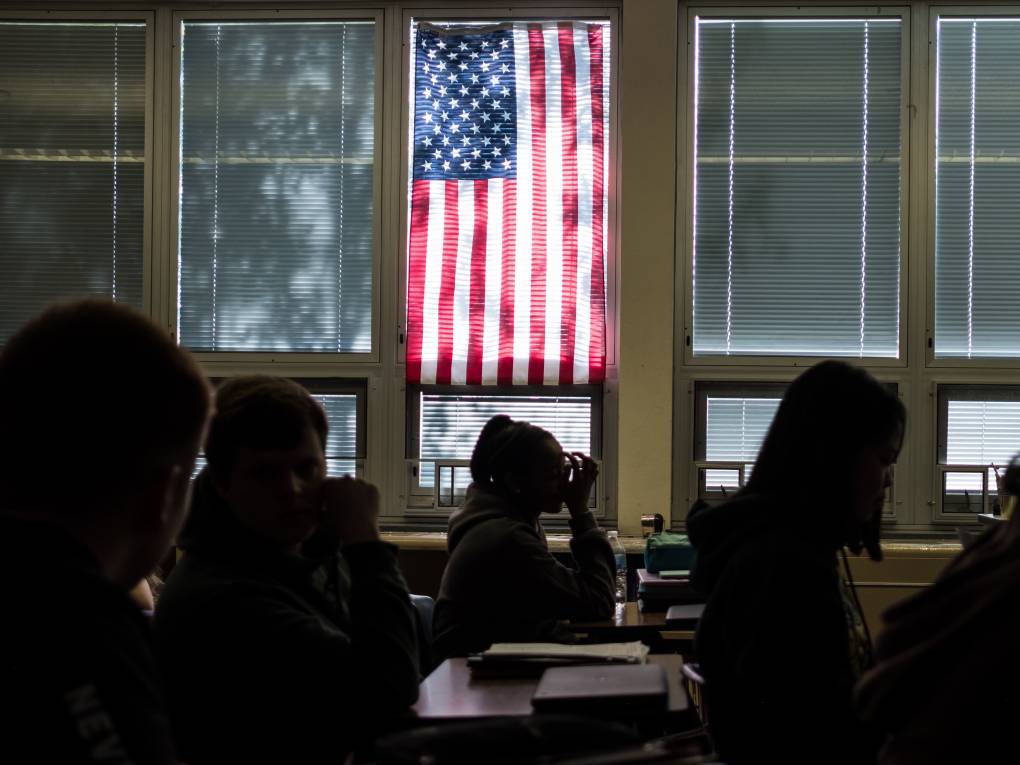
window.__IS_SSR__=true
window.__INITIAL_STATE__={
"attachmentsReducer": {
"audio_0": {
"type": "attachments",
"id": "audio_0",
"imgSizes": {
"kqedFullSize": {
"file": "https://ww2.kqed.org/news/wp-content/themes/KQED-unified/img/audio_bgs/background0.jpg"
}
}
},
"audio_1": {
"type": "attachments",
"id": "audio_1",
"imgSizes": {
"kqedFullSize": {
"file": "https://ww2.kqed.org/news/wp-content/themes/KQED-unified/img/audio_bgs/background1.jpg"
}
}
},
"audio_2": {
"type": "attachments",
"id": "audio_2",
"imgSizes": {
"kqedFullSize": {
"file": "https://ww2.kqed.org/news/wp-content/themes/KQED-unified/img/audio_bgs/background2.jpg"
}
}
},
"audio_3": {
"type": "attachments",
"id": "audio_3",
"imgSizes": {
"kqedFullSize": {
"file": "https://ww2.kqed.org/news/wp-content/themes/KQED-unified/img/audio_bgs/background3.jpg"
}
}
},
"audio_4": {
"type": "attachments",
"id": "audio_4",
"imgSizes": {
"kqedFullSize": {
"file": "https://ww2.kqed.org/news/wp-content/themes/KQED-unified/img/audio_bgs/background4.jpg"
}
}
},
"placeholder": {
"type": "attachments",
"id": "placeholder",
"imgSizes": {
"thumbnail": {
"file": "https://cdn.kqed.org/wp-content/uploads/2024/12/KQED-Default-Image-816638274-2000x1333-1-160x107.jpg",
"width": 160,
"height": 107,
"mimeType": "image/jpeg"
},
"medium": {
"file": "https://cdn.kqed.org/wp-content/uploads/2024/12/KQED-Default-Image-816638274-2000x1333-1-800x533.jpg",
"width": 800,
"height": 533,
"mimeType": "image/jpeg"
},
"medium_large": {
"file": "https://cdn.kqed.org/wp-content/uploads/2024/12/KQED-Default-Image-816638274-2000x1333-1-768x512.jpg",
"width": 768,
"height": 512,
"mimeType": "image/jpeg"
},
"large": {
"file": "https://cdn.kqed.org/wp-content/uploads/2024/12/KQED-Default-Image-816638274-2000x1333-1-1020x680.jpg",
"width": 1020,
"height": 680,
"mimeType": "image/jpeg"
},
"1536x1536": {
"file": "https://cdn.kqed.org/wp-content/uploads/2024/12/KQED-Default-Image-816638274-2000x1333-1-1536x1024.jpg",
"width": 1536,
"height": 1024,
"mimeType": "image/jpeg"
},
"fd-lrg": {
"file": "https://cdn.kqed.org/wp-content/uploads/2024/12/KQED-Default-Image-816638274-2000x1333-1-1536x1024.jpg",
"width": 1536,
"height": 1024,
"mimeType": "image/jpeg"
},
"fd-med": {
"file": "https://cdn.kqed.org/wp-content/uploads/2024/12/KQED-Default-Image-816638274-2000x1333-1-1020x680.jpg",
"width": 1020,
"height": 680,
"mimeType": "image/jpeg"
},
"fd-sm": {
"file": "https://cdn.kqed.org/wp-content/uploads/2024/12/KQED-Default-Image-816638274-2000x1333-1-800x533.jpg",
"width": 800,
"height": 533,
"mimeType": "image/jpeg"
},
"post-thumbnail": {
"file": "https://cdn.kqed.org/wp-content/uploads/2024/12/KQED-Default-Image-816638274-2000x1333-1-672x372.jpg",
"width": 672,
"height": 372,
"mimeType": "image/jpeg"
},
"twentyfourteen-full-width": {
"file": "https://cdn.kqed.org/wp-content/uploads/2024/12/KQED-Default-Image-816638274-2000x1333-1-1038x576.jpg",
"width": 1038,
"height": 576,
"mimeType": "image/jpeg"
},
"xxsmall": {
"file": "https://cdn.kqed.org/wp-content/uploads/2024/12/KQED-Default-Image-816638274-2000x1333-1-160x107.jpg",
"width": 160,
"height": 107,
"mimeType": "image/jpeg"
},
"xsmall": {
"file": "https://cdn.kqed.org/wp-content/uploads/2024/12/KQED-Default-Image-816638274-2000x1333-1-672x372.jpg",
"width": 672,
"height": 372,
"mimeType": "image/jpeg"
},
"small": {
"file": "https://cdn.kqed.org/wp-content/uploads/2024/12/KQED-Default-Image-816638274-2000x1333-1-672x372.jpg",
"width": 672,
"height": 372,
"mimeType": "image/jpeg"
},
"xlarge": {
"file": "https://cdn.kqed.org/wp-content/uploads/2024/12/KQED-Default-Image-816638274-2000x1333-1-1020x680.jpg",
"width": 1020,
"height": 680,
"mimeType": "image/jpeg"
},
"full-width": {
"file": "https://cdn.kqed.org/wp-content/uploads/2024/12/KQED-Default-Image-816638274-2000x1333-1-1920x1280.jpg",
"width": 1920,
"height": 1280,
"mimeType": "image/jpeg"
},
"guest-author-32": {
"file": "https://cdn.kqed.org/wp-content/uploads/2025/01/KQED-Default-Image-816638274-1333x1333-1-160x160.jpg",
"width": 32,
"height": 32,
"mimeType": "image/jpeg"
},
"guest-author-50": {
"file": "https://cdn.kqed.org/wp-content/uploads/2025/01/KQED-Default-Image-816638274-1333x1333-1-160x160.jpg",
"width": 50,
"height": 50,
"mimeType": "image/jpeg"
},
"guest-author-64": {
"file": "https://cdn.kqed.org/wp-content/uploads/2025/01/KQED-Default-Image-816638274-1333x1333-1-160x160.jpg",
"width": 64,
"height": 64,
"mimeType": "image/jpeg"
},
"guest-author-96": {
"file": "https://cdn.kqed.org/wp-content/uploads/2025/01/KQED-Default-Image-816638274-1333x1333-1-160x160.jpg",
"width": 96,
"height": 96,
"mimeType": "image/jpeg"
},
"guest-author-128": {
"file": "https://cdn.kqed.org/wp-content/uploads/2025/01/KQED-Default-Image-816638274-1333x1333-1-160x160.jpg",
"width": 128,
"height": 128,
"mimeType": "image/jpeg"
},
"detail": {
"file": "https://cdn.kqed.org/wp-content/uploads/2025/01/KQED-Default-Image-816638274-1333x1333-1-160x160.jpg",
"width": 160,
"height": 160,
"mimeType": "image/jpeg"
},
"kqedFullSize": {
"file": "https://cdn.kqed.org/wp-content/uploads/2024/12/KQED-Default-Image-816638274-2000x1333-1.jpg",
"width": 2000,
"height": 1333
}
}
},
"mindshift_59822": {
"type": "attachments",
"id": "mindshift_59822",
"meta": {
"index": "attachments_1716263798",
"site": "mindshift",
"id": "59822",
"found": true
},
"parent": 59821,
"imgSizes": {
"twentyfourteen-full-width": {
"file": "https://ww2.kqed.org/app/uploads/sites/23/2022/08/gettyimages-1181819032-2029fd6693aa5f854902d7acc7dbc2f82073a271-1038x576.jpg",
"width": 1038,
"mimeType": "image/jpeg",
"height": 576
},
"thumbnail": {
"file": "https://ww2.kqed.org/app/uploads/sites/23/2022/08/gettyimages-1181819032-2029fd6693aa5f854902d7acc7dbc2f82073a271-160x120.jpg",
"width": 160,
"mimeType": "image/jpeg",
"height": 120
},
"post-thumbnail": {
"file": "https://ww2.kqed.org/app/uploads/sites/23/2022/08/gettyimages-1181819032-2029fd6693aa5f854902d7acc7dbc2f82073a271-672x372.jpg",
"width": 672,
"mimeType": "image/jpeg",
"height": 372
},
"kqedFullSize": {
"file": "https://ww2.kqed.org/app/uploads/sites/23/2022/08/gettyimages-1181819032-2029fd6693aa5f854902d7acc7dbc2f82073a271-scaled-e1662017106474.jpg",
"width": 1920,
"height": 1440
},
"2048x2048": {
"file": "https://ww2.kqed.org/app/uploads/sites/23/2022/08/gettyimages-1181819032-2029fd6693aa5f854902d7acc7dbc2f82073a271-2048x1536.jpg",
"width": 2048,
"mimeType": "image/jpeg",
"height": 1536
},
"large": {
"file": "https://ww2.kqed.org/app/uploads/sites/23/2022/08/gettyimages-1181819032-2029fd6693aa5f854902d7acc7dbc2f82073a271-1020x765.jpg",
"width": 1020,
"mimeType": "image/jpeg",
"height": 765
},
"1536x1536": {
"file": "https://ww2.kqed.org/app/uploads/sites/23/2022/08/gettyimages-1181819032-2029fd6693aa5f854902d7acc7dbc2f82073a271-1536x1152.jpg",
"width": 1536,
"mimeType": "image/jpeg",
"height": 1152
},
"full-width": {
"file": "https://ww2.kqed.org/app/uploads/sites/23/2022/08/gettyimages-1181819032-2029fd6693aa5f854902d7acc7dbc2f82073a271-1920x1440.jpg",
"width": 1920,
"mimeType": "image/jpeg",
"height": 1440
},
"medium": {
"file": "https://ww2.kqed.org/app/uploads/sites/23/2022/08/gettyimages-1181819032-2029fd6693aa5f854902d7acc7dbc2f82073a271-800x600.jpg",
"width": 800,
"mimeType": "image/jpeg",
"height": 600
},
"medium_large": {
"file": "https://ww2.kqed.org/app/uploads/sites/23/2022/08/gettyimages-1181819032-2029fd6693aa5f854902d7acc7dbc2f82073a271-768x576.jpg",
"width": 768,
"mimeType": "image/jpeg",
"height": 576
}
},
"publishDate": 1662016916,
"modified": 1662017138,
"caption": "Teachers across the U.S. are battling challenges on multiple fronts, and it's driving many to leave.\n",
"description": null,
"title": "Teachers across the U.S. are battling challenges on multiple fronts, and it's driving many to leave.",
"credit": "Megan Jelinger/AFP via Getty Images",
"status": "inherit",
"altTag": "Students in class with U.S. flag in window",
"isLoading": false,
"fetchFailed": false
},
"mindshift_59607": {
"type": "attachments",
"id": "mindshift_59607",
"meta": {
"index": "attachments_1716263798",
"site": "mindshift",
"id": "59607",
"found": true
},
"parent": 59606,
"imgSizes": {
"twentyfourteen-full-width": {
"file": "https://ww2.kqed.org/app/uploads/sites/23/2022/07/ap20072558121518-edit_custom-3e795b1c035f85997b37dbdbdcdb174458b262fa-1038x576.jpg",
"width": 1038,
"mimeType": "image/jpeg",
"height": 576
},
"thumbnail": {
"file": "https://ww2.kqed.org/app/uploads/sites/23/2022/07/ap20072558121518-edit_custom-3e795b1c035f85997b37dbdbdcdb174458b262fa-160x109.jpg",
"width": 160,
"mimeType": "image/jpeg",
"height": 109
},
"post-thumbnail": {
"file": "https://ww2.kqed.org/app/uploads/sites/23/2022/07/ap20072558121518-edit_custom-3e795b1c035f85997b37dbdbdcdb174458b262fa-672x372.jpg",
"width": 672,
"mimeType": "image/jpeg",
"height": 372
},
"kqedFullSize": {
"file": "https://ww2.kqed.org/app/uploads/sites/23/2022/07/ap20072558121518-edit_custom-3e795b1c035f85997b37dbdbdcdb174458b262fa-scaled-e1658904379226.jpg",
"width": 1920,
"height": 1306
},
"2048x2048": {
"file": "https://ww2.kqed.org/app/uploads/sites/23/2022/07/ap20072558121518-edit_custom-3e795b1c035f85997b37dbdbdcdb174458b262fa-2048x1393.jpg",
"width": 2048,
"mimeType": "image/jpeg",
"height": 1393
},
"large": {
"file": "https://ww2.kqed.org/app/uploads/sites/23/2022/07/ap20072558121518-edit_custom-3e795b1c035f85997b37dbdbdcdb174458b262fa-1020x694.jpg",
"width": 1020,
"mimeType": "image/jpeg",
"height": 694
},
"1536x1536": {
"file": "https://ww2.kqed.org/app/uploads/sites/23/2022/07/ap20072558121518-edit_custom-3e795b1c035f85997b37dbdbdcdb174458b262fa-1536x1044.jpg",
"width": 1536,
"mimeType": "image/jpeg",
"height": 1044
},
"full-width": {
"file": "https://ww2.kqed.org/app/uploads/sites/23/2022/07/ap20072558121518-edit_custom-3e795b1c035f85997b37dbdbdcdb174458b262fa-1920x1306.jpg",
"width": 1920,
"mimeType": "image/jpeg",
"height": 1306
},
"medium": {
"file": "https://ww2.kqed.org/app/uploads/sites/23/2022/07/ap20072558121518-edit_custom-3e795b1c035f85997b37dbdbdcdb174458b262fa-800x544.jpg",
"width": 800,
"mimeType": "image/jpeg",
"height": 544
},
"medium_large": {
"file": "https://ww2.kqed.org/app/uploads/sites/23/2022/07/ap20072558121518-edit_custom-3e795b1c035f85997b37dbdbdcdb174458b262fa-768x522.jpg",
"width": 768,
"mimeType": "image/jpeg",
"height": 522
}
},
"publishDate": 1658904351,
"modified": 1658904422,
"caption": null,
"description": "FILE - In this Thursday, May 17, 2018 file photo, new graduates line up before the start of a community college commencement in East Rutherford, N.J. Scholarship search websites promise students access to millions of awards totaling billions in free money for college. But once you provide your email address, scholarship listings aren’t the only things you’ll receive. “[You] are going to get a lot of spam,” says Monica Matthews, creator of the website how2winscholarships.com. “You are going to be inundated.” ",
"title": "The share of Americans who believe colleges and universities have a positive impact on the country has declined since 2020, according to recent survey.",
"credit": "AP Photo/Seth Wenig",
"status": "inherit",
"altTag": "Shadow of students lined up for graduation",
"isLoading": false,
"fetchFailed": false
},
"mindshift_59604": {
"type": "attachments",
"id": "mindshift_59604",
"meta": {
"index": "attachments_1716263798",
"site": "mindshift",
"id": "59604",
"found": true
},
"parent": 59602,
"imgSizes": {
"twentyfourteen-full-width": {
"file": "https://ww2.kqed.org/app/uploads/sites/23/2022/07/GettyImages-1368286123-1038x576.jpg",
"width": 1038,
"mimeType": "image/jpeg",
"height": 576
},
"thumbnail": {
"file": "https://ww2.kqed.org/app/uploads/sites/23/2022/07/GettyImages-1368286123-160x107.jpg",
"width": 160,
"mimeType": "image/jpeg",
"height": 107
},
"post-thumbnail": {
"file": "https://ww2.kqed.org/app/uploads/sites/23/2022/07/GettyImages-1368286123-672x372.jpg",
"width": 672,
"mimeType": "image/jpeg",
"height": 372
},
"kqedFullSize": {
"file": "https://ww2.kqed.org/app/uploads/sites/23/2022/07/GettyImages-1368286123-scaled-e1658724466206.jpg",
"width": 1920,
"height": 1280
},
"2048x2048": {
"file": "https://ww2.kqed.org/app/uploads/sites/23/2022/07/GettyImages-1368286123-2048x1366.jpg",
"width": 2048,
"mimeType": "image/jpeg",
"height": 1366
},
"large": {
"file": "https://ww2.kqed.org/app/uploads/sites/23/2022/07/GettyImages-1368286123-1020x680.jpg",
"width": 1020,
"mimeType": "image/jpeg",
"height": 680
},
"1536x1536": {
"file": "https://ww2.kqed.org/app/uploads/sites/23/2022/07/GettyImages-1368286123-1536x1024.jpg",
"width": 1536,
"mimeType": "image/jpeg",
"height": 1024
},
"full-width": {
"file": "https://ww2.kqed.org/app/uploads/sites/23/2022/07/GettyImages-1368286123-1920x1280.jpg",
"width": 1920,
"mimeType": "image/jpeg",
"height": 1280
},
"medium": {
"file": "https://ww2.kqed.org/app/uploads/sites/23/2022/07/GettyImages-1368286123-800x533.jpg",
"width": 800,
"mimeType": "image/jpeg",
"height": 533
},
"medium_large": {
"file": "https://ww2.kqed.org/app/uploads/sites/23/2022/07/GettyImages-1368286123-768x512.jpg",
"width": 768,
"mimeType": "image/jpeg",
"height": 512
}
},
"publishDate": 1658724393,
"modified": 1658730229,
"caption": "Students in the library receive candy and red envelopes in a cultural celebration of the Lunar New Year at Yung Wing School P.S. 124 on February 02, 2022 in New York City. ",
"description": null,
"title": "Elementary School In New York City's Chinatown Celebrates The Chinese Lunar New Year",
"credit": "Michael Loccisano/Getty Images",
"status": "inherit",
"altTag": null,
"isLoading": false,
"fetchFailed": false
},
"mindshift_59563": {
"type": "attachments",
"id": "mindshift_59563",
"meta": {
"index": "attachments_1716263798",
"site": "mindshift",
"id": "59563",
"found": true
},
"parent": 59562,
"imgSizes": {
"twentyfourteen-full-width": {
"file": "https://ww2.kqed.org/app/uploads/sites/23/2022/07/ygateau_npred_borders1-c4f22c33fac1a9806e5df963b8b11ae67e707927-1038x576.jpg",
"width": 1038,
"mimeType": "image/jpeg",
"height": 576
},
"thumbnail": {
"file": "https://ww2.kqed.org/app/uploads/sites/23/2022/07/ygateau_npred_borders1-c4f22c33fac1a9806e5df963b8b11ae67e707927-160x120.jpg",
"width": 160,
"mimeType": "image/jpeg",
"height": 120
},
"post-thumbnail": {
"file": "https://ww2.kqed.org/app/uploads/sites/23/2022/07/ygateau_npred_borders1-c4f22c33fac1a9806e5df963b8b11ae67e707927-672x372.jpg",
"width": 672,
"mimeType": "image/jpeg",
"height": 372
},
"kqedFullSize": {
"file": "https://ww2.kqed.org/app/uploads/sites/23/2022/07/ygateau_npred_borders1-c4f22c33fac1a9806e5df963b8b11ae67e707927-scaled-e1657894636438.jpg",
"width": 1920,
"height": 1439
},
"2048x2048": {
"file": "https://ww2.kqed.org/app/uploads/sites/23/2022/07/ygateau_npred_borders1-c4f22c33fac1a9806e5df963b8b11ae67e707927-2048x1535.jpg",
"width": 2048,
"mimeType": "image/jpeg",
"height": 1535
},
"large": {
"file": "https://ww2.kqed.org/app/uploads/sites/23/2022/07/ygateau_npred_borders1-c4f22c33fac1a9806e5df963b8b11ae67e707927-1020x765.jpg",
"width": 1020,
"mimeType": "image/jpeg",
"height": 765
},
"1536x1536": {
"file": "https://ww2.kqed.org/app/uploads/sites/23/2022/07/ygateau_npred_borders1-c4f22c33fac1a9806e5df963b8b11ae67e707927-1536x1152.jpg",
"width": 1536,
"mimeType": "image/jpeg",
"height": 1152
},
"full-width": {
"file": "https://ww2.kqed.org/app/uploads/sites/23/2022/07/ygateau_npred_borders1-c4f22c33fac1a9806e5df963b8b11ae67e707927-1920x1439.jpg",
"width": 1920,
"mimeType": "image/jpeg",
"height": 1439
},
"medium": {
"file": "https://ww2.kqed.org/app/uploads/sites/23/2022/07/ygateau_npred_borders1-c4f22c33fac1a9806e5df963b8b11ae67e707927-800x600.jpg",
"width": 800,
"mimeType": "image/jpeg",
"height": 600
},
"medium_large": {
"file": "https://ww2.kqed.org/app/uploads/sites/23/2022/07/ygateau_npred_borders1-c4f22c33fac1a9806e5df963b8b11ae67e707927-768x576.jpg",
"width": 768,
"mimeType": "image/jpeg",
"height": 576
}
},
"publishDate": 1657894601,
"modified": 1657894653,
"caption": null,
"description": "Divisive school district borders.",
"title": "Divisive school district borders.",
"credit": "Yasmine Gateau for NPR",
"status": "inherit",
"altTag": null,
"isLoading": false,
"fetchFailed": false
},
"mindshift_59549": {
"type": "attachments",
"id": "mindshift_59549",
"meta": {
"index": "attachments_1716263798",
"site": "mindshift",
"id": "59549",
"found": true
},
"parent": 59546,
"imgSizes": {
"twentyfourteen-full-width": {
"file": "https://ww2.kqed.org/app/uploads/sites/23/2022/07/AMERICANED_UCLACOMM_023-copy-1038x576.jpg",
"width": 1038,
"mimeType": "image/jpeg",
"height": 576
},
"thumbnail": {
"file": "https://ww2.kqed.org/app/uploads/sites/23/2022/07/AMERICANED_UCLACOMM_023-copy-160x107.jpg",
"width": 160,
"mimeType": "image/jpeg",
"height": 107
},
"post-thumbnail": {
"file": "https://ww2.kqed.org/app/uploads/sites/23/2022/07/AMERICANED_UCLACOMM_023-copy-672x372.jpg",
"width": 672,
"mimeType": "image/jpeg",
"height": 372
},
"kqedFullSize": {
"file": "https://ww2.kqed.org/app/uploads/sites/23/2022/07/AMERICANED_UCLACOMM_023-copy-scaled-e1657523537444.jpg",
"width": 1920,
"height": 1280
},
"2048x2048": {
"file": "https://ww2.kqed.org/app/uploads/sites/23/2022/07/AMERICANED_UCLACOMM_023-copy-2048x1365.jpg",
"width": 2048,
"mimeType": "image/jpeg",
"height": 1365
},
"large": {
"file": "https://ww2.kqed.org/app/uploads/sites/23/2022/07/AMERICANED_UCLACOMM_023-copy-1020x680.jpg",
"width": 1020,
"mimeType": "image/jpeg",
"height": 680
},
"1536x1536": {
"file": "https://ww2.kqed.org/app/uploads/sites/23/2022/07/AMERICANED_UCLACOMM_023-copy-1536x1024.jpg",
"width": 1536,
"mimeType": "image/jpeg",
"height": 1024
},
"full-width": {
"file": "https://ww2.kqed.org/app/uploads/sites/23/2022/07/AMERICANED_UCLACOMM_023-copy-1920x1280.jpg",
"width": 1920,
"mimeType": "image/jpeg",
"height": 1280
},
"medium": {
"file": "https://ww2.kqed.org/app/uploads/sites/23/2022/07/AMERICANED_UCLACOMM_023-copy-800x533.jpg",
"width": 800,
"mimeType": "image/jpeg",
"height": 533
},
"medium_large": {
"file": "https://ww2.kqed.org/app/uploads/sites/23/2022/07/AMERICANED_UCLACOMM_023-copy-768x512.jpg",
"width": 768,
"mimeType": "image/jpeg",
"height": 512
}
},
"publishDate": 1657523463,
"modified": 1657523574,
"caption": "A kindergarten teacher uses number cubes during a small-group math activity.",
"description": null,
"title": "Kindergarten number cubes",
"credit": "Allison Shelley for EDUimages",
"status": "inherit",
"altTag": "Kindergarten teacher with students",
"isLoading": false,
"fetchFailed": false
},
"mindshift_59453": {
"type": "attachments",
"id": "mindshift_59453",
"meta": {
"index": "attachments_1716263798",
"site": "mindshift",
"id": "59453",
"found": true
},
"parent": 59452,
"imgSizes": {
"twentyfourteen-full-width": {
"file": "https://ww2.kqed.org/app/uploads/sites/23/2022/06/Universal-PreK-Research-Hechinger-Report-1038x576.jpeg",
"width": 1038,
"mimeType": "image/jpeg",
"height": 576
},
"thumbnail": {
"file": "https://ww2.kqed.org/app/uploads/sites/23/2022/06/Universal-PreK-Research-Hechinger-Report-160x107.jpeg",
"width": 160,
"mimeType": "image/jpeg",
"height": 107
},
"post-thumbnail": {
"file": "https://ww2.kqed.org/app/uploads/sites/23/2022/06/Universal-PreK-Research-Hechinger-Report-672x372.jpeg",
"width": 672,
"mimeType": "image/jpeg",
"height": 372
},
"kqedFullSize": {
"file": "https://ww2.kqed.org/app/uploads/sites/23/2022/06/Universal-PreK-Research-Hechinger-Report.jpeg",
"width": 1200,
"height": 800
},
"large": {
"file": "https://ww2.kqed.org/app/uploads/sites/23/2022/06/Universal-PreK-Research-Hechinger-Report-1020x680.jpeg",
"width": 1020,
"mimeType": "image/jpeg",
"height": 680
},
"medium": {
"file": "https://ww2.kqed.org/app/uploads/sites/23/2022/06/Universal-PreK-Research-Hechinger-Report-800x533.jpeg",
"width": 800,
"mimeType": "image/jpeg",
"height": 533
},
"medium_large": {
"file": "https://ww2.kqed.org/app/uploads/sites/23/2022/06/Universal-PreK-Research-Hechinger-Report-768x512.jpeg",
"width": 768,
"mimeType": "image/jpeg",
"height": 512
}
},
"publishDate": 1654503528,
"modified": 1654503548,
"caption": "PHOTO caption: A Berkeley study of New York City's public pre-K programs found uneven quality. Instructional activities were generally stronger in higher income neighborhoods.\n",
"description": null,
"title": "Universal PreK Research Hechinger Report",
"credit": "Lillian Mongeau for The Hechinger Report",
"status": "inherit",
"altTag": null,
"isLoading": false,
"fetchFailed": false
},
"mindshift_59442": {
"type": "attachments",
"id": "mindshift_59442",
"meta": {
"index": "attachments_1716263798",
"site": "mindshift",
"id": "59442",
"found": true
},
"parent": 59441,
"imgSizes": {
"twentyfourteen-full-width": {
"file": "https://ww2.kqed.org/app/uploads/sites/23/2022/05/introvert_custom-368478deb247c5965a17d4ac151683b8154b5662-1038x576.jpg",
"width": 1038,
"mimeType": "image/jpeg",
"height": 576
},
"thumbnail": {
"file": "https://ww2.kqed.org/app/uploads/sites/23/2022/05/introvert_custom-368478deb247c5965a17d4ac151683b8154b5662-160x111.jpg",
"width": 160,
"mimeType": "image/jpeg",
"height": 111
},
"post-thumbnail": {
"file": "https://ww2.kqed.org/app/uploads/sites/23/2022/05/introvert_custom-368478deb247c5965a17d4ac151683b8154b5662-672x372.jpg",
"width": 672,
"mimeType": "image/jpeg",
"height": 372
},
"kqedFullSize": {
"file": "https://ww2.kqed.org/app/uploads/sites/23/2022/05/introvert_custom-368478deb247c5965a17d4ac151683b8154b5662.jpg",
"width": 2164,
"height": 1502
},
"2048x2048": {
"file": "https://ww2.kqed.org/app/uploads/sites/23/2022/05/introvert_custom-368478deb247c5965a17d4ac151683b8154b5662-2048x1421.jpg",
"width": 2048,
"mimeType": "image/jpeg",
"height": 1421
},
"large": {
"file": "https://ww2.kqed.org/app/uploads/sites/23/2022/05/introvert_custom-368478deb247c5965a17d4ac151683b8154b5662-1020x708.jpg",
"width": 1020,
"mimeType": "image/jpeg",
"height": 708
},
"1536x1536": {
"file": "https://ww2.kqed.org/app/uploads/sites/23/2022/05/introvert_custom-368478deb247c5965a17d4ac151683b8154b5662-1536x1066.jpg",
"width": 1536,
"mimeType": "image/jpeg",
"height": 1066
},
"full-width": {
"file": "https://ww2.kqed.org/app/uploads/sites/23/2022/05/introvert_custom-368478deb247c5965a17d4ac151683b8154b5662-1920x1333.jpg",
"width": 1920,
"mimeType": "image/jpeg",
"height": 1333
},
"medium": {
"file": "https://ww2.kqed.org/app/uploads/sites/23/2022/05/introvert_custom-368478deb247c5965a17d4ac151683b8154b5662-800x555.jpg",
"width": 800,
"mimeType": "image/jpeg",
"height": 555
},
"medium_large": {
"file": "https://ww2.kqed.org/app/uploads/sites/23/2022/05/introvert_custom-368478deb247c5965a17d4ac151683b8154b5662-768x533.jpg",
"width": 768,
"mimeType": "image/jpeg",
"height": 533
}
},
"publishDate": 1653980492,
"modified": 1653980492,
"caption": null,
"description": "Student hiding under a des",
"title": "School safety experts have coalesced around a handful of important measures communities and politicians can take to protect students.",
"credit": null,
"status": "inherit",
"altTag": null,
"isLoading": false,
"fetchFailed": false
},
"mindshift_59415": {
"type": "attachments",
"id": "mindshift_59415",
"meta": {
"index": "attachments_1716263798",
"site": "mindshift",
"id": "59415",
"found": true
},
"parent": 59414,
"imgSizes": {
"twentyfourteen-full-width": {
"file": "https://ww2.kqed.org/app/uploads/sites/23/2022/05/iStock-1160970394-1038x576.jpg",
"width": 1038,
"mimeType": "image/jpeg",
"height": 576
},
"thumbnail": {
"file": "https://ww2.kqed.org/app/uploads/sites/23/2022/05/iStock-1160970394-160x67.jpg",
"width": 160,
"mimeType": "image/jpeg",
"height": 67
},
"post-thumbnail": {
"file": "https://ww2.kqed.org/app/uploads/sites/23/2022/05/iStock-1160970394-672x372.jpg",
"width": 672,
"mimeType": "image/jpeg",
"height": 372
},
"kqedFullSize": {
"file": "https://ww2.kqed.org/app/uploads/sites/23/2022/05/iStock-1160970394-scaled.jpg",
"width": 2560,
"height": 1067
},
"2048x2048": {
"file": "https://ww2.kqed.org/app/uploads/sites/23/2022/05/iStock-1160970394-2048x853.jpg",
"width": 2048,
"mimeType": "image/jpeg",
"height": 853
},
"large": {
"file": "https://ww2.kqed.org/app/uploads/sites/23/2022/05/iStock-1160970394-1020x425.jpg",
"width": 1020,
"mimeType": "image/jpeg",
"height": 425
},
"1536x1536": {
"file": "https://ww2.kqed.org/app/uploads/sites/23/2022/05/iStock-1160970394-1536x640.jpg",
"width": 1536,
"mimeType": "image/jpeg",
"height": 640
},
"full-width": {
"file": "https://ww2.kqed.org/app/uploads/sites/23/2022/05/iStock-1160970394-1920x800.jpg",
"width": 1920,
"mimeType": "image/jpeg",
"height": 800
},
"medium": {
"file": "https://ww2.kqed.org/app/uploads/sites/23/2022/05/iStock-1160970394-800x333.jpg",
"width": 800,
"mimeType": "image/jpeg",
"height": 333
},
"medium_large": {
"file": "https://ww2.kqed.org/app/uploads/sites/23/2022/05/iStock-1160970394-768x320.jpg",
"width": 768,
"mimeType": "image/jpeg",
"height": 320
}
},
"publishDate": 1653032725,
"modified": 1653032752,
"caption": null,
"description": null,
"title": null,
"credit": "mangpor_2004/iStock",
"status": "inherit",
"altTag": "Back of student",
"isLoading": false,
"fetchFailed": false
},
"mindshift_59262": {
"type": "attachments",
"id": "mindshift_59262",
"meta": {
"index": "attachments_1716263798",
"site": "mindshift",
"id": "59262",
"found": true
},
"parent": 59261,
"imgSizes": {
"twentyfourteen-full-width": {
"file": "https://ww2.kqed.org/app/uploads/sites/23/2022/04/ala-bannedbooks-2021_slide-d90fa092a252cd5bff053841f5456bfc1b4498ee-1038x576.jpg",
"width": 1038,
"mimeType": "image/jpeg",
"height": 576
},
"thumbnail": {
"file": "https://ww2.kqed.org/app/uploads/sites/23/2022/04/ala-bannedbooks-2021_slide-d90fa092a252cd5bff053841f5456bfc1b4498ee-160x107.jpg",
"width": 160,
"mimeType": "image/jpeg",
"height": 107
},
"post-thumbnail": {
"file": "https://ww2.kqed.org/app/uploads/sites/23/2022/04/ala-bannedbooks-2021_slide-d90fa092a252cd5bff053841f5456bfc1b4498ee-672x372.jpg",
"width": 672,
"mimeType": "image/jpeg",
"height": 372
},
"kqedFullSize": {
"file": "https://ww2.kqed.org/app/uploads/sites/23/2022/04/ala-bannedbooks-2021_slide-d90fa092a252cd5bff053841f5456bfc1b4498ee.jpg",
"width": 1617,
"height": 1078
},
"large": {
"file": "https://ww2.kqed.org/app/uploads/sites/23/2022/04/ala-bannedbooks-2021_slide-d90fa092a252cd5bff053841f5456bfc1b4498ee-1020x680.jpg",
"width": 1020,
"mimeType": "image/jpeg",
"height": 680
},
"1536x1536": {
"file": "https://ww2.kqed.org/app/uploads/sites/23/2022/04/ala-bannedbooks-2021_slide-d90fa092a252cd5bff053841f5456bfc1b4498ee-1536x1024.jpg",
"width": 1536,
"mimeType": "image/jpeg",
"height": 1024
},
"medium": {
"file": "https://ww2.kqed.org/app/uploads/sites/23/2022/04/ala-bannedbooks-2021_slide-d90fa092a252cd5bff053841f5456bfc1b4498ee-800x533.jpg",
"width": 800,
"mimeType": "image/jpeg",
"height": 533
},
"medium_large": {
"file": "https://ww2.kqed.org/app/uploads/sites/23/2022/04/ala-bannedbooks-2021_slide-d90fa092a252cd5bff053841f5456bfc1b4498ee-768x512.jpg",
"width": 768,
"mimeType": "image/jpeg",
"height": 512
}
},
"publishDate": 1649138895,
"modified": 1649138921,
"caption": null,
"description": null,
"title": "Some of the banned books of 2021, according to the ALA.",
"credit": "LA Johnson/NPR",
"status": "inherit",
"altTag": null,
"isLoading": false,
"fetchFailed": false
},
"mindshift_59069": {
"type": "attachments",
"id": "mindshift_59069",
"meta": {
"index": "attachments_1716263798",
"site": "mindshift",
"id": "59069",
"found": true
},
"parent": 59067,
"imgSizes": {
"twentyfourteen-full-width": {
"file": "https://ww2.kqed.org/app/uploads/sites/23/2022/02/iStock-1160970394-1038x576.jpg",
"width": 1038,
"mimeType": "image/jpeg",
"height": 576
},
"thumbnail": {
"file": "https://ww2.kqed.org/app/uploads/sites/23/2022/02/iStock-1160970394-160x67.jpg",
"width": 160,
"mimeType": "image/jpeg",
"height": 67
},
"post-thumbnail": {
"file": "https://ww2.kqed.org/app/uploads/sites/23/2022/02/iStock-1160970394-672x372.jpg",
"width": 672,
"mimeType": "image/jpeg",
"height": 372
},
"kqedFullSize": {
"file": "https://ww2.kqed.org/app/uploads/sites/23/2022/02/iStock-1160970394-scaled.jpg",
"width": 2560,
"height": 1067
},
"2048x2048": {
"file": "https://ww2.kqed.org/app/uploads/sites/23/2022/02/iStock-1160970394-2048x853.jpg",
"width": 2048,
"mimeType": "image/jpeg",
"height": 853
},
"large": {
"file": "https://ww2.kqed.org/app/uploads/sites/23/2022/02/iStock-1160970394-1020x425.jpg",
"width": 1020,
"mimeType": "image/jpeg",
"height": 425
},
"1536x1536": {
"file": "https://ww2.kqed.org/app/uploads/sites/23/2022/02/iStock-1160970394-1536x640.jpg",
"width": 1536,
"mimeType": "image/jpeg",
"height": 640
},
"full-width": {
"file": "https://ww2.kqed.org/app/uploads/sites/23/2022/02/iStock-1160970394-1920x800.jpg",
"width": 1920,
"mimeType": "image/jpeg",
"height": 800
},
"medium": {
"file": "https://ww2.kqed.org/app/uploads/sites/23/2022/02/iStock-1160970394-800x333.jpg",
"width": 800,
"mimeType": "image/jpeg",
"height": 333
},
"medium_large": {
"file": "https://ww2.kqed.org/app/uploads/sites/23/2022/02/iStock-1160970394-768x320.jpg",
"width": 768,
"mimeType": "image/jpeg",
"height": 320
}
},
"publishDate": 1644392594,
"modified": 1644392630,
"caption": null,
"description": null,
"title": "Back of university student with backpack while going to college by walking from street, teenager in campus, education concept",
"credit": "mangpor_2004/iStock",
"status": "inherit",
"altTag": "teenager on campus",
"isLoading": false,
"fetchFailed": false
},
"mindshift_58777": {
"type": "attachments",
"id": "mindshift_58777",
"meta": {
"index": "attachments_1716263798",
"site": "mindshift",
"id": "58777",
"found": true
},
"parent": 58776,
"imgSizes": {
"twentyfourteen-full-width": {
"file": "https://ww2.kqed.org/app/uploads/sites/23/2021/11/lice6-33658cb614342df303972e59207e7ed3461444b1-1038x576.jpg",
"width": 1038,
"mimeType": "image/jpeg",
"height": 576
},
"thumbnail": {
"file": "https://ww2.kqed.org/app/uploads/sites/23/2021/11/lice6-33658cb614342df303972e59207e7ed3461444b1-160x120.jpg",
"width": 160,
"mimeType": "image/jpeg",
"height": 120
},
"post-thumbnail": {
"file": "https://ww2.kqed.org/app/uploads/sites/23/2021/11/lice6-33658cb614342df303972e59207e7ed3461444b1-672x372.jpg",
"width": 672,
"mimeType": "image/jpeg",
"height": 372
},
"kqedFullSize": {
"file": "https://ww2.kqed.org/app/uploads/sites/23/2021/11/lice6-33658cb614342df303972e59207e7ed3461444b1-scaled-e1637346046207.jpg",
"width": 1920,
"height": 1440
},
"2048x2048": {
"file": "https://ww2.kqed.org/app/uploads/sites/23/2021/11/lice6-33658cb614342df303972e59207e7ed3461444b1-2048x1536.jpg",
"width": 2048,
"mimeType": "image/jpeg",
"height": 1536
},
"large": {
"file": "https://ww2.kqed.org/app/uploads/sites/23/2021/11/lice6-33658cb614342df303972e59207e7ed3461444b1-1020x765.jpg",
"width": 1020,
"mimeType": "image/jpeg",
"height": 765
},
"1536x1536": {
"file": "https://ww2.kqed.org/app/uploads/sites/23/2021/11/lice6-33658cb614342df303972e59207e7ed3461444b1-1536x1152.jpg",
"width": 1536,
"mimeType": "image/jpeg",
"height": 1152
},
"full-width": {
"file": "https://ww2.kqed.org/app/uploads/sites/23/2021/11/lice6-33658cb614342df303972e59207e7ed3461444b1-1920x1440.jpg",
"width": 1920,
"mimeType": "image/jpeg",
"height": 1440
},
"medium": {
"file": "https://ww2.kqed.org/app/uploads/sites/23/2021/11/lice6-33658cb614342df303972e59207e7ed3461444b1-800x600.jpg",
"width": 800,
"mimeType": "image/jpeg",
"height": 600
},
"medium_large": {
"file": "https://ww2.kqed.org/app/uploads/sites/23/2021/11/lice6-33658cb614342df303972e59207e7ed3461444b1-768x576.jpg",
"width": 768,
"mimeType": "image/jpeg",
"height": 576
}
},
"publishDate": 1637345814,
"modified": 1637346057,
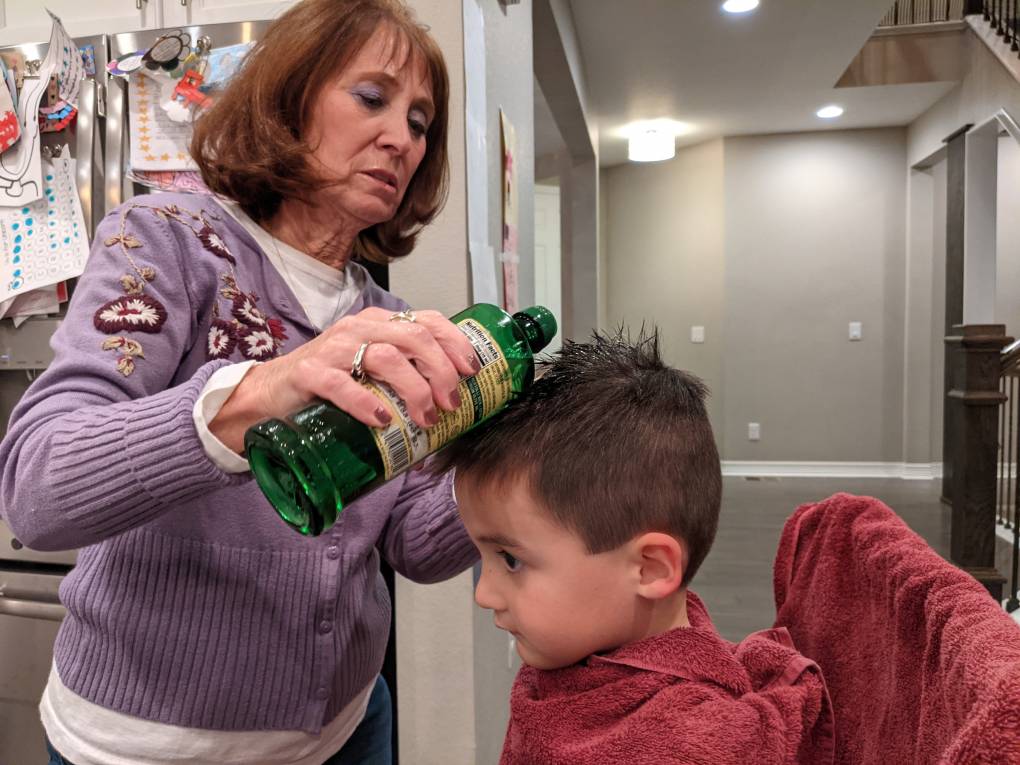
"caption": "LiceDoctors technician Linda Holmes checks the heads of everyone in the Marker family for lice, including preschooler Hudson. It cost more than $200 to get the four-person household checked — eyebrows and Dad's beard included.\n",
"description": "LiceDoctors technician Linda Holmes checks the heads of everyone in the Marker family for lice, including preschooler Hudson. It cost more than $200 to get the four-person household checked — eyebrows and Dad’s beard included. (Rae Ellen Bichell/KHN)",
"title": "LiceDoctors technician Linda Holmes checks the heads of everyone in the Marker family for lice, including preschooler Hudson. It cost more than $200 to get the four-person household checked — eyebrows and Dad's beard included.",
"credit": "Rae Ellen Bichell/KHN",
"status": "inherit",
"altTag": null,
"isLoading": false,
"fetchFailed": false
},
"mindshift_58626": {
"type": "attachments",
"id": "mindshift_58626",
"meta": {
"index": "attachments_1716263798",
"site": "mindshift",
"id": "58626",
"found": true
},
"parent": 58624,
"imgSizes": {
"twentyfourteen-full-width": {
"file": "https://ww2.kqed.org/app/uploads/sites/23/2021/10/How-Parents-and-Teachers-Can-Encourage-Healthy-Social-Media-Use-for-Teens-1038x576.jpg",
"width": 1038,
"mimeType": "image/jpeg",
"height": 576
},
"thumbnail": {
"file": "https://ww2.kqed.org/app/uploads/sites/23/2021/10/How-Parents-and-Teachers-Can-Encourage-Healthy-Social-Media-Use-for-Teens-160x107.jpg",
"width": 160,
"mimeType": "image/jpeg",
"height": 107
},
"post-thumbnail": {
"file": "https://ww2.kqed.org/app/uploads/sites/23/2021/10/How-Parents-and-Teachers-Can-Encourage-Healthy-Social-Media-Use-for-Teens-672x372.jpg",
"width": 672,
"mimeType": "image/jpeg",
"height": 372
},
"kqedFullSize": {
"file": "https://ww2.kqed.org/app/uploads/sites/23/2021/10/How-Parents-and-Teachers-Can-Encourage-Healthy-Social-Media-Use-for-Teens-scaled-e1634112006166.jpg",
"width": 1920,
"height": 1280
},
"2048x2048": {
"file": "https://ww2.kqed.org/app/uploads/sites/23/2021/10/How-Parents-and-Teachers-Can-Encourage-Healthy-Social-Media-Use-for-Teens-2048x1365.jpg",
"width": 2048,
"mimeType": "image/jpeg",
"height": 1365
},
"large": {
"file": "https://ww2.kqed.org/app/uploads/sites/23/2021/10/How-Parents-and-Teachers-Can-Encourage-Healthy-Social-Media-Use-for-Teens-1020x680.jpg",
"width": 1020,
"mimeType": "image/jpeg",
"height": 680
},
"1536x1536": {
"file": "https://ww2.kqed.org/app/uploads/sites/23/2021/10/How-Parents-and-Teachers-Can-Encourage-Healthy-Social-Media-Use-for-Teens-1536x1024.jpg",
"width": 1536,
"mimeType": "image/jpeg",
"height": 1024
},
"full-width": {
"file": "https://ww2.kqed.org/app/uploads/sites/23/2021/10/How-Parents-and-Teachers-Can-Encourage-Healthy-Social-Media-Use-for-Teens-1920x1280.jpg",
"width": 1920,
"mimeType": "image/jpeg",
"height": 1280
},
"medium": {
"file": "https://ww2.kqed.org/app/uploads/sites/23/2021/10/How-Parents-and-Teachers-Can-Encourage-Healthy-Social-Media-Use-for-Teens-800x533.jpg",
"width": 800,
"mimeType": "image/jpeg",
"height": 533
},
"medium_large": {
"file": "https://ww2.kqed.org/app/uploads/sites/23/2021/10/How-Parents-and-Teachers-Can-Encourage-Healthy-Social-Media-Use-for-Teens-768x512.jpg",
"width": 768,
"mimeType": "image/jpeg",
"height": 512
}
},
"publishDate": 1634111985,
"modified": 1634112047,
"caption": null,
"description": null,
"title": "How-Parents-and-Teachers-Can-Encourage-Healthy-Social-Media-Use-for-Teens",
"credit": "Tetiana Strilchuk/iStock",
"status": "inherit",
"altTag": "Girl taking selfie at a park",
"isLoading": false,
"fetchFailed": false
}
},
"audioPlayerReducer": {
"postId": "stream_live",
"isPaused": true,
"isPlaying": false,
"pfsActive": false,
"pledgeModalIsOpen": true,
"playerDrawerIsOpen": false,
"liveAudioPlayStartedAt": 0,
"liveAudioPlayContext": ""
},
"authorsReducer": {
"byline_mindshift_59821": {
"type": "authors",
"id": "byline_mindshift_59821",
"meta": {
"override": true
},
"slug": "byline_mindshift_59821",
"name": "Leila Fadel, Nell Clark and Ziad Buchh",
"isLoading": false
},
"byline_mindshift_59606": {
"type": "authors",
"id": "byline_mindshift_59606",
"meta": {
"override": true
},
"slug": "byline_mindshift_59606",
"name": "Pooja Salhotra",
"isLoading": false
},
"byline_mindshift_59602": {
"type": "authors",
"id": "byline_mindshift_59602",
"meta": {
"override": true
},
"slug": "byline_mindshift_59602",
"name": "Jill Barshay, \u003ca href=\"https://hechingerreport.org/\">The Hechinger Report\u003c/a>",
"isLoading": false
},
"byline_mindshift_59562": {
"type": "authors",
"id": "byline_mindshift_59562",
"meta": {
"override": true
},
"slug": "byline_mindshift_59562",
"name": "Sequoia Carrillo and Pooja Salhotra",
"isLoading": false
},
"byline_mindshift_59546": {
"type": "authors",
"id": "byline_mindshift_59546",
"meta": {
"override": true
},
"slug": "byline_mindshift_59546",
"name": "Jill Barshay, \u003ca href=\"https://hechingerreport.org/\">The Hechinger Report\u003c/a>",
"isLoading": false
},
"byline_mindshift_59452": {
"type": "authors",
"id": "byline_mindshift_59452",
"meta": {
"override": true
},
"slug": "byline_mindshift_59452",
"name": "Jill Barshay, \u003ca href=\"https://hechingerreport.org/\">The Hechinger Report\u003c/a>",
"isLoading": false
},
"byline_mindshift_59441": {
"type": "authors",
"id": "byline_mindshift_59441",
"meta": {
"override": true
},
"slug": "byline_mindshift_59441",
"name": "Jeffrey Pierre and Cory Turner",
"isLoading": false
},
"byline_mindshift_59414": {
"type": "authors",
"id": "byline_mindshift_59414",
"meta": {
"override": true
},
"slug": "byline_mindshift_59414",
"name": "Kalyn Belsha, Chalkbeat",
"isLoading": false
},
"byline_mindshift_59261": {
"type": "authors",
"id": "byline_mindshift_59261",
"meta": {
"override": true
},
"slug": "byline_mindshift_59261",
"name": "Miranda Mazariegos and Meghan Collins Sullivan",
"isLoading": false
},
"byline_mindshift_59067": {
"type": "authors",
"id": "byline_mindshift_59067",
"meta": {
"override": true
},
"slug": "byline_mindshift_59067",
"name": "Kalyn Belsha, \u003ca href=\"https://www.chalkbeat.org/\">Chalkbeat\u003c/a>",
"isLoading": false
},
"byline_mindshift_58776": {
"type": "authors",
"id": "byline_mindshift_58776",
"meta": {
"override": true
},
"slug": "byline_mindshift_58776",
"name": "Rae Ellen Bichell",
"isLoading": false
},
"pauldarvasi": {
"type": "authors",
"id": "11107",
"meta": {
"index": "authors_1716337520",
"id": "11107",
"found": true
},
"name": "Paul Darvasi",
"firstName": "Paul",
"lastName": "Darvasi",
"slug": "pauldarvasi",
"email": "pauldarvasi@gmail.com",
"display_author_email": false,
"staff_mastheads": [],
"title": null,
"bio": "Paul Darvasi is an experienced educator whose research, speaking and writing explore the intersections of learning, technology, narrative and games. You can follow him on Twitter:\u003ca href=\"https://twitter.com/PaulDarvasi\"> @pauldarvasi\u003c/a>",
"avatar": "https://secure.gravatar.com/avatar/df387897a1bf0cd4b720b8175112731a?s=600&d=blank&r=g",
"twitter": "pauldarvasi",
"facebook": null,
"instagram": null,
"linkedin": null,
"sites": [
{
"site": "mindshift",
"roles": [
"contributor"
]
}
],
"headData": {
"title": "Paul Darvasi | KQED",
"description": null,
"ogImgSrc": "https://secure.gravatar.com/avatar/df387897a1bf0cd4b720b8175112731a?s=600&d=blank&r=g",
"twImgSrc": "https://secure.gravatar.com/avatar/df387897a1bf0cd4b720b8175112731a?s=600&d=blank&r=g"
},
"isLoading": false,
"link": "/author/pauldarvasi"
}
},
"pagesReducer": {
"mindshift_category_uncategorized": {
"type": "terms",
"id": "mindshift_1",
"meta": {
"index": "terms_1716263798",
"site": "mindshift",
"id": "1",
"score": 11.461798
},
"featImg": null,
"name": "Uncategorized",
"description": null,
"taxonomy": "category",
"headData": {
"twImgId": null,
"twTitle": null,
"ogTitle": null,
"ogImgId": null,
"twDescription": null,
"description": null,
"title": "Uncategorized Archives | KQED Mindshift",
"ogDescription": null
},
"ttid": 1,
"slug": "uncategorized",
"isLoading": false,
"title": "Uncategorized",
"pageMeta": {
"site": "mindshift",
"WpPageTemplate": "page-topic-editorial",
"currentPage": 2
},
"blocks": [
{
"blockName": "kqed/post-list",
"attrs": {
"layout": "cardArticle2",
"query": "posts/mindshift?category=uncategorized",
"seeMore": false,
"paginated": true,
"page": 2
}
},
{
"blockName": "kqed/ad"
}
]
}
},
"pfsSessionReducer": {},
"postsReducer": {
"stream_live": {
"type": "live",
"id": "stream_live",
"audioUrl": "https://streams.kqed.org/kqedradio",
"title": "Live Stream",
"excerpt": "Live Stream information currently unavailable.",
"link": "/radio",
"featImg": "",
"label": {
"name": "KQED Live",
"link": "/"
}
},
"stream_kqedNewscast": {
"type": "posts",
"id": "stream_kqedNewscast",
"audioUrl": "https://www.kqed.org/.stream/anon/radio/RDnews/newscast.mp3?_=1",
"title": "KQED Newscast",
"featImg": "",
"label": {
"name": "88.5 FM",
"link": "/"
}
},
"mindshift_59821": {
"type": "posts",
"id": "mindshift_59821",
"meta": {
"index": "posts_1716263798",
"site": "mindshift",
"id": "59821",
"score": null,
"sort": [
1662017341000
]
},
"parent": 0,
"labelTerm": {
"site": "mindshift"
},
"blocks": [],
"publishDate": 1662017341,
"format": "standard",
"disqusTitle": "America's kids are going back to school. Not all of their teachers will join them",
"title": "America's kids are going back to school. Not all of their teachers will join them",
"headTitle": "MindShift | KQED News",
"content": "\u003cp>It's a new school year and Jake Miller is not setting up his classroom in central Pennsylvania. He's not getting to know a new group of eighth-graders in his social studies class. After 15 years of teaching, he quit.\u003c/p>\n\u003cp>\"I was accused of teaching critical race theory when I taught about how the Civil War was fought over racism and slavery,\" he said.\u003c/p>\n\u003cp>A couple of parents complained but weren't satisfied with the school board's answer.\u003c/p>\n\u003cp>\"So they took it to a state representative who has used this as a dog whistle,\" he said.\u003c/p>\n\u003cp>It was all just too much, Miller said. He can't teach the Civil War without teaching about racism and slavery. But that incident wasn't the only thing that pushed him to leave.\u003c/p>\n\u003cp>[ad fullwidth]\u003c/p>\n\u003cp>\"There were other moments prior to that,\" he said. \"That just seemed to be the cherry on top.\"\u003c/p>\n\u003cp>There was the shortage of substitute teachers that made it hard to take time off to be there when his kids were sick. The low pay. The lack of respect from parents and politicians; a lack of resources; and, of course, the pandemic.\u003c/p>\n\u003cp>\"There's been an attack on education for quite some time,\" Miller said. \"The pandemic was just a weight too heavy. That was the albatross that pulled me under. And I knew that I needed to pivot.\"\u003c/p>\n\u003cp>Now he's a business consultant making 50% more than he did as a teacher.\u003c/p>\n\u003cp>Pennsylvania's Department of Education says the shortage is real as teachers like Miller leave. The spokesman has said they\u003ca href=\"https://www.cbsnews.com/pittsburgh/news/nationwide-teacher-shortage-being-felt-pennsylvania/\"> need thousands of new teachers\u003c/a> and educators in other roles in the next three years or the problem could become chronic.\u003c/p>\n\u003cp>Other districts in states around the country are also scrambling to find and keep enough teachers to lead their classrooms as educators deal with burnout.\u003c/p>\n\u003cp>Teachers are also facing some unprecedented challenges: school board meetings that devolve into chaos over COVID policies; battles stemming from a politicized and misinformed panic over critical race theory; book banning; and a call to arm teachers in the face of gun violence.\u003c/p>\n\u003cp>Educators are on the front line of these societal fractures that can feel scary.\u003c/p>\n\u003cp>Miller said he's not sure he'll ever go back to education.\u003c/p>\n\u003cp>\"To be honest, it's going to take teachers being treated like professionals, to have their dignity back, and for the public to rally behind them for folks like myself to consider it,\" he said.\u003c/p>\n\u003ch2>Expected to do more, without support\u003c/h2>\n\u003cp>Teachers across the country are making similar calculations as Miller.\u003c/p>\n\u003cp>Last year, Alexander Calderon's colleague quit suddenly. Overnight, he went from being a seventh-grade English language arts teacher to also being the social studies teacher.\u003c/p>\n\u003cp>\"I felt like there was little to no support in terms of understanding this new curriculum,\" Calderon said. \"I was really at my breaking point to the point where I was thinking about just leaving.\"\u003c/p>\n\u003cp>So he opened up the notes app on his phone and started writing a list.\u003c/p>\n\u003cp>Pros of the job: pay wasn't bad comparatively; his colleagues were supportive; he wanted to be there for his students.\u003c/p>\n\u003cp>Cons: very little support from the administration; he was doing the job of two teachers; school morale was terrible; and he was watching one teacher after the next leave.\u003c/p>\n\u003cp>Even though his cons list was slightly longer, this week Calderon started a new school year teaching both English language arts and social studies. His list is still saved on his phone.\u003c/p>\n\u003cp>\"The kids are my No. 1 priority,\" he said. \"Seeing what the kids' interests are and getting to know them as people is what ultimately drove me to stay.\"\u003c/p>\n\u003cp>He also said he's the only Spanish speaker on staff at his middle school. He recalls when a student — originally from Nicaragua — enrolled. He watched the boy's mother struggle to understand the system and to communicate.\u003c/p>\n\u003cp>\"It made me think of my own mom struggling through the American education system,\" he said.\u003c/p>\n\u003cp>Calderon stepped in to help. It's another reason he won't quit.\u003c/p>\n\u003cp>\"I felt that I was kind of morally obligated to stay,\" he said.\u003c/p>\n\u003ch2>Teaching angry, but with love\u003c/h2>\n\u003cp>Then there are the teachers who plan to stick it out no matter what, like Eric Hale. He's a first-grade teacher in the Dallas Independent School District.\u003c/p>\n\u003cp>In 2021, he was named teacher of the year for the entire state of Texas, the first African American man to win the honor.\u003c/p>\n\u003cp>\"I got to meet these phenomenal educators that represented their state and we got to meet the president. It was a whole yearlong bonding experience,\" he said. \"Out of my crew, only me and the state teacher of Illinois are still actively in the classroom.\"\u003c/p>\n\u003cp>He said he knows why they left.\u003c/p>\n\u003cp>\"A lot of them, especially the teachers of color, got tired of fighting a system that necessarily wasn't designed for people that look like me and the kids that I serve to be successful,\" he said. \"They got tired of the disrespect of the profession and most importantly, they got tired of the lack of compensation.\"\u003c/p>\n\u003cp>But when asked if he would ever leave, Hale said no.\u003c/p>\n\u003cp>\"Because, I'm in a position and I've been blessed that I'm changing the face of education,\" he said.\u003c/p>\n\u003cp>Growing up as a Black student from a poorer neighborhood who didn't have a support system, Hale didn't have any teachers who looked like him — no teachers who truly understood his needs.\u003c/p>\n\u003cp>\"So I teach angry. I'm chasing the ghost of the teacher that I wish I had when I was a child,\" he said.\u003c/p>\n\u003cp>He remembers having to go to churches for meals because his family couldn't always afford food. He didn't have a support system at home, and he couldn't find it at school either.\u003c/p>\n\u003cp>\"I grew up being abused and in trauma in a neighborhood that was generationally underserved,\" he said. \"So, sadly, I didn't have any great teachers. I just had one who made a difference.\"\u003c/p>\n\u003cp>Now, he is that teacher every day in his classroom of first-graders, where many of his students live in poverty and the school just doesn't get the books and equipment that public schools in richer areas get.\u003c/p>\n\u003cp>\"I teach in the same type of neighborhood that I grew up in, and so I fight for these kids because I know the potential,\" he said. \"I'm a firm believer of some of the brightest minds come from the darkest places.\"\u003c/p>\n\u003cp>Meanwhile, he said, he's been watching this uproar over critical race theory around the country. Teachers can barely afford the resources for their own curriculum, he said, so it's laughable that they'd shell out money for a college curriculum.\u003c/p>\n\u003cp>\"They're trying to criminalize good teaching,\" he said.\u003c/p>\n\u003cp>It's a political weapon, he said, to stop teachers like him. Teachers who think about the race, ethnicity and circumstances of each student they have and how to help them connect.\u003c/p>\n\u003cp>\"I teach every child that I serve the Texas state curriculum. I add to that curriculum images in literature and in person to inspire them that they can be a doctor, a lawyer, a novelist, an author,\" he said. \"By bringing people that come from the same areas that they come from.\"\u003c/p>\n\u003cp>\"So because I'm African American, I have to do my research and find great leaders of Hispanic descent, because the population that I serve is mostly Hispanic. I wish that somebody would have brought a judge to the school. I wish that somebody would have brought a current congressman, a senator, the mayor. ... Representation matters.\"\u003c/p>\n\u003cp>Hale is a dapper dresser: an emerald green tie, a navy blazer, complete with a bright orange pocket square. In his classroom he has a DJ booth where he plays songs he's made. Each one is named for a student, the beats and melodies tailored to their personalities.\u003c/p>\n\u003cp>\"Each song is special and unique, just like the kids,\" he said. \"Because I sit at home and I say, 'Oh, man, Jaime is very active. His feet are always moving. So I like these drums. They have a little pitter patter.' So I'm able to describe the songs to them and it makes them feel so special and it makes them feel so loved.\"\u003c/p>\n\u003cp>It's what he would've wanted when he was a child. It's why Eric Hale teaches.\u003c/p>\n\u003cp>Jake Miller, who left teaching, said he taught because of one teacher who inspired him to be the first in his family to go to college.\u003c/p>\n\u003cp>Alexander Calderon teaches to be the bridge builder for students who need him in the public school system.\u003c/p>\n\u003cp>And all of them, whether they stay or leave, look to the future of education with hope.\u003c/p>\n\u003cp>\"I have two young sons,\" Miller said. \"So you better believe I'm darn hopeful that the education that they get is going to be as good, if not better, than the education that I received.\"\u003c/p>\n\u003cp>\"I know there's always going to be teachers in the classroom that stick it out for the long run,\" Calderon said.\u003c/p>\n\u003cp>And Hale leaves very little to chance: \"I pray and I write a plan. How am I going to fix this? Why wait for Superman when you've got a cape in the closet?\"\u003c/p>\n\u003cp>[ad floatright]\u003c/p>\n\u003cp>They said the future is in these students. But what that future looks like depends, they said, on whether the educators at the front of the room feel valued enough to stay.\u003c/p>\n\u003cdiv class=\"fullattribution\">Copyright 2022 NPR. To see more, visit https://www.npr.org.\u003cimg src=\"https://www.google-analytics.com/__utm.gif?utmac=UA-5828686-4&utmdt=America%27s+kids+are+going+back+to+school.+Not+all+of+their+teachers+will+join+them&utme=8(APIKey)9(MDAxOTAwOTE4MDEyMTkxMDAzNjczZDljZA004)\">\u003c/div>\n\n",
"disqusIdentifier": "59821 https://ww2.kqed.org/mindshift/?p=59821",
"disqusUrl": "https://ww2.kqed.org/mindshift/2022/09/01/americas-kids-are-going-back-to-school-not-all-of-their-teachers-will-join-them/",
"stats": {
"hasVideo": false,
"hasChartOrMap": false,
"hasAudio": false,
"hasPolis": false,
"wordCount": 1636,
"hasGoogleForm": false,
"hasGallery": false,
"hasHearkenModule": false,
"iframeSrcs": [],
"paragraphCount": 57
},
"modified": 1662017341,
"excerpt": "It's a new school year and Jake Miller is not setting up his classroom in Pennsylvania. He's not getting to know a new group of eighth-graders. After 15 years of teaching, he quit.",
"headData": {
"twImgId": "",
"twTitle": "",
"ogTitle": "",
"ogImgId": "",
"twDescription": "",
"description": "It's a new school year and Jake Miller is not setting up his classroom in Pennsylvania. He's not getting to know a new group of eighth-graders. After 15 years of teaching, he quit.",
"title": "America's kids are going back to school. Not all of their teachers will join them - MindShift",
"ogDescription": "",
"schema": {
"@context": "https://schema.org",
"@type": "Article",
"headline": "America's kids are going back to school. Not all of their teachers will join them",
"datePublished": "2022-09-01T00:29:01-07:00",
"dateModified": "2022-09-01T00:29:01-07:00",
"image": "https://cdn.kqed.org/wp-content/uploads/2020/02/KQED-OG-Image@1x.png"
}
},
"guestAuthors": [],
"slug": "americas-kids-are-going-back-to-school-not-all-of-their-teachers-will-join-them",
"status": "publish",
"nprApiLink": "http://api.npr.org/query?id=1120064931&apiKey=MDAxOTAwOTE4MDEyMTkxMDAzNjczZDljZA004",
"nprStoryDate": "Wed, 31 Aug 2022 05:00:23 -0400",
"excludeFromSiteSearch": "Include",
"nprLastModifiedDate": "Wed, 31 Aug 2022 06:01:15 -0400",
"nprHtmlLink": "https://www.npr.org/2022/08/31/1120064931/school-education-teachers-quit?ft=nprml&f=1120064931",
"nprAudio": "https://ondemand.npr.org/anon.npr-mp3/npr/me/2022/08/20220829_me_school_districts_are_struggling_to_hire_as_teachers_reconsider_their_careers.mp3?orgId=1&topicId=1013&d=651&story=1120064931&ft=nprml&f=1120064931",
"nprImageAgency": "AFP via Getty Images",
"nprAudioM3u": "http://api.npr.org/m3u/11120065275-02f39a.m3u?orgId=1&topicId=1013&d=651&story=1120064931&ft=nprml&f=1120064931",
"nprStoryId": "1120064931",
"nprByline": "Leila Fadel, Nell Clark and Ziad Buchh",
"nprImageCredit": "Megan Jelinger",
"showOnAuthorArchivePages": "No",
"nprRetrievedStory": "1",
"nprPubDate": "Wed, 31 Aug 2022 05:00:00 -0400",
"path": "/mindshift/59821/americas-kids-are-going-back-to-school-not-all-of-their-teachers-will-join-them",
"audioUrl": "https://ondemand.npr.org/anon.npr-mp3/npr/me/2022/08/20220829_me_school_districts_are_struggling_to_hire_as_teachers_reconsider_their_careers.mp3?orgId=1&topicId=1013&d=651&story=1120064931&ft=nprml&f=1120064931",
"audioTrackLength": null,
"parsedContent": [
{
"type": "contentString",
"content": "\u003cdiv class=\"post-body\">\u003cp>\u003cp>It's a new school year and Jake Miller is not setting up his classroom in central Pennsylvania. He's not getting to know a new group of eighth-graders in his social studies class. After 15 years of teaching, he quit.\u003c/p>\n\u003cp>\"I was accused of teaching critical race theory when I taught about how the Civil War was fought over racism and slavery,\" he said.\u003c/p>\n\u003cp>A couple of parents complained but weren't satisfied with the school board's answer.\u003c/p>\n\u003cp>\"So they took it to a state representative who has used this as a dog whistle,\" he said.\u003c/p>\n\u003cp>It was all just too much, Miller said. He can't teach the Civil War without teaching about racism and slavery. But that incident wasn't the only thing that pushed him to leave.\u003c/p>\n\u003cp>\u003c/p>\u003c/div>",
"attributes": {
"named": {},
"numeric": []
}
},
{
"type": "component",
"content": "",
"name": "ad",
"attributes": {
"named": {
"label": "fullwidth"
},
"numeric": [
"fullwidth"
]
}
},
{
"type": "contentString",
"content": "\u003cdiv class=\"post-body\">\u003cp>\u003c/p>\n\u003cp>\"There were other moments prior to that,\" he said. \"That just seemed to be the cherry on top.\"\u003c/p>\n\u003cp>There was the shortage of substitute teachers that made it hard to take time off to be there when his kids were sick. The low pay. The lack of respect from parents and politicians; a lack of resources; and, of course, the pandemic.\u003c/p>\n\u003cp>\"There's been an attack on education for quite some time,\" Miller said. \"The pandemic was just a weight too heavy. That was the albatross that pulled me under. And I knew that I needed to pivot.\"\u003c/p>\n\u003cp>Now he's a business consultant making 50% more than he did as a teacher.\u003c/p>\n\u003cp>Pennsylvania's Department of Education says the shortage is real as teachers like Miller leave. The spokesman has said they\u003ca href=\"https://www.cbsnews.com/pittsburgh/news/nationwide-teacher-shortage-being-felt-pennsylvania/\"> need thousands of new teachers\u003c/a> and educators in other roles in the next three years or the problem could become chronic.\u003c/p>\n\u003cp>Other districts in states around the country are also scrambling to find and keep enough teachers to lead their classrooms as educators deal with burnout.\u003c/p>\n\u003cp>Teachers are also facing some unprecedented challenges: school board meetings that devolve into chaos over COVID policies; battles stemming from a politicized and misinformed panic over critical race theory; book banning; and a call to arm teachers in the face of gun violence.\u003c/p>\n\u003cp>Educators are on the front line of these societal fractures that can feel scary.\u003c/p>\n\u003cp>Miller said he's not sure he'll ever go back to education.\u003c/p>\n\u003cp>\"To be honest, it's going to take teachers being treated like professionals, to have their dignity back, and for the public to rally behind them for folks like myself to consider it,\" he said.\u003c/p>\n\u003ch2>Expected to do more, without support\u003c/h2>\n\u003cp>Teachers across the country are making similar calculations as Miller.\u003c/p>\n\u003cp>Last year, Alexander Calderon's colleague quit suddenly. Overnight, he went from being a seventh-grade English language arts teacher to also being the social studies teacher.\u003c/p>\n\u003cp>\"I felt like there was little to no support in terms of understanding this new curriculum,\" Calderon said. \"I was really at my breaking point to the point where I was thinking about just leaving.\"\u003c/p>\n\u003cp>So he opened up the notes app on his phone and started writing a list.\u003c/p>\n\u003cp>Pros of the job: pay wasn't bad comparatively; his colleagues were supportive; he wanted to be there for his students.\u003c/p>\n\u003cp>Cons: very little support from the administration; he was doing the job of two teachers; school morale was terrible; and he was watching one teacher after the next leave.\u003c/p>\n\u003cp>Even though his cons list was slightly longer, this week Calderon started a new school year teaching both English language arts and social studies. His list is still saved on his phone.\u003c/p>\n\u003cp>\"The kids are my No. 1 priority,\" he said. \"Seeing what the kids' interests are and getting to know them as people is what ultimately drove me to stay.\"\u003c/p>\n\u003cp>He also said he's the only Spanish speaker on staff at his middle school. He recalls when a student — originally from Nicaragua — enrolled. He watched the boy's mother struggle to understand the system and to communicate.\u003c/p>\n\u003cp>\"It made me think of my own mom struggling through the American education system,\" he said.\u003c/p>\n\u003cp>Calderon stepped in to help. It's another reason he won't quit.\u003c/p>\n\u003cp>\"I felt that I was kind of morally obligated to stay,\" he said.\u003c/p>\n\u003ch2>Teaching angry, but with love\u003c/h2>\n\u003cp>Then there are the teachers who plan to stick it out no matter what, like Eric Hale. He's a first-grade teacher in the Dallas Independent School District.\u003c/p>\n\u003cp>In 2021, he was named teacher of the year for the entire state of Texas, the first African American man to win the honor.\u003c/p>\n\u003cp>\"I got to meet these phenomenal educators that represented their state and we got to meet the president. It was a whole yearlong bonding experience,\" he said. \"Out of my crew, only me and the state teacher of Illinois are still actively in the classroom.\"\u003c/p>\n\u003cp>He said he knows why they left.\u003c/p>\n\u003cp>\"A lot of them, especially the teachers of color, got tired of fighting a system that necessarily wasn't designed for people that look like me and the kids that I serve to be successful,\" he said. \"They got tired of the disrespect of the profession and most importantly, they got tired of the lack of compensation.\"\u003c/p>\n\u003cp>But when asked if he would ever leave, Hale said no.\u003c/p>\n\u003cp>\"Because, I'm in a position and I've been blessed that I'm changing the face of education,\" he said.\u003c/p>\n\u003cp>Growing up as a Black student from a poorer neighborhood who didn't have a support system, Hale didn't have any teachers who looked like him — no teachers who truly understood his needs.\u003c/p>\n\u003cp>\"So I teach angry. I'm chasing the ghost of the teacher that I wish I had when I was a child,\" he said.\u003c/p>\n\u003cp>He remembers having to go to churches for meals because his family couldn't always afford food. He didn't have a support system at home, and he couldn't find it at school either.\u003c/p>\n\u003cp>\"I grew up being abused and in trauma in a neighborhood that was generationally underserved,\" he said. \"So, sadly, I didn't have any great teachers. I just had one who made a difference.\"\u003c/p>\n\u003cp>Now, he is that teacher every day in his classroom of first-graders, where many of his students live in poverty and the school just doesn't get the books and equipment that public schools in richer areas get.\u003c/p>\n\u003cp>\"I teach in the same type of neighborhood that I grew up in, and so I fight for these kids because I know the potential,\" he said. \"I'm a firm believer of some of the brightest minds come from the darkest places.\"\u003c/p>\n\u003cp>Meanwhile, he said, he's been watching this uproar over critical race theory around the country. Teachers can barely afford the resources for their own curriculum, he said, so it's laughable that they'd shell out money for a college curriculum.\u003c/p>\n\u003cp>\"They're trying to criminalize good teaching,\" he said.\u003c/p>\n\u003cp>It's a political weapon, he said, to stop teachers like him. Teachers who think about the race, ethnicity and circumstances of each student they have and how to help them connect.\u003c/p>\n\u003cp>\"I teach every child that I serve the Texas state curriculum. I add to that curriculum images in literature and in person to inspire them that they can be a doctor, a lawyer, a novelist, an author,\" he said. \"By bringing people that come from the same areas that they come from.\"\u003c/p>\n\u003cp>\"So because I'm African American, I have to do my research and find great leaders of Hispanic descent, because the population that I serve is mostly Hispanic. I wish that somebody would have brought a judge to the school. I wish that somebody would have brought a current congressman, a senator, the mayor. ... Representation matters.\"\u003c/p>\n\u003cp>Hale is a dapper dresser: an emerald green tie, a navy blazer, complete with a bright orange pocket square. In his classroom he has a DJ booth where he plays songs he's made. Each one is named for a student, the beats and melodies tailored to their personalities.\u003c/p>\n\u003cp>\"Each song is special and unique, just like the kids,\" he said. \"Because I sit at home and I say, 'Oh, man, Jaime is very active. His feet are always moving. So I like these drums. They have a little pitter patter.' So I'm able to describe the songs to them and it makes them feel so special and it makes them feel so loved.\"\u003c/p>\n\u003cp>It's what he would've wanted when he was a child. It's why Eric Hale teaches.\u003c/p>\n\u003cp>Jake Miller, who left teaching, said he taught because of one teacher who inspired him to be the first in his family to go to college.\u003c/p>\n\u003cp>Alexander Calderon teaches to be the bridge builder for students who need him in the public school system.\u003c/p>\n\u003cp>And all of them, whether they stay or leave, look to the future of education with hope.\u003c/p>\n\u003cp>\"I have two young sons,\" Miller said. \"So you better believe I'm darn hopeful that the education that they get is going to be as good, if not better, than the education that I received.\"\u003c/p>\n\u003cp>\"I know there's always going to be teachers in the classroom that stick it out for the long run,\" Calderon said.\u003c/p>\n\u003cp>And Hale leaves very little to chance: \"I pray and I write a plan. How am I going to fix this? Why wait for Superman when you've got a cape in the closet?\"\u003c/p>\n\u003cp>\u003c/p>\u003c/div>",
"attributes": {
"named": {},
"numeric": []
}
},
{
"type": "component",
"content": "",
"name": "ad",
"attributes": {
"named": {
"label": "floatright"
},
"numeric": [
"floatright"
]
}
},
{
"type": "contentString",
"content": "\u003cdiv class=\"post-body\">\u003cp>\u003c/p>\n\u003cp>They said the future is in these students. But what that future looks like depends, they said, on whether the educators at the front of the room feel valued enough to stay.\u003c/p>\n\u003cdiv class=\"fullattribution\">Copyright 2022 NPR. To see more, visit https://www.npr.org.\u003cimg src=\"https://www.google-analytics.com/__utm.gif?utmac=UA-5828686-4&utmdt=America%27s+kids+are+going+back+to+school.+Not+all+of+their+teachers+will+join+them&utme=8(APIKey)9(MDAxOTAwOTE4MDEyMTkxMDAzNjczZDljZA004)\">\u003c/div>\n\n\u003c/div>\u003c/p>",
"attributes": {
"named": {},
"numeric": []
}
}
],
"link": "/mindshift/59821/americas-kids-are-going-back-to-school-not-all-of-their-teachers-will-join-them",
"authors": [
"byline_mindshift_59821"
],
"categories": [
"mindshift_1"
],
"tags": [
"mindshift_21398",
"mindshift_21461",
"mindshift_21263"
],
"featImg": "mindshift_59822",
"label": "mindshift"
},
"mindshift_59606": {
"type": "posts",
"id": "mindshift_59606",
"meta": {
"index": "posts_1716263798",
"site": "mindshift",
"id": "59606",
"score": null,
"sort": [
1658904468000
]
},
"parent": 0,
"labelTerm": {
"site": "mindshift"
},
"blocks": [],
"publishDate": 1658904468,
"format": "standard",
"disqusTitle": "A growing number of Americans are questioning the value of going to college",
"title": "A growing number of Americans are questioning the value of going to college",
"headTitle": "MindShift | KQED News",
"content": "\u003cp>The share of Americans who believe colleges and universities have a positive impact on the country has dropped by 14 percentage points since 2020.\u003c/p>\n\u003cp>That's according to the latest results of an annual survey conducted by New America, a nonpartisan think tank. Since 2017, the organization has been collecting data on Americans' attitudes about the value of education after high school and how that education should be funded.\u003c/p>\n\u003cp>Many of the report's findings have remained stable over time – for example, the general consensus that post-secondary education offers a good return on investment for students remains. But there's been a steep decline in the overall perception of higher education's impact on the country.\u003c/p>\n\u003cp>That decline is driven by economic challenges, according to Sophie Nguyen, who co-authored the \u003ca href=\"https://www.newamerica.org/education-policy/reports/varying-degrees-2022/findings/\">report\u003c/a>.\u003c/p>\n\u003cp>The nationally representative survey included about 1,500 adults and was conducted in the spring of 2022, \"when people started to feel the effects of gas price increases,\" Nguyen says. \"People started to feel that an economic recession is actually coming.\"\u003c/p>\n\u003cp>[ad fullwidth]\u003c/p>\n\u003cp>In line with previous years, the survey finds that Democrats and Republicans disagree about multiple aspects of higher education. While 73% of Democrats believe colleges and universities have a positive impact on the country, only 37% of Republicans feel that way.\u003c/p>\n\u003cp>Americans also remain divided on who should pay for higher education. Most Democrats (77%) say the government should fund higher education because it's good for society, while the majority of Republicans (63%) say students should pay for post high school education because they benefit from it.\u003c/p>\n\u003cp>A new question on this year's survey asked respondents about the minimum level of education they believe their immediate or close family members should receive in order to be financially secure. While nearly three-quarters of respondents agree some sort of postsecondary education is required for their child or close family member to achieve financial security, there are partisan divides. Only a quarter of Democrats say that a high school diploma or GED is sufficient to achieve economic security, compared to 39% of Republicans who say so.\u003c/p>\n\u003cp>Despite the overall agreement on the value of higher education, many Americans are concerned about affordability. Only about half of respondents think Americans can get an affordable, high-quality education after high school.\u003c/p>\n\u003cp>\u003c/p>\n\u003cp>Across the political spectrum, says Nguyen, people \"are pretty aligned on the affordability questions.\" But, she says, they don't agree on how to solve these affordability issues. \"I think that's translated to the current policy environment we're living in right now.\"\u003c/p>\n\u003cdiv class=\"fullattribution\">Copyright 2022 NPR. To see more, visit https://www.npr.org.\u003cimg src=\"https://www.google-analytics.com/__utm.gif?utmac=UA-5828686-4&utmdt=A+growing+number+of+Americans+are+questioning+the+value+of+going+to+college&utme=8(APIKey)9(MDAxOTAwOTE4MDEyMTkxMDAzNjczZDljZA004)\">\u003c/div>\n\n",
"disqusIdentifier": "59606 https://ww2.kqed.org/mindshift/?p=59606",
"disqusUrl": "https://ww2.kqed.org/mindshift/2022/07/26/a-growing-number-of-americans-are-questioning-the-value-of-going-to-college/",
"stats": {
"hasVideo": false,
"hasChartOrMap": false,
"hasAudio": false,
"hasPolis": false,
"wordCount": 441,
"hasGoogleForm": false,
"hasGallery": false,
"hasHearkenModule": false,
"iframeSrcs": [],
"paragraphCount": 12
},
"modified": 1658904468,
"excerpt": "A new poll on adults' perceptions of higher education shows a sharp partisan divide and a decline in the share of Americans who think colleges and universities have a positive impact on the nation. ",
"headData": {
"twImgId": "",
"twTitle": "",
"ogTitle": "",
"ogImgId": "",
"twDescription": "",
"description": "A new poll on adults' perceptions of higher education shows a sharp partisan divide and a decline in the share of Americans who think colleges and universities have a positive impact on the nation. ",
"title": "A growing number of Americans are questioning the value of going to college - MindShift",
"ogDescription": "",
"schema": {
"@context": "https://schema.org",
"@type": "Article",
"headline": "A growing number of Americans are questioning the value of going to college",
"datePublished": "2022-07-26T23:47:48-07:00",
"dateModified": "2022-07-26T23:47:48-07:00",
"image": "https://cdn.kqed.org/wp-content/uploads/2020/02/KQED-OG-Image@1x.png"
}
},
"guestAuthors": [],
"slug": "a-growing-number-of-americans-are-questioning-the-value-of-going-to-college",
"status": "publish",
"nprApiLink": "http://api.npr.org/query?id=1113816868&apiKey=MDAxOTAwOTE4MDEyMTkxMDAzNjczZDljZA004",
"nprByline": "Pooja Salhotra",
"nprStoryDate": "Tue, 26 Jul 2022 17:27:07 -0400",
"excludeFromSiteSearch": "Include",
"nprLastModifiedDate": "Tue, 26 Jul 2022 19:06:54 -0400",
"nprHtmlLink": "https://www.npr.org/2022/07/26/1113816868/more-americans-are-questioning-whether-college-has-a-positive-impact?ft=nprml&f=1113816868",
"nprImageAgency": "AP",
"nprImageCredit": "Seth Wenig",
"showOnAuthorArchivePages": "No",
"nprStoryId": "1113816868",
"nprRetrievedStory": "1",
"nprPubDate": "Tue, 26 Jul 2022 19:06:00 -0400",
"path": "/mindshift/59606/a-growing-number-of-americans-are-questioning-the-value-of-going-to-college",
"audioTrackLength": null,
"parsedContent": [
{
"type": "contentString",
"content": "\u003cdiv class=\"post-body\">\u003cp>\u003cp>The share of Americans who believe colleges and universities have a positive impact on the country has dropped by 14 percentage points since 2020.\u003c/p>\n\u003cp>That's according to the latest results of an annual survey conducted by New America, a nonpartisan think tank. Since 2017, the organization has been collecting data on Americans' attitudes about the value of education after high school and how that education should be funded.\u003c/p>\n\u003cp>Many of the report's findings have remained stable over time – for example, the general consensus that post-secondary education offers a good return on investment for students remains. But there's been a steep decline in the overall perception of higher education's impact on the country.\u003c/p>\n\u003cp>That decline is driven by economic challenges, according to Sophie Nguyen, who co-authored the \u003ca href=\"https://www.newamerica.org/education-policy/reports/varying-degrees-2022/findings/\">report\u003c/a>.\u003c/p>\n\u003cp>The nationally representative survey included about 1,500 adults and was conducted in the spring of 2022, \"when people started to feel the effects of gas price increases,\" Nguyen says. \"People started to feel that an economic recession is actually coming.\"\u003c/p>\n\u003cp>\u003c/p>\u003c/div>",
"attributes": {
"named": {},
"numeric": []
}
},
{
"type": "component",
"content": "",
"name": "ad",
"attributes": {
"named": {
"label": "fullwidth"
},
"numeric": [
"fullwidth"
]
}
},
{
"type": "contentString",
"content": "\u003cdiv class=\"post-body\">\u003cp>\u003c/p>\n\u003cp>In line with previous years, the survey finds that Democrats and Republicans disagree about multiple aspects of higher education. While 73% of Democrats believe colleges and universities have a positive impact on the country, only 37% of Republicans feel that way.\u003c/p>\n\u003cp>Americans also remain divided on who should pay for higher education. Most Democrats (77%) say the government should fund higher education because it's good for society, while the majority of Republicans (63%) say students should pay for post high school education because they benefit from it.\u003c/p>\n\u003cp>A new question on this year's survey asked respondents about the minimum level of education they believe their immediate or close family members should receive in order to be financially secure. While nearly three-quarters of respondents agree some sort of postsecondary education is required for their child or close family member to achieve financial security, there are partisan divides. Only a quarter of Democrats say that a high school diploma or GED is sufficient to achieve economic security, compared to 39% of Republicans who say so.\u003c/p>\n\u003cp>Despite the overall agreement on the value of higher education, many Americans are concerned about affordability. Only about half of respondents think Americans can get an affordable, high-quality education after high school.\u003c/p>\n\u003cp>\u003c/p>\n\u003cp>Across the political spectrum, says Nguyen, people \"are pretty aligned on the affordability questions.\" But, she says, they don't agree on how to solve these affordability issues. \"I think that's translated to the current policy environment we're living in right now.\"\u003c/p>\n\u003cdiv class=\"fullattribution\">Copyright 2022 NPR. To see more, visit https://www.npr.org.\u003cimg src=\"https://www.google-analytics.com/__utm.gif?utmac=UA-5828686-4&utmdt=A+growing+number+of+Americans+are+questioning+the+value+of+going+to+college&utme=8(APIKey)9(MDAxOTAwOTE4MDEyMTkxMDAzNjczZDljZA004)\">\u003c/div>\n\n\u003c/div>\u003c/p>",
"attributes": {
"named": {},
"numeric": []
}
}
],
"link": "/mindshift/59606/a-growing-number-of-americans-are-questioning-the-value-of-going-to-college",
"authors": [
"byline_mindshift_59606"
],
"categories": [
"mindshift_1"
],
"tags": [
"mindshift_21261",
"mindshift_21305"
],
"featImg": "mindshift_59607",
"label": "mindshift"
},
"mindshift_59602": {
"type": "posts",
"id": "mindshift_59602",
"meta": {
"index": "posts_1716263798",
"site": "mindshift",
"id": "59602",
"score": null,
"sort": [
1658743205000
]
},
"parent": 0,
"labelTerm": {
"site": "mindshift"
},
"blocks": [],
"publishDate": 1658743205,
"format": "standard",
"disqusTitle": "Paper books linked to stronger readers in an international study",
"title": "Paper books linked to stronger readers in an international study",
"headTitle": "MindShift | KQED News",
"content": "\u003cp>There’s a lot to like about digital books. They’re lighter in the backpack and often cheaper than paper books. But a new international report suggests that physical books may be important to raising children who become strong readers.\u003c/p>\n\u003cp>An Organization for Economic Cooperation and Development (OECD) study across approximately 30 countries found that teens who said they most often read paper books scored considerably higher on a 2018 reading test taken by 15-year-olds compared to teens who said they rarely or never read books. Even among students of similar socioeconomic backgrounds, those who read books in a paper format scored a whopping 49 points higher on the Program for International Student Assessment, known as PISA. That’s equal to almost 2.5 years of learning. By comparison, students who tended to read books more often on digital devices scored only 15 points higher than students who rarely read – a difference of less than a year’s worth of learning.\u003c/p>\n\u003cp>In other words, all reading is good, but reading on paper is linked to vastly superior achievement outcomes.\u003c/p>\n\u003cp>It's impossible to say from this study whether paper books are the main reason why students become better readers. It could be that stronger readers prefer paper and they would be reading just as well if they were forced to read on screens. Dozens of previous studies have found a \u003ca href=\"https://hechingerreport.org/evidence-increases-for-reading-on-paper-instead-of-screens/\">comprehension advantage for reading on paper versus screens\u003c/a>. But these studies are usually conducted in a laboratory setting where people take comprehension tests immediately after reading a passage in different formats. This report is suggesting the possibility that there are longer term cumulative benefits for students who regularly read books in a paper format.\u003c/p>\n\u003cp>It’s noteworthy that the 2018 PISA reading test was a computer-based assessment in the vast majority of countries. Paper book readers are correctly answering more questions about what they have read on screens than digital readers!\u003c/p>\n\u003cp>[ad fullwidth]\u003c/p>\n\u003cp>Strong readers who had higher scores on the PISA reading test also read on screens at home, but they tended to use their devices to gather information, such as reading the news or browsing the internet for school work. When these strong readers wanted to read a book, they opted to read in paper format or balance their reading time between paper and digital devices.\u003c/p>\n\u003cp>Every three years, when 600,000 students around the world take the PISA test, they fill out surveys about their families and their reading habits. Researchers at the OECD compared these survey responses with test scores and noticed intriguing relationships between books in the home, a preference for reading on paper and reading achievement. The report, “\u003ca href=\"https://www.oecd-ilibrary.org/education/does-the-digital-world-open-up-an-increasing-divide-in-access-to-print-books_54f9d8f7-en\">Does the digital world open up an increasing divide in access to print books?\u003c/a>” was published on July 12, 2022.\u003c/p>\n\u003cp>In the United States, 31 percent of 15-year-olds said they never or rarely read books, compared with 35 percent worldwide. Meanwhile, 35 percent of American students said they primarily read paper books, almost matching the international average of 36 percent. Another 16 percent of Americans said they read books more often on screens and 18 percent responded that they read books equally on both paper and screens.\u003c/p>\n\u003cp>Digital books have become extremely popular among students in some regions of Asia, but students who read books on paper still outperformed even in cultures where digital reading is commonplace. More than 40 percent of students in Hong Kong, Indonesia, Malaysia, Taiwan and Thailand reported reading books more often on digital devices. Yet in Hong Kong, Malaysia and Taiwan, students who read books mostly on paper or read in both formats scored higher than those who primarily read digital books. Both Thailand and Indonesia were exceptions; digital readers did better. Hong Kong and Taiwan are two of the highest performing education systems in the world and even after adjusting for students’ socioeconomic status, the advantage for paper reading remained pronounced.\u003c/p>\n\u003cp>Teens around the world are rapidly turning away from reading, according to OECD surveys. Fifteen-year-olds are reading less for leisure and fewer fiction books. The number of students who consider reading a “waste of time” jumped by more than 5 percentage points. Simultaneously, reading performance around the world, which had been slowly improving up until 2012, declined between 2012 and 2018. Across OECD countries that participated in both assessments, reading performance fell back to what it had been in 2006.\u003c/p>\n\u003cp>OECD researchers wonder if the presence of physical books at home still matters in the digital age. In the student surveys, students were told that each meter of shelving typically holds 40 books and were asked to estimate the number of books in their homes. Both rich and poor students alike reported fewer books in the home over the past 18 years, but the book gap between the two remained persistently large with wealthier students living amid twice as many books as poorer students.\u003c/p>\n\u003cfigure id=\"attachment_59603\" class=\"wp-caption alignnone\" style=\"max-width: 977px\">\u003cimg class=\"size-full wp-image-59603\" src=\"https://ww2.kqed.org/app/uploads/sites/23/2022/07/OECD-Books.png\" alt=\"\" width=\"977\" height=\"435\" srcset=\"https://ww2.kqed.org/app/uploads/sites/23/2022/07/OECD-Books.png 977w, https://ww2.kqed.org/app/uploads/sites/23/2022/07/OECD-Books-800x356.png 800w, https://ww2.kqed.org/app/uploads/sites/23/2022/07/OECD-Books-160x71.png 160w, https://ww2.kqed.org/app/uploads/sites/23/2022/07/OECD-Books-768x342.png 768w\" sizes=\"(max-width: 977px) 100vw, 977px\">\u003cfigcaption class=\"wp-caption-text\">Source: OECD\u003c/figcaption>\u003c/figure>\n\u003cp>The influence of books at home is a bit of a chicken-egg riddle. The OECD found that students who had more books at home reported that they enjoyed reading more. Logically, students who are surrounded by physical books may feel more encouraged by their families and inspired to read. But it could be that students who enjoy reading receive lots of books as presents or bring more books home from the library. It’s also possible that both are true simultaneously in a virtuous two-way spiral: more books at home inspire kids to read \u003cem>and\u003c/em> voracious readers buy more books.\u003c/p>\n\u003cp>OECD researchers are most worried about poorer students. Low-income students made huge strides in access to digital technology well before the pandemic. Ninety-four percent of students from low-income families across 26 developed nations had access to the internet at home in 2018, up from 75 percent in 2009. “While disadvantaged students are catching up in terms of access to digital resources, their access to cultural capital like paper books at home has diminished,” the OECD report noted.\u003c/p>\n\u003cp>As one gap closes, another one opens.\u003c/p>\n\u003cp>[ad floatright]\u003c/p>\n\u003cp>\u003cem>This story about\u003c/em> \u003ca href=\"https://hechingerreport.org/proof-points-paper-books-linked-to-stronger-readers-in-an-international-study/\">\u003cem>digital readers\u003c/em>\u003c/a> \u003cem>was written by Jill Barshay and produced by The Hechinger Report, a nonprofit, independent news organization focused on inequality and innovation in education. Sign up for the \u003c/em>\u003ca href=\"http://hechingerreport.us2.list-manage1.com/subscribe?u=66c306eebb323868c3ce353c1&id=d3ee4c3e04\">\u003cem>Hechinger newsletter.\u003c/em>\u003c/a>\u003c/p>\n\n",
"disqusIdentifier": "59602 https://ww2.kqed.org/mindshift/?p=59602",
"disqusUrl": "https://ww2.kqed.org/mindshift/2022/07/25/paper-books-linked-to-stronger-readers-in-an-international-study/",
"stats": {
"hasVideo": false,
"hasChartOrMap": false,
"hasAudio": false,
"hasPolis": false,
"wordCount": 1066,
"hasGoogleForm": false,
"hasGallery": false,
"hasHearkenModule": false,
"iframeSrcs": [],
"paragraphCount": 17
},
"modified": 1658730302,
"excerpt": "An international study by the Organization for Economic Cooperation and Development found that students who had more books at home reported that they enjoyed reading more. Teens who read more paper books scored higher on reading assessments. ",
"headData": {
"twImgId": "",
"twTitle": "",
"ogTitle": "",
"ogImgId": "",
"twDescription": "",
"description": "An international study by the Organization for Economic Cooperation and Development found that students who had more books at home reported that they enjoyed reading more. Teens who read more paper books scored higher on reading assessments. ",
"title": "Paper books linked to stronger readers in an international study - MindShift",
"ogDescription": "",
"schema": {
"@context": "https://schema.org",
"@type": "Article",
"headline": "Paper books linked to stronger readers in an international study",
"datePublished": "2022-07-25T03:00:05-07:00",
"dateModified": "2022-07-24T23:25:02-07:00",
"image": "https://cdn.kqed.org/wp-content/uploads/2020/02/KQED-OG-Image@1x.png"
}
},
"guestAuthors": [],
"slug": "paper-books-linked-to-stronger-readers-in-an-international-study",
"status": "publish",
"nprByline": "Jill Barshay, \u003ca href=\"https://hechingerreport.org/\">The Hechinger Report\u003c/a>",
"excludeFromSiteSearch": "Include",
"showOnAuthorArchivePages": "No",
"path": "/mindshift/59602/paper-books-linked-to-stronger-readers-in-an-international-study",
"audioTrackLength": null,
"parsedContent": [
{
"type": "contentString",
"content": "\u003cdiv class=\"post-body\">\u003cp>\u003cp>There’s a lot to like about digital books. They’re lighter in the backpack and often cheaper than paper books. But a new international report suggests that physical books may be important to raising children who become strong readers.\u003c/p>\n\u003cp>An Organization for Economic Cooperation and Development (OECD) study across approximately 30 countries found that teens who said they most often read paper books scored considerably higher on a 2018 reading test taken by 15-year-olds compared to teens who said they rarely or never read books. Even among students of similar socioeconomic backgrounds, those who read books in a paper format scored a whopping 49 points higher on the Program for International Student Assessment, known as PISA. That’s equal to almost 2.5 years of learning. By comparison, students who tended to read books more often on digital devices scored only 15 points higher than students who rarely read – a difference of less than a year’s worth of learning.\u003c/p>\n\u003cp>In other words, all reading is good, but reading on paper is linked to vastly superior achievement outcomes.\u003c/p>\n\u003cp>It's impossible to say from this study whether paper books are the main reason why students become better readers. It could be that stronger readers prefer paper and they would be reading just as well if they were forced to read on screens. Dozens of previous studies have found a \u003ca href=\"https://hechingerreport.org/evidence-increases-for-reading-on-paper-instead-of-screens/\">comprehension advantage for reading on paper versus screens\u003c/a>. But these studies are usually conducted in a laboratory setting where people take comprehension tests immediately after reading a passage in different formats. This report is suggesting the possibility that there are longer term cumulative benefits for students who regularly read books in a paper format.\u003c/p>\n\u003cp>It’s noteworthy that the 2018 PISA reading test was a computer-based assessment in the vast majority of countries. Paper book readers are correctly answering more questions about what they have read on screens than digital readers!\u003c/p>\n\u003cp>\u003c/p>\u003c/div>",
"attributes": {
"named": {},
"numeric": []
}
},
{
"type": "component",
"content": "",
"name": "ad",
"attributes": {
"named": {
"label": "fullwidth"
},
"numeric": [
"fullwidth"
]
}
},
{
"type": "contentString",
"content": "\u003cdiv class=\"post-body\">\u003cp>\u003c/p>\n\u003cp>Strong readers who had higher scores on the PISA reading test also read on screens at home, but they tended to use their devices to gather information, such as reading the news or browsing the internet for school work. When these strong readers wanted to read a book, they opted to read in paper format or balance their reading time between paper and digital devices.\u003c/p>\n\u003cp>Every three years, when 600,000 students around the world take the PISA test, they fill out surveys about their families and their reading habits. Researchers at the OECD compared these survey responses with test scores and noticed intriguing relationships between books in the home, a preference for reading on paper and reading achievement. The report, “\u003ca href=\"https://www.oecd-ilibrary.org/education/does-the-digital-world-open-up-an-increasing-divide-in-access-to-print-books_54f9d8f7-en\">Does the digital world open up an increasing divide in access to print books?\u003c/a>” was published on July 12, 2022.\u003c/p>\n\u003cp>In the United States, 31 percent of 15-year-olds said they never or rarely read books, compared with 35 percent worldwide. Meanwhile, 35 percent of American students said they primarily read paper books, almost matching the international average of 36 percent. Another 16 percent of Americans said they read books more often on screens and 18 percent responded that they read books equally on both paper and screens.\u003c/p>\n\u003cp>Digital books have become extremely popular among students in some regions of Asia, but students who read books on paper still outperformed even in cultures where digital reading is commonplace. More than 40 percent of students in Hong Kong, Indonesia, Malaysia, Taiwan and Thailand reported reading books more often on digital devices. Yet in Hong Kong, Malaysia and Taiwan, students who read books mostly on paper or read in both formats scored higher than those who primarily read digital books. Both Thailand and Indonesia were exceptions; digital readers did better. Hong Kong and Taiwan are two of the highest performing education systems in the world and even after adjusting for students’ socioeconomic status, the advantage for paper reading remained pronounced.\u003c/p>\n\u003cp>Teens around the world are rapidly turning away from reading, according to OECD surveys. Fifteen-year-olds are reading less for leisure and fewer fiction books. The number of students who consider reading a “waste of time” jumped by more than 5 percentage points. Simultaneously, reading performance around the world, which had been slowly improving up until 2012, declined between 2012 and 2018. Across OECD countries that participated in both assessments, reading performance fell back to what it had been in 2006.\u003c/p>\n\u003cp>OECD researchers wonder if the presence of physical books at home still matters in the digital age. In the student surveys, students were told that each meter of shelving typically holds 40 books and were asked to estimate the number of books in their homes. Both rich and poor students alike reported fewer books in the home over the past 18 years, but the book gap between the two remained persistently large with wealthier students living amid twice as many books as poorer students.\u003c/p>\n\u003cfigure id=\"attachment_59603\" class=\"wp-caption alignnone\" style=\"max-width: 977px\">\u003cimg class=\"size-full wp-image-59603\" src=\"https://ww2.kqed.org/app/uploads/sites/23/2022/07/OECD-Books.png\" alt=\"\" width=\"977\" height=\"435\" srcset=\"https://ww2.kqed.org/app/uploads/sites/23/2022/07/OECD-Books.png 977w, https://ww2.kqed.org/app/uploads/sites/23/2022/07/OECD-Books-800x356.png 800w, https://ww2.kqed.org/app/uploads/sites/23/2022/07/OECD-Books-160x71.png 160w, https://ww2.kqed.org/app/uploads/sites/23/2022/07/OECD-Books-768x342.png 768w\" sizes=\"(max-width: 977px) 100vw, 977px\">\u003cfigcaption class=\"wp-caption-text\">Source: OECD\u003c/figcaption>\u003c/figure>\n\u003cp>The influence of books at home is a bit of a chicken-egg riddle. The OECD found that students who had more books at home reported that they enjoyed reading more. Logically, students who are surrounded by physical books may feel more encouraged by their families and inspired to read. But it could be that students who enjoy reading receive lots of books as presents or bring more books home from the library. It’s also possible that both are true simultaneously in a virtuous two-way spiral: more books at home inspire kids to read \u003cem>and\u003c/em> voracious readers buy more books.\u003c/p>\n\u003cp>OECD researchers are most worried about poorer students. Low-income students made huge strides in access to digital technology well before the pandemic. Ninety-four percent of students from low-income families across 26 developed nations had access to the internet at home in 2018, up from 75 percent in 2009. “While disadvantaged students are catching up in terms of access to digital resources, their access to cultural capital like paper books at home has diminished,” the OECD report noted.\u003c/p>\n\u003cp>As one gap closes, another one opens.\u003c/p>\n\u003cp>\u003c/p>\u003c/div>",
"attributes": {
"named": {},
"numeric": []
}
},
{
"type": "component",
"content": "",
"name": "ad",
"attributes": {
"named": {
"label": "floatright"
},
"numeric": [
"floatright"
]
}
},
{
"type": "contentString",
"content": "\u003cdiv class=\"post-body\">\u003cp>\u003c/p>\n\u003cp>\u003cem>This story about\u003c/em> \u003ca href=\"https://hechingerreport.org/proof-points-paper-books-linked-to-stronger-readers-in-an-international-study/\">\u003cem>digital readers\u003c/em>\u003c/a> \u003cem>was written by Jill Barshay and produced by The Hechinger Report, a nonprofit, independent news organization focused on inequality and innovation in education. Sign up for the \u003c/em>\u003ca href=\"http://hechingerreport.us2.list-manage1.com/subscribe?u=66c306eebb323868c3ce353c1&id=d3ee4c3e04\">\u003cem>Hechinger newsletter.\u003c/em>\u003c/a>\u003c/p>\n\n\u003c/div>\u003c/p>",
"attributes": {
"named": {},
"numeric": []
}
}
],
"link": "/mindshift/59602/paper-books-linked-to-stronger-readers-in-an-international-study",
"authors": [
"byline_mindshift_59602"
],
"categories": [
"mindshift_1"
],
"tags": [
"mindshift_21129",
"mindshift_550",
"mindshift_21128",
"mindshift_21254"
],
"featImg": "mindshift_59604",
"label": "mindshift"
},
"mindshift_59562": {
"type": "posts",
"id": "mindshift_59562",
"meta": {
"index": "posts_1716263798",
"site": "mindshift",
"id": "59562",
"score": null,
"sort": [
1657895227000
]
},
"parent": 0,
"labelTerm": {
"site": "mindshift"
},
"blocks": [],
"publishDate": 1657895227,
"format": "standard",
"disqusTitle": "The U.S. student population is more diverse, but schools are still highly segregated",
"title": "The U.S. student population is more diverse, but schools are still highly segregated",
"headTitle": "MindShift | KQED News",
"content": "\u003cp>The U.S. student body is more diverse than ever before. Nevertheless, public schools remain highly segregated along racial, ethnic and socioeconomic lines.\u003c/p>\n\u003cp>That's according to \u003ca href=\"https://www.gao.gov/products/gao-22-104737\">a report released Thursday\u003c/a> by the U.S. Government Accountability Office (GAO). More than a third of students (about 18.5 million of them) attended a predominantly same-race/ethnicity school during the 2020-21 school year, the report finds. And 14% of students attended schools where almost all of the student body was of a single race/ethnicity.\u003c/p>\n\u003cp>The report is a follow up to a\u003ca href=\"https://www.gao.gov/products/gao-16-345\"> 2016 GAO investigation\u003c/a> on racial disparity in K-12 schools. That initial report painted a slightly worse picture, but findings from the new report are still concerning, says Jackie Nowicki, the director of K-12 education at the GAO and lead author of the report.\u003c/p>\n\u003cp>\"There is clearly still racial division in schools,\" says Nowicki. She adds that schools with large proportions of Hispanic, Black and American Indian/Alaska Native students – minority groups with higher rates of poverty than white and Asian American students – are also increasing. \"What that means is you have large portions of minority children not only attending essentially segregated schools, but schools that have less resources available to them.\"\u003c/p>\n\u003cp>\u003ca href=\"https://www.gao.gov/\">\u003cimg class=\"alignnone wp-image-59565\" src=\"https://ww2.kqed.org/app/uploads/sites/23/2022/07/GAO-Proportion-of-students-in-K-12-public-schools-by-race-and-ethnicity.png\" alt=\"Graph showing the growth of non-white students as a proportion of student population in K-12 public schools \" width=\"1920\" height=\"1078\" srcset=\"https://ww2.kqed.org/app/uploads/sites/23/2022/07/GAO-Proportion-of-students-in-K-12-public-schools-by-race-and-ethnicity.png 2380w, https://ww2.kqed.org/app/uploads/sites/23/2022/07/GAO-Proportion-of-students-in-K-12-public-schools-by-race-and-ethnicity-800x449.png 800w, https://ww2.kqed.org/app/uploads/sites/23/2022/07/GAO-Proportion-of-students-in-K-12-public-schools-by-race-and-ethnicity-1020x573.png 1020w, https://ww2.kqed.org/app/uploads/sites/23/2022/07/GAO-Proportion-of-students-in-K-12-public-schools-by-race-and-ethnicity-160x90.png 160w, https://ww2.kqed.org/app/uploads/sites/23/2022/07/GAO-Proportion-of-students-in-K-12-public-schools-by-race-and-ethnicity-768x431.png 768w, https://ww2.kqed.org/app/uploads/sites/23/2022/07/GAO-Proportion-of-students-in-K-12-public-schools-by-race-and-ethnicity-1536x862.png 1536w, https://ww2.kqed.org/app/uploads/sites/23/2022/07/GAO-Proportion-of-students-in-K-12-public-schools-by-race-and-ethnicity-2048x1150.png 2048w, https://ww2.kqed.org/app/uploads/sites/23/2022/07/GAO-Proportion-of-students-in-K-12-public-schools-by-race-and-ethnicity-1920x1078.png 1920w\" sizes=\"(max-width: 1920px) 100vw, 1920px\">\u003c/a>\u003c/p>\n\u003cp>[ad fullwidth]\u003c/p>\n\u003cp>\"There are layers of factors here,\" she says. \"They paint a rather dire picture of the state of schooling for a segment of the school-age population that federal laws were designed to protect.\"\u003c/p>\n\u003ch3>School segregation happens across the country\u003c/h3>\n\u003cp>Segregation has historically been associated with the Jim Crow laws of the South. But the report finds that, in the 2020-21 school year, the highest percentage of schools serving a predominantly single-race/ethnicity student population – whether mostly white, mostly Hispanic or mostly Black etc. – were in the Northeast and the Midwest.\u003c/p>\n\u003cp>School segregation has \"always been a whole-country issue,\" says U.S. Rep. Bobby Scott, D-Va., who heads the House education and labor committee. He commissioned both the 2016 and 2022 reports. \"The details of the strategies may be different, but during the '60s and '70s, when the desegregation cases were at their height, cases were all over the country.\"\u003c/p>\n\u003cp>The GAO analysis also found school segregation across all school types, including traditional public schools, charter schools and magnet schools. Across all charter schools, which are publicly funded but privately run, more than a third were predominantly same-race/ethnicity, serving mostly Black and Hispanic students.\u003c/p>\n\u003ch3>There's history behind the report's findings\u003c/h3>\n\u003cp>Nowicki and her team at the GAO say they were not surprised by any of the report's findings. They point to historical practices, like \u003ca href=\"https://www.npr.org/sections/thetwo-way/2016/10/19/498536077/interactive-redlining-map-zooms-in-on-americas-history-of-discrimination\">redlining\u003c/a>, that created racially segregated neighborhoods.\u003c/p>\n\u003cp>And because 70% of U.S. students attend their neighborhood public schools, Nowicki says, racially segregated neighborhoods have historically made for racially segregated schools.\u003c/p>\n\u003cp>\"There are historical reasons why neighborhoods look the way they look,\" she explains. \"And some portion of that is because of the way our country chose to encourage or limit where people could live.\"\u003c/p>\n\u003cp>Though the 1968 Fair Housing Act outlawed housing discrimination on the basis of race, the GAO says that in some states, current legislation reinforces racially isolated communities.\u003c/p>\n\u003cp>\"Our analysis showed that predominantly same-race/ethnicity schools of different races/ethnicities exist in close proximity to one another within districts, but most commonly exist among neighboring districts,\" the report says.\u003c/p>\n\u003ch3>School district secessions have made segregation worse\u003c/h3>\n\u003cp>One cause for the lack of significant improvement, according to the GAO, is a practice known as district secession, where schools break away from an existing district – often citing a need for more local control – and form their own new district. The result, the report finds, is that segregation deepens.\u003c/p>\n\u003cp>\"In the 10 years that we looked at district secessions, we found that, overwhelmingly, those new districts were generally whiter, wealthier than the remaining districts,\" Nowicki says.\u003c/p>\n\u003cp>\u003ca href=\"https://www.gao.gov/\">\u003cimg class=\"alignnone wp-image-59566\" src=\"https://ww2.kqed.org/app/uploads/sites/23/2022/07/GAO-Racialethnic-compositions-of-school-districts-that-have-seceded-from-the-districts-they-left.png\" alt=\"Graph showing how school districts that secede are whiter than the ones they left\" width=\"1920\" height=\"732\" srcset=\"https://ww2.kqed.org/app/uploads/sites/23/2022/07/GAO-Racialethnic-compositions-of-school-districts-that-have-seceded-from-the-districts-they-left.png 2354w, https://ww2.kqed.org/app/uploads/sites/23/2022/07/GAO-Racialethnic-compositions-of-school-districts-that-have-seceded-from-the-districts-they-left-800x305.png 800w, https://ww2.kqed.org/app/uploads/sites/23/2022/07/GAO-Racialethnic-compositions-of-school-districts-that-have-seceded-from-the-districts-they-left-1020x389.png 1020w, https://ww2.kqed.org/app/uploads/sites/23/2022/07/GAO-Racialethnic-compositions-of-school-districts-that-have-seceded-from-the-districts-they-left-160x61.png 160w, https://ww2.kqed.org/app/uploads/sites/23/2022/07/GAO-Racialethnic-compositions-of-school-districts-that-have-seceded-from-the-districts-they-left-768x293.png 768w, https://ww2.kqed.org/app/uploads/sites/23/2022/07/GAO-Racialethnic-compositions-of-school-districts-that-have-seceded-from-the-districts-they-left-1536x586.png 1536w, https://ww2.kqed.org/app/uploads/sites/23/2022/07/GAO-Racialethnic-compositions-of-school-districts-that-have-seceded-from-the-districts-they-left-2048x781.png 2048w, https://ww2.kqed.org/app/uploads/sites/23/2022/07/GAO-Racialethnic-compositions-of-school-districts-that-have-seceded-from-the-districts-they-left-1920x732.png 1920w\" sizes=\"(max-width: 1920px) 100vw, 1920px\">\u003c/a>\u003c/p>\n\u003cp>Six of the 36 district secessions identified in the report happened in Memphis, Tenn., which experienced a historic district merger several years ago. Memphis City Schools, which served a majority non-white student body, dissolved in 2011 due to financial instability. It then merged with the neighboring district, Shelby County Schools, which served a wealthier, majority white population.\u003c/p>\n\u003cp>Joris Ray was a Memphis City Schools administrator at the time of the merger. He recalls that residents of Shelby County were not satisfied with the new consolidated district. They successfully splintered off into six separate districts.\u003c/p>\n\u003cp>As a result, the GAO report says, racial and socioeconomic segregation has grown in and around Memphis. All of the newly formed districts are whiter and wealthier than the one they left, which is now called Memphis-Shelby County Schools.\u003c/p>\n\u003cp>\"This brings negative implications for our students overall,\" says Ray, who has led Memphis-Shelby County Schools since 2019. \"Research has shown that students in more diverse schools have lower levels of prejudice and stereotypes and are more prepared for top employers to hire an increasingly diverse workforce.\"\u003c/p>\n\u003cp>\u003c/p>\n\u003cp>The GAO report finds that this pattern – of municipalities removing themselves from a larger district to form their own, smaller school district – almost always creates more racial and socioeconomic segregation. Overall, new districts tend to have larger shares of white and Asian American students, and lower shares of Black and Hispanic students, the report finds. New districts also have significantly fewer students eligible for free or reduced-price lunch, a common measure of poverty.\u003c/p>\n\u003cdiv class=\"fullattribution\">Copyright 2022 NPR. To see more, visit https://www.npr.org.\u003cimg src=\"https://www.google-analytics.com/__utm.gif?utmac=UA-5828686-4&utmdt=The+U.S.+student+population+is+more+diverse%2C+but+schools+are+still+highly+segregated&utme=8(APIKey)9(MDAxOTAwOTE4MDEyMTkxMDAzNjczZDljZA004)\">\u003c/div>\n\n",
"disqusIdentifier": "59562 https://ww2.kqed.org/mindshift/?p=59562",
"disqusUrl": "https://ww2.kqed.org/mindshift/2022/07/15/the-u-s-student-population-is-more-diverse-but-schools-are-still-highly-segregated/",
"stats": {
"hasVideo": false,
"hasChartOrMap": false,
"hasAudio": false,
"hasPolis": false,
"wordCount": 925,
"hasGoogleForm": false,
"hasGallery": false,
"hasHearkenModule": false,
"iframeSrcs": [],
"paragraphCount": 24
},
"modified": 1657895227,
"excerpt": "A new report from the U.S. Government Accountability Office finds that public schools remain highly segregated along racial, ethnic and socioeconomic lines. One reason: school district secession. ",
"headData": {
"twImgId": "",
"twTitle": "",
"ogTitle": "",
"ogImgId": "",
"twDescription": "",
"description": "A new report from the U.S. Government Accountability Office finds that public schools remain highly segregated along racial, ethnic and socioeconomic lines. One reason: school district secession. ",
"title": "The U.S. student population is more diverse, but schools are still highly segregated - MindShift",
"ogDescription": "",
"schema": {
"@context": "https://schema.org",
"@type": "Article",
"headline": "The U.S. student population is more diverse, but schools are still highly segregated",
"datePublished": "2022-07-15T07:27:07-07:00",
"dateModified": "2022-07-15T07:27:07-07:00",
"image": "https://cdn.kqed.org/wp-content/uploads/2020/02/KQED-OG-Image@1x.png"
}
},
"guestAuthors": [],
"slug": "the-u-s-student-population-is-more-diverse-but-schools-are-still-highly-segregated",
"status": "publish",
"nprApiLink": "http://api.npr.org/query?id=1111060299&apiKey=MDAxOTAwOTE4MDEyMTkxMDAzNjczZDljZA004",
"nprStoryDate": "Thu, 14 Jul 2022 05:13:50 -0400",
"excludeFromSiteSearch": "Include",
"nprLastModifiedDate": "Thu, 14 Jul 2022 09:21:10 -0400",
"nprHtmlLink": "https://www.npr.org/2022/07/14/1111060299/school-segregation-report?ft=nprml&f=1111060299",
"nprAudio": "https://ondemand.npr.org/anon.npr-mp3/npr/me/2022/07/20220714_me_the_us_student_population_is_more_diverse_but_schools_are_still_highly_segregated.mp3?orgId=1&topicId=1013&d=192&p=3&story=1111060299&ft=nprml&f=1111060299",
"nprImageAgency": "Yasmine Gateau for NPR",
"nprAudioM3u": "http://api.npr.org/m3u/11111473900-6517c9.m3u?orgId=1&topicId=1013&d=192&p=3&story=1111060299&ft=nprml&f=1111060299",
"nprStoryId": "1111060299",
"nprByline": "Sequoia Carrillo and Pooja Salhotra",
"showOnAuthorArchivePages": "No",
"nprRetrievedStory": "1",
"nprPubDate": "Thu, 14 Jul 2022 09:21:00 -0400",
"path": "/mindshift/59562/the-u-s-student-population-is-more-diverse-but-schools-are-still-highly-segregated",
"audioUrl": "https://ondemand.npr.org/anon.npr-mp3/npr/me/2022/07/20220714_me_the_us_student_population_is_more_diverse_but_schools_are_still_highly_segregated.mp3?orgId=1&topicId=1013&d=192&p=3&story=1111060299&ft=nprml&f=1111060299",
"audioTrackLength": null,
"parsedContent": [
{
"type": "contentString",
"content": "\u003cdiv class=\"post-body\">\u003cp>\u003cp>The U.S. student body is more diverse than ever before. Nevertheless, public schools remain highly segregated along racial, ethnic and socioeconomic lines.\u003c/p>\n\u003cp>That's according to \u003ca href=\"https://www.gao.gov/products/gao-22-104737\">a report released Thursday\u003c/a> by the U.S. Government Accountability Office (GAO). More than a third of students (about 18.5 million of them) attended a predominantly same-race/ethnicity school during the 2020-21 school year, the report finds. And 14% of students attended schools where almost all of the student body was of a single race/ethnicity.\u003c/p>\n\u003cp>The report is a follow up to a\u003ca href=\"https://www.gao.gov/products/gao-16-345\"> 2016 GAO investigation\u003c/a> on racial disparity in K-12 schools. That initial report painted a slightly worse picture, but findings from the new report are still concerning, says Jackie Nowicki, the director of K-12 education at the GAO and lead author of the report.\u003c/p>\n\u003cp>\"There is clearly still racial division in schools,\" says Nowicki. She adds that schools with large proportions of Hispanic, Black and American Indian/Alaska Native students – minority groups with higher rates of poverty than white and Asian American students – are also increasing. \"What that means is you have large portions of minority children not only attending essentially segregated schools, but schools that have less resources available to them.\"\u003c/p>\n\u003cp>\u003ca href=\"https://www.gao.gov/\">\u003cimg class=\"alignnone wp-image-59565\" src=\"https://ww2.kqed.org/app/uploads/sites/23/2022/07/GAO-Proportion-of-students-in-K-12-public-schools-by-race-and-ethnicity.png\" alt=\"Graph showing the growth of non-white students as a proportion of student population in K-12 public schools \" width=\"1920\" height=\"1078\" srcset=\"https://ww2.kqed.org/app/uploads/sites/23/2022/07/GAO-Proportion-of-students-in-K-12-public-schools-by-race-and-ethnicity.png 2380w, https://ww2.kqed.org/app/uploads/sites/23/2022/07/GAO-Proportion-of-students-in-K-12-public-schools-by-race-and-ethnicity-800x449.png 800w, https://ww2.kqed.org/app/uploads/sites/23/2022/07/GAO-Proportion-of-students-in-K-12-public-schools-by-race-and-ethnicity-1020x573.png 1020w, https://ww2.kqed.org/app/uploads/sites/23/2022/07/GAO-Proportion-of-students-in-K-12-public-schools-by-race-and-ethnicity-160x90.png 160w, https://ww2.kqed.org/app/uploads/sites/23/2022/07/GAO-Proportion-of-students-in-K-12-public-schools-by-race-and-ethnicity-768x431.png 768w, https://ww2.kqed.org/app/uploads/sites/23/2022/07/GAO-Proportion-of-students-in-K-12-public-schools-by-race-and-ethnicity-1536x862.png 1536w, https://ww2.kqed.org/app/uploads/sites/23/2022/07/GAO-Proportion-of-students-in-K-12-public-schools-by-race-and-ethnicity-2048x1150.png 2048w, https://ww2.kqed.org/app/uploads/sites/23/2022/07/GAO-Proportion-of-students-in-K-12-public-schools-by-race-and-ethnicity-1920x1078.png 1920w\" sizes=\"(max-width: 1920px) 100vw, 1920px\">\u003c/a>\u003c/p>\n\u003cp>\u003c/p>\u003c/div>",
"attributes": {
"named": {},
"numeric": []
}
},
{
"type": "component",
"content": "",
"name": "ad",
"attributes": {
"named": {
"label": "fullwidth"
},
"numeric": [
"fullwidth"
]
}
},
{
"type": "contentString",
"content": "\u003cdiv class=\"post-body\">\u003cp>\u003c/p>\n\u003cp>\"There are layers of factors here,\" she says. \"They paint a rather dire picture of the state of schooling for a segment of the school-age population that federal laws were designed to protect.\"\u003c/p>\n\u003ch3>School segregation happens across the country\u003c/h3>\n\u003cp>Segregation has historically been associated with the Jim Crow laws of the South. But the report finds that, in the 2020-21 school year, the highest percentage of schools serving a predominantly single-race/ethnicity student population – whether mostly white, mostly Hispanic or mostly Black etc. – were in the Northeast and the Midwest.\u003c/p>\n\u003cp>School segregation has \"always been a whole-country issue,\" says U.S. Rep. Bobby Scott, D-Va., who heads the House education and labor committee. He commissioned both the 2016 and 2022 reports. \"The details of the strategies may be different, but during the '60s and '70s, when the desegregation cases were at their height, cases were all over the country.\"\u003c/p>\n\u003cp>The GAO analysis also found school segregation across all school types, including traditional public schools, charter schools and magnet schools. Across all charter schools, which are publicly funded but privately run, more than a third were predominantly same-race/ethnicity, serving mostly Black and Hispanic students.\u003c/p>\n\u003ch3>There's history behind the report's findings\u003c/h3>\n\u003cp>Nowicki and her team at the GAO say they were not surprised by any of the report's findings. They point to historical practices, like \u003ca href=\"https://www.npr.org/sections/thetwo-way/2016/10/19/498536077/interactive-redlining-map-zooms-in-on-americas-history-of-discrimination\">redlining\u003c/a>, that created racially segregated neighborhoods.\u003c/p>\n\u003cp>And because 70% of U.S. students attend their neighborhood public schools, Nowicki says, racially segregated neighborhoods have historically made for racially segregated schools.\u003c/p>\n\u003cp>\"There are historical reasons why neighborhoods look the way they look,\" she explains. \"And some portion of that is because of the way our country chose to encourage or limit where people could live.\"\u003c/p>\n\u003cp>Though the 1968 Fair Housing Act outlawed housing discrimination on the basis of race, the GAO says that in some states, current legislation reinforces racially isolated communities.\u003c/p>\n\u003cp>\"Our analysis showed that predominantly same-race/ethnicity schools of different races/ethnicities exist in close proximity to one another within districts, but most commonly exist among neighboring districts,\" the report says.\u003c/p>\n\u003ch3>School district secessions have made segregation worse\u003c/h3>\n\u003cp>One cause for the lack of significant improvement, according to the GAO, is a practice known as district secession, where schools break away from an existing district – often citing a need for more local control – and form their own new district. The result, the report finds, is that segregation deepens.\u003c/p>\n\u003cp>\"In the 10 years that we looked at district secessions, we found that, overwhelmingly, those new districts were generally whiter, wealthier than the remaining districts,\" Nowicki says.\u003c/p>\n\u003cp>\u003ca href=\"https://www.gao.gov/\">\u003cimg class=\"alignnone wp-image-59566\" src=\"https://ww2.kqed.org/app/uploads/sites/23/2022/07/GAO-Racialethnic-compositions-of-school-districts-that-have-seceded-from-the-districts-they-left.png\" alt=\"Graph showing how school districts that secede are whiter than the ones they left\" width=\"1920\" height=\"732\" srcset=\"https://ww2.kqed.org/app/uploads/sites/23/2022/07/GAO-Racialethnic-compositions-of-school-districts-that-have-seceded-from-the-districts-they-left.png 2354w, https://ww2.kqed.org/app/uploads/sites/23/2022/07/GAO-Racialethnic-compositions-of-school-districts-that-have-seceded-from-the-districts-they-left-800x305.png 800w, https://ww2.kqed.org/app/uploads/sites/23/2022/07/GAO-Racialethnic-compositions-of-school-districts-that-have-seceded-from-the-districts-they-left-1020x389.png 1020w, https://ww2.kqed.org/app/uploads/sites/23/2022/07/GAO-Racialethnic-compositions-of-school-districts-that-have-seceded-from-the-districts-they-left-160x61.png 160w, https://ww2.kqed.org/app/uploads/sites/23/2022/07/GAO-Racialethnic-compositions-of-school-districts-that-have-seceded-from-the-districts-they-left-768x293.png 768w, https://ww2.kqed.org/app/uploads/sites/23/2022/07/GAO-Racialethnic-compositions-of-school-districts-that-have-seceded-from-the-districts-they-left-1536x586.png 1536w, https://ww2.kqed.org/app/uploads/sites/23/2022/07/GAO-Racialethnic-compositions-of-school-districts-that-have-seceded-from-the-districts-they-left-2048x781.png 2048w, https://ww2.kqed.org/app/uploads/sites/23/2022/07/GAO-Racialethnic-compositions-of-school-districts-that-have-seceded-from-the-districts-they-left-1920x732.png 1920w\" sizes=\"(max-width: 1920px) 100vw, 1920px\">\u003c/a>\u003c/p>\n\u003cp>Six of the 36 district secessions identified in the report happened in Memphis, Tenn., which experienced a historic district merger several years ago. Memphis City Schools, which served a majority non-white student body, dissolved in 2011 due to financial instability. It then merged with the neighboring district, Shelby County Schools, which served a wealthier, majority white population.\u003c/p>\n\u003cp>Joris Ray was a Memphis City Schools administrator at the time of the merger. He recalls that residents of Shelby County were not satisfied with the new consolidated district. They successfully splintered off into six separate districts.\u003c/p>\n\u003cp>As a result, the GAO report says, racial and socioeconomic segregation has grown in and around Memphis. All of the newly formed districts are whiter and wealthier than the one they left, which is now called Memphis-Shelby County Schools.\u003c/p>\n\u003cp>\"This brings negative implications for our students overall,\" says Ray, who has led Memphis-Shelby County Schools since 2019. \"Research has shown that students in more diverse schools have lower levels of prejudice and stereotypes and are more prepared for top employers to hire an increasingly diverse workforce.\"\u003c/p>\n\u003cp>\u003c/p>\n\u003cp>The GAO report finds that this pattern – of municipalities removing themselves from a larger district to form their own, smaller school district – almost always creates more racial and socioeconomic segregation. Overall, new districts tend to have larger shares of white and Asian American students, and lower shares of Black and Hispanic students, the report finds. New districts also have significantly fewer students eligible for free or reduced-price lunch, a common measure of poverty.\u003c/p>\n\u003cdiv class=\"fullattribution\">Copyright 2022 NPR. To see more, visit https://www.npr.org.\u003cimg src=\"https://www.google-analytics.com/__utm.gif?utmac=UA-5828686-4&utmdt=The+U.S.+student+population+is+more+diverse%2C+but+schools+are+still+highly+segregated&utme=8(APIKey)9(MDAxOTAwOTE4MDEyMTkxMDAzNjczZDljZA004)\">\u003c/div>\n\n\u003c/div>\u003c/p>",
"attributes": {
"named": {},
"numeric": []
}
}
],
"link": "/mindshift/59562/the-u-s-student-population-is-more-diverse-but-schools-are-still-highly-segregated",
"authors": [
"byline_mindshift_59562"
],
"categories": [
"mindshift_1"
],
"featImg": "mindshift_59563",
"label": "mindshift"
},
"mindshift_59546": {
"type": "posts",
"id": "mindshift_59546",
"meta": {
"index": "posts_1716263798",
"site": "mindshift",
"id": "59546",
"score": null,
"sort": [
1657533607000
]
},
"parent": 0,
"labelTerm": {
"site": "mindshift"
},
"blocks": [],
"publishDate": 1657533607,
"format": "standard",
"disqusTitle": "Researchers find a tradeoff between raising achievement and engaging students",
"title": "Researchers find a tradeoff between raising achievement and engaging students",
"headTitle": "MindShift | KQED News",
"content": "\u003cp>What is “good” teaching? Ask 10 people and you’ll get 10 different answers. Hollywood celebrates teachers who believe in their students and help them to achieve their dreams. The influential education economist Eric Hanushek, a senior fellow at Stanford University’s Hoover Institution, argues that good teachers raise their students’ achievement. Teachers are expected to impart so many things, from how to study and take notes to how to share and take turns. Deciding what constitutes good teaching is a messy business.\u003c/p>\n\u003cp>Two researchers from the University of Maryland and Harvard University waded into this mess. They analyzed 53 elementary school teachers who had been randomly assigned to classrooms in their schools located in four different districts along the East Coast. Focusing on math instruction, the researchers compared students’ math scores with surveys that the fourth and fifth-grade students had filled out as part of an experiment. Students were asked to rate their math classes the way consumers fill out customer satisfaction surveys: “This math class is a happy place for me to be;” “Being in this math class makes me feel sad or angry;” “The things we have done this math this year are interesting;” “Because of this teacher, I am learning to love math,” and “I enjoy math class this year.”\u003c/p>\n\u003cp>The academics found that there was often a tradeoff between \"good teaching\" where kids learn stuff and \"good teaching\" that kids enjoy. Teachers who were good at raising test scores tended to receive low student evaluations. Teachers with great student evaluations tended not to raise test scores all that much.\u003c/p>\n\u003cp>“The teachers and the teaching practices that can increase test scores often are not the same as those that improve student-reported engagement,” said David Blazar, one of the study’s co-authors and an associate professor of education policy at the University of Maryland College Park.\u003c/p>\n\u003cp>Blazar’s study, “\u003ca href=\"https://www.edworkingpapers.com/sites/default/files/ai22-591.pdf\">Challenges and Tradeoffs of ‘Good’ Teaching: The Pursuit of Multiple Educational Outcomes\u003c/a>,” was co-written with Cynthia Pollard, a doctoral student at Harvard University’s Graduate School of Education. It was publicly posted in June 2022 as a working paper of the Annenberg Institute at Brown University.\u003c/p>\n\u003cp>[ad fullwidth]\u003c/p>\n\u003cp>It’s hard to understand exactly why the tradeoff between achievement and student engagement exists. One theory is that “drill and kill” style rote repetition might be effective in helping students do well on tests but make class dreadfully dull. The researchers watched hours of videotaped lessons of these teachers in classrooms, but they didn’t find statistical evidence that teachers who spent more class time on test prep produced higher test scores. High achievement didn’t seem to be associated with rote instruction.\u003c/p>\n\u003cp>Instead, it was teachers who had delivered more cognitively demanding lessons, going beyond procedural calculations to complex understandings, who tended to produce higher math scores. The researchers admitted it was “worrisome” that the kind of cognitively demanding instruction that we want to see \"can simultaneously result in decreased student engagement.\"\u003c/p>\n\u003cp>Other researchers and educators have noted that learning is hard work. It often doesn’t feel good for students when they’re making mistakes and struggling to figure things out. It can feel frustrating during the moments when students are learning the most.\u003c/p>\n\u003cp>It was rare, but the researchers managed to find six teachers among the 53 in the study that could do both types of good teaching simultaneously. Teachers who incorporated a lot of hands-on, active learning received high marks from students and raised test scores. These teachers often had students working together collaboratively in pairs or groups, using tactile objects to solve problems or play games. For example, one teacher had students use egg cartons and counters to find equivalent fractions.\u003c/p>\n\u003cp>These doubly “good” teachers had another thing in common: they maintained orderly classrooms that were chock full of routines. Though strict discipline and punishing kids for bad behavior has fallen out of fashion, the researchers noticed that these teachers were proactive in setting up clear behavioral rules at the start of each class. “Teachers appeared quite thoughtful and sophisticated in their use of routines to maintain efficiency and order across the classroom,” the researchers wrote. “The time that teachers did spend on student behavior typically involved short redirections that did not interrupt the flow of the lesson.”\u003c/p>\n\u003cp>These teachers also had a good sense of pacing and understood the limits of children’s attention spans. Some used timers. One teacher used songs to measure time. “The teachers seemed intentional about the amount of time spent on activities,” the researchers noted.\u003c/p>\n\u003cp>Given that it’s not common or easy to engage students and get them to learn math, Blazar was curious to learn which teachers were ultimately better for students in the long run. This experiment actually took place a decade ago in 2012, and the students were tracked afterward. Blazar is currently looking at how these students were doing five and six years later. In his preliminary calculations, he’s finding that the students who had more engaging elementary school teachers subsequently had higher math and reading achievement scores and fewer absences in high school. The students who had teachers who were more effective in raising achievement were generally doing better in high school too, but the long-run benefits faded out somewhat. Though we all want children to learn to multiply and divide, it may be that engaging instruction is ultimately more beneficial.\u003c/p>\n\u003cp>Researchers like Blazar dream of developing a “science of teaching,” so that schools of education and school coaches can better train teachers to teach well. But first we need to agree what we want teachers to do and what we want students to achieve.\u003c/p>\n\u003cp>\u003c/p>\n\u003cp>\u003cem>This story about\u003c/em> \u003ca href=\"https://hechingerreport.org/proof-points-the-paradox-of-good-teaching/\">\u003cem>good teaching\u003c/em>\u003c/a> \u003cem>was written by Jill Barshay and produced by The Hechinger Report, a nonprofit, independent news organization focused on inequality and innovation in education. Sign up for the \u003c/em>\u003ca href=\"http://hechingerreport.us2.list-manage1.com/subscribe?u=66c306eebb323868c3ce353c1&id=d3ee4c3e04\">\u003cem>Hechinger newsletter.\u003c/em>\u003c/a>\u003c/p>\n\n",
"disqusIdentifier": "59546 https://ww2.kqed.org/mindshift/?p=59546",
"disqusUrl": "https://ww2.kqed.org/mindshift/2022/07/11/researchers-find-a-tradeoff-between-raising-achievement-and-engaging-students/",
"stats": {
"hasVideo": false,
"hasChartOrMap": false,
"hasAudio": false,
"hasPolis": false,
"wordCount": 1032,
"hasGoogleForm": false,
"hasGallery": false,
"hasHearkenModule": false,
"iframeSrcs": [],
"paragraphCount": 16
},
"modified": 1657523738,
"excerpt": "It's a challenge to be an engaging teacher while delivering high student test scores, but new research shows how some teachers are able to do both. ",
"headData": {
"twImgId": "",
"twTitle": "",
"ogTitle": "",
"ogImgId": "",
"twDescription": "",
"description": "It's a challenge to be an engaging teacher while delivering high student test scores, but new research shows how some teachers are able to do both.",
"title": "Researchers find a tradeoff between raising achievement and engaging students - MindShift",
"ogDescription": "",
"schema": {
"@context": "https://schema.org",
"@type": "Article",
"headline": "Researchers find a tradeoff between raising achievement and engaging students",
"datePublished": "2022-07-11T03:00:07-07:00",
"dateModified": "2022-07-11T00:15:38-07:00",
"image": "https://cdn.kqed.org/wp-content/uploads/2020/02/KQED-OG-Image@1x.png"
}
},
"guestAuthors": [],
"slug": "researchers-find-a-tradeoff-between-raising-achievement-and-engaging-students",
"status": "publish",
"nprByline": "Jill Barshay, \u003ca href=\"https://hechingerreport.org/\">The Hechinger Report\u003c/a>",
"excludeFromSiteSearch": "Include",
"showOnAuthorArchivePages": "No",
"path": "/mindshift/59546/researchers-find-a-tradeoff-between-raising-achievement-and-engaging-students",
"audioTrackLength": null,
"parsedContent": [
{
"type": "contentString",
"content": "\u003cdiv class=\"post-body\">\u003cp>\u003cp>What is “good” teaching? Ask 10 people and you’ll get 10 different answers. Hollywood celebrates teachers who believe in their students and help them to achieve their dreams. The influential education economist Eric Hanushek, a senior fellow at Stanford University’s Hoover Institution, argues that good teachers raise their students’ achievement. Teachers are expected to impart so many things, from how to study and take notes to how to share and take turns. Deciding what constitutes good teaching is a messy business.\u003c/p>\n\u003cp>Two researchers from the University of Maryland and Harvard University waded into this mess. They analyzed 53 elementary school teachers who had been randomly assigned to classrooms in their schools located in four different districts along the East Coast. Focusing on math instruction, the researchers compared students’ math scores with surveys that the fourth and fifth-grade students had filled out as part of an experiment. Students were asked to rate their math classes the way consumers fill out customer satisfaction surveys: “This math class is a happy place for me to be;” “Being in this math class makes me feel sad or angry;” “The things we have done this math this year are interesting;” “Because of this teacher, I am learning to love math,” and “I enjoy math class this year.”\u003c/p>\n\u003cp>The academics found that there was often a tradeoff between \"good teaching\" where kids learn stuff and \"good teaching\" that kids enjoy. Teachers who were good at raising test scores tended to receive low student evaluations. Teachers with great student evaluations tended not to raise test scores all that much.\u003c/p>\n\u003cp>“The teachers and the teaching practices that can increase test scores often are not the same as those that improve student-reported engagement,” said David Blazar, one of the study’s co-authors and an associate professor of education policy at the University of Maryland College Park.\u003c/p>\n\u003cp>Blazar’s study, “\u003ca href=\"https://www.edworkingpapers.com/sites/default/files/ai22-591.pdf\">Challenges and Tradeoffs of ‘Good’ Teaching: The Pursuit of Multiple Educational Outcomes\u003c/a>,” was co-written with Cynthia Pollard, a doctoral student at Harvard University’s Graduate School of Education. It was publicly posted in June 2022 as a working paper of the Annenberg Institute at Brown University.\u003c/p>\n\u003cp>\u003c/p>\u003c/div>",
"attributes": {
"named": {},
"numeric": []
}
},
{
"type": "component",
"content": "",
"name": "ad",
"attributes": {
"named": {
"label": "fullwidth"
},
"numeric": [
"fullwidth"
]
}
},
{
"type": "contentString",
"content": "\u003cdiv class=\"post-body\">\u003cp>\u003c/p>\n\u003cp>It’s hard to understand exactly why the tradeoff between achievement and student engagement exists. One theory is that “drill and kill” style rote repetition might be effective in helping students do well on tests but make class dreadfully dull. The researchers watched hours of videotaped lessons of these teachers in classrooms, but they didn’t find statistical evidence that teachers who spent more class time on test prep produced higher test scores. High achievement didn’t seem to be associated with rote instruction.\u003c/p>\n\u003cp>Instead, it was teachers who had delivered more cognitively demanding lessons, going beyond procedural calculations to complex understandings, who tended to produce higher math scores. The researchers admitted it was “worrisome” that the kind of cognitively demanding instruction that we want to see \"can simultaneously result in decreased student engagement.\"\u003c/p>\n\u003cp>Other researchers and educators have noted that learning is hard work. It often doesn’t feel good for students when they’re making mistakes and struggling to figure things out. It can feel frustrating during the moments when students are learning the most.\u003c/p>\n\u003cp>It was rare, but the researchers managed to find six teachers among the 53 in the study that could do both types of good teaching simultaneously. Teachers who incorporated a lot of hands-on, active learning received high marks from students and raised test scores. These teachers often had students working together collaboratively in pairs or groups, using tactile objects to solve problems or play games. For example, one teacher had students use egg cartons and counters to find equivalent fractions.\u003c/p>\n\u003cp>These doubly “good” teachers had another thing in common: they maintained orderly classrooms that were chock full of routines. Though strict discipline and punishing kids for bad behavior has fallen out of fashion, the researchers noticed that these teachers were proactive in setting up clear behavioral rules at the start of each class. “Teachers appeared quite thoughtful and sophisticated in their use of routines to maintain efficiency and order across the classroom,” the researchers wrote. “The time that teachers did spend on student behavior typically involved short redirections that did not interrupt the flow of the lesson.”\u003c/p>\n\u003cp>These teachers also had a good sense of pacing and understood the limits of children’s attention spans. Some used timers. One teacher used songs to measure time. “The teachers seemed intentional about the amount of time spent on activities,” the researchers noted.\u003c/p>\n\u003cp>Given that it’s not common or easy to engage students and get them to learn math, Blazar was curious to learn which teachers were ultimately better for students in the long run. This experiment actually took place a decade ago in 2012, and the students were tracked afterward. Blazar is currently looking at how these students were doing five and six years later. In his preliminary calculations, he’s finding that the students who had more engaging elementary school teachers subsequently had higher math and reading achievement scores and fewer absences in high school. The students who had teachers who were more effective in raising achievement were generally doing better in high school too, but the long-run benefits faded out somewhat. Though we all want children to learn to multiply and divide, it may be that engaging instruction is ultimately more beneficial.\u003c/p>\n\u003cp>Researchers like Blazar dream of developing a “science of teaching,” so that schools of education and school coaches can better train teachers to teach well. But first we need to agree what we want teachers to do and what we want students to achieve.\u003c/p>\n\u003cp>\u003c/p>\n\u003cp>\u003cem>This story about\u003c/em> \u003ca href=\"https://hechingerreport.org/proof-points-the-paradox-of-good-teaching/\">\u003cem>good teaching\u003c/em>\u003c/a> \u003cem>was written by Jill Barshay and produced by The Hechinger Report, a nonprofit, independent news organization focused on inequality and innovation in education. Sign up for the \u003c/em>\u003ca href=\"http://hechingerreport.us2.list-manage1.com/subscribe?u=66c306eebb323868c3ce353c1&id=d3ee4c3e04\">\u003cem>Hechinger newsletter.\u003c/em>\u003c/a>\u003c/p>\n\n\u003c/div>\u003c/p>",
"attributes": {
"named": {},
"numeric": []
}
}
],
"link": "/mindshift/59546/researchers-find-a-tradeoff-between-raising-achievement-and-engaging-students",
"authors": [
"byline_mindshift_59546"
],
"categories": [
"mindshift_1"
],
"tags": [
"mindshift_21469"
],
"featImg": "mindshift_59549",
"label": "mindshift"
},
"mindshift_59452": {
"type": "posts",
"id": "mindshift_59452",
"meta": {
"index": "posts_1716263798",
"site": "mindshift",
"id": "59452",
"score": null,
"sort": [
1654505238000
]
},
"parent": 0,
"labelTerm": {
"site": "mindshift"
},
"blocks": [],
"publishDate": 1654505238,
"format": "standard",
"disqusTitle": "In two places, researchers find problems with expansion of free pre-K",
"title": "In two places, researchers find problems with expansion of free pre-K",
"headTitle": "MindShift | KQED News",
"content": "\u003cp>Advocates sold free preschool as a way to improve the lives of people in poverty and help level the playing field. Oft-cited research from \u003ca href=\"https://highscope.org/perry-preschool-project/\">a high quality preschool in Ypsilanti, Michigan\u003c/a> concluded that 58 low-income kids who attended in the 1960s were more likely to hold a job, earn more money, own a home and less likely to commit a crime than similar kids who didn’t go to preschool. It not only seems fair, but a wise use of public dollars to give poor children the same early childhood education that wealthier children enjoy.\u003c/p>\n\u003cp>In practice, as communities around the country offer free preschool to more and more tiny Americans, the results are uneven. Tennessee vastly expanded \u003ca href=\"https://www.tn.gov/education/early-learning/voluntary-pre-k.html\">its free preschool programs\u003c/a> in 2005 but a study released in January 2022 showed that the programs can be so low quality that some kids are worse off. They might have done better without preschool. In New York City, which expanded free pre-K to all four-year olds in 2014, the quality is better. But researchers from the University of California, Berkeley found that lower income kids are learning in notably lower quality classrooms than higher income kids.\u003c/p>\n\u003cp>“We found these particularly low levels of quality in heavily Black communities,” said Bruce Fuller, a professor of education at Berkeley and lead author of the May 2022 study. “We’re not going to close disparities unless we equalize the distribution of quality.”\u003c/p>\n\u003cp>Fuller also expressed concern that universal pre-K may have unintentionally lured some of the best early childhood educators away from programs that serve poor children, but he doesn’t yet have enough information about the movements of early childhood teachers in the city to prove that.\u003c/p>\n\u003cp>My colleague Jackie Mader wrote extensively about \u003ca href=\"https://hechingerreport.org/a-state-funded-pre-k-program-led-to-significantly-negative-effects-for-kids-in-tennessee/\">the disappointing Tennessee study\u003c/a> and \u003ca href=\"https://hechingerreport.org/behind-the-findings-of-the-tennessee-pre-k-study-that-found-negative-effects-for-graduates/\">the quality problems in Tennessee\u003c/a> preschools. So I wanted to focus on this latest New York City study, “\u003ca href=\"https://www.sciencedirect.com/science/article/abs/pii/S0885200622000333?via%3Dihub\">Do preschool entitlements distribute quality fairly? Racial inequity in New York City\u003c/a>,” published in the journal Early Childhood Research Quarterly.\u003c/p>\n\u003cp>[ad fullwidth]\u003c/p>\n\u003cp>New York put resources and effort into creating high-quality programs for all. It initially invested \u003ca href=\"https://www1.nyc.gov/office-of-the-mayor/news/425-14/new-york-city-launches-historic-expansion-pre-k-more-51-000-children#/0\">$300 million in 2014\u003c/a>, spending the same amount on rich and poor alike, $10,000 per child. That spending increased over the years. Currently the city pays preschool providers between $18,000 to $20,000 per student, according to Gregory Brender, director of public policy at the Day Care Council of New York, Inc. That’s comparable to some private programs in the city. The city also hired 120 people to observe classrooms to monitor quality and share the ratings with parents to help them pick the best programs for their children.\u003c/p>\n\u003cp>Fuller analyzed these ratings and characterized the overall quality of New York City’s 1,800 preschools as “medium to slightly above medium quality” from 2015 to 2019. They’re not as good as San Francisco’s, but much better than Florida’s or Tennessee’s preschools, based on qualitative measurements that are commonly used by researchers.\u003c/p>\n\u003cp>Fuller mapped these observer ratings against census tracts in New York City and noticed that the early childhood programs in poorer neighborhoods, such as East Tremont in the Bronx, were lower rated than public programs offered in wealthier neighborhoods, such as Brooklyn Heights.\u003c/p>\n\u003cfigure id=\"attachment_59454\" class=\"wp-caption alignnone\" style=\"max-width: 977px\">\u003cimg class=\"size-full wp-image-59454\" src=\"https://ww2.kqed.org/app/uploads/sites/23/2022/06/Barshay-PreK.png\" alt=\"map of quality scores given to pre-K programs in New York City\" width=\"977\" height=\"731\" srcset=\"https://ww2.kqed.org/app/uploads/sites/23/2022/06/Barshay-PreK.png 977w, https://ww2.kqed.org/app/uploads/sites/23/2022/06/Barshay-PreK-800x599.png 800w, https://ww2.kqed.org/app/uploads/sites/23/2022/06/Barshay-PreK-160x120.png 160w, https://ww2.kqed.org/app/uploads/sites/23/2022/06/Barshay-PreK-768x575.png 768w\" sizes=\"(max-width: 977px) 100vw, 977px\">\u003cfigcaption class=\"wp-caption-text\">Each green circle represents a pre-K program in New York City. The darkest green circles are the pre-K programs that received the lowest quality scores and they tend to be concentrated in low-income neighborhoods. The lightest green circles are programs that received the highest ratings. \u003ccite>(Map from \"Do preschool entitlements distribute quality fairly? Racial inequity in New York City,\" Early Childhood Research Quarterly, May 2022.)\u003c/cite>\u003c/figcaption>\u003c/figure>\n\u003cp>Fuller’s team also saw high levels of segregation and many programs that were predominantly filled with Black or Hispanic children. A third of New York City’s preschoolers attend a program that is at least three-quarters populated by one racial or ethnic group. Preschools located in neighborhoods with a high percentage of Black residents were some of the lowest rated, raising concerns that these programs aren’t giving Black children a firm foundation for their future school years.\u003c/p>\n\u003cp>“It’s a fragile floor especially for kids in predominantly Black communities,” said Fuller. Many of the ratings and observational scores “are falling to very dangerously low levels for those youngsters. And we don't really know why.”\u003c/p>\n\u003cp>The quality measures cover a wide range of things, from play space and furniture to the school’s daily routines for going to the toilet and hanging up a coat. Fuller was especially focused on instructional measures, activities and how teachers interact with children.\u003c/p>\n\u003cp>“Child-teacher relationships are quite different between medium and high-quality pre-K,” said Fuller. “There's a big difference between teachers that are really down on the floor, engaging with kids versus teachers that are kind of hovering above and not really interacting with youngsters.”\u003c/p>\n\u003cp>Some aspects of preschool quality, such as physical space, aren’t as important for kids’ future development, Fuller said. But “instructional support,” he said, is highly predictive of kids’ future learning trajectories. One of the biggest gaps between rich and poor, Fuller noticed, was in “program structure.” Low-quality programs weren’t organizing a variety of activities for kids, from playing music and reciting lyrics to playing with math concepts and objects around a table. Kids in low-quality programs also seemed less engaged. Fuller found that programs run by community groups had higher quality overall, regardless of the neighborhood, but city schools provided stronger instructional activities.\u003c/p>\n\u003cp>Fuller wants to understand if teacher quality is responsible for the quality differences but he doesn’t yet have data on the training and years of experience of teachers at different preschool sites. New York City has spent a lot on professional development training to improve the instruction in low-quality programs, but other than some big improvements in the first couple years after universal pre-K launched in 2014, Fuller didn’t detect meaningful improvements after 2016. Some aspects of quality, such as instructional support, continued to deteriorate throughout the city’s preschools.\u003c/p>\n\u003cfigure id=\"attachment_59455\" class=\"wp-caption alignnone\" style=\"max-width: 977px\">\u003cimg class=\"size-full wp-image-59455\" src=\"https://ww2.kqed.org/app/uploads/sites/23/2022/06/Barshay-PreK2.png\" alt=\"\" width=\"977\" height=\"433\" srcset=\"https://ww2.kqed.org/app/uploads/sites/23/2022/06/Barshay-PreK2.png 977w, https://ww2.kqed.org/app/uploads/sites/23/2022/06/Barshay-PreK2-800x355.png 800w, https://ww2.kqed.org/app/uploads/sites/23/2022/06/Barshay-PreK2-160x71.png 160w, https://ww2.kqed.org/app/uploads/sites/23/2022/06/Barshay-PreK2-768x340.png 768w\" sizes=\"(max-width: 977px) 100vw, 977px\">\u003cfigcaption class=\"wp-caption-text\">These two graphs show preschool quality in New York City, as measured by professional observers using a structured checklist. Overall preschool quality hasn't improved much since 2016 and some aspects of the city's preschools have deteriorated. \u003ccite>(Charts from \"Do preschool entitlements distribute quality fairly? Racial inequity in New York City,\" Early Childhood Research Quarterly, May 2022.)\u003c/cite>\u003c/figcaption>\u003c/figure>\n\u003cp>\u003cimg class=\"alignnone size-full wp-image-59456\" src=\"https://ww2.kqed.org/app/uploads/sites/23/2022/06/Barshay-PreK3.png\" alt=\"\" width=\"977\" height=\"468\" srcset=\"https://ww2.kqed.org/app/uploads/sites/23/2022/06/Barshay-PreK3.png 977w, https://ww2.kqed.org/app/uploads/sites/23/2022/06/Barshay-PreK3-800x383.png 800w, https://ww2.kqed.org/app/uploads/sites/23/2022/06/Barshay-PreK3-160x77.png 160w, https://ww2.kqed.org/app/uploads/sites/23/2022/06/Barshay-PreK3-768x368.png 768w\" sizes=\"(max-width: 977px) 100vw, 977px\">\u003c/p>\n\u003cp>Before New York City introduced universal pre-K, low-income children already had access to free preschool through community organizations financed by federal Head Start and the Child Care and Development Block Grant. But participation was low. After a big marketing campaign to encourage everyone to go to free preschool, the number of poor children in preschool more than tripled from about\u003ca href=\"https://gse.berkeley.edu/sites/default/files/gse-archive-7/NYC%20pre-k%20year%202%20-%20GRAPHICS%20-%20Berkeley%20analysis%2021%20Sept%202015.pdf\"> 12,500 in 2013 to more than 37,000 in 2015\u003c/a>. But more than\u003ca href=\"https://gse.berkeley.edu/sites/default/files/gse-archive-7/NYC%20pre-k%20year%202%20-%20GRAPHICS%20-%20Berkeley%20analysis%2021%20Sept%202015.pdf\"> 12,000 poor children\u003c/a> remained not enrolled, according to a 2015 estimate by Berkeley researchers.\u003c/p>\n\u003cp>The critical question is whether low-income children are better off now, even if their preschool programs are not as good as those of wealthier kids. We’re still waiting for the research to learn whether this pricey preschool experiment is making a difference.\u003c/p>\n\u003cp>[ad floatright]\u003c/p>\n\u003cp>\u003cem>This story about \u003c/em>\u003ca href=\"https://hechingerreport.org/proof-points-in-two-places-researchers-find-problems-with-expansion-of-free-pre-k/\">\u003cem>universal pre-\u003c/em>\u003c/a>\u003ca href=\"https://hechingerreport.org/proof-points-in-two-places-researchers-find-problems-with-expansion-of-free-pre-k/\">\u003cem>K\u003c/em>\u003c/a> \u003cem>was written by Jill Barshay and produced by The Hechinger Report, a nonprofit, independent news organization focused on inequality and innovation in education. Sign up for the \u003c/em>\u003ca href=\"http://hechingerreport.us2.list-manage1.com/subscribe?u=66c306eebb323868c3ce353c1&id=d3ee4c3e04\">\u003cem>Hechinger newsletter.\u003c/em>\u003c/a>\u003c/p>\n\n",
"disqusIdentifier": "59452 https://ww2.kqed.org/mindshift/?p=59452",
"disqusUrl": "https://ww2.kqed.org/mindshift/2022/06/06/in-two-places-researchers-find-problems-with-expansion-of-free-pre-k/",
"stats": {
"hasVideo": false,
"hasChartOrMap": false,
"hasAudio": false,
"hasPolis": false,
"wordCount": 1299,
"hasGoogleForm": false,
"hasGallery": false,
"hasHearkenModule": false,
"iframeSrcs": [],
"paragraphCount": 20
},
"modified": 1654505238,
"excerpt": "Universal preschool is supposed to particularly helpful to low-income kids, but the quality of free preschool still has persistent gaps, according to a study of New York City preschools. ",
"headData": {
"twImgId": "",
"twTitle": "",
"ogTitle": "",
"ogImgId": "",
"twDescription": "",
"description": "Universal preschool is supposed to particularly helpful to low-income kids, but the quality of free preschool still has persistent gaps, according to a study of New York City preschools. ",
"title": "In two places, researchers find problems with expansion of free pre-K - MindShift",
"ogDescription": "",
"schema": {
"@context": "https://schema.org",
"@type": "Article",
"headline": "In two places, researchers find problems with expansion of free pre-K",
"datePublished": "2022-06-06T01:47:18-07:00",
"dateModified": "2022-06-06T01:47:18-07:00",
"image": "https://cdn.kqed.org/wp-content/uploads/2020/02/KQED-OG-Image@1x.png"
}
},
"guestAuthors": [],
"slug": "in-two-places-researchers-find-problems-with-expansion-of-free-pre-k",
"status": "publish",
"nprByline": "Jill Barshay, \u003ca href=\"https://hechingerreport.org/\">The Hechinger Report\u003c/a>",
"excludeFromSiteSearch": "Include",
"showOnAuthorArchivePages": "No",
"path": "/mindshift/59452/in-two-places-researchers-find-problems-with-expansion-of-free-pre-k",
"audioTrackLength": null,
"parsedContent": [
{
"type": "contentString",
"content": "\u003cdiv class=\"post-body\">\u003cp>\u003cp>Advocates sold free preschool as a way to improve the lives of people in poverty and help level the playing field. Oft-cited research from \u003ca href=\"https://highscope.org/perry-preschool-project/\">a high quality preschool in Ypsilanti, Michigan\u003c/a> concluded that 58 low-income kids who attended in the 1960s were more likely to hold a job, earn more money, own a home and less likely to commit a crime than similar kids who didn’t go to preschool. It not only seems fair, but a wise use of public dollars to give poor children the same early childhood education that wealthier children enjoy.\u003c/p>\n\u003cp>In practice, as communities around the country offer free preschool to more and more tiny Americans, the results are uneven. Tennessee vastly expanded \u003ca href=\"https://www.tn.gov/education/early-learning/voluntary-pre-k.html\">its free preschool programs\u003c/a> in 2005 but a study released in January 2022 showed that the programs can be so low quality that some kids are worse off. They might have done better without preschool. In New York City, which expanded free pre-K to all four-year olds in 2014, the quality is better. But researchers from the University of California, Berkeley found that lower income kids are learning in notably lower quality classrooms than higher income kids.\u003c/p>\n\u003cp>“We found these particularly low levels of quality in heavily Black communities,” said Bruce Fuller, a professor of education at Berkeley and lead author of the May 2022 study. “We’re not going to close disparities unless we equalize the distribution of quality.”\u003c/p>\n\u003cp>Fuller also expressed concern that universal pre-K may have unintentionally lured some of the best early childhood educators away from programs that serve poor children, but he doesn’t yet have enough information about the movements of early childhood teachers in the city to prove that.\u003c/p>\n\u003cp>My colleague Jackie Mader wrote extensively about \u003ca href=\"https://hechingerreport.org/a-state-funded-pre-k-program-led-to-significantly-negative-effects-for-kids-in-tennessee/\">the disappointing Tennessee study\u003c/a> and \u003ca href=\"https://hechingerreport.org/behind-the-findings-of-the-tennessee-pre-k-study-that-found-negative-effects-for-graduates/\">the quality problems in Tennessee\u003c/a> preschools. So I wanted to focus on this latest New York City study, “\u003ca href=\"https://www.sciencedirect.com/science/article/abs/pii/S0885200622000333?via%3Dihub\">Do preschool entitlements distribute quality fairly? Racial inequity in New York City\u003c/a>,” published in the journal Early Childhood Research Quarterly.\u003c/p>\n\u003cp>\u003c/p>\u003c/div>",
"attributes": {
"named": {},
"numeric": []
}
},
{
"type": "component",
"content": "",
"name": "ad",
"attributes": {
"named": {
"label": "fullwidth"
},
"numeric": [
"fullwidth"
]
}
},
{
"type": "contentString",
"content": "\u003cdiv class=\"post-body\">\u003cp>\u003c/p>\n\u003cp>New York put resources and effort into creating high-quality programs for all. It initially invested \u003ca href=\"https://www1.nyc.gov/office-of-the-mayor/news/425-14/new-york-city-launches-historic-expansion-pre-k-more-51-000-children#/0\">$300 million in 2014\u003c/a>, spending the same amount on rich and poor alike, $10,000 per child. That spending increased over the years. Currently the city pays preschool providers between $18,000 to $20,000 per student, according to Gregory Brender, director of public policy at the Day Care Council of New York, Inc. That’s comparable to some private programs in the city. The city also hired 120 people to observe classrooms to monitor quality and share the ratings with parents to help them pick the best programs for their children.\u003c/p>\n\u003cp>Fuller analyzed these ratings and characterized the overall quality of New York City’s 1,800 preschools as “medium to slightly above medium quality” from 2015 to 2019. They’re not as good as San Francisco’s, but much better than Florida’s or Tennessee’s preschools, based on qualitative measurements that are commonly used by researchers.\u003c/p>\n\u003cp>Fuller mapped these observer ratings against census tracts in New York City and noticed that the early childhood programs in poorer neighborhoods, such as East Tremont in the Bronx, were lower rated than public programs offered in wealthier neighborhoods, such as Brooklyn Heights.\u003c/p>\n\u003cfigure id=\"attachment_59454\" class=\"wp-caption alignnone\" style=\"max-width: 977px\">\u003cimg class=\"size-full wp-image-59454\" src=\"https://ww2.kqed.org/app/uploads/sites/23/2022/06/Barshay-PreK.png\" alt=\"map of quality scores given to pre-K programs in New York City\" width=\"977\" height=\"731\" srcset=\"https://ww2.kqed.org/app/uploads/sites/23/2022/06/Barshay-PreK.png 977w, https://ww2.kqed.org/app/uploads/sites/23/2022/06/Barshay-PreK-800x599.png 800w, https://ww2.kqed.org/app/uploads/sites/23/2022/06/Barshay-PreK-160x120.png 160w, https://ww2.kqed.org/app/uploads/sites/23/2022/06/Barshay-PreK-768x575.png 768w\" sizes=\"(max-width: 977px) 100vw, 977px\">\u003cfigcaption class=\"wp-caption-text\">Each green circle represents a pre-K program in New York City. The darkest green circles are the pre-K programs that received the lowest quality scores and they tend to be concentrated in low-income neighborhoods. The lightest green circles are programs that received the highest ratings. \u003ccite>(Map from \"Do preschool entitlements distribute quality fairly? Racial inequity in New York City,\" Early Childhood Research Quarterly, May 2022.)\u003c/cite>\u003c/figcaption>\u003c/figure>\n\u003cp>Fuller’s team also saw high levels of segregation and many programs that were predominantly filled with Black or Hispanic children. A third of New York City’s preschoolers attend a program that is at least three-quarters populated by one racial or ethnic group. Preschools located in neighborhoods with a high percentage of Black residents were some of the lowest rated, raising concerns that these programs aren’t giving Black children a firm foundation for their future school years.\u003c/p>\n\u003cp>“It’s a fragile floor especially for kids in predominantly Black communities,” said Fuller. Many of the ratings and observational scores “are falling to very dangerously low levels for those youngsters. And we don't really know why.”\u003c/p>\n\u003cp>The quality measures cover a wide range of things, from play space and furniture to the school’s daily routines for going to the toilet and hanging up a coat. Fuller was especially focused on instructional measures, activities and how teachers interact with children.\u003c/p>\n\u003cp>“Child-teacher relationships are quite different between medium and high-quality pre-K,” said Fuller. “There's a big difference between teachers that are really down on the floor, engaging with kids versus teachers that are kind of hovering above and not really interacting with youngsters.”\u003c/p>\n\u003cp>Some aspects of preschool quality, such as physical space, aren’t as important for kids’ future development, Fuller said. But “instructional support,” he said, is highly predictive of kids’ future learning trajectories. One of the biggest gaps between rich and poor, Fuller noticed, was in “program structure.” Low-quality programs weren’t organizing a variety of activities for kids, from playing music and reciting lyrics to playing with math concepts and objects around a table. Kids in low-quality programs also seemed less engaged. Fuller found that programs run by community groups had higher quality overall, regardless of the neighborhood, but city schools provided stronger instructional activities.\u003c/p>\n\u003cp>Fuller wants to understand if teacher quality is responsible for the quality differences but he doesn’t yet have data on the training and years of experience of teachers at different preschool sites. New York City has spent a lot on professional development training to improve the instruction in low-quality programs, but other than some big improvements in the first couple years after universal pre-K launched in 2014, Fuller didn’t detect meaningful improvements after 2016. Some aspects of quality, such as instructional support, continued to deteriorate throughout the city’s preschools.\u003c/p>\n\u003cfigure id=\"attachment_59455\" class=\"wp-caption alignnone\" style=\"max-width: 977px\">\u003cimg class=\"size-full wp-image-59455\" src=\"https://ww2.kqed.org/app/uploads/sites/23/2022/06/Barshay-PreK2.png\" alt=\"\" width=\"977\" height=\"433\" srcset=\"https://ww2.kqed.org/app/uploads/sites/23/2022/06/Barshay-PreK2.png 977w, https://ww2.kqed.org/app/uploads/sites/23/2022/06/Barshay-PreK2-800x355.png 800w, https://ww2.kqed.org/app/uploads/sites/23/2022/06/Barshay-PreK2-160x71.png 160w, https://ww2.kqed.org/app/uploads/sites/23/2022/06/Barshay-PreK2-768x340.png 768w\" sizes=\"(max-width: 977px) 100vw, 977px\">\u003cfigcaption class=\"wp-caption-text\">These two graphs show preschool quality in New York City, as measured by professional observers using a structured checklist. Overall preschool quality hasn't improved much since 2016 and some aspects of the city's preschools have deteriorated. \u003ccite>(Charts from \"Do preschool entitlements distribute quality fairly? Racial inequity in New York City,\" Early Childhood Research Quarterly, May 2022.)\u003c/cite>\u003c/figcaption>\u003c/figure>\n\u003cp>\u003cimg class=\"alignnone size-full wp-image-59456\" src=\"https://ww2.kqed.org/app/uploads/sites/23/2022/06/Barshay-PreK3.png\" alt=\"\" width=\"977\" height=\"468\" srcset=\"https://ww2.kqed.org/app/uploads/sites/23/2022/06/Barshay-PreK3.png 977w, https://ww2.kqed.org/app/uploads/sites/23/2022/06/Barshay-PreK3-800x383.png 800w, https://ww2.kqed.org/app/uploads/sites/23/2022/06/Barshay-PreK3-160x77.png 160w, https://ww2.kqed.org/app/uploads/sites/23/2022/06/Barshay-PreK3-768x368.png 768w\" sizes=\"(max-width: 977px) 100vw, 977px\">\u003c/p>\n\u003cp>Before New York City introduced universal pre-K, low-income children already had access to free preschool through community organizations financed by federal Head Start and the Child Care and Development Block Grant. But participation was low. After a big marketing campaign to encourage everyone to go to free preschool, the number of poor children in preschool more than tripled from about\u003ca href=\"https://gse.berkeley.edu/sites/default/files/gse-archive-7/NYC%20pre-k%20year%202%20-%20GRAPHICS%20-%20Berkeley%20analysis%2021%20Sept%202015.pdf\"> 12,500 in 2013 to more than 37,000 in 2015\u003c/a>. But more than\u003ca href=\"https://gse.berkeley.edu/sites/default/files/gse-archive-7/NYC%20pre-k%20year%202%20-%20GRAPHICS%20-%20Berkeley%20analysis%2021%20Sept%202015.pdf\"> 12,000 poor children\u003c/a> remained not enrolled, according to a 2015 estimate by Berkeley researchers.\u003c/p>\n\u003cp>The critical question is whether low-income children are better off now, even if their preschool programs are not as good as those of wealthier kids. We’re still waiting for the research to learn whether this pricey preschool experiment is making a difference.\u003c/p>\n\u003cp>\u003c/p>\u003c/div>",
"attributes": {
"named": {},
"numeric": []
}
},
{
"type": "component",
"content": "",
"name": "ad",
"attributes": {
"named": {
"label": "floatright"
},
"numeric": [
"floatright"
]
}
},
{
"type": "contentString",
"content": "\u003cdiv class=\"post-body\">\u003cp>\u003c/p>\n\u003cp>\u003cem>This story about \u003c/em>\u003ca href=\"https://hechingerreport.org/proof-points-in-two-places-researchers-find-problems-with-expansion-of-free-pre-k/\">\u003cem>universal pre-\u003c/em>\u003c/a>\u003ca href=\"https://hechingerreport.org/proof-points-in-two-places-researchers-find-problems-with-expansion-of-free-pre-k/\">\u003cem>K\u003c/em>\u003c/a> \u003cem>was written by Jill Barshay and produced by The Hechinger Report, a nonprofit, independent news organization focused on inequality and innovation in education. Sign up for the \u003c/em>\u003ca href=\"http://hechingerreport.us2.list-manage1.com/subscribe?u=66c306eebb323868c3ce353c1&id=d3ee4c3e04\">\u003cem>Hechinger newsletter.\u003c/em>\u003c/a>\u003c/p>\n\n\u003c/div>\u003c/p>",
"attributes": {
"named": {},
"numeric": []
}
}
],
"link": "/mindshift/59452/in-two-places-researchers-find-problems-with-expansion-of-free-pre-k",
"authors": [
"byline_mindshift_59452"
],
"categories": [
"mindshift_1"
],
"tags": [
"mindshift_20701",
"mindshift_21155"
],
"featImg": "mindshift_59453",
"label": "mindshift"
},
"mindshift_59441": {
"type": "posts",
"id": "mindshift_59441",
"meta": {
"index": "posts_1716263798",
"site": "mindshift",
"id": "59441",
"score": null,
"sort": [
1653631339000
]
},
"parent": 0,
"labelTerm": {
"site": "mindshift"
},
"blocks": [],
"publishDate": 1653631339,
"format": "standard",
"disqusTitle": "Experts say we can prevent school shootings. Here's what the research says",
"title": "Experts say we can prevent school shootings. Here's what the research says",
"headTitle": "MindShift | KQED News",
"content": "\u003cp>Before the Golden State Warriors took to the court for a pivotal playoff game on Tuesday, Steve Kerr, the team's head coach and a vocal activist, \u003ca href=\"https://www.npr.org/2022/05/25/1101169867/uvalde-shooting-steve-kerr-coach-golden-state-warriors-nba-playoffs\">stopped the pre-game interview\u003c/a> to say that he didn't walk to talk about basketball. The news of the school shooting in Uvalde, Texas, had visibly pushed him to tears. And instead of talking about the game, Kerr wanted to talk about \u003cem>why \u003c/em>the shootings were becoming all too common.\u003c/p>\n\u003cp>\"There are 50 senators right now who refuse to vote on H.R. 8, which is a background check rule that the House passed a couple of years ago,\" Kerr said. \"It's been sitting there for two years.\"\u003c/p>\n\u003cp>U.S. Sen. Chris Murphy, D-Conn., was on the Senate floor, echoing a similar sentiment on Tuesday. \"Why are you here,\" he said to his colleagues, \"if not to solve a problem as existential as this.\"\u003c/p>\n\u003cp>Tuesday's violence follows a familiar pattern of previous school shootings. After every one, there's been a tendency to ask, \"How do we prevent the next one?\"\u003c/p>\n\u003cp>For years, school safety experts, and even the U.S. Secret Service, have rallied around some very clear answers. Here's what they say.\u003c/p>\n\u003ch3>It's not a good idea to arm teachers\u003c/h3>\n\u003cp>There's broad consensus that \u003ca href=\"https://www.npr.org/sections/ed/2017/06/25/534230962/colorado-teachers-get-gun-training-as-first-responders\">arming teachers\u003c/a> is \u003cem>not \u003c/em>a good policy. That's according to Matthew Mayer, a professor at Rutgers Graduate School of Education. He's been studying school violence since before Columbine, and he's part of a group of researchers who have published several position papers about why school shootings happen.\u003c/p>\n\u003cfigure id=\"attachment_59443\" class=\"wp-caption alignnone\" style=\"max-width: 1920px\">\u003cimg class=\"size-full wp-image-59443\" src=\"https://ww2.kqed.org/app/uploads/sites/23/2022/05/gettyimages-1240893573_slide-0f30d0dd463c54f24bcb51c7b0f8a12c880cdbf4-scaled-e1653980923340.jpg\" alt=\"In this aerial view, law enforcement works on scene after at shooting Robb Elementary School in Uvalde, Texas.\" width=\"1920\" height=\"1280\">\u003cfigcaption class=\"wp-caption-text\">In this aerial view, law enforcement works on scene after at shooting Robb Elementary School in Uvalde, Texas. \u003ccite>(Jordan Vonderhaar/Getty Images)\u003c/cite>\u003c/figcaption>\u003c/figure>\n\u003cp>Mayer says arming teachers is a bad idea \"because it invites numerous disasters and problems, and the chances of it actually helping are so minuscule.\"\u003c/p>\n\u003cp>[ad fullwidth]\u003c/p>\n\u003cp>In 2018, a \u003ca href=\"https://www.npr.org/sections/ed/2018/03/22/595648318/poll-most-u-s-teachers-want-gun-control-not-guns-to-carry\">Gallup poll \u003c/a>also found that most teachers do not want to carry guns in school, and overwhelmingly favor gun control measures over security steps meant to \"harden\" schools. When asked which specific measures would be \"most effective\" at preventing school shootings, 57% of teachers favored universal background checks, and the same number, 57%, also favored banning the sale of semiautomatic weapons such as the one used in the Parkland attack.\u003c/p>\n\u003ch3>Raise age limits for gun ownership\u003c/h3>\n\u003cp>School safety researchers support tightening age limits for gun ownership, from 18 to 21. They say 18 years old is too young to be able to buy a gun; the teenage brain is just too impulsive. And they point out that the school shooters in Parkland, Santa Fe, Newtown, Columbine and Uvalde were all under 21.\u003c/p>\n\u003cp>School safety researchers \u003ca href=\"https://education.virginia.edu/prevent-gun-violence\">also support universal background checks and banning assault-style weapons\u003c/a>. But it's not just about how shooters legally acquire firearms. A \u003ca href=\"https://www.secretservice.gov/sites/default/files/2020-04/Protecting_Americas_Schools.pdf\">2019 report \u003c/a>from the Secret Service found that in half the school shootings they studied, the gun used was either readily accessible at home or not meaningfully secured.\u003c/p>\n\u003cp>Of course, schools don't have control over age limits and gun storage. But there's a lot they can still do.\u003c/p>\n\u003ch3>Schools can support the social and emotional needs of students\u003c/h3>\n\u003cp>A lot of the conversation around making schools safer has centered on hardening schools by adding police officers and metal detectors. But experts say schools should actually focus on \u003cem>softening \u003c/em>to support the \u003ca href=\"https://www.npr.org/sections/ed/2018/03/07/590877717/experts-say-here-s-how-to-prevent-the-next-school-shooting\">social and emotional needs of students\u003c/a>.\u003c/p>\n\u003cp>\"Our first preventative strategy should be to make sure kids are respected, that they feel connected and belong in schools,\" says Odis Johnson Jr., of Johns Hopkins University's Center for Safe and Healthy Schools.\u003c/p>\n\u003cfigure id=\"attachment_59444\" class=\"wp-caption alignnone\" style=\"max-width: 1920px\">\u003cimg class=\"size-full wp-image-59444\" src=\"https://ww2.kqed.org/app/uploads/sites/23/2022/05/gettyimages-1240886621_slide-a61acf74877be038296ff2a6ea7fe19f7b85d3aa-scaled-e1653980974832.jpg\" alt=\"Members of the community gather at the City of Uvalde Town Square for a prayer vigil in the wake of a mass shooting at Robb Elementary School.\" width=\"1920\" height=\"1280\">\u003cfigcaption class=\"wp-caption-text\">Members of the community gather at the City of Uvalde Town Square for a prayer vigil in the wake of a mass shooting at Robb Elementary School. \u003ccite>(Jordan Vonderhaar/Getty Images)\u003c/cite>\u003c/figcaption>\u003c/figure>\n\u003cp>That means building kids' skills around conflict resolution, stress management and empathy for their fellow classmates – skills that can help reduce all sorts of unwanted behaviors, including fighting and bullying.\u003c/p>\n\u003cp>In its report, the Secret Service found most of the school attackers they studied had been bullied. And while we are still learning about what happened in Uvalde, \u003ca href=\"https://www.nytimes.com/2022/05/25/us/texas-shooting-gunman-bullied.html\">early reports\u003c/a> suggest the shooter there was a regular target of bullying.\u003c/p>\n\u003cp>Jackie Nowicki has led multiple school safety investigations at the U.S. Government Accountability Office. She and her team have identified some of things schools can do to make their classrooms and hallways feel safer, including \"anti-bullying training for staff and teachers, adult supervision, things like hall monitors, and mechanisms to anonymously report hostile behaviors.\"\u003c/p>\n\u003cp>The Secret Service recommends schools implement what they call a threat assessment model, where trained staff – including an administrator, a school counselor or psychologist, as well as a law enforcement representative – work together to identify and support students in crisis before they hurt others.\u003c/p>\n\u003ch3>There's money to help schools pay for all this\u003c/h3>\n\u003cp>One bit of good news: Because of pandemic federal aid, there's been a big jump in schools' willingness and ability to hire mental health support staff. According to the White House, with the help of federal COVID relief money, schools have seen a 65% increase in social workers, and a 17% increase in counselors.\u003c/p>\n\u003cp>\u003c/p>\n\u003cp>\u003cem>NPR's Anya Kamenetz contributed to this story.\u003c/em>\u003c/p>\n\u003cdiv class=\"fullattribution\">Copyright 2022 NPR. To see more, visit https://www.npr.org.\u003cimg src=\"https://www.google-analytics.com/__utm.gif?utmac=UA-5828686-4&utmdt=Experts+say+we+can+prevent+school+shootings.+Here%27s+what+the+research+says&utme=8(APIKey)9(MDAxOTAwOTE4MDEyMTkxMDAzNjczZDljZA004)\">\u003c/div>\n\n",
"disqusIdentifier": "59441 https://ww2.kqed.org/mindshift/?p=59441",
"disqusUrl": "https://ww2.kqed.org/mindshift/2022/05/26/experts-say-we-can-prevent-school-shootings-heres-what-the-research-says/",
"stats": {
"hasVideo": false,
"hasChartOrMap": false,
"hasAudio": false,
"hasPolis": false,
"wordCount": 901,
"hasGoogleForm": false,
"hasGallery": false,
"hasHearkenModule": false,
"iframeSrcs": [],
"paragraphCount": 21
},
"modified": 1653981251,
"excerpt": "School safety experts have coalesced around a handful of important measures communities and politicians can take to protect students. ",
"headData": {
"twImgId": "",
"twTitle": "",
"ogTitle": "",
"ogImgId": "",
"twDescription": "",
"description": "School safety experts have coalesced around a handful of important measures communities and politicians can take to protect students. ",
"title": "Experts say we can prevent school shootings. Here's what the research says - MindShift",
"ogDescription": "",
"schema": {
"@context": "https://schema.org",
"@type": "Article",
"headline": "Experts say we can prevent school shootings. Here's what the research says",
"datePublished": "2022-05-26T23:02:19-07:00",
"dateModified": "2022-05-31T00:14:11-07:00",
"image": "https://cdn.kqed.org/wp-content/uploads/2020/02/KQED-OG-Image@1x.png"
}
},
"guestAuthors": [],
"slug": "experts-say-we-can-prevent-school-shootings-heres-what-the-research-says",
"status": "publish",
"nprApiLink": "http://api.npr.org/query?id=1101571302&apiKey=MDAxOTAwOTE4MDEyMTkxMDAzNjczZDljZA004",
"nprStoryDate": "Thu, 26 May 2022 17:08:57 -0400",
"excludeFromSiteSearch": "Include",
"nprLastModifiedDate": "Fri, 27 May 2022 10:09:29 -0400",
"nprHtmlLink": "https://www.npr.org/2022/05/26/1101571302/what-schools-can-do-to-prevent-school-shootings?ft=nprml&f=1101571302",
"nprAudio": "https://ondemand.npr.org/anon.npr-mp3/npr/atc/2022/05/20220526_atc_what_schools_can_and_cant_do_to_prevent_school_shootings.mp3?orgId=1&topicId=1013&aggIds=1101183663&d=249&story=1101571302&ft=nprml&f=1101571302",
"nprImageAgency": "NPR",
"nprAudioM3u": "http://api.npr.org/m3u/11101725955-eba833.m3u?orgId=1&topicId=1013&aggIds=1101183663&d=249&story=1101571302&ft=nprml&f=1101571302",
"nprStoryId": "1101571302",
"nprByline": "Jeffrey Pierre and Cory Turner",
"nprImageCredit": "LA Johnson",
"showOnAuthorArchivePages": "No",
"nprRetrievedStory": "1",
"nprPubDate": "Fri, 27 May 2022 10:09:00 -0400",
"path": "/mindshift/59441/experts-say-we-can-prevent-school-shootings-heres-what-the-research-says",
"audioUrl": "https://ondemand.npr.org/anon.npr-mp3/npr/atc/2022/05/20220526_atc_what_schools_can_and_cant_do_to_prevent_school_shootings.mp3?orgId=1&topicId=1013&aggIds=1101183663&d=249&story=1101571302&ft=nprml&f=1101571302",
"audioTrackLength": null,
"parsedContent": [
{
"type": "contentString",
"content": "\u003cdiv class=\"post-body\">\u003cp>\u003cp>Before the Golden State Warriors took to the court for a pivotal playoff game on Tuesday, Steve Kerr, the team's head coach and a vocal activist, \u003ca href=\"https://www.npr.org/2022/05/25/1101169867/uvalde-shooting-steve-kerr-coach-golden-state-warriors-nba-playoffs\">stopped the pre-game interview\u003c/a> to say that he didn't walk to talk about basketball. The news of the school shooting in Uvalde, Texas, had visibly pushed him to tears. And instead of talking about the game, Kerr wanted to talk about \u003cem>why \u003c/em>the shootings were becoming all too common.\u003c/p>\n\u003cp>\"There are 50 senators right now who refuse to vote on H.R. 8, which is a background check rule that the House passed a couple of years ago,\" Kerr said. \"It's been sitting there for two years.\"\u003c/p>\n\u003cp>U.S. Sen. Chris Murphy, D-Conn., was on the Senate floor, echoing a similar sentiment on Tuesday. \"Why are you here,\" he said to his colleagues, \"if not to solve a problem as existential as this.\"\u003c/p>\n\u003cp>Tuesday's violence follows a familiar pattern of previous school shootings. After every one, there's been a tendency to ask, \"How do we prevent the next one?\"\u003c/p>\n\u003cp>For years, school safety experts, and even the U.S. Secret Service, have rallied around some very clear answers. Here's what they say.\u003c/p>\n\u003ch3>It's not a good idea to arm teachers\u003c/h3>\n\u003cp>There's broad consensus that \u003ca href=\"https://www.npr.org/sections/ed/2017/06/25/534230962/colorado-teachers-get-gun-training-as-first-responders\">arming teachers\u003c/a> is \u003cem>not \u003c/em>a good policy. That's according to Matthew Mayer, a professor at Rutgers Graduate School of Education. He's been studying school violence since before Columbine, and he's part of a group of researchers who have published several position papers about why school shootings happen.\u003c/p>\n\u003cfigure id=\"attachment_59443\" class=\"wp-caption alignnone\" style=\"max-width: 1920px\">\u003cimg class=\"size-full wp-image-59443\" src=\"https://ww2.kqed.org/app/uploads/sites/23/2022/05/gettyimages-1240893573_slide-0f30d0dd463c54f24bcb51c7b0f8a12c880cdbf4-scaled-e1653980923340.jpg\" alt=\"In this aerial view, law enforcement works on scene after at shooting Robb Elementary School in Uvalde, Texas.\" width=\"1920\" height=\"1280\">\u003cfigcaption class=\"wp-caption-text\">In this aerial view, law enforcement works on scene after at shooting Robb Elementary School in Uvalde, Texas. \u003ccite>(Jordan Vonderhaar/Getty Images)\u003c/cite>\u003c/figcaption>\u003c/figure>\n\u003cp>Mayer says arming teachers is a bad idea \"because it invites numerous disasters and problems, and the chances of it actually helping are so minuscule.\"\u003c/p>\n\u003cp>\u003c/p>\u003c/div>",
"attributes": {
"named": {},
"numeric": []
}
},
{
"type": "component",
"content": "",
"name": "ad",
"attributes": {
"named": {
"label": "fullwidth"
},
"numeric": [
"fullwidth"
]
}
},
{
"type": "contentString",
"content": "\u003cdiv class=\"post-body\">\u003cp>\u003c/p>\n\u003cp>In 2018, a \u003ca href=\"https://www.npr.org/sections/ed/2018/03/22/595648318/poll-most-u-s-teachers-want-gun-control-not-guns-to-carry\">Gallup poll \u003c/a>also found that most teachers do not want to carry guns in school, and overwhelmingly favor gun control measures over security steps meant to \"harden\" schools. When asked which specific measures would be \"most effective\" at preventing school shootings, 57% of teachers favored universal background checks, and the same number, 57%, also favored banning the sale of semiautomatic weapons such as the one used in the Parkland attack.\u003c/p>\n\u003ch3>Raise age limits for gun ownership\u003c/h3>\n\u003cp>School safety researchers support tightening age limits for gun ownership, from 18 to 21. They say 18 years old is too young to be able to buy a gun; the teenage brain is just too impulsive. And they point out that the school shooters in Parkland, Santa Fe, Newtown, Columbine and Uvalde were all under 21.\u003c/p>\n\u003cp>School safety researchers \u003ca href=\"https://education.virginia.edu/prevent-gun-violence\">also support universal background checks and banning assault-style weapons\u003c/a>. But it's not just about how shooters legally acquire firearms. A \u003ca href=\"https://www.secretservice.gov/sites/default/files/2020-04/Protecting_Americas_Schools.pdf\">2019 report \u003c/a>from the Secret Service found that in half the school shootings they studied, the gun used was either readily accessible at home or not meaningfully secured.\u003c/p>\n\u003cp>Of course, schools don't have control over age limits and gun storage. But there's a lot they can still do.\u003c/p>\n\u003ch3>Schools can support the social and emotional needs of students\u003c/h3>\n\u003cp>A lot of the conversation around making schools safer has centered on hardening schools by adding police officers and metal detectors. But experts say schools should actually focus on \u003cem>softening \u003c/em>to support the \u003ca href=\"https://www.npr.org/sections/ed/2018/03/07/590877717/experts-say-here-s-how-to-prevent-the-next-school-shooting\">social and emotional needs of students\u003c/a>.\u003c/p>\n\u003cp>\"Our first preventative strategy should be to make sure kids are respected, that they feel connected and belong in schools,\" says Odis Johnson Jr., of Johns Hopkins University's Center for Safe and Healthy Schools.\u003c/p>\n\u003cfigure id=\"attachment_59444\" class=\"wp-caption alignnone\" style=\"max-width: 1920px\">\u003cimg class=\"size-full wp-image-59444\" src=\"https://ww2.kqed.org/app/uploads/sites/23/2022/05/gettyimages-1240886621_slide-a61acf74877be038296ff2a6ea7fe19f7b85d3aa-scaled-e1653980974832.jpg\" alt=\"Members of the community gather at the City of Uvalde Town Square for a prayer vigil in the wake of a mass shooting at Robb Elementary School.\" width=\"1920\" height=\"1280\">\u003cfigcaption class=\"wp-caption-text\">Members of the community gather at the City of Uvalde Town Square for a prayer vigil in the wake of a mass shooting at Robb Elementary School. \u003ccite>(Jordan Vonderhaar/Getty Images)\u003c/cite>\u003c/figcaption>\u003c/figure>\n\u003cp>That means building kids' skills around conflict resolution, stress management and empathy for their fellow classmates – skills that can help reduce all sorts of unwanted behaviors, including fighting and bullying.\u003c/p>\n\u003cp>In its report, the Secret Service found most of the school attackers they studied had been bullied. And while we are still learning about what happened in Uvalde, \u003ca href=\"https://www.nytimes.com/2022/05/25/us/texas-shooting-gunman-bullied.html\">early reports\u003c/a> suggest the shooter there was a regular target of bullying.\u003c/p>\n\u003cp>Jackie Nowicki has led multiple school safety investigations at the U.S. Government Accountability Office. She and her team have identified some of things schools can do to make their classrooms and hallways feel safer, including \"anti-bullying training for staff and teachers, adult supervision, things like hall monitors, and mechanisms to anonymously report hostile behaviors.\"\u003c/p>\n\u003cp>The Secret Service recommends schools implement what they call a threat assessment model, where trained staff – including an administrator, a school counselor or psychologist, as well as a law enforcement representative – work together to identify and support students in crisis before they hurt others.\u003c/p>\n\u003ch3>There's money to help schools pay for all this\u003c/h3>\n\u003cp>One bit of good news: Because of pandemic federal aid, there's been a big jump in schools' willingness and ability to hire mental health support staff. According to the White House, with the help of federal COVID relief money, schools have seen a 65% increase in social workers, and a 17% increase in counselors.\u003c/p>\n\u003cp>\u003c/p>\n\u003cp>\u003cem>NPR's Anya Kamenetz contributed to this story.\u003c/em>\u003c/p>\n\u003cdiv class=\"fullattribution\">Copyright 2022 NPR. To see more, visit https://www.npr.org.\u003cimg src=\"https://www.google-analytics.com/__utm.gif?utmac=UA-5828686-4&utmdt=Experts+say+we+can+prevent+school+shootings.+Here%27s+what+the+research+says&utme=8(APIKey)9(MDAxOTAwOTE4MDEyMTkxMDAzNjczZDljZA004)\">\u003c/div>\n\n\u003c/div>\u003c/p>",
"attributes": {
"named": {},
"numeric": []
}
}
],
"link": "/mindshift/59441/experts-say-we-can-prevent-school-shootings-heres-what-the-research-says",
"authors": [
"byline_mindshift_59441"
],
"categories": [
"mindshift_1"
],
"tags": [
"mindshift_21466",
"mindshift_21467"
],
"featImg": "mindshift_59442",
"label": "mindshift"
},
"mindshift_59414": {
"type": "posts",
"id": "mindshift_59414",
"meta": {
"index": "posts_1716263798",
"site": "mindshift",
"id": "59414",
"score": null,
"sort": [
1652423792000
]
},
"parent": 0,
"labelTerm": {
"site": "mindshift"
},
"blocks": [],
"publishDate": 1652423792,
"format": "standard",
"disqusTitle": "After a surge in ninth graders held back, schools step up support",
"title": "After a surge in ninth graders held back, schools step up support",
"headTitle": "MindShift | KQED News",
"content": "\u003cp>\u003cem>This story was \u003ca href=\"https://www.chalkbeat.org/2022/5/12/23068627/ninth-grade-retention-credit-recovery-pandemic\">originally published\u003c/a> by Chalkbeat. Sign up for their newsletters at \u003ca class=\"Link\" href=\"https://ckbe.at/newsletters\" target=\"_blank\" rel=\"noopener noreferrer\">\u003cu>ckbe.at/newsletters\u003c/u>\u003c/a>.\u003c/em>\u003c/p>\n\u003cp>When high schools in Gwinnett County, Georgia opened their doors last fall, many more freshmen than usual walked in.\u003c/p>\n\u003cp>The main reason? Many ninth graders didn’t earn enough course credits to move on to 10th grade last year, officials say. While the district has seen its freshman class hover between 15,300 and 15,600 in recent years, this year’s class numbered more than 16,800.\u003c/p>\n\u003cp>“We understand, with that increase we saw in terms of the number of students who were not successful in terms of ninth grade promotion, that we need to double down on our efforts to get them on track,” said T. Nakia Towns, the district’s deputy superintendent. “It’s our highest priority.”\u003c/p>\n\u003cp>Many districts across the country have seen a similar spike in their freshmen class this school year. While some expected a bigger class because of higher birth rates — along with some continued pandemic-related school mobility — many school officials say the big driver is the larger-than-usual share of ninth graders who were held back.\u003c/p>\n\u003cp>[ad fullwidth]\u003c/p>\n\u003cp>Thirteen states, including Georgia, saw at least a 5% increase in their ninth grade class this past fall, according to data across 34 states provided by Burbio, a private company tracking school enrollment. The freshman class shot up by 10% or more in Arkansas, Maryland, New Mexico, North Carolina, and West Virginia.\u003c/p>\n\u003cp>\u003ca class=\"Link\" href=\"https://www.chalkbeat.org/2022/2/8/22923631/ninth-grade-credit-recovery-high-school-graduation-pandemic\" target=\"_blank\" rel=\"noopener noreferrer\">Coupled with other state data\u003c/a> showing more ninth graders are off-track to graduate in four years, the data raise questions about whether schools will be able to help this larger group of struggling ninth graders catch up. Already, some school districts are pouring money and staff into new efforts to get these students back on track.\u003c/p>\n\u003cp>“If we don’t do something to intervene right now, and with urgency, we could see that play out three years later in ways that would not be good for kids and for families,” Towns said. “We’re determined not to let that happen.”\u003c/p>\n\u003cp>That scenario is playing out in Fort Worth schools in Texas, where about 990 of 7,300 freshmen were repeating the grade this past fall. Those students pushed ninth grade enrollment beyond where it’s been in recent years — typically between 6,300 and 7,000 students.\u003c/p>\n\u003cp>To respond, the district added two required reading classes for struggling ninth graders that offer extra time to practice foundational skills students missed out on in middle school during the pandemic.\u003c/p>\n\u003cp>Fort Worth also placed a “freshman success” coach at each of its high schools, \u003ca class=\"Link\" href=\"https://www.fwisd.org/site/default.aspx?PageType=3&DomainID=4&ModuleInstanceID=1326&ViewID=6446EE88-D30C-497E-9316-3F8874B3E108&RenderLoc=0&FlexDataID=92184&PageID=1\" target=\"_blank\" rel=\"noopener noreferrer\">part of a new initiative\u003c/a> funded with federal COVID relief dollars. The 23 coaches, along with teachers, pay particularly close attention to ninth graders’ academics, attendance, and emotional well-being, and work intensively with a smaller group of students who need it most.\u003c/p>\n\u003cp>Marcey Sorensen, the district’s chief academic officer, says staffers are looking for warning signs earlier and intervening sooner. If a ninth grader fails a class in the first semester, they’re targeted for credit recovery in the second semester, instead of over the summer. The thinking is rooted in \u003ca class=\"Link\" href=\"https://consortium.uchicago.edu/publications/track-indicator-predictor-high-school-graduation\" target=\"_blank\" rel=\"noopener noreferrer\">research that has shown\u003c/a> ninth graders who fail even one core class are much less likely to graduate within four years.\u003c/p>\n\u003cp>“That feels a lot like being a warm demander,”\u003cb> \u003c/b>Sorensen said. “It’s when there is an adult that is connected to a child to say: ‘You have to be on \u003ca class=\"Link\" href=\"https://www.edgenuity.com/products-and-services/credit-recovery/\" target=\"_blank\" rel=\"noopener noreferrer\">Edgenuity\u003c/a>’ or ‘You have to go to credit recovery,’ or ‘I’m checking and monitoring your attendance and it is at this percentage,’ or ‘I’m taking you to the counselor.’”\u003c/p>\n\u003cp>So far this year, just over a quarter of the freshmen who were repeating the grade have moved up to 10th grade, or some 280 students.\u003c/p>\n\u003cp>Gwinnett County is trying to take a more proactive approach, too. For example, ninth graders who failed a core class in their first semester were assigned a “power hour” class in January so they could work on making up that half-credit. The district is also offering 30 minutes a day of intensive tutoring to ninth graders — math and science are the big needs — and paying teachers extra to work with students after school and on Saturdays.\u003c/p>\n\u003cp>The idea is “stopping in the middle of the year and saying: ‘Let’s actually remediate right now,’” Towns said, “instead of waiting until the end and digging a bigger hole for kids to get out of.”\u003c/p>\n\u003cp>State data show the district’s freshman class dipped by some 570 students this spring, after some ninth graders successfully moved up to 10th grade.\u003c/p>\n\u003cp>In Allentown, Pennsylvania, schools started with 450 more freshmen than the prior year, about 300 of whom were repeat ninth graders.\u003c/p>\n\u003cp>This year, the district added more credit recovery classes staffed by teachers during the school day and after school. Officials also revamped the summer bridge program that prepares rising ninth graders for high school. In the past, the program had been shorter and poorly attended, but this year the district lengthened it and saw a big increase in participation. Officials plan to run it again this summer.\u003c/p>\n\u003cp>“We knew the needs that we were going to get,” said Brandy Sawyer, who oversees secondary education for the district. “It was a big transition. These kids weren’t in school for a full year since fifth grade and here they are, ninth graders.”\u003c/p>\n\u003cp>So far, the district has seen 55 repeat ninth graders move up to 10th grade — more than four times the number who moved up last year.\u003c/p>\n\u003cp>Houston ISD in Texas is offering more vacation “boot camps” to struggling ninth graders. In the past, the district paid teachers to offer that extra help only at select schools, but all schools could offer the program this year.\u003c/p>\n\u003cp>Principal Orlando Reyna, who heads Austin High School, says that strategy prevents students from getting bogged down by make-up classes.\u003c/p>\n\u003cp>“Those credit recovery boot camps are a way to keep our students on track,” Reyna said. “We want to be able to keep their schedules as open as possible to be able to serve them better.”\u003c/p>\n\u003cp>That support comes as the district enrolled 17,700 ninth graders this past fall, up from 15,000 to 16,300 in recent years. Connie Smith, who oversees high school curriculum for the district, estimates that around 12% of those students were repeating the grade, often after they missed class to work or because they got sick or exposed to COVID. The district also saw an uptick in ninth graders due to the arrival of unaccompanied minors from Central America and refugees from Haiti, who have their own particular needs.\u003c/p>\n\u003cp>The district has been urging students to earn credits over the summer to build “cushion” into their schedules later if they have to retake a class.\u003c/p>\n\u003cp>“I’m feeling hopeful,” Smith said. “They are moving in the right direction.”\u003c/p>\n\u003cp>\u003ci>Kalyn Belsha is a national education reporter based in Chicago. Contact her at kbelsha@chalkbeat.org.\u003c/i>\u003c/p>\n\u003cp>[ad floatright]\u003c/p>\n\u003cp>\u003cem>\u003ca href=\"https://www.chalkbeat.org/2022/5/12/23068627/ninth-grade-retention-credit-recovery-pandemic\">Chalkbeat\u003c/a> is a nonprofit news site covering educational change in public schools.\u003c/em>\u003c/p>\n\n",
"disqusIdentifier": "59414 https://ww2.kqed.org/mindshift/?p=59414",
"disqusUrl": "https://ww2.kqed.org/mindshift/2022/05/12/after-a-surge-in-ninth-graders-held-back-schools-step-up-support/",
"stats": {
"hasVideo": false,
"hasChartOrMap": false,
"hasAudio": false,
"hasPolis": false,
"wordCount": 1264,
"hasGoogleForm": false,
"hasGallery": false,
"hasHearkenModule": false,
"iframeSrcs": [],
"paragraphCount": 31
},
"modified": 1653033017,
"excerpt": "Ninth grade is a pivotal year for determining high school graduation. COVID made it harder for students to succeed. ",
"headData": {
"twImgId": "",
"twTitle": "",
"ogTitle": "",
"ogImgId": "",
"twDescription": "",
"description": "Ninth grade is a pivotal year for determining high school graduation. COVID made it harder for students to succeed. ",
"title": "After a surge in ninth graders held back, schools step up support - MindShift",
"ogDescription": "",
"schema": {
"@context": "https://schema.org",
"@type": "Article",
"headline": "After a surge in ninth graders held back, schools step up support",
"datePublished": "2022-05-12T23:36:32-07:00",
"dateModified": "2022-05-20T00:50:17-07:00",
"image": "https://cdn.kqed.org/wp-content/uploads/2020/02/KQED-OG-Image@1x.png"
}
},
"guestAuthors": [],
"slug": "after-a-surge-in-ninth-graders-held-back-schools-step-up-support",
"status": "publish",
"nprByline": "Kalyn Belsha, Chalkbeat",
"excludeFromSiteSearch": "Include",
"showOnAuthorArchivePages": "No",
"path": "/mindshift/59414/after-a-surge-in-ninth-graders-held-back-schools-step-up-support",
"audioTrackLength": null,
"parsedContent": [
{
"type": "contentString",
"content": "\u003cdiv class=\"post-body\">\u003cp>\u003cp>\u003cem>This story was \u003ca href=\"https://www.chalkbeat.org/2022/5/12/23068627/ninth-grade-retention-credit-recovery-pandemic\">originally published\u003c/a> by Chalkbeat. Sign up for their newsletters at \u003ca class=\"Link\" href=\"https://ckbe.at/newsletters\" target=\"_blank\" rel=\"noopener noreferrer\">\u003cu>ckbe.at/newsletters\u003c/u>\u003c/a>.\u003c/em>\u003c/p>\n\u003cp>When high schools in Gwinnett County, Georgia opened their doors last fall, many more freshmen than usual walked in.\u003c/p>\n\u003cp>The main reason? Many ninth graders didn’t earn enough course credits to move on to 10th grade last year, officials say. While the district has seen its freshman class hover between 15,300 and 15,600 in recent years, this year’s class numbered more than 16,800.\u003c/p>\n\u003cp>“We understand, with that increase we saw in terms of the number of students who were not successful in terms of ninth grade promotion, that we need to double down on our efforts to get them on track,” said T. Nakia Towns, the district’s deputy superintendent. “It’s our highest priority.”\u003c/p>\n\u003cp>Many districts across the country have seen a similar spike in their freshmen class this school year. While some expected a bigger class because of higher birth rates — along with some continued pandemic-related school mobility — many school officials say the big driver is the larger-than-usual share of ninth graders who were held back.\u003c/p>\n\u003cp>\u003c/p>\u003c/div>",
"attributes": {
"named": {},
"numeric": []
}
},
{
"type": "component",
"content": "",
"name": "ad",
"attributes": {
"named": {
"label": "fullwidth"
},
"numeric": [
"fullwidth"
]
}
},
{
"type": "contentString",
"content": "\u003cdiv class=\"post-body\">\u003cp>\u003c/p>\n\u003cp>Thirteen states, including Georgia, saw at least a 5% increase in their ninth grade class this past fall, according to data across 34 states provided by Burbio, a private company tracking school enrollment. The freshman class shot up by 10% or more in Arkansas, Maryland, New Mexico, North Carolina, and West Virginia.\u003c/p>\n\u003cp>\u003ca class=\"Link\" href=\"https://www.chalkbeat.org/2022/2/8/22923631/ninth-grade-credit-recovery-high-school-graduation-pandemic\" target=\"_blank\" rel=\"noopener noreferrer\">Coupled with other state data\u003c/a> showing more ninth graders are off-track to graduate in four years, the data raise questions about whether schools will be able to help this larger group of struggling ninth graders catch up. Already, some school districts are pouring money and staff into new efforts to get these students back on track.\u003c/p>\n\u003cp>“If we don’t do something to intervene right now, and with urgency, we could see that play out three years later in ways that would not be good for kids and for families,” Towns said. “We’re determined not to let that happen.”\u003c/p>\n\u003cp>That scenario is playing out in Fort Worth schools in Texas, where about 990 of 7,300 freshmen were repeating the grade this past fall. Those students pushed ninth grade enrollment beyond where it’s been in recent years — typically between 6,300 and 7,000 students.\u003c/p>\n\u003cp>To respond, the district added two required reading classes for struggling ninth graders that offer extra time to practice foundational skills students missed out on in middle school during the pandemic.\u003c/p>\n\u003cp>Fort Worth also placed a “freshman success” coach at each of its high schools, \u003ca class=\"Link\" href=\"https://www.fwisd.org/site/default.aspx?PageType=3&DomainID=4&ModuleInstanceID=1326&ViewID=6446EE88-D30C-497E-9316-3F8874B3E108&RenderLoc=0&FlexDataID=92184&PageID=1\" target=\"_blank\" rel=\"noopener noreferrer\">part of a new initiative\u003c/a> funded with federal COVID relief dollars. The 23 coaches, along with teachers, pay particularly close attention to ninth graders’ academics, attendance, and emotional well-being, and work intensively with a smaller group of students who need it most.\u003c/p>\n\u003cp>Marcey Sorensen, the district’s chief academic officer, says staffers are looking for warning signs earlier and intervening sooner. If a ninth grader fails a class in the first semester, they’re targeted for credit recovery in the second semester, instead of over the summer. The thinking is rooted in \u003ca class=\"Link\" href=\"https://consortium.uchicago.edu/publications/track-indicator-predictor-high-school-graduation\" target=\"_blank\" rel=\"noopener noreferrer\">research that has shown\u003c/a> ninth graders who fail even one core class are much less likely to graduate within four years.\u003c/p>\n\u003cp>“That feels a lot like being a warm demander,”\u003cb> \u003c/b>Sorensen said. “It’s when there is an adult that is connected to a child to say: ‘You have to be on \u003ca class=\"Link\" href=\"https://www.edgenuity.com/products-and-services/credit-recovery/\" target=\"_blank\" rel=\"noopener noreferrer\">Edgenuity\u003c/a>’ or ‘You have to go to credit recovery,’ or ‘I’m checking and monitoring your attendance and it is at this percentage,’ or ‘I’m taking you to the counselor.’”\u003c/p>\n\u003cp>So far this year, just over a quarter of the freshmen who were repeating the grade have moved up to 10th grade, or some 280 students.\u003c/p>\n\u003cp>Gwinnett County is trying to take a more proactive approach, too. For example, ninth graders who failed a core class in their first semester were assigned a “power hour” class in January so they could work on making up that half-credit. The district is also offering 30 minutes a day of intensive tutoring to ninth graders — math and science are the big needs — and paying teachers extra to work with students after school and on Saturdays.\u003c/p>\n\u003cp>The idea is “stopping in the middle of the year and saying: ‘Let’s actually remediate right now,’” Towns said, “instead of waiting until the end and digging a bigger hole for kids to get out of.”\u003c/p>\n\u003cp>State data show the district’s freshman class dipped by some 570 students this spring, after some ninth graders successfully moved up to 10th grade.\u003c/p>\n\u003cp>In Allentown, Pennsylvania, schools started with 450 more freshmen than the prior year, about 300 of whom were repeat ninth graders.\u003c/p>\n\u003cp>This year, the district added more credit recovery classes staffed by teachers during the school day and after school. Officials also revamped the summer bridge program that prepares rising ninth graders for high school. In the past, the program had been shorter and poorly attended, but this year the district lengthened it and saw a big increase in participation. Officials plan to run it again this summer.\u003c/p>\n\u003cp>“We knew the needs that we were going to get,” said Brandy Sawyer, who oversees secondary education for the district. “It was a big transition. These kids weren’t in school for a full year since fifth grade and here they are, ninth graders.”\u003c/p>\n\u003cp>So far, the district has seen 55 repeat ninth graders move up to 10th grade — more than four times the number who moved up last year.\u003c/p>\n\u003cp>Houston ISD in Texas is offering more vacation “boot camps” to struggling ninth graders. In the past, the district paid teachers to offer that extra help only at select schools, but all schools could offer the program this year.\u003c/p>\n\u003cp>Principal Orlando Reyna, who heads Austin High School, says that strategy prevents students from getting bogged down by make-up classes.\u003c/p>\n\u003cp>“Those credit recovery boot camps are a way to keep our students on track,” Reyna said. “We want to be able to keep their schedules as open as possible to be able to serve them better.”\u003c/p>\n\u003cp>That support comes as the district enrolled 17,700 ninth graders this past fall, up from 15,000 to 16,300 in recent years. Connie Smith, who oversees high school curriculum for the district, estimates that around 12% of those students were repeating the grade, often after they missed class to work or because they got sick or exposed to COVID. The district also saw an uptick in ninth graders due to the arrival of unaccompanied minors from Central America and refugees from Haiti, who have their own particular needs.\u003c/p>\n\u003cp>The district has been urging students to earn credits over the summer to build “cushion” into their schedules later if they have to retake a class.\u003c/p>\n\u003cp>“I’m feeling hopeful,” Smith said. “They are moving in the right direction.”\u003c/p>\n\u003cp>\u003ci>Kalyn Belsha is a national education reporter based in Chicago. Contact her at kbelsha@chalkbeat.org.\u003c/i>\u003c/p>\n\u003cp>\u003c/p>\u003c/div>",
"attributes": {
"named": {},
"numeric": []
}
},
{
"type": "component",
"content": "",
"name": "ad",
"attributes": {
"named": {
"label": "floatright"
},
"numeric": [
"floatright"
]
}
},
{
"type": "contentString",
"content": "\u003cdiv class=\"post-body\">\u003cp>\u003c/p>\n\u003cp>\u003cem>\u003ca href=\"https://www.chalkbeat.org/2022/5/12/23068627/ninth-grade-retention-credit-recovery-pandemic\">Chalkbeat\u003c/a> is a nonprofit news site covering educational change in public schools.\u003c/em>\u003c/p>\n\n\u003c/div>\u003c/p>",
"attributes": {
"named": {},
"numeric": []
}
}
],
"link": "/mindshift/59414/after-a-surge-in-ninth-graders-held-back-schools-step-up-support",
"authors": [
"byline_mindshift_59414"
],
"categories": [
"mindshift_1"
],
"tags": [
"mindshift_21343",
"mindshift_20877"
],
"featImg": "mindshift_59415",
"label": "mindshift"
},
"mindshift_59261": {
"type": "posts",
"id": "mindshift_59261",
"meta": {
"index": "posts_1716263798",
"site": "mindshift",
"id": "59261",
"score": null,
"sort": [
1649138948000
]
},
"parent": 0,
"labelTerm": {
"site": "mindshift"
},
"blocks": [],
"publishDate": 1649138948,
"format": "standard",
"disqusTitle": "Efforts to ban books jumped an 'unprecedented' four-fold in 2021, ALA report says",
"title": "Efforts to ban books jumped an 'unprecedented' four-fold in 2021, ALA report says",
"headTitle": "MindShift | KQED News",
"content": "\u003cp>Book banning is not new — in the U.S. alone the practice goes back to Puritan times, when Thomas Morton's book \u003cem>New English Caanan\u003c/em> and others opposing this way of life \u003ca href=\"https://www.salon.com/2021/11/20/what-was-the-first-banned-book-in-history_partner/\">were tossed\u003c/a> from Massachusetts.\u003c/p>\n\u003cp>But the American Library Association said Monday that this year there have been more challenges to books than they have seen since they started tracking it in 2000.\u003c/p>\n\u003cp>The ALA's Office for Intellectual Freedom counted 729 challenges to library, school, and university materials in 2021. It's a significant jump: Last year the group noted 156 challenges — and in 2019, there were 377. Although the 2020 number was impacted by the pandemic, which forced schools and libraries to shut down, the ALA said they don't usually get more than 500 book challenges in any given year.\u003c/p>\n\u003cp>And sometimes, those challenges \u003ca href=\"https://www.npr.org/2021/11/02/1051471236/texas-governor-abbott-calls-for-removal-of-obscene-school-library-books\">contain more than one book title\u003c/a>. The number of individual books challenged in 2021 totaled 1,597.\u003c/p>\n\u003cp>In a press release, ALA President Patricia Wong said: \"We support individual parents' choices concerning their child's reading and believe that parents should not have those choices dictated by others. Young people need to have access to a variety of books from which they can learn about different perspectives.\"\u003c/p>\n\u003cp>[ad fullwidth]\u003c/p>\n\u003cp>As part of the report, the ALA keeps a list of the top 10 banned books — pulled together from a variety of sources, including news stories and voluntary reports sent to the Office of Intellectual Freedom — that they say is not \"exhaustive.\" In fact, they say around 90% of book challenges remain unreported and receive no media attention.\u003c/p>\n\u003cp>Additionally, the ALA cannot track what they call \"silent censorship\u003cem>,\" \u003c/em>when individuals take it upon themselves to make sure that books cannot be found in libraries — hiding them in drawers, tossing them out, or simply taking them off the shelves. This often leads to books being listed in library catalogues but never able to be found when looking for them.\u003c/p>\n\u003cp>This year, \u003cem>Gender Queer\u003c/em> by Maia Kobabe tops the ALA's 10 most challenged books list. The book, originally published in 2019 is set to be reissued in May. The ALA said that the memoir, done in comic form and recounting Kobabe's path to gender-identity as nonbinary and queer, has been \"banned, challenged, and restricted for LGBTQIA+ content and because it was considered to have sexually explicit images.\" Many of the books banned and challenge in 2021 are related to LGBTQ+ topics and most were written by Black or LGBTQ+ authors.\u003c/p>\n\u003cp>For the last two years, \u003cem>George\u003c/em> (recently retitled \u003cem>Melissa\u003c/em>) by Alex Gino topped the list; it's not on the list this year.\u003c/p>\n\u003cp>The ALA points out that their \u003ca href=\"https://www.ala.org/advocacy/voters-oppose-book-bans-libraries\">recent surveys\u003c/a> show that a majority of voters — on both sides of the aisle — oppose efforts to have books removed from their local public libraries.\u003c/p>\n\u003cp>\"This poll demonstrates that, in fact, we are hearing from a loud local minority,\" said Deborah Caldwell-Stone, director of ALA's Office for Intellectual Freedom, who attributed the jump in numbers to organized campaigns and movements related to political groups. In fact, it's a relatively new thing for the ALA to see elected officials challenging books, she added.\u003c/p>\n\u003cp>Earlier this year, \u003ca href=\"https://www.npr.org/2022/03/14/1086498929/those-arguments-over-school-book-bans-may-influence-midterm-elections\">NPR reported\u003c/a> how these school issues have been front and center at local elections.\u003c/p>\n\u003cp>To counteract the campaigns challenging books, the ALA is launching a \u003ca href=\"http://uniteagainstbookbans.org\">nationwide initiative\u003c/a> meant to empower readers to fight censorship.\u003c/p>\n\u003cp>\"Most libraries and schools have policies that say that people can certainly raise concerns about books. And we support that. That's part of the First Amendment, the right to petition the government,\" Caldwell-Stone said. \"But there should be a process involved with that. There should be an effort to verify their claims about the book, to read the work as a whole, to determine whose information needs are being served by the books.\"\u003c/p>\n\u003ch3>10 Most Challenged Books of 2021\u003c/h3>\n\u003cp>Here are the books the ALA tracked as most challenged in 2021:\u003c/p>\n\u003cp>1. \u003cem>Gender Queer\u003c/em>, by Maia Kobabe — Banned, challenged, and restricted for LGBTQIA+ content and because it was considered to have sexually explicit images\u003c/p>\n\u003cp>2. \u003cem>Lawn Boy,\u003c/em> by Jonathan Evison — Banned and challenged for LGBTQIA+ content and because it was considered to be sexually explicit\u003c/p>\n\u003cp>3. \u003cem>All Boys Aren't Blue,\u003c/em> by George M. Johnson — Banned and challenged for LGBTQIA+ content, profanity, and because it was considered to be sexually explicit\u003c/p>\n\u003cp>4. \u003cem>Out of Darkness,\u003c/em> by Ashley Hope Perez — Banned, challenged, and restricted for depictions of abuse and because it was considered to be sexually explicit\u003c/p>\n\u003cp>5. \u003cem>The Hate U Give,\u003c/em> by Angie Thomas — Banned and challenged for profanity, violence, and because it was thought to promote an anti-police message and indoctrination of a social agenda\u003c/p>\n\u003cp>6. \u003cem>The Absolutely True Diary of a Part-Time Indian\u003c/em>, by Sherman Alexie — Banned and challenged for profanity, sexual references and use of a derogatory term\u003c/p>\n\u003cp>7. \u003cem>Me and Earl and the Dying Girl,\u003c/em> by Jesse Andrews — Banned and challenged because it was considered sexually explicit and degrading to women\u003c/p>\n\u003cp>8. \u003cem>The Bluest Eye,\u003c/em> by Toni Morrison — Banned and challenged because it depicts child sexual abuse and was considered sexually explicit\u003c/p>\n\u003cp>9. \u003cem>This Book is Gay,\u003c/em> by Juno Dawson — Banned, challenged, relocated, and restricted for providing sexual education and LGBTQIA+ content\u003c/p>\n\u003cp>\u003c/p>\n\u003cp>10. \u003cem>Beyond Magenta,\u003c/em> by Susan Kuklin — Banned and challenged for LGBTQIA+ content and because it was considered to be sexually explicit\u003c/p>\n\u003cdiv class=\"fullattribution\">Copyright 2022 NPR. To see more, visit https://www.npr.org.\u003cimg src=\"https://www.google-analytics.com/__utm.gif?utmac=UA-5828686-4&utmdt=Efforts+to+ban+books+jumped+an+%27unprecedented%27+four-fold+in+2021%2C+ALA+report+says&utme=8(APIKey)9(MDAxOTAwOTE4MDEyMTkxMDAzNjczZDljZA004)\">\u003c/div>\n\n",
"disqusIdentifier": "59261 https://ww2.kqed.org/mindshift/?p=59261",
"disqusUrl": "https://ww2.kqed.org/mindshift/2022/04/04/efforts-to-ban-books-jumped-an-unprecedented-four-fold-in-2021-ala-report-says/",
"stats": {
"hasVideo": false,
"hasChartOrMap": false,
"hasAudio": false,
"hasPolis": false,
"wordCount": 928,
"hasGoogleForm": false,
"hasGallery": false,
"hasHearkenModule": false,
"iframeSrcs": [],
"paragraphCount": 27
},
"modified": 1649138948,
"excerpt": "The American Library Association says libraries faced the highest number of book challenges since they started tracking in 2000. Maia Kobabe's \u003cem>Gender Queer\u003c/em> topped their list of most challenged books.",
"headData": {
"twImgId": "",
"twTitle": "",
"ogTitle": "",
"ogImgId": "",
"twDescription": "",
"description": "The American Library Association says libraries faced the highest number of book challenges since they started tracking in 2000. Maia Kobabe's Gender Queer topped their list of most challenged books.",
"title": "Efforts to ban books jumped an 'unprecedented' four-fold in 2021, ALA report says - MindShift",
"ogDescription": "",
"schema": {
"@context": "https://schema.org",
"@type": "Article",
"headline": "Efforts to ban books jumped an 'unprecedented' four-fold in 2021, ALA report says",
"datePublished": "2022-04-04T23:09:08-07:00",
"dateModified": "2022-04-04T23:09:08-07:00",
"image": "https://cdn.kqed.org/wp-content/uploads/2020/02/KQED-OG-Image@1x.png"
}
},
"guestAuthors": [],
"slug": "efforts-to-ban-books-jumped-an-unprecedented-four-fold-in-2021-ala-report-says",
"status": "publish",
"nprApiLink": "http://api.npr.org/query?id=1090067026&apiKey=MDAxOTAwOTE4MDEyMTkxMDAzNjczZDljZA004",
"nprByline": "Miranda Mazariegos and Meghan Collins Sullivan",
"nprStoryDate": "Mon, 04 Apr 2022 09:01:20 -0400",
"excludeFromSiteSearch": "Include",
"nprLastModifiedDate": "Mon, 04 Apr 2022 19:29:45 -0400",
"nprHtmlLink": "https://www.npr.org/2022/04/04/1090067026/efforts-to-ban-books-jumped-an-unprecedented-four-fold-in-2021-ala-report-says?ft=nprml&f=1090067026",
"nprImageAgency": "NPR",
"nprImageCredit": "LA Johnson",
"showOnAuthorArchivePages": "No",
"nprStoryId": "1090067026",
"nprRetrievedStory": "1",
"nprPubDate": "Mon, 04 Apr 2022 19:29:00 -0400",
"path": "/mindshift/59261/efforts-to-ban-books-jumped-an-unprecedented-four-fold-in-2021-ala-report-says",
"audioTrackLength": null,
"parsedContent": [
{
"type": "contentString",
"content": "\u003cdiv class=\"post-body\">\u003cp>\u003cp>Book banning is not new — in the U.S. alone the practice goes back to Puritan times, when Thomas Morton's book \u003cem>New English Caanan\u003c/em> and others opposing this way of life \u003ca href=\"https://www.salon.com/2021/11/20/what-was-the-first-banned-book-in-history_partner/\">were tossed\u003c/a> from Massachusetts.\u003c/p>\n\u003cp>But the American Library Association said Monday that this year there have been more challenges to books than they have seen since they started tracking it in 2000.\u003c/p>\n\u003cp>The ALA's Office for Intellectual Freedom counted 729 challenges to library, school, and university materials in 2021. It's a significant jump: Last year the group noted 156 challenges — and in 2019, there were 377. Although the 2020 number was impacted by the pandemic, which forced schools and libraries to shut down, the ALA said they don't usually get more than 500 book challenges in any given year.\u003c/p>\n\u003cp>And sometimes, those challenges \u003ca href=\"https://www.npr.org/2021/11/02/1051471236/texas-governor-abbott-calls-for-removal-of-obscene-school-library-books\">contain more than one book title\u003c/a>. The number of individual books challenged in 2021 totaled 1,597.\u003c/p>\n\u003cp>In a press release, ALA President Patricia Wong said: \"We support individual parents' choices concerning their child's reading and believe that parents should not have those choices dictated by others. Young people need to have access to a variety of books from which they can learn about different perspectives.\"\u003c/p>\n\u003cp>\u003c/p>\u003c/div>",
"attributes": {
"named": {},
"numeric": []
}
},
{
"type": "component",
"content": "",
"name": "ad",
"attributes": {
"named": {
"label": "fullwidth"
},
"numeric": [
"fullwidth"
]
}
},
{
"type": "contentString",
"content": "\u003cdiv class=\"post-body\">\u003cp>\u003c/p>\n\u003cp>As part of the report, the ALA keeps a list of the top 10 banned books — pulled together from a variety of sources, including news stories and voluntary reports sent to the Office of Intellectual Freedom — that they say is not \"exhaustive.\" In fact, they say around 90% of book challenges remain unreported and receive no media attention.\u003c/p>\n\u003cp>Additionally, the ALA cannot track what they call \"silent censorship\u003cem>,\" \u003c/em>when individuals take it upon themselves to make sure that books cannot be found in libraries — hiding them in drawers, tossing them out, or simply taking them off the shelves. This often leads to books being listed in library catalogues but never able to be found when looking for them.\u003c/p>\n\u003cp>This year, \u003cem>Gender Queer\u003c/em> by Maia Kobabe tops the ALA's 10 most challenged books list. The book, originally published in 2019 is set to be reissued in May. The ALA said that the memoir, done in comic form and recounting Kobabe's path to gender-identity as nonbinary and queer, has been \"banned, challenged, and restricted for LGBTQIA+ content and because it was considered to have sexually explicit images.\" Many of the books banned and challenge in 2021 are related to LGBTQ+ topics and most were written by Black or LGBTQ+ authors.\u003c/p>\n\u003cp>For the last two years, \u003cem>George\u003c/em> (recently retitled \u003cem>Melissa\u003c/em>) by Alex Gino topped the list; it's not on the list this year.\u003c/p>\n\u003cp>The ALA points out that their \u003ca href=\"https://www.ala.org/advocacy/voters-oppose-book-bans-libraries\">recent surveys\u003c/a> show that a majority of voters — on both sides of the aisle — oppose efforts to have books removed from their local public libraries.\u003c/p>\n\u003cp>\"This poll demonstrates that, in fact, we are hearing from a loud local minority,\" said Deborah Caldwell-Stone, director of ALA's Office for Intellectual Freedom, who attributed the jump in numbers to organized campaigns and movements related to political groups. In fact, it's a relatively new thing for the ALA to see elected officials challenging books, she added.\u003c/p>\n\u003cp>Earlier this year, \u003ca href=\"https://www.npr.org/2022/03/14/1086498929/those-arguments-over-school-book-bans-may-influence-midterm-elections\">NPR reported\u003c/a> how these school issues have been front and center at local elections.\u003c/p>\n\u003cp>To counteract the campaigns challenging books, the ALA is launching a \u003ca href=\"http://uniteagainstbookbans.org\">nationwide initiative\u003c/a> meant to empower readers to fight censorship.\u003c/p>\n\u003cp>\"Most libraries and schools have policies that say that people can certainly raise concerns about books. And we support that. That's part of the First Amendment, the right to petition the government,\" Caldwell-Stone said. \"But there should be a process involved with that. There should be an effort to verify their claims about the book, to read the work as a whole, to determine whose information needs are being served by the books.\"\u003c/p>\n\u003ch3>10 Most Challenged Books of 2021\u003c/h3>\n\u003cp>Here are the books the ALA tracked as most challenged in 2021:\u003c/p>\n\u003cp>1. \u003cem>Gender Queer\u003c/em>, by Maia Kobabe — Banned, challenged, and restricted for LGBTQIA+ content and because it was considered to have sexually explicit images\u003c/p>\n\u003cp>2. \u003cem>Lawn Boy,\u003c/em> by Jonathan Evison — Banned and challenged for LGBTQIA+ content and because it was considered to be sexually explicit\u003c/p>\n\u003cp>3. \u003cem>All Boys Aren't Blue,\u003c/em> by George M. Johnson — Banned and challenged for LGBTQIA+ content, profanity, and because it was considered to be sexually explicit\u003c/p>\n\u003cp>4. \u003cem>Out of Darkness,\u003c/em> by Ashley Hope Perez — Banned, challenged, and restricted for depictions of abuse and because it was considered to be sexually explicit\u003c/p>\n\u003cp>5. \u003cem>The Hate U Give,\u003c/em> by Angie Thomas — Banned and challenged for profanity, violence, and because it was thought to promote an anti-police message and indoctrination of a social agenda\u003c/p>\n\u003cp>6. \u003cem>The Absolutely True Diary of a Part-Time Indian\u003c/em>, by Sherman Alexie — Banned and challenged for profanity, sexual references and use of a derogatory term\u003c/p>\n\u003cp>7. \u003cem>Me and Earl and the Dying Girl,\u003c/em> by Jesse Andrews — Banned and challenged because it was considered sexually explicit and degrading to women\u003c/p>\n\u003cp>8. \u003cem>The Bluest Eye,\u003c/em> by Toni Morrison — Banned and challenged because it depicts child sexual abuse and was considered sexually explicit\u003c/p>\n\u003cp>9. \u003cem>This Book is Gay,\u003c/em> by Juno Dawson — Banned, challenged, relocated, and restricted for providing sexual education and LGBTQIA+ content\u003c/p>\n\u003cp>\u003c/p>\n\u003cp>10. \u003cem>Beyond Magenta,\u003c/em> by Susan Kuklin — Banned and challenged for LGBTQIA+ content and because it was considered to be sexually explicit\u003c/p>\n\u003cdiv class=\"fullattribution\">Copyright 2022 NPR. To see more, visit https://www.npr.org.\u003cimg src=\"https://www.google-analytics.com/__utm.gif?utmac=UA-5828686-4&utmdt=Efforts+to+ban+books+jumped+an+%27unprecedented%27+four-fold+in+2021%2C+ALA+report+says&utme=8(APIKey)9(MDAxOTAwOTE4MDEyMTkxMDAzNjczZDljZA004)\">\u003c/div>\n\n\u003c/div>\u003c/p>",
"attributes": {
"named": {},
"numeric": []
}
}
],
"link": "/mindshift/59261/efforts-to-ban-books-jumped-an-unprecedented-four-fold-in-2021-ala-report-says",
"authors": [
"byline_mindshift_59261"
],
"categories": [
"mindshift_1"
],
"featImg": "mindshift_59262",
"label": "mindshift"
},
"mindshift_59067": {
"type": "posts",
"id": "mindshift_59067",
"meta": {
"index": "posts_1716263798",
"site": "mindshift",
"id": "59067",
"score": null,
"sort": [
1644392783000
]
},
"parent": 0,
"labelTerm": {
"site": "mindshift"
},
"blocks": [],
"publishDate": 1644392783,
"format": "standard",
"disqusTitle": "More high schoolers are off track to graduate. Here’s how schools can help.",
"title": "More high schoolers are off track to graduate. Here’s how schools can help.",
"headTitle": "MindShift | KQED News",
"content": "\u003cp>\u003ctime>Feb 8, 1:31pm EST\u003c/time>\u003c/p>\n\u003cp>More ninth graders fell off track to graduate last year as \u003ca href=\"https://www.chalkbeat.org/2020/12/7/22160183/students-struggle-with-remote-learning-teachers-grapple-with-failing-grades\">failing grades\u003c/a> and \u003ca href=\"https://chicago.chalkbeat.org/2021/12/16/22839529/illinois-chronic-absenteeism-covid-reopening-quarantine\">absences\u003c/a> stacked up, new data from a handful of states show.\u003c/p>\n\u003cp>\u003ca href=\"https://www.illinoisreportcard.com/state.aspx?source=trends&source2=freshmenontrack&Stateid=IL\">In Illinois\u003c/a>, the share of freshmen on track to graduate within four years dropped by 7 points in the spring of 2021, a reflection of students failing multiple semesters of core classes like math and English. \u003ca href=\"https://www.oregonlegislature.gov/lfo/APPR/APPR_ODE_2021-09-29.pdf\">In Oregon\u003c/a>, freshmen on-track rates fell 12 points last year, too.\u003c/p>\n\u003cp>\u003ca href=\"http://nevadareportcard.nv.gov/di/report/reportcard_1?report=reportcard_1&scope=e10.y12.y13.y14.y15.y16.y17.y18&organization=c2269&fields=309%2C310%2C311%2C313%2C318%2C320&hiddenfieldsid=309%2C310%2C311%2C313%2C318%2C320&scores=816%2C818%2C820%2C822%2C817%2C819%2C821%2C823&num=160&page=1&pagesize=20&domain=students&\">In Nevada\u003c/a>, the percentage of ninth graders behind on course credits rose by 14 points. And North Carolina schools retained about one in six ninth graders in 2021, a rate that was \u003ca href=\"https://www.wral.com/1-in-6-nc-9th-graders-didn-t-make-it-to-10th-grade-this-fall/20038925/\">twice as high as the year before\u003c/a>.\u003c/p>\n\u003cp>The data provide more evidence of the difficulties high schoolers have faced while learning during a pandemic. After the first full school year disrupted by COVID, \u003ca href=\"https://www.chalkbeat.org/2022/1/24/22895461/2021-graduation-rates-decrease-pandemic\">many states saw lower graduation rates for the class of 2021\u003c/a>. And since ninth grade success is considered a \u003ca href=\"https://chicago.chalkbeat.org/2019/1/28/21108453/freshmen-on-track-the-data-point-that-reshaped-chicago-s-high-schools\">key predictor\u003c/a> of whether a student will graduate on time, some educators are now particularly worried about younger teens whose entire high school trajectories have been shaped by COVID.\u003c/p>\n\u003cp>[ad fullwidth]\u003c/p>\n\u003cp>“They can’t see the light at the end of the tunnel,” said Franciene Sabens, a counselor who’s noticed the ninth and 10th graders at her southern Illinois high school are struggling more than older students this year. “They’re trying to find their groove, and they haven’t had real, normal school in two years.”\u003c/p>\n\u003cdiv>\n\u003cp data-pym-src=\"https://s3.amazonaws.com/chalkbeatgraphics/dailygraphics/national-graduation-ontrack-20220127/index.html\">\u003ca href=\"https://s3.amazonaws.com/chalkbeatgraphics/dailygraphics/national-graduation-ontrack-20220127/index.html\">\u003cimg class=\"alignnone wp-image-59068\" src=\"https://ww2.kqed.org/app/uploads/sites/23/2022/02/national-graduation-ontrack-20220127.png\" alt=\"Chart indicating lower high school graduation rates\" width=\"1920\" height=\"972\" srcset=\"https://ww2.kqed.org/app/uploads/sites/23/2022/02/national-graduation-ontrack-20220127.png 2446w, https://ww2.kqed.org/app/uploads/sites/23/2022/02/national-graduation-ontrack-20220127-800x405.png 800w, https://ww2.kqed.org/app/uploads/sites/23/2022/02/national-graduation-ontrack-20220127-1020x516.png 1020w, https://ww2.kqed.org/app/uploads/sites/23/2022/02/national-graduation-ontrack-20220127-160x81.png 160w, https://ww2.kqed.org/app/uploads/sites/23/2022/02/national-graduation-ontrack-20220127-768x389.png 768w, https://ww2.kqed.org/app/uploads/sites/23/2022/02/national-graduation-ontrack-20220127-1536x777.png 1536w, https://ww2.kqed.org/app/uploads/sites/23/2022/02/national-graduation-ontrack-20220127-2048x1037.png 2048w, https://ww2.kqed.org/app/uploads/sites/23/2022/02/national-graduation-ontrack-20220127-1920x972.png 1920w\" sizes=\"(max-width: 1920px) 100vw, 1920px\">\u003c/a>\u003c/p>\n\u003c/div>\n\u003cp>\u003ca href=\"https://ny.chalkbeat.org/21507536/coronavirus-high-school-bronx-nyc\">Many ninth graders\u003c/a> had an especially \u003ca href=\"https://tn.chalkbeat.org/2020/9/17/21439725/starting-high-school-covid-19\">rocky transition\u003c/a> to high school last school year without the support of in-person classes and \u003ca href=\"https://chicago.chalkbeat.org/2020/11/23/21587636/a-story-on-dark-days-how-one-chicago-students-anime-club-is-creating-community-during-a-pandemic\">after-school activities\u003c/a>. Some \u003ca href=\"https://tn.chalkbeat.org/2020/12/22/22179244/its-not-there-a-memphis-student-scrambles-to-catch-up-on-missing-assignments\">fell behind\u003c/a> in their \u003ca href=\"https://tn.chalkbeat.org/2021/4/16/22368217/its-like-were-not-even-there-a-memphis-student-longs-for-a-fresh-start\">virtual classes\u003c/a> or while they were in quarantine, and are now struggling to make up missed credits. Others got overwhelmed as they tried to balance school with caring for younger siblings or other responsibilities.\u003c/p>\n\u003cp>Now, schools are trying to help younger high schoolers get back on track, from hiring staff specifically to work with struggling students to \u003ca href=\"https://www.chalkbeat.org/2021/7/15/22579393/pandemic-failing-grades-credit-recovery-high-school\">rethinking how students can make up failed classes\u003c/a>. Some schools are getting more hands-on with advising or making small tweaks to get students the help they need during the school day.\u003c/p>\n\u003cp>Like many high schools, Oregon’s South Salem High School typically offered students who’d failed a class the chance to retake it in person or to make it up online with a credit recovery program.\u003c/p>\n\u003cp>But after many students saw their grades plummet during remote learning, the school looked for another option. This fall, the school offered make-up English, history, math, and science classes for 10th graders that were more tailored to students’ individual needs. The students worked with a teacher to figure out exactly which standards they’d failed, and came up with a plan to make up only those missing assignments.\u003c/p>\n\u003cp>“It has been incredibly successful,” said counselor Ben Handrich. “A lot of our ninth graders were not engaging with distance learning, and they just started flying through” these shorter make-up plans.\u003c/p>\n\u003cp>In Chicago, where researchers \u003ca href=\"https://consortium.uchicago.edu/publications/track-indicator-predictor-high-school-graduation\">helped pioneer the use of freshmen on-track indicators\u003c/a>, coaches at the \u003ca href=\"https://ncs.uchicago.edu/page/vision-and-mission-0\">Network for College Success\u003c/a>, which works with 18 high schools in the city, have been helping teachers make small changes to support ninth graders.\u003c/p>\n\u003cp>A key question they’ve been focusing on is: “As a teacher, what’s in my locus of control to change?” said Sarah Howard, who oversees the group’s coaching work.\u003c/p>\n\u003cp>That could look like surveying students about what worked, and what didn’t, after a lesson. It could also mean anticipating times in the school calendar where student motivation slumps — like when the weather is cold or there’s a long stretch without a holiday — and keeping that in mind when assigning work and setting deadlines.\u003c/p>\n\u003cp>“I can think about, what’s the rhythm in my classroom that gives kids more space, more room, more flexibility,” Howard said.\u003c/p>\n\u003cp>At Elverado High School in Illinois, Sabens has found that many of the younger high schoolers who’ve failed classes struggled to break their homework assignments up into manageable chunks. Recently, Sabens sat down with the school’s science teacher and came up with a plan to help those students work on their organizational skills.\u003c/p>\n\u003cp>Sabens took home the ninth grade science book and typed up the text’s vocabulary words and unit questions so students knew exactly what their teacher wanted them to answer. The teacher also tried setting more mini-deadlines for students and offered more class time to finish homework.\u003c/p>\n\u003cp>But Sabens still worries about a group of freshmen who failed science earlier this year, which she likens to “building a house with a cracked foundation.” Often, she says, a student might think: “What’s the big deal? I’ll just make it up.” But that can lead high schoolers “to the point where the outs run out.”\u003c/p>\n\u003cp>“I want to see them walk across the stage in four years with their friends,” Sabens said. “But their habits are a little bit difficult to break.”\u003c/p>\n\u003cp>\u003cem>Matt Barnum contributed reporting.\u003c/em>\u003c/p>\n\u003cp>\u003c/p>\n\u003cp>Chalkbeat is a nonprofit news site covering educational change in public schools.\u003c/p>\n\n",
"disqusIdentifier": "59067 https://ww2.kqed.org/mindshift/?p=59067",
"disqusUrl": "https://ww2.kqed.org/mindshift/2022/02/08/more-high-schoolers-are-off-track-to-graduate-heres-how-schools-can-help/",
"stats": {
"hasVideo": false,
"hasChartOrMap": false,
"hasAudio": false,
"hasPolis": false,
"wordCount": 902,
"hasGoogleForm": false,
"hasGallery": false,
"hasHearkenModule": false,
"iframeSrcs": [],
"paragraphCount": 23
},
"modified": 1644392783,
"excerpt": "More personalized attention and sticking tightly to standards are just some ways educators are helping students on the path to graduation in their third academic year of the pandemic.",
"headData": {
"twImgId": "",
"twTitle": "",
"ogTitle": "",
"ogImgId": "",
"twDescription": "",
"description": "More personalized attention and sticking tightly to standards are just some ways educators are helping students on the path to graduation in their third academic year of the pandemic.",
"title": "More high schoolers are off track to graduate. Here’s how schools can help. - MindShift",
"ogDescription": "",
"schema": {
"@context": "https://schema.org",
"@type": "Article",
"headline": "More high schoolers are off track to graduate. Here’s how schools can help.",
"datePublished": "2022-02-08T23:46:23-08:00",
"dateModified": "2022-02-08T23:46:23-08:00",
"image": "https://cdn.kqed.org/wp-content/uploads/2020/02/KQED-OG-Image@1x.png"
}
},
"guestAuthors": [],
"slug": "more-high-schoolers-are-off-track-to-graduate-heres-how-schools-can-help",
"status": "publish",
"nprByline": "Kalyn Belsha, \u003ca href=\"https://www.chalkbeat.org/\">Chalkbeat\u003c/a>",
"excludeFromSiteSearch": "Include",
"showOnAuthorArchivePages": "No",
"path": "/mindshift/59067/more-high-schoolers-are-off-track-to-graduate-heres-how-schools-can-help",
"audioTrackLength": null,
"parsedContent": [
{
"type": "contentString",
"content": "\u003cdiv class=\"post-body\">\u003cp>\u003cp>\u003ctime>Feb 8, 1:31pm EST\u003c/time>\u003c/p>\n\u003cp>More ninth graders fell off track to graduate last year as \u003ca href=\"https://www.chalkbeat.org/2020/12/7/22160183/students-struggle-with-remote-learning-teachers-grapple-with-failing-grades\">failing grades\u003c/a> and \u003ca href=\"https://chicago.chalkbeat.org/2021/12/16/22839529/illinois-chronic-absenteeism-covid-reopening-quarantine\">absences\u003c/a> stacked up, new data from a handful of states show.\u003c/p>\n\u003cp>\u003ca href=\"https://www.illinoisreportcard.com/state.aspx?source=trends&source2=freshmenontrack&Stateid=IL\">In Illinois\u003c/a>, the share of freshmen on track to graduate within four years dropped by 7 points in the spring of 2021, a reflection of students failing multiple semesters of core classes like math and English. \u003ca href=\"https://www.oregonlegislature.gov/lfo/APPR/APPR_ODE_2021-09-29.pdf\">In Oregon\u003c/a>, freshmen on-track rates fell 12 points last year, too.\u003c/p>\n\u003cp>\u003ca href=\"http://nevadareportcard.nv.gov/di/report/reportcard_1?report=reportcard_1&scope=e10.y12.y13.y14.y15.y16.y17.y18&organization=c2269&fields=309%2C310%2C311%2C313%2C318%2C320&hiddenfieldsid=309%2C310%2C311%2C313%2C318%2C320&scores=816%2C818%2C820%2C822%2C817%2C819%2C821%2C823&num=160&page=1&pagesize=20&domain=students&\">In Nevada\u003c/a>, the percentage of ninth graders behind on course credits rose by 14 points. And North Carolina schools retained about one in six ninth graders in 2021, a rate that was \u003ca href=\"https://www.wral.com/1-in-6-nc-9th-graders-didn-t-make-it-to-10th-grade-this-fall/20038925/\">twice as high as the year before\u003c/a>.\u003c/p>\n\u003cp>The data provide more evidence of the difficulties high schoolers have faced while learning during a pandemic. After the first full school year disrupted by COVID, \u003ca href=\"https://www.chalkbeat.org/2022/1/24/22895461/2021-graduation-rates-decrease-pandemic\">many states saw lower graduation rates for the class of 2021\u003c/a>. And since ninth grade success is considered a \u003ca href=\"https://chicago.chalkbeat.org/2019/1/28/21108453/freshmen-on-track-the-data-point-that-reshaped-chicago-s-high-schools\">key predictor\u003c/a> of whether a student will graduate on time, some educators are now particularly worried about younger teens whose entire high school trajectories have been shaped by COVID.\u003c/p>\n\u003cp>\u003c/p>\u003c/div>",
"attributes": {
"named": {},
"numeric": []
}
},
{
"type": "component",
"content": "",
"name": "ad",
"attributes": {
"named": {
"label": "fullwidth"
},
"numeric": [
"fullwidth"
]
}
},
{
"type": "contentString",
"content": "\u003cdiv class=\"post-body\">\u003cp>\u003c/p>\n\u003cp>“They can’t see the light at the end of the tunnel,” said Franciene Sabens, a counselor who’s noticed the ninth and 10th graders at her southern Illinois high school are struggling more than older students this year. “They’re trying to find their groove, and they haven’t had real, normal school in two years.”\u003c/p>\n\u003cdiv>\n\u003cp data-pym-src=\"https://s3.amazonaws.com/chalkbeatgraphics/dailygraphics/national-graduation-ontrack-20220127/index.html\">\u003ca href=\"https://s3.amazonaws.com/chalkbeatgraphics/dailygraphics/national-graduation-ontrack-20220127/index.html\">\u003cimg class=\"alignnone wp-image-59068\" src=\"https://ww2.kqed.org/app/uploads/sites/23/2022/02/national-graduation-ontrack-20220127.png\" alt=\"Chart indicating lower high school graduation rates\" width=\"1920\" height=\"972\" srcset=\"https://ww2.kqed.org/app/uploads/sites/23/2022/02/national-graduation-ontrack-20220127.png 2446w, https://ww2.kqed.org/app/uploads/sites/23/2022/02/national-graduation-ontrack-20220127-800x405.png 800w, https://ww2.kqed.org/app/uploads/sites/23/2022/02/national-graduation-ontrack-20220127-1020x516.png 1020w, https://ww2.kqed.org/app/uploads/sites/23/2022/02/national-graduation-ontrack-20220127-160x81.png 160w, https://ww2.kqed.org/app/uploads/sites/23/2022/02/national-graduation-ontrack-20220127-768x389.png 768w, https://ww2.kqed.org/app/uploads/sites/23/2022/02/national-graduation-ontrack-20220127-1536x777.png 1536w, https://ww2.kqed.org/app/uploads/sites/23/2022/02/national-graduation-ontrack-20220127-2048x1037.png 2048w, https://ww2.kqed.org/app/uploads/sites/23/2022/02/national-graduation-ontrack-20220127-1920x972.png 1920w\" sizes=\"(max-width: 1920px) 100vw, 1920px\">\u003c/a>\u003c/p>\n\u003c/div>\n\u003cp>\u003ca href=\"https://ny.chalkbeat.org/21507536/coronavirus-high-school-bronx-nyc\">Many ninth graders\u003c/a> had an especially \u003ca href=\"https://tn.chalkbeat.org/2020/9/17/21439725/starting-high-school-covid-19\">rocky transition\u003c/a> to high school last school year without the support of in-person classes and \u003ca href=\"https://chicago.chalkbeat.org/2020/11/23/21587636/a-story-on-dark-days-how-one-chicago-students-anime-club-is-creating-community-during-a-pandemic\">after-school activities\u003c/a>. Some \u003ca href=\"https://tn.chalkbeat.org/2020/12/22/22179244/its-not-there-a-memphis-student-scrambles-to-catch-up-on-missing-assignments\">fell behind\u003c/a> in their \u003ca href=\"https://tn.chalkbeat.org/2021/4/16/22368217/its-like-were-not-even-there-a-memphis-student-longs-for-a-fresh-start\">virtual classes\u003c/a> or while they were in quarantine, and are now struggling to make up missed credits. Others got overwhelmed as they tried to balance school with caring for younger siblings or other responsibilities.\u003c/p>\n\u003cp>Now, schools are trying to help younger high schoolers get back on track, from hiring staff specifically to work with struggling students to \u003ca href=\"https://www.chalkbeat.org/2021/7/15/22579393/pandemic-failing-grades-credit-recovery-high-school\">rethinking how students can make up failed classes\u003c/a>. Some schools are getting more hands-on with advising or making small tweaks to get students the help they need during the school day.\u003c/p>\n\u003cp>Like many high schools, Oregon’s South Salem High School typically offered students who’d failed a class the chance to retake it in person or to make it up online with a credit recovery program.\u003c/p>\n\u003cp>But after many students saw their grades plummet during remote learning, the school looked for another option. This fall, the school offered make-up English, history, math, and science classes for 10th graders that were more tailored to students’ individual needs. The students worked with a teacher to figure out exactly which standards they’d failed, and came up with a plan to make up only those missing assignments.\u003c/p>\n\u003cp>“It has been incredibly successful,” said counselor Ben Handrich. “A lot of our ninth graders were not engaging with distance learning, and they just started flying through” these shorter make-up plans.\u003c/p>\n\u003cp>In Chicago, where researchers \u003ca href=\"https://consortium.uchicago.edu/publications/track-indicator-predictor-high-school-graduation\">helped pioneer the use of freshmen on-track indicators\u003c/a>, coaches at the \u003ca href=\"https://ncs.uchicago.edu/page/vision-and-mission-0\">Network for College Success\u003c/a>, which works with 18 high schools in the city, have been helping teachers make small changes to support ninth graders.\u003c/p>\n\u003cp>A key question they’ve been focusing on is: “As a teacher, what’s in my locus of control to change?” said Sarah Howard, who oversees the group’s coaching work.\u003c/p>\n\u003cp>That could look like surveying students about what worked, and what didn’t, after a lesson. It could also mean anticipating times in the school calendar where student motivation slumps — like when the weather is cold or there’s a long stretch without a holiday — and keeping that in mind when assigning work and setting deadlines.\u003c/p>\n\u003cp>“I can think about, what’s the rhythm in my classroom that gives kids more space, more room, more flexibility,” Howard said.\u003c/p>\n\u003cp>At Elverado High School in Illinois, Sabens has found that many of the younger high schoolers who’ve failed classes struggled to break their homework assignments up into manageable chunks. Recently, Sabens sat down with the school’s science teacher and came up with a plan to help those students work on their organizational skills.\u003c/p>\n\u003cp>Sabens took home the ninth grade science book and typed up the text’s vocabulary words and unit questions so students knew exactly what their teacher wanted them to answer. The teacher also tried setting more mini-deadlines for students and offered more class time to finish homework.\u003c/p>\n\u003cp>But Sabens still worries about a group of freshmen who failed science earlier this year, which she likens to “building a house with a cracked foundation.” Often, she says, a student might think: “What’s the big deal? I’ll just make it up.” But that can lead high schoolers “to the point where the outs run out.”\u003c/p>\n\u003cp>“I want to see them walk across the stage in four years with their friends,” Sabens said. “But their habits are a little bit difficult to break.”\u003c/p>\n\u003cp>\u003cem>Matt Barnum contributed reporting.\u003c/em>\u003c/p>\n\u003cp>\u003c/p>\n\u003cp>Chalkbeat is a nonprofit news site covering educational change in public schools.\u003c/p>\n\n\u003c/div>\u003c/p>",
"attributes": {
"named": {},
"numeric": []
}
}
],
"link": "/mindshift/59067/more-high-schoolers-are-off-track-to-graduate-heres-how-schools-can-help",
"authors": [
"byline_mindshift_59067"
],
"categories": [
"mindshift_1"
],
"tags": [
"mindshift_21348",
"mindshift_20877",
"mindshift_21236"
],
"featImg": "mindshift_59069",
"label": "mindshift"
},
"mindshift_58776": {
"type": "posts",
"id": "mindshift_58776",
"meta": {
"index": "posts_1716263798",
"site": "mindshift",
"id": "58776",
"score": null,
"sort": [
1637306242000
]
},
"parent": 0,
"labelTerm": {
"site": "mindshift"
},
"blocks": [],
"publishDate": 1637306242,
"format": "standard",
"disqusTitle": "Pandemic or no, kids are still getting — and spreading — head lice",
"title": "Pandemic or no, kids are still getting — and spreading — head lice",
"headTitle": "MindShift | KQED News",
"content": "\u003cp>The Marker family opened their door on a recent evening in Parker, Colo., to a woman dressed in purple with a military attitude to cleanliness.\u003c/p>\n\u003cp>Linda Holmes, who has worked as a technician with LiceDoctors for five years, came straight from her day job at a hospital after she got the call from a dispatcher that the Marker family needed her ASAP.\u003c/p>\n\u003cp>According to those in the world of professional nitpicking, \u003cem>Pediculus humanus capitis, \u003c/em>the much-despised head louse, has returned.\u003c/p>\n\u003cp>\"It's definitely back,\" said Kelli Boswell, owner of Lice & Easy, a boutique where people in the Denver area can get deloused, a process that can range from minutes to hours depending on the method and the infestation. \"It's a sign that things are coming back to normal.\"\u003c/p>\n\u003cp>Colds and more serious bugs like respiratory syncytial virus, or RSV, are also back. That may leave some to wonder: With all the COVID-19 prevention measures in place, how are kids sharing these things?\u003c/p>\n\u003cp>[ad fullwidth]\u003c/p>\n\u003cp>Like the coronavirus, all these bugs depend on human sociability. Unfortunately, the measures that many reopened schools have taken to prevent the transmission of COVID-19 — masks, hand-washing, vaccination — do little to deter the spread of the head louse. However, physical distancing, such as spacing desks 3 feet apart, should be helping, if it's actually happening.\u003c/p>\n\u003cp>Lice are, in theory, harder to spread than the SARS-CoV-2 virus because proximity alone isn't enough: They usually need head-to-head contact. If a kid gets lice, odds are it means that kid spent some quality time close enough to another kid for the parasite to make its move. (Researchers \u003ca href=\"https://www.aerzteblatt.de/int/archive/article/183660\">tend to agree\u003c/a> that transmission via inanimate objects like combs and hats is minimal.)\u003c/p>\n\u003ch3>It's the couch potato of pests\u003c/h3>\n\u003cp>The head louse is not known for its fortitude or athletic prowess. It's basically the couch potato of pests. Adults can't survive more than \u003ca href=\"https://www.dshs.texas.gov/region1/documents/Epi/Head-Lice-Fact-Sheet.pdf\">a day or two\u003c/a> without snacking on blood. Their eggs can't hatch without the warmth of a human head, and will die within about a week if not in those cozy conditions. The bugs can't jump or fly — only crawl. The one thing going for the head louse is its highly specialized claws, evolved to grasp human hair.\u003c/p>\n\u003cfigure class=\"wp-caption alignnone\" style=\"max-width: 1100px\">\u003cimg src=\"https://media.npr.org/assets/img/2021/11/17/lice1_custom-115c7046b5a5c4fa1c6b8925ef8333771c2a358f-s1100-c50.jpg\" alt=\"\" width=\"1100\" height=\"1120\">\u003cfigcaption class=\"wp-caption-text\">Professional delouser Linda Holmes' tools of choice for nitpicking her customers' heads are extra-virgin olive oil and a set of fine-toothed combs. Other methods involve tools that run the gamut from special gels to devices that heat the head at a temperature thought to kill louse eggs. Rae Ellen Bichell/KHN\u003c/figcaption>\u003c/figure>\n\u003cp>Unlike the \u003ca href=\"https://khn.org/news/an-ickier-outbreak-trench-fever-spread-by-lice-is-found-in-denver/\">body louse\u003c/a>, the head louse isn't known to spread disease. An infestation doesn't indicate anything about a person's hygiene. (In fact, the lore of delousers says that the bugs prefer clean hair because it's more grabbable.) And despite common misconceptions, they can colonize people of all ages, races and ethnicities.\u003c/p>\n\u003cp>COVID-19 lockdowns were not great from a louse-world-domination standpoint. But the critters have been bonding with us \u003ca href=\"https://www.cell.com/current-biology/fulltext/S0960-9822(03)00507-4\">for tens of thousands of years\u003c/a>. A little lockdown wasn't going to end the romance.\u003c/p>\n\u003cp>Federico Galassi, a researcher with Argentina's Pest and Insecticide Research Center, \u003ca href=\"https://www.ncbi.nlm.nih.gov/pmc/articles/PMC7787699/\">found that\u003c/a> strict, early COVID-19 lockdowns did, indeed, lead to a decline in head lice among kids in Buenos Aires, but the bugs came nowhere close to being eliminated. His study found prevalence dropped from about 70% to about 44%.\u003c/p>\n\u003cp>And one thing is clear: When people shut their doors and hunkered down in early lockdowns, the lice were right there hunkered down with us. When SaLeah Snelling reopened the doors of her Lice Clinics of America salon in Boise, Idaho, in May, she said, \"the cases of head lice were heavier than we've ever seen.\" And it wasn't just one or two people in the household with lice, but the entire household.\u003c/p>\n\u003ch3>Where the lice are\u003c/h3>\n\u003cp>Now, Galassi and American louse workers say, infestation rates are back to pre-lockdown norms, despite school COVID-19 protections.\u003c/p>\n\u003cp>Nix, a brand of anti-louse products, \u003ca href=\"https://www.nixlice.com/lice-tracker\">publishes\u003c/a>\u003ca href=\"https://www.nixlice.com/lice-tracker\"> a map\u003c/a> that claims lice are bad right now in Houston, most of Alabama and New Mexico, plus Tulsa, Okla. The map directs people to locations that carry its products since many parents use a DIY approach once they spy the critter on a child's head.\u003c/p>\n\u003cfigure id=\"attachment_58779\" class=\"wp-caption alignnone\" style=\"max-width: 1920px\">\u003cimg class=\"size-full wp-image-58779\" src=\"https://ww2.kqed.org/app/uploads/sites/23/2021/11/lice5-444c86d45c28553e8aa819ed9bc142beb4fa5d79-scaled-e1637346135968.jpg\" alt=\"\" width=\"1920\" height=\"1440\">\u003cfigcaption class=\"wp-caption-text\">Paris Marker washes olive oil out of her daughter's hair after LiceDoctors technician Linda Holmes finished combing through it, looking for lice and nits — the eggs of the parasitic insects. The Markers paid more than $200 for Holmes to check and delouse everyone in the four-person household in Parker, Colorado. \u003ccite>(Rae Ellen Bichell/KHN)\u003c/cite>\u003c/figcaption>\u003c/figure>\n\u003cp>Richard Pollack, chief scientific officer with pro-bono pest-identification service \u003ca href=\"https://identify.us.com/\">IdentifyUS\u003c/a>, said most claims about louse prevalence are \"marketing nonsense\" from a largely unregulated industry focused on apparent infestations that often turn out to be just dandruff, glitter, hair spray, grass-dwelling \u003ca href=\"https://extension.umn.edu/nuisance-insects/springtails\">springtail insects\u003c/a>, innocuous fungus or even cookie crumbs.\u003c/p>\n\u003cp>It's possible that the recent increase in business for professional nitpickery suggests that people are now comfortable seeking help outside the home rather than it being a sign of a surge in the bugs.\u003c/p>\n\u003cp>While little research exists to confirm whether there is a real rise in lice, Boswell, Pollack and even the National Association of School Nurses agree that the bugs \u003ca href=\"https://pubmed.ncbi.nlm.nih.gov/25929113/\">aren't likely spreading in the classroom\u003c/a> because in-school louse transmission is considered rare. Instead, Boswell said, it's more likely that as other activities resumed — sleepovers, play dates, summer camp, family gatherings — the bugs prospered once more.\u003c/p>\n\u003cp>Pollack once wrote in a presentation slide, \"Head lice indicate that the child has friends.\"\u003c/p>\n\u003cp>Preschoolers tend to get the infestations the most \"because they're more cuddly,\" said Julia Wilson, co-owner of Rocky Mountain Lice Removal in Lafayette, Colo. But she has also noticed a rise among teenagers, which she ascribes to them taking selfies with pals.\u003c/p>\n\u003cp>\"You say to them, 'Have you touched heads?' and the teenager's like 'No, never,'\" said Wilson. \"And then all of a sudden, they're literally taking a selfie photo with their friends.\"\u003c/p>\n\u003cp>The Marker family isn't sure where third-grader Huntley's lice originated. Perhaps a close friend or her dance team? The Markers spent more than $200 to get the four-person household checked — eyebrows and Dad's beard included. Her dad and her preschool-age brother were free of nits. But Holmes did find a couple of nits on Huntley's mom, Paris.\u003c/p>\n\u003cp>\"You can just burn my whole head right now,\" said Paris.\u003c/p>\n\u003cp>After combing each head carefully, Holmes ended the session by hugging her customers goodbye, proof that she trusts her work.\u003c/p>\n\u003cp>[ad floatright]\u003c/p>\n\u003cp>\u003ca href=\"https://khn.org/about-us\">\u003cem>KHN\u003c/em>\u003c/a>\u003cem> (Kaiser Health News) is an editorially independent program of \u003c/em>\u003ca href=\"https://www.kff.org/about-us/\">\u003cem>KFF\u003c/em>\u003c/a>\u003cem> (Kaiser Family Foundation). \u003c/em>\u003c/p>\n\u003cdiv class=\"fullattribution\">Copyright 2021 Kaiser Health News. To see more, visit \u003ca href=\"http://www.kaiserhealthnews.org/\">Kaiser Health News\u003c/a>.\u003cimg src=\"https://www.google-analytics.com/__utm.gif?utmac=UA-5828686-4&utmdt=Pandemic+or+no%2C+kids+are+still+getting+%E2%80%94+and+spreading+%E2%80%94+head+lice&utme=8(APIKey)9(MDAxOTAwOTE4MDEyMTkxMDAzNjczZDljZA004)\">\u003c/div>\n\n",
"disqusIdentifier": "58776 https://ww2.kqed.org/mindshift/?p=58776",
"disqusUrl": "https://ww2.kqed.org/mindshift/2021/11/18/pandemic-or-no-kids-are-still-getting-and-spreading-head-lice/",
"stats": {
"hasVideo": false,
"hasChartOrMap": false,
"hasAudio": false,
"hasPolis": false,
"wordCount": 1170,
"hasGoogleForm": false,
"hasGallery": false,
"hasHearkenModule": false,
"iframeSrcs": [],
"paragraphCount": 26
},
"modified": 1637346203,
"excerpt": "With kids back in school, business is picking back up for professional delousers. But how are kids getting head lice if they're physically distancing in the classroom? ",
"headData": {
"twImgId": "",
"twTitle": "",
"ogTitle": "",
"ogImgId": "",
"twDescription": "",
"description": "With kids back in school, business is picking back up for professional delousers. But how are kids getting head lice if they're physically distancing in the classroom? ",
"title": "Pandemic or no, kids are still getting — and spreading — head lice - MindShift",
"ogDescription": "",
"schema": {
"@context": "https://schema.org",
"@type": "Article",
"headline": "Pandemic or no, kids are still getting — and spreading — head lice",
"datePublished": "2021-11-18T23:17:22-08:00",
"dateModified": "2021-11-19T10:23:23-08:00",
"image": "https://cdn.kqed.org/wp-content/uploads/2020/02/KQED-OG-Image@1x.png"
}
},
"guestAuthors": [],
"slug": "pandemic-or-no-kids-are-still-getting-and-spreading-head-lice",
"status": "publish",
"nprApiLink": "http://api.npr.org/query?id=1056737280&apiKey=MDAxOTAwOTE4MDEyMTkxMDAzNjczZDljZA004",
"nprByline": "Rae Ellen Bichell",
"nprStoryDate": "Thu, 18 Nov 2021 05:00:22 -0500",
"excludeFromSiteSearch": "Include",
"nprLastModifiedDate": "Thu, 18 Nov 2021 12:58:42 -0500",
"nprHtmlLink": "https://www.npr.org/sections/health-shots/2021/11/18/1056737280/pandemic-or-no-kids-are-still-getting-and-spreading-head-lice?ft=nprml&f=1056737280",
"nprImageAgency": "Rae Ellen Bichell/KHN",
"nprStoryId": "1056737280",
"nprRetrievedStory": "1",
"nprPubDate": "Thu, 18 Nov 2021 12:58:00 -0500",
"path": "/mindshift/58776/pandemic-or-no-kids-are-still-getting-and-spreading-head-lice",
"audioTrackLength": null,
"parsedContent": [
{
"type": "contentString",
"content": "\u003cdiv class=\"post-body\">\u003cp>\u003cp>The Marker family opened their door on a recent evening in Parker, Colo., to a woman dressed in purple with a military attitude to cleanliness.\u003c/p>\n\u003cp>Linda Holmes, who has worked as a technician with LiceDoctors for five years, came straight from her day job at a hospital after she got the call from a dispatcher that the Marker family needed her ASAP.\u003c/p>\n\u003cp>According to those in the world of professional nitpicking, \u003cem>Pediculus humanus capitis, \u003c/em>the much-despised head louse, has returned.\u003c/p>\n\u003cp>\"It's definitely back,\" said Kelli Boswell, owner of Lice & Easy, a boutique where people in the Denver area can get deloused, a process that can range from minutes to hours depending on the method and the infestation. \"It's a sign that things are coming back to normal.\"\u003c/p>\n\u003cp>Colds and more serious bugs like respiratory syncytial virus, or RSV, are also back. That may leave some to wonder: With all the COVID-19 prevention measures in place, how are kids sharing these things?\u003c/p>\n\u003cp>\u003c/p>\u003c/div>",
"attributes": {
"named": {},
"numeric": []
}
},
{
"type": "component",
"content": "",
"name": "ad",
"attributes": {
"named": {
"label": "fullwidth"
},
"numeric": [
"fullwidth"
]
}
},
{
"type": "contentString",
"content": "\u003cdiv class=\"post-body\">\u003cp>\u003c/p>\n\u003cp>Like the coronavirus, all these bugs depend on human sociability. Unfortunately, the measures that many reopened schools have taken to prevent the transmission of COVID-19 — masks, hand-washing, vaccination — do little to deter the spread of the head louse. However, physical distancing, such as spacing desks 3 feet apart, should be helping, if it's actually happening.\u003c/p>\n\u003cp>Lice are, in theory, harder to spread than the SARS-CoV-2 virus because proximity alone isn't enough: They usually need head-to-head contact. If a kid gets lice, odds are it means that kid spent some quality time close enough to another kid for the parasite to make its move. (Researchers \u003ca href=\"https://www.aerzteblatt.de/int/archive/article/183660\">tend to agree\u003c/a> that transmission via inanimate objects like combs and hats is minimal.)\u003c/p>\n\u003ch3>It's the couch potato of pests\u003c/h3>\n\u003cp>The head louse is not known for its fortitude or athletic prowess. It's basically the couch potato of pests. Adults can't survive more than \u003ca href=\"https://www.dshs.texas.gov/region1/documents/Epi/Head-Lice-Fact-Sheet.pdf\">a day or two\u003c/a> without snacking on blood. Their eggs can't hatch without the warmth of a human head, and will die within about a week if not in those cozy conditions. The bugs can't jump or fly — only crawl. The one thing going for the head louse is its highly specialized claws, evolved to grasp human hair.\u003c/p>\n\u003cfigure class=\"wp-caption alignnone\" style=\"max-width: 1100px\">\u003cimg src=\"https://media.npr.org/assets/img/2021/11/17/lice1_custom-115c7046b5a5c4fa1c6b8925ef8333771c2a358f-s1100-c50.jpg\" alt=\"\" width=\"1100\" height=\"1120\">\u003cfigcaption class=\"wp-caption-text\">Professional delouser Linda Holmes' tools of choice for nitpicking her customers' heads are extra-virgin olive oil and a set of fine-toothed combs. Other methods involve tools that run the gamut from special gels to devices that heat the head at a temperature thought to kill louse eggs. Rae Ellen Bichell/KHN\u003c/figcaption>\u003c/figure>\n\u003cp>Unlike the \u003ca href=\"https://khn.org/news/an-ickier-outbreak-trench-fever-spread-by-lice-is-found-in-denver/\">body louse\u003c/a>, the head louse isn't known to spread disease. An infestation doesn't indicate anything about a person's hygiene. (In fact, the lore of delousers says that the bugs prefer clean hair because it's more grabbable.) And despite common misconceptions, they can colonize people of all ages, races and ethnicities.\u003c/p>\n\u003cp>COVID-19 lockdowns were not great from a louse-world-domination standpoint. But the critters have been bonding with us \u003ca href=\"https://www.cell.com/current-biology/fulltext/S0960-9822(03)00507-4\">for tens of thousands of years\u003c/a>. A little lockdown wasn't going to end the romance.\u003c/p>\n\u003cp>Federico Galassi, a researcher with Argentina's Pest and Insecticide Research Center, \u003ca href=\"https://www.ncbi.nlm.nih.gov/pmc/articles/PMC7787699/\">found that\u003c/a> strict, early COVID-19 lockdowns did, indeed, lead to a decline in head lice among kids in Buenos Aires, but the bugs came nowhere close to being eliminated. His study found prevalence dropped from about 70% to about 44%.\u003c/p>\n\u003cp>And one thing is clear: When people shut their doors and hunkered down in early lockdowns, the lice were right there hunkered down with us. When SaLeah Snelling reopened the doors of her Lice Clinics of America salon in Boise, Idaho, in May, she said, \"the cases of head lice were heavier than we've ever seen.\" And it wasn't just one or two people in the household with lice, but the entire household.\u003c/p>\n\u003ch3>Where the lice are\u003c/h3>\n\u003cp>Now, Galassi and American louse workers say, infestation rates are back to pre-lockdown norms, despite school COVID-19 protections.\u003c/p>\n\u003cp>Nix, a brand of anti-louse products, \u003ca href=\"https://www.nixlice.com/lice-tracker\">publishes\u003c/a>\u003ca href=\"https://www.nixlice.com/lice-tracker\"> a map\u003c/a> that claims lice are bad right now in Houston, most of Alabama and New Mexico, plus Tulsa, Okla. The map directs people to locations that carry its products since many parents use a DIY approach once they spy the critter on a child's head.\u003c/p>\n\u003cfigure id=\"attachment_58779\" class=\"wp-caption alignnone\" style=\"max-width: 1920px\">\u003cimg class=\"size-full wp-image-58779\" src=\"https://ww2.kqed.org/app/uploads/sites/23/2021/11/lice5-444c86d45c28553e8aa819ed9bc142beb4fa5d79-scaled-e1637346135968.jpg\" alt=\"\" width=\"1920\" height=\"1440\">\u003cfigcaption class=\"wp-caption-text\">Paris Marker washes olive oil out of her daughter's hair after LiceDoctors technician Linda Holmes finished combing through it, looking for lice and nits — the eggs of the parasitic insects. The Markers paid more than $200 for Holmes to check and delouse everyone in the four-person household in Parker, Colorado. \u003ccite>(Rae Ellen Bichell/KHN)\u003c/cite>\u003c/figcaption>\u003c/figure>\n\u003cp>Richard Pollack, chief scientific officer with pro-bono pest-identification service \u003ca href=\"https://identify.us.com/\">IdentifyUS\u003c/a>, said most claims about louse prevalence are \"marketing nonsense\" from a largely unregulated industry focused on apparent infestations that often turn out to be just dandruff, glitter, hair spray, grass-dwelling \u003ca href=\"https://extension.umn.edu/nuisance-insects/springtails\">springtail insects\u003c/a>, innocuous fungus or even cookie crumbs.\u003c/p>\n\u003cp>It's possible that the recent increase in business for professional nitpickery suggests that people are now comfortable seeking help outside the home rather than it being a sign of a surge in the bugs.\u003c/p>\n\u003cp>While little research exists to confirm whether there is a real rise in lice, Boswell, Pollack and even the National Association of School Nurses agree that the bugs \u003ca href=\"https://pubmed.ncbi.nlm.nih.gov/25929113/\">aren't likely spreading in the classroom\u003c/a> because in-school louse transmission is considered rare. Instead, Boswell said, it's more likely that as other activities resumed — sleepovers, play dates, summer camp, family gatherings — the bugs prospered once more.\u003c/p>\n\u003cp>Pollack once wrote in a presentation slide, \"Head lice indicate that the child has friends.\"\u003c/p>\n\u003cp>Preschoolers tend to get the infestations the most \"because they're more cuddly,\" said Julia Wilson, co-owner of Rocky Mountain Lice Removal in Lafayette, Colo. But she has also noticed a rise among teenagers, which she ascribes to them taking selfies with pals.\u003c/p>\n\u003cp>\"You say to them, 'Have you touched heads?' and the teenager's like 'No, never,'\" said Wilson. \"And then all of a sudden, they're literally taking a selfie photo with their friends.\"\u003c/p>\n\u003cp>The Marker family isn't sure where third-grader Huntley's lice originated. Perhaps a close friend or her dance team? The Markers spent more than $200 to get the four-person household checked — eyebrows and Dad's beard included. Her dad and her preschool-age brother were free of nits. But Holmes did find a couple of nits on Huntley's mom, Paris.\u003c/p>\n\u003cp>\"You can just burn my whole head right now,\" said Paris.\u003c/p>\n\u003cp>After combing each head carefully, Holmes ended the session by hugging her customers goodbye, proof that she trusts her work.\u003c/p>\n\u003cp>\u003c/p>\u003c/div>",
"attributes": {
"named": {},
"numeric": []
}
},
{
"type": "component",
"content": "",
"name": "ad",
"attributes": {
"named": {
"label": "floatright"
},
"numeric": [
"floatright"
]
}
},
{
"type": "contentString",
"content": "\u003cdiv class=\"post-body\">\u003cp>\u003c/p>\n\u003cp>\u003ca href=\"https://khn.org/about-us\">\u003cem>KHN\u003c/em>\u003c/a>\u003cem> (Kaiser Health News) is an editorially independent program of \u003c/em>\u003ca href=\"https://www.kff.org/about-us/\">\u003cem>KFF\u003c/em>\u003c/a>\u003cem> (Kaiser Family Foundation). \u003c/em>\u003c/p>\n\u003cdiv class=\"fullattribution\">Copyright 2021 Kaiser Health News. To see more, visit \u003ca href=\"http://www.kaiserhealthnews.org/\">Kaiser Health News\u003c/a>.\u003cimg src=\"https://www.google-analytics.com/__utm.gif?utmac=UA-5828686-4&utmdt=Pandemic+or+no%2C+kids+are+still+getting+%E2%80%94+and+spreading+%E2%80%94+head+lice&utme=8(APIKey)9(MDAxOTAwOTE4MDEyMTkxMDAzNjczZDljZA004)\">\u003c/div>\n\n\u003c/div>\u003c/p>",
"attributes": {
"named": {},
"numeric": []
}
}
],
"link": "/mindshift/58776/pandemic-or-no-kids-are-still-getting-and-spreading-head-lice",
"authors": [
"byline_mindshift_58776"
],
"categories": [
"mindshift_1"
],
"tags": [
"mindshift_21344",
"mindshift_21343",
"mindshift_268"
],
"featImg": "mindshift_58777",
"label": "mindshift"
},
"mindshift_58624": {
"type": "posts",
"id": "mindshift_58624",
"meta": {
"index": "posts_1716263798",
"site": "mindshift",
"id": "58624",
"score": null,
"sort": [
1634112437000
]
},
"parent": 0,
"labelTerm": {
"site": "mindshift"
},
"blocks": [],
"publishDate": 1634112437,
"format": "standard",
"disqusTitle": "How parents and educators can support healthy teen use of social media",
"title": "How parents and educators can support healthy teen use of social media",
"headTitle": "MindShift | KQED News",
"content": "\u003cp>\u003cspan style=\"font-weight: 400\">Even before the pandemic, social media occupied a central role in the lives of teens. But now, in the era of lockdowns and social distancing, adolescents are spending even more time viewing, liking and swiping to stay connected with friends and the world.\u003c/span>\u003c/p>\n\u003cp>\u003cspan style=\"font-weight: 400\">“We know that teens’ use of social media increased during the pandemic, and along with this increase in time, we’ve seen more of both the positive and negative aspects of social media,” said Dr. Jacqueline Nesi, an assistant professor of psychology at Brown University who specializes in social media and adolescent development.\u003c/span>\u003c/p>\n\u003cp>\u003cspan style=\"font-weight: 400\">Teens and adolescents rely heavily on their peers as they define their sense of self in the world. The teen brain is wired to socialize with friends over family, but the lockdown imposed exactly the opposite, which is why many have taken refuge in Youtube, Discord, Instagram, Snapchat and TikTok. And, with a steady stream of news that links social media use to mental health issues, cyberbullying, addiction, misinformation and self-harm, parents and educators are worried.\u003c/span>\u003c/p>\n\u003cp>\u003cspan style=\"font-weight: 400\">However, media experts caution against casting teen social media use as all doom and gloom. The overwhelmingly negative public discourse about adolescent social media tends to obscure the benefits.\u003c/span>\u003c/p>\n\u003cp>\u003cspan style=\"font-weight: 400\">“I don’t deny the problems associated with social media. Bad things happen to kids online, just as they do to adults. But social media isn’t going anywhere, and kids will use it whether adults like it or not,” said Dr. Ysabel Gerrard, University of Sheffield researcher who specializes in Social Media. “Schools [and parents] have a really tricky job, but one of the things they need to do is celebrate the positives of social media as much as they fear the negatives.”\u003c/span>\u003cspan style=\"font-weight: 400\">\u003cbr>\n\u003c/span>\u003c/p>\n\u003cp>[ad fullwidth]\u003c/p>\n\u003cp>\u003cspan style=\"font-weight: 400\">But what are the positives? What is really going on behind the screen? And, how can concerned adults support healthy teen relationships with social media?\u003c/span>\u003c/p>\n\u003ch2>\u003cb>What's to Like?\u003c/b>\u003c/h2>\n\u003cp>\u003cspan style=\"font-weight: 400\">In \u003c/span>\u003ca href=\"https://yalebooks.yale.edu/book/9780300199000/its-complicated\">\u003ci>\u003cspan style=\"font-weight: 400\">It’s Complicated: The Social Lives of Networked Teens\u003c/span>\u003c/i>\u003c/a>\u003cspan style=\"font-weight: 400\">, technology and society scholar danah boyd argues that many well-intentioned adults turn to their own adolescence as a reference for what is ideal, healthy and acceptable. Nostalgia for an unwired past may lead adults to cast a suspicious eye on their own children’s use of digital technology, which is so alien to their own adolescent experiences. Parents fret to see teens glued to their screens for hours, but they often don’t understand the nuances of their online activities, and may be surprised to discover that much of it can be positive.\u003c/span>\u003c/p>\n\u003cp>\u003cspan style=\"font-weight: 400\">“There are so many benefits to social media - just ask teens,” said Michelle Ciulla Lipkin, the executive director of the \u003c/span>\u003ca href=\"https://namle.net/\">\u003cspan style=\"font-weight: 400\">National Association of Media Literacy Education\u003c/span>\u003c/a>\u003cspan style=\"font-weight: 400\"> (NAMLE). “Connection, creativity, humor, information. It’s an amazing place to stay connected to people in your life. It’s an incredible space for artistic expression and sharing your creativity. You can laugh, be inspired, learn something new every single day. Yes, of course, there are negative aspects and risky usage but that doesn’t mean we should do away with it all.”\u003c/span>\u003c/p>\n\u003cp>\u003cspan style=\"font-weight: 400\">Only 24% of teens \u003c/span>\u003ca href=\"https://www.pewresearch.org/internet/2018/05/31/teens-social-media-technology-2018/\">\u003cspan style=\"font-weight: 400\">surveyed\u003c/span>\u003c/a>\u003cspan style=\"font-weight: 400\"> by the Pew Center found social media use to be negative, and a significant margin \u003c/span>\u003ca href=\"https://www.pewresearch.org/internet/wp-content/uploads/sites/9/2018/11/PI_2018.11.28_teens-social-media_FINAL4.pdf\">\u003cspan style=\"font-weight: 400\">reported\u003c/span>\u003c/a>\u003cspan style=\"font-weight: 400\"> that social media makes them feel included (71%), confident (69%), authentic (64%) and outgoing (61%).\u003c/span>\u003c/p>\n\u003cp>\u003cspan style=\"font-weight: 400\">Predictably, the biggest plus is social connections. Socialization is a crucial component of healthy adolescent development, and social networks connect them with friends, family and like-minded peers. In the absence of in-person gatherings, social media became a lifeline for many teens to seek friendship and support, especially when stuck at home and potentially in conflict with their families.\u003c/span>\u003c/p>\n\u003cp>\u003cspan style=\"font-weight: 400\">“In general, when social media is being used for direct social connection, whether messaging a friend, keeping in touch, sharing something funny or inspiring with loved ones, it can be very beneficial,” said Nesi.\u003c/span>\u003c/p>\n\u003cp>\u003cspan style=\"font-weight: 400\">Social media is often \u003c/span>\u003ca href=\"https://www.cuimc.columbia.edu/news/social-media-threatening-teens-mental-health-and-well-being\">\u003cspan style=\"font-weight: 400\">linked to detrimental mental health issues\u003c/span>\u003c/a>\u003cspan style=\"font-weight: 400\">, as in the recent \u003c/span>\u003ca href=\"https://www.wsj.com/articles/the-facebook-files-11631713039\">\u003cspan style=\"font-weight: 400\">bombshell report\u003c/span>\u003c/a>\u003cspan style=\"font-weight: 400\"> in the Wall Street Journal. But, comparatively little attention is drawn to its potential benefits to mental health. A \u003c/span>\u003ca href=\"https://bmcpsychiatry.biomedcentral.com/articles/10.1186/s12888-020-03012-1\">\u003cspan style=\"font-weight: 400\">2021 study\u003c/span>\u003c/a>\u003cspan style=\"font-weight: 400\">, for example, concluded that social support networks during the pandemic positively affected mental health and resilience.\u003c/span>\u003c/p>\n\u003cp>\u003cspan style=\"font-weight: 400\">“Resilience comes in response to conditions of adversity,” said Nesi. “Social support plays an important role in fostering it. To the extent that teens have been able to connect with friends via social media, especially if they are able to gain support around some of the challenges they’ve faced through the pandemic, social media has helped some teens gain resilience.”\u003c/span>\u003c/p>\n\u003cp>\u003cspan style=\"font-weight: 400\">Also, \u003c/span>\u003ca href=\"https://www.ncmedicaljournal.com/content/ncm/81/2/116.full.pdf\">\u003cspan style=\"font-weight: 400\">research has found\u003c/span>\u003c/a>\u003cspan style=\"font-weight: 400\"> that online networks can offer a sense of acceptance and belonging, and connect youth to supportive communities and like-minded peers. This can be \u003c/span>\u003ca href=\"https://www.dailydot.com/irl/lgbt-youth-safe-spaces/\">\u003cspan style=\"font-weight: 400\">particularly important for LQBTQ+ youth\u003c/span>\u003c/a>\u003cspan style=\"font-weight: 400\"> who may feel isolated and misunderstood in their homes and communities. Suicidal and at-risk teens have reported gaining positive support online, while \u003c/span>\u003ca href=\"https://www.brookings.edu/techstream/how-to-responsibly-predict-depression-diagnoses-using-social-media/\">\u003cspan style=\"font-weight: 400\">sophisticated algorithms\u003c/span>\u003c/a>\u003cspan style=\"font-weight: 400\"> are already deployed by some networking platforms to screen social media posts and intervene when users are flagged for signs of depression, suicide risk and at-risk behaviour. Social media use has even been found to encourage \u003c/span>\u003ca href=\"https://journals.sagepub.com/doi/pdf/10.1177/2056305119886025\">\u003cspan style=\"font-weight: 400\">physical fitness and health\u003c/span>\u003c/a>\u003cspan style=\"font-weight: 400\">.\u003c/span>\u003c/p>\n\u003cp>\u003cspan style=\"font-weight: 400\">Social media also offers a rich field in which to experiment with identity, a vital aspect of adolescent development. Teens can explore different projections of themselves, learn about the world, access different points of view, learn new skills, share artistic and creative work, forward their opinions\u003c/span>\u003cspan style=\"font-weight: 400\"> and partake in civic engagement and activism, to name a few. And, of course, social media is a popular source of entertainment. Why are Netflix binges, surfing the web, or spending a day watching sports any more acceptable than a few hours mindlessly scrolling through Instagram or TikTok? \u003c/span>\u003c/p>\n\u003ch2>\u003cb>Listen, Not Lecture\u003c/b>\u003c/h2>\n\u003cp>\u003cspan style=\"font-weight: 400\">Each teen is different, so while many are well-equipped to contend with the pitfalls of social networking sites, others can be more susceptible depending on their mental health history, home environments, social context and psychological disposition.\u003c/span>\u003c/p>\n\u003cp>\u003cspan style=\"font-weight: 400\">“We know that social media impacts teens differently depending on their pre-existing strengths and vulnerabilities,” said Nesi. “For some teens, the use of social media tends to be relatively neutral or perhaps even beneficial on balance. However, for many other teens - particularly those struggling with mental health concerns - I worry that both the positive and negative effects of social media may be amplified.”\u003c/span>\u003c/p>\n\u003cp>\u003cspan style=\"font-weight: 400\">Socioeconomic status can also exacerbate the ill-effects, especially in a pandemic context. Reduced resources, comparisons with more affluent peers, cramped spaces, parents in greater danger of exposure and unstructured time can all contribute to a negative relationship with social media.\u003c/span>\u003c/p>\n\u003cp>\u003cspan style=\"font-weight: 400\">But, whether the issue is mental health, economics, or other aggravating factors, communication is key to mediating and mitigating harm. \u003c/span>\u003c/p>\n\u003cp>\u003cspan style=\"font-weight: 400\">“Teens often feel as though no one is listening to them when it comes to their social media use, and that adults, parents, teachers are coming in and making judgements about something that they do not fully understand. One of the most important things parents and educators can do is to keep the lines of communication open,” said Nesi. “Ask questions about what teens are experiencing online, what they're finding to be helpful or hurtful, how they feel that their social media use impacts their mood. And listen to their answers. If you have concerns about your child \"offline\" - such as experiencing difficulties with their mental health, for example - it makes sense to keep a closer eye on what they're doing online and offering increased support.”\u003c/span>\u003c/p>\n\u003cp>\u003cspan style=\"font-weight: 400\">Open, non-judgemental dialogue is not only advisable to monitor a teen’s mental and emotional state, but it also helps to better understand their online life. Many adults use social media themselves, but can be in the dark about how teens navigate their secret world of Snapstreaks and flame wars. And, teens are often reluctant to open-up about their social media use for fear of judgment and disapproval. \u003c/span>\u003c/p>\n\u003cp>\u003cspan style=\"font-weight: 400\">“As soon as schools start talking to kids about the ‘effects’ or ‘harms’ of social media, they’ve lost their audience,” said Gerrard. “They’ve lost the potential to have meaningful conversations about what kids are \u003c/span>\u003ci>\u003cspan style=\"font-weight: 400\">actually\u003c/span>\u003c/i>\u003cspan style=\"font-weight: 400\"> doing online because they’ve pathologized their pleasures and hobbies before the discussion has even begun.”\u003c/span>\u003c/p>\n\u003cp>\u003cspan style=\"font-weight: 400\">And what are they \u003c/span>\u003ci>\u003cspan style=\"font-weight: 400\">actually\u003c/span>\u003c/i>\u003cspan style=\"font-weight: 400\"> doing? One notable example are anonymous social apps, a phenomenon Gerrard has researched. Most adults are familiar with popular platforms like Facebook, TikTok and Instagram, but few have \u003c/span>\u003ca href=\"https://www.wired.com/story/opinion-social-apps-that-go-suddenly-viral-put-kids-at-risk/\">\u003cspan style=\"font-weight: 400\">likely heard of the anonymous social apps\u003c/span>\u003c/a>\u003cspan style=\"font-weight: 400\"> that spread like wildfire and, just as suddenly, evaporate. Communication on these ephemeral platforms is anonymous, so there is negligible accountability and interactions can be acutely toxic. On the other hand, LGBTQ+ youth, for one, can find these apps liberating, allowing them to more freely discuss their experiences of sexuality and gender.\u003c/span>\u003c/p>\n\u003cp>\u003cspan style=\"font-weight: 400\">Parents and educators have a much greater opportunity to gain knowledge of these otherwise obscure corners of the social media universe in a communicative context.\u003c/span>\u003c/p>\n\u003cp>\u003cspan style=\"font-weight: 400\">Teens are best approached with a spirit of curiosity and inquiry: What platforms do you use? Can you show me how it works? How do you choose to use it? Do you create content, interact with others, or just passively spectate? What do you like about it? What are the downsides? How do you deal with adverse interactions? \u003c/span>\u003c/p>\n\u003cp>\u003cspan style=\"font-weight: 400\">Adults may be surprised to discover how much teens are willing to share when not put on the defensive, and \u003c/span>\u003ca href=\"https://onlinelibrary.wiley.com/doi/epdf/10.1111/cars.12319\">\u003cspan style=\"font-weight: 400\">how informed\u003c/span>\u003c/a>\u003cspan style=\"font-weight: 400\"> they are of the adverse effects of social media use.\u003c/span>\u003c/p>\n\u003cp>\u003cspan style=\"font-weight: 400\">“What I can tell you is that teens have the same concerns as parents about social media,’ said Lipkin, executive director of NAMLE. “They are aware of the dangers and the risks but they are also aware of the benefits. If you want to talk with your teens about the dangers of social media, you need to be willing to hear about the benefits too or the conversation will stop before it even gets started.”\u003c/span>\u003c/p>\n\u003cp>\u003cspan style=\"font-weight: 400\">Once fluid lines of communication are established, it is easier to negotiate boundaries and limits. Brown University professor Nesi encapsulates a healthy approach with three dictums: warmth, control and structure, all stemming from a dialogic foundation.\u003c/span>\u003c/p>\n\u003cp>\u003cspan style=\"font-weight: 400\">“\u003c/span>\u003ci>\u003cspan style=\"font-weight: 400\">Warmth\u003c/span>\u003c/i>\u003cspan style=\"font-weight: 400\"> refers to being kind, supportive, communicative,” said Nesi. “Talk to your child about their social media use, have fun using media together, be supportive when they come to you describing challenges with social media. \u003c/span>\u003ci>\u003cspan style=\"font-weight: 400\">Control \u003c/span>\u003c/i>\u003cspan style=\"font-weight: 400\">refers to limit-setting and discipline. Make your rules about social media use clear, and explain the consequences in advance. Work with your child to set these expectations and involve them in the process. S\u003c/span>\u003ci>\u003cspan style=\"font-weight: 400\">tructure\u003c/span>\u003c/i>\u003cspan style=\"font-weight: 400\"> involves monitoring and providing consistency. Make sure you know what your child is doing online, and help them develop healthy routines around social media use.”\u003c/span>\u003c/p>\n\u003ch2>\u003cb>Prepare, Not Protect\u003c/b>\u003c/h2>\n\u003cp>\u003cspan style=\"font-weight: 400\">Developmentally, adolescence is characterized by experimentation and risk-taking which has always been a source of worry: teenage pregnancies, reckless driving, substance abuse and violent conflicts, to name a few. Social media is a new domain in which teens enact the turbulent transition to adulthood. Rather than face the challenges with over-protection and prohibition, Lipkin advises parents and educators to \u003c/span>\u003ci>\u003cspan style=\"font-weight: 400\">prepare\u003c/span>\u003c/i>\u003cspan style=\"font-weight: 400\"> youth for the realities of the world that awaits.\u003c/span>\u003c/p>\n\u003cp>\u003cspan style=\"font-weight: 400\">“Considering the negative and potentially dangerous effects, should youth be prohibited or significantly limited from driving?” said Lipkin. “If not, how might they be supported to mitigate any potential damage? We have systems in place to train, educate and protect them. We have accepted that driving is a skill humans need in their life. We need to have that same thinking around navigating social media and our complicated information landscape. If we are actually going to prepare youth and teens to be college and career ready, they must be media literate.”\u003c/span>\u003c/p>\n\u003cp>\u003cspan style=\"font-weight: 400\">And, it’s worth remembering that youth spend \u003c/span>\u003ca href=\"https://www.wsj.com/articles/driving-the-kids-are-so-over-it-11555732810\">\u003cspan style=\"font-weight: 400\">far more time on social media than driving\u003c/span>\u003c/a>\u003cspan style=\"font-weight: 400\">.\u003c/span>\u003c/p>\n\u003cp>\u003cspan style=\"font-weight: 400\">Increasingly, media has become the consummate broth where we communicate, transact commerce, seek entertainment, play games, engage in political discourse and exchange information. Rather than live \u003c/span>\u003ci>\u003cspan style=\"font-weight: 400\">with\u003c/span>\u003c/i>\u003cspan style=\"font-weight: 400\"> media, there is an argument that youth, and many adults, live\u003c/span>\u003ci>\u003cspan style=\"font-weight: 400\"> in\u003c/span>\u003c/i>\u003cspan style=\"font-weight: 400\"> media. It is a habitat, however, that tends to outpace our ability to understand it. Considering the pervasive role media plays in our lives, more must be done to educate and prepare youth to become knowledgeable and skilled media consumers and producers.\u003c/span>\u003c/p>\n\u003cp>\u003cspan style=\"font-weight: 400\">“Teens who have been afforded media literacy education in their classrooms and informal education opportunities understand the information ecosystem in ways that not only builds resilience but allows them to analyze and evaluate all media content - whether it’s a social media image or a news report for credibility and bias,” said Lipkin. “Understanding the way information flows, the way algorithms work, the power structures of tech companies, the persuasive techniques of ads, influencer culture, cancel culture, etc. gives teens the tools they need to make sense of the world around them.”\u003c/span>\u003c/p>\n\u003cp>\u003cspan style=\"font-weight: 400\">Gerrard also advocates for a pragmatic approach and resists the idea that young people, and especially girls, are disempowered victims of social networking technology. Digital and media literacy programs that address issues of representation, body images, power and how media is constructed can further empower youth to better contend with a complex media landscape. But, programs like these are few and far between.\u003c/span>\u003c/p>\n\u003cp>\u003ca href=\"https://medialiteracynow.org/wp-content/uploads/2020/01/U.S.-Media-Literacy-Policy-Report-2020.pdf\">\u003cspan style=\"font-weight: 400\">A 2020 report\u003c/span>\u003c/a>\u003cspan style=\"font-weight: 400\"> by Media Literacy Now identified only 14 states that are advancing any type of a media literacy agenda at the legislative level, while \u003c/span>\u003ca href=\"https://www.pewresearch.org/internet/2019/10/09/americans-and-digital-knowledge/\">\u003cspan style=\"font-weight: 400\">a 2019 Pew Research Center survey\u003c/span>\u003c/a>\u003cspan style=\"font-weight: 400\"> found that a majority of US adults scored 40% on a basic digital knowledge quiz. These statistics open a small window into a situation where education is not keeping up with a media-saturated world.\u003c/span>\u003c/p>\n\u003cp>\u003cspan style=\"font-weight: 400\">“The United States currently does not devote any significant government effort, nor funding for media literacy education research, training, or implementation,” said Lipkin. “While there is incredible work being done in classrooms and communities around media literacy education, it is still dependent on individuals (teachers, administrators, deans, community based orgs, etc.) to ensure media literacy skills are being taught. Media literacy education has a long way to go to be the national priority it should be.”\u003c/span>\u003c/p>\n\u003cp>\u003cspan style=\"font-weight: 400\">Concerns about social media use are harbingers of what awaits over the horizon. Values, political systems, social interactions and the economy will all quickly change with the advent of artificial intelligence, big data, algorithms, the \u003c/span>\u003ca href=\"https://www.forbes.com/sites/cathyhackl/2020/07/05/the-metaverse-is-coming--its-a-very-big-deal/\">\u003cspan style=\"font-weight: 400\">metaverse\u003c/span>\u003c/a>\u003cspan style=\"font-weight: 400\">, virtual reality, 5G networks and the exponential growth in computation. As the effects of media become more complex and profound, a corresponding program of education is as crucial as it is urgent.\u003c/span>\u003c/p>\n\u003ch2>\u003cb>Model, Not Meddle\u003c/b>\u003c/h2>\n\u003cp>\u003cspan style=\"font-weight: 400\">One significant way that adults can support healthy teen use of social media is to model the behaviour they want to see. Adults may want to examine their own use of mobile phones and social media before casting aspersions.\u003c/span>\u003c/p>\n\u003cp>\u003cspan style=\"font-weight: 400\">“[Teens] are watching what we do more than they are listening to what we say,” said Lipkin. “I can’t tell you how many times students tell me about the hypocrisy they notice when the parents tell the kids to get off their devices but the parents are the ones that seem obsessed.”\u003c/span>\u003c/p>\n\u003cp>\u003cspan style=\"font-weight: 400\">Modeling effective use of technology is a pillar of effective parenting in the digital age. While concerned adults may feel the temptation to surreptitiously monitor and police their children’s online activity, building trust and setting the example of healthy habits is a more viable route. \u003c/span>\u003ca href=\"https://www.frontiersin.org/articles/10.3389/fpsyg.2016.01957/full\">\u003cspan style=\"font-weight: 400\">Research supports that\u003c/span>\u003c/a>\u003cspan style=\"font-weight: 400\"> parents’ own use of digital technology (rather than their attitudes) is determinant of how their children will engage with the technology, and increased screen time by children is linked to higher screen use by their parents. \u003c/span>\u003c/p>\n\u003cp>\u003cspan style=\"font-weight: 400\">We pave a better path forward by expanding the lens to think about social media use as a universal concern. Adults and adolescents should work together to turn social media minuses into pluses with open minds, fluid dialogue, improved education and by modeling good habits.\u003c/span>\u003c/p>\n\u003cp>[ad floatright]\u003c/p>\n\u003cp>\u003cspan style=\"font-weight: 400\">“We all need to accept that social media does not fall into a “youth” issue and we need to stop putting it there,” said Lipkin. “Navigating social media and information is complicated for us all - whether you are 6, 16, or 60. We are all learning as we go and we need to work together and learn from each other.”\u003c/span>\u003c/p>\n\n",
"disqusIdentifier": "58624 https://ww2.kqed.org/mindshift/?p=58624",
"disqusUrl": "https://ww2.kqed.org/mindshift/2021/10/13/how-parents-and-educators-can-support-healthy-teen-use-of-social-media/",
"stats": {
"hasVideo": false,
"hasChartOrMap": false,
"hasAudio": false,
"hasPolis": false,
"wordCount": 2779,
"hasGoogleForm": false,
"hasGallery": false,
"hasHearkenModule": false,
"iframeSrcs": [],
"paragraphCount": 45
},
"modified": 1634112480,
"excerpt": "Social media often gets a bad reputation for its effects on adolescent brains. However, there are upsides to connecting with others, plus opportunities to model digital media literacy.",
"headData": {
"twImgId": "",
"twTitle": "",
"ogTitle": "",
"ogImgId": "",
"twDescription": "",
"description": "Social media often gets a bad reputation for its effects on adolescent brains. However, there are upsides to connecting with others, plus opportunities to model digital media literacy, according to this guide.",
"title": "How parents and educators can support healthy teen use of social media - MindShift",
"ogDescription": "",
"schema": {
"@context": "https://schema.org",
"@type": "Article",
"headline": "How parents and educators can support healthy teen use of social media",
"datePublished": "2021-10-13T01:07:17-07:00",
"dateModified": "2021-10-13T01:08:00-07:00",
"image": "https://cdn.kqed.org/wp-content/uploads/2020/02/KQED-OG-Image@1x.png"
}
},
"guestAuthors": [],
"slug": "how-parents-and-educators-can-support-healthy-teen-use-of-social-media",
"status": "publish",
"path": "/mindshift/58624/how-parents-and-educators-can-support-healthy-teen-use-of-social-media",
"audioTrackLength": null,
"parsedContent": [
{
"type": "contentString",
"content": "\u003cdiv class=\"post-body\">\u003cp>\u003cp>\u003cspan style=\"font-weight: 400\">Even before the pandemic, social media occupied a central role in the lives of teens. But now, in the era of lockdowns and social distancing, adolescents are spending even more time viewing, liking and swiping to stay connected with friends and the world.\u003c/span>\u003c/p>\n\u003cp>\u003cspan style=\"font-weight: 400\">“We know that teens’ use of social media increased during the pandemic, and along with this increase in time, we’ve seen more of both the positive and negative aspects of social media,” said Dr. Jacqueline Nesi, an assistant professor of psychology at Brown University who specializes in social media and adolescent development.\u003c/span>\u003c/p>\n\u003cp>\u003cspan style=\"font-weight: 400\">Teens and adolescents rely heavily on their peers as they define their sense of self in the world. The teen brain is wired to socialize with friends over family, but the lockdown imposed exactly the opposite, which is why many have taken refuge in Youtube, Discord, Instagram, Snapchat and TikTok. And, with a steady stream of news that links social media use to mental health issues, cyberbullying, addiction, misinformation and self-harm, parents and educators are worried.\u003c/span>\u003c/p>\n\u003cp>\u003cspan style=\"font-weight: 400\">However, media experts caution against casting teen social media use as all doom and gloom. The overwhelmingly negative public discourse about adolescent social media tends to obscure the benefits.\u003c/span>\u003c/p>\n\u003cp>\u003cspan style=\"font-weight: 400\">“I don’t deny the problems associated with social media. Bad things happen to kids online, just as they do to adults. But social media isn’t going anywhere, and kids will use it whether adults like it or not,” said Dr. Ysabel Gerrard, University of Sheffield researcher who specializes in Social Media. “Schools [and parents] have a really tricky job, but one of the things they need to do is celebrate the positives of social media as much as they fear the negatives.”\u003c/span>\u003cspan style=\"font-weight: 400\">\u003cbr>\n\u003c/span>\u003c/p>\n\u003cp>\u003c/p>\u003c/div>",
"attributes": {
"named": {},
"numeric": []
}
},
{
"type": "component",
"content": "",
"name": "ad",
"attributes": {
"named": {
"label": "fullwidth"
},
"numeric": [
"fullwidth"
]
}
},
{
"type": "contentString",
"content": "\u003cdiv class=\"post-body\">\u003cp>\u003c/p>\n\u003cp>\u003cspan style=\"font-weight: 400\">But what are the positives? What is really going on behind the screen? And, how can concerned adults support healthy teen relationships with social media?\u003c/span>\u003c/p>\n\u003ch2>\u003cb>What's to Like?\u003c/b>\u003c/h2>\n\u003cp>\u003cspan style=\"font-weight: 400\">In \u003c/span>\u003ca href=\"https://yalebooks.yale.edu/book/9780300199000/its-complicated\">\u003ci>\u003cspan style=\"font-weight: 400\">It’s Complicated: The Social Lives of Networked Teens\u003c/span>\u003c/i>\u003c/a>\u003cspan style=\"font-weight: 400\">, technology and society scholar danah boyd argues that many well-intentioned adults turn to their own adolescence as a reference for what is ideal, healthy and acceptable. Nostalgia for an unwired past may lead adults to cast a suspicious eye on their own children’s use of digital technology, which is so alien to their own adolescent experiences. Parents fret to see teens glued to their screens for hours, but they often don’t understand the nuances of their online activities, and may be surprised to discover that much of it can be positive.\u003c/span>\u003c/p>\n\u003cp>\u003cspan style=\"font-weight: 400\">“There are so many benefits to social media - just ask teens,” said Michelle Ciulla Lipkin, the executive director of the \u003c/span>\u003ca href=\"https://namle.net/\">\u003cspan style=\"font-weight: 400\">National Association of Media Literacy Education\u003c/span>\u003c/a>\u003cspan style=\"font-weight: 400\"> (NAMLE). “Connection, creativity, humor, information. It’s an amazing place to stay connected to people in your life. It’s an incredible space for artistic expression and sharing your creativity. You can laugh, be inspired, learn something new every single day. Yes, of course, there are negative aspects and risky usage but that doesn’t mean we should do away with it all.”\u003c/span>\u003c/p>\n\u003cp>\u003cspan style=\"font-weight: 400\">Only 24% of teens \u003c/span>\u003ca href=\"https://www.pewresearch.org/internet/2018/05/31/teens-social-media-technology-2018/\">\u003cspan style=\"font-weight: 400\">surveyed\u003c/span>\u003c/a>\u003cspan style=\"font-weight: 400\"> by the Pew Center found social media use to be negative, and a significant margin \u003c/span>\u003ca href=\"https://www.pewresearch.org/internet/wp-content/uploads/sites/9/2018/11/PI_2018.11.28_teens-social-media_FINAL4.pdf\">\u003cspan style=\"font-weight: 400\">reported\u003c/span>\u003c/a>\u003cspan style=\"font-weight: 400\"> that social media makes them feel included (71%), confident (69%), authentic (64%) and outgoing (61%).\u003c/span>\u003c/p>\n\u003cp>\u003cspan style=\"font-weight: 400\">Predictably, the biggest plus is social connections. Socialization is a crucial component of healthy adolescent development, and social networks connect them with friends, family and like-minded peers. In the absence of in-person gatherings, social media became a lifeline for many teens to seek friendship and support, especially when stuck at home and potentially in conflict with their families.\u003c/span>\u003c/p>\n\u003cp>\u003cspan style=\"font-weight: 400\">“In general, when social media is being used for direct social connection, whether messaging a friend, keeping in touch, sharing something funny or inspiring with loved ones, it can be very beneficial,” said Nesi.\u003c/span>\u003c/p>\n\u003cp>\u003cspan style=\"font-weight: 400\">Social media is often \u003c/span>\u003ca href=\"https://www.cuimc.columbia.edu/news/social-media-threatening-teens-mental-health-and-well-being\">\u003cspan style=\"font-weight: 400\">linked to detrimental mental health issues\u003c/span>\u003c/a>\u003cspan style=\"font-weight: 400\">, as in the recent \u003c/span>\u003ca href=\"https://www.wsj.com/articles/the-facebook-files-11631713039\">\u003cspan style=\"font-weight: 400\">bombshell report\u003c/span>\u003c/a>\u003cspan style=\"font-weight: 400\"> in the Wall Street Journal. But, comparatively little attention is drawn to its potential benefits to mental health. A \u003c/span>\u003ca href=\"https://bmcpsychiatry.biomedcentral.com/articles/10.1186/s12888-020-03012-1\">\u003cspan style=\"font-weight: 400\">2021 study\u003c/span>\u003c/a>\u003cspan style=\"font-weight: 400\">, for example, concluded that social support networks during the pandemic positively affected mental health and resilience.\u003c/span>\u003c/p>\n\u003cp>\u003cspan style=\"font-weight: 400\">“Resilience comes in response to conditions of adversity,” said Nesi. “Social support plays an important role in fostering it. To the extent that teens have been able to connect with friends via social media, especially if they are able to gain support around some of the challenges they’ve faced through the pandemic, social media has helped some teens gain resilience.”\u003c/span>\u003c/p>\n\u003cp>\u003cspan style=\"font-weight: 400\">Also, \u003c/span>\u003ca href=\"https://www.ncmedicaljournal.com/content/ncm/81/2/116.full.pdf\">\u003cspan style=\"font-weight: 400\">research has found\u003c/span>\u003c/a>\u003cspan style=\"font-weight: 400\"> that online networks can offer a sense of acceptance and belonging, and connect youth to supportive communities and like-minded peers. This can be \u003c/span>\u003ca href=\"https://www.dailydot.com/irl/lgbt-youth-safe-spaces/\">\u003cspan style=\"font-weight: 400\">particularly important for LQBTQ+ youth\u003c/span>\u003c/a>\u003cspan style=\"font-weight: 400\"> who may feel isolated and misunderstood in their homes and communities. Suicidal and at-risk teens have reported gaining positive support online, while \u003c/span>\u003ca href=\"https://www.brookings.edu/techstream/how-to-responsibly-predict-depression-diagnoses-using-social-media/\">\u003cspan style=\"font-weight: 400\">sophisticated algorithms\u003c/span>\u003c/a>\u003cspan style=\"font-weight: 400\"> are already deployed by some networking platforms to screen social media posts and intervene when users are flagged for signs of depression, suicide risk and at-risk behaviour. Social media use has even been found to encourage \u003c/span>\u003ca href=\"https://journals.sagepub.com/doi/pdf/10.1177/2056305119886025\">\u003cspan style=\"font-weight: 400\">physical fitness and health\u003c/span>\u003c/a>\u003cspan style=\"font-weight: 400\">.\u003c/span>\u003c/p>\n\u003cp>\u003cspan style=\"font-weight: 400\">Social media also offers a rich field in which to experiment with identity, a vital aspect of adolescent development. Teens can explore different projections of themselves, learn about the world, access different points of view, learn new skills, share artistic and creative work, forward their opinions\u003c/span>\u003cspan style=\"font-weight: 400\"> and partake in civic engagement and activism, to name a few. And, of course, social media is a popular source of entertainment. Why are Netflix binges, surfing the web, or spending a day watching sports any more acceptable than a few hours mindlessly scrolling through Instagram or TikTok? \u003c/span>\u003c/p>\n\u003ch2>\u003cb>Listen, Not Lecture\u003c/b>\u003c/h2>\n\u003cp>\u003cspan style=\"font-weight: 400\">Each teen is different, so while many are well-equipped to contend with the pitfalls of social networking sites, others can be more susceptible depending on their mental health history, home environments, social context and psychological disposition.\u003c/span>\u003c/p>\n\u003cp>\u003cspan style=\"font-weight: 400\">“We know that social media impacts teens differently depending on their pre-existing strengths and vulnerabilities,” said Nesi. “For some teens, the use of social media tends to be relatively neutral or perhaps even beneficial on balance. However, for many other teens - particularly those struggling with mental health concerns - I worry that both the positive and negative effects of social media may be amplified.”\u003c/span>\u003c/p>\n\u003cp>\u003cspan style=\"font-weight: 400\">Socioeconomic status can also exacerbate the ill-effects, especially in a pandemic context. Reduced resources, comparisons with more affluent peers, cramped spaces, parents in greater danger of exposure and unstructured time can all contribute to a negative relationship with social media.\u003c/span>\u003c/p>\n\u003cp>\u003cspan style=\"font-weight: 400\">But, whether the issue is mental health, economics, or other aggravating factors, communication is key to mediating and mitigating harm. \u003c/span>\u003c/p>\n\u003cp>\u003cspan style=\"font-weight: 400\">“Teens often feel as though no one is listening to them when it comes to their social media use, and that adults, parents, teachers are coming in and making judgements about something that they do not fully understand. One of the most important things parents and educators can do is to keep the lines of communication open,” said Nesi. “Ask questions about what teens are experiencing online, what they're finding to be helpful or hurtful, how they feel that their social media use impacts their mood. And listen to their answers. If you have concerns about your child \"offline\" - such as experiencing difficulties with their mental health, for example - it makes sense to keep a closer eye on what they're doing online and offering increased support.”\u003c/span>\u003c/p>\n\u003cp>\u003cspan style=\"font-weight: 400\">Open, non-judgemental dialogue is not only advisable to monitor a teen’s mental and emotional state, but it also helps to better understand their online life. Many adults use social media themselves, but can be in the dark about how teens navigate their secret world of Snapstreaks and flame wars. And, teens are often reluctant to open-up about their social media use for fear of judgment and disapproval. \u003c/span>\u003c/p>\n\u003cp>\u003cspan style=\"font-weight: 400\">“As soon as schools start talking to kids about the ‘effects’ or ‘harms’ of social media, they’ve lost their audience,” said Gerrard. “They’ve lost the potential to have meaningful conversations about what kids are \u003c/span>\u003ci>\u003cspan style=\"font-weight: 400\">actually\u003c/span>\u003c/i>\u003cspan style=\"font-weight: 400\"> doing online because they’ve pathologized their pleasures and hobbies before the discussion has even begun.”\u003c/span>\u003c/p>\n\u003cp>\u003cspan style=\"font-weight: 400\">And what are they \u003c/span>\u003ci>\u003cspan style=\"font-weight: 400\">actually\u003c/span>\u003c/i>\u003cspan style=\"font-weight: 400\"> doing? One notable example are anonymous social apps, a phenomenon Gerrard has researched. Most adults are familiar with popular platforms like Facebook, TikTok and Instagram, but few have \u003c/span>\u003ca href=\"https://www.wired.com/story/opinion-social-apps-that-go-suddenly-viral-put-kids-at-risk/\">\u003cspan style=\"font-weight: 400\">likely heard of the anonymous social apps\u003c/span>\u003c/a>\u003cspan style=\"font-weight: 400\"> that spread like wildfire and, just as suddenly, evaporate. Communication on these ephemeral platforms is anonymous, so there is negligible accountability and interactions can be acutely toxic. On the other hand, LGBTQ+ youth, for one, can find these apps liberating, allowing them to more freely discuss their experiences of sexuality and gender.\u003c/span>\u003c/p>\n\u003cp>\u003cspan style=\"font-weight: 400\">Parents and educators have a much greater opportunity to gain knowledge of these otherwise obscure corners of the social media universe in a communicative context.\u003c/span>\u003c/p>\n\u003cp>\u003cspan style=\"font-weight: 400\">Teens are best approached with a spirit of curiosity and inquiry: What platforms do you use? Can you show me how it works? How do you choose to use it? Do you create content, interact with others, or just passively spectate? What do you like about it? What are the downsides? How do you deal with adverse interactions? \u003c/span>\u003c/p>\n\u003cp>\u003cspan style=\"font-weight: 400\">Adults may be surprised to discover how much teens are willing to share when not put on the defensive, and \u003c/span>\u003ca href=\"https://onlinelibrary.wiley.com/doi/epdf/10.1111/cars.12319\">\u003cspan style=\"font-weight: 400\">how informed\u003c/span>\u003c/a>\u003cspan style=\"font-weight: 400\"> they are of the adverse effects of social media use.\u003c/span>\u003c/p>\n\u003cp>\u003cspan style=\"font-weight: 400\">“What I can tell you is that teens have the same concerns as parents about social media,’ said Lipkin, executive director of NAMLE. “They are aware of the dangers and the risks but they are also aware of the benefits. If you want to talk with your teens about the dangers of social media, you need to be willing to hear about the benefits too or the conversation will stop before it even gets started.”\u003c/span>\u003c/p>\n\u003cp>\u003cspan style=\"font-weight: 400\">Once fluid lines of communication are established, it is easier to negotiate boundaries and limits. Brown University professor Nesi encapsulates a healthy approach with three dictums: warmth, control and structure, all stemming from a dialogic foundation.\u003c/span>\u003c/p>\n\u003cp>\u003cspan style=\"font-weight: 400\">“\u003c/span>\u003ci>\u003cspan style=\"font-weight: 400\">Warmth\u003c/span>\u003c/i>\u003cspan style=\"font-weight: 400\"> refers to being kind, supportive, communicative,” said Nesi. “Talk to your child about their social media use, have fun using media together, be supportive when they come to you describing challenges with social media. \u003c/span>\u003ci>\u003cspan style=\"font-weight: 400\">Control \u003c/span>\u003c/i>\u003cspan style=\"font-weight: 400\">refers to limit-setting and discipline. Make your rules about social media use clear, and explain the consequences in advance. Work with your child to set these expectations and involve them in the process. S\u003c/span>\u003ci>\u003cspan style=\"font-weight: 400\">tructure\u003c/span>\u003c/i>\u003cspan style=\"font-weight: 400\"> involves monitoring and providing consistency. Make sure you know what your child is doing online, and help them develop healthy routines around social media use.”\u003c/span>\u003c/p>\n\u003ch2>\u003cb>Prepare, Not Protect\u003c/b>\u003c/h2>\n\u003cp>\u003cspan style=\"font-weight: 400\">Developmentally, adolescence is characterized by experimentation and risk-taking which has always been a source of worry: teenage pregnancies, reckless driving, substance abuse and violent conflicts, to name a few. Social media is a new domain in which teens enact the turbulent transition to adulthood. Rather than face the challenges with over-protection and prohibition, Lipkin advises parents and educators to \u003c/span>\u003ci>\u003cspan style=\"font-weight: 400\">prepare\u003c/span>\u003c/i>\u003cspan style=\"font-weight: 400\"> youth for the realities of the world that awaits.\u003c/span>\u003c/p>\n\u003cp>\u003cspan style=\"font-weight: 400\">“Considering the negative and potentially dangerous effects, should youth be prohibited or significantly limited from driving?” said Lipkin. “If not, how might they be supported to mitigate any potential damage? We have systems in place to train, educate and protect them. We have accepted that driving is a skill humans need in their life. We need to have that same thinking around navigating social media and our complicated information landscape. If we are actually going to prepare youth and teens to be college and career ready, they must be media literate.”\u003c/span>\u003c/p>\n\u003cp>\u003cspan style=\"font-weight: 400\">And, it’s worth remembering that youth spend \u003c/span>\u003ca href=\"https://www.wsj.com/articles/driving-the-kids-are-so-over-it-11555732810\">\u003cspan style=\"font-weight: 400\">far more time on social media than driving\u003c/span>\u003c/a>\u003cspan style=\"font-weight: 400\">.\u003c/span>\u003c/p>\n\u003cp>\u003cspan style=\"font-weight: 400\">Increasingly, media has become the consummate broth where we communicate, transact commerce, seek entertainment, play games, engage in political discourse and exchange information. Rather than live \u003c/span>\u003ci>\u003cspan style=\"font-weight: 400\">with\u003c/span>\u003c/i>\u003cspan style=\"font-weight: 400\"> media, there is an argument that youth, and many adults, live\u003c/span>\u003ci>\u003cspan style=\"font-weight: 400\"> in\u003c/span>\u003c/i>\u003cspan style=\"font-weight: 400\"> media. It is a habitat, however, that tends to outpace our ability to understand it. Considering the pervasive role media plays in our lives, more must be done to educate and prepare youth to become knowledgeable and skilled media consumers and producers.\u003c/span>\u003c/p>\n\u003cp>\u003cspan style=\"font-weight: 400\">“Teens who have been afforded media literacy education in their classrooms and informal education opportunities understand the information ecosystem in ways that not only builds resilience but allows them to analyze and evaluate all media content - whether it’s a social media image or a news report for credibility and bias,” said Lipkin. “Understanding the way information flows, the way algorithms work, the power structures of tech companies, the persuasive techniques of ads, influencer culture, cancel culture, etc. gives teens the tools they need to make sense of the world around them.”\u003c/span>\u003c/p>\n\u003cp>\u003cspan style=\"font-weight: 400\">Gerrard also advocates for a pragmatic approach and resists the idea that young people, and especially girls, are disempowered victims of social networking technology. Digital and media literacy programs that address issues of representation, body images, power and how media is constructed can further empower youth to better contend with a complex media landscape. But, programs like these are few and far between.\u003c/span>\u003c/p>\n\u003cp>\u003ca href=\"https://medialiteracynow.org/wp-content/uploads/2020/01/U.S.-Media-Literacy-Policy-Report-2020.pdf\">\u003cspan style=\"font-weight: 400\">A 2020 report\u003c/span>\u003c/a>\u003cspan style=\"font-weight: 400\"> by Media Literacy Now identified only 14 states that are advancing any type of a media literacy agenda at the legislative level, while \u003c/span>\u003ca href=\"https://www.pewresearch.org/internet/2019/10/09/americans-and-digital-knowledge/\">\u003cspan style=\"font-weight: 400\">a 2019 Pew Research Center survey\u003c/span>\u003c/a>\u003cspan style=\"font-weight: 400\"> found that a majority of US adults scored 40% on a basic digital knowledge quiz. These statistics open a small window into a situation where education is not keeping up with a media-saturated world.\u003c/span>\u003c/p>\n\u003cp>\u003cspan style=\"font-weight: 400\">“The United States currently does not devote any significant government effort, nor funding for media literacy education research, training, or implementation,” said Lipkin. “While there is incredible work being done in classrooms and communities around media literacy education, it is still dependent on individuals (teachers, administrators, deans, community based orgs, etc.) to ensure media literacy skills are being taught. Media literacy education has a long way to go to be the national priority it should be.”\u003c/span>\u003c/p>\n\u003cp>\u003cspan style=\"font-weight: 400\">Concerns about social media use are harbingers of what awaits over the horizon. Values, political systems, social interactions and the economy will all quickly change with the advent of artificial intelligence, big data, algorithms, the \u003c/span>\u003ca href=\"https://www.forbes.com/sites/cathyhackl/2020/07/05/the-metaverse-is-coming--its-a-very-big-deal/\">\u003cspan style=\"font-weight: 400\">metaverse\u003c/span>\u003c/a>\u003cspan style=\"font-weight: 400\">, virtual reality, 5G networks and the exponential growth in computation. As the effects of media become more complex and profound, a corresponding program of education is as crucial as it is urgent.\u003c/span>\u003c/p>\n\u003ch2>\u003cb>Model, Not Meddle\u003c/b>\u003c/h2>\n\u003cp>\u003cspan style=\"font-weight: 400\">One significant way that adults can support healthy teen use of social media is to model the behaviour they want to see. Adults may want to examine their own use of mobile phones and social media before casting aspersions.\u003c/span>\u003c/p>\n\u003cp>\u003cspan style=\"font-weight: 400\">“[Teens] are watching what we do more than they are listening to what we say,” said Lipkin. “I can’t tell you how many times students tell me about the hypocrisy they notice when the parents tell the kids to get off their devices but the parents are the ones that seem obsessed.”\u003c/span>\u003c/p>\n\u003cp>\u003cspan style=\"font-weight: 400\">Modeling effective use of technology is a pillar of effective parenting in the digital age. While concerned adults may feel the temptation to surreptitiously monitor and police their children’s online activity, building trust and setting the example of healthy habits is a more viable route. \u003c/span>\u003ca href=\"https://www.frontiersin.org/articles/10.3389/fpsyg.2016.01957/full\">\u003cspan style=\"font-weight: 400\">Research supports that\u003c/span>\u003c/a>\u003cspan style=\"font-weight: 400\"> parents’ own use of digital technology (rather than their attitudes) is determinant of how their children will engage with the technology, and increased screen time by children is linked to higher screen use by their parents. \u003c/span>\u003c/p>\n\u003cp>\u003cspan style=\"font-weight: 400\">We pave a better path forward by expanding the lens to think about social media use as a universal concern. Adults and adolescents should work together to turn social media minuses into pluses with open minds, fluid dialogue, improved education and by modeling good habits.\u003c/span>\u003c/p>\n\u003cp>\u003c/p>\u003c/div>",
"attributes": {
"named": {},
"numeric": []
}
},
{
"type": "component",
"content": "",
"name": "ad",
"attributes": {
"named": {
"label": "floatright"
},
"numeric": [
"floatright"
]
}
},
{
"type": "contentString",
"content": "\u003cdiv class=\"post-body\">\u003cp>\u003c/p>\n\u003cp>\u003cspan style=\"font-weight: 400\">“We all need to accept that social media does not fall into a “youth” issue and we need to stop putting it there,” said Lipkin. “Navigating social media and information is complicated for us all - whether you are 6, 16, or 60. We are all learning as we go and we need to work together and learn from each other.”\u003c/span>\u003c/p>\n\n\u003c/div>\u003c/p>",
"attributes": {
"named": {},
"numeric": []
}
}
],
"link": "/mindshift/58624/how-parents-and-educators-can-support-healthy-teen-use-of-social-media",
"authors": [
"11107"
],
"categories": [
"mindshift_1"
],
"tags": [
"mindshift_968",
"mindshift_273",
"mindshift_30"
],
"featImg": "mindshift_58626",
"label": "mindshift"
}
},
"podcastsReducer": {
"isFetching": false,
"fetchFailed": false,
"hasFetched": false,
"podcasts": {}
},
"radioProgramsReducer": {
"isFetching": false,
"fetchFailed": false,
"hasFetched": false,
"radioPrograms": {}
},
"radioSearchSegmentsReducer": {},
"programsReducer": {
"all-things-considered": {
"id": "all-things-considered",
"title": "All Things Considered",
"info": "Every weekday, \u003cem>All Things Considered\u003c/em> hosts Robert Siegel, Audie Cornish, Ari Shapiro, and Kelly McEvers present the program's trademark mix of news, interviews, commentaries, reviews, and offbeat features. Michel Martin hosts on the weekends.",
"airtime": "MON-FRI 1pm-2pm, 4:30pm-6:30pm\u003cbr />SAT-SUN 5pm-6pm",
"imageSrc": "https://cdn.kqed.org/wp-content/uploads/2024/04/All-Things-Considered-Podcast-Tile-360x360-1.jpg",
"officialWebsiteLink": "https://www.npr.org/programs/all-things-considered/",
"meta": {
"site": "news",
"source": "npr"
},
"link": "/radio/program/all-things-considered"
},
"american-suburb-podcast": {
"id": "american-suburb-podcast",
"title": "American Suburb: The Podcast",
"tagline": "The flip side of gentrification, told through one town",
"info": "Gentrification is changing cities across America, forcing people from neighborhoods they have long called home. Call them the displaced. Now those priced out of the Bay Area are looking for a better life in an unlikely place. American Suburb follows this migration to one California town along the Delta, 45 miles from San Francisco. But is this once sleepy suburb ready for them?",
"imageSrc": "https://cdn.kqed.org/wp-content/uploads/2024/04/American-Suburb-Podcast-Tile-703x703-1.jpg",
"officialWebsiteLink": "/news/series/american-suburb-podcast",
"meta": {
"site": "news",
"source": "kqed",
"order": 19
},
"link": "/news/series/american-suburb-podcast/",
"subscribe": {
"npr": "https://rpb3r.app.goo.gl/RBrW",
"apple": "https://itunes.apple.com/WebObjects/MZStore.woa/wa/viewPodcast?mt=2&id=1287748328",
"tuneIn": "https://tunein.com/radio/American-Suburb-p1086805/",
"rss": "https://ww2.kqed.org/news/series/american-suburb-podcast/feed/podcast",
"google": "https://podcasts.google.com/feed/aHR0cHM6Ly9mZWVkcy5tZWdhcGhvbmUuZm0vS1FJTkMzMDExODgxNjA5"
}
},
"baycurious": {
"id": "baycurious",
"title": "Bay Curious",
"tagline": "Exploring the Bay Area, one question at a time",
"info": "KQED’s new podcast, Bay Curious, gets to the bottom of the mysteries — both profound and peculiar — that give the Bay Area its unique identity. And we’ll do it with your help! You ask the questions. You decide what Bay Curious investigates. And you join us on the journey to find the answers.",
"imageSrc": "https://cdn.kqed.org/wp-content/uploads/2024/04/Bay-Curious-Podcast-Tile-703x703-1.jpg",
"imageAlt": "KQED Bay Curious",
"officialWebsiteLink": "/news/series/baycurious",
"meta": {
"site": "news",
"source": "kqed",
"order": 3
},
"link": "/podcasts/baycurious",
"subscribe": {
"apple": "https://podcasts.apple.com/us/podcast/bay-curious/id1172473406",
"npr": "https://www.npr.org/podcasts/500557090/bay-curious",
"rss": "https://ww2.kqed.org/news/category/bay-curious-podcast/feed/podcast",
"amazon": "https://music.amazon.com/podcasts/9a90d476-aa04-455d-9a4c-0871ed6216d4/bay-curious",
"stitcher": "https://www.stitcher.com/podcast/kqed/bay-curious",
"spotify": "https://open.spotify.com/show/6O76IdmhixfijmhTZLIJ8k"
}
},
"bbc-world-service": {
"id": "bbc-world-service",
"title": "BBC World Service",
"info": "The day's top stories from BBC News compiled twice daily in the week, once at weekends.",
"airtime": "MON-FRI 9pm-10pm, TUE-FRI 1am-2am",
"imageSrc": "https://cdn.kqed.org/wp-content/uploads/2024/04/BBC-World-Service-Podcast-Tile-360x360-1.jpg",
"officialWebsiteLink": "https://www.bbc.co.uk/sounds/play/live:bbc_world_service",
"meta": {
"site": "news",
"source": "BBC World Service"
},
"link": "/radio/program/bbc-world-service",
"subscribe": {
"apple": "https://itunes.apple.com/us/podcast/global-news-podcast/id135067274?mt=2",
"tuneIn": "https://tunein.com/radio/BBC-World-Service-p455581/",
"rss": "https://podcasts.files.bbci.co.uk/p02nq0gn.rss"
}
},
"californiareport": {
"id": "californiareport",
"title": "The California Report",
"tagline": "California, day by day",
"info": "KQED’s statewide radio news program providing daily coverage of issues, trends and public policy decisions.",
"imageSrc": "https://cdn.kqed.org/wp-content/uploads/2024/04/The-California-Report-Podcast-Tile-703x703-1.jpg",
"imageAlt": "KQED The California Report",
"officialWebsiteLink": "/californiareport",
"meta": {
"site": "news",
"source": "kqed",
"order": 8
},
"link": "/californiareport",
"subscribe": {
"apple": "https://podcasts.apple.com/us/podcast/kqeds-the-california-report/id79681292",
"amazon": "https://music.amazon.com/podcasts/26099305-72af-4542-9dde-ac1807fe36d5/kqed-s-the-california-report",
"npr": "https://www.npr.org/podcasts/432285393/the-california-report",
"stitcher": "https://www.stitcher.com/podcast/kqedfm-kqeds-the-california-report-podcast-8838",
"rss": "https://ww2.kqed.org/news/tag/tcram/feed/podcast"
}
},
"californiareportmagazine": {
"id": "californiareportmagazine",
"title": "The California Report Magazine",
"tagline": "Your state, your stories",
"info": "Every week, The California Report Magazine takes you on a road trip for the ears: to visit the places and meet the people who make California unique. The in-depth storytelling podcast from the California Report.",
"airtime": "FRI 4:30pm-5pm, 6:30pm-7pm, 11pm-11:30pm",
"imageSrc": "https://cdn.kqed.org/wp-content/uploads/2024/04/The-California-Report-Magazine-Podcast-Tile-703x703-1.jpg",
"imageAlt": "KQED The California Report Magazine",
"officialWebsiteLink": "/californiareportmagazine",
"meta": {
"site": "news",
"source": "kqed",
"order": 10
},
"link": "/californiareportmagazine",
"subscribe": {
"apple": "https://podcasts.apple.com/us/podcast/the-california-report-magazine/id1314750545",
"google": "https://podcasts.google.com/feed/aHR0cHM6Ly9mZWVkcy5tZWdhcGhvbmUuZm0vS1FJTkM3NjkwNjk1OTAz",
"npr": "https://www.npr.org/podcasts/564733126/the-california-report-magazine",
"stitcher": "https://www.stitcher.com/podcast/kqed/the-california-report-magazine",
"rss": "https://ww2.kqed.org/news/tag/tcrmag/feed/podcast"
}
},
"city-arts": {
"id": "city-arts",
"title": "City Arts & Lectures",
"info": "A one-hour radio program to hear celebrated writers, artists and thinkers address contemporary ideas and values, often discussing the creative process. Please note: tapes or transcripts are not available",
"imageSrc": "https://ww2.kqed.org/radio/wp-content/uploads/sites/50/2018/05/cityartsandlecture-300x300.jpg",
"officialWebsiteLink": "https://www.cityarts.net/",
"airtime": "SUN 1pm-2pm, TUE 10pm, WED 1am",
"meta": {
"site": "news",
"source": "City Arts & Lectures"
},
"link": "https://www.cityarts.net",
"subscribe": {
"tuneIn": "https://tunein.com/radio/City-Arts-and-Lectures-p692/",
"rss": "https://www.cityarts.net/feed/"
}
},
"closealltabs": {
"id": "closealltabs",
"title": "Close All Tabs",
"tagline": "Your irreverent guide to the trends redefining our world",
"info": "Close All Tabs breaks down how digital culture shapes our world through thoughtful insights and irreverent humor.",
"imageSrc": "https://cdn.kqed.org/wp-content/uploads/2025/02/CAT_2_Tile-scaled.jpg",
"imageAlt": "KQED Close All Tabs",
"officialWebsiteLink": "/podcasts/closealltabs",
"meta": {
"site": "news",
"source": "kqed",
"order": 1
},
"link": "/podcasts/closealltabs",
"subscribe": {
"apple": "https://podcasts.apple.com/us/podcast/close-all-tabs/id214663465",
"rss": "https://feeds.megaphone.fm/KQINC6993880386",
"amazon": "https://music.amazon.com/podcasts/92d9d4ac-67a3-4eed-b10a-fb45d45b1ef2/close-all-tabs",
"spotify": "https://open.spotify.com/show/6LAJFHnGK1pYXYzv6SIol6?si=deb0cae19813417c"
}
},
"code-switch-life-kit": {
"id": "code-switch-life-kit",
"title": "Code Switch / Life Kit",
"info": "\u003cem>Code Switch\u003c/em>, which listeners will hear in the first part of the hour, has fearless and much-needed conversations about race. Hosted by journalists of color, the show tackles the subject of race head-on, exploring how it impacts every part of society — from politics and pop culture to history, sports and more.\u003cbr />\u003cbr />\u003cem>Life Kit\u003c/em>, which will be in the second part of the hour, guides you through spaces and feelings no one prepares you for — from finances to mental health, from workplace microaggressions to imposter syndrome, from relationships to parenting. The show features experts with real world experience and shares their knowledge. Because everyone needs a little help being human.\u003cbr />\u003cbr />\u003ca href=\"https://www.npr.org/podcasts/510312/codeswitch\">\u003cem>Code Switch\u003c/em> offical site and podcast\u003c/a>\u003cbr />\u003ca href=\"https://www.npr.org/lifekit\">\u003cem>Life Kit\u003c/em> offical site and podcast\u003c/a>\u003cbr />",
"airtime": "SUN 9pm-10pm",
"imageSrc": "https://cdn.kqed.org/wp-content/uploads/2024/04/Code-Switch-Life-Kit-Podcast-Tile-360x360-1.jpg",
"meta": {
"site": "radio",
"source": "npr"
},
"link": "/radio/program/code-switch-life-kit",
"subscribe": {
"apple": "https://podcasts.apple.com/podcast/1112190608?mt=2&at=11l79Y&ct=nprdirectory",
"google": "https://podcasts.google.com/feed/aHR0cHM6Ly93d3cubnByLm9yZy9yc3MvcG9kY2FzdC5waHA_aWQ9NTEwMzEy",
"spotify": "https://open.spotify.com/show/3bExJ9JQpkwNhoHvaIIuyV",
"rss": "https://feeds.npr.org/510312/podcast.xml"
}
},
"commonwealth-club": {
"id": "commonwealth-club",
"title": "Commonwealth Club of California Podcast",
"info": "The Commonwealth Club of California is the nation's oldest and largest public affairs forum. As a non-partisan forum, The Club brings to the public airwaves diverse viewpoints on important topics. The Club's weekly radio broadcast - the oldest in the U.S., dating back to 1924 - is carried across the nation on public radio stations and is now podcasting. Our website archive features audio of our recent programs, as well as selected speeches from our long and distinguished history. This podcast feed is usually updated twice a week and is always un-edited.",
"airtime": "THU 10pm, FRI 1am",
"imageSrc": "https://cdn.kqed.org/wp-content/uploads/2024/04/Commonwealth-Club-Podcast-Tile-360x360-1.jpg",
"officialWebsiteLink": "https://www.commonwealthclub.org/podcasts",
"meta": {
"site": "news",
"source": "Commonwealth Club of California"
},
"link": "/radio/program/commonwealth-club",
"subscribe": {
"apple": "https://itunes.apple.com/us/podcast/commonwealth-club-of-california-podcast/id976334034?mt=2",
"google": "https://podcasts.google.com/feed/aHR0cDovL3d3dy5jb21tb253ZWFsdGhjbHViLm9yZy9hdWRpby9wb2RjYXN0L3dlZWtseS54bWw",
"tuneIn": "https://tunein.com/radio/Commonwealth-Club-of-California-p1060/"
}
},
"forum": {
"id": "forum",
"title": "Forum",
"tagline": "The conversation starts here",
"info": "KQED’s live call-in program discussing local, state, national and international issues, as well as in-depth interviews.",
"airtime": "MON-FRI 9am-11am, 10pm-11pm",
"imageSrc": "https://cdn.kqed.org/wp-content/uploads/2024/04/Forum-Podcast-Tile-703x703-1.jpg",
"imageAlt": "KQED Forum with Mina Kim and Alexis Madrigal",
"officialWebsiteLink": "/forum",
"meta": {
"site": "news",
"source": "kqed",
"order": 9
},
"link": "/forum",
"subscribe": {
"apple": "https://podcasts.apple.com/us/podcast/kqeds-forum/id73329719",
"google": "https://podcasts.google.com/feed/aHR0cHM6Ly9mZWVkcy5tZWdhcGhvbmUuZm0vS1FJTkM5NTU3MzgxNjMz",
"npr": "https://www.npr.org/podcasts/432307980/forum",
"stitcher": "https://www.stitcher.com/podcast/kqedfm-kqeds-forum-podcast",
"rss": "https://feeds.megaphone.fm/KQINC9557381633"
}
},
"freakonomics-radio": {
"id": "freakonomics-radio",
"title": "Freakonomics Radio",
"info": "Freakonomics Radio is a one-hour award-winning podcast and public-radio project hosted by Stephen Dubner, with co-author Steve Levitt as a regular guest. It is produced in partnership with WNYC.",
"imageSrc": "https://ww2.kqed.org/news/wp-content/uploads/sites/10/2018/05/freakonomicsRadio.png",
"officialWebsiteLink": "http://freakonomics.com/",
"airtime": "SUN 1am-2am, SAT 3pm-4pm",
"meta": {
"site": "radio",
"source": "WNYC"
},
"link": "/radio/program/freakonomics-radio",
"subscribe": {
"npr": "https://rpb3r.app.goo.gl/4s8b",
"apple": "https://itunes.apple.com/us/podcast/freakonomics-radio/id354668519",
"tuneIn": "https://tunein.com/podcasts/WNYC-Podcasts/Freakonomics-Radio-p272293/",
"rss": "https://feeds.feedburner.com/freakonomicsradio"
}
},
"fresh-air": {
"id": "fresh-air",
"title": "Fresh Air",
"info": "Hosted by Terry Gross, \u003cem>Fresh Air from WHYY\u003c/em> is the Peabody Award-winning weekday magazine of contemporary arts and issues. One of public radio's most popular programs, Fresh Air features intimate conversations with today's biggest luminaries.",
"airtime": "MON-FRI 7pm-8pm",
"imageSrc": "https://cdn.kqed.org/wp-content/uploads/2024/04/Fresh-Air-Podcast-Tile-360x360-1.jpg",
"officialWebsiteLink": "https://www.npr.org/programs/fresh-air/",
"meta": {
"site": "radio",
"source": "npr"
},
"link": "/radio/program/fresh-air",
"subscribe": {
"npr": "https://rpb3r.app.goo.gl/4s8b",
"apple": "https://itunes.apple.com/WebObjects/MZStore.woa/wa/viewPodcast?s=143441&mt=2&id=214089682&at=11l79Y&ct=nprdirectory",
"tuneIn": "https://tunein.com/radio/Fresh-Air-p17/",
"rss": "https://feeds.npr.org/381444908/podcast.xml"
}
},
"here-and-now": {
"id": "here-and-now",
"title": "Here & Now",
"info": "A live production of NPR and WBUR Boston, in collaboration with stations across the country, Here & Now reflects the fluid world of news as it's happening in the middle of the day, with timely, in-depth news, interviews and conversation. Hosted by Robin Young, Jeremy Hobson and Tonya Mosley.",
"airtime": "MON-THU 11am-12pm",
"imageSrc": "https://cdn.kqed.org/wp-content/uploads/2024/04/Here-And-Now-Podcast-Tile-360x360-1.jpg",
"officialWebsiteLink": "http://www.wbur.org/hereandnow",
"meta": {
"site": "news",
"source": "npr"
},
"link": "/radio/program/here-and-now",
"subsdcribe": {
"apple": "https://itunes.apple.com/WebObjects/MZStore.woa/wa/viewPodcast?mt=2&id=426698661",
"tuneIn": "https://tunein.com/radio/Here--Now-p211/",
"rss": "https://feeds.npr.org/510051/podcast.xml"
}
},
"hidden-brain": {
"id": "hidden-brain",
"title": "Hidden Brain",
"info": "Shankar Vedantam uses science and storytelling to reveal the unconscious patterns that drive human behavior, shape our choices and direct our relationships.",
"imageSrc": "https://ww2.kqed.org/radio/wp-content/uploads/sites/50/2018/05/hiddenbrain.jpg",
"officialWebsiteLink": "https://www.npr.org/series/423302056/hidden-brain",
"airtime": "SUN 7pm-8pm",
"meta": {
"site": "news",
"source": "NPR"
},
"link": "/radio/program/hidden-brain",
"subscribe": {
"apple": "https://itunes.apple.com/us/podcast/hidden-brain/id1028908750?mt=2",
"tuneIn": "https://tunein.com/podcasts/Science-Podcasts/Hidden-Brain-p787503/",
"rss": "https://feeds.npr.org/510308/podcast.xml"
}
},
"how-i-built-this": {
"id": "how-i-built-this",
"title": "How I Built This with Guy Raz",
"info": "Guy Raz dives into the stories behind some of the world's best known companies. How I Built This weaves a narrative journey about innovators, entrepreneurs and idealists—and the movements they built.",
"imageSrc": "https://ww2.kqed.org/news/wp-content/uploads/sites/10/2018/05/howIBuiltThis.png",
"officialWebsiteLink": "https://www.npr.org/podcasts/510313/how-i-built-this",
"airtime": "SUN 7:30pm-8pm",
"meta": {
"site": "news",
"source": "npr"
},
"link": "/radio/program/how-i-built-this",
"subscribe": {
"npr": "https://rpb3r.app.goo.gl/3zxy",
"apple": "https://itunes.apple.com/us/podcast/how-i-built-this-with-guy-raz/id1150510297?mt=2",
"tuneIn": "https://tunein.com/podcasts/Arts--Culture-Podcasts/How-I-Built-This-p910896/",
"rss": "https://feeds.npr.org/510313/podcast.xml"
}
},
"hyphenacion": {
"id": "hyphenacion",
"title": "Hyphenación",
"tagline": "Where conversation and cultura meet",
"info": "What kind of no sabo word is Hyphenación? For us, it’s about living within a hyphenation. Like being a third-gen Mexican-American from the Texas border now living that Bay Area Chicano life. Like Xorje! Each week we bring together a couple of hyphenated Latinos to talk all about personal life choices: family, careers, relationships, belonging … everything is on the table. ",
"imageSrc": "https://cdn.kqed.org/wp-content/uploads/2025/03/Hyphenacion_FinalAssets_PodcastTile.png",
"imageAlt": "KQED Hyphenación",
"officialWebsiteLink": "/podcasts/hyphenacion",
"meta": {
"site": "news",
"source": "kqed",
"order": 15
},
"link": "/podcasts/hyphenacion",
"subscribe": {
"apple": "https://podcasts.apple.com/us/podcast/hyphenaci%C3%B3n/id1191591838",
"spotify": "https://open.spotify.com/show/2p3Fifq96nw9BPcmFdIq0o?si=39209f7b25774f38",
"youtube": "https://www.youtube.com/c/kqedarts",
"amazon": "https://music.amazon.com/podcasts/6c3dd23c-93fb-4aab-97ba-1725fa6315f1/hyphenaci%C3%B3n",
"rss": "https://feeds.megaphone.fm/KQINC2275451163"
}
},
"jerrybrown": {
"id": "jerrybrown",
"title": "The Political Mind of Jerry Brown",
"tagline": "Lessons from a lifetime in politics",
"info": "The Political Mind of Jerry Brown brings listeners the wisdom of the former Governor, Mayor, and presidential candidate. Scott Shafer interviewed Brown for more than 40 hours, covering the former governor's life and half-century in the political game – and Brown has some lessons he'd like to share. ",
"imageSrc": "https://cdn.kqed.org/wp-content/uploads/2024/04/The-Political-Mind-of-Jerry-Brown-Podcast-Tile-703x703-1.jpg",
"imageAlt": "KQED The Political Mind of Jerry Brown",
"officialWebsiteLink": "/podcasts/jerrybrown",
"meta": {
"site": "news",
"source": "kqed",
"order": 18
},
"link": "/podcasts/jerrybrown",
"subscribe": {
"npr": "https://www.npr.org/podcasts/790253322/the-political-mind-of-jerry-brown",
"apple": "https://itunes.apple.com/us/podcast/id1492194549",
"rss": "https://ww2.kqed.org/news/series/jerrybrown/feed/podcast/",
"tuneIn": "http://tun.in/pjGcK",
"stitcher": "https://www.stitcher.com/podcast/kqed/the-political-mind-of-jerry-brown",
"spotify": "https://open.spotify.com/show/54C1dmuyFyKMFttY6X2j6r?si=K8SgRCoISNK6ZbjpXrX5-w",
"amazon": "https://music.amazon.com/podcasts/44420f75-3b0e-4301-ab3b-16da6b09e543/the-political-mind-of-jerry-brown"
}
},
"latino-usa": {
"id": "latino-usa",
"title": "Latino USA",
"airtime": "MON 1am-2am, SUN 6pm-7pm",
"info": "Latino USA, the radio journal of news and culture, is the only national, English-language radio program produced from a Latino perspective.",
"imageSrc": "https://ww2.kqed.org/radio/wp-content/uploads/sites/50/2018/04/latinoUsa.jpg",
"officialWebsiteLink": "http://latinousa.org/",
"meta": {
"site": "news",
"source": "npr"
},
"link": "/radio/program/latino-usa",
"subscribe": {
"npr": "https://rpb3r.app.goo.gl/xtTd",
"apple": "https://itunes.apple.com/WebObjects/MZStore.woa/wa/viewPodcast?s=143441&mt=2&id=79681317&at=11l79Y&ct=nprdirectory",
"tuneIn": "https://tunein.com/radio/Latino-USA-p621/",
"rss": "https://feeds.npr.org/510016/podcast.xml"
}
},
"marketplace": {
"id": "marketplace",
"title": "Marketplace",
"info": "Our flagship program, helmed by Kai Ryssdal, examines what the day in money delivered, through stories, conversations, newsworthy numbers and more. Updated Monday through Friday at about 3:30 p.m. PT.",
"airtime": "MON-FRI 4pm-4:30pm, MON-WED 6:30pm-7pm",
"imageSrc": "https://cdn.kqed.org/wp-content/uploads/2024/04/Marketplace-Podcast-Tile-360x360-1.jpg",
"officialWebsiteLink": "https://www.marketplace.org/",
"meta": {
"site": "news",
"source": "American Public Media"
},
"link": "/radio/program/marketplace",
"subscribe": {
"apple": "https://itunes.apple.com/WebObjects/MZStore.woa/wa/viewPodcast?s=143441&mt=2&id=201853034&at=11l79Y&ct=nprdirectory",
"tuneIn": "https://tunein.com/radio/APM-Marketplace-p88/",
"rss": "https://feeds.publicradio.org/public_feeds/marketplace-pm/rss/rss"
}
},
"masters-of-scale": {
"id": "masters-of-scale",
"title": "Masters of Scale",
"info": "Masters of Scale is an original podcast in which LinkedIn co-founder and Greylock Partner Reid Hoffman sets out to describe and prove theories that explain how great entrepreneurs take their companies from zero to a gazillion in ingenious fashion.",
"airtime": "Every other Wednesday June 12 through October 16 at 8pm (repeats Thursdays at 2am)",
"imageSrc": "https://cdn.kqed.org/wp-content/uploads/2024/04/Masters-of-Scale-Podcast-Tile-360x360-1.jpg",
"officialWebsiteLink": "https://mastersofscale.com/",
"meta": {
"site": "radio",
"source": "WaitWhat"
},
"link": "/radio/program/masters-of-scale",
"subscribe": {
"apple": "http://mastersofscale.app.link/",
"rss": "https://rss.art19.com/masters-of-scale"
}
},
"mindshift": {
"id": "mindshift",
"title": "MindShift",
"tagline": "A podcast about the future of learning and how we raise our kids",
"info": "The MindShift podcast explores the innovations in education that are shaping how kids learn. Hosts Ki Sung and Katrina Schwartz introduce listeners to educators, researchers, parents and students who are developing effective ways to improve how kids learn. We cover topics like how fed-up administrators are developing surprising tactics to deal with classroom disruptions; how listening to podcasts are helping kids develop reading skills; the consequences of overparenting; and why interdisciplinary learning can engage students on all ends of the traditional achievement spectrum. This podcast is part of the MindShift education site, a division of KQED News. KQED is an NPR/PBS member station based in San Francisco. You can also visit the MindShift website for episodes and supplemental blog posts or tweet us \u003ca href=\"https://twitter.com/MindShiftKQED\">@MindShiftKQED\u003c/a> or visit us at \u003ca href=\"/mindshift\">MindShift.KQED.org\u003c/a>",
"imageSrc": "https://cdn.kqed.org/wp-content/uploads/2024/04/Mindshift-Podcast-Tile-703x703-1.jpg",
"imageAlt": "KQED MindShift: How We Will Learn",
"officialWebsiteLink": "/mindshift/",
"meta": {
"site": "news",
"source": "kqed",
"order": 12
},
"link": "/podcasts/mindshift",
"subscribe": {
"apple": "https://podcasts.apple.com/us/podcast/mindshift-podcast/id1078765985",
"google": "https://podcasts.google.com/feed/aHR0cHM6Ly9mZWVkcy5tZWdhcGhvbmUuZm0vS1FJTkM1NzY0NjAwNDI5",
"npr": "https://www.npr.org/podcasts/464615685/mind-shift-podcast",
"stitcher": "https://www.stitcher.com/podcast/kqed/stories-teachers-share",
"spotify": "https://open.spotify.com/show/0MxSpNYZKNprFLCl7eEtyx"
}
},
"morning-edition": {
"id": "morning-edition",
"title": "Morning Edition",
"info": "\u003cem>Morning Edition\u003c/em> takes listeners around the country and the world with multi-faceted stories and commentaries every weekday. Hosts Steve Inskeep, David Greene and Rachel Martin bring you the latest breaking news and features to prepare you for the day.",
"airtime": "MON-FRI 3am-9am",
"imageSrc": "https://cdn.kqed.org/wp-content/uploads/2024/04/Morning-Edition-Podcast-Tile-360x360-1.jpg",
"officialWebsiteLink": "https://www.npr.org/programs/morning-edition/",
"meta": {
"site": "news",
"source": "npr"
},
"link": "/radio/program/morning-edition"
},
"onourwatch": {
"id": "onourwatch",
"title": "On Our Watch",
"tagline": "Deeply-reported investigative journalism",
"info": "For decades, the process for how police police themselves has been inconsistent – if not opaque. In some states, like California, these proceedings were completely hidden. After a new police transparency law unsealed scores of internal affairs files, our reporters set out to examine these cases and the shadow world of police discipline. On Our Watch brings listeners into the rooms where officers are questioned and witnesses are interrogated to find out who this system is really protecting. Is it the officers, or the public they've sworn to serve?",
"imageSrc": "https://cdn.kqed.org/wp-content/uploads/2024/04/On-Our-Watch-Podcast-Tile-703x703-1.jpg",
"imageAlt": "On Our Watch from NPR and KQED",
"officialWebsiteLink": "/podcasts/onourwatch",
"meta": {
"site": "news",
"source": "kqed",
"order": 11
},
"link": "/podcasts/onourwatch",
"subscribe": {
"apple": "https://podcasts.apple.com/podcast/id1567098962",
"google": "https://podcasts.google.com/feed/aHR0cHM6Ly9mZWVkcy5ucHIub3JnLzUxMDM2MC9wb2RjYXN0LnhtbD9zYz1nb29nbGVwb2RjYXN0cw",
"npr": "https://rpb3r.app.goo.gl/onourwatch",
"spotify": "https://open.spotify.com/show/0OLWoyizopu6tY1XiuX70x",
"tuneIn": "https://tunein.com/radio/On-Our-Watch-p1436229/",
"stitcher": "https://www.stitcher.com/show/on-our-watch",
"rss": "https://feeds.npr.org/510360/podcast.xml"
}
},
"on-the-media": {
"id": "on-the-media",
"title": "On The Media",
"info": "Our weekly podcast explores how the media 'sausage' is made, casts an incisive eye on fluctuations in the marketplace of ideas, and examines threats to the freedom of information and expression in America and abroad. For one hour a week, the show tries to lift the veil from the process of \"making media,\" especially news media, because it's through that lens that we see the world and the world sees us",
"airtime": "SUN 2pm-3pm, MON 12am-1am",
"imageSrc": "https://ww2.kqed.org/radio/wp-content/uploads/sites/50/2018/04/onTheMedia.png",
"officialWebsiteLink": "https://www.wnycstudios.org/shows/otm",
"meta": {
"site": "news",
"source": "wnyc"
},
"link": "/radio/program/on-the-media",
"subscribe": {
"apple": "https://itunes.apple.com/us/podcast/on-the-media/id73330715?mt=2",
"tuneIn": "https://tunein.com/radio/On-the-Media-p69/",
"rss": "http://feeds.wnyc.org/onthemedia"
}
},
"pbs-newshour": {
"id": "pbs-newshour",
"title": "PBS NewsHour",
"info": "Analysis, background reports and updates from the PBS NewsHour putting today's news in context.",
"airtime": "MON-FRI 3pm-4pm",
"imageSrc": "https://cdn.kqed.org/wp-content/uploads/2024/04/PBS-News-Hour-Podcast-Tile-360x360-1.jpg",
"officialWebsiteLink": "https://www.pbs.org/newshour/",
"meta": {
"site": "news",
"source": "pbs"
},
"link": "/radio/program/pbs-newshour",
"subscribe": {
"apple": "https://itunes.apple.com/us/podcast/pbs-newshour-full-show/id394432287?mt=2",
"tuneIn": "https://tunein.com/radio/PBS-NewsHour---Full-Show-p425698/",
"rss": "https://www.pbs.org/newshour/feeds/rss/podcasts/show"
}
},
"perspectives": {
"id": "perspectives",
"title": "Perspectives",
"tagline": "KQED's series of daily listener commentaries since 1991",
"info": "KQED's series of daily listener commentaries since 1991.",
"imageSrc": "https://cdn.kqed.org/wp-content/uploads/2025/01/Perspectives_Tile_Final.jpg",
"imageAlt": "KQED Perspectives",
"officialWebsiteLink": "/perspectives/",
"meta": {
"site": "radio",
"source": "kqed",
"order": 14
},
"link": "/perspectives",
"subscribe": {
"apple": "https://podcasts.apple.com/us/podcast/id73801135",
"npr": "https://www.npr.org/podcasts/432309616/perspectives",
"rss": "https://ww2.kqed.org/perspectives/category/perspectives/feed/",
"google": "https://podcasts.google.com/feed/aHR0cHM6Ly93dzIua3FlZC5vcmcvcGVyc3BlY3RpdmVzL2NhdGVnb3J5L3BlcnNwZWN0aXZlcy9mZWVkLw"
}
},
"planet-money": {
"id": "planet-money",
"title": "Planet Money",
"info": "The economy explained. Imagine you could call up a friend and say, Meet me at the bar and tell me what's going on with the economy. Now imagine that's actually a fun evening.",
"airtime": "SUN 3pm-4pm",
"imageSrc": "https://ww2.kqed.org/radio/wp-content/uploads/sites/50/2018/04/planetmoney.jpg",
"officialWebsiteLink": "https://www.npr.org/sections/money/",
"meta": {
"site": "news",
"source": "npr"
},
"link": "/radio/program/planet-money",
"subscribe": {
"npr": "https://rpb3r.app.goo.gl/M4f5",
"apple": "https://itunes.apple.com/us/podcast/planet-money/id290783428?mt=2",
"tuneIn": "https://tunein.com/podcasts/Business--Economics-Podcasts/Planet-Money-p164680/",
"rss": "https://feeds.npr.org/510289/podcast.xml"
}
},
"politicalbreakdown": {
"id": "politicalbreakdown",
"title": "Political Breakdown",
"tagline": "Politics from a personal perspective",
"info": "Political Breakdown is a new series that explores the political intersection of California and the nation. Each week hosts Scott Shafer and Marisa Lagos are joined with a new special guest to unpack politics -- with personality — and offer an insider’s glimpse at how politics happens.",
"airtime": "THU 6:30pm-7pm",
"imageSrc": "https://cdn.kqed.org/wp-content/uploads/2024/04/Political-Breakdown-2024-Podcast-Tile-703x703-1.jpg",
"imageAlt": "KQED Political Breakdown",
"officialWebsiteLink": "/podcasts/politicalbreakdown",
"meta": {
"site": "radio",
"source": "kqed",
"order": 5
},
"link": "/podcasts/politicalbreakdown",
"subscribe": {
"apple": "https://podcasts.apple.com/us/podcast/political-breakdown/id1327641087",
"amazon": "https://music.amazon.com/podcasts/e0c2d153-ad36-4c8d-901d-f1da6a724824/political-breakdown",
"npr": "https://www.npr.org/podcasts/572155894/political-breakdown",
"stitcher": "https://www.stitcher.com/podcast/kqed/political-breakdown",
"spotify": "https://open.spotify.com/show/07RVyIjIdk2WDuVehvBMoN",
"rss": "https://ww2.kqed.org/news/tag/political-breakdown/feed/podcast"
}
},
"possible": {
"id": "possible",
"title": "Possible",
"info": "Possible is hosted by entrepreneur Reid Hoffman and writer Aria Finger. Together in Possible, Hoffman and Finger lead enlightening discussions about building a brighter collective future. The show features interviews with visionary guests like Trevor Noah, Sam Altman and Janette Sadik-Khan. Possible paints an optimistic portrait of the world we can create through science, policy, business, art and our shared humanity. It asks: What if everything goes right for once? How can we get there? Each episode also includes a short fiction story generated by advanced AI GPT-4, serving as a thought-provoking springboard to speculate how humanity could leverage technology for good.",
"airtime": "SUN 2pm",
"imageSrc": "https://cdn.kqed.org/wp-content/uploads/2024/04/Possible-Podcast-Tile-360x360-1.jpg",
"officialWebsiteLink": "https://www.possible.fm/",
"meta": {
"site": "news",
"source": "Possible"
},
"link": "/radio/program/possible",
"subscribe": {
"apple": "https://podcasts.apple.com/us/podcast/possible/id1677184070",
"spotify": "https://open.spotify.com/show/730YpdUSNlMyPQwNnyjp4k"
}
},
"pri-the-world": {
"id": "pri-the-world",
"title": "PRI's The World: Latest Edition",
"info": "Each weekday, host Marco Werman and his team of producers bring you the world's most interesting stories in an hour of radio that reminds us just how small our planet really is.",
"airtime": "MON-FRI 2pm-3pm",
"imageSrc": "https://cdn.kqed.org/wp-content/uploads/2024/04/The-World-Podcast-Tile-360x360-1.jpg",
"officialWebsiteLink": "https://www.pri.org/programs/the-world",
"meta": {
"site": "news",
"source": "PRI"
},
"link": "/radio/program/pri-the-world",
"subscribe": {
"apple": "https://itunes.apple.com/us/podcast/pris-the-world-latest-edition/id278196007?mt=2",
"tuneIn": "https://tunein.com/podcasts/News--Politics-Podcasts/PRIs-The-World-p24/",
"rss": "http://feeds.feedburner.com/pri/theworld"
}
},
"radiolab": {
"id": "radiolab",
"title": "Radiolab",
"info": "A two-time Peabody Award-winner, Radiolab is an investigation told through sounds and stories, and centered around one big idea. In the Radiolab world, information sounds like music and science and culture collide. Hosted by Jad Abumrad and Robert Krulwich, the show is designed for listeners who demand skepticism, but appreciate wonder. WNYC Studios is the producer of other leading podcasts including Freakonomics Radio, Death, Sex & Money, On the Media and many more.",
"airtime": "SUN 12am-1am, SAT 2pm-3pm",
"imageSrc": "https://ww2.kqed.org/radio/wp-content/uploads/sites/50/2018/04/radiolab1400.png",
"officialWebsiteLink": "https://www.wnycstudios.org/shows/radiolab/",
"meta": {
"site": "science",
"source": "WNYC"
},
"link": "/radio/program/radiolab",
"subscribe": {
"apple": "https://itunes.apple.com/us/podcast/radiolab/id152249110?mt=2",
"tuneIn": "https://tunein.com/radio/RadioLab-p68032/",
"rss": "https://feeds.wnyc.org/radiolab"
}
},
"reveal": {
"id": "reveal",
"title": "Reveal",
"info": "Created by The Center for Investigative Reporting and PRX, Reveal is public radios first one-hour weekly radio show and podcast dedicated to investigative reporting. Credible, fact based and without a partisan agenda, Reveal combines the power and artistry of driveway moment storytelling with data-rich reporting on critically important issues. The result is stories that inform and inspire, arming our listeners with information to right injustices, hold the powerful accountable and improve lives.Reveal is hosted by Al Letson and showcases the award-winning work of CIR and newsrooms large and small across the nation. In a radio and podcast market crowded with choices, Reveal focuses on important and often surprising stories that illuminate the world for our listeners.",
"airtime": "SAT 4pm-5pm",
"imageSrc": "https://ww2.kqed.org/radio/wp-content/uploads/sites/50/2018/04/reveal300px.png",
"officialWebsiteLink": "https://www.revealnews.org/episodes/",
"meta": {
"site": "news",
"source": "npr"
},
"link": "/radio/program/reveal",
"subscribe": {
"apple": "https://itunes.apple.com/us/podcast/reveal/id886009669",
"tuneIn": "https://tunein.com/radio/Reveal-p679597/",
"rss": "http://feeds.revealradio.org/revealpodcast"
}
},
"rightnowish": {
"id": "rightnowish",
"title": "Rightnowish",
"tagline": "Art is where you find it",
"info": "Rightnowish digs into life in the Bay Area right now… ish. Journalist Pendarvis Harshaw takes us to galleries painted on the sides of liquor stores in West Oakland. We'll dance in warehouses in the Bayview, make smoothies with kids in South Berkeley, and listen to classical music in a 1984 Cutlass Supreme in Richmond. Every week, Pen talks to movers and shakers about how the Bay Area shapes what they create, and how they shape the place we call home.",
"imageSrc": "https://cdn.kqed.org/wp-content/uploads/2024/04/Rightnowish-Podcast-Tile-500x500-1.jpg",
"imageAlt": "KQED Rightnowish with Pendarvis Harshaw",
"officialWebsiteLink": "/podcasts/rightnowish",
"meta": {
"site": "arts",
"source": "kqed",
"order": 16
},
"link": "/podcasts/rightnowish",
"subscribe": {
"npr": "https://www.npr.org/podcasts/721590300/rightnowish",
"rss": "https://ww2.kqed.org/arts/programs/rightnowish/feed/podcast",
"apple": "https://podcasts.apple.com/us/podcast/rightnowish/id1482187648",
"stitcher": "https://www.stitcher.com/podcast/kqed/rightnowish",
"google": "https://podcasts.google.com/feed/aHR0cHM6Ly9mZWVkcy5tZWdhcGhvbmUuZm0vS1FJTkMxMjU5MTY3NDc4",
"spotify": "https://open.spotify.com/show/7kEJuafTzTVan7B78ttz1I"
}
},
"science-friday": {
"id": "science-friday",
"title": "Science Friday",
"info": "Science Friday is a weekly science talk show, broadcast live over public radio stations nationwide. Each week, the show focuses on science topics that are in the news and tries to bring an educated, balanced discussion to bear on the scientific issues at hand. Panels of expert guests join host Ira Flatow, a veteran science journalist, to discuss science and to take questions from listeners during the call-in portion of the program.",
"airtime": "FRI 11am-1pm",
"imageSrc": "https://cdn.kqed.org/wp-content/uploads/2024/04/Science-Friday-Podcast-Tile-360x360-1.jpg",
"officialWebsiteLink": "https://www.wnycstudios.org/shows/science-friday",
"meta": {
"site": "news",
"source": "npr"
},
"link": "/radio/program/science-friday",
"subscribe": {
"apple": "https://itunes.apple.com/WebObjects/MZStore.woa/wa/viewPodcast?s=143441&mt=2&id=73329284&at=11l79Y&ct=nprdirectory",
"tuneIn": "https://tunein.com/radio/Science-Friday-p394/",
"rss": "http://feeds.wnyc.org/science-friday"
}
},
"snap-judgment": {
"id": "snap-judgment",
"title": "Snap Judgment",
"tagline": "Real stories with killer beats",
"info": "The Snap Judgment radio show and podcast mixes real stories with killer beats to produce cinematic, dramatic radio. Snap's musical brand of storytelling dares listeners to see the world through the eyes of another. This is storytelling... with a BEAT!! Snap first aired on public radio stations nationwide in July 2010. Today, Snap Judgment airs on over 450 public radio stations and is brought to the airwaves by KQED & PRX.",
"airtime": "SAT 1pm-2pm, 9pm-10pm",
"imageSrc": "https://cdn.kqed.org/wp-content/uploads/2024/05/Snap-Judgment-Podcast-Tile-703x703-1.jpg",
"imageAlt": "KQED Snap Judgment",
"officialWebsiteLink": "https://snapjudgment.org",
"meta": {
"site": "arts",
"source": "kqed",
"order": 4
},
"link": "https://snapjudgment.org",
"subscribe": {
"apple": "https://podcasts.apple.com/us/podcast/snap-judgment/id283657561",
"npr": "https://www.npr.org/podcasts/449018144/snap-judgment",
"stitcher": "https://www.pandora.com/podcast/snap-judgment/PC:241?source=stitcher-sunset",
"spotify": "https://open.spotify.com/show/3Cct7ZWmxHNAtLgBTqjC5v",
"rss": "https://snap.feed.snapjudgment.org/"
}
},
"soldout": {
"id": "soldout",
"title": "SOLD OUT: Rethinking Housing in America",
"tagline": "A new future for housing",
"info": "Sold Out: Rethinking Housing in America",
"imageSrc": "https://cdn.kqed.org/wp-content/uploads/2024/04/Sold-Out-Podcast-Tile-703x703-1.jpg",
"imageAlt": "KQED Sold Out: Rethinking Housing in America",
"officialWebsiteLink": "/podcasts/soldout",
"meta": {
"site": "news",
"source": "kqed",
"order": 13
},
"link": "/podcasts/soldout",
"subscribe": {
"npr": "https://www.npr.org/podcasts/911586047/s-o-l-d-o-u-t-a-new-future-for-housing",
"apple": "https://podcasts.apple.com/us/podcast/introducing-sold-out-rethinking-housing-in-america/id1531354937",
"rss": "https://feeds.megaphone.fm/soldout",
"spotify": "https://open.spotify.com/show/38dTBSk2ISFoPiyYNoKn1X",
"stitcher": "https://www.stitcher.com/podcast/kqed/sold-out-rethinking-housing-in-america",
"tunein": "https://tunein.com/radio/SOLD-OUT-Rethinking-Housing-in-America-p1365871/"
}
},
"spooked": {
"id": "spooked",
"title": "Spooked",
"tagline": "True-life supernatural stories",
"info": "",
"imageSrc": "https://cdn.kqed.org/wp-content/uploads/2024/10/Spooked-Podcast-Tile-703x703-1.jpg",
"imageAlt": "KQED Spooked",
"officialWebsiteLink": "https://spookedpodcast.org/",
"meta": {
"site": "news",
"source": "kqed",
"order": 7
},
"link": "https://spookedpodcast.org/",
"subscribe": {
"apple": "https://podcasts.apple.com/us/podcast/spooked/id1279361017",
"npr": "https://www.npr.org/podcasts/549547848/snap-judgment-presents-spooked",
"spotify": "https://open.spotify.com/show/76571Rfl3m7PLJQZKQIGCT",
"rss": "https://feeds.simplecast.com/TBotaapn"
}
},
"tech-nation": {
"id": "tech-nation",
"title": "Tech Nation Radio Podcast",
"info": "Tech Nation is a weekly public radio program, hosted by Dr. Moira Gunn. Founded in 1993, it has grown from a simple interview show to a multi-faceted production, featuring conversations with noted technology and science leaders, and a weekly science and technology-related commentary.",
"airtime": "FRI 10pm",
"imageSrc": "https://cdn.kqed.org/wp-content/uploads/2024/04/Tech-Nation-Radio-Podcast-Tile-360x360-1.jpg",
"officialWebsiteLink": "http://technation.podomatic.com/",
"meta": {
"site": "science",
"source": "Tech Nation Media"
},
"link": "/radio/program/tech-nation",
"subscribe": {
"rss": "https://technation.podomatic.com/rss2.xml"
}
},
"ted-radio-hour": {
"id": "ted-radio-hour",
"title": "TED Radio Hour",
"info": "The TED Radio Hour is a journey through fascinating ideas, astonishing inventions, fresh approaches to old problems, and new ways to think and create.",
"airtime": "SUN 3pm-4pm, SAT 10pm-11pm",
"imageSrc": "https://ww2.kqed.org/radio/wp-content/uploads/sites/50/2018/04/tedRadioHour.jpg",
"officialWebsiteLink": "https://www.npr.org/programs/ted-radio-hour/?showDate=2018-06-22",
"meta": {
"site": "news",
"source": "npr"
},
"link": "/radio/program/ted-radio-hour",
"subscribe": {
"npr": "https://rpb3r.app.goo.gl/8vsS",
"apple": "https://itunes.apple.com/WebObjects/MZStore.woa/wa/viewPodcast?s=143441&mt=2&id=523121474&at=11l79Y&ct=nprdirectory",
"tuneIn": "https://tunein.com/radio/TED-Radio-Hour-p418021/",
"rss": "https://feeds.npr.org/510298/podcast.xml"
}
},
"thebay": {
"id": "thebay",
"title": "The Bay",
"tagline": "Local news to keep you rooted",
"info": "Host Devin Katayama walks you through the biggest story of the day with reporters and newsmakers.",
"imageSrc": "https://cdn.kqed.org/wp-content/uploads/2024/04/The-Bay-Podcast-Tile-703x703-1.jpg",
"imageAlt": "KQED The Bay",
"officialWebsiteLink": "/podcasts/thebay",
"meta": {
"site": "radio",
"source": "kqed",
"order": 2
},
"link": "/podcasts/thebay",
"subscribe": {
"apple": "https://podcasts.apple.com/us/podcast/the-bay/id1350043452",
"amazon": "https://music.amazon.com/podcasts/d800ea4c-7a2c-42f2-b861-edaf78a5db0b/the-bay",
"npr": "https://www.npr.org/podcasts/586725995/the-bay",
"stitcher": "https://www.stitcher.com/podcast/kqed/the-bay",
"spotify": "https://open.spotify.com/show/4BIKBKIujizLHlIlBNaAqQ",
"rss": "https://feeds.megaphone.fm/KQINC8259786327"
}
},
"thelatest": {
"id": "thelatest",
"title": "The Latest",
"tagline": "Trusted local news in real time",
"info": "",
"imageSrc": "https://cdn.kqed.org/wp-content/uploads/2025/05/The-Latest-2025-Podcast-Tile-703x703-1.jpg",
"imageAlt": "KQED The Latest",
"officialWebsiteLink": "/thelatest",
"meta": {
"site": "news",
"source": "kqed",
"order": 6
},
"link": "/thelatest",
"subscribe": {
"apple": "https://podcasts.apple.com/us/podcast/the-latest-from-kqed/id1197721799",
"npr": "https://www.npr.org/podcasts/1257949365/the-latest-from-k-q-e-d",
"spotify": "https://open.spotify.com/show/5KIIXMgM9GTi5AepwOYvIZ?si=bd3053fec7244dba",
"rss": "https://feeds.megaphone.fm/KQINC9137121918"
}
},
"theleap": {
"id": "theleap",
"title": "The Leap",
"tagline": "What if you closed your eyes, and jumped?",
"info": "Stories about people making dramatic, risky changes, told by award-winning public radio reporter Judy Campbell.",
"imageSrc": "https://cdn.kqed.org/wp-content/uploads/2024/04/The-Leap-Podcast-Tile-703x703-1.jpg",
"imageAlt": "KQED The Leap",
"officialWebsiteLink": "/podcasts/theleap",
"meta": {
"site": "news",
"source": "kqed",
"order": 17
},
"link": "/podcasts/theleap",
"subscribe": {
"apple": "https://podcasts.apple.com/us/podcast/the-leap/id1046668171",
"npr": "https://www.npr.org/podcasts/447248267/the-leap",
"stitcher": "https://www.stitcher.com/podcast/kqed/the-leap",
"spotify": "https://open.spotify.com/show/3sSlVHHzU0ytLwuGs1SD1U",
"rss": "https://ww2.kqed.org/news/programs/the-leap/feed/podcast"
}
},
"the-moth-radio-hour": {
"id": "the-moth-radio-hour",
"title": "The Moth Radio Hour",
"info": "Since its launch in 1997, The Moth has presented thousands of true stories, told live and without notes, to standing-room-only crowds worldwide. Moth storytellers stand alone, under a spotlight, with only a microphone and a roomful of strangers. The storyteller and the audience embark on a high-wire act of shared experience which is both terrifying and exhilarating. Since 2008, The Moth podcast has featured many of our favorite stories told live on Moth stages around the country. For information on all of our programs and live events, visit themoth.org.",
"airtime": "SAT 8pm-9pm and SUN 11am-12pm",
"imageSrc": "https://ww2.kqed.org/radio/wp-content/uploads/sites/50/2018/04/theMoth.jpg",
"officialWebsiteLink": "https://themoth.org/",
"meta": {
"site": "arts",
"source": "prx"
},
"link": "/radio/program/the-moth-radio-hour",
"subscribe": {
"apple": "https://itunes.apple.com/us/podcast/the-moth-podcast/id275699983?mt=2",
"tuneIn": "https://tunein.com/radio/The-Moth-p273888/",
"rss": "http://feeds.themoth.org/themothpodcast"
}
},
"the-new-yorker-radio-hour": {
"id": "the-new-yorker-radio-hour",
"title": "The New Yorker Radio Hour",
"info": "The New Yorker Radio Hour is a weekly program presented by the magazine's editor, David Remnick, and produced by WNYC Studios and The New Yorker. Each episode features a diverse mix of interviews, profiles, storytelling, and an occasional burst of humor inspired by the magazine, and shaped by its writers, artists, and editors. This isn't a radio version of a magazine, but something all its own, reflecting the rich possibilities of audio storytelling and conversation. Theme music for the show was composed and performed by Merrill Garbus of tUnE-YArDs.",
"airtime": "SAT 10am-11am",
"imageSrc": "https://cdn.kqed.org/wp-content/uploads/2024/04/The-New-Yorker-Podcast-Tile-360x360-1.jpg",
"officialWebsiteLink": "https://www.wnycstudios.org/shows/tnyradiohour",
"meta": {
"site": "arts",
"source": "WNYC"
},
"link": "/radio/program/the-new-yorker-radio-hour",
"subscribe": {
"apple": "https://itunes.apple.com/us/podcast/id1050430296",
"tuneIn": "https://tunein.com/podcasts/WNYC-Podcasts/New-Yorker-Radio-Hour-p803804/",
"rss": "https://feeds.feedburner.com/newyorkerradiohour"
}
},
"the-sam-sanders-show": {
"id": "the-sam-sanders-show",
"title": "The Sam Sanders Show",
"info": "One of public radio's most dynamic voices, Sam Sanders helped launch The NPR Politics Podcast and hosted NPR's hit show It's Been A Minute. Now, the award-winning host returns with something brand new, The Sam Sanders Show. Every week, Sam Sanders and friends dig into the culture that shapes our lives: what's driving the biggest trends, how artists really think, and even the memes you can't stop scrolling past. Sam is beloved for his way of unpacking the world and bringing you up close to fresh currents and engaging conversations. The Sam Sanders Show is smart, funny and always a good time.",
"airtime": "FRI 12-1pm AND SAT 11am-12pm",
"imageSrc": "https://cdn.kqed.org/wp-content/uploads/2025/11/The-Sam-Sanders-Show-Podcast-Tile-400x400-1.jpg",
"officialWebsiteLink": "https://www.kcrw.com/shows/the-sam-sanders-show/latest",
"meta": {
"site": "arts",
"source": "KCRW"
},
"link": "https://www.kcrw.com/shows/the-sam-sanders-show/latest",
"subscribe": {
"rss": "https://feed.cdnstream1.com/zjb/feed/download/ac/28/59/ac28594c-e1d0-4231-8728-61865cdc80e8.xml"
}
},
"the-splendid-table": {
"id": "the-splendid-table",
"title": "The Splendid Table",
"info": "\u003cem>The Splendid Table\u003c/em> hosts our nation's conversations about cooking, sustainability and food culture.",
"imageSrc": "https://cdn.kqed.org/wp-content/uploads/2024/04/The-Splendid-Table-Podcast-Tile-360x360-1.jpg",
"officialWebsiteLink": "https://www.splendidtable.org/",
"airtime": "SUN 10-11 pm",
"meta": {
"site": "radio",
"source": "npr"
},
"link": "/radio/program/the-splendid-table"
},
"this-american-life": {
"id": "this-american-life",
"title": "This American Life",
"info": "This American Life is a weekly public radio show, heard by 2.2 million people on more than 500 stations. Another 2.5 million people download the weekly podcast. It is hosted by Ira Glass, produced in collaboration with Chicago Public Media, delivered to stations by PRX The Public Radio Exchange, and has won all of the major broadcasting awards.",
"airtime": "SAT 12pm-1pm, 7pm-8pm",
"imageSrc": "https://ww2.kqed.org/radio/wp-content/uploads/sites/50/2018/04/thisAmericanLife.png",
"officialWebsiteLink": "https://www.thisamericanlife.org/",
"meta": {
"site": "news",
"source": "wbez"
},
"link": "/radio/program/this-american-life",
"subscribe": {
"apple": "https://itunes.apple.com/WebObjects/MZStore.woa/wa/viewPodcast?s=143441&mt=2&id=201671138&at=11l79Y&ct=nprdirectory",
"rss": "https://www.thisamericanlife.org/podcast/rss.xml"
}
},
"tinydeskradio": {
"id": "tinydeskradio",
"title": "Tiny Desk Radio",
"info": "We're bringing the best of Tiny Desk to the airwaves, only on public radio.",
"airtime": "SUN 8pm and SAT 9pm",
"imageSrc": "https://cdn.kqed.org/wp-content/uploads/2025/04/300x300-For-Member-Station-Logo-Tiny-Desk-Radio-@2x.png",
"officialWebsiteLink": "https://www.npr.org/series/g-s1-52030/tiny-desk-radio",
"meta": {
"site": "news",
"source": "npr"
},
"link": "/radio/program/tinydeskradio",
"subscribe": {
"rss": "https://feeds.npr.org/g-s1-52030/rss.xml"
}
},
"wait-wait-dont-tell-me": {
"id": "wait-wait-dont-tell-me",
"title": "Wait Wait... Don't Tell Me!",
"info": "Peter Sagal and Bill Kurtis host the weekly NPR News quiz show alongside some of the best and brightest news and entertainment personalities.",
"airtime": "SUN 10am-11am, SAT 11am-12pm, SAT 6pm-7pm",
"imageSrc": "https://cdn.kqed.org/wp-content/uploads/2024/04/Wait-Wait-Podcast-Tile-300x300-1.jpg",
"officialWebsiteLink": "https://www.npr.org/programs/wait-wait-dont-tell-me/",
"meta": {
"site": "news",
"source": "npr"
},
"link": "/radio/program/wait-wait-dont-tell-me",
"subscribe": {
"npr": "https://rpb3r.app.goo.gl/Xogv",
"apple": "https://itunes.apple.com/WebObjects/MZStore.woa/wa/viewPodcast?s=143441&mt=2&id=121493804&at=11l79Y&ct=nprdirectory",
"tuneIn": "https://tunein.com/radio/Wait-Wait-Dont-Tell-Me-p46/",
"rss": "https://feeds.npr.org/344098539/podcast.xml"
}
},
"weekend-edition-saturday": {
"id": "weekend-edition-saturday",
"title": "Weekend Edition Saturday",
"info": "Weekend Edition Saturday wraps up the week's news and offers a mix of analysis and features on a wide range of topics, including arts, sports, entertainment, and human interest stories. The two-hour program is hosted by NPR's Peabody Award-winning Scott Simon.",
"airtime": "SAT 5am-10am",
"imageSrc": "https://cdn.kqed.org/wp-content/uploads/2024/04/Weekend-Edition-Podcast-Tile-360x360-1.jpg",
"officialWebsiteLink": "https://www.npr.org/programs/weekend-edition-saturday/",
"meta": {
"site": "news",
"source": "npr"
},
"link": "/radio/program/weekend-edition-saturday"
},
"weekend-edition-sunday": {
"id": "weekend-edition-sunday",
"title": "Weekend Edition Sunday",
"info": "Weekend Edition Sunday features interviews with newsmakers, artists, scientists, politicians, musicians, writers, theologians and historians. The program has covered news events from Nelson Mandela's 1990 release from a South African prison to the capture of Saddam Hussein.",
"airtime": "SUN 5am-10am",
"imageSrc": "https://cdn.kqed.org/wp-content/uploads/2024/04/Weekend-Edition-Podcast-Tile-360x360-1.jpg",
"officialWebsiteLink": "https://www.npr.org/programs/weekend-edition-sunday/",
"meta": {
"site": "news",
"source": "npr"
},
"link": "/radio/program/weekend-edition-sunday"
}
},
"racesReducer": {},
"racesGenElectionReducer": {},
"racesGenElection2026Reducer": {},
"racesGenElection2026PresidentialReducer": {},
"radioSchedulesReducer": {},
"listsReducer": {
"posts/mindshift?category=uncategorized": {
"isFetching": false,
"latestQuery": {
"from": 12,
"size": 12
},
"vitalsOnly": false,
"totalRequested": 12,
"isLoading": false,
"isLoadingMore": true,
"total": {
"value": 211,
"relation": "eq"
},
"items": [
"mindshift_59821",
"mindshift_59606",
"mindshift_59602",
"mindshift_59562",
"mindshift_59546",
"mindshift_59452",
"mindshift_59441",
"mindshift_59414",
"mindshift_59261",
"mindshift_59067",
"mindshift_58776",
"mindshift_58624"
],
"complete": true
}
},
"recallGuideReducer": {
"intros": {},
"policy": {},
"candidates": {}
},
"savedArticleReducer": {
"articles": [],
"status": {}
},
"newslettersReducer": {
"isFetching": false,
"fetchFailed": false,
"hasFetched": false,
"newsletters": {},
"isSubscribing": false,
"isUnsubscribing": false,
"subscribedNewsletters": {}
},
"termsReducer": {
"about": {
"name": "About",
"type": "terms",
"id": "about",
"slug": "about",
"link": "/about",
"taxonomy": "site"
},
"arts": {
"name": "Arts & Culture",
"grouping": [
"arts",
"pop",
"trulyca"
],
"description": "KQED Arts provides daily in-depth coverage of the Bay Area's music, art, film, performing arts, literature and arts news, as well as cultural commentary and criticism.",
"type": "terms",
"id": "arts",
"slug": "arts",
"link": "/arts",
"taxonomy": "site"
},
"artschool": {
"name": "Art School",
"parent": "arts",
"type": "terms",
"id": "artschool",
"slug": "artschool",
"link": "/artschool",
"taxonomy": "site"
},
"bayareabites": {
"name": "KQED food",
"grouping": [
"food",
"bayareabites",
"checkplease"
],
"parent": "food",
"type": "terms",
"id": "bayareabites",
"slug": "bayareabites",
"link": "/food",
"taxonomy": "site"
},
"bayareahiphop": {
"name": "Bay Area Hiphop",
"type": "terms",
"id": "bayareahiphop",
"slug": "bayareahiphop",
"link": "/bayareahiphop",
"taxonomy": "site"
},
"campaign21": {
"name": "Campaign 21",
"type": "terms",
"id": "campaign21",
"slug": "campaign21",
"link": "/campaign21",
"taxonomy": "site"
},
"careers": {
"name": "Careers",
"type": "terms",
"id": "careers",
"slug": "careers",
"link": "/careers",
"taxonomy": "site"
},
"checkplease": {
"name": "KQED food",
"grouping": [
"food",
"bayareabites",
"checkplease"
],
"parent": "food",
"type": "terms",
"id": "checkplease",
"slug": "checkplease",
"link": "/food",
"taxonomy": "site"
},
"education": {
"name": "Education",
"grouping": [
"education"
],
"type": "terms",
"id": "education",
"slug": "education",
"link": "/education",
"taxonomy": "site"
},
"elections": {
"name": "Elections",
"type": "terms",
"id": "elections",
"slug": "elections",
"link": "/elections",
"taxonomy": "site"
},
"events": {
"name": "Events",
"type": "terms",
"id": "events",
"slug": "events",
"link": "/events",
"taxonomy": "site"
},
"event": {
"name": "Event",
"alias": "events",
"type": "terms",
"id": "event",
"slug": "event",
"link": "/event",
"taxonomy": "site"
},
"filmschoolshorts": {
"name": "Film School Shorts",
"type": "terms",
"id": "filmschoolshorts",
"slug": "filmschoolshorts",
"link": "/filmschoolshorts",
"taxonomy": "site"
},
"food": {
"name": "KQED food",
"grouping": [
"food",
"bayareabites",
"checkplease"
],
"type": "terms",
"id": "food",
"slug": "food",
"link": "/food",
"taxonomy": "site"
},
"forum": {
"name": "Forum",
"relatedContentQuery": "posts/forum?",
"parent": "news",
"type": "terms",
"id": "forum",
"slug": "forum",
"link": "/forum",
"taxonomy": "site"
},
"futureofyou": {
"name": "Future of You",
"grouping": [
"science",
"futureofyou"
],
"parent": "science",
"type": "terms",
"id": "futureofyou",
"slug": "futureofyou",
"link": "/futureofyou",
"taxonomy": "site"
},
"jpepinheart": {
"name": "KQED food",
"relatedContentQuery": "posts/food,bayareabites,checkplease",
"parent": "food",
"type": "terms",
"id": "jpepinheart",
"slug": "jpepinheart",
"link": "/food",
"taxonomy": "site"
},
"liveblog": {
"name": "Live Blog",
"type": "terms",
"id": "liveblog",
"slug": "liveblog",
"link": "/liveblog",
"taxonomy": "site"
},
"livetv": {
"name": "Live TV",
"parent": "tv",
"type": "terms",
"id": "livetv",
"slug": "livetv",
"link": "/livetv",
"taxonomy": "site"
},
"lowdown": {
"name": "The Lowdown",
"relatedContentQuery": "posts/lowdown?",
"parent": "news",
"type": "terms",
"id": "lowdown",
"slug": "lowdown",
"link": "/lowdown",
"taxonomy": "site"
},
"mindshift": {
"name": "Mindshift",
"parent": "news",
"description": "MindShift explores the future of education by highlighting the innovative – and sometimes counterintuitive – ways educators and parents are helping all children succeed.",
"type": "terms",
"id": "mindshift",
"slug": "mindshift",
"link": "/mindshift",
"taxonomy": "site"
},
"news": {
"name": "News",
"grouping": [
"news",
"forum"
],
"type": "terms",
"id": "news",
"slug": "news",
"link": "/news",
"taxonomy": "site"
},
"newsletters": {
"name": "newsletters",
"type": "terms",
"id": "newsletters",
"slug": "newsletters",
"link": "/newsletters",
"taxonomy": "site"
},
"perspectives": {
"name": "Perspectives",
"parent": "radio",
"type": "terms",
"id": "perspectives",
"slug": "perspectives",
"link": "/perspectives",
"taxonomy": "site"
},
"podcasts": {
"name": "Podcasts",
"type": "terms",
"id": "podcasts",
"slug": "podcasts",
"link": "/podcasts",
"taxonomy": "site"
},
"pop": {
"name": "Pop",
"parent": "arts",
"type": "terms",
"id": "pop",
"slug": "pop",
"link": "/pop",
"taxonomy": "site"
},
"pressroom": {
"name": "Pressroom",
"type": "terms",
"id": "pressroom",
"slug": "pressroom",
"link": "/pressroom",
"taxonomy": "site"
},
"quest": {
"name": "Quest",
"parent": "science",
"type": "terms",
"id": "quest",
"slug": "quest",
"link": "/quest",
"taxonomy": "site"
},
"radio": {
"name": "Radio",
"grouping": [
"forum",
"perspectives"
],
"description": "Listen to KQED Public Radio – home of Forum and The California Report – on 88.5 FM in San Francisco, 89.3 FM in Sacramento, 88.3 FM in Santa Rosa and 88.1 FM in Martinez.",
"type": "terms",
"id": "radio",
"slug": "radio",
"link": "/radio",
"taxonomy": "site"
},
"root": {
"name": "KQED",
"image": "https://ww2.kqed.org/app/uploads/2020/02/KQED-OG-Image@1x.png",
"imageWidth": 1200,
"imageHeight": 630,
"headData": {
"title": "KQED | News, Radio, Podcasts, TV | Public Media for Northern California",
"description": "KQED provides public radio, television, and independent reporting on issues that matter to the Bay Area. We’re the NPR and PBS member station for Northern California."
},
"type": "terms",
"id": "root",
"slug": "root",
"link": "/root",
"taxonomy": "site"
},
"science": {
"name": "Science",
"grouping": [
"science",
"futureofyou"
],
"description": "KQED Science brings you award-winning science and environment coverage from the Bay Area and beyond.",
"type": "terms",
"id": "science",
"slug": "science",
"link": "/science",
"taxonomy": "site"
},
"stateofhealth": {
"name": "State of Health",
"parent": "science",
"type": "terms",
"id": "stateofhealth",
"slug": "stateofhealth",
"link": "/stateofhealth",
"taxonomy": "site"
},
"support": {
"name": "Support",
"type": "terms",
"id": "support",
"slug": "support",
"link": "/support",
"taxonomy": "site"
},
"thedolist": {
"name": "The Do List",
"parent": "arts",
"type": "terms",
"id": "thedolist",
"slug": "thedolist",
"link": "/thedolist",
"taxonomy": "site"
},
"trulyca": {
"name": "Truly CA",
"grouping": [
"arts",
"pop",
"trulyca"
],
"parent": "arts",
"type": "terms",
"id": "trulyca",
"slug": "trulyca",
"link": "/trulyca",
"taxonomy": "site"
},
"tv": {
"name": "TV",
"type": "terms",
"id": "tv",
"slug": "tv",
"link": "/tv",
"taxonomy": "site"
},
"voterguide": {
"name": "Voter Guide",
"parent": "elections",
"alias": "elections",
"type": "terms",
"id": "voterguide",
"slug": "voterguide",
"link": "/voterguide",
"taxonomy": "site"
},
"guiaelectoral": {
"name": "Guia Electoral",
"parent": "elections",
"alias": "elections",
"type": "terms",
"id": "guiaelectoral",
"slug": "guiaelectoral",
"link": "/guiaelectoral",
"taxonomy": "site"
},
"mindshift_category_uncategorized": {
"isLoading": true
},
"mindshift_1": {
"type": "terms",
"id": "mindshift_1",
"meta": {
"index": "terms_1716263798",
"site": "mindshift",
"id": "1",
"found": true
},
"relationships": {},
"featImg": null,
"name": "Uncategorized",
"description": null,
"taxonomy": "category",
"headData": {
"twImgId": null,
"twTitle": null,
"ogTitle": null,
"ogImgId": null,
"twDescription": null,
"description": null,
"title": "Uncategorized Archives | KQED Mindshift",
"ogDescription": null
},
"ttid": 1,
"slug": "uncategorized",
"isLoading": false,
"link": "/mindshift/category/uncategorized"
},
"mindshift_21398": {
"type": "terms",
"id": "mindshift_21398",
"meta": {
"index": "terms_1716263798",
"site": "mindshift",
"id": "21398",
"found": true
},
"relationships": {},
"featImg": null,
"name": "teacher burnout",
"description": null,
"taxonomy": "tag",
"headData": {
"twImgId": null,
"twTitle": null,
"ogTitle": null,
"ogImgId": null,
"twDescription": null,
"description": null,
"title": "teacher burnout Archives | KQED Mindshift",
"ogDescription": null
},
"ttid": 20670,
"slug": "teacher-burnout",
"isLoading": false,
"link": "/mindshift/tag/teacher-burnout"
},
"mindshift_21461": {
"type": "terms",
"id": "mindshift_21461",
"meta": {
"index": "terms_1716263798",
"site": "mindshift",
"id": "21461",
"found": true
},
"relationships": {},
"featImg": null,
"name": "teacher retention",
"description": null,
"taxonomy": "tag",
"headData": {
"twImgId": null,
"twTitle": null,
"ogTitle": null,
"ogImgId": null,
"twDescription": null,
"description": null,
"title": "teacher retention Archives | KQED Mindshift",
"ogDescription": null
},
"ttid": 20733,
"slug": "teacher-retention",
"isLoading": false,
"link": "/mindshift/tag/teacher-retention"
},
"mindshift_21263": {
"type": "terms",
"id": "mindshift_21263",
"meta": {
"index": "terms_1716263798",
"site": "mindshift",
"id": "21263",
"found": true
},
"relationships": {},
"featImg": null,
"name": "teacher shortage",
"description": null,
"taxonomy": "tag",
"headData": {
"twImgId": null,
"twTitle": null,
"ogTitle": null,
"ogImgId": null,
"twDescription": null,
"description": null,
"title": "teacher shortage Archives | KQED Mindshift",
"ogDescription": null
},
"ttid": 20535,
"slug": "teacher-shortage",
"isLoading": false,
"link": "/mindshift/tag/teacher-shortage"
},
"mindshift_21261": {
"type": "terms",
"id": "mindshift_21261",
"meta": {
"index": "terms_1716263798",
"site": "mindshift",
"id": "21261",
"found": true
},
"relationships": {},
"featImg": null,
"name": "college",
"description": null,
"taxonomy": "tag",
"headData": {
"twImgId": null,
"twTitle": null,
"ogTitle": null,
"ogImgId": null,
"twDescription": null,
"description": null,
"title": "college Archives | KQED Mindshift",
"ogDescription": null
},
"ttid": 20533,
"slug": "college",
"isLoading": false,
"link": "/mindshift/tag/college"
},
"mindshift_21305": {
"type": "terms",
"id": "mindshift_21305",
"meta": {
"index": "terms_1716263798",
"site": "mindshift",
"id": "21305",
"found": true
},
"relationships": {},
"featImg": null,
"name": "college affordability",
"description": null,
"taxonomy": "tag",
"headData": {
"twImgId": null,
"twTitle": null,
"ogTitle": null,
"ogImgId": null,
"twDescription": null,
"description": null,
"title": "college affordability Archives | KQED Mindshift",
"ogDescription": null
},
"ttid": 20577,
"slug": "college-affordability",
"isLoading": false,
"link": "/mindshift/tag/college-affordability"
},
"mindshift_21129": {
"type": "terms",
"id": "mindshift_21129",
"meta": {
"index": "terms_1716263798",
"site": "mindshift",
"id": "21129",
"found": true
},
"relationships": {},
"featImg": null,
"name": "digital reading",
"description": null,
"taxonomy": "tag",
"headData": {
"twImgId": null,
"twTitle": null,
"ogTitle": null,
"ogImgId": null,
"twDescription": null,
"description": null,
"title": "digital reading Archives | KQED Mindshift",
"ogDescription": null
},
"ttid": 20401,
"slug": "digital-reading",
"isLoading": false,
"link": "/mindshift/tag/digital-reading"
},
"mindshift_550": {
"type": "terms",
"id": "mindshift_550",
"meta": {
"index": "terms_1716263798",
"site": "mindshift",
"id": "550",
"found": true
},
"relationships": {},
"featImg": null,
"name": "Reading",
"description": null,
"taxonomy": "tag",
"headData": {
"twImgId": null,
"twTitle": null,
"ogTitle": null,
"ogImgId": null,
"twDescription": null,
"description": null,
"title": "Reading Archives | KQED Mindshift",
"ogDescription": null
},
"ttid": 553,
"slug": "reading",
"isLoading": false,
"link": "/mindshift/tag/reading"
},
"mindshift_21128": {
"type": "terms",
"id": "mindshift_21128",
"meta": {
"index": "terms_1716263798",
"site": "mindshift",
"id": "21128",
"found": true
},
"relationships": {},
"featImg": null,
"name": "reading comprehension",
"description": null,
"taxonomy": "tag",
"headData": {
"twImgId": null,
"twTitle": null,
"ogTitle": null,
"ogImgId": null,
"twDescription": null,
"description": null,
"title": "reading comprehension Archives | KQED Mindshift",
"ogDescription": null
},
"ttid": 20400,
"slug": "reading-comprehension",
"isLoading": false,
"link": "/mindshift/tag/reading-comprehension"
},
"mindshift_21254": {
"type": "terms",
"id": "mindshift_21254",
"meta": {
"index": "terms_1716263798",
"site": "mindshift",
"id": "21254",
"found": true
},
"relationships": {},
"featImg": null,
"name": "reading proficiency",
"description": null,
"taxonomy": "tag",
"headData": {
"twImgId": null,
"twTitle": null,
"ogTitle": null,
"ogImgId": null,
"twDescription": null,
"description": null,
"title": "reading proficiency Archives | KQED Mindshift",
"ogDescription": null
},
"ttid": 20526,
"slug": "reading-proficiency",
"isLoading": false,
"link": "/mindshift/tag/reading-proficiency"
},
"mindshift_21469": {
"type": "terms",
"id": "mindshift_21469",
"meta": {
"index": "terms_1716263798",
"site": "mindshift",
"id": "21469",
"found": true
},
"relationships": {},
"featImg": null,
"name": "good teaching",
"description": null,
"taxonomy": "tag",
"headData": {
"twImgId": null,
"twTitle": null,
"ogTitle": null,
"ogImgId": null,
"twDescription": null,
"description": null,
"title": "good teaching Archives | KQED Mindshift",
"ogDescription": null
},
"ttid": 20741,
"slug": "good-teaching",
"isLoading": false,
"link": "/mindshift/tag/good-teaching"
},
"mindshift_20701": {
"type": "terms",
"id": "mindshift_20701",
"meta": {
"index": "terms_1716263798",
"site": "mindshift",
"id": "20701",
"found": true
},
"relationships": {},
"featImg": null,
"name": "equity",
"description": null,
"taxonomy": "tag",
"headData": {
"twImgId": null,
"twTitle": null,
"ogTitle": null,
"ogImgId": null,
"twDescription": null,
"description": null,
"title": "equity Archives - KQED Mindshift",
"ogDescription": null
},
"ttid": 19978,
"slug": "equity",
"isLoading": false,
"link": "/mindshift/tag/equity"
},
"mindshift_21155": {
"type": "terms",
"id": "mindshift_21155",
"meta": {
"index": "terms_1716263798",
"site": "mindshift",
"id": "21155",
"found": true
},
"relationships": {},
"featImg": null,
"name": "universal pre-K",
"description": null,
"taxonomy": "tag",
"headData": {
"twImgId": null,
"twTitle": null,
"ogTitle": null,
"ogImgId": null,
"twDescription": null,
"description": null,
"title": "universal pre-K Archives | KQED Mindshift",
"ogDescription": null
},
"ttid": 20427,
"slug": "universal-pre-k",
"isLoading": false,
"link": "/mindshift/tag/universal-pre-k"
},
"mindshift_21466": {
"type": "terms",
"id": "mindshift_21466",
"meta": {
"index": "terms_1716263798",
"site": "mindshift",
"id": "21466",
"found": true
},
"relationships": {},
"featImg": null,
"name": "gun violence",
"description": null,
"taxonomy": "tag",
"headData": {
"twImgId": null,
"twTitle": null,
"ogTitle": null,
"ogImgId": null,
"twDescription": null,
"description": null,
"title": "gun violence Archives | KQED Mindshift",
"ogDescription": null
},
"ttid": 20738,
"slug": "gun-violence",
"isLoading": false,
"link": "/mindshift/tag/gun-violence"
},
"mindshift_21467": {
"type": "terms",
"id": "mindshift_21467",
"meta": {
"index": "terms_1716263798",
"site": "mindshift",
"id": "21467",
"found": true
},
"relationships": {},
"featImg": null,
"name": "school shootings",
"description": null,
"taxonomy": "tag",
"headData": {
"twImgId": null,
"twTitle": null,
"ogTitle": null,
"ogImgId": null,
"twDescription": null,
"description": null,
"title": "school shootings Archives | KQED Mindshift",
"ogDescription": null
},
"ttid": 20739,
"slug": "school-shootings",
"isLoading": false,
"link": "/mindshift/tag/school-shootings"
},
"mindshift_21343": {
"type": "terms",
"id": "mindshift_21343",
"meta": {
"index": "terms_1716263798",
"site": "mindshift",
"id": "21343",
"found": true
},
"relationships": {},
"featImg": null,
"name": "COVID-19",
"description": null,
"taxonomy": "tag",
"headData": {
"twImgId": null,
"twTitle": null,
"ogTitle": null,
"ogImgId": null,
"twDescription": null,
"description": null,
"title": "COVID-19 Archives - KQED Mindshift",
"ogDescription": null
},
"ttid": 20615,
"slug": "covid-19",
"isLoading": false,
"link": "/mindshift/tag/covid-19"
},
"mindshift_20877": {
"type": "terms",
"id": "mindshift_20877",
"meta": {
"index": "terms_1716263798",
"site": "mindshift",
"id": "20877",
"found": true
},
"relationships": {},
"featImg": null,
"name": "Ninth Grade",
"description": null,
"taxonomy": "tag",
"headData": {
"twImgId": null,
"twTitle": null,
"ogTitle": null,
"ogImgId": null,
"twDescription": null,
"description": null,
"title": "Ninth Grade Archives | KQED Mindshift",
"ogDescription": null
},
"ttid": 20155,
"slug": "ninth-grade",
"isLoading": false,
"link": "/mindshift/tag/ninth-grade"
},
"mindshift_21348": {
"type": "terms",
"id": "mindshift_21348",
"meta": {
"index": "terms_1716263798",
"site": "mindshift",
"id": "21348",
"found": true
},
"relationships": {},
"featImg": null,
"name": "graduation",
"description": null,
"taxonomy": "tag",
"headData": {
"twImgId": null,
"twTitle": null,
"ogTitle": null,
"ogImgId": null,
"twDescription": null,
"description": null,
"title": "graduation Archives | KQED Mindshift",
"ogDescription": null
},
"ttid": 20620,
"slug": "graduation",
"isLoading": false,
"link": "/mindshift/tag/graduation"
},
"mindshift_21236": {
"type": "terms",
"id": "mindshift_21236",
"meta": {
"index": "terms_1716263798",
"site": "mindshift",
"id": "21236",
"found": true
},
"relationships": {},
"featImg": null,
"name": "standards-based grading",
"description": null,
"taxonomy": "tag",
"headData": {
"twImgId": null,
"twTitle": null,
"ogTitle": null,
"ogImgId": null,
"twDescription": null,
"description": null,
"title": "standards-based grading Archives | KQED Mindshift",
"ogDescription": null
},
"ttid": 20508,
"slug": "standards-based-grading",
"isLoading": false,
"link": "/mindshift/tag/standards-based-grading"
},
"mindshift_21344": {
"type": "terms",
"id": "mindshift_21344",
"meta": {
"index": "terms_1716263798",
"site": "mindshift",
"id": "21344",
"found": true
},
"relationships": {},
"featImg": null,
"name": "coronavirus",
"description": null,
"taxonomy": "tag",
"headData": {
"twImgId": null,
"twTitle": null,
"ogTitle": null,
"ogImgId": null,
"twDescription": null,
"description": null,
"title": "coronavirus Archives | KQED Mindshift",
"ogDescription": null
},
"ttid": 20616,
"slug": "coronavirus",
"isLoading": false,
"link": "/mindshift/tag/coronavirus"
},
"mindshift_268": {
"type": "terms",
"id": "mindshift_268",
"meta": {
"index": "terms_1716263798",
"site": "mindshift",
"id": "268",
"found": true
},
"relationships": {},
"featImg": null,
"name": "health",
"description": null,
"taxonomy": "tag",
"headData": {
"twImgId": null,
"twTitle": null,
"ogTitle": null,
"ogImgId": null,
"twDescription": null,
"description": null,
"title": "health Archives | KQED Mindshift",
"ogDescription": null
},
"ttid": 269,
"slug": "health",
"isLoading": false,
"link": "/mindshift/tag/health"
},
"mindshift_968": {
"type": "terms",
"id": "mindshift_968",
"meta": {
"index": "terms_1716263798",
"site": "mindshift",
"id": "968",
"found": true
},
"relationships": {},
"featImg": null,
"name": "digital literacy",
"description": null,
"taxonomy": "tag",
"headData": {
"twImgId": null,
"twTitle": null,
"ogTitle": null,
"ogImgId": null,
"twDescription": null,
"description": null,
"title": "digital literacy Archives | KQED Mindshift",
"ogDescription": null
},
"ttid": 973,
"slug": "digital-literacy",
"isLoading": false,
"link": "/mindshift/tag/digital-literacy"
},
"mindshift_273": {
"type": "terms",
"id": "mindshift_273",
"meta": {
"index": "terms_1716263798",
"site": "mindshift",
"id": "273",
"found": true
},
"relationships": {},
"featImg": null,
"name": "digital media",
"description": null,
"taxonomy": "tag",
"headData": {
"twImgId": null,
"twTitle": null,
"ogTitle": null,
"ogImgId": null,
"twDescription": null,
"description": null,
"title": "digital media Archives | KQED Mindshift",
"ogDescription": null
},
"ttid": 274,
"slug": "digital-media",
"isLoading": false,
"link": "/mindshift/tag/digital-media"
},
"mindshift_30": {
"type": "terms",
"id": "mindshift_30",
"meta": {
"index": "terms_1716263798",
"site": "mindshift",
"id": "30",
"found": true
},
"relationships": {},
"featImg": null,
"name": "Social Media",
"description": null,
"taxonomy": "tag",
"headData": {
"twImgId": null,
"twTitle": null,
"ogTitle": null,
"ogImgId": null,
"twDescription": null,
"description": null,
"title": "Social Media Archives | KQED Mindshift",
"ogDescription": null
},
"ttid": 30,
"slug": "social-media",
"isLoading": false,
"link": "/mindshift/tag/social-media"
}
},
"userPermissionsReducer": {
"wpLoggedIn": false
},
"eventsReducer": {},
"fssReducer": {},
"tvDailyScheduleReducer": {},
"tvWeeklyScheduleReducer": {},
"tvPrimetimeScheduleReducer": {},
"tvMonthlyScheduleReducer": {},
"userAccountReducer": {
"user": {
"email": null,
"emailStatus": "EMAIL_UNVALIDATED",
"loggedStatus": "LOGGED_OUT",
"loggingChecked": false,
"articles": [],
"firstName": null,
"lastName": null,
"phoneNumber": null,
"fetchingMembership": false,
"membershipError": false,
"memberships": [
{
"id": null,
"startDate": null,
"firstName": null,
"lastName": null,
"familyNumber": null,
"memberNumber": null,
"memberSince": null,
"expirationDate": null,
"pfsEligible": false,
"isSustaining": false,
"membershipLevel": "Prospect",
"membershipStatus": "Non Member",
"lastGiftDate": null,
"renewalDate": null,
"lastDonationAmount": null
}
]
},
"authModal": {
"isOpen": false,
"view": "LANDING_VIEW"
},
"error": null
},
"youthMediaReducer": {},
"checkPleaseReducer": {
"filterData": {
"region": {
"key": "Restaurant Region",
"filters": [
"Any Region"
]
},
"cuisine": {
"key": "Restaurant Cuisine",
"filters": [
"Any Cuisine"
]
}
},
"restaurantDataById": {},
"restaurantIdsSorted": [],
"error": null
},
"userAgentReducer": {
"userAgent": "Mozilla/5.0 AppleWebKit/537.36 (KHTML, like Gecko; compatible; ClaudeBot/1.0; +claudebot@anthropic.com)",
"isBot": true
},
"requestOutcomesReducer": {
"notFound": []
}
}