window.__IS_SSR__=true
window.__INITIAL_STATE__={
"attachmentsReducer": {
"audio_0": {
"type": "attachments",
"id": "audio_0",
"imgSizes": {
"kqedFullSize": {
"file": "https://ww2.kqed.org/news/wp-content/themes/KQED-unified/img/audio_bgs/background0.jpg"
}
}
},
"audio_1": {
"type": "attachments",
"id": "audio_1",
"imgSizes": {
"kqedFullSize": {
"file": "https://ww2.kqed.org/news/wp-content/themes/KQED-unified/img/audio_bgs/background1.jpg"
}
}
},
"audio_2": {
"type": "attachments",
"id": "audio_2",
"imgSizes": {
"kqedFullSize": {
"file": "https://ww2.kqed.org/news/wp-content/themes/KQED-unified/img/audio_bgs/background2.jpg"
}
}
},
"audio_3": {
"type": "attachments",
"id": "audio_3",
"imgSizes": {
"kqedFullSize": {
"file": "https://ww2.kqed.org/news/wp-content/themes/KQED-unified/img/audio_bgs/background3.jpg"
}
}
},
"audio_4": {
"type": "attachments",
"id": "audio_4",
"imgSizes": {
"kqedFullSize": {
"file": "https://ww2.kqed.org/news/wp-content/themes/KQED-unified/img/audio_bgs/background4.jpg"
}
}
},
"placeholder": {
"type": "attachments",
"id": "placeholder",
"imgSizes": {
"thumbnail": {
"file": "https://cdn.kqed.org/wp-content/uploads/2024/12/KQED-Default-Image-816638274-2000x1333-1-160x107.jpg",
"width": 160,
"height": 107,
"mimeType": "image/jpeg"
},
"medium": {
"file": "https://cdn.kqed.org/wp-content/uploads/2024/12/KQED-Default-Image-816638274-2000x1333-1-800x533.jpg",
"width": 800,
"height": 533,
"mimeType": "image/jpeg"
},
"medium_large": {
"file": "https://cdn.kqed.org/wp-content/uploads/2024/12/KQED-Default-Image-816638274-2000x1333-1-768x512.jpg",
"width": 768,
"height": 512,
"mimeType": "image/jpeg"
},
"large": {
"file": "https://cdn.kqed.org/wp-content/uploads/2024/12/KQED-Default-Image-816638274-2000x1333-1-1020x680.jpg",
"width": 1020,
"height": 680,
"mimeType": "image/jpeg"
},
"1536x1536": {
"file": "https://cdn.kqed.org/wp-content/uploads/2024/12/KQED-Default-Image-816638274-2000x1333-1-1536x1024.jpg",
"width": 1536,
"height": 1024,
"mimeType": "image/jpeg"
},
"fd-lrg": {
"file": "https://cdn.kqed.org/wp-content/uploads/2024/12/KQED-Default-Image-816638274-2000x1333-1-1536x1024.jpg",
"width": 1536,
"height": 1024,
"mimeType": "image/jpeg"
},
"fd-med": {
"file": "https://cdn.kqed.org/wp-content/uploads/2024/12/KQED-Default-Image-816638274-2000x1333-1-1020x680.jpg",
"width": 1020,
"height": 680,
"mimeType": "image/jpeg"
},
"fd-sm": {
"file": "https://cdn.kqed.org/wp-content/uploads/2024/12/KQED-Default-Image-816638274-2000x1333-1-800x533.jpg",
"width": 800,
"height": 533,
"mimeType": "image/jpeg"
},
"post-thumbnail": {
"file": "https://cdn.kqed.org/wp-content/uploads/2024/12/KQED-Default-Image-816638274-2000x1333-1-672x372.jpg",
"width": 672,
"height": 372,
"mimeType": "image/jpeg"
},
"twentyfourteen-full-width": {
"file": "https://cdn.kqed.org/wp-content/uploads/2024/12/KQED-Default-Image-816638274-2000x1333-1-1038x576.jpg",
"width": 1038,
"height": 576,
"mimeType": "image/jpeg"
},
"xxsmall": {
"file": "https://cdn.kqed.org/wp-content/uploads/2024/12/KQED-Default-Image-816638274-2000x1333-1-160x107.jpg",
"width": 160,
"height": 107,
"mimeType": "image/jpeg"
},
"xsmall": {
"file": "https://cdn.kqed.org/wp-content/uploads/2024/12/KQED-Default-Image-816638274-2000x1333-1-672x372.jpg",
"width": 672,
"height": 372,
"mimeType": "image/jpeg"
},
"small": {
"file": "https://cdn.kqed.org/wp-content/uploads/2024/12/KQED-Default-Image-816638274-2000x1333-1-672x372.jpg",
"width": 672,
"height": 372,
"mimeType": "image/jpeg"
},
"xlarge": {
"file": "https://cdn.kqed.org/wp-content/uploads/2024/12/KQED-Default-Image-816638274-2000x1333-1-1020x680.jpg",
"width": 1020,
"height": 680,
"mimeType": "image/jpeg"
},
"full-width": {
"file": "https://cdn.kqed.org/wp-content/uploads/2024/12/KQED-Default-Image-816638274-2000x1333-1-1920x1280.jpg",
"width": 1920,
"height": 1280,
"mimeType": "image/jpeg"
},
"guest-author-32": {
"file": "https://cdn.kqed.org/wp-content/uploads/2025/01/KQED-Default-Image-816638274-1333x1333-1-160x160.jpg",
"width": 32,
"height": 32,
"mimeType": "image/jpeg"
},
"guest-author-50": {
"file": "https://cdn.kqed.org/wp-content/uploads/2025/01/KQED-Default-Image-816638274-1333x1333-1-160x160.jpg",
"width": 50,
"height": 50,
"mimeType": "image/jpeg"
},
"guest-author-64": {
"file": "https://cdn.kqed.org/wp-content/uploads/2025/01/KQED-Default-Image-816638274-1333x1333-1-160x160.jpg",
"width": 64,
"height": 64,
"mimeType": "image/jpeg"
},
"guest-author-96": {
"file": "https://cdn.kqed.org/wp-content/uploads/2025/01/KQED-Default-Image-816638274-1333x1333-1-160x160.jpg",
"width": 96,
"height": 96,
"mimeType": "image/jpeg"
},
"guest-author-128": {
"file": "https://cdn.kqed.org/wp-content/uploads/2025/01/KQED-Default-Image-816638274-1333x1333-1-160x160.jpg",
"width": 128,
"height": 128,
"mimeType": "image/jpeg"
},
"detail": {
"file": "https://cdn.kqed.org/wp-content/uploads/2025/01/KQED-Default-Image-816638274-1333x1333-1-160x160.jpg",
"width": 160,
"height": 160,
"mimeType": "image/jpeg"
},
"kqedFullSize": {
"file": "https://cdn.kqed.org/wp-content/uploads/2024/12/KQED-Default-Image-816638274-2000x1333-1.jpg",
"width": 2000,
"height": 1333
}
}
},
"mindshift_54265": {
"type": "attachments",
"id": "mindshift_54265",
"meta": {
"index": "attachments_1716263798",
"site": "mindshift",
"id": "54265",
"found": true
},
"parent": 54264,
"imgSizes": {
"twentyfourteen-full-width": {
"file": "https://ww2.kqed.org/app/uploads/sites/23/2019/08/rosejaffe-ifacecolorfinal-93a2b5a5ece49c9c2ea18f974db0b10b45082633-1038x576.jpg",
"width": 1038,
"mimeType": "image/jpeg",
"height": 576
},
"thumbnail": {
"file": "https://ww2.kqed.org/app/uploads/sites/23/2019/08/rosejaffe-ifacecolorfinal-93a2b5a5ece49c9c2ea18f974db0b10b45082633-160x120.jpg",
"width": 160,
"mimeType": "image/jpeg",
"height": 120
},
"post-thumbnail": {
"file": "https://ww2.kqed.org/app/uploads/sites/23/2019/08/rosejaffe-ifacecolorfinal-93a2b5a5ece49c9c2ea18f974db0b10b45082633-672x372.jpg",
"width": 672,
"mimeType": "image/jpeg",
"height": 372
},
"kqedFullSize": {
"file": "https://ww2.kqed.org/app/uploads/sites/23/2019/08/rosejaffe-ifacecolorfinal-93a2b5a5ece49c9c2ea18f974db0b10b45082633-e1566973365675.jpg",
"width": 1920,
"height": 1438
},
"large": {
"file": "https://ww2.kqed.org/app/uploads/sites/23/2019/08/rosejaffe-ifacecolorfinal-93a2b5a5ece49c9c2ea18f974db0b10b45082633-1020x764.jpg",
"width": 1020,
"mimeType": "image/jpeg",
"height": 764
},
"complete_open_graph": {
"file": "https://ww2.kqed.org/app/uploads/sites/23/2019/08/rosejaffe-ifacecolorfinal-93a2b5a5ece49c9c2ea18f974db0b10b45082633-1200x899.jpg",
"width": 1200,
"mimeType": "image/jpeg",
"height": 899
},
"full-width": {
"file": "https://ww2.kqed.org/app/uploads/sites/23/2019/08/rosejaffe-ifacecolorfinal-93a2b5a5ece49c9c2ea18f974db0b10b45082633-1920x1438.jpg",
"width": 1920,
"mimeType": "image/jpeg",
"height": 1438
},
"medium": {
"file": "https://ww2.kqed.org/app/uploads/sites/23/2019/08/rosejaffe-ifacecolorfinal-93a2b5a5ece49c9c2ea18f974db0b10b45082633-800x599.jpg",
"width": 800,
"mimeType": "image/jpeg",
"height": 599
},
"medium_large": {
"file": "https://ww2.kqed.org/app/uploads/sites/23/2019/08/rosejaffe-ifacecolorfinal-93a2b5a5ece49c9c2ea18f974db0b10b45082633-768x575.jpg",
"width": 768,
"mimeType": "image/jpeg",
"height": 575
}
},
"publishDate": 1566973333,
"modified": 1566973378,
"caption": null,
"description": "What's the link between smartphone use and teens' mental health?",
"title": "What's the link between smartphone use and teens' mental health?",
"credit": "Rose Jaffe for NPR",
"status": "inherit",
"isLoading": false,
"fetchFailed": false
},
"mindshift_53969": {
"type": "attachments",
"id": "mindshift_53969",
"meta": {
"index": "attachments_1716263798",
"site": "mindshift",
"id": "53969",
"found": true
},
"parent": 53880,
"imgSizes": {
"twentyfourteen-full-width": {
"file": "https://ww2.kqed.org/app/uploads/sites/23/2019/07/iStock-476477971-1038x576.jpg",
"width": 1038,
"mimeType": "image/jpeg",
"height": 576
},
"thumbnail": {
"file": "https://ww2.kqed.org/app/uploads/sites/23/2019/07/iStock-476477971-160x160.jpg",
"width": 160,
"mimeType": "image/jpeg",
"height": 160
},
"post-thumbnail": {
"file": "https://ww2.kqed.org/app/uploads/sites/23/2019/07/iStock-476477971-672x372.jpg",
"width": 672,
"mimeType": "image/jpeg",
"height": 372
},
"kqedFullSize": {
"file": "https://ww2.kqed.org/app/uploads/sites/23/2019/07/iStock-476477971.jpg",
"width": 1732,
"height": 1732
},
"large": {
"file": "https://ww2.kqed.org/app/uploads/sites/23/2019/07/iStock-476477971-1020x1020.jpg",
"width": 1020,
"mimeType": "image/jpeg",
"height": 1020
},
"complete_open_graph": {
"file": "https://ww2.kqed.org/app/uploads/sites/23/2019/07/iStock-476477971-1200x1200.jpg",
"width": 1200,
"mimeType": "image/jpeg",
"height": 1200
},
"medium": {
"file": "https://ww2.kqed.org/app/uploads/sites/23/2019/07/iStock-476477971-800x800.jpg",
"width": 800,
"mimeType": "image/jpeg",
"height": 800
},
"medium_large": {
"file": "https://ww2.kqed.org/app/uploads/sites/23/2019/07/iStock-476477971-768x768.jpg",
"width": 768,
"mimeType": "image/jpeg",
"height": 768
}
},
"publishDate": 1563175149,
"modified": 1563175169,
"caption": null,
"description": null,
"title": "iStock-476477971",
"credit": "ARTQU/iStock",
"status": "inherit",
"isLoading": false,
"fetchFailed": false
},
"mindshift_53786": {
"type": "attachments",
"id": "mindshift_53786",
"meta": {
"index": "attachments_1716263798",
"site": "mindshift",
"id": "53786",
"found": true
},
"parent": 53785,
"imgSizes": {
"twentyfourteen-full-width": {
"file": "https://ww2.kqed.org/app/uploads/sites/23/2019/06/restraint-illo_custom-fdfbc5ce9599e21577acad0a2c1928950d724d98-1038x576.jpg",
"width": 1038,
"mimeType": "image/jpeg",
"height": 576
},
"thumbnail": {
"file": "https://ww2.kqed.org/app/uploads/sites/23/2019/06/restraint-illo_custom-fdfbc5ce9599e21577acad0a2c1928950d724d98-160x100.jpg",
"width": 160,
"mimeType": "image/jpeg",
"height": 100
},
"post-thumbnail": {
"file": "https://ww2.kqed.org/app/uploads/sites/23/2019/06/restraint-illo_custom-fdfbc5ce9599e21577acad0a2c1928950d724d98-672x372.jpg",
"width": 672,
"mimeType": "image/jpeg",
"height": 372
},
"kqedFullSize": {
"file": "https://ww2.kqed.org/app/uploads/sites/23/2019/06/restraint-illo_custom-fdfbc5ce9599e21577acad0a2c1928950d724d98-e1559890010507.jpg",
"width": 1920,
"height": 1198
},
"large": {
"file": "https://ww2.kqed.org/app/uploads/sites/23/2019/06/restraint-illo_custom-fdfbc5ce9599e21577acad0a2c1928950d724d98-1020x637.jpg",
"width": 1020,
"mimeType": "image/jpeg",
"height": 637
},
"complete_open_graph": {
"file": "https://ww2.kqed.org/app/uploads/sites/23/2019/06/restraint-illo_custom-fdfbc5ce9599e21577acad0a2c1928950d724d98-1200x749.jpg",
"width": 1200,
"mimeType": "image/jpeg",
"height": 749
},
"full-width": {
"file": "https://ww2.kqed.org/app/uploads/sites/23/2019/06/restraint-illo_custom-fdfbc5ce9599e21577acad0a2c1928950d724d98-1920x1198.jpg",
"width": 1920,
"mimeType": "image/jpeg",
"height": 1198
},
"medium": {
"file": "https://ww2.kqed.org/app/uploads/sites/23/2019/06/restraint-illo_custom-fdfbc5ce9599e21577acad0a2c1928950d724d98-800x499.jpg",
"width": 800,
"mimeType": "image/jpeg",
"height": 499
},
"medium_large": {
"file": "https://ww2.kqed.org/app/uploads/sites/23/2019/06/restraint-illo_custom-fdfbc5ce9599e21577acad0a2c1928950d724d98-768x479.jpg",
"width": 768,
"mimeType": "image/jpeg",
"height": 479
}
},
"publishDate": 1559889978,
"modified": 1559890027,
"caption": "Restraint and seclusion are most often used on students with disabilities or special need",
"description": "Restraint and seclusion are most often used on students with disabilities or special need",
"title": "Restraint and seclusion are most often used on students with disabilities or special needs.",
"credit": "Leonardo Santamaria for NPR",
"status": "inherit",
"isLoading": false,
"fetchFailed": false
},
"mindshift_53284": {
"type": "attachments",
"id": "mindshift_53284",
"meta": {
"index": "attachments_1716263798",
"site": "mindshift",
"id": "53284",
"found": true
},
"parent": 53283,
"imgSizes": {
"twentyfourteen-full-width": {
"file": "https://ww2.kqed.org/app/uploads/sites/23/2019/03/inuit-anger-11-cde85d0d6494553eee42114b003cb3b80f0858dd-1038x576.jpg",
"width": 1038,
"mimeType": "image/jpeg",
"height": 576
},
"thumbnail": {
"file": "https://ww2.kqed.org/app/uploads/sites/23/2019/03/inuit-anger-11-cde85d0d6494553eee42114b003cb3b80f0858dd-160x120.jpg",
"width": 160,
"mimeType": "image/jpeg",
"height": 120
},
"post-thumbnail": {
"file": "https://ww2.kqed.org/app/uploads/sites/23/2019/03/inuit-anger-11-cde85d0d6494553eee42114b003cb3b80f0858dd-672x372.jpg",
"width": 672,
"mimeType": "image/jpeg",
"height": 372
},
"kqedFullSize": {
"file": "https://ww2.kqed.org/app/uploads/sites/23/2019/03/inuit-anger-11-cde85d0d6494553eee42114b003cb3b80f0858dd-e1553068589949.jpg",
"width": 1920,
"height": 1440
},
"large": {
"file": "https://ww2.kqed.org/app/uploads/sites/23/2019/03/inuit-anger-11-cde85d0d6494553eee42114b003cb3b80f0858dd-1020x765.jpg",
"width": 1020,
"mimeType": "image/jpeg",
"height": 765
},
"complete_open_graph": {
"file": "https://ww2.kqed.org/app/uploads/sites/23/2019/03/inuit-anger-11-cde85d0d6494553eee42114b003cb3b80f0858dd-1200x900.jpg",
"width": 1200,
"mimeType": "image/jpeg",
"height": 900
},
"guest-author-50": {
"file": "https://ww2.kqed.org/app/uploads/sites/23/2019/03/inuit-anger-11-cde85d0d6494553eee42114b003cb3b80f0858dd-50x50.jpg",
"width": 50,
"mimeType": "image/jpeg",
"height": 50
},
"guest-author-96": {
"file": "https://ww2.kqed.org/app/uploads/sites/23/2019/03/inuit-anger-11-cde85d0d6494553eee42114b003cb3b80f0858dd-96x96.jpg",
"width": 96,
"mimeType": "image/jpeg",
"height": 96
},
"medium": {
"file": "https://ww2.kqed.org/app/uploads/sites/23/2019/03/inuit-anger-11-cde85d0d6494553eee42114b003cb3b80f0858dd-800x600.jpg",
"width": 800,
"mimeType": "image/jpeg",
"height": 600
},
"guest-author-64": {
"file": "https://ww2.kqed.org/app/uploads/sites/23/2019/03/inuit-anger-11-cde85d0d6494553eee42114b003cb3b80f0858dd-64x64.jpg",
"width": 64,
"mimeType": "image/jpeg",
"height": 64
},
"guest-author-32": {
"file": "https://ww2.kqed.org/app/uploads/sites/23/2019/03/inuit-anger-11-cde85d0d6494553eee42114b003cb3b80f0858dd-32x32.jpg",
"width": 32,
"mimeType": "image/jpeg",
"height": 32
},
"full-width": {
"file": "https://ww2.kqed.org/app/uploads/sites/23/2019/03/inuit-anger-11-cde85d0d6494553eee42114b003cb3b80f0858dd-1920x1440.jpg",
"width": 1920,
"mimeType": "image/jpeg",
"height": 1440
},
"medium_large": {
"file": "https://ww2.kqed.org/app/uploads/sites/23/2019/03/inuit-anger-11-cde85d0d6494553eee42114b003cb3b80f0858dd-768x576.jpg",
"width": 768,
"mimeType": "image/jpeg",
"height": 576
},
"guest-author-128": {
"file": "https://ww2.kqed.org/app/uploads/sites/23/2019/03/inuit-anger-11-cde85d0d6494553eee42114b003cb3b80f0858dd-128x128.jpg",
"width": 128,
"mimeType": "image/jpeg",
"height": 128
}
},
"publishDate": 1553066962,
"modified": 1553068631,
"caption": "Inuit parents value the playful side of kids even when disciplining them. Above: Maata Jaw and daughter.",
"description": "Inuit parents value the playful side of kids even when disciplining them. Above: Maata Jaw and daughter.",
"title": "Inuit parents value the playful side of kids even when disciplining them. Above: Maata Jaw and daughter.",
"credit": " Johan Hallberg-Campbell for NPR",
"status": "inherit",
"isLoading": false,
"fetchFailed": false
},
"mindshift_52983": {
"type": "attachments",
"id": "mindshift_52983",
"meta": {
"index": "attachments_1716263798",
"site": "mindshift",
"id": "52983",
"found": true
},
"parent": 52980,
"imgSizes": {
"twentyfourteen-full-width": {
"file": "https://ww2.kqed.org/app/uploads/sites/23/2019/02/iStock-489698829-1038x576.jpg",
"width": 1038,
"mimeType": "image/jpeg",
"height": 576
},
"thumbnail": {
"file": "https://ww2.kqed.org/app/uploads/sites/23/2019/02/iStock-489698829-160x107.jpg",
"width": 160,
"mimeType": "image/jpeg",
"height": 107
},
"post-thumbnail": {
"file": "https://ww2.kqed.org/app/uploads/sites/23/2019/02/iStock-489698829-672x372.jpg",
"width": 672,
"mimeType": "image/jpeg",
"height": 372
},
"kqedFullSize": {
"file": "https://ww2.kqed.org/app/uploads/sites/23/2019/02/iStock-489698829-e1549314354999.jpg",
"width": 1920,
"height": 1280
},
"large": {
"file": "https://ww2.kqed.org/app/uploads/sites/23/2019/02/iStock-489698829-1020x680.jpg",
"width": 1020,
"mimeType": "image/jpeg",
"height": 680
},
"complete_open_graph": {
"file": "https://ww2.kqed.org/app/uploads/sites/23/2019/02/iStock-489698829-1200x800.jpg",
"width": 1200,
"mimeType": "image/jpeg",
"height": 800
},
"guest-author-50": {
"file": "https://ww2.kqed.org/app/uploads/sites/23/2019/02/iStock-489698829-50x50.jpg",
"width": 50,
"mimeType": "image/jpeg",
"height": 50
},
"guest-author-96": {
"file": "https://ww2.kqed.org/app/uploads/sites/23/2019/02/iStock-489698829-96x96.jpg",
"width": 96,
"mimeType": "image/jpeg",
"height": 96
},
"medium": {
"file": "https://ww2.kqed.org/app/uploads/sites/23/2019/02/iStock-489698829-800x533.jpg",
"width": 800,
"mimeType": "image/jpeg",
"height": 533
},
"guest-author-64": {
"file": "https://ww2.kqed.org/app/uploads/sites/23/2019/02/iStock-489698829-64x64.jpg",
"width": 64,
"mimeType": "image/jpeg",
"height": 64
},
"guest-author-32": {
"file": "https://ww2.kqed.org/app/uploads/sites/23/2019/02/iStock-489698829-32x32.jpg",
"width": 32,
"mimeType": "image/jpeg",
"height": 32
},
"full-width": {
"file": "https://ww2.kqed.org/app/uploads/sites/23/2019/02/iStock-489698829-1920x1280.jpg",
"width": 1920,
"mimeType": "image/jpeg",
"height": 1280
},
"detail": {
"file": "https://ww2.kqed.org/app/uploads/sites/23/2019/02/iStock-489698829-150x150.jpg",
"width": 150,
"mimeType": "image/jpeg",
"height": 150
},
"medium_large": {
"file": "https://ww2.kqed.org/app/uploads/sites/23/2019/02/iStock-489698829-768x512.jpg",
"width": 768,
"mimeType": "image/jpeg",
"height": 512
},
"guest-author-128": {
"file": "https://ww2.kqed.org/app/uploads/sites/23/2019/02/iStock-489698829-128x128.jpg",
"width": 128,
"mimeType": "image/jpeg",
"height": 128
}
},
"publishDate": 1549314335,
"modified": 1549314364,
"caption": null,
"description": null,
"title": "iStock-489698829",
"credit": "iStock/bowdenimages",
"status": "inherit",
"isLoading": false,
"fetchFailed": false
},
"mindshift_50506": {
"type": "attachments",
"id": "mindshift_50506",
"meta": {
"index": "attachments_1716263798",
"site": "mindshift",
"id": "50506",
"found": true
},
"parent": 50468,
"imgSizes": {
"small": {
"file": "https://ww2.kqed.org/app/uploads/sites/23/2018/02/Vox-1-520x317.png",
"width": 520,
"mimeType": "image/png",
"height": 317
},
"thumbnail": {
"file": "https://ww2.kqed.org/app/uploads/sites/23/2018/02/Vox-1-160x98.png",
"width": 160,
"mimeType": "image/png",
"height": 98
},
"post-thumbnail": {
"file": "https://ww2.kqed.org/app/uploads/sites/23/2018/02/Vox-1-672x372.png",
"width": 672,
"mimeType": "image/png",
"height": 372
},
"xsmall": {
"file": "https://ww2.kqed.org/app/uploads/sites/23/2018/02/Vox-1-375x229.png",
"width": 375,
"mimeType": "image/png",
"height": 229
},
"kqedFullSize": {
"file": "https://ww2.kqed.org/app/uploads/sites/23/2018/02/Vox-1.png",
"width": 800,
"height": 488
},
"guest-author-50": {
"file": "https://ww2.kqed.org/app/uploads/sites/23/2018/02/Vox-1-50x50.png",
"width": 50,
"mimeType": "image/png",
"height": 50
},
"guest-author-96": {
"file": "https://ww2.kqed.org/app/uploads/sites/23/2018/02/Vox-1-96x96.png",
"width": 96,
"mimeType": "image/png",
"height": 96
},
"medium": {
"file": "https://ww2.kqed.org/app/uploads/sites/23/2018/02/Vox-1-800x488.png",
"width": 800,
"mimeType": "image/png",
"height": 488
},
"guest-author-64": {
"file": "https://ww2.kqed.org/app/uploads/sites/23/2018/02/Vox-1-64x64.png",
"width": 64,
"mimeType": "image/png",
"height": 64
},
"guest-author-32": {
"file": "https://ww2.kqed.org/app/uploads/sites/23/2018/02/Vox-1-32x32.png",
"width": 32,
"mimeType": "image/png",
"height": 32
},
"detail": {
"file": "https://ww2.kqed.org/app/uploads/sites/23/2018/02/Vox-1-150x150.png",
"width": 150,
"mimeType": "image/png",
"height": 150
},
"medium_large": {
"file": "https://ww2.kqed.org/app/uploads/sites/23/2018/02/Vox-1-768x468.png",
"width": 768,
"mimeType": "image/png",
"height": 468
},
"guest-author-128": {
"file": "https://ww2.kqed.org/app/uploads/sites/23/2018/02/Vox-1-128x128.png",
"width": 128,
"mimeType": "image/png",
"height": 128
},
"xxsmall": {
"file": "https://ww2.kqed.org/app/uploads/sites/23/2018/02/Vox-1-240x146.png",
"width": 240,
"mimeType": "image/png",
"height": 146
}
},
"publishDate": 1517816966,
"modified": 1517817077,
"caption": null,
"description": null,
"title": "Vox",
"credit": " \u003ca href=\"https://www.youtube.com/watch?v=DkZ7BJQupVA&feature=youtu.be&list=PLJ8cMiYb3G5fP5oq01TBp9fgh70vDDSMe\">YouTube/Vox\u003c/a>",
"status": "inherit",
"isLoading": false,
"fetchFailed": false
},
"mindshift_49753": {
"type": "attachments",
"id": "mindshift_49753",
"meta": {
"index": "attachments_1716263798",
"site": "mindshift",
"id": "49753",
"found": true
},
"parent": 49750,
"imgSizes": {
"small": {
"file": "https://ww2.kqed.org/app/uploads/sites/23/2017/11/iStock-488386682-520x347.jpg",
"width": 520,
"mimeType": "image/jpeg",
"height": 347
},
"twentyfourteen-full-width": {
"file": "https://ww2.kqed.org/app/uploads/sites/23/2017/11/iStock-488386682-1038x576.jpg",
"width": 1038,
"mimeType": "image/jpeg",
"height": 576
},
"thumbnail": {
"file": "https://ww2.kqed.org/app/uploads/sites/23/2017/11/iStock-488386682-160x107.jpg",
"width": 160,
"mimeType": "image/jpeg",
"height": 107
},
"fd-sm": {
"file": "https://ww2.kqed.org/app/uploads/sites/23/2017/11/iStock-488386682-960x640.jpg",
"width": 960,
"mimeType": "image/jpeg",
"height": 640
},
"post-thumbnail": {
"file": "https://ww2.kqed.org/app/uploads/sites/23/2017/11/iStock-488386682-672x372.jpg",
"width": 672,
"mimeType": "image/jpeg",
"height": 372
},
"xsmall": {
"file": "https://ww2.kqed.org/app/uploads/sites/23/2017/11/iStock-488386682-375x250.jpg",
"width": 375,
"mimeType": "image/jpeg",
"height": 250
},
"kqedFullSize": {
"file": "https://ww2.kqed.org/app/uploads/sites/23/2017/11/iStock-488386682-e1511336251228.jpg",
"width": 1920,
"height": 1280
},
"large": {
"file": "https://ww2.kqed.org/app/uploads/sites/23/2017/11/iStock-488386682-1020x680.jpg",
"width": 1020,
"mimeType": "image/jpeg",
"height": 680
},
"xlarge": {
"file": "https://ww2.kqed.org/app/uploads/sites/23/2017/11/iStock-488386682-1180x787.jpg",
"width": 1180,
"mimeType": "image/jpeg",
"height": 787
},
"guest-author-50": {
"file": "https://ww2.kqed.org/app/uploads/sites/23/2017/11/iStock-488386682-50x50.jpg",
"width": 50,
"mimeType": "image/jpeg",
"height": 50
},
"guest-author-96": {
"file": "https://ww2.kqed.org/app/uploads/sites/23/2017/11/iStock-488386682-96x96.jpg",
"width": 96,
"mimeType": "image/jpeg",
"height": 96
},
"medium": {
"file": "https://ww2.kqed.org/app/uploads/sites/23/2017/11/iStock-488386682-800x533.jpg",
"width": 800,
"mimeType": "image/jpeg",
"height": 533
},
"guest-author-64": {
"file": "https://ww2.kqed.org/app/uploads/sites/23/2017/11/iStock-488386682-64x64.jpg",
"width": 64,
"mimeType": "image/jpeg",
"height": 64
},
"guest-author-32": {
"file": "https://ww2.kqed.org/app/uploads/sites/23/2017/11/iStock-488386682-32x32.jpg",
"width": 32,
"mimeType": "image/jpeg",
"height": 32
},
"fd-lrg": {
"file": "https://ww2.kqed.org/app/uploads/sites/23/2017/11/iStock-488386682-1920x1280.jpg",
"width": 1920,
"mimeType": "image/jpeg",
"height": 1280
},
"fd-med": {
"file": "https://ww2.kqed.org/app/uploads/sites/23/2017/11/iStock-488386682-1180x787.jpg",
"width": 1180,
"mimeType": "image/jpeg",
"height": 787
},
"full-width": {
"file": "https://ww2.kqed.org/app/uploads/sites/23/2017/11/iStock-488386682-1920x1280.jpg",
"width": 1920,
"mimeType": "image/jpeg",
"height": 1280
},
"detail": {
"file": "https://ww2.kqed.org/app/uploads/sites/23/2017/11/iStock-488386682-150x150.jpg",
"width": 150,
"mimeType": "image/jpeg",
"height": 150
},
"medium_large": {
"file": "https://ww2.kqed.org/app/uploads/sites/23/2017/11/iStock-488386682-768x512.jpg",
"width": 768,
"mimeType": "image/jpeg",
"height": 512
},
"guest-author-128": {
"file": "https://ww2.kqed.org/app/uploads/sites/23/2017/11/iStock-488386682-128x128.jpg",
"width": 128,
"mimeType": "image/jpeg",
"height": 128
},
"xxsmall": {
"file": "https://ww2.kqed.org/app/uploads/sites/23/2017/11/iStock-488386682-240x160.jpg",
"width": 240,
"mimeType": "image/jpeg",
"height": 160
}
},
"publishDate": 1511336214,
"modified": 1511336244,
"caption": null,
"description": null,
"title": "Young student reading book in library",
"credit": "iStock/seb_ra",
"status": "inherit",
"isLoading": false,
"fetchFailed": false
},
"mindshift_49368": {
"type": "attachments",
"id": "mindshift_49368",
"meta": {
"index": "attachments_1716263798",
"site": "mindshift",
"id": "49368",
"found": true
},
"parent": 49362,
"imgSizes": {
"small": {
"file": "https://ww2.kqed.org/app/uploads/sites/23/2017/10/2708811013_4f53c45f45_o-520x315.jpg",
"width": 520,
"mimeType": "image/jpeg",
"height": 315
},
"twentyfourteen-full-width": {
"file": "https://ww2.kqed.org/app/uploads/sites/23/2017/10/2708811013_4f53c45f45_o-1038x576.jpg",
"width": 1038,
"mimeType": "image/jpeg",
"height": 576
},
"thumbnail": {
"file": "https://ww2.kqed.org/app/uploads/sites/23/2017/10/2708811013_4f53c45f45_o-160x97.jpg",
"width": 160,
"mimeType": "image/jpeg",
"height": 97
},
"fd-sm": {
"file": "https://ww2.kqed.org/app/uploads/sites/23/2017/10/2708811013_4f53c45f45_o-960x582.jpg",
"width": 960,
"mimeType": "image/jpeg",
"height": 582
},
"post-thumbnail": {
"file": "https://ww2.kqed.org/app/uploads/sites/23/2017/10/2708811013_4f53c45f45_o-672x372.jpg",
"width": 672,
"mimeType": "image/jpeg",
"height": 372
},
"xsmall": {
"file": "https://ww2.kqed.org/app/uploads/sites/23/2017/10/2708811013_4f53c45f45_o-375x227.jpg",
"width": 375,
"mimeType": "image/jpeg",
"height": 227
},
"kqedFullSize": {
"file": "https://ww2.kqed.org/app/uploads/sites/23/2017/10/2708811013_4f53c45f45_o.jpg",
"width": 1205,
"height": 730
},
"large": {
"file": "https://ww2.kqed.org/app/uploads/sites/23/2017/10/2708811013_4f53c45f45_o-1020x618.jpg",
"width": 1020,
"mimeType": "image/jpeg",
"height": 618
},
"xlarge": {
"file": "https://ww2.kqed.org/app/uploads/sites/23/2017/10/2708811013_4f53c45f45_o-1180x715.jpg",
"width": 1180,
"mimeType": "image/jpeg",
"height": 715
},
"guest-author-50": {
"file": "https://ww2.kqed.org/app/uploads/sites/23/2017/10/2708811013_4f53c45f45_o-50x50.jpg",
"width": 50,
"mimeType": "image/jpeg",
"height": 50
},
"guest-author-96": {
"file": "https://ww2.kqed.org/app/uploads/sites/23/2017/10/2708811013_4f53c45f45_o-96x96.jpg",
"width": 96,
"mimeType": "image/jpeg",
"height": 96
},
"medium": {
"file": "https://ww2.kqed.org/app/uploads/sites/23/2017/10/2708811013_4f53c45f45_o-800x485.jpg",
"width": 800,
"mimeType": "image/jpeg",
"height": 485
},
"guest-author-64": {
"file": "https://ww2.kqed.org/app/uploads/sites/23/2017/10/2708811013_4f53c45f45_o-64x64.jpg",
"width": 64,
"mimeType": "image/jpeg",
"height": 64
},
"guest-author-32": {
"file": "https://ww2.kqed.org/app/uploads/sites/23/2017/10/2708811013_4f53c45f45_o-32x32.jpg",
"width": 32,
"mimeType": "image/jpeg",
"height": 32
},
"fd-med": {
"file": "https://ww2.kqed.org/app/uploads/sites/23/2017/10/2708811013_4f53c45f45_o-1180x715.jpg",
"width": 1180,
"mimeType": "image/jpeg",
"height": 715
},
"detail": {
"file": "https://ww2.kqed.org/app/uploads/sites/23/2017/10/2708811013_4f53c45f45_o-150x150.jpg",
"width": 150,
"mimeType": "image/jpeg",
"height": 150
},
"medium_large": {
"file": "https://ww2.kqed.org/app/uploads/sites/23/2017/10/2708811013_4f53c45f45_o-768x465.jpg",
"width": 768,
"mimeType": "image/jpeg",
"height": 465
},
"guest-author-128": {
"file": "https://ww2.kqed.org/app/uploads/sites/23/2017/10/2708811013_4f53c45f45_o-128x128.jpg",
"width": 128,
"mimeType": "image/jpeg",
"height": 128
},
"xxsmall": {
"file": "https://ww2.kqed.org/app/uploads/sites/23/2017/10/2708811013_4f53c45f45_o-240x145.jpg",
"width": 240,
"mimeType": "image/jpeg",
"height": 145
}
},
"publishDate": 1507018116,
"modified": 1507018140,
"caption": null,
"description": null,
"title": "2708811013_4f53c45f45_o",
"credit": "Flickr/David Robert Bliwas",
"status": "inherit",
"isLoading": false,
"fetchFailed": false
},
"mindshift_47031": {
"type": "attachments",
"id": "mindshift_47031",
"meta": {
"index": "attachments_1716263798",
"site": "mindshift",
"id": "47031",
"found": true
},
"parent": 47010,
"imgSizes": {
"small": {
"file": "https://ww2.kqed.org/app/uploads/sites/23/2016/11/Chalk-520x346.jpg",
"width": 520,
"mimeType": "image/jpeg",
"height": 346
},
"twentyfourteen-full-width": {
"file": "https://ww2.kqed.org/app/uploads/sites/23/2016/11/Chalk-1038x576.jpg",
"width": 1038,
"mimeType": "image/jpeg",
"height": 576
},
"thumbnail": {
"file": "https://ww2.kqed.org/app/uploads/sites/23/2016/11/Chalk-160x106.jpg",
"width": 160,
"mimeType": "image/jpeg",
"height": 106
},
"fd-sm": {
"file": "https://ww2.kqed.org/app/uploads/sites/23/2016/11/Chalk-960x638.jpg",
"width": 960,
"mimeType": "image/jpeg",
"height": 638
},
"post-thumbnail": {
"file": "https://ww2.kqed.org/app/uploads/sites/23/2016/11/Chalk-672x372.jpg",
"width": 672,
"mimeType": "image/jpeg",
"height": 372
},
"xsmall": {
"file": "https://ww2.kqed.org/app/uploads/sites/23/2016/11/Chalk-375x249.jpg",
"width": 375,
"mimeType": "image/jpeg",
"height": 249
},
"kqedFullSize": {
"file": "https://ww2.kqed.org/app/uploads/sites/23/2016/11/Chalk-e1479909502475.jpg",
"width": 1920,
"height": 1277
},
"large": {
"file": "https://ww2.kqed.org/app/uploads/sites/23/2016/11/Chalk-1020x678.jpg",
"width": 1020,
"mimeType": "image/jpeg",
"height": 678
},
"xlarge": {
"file": "https://ww2.kqed.org/app/uploads/sites/23/2016/11/Chalk-1180x785.jpg",
"width": 1180,
"mimeType": "image/jpeg",
"height": 785
},
"guest-author-50": {
"file": "https://ww2.kqed.org/app/uploads/sites/23/2016/11/Chalk-50x50.jpg",
"width": 50,
"mimeType": "image/jpeg",
"height": 50
},
"guest-author-96": {
"file": "https://ww2.kqed.org/app/uploads/sites/23/2016/11/Chalk-96x96.jpg",
"width": 96,
"mimeType": "image/jpeg",
"height": 96
},
"medium": {
"file": "https://ww2.kqed.org/app/uploads/sites/23/2016/11/Chalk-800x532.jpg",
"width": 800,
"mimeType": "image/jpeg",
"height": 532
},
"guest-author-64": {
"file": "https://ww2.kqed.org/app/uploads/sites/23/2016/11/Chalk-64x64.jpg",
"width": 64,
"mimeType": "image/jpeg",
"height": 64
},
"guest-author-32": {
"file": "https://ww2.kqed.org/app/uploads/sites/23/2016/11/Chalk-32x32.jpg",
"width": 32,
"mimeType": "image/jpeg",
"height": 32
},
"fd-lrg": {
"file": "https://ww2.kqed.org/app/uploads/sites/23/2016/11/Chalk-1920x1277.jpg",
"width": 1920,
"mimeType": "image/jpeg",
"height": 1277
},
"fd-med": {
"file": "https://ww2.kqed.org/app/uploads/sites/23/2016/11/Chalk-1180x785.jpg",
"width": 1180,
"mimeType": "image/jpeg",
"height": 785
},
"full-width": {
"file": "https://ww2.kqed.org/app/uploads/sites/23/2016/11/Chalk-1920x1277.jpg",
"width": 1920,
"mimeType": "image/jpeg",
"height": 1277
},
"detail": {
"file": "https://ww2.kqed.org/app/uploads/sites/23/2016/11/Chalk-150x150.jpg",
"width": 150,
"mimeType": "image/jpeg",
"height": 150
},
"medium_large": {
"file": "https://ww2.kqed.org/app/uploads/sites/23/2016/11/Chalk-768x511.jpg",
"width": 768,
"mimeType": "image/jpeg",
"height": 511
},
"guest-author-128": {
"file": "https://ww2.kqed.org/app/uploads/sites/23/2016/11/Chalk-128x128.jpg",
"width": 128,
"mimeType": "image/jpeg",
"height": 128
},
"xxsmall": {
"file": "https://ww2.kqed.org/app/uploads/sites/23/2016/11/Chalk-240x160.jpg",
"width": 240,
"mimeType": "image/jpeg",
"height": 160
}
},
"publishDate": 1479909454,
"modified": 1479909485,
"caption": null,
"description": null,
"title": "Chalk",
"credit": "iStock/Halfpoint",
"status": "inherit",
"isLoading": false,
"fetchFailed": false
},
"mindshift_46850": {
"type": "attachments",
"id": "mindshift_46850",
"meta": {
"index": "attachments_1716263798",
"site": "mindshift",
"id": "46850",
"found": true
},
"parent": 46849,
"imgSizes": {
"small": {
"file": "https://ww2.kqed.org/app/uploads/sites/23/2016/11/nurturing-schools1_slide-582e9e9dcc63cd0db853ec4a627cc09825715af3-520x347.jpg",
"width": 520,
"mimeType": "image/jpeg",
"height": 347
},
"twentyfourteen-full-width": {
"file": "https://ww2.kqed.org/app/uploads/sites/23/2016/11/nurturing-schools1_slide-582e9e9dcc63cd0db853ec4a627cc09825715af3-1038x576.jpg",
"width": 1038,
"mimeType": "image/jpeg",
"height": 576
},
"thumbnail": {
"file": "https://ww2.kqed.org/app/uploads/sites/23/2016/11/nurturing-schools1_slide-582e9e9dcc63cd0db853ec4a627cc09825715af3-160x107.jpg",
"width": 160,
"mimeType": "image/jpeg",
"height": 107
},
"fd-sm": {
"file": "https://ww2.kqed.org/app/uploads/sites/23/2016/11/nurturing-schools1_slide-582e9e9dcc63cd0db853ec4a627cc09825715af3-960x640.jpg",
"width": 960,
"mimeType": "image/jpeg",
"height": 640
},
"post-thumbnail": {
"file": "https://ww2.kqed.org/app/uploads/sites/23/2016/11/nurturing-schools1_slide-582e9e9dcc63cd0db853ec4a627cc09825715af3-672x372.jpg",
"width": 672,
"mimeType": "image/jpeg",
"height": 372
},
"xsmall": {
"file": "https://ww2.kqed.org/app/uploads/sites/23/2016/11/nurturing-schools1_slide-582e9e9dcc63cd0db853ec4a627cc09825715af3-375x250.jpg",
"width": 375,
"mimeType": "image/jpeg",
"height": 250
},
"kqedFullSize": {
"file": "https://ww2.kqed.org/app/uploads/sites/23/2016/11/nurturing-schools1_slide-582e9e9dcc63cd0db853ec4a627cc09825715af3-e1478026055203.jpg",
"width": 1920,
"height": 1280
},
"large": {
"file": "https://ww2.kqed.org/app/uploads/sites/23/2016/11/nurturing-schools1_slide-582e9e9dcc63cd0db853ec4a627cc09825715af3-1020x680.jpg",
"width": 1020,
"mimeType": "image/jpeg",
"height": 680
},
"xlarge": {
"file": "https://ww2.kqed.org/app/uploads/sites/23/2016/11/nurturing-schools1_slide-582e9e9dcc63cd0db853ec4a627cc09825715af3-1180x787.jpg",
"width": 1180,
"mimeType": "image/jpeg",
"height": 787
},
"guest-author-50": {
"file": "https://ww2.kqed.org/app/uploads/sites/23/2016/11/nurturing-schools1_slide-582e9e9dcc63cd0db853ec4a627cc09825715af3-50x50.jpg",
"width": 50,
"mimeType": "image/jpeg",
"height": 50
},
"guest-author-96": {
"file": "https://ww2.kqed.org/app/uploads/sites/23/2016/11/nurturing-schools1_slide-582e9e9dcc63cd0db853ec4a627cc09825715af3-96x96.jpg",
"width": 96,
"mimeType": "image/jpeg",
"height": 96
},
"medium": {
"file": "https://ww2.kqed.org/app/uploads/sites/23/2016/11/nurturing-schools1_slide-582e9e9dcc63cd0db853ec4a627cc09825715af3-800x533.jpg",
"width": 800,
"mimeType": "image/jpeg",
"height": 533
},
"guest-author-64": {
"file": "https://ww2.kqed.org/app/uploads/sites/23/2016/11/nurturing-schools1_slide-582e9e9dcc63cd0db853ec4a627cc09825715af3-64x64.jpg",
"width": 64,
"mimeType": "image/jpeg",
"height": 64
},
"guest-author-32": {
"file": "https://ww2.kqed.org/app/uploads/sites/23/2016/11/nurturing-schools1_slide-582e9e9dcc63cd0db853ec4a627cc09825715af3-32x32.jpg",
"width": 32,
"mimeType": "image/jpeg",
"height": 32
},
"fd-lrg": {
"file": "https://ww2.kqed.org/app/uploads/sites/23/2016/11/nurturing-schools1_slide-582e9e9dcc63cd0db853ec4a627cc09825715af3-1920x1280.jpg",
"width": 1920,
"mimeType": "image/jpeg",
"height": 1280
},
"fd-med": {
"file": "https://ww2.kqed.org/app/uploads/sites/23/2016/11/nurturing-schools1_slide-582e9e9dcc63cd0db853ec4a627cc09825715af3-1180x787.jpg",
"width": 1180,
"mimeType": "image/jpeg",
"height": 787
},
"full-width": {
"file": "https://ww2.kqed.org/app/uploads/sites/23/2016/11/nurturing-schools1_slide-582e9e9dcc63cd0db853ec4a627cc09825715af3-1920x1280.jpg",
"width": 1920,
"mimeType": "image/jpeg",
"height": 1280
},
"detail": {
"file": "https://ww2.kqed.org/app/uploads/sites/23/2016/11/nurturing-schools1_slide-582e9e9dcc63cd0db853ec4a627cc09825715af3-150x150.jpg",
"width": 150,
"mimeType": "image/jpeg",
"height": 150
},
"medium_large": {
"file": "https://ww2.kqed.org/app/uploads/sites/23/2016/11/nurturing-schools1_slide-582e9e9dcc63cd0db853ec4a627cc09825715af3-768x512.jpg",
"width": 768,
"mimeType": "image/jpeg",
"height": 512
},
"guest-author-128": {
"file": "https://ww2.kqed.org/app/uploads/sites/23/2016/11/nurturing-schools1_slide-582e9e9dcc63cd0db853ec4a627cc09825715af3-128x128.jpg",
"width": 128,
"mimeType": "image/jpeg",
"height": 128
},
"xxsmall": {
"file": "https://ww2.kqed.org/app/uploads/sites/23/2016/11/nurturing-schools1_slide-582e9e9dcc63cd0db853ec4a627cc09825715af3-240x160.jpg",
"width": 240,
"mimeType": "image/jpeg",
"height": 160
}
},
"publishDate": 1478025345,
"modified": 1478026091,
"caption": "Schools that nurture a familial environment and sense of community could be a key to closing the achievement gap.",
"description": null,
"title": "Schools that nurture a familial environment and sense of community could be a key to closing the achievement gap.",
"credit": "NPR/LA Johnson",
"status": "inherit",
"isLoading": false,
"fetchFailed": false
},
"mindshift_45624": {
"type": "attachments",
"id": "mindshift_45624",
"meta": {
"index": "attachments_1716263798",
"site": "mindshift",
"id": "45624",
"found": true
},
"parent": 44388,
"imgSizes": {
"twentyfourteen-full-width": {
"file": "https://ww2.kqed.org/app/uploads/sites/23/2016/06/Troy-Cockrum-by-Anna-Erdosy-v2-1038x576.jpg",
"width": 1038,
"mimeType": "image/jpeg",
"height": 576
},
"thumbnail": {
"file": "https://ww2.kqed.org/app/uploads/sites/23/2016/06/Troy-Cockrum-by-Anna-Erdosy-v2-400x225.jpg",
"width": 400,
"mimeType": "image/jpeg",
"height": 225
},
"fd-sm": {
"file": "https://ww2.kqed.org/app/uploads/sites/23/2016/06/Troy-Cockrum-by-Anna-Erdosy-v2-960x540.jpg",
"width": 960,
"mimeType": "image/jpeg",
"height": 540
},
"post-thumbnail": {
"file": "https://ww2.kqed.org/app/uploads/sites/23/2016/06/Troy-Cockrum-by-Anna-Erdosy-v2-672x372.jpg",
"width": 672,
"mimeType": "image/jpeg",
"height": 372
},
"kqedFullSize": {
"file": "https://ww2.kqed.org/app/uploads/sites/23/2016/06/Troy-Cockrum-by-Anna-Erdosy-v2.jpg",
"width": 1920,
"height": 1080
},
"large": {
"file": "https://ww2.kqed.org/app/uploads/sites/23/2016/06/Troy-Cockrum-by-Anna-Erdosy-v2-1440x810.jpg",
"width": 1440,
"mimeType": "image/jpeg",
"height": 810
},
"guest-author-50": {
"file": "https://ww2.kqed.org/app/uploads/sites/23/2016/06/Troy-Cockrum-by-Anna-Erdosy-v2-50x50.jpg",
"width": 50,
"mimeType": "image/jpeg",
"height": 50
},
"guest-author-96": {
"file": "https://ww2.kqed.org/app/uploads/sites/23/2016/06/Troy-Cockrum-by-Anna-Erdosy-v2-96x96.jpg",
"width": 96,
"mimeType": "image/jpeg",
"height": 96
},
"medium": {
"file": "https://ww2.kqed.org/app/uploads/sites/23/2016/06/Troy-Cockrum-by-Anna-Erdosy-v2-800x450.jpg",
"width": 800,
"mimeType": "image/jpeg",
"height": 450
},
"guest-author-64": {
"file": "https://ww2.kqed.org/app/uploads/sites/23/2016/06/Troy-Cockrum-by-Anna-Erdosy-v2-64x64.jpg",
"width": 64,
"mimeType": "image/jpeg",
"height": 64
},
"guest-author-32": {
"file": "https://ww2.kqed.org/app/uploads/sites/23/2016/06/Troy-Cockrum-by-Anna-Erdosy-v2-32x32.jpg",
"width": 32,
"mimeType": "image/jpeg",
"height": 32
},
"cat_post_thumb_sizecategory-posts-2": {
"file": "https://ww2.kqed.org/app/uploads/sites/23/2016/06/Troy-Cockrum-by-Anna-Erdosy-v2-50x50.jpg",
"width": 50,
"mimeType": "image/jpeg",
"height": 50
},
"fd-lrg": {
"file": "https://ww2.kqed.org/app/uploads/sites/23/2016/06/Troy-Cockrum-by-Anna-Erdosy-v2-1920x1080.jpg",
"width": 1920,
"mimeType": "image/jpeg",
"height": 1080
},
"fd-med": {
"file": "https://ww2.kqed.org/app/uploads/sites/23/2016/06/Troy-Cockrum-by-Anna-Erdosy-v2-1180x664.jpg",
"width": 1180,
"mimeType": "image/jpeg",
"height": 664
},
"detail": {
"file": "https://ww2.kqed.org/app/uploads/sites/23/2016/06/Troy-Cockrum-by-Anna-Erdosy-v2-150x150.jpg",
"width": 150,
"mimeType": "image/jpeg",
"height": 150
},
"medium_large": {
"file": "https://ww2.kqed.org/app/uploads/sites/23/2016/06/Troy-Cockrum-by-Anna-Erdosy-v2-768x432.jpg",
"width": 768,
"mimeType": "image/jpeg",
"height": 432
},
"guest-author-128": {
"file": "https://ww2.kqed.org/app/uploads/sites/23/2016/06/Troy-Cockrum-by-Anna-Erdosy-v2-128x128.jpg",
"width": 128,
"mimeType": "image/jpeg",
"height": 128
}
},
"publishDate": 1466720698,
"modified": 1466720726,
"caption": "Troy Cockrum",
"description": null,
"title": "Troy-Cockrum-by-Anna-Erdosy-v2",
"credit": "Anna Erdosy",
"status": "inherit",
"isLoading": false,
"fetchFailed": false
},
"mindshift_43566": {
"type": "attachments",
"id": "mindshift_43566",
"meta": {
"index": "attachments_1716263798",
"site": "mindshift",
"id": "43566",
"found": true
},
"parent": 43563,
"imgSizes": {
"thumbnail": {
"file": "https://ww2.kqed.org/app/uploads/sites/23/2016/01/parenting-400x225.jpg",
"width": 400,
"mimeType": "image/jpeg",
"height": 225
},
"fd-sm": {
"file": "https://ww2.kqed.org/app/uploads/sites/23/2016/01/parenting-960x540.jpg",
"width": 960,
"mimeType": "image/jpeg",
"height": 540
},
"post-thumbnail": {
"file": "https://ww2.kqed.org/app/uploads/sites/23/2016/01/parenting-672x372.jpg",
"width": 672,
"mimeType": "image/jpeg",
"height": 372
},
"kqedFullSize": {
"file": "https://ww2.kqed.org/app/uploads/sites/23/2016/01/parenting.jpg",
"width": 1000,
"height": 563
},
"cat_post_thumb_sizecategory-posts-2": {
"file": "https://ww2.kqed.org/app/uploads/sites/23/2016/01/parenting-50x50.jpg",
"width": 50,
"mimeType": "image/jpeg",
"height": 50
},
"guest-author-96": {
"file": "https://ww2.kqed.org/app/uploads/sites/23/2016/01/parenting-96x96.jpg",
"width": 96,
"mimeType": "image/jpeg",
"height": 96
},
"medium": {
"file": "https://ww2.kqed.org/app/uploads/sites/23/2016/01/parenting-800x450.jpg",
"width": 800,
"mimeType": "image/jpeg",
"height": 450
},
"guest-author-64": {
"file": "https://ww2.kqed.org/app/uploads/sites/23/2016/01/parenting-64x64.jpg",
"width": 64,
"mimeType": "image/jpeg",
"height": 64
},
"detail": {
"file": "https://ww2.kqed.org/app/uploads/sites/23/2016/01/parenting-75x75.jpg",
"width": 75,
"mimeType": "image/jpeg",
"height": 75
},
"guest-author-32": {
"file": "https://ww2.kqed.org/app/uploads/sites/23/2016/01/parenting-32x32.jpg",
"width": 32,
"mimeType": "image/jpeg",
"height": 32
},
"medium_large": {
"file": "https://ww2.kqed.org/app/uploads/sites/23/2016/01/parenting-768x432.jpg",
"width": 768,
"mimeType": "image/jpeg",
"height": 432
},
"guest-author-128": {
"file": "https://ww2.kqed.org/app/uploads/sites/23/2016/01/parenting-128x128.jpg",
"width": 128,
"mimeType": "image/jpeg",
"height": 128
}
},
"publishDate": 1453969283,
"modified": 1453969308,
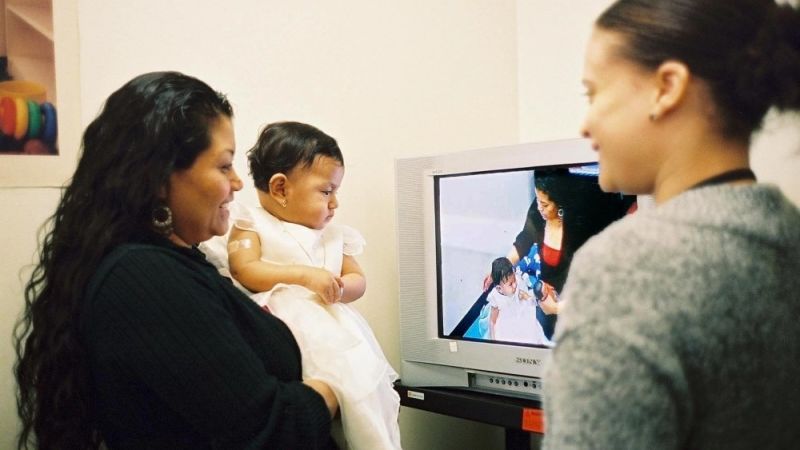
"caption": "A mother watches a video taken of herself playing with her daughter while at Bellevue Hospital in New York for a checkup. Brenda Woodford provides coaching on parenting skills.",
"description": null,
"title": "parenting",
"credit": "Courtesy of Children of Bellevue Archives",
"status": "inherit",
"isLoading": false,
"fetchFailed": false
}
},
"audioPlayerReducer": {
"postId": "stream_live",
"isPaused": true,
"isPlaying": false,
"pfsActive": false,
"pledgeModalIsOpen": true,
"playerDrawerIsOpen": false,
"liveAudioPlayStartedAt": 0,
"liveAudioPlayContext": ""
},
"authorsReducer": {
"byline_mindshift_54264": {
"type": "authors",
"id": "byline_mindshift_54264",
"meta": {
"override": true
},
"slug": "byline_mindshift_54264",
"name": "Anya Kamenetz",
"isLoading": false
},
"byline_mindshift_53880": {
"type": "authors",
"id": "byline_mindshift_53880",
"meta": {
"override": true
},
"slug": "byline_mindshift_53880",
"name": "Juli Fraga",
"isLoading": false
},
"byline_mindshift_53785": {
"type": "authors",
"id": "byline_mindshift_53785",
"meta": {
"override": true
},
"slug": "byline_mindshift_53785",
"name": "Jenny Abamu and Rob Manning",
"isLoading": false
},
"byline_mindshift_53283": {
"type": "authors",
"id": "byline_mindshift_53283",
"meta": {
"override": true
},
"slug": "byline_mindshift_53283",
"name": "Michaeleen Doucleff and Jane Greenhalgh",
"isLoading": false
},
"byline_mindshift_52980": {
"type": "authors",
"id": "byline_mindshift_52980",
"meta": {
"override": true
},
"slug": "byline_mindshift_52980",
"name": "\u003ca href=\"https://www.gse.harvard.edu/uk/author/grace-tatter/556191\">Grace Tatter, Usable Knowledge\u003c/a>",
"isLoading": false
},
"byline_mindshift_50468": {
"type": "authors",
"id": "byline_mindshift_50468",
"meta": {
"override": true
},
"slug": "byline_mindshift_50468",
"name": "\u003ca href=\"https://www.commonsense.org/education/\">Tanner Higgin, Common Sense Education\u003c/a>",
"isLoading": false
},
"byline_mindshift_49750": {
"type": "authors",
"id": "byline_mindshift_49750",
"meta": {
"override": true
},
"slug": "byline_mindshift_49750",
"name": "\u003ca href “https://www.hechingerreport.org\">Claudia Wallis, The Hechinger Report\u003c/a>",
"isLoading": false
},
"byline_mindshift_47010": {
"type": "authors",
"id": "byline_mindshift_47010",
"meta": {
"override": true
},
"slug": "byline_mindshift_47010",
"name": "Elissa Nadworny ",
"isLoading": false
},
"byline_mindshift_46849": {
"type": "authors",
"id": "byline_mindshift_46849",
"meta": {
"override": true
},
"slug": "byline_mindshift_46849",
"name": "Kat Lonsdorf",
"isLoading": false
},
"byline_mindshift_43563": {
"type": "authors",
"id": "byline_mindshift_43563",
"meta": {
"override": true
},
"slug": "byline_mindshift_43563",
"name": "Vanessa Rancaño",
"isLoading": false
},
"hollykorbey": {
"type": "authors",
"id": "4445",
"meta": {
"index": "authors_1716337520",
"id": "4445",
"found": true
},
"name": "Holly Korbey",
"firstName": "Holly",
"lastName": "Korbey",
"slug": "hollykorbey",
"email": "holly@hollykorbey.com",
"display_author_email": false,
"staff_mastheads": [],
"title": null,
"bio": "Holly Korbey's work on parenting and education has appeared in The New York Times, The Atlantic, Babble, Brain, Child Magazine, and others. She lives in Nashville with her family. Follow her on Twitter: @HKorbey",
"avatar": "https://secure.gravatar.com/avatar/f385f7a3b90e52ecd5e85c24fbd0a363?s=600&d=blank&r=g",
"twitter": null,
"facebook": null,
"instagram": null,
"linkedin": null,
"sites": [
{
"site": "mindshift",
"roles": [
"contributor"
]
}
],
"headData": {
"title": "Holly Korbey | KQED",
"description": null,
"ogImgSrc": "https://secure.gravatar.com/avatar/f385f7a3b90e52ecd5e85c24fbd0a363?s=600&d=blank&r=g",
"twImgSrc": "https://secure.gravatar.com/avatar/f385f7a3b90e52ecd5e85c24fbd0a363?s=600&d=blank&r=g"
},
"isLoading": false,
"link": "/author/hollykorbey"
}
},
"pagesReducer": {
"mindshift_category_uncategorized": {
"type": "terms",
"id": "mindshift_1",
"meta": {
"index": "terms_1716263798",
"site": "mindshift",
"id": "1",
"score": 11.461798
},
"featImg": null,
"name": "Uncategorized",
"description": null,
"taxonomy": "category",
"headData": {
"twImgId": null,
"twTitle": null,
"ogTitle": null,
"ogImgId": null,
"twDescription": null,
"description": null,
"title": "Uncategorized Archives | KQED Mindshift",
"ogDescription": null
},
"ttid": 1,
"slug": "uncategorized",
"isLoading": false,
"title": "Uncategorized",
"pageMeta": {
"site": "mindshift",
"WpPageTemplate": "page-topic-editorial",
"currentPage": 4
},
"blocks": [
{
"blockName": "kqed/post-list",
"attrs": {
"layout": "cardArticle2",
"query": "posts/mindshift?category=uncategorized",
"seeMore": false,
"paginated": true,
"page": 4
}
},
{
"blockName": "kqed/ad"
}
]
}
},
"pfsSessionReducer": {},
"postsReducer": {
"stream_live": {
"type": "live",
"id": "stream_live",
"audioUrl": "https://streams.kqed.org/kqedradio",
"title": "Live Stream",
"excerpt": "Live Stream information currently unavailable.",
"link": "/radio",
"featImg": "",
"label": {
"name": "KQED Live",
"link": "/"
}
},
"stream_kqedNewscast": {
"type": "posts",
"id": "stream_kqedNewscast",
"audioUrl": "https://www.kqed.org/.stream/anon/radio/RDnews/newscast.mp3?_=1",
"title": "KQED Newscast",
"featImg": "",
"label": {
"name": "88.5 FM",
"link": "/"
}
},
"mindshift_54264": {
"type": "posts",
"id": "mindshift_54264",
"meta": {
"index": "posts_1716263798",
"site": "mindshift",
"id": "54264",
"score": null,
"sort": [
1566907200000
]
},
"parent": 0,
"labelTerm": {
"site": "mindshift"
},
"blocks": [],
"publishDate": 1566907200,
"format": "standard",
"disqusTitle": "The Scientific Debate Over Teens, Screens And Mental Health",
"title": "The Scientific Debate Over Teens, Screens And Mental Health",
"headTitle": "MindShift | KQED News",
"content": "\u003cp>More teens and young adults — particularly girls and young women — are reporting being depressed and anxious, compared with comparable numbers from the mid-2000s. Suicides are up too in that time period, most noticeably among girls ages 10 to 14.\u003c/p>\n\u003cp>These trends are the basis of a scientific controversy.\u003c/p>\n\u003cp>One hypothesis that has gotten a lot of traction is that with nearly every teen using a smartphone these days, digital media must take some of the blame for worsening mental health.\u003c/p>\n\u003cp>But some researchers argue that this theory isn't well supported by existing evidence and that it repeats a \"moral panic\" argument made many times in the past about video games, rap lyrics, television and even radio, back in its early days.\u003c/p>\n\u003cp>To understand both sides of the debate, I talked in detail to three researchers: one who argues that teens' use of tech is a big problem, one who thinks the danger is exaggerated and an expert in research methodology who suggests the connection may not be so simple.\u003c/p>\n\u003cp>[ad fullwidth]\u003c/p>\n\u003cp>\u003cstrong>Very concerned about smartphones\u003cbr>\n\u003c/strong>\u003cbr>\nJean Twenge, a professor of psychology at San Diego State University, may be the researcher most associated with the idea that smartphones are dangerous to teens. She's the author of the book \u003cem>iGen,\u003c/em> whose 27-word subtitle states her thesis: \u003cem>Why Today's Super-Connected Kids Are Growing Up Less Rebellious, More Tolerant, Less Happy — and Completely Unprepared for Adulthood — and What That Means for the Rest of Us\u003c/em>.\u003c/p>\n\u003cp>\"At first, when I saw these trends in loneliness and unhappiness and depression starting to spike around 2011 or 2012, I really had no idea what could possibly be causing that. It was a real mystery,\" she tells NPR. Then, she says, she took note of Pew research that showed 2012 was the first year that most cell phone owners had switched to smartphones.\u003c/p>\n\u003cp>Not only do these two trend lines seem to coincide in time, but Twenge also notes that young people who report spending the most time on smartphones — five to seven hours a day — are twice as likely to report being depressed as those who use their phones for one to two hours a day.\u003c/p>\n\u003cp>Twenge isn't claiming to have proved that smartphones cause depression. The data sets she works with — essentially large surveys — don't allow for that.\u003c/p>\n\u003cp>\"It is impossible to do a random controlled trial on generations because you can't randomly assign people to be born at different times. So we cannot prove causation given that limitation,\" she explains. \"So we have to go on the data that we have — which is obviously not going to be a true experiment — but it adds up to a lot of evidence pointing toward technology possibly playing a role in this increase in mental health issues.\"\u003c/p>\n\u003cp>\u003cstrong>Evidence — with caveats\u003cbr>\n\u003c/strong>\u003cbr>\nGiven that all teens use media, I asked Twenge, why would the worsening trend in mental health be more \u003ca href=\"https://www.pewinternet.org/2018/05/31/teens-social-media-technology-2018/\">pronounced\u003c/a> in girls than in boys?\u003c/p>\n\u003cp>She responded with one possible explanation: Social media, which girls tend to spend more time on, may be the culprit.\u003c/p>\n\u003cp>\"Social media invites comparison,\" Twenge says. \"It's not in real time. It invites anxiety over the likes and responses that you're going to get.\"\u003c/p>\n\u003cp>Given that adults use media even more than teenagers, why does this trend crop up in teens? Twenge says it's because their brains are still vulnerable and developing. Plus, they haven't had as much time to make social connections in real life as older people have, so they are even more dependent on their phones for social validation.\u003c/p>\n\u003cp>Twenge even thinks that the availability of smartphones could help explain the rise in suicide rates among the youngest girls. \"They have more access to information online — potentially harmful information about how to harm yourself.\"\u003c/p>\n\u003cp>My final question for Twenge: She, personally, made a very similar argument about young people before smartphones existed. She previously published a book, \u003cem>Generation Me,\u003c/em> that looked at similar data sets and labeled the millennial generation as \"miserable,\" \"narcissistic\" and \"anxious.\" That book came out in 2006; the iPhone was introduced in 2007. Is she putting old wine in new bottles?\u003c/p>\n\u003cp>Twenge says that comparing then with now, mental health trends are even more negative for what she calls iGen and, in retrospect, \"more of a mixed bag\" for millennials.\u003c/p>\n\u003cp>\u003cstrong>Not worth the time\u003c/strong>\u003c/p>\n\u003cp>Parents are concerned. Detox programs have sprung up to treat teen tech addiction. But some researchers are skeptical of the hypothesis that smartphones cause problems.\u003c/p>\n\u003cp>One team has published \u003ca href=\"https://www.amyorben.com/\">three papers\u003c/a> that analyzed the same data Twenge is looking at — over 350,000 participants in three nationwide surveys in the U.S. and the United Kingdom.\u003c/p>\n\u003cp>Amy Orben, the lead author of each paper and a psychologist at Oxford University, says the team found that the actual negative relationship between teens' mental health and technology use is tiny.\u003c/p>\n\u003cp>\"A teenagers' technology use can only explain less than 1% of variation in well-being,\" Orben says. \"It's so small that it's surpassed by whether a teenager wears glasses to school,\" or rides a bicycle, or eats potatoes — all comparisons made by Orben and her Oxford co-author Andrew K. Przybylski.\u003c/p>\n\u003cp>How can this be? Well, smartphone use is almost ubiquitous among teenagers today, while only a small minority report mental health problems. So, knowing that a teenager uses a smartphone, even for many hours a day, won't reliably predict that the teenager will become depressed. It tells you far, far less than factors like genetics or the presence of childhood trauma, for example.\u003c/p>\n\u003cp>Orben has been researching the history of people making dire claims about young people and new forms of media. For example, she says, \"In the 1940s, people were already talking about 'radio addiction.' One study found that fully 57% of children ages 6 to 16 were severely 'addicted to radio programs and needed them like an alcoholic does their drink.' \"\u003c/p>\n\u003cp>She thinks the negative trends in mental health could be explained by a wide range of factors: economic anxiety or political upheaval, to name two. And, she adds, there's a chance that young people today may simply be more open in surveys when asked about mental health challenges. \"A lot of teenagers are a lot more OK to say they're not OK.\" Ironically, this openness may in fact be partly due to social media.\u003c/p>\n\u003cp>Twenge responds that a forthcoming paper she has written, currently under review, will challenge the conclusions of Orben's team. She says that just because the impact of smartphone use appears small, that doesn't mean it's insignificant, especially since, unlike genetics, it may be controllable.\u003c/p>\n\u003cp>\u003cstrong>Statistically problematic\u003cbr>\n\u003c/strong>\u003cbr>\nAs a sort of referee on this debate, I called up Katherine Keyes, an epidemiologist at Columbia University's Mailman School of Public Health. Her focus is on explaining population-wide trends, particularly in adolescent mental health.\u003c/p>\n\u003cp>She too is a critic of Twenge's work, saying it has a tendency to \"skew the data\" by zooming in on screen use to the exclusion of other factors in the lives of adolescents.\u003c/p>\n\u003cp>And, she says, there are lots of numbers that don't necessarily fit Twenge's theory.\u003c/p>\n\u003cp>Not all the news is bad when it comes to teens. High school graduation rates are up, for example. Drug and alcohol use is down, as are car crashes and teen pregnancy.\u003c/p>\n\u003cp>We're not seeing the same negative trends in every country, even in those where teens are just as glued to their screens as they are in the United States.\u003c/p>\n\u003cp>There isn't a linear relationship between screen use and mental health. On most surveys, teens who use their phones up to two hours a day appear healthier than those who don't use them at all. This doesn't count other reasons for technology use, such as homework or listening to music.\u003c/p>\n\u003cp>In the case of heavy users, Keyes says, smartphone use may be more a symptom than a cause of mental health problems. Or there may be a third variable that is driving both — like a lack of parental support or health issues.\u003c/p>\n\u003cp>The explanation that Keyes finds most compelling is that there is a \"bidirectional\" relationship among teens, screens and mental health. In other words, as argued in \u003ca href=\"https://www.nature.com/articles/d41586-018-02109-8\">this paper\u003c/a> by Candice Odgers in the journal \u003cem>Nature,\u003c/em> teens who are already struggling may be more drawn to screens and more likely to form unhealthy relationships with media, for example by seeking out information on self-harm or encountering cyberbullies. The time they spend online might in turn make them feel worse.\u003c/p>\n\u003cp>Twenge agrees with the general idea that \"social media invites comparisons and anxiety.\"\u003c/p>\n\u003cp>\u003cstrong>What's a parent to do?\u003cbr>\n\u003c/strong>\u003cbr>\nAlthough their conclusions are different, no researcher I've spoken with thinks it's a great idea to let teens scroll through TikTok or play Fortnite all day and night.\u003c/p>\n\u003cp>Twenge, Orben and Keyes are supportive of similar common-sense rules, like making sure teens don't have their phones in their bedrooms late at night and trying to ensure that their lives are balanced with outdoor exercise, school and face-to-face time with friends and family.\u003c/p>\n\u003cp>So why should the average parent worry about this scientific controversy? Because, Keyes says, when parents simply demonize phones, \"there's less of a communications channel\" about what teens are encountering online. A parent's opportunity to mentor or support positive uses of media is replaced by \"confrontation on a day-to-day basis.\" Well-meaning parents, wrongly believing the phone to be as risky as a cigarette or a beer, may actually be making their children's lives harder by fighting with them about it.\u003c/p>\n\u003cp class=\"hdr\">\u003cem>Correction \u003cspan class=\"date\">Aug. 31, 2019\u003c/span>\u003c/em>\u003c/p>\n\u003cp>[ad floatright]\u003c/p>\n\u003cp>\u003cem>A previous version of this story mistakenly cited Professor Katherine Keyes as saying the decline in adolescent mental health has leveled off. Keyes was not the source of this information. Keyes' research instead showed adolescent mental health has been declining since 2012.\u003c/em>\u003c/p>\n\u003cdiv class=\"fullattribution\">Copyright 2019 NPR. To see more, visit https://www.npr.org.\u003cimg src=\"https://www.google-analytics.com/__utm.gif?utmac=UA-5828686-4&utmdt=The+Scientific+Debate+Over+Teens%2C+Screens+And+Mental+Health+&utme=8(APIKey)9(MDAxOTAwOTE4MDEyMTkxMDAzNjczZDljZA004)\">\u003c/div>\n\n",
"disqusIdentifier": "54264 https://ww2.kqed.org/mindshift/?p=54264",
"disqusUrl": "https://ww2.kqed.org/mindshift/2019/08/27/the-scientific-debate-over-teens-screens-and-mental-health/",
"stats": {
"hasVideo": false,
"hasChartOrMap": false,
"hasAudio": false,
"hasPolis": false,
"wordCount": 1703,
"hasGoogleForm": false,
"hasGallery": false,
"hasHearkenModule": false,
"iframeSrcs": [],
"paragraphCount": 41
},
"modified": 1567620043,
"excerpt": "What's the link between smartphone use and teens' mental health? Experts disagree, with some arguing that the threat is overblown.",
"headData": {
"twImgId": "",
"twTitle": "",
"ogTitle": "",
"ogImgId": "",
"twDescription": "",
"description": "What's the link between smartphone use and teens' mental health? Experts disagree, with some arguing that the threat is overblown.",
"title": "The Scientific Debate Over Teens, Screens And Mental Health | KQED",
"ogDescription": "",
"schema": {
"@context": "https://schema.org",
"@type": "Article",
"headline": "The Scientific Debate Over Teens, Screens And Mental Health",
"datePublished": "2019-08-27T05:00:00-07:00",
"dateModified": "2019-09-04T11:00:43-07:00",
"image": "https://cdn.kqed.org/wp-content/uploads/2020/02/KQED-OG-Image@1x.png"
}
},
"guestAuthors": [],
"slug": "the-scientific-debate-over-teens-screens-and-mental-health",
"status": "publish",
"nprApiLink": "http://api.npr.org/query?id=754362629&apiKey=MDAxOTAwOTE4MDEyMTkxMDAzNjczZDljZA004",
"nprByline": "Anya Kamenetz",
"nprStoryDate": "Tue, 27 Aug 2019 05:00:00 -0400",
"nprLastModifiedDate": "Wed, 04 Sep 2019 10:32:47 -0400",
"nprHtmlLink": "https://www.npr.org/2019/08/27/754362629/the-scientific-debate-over-teens-screens-and-mental-health?ft=nprml&f=754362629",
"nprAudio": "https://ondemand.npr.org/anon.npr-mp3/npr/atc/2019/08/20190819_atc_teens_all_tech_life_kit_screen_time_3.mp3?orgId=1&topicId=1013&aggIds=676529561&d=444&story=754362629&ft=nprml&f=754362629",
"audioTrackLength": 444,
"nprImageAgency": "Rose Jaffe for NPR",
"nprAudioM3u": "http://api.npr.org/m3u/1754382524-d42106.m3u?orgId=1&topicId=1013&aggIds=676529561&d=444&story=754362629&ft=nprml&f=754362629",
"nprStoryId": "754362629",
"nprRetrievedStory": "1",
"nprPubDate": "Wed, 04 Sep 2019 10:32:00 -0400",
"path": "/mindshift/54264/the-scientific-debate-over-teens-screens-and-mental-health",
"audioUrl": "https://ondemand.npr.org/anon.npr-mp3/npr/atc/2019/08/20190819_atc_teens_all_tech_life_kit_screen_time_3.mp3?orgId=1&topicId=1013&aggIds=676529561&d=444&story=754362629&ft=nprml&f=754362629",
"parsedContent": [
{
"type": "contentString",
"content": "\u003cdiv class=\"post-body\">\u003cp>\u003cp>More teens and young adults — particularly girls and young women — are reporting being depressed and anxious, compared with comparable numbers from the mid-2000s. Suicides are up too in that time period, most noticeably among girls ages 10 to 14.\u003c/p>\n\u003cp>These trends are the basis of a scientific controversy.\u003c/p>\n\u003cp>One hypothesis that has gotten a lot of traction is that with nearly every teen using a smartphone these days, digital media must take some of the blame for worsening mental health.\u003c/p>\n\u003cp>But some researchers argue that this theory isn't well supported by existing evidence and that it repeats a \"moral panic\" argument made many times in the past about video games, rap lyrics, television and even radio, back in its early days.\u003c/p>\n\u003cp>To understand both sides of the debate, I talked in detail to three researchers: one who argues that teens' use of tech is a big problem, one who thinks the danger is exaggerated and an expert in research methodology who suggests the connection may not be so simple.\u003c/p>\n\u003cp>\u003c/p>\u003c/div>",
"attributes": {
"named": {},
"numeric": []
}
},
{
"type": "component",
"content": "",
"name": "ad",
"attributes": {
"named": {
"label": "fullwidth"
},
"numeric": [
"fullwidth"
]
}
},
{
"type": "contentString",
"content": "\u003cdiv class=\"post-body\">\u003cp>\u003c/p>\n\u003cp>\u003cstrong>Very concerned about smartphones\u003cbr>\n\u003c/strong>\u003cbr>\nJean Twenge, a professor of psychology at San Diego State University, may be the researcher most associated with the idea that smartphones are dangerous to teens. She's the author of the book \u003cem>iGen,\u003c/em> whose 27-word subtitle states her thesis: \u003cem>Why Today's Super-Connected Kids Are Growing Up Less Rebellious, More Tolerant, Less Happy — and Completely Unprepared for Adulthood — and What That Means for the Rest of Us\u003c/em>.\u003c/p>\n\u003cp>\"At first, when I saw these trends in loneliness and unhappiness and depression starting to spike around 2011 or 2012, I really had no idea what could possibly be causing that. It was a real mystery,\" she tells NPR. Then, she says, she took note of Pew research that showed 2012 was the first year that most cell phone owners had switched to smartphones.\u003c/p>\n\u003cp>Not only do these two trend lines seem to coincide in time, but Twenge also notes that young people who report spending the most time on smartphones — five to seven hours a day — are twice as likely to report being depressed as those who use their phones for one to two hours a day.\u003c/p>\n\u003cp>Twenge isn't claiming to have proved that smartphones cause depression. The data sets she works with — essentially large surveys — don't allow for that.\u003c/p>\n\u003cp>\"It is impossible to do a random controlled trial on generations because you can't randomly assign people to be born at different times. So we cannot prove causation given that limitation,\" she explains. \"So we have to go on the data that we have — which is obviously not going to be a true experiment — but it adds up to a lot of evidence pointing toward technology possibly playing a role in this increase in mental health issues.\"\u003c/p>\n\u003cp>\u003cstrong>Evidence — with caveats\u003cbr>\n\u003c/strong>\u003cbr>\nGiven that all teens use media, I asked Twenge, why would the worsening trend in mental health be more \u003ca href=\"https://www.pewinternet.org/2018/05/31/teens-social-media-technology-2018/\">pronounced\u003c/a> in girls than in boys?\u003c/p>\n\u003cp>She responded with one possible explanation: Social media, which girls tend to spend more time on, may be the culprit.\u003c/p>\n\u003cp>\"Social media invites comparison,\" Twenge says. \"It's not in real time. It invites anxiety over the likes and responses that you're going to get.\"\u003c/p>\n\u003cp>Given that adults use media even more than teenagers, why does this trend crop up in teens? Twenge says it's because their brains are still vulnerable and developing. Plus, they haven't had as much time to make social connections in real life as older people have, so they are even more dependent on their phones for social validation.\u003c/p>\n\u003cp>Twenge even thinks that the availability of smartphones could help explain the rise in suicide rates among the youngest girls. \"They have more access to information online — potentially harmful information about how to harm yourself.\"\u003c/p>\n\u003cp>My final question for Twenge: She, personally, made a very similar argument about young people before smartphones existed. She previously published a book, \u003cem>Generation Me,\u003c/em> that looked at similar data sets and labeled the millennial generation as \"miserable,\" \"narcissistic\" and \"anxious.\" That book came out in 2006; the iPhone was introduced in 2007. Is she putting old wine in new bottles?\u003c/p>\n\u003cp>Twenge says that comparing then with now, mental health trends are even more negative for what she calls iGen and, in retrospect, \"more of a mixed bag\" for millennials.\u003c/p>\n\u003cp>\u003cstrong>Not worth the time\u003c/strong>\u003c/p>\n\u003cp>Parents are concerned. Detox programs have sprung up to treat teen tech addiction. But some researchers are skeptical of the hypothesis that smartphones cause problems.\u003c/p>\n\u003cp>One team has published \u003ca href=\"https://www.amyorben.com/\">three papers\u003c/a> that analyzed the same data Twenge is looking at — over 350,000 participants in three nationwide surveys in the U.S. and the United Kingdom.\u003c/p>\n\u003cp>Amy Orben, the lead author of each paper and a psychologist at Oxford University, says the team found that the actual negative relationship between teens' mental health and technology use is tiny.\u003c/p>\n\u003cp>\"A teenagers' technology use can only explain less than 1% of variation in well-being,\" Orben says. \"It's so small that it's surpassed by whether a teenager wears glasses to school,\" or rides a bicycle, or eats potatoes — all comparisons made by Orben and her Oxford co-author Andrew K. Przybylski.\u003c/p>\n\u003cp>How can this be? Well, smartphone use is almost ubiquitous among teenagers today, while only a small minority report mental health problems. So, knowing that a teenager uses a smartphone, even for many hours a day, won't reliably predict that the teenager will become depressed. It tells you far, far less than factors like genetics or the presence of childhood trauma, for example.\u003c/p>\n\u003cp>Orben has been researching the history of people making dire claims about young people and new forms of media. For example, she says, \"In the 1940s, people were already talking about 'radio addiction.' One study found that fully 57% of children ages 6 to 16 were severely 'addicted to radio programs and needed them like an alcoholic does their drink.' \"\u003c/p>\n\u003cp>She thinks the negative trends in mental health could be explained by a wide range of factors: economic anxiety or political upheaval, to name two. And, she adds, there's a chance that young people today may simply be more open in surveys when asked about mental health challenges. \"A lot of teenagers are a lot more OK to say they're not OK.\" Ironically, this openness may in fact be partly due to social media.\u003c/p>\n\u003cp>Twenge responds that a forthcoming paper she has written, currently under review, will challenge the conclusions of Orben's team. She says that just because the impact of smartphone use appears small, that doesn't mean it's insignificant, especially since, unlike genetics, it may be controllable.\u003c/p>\n\u003cp>\u003cstrong>Statistically problematic\u003cbr>\n\u003c/strong>\u003cbr>\nAs a sort of referee on this debate, I called up Katherine Keyes, an epidemiologist at Columbia University's Mailman School of Public Health. Her focus is on explaining population-wide trends, particularly in adolescent mental health.\u003c/p>\n\u003cp>She too is a critic of Twenge's work, saying it has a tendency to \"skew the data\" by zooming in on screen use to the exclusion of other factors in the lives of adolescents.\u003c/p>\n\u003cp>And, she says, there are lots of numbers that don't necessarily fit Twenge's theory.\u003c/p>\n\u003cp>Not all the news is bad when it comes to teens. High school graduation rates are up, for example. Drug and alcohol use is down, as are car crashes and teen pregnancy.\u003c/p>\n\u003cp>We're not seeing the same negative trends in every country, even in those where teens are just as glued to their screens as they are in the United States.\u003c/p>\n\u003cp>There isn't a linear relationship between screen use and mental health. On most surveys, teens who use their phones up to two hours a day appear healthier than those who don't use them at all. This doesn't count other reasons for technology use, such as homework or listening to music.\u003c/p>\n\u003cp>In the case of heavy users, Keyes says, smartphone use may be more a symptom than a cause of mental health problems. Or there may be a third variable that is driving both — like a lack of parental support or health issues.\u003c/p>\n\u003cp>The explanation that Keyes finds most compelling is that there is a \"bidirectional\" relationship among teens, screens and mental health. In other words, as argued in \u003ca href=\"https://www.nature.com/articles/d41586-018-02109-8\">this paper\u003c/a> by Candice Odgers in the journal \u003cem>Nature,\u003c/em> teens who are already struggling may be more drawn to screens and more likely to form unhealthy relationships with media, for example by seeking out information on self-harm or encountering cyberbullies. The time they spend online might in turn make them feel worse.\u003c/p>\n\u003cp>Twenge agrees with the general idea that \"social media invites comparisons and anxiety.\"\u003c/p>\n\u003cp>\u003cstrong>What's a parent to do?\u003cbr>\n\u003c/strong>\u003cbr>\nAlthough their conclusions are different, no researcher I've spoken with thinks it's a great idea to let teens scroll through TikTok or play Fortnite all day and night.\u003c/p>\n\u003cp>Twenge, Orben and Keyes are supportive of similar common-sense rules, like making sure teens don't have their phones in their bedrooms late at night and trying to ensure that their lives are balanced with outdoor exercise, school and face-to-face time with friends and family.\u003c/p>\n\u003cp>So why should the average parent worry about this scientific controversy? Because, Keyes says, when parents simply demonize phones, \"there's less of a communications channel\" about what teens are encountering online. A parent's opportunity to mentor or support positive uses of media is replaced by \"confrontation on a day-to-day basis.\" Well-meaning parents, wrongly believing the phone to be as risky as a cigarette or a beer, may actually be making their children's lives harder by fighting with them about it.\u003c/p>\n\u003cp class=\"hdr\">\u003cem>Correction \u003cspan class=\"date\">Aug. 31, 2019\u003c/span>\u003c/em>\u003c/p>\n\u003cp>\u003c/p>\u003c/div>",
"attributes": {
"named": {},
"numeric": []
}
},
{
"type": "component",
"content": "",
"name": "ad",
"attributes": {
"named": {
"label": "floatright"
},
"numeric": [
"floatright"
]
}
},
{
"type": "contentString",
"content": "\u003cdiv class=\"post-body\">\u003cp>\u003c/p>\n\u003cp>\u003cem>A previous version of this story mistakenly cited Professor Katherine Keyes as saying the decline in adolescent mental health has leveled off. Keyes was not the source of this information. Keyes' research instead showed adolescent mental health has been declining since 2012.\u003c/em>\u003c/p>\n\u003cdiv class=\"fullattribution\">Copyright 2019 NPR. To see more, visit https://www.npr.org.\u003cimg src=\"https://www.google-analytics.com/__utm.gif?utmac=UA-5828686-4&utmdt=The+Scientific+Debate+Over+Teens%2C+Screens+And+Mental+Health+&utme=8(APIKey)9(MDAxOTAwOTE4MDEyMTkxMDAzNjczZDljZA004)\">\u003c/div>\n\n\u003c/div>\u003c/p>",
"attributes": {
"named": {},
"numeric": []
}
}
],
"link": "/mindshift/54264/the-scientific-debate-over-teens-screens-and-mental-health",
"authors": [
"byline_mindshift_54264"
],
"categories": [
"mindshift_1"
],
"featImg": "mindshift_54265",
"label": "mindshift"
},
"mindshift_53880": {
"type": "posts",
"id": "mindshift_53880",
"meta": {
"index": "posts_1716263798",
"site": "mindshift",
"id": "53880",
"score": null,
"sort": [
1563175576000
]
},
"parent": 0,
"labelTerm": {
"site": "mindshift"
},
"blocks": [],
"publishDate": 1563175576,
"format": "standard",
"disqusTitle": "How Making Music Can Help Students Cope with Trauma",
"title": "How Making Music Can Help Students Cope with Trauma",
"headTitle": "MindShift | KQED News",
"content": "\u003cp>\u003ca href=\"https://acestoohigh.com/2018/02/26/a-kaiser-pediatrician-wise-to-aces-science-for-years-finally-gets-to-use-it/\">Studies\u003c/a> about the Ten Adverse Childhood Experiences (ACEs) have shown that most people have experienced one of these \u003ca href=\"https://acestoohigh.com/got-your-ace-score/\">traumas\u003c/a> in childhood, such as being abused, having a parent who is incarcerated, experiencing homelessness, among others. The trauma one experiences in childhood can affect adult mental and physical health in later years, especially if a person has multiple ACEs. While the harm can have lasting impacts, health professionals have identified ways to mitigate the effects by nurturing supportive relationships with adult caregivers.\u003c/p>\n\u003cp>Schools can also play a supportive role by helping kids who have experienced trauma. And at the \u003ca href=\"http://hsra.org/\">High School for Recording Arts (HSRA)\u003c/a> in St. Paul, Minnesota, making music is a means of healing.\u003c/p>\n\u003cp>“Writing lyrics feels safer than directly speaking about what she’s been through,” says \u003ca href=\"http://hsra.org/Staff.aspx\">Tabitha Wheeler\u003c/a>, a social worker at the school describing a teen who composed a song about her psychological pain and childhood trauma.\u003c/p>\n\u003cp>It’s crucial for adolescents and young adults to receive mental health care and emotional support. However, teens aren’t always eager to speak about their suffering. But when it comes to treating the continuum of trauma, \u003ca href=\"https://journals.uregina.ca/ineducation/article/view/305\">studies\u003c/a> show art and music—known as expressive arts therapy—can calm the body’s stress response, which can help adolescents feel safer in the classroom.\u003c/p>\n\u003cp>Through the use of art, music and writing, teachers and faculty at HSRA rely on \"creative pedagogical practices\" to help students connect with their intellectual talents, which can foster academic confidence.\u003c/p>\n\u003cp>[ad fullwidth]\u003c/p>\n\u003cp>“We see full-on art and music engagement as tools for academic re-engagement,” said \u003ca href=\"http://hsra.org/Staff.aspx\">Joey Cienian\u003c/a>, director of educational programming at HSRA.\u003c/p>\n\u003cp>For other HSRA students, the recording studio becomes a learning lab where they create brilliant poetry, compose music or play an instrument.\u003c/p>\n\u003cp>“When talking about their mental health, our students can't always say, 'This is how I'm feeling,' because they've been hurt by people in positions of power,” explains Cienian. Engaging in music and art is one way the kids can self-soothe.\u003c/p>\n\u003cp>(Rap artist Nimic Revenue is a recent graduate of HRSA)\u003c/p>\n\u003cp>https://www.youtube.com/watch?v=C4pAT2lOsjo\u003c/p>\n\u003cp>While it might sound unconventional, music has been used as a form of \u003ca href=\"http://www.positivehealth.com/article/sound-and-music/the-healing-power-of-sound\">medicine\u003c/a> for decades. Thousands of years ago, the Greeks believed the soft, melodic sounds of the flute could heal physical illnesses like gout and sciatica. More recently, music has found its place in the classroom, helping students with \u003ca href=\"https://tspace.library.utoronto.ca/handle/1807/77125\">Autism Spectrum Disorder\u003c/a> and \u003ca href=\"https://www.additudemag.com/music-therapy-for-adhd-how-rhythm-builds-focus/\">Attention-Deficit Disorder\u003c/a>.\u003c/p>\n\u003cp>At HSRA, music and art allow students to share their narratives. “We want our students to embrace their authenticity, which can come from tapping into creative expression,” says Cienian.\u003c/p>\n\u003cp>He adds that many HSRA students aren’t comfortable discussing their hardships, but they’re ready to enter the studio and make beats or record a track.\u003c/p>\n\u003cp>“Recently, a student felt uneasy telling his teachers and counselors about his mental health concerns and family history,” shares Cienian. Instead, he went to the recording studio and began writing rap lyrics in a notebook.\u003c/p>\n\u003cp>A teacher walked by and saw the student. Taking the opportunity to connect, they sat together while the student shared his writing, which illuminated the family chaos and mental health symptoms he was experiencing.\u003c/p>\n\u003cp>“After the meeting, the teacher had a better sense of the student’s needs, which made it easier to add additional emotional and academic support,” says Cienian. For this student, the connection was healing because he felt understood, not judged.\u003c/p>\n\u003cp>\u003c/p>\n\u003cp>Cienian shares that HSRA teachers and faculty strive to bring students into a program where respect, community and education are valued. “They’re simple values, but they’re profound in action. And when students find their voice, it’s empowering,” he adds.\u003c/p>\n\n",
"disqusIdentifier": "53880 https://ww2.kqed.org/mindshift/?p=53880",
"disqusUrl": "https://ww2.kqed.org/mindshift/2019/07/15/how-making-music-can-help-students-cope-with-trauma/",
"stats": {
"hasVideo": true,
"hasChartOrMap": false,
"hasAudio": false,
"hasPolis": false,
"wordCount": 645,
"hasGoogleForm": false,
"hasGallery": false,
"hasHearkenModule": false,
"iframeSrcs": [],
"paragraphCount": 18
},
"modified": 1563175576,
"excerpt": "For teens who aren't eager to talk to directly to adults about what they're experiencing, making music can offer an outlet for expression and understanding. ",
"headData": {
"twImgId": "",
"twTitle": "",
"ogTitle": "",
"ogImgId": "",
"twDescription": "",
"description": "For teens who aren't eager to talk to directly to adults about what they're experiencing, making music can offer an outlet for expression and understanding. ",
"title": "How Making Music Can Help Students Cope with Trauma | KQED",
"ogDescription": "",
"schema": {
"@context": "https://schema.org",
"@type": "Article",
"headline": "How Making Music Can Help Students Cope with Trauma",
"datePublished": "2019-07-15T00:26:16-07:00",
"dateModified": "2019-07-15T00:26:16-07:00",
"image": "https://cdn.kqed.org/wp-content/uploads/2020/02/KQED-OG-Image@1x.png"
}
},
"guestAuthors": [],
"slug": "how-making-music-can-help-students-cope-with-trauma",
"status": "publish",
"nprByline": "Juli Fraga",
"path": "/mindshift/53880/how-making-music-can-help-students-cope-with-trauma",
"audioTrackLength": null,
"parsedContent": [
{
"type": "contentString",
"content": "\u003cdiv class=\"post-body\">\u003cp>\u003cp>\u003ca href=\"https://acestoohigh.com/2018/02/26/a-kaiser-pediatrician-wise-to-aces-science-for-years-finally-gets-to-use-it/\">Studies\u003c/a> about the Ten Adverse Childhood Experiences (ACEs) have shown that most people have experienced one of these \u003ca href=\"https://acestoohigh.com/got-your-ace-score/\">traumas\u003c/a> in childhood, such as being abused, having a parent who is incarcerated, experiencing homelessness, among others. The trauma one experiences in childhood can affect adult mental and physical health in later years, especially if a person has multiple ACEs. While the harm can have lasting impacts, health professionals have identified ways to mitigate the effects by nurturing supportive relationships with adult caregivers.\u003c/p>\n\u003cp>Schools can also play a supportive role by helping kids who have experienced trauma. And at the \u003ca href=\"http://hsra.org/\">High School for Recording Arts (HSRA)\u003c/a> in St. Paul, Minnesota, making music is a means of healing.\u003c/p>\n\u003cp>“Writing lyrics feels safer than directly speaking about what she’s been through,” says \u003ca href=\"http://hsra.org/Staff.aspx\">Tabitha Wheeler\u003c/a>, a social worker at the school describing a teen who composed a song about her psychological pain and childhood trauma.\u003c/p>\n\u003cp>It’s crucial for adolescents and young adults to receive mental health care and emotional support. However, teens aren’t always eager to speak about their suffering. But when it comes to treating the continuum of trauma, \u003ca href=\"https://journals.uregina.ca/ineducation/article/view/305\">studies\u003c/a> show art and music—known as expressive arts therapy—can calm the body’s stress response, which can help adolescents feel safer in the classroom.\u003c/p>\n\u003cp>Through the use of art, music and writing, teachers and faculty at HSRA rely on \"creative pedagogical practices\" to help students connect with their intellectual talents, which can foster academic confidence.\u003c/p>\n\u003cp>\u003c/p>\u003c/div>",
"attributes": {
"named": {},
"numeric": []
}
},
{
"type": "component",
"content": "",
"name": "ad",
"attributes": {
"named": {
"label": "fullwidth"
},
"numeric": [
"fullwidth"
]
}
},
{
"type": "contentString",
"content": "\u003cdiv class=\"post-body\">\u003cp>\u003c/p>\n\u003cp>“We see full-on art and music engagement as tools for academic re-engagement,” said \u003ca href=\"http://hsra.org/Staff.aspx\">Joey Cienian\u003c/a>, director of educational programming at HSRA.\u003c/p>\n\u003cp>For other HSRA students, the recording studio becomes a learning lab where they create brilliant poetry, compose music or play an instrument.\u003c/p>\n\u003cp>“When talking about their mental health, our students can't always say, 'This is how I'm feeling,' because they've been hurt by people in positions of power,” explains Cienian. Engaging in music and art is one way the kids can self-soothe.\u003c/p>\n\u003cp>(Rap artist Nimic Revenue is a recent graduate of HRSA)\u003c/p>\u003c/p>\u003cp>\u003cspan class='utils-parseShortcode-shortcodes-__youtubeShortcode__embedYoutube'>\n \u003cspan class='utils-parseShortcode-shortcodes-__youtubeShortcode__embedYoutubeInside'>\n \u003ciframe\n loading='lazy'\n class='utils-parseShortcode-shortcodes-__youtubeShortcode__youtubePlayer'\n type='text/html'\n src='//www.youtube.com/embed/C4pAT2lOsjo'\n title='//www.youtube.com/embed/C4pAT2lOsjo'\n allowfullscreen='true'\n style='border:0;'>\u003c/iframe>\n \u003c/span>\n \u003c/span>\u003c/p>\u003cp>\u003cp>While it might sound unconventional, music has been used as a form of \u003ca href=\"http://www.positivehealth.com/article/sound-and-music/the-healing-power-of-sound\">medicine\u003c/a> for decades. Thousands of years ago, the Greeks believed the soft, melodic sounds of the flute could heal physical illnesses like gout and sciatica. More recently, music has found its place in the classroom, helping students with \u003ca href=\"https://tspace.library.utoronto.ca/handle/1807/77125\">Autism Spectrum Disorder\u003c/a> and \u003ca href=\"https://www.additudemag.com/music-therapy-for-adhd-how-rhythm-builds-focus/\">Attention-Deficit Disorder\u003c/a>.\u003c/p>\n\u003cp>At HSRA, music and art allow students to share their narratives. “We want our students to embrace their authenticity, which can come from tapping into creative expression,” says Cienian.\u003c/p>\n\u003cp>He adds that many HSRA students aren’t comfortable discussing their hardships, but they’re ready to enter the studio and make beats or record a track.\u003c/p>\n\u003cp>“Recently, a student felt uneasy telling his teachers and counselors about his mental health concerns and family history,” shares Cienian. Instead, he went to the recording studio and began writing rap lyrics in a notebook.\u003c/p>\n\u003cp>A teacher walked by and saw the student. Taking the opportunity to connect, they sat together while the student shared his writing, which illuminated the family chaos and mental health symptoms he was experiencing.\u003c/p>\n\u003cp>“After the meeting, the teacher had a better sense of the student’s needs, which made it easier to add additional emotional and academic support,” says Cienian. For this student, the connection was healing because he felt understood, not judged.\u003c/p>\n\u003cp>\u003c/p>\n\u003cp>Cienian shares that HSRA teachers and faculty strive to bring students into a program where respect, community and education are valued. “They’re simple values, but they’re profound in action. And when students find their voice, it’s empowering,” he adds.\u003c/p>\n\n\u003c/div>\u003c/p>",
"attributes": {
"named": {},
"numeric": []
}
}
],
"link": "/mindshift/53880/how-making-music-can-help-students-cope-with-trauma",
"authors": [
"byline_mindshift_53880"
],
"categories": [
"mindshift_1"
],
"tags": [
"mindshift_20784",
"mindshift_1040",
"mindshift_21279",
"mindshift_20865",
"mindshift_20696",
"mindshift_364"
],
"featImg": "mindshift_53969",
"label": "mindshift"
},
"mindshift_53785": {
"type": "posts",
"id": "mindshift_53785",
"meta": {
"index": "posts_1716263798",
"site": "mindshift",
"id": "53785",
"score": null,
"sort": [
1559803740000
]
},
"parent": 0,
"labelTerm": {
"site": "mindshift"
},
"blocks": [],
"publishDate": 1559803740,
"format": "standard",
"disqusTitle": "Desperation And Broken Trust When Schools Restrain Students Or Lock Them In Rooms",
"title": "Desperation And Broken Trust When Schools Restrain Students Or Lock Them In Rooms",
"headTitle": "MindShift | KQED News",
"content": "\u003cp>Every time Jennifer Tidd's son was secluded or restrained at school, she received a letter from his teachers. Her son has autism and behavioral issues, and over three years — from 2013 to 2016 — Tidd got 437 of those letters.\u003c/p>\n\u003cp>\"I see this pile of documents that's 5 inches tall that represents hundreds of hours of being locked into a room, and I feel, you know, horrible,\" Tidd says.\u003c/p>\n\u003cp>She's sitting in her living room in Northern Virginia, her head hanging over the stack of papers. Tears are in her eyes.\u003c/p>\n\u003cp>\"What kind of parent lets this happen to their child? ... I just trusted the school. I thought that it would work — we were at our wits' end with the behaviors and stuff. But it actually just made it worse.\"\u003c/p>\n\u003cp>Restraint and seclusion are \u003ca href=\"https://www2.ed.gov/about/offices/list/ocr/docs/school-climate-and-safety.pdf#page=12\">most often used\u003c/a> on students with disabilities or special needs — children like Tidd's son. Those terms can \u003ca href=\"https://wamu.org/story/19/06/03/what-is-seclusion-and-restraint-explaining-the-controversial-school-discipline-practice/\">mean anything from\u003c/a> holding or using restraints on students to isolating them in a separate room or space.\u003c/p>\n\u003cp>[ad fullwidth]\u003c/p>\n\u003cp>The U.S. Department of Education's Office for Civil Rights requires that school districts report every time a student is restrained or secluded. And while \u003ca href=\"https://www2.ed.gov/about/offices/list/ocr/docs/school-climate-and-safety.pdf#page=11\">tens of thousands of cases are reported\u003c/a>, many suspect those numbers fall short.\u003c/p>\n\u003cp>That's what happened in Tidd's district, Fairfax County Public Schools, which serves more than 187,000 students. For years, the district told the government that it never secluded or restrained pupils. But an \u003ca href=\"https://wamu.org/story/19/03/13/children-are-routinely-isolated-in-some-fairfax-county-schools-the-district-didnt-report-it/\">investigation by WAMU\u003c/a> found hundreds of cases recorded in internal documents and letters that schools sent to parents.\u003c/p>\n\u003cp>Fairfax isn't the only district reporting suspiciously low numbers. According to \u003ca href=\"https://www.edweek.org/ew/articles/2017/05/17/70000-students-with-disabilities-secluded-restrained-in.html?intc=eml-contshr-shr-desk\">an Education Week analysis\u003c/a> of data from the 2013-14 school year, nearly 80% of districts reported that they never secluded or restrained special education students. That number includes New York City, the nation's largest school district.\u003c/p>\n\u003cp>The Government Accountability Office, a federal watchdog, is conducting an investigation into the quality of the data that school districts are reporting. Jackie Nowicki, a director at the GAO, says media accounts and testimony from lawmakers have raised \"concerns that seclusion and restraint [have] continued to be chronically underreported.\"\u003c/p>\n\u003cp>The investigation in Fairfax highlights a debate taking place in communities across the United States. In Washington state, parents in one school district have filed lawsuits claiming that the district failed to notify them when their children were restrained or secluded. According to some of those lawsuits, that failure has had consequences for families.\u003c/p>\n\u003cp>\u003cstrong>\"Guidelines are in place for a reason\"\u003c/strong>\u003c/p>\n\u003cp>Restraint and seclusion are controversial practices in public schools. \u003ca href=\"https://www2.ed.gov/policy/seclusion/index.html\">According to federal guidance\u003c/a>, they're supposed to be used as a last resort, when students become a danger to themselves or others.\u003c/p>\n\u003cp>\"Guidelines are in place for a reason,\" says the GAO's Nowicki. \"When seclusion and restraint is inappropriately used, it can create some really dangerous situations, especially for some of our nation's most vulnerable children.\"\u003c/p>\n\u003cp>U.S. Education Secretary Betsy DeVos told a group of reporters recently that the department is reviewing some districts that reported questionable numbers.\u003c/p>\n\u003cp>\"Our hope is that by proactively going and auditing a few places where things don't seem to add up and then helping inform and educate, that we can have a much more cohesive approach to ensuring that every child is safe at school and respected for the individual they are,\" DeVos said.\u003c/p>\n\u003cp>In response to the WAMU investigation, Fairfax County is now reporting \u003ca href=\"https://wamu.org/story/19/04/03/we-have-fallen-short-fairfax-schools-officials-release-findings-from-isolation-review/\">almost 1,700 cases of seclusion and restraint\u003c/a> for the 2017-18 school year. And Fairfax officials say they plan to submit corrected data for the 2015-16 school year.\u003c/p>\n\u003cp>\"It is clear that as a system we have fallen short in this area,\" said Fairfax County Superintendent Scott Brabrand at a school board meeting in April. He pledged to work to \"heal the hurt and systematically address these concerns around restraint and seclusion.\"\u003c/p>\n\u003cp>\u003cstrong>\"For a nonverbal person, that's absolute desperation\"\u003c/strong>\u003c/p>\n\u003cp>Tidd still thinks about all the time her son spent in the district's seclusion rooms.\u003c/p>\n\u003cp>Many are built like Russian nesting dolls — rooms within rooms. The innermost room is reserved for students with more egregious behavior issues. That room is concrete and about the size of a closet. Inside, there are no chairs to sit on and the only window is on the door.\u003c/p>\n\u003cp>Tidd says the repeated seclusions traumatized her son, causing him to hate school and making him more violent and distrusting of authority figures.\u003c/p>\n\u003cp>\"He would poop and pee himself to get out of the seclusion room — he was so desperate to get out,\" she says. \"This is a child who was completely potty trained since he was 5. ... That to me, for a nonverbal person, that's absolute desperation.\"\u003c/p>\n\u003cp>The school district wouldn't comment on Tidd's case.\u003c/p>\n\u003cp>Tidd's son is 13 now, and Fairfax County pays for him to attend a private school for students with disabilities. Tidd says he hasn't been secluded once since October 2018, when he started at his current school, and his behavior has dramatically improved.\u003c/p>\n\u003cp>Tidd knows she is lucky. Not all parents would be able to hire a lawyer and have their child transferred to a private school.\u003c/p>\n\u003cp>\u003cstrong>Landon, 10\u003c/strong>\u003c/p>\n\u003cp>In some states, seclusion and restraint reporting requirements go beyond federal regulations. Washington state requires school districts to report annual data to their state education agency — that's twice as often as the Office for Civil Rights calls for.\u003c/p>\n\u003cp>But families in one Washington community say there's an important group their school district isn't routinely reporting to: parents.\u003c/p>\n\u003cp>An investigation by\u003ca href=\"https://www.opb.org/news/article/school-discipline-students-special-needs-restraints-washington-oregon/\"> Oregon Public Broadcasting\u003c/a> found several parents in Vancouver Public Schools — a 24,000-student district just north of Portland — who say school officials rarely notified them when their children had been restrained.\u003c/p>\n\u003cp>Sarah McPartland says she sent her son, Landon, to Vancouver Public Schools for years before repeated restraints and a lack of follow-through from education officials led her to withdraw him and file a lawsuit.\u003c/p>\n\u003cfigure id=\"attachment_53787\" class=\"wp-caption alignnone\" style=\"max-width: 1920px\">\u003cimg class=\"size-full wp-image-53787\" src=\"https://ww2.kqed.org/mindshift/wp-content/uploads/sites/23/2019/06/20190227_landon_rm_3_custom-7993b9e5fe8cd4a7e8c6802b31239323570cef81-e1559890092508.jpg\" alt=\"\" width=\"1920\" height=\"1279\">\u003cfigcaption class=\"wp-caption-text\">Ten-year-old Landon says he once had an aide who used restraint in a way that calmed him down. \"She just sort of constrained me, like tight, with pressure, which actually was kind of relaxing,\" he recalls. \u003ccite>(Rob Manning/Oregon Public Broadcasting)\u003c/cite>\u003c/figcaption>\u003c/figure>\n\u003cp>The district settled McPartland's lawsuit but did not admit any wrongdoing. District officials declined to comment on the case.\u003c/p>\n\u003cp>Landon, 10, is now home-schooled. On a chilly winter day, he moves quickly from brewing tea to painting figurines to examining salamander eggs under his microscope.\u003c/p>\n\u003cp>\"I have something called Asperger's syndrome, which is a specialty type of autism where ... well, I can get really involved and, to an extent, obsessed with things I like,\" he explains over tea.\u003c/p>\n\u003cp>Landon also has things he really does not like. His mother and his former education assistant say getting Landon to do math requires creative lesson planning — when he is pressed to do an activity he doesn't like, he can lose control.\u003c/p>\n\u003cp>Landon recalls getting so upset once in class that he ran away from school, and school staff chased him.\u003c/p>\n\u003cp>\"They shoved me to the ground. They grabbed my wrist, and they dragged me up the hill by my wrist. And then they hugged me, like in a wrestling grip, only they wouldn't let go,\" Landon says.\u003c/p>\n\u003cp>Like many states, Washington requires that schools inform parents whenever a child is restrained. But the lawsuit asserted that the school never told Landon's mother about this incident.\u003c/p>\n\u003cp>\"It's never great to be in a position as a parent when you've got to go back to your child and say, 'I heard that this happened' and that you're sorry. And the response from your child is, 'What does it matter? You weren't there to help me,' \" McPartland says with tears in her eyes.\u003c/p>\n\u003cp>\u003cstrong>For parents and students, the \"trust was broken\"\u003c/strong>\u003c/p>\n\u003cp>Cara Bailey's 12-year-old son, Colin, has autism and is mostly nonverbal. Bailey says Colin would be restrained and secluded in his Vancouver school, sometimes several times a day, without her knowledge.\u003c/p>\n\u003cp>\"The only way that we realized that he was getting restrained was he came home with handprints on him.\"\u003c/p>\n\u003cp>Like McPartland, Bailey opted to home-school her son rather than send him back to Vancouver Public Schools.\u003c/p>\n\u003cp>\"You expect that they're there to educate him and keep him safe. ... That trust was broken for him, and it has a huge effect on him,\" Bailey says.\u003c/p>\n\u003cp>She also filed a legal complaint against Vancouver Public Schools. That filing included a note from Colin's pediatric psychiatrist: It said Colin suffers from post-traumatic stress disorder as a result of his treatment at school. Bailey says Colin will throw fits just passing by a school in the car.\u003c/p>\n\u003cp>As with McPartland's case, the district settled Bailey's lawsuit without admitting wrongdoing, and district officials declined to comment.\u003c/p>\n\u003cp>McPartland points out that Washington law requires more than notification.\u003c/p>\n\u003cp>\"The law also states that it should be talked about — the parent and child should come in to talk about it — which never occurred in any of our cases,\" McPartland says.\u003c/p>\n\u003cp>She didn't learn Landon had been dragged uphill by the arm until months later. An employee who saw it happen told McPartland about it — but not until after she left her job at the district.\u003c/p>\n\u003cp>Meanwhile, incidents of restraint and seclusion are on the rise in Vancouver. The most recent district numbers show an increase of more than 50 percent, from 1,641 incidents in the 2016-17 school year to more than 2,500 a year later.\u003c/p>\n\u003cp>The district says that this increase could have been caused by a number of things, including program changes or changes in the student population.\u003c/p>\n\u003cp>\"\u003cstrong>We have been hit and kicked and bit and scratched\"\u003c/strong>\u003c/p>\n\u003cp>Many educators say they don't want to restrain students, but sometimes it's necessary to keep the student, teachers and other kids safe. And at times, restraints can help.\u003c/p>\n\u003cp>Landon says he once had an aide who was able to calm him down.\u003c/p>\n\u003cp>\"She didn't hold me down — she just sort of constrained me, like tight, with pressure, which actually was kind of relaxing,\" he recalls.\u003c/p>\n\u003cp>But educators acknowledge that even well-performed restraints can have a traumatizing effect on students, especially if they're done repeatedly. And restraints are hard to do perfectly in the middle of a chaotic classroom. Injuries are common.\u003c/p>\n\u003cp>Kathy Forbes worked for years as an education assistant for students with disabilities in the small coastal city of Tillamook, Ore., about an hour and a half from Vancouver.\u003c/p>\n\u003cp>\"We have been hit and kicked and bit and scratched,\" Forbes says. \"Our hair has been pulled. There's been people who have been kicked in the head. ... We've had people with broken bones.\"\u003c/p>\n\u003cp>Forbes agrees with many parents and experts that the best approach is to know students, understand their disabilities and anticipate problems in advance. That way you avoid big physical conflicts.\u003c/p>\n\u003cp>Joel Nixon, a school social worker in Clackamas, Ore., not far from Vancouver, has spent 20 years working with students with disabilities. He says the proactive approach Forbes describes takes a special kind of expertise.\u003c/p>\n\u003cp>\"Without that level of training, it becomes much more difficult for a person to know what to do and how to do it,\" Nixon explains. \"So being trained, being mentored and then having actual experience is important for staff working with kids who become escalated and dangerous.\"\u003c/p>\n\u003cp>Nixon says the investments needed to reduce restraints and seclusions would pay off down the road.\u003c/p>\n\u003cp>\"Not only will [students] not be restrained at school — they won't grow up to be adults that have difficulties with physical aggression and dangerous behavior.\"\u003c/p>\n\u003cp>But first, schools need more staff and training. And that means more money — a resource that's already stretched in public schools.\u003c/p>\n\u003cp>\u003cem>Rob Manning is an education reporter at Oregon Public Broadcasting. Jenny Abamu covers education at WAMU.\u003c/em>\u003c/p>\n\u003cp>[ad floatright]\u003c/p>\n\u003cp>\u003ca href=\"https://www.npr.org/people/348780034/nicole-cohen\">Nicole Cohen\u003c/a>\u003cem> edited this story for broadcast and for the Web.\u003c/em>\u003c/p>\n\u003cdiv class=\"fullattribution\">Copyright 2019 NPR. To see more, visit https://www.npr.org.\u003cimg src=\"https://www.google-analytics.com/__utm.gif?utmac=UA-5828686-4&utmdt=Desperation+And+Broken+Trust+When+Schools+Restrain+Students+Or+Lock+Them+In+Rooms&utme=8(APIKey)9(MDAxOTAwOTE4MDEyMTkxMDAzNjczZDljZA004)\">\u003c/div>\n\n",
"disqusIdentifier": "53785 https://ww2.kqed.org/mindshift/?p=53785",
"disqusUrl": "https://ww2.kqed.org/mindshift/2019/06/05/desperation-and-broken-trust-when-schools-restrain-students-or-lock-them-in-rooms/",
"stats": {
"hasVideo": false,
"hasChartOrMap": false,
"hasAudio": false,
"hasPolis": false,
"wordCount": 2054,
"hasGoogleForm": false,
"hasGallery": false,
"hasHearkenModule": false,
"iframeSrcs": [],
"paragraphCount": 67
},
"modified": 1559890194,
"excerpt": "Restraint and seclusion are controversial practices in public schools. They are most often used on students with disabilities, and parents say they take an emotional toll.",
"headData": {
"twImgId": "",
"twTitle": "",
"ogTitle": "",
"ogImgId": "",
"twDescription": "",
"description": "Restraint and seclusion are controversial practices in public schools. They are most often used on students with disabilities, and parents say they take an emotional toll.",
"title": "Desperation And Broken Trust When Schools Restrain Students Or Lock Them In Rooms | KQED",
"ogDescription": "",
"schema": {
"@context": "https://schema.org",
"@type": "Article",
"headline": "Desperation And Broken Trust When Schools Restrain Students Or Lock Them In Rooms",
"datePublished": "2019-06-05T23:49:00-07:00",
"dateModified": "2019-06-06T23:49:54-07:00",
"image": "https://cdn.kqed.org/wp-content/uploads/2020/02/KQED-OG-Image@1x.png"
}
},
"guestAuthors": [],
"slug": "desperation-and-broken-trust-when-schools-restrain-students-or-lock-them-in-rooms",
"status": "publish",
"nprApiLink": "http://api.npr.org/query?id=726519409&apiKey=MDAxOTAwOTE4MDEyMTkxMDAzNjczZDljZA004",
"nprByline": "Jenny Abamu and Rob Manning",
"nprStoryDate": "Wed, 05 Jun 2019 05:00:00 -0400",
"nprLastModifiedDate": "Wed, 05 Jun 2019 11:06:32 -0400",
"nprHtmlLink": "https://www.npr.org/2019/06/05/726519409/desperation-and-broken-trust-when-schools-restrain-students-or-lock-them-in-room?ft=nprml&f=726519409",
"nprAudio": "https://ondemand.npr.org/anon.npr-mp3/npr/me/2019/06/20190605_me_desperation_and_broken_trust_when_schools_restrain_students_or_lock_them_in_rooms.mp3?orgId=1&topicId=1013&d=421&p=3&story=726519409&ft=nprml&f=726519409",
"audioTrackLength": 422,
"nprImageAgency": "Leonardo Santamaria for NPR",
"nprAudioM3u": "http://api.npr.org/m3u/1729874387-890745.m3u?orgId=1&topicId=1013&d=421&p=3&story=726519409&ft=nprml&f=726519409",
"nprStoryId": "726519409",
"nprRetrievedStory": "1",
"nprPubDate": "Wed, 05 Jun 2019 11:06:00 -0400",
"path": "/mindshift/53785/desperation-and-broken-trust-when-schools-restrain-students-or-lock-them-in-rooms",
"audioUrl": "https://ondemand.npr.org/anon.npr-mp3/npr/me/2019/06/20190605_me_desperation_and_broken_trust_when_schools_restrain_students_or_lock_them_in_rooms.mp3?orgId=1&topicId=1013&d=421&p=3&story=726519409&ft=nprml&f=726519409",
"parsedContent": [
{
"type": "contentString",
"content": "\u003cdiv class=\"post-body\">\u003cp>\u003cp>Every time Jennifer Tidd's son was secluded or restrained at school, she received a letter from his teachers. Her son has autism and behavioral issues, and over three years — from 2013 to 2016 — Tidd got 437 of those letters.\u003c/p>\n\u003cp>\"I see this pile of documents that's 5 inches tall that represents hundreds of hours of being locked into a room, and I feel, you know, horrible,\" Tidd says.\u003c/p>\n\u003cp>She's sitting in her living room in Northern Virginia, her head hanging over the stack of papers. Tears are in her eyes.\u003c/p>\n\u003cp>\"What kind of parent lets this happen to their child? ... I just trusted the school. I thought that it would work — we were at our wits' end with the behaviors and stuff. But it actually just made it worse.\"\u003c/p>\n\u003cp>Restraint and seclusion are \u003ca href=\"https://www2.ed.gov/about/offices/list/ocr/docs/school-climate-and-safety.pdf#page=12\">most often used\u003c/a> on students with disabilities or special needs — children like Tidd's son. Those terms can \u003ca href=\"https://wamu.org/story/19/06/03/what-is-seclusion-and-restraint-explaining-the-controversial-school-discipline-practice/\">mean anything from\u003c/a> holding or using restraints on students to isolating them in a separate room or space.\u003c/p>\n\u003cp>\u003c/p>\u003c/div>",
"attributes": {
"named": {},
"numeric": []
}
},
{
"type": "component",
"content": "",
"name": "ad",
"attributes": {
"named": {
"label": "fullwidth"
},
"numeric": [
"fullwidth"
]
}
},
{
"type": "contentString",
"content": "\u003cdiv class=\"post-body\">\u003cp>\u003c/p>\n\u003cp>The U.S. Department of Education's Office for Civil Rights requires that school districts report every time a student is restrained or secluded. And while \u003ca href=\"https://www2.ed.gov/about/offices/list/ocr/docs/school-climate-and-safety.pdf#page=11\">tens of thousands of cases are reported\u003c/a>, many suspect those numbers fall short.\u003c/p>\n\u003cp>That's what happened in Tidd's district, Fairfax County Public Schools, which serves more than 187,000 students. For years, the district told the government that it never secluded or restrained pupils. But an \u003ca href=\"https://wamu.org/story/19/03/13/children-are-routinely-isolated-in-some-fairfax-county-schools-the-district-didnt-report-it/\">investigation by WAMU\u003c/a> found hundreds of cases recorded in internal documents and letters that schools sent to parents.\u003c/p>\n\u003cp>Fairfax isn't the only district reporting suspiciously low numbers. According to \u003ca href=\"https://www.edweek.org/ew/articles/2017/05/17/70000-students-with-disabilities-secluded-restrained-in.html?intc=eml-contshr-shr-desk\">an Education Week analysis\u003c/a> of data from the 2013-14 school year, nearly 80% of districts reported that they never secluded or restrained special education students. That number includes New York City, the nation's largest school district.\u003c/p>\n\u003cp>The Government Accountability Office, a federal watchdog, is conducting an investigation into the quality of the data that school districts are reporting. Jackie Nowicki, a director at the GAO, says media accounts and testimony from lawmakers have raised \"concerns that seclusion and restraint [have] continued to be chronically underreported.\"\u003c/p>\n\u003cp>The investigation in Fairfax highlights a debate taking place in communities across the United States. In Washington state, parents in one school district have filed lawsuits claiming that the district failed to notify them when their children were restrained or secluded. According to some of those lawsuits, that failure has had consequences for families.\u003c/p>\n\u003cp>\u003cstrong>\"Guidelines are in place for a reason\"\u003c/strong>\u003c/p>\n\u003cp>Restraint and seclusion are controversial practices in public schools. \u003ca href=\"https://www2.ed.gov/policy/seclusion/index.html\">According to federal guidance\u003c/a>, they're supposed to be used as a last resort, when students become a danger to themselves or others.\u003c/p>\n\u003cp>\"Guidelines are in place for a reason,\" says the GAO's Nowicki. \"When seclusion and restraint is inappropriately used, it can create some really dangerous situations, especially for some of our nation's most vulnerable children.\"\u003c/p>\n\u003cp>U.S. Education Secretary Betsy DeVos told a group of reporters recently that the department is reviewing some districts that reported questionable numbers.\u003c/p>\n\u003cp>\"Our hope is that by proactively going and auditing a few places where things don't seem to add up and then helping inform and educate, that we can have a much more cohesive approach to ensuring that every child is safe at school and respected for the individual they are,\" DeVos said.\u003c/p>\n\u003cp>In response to the WAMU investigation, Fairfax County is now reporting \u003ca href=\"https://wamu.org/story/19/04/03/we-have-fallen-short-fairfax-schools-officials-release-findings-from-isolation-review/\">almost 1,700 cases of seclusion and restraint\u003c/a> for the 2017-18 school year. And Fairfax officials say they plan to submit corrected data for the 2015-16 school year.\u003c/p>\n\u003cp>\"It is clear that as a system we have fallen short in this area,\" said Fairfax County Superintendent Scott Brabrand at a school board meeting in April. He pledged to work to \"heal the hurt and systematically address these concerns around restraint and seclusion.\"\u003c/p>\n\u003cp>\u003cstrong>\"For a nonverbal person, that's absolute desperation\"\u003c/strong>\u003c/p>\n\u003cp>Tidd still thinks about all the time her son spent in the district's seclusion rooms.\u003c/p>\n\u003cp>Many are built like Russian nesting dolls — rooms within rooms. The innermost room is reserved for students with more egregious behavior issues. That room is concrete and about the size of a closet. Inside, there are no chairs to sit on and the only window is on the door.\u003c/p>\n\u003cp>Tidd says the repeated seclusions traumatized her son, causing him to hate school and making him more violent and distrusting of authority figures.\u003c/p>\n\u003cp>\"He would poop and pee himself to get out of the seclusion room — he was so desperate to get out,\" she says. \"This is a child who was completely potty trained since he was 5. ... That to me, for a nonverbal person, that's absolute desperation.\"\u003c/p>\n\u003cp>The school district wouldn't comment on Tidd's case.\u003c/p>\n\u003cp>Tidd's son is 13 now, and Fairfax County pays for him to attend a private school for students with disabilities. Tidd says he hasn't been secluded once since October 2018, when he started at his current school, and his behavior has dramatically improved.\u003c/p>\n\u003cp>Tidd knows she is lucky. Not all parents would be able to hire a lawyer and have their child transferred to a private school.\u003c/p>\n\u003cp>\u003cstrong>Landon, 10\u003c/strong>\u003c/p>\n\u003cp>In some states, seclusion and restraint reporting requirements go beyond federal regulations. Washington state requires school districts to report annual data to their state education agency — that's twice as often as the Office for Civil Rights calls for.\u003c/p>\n\u003cp>But families in one Washington community say there's an important group their school district isn't routinely reporting to: parents.\u003c/p>\n\u003cp>An investigation by\u003ca href=\"https://www.opb.org/news/article/school-discipline-students-special-needs-restraints-washington-oregon/\"> Oregon Public Broadcasting\u003c/a> found several parents in Vancouver Public Schools — a 24,000-student district just north of Portland — who say school officials rarely notified them when their children had been restrained.\u003c/p>\n\u003cp>Sarah McPartland says she sent her son, Landon, to Vancouver Public Schools for years before repeated restraints and a lack of follow-through from education officials led her to withdraw him and file a lawsuit.\u003c/p>\n\u003cfigure id=\"attachment_53787\" class=\"wp-caption alignnone\" style=\"max-width: 1920px\">\u003cimg class=\"size-full wp-image-53787\" src=\"https://ww2.kqed.org/mindshift/wp-content/uploads/sites/23/2019/06/20190227_landon_rm_3_custom-7993b9e5fe8cd4a7e8c6802b31239323570cef81-e1559890092508.jpg\" alt=\"\" width=\"1920\" height=\"1279\">\u003cfigcaption class=\"wp-caption-text\">Ten-year-old Landon says he once had an aide who used restraint in a way that calmed him down. \"She just sort of constrained me, like tight, with pressure, which actually was kind of relaxing,\" he recalls. \u003ccite>(Rob Manning/Oregon Public Broadcasting)\u003c/cite>\u003c/figcaption>\u003c/figure>\n\u003cp>The district settled McPartland's lawsuit but did not admit any wrongdoing. District officials declined to comment on the case.\u003c/p>\n\u003cp>Landon, 10, is now home-schooled. On a chilly winter day, he moves quickly from brewing tea to painting figurines to examining salamander eggs under his microscope.\u003c/p>\n\u003cp>\"I have something called Asperger's syndrome, which is a specialty type of autism where ... well, I can get really involved and, to an extent, obsessed with things I like,\" he explains over tea.\u003c/p>\n\u003cp>Landon also has things he really does not like. His mother and his former education assistant say getting Landon to do math requires creative lesson planning — when he is pressed to do an activity he doesn't like, he can lose control.\u003c/p>\n\u003cp>Landon recalls getting so upset once in class that he ran away from school, and school staff chased him.\u003c/p>\n\u003cp>\"They shoved me to the ground. They grabbed my wrist, and they dragged me up the hill by my wrist. And then they hugged me, like in a wrestling grip, only they wouldn't let go,\" Landon says.\u003c/p>\n\u003cp>Like many states, Washington requires that schools inform parents whenever a child is restrained. But the lawsuit asserted that the school never told Landon's mother about this incident.\u003c/p>\n\u003cp>\"It's never great to be in a position as a parent when you've got to go back to your child and say, 'I heard that this happened' and that you're sorry. And the response from your child is, 'What does it matter? You weren't there to help me,' \" McPartland says with tears in her eyes.\u003c/p>\n\u003cp>\u003cstrong>For parents and students, the \"trust was broken\"\u003c/strong>\u003c/p>\n\u003cp>Cara Bailey's 12-year-old son, Colin, has autism and is mostly nonverbal. Bailey says Colin would be restrained and secluded in his Vancouver school, sometimes several times a day, without her knowledge.\u003c/p>\n\u003cp>\"The only way that we realized that he was getting restrained was he came home with handprints on him.\"\u003c/p>\n\u003cp>Like McPartland, Bailey opted to home-school her son rather than send him back to Vancouver Public Schools.\u003c/p>\n\u003cp>\"You expect that they're there to educate him and keep him safe. ... That trust was broken for him, and it has a huge effect on him,\" Bailey says.\u003c/p>\n\u003cp>She also filed a legal complaint against Vancouver Public Schools. That filing included a note from Colin's pediatric psychiatrist: It said Colin suffers from post-traumatic stress disorder as a result of his treatment at school. Bailey says Colin will throw fits just passing by a school in the car.\u003c/p>\n\u003cp>As with McPartland's case, the district settled Bailey's lawsuit without admitting wrongdoing, and district officials declined to comment.\u003c/p>\n\u003cp>McPartland points out that Washington law requires more than notification.\u003c/p>\n\u003cp>\"The law also states that it should be talked about — the parent and child should come in to talk about it — which never occurred in any of our cases,\" McPartland says.\u003c/p>\n\u003cp>She didn't learn Landon had been dragged uphill by the arm until months later. An employee who saw it happen told McPartland about it — but not until after she left her job at the district.\u003c/p>\n\u003cp>Meanwhile, incidents of restraint and seclusion are on the rise in Vancouver. The most recent district numbers show an increase of more than 50 percent, from 1,641 incidents in the 2016-17 school year to more than 2,500 a year later.\u003c/p>\n\u003cp>The district says that this increase could have been caused by a number of things, including program changes or changes in the student population.\u003c/p>\n\u003cp>\"\u003cstrong>We have been hit and kicked and bit and scratched\"\u003c/strong>\u003c/p>\n\u003cp>Many educators say they don't want to restrain students, but sometimes it's necessary to keep the student, teachers and other kids safe. And at times, restraints can help.\u003c/p>\n\u003cp>Landon says he once had an aide who was able to calm him down.\u003c/p>\n\u003cp>\"She didn't hold me down — she just sort of constrained me, like tight, with pressure, which actually was kind of relaxing,\" he recalls.\u003c/p>\n\u003cp>But educators acknowledge that even well-performed restraints can have a traumatizing effect on students, especially if they're done repeatedly. And restraints are hard to do perfectly in the middle of a chaotic classroom. Injuries are common.\u003c/p>\n\u003cp>Kathy Forbes worked for years as an education assistant for students with disabilities in the small coastal city of Tillamook, Ore., about an hour and a half from Vancouver.\u003c/p>\n\u003cp>\"We have been hit and kicked and bit and scratched,\" Forbes says. \"Our hair has been pulled. There's been people who have been kicked in the head. ... We've had people with broken bones.\"\u003c/p>\n\u003cp>Forbes agrees with many parents and experts that the best approach is to know students, understand their disabilities and anticipate problems in advance. That way you avoid big physical conflicts.\u003c/p>\n\u003cp>Joel Nixon, a school social worker in Clackamas, Ore., not far from Vancouver, has spent 20 years working with students with disabilities. He says the proactive approach Forbes describes takes a special kind of expertise.\u003c/p>\n\u003cp>\"Without that level of training, it becomes much more difficult for a person to know what to do and how to do it,\" Nixon explains. \"So being trained, being mentored and then having actual experience is important for staff working with kids who become escalated and dangerous.\"\u003c/p>\n\u003cp>Nixon says the investments needed to reduce restraints and seclusions would pay off down the road.\u003c/p>\n\u003cp>\"Not only will [students] not be restrained at school — they won't grow up to be adults that have difficulties with physical aggression and dangerous behavior.\"\u003c/p>\n\u003cp>But first, schools need more staff and training. And that means more money — a resource that's already stretched in public schools.\u003c/p>\n\u003cp>\u003cem>Rob Manning is an education reporter at Oregon Public Broadcasting. Jenny Abamu covers education at WAMU.\u003c/em>\u003c/p>\n\u003cp>\u003c/p>\u003c/div>",
"attributes": {
"named": {},
"numeric": []
}
},
{
"type": "component",
"content": "",
"name": "ad",
"attributes": {
"named": {
"label": "floatright"
},
"numeric": [
"floatright"
]
}
},
{
"type": "contentString",
"content": "\u003cdiv class=\"post-body\">\u003cp>\u003c/p>\n\u003cp>\u003ca href=\"https://www.npr.org/people/348780034/nicole-cohen\">Nicole Cohen\u003c/a>\u003cem> edited this story for broadcast and for the Web.\u003c/em>\u003c/p>\n\u003cdiv class=\"fullattribution\">Copyright 2019 NPR. To see more, visit https://www.npr.org.\u003cimg src=\"https://www.google-analytics.com/__utm.gif?utmac=UA-5828686-4&utmdt=Desperation+And+Broken+Trust+When+Schools+Restrain+Students+Or+Lock+Them+In+Rooms&utme=8(APIKey)9(MDAxOTAwOTE4MDEyMTkxMDAzNjczZDljZA004)\">\u003c/div>\n\n\u003c/div>\u003c/p>",
"attributes": {
"named": {},
"numeric": []
}
}
],
"link": "/mindshift/53785/desperation-and-broken-trust-when-schools-restrain-students-or-lock-them-in-rooms",
"authors": [
"byline_mindshift_53785"
],
"categories": [
"mindshift_1"
],
"tags": [
"mindshift_20794",
"mindshift_21272",
"mindshift_21271"
],
"featImg": "mindshift_53786",
"label": "mindshift"
},
"mindshift_53283": {
"type": "posts",
"id": "mindshift_53283",
"meta": {
"index": "posts_1716263798",
"site": "mindshift",
"id": "53283",
"score": null,
"sort": [
1552507038000
]
},
"parent": 0,
"labelTerm": {
"site": "mindshift"
},
"blocks": [],
"publishDate": 1552507038,
"format": "standard",
"disqusTitle": "How Inuit Parents Teach Kids To Control Their Anger",
"title": "How Inuit Parents Teach Kids To Control Their Anger",
"headTitle": "MindShift | KQED News",
"content": "\u003cp>Back in the 1960s, a Harvard graduate student made a landmark discovery about the nature of human anger.\u003c/p>\n\u003cp>At age 34, Jean Briggs traveled above the Arctic Circle and lived out on the tundra for 17 months. There were no roads, no heating systems, no grocery stores. Winter temperatures could easily dip below minus 40 degrees Fahrenheit.\u003c/p>\n\u003cp>Briggs persuaded an Inuit family to \"adopt\" her and \"try to keep her alive,\" as the anthropologist \u003ca href=\"https://link.springer.com/article/10.1007%2FBF02805482\">wrote \u003c/a>in 1970.\u003c/p>\n\u003cp>At the time, many Inuit families lived similar to the way their ancestors had for thousands of years. They built igloos in the winter and tents in the summer. \"And we ate only what the animals provided, such as fish, seal and caribou,\" says \u003ca href=\"https://www.eagle-eye.com/Myna-Ishulutak\">Myna Ishulutak\u003c/a>, a film producer and language teacher who lived a similar lifestyle as a young girl.\u003c/p>\n\u003cp>Briggs quickly realized something remarkable was going on in these families: The adults had an extraordinary ability to control their anger.\u003c/p>\n\u003cp>[ad fullwidth]\u003c/p>\n\u003cp>\"They never acted in anger toward me, although they were angry with me an awful lot,\" Briggs told the Canadian Broadcasting Corp. in an interview.\u003c/p>\n\u003cfigure id=\"attachment_53297\" class=\"wp-caption alignnone\" style=\"max-width: 1100px\">\u003cimg class=\"size-full wp-image-53297\" src=\"https://ww2.kqed.org/mindshift/wp-content/uploads/sites/23/2019/03/inuit-anger-1_custom-98daf4166412002168cd2b2024ad671195d512f2-s1100-c85.jpg\" alt=\"\" width=\"1100\" height=\"747\" srcset=\"https://ww2.kqed.org/app/uploads/sites/23/2019/03/inuit-anger-1_custom-98daf4166412002168cd2b2024ad671195d512f2-s1100-c85.jpg 1100w, https://ww2.kqed.org/app/uploads/sites/23/2019/03/inuit-anger-1_custom-98daf4166412002168cd2b2024ad671195d512f2-s1100-c85-160x109.jpg 160w, https://ww2.kqed.org/app/uploads/sites/23/2019/03/inuit-anger-1_custom-98daf4166412002168cd2b2024ad671195d512f2-s1100-c85-800x543.jpg 800w, https://ww2.kqed.org/app/uploads/sites/23/2019/03/inuit-anger-1_custom-98daf4166412002168cd2b2024ad671195d512f2-s1100-c85-768x522.jpg 768w, https://ww2.kqed.org/app/uploads/sites/23/2019/03/inuit-anger-1_custom-98daf4166412002168cd2b2024ad671195d512f2-s1100-c85-1020x693.jpg 1020w\" sizes=\"(max-width: 1100px) 100vw, 1100px\">\u003cfigcaption class=\"wp-caption-text\">For more than 30 years, the Inuit welcomed anthropologist Jean Briggs into their lives so she could study how they raise their children. Briggs is pictured during a 1974 visit to Baffin Island. \u003ccite>(Jean Briggs Collection / American Philosophical Society)\u003c/cite>\u003c/figcaption>\u003c/figure>\n\u003cp>Even just showing a smidgen of frustration or irritation was considered weak and childlike, Briggs observed.\u003c/p>\n\u003cp>For instance, one time someone knocked a boiling pot of tea across the igloo, damaging the ice floor. No one changed their expression. \"Too bad,\" the offender said calmly and went to refill the teapot.\u003c/p>\n\u003cp>In another instance, a fishing line — which had taken days to braid — immediately broke on the first use. No one flinched in anger. \"Sew it together,\" someone said quietly.\u003c/p>\n\u003cp>By contrast, Briggs seemed like a wild child, even though she was trying very hard to control her anger. \"My ways were so much cruder, less considerate and more impulsive,\" she told the CBC. \"[I was] often impulsive in an antisocial sort of way. I would sulk or I would snap or I would do something that they never did.\"\u003c/p>\n\u003cp>Briggs, who died in 2016, wrote up her observations in \u003ca href=\"http://www.hup.harvard.edu/catalog.php?isbn=9780674608283\">her first book\u003c/a>, \u003cem>Never in Anger\u003c/em>. But she was left with a lingering question: How do Inuit parents instill this ability in their children? How do Inuit take tantrum-prone toddlers and turn them into cool-headed adults?\u003c/p>\n\u003cp>Then in 1971, Briggs found a clue.\u003c/p>\n\u003cp>She was walking on a stony beach in the Arctic when she saw a young mother playing with her toddler — a little boy about 2 years old. The mom picked up a pebble and said, \"'Hit me! Go on. Hit me harder,'\" Briggs remembered.\u003c/p>\n\u003cp>The boy threw the rock at his mother, and she exclaimed, \"Ooooww. That hurts!\"\u003c/p>\n\u003cp>Briggs was completely befuddled. The mom seemed to be teaching the child the opposite of what parents want. And her actions seemed to contradict everything Briggs knew about Inuit culture.\u003c/p>\n\u003cp>\"I thought, 'What is going on here?' \" Briggs said in the radio interview.\u003c/p>\n\u003cp>Turns out, the mom was executing a powerful parenting tool to teach her child how to control his anger — and one of the most intriguing parenting strategies I've come across.\u003c/p>\n\u003cfigure id=\"attachment_53287\" class=\"wp-caption alignnone\" style=\"max-width: 2997px\">\u003cimg class=\"size-full wp-image-53287\" src=\"https://ww2.kqed.org/mindshift/wp-content/uploads/sites/23/2019/03/inuit-anger-3_slide-d5b0b5e79eb7bf76a96aeba2952409b50c2dbcae.jpg\" alt=\"\" width=\"2997\" height=\"1998\" srcset=\"https://ww2.kqed.org/app/uploads/sites/23/2019/03/inuit-anger-3_slide-d5b0b5e79eb7bf76a96aeba2952409b50c2dbcae.jpg 2997w, https://ww2.kqed.org/app/uploads/sites/23/2019/03/inuit-anger-3_slide-d5b0b5e79eb7bf76a96aeba2952409b50c2dbcae-160x107.jpg 160w, https://ww2.kqed.org/app/uploads/sites/23/2019/03/inuit-anger-3_slide-d5b0b5e79eb7bf76a96aeba2952409b50c2dbcae-800x533.jpg 800w, https://ww2.kqed.org/app/uploads/sites/23/2019/03/inuit-anger-3_slide-d5b0b5e79eb7bf76a96aeba2952409b50c2dbcae-768x512.jpg 768w, https://ww2.kqed.org/app/uploads/sites/23/2019/03/inuit-anger-3_slide-d5b0b5e79eb7bf76a96aeba2952409b50c2dbcae-1020x680.jpg 1020w, https://ww2.kqed.org/app/uploads/sites/23/2019/03/inuit-anger-3_slide-d5b0b5e79eb7bf76a96aeba2952409b50c2dbcae-1200x800.jpg 1200w\" sizes=\"(max-width: 2997px) 100vw, 2997px\">\u003cfigcaption class=\"wp-caption-text\">Iqaluit, pictured in winter, is the capital of the Canadian territory of Nunavut. \u003ccite>(Johan Hallberg-Campbell for NPR)\u003c/cite>\u003c/figcaption>\u003c/figure>\n\u003ch3>\u003cstrong>No scolding, no timeouts\u003c/strong>\u003c/h3>\n\u003cp>It's early December in the Arctic town of Iqaluit, Canada. And at 2 p.m., the sun is already calling it a day. Outside, the temperature is a balmy minus 10 degrees Fahrenheit. A light snow is swirling.\u003c/p>\n\u003cp>I've come to this seaside town, after reading Briggs' book, in search of parenting wisdom, especially when it comes to teaching children to control their emotions. Right off the plane, I start collecting data.\u003c/p>\n\u003cp>I sit with elders in their 80s and 90s while they lunch on \"country food\" —stewed seal, frozen beluga whale and raw caribou. I talk with moms selling hand-sewn sealskin jackets at a high school craft fair. And I attend a parenting class, where day care instructors learn how their ancestors raised small children hundreds — perhaps even thousands — of years ago.\u003c/p>\n\u003cfigure id=\"attachment_53299\" class=\"wp-caption alignnone\" style=\"max-width: 1100px\">\u003cimg class=\"size-full wp-image-53299\" src=\"https://ww2.kqed.org/mindshift/wp-content/uploads/sites/23/2019/03/inuit-anger-4_slide-9d750168061b4c6b5a64e371e5c69d8e6b96b0a2-s1100-c85.jpg\" alt=\"\" width=\"1100\" height=\"733\" srcset=\"https://ww2.kqed.org/app/uploads/sites/23/2019/03/inuit-anger-4_slide-9d750168061b4c6b5a64e371e5c69d8e6b96b0a2-s1100-c85.jpg 1100w, https://ww2.kqed.org/app/uploads/sites/23/2019/03/inuit-anger-4_slide-9d750168061b4c6b5a64e371e5c69d8e6b96b0a2-s1100-c85-160x107.jpg 160w, https://ww2.kqed.org/app/uploads/sites/23/2019/03/inuit-anger-4_slide-9d750168061b4c6b5a64e371e5c69d8e6b96b0a2-s1100-c85-800x533.jpg 800w, https://ww2.kqed.org/app/uploads/sites/23/2019/03/inuit-anger-4_slide-9d750168061b4c6b5a64e371e5c69d8e6b96b0a2-s1100-c85-768x512.jpg 768w, https://ww2.kqed.org/app/uploads/sites/23/2019/03/inuit-anger-4_slide-9d750168061b4c6b5a64e371e5c69d8e6b96b0a2-s1100-c85-1020x680.jpg 1020w\" sizes=\"(max-width: 1100px) 100vw, 1100px\">\u003cfigcaption class=\"wp-caption-text\">The elders of Iqaluit have lunch at the local senior center. On Thursdays, what they call \"country food\" is on the menu, things like caribou, seal and ptarmigan. \u003ccite>(Johan Hallberg-Campbell for NPR)\u003c/cite>\u003c/figcaption>\u003c/figure>\n\u003cp>Across the board, all the moms mention one golden rule: Don't shout or yell at small children.\u003c/p>\n\u003cp>Traditional Inuit parenting is incredibly nurturing and tender. If you took all the parenting styles around the world and ranked them by their gentleness, the Inuit approach would likely rank near the top. (They even have a special kiss for babies, where you put your nose against the cheek and sniff the skin.)\u003c/p>\n\u003cp>The culture views scolding — or even speaking to children in an angry voice — as inappropriate, says Lisa Ipeelie, a radio producer and mom who grew up with 12 siblings. \"When they're little, it doesn't help to raise your voice,\" she says. \"It will just make your own heart rate go up.\"\u003c/p>\n\u003cp>Even if the child hits you or bites you, there's no raising your voice?\u003c/p>\n\u003cp>\"No,\" Ipeelie says with a giggle that seems to emphasize how silly my question is. \"With little kids, you often think they're pushing your buttons, but that's not what's going on. They're upset about something, and you have to figure out what it is.\"\u003c/p>\n\u003cfigure id=\"attachment_53300\" class=\"wp-caption alignnone\" style=\"max-width: 1100px\">\u003cimg class=\"size-full wp-image-53300\" src=\"https://ww2.kqed.org/mindshift/wp-content/uploads/sites/23/2019/03/inuit-anger-5_sq-02bd491594824b2269ba4bc1832d23cde6593bcd-s1100-c85.jpg\" alt=\"\" width=\"1100\" height=\"1100\" srcset=\"https://ww2.kqed.org/app/uploads/sites/23/2019/03/inuit-anger-5_sq-02bd491594824b2269ba4bc1832d23cde6593bcd-s1100-c85.jpg 1100w, https://ww2.kqed.org/app/uploads/sites/23/2019/03/inuit-anger-5_sq-02bd491594824b2269ba4bc1832d23cde6593bcd-s1100-c85-160x160.jpg 160w, https://ww2.kqed.org/app/uploads/sites/23/2019/03/inuit-anger-5_sq-02bd491594824b2269ba4bc1832d23cde6593bcd-s1100-c85-800x800.jpg 800w, https://ww2.kqed.org/app/uploads/sites/23/2019/03/inuit-anger-5_sq-02bd491594824b2269ba4bc1832d23cde6593bcd-s1100-c85-768x768.jpg 768w, https://ww2.kqed.org/app/uploads/sites/23/2019/03/inuit-anger-5_sq-02bd491594824b2269ba4bc1832d23cde6593bcd-s1100-c85-1020x1020.jpg 1020w, https://ww2.kqed.org/app/uploads/sites/23/2019/03/inuit-anger-5_sq-02bd491594824b2269ba4bc1832d23cde6593bcd-s1100-c85-32x32.jpg 32w, https://ww2.kqed.org/app/uploads/sites/23/2019/03/inuit-anger-5_sq-02bd491594824b2269ba4bc1832d23cde6593bcd-s1100-c85-50x50.jpg 50w, https://ww2.kqed.org/app/uploads/sites/23/2019/03/inuit-anger-5_sq-02bd491594824b2269ba4bc1832d23cde6593bcd-s1100-c85-64x64.jpg 64w, https://ww2.kqed.org/app/uploads/sites/23/2019/03/inuit-anger-5_sq-02bd491594824b2269ba4bc1832d23cde6593bcd-s1100-c85-96x96.jpg 96w, https://ww2.kqed.org/app/uploads/sites/23/2019/03/inuit-anger-5_sq-02bd491594824b2269ba4bc1832d23cde6593bcd-s1100-c85-128x128.jpg 128w\" sizes=\"(max-width: 1100px) 100vw, 1100px\">\u003cfigcaption class=\"wp-caption-text\">Traditionally, the women and children in the community eat with an ulu knife. \u003ccite>(Johan Hallberg-Campbell for NPR)\u003c/cite>\u003c/figcaption>\u003c/figure>\n\u003cp>Traditionally, the Inuit saw yelling at a small child as demeaning. It's as if the adult is having a tantrum; it's basically stooping to the level of the child, Briggs documented.\u003c/p>\n\u003cp>Elders I spoke with say intense colonization over the past century is damaging these traditions. And, so, the community is working hard to keep the parenting approach intact.\u003c/p>\n\u003cp>Goota Jaw is at the front line of this effort. She teaches the parenting class at the \u003ca href=\"https://www.arcticcollege.ca/programs\">Arctic College\u003c/a>. Her own parenting style is so gentle that she doesn't even believe in giving a child a timeout for misbehaving.\u003c/p>\n\u003cp>\"Shouting, 'Think about what you just did. Go to your room!' \" Jaw says. \"I disagree with that. That's not how we teach our children. Instead you are just teaching children to run away.\"\u003c/p>\n\u003cp>And you are teaching them to be angry, says clinical psychologist and author Laura Markham. \"When we yell at a child — or even threaten with something like 'I'm starting to get angry,' we're training the child to yell,\" says \u003ca href=\"https://www.psychologytoday.com/us/experts/laura-markham-phd\">Markham\u003c/a>. \"We're training them to yell when they get upset and that yelling solves problems.\"\u003c/p>\n\u003cp>In contrast, parents who control their own anger are helping their children learn to do the same, Markham says. \"Kids learn emotional regulation from us.\"\u003c/p>\n\u003cp>I asked Markham if the Inuit's no-yelling policy might be their first secret of raising cool-headed kids. \"Absolutely,\" she says.\u003c/p>\n\u003ch3>\u003cstrong>Playing soccer with your head\u003c/strong>\u003c/h3>\n\u003cp>Now at some level, all moms and dads know they shouldn't yell at kids. But if you don't scold or talk in an angry tone, how do you discipline? How do you keep your 3-year-old from running into the road? Or punching her big brother?\u003c/p>\n\u003cp>For thousands of years, the Inuit have relied on an ancient tool with an ingenious twist: \"We use storytelling to discipline,\" Jaw says.\u003c/p>\n\u003cp>Jaw isn't talking about fairy tales, where a child needs to decipher the moral. These are oral stories passed down from one generation of Inuit to the next, designed to sculpt kids' behaviors in the moment. Sometimes even save their lives.\u003c/p>\n\u003cp>For example, how do you teach kids to stay away from the ocean, where they could easily drown? Instead of yelling, \"Don't go near the water!\" Jaw says Inuit parents take a pre-emptive approach and tell kids a special story about what's inside the water. \"It's the sea monster,\" Jaw says, with a giant pouch on its back just for little kids.\u003c/p>\n\u003cp>\"If a child walks too close to the water, the monster will put you in his pouch, drag you down to the ocean and adopt you out to another family,\" Jaw says.\u003c/p>\n\u003cp>\"Then we don't need to yell at a child,\" Jaw says, \"because she is already getting the message.\"\u003c/p>\n\u003cp>Inuit parents have an array of stories to help children learn respectful behavior, too. For example, to get kids to listen to their parents, there is a story about ear wax, says film producer Myna Ishulutak.\u003c/p>\n\u003cp>\"My parents would check inside our ears, and if there was too much wax in there, it meant we were not listening,\" she says.\u003c/p>\n\u003cp>And parents tell their kids: If you don't ask before taking food, long fingers could reach out and grab you, Ishulutak says.\u003c/p>\n\u003cfigure id=\"attachment_53290\" class=\"wp-caption alignnone\" style=\"max-width: 1920px\">\u003cimg class=\"wp-image-53290\" src=\"https://ww2.kqed.org/mindshift/wp-content/uploads/sites/23/2019/03/inuit-anger-7_slide-c115aca35f3cc49b0210923b65890d26e5cea6e2.jpg\" alt=\"\" width=\"1920\" height=\"1280\" srcset=\"https://ww2.kqed.org/app/uploads/sites/23/2019/03/inuit-anger-7_slide-c115aca35f3cc49b0210923b65890d26e5cea6e2.jpg 2997w, https://ww2.kqed.org/app/uploads/sites/23/2019/03/inuit-anger-7_slide-c115aca35f3cc49b0210923b65890d26e5cea6e2-160x107.jpg 160w, https://ww2.kqed.org/app/uploads/sites/23/2019/03/inuit-anger-7_slide-c115aca35f3cc49b0210923b65890d26e5cea6e2-800x533.jpg 800w, https://ww2.kqed.org/app/uploads/sites/23/2019/03/inuit-anger-7_slide-c115aca35f3cc49b0210923b65890d26e5cea6e2-768x512.jpg 768w, https://ww2.kqed.org/app/uploads/sites/23/2019/03/inuit-anger-7_slide-c115aca35f3cc49b0210923b65890d26e5cea6e2-1020x680.jpg 1020w, https://ww2.kqed.org/app/uploads/sites/23/2019/03/inuit-anger-7_slide-c115aca35f3cc49b0210923b65890d26e5cea6e2-1200x800.jpg 1200w\" sizes=\"(max-width: 1920px) 100vw, 1920px\">\u003cfigcaption class=\"wp-caption-text\">Inuit parents tell their children to beware of the northern lights. If you don't wear your hat in the winter, they'll say, the lights will come, take your head and use it as a soccer ball! \u003ccite>(Johan Hallberg-Campbell for NPR)\u003c/cite>\u003c/figcaption>\u003c/figure>\n\u003cp>Then there's the story of northern lights, which helps kids learn to keep their hats on in the winter.\u003c/p>\n\u003cp>\"Our parents told us that if we went out without a hat, the northern lights are going to take your head off and use it as a soccer ball,\" Ishulutak says. \"We used to be so scared!\" she exclaims and then erupts in laughter.\u003c/p>\n\u003cp>At first, these stories seemed to me a bit too scary for little children. And my knee-jerk reaction was to dismiss them. But my opinion flipped 180 degrees after I watched my own daughter's response to similar tales — and after I learned more about humanity's intricate relationship with storytelling.\u003c/p>\n\u003cp>Oral storytelling is what's known as a human universal. For tens of thousands of years, it has been a key way that parents teach children about values and how to behave.\u003c/p>\n\u003cp>Modern hunter-gatherer groups use stories to teach sharing, respect for both genders and conflict avoidance, a recent study \u003ca href=\"https://www.ncbi.nlm.nih.gov/pmc/articles/PMC5717173\">reported\u003c/a>, after analyzing 89 different tribes. With the Agta, a hunter-gatherer population of the Philippines, good storytelling skills are prized more than hunting skills or medicinal knowledge, the study found.\u003c/p>\n\u003cp>Today many American parents outsource their oral storytelling to screens. And in doing so, I wonder if we're missing out on an easy — and effective — way of disciplining and changing behavior. Could small children be somehow \"wired\" to learn through stories?\u003c/p>\n\u003cfigure id=\"attachment_53301\" class=\"wp-caption alignnone\" style=\"max-width: 1100px\">\u003cimg class=\"size-full wp-image-53301\" src=\"https://ww2.kqed.org/mindshift/wp-content/uploads/sites/23/2019/03/inuit-anger-6_sq-666182fa4ed5783e7a921c52d760ba87d71746b5-s1100-c85.jpg\" alt=\"\" width=\"1100\" height=\"1100\" srcset=\"https://ww2.kqed.org/app/uploads/sites/23/2019/03/inuit-anger-6_sq-666182fa4ed5783e7a921c52d760ba87d71746b5-s1100-c85.jpg 1100w, https://ww2.kqed.org/app/uploads/sites/23/2019/03/inuit-anger-6_sq-666182fa4ed5783e7a921c52d760ba87d71746b5-s1100-c85-160x160.jpg 160w, https://ww2.kqed.org/app/uploads/sites/23/2019/03/inuit-anger-6_sq-666182fa4ed5783e7a921c52d760ba87d71746b5-s1100-c85-800x800.jpg 800w, https://ww2.kqed.org/app/uploads/sites/23/2019/03/inuit-anger-6_sq-666182fa4ed5783e7a921c52d760ba87d71746b5-s1100-c85-768x768.jpg 768w, https://ww2.kqed.org/app/uploads/sites/23/2019/03/inuit-anger-6_sq-666182fa4ed5783e7a921c52d760ba87d71746b5-s1100-c85-1020x1020.jpg 1020w, https://ww2.kqed.org/app/uploads/sites/23/2019/03/inuit-anger-6_sq-666182fa4ed5783e7a921c52d760ba87d71746b5-s1100-c85-32x32.jpg 32w, https://ww2.kqed.org/app/uploads/sites/23/2019/03/inuit-anger-6_sq-666182fa4ed5783e7a921c52d760ba87d71746b5-s1100-c85-50x50.jpg 50w, https://ww2.kqed.org/app/uploads/sites/23/2019/03/inuit-anger-6_sq-666182fa4ed5783e7a921c52d760ba87d71746b5-s1100-c85-64x64.jpg 64w, https://ww2.kqed.org/app/uploads/sites/23/2019/03/inuit-anger-6_sq-666182fa4ed5783e7a921c52d760ba87d71746b5-s1100-c85-96x96.jpg 96w, https://ww2.kqed.org/app/uploads/sites/23/2019/03/inuit-anger-6_sq-666182fa4ed5783e7a921c52d760ba87d71746b5-s1100-c85-128x128.jpg 128w\" sizes=\"(max-width: 1100px) 100vw, 1100px\">\u003cfigcaption class=\"wp-caption-text\">Inuit parenting is gentle and tender. They even have a special kiss for kids called kunik. (Above) Maata Jaw gives her daughter the nose-to-cheek Inuit sniff. \u003ccite>(Johan Hallberg-Campbell for NPR)\u003c/cite>\u003c/figcaption>\u003c/figure>\n\u003cp>\"Well, I'd say kids learn well through narrative and explanations,\" says psychologist \u003ca href=\"http://starlabkids.org/deena_weisberg/\">Deena Weisberg\u003c/a> at Villanova University, who studies how small children interpret fiction. \"We learn best through things that are interesting to us. And stories, by their nature, can have lots of things in them that are much more interesting in a way that bare statements don't.\"\u003c/p>\n\u003cp>Stories with a dash of danger pull in kids like magnets, Weisberg says. And they turn a tension-ridden activity like disciplining into a playful interaction that's — dare, I say it — fun.\u003c/p>\n\u003cp>\"Don't discount the playfulness of storytelling,\" Weisberg says. \"With stories, kids get to see stuff happen that doesn't really happen in real life. Kids think that's fun. Adults think it's fun, too.\"\u003c/p>\n\u003cfigure id=\"attachment_53302\" class=\"wp-caption alignnone\" style=\"max-width: 1100px\">\u003cimg class=\"size-full wp-image-53302\" src=\"https://ww2.kqed.org/mindshift/wp-content/uploads/sites/23/2019/03/inuit-anger-8_custom-22e7fc39c60f5c1ef1c8321e5dd7c0cbc7153120-s1100-c85.jpg\" alt=\"\" width=\"1100\" height=\"1632\" srcset=\"https://ww2.kqed.org/app/uploads/sites/23/2019/03/inuit-anger-8_custom-22e7fc39c60f5c1ef1c8321e5dd7c0cbc7153120-s1100-c85.jpg 1100w, https://ww2.kqed.org/app/uploads/sites/23/2019/03/inuit-anger-8_custom-22e7fc39c60f5c1ef1c8321e5dd7c0cbc7153120-s1100-c85-160x237.jpg 160w, https://ww2.kqed.org/app/uploads/sites/23/2019/03/inuit-anger-8_custom-22e7fc39c60f5c1ef1c8321e5dd7c0cbc7153120-s1100-c85-800x1187.jpg 800w, https://ww2.kqed.org/app/uploads/sites/23/2019/03/inuit-anger-8_custom-22e7fc39c60f5c1ef1c8321e5dd7c0cbc7153120-s1100-c85-768x1139.jpg 768w, https://ww2.kqed.org/app/uploads/sites/23/2019/03/inuit-anger-8_custom-22e7fc39c60f5c1ef1c8321e5dd7c0cbc7153120-s1100-c85-1020x1513.jpg 1020w, https://ww2.kqed.org/app/uploads/sites/23/2019/03/inuit-anger-8_custom-22e7fc39c60f5c1ef1c8321e5dd7c0cbc7153120-s1100-c85-809x1200.jpg 809w\" sizes=\"(max-width: 1100px) 100vw, 1100px\">\u003cfigcaption class=\"wp-caption-text\">Inuit filmmaker and language teacher Myna Ishulutak as a little girl. Anthropologist Jean Briggs spent six months with the family in the 1970s documenting the child's upbringing. \u003ccite>(Jean Briggs Collection / American Philosophical Society)\u003c/cite>\u003c/figcaption>\u003c/figure>\n\u003ch3>\u003cstrong>Why don't you hit me?\u003c/strong>\u003c/h3>\n\u003cp>Back up in Iqaluit, Myna Ishulutak is reminiscing about her childhood out on the land. She and her family lived in a hunting camp with about 60 other people. When she was a teenager, her family settled in a town.\u003c/p>\n\u003cp>\"I miss living on the land so much,\" she says as we eat a dinner of baked Arctic char. \"We lived in a sod house. And when we woke up in the morning, everything would be frozen until we lit the oil lamp.\"\u003c/p>\n\u003cp>I ask her if she's familiar with the work of Jean Briggs. Her answer leaves me speechless.\u003c/p>\n\u003cp>Ishulutak reaches into her purse and brings out Briggs' second book, \u003cem>Inuit Morality Play, \u003c/em>which details the life of a 3-year-old girl dubbed Chubby Maata.\u003c/p>\n\u003cp>\"This book is about me and my family,\" Ishulutak says. \"I am Chubby Maata.\"\u003c/p>\n\u003cp>In the early 1970s, when Ishulutak was about 3 years old, her family welcomed Briggs into their home for six months and allowed her to study the intimate details of their child's day-to-day life.\u003c/p>\n\u003cfigure id=\"attachment_53303\" class=\"wp-caption alignnone\" style=\"max-width: 1100px\">\u003cimg class=\"size-full wp-image-53303\" src=\"https://ww2.kqed.org/mindshift/wp-content/uploads/sites/23/2019/03/inuit-anger-9_sq-c7fb56becd0eb0ddb508343cff62e820a1e6c14b-s1100-c85.jpg\" alt=\"\" width=\"1100\" height=\"1100\" srcset=\"https://ww2.kqed.org/app/uploads/sites/23/2019/03/inuit-anger-9_sq-c7fb56becd0eb0ddb508343cff62e820a1e6c14b-s1100-c85.jpg 1100w, https://ww2.kqed.org/app/uploads/sites/23/2019/03/inuit-anger-9_sq-c7fb56becd0eb0ddb508343cff62e820a1e6c14b-s1100-c85-160x160.jpg 160w, https://ww2.kqed.org/app/uploads/sites/23/2019/03/inuit-anger-9_sq-c7fb56becd0eb0ddb508343cff62e820a1e6c14b-s1100-c85-800x800.jpg 800w, https://ww2.kqed.org/app/uploads/sites/23/2019/03/inuit-anger-9_sq-c7fb56becd0eb0ddb508343cff62e820a1e6c14b-s1100-c85-768x768.jpg 768w, https://ww2.kqed.org/app/uploads/sites/23/2019/03/inuit-anger-9_sq-c7fb56becd0eb0ddb508343cff62e820a1e6c14b-s1100-c85-1020x1020.jpg 1020w, https://ww2.kqed.org/app/uploads/sites/23/2019/03/inuit-anger-9_sq-c7fb56becd0eb0ddb508343cff62e820a1e6c14b-s1100-c85-32x32.jpg 32w, https://ww2.kqed.org/app/uploads/sites/23/2019/03/inuit-anger-9_sq-c7fb56becd0eb0ddb508343cff62e820a1e6c14b-s1100-c85-50x50.jpg 50w, https://ww2.kqed.org/app/uploads/sites/23/2019/03/inuit-anger-9_sq-c7fb56becd0eb0ddb508343cff62e820a1e6c14b-s1100-c85-64x64.jpg 64w, https://ww2.kqed.org/app/uploads/sites/23/2019/03/inuit-anger-9_sq-c7fb56becd0eb0ddb508343cff62e820a1e6c14b-s1100-c85-96x96.jpg 96w, https://ww2.kqed.org/app/uploads/sites/23/2019/03/inuit-anger-9_sq-c7fb56becd0eb0ddb508343cff62e820a1e6c14b-s1100-c85-128x128.jpg 128w\" sizes=\"(max-width: 1100px) 100vw, 1100px\">\u003cfigcaption class=\"wp-caption-text\">Myna Ishulutak today in Iqaluit, Canada. As the mother of two grown boys, she says, \"When you're shouting at them all the time they tend to kind of block you. So there's a saying: 'Never shout at them.' \" \u003ccite>(Johan Hallberg-Campbell for NPR)\u003c/cite>\u003c/figcaption>\u003c/figure>\n\u003cp>What Briggs documented is a central component to raising cool-headed kids.\u003c/p>\n\u003cp>When a child in the camp acted in anger — hit someone or had a tantrum — there was no punishment. Instead, the parents waited for the child to calm down and then, in a peaceful moment, did something that Shakespeare would understand all too well: They put on a drama. (As the Bard once wrote, \"the play's the thing wherein I'll catch the conscience of the king.\")\u003c/p>\n\u003cp>\"The idea is to give the child experiences that will lead the child to develop rational thinking,\" Briggs told the CBC in 2011.\u003c/p>\n\u003cp>In a nutshell, the parent would act out what happened when the child misbehaved, including the real-life consequences of that behavior.\u003c/p>\n\u003cp>The parent always had a playful, fun tone. And typically the performance starts with a question, tempting the child to misbehave.\u003c/p>\n\u003cp>For example, if the child is hitting others, the mom may start a drama by asking: \"Why don't you hit me?\"\u003c/p>\n\u003cp>Then the child has to think: \"What should I do?\" If the child takes the bait and hits the mom, she doesn't scold or yell but instead acts out the consequences. \"Ow, that hurts!\" she might exclaim.\u003c/p>\n\u003cp>The mom continues to emphasize the consequences by asking a follow-up question. For example: \"Don't you like me?\" or \"Are you a baby?\" She is getting across the idea that hitting hurts people's feelings, and \"big girls\" wouldn't hit. But, again, all questions are asked with a hint of playfulness.\u003c/p>\n\u003cp>The parent repeats the drama from time to time until the child stops hitting the mom during the dramas and the misbehavior ends.\u003c/p>\n\u003cp>Ishulutak says these dramas teach children not to be provoked easily. \"They teach you to be strong emotionally,\" she says, \"to not take everything so seriously or to be scared of teasing.\"\u003c/p>\n\u003cp>Psychologist \u003ca href=\"http://www.psychology.illinois.edu/people/pjm\">Peggy Miller\u003c/a>, at the University of Illinois, agrees: \"When you're little, you learn that people will provoke you, and these dramas teach you to think and maintain some equilibrium.\"\u003c/p>\n\u003cp>In other words, the dramas offer kids a chance to \u003cem>practice \u003c/em>controlling their anger, Miller says, during times when they're not actually angry.\u003c/p>\n\u003cp>This practice is likely critical for children learning to control their anger. Because here's the thing about anger: Once someone is already angry, it is not easy for that person to squelch it — even for adults.\u003c/p>\n\u003cp>\"When you try to control or change your emotions in the moment, that's a really hard thing to do,\" says \u003ca href=\"https://lisafeldmanbarrett.com/\">Lisa Feldman Barrett\u003c/a>, a psychologist at Northeastern University who studies how emotions work.\u003c/p>\n\u003cp>But if you \u003cem>practice \u003c/em>having a different response or a different emotion at times when you're not angry, you'll have a better chance of managing your anger in those hot-button moments, Feldman Barrett says.\u003c/p>\n\u003cp>\"That practice is essentially helping to rewire your brain to be able to make a different emotion [besides anger] much more easily,\" she says.\u003c/p>\n\u003cp>This emotional practice may be even more important for children, says psychologist Markham, because kids' brains are still developing the circuitry needed for self-control.\u003c/p>\n\u003cp>\"Children have all kinds of big emotions,\" she says. \"They don't have much prefrontal cortex yet. So what we do in responding to our child's emotions shapes their brain.\"\u003c/p>\n\u003cfigure id=\"attachment_53294\" class=\"wp-caption alignnone\" style=\"max-width: 1920px\">\u003cimg class=\"size-full wp-image-53294\" src=\"https://ww2.kqed.org/mindshift/wp-content/uploads/sites/23/2019/03/inuit-anger-10-b2b0e95c1ebc2a8744b0694bc533ed6fb8e55bec-e1553068401804.jpg\" alt=\"\" width=\"1920\" height=\"1440\">\u003cfigcaption class=\"wp-caption-text\">A lot has changed in the Arctic since the Canadian government forced Inuit families to settle in towns. But the community is trying to preserve traditional parenting practices. \u003ccite>(Johan Hallberg-Campbell for NPR)\u003c/cite>\u003c/figcaption>\u003c/figure>\n\u003cp>Markham recommends an approach close to that used by Inuit parents. When the kid misbehaves, she suggests, wait until everyone is calm. Then in a peaceful moment, go over what happened with the child. You can simply tell them the story about what occurred or use two stuffed animals to act it out.\u003c/p>\n\u003cp>\"Those approaches develop self-control,\" Markham says.\u003c/p>\n\u003cp>Just be sure you do two things when you replay the misbehavior, she says. First, keep the child involved by asking many questions. For example, if the child has a hitting problem, you might stop midway through the puppet show and ask,\"Bobby, wants to hit right now. Should he?\"\u003c/p>\n\u003cp>Second, be sure to keep it fun. Many parents overlook play as a tool for discipline, Markham says. But fantasy play offers oodles of opportunities to teach children proper behavior.\u003c/p>\n\u003cp>\"Play is their work,\" Markham says. \"That's how they learn about the world and about their experiences.\"\u003c/p>\n\u003cp>Which seems to be something the Inuit have known for hundreds, perhaps even, thousands of years.\u003c/p>\n\u003cfigure id=\"attachment_53298\" class=\"wp-caption alignnone\" style=\"max-width: 1100px\">\u003cimg class=\"size-full wp-image-53298\" src=\"https://ww2.kqed.org/mindshift/wp-content/uploads/sites/23/2019/03/inuit-anger-2_custom-16992df4f27f318b95e4953adab7977a35df8b0d-s1100-c85.jpg\" alt=\"\" width=\"1100\" height=\"756\" srcset=\"https://ww2.kqed.org/app/uploads/sites/23/2019/03/inuit-anger-2_custom-16992df4f27f318b95e4953adab7977a35df8b0d-s1100-c85.jpg 1100w, https://ww2.kqed.org/app/uploads/sites/23/2019/03/inuit-anger-2_custom-16992df4f27f318b95e4953adab7977a35df8b0d-s1100-c85-160x110.jpg 160w, https://ww2.kqed.org/app/uploads/sites/23/2019/03/inuit-anger-2_custom-16992df4f27f318b95e4953adab7977a35df8b0d-s1100-c85-800x550.jpg 800w, https://ww2.kqed.org/app/uploads/sites/23/2019/03/inuit-anger-2_custom-16992df4f27f318b95e4953adab7977a35df8b0d-s1100-c85-768x528.jpg 768w, https://ww2.kqed.org/app/uploads/sites/23/2019/03/inuit-anger-2_custom-16992df4f27f318b95e4953adab7977a35df8b0d-s1100-c85-1020x701.jpg 1020w\" sizes=\"(max-width: 1100px) 100vw, 1100px\">\u003cfigcaption class=\"wp-caption-text\">Myna Ishulutak (upper right, in blue jacket) lived a seminomadic life as a child. Above: photos of the girl and her family in the hunting camp of Qipisa during the summer of 1974. \u003ccite>(Jean Briggs Collection / American Philosophical Society)\u003c/cite>\u003c/figcaption>\u003c/figure>\n\u003ch3>\u003cstrong>Share Your Tips\u003c/strong>\u003c/h3>\n\u003cp>[ad floatright]\u003c/p>\n\u003cp>\u003cem>How do you get your kids to do things without yelling or shouting? Or, how did your parents get you to do things without yelling or scolding? Share your advice, tips and stories, and we may include them in a story for NPR.\u003c/em>\u003c/p>\n\u003chr>\n\u003cdiv class=\"fullattribution\">Copyright 2019 NPR. To see more, visit https://www.npr.org.\u003cimg src=\"https://www.google-analytics.com/__utm.gif?utmac=UA-5828686-4&utmdt=How+Inuit+Parents+Teach+Kids+To+Control+Their+Anger&utme=8(APIKey)9(MDAxOTAwOTE4MDEyMTkxMDAzNjczZDljZA004)\">\u003c/div>\n\n",
"disqusIdentifier": "53283 https://ww2.kqed.org/mindshift/?p=53283",
"disqusUrl": "https://ww2.kqed.org/mindshift/2019/03/13/how-inuit-parents-teach-kids-to-control-their-anger/",
"stats": {
"hasVideo": false,
"hasChartOrMap": false,
"hasAudio": false,
"hasPolis": false,
"wordCount": 3097,
"hasGoogleForm": false,
"hasGallery": false,
"hasHearkenModule": false,
"iframeSrcs": [],
"paragraphCount": 83
},
"modified": 1553068666,
"excerpt": "At the top of the world, the Inuit culture has developed a sophisticated way to sculpt kids' behavior without yelling or scolding. Could discipline actually be playful?",
"headData": {
"twImgId": "",
"twTitle": "",
"ogTitle": "",
"ogImgId": "",
"twDescription": "",
"description": "At the top of the world, the Inuit culture has developed a sophisticated way to sculpt kids' behavior without yelling or scolding. Could discipline actually be playful?",
"title": "How Inuit Parents Teach Kids To Control Their Anger | KQED",
"ogDescription": "",
"schema": {
"@context": "https://schema.org",
"@type": "Article",
"headline": "How Inuit Parents Teach Kids To Control Their Anger",
"datePublished": "2019-03-13T12:57:18-07:00",
"dateModified": "2019-03-20T00:57:46-07:00",
"image": "https://cdn.kqed.org/wp-content/uploads/2020/02/KQED-OG-Image@1x.png"
}
},
"guestAuthors": [],
"slug": "how-inuit-parents-teach-kids-to-control-their-anger",
"status": "publish",
"nprApiLink": "http://api.npr.org/query?id=685533353&apiKey=MDAxOTAwOTE4MDEyMTkxMDAzNjczZDljZA004",
"nprByline": "Michaeleen Doucleff and Jane Greenhalgh",
"nprStoryDate": "Wed, 13 Mar 2019 09:01:00 -0400",
"nprLastModifiedDate": "Mon, 18 Mar 2019 11:05:54 -0400",
"nprHtmlLink": "https://www.npr.org/sections/goatsandsoda/2019/03/13/685533353/a-playful-way-to-teach-kids-to-control-their-anger?ft=nprml&f=685533353",
"nprImageAgency": "Johan Hallberg-Campbell for NPR",
"nprStoryId": "685533353",
"nprRetrievedStory": "1",
"nprPubDate": "Thu, 14 Mar 2019 14:03:00 -0400",
"path": "/mindshift/53283/how-inuit-parents-teach-kids-to-control-their-anger",
"audioTrackLength": null,
"parsedContent": [
{
"type": "contentString",
"content": "\u003cdiv class=\"post-body\">\u003cp>\u003cp>Back in the 1960s, a Harvard graduate student made a landmark discovery about the nature of human anger.\u003c/p>\n\u003cp>At age 34, Jean Briggs traveled above the Arctic Circle and lived out on the tundra for 17 months. There were no roads, no heating systems, no grocery stores. Winter temperatures could easily dip below minus 40 degrees Fahrenheit.\u003c/p>\n\u003cp>Briggs persuaded an Inuit family to \"adopt\" her and \"try to keep her alive,\" as the anthropologist \u003ca href=\"https://link.springer.com/article/10.1007%2FBF02805482\">wrote \u003c/a>in 1970.\u003c/p>\n\u003cp>At the time, many Inuit families lived similar to the way their ancestors had for thousands of years. They built igloos in the winter and tents in the summer. \"And we ate only what the animals provided, such as fish, seal and caribou,\" says \u003ca href=\"https://www.eagle-eye.com/Myna-Ishulutak\">Myna Ishulutak\u003c/a>, a film producer and language teacher who lived a similar lifestyle as a young girl.\u003c/p>\n\u003cp>Briggs quickly realized something remarkable was going on in these families: The adults had an extraordinary ability to control their anger.\u003c/p>\n\u003cp>\u003c/p>\u003c/div>",
"attributes": {
"named": {},
"numeric": []
}
},
{
"type": "component",
"content": "",
"name": "ad",
"attributes": {
"named": {
"label": "fullwidth"
},
"numeric": [
"fullwidth"
]
}
},
{
"type": "contentString",
"content": "\u003cdiv class=\"post-body\">\u003cp>\u003c/p>\n\u003cp>\"They never acted in anger toward me, although they were angry with me an awful lot,\" Briggs told the Canadian Broadcasting Corp. in an interview.\u003c/p>\n\u003cfigure id=\"attachment_53297\" class=\"wp-caption alignnone\" style=\"max-width: 1100px\">\u003cimg class=\"size-full wp-image-53297\" src=\"https://ww2.kqed.org/mindshift/wp-content/uploads/sites/23/2019/03/inuit-anger-1_custom-98daf4166412002168cd2b2024ad671195d512f2-s1100-c85.jpg\" alt=\"\" width=\"1100\" height=\"747\" srcset=\"https://ww2.kqed.org/app/uploads/sites/23/2019/03/inuit-anger-1_custom-98daf4166412002168cd2b2024ad671195d512f2-s1100-c85.jpg 1100w, https://ww2.kqed.org/app/uploads/sites/23/2019/03/inuit-anger-1_custom-98daf4166412002168cd2b2024ad671195d512f2-s1100-c85-160x109.jpg 160w, https://ww2.kqed.org/app/uploads/sites/23/2019/03/inuit-anger-1_custom-98daf4166412002168cd2b2024ad671195d512f2-s1100-c85-800x543.jpg 800w, https://ww2.kqed.org/app/uploads/sites/23/2019/03/inuit-anger-1_custom-98daf4166412002168cd2b2024ad671195d512f2-s1100-c85-768x522.jpg 768w, https://ww2.kqed.org/app/uploads/sites/23/2019/03/inuit-anger-1_custom-98daf4166412002168cd2b2024ad671195d512f2-s1100-c85-1020x693.jpg 1020w\" sizes=\"(max-width: 1100px) 100vw, 1100px\">\u003cfigcaption class=\"wp-caption-text\">For more than 30 years, the Inuit welcomed anthropologist Jean Briggs into their lives so she could study how they raise their children. Briggs is pictured during a 1974 visit to Baffin Island. \u003ccite>(Jean Briggs Collection / American Philosophical Society)\u003c/cite>\u003c/figcaption>\u003c/figure>\n\u003cp>Even just showing a smidgen of frustration or irritation was considered weak and childlike, Briggs observed.\u003c/p>\n\u003cp>For instance, one time someone knocked a boiling pot of tea across the igloo, damaging the ice floor. No one changed their expression. \"Too bad,\" the offender said calmly and went to refill the teapot.\u003c/p>\n\u003cp>In another instance, a fishing line — which had taken days to braid — immediately broke on the first use. No one flinched in anger. \"Sew it together,\" someone said quietly.\u003c/p>\n\u003cp>By contrast, Briggs seemed like a wild child, even though she was trying very hard to control her anger. \"My ways were so much cruder, less considerate and more impulsive,\" she told the CBC. \"[I was] often impulsive in an antisocial sort of way. I would sulk or I would snap or I would do something that they never did.\"\u003c/p>\n\u003cp>Briggs, who died in 2016, wrote up her observations in \u003ca href=\"http://www.hup.harvard.edu/catalog.php?isbn=9780674608283\">her first book\u003c/a>, \u003cem>Never in Anger\u003c/em>. But she was left with a lingering question: How do Inuit parents instill this ability in their children? How do Inuit take tantrum-prone toddlers and turn them into cool-headed adults?\u003c/p>\n\u003cp>Then in 1971, Briggs found a clue.\u003c/p>\n\u003cp>She was walking on a stony beach in the Arctic when she saw a young mother playing with her toddler — a little boy about 2 years old. The mom picked up a pebble and said, \"'Hit me! Go on. Hit me harder,'\" Briggs remembered.\u003c/p>\n\u003cp>The boy threw the rock at his mother, and she exclaimed, \"Ooooww. That hurts!\"\u003c/p>\n\u003cp>Briggs was completely befuddled. The mom seemed to be teaching the child the opposite of what parents want. And her actions seemed to contradict everything Briggs knew about Inuit culture.\u003c/p>\n\u003cp>\"I thought, 'What is going on here?' \" Briggs said in the radio interview.\u003c/p>\n\u003cp>Turns out, the mom was executing a powerful parenting tool to teach her child how to control his anger — and one of the most intriguing parenting strategies I've come across.\u003c/p>\n\u003cfigure id=\"attachment_53287\" class=\"wp-caption alignnone\" style=\"max-width: 2997px\">\u003cimg class=\"size-full wp-image-53287\" src=\"https://ww2.kqed.org/mindshift/wp-content/uploads/sites/23/2019/03/inuit-anger-3_slide-d5b0b5e79eb7bf76a96aeba2952409b50c2dbcae.jpg\" alt=\"\" width=\"2997\" height=\"1998\" srcset=\"https://ww2.kqed.org/app/uploads/sites/23/2019/03/inuit-anger-3_slide-d5b0b5e79eb7bf76a96aeba2952409b50c2dbcae.jpg 2997w, https://ww2.kqed.org/app/uploads/sites/23/2019/03/inuit-anger-3_slide-d5b0b5e79eb7bf76a96aeba2952409b50c2dbcae-160x107.jpg 160w, https://ww2.kqed.org/app/uploads/sites/23/2019/03/inuit-anger-3_slide-d5b0b5e79eb7bf76a96aeba2952409b50c2dbcae-800x533.jpg 800w, https://ww2.kqed.org/app/uploads/sites/23/2019/03/inuit-anger-3_slide-d5b0b5e79eb7bf76a96aeba2952409b50c2dbcae-768x512.jpg 768w, https://ww2.kqed.org/app/uploads/sites/23/2019/03/inuit-anger-3_slide-d5b0b5e79eb7bf76a96aeba2952409b50c2dbcae-1020x680.jpg 1020w, https://ww2.kqed.org/app/uploads/sites/23/2019/03/inuit-anger-3_slide-d5b0b5e79eb7bf76a96aeba2952409b50c2dbcae-1200x800.jpg 1200w\" sizes=\"(max-width: 2997px) 100vw, 2997px\">\u003cfigcaption class=\"wp-caption-text\">Iqaluit, pictured in winter, is the capital of the Canadian territory of Nunavut. \u003ccite>(Johan Hallberg-Campbell for NPR)\u003c/cite>\u003c/figcaption>\u003c/figure>\n\u003ch3>\u003cstrong>No scolding, no timeouts\u003c/strong>\u003c/h3>\n\u003cp>It's early December in the Arctic town of Iqaluit, Canada. And at 2 p.m., the sun is already calling it a day. Outside, the temperature is a balmy minus 10 degrees Fahrenheit. A light snow is swirling.\u003c/p>\n\u003cp>I've come to this seaside town, after reading Briggs' book, in search of parenting wisdom, especially when it comes to teaching children to control their emotions. Right off the plane, I start collecting data.\u003c/p>\n\u003cp>I sit with elders in their 80s and 90s while they lunch on \"country food\" —stewed seal, frozen beluga whale and raw caribou. I talk with moms selling hand-sewn sealskin jackets at a high school craft fair. And I attend a parenting class, where day care instructors learn how their ancestors raised small children hundreds — perhaps even thousands — of years ago.\u003c/p>\n\u003cfigure id=\"attachment_53299\" class=\"wp-caption alignnone\" style=\"max-width: 1100px\">\u003cimg class=\"size-full wp-image-53299\" src=\"https://ww2.kqed.org/mindshift/wp-content/uploads/sites/23/2019/03/inuit-anger-4_slide-9d750168061b4c6b5a64e371e5c69d8e6b96b0a2-s1100-c85.jpg\" alt=\"\" width=\"1100\" height=\"733\" srcset=\"https://ww2.kqed.org/app/uploads/sites/23/2019/03/inuit-anger-4_slide-9d750168061b4c6b5a64e371e5c69d8e6b96b0a2-s1100-c85.jpg 1100w, https://ww2.kqed.org/app/uploads/sites/23/2019/03/inuit-anger-4_slide-9d750168061b4c6b5a64e371e5c69d8e6b96b0a2-s1100-c85-160x107.jpg 160w, https://ww2.kqed.org/app/uploads/sites/23/2019/03/inuit-anger-4_slide-9d750168061b4c6b5a64e371e5c69d8e6b96b0a2-s1100-c85-800x533.jpg 800w, https://ww2.kqed.org/app/uploads/sites/23/2019/03/inuit-anger-4_slide-9d750168061b4c6b5a64e371e5c69d8e6b96b0a2-s1100-c85-768x512.jpg 768w, https://ww2.kqed.org/app/uploads/sites/23/2019/03/inuit-anger-4_slide-9d750168061b4c6b5a64e371e5c69d8e6b96b0a2-s1100-c85-1020x680.jpg 1020w\" sizes=\"(max-width: 1100px) 100vw, 1100px\">\u003cfigcaption class=\"wp-caption-text\">The elders of Iqaluit have lunch at the local senior center. On Thursdays, what they call \"country food\" is on the menu, things like caribou, seal and ptarmigan. \u003ccite>(Johan Hallberg-Campbell for NPR)\u003c/cite>\u003c/figcaption>\u003c/figure>\n\u003cp>Across the board, all the moms mention one golden rule: Don't shout or yell at small children.\u003c/p>\n\u003cp>Traditional Inuit parenting is incredibly nurturing and tender. If you took all the parenting styles around the world and ranked them by their gentleness, the Inuit approach would likely rank near the top. (They even have a special kiss for babies, where you put your nose against the cheek and sniff the skin.)\u003c/p>\n\u003cp>The culture views scolding — or even speaking to children in an angry voice — as inappropriate, says Lisa Ipeelie, a radio producer and mom who grew up with 12 siblings. \"When they're little, it doesn't help to raise your voice,\" she says. \"It will just make your own heart rate go up.\"\u003c/p>\n\u003cp>Even if the child hits you or bites you, there's no raising your voice?\u003c/p>\n\u003cp>\"No,\" Ipeelie says with a giggle that seems to emphasize how silly my question is. \"With little kids, you often think they're pushing your buttons, but that's not what's going on. They're upset about something, and you have to figure out what it is.\"\u003c/p>\n\u003cfigure id=\"attachment_53300\" class=\"wp-caption alignnone\" style=\"max-width: 1100px\">\u003cimg class=\"size-full wp-image-53300\" src=\"https://ww2.kqed.org/mindshift/wp-content/uploads/sites/23/2019/03/inuit-anger-5_sq-02bd491594824b2269ba4bc1832d23cde6593bcd-s1100-c85.jpg\" alt=\"\" width=\"1100\" height=\"1100\" srcset=\"https://ww2.kqed.org/app/uploads/sites/23/2019/03/inuit-anger-5_sq-02bd491594824b2269ba4bc1832d23cde6593bcd-s1100-c85.jpg 1100w, https://ww2.kqed.org/app/uploads/sites/23/2019/03/inuit-anger-5_sq-02bd491594824b2269ba4bc1832d23cde6593bcd-s1100-c85-160x160.jpg 160w, https://ww2.kqed.org/app/uploads/sites/23/2019/03/inuit-anger-5_sq-02bd491594824b2269ba4bc1832d23cde6593bcd-s1100-c85-800x800.jpg 800w, https://ww2.kqed.org/app/uploads/sites/23/2019/03/inuit-anger-5_sq-02bd491594824b2269ba4bc1832d23cde6593bcd-s1100-c85-768x768.jpg 768w, https://ww2.kqed.org/app/uploads/sites/23/2019/03/inuit-anger-5_sq-02bd491594824b2269ba4bc1832d23cde6593bcd-s1100-c85-1020x1020.jpg 1020w, https://ww2.kqed.org/app/uploads/sites/23/2019/03/inuit-anger-5_sq-02bd491594824b2269ba4bc1832d23cde6593bcd-s1100-c85-32x32.jpg 32w, https://ww2.kqed.org/app/uploads/sites/23/2019/03/inuit-anger-5_sq-02bd491594824b2269ba4bc1832d23cde6593bcd-s1100-c85-50x50.jpg 50w, https://ww2.kqed.org/app/uploads/sites/23/2019/03/inuit-anger-5_sq-02bd491594824b2269ba4bc1832d23cde6593bcd-s1100-c85-64x64.jpg 64w, https://ww2.kqed.org/app/uploads/sites/23/2019/03/inuit-anger-5_sq-02bd491594824b2269ba4bc1832d23cde6593bcd-s1100-c85-96x96.jpg 96w, https://ww2.kqed.org/app/uploads/sites/23/2019/03/inuit-anger-5_sq-02bd491594824b2269ba4bc1832d23cde6593bcd-s1100-c85-128x128.jpg 128w\" sizes=\"(max-width: 1100px) 100vw, 1100px\">\u003cfigcaption class=\"wp-caption-text\">Traditionally, the women and children in the community eat with an ulu knife. \u003ccite>(Johan Hallberg-Campbell for NPR)\u003c/cite>\u003c/figcaption>\u003c/figure>\n\u003cp>Traditionally, the Inuit saw yelling at a small child as demeaning. It's as if the adult is having a tantrum; it's basically stooping to the level of the child, Briggs documented.\u003c/p>\n\u003cp>Elders I spoke with say intense colonization over the past century is damaging these traditions. And, so, the community is working hard to keep the parenting approach intact.\u003c/p>\n\u003cp>Goota Jaw is at the front line of this effort. She teaches the parenting class at the \u003ca href=\"https://www.arcticcollege.ca/programs\">Arctic College\u003c/a>. Her own parenting style is so gentle that she doesn't even believe in giving a child a timeout for misbehaving.\u003c/p>\n\u003cp>\"Shouting, 'Think about what you just did. Go to your room!' \" Jaw says. \"I disagree with that. That's not how we teach our children. Instead you are just teaching children to run away.\"\u003c/p>\n\u003cp>And you are teaching them to be angry, says clinical psychologist and author Laura Markham. \"When we yell at a child — or even threaten with something like 'I'm starting to get angry,' we're training the child to yell,\" says \u003ca href=\"https://www.psychologytoday.com/us/experts/laura-markham-phd\">Markham\u003c/a>. \"We're training them to yell when they get upset and that yelling solves problems.\"\u003c/p>\n\u003cp>In contrast, parents who control their own anger are helping their children learn to do the same, Markham says. \"Kids learn emotional regulation from us.\"\u003c/p>\n\u003cp>I asked Markham if the Inuit's no-yelling policy might be their first secret of raising cool-headed kids. \"Absolutely,\" she says.\u003c/p>\n\u003ch3>\u003cstrong>Playing soccer with your head\u003c/strong>\u003c/h3>\n\u003cp>Now at some level, all moms and dads know they shouldn't yell at kids. But if you don't scold or talk in an angry tone, how do you discipline? How do you keep your 3-year-old from running into the road? Or punching her big brother?\u003c/p>\n\u003cp>For thousands of years, the Inuit have relied on an ancient tool with an ingenious twist: \"We use storytelling to discipline,\" Jaw says.\u003c/p>\n\u003cp>Jaw isn't talking about fairy tales, where a child needs to decipher the moral. These are oral stories passed down from one generation of Inuit to the next, designed to sculpt kids' behaviors in the moment. Sometimes even save their lives.\u003c/p>\n\u003cp>For example, how do you teach kids to stay away from the ocean, where they could easily drown? Instead of yelling, \"Don't go near the water!\" Jaw says Inuit parents take a pre-emptive approach and tell kids a special story about what's inside the water. \"It's the sea monster,\" Jaw says, with a giant pouch on its back just for little kids.\u003c/p>\n\u003cp>\"If a child walks too close to the water, the monster will put you in his pouch, drag you down to the ocean and adopt you out to another family,\" Jaw says.\u003c/p>\n\u003cp>\"Then we don't need to yell at a child,\" Jaw says, \"because she is already getting the message.\"\u003c/p>\n\u003cp>Inuit parents have an array of stories to help children learn respectful behavior, too. For example, to get kids to listen to their parents, there is a story about ear wax, says film producer Myna Ishulutak.\u003c/p>\n\u003cp>\"My parents would check inside our ears, and if there was too much wax in there, it meant we were not listening,\" she says.\u003c/p>\n\u003cp>And parents tell their kids: If you don't ask before taking food, long fingers could reach out and grab you, Ishulutak says.\u003c/p>\n\u003cfigure id=\"attachment_53290\" class=\"wp-caption alignnone\" style=\"max-width: 1920px\">\u003cimg class=\"wp-image-53290\" src=\"https://ww2.kqed.org/mindshift/wp-content/uploads/sites/23/2019/03/inuit-anger-7_slide-c115aca35f3cc49b0210923b65890d26e5cea6e2.jpg\" alt=\"\" width=\"1920\" height=\"1280\" srcset=\"https://ww2.kqed.org/app/uploads/sites/23/2019/03/inuit-anger-7_slide-c115aca35f3cc49b0210923b65890d26e5cea6e2.jpg 2997w, https://ww2.kqed.org/app/uploads/sites/23/2019/03/inuit-anger-7_slide-c115aca35f3cc49b0210923b65890d26e5cea6e2-160x107.jpg 160w, https://ww2.kqed.org/app/uploads/sites/23/2019/03/inuit-anger-7_slide-c115aca35f3cc49b0210923b65890d26e5cea6e2-800x533.jpg 800w, https://ww2.kqed.org/app/uploads/sites/23/2019/03/inuit-anger-7_slide-c115aca35f3cc49b0210923b65890d26e5cea6e2-768x512.jpg 768w, https://ww2.kqed.org/app/uploads/sites/23/2019/03/inuit-anger-7_slide-c115aca35f3cc49b0210923b65890d26e5cea6e2-1020x680.jpg 1020w, https://ww2.kqed.org/app/uploads/sites/23/2019/03/inuit-anger-7_slide-c115aca35f3cc49b0210923b65890d26e5cea6e2-1200x800.jpg 1200w\" sizes=\"(max-width: 1920px) 100vw, 1920px\">\u003cfigcaption class=\"wp-caption-text\">Inuit parents tell their children to beware of the northern lights. If you don't wear your hat in the winter, they'll say, the lights will come, take your head and use it as a soccer ball! \u003ccite>(Johan Hallberg-Campbell for NPR)\u003c/cite>\u003c/figcaption>\u003c/figure>\n\u003cp>Then there's the story of northern lights, which helps kids learn to keep their hats on in the winter.\u003c/p>\n\u003cp>\"Our parents told us that if we went out without a hat, the northern lights are going to take your head off and use it as a soccer ball,\" Ishulutak says. \"We used to be so scared!\" she exclaims and then erupts in laughter.\u003c/p>\n\u003cp>At first, these stories seemed to me a bit too scary for little children. And my knee-jerk reaction was to dismiss them. But my opinion flipped 180 degrees after I watched my own daughter's response to similar tales — and after I learned more about humanity's intricate relationship with storytelling.\u003c/p>\n\u003cp>Oral storytelling is what's known as a human universal. For tens of thousands of years, it has been a key way that parents teach children about values and how to behave.\u003c/p>\n\u003cp>Modern hunter-gatherer groups use stories to teach sharing, respect for both genders and conflict avoidance, a recent study \u003ca href=\"https://www.ncbi.nlm.nih.gov/pmc/articles/PMC5717173\">reported\u003c/a>, after analyzing 89 different tribes. With the Agta, a hunter-gatherer population of the Philippines, good storytelling skills are prized more than hunting skills or medicinal knowledge, the study found.\u003c/p>\n\u003cp>Today many American parents outsource their oral storytelling to screens. And in doing so, I wonder if we're missing out on an easy — and effective — way of disciplining and changing behavior. Could small children be somehow \"wired\" to learn through stories?\u003c/p>\n\u003cfigure id=\"attachment_53301\" class=\"wp-caption alignnone\" style=\"max-width: 1100px\">\u003cimg class=\"size-full wp-image-53301\" src=\"https://ww2.kqed.org/mindshift/wp-content/uploads/sites/23/2019/03/inuit-anger-6_sq-666182fa4ed5783e7a921c52d760ba87d71746b5-s1100-c85.jpg\" alt=\"\" width=\"1100\" height=\"1100\" srcset=\"https://ww2.kqed.org/app/uploads/sites/23/2019/03/inuit-anger-6_sq-666182fa4ed5783e7a921c52d760ba87d71746b5-s1100-c85.jpg 1100w, https://ww2.kqed.org/app/uploads/sites/23/2019/03/inuit-anger-6_sq-666182fa4ed5783e7a921c52d760ba87d71746b5-s1100-c85-160x160.jpg 160w, https://ww2.kqed.org/app/uploads/sites/23/2019/03/inuit-anger-6_sq-666182fa4ed5783e7a921c52d760ba87d71746b5-s1100-c85-800x800.jpg 800w, https://ww2.kqed.org/app/uploads/sites/23/2019/03/inuit-anger-6_sq-666182fa4ed5783e7a921c52d760ba87d71746b5-s1100-c85-768x768.jpg 768w, https://ww2.kqed.org/app/uploads/sites/23/2019/03/inuit-anger-6_sq-666182fa4ed5783e7a921c52d760ba87d71746b5-s1100-c85-1020x1020.jpg 1020w, https://ww2.kqed.org/app/uploads/sites/23/2019/03/inuit-anger-6_sq-666182fa4ed5783e7a921c52d760ba87d71746b5-s1100-c85-32x32.jpg 32w, https://ww2.kqed.org/app/uploads/sites/23/2019/03/inuit-anger-6_sq-666182fa4ed5783e7a921c52d760ba87d71746b5-s1100-c85-50x50.jpg 50w, https://ww2.kqed.org/app/uploads/sites/23/2019/03/inuit-anger-6_sq-666182fa4ed5783e7a921c52d760ba87d71746b5-s1100-c85-64x64.jpg 64w, https://ww2.kqed.org/app/uploads/sites/23/2019/03/inuit-anger-6_sq-666182fa4ed5783e7a921c52d760ba87d71746b5-s1100-c85-96x96.jpg 96w, https://ww2.kqed.org/app/uploads/sites/23/2019/03/inuit-anger-6_sq-666182fa4ed5783e7a921c52d760ba87d71746b5-s1100-c85-128x128.jpg 128w\" sizes=\"(max-width: 1100px) 100vw, 1100px\">\u003cfigcaption class=\"wp-caption-text\">Inuit parenting is gentle and tender. They even have a special kiss for kids called kunik. (Above) Maata Jaw gives her daughter the nose-to-cheek Inuit sniff. \u003ccite>(Johan Hallberg-Campbell for NPR)\u003c/cite>\u003c/figcaption>\u003c/figure>\n\u003cp>\"Well, I'd say kids learn well through narrative and explanations,\" says psychologist \u003ca href=\"http://starlabkids.org/deena_weisberg/\">Deena Weisberg\u003c/a> at Villanova University, who studies how small children interpret fiction. \"We learn best through things that are interesting to us. And stories, by their nature, can have lots of things in them that are much more interesting in a way that bare statements don't.\"\u003c/p>\n\u003cp>Stories with a dash of danger pull in kids like magnets, Weisberg says. And they turn a tension-ridden activity like disciplining into a playful interaction that's — dare, I say it — fun.\u003c/p>\n\u003cp>\"Don't discount the playfulness of storytelling,\" Weisberg says. \"With stories, kids get to see stuff happen that doesn't really happen in real life. Kids think that's fun. Adults think it's fun, too.\"\u003c/p>\n\u003cfigure id=\"attachment_53302\" class=\"wp-caption alignnone\" style=\"max-width: 1100px\">\u003cimg class=\"size-full wp-image-53302\" src=\"https://ww2.kqed.org/mindshift/wp-content/uploads/sites/23/2019/03/inuit-anger-8_custom-22e7fc39c60f5c1ef1c8321e5dd7c0cbc7153120-s1100-c85.jpg\" alt=\"\" width=\"1100\" height=\"1632\" srcset=\"https://ww2.kqed.org/app/uploads/sites/23/2019/03/inuit-anger-8_custom-22e7fc39c60f5c1ef1c8321e5dd7c0cbc7153120-s1100-c85.jpg 1100w, https://ww2.kqed.org/app/uploads/sites/23/2019/03/inuit-anger-8_custom-22e7fc39c60f5c1ef1c8321e5dd7c0cbc7153120-s1100-c85-160x237.jpg 160w, https://ww2.kqed.org/app/uploads/sites/23/2019/03/inuit-anger-8_custom-22e7fc39c60f5c1ef1c8321e5dd7c0cbc7153120-s1100-c85-800x1187.jpg 800w, https://ww2.kqed.org/app/uploads/sites/23/2019/03/inuit-anger-8_custom-22e7fc39c60f5c1ef1c8321e5dd7c0cbc7153120-s1100-c85-768x1139.jpg 768w, https://ww2.kqed.org/app/uploads/sites/23/2019/03/inuit-anger-8_custom-22e7fc39c60f5c1ef1c8321e5dd7c0cbc7153120-s1100-c85-1020x1513.jpg 1020w, https://ww2.kqed.org/app/uploads/sites/23/2019/03/inuit-anger-8_custom-22e7fc39c60f5c1ef1c8321e5dd7c0cbc7153120-s1100-c85-809x1200.jpg 809w\" sizes=\"(max-width: 1100px) 100vw, 1100px\">\u003cfigcaption class=\"wp-caption-text\">Inuit filmmaker and language teacher Myna Ishulutak as a little girl. Anthropologist Jean Briggs spent six months with the family in the 1970s documenting the child's upbringing. \u003ccite>(Jean Briggs Collection / American Philosophical Society)\u003c/cite>\u003c/figcaption>\u003c/figure>\n\u003ch3>\u003cstrong>Why don't you hit me?\u003c/strong>\u003c/h3>\n\u003cp>Back up in Iqaluit, Myna Ishulutak is reminiscing about her childhood out on the land. She and her family lived in a hunting camp with about 60 other people. When she was a teenager, her family settled in a town.\u003c/p>\n\u003cp>\"I miss living on the land so much,\" she says as we eat a dinner of baked Arctic char. \"We lived in a sod house. And when we woke up in the morning, everything would be frozen until we lit the oil lamp.\"\u003c/p>\n\u003cp>I ask her if she's familiar with the work of Jean Briggs. Her answer leaves me speechless.\u003c/p>\n\u003cp>Ishulutak reaches into her purse and brings out Briggs' second book, \u003cem>Inuit Morality Play, \u003c/em>which details the life of a 3-year-old girl dubbed Chubby Maata.\u003c/p>\n\u003cp>\"This book is about me and my family,\" Ishulutak says. \"I am Chubby Maata.\"\u003c/p>\n\u003cp>In the early 1970s, when Ishulutak was about 3 years old, her family welcomed Briggs into their home for six months and allowed her to study the intimate details of their child's day-to-day life.\u003c/p>\n\u003cfigure id=\"attachment_53303\" class=\"wp-caption alignnone\" style=\"max-width: 1100px\">\u003cimg class=\"size-full wp-image-53303\" src=\"https://ww2.kqed.org/mindshift/wp-content/uploads/sites/23/2019/03/inuit-anger-9_sq-c7fb56becd0eb0ddb508343cff62e820a1e6c14b-s1100-c85.jpg\" alt=\"\" width=\"1100\" height=\"1100\" srcset=\"https://ww2.kqed.org/app/uploads/sites/23/2019/03/inuit-anger-9_sq-c7fb56becd0eb0ddb508343cff62e820a1e6c14b-s1100-c85.jpg 1100w, https://ww2.kqed.org/app/uploads/sites/23/2019/03/inuit-anger-9_sq-c7fb56becd0eb0ddb508343cff62e820a1e6c14b-s1100-c85-160x160.jpg 160w, https://ww2.kqed.org/app/uploads/sites/23/2019/03/inuit-anger-9_sq-c7fb56becd0eb0ddb508343cff62e820a1e6c14b-s1100-c85-800x800.jpg 800w, https://ww2.kqed.org/app/uploads/sites/23/2019/03/inuit-anger-9_sq-c7fb56becd0eb0ddb508343cff62e820a1e6c14b-s1100-c85-768x768.jpg 768w, https://ww2.kqed.org/app/uploads/sites/23/2019/03/inuit-anger-9_sq-c7fb56becd0eb0ddb508343cff62e820a1e6c14b-s1100-c85-1020x1020.jpg 1020w, https://ww2.kqed.org/app/uploads/sites/23/2019/03/inuit-anger-9_sq-c7fb56becd0eb0ddb508343cff62e820a1e6c14b-s1100-c85-32x32.jpg 32w, https://ww2.kqed.org/app/uploads/sites/23/2019/03/inuit-anger-9_sq-c7fb56becd0eb0ddb508343cff62e820a1e6c14b-s1100-c85-50x50.jpg 50w, https://ww2.kqed.org/app/uploads/sites/23/2019/03/inuit-anger-9_sq-c7fb56becd0eb0ddb508343cff62e820a1e6c14b-s1100-c85-64x64.jpg 64w, https://ww2.kqed.org/app/uploads/sites/23/2019/03/inuit-anger-9_sq-c7fb56becd0eb0ddb508343cff62e820a1e6c14b-s1100-c85-96x96.jpg 96w, https://ww2.kqed.org/app/uploads/sites/23/2019/03/inuit-anger-9_sq-c7fb56becd0eb0ddb508343cff62e820a1e6c14b-s1100-c85-128x128.jpg 128w\" sizes=\"(max-width: 1100px) 100vw, 1100px\">\u003cfigcaption class=\"wp-caption-text\">Myna Ishulutak today in Iqaluit, Canada. As the mother of two grown boys, she says, \"When you're shouting at them all the time they tend to kind of block you. So there's a saying: 'Never shout at them.' \" \u003ccite>(Johan Hallberg-Campbell for NPR)\u003c/cite>\u003c/figcaption>\u003c/figure>\n\u003cp>What Briggs documented is a central component to raising cool-headed kids.\u003c/p>\n\u003cp>When a child in the camp acted in anger — hit someone or had a tantrum — there was no punishment. Instead, the parents waited for the child to calm down and then, in a peaceful moment, did something that Shakespeare would understand all too well: They put on a drama. (As the Bard once wrote, \"the play's the thing wherein I'll catch the conscience of the king.\")\u003c/p>\n\u003cp>\"The idea is to give the child experiences that will lead the child to develop rational thinking,\" Briggs told the CBC in 2011.\u003c/p>\n\u003cp>In a nutshell, the parent would act out what happened when the child misbehaved, including the real-life consequences of that behavior.\u003c/p>\n\u003cp>The parent always had a playful, fun tone. And typically the performance starts with a question, tempting the child to misbehave.\u003c/p>\n\u003cp>For example, if the child is hitting others, the mom may start a drama by asking: \"Why don't you hit me?\"\u003c/p>\n\u003cp>Then the child has to think: \"What should I do?\" If the child takes the bait and hits the mom, she doesn't scold or yell but instead acts out the consequences. \"Ow, that hurts!\" she might exclaim.\u003c/p>\n\u003cp>The mom continues to emphasize the consequences by asking a follow-up question. For example: \"Don't you like me?\" or \"Are you a baby?\" She is getting across the idea that hitting hurts people's feelings, and \"big girls\" wouldn't hit. But, again, all questions are asked with a hint of playfulness.\u003c/p>\n\u003cp>The parent repeats the drama from time to time until the child stops hitting the mom during the dramas and the misbehavior ends.\u003c/p>\n\u003cp>Ishulutak says these dramas teach children not to be provoked easily. \"They teach you to be strong emotionally,\" she says, \"to not take everything so seriously or to be scared of teasing.\"\u003c/p>\n\u003cp>Psychologist \u003ca href=\"http://www.psychology.illinois.edu/people/pjm\">Peggy Miller\u003c/a>, at the University of Illinois, agrees: \"When you're little, you learn that people will provoke you, and these dramas teach you to think and maintain some equilibrium.\"\u003c/p>\n\u003cp>In other words, the dramas offer kids a chance to \u003cem>practice \u003c/em>controlling their anger, Miller says, during times when they're not actually angry.\u003c/p>\n\u003cp>This practice is likely critical for children learning to control their anger. Because here's the thing about anger: Once someone is already angry, it is not easy for that person to squelch it — even for adults.\u003c/p>\n\u003cp>\"When you try to control or change your emotions in the moment, that's a really hard thing to do,\" says \u003ca href=\"https://lisafeldmanbarrett.com/\">Lisa Feldman Barrett\u003c/a>, a psychologist at Northeastern University who studies how emotions work.\u003c/p>\n\u003cp>But if you \u003cem>practice \u003c/em>having a different response or a different emotion at times when you're not angry, you'll have a better chance of managing your anger in those hot-button moments, Feldman Barrett says.\u003c/p>\n\u003cp>\"That practice is essentially helping to rewire your brain to be able to make a different emotion [besides anger] much more easily,\" she says.\u003c/p>\n\u003cp>This emotional practice may be even more important for children, says psychologist Markham, because kids' brains are still developing the circuitry needed for self-control.\u003c/p>\n\u003cp>\"Children have all kinds of big emotions,\" she says. \"They don't have much prefrontal cortex yet. So what we do in responding to our child's emotions shapes their brain.\"\u003c/p>\n\u003cfigure id=\"attachment_53294\" class=\"wp-caption alignnone\" style=\"max-width: 1920px\">\u003cimg class=\"size-full wp-image-53294\" src=\"https://ww2.kqed.org/mindshift/wp-content/uploads/sites/23/2019/03/inuit-anger-10-b2b0e95c1ebc2a8744b0694bc533ed6fb8e55bec-e1553068401804.jpg\" alt=\"\" width=\"1920\" height=\"1440\">\u003cfigcaption class=\"wp-caption-text\">A lot has changed in the Arctic since the Canadian government forced Inuit families to settle in towns. But the community is trying to preserve traditional parenting practices. \u003ccite>(Johan Hallberg-Campbell for NPR)\u003c/cite>\u003c/figcaption>\u003c/figure>\n\u003cp>Markham recommends an approach close to that used by Inuit parents. When the kid misbehaves, she suggests, wait until everyone is calm. Then in a peaceful moment, go over what happened with the child. You can simply tell them the story about what occurred or use two stuffed animals to act it out.\u003c/p>\n\u003cp>\"Those approaches develop self-control,\" Markham says.\u003c/p>\n\u003cp>Just be sure you do two things when you replay the misbehavior, she says. First, keep the child involved by asking many questions. For example, if the child has a hitting problem, you might stop midway through the puppet show and ask,\"Bobby, wants to hit right now. Should he?\"\u003c/p>\n\u003cp>Second, be sure to keep it fun. Many parents overlook play as a tool for discipline, Markham says. But fantasy play offers oodles of opportunities to teach children proper behavior.\u003c/p>\n\u003cp>\"Play is their work,\" Markham says. \"That's how they learn about the world and about their experiences.\"\u003c/p>\n\u003cp>Which seems to be something the Inuit have known for hundreds, perhaps even, thousands of years.\u003c/p>\n\u003cfigure id=\"attachment_53298\" class=\"wp-caption alignnone\" style=\"max-width: 1100px\">\u003cimg class=\"size-full wp-image-53298\" src=\"https://ww2.kqed.org/mindshift/wp-content/uploads/sites/23/2019/03/inuit-anger-2_custom-16992df4f27f318b95e4953adab7977a35df8b0d-s1100-c85.jpg\" alt=\"\" width=\"1100\" height=\"756\" srcset=\"https://ww2.kqed.org/app/uploads/sites/23/2019/03/inuit-anger-2_custom-16992df4f27f318b95e4953adab7977a35df8b0d-s1100-c85.jpg 1100w, https://ww2.kqed.org/app/uploads/sites/23/2019/03/inuit-anger-2_custom-16992df4f27f318b95e4953adab7977a35df8b0d-s1100-c85-160x110.jpg 160w, https://ww2.kqed.org/app/uploads/sites/23/2019/03/inuit-anger-2_custom-16992df4f27f318b95e4953adab7977a35df8b0d-s1100-c85-800x550.jpg 800w, https://ww2.kqed.org/app/uploads/sites/23/2019/03/inuit-anger-2_custom-16992df4f27f318b95e4953adab7977a35df8b0d-s1100-c85-768x528.jpg 768w, https://ww2.kqed.org/app/uploads/sites/23/2019/03/inuit-anger-2_custom-16992df4f27f318b95e4953adab7977a35df8b0d-s1100-c85-1020x701.jpg 1020w\" sizes=\"(max-width: 1100px) 100vw, 1100px\">\u003cfigcaption class=\"wp-caption-text\">Myna Ishulutak (upper right, in blue jacket) lived a seminomadic life as a child. Above: photos of the girl and her family in the hunting camp of Qipisa during the summer of 1974. \u003ccite>(Jean Briggs Collection / American Philosophical Society)\u003c/cite>\u003c/figcaption>\u003c/figure>\n\u003ch3>\u003cstrong>Share Your Tips\u003c/strong>\u003c/h3>\n\u003cp>\u003c/p>\u003c/div>",
"attributes": {
"named": {},
"numeric": []
}
},
{
"type": "component",
"content": "",
"name": "ad",
"attributes": {
"named": {
"label": "floatright"
},
"numeric": [
"floatright"
]
}
},
{
"type": "contentString",
"content": "\u003cdiv class=\"post-body\">\u003cp>\u003c/p>\n\u003cp>\u003cem>How do you get your kids to do things without yelling or shouting? Or, how did your parents get you to do things without yelling or scolding? Share your advice, tips and stories, and we may include them in a story for NPR.\u003c/em>\u003c/p>\n\u003chr>\n\u003cdiv class=\"fullattribution\">Copyright 2019 NPR. To see more, visit https://www.npr.org.\u003cimg src=\"https://www.google-analytics.com/__utm.gif?utmac=UA-5828686-4&utmdt=How+Inuit+Parents+Teach+Kids+To+Control+Their+Anger&utme=8(APIKey)9(MDAxOTAwOTE4MDEyMTkxMDAzNjczZDljZA004)\">\u003c/div>\n\n\u003c/div>\u003c/p>",
"attributes": {
"named": {},
"numeric": []
}
}
],
"link": "/mindshift/53283/how-inuit-parents-teach-kids-to-control-their-anger",
"authors": [
"byline_mindshift_53283"
],
"categories": [
"mindshift_1"
],
"featImg": "mindshift_53284",
"label": "mindshift"
},
"mindshift_52980": {
"type": "posts",
"id": "mindshift_52980",
"meta": {
"index": "posts_1716263798",
"site": "mindshift",
"id": "52980",
"score": null,
"sort": [
1549314400000
]
},
"parent": 0,
"labelTerm": {
"site": "mindshift"
},
"blocks": [],
"publishDate": 1549314400,
"format": "standard",
"disqusTitle": "Six Ways to Teach Social and Emotional Skills All Day",
"title": "Six Ways to Teach Social and Emotional Skills All Day",
"headTitle": "MindShift | KQED News",
"content": "\u003cp>The types of skills required to care for and advocate for oneself and others — self-regulation, responsibility, empathy, and discipline, among others — are becoming increasingly central to the work of schools and teachers, and increasingly relevant to the lifelong success of students.\u003c/p>\n\u003cp>More and more, educators are recognizing that these skills — often called “social and emotional” skills — are inextricably intertwined with the academic skills. Nine out of 10 teachers believe that social emotional skills \u003ca href=\"https://archive.org/stream/ERIC_ED558068/ERIC_ED558068_djvu.txt\" rel=\"nofollow\">can and should be taught\u003c/a>. But four out of five want more support to address their students’ social emotional development. How do teachers catch up their practices with what they know is possible?\u003c/p>\n\u003cp>A \u003ca href=\"http://nationathope.org/report-from-the-nation/executive-summary/\" rel=\"nofollow\">new report\u003c/a> from the Aspen Institute’s \u003ca href=\"https://www.aspeninstitute.org/programs/national-commission-on-social-emotional-and-academic-development/\" rel=\"nofollow\">National Commission on Social, Emotional, and Academic Development\u003c/a> draws on a large volume of research on social-emotional learning, three new research reports written over the last two years, as well as surveys with parents, students, and teachers — all generating new recommendations for teaching the whole child and for supporting the academic, social, and emotional wellbeing of students. It will take significant system-wide and school-wide changes to make sure every child gets this kind of holistic education; teachers cannot do that work alone.\u003c/p>\n\u003cp>But with the following considerations and actions, teachers can begin to break the silos that stuff social-emotional learning into a specific unit or class, and instead embed it throughout the day.\u003c/p>\n\u003cp>\u003cstrong>Be intentional.\u003c/strong> Social and emotional skills come up all the time — at recess, in group work, in math class. Be intentional about identifying opportunities to practice the skills with your students. Role play conflicts that might arise on the playground or talk to students about listening and collaboration before group work. Before math class, talk about “mathematical courage,” or the idea that students should ask questions when they don’t understand something, be unafraid to make mistakes, explain their thinking, listen to how other people thought about a problem, and be open to suggestions. Don't worry about taking time away from academic material. Taking time to focus on how students interact with each other, how they're feeling, and how they're behaving, will help create conditions conducive for overcoming academic challenges. Being more intentional and taking the time to name and practice these skills, can help them stick.\u003c/p>\n\u003cp>[ad fullwidth]\u003c/p>\n\u003cp>\u003cstrong>Create a warm classroom culture. \u003c/strong>Students learn best when they feel safe and cared for. Let each student know that you respect and care for her as an individual. Provide leadership opportunities for students, and show them that you trust them, too, but letting them lead parent conferences and letting them make their own decisions, when appropriate, about how to spend their time and pursue their interests.\u003c/p>\n\u003cp>\u003cstrong>Focus on relationships. \u003c/strong>Meaningful relationships — both between students and adults, and between students and other students — help improve attitudes and achievement. To the extent that you can, create structures that facilitate the formation of long-term relationships, like identifying mentors for students or holding class meetings. On a school-wide basis, having teachers follow students to the next grade level or creating advisories, in which the same teacher mentors the same group of students over several years, can create the type of relationships that make students feel cared for and help them to learn to care for others. These smaller group settings also are perfect opportunities to intentionally teach social-emotional skills, like listening and expressing feelings through words.\u003c/p>\n\u003cp>\u003cstrong>Make discipline more inclusive. \u003c/strong>Discipline, too, can be more focused on healing relationships than punishment. When a child misbehaves, frame it as a poor choice — not evidence that he is a bad kid. Discuss behavior with students by working with them to set classroom norms and having regular meetings about how those norms are working. Help students resolve conflict with one another; there's much more to be learned from conflict resolution than a suspension.\u003c/p>\n\u003cp>\u003cstrong>Broaden your definition of student success.\u003c/strong> Broadening the definition of student success is ultimately a community-wide goal, but even in your classroom, you can emphasize to students that test scores aren’t the only things that matter. Recognize and celebrate when students are persistent in the faces of challenges, when they are caring to their peers, and when they are good listeners. By emphasizing social emotional development, students have a clearer idea of what to work toward and why it’s important.\u003c/p>\n\u003cp>\u003c/p>\n\u003cp>\u003cstrong>Advocate for change on the school and system level.\u003c/strong> The best social emotional instruction is borne out of collaboration. Advocate to your principal and school board for social-emotional training. Convene meetings with other personnel in the school so you can talk about students’ needs, and make sure that no student is falling through the cracks. Ask for the time and resources you need to emphasize social emotional learning classroom, and help students develop all the skills they need to succeed.\u003c/p>\n\n",
"disqusIdentifier": "52980 https://ww2.kqed.org/mindshift/?p=52980",
"disqusUrl": "https://ww2.kqed.org/mindshift/2019/02/04/six-ways-to-teach-social-and-emotional-skills-all-day/",
"stats": {
"hasVideo": false,
"hasChartOrMap": false,
"hasAudio": false,
"hasPolis": false,
"wordCount": 845,
"hasGoogleForm": false,
"hasGallery": false,
"hasHearkenModule": false,
"iframeSrcs": [],
"paragraphCount": 12
},
"modified": 1549319480,
"excerpt": "Social-emotional learning shouldn’t be relegated to a distinct unit or stand-alone curriculum. Here’s how to infuse it throughout the day.",
"headData": {
"twImgId": "",
"twTitle": "",
"ogTitle": "",
"ogImgId": "",
"twDescription": "",
"description": "Social-emotional learning shouldn’t be relegated to a distinct unit or stand-alone curriculum. Here’s how to infuse it throughout the day.",
"title": "Six Ways to Teach Social and Emotional Skills All Day | KQED",
"ogDescription": "",
"schema": {
"@context": "https://schema.org",
"@type": "Article",
"headline": "Six Ways to Teach Social and Emotional Skills All Day",
"datePublished": "2019-02-04T13:06:40-08:00",
"dateModified": "2019-02-04T14:31:20-08:00",
"image": "https://cdn.kqed.org/wp-content/uploads/2020/02/KQED-OG-Image@1x.png"
}
},
"guestAuthors": [],
"slug": "six-ways-to-teach-social-and-emotional-skills-all-day",
"status": "publish",
"nprByline": "\u003ca href=\"https://www.gse.harvard.edu/uk/author/grace-tatter/556191\">Grace Tatter, Usable Knowledge\u003c/a>",
"path": "/mindshift/52980/six-ways-to-teach-social-and-emotional-skills-all-day",
"audioTrackLength": null,
"parsedContent": [
{
"type": "contentString",
"content": "\u003cdiv class=\"post-body\">\u003cp>\u003cp>The types of skills required to care for and advocate for oneself and others — self-regulation, responsibility, empathy, and discipline, among others — are becoming increasingly central to the work of schools and teachers, and increasingly relevant to the lifelong success of students.\u003c/p>\n\u003cp>More and more, educators are recognizing that these skills — often called “social and emotional” skills — are inextricably intertwined with the academic skills. Nine out of 10 teachers believe that social emotional skills \u003ca href=\"https://archive.org/stream/ERIC_ED558068/ERIC_ED558068_djvu.txt\" rel=\"nofollow\">can and should be taught\u003c/a>. But four out of five want more support to address their students’ social emotional development. How do teachers catch up their practices with what they know is possible?\u003c/p>\n\u003cp>A \u003ca href=\"http://nationathope.org/report-from-the-nation/executive-summary/\" rel=\"nofollow\">new report\u003c/a> from the Aspen Institute’s \u003ca href=\"https://www.aspeninstitute.org/programs/national-commission-on-social-emotional-and-academic-development/\" rel=\"nofollow\">National Commission on Social, Emotional, and Academic Development\u003c/a> draws on a large volume of research on social-emotional learning, three new research reports written over the last two years, as well as surveys with parents, students, and teachers — all generating new recommendations for teaching the whole child and for supporting the academic, social, and emotional wellbeing of students. It will take significant system-wide and school-wide changes to make sure every child gets this kind of holistic education; teachers cannot do that work alone.\u003c/p>\n\u003cp>But with the following considerations and actions, teachers can begin to break the silos that stuff social-emotional learning into a specific unit or class, and instead embed it throughout the day.\u003c/p>\n\u003cp>\u003cstrong>Be intentional.\u003c/strong> Social and emotional skills come up all the time — at recess, in group work, in math class. Be intentional about identifying opportunities to practice the skills with your students. Role play conflicts that might arise on the playground or talk to students about listening and collaboration before group work. Before math class, talk about “mathematical courage,” or the idea that students should ask questions when they don’t understand something, be unafraid to make mistakes, explain their thinking, listen to how other people thought about a problem, and be open to suggestions. Don't worry about taking time away from academic material. Taking time to focus on how students interact with each other, how they're feeling, and how they're behaving, will help create conditions conducive for overcoming academic challenges. Being more intentional and taking the time to name and practice these skills, can help them stick.\u003c/p>\n\u003cp>\u003c/p>\u003c/div>",
"attributes": {
"named": {},
"numeric": []
}
},
{
"type": "component",
"content": "",
"name": "ad",
"attributes": {
"named": {
"label": "fullwidth"
},
"numeric": [
"fullwidth"
]
}
},
{
"type": "contentString",
"content": "\u003cdiv class=\"post-body\">\u003cp>\u003c/p>\n\u003cp>\u003cstrong>Create a warm classroom culture. \u003c/strong>Students learn best when they feel safe and cared for. Let each student know that you respect and care for her as an individual. Provide leadership opportunities for students, and show them that you trust them, too, but letting them lead parent conferences and letting them make their own decisions, when appropriate, about how to spend their time and pursue their interests.\u003c/p>\n\u003cp>\u003cstrong>Focus on relationships. \u003c/strong>Meaningful relationships — both between students and adults, and between students and other students — help improve attitudes and achievement. To the extent that you can, create structures that facilitate the formation of long-term relationships, like identifying mentors for students or holding class meetings. On a school-wide basis, having teachers follow students to the next grade level or creating advisories, in which the same teacher mentors the same group of students over several years, can create the type of relationships that make students feel cared for and help them to learn to care for others. These smaller group settings also are perfect opportunities to intentionally teach social-emotional skills, like listening and expressing feelings through words.\u003c/p>\n\u003cp>\u003cstrong>Make discipline more inclusive. \u003c/strong>Discipline, too, can be more focused on healing relationships than punishment. When a child misbehaves, frame it as a poor choice — not evidence that he is a bad kid. Discuss behavior with students by working with them to set classroom norms and having regular meetings about how those norms are working. Help students resolve conflict with one another; there's much more to be learned from conflict resolution than a suspension.\u003c/p>\n\u003cp>\u003cstrong>Broaden your definition of student success.\u003c/strong> Broadening the definition of student success is ultimately a community-wide goal, but even in your classroom, you can emphasize to students that test scores aren’t the only things that matter. Recognize and celebrate when students are persistent in the faces of challenges, when they are caring to their peers, and when they are good listeners. By emphasizing social emotional development, students have a clearer idea of what to work toward and why it’s important.\u003c/p>\n\u003cp>\u003c/p>\n\u003cp>\u003cstrong>Advocate for change on the school and system level.\u003c/strong> The best social emotional instruction is borne out of collaboration. Advocate to your principal and school board for social-emotional training. Convene meetings with other personnel in the school so you can talk about students’ needs, and make sure that no student is falling through the cracks. Ask for the time and resources you need to emphasize social emotional learning classroom, and help students develop all the skills they need to succeed.\u003c/p>\n\n\u003c/div>\u003c/p>",
"attributes": {
"named": {},
"numeric": []
}
}
],
"link": "/mindshift/52980/six-ways-to-teach-social-and-emotional-skills-all-day",
"authors": [
"byline_mindshift_52980"
],
"categories": [
"mindshift_1"
],
"tags": [
"mindshift_21078",
"mindshift_20699",
"mindshift_20784",
"mindshift_1040",
"mindshift_21244",
"mindshift_943"
],
"featImg": "mindshift_52983",
"label": "mindshift"
},
"mindshift_50468": {
"type": "posts",
"id": "mindshift_50468",
"meta": {
"index": "posts_1716263798",
"site": "mindshift",
"id": "50468",
"score": null,
"sort": [
1517817915000
]
},
"parent": 0,
"labelTerm": {
"site": "mindshift"
},
"blocks": [],
"publishDate": 1517817915,
"format": "standard",
"disqusTitle": "How to Use YouTube Video Essays in the Classroom",
"title": "How to Use YouTube Video Essays in the Classroom",
"headTitle": "MindShift | KQED News",
"content": "\u003cp>Like many of you, I've been \u003ca href=\"https://ww2.kqed.org/mindshift/2017/11/09/making-media-literacy-central-to-digital-citizenship/\" target=\"_blank\" rel=\"noopener\">thinking a lot lately\u003c/a> about how we can better prepare students to be thoughtful, responsible, and critical consumers and creators. While I don't have all the answers, I've come to one conclusion: Media-literacy education must deal with YouTube. \u003ca href=\"https://staysafeonline.org/wp-content/uploads/2017/10/Generation-App-Survey-Report-2017.pdf\" target=\"_blank\" rel=\"noopener\">Ninety-one percent of teens use YouTube\u003c/a>. That's 30 percent more than use Snapchat (61 percent), the next closest social media competitor, and even more than use tech we think of as ubiquitous, like Gmail (79 percent).\u003c/p>\n\u003cp>What's more, YouTube is a unique beast and can't just be tacked on. It has its own celebrities, culture, norms, and memes and has even given rise to the dreaded \"\u003ca href=\"https://www.vice.com/en_nz/article/aepn94/the-rise-of-youtube-voice-and-why-vloggers-want-it-to-stop\" target=\"_blank\" rel=\"noopener\">YouTube voice\u003c/a>.\" But what I find particularly fascinating is that YouTube has its own genres and types of videos. One of these -- the video essay -- is something I think can be a great tool for media-literacy education. Here's why.\u003c/p>\n\u003cp>What Are YouTube Video Essays?\u003c/p>\n\u003cp>YouTube video essays are long-form (relative to many other internet videos) critical videos that make arguments about media and culture. They're usually meticulously narrated and edited, juxtaposing video footage, images, audio, and text to make an argument much like a writer would do in a traditional essay. \u003ca href=\"https://thescoutmagazine.co/5-filmmakers-that-have-mastered-the-art-of-the-video-essay-9667f7b2ee9c\" target=\"_blank\" rel=\"noopener\">As former YouTube talent scout Jeremy Kaye puts it\u003c/a>, video essays \"take a structured, in-depth, analytical, and sometimes persuasive approach, as opposed to the quick 'explainer' video style.\"\u003c/p>\n\u003cp>https://www.youtube.com/watch?v=xXYhua4IwoE&feature=youtu.be\u003c/p>\n\u003cp>[ad fullwidth]\u003c/p>\n\u003cp>Why Are They Great for Learning?\u003c/p>\n\u003cp>It's easy to dismiss a lot of what circulates on YouTube as frivolous, silly, or even obnoxious, but video essays are the opposite. They demand students' attention but not through cartoonish gesturing, ultra-fast editing, and shock value (which even some of the more popular educational YouTubers fall prey to) -- there's room to breathe in these essays. To capture attention, video essays use a time-tested trick: being flat-out interesting. They present compelling questions or topics and then dig into them using media as evidence and explication. This makes them a great match for lessons on persuasive and argumentative writing.\u003c/p>\n\u003cp>But what I really love most about video essays is that they have something at stake; they ground their arguments in important cultural or political topics, exposing the ways media represents gender or race, for instance, or how media evolves over time and interacts with the world at large. Most importantly, video essays model for students how YouTube can be a platform for critical communication.\u003c/p>\n\u003cp>How Can They Be Used in Classrooms?\u003c/p>\n\u003cp>First, a caveat: Most of the channels below offer content that'll work best in an upper-middle or high school classroom. Some videos can also be explicit, so you'll want to do some browsing.\u003c/p>\n\u003cp>\u003cstrong>Conversation starter or lesson hook\u003c/strong>: Many of these videos serve as great two- to 10-minute introductions to topics relevant to classrooms across the curriculum.\u003c/p>\n\u003cp>\u003cstrong>\u003ca href=\"https://www.commonsense.org/education/teaching-strategies/thinking-critically-about-video\" target=\"_blank\" rel=\"noopener\">Active viewing\u003c/a> opportunity\u003c/strong>: Since video essays present often complex arguments, invite students to watch and rewatch videos and outline their theses, key points, and conclusions.\u003c/p>\n\u003cp>\u003cstrong>Research project\u003c/strong>: Have students find more examples that support, or argue against, a video's argument. Students could also write a response to a video essay.\u003c/p>\n\u003cp>\u003cstrong>\u003ca href=\"https://www.commonsense.org/education/lesson/copyrights-and-wrongs-9-12\" target=\"_blank\" rel=\"noopener\">Copyright\u003c/a> lesson\u003c/strong>: Video essays are a great example of fair use. Show students that by adding their own commentary, they can use copyrighted material responsibly.\u003c/p>\n\u003cp>\u003cstrong>Assessment\u003c/strong>: Have students create their own video essays to demonstrate learning or media-creation skills like editing.\u003c/p>\n\u003cp>\u003cstrong>Channels and Videos to Check Out\u003c/strong>\u003c/p>\n\u003cp>\u003ca href=\"https://www.youtube.com/user/Nerdwriter1/\">\u003cb>Nerdwriter\u003c/b>\u003c/a>\u003c/p>\n\u003cp>\u003cspan style=\"font-weight: 400\">This is an eclectic channel that’s hard to pin down; basically, the video topics focus on whatever intrigues the channel’s creator, Evan Puschak. There’s everything from analysis of \u003c/span>\u003ca href=\"https://www.youtube.com/watch?v=rKhfFBbVtFg\">\u003cspan style=\"font-weight: 400\">painting\u003c/span>\u003c/a>,\u003cspan style=\"font-weight: 400\"> to MLK’s \u003c/span>\u003ca href=\"https://www.youtube.com/watch?v=RIZLJMOhQCE\">\u003cspan style=\"font-weight: 400\">“I Have a Dream”\u003c/span>\u003c/a> \u003cspan style=\"font-weight: 400\">speech to the history of the \u003c/span>\u003ca href=\"https://www.youtube.com/watch?v=eSXxAlcbMK4\">\u003cspan style=\"font-weight: 400\">fidget spinner\u003c/span>\u003c/a>\u003cspan style=\"font-weight: 400\">.\u003c/span>\u003c/p>\n\u003cp>https://www.youtube.com/watch?v=RIZLJMOhQCE\u003c/p>\n\u003cp>\u003ca href=\"https://www.youtube.com/user/voxdotcom\">\u003cb>Vox\u003c/b>\u003c/a>\u003c/p>\n\u003cp>\u003cspan style=\"font-weight: 400\">Vox runs the gamut of issues in politics, culture, and pop culture. Their explainer-style videos can serve as conversation starters, and since they published multiple videos a week there’s no shortage of choices. Also, make sure to check out their playlists offering essays on everything from \u003c/span>\u003ca href=\"https://www.youtube.com/watch?v=p_IHotHxIl8&list=PLJ8cMiYb3G5fyqfIwGjH2fYC5fFLfdwW4\">\u003cspan style=\"font-weight: 400\">music\u003c/span>\u003c/a>\u003cspan style=\"font-weight: 400\"> to \u003c/span>\u003ca href=\"https://www.youtube.com/watch?v=DkZ7BJQupVA&list=PLJ8cMiYb3G5fP5oq01TBp9fgh70vDDSMe\">\u003cspan style=\"font-weight: 400\">climate change\u003c/span>\u003c/a>\u003cspan style=\"font-weight: 400\">.\u003c/span>\u003c/p>\n\u003cp>https://www.youtube.com/watch?v=DkZ7BJQupVA&list=PLJ8cMiYb3G5fP5oq01TBp9fgh70vDDSMe\u003c/p>\n\u003cp>\u003ca href=\"https://www.youtube.com/channel/UCVHeqpJWysWdIevel7_znyQ\">\u003cb>Noisy Images\u003c/b>\u003c/a>\u003c/p>\n\u003cp>\u003cspan style=\"font-weight: 400\">This channel does a masterful job of uncovering the layered meaning -- social, political, and cultural -- in music and hip-hop. While most of these videos are mature, and only suitable in very particular high school contexts, there’s brilliant work on everything from \u003c/span>\u003ca href=\"https://www.youtube.com/watch?v=altvY5rt6oc\">\u003cspan style=\"font-weight: 400\">the poetic rhythms\u003c/span>\u003c/a>\u003cspan style=\"font-weight: 400\"> of the hip-hop group Migos to \u003c/span>\u003ca href=\"https://www.youtube.com/watch?v=Vx3oOyo7-Fs\">\u003cspan style=\"font-weight: 400\">Kanye West’s stagecraft\u003c/span>\u003c/a>\u003cspan style=\"font-weight: 400\"> to \u003c/span>\u003ca href=\"https://www.youtube.com/watch?v=fodhGYUIa0Y\">\u003cspan style=\"font-weight: 400\">music video minimalism\u003c/span>\u003c/a>\u003cspan style=\"font-weight: 400\">. Any one of these videos could inspire a great lesson or unit.\u003c/span>\u003c/p>\n\u003cp>https://www.youtube.com/watch?v=altvY5rt6oc\u003c/p>\n\u003cp>\u003ca href=\"https://www.youtube.com/user/chezapoctube/\">\u003cb>Lindsay Ellis\u003c/b>\u003c/a>\u003c/p>\n\u003cp>\u003cspan style=\"font-weight: 400\">Video essays are just one thing Lindsay does on her channel, and she’s really good at them. Her videos often deal with heady topics like \u003c/span>\u003ca href=\"https://www.youtube.com/watch?v=srul5Xd2kT4&list=PLJGOq3JclTH_BvAEjsCzTsqGQ9y-3i7yN&index=11\">\u003cspan style=\"font-weight: 400\">“the other”\u003c/span>\u003c/a>\u003cspan style=\"font-weight: 400\"> but boils them down in accessible ways. She also isn’t afraid of throwing in a few jokes to keep things interesting.\u003c/span>\u003c/p>\n\u003cp>https://www.youtube.com/watch?v=srul5Xd2kT4\u003c/p>\n\u003cp>\u003ca href=\"https://www.youtube.com/channel/UCyFZMEnm1il5Wv3a6tPscbA\">\u003cb>Genius\u003c/b>\u003c/a>\u003c/p>\n\u003cp>\u003cspan style=\"font-weight: 400\">There’s tons here focused on music with a specific emphasis on hip hop lyrics. One of my favorite series is called \u003c/span>\u003ca href=\"https://youtu.be/2ROEZGEnKJo\">\u003cspan style=\"font-weight: 400\">Deconstructed\u003c/span>\u003c/a>\u003cspan style=\"font-weight: 400\">. While Deconstructed videos aren’t typical video essays, they present color-coded breakdowns of the rhyme schemes in hip-hop tracks. Students could apply this technique to their favorite songs or poems.\u003c/span>\u003c/p>\n\u003cp>https://www.youtube.com/watch?v=2ROEZGEnKJo&feature=youtu.be\u003c/p>\n\u003cp>\u003ca href=\"https://www.youtube.com/user/everyframeapainting\">\u003cb>Every Frame A Painting\u003c/b>\u003c/a>\u003c/p>\n\u003cp>\u003cspan style=\"font-weight: 400\">This now defunct channel has 30 videos with some of the best film analysis on YouTube. If you’re looking to help students analyze the language of film, this is the channel to check out. One of my personal favorites focuses on \u003c/span>\u003ca href=\"https://www.youtube.com/watch?v=3Q3eITC01Fg\">\u003cspan style=\"font-weight: 400\">the work of a film editor\u003c/span>\u003c/a>\u003cspan style=\"font-weight: 400\">.\u003c/span>\u003c/p>\n\u003cp>https://www.youtube.com/watch?v=3Q3eITC01Fg\u003c/p>\n\u003cp>\u003ca href=\"https://www.youtube.com/channel/UCuPgdqQKpq4T4zeqmTelnFg\">\u003cb>Kaptain Kristian\u003c/b>\u003c/a>\u003c/p>\n\u003cp>\u003cspan style=\"font-weight: 400\">Kristian focuses a lot on cartoons and comics which is a nice entry point for younger kids. His videos each touch on big ideas in storytelling. For instance, his \u003c/span>\u003ca href=\"https://www.youtube.com/watch?v=xTM-AdrIpaE\">\u003cspan style=\"font-weight: 400\">examination of Pixar movies\u003c/span>\u003c/a>\u003cspan style=\"font-weight: 400\"> delves into their rich themes that break the often rote themes of other animated movies. This video would pair well with creative writing or literary analysis lessons.\u003c/span>\u003c/p>\n\u003cp>https://www.youtube.com/watch?v=xTM-AdrIpaE\u003c/p>\n\u003cp>\u003ca href=\"https://www.youtube.com/user/CGPGrey\">\u003cb>CGP Grey\u003c/b>\u003c/a>\u003c/p>\n\u003cp>\u003cspan style=\"font-weight: 400\">One of the more long-running essayists on YouTube, CGP Grey has a fast-talking style with a lot of animation, but does a good job of answering head-scratching questions like, \u003c/span>\u003ca href=\"https://www.youtube.com/watch?v=sHEDXzOfENI\">\u003cspan style=\"font-weight: 400\">“What if the electoral college is tied?”\u003c/span>\u003c/a>\u003cspan style=\"font-weight: 400\"> or explaining complex issues like copyright\u003c/span>\u003ca href=\"https://www.youtube.com/watch?v=tk862BbjWx4\">\u003cspan style=\"font-weight: 400\"> in a digestible way.\u003c/span>\u003c/a>\u003c/p>\n\u003cp>https://www.youtube.com/watch?v=tk862BbjWx4\u003c/p>\n\u003cp>\u003ca href=\"https://www.youtube.com/channel/UCErSSa3CaP_GJxmFpdjG9Jw\">\u003cb>Lessons from the Screenplay\u003c/b>\u003c/a>\u003c/p>\n\u003cp>\u003cspan style=\"font-weight: 400\">While this channel focuses on how screenwriting underpins film, the lessons offered in each of this channel’s video essays are broadly applicable to the craft of writing in general.\u003c/span>\u003c/p>\n\u003cp>https://www.youtube.com/watch?v=DLXwzj59mnM\u003c/p>\n\u003cp>\u003ca href=\"https://vimeo.com/kogonada\">\u003cb>Kogonada\u003c/b>\u003c/a>\u003c/p>\n\u003cp>\u003cspan style=\"font-weight: 400\">I saved this one for last because it’s the least traditional. Kogonada is a former academic turned filmmaker who gained popularity through his Vimeo video essays that, for the most part, elegantly edit together film clips without any narration. These videos are great if you’re teaching video and film editing class or film appreciation/criticism. Creating a narration-less video would be an excellent final project for students.\u003c/span>\u003c/p>\n\u003cp>https://vimeo.com/81047160\u003c/p>\n\u003cp>https://vimeo.com/kogonada\u003c/p>\n\u003cp>[ad floatright]\u003c/p>\n\u003cp>\u003cem>\u003cspan class=\"il\">Tanner\u003c/span> Higgin is Director of Education Editorial Strategy at \u003ca href=\"https://www.commonsensemedia.org/educators\" target=\"_blank\" rel=\"noopener\">Common Sense\u003c/a>\u003ca href=\"https://www.commonsensemedia.org/educators\" target=\"_blank\" rel=\"noopener\"> \u003c/a>\u003ca href=\"https://www.commonsensemedia.org/educators\" target=\"_blank\" rel=\"noopener\">Education\u003c/a>, which helps educators find the best ed-tech tools, learn best practices for teaching with tech, and equip students with the skills they need to use technology safely and responsibly. Go to \u003ca href=\"https://www.commonsensemedia.org/educators\" target=\"_blank\" rel=\"noopener\">Common Sense Education\u003c/a> for free resources, including full reviews of digital tools.\u003c/em>\u003c/p>\n\n",
"disqusIdentifier": "50468 https://ww2.kqed.org/mindshift/?p=50468",
"disqusUrl": "https://ww2.kqed.org/mindshift/2018/02/05/how-to-use-youtube-video-essays-in-the-classroom/",
"stats": {
"hasVideo": true,
"hasChartOrMap": false,
"hasAudio": false,
"hasPolis": false,
"wordCount": 1337,
"hasGoogleForm": false,
"hasGallery": false,
"hasHearkenModule": false,
"iframeSrcs": [],
"paragraphCount": 38
},
"modified": 1517817915,
"excerpt": "YouTube video essays have a unique style and narrative structure. Quality video essays can be great teaching tools for the classroom, according to Tanner Higgin of Common Sense Education. ",
"headData": {
"twImgId": "",
"twTitle": "",
"ogTitle": "",
"ogImgId": "",
"twDescription": "",
"description": "YouTube video essays have a unique style and narrative structure. Quality video essays can be great teaching tools for the classroom, according to Tanner Higgin of Common Sense Education. ",
"title": "How to Use YouTube Video Essays in the Classroom | KQED",
"ogDescription": "",
"schema": {
"@context": "https://schema.org",
"@type": "Article",
"headline": "How to Use YouTube Video Essays in the Classroom",
"datePublished": "2018-02-05T00:05:15-08:00",
"dateModified": "2018-02-05T00:05:15-08:00",
"image": "https://cdn.kqed.org/wp-content/uploads/2020/02/KQED-OG-Image@1x.png"
}
},
"guestAuthors": [],
"slug": "how-to-use-youtube-video-essays-in-the-classroom",
"status": "publish",
"nprByline": "\u003ca href=\"https://www.commonsense.org/education/\">Tanner Higgin, Common Sense Education\u003c/a>",
"path": "/mindshift/50468/how-to-use-youtube-video-essays-in-the-classroom",
"audioTrackLength": null,
"parsedContent": [
{
"type": "contentString",
"content": "\u003cdiv class=\"post-body\">\u003cp>\u003cp>Like many of you, I've been \u003ca href=\"https://ww2.kqed.org/mindshift/2017/11/09/making-media-literacy-central-to-digital-citizenship/\" target=\"_blank\" rel=\"noopener\">thinking a lot lately\u003c/a> about how we can better prepare students to be thoughtful, responsible, and critical consumers and creators. While I don't have all the answers, I've come to one conclusion: Media-literacy education must deal with YouTube. \u003ca href=\"https://staysafeonline.org/wp-content/uploads/2017/10/Generation-App-Survey-Report-2017.pdf\" target=\"_blank\" rel=\"noopener\">Ninety-one percent of teens use YouTube\u003c/a>. That's 30 percent more than use Snapchat (61 percent), the next closest social media competitor, and even more than use tech we think of as ubiquitous, like Gmail (79 percent).\u003c/p>\n\u003cp>What's more, YouTube is a unique beast and can't just be tacked on. It has its own celebrities, culture, norms, and memes and has even given rise to the dreaded \"\u003ca href=\"https://www.vice.com/en_nz/article/aepn94/the-rise-of-youtube-voice-and-why-vloggers-want-it-to-stop\" target=\"_blank\" rel=\"noopener\">YouTube voice\u003c/a>.\" But what I find particularly fascinating is that YouTube has its own genres and types of videos. One of these -- the video essay -- is something I think can be a great tool for media-literacy education. Here's why.\u003c/p>\n\u003cp>What Are YouTube Video Essays?\u003c/p>\n\u003cp>YouTube video essays are long-form (relative to many other internet videos) critical videos that make arguments about media and culture. They're usually meticulously narrated and edited, juxtaposing video footage, images, audio, and text to make an argument much like a writer would do in a traditional essay. \u003ca href=\"https://thescoutmagazine.co/5-filmmakers-that-have-mastered-the-art-of-the-video-essay-9667f7b2ee9c\" target=\"_blank\" rel=\"noopener\">As former YouTube talent scout Jeremy Kaye puts it\u003c/a>, video essays \"take a structured, in-depth, analytical, and sometimes persuasive approach, as opposed to the quick 'explainer' video style.\"\u003c/p>\u003c/p>\u003cp>\u003cspan class='utils-parseShortcode-shortcodes-__youtubeShortcode__embedYoutube'>\n \u003cspan class='utils-parseShortcode-shortcodes-__youtubeShortcode__embedYoutubeInside'>\n \u003ciframe\n loading='lazy'\n class='utils-parseShortcode-shortcodes-__youtubeShortcode__youtubePlayer'\n type='text/html'\n src='//www.youtube.com/embed/xXYhua4IwoE'\n title='//www.youtube.com/embed/xXYhua4IwoE'\n allowfullscreen='true'\n style='border:0;'>\u003c/iframe>\n \u003c/span>\n \u003c/span>\u003c/p>\u003cp>\u003cp>\u003c/p>\u003c/div>",
"attributes": {
"named": {},
"numeric": []
}
},
{
"type": "component",
"content": "",
"name": "ad",
"attributes": {
"named": {
"label": "fullwidth"
},
"numeric": [
"fullwidth"
]
}
},
{
"type": "contentString",
"content": "\u003cdiv class=\"post-body\">\u003cp>\u003c/p>\n\u003cp>Why Are They Great for Learning?\u003c/p>\n\u003cp>It's easy to dismiss a lot of what circulates on YouTube as frivolous, silly, or even obnoxious, but video essays are the opposite. They demand students' attention but not through cartoonish gesturing, ultra-fast editing, and shock value (which even some of the more popular educational YouTubers fall prey to) -- there's room to breathe in these essays. To capture attention, video essays use a time-tested trick: being flat-out interesting. They present compelling questions or topics and then dig into them using media as evidence and explication. This makes them a great match for lessons on persuasive and argumentative writing.\u003c/p>\n\u003cp>But what I really love most about video essays is that they have something at stake; they ground their arguments in important cultural or political topics, exposing the ways media represents gender or race, for instance, or how media evolves over time and interacts with the world at large. Most importantly, video essays model for students how YouTube can be a platform for critical communication.\u003c/p>\n\u003cp>How Can They Be Used in Classrooms?\u003c/p>\n\u003cp>First, a caveat: Most of the channels below offer content that'll work best in an upper-middle or high school classroom. Some videos can also be explicit, so you'll want to do some browsing.\u003c/p>\n\u003cp>\u003cstrong>Conversation starter or lesson hook\u003c/strong>: Many of these videos serve as great two- to 10-minute introductions to topics relevant to classrooms across the curriculum.\u003c/p>\n\u003cp>\u003cstrong>\u003ca href=\"https://www.commonsense.org/education/teaching-strategies/thinking-critically-about-video\" target=\"_blank\" rel=\"noopener\">Active viewing\u003c/a> opportunity\u003c/strong>: Since video essays present often complex arguments, invite students to watch and rewatch videos and outline their theses, key points, and conclusions.\u003c/p>\n\u003cp>\u003cstrong>Research project\u003c/strong>: Have students find more examples that support, or argue against, a video's argument. Students could also write a response to a video essay.\u003c/p>\n\u003cp>\u003cstrong>\u003ca href=\"https://www.commonsense.org/education/lesson/copyrights-and-wrongs-9-12\" target=\"_blank\" rel=\"noopener\">Copyright\u003c/a> lesson\u003c/strong>: Video essays are a great example of fair use. Show students that by adding their own commentary, they can use copyrighted material responsibly.\u003c/p>\n\u003cp>\u003cstrong>Assessment\u003c/strong>: Have students create their own video essays to demonstrate learning or media-creation skills like editing.\u003c/p>\n\u003cp>\u003cstrong>Channels and Videos to Check Out\u003c/strong>\u003c/p>\n\u003cp>\u003ca href=\"https://www.youtube.com/user/Nerdwriter1/\">\u003cb>Nerdwriter\u003c/b>\u003c/a>\u003c/p>\n\u003cp>\u003cspan style=\"font-weight: 400\">This is an eclectic channel that’s hard to pin down; basically, the video topics focus on whatever intrigues the channel’s creator, Evan Puschak. There’s everything from analysis of \u003c/span>\u003ca href=\"https://www.youtube.com/watch?v=rKhfFBbVtFg\">\u003cspan style=\"font-weight: 400\">painting\u003c/span>\u003c/a>,\u003cspan style=\"font-weight: 400\"> to MLK’s \u003c/span>\u003ca href=\"https://www.youtube.com/watch?v=RIZLJMOhQCE\">\u003cspan style=\"font-weight: 400\">“I Have a Dream”\u003c/span>\u003c/a> \u003cspan style=\"font-weight: 400\">speech to the history of the \u003c/span>\u003ca href=\"https://www.youtube.com/watch?v=eSXxAlcbMK4\">\u003cspan style=\"font-weight: 400\">fidget spinner\u003c/span>\u003c/a>\u003cspan style=\"font-weight: 400\">.\u003c/span>\u003c/p>\u003c/p>\u003cp>\u003cspan class='utils-parseShortcode-shortcodes-__youtubeShortcode__embedYoutube'>\n \u003cspan class='utils-parseShortcode-shortcodes-__youtubeShortcode__embedYoutubeInside'>\n \u003ciframe\n loading='lazy'\n class='utils-parseShortcode-shortcodes-__youtubeShortcode__youtubePlayer'\n type='text/html'\n src='//www.youtube.com/embed/RIZLJMOhQCE'\n title='//www.youtube.com/embed/RIZLJMOhQCE'\n allowfullscreen='true'\n style='border:0;'>\u003c/iframe>\n \u003c/span>\n \u003c/span>\u003c/p>\u003cp>\u003cp>\u003ca href=\"https://www.youtube.com/user/voxdotcom\">\u003cb>Vox\u003c/b>\u003c/a>\u003c/p>\n\u003cp>\u003cspan style=\"font-weight: 400\">Vox runs the gamut of issues in politics, culture, and pop culture. Their explainer-style videos can serve as conversation starters, and since they published multiple videos a week there’s no shortage of choices. Also, make sure to check out their playlists offering essays on everything from \u003c/span>\u003ca href=\"https://www.youtube.com/watch?v=p_IHotHxIl8&list=PLJ8cMiYb3G5fyqfIwGjH2fYC5fFLfdwW4\">\u003cspan style=\"font-weight: 400\">music\u003c/span>\u003c/a>\u003cspan style=\"font-weight: 400\"> to \u003c/span>\u003ca href=\"https://www.youtube.com/watch?v=DkZ7BJQupVA&list=PLJ8cMiYb3G5fP5oq01TBp9fgh70vDDSMe\">\u003cspan style=\"font-weight: 400\">climate change\u003c/span>\u003c/a>\u003cspan style=\"font-weight: 400\">.\u003c/span>\u003c/p>\u003c/p>\u003cp>\u003cspan class='utils-parseShortcode-shortcodes-__youtubeShortcode__embedYoutube'>\n \u003cspan class='utils-parseShortcode-shortcodes-__youtubeShortcode__embedYoutubeInside'>\n \u003ciframe\n loading='lazy'\n class='utils-parseShortcode-shortcodes-__youtubeShortcode__youtubePlayer'\n type='text/html'\n src='//www.youtube.com/embed/DkZ7BJQupVA'\n title='//www.youtube.com/embed/DkZ7BJQupVA'\n allowfullscreen='true'\n style='border:0;'>\u003c/iframe>\n \u003c/span>\n \u003c/span>\u003c/p>\u003cp>\u003cp>\u003ca href=\"https://www.youtube.com/channel/UCVHeqpJWysWdIevel7_znyQ\">\u003cb>Noisy Images\u003c/b>\u003c/a>\u003c/p>\n\u003cp>\u003cspan style=\"font-weight: 400\">This channel does a masterful job of uncovering the layered meaning -- social, political, and cultural -- in music and hip-hop. While most of these videos are mature, and only suitable in very particular high school contexts, there’s brilliant work on everything from \u003c/span>\u003ca href=\"https://www.youtube.com/watch?v=altvY5rt6oc\">\u003cspan style=\"font-weight: 400\">the poetic rhythms\u003c/span>\u003c/a>\u003cspan style=\"font-weight: 400\"> of the hip-hop group Migos to \u003c/span>\u003ca href=\"https://www.youtube.com/watch?v=Vx3oOyo7-Fs\">\u003cspan style=\"font-weight: 400\">Kanye West’s stagecraft\u003c/span>\u003c/a>\u003cspan style=\"font-weight: 400\"> to \u003c/span>\u003ca href=\"https://www.youtube.com/watch?v=fodhGYUIa0Y\">\u003cspan style=\"font-weight: 400\">music video minimalism\u003c/span>\u003c/a>\u003cspan style=\"font-weight: 400\">. Any one of these videos could inspire a great lesson or unit.\u003c/span>\u003c/p>\u003c/p>\u003cp>\u003cspan class='utils-parseShortcode-shortcodes-__youtubeShortcode__embedYoutube'>\n \u003cspan class='utils-parseShortcode-shortcodes-__youtubeShortcode__embedYoutubeInside'>\n \u003ciframe\n loading='lazy'\n class='utils-parseShortcode-shortcodes-__youtubeShortcode__youtubePlayer'\n type='text/html'\n src='//www.youtube.com/embed/altvY5rt6oc'\n title='//www.youtube.com/embed/altvY5rt6oc'\n allowfullscreen='true'\n style='border:0;'>\u003c/iframe>\n \u003c/span>\n \u003c/span>\u003c/p>\u003cp>\u003cp>\u003ca href=\"https://www.youtube.com/user/chezapoctube/\">\u003cb>Lindsay Ellis\u003c/b>\u003c/a>\u003c/p>\n\u003cp>\u003cspan style=\"font-weight: 400\">Video essays are just one thing Lindsay does on her channel, and she’s really good at them. Her videos often deal with heady topics like \u003c/span>\u003ca href=\"https://www.youtube.com/watch?v=srul5Xd2kT4&list=PLJGOq3JclTH_BvAEjsCzTsqGQ9y-3i7yN&index=11\">\u003cspan style=\"font-weight: 400\">“the other”\u003c/span>\u003c/a>\u003cspan style=\"font-weight: 400\"> but boils them down in accessible ways. She also isn’t afraid of throwing in a few jokes to keep things interesting.\u003c/span>\u003c/p>\u003c/p>\u003cp>\u003cspan class='utils-parseShortcode-shortcodes-__youtubeShortcode__embedYoutube'>\n \u003cspan class='utils-parseShortcode-shortcodes-__youtubeShortcode__embedYoutubeInside'>\n \u003ciframe\n loading='lazy'\n class='utils-parseShortcode-shortcodes-__youtubeShortcode__youtubePlayer'\n type='text/html'\n src='//www.youtube.com/embed/srul5Xd2kT4'\n title='//www.youtube.com/embed/srul5Xd2kT4'\n allowfullscreen='true'\n style='border:0;'>\u003c/iframe>\n \u003c/span>\n \u003c/span>\u003c/p>\u003cp>\u003cp>\u003ca href=\"https://www.youtube.com/channel/UCyFZMEnm1il5Wv3a6tPscbA\">\u003cb>Genius\u003c/b>\u003c/a>\u003c/p>\n\u003cp>\u003cspan style=\"font-weight: 400\">There’s tons here focused on music with a specific emphasis on hip hop lyrics. One of my favorite series is called \u003c/span>\u003ca href=\"https://youtu.be/2ROEZGEnKJo\">\u003cspan style=\"font-weight: 400\">Deconstructed\u003c/span>\u003c/a>\u003cspan style=\"font-weight: 400\">. While Deconstructed videos aren’t typical video essays, they present color-coded breakdowns of the rhyme schemes in hip-hop tracks. Students could apply this technique to their favorite songs or poems.\u003c/span>\u003c/p>\u003c/p>\u003cp>\u003cspan class='utils-parseShortcode-shortcodes-__youtubeShortcode__embedYoutube'>\n \u003cspan class='utils-parseShortcode-shortcodes-__youtubeShortcode__embedYoutubeInside'>\n \u003ciframe\n loading='lazy'\n class='utils-parseShortcode-shortcodes-__youtubeShortcode__youtubePlayer'\n type='text/html'\n src='//www.youtube.com/embed/2ROEZGEnKJo'\n title='//www.youtube.com/embed/2ROEZGEnKJo'\n allowfullscreen='true'\n style='border:0;'>\u003c/iframe>\n \u003c/span>\n \u003c/span>\u003c/p>\u003cp>\u003cp>\u003ca href=\"https://www.youtube.com/user/everyframeapainting\">\u003cb>Every Frame A Painting\u003c/b>\u003c/a>\u003c/p>\n\u003cp>\u003cspan style=\"font-weight: 400\">This now defunct channel has 30 videos with some of the best film analysis on YouTube. If you’re looking to help students analyze the language of film, this is the channel to check out. One of my personal favorites focuses on \u003c/span>\u003ca href=\"https://www.youtube.com/watch?v=3Q3eITC01Fg\">\u003cspan style=\"font-weight: 400\">the work of a film editor\u003c/span>\u003c/a>\u003cspan style=\"font-weight: 400\">.\u003c/span>\u003c/p>\u003c/p>\u003cp>\u003cspan class='utils-parseShortcode-shortcodes-__youtubeShortcode__embedYoutube'>\n \u003cspan class='utils-parseShortcode-shortcodes-__youtubeShortcode__embedYoutubeInside'>\n \u003ciframe\n loading='lazy'\n class='utils-parseShortcode-shortcodes-__youtubeShortcode__youtubePlayer'\n type='text/html'\n src='//www.youtube.com/embed/3Q3eITC01Fg'\n title='//www.youtube.com/embed/3Q3eITC01Fg'\n allowfullscreen='true'\n style='border:0;'>\u003c/iframe>\n \u003c/span>\n \u003c/span>\u003c/p>\u003cp>\u003cp>\u003ca href=\"https://www.youtube.com/channel/UCuPgdqQKpq4T4zeqmTelnFg\">\u003cb>Kaptain Kristian\u003c/b>\u003c/a>\u003c/p>\n\u003cp>\u003cspan style=\"font-weight: 400\">Kristian focuses a lot on cartoons and comics which is a nice entry point for younger kids. His videos each touch on big ideas in storytelling. For instance, his \u003c/span>\u003ca href=\"https://www.youtube.com/watch?v=xTM-AdrIpaE\">\u003cspan style=\"font-weight: 400\">examination of Pixar movies\u003c/span>\u003c/a>\u003cspan style=\"font-weight: 400\"> delves into their rich themes that break the often rote themes of other animated movies. This video would pair well with creative writing or literary analysis lessons.\u003c/span>\u003c/p>\u003c/p>\u003cp>\u003cspan class='utils-parseShortcode-shortcodes-__youtubeShortcode__embedYoutube'>\n \u003cspan class='utils-parseShortcode-shortcodes-__youtubeShortcode__embedYoutubeInside'>\n \u003ciframe\n loading='lazy'\n class='utils-parseShortcode-shortcodes-__youtubeShortcode__youtubePlayer'\n type='text/html'\n src='//www.youtube.com/embed/xTM-AdrIpaE'\n title='//www.youtube.com/embed/xTM-AdrIpaE'\n allowfullscreen='true'\n style='border:0;'>\u003c/iframe>\n \u003c/span>\n \u003c/span>\u003c/p>\u003cp>\u003cp>\u003ca href=\"https://www.youtube.com/user/CGPGrey\">\u003cb>CGP Grey\u003c/b>\u003c/a>\u003c/p>\n\u003cp>\u003cspan style=\"font-weight: 400\">One of the more long-running essayists on YouTube, CGP Grey has a fast-talking style with a lot of animation, but does a good job of answering head-scratching questions like, \u003c/span>\u003ca href=\"https://www.youtube.com/watch?v=sHEDXzOfENI\">\u003cspan style=\"font-weight: 400\">“What if the electoral college is tied?”\u003c/span>\u003c/a>\u003cspan style=\"font-weight: 400\"> or explaining complex issues like copyright\u003c/span>\u003ca href=\"https://www.youtube.com/watch?v=tk862BbjWx4\">\u003cspan style=\"font-weight: 400\"> in a digestible way.\u003c/span>\u003c/a>\u003c/p>\u003c/p>\u003cp>\u003cspan class='utils-parseShortcode-shortcodes-__youtubeShortcode__embedYoutube'>\n \u003cspan class='utils-parseShortcode-shortcodes-__youtubeShortcode__embedYoutubeInside'>\n \u003ciframe\n loading='lazy'\n class='utils-parseShortcode-shortcodes-__youtubeShortcode__youtubePlayer'\n type='text/html'\n src='//www.youtube.com/embed/tk862BbjWx4'\n title='//www.youtube.com/embed/tk862BbjWx4'\n allowfullscreen='true'\n style='border:0;'>\u003c/iframe>\n \u003c/span>\n \u003c/span>\u003c/p>\u003cp>\u003cp>\u003ca href=\"https://www.youtube.com/channel/UCErSSa3CaP_GJxmFpdjG9Jw\">\u003cb>Lessons from the Screenplay\u003c/b>\u003c/a>\u003c/p>\n\u003cp>\u003cspan style=\"font-weight: 400\">While this channel focuses on how screenwriting underpins film, the lessons offered in each of this channel’s video essays are broadly applicable to the craft of writing in general.\u003c/span>\u003c/p>\u003c/p>\u003cp>\u003cspan class='utils-parseShortcode-shortcodes-__youtubeShortcode__embedYoutube'>\n \u003cspan class='utils-parseShortcode-shortcodes-__youtubeShortcode__embedYoutubeInside'>\n \u003ciframe\n loading='lazy'\n class='utils-parseShortcode-shortcodes-__youtubeShortcode__youtubePlayer'\n type='text/html'\n src='//www.youtube.com/embed/DLXwzj59mnM'\n title='//www.youtube.com/embed/DLXwzj59mnM'\n allowfullscreen='true'\n style='border:0;'>\u003c/iframe>\n \u003c/span>\n \u003c/span>\u003c/p>\u003cp>\u003cp>\u003ca href=\"https://vimeo.com/kogonada\">\u003cb>Kogonada\u003c/b>\u003c/a>\u003c/p>\n\u003cp>\u003cspan style=\"font-weight: 400\">I saved this one for last because it’s the least traditional. Kogonada is a former academic turned filmmaker who gained popularity through his Vimeo video essays that, for the most part, elegantly edit together film clips without any narration. These videos are great if you’re teaching video and film editing class or film appreciation/criticism. Creating a narration-less video would be an excellent final project for students.\u003c/span>\u003c/p>\u003c/p>\u003c/div>",
"attributes": {
"named": {},
"numeric": []
}
},
{
"type": "component",
"content": "",
"name": "vimeoLink",
"attributes": {
"named": {
"vimeoId": "81047160"
},
"numeric": []
}
},
{
"type": "contentString",
"content": "\u003cdiv class=\"post-body\">\u003cp>\u003cp>https://vimeo.com/kogonada\u003c/p>\n\u003cp>\u003c/p>\u003c/div>",
"attributes": {
"named": {},
"numeric": []
}
},
{
"type": "component",
"content": "",
"name": "ad",
"attributes": {
"named": {
"label": "floatright"
},
"numeric": [
"floatright"
]
}
},
{
"type": "contentString",
"content": "\u003cdiv class=\"post-body\">\u003cp>\u003c/p>\n\u003cp>\u003cem>\u003cspan class=\"il\">Tanner\u003c/span> Higgin is Director of Education Editorial Strategy at \u003ca href=\"https://www.commonsensemedia.org/educators\" target=\"_blank\" rel=\"noopener\">Common Sense\u003c/a>\u003ca href=\"https://www.commonsensemedia.org/educators\" target=\"_blank\" rel=\"noopener\"> \u003c/a>\u003ca href=\"https://www.commonsensemedia.org/educators\" target=\"_blank\" rel=\"noopener\">Education\u003c/a>, which helps educators find the best ed-tech tools, learn best practices for teaching with tech, and equip students with the skills they need to use technology safely and responsibly. Go to \u003ca href=\"https://www.commonsensemedia.org/educators\" target=\"_blank\" rel=\"noopener\">Common Sense Education\u003c/a> for free resources, including full reviews of digital tools.\u003c/em>\u003c/p>\n\n\u003c/div>\u003c/p>",
"attributes": {
"named": {},
"numeric": []
}
}
],
"link": "/mindshift/50468/how-to-use-youtube-video-essays-in-the-classroom",
"authors": [
"byline_mindshift_50468"
],
"categories": [
"mindshift_1"
],
"tags": [
"mindshift_20912",
"mindshift_20784",
"mindshift_1040",
"mindshift_21067",
"mindshift_21168",
"mindshift_909",
"mindshift_56"
],
"featImg": "mindshift_50506",
"label": "mindshift"
},
"mindshift_49750": {
"type": "posts",
"id": "mindshift_49750",
"meta": {
"index": "posts_1716263798",
"site": "mindshift",
"id": "49750",
"score": null,
"sort": [
1511359440000
]
},
"parent": 0,
"labelTerm": {
"site": "mindshift"
},
"blocks": [],
"publishDate": 1511359440,
"format": "standard",
"disqusTitle": "A Better Way to Study Through Self-Testing and Distributed Practice",
"title": "A Better Way to Study Through Self-Testing and Distributed Practice",
"headTitle": "MindShift | KQED News",
"content": "\u003cp>As I prepared to write this column, I relied on some pretty typical study techniques. First, as I’ve done since my student days, I generously highlighted key information in my background reading. Along the way, I took notes, many of them verbatim, which is a snap with digital copying and pasting. (Gotta love that command-C, command-V.) Then I reread my notes and highlights. Sound familiar? Students everywhere embrace these techniques and yet, as it turns out, they are not particularly good ways to absorb new material. At least not if that’s all you do.\u003c/p>\n\u003cp>Researchers have devoted decades to studying how to study. The research literature is frankly overwhelming. Luckily for all of us, the journal \u003cem>Psychological Science in the Public Interest\u003c/em> published a \u003ca href=\"http://journals.sagepub.com/stoken/rbtfl/Z10jaVH/60XQM/full\">review article\u003c/a> a few years ago that remains the most comprehensive guide out there. Its 47 pages hold valuable lessons for learners of any age and any subject — especially now, with end-of-semester exams looming.\u003c/p>\n\u003cp>The authors examined ten different study techniques, including highlighting, rereading, taking practice tests, writing summaries, explaining the content to yourself or another person and using mnemonic devices. They drew on the results of nearly 400 prior studies. Then, in an act of boldness not often seen in academic research, they actually awarded ratings: high, low or moderate utility.\u003c/p>\n\u003cp>The study strategies that missed the top rating weren’t necessarily ineffective, explains the lead author John Dunlosky, a psychology professor at Kent State University, but they lacked sufficient evidence of efficacy, or were proven useful only in certain areas of study or with certain types of students. “We were trying to find strategies that have a broad impact across all domains for all students,” Dunlosky says, “so it was a pretty tough rating scale.”\u003c/p>\n\u003cp>In fact, only two techniques got the top rating: practice testing and “distributed practice,” which means scheduling study activities over a period of time — the opposite of cramming.\u003c/p>\n\u003cp>[ad fullwidth]\u003c/p>\n\u003cp>Practice testing can take many forms: flashcards, answering questions at the end of a textbook chapter, tackling review quizzes online. Research shows it works well for students from preschool through graduate and professional education. Practice tests are especially effective when they require “free recall” of learned content, as opposed to what researchers call “recognition tasks” such as true-or-false questions or multiple-choice. And that’s regardless of which format the final exam will follow.\u003c/p>\n\u003cp>Testing yourself works because you have to make the effort to pull information from your memory — something we don’t do when we merely review our notes or reread the textbook.\u003c/p>\n\u003cp>“We know that the act of retrieval is an extremely potent learning experience,” says cognitive psychologist Thomas Toppino, who chairs the department of Psychological and Brain Sciences at Villanova University. “We have tons of evidence about the relative effectiveness of retrieval as opposed to restudying.”\u003c/p>\n\u003cp>As for distributed practice vs. cramming, Dunlosky and his fellow authors write that “cramming is better than not studying at all,” but if you are going to devote four or five hours to studying for your biology mid-term, you would you be far better off spacing them out over a several days or weeks. “You get much more bang for your buck if you space,” Dunlosky told me.\u003c/p>\n\u003cp>The reasons for this are not fully understood, but probably have to do with a process called memory consolidation. As we revisit information over time, the memory becomes more stable and less easily disrupted. Neuroscientists believe this partly reflects the transfer of the memory from the hippocampus in the mid-brain to areas in the cerebral cortex. Revisiting the content at different times on different days also means it may become attached to more cues — an idea called “encoding variability.” So, if you are sitting in the library with the sun pouring through the windows as you study the Krebs Cycle, and then you study it again a few days later with a classmate over snacks in your kitchen, you’ve attached that content to a range of associated memories that may help you retain it.\u003c/p>\n\u003cp>Combining self-testing with distributed practice is especially powerful. “Never test yourself immediately after you study,” Toppino says. “You’re going to grossly overestimate how well you know the information if you test yourself right away.”\u003c/p>\n\u003cp>Even better is to get some sleep between your study sessions. Memory consolidation is known to occur during sleep. A \u003ca href=\"http://journals.sagepub.com/doi/abs/10.1177/0956797616659930\">2016 study\u003c/a> by Toppino and several colleagues in France has shown that if you interpose sleep between two study sessions, you'll remember more — and in a much more lasting way — than if you study for the same amount of time without a sleep break. In addition, when you come back and review material after sleeping, you’ll master it more quickly. In Toppino’s study, which involved learning Swahili words, the longer students slept, the faster they mastered the vocabulary words in their post-sleep study session and the better they remembered them one week later.\u003c/p>\n\u003cp>While much of this information has been known to researchers for years, it doesn’t seem to filter down to students or their teachers. A \u003ca href=\"https://www.nctq.org/dmsStage/Learning_About_Learning_Report\">report released last year\u003c/a> by the National Council on Teacher Quality found, shockingly, that 85 percent of the textbooks used to train teachers in how students learn had less than a page on validated strategies; 59 percent of the 48 education psychology textbooks surveyed offered not one sentence.\u003c/p>\n\u003cp>Students themselves are often misinformed or just plain disorganized. To take advantage of distributed practice and sleep, you’ve got to plan ahead and schedule your studying. As for self-testing, Toppino laments, “there’s a strong tendency for people to think that testing is for evaluation” and yet they miss the point that it is also for assessing their own knowledge gaps and where to focus their efforts.\u003c/p>\n\u003cp>Other study strategies besides the top two in Dunlosky’s paper can be useful. For example, there’s fairly good evidence to support “self-explanation” and something called “elaborative interrogation,” in which you ask yourself why the facts and concepts you’re learning are true. There’s even a place for highlighting. “The killer is that for many students the strategy they bring to the table to learn the content they've highlighted is just rereading it over and over again,” Dunlosky says. “They need to do more engaging things.”\u003c/p>\n\u003cp>Turns out that he’s a fond of highlighting as I am: “I still have my favorite highlighter,” he told me. “I would never give it up.”\u003c/p>\n\u003cp>[ad floatright]\u003c/p>\n\u003cp>\u003cem>This story was produced by \u003c/em>\u003ca href=\"http://hechingerreport.org/\">\u003cem>The Hechinger Report\u003c/em>\u003c/a>\u003cem>, a nonprofit, independent news organization focused on inequality and innovation in education. Sign up for \u003c/em>\u003ca href=\"http://eepurl.com/c36ixT\">\u003cem>our newsletter\u003c/em>\u003c/a>\u003cem>.\u003c/em>\u003c/p>\n\n",
"disqusIdentifier": "49750 https://ww2.kqed.org/mindshift/?p=49750",
"disqusUrl": "https://ww2.kqed.org/mindshift/2017/11/22/a-better-way-to-study-through-self-testing-and-distributed-practice/",
"stats": {
"hasVideo": false,
"hasChartOrMap": false,
"hasAudio": false,
"hasPolis": false,
"wordCount": 1184,
"hasGoogleForm": false,
"hasGallery": false,
"hasHearkenModule": false,
"iframeSrcs": [],
"paragraphCount": 19
},
"modified": 1511359440,
"excerpt": "Don’t just highlight and reread to prep for an exam; research proves there are far better ways to get ready by using retrieval practice and spreading it out over time.",
"headData": {
"twImgId": "",
"twTitle": "",
"ogTitle": "",
"ogImgId": "",
"twDescription": "",
"description": "Don’t just highlight and reread to prep for an exam; research proves there are far better ways to get ready by using retrieval practice and spreading it out over time.",
"title": "A Better Way to Study Through Self-Testing and Distributed Practice | KQED",
"ogDescription": "",
"schema": {
"@context": "https://schema.org",
"@type": "Article",
"headline": "A Better Way to Study Through Self-Testing and Distributed Practice",
"datePublished": "2017-11-22T06:04:00-08:00",
"dateModified": "2017-11-22T06:04:00-08:00",
"image": "https://cdn.kqed.org/wp-content/uploads/2020/02/KQED-OG-Image@1x.png"
}
},
"guestAuthors": [],
"slug": "a-better-way-to-study-through-self-testing-and-distributed-practice",
"status": "publish",
"nprByline": "\u003ca href “https://www.hechingerreport.org\">Claudia Wallis, The Hechinger Report\u003c/a>",
"path": "/mindshift/49750/a-better-way-to-study-through-self-testing-and-distributed-practice",
"audioTrackLength": null,
"parsedContent": [
{
"type": "contentString",
"content": "\u003cdiv class=\"post-body\">\u003cp>\u003cp>As I prepared to write this column, I relied on some pretty typical study techniques. First, as I’ve done since my student days, I generously highlighted key information in my background reading. Along the way, I took notes, many of them verbatim, which is a snap with digital copying and pasting. (Gotta love that command-C, command-V.) Then I reread my notes and highlights. Sound familiar? Students everywhere embrace these techniques and yet, as it turns out, they are not particularly good ways to absorb new material. At least not if that’s all you do.\u003c/p>\n\u003cp>Researchers have devoted decades to studying how to study. The research literature is frankly overwhelming. Luckily for all of us, the journal \u003cem>Psychological Science in the Public Interest\u003c/em> published a \u003ca href=\"http://journals.sagepub.com/stoken/rbtfl/Z10jaVH/60XQM/full\">review article\u003c/a> a few years ago that remains the most comprehensive guide out there. Its 47 pages hold valuable lessons for learners of any age and any subject — especially now, with end-of-semester exams looming.\u003c/p>\n\u003cp>The authors examined ten different study techniques, including highlighting, rereading, taking practice tests, writing summaries, explaining the content to yourself or another person and using mnemonic devices. They drew on the results of nearly 400 prior studies. Then, in an act of boldness not often seen in academic research, they actually awarded ratings: high, low or moderate utility.\u003c/p>\n\u003cp>The study strategies that missed the top rating weren’t necessarily ineffective, explains the lead author John Dunlosky, a psychology professor at Kent State University, but they lacked sufficient evidence of efficacy, or were proven useful only in certain areas of study or with certain types of students. “We were trying to find strategies that have a broad impact across all domains for all students,” Dunlosky says, “so it was a pretty tough rating scale.”\u003c/p>\n\u003cp>In fact, only two techniques got the top rating: practice testing and “distributed practice,” which means scheduling study activities over a period of time — the opposite of cramming.\u003c/p>\n\u003cp>\u003c/p>\u003c/div>",
"attributes": {
"named": {},
"numeric": []
}
},
{
"type": "component",
"content": "",
"name": "ad",
"attributes": {
"named": {
"label": "fullwidth"
},
"numeric": [
"fullwidth"
]
}
},
{
"type": "contentString",
"content": "\u003cdiv class=\"post-body\">\u003cp>\u003c/p>\n\u003cp>Practice testing can take many forms: flashcards, answering questions at the end of a textbook chapter, tackling review quizzes online. Research shows it works well for students from preschool through graduate and professional education. Practice tests are especially effective when they require “free recall” of learned content, as opposed to what researchers call “recognition tasks” such as true-or-false questions or multiple-choice. And that’s regardless of which format the final exam will follow.\u003c/p>\n\u003cp>Testing yourself works because you have to make the effort to pull information from your memory — something we don’t do when we merely review our notes or reread the textbook.\u003c/p>\n\u003cp>“We know that the act of retrieval is an extremely potent learning experience,” says cognitive psychologist Thomas Toppino, who chairs the department of Psychological and Brain Sciences at Villanova University. “We have tons of evidence about the relative effectiveness of retrieval as opposed to restudying.”\u003c/p>\n\u003cp>As for distributed practice vs. cramming, Dunlosky and his fellow authors write that “cramming is better than not studying at all,” but if you are going to devote four or five hours to studying for your biology mid-term, you would you be far better off spacing them out over a several days or weeks. “You get much more bang for your buck if you space,” Dunlosky told me.\u003c/p>\n\u003cp>The reasons for this are not fully understood, but probably have to do with a process called memory consolidation. As we revisit information over time, the memory becomes more stable and less easily disrupted. Neuroscientists believe this partly reflects the transfer of the memory from the hippocampus in the mid-brain to areas in the cerebral cortex. Revisiting the content at different times on different days also means it may become attached to more cues — an idea called “encoding variability.” So, if you are sitting in the library with the sun pouring through the windows as you study the Krebs Cycle, and then you study it again a few days later with a classmate over snacks in your kitchen, you’ve attached that content to a range of associated memories that may help you retain it.\u003c/p>\n\u003cp>Combining self-testing with distributed practice is especially powerful. “Never test yourself immediately after you study,” Toppino says. “You’re going to grossly overestimate how well you know the information if you test yourself right away.”\u003c/p>\n\u003cp>Even better is to get some sleep between your study sessions. Memory consolidation is known to occur during sleep. A \u003ca href=\"http://journals.sagepub.com/doi/abs/10.1177/0956797616659930\">2016 study\u003c/a> by Toppino and several colleagues in France has shown that if you interpose sleep between two study sessions, you'll remember more — and in a much more lasting way — than if you study for the same amount of time without a sleep break. In addition, when you come back and review material after sleeping, you’ll master it more quickly. In Toppino’s study, which involved learning Swahili words, the longer students slept, the faster they mastered the vocabulary words in their post-sleep study session and the better they remembered them one week later.\u003c/p>\n\u003cp>While much of this information has been known to researchers for years, it doesn’t seem to filter down to students or their teachers. A \u003ca href=\"https://www.nctq.org/dmsStage/Learning_About_Learning_Report\">report released last year\u003c/a> by the National Council on Teacher Quality found, shockingly, that 85 percent of the textbooks used to train teachers in how students learn had less than a page on validated strategies; 59 percent of the 48 education psychology textbooks surveyed offered not one sentence.\u003c/p>\n\u003cp>Students themselves are often misinformed or just plain disorganized. To take advantage of distributed practice and sleep, you’ve got to plan ahead and schedule your studying. As for self-testing, Toppino laments, “there’s a strong tendency for people to think that testing is for evaluation” and yet they miss the point that it is also for assessing their own knowledge gaps and where to focus their efforts.\u003c/p>\n\u003cp>Other study strategies besides the top two in Dunlosky’s paper can be useful. For example, there’s fairly good evidence to support “self-explanation” and something called “elaborative interrogation,” in which you ask yourself why the facts and concepts you’re learning are true. There’s even a place for highlighting. “The killer is that for many students the strategy they bring to the table to learn the content they've highlighted is just rereading it over and over again,” Dunlosky says. “They need to do more engaging things.”\u003c/p>\n\u003cp>Turns out that he’s a fond of highlighting as I am: “I still have my favorite highlighter,” he told me. “I would never give it up.”\u003c/p>\n\u003cp>\u003c/p>\u003c/div>",
"attributes": {
"named": {},
"numeric": []
}
},
{
"type": "component",
"content": "",
"name": "ad",
"attributes": {
"named": {
"label": "floatright"
},
"numeric": [
"floatright"
]
}
},
{
"type": "contentString",
"content": "\u003cdiv class=\"post-body\">\u003cp>\u003c/p>\n\u003cp>\u003cem>This story was produced by \u003c/em>\u003ca href=\"http://hechingerreport.org/\">\u003cem>The Hechinger Report\u003c/em>\u003c/a>\u003cem>, a nonprofit, independent news organization focused on inequality and innovation in education. Sign up for \u003c/em>\u003ca href=\"http://eepurl.com/c36ixT\">\u003cem>our newsletter\u003c/em>\u003c/a>\u003cem>.\u003c/em>\u003c/p>\n\n\u003c/div>\u003c/p>",
"attributes": {
"named": {},
"numeric": []
}
}
],
"link": "/mindshift/49750/a-better-way-to-study-through-self-testing-and-distributed-practice",
"authors": [
"byline_mindshift_49750"
],
"categories": [
"mindshift_1"
],
"tags": [
"mindshift_20784",
"mindshift_1040",
"mindshift_20777",
"mindshift_21152",
"mindshift_20725",
"mindshift_20823"
],
"featImg": "mindshift_49753",
"label": "mindshift"
},
"mindshift_49362": {
"type": "posts",
"id": "mindshift_49362",
"meta": {
"index": "posts_1716263798",
"site": "mindshift",
"id": "49362",
"score": null,
"sort": [
1507018265000
]
},
"parent": 0,
"labelTerm": {
"site": "mindshift"
},
"blocks": [],
"publishDate": 1507018265,
"format": "standard",
"disqusTitle": "10 Tips for Creating a Fertile Environment for Kids' Creativity and Growth",
"title": "10 Tips for Creating a Fertile Environment for Kids' Creativity and Growth",
"headTitle": "MindShift | KQED News",
"content": "\u003cp class=\"p1\">\u003cem>\u003cspan class=\"s1\">The excerpt below is from the book \"\u003ca href=\"https://mitpress.mit.edu/books/lifelong-kindergarten\">Lifelong Kindergarten: Cultivating Creativity through Projects, Passion, Peers, and Play\u003c/a>\" by Mitchel Resnick, published by MIT Press. \u003c/span>\u003c/em>\u003c/p>\n\u003cp>\u003cstrong>TEN TIPS FOR PARENTS AND TEACHERS \u003c/strong>\u003c/p>\n\u003cp>There’s a common misconception that the best way to encourage children’s creativity is simply to get out of the way and let them be creative. Although it’s certainly true that children are naturally curious and inquisitive, they need support to develop their creative capacities and reach their full creative potential.\u003c/p>\n\u003cp>Supporting children’s development is always a balancing act: how much structure, how much freedom; when to step in, when to step back; when to show, when to tell, when to ask, when to listen.\u003c/p>\n\u003cp>In putting together this section, I decided to combine tips for parents and teachers, because I think the core issues for cultivating creativity are the same, whether you’re in the home or in the classroom. The key challenge is not how to “teach creativity” to children, but rather how to create a fertile environment in which their creativity will take root, grow, and flourish.\u003c/p>\n\u003cp>[ad fullwidth]\u003c/p>\n\u003cp>I’m organizing this section around the five components of the Creative Learning Spiral: imagine, create, play, share, and reflect. I propose strategies for helping children imagine what they want to do, create projects through playing with tools and materials, share ideas and creations with others, and reflect on their experiences.\u003c/p>\n\u003cfigure id=\"attachment_49364\" class=\"wp-caption alignnone\" style=\"max-width: 685px\">\u003cimg class=\"size-full wp-image-49364\" src=\"https://ww2.kqed.org/mindshift/wp-content/uploads/sites/23/2017/10/Creative-Learning-Spiral.png\" alt=\"\" width=\"685\" height=\"656\" srcset=\"https://ww2.kqed.org/app/uploads/sites/23/2017/10/Creative-Learning-Spiral.png 685w, https://ww2.kqed.org/app/uploads/sites/23/2017/10/Creative-Learning-Spiral-160x153.png 160w, https://ww2.kqed.org/app/uploads/sites/23/2017/10/Creative-Learning-Spiral-240x230.png 240w, https://ww2.kqed.org/app/uploads/sites/23/2017/10/Creative-Learning-Spiral-375x359.png 375w, https://ww2.kqed.org/app/uploads/sites/23/2017/10/Creative-Learning-Spiral-520x498.png 520w, https://ww2.kqed.org/app/uploads/sites/23/2017/10/Creative-Learning-Spiral-32x32.png 32w\" sizes=\"(max-width: 685px) 100vw, 685px\">\u003cfigcaption class=\"wp-caption-text\">Creative Learning Spiral \u003ccite>(Courtesy of Mitchel Resnick)\u003c/cite>\u003c/figcaption>\u003c/figure>\n\u003cp>For each of the five components, I’ll suggest two tips. That’s a total of 10 tips. Of course, these 10 tips are just a very small subset of all of the things you might ask and do to cultivate children’s creativity. View them as a representative sample, and come up with more of your own.\u003c/p>\n\u003cp>\u003cstrong>1. \u003cem>IMAGINE\u003c/em> : SHOW EXAMPLES TO SPARK IDEAS \u003c/strong>\u003c/p>\n\u003cp>A blank page, a blank canvas, and a blank screen can be intimidating. A collection of examples can help spark the imagination. When we run Scratch workshops, we always start by showing sample projects—to give a sense of what’s possible (inspirational projects) and to provide ideas on how to get started (starter projects). We show a diverse range of projects, in hopes of connecting with the interests and passions of workshop participants. Of course, there’s a risk that children will simply mimic or copy the examples that they see. That’s OK as a start, but only as a start. Encourage them to change or modify the examples. Suggest that they insert their own voice or add their own personal touch. What might they do differently? How can they add their own style, connect to their own interests? How can they make it their own?\u003c/p>\n\u003cp>\u003cstrong>2. \u003cem>IMAGINE\u003c/em> : ENCOURAGE MESSING AROUND \u003c/strong>\u003c/p>\n\u003cp>Most people assume that imagination takes place in the head, but the hands are just as important. To help children generate ideas for projects, we often encourage them to start messing around with materials. As children play with LEGO bricks or tinker with craft materials, new ideas emerge. What started as an aimless activity becomes the beginning of an extended project. We’ll sometimes organize mini hands-on activities to get children started. For example, we’ll ask children to put a few LEGO bricks together, then pass the structure to a friend to add a few more, then continue back and forth. After a few iterations, children often have new ideas for things they want to build.\u003c/p>\n\u003cp>\u003cstrong>3. \u003cem>CREATE\u003c/em> : PROVIDE A WIDE VARIETY OF MATERIALS\u003c/strong>\u003c/p>\n\u003cp>Children are deeply influenced by the toys, tools, and materials in the world around them. To engage children in creative activities, make sure they have access to a broad diversity of materials for drawing, building, and crafting. New technologies, like robotics kits and 3-D printers, can expand the range of what children create, but don’t overlook traditional materials. A Computer Clubhouse coordinator was embarrassed to admit to me that her members were making their own dolls with “nylons, newspapers, and bird seed,” without any advanced technology, but I thought their projects were great. Different materials are good for different things. LEGO bricks and popsicle sticks are good for making skeletons, felt and fabric are good for making skins, and Scratch is good for making things that move and interact. Pens and markers are good for drawing, and glue guns and duct tape are good for holding things together. The greater the diversity of materials, the greater the opportunity for creative projects.\u003c/p>\n\u003cp>\u003cstrong>4. \u003cem>CREATE\u003c/em> : EMBRACE ALL TYPES OF MAKING \u003c/strong>\u003c/p>\n\u003cfigure id=\"attachment_49365\" class=\"wp-caption alignright\" style=\"max-width: 160px\">\u003cimg class=\"size-thumbnail wp-image-49365\" src=\"https://ww2.kqed.org/mindshift/wp-content/uploads/sites/23/2017/10/Mitchel-Resnick-160x224.png\" alt=\"\" width=\"160\" height=\"224\" srcset=\"https://ww2.kqed.org/app/uploads/sites/23/2017/10/Mitchel-Resnick-160x224.png 160w, https://ww2.kqed.org/app/uploads/sites/23/2017/10/Mitchel-Resnick-800x1120.png 800w, https://ww2.kqed.org/app/uploads/sites/23/2017/10/Mitchel-Resnick-768x1075.png 768w, https://ww2.kqed.org/app/uploads/sites/23/2017/10/Mitchel-Resnick-1020x1428.png 1020w, https://ww2.kqed.org/app/uploads/sites/23/2017/10/Mitchel-Resnick-960x1344.png 960w, https://ww2.kqed.org/app/uploads/sites/23/2017/10/Mitchel-Resnick-240x336.png 240w, https://ww2.kqed.org/app/uploads/sites/23/2017/10/Mitchel-Resnick-375x525.png 375w, https://ww2.kqed.org/app/uploads/sites/23/2017/10/Mitchel-Resnick-520x728.png 520w, https://ww2.kqed.org/app/uploads/sites/23/2017/10/Mitchel-Resnick.png 1125w\" sizes=\"(max-width: 160px) 100vw, 160px\">\u003cfigcaption class=\"wp-caption-text\">Mitchel Resnick\u003c/figcaption>\u003c/figure>\n\u003cp>Different children are interested in different types of making. Some enjoy making houses and castles with LEGO bricks. Some enjoy making games and animations with Scratch. Others enjoy making jewelry or soapbox race cars or desserts—or miniature golf courses. Writing a poem or a short story is a type of making, too. Children can learn about the creative design process through all of these activities. Help children find the type of making that resonates for them. Even better: Encourage children to engage in multiple types of making. That way, they’ll get an even deeper understanding of the creative design process.\u003c/p>\n\u003cp>\u003cstrong>5. \u003cem>PLAY\u003c/em> : EMPHASIZE PROCESS, NOT PRODUCT \u003c/strong>\u003c/p>\n\u003cp>Throughout this book, I’ve emphasized the importance of making things. Indeed, many of the best learning experiences happen when people are actively engaged in making things. But that doesn’t mean we should put all our attention on the things that are made. Even more important is the process through which things are made. As children work on projects, highlight the process, not just the final product. Ask children about their strategies and their sources of inspiration. Encourage experimentation by honoring failed experiments as much as successful ones. Allocate times for children to share the intermediate stages of their projects and discuss what they plan to do next and why.\u003c/p>\n\u003cp>\u003cstrong>6. \u003cem>PLAY\u003c/em> : EXTEND TIME FOR PROJECTS \u003c/strong>\u003c/p>\n\u003cp>It takes time for children to work on creative projects, especially if they’re constantly tinkering, experimenting, and exploring new ideas (as we hope they will). Trying to squeeze projects into the constraints of a standard 50-minute school period—or even a few 50-minute periods over the course of a week—undermines the whole idea of working on projects. It discourages risk taking and experimentation, and it puts a priority on efficiently getting to the “right” answer within the allotted time. For an incremental change, schedule double periods for projects. For a more dramatic change, set aside particular days or weeks (or even months) when students work on nothing but projects in school. In the meantime, support after-school programs and community centers where children have larger blocks of time to work on projects.\u003c/p>\n\u003cp>\u003cstrong>7. \u003cem>SHARE\u003c/em> : PLAY THE ROLE OF MATCHMAKER\u003c/strong>\u003c/p>\n\u003cp>Many children want to share ideas and collaborate on projects, but they’re not sure how. You can play the role of matchmaker, helping children find others to work with, whether in the physical world or the online world. At Computer Clubhouses, the staff and mentors spend a lot of their time connecting Clubhouse members with one another. Sometimes, they bring together members with similar interests—for example, a shared interest in Japanese manga or a shared interest in 3-D modeling. Other times, they bring together members with complementary interests—for example, connecting members with interests in art and robotics so that they can work together on interactive sculptures. In the Scratch online community, we have organized month-long Collab Camps to help Scratchers find others to work with—and also to learn strategies for collaborating effectively.\u003c/p>\n\u003cp>\u003cstrong>8. \u003cem>SHARE\u003c/em> : GET INVOLVED AS A COLLABORATOR \u003c/strong>\u003c/p>\n\u003cp>Parents and mentors sometimes get too involved in children’s creative projects, telling children what to do or grabbing the keyboard to show them how to fix a problem. Other parents and mentors don't get involved at all. There is a sweet spot in between, where adults and children form true collaborations on projects. When both sides are committed to working together, everyone has a lot to gain. A great example is Ricarose Roque’s Family Creative Learning initiative, in which parents and children work together on projects at local community centers over five sessions. By the end of the experience, parents and children have new respect for one another’s abilities, and relationships are strengthened.\u003c/p>\n\u003cp>\u003cstrong>9. \u003cem>REFLECT\u003c/em> : ASK (AUTHENTIC) QUESTIONS \u003c/strong>\u003c/p>\n\u003cp>\u003ca href=\"https://mitpress.mit.edu/books/lifelong-kindergarten\">\u003cimg class=\"alignright size-thumbnail wp-image-49363\" src=\"https://ww2.kqed.org/mindshift/wp-content/uploads/sites/23/2017/10/9780262037297-160x235.jpg\" alt=\"\" width=\"160\" height=\"235\" srcset=\"https://ww2.kqed.org/app/uploads/sites/23/2017/10/9780262037297-160x235.jpg 160w, https://ww2.kqed.org/app/uploads/sites/23/2017/10/9780262037297-800x1173.jpg 800w, https://ww2.kqed.org/app/uploads/sites/23/2017/10/9780262037297-768x1126.jpg 768w, https://ww2.kqed.org/app/uploads/sites/23/2017/10/9780262037297-1020x1495.jpg 1020w, https://ww2.kqed.org/app/uploads/sites/23/2017/10/9780262037297-1180x1730.jpg 1180w, https://ww2.kqed.org/app/uploads/sites/23/2017/10/9780262037297-960x1407.jpg 960w, https://ww2.kqed.org/app/uploads/sites/23/2017/10/9780262037297-240x352.jpg 240w, https://ww2.kqed.org/app/uploads/sites/23/2017/10/9780262037297-375x550.jpg 375w, https://ww2.kqed.org/app/uploads/sites/23/2017/10/9780262037297-520x762.jpg 520w, https://ww2.kqed.org/app/uploads/sites/23/2017/10/9780262037297.jpg 1500w\" sizes=\"(max-width: 160px) 100vw, 160px\">\u003c/a>It’s great for children to immerse themselves in projects, but it’s also important for them to step back to reflect on what’s happening. You can encourage children to reflect by asking them questions about their projects. I often start by asking: “How did you come up with the idea for this project?” It’s an authentic question: I really want to know! The question prompts them to reflect on what motivated and inspired them. Another of my favorite questions: “What’s been most surprising to you?” This question pushes them away from just describing the project and toward reflecting on their experience. If something goes wrong with a project, I’ll often ask: “What did you want it to do?” In describing what they were trying to do, they often recognize where they went wrong, without any further input from me.\u003c/p>\n\u003cp>\u003cstrong>10. \u003cem>REFLECT\u003c/em> : SHARE YOUR OWN REFLECTIONS \u003c/strong>\u003c/p>\n\u003cp>Most parents and teachers are reluctant to talk with children about their own thinking processes. Perhaps they don’t want to expose that they’re sometimes confused or unsure in their thinking. But talking with children about your own thinking process is the best gift you could give them. It’s important for children to know that thinking is hard work for everyone—for adults as well as children. And it’s useful for children to hear your strategies for working on projects and thinking through problems. By hearing your reflections, children will be more open to reflecting on their own thinking, and they’ll have a better model of how to do it. Imagine the children in your life as creative thinking apprentices; you’re helping them learn to become creative thinkers by demonstrating and discussing how you do it.\u003c/p>\n\u003cp>\u003cstrong>CONTINUING THE SPIRAL \u003c/strong>\u003c/p>\n\u003cp>Of course, the Creative Learning Spiral doesn’t end with a single cycle of imagining, creating, playing, sharing, and reflecting. As children move through the process, they get new ideas and continue to the next iteration of the spiral, with another cycle of imagining, creating, playing, sharing, and reflecting. With each iteration of the spiral, there are new opportunities for you to support children in their creative learning.\u003c/p>\n\u003cp>[ad floatright]\u003c/p>\n\u003cp>\u003cem>Mitchel Resnick, an expert in educational technologies, is Professor of Learning Research at the MIT Media Lab. He has worked closely with the LEGO toy company for thirty years, collaborating with them on such innovative projects as the LEGO Mindstorms robotics kits, and he holds the LEGO endowed chair at MIT. He leads the team developing the Scratch programming software and online community, and he is cofounder of the Computer Clubhouse project, a network of after-school learning centers for youth from low-income communities.\u003c/em>\u003c/p>\n\n",
"disqusIdentifier": "49362 https://ww2.kqed.org/mindshift/?p=49362",
"disqusUrl": "https://ww2.kqed.org/mindshift/2017/10/03/10-tips-for-creating-a-fertile-environment-for-kids-creativity-and-growth/",
"stats": {
"hasVideo": false,
"hasChartOrMap": false,
"hasAudio": false,
"hasPolis": false,
"wordCount": 1900,
"hasGoogleForm": false,
"hasGallery": false,
"hasHearkenModule": false,
"iframeSrcs": [],
"paragraphCount": 31
},
"modified": 1507018265,
"excerpt": "Mitchel Resnick of the MIT Media Lab applies the Creative Learning Spiral to show how parents and educators can better support kids' creativity. ",
"headData": {
"twImgId": "",
"twTitle": "",
"ogTitle": "",
"ogImgId": "",
"twDescription": "",
"description": "Mitchel Resnick of the MIT Media Lab applies the Creative Learning Spiral to show how parents and educators can better support kids' creativity. ",
"title": "10 Tips for Creating a Fertile Environment for Kids' Creativity and Growth | KQED",
"ogDescription": "",
"schema": {
"@context": "https://schema.org",
"@type": "Article",
"headline": "10 Tips for Creating a Fertile Environment for Kids' Creativity and Growth",
"datePublished": "2017-10-03T01:11:05-07:00",
"dateModified": "2017-10-03T01:11:05-07:00",
"image": "https://cdn.kqed.org/wp-content/uploads/2020/02/KQED-OG-Image@1x.png"
}
},
"guestAuthors": [],
"slug": "10-tips-for-creating-a-fertile-environment-for-kids-creativity-and-growth",
"status": "publish",
"path": "/mindshift/49362/10-tips-for-creating-a-fertile-environment-for-kids-creativity-and-growth",
"audioTrackLength": null,
"parsedContent": [
{
"type": "contentString",
"content": "\u003cdiv class=\"post-body\">\u003cp>\u003cp class=\"p1\">\u003cem>\u003cspan class=\"s1\">The excerpt below is from the book \"\u003ca href=\"https://mitpress.mit.edu/books/lifelong-kindergarten\">Lifelong Kindergarten: Cultivating Creativity through Projects, Passion, Peers, and Play\u003c/a>\" by Mitchel Resnick, published by MIT Press. \u003c/span>\u003c/em>\u003c/p>\n\u003cp>\u003cstrong>TEN TIPS FOR PARENTS AND TEACHERS \u003c/strong>\u003c/p>\n\u003cp>There’s a common misconception that the best way to encourage children’s creativity is simply to get out of the way and let them be creative. Although it’s certainly true that children are naturally curious and inquisitive, they need support to develop their creative capacities and reach their full creative potential.\u003c/p>\n\u003cp>Supporting children’s development is always a balancing act: how much structure, how much freedom; when to step in, when to step back; when to show, when to tell, when to ask, when to listen.\u003c/p>\n\u003cp>In putting together this section, I decided to combine tips for parents and teachers, because I think the core issues for cultivating creativity are the same, whether you’re in the home or in the classroom. The key challenge is not how to “teach creativity” to children, but rather how to create a fertile environment in which their creativity will take root, grow, and flourish.\u003c/p>\n\u003cp>\u003c/p>\u003c/div>",
"attributes": {
"named": {},
"numeric": []
}
},
{
"type": "component",
"content": "",
"name": "ad",
"attributes": {
"named": {
"label": "fullwidth"
},
"numeric": [
"fullwidth"
]
}
},
{
"type": "contentString",
"content": "\u003cdiv class=\"post-body\">\u003cp>\u003c/p>\n\u003cp>I’m organizing this section around the five components of the Creative Learning Spiral: imagine, create, play, share, and reflect. I propose strategies for helping children imagine what they want to do, create projects through playing with tools and materials, share ideas and creations with others, and reflect on their experiences.\u003c/p>\n\u003cfigure id=\"attachment_49364\" class=\"wp-caption alignnone\" style=\"max-width: 685px\">\u003cimg class=\"size-full wp-image-49364\" src=\"https://ww2.kqed.org/mindshift/wp-content/uploads/sites/23/2017/10/Creative-Learning-Spiral.png\" alt=\"\" width=\"685\" height=\"656\" srcset=\"https://ww2.kqed.org/app/uploads/sites/23/2017/10/Creative-Learning-Spiral.png 685w, https://ww2.kqed.org/app/uploads/sites/23/2017/10/Creative-Learning-Spiral-160x153.png 160w, https://ww2.kqed.org/app/uploads/sites/23/2017/10/Creative-Learning-Spiral-240x230.png 240w, https://ww2.kqed.org/app/uploads/sites/23/2017/10/Creative-Learning-Spiral-375x359.png 375w, https://ww2.kqed.org/app/uploads/sites/23/2017/10/Creative-Learning-Spiral-520x498.png 520w, https://ww2.kqed.org/app/uploads/sites/23/2017/10/Creative-Learning-Spiral-32x32.png 32w\" sizes=\"(max-width: 685px) 100vw, 685px\">\u003cfigcaption class=\"wp-caption-text\">Creative Learning Spiral \u003ccite>(Courtesy of Mitchel Resnick)\u003c/cite>\u003c/figcaption>\u003c/figure>\n\u003cp>For each of the five components, I’ll suggest two tips. That’s a total of 10 tips. Of course, these 10 tips are just a very small subset of all of the things you might ask and do to cultivate children’s creativity. View them as a representative sample, and come up with more of your own.\u003c/p>\n\u003cp>\u003cstrong>1. \u003cem>IMAGINE\u003c/em> : SHOW EXAMPLES TO SPARK IDEAS \u003c/strong>\u003c/p>\n\u003cp>A blank page, a blank canvas, and a blank screen can be intimidating. A collection of examples can help spark the imagination. When we run Scratch workshops, we always start by showing sample projects—to give a sense of what’s possible (inspirational projects) and to provide ideas on how to get started (starter projects). We show a diverse range of projects, in hopes of connecting with the interests and passions of workshop participants. Of course, there’s a risk that children will simply mimic or copy the examples that they see. That’s OK as a start, but only as a start. Encourage them to change or modify the examples. Suggest that they insert their own voice or add their own personal touch. What might they do differently? How can they add their own style, connect to their own interests? How can they make it their own?\u003c/p>\n\u003cp>\u003cstrong>2. \u003cem>IMAGINE\u003c/em> : ENCOURAGE MESSING AROUND \u003c/strong>\u003c/p>\n\u003cp>Most people assume that imagination takes place in the head, but the hands are just as important. To help children generate ideas for projects, we often encourage them to start messing around with materials. As children play with LEGO bricks or tinker with craft materials, new ideas emerge. What started as an aimless activity becomes the beginning of an extended project. We’ll sometimes organize mini hands-on activities to get children started. For example, we’ll ask children to put a few LEGO bricks together, then pass the structure to a friend to add a few more, then continue back and forth. After a few iterations, children often have new ideas for things they want to build.\u003c/p>\n\u003cp>\u003cstrong>3. \u003cem>CREATE\u003c/em> : PROVIDE A WIDE VARIETY OF MATERIALS\u003c/strong>\u003c/p>\n\u003cp>Children are deeply influenced by the toys, tools, and materials in the world around them. To engage children in creative activities, make sure they have access to a broad diversity of materials for drawing, building, and crafting. New technologies, like robotics kits and 3-D printers, can expand the range of what children create, but don’t overlook traditional materials. A Computer Clubhouse coordinator was embarrassed to admit to me that her members were making their own dolls with “nylons, newspapers, and bird seed,” without any advanced technology, but I thought their projects were great. Different materials are good for different things. LEGO bricks and popsicle sticks are good for making skeletons, felt and fabric are good for making skins, and Scratch is good for making things that move and interact. Pens and markers are good for drawing, and glue guns and duct tape are good for holding things together. The greater the diversity of materials, the greater the opportunity for creative projects.\u003c/p>\n\u003cp>\u003cstrong>4. \u003cem>CREATE\u003c/em> : EMBRACE ALL TYPES OF MAKING \u003c/strong>\u003c/p>\n\u003cfigure id=\"attachment_49365\" class=\"wp-caption alignright\" style=\"max-width: 160px\">\u003cimg class=\"size-thumbnail wp-image-49365\" src=\"https://ww2.kqed.org/mindshift/wp-content/uploads/sites/23/2017/10/Mitchel-Resnick-160x224.png\" alt=\"\" width=\"160\" height=\"224\" srcset=\"https://ww2.kqed.org/app/uploads/sites/23/2017/10/Mitchel-Resnick-160x224.png 160w, https://ww2.kqed.org/app/uploads/sites/23/2017/10/Mitchel-Resnick-800x1120.png 800w, https://ww2.kqed.org/app/uploads/sites/23/2017/10/Mitchel-Resnick-768x1075.png 768w, https://ww2.kqed.org/app/uploads/sites/23/2017/10/Mitchel-Resnick-1020x1428.png 1020w, https://ww2.kqed.org/app/uploads/sites/23/2017/10/Mitchel-Resnick-960x1344.png 960w, https://ww2.kqed.org/app/uploads/sites/23/2017/10/Mitchel-Resnick-240x336.png 240w, https://ww2.kqed.org/app/uploads/sites/23/2017/10/Mitchel-Resnick-375x525.png 375w, https://ww2.kqed.org/app/uploads/sites/23/2017/10/Mitchel-Resnick-520x728.png 520w, https://ww2.kqed.org/app/uploads/sites/23/2017/10/Mitchel-Resnick.png 1125w\" sizes=\"(max-width: 160px) 100vw, 160px\">\u003cfigcaption class=\"wp-caption-text\">Mitchel Resnick\u003c/figcaption>\u003c/figure>\n\u003cp>Different children are interested in different types of making. Some enjoy making houses and castles with LEGO bricks. Some enjoy making games and animations with Scratch. Others enjoy making jewelry or soapbox race cars or desserts—or miniature golf courses. Writing a poem or a short story is a type of making, too. Children can learn about the creative design process through all of these activities. Help children find the type of making that resonates for them. Even better: Encourage children to engage in multiple types of making. That way, they’ll get an even deeper understanding of the creative design process.\u003c/p>\n\u003cp>\u003cstrong>5. \u003cem>PLAY\u003c/em> : EMPHASIZE PROCESS, NOT PRODUCT \u003c/strong>\u003c/p>\n\u003cp>Throughout this book, I’ve emphasized the importance of making things. Indeed, many of the best learning experiences happen when people are actively engaged in making things. But that doesn’t mean we should put all our attention on the things that are made. Even more important is the process through which things are made. As children work on projects, highlight the process, not just the final product. Ask children about their strategies and their sources of inspiration. Encourage experimentation by honoring failed experiments as much as successful ones. Allocate times for children to share the intermediate stages of their projects and discuss what they plan to do next and why.\u003c/p>\n\u003cp>\u003cstrong>6. \u003cem>PLAY\u003c/em> : EXTEND TIME FOR PROJECTS \u003c/strong>\u003c/p>\n\u003cp>It takes time for children to work on creative projects, especially if they’re constantly tinkering, experimenting, and exploring new ideas (as we hope they will). Trying to squeeze projects into the constraints of a standard 50-minute school period—or even a few 50-minute periods over the course of a week—undermines the whole idea of working on projects. It discourages risk taking and experimentation, and it puts a priority on efficiently getting to the “right” answer within the allotted time. For an incremental change, schedule double periods for projects. For a more dramatic change, set aside particular days or weeks (or even months) when students work on nothing but projects in school. In the meantime, support after-school programs and community centers where children have larger blocks of time to work on projects.\u003c/p>\n\u003cp>\u003cstrong>7. \u003cem>SHARE\u003c/em> : PLAY THE ROLE OF MATCHMAKER\u003c/strong>\u003c/p>\n\u003cp>Many children want to share ideas and collaborate on projects, but they’re not sure how. You can play the role of matchmaker, helping children find others to work with, whether in the physical world or the online world. At Computer Clubhouses, the staff and mentors spend a lot of their time connecting Clubhouse members with one another. Sometimes, they bring together members with similar interests—for example, a shared interest in Japanese manga or a shared interest in 3-D modeling. Other times, they bring together members with complementary interests—for example, connecting members with interests in art and robotics so that they can work together on interactive sculptures. In the Scratch online community, we have organized month-long Collab Camps to help Scratchers find others to work with—and also to learn strategies for collaborating effectively.\u003c/p>\n\u003cp>\u003cstrong>8. \u003cem>SHARE\u003c/em> : GET INVOLVED AS A COLLABORATOR \u003c/strong>\u003c/p>\n\u003cp>Parents and mentors sometimes get too involved in children’s creative projects, telling children what to do or grabbing the keyboard to show them how to fix a problem. Other parents and mentors don't get involved at all. There is a sweet spot in between, where adults and children form true collaborations on projects. When both sides are committed to working together, everyone has a lot to gain. A great example is Ricarose Roque’s Family Creative Learning initiative, in which parents and children work together on projects at local community centers over five sessions. By the end of the experience, parents and children have new respect for one another’s abilities, and relationships are strengthened.\u003c/p>\n\u003cp>\u003cstrong>9. \u003cem>REFLECT\u003c/em> : ASK (AUTHENTIC) QUESTIONS \u003c/strong>\u003c/p>\n\u003cp>\u003ca href=\"https://mitpress.mit.edu/books/lifelong-kindergarten\">\u003cimg class=\"alignright size-thumbnail wp-image-49363\" src=\"https://ww2.kqed.org/mindshift/wp-content/uploads/sites/23/2017/10/9780262037297-160x235.jpg\" alt=\"\" width=\"160\" height=\"235\" srcset=\"https://ww2.kqed.org/app/uploads/sites/23/2017/10/9780262037297-160x235.jpg 160w, https://ww2.kqed.org/app/uploads/sites/23/2017/10/9780262037297-800x1173.jpg 800w, https://ww2.kqed.org/app/uploads/sites/23/2017/10/9780262037297-768x1126.jpg 768w, https://ww2.kqed.org/app/uploads/sites/23/2017/10/9780262037297-1020x1495.jpg 1020w, https://ww2.kqed.org/app/uploads/sites/23/2017/10/9780262037297-1180x1730.jpg 1180w, https://ww2.kqed.org/app/uploads/sites/23/2017/10/9780262037297-960x1407.jpg 960w, https://ww2.kqed.org/app/uploads/sites/23/2017/10/9780262037297-240x352.jpg 240w, https://ww2.kqed.org/app/uploads/sites/23/2017/10/9780262037297-375x550.jpg 375w, https://ww2.kqed.org/app/uploads/sites/23/2017/10/9780262037297-520x762.jpg 520w, https://ww2.kqed.org/app/uploads/sites/23/2017/10/9780262037297.jpg 1500w\" sizes=\"(max-width: 160px) 100vw, 160px\">\u003c/a>It’s great for children to immerse themselves in projects, but it’s also important for them to step back to reflect on what’s happening. You can encourage children to reflect by asking them questions about their projects. I often start by asking: “How did you come up with the idea for this project?” It’s an authentic question: I really want to know! The question prompts them to reflect on what motivated and inspired them. Another of my favorite questions: “What’s been most surprising to you?” This question pushes them away from just describing the project and toward reflecting on their experience. If something goes wrong with a project, I’ll often ask: “What did you want it to do?” In describing what they were trying to do, they often recognize where they went wrong, without any further input from me.\u003c/p>\n\u003cp>\u003cstrong>10. \u003cem>REFLECT\u003c/em> : SHARE YOUR OWN REFLECTIONS \u003c/strong>\u003c/p>\n\u003cp>Most parents and teachers are reluctant to talk with children about their own thinking processes. Perhaps they don’t want to expose that they’re sometimes confused or unsure in their thinking. But talking with children about your own thinking process is the best gift you could give them. It’s important for children to know that thinking is hard work for everyone—for adults as well as children. And it’s useful for children to hear your strategies for working on projects and thinking through problems. By hearing your reflections, children will be more open to reflecting on their own thinking, and they’ll have a better model of how to do it. Imagine the children in your life as creative thinking apprentices; you’re helping them learn to become creative thinkers by demonstrating and discussing how you do it.\u003c/p>\n\u003cp>\u003cstrong>CONTINUING THE SPIRAL \u003c/strong>\u003c/p>\n\u003cp>Of course, the Creative Learning Spiral doesn’t end with a single cycle of imagining, creating, playing, sharing, and reflecting. As children move through the process, they get new ideas and continue to the next iteration of the spiral, with another cycle of imagining, creating, playing, sharing, and reflecting. With each iteration of the spiral, there are new opportunities for you to support children in their creative learning.\u003c/p>\n\u003cp>\u003c/p>\u003c/div>",
"attributes": {
"named": {},
"numeric": []
}
},
{
"type": "component",
"content": "",
"name": "ad",
"attributes": {
"named": {
"label": "floatright"
},
"numeric": [
"floatright"
]
}
},
{
"type": "contentString",
"content": "\u003cdiv class=\"post-body\">\u003cp>\u003c/p>\n\u003cp>\u003cem>Mitchel Resnick, an expert in educational technologies, is Professor of Learning Research at the MIT Media Lab. He has worked closely with the LEGO toy company for thirty years, collaborating with them on such innovative projects as the LEGO Mindstorms robotics kits, and he holds the LEGO endowed chair at MIT. He leads the team developing the Scratch programming software and online community, and he is cofounder of the Computer Clubhouse project, a network of after-school learning centers for youth from low-income communities.\u003c/em>\u003c/p>\n\n\u003c/div>\u003c/p>",
"attributes": {
"named": {},
"numeric": []
}
}
],
"link": "/mindshift/49362/10-tips-for-creating-a-fertile-environment-for-kids-creativity-and-growth",
"authors": [
"4354"
],
"categories": [
"mindshift_1"
],
"tags": [
"mindshift_862",
"mindshift_20784",
"mindshift_1040",
"mindshift_556",
"mindshift_713",
"mindshift_498"
],
"featImg": "mindshift_49368",
"label": "mindshift"
},
"mindshift_47010": {
"type": "posts",
"id": "mindshift_47010",
"meta": {
"index": "posts_1716263798",
"site": "mindshift",
"id": "47010",
"score": null,
"sort": [
1479390948000
]
},
"parent": 0,
"labelTerm": {
"site": "mindshift"
},
"blocks": [],
"publishDate": 1479390948,
"format": "standard",
"disqusTitle": "A Lesson For Preschools: When It's Done Right, The Benefits Last",
"title": "A Lesson For Preschools: When It's Done Right, The Benefits Last",
"headTitle": "MindShift | KQED News",
"content": "\u003cp>Is preschool worth it? Policymakers, parents, researchers and us, at NPR Ed, have spent a lot of time thinking about this question.\u003c/p>\n\u003cp>We know that most pre-kindergarten programs do a good job of improving ' specific skills like phonics and counting, as well as broader social and emotional behaviors, by the time students enter kindergarten. Just this week, a study looking at more than 20,000 students in a state-funded preschool program in Virginia found that kids \u003ca href=\"http://munews.missouri.edu/education/2016/1115-preschool-education-improves-alphabet-letter-recognition-study-finds/\">made large improvements in their alphabet recognition skills\u003c/a>.\u003c/p>\n\u003cp>So the next big question to follow is, of course, Do these benefits last?\u003c/p>\n\u003cp>New research out of North Carolina says yes, they do. The study found that early childhood programs in that state resulted in higher test scores, a lower chance of being held back in a grade, and a fewer number of children with special education placements. Those gains lasted up through the fifth grade.\u003c/p>\n\u003cp>The research, \u003ca href=\"http://onlinelibrary.wiley.com/doi/10.1111/cdev.12645/abstract\">published this week in the journal \u003cem>Child Development\u003c/em>\u003c/a>, studied nearly 1 million North Carolina students who attended state-funded early childhood programs between 1995 and 2010, and followed them through fifth grade.\u003c/p>\n\u003cp>[ad fullwidth]\u003c/p>\n\u003cp>They concluded that the benefits from these programs grew or held steady over those five years. And when the researchers broke the students down into subgroups by race and income — they found that all of those groups showed gains that held over time.\u003c/p>\n\u003cp>\"Pre-kindergarten and early education programs are incredibly important,\" says Kenneth Dodge, the lead author on the study and the director of the Duke Center for Child and Family Policy. \"Especially for parents, for business leaders — because of the workforce development aspect — and for policy makers who are spending the money on it.\"\u003c/p>\n\u003cp>This new research confirms what \u003ca href=\"http://www.npr.org/sections/ed/2016/08/22/490083040/research-on-tulsas-head-start-program-finds-lasting-gains\">researchers recently found in Tulsa, Okla.\u003c/a> – one of the most highly regarded preschool programs in the country. In that study, children who attended Head Start had higher test scores on state math tests up through eighth grade.\u003c/p>\n\u003cp>Earlier studies have found the positive effects fade as students move into elementary school — this \u003ca href=\"http://www.npr.org/sections/ed/2015/09/29/444217919/the-tennessee-pre-k-debate-spinach-vs-easter-grass\">large study from Vanderbilt is one of them\u003c/a>.\u003c/p>\n\u003cp>The big difference between the long-term findings in North Carolina and Tulsa and the fade out in Tennessee, researchers say, is the quality of the preschool program.\u003c/p>\n\u003cp>Having a high-quality program is key, says Dodge. \"The long-term impact,\" he says, \"depends entirely on quality and how well elementary schools build on the foundations set in pre-K.\"\u003c/p>\n\u003cp>North Carolina's state-funded program, known as NC Pre-K, has been praised \u003ca href=\"http://www.npr.org/sections/ed/2016/06/29/483733199/what-good-preschool-looks-like-snapshots-from-four-states\">as a model for other states. \u003c/a>\u003c/p>\n\u003cp>Experts cite several key elements in \"high-quality\" preschool: small class sizes, student-directed learning and lots of open-ended play. And r\u003ca href=\"http://www.npr.org/sections/ed/2016/07/19/486172575/a-harsh-critique-of-federally-funded-pre-k\">esearchers have warned that outcomes are short-lived\u003c/a> when those elements are not present.\u003c/p>\n\u003cp>\"I think that the question is turning away from whether we should do pre-kindergarten and instead to \u003cem>how\u003c/em> should we do pre-kindergarten,\" says Dodge.\u003c/p>\n\u003cp>While President Obama made universal, high-quality preschool a priority, it's unclear at this early stage whether that focus will continue in the Trump administration. Conversations about broad changes may continue to happen more at the state and local level.\u003c/p>\n\u003cp>Most states have some version of pre-K — 42 states plus the District of Columbia had state-funded programs in the 2014-2015 school year, \u003ca href=\"http://nieer.org/state-preschool-yearbooks/the-state-of-preschool-2015\">according to the \u003c/a>National Institute for Early Education Research, based at Rutgers University.\u003c/p>\n\u003cp>\"I don't think we can anticipate that the federal government is going to roll out a single universal preschool program,\" says Dodge. \"The reality is that preschool is becoming a state and local and community initiative.\"\u003c/p>\n\u003cp>\u003c/p>\n\u003cp>Dodge says that's why research looking at these state programs – which often vary in size, quality and funding – is so important.\u003c/p>\n\u003cdiv class=\"fullattribution\">Copyright 2016 NPR. To see more, visit http://www.npr.org/.\u003cimg src=\"http://www.google-analytics.com/__utm.gif?utmac=UA-5828686-4&utmdt=A+Lesson+For+Preschools%3A+When+It%27s+Done+Right%2C+The+Benefits+Last&utme=8(APIKey)9(MDAxOTAwOTE4MDEyMTkxMDAzNjczZDljZA004)\">\u003c/div>\n\n",
"disqusIdentifier": "47010 http://ww2.kqed.org/mindshift/?p=47010",
"disqusUrl": "https://ww2.kqed.org/mindshift/2016/11/17/a-lesson-for-preschools-when-its-done-right-the-benefits-last/",
"stats": {
"hasVideo": false,
"hasChartOrMap": false,
"hasAudio": false,
"hasPolis": false,
"wordCount": 649,
"hasGoogleForm": false,
"hasGallery": false,
"hasHearkenModule": false,
"iframeSrcs": [],
"paragraphCount": 20
},
"modified": 1479910208,
"excerpt": "The positive effects of high-quality early education in North Carolina stayed with kids into fifth grade, according to new research published in \u003cem>Child Development. \u003c/em>",
"headData": {
"twImgId": "",
"twTitle": "",
"ogTitle": "",
"ogImgId": "",
"twDescription": "",
"description": "The positive effects of high-quality early education in North Carolina stayed with kids into fifth grade, according to new research published in Child Development. ",
"title": "A Lesson For Preschools: When It's Done Right, The Benefits Last | KQED",
"ogDescription": "",
"schema": {
"@context": "https://schema.org",
"@type": "Article",
"headline": "A Lesson For Preschools: When It's Done Right, The Benefits Last",
"datePublished": "2016-11-17T05:55:48-08:00",
"dateModified": "2016-11-23T06:10:08-08:00",
"image": "https://cdn.kqed.org/wp-content/uploads/2020/02/KQED-OG-Image@1x.png"
}
},
"guestAuthors": [],
"slug": "a-lesson-for-preschools-when-its-done-right-the-benefits-last",
"status": "publish",
"nprApiLink": "http://api.npr.org/query?id=502299963&apiKey=MDAxOTAwOTE4MDEyMTkxMDAzNjczZDljZA004",
"nprByline": "Elissa Nadworny ",
"nprStoryDate": "Thu, 17 Nov 2016 11:00:00 -0500",
"nprLastModifiedDate": "Thu, 17 Nov 2016 11:53:34 -0500",
"nprHtmlLink": "http://www.npr.org/sections/ed/2016/11/17/502299963/a-lesson-for-preschools-when-its-done-right-the-benefits-last?ft=nprml&f=502299963",
"nprImageAgency": "NPR",
"nprImageCredit": "LA Johnson",
"nprStoryId": "502299963",
"nprRetrievedStory": "1",
"nprPubDate": "Thu, 17 Nov 2016 11:00:00 -0500",
"path": "/mindshift/47010/a-lesson-for-preschools-when-its-done-right-the-benefits-last",
"audioTrackLength": null,
"parsedContent": [
{
"type": "contentString",
"content": "\u003cdiv class=\"post-body\">\u003cp>\u003cp>Is preschool worth it? Policymakers, parents, researchers and us, at NPR Ed, have spent a lot of time thinking about this question.\u003c/p>\n\u003cp>We know that most pre-kindergarten programs do a good job of improving ' specific skills like phonics and counting, as well as broader social and emotional behaviors, by the time students enter kindergarten. Just this week, a study looking at more than 20,000 students in a state-funded preschool program in Virginia found that kids \u003ca href=\"http://munews.missouri.edu/education/2016/1115-preschool-education-improves-alphabet-letter-recognition-study-finds/\">made large improvements in their alphabet recognition skills\u003c/a>.\u003c/p>\n\u003cp>So the next big question to follow is, of course, Do these benefits last?\u003c/p>\n\u003cp>New research out of North Carolina says yes, they do. The study found that early childhood programs in that state resulted in higher test scores, a lower chance of being held back in a grade, and a fewer number of children with special education placements. Those gains lasted up through the fifth grade.\u003c/p>\n\u003cp>The research, \u003ca href=\"http://onlinelibrary.wiley.com/doi/10.1111/cdev.12645/abstract\">published this week in the journal \u003cem>Child Development\u003c/em>\u003c/a>, studied nearly 1 million North Carolina students who attended state-funded early childhood programs between 1995 and 2010, and followed them through fifth grade.\u003c/p>\n\u003cp>\u003c/p>\u003c/div>",
"attributes": {
"named": {},
"numeric": []
}
},
{
"type": "component",
"content": "",
"name": "ad",
"attributes": {
"named": {
"label": "fullwidth"
},
"numeric": [
"fullwidth"
]
}
},
{
"type": "contentString",
"content": "\u003cdiv class=\"post-body\">\u003cp>\u003c/p>\n\u003cp>They concluded that the benefits from these programs grew or held steady over those five years. And when the researchers broke the students down into subgroups by race and income — they found that all of those groups showed gains that held over time.\u003c/p>\n\u003cp>\"Pre-kindergarten and early education programs are incredibly important,\" says Kenneth Dodge, the lead author on the study and the director of the Duke Center for Child and Family Policy. \"Especially for parents, for business leaders — because of the workforce development aspect — and for policy makers who are spending the money on it.\"\u003c/p>\n\u003cp>This new research confirms what \u003ca href=\"http://www.npr.org/sections/ed/2016/08/22/490083040/research-on-tulsas-head-start-program-finds-lasting-gains\">researchers recently found in Tulsa, Okla.\u003c/a> – one of the most highly regarded preschool programs in the country. In that study, children who attended Head Start had higher test scores on state math tests up through eighth grade.\u003c/p>\n\u003cp>Earlier studies have found the positive effects fade as students move into elementary school — this \u003ca href=\"http://www.npr.org/sections/ed/2015/09/29/444217919/the-tennessee-pre-k-debate-spinach-vs-easter-grass\">large study from Vanderbilt is one of them\u003c/a>.\u003c/p>\n\u003cp>The big difference between the long-term findings in North Carolina and Tulsa and the fade out in Tennessee, researchers say, is the quality of the preschool program.\u003c/p>\n\u003cp>Having a high-quality program is key, says Dodge. \"The long-term impact,\" he says, \"depends entirely on quality and how well elementary schools build on the foundations set in pre-K.\"\u003c/p>\n\u003cp>North Carolina's state-funded program, known as NC Pre-K, has been praised \u003ca href=\"http://www.npr.org/sections/ed/2016/06/29/483733199/what-good-preschool-looks-like-snapshots-from-four-states\">as a model for other states. \u003c/a>\u003c/p>\n\u003cp>Experts cite several key elements in \"high-quality\" preschool: small class sizes, student-directed learning and lots of open-ended play. And r\u003ca href=\"http://www.npr.org/sections/ed/2016/07/19/486172575/a-harsh-critique-of-federally-funded-pre-k\">esearchers have warned that outcomes are short-lived\u003c/a> when those elements are not present.\u003c/p>\n\u003cp>\"I think that the question is turning away from whether we should do pre-kindergarten and instead to \u003cem>how\u003c/em> should we do pre-kindergarten,\" says Dodge.\u003c/p>\n\u003cp>While President Obama made universal, high-quality preschool a priority, it's unclear at this early stage whether that focus will continue in the Trump administration. Conversations about broad changes may continue to happen more at the state and local level.\u003c/p>\n\u003cp>Most states have some version of pre-K — 42 states plus the District of Columbia had state-funded programs in the 2014-2015 school year, \u003ca href=\"http://nieer.org/state-preschool-yearbooks/the-state-of-preschool-2015\">according to the \u003c/a>National Institute for Early Education Research, based at Rutgers University.\u003c/p>\n\u003cp>\"I don't think we can anticipate that the federal government is going to roll out a single universal preschool program,\" says Dodge. \"The reality is that preschool is becoming a state and local and community initiative.\"\u003c/p>\n\u003cp>\u003c/p>\n\u003cp>Dodge says that's why research looking at these state programs – which often vary in size, quality and funding – is so important.\u003c/p>\n\u003cdiv class=\"fullattribution\">Copyright 2016 NPR. To see more, visit http://www.npr.org/.\u003cimg src=\"http://www.google-analytics.com/__utm.gif?utmac=UA-5828686-4&utmdt=A+Lesson+For+Preschools%3A+When+It%27s+Done+Right%2C+The+Benefits+Last&utme=8(APIKey)9(MDAxOTAwOTE4MDEyMTkxMDAzNjczZDljZA004)\">\u003c/div>\n\n\u003c/div>\u003c/p>",
"attributes": {
"named": {},
"numeric": []
}
}
],
"link": "/mindshift/47010/a-lesson-for-preschools-when-its-done-right-the-benefits-last",
"authors": [
"byline_mindshift_47010"
],
"categories": [
"mindshift_1"
],
"featImg": "mindshift_47031",
"label": "mindshift"
},
"mindshift_46849": {
"type": "posts",
"id": "mindshift_46849",
"meta": {
"index": "posts_1716263798",
"site": "mindshift",
"id": "46849",
"score": null,
"sort": [
1478025994000
]
},
"parent": 0,
"labelTerm": {
"site": "mindshift"
},
"blocks": [],
"publishDate": 1478025994,
"format": "standard",
"disqusTitle": "Improving Academics: Why School Climate Matters",
"title": "Improving Academics: Why School Climate Matters",
"headTitle": "MindShift | KQED News",
"content": "\u003cp>Every day at Weiner Elementary School starts with a dance party, usually to \u003cem>Best Day of My Life \u003c/em>by American Authors — and that's before the 7:50 a.m. bell even rings.\u003c/p>\n\u003cp>Then comes the morning assembly, where all 121 students and the staff gather for 20 minutes in the cafeteria of the school in Weiner, Ark. They sing songs and learn about an artist, a musician and an international city of the week.\u003c/p>\n\u003cp>They celebrate birthdays. A lucky student is crowned Student of the Day. And \u003ca href=\"http://nationalblueribbonschools.ed.gov/2016-bell-principal-pamela-hogue-weiner-elementary-school-weiner-ar/\">Pam Hogue\u003c/a> makes it her goal to be an educator instead of a principal.\u003c/p>\n\u003cp>That assembly — and the many other things this school does to create a sense of community and happiness — is part of what experts call school climate.\u003c/p>\n\u003cp>\"It's a feeling in a building,\" Hogue explains. \"When you walk in here, it just feels right. It looks like a place where learning is happening.\"\u003c/p>\n\u003cp>[ad fullwidth]\u003c/p>\n\u003cp>And, like a feeling, school climate is hard to define, difficult to measure and can swing positive or negative.\u003c/p>\n\u003cp>A \u003ca href=\"http://www.aera.net/Newsroom/Recent-AERA-Research/A-Research-Synthesis-of-the-Associations-Between-Socioeconomic-Background-Inequality-School-Climate-and-Academic-Achievement\">study published in the \u003cem>Review of Educational Research\u003c/em>\u003c/a> today suggests that school climate is something educators and communities should prioritize — especially as a way to bridge the elusive achievement gap. The authors analyzed more than 15 years of research on schools worldwide, and found that positive school climate had a significant impact on academics.\u003c/p>\n\u003cp>And here's the biggest takeaway: There's no link between school climate and socioeconomic status. In other words, there are plenty of happy schools in low-income neighborhoods, too.\u003c/p>\n\u003cp>\"Obviously you need to have a great math teacher that can teach math, but those social and emotional connections really help in the academic area too,\" says Ron Avi Astor, a professor at the University of Southern California and a co-author of the study. \"That creates a lot of opportunities for the low-income schools,\" by giving reformers more tools to think about, he says.\u003c/p>\n\u003cp>When Pam Hogue took over as Weiner Elementary's principal three years ago, tardiness was a problem. Enrollment was down. The community was losing faith in its public schools.\u003c/p>\n\u003cp>Weiner is a rural town with a population of less than 700. A majority of the kids come from farming families — soybeans and rice, mostly — and more than 99 percent receive free and reduced-price lunch.\u003c/p>\n\u003cp>Hogue sat down with a faculty team to envision the school they wanted — a school with the tagline \"A great place to be a kid.\"\u003c/p>\n\u003cp>Now, students are rarely late (no one wants to miss out on that assembly). Average attendance is 99.93 percent this year. And most importantly, Hogue says, people in the school — students and staff — are happy.\u003c/p>\n\u003cp>This idea of creating a good school culture isn't new, but 2016 has been a big year for urging schools to measure it.\u003c/p>\n\u003cp>For the first time ever, the \u003ca href=\"http://www.edweek.org/ew/articles/2016/01/06/essa-law-broadens-definition-of-school-success.html\">Every Student Succeeds Act \u003c/a>(ESSA) requires states to include non-academic factors — like school climate — in how they gauge school success. Earlier this year, the Department of Education \u003ca href=\"http://www.ed.gov/news/press-releases/department-education-releases-resources-improving-school-climate\">released an online toolbox\u003c/a> to help administrators better measure and understand the school climate. One \u003ca href=\"http://www.educationdive.com/news/school-climate-is-key-to-teacher-retention-student-achievement/429289/\">recent brief\u003c/a> even linked a positive environment with improved teacher retention.\u003c/p>\n\u003cp>The potential payoffs are big, says Joaquin Tamayo, director of strategic initiatives at the U.S. Department of Education.\u003c/p>\n\u003cp>\"Improving school climate is tough, it's tedious, it's incremental,\" he says. \"But when folks can do it right, and when they really put not just their mind but their heart into it, it's just such a beautiful thing.\"\u003c/p>\n\u003cp>There's still a lot of work to be done in terms of defining, and measuring, a school's climate. A great school culture in the Bronx, for example, might require different resources than a school like the one Pam Hogue runs in northeast Arkansas.\u003c/p>\n\u003cp>But the new study's co-author, Ron Avi Astor, says the best schools transcend the culture of the community around them. They may differ in design, but they can \u003cem>feel\u003c/em> very similar.\u003c/p>\n\u003cp>\"They kind of see themselves as vehicles to change society — that these kids are going to go out and not just reflect where they came from and who they are, but change all that,\" he says. \"And those are the most exciting schools.\"\u003c/p>\n\u003cp>Pam Hogue sees school climate as a launching point — a way to catapult kids toward opportunities outside their immediate environment.\u003c/p>\n\u003cp>\u003c/p>\n\u003cp>\"What we want to do is give our kids not only the skills but also the attitudes — things like confidence — to choose where they go in their life,\" Hogue says. \"I want them to have the skills and the confidence to make that change.\"\u003c/p>\n\u003cdiv class=\"fullattribution\">Copyright 2016 NPR. To see more, visit http://www.npr.org/.\u003cimg src=\"http://www.google-analytics.com/__utm.gif?utmac=UA-5828686-4&utmdt=How+A+Happy+School+Can+Help+Students+Succeed+&utme=8(APIKey)9(MDAxOTAwOTE4MDEyMTkxMDAzNjczZDljZA004)\">\u003c/div>\n\n",
"disqusIdentifier": "46849 http://ww2.kqed.org/mindshift/?p=46849",
"disqusUrl": "https://ww2.kqed.org/mindshift/2016/11/01/improving-academics-why-school-climate-matters/",
"stats": {
"hasVideo": false,
"hasChartOrMap": false,
"hasAudio": false,
"hasPolis": false,
"wordCount": 808,
"hasGoogleForm": false,
"hasGallery": false,
"hasHearkenModule": false,
"iframeSrcs": [],
"paragraphCount": 24
},
"modified": 1478026094,
"excerpt": "Research shows that the way a school \"feels\" can help kids learn. But school climate remains a hard concept to define and measure.",
"headData": {
"twImgId": "",
"twTitle": "",
"ogTitle": "",
"ogImgId": "",
"twDescription": "",
"description": "Research shows that the way a school "feels" can help kids learn. But school climate remains a hard concept to define and measure.",
"title": "Improving Academics: Why School Climate Matters | KQED",
"ogDescription": "",
"schema": {
"@context": "https://schema.org",
"@type": "Article",
"headline": "Improving Academics: Why School Climate Matters",
"datePublished": "2016-11-01T11:46:34-07:00",
"dateModified": "2016-11-01T11:48:14-07:00",
"image": "https://cdn.kqed.org/wp-content/uploads/2020/02/KQED-OG-Image@1x.png"
}
},
"guestAuthors": [],
"slug": "improving-academics-why-school-climate-matters",
"status": "publish",
"nprApiLink": "http://api.npr.org/query?id=500060004&apiKey=MDAxOTAwOTE4MDEyMTkxMDAzNjczZDljZA004",
"nprByline": "Kat Lonsdorf",
"nprStoryDate": "Tue, 01 Nov 2016 00:05:00 -0400",
"nprLastModifiedDate": "Tue, 01 Nov 2016 11:00:14 -0400",
"nprHtmlLink": "http://www.npr.org/sections/ed/2016/11/01/500060004/how-a-happy-school-can-help-students-succeed?ft=nprml&f=500060004",
"nprImageAgency": "NPR",
"nprImageCredit": "LA Johnson",
"nprStoryId": "500060004",
"nprRetrievedStory": "1",
"nprPubDate": "Tue, 01 Nov 2016 11:00:00 -0400",
"path": "/mindshift/46849/improving-academics-why-school-climate-matters",
"audioTrackLength": null,
"parsedContent": [
{
"type": "contentString",
"content": "\u003cdiv class=\"post-body\">\u003cp>\u003cp>Every day at Weiner Elementary School starts with a dance party, usually to \u003cem>Best Day of My Life \u003c/em>by American Authors — and that's before the 7:50 a.m. bell even rings.\u003c/p>\n\u003cp>Then comes the morning assembly, where all 121 students and the staff gather for 20 minutes in the cafeteria of the school in Weiner, Ark. They sing songs and learn about an artist, a musician and an international city of the week.\u003c/p>\n\u003cp>They celebrate birthdays. A lucky student is crowned Student of the Day. And \u003ca href=\"http://nationalblueribbonschools.ed.gov/2016-bell-principal-pamela-hogue-weiner-elementary-school-weiner-ar/\">Pam Hogue\u003c/a> makes it her goal to be an educator instead of a principal.\u003c/p>\n\u003cp>That assembly — and the many other things this school does to create a sense of community and happiness — is part of what experts call school climate.\u003c/p>\n\u003cp>\"It's a feeling in a building,\" Hogue explains. \"When you walk in here, it just feels right. It looks like a place where learning is happening.\"\u003c/p>\n\u003cp>\u003c/p>\u003c/div>",
"attributes": {
"named": {},
"numeric": []
}
},
{
"type": "component",
"content": "",
"name": "ad",
"attributes": {
"named": {
"label": "fullwidth"
},
"numeric": [
"fullwidth"
]
}
},
{
"type": "contentString",
"content": "\u003cdiv class=\"post-body\">\u003cp>\u003c/p>\n\u003cp>And, like a feeling, school climate is hard to define, difficult to measure and can swing positive or negative.\u003c/p>\n\u003cp>A \u003ca href=\"http://www.aera.net/Newsroom/Recent-AERA-Research/A-Research-Synthesis-of-the-Associations-Between-Socioeconomic-Background-Inequality-School-Climate-and-Academic-Achievement\">study published in the \u003cem>Review of Educational Research\u003c/em>\u003c/a> today suggests that school climate is something educators and communities should prioritize — especially as a way to bridge the elusive achievement gap. The authors analyzed more than 15 years of research on schools worldwide, and found that positive school climate had a significant impact on academics.\u003c/p>\n\u003cp>And here's the biggest takeaway: There's no link between school climate and socioeconomic status. In other words, there are plenty of happy schools in low-income neighborhoods, too.\u003c/p>\n\u003cp>\"Obviously you need to have a great math teacher that can teach math, but those social and emotional connections really help in the academic area too,\" says Ron Avi Astor, a professor at the University of Southern California and a co-author of the study. \"That creates a lot of opportunities for the low-income schools,\" by giving reformers more tools to think about, he says.\u003c/p>\n\u003cp>When Pam Hogue took over as Weiner Elementary's principal three years ago, tardiness was a problem. Enrollment was down. The community was losing faith in its public schools.\u003c/p>\n\u003cp>Weiner is a rural town with a population of less than 700. A majority of the kids come from farming families — soybeans and rice, mostly — and more than 99 percent receive free and reduced-price lunch.\u003c/p>\n\u003cp>Hogue sat down with a faculty team to envision the school they wanted — a school with the tagline \"A great place to be a kid.\"\u003c/p>\n\u003cp>Now, students are rarely late (no one wants to miss out on that assembly). Average attendance is 99.93 percent this year. And most importantly, Hogue says, people in the school — students and staff — are happy.\u003c/p>\n\u003cp>This idea of creating a good school culture isn't new, but 2016 has been a big year for urging schools to measure it.\u003c/p>\n\u003cp>For the first time ever, the \u003ca href=\"http://www.edweek.org/ew/articles/2016/01/06/essa-law-broadens-definition-of-school-success.html\">Every Student Succeeds Act \u003c/a>(ESSA) requires states to include non-academic factors — like school climate — in how they gauge school success. Earlier this year, the Department of Education \u003ca href=\"http://www.ed.gov/news/press-releases/department-education-releases-resources-improving-school-climate\">released an online toolbox\u003c/a> to help administrators better measure and understand the school climate. One \u003ca href=\"http://www.educationdive.com/news/school-climate-is-key-to-teacher-retention-student-achievement/429289/\">recent brief\u003c/a> even linked a positive environment with improved teacher retention.\u003c/p>\n\u003cp>The potential payoffs are big, says Joaquin Tamayo, director of strategic initiatives at the U.S. Department of Education.\u003c/p>\n\u003cp>\"Improving school climate is tough, it's tedious, it's incremental,\" he says. \"But when folks can do it right, and when they really put not just their mind but their heart into it, it's just such a beautiful thing.\"\u003c/p>\n\u003cp>There's still a lot of work to be done in terms of defining, and measuring, a school's climate. A great school culture in the Bronx, for example, might require different resources than a school like the one Pam Hogue runs in northeast Arkansas.\u003c/p>\n\u003cp>But the new study's co-author, Ron Avi Astor, says the best schools transcend the culture of the community around them. They may differ in design, but they can \u003cem>feel\u003c/em> very similar.\u003c/p>\n\u003cp>\"They kind of see themselves as vehicles to change society — that these kids are going to go out and not just reflect where they came from and who they are, but change all that,\" he says. \"And those are the most exciting schools.\"\u003c/p>\n\u003cp>Pam Hogue sees school climate as a launching point — a way to catapult kids toward opportunities outside their immediate environment.\u003c/p>\n\u003cp>\u003c/p>\n\u003cp>\"What we want to do is give our kids not only the skills but also the attitudes — things like confidence — to choose where they go in their life,\" Hogue says. \"I want them to have the skills and the confidence to make that change.\"\u003c/p>\n\u003cdiv class=\"fullattribution\">Copyright 2016 NPR. To see more, visit http://www.npr.org/.\u003cimg src=\"http://www.google-analytics.com/__utm.gif?utmac=UA-5828686-4&utmdt=How+A+Happy+School+Can+Help+Students+Succeed+&utme=8(APIKey)9(MDAxOTAwOTE4MDEyMTkxMDAzNjczZDljZA004)\">\u003c/div>\n\n\u003c/div>\u003c/p>",
"attributes": {
"named": {},
"numeric": []
}
}
],
"link": "/mindshift/46849/improving-academics-why-school-climate-matters",
"authors": [
"byline_mindshift_46849"
],
"categories": [
"mindshift_1"
],
"tags": [
"mindshift_179",
"mindshift_20974",
"mindshift_21049",
"mindshift_943"
],
"featImg": "mindshift_46850",
"label": "mindshift"
},
"mindshift_44388": {
"type": "posts",
"id": "mindshift_44388",
"meta": {
"index": "posts_1716263798",
"site": "mindshift",
"id": "44388",
"score": null,
"sort": [
1466755643000
]
},
"parent": 0,
"labelTerm": {
"site": "mindshift"
},
"blocks": [],
"publishDate": 1466755643,
"format": "standard",
"disqusTitle": "Books Teachers Share: How to See Teaching as an Art",
"title": "Books Teachers Share: How to See Teaching as an Art",
"headTitle": "MindShift | KQED News",
"content": "\u003cp>\u003cspan style=\"font-weight: 400\">Award-winning educator \u003ca href=\"http://flipyourglassroom.com/\">Troy Cockrum\u003c/a> is director of innovative teaching as well as host of the Genius Hour innovation class for middle schoolers at St. Therese of Little Flower Catholic School, a K-8 parochial school on the Southeast side of Indianapolis. One of the books that’s been most influential to him as he thinks about his work helping both teachers and students find ways to innovate is Seth Godin’s \u003c/span>\u003ca href=\"http://www.amazon.com/Linchpin-Are-Indispensable-Seth-Godin/dp/1591844096/ref=sr_1_1?s=books&ie=UTF8&qid=1458233635&sr=1-1&keywords=linchpin+seth+godin\">\u003ci>\u003cspan style=\"font-weight: 400\">Linchpin: Are You Indispensible?\u003c/span>\u003c/i>\u003c/a>\u003c/p>\n\u003cp>\u003cspan style=\"font-weight: 400\">Though the book was written for the business world, Cockrum finds many applications in the education world as well. According to Godin, “linchpins” are people who are in touch with their own abilities to solve problems when “there’s no rule book.” And he calls them the “essential building blocks” of great organizations, who turn their work into a kind of art. That’s how Cockrum wants teachers to think of their job, and he believes, how students should think about their work and their futures. \u003c/span>\u003c/p>\n\u003cp>The conversation has been edited for clarity and length.\u003c/p>\n\u003cp>\u003cspan style=\"font-weight: 400\">Cockrum: I really like \u003c/span>\u003ci>\u003cspan style=\"font-weight: 400\">Linchpin\u003c/span>\u003c/i>\u003cspan style=\"font-weight: 400\"> because it talks about a different system and mentality that is outside the education realm. Godin may not necessarily have all the right answers because he’s not an educator, but he’s asking big questions. The book is about how to approach your job and your work with a different mentality in order to be more productive and beneficial. He mainly presents ideas to help people rethink what our current business culture should look like. \u003c/span>\u003c/p>\n\u003cp>In my job as director of innovative teaching, I have two roles: I work with teachers to help them plan, and learn how to integrate more contemporary or innovative teaching methods into their teaching. And on the other side, I work with students to help them conceptualize their work. For example, if it’s using a technology tool for a project, how can we use that more creatively?\u003c/p>\n\u003cp>[ad fullwidth]\u003c/p>\n\u003cp>I first read the book as I was transitioning into my new job [from middle school English teacher to innovative teaching leader], and it made me rethink how we should approach a job, particularly one like mine where my goal is to help other teachers improve.\u003c/p>\n\u003cp>\u003ca href=\"https://ww2.kqed.org/mindshift/tag/books-teachers-share/\">\u003cimg class=\"alignleft wp-image-45517 size-full\" src=\"http://ww2.kqed.org/mindshift/wp-content/uploads/sites/23/2016/06/BooksTeachersShare_header.png\" alt=\"BooksTeachersShare_header\" width=\"800\" height=\"150\" srcset=\"https://ww2.kqed.org/app/uploads/sites/23/2016/06/BooksTeachersShare_header.png 800w, https://ww2.kqed.org/app/uploads/sites/23/2016/06/BooksTeachersShare_header-400x75.png 400w, https://ww2.kqed.org/app/uploads/sites/23/2016/06/BooksTeachersShare_header-768x144.png 768w\" sizes=\"(max-width: 800px) 100vw, 800px\">\u003c/a>\u003c/p>\n\u003cp>In many ways, Godin made me put into practice what I was already thinking. \u003cspan style=\"font-weight: 400\">One of the things he talks about is seeing what you do as art as opposed to a job. A job is what you do when someone tells you how to do it, and art is what you do when you take your own path. I see teaching as an art in general. So when I’m working with teachers, I always tell them, I’m not going to give you a binder to follow step by step, I’m here to give you ideas, then I want you to take your expertise and background and meld it. \u003c/span>\u003c/p>\n\u003cp>\u003cspan style=\"font-weight: 400\">I push a lot of teachers and students out of their comfort zone, and I do that because we need to get out of our comfort zone to improve. \u003c/span>\u003c/p>\n\u003cp>\u003cspan style=\"font-weight: 400\">Godin also talks about the industrial model of teaching, and how schools were designed for 100 years ago. He says that a lot of teachers teach by fear, because it’s a shortcut to what you need to get done. It may not be the best way to teach, but you can get the kids to be compliant in a short amount of time needed in order to pass the test or whatever. \u003c/span>\u003c/p>\n\u003cp>\u003cspan style=\"font-weight: 400\">But the world is changing -- our kids are not going to be in the same kinds of jobs that we are in. I’m in an environment where I’m creating my own job and a lot of other people are doing the same thing. If you think you are going to find the ideal job, you’re not -- you have to make the ideal job. So, we need to teach students that; they need to be critical thinkers and problem solvers, but what does that mean? We need to teach them to have the confidence to be different, and in the same regards as teachers, to push themselves out of their comfort zone and go beyond what they thought was possible, or are comfortable doing. \u003c/span>\u003c/p>\n\u003cp>\u003cspan style=\"font-weight: 400\">Godin writes, “You have all the information that everyone else has. But if you are deliberately trying to create a future that feels safe, you will willfully ignore the future that is likely.” \u003c/span>\u003c/p>\n\u003cp>\u003c/p>\n\u003cp> \u003c/p>\n\n",
"disqusIdentifier": "44388 http://ww2.kqed.org/mindshift/?p=44388",
"disqusUrl": "https://ww2.kqed.org/mindshift/2016/06/24/books-teachers-share-how-to-see-teaching-as-an-art/",
"stats": {
"hasVideo": false,
"hasChartOrMap": false,
"hasAudio": false,
"hasPolis": false,
"wordCount": 769,
"hasGoogleForm": false,
"hasGallery": false,
"hasHearkenModule": false,
"iframeSrcs": [],
"paragraphCount": 14
},
"modified": 1466755643,
"excerpt": "Troy Cockrum applies what he learned in Seth Godin's book \"Linchpin\" to helping students and teachers innovate. ",
"headData": {
"twImgId": "",
"twTitle": "",
"ogTitle": "",
"ogImgId": "",
"twDescription": "",
"description": "Troy Cockrum applies what he learned in Seth Godin's book "Linchpin" to helping students and teachers innovate. ",
"title": "Books Teachers Share: How to See Teaching as an Art | KQED",
"ogDescription": "",
"schema": {
"@context": "https://schema.org",
"@type": "Article",
"headline": "Books Teachers Share: How to See Teaching as an Art",
"datePublished": "2016-06-24T01:07:23-07:00",
"dateModified": "2016-06-24T01:07:23-07:00",
"image": "https://cdn.kqed.org/wp-content/uploads/2020/02/KQED-OG-Image@1x.png"
}
},
"guestAuthors": [],
"slug": "books-teachers-share-how-to-see-teaching-as-an-art",
"status": "publish",
"path": "/mindshift/44388/books-teachers-share-how-to-see-teaching-as-an-art",
"audioTrackLength": null,
"parsedContent": [
{
"type": "contentString",
"content": "\u003cdiv class=\"post-body\">\u003cp>\u003cp>\u003cspan style=\"font-weight: 400\">Award-winning educator \u003ca href=\"http://flipyourglassroom.com/\">Troy Cockrum\u003c/a> is director of innovative teaching as well as host of the Genius Hour innovation class for middle schoolers at St. Therese of Little Flower Catholic School, a K-8 parochial school on the Southeast side of Indianapolis. One of the books that’s been most influential to him as he thinks about his work helping both teachers and students find ways to innovate is Seth Godin’s \u003c/span>\u003ca href=\"http://www.amazon.com/Linchpin-Are-Indispensable-Seth-Godin/dp/1591844096/ref=sr_1_1?s=books&ie=UTF8&qid=1458233635&sr=1-1&keywords=linchpin+seth+godin\">\u003ci>\u003cspan style=\"font-weight: 400\">Linchpin: Are You Indispensible?\u003c/span>\u003c/i>\u003c/a>\u003c/p>\n\u003cp>\u003cspan style=\"font-weight: 400\">Though the book was written for the business world, Cockrum finds many applications in the education world as well. According to Godin, “linchpins” are people who are in touch with their own abilities to solve problems when “there’s no rule book.” And he calls them the “essential building blocks” of great organizations, who turn their work into a kind of art. That’s how Cockrum wants teachers to think of their job, and he believes, how students should think about their work and their futures. \u003c/span>\u003c/p>\n\u003cp>The conversation has been edited for clarity and length.\u003c/p>\n\u003cp>\u003cspan style=\"font-weight: 400\">Cockrum: I really like \u003c/span>\u003ci>\u003cspan style=\"font-weight: 400\">Linchpin\u003c/span>\u003c/i>\u003cspan style=\"font-weight: 400\"> because it talks about a different system and mentality that is outside the education realm. Godin may not necessarily have all the right answers because he’s not an educator, but he’s asking big questions. The book is about how to approach your job and your work with a different mentality in order to be more productive and beneficial. He mainly presents ideas to help people rethink what our current business culture should look like. \u003c/span>\u003c/p>\n\u003cp>In my job as director of innovative teaching, I have two roles: I work with teachers to help them plan, and learn how to integrate more contemporary or innovative teaching methods into their teaching. And on the other side, I work with students to help them conceptualize their work. For example, if it’s using a technology tool for a project, how can we use that more creatively?\u003c/p>\n\u003cp>\u003c/p>\u003c/div>",
"attributes": {
"named": {},
"numeric": []
}
},
{
"type": "component",
"content": "",
"name": "ad",
"attributes": {
"named": {
"label": "fullwidth"
},
"numeric": [
"fullwidth"
]
}
},
{
"type": "contentString",
"content": "\u003cdiv class=\"post-body\">\u003cp>\u003c/p>\n\u003cp>I first read the book as I was transitioning into my new job [from middle school English teacher to innovative teaching leader], and it made me rethink how we should approach a job, particularly one like mine where my goal is to help other teachers improve.\u003c/p>\n\u003cp>\u003ca href=\"https://ww2.kqed.org/mindshift/tag/books-teachers-share/\">\u003cimg class=\"alignleft wp-image-45517 size-full\" src=\"http://ww2.kqed.org/mindshift/wp-content/uploads/sites/23/2016/06/BooksTeachersShare_header.png\" alt=\"BooksTeachersShare_header\" width=\"800\" height=\"150\" srcset=\"https://ww2.kqed.org/app/uploads/sites/23/2016/06/BooksTeachersShare_header.png 800w, https://ww2.kqed.org/app/uploads/sites/23/2016/06/BooksTeachersShare_header-400x75.png 400w, https://ww2.kqed.org/app/uploads/sites/23/2016/06/BooksTeachersShare_header-768x144.png 768w\" sizes=\"(max-width: 800px) 100vw, 800px\">\u003c/a>\u003c/p>\n\u003cp>In many ways, Godin made me put into practice what I was already thinking. \u003cspan style=\"font-weight: 400\">One of the things he talks about is seeing what you do as art as opposed to a job. A job is what you do when someone tells you how to do it, and art is what you do when you take your own path. I see teaching as an art in general. So when I’m working with teachers, I always tell them, I’m not going to give you a binder to follow step by step, I’m here to give you ideas, then I want you to take your expertise and background and meld it. \u003c/span>\u003c/p>\n\u003cp>\u003cspan style=\"font-weight: 400\">I push a lot of teachers and students out of their comfort zone, and I do that because we need to get out of our comfort zone to improve. \u003c/span>\u003c/p>\n\u003cp>\u003cspan style=\"font-weight: 400\">Godin also talks about the industrial model of teaching, and how schools were designed for 100 years ago. He says that a lot of teachers teach by fear, because it’s a shortcut to what you need to get done. It may not be the best way to teach, but you can get the kids to be compliant in a short amount of time needed in order to pass the test or whatever. \u003c/span>\u003c/p>\n\u003cp>\u003cspan style=\"font-weight: 400\">But the world is changing -- our kids are not going to be in the same kinds of jobs that we are in. I’m in an environment where I’m creating my own job and a lot of other people are doing the same thing. If you think you are going to find the ideal job, you’re not -- you have to make the ideal job. So, we need to teach students that; they need to be critical thinkers and problem solvers, but what does that mean? We need to teach them to have the confidence to be different, and in the same regards as teachers, to push themselves out of their comfort zone and go beyond what they thought was possible, or are comfortable doing. \u003c/span>\u003c/p>\n\u003cp>\u003cspan style=\"font-weight: 400\">Godin writes, “You have all the information that everyone else has. But if you are deliberately trying to create a future that feels safe, you will willfully ignore the future that is likely.” \u003c/span>\u003c/p>\n\u003cp>\u003c/p>\n\u003cp> \u003c/p>\n\n\u003c/div>\u003c/p>",
"attributes": {
"named": {},
"numeric": []
}
}
],
"link": "/mindshift/44388/books-teachers-share-how-to-see-teaching-as-an-art",
"authors": [
"4445"
],
"categories": [
"mindshift_1"
],
"tags": [
"mindshift_21003"
],
"featImg": "mindshift_45624",
"label": "mindshift"
},
"mindshift_43563": {
"type": "posts",
"id": "mindshift_43563",
"meta": {
"index": "posts_1716263798",
"site": "mindshift",
"id": "43563",
"score": null,
"sort": [
1453969426000
]
},
"parent": 0,
"labelTerm": {
"site": "mindshift"
},
"blocks": [],
"publishDate": 1453969426,
"format": "standard",
"disqusTitle": "How Teaching Parenting Skills At Doctor Visits Helps Kids' Behavior",
"title": "How Teaching Parenting Skills At Doctor Visits Helps Kids' Behavior",
"headTitle": "MindShift | KQED News",
"content": "\u003cp>As researchers have come to understand how poverty and its stresses influence children's brain development, they've begun untangling how that can lead to increased behavior problems and learning difficulties for disadvantaged kids.\u003c/p>\n\u003cp>Rather than trying to treat those problems, NYU child development specialists \u003ca href=\"http://www.med.nyu.edu/pediatrics/developmental/research/belle-project/belle-project-team\">Adriana Weisleder \u003c/a>and Alan Mendelsohn want to head them off.\u003c/p>\n\u003cp>They say they've found a way: Working with low-income parents when they bring babies and young children to the pediatrician. They've been able to reduce key obstacles to learning like hyperactivity and difficulty paying attention, according to \u003ca href=\"https://www.aap.org/en-us/about-the-aap/aap-press-room/Pages/Early-Pediatric-Interventions-Can-Prevent-Behavior-Problems-in-Young-Children.aspx\">research \u003c/a>published Wednesday in the journal \u003cem>Pediatrics\u003c/em>.\u003c/p>\n\u003cp>The researchers recruited mothers with newborns to participate in the study and divided them into three groups. One group received standard pediatric care, which includes some basic coaching on reading to kids. The second went home with books, toys and informational pamphlets, and the third worked with a trained child development professional for about 30 minutes before or after each checkup. The specialist filmed each mother and child reading or playing together for a few minutes, talked to the mother about the positive things she did with her child and sent her home with the video.\u003c/p>\n\u003cp>At 3 years old, 50 percent fewer children in the video interaction group who were most at risk showed signs of hyperactivity compared with those who got standard pediatric care. The results were positive, though less remarkable, for the video group as a whole.\u003c/p>\n\u003cp>[ad fullwidth]\u003c/p>\n\u003cp>Improving a child's ability to focus, regulate behavior and cooperate with other kids can help a child learn. \"If [children are] controlling their behavior, not overreacting and paying attention, they will be taking in more information from learning activities,\" says early childhood expert Susan Landry, director of the Children's Learning Institute, who wasn't involved in the study. \"All those things help in the classroom to be a better student.\"\u003c/p>\n\u003cp>The results show that a relatively cheap form of intervention works, the researchers say, and could be used to reach a big swath of the population, including families who are often hard to reach because parents work multiple jobs or phones get disconnected.\u003c/p>\n\u003cp>By using pediatric checkups as a way to engage parents, the researchers say they could reach every child without burdening parents with additional transportation or logistical demands. \"We're leveraging the relationship they already have with the pediatric clinic,\" Weisleder says.\u003c/p>\n\u003cp>While home visits to provide this sort of one-on-one behavioral training can cost between $1,500 and $10,000 per child per year (models vary widely), the video program costs around $200. David Willis, director of the federal Health Resources and Services Administration's Early Childhood Home Visiting Program, notes that the home visit program is far more intensive than the NYU video method, with families getting between 25 and 30 visits per year. Each lasts at least an hour.\u003c/p>\n\u003cp>\"The families we serve are some of the most challenged families in the country,\" Willis says. Home visits are an important resource for them, but he estimates the program reaches only 1 to 3 percent of families who could benefit from it. \"To simultaneously have this program that's likewise focused on promoting positive parenting and brain development in the youngest families is really significant,\" he says.\u003c/p>\n\u003cp>Landry thinks the \u003ca href=\"http://childrenofbellevue.org/video-interaction-project/\">video intervention \u003c/a>could be embedded into almost any type of pediatric setting for very little cost. \"That's something all of us have been searching for, \"she says. Her team at the University of Texas Health Science Center at Houston is working to make home visits by child development specialists more affordable by giving parents iPads so they can work remotely with experts.\u003c/p>\n\u003cp>The findings don't just apply to disadvantaged families. As a pediatrician, the first advice Mendelsohn gives families when kids have behavior problems is to think not about discipline but rather positive steps.\u003c/p>\n\u003cp>\u003c/p>\n\u003cp>\"Can you start to pay attention to your child when your child is being good?\" he asks. Negative interactions can turn into a cascade, he says, in which parents feel worse about themselves, which influences kids negatively, which ultimately makes things even harder for parents. \"Kids misbehave because it's their job,\" he says. \"It's our job to be able to help them learn and regulate their behavior.\"\u003c/p>\n\u003cdiv class=\"fullattribution\">Copyright 2016 NPR. To see more, visit http://www.npr.org/.\u003cimg src=\"http://www.google-analytics.com/__utm.gif?utmac=UA-5828686-4&utmdt=Teaching+Parenting+Skills+At+Doctor+Visits+Helps+Children%27s+Behavior&utme=8(APIKey)9(MDAxOTAwOTE4MDEyMTkxMDAzNjczZDljZA004)\" alt=\"\">\u003c/div>\n\n",
"disqusIdentifier": "43563 http://ww2.kqed.org/mindshift/?p=43563",
"disqusUrl": "https://ww2.kqed.org/mindshift/2016/01/28/how-teaching-parenting-skills-at-doctor-visits-helps-kids-behavior/",
"stats": {
"hasVideo": false,
"hasChartOrMap": false,
"hasAudio": false,
"hasPolis": false,
"wordCount": 729,
"hasGoogleForm": false,
"hasGallery": false,
"hasHearkenModule": false,
"iframeSrcs": [],
"paragraphCount": 15
},
"modified": 1453969426,
"excerpt": "Using video to teach good parenting habits when children are babies leads to better behavior in kids later on, a study finds. The program is aimed at helping children in low-income families.",
"headData": {
"twImgId": "",
"twTitle": "",
"ogTitle": "",
"ogImgId": "",
"twDescription": "",
"description": "Using video to teach good parenting habits when children are babies leads to better behavior in kids later on, a study finds. The program is aimed at helping children in low-income families.",
"title": "How Teaching Parenting Skills At Doctor Visits Helps Kids' Behavior | KQED",
"ogDescription": "",
"schema": {
"@context": "https://schema.org",
"@type": "Article",
"headline": "How Teaching Parenting Skills At Doctor Visits Helps Kids' Behavior",
"datePublished": "2016-01-28T00:23:46-08:00",
"dateModified": "2016-01-28T00:23:46-08:00",
"image": "https://cdn.kqed.org/wp-content/uploads/2020/02/KQED-OG-Image@1x.png"
}
},
"guestAuthors": [],
"slug": "how-teaching-parenting-skills-at-doctor-visits-helps-kids-behavior",
"status": "publish",
"nprApiLink": "http://api.npr.org/query?id=464552087&apiKey=MDAxOTAwOTE4MDEyMTkxMDAzNjczZDljZA004",
"nprByline": "Vanessa Rancaño",
"nprStoryDate": "Wed, 27 Jan 2016 12:50:00 -0500",
"nprLastModifiedDate": "Wed, 27 Jan 2016 20:09:25 -0500",
"nprHtmlLink": "http://www.npr.org/sections/health-shots/2016/01/27/464552087/teaching-parenting-skills-at-doctor-visits-helps-childrens-behavior?ft=nprml&f=464552087",
"nprStoryId": "464552087",
"nprRetrievedStory": "1",
"nprPubDate": "Wed, 27 Jan 2016 20:09:00 -0500",
"path": "/mindshift/43563/how-teaching-parenting-skills-at-doctor-visits-helps-kids-behavior",
"audioTrackLength": null,
"parsedContent": [
{
"type": "contentString",
"content": "\u003cdiv class=\"post-body\">\u003cp>\u003cp>As researchers have come to understand how poverty and its stresses influence children's brain development, they've begun untangling how that can lead to increased behavior problems and learning difficulties for disadvantaged kids.\u003c/p>\n\u003cp>Rather than trying to treat those problems, NYU child development specialists \u003ca href=\"http://www.med.nyu.edu/pediatrics/developmental/research/belle-project/belle-project-team\">Adriana Weisleder \u003c/a>and Alan Mendelsohn want to head them off.\u003c/p>\n\u003cp>They say they've found a way: Working with low-income parents when they bring babies and young children to the pediatrician. They've been able to reduce key obstacles to learning like hyperactivity and difficulty paying attention, according to \u003ca href=\"https://www.aap.org/en-us/about-the-aap/aap-press-room/Pages/Early-Pediatric-Interventions-Can-Prevent-Behavior-Problems-in-Young-Children.aspx\">research \u003c/a>published Wednesday in the journal \u003cem>Pediatrics\u003c/em>.\u003c/p>\n\u003cp>The researchers recruited mothers with newborns to participate in the study and divided them into three groups. One group received standard pediatric care, which includes some basic coaching on reading to kids. The second went home with books, toys and informational pamphlets, and the third worked with a trained child development professional for about 30 minutes before or after each checkup. The specialist filmed each mother and child reading or playing together for a few minutes, talked to the mother about the positive things she did with her child and sent her home with the video.\u003c/p>\n\u003cp>At 3 years old, 50 percent fewer children in the video interaction group who were most at risk showed signs of hyperactivity compared with those who got standard pediatric care. The results were positive, though less remarkable, for the video group as a whole.\u003c/p>\n\u003cp>\u003c/p>\u003c/div>",
"attributes": {
"named": {},
"numeric": []
}
},
{
"type": "component",
"content": "",
"name": "ad",
"attributes": {
"named": {
"label": "fullwidth"
},
"numeric": [
"fullwidth"
]
}
},
{
"type": "contentString",
"content": "\u003cdiv class=\"post-body\">\u003cp>\u003c/p>\n\u003cp>Improving a child's ability to focus, regulate behavior and cooperate with other kids can help a child learn. \"If [children are] controlling their behavior, not overreacting and paying attention, they will be taking in more information from learning activities,\" says early childhood expert Susan Landry, director of the Children's Learning Institute, who wasn't involved in the study. \"All those things help in the classroom to be a better student.\"\u003c/p>\n\u003cp>The results show that a relatively cheap form of intervention works, the researchers say, and could be used to reach a big swath of the population, including families who are often hard to reach because parents work multiple jobs or phones get disconnected.\u003c/p>\n\u003cp>By using pediatric checkups as a way to engage parents, the researchers say they could reach every child without burdening parents with additional transportation or logistical demands. \"We're leveraging the relationship they already have with the pediatric clinic,\" Weisleder says.\u003c/p>\n\u003cp>While home visits to provide this sort of one-on-one behavioral training can cost between $1,500 and $10,000 per child per year (models vary widely), the video program costs around $200. David Willis, director of the federal Health Resources and Services Administration's Early Childhood Home Visiting Program, notes that the home visit program is far more intensive than the NYU video method, with families getting between 25 and 30 visits per year. Each lasts at least an hour.\u003c/p>\n\u003cp>\"The families we serve are some of the most challenged families in the country,\" Willis says. Home visits are an important resource for them, but he estimates the program reaches only 1 to 3 percent of families who could benefit from it. \"To simultaneously have this program that's likewise focused on promoting positive parenting and brain development in the youngest families is really significant,\" he says.\u003c/p>\n\u003cp>Landry thinks the \u003ca href=\"http://childrenofbellevue.org/video-interaction-project/\">video intervention \u003c/a>could be embedded into almost any type of pediatric setting for very little cost. \"That's something all of us have been searching for, \"she says. Her team at the University of Texas Health Science Center at Houston is working to make home visits by child development specialists more affordable by giving parents iPads so they can work remotely with experts.\u003c/p>\n\u003cp>The findings don't just apply to disadvantaged families. As a pediatrician, the first advice Mendelsohn gives families when kids have behavior problems is to think not about discipline but rather positive steps.\u003c/p>\n\u003cp>\u003c/p>\n\u003cp>\"Can you start to pay attention to your child when your child is being good?\" he asks. Negative interactions can turn into a cascade, he says, in which parents feel worse about themselves, which influences kids negatively, which ultimately makes things even harder for parents. \"Kids misbehave because it's their job,\" he says. \"It's our job to be able to help them learn and regulate their behavior.\"\u003c/p>\n\u003cdiv class=\"fullattribution\">Copyright 2016 NPR. To see more, visit http://www.npr.org/.\u003cimg src=\"http://www.google-analytics.com/__utm.gif?utmac=UA-5828686-4&utmdt=Teaching+Parenting+Skills+At+Doctor+Visits+Helps+Children%27s+Behavior&utme=8(APIKey)9(MDAxOTAwOTE4MDEyMTkxMDAzNjczZDljZA004)\" alt=\"\">\u003c/div>\n\n\u003c/div>\u003c/p>",
"attributes": {
"named": {},
"numeric": []
}
}
],
"link": "/mindshift/43563/how-teaching-parenting-skills-at-doctor-visits-helps-kids-behavior",
"authors": [
"byline_mindshift_43563"
],
"categories": [
"mindshift_1"
],
"tags": [
"mindshift_20720",
"mindshift_20955",
"mindshift_20568"
],
"featImg": "mindshift_43566",
"label": "mindshift"
}
},
"podcastsReducer": {
"isFetching": false,
"fetchFailed": false,
"hasFetched": false,
"podcasts": {}
},
"radioProgramsReducer": {
"isFetching": false,
"fetchFailed": false,
"hasFetched": false,
"radioPrograms": {}
},
"radioSearchSegmentsReducer": {},
"programsReducer": {
"all-things-considered": {
"id": "all-things-considered",
"title": "All Things Considered",
"info": "Every weekday, \u003cem>All Things Considered\u003c/em> hosts Robert Siegel, Audie Cornish, Ari Shapiro, and Kelly McEvers present the program's trademark mix of news, interviews, commentaries, reviews, and offbeat features. Michel Martin hosts on the weekends.",
"airtime": "MON-FRI 1pm-2pm, 4:30pm-6:30pm\u003cbr />SAT-SUN 5pm-6pm",
"imageSrc": "https://cdn.kqed.org/wp-content/uploads/2024/04/All-Things-Considered-Podcast-Tile-360x360-1.jpg",
"officialWebsiteLink": "https://www.npr.org/programs/all-things-considered/",
"meta": {
"site": "news",
"source": "npr"
},
"link": "/radio/program/all-things-considered"
},
"american-suburb-podcast": {
"id": "american-suburb-podcast",
"title": "American Suburb: The Podcast",
"tagline": "The flip side of gentrification, told through one town",
"info": "Gentrification is changing cities across America, forcing people from neighborhoods they have long called home. Call them the displaced. Now those priced out of the Bay Area are looking for a better life in an unlikely place. American Suburb follows this migration to one California town along the Delta, 45 miles from San Francisco. But is this once sleepy suburb ready for them?",
"imageSrc": "https://cdn.kqed.org/wp-content/uploads/2024/04/American-Suburb-Podcast-Tile-703x703-1.jpg",
"officialWebsiteLink": "/news/series/american-suburb-podcast",
"meta": {
"site": "news",
"source": "kqed",
"order": 19
},
"link": "/news/series/american-suburb-podcast/",
"subscribe": {
"npr": "https://rpb3r.app.goo.gl/RBrW",
"apple": "https://itunes.apple.com/WebObjects/MZStore.woa/wa/viewPodcast?mt=2&id=1287748328",
"tuneIn": "https://tunein.com/radio/American-Suburb-p1086805/",
"rss": "https://ww2.kqed.org/news/series/american-suburb-podcast/feed/podcast",
"google": "https://podcasts.google.com/feed/aHR0cHM6Ly9mZWVkcy5tZWdhcGhvbmUuZm0vS1FJTkMzMDExODgxNjA5"
}
},
"baycurious": {
"id": "baycurious",
"title": "Bay Curious",
"tagline": "Exploring the Bay Area, one question at a time",
"info": "KQED’s new podcast, Bay Curious, gets to the bottom of the mysteries — both profound and peculiar — that give the Bay Area its unique identity. And we’ll do it with your help! You ask the questions. You decide what Bay Curious investigates. And you join us on the journey to find the answers.",
"imageSrc": "https://cdn.kqed.org/wp-content/uploads/2024/04/Bay-Curious-Podcast-Tile-703x703-1.jpg",
"imageAlt": "KQED Bay Curious",
"officialWebsiteLink": "/news/series/baycurious",
"meta": {
"site": "news",
"source": "kqed",
"order": 3
},
"link": "/podcasts/baycurious",
"subscribe": {
"apple": "https://podcasts.apple.com/us/podcast/bay-curious/id1172473406",
"npr": "https://www.npr.org/podcasts/500557090/bay-curious",
"rss": "https://ww2.kqed.org/news/category/bay-curious-podcast/feed/podcast",
"amazon": "https://music.amazon.com/podcasts/9a90d476-aa04-455d-9a4c-0871ed6216d4/bay-curious",
"stitcher": "https://www.stitcher.com/podcast/kqed/bay-curious",
"spotify": "https://open.spotify.com/show/6O76IdmhixfijmhTZLIJ8k"
}
},
"bbc-world-service": {
"id": "bbc-world-service",
"title": "BBC World Service",
"info": "The day's top stories from BBC News compiled twice daily in the week, once at weekends.",
"airtime": "MON-FRI 9pm-10pm, TUE-FRI 1am-2am",
"imageSrc": "https://cdn.kqed.org/wp-content/uploads/2024/04/BBC-World-Service-Podcast-Tile-360x360-1.jpg",
"officialWebsiteLink": "https://www.bbc.co.uk/sounds/play/live:bbc_world_service",
"meta": {
"site": "news",
"source": "BBC World Service"
},
"link": "/radio/program/bbc-world-service",
"subscribe": {
"apple": "https://itunes.apple.com/us/podcast/global-news-podcast/id135067274?mt=2",
"tuneIn": "https://tunein.com/radio/BBC-World-Service-p455581/",
"rss": "https://podcasts.files.bbci.co.uk/p02nq0gn.rss"
}
},
"californiareport": {
"id": "californiareport",
"title": "The California Report",
"tagline": "California, day by day",
"info": "KQED’s statewide radio news program providing daily coverage of issues, trends and public policy decisions.",
"imageSrc": "https://cdn.kqed.org/wp-content/uploads/2024/04/The-California-Report-Podcast-Tile-703x703-1.jpg",
"imageAlt": "KQED The California Report",
"officialWebsiteLink": "/californiareport",
"meta": {
"site": "news",
"source": "kqed",
"order": 8
},
"link": "/californiareport",
"subscribe": {
"apple": "https://podcasts.apple.com/us/podcast/kqeds-the-california-report/id79681292",
"amazon": "https://music.amazon.com/podcasts/26099305-72af-4542-9dde-ac1807fe36d5/kqed-s-the-california-report",
"npr": "https://www.npr.org/podcasts/432285393/the-california-report",
"stitcher": "https://www.stitcher.com/podcast/kqedfm-kqeds-the-california-report-podcast-8838",
"rss": "https://ww2.kqed.org/news/tag/tcram/feed/podcast"
}
},
"californiareportmagazine": {
"id": "californiareportmagazine",
"title": "The California Report Magazine",
"tagline": "Your state, your stories",
"info": "Every week, The California Report Magazine takes you on a road trip for the ears: to visit the places and meet the people who make California unique. The in-depth storytelling podcast from the California Report.",
"airtime": "FRI 4:30pm-5pm, 6:30pm-7pm, 11pm-11:30pm",
"imageSrc": "https://cdn.kqed.org/wp-content/uploads/2024/04/The-California-Report-Magazine-Podcast-Tile-703x703-1.jpg",
"imageAlt": "KQED The California Report Magazine",
"officialWebsiteLink": "/californiareportmagazine",
"meta": {
"site": "news",
"source": "kqed",
"order": 10
},
"link": "/californiareportmagazine",
"subscribe": {
"apple": "https://podcasts.apple.com/us/podcast/the-california-report-magazine/id1314750545",
"google": "https://podcasts.google.com/feed/aHR0cHM6Ly9mZWVkcy5tZWdhcGhvbmUuZm0vS1FJTkM3NjkwNjk1OTAz",
"npr": "https://www.npr.org/podcasts/564733126/the-california-report-magazine",
"stitcher": "https://www.stitcher.com/podcast/kqed/the-california-report-magazine",
"rss": "https://ww2.kqed.org/news/tag/tcrmag/feed/podcast"
}
},
"city-arts": {
"id": "city-arts",
"title": "City Arts & Lectures",
"info": "A one-hour radio program to hear celebrated writers, artists and thinkers address contemporary ideas and values, often discussing the creative process. Please note: tapes or transcripts are not available",
"imageSrc": "https://ww2.kqed.org/radio/wp-content/uploads/sites/50/2018/05/cityartsandlecture-300x300.jpg",
"officialWebsiteLink": "https://www.cityarts.net/",
"airtime": "SUN 1pm-2pm, TUE 10pm, WED 1am",
"meta": {
"site": "news",
"source": "City Arts & Lectures"
},
"link": "https://www.cityarts.net",
"subscribe": {
"tuneIn": "https://tunein.com/radio/City-Arts-and-Lectures-p692/",
"rss": "https://www.cityarts.net/feed/"
}
},
"closealltabs": {
"id": "closealltabs",
"title": "Close All Tabs",
"tagline": "Your irreverent guide to the trends redefining our world",
"info": "Close All Tabs breaks down how digital culture shapes our world through thoughtful insights and irreverent humor.",
"imageSrc": "https://cdn.kqed.org/wp-content/uploads/2025/02/CAT_2_Tile-scaled.jpg",
"imageAlt": "KQED Close All Tabs",
"officialWebsiteLink": "/podcasts/closealltabs",
"meta": {
"site": "news",
"source": "kqed",
"order": 1
},
"link": "/podcasts/closealltabs",
"subscribe": {
"apple": "https://podcasts.apple.com/us/podcast/close-all-tabs/id214663465",
"rss": "https://feeds.megaphone.fm/KQINC6993880386",
"amazon": "https://music.amazon.com/podcasts/92d9d4ac-67a3-4eed-b10a-fb45d45b1ef2/close-all-tabs",
"spotify": "https://open.spotify.com/show/6LAJFHnGK1pYXYzv6SIol6?si=deb0cae19813417c"
}
},
"code-switch-life-kit": {
"id": "code-switch-life-kit",
"title": "Code Switch / Life Kit",
"info": "\u003cem>Code Switch\u003c/em>, which listeners will hear in the first part of the hour, has fearless and much-needed conversations about race. Hosted by journalists of color, the show tackles the subject of race head-on, exploring how it impacts every part of society — from politics and pop culture to history, sports and more.\u003cbr />\u003cbr />\u003cem>Life Kit\u003c/em>, which will be in the second part of the hour, guides you through spaces and feelings no one prepares you for — from finances to mental health, from workplace microaggressions to imposter syndrome, from relationships to parenting. The show features experts with real world experience and shares their knowledge. Because everyone needs a little help being human.\u003cbr />\u003cbr />\u003ca href=\"https://www.npr.org/podcasts/510312/codeswitch\">\u003cem>Code Switch\u003c/em> offical site and podcast\u003c/a>\u003cbr />\u003ca href=\"https://www.npr.org/lifekit\">\u003cem>Life Kit\u003c/em> offical site and podcast\u003c/a>\u003cbr />",
"airtime": "SUN 9pm-10pm",
"imageSrc": "https://cdn.kqed.org/wp-content/uploads/2024/04/Code-Switch-Life-Kit-Podcast-Tile-360x360-1.jpg",
"meta": {
"site": "radio",
"source": "npr"
},
"link": "/radio/program/code-switch-life-kit",
"subscribe": {
"apple": "https://podcasts.apple.com/podcast/1112190608?mt=2&at=11l79Y&ct=nprdirectory",
"google": "https://podcasts.google.com/feed/aHR0cHM6Ly93d3cubnByLm9yZy9yc3MvcG9kY2FzdC5waHA_aWQ9NTEwMzEy",
"spotify": "https://open.spotify.com/show/3bExJ9JQpkwNhoHvaIIuyV",
"rss": "https://feeds.npr.org/510312/podcast.xml"
}
},
"commonwealth-club": {
"id": "commonwealth-club",
"title": "Commonwealth Club of California Podcast",
"info": "The Commonwealth Club of California is the nation's oldest and largest public affairs forum. As a non-partisan forum, The Club brings to the public airwaves diverse viewpoints on important topics. The Club's weekly radio broadcast - the oldest in the U.S., dating back to 1924 - is carried across the nation on public radio stations and is now podcasting. Our website archive features audio of our recent programs, as well as selected speeches from our long and distinguished history. This podcast feed is usually updated twice a week and is always un-edited.",
"airtime": "THU 10pm, FRI 1am",
"imageSrc": "https://cdn.kqed.org/wp-content/uploads/2024/04/Commonwealth-Club-Podcast-Tile-360x360-1.jpg",
"officialWebsiteLink": "https://www.commonwealthclub.org/podcasts",
"meta": {
"site": "news",
"source": "Commonwealth Club of California"
},
"link": "/radio/program/commonwealth-club",
"subscribe": {
"apple": "https://itunes.apple.com/us/podcast/commonwealth-club-of-california-podcast/id976334034?mt=2",
"google": "https://podcasts.google.com/feed/aHR0cDovL3d3dy5jb21tb253ZWFsdGhjbHViLm9yZy9hdWRpby9wb2RjYXN0L3dlZWtseS54bWw",
"tuneIn": "https://tunein.com/radio/Commonwealth-Club-of-California-p1060/"
}
},
"forum": {
"id": "forum",
"title": "Forum",
"tagline": "The conversation starts here",
"info": "KQED’s live call-in program discussing local, state, national and international issues, as well as in-depth interviews.",
"airtime": "MON-FRI 9am-11am, 10pm-11pm",
"imageSrc": "https://cdn.kqed.org/wp-content/uploads/2024/04/Forum-Podcast-Tile-703x703-1.jpg",
"imageAlt": "KQED Forum with Mina Kim and Alexis Madrigal",
"officialWebsiteLink": "/forum",
"meta": {
"site": "news",
"source": "kqed",
"order": 9
},
"link": "/forum",
"subscribe": {
"apple": "https://podcasts.apple.com/us/podcast/kqeds-forum/id73329719",
"google": "https://podcasts.google.com/feed/aHR0cHM6Ly9mZWVkcy5tZWdhcGhvbmUuZm0vS1FJTkM5NTU3MzgxNjMz",
"npr": "https://www.npr.org/podcasts/432307980/forum",
"stitcher": "https://www.stitcher.com/podcast/kqedfm-kqeds-forum-podcast",
"rss": "https://feeds.megaphone.fm/KQINC9557381633"
}
},
"freakonomics-radio": {
"id": "freakonomics-radio",
"title": "Freakonomics Radio",
"info": "Freakonomics Radio is a one-hour award-winning podcast and public-radio project hosted by Stephen Dubner, with co-author Steve Levitt as a regular guest. It is produced in partnership with WNYC.",
"imageSrc": "https://ww2.kqed.org/news/wp-content/uploads/sites/10/2018/05/freakonomicsRadio.png",
"officialWebsiteLink": "http://freakonomics.com/",
"airtime": "SUN 1am-2am, SAT 3pm-4pm",
"meta": {
"site": "radio",
"source": "WNYC"
},
"link": "/radio/program/freakonomics-radio",
"subscribe": {
"npr": "https://rpb3r.app.goo.gl/4s8b",
"apple": "https://itunes.apple.com/us/podcast/freakonomics-radio/id354668519",
"tuneIn": "https://tunein.com/podcasts/WNYC-Podcasts/Freakonomics-Radio-p272293/",
"rss": "https://feeds.feedburner.com/freakonomicsradio"
}
},
"fresh-air": {
"id": "fresh-air",
"title": "Fresh Air",
"info": "Hosted by Terry Gross, \u003cem>Fresh Air from WHYY\u003c/em> is the Peabody Award-winning weekday magazine of contemporary arts and issues. One of public radio's most popular programs, Fresh Air features intimate conversations with today's biggest luminaries.",
"airtime": "MON-FRI 7pm-8pm",
"imageSrc": "https://cdn.kqed.org/wp-content/uploads/2024/04/Fresh-Air-Podcast-Tile-360x360-1.jpg",
"officialWebsiteLink": "https://www.npr.org/programs/fresh-air/",
"meta": {
"site": "radio",
"source": "npr"
},
"link": "/radio/program/fresh-air",
"subscribe": {
"npr": "https://rpb3r.app.goo.gl/4s8b",
"apple": "https://itunes.apple.com/WebObjects/MZStore.woa/wa/viewPodcast?s=143441&mt=2&id=214089682&at=11l79Y&ct=nprdirectory",
"tuneIn": "https://tunein.com/radio/Fresh-Air-p17/",
"rss": "https://feeds.npr.org/381444908/podcast.xml"
}
},
"here-and-now": {
"id": "here-and-now",
"title": "Here & Now",
"info": "A live production of NPR and WBUR Boston, in collaboration with stations across the country, Here & Now reflects the fluid world of news as it's happening in the middle of the day, with timely, in-depth news, interviews and conversation. Hosted by Robin Young, Jeremy Hobson and Tonya Mosley.",
"airtime": "MON-THU 11am-12pm",
"imageSrc": "https://cdn.kqed.org/wp-content/uploads/2024/04/Here-And-Now-Podcast-Tile-360x360-1.jpg",
"officialWebsiteLink": "http://www.wbur.org/hereandnow",
"meta": {
"site": "news",
"source": "npr"
},
"link": "/radio/program/here-and-now",
"subsdcribe": {
"apple": "https://itunes.apple.com/WebObjects/MZStore.woa/wa/viewPodcast?mt=2&id=426698661",
"tuneIn": "https://tunein.com/radio/Here--Now-p211/",
"rss": "https://feeds.npr.org/510051/podcast.xml"
}
},
"hidden-brain": {
"id": "hidden-brain",
"title": "Hidden Brain",
"info": "Shankar Vedantam uses science and storytelling to reveal the unconscious patterns that drive human behavior, shape our choices and direct our relationships.",
"imageSrc": "https://ww2.kqed.org/radio/wp-content/uploads/sites/50/2018/05/hiddenbrain.jpg",
"officialWebsiteLink": "https://www.npr.org/series/423302056/hidden-brain",
"airtime": "SUN 7pm-8pm",
"meta": {
"site": "news",
"source": "NPR"
},
"link": "/radio/program/hidden-brain",
"subscribe": {
"apple": "https://itunes.apple.com/us/podcast/hidden-brain/id1028908750?mt=2",
"tuneIn": "https://tunein.com/podcasts/Science-Podcasts/Hidden-Brain-p787503/",
"rss": "https://feeds.npr.org/510308/podcast.xml"
}
},
"how-i-built-this": {
"id": "how-i-built-this",
"title": "How I Built This with Guy Raz",
"info": "Guy Raz dives into the stories behind some of the world's best known companies. How I Built This weaves a narrative journey about innovators, entrepreneurs and idealists—and the movements they built.",
"imageSrc": "https://ww2.kqed.org/news/wp-content/uploads/sites/10/2018/05/howIBuiltThis.png",
"officialWebsiteLink": "https://www.npr.org/podcasts/510313/how-i-built-this",
"airtime": "SUN 7:30pm-8pm",
"meta": {
"site": "news",
"source": "npr"
},
"link": "/radio/program/how-i-built-this",
"subscribe": {
"npr": "https://rpb3r.app.goo.gl/3zxy",
"apple": "https://itunes.apple.com/us/podcast/how-i-built-this-with-guy-raz/id1150510297?mt=2",
"tuneIn": "https://tunein.com/podcasts/Arts--Culture-Podcasts/How-I-Built-This-p910896/",
"rss": "https://feeds.npr.org/510313/podcast.xml"
}
},
"hyphenacion": {
"id": "hyphenacion",
"title": "Hyphenación",
"tagline": "Where conversation and cultura meet",
"info": "What kind of no sabo word is Hyphenación? For us, it’s about living within a hyphenation. Like being a third-gen Mexican-American from the Texas border now living that Bay Area Chicano life. Like Xorje! Each week we bring together a couple of hyphenated Latinos to talk all about personal life choices: family, careers, relationships, belonging … everything is on the table. ",
"imageSrc": "https://cdn.kqed.org/wp-content/uploads/2025/03/Hyphenacion_FinalAssets_PodcastTile.png",
"imageAlt": "KQED Hyphenación",
"officialWebsiteLink": "/podcasts/hyphenacion",
"meta": {
"site": "news",
"source": "kqed",
"order": 15
},
"link": "/podcasts/hyphenacion",
"subscribe": {
"apple": "https://podcasts.apple.com/us/podcast/hyphenaci%C3%B3n/id1191591838",
"spotify": "https://open.spotify.com/show/2p3Fifq96nw9BPcmFdIq0o?si=39209f7b25774f38",
"youtube": "https://www.youtube.com/c/kqedarts",
"amazon": "https://music.amazon.com/podcasts/6c3dd23c-93fb-4aab-97ba-1725fa6315f1/hyphenaci%C3%B3n",
"rss": "https://feeds.megaphone.fm/KQINC2275451163"
}
},
"jerrybrown": {
"id": "jerrybrown",
"title": "The Political Mind of Jerry Brown",
"tagline": "Lessons from a lifetime in politics",
"info": "The Political Mind of Jerry Brown brings listeners the wisdom of the former Governor, Mayor, and presidential candidate. Scott Shafer interviewed Brown for more than 40 hours, covering the former governor's life and half-century in the political game – and Brown has some lessons he'd like to share. ",
"imageSrc": "https://cdn.kqed.org/wp-content/uploads/2024/04/The-Political-Mind-of-Jerry-Brown-Podcast-Tile-703x703-1.jpg",
"imageAlt": "KQED The Political Mind of Jerry Brown",
"officialWebsiteLink": "/podcasts/jerrybrown",
"meta": {
"site": "news",
"source": "kqed",
"order": 18
},
"link": "/podcasts/jerrybrown",
"subscribe": {
"npr": "https://www.npr.org/podcasts/790253322/the-political-mind-of-jerry-brown",
"apple": "https://itunes.apple.com/us/podcast/id1492194549",
"rss": "https://ww2.kqed.org/news/series/jerrybrown/feed/podcast/",
"tuneIn": "http://tun.in/pjGcK",
"stitcher": "https://www.stitcher.com/podcast/kqed/the-political-mind-of-jerry-brown",
"spotify": "https://open.spotify.com/show/54C1dmuyFyKMFttY6X2j6r?si=K8SgRCoISNK6ZbjpXrX5-w",
"amazon": "https://music.amazon.com/podcasts/44420f75-3b0e-4301-ab3b-16da6b09e543/the-political-mind-of-jerry-brown"
}
},
"latino-usa": {
"id": "latino-usa",
"title": "Latino USA",
"airtime": "MON 1am-2am, SUN 6pm-7pm",
"info": "Latino USA, the radio journal of news and culture, is the only national, English-language radio program produced from a Latino perspective.",
"imageSrc": "https://ww2.kqed.org/radio/wp-content/uploads/sites/50/2018/04/latinoUsa.jpg",
"officialWebsiteLink": "http://latinousa.org/",
"meta": {
"site": "news",
"source": "npr"
},
"link": "/radio/program/latino-usa",
"subscribe": {
"npr": "https://rpb3r.app.goo.gl/xtTd",
"apple": "https://itunes.apple.com/WebObjects/MZStore.woa/wa/viewPodcast?s=143441&mt=2&id=79681317&at=11l79Y&ct=nprdirectory",
"tuneIn": "https://tunein.com/radio/Latino-USA-p621/",
"rss": "https://feeds.npr.org/510016/podcast.xml"
}
},
"marketplace": {
"id": "marketplace",
"title": "Marketplace",
"info": "Our flagship program, helmed by Kai Ryssdal, examines what the day in money delivered, through stories, conversations, newsworthy numbers and more. Updated Monday through Friday at about 3:30 p.m. PT.",
"airtime": "MON-FRI 4pm-4:30pm, MON-WED 6:30pm-7pm",
"imageSrc": "https://cdn.kqed.org/wp-content/uploads/2024/04/Marketplace-Podcast-Tile-360x360-1.jpg",
"officialWebsiteLink": "https://www.marketplace.org/",
"meta": {
"site": "news",
"source": "American Public Media"
},
"link": "/radio/program/marketplace",
"subscribe": {
"apple": "https://itunes.apple.com/WebObjects/MZStore.woa/wa/viewPodcast?s=143441&mt=2&id=201853034&at=11l79Y&ct=nprdirectory",
"tuneIn": "https://tunein.com/radio/APM-Marketplace-p88/",
"rss": "https://feeds.publicradio.org/public_feeds/marketplace-pm/rss/rss"
}
},
"masters-of-scale": {
"id": "masters-of-scale",
"title": "Masters of Scale",
"info": "Masters of Scale is an original podcast in which LinkedIn co-founder and Greylock Partner Reid Hoffman sets out to describe and prove theories that explain how great entrepreneurs take their companies from zero to a gazillion in ingenious fashion.",
"airtime": "Every other Wednesday June 12 through October 16 at 8pm (repeats Thursdays at 2am)",
"imageSrc": "https://cdn.kqed.org/wp-content/uploads/2024/04/Masters-of-Scale-Podcast-Tile-360x360-1.jpg",
"officialWebsiteLink": "https://mastersofscale.com/",
"meta": {
"site": "radio",
"source": "WaitWhat"
},
"link": "/radio/program/masters-of-scale",
"subscribe": {
"apple": "http://mastersofscale.app.link/",
"rss": "https://rss.art19.com/masters-of-scale"
}
},
"mindshift": {
"id": "mindshift",
"title": "MindShift",
"tagline": "A podcast about the future of learning and how we raise our kids",
"info": "The MindShift podcast explores the innovations in education that are shaping how kids learn. Hosts Ki Sung and Katrina Schwartz introduce listeners to educators, researchers, parents and students who are developing effective ways to improve how kids learn. We cover topics like how fed-up administrators are developing surprising tactics to deal with classroom disruptions; how listening to podcasts are helping kids develop reading skills; the consequences of overparenting; and why interdisciplinary learning can engage students on all ends of the traditional achievement spectrum. This podcast is part of the MindShift education site, a division of KQED News. KQED is an NPR/PBS member station based in San Francisco. You can also visit the MindShift website for episodes and supplemental blog posts or tweet us \u003ca href=\"https://twitter.com/MindShiftKQED\">@MindShiftKQED\u003c/a> or visit us at \u003ca href=\"/mindshift\">MindShift.KQED.org\u003c/a>",
"imageSrc": "https://cdn.kqed.org/wp-content/uploads/2024/04/Mindshift-Podcast-Tile-703x703-1.jpg",
"imageAlt": "KQED MindShift: How We Will Learn",
"officialWebsiteLink": "/mindshift/",
"meta": {
"site": "news",
"source": "kqed",
"order": 12
},
"link": "/podcasts/mindshift",
"subscribe": {
"apple": "https://podcasts.apple.com/us/podcast/mindshift-podcast/id1078765985",
"google": "https://podcasts.google.com/feed/aHR0cHM6Ly9mZWVkcy5tZWdhcGhvbmUuZm0vS1FJTkM1NzY0NjAwNDI5",
"npr": "https://www.npr.org/podcasts/464615685/mind-shift-podcast",
"stitcher": "https://www.stitcher.com/podcast/kqed/stories-teachers-share",
"spotify": "https://open.spotify.com/show/0MxSpNYZKNprFLCl7eEtyx"
}
},
"morning-edition": {
"id": "morning-edition",
"title": "Morning Edition",
"info": "\u003cem>Morning Edition\u003c/em> takes listeners around the country and the world with multi-faceted stories and commentaries every weekday. Hosts Steve Inskeep, David Greene and Rachel Martin bring you the latest breaking news and features to prepare you for the day.",
"airtime": "MON-FRI 3am-9am",
"imageSrc": "https://cdn.kqed.org/wp-content/uploads/2024/04/Morning-Edition-Podcast-Tile-360x360-1.jpg",
"officialWebsiteLink": "https://www.npr.org/programs/morning-edition/",
"meta": {
"site": "news",
"source": "npr"
},
"link": "/radio/program/morning-edition"
},
"onourwatch": {
"id": "onourwatch",
"title": "On Our Watch",
"tagline": "Deeply-reported investigative journalism",
"info": "For decades, the process for how police police themselves has been inconsistent – if not opaque. In some states, like California, these proceedings were completely hidden. After a new police transparency law unsealed scores of internal affairs files, our reporters set out to examine these cases and the shadow world of police discipline. On Our Watch brings listeners into the rooms where officers are questioned and witnesses are interrogated to find out who this system is really protecting. Is it the officers, or the public they've sworn to serve?",
"imageSrc": "https://cdn.kqed.org/wp-content/uploads/2024/04/On-Our-Watch-Podcast-Tile-703x703-1.jpg",
"imageAlt": "On Our Watch from NPR and KQED",
"officialWebsiteLink": "/podcasts/onourwatch",
"meta": {
"site": "news",
"source": "kqed",
"order": 11
},
"link": "/podcasts/onourwatch",
"subscribe": {
"apple": "https://podcasts.apple.com/podcast/id1567098962",
"google": "https://podcasts.google.com/feed/aHR0cHM6Ly9mZWVkcy5ucHIub3JnLzUxMDM2MC9wb2RjYXN0LnhtbD9zYz1nb29nbGVwb2RjYXN0cw",
"npr": "https://rpb3r.app.goo.gl/onourwatch",
"spotify": "https://open.spotify.com/show/0OLWoyizopu6tY1XiuX70x",
"tuneIn": "https://tunein.com/radio/On-Our-Watch-p1436229/",
"stitcher": "https://www.stitcher.com/show/on-our-watch",
"rss": "https://feeds.npr.org/510360/podcast.xml"
}
},
"on-the-media": {
"id": "on-the-media",
"title": "On The Media",
"info": "Our weekly podcast explores how the media 'sausage' is made, casts an incisive eye on fluctuations in the marketplace of ideas, and examines threats to the freedom of information and expression in America and abroad. For one hour a week, the show tries to lift the veil from the process of \"making media,\" especially news media, because it's through that lens that we see the world and the world sees us",
"airtime": "SUN 2pm-3pm, MON 12am-1am",
"imageSrc": "https://ww2.kqed.org/radio/wp-content/uploads/sites/50/2018/04/onTheMedia.png",
"officialWebsiteLink": "https://www.wnycstudios.org/shows/otm",
"meta": {
"site": "news",
"source": "wnyc"
},
"link": "/radio/program/on-the-media",
"subscribe": {
"apple": "https://itunes.apple.com/us/podcast/on-the-media/id73330715?mt=2",
"tuneIn": "https://tunein.com/radio/On-the-Media-p69/",
"rss": "http://feeds.wnyc.org/onthemedia"
}
},
"pbs-newshour": {
"id": "pbs-newshour",
"title": "PBS NewsHour",
"info": "Analysis, background reports and updates from the PBS NewsHour putting today's news in context.",
"airtime": "MON-FRI 3pm-4pm",
"imageSrc": "https://cdn.kqed.org/wp-content/uploads/2024/04/PBS-News-Hour-Podcast-Tile-360x360-1.jpg",
"officialWebsiteLink": "https://www.pbs.org/newshour/",
"meta": {
"site": "news",
"source": "pbs"
},
"link": "/radio/program/pbs-newshour",
"subscribe": {
"apple": "https://itunes.apple.com/us/podcast/pbs-newshour-full-show/id394432287?mt=2",
"tuneIn": "https://tunein.com/radio/PBS-NewsHour---Full-Show-p425698/",
"rss": "https://www.pbs.org/newshour/feeds/rss/podcasts/show"
}
},
"perspectives": {
"id": "perspectives",
"title": "Perspectives",
"tagline": "KQED's series of daily listener commentaries since 1991",
"info": "KQED's series of daily listener commentaries since 1991.",
"imageSrc": "https://cdn.kqed.org/wp-content/uploads/2025/01/Perspectives_Tile_Final.jpg",
"imageAlt": "KQED Perspectives",
"officialWebsiteLink": "/perspectives/",
"meta": {
"site": "radio",
"source": "kqed",
"order": 14
},
"link": "/perspectives",
"subscribe": {
"apple": "https://podcasts.apple.com/us/podcast/id73801135",
"npr": "https://www.npr.org/podcasts/432309616/perspectives",
"rss": "https://ww2.kqed.org/perspectives/category/perspectives/feed/",
"google": "https://podcasts.google.com/feed/aHR0cHM6Ly93dzIua3FlZC5vcmcvcGVyc3BlY3RpdmVzL2NhdGVnb3J5L3BlcnNwZWN0aXZlcy9mZWVkLw"
}
},
"planet-money": {
"id": "planet-money",
"title": "Planet Money",
"info": "The economy explained. Imagine you could call up a friend and say, Meet me at the bar and tell me what's going on with the economy. Now imagine that's actually a fun evening.",
"airtime": "SUN 3pm-4pm",
"imageSrc": "https://ww2.kqed.org/radio/wp-content/uploads/sites/50/2018/04/planetmoney.jpg",
"officialWebsiteLink": "https://www.npr.org/sections/money/",
"meta": {
"site": "news",
"source": "npr"
},
"link": "/radio/program/planet-money",
"subscribe": {
"npr": "https://rpb3r.app.goo.gl/M4f5",
"apple": "https://itunes.apple.com/us/podcast/planet-money/id290783428?mt=2",
"tuneIn": "https://tunein.com/podcasts/Business--Economics-Podcasts/Planet-Money-p164680/",
"rss": "https://feeds.npr.org/510289/podcast.xml"
}
},
"politicalbreakdown": {
"id": "politicalbreakdown",
"title": "Political Breakdown",
"tagline": "Politics from a personal perspective",
"info": "Political Breakdown is a new series that explores the political intersection of California and the nation. Each week hosts Scott Shafer and Marisa Lagos are joined with a new special guest to unpack politics -- with personality — and offer an insider’s glimpse at how politics happens.",
"airtime": "THU 6:30pm-7pm",
"imageSrc": "https://cdn.kqed.org/wp-content/uploads/2024/04/Political-Breakdown-2024-Podcast-Tile-703x703-1.jpg",
"imageAlt": "KQED Political Breakdown",
"officialWebsiteLink": "/podcasts/politicalbreakdown",
"meta": {
"site": "radio",
"source": "kqed",
"order": 5
},
"link": "/podcasts/politicalbreakdown",
"subscribe": {
"apple": "https://podcasts.apple.com/us/podcast/political-breakdown/id1327641087",
"amazon": "https://music.amazon.com/podcasts/e0c2d153-ad36-4c8d-901d-f1da6a724824/political-breakdown",
"npr": "https://www.npr.org/podcasts/572155894/political-breakdown",
"stitcher": "https://www.stitcher.com/podcast/kqed/political-breakdown",
"spotify": "https://open.spotify.com/show/07RVyIjIdk2WDuVehvBMoN",
"rss": "https://ww2.kqed.org/news/tag/political-breakdown/feed/podcast"
}
},
"possible": {
"id": "possible",
"title": "Possible",
"info": "Possible is hosted by entrepreneur Reid Hoffman and writer Aria Finger. Together in Possible, Hoffman and Finger lead enlightening discussions about building a brighter collective future. The show features interviews with visionary guests like Trevor Noah, Sam Altman and Janette Sadik-Khan. Possible paints an optimistic portrait of the world we can create through science, policy, business, art and our shared humanity. It asks: What if everything goes right for once? How can we get there? Each episode also includes a short fiction story generated by advanced AI GPT-4, serving as a thought-provoking springboard to speculate how humanity could leverage technology for good.",
"airtime": "SUN 2pm",
"imageSrc": "https://cdn.kqed.org/wp-content/uploads/2024/04/Possible-Podcast-Tile-360x360-1.jpg",
"officialWebsiteLink": "https://www.possible.fm/",
"meta": {
"site": "news",
"source": "Possible"
},
"link": "/radio/program/possible",
"subscribe": {
"apple": "https://podcasts.apple.com/us/podcast/possible/id1677184070",
"spotify": "https://open.spotify.com/show/730YpdUSNlMyPQwNnyjp4k"
}
},
"pri-the-world": {
"id": "pri-the-world",
"title": "PRI's The World: Latest Edition",
"info": "Each weekday, host Marco Werman and his team of producers bring you the world's most interesting stories in an hour of radio that reminds us just how small our planet really is.",
"airtime": "MON-FRI 2pm-3pm",
"imageSrc": "https://cdn.kqed.org/wp-content/uploads/2024/04/The-World-Podcast-Tile-360x360-1.jpg",
"officialWebsiteLink": "https://www.pri.org/programs/the-world",
"meta": {
"site": "news",
"source": "PRI"
},
"link": "/radio/program/pri-the-world",
"subscribe": {
"apple": "https://itunes.apple.com/us/podcast/pris-the-world-latest-edition/id278196007?mt=2",
"tuneIn": "https://tunein.com/podcasts/News--Politics-Podcasts/PRIs-The-World-p24/",
"rss": "http://feeds.feedburner.com/pri/theworld"
}
},
"radiolab": {
"id": "radiolab",
"title": "Radiolab",
"info": "A two-time Peabody Award-winner, Radiolab is an investigation told through sounds and stories, and centered around one big idea. In the Radiolab world, information sounds like music and science and culture collide. Hosted by Jad Abumrad and Robert Krulwich, the show is designed for listeners who demand skepticism, but appreciate wonder. WNYC Studios is the producer of other leading podcasts including Freakonomics Radio, Death, Sex & Money, On the Media and many more.",
"airtime": "SUN 12am-1am, SAT 2pm-3pm",
"imageSrc": "https://ww2.kqed.org/radio/wp-content/uploads/sites/50/2018/04/radiolab1400.png",
"officialWebsiteLink": "https://www.wnycstudios.org/shows/radiolab/",
"meta": {
"site": "science",
"source": "WNYC"
},
"link": "/radio/program/radiolab",
"subscribe": {
"apple": "https://itunes.apple.com/us/podcast/radiolab/id152249110?mt=2",
"tuneIn": "https://tunein.com/radio/RadioLab-p68032/",
"rss": "https://feeds.wnyc.org/radiolab"
}
},
"reveal": {
"id": "reveal",
"title": "Reveal",
"info": "Created by The Center for Investigative Reporting and PRX, Reveal is public radios first one-hour weekly radio show and podcast dedicated to investigative reporting. Credible, fact based and without a partisan agenda, Reveal combines the power and artistry of driveway moment storytelling with data-rich reporting on critically important issues. The result is stories that inform and inspire, arming our listeners with information to right injustices, hold the powerful accountable and improve lives.Reveal is hosted by Al Letson and showcases the award-winning work of CIR and newsrooms large and small across the nation. In a radio and podcast market crowded with choices, Reveal focuses on important and often surprising stories that illuminate the world for our listeners.",
"airtime": "SAT 4pm-5pm",
"imageSrc": "https://ww2.kqed.org/radio/wp-content/uploads/sites/50/2018/04/reveal300px.png",
"officialWebsiteLink": "https://www.revealnews.org/episodes/",
"meta": {
"site": "news",
"source": "npr"
},
"link": "/radio/program/reveal",
"subscribe": {
"apple": "https://itunes.apple.com/us/podcast/reveal/id886009669",
"tuneIn": "https://tunein.com/radio/Reveal-p679597/",
"rss": "http://feeds.revealradio.org/revealpodcast"
}
},
"rightnowish": {
"id": "rightnowish",
"title": "Rightnowish",
"tagline": "Art is where you find it",
"info": "Rightnowish digs into life in the Bay Area right now… ish. Journalist Pendarvis Harshaw takes us to galleries painted on the sides of liquor stores in West Oakland. We'll dance in warehouses in the Bayview, make smoothies with kids in South Berkeley, and listen to classical music in a 1984 Cutlass Supreme in Richmond. Every week, Pen talks to movers and shakers about how the Bay Area shapes what they create, and how they shape the place we call home.",
"imageSrc": "https://cdn.kqed.org/wp-content/uploads/2024/04/Rightnowish-Podcast-Tile-500x500-1.jpg",
"imageAlt": "KQED Rightnowish with Pendarvis Harshaw",
"officialWebsiteLink": "/podcasts/rightnowish",
"meta": {
"site": "arts",
"source": "kqed",
"order": 16
},
"link": "/podcasts/rightnowish",
"subscribe": {
"npr": "https://www.npr.org/podcasts/721590300/rightnowish",
"rss": "https://ww2.kqed.org/arts/programs/rightnowish/feed/podcast",
"apple": "https://podcasts.apple.com/us/podcast/rightnowish/id1482187648",
"stitcher": "https://www.stitcher.com/podcast/kqed/rightnowish",
"google": "https://podcasts.google.com/feed/aHR0cHM6Ly9mZWVkcy5tZWdhcGhvbmUuZm0vS1FJTkMxMjU5MTY3NDc4",
"spotify": "https://open.spotify.com/show/7kEJuafTzTVan7B78ttz1I"
}
},
"science-friday": {
"id": "science-friday",
"title": "Science Friday",
"info": "Science Friday is a weekly science talk show, broadcast live over public radio stations nationwide. Each week, the show focuses on science topics that are in the news and tries to bring an educated, balanced discussion to bear on the scientific issues at hand. Panels of expert guests join host Ira Flatow, a veteran science journalist, to discuss science and to take questions from listeners during the call-in portion of the program.",
"airtime": "FRI 11am-1pm",
"imageSrc": "https://cdn.kqed.org/wp-content/uploads/2024/04/Science-Friday-Podcast-Tile-360x360-1.jpg",
"officialWebsiteLink": "https://www.wnycstudios.org/shows/science-friday",
"meta": {
"site": "news",
"source": "npr"
},
"link": "/radio/program/science-friday",
"subscribe": {
"apple": "https://itunes.apple.com/WebObjects/MZStore.woa/wa/viewPodcast?s=143441&mt=2&id=73329284&at=11l79Y&ct=nprdirectory",
"tuneIn": "https://tunein.com/radio/Science-Friday-p394/",
"rss": "http://feeds.wnyc.org/science-friday"
}
},
"snap-judgment": {
"id": "snap-judgment",
"title": "Snap Judgment",
"tagline": "Real stories with killer beats",
"info": "The Snap Judgment radio show and podcast mixes real stories with killer beats to produce cinematic, dramatic radio. Snap's musical brand of storytelling dares listeners to see the world through the eyes of another. This is storytelling... with a BEAT!! Snap first aired on public radio stations nationwide in July 2010. Today, Snap Judgment airs on over 450 public radio stations and is brought to the airwaves by KQED & PRX.",
"airtime": "SAT 1pm-2pm, 9pm-10pm",
"imageSrc": "https://cdn.kqed.org/wp-content/uploads/2024/05/Snap-Judgment-Podcast-Tile-703x703-1.jpg",
"imageAlt": "KQED Snap Judgment",
"officialWebsiteLink": "https://snapjudgment.org",
"meta": {
"site": "arts",
"source": "kqed",
"order": 4
},
"link": "https://snapjudgment.org",
"subscribe": {
"apple": "https://podcasts.apple.com/us/podcast/snap-judgment/id283657561",
"npr": "https://www.npr.org/podcasts/449018144/snap-judgment",
"stitcher": "https://www.pandora.com/podcast/snap-judgment/PC:241?source=stitcher-sunset",
"spotify": "https://open.spotify.com/show/3Cct7ZWmxHNAtLgBTqjC5v",
"rss": "https://snap.feed.snapjudgment.org/"
}
},
"soldout": {
"id": "soldout",
"title": "SOLD OUT: Rethinking Housing in America",
"tagline": "A new future for housing",
"info": "Sold Out: Rethinking Housing in America",
"imageSrc": "https://cdn.kqed.org/wp-content/uploads/2024/04/Sold-Out-Podcast-Tile-703x703-1.jpg",
"imageAlt": "KQED Sold Out: Rethinking Housing in America",
"officialWebsiteLink": "/podcasts/soldout",
"meta": {
"site": "news",
"source": "kqed",
"order": 13
},
"link": "/podcasts/soldout",
"subscribe": {
"npr": "https://www.npr.org/podcasts/911586047/s-o-l-d-o-u-t-a-new-future-for-housing",
"apple": "https://podcasts.apple.com/us/podcast/introducing-sold-out-rethinking-housing-in-america/id1531354937",
"rss": "https://feeds.megaphone.fm/soldout",
"spotify": "https://open.spotify.com/show/38dTBSk2ISFoPiyYNoKn1X",
"stitcher": "https://www.stitcher.com/podcast/kqed/sold-out-rethinking-housing-in-america",
"tunein": "https://tunein.com/radio/SOLD-OUT-Rethinking-Housing-in-America-p1365871/"
}
},
"spooked": {
"id": "spooked",
"title": "Spooked",
"tagline": "True-life supernatural stories",
"info": "",
"imageSrc": "https://cdn.kqed.org/wp-content/uploads/2024/10/Spooked-Podcast-Tile-703x703-1.jpg",
"imageAlt": "KQED Spooked",
"officialWebsiteLink": "https://spookedpodcast.org/",
"meta": {
"site": "news",
"source": "kqed",
"order": 7
},
"link": "https://spookedpodcast.org/",
"subscribe": {
"apple": "https://podcasts.apple.com/us/podcast/spooked/id1279361017",
"npr": "https://www.npr.org/podcasts/549547848/snap-judgment-presents-spooked",
"spotify": "https://open.spotify.com/show/76571Rfl3m7PLJQZKQIGCT",
"rss": "https://feeds.simplecast.com/TBotaapn"
}
},
"tech-nation": {
"id": "tech-nation",
"title": "Tech Nation Radio Podcast",
"info": "Tech Nation is a weekly public radio program, hosted by Dr. Moira Gunn. Founded in 1993, it has grown from a simple interview show to a multi-faceted production, featuring conversations with noted technology and science leaders, and a weekly science and technology-related commentary.",
"airtime": "FRI 10pm",
"imageSrc": "https://cdn.kqed.org/wp-content/uploads/2024/04/Tech-Nation-Radio-Podcast-Tile-360x360-1.jpg",
"officialWebsiteLink": "http://technation.podomatic.com/",
"meta": {
"site": "science",
"source": "Tech Nation Media"
},
"link": "/radio/program/tech-nation",
"subscribe": {
"rss": "https://technation.podomatic.com/rss2.xml"
}
},
"ted-radio-hour": {
"id": "ted-radio-hour",
"title": "TED Radio Hour",
"info": "The TED Radio Hour is a journey through fascinating ideas, astonishing inventions, fresh approaches to old problems, and new ways to think and create.",
"airtime": "SUN 3pm-4pm, SAT 10pm-11pm",
"imageSrc": "https://ww2.kqed.org/radio/wp-content/uploads/sites/50/2018/04/tedRadioHour.jpg",
"officialWebsiteLink": "https://www.npr.org/programs/ted-radio-hour/?showDate=2018-06-22",
"meta": {
"site": "news",
"source": "npr"
},
"link": "/radio/program/ted-radio-hour",
"subscribe": {
"npr": "https://rpb3r.app.goo.gl/8vsS",
"apple": "https://itunes.apple.com/WebObjects/MZStore.woa/wa/viewPodcast?s=143441&mt=2&id=523121474&at=11l79Y&ct=nprdirectory",
"tuneIn": "https://tunein.com/radio/TED-Radio-Hour-p418021/",
"rss": "https://feeds.npr.org/510298/podcast.xml"
}
},
"thebay": {
"id": "thebay",
"title": "The Bay",
"tagline": "Local news to keep you rooted",
"info": "Host Devin Katayama walks you through the biggest story of the day with reporters and newsmakers.",
"imageSrc": "https://cdn.kqed.org/wp-content/uploads/2024/04/The-Bay-Podcast-Tile-703x703-1.jpg",
"imageAlt": "KQED The Bay",
"officialWebsiteLink": "/podcasts/thebay",
"meta": {
"site": "radio",
"source": "kqed",
"order": 2
},
"link": "/podcasts/thebay",
"subscribe": {
"apple": "https://podcasts.apple.com/us/podcast/the-bay/id1350043452",
"amazon": "https://music.amazon.com/podcasts/d800ea4c-7a2c-42f2-b861-edaf78a5db0b/the-bay",
"npr": "https://www.npr.org/podcasts/586725995/the-bay",
"stitcher": "https://www.stitcher.com/podcast/kqed/the-bay",
"spotify": "https://open.spotify.com/show/4BIKBKIujizLHlIlBNaAqQ",
"rss": "https://feeds.megaphone.fm/KQINC8259786327"
}
},
"thelatest": {
"id": "thelatest",
"title": "The Latest",
"tagline": "Trusted local news in real time",
"info": "",
"imageSrc": "https://cdn.kqed.org/wp-content/uploads/2025/05/The-Latest-2025-Podcast-Tile-703x703-1.jpg",
"imageAlt": "KQED The Latest",
"officialWebsiteLink": "/thelatest",
"meta": {
"site": "news",
"source": "kqed",
"order": 6
},
"link": "/thelatest",
"subscribe": {
"apple": "https://podcasts.apple.com/us/podcast/the-latest-from-kqed/id1197721799",
"npr": "https://www.npr.org/podcasts/1257949365/the-latest-from-k-q-e-d",
"spotify": "https://open.spotify.com/show/5KIIXMgM9GTi5AepwOYvIZ?si=bd3053fec7244dba",
"rss": "https://feeds.megaphone.fm/KQINC9137121918"
}
},
"theleap": {
"id": "theleap",
"title": "The Leap",
"tagline": "What if you closed your eyes, and jumped?",
"info": "Stories about people making dramatic, risky changes, told by award-winning public radio reporter Judy Campbell.",
"imageSrc": "https://cdn.kqed.org/wp-content/uploads/2024/04/The-Leap-Podcast-Tile-703x703-1.jpg",
"imageAlt": "KQED The Leap",
"officialWebsiteLink": "/podcasts/theleap",
"meta": {
"site": "news",
"source": "kqed",
"order": 17
},
"link": "/podcasts/theleap",
"subscribe": {
"apple": "https://podcasts.apple.com/us/podcast/the-leap/id1046668171",
"npr": "https://www.npr.org/podcasts/447248267/the-leap",
"stitcher": "https://www.stitcher.com/podcast/kqed/the-leap",
"spotify": "https://open.spotify.com/show/3sSlVHHzU0ytLwuGs1SD1U",
"rss": "https://ww2.kqed.org/news/programs/the-leap/feed/podcast"
}
},
"the-moth-radio-hour": {
"id": "the-moth-radio-hour",
"title": "The Moth Radio Hour",
"info": "Since its launch in 1997, The Moth has presented thousands of true stories, told live and without notes, to standing-room-only crowds worldwide. Moth storytellers stand alone, under a spotlight, with only a microphone and a roomful of strangers. The storyteller and the audience embark on a high-wire act of shared experience which is both terrifying and exhilarating. Since 2008, The Moth podcast has featured many of our favorite stories told live on Moth stages around the country. For information on all of our programs and live events, visit themoth.org.",
"airtime": "SAT 8pm-9pm and SUN 11am-12pm",
"imageSrc": "https://ww2.kqed.org/radio/wp-content/uploads/sites/50/2018/04/theMoth.jpg",
"officialWebsiteLink": "https://themoth.org/",
"meta": {
"site": "arts",
"source": "prx"
},
"link": "/radio/program/the-moth-radio-hour",
"subscribe": {
"apple": "https://itunes.apple.com/us/podcast/the-moth-podcast/id275699983?mt=2",
"tuneIn": "https://tunein.com/radio/The-Moth-p273888/",
"rss": "http://feeds.themoth.org/themothpodcast"
}
},
"the-new-yorker-radio-hour": {
"id": "the-new-yorker-radio-hour",
"title": "The New Yorker Radio Hour",
"info": "The New Yorker Radio Hour is a weekly program presented by the magazine's editor, David Remnick, and produced by WNYC Studios and The New Yorker. Each episode features a diverse mix of interviews, profiles, storytelling, and an occasional burst of humor inspired by the magazine, and shaped by its writers, artists, and editors. This isn't a radio version of a magazine, but something all its own, reflecting the rich possibilities of audio storytelling and conversation. Theme music for the show was composed and performed by Merrill Garbus of tUnE-YArDs.",
"airtime": "SAT 10am-11am",
"imageSrc": "https://cdn.kqed.org/wp-content/uploads/2024/04/The-New-Yorker-Podcast-Tile-360x360-1.jpg",
"officialWebsiteLink": "https://www.wnycstudios.org/shows/tnyradiohour",
"meta": {
"site": "arts",
"source": "WNYC"
},
"link": "/radio/program/the-new-yorker-radio-hour",
"subscribe": {
"apple": "https://itunes.apple.com/us/podcast/id1050430296",
"tuneIn": "https://tunein.com/podcasts/WNYC-Podcasts/New-Yorker-Radio-Hour-p803804/",
"rss": "https://feeds.feedburner.com/newyorkerradiohour"
}
},
"the-sam-sanders-show": {
"id": "the-sam-sanders-show",
"title": "The Sam Sanders Show",
"info": "One of public radio's most dynamic voices, Sam Sanders helped launch The NPR Politics Podcast and hosted NPR's hit show It's Been A Minute. Now, the award-winning host returns with something brand new, The Sam Sanders Show. Every week, Sam Sanders and friends dig into the culture that shapes our lives: what's driving the biggest trends, how artists really think, and even the memes you can't stop scrolling past. Sam is beloved for his way of unpacking the world and bringing you up close to fresh currents and engaging conversations. The Sam Sanders Show is smart, funny and always a good time.",
"airtime": "FRI 12-1pm AND SAT 11am-12pm",
"imageSrc": "https://cdn.kqed.org/wp-content/uploads/2025/11/The-Sam-Sanders-Show-Podcast-Tile-400x400-1.jpg",
"officialWebsiteLink": "https://www.kcrw.com/shows/the-sam-sanders-show/latest",
"meta": {
"site": "arts",
"source": "KCRW"
},
"link": "https://www.kcrw.com/shows/the-sam-sanders-show/latest",
"subscribe": {
"rss": "https://feed.cdnstream1.com/zjb/feed/download/ac/28/59/ac28594c-e1d0-4231-8728-61865cdc80e8.xml"
}
},
"the-splendid-table": {
"id": "the-splendid-table",
"title": "The Splendid Table",
"info": "\u003cem>The Splendid Table\u003c/em> hosts our nation's conversations about cooking, sustainability and food culture.",
"imageSrc": "https://cdn.kqed.org/wp-content/uploads/2024/04/The-Splendid-Table-Podcast-Tile-360x360-1.jpg",
"officialWebsiteLink": "https://www.splendidtable.org/",
"airtime": "SUN 10-11 pm",
"meta": {
"site": "radio",
"source": "npr"
},
"link": "/radio/program/the-splendid-table"
},
"this-american-life": {
"id": "this-american-life",
"title": "This American Life",
"info": "This American Life is a weekly public radio show, heard by 2.2 million people on more than 500 stations. Another 2.5 million people download the weekly podcast. It is hosted by Ira Glass, produced in collaboration with Chicago Public Media, delivered to stations by PRX The Public Radio Exchange, and has won all of the major broadcasting awards.",
"airtime": "SAT 12pm-1pm, 7pm-8pm",
"imageSrc": "https://ww2.kqed.org/radio/wp-content/uploads/sites/50/2018/04/thisAmericanLife.png",
"officialWebsiteLink": "https://www.thisamericanlife.org/",
"meta": {
"site": "news",
"source": "wbez"
},
"link": "/radio/program/this-american-life",
"subscribe": {
"apple": "https://itunes.apple.com/WebObjects/MZStore.woa/wa/viewPodcast?s=143441&mt=2&id=201671138&at=11l79Y&ct=nprdirectory",
"rss": "https://www.thisamericanlife.org/podcast/rss.xml"
}
},
"tinydeskradio": {
"id": "tinydeskradio",
"title": "Tiny Desk Radio",
"info": "We're bringing the best of Tiny Desk to the airwaves, only on public radio.",
"airtime": "SUN 8pm and SAT 9pm",
"imageSrc": "https://cdn.kqed.org/wp-content/uploads/2025/04/300x300-For-Member-Station-Logo-Tiny-Desk-Radio-@2x.png",
"officialWebsiteLink": "https://www.npr.org/series/g-s1-52030/tiny-desk-radio",
"meta": {
"site": "news",
"source": "npr"
},
"link": "/radio/program/tinydeskradio",
"subscribe": {
"rss": "https://feeds.npr.org/g-s1-52030/rss.xml"
}
},
"wait-wait-dont-tell-me": {
"id": "wait-wait-dont-tell-me",
"title": "Wait Wait... Don't Tell Me!",
"info": "Peter Sagal and Bill Kurtis host the weekly NPR News quiz show alongside some of the best and brightest news and entertainment personalities.",
"airtime": "SUN 10am-11am, SAT 11am-12pm, SAT 6pm-7pm",
"imageSrc": "https://cdn.kqed.org/wp-content/uploads/2024/04/Wait-Wait-Podcast-Tile-300x300-1.jpg",
"officialWebsiteLink": "https://www.npr.org/programs/wait-wait-dont-tell-me/",
"meta": {
"site": "news",
"source": "npr"
},
"link": "/radio/program/wait-wait-dont-tell-me",
"subscribe": {
"npr": "https://rpb3r.app.goo.gl/Xogv",
"apple": "https://itunes.apple.com/WebObjects/MZStore.woa/wa/viewPodcast?s=143441&mt=2&id=121493804&at=11l79Y&ct=nprdirectory",
"tuneIn": "https://tunein.com/radio/Wait-Wait-Dont-Tell-Me-p46/",
"rss": "https://feeds.npr.org/344098539/podcast.xml"
}
},
"weekend-edition-saturday": {
"id": "weekend-edition-saturday",
"title": "Weekend Edition Saturday",
"info": "Weekend Edition Saturday wraps up the week's news and offers a mix of analysis and features on a wide range of topics, including arts, sports, entertainment, and human interest stories. The two-hour program is hosted by NPR's Peabody Award-winning Scott Simon.",
"airtime": "SAT 5am-10am",
"imageSrc": "https://cdn.kqed.org/wp-content/uploads/2024/04/Weekend-Edition-Podcast-Tile-360x360-1.jpg",
"officialWebsiteLink": "https://www.npr.org/programs/weekend-edition-saturday/",
"meta": {
"site": "news",
"source": "npr"
},
"link": "/radio/program/weekend-edition-saturday"
},
"weekend-edition-sunday": {
"id": "weekend-edition-sunday",
"title": "Weekend Edition Sunday",
"info": "Weekend Edition Sunday features interviews with newsmakers, artists, scientists, politicians, musicians, writers, theologians and historians. The program has covered news events from Nelson Mandela's 1990 release from a South African prison to the capture of Saddam Hussein.",
"airtime": "SUN 5am-10am",
"imageSrc": "https://cdn.kqed.org/wp-content/uploads/2024/04/Weekend-Edition-Podcast-Tile-360x360-1.jpg",
"officialWebsiteLink": "https://www.npr.org/programs/weekend-edition-sunday/",
"meta": {
"site": "news",
"source": "npr"
},
"link": "/radio/program/weekend-edition-sunday"
}
},
"racesReducer": {},
"racesGenElectionReducer": {},
"racesGenElection2026Reducer": {},
"racesGenElection2026PresidentialReducer": {},
"radioSchedulesReducer": {},
"listsReducer": {
"posts/mindshift?category=uncategorized": {
"isFetching": false,
"latestQuery": {
"from": 36,
"size": 12
},
"vitalsOnly": false,
"totalRequested": 12,
"isLoading": false,
"isLoadingMore": true,
"total": {
"value": 211,
"relation": "eq"
},
"items": [
"mindshift_54264",
"mindshift_53880",
"mindshift_53785",
"mindshift_53283",
"mindshift_52980",
"mindshift_50468",
"mindshift_49750",
"mindshift_49362",
"mindshift_47010",
"mindshift_46849",
"mindshift_44388",
"mindshift_43563"
],
"complete": true
}
},
"recallGuideReducer": {
"intros": {},
"policy": {},
"candidates": {}
},
"savedArticleReducer": {
"articles": [],
"status": {}
},
"newslettersReducer": {
"isFetching": false,
"fetchFailed": false,
"hasFetched": false,
"newsletters": {},
"isSubscribing": false,
"isUnsubscribing": false,
"subscribedNewsletters": {}
},
"termsReducer": {
"about": {
"name": "About",
"type": "terms",
"id": "about",
"slug": "about",
"link": "/about",
"taxonomy": "site"
},
"arts": {
"name": "Arts & Culture",
"grouping": [
"arts",
"pop",
"trulyca"
],
"description": "KQED Arts provides daily in-depth coverage of the Bay Area's music, art, film, performing arts, literature and arts news, as well as cultural commentary and criticism.",
"type": "terms",
"id": "arts",
"slug": "arts",
"link": "/arts",
"taxonomy": "site"
},
"artschool": {
"name": "Art School",
"parent": "arts",
"type": "terms",
"id": "artschool",
"slug": "artschool",
"link": "/artschool",
"taxonomy": "site"
},
"bayareabites": {
"name": "KQED food",
"grouping": [
"food",
"bayareabites",
"checkplease"
],
"parent": "food",
"type": "terms",
"id": "bayareabites",
"slug": "bayareabites",
"link": "/food",
"taxonomy": "site"
},
"bayareahiphop": {
"name": "Bay Area Hiphop",
"type": "terms",
"id": "bayareahiphop",
"slug": "bayareahiphop",
"link": "/bayareahiphop",
"taxonomy": "site"
},
"campaign21": {
"name": "Campaign 21",
"type": "terms",
"id": "campaign21",
"slug": "campaign21",
"link": "/campaign21",
"taxonomy": "site"
},
"careers": {
"name": "Careers",
"type": "terms",
"id": "careers",
"slug": "careers",
"link": "/careers",
"taxonomy": "site"
},
"checkplease": {
"name": "KQED food",
"grouping": [
"food",
"bayareabites",
"checkplease"
],
"parent": "food",
"type": "terms",
"id": "checkplease",
"slug": "checkplease",
"link": "/food",
"taxonomy": "site"
},
"education": {
"name": "Education",
"grouping": [
"education"
],
"type": "terms",
"id": "education",
"slug": "education",
"link": "/education",
"taxonomy": "site"
},
"elections": {
"name": "Elections",
"type": "terms",
"id": "elections",
"slug": "elections",
"link": "/elections",
"taxonomy": "site"
},
"events": {
"name": "Events",
"type": "terms",
"id": "events",
"slug": "events",
"link": "/events",
"taxonomy": "site"
},
"event": {
"name": "Event",
"alias": "events",
"type": "terms",
"id": "event",
"slug": "event",
"link": "/event",
"taxonomy": "site"
},
"filmschoolshorts": {
"name": "Film School Shorts",
"type": "terms",
"id": "filmschoolshorts",
"slug": "filmschoolshorts",
"link": "/filmschoolshorts",
"taxonomy": "site"
},
"food": {
"name": "KQED food",
"grouping": [
"food",
"bayareabites",
"checkplease"
],
"type": "terms",
"id": "food",
"slug": "food",
"link": "/food",
"taxonomy": "site"
},
"forum": {
"name": "Forum",
"relatedContentQuery": "posts/forum?",
"parent": "news",
"type": "terms",
"id": "forum",
"slug": "forum",
"link": "/forum",
"taxonomy": "site"
},
"futureofyou": {
"name": "Future of You",
"grouping": [
"science",
"futureofyou"
],
"parent": "science",
"type": "terms",
"id": "futureofyou",
"slug": "futureofyou",
"link": "/futureofyou",
"taxonomy": "site"
},
"jpepinheart": {
"name": "KQED food",
"relatedContentQuery": "posts/food,bayareabites,checkplease",
"parent": "food",
"type": "terms",
"id": "jpepinheart",
"slug": "jpepinheart",
"link": "/food",
"taxonomy": "site"
},
"liveblog": {
"name": "Live Blog",
"type": "terms",
"id": "liveblog",
"slug": "liveblog",
"link": "/liveblog",
"taxonomy": "site"
},
"livetv": {
"name": "Live TV",
"parent": "tv",
"type": "terms",
"id": "livetv",
"slug": "livetv",
"link": "/livetv",
"taxonomy": "site"
},
"lowdown": {
"name": "The Lowdown",
"relatedContentQuery": "posts/lowdown?",
"parent": "news",
"type": "terms",
"id": "lowdown",
"slug": "lowdown",
"link": "/lowdown",
"taxonomy": "site"
},
"mindshift": {
"name": "Mindshift",
"parent": "news",
"description": "MindShift explores the future of education by highlighting the innovative – and sometimes counterintuitive – ways educators and parents are helping all children succeed.",
"type": "terms",
"id": "mindshift",
"slug": "mindshift",
"link": "/mindshift",
"taxonomy": "site"
},
"news": {
"name": "News",
"grouping": [
"news",
"forum"
],
"type": "terms",
"id": "news",
"slug": "news",
"link": "/news",
"taxonomy": "site"
},
"newsletters": {
"name": "newsletters",
"type": "terms",
"id": "newsletters",
"slug": "newsletters",
"link": "/newsletters",
"taxonomy": "site"
},
"perspectives": {
"name": "Perspectives",
"parent": "radio",
"type": "terms",
"id": "perspectives",
"slug": "perspectives",
"link": "/perspectives",
"taxonomy": "site"
},
"podcasts": {
"name": "Podcasts",
"type": "terms",
"id": "podcasts",
"slug": "podcasts",
"link": "/podcasts",
"taxonomy": "site"
},
"pop": {
"name": "Pop",
"parent": "arts",
"type": "terms",
"id": "pop",
"slug": "pop",
"link": "/pop",
"taxonomy": "site"
},
"pressroom": {
"name": "Pressroom",
"type": "terms",
"id": "pressroom",
"slug": "pressroom",
"link": "/pressroom",
"taxonomy": "site"
},
"quest": {
"name": "Quest",
"parent": "science",
"type": "terms",
"id": "quest",
"slug": "quest",
"link": "/quest",
"taxonomy": "site"
},
"radio": {
"name": "Radio",
"grouping": [
"forum",
"perspectives"
],
"description": "Listen to KQED Public Radio – home of Forum and The California Report – on 88.5 FM in San Francisco, 89.3 FM in Sacramento, 88.3 FM in Santa Rosa and 88.1 FM in Martinez.",
"type": "terms",
"id": "radio",
"slug": "radio",
"link": "/radio",
"taxonomy": "site"
},
"root": {
"name": "KQED",
"image": "https://ww2.kqed.org/app/uploads/2020/02/KQED-OG-Image@1x.png",
"imageWidth": 1200,
"imageHeight": 630,
"headData": {
"title": "KQED | News, Radio, Podcasts, TV | Public Media for Northern California",
"description": "KQED provides public radio, television, and independent reporting on issues that matter to the Bay Area. We’re the NPR and PBS member station for Northern California."
},
"type": "terms",
"id": "root",
"slug": "root",
"link": "/root",
"taxonomy": "site"
},
"science": {
"name": "Science",
"grouping": [
"science",
"futureofyou"
],
"description": "KQED Science brings you award-winning science and environment coverage from the Bay Area and beyond.",
"type": "terms",
"id": "science",
"slug": "science",
"link": "/science",
"taxonomy": "site"
},
"stateofhealth": {
"name": "State of Health",
"parent": "science",
"type": "terms",
"id": "stateofhealth",
"slug": "stateofhealth",
"link": "/stateofhealth",
"taxonomy": "site"
},
"support": {
"name": "Support",
"type": "terms",
"id": "support",
"slug": "support",
"link": "/support",
"taxonomy": "site"
},
"thedolist": {
"name": "The Do List",
"parent": "arts",
"type": "terms",
"id": "thedolist",
"slug": "thedolist",
"link": "/thedolist",
"taxonomy": "site"
},
"trulyca": {
"name": "Truly CA",
"grouping": [
"arts",
"pop",
"trulyca"
],
"parent": "arts",
"type": "terms",
"id": "trulyca",
"slug": "trulyca",
"link": "/trulyca",
"taxonomy": "site"
},
"tv": {
"name": "TV",
"type": "terms",
"id": "tv",
"slug": "tv",
"link": "/tv",
"taxonomy": "site"
},
"voterguide": {
"name": "Voter Guide",
"parent": "elections",
"alias": "elections",
"type": "terms",
"id": "voterguide",
"slug": "voterguide",
"link": "/voterguide",
"taxonomy": "site"
},
"guiaelectoral": {
"name": "Guia Electoral",
"parent": "elections",
"alias": "elections",
"type": "terms",
"id": "guiaelectoral",
"slug": "guiaelectoral",
"link": "/guiaelectoral",
"taxonomy": "site"
},
"mindshift_category_uncategorized": {
"isLoading": true
},
"mindshift_1": {
"type": "terms",
"id": "mindshift_1",
"meta": {
"index": "terms_1716263798",
"site": "mindshift",
"id": "1",
"found": true
},
"relationships": {},
"featImg": null,
"name": "Uncategorized",
"description": null,
"taxonomy": "category",
"headData": {
"twImgId": null,
"twTitle": null,
"ogTitle": null,
"ogImgId": null,
"twDescription": null,
"description": null,
"title": "Uncategorized Archives | KQED Mindshift",
"ogDescription": null
},
"ttid": 1,
"slug": "uncategorized",
"isLoading": false,
"link": "/mindshift/category/uncategorized"
},
"mindshift_20784": {
"type": "terms",
"id": "mindshift_20784",
"meta": {
"index": "terms_1716263798",
"site": "mindshift",
"id": "20784",
"found": true
},
"relationships": {},
"featImg": null,
"name": "featured",
"description": null,
"taxonomy": "tag",
"headData": {
"twImgId": null,
"twTitle": null,
"ogTitle": null,
"ogImgId": null,
"twDescription": null,
"description": null,
"title": "featured Archives | KQED Mindshift",
"ogDescription": null
},
"ttid": 20061,
"slug": "featured",
"isLoading": false,
"link": "/mindshift/tag/featured"
},
"mindshift_1040": {
"type": "terms",
"id": "mindshift_1040",
"meta": {
"index": "terms_1716263798",
"site": "mindshift",
"id": "1040",
"found": true
},
"relationships": {},
"featImg": null,
"name": "full-image",
"description": null,
"taxonomy": "tag",
"headData": {
"twImgId": null,
"twTitle": null,
"ogTitle": null,
"ogImgId": null,
"twDescription": null,
"description": null,
"title": "full-image Archives | KQED Mindshift",
"ogDescription": null
},
"ttid": 1045,
"slug": "full-image",
"isLoading": false,
"link": "/mindshift/tag/full-image"
},
"mindshift_21279": {
"type": "terms",
"id": "mindshift_21279",
"meta": {
"index": "terms_1716263798",
"site": "mindshift",
"id": "21279",
"found": true
},
"relationships": {},
"featImg": null,
"name": "High School for Recording Arts",
"description": null,
"taxonomy": "tag",
"headData": {
"twImgId": null,
"twTitle": null,
"ogTitle": null,
"ogImgId": null,
"twDescription": null,
"description": null,
"title": "High School for Recording Arts Archives | KQED Mindshift",
"ogDescription": null
},
"ttid": 20551,
"slug": "high-school-for-recording-arts",
"isLoading": false,
"link": "/mindshift/tag/high-school-for-recording-arts"
},
"mindshift_20865": {
"type": "terms",
"id": "mindshift_20865",
"meta": {
"index": "terms_1716263798",
"site": "mindshift",
"id": "20865",
"found": true
},
"relationships": {},
"featImg": null,
"name": "mental health",
"description": null,
"taxonomy": "tag",
"headData": {
"twImgId": null,
"twTitle": null,
"ogTitle": null,
"ogImgId": null,
"twDescription": null,
"description": null,
"title": "mental health Archives - KQED Mindshift",
"ogDescription": null
},
"ttid": 20143,
"slug": "mental-health",
"isLoading": false,
"link": "/mindshift/tag/mental-health"
},
"mindshift_20696": {
"type": "terms",
"id": "mindshift_20696",
"meta": {
"index": "terms_1716263798",
"site": "mindshift",
"id": "20696",
"found": true
},
"relationships": {},
"featImg": null,
"name": "mental illness",
"description": null,
"taxonomy": "tag",
"headData": {
"twImgId": null,
"twTitle": null,
"ogTitle": null,
"ogImgId": null,
"twDescription": null,
"description": null,
"title": "mental illness Archives | KQED Mindshift",
"ogDescription": null
},
"ttid": 19973,
"slug": "mental-illness",
"isLoading": false,
"link": "/mindshift/tag/mental-illness"
},
"mindshift_364": {
"type": "terms",
"id": "mindshift_364",
"meta": {
"index": "terms_1716263798",
"site": "mindshift",
"id": "364",
"found": true
},
"relationships": {},
"featImg": null,
"name": "music",
"description": null,
"taxonomy": "tag",
"headData": {
"twImgId": null,
"twTitle": null,
"ogTitle": null,
"ogImgId": null,
"twDescription": null,
"description": null,
"title": "music Archives | KQED Mindshift",
"ogDescription": null
},
"ttid": 365,
"slug": "music",
"isLoading": false,
"link": "/mindshift/tag/music"
},
"mindshift_20794": {
"type": "terms",
"id": "mindshift_20794",
"meta": {
"index": "terms_1716263798",
"site": "mindshift",
"id": "20794",
"found": true
},
"relationships": {},
"featImg": null,
"name": "discipline",
"description": null,
"taxonomy": "tag",
"headData": {
"twImgId": null,
"twTitle": null,
"ogTitle": null,
"ogImgId": null,
"twDescription": null,
"description": null,
"title": "discipline Archives | KQED Mindshift",
"ogDescription": null
},
"ttid": 20071,
"slug": "discipline",
"isLoading": false,
"link": "/mindshift/tag/discipline"
},
"mindshift_21272": {
"type": "terms",
"id": "mindshift_21272",
"meta": {
"index": "terms_1716263798",
"site": "mindshift",
"id": "21272",
"found": true
},
"relationships": {},
"featImg": null,
"name": "restraint",
"description": null,
"taxonomy": "tag",
"headData": {
"twImgId": null,
"twTitle": null,
"ogTitle": null,
"ogImgId": null,
"twDescription": null,
"description": null,
"title": "restraint Archives | KQED Mindshift",
"ogDescription": null
},
"ttid": 20544,
"slug": "restraint",
"isLoading": false,
"link": "/mindshift/tag/restraint"
},
"mindshift_21271": {
"type": "terms",
"id": "mindshift_21271",
"meta": {
"index": "terms_1716263798",
"site": "mindshift",
"id": "21271",
"found": true
},
"relationships": {},
"featImg": null,
"name": "seclusion",
"description": null,
"taxonomy": "tag",
"headData": {
"twImgId": null,
"twTitle": null,
"ogTitle": null,
"ogImgId": null,
"twDescription": null,
"description": null,
"title": "seclusion Archives | KQED Mindshift",
"ogDescription": null
},
"ttid": 20543,
"slug": "seclusion",
"isLoading": false,
"link": "/mindshift/tag/seclusion"
},
"mindshift_21078": {
"type": "terms",
"id": "mindshift_21078",
"meta": {
"index": "terms_1716263798",
"site": "mindshift",
"id": "21078",
"found": true
},
"relationships": {},
"featImg": null,
"name": "cognitive development",
"description": null,
"taxonomy": "tag",
"headData": {
"twImgId": null,
"twTitle": null,
"ogTitle": null,
"ogImgId": null,
"twDescription": null,
"description": null,
"title": "cognitive development Archives | KQED Mindshift",
"ogDescription": null
},
"ttid": 20350,
"slug": "cognitive-development",
"isLoading": false,
"link": "/mindshift/tag/cognitive-development"
},
"mindshift_20699": {
"type": "terms",
"id": "mindshift_20699",
"meta": {
"index": "terms_1716263798",
"site": "mindshift",
"id": "20699",
"found": true
},
"relationships": {},
"featImg": null,
"name": "empathy",
"description": null,
"taxonomy": "tag",
"headData": {
"twImgId": null,
"twTitle": null,
"ogTitle": null,
"ogImgId": null,
"twDescription": null,
"description": null,
"title": "empathy Archives | KQED Mindshift",
"ogDescription": null
},
"ttid": 19976,
"slug": "empathy",
"isLoading": false,
"link": "/mindshift/tag/empathy"
},
"mindshift_21244": {
"type": "terms",
"id": "mindshift_21244",
"meta": {
"index": "terms_1716263798",
"site": "mindshift",
"id": "21244",
"found": true
},
"relationships": {},
"featImg": null,
"name": "self compassion",
"description": null,
"taxonomy": "tag",
"headData": {
"twImgId": null,
"twTitle": null,
"ogTitle": null,
"ogImgId": null,
"twDescription": null,
"description": null,
"title": "self compassion Archives | KQED Mindshift",
"ogDescription": null
},
"ttid": 20516,
"slug": "self-compassion",
"isLoading": false,
"link": "/mindshift/tag/self-compassion"
},
"mindshift_943": {
"type": "terms",
"id": "mindshift_943",
"meta": {
"index": "terms_1716263798",
"site": "mindshift",
"id": "943",
"found": true
},
"relationships": {},
"featImg": null,
"name": "social emotional learning",
"description": null,
"taxonomy": "tag",
"headData": {
"twImgId": null,
"twTitle": null,
"ogTitle": null,
"ogImgId": null,
"twDescription": null,
"description": null,
"title": "social emotional learning Archives - KQED Mindshift",
"ogDescription": null
},
"ttid": 948,
"slug": "social-emotional-learning",
"isLoading": false,
"link": "/mindshift/tag/social-emotional-learning"
},
"mindshift_20912": {
"type": "terms",
"id": "mindshift_20912",
"meta": {
"index": "terms_1716263798",
"site": "mindshift",
"id": "20912",
"found": true
},
"relationships": {},
"featImg": null,
"name": "Common Sense",
"description": null,
"taxonomy": "tag",
"headData": {
"twImgId": null,
"twTitle": null,
"ogTitle": null,
"ogImgId": null,
"twDescription": null,
"description": null,
"title": "Common Sense Archives | KQED Mindshift",
"ogDescription": null
},
"ttid": 20184,
"slug": "common-sense",
"isLoading": false,
"link": "/mindshift/tag/common-sense"
},
"mindshift_21067": {
"type": "terms",
"id": "mindshift_21067",
"meta": {
"index": "terms_1716263798",
"site": "mindshift",
"id": "21067",
"found": true
},
"relationships": {},
"featImg": null,
"name": "media literacy",
"description": null,
"taxonomy": "tag",
"headData": {
"twImgId": null,
"twTitle": null,
"ogTitle": null,
"ogImgId": null,
"twDescription": null,
"description": null,
"title": "media literacy Archives | KQED Mindshift",
"ogDescription": null
},
"ttid": 20339,
"slug": "media-literacy",
"isLoading": false,
"link": "/mindshift/tag/media-literacy"
},
"mindshift_21168": {
"type": "terms",
"id": "mindshift_21168",
"meta": {
"index": "terms_1716263798",
"site": "mindshift",
"id": "21168",
"found": true
},
"relationships": {},
"featImg": null,
"name": "video essay",
"description": null,
"taxonomy": "tag",
"headData": {
"twImgId": null,
"twTitle": null,
"ogTitle": null,
"ogImgId": null,
"twDescription": null,
"description": null,
"title": "video essay Archives | KQED Mindshift",
"ogDescription": null
},
"ttid": 20440,
"slug": "video-essay",
"isLoading": false,
"link": "/mindshift/tag/video-essay"
},
"mindshift_909": {
"type": "terms",
"id": "mindshift_909",
"meta": {
"index": "terms_1716263798",
"site": "mindshift",
"id": "909",
"found": true
},
"relationships": {},
"featImg": null,
"name": "video projects",
"description": null,
"taxonomy": "tag",
"headData": {
"twImgId": null,
"twTitle": null,
"ogTitle": null,
"ogImgId": null,
"twDescription": null,
"description": null,
"title": "video projects Archives | KQED Mindshift",
"ogDescription": null
},
"ttid": 913,
"slug": "video-projects",
"isLoading": false,
"link": "/mindshift/tag/video-projects"
},
"mindshift_56": {
"type": "terms",
"id": "mindshift_56",
"meta": {
"index": "terms_1716263798",
"site": "mindshift",
"id": "56",
"found": true
},
"relationships": {},
"featImg": null,
"name": "YouTube",
"description": null,
"taxonomy": "tag",
"headData": {
"twImgId": null,
"twTitle": null,
"ogTitle": null,
"ogImgId": null,
"twDescription": null,
"description": null,
"title": "YouTube Archives | KQED Mindshift",
"ogDescription": null
},
"ttid": 56,
"slug": "youtube",
"isLoading": false,
"link": "/mindshift/tag/youtube"
},
"mindshift_20777": {
"type": "terms",
"id": "mindshift_20777",
"meta": {
"index": "terms_1716263798",
"site": "mindshift",
"id": "20777",
"found": true
},
"relationships": {},
"featImg": null,
"name": "interleaved learning",
"description": null,
"taxonomy": "tag",
"headData": {
"twImgId": null,
"twTitle": null,
"ogTitle": null,
"ogImgId": null,
"twDescription": null,
"description": null,
"title": "interleaved learning Archives | KQED Mindshift",
"ogDescription": null
},
"ttid": 20054,
"slug": "interleaved-learning",
"isLoading": false,
"link": "/mindshift/tag/interleaved-learning"
},
"mindshift_21152": {
"type": "terms",
"id": "mindshift_21152",
"meta": {
"index": "terms_1716263798",
"site": "mindshift",
"id": "21152",
"found": true
},
"relationships": {},
"featImg": null,
"name": "retrieval practice",
"description": null,
"taxonomy": "tag",
"headData": {
"twImgId": null,
"twTitle": null,
"ogTitle": null,
"ogImgId": null,
"twDescription": null,
"description": null,
"title": "retrieval practice Archives | KQED Mindshift",
"ogDescription": null
},
"ttid": 20424,
"slug": "retrieval-practice",
"isLoading": false,
"link": "/mindshift/tag/retrieval-practice"
},
"mindshift_20725": {
"type": "terms",
"id": "mindshift_20725",
"meta": {
"index": "terms_1716263798",
"site": "mindshift",
"id": "20725",
"found": true
},
"relationships": {},
"featImg": null,
"name": "study habits",
"description": null,
"taxonomy": "tag",
"headData": {
"twImgId": null,
"twTitle": null,
"ogTitle": null,
"ogImgId": null,
"twDescription": null,
"description": null,
"title": "study habits Archives | KQED Mindshift",
"ogDescription": null
},
"ttid": 20002,
"slug": "study-habits",
"isLoading": false,
"link": "/mindshift/tag/study-habits"
},
"mindshift_20823": {
"type": "terms",
"id": "mindshift_20823",
"meta": {
"index": "terms_1716263798",
"site": "mindshift",
"id": "20823",
"found": true
},
"relationships": {},
"featImg": null,
"name": "study skills",
"description": null,
"taxonomy": "tag",
"headData": {
"twImgId": null,
"twTitle": null,
"ogTitle": null,
"ogImgId": null,
"twDescription": null,
"description": null,
"title": "study skills Archives | KQED Mindshift",
"ogDescription": null
},
"ttid": 20100,
"slug": "study-skills",
"isLoading": false,
"link": "/mindshift/tag/study-skills"
},
"mindshift_862": {
"type": "terms",
"id": "mindshift_862",
"meta": {
"index": "terms_1716263798",
"site": "mindshift",
"id": "862",
"found": true
},
"relationships": {},
"featImg": null,
"name": "creativity",
"description": null,
"taxonomy": "tag",
"headData": {
"twImgId": null,
"twTitle": null,
"ogTitle": null,
"ogImgId": null,
"twDescription": null,
"description": null,
"title": "creativity Archives | KQED Mindshift",
"ogDescription": null
},
"ttid": 865,
"slug": "creativity",
"isLoading": false,
"link": "/mindshift/tag/creativity"
},
"mindshift_556": {
"type": "terms",
"id": "mindshift_556",
"meta": {
"index": "terms_1716263798",
"site": "mindshift",
"id": "556",
"found": true
},
"relationships": {},
"featImg": null,
"name": "MIT",
"description": null,
"taxonomy": "tag",
"headData": {
"twImgId": null,
"twTitle": null,
"ogTitle": null,
"ogImgId": null,
"twDescription": null,
"description": null,
"title": "MIT Archives | KQED Mindshift",
"ogDescription": null
},
"ttid": 559,
"slug": "mit",
"isLoading": false,
"link": "/mindshift/tag/mit"
},
"mindshift_713": {
"type": "terms",
"id": "mindshift_713",
"meta": {
"index": "terms_1716263798",
"site": "mindshift",
"id": "713",
"found": true
},
"relationships": {},
"featImg": null,
"name": "Mitch Resnick",
"description": null,
"taxonomy": "tag",
"headData": {
"twImgId": null,
"twTitle": null,
"ogTitle": null,
"ogImgId": null,
"twDescription": null,
"description": null,
"title": "Mitch Resnick Archives | KQED Mindshift",
"ogDescription": null
},
"ttid": 716,
"slug": "mitch-resnick",
"isLoading": false,
"link": "/mindshift/tag/mitch-resnick"
},
"mindshift_498": {
"type": "terms",
"id": "mindshift_498",
"meta": {
"index": "terms_1716263798",
"site": "mindshift",
"id": "498",
"found": true
},
"relationships": {},
"featImg": null,
"name": "play",
"description": null,
"taxonomy": "tag",
"headData": {
"twImgId": null,
"twTitle": null,
"ogTitle": null,
"ogImgId": null,
"twDescription": null,
"description": null,
"title": "play Archives | KQED Mindshift",
"ogDescription": null
},
"ttid": 501,
"slug": "play",
"isLoading": false,
"link": "/mindshift/tag/play"
},
"mindshift_179": {
"type": "terms",
"id": "mindshift_179",
"meta": {
"index": "terms_1716263798",
"site": "mindshift",
"id": "179",
"found": true
},
"relationships": {},
"featImg": null,
"name": "achievement gap",
"description": null,
"taxonomy": "tag",
"headData": {
"twImgId": null,
"twTitle": null,
"ogTitle": null,
"ogImgId": null,
"twDescription": null,
"description": null,
"title": "achievement gap Archives | KQED Mindshift",
"ogDescription": null
},
"ttid": 179,
"slug": "achievement-gap",
"isLoading": false,
"link": "/mindshift/tag/achievement-gap"
},
"mindshift_20974": {
"type": "terms",
"id": "mindshift_20974",
"meta": {
"index": "terms_1716263798",
"site": "mindshift",
"id": "20974",
"found": true
},
"relationships": {},
"featImg": null,
"name": "ESSA",
"description": null,
"taxonomy": "tag",
"headData": {
"twImgId": null,
"twTitle": null,
"ogTitle": null,
"ogImgId": null,
"twDescription": null,
"description": null,
"title": "ESSA Archives | KQED Mindshift",
"ogDescription": null
},
"ttid": 20246,
"slug": "essa",
"isLoading": false,
"link": "/mindshift/tag/essa"
},
"mindshift_21049": {
"type": "terms",
"id": "mindshift_21049",
"meta": {
"index": "terms_1716263798",
"site": "mindshift",
"id": "21049",
"found": true
},
"relationships": {},
"featImg": null,
"name": "school climate",
"description": null,
"taxonomy": "tag",
"headData": {
"twImgId": null,
"twTitle": null,
"ogTitle": null,
"ogImgId": null,
"twDescription": null,
"description": null,
"title": "school climate Archives | KQED Mindshift",
"ogDescription": null
},
"ttid": 20321,
"slug": "school-climate",
"isLoading": false,
"link": "/mindshift/tag/school-climate"
},
"mindshift_21003": {
"type": "terms",
"id": "mindshift_21003",
"meta": {
"index": "terms_1716263798",
"site": "mindshift",
"id": "21003",
"found": true
},
"relationships": {},
"featImg": null,
"name": "Books Teachers Share",
"description": null,
"taxonomy": "tag",
"headData": {
"twImgId": null,
"twTitle": null,
"ogTitle": null,
"ogImgId": null,
"twDescription": null,
"description": null,
"title": "Books Teachers Share Archives | KQED Mindshift",
"ogDescription": null
},
"ttid": 20275,
"slug": "books-teachers-share",
"isLoading": false,
"link": "/mindshift/tag/books-teachers-share"
},
"mindshift_20720": {
"type": "terms",
"id": "mindshift_20720",
"meta": {
"index": "terms_1716263798",
"site": "mindshift",
"id": "20720",
"found": true
},
"relationships": {},
"featImg": null,
"name": "early childhood education",
"description": null,
"taxonomy": "tag",
"headData": {
"twImgId": null,
"twTitle": null,
"ogTitle": null,
"ogImgId": null,
"twDescription": null,
"description": null,
"title": "early childhood education Archives | KQED Mindshift",
"ogDescription": null
},
"ttid": 19997,
"slug": "early-childhood-education",
"isLoading": false,
"link": "/mindshift/tag/early-childhood-education"
},
"mindshift_20955": {
"type": "terms",
"id": "mindshift_20955",
"meta": {
"index": "terms_1716263798",
"site": "mindshift",
"id": "20955",
"found": true
},
"relationships": {},
"featImg": null,
"name": "executive function",
"description": null,
"taxonomy": "tag",
"headData": {
"twImgId": null,
"twTitle": null,
"ogTitle": null,
"ogImgId": null,
"twDescription": null,
"description": null,
"title": "executive function Archives | KQED Mindshift",
"ogDescription": null
},
"ttid": 20227,
"slug": "executive-function",
"isLoading": false,
"link": "/mindshift/tag/executive-function"
},
"mindshift_20568": {
"type": "terms",
"id": "mindshift_20568",
"meta": {
"index": "terms_1716263798",
"site": "mindshift",
"id": "20568",
"found": true
},
"relationships": {},
"featImg": null,
"name": "parenting",
"description": null,
"taxonomy": "tag",
"headData": {
"twImgId": null,
"twTitle": null,
"ogTitle": null,
"ogImgId": null,
"twDescription": null,
"description": null,
"title": "parenting Archives - KQED Mindshift",
"ogDescription": null
},
"ttid": 19845,
"slug": "parenting",
"isLoading": false,
"link": "/mindshift/tag/parenting"
}
},
"userPermissionsReducer": {
"wpLoggedIn": false
},
"eventsReducer": {},
"fssReducer": {},
"tvDailyScheduleReducer": {},
"tvWeeklyScheduleReducer": {},
"tvPrimetimeScheduleReducer": {},
"tvMonthlyScheduleReducer": {},
"userAccountReducer": {
"user": {
"email": null,
"emailStatus": "EMAIL_UNVALIDATED",
"loggedStatus": "LOGGED_OUT",
"loggingChecked": false,
"articles": [],
"firstName": null,
"lastName": null,
"phoneNumber": null,
"fetchingMembership": false,
"membershipError": false,
"memberships": [
{
"id": null,
"startDate": null,
"firstName": null,
"lastName": null,
"familyNumber": null,
"memberNumber": null,
"memberSince": null,
"expirationDate": null,
"pfsEligible": false,
"isSustaining": false,
"membershipLevel": "Prospect",
"membershipStatus": "Non Member",
"lastGiftDate": null,
"renewalDate": null,
"lastDonationAmount": null
}
]
},
"authModal": {
"isOpen": false,
"view": "LANDING_VIEW"
},
"error": null
},
"youthMediaReducer": {},
"checkPleaseReducer": {
"filterData": {
"region": {
"key": "Restaurant Region",
"filters": [
"Any Region"
]
},
"cuisine": {
"key": "Restaurant Cuisine",
"filters": [
"Any Cuisine"
]
}
},
"restaurantDataById": {},
"restaurantIdsSorted": [],
"error": null
},
"userAgentReducer": {
"userAgent": "Mozilla/5.0 AppleWebKit/537.36 (KHTML, like Gecko; compatible; ClaudeBot/1.0; +claudebot@anthropic.com)",
"isBot": true
},
"requestOutcomesReducer": {
"notFound": []
}
}