window.__IS_SSR__=true
window.__INITIAL_STATE__={
"attachmentsReducer": {
"audio_0": {
"type": "attachments",
"id": "audio_0",
"imgSizes": {
"kqedFullSize": {
"file": "https://ww2.kqed.org/news/wp-content/themes/KQED-unified/img/audio_bgs/background0.jpg"
}
}
},
"audio_1": {
"type": "attachments",
"id": "audio_1",
"imgSizes": {
"kqedFullSize": {
"file": "https://ww2.kqed.org/news/wp-content/themes/KQED-unified/img/audio_bgs/background1.jpg"
}
}
},
"audio_2": {
"type": "attachments",
"id": "audio_2",
"imgSizes": {
"kqedFullSize": {
"file": "https://ww2.kqed.org/news/wp-content/themes/KQED-unified/img/audio_bgs/background2.jpg"
}
}
},
"audio_3": {
"type": "attachments",
"id": "audio_3",
"imgSizes": {
"kqedFullSize": {
"file": "https://ww2.kqed.org/news/wp-content/themes/KQED-unified/img/audio_bgs/background3.jpg"
}
}
},
"audio_4": {
"type": "attachments",
"id": "audio_4",
"imgSizes": {
"kqedFullSize": {
"file": "https://ww2.kqed.org/news/wp-content/themes/KQED-unified/img/audio_bgs/background4.jpg"
}
}
},
"placeholder": {
"type": "attachments",
"id": "placeholder",
"imgSizes": {
"thumbnail": {
"file": "https://cdn.kqed.org/wp-content/uploads/2024/12/KQED-Default-Image-816638274-2000x1333-1-160x107.jpg",
"width": 160,
"height": 107,
"mimeType": "image/jpeg"
},
"medium": {
"file": "https://cdn.kqed.org/wp-content/uploads/2024/12/KQED-Default-Image-816638274-2000x1333-1-800x533.jpg",
"width": 800,
"height": 533,
"mimeType": "image/jpeg"
},
"medium_large": {
"file": "https://cdn.kqed.org/wp-content/uploads/2024/12/KQED-Default-Image-816638274-2000x1333-1-768x512.jpg",
"width": 768,
"height": 512,
"mimeType": "image/jpeg"
},
"large": {
"file": "https://cdn.kqed.org/wp-content/uploads/2024/12/KQED-Default-Image-816638274-2000x1333-1-1020x680.jpg",
"width": 1020,
"height": 680,
"mimeType": "image/jpeg"
},
"1536x1536": {
"file": "https://cdn.kqed.org/wp-content/uploads/2024/12/KQED-Default-Image-816638274-2000x1333-1-1536x1024.jpg",
"width": 1536,
"height": 1024,
"mimeType": "image/jpeg"
},
"fd-lrg": {
"file": "https://cdn.kqed.org/wp-content/uploads/2024/12/KQED-Default-Image-816638274-2000x1333-1-1536x1024.jpg",
"width": 1536,
"height": 1024,
"mimeType": "image/jpeg"
},
"fd-med": {
"file": "https://cdn.kqed.org/wp-content/uploads/2024/12/KQED-Default-Image-816638274-2000x1333-1-1020x680.jpg",
"width": 1020,
"height": 680,
"mimeType": "image/jpeg"
},
"fd-sm": {
"file": "https://cdn.kqed.org/wp-content/uploads/2024/12/KQED-Default-Image-816638274-2000x1333-1-800x533.jpg",
"width": 800,
"height": 533,
"mimeType": "image/jpeg"
},
"post-thumbnail": {
"file": "https://cdn.kqed.org/wp-content/uploads/2024/12/KQED-Default-Image-816638274-2000x1333-1-672x372.jpg",
"width": 672,
"height": 372,
"mimeType": "image/jpeg"
},
"twentyfourteen-full-width": {
"file": "https://cdn.kqed.org/wp-content/uploads/2024/12/KQED-Default-Image-816638274-2000x1333-1-1038x576.jpg",
"width": 1038,
"height": 576,
"mimeType": "image/jpeg"
},
"xxsmall": {
"file": "https://cdn.kqed.org/wp-content/uploads/2024/12/KQED-Default-Image-816638274-2000x1333-1-160x107.jpg",
"width": 160,
"height": 107,
"mimeType": "image/jpeg"
},
"xsmall": {
"file": "https://cdn.kqed.org/wp-content/uploads/2024/12/KQED-Default-Image-816638274-2000x1333-1-672x372.jpg",
"width": 672,
"height": 372,
"mimeType": "image/jpeg"
},
"small": {
"file": "https://cdn.kqed.org/wp-content/uploads/2024/12/KQED-Default-Image-816638274-2000x1333-1-672x372.jpg",
"width": 672,
"height": 372,
"mimeType": "image/jpeg"
},
"xlarge": {
"file": "https://cdn.kqed.org/wp-content/uploads/2024/12/KQED-Default-Image-816638274-2000x1333-1-1020x680.jpg",
"width": 1020,
"height": 680,
"mimeType": "image/jpeg"
},
"full-width": {
"file": "https://cdn.kqed.org/wp-content/uploads/2024/12/KQED-Default-Image-816638274-2000x1333-1-1920x1280.jpg",
"width": 1920,
"height": 1280,
"mimeType": "image/jpeg"
},
"guest-author-32": {
"file": "https://cdn.kqed.org/wp-content/uploads/2025/01/KQED-Default-Image-816638274-1333x1333-1-160x160.jpg",
"width": 32,
"height": 32,
"mimeType": "image/jpeg"
},
"guest-author-50": {
"file": "https://cdn.kqed.org/wp-content/uploads/2025/01/KQED-Default-Image-816638274-1333x1333-1-160x160.jpg",
"width": 50,
"height": 50,
"mimeType": "image/jpeg"
},
"guest-author-64": {
"file": "https://cdn.kqed.org/wp-content/uploads/2025/01/KQED-Default-Image-816638274-1333x1333-1-160x160.jpg",
"width": 64,
"height": 64,
"mimeType": "image/jpeg"
},
"guest-author-96": {
"file": "https://cdn.kqed.org/wp-content/uploads/2025/01/KQED-Default-Image-816638274-1333x1333-1-160x160.jpg",
"width": 96,
"height": 96,
"mimeType": "image/jpeg"
},
"guest-author-128": {
"file": "https://cdn.kqed.org/wp-content/uploads/2025/01/KQED-Default-Image-816638274-1333x1333-1-160x160.jpg",
"width": 128,
"height": 128,
"mimeType": "image/jpeg"
},
"detail": {
"file": "https://cdn.kqed.org/wp-content/uploads/2025/01/KQED-Default-Image-816638274-1333x1333-1-160x160.jpg",
"width": 160,
"height": 160,
"mimeType": "image/jpeg"
},
"kqedFullSize": {
"file": "https://cdn.kqed.org/wp-content/uploads/2024/12/KQED-Default-Image-816638274-2000x1333-1.jpg",
"width": 2000,
"height": 1333
}
}
},
"mindshift_14266": {
"type": "attachments",
"id": "mindshift_14266",
"meta": {
"index": "attachments_1716263798",
"site": "mindshift",
"id": "14266",
"found": true
},
"parent": 14227,
"imgSizes": {
"thumbnail": {
"file": "https://ww2.kqed.org/app/uploads/sites/23/2011/07/Screen-shot-2011-07-27-at-3.52.42-PM-400x235.png",
"width": 400,
"mimeType": "image/png",
"height": 235
},
"fd-sm": {
"file": "https://ww2.kqed.org/app/uploads/sites/23/2011/07/Screen-shot-2011-07-27-at-3.52.42-PM-320x188.png",
"width": 320,
"mimeType": "image/png",
"height": 188
},
"post-thumbnail": {
"file": "https://ww2.kqed.org/app/uploads/sites/23/2011/07/Screen-shot-2011-07-27-at-3.52.42-PM-672x372.png",
"width": 672,
"mimeType": "image/png",
"height": 372
},
"kqedFullSize": {
"file": "https://ww2.kqed.org/app/uploads/sites/23/2011/07/Screen-shot-2011-07-27-at-3.52.42-PM.png",
"width": 878,
"height": 515
},
"fd-med": {
"file": "https://ww2.kqed.org/app/uploads/sites/23/2011/07/Screen-shot-2011-07-27-at-3.52.42-PM-768x450.png",
"width": 768,
"mimeType": "image/png",
"height": 450
},
"guest-author-96": {
"file": "https://ww2.kqed.org/app/uploads/sites/23/2011/07/Screen-shot-2011-07-27-at-3.52.42-PM-96x96.png",
"width": 96,
"mimeType": "image/png",
"height": 96
},
"medium": {
"file": "https://ww2.kqed.org/app/uploads/sites/23/2011/07/Screen-shot-2011-07-27-at-3.52.42-PM-800x469.png",
"width": 800,
"mimeType": "image/png",
"height": 469
},
"guest-author-64": {
"file": "https://ww2.kqed.org/app/uploads/sites/23/2011/07/Screen-shot-2011-07-27-at-3.52.42-PM-64x64.png",
"width": 64,
"mimeType": "image/png",
"height": 64
},
"detail": {
"file": "https://ww2.kqed.org/app/uploads/sites/23/2011/07/Screen-shot-2011-07-27-at-3.52.42-PM-75x75.png",
"width": 75,
"mimeType": "image/png",
"height": 75
},
"guest-author-32": {
"file": "https://ww2.kqed.org/app/uploads/sites/23/2011/07/Screen-shot-2011-07-27-at-3.52.42-PM-32x32.png",
"width": 32,
"mimeType": "image/png",
"height": 32
},
"guest-author-128": {
"file": "https://ww2.kqed.org/app/uploads/sites/23/2011/07/Screen-shot-2011-07-27-at-3.52.42-PM-128x128.png",
"width": 128,
"mimeType": "image/png",
"height": 128
}
},
"publishDate": 1311807197,
"modified": 1311807197,
"caption": "Highlighter Application",
"description": null,
"title": "Screen-shot-2011-07-27-at-3.52.42-PM",
"credit": null,
"status": "inherit",
"isLoading": false,
"fetchFailed": false
},
"mindshift_14175": {
"type": "attachments",
"id": "mindshift_14175",
"meta": {
"index": "attachments_1716263798",
"site": "mindshift",
"id": "14175",
"found": true
},
"parent": 14170,
"imgSizes": {
"thumbnail": {
"file": "https://ww2.kqed.org/app/uploads/sites/23/2011/07/3708501578_b015ac849b-400x300.jpg",
"width": 400,
"mimeType": "image/jpeg",
"height": 300
},
"fd-sm": {
"file": "https://ww2.kqed.org/app/uploads/sites/23/2011/07/3708501578_b015ac849b-320x240.jpg",
"width": 320,
"mimeType": "image/jpeg",
"height": 240
},
"post-thumbnail": {
"file": "https://ww2.kqed.org/app/uploads/sites/23/2011/07/3708501578_b015ac849b-500x372.jpg",
"width": 500,
"mimeType": "image/jpeg",
"height": 372
},
"kqedFullSize": {
"file": "https://ww2.kqed.org/app/uploads/sites/23/2011/07/3708501578_b015ac849b.jpg",
"width": 500,
"height": 375
},
"guest-author-96": {
"file": "https://ww2.kqed.org/app/uploads/sites/23/2011/07/3708501578_b015ac849b-96x96.jpg",
"width": 96,
"mimeType": "image/jpeg",
"height": 96
},
"guest-author-64": {
"file": "https://ww2.kqed.org/app/uploads/sites/23/2011/07/3708501578_b015ac849b-64x64.jpg",
"width": 64,
"mimeType": "image/jpeg",
"height": 64
},
"detail": {
"file": "https://ww2.kqed.org/app/uploads/sites/23/2011/07/3708501578_b015ac849b-75x75.jpg",
"width": 75,
"mimeType": "image/jpeg",
"height": 75
},
"guest-author-32": {
"file": "https://ww2.kqed.org/app/uploads/sites/23/2011/07/3708501578_b015ac849b-32x32.jpg",
"width": 32,
"mimeType": "image/jpeg",
"height": 32
},
"guest-author-128": {
"file": "https://ww2.kqed.org/app/uploads/sites/23/2011/07/3708501578_b015ac849b-128x128.jpg",
"width": 128,
"mimeType": "image/jpeg",
"height": 128
}
},
"publishDate": 1311800114,
"modified": 1311800114,
"caption": null,
"description": null,
"title": "3708501578_b015ac849b",
"credit": null,
"status": "inherit",
"isLoading": false,
"fetchFailed": false
},
"mindshift_14214": {
"type": "attachments",
"id": "mindshift_14214",
"meta": {
"index": "attachments_1716263798",
"site": "mindshift",
"id": "14214",
"found": true
},
"parent": 12830,
"imgSizes": {
"thumbnail": {
"file": "https://ww2.kqed.org/app/uploads/sites/23/2011/07/08-400x266.jpg",
"width": 400,
"mimeType": "image/jpeg",
"height": 266
},
"fd-sm": {
"file": "https://ww2.kqed.org/app/uploads/sites/23/2011/07/08-320x213.jpg",
"width": 320,
"mimeType": "image/jpeg",
"height": 213
},
"kqedFullSize": {
"file": "https://ww2.kqed.org/app/uploads/sites/23/2011/07/08.jpg",
"width": 515,
"height": 343
},
"guest-author-96": {
"file": "https://ww2.kqed.org/app/uploads/sites/23/2011/07/08-96x96.jpg",
"width": 96,
"mimeType": "image/jpeg",
"height": 96
},
"guest-author-64": {
"file": "https://ww2.kqed.org/app/uploads/sites/23/2011/07/08-64x64.jpg",
"width": 64,
"mimeType": "image/jpeg",
"height": 64
},
"detail": {
"file": "https://ww2.kqed.org/app/uploads/sites/23/2011/07/08-75x75.jpg",
"width": 75,
"mimeType": "image/jpeg",
"height": 75
},
"guest-author-32": {
"file": "https://ww2.kqed.org/app/uploads/sites/23/2011/07/08-32x32.jpg",
"width": 32,
"mimeType": "image/jpeg",
"height": 32
},
"guest-author-128": {
"file": "https://ww2.kqed.org/app/uploads/sites/23/2011/07/08-128x128.jpg",
"width": 128,
"mimeType": "image/jpeg",
"height": 128
}
},
"publishDate": 1311802068,
"modified": 1311802068,
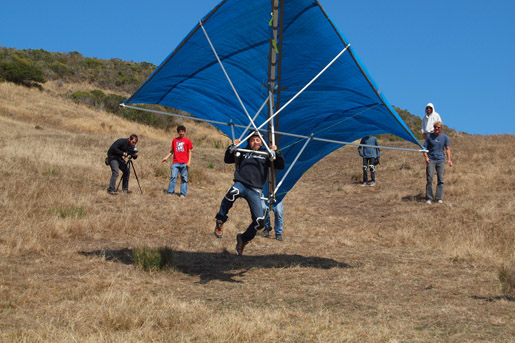
"caption": "Isaac is determined to leave the ground, by any means necessary. Aka - jumping.",
"description": null,
"title": "Leaping Into The Void",
"credit": null,
"status": "inherit",
"isLoading": false,
"fetchFailed": false
},
"mindshift_14254": {
"type": "attachments",
"id": "mindshift_14254",
"meta": {
"index": "attachments_1716263798",
"site": "mindshift",
"id": "14254",
"found": true
},
"parent": 13990,
"imgSizes": {
"thumbnail": {
"file": "https://ww2.kqed.org/app/uploads/sites/23/2011/07/Screen-shot-2011-07-27-at-3.08.53-PM-400x219.png",
"width": 400,
"mimeType": "image/png",
"height": 219
},
"fd-sm": {
"file": "https://ww2.kqed.org/app/uploads/sites/23/2011/07/Screen-shot-2011-07-27-at-3.08.53-PM-320x175.png",
"width": 320,
"mimeType": "image/png",
"height": 175
},
"post-thumbnail": {
"file": "https://ww2.kqed.org/app/uploads/sites/23/2011/07/Screen-shot-2011-07-27-at-3.08.53-PM-672x372.png",
"width": 672,
"mimeType": "image/png",
"height": 372
},
"kqedFullSize": {
"file": "https://ww2.kqed.org/app/uploads/sites/23/2011/07/Screen-shot-2011-07-27-at-3.08.53-PM.png",
"width": 701,
"height": 383
},
"guest-author-96": {
"file": "https://ww2.kqed.org/app/uploads/sites/23/2011/07/Screen-shot-2011-07-27-at-3.08.53-PM-96x96.png",
"width": 96,
"mimeType": "image/png",
"height": 96
},
"guest-author-64": {
"file": "https://ww2.kqed.org/app/uploads/sites/23/2011/07/Screen-shot-2011-07-27-at-3.08.53-PM-64x64.png",
"width": 64,
"mimeType": "image/png",
"height": 64
},
"detail": {
"file": "https://ww2.kqed.org/app/uploads/sites/23/2011/07/Screen-shot-2011-07-27-at-3.08.53-PM-75x75.png",
"width": 75,
"mimeType": "image/png",
"height": 75
},
"guest-author-32": {
"file": "https://ww2.kqed.org/app/uploads/sites/23/2011/07/Screen-shot-2011-07-27-at-3.08.53-PM-32x32.png",
"width": 32,
"mimeType": "image/png",
"height": 32
},
"guest-author-128": {
"file": "https://ww2.kqed.org/app/uploads/sites/23/2011/07/Screen-shot-2011-07-27-at-3.08.53-PM-128x128.png",
"width": 128,
"mimeType": "image/png",
"height": 128
}
},
"publishDate": 1311804920,
"modified": 1311804920,
"caption": null,
"description": null,
"title": "Screen shot 2011-07-27 at 3.08.53 PM",
"credit": null,
"status": "inherit",
"isLoading": false,
"fetchFailed": false
},
"mindshift_14242": {
"type": "attachments",
"id": "mindshift_14242",
"meta": {
"index": "attachments_1716263798",
"site": "mindshift",
"id": "14242",
"found": true
},
"parent": 13862,
"imgSizes": {
"thumbnail": {
"file": "https://ww2.kqed.org/app/uploads/sites/23/2011/07/Screen-shot-2011-07-27-at-3.02.31-PM-400x211.png",
"width": 400,
"mimeType": "image/png",
"height": 211
},
"fd-sm": {
"file": "https://ww2.kqed.org/app/uploads/sites/23/2011/07/Screen-shot-2011-07-27-at-3.02.31-PM-320x169.png",
"width": 320,
"mimeType": "image/png",
"height": 169
},
"post-thumbnail": {
"file": "https://ww2.kqed.org/app/uploads/sites/23/2011/07/Screen-shot-2011-07-27-at-3.02.31-PM-672x360.png",
"width": 672,
"mimeType": "image/png",
"height": 360
},
"kqedFullSize": {
"file": "https://ww2.kqed.org/app/uploads/sites/23/2011/07/Screen-shot-2011-07-27-at-3.02.31-PM.png",
"width": 683,
"height": 360
},
"guest-author-96": {
"file": "https://ww2.kqed.org/app/uploads/sites/23/2011/07/Screen-shot-2011-07-27-at-3.02.31-PM-96x96.png",
"width": 96,
"mimeType": "image/png",
"height": 96
},
"guest-author-64": {
"file": "https://ww2.kqed.org/app/uploads/sites/23/2011/07/Screen-shot-2011-07-27-at-3.02.31-PM-64x64.png",
"width": 64,
"mimeType": "image/png",
"height": 64
},
"detail": {
"file": "https://ww2.kqed.org/app/uploads/sites/23/2011/07/Screen-shot-2011-07-27-at-3.02.31-PM-75x75.png",
"width": 75,
"mimeType": "image/png",
"height": 75
},
"guest-author-32": {
"file": "https://ww2.kqed.org/app/uploads/sites/23/2011/07/Screen-shot-2011-07-27-at-3.02.31-PM-32x32.png",
"width": 32,
"mimeType": "image/png",
"height": 32
},
"guest-author-128": {
"file": "https://ww2.kqed.org/app/uploads/sites/23/2011/07/Screen-shot-2011-07-27-at-3.02.31-PM-128x128.png",
"width": 128,
"mimeType": "image/png",
"height": 128
}
},
"publishDate": 1311804176,
"modified": 1311804176,
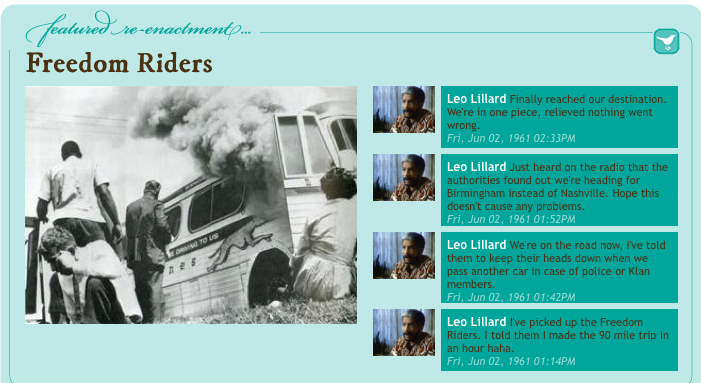
"caption": "TwHistory",
"description": null,
"title": "Screen-shot-2011-07-27-at-3.02.31-PM",
"credit": null,
"status": "inherit",
"isLoading": false,
"fetchFailed": false
},
"mindshift_14261": {
"type": "attachments",
"id": "mindshift_14261",
"meta": {
"index": "attachments_1716263798",
"site": "mindshift",
"id": "14261",
"found": true
},
"parent": 13179,
"imgSizes": {
"thumbnail": {
"file": "https://ww2.kqed.org/app/uploads/sites/23/2011/08/Editor-B-2-400x324.jpg",
"width": 400,
"mimeType": "image/jpeg",
"height": 324
},
"fd-sm": {
"file": "https://ww2.kqed.org/app/uploads/sites/23/2011/08/Editor-B-2-320x259.jpg",
"width": 320,
"mimeType": "image/jpeg",
"height": 259
},
"post-thumbnail": {
"file": "https://ww2.kqed.org/app/uploads/sites/23/2011/08/Editor-B-2-500x372.jpg",
"width": 500,
"mimeType": "image/jpeg",
"height": 372
},
"kqedFullSize": {
"file": "https://ww2.kqed.org/app/uploads/sites/23/2011/08/Editor-B-2.jpg",
"width": 500,
"height": 405
},
"guest-author-96": {
"file": "https://ww2.kqed.org/app/uploads/sites/23/2011/08/Editor-B-2-96x96.jpg",
"width": 96,
"mimeType": "image/jpeg",
"height": 96
},
"guest-author-64": {
"file": "https://ww2.kqed.org/app/uploads/sites/23/2011/08/Editor-B-2-64x64.jpg",
"width": 64,
"mimeType": "image/jpeg",
"height": 64
},
"detail": {
"file": "https://ww2.kqed.org/app/uploads/sites/23/2011/08/Editor-B-2-75x75.jpg",
"width": 75,
"mimeType": "image/jpeg",
"height": 75
},
"guest-author-32": {
"file": "https://ww2.kqed.org/app/uploads/sites/23/2011/08/Editor-B-2-32x32.jpg",
"width": 32,
"mimeType": "image/jpeg",
"height": 32
},
"guest-author-128": {
"file": "https://ww2.kqed.org/app/uploads/sites/23/2011/08/Editor-B-2-128x128.jpg",
"width": 128,
"mimeType": "image/jpeg",
"height": 128
}
},
"publishDate": 1311806194,
"modified": 1311806194,
"caption": null,
"description": null,
"title": "Editor B-2",
"credit": null,
"status": "inherit",
"isLoading": false,
"fetchFailed": false
},
"mindshift_14112": {
"type": "attachments",
"id": "mindshift_14112",
"meta": {
"index": "attachments_1716263798",
"site": "mindshift",
"id": "14112",
"found": true
},
"parent": 14109,
"imgSizes": {
"fd-sm": {
"file": "https://ww2.kqed.org/app/uploads/sites/23/2011/07/5356324450_67866bf101-320x320.jpg",
"width": 320,
"mimeType": "image/jpeg",
"height": 320
},
"kqedFullSize": {
"file": "https://ww2.kqed.org/app/uploads/sites/23/2011/07/5356324450_67866bf101.jpg",
"width": 331,
"height": 331
},
"guest-author-96": {
"file": "https://ww2.kqed.org/app/uploads/sites/23/2011/07/5356324450_67866bf101-96x96.jpg",
"width": 96,
"mimeType": "image/jpeg",
"height": 96
},
"guest-author-64": {
"file": "https://ww2.kqed.org/app/uploads/sites/23/2011/07/5356324450_67866bf101-64x64.jpg",
"width": 64,
"mimeType": "image/jpeg",
"height": 64
},
"detail": {
"file": "https://ww2.kqed.org/app/uploads/sites/23/2011/07/5356324450_67866bf101-75x75.jpg",
"width": 75,
"mimeType": "image/jpeg",
"height": 75
},
"guest-author-32": {
"file": "https://ww2.kqed.org/app/uploads/sites/23/2011/07/5356324450_67866bf101-32x32.jpg",
"width": 32,
"mimeType": "image/jpeg",
"height": 32
},
"guest-author-128": {
"file": "https://ww2.kqed.org/app/uploads/sites/23/2011/07/5356324450_67866bf101-128x128.jpg",
"width": 128,
"mimeType": "image/jpeg",
"height": 128
}
},
"publishDate": 1311716076,
"modified": 1311716076,
"caption": null,
"description": null,
"title": "Surfer flipping on a top turn",
"credit": null,
"status": "inherit",
"isLoading": false,
"fetchFailed": false
},
"mindshift_14152": {
"type": "attachments",
"id": "mindshift_14152",
"meta": {
"index": "attachments_1716263798",
"site": "mindshift",
"id": "14152",
"found": true
},
"parent": 14136,
"imgSizes": {
"thumbnail": {
"file": "https://ww2.kqed.org/app/uploads/sites/23/2011/07/Screen-shot-2011-07-27-at-1.30.12-PM-400x294.png",
"width": 400,
"mimeType": "image/png",
"height": 294
},
"fd-sm": {
"file": "https://ww2.kqed.org/app/uploads/sites/23/2011/07/Screen-shot-2011-07-27-at-1.30.12-PM-320x235.png",
"width": 320,
"mimeType": "image/png",
"height": 235
},
"post-thumbnail": {
"file": "https://ww2.kqed.org/app/uploads/sites/23/2011/07/Screen-shot-2011-07-27-at-1.30.12-PM-672x372.png",
"width": 672,
"mimeType": "image/png",
"height": 372
},
"kqedFullSize": {
"file": "https://ww2.kqed.org/app/uploads/sites/23/2011/07/Screen-shot-2011-07-27-at-1.30.12-PM.png",
"width": 768,
"height": 564
},
"fd-med": {
"file": "https://ww2.kqed.org/app/uploads/sites/23/2011/07/Screen-shot-2011-07-27-at-1.30.12-PM-768x564.png",
"width": 768,
"mimeType": "image/png",
"height": 564
},
"guest-author-96": {
"file": "https://ww2.kqed.org/app/uploads/sites/23/2011/07/Screen-shot-2011-07-27-at-1.30.12-PM-96x96.png",
"width": 96,
"mimeType": "image/png",
"height": 96
},
"guest-author-64": {
"file": "https://ww2.kqed.org/app/uploads/sites/23/2011/07/Screen-shot-2011-07-27-at-1.30.12-PM-64x64.png",
"width": 64,
"mimeType": "image/png",
"height": 64
},
"detail": {
"file": "https://ww2.kqed.org/app/uploads/sites/23/2011/07/Screen-shot-2011-07-27-at-1.30.12-PM-75x75.png",
"width": 75,
"mimeType": "image/png",
"height": 75
},
"guest-author-32": {
"file": "https://ww2.kqed.org/app/uploads/sites/23/2011/07/Screen-shot-2011-07-27-at-1.30.12-PM-32x32.png",
"width": 32,
"mimeType": "image/png",
"height": 32
},
"guest-author-128": {
"file": "https://ww2.kqed.org/app/uploads/sites/23/2011/07/Screen-shot-2011-07-27-at-1.30.12-PM-128x128.png",
"width": 128,
"mimeType": "image/png",
"height": 128
}
},
"publishDate": 1311798868,
"modified": 1311798868,
"caption": "At ECP, Makeal and his classmates attend an after-school enrichment program.",
"description": null,
"title": "workshop",
"credit": null,
"status": "inherit",
"isLoading": false,
"fetchFailed": false
},
"mindshift_14072": {
"type": "attachments",
"id": "mindshift_14072",
"meta": {
"index": "attachments_1716263798",
"site": "mindshift",
"id": "14072",
"found": true
},
"parent": 14066,
"imgSizes": {
"thumbnail": {
"file": "https://ww2.kqed.org/app/uploads/sites/23/2011/07/2068301407_3bc3753c11-400x383.jpg",
"width": 400,
"mimeType": "image/jpeg",
"height": 383
},
"fd-sm": {
"file": "https://ww2.kqed.org/app/uploads/sites/23/2011/07/2068301407_3bc3753c11-320x307.jpg",
"width": 320,
"mimeType": "image/jpeg",
"height": 307
},
"post-thumbnail": {
"file": "https://ww2.kqed.org/app/uploads/sites/23/2011/07/2068301407_3bc3753c11-500x372.jpg",
"width": 500,
"mimeType": "image/jpeg",
"height": 372
},
"kqedFullSize": {
"file": "https://ww2.kqed.org/app/uploads/sites/23/2011/07/2068301407_3bc3753c11.jpg",
"width": 500,
"height": 479
},
"guest-author-96": {
"file": "https://ww2.kqed.org/app/uploads/sites/23/2011/07/2068301407_3bc3753c11-96x96.jpg",
"width": 96,
"mimeType": "image/jpeg",
"height": 96
},
"guest-author-64": {
"file": "https://ww2.kqed.org/app/uploads/sites/23/2011/07/2068301407_3bc3753c11-64x64.jpg",
"width": 64,
"mimeType": "image/jpeg",
"height": 64
},
"detail": {
"file": "https://ww2.kqed.org/app/uploads/sites/23/2011/07/2068301407_3bc3753c11-75x75.jpg",
"width": 75,
"mimeType": "image/jpeg",
"height": 75
},
"guest-author-32": {
"file": "https://ww2.kqed.org/app/uploads/sites/23/2011/07/2068301407_3bc3753c11-32x32.jpg",
"width": 32,
"mimeType": "image/jpeg",
"height": 32
},
"guest-author-128": {
"file": "https://ww2.kqed.org/app/uploads/sites/23/2011/07/2068301407_3bc3753c11-128x128.jpg",
"width": 128,
"mimeType": "image/jpeg",
"height": 128
}
},
"publishDate": 1311711938,
"modified": 1311711938,
"caption": null,
"description": null,
"title": "2068301407_3bc3753c11",
"credit": null,
"status": "inherit",
"isLoading": false,
"fetchFailed": false
},
"mindshift_13977": {
"type": "attachments",
"id": "mindshift_13977",
"meta": {
"index": "attachments_1716263798",
"site": "mindshift",
"id": "13977",
"found": true
},
"parent": 13953,
"imgSizes": {
"twentyfourteen-full-width": {
"file": "https://ww2.kqed.org/app/uploads/sites/23/2011/07/Screen-shot-2011-07-22-at-3.36.11-PM-1015x576.png",
"width": 1015,
"mimeType": "image/png",
"height": 576
},
"thumbnail": {
"file": "https://ww2.kqed.org/app/uploads/sites/23/2011/07/Screen-shot-2011-07-22-at-3.36.11-PM-400x269.png",
"width": 400,
"mimeType": "image/png",
"height": 269
},
"fd-sm": {
"file": "https://ww2.kqed.org/app/uploads/sites/23/2011/07/Screen-shot-2011-07-22-at-3.36.11-PM-320x215.png",
"width": 320,
"mimeType": "image/png",
"height": 215
},
"post-thumbnail": {
"file": "https://ww2.kqed.org/app/uploads/sites/23/2011/07/Screen-shot-2011-07-22-at-3.36.11-PM-672x372.png",
"width": 672,
"mimeType": "image/png",
"height": 372
},
"kqedFullSize": {
"file": "https://ww2.kqed.org/app/uploads/sites/23/2011/07/Screen-shot-2011-07-22-at-3.36.11-PM.png",
"width": 1015,
"height": 683
},
"fd-med": {
"file": "https://ww2.kqed.org/app/uploads/sites/23/2011/07/Screen-shot-2011-07-22-at-3.36.11-PM-768x517.png",
"width": 768,
"mimeType": "image/png",
"height": 517
},
"guest-author-96": {
"file": "https://ww2.kqed.org/app/uploads/sites/23/2011/07/Screen-shot-2011-07-22-at-3.36.11-PM-96x96.png",
"width": 96,
"mimeType": "image/png",
"height": 96
},
"medium": {
"file": "https://ww2.kqed.org/app/uploads/sites/23/2011/07/Screen-shot-2011-07-22-at-3.36.11-PM-800x538.png",
"width": 800,
"mimeType": "image/png",
"height": 538
},
"guest-author-64": {
"file": "https://ww2.kqed.org/app/uploads/sites/23/2011/07/Screen-shot-2011-07-22-at-3.36.11-PM-64x64.png",
"width": 64,
"mimeType": "image/png",
"height": 64
},
"detail": {
"file": "https://ww2.kqed.org/app/uploads/sites/23/2011/07/Screen-shot-2011-07-22-at-3.36.11-PM-75x75.png",
"width": 75,
"mimeType": "image/png",
"height": 75
},
"guest-author-32": {
"file": "https://ww2.kqed.org/app/uploads/sites/23/2011/07/Screen-shot-2011-07-22-at-3.36.11-PM-32x32.png",
"width": 32,
"mimeType": "image/png",
"height": 32
},
"guest-author-128": {
"file": "https://ww2.kqed.org/app/uploads/sites/23/2011/07/Screen-shot-2011-07-22-at-3.36.11-PM-128x128.png",
"width": 128,
"mimeType": "image/png",
"height": 128
}
},
"publishDate": 1311374191,
"modified": 1311374191,
"caption": "S. Craig Watkins maintains that teaching students to use digital media is not a luxury, but a necessity.",
"description": null,
"title": "Screen-shot-2011-07-22-at-3.36.11-PM",
"credit": null,
"status": "inherit",
"isLoading": false,
"fetchFailed": false
},
"mindshift_13950": {
"type": "attachments",
"id": "mindshift_13950",
"meta": {
"index": "attachments_1716263798",
"site": "mindshift",
"id": "13950",
"found": true
},
"parent": 13943,
"imgSizes": {
"kqedFullSize": {
"file": "https://ww2.kqed.org/app/uploads/sites/23/2011/07/images1.jpg",
"width": 295,
"height": 171
},
"guest-author-96": {
"file": "https://ww2.kqed.org/app/uploads/sites/23/2011/07/images1-96x96.jpg",
"width": 96,
"mimeType": "image/jpeg",
"height": 96
},
"guest-author-64": {
"file": "https://ww2.kqed.org/app/uploads/sites/23/2011/07/images1-64x64.jpg",
"width": 64,
"mimeType": "image/jpeg",
"height": 64
},
"detail": {
"file": "https://ww2.kqed.org/app/uploads/sites/23/2011/07/images1-75x75.jpg",
"width": 75,
"mimeType": "image/jpeg",
"height": 75
},
"guest-author-32": {
"file": "https://ww2.kqed.org/app/uploads/sites/23/2011/07/images1-32x32.jpg",
"width": 32,
"mimeType": "image/jpeg",
"height": 32
},
"guest-author-128": {
"file": "https://ww2.kqed.org/app/uploads/sites/23/2011/07/images1-128x128.jpg",
"width": 128,
"mimeType": "image/jpeg",
"height": 128
}
},
"publishDate": 1311360610,
"modified": 1311360610,
"caption": null,
"description": null,
"title": "images1",
"credit": null,
"status": "inherit",
"isLoading": false,
"fetchFailed": false
}
},
"audioPlayerReducer": {
"postId": "stream_live",
"isPaused": true,
"isPlaying": false,
"pfsActive": false,
"pledgeModalIsOpen": true,
"playerDrawerIsOpen": false,
"liveAudioPlayStartedAt": 0,
"liveAudioPlayContext": ""
},
"authorsReducer": {
"tbarseghian": {
"type": "authors",
"id": "180",
"meta": {
"index": "authors_1716337520",
"id": "180",
"found": true
},
"name": "Tina Barseghian",
"firstName": "Tina",
"lastName": "Barseghian",
"slug": "tbarseghian",
"email": "tbarseghian@kqed.org",
"display_author_email": false,
"staff_mastheads": [],
"title": null,
"bio": null,
"avatar": "https://secure.gravatar.com/avatar/de7e6ced1239b7018fe4d2b61f723c90?s=600&d=blank&r=g",
"twitter": null,
"facebook": null,
"instagram": null,
"linkedin": null,
"sites": [
{
"site": "styleguide",
"roles": [
"contributor"
]
},
{
"site": "news",
"roles": [
"subscriber"
]
},
{
"site": "mindshift",
"roles": [
"subscriber"
]
},
{
"site": "bayareabites",
"roles": [
"subscriber"
]
}
],
"headData": {
"title": "Tina Barseghian | KQED",
"description": null,
"ogImgSrc": "https://secure.gravatar.com/avatar/de7e6ced1239b7018fe4d2b61f723c90?s=600&d=blank&r=g",
"twImgSrc": "https://secure.gravatar.com/avatar/de7e6ced1239b7018fe4d2b61f723c90?s=600&d=blank&r=g"
},
"isLoading": false,
"link": "/author/tbarseghian"
},
"sbernard": {
"type": "authors",
"id": "4351",
"meta": {
"index": "authors_1716337520",
"id": "4351",
"found": true
},
"name": "Sara Bernard",
"firstName": "Sara",
"lastName": "Bernard",
"slug": "sbernard",
"email": "saralacy@gmail.com",
"display_author_email": false,
"staff_mastheads": [],
"title": null,
"bio": null,
"avatar": "https://secure.gravatar.com/avatar/69bae8afcc64ab67f6e3709cfb4bef26?s=600&d=blank&r=g",
"twitter": null,
"facebook": null,
"instagram": null,
"linkedin": null,
"sites": [
{
"site": "mindshift",
"roles": [
"subscriber"
]
}
],
"headData": {
"title": "Sara Bernard | KQED",
"description": null,
"ogImgSrc": "https://secure.gravatar.com/avatar/69bae8afcc64ab67f6e3709cfb4bef26?s=600&d=blank&r=g",
"twImgSrc": "https://secure.gravatar.com/avatar/69bae8afcc64ab67f6e3709cfb4bef26?s=600&d=blank&r=g"
},
"isLoading": false,
"link": "/author/sbernard"
},
"awatters": {
"type": "authors",
"id": "4352",
"meta": {
"index": "authors_1716337520",
"id": "4352",
"found": true
},
"name": "Audrey Watters",
"firstName": "Audrey",
"lastName": "Watters",
"slug": "awatters",
"email": "awatters@kqed.org",
"display_author_email": false,
"staff_mastheads": [],
"title": null,
"bio": null,
"avatar": "https://secure.gravatar.com/avatar/fb6ac91bb93632725bfa683c1de71bee?s=600&d=blank&r=g",
"twitter": null,
"facebook": null,
"instagram": null,
"linkedin": null,
"sites": [
{
"site": "mindshift",
"roles": [
"subscriber"
]
}
],
"headData": {
"title": "Audrey Watters | KQED",
"description": null,
"ogImgSrc": "https://secure.gravatar.com/avatar/fb6ac91bb93632725bfa683c1de71bee?s=600&d=blank&r=g",
"twImgSrc": "https://secure.gravatar.com/avatar/fb6ac91bb93632725bfa683c1de71bee?s=600&d=blank&r=g"
},
"isLoading": false,
"link": "/author/awatters"
}
},
"pagesReducer": {
"mindshift_category_teaching-strategies": {
"type": "terms",
"id": "mindshift_193",
"meta": {
"index": "terms_1716263798",
"site": "mindshift",
"id": "193",
"score": 14.406956
},
"featImg": null,
"name": "Teaching Strategies",
"description": "Innovative ideas - projects, processes, curricula, and more - that are transforming how we teach and learn.",
"taxonomy": "category",
"headData": {
"twImgId": null,
"twTitle": null,
"ogTitle": null,
"ogImgId": null,
"twDescription": null,
"description": "Innovative ideas - projects, processes, curricula, and more - that are transforming how we teach and learn.",
"title": "Teaching Strategies Archives | KQED Mindshift",
"ogDescription": null
},
"ttid": 193,
"slug": "teaching-strategies",
"isLoading": false,
"title": "Teaching Strategies",
"pageMeta": {
"site": "mindshift",
"WpPageTemplate": "page-topic-editorial",
"currentPage": 86
},
"blocks": [
{
"blockName": "kqed/company-paragraph",
"content": "Innovative ideas - projects, processes, curricula, and more - that are transforming how we teach and learn."
},
{
"blockName": "kqed/post-list",
"attrs": {
"layout": "cardArticle2",
"query": "posts/mindshift?category=teaching-strategies",
"seeMore": false,
"paginated": true,
"page": 86
}
},
{
"blockName": "kqed/ad"
}
]
}
},
"pfsSessionReducer": {},
"postsReducer": {
"stream_live": {
"type": "live",
"id": "stream_live",
"audioUrl": "https://streams.kqed.org/kqedradio",
"title": "Live Stream",
"excerpt": "Live Stream information currently unavailable.",
"link": "/radio",
"featImg": "",
"label": {
"name": "KQED Live",
"link": "/"
}
},
"stream_kqedNewscast": {
"type": "posts",
"id": "stream_kqedNewscast",
"audioUrl": "https://www.kqed.org/.stream/anon/radio/RDnews/newscast.mp3?_=1",
"title": "KQED Newscast",
"featImg": "",
"label": {
"name": "88.5 FM",
"link": "/"
}
},
"mindshift_14227": {
"type": "posts",
"id": "mindshift_14227",
"meta": {
"index": "posts_1716263798",
"site": "mindshift",
"id": "14227",
"score": null,
"sort": [
1312488054000
]
},
"parent": 0,
"labelTerm": {
"site": "mindshift"
},
"blocks": [],
"publishDate": 1312488054,
"format": "aside",
"disqusTitle": "Turning Static Text Into Interactive Discussions",
"title": "Turning Static Text Into Interactive Discussions",
"headTitle": "MindShift | KQED News",
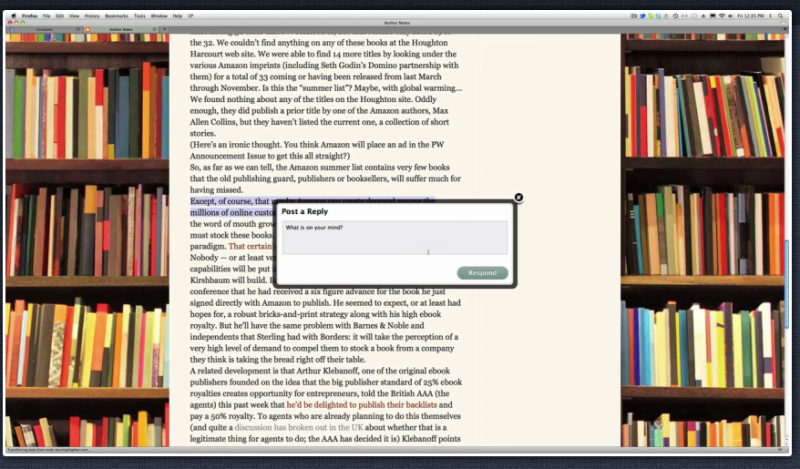
"content": "\u003cfigure id=\"attachment_14266\" class=\"wp-caption left\" style=\"max-width: 300px\">\u003ca rel=\"attachment wp-att-14266\" href=\"http://ww2.kqed.org/mindshift/2011/08/turning-static-text-into-interactive-discussions/screen-shot-2011-07-27-at-3-52-42-pm/\">\u003cimg class=\"size-medium wp-image-14266\" src=\"http://ww2.kqed.org/mindshift/wp-content/uploads/sites/23/2011/07/Screen-shot-2011-07-27-at-3.52.42-PM-300x175.png\" alt=\"\" width=\"300\" height=\"175\">\u003c/a>\u003cfigcaption class=\"wp-caption-text\">Highlighter Application\u003c/figcaption>\u003c/figure>\n\u003cp>Earlier this year, Amazon announced that e-books were \u003ca href=\"http://www.nytimes.com/2011/05/20/technology/20amazon.html\">outselling\u003c/a> print books. The statistics echo those from other sources, such as the \u003ca href=\"http://www.publishers.org/press/30/\">Association of American Publishers\u003c/a>, which indicate consumers have a strong interest in digital formats.\u003c/p>\n\u003cp>But when it comes to textbooks, many students say they still \u003ca href=\"http://www.mediabistro.com/ebooknewser/75-of-college-students-prefer-print-textbooks_b4838\">prefer traditional, print copies\u003c/a>. Sure, textbooks are notoriously heavy and expensive. But print still offers one thing that digital books hasn't been able to do quite right yet: Allow the reader to take detailed notes in the margins.\u003c/p>\n\u003cp>But a new company called \u003ca href=\"http://highlighter.com\">Highlighter\u003c/a> hopes to address that problem by offering a way to help publishers enable marginalia, of sorts, on their websites. Highlighter allows readers to leave comments not just at the end of blog posts but throughout. Visitors to websites can also highlight, annotate, save and share passages and comments.\u003c/p>\n\u003cp>While the new tool can be used by any publisher (or more broadly, by anyone with a blog or a website), the startup is focusing a lot of their efforts on encouraging adoption among academics -- both publishers and professors.\u003c/p>\n\u003cp>University of Colorado biology professor Michael Klymkowsky has installed Highlighter on his \u003ca href=\"http://virtuallaboratory.colorado.edu/Biofundamentals/\">Biofundamentals\u003c/a> course website, for example. By doing so, students are able to engage fully with all the materials -- the syllabus as well as the readings. They can leave comments, ask questions, and save and share key passages.\u003c!--more-->\u003c/p>\n\u003cp>[ad fullwidth]\u003c/p>\n\u003cp>Highlighter also offers analytics for publishers, so in this case, Klymkowsky can see what students are reading, what they're highlighting and sharing -- all metrics to help him gauge their engagement and understanding.\u003c/p>\n\u003cp>\"When we are looking for real subject mastery, it is critical that students have the opportunity to engage the hard and often counterintuitive ideas presented and to articulate and refine their understanding,\" says Klymkowsky. \"The ability to actively comment on the text, respond to questions, and each other's answers, helps them prepare for classroom discussions with their instructors -- helps them get ready for the Socratic process of learning. Unfortunately, this type of engagement is all too rare with 'static' texts and large classes.\"\u003c/p>\n\u003cp>\u003c/p>\n\u003cp>Installing Highlighterit requires adding a simple line of JavaScript into the website's HTML. The tool, including the analytics package, is free.\u003c/p>\n\n",
"disqusIdentifier": "14227 http://blogs.kqed.org/mindshift/?p=14227",
"disqusUrl": "https://ww2.kqed.org/mindshift/2011/08/04/turning-static-text-into-interactive-discussions/",
"stats": {
"hasVideo": false,
"hasChartOrMap": false,
"hasAudio": false,
"hasPolis": false,
"wordCount": 371,
"hasGoogleForm": false,
"hasGallery": false,
"hasHearkenModule": false,
"iframeSrcs": [],
"paragraphCount": 10
},
"modified": 1311807366,
"excerpt": null,
"headData": {
"twImgId": "",
"twTitle": "",
"ogTitle": "",
"ogImgId": "",
"twDescription": "",
"description": "Earlier this year, Amazon announced that e-books were outselling print books. The statistics echo those from other sources, such as the Association of American Publishers, which indicate consumers have a strong interest in digital formats. But when it comes to textbooks, many students say they still prefer traditional, print copies. Sure, textbooks are notoriously heavy",
"title": "Turning Static Text Into Interactive Discussions | KQED",
"ogDescription": "",
"schema": {
"@context": "https://schema.org",
"@type": "Article",
"headline": "Turning Static Text Into Interactive Discussions",
"datePublished": "2011-08-04T13:00:54-07:00",
"dateModified": "2011-07-27T15:56:06-07:00",
"image": "https://cdn.kqed.org/wp-content/uploads/2020/02/KQED-OG-Image@1x.png"
}
},
"guestAuthors": [],
"slug": "turning-static-text-into-interactive-discussions",
"status": "publish",
"path": "/mindshift/14227/turning-static-text-into-interactive-discussions",
"audioTrackLength": null,
"parsedContent": [
{
"type": "contentString",
"content": "\u003cdiv class=\"post-body\">\u003cp>\u003cfigure id=\"attachment_14266\" class=\"wp-caption left\" style=\"max-width: 300px\">\u003ca rel=\"attachment wp-att-14266\" href=\"http://ww2.kqed.org/mindshift/2011/08/turning-static-text-into-interactive-discussions/screen-shot-2011-07-27-at-3-52-42-pm/\">\u003cimg class=\"size-medium wp-image-14266\" src=\"http://ww2.kqed.org/mindshift/wp-content/uploads/sites/23/2011/07/Screen-shot-2011-07-27-at-3.52.42-PM-300x175.png\" alt=\"\" width=\"300\" height=\"175\">\u003c/a>\u003cfigcaption class=\"wp-caption-text\">Highlighter Application\u003c/figcaption>\u003c/figure>\n\u003cp>Earlier this year, Amazon announced that e-books were \u003ca href=\"http://www.nytimes.com/2011/05/20/technology/20amazon.html\">outselling\u003c/a> print books. The statistics echo those from other sources, such as the \u003ca href=\"http://www.publishers.org/press/30/\">Association of American Publishers\u003c/a>, which indicate consumers have a strong interest in digital formats.\u003c/p>\n\u003cp>But when it comes to textbooks, many students say they still \u003ca href=\"http://www.mediabistro.com/ebooknewser/75-of-college-students-prefer-print-textbooks_b4838\">prefer traditional, print copies\u003c/a>. Sure, textbooks are notoriously heavy and expensive. But print still offers one thing that digital books hasn't been able to do quite right yet: Allow the reader to take detailed notes in the margins.\u003c/p>\n\u003cp>But a new company called \u003ca href=\"http://highlighter.com\">Highlighter\u003c/a> hopes to address that problem by offering a way to help publishers enable marginalia, of sorts, on their websites. Highlighter allows readers to leave comments not just at the end of blog posts but throughout. Visitors to websites can also highlight, annotate, save and share passages and comments.\u003c/p>\n\u003cp>While the new tool can be used by any publisher (or more broadly, by anyone with a blog or a website), the startup is focusing a lot of their efforts on encouraging adoption among academics -- both publishers and professors.\u003c/p>\n\u003cp>University of Colorado biology professor Michael Klymkowsky has installed Highlighter on his \u003ca href=\"http://virtuallaboratory.colorado.edu/Biofundamentals/\">Biofundamentals\u003c/a> course website, for example. By doing so, students are able to engage fully with all the materials -- the syllabus as well as the readings. They can leave comments, ask questions, and save and share key passages.\u003c!--more-->\u003c/p>\n\u003cp>\u003c/p>\u003c/div>",
"attributes": {
"named": {},
"numeric": []
}
},
{
"type": "component",
"content": "",
"name": "ad",
"attributes": {
"named": {
"label": "fullwidth"
},
"numeric": [
"fullwidth"
]
}
},
{
"type": "contentString",
"content": "\u003cdiv class=\"post-body\">\u003cp>\u003c/p>\n\u003cp>Highlighter also offers analytics for publishers, so in this case, Klymkowsky can see what students are reading, what they're highlighting and sharing -- all metrics to help him gauge their engagement and understanding.\u003c/p>\n\u003cp>\"When we are looking for real subject mastery, it is critical that students have the opportunity to engage the hard and often counterintuitive ideas presented and to articulate and refine their understanding,\" says Klymkowsky. \"The ability to actively comment on the text, respond to questions, and each other's answers, helps them prepare for classroom discussions with their instructors -- helps them get ready for the Socratic process of learning. Unfortunately, this type of engagement is all too rare with 'static' texts and large classes.\"\u003c/p>\n\u003cp>\u003c/p>\n\u003cp>Installing Highlighterit requires adding a simple line of JavaScript into the website's HTML. The tool, including the analytics package, is free.\u003c/p>\n\n\u003c/div>\u003c/p>",
"attributes": {
"named": {},
"numeric": []
}
}
],
"link": "/mindshift/14227/turning-static-text-into-interactive-discussions",
"authors": [
"4352"
],
"categories": [
"mindshift_195",
"mindshift_193"
],
"tags": [
"mindshift_656"
],
"featImg": "mindshift_14266",
"label": "mindshift"
},
"mindshift_14170": {
"type": "posts",
"id": "mindshift_14170",
"meta": {
"index": "posts_1716263798",
"site": "mindshift",
"id": "14170",
"score": null,
"sort": [
1312470053000
]
},
"parent": 0,
"labelTerm": {
"site": "mindshift"
},
"blocks": [],
"publishDate": 1312470053,
"format": "aside",
"disqusTitle": "Are MOOCs the Future of Online Learning?",
"title": "Are MOOCs the Future of Online Learning?",
"headTitle": "MindShift | KQED News",
"content": "\u003cfigure id=\"attachment_14175\" class=\"wp-caption left\" style=\"max-width: 300px\">\u003ca rel=\"attachment wp-att-14175\" href=\"http://ww2.kqed.org/mindshift/2011/08/are-moocs-the-future-of-online-learning/3708501578_b015ac849b/\">\u003cimg class=\"size-medium wp-image-14175\" title=\"3708501578_b015ac849b\" src=\"http://ww2.kqed.org/mindshift/wp-content/uploads/sites/23/2011/07/3708501578_b015ac849b-300x225.jpg\" alt=\"\" width=\"300\" height=\"225\">\u003c/a>\u003cfigcaption class=\"wp-caption-text\"> \u003c/figcaption>\u003c/figure>\n\u003cp>In education, we often hear arguments in favor of smaller class sizes. These arguments contend that students learn better when there are fewer of them in a class, because each one gets more individualized attention from the instructor.\u003c/p>\n\u003cp> \u003c/p>\n\u003cp>So it may seem counter-intuitive to support classes that can swell to several thousand participants. How can students learn in these sorts of settings? How can instructors handle the crowd?\u003c/p>\n\u003cp>The answers to these questions aren't found in traditional classrooms -- no surprise. It's hard to imagine 2,000 students in a traditional lecture hall having a very rich or engaging learning experience. But engaged learning is what you find among the thousands of students who participate in a MOOC.\u003c/p>\n\u003caside class=\"pullquote alignleft\">MOOCs challenge many of the notions we have about formal learning: where and how and from whom learning happens, how we gauge success.\u003c/aside>\n\u003cp>The acronym MOOC stands for \u003ca href=\"http://en.wikipedia.org/wiki/Networked_learning\">Massive Open Online Course\u003c/a>. The meaning of \"massive\" is obvious; a MOOC can range from several hundred to several thousand participants. But it isn't just the size of the classes or even their location -- online -- that make MOOCs different.\u003c/p>\n\u003cp>[ad fullwidth]\u003c/p>\n\u003cp>MOOCs redefine academic courses in several ways. They are open, for one, which means that anyone can participate. The content of the course -- readings and so on -- is freely and openly accessible. The content that participants create is also open. Students blog, for example, and share their learning with one another.\u003c!--more-->\u003c/p>\n\u003cp>And that's one of the key pieces with a MOOC. In some ways, how learning and sharing works in a MOOC is more akin to a social network than to a traditional classroom. But a MOOC is designed for this online world -- one where you can find information about almost any topic, true, but where there are also thousands of people with whom you can share and discuss these ideas and from whom you can learn. There is no strict schedule to a MOOC; the direction is guided by the participants and their interests.\u003c/p>\n\u003cp>MOOCs challenge many of the notions we have about formal learning: where and how and from whom learning happens, how we gauge success. Of course, participating in something of this scale can be overwhelming and requires a strong commitment in order to learn. But it also means that participants get to define what counts as success.\u003c/p>\n\u003cp>\u003c/p>\n\u003cp>Interested in a MOOC? Check out what George Siemens and Stephen Downes, the originators of the concept, are facilitating this fall, something Siemens is calling \"\u003ca href=\"http://www.elearnspace.org/blog/2011/05/19/this-will-be-fun-mother-of-all-moocs/\">the mother of all MOOCs\u003c/a>.\"\u003c/p>\n\n",
"disqusIdentifier": "14170 http://blogs.kqed.org/mindshift/?p=14170",
"disqusUrl": "https://ww2.kqed.org/mindshift/2011/08/04/are-moocs-the-future-of-online-learning/",
"stats": {
"hasVideo": false,
"hasChartOrMap": false,
"hasAudio": false,
"hasPolis": false,
"wordCount": 423,
"hasGoogleForm": false,
"hasGallery": false,
"hasHearkenModule": false,
"iframeSrcs": [],
"paragraphCount": 10
},
"modified": 1311806950,
"excerpt": null,
"headData": {
"twImgId": "",
"twTitle": "",
"ogTitle": "",
"ogImgId": "",
"twDescription": "",
"description": "In education, we often hear arguments in favor of smaller class sizes. These arguments contend that students learn better when there are fewer of them in a class, because each one gets more individualized attention from the instructor. So it may seem counter-intuitive to support classes that can swell to several thousand participants. How",
"title": "Are MOOCs the Future of Online Learning? | KQED",
"ogDescription": "",
"schema": {
"@context": "https://schema.org",
"@type": "Article",
"headline": "Are MOOCs the Future of Online Learning?",
"datePublished": "2011-08-04T08:00:53-07:00",
"dateModified": "2011-07-27T15:49:10-07:00",
"image": "https://cdn.kqed.org/wp-content/uploads/2020/02/KQED-OG-Image@1x.png"
}
},
"guestAuthors": [],
"slug": "are-moocs-the-future-of-online-learning",
"status": "publish",
"path": "/mindshift/14170/are-moocs-the-future-of-online-learning",
"audioTrackLength": null,
"parsedContent": [
{
"type": "contentString",
"content": "\u003cdiv class=\"post-body\">\u003cp>\u003cfigure id=\"attachment_14175\" class=\"wp-caption left\" style=\"max-width: 300px\">\u003ca rel=\"attachment wp-att-14175\" href=\"http://ww2.kqed.org/mindshift/2011/08/are-moocs-the-future-of-online-learning/3708501578_b015ac849b/\">\u003cimg class=\"size-medium wp-image-14175\" title=\"3708501578_b015ac849b\" src=\"http://ww2.kqed.org/mindshift/wp-content/uploads/sites/23/2011/07/3708501578_b015ac849b-300x225.jpg\" alt=\"\" width=\"300\" height=\"225\">\u003c/a>\u003cfigcaption class=\"wp-caption-text\"> \u003c/figcaption>\u003c/figure>\n\u003cp>In education, we often hear arguments in favor of smaller class sizes. These arguments contend that students learn better when there are fewer of them in a class, because each one gets more individualized attention from the instructor.\u003c/p>\n\u003cp> \u003c/p>\n\u003cp>So it may seem counter-intuitive to support classes that can swell to several thousand participants. How can students learn in these sorts of settings? How can instructors handle the crowd?\u003c/p>\n\u003cp>The answers to these questions aren't found in traditional classrooms -- no surprise. It's hard to imagine 2,000 students in a traditional lecture hall having a very rich or engaging learning experience. But engaged learning is what you find among the thousands of students who participate in a MOOC.\u003c/p>\n\u003caside class=\"pullquote alignleft\">MOOCs challenge many of the notions we have about formal learning: where and how and from whom learning happens, how we gauge success.\u003c/aside>\n\u003cp>The acronym MOOC stands for \u003ca href=\"http://en.wikipedia.org/wiki/Networked_learning\">Massive Open Online Course\u003c/a>. The meaning of \"massive\" is obvious; a MOOC can range from several hundred to several thousand participants. But it isn't just the size of the classes or even their location -- online -- that make MOOCs different.\u003c/p>\n\u003cp>\u003c/p>\u003c/div>",
"attributes": {
"named": {},
"numeric": []
}
},
{
"type": "component",
"content": "",
"name": "ad",
"attributes": {
"named": {
"label": "fullwidth"
},
"numeric": [
"fullwidth"
]
}
},
{
"type": "contentString",
"content": "\u003cdiv class=\"post-body\">\u003cp>\u003c/p>\n\u003cp>MOOCs redefine academic courses in several ways. They are open, for one, which means that anyone can participate. The content of the course -- readings and so on -- is freely and openly accessible. The content that participants create is also open. Students blog, for example, and share their learning with one another.\u003c!--more-->\u003c/p>\n\u003cp>And that's one of the key pieces with a MOOC. In some ways, how learning and sharing works in a MOOC is more akin to a social network than to a traditional classroom. But a MOOC is designed for this online world -- one where you can find information about almost any topic, true, but where there are also thousands of people with whom you can share and discuss these ideas and from whom you can learn. There is no strict schedule to a MOOC; the direction is guided by the participants and their interests.\u003c/p>\n\u003cp>MOOCs challenge many of the notions we have about formal learning: where and how and from whom learning happens, how we gauge success. Of course, participating in something of this scale can be overwhelming and requires a strong commitment in order to learn. But it also means that participants get to define what counts as success.\u003c/p>\n\u003cp>\u003c/p>\n\u003cp>Interested in a MOOC? Check out what George Siemens and Stephen Downes, the originators of the concept, are facilitating this fall, something Siemens is calling \"\u003ca href=\"http://www.elearnspace.org/blog/2011/05/19/this-will-be-fun-mother-of-all-moocs/\">the mother of all MOOCs\u003c/a>.\"\u003c/p>\n\n\u003c/div>\u003c/p>",
"attributes": {
"named": {},
"numeric": []
}
}
],
"link": "/mindshift/14170/are-moocs-the-future-of-online-learning",
"authors": [
"4352"
],
"categories": [
"mindshift_193"
],
"tags": [
"mindshift_655",
"mindshift_654"
],
"featImg": "mindshift_14175",
"label": "mindshift"
},
"mindshift_14225": {
"type": "posts",
"id": "mindshift_14225",
"meta": {
"index": "posts_1716263798",
"site": "mindshift",
"id": "14225",
"score": null,
"sort": [
1312401642000
]
},
"parent": 0,
"labelTerm": {
"site": "mindshift"
},
"blocks": [],
"publishDate": 1312401642,
"format": "aside",
"disqusTitle": "What's So Important About Tinkering?",
"title": "What's So Important About Tinkering?",
"headTitle": "MindShift | KQED News",
"content": "\u003cp>\u003cobject width=\"526\" height=\"374\">\u003cparam name=\"movie\" value=\"http://video.ted.com/assets/player/swf/EmbedPlayer.swf\">\u003cparam name=\"allowFullScreen\" value=\"true\">\u003cparam name=\"allowScriptAccess\" value=\"always\">\u003cparam name=\"wmode\" value=\"transparent\">\u003cparam name=\"bgColor\" value=\"#ffffff\">\u003cparam name=\"flashvars\" value=\"vu=http://video.ted.com/talk/stream/2009/Blank/GeverTulley_2009-320k.mp4&su=http://images.ted.com/images/ted/tedindex/embed-posters/GeverTulley-2009.embed_thumbnail.jpg&vw=512&vh=288&ap=0&ti=588&lang=&introDuration=15330&adDuration=4000&postAdDuration=830&adKeys=talk=gever_tulley_s_tinkering_school_in_action;year=2009;theme=art_unusual;theme=speaking_at_ted2009;theme=the_creative_spark;theme=design_like_you_give_a_damn;theme=ted_in_3_minutes;theme=how_we_learn;theme=tales_of_invention;event=TED2009;tag=children;tag=development;tag=education;tag=innovation;tag=invention;tag=tedbooks;&preAdTag=tconf.ted/embed;tile=1;sz=512x288;\">\u003cembed type=\"application/x-shockwave-flash\" width=\"526\" height=\"374\" src=\"http://video.ted.com/assets/player/swf/EmbedPlayer.swf\" pluginspace=\"http://www.macromedia.com/go/getflashplayer\" wmode=\"transparent\" bgcolor=\"#ffffff\" allowfullscreen=\"true\" allowscriptaccess=\"always\" flashvars=\"vu=http://video.ted.com/talk/stream/2009/Blank/GeverTulley_2009-320k.mp4&su=http://images.ted.com/images/ted/tedindex/embed-posters/GeverTulley-2009.embed_thumbnail.jpg&vw=512&vh=288&ap=0&ti=588&lang=&introDuration=15330&adDuration=4000&postAdDuration=830&adKeys=talk=gever_tulley_s_tinkering_school_in_action;year=2009;theme=art_unusual;theme=speaking_at_ted2009;theme=the_creative_spark;theme=design_like_you_give_a_damn;theme=ted_in_3_minutes;theme=how_we_learn;theme=tales_of_invention;event=TED2009;tag=children;tag=development;tag=education;tag=innovation;tag=invention;tag=tedbooks;&preAdTag=tconf.ted/embed;tile=1;sz=512x288;\">\u003c/embed>\u003c/object>\u003c/p>\n\u003cp>Check out Gever Tulley's \u003ca href=\"http://www.ted.com/talks/gever_tulley_s_tinkering_school_in_action.html\">TED Talk\u003c/a> about the importance of tinkering. \u003ca href=\"http://ww2.kqed.org/mindshift/?p=12830\">Read more about Brightworks\u003c/a>, Tulley's San Francisco school, which opens this fall.\u003c/p>\n\u003cp>[ad fullwidth]\u003c/p>\u003cp>\u003c/p>\n",
"disqusIdentifier": "14225 http://blogs.kqed.org/mindshift/?p=14225",
"disqusUrl": "https://ww2.kqed.org/mindshift/2011/08/03/whats-so-important-about-tinkering/",
"stats": {
"hasVideo": false,
"hasChartOrMap": false,
"hasAudio": false,
"hasPolis": false,
"wordCount": 27,
"hasGoogleForm": false,
"hasGallery": false,
"hasHearkenModule": false,
"iframeSrcs": [],
"paragraphCount": 4
},
"modified": 1311812205,
"excerpt": null,
"headData": {
"twImgId": "",
"twTitle": "",
"ogTitle": "",
"ogImgId": "",
"twDescription": "",
"description": "Check out Gever Tulley's TED Talk about the importance of tinkering. Read more about Brightworks, Tulley's San Francisco school, which opens this fall.",
"title": "What's So Important About Tinkering? | KQED",
"ogDescription": "",
"schema": {
"@context": "https://schema.org",
"@type": "Article",
"headline": "What's So Important About Tinkering?",
"datePublished": "2011-08-03T13:00:42-07:00",
"dateModified": "2011-07-27T17:16:45-07:00",
"image": "https://cdn.kqed.org/wp-content/uploads/2020/02/KQED-OG-Image@1x.png"
}
},
"guestAuthors": [],
"slug": "whats-so-important-about-tinkering",
"status": "publish",
"path": "/mindshift/14225/whats-so-important-about-tinkering",
"audioTrackLength": null,
"parsedContent": [
{
"type": "contentString",
"content": "\u003cdiv class=\"post-body\">\u003cp>\u003cp>\u003cobject width=\"526\" height=\"374\">\u003cparam name=\"movie\" value=\"http://video.ted.com/assets/player/swf/EmbedPlayer.swf\">\u003cparam name=\"allowFullScreen\" value=\"true\">\u003cparam name=\"allowScriptAccess\" value=\"always\">\u003cparam name=\"wmode\" value=\"transparent\">\u003cparam name=\"bgColor\" value=\"#ffffff\">\u003cparam name=\"flashvars\" value=\"vu=http://video.ted.com/talk/stream/2009/Blank/GeverTulley_2009-320k.mp4&su=http://images.ted.com/images/ted/tedindex/embed-posters/GeverTulley-2009.embed_thumbnail.jpg&vw=512&vh=288&ap=0&ti=588&lang=&introDuration=15330&adDuration=4000&postAdDuration=830&adKeys=talk=gever_tulley_s_tinkering_school_in_action;year=2009;theme=art_unusual;theme=speaking_at_ted2009;theme=the_creative_spark;theme=design_like_you_give_a_damn;theme=ted_in_3_minutes;theme=how_we_learn;theme=tales_of_invention;event=TED2009;tag=children;tag=development;tag=education;tag=innovation;tag=invention;tag=tedbooks;&preAdTag=tconf.ted/embed;tile=1;sz=512x288;\">\u003cembed type=\"application/x-shockwave-flash\" width=\"526\" height=\"374\" src=\"http://video.ted.com/assets/player/swf/EmbedPlayer.swf\" pluginspace=\"http://www.macromedia.com/go/getflashplayer\" wmode=\"transparent\" bgcolor=\"#ffffff\" allowfullscreen=\"true\" allowscriptaccess=\"always\" flashvars=\"vu=http://video.ted.com/talk/stream/2009/Blank/GeverTulley_2009-320k.mp4&su=http://images.ted.com/images/ted/tedindex/embed-posters/GeverTulley-2009.embed_thumbnail.jpg&vw=512&vh=288&ap=0&ti=588&lang=&introDuration=15330&adDuration=4000&postAdDuration=830&adKeys=talk=gever_tulley_s_tinkering_school_in_action;year=2009;theme=art_unusual;theme=speaking_at_ted2009;theme=the_creative_spark;theme=design_like_you_give_a_damn;theme=ted_in_3_minutes;theme=how_we_learn;theme=tales_of_invention;event=TED2009;tag=children;tag=development;tag=education;tag=innovation;tag=invention;tag=tedbooks;&preAdTag=tconf.ted/embed;tile=1;sz=512x288;\">\u003c/embed>\u003c/object>\u003c/p>\n\u003cp>Check out Gever Tulley's \u003ca href=\"http://www.ted.com/talks/gever_tulley_s_tinkering_school_in_action.html\">TED Talk\u003c/a> about the importance of tinkering. \u003ca href=\"http://ww2.kqed.org/mindshift/?p=12830\">Read more about Brightworks\u003c/a>, Tulley's San Francisco school, which opens this fall.\u003c/p>\n\u003cp>\u003c/p>\u003c/div>",
"attributes": {
"named": {},
"numeric": []
}
},
{
"type": "component",
"content": "",
"name": "ad",
"attributes": {
"named": {
"label": "fullwidth"
},
"numeric": [
"fullwidth"
]
}
},
{
"type": "contentString",
"content": "\u003cdiv class=\"post-body\">\u003cp>\u003c/p>\u003cp>\u003c/p>\n\u003c/div>\u003c/p>",
"attributes": {
"named": {},
"numeric": []
}
}
],
"link": "/mindshift/14225/whats-so-important-about-tinkering",
"authors": [
"180"
],
"categories": [
"mindshift_194",
"mindshift_193"
],
"tags": [
"mindshift_564",
"mindshift_623",
"mindshift_135"
],
"label": "mindshift"
},
"mindshift_12830": {
"type": "posts",
"id": "mindshift_12830",
"meta": {
"index": "posts_1716263798",
"site": "mindshift",
"id": "12830",
"score": null,
"sort": [
1312383641000
]
},
"parent": 0,
"labelTerm": {
"site": "mindshift"
},
"blocks": [],
"publishDate": 1312383641,
"format": "aside",
"disqusTitle": "Brightworks: A School that Rethinks School",
"title": "Brightworks: A School that Rethinks School",
"headTitle": "MindShift | KQED News",
"content": "\u003cdiv id=\"attachment_12884\" class=\"module image left mceTemp\" style=\"width: 300px;\">\u003ca href=\"http://www.flickr.com/photos/tinkering-unlimited/4401797531\">\u003cimg class=\"size-medium wp-image-12884\" src=\"http://ww2.kqed.org/mindshift/wp-content/uploads/sites/23/2011/06/4401797531_881c664e30_z-300x225.jpg\" alt=\"\" width=\"300\" height=\"225\">\u003c/a> \n\u003cp class=\"wp-media-credit\">Flickr: tinkering-unlimited\u003c/p>\n\u003c/div>\n\u003cp>At \u003ca href=\"http://sfbrightworks.org\" target=\"_blank\">Brightworks\u003c/a>, a K-12 private school set to open in San Francisco this fall, there will be no tests, grades, or transcripts.\u003c/p>\n\u003cp>Instead, students will participate in activities and interact with professionals in various fields, design a project that they bring to fruition themselves, and produce a multimedia portfolio that they'll share with the school, the community, and – via the Brightworks website – the world.\u003c/p>\n\u003cp>Brightworks is co-founded by \u003ca href=\"http://gevertulley.com/\" target=\"_blank\">Gever Tulley\u003c/a>, creator of \u003ca href=\"http://www.tinkeringschool.com/\" target=\"_blank\">Tinkering School\u003c/a> (a sleepover summer camp where kids explore and build things) and author of \u003cem>\u003ca href=\"http://www.fiftydangerousthings.com/\">50 Dangerous Things You Should Let Your Kids Do\u003c/a>\u003c/em>, and Bryan Welch, director of \u003ca href=\"http://acurious.org\" target=\"_blank\">A Curious Summer\u003c/a> (theme-based workshops for kids that spark curiosity and critical thinking).\u003c/p>\n\u003cp>The philosophy at Brightworks builds on the approaches to learning that Tulley and Welch have developed and tested through their respective summer programs, and the premise is simple: Get students passionate about something (read \"\u003ca href=\"http://ww2.kqed.org/mindshift/2011/07/nine-tenets-of-passion-based-learning/\">The Nine Tenets of Passion-Based Learning\u003c/a> to learn more\"), then set them loose to explore and enact that passion.\u003c/p>\n\u003caside class=\"pullquote alignleft\">\"We will pickle these children in curiosity.\"\u003c/aside>\n\u003cp>\"What's been happening with A Curious Summer since I've been running it,\" says Welch, who co-founded the program with Marina McDougall, art projects director at the \u003ca href=\"http://www.exploratorium.edu/\" target=\"_blank\">Exploratorium\u003c/a>, \"is that we will pickle these children in curiosity. We'll get calls from parents months after the camp, saying, 'After taking your workshop in stop-motion and photography, my child can't stop playing with optics.' It can be problematic, even: Kids go back to school pickled in curiosity and that might supercede what they're being offered at school. So I felt like, wouldn't it serve our children better if we could then give them tools and materials and let them do their own work?\"\u003c!--more-->\u003c/p>\n\u003cfigure id=\"attachment_14214\" class=\"wp-caption left\" style=\"max-width: 300px\">\u003ca rel=\"attachment wp-att-14214\" href=\"http://ww2.kqed.org/mindshift/2011/08/brightworks-a-school-that-rethinks-school/leaping-into-the-void/\">\u003cimg class=\"size-medium wp-image-14214\" title=\"Leaping Into The Void\" src=\"http://ww2.kqed.org/mindshift/wp-content/uploads/sites/23/2011/07/08-300x199.jpg\" alt=\"\" width=\"300\" height=\"199\">\u003c/a>\u003cfigcaption class=\"wp-caption-text\">Isaac is determined to leave the ground, by any means necessary. Aka - jumping.\u003c/figcaption>\u003c/figure>\n\u003cp>He thought that Tinkering School could benefit, if prior to arriving, children could develop a passion on a certain theme at A Curious Summer and drive the tinkering themselves. \"At Tinkering School, children arrive not knowing what they're going to do,\" says Welch. \"Gever whips off the tablecloth and says, 'These are the tools and materials I challenge you with and this is what I challenge you to build.' But wouldn't it be better if the children said, 'We challenge ourselves'?\"\u003c/p>\n\u003cp>[ad fullwidth]\u003c/p>\n\u003cp>The result of this fusion is Brightworks, a school where children will get to spark their enthusiasm on a certain theme and tinker with it year-round, using what Tulley and Welch call \u003ca href=\"http://sfbrightworks.org/the-brightworks-arc/\" target=\"_blank\">\"the Brightworks arc,\"\u003c/a> a curriculum with three phases: 1) exploration, 2) expression, and 3) exposition.\u003c/p>\n\u003cp>This means that if the year's theme is \"wind,\" for instance, Brightworks students will look at wind from many disciplines and angles, such as meteorology, wind instruments, wind as an element in the body in Chinese medicine, sailing as a method of wind-powered transportation, or nautical history and the way wind has fueled colonialism and changed the way languages and cultures interact in the world.\u003c/p>\n\u003caside class=\"pullquote alignleft\">\"The kingdom of childhood is this place where we can actually support this incredibly experimental work,\"\u003c/aside>\n\u003cp>The teachers (or \"collaborators,\" as they'll be called at Brightworks) will populate this vast thematic landscape with exploratory activities and professional expertise. \"Let's bring in a pilot. Let's bring in a kite flyer. Let's bring in a wind musician,\" says Welch. \"And we want them to bring the real tools and materials that they use\" in their careers in an effort to \"dismantle the membrane that so often in traditional schools keeps children and expertise separate.\"\u003c/p>\n\u003cp>\u003ca rel=\"attachment wp-att-14215\" href=\"http://ww2.kqed.org/mindshift/2011/08/brightworks-a-school-that-rethinks-school/attachment/14/\">\u003cimg class=\"alignright size-medium wp-image-14215\" src=\"http://ww2.kqed.org/mindshift/wp-content/uploads/sites/23/2011/07/14-300x199.jpg\" alt=\"\" width=\"300\" height=\"199\">\u003c/a>The project that the students subsequently design, Welch says, can be absolutely anything that deepens their understanding of the theme – from building a sailboat to writing a rock opera about Amelia Earhart. \"The kingdom of childhood is this place where we can actually support this incredibly experimental work,\" he says.\u003c/p>\n\u003cp>And in the third phase, students will share their work with a \"legitimate audience\" – not just their classmates, but also, for instance, the elderly at a local assisted living center, a class of kindergartners, or students at U.C. Berkeley's Graduate School of Education.\u003c/p>\n\u003cp>The school, though private, will offer sliding-scale tuition to every applicant, effectively allowing for half the tuition to be given away. And the hope is that as soon as things get rolling, Brightworks will be able to offer sliding-scale after school programs, workshops, and night classes for children and adults in the neighborhood, too.\u003c/p>\n\u003cp>Sure, there are only 30 students aged 6 through 12 starting in September (though there are a few slots still open for 12-year-old girls) and the teacher-to-student ratio at Brightworks is a minimum of 1 to 6. The program is resource and labor-intensive. \"We don't scale well at all,\" says Welch.\u003c/p>\n\u003cp>But they plan to replicate through offering their curriculum as an open-source platform online and building their reputation throughout San Francisco. This is something they're already doing. Tulley and Welch have already received plenty of calls from other educators asking how they could build their own Brightworks school.\u003c/p>\n\u003cp>\u003c/p>\n\u003cp>Also, Welch says, the development of the school's structure was hugely influenced by the nearly 200 home visits he made to explain its mission and methods to local parents. \"We've created, in dialogue with these families, a much more full-fleshed version of our school,\" he says. And at this point, \"it's as full-fleshed as it can be for a school that hasn't started yet.\"\u003c/p>\n\n",
"disqusIdentifier": "12830 http://blogs.kqed.org/mindshift/?p=12830",
"disqusUrl": "https://ww2.kqed.org/mindshift/2011/08/03/brightworks-a-school-that-rethinks-school/",
"stats": {
"hasVideo": false,
"hasChartOrMap": false,
"hasAudio": false,
"hasPolis": false,
"wordCount": 942,
"hasGoogleForm": false,
"hasGallery": false,
"hasHearkenModule": false,
"iframeSrcs": [],
"paragraphCount": 17
},
"modified": 1311802253,
"excerpt": null,
"headData": {
"twImgId": "",
"twTitle": "",
"ogTitle": "",
"ogImgId": "",
"twDescription": "",
"description": " Flickr: tinkering-unlimited At Brightworks, a K-12 private school set to open in San Francisco this fall, there will be no tests, grades, or transcripts. Instead, students will participate in activities and interact with professionals in various fields, design a project that they bring to fruition themselves, and produce a multimedia portfolio that they'll share",
"title": "Brightworks: A School that Rethinks School | KQED",
"ogDescription": "",
"schema": {
"@context": "https://schema.org",
"@type": "Article",
"headline": "Brightworks: A School that Rethinks School",
"datePublished": "2011-08-03T08:00:41-07:00",
"dateModified": "2011-07-27T14:30:53-07:00",
"image": "https://cdn.kqed.org/wp-content/uploads/2020/02/KQED-OG-Image@1x.png"
}
},
"guestAuthors": [],
"slug": "brightworks-a-school-that-rethinks-school",
"status": "publish",
"path": "/mindshift/12830/brightworks-a-school-that-rethinks-school",
"audioTrackLength": null,
"parsedContent": [
{
"type": "contentString",
"content": "\u003cdiv class=\"post-body\">\u003cp>\u003cdiv id=\"attachment_12884\" class=\"module image left mceTemp\" style=\"width: 300px;\">\u003ca href=\"http://www.flickr.com/photos/tinkering-unlimited/4401797531\">\u003cimg class=\"size-medium wp-image-12884\" src=\"http://ww2.kqed.org/mindshift/wp-content/uploads/sites/23/2011/06/4401797531_881c664e30_z-300x225.jpg\" alt=\"\" width=\"300\" height=\"225\">\u003c/a> \n\u003cp class=\"wp-media-credit\">Flickr: tinkering-unlimited\u003c/p>\n\u003c/div>\n\u003cp>At \u003ca href=\"http://sfbrightworks.org\" target=\"_blank\">Brightworks\u003c/a>, a K-12 private school set to open in San Francisco this fall, there will be no tests, grades, or transcripts.\u003c/p>\n\u003cp>Instead, students will participate in activities and interact with professionals in various fields, design a project that they bring to fruition themselves, and produce a multimedia portfolio that they'll share with the school, the community, and – via the Brightworks website – the world.\u003c/p>\n\u003cp>Brightworks is co-founded by \u003ca href=\"http://gevertulley.com/\" target=\"_blank\">Gever Tulley\u003c/a>, creator of \u003ca href=\"http://www.tinkeringschool.com/\" target=\"_blank\">Tinkering School\u003c/a> (a sleepover summer camp where kids explore and build things) and author of \u003cem>\u003ca href=\"http://www.fiftydangerousthings.com/\">50 Dangerous Things You Should Let Your Kids Do\u003c/a>\u003c/em>, and Bryan Welch, director of \u003ca href=\"http://acurious.org\" target=\"_blank\">A Curious Summer\u003c/a> (theme-based workshops for kids that spark curiosity and critical thinking).\u003c/p>\n\u003cp>The philosophy at Brightworks builds on the approaches to learning that Tulley and Welch have developed and tested through their respective summer programs, and the premise is simple: Get students passionate about something (read \"\u003ca href=\"http://ww2.kqed.org/mindshift/2011/07/nine-tenets-of-passion-based-learning/\">The Nine Tenets of Passion-Based Learning\u003c/a> to learn more\"), then set them loose to explore and enact that passion.\u003c/p>\n\u003caside class=\"pullquote alignleft\">\"We will pickle these children in curiosity.\"\u003c/aside>\n\u003cp>\"What's been happening with A Curious Summer since I've been running it,\" says Welch, who co-founded the program with Marina McDougall, art projects director at the \u003ca href=\"http://www.exploratorium.edu/\" target=\"_blank\">Exploratorium\u003c/a>, \"is that we will pickle these children in curiosity. We'll get calls from parents months after the camp, saying, 'After taking your workshop in stop-motion and photography, my child can't stop playing with optics.' It can be problematic, even: Kids go back to school pickled in curiosity and that might supercede what they're being offered at school. So I felt like, wouldn't it serve our children better if we could then give them tools and materials and let them do their own work?\"\u003c!--more-->\u003c/p>\n\u003cfigure id=\"attachment_14214\" class=\"wp-caption left\" style=\"max-width: 300px\">\u003ca rel=\"attachment wp-att-14214\" href=\"http://ww2.kqed.org/mindshift/2011/08/brightworks-a-school-that-rethinks-school/leaping-into-the-void/\">\u003cimg class=\"size-medium wp-image-14214\" title=\"Leaping Into The Void\" src=\"http://ww2.kqed.org/mindshift/wp-content/uploads/sites/23/2011/07/08-300x199.jpg\" alt=\"\" width=\"300\" height=\"199\">\u003c/a>\u003cfigcaption class=\"wp-caption-text\">Isaac is determined to leave the ground, by any means necessary. Aka - jumping.\u003c/figcaption>\u003c/figure>\n\u003cp>He thought that Tinkering School could benefit, if prior to arriving, children could develop a passion on a certain theme at A Curious Summer and drive the tinkering themselves. \"At Tinkering School, children arrive not knowing what they're going to do,\" says Welch. \"Gever whips off the tablecloth and says, 'These are the tools and materials I challenge you with and this is what I challenge you to build.' But wouldn't it be better if the children said, 'We challenge ourselves'?\"\u003c/p>\n\u003cp>\u003c/p>\u003c/div>",
"attributes": {
"named": {},
"numeric": []
}
},
{
"type": "component",
"content": "",
"name": "ad",
"attributes": {
"named": {
"label": "fullwidth"
},
"numeric": [
"fullwidth"
]
}
},
{
"type": "contentString",
"content": "\u003cdiv class=\"post-body\">\u003cp>\u003c/p>\n\u003cp>The result of this fusion is Brightworks, a school where children will get to spark their enthusiasm on a certain theme and tinker with it year-round, using what Tulley and Welch call \u003ca href=\"http://sfbrightworks.org/the-brightworks-arc/\" target=\"_blank\">\"the Brightworks arc,\"\u003c/a> a curriculum with three phases: 1) exploration, 2) expression, and 3) exposition.\u003c/p>\n\u003cp>This means that if the year's theme is \"wind,\" for instance, Brightworks students will look at wind from many disciplines and angles, such as meteorology, wind instruments, wind as an element in the body in Chinese medicine, sailing as a method of wind-powered transportation, or nautical history and the way wind has fueled colonialism and changed the way languages and cultures interact in the world.\u003c/p>\n\u003caside class=\"pullquote alignleft\">\"The kingdom of childhood is this place where we can actually support this incredibly experimental work,\"\u003c/aside>\n\u003cp>The teachers (or \"collaborators,\" as they'll be called at Brightworks) will populate this vast thematic landscape with exploratory activities and professional expertise. \"Let's bring in a pilot. Let's bring in a kite flyer. Let's bring in a wind musician,\" says Welch. \"And we want them to bring the real tools and materials that they use\" in their careers in an effort to \"dismantle the membrane that so often in traditional schools keeps children and expertise separate.\"\u003c/p>\n\u003cp>\u003ca rel=\"attachment wp-att-14215\" href=\"http://ww2.kqed.org/mindshift/2011/08/brightworks-a-school-that-rethinks-school/attachment/14/\">\u003cimg class=\"alignright size-medium wp-image-14215\" src=\"http://ww2.kqed.org/mindshift/wp-content/uploads/sites/23/2011/07/14-300x199.jpg\" alt=\"\" width=\"300\" height=\"199\">\u003c/a>The project that the students subsequently design, Welch says, can be absolutely anything that deepens their understanding of the theme – from building a sailboat to writing a rock opera about Amelia Earhart. \"The kingdom of childhood is this place where we can actually support this incredibly experimental work,\" he says.\u003c/p>\n\u003cp>And in the third phase, students will share their work with a \"legitimate audience\" – not just their classmates, but also, for instance, the elderly at a local assisted living center, a class of kindergartners, or students at U.C. Berkeley's Graduate School of Education.\u003c/p>\n\u003cp>The school, though private, will offer sliding-scale tuition to every applicant, effectively allowing for half the tuition to be given away. And the hope is that as soon as things get rolling, Brightworks will be able to offer sliding-scale after school programs, workshops, and night classes for children and adults in the neighborhood, too.\u003c/p>\n\u003cp>Sure, there are only 30 students aged 6 through 12 starting in September (though there are a few slots still open for 12-year-old girls) and the teacher-to-student ratio at Brightworks is a minimum of 1 to 6. The program is resource and labor-intensive. \"We don't scale well at all,\" says Welch.\u003c/p>\n\u003cp>But they plan to replicate through offering their curriculum as an open-source platform online and building their reputation throughout San Francisco. This is something they're already doing. Tulley and Welch have already received plenty of calls from other educators asking how they could build their own Brightworks school.\u003c/p>\n\u003cp>\u003c/p>\n\u003cp>Also, Welch says, the development of the school's structure was hugely influenced by the nearly 200 home visits he made to explain its mission and methods to local parents. \"We've created, in dialogue with these families, a much more full-fleshed version of our school,\" he says. And at this point, \"it's as full-fleshed as it can be for a school that hasn't started yet.\"\u003c/p>\n\n\u003c/div>\u003c/p>",
"attributes": {
"named": {},
"numeric": []
}
}
],
"link": "/mindshift/12830/brightworks-a-school-that-rethinks-school",
"authors": [
"4351"
],
"categories": [
"mindshift_194",
"mindshift_193"
],
"tags": [
"mindshift_566",
"mindshift_564",
"mindshift_565",
"mindshift_569",
"mindshift_567",
"mindshift_568"
],
"featImg": "mindshift_14214",
"label": "mindshift"
},
"mindshift_13990": {
"type": "posts",
"id": "mindshift_13990",
"meta": {
"index": "posts_1716263798",
"site": "mindshift",
"id": "13990",
"score": null,
"sort": [
1312315202000
]
},
"parent": 0,
"labelTerm": {
"site": "mindshift"
},
"blocks": [],
"publishDate": 1312315202,
"format": "aside",
"disqusTitle": "What Would the Freedom Riders Have Tweeted?",
"title": "What Would the Freedom Riders Have Tweeted?",
"headTitle": "MindShift | KQED News",
"content": "\u003cp>\u003cimg class=\"size-medium wp-image-14254\" title=\"Screen shot 2011-07-27 at 3.08.53 PM\" src=\"http://ww2.kqed.org/mindshift/wp-content/uploads/sites/23/2011/07/Screen-shot-2011-07-27-at-3.08.53-PM-300x163.png\" alt=\"\" width=\"300\" height=\"163\">\u003c/p>\n\u003cp>\"It was like watching a movie, but it was going on for a month,\" says Jennifer Klein, World Civilizations teacher at the \u003ca href=\"http://www.openhighschool.org/\" target=\"_blank\">Open High School of Utah\u003c/a>, an online charter school.\u003c/p>\n\u003cp>Welcome to the latest iteration of Twitter in education. Using \u003ca href=\"http://twhistory.org/\" target=\"_blank\">TwHistory\u003c/a>, a group of 12 of Klein's students researched historical documents, took on a historical character, and Tweeted their actions to create a month-long \u003ca href=\"http://twhistory.org/projects/freedom-riders\" target=\"_blank\">reenactment of the 1961 Freedom Rides\u003c/a> this May.\u003c/p>\n\u003cp>TwHistory co-founder \u003ca href=\"http://twhistory.org/people\" target=\"_blank\">Marion Jensen\u003c/a> told her school about the project when it was in its earliest stages, Klein says. And since the \u003ca href=\"http://www.uen.org/\" target=\"_blank\">Utah Education Network\u003c/a>, which had given a grant to TwHistory, was pushing for coverage of the Freedom Riders in celebration of the movement's 50th anniversary and a \u003ca href=\"http://www.pbs.org/wgbh/americanexperience/freedomriders/\" target=\"_blank\">new PBS documentary\u003c/a>, Klein and her students opted to have a Freedom Ride going at the same time that the Freedom Rides took place. They started on May 4th and went continually until June 2nd.\u003c/p>\n\u003caside class=\"pullquote alignleft\">\"They understood that this was a real event. They were intrigued and excited to learn more.\"\u003c/aside>\n\u003cp>Her students used Google docs to create the Tweets about their character – the group ended up with 10 total – and then merged them in a single document at the end of a month of research. Since it was an early TwHistory experiment, the twelve students involved had to apply to be a part of the project and take care of all of their work as an extracurricular activity. But that was hardly a deterrent.\u003c!--more-->\u003c/p>\n\u003cp>[ad fullwidth]\u003c/p>\n\u003cp>\"They researched so much!\" says Klein. \"And I wasn't able to hand-feed them; they had to do the research for themselves. Some went to the Salt Lake City library to look at microfilm from the time period. It was phenomenal because it forced them to really dive into primary source documents.\"\u003c/p>\n\u003cp>Plus, this kind of in-depth, personal research brought history to life for students. If they were to Tweet from a character's perspective, they had to really understand and embody that character. One student represented \"the only white woman on the first bus ride. And she wrote 300 Tweets – she couldn't stop, she had to tell this person's story.\" And one student \"called me in tears,\" Klein says, \"asking, 'Did you know that they beat up these people?' Lots of students said, 'It seems like a whole new world! It doesn't seem like it would happen in America.' But they saw the dates, they saw where this was happening. They understood that this was a real event. They were intrigued and excited to learn more.\"\u003c/p>\n\u003cp>There were \"a lot of intense things going on\" during that period which made for a dramatic reenactment. For instance, a bunch of Tweets would come in at once, saying, \"Uh-oh, there's a mob coming,\" but after that \"no Tweets would come in because they were getting beaten. It was so heartfelt. This in-depth personal experience really made it come alive.\"\u003c/p>\n\u003cp>Once they'd finished their research and used TwHistory to \u003ca href=\"http://twhistory.org/about\" target=\"_blank\">set the reenactment rolling in real time\u003c/a>, \"other students and teachers started to follow it in our school,\" says Klein. \"They were also blown away.\"\u003c/p>\n\u003cp>\u003ca rel=\"attachment wp-att-14256\" href=\"http://ww2.kqed.org/mindshift/2011/08/what-would-the-freedom-riders-have-tweeted/screen-shot-2011-07-27-at-3-19-56-pm/\">\u003cimg class=\"alignright size-medium wp-image-14256\" title=\"Screen shot 2011-07-27 at 3.19.56 PM\" src=\"http://ww2.kqed.org/mindshift/wp-content/uploads/sites/23/2011/07/Screen-shot-2011-07-27-at-3.19.56-PM-300x710.png\" alt=\"\" width=\"211\" height=\"500\">\u003c/a>Overall, it was an incredible project and Klein found great success with it, though she did learn a few lessons along the way. One thing she'd recommend to teachers and students interested in creating their own reenactments: Don't make it a month long. After a good three weeks of continually Tweeting, \"It was hard to keep them going,\" she says. \"They were so excited during those first two weeks – I saw so many Tweets! The third week was okay, but by the fourth, I had to be like, 'Come on guys, just a few more!'\" Likewise, the students and teachers at her school who were following the reenactment started to lose a little interest by that time, too.\u003c/p>\n\u003cp>Still, even without using the TwHistory platform, asking students to develop Tweets about historical events as a single assignment got them interested. After the Freedom Riders project, she asked nearly 100 of her regular students to create 30 Tweets from Christopher Columbus' perspective, using his journals that are simple to find online, and that was a great success, too.\u003c/p>\n\u003cp>\"It all comes down to what you can get the most primary source documents from,\" says Klein, \"but someday I would love to do a big one, like the Continental Congress as they're writing the Constitution. I think that would be really fun to do. Or World War II, with each student Tweeting from the perspective of a different country... well, the time zones could get a little crazy for that one.\"\u003c/p>\n\u003cp> \u003c/p>\n\u003ch5>\u003ca href=\"http://ww2.kqed.org/mindshift/?p=13862\">Read more about Twhistory here.\u003c/a>\u003c/h5>\n\u003cp>\u003c/p>\n\u003cp> \u003c/p>\n\n",
"disqusIdentifier": "13990 http://blogs.kqed.org/mindshift/?p=13990",
"disqusUrl": "https://ww2.kqed.org/mindshift/2011/08/02/what-would-the-freedom-riders-have-tweeted/",
"stats": {
"hasVideo": false,
"hasChartOrMap": false,
"hasAudio": false,
"hasPolis": false,
"wordCount": 798,
"hasGoogleForm": false,
"hasGallery": false,
"hasHearkenModule": false,
"iframeSrcs": [],
"paragraphCount": 14
},
"modified": 1311805376,
"excerpt": null,
"headData": {
"twImgId": "",
"twTitle": "",
"ogTitle": "",
"ogImgId": "",
"twDescription": "",
"description": ""It was like watching a movie, but it was going on for a month," says Jennifer Klein, World Civilizations teacher at the Open High School of Utah, an online charter school. Welcome to the latest iteration of Twitter in education. Using TwHistory, a group of 12 of Klein's students researched historical documents, took on a",
"title": "What Would the Freedom Riders Have Tweeted? | KQED",
"ogDescription": "",
"schema": {
"@context": "https://schema.org",
"@type": "Article",
"headline": "What Would the Freedom Riders Have Tweeted?",
"datePublished": "2011-08-02T13:00:02-07:00",
"dateModified": "2011-07-27T15:22:56-07:00",
"image": "https://cdn.kqed.org/wp-content/uploads/2020/02/KQED-OG-Image@1x.png"
}
},
"guestAuthors": [],
"slug": "what-would-the-freedom-riders-have-tweeted",
"status": "publish",
"path": "/mindshift/13990/what-would-the-freedom-riders-have-tweeted",
"audioTrackLength": null,
"parsedContent": [
{
"type": "contentString",
"content": "\u003cdiv class=\"post-body\">\u003cp>\u003cp>\u003cimg class=\"size-medium wp-image-14254\" title=\"Screen shot 2011-07-27 at 3.08.53 PM\" src=\"http://ww2.kqed.org/mindshift/wp-content/uploads/sites/23/2011/07/Screen-shot-2011-07-27-at-3.08.53-PM-300x163.png\" alt=\"\" width=\"300\" height=\"163\">\u003c/p>\n\u003cp>\"It was like watching a movie, but it was going on for a month,\" says Jennifer Klein, World Civilizations teacher at the \u003ca href=\"http://www.openhighschool.org/\" target=\"_blank\">Open High School of Utah\u003c/a>, an online charter school.\u003c/p>\n\u003cp>Welcome to the latest iteration of Twitter in education. Using \u003ca href=\"http://twhistory.org/\" target=\"_blank\">TwHistory\u003c/a>, a group of 12 of Klein's students researched historical documents, took on a historical character, and Tweeted their actions to create a month-long \u003ca href=\"http://twhistory.org/projects/freedom-riders\" target=\"_blank\">reenactment of the 1961 Freedom Rides\u003c/a> this May.\u003c/p>\n\u003cp>TwHistory co-founder \u003ca href=\"http://twhistory.org/people\" target=\"_blank\">Marion Jensen\u003c/a> told her school about the project when it was in its earliest stages, Klein says. And since the \u003ca href=\"http://www.uen.org/\" target=\"_blank\">Utah Education Network\u003c/a>, which had given a grant to TwHistory, was pushing for coverage of the Freedom Riders in celebration of the movement's 50th anniversary and a \u003ca href=\"http://www.pbs.org/wgbh/americanexperience/freedomriders/\" target=\"_blank\">new PBS documentary\u003c/a>, Klein and her students opted to have a Freedom Ride going at the same time that the Freedom Rides took place. They started on May 4th and went continually until June 2nd.\u003c/p>\n\u003caside class=\"pullquote alignleft\">\"They understood that this was a real event. They were intrigued and excited to learn more.\"\u003c/aside>\n\u003cp>Her students used Google docs to create the Tweets about their character – the group ended up with 10 total – and then merged them in a single document at the end of a month of research. Since it was an early TwHistory experiment, the twelve students involved had to apply to be a part of the project and take care of all of their work as an extracurricular activity. But that was hardly a deterrent.\u003c!--more-->\u003c/p>\n\u003cp>\u003c/p>\u003c/div>",
"attributes": {
"named": {},
"numeric": []
}
},
{
"type": "component",
"content": "",
"name": "ad",
"attributes": {
"named": {
"label": "fullwidth"
},
"numeric": [
"fullwidth"
]
}
},
{
"type": "contentString",
"content": "\u003cdiv class=\"post-body\">\u003cp>\u003c/p>\n\u003cp>\"They researched so much!\" says Klein. \"And I wasn't able to hand-feed them; they had to do the research for themselves. Some went to the Salt Lake City library to look at microfilm from the time period. It was phenomenal because it forced them to really dive into primary source documents.\"\u003c/p>\n\u003cp>Plus, this kind of in-depth, personal research brought history to life for students. If they were to Tweet from a character's perspective, they had to really understand and embody that character. One student represented \"the only white woman on the first bus ride. And she wrote 300 Tweets – she couldn't stop, she had to tell this person's story.\" And one student \"called me in tears,\" Klein says, \"asking, 'Did you know that they beat up these people?' Lots of students said, 'It seems like a whole new world! It doesn't seem like it would happen in America.' But they saw the dates, they saw where this was happening. They understood that this was a real event. They were intrigued and excited to learn more.\"\u003c/p>\n\u003cp>There were \"a lot of intense things going on\" during that period which made for a dramatic reenactment. For instance, a bunch of Tweets would come in at once, saying, \"Uh-oh, there's a mob coming,\" but after that \"no Tweets would come in because they were getting beaten. It was so heartfelt. This in-depth personal experience really made it come alive.\"\u003c/p>\n\u003cp>Once they'd finished their research and used TwHistory to \u003ca href=\"http://twhistory.org/about\" target=\"_blank\">set the reenactment rolling in real time\u003c/a>, \"other students and teachers started to follow it in our school,\" says Klein. \"They were also blown away.\"\u003c/p>\n\u003cp>\u003ca rel=\"attachment wp-att-14256\" href=\"http://ww2.kqed.org/mindshift/2011/08/what-would-the-freedom-riders-have-tweeted/screen-shot-2011-07-27-at-3-19-56-pm/\">\u003cimg class=\"alignright size-medium wp-image-14256\" title=\"Screen shot 2011-07-27 at 3.19.56 PM\" src=\"http://ww2.kqed.org/mindshift/wp-content/uploads/sites/23/2011/07/Screen-shot-2011-07-27-at-3.19.56-PM-300x710.png\" alt=\"\" width=\"211\" height=\"500\">\u003c/a>Overall, it was an incredible project and Klein found great success with it, though she did learn a few lessons along the way. One thing she'd recommend to teachers and students interested in creating their own reenactments: Don't make it a month long. After a good three weeks of continually Tweeting, \"It was hard to keep them going,\" she says. \"They were so excited during those first two weeks – I saw so many Tweets! The third week was okay, but by the fourth, I had to be like, 'Come on guys, just a few more!'\" Likewise, the students and teachers at her school who were following the reenactment started to lose a little interest by that time, too.\u003c/p>\n\u003cp>Still, even without using the TwHistory platform, asking students to develop Tweets about historical events as a single assignment got them interested. After the Freedom Riders project, she asked nearly 100 of her regular students to create 30 Tweets from Christopher Columbus' perspective, using his journals that are simple to find online, and that was a great success, too.\u003c/p>\n\u003cp>\"It all comes down to what you can get the most primary source documents from,\" says Klein, \"but someday I would love to do a big one, like the Continental Congress as they're writing the Constitution. I think that would be really fun to do. Or World War II, with each student Tweeting from the perspective of a different country... well, the time zones could get a little crazy for that one.\"\u003c/p>\n\u003cp> \u003c/p>\n\u003ch5>\u003ca href=\"http://ww2.kqed.org/mindshift/?p=13862\">Read more about Twhistory here.\u003c/a>\u003c/h5>\n\u003cp>\u003c/p>\n\u003cp> \u003c/p>\n\n\u003c/div>\u003c/p>",
"attributes": {
"named": {},
"numeric": []
}
}
],
"link": "/mindshift/13990/what-would-the-freedom-riders-have-tweeted",
"authors": [
"4351"
],
"categories": [
"mindshift_195",
"mindshift_193"
],
"tags": [
"mindshift_647",
"mindshift_644",
"mindshift_32"
],
"featImg": "mindshift_14254",
"label": "mindshift"
},
"mindshift_13862": {
"type": "posts",
"id": "mindshift_13862",
"meta": {
"index": "posts_1716263798",
"site": "mindshift",
"id": "13862",
"score": null,
"sort": [
1312297258000
]
},
"parent": 0,
"labelTerm": {
"site": "mindshift"
},
"blocks": [],
"publishDate": 1312297258,
"format": "aside",
"disqusTitle": "Retweeting History Brings Those Stories to Life",
"title": "Retweeting History Brings Those Stories to Life",
"headTitle": "MindShift | KQED News",
"content": "\u003cfigure id=\"attachment_14242\" class=\"wp-caption alignright\" style=\"max-width: 300px\">\u003ca rel=\"attachment wp-att-14242\" href=\"http://ww2.kqed.org/mindshift/2011/08/retweeting-history-to-bring-life-to-historical-events/screen-shot-2011-07-27-at-3-02-31-pm/\">\u003cimg class=\"size-medium wp-image-14242\" src=\"http://ww2.kqed.org/mindshift/wp-content/uploads/sites/23/2011/07/Screen-shot-2011-07-27-at-3.02.31-PM-300x158.png\" alt=\"\" width=\"300\" height=\"158\">\u003c/a>\u003cfigcaption class=\"wp-caption-text\">TwHistory\u003c/figcaption>\u003c/figure>\n\u003cp>From following conferences to collaborative story-writing, there are plenty of exciting ways to use Twitter in school (see \u003ca href=\"http://ww2.kqed.org/mindshift/2011/07/28-creative-ideas-for-teaching-with-twitter/\" target=\"_blank\">this lengthy list\u003c/a>, for example).\u003c/p>\n\u003cp>But here's one more: \u003ca href=\"http://twhistory.org/\" target=\"_blank\">TwHistory\u003c/a>, a new, free tool that encourages teachers and students to dig deep into history, get inside the heads of historical figures, and reenact historical events in real time.\u003c/p>\n\u003cp>What was the experience of those who fought the \u003ca href=\"http://twhistory.org/projects/battle-of-waterloo\" target=\"_blank\">Battle of Waterloo\u003c/a>? What would they have felt? What would they have feared? What if we could re-experience history as it unfolded?\u003c/p>\n\u003caside class=\"pullquote alignleft\">\"This can make you think about history differently.\"\u003c/aside>\n\u003cp>That's what TwHistory attempts to do. Anyone can follow various historical \"\u003ca href=\"http://twhistory.org/projects\" target=\"_blank\">reenactments\u003c/a>\" – from the sinking of the Titanic to the assassination of John F. Kennedy – or sign up for free and create their own. Participants choose a historical event, create Twitter accounts for individual characters, pore over primary source documents and think critically about the times, dates, and durations of events to create hundreds of Tweets as they might have been broadcast had Twitter existed before the 21st century. They then submit all those Tweets to the engineers at TwHistory, specifying a start date for their event, and then watch it unfold – over a day, a week, a month or more – reflecting the event's actual duration.\u003c!--more-->\u003c/p>\n\u003cp>\"When I first got on Twitter, I thought – like a lot of folks did – that this was the biggest waste of time ever,\" says TwHistory co-founder \u003ca href=\"http://twhistory.org/people\" target=\"_blank\">Marion Jensen\u003c/a>. \"I didn't see any value to it. Then I found out about hash tags and followed a conference. I almost felt like I was there.\" He thought, \"You could almost tell a story using this... and then I got to thinking: History is full of stories.\"\u003c/p>\n\u003cp>[ad fullwidth]\u003c/p>\n\u003cp>Shortly afterward, Jensen joined a group of researchers to develop the software for TwHistory, and as proof of concept they reenacted the Battle of Gettysburg. Grants from the \u003ca href=\"http://www.talis.com/\" target=\"_blank\">Talis Incubator for Open Education\u003c/a> and the\u003ca href=\"http://www.uen.org/\" target=\"_blank\"> Utah Education Network\u003c/a> helped them continue their work, and now there are about twenty reenactments on the site, with several more in development. Although TwHistory is a recent creation (its current iteration is only about 6 months old), it has a lot of potential for education.\u003c/p>\n\u003cp>Usually when you learn something about history, Jensen says, \"It's outside of real time.\" But when a group of high school students created a reenactment of the \u003ca href=\"http://www.jfklibrary.org/JFK/JFK-in-History/Cuban-Missile-Crisis.aspx\" target=\"_blank\">Cuban missile crisis\u003c/a>, for instance, \"I was following the tweets of John F. Kennedy.\" The student portraying JFK was tweeting things like, \"'We saw missiles in Cuba, we talked with the Russians.'\" Another student was playing the part of the \u003cem>New York Times\u003c/em> and at one point he was Tweeting baseball scores. Jensen was confused for a moment, until he realized, given the time and date of the Tweet, \"Oh, this hasn't hit the press yet! Within four hours the \u003cem>New York Times \u003c/em>was Tweeting about the Cuban missile crisis.\" This can make you think about history differently: \"All this was going on at the time and people were oblivious to it. It was one of those educational moments for the students. This is how it all unfolded.\"\u003c/p>\n\u003cp>\u003cimg class=\"size-medium wp-image-14245\" title=\"Screen shot 2011-07-27 at 3.09.01 PM\" src=\"http://ww2.kqed.org/mindshift/wp-content/uploads/sites/23/2011/07/Screen-shot-2011-07-27-at-3.09.01-PM-300x157.png\" alt=\"\" width=\"300\" height=\"157\">\u003c/p>\n\u003cp>Another example Jensen offers was from a reenactment of a \u003ca href=\"http://twhistory.org/projects/1847-pioneer-trek\" target=\"_blank\">group of pioneers heading west\u003c/a> in the mid-nineteenth century. \"At one point, some Native Americans came into their camp early in the morning. Six Tweets came at the same time, 'The alarm has sounded!'\" But as a viewer of the reenactment, \"You don't know what happens after that; you have to sit there and wait. About twenty minutes later, Tweets came in like, 'We shot off the cannon and they left.' It's a new way to represent history. You want to know what the resolution is, but you might not find out for three days.\"\u003c/p>\n\u003cp>Following historical figures' lives intimately helps bring it home for participants. One Civil War soldier that Jensen Tweeted for as part of the Battle of Gettysburg \"was a guy who wrote letters home every day to his wife. In all of his letters, he was writing, 'Kiss the baby for me, I can't wait till I get home.' But he was killed the very first day. I got to know this guy through his letters and it was hard to know that he died. To really come to know one person brought the point home.\"\u003c/p>\n\u003cp>Although TwHistory's amusing tagline is, \"Those who forget history are doomed to re-Tweet it,\" users are, in fact, encouraged to repeat reenactments indefinitely (\"We've sunk the Titanic about twelve times,\" says Jensen). All material is available through a Creative Commons license, so all of it is wide open for collective editing.\u003c/p>\n\u003cp>\"Our goal someday is to have two or three thousand reenactments up there,\" Jensen says, so that teachers, students, and history buff everywhere can either make them their own or \"press play, sit back, and watch history.\"\u003c/p>\n\u003cp>\u003c/p>\n\u003cp> \u003c/p>\n\n",
"disqusIdentifier": "13862 http://blogs.kqed.org/mindshift/?p=13862",
"disqusUrl": "https://ww2.kqed.org/mindshift/2011/08/02/retweeting-history-to-bring-life-to-historical-events/",
"stats": {
"hasVideo": false,
"hasChartOrMap": false,
"hasAudio": false,
"hasPolis": false,
"wordCount": 835,
"hasGoogleForm": false,
"hasGallery": false,
"hasHearkenModule": false,
"iframeSrcs": [],
"paragraphCount": 14
},
"modified": 1311804819,
"excerpt": null,
"headData": {
"twImgId": "",
"twTitle": "",
"ogTitle": "",
"ogImgId": "",
"twDescription": "",
"description": "From following conferences to collaborative story-writing, there are plenty of exciting ways to use Twitter in school (see this lengthy list, for example). But here's one more: TwHistory, a new, free tool that encourages teachers and students to dig deep into history, get inside the heads of historical figures, and reenact historical events in real",
"title": "Retweeting History Brings Those Stories to Life | KQED",
"ogDescription": "",
"schema": {
"@context": "https://schema.org",
"@type": "Article",
"headline": "Retweeting History Brings Those Stories to Life",
"datePublished": "2011-08-02T08:00:58-07:00",
"dateModified": "2011-07-27T15:13:39-07:00",
"image": "https://cdn.kqed.org/wp-content/uploads/2020/02/KQED-OG-Image@1x.png"
}
},
"guestAuthors": [],
"slug": "retweeting-history-to-bring-life-to-historical-events",
"status": "publish",
"path": "/mindshift/13862/retweeting-history-to-bring-life-to-historical-events",
"audioTrackLength": null,
"parsedContent": [
{
"type": "contentString",
"content": "\u003cdiv class=\"post-body\">\u003cp>\u003cfigure id=\"attachment_14242\" class=\"wp-caption alignright\" style=\"max-width: 300px\">\u003ca rel=\"attachment wp-att-14242\" href=\"http://ww2.kqed.org/mindshift/2011/08/retweeting-history-to-bring-life-to-historical-events/screen-shot-2011-07-27-at-3-02-31-pm/\">\u003cimg class=\"size-medium wp-image-14242\" src=\"http://ww2.kqed.org/mindshift/wp-content/uploads/sites/23/2011/07/Screen-shot-2011-07-27-at-3.02.31-PM-300x158.png\" alt=\"\" width=\"300\" height=\"158\">\u003c/a>\u003cfigcaption class=\"wp-caption-text\">TwHistory\u003c/figcaption>\u003c/figure>\n\u003cp>From following conferences to collaborative story-writing, there are plenty of exciting ways to use Twitter in school (see \u003ca href=\"http://ww2.kqed.org/mindshift/2011/07/28-creative-ideas-for-teaching-with-twitter/\" target=\"_blank\">this lengthy list\u003c/a>, for example).\u003c/p>\n\u003cp>But here's one more: \u003ca href=\"http://twhistory.org/\" target=\"_blank\">TwHistory\u003c/a>, a new, free tool that encourages teachers and students to dig deep into history, get inside the heads of historical figures, and reenact historical events in real time.\u003c/p>\n\u003cp>What was the experience of those who fought the \u003ca href=\"http://twhistory.org/projects/battle-of-waterloo\" target=\"_blank\">Battle of Waterloo\u003c/a>? What would they have felt? What would they have feared? What if we could re-experience history as it unfolded?\u003c/p>\n\u003caside class=\"pullquote alignleft\">\"This can make you think about history differently.\"\u003c/aside>\n\u003cp>That's what TwHistory attempts to do. Anyone can follow various historical \"\u003ca href=\"http://twhistory.org/projects\" target=\"_blank\">reenactments\u003c/a>\" – from the sinking of the Titanic to the assassination of John F. Kennedy – or sign up for free and create their own. Participants choose a historical event, create Twitter accounts for individual characters, pore over primary source documents and think critically about the times, dates, and durations of events to create hundreds of Tweets as they might have been broadcast had Twitter existed before the 21st century. They then submit all those Tweets to the engineers at TwHistory, specifying a start date for their event, and then watch it unfold – over a day, a week, a month or more – reflecting the event's actual duration.\u003c!--more-->\u003c/p>\n\u003cp>\"When I first got on Twitter, I thought – like a lot of folks did – that this was the biggest waste of time ever,\" says TwHistory co-founder \u003ca href=\"http://twhistory.org/people\" target=\"_blank\">Marion Jensen\u003c/a>. \"I didn't see any value to it. Then I found out about hash tags and followed a conference. I almost felt like I was there.\" He thought, \"You could almost tell a story using this... and then I got to thinking: History is full of stories.\"\u003c/p>\n\u003cp>\u003c/p>\u003c/div>",
"attributes": {
"named": {},
"numeric": []
}
},
{
"type": "component",
"content": "",
"name": "ad",
"attributes": {
"named": {
"label": "fullwidth"
},
"numeric": [
"fullwidth"
]
}
},
{
"type": "contentString",
"content": "\u003cdiv class=\"post-body\">\u003cp>\u003c/p>\n\u003cp>Shortly afterward, Jensen joined a group of researchers to develop the software for TwHistory, and as proof of concept they reenacted the Battle of Gettysburg. Grants from the \u003ca href=\"http://www.talis.com/\" target=\"_blank\">Talis Incubator for Open Education\u003c/a> and the\u003ca href=\"http://www.uen.org/\" target=\"_blank\"> Utah Education Network\u003c/a> helped them continue their work, and now there are about twenty reenactments on the site, with several more in development. Although TwHistory is a recent creation (its current iteration is only about 6 months old), it has a lot of potential for education.\u003c/p>\n\u003cp>Usually when you learn something about history, Jensen says, \"It's outside of real time.\" But when a group of high school students created a reenactment of the \u003ca href=\"http://www.jfklibrary.org/JFK/JFK-in-History/Cuban-Missile-Crisis.aspx\" target=\"_blank\">Cuban missile crisis\u003c/a>, for instance, \"I was following the tweets of John F. Kennedy.\" The student portraying JFK was tweeting things like, \"'We saw missiles in Cuba, we talked with the Russians.'\" Another student was playing the part of the \u003cem>New York Times\u003c/em> and at one point he was Tweeting baseball scores. Jensen was confused for a moment, until he realized, given the time and date of the Tweet, \"Oh, this hasn't hit the press yet! Within four hours the \u003cem>New York Times \u003c/em>was Tweeting about the Cuban missile crisis.\" This can make you think about history differently: \"All this was going on at the time and people were oblivious to it. It was one of those educational moments for the students. This is how it all unfolded.\"\u003c/p>\n\u003cp>\u003cimg class=\"size-medium wp-image-14245\" title=\"Screen shot 2011-07-27 at 3.09.01 PM\" src=\"http://ww2.kqed.org/mindshift/wp-content/uploads/sites/23/2011/07/Screen-shot-2011-07-27-at-3.09.01-PM-300x157.png\" alt=\"\" width=\"300\" height=\"157\">\u003c/p>\n\u003cp>Another example Jensen offers was from a reenactment of a \u003ca href=\"http://twhistory.org/projects/1847-pioneer-trek\" target=\"_blank\">group of pioneers heading west\u003c/a> in the mid-nineteenth century. \"At one point, some Native Americans came into their camp early in the morning. Six Tweets came at the same time, 'The alarm has sounded!'\" But as a viewer of the reenactment, \"You don't know what happens after that; you have to sit there and wait. About twenty minutes later, Tweets came in like, 'We shot off the cannon and they left.' It's a new way to represent history. You want to know what the resolution is, but you might not find out for three days.\"\u003c/p>\n\u003cp>Following historical figures' lives intimately helps bring it home for participants. One Civil War soldier that Jensen Tweeted for as part of the Battle of Gettysburg \"was a guy who wrote letters home every day to his wife. In all of his letters, he was writing, 'Kiss the baby for me, I can't wait till I get home.' But he was killed the very first day. I got to know this guy through his letters and it was hard to know that he died. To really come to know one person brought the point home.\"\u003c/p>\n\u003cp>Although TwHistory's amusing tagline is, \"Those who forget history are doomed to re-Tweet it,\" users are, in fact, encouraged to repeat reenactments indefinitely (\"We've sunk the Titanic about twelve times,\" says Jensen). All material is available through a Creative Commons license, so all of it is wide open for collective editing.\u003c/p>\n\u003cp>\"Our goal someday is to have two or three thousand reenactments up there,\" Jensen says, so that teachers, students, and history buff everywhere can either make them their own or \"press play, sit back, and watch history.\"\u003c/p>\n\u003cp>\u003c/p>\n\u003cp> \u003c/p>\n\n\u003c/div>\u003c/p>",
"attributes": {
"named": {},
"numeric": []
}
}
],
"link": "/mindshift/13862/retweeting-history-to-bring-life-to-historical-events",
"authors": [
"4351"
],
"categories": [
"mindshift_195",
"mindshift_193"
],
"tags": [
"mindshift_645",
"mindshift_646",
"mindshift_644",
"mindshift_32"
],
"featImg": "mindshift_14242",
"label": "mindshift"
},
"mindshift_13179": {
"type": "posts",
"id": "mindshift_13179",
"meta": {
"index": "posts_1716263798",
"site": "mindshift",
"id": "13179",
"score": null,
"sort": [
1312232419000
]
},
"parent": 0,
"labelTerm": {
"site": "mindshift"
},
"blocks": [],
"publishDate": 1312232419,
"format": "aside",
"disqusTitle": "New Teachers Seek Support Online",
"title": "New Teachers Seek Support Online",
"headTitle": "MindShift | KQED News",
"content": "\u003cfigure id=\"attachment_14261\" class=\"wp-caption left\" style=\"max-width: 300px\">\u003cimg class=\"size-medium wp-image-14261\" title=\"Editor B-2\" src=\"http://ww2.kqed.org/mindshift/wp-content/uploads/sites/23/2011/08/Editor-B-2-300x243.jpg\" alt=\"\" width=\"300\" height=\"243\">\u003cfigcaption class=\"wp-caption-text\"> \u003c/figcaption>\u003c/figure>\n\u003cp>If you're a new teacher in your first classroom, a little advice from a veteran educator goes a long way.\u003c/p>\n\u003cp>For those who can't get face-to-face mentoring time, online mentoring can be a big help, says Alyson Mike, director of online professional development at the \u003ca href=\"http://www.newteachercenter.org/index.php\" target=\"_blank\">New Teacher Center\u003c/a>, a nonprofit based in Santa Cruz, CA.\u003c/p>\n\u003cp>The New Teacher Center's largest endeavor is called \u003ca href=\"http://newteachercenter.org/eMSS/menu.php?p=home\" target=\"_blank\">e-Mentoring for Student Success (eMSS)\u003c/a>, a year-long, nationwide mentoring program that pairs novice science, math, and special education teachers with those with experience. Begun in 2002 through a grant from the \u003ca href=\"http://www.nsf.gov/\" target=\"_blank\">National Science Foundation\u003c/a>, the program offers new teachers constant interactivity with a content-specific mentor as well as research-based curricula. Often, eMSS clients are school districts or departments of education who want to offer more professional development opportunities to their beginning teachers in an effort to bolster \u003ca href=\"http://www2.ed.gov/nclb/accountability/ayp/edpicks.jhtml\" target=\"_blank\">AYP scores\u003c/a> or new-teacher retention rates.\u003c/p>\n\u003cp>For educators looking for online mentoring programs, take a look at these:\u003c/p>\n\u003cul>\n\u003cli>\u003ca href=\"http://intc.education.illinois.edu/homepage\" target=\"_blank\">Illinois New Teacher Collaborative-Online\u003c/a>: A statewide support program for new teachers in Illinois that offers real-time chat using Moodle, content-specific online resources, videoconferencing, and group discussion forums.\u003c/li>\n\u003cli>\u003ca href=\"http://uteachweb.cns.utexas.edu/Alumni/WINGS/About\">WINGS (Welcoming Interns and Novices with Guidance and Support)\u003c/a>: Offered through UTeach, a science and math teacher preparation program at the \u003ca href=\"http://www.utexas.edu/\" target=\"_blank\">University of Texas at Austin\u003c/a>, WINGS provides private online discussions between mentors and mentees and pedagogical resources for new teachers during their first few years.\u003c!--more-->\u003c/li>\n\u003cli>\u003ca href=\"http://endapt.wm.edu/modules/telementoring/info.php?template=home_page.html\" target=\"_blank\">ENDAPT (Electronic Networking to Develop Accomplished Professional Teachers)\u003c/a>: A collaboration between the school of Education at Virginia's \u003ca href=\"http://www.wm.edu/\" target=\"_blank\">College of William & Mary\u003c/a> and the Center for Teaching Quality's \u003ca href=\"http://www.teacherleaders.org/\" target=\"_blank\">Teacher Leader Network \u003c/a>includes large online group discussions, private chat between mentors and mentees, and an online community of practice using a platform called \u003ca href=\"http://tappedin.org/tappedin/\">Tapped In\u003c/a>.\u003c/li>\n\u003cli>\u003ca href=\"http://tap.tarleton.edu/pact/\" target=\"_blank\">PACT (Performance-based Academic Coaching Team)\u003c/a>: A Texas-based program that provides an e-mentor, online forums, chat rooms, teaching tools, and other resources for new teachers.\u003c/li>\n\u003cli>\u003ca href=\"http://depts.washington.edu/wactl/tlinc/index.html\" target=\"_blank\">UWeb Teacher Support Network\u003c/a> : Based out of the \u003ca href=\"http://education.washington.edu/\" target=\"_blank\">University of Washington College of Education\u003c/a>, UWeb also uses Tapped In to support both pre-service and in-service teachers by offering curriculum and instruction resources, group discussions, and a helpline.\u003c/li>\n\u003c/ul>\n\u003cp>So, why online mentoring as opposed to face-to-face? Wouldn't it be better if all beginning teachers could have in-person mentor relationships?\u003c/p>\n\u003cp>[ad fullwidth]\u003c/p>\n\u003cp>Not necessarily, says Mike. \"Because most of the work that we do is asynchronous, you can do it when it's convenient for you. There's flexibility in having access to a mentor that meets your schedule. That's one of the things that comes out loud and clear with the feedback we get\" from participants, she says.\u003c/p>\n\u003cp>Also, many mentees report that the distance an online relationship provides is actually \"a very positive thing,\" says Mike. \"It can be much more comfortable to tell someone at a distance and not someone you're going to see in the hall the next day. It helps teachers open up and share more of the challenges they have.\"\u003c/p>\n\u003cp>Online mentoring can be a way to pair teachers in the same content area, too – something that's not always feasible, especially in rural school districts. At eMSS, \"if you're teaching chemistry, there's an area just devoted to chemistry.\"\u003c/p>\n\u003cp>\u003c/p>\n\u003cp>The New Teacher Center has begun providing webcams so that mentors can watch their mentees' classrooms in real-time and provide specific feedback. Participants also communicate more and more through Google chat, videoconferencing, instant messaging, and text messaging, so \"it's more in-the-moment, if you will,\" says Mike.\u003c/p>\n\n",
"disqusIdentifier": "13179 http://blogs.kqed.org/mindshift/?p=13179",
"disqusUrl": "https://ww2.kqed.org/mindshift/2011/08/01/new-teachers-seek-support-online/",
"stats": {
"hasVideo": false,
"hasChartOrMap": false,
"hasAudio": false,
"hasPolis": false,
"wordCount": 601,
"hasGoogleForm": false,
"hasGallery": false,
"hasHearkenModule": false,
"iframeSrcs": [],
"paragraphCount": 11
},
"modified": 1311806288,
"excerpt": null,
"headData": {
"twImgId": "",
"twTitle": "",
"ogTitle": "",
"ogImgId": "",
"twDescription": "",
"description": "If you're a new teacher in your first classroom, a little advice from a veteran educator goes a long way. For those who can't get face-to-face mentoring time, online mentoring can be a big help, says Alyson Mike, director of online professional development at the New Teacher Center, a nonprofit based in Santa Cruz, CA.",
"title": "New Teachers Seek Support Online | KQED",
"ogDescription": "",
"schema": {
"@context": "https://schema.org",
"@type": "Article",
"headline": "New Teachers Seek Support Online",
"datePublished": "2011-08-01T14:00:19-07:00",
"dateModified": "2011-07-27T15:38:08-07:00",
"image": "https://cdn.kqed.org/wp-content/uploads/2020/02/KQED-OG-Image@1x.png"
}
},
"guestAuthors": [],
"slug": "new-teachers-seek-support-online",
"status": "publish",
"path": "/mindshift/13179/new-teachers-seek-support-online",
"audioTrackLength": null,
"parsedContent": [
{
"type": "contentString",
"content": "\u003cdiv class=\"post-body\">\u003cp>\u003cfigure id=\"attachment_14261\" class=\"wp-caption left\" style=\"max-width: 300px\">\u003cimg class=\"size-medium wp-image-14261\" title=\"Editor B-2\" src=\"http://ww2.kqed.org/mindshift/wp-content/uploads/sites/23/2011/08/Editor-B-2-300x243.jpg\" alt=\"\" width=\"300\" height=\"243\">\u003cfigcaption class=\"wp-caption-text\"> \u003c/figcaption>\u003c/figure>\n\u003cp>If you're a new teacher in your first classroom, a little advice from a veteran educator goes a long way.\u003c/p>\n\u003cp>For those who can't get face-to-face mentoring time, online mentoring can be a big help, says Alyson Mike, director of online professional development at the \u003ca href=\"http://www.newteachercenter.org/index.php\" target=\"_blank\">New Teacher Center\u003c/a>, a nonprofit based in Santa Cruz, CA.\u003c/p>\n\u003cp>The New Teacher Center's largest endeavor is called \u003ca href=\"http://newteachercenter.org/eMSS/menu.php?p=home\" target=\"_blank\">e-Mentoring for Student Success (eMSS)\u003c/a>, a year-long, nationwide mentoring program that pairs novice science, math, and special education teachers with those with experience. Begun in 2002 through a grant from the \u003ca href=\"http://www.nsf.gov/\" target=\"_blank\">National Science Foundation\u003c/a>, the program offers new teachers constant interactivity with a content-specific mentor as well as research-based curricula. Often, eMSS clients are school districts or departments of education who want to offer more professional development opportunities to their beginning teachers in an effort to bolster \u003ca href=\"http://www2.ed.gov/nclb/accountability/ayp/edpicks.jhtml\" target=\"_blank\">AYP scores\u003c/a> or new-teacher retention rates.\u003c/p>\n\u003cp>For educators looking for online mentoring programs, take a look at these:\u003c/p>\n\u003cul>\n\u003cli>\u003ca href=\"http://intc.education.illinois.edu/homepage\" target=\"_blank\">Illinois New Teacher Collaborative-Online\u003c/a>: A statewide support program for new teachers in Illinois that offers real-time chat using Moodle, content-specific online resources, videoconferencing, and group discussion forums.\u003c/li>\n\u003cli>\u003ca href=\"http://uteachweb.cns.utexas.edu/Alumni/WINGS/About\">WINGS (Welcoming Interns and Novices with Guidance and Support)\u003c/a>: Offered through UTeach, a science and math teacher preparation program at the \u003ca href=\"http://www.utexas.edu/\" target=\"_blank\">University of Texas at Austin\u003c/a>, WINGS provides private online discussions between mentors and mentees and pedagogical resources for new teachers during their first few years.\u003c!--more-->\u003c/li>\n\u003cli>\u003ca href=\"http://endapt.wm.edu/modules/telementoring/info.php?template=home_page.html\" target=\"_blank\">ENDAPT (Electronic Networking to Develop Accomplished Professional Teachers)\u003c/a>: A collaboration between the school of Education at Virginia's \u003ca href=\"http://www.wm.edu/\" target=\"_blank\">College of William & Mary\u003c/a> and the Center for Teaching Quality's \u003ca href=\"http://www.teacherleaders.org/\" target=\"_blank\">Teacher Leader Network \u003c/a>includes large online group discussions, private chat between mentors and mentees, and an online community of practice using a platform called \u003ca href=\"http://tappedin.org/tappedin/\">Tapped In\u003c/a>.\u003c/li>\n\u003cli>\u003ca href=\"http://tap.tarleton.edu/pact/\" target=\"_blank\">PACT (Performance-based Academic Coaching Team)\u003c/a>: A Texas-based program that provides an e-mentor, online forums, chat rooms, teaching tools, and other resources for new teachers.\u003c/li>\n\u003cli>\u003ca href=\"http://depts.washington.edu/wactl/tlinc/index.html\" target=\"_blank\">UWeb Teacher Support Network\u003c/a> : Based out of the \u003ca href=\"http://education.washington.edu/\" target=\"_blank\">University of Washington College of Education\u003c/a>, UWeb also uses Tapped In to support both pre-service and in-service teachers by offering curriculum and instruction resources, group discussions, and a helpline.\u003c/li>\n\u003c/ul>\n\u003cp>So, why online mentoring as opposed to face-to-face? Wouldn't it be better if all beginning teachers could have in-person mentor relationships?\u003c/p>\n\u003cp>\u003c/p>\u003c/div>",
"attributes": {
"named": {},
"numeric": []
}
},
{
"type": "component",
"content": "",
"name": "ad",
"attributes": {
"named": {
"label": "fullwidth"
},
"numeric": [
"fullwidth"
]
}
},
{
"type": "contentString",
"content": "\u003cdiv class=\"post-body\">\u003cp>\u003c/p>\n\u003cp>Not necessarily, says Mike. \"Because most of the work that we do is asynchronous, you can do it when it's convenient for you. There's flexibility in having access to a mentor that meets your schedule. That's one of the things that comes out loud and clear with the feedback we get\" from participants, she says.\u003c/p>\n\u003cp>Also, many mentees report that the distance an online relationship provides is actually \"a very positive thing,\" says Mike. \"It can be much more comfortable to tell someone at a distance and not someone you're going to see in the hall the next day. It helps teachers open up and share more of the challenges they have.\"\u003c/p>\n\u003cp>Online mentoring can be a way to pair teachers in the same content area, too – something that's not always feasible, especially in rural school districts. At eMSS, \"if you're teaching chemistry, there's an area just devoted to chemistry.\"\u003c/p>\n\u003cp>\u003c/p>\n\u003cp>The New Teacher Center has begun providing webcams so that mentors can watch their mentees' classrooms in real-time and provide specific feedback. Participants also communicate more and more through Google chat, videoconferencing, instant messaging, and text messaging, so \"it's more in-the-moment, if you will,\" says Mike.\u003c/p>\n\n\u003c/div>\u003c/p>",
"attributes": {
"named": {},
"numeric": []
}
}
],
"link": "/mindshift/13179/new-teachers-seek-support-online",
"authors": [
"4351"
],
"categories": [
"mindshift_193"
],
"tags": [
"mindshift_611",
"mindshift_612",
"mindshift_610",
"mindshift_607"
],
"featImg": "mindshift_14261",
"label": "mindshift"
},
"mindshift_14109": {
"type": "posts",
"id": "mindshift_14109",
"meta": {
"index": "posts_1716263798",
"site": "mindshift",
"id": "14109",
"score": null,
"sort": [
1311890413000
]
},
"parent": 0,
"labelTerm": {
"site": "mindshift"
},
"blocks": [],
"publishDate": 1311890413,
"format": "aside",
"disqusTitle": "The Flip: Why I Love It, How I Use It",
"title": "The Flip: Why I Love It, How I Use It",
"headTitle": "MindShift | KQED News",
"content": "\u003ch5>\n\u003c/h5>\u003cp>\u003ca href=\"http://www.flickr.com/photos/mikebaird/5356324450/sizes/m/in/photostream/\">\u003cimg class=\"size-medium wp-image-14112\" title=\"Surfer flipping on a top turn\" src=\"http://ww2.kqed.org/mindshift/wp-content/uploads/sites/23/2011/07/5356324450_67866bf101-300x300.jpg\" alt=\"\" width=\"300\" height=\"300\">\u003c/a>\u003c/p>\n\u003cp>By \u003ca title=\"Posts by Shelley Wright\" rel=\"author\" href=\"http://plpnetwork.com/author/shelley-wright/\">Shelley Wright\u003c/a>\n\u003c/p>\u003cp>I love the flip. I do. And I realize by saying this I’m making a controversial statement. I believe if used judiciously, in the right context, the flip can free up valuable class time and provide the background knowledge that is fundamental for students to then go forward and wrestle with higher order thinking.\u003c/p>\n\u003cp>The flip that I’m talking about is the flipped classroom or reverse instruction. It’s called the flip because, essentially, it reverses traditional teaching. Instead of lectures occurring in the classroom and assignments being done at home, the opposite occurs. Lectures are viewed at home by students, via videos or podcasts, and class time is devoted to assignments or projects based on this knowledge. It’s different from traditional homework because students know that we won’t spend the next class period going over the content they’ve engaged with at home. Instead, we’ll use it as a springboard into deeper discussion and activities. Brilliant.\u003c/p>\n\u003cp>As much as I like the flip, I don’t believe that it’s the savior of education (or the epitome of evil) as some would suggest. The point of the flip is to capture more of the time when teacher and students are together for deeper learning — to create more opportunities to apply knowledge and skills to challenging in-class assignments. Bottom line: it’s not always the right instructional choice, it’s only one tool in our educational repertoire. But it can be a powerful one.\u003c/p>\n\u003caside class=\"pullquote alignleft\">Bottom line: It’s not always the right instructional choice, it’s only one tool in our educational repertoire. But it can be a powerful one.\u003c/aside>\n\u003cp>Some believe that the flip is somehow designed to replace teachers. I think that’s only possible if you think the most important, or sole, job that I perform in my classroom is content dispenser. I don’t believe that at all.\u003c/p>\n\u003cp>[ad fullwidth]\u003c/p>\n\u003cp>As a teacher, my job is to facilitate my students’ acquisition of skills and understanding. I do that using different kinds of content. I also challenge them, encourage them, believe in them, love them, and offer correction when necessary. The most important thing I do in my classroom is show students how to dig deep, solve problems, and reflect carefully on the constant stream of information that inundates us all. At the same time, I’m modelling important learning skills that they’ll need for the rest of their lives.\u003c!--more-->\u003c/p>\n\u003cp>I think the flip is only as good as the teacher who performs it. I suppose it’s possible to abuse the flip, and use it to abdicate your responsibility as a teacher by assigning videos or podcasts every night. But my guess is that the same teachers who would do this are already showing an endless stream of videos to their classes anyway. That’s a teacher problem, not a problem with the strategy itself. A great teacher knows how to use videos to augment student knowledge or rouse curiosity.\u003c/p>\n\u003ch4>How Can We Flip Successfully?\u003c/h4>\n\u003cp>I think in bite-sized chunks.\u003c/p>\n\u003cp>For me, inquiry learning is where it’s at. I don’t believe in assigning videos every night as a substitute for my own lecturing. To me, that’s simply the traditional classroom rearranged, not flipped. I use the flip when my students need to absorb a few chunks of new information to continue learning. I don’t use it to front-load information at the beginning of a unit. I think that can rob students of the experience of authentically building knowledge and skills as they encounter new concepts.\u003c/p>\n\u003cp>My science classes are one place where I can, at times, introduce chunks of new information for home study and then use interactive labs and activities in class so that my students have to wrestle deeply with concepts they’ve just been introduced to. But not always. While I wish I taught in a world that allows my students to discover everything by inquiry, I don’t. I teach chemistry and biology; both are classes that are content dense. Until that changes, there are times I need to teach concepts through direct instruction.\u003c/p>\n\u003cp>That said, many times the flip can help me keep up the pace in science classes by allowing students who are struggling with new material to watch and re-watch the parts of the concept outside of class. I’ve had students who are ecstatic because they can learn at their own pace at home. During class time I’m able to interact with every student, and target those who are \u003cem>really\u003c/em> struggling with extra time, which is not something that happened when I taught in a more traditional way.\u003c/p>\n\u003ch4>How Do I Use the Flip?\u003c/h4>\n\u003cp>I use flip time to create curiosity in my students. This video is an example. When I assign it, I ask, “With the knowledge that you have, try to explain why you think this happened?”\u003c/p>\n\u003cp> \u003c/p>\n\u003cp>http://youtu.be/sNdijknRxfU\u003c/p>\n\u003cp>You can see from the video why I don’t hand out dollops of Cesium to my students! I find, especially in Chemistry, that my students come to the subject lacking much of the background knowledge essential to advance their learning. They’re also often limited in their ability to create models and “talk” science.\u003c/p>\n\u003cp>Part of the way I help them learn requires me to determine their ability to construct a conceptual framework from their observations. After they’ve watched this video, and tried to create a plausible reason for why it occurred, we’ll begin class the next day by discussing the theories they’ve come up with. (This gives me a lot of information about where each student is on the concept-creation continuum.) From their theories, we’ll create models, through collaboration, that we can test.\u003c/p>\n\u003cp>I’ve also used the flip after we’ve spent class time learning through inquiry. I might assign a video that pulls together all that we’ve learned. Does every student need to watch it? Not necessarily. Students who thoroughly understand a concept can decide that for themselves. But those who are still struggling with the ideas, after we’ve examined them for an hour, can watch the video, take notes, and see if they can pull it all together. In the past I might have referred struggling students to a summary in the textbook for review at home. On their own time, they’re much more likely to watch and benefit from a good visual demonstration.\u003c/p>\n\u003cp>My students also enjoy watching TED videos, so at times they’re assigned a TED talk, often of a leading scientist or thinker, to expand their appreciation for how science or other knowledge is applied. Using the flip, I can target these to particular student interests and expose them to learning opportunities that I’d never have time to offer during our daily jam-packed class periods.\u003c/p>\n\u003cp>\u003cem>None of this is passive learning.\u003c/em> My students are required to interact with the knowledge that is being presented to them. The videos are posted on our wiki, which now serves as our digital textbook. Our wiki is custom-designed to support what we’re learning. Students can then respond with either a blog post sharing their thoughts, or through interaction with their peers in a wiki discussion tab.\u003c/p>\n\u003ch4>Flipping school\u003c/h4>\n\u003cp>While some are sounding the alarm, I think the flip makes good sense. It helps teachers make the most of class time to deeply engage our students \u003cem>in community\u003c/em>. As Jonathon Martin states, “We know that collaboration is a critical skill set which can’t be developed easily either on-line or at home alone – let’s have students learn it with us in our classrooms. Let every classroom be a collaborative problem solving laboratory or studio.”\u003c/p>\n\u003cp>So this fall, instead of your students returning to a traditional setting, flip your classroom. Create a collaborative problem solving studio for them to learn in. It will be a year they’ll never forget.\u003c/p>\n\u003cp>\u003cem>Photos: (surfing) \u003ca href=\"http://www.flickr.com/photos/mikebaird/5356324450/\" target=\"_blank\">Mike Baird\u003c/a> (otter) \u003ca href=\"http://www.flickr.com/photos/abennett96/2352216653/\">Ben Spark\u003c/a>. Creative Commons.\u003c/em>\u003c/p>\n\u003cp>\u003cem>Shelley Wright is a teacher/education blogger living in Moose Jaw, Saskatchewan in Canada. She teaches high school English, science and technology. Her passion in education is social justice, global education and helping her students make the world a better place. She blogs at \u003ca href=\"http://shelleywright.wordpress.com/\">Wright’s Room\u003c/a>. Follow her on Twitter at \u003ca href=\"http://www.twitter.com/wrightsroom\">@wrightsroom\u003c/a>. \u003ca href=\"http://plpnetwork.com/about/voices\">Meet the rest of our Voices.\u003c/a>\u003c/em>\u003c/p>\n\u003cp>\u003cem>Wright's article first appeared in the \u003ca href=\"http://plpnetwork.com/category/voices/\">Voices from the Learning Revolution \u003c/a>blog at Powerful Learning Practice. \u003c/em>\u003c/p>\n\u003cp>[ad floatright]\u003c/p>\n\u003cp> \u003c/p>\n\n",
"disqusIdentifier": "14109 http://blogs.kqed.org/mindshift/?p=14109",
"disqusUrl": "https://ww2.kqed.org/mindshift/2011/07/28/the-flip-why-i-love-it-how-i-use-it/",
"stats": {
"hasVideo": false,
"hasChartOrMap": false,
"hasAudio": false,
"hasPolis": false,
"wordCount": 1509,
"hasGoogleForm": false,
"hasGallery": false,
"hasHearkenModule": false,
"iframeSrcs": [],
"paragraphCount": 25
},
"modified": 1311801321,
"excerpt": null,
"headData": {
"twImgId": "",
"twTitle": "",
"ogTitle": "",
"ogImgId": "",
"twDescription": "",
"description": "By Shelley Wright I love the flip. I do. And I realize by saying this I’m making a controversial statement. I believe if used judiciously, in the right context, the flip can free up valuable class time and provide the background knowledge that is fundamental for students to then go forward and wrestle with higher",
"title": "The Flip: Why I Love It, How I Use It | KQED",
"ogDescription": "",
"schema": {
"@context": "https://schema.org",
"@type": "Article",
"headline": "The Flip: Why I Love It, How I Use It",
"datePublished": "2011-07-28T15:00:13-07:00",
"dateModified": "2011-07-27T14:15:21-07:00",
"image": "https://cdn.kqed.org/wp-content/uploads/2020/02/KQED-OG-Image@1x.png"
}
},
"guestAuthors": [],
"slug": "the-flip-why-i-love-it-how-i-use-it",
"status": "publish",
"path": "/mindshift/14109/the-flip-why-i-love-it-how-i-use-it",
"audioTrackLength": null,
"parsedContent": [
{
"type": "contentString",
"content": "\u003cdiv class=\"post-body\">\u003cp>\u003ch5>\n\u003c/h5>\u003cp>\u003ca href=\"http://www.flickr.com/photos/mikebaird/5356324450/sizes/m/in/photostream/\">\u003cimg class=\"size-medium wp-image-14112\" title=\"Surfer flipping on a top turn\" src=\"http://ww2.kqed.org/mindshift/wp-content/uploads/sites/23/2011/07/5356324450_67866bf101-300x300.jpg\" alt=\"\" width=\"300\" height=\"300\">\u003c/a>\u003c/p>\n\u003cp>By \u003ca title=\"Posts by Shelley Wright\" rel=\"author\" href=\"http://plpnetwork.com/author/shelley-wright/\">Shelley Wright\u003c/a>\n\u003c/p>\u003cp>I love the flip. I do. And I realize by saying this I’m making a controversial statement. I believe if used judiciously, in the right context, the flip can free up valuable class time and provide the background knowledge that is fundamental for students to then go forward and wrestle with higher order thinking.\u003c/p>\n\u003cp>The flip that I’m talking about is the flipped classroom or reverse instruction. It’s called the flip because, essentially, it reverses traditional teaching. Instead of lectures occurring in the classroom and assignments being done at home, the opposite occurs. Lectures are viewed at home by students, via videos or podcasts, and class time is devoted to assignments or projects based on this knowledge. It’s different from traditional homework because students know that we won’t spend the next class period going over the content they’ve engaged with at home. Instead, we’ll use it as a springboard into deeper discussion and activities. Brilliant.\u003c/p>\n\u003cp>As much as I like the flip, I don’t believe that it’s the savior of education (or the epitome of evil) as some would suggest. The point of the flip is to capture more of the time when teacher and students are together for deeper learning — to create more opportunities to apply knowledge and skills to challenging in-class assignments. Bottom line: it’s not always the right instructional choice, it’s only one tool in our educational repertoire. But it can be a powerful one.\u003c/p>\n\u003caside class=\"pullquote alignleft\">Bottom line: It’s not always the right instructional choice, it’s only one tool in our educational repertoire. But it can be a powerful one.\u003c/aside>\n\u003cp>Some believe that the flip is somehow designed to replace teachers. I think that’s only possible if you think the most important, or sole, job that I perform in my classroom is content dispenser. I don’t believe that at all.\u003c/p>\n\u003cp>\u003c/p>\u003c/div>",
"attributes": {
"named": {},
"numeric": []
}
},
{
"type": "component",
"content": "",
"name": "ad",
"attributes": {
"named": {
"label": "fullwidth"
},
"numeric": [
"fullwidth"
]
}
},
{
"type": "contentString",
"content": "\u003cdiv class=\"post-body\">\u003cp>\u003c/p>\n\u003cp>As a teacher, my job is to facilitate my students’ acquisition of skills and understanding. I do that using different kinds of content. I also challenge them, encourage them, believe in them, love them, and offer correction when necessary. The most important thing I do in my classroom is show students how to dig deep, solve problems, and reflect carefully on the constant stream of information that inundates us all. At the same time, I’m modelling important learning skills that they’ll need for the rest of their lives.\u003c!--more-->\u003c/p>\n\u003cp>I think the flip is only as good as the teacher who performs it. I suppose it’s possible to abuse the flip, and use it to abdicate your responsibility as a teacher by assigning videos or podcasts every night. But my guess is that the same teachers who would do this are already showing an endless stream of videos to their classes anyway. That’s a teacher problem, not a problem with the strategy itself. A great teacher knows how to use videos to augment student knowledge or rouse curiosity.\u003c/p>\n\u003ch4>How Can We Flip Successfully?\u003c/h4>\n\u003cp>I think in bite-sized chunks.\u003c/p>\n\u003cp>For me, inquiry learning is where it’s at. I don’t believe in assigning videos every night as a substitute for my own lecturing. To me, that’s simply the traditional classroom rearranged, not flipped. I use the flip when my students need to absorb a few chunks of new information to continue learning. I don’t use it to front-load information at the beginning of a unit. I think that can rob students of the experience of authentically building knowledge and skills as they encounter new concepts.\u003c/p>\n\u003cp>My science classes are one place where I can, at times, introduce chunks of new information for home study and then use interactive labs and activities in class so that my students have to wrestle deeply with concepts they’ve just been introduced to. But not always. While I wish I taught in a world that allows my students to discover everything by inquiry, I don’t. I teach chemistry and biology; both are classes that are content dense. Until that changes, there are times I need to teach concepts through direct instruction.\u003c/p>\n\u003cp>That said, many times the flip can help me keep up the pace in science classes by allowing students who are struggling with new material to watch and re-watch the parts of the concept outside of class. I’ve had students who are ecstatic because they can learn at their own pace at home. During class time I’m able to interact with every student, and target those who are \u003cem>really\u003c/em> struggling with extra time, which is not something that happened when I taught in a more traditional way.\u003c/p>\n\u003ch4>How Do I Use the Flip?\u003c/h4>\n\u003cp>I use flip time to create curiosity in my students. This video is an example. When I assign it, I ask, “With the knowledge that you have, try to explain why you think this happened?”\u003c/p>\n\u003cp> \u003c/p>\u003c/p>\u003cp>\u003cspan class='utils-parseShortcode-shortcodes-__youtubeShortcode__embedYoutube'>\n \u003cspan class='utils-parseShortcode-shortcodes-__youtubeShortcode__embedYoutubeInside'>\n \u003ciframe\n loading='lazy'\n class='utils-parseShortcode-shortcodes-__youtubeShortcode__youtubePlayer'\n type='text/html'\n src='//www.youtube.com/embed/sNdijknRxfU'\n title='//www.youtube.com/embed/sNdijknRxfU'\n allowfullscreen='true'\n style='border:0;'>\u003c/iframe>\n \u003c/span>\n \u003c/span>\u003c/p>\u003cp>\u003cp>You can see from the video why I don’t hand out dollops of Cesium to my students! I find, especially in Chemistry, that my students come to the subject lacking much of the background knowledge essential to advance their learning. They’re also often limited in their ability to create models and “talk” science.\u003c/p>\n\u003cp>Part of the way I help them learn requires me to determine their ability to construct a conceptual framework from their observations. After they’ve watched this video, and tried to create a plausible reason for why it occurred, we’ll begin class the next day by discussing the theories they’ve come up with. (This gives me a lot of information about where each student is on the concept-creation continuum.) From their theories, we’ll create models, through collaboration, that we can test.\u003c/p>\n\u003cp>I’ve also used the flip after we’ve spent class time learning through inquiry. I might assign a video that pulls together all that we’ve learned. Does every student need to watch it? Not necessarily. Students who thoroughly understand a concept can decide that for themselves. But those who are still struggling with the ideas, after we’ve examined them for an hour, can watch the video, take notes, and see if they can pull it all together. In the past I might have referred struggling students to a summary in the textbook for review at home. On their own time, they’re much more likely to watch and benefit from a good visual demonstration.\u003c/p>\n\u003cp>My students also enjoy watching TED videos, so at times they’re assigned a TED talk, often of a leading scientist or thinker, to expand their appreciation for how science or other knowledge is applied. Using the flip, I can target these to particular student interests and expose them to learning opportunities that I’d never have time to offer during our daily jam-packed class periods.\u003c/p>\n\u003cp>\u003cem>None of this is passive learning.\u003c/em> My students are required to interact with the knowledge that is being presented to them. The videos are posted on our wiki, which now serves as our digital textbook. Our wiki is custom-designed to support what we’re learning. Students can then respond with either a blog post sharing their thoughts, or through interaction with their peers in a wiki discussion tab.\u003c/p>\n\u003ch4>Flipping school\u003c/h4>\n\u003cp>While some are sounding the alarm, I think the flip makes good sense. It helps teachers make the most of class time to deeply engage our students \u003cem>in community\u003c/em>. As Jonathon Martin states, “We know that collaboration is a critical skill set which can’t be developed easily either on-line or at home alone – let’s have students learn it with us in our classrooms. Let every classroom be a collaborative problem solving laboratory or studio.”\u003c/p>\n\u003cp>So this fall, instead of your students returning to a traditional setting, flip your classroom. Create a collaborative problem solving studio for them to learn in. It will be a year they’ll never forget.\u003c/p>\n\u003cp>\u003cem>Photos: (surfing) \u003ca href=\"http://www.flickr.com/photos/mikebaird/5356324450/\" target=\"_blank\">Mike Baird\u003c/a> (otter) \u003ca href=\"http://www.flickr.com/photos/abennett96/2352216653/\">Ben Spark\u003c/a>. Creative Commons.\u003c/em>\u003c/p>\n\u003cp>\u003cem>Shelley Wright is a teacher/education blogger living in Moose Jaw, Saskatchewan in Canada. She teaches high school English, science and technology. Her passion in education is social justice, global education and helping her students make the world a better place. She blogs at \u003ca href=\"http://shelleywright.wordpress.com/\">Wright’s Room\u003c/a>. Follow her on Twitter at \u003ca href=\"http://www.twitter.com/wrightsroom\">@wrightsroom\u003c/a>. \u003ca href=\"http://plpnetwork.com/about/voices\">Meet the rest of our Voices.\u003c/a>\u003c/em>\u003c/p>\n\u003cp>\u003cem>Wright's article first appeared in the \u003ca href=\"http://plpnetwork.com/category/voices/\">Voices from the Learning Revolution \u003c/a>blog at Powerful Learning Practice. \u003c/em>\u003c/p>\n\u003cp>\u003c/p>\u003c/div>",
"attributes": {
"named": {},
"numeric": []
}
},
{
"type": "component",
"content": "",
"name": "ad",
"attributes": {
"named": {
"label": "floatright"
},
"numeric": [
"floatright"
]
}
},
{
"type": "contentString",
"content": "\u003cdiv class=\"post-body\">\u003cp>\u003c/p>\n\u003cp> \u003c/p>\n\n\u003c/div>\u003c/p>",
"attributes": {
"named": {},
"numeric": []
}
}
],
"link": "/mindshift/14109/the-flip-why-i-love-it-how-i-use-it",
"authors": [
"180"
],
"categories": [
"mindshift_194",
"mindshift_193"
],
"tags": [
"mindshift_651",
"mindshift_626"
],
"featImg": "mindshift_14112",
"label": "mindshift"
},
"mindshift_14136": {
"type": "posts",
"id": "mindshift_14136",
"meta": {
"index": "posts_1716263798",
"site": "mindshift",
"id": "14136",
"score": null,
"sort": [
1311865213000
]
},
"parent": 0,
"labelTerm": {
"site": "mindshift"
},
"blocks": [],
"publishDate": 1311865213,
"format": "aside",
"disqusTitle": "Can Learning How to Blog Change Makeal's Life?",
"title": "Can Learning How to Blog Change Makeal's Life?",
"headTitle": "MindShift | KQED News",
"content": "\u003cp>http://youtu.be/jx1L8AZEBSI\u003c/p>\n\u003cp>How can learning to blog make a lasting impact on a 12-year-old boy living in a rough, East Oakland neighborhood?\u003c/p>\n\u003cp>In the second installment of MindShift's \u003cem>\u003ca href=\"http://ww2.kqed.org/mindshift/feature/my-education/\">My Education\u003c/a>\u003c/em> series, which examines whether technology in learning can have a lasting impact on low-income kids through the perspective of one child, the question focuses on Makeal Surrell, a sweet-natured kid who lives with his two sisters and his aunt/guardian a few blocks from \u003ca href=\"www.elmhurstcommunityprep.org/%20\">Elmhurst Community Prep\u003c/a> (ECP) middle school.\u003c/p>\n\u003cp>Last year, Makeal missed more than 20 days of school, partly due to being sick from asthma. But since he started an after-school blogging apprenticeship with Google, through the \u003ca href=\"http://ww2.kqed.org/mindshift/2011/04/can-a-9-hour-school-day-prevent-students-from-dropping-out/\">Citizen Schools\u003c/a> enrichment program, his absences have declined. During the spring semester, Makeal and his classmates were bussed once a week to the Google offices in San Francisco, where they were taught by Google employees all about blogging. By the end of the semester, Makeal had published \u003ca href=\"http://makealskateboardindustries.blogspot.com/\">his own blog \u003c/a>about his favorite subject: skateboarding.\u003c/p>\n\u003cp>Or at least a little about skateboarding. During the spring semester, Makeal published eight posts consisting of mostly videos, photos, and a couple of short written entries. And though he started with three skateboarding-related posts, he moved onto other subjects that interested him: movie reviews and rap videos.\u003c/p>\n\u003cp>[ad fullwidth]\u003c/p>\n\u003cp>And that was the point -- to get Makeal and his classmates a medium for their self-expression, as they learn technical skills like how to create a blog and upload content.\u003c/p>\n\u003caside class=\"pullquote alignleft\">\"The idea is to give them confidence as they move through school and potentially enter the workplace.\"\u003c/aside>\n\u003cp>“The educational environments ... that have most impact will be the ones that create opportunities for kids to create digital media literacies that we all recognize as important and that have social implications, educational implications and civic implications, as well,” said S. Craig Watkins, author of \u003cem>\u003ca href=\"http://www.amazon.com/Young-Digital-Migration-Network-Anywhere/dp/080706193X/ref=ntt_at_ep_dpt_3\">The Young and the Digital\u003c/a>\u003c/em> in a\u003ca href=\"http://ww2.kqed.org/mindshift/2011/07/beyond-facebook-teaching-at-risk-youth-to-create-digital-media/\"> recent interview\u003c/a>. “So we have to equip kids with skills that help them not just to consume, but to become architects of their information environment.”\u003c!--more-->\u003c/p>\n\u003cfigure id=\"attachment_14152\" class=\"wp-caption alignright\" style=\"max-width: 300px\">\u003ca rel=\"attachment wp-att-14152\" href=\"http://ww2.kqed.org/mindshift/2011/07/can-learning-how-to-blog-change-makeals-life/screen-shot-2011-07-27-at-1-30-12-pm/\">\u003cimg class=\"size-medium wp-image-14152\" title=\"workshop\" src=\"http://ww2.kqed.org/mindshift/wp-content/uploads/sites/23/2011/07/Screen-shot-2011-07-27-at-1.30.12-PM-300x220.png\" alt=\"\" width=\"300\" height=\"220\">\u003c/a>\u003cfigcaption class=\"wp-caption-text\">At ECP, Makeal and his classmates attend an after-school enrichment program.\u003c/figcaption>\u003c/figure>\n\u003cp>And for low-income kids like Makeal, who are \u003ca href=\"http://ww2.kqed.org/mindshift/2011/06/three-public-schools-a-study-in-contrast/\">living under difficult circumstances\u003c/a> by anyone's standards, what might be considered a simple task like blogging can actually have an impact on what Watkins refers to as \"their disposition towards learning and as learners.”\u003c/p>\n\u003cp>And the fact that Makeal was given free rein to choose the topic of his blog made the experience more meaningful. Digital media expert Mimi Ito \u003ca href=\"http://ww2.kqed.org/mindshift/2011/06/what-exactly-can-you-learn-on-a-mobile-phone-part-ii/\">puts it this way\u003c/a>:\u003c/p>\n\u003cp>\"[The freedom to choose] has the potential to ignite a transformative identity shift,\" she said. \"For kids who are alienated from mainstream structures of schooling, they don’t feel like they have choices in their own identity and trajectory, so for them to be trusted to choose and have an interest is important.\"\u003c/p>\n\u003cp>Anna Wilson, a Google employee who was part of the after-school apprenticeship program and taught ECP kids how to blog, said she hopes the experience will help Makeal in the long run.\u003c/p>\n\u003cfigure id=\"attachment_14153\" class=\"wp-caption alignright\" style=\"max-width: 300px\">\u003ca rel=\"attachment wp-att-14153\" href=\"http://ww2.kqed.org/mindshift/2011/07/can-learning-how-to-blog-change-makeals-life/screen-shot-2011-07-27-at-1-29-58-pm/\">\u003cimg class=\"size-medium wp-image-14153\" src=\"http://ww2.kqed.org/mindshift/wp-content/uploads/sites/23/2011/07/Screen-shot-2011-07-27-at-1.29.58-PM-300x201.png\" alt=\"\" width=\"300\" height=\"201\">\u003c/a>\u003cfigcaption class=\"wp-caption-text\">Makael, with his sister and his aunt, who's also his guardian.\u003c/figcaption>\u003c/figure>\n\u003cp>\"We wanted to show them that this was not just a viable revenue stream with a career -- because what we do at Google is advertising, we monetize the Web -- but also that it could be something very personal, that you only share with close friends and family, sort of like an online diary,\" she said. \"The idea is to give them confidence as they move through school and potentially enter the workplace.\"\u003c/p>\n\u003cp>Makeal says he may not be returning to ECP next fall, depending on his family circumstances, and if so, may not enroll in another after-school enrichment program. But the hope is that his blogging experience will give him a sense of lasting confidence that will stay with him wherever he ends up.\u003c/p>\n\u003cp>[Video co-produced with Matthew Williams.]\u003c/p>\n\u003ch5>\u003ca rel=\"attachment wp-att-14163\" href=\"http://ww2.kqed.org/mindshift/2011/07/can-learning-how-to-blog-change-makeals-life/myed_square/\">\u003cimg class=\"alignleft size-full wp-image-14163\" title=\"myEd_square\" src=\"http://ww2.kqed.org/mindshift/wp-content/uploads/sites/23/2011/07/myEd_square.png\" alt=\"\" width=\"79\" height=\"79\" srcset=\"https://ww2.kqed.org/app/uploads/sites/23/2011/07/myEd_square.png 140w, https://ww2.kqed.org/app/uploads/sites/23/2011/07/myEd_square-32x32.png 32w, https://ww2.kqed.org/app/uploads/sites/23/2011/07/myEd_square-64x64.png 64w, https://ww2.kqed.org/app/uploads/sites/23/2011/07/myEd_square-96x96.png 96w, https://ww2.kqed.org/app/uploads/sites/23/2011/07/myEd_square-128x128.png 128w, https://ww2.kqed.org/app/uploads/sites/23/2011/07/myEd_square-75x75.png 75w\" sizes=\"(max-width: 79px) 100vw, 79px\">\u003c/a>RESOURCES\u003c/h5>\n\u003cul>\n\u003cli>Learn more\u003ca href=\"http://ww2.kqed.org/mindshift/2011/04/can-a-9-hour-school-day-prevent-students-from-dropping-out/\"> about Citizen Schools\u003c/a>' expanded learning day initiative.\u003c/li>\n\u003cli>Learn about how hybrid learning has helped Sintia Marquez in the \u003ca href=\"http://ww2.kqed.org/mindshift/2011/04/how-can-an-advanced-student-move-ahead-in-public-school/\">first installment of the \u003cem>My Education\u003c/em> series\u003c/a>.\u003c/li>\n\u003c/ul>\n\u003cp>\u003c/p>\n\u003cp> \u003c/p>\n\n",
"disqusIdentifier": "14136 http://blogs.kqed.org/mindshift/?p=14136",
"disqusUrl": "https://ww2.kqed.org/mindshift/2011/07/28/can-learning-how-to-blog-change-makeals-life/",
"stats": {
"hasVideo": false,
"hasChartOrMap": false,
"hasAudio": false,
"hasPolis": false,
"wordCount": 698,
"hasGoogleForm": false,
"hasGallery": false,
"hasHearkenModule": false,
"iframeSrcs": [],
"paragraphCount": 15
},
"modified": 1311801274,
"excerpt": null,
"headData": {
"twImgId": "",
"twTitle": "",
"ogTitle": "",
"ogImgId": "",
"twDescription": "",
"description": "http://youtu.be/jx1L8AZEBSI How can learning to blog make a lasting impact on a 12-year-old boy living in a rough, East Oakland neighborhood? In the second installment of MindShift's My Education series, which examines whether technology in learning can have a lasting impact on low-income kids through the perspective of one child, the question focuses on Makeal",
"title": "Can Learning How to Blog Change Makeal's Life? | KQED",
"ogDescription": "",
"schema": {
"@context": "https://schema.org",
"@type": "Article",
"headline": "Can Learning How to Blog Change Makeal's Life?",
"datePublished": "2011-07-28T08:00:13-07:00",
"dateModified": "2011-07-27T14:14:34-07:00",
"image": "https://cdn.kqed.org/wp-content/uploads/2020/02/KQED-OG-Image@1x.png"
}
},
"guestAuthors": [],
"slug": "can-learning-how-to-blog-change-makeals-life",
"status": "publish",
"path": "/mindshift/14136/can-learning-how-to-blog-change-makeals-life",
"audioTrackLength": null,
"parsedContent": [
{
"type": "contentString",
"content": "\u003cdiv class=\"post-body\">\u003cp>\u003c/p>\u003cp>\u003cspan class='utils-parseShortcode-shortcodes-__youtubeShortcode__embedYoutube'>\n \u003cspan class='utils-parseShortcode-shortcodes-__youtubeShortcode__embedYoutubeInside'>\n \u003ciframe\n loading='lazy'\n class='utils-parseShortcode-shortcodes-__youtubeShortcode__youtubePlayer'\n type='text/html'\n src='//www.youtube.com/embed/jx1L8AZEBSI'\n title='//www.youtube.com/embed/jx1L8AZEBSI'\n allowfullscreen='true'\n style='border:0;'>\u003c/iframe>\n \u003c/span>\n \u003c/span>\u003c/p>\u003cp>\u003cp>How can learning to blog make a lasting impact on a 12-year-old boy living in a rough, East Oakland neighborhood?\u003c/p>\n\u003cp>In the second installment of MindShift's \u003cem>\u003ca href=\"http://ww2.kqed.org/mindshift/feature/my-education/\">My Education\u003c/a>\u003c/em> series, which examines whether technology in learning can have a lasting impact on low-income kids through the perspective of one child, the question focuses on Makeal Surrell, a sweet-natured kid who lives with his two sisters and his aunt/guardian a few blocks from \u003ca href=\"www.elmhurstcommunityprep.org/%20\">Elmhurst Community Prep\u003c/a> (ECP) middle school.\u003c/p>\n\u003cp>Last year, Makeal missed more than 20 days of school, partly due to being sick from asthma. But since he started an after-school blogging apprenticeship with Google, through the \u003ca href=\"http://ww2.kqed.org/mindshift/2011/04/can-a-9-hour-school-day-prevent-students-from-dropping-out/\">Citizen Schools\u003c/a> enrichment program, his absences have declined. During the spring semester, Makeal and his classmates were bussed once a week to the Google offices in San Francisco, where they were taught by Google employees all about blogging. By the end of the semester, Makeal had published \u003ca href=\"http://makealskateboardindustries.blogspot.com/\">his own blog \u003c/a>about his favorite subject: skateboarding.\u003c/p>\n\u003cp>Or at least a little about skateboarding. During the spring semester, Makeal published eight posts consisting of mostly videos, photos, and a couple of short written entries. And though he started with three skateboarding-related posts, he moved onto other subjects that interested him: movie reviews and rap videos.\u003c/p>\n\u003cp>\u003c/p>\u003c/div>",
"attributes": {
"named": {},
"numeric": []
}
},
{
"type": "component",
"content": "",
"name": "ad",
"attributes": {
"named": {
"label": "fullwidth"
},
"numeric": [
"fullwidth"
]
}
},
{
"type": "contentString",
"content": "\u003cdiv class=\"post-body\">\u003cp>\u003c/p>\n\u003cp>And that was the point -- to get Makeal and his classmates a medium for their self-expression, as they learn technical skills like how to create a blog and upload content.\u003c/p>\n\u003caside class=\"pullquote alignleft\">\"The idea is to give them confidence as they move through school and potentially enter the workplace.\"\u003c/aside>\n\u003cp>“The educational environments ... that have most impact will be the ones that create opportunities for kids to create digital media literacies that we all recognize as important and that have social implications, educational implications and civic implications, as well,” said S. Craig Watkins, author of \u003cem>\u003ca href=\"http://www.amazon.com/Young-Digital-Migration-Network-Anywhere/dp/080706193X/ref=ntt_at_ep_dpt_3\">The Young and the Digital\u003c/a>\u003c/em> in a\u003ca href=\"http://ww2.kqed.org/mindshift/2011/07/beyond-facebook-teaching-at-risk-youth-to-create-digital-media/\"> recent interview\u003c/a>. “So we have to equip kids with skills that help them not just to consume, but to become architects of their information environment.”\u003c!--more-->\u003c/p>\n\u003cfigure id=\"attachment_14152\" class=\"wp-caption alignright\" style=\"max-width: 300px\">\u003ca rel=\"attachment wp-att-14152\" href=\"http://ww2.kqed.org/mindshift/2011/07/can-learning-how-to-blog-change-makeals-life/screen-shot-2011-07-27-at-1-30-12-pm/\">\u003cimg class=\"size-medium wp-image-14152\" title=\"workshop\" src=\"http://ww2.kqed.org/mindshift/wp-content/uploads/sites/23/2011/07/Screen-shot-2011-07-27-at-1.30.12-PM-300x220.png\" alt=\"\" width=\"300\" height=\"220\">\u003c/a>\u003cfigcaption class=\"wp-caption-text\">At ECP, Makeal and his classmates attend an after-school enrichment program.\u003c/figcaption>\u003c/figure>\n\u003cp>And for low-income kids like Makeal, who are \u003ca href=\"http://ww2.kqed.org/mindshift/2011/06/three-public-schools-a-study-in-contrast/\">living under difficult circumstances\u003c/a> by anyone's standards, what might be considered a simple task like blogging can actually have an impact on what Watkins refers to as \"their disposition towards learning and as learners.”\u003c/p>\n\u003cp>And the fact that Makeal was given free rein to choose the topic of his blog made the experience more meaningful. Digital media expert Mimi Ito \u003ca href=\"http://ww2.kqed.org/mindshift/2011/06/what-exactly-can-you-learn-on-a-mobile-phone-part-ii/\">puts it this way\u003c/a>:\u003c/p>\n\u003cp>\"[The freedom to choose] has the potential to ignite a transformative identity shift,\" she said. \"For kids who are alienated from mainstream structures of schooling, they don’t feel like they have choices in their own identity and trajectory, so for them to be trusted to choose and have an interest is important.\"\u003c/p>\n\u003cp>Anna Wilson, a Google employee who was part of the after-school apprenticeship program and taught ECP kids how to blog, said she hopes the experience will help Makeal in the long run.\u003c/p>\n\u003cfigure id=\"attachment_14153\" class=\"wp-caption alignright\" style=\"max-width: 300px\">\u003ca rel=\"attachment wp-att-14153\" href=\"http://ww2.kqed.org/mindshift/2011/07/can-learning-how-to-blog-change-makeals-life/screen-shot-2011-07-27-at-1-29-58-pm/\">\u003cimg class=\"size-medium wp-image-14153\" src=\"http://ww2.kqed.org/mindshift/wp-content/uploads/sites/23/2011/07/Screen-shot-2011-07-27-at-1.29.58-PM-300x201.png\" alt=\"\" width=\"300\" height=\"201\">\u003c/a>\u003cfigcaption class=\"wp-caption-text\">Makael, with his sister and his aunt, who's also his guardian.\u003c/figcaption>\u003c/figure>\n\u003cp>\"We wanted to show them that this was not just a viable revenue stream with a career -- because what we do at Google is advertising, we monetize the Web -- but also that it could be something very personal, that you only share with close friends and family, sort of like an online diary,\" she said. \"The idea is to give them confidence as they move through school and potentially enter the workplace.\"\u003c/p>\n\u003cp>Makeal says he may not be returning to ECP next fall, depending on his family circumstances, and if so, may not enroll in another after-school enrichment program. But the hope is that his blogging experience will give him a sense of lasting confidence that will stay with him wherever he ends up.\u003c/p>\n\u003cp>[Video co-produced with Matthew Williams.]\u003c/p>\n\u003ch5>\u003ca rel=\"attachment wp-att-14163\" href=\"http://ww2.kqed.org/mindshift/2011/07/can-learning-how-to-blog-change-makeals-life/myed_square/\">\u003cimg class=\"alignleft size-full wp-image-14163\" title=\"myEd_square\" src=\"http://ww2.kqed.org/mindshift/wp-content/uploads/sites/23/2011/07/myEd_square.png\" alt=\"\" width=\"79\" height=\"79\" srcset=\"https://ww2.kqed.org/app/uploads/sites/23/2011/07/myEd_square.png 140w, https://ww2.kqed.org/app/uploads/sites/23/2011/07/myEd_square-32x32.png 32w, https://ww2.kqed.org/app/uploads/sites/23/2011/07/myEd_square-64x64.png 64w, https://ww2.kqed.org/app/uploads/sites/23/2011/07/myEd_square-96x96.png 96w, https://ww2.kqed.org/app/uploads/sites/23/2011/07/myEd_square-128x128.png 128w, https://ww2.kqed.org/app/uploads/sites/23/2011/07/myEd_square-75x75.png 75w\" sizes=\"(max-width: 79px) 100vw, 79px\">\u003c/a>RESOURCES\u003c/h5>\n\u003cul>\n\u003cli>Learn more\u003ca href=\"http://ww2.kqed.org/mindshift/2011/04/can-a-9-hour-school-day-prevent-students-from-dropping-out/\"> about Citizen Schools\u003c/a>' expanded learning day initiative.\u003c/li>\n\u003cli>Learn about how hybrid learning has helped Sintia Marquez in the \u003ca href=\"http://ww2.kqed.org/mindshift/2011/04/how-can-an-advanced-student-move-ahead-in-public-school/\">first installment of the \u003cem>My Education\u003c/em> series\u003c/a>.\u003c/li>\n\u003c/ul>\n\u003cp>\u003c/p>\n\u003cp> \u003c/p>\n\n\u003c/div>\u003c/p>",
"attributes": {
"named": {},
"numeric": []
}
}
],
"link": "/mindshift/14136/can-learning-how-to-blog-change-makeals-life",
"authors": [
"180"
],
"categories": [
"mindshift_194",
"mindshift_193"
],
"tags": [
"mindshift_320",
"mindshift_252",
"mindshift_652",
"mindshift_653",
"mindshift_105",
"mindshift_256"
],
"featImg": "mindshift_14152",
"label": "mindshift"
},
"mindshift_14066": {
"type": "posts",
"id": "mindshift_14066",
"meta": {
"index": "posts_1716263798",
"site": "mindshift",
"id": "14066",
"score": null,
"sort": [
1311712169000
]
},
"parent": 0,
"labelTerm": {
"site": "mindshift"
},
"blocks": [],
"publishDate": 1311712169,
"format": "aside",
"disqusTitle": "How to Keep Wikipedia Viable? Recruit College Students as Editors",
"title": "How to Keep Wikipedia Viable? Recruit College Students as Editors",
"headTitle": "MindShift | KQED News",
"content": "\u003ch5>\n\u003c/h5>\u003cp>\u003ca href=\"http://www.flickr.com/photos/9473541@N02/2068301407/sizes/m/in/photostream/\">\u003cimg class=\"size-medium wp-image-14072\" title=\"2068301407_3bc3753c11\" src=\"http://ww2.kqed.org/mindshift/wp-content/uploads/sites/23/2011/07/2068301407_3bc3753c11-300x287.jpg\" alt=\"\" width=\"300\" height=\"287\">\u003c/a>\u003c/p>\n\u003cp>By \u003ca href=\"http://www.pbs.org/mediashift/anne-nelson/\">Anne Nelson\u003c/a>\n\u003c/p>\u003cp>From what I can tell, most of my fellow educators spend more time criticizing Wikipedia than engaging with it. The conversation tends to go round in a fairly tiresome circle: The first educator points to an article on the subject of his/her expertise and points to a glaring error to demonstrate that the whole enterprise is worthless. The interlocutor responds with a (highly debated) \u003ca href=\"http://news.cnet.com/2100-1038_3-5997332.html\">study\u003c/a> to argue that \"Wikipedia is more accurate than Encyclopedia Britannica.\"\u003c/p>\n\u003cp>But neither side comes to terms with the real Wikipedia revolution: It represents a restructuring of the architecture of knowledge. In the decade since its founding, the crowdsourced platform has grown exponentially, radically improved its content, and established a firm foothold in the online environment, now ranking as the fifth most-visited site in the world. The entire enterprise is based on Wikipedia's utopian vision, as spelled out on the back of the staff business cards: \"Imagine a world in which every single human being can freely share in the sum of all knowledge.\"\u003c/p>\n\u003ch4>Campus Ambassadors\u003c/h4>\n\u003cp>That said, many observers -- starting with the Wikimedia Foundation itself -- realize that this vision is far from realized. This has led the foundation to launch a series of initiatives designed to improve the infrastructure and broaden participation. One of the most intriguing developments is the \u003ca href=\"http://outreach.wikimedia.org/wiki/Public_Policy_Initiative\">Public Policy Initiative\u003c/a> and its corps of campus ambassadors.\u003c/p>\n\u003caside class=\"pullquote alignleft\">Wikipedia represents a restructuring of the architecture of knowledge.\u003c/aside>\n\u003cp>The challenges are formidable. Let's leave aside, for the moment, the \u003ca href=\"http://www.google.com/publicdata?ds=wb-wdi&met_y=it_net_user_p2&tdim=true&dl=en&hl=en&q=world+internet+usage+statistics\">two-thirds of the world's population\u003c/a> that has yet to gain access to the Internet. The creation of Wikipedia content has striking limitations, even among the 400 million users who visit the site every month. According to Wikipedia's own estimates, only \u003ca href=\"http://www.quora.com/Wikipedia/What-percentage-of-Wikipedia-users-actively-contribute-How-many-contributors-does-Wikipedia-have\">0.02-0.03 percent of visitors\u003c/a> actively contribute to articles.\u003c!--more-->\u003c/p>\n\u003cp>[ad fullwidth]\u003c/p>\n\u003cp>And although technically, content can be created by anyone with an online account, the pattern of participation is admittedly skewed. According to Barry Newstead, the foundation's chief global development officer, \"Eighty percent of our page views are from the Global North, and 83 percent of our edits.\" The English language Wikipedia's content and participation far outstrip those for its 270 other languages, especially non-Western. Of the active contributors, between 80 and 85 percent are male, and half are under 22. Furthermore, participation has plateaued (and even declined) over the last few years, settling in at somewhere between 80,000 and 100,000 active editors per month in all languages.\u003c/p>\n\u003cp>What are the obstacles to growth? First of all, \"Wikipedian\" culture is known for its contentious behavior, especially toward newcomers who haven't mastered the arcane style and coding. One result is that the content has become skewed toward geek topics, featuring state-of-the-art articles on technology, science fiction and military history, with more erratic offerings in the humanities and social sciences.\u003c/p>\n\u003ch4>Straightening a Skewed Pattern of Participation\u003c/h4>\n\u003cp>In early July, the Wikimedia Foundation renewed its efforts to improve the balance by holding its first Higher Education Summit as part of the \u003ca href=\"http://outreach.wikimedia.org/wiki/Public_Policy_Initiative\">Public Policy Initiative\u003c/a>. According to the foundation leadership, the goals of the year-old project are to:\u003c/p>\n\u003cp>•\tbring in more quality content in underserved fields, starting with public policy;\u003cbr>\n•\tnarrow the gender gap by recruiting increased female participation;\u003cbr>\n•\timprove diversity of contributors, and\u003cbr>\n•\tmake the initiation process more user-friendly.\u003c/p>\n\u003cp>Backed by a new strategic plan and a \u003ca href=\"http://foundationcenter.org/pnd/news/story.jhtml?id=294400014\">$1.2 million grant\u003c/a> from the Stanton Foundation, the Wikipedia Public Policy Initiative was born. The foundation decided that the natural focal point for the effort was academia. Colleges and universities were, after all, the traditional centers of learning -- and it made sense to look to students who were researching and writing papers as potential contributors of content.\u003c/p>\n\u003ch4>Mentoring Professors and Students\u003c/h4>\n\u003cp>The missing link was the Wikipedia knowledge. This was addressed by the creation of a cohort of Wikipedia \"ambassadors\" to coach and mentor professors and students through the wickets. Fifty-four campus ambassadors were selected over 2010-2011, charged with offering on-site support in classroom and personal tutorial settings.\u003c/p>\n\u003cp>These were often students with an extensive (and successful) record of creating and editing Wikipedia content. In other cases, they were university librarians, tech support, and other staff who took on the challenge as part of their classroom support services. (At the summit, Sue Gardner, director of the Wikimedia Foundation, proudly pointed out that almost half of the campus ambassadors are female.) The campus ambassadors were complemented by 91 online ambassadors, experienced Wikipedians who offer support to students in any school.\u003c/p>\n\u003cp>The United States was divided into 10 regions, each assigned a regional ambassador. Professors from 24 colleges and universities signed up as inaugural Wikipedia Teaching Fellows to participate. In return, the professors made a commitment to assigning Wikipedia content creation as part of their course requirements, and to stage the assignments over the course of the semester, to allow for an editorial learning curve.\u003c/p>\n\u003cp>By coincidence, I had created an unwitting control group for this effort. Last fall I assigned my Media & Society class at Bard College to write or edit a Wikipedia entry, unaware that there was a Wikimedia program for classroom support. I had a few Wikipedia edits under my belt, but I was unprepared for my students' struggles with Wikipedia policies on issues such as notability, verifiability and sourcing. These policies are highly specific, not always intuitive, and don't necessarily mirror academic practice.\u003c/p>\n\u003cp>\u003cimg class=\"size-medium wp-image-14071\" title=\"whats hot public policy\" src=\"http://ww2.kqed.org/mindshift/wp-content/uploads/sites/23/2011/07/whats-hot-public-policy-300x234.jpg\" alt=\"\" width=\"300\" height=\"234\">\u003c/p>\n\u003cp>My international students writing on foreign subjects had far more trouble than my U.S. students in publishing their articles, even if they were of comparable quality (partly, I believe, because it's harder to provide approved citations for local information about countries such as Afghanistan and Burma). I was also remiss in not directing my students toward the sandbox to develop their articles before posting them -- leading to some swift and merciless deletions.\u003c/p>\n\u003cp>For many of us, the Higher Education Summit was a welcome opportunity to meet campus and online ambassadors and to hear how fellow professors worked with the project in the classroom. I was surprised to learn that while some of the professors were experienced Wikipedians, many of them had little editing experience with the platform. This was not regarded as a problem. The program was structured to task the ambassadors with Wikipedia skills, allowing professors to focus on shaping syllabi and course content. (The summit's invitees included professors of law, anthropology, political science, and literature.)\u003c/p>\n\u003cp>At the same time, there are many signs that the Wikimedia Foundation is eager to make the editing process more user-friendly. It has been conducting \u003ca href=\"http://usability.wikimedia.org/wiki/Usability_and_Experience_Study\">usability studies\u003c/a> to see where the bumps are. Wikipedia has been expanding its live help and a rich trove of \u003ca href=\"http://en.wikipedia.org/wiki/Wikipedia:CHEATSHEET\">learning materials\u003c/a> for newbies. These resources are scattered across the Wikipedia terrain and not easy to locate, but the foundation is taking active steps to both build out and codify the materials. It's also sponsoring some friendly competition with a \u003ca href=\"http://en.wikipedia.org/wiki/Wikipedia:WikiProject_United_States_Public_Policy/Leaderboard\">leaderboard\u003c/a> to monitor which classes are posting the most contributions over the semester, as well as a \"What's Hot\" list of most edited articles by students.\u003c/p>\n\u003cp>The Wikimedia Foundation states that over the next five years it hopes to increase the number of readers to a billion, and the percentage of editors in the Global South to 37 percent. The international initiative is starting with Brazil, India and the Middle East/North Africa, which have already begun to receive advance guards of campus and online ambassadors. (The summit included academics from Brazil, India, Germany, the U.K. and Canada, as well as the U.S.)\u003c/p>\n\u003cp>The Wikimedia Foundation's Newstead told the summit attendees that the organization is still struggling with the challenge of adapting to mobile platforms, the bridgehead for online media in much of the world. \"At this point you can't edit on mobile; it's read-only,\" he reported. \"Most people who move to mobile stop surfing the web. They just surf apps.\"\u003c/p>\n\u003cp>Whatever the challenges, the Wikipedia ambassadors are recruiting a new generation of professors and students to carry the vision forward. There are all kinds of creative challenges to adapting classroom assignments to the mission. Students like publishing their classwork online, but express frustration at team members who don't pull their weight. Professors enjoy the classroom enthusiasm, but struggle with the mechanics of grading collaborative writing projects and articles that are edited by a broader community. Nonetheless, there's every indication that the Wikimedia Foundation's experiment in higher education will take Wikipedia to another stage of its wildly unpredictable ride.\u003c/p>\n\u003cp>\u003cem>\u003ca href=\"http://columbia.academia.edu/ANelson\">Anne Nelson\u003c/a> is an educator, consultant and author in the \u003ca href=\"http://cima.ned.org/publications/research-reports/us-universities-and-media-development\">field of international media strategy\u003c/a>. She created and teaches \u003ca href=\"http://newmediadev2009.wikischolars.columbia.edu/\">New Media and Development Communications\u003c/a> at Columbia's School of International and Public Affairs (SIPA). She consults on media, education and philanthropy for \u003ca href=\"http://www.aknerr.com/about.html\">Anthony Knerr & Associates\u003c/a>. Her most recent book is \u003ca href=\"http://www.google.com/#sclient=psy&hl=en&source=hp&q=red+orchestra+dagmar&aq=f&aqi=&aql=&oq=&pbx=1&bav=on.2,or.r_gc.r_pw.&fp=5f32ab8b4d090501&biw=994&bih=557\">Red Orchestra\u003c/a>. She tweets as \u003ca href=\"http://twitter.com/anelsona\">@anelsona\u003c/a>, was a 2005 Guggenheim Fellow, and is a member of the Council on Foreign Relations. \u003c/em>\u003c/p>\n\u003cp>\u003cem>\u003ca rel=\"attachment wp-att-14074\" href=\"http://ww2.kqed.org/mindshift/2011/07/how-to-keep-wikipedia-viable-recruit-college-students-as-editors/pbs-mediashift-logo-final-4/\">\u003cimg class=\"alignleft size-thumbnail wp-image-14074\" title=\"pbs mediashift logo final\" src=\"http://ww2.kqed.org/mindshift/wp-content/uploads/sites/23/2011/07/pbs-mediashift-logo-final1-140x140.jpg\" alt=\"\" width=\"38\" height=\"38\">\u003c/a>This story was originally published by\u003ca href=\"http://www.pbs.org/mediashift/2011/05/childrens-magazines-cater-to-true-early-adopters-with-mobile-apps137.html\"> PBS MediaShift\u003c/a>, covering the intersection of \u003c/em>\u003cem> \u003c/em>\u003cem>media and technology. Follow \u003ca href=\"http://twitter.com/#%21/pbsmediashift\">@PBSMediaShift\u003c/a> for Twitter updates, or join us on \u003ca href=\"https://www.facebook.com/mediashift\">Facebook\u003c/a>.\u003c/em>\u003c/p>\n\u003cp>[ad floatright]\u003c/p>\n\u003cp>\u003cem>\u003cbr>\n\u003c/em>\u003c/p>\n\n",
"disqusIdentifier": "14066 http://blogs.kqed.org/mindshift/?p=14066",
"disqusUrl": "https://ww2.kqed.org/mindshift/2011/07/26/how-to-keep-wikipedia-viable-recruit-college-students-as-editors/",
"stats": {
"hasVideo": false,
"hasChartOrMap": false,
"hasAudio": false,
"hasPolis": false,
"wordCount": 1539,
"hasGoogleForm": false,
"hasGallery": false,
"hasHearkenModule": false,
"iframeSrcs": [],
"paragraphCount": 27
},
"modified": 1311715469,
"excerpt": null,
"headData": {
"twImgId": "",
"twTitle": "",
"ogTitle": "",
"ogImgId": "",
"twDescription": "",
"description": "By Anne Nelson From what I can tell, most of my fellow educators spend more time criticizing Wikipedia than engaging with it. The conversation tends to go round in a fairly tiresome circle: The first educator points to an article on the subject of his/her expertise and points to a glaring error to demonstrate that",
"title": "How to Keep Wikipedia Viable? Recruit College Students as Editors | KQED",
"ogDescription": "",
"schema": {
"@context": "https://schema.org",
"@type": "Article",
"headline": "How to Keep Wikipedia Viable? Recruit College Students as Editors",
"datePublished": "2011-07-26T13:29:29-07:00",
"dateModified": "2011-07-26T14:24:29-07:00",
"image": "https://cdn.kqed.org/wp-content/uploads/2020/02/KQED-OG-Image@1x.png"
}
},
"guestAuthors": [],
"slug": "how-to-keep-wikipedia-viable-recruit-college-students-as-editors",
"status": "publish",
"path": "/mindshift/14066/how-to-keep-wikipedia-viable-recruit-college-students-as-editors",
"audioTrackLength": null,
"parsedContent": [
{
"type": "contentString",
"content": "\u003cdiv class=\"post-body\">\u003cp>\u003ch5>\n\u003c/h5>\u003cp>\u003ca href=\"http://www.flickr.com/photos/9473541@N02/2068301407/sizes/m/in/photostream/\">\u003cimg class=\"size-medium wp-image-14072\" title=\"2068301407_3bc3753c11\" src=\"http://ww2.kqed.org/mindshift/wp-content/uploads/sites/23/2011/07/2068301407_3bc3753c11-300x287.jpg\" alt=\"\" width=\"300\" height=\"287\">\u003c/a>\u003c/p>\n\u003cp>By \u003ca href=\"http://www.pbs.org/mediashift/anne-nelson/\">Anne Nelson\u003c/a>\n\u003c/p>\u003cp>From what I can tell, most of my fellow educators spend more time criticizing Wikipedia than engaging with it. The conversation tends to go round in a fairly tiresome circle: The first educator points to an article on the subject of his/her expertise and points to a glaring error to demonstrate that the whole enterprise is worthless. The interlocutor responds with a (highly debated) \u003ca href=\"http://news.cnet.com/2100-1038_3-5997332.html\">study\u003c/a> to argue that \"Wikipedia is more accurate than Encyclopedia Britannica.\"\u003c/p>\n\u003cp>But neither side comes to terms with the real Wikipedia revolution: It represents a restructuring of the architecture of knowledge. In the decade since its founding, the crowdsourced platform has grown exponentially, radically improved its content, and established a firm foothold in the online environment, now ranking as the fifth most-visited site in the world. The entire enterprise is based on Wikipedia's utopian vision, as spelled out on the back of the staff business cards: \"Imagine a world in which every single human being can freely share in the sum of all knowledge.\"\u003c/p>\n\u003ch4>Campus Ambassadors\u003c/h4>\n\u003cp>That said, many observers -- starting with the Wikimedia Foundation itself -- realize that this vision is far from realized. This has led the foundation to launch a series of initiatives designed to improve the infrastructure and broaden participation. One of the most intriguing developments is the \u003ca href=\"http://outreach.wikimedia.org/wiki/Public_Policy_Initiative\">Public Policy Initiative\u003c/a> and its corps of campus ambassadors.\u003c/p>\n\u003caside class=\"pullquote alignleft\">Wikipedia represents a restructuring of the architecture of knowledge.\u003c/aside>\n\u003cp>The challenges are formidable. Let's leave aside, for the moment, the \u003ca href=\"http://www.google.com/publicdata?ds=wb-wdi&met_y=it_net_user_p2&tdim=true&dl=en&hl=en&q=world+internet+usage+statistics\">two-thirds of the world's population\u003c/a> that has yet to gain access to the Internet. The creation of Wikipedia content has striking limitations, even among the 400 million users who visit the site every month. According to Wikipedia's own estimates, only \u003ca href=\"http://www.quora.com/Wikipedia/What-percentage-of-Wikipedia-users-actively-contribute-How-many-contributors-does-Wikipedia-have\">0.02-0.03 percent of visitors\u003c/a> actively contribute to articles.\u003c!--more-->\u003c/p>\n\u003cp>\u003c/p>\u003c/div>",
"attributes": {
"named": {},
"numeric": []
}
},
{
"type": "component",
"content": "",
"name": "ad",
"attributes": {
"named": {
"label": "fullwidth"
},
"numeric": [
"fullwidth"
]
}
},
{
"type": "contentString",
"content": "\u003cdiv class=\"post-body\">\u003cp>\u003c/p>\n\u003cp>And although technically, content can be created by anyone with an online account, the pattern of participation is admittedly skewed. According to Barry Newstead, the foundation's chief global development officer, \"Eighty percent of our page views are from the Global North, and 83 percent of our edits.\" The English language Wikipedia's content and participation far outstrip those for its 270 other languages, especially non-Western. Of the active contributors, between 80 and 85 percent are male, and half are under 22. Furthermore, participation has plateaued (and even declined) over the last few years, settling in at somewhere between 80,000 and 100,000 active editors per month in all languages.\u003c/p>\n\u003cp>What are the obstacles to growth? First of all, \"Wikipedian\" culture is known for its contentious behavior, especially toward newcomers who haven't mastered the arcane style and coding. One result is that the content has become skewed toward geek topics, featuring state-of-the-art articles on technology, science fiction and military history, with more erratic offerings in the humanities and social sciences.\u003c/p>\n\u003ch4>Straightening a Skewed Pattern of Participation\u003c/h4>\n\u003cp>In early July, the Wikimedia Foundation renewed its efforts to improve the balance by holding its first Higher Education Summit as part of the \u003ca href=\"http://outreach.wikimedia.org/wiki/Public_Policy_Initiative\">Public Policy Initiative\u003c/a>. According to the foundation leadership, the goals of the year-old project are to:\u003c/p>\n\u003cp>•\tbring in more quality content in underserved fields, starting with public policy;\u003cbr>\n•\tnarrow the gender gap by recruiting increased female participation;\u003cbr>\n•\timprove diversity of contributors, and\u003cbr>\n•\tmake the initiation process more user-friendly.\u003c/p>\n\u003cp>Backed by a new strategic plan and a \u003ca href=\"http://foundationcenter.org/pnd/news/story.jhtml?id=294400014\">$1.2 million grant\u003c/a> from the Stanton Foundation, the Wikipedia Public Policy Initiative was born. The foundation decided that the natural focal point for the effort was academia. Colleges and universities were, after all, the traditional centers of learning -- and it made sense to look to students who were researching and writing papers as potential contributors of content.\u003c/p>\n\u003ch4>Mentoring Professors and Students\u003c/h4>\n\u003cp>The missing link was the Wikipedia knowledge. This was addressed by the creation of a cohort of Wikipedia \"ambassadors\" to coach and mentor professors and students through the wickets. Fifty-four campus ambassadors were selected over 2010-2011, charged with offering on-site support in classroom and personal tutorial settings.\u003c/p>\n\u003cp>These were often students with an extensive (and successful) record of creating and editing Wikipedia content. In other cases, they were university librarians, tech support, and other staff who took on the challenge as part of their classroom support services. (At the summit, Sue Gardner, director of the Wikimedia Foundation, proudly pointed out that almost half of the campus ambassadors are female.) The campus ambassadors were complemented by 91 online ambassadors, experienced Wikipedians who offer support to students in any school.\u003c/p>\n\u003cp>The United States was divided into 10 regions, each assigned a regional ambassador. Professors from 24 colleges and universities signed up as inaugural Wikipedia Teaching Fellows to participate. In return, the professors made a commitment to assigning Wikipedia content creation as part of their course requirements, and to stage the assignments over the course of the semester, to allow for an editorial learning curve.\u003c/p>\n\u003cp>By coincidence, I had created an unwitting control group for this effort. Last fall I assigned my Media & Society class at Bard College to write or edit a Wikipedia entry, unaware that there was a Wikimedia program for classroom support. I had a few Wikipedia edits under my belt, but I was unprepared for my students' struggles with Wikipedia policies on issues such as notability, verifiability and sourcing. These policies are highly specific, not always intuitive, and don't necessarily mirror academic practice.\u003c/p>\n\u003cp>\u003cimg class=\"size-medium wp-image-14071\" title=\"whats hot public policy\" src=\"http://ww2.kqed.org/mindshift/wp-content/uploads/sites/23/2011/07/whats-hot-public-policy-300x234.jpg\" alt=\"\" width=\"300\" height=\"234\">\u003c/p>\n\u003cp>My international students writing on foreign subjects had far more trouble than my U.S. students in publishing their articles, even if they were of comparable quality (partly, I believe, because it's harder to provide approved citations for local information about countries such as Afghanistan and Burma). I was also remiss in not directing my students toward the sandbox to develop their articles before posting them -- leading to some swift and merciless deletions.\u003c/p>\n\u003cp>For many of us, the Higher Education Summit was a welcome opportunity to meet campus and online ambassadors and to hear how fellow professors worked with the project in the classroom. I was surprised to learn that while some of the professors were experienced Wikipedians, many of them had little editing experience with the platform. This was not regarded as a problem. The program was structured to task the ambassadors with Wikipedia skills, allowing professors to focus on shaping syllabi and course content. (The summit's invitees included professors of law, anthropology, political science, and literature.)\u003c/p>\n\u003cp>At the same time, there are many signs that the Wikimedia Foundation is eager to make the editing process more user-friendly. It has been conducting \u003ca href=\"http://usability.wikimedia.org/wiki/Usability_and_Experience_Study\">usability studies\u003c/a> to see where the bumps are. Wikipedia has been expanding its live help and a rich trove of \u003ca href=\"http://en.wikipedia.org/wiki/Wikipedia:CHEATSHEET\">learning materials\u003c/a> for newbies. These resources are scattered across the Wikipedia terrain and not easy to locate, but the foundation is taking active steps to both build out and codify the materials. It's also sponsoring some friendly competition with a \u003ca href=\"http://en.wikipedia.org/wiki/Wikipedia:WikiProject_United_States_Public_Policy/Leaderboard\">leaderboard\u003c/a> to monitor which classes are posting the most contributions over the semester, as well as a \"What's Hot\" list of most edited articles by students.\u003c/p>\n\u003cp>The Wikimedia Foundation states that over the next five years it hopes to increase the number of readers to a billion, and the percentage of editors in the Global South to 37 percent. The international initiative is starting with Brazil, India and the Middle East/North Africa, which have already begun to receive advance guards of campus and online ambassadors. (The summit included academics from Brazil, India, Germany, the U.K. and Canada, as well as the U.S.)\u003c/p>\n\u003cp>The Wikimedia Foundation's Newstead told the summit attendees that the organization is still struggling with the challenge of adapting to mobile platforms, the bridgehead for online media in much of the world. \"At this point you can't edit on mobile; it's read-only,\" he reported. \"Most people who move to mobile stop surfing the web. They just surf apps.\"\u003c/p>\n\u003cp>Whatever the challenges, the Wikipedia ambassadors are recruiting a new generation of professors and students to carry the vision forward. There are all kinds of creative challenges to adapting classroom assignments to the mission. Students like publishing their classwork online, but express frustration at team members who don't pull their weight. Professors enjoy the classroom enthusiasm, but struggle with the mechanics of grading collaborative writing projects and articles that are edited by a broader community. Nonetheless, there's every indication that the Wikimedia Foundation's experiment in higher education will take Wikipedia to another stage of its wildly unpredictable ride.\u003c/p>\n\u003cp>\u003cem>\u003ca href=\"http://columbia.academia.edu/ANelson\">Anne Nelson\u003c/a> is an educator, consultant and author in the \u003ca href=\"http://cima.ned.org/publications/research-reports/us-universities-and-media-development\">field of international media strategy\u003c/a>. She created and teaches \u003ca href=\"http://newmediadev2009.wikischolars.columbia.edu/\">New Media and Development Communications\u003c/a> at Columbia's School of International and Public Affairs (SIPA). She consults on media, education and philanthropy for \u003ca href=\"http://www.aknerr.com/about.html\">Anthony Knerr & Associates\u003c/a>. Her most recent book is \u003ca href=\"http://www.google.com/#sclient=psy&hl=en&source=hp&q=red+orchestra+dagmar&aq=f&aqi=&aql=&oq=&pbx=1&bav=on.2,or.r_gc.r_pw.&fp=5f32ab8b4d090501&biw=994&bih=557\">Red Orchestra\u003c/a>. She tweets as \u003ca href=\"http://twitter.com/anelsona\">@anelsona\u003c/a>, was a 2005 Guggenheim Fellow, and is a member of the Council on Foreign Relations. \u003c/em>\u003c/p>\n\u003cp>\u003cem>\u003ca rel=\"attachment wp-att-14074\" href=\"http://ww2.kqed.org/mindshift/2011/07/how-to-keep-wikipedia-viable-recruit-college-students-as-editors/pbs-mediashift-logo-final-4/\">\u003cimg class=\"alignleft size-thumbnail wp-image-14074\" title=\"pbs mediashift logo final\" src=\"http://ww2.kqed.org/mindshift/wp-content/uploads/sites/23/2011/07/pbs-mediashift-logo-final1-140x140.jpg\" alt=\"\" width=\"38\" height=\"38\">\u003c/a>This story was originally published by\u003ca href=\"http://www.pbs.org/mediashift/2011/05/childrens-magazines-cater-to-true-early-adopters-with-mobile-apps137.html\"> PBS MediaShift\u003c/a>, covering the intersection of \u003c/em>\u003cem> \u003c/em>\u003cem>media and technology. Follow \u003ca href=\"http://twitter.com/#%21/pbsmediashift\">@PBSMediaShift\u003c/a> for Twitter updates, or join us on \u003ca href=\"https://www.facebook.com/mediashift\">Facebook\u003c/a>.\u003c/em>\u003c/p>\n\u003cp>\u003c/p>\u003c/div>",
"attributes": {
"named": {},
"numeric": []
}
},
{
"type": "component",
"content": "",
"name": "ad",
"attributes": {
"named": {
"label": "floatright"
},
"numeric": [
"floatright"
]
}
},
{
"type": "contentString",
"content": "\u003cdiv class=\"post-body\">\u003cp>\u003c/p>\n\u003cp>\u003cem>\u003cbr>\n\u003c/em>\u003c/p>\n\n\u003c/div>\u003c/p>",
"attributes": {
"named": {},
"numeric": []
}
}
],
"link": "/mindshift/14066/how-to-keep-wikipedia-viable-recruit-college-students-as-editors",
"authors": [
"180"
],
"categories": [
"mindshift_193"
],
"tags": [
"mindshift_455"
],
"featImg": "mindshift_14072",
"label": "mindshift"
},
"mindshift_13953": {
"type": "posts",
"id": "mindshift_13953",
"meta": {
"index": "posts_1716263798",
"site": "mindshift",
"id": "13953",
"score": null,
"sort": [
1311369625000
]
},
"parent": 0,
"labelTerm": {
"site": "mindshift"
},
"blocks": [],
"publishDate": 1311369625,
"format": "aside",
"disqusTitle": "For At-Risk Youth, is Learning Digital Media a Luxury? ",
"title": "For At-Risk Youth, is Learning Digital Media a Luxury? ",
"headTitle": "MindShift | KQED News",
"content": "\u003cfigure id=\"attachment_13977\" class=\"wp-caption left\" style=\"max-width: 300px\">\u003cimg class=\"size-medium wp-image-13977\" src=\"http://ww2.kqed.org/mindshift/wp-content/uploads/sites/23/2011/07/Screen-shot-2011-07-22-at-3.36.11-PM-300x201.png\" alt=\"\" width=\"300\" height=\"201\">\u003cfigcaption class=\"wp-caption-text\">S. Craig Watkins maintains that teaching students to use digital media is not a luxury, but a necessity.\u003c/figcaption>\u003c/figure>\n\u003cp>For schools in low-income communities, the idea of investing money, time, and energy into a digital media program or mobile-learning program might seem superfluous. Administrators and teachers already have so much to contend with -- safety issues in high-crime communities, chronic student truancies, debilitating health issues due to poverty, families in constant state of flux, not to mention blocked access to wide swaths of the Internet.\u003c/p>\n\u003cp>In those cases, the idea of investing precious dollars or the attention of already overtaxed administrators seems unlikely.\u003c/p>\n\u003cp>But what if some of these very issues could be solved by creative ways of using digital technology in schools? That's the argument coming from S. Craig Watkins, author of \u003cem>\u003ca href=\"http://www.amazon.com/Young-Digital-Migration-Network-Anywhere/dp/080706193X/ref=ntt_at_ep_dpt_3\">The Young and the Digital: What the Migration to Social Network Sites, Games, and Anytime, Anywhere Media Means for Our Future\u003c/a>\u003c/em>, and a professor of sociology, African American studies and radio-television-film at The University of Texas at Austin.\u003c/p>\n\u003caside class=\"pullquote alignleft\">\"We need to build a more compelling narrative that digital literacy is no longer a luxury but a necessity.\"\u003c/aside>\n\u003cp>\"My concern is that as schools are now struggling with budget cuts, digital media and digital literacy is looked as a luxury as opposed to a necessity,\" Watkins says. \"I understand the enormous pressure that teachers and administrators are under, especially in the public school system. But we need to build a more compelling narrative that digital literacy is no longer a luxury but a necessity.\"\u003c/p>\n\u003cp>Watkins points to research from the recent \u003ca href=\"http://www.nmc.org/pdf/2011-Horizon-Report-K12.pdf\">Horizon Report\u003c/a>, as well as the pilot study with \u003ca href=\"http://ww2.kqed.org/mindshift/2011/07/mobile-learning-proves-to-benefit-at-risk-students/\">Project K-Nect, \u003c/a>which clearly show the benefits of engaging students (even those considered \"at-risk\") through mobile phone programs and curriculum.\u003c/p>\n\u003cp>[ad fullwidth]\u003c/p>\n\u003cp>\"They’re already seeing the potential of mobile devices in science, art, and math classes,\" Watkins says. \"So it's no longer a theoretical conversation -- it’s already happening, but only in 'islands of innovation.' The real challenge is, are those opportunities to encounter those types of learning being evenly distributed?\"\u003c/p>\n\u003cp>Probably not, he says. So even though studies have shown that kids in communities that are considered marginalized are actively online with their mobile phones, and we're seeing plenty of evidence showing the benefits of mobile technologies in learning, the discussion around the achievement gap gets pulled back into the \"no money\" conversation.\u003c/p>\n\u003cp>\u003cstrong>BEYOND TEXTING AND FACEBOOK\u003c/strong>\u003c/p>\n\u003cp>Beyond just allowing kids to use their mobile phones in schools rather than telling them to shut it off -- which is already a blasphemous idea in most schools -- Watkins argues in \u003ca href=\"http://ww2.kqed.org/mindshift/2011/07/ignore-the-potential-of-mobile-learning-risk-widening-the-digital-divide/\">a recent article \u003c/a>on his blog that at-risk students need to be taught how to use these important tech tools beyond just texting and posting updates on Facebook.\u003c!--more-->\u003c/p>\n\u003cp>\"The educational environments that will thrive, the ones that will be the most innovative, and the ones that have most impact will be the ones that create opportunities for kids to create digital media literacies that we all recognize as important and that have social implications, educational implications and civic implications, as well,\" he says. \"So we have to equip kids with skills that help them not just to consume, but to become architects of their information environment and that requires different skills in using mobile devices and using the Internet.\"\u003c/p>\n\u003cp>Watkins witnessed the powerful impact of helping low-income kids use technology to create digital tools that are directly relevant to them: A group of high school students who were charged with designing a playable game about green technology and green architecture.\u003c/p>\n\u003cp>\"Every single day during one of the hottest summers on record, they showed up enthusiastic, and with very little involvement from teachers, created this game,\" he said. \"The whole project was student-centered, totally collaborative, and it was pretty incredible to see.\"\u003c/p>\n\u003cp>But could a short-term, summertime project result in any kind of lasting impact on these kids' lives after the project is over?\u003c/p>\n\u003cfigure id=\"attachment_13966\" class=\"wp-caption alignright\" style=\"max-width: 140px\">\u003ca href=\"http://rtf.utexas.edu/faculty/media-studies/s-craig-watkins\">\u003cimg class=\"size-thumbnail wp-image-13966\" title=\"s-craig-watkins\" src=\"http://ww2.kqed.org/mindshift/wp-content/uploads/sites/23/2011/07/s-craig-watkins-140x140.jpg\" alt=\"\" width=\"140\" height=\"140\">\u003c/a>\u003cfigcaption class=\"wp-caption-text\">S. Craig Watkins\u003c/figcaption>\u003c/figure>\n\u003cp>\"For some, it will ignite passion for learning that will translate to the formal learning space,\" he says. \"They felt like it was a powerful experience and one they could take with them into other endeavors. It gave them confidence, self-efficacy as learner. They felt like they’d developed a new skill, but more broadly, it influenced their disposition towards learning and as learners.\"\u003c/p>\n\u003cp>All of which points to the importance of teaching students how to create content -- not just consume, play with, or pass along to friends.\u003c/p>\n\u003cp>In continuing his work in this realm, Watkins is working on a number of initiatives.\u003c/p>\n\u003cul>\n\u003cli>Knowing the depth of impact of digital literacy on low-income kids, Watkins is now focusing his efforts on figuring out how to connect these skills to what he calls \"civic outcomes\" -- issues that have a direct bearing on disenfranchised communities. \"To teach them how to become community activists, and showing them how technology can be a powerful tool in problem-solving,\" he says, such as conducting original research about health challenges in their communities, such as H.I.V., diabetes, asthma -- \"problems they face in real and tangible ways.\"\u003c/li>\n\u003c/ul>\n\u003cul>\n\u003cli>With support from the MacArthur Foundation, Watkins and \u003ca href=\"http://ww2.kqed.org/mindshift/2011/06/what-exactly-can-you-learn-on-a-mobile-phone/\">Mimi Ito\u003c/a>, among others will be embarking on a three-year study that examines how kids from low-income communities are \"craftily navigating the digital world.\" \"What are the learning outcomes, what are the learning potentials, what are the obstacles?\" he asks. In addition to a national survey of up to 1,000 people, there will be three case studies involving 100 to 150 students in four areas: Austin, Boulder, Southern California, and London.\u003c/li>\n\u003c/ul>\n\u003cp>\u003c/p>\n\u003cp> \u003c/p>\n\n",
"disqusIdentifier": "13953 http://blogs.kqed.org/mindshift/?p=13953",
"disqusUrl": "https://ww2.kqed.org/mindshift/2011/07/22/beyond-facebook-teaching-at-risk-youth-to-create-digital-media/",
"stats": {
"hasVideo": false,
"hasChartOrMap": false,
"hasAudio": false,
"hasPolis": false,
"wordCount": 950,
"hasGoogleForm": false,
"hasGallery": false,
"hasHearkenModule": false,
"iframeSrcs": [],
"paragraphCount": 18
},
"modified": 1311792017,
"excerpt": null,
"headData": {
"twImgId": "",
"twTitle": "",
"ogTitle": "",
"ogImgId": "",
"twDescription": "",
"description": "For schools in low-income communities, the idea of investing money, time, and energy into a digital media program or mobile-learning program might seem superfluous. Administrators and teachers already have so much to contend with -- safety issues in high-crime communities, chronic student truancies, debilitating health issues due to poverty, families in constant state of flux,",
"title": "For At-Risk Youth, is Learning Digital Media a Luxury? | KQED",
"ogDescription": "",
"schema": {
"@context": "https://schema.org",
"@type": "Article",
"headline": "For At-Risk Youth, is Learning Digital Media a Luxury? ",
"datePublished": "2011-07-22T14:20:25-07:00",
"dateModified": "2011-07-27T11:40:17-07:00",
"image": "https://cdn.kqed.org/wp-content/uploads/2020/02/KQED-OG-Image@1x.png"
}
},
"guestAuthors": [],
"slug": "beyond-facebook-teaching-at-risk-youth-to-create-digital-media",
"status": "publish",
"path": "/mindshift/13953/beyond-facebook-teaching-at-risk-youth-to-create-digital-media",
"audioTrackLength": null,
"parsedContent": [
{
"type": "contentString",
"content": "\u003cdiv class=\"post-body\">\u003cp>\u003cfigure id=\"attachment_13977\" class=\"wp-caption left\" style=\"max-width: 300px\">\u003cimg class=\"size-medium wp-image-13977\" src=\"http://ww2.kqed.org/mindshift/wp-content/uploads/sites/23/2011/07/Screen-shot-2011-07-22-at-3.36.11-PM-300x201.png\" alt=\"\" width=\"300\" height=\"201\">\u003cfigcaption class=\"wp-caption-text\">S. Craig Watkins maintains that teaching students to use digital media is not a luxury, but a necessity.\u003c/figcaption>\u003c/figure>\n\u003cp>For schools in low-income communities, the idea of investing money, time, and energy into a digital media program or mobile-learning program might seem superfluous. Administrators and teachers already have so much to contend with -- safety issues in high-crime communities, chronic student truancies, debilitating health issues due to poverty, families in constant state of flux, not to mention blocked access to wide swaths of the Internet.\u003c/p>\n\u003cp>In those cases, the idea of investing precious dollars or the attention of already overtaxed administrators seems unlikely.\u003c/p>\n\u003cp>But what if some of these very issues could be solved by creative ways of using digital technology in schools? That's the argument coming from S. Craig Watkins, author of \u003cem>\u003ca href=\"http://www.amazon.com/Young-Digital-Migration-Network-Anywhere/dp/080706193X/ref=ntt_at_ep_dpt_3\">The Young and the Digital: What the Migration to Social Network Sites, Games, and Anytime, Anywhere Media Means for Our Future\u003c/a>\u003c/em>, and a professor of sociology, African American studies and radio-television-film at The University of Texas at Austin.\u003c/p>\n\u003caside class=\"pullquote alignleft\">\"We need to build a more compelling narrative that digital literacy is no longer a luxury but a necessity.\"\u003c/aside>\n\u003cp>\"My concern is that as schools are now struggling with budget cuts, digital media and digital literacy is looked as a luxury as opposed to a necessity,\" Watkins says. \"I understand the enormous pressure that teachers and administrators are under, especially in the public school system. But we need to build a more compelling narrative that digital literacy is no longer a luxury but a necessity.\"\u003c/p>\n\u003cp>Watkins points to research from the recent \u003ca href=\"http://www.nmc.org/pdf/2011-Horizon-Report-K12.pdf\">Horizon Report\u003c/a>, as well as the pilot study with \u003ca href=\"http://ww2.kqed.org/mindshift/2011/07/mobile-learning-proves-to-benefit-at-risk-students/\">Project K-Nect, \u003c/a>which clearly show the benefits of engaging students (even those considered \"at-risk\") through mobile phone programs and curriculum.\u003c/p>\n\u003cp>\u003c/p>\u003c/div>",
"attributes": {
"named": {},
"numeric": []
}
},
{
"type": "component",
"content": "",
"name": "ad",
"attributes": {
"named": {
"label": "fullwidth"
},
"numeric": [
"fullwidth"
]
}
},
{
"type": "contentString",
"content": "\u003cdiv class=\"post-body\">\u003cp>\u003c/p>\n\u003cp>\"They’re already seeing the potential of mobile devices in science, art, and math classes,\" Watkins says. \"So it's no longer a theoretical conversation -- it’s already happening, but only in 'islands of innovation.' The real challenge is, are those opportunities to encounter those types of learning being evenly distributed?\"\u003c/p>\n\u003cp>Probably not, he says. So even though studies have shown that kids in communities that are considered marginalized are actively online with their mobile phones, and we're seeing plenty of evidence showing the benefits of mobile technologies in learning, the discussion around the achievement gap gets pulled back into the \"no money\" conversation.\u003c/p>\n\u003cp>\u003cstrong>BEYOND TEXTING AND FACEBOOK\u003c/strong>\u003c/p>\n\u003cp>Beyond just allowing kids to use their mobile phones in schools rather than telling them to shut it off -- which is already a blasphemous idea in most schools -- Watkins argues in \u003ca href=\"http://ww2.kqed.org/mindshift/2011/07/ignore-the-potential-of-mobile-learning-risk-widening-the-digital-divide/\">a recent article \u003c/a>on his blog that at-risk students need to be taught how to use these important tech tools beyond just texting and posting updates on Facebook.\u003c!--more-->\u003c/p>\n\u003cp>\"The educational environments that will thrive, the ones that will be the most innovative, and the ones that have most impact will be the ones that create opportunities for kids to create digital media literacies that we all recognize as important and that have social implications, educational implications and civic implications, as well,\" he says. \"So we have to equip kids with skills that help them not just to consume, but to become architects of their information environment and that requires different skills in using mobile devices and using the Internet.\"\u003c/p>\n\u003cp>Watkins witnessed the powerful impact of helping low-income kids use technology to create digital tools that are directly relevant to them: A group of high school students who were charged with designing a playable game about green technology and green architecture.\u003c/p>\n\u003cp>\"Every single day during one of the hottest summers on record, they showed up enthusiastic, and with very little involvement from teachers, created this game,\" he said. \"The whole project was student-centered, totally collaborative, and it was pretty incredible to see.\"\u003c/p>\n\u003cp>But could a short-term, summertime project result in any kind of lasting impact on these kids' lives after the project is over?\u003c/p>\n\u003cfigure id=\"attachment_13966\" class=\"wp-caption alignright\" style=\"max-width: 140px\">\u003ca href=\"http://rtf.utexas.edu/faculty/media-studies/s-craig-watkins\">\u003cimg class=\"size-thumbnail wp-image-13966\" title=\"s-craig-watkins\" src=\"http://ww2.kqed.org/mindshift/wp-content/uploads/sites/23/2011/07/s-craig-watkins-140x140.jpg\" alt=\"\" width=\"140\" height=\"140\">\u003c/a>\u003cfigcaption class=\"wp-caption-text\">S. Craig Watkins\u003c/figcaption>\u003c/figure>\n\u003cp>\"For some, it will ignite passion for learning that will translate to the formal learning space,\" he says. \"They felt like it was a powerful experience and one they could take with them into other endeavors. It gave them confidence, self-efficacy as learner. They felt like they’d developed a new skill, but more broadly, it influenced their disposition towards learning and as learners.\"\u003c/p>\n\u003cp>All of which points to the importance of teaching students how to create content -- not just consume, play with, or pass along to friends.\u003c/p>\n\u003cp>In continuing his work in this realm, Watkins is working on a number of initiatives.\u003c/p>\n\u003cul>\n\u003cli>Knowing the depth of impact of digital literacy on low-income kids, Watkins is now focusing his efforts on figuring out how to connect these skills to what he calls \"civic outcomes\" -- issues that have a direct bearing on disenfranchised communities. \"To teach them how to become community activists, and showing them how technology can be a powerful tool in problem-solving,\" he says, such as conducting original research about health challenges in their communities, such as H.I.V., diabetes, asthma -- \"problems they face in real and tangible ways.\"\u003c/li>\n\u003c/ul>\n\u003cul>\n\u003cli>With support from the MacArthur Foundation, Watkins and \u003ca href=\"http://ww2.kqed.org/mindshift/2011/06/what-exactly-can-you-learn-on-a-mobile-phone/\">Mimi Ito\u003c/a>, among others will be embarking on a three-year study that examines how kids from low-income communities are \"craftily navigating the digital world.\" \"What are the learning outcomes, what are the learning potentials, what are the obstacles?\" he asks. In addition to a national survey of up to 1,000 people, there will be three case studies involving 100 to 150 students in four areas: Austin, Boulder, Southern California, and London.\u003c/li>\n\u003c/ul>\n\u003cp>\u003c/p>\n\u003cp> \u003c/p>\n\n\u003c/div>\u003c/p>",
"attributes": {
"named": {},
"numeric": []
}
}
],
"link": "/mindshift/13953/beyond-facebook-teaching-at-risk-youth-to-create-digital-media",
"authors": [
"180"
],
"categories": [
"mindshift_192",
"mindshift_194",
"mindshift_195",
"mindshift_193"
],
"tags": [
"mindshift_273",
"mindshift_187"
],
"featImg": "mindshift_13977",
"label": "mindshift"
},
"mindshift_13943": {
"type": "posts",
"id": "mindshift_13943",
"meta": {
"index": "posts_1716263798",
"site": "mindshift",
"id": "13943",
"score": null,
"sort": [
1311360530000
]
},
"parent": 0,
"labelTerm": {
"site": "mindshift"
},
"blocks": [],
"publishDate": 1311360530,
"format": "aside",
"disqusTitle": "Ignore the Potential of Mobile Learning, Risk Widening the Digital Divide",
"title": "Ignore the Potential of Mobile Learning, Risk Widening the Digital Divide",
"headTitle": "MindShift | KQED News",
"content": "\u003cp>\u003cem> \u003c/em>\u003c/p>\n\u003cp>\u003cem>\u003c/em>\u003c/p>\n\u003cp>\u003ca href=\"http://www.theyoungandthedigital.com/wp-content/uploads/2011/05/images1.jpeg\">\u003cimg class=\"size-full wp-image-13950\" title=\"images1\" src=\"http://ww2.kqed.org/mindshift/wp-content/uploads/sites/23/2011/07/images1.jpg\" alt=\"\" width=\"295\" height=\"171\">\u003c/a>\u003c/p>\n\u003cp>\u003c/p>\n\u003cp>\u003cem>From S. Craig Watkins' blog \u003ca href=\"http://www.theyoungandthedigital.com/mobile/mobile-phones-and-americas-learning-divide/\">The Young and The Digital\u003c/a>. In the \u003ca href=\"http://ww2.kqed.org/mindshift/?p=13953\">following post\u003c/a>, Watkins talks about how he's witnessing these trends in his field work.\u003c/em>\u003c/p>\n\u003ch5>By \u003ca title=\"Posts by S. Craig Watkins\" href=\"http://www.theyoungandthedigital.com/author/s-craig-watkins/\">S. Craig Watkins\u003c/a>\u003c/h5>\n\u003cp>During a recent research related visit to New York City I decided to take a stroll down 125\u003csup>th\u003c/sup> Street in Harlem. Among the assortment of shops and vendors on the famous stretch that is home to the legendary Apollo Theater were an abundance of mobile phone providers. Even a few of the street vendors offered mobile phone accessories such as cases, covers, and car adaptors. It struck me that while you could easily purchase a mobile phone on 125\u003csup>th\u003c/sup> Street you could not purchase a desktop or laptop computer. Not that long ago the assumption that African Americans were a viable market for mobile phones did not exist.\u003c/p>\n\u003caside class=\"pullquote alignleft\">Is it possible that mobile devices are reproducing some of America’s most enduring inequalities?\u003c/aside>\n\u003cp>As far back as 2007 data started to emerge that suggested that black and Latino households were much more likely to go online via a mobile phone than a desktop or laptop computer. We are also learning that a surging number of poor households are choosing to go with a mobile phone over a landline, largely because they cannot afford both. My fieldwork is consistently suggesting that the future of black and Latinos digital lives are linked, for better or worse, to mobile devices. The growing appeal of the mobile phone among African Americans and Latinos has not gone unnoticed by the press. In fact, several news outlets have even reported that mobile phones may be closing the digital divide. Is this true? Is there any evidence, empirical or anecdotal, that mobile is closing the digital divide?\u003c!--more-->\u003c/p>\n\u003cp>[ad fullwidth]\u003c/p>\n\u003cp>The answer to that question depends on how you define the digital divide. For example, if you define the digital divide as largely a question of access to technology than the answer, arguably, is yes. Internet capable phones, to the degree that poor and working class communities can afford them, certainly bridge the access gap. In 2009 the Pew Internet & American Life Project reported that African Americans were more likely than any other racial or ethnic group to go online via a mobile phone. But what if you define the divide in terms of participation rather than access? Is it possible that mobile devices are reproducing some of America’s most enduring inequalities? Truth is, there are some large gaps in our knowledge that make answering this last question difficult. But here is a start.\u003c/p>\n\u003cp>Much of the empirical data over the last three to four years consistently suggests that when it comes to using their mobile devices to play games, watch video, listen to music, or manage their online social networks that black and Latino youth are much more active than their white and Asian American counterparts. \u003ca href=\"http://blog.nielsen.com/nielsenwire/consumer/dissecting-diversity-understanding-the-ethnic-consumer/\">Nielsen\u003c/a> recently reported that African Americans are thirty percent more likely to visit Twitter than any other racial or ethnic group. We began reporting two years ago that black and Latino teens were using Twitter largely via their mobile phones.\u003c/p>\n\u003caside class=\"pullquote alignleft\">This is the myth of the “digital native” narrative, the notion that youth can thrive in the digital world without any adult support, mentoring, or scaffolding of rich learning experiences. \u003c/aside>\n\u003cp>It is unclear what kinds of phones black and Latino teens from low-income and working class homes are adopting. Are they more likely to own smart phones or feature phones? The functionalities of the former afford powerful social, recreational, and informational opportunities while the capabilities of the latter are much more limited. And while we know that black and Latino youth have turned to mobile as a source of anytime, anywhere media does this mean that they are largely consumers rather than creators of content?\u003c/p>\n\u003cp>As we begin to learn more about the media ecologies of black and Latino teens an inevitable question arises: is there any evidence that their engagement with media technology is producing behaviors and learning outcomes that might impact the academic achievement gap? There is an abundance of evidence that suggests that the informal learning environment (i.e., leisure, extracurricular and enrichment opportunities) of middle income students is just as important as the formal environment (i.e., schools) in their academic achievement.\u003c/p>\n\u003cp>The academic achievement gap takes root in early childhood and is related to the formal and informal learning ecologies that kids navigate throughout life. Different parenting practices and household resources mean that middle income kids enter kindergarten with richer language skills and greater exposure to books than their low-income counterparts. Throughout schooling these early learning divides expand. What role, if any, do digital and mobile media platforms play in America’s learning divides?\u003c/p>\n\u003cp>The issue, of course, is not that young people’s adoption of mobile phones causes an achievement gap that began long before any of us ever heard of the Internet or mobile phones. Rather, what is the potential for learning and engagement with mobile media in closing the learning divides that exist between low and middle income students? The mere adoption of mobile phones is certainly not the solution to the achievement gap. Technology—social network sites, laptops, smart phones, games, tablets, interactive books and maps—alone will never close America’s learning divide. This is the myth of the “digital native” narrative, the notion that youth can thrive in the digital world without any adult support, mentoring, or scaffolding of rich learning experiences. While a greater diversity of young people are using digital and mobile platforms than ever before not all media ecologies are equal. Thus it’s very possible that if poor and working class students adopt technologies like mobile phones in environments that do not offer adult engagement and scaffolding the potential benefits in terms of learning and empowerment may not be realized.\u003c/p>\n\u003cp>[ad floatright]\u003c/p>\n\u003cp>Currently, I’m involved in a series of case studies that examine how adult educators and mentors are creating innovative learning experiences that encourage young people, for example, to view their mobile device as a powerful data collection resource and gateway to cultivating new literacies and forms of civic engagement. What I see is promising in terms of igniting young minds and young citizens. While only a small percentage of young people are using mobile devices as a powerful learning tool today the percentage is growing. The real challenge is not if rich and meaningful mobile learning ecologies will develop. As a \u003ca href=\"http://www.nmc.org/pdf/2011-Horizon-Report-K12.pdf\">2011 NMC Horizon repor\u003c/a>t shows, they already exist. Rather, the real question is, will they be distributed in ways that close or maintain America’s learning divide?\u003c/p>\n\n",
"disqusIdentifier": "13943 http://blogs.kqed.org/mindshift/?p=13943",
"disqusUrl": "https://ww2.kqed.org/mindshift/2011/07/22/ignore-the-potential-of-mobile-learning-risk-widening-the-digital-divide/",
"stats": {
"hasVideo": false,
"hasChartOrMap": false,
"hasAudio": false,
"hasPolis": false,
"wordCount": 1152,
"hasGoogleForm": false,
"hasGallery": false,
"hasHearkenModule": false,
"iframeSrcs": [],
"paragraphCount": 16
},
"modified": 1311381318,
"excerpt": null,
"headData": {
"twImgId": "",
"twTitle": "",
"ogTitle": "",
"ogImgId": "",
"twDescription": "",
"description": "From S. Craig Watkins' blog The Young and The Digital. In the following post, Watkins talks about how he's witnessing these trends in his field work. By S. Craig Watkins During a recent research related visit to New York City I decided to take a stroll down 125th Street in Harlem. Among the assortment of",
"title": "Ignore the Potential of Mobile Learning, Risk Widening the Digital Divide | KQED",
"ogDescription": "",
"schema": {
"@context": "https://schema.org",
"@type": "Article",
"headline": "Ignore the Potential of Mobile Learning, Risk Widening the Digital Divide",
"datePublished": "2011-07-22T11:48:50-07:00",
"dateModified": "2011-07-22T17:35:18-07:00",
"image": "https://cdn.kqed.org/wp-content/uploads/2020/02/KQED-OG-Image@1x.png"
}
},
"guestAuthors": [],
"slug": "ignore-the-potential-of-mobile-learning-risk-widening-the-digital-divide",
"status": "publish",
"path": "/mindshift/13943/ignore-the-potential-of-mobile-learning-risk-widening-the-digital-divide",
"audioTrackLength": null,
"parsedContent": [
{
"type": "contentString",
"content": "\u003cdiv class=\"post-body\">\u003cp>\u003cp>\u003cem> \u003c/em>\u003c/p>\n\u003cp>\u003cem>\u003c/em>\u003c/p>\n\u003cp>\u003ca href=\"http://www.theyoungandthedigital.com/wp-content/uploads/2011/05/images1.jpeg\">\u003cimg class=\"size-full wp-image-13950\" title=\"images1\" src=\"http://ww2.kqed.org/mindshift/wp-content/uploads/sites/23/2011/07/images1.jpg\" alt=\"\" width=\"295\" height=\"171\">\u003c/a>\u003c/p>\n\u003cp>\u003c/p>\n\u003cp>\u003cem>From S. Craig Watkins' blog \u003ca href=\"http://www.theyoungandthedigital.com/mobile/mobile-phones-and-americas-learning-divide/\">The Young and The Digital\u003c/a>. In the \u003ca href=\"http://ww2.kqed.org/mindshift/?p=13953\">following post\u003c/a>, Watkins talks about how he's witnessing these trends in his field work.\u003c/em>\u003c/p>\n\u003ch5>By \u003ca title=\"Posts by S. Craig Watkins\" href=\"http://www.theyoungandthedigital.com/author/s-craig-watkins/\">S. Craig Watkins\u003c/a>\u003c/h5>\n\u003cp>During a recent research related visit to New York City I decided to take a stroll down 125\u003csup>th\u003c/sup> Street in Harlem. Among the assortment of shops and vendors on the famous stretch that is home to the legendary Apollo Theater were an abundance of mobile phone providers. Even a few of the street vendors offered mobile phone accessories such as cases, covers, and car adaptors. It struck me that while you could easily purchase a mobile phone on 125\u003csup>th\u003c/sup> Street you could not purchase a desktop or laptop computer. Not that long ago the assumption that African Americans were a viable market for mobile phones did not exist.\u003c/p>\n\u003caside class=\"pullquote alignleft\">Is it possible that mobile devices are reproducing some of America’s most enduring inequalities?\u003c/aside>\n\u003cp>As far back as 2007 data started to emerge that suggested that black and Latino households were much more likely to go online via a mobile phone than a desktop or laptop computer. We are also learning that a surging number of poor households are choosing to go with a mobile phone over a landline, largely because they cannot afford both. My fieldwork is consistently suggesting that the future of black and Latinos digital lives are linked, for better or worse, to mobile devices. The growing appeal of the mobile phone among African Americans and Latinos has not gone unnoticed by the press. In fact, several news outlets have even reported that mobile phones may be closing the digital divide. Is this true? Is there any evidence, empirical or anecdotal, that mobile is closing the digital divide?\u003c!--more-->\u003c/p>\n\u003cp>\u003c/p>\u003c/div>",
"attributes": {
"named": {},
"numeric": []
}
},
{
"type": "component",
"content": "",
"name": "ad",
"attributes": {
"named": {
"label": "fullwidth"
},
"numeric": [
"fullwidth"
]
}
},
{
"type": "contentString",
"content": "\u003cdiv class=\"post-body\">\u003cp>\u003c/p>\n\u003cp>The answer to that question depends on how you define the digital divide. For example, if you define the digital divide as largely a question of access to technology than the answer, arguably, is yes. Internet capable phones, to the degree that poor and working class communities can afford them, certainly bridge the access gap. In 2009 the Pew Internet & American Life Project reported that African Americans were more likely than any other racial or ethnic group to go online via a mobile phone. But what if you define the divide in terms of participation rather than access? Is it possible that mobile devices are reproducing some of America’s most enduring inequalities? Truth is, there are some large gaps in our knowledge that make answering this last question difficult. But here is a start.\u003c/p>\n\u003cp>Much of the empirical data over the last three to four years consistently suggests that when it comes to using their mobile devices to play games, watch video, listen to music, or manage their online social networks that black and Latino youth are much more active than their white and Asian American counterparts. \u003ca href=\"http://blog.nielsen.com/nielsenwire/consumer/dissecting-diversity-understanding-the-ethnic-consumer/\">Nielsen\u003c/a> recently reported that African Americans are thirty percent more likely to visit Twitter than any other racial or ethnic group. We began reporting two years ago that black and Latino teens were using Twitter largely via their mobile phones.\u003c/p>\n\u003caside class=\"pullquote alignleft\">This is the myth of the “digital native” narrative, the notion that youth can thrive in the digital world without any adult support, mentoring, or scaffolding of rich learning experiences. \u003c/aside>\n\u003cp>It is unclear what kinds of phones black and Latino teens from low-income and working class homes are adopting. Are they more likely to own smart phones or feature phones? The functionalities of the former afford powerful social, recreational, and informational opportunities while the capabilities of the latter are much more limited. And while we know that black and Latino youth have turned to mobile as a source of anytime, anywhere media does this mean that they are largely consumers rather than creators of content?\u003c/p>\n\u003cp>As we begin to learn more about the media ecologies of black and Latino teens an inevitable question arises: is there any evidence that their engagement with media technology is producing behaviors and learning outcomes that might impact the academic achievement gap? There is an abundance of evidence that suggests that the informal learning environment (i.e., leisure, extracurricular and enrichment opportunities) of middle income students is just as important as the formal environment (i.e., schools) in their academic achievement.\u003c/p>\n\u003cp>The academic achievement gap takes root in early childhood and is related to the formal and informal learning ecologies that kids navigate throughout life. Different parenting practices and household resources mean that middle income kids enter kindergarten with richer language skills and greater exposure to books than their low-income counterparts. Throughout schooling these early learning divides expand. What role, if any, do digital and mobile media platforms play in America’s learning divides?\u003c/p>\n\u003cp>The issue, of course, is not that young people’s adoption of mobile phones causes an achievement gap that began long before any of us ever heard of the Internet or mobile phones. Rather, what is the potential for learning and engagement with mobile media in closing the learning divides that exist between low and middle income students? The mere adoption of mobile phones is certainly not the solution to the achievement gap. Technology—social network sites, laptops, smart phones, games, tablets, interactive books and maps—alone will never close America’s learning divide. This is the myth of the “digital native” narrative, the notion that youth can thrive in the digital world without any adult support, mentoring, or scaffolding of rich learning experiences. While a greater diversity of young people are using digital and mobile platforms than ever before not all media ecologies are equal. Thus it’s very possible that if poor and working class students adopt technologies like mobile phones in environments that do not offer adult engagement and scaffolding the potential benefits in terms of learning and empowerment may not be realized.\u003c/p>\n\u003cp>\u003c/p>\u003c/div>",
"attributes": {
"named": {},
"numeric": []
}
},
{
"type": "component",
"content": "",
"name": "ad",
"attributes": {
"named": {
"label": "floatright"
},
"numeric": [
"floatright"
]
}
},
{
"type": "contentString",
"content": "\u003cdiv class=\"post-body\">\u003cp>\u003c/p>\n\u003cp>Currently, I’m involved in a series of case studies that examine how adult educators and mentors are creating innovative learning experiences that encourage young people, for example, to view their mobile device as a powerful data collection resource and gateway to cultivating new literacies and forms of civic engagement. What I see is promising in terms of igniting young minds and young citizens. While only a small percentage of young people are using mobile devices as a powerful learning tool today the percentage is growing. The real challenge is not if rich and meaningful mobile learning ecologies will develop. As a \u003ca href=\"http://www.nmc.org/pdf/2011-Horizon-Report-K12.pdf\">2011 NMC Horizon repor\u003c/a>t shows, they already exist. Rather, the real question is, will they be distributed in ways that close or maintain America’s learning divide?\u003c/p>\n\n\u003c/div>\u003c/p>",
"attributes": {
"named": {},
"numeric": []
}
}
],
"link": "/mindshift/13943/ignore-the-potential-of-mobile-learning-risk-widening-the-digital-divide",
"authors": [
"180"
],
"categories": [
"mindshift_193"
],
"tags": [
"mindshift_273",
"mindshift_252",
"mindshift_187"
],
"featImg": "mindshift_13950",
"label": "mindshift"
}
},
"podcastsReducer": {
"isFetching": false,
"fetchFailed": false,
"hasFetched": false,
"podcasts": {}
},
"radioProgramsReducer": {
"isFetching": false,
"fetchFailed": false,
"hasFetched": false,
"radioPrograms": {}
},
"radioSearchSegmentsReducer": {},
"programsReducer": {
"all-things-considered": {
"id": "all-things-considered",
"title": "All Things Considered",
"info": "Every weekday, \u003cem>All Things Considered\u003c/em> hosts Robert Siegel, Audie Cornish, Ari Shapiro, and Kelly McEvers present the program's trademark mix of news, interviews, commentaries, reviews, and offbeat features. Michel Martin hosts on the weekends.",
"airtime": "MON-FRI 1pm-2pm, 4:30pm-6:30pm\u003cbr />SAT-SUN 5pm-6pm",
"imageSrc": "https://cdn.kqed.org/wp-content/uploads/2024/04/All-Things-Considered-Podcast-Tile-360x360-1.jpg",
"officialWebsiteLink": "https://www.npr.org/programs/all-things-considered/",
"meta": {
"site": "news",
"source": "npr"
},
"link": "/radio/program/all-things-considered"
},
"american-suburb-podcast": {
"id": "american-suburb-podcast",
"title": "American Suburb: The Podcast",
"tagline": "The flip side of gentrification, told through one town",
"info": "Gentrification is changing cities across America, forcing people from neighborhoods they have long called home. Call them the displaced. Now those priced out of the Bay Area are looking for a better life in an unlikely place. American Suburb follows this migration to one California town along the Delta, 45 miles from San Francisco. But is this once sleepy suburb ready for them?",
"imageSrc": "https://cdn.kqed.org/wp-content/uploads/2024/04/American-Suburb-Podcast-Tile-703x703-1.jpg",
"officialWebsiteLink": "/news/series/american-suburb-podcast",
"meta": {
"site": "news",
"source": "kqed",
"order": 19
},
"link": "/news/series/american-suburb-podcast/",
"subscribe": {
"npr": "https://rpb3r.app.goo.gl/RBrW",
"apple": "https://itunes.apple.com/WebObjects/MZStore.woa/wa/viewPodcast?mt=2&id=1287748328",
"tuneIn": "https://tunein.com/radio/American-Suburb-p1086805/",
"rss": "https://ww2.kqed.org/news/series/american-suburb-podcast/feed/podcast",
"google": "https://podcasts.google.com/feed/aHR0cHM6Ly9mZWVkcy5tZWdhcGhvbmUuZm0vS1FJTkMzMDExODgxNjA5"
}
},
"baycurious": {
"id": "baycurious",
"title": "Bay Curious",
"tagline": "Exploring the Bay Area, one question at a time",
"info": "KQED’s new podcast, Bay Curious, gets to the bottom of the mysteries — both profound and peculiar — that give the Bay Area its unique identity. And we’ll do it with your help! You ask the questions. You decide what Bay Curious investigates. And you join us on the journey to find the answers.",
"imageSrc": "https://cdn.kqed.org/wp-content/uploads/2024/04/Bay-Curious-Podcast-Tile-703x703-1.jpg",
"imageAlt": "KQED Bay Curious",
"officialWebsiteLink": "/news/series/baycurious",
"meta": {
"site": "news",
"source": "kqed",
"order": 3
},
"link": "/podcasts/baycurious",
"subscribe": {
"apple": "https://podcasts.apple.com/us/podcast/bay-curious/id1172473406",
"npr": "https://www.npr.org/podcasts/500557090/bay-curious",
"rss": "https://ww2.kqed.org/news/category/bay-curious-podcast/feed/podcast",
"amazon": "https://music.amazon.com/podcasts/9a90d476-aa04-455d-9a4c-0871ed6216d4/bay-curious",
"stitcher": "https://www.stitcher.com/podcast/kqed/bay-curious",
"spotify": "https://open.spotify.com/show/6O76IdmhixfijmhTZLIJ8k"
}
},
"bbc-world-service": {
"id": "bbc-world-service",
"title": "BBC World Service",
"info": "The day's top stories from BBC News compiled twice daily in the week, once at weekends.",
"airtime": "MON-FRI 9pm-10pm, TUE-FRI 1am-2am",
"imageSrc": "https://cdn.kqed.org/wp-content/uploads/2024/04/BBC-World-Service-Podcast-Tile-360x360-1.jpg",
"officialWebsiteLink": "https://www.bbc.co.uk/sounds/play/live:bbc_world_service",
"meta": {
"site": "news",
"source": "BBC World Service"
},
"link": "/radio/program/bbc-world-service",
"subscribe": {
"apple": "https://itunes.apple.com/us/podcast/global-news-podcast/id135067274?mt=2",
"tuneIn": "https://tunein.com/radio/BBC-World-Service-p455581/",
"rss": "https://podcasts.files.bbci.co.uk/p02nq0gn.rss"
}
},
"californiareport": {
"id": "californiareport",
"title": "The California Report",
"tagline": "California, day by day",
"info": "KQED’s statewide radio news program providing daily coverage of issues, trends and public policy decisions.",
"imageSrc": "https://cdn.kqed.org/wp-content/uploads/2024/04/The-California-Report-Podcast-Tile-703x703-1.jpg",
"imageAlt": "KQED The California Report",
"officialWebsiteLink": "/californiareport",
"meta": {
"site": "news",
"source": "kqed",
"order": 8
},
"link": "/californiareport",
"subscribe": {
"apple": "https://podcasts.apple.com/us/podcast/kqeds-the-california-report/id79681292",
"amazon": "https://music.amazon.com/podcasts/26099305-72af-4542-9dde-ac1807fe36d5/kqed-s-the-california-report",
"npr": "https://www.npr.org/podcasts/432285393/the-california-report",
"stitcher": "https://www.stitcher.com/podcast/kqedfm-kqeds-the-california-report-podcast-8838",
"rss": "https://ww2.kqed.org/news/tag/tcram/feed/podcast"
}
},
"californiareportmagazine": {
"id": "californiareportmagazine",
"title": "The California Report Magazine",
"tagline": "Your state, your stories",
"info": "Every week, The California Report Magazine takes you on a road trip for the ears: to visit the places and meet the people who make California unique. The in-depth storytelling podcast from the California Report.",
"airtime": "FRI 4:30pm-5pm, 6:30pm-7pm, 11pm-11:30pm",
"imageSrc": "https://cdn.kqed.org/wp-content/uploads/2024/04/The-California-Report-Magazine-Podcast-Tile-703x703-1.jpg",
"imageAlt": "KQED The California Report Magazine",
"officialWebsiteLink": "/californiareportmagazine",
"meta": {
"site": "news",
"source": "kqed",
"order": 10
},
"link": "/californiareportmagazine",
"subscribe": {
"apple": "https://podcasts.apple.com/us/podcast/the-california-report-magazine/id1314750545",
"google": "https://podcasts.google.com/feed/aHR0cHM6Ly9mZWVkcy5tZWdhcGhvbmUuZm0vS1FJTkM3NjkwNjk1OTAz",
"npr": "https://www.npr.org/podcasts/564733126/the-california-report-magazine",
"stitcher": "https://www.stitcher.com/podcast/kqed/the-california-report-magazine",
"rss": "https://ww2.kqed.org/news/tag/tcrmag/feed/podcast"
}
},
"city-arts": {
"id": "city-arts",
"title": "City Arts & Lectures",
"info": "A one-hour radio program to hear celebrated writers, artists and thinkers address contemporary ideas and values, often discussing the creative process. Please note: tapes or transcripts are not available",
"imageSrc": "https://ww2.kqed.org/radio/wp-content/uploads/sites/50/2018/05/cityartsandlecture-300x300.jpg",
"officialWebsiteLink": "https://www.cityarts.net/",
"airtime": "SUN 1pm-2pm, TUE 10pm, WED 1am",
"meta": {
"site": "news",
"source": "City Arts & Lectures"
},
"link": "https://www.cityarts.net",
"subscribe": {
"tuneIn": "https://tunein.com/radio/City-Arts-and-Lectures-p692/",
"rss": "https://www.cityarts.net/feed/"
}
},
"closealltabs": {
"id": "closealltabs",
"title": "Close All Tabs",
"tagline": "Your irreverent guide to the trends redefining our world",
"info": "Close All Tabs breaks down how digital culture shapes our world through thoughtful insights and irreverent humor.",
"imageSrc": "https://cdn.kqed.org/wp-content/uploads/2025/02/CAT_2_Tile-scaled.jpg",
"imageAlt": "KQED Close All Tabs",
"officialWebsiteLink": "/podcasts/closealltabs",
"meta": {
"site": "news",
"source": "kqed",
"order": 1
},
"link": "/podcasts/closealltabs",
"subscribe": {
"apple": "https://podcasts.apple.com/us/podcast/close-all-tabs/id214663465",
"rss": "https://feeds.megaphone.fm/KQINC6993880386",
"amazon": "https://music.amazon.com/podcasts/92d9d4ac-67a3-4eed-b10a-fb45d45b1ef2/close-all-tabs",
"spotify": "https://open.spotify.com/show/6LAJFHnGK1pYXYzv6SIol6?si=deb0cae19813417c"
}
},
"code-switch-life-kit": {
"id": "code-switch-life-kit",
"title": "Code Switch / Life Kit",
"info": "\u003cem>Code Switch\u003c/em>, which listeners will hear in the first part of the hour, has fearless and much-needed conversations about race. Hosted by journalists of color, the show tackles the subject of race head-on, exploring how it impacts every part of society — from politics and pop culture to history, sports and more.\u003cbr />\u003cbr />\u003cem>Life Kit\u003c/em>, which will be in the second part of the hour, guides you through spaces and feelings no one prepares you for — from finances to mental health, from workplace microaggressions to imposter syndrome, from relationships to parenting. The show features experts with real world experience and shares their knowledge. Because everyone needs a little help being human.\u003cbr />\u003cbr />\u003ca href=\"https://www.npr.org/podcasts/510312/codeswitch\">\u003cem>Code Switch\u003c/em> offical site and podcast\u003c/a>\u003cbr />\u003ca href=\"https://www.npr.org/lifekit\">\u003cem>Life Kit\u003c/em> offical site and podcast\u003c/a>\u003cbr />",
"airtime": "SUN 9pm-10pm",
"imageSrc": "https://cdn.kqed.org/wp-content/uploads/2024/04/Code-Switch-Life-Kit-Podcast-Tile-360x360-1.jpg",
"meta": {
"site": "radio",
"source": "npr"
},
"link": "/radio/program/code-switch-life-kit",
"subscribe": {
"apple": "https://podcasts.apple.com/podcast/1112190608?mt=2&at=11l79Y&ct=nprdirectory",
"google": "https://podcasts.google.com/feed/aHR0cHM6Ly93d3cubnByLm9yZy9yc3MvcG9kY2FzdC5waHA_aWQ9NTEwMzEy",
"spotify": "https://open.spotify.com/show/3bExJ9JQpkwNhoHvaIIuyV",
"rss": "https://feeds.npr.org/510312/podcast.xml"
}
},
"commonwealth-club": {
"id": "commonwealth-club",
"title": "Commonwealth Club of California Podcast",
"info": "The Commonwealth Club of California is the nation's oldest and largest public affairs forum. As a non-partisan forum, The Club brings to the public airwaves diverse viewpoints on important topics. The Club's weekly radio broadcast - the oldest in the U.S., dating back to 1924 - is carried across the nation on public radio stations and is now podcasting. Our website archive features audio of our recent programs, as well as selected speeches from our long and distinguished history. This podcast feed is usually updated twice a week and is always un-edited.",
"airtime": "THU 10pm, FRI 1am",
"imageSrc": "https://cdn.kqed.org/wp-content/uploads/2024/04/Commonwealth-Club-Podcast-Tile-360x360-1.jpg",
"officialWebsiteLink": "https://www.commonwealthclub.org/podcasts",
"meta": {
"site": "news",
"source": "Commonwealth Club of California"
},
"link": "/radio/program/commonwealth-club",
"subscribe": {
"apple": "https://itunes.apple.com/us/podcast/commonwealth-club-of-california-podcast/id976334034?mt=2",
"google": "https://podcasts.google.com/feed/aHR0cDovL3d3dy5jb21tb253ZWFsdGhjbHViLm9yZy9hdWRpby9wb2RjYXN0L3dlZWtseS54bWw",
"tuneIn": "https://tunein.com/radio/Commonwealth-Club-of-California-p1060/"
}
},
"forum": {
"id": "forum",
"title": "Forum",
"tagline": "The conversation starts here",
"info": "KQED’s live call-in program discussing local, state, national and international issues, as well as in-depth interviews.",
"airtime": "MON-FRI 9am-11am, 10pm-11pm",
"imageSrc": "https://cdn.kqed.org/wp-content/uploads/2024/04/Forum-Podcast-Tile-703x703-1.jpg",
"imageAlt": "KQED Forum with Mina Kim and Alexis Madrigal",
"officialWebsiteLink": "/forum",
"meta": {
"site": "news",
"source": "kqed",
"order": 9
},
"link": "/forum",
"subscribe": {
"apple": "https://podcasts.apple.com/us/podcast/kqeds-forum/id73329719",
"google": "https://podcasts.google.com/feed/aHR0cHM6Ly9mZWVkcy5tZWdhcGhvbmUuZm0vS1FJTkM5NTU3MzgxNjMz",
"npr": "https://www.npr.org/podcasts/432307980/forum",
"stitcher": "https://www.stitcher.com/podcast/kqedfm-kqeds-forum-podcast",
"rss": "https://feeds.megaphone.fm/KQINC9557381633"
}
},
"freakonomics-radio": {
"id": "freakonomics-radio",
"title": "Freakonomics Radio",
"info": "Freakonomics Radio is a one-hour award-winning podcast and public-radio project hosted by Stephen Dubner, with co-author Steve Levitt as a regular guest. It is produced in partnership with WNYC.",
"imageSrc": "https://ww2.kqed.org/news/wp-content/uploads/sites/10/2018/05/freakonomicsRadio.png",
"officialWebsiteLink": "http://freakonomics.com/",
"airtime": "SUN 1am-2am, SAT 3pm-4pm",
"meta": {
"site": "radio",
"source": "WNYC"
},
"link": "/radio/program/freakonomics-radio",
"subscribe": {
"npr": "https://rpb3r.app.goo.gl/4s8b",
"apple": "https://itunes.apple.com/us/podcast/freakonomics-radio/id354668519",
"tuneIn": "https://tunein.com/podcasts/WNYC-Podcasts/Freakonomics-Radio-p272293/",
"rss": "https://feeds.feedburner.com/freakonomicsradio"
}
},
"fresh-air": {
"id": "fresh-air",
"title": "Fresh Air",
"info": "Hosted by Terry Gross, \u003cem>Fresh Air from WHYY\u003c/em> is the Peabody Award-winning weekday magazine of contemporary arts and issues. One of public radio's most popular programs, Fresh Air features intimate conversations with today's biggest luminaries.",
"airtime": "MON-FRI 7pm-8pm",
"imageSrc": "https://cdn.kqed.org/wp-content/uploads/2024/04/Fresh-Air-Podcast-Tile-360x360-1.jpg",
"officialWebsiteLink": "https://www.npr.org/programs/fresh-air/",
"meta": {
"site": "radio",
"source": "npr"
},
"link": "/radio/program/fresh-air",
"subscribe": {
"npr": "https://rpb3r.app.goo.gl/4s8b",
"apple": "https://itunes.apple.com/WebObjects/MZStore.woa/wa/viewPodcast?s=143441&mt=2&id=214089682&at=11l79Y&ct=nprdirectory",
"tuneIn": "https://tunein.com/radio/Fresh-Air-p17/",
"rss": "https://feeds.npr.org/381444908/podcast.xml"
}
},
"here-and-now": {
"id": "here-and-now",
"title": "Here & Now",
"info": "A live production of NPR and WBUR Boston, in collaboration with stations across the country, Here & Now reflects the fluid world of news as it's happening in the middle of the day, with timely, in-depth news, interviews and conversation. Hosted by Robin Young, Jeremy Hobson and Tonya Mosley.",
"airtime": "MON-THU 11am-12pm",
"imageSrc": "https://cdn.kqed.org/wp-content/uploads/2024/04/Here-And-Now-Podcast-Tile-360x360-1.jpg",
"officialWebsiteLink": "http://www.wbur.org/hereandnow",
"meta": {
"site": "news",
"source": "npr"
},
"link": "/radio/program/here-and-now",
"subsdcribe": {
"apple": "https://itunes.apple.com/WebObjects/MZStore.woa/wa/viewPodcast?mt=2&id=426698661",
"tuneIn": "https://tunein.com/radio/Here--Now-p211/",
"rss": "https://feeds.npr.org/510051/podcast.xml"
}
},
"hidden-brain": {
"id": "hidden-brain",
"title": "Hidden Brain",
"info": "Shankar Vedantam uses science and storytelling to reveal the unconscious patterns that drive human behavior, shape our choices and direct our relationships.",
"imageSrc": "https://ww2.kqed.org/radio/wp-content/uploads/sites/50/2018/05/hiddenbrain.jpg",
"officialWebsiteLink": "https://www.npr.org/series/423302056/hidden-brain",
"airtime": "SUN 7pm-8pm",
"meta": {
"site": "news",
"source": "NPR"
},
"link": "/radio/program/hidden-brain",
"subscribe": {
"apple": "https://itunes.apple.com/us/podcast/hidden-brain/id1028908750?mt=2",
"tuneIn": "https://tunein.com/podcasts/Science-Podcasts/Hidden-Brain-p787503/",
"rss": "https://feeds.npr.org/510308/podcast.xml"
}
},
"how-i-built-this": {
"id": "how-i-built-this",
"title": "How I Built This with Guy Raz",
"info": "Guy Raz dives into the stories behind some of the world's best known companies. How I Built This weaves a narrative journey about innovators, entrepreneurs and idealists—and the movements they built.",
"imageSrc": "https://ww2.kqed.org/news/wp-content/uploads/sites/10/2018/05/howIBuiltThis.png",
"officialWebsiteLink": "https://www.npr.org/podcasts/510313/how-i-built-this",
"airtime": "SUN 7:30pm-8pm",
"meta": {
"site": "news",
"source": "npr"
},
"link": "/radio/program/how-i-built-this",
"subscribe": {
"npr": "https://rpb3r.app.goo.gl/3zxy",
"apple": "https://itunes.apple.com/us/podcast/how-i-built-this-with-guy-raz/id1150510297?mt=2",
"tuneIn": "https://tunein.com/podcasts/Arts--Culture-Podcasts/How-I-Built-This-p910896/",
"rss": "https://feeds.npr.org/510313/podcast.xml"
}
},
"hyphenacion": {
"id": "hyphenacion",
"title": "Hyphenación",
"tagline": "Where conversation and cultura meet",
"info": "What kind of no sabo word is Hyphenación? For us, it’s about living within a hyphenation. Like being a third-gen Mexican-American from the Texas border now living that Bay Area Chicano life. Like Xorje! Each week we bring together a couple of hyphenated Latinos to talk all about personal life choices: family, careers, relationships, belonging … everything is on the table. ",
"imageSrc": "https://cdn.kqed.org/wp-content/uploads/2025/03/Hyphenacion_FinalAssets_PodcastTile.png",
"imageAlt": "KQED Hyphenación",
"officialWebsiteLink": "/podcasts/hyphenacion",
"meta": {
"site": "news",
"source": "kqed",
"order": 15
},
"link": "/podcasts/hyphenacion",
"subscribe": {
"apple": "https://podcasts.apple.com/us/podcast/hyphenaci%C3%B3n/id1191591838",
"spotify": "https://open.spotify.com/show/2p3Fifq96nw9BPcmFdIq0o?si=39209f7b25774f38",
"youtube": "https://www.youtube.com/c/kqedarts",
"amazon": "https://music.amazon.com/podcasts/6c3dd23c-93fb-4aab-97ba-1725fa6315f1/hyphenaci%C3%B3n",
"rss": "https://feeds.megaphone.fm/KQINC2275451163"
}
},
"jerrybrown": {
"id": "jerrybrown",
"title": "The Political Mind of Jerry Brown",
"tagline": "Lessons from a lifetime in politics",
"info": "The Political Mind of Jerry Brown brings listeners the wisdom of the former Governor, Mayor, and presidential candidate. Scott Shafer interviewed Brown for more than 40 hours, covering the former governor's life and half-century in the political game – and Brown has some lessons he'd like to share. ",
"imageSrc": "https://cdn.kqed.org/wp-content/uploads/2024/04/The-Political-Mind-of-Jerry-Brown-Podcast-Tile-703x703-1.jpg",
"imageAlt": "KQED The Political Mind of Jerry Brown",
"officialWebsiteLink": "/podcasts/jerrybrown",
"meta": {
"site": "news",
"source": "kqed",
"order": 18
},
"link": "/podcasts/jerrybrown",
"subscribe": {
"npr": "https://www.npr.org/podcasts/790253322/the-political-mind-of-jerry-brown",
"apple": "https://itunes.apple.com/us/podcast/id1492194549",
"rss": "https://ww2.kqed.org/news/series/jerrybrown/feed/podcast/",
"tuneIn": "http://tun.in/pjGcK",
"stitcher": "https://www.stitcher.com/podcast/kqed/the-political-mind-of-jerry-brown",
"spotify": "https://open.spotify.com/show/54C1dmuyFyKMFttY6X2j6r?si=K8SgRCoISNK6ZbjpXrX5-w",
"amazon": "https://music.amazon.com/podcasts/44420f75-3b0e-4301-ab3b-16da6b09e543/the-political-mind-of-jerry-brown"
}
},
"latino-usa": {
"id": "latino-usa",
"title": "Latino USA",
"airtime": "MON 1am-2am, SUN 6pm-7pm",
"info": "Latino USA, the radio journal of news and culture, is the only national, English-language radio program produced from a Latino perspective.",
"imageSrc": "https://ww2.kqed.org/radio/wp-content/uploads/sites/50/2018/04/latinoUsa.jpg",
"officialWebsiteLink": "http://latinousa.org/",
"meta": {
"site": "news",
"source": "npr"
},
"link": "/radio/program/latino-usa",
"subscribe": {
"npr": "https://rpb3r.app.goo.gl/xtTd",
"apple": "https://itunes.apple.com/WebObjects/MZStore.woa/wa/viewPodcast?s=143441&mt=2&id=79681317&at=11l79Y&ct=nprdirectory",
"tuneIn": "https://tunein.com/radio/Latino-USA-p621/",
"rss": "https://feeds.npr.org/510016/podcast.xml"
}
},
"marketplace": {
"id": "marketplace",
"title": "Marketplace",
"info": "Our flagship program, helmed by Kai Ryssdal, examines what the day in money delivered, through stories, conversations, newsworthy numbers and more. Updated Monday through Friday at about 3:30 p.m. PT.",
"airtime": "MON-FRI 4pm-4:30pm, MON-WED 6:30pm-7pm",
"imageSrc": "https://cdn.kqed.org/wp-content/uploads/2024/04/Marketplace-Podcast-Tile-360x360-1.jpg",
"officialWebsiteLink": "https://www.marketplace.org/",
"meta": {
"site": "news",
"source": "American Public Media"
},
"link": "/radio/program/marketplace",
"subscribe": {
"apple": "https://itunes.apple.com/WebObjects/MZStore.woa/wa/viewPodcast?s=143441&mt=2&id=201853034&at=11l79Y&ct=nprdirectory",
"tuneIn": "https://tunein.com/radio/APM-Marketplace-p88/",
"rss": "https://feeds.publicradio.org/public_feeds/marketplace-pm/rss/rss"
}
},
"masters-of-scale": {
"id": "masters-of-scale",
"title": "Masters of Scale",
"info": "Masters of Scale is an original podcast in which LinkedIn co-founder and Greylock Partner Reid Hoffman sets out to describe and prove theories that explain how great entrepreneurs take their companies from zero to a gazillion in ingenious fashion.",
"airtime": "Every other Wednesday June 12 through October 16 at 8pm (repeats Thursdays at 2am)",
"imageSrc": "https://cdn.kqed.org/wp-content/uploads/2024/04/Masters-of-Scale-Podcast-Tile-360x360-1.jpg",
"officialWebsiteLink": "https://mastersofscale.com/",
"meta": {
"site": "radio",
"source": "WaitWhat"
},
"link": "/radio/program/masters-of-scale",
"subscribe": {
"apple": "http://mastersofscale.app.link/",
"rss": "https://rss.art19.com/masters-of-scale"
}
},
"mindshift": {
"id": "mindshift",
"title": "MindShift",
"tagline": "A podcast about the future of learning and how we raise our kids",
"info": "The MindShift podcast explores the innovations in education that are shaping how kids learn. Hosts Ki Sung and Katrina Schwartz introduce listeners to educators, researchers, parents and students who are developing effective ways to improve how kids learn. We cover topics like how fed-up administrators are developing surprising tactics to deal with classroom disruptions; how listening to podcasts are helping kids develop reading skills; the consequences of overparenting; and why interdisciplinary learning can engage students on all ends of the traditional achievement spectrum. This podcast is part of the MindShift education site, a division of KQED News. KQED is an NPR/PBS member station based in San Francisco. You can also visit the MindShift website for episodes and supplemental blog posts or tweet us \u003ca href=\"https://twitter.com/MindShiftKQED\">@MindShiftKQED\u003c/a> or visit us at \u003ca href=\"/mindshift\">MindShift.KQED.org\u003c/a>",
"imageSrc": "https://cdn.kqed.org/wp-content/uploads/2024/04/Mindshift-Podcast-Tile-703x703-1.jpg",
"imageAlt": "KQED MindShift: How We Will Learn",
"officialWebsiteLink": "/mindshift/",
"meta": {
"site": "news",
"source": "kqed",
"order": 12
},
"link": "/podcasts/mindshift",
"subscribe": {
"apple": "https://podcasts.apple.com/us/podcast/mindshift-podcast/id1078765985",
"google": "https://podcasts.google.com/feed/aHR0cHM6Ly9mZWVkcy5tZWdhcGhvbmUuZm0vS1FJTkM1NzY0NjAwNDI5",
"npr": "https://www.npr.org/podcasts/464615685/mind-shift-podcast",
"stitcher": "https://www.stitcher.com/podcast/kqed/stories-teachers-share",
"spotify": "https://open.spotify.com/show/0MxSpNYZKNprFLCl7eEtyx"
}
},
"morning-edition": {
"id": "morning-edition",
"title": "Morning Edition",
"info": "\u003cem>Morning Edition\u003c/em> takes listeners around the country and the world with multi-faceted stories and commentaries every weekday. Hosts Steve Inskeep, David Greene and Rachel Martin bring you the latest breaking news and features to prepare you for the day.",
"airtime": "MON-FRI 3am-9am",
"imageSrc": "https://cdn.kqed.org/wp-content/uploads/2024/04/Morning-Edition-Podcast-Tile-360x360-1.jpg",
"officialWebsiteLink": "https://www.npr.org/programs/morning-edition/",
"meta": {
"site": "news",
"source": "npr"
},
"link": "/radio/program/morning-edition"
},
"onourwatch": {
"id": "onourwatch",
"title": "On Our Watch",
"tagline": "Deeply-reported investigative journalism",
"info": "For decades, the process for how police police themselves has been inconsistent – if not opaque. In some states, like California, these proceedings were completely hidden. After a new police transparency law unsealed scores of internal affairs files, our reporters set out to examine these cases and the shadow world of police discipline. On Our Watch brings listeners into the rooms where officers are questioned and witnesses are interrogated to find out who this system is really protecting. Is it the officers, or the public they've sworn to serve?",
"imageSrc": "https://cdn.kqed.org/wp-content/uploads/2024/04/On-Our-Watch-Podcast-Tile-703x703-1.jpg",
"imageAlt": "On Our Watch from NPR and KQED",
"officialWebsiteLink": "/podcasts/onourwatch",
"meta": {
"site": "news",
"source": "kqed",
"order": 11
},
"link": "/podcasts/onourwatch",
"subscribe": {
"apple": "https://podcasts.apple.com/podcast/id1567098962",
"google": "https://podcasts.google.com/feed/aHR0cHM6Ly9mZWVkcy5ucHIub3JnLzUxMDM2MC9wb2RjYXN0LnhtbD9zYz1nb29nbGVwb2RjYXN0cw",
"npr": "https://rpb3r.app.goo.gl/onourwatch",
"spotify": "https://open.spotify.com/show/0OLWoyizopu6tY1XiuX70x",
"tuneIn": "https://tunein.com/radio/On-Our-Watch-p1436229/",
"stitcher": "https://www.stitcher.com/show/on-our-watch",
"rss": "https://feeds.npr.org/510360/podcast.xml"
}
},
"on-the-media": {
"id": "on-the-media",
"title": "On The Media",
"info": "Our weekly podcast explores how the media 'sausage' is made, casts an incisive eye on fluctuations in the marketplace of ideas, and examines threats to the freedom of information and expression in America and abroad. For one hour a week, the show tries to lift the veil from the process of \"making media,\" especially news media, because it's through that lens that we see the world and the world sees us",
"airtime": "SUN 2pm-3pm, MON 12am-1am",
"imageSrc": "https://ww2.kqed.org/radio/wp-content/uploads/sites/50/2018/04/onTheMedia.png",
"officialWebsiteLink": "https://www.wnycstudios.org/shows/otm",
"meta": {
"site": "news",
"source": "wnyc"
},
"link": "/radio/program/on-the-media",
"subscribe": {
"apple": "https://itunes.apple.com/us/podcast/on-the-media/id73330715?mt=2",
"tuneIn": "https://tunein.com/radio/On-the-Media-p69/",
"rss": "http://feeds.wnyc.org/onthemedia"
}
},
"pbs-newshour": {
"id": "pbs-newshour",
"title": "PBS NewsHour",
"info": "Analysis, background reports and updates from the PBS NewsHour putting today's news in context.",
"airtime": "MON-FRI 3pm-4pm",
"imageSrc": "https://cdn.kqed.org/wp-content/uploads/2024/04/PBS-News-Hour-Podcast-Tile-360x360-1.jpg",
"officialWebsiteLink": "https://www.pbs.org/newshour/",
"meta": {
"site": "news",
"source": "pbs"
},
"link": "/radio/program/pbs-newshour",
"subscribe": {
"apple": "https://itunes.apple.com/us/podcast/pbs-newshour-full-show/id394432287?mt=2",
"tuneIn": "https://tunein.com/radio/PBS-NewsHour---Full-Show-p425698/",
"rss": "https://www.pbs.org/newshour/feeds/rss/podcasts/show"
}
},
"perspectives": {
"id": "perspectives",
"title": "Perspectives",
"tagline": "KQED's series of daily listener commentaries since 1991",
"info": "KQED's series of daily listener commentaries since 1991.",
"imageSrc": "https://cdn.kqed.org/wp-content/uploads/2025/01/Perspectives_Tile_Final.jpg",
"imageAlt": "KQED Perspectives",
"officialWebsiteLink": "/perspectives/",
"meta": {
"site": "radio",
"source": "kqed",
"order": 14
},
"link": "/perspectives",
"subscribe": {
"apple": "https://podcasts.apple.com/us/podcast/id73801135",
"npr": "https://www.npr.org/podcasts/432309616/perspectives",
"rss": "https://ww2.kqed.org/perspectives/category/perspectives/feed/",
"google": "https://podcasts.google.com/feed/aHR0cHM6Ly93dzIua3FlZC5vcmcvcGVyc3BlY3RpdmVzL2NhdGVnb3J5L3BlcnNwZWN0aXZlcy9mZWVkLw"
}
},
"planet-money": {
"id": "planet-money",
"title": "Planet Money",
"info": "The economy explained. Imagine you could call up a friend and say, Meet me at the bar and tell me what's going on with the economy. Now imagine that's actually a fun evening.",
"airtime": "SUN 3pm-4pm",
"imageSrc": "https://ww2.kqed.org/radio/wp-content/uploads/sites/50/2018/04/planetmoney.jpg",
"officialWebsiteLink": "https://www.npr.org/sections/money/",
"meta": {
"site": "news",
"source": "npr"
},
"link": "/radio/program/planet-money",
"subscribe": {
"npr": "https://rpb3r.app.goo.gl/M4f5",
"apple": "https://itunes.apple.com/us/podcast/planet-money/id290783428?mt=2",
"tuneIn": "https://tunein.com/podcasts/Business--Economics-Podcasts/Planet-Money-p164680/",
"rss": "https://feeds.npr.org/510289/podcast.xml"
}
},
"politicalbreakdown": {
"id": "politicalbreakdown",
"title": "Political Breakdown",
"tagline": "Politics from a personal perspective",
"info": "Political Breakdown is a new series that explores the political intersection of California and the nation. Each week hosts Scott Shafer and Marisa Lagos are joined with a new special guest to unpack politics -- with personality — and offer an insider’s glimpse at how politics happens.",
"airtime": "THU 6:30pm-7pm",
"imageSrc": "https://cdn.kqed.org/wp-content/uploads/2024/04/Political-Breakdown-2024-Podcast-Tile-703x703-1.jpg",
"imageAlt": "KQED Political Breakdown",
"officialWebsiteLink": "/podcasts/politicalbreakdown",
"meta": {
"site": "radio",
"source": "kqed",
"order": 5
},
"link": "/podcasts/politicalbreakdown",
"subscribe": {
"apple": "https://podcasts.apple.com/us/podcast/political-breakdown/id1327641087",
"amazon": "https://music.amazon.com/podcasts/e0c2d153-ad36-4c8d-901d-f1da6a724824/political-breakdown",
"npr": "https://www.npr.org/podcasts/572155894/political-breakdown",
"stitcher": "https://www.stitcher.com/podcast/kqed/political-breakdown",
"spotify": "https://open.spotify.com/show/07RVyIjIdk2WDuVehvBMoN",
"rss": "https://ww2.kqed.org/news/tag/political-breakdown/feed/podcast"
}
},
"possible": {
"id": "possible",
"title": "Possible",
"info": "Possible is hosted by entrepreneur Reid Hoffman and writer Aria Finger. Together in Possible, Hoffman and Finger lead enlightening discussions about building a brighter collective future. The show features interviews with visionary guests like Trevor Noah, Sam Altman and Janette Sadik-Khan. Possible paints an optimistic portrait of the world we can create through science, policy, business, art and our shared humanity. It asks: What if everything goes right for once? How can we get there? Each episode also includes a short fiction story generated by advanced AI GPT-4, serving as a thought-provoking springboard to speculate how humanity could leverage technology for good.",
"airtime": "SUN 2pm",
"imageSrc": "https://cdn.kqed.org/wp-content/uploads/2024/04/Possible-Podcast-Tile-360x360-1.jpg",
"officialWebsiteLink": "https://www.possible.fm/",
"meta": {
"site": "news",
"source": "Possible"
},
"link": "/radio/program/possible",
"subscribe": {
"apple": "https://podcasts.apple.com/us/podcast/possible/id1677184070",
"spotify": "https://open.spotify.com/show/730YpdUSNlMyPQwNnyjp4k"
}
},
"pri-the-world": {
"id": "pri-the-world",
"title": "PRI's The World: Latest Edition",
"info": "Each weekday, host Marco Werman and his team of producers bring you the world's most interesting stories in an hour of radio that reminds us just how small our planet really is.",
"airtime": "MON-FRI 2pm-3pm",
"imageSrc": "https://cdn.kqed.org/wp-content/uploads/2024/04/The-World-Podcast-Tile-360x360-1.jpg",
"officialWebsiteLink": "https://www.pri.org/programs/the-world",
"meta": {
"site": "news",
"source": "PRI"
},
"link": "/radio/program/pri-the-world",
"subscribe": {
"apple": "https://itunes.apple.com/us/podcast/pris-the-world-latest-edition/id278196007?mt=2",
"tuneIn": "https://tunein.com/podcasts/News--Politics-Podcasts/PRIs-The-World-p24/",
"rss": "http://feeds.feedburner.com/pri/theworld"
}
},
"radiolab": {
"id": "radiolab",
"title": "Radiolab",
"info": "A two-time Peabody Award-winner, Radiolab is an investigation told through sounds and stories, and centered around one big idea. In the Radiolab world, information sounds like music and science and culture collide. Hosted by Jad Abumrad and Robert Krulwich, the show is designed for listeners who demand skepticism, but appreciate wonder. WNYC Studios is the producer of other leading podcasts including Freakonomics Radio, Death, Sex & Money, On the Media and many more.",
"airtime": "SUN 12am-1am, SAT 2pm-3pm",
"imageSrc": "https://ww2.kqed.org/radio/wp-content/uploads/sites/50/2018/04/radiolab1400.png",
"officialWebsiteLink": "https://www.wnycstudios.org/shows/radiolab/",
"meta": {
"site": "science",
"source": "WNYC"
},
"link": "/radio/program/radiolab",
"subscribe": {
"apple": "https://itunes.apple.com/us/podcast/radiolab/id152249110?mt=2",
"tuneIn": "https://tunein.com/radio/RadioLab-p68032/",
"rss": "https://feeds.wnyc.org/radiolab"
}
},
"reveal": {
"id": "reveal",
"title": "Reveal",
"info": "Created by The Center for Investigative Reporting and PRX, Reveal is public radios first one-hour weekly radio show and podcast dedicated to investigative reporting. Credible, fact based and without a partisan agenda, Reveal combines the power and artistry of driveway moment storytelling with data-rich reporting on critically important issues. The result is stories that inform and inspire, arming our listeners with information to right injustices, hold the powerful accountable and improve lives.Reveal is hosted by Al Letson and showcases the award-winning work of CIR and newsrooms large and small across the nation. In a radio and podcast market crowded with choices, Reveal focuses on important and often surprising stories that illuminate the world for our listeners.",
"airtime": "SAT 4pm-5pm",
"imageSrc": "https://ww2.kqed.org/radio/wp-content/uploads/sites/50/2018/04/reveal300px.png",
"officialWebsiteLink": "https://www.revealnews.org/episodes/",
"meta": {
"site": "news",
"source": "npr"
},
"link": "/radio/program/reveal",
"subscribe": {
"apple": "https://itunes.apple.com/us/podcast/reveal/id886009669",
"tuneIn": "https://tunein.com/radio/Reveal-p679597/",
"rss": "http://feeds.revealradio.org/revealpodcast"
}
},
"rightnowish": {
"id": "rightnowish",
"title": "Rightnowish",
"tagline": "Art is where you find it",
"info": "Rightnowish digs into life in the Bay Area right now… ish. Journalist Pendarvis Harshaw takes us to galleries painted on the sides of liquor stores in West Oakland. We'll dance in warehouses in the Bayview, make smoothies with kids in South Berkeley, and listen to classical music in a 1984 Cutlass Supreme in Richmond. Every week, Pen talks to movers and shakers about how the Bay Area shapes what they create, and how they shape the place we call home.",
"imageSrc": "https://cdn.kqed.org/wp-content/uploads/2024/04/Rightnowish-Podcast-Tile-500x500-1.jpg",
"imageAlt": "KQED Rightnowish with Pendarvis Harshaw",
"officialWebsiteLink": "/podcasts/rightnowish",
"meta": {
"site": "arts",
"source": "kqed",
"order": 16
},
"link": "/podcasts/rightnowish",
"subscribe": {
"npr": "https://www.npr.org/podcasts/721590300/rightnowish",
"rss": "https://ww2.kqed.org/arts/programs/rightnowish/feed/podcast",
"apple": "https://podcasts.apple.com/us/podcast/rightnowish/id1482187648",
"stitcher": "https://www.stitcher.com/podcast/kqed/rightnowish",
"google": "https://podcasts.google.com/feed/aHR0cHM6Ly9mZWVkcy5tZWdhcGhvbmUuZm0vS1FJTkMxMjU5MTY3NDc4",
"spotify": "https://open.spotify.com/show/7kEJuafTzTVan7B78ttz1I"
}
},
"science-friday": {
"id": "science-friday",
"title": "Science Friday",
"info": "Science Friday is a weekly science talk show, broadcast live over public radio stations nationwide. Each week, the show focuses on science topics that are in the news and tries to bring an educated, balanced discussion to bear on the scientific issues at hand. Panels of expert guests join host Ira Flatow, a veteran science journalist, to discuss science and to take questions from listeners during the call-in portion of the program.",
"airtime": "FRI 11am-1pm",
"imageSrc": "https://cdn.kqed.org/wp-content/uploads/2024/04/Science-Friday-Podcast-Tile-360x360-1.jpg",
"officialWebsiteLink": "https://www.wnycstudios.org/shows/science-friday",
"meta": {
"site": "news",
"source": "npr"
},
"link": "/radio/program/science-friday",
"subscribe": {
"apple": "https://itunes.apple.com/WebObjects/MZStore.woa/wa/viewPodcast?s=143441&mt=2&id=73329284&at=11l79Y&ct=nprdirectory",
"tuneIn": "https://tunein.com/radio/Science-Friday-p394/",
"rss": "http://feeds.wnyc.org/science-friday"
}
},
"snap-judgment": {
"id": "snap-judgment",
"title": "Snap Judgment",
"tagline": "Real stories with killer beats",
"info": "The Snap Judgment radio show and podcast mixes real stories with killer beats to produce cinematic, dramatic radio. Snap's musical brand of storytelling dares listeners to see the world through the eyes of another. This is storytelling... with a BEAT!! Snap first aired on public radio stations nationwide in July 2010. Today, Snap Judgment airs on over 450 public radio stations and is brought to the airwaves by KQED & PRX.",
"airtime": "SAT 1pm-2pm, 9pm-10pm",
"imageSrc": "https://cdn.kqed.org/wp-content/uploads/2024/05/Snap-Judgment-Podcast-Tile-703x703-1.jpg",
"imageAlt": "KQED Snap Judgment",
"officialWebsiteLink": "https://snapjudgment.org",
"meta": {
"site": "arts",
"source": "kqed",
"order": 4
},
"link": "https://snapjudgment.org",
"subscribe": {
"apple": "https://podcasts.apple.com/us/podcast/snap-judgment/id283657561",
"npr": "https://www.npr.org/podcasts/449018144/snap-judgment",
"stitcher": "https://www.pandora.com/podcast/snap-judgment/PC:241?source=stitcher-sunset",
"spotify": "https://open.spotify.com/show/3Cct7ZWmxHNAtLgBTqjC5v",
"rss": "https://snap.feed.snapjudgment.org/"
}
},
"soldout": {
"id": "soldout",
"title": "SOLD OUT: Rethinking Housing in America",
"tagline": "A new future for housing",
"info": "Sold Out: Rethinking Housing in America",
"imageSrc": "https://cdn.kqed.org/wp-content/uploads/2024/04/Sold-Out-Podcast-Tile-703x703-1.jpg",
"imageAlt": "KQED Sold Out: Rethinking Housing in America",
"officialWebsiteLink": "/podcasts/soldout",
"meta": {
"site": "news",
"source": "kqed",
"order": 13
},
"link": "/podcasts/soldout",
"subscribe": {
"npr": "https://www.npr.org/podcasts/911586047/s-o-l-d-o-u-t-a-new-future-for-housing",
"apple": "https://podcasts.apple.com/us/podcast/introducing-sold-out-rethinking-housing-in-america/id1531354937",
"rss": "https://feeds.megaphone.fm/soldout",
"spotify": "https://open.spotify.com/show/38dTBSk2ISFoPiyYNoKn1X",
"stitcher": "https://www.stitcher.com/podcast/kqed/sold-out-rethinking-housing-in-america",
"tunein": "https://tunein.com/radio/SOLD-OUT-Rethinking-Housing-in-America-p1365871/"
}
},
"spooked": {
"id": "spooked",
"title": "Spooked",
"tagline": "True-life supernatural stories",
"info": "",
"imageSrc": "https://cdn.kqed.org/wp-content/uploads/2024/10/Spooked-Podcast-Tile-703x703-1.jpg",
"imageAlt": "KQED Spooked",
"officialWebsiteLink": "https://spookedpodcast.org/",
"meta": {
"site": "news",
"source": "kqed",
"order": 7
},
"link": "https://spookedpodcast.org/",
"subscribe": {
"apple": "https://podcasts.apple.com/us/podcast/spooked/id1279361017",
"npr": "https://www.npr.org/podcasts/549547848/snap-judgment-presents-spooked",
"spotify": "https://open.spotify.com/show/76571Rfl3m7PLJQZKQIGCT",
"rss": "https://feeds.simplecast.com/TBotaapn"
}
},
"tech-nation": {
"id": "tech-nation",
"title": "Tech Nation Radio Podcast",
"info": "Tech Nation is a weekly public radio program, hosted by Dr. Moira Gunn. Founded in 1993, it has grown from a simple interview show to a multi-faceted production, featuring conversations with noted technology and science leaders, and a weekly science and technology-related commentary.",
"airtime": "FRI 10pm",
"imageSrc": "https://cdn.kqed.org/wp-content/uploads/2024/04/Tech-Nation-Radio-Podcast-Tile-360x360-1.jpg",
"officialWebsiteLink": "http://technation.podomatic.com/",
"meta": {
"site": "science",
"source": "Tech Nation Media"
},
"link": "/radio/program/tech-nation",
"subscribe": {
"rss": "https://technation.podomatic.com/rss2.xml"
}
},
"ted-radio-hour": {
"id": "ted-radio-hour",
"title": "TED Radio Hour",
"info": "The TED Radio Hour is a journey through fascinating ideas, astonishing inventions, fresh approaches to old problems, and new ways to think and create.",
"airtime": "SUN 3pm-4pm, SAT 10pm-11pm",
"imageSrc": "https://ww2.kqed.org/radio/wp-content/uploads/sites/50/2018/04/tedRadioHour.jpg",
"officialWebsiteLink": "https://www.npr.org/programs/ted-radio-hour/?showDate=2018-06-22",
"meta": {
"site": "news",
"source": "npr"
},
"link": "/radio/program/ted-radio-hour",
"subscribe": {
"npr": "https://rpb3r.app.goo.gl/8vsS",
"apple": "https://itunes.apple.com/WebObjects/MZStore.woa/wa/viewPodcast?s=143441&mt=2&id=523121474&at=11l79Y&ct=nprdirectory",
"tuneIn": "https://tunein.com/radio/TED-Radio-Hour-p418021/",
"rss": "https://feeds.npr.org/510298/podcast.xml"
}
},
"thebay": {
"id": "thebay",
"title": "The Bay",
"tagline": "Local news to keep you rooted",
"info": "Host Devin Katayama walks you through the biggest story of the day with reporters and newsmakers.",
"imageSrc": "https://cdn.kqed.org/wp-content/uploads/2024/04/The-Bay-Podcast-Tile-703x703-1.jpg",
"imageAlt": "KQED The Bay",
"officialWebsiteLink": "/podcasts/thebay",
"meta": {
"site": "radio",
"source": "kqed",
"order": 2
},
"link": "/podcasts/thebay",
"subscribe": {
"apple": "https://podcasts.apple.com/us/podcast/the-bay/id1350043452",
"amazon": "https://music.amazon.com/podcasts/d800ea4c-7a2c-42f2-b861-edaf78a5db0b/the-bay",
"npr": "https://www.npr.org/podcasts/586725995/the-bay",
"stitcher": "https://www.stitcher.com/podcast/kqed/the-bay",
"spotify": "https://open.spotify.com/show/4BIKBKIujizLHlIlBNaAqQ",
"rss": "https://feeds.megaphone.fm/KQINC8259786327"
}
},
"thelatest": {
"id": "thelatest",
"title": "The Latest",
"tagline": "Trusted local news in real time",
"info": "",
"imageSrc": "https://cdn.kqed.org/wp-content/uploads/2025/05/The-Latest-2025-Podcast-Tile-703x703-1.jpg",
"imageAlt": "KQED The Latest",
"officialWebsiteLink": "/thelatest",
"meta": {
"site": "news",
"source": "kqed",
"order": 6
},
"link": "/thelatest",
"subscribe": {
"apple": "https://podcasts.apple.com/us/podcast/the-latest-from-kqed/id1197721799",
"npr": "https://www.npr.org/podcasts/1257949365/the-latest-from-k-q-e-d",
"spotify": "https://open.spotify.com/show/5KIIXMgM9GTi5AepwOYvIZ?si=bd3053fec7244dba",
"rss": "https://feeds.megaphone.fm/KQINC9137121918"
}
},
"theleap": {
"id": "theleap",
"title": "The Leap",
"tagline": "What if you closed your eyes, and jumped?",
"info": "Stories about people making dramatic, risky changes, told by award-winning public radio reporter Judy Campbell.",
"imageSrc": "https://cdn.kqed.org/wp-content/uploads/2024/04/The-Leap-Podcast-Tile-703x703-1.jpg",
"imageAlt": "KQED The Leap",
"officialWebsiteLink": "/podcasts/theleap",
"meta": {
"site": "news",
"source": "kqed",
"order": 17
},
"link": "/podcasts/theleap",
"subscribe": {
"apple": "https://podcasts.apple.com/us/podcast/the-leap/id1046668171",
"npr": "https://www.npr.org/podcasts/447248267/the-leap",
"stitcher": "https://www.stitcher.com/podcast/kqed/the-leap",
"spotify": "https://open.spotify.com/show/3sSlVHHzU0ytLwuGs1SD1U",
"rss": "https://ww2.kqed.org/news/programs/the-leap/feed/podcast"
}
},
"the-moth-radio-hour": {
"id": "the-moth-radio-hour",
"title": "The Moth Radio Hour",
"info": "Since its launch in 1997, The Moth has presented thousands of true stories, told live and without notes, to standing-room-only crowds worldwide. Moth storytellers stand alone, under a spotlight, with only a microphone and a roomful of strangers. The storyteller and the audience embark on a high-wire act of shared experience which is both terrifying and exhilarating. Since 2008, The Moth podcast has featured many of our favorite stories told live on Moth stages around the country. For information on all of our programs and live events, visit themoth.org.",
"airtime": "SAT 8pm-9pm and SUN 11am-12pm",
"imageSrc": "https://ww2.kqed.org/radio/wp-content/uploads/sites/50/2018/04/theMoth.jpg",
"officialWebsiteLink": "https://themoth.org/",
"meta": {
"site": "arts",
"source": "prx"
},
"link": "/radio/program/the-moth-radio-hour",
"subscribe": {
"apple": "https://itunes.apple.com/us/podcast/the-moth-podcast/id275699983?mt=2",
"tuneIn": "https://tunein.com/radio/The-Moth-p273888/",
"rss": "http://feeds.themoth.org/themothpodcast"
}
},
"the-new-yorker-radio-hour": {
"id": "the-new-yorker-radio-hour",
"title": "The New Yorker Radio Hour",
"info": "The New Yorker Radio Hour is a weekly program presented by the magazine's editor, David Remnick, and produced by WNYC Studios and The New Yorker. Each episode features a diverse mix of interviews, profiles, storytelling, and an occasional burst of humor inspired by the magazine, and shaped by its writers, artists, and editors. This isn't a radio version of a magazine, but something all its own, reflecting the rich possibilities of audio storytelling and conversation. Theme music for the show was composed and performed by Merrill Garbus of tUnE-YArDs.",
"airtime": "SAT 10am-11am",
"imageSrc": "https://cdn.kqed.org/wp-content/uploads/2024/04/The-New-Yorker-Podcast-Tile-360x360-1.jpg",
"officialWebsiteLink": "https://www.wnycstudios.org/shows/tnyradiohour",
"meta": {
"site": "arts",
"source": "WNYC"
},
"link": "/radio/program/the-new-yorker-radio-hour",
"subscribe": {
"apple": "https://itunes.apple.com/us/podcast/id1050430296",
"tuneIn": "https://tunein.com/podcasts/WNYC-Podcasts/New-Yorker-Radio-Hour-p803804/",
"rss": "https://feeds.feedburner.com/newyorkerradiohour"
}
},
"the-sam-sanders-show": {
"id": "the-sam-sanders-show",
"title": "The Sam Sanders Show",
"info": "One of public radio's most dynamic voices, Sam Sanders helped launch The NPR Politics Podcast and hosted NPR's hit show It's Been A Minute. Now, the award-winning host returns with something brand new, The Sam Sanders Show. Every week, Sam Sanders and friends dig into the culture that shapes our lives: what's driving the biggest trends, how artists really think, and even the memes you can't stop scrolling past. Sam is beloved for his way of unpacking the world and bringing you up close to fresh currents and engaging conversations. The Sam Sanders Show is smart, funny and always a good time.",
"airtime": "FRI 12-1pm AND SAT 11am-12pm",
"imageSrc": "https://cdn.kqed.org/wp-content/uploads/2025/11/The-Sam-Sanders-Show-Podcast-Tile-400x400-1.jpg",
"officialWebsiteLink": "https://www.kcrw.com/shows/the-sam-sanders-show/latest",
"meta": {
"site": "arts",
"source": "KCRW"
},
"link": "https://www.kcrw.com/shows/the-sam-sanders-show/latest",
"subscribe": {
"rss": "https://feed.cdnstream1.com/zjb/feed/download/ac/28/59/ac28594c-e1d0-4231-8728-61865cdc80e8.xml"
}
},
"the-splendid-table": {
"id": "the-splendid-table",
"title": "The Splendid Table",
"info": "\u003cem>The Splendid Table\u003c/em> hosts our nation's conversations about cooking, sustainability and food culture.",
"imageSrc": "https://cdn.kqed.org/wp-content/uploads/2024/04/The-Splendid-Table-Podcast-Tile-360x360-1.jpg",
"officialWebsiteLink": "https://www.splendidtable.org/",
"airtime": "SUN 10-11 pm",
"meta": {
"site": "radio",
"source": "npr"
},
"link": "/radio/program/the-splendid-table"
},
"this-american-life": {
"id": "this-american-life",
"title": "This American Life",
"info": "This American Life is a weekly public radio show, heard by 2.2 million people on more than 500 stations. Another 2.5 million people download the weekly podcast. It is hosted by Ira Glass, produced in collaboration with Chicago Public Media, delivered to stations by PRX The Public Radio Exchange, and has won all of the major broadcasting awards.",
"airtime": "SAT 12pm-1pm, 7pm-8pm",
"imageSrc": "https://ww2.kqed.org/radio/wp-content/uploads/sites/50/2018/04/thisAmericanLife.png",
"officialWebsiteLink": "https://www.thisamericanlife.org/",
"meta": {
"site": "news",
"source": "wbez"
},
"link": "/radio/program/this-american-life",
"subscribe": {
"apple": "https://itunes.apple.com/WebObjects/MZStore.woa/wa/viewPodcast?s=143441&mt=2&id=201671138&at=11l79Y&ct=nprdirectory",
"rss": "https://www.thisamericanlife.org/podcast/rss.xml"
}
},
"tinydeskradio": {
"id": "tinydeskradio",
"title": "Tiny Desk Radio",
"info": "We're bringing the best of Tiny Desk to the airwaves, only on public radio.",
"airtime": "SUN 8pm and SAT 9pm",
"imageSrc": "https://cdn.kqed.org/wp-content/uploads/2025/04/300x300-For-Member-Station-Logo-Tiny-Desk-Radio-@2x.png",
"officialWebsiteLink": "https://www.npr.org/series/g-s1-52030/tiny-desk-radio",
"meta": {
"site": "news",
"source": "npr"
},
"link": "/radio/program/tinydeskradio",
"subscribe": {
"rss": "https://feeds.npr.org/g-s1-52030/rss.xml"
}
},
"wait-wait-dont-tell-me": {
"id": "wait-wait-dont-tell-me",
"title": "Wait Wait... Don't Tell Me!",
"info": "Peter Sagal and Bill Kurtis host the weekly NPR News quiz show alongside some of the best and brightest news and entertainment personalities.",
"airtime": "SUN 10am-11am, SAT 11am-12pm, SAT 6pm-7pm",
"imageSrc": "https://cdn.kqed.org/wp-content/uploads/2024/04/Wait-Wait-Podcast-Tile-300x300-1.jpg",
"officialWebsiteLink": "https://www.npr.org/programs/wait-wait-dont-tell-me/",
"meta": {
"site": "news",
"source": "npr"
},
"link": "/radio/program/wait-wait-dont-tell-me",
"subscribe": {
"npr": "https://rpb3r.app.goo.gl/Xogv",
"apple": "https://itunes.apple.com/WebObjects/MZStore.woa/wa/viewPodcast?s=143441&mt=2&id=121493804&at=11l79Y&ct=nprdirectory",
"tuneIn": "https://tunein.com/radio/Wait-Wait-Dont-Tell-Me-p46/",
"rss": "https://feeds.npr.org/344098539/podcast.xml"
}
},
"weekend-edition-saturday": {
"id": "weekend-edition-saturday",
"title": "Weekend Edition Saturday",
"info": "Weekend Edition Saturday wraps up the week's news and offers a mix of analysis and features on a wide range of topics, including arts, sports, entertainment, and human interest stories. The two-hour program is hosted by NPR's Peabody Award-winning Scott Simon.",
"airtime": "SAT 5am-10am",
"imageSrc": "https://cdn.kqed.org/wp-content/uploads/2024/04/Weekend-Edition-Podcast-Tile-360x360-1.jpg",
"officialWebsiteLink": "https://www.npr.org/programs/weekend-edition-saturday/",
"meta": {
"site": "news",
"source": "npr"
},
"link": "/radio/program/weekend-edition-saturday"
},
"weekend-edition-sunday": {
"id": "weekend-edition-sunday",
"title": "Weekend Edition Sunday",
"info": "Weekend Edition Sunday features interviews with newsmakers, artists, scientists, politicians, musicians, writers, theologians and historians. The program has covered news events from Nelson Mandela's 1990 release from a South African prison to the capture of Saddam Hussein.",
"airtime": "SUN 5am-10am",
"imageSrc": "https://cdn.kqed.org/wp-content/uploads/2024/04/Weekend-Edition-Podcast-Tile-360x360-1.jpg",
"officialWebsiteLink": "https://www.npr.org/programs/weekend-edition-sunday/",
"meta": {
"site": "news",
"source": "npr"
},
"link": "/radio/program/weekend-edition-sunday"
}
},
"racesReducer": {},
"racesGenElectionReducer": {},
"racesGenElection2026Reducer": {},
"racesGenElection2026PresidentialReducer": {},
"radioSchedulesReducer": {},
"listsReducer": {
"posts/mindshift?category=teaching-strategies": {
"isFetching": false,
"latestQuery": {
"from": 1020,
"size": 12
},
"vitalsOnly": false,
"totalRequested": 12,
"isLoading": false,
"isLoadingMore": true,
"total": {
"value": 1188,
"relation": "eq"
},
"items": [
"mindshift_14227",
"mindshift_14170",
"mindshift_14225",
"mindshift_12830",
"mindshift_13990",
"mindshift_13862",
"mindshift_13179",
"mindshift_14109",
"mindshift_14136",
"mindshift_14066",
"mindshift_13953",
"mindshift_13943"
],
"complete": true
}
},
"recallGuideReducer": {
"intros": {},
"policy": {},
"candidates": {}
},
"savedArticleReducer": {
"articles": [],
"status": {}
},
"newslettersReducer": {
"isFetching": false,
"fetchFailed": false,
"hasFetched": false,
"newsletters": {},
"isSubscribing": false,
"isUnsubscribing": false,
"subscribedNewsletters": {}
},
"termsReducer": {
"about": {
"name": "About",
"type": "terms",
"id": "about",
"slug": "about",
"link": "/about",
"taxonomy": "site"
},
"arts": {
"name": "Arts & Culture",
"grouping": [
"arts",
"pop",
"trulyca"
],
"description": "KQED Arts provides daily in-depth coverage of the Bay Area's music, art, film, performing arts, literature and arts news, as well as cultural commentary and criticism.",
"type": "terms",
"id": "arts",
"slug": "arts",
"link": "/arts",
"taxonomy": "site"
},
"artschool": {
"name": "Art School",
"parent": "arts",
"type": "terms",
"id": "artschool",
"slug": "artschool",
"link": "/artschool",
"taxonomy": "site"
},
"bayareabites": {
"name": "KQED food",
"grouping": [
"food",
"bayareabites",
"checkplease"
],
"parent": "food",
"type": "terms",
"id": "bayareabites",
"slug": "bayareabites",
"link": "/food",
"taxonomy": "site"
},
"bayareahiphop": {
"name": "Bay Area Hiphop",
"type": "terms",
"id": "bayareahiphop",
"slug": "bayareahiphop",
"link": "/bayareahiphop",
"taxonomy": "site"
},
"campaign21": {
"name": "Campaign 21",
"type": "terms",
"id": "campaign21",
"slug": "campaign21",
"link": "/campaign21",
"taxonomy": "site"
},
"careers": {
"name": "Careers",
"type": "terms",
"id": "careers",
"slug": "careers",
"link": "/careers",
"taxonomy": "site"
},
"checkplease": {
"name": "KQED food",
"grouping": [
"food",
"bayareabites",
"checkplease"
],
"parent": "food",
"type": "terms",
"id": "checkplease",
"slug": "checkplease",
"link": "/food",
"taxonomy": "site"
},
"education": {
"name": "Education",
"grouping": [
"education"
],
"type": "terms",
"id": "education",
"slug": "education",
"link": "/education",
"taxonomy": "site"
},
"elections": {
"name": "Elections",
"type": "terms",
"id": "elections",
"slug": "elections",
"link": "/elections",
"taxonomy": "site"
},
"events": {
"name": "Events",
"type": "terms",
"id": "events",
"slug": "events",
"link": "/events",
"taxonomy": "site"
},
"event": {
"name": "Event",
"alias": "events",
"type": "terms",
"id": "event",
"slug": "event",
"link": "/event",
"taxonomy": "site"
},
"filmschoolshorts": {
"name": "Film School Shorts",
"type": "terms",
"id": "filmschoolshorts",
"slug": "filmschoolshorts",
"link": "/filmschoolshorts",
"taxonomy": "site"
},
"food": {
"name": "KQED food",
"grouping": [
"food",
"bayareabites",
"checkplease"
],
"type": "terms",
"id": "food",
"slug": "food",
"link": "/food",
"taxonomy": "site"
},
"forum": {
"name": "Forum",
"relatedContentQuery": "posts/forum?",
"parent": "news",
"type": "terms",
"id": "forum",
"slug": "forum",
"link": "/forum",
"taxonomy": "site"
},
"futureofyou": {
"name": "Future of You",
"grouping": [
"science",
"futureofyou"
],
"parent": "science",
"type": "terms",
"id": "futureofyou",
"slug": "futureofyou",
"link": "/futureofyou",
"taxonomy": "site"
},
"jpepinheart": {
"name": "KQED food",
"relatedContentQuery": "posts/food,bayareabites,checkplease",
"parent": "food",
"type": "terms",
"id": "jpepinheart",
"slug": "jpepinheart",
"link": "/food",
"taxonomy": "site"
},
"liveblog": {
"name": "Live Blog",
"type": "terms",
"id": "liveblog",
"slug": "liveblog",
"link": "/liveblog",
"taxonomy": "site"
},
"livetv": {
"name": "Live TV",
"parent": "tv",
"type": "terms",
"id": "livetv",
"slug": "livetv",
"link": "/livetv",
"taxonomy": "site"
},
"lowdown": {
"name": "The Lowdown",
"relatedContentQuery": "posts/lowdown?",
"parent": "news",
"type": "terms",
"id": "lowdown",
"slug": "lowdown",
"link": "/lowdown",
"taxonomy": "site"
},
"mindshift": {
"name": "Mindshift",
"parent": "news",
"description": "MindShift explores the future of education by highlighting the innovative – and sometimes counterintuitive – ways educators and parents are helping all children succeed.",
"type": "terms",
"id": "mindshift",
"slug": "mindshift",
"link": "/mindshift",
"taxonomy": "site"
},
"news": {
"name": "News",
"grouping": [
"news",
"forum"
],
"type": "terms",
"id": "news",
"slug": "news",
"link": "/news",
"taxonomy": "site"
},
"newsletters": {
"name": "newsletters",
"type": "terms",
"id": "newsletters",
"slug": "newsletters",
"link": "/newsletters",
"taxonomy": "site"
},
"perspectives": {
"name": "Perspectives",
"parent": "radio",
"type": "terms",
"id": "perspectives",
"slug": "perspectives",
"link": "/perspectives",
"taxonomy": "site"
},
"podcasts": {
"name": "Podcasts",
"type": "terms",
"id": "podcasts",
"slug": "podcasts",
"link": "/podcasts",
"taxonomy": "site"
},
"pop": {
"name": "Pop",
"parent": "arts",
"type": "terms",
"id": "pop",
"slug": "pop",
"link": "/pop",
"taxonomy": "site"
},
"pressroom": {
"name": "Pressroom",
"type": "terms",
"id": "pressroom",
"slug": "pressroom",
"link": "/pressroom",
"taxonomy": "site"
},
"quest": {
"name": "Quest",
"parent": "science",
"type": "terms",
"id": "quest",
"slug": "quest",
"link": "/quest",
"taxonomy": "site"
},
"radio": {
"name": "Radio",
"grouping": [
"forum",
"perspectives"
],
"description": "Listen to KQED Public Radio – home of Forum and The California Report – on 88.5 FM in San Francisco, 89.3 FM in Sacramento, 88.3 FM in Santa Rosa and 88.1 FM in Martinez.",
"type": "terms",
"id": "radio",
"slug": "radio",
"link": "/radio",
"taxonomy": "site"
},
"root": {
"name": "KQED",
"image": "https://ww2.kqed.org/app/uploads/2020/02/KQED-OG-Image@1x.png",
"imageWidth": 1200,
"imageHeight": 630,
"headData": {
"title": "KQED | News, Radio, Podcasts, TV | Public Media for Northern California",
"description": "KQED provides public radio, television, and independent reporting on issues that matter to the Bay Area. We’re the NPR and PBS member station for Northern California."
},
"type": "terms",
"id": "root",
"slug": "root",
"link": "/root",
"taxonomy": "site"
},
"science": {
"name": "Science",
"grouping": [
"science",
"futureofyou"
],
"description": "KQED Science brings you award-winning science and environment coverage from the Bay Area and beyond.",
"type": "terms",
"id": "science",
"slug": "science",
"link": "/science",
"taxonomy": "site"
},
"stateofhealth": {
"name": "State of Health",
"parent": "science",
"type": "terms",
"id": "stateofhealth",
"slug": "stateofhealth",
"link": "/stateofhealth",
"taxonomy": "site"
},
"support": {
"name": "Support",
"type": "terms",
"id": "support",
"slug": "support",
"link": "/support",
"taxonomy": "site"
},
"thedolist": {
"name": "The Do List",
"parent": "arts",
"type": "terms",
"id": "thedolist",
"slug": "thedolist",
"link": "/thedolist",
"taxonomy": "site"
},
"trulyca": {
"name": "Truly CA",
"grouping": [
"arts",
"pop",
"trulyca"
],
"parent": "arts",
"type": "terms",
"id": "trulyca",
"slug": "trulyca",
"link": "/trulyca",
"taxonomy": "site"
},
"tv": {
"name": "TV",
"type": "terms",
"id": "tv",
"slug": "tv",
"link": "/tv",
"taxonomy": "site"
},
"voterguide": {
"name": "Voter Guide",
"parent": "elections",
"alias": "elections",
"type": "terms",
"id": "voterguide",
"slug": "voterguide",
"link": "/voterguide",
"taxonomy": "site"
},
"guiaelectoral": {
"name": "Guia Electoral",
"parent": "elections",
"alias": "elections",
"type": "terms",
"id": "guiaelectoral",
"slug": "guiaelectoral",
"link": "/guiaelectoral",
"taxonomy": "site"
},
"mindshift_category_teaching-strategies": {
"isLoading": true
},
"mindshift_193": {
"type": "terms",
"id": "mindshift_193",
"meta": {
"index": "terms_1716263798",
"site": "mindshift",
"id": "193",
"found": true
},
"relationships": {},
"featImg": null,
"name": "Teaching Strategies",
"description": "Innovative ideas - projects, processes, curricula, and more - that are transforming how we teach and learn.",
"taxonomy": "category",
"headData": {
"twImgId": null,
"twTitle": null,
"ogTitle": null,
"ogImgId": null,
"twDescription": null,
"description": "Innovative ideas - projects, processes, curricula, and more - that are transforming how we teach and learn.",
"title": "Teaching Strategies Archives | KQED Mindshift",
"ogDescription": null
},
"ttid": 193,
"slug": "teaching-strategies",
"isLoading": false,
"link": "/mindshift/category/teaching-strategies"
},
"mindshift_195": {
"type": "terms",
"id": "mindshift_195",
"meta": {
"index": "terms_1716263798",
"site": "mindshift",
"id": "195",
"found": true
},
"relationships": {},
"featImg": null,
"name": "Digital Tools",
"description": "How devices, software, and the Internet are changing the classroom dynamic.",
"taxonomy": "category",
"headData": {
"twImgId": null,
"twTitle": null,
"ogTitle": null,
"ogImgId": null,
"twDescription": null,
"description": "How devices, software, and the Internet are changing the classroom dynamic.",
"title": "Digital Tools Archives | KQED Mindshift",
"ogDescription": null
},
"ttid": 195,
"slug": "digital-tools",
"isLoading": false,
"link": "/mindshift/category/digital-tools"
},
"mindshift_656": {
"type": "terms",
"id": "mindshift_656",
"meta": {
"index": "terms_1716263798",
"site": "mindshift",
"id": "656",
"found": true
},
"relationships": {},
"featImg": null,
"name": "Highlighter",
"description": null,
"taxonomy": "tag",
"headData": {
"twImgId": null,
"twTitle": null,
"ogTitle": null,
"ogImgId": null,
"twDescription": null,
"description": null,
"title": "Highlighter Archives | KQED Mindshift",
"ogDescription": null
},
"ttid": 659,
"slug": "highlighter",
"isLoading": false,
"link": "/mindshift/tag/highlighter"
},
"mindshift_655": {
"type": "terms",
"id": "mindshift_655",
"meta": {
"index": "terms_1716263798",
"site": "mindshift",
"id": "655",
"found": true
},
"relationships": {},
"featImg": null,
"name": "Massive Open Online Course",
"description": null,
"taxonomy": "tag",
"headData": {
"twImgId": null,
"twTitle": null,
"ogTitle": null,
"ogImgId": null,
"twDescription": null,
"description": null,
"title": "Massive Open Online Course Archives | KQED Mindshift",
"ogDescription": null
},
"ttid": 658,
"slug": "massive-open-online-course",
"isLoading": false,
"link": "/mindshift/tag/massive-open-online-course"
},
"mindshift_654": {
"type": "terms",
"id": "mindshift_654",
"meta": {
"index": "terms_1716263798",
"site": "mindshift",
"id": "654",
"found": true
},
"relationships": {},
"featImg": null,
"name": "MOOC",
"description": null,
"taxonomy": "tag",
"headData": {
"twImgId": null,
"twTitle": null,
"ogTitle": null,
"ogImgId": null,
"twDescription": null,
"description": null,
"title": "MOOC Archives | KQED Mindshift",
"ogDescription": null
},
"ttid": 657,
"slug": "mooc",
"isLoading": false,
"link": "/mindshift/tag/mooc"
},
"mindshift_194": {
"type": "terms",
"id": "mindshift_194",
"meta": {
"index": "terms_1716263798",
"site": "mindshift",
"id": "194",
"found": true
},
"relationships": {},
"featImg": null,
"name": "Culture",
"description": "How trends in technology – social networks, Internet privacy, cyberbullying – influence education.",
"taxonomy": "category",
"headData": {
"twImgId": null,
"twTitle": null,
"ogTitle": null,
"ogImgId": null,
"twDescription": null,
"description": "How trends in technology – social networks, Internet privacy, cyberbullying – influence education.",
"title": "Culture Archives | KQED Mindshift",
"ogDescription": null
},
"ttid": 194,
"slug": "culture",
"isLoading": false,
"link": "/mindshift/category/culture"
},
"mindshift_564": {
"type": "terms",
"id": "mindshift_564",
"meta": {
"index": "terms_1716263798",
"site": "mindshift",
"id": "564",
"found": true
},
"relationships": {},
"featImg": null,
"name": "Brightworks",
"description": null,
"taxonomy": "tag",
"headData": {
"twImgId": null,
"twTitle": null,
"ogTitle": null,
"ogImgId": null,
"twDescription": null,
"description": null,
"title": "Brightworks Archives | KQED Mindshift",
"ogDescription": null
},
"ttid": 567,
"slug": "brightworks",
"isLoading": false,
"link": "/mindshift/tag/brightworks"
},
"mindshift_623": {
"type": "terms",
"id": "mindshift_623",
"meta": {
"index": "terms_1716263798",
"site": "mindshift",
"id": "623",
"found": true
},
"relationships": {},
"featImg": null,
"name": "passion-based learning",
"description": null,
"taxonomy": "tag",
"headData": {
"twImgId": null,
"twTitle": null,
"ogTitle": null,
"ogImgId": null,
"twDescription": null,
"description": null,
"title": "passion-based learning Archives | KQED Mindshift",
"ogDescription": null
},
"ttid": 626,
"slug": "passion-based-learning",
"isLoading": false,
"link": "/mindshift/tag/passion-based-learning"
},
"mindshift_135": {
"type": "terms",
"id": "mindshift_135",
"meta": {
"index": "terms_1716263798",
"site": "mindshift",
"id": "135",
"found": true
},
"relationships": {},
"featImg": null,
"name": "TED talk",
"description": null,
"taxonomy": "tag",
"headData": {
"twImgId": null,
"twTitle": null,
"ogTitle": null,
"ogImgId": null,
"twDescription": null,
"description": null,
"title": "TED talk Archives | KQED Mindshift",
"ogDescription": null
},
"ttid": 135,
"slug": "ted-talk",
"isLoading": false,
"link": "/mindshift/tag/ted-talk"
},
"mindshift_566": {
"type": "terms",
"id": "mindshift_566",
"meta": {
"index": "terms_1716263798",
"site": "mindshift",
"id": "566",
"found": true
},
"relationships": {},
"featImg": null,
"name": "A Curious Summer",
"description": null,
"taxonomy": "tag",
"headData": {
"twImgId": null,
"twTitle": null,
"ogTitle": null,
"ogImgId": null,
"twDescription": null,
"description": null,
"title": "A Curious Summer Archives | KQED Mindshift",
"ogDescription": null
},
"ttid": 569,
"slug": "a-curious-summer",
"isLoading": false,
"link": "/mindshift/tag/a-curious-summer"
},
"mindshift_565": {
"type": "terms",
"id": "mindshift_565",
"meta": {
"index": "terms_1716263798",
"site": "mindshift",
"id": "565",
"found": true
},
"relationships": {},
"featImg": null,
"name": "Bryan Welch",
"description": null,
"taxonomy": "tag",
"headData": {
"twImgId": null,
"twTitle": null,
"ogTitle": null,
"ogImgId": null,
"twDescription": null,
"description": null,
"title": "Bryan Welch Archives | KQED Mindshift",
"ogDescription": null
},
"ttid": 568,
"slug": "bryan-welch",
"isLoading": false,
"link": "/mindshift/tag/bryan-welch"
},
"mindshift_569": {
"type": "terms",
"id": "mindshift_569",
"meta": {
"index": "terms_1716263798",
"site": "mindshift",
"id": "569",
"found": true
},
"relationships": {},
"featImg": null,
"name": "experiential learning",
"description": null,
"taxonomy": "tag",
"headData": {
"twImgId": null,
"twTitle": null,
"ogTitle": null,
"ogImgId": null,
"twDescription": null,
"description": null,
"title": "experiential learning Archives | KQED Mindshift",
"ogDescription": null
},
"ttid": 572,
"slug": "experiential-learning",
"isLoading": false,
"link": "/mindshift/tag/experiential-learning"
},
"mindshift_567": {
"type": "terms",
"id": "mindshift_567",
"meta": {
"index": "terms_1716263798",
"site": "mindshift",
"id": "567",
"found": true
},
"relationships": {},
"featImg": null,
"name": "Gever Tulley",
"description": null,
"taxonomy": "tag",
"headData": {
"twImgId": null,
"twTitle": null,
"ogTitle": null,
"ogImgId": null,
"twDescription": null,
"description": null,
"title": "Gever Tulley Archives | KQED Mindshift",
"ogDescription": null
},
"ttid": 570,
"slug": "gever-tulley",
"isLoading": false,
"link": "/mindshift/tag/gever-tulley"
},
"mindshift_568": {
"type": "terms",
"id": "mindshift_568",
"meta": {
"index": "terms_1716263798",
"site": "mindshift",
"id": "568",
"found": true
},
"relationships": {},
"featImg": null,
"name": "Tinkering School",
"description": null,
"taxonomy": "tag",
"headData": {
"twImgId": null,
"twTitle": null,
"ogTitle": null,
"ogImgId": null,
"twDescription": null,
"description": null,
"title": "Tinkering School Archives | KQED Mindshift",
"ogDescription": null
},
"ttid": 571,
"slug": "tinkering-school",
"isLoading": false,
"link": "/mindshift/tag/tinkering-school"
},
"mindshift_647": {
"type": "terms",
"id": "mindshift_647",
"meta": {
"index": "terms_1716263798",
"site": "mindshift",
"id": "647",
"found": true
},
"relationships": {},
"featImg": null,
"name": "the Freedom Riders",
"description": null,
"taxonomy": "tag",
"headData": {
"twImgId": null,
"twTitle": null,
"ogTitle": null,
"ogImgId": null,
"twDescription": null,
"description": null,
"title": "the Freedom Riders Archives | KQED Mindshift",
"ogDescription": null
},
"ttid": 650,
"slug": "the-freedom-riders",
"isLoading": false,
"link": "/mindshift/tag/the-freedom-riders"
},
"mindshift_644": {
"type": "terms",
"id": "mindshift_644",
"meta": {
"index": "terms_1716263798",
"site": "mindshift",
"id": "644",
"found": true
},
"relationships": {},
"featImg": null,
"name": "TwHistory",
"description": null,
"taxonomy": "tag",
"headData": {
"twImgId": null,
"twTitle": null,
"ogTitle": null,
"ogImgId": null,
"twDescription": null,
"description": null,
"title": "TwHistory Archives | KQED Mindshift",
"ogDescription": null
},
"ttid": 647,
"slug": "twhistory",
"isLoading": false,
"link": "/mindshift/tag/twhistory"
},
"mindshift_32": {
"type": "terms",
"id": "mindshift_32",
"meta": {
"index": "terms_1716263798",
"site": "mindshift",
"id": "32",
"found": true
},
"relationships": {},
"featImg": null,
"name": "Twitter",
"description": null,
"taxonomy": "tag",
"headData": {
"twImgId": null,
"twTitle": null,
"ogTitle": null,
"ogImgId": null,
"twDescription": null,
"description": null,
"title": "Twitter Archives | KQED Mindshift",
"ogDescription": null
},
"ttid": 32,
"slug": "twitter",
"isLoading": false,
"link": "/mindshift/tag/twitter"
},
"mindshift_645": {
"type": "terms",
"id": "mindshift_645",
"meta": {
"index": "terms_1716263798",
"site": "mindshift",
"id": "645",
"found": true
},
"relationships": {},
"featImg": null,
"name": "Marion Jenson",
"description": null,
"taxonomy": "tag",
"headData": {
"twImgId": null,
"twTitle": null,
"ogTitle": null,
"ogImgId": null,
"twDescription": null,
"description": null,
"title": "Marion Jenson Archives | KQED Mindshift",
"ogDescription": null
},
"ttid": 648,
"slug": "marion-jenson",
"isLoading": false,
"link": "/mindshift/tag/marion-jenson"
},
"mindshift_646": {
"type": "terms",
"id": "mindshift_646",
"meta": {
"index": "terms_1716263798",
"site": "mindshift",
"id": "646",
"found": true
},
"relationships": {},
"featImg": null,
"name": "social media in education",
"description": null,
"taxonomy": "tag",
"headData": {
"twImgId": null,
"twTitle": null,
"ogTitle": null,
"ogImgId": null,
"twDescription": null,
"description": null,
"title": "social media in education Archives | KQED Mindshift",
"ogDescription": null
},
"ttid": 649,
"slug": "social-media-in-education",
"isLoading": false,
"link": "/mindshift/tag/social-media-in-education"
},
"mindshift_611": {
"type": "terms",
"id": "mindshift_611",
"meta": {
"index": "terms_1716263798",
"site": "mindshift",
"id": "611",
"found": true
},
"relationships": {},
"featImg": null,
"name": "eMentoring for Student Success",
"description": null,
"taxonomy": "tag",
"headData": {
"twImgId": null,
"twTitle": null,
"ogTitle": null,
"ogImgId": null,
"twDescription": null,
"description": null,
"title": "eMentoring for Student Success Archives | KQED Mindshift",
"ogDescription": null
},
"ttid": 614,
"slug": "ementoring-for-student-success",
"isLoading": false,
"link": "/mindshift/tag/ementoring-for-student-success"
},
"mindshift_612": {
"type": "terms",
"id": "mindshift_612",
"meta": {
"index": "terms_1716263798",
"site": "mindshift",
"id": "612",
"found": true
},
"relationships": {},
"featImg": null,
"name": "eMSS",
"description": null,
"taxonomy": "tag",
"headData": {
"twImgId": null,
"twTitle": null,
"ogTitle": null,
"ogImgId": null,
"twDescription": null,
"description": null,
"title": "eMSS Archives | KQED Mindshift",
"ogDescription": null
},
"ttid": 615,
"slug": "emss",
"isLoading": false,
"link": "/mindshift/tag/emss"
},
"mindshift_610": {
"type": "terms",
"id": "mindshift_610",
"meta": {
"index": "terms_1716263798",
"site": "mindshift",
"id": "610",
"found": true
},
"relationships": {},
"featImg": null,
"name": "New Teacher Center",
"description": null,
"taxonomy": "tag",
"headData": {
"twImgId": null,
"twTitle": null,
"ogTitle": null,
"ogImgId": null,
"twDescription": null,
"description": null,
"title": "New Teacher Center Archives | KQED Mindshift",
"ogDescription": null
},
"ttid": 613,
"slug": "new-teacher-center",
"isLoading": false,
"link": "/mindshift/tag/new-teacher-center"
},
"mindshift_607": {
"type": "terms",
"id": "mindshift_607",
"meta": {
"index": "terms_1716263798",
"site": "mindshift",
"id": "607",
"found": true
},
"relationships": {},
"featImg": null,
"name": "online mentoring",
"description": null,
"taxonomy": "tag",
"headData": {
"twImgId": null,
"twTitle": null,
"ogTitle": null,
"ogImgId": null,
"twDescription": null,
"description": null,
"title": "online mentoring Archives | KQED Mindshift",
"ogDescription": null
},
"ttid": 610,
"slug": "online-mentoring",
"isLoading": false,
"link": "/mindshift/tag/online-mentoring"
},
"mindshift_651": {
"type": "terms",
"id": "mindshift_651",
"meta": {
"index": "terms_1716263798",
"site": "mindshift",
"id": "651",
"found": true
},
"relationships": {},
"featImg": null,
"name": "Flipped classroom",
"description": null,
"taxonomy": "tag",
"headData": {
"twImgId": null,
"twTitle": null,
"ogTitle": null,
"ogImgId": null,
"twDescription": null,
"description": null,
"title": "Flipped classroom Archives | KQED Mindshift",
"ogDescription": null
},
"ttid": 654,
"slug": "flipped-classroom",
"isLoading": false,
"link": "/mindshift/tag/flipped-classroom"
},
"mindshift_626": {
"type": "terms",
"id": "mindshift_626",
"meta": {
"index": "terms_1716263798",
"site": "mindshift",
"id": "626",
"found": true
},
"relationships": {},
"featImg": null,
"name": "Shelley Wright",
"description": null,
"taxonomy": "tag",
"headData": {
"twImgId": null,
"twTitle": null,
"ogTitle": null,
"ogImgId": null,
"twDescription": null,
"description": null,
"title": "Shelley Wright Archives | KQED Mindshift",
"ogDescription": null
},
"ttid": 629,
"slug": "shelley-wright",
"isLoading": false,
"link": "/mindshift/tag/shelley-wright"
},
"mindshift_320": {
"type": "terms",
"id": "mindshift_320",
"meta": {
"index": "terms_1716263798",
"site": "mindshift",
"id": "320",
"found": true
},
"relationships": {},
"featImg": null,
"name": "Citizen Schools",
"description": null,
"taxonomy": "tag",
"headData": {
"twImgId": null,
"twTitle": null,
"ogTitle": null,
"ogImgId": null,
"twDescription": null,
"description": null,
"title": "Citizen Schools Archives | KQED Mindshift",
"ogDescription": null
},
"ttid": 321,
"slug": "citizen-schools",
"isLoading": false,
"link": "/mindshift/tag/citizen-schools"
},
"mindshift_252": {
"type": "terms",
"id": "mindshift_252",
"meta": {
"index": "terms_1716263798",
"site": "mindshift",
"id": "252",
"found": true
},
"relationships": {},
"featImg": null,
"name": "digital-divide",
"description": null,
"taxonomy": "tag",
"headData": {
"twImgId": null,
"twTitle": null,
"ogTitle": null,
"ogImgId": null,
"twDescription": null,
"description": null,
"title": "digital-divide Archives | KQED Mindshift",
"ogDescription": null
},
"ttid": 252,
"slug": "digital-divide",
"isLoading": false,
"link": "/mindshift/tag/digital-divide"
},
"mindshift_652": {
"type": "terms",
"id": "mindshift_652",
"meta": {
"index": "terms_1716263798",
"site": "mindshift",
"id": "652",
"found": true
},
"relationships": {},
"featImg": null,
"name": "Elmhurst Community Prep",
"description": null,
"taxonomy": "tag",
"headData": {
"twImgId": null,
"twTitle": null,
"ogTitle": null,
"ogImgId": null,
"twDescription": null,
"description": null,
"title": "Elmhurst Community Prep Archives | KQED Mindshift",
"ogDescription": null
},
"ttid": 655,
"slug": "elmhurst-community-prep",
"isLoading": false,
"link": "/mindshift/tag/elmhurst-community-prep"
},
"mindshift_653": {
"type": "terms",
"id": "mindshift_653",
"meta": {
"index": "terms_1716263798",
"site": "mindshift",
"id": "653",
"found": true
},
"relationships": {},
"featImg": null,
"name": "extended learning day",
"description": null,
"taxonomy": "tag",
"headData": {
"twImgId": null,
"twTitle": null,
"ogTitle": null,
"ogImgId": null,
"twDescription": null,
"description": null,
"title": "extended learning day Archives | KQED Mindshift",
"ogDescription": null
},
"ttid": 656,
"slug": "extended-learning-day",
"isLoading": false,
"link": "/mindshift/tag/extended-learning-day"
},
"mindshift_105": {
"type": "terms",
"id": "mindshift_105",
"meta": {
"index": "terms_1716263798",
"site": "mindshift",
"id": "105",
"found": true
},
"relationships": {},
"featImg": null,
"name": "Google",
"description": null,
"taxonomy": "tag",
"headData": {
"twImgId": null,
"twTitle": null,
"ogTitle": null,
"ogImgId": null,
"twDescription": null,
"description": null,
"title": "Google Archives | KQED Mindshift",
"ogDescription": null
},
"ttid": 105,
"slug": "google",
"isLoading": false,
"link": "/mindshift/tag/google"
},
"mindshift_256": {
"type": "terms",
"id": "mindshift_256",
"meta": {
"index": "terms_1716263798",
"site": "mindshift",
"id": "256",
"found": true
},
"relationships": {},
"featImg": null,
"name": "Project Based Learning",
"description": "Educators use Project Based Learning to allow students to make projects as they learn certain subjects.",
"taxonomy": "tag",
"headData": {
"twImgId": null,
"twTitle": null,
"ogTitle": null,
"ogImgId": null,
"twDescription": null,
"description": "Educators use Project Based Learning to allow students to make projects as they learn certain subjects.",
"title": "Project Based Learning Archives - KQED Mindshift",
"ogDescription": null
},
"ttid": 256,
"slug": "project-based-learning",
"isLoading": false,
"link": "/mindshift/tag/project-based-learning"
},
"mindshift_455": {
"type": "terms",
"id": "mindshift_455",
"meta": {
"index": "terms_1716263798",
"site": "mindshift",
"id": "455",
"found": true
},
"relationships": {},
"featImg": null,
"name": "Wikipedia",
"description": null,
"taxonomy": "tag",
"headData": {
"twImgId": null,
"twTitle": null,
"ogTitle": null,
"ogImgId": null,
"twDescription": null,
"description": null,
"title": "Wikipedia Archives | KQED Mindshift",
"ogDescription": null
},
"ttid": 457,
"slug": "wikipedia",
"isLoading": false,
"link": "/mindshift/tag/wikipedia"
},
"mindshift_192": {
"type": "terms",
"id": "mindshift_192",
"meta": {
"index": "terms_1716263798",
"site": "mindshift",
"id": "192",
"found": true
},
"relationships": {},
"featImg": null,
"name": "Big Ideas",
"description": "The latest findings from experts in the field related to the future of learning.",
"taxonomy": "category",
"headData": {
"twImgId": null,
"twTitle": null,
"ogTitle": null,
"ogImgId": null,
"twDescription": null,
"description": "The latest findings from experts in the field related to the future of learning.",
"title": "Big Ideas Archives | KQED Mindshift",
"ogDescription": null
},
"ttid": 192,
"slug": "big-ideas",
"isLoading": false,
"link": "/mindshift/category/big-ideas"
},
"mindshift_273": {
"type": "terms",
"id": "mindshift_273",
"meta": {
"index": "terms_1716263798",
"site": "mindshift",
"id": "273",
"found": true
},
"relationships": {},
"featImg": null,
"name": "digital media",
"description": null,
"taxonomy": "tag",
"headData": {
"twImgId": null,
"twTitle": null,
"ogTitle": null,
"ogImgId": null,
"twDescription": null,
"description": null,
"title": "digital media Archives | KQED Mindshift",
"ogDescription": null
},
"ttid": 274,
"slug": "digital-media",
"isLoading": false,
"link": "/mindshift/tag/digital-media"
},
"mindshift_187": {
"type": "terms",
"id": "mindshift_187",
"meta": {
"index": "terms_1716263798",
"site": "mindshift",
"id": "187",
"found": true
},
"relationships": {},
"featImg": null,
"name": "Mobile Learning",
"description": null,
"taxonomy": "tag",
"headData": {
"twImgId": null,
"twTitle": null,
"ogTitle": null,
"ogImgId": null,
"twDescription": null,
"description": null,
"title": "Mobile Learning Archives | KQED Mindshift",
"ogDescription": null
},
"ttid": 187,
"slug": "mobile-learning",
"isLoading": false,
"link": "/mindshift/tag/mobile-learning"
}
},
"userPermissionsReducer": {
"wpLoggedIn": false
},
"eventsReducer": {},
"fssReducer": {},
"tvDailyScheduleReducer": {},
"tvWeeklyScheduleReducer": {},
"tvPrimetimeScheduleReducer": {},
"tvMonthlyScheduleReducer": {},
"userAccountReducer": {
"user": {
"email": null,
"emailStatus": "EMAIL_UNVALIDATED",
"loggedStatus": "LOGGED_OUT",
"loggingChecked": false,
"articles": [],
"firstName": null,
"lastName": null,
"phoneNumber": null,
"fetchingMembership": false,
"membershipError": false,
"memberships": [
{
"id": null,
"startDate": null,
"firstName": null,
"lastName": null,
"familyNumber": null,
"memberNumber": null,
"memberSince": null,
"expirationDate": null,
"pfsEligible": false,
"isSustaining": false,
"membershipLevel": "Prospect",
"membershipStatus": "Non Member",
"lastGiftDate": null,
"renewalDate": null,
"lastDonationAmount": null
}
]
},
"authModal": {
"isOpen": false,
"view": "LANDING_VIEW"
},
"error": null
},
"youthMediaReducer": {},
"checkPleaseReducer": {
"filterData": {
"region": {
"key": "Restaurant Region",
"filters": [
"Any Region"
]
},
"cuisine": {
"key": "Restaurant Cuisine",
"filters": [
"Any Cuisine"
]
}
},
"restaurantDataById": {},
"restaurantIdsSorted": [],
"error": null
},
"userAgentReducer": {
"userAgent": "Mozilla/5.0 AppleWebKit/537.36 (KHTML, like Gecko; compatible; ClaudeBot/1.0; +claudebot@anthropic.com)",
"isBot": true
},
"requestOutcomesReducer": {
"notFound": []
}
}