window.__IS_SSR__=true
window.__INITIAL_STATE__={
"attachmentsReducer": {
"audio_0": {
"type": "attachments",
"id": "audio_0",
"imgSizes": {
"kqedFullSize": {
"file": "https://ww2.kqed.org/news/wp-content/themes/KQED-unified/img/audio_bgs/background0.jpg"
}
}
},
"audio_1": {
"type": "attachments",
"id": "audio_1",
"imgSizes": {
"kqedFullSize": {
"file": "https://ww2.kqed.org/news/wp-content/themes/KQED-unified/img/audio_bgs/background1.jpg"
}
}
},
"audio_2": {
"type": "attachments",
"id": "audio_2",
"imgSizes": {
"kqedFullSize": {
"file": "https://ww2.kqed.org/news/wp-content/themes/KQED-unified/img/audio_bgs/background2.jpg"
}
}
},
"audio_3": {
"type": "attachments",
"id": "audio_3",
"imgSizes": {
"kqedFullSize": {
"file": "https://ww2.kqed.org/news/wp-content/themes/KQED-unified/img/audio_bgs/background3.jpg"
}
}
},
"audio_4": {
"type": "attachments",
"id": "audio_4",
"imgSizes": {
"kqedFullSize": {
"file": "https://ww2.kqed.org/news/wp-content/themes/KQED-unified/img/audio_bgs/background4.jpg"
}
}
},
"placeholder": {
"type": "attachments",
"id": "placeholder",
"imgSizes": {
"thumbnail": {
"file": "https://cdn.kqed.org/wp-content/uploads/2024/12/KQED-Default-Image-816638274-2000x1333-1-160x107.jpg",
"width": 160,
"height": 107,
"mimeType": "image/jpeg"
},
"medium": {
"file": "https://cdn.kqed.org/wp-content/uploads/2024/12/KQED-Default-Image-816638274-2000x1333-1-800x533.jpg",
"width": 800,
"height": 533,
"mimeType": "image/jpeg"
},
"medium_large": {
"file": "https://cdn.kqed.org/wp-content/uploads/2024/12/KQED-Default-Image-816638274-2000x1333-1-768x512.jpg",
"width": 768,
"height": 512,
"mimeType": "image/jpeg"
},
"large": {
"file": "https://cdn.kqed.org/wp-content/uploads/2024/12/KQED-Default-Image-816638274-2000x1333-1-1020x680.jpg",
"width": 1020,
"height": 680,
"mimeType": "image/jpeg"
},
"1536x1536": {
"file": "https://cdn.kqed.org/wp-content/uploads/2024/12/KQED-Default-Image-816638274-2000x1333-1-1536x1024.jpg",
"width": 1536,
"height": 1024,
"mimeType": "image/jpeg"
},
"fd-lrg": {
"file": "https://cdn.kqed.org/wp-content/uploads/2024/12/KQED-Default-Image-816638274-2000x1333-1-1536x1024.jpg",
"width": 1536,
"height": 1024,
"mimeType": "image/jpeg"
},
"fd-med": {
"file": "https://cdn.kqed.org/wp-content/uploads/2024/12/KQED-Default-Image-816638274-2000x1333-1-1020x680.jpg",
"width": 1020,
"height": 680,
"mimeType": "image/jpeg"
},
"fd-sm": {
"file": "https://cdn.kqed.org/wp-content/uploads/2024/12/KQED-Default-Image-816638274-2000x1333-1-800x533.jpg",
"width": 800,
"height": 533,
"mimeType": "image/jpeg"
},
"post-thumbnail": {
"file": "https://cdn.kqed.org/wp-content/uploads/2024/12/KQED-Default-Image-816638274-2000x1333-1-672x372.jpg",
"width": 672,
"height": 372,
"mimeType": "image/jpeg"
},
"twentyfourteen-full-width": {
"file": "https://cdn.kqed.org/wp-content/uploads/2024/12/KQED-Default-Image-816638274-2000x1333-1-1038x576.jpg",
"width": 1038,
"height": 576,
"mimeType": "image/jpeg"
},
"xxsmall": {
"file": "https://cdn.kqed.org/wp-content/uploads/2024/12/KQED-Default-Image-816638274-2000x1333-1-160x107.jpg",
"width": 160,
"height": 107,
"mimeType": "image/jpeg"
},
"xsmall": {
"file": "https://cdn.kqed.org/wp-content/uploads/2024/12/KQED-Default-Image-816638274-2000x1333-1-672x372.jpg",
"width": 672,
"height": 372,
"mimeType": "image/jpeg"
},
"small": {
"file": "https://cdn.kqed.org/wp-content/uploads/2024/12/KQED-Default-Image-816638274-2000x1333-1-672x372.jpg",
"width": 672,
"height": 372,
"mimeType": "image/jpeg"
},
"xlarge": {
"file": "https://cdn.kqed.org/wp-content/uploads/2024/12/KQED-Default-Image-816638274-2000x1333-1-1020x680.jpg",
"width": 1020,
"height": 680,
"mimeType": "image/jpeg"
},
"full-width": {
"file": "https://cdn.kqed.org/wp-content/uploads/2024/12/KQED-Default-Image-816638274-2000x1333-1-1920x1280.jpg",
"width": 1920,
"height": 1280,
"mimeType": "image/jpeg"
},
"guest-author-32": {
"file": "https://cdn.kqed.org/wp-content/uploads/2025/01/KQED-Default-Image-816638274-1333x1333-1-160x160.jpg",
"width": 32,
"height": 32,
"mimeType": "image/jpeg"
},
"guest-author-50": {
"file": "https://cdn.kqed.org/wp-content/uploads/2025/01/KQED-Default-Image-816638274-1333x1333-1-160x160.jpg",
"width": 50,
"height": 50,
"mimeType": "image/jpeg"
},
"guest-author-64": {
"file": "https://cdn.kqed.org/wp-content/uploads/2025/01/KQED-Default-Image-816638274-1333x1333-1-160x160.jpg",
"width": 64,
"height": 64,
"mimeType": "image/jpeg"
},
"guest-author-96": {
"file": "https://cdn.kqed.org/wp-content/uploads/2025/01/KQED-Default-Image-816638274-1333x1333-1-160x160.jpg",
"width": 96,
"height": 96,
"mimeType": "image/jpeg"
},
"guest-author-128": {
"file": "https://cdn.kqed.org/wp-content/uploads/2025/01/KQED-Default-Image-816638274-1333x1333-1-160x160.jpg",
"width": 128,
"height": 128,
"mimeType": "image/jpeg"
},
"detail": {
"file": "https://cdn.kqed.org/wp-content/uploads/2025/01/KQED-Default-Image-816638274-1333x1333-1-160x160.jpg",
"width": 160,
"height": 160,
"mimeType": "image/jpeg"
},
"kqedFullSize": {
"file": "https://cdn.kqed.org/wp-content/uploads/2024/12/KQED-Default-Image-816638274-2000x1333-1.jpg",
"width": 2000,
"height": 1333
}
}
},
"mindshift_27099": {
"type": "attachments",
"id": "mindshift_27099",
"meta": {
"index": "attachments_1716263798",
"site": "mindshift",
"id": "27099",
"found": true
},
"parent": 18057,
"imgSizes": {
"thumbnail": {
"file": "https://ww2.kqed.org/app/uploads/sites/23/2012/01/3597217248_993f5a7ef5_z-400x230.jpg",
"width": 400,
"mimeType": "image/jpeg",
"height": 230
},
"fd-sm": {
"file": "https://ww2.kqed.org/app/uploads/sites/23/2012/01/3597217248_993f5a7ef5_z-320x184.jpg",
"width": 320,
"mimeType": "image/jpeg",
"height": 184
},
"kqedFullSize": {
"file": "https://ww2.kqed.org/app/uploads/sites/23/2012/01/3597217248_993f5a7ef5_z.jpg",
"width": 640,
"height": 368
},
"guest-author-96": {
"file": "https://ww2.kqed.org/app/uploads/sites/23/2012/01/3597217248_993f5a7ef5_z-96x96.jpg",
"width": 96,
"mimeType": "image/jpeg",
"height": 96
},
"guest-author-64": {
"file": "https://ww2.kqed.org/app/uploads/sites/23/2012/01/3597217248_993f5a7ef5_z-64x64.jpg",
"width": 64,
"mimeType": "image/jpeg",
"height": 64
},
"detail": {
"file": "https://ww2.kqed.org/app/uploads/sites/23/2012/01/3597217248_993f5a7ef5_z-75x75.jpg",
"width": 75,
"mimeType": "image/jpeg",
"height": 75
},
"guest-author-32": {
"file": "https://ww2.kqed.org/app/uploads/sites/23/2012/01/3597217248_993f5a7ef5_z-32x32.jpg",
"width": 32,
"mimeType": "image/jpeg",
"height": 32
},
"guest-author-128": {
"file": "https://ww2.kqed.org/app/uploads/sites/23/2012/01/3597217248_993f5a7ef5_z-128x128.jpg",
"width": 128,
"mimeType": "image/jpeg",
"height": 128
}
},
"publishDate": 1360728757,
"modified": 1360728757,
"caption": null,
"description": null,
"title": "3597217248_993f5a7ef5_z",
"credit": null,
"status": "inherit",
"isLoading": false,
"fetchFailed": false
},
"mindshift_17985": {
"type": "attachments",
"id": "mindshift_17985",
"meta": {
"index": "attachments_1716263798",
"site": "mindshift",
"id": "17985",
"found": true
},
"parent": 17916,
"imgSizes": {
"twentyfourteen-full-width": {
"file": "https://ww2.kqed.org/app/uploads/sites/23/2012/01/soldering1-1038x576.jpg",
"width": 1038,
"mimeType": "image/jpeg",
"height": 576
},
"thumbnail": {
"file": "https://ww2.kqed.org/app/uploads/sites/23/2012/01/soldering1-400x214.jpg",
"width": 400,
"mimeType": "image/jpeg",
"height": 214
},
"fd-sm": {
"file": "https://ww2.kqed.org/app/uploads/sites/23/2012/01/soldering1-320x171.jpg",
"width": 320,
"mimeType": "image/jpeg",
"height": 171
},
"post-thumbnail": {
"file": "https://ww2.kqed.org/app/uploads/sites/23/2012/01/soldering1-672x372.jpg",
"width": 672,
"mimeType": "image/jpeg",
"height": 372
},
"kqedFullSize": {
"file": "https://ww2.kqed.org/app/uploads/sites/23/2012/01/soldering1.jpg",
"width": 1632,
"height": 873
},
"large": {
"file": "https://ww2.kqed.org/app/uploads/sites/23/2012/01/soldering1-1440x770.jpg",
"width": 1440,
"mimeType": "image/jpeg",
"height": 770
},
"guest-author-96": {
"file": "https://ww2.kqed.org/app/uploads/sites/23/2012/01/soldering1-96x96.jpg",
"width": 96,
"mimeType": "image/jpeg",
"height": 96
},
"medium": {
"file": "https://ww2.kqed.org/app/uploads/sites/23/2012/01/soldering1-800x428.jpg",
"width": 800,
"mimeType": "image/jpeg",
"height": 428
},
"guest-author-64": {
"file": "https://ww2.kqed.org/app/uploads/sites/23/2012/01/soldering1-64x64.jpg",
"width": 64,
"mimeType": "image/jpeg",
"height": 64
},
"guest-author-32": {
"file": "https://ww2.kqed.org/app/uploads/sites/23/2012/01/soldering1-32x32.jpg",
"width": 32,
"mimeType": "image/jpeg",
"height": 32
},
"fd-lrg": {
"file": "https://ww2.kqed.org/app/uploads/sites/23/2012/01/soldering1-1180x631.jpg",
"width": 1180,
"mimeType": "image/jpeg",
"height": 631
},
"fd-med": {
"file": "https://ww2.kqed.org/app/uploads/sites/23/2012/01/soldering1-768x411.jpg",
"width": 768,
"mimeType": "image/jpeg",
"height": 411
},
"detail": {
"file": "https://ww2.kqed.org/app/uploads/sites/23/2012/01/soldering1-75x75.jpg",
"width": 75,
"mimeType": "image/jpeg",
"height": 75
},
"guest-author-128": {
"file": "https://ww2.kqed.org/app/uploads/sites/23/2012/01/soldering1-128x128.jpg",
"width": 128,
"mimeType": "image/jpeg",
"height": 128
}
},
"publishDate": 1325895106,
"modified": 1325895106,
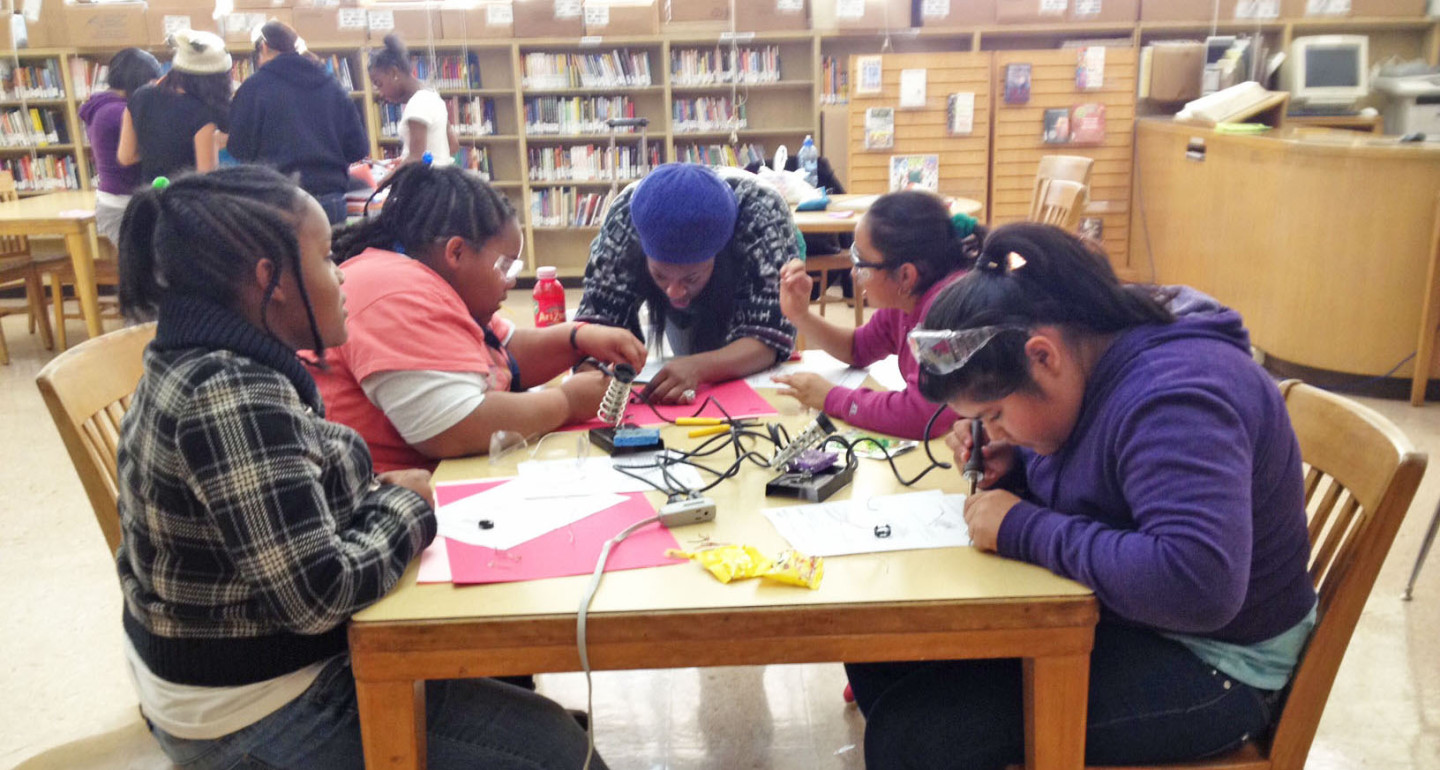
"caption": "Middle-school students learn how to solder in an after-school science program.",
"description": null,
"title": "soldering1",
"credit": null,
"status": "inherit",
"isLoading": false,
"fetchFailed": false
},
"mindshift_15979": {
"type": "attachments",
"id": "mindshift_15979",
"meta": {
"index": "attachments_1716263798",
"site": "mindshift",
"id": "15979",
"found": true
},
"parent": 15978,
"imgSizes": {
"kqedFullSize": {
"file": "https://ww2.kqed.org/app/uploads/sites/23/2011/10/chemistry_homework.jpg",
"width": 300,
"height": 225
},
"guest-author-96": {
"file": "https://ww2.kqed.org/app/uploads/sites/23/2011/10/chemistry_homework-96x96.jpg",
"width": 96,
"mimeType": "image/jpeg",
"height": 96
},
"guest-author-64": {
"file": "https://ww2.kqed.org/app/uploads/sites/23/2011/10/chemistry_homework-64x64.jpg",
"width": 64,
"mimeType": "image/jpeg",
"height": 64
},
"detail": {
"file": "https://ww2.kqed.org/app/uploads/sites/23/2011/10/chemistry_homework-75x75.jpg",
"width": 75,
"mimeType": "image/jpeg",
"height": 75
},
"guest-author-32": {
"file": "https://ww2.kqed.org/app/uploads/sites/23/2011/10/chemistry_homework-32x32.jpg",
"width": 32,
"mimeType": "image/jpeg",
"height": 32
},
"guest-author-128": {
"file": "https://ww2.kqed.org/app/uploads/sites/23/2011/10/chemistry_homework-128x128.jpg",
"width": 128,
"mimeType": "image/jpeg",
"height": 128
}
},
"publishDate": 1318358489,
"modified": 1318358489,
"caption": null,
"description": null,
"title": "chemistry_homework",
"credit": null,
"status": "inherit",
"isLoading": false,
"fetchFailed": false
},
"mindshift_17883": {
"type": "attachments",
"id": "mindshift_17883",
"meta": {
"index": "attachments_1716263798",
"site": "mindshift",
"id": "17883",
"found": true
},
"parent": 17702,
"imgSizes": {
"thumbnail": {
"file": "https://ww2.kqed.org/app/uploads/sites/23/2012/01/2885861465_8b4101648a_z-400x267.jpg",
"width": 400,
"mimeType": "image/jpeg",
"height": 267
},
"fd-sm": {
"file": "https://ww2.kqed.org/app/uploads/sites/23/2012/01/2885861465_8b4101648a_z-320x214.jpg",
"width": 320,
"mimeType": "image/jpeg",
"height": 214
},
"post-thumbnail": {
"file": "https://ww2.kqed.org/app/uploads/sites/23/2012/01/2885861465_8b4101648a_z-640x372.jpg",
"width": 640,
"mimeType": "image/jpeg",
"height": 372
},
"kqedFullSize": {
"file": "https://ww2.kqed.org/app/uploads/sites/23/2012/01/2885861465_8b4101648a_z.jpg",
"width": 640,
"height": 427
},
"guest-author-96": {
"file": "https://ww2.kqed.org/app/uploads/sites/23/2012/01/2885861465_8b4101648a_z-96x96.jpg",
"width": 96,
"mimeType": "image/jpeg",
"height": 96
},
"guest-author-64": {
"file": "https://ww2.kqed.org/app/uploads/sites/23/2012/01/2885861465_8b4101648a_z-64x64.jpg",
"width": 64,
"mimeType": "image/jpeg",
"height": 64
},
"detail": {
"file": "https://ww2.kqed.org/app/uploads/sites/23/2012/01/2885861465_8b4101648a_z-75x75.jpg",
"width": 75,
"mimeType": "image/jpeg",
"height": 75
},
"guest-author-32": {
"file": "https://ww2.kqed.org/app/uploads/sites/23/2012/01/2885861465_8b4101648a_z-32x32.jpg",
"width": 32,
"mimeType": "image/jpeg",
"height": 32
},
"guest-author-128": {
"file": "https://ww2.kqed.org/app/uploads/sites/23/2012/01/2885861465_8b4101648a_z-128x128.jpg",
"width": 128,
"mimeType": "image/jpeg",
"height": 128
}
},
"publishDate": 1325714674,
"modified": 1325714674,
"caption": null,
"description": null,
"title": "2885861465_8b4101648a_z",
"credit": null,
"status": "inherit",
"isLoading": false,
"fetchFailed": false
},
"mindshift_17862": {
"type": "attachments",
"id": "mindshift_17862",
"meta": {
"index": "attachments_1716263798",
"site": "mindshift",
"id": "17862",
"found": true
},
"parent": 17861,
"imgSizes": {
"thumbnail": {
"file": "https://ww2.kqed.org/app/uploads/sites/23/2012/01/ipad_kids_play_byErnst_Vikne_flickrcc-400x300.jpg",
"width": 400,
"mimeType": "image/jpeg",
"height": 300
},
"fd-sm": {
"file": "https://ww2.kqed.org/app/uploads/sites/23/2012/01/ipad_kids_play_byErnst_Vikne_flickrcc-320x240.jpg",
"width": 320,
"mimeType": "image/jpeg",
"height": 240
},
"post-thumbnail": {
"file": "https://ww2.kqed.org/app/uploads/sites/23/2012/01/ipad_kids_play_byErnst_Vikne_flickrcc-500x372.jpg",
"width": 500,
"mimeType": "image/jpeg",
"height": 372
},
"kqedFullSize": {
"file": "https://ww2.kqed.org/app/uploads/sites/23/2012/01/ipad_kids_play_byErnst_Vikne_flickrcc.jpg",
"width": 500,
"height": 375
},
"guest-author-96": {
"file": "https://ww2.kqed.org/app/uploads/sites/23/2012/01/ipad_kids_play_byErnst_Vikne_flickrcc-96x96.jpg",
"width": 96,
"mimeType": "image/jpeg",
"height": 96
},
"guest-author-64": {
"file": "https://ww2.kqed.org/app/uploads/sites/23/2012/01/ipad_kids_play_byErnst_Vikne_flickrcc-64x64.jpg",
"width": 64,
"mimeType": "image/jpeg",
"height": 64
},
"detail": {
"file": "https://ww2.kqed.org/app/uploads/sites/23/2012/01/ipad_kids_play_byErnst_Vikne_flickrcc-75x75.jpg",
"width": 75,
"mimeType": "image/jpeg",
"height": 75
},
"guest-author-32": {
"file": "https://ww2.kqed.org/app/uploads/sites/23/2012/01/ipad_kids_play_byErnst_Vikne_flickrcc-32x32.jpg",
"width": 32,
"mimeType": "image/jpeg",
"height": 32
},
"guest-author-128": {
"file": "https://ww2.kqed.org/app/uploads/sites/23/2012/01/ipad_kids_play_byErnst_Vikne_flickrcc-128x128.jpg",
"width": 128,
"mimeType": "image/jpeg",
"height": 128
}
},
"publishDate": 1325697819,
"modified": 1325697819,
"caption": null,
"description": null,
"title": "ipad_kids_play_byErnst_Vikne_flickrcc",
"credit": null,
"status": "inherit",
"isLoading": false,
"fetchFailed": false
},
"mindshift_17855": {
"type": "attachments",
"id": "mindshift_17855",
"meta": {
"index": "attachments_1716263798",
"site": "mindshift",
"id": "17855",
"found": true
},
"parent": 17850,
"imgSizes": {
"thumbnail": {
"file": "https://ww2.kqed.org/app/uploads/sites/23/2012/01/5391282117_4c1fdac59d-400x266.jpg",
"width": 400,
"mimeType": "image/jpeg",
"height": 266
},
"fd-sm": {
"file": "https://ww2.kqed.org/app/uploads/sites/23/2012/01/5391282117_4c1fdac59d-320x213.jpg",
"width": 320,
"mimeType": "image/jpeg",
"height": 213
},
"kqedFullSize": {
"file": "https://ww2.kqed.org/app/uploads/sites/23/2012/01/5391282117_4c1fdac59d.jpg",
"width": 500,
"height": 333
},
"guest-author-96": {
"file": "https://ww2.kqed.org/app/uploads/sites/23/2012/01/5391282117_4c1fdac59d-96x96.jpg",
"width": 96,
"mimeType": "image/jpeg",
"height": 96
},
"guest-author-64": {
"file": "https://ww2.kqed.org/app/uploads/sites/23/2012/01/5391282117_4c1fdac59d-64x64.jpg",
"width": 64,
"mimeType": "image/jpeg",
"height": 64
},
"detail": {
"file": "https://ww2.kqed.org/app/uploads/sites/23/2012/01/5391282117_4c1fdac59d-75x75.jpg",
"width": 75,
"mimeType": "image/jpeg",
"height": 75
},
"guest-author-32": {
"file": "https://ww2.kqed.org/app/uploads/sites/23/2012/01/5391282117_4c1fdac59d-32x32.jpg",
"width": 32,
"mimeType": "image/jpeg",
"height": 32
},
"guest-author-128": {
"file": "https://ww2.kqed.org/app/uploads/sites/23/2012/01/5391282117_4c1fdac59d-128x128.jpg",
"width": 128,
"mimeType": "image/jpeg",
"height": 128
}
},
"publishDate": 1325621026,
"modified": 1325621026,
"caption": null,
"description": null,
"title": "5391282117_4c1fdac59d",
"credit": null,
"status": "inherit",
"isLoading": false,
"fetchFailed": false
},
"mindshift_17846": {
"type": "attachments",
"id": "mindshift_17846",
"meta": {
"index": "attachments_1716263798",
"site": "mindshift",
"id": "17846",
"found": true
},
"parent": 17812,
"imgSizes": {
"thumbnail": {
"file": "https://ww2.kqed.org/app/uploads/sites/23/2012/01/87463263-400x330.jpg",
"width": 400,
"mimeType": "image/jpeg",
"height": 330
},
"fd-sm": {
"file": "https://ww2.kqed.org/app/uploads/sites/23/2012/01/87463263-320x264.jpg",
"width": 320,
"mimeType": "image/jpeg",
"height": 264
},
"post-thumbnail": {
"file": "https://ww2.kqed.org/app/uploads/sites/23/2012/01/87463263-455x372.jpg",
"width": 455,
"mimeType": "image/jpeg",
"height": 372
},
"kqedFullSize": {
"file": "https://ww2.kqed.org/app/uploads/sites/23/2012/01/87463263.jpg",
"width": 455,
"height": 375
},
"guest-author-96": {
"file": "https://ww2.kqed.org/app/uploads/sites/23/2012/01/87463263-96x96.jpg",
"width": 96,
"mimeType": "image/jpeg",
"height": 96
},
"guest-author-64": {
"file": "https://ww2.kqed.org/app/uploads/sites/23/2012/01/87463263-64x64.jpg",
"width": 64,
"mimeType": "image/jpeg",
"height": 64
},
"detail": {
"file": "https://ww2.kqed.org/app/uploads/sites/23/2012/01/87463263-75x75.jpg",
"width": 75,
"mimeType": "image/jpeg",
"height": 75
},
"guest-author-32": {
"file": "https://ww2.kqed.org/app/uploads/sites/23/2012/01/87463263-32x32.jpg",
"width": 32,
"mimeType": "image/jpeg",
"height": 32
},
"guest-author-128": {
"file": "https://ww2.kqed.org/app/uploads/sites/23/2012/01/87463263-128x128.jpg",
"width": 128,
"mimeType": "image/jpeg",
"height": 128
}
},
"publishDate": 1325612579,
"modified": 1325612579,
"caption": null,
"description": null,
"title": "87463263",
"credit": null,
"status": "inherit",
"isLoading": false,
"fetchFailed": false
},
"mindshift_17833": {
"type": "attachments",
"id": "mindshift_17833",
"meta": {
"index": "attachments_1716263798",
"site": "mindshift",
"id": "17833",
"found": true
},
"parent": 17830,
"imgSizes": {
"twentyfourteen-full-width": {
"file": "https://ww2.kqed.org/app/uploads/sites/23/2012/01/pp-dec11-infographic-1000-1000x576.jpg",
"width": 1000,
"mimeType": "image/jpeg",
"height": 576
},
"thumbnail": {
"file": "https://ww2.kqed.org/app/uploads/sites/23/2012/01/pp-dec11-infographic-1000-400x509.jpg",
"width": 400,
"mimeType": "image/jpeg",
"height": 509
},
"fd-sm": {
"file": "https://ww2.kqed.org/app/uploads/sites/23/2012/01/pp-dec11-infographic-1000-320x407.jpg",
"width": 320,
"mimeType": "image/jpeg",
"height": 407
},
"post-thumbnail": {
"file": "https://ww2.kqed.org/app/uploads/sites/23/2012/01/pp-dec11-infographic-1000-672x372.jpg",
"width": 672,
"mimeType": "image/jpeg",
"height": 372
},
"kqedFullSize": {
"file": "https://ww2.kqed.org/app/uploads/sites/23/2012/01/pp-dec11-infographic-1000.jpg",
"width": 1000,
"height": 1273
},
"fd-med": {
"file": "https://ww2.kqed.org/app/uploads/sites/23/2012/01/pp-dec11-infographic-1000-768x978.jpg",
"width": 768,
"mimeType": "image/jpeg",
"height": 978
},
"guest-author-96": {
"file": "https://ww2.kqed.org/app/uploads/sites/23/2012/01/pp-dec11-infographic-1000-96x96.jpg",
"width": 96,
"mimeType": "image/jpeg",
"height": 96
},
"medium": {
"file": "https://ww2.kqed.org/app/uploads/sites/23/2012/01/pp-dec11-infographic-1000-800x1018.jpg",
"width": 800,
"mimeType": "image/jpeg",
"height": 1018
},
"guest-author-64": {
"file": "https://ww2.kqed.org/app/uploads/sites/23/2012/01/pp-dec11-infographic-1000-64x64.jpg",
"width": 64,
"mimeType": "image/jpeg",
"height": 64
},
"detail": {
"file": "https://ww2.kqed.org/app/uploads/sites/23/2012/01/pp-dec11-infographic-1000-75x75.jpg",
"width": 75,
"mimeType": "image/jpeg",
"height": 75
},
"guest-author-32": {
"file": "https://ww2.kqed.org/app/uploads/sites/23/2012/01/pp-dec11-infographic-1000-32x32.jpg",
"width": 32,
"mimeType": "image/jpeg",
"height": 32
},
"guest-author-128": {
"file": "https://ww2.kqed.org/app/uploads/sites/23/2012/01/pp-dec11-infographic-1000-128x128.jpg",
"width": 128,
"mimeType": "image/jpeg",
"height": 128
}
},
"publishDate": 1325539970,
"modified": 1325539970,
"caption": null,
"description": null,
"title": "pp-dec11-infographic-1000",
"credit": null,
"status": "inherit",
"isLoading": false,
"fetchFailed": false
},
"mindshift_17824": {
"type": "attachments",
"id": "mindshift_17824",
"meta": {
"index": "attachments_1716263798",
"site": "mindshift",
"id": "17824",
"found": true
},
"parent": 17804,
"imgSizes": {
"fd-sm": {
"file": "https://ww2.kqed.org/app/uploads/sites/23/2012/01/Screen-shot-2012-01-02-at-10.44.38-AM-320x335.png",
"width": 320,
"mimeType": "image/png",
"height": 335
},
"kqedFullSize": {
"file": "https://ww2.kqed.org/app/uploads/sites/23/2012/01/Screen-shot-2012-01-02-at-10.44.38-AM.png",
"width": 327,
"height": 342
},
"guest-author-96": {
"file": "https://ww2.kqed.org/app/uploads/sites/23/2012/01/Screen-shot-2012-01-02-at-10.44.38-AM-96x96.png",
"width": 96,
"mimeType": "image/png",
"height": 96
},
"guest-author-64": {
"file": "https://ww2.kqed.org/app/uploads/sites/23/2012/01/Screen-shot-2012-01-02-at-10.44.38-AM-64x64.png",
"width": 64,
"mimeType": "image/png",
"height": 64
},
"detail": {
"file": "https://ww2.kqed.org/app/uploads/sites/23/2012/01/Screen-shot-2012-01-02-at-10.44.38-AM-75x75.png",
"width": 75,
"mimeType": "image/png",
"height": 75
},
"guest-author-32": {
"file": "https://ww2.kqed.org/app/uploads/sites/23/2012/01/Screen-shot-2012-01-02-at-10.44.38-AM-32x32.png",
"width": 32,
"mimeType": "image/png",
"height": 32
},
"guest-author-128": {
"file": "https://ww2.kqed.org/app/uploads/sites/23/2012/01/Screen-shot-2012-01-02-at-10.44.38-AM-128x128.png",
"width": 128,
"mimeType": "image/png",
"height": 128
}
},
"publishDate": 1325529901,
"modified": 1325529901,
"caption": null,
"description": null,
"title": "Screen shot 2012-01-02 at 10.44.38 AM",
"credit": null,
"status": "inherit",
"isLoading": false,
"fetchFailed": false
},
"mindshift_17787": {
"type": "attachments",
"id": "mindshift_17787",
"meta": {
"index": "attachments_1716263798",
"site": "mindshift",
"id": "17787",
"found": true
},
"parent": 17782,
"imgSizes": {
"thumbnail": {
"file": "https://ww2.kqed.org/app/uploads/sites/23/2011/12/vangoghdream-400x300.jpg",
"width": 400,
"mimeType": "image/jpeg",
"height": 300
},
"fd-sm": {
"file": "https://ww2.kqed.org/app/uploads/sites/23/2011/12/vangoghdream-320x240.jpg",
"width": 320,
"mimeType": "image/jpeg",
"height": 240
},
"kqedFullSize": {
"file": "https://ww2.kqed.org/app/uploads/sites/23/2011/12/vangoghdream.jpg",
"width": 482,
"height": 362
},
"guest-author-96": {
"file": "https://ww2.kqed.org/app/uploads/sites/23/2011/12/vangoghdream-96x96.jpg",
"width": 96,
"mimeType": "image/jpeg",
"height": 96
},
"guest-author-64": {
"file": "https://ww2.kqed.org/app/uploads/sites/23/2011/12/vangoghdream-64x64.jpg",
"width": 64,
"mimeType": "image/jpeg",
"height": 64
},
"detail": {
"file": "https://ww2.kqed.org/app/uploads/sites/23/2011/12/vangoghdream-75x75.jpg",
"width": 75,
"mimeType": "image/jpeg",
"height": 75
},
"guest-author-32": {
"file": "https://ww2.kqed.org/app/uploads/sites/23/2011/12/vangoghdream-32x32.jpg",
"width": 32,
"mimeType": "image/jpeg",
"height": 32
},
"guest-author-128": {
"file": "https://ww2.kqed.org/app/uploads/sites/23/2011/12/vangoghdream-128x128.jpg",
"width": 128,
"mimeType": "image/jpeg",
"height": 128
}
},
"publishDate": 1325197565,
"modified": 1325197565,
"caption": null,
"description": null,
"title": "vangoghdream",
"credit": null,
"status": "inherit",
"isLoading": false,
"fetchFailed": false
},
"mindshift_17767": {
"type": "attachments",
"id": "mindshift_17767",
"meta": {
"index": "attachments_1716263798",
"site": "mindshift",
"id": "17767",
"found": true
},
"parent": 17738,
"imgSizes": {
"thumbnail": {
"file": "https://ww2.kqed.org/app/uploads/sites/23/2011/12/3616922753_14c7ec393d-400x462.jpg",
"width": 400,
"mimeType": "image/jpeg",
"height": 462
},
"fd-sm": {
"file": "https://ww2.kqed.org/app/uploads/sites/23/2011/12/3616922753_14c7ec393d-320x370.jpg",
"width": 320,
"mimeType": "image/jpeg",
"height": 370
},
"post-thumbnail": {
"file": "https://ww2.kqed.org/app/uploads/sites/23/2011/12/3616922753_14c7ec393d-433x372.jpg",
"width": 433,
"mimeType": "image/jpeg",
"height": 372
},
"kqedFullSize": {
"file": "https://ww2.kqed.org/app/uploads/sites/23/2011/12/3616922753_14c7ec393d.jpg",
"width": 433,
"height": 500
},
"guest-author-96": {
"file": "https://ww2.kqed.org/app/uploads/sites/23/2011/12/3616922753_14c7ec393d-96x96.jpg",
"width": 96,
"mimeType": "image/jpeg",
"height": 96
},
"guest-author-64": {
"file": "https://ww2.kqed.org/app/uploads/sites/23/2011/12/3616922753_14c7ec393d-64x64.jpg",
"width": 64,
"mimeType": "image/jpeg",
"height": 64
},
"detail": {
"file": "https://ww2.kqed.org/app/uploads/sites/23/2011/12/3616922753_14c7ec393d-75x75.jpg",
"width": 75,
"mimeType": "image/jpeg",
"height": 75
},
"guest-author-32": {
"file": "https://ww2.kqed.org/app/uploads/sites/23/2011/12/3616922753_14c7ec393d-32x32.jpg",
"width": 32,
"mimeType": "image/jpeg",
"height": 32
},
"guest-author-128": {
"file": "https://ww2.kqed.org/app/uploads/sites/23/2011/12/3616922753_14c7ec393d-128x128.jpg",
"width": 128,
"mimeType": "image/jpeg",
"height": 128
}
},
"publishDate": 1325091793,
"modified": 1325091793,
"caption": null,
"description": null,
"title": "3616922753_14c7ec393d",
"credit": null,
"status": "inherit",
"isLoading": false,
"fetchFailed": false
},
"mindshift_17790": {
"type": "attachments",
"id": "mindshift_17790",
"meta": {
"index": "attachments_1716263798",
"site": "mindshift",
"id": "17790",
"found": true
},
"parent": 17773,
"imgSizes": {
"thumbnail": {
"file": "https://ww2.kqed.org/app/uploads/sites/23/2011/12/6226457945_25fbf1675c_z-400x400.jpg",
"width": 400,
"mimeType": "image/jpeg",
"height": 400
},
"fd-sm": {
"file": "https://ww2.kqed.org/app/uploads/sites/23/2011/12/6226457945_25fbf1675c_z-320x320.jpg",
"width": 320,
"mimeType": "image/jpeg",
"height": 320
},
"post-thumbnail": {
"file": "https://ww2.kqed.org/app/uploads/sites/23/2011/12/6226457945_25fbf1675c_z-414x372.jpg",
"width": 414,
"mimeType": "image/jpeg",
"height": 372
},
"kqedFullSize": {
"file": "https://ww2.kqed.org/app/uploads/sites/23/2011/12/6226457945_25fbf1675c_z.jpg",
"width": 414,
"height": 414
},
"guest-author-96": {
"file": "https://ww2.kqed.org/app/uploads/sites/23/2011/12/6226457945_25fbf1675c_z-96x96.jpg",
"width": 96,
"mimeType": "image/jpeg",
"height": 96
},
"guest-author-64": {
"file": "https://ww2.kqed.org/app/uploads/sites/23/2011/12/6226457945_25fbf1675c_z-64x64.jpg",
"width": 64,
"mimeType": "image/jpeg",
"height": 64
},
"detail": {
"file": "https://ww2.kqed.org/app/uploads/sites/23/2011/12/6226457945_25fbf1675c_z-75x75.jpg",
"width": 75,
"mimeType": "image/jpeg",
"height": 75
},
"guest-author-32": {
"file": "https://ww2.kqed.org/app/uploads/sites/23/2011/12/6226457945_25fbf1675c_z-32x32.jpg",
"width": 32,
"mimeType": "image/jpeg",
"height": 32
},
"guest-author-128": {
"file": "https://ww2.kqed.org/app/uploads/sites/23/2011/12/6226457945_25fbf1675c_z-128x128.jpg",
"width": 128,
"mimeType": "image/jpeg",
"height": 128
}
},
"publishDate": 1325197670,
"modified": 1325197670,
"caption": null,
"description": null,
"title": "6226457945_25fbf1675c_z",
"credit": null,
"status": "inherit",
"isLoading": false,
"fetchFailed": false
}
},
"audioPlayerReducer": {
"postId": "stream_live",
"isPaused": true,
"isPlaying": false,
"pfsActive": false,
"pledgeModalIsOpen": true,
"playerDrawerIsOpen": false,
"liveAudioPlayStartedAt": 0,
"liveAudioPlayContext": ""
},
"authorsReducer": {
"tbarseghian": {
"type": "authors",
"id": "180",
"meta": {
"index": "authors_1716337520",
"id": "180",
"found": true
},
"name": "Tina Barseghian",
"firstName": "Tina",
"lastName": "Barseghian",
"slug": "tbarseghian",
"email": "tbarseghian@kqed.org",
"display_author_email": false,
"staff_mastheads": [],
"title": null,
"bio": null,
"avatar": "https://secure.gravatar.com/avatar/de7e6ced1239b7018fe4d2b61f723c90?s=600&d=blank&r=g",
"twitter": null,
"facebook": null,
"instagram": null,
"linkedin": null,
"sites": [
{
"site": "styleguide",
"roles": [
"contributor"
]
},
{
"site": "news",
"roles": [
"subscriber"
]
},
{
"site": "mindshift",
"roles": [
"subscriber"
]
},
{
"site": "bayareabites",
"roles": [
"subscriber"
]
}
],
"headData": {
"title": "Tina Barseghian | KQED",
"description": null,
"ogImgSrc": "https://secure.gravatar.com/avatar/de7e6ced1239b7018fe4d2b61f723c90?s=600&d=blank&r=g",
"twImgSrc": "https://secure.gravatar.com/avatar/de7e6ced1239b7018fe4d2b61f723c90?s=600&d=blank&r=g"
},
"isLoading": false,
"link": "/author/tbarseghian"
},
"awatters": {
"type": "authors",
"id": "4352",
"meta": {
"index": "authors_1716337520",
"id": "4352",
"found": true
},
"name": "Audrey Watters",
"firstName": "Audrey",
"lastName": "Watters",
"slug": "awatters",
"email": "awatters@kqed.org",
"display_author_email": false,
"staff_mastheads": [],
"title": null,
"bio": null,
"avatar": "https://secure.gravatar.com/avatar/fb6ac91bb93632725bfa683c1de71bee?s=600&d=blank&r=g",
"twitter": null,
"facebook": null,
"instagram": null,
"linkedin": null,
"sites": [
{
"site": "mindshift",
"roles": [
"subscriber"
]
}
],
"headData": {
"title": "Audrey Watters | KQED",
"description": null,
"ogImgSrc": "https://secure.gravatar.com/avatar/fb6ac91bb93632725bfa683c1de71bee?s=600&d=blank&r=g",
"twImgSrc": "https://secure.gravatar.com/avatar/fb6ac91bb93632725bfa683c1de71bee?s=600&d=blank&r=g"
},
"isLoading": false,
"link": "/author/awatters"
}
},
"pagesReducer": {
"mindshift_category_teaching-strategies": {
"type": "terms",
"id": "mindshift_193",
"meta": {
"index": "terms_1716263798",
"site": "mindshift",
"id": "193",
"score": 14.406914
},
"featImg": null,
"name": "Teaching Strategies",
"description": "Innovative ideas - projects, processes, curricula, and more - that are transforming how we teach and learn.",
"taxonomy": "category",
"headData": {
"twImgId": null,
"twTitle": null,
"ogTitle": null,
"ogImgId": null,
"twDescription": null,
"description": "Innovative ideas - projects, processes, curricula, and more - that are transforming how we teach and learn.",
"title": "Teaching Strategies Archives | KQED Mindshift",
"ogDescription": null
},
"ttid": 193,
"slug": "teaching-strategies",
"isLoading": false,
"title": "Teaching Strategies",
"pageMeta": {
"site": "mindshift",
"WpPageTemplate": "page-topic-editorial",
"currentPage": 77
},
"blocks": [
{
"blockName": "kqed/company-paragraph",
"content": "Innovative ideas - projects, processes, curricula, and more - that are transforming how we teach and learn."
},
{
"blockName": "kqed/post-list",
"attrs": {
"layout": "cardArticle2",
"query": "posts/mindshift?category=teaching-strategies",
"seeMore": false,
"paginated": true,
"page": 77
}
},
{
"blockName": "kqed/ad"
}
]
}
},
"pfsSessionReducer": {},
"postsReducer": {
"stream_live": {
"type": "live",
"id": "stream_live",
"audioUrl": "https://streams.kqed.org/kqedradio",
"title": "Live Stream",
"excerpt": "Live Stream information currently unavailable.",
"link": "/radio",
"featImg": "",
"label": {
"name": "KQED Live",
"link": "/"
}
},
"stream_kqedNewscast": {
"type": "posts",
"id": "stream_kqedNewscast",
"audioUrl": "https://www.kqed.org/.stream/anon/radio/RDnews/newscast.mp3?_=1",
"title": "KQED Newscast",
"featImg": "",
"label": {
"name": "88.5 FM",
"link": "/"
}
},
"mindshift_18057": {
"type": "posts",
"id": "mindshift_18057",
"meta": {
"index": "posts_1716263798",
"site": "mindshift",
"id": "18057",
"score": null,
"sort": [
1326224843000
]
},
"parent": 0,
"labelTerm": {
"site": "mindshift",
"term": 20659
},
"blocks": [],
"publishDate": 1326224843,
"format": "aside",
"disqusTitle": "Girls and Math: Busting the Stereotype",
"title": "Girls and Math: Busting the Stereotype",
"headTitle": "GROWTH MINDSET | MindShift | KQED News",
"content": "\u003cfigure id=\"attachment_27099\" class=\"wp-caption center\" style=\"max-width: 620px\">\u003cimg class=\"size-large wp-image-27099\" title=\"\" src=\"http://ww2.kqed.org/mindshift/wp-content/uploads/sites/23/2012/01/3597217248_993f5a7ef5_z-620x356.jpg\" alt=\"3597217248_993f5a7ef5_z\" width=\"620\" height=\"356\">\u003cfigcaption class=\"wp-caption-text\"> \u003c/figcaption>\u003c/figure>\n\u003cp>\u003cstrong>Do girls need special attention\u003c/strong> when it comes to science, math, and technology topics? In response to \u003ca href=\"http://ww2.kqed.org/mindshift/2012/01/steering-girls-to-science-and-tech-careers\">last week's article\u003c/a> about Techbridge, the after-school science program specifically geared to girls, some readers strongly refuted the notion that girls need the extra nudge.\u003c/p>\n\u003cp>\"'Steering' something suggests directing it in a path it would not normally, of its own inclination, go!\" wrote reader Julian Penrod. \"The very title connotes a program to give an impression of female overall interest in the hard sciences, even though it wouldn't necessarily, on its own, exist. In other words, a fraud.\"\u003c/p>\n\u003cp>The reader raises a subtle but important issue -- but it goes much deeper than that. According to Claude Steele, author of \u003cem>Whistling Vivaldi and Other Clues to How Stereotypes Affect Us, \u003c/em>it's not that girls \u003cem>aren't\u003c/em> necessarily interested in science and math, it's whether they're discouraged from following their interests because of the persistent stereotype that girls aren't good at that sort of thing.\u003c/p>\n\u003caside class=\"pullquote alignleft\">\u003cspan style=\"color: #888888\">\"The idea of the 'gift-that-girls-don’t-have' is likely to be a key part of what’s keeping them from pursuing those careers.\"\u003c/span>\u003c/aside>\n\u003cp>Steele has examined this very phenomenon closely for years and has identified it as a stereotype threat. The issue is much more complex than the very basic tendencies of what naturally interests either gender. Steele pinpoints the problem to what happens \u003cem>after\u003c/em> girls follow their interests in science and math studies, when inevitable obstacles come up.\u003c/p>\n\u003cp>\"When you perform in science and math... in the larger society you're stereotyped as not being good at it,\" Steele says of girls. \"You experience a little frustration, you say, 'Am I confirming that stereotype and am I going to be seen to confirm that stereotype? Am I going to have to live under this pressure for the rest of my life if I choose this as a career?' So there's a pressure coming just from those stereotypes that discourages women from engaging in those fields and, and staying in those fields even when their skills and abilities are A-plus. So that's an extra burden.\"\u003c/p>\n\u003cp>[ad fullwidth]\u003c/p>\n\u003cp>Steele says it's a subtle but crucial mindset that can make the difference between a girl choosing to go into a STEM field -- or trying harder on a math or science test -- and choosing not to.\u003c!--more-->\u003c/p>\n\u003cp>Stanford researcher Carol Dweck, who wrote \u003ca href=\"http://www.google.com/url?sa=t&rct=j&q=&esrc=s&source=web&cd=1&ved=0CCEQFjAA&url=https%3A%2F%2Fwww.stanford.edu%2Fdept%2Fpsychology%2Fcgi-bin%2Fdrupalm%2Fsystem%2Ffiles%2Fcdweckmathgift.pdf&ei=JX4MT-_wCeiWiQLfw5ijBA&usg=AFQjCNGvR9Hdl5DZJbFmB8us0G9Zo2FnnQ&sig2=OO3737IZEYKrXAN6xsL9hg\">\u003cem>Is Math a Gift? Beliefs That Put Females at Risk\u003c/em>\u003c/a>, takes it one step further. Dweck has researched the topic of stereotypes, natural aptitude, and how \u003ca href=\"http://ww2.kqed.org/mindshift/2011/12/can-everyone-be-smart-at-everything-2/\">praising effort or intelligence can be harmful\u003c/a>, and she's come up with a thought-provoking conclusion.\u003c/p>\n\u003caside class=\"pullquote alignright\">\n\u003cp>\u003cspan style=\"color: #ff6600\">\u003cstrong>Read more:\u003c/strong>\u003c/span>\u003c/p>\n\u003cul>\n\u003cli>\u003cspan style=\"color: #888888\">\u003ca href=\"http://ww2.kqed.org/mindshift/2012/01/steering-girls-to-science-and-tech-careers/#comments\">\u003cspan style=\"color: #888888\">Steering Girls to Science and Tech Careers\u003c/span>\u003c/a>\u003c/span>\u003c/li>\n\u003cli>\u003cspan style=\"color: #888888\">\u003ca href=\"http://ww2.kqed.org/mindshift/2011/12/can-everyone-be-smart-at-everything-2/\">\u003cspan style=\"color: #888888\">Can Everyone Be Smart at Everything?\u003c/span>\u003c/a>\u003c/span>\u003c/li>\n\u003cli>\u003cspan style=\"color: #888888\">\u003ca href=\"http://ww2.kqed.org/mindshift/2011/10/ada-lovelace-day-celebrates-women-in-stem/\">\u003cspan style=\"color: #888888\">Ada Lovelave Celebrates Women in STEM\u003c/span>\u003c/a>\u003c/span>\u003c/li>\n\u003c/ul>\n\u003c/aside>\n\u003cp>\"One of the most damaging aspects of the 'gift' mentality is that it makes us think we can know in advance who has the gift. This, I believe, is what makes us try to identify groups who have it and groups who don’t—as in 'boys have it and girls don’t,'\" Dweck writes. \"Can anyone say for sure that there isn’t some gift that makes males better at math and science? What we can say is that many females have all the ability they need for successful careers in math-related and scientific fields and that the idea of the 'gift-that-girls-don’t-have' is likely to be a key part of what’s keeping them from pursuing those careers.\"\u003c/p>\n\u003cp>\u003ca href=\"http://blogs.berkeley.edu/author/rmendoza-denton/\">Rodolfo Mendoza-Denton\u003c/a>, associate professor of psychology at UC Berkeley, has also researched the phenomenon and says these detrimental stereotypes are enmeshed in our culture. “It’s pervasive in our cultural narrative,” he said at the \u003ca href=\"http://www.innovativelearningconference.org/\">Innovative Learning Conference\u003c/a>. “‘I’m not this kind of learner or that kind of learner. I’m good at words, but not math.’... It’s a theory about how the world works.\"\u003c/p>\n\u003cp>Societies without these stereotypes don't impose the same burden, Steele says, and as a result, there are a great deal more women engaging in science and math-based fields. \"Poland, India, parts of Asia, where there are many more women participating in math and STEM fields, the stereotype is much weaker. The girls going into those fields don't experience the same pressure they do in a society like ours where relatively few women participate in these fields. That strengthens the stereotype and the pressure they can feel.\"\u003c/p>\n\u003cp>Where do these stereotypes come from? Cues from the environment that suggest there aren't many women in this field, Steele says. In short, a self-fulfilling prophecy. \"The pictures on the wall don't show many women as famous mathematicians,\" Steele says. \"Examples used in math classes are more boy-oriented than girl-oriented.\"\u003c/p>\n\u003cp>\u003cspan style=\"color: #ff6600\">\u003cstrong>THE FIX\u003c/strong>\u003c/span>\u003c/p>\n\u003cp>It all comes down to our understanding (and thus, kids' understanding) that it's not about a fixed set of abilities, but about what can be learned. Dweck observed in her study that, by the end of eighth grade, \"there is a considerable gap between females and males in their math grades— but only for those students who believed that intellectual skills are a gift. When we look at students who believed that intellectual ability could be expanded, the gap is almost gone.\"\u003c/p>\n\u003cp>If we as a society understand that ability is expandable and incrementable, and subject to deliberate practice, the impact of being stereotyped can be dramatically reduced, Steele adds. Schools should practice this strategy, and parents should create an atmosphere at home that learning math and science can be as challenging for girls as for boys -- and that the fun lives in solving the challenge.\u003c/p>\n\u003cp>At Techbridge, the after-school science and math program for girls, founder Linda Kekellis says the exposure to women role models has gone a long way in making careers in STEM fields a real possibility for students. She says more than 95 percent of girls believe engineering is a good career choice for women.\u003c/p>\n\u003cp>\"We've tracked back to some of our girls who have graduated from Techbridge and have found that a large percentage of them are studying science and engineering in college and are planning to have careers in those fields,\" she says.\u003c/p>\n\u003cp>[ad floatright]\u003c/p>\n\u003cp> \u003c/p>\n\n",
"disqusIdentifier": "18057 http://blogs.kqed.org/mindshift/?p=18057",
"disqusUrl": "https://ww2.kqed.org/mindshift/2012/01/10/girls-and-math-busting-the-stereotype/",
"stats": {
"hasVideo": false,
"hasChartOrMap": false,
"hasAudio": false,
"hasPolis": false,
"wordCount": 1070,
"hasGoogleForm": false,
"hasGallery": false,
"hasHearkenModule": false,
"iframeSrcs": [],
"paragraphCount": 19
},
"modified": 1376090775,
"excerpt": null,
"headData": {
"twImgId": "",
"twTitle": "",
"ogTitle": "",
"ogImgId": "",
"twDescription": "",
"description": "Do girls need special attention when it comes to science, math, and technology topics? In response to last week's article about Techbridge, the after-school science program specifically geared to girls, some readers strongly refuted the notion that girls need the extra nudge. "'Steering' something suggests directing it in a path it would not normally, of",
"title": "Girls and Math: Busting the Stereotype | KQED",
"ogDescription": "",
"schema": {
"@context": "https://schema.org",
"@type": "Article",
"headline": "Girls and Math: Busting the Stereotype",
"datePublished": "2012-01-10T11:47:23-08:00",
"dateModified": "2013-08-09T16:26:15-07:00",
"image": "https://cdn.kqed.org/wp-content/uploads/2020/02/KQED-OG-Image@1x.png"
}
},
"guestAuthors": [],
"slug": "girls-and-math-busting-the-stereotype",
"status": "publish",
"path": "/mindshift/18057/girls-and-math-busting-the-stereotype",
"audioTrackLength": null,
"parsedContent": [
{
"type": "contentString",
"content": "\u003cdiv class=\"post-body\">\u003cp>\u003cfigure id=\"attachment_27099\" class=\"wp-caption center\" style=\"max-width: 620px\">\u003cimg class=\"size-large wp-image-27099\" title=\"\" src=\"http://ww2.kqed.org/mindshift/wp-content/uploads/sites/23/2012/01/3597217248_993f5a7ef5_z-620x356.jpg\" alt=\"3597217248_993f5a7ef5_z\" width=\"620\" height=\"356\">\u003cfigcaption class=\"wp-caption-text\"> \u003c/figcaption>\u003c/figure>\n\u003cp>\u003cstrong>Do girls need special attention\u003c/strong> when it comes to science, math, and technology topics? In response to \u003ca href=\"http://ww2.kqed.org/mindshift/2012/01/steering-girls-to-science-and-tech-careers\">last week's article\u003c/a> about Techbridge, the after-school science program specifically geared to girls, some readers strongly refuted the notion that girls need the extra nudge.\u003c/p>\n\u003cp>\"'Steering' something suggests directing it in a path it would not normally, of its own inclination, go!\" wrote reader Julian Penrod. \"The very title connotes a program to give an impression of female overall interest in the hard sciences, even though it wouldn't necessarily, on its own, exist. In other words, a fraud.\"\u003c/p>\n\u003cp>The reader raises a subtle but important issue -- but it goes much deeper than that. According to Claude Steele, author of \u003cem>Whistling Vivaldi and Other Clues to How Stereotypes Affect Us, \u003c/em>it's not that girls \u003cem>aren't\u003c/em> necessarily interested in science and math, it's whether they're discouraged from following their interests because of the persistent stereotype that girls aren't good at that sort of thing.\u003c/p>\n\u003caside class=\"pullquote alignleft\">\u003cspan style=\"color: #888888\">\"The idea of the 'gift-that-girls-don’t-have' is likely to be a key part of what’s keeping them from pursuing those careers.\"\u003c/span>\u003c/aside>\n\u003cp>Steele has examined this very phenomenon closely for years and has identified it as a stereotype threat. The issue is much more complex than the very basic tendencies of what naturally interests either gender. Steele pinpoints the problem to what happens \u003cem>after\u003c/em> girls follow their interests in science and math studies, when inevitable obstacles come up.\u003c/p>\n\u003cp>\"When you perform in science and math... in the larger society you're stereotyped as not being good at it,\" Steele says of girls. \"You experience a little frustration, you say, 'Am I confirming that stereotype and am I going to be seen to confirm that stereotype? Am I going to have to live under this pressure for the rest of my life if I choose this as a career?' So there's a pressure coming just from those stereotypes that discourages women from engaging in those fields and, and staying in those fields even when their skills and abilities are A-plus. So that's an extra burden.\"\u003c/p>\n\u003cp>\u003c/p>\u003c/div>",
"attributes": {
"named": {},
"numeric": []
}
},
{
"type": "component",
"content": "",
"name": "ad",
"attributes": {
"named": {
"label": "fullwidth"
},
"numeric": [
"fullwidth"
]
}
},
{
"type": "contentString",
"content": "\u003cdiv class=\"post-body\">\u003cp>\u003c/p>\n\u003cp>Steele says it's a subtle but crucial mindset that can make the difference between a girl choosing to go into a STEM field -- or trying harder on a math or science test -- and choosing not to.\u003c!--more-->\u003c/p>\n\u003cp>Stanford researcher Carol Dweck, who wrote \u003ca href=\"http://www.google.com/url?sa=t&rct=j&q=&esrc=s&source=web&cd=1&ved=0CCEQFjAA&url=https%3A%2F%2Fwww.stanford.edu%2Fdept%2Fpsychology%2Fcgi-bin%2Fdrupalm%2Fsystem%2Ffiles%2Fcdweckmathgift.pdf&ei=JX4MT-_wCeiWiQLfw5ijBA&usg=AFQjCNGvR9Hdl5DZJbFmB8us0G9Zo2FnnQ&sig2=OO3737IZEYKrXAN6xsL9hg\">\u003cem>Is Math a Gift? Beliefs That Put Females at Risk\u003c/em>\u003c/a>, takes it one step further. Dweck has researched the topic of stereotypes, natural aptitude, and how \u003ca href=\"http://ww2.kqed.org/mindshift/2011/12/can-everyone-be-smart-at-everything-2/\">praising effort or intelligence can be harmful\u003c/a>, and she's come up with a thought-provoking conclusion.\u003c/p>\n\u003caside class=\"pullquote alignright\">\n\u003cp>\u003cspan style=\"color: #ff6600\">\u003cstrong>Read more:\u003c/strong>\u003c/span>\u003c/p>\n\u003cul>\n\u003cli>\u003cspan style=\"color: #888888\">\u003ca href=\"http://ww2.kqed.org/mindshift/2012/01/steering-girls-to-science-and-tech-careers/#comments\">\u003cspan style=\"color: #888888\">Steering Girls to Science and Tech Careers\u003c/span>\u003c/a>\u003c/span>\u003c/li>\n\u003cli>\u003cspan style=\"color: #888888\">\u003ca href=\"http://ww2.kqed.org/mindshift/2011/12/can-everyone-be-smart-at-everything-2/\">\u003cspan style=\"color: #888888\">Can Everyone Be Smart at Everything?\u003c/span>\u003c/a>\u003c/span>\u003c/li>\n\u003cli>\u003cspan style=\"color: #888888\">\u003ca href=\"http://ww2.kqed.org/mindshift/2011/10/ada-lovelace-day-celebrates-women-in-stem/\">\u003cspan style=\"color: #888888\">Ada Lovelave Celebrates Women in STEM\u003c/span>\u003c/a>\u003c/span>\u003c/li>\n\u003c/ul>\n\u003c/aside>\n\u003cp>\"One of the most damaging aspects of the 'gift' mentality is that it makes us think we can know in advance who has the gift. This, I believe, is what makes us try to identify groups who have it and groups who don’t—as in 'boys have it and girls don’t,'\" Dweck writes. \"Can anyone say for sure that there isn’t some gift that makes males better at math and science? What we can say is that many females have all the ability they need for successful careers in math-related and scientific fields and that the idea of the 'gift-that-girls-don’t-have' is likely to be a key part of what’s keeping them from pursuing those careers.\"\u003c/p>\n\u003cp>\u003ca href=\"http://blogs.berkeley.edu/author/rmendoza-denton/\">Rodolfo Mendoza-Denton\u003c/a>, associate professor of psychology at UC Berkeley, has also researched the phenomenon and says these detrimental stereotypes are enmeshed in our culture. “It’s pervasive in our cultural narrative,” he said at the \u003ca href=\"http://www.innovativelearningconference.org/\">Innovative Learning Conference\u003c/a>. “‘I’m not this kind of learner or that kind of learner. I’m good at words, but not math.’... It’s a theory about how the world works.\"\u003c/p>\n\u003cp>Societies without these stereotypes don't impose the same burden, Steele says, and as a result, there are a great deal more women engaging in science and math-based fields. \"Poland, India, parts of Asia, where there are many more women participating in math and STEM fields, the stereotype is much weaker. The girls going into those fields don't experience the same pressure they do in a society like ours where relatively few women participate in these fields. That strengthens the stereotype and the pressure they can feel.\"\u003c/p>\n\u003cp>Where do these stereotypes come from? Cues from the environment that suggest there aren't many women in this field, Steele says. In short, a self-fulfilling prophecy. \"The pictures on the wall don't show many women as famous mathematicians,\" Steele says. \"Examples used in math classes are more boy-oriented than girl-oriented.\"\u003c/p>\n\u003cp>\u003cspan style=\"color: #ff6600\">\u003cstrong>THE FIX\u003c/strong>\u003c/span>\u003c/p>\n\u003cp>It all comes down to our understanding (and thus, kids' understanding) that it's not about a fixed set of abilities, but about what can be learned. Dweck observed in her study that, by the end of eighth grade, \"there is a considerable gap between females and males in their math grades— but only for those students who believed that intellectual skills are a gift. When we look at students who believed that intellectual ability could be expanded, the gap is almost gone.\"\u003c/p>\n\u003cp>If we as a society understand that ability is expandable and incrementable, and subject to deliberate practice, the impact of being stereotyped can be dramatically reduced, Steele adds. Schools should practice this strategy, and parents should create an atmosphere at home that learning math and science can be as challenging for girls as for boys -- and that the fun lives in solving the challenge.\u003c/p>\n\u003cp>At Techbridge, the after-school science and math program for girls, founder Linda Kekellis says the exposure to women role models has gone a long way in making careers in STEM fields a real possibility for students. She says more than 95 percent of girls believe engineering is a good career choice for women.\u003c/p>\n\u003cp>\"We've tracked back to some of our girls who have graduated from Techbridge and have found that a large percentage of them are studying science and engineering in college and are planning to have careers in those fields,\" she says.\u003c/p>\n\u003cp>\u003c/p>\u003c/div>",
"attributes": {
"named": {},
"numeric": []
}
},
{
"type": "component",
"content": "",
"name": "ad",
"attributes": {
"named": {
"label": "floatright"
},
"numeric": [
"floatright"
]
}
},
{
"type": "contentString",
"content": "\u003cdiv class=\"post-body\">\u003cp>\u003c/p>\n\u003cp> \u003c/p>\n\n\u003c/div>\u003c/p>",
"attributes": {
"named": {},
"numeric": []
}
}
],
"link": "/mindshift/18057/girls-and-math-busting-the-stereotype",
"authors": [
"180"
],
"series": [
"mindshift_20659"
],
"categories": [
"mindshift_192",
"mindshift_194",
"mindshift_193"
],
"tags": [
"mindshift_796",
"mindshift_22",
"mindshift_47",
"mindshift_825"
],
"featImg": "mindshift_27099",
"label": "mindshift_20659"
},
"mindshift_17916": {
"type": "posts",
"id": "mindshift_17916",
"meta": {
"index": "posts_1716263798",
"site": "mindshift",
"id": "17916",
"score": null,
"sort": [
1325880634000
]
},
"parent": 0,
"labelTerm": {
"site": "mindshift"
},
"blocks": [],
"publishDate": 1325880634,
"format": "aside",
"disqusTitle": "Steering Girls to Science and Tech Careers",
"title": "Steering Girls to Science and Tech Careers",
"headTitle": "MindShift | KQED News",
"content": "\u003cfigure id=\"attachment_17985\" class=\"wp-caption center\" style=\"max-width: 620px\">\u003ca href=\"http://ww2.kqed.org/mindshift/2012/01/steering-girls-to-science-and-tech-careers/soldering1/\" rel=\"attachment wp-att-17985\">\u003cimg class=\"size-large wp-image-17985\" src=\"http://ww2.kqed.org/mindshift/wp-content/uploads/sites/23/2012/01/soldering1-620x331.jpg\" alt=\"\" width=\"620\" height=\"331\">\u003c/a>\u003cfigcaption class=\"wp-caption-text\">Middle-school students learn how to solder in an after-school science program.\u003c/figcaption>\u003c/figure>\n\u003cp>For Ebony Green, a career as a scientist might have seemed unlikely just last year.\u003c/p>\n\u003cp>The stereotypical outcome for girls like Ebony, an eighth-grader at Frick Middle School in a rough part of East Oakland, isn't necessarily a high-paying job in science, math, engineering or technology. In fact, 40 percent of Oakland Unified School District students \u003ca href=\"http://articles.sfgate.com/2010-12-08/news/25182692_1_dropout-rate-hispanic-students-graduation\">drop out\u003c/a>.\u003c/p>\n\u003cp>Still, despite her surroundings and the legacy of her race, gender, family background, and income bracket, Ebony sees a different future for herself. She wants to be a pediatrician, or maybe a vet, and she’s starting to take steps to get there.\u003c/p>\n\u003cp>Last fall, without her mother knowing, Ebony enrolled herself in \u003ca href=\"http://www.techbridgegirls.org/\">Techbridge\u003c/a>, an after-school science and math program geared specifically to girls. She signed up for math tutoring at school because she’s struggling in the subject. And her science teacher, Ken Eastman, says she even came to his science class twice a day for a while.\u003c/p>\n\u003caside class=\"pullquote alignleft\">\u003cspan style=\"color: #333399\">\"Once these girls get that satisfaction from knowing they can do something that most adults don't know how to do, that knowledge in itself is so empowering.\"\u003c/span>\u003c/aside>\n\u003cp>Ebony's interest in science stands in contrast to the reality of women working in STEM fields. Although women make up half the country’s work force, they comprise less than 25 percent ofSTEM-related jobs, according to a \u003ca href=\"http://www.esa.doc.gov/Reports/women-stem-gender-gap-innovation\">Department of Commerce report \u003c/a>from last year.\u003c/p>\n\u003cp>[ad fullwidth]\u003c/p>\n\u003cp>Apart from the overall problem of \u003ca href=\"http://www.mercurynews.com/education/ci_19187536\">cutting out\u003c/a> hands-on science projects and tinkering in schools, the issue is even more pointed when it comes to girls. A recent study called “\u003ca href=\"http://www.aauw.org/learn/research/upload/whysofew.pdf\">Why So Few\u003c/a>” shows \u003c!--more-->that only 20 percent of bachelors degrees in STEM fields go to girls.\u003c/p>\n\u003cfigure id=\"attachment_17917\" class=\"wp-caption left\" style=\"max-width: 300px\">\u003ca href=\"http://ww2.kqed.org/mindshift/2012/01/steering-girls-to-science-and-tech-careers/ebony/\" rel=\"attachment wp-att-17917\">\u003cimg class=\"size-medium wp-image-17917\" src=\"http://ww2.kqed.org/mindshift/wp-content/uploads/sites/23/2012/01/Ebony-300x190.jpg\" alt=\"\" width=\"300\" height=\"190\">\u003c/a>\u003cfigcaption class=\"wp-caption-text\">Thirteen-year-old Ebony Green has hopes for a career in science.\u003c/figcaption>\u003c/figure>\n\u003cp>But Techbridge is showing Ebony an alternate future. Once a week, she and 20 other girls voluntarily stay after school from 3 to 5 p.m. to get their hands on soldering irons and protractors to make things like LED-lit sculptures and catapults. Beyond teaching these girls those specific skills, Techbridge is giving them something much more.\u003c/p>\n\u003cp>“It's interesting to me,” Ebony says. “Because some things that I didn't believe, I believe in now. I never knew about soldering, or I never knew about crystals or anything like that and since I'm interested in that I wanted to get into a program where it's a lot about it.”\u003c/p>\n\u003cp>\u003cspan style=\"color: #333399\">\u003cstrong>THE IMPORTANCE OF ROLE MODELS\u003c/strong>\u003c/span>\u003c/p>\n\u003cp>One thing research consistently shows is the impact that one-on-one relationships and role models can have in influencing kids. And that’s one of the defined goals of the Techbridge program.\u003c/p>\n\u003cp>To that end, Ebony and her peers get to work once a week with Esosa Ozigbo, who comes from a similar background as many of the girls in the program -- single-parent home, struggling financially, parents who never graduated from high school. But Ozigbo, a Stanford graduate with a science degree, is living proof that there’s a way out – and it might just be in a field like science or math.\u003c/p>\n\u003cp>“I definitely know that growing up, it would have been great to have someone like that come in and talk to me,” Ozigbo says.\u003c/p>\n\u003cp>Ozigbo leads Techbridge field trips, taking girls to companies like Google and Yahoo for site visits so they see for themselves the possibility of a life that’s different than what they’ve lived so far.\u003c/p>\n\u003caside class=\"pullquote alignright\">\u003cspan style=\"color: #ff6600\">Read \u003ca href=\"http://www.pbs.org/newshour/rundown/2011/12/oakland-schools-superintendent-a-tough-job-for-a-tough-guy.html\">\u003cspan style=\"color: #ff6600\">more about Oakland Unified School District's plans\u003c/span>\u003c/a> to address the dropout problem in this interview with Superintendent Tony Smith.\u003c/span>\u003c/aside>\n\u003cp>“I took some girls to San Francisco, they had never been on the other side of the bay,” she says. “It's just about seeing what's out there and seeing if it's in your grasp and saying, This is what I have to do, this is what I can do. I think that makes the world of a difference.”\u003c/p>\n\u003cp>Though they only meet once a week, Ozigbo makes sure to connect personally with the girls. Sometimes she takes Ebony home after, and they have a chance to talk about what’s going on.\u003c/p>\n\u003cp>“Even in that short time, we're going to reach them all, we talk, we laugh, we joke about things like guys and stuff like that,” she says. “We tell them to always stand up for what you believe in, we do shout-outs to the girls who get up so they learn how to be comfortable when speaking in a crowd. It's little but I'm hoping that those little different things will make a big difference in the end.”\u003c/p>\n\u003cp>Claude Steele thinks it will. Steele is the author of \u003cem>Whistling Vivaldi and Other Clues to How Stereotypes Affect Us\u003c/em> and the dean for the School of Education at Stanford University.\u003c/p>\n\u003cp>“What those girls will see from that kind of a program is that women do succeed in these fields, that role model strategy is a really effective one,” Steele says. “It's the existence proof idea, the stereotype may be out there, but look, there's a woman who is succeeding and that means it's possible for me to succeed and, and it starts to reduce the sense that I would worry about being seen stereotypically.”\u003c/p>\n\u003cfigure id=\"attachment_17923\" class=\"wp-caption left\" style=\"max-width: 478px\">\u003ca href=\"http://ww2.kqed.org/mindshift/2012/01/steering-girls-to-science-and-tech-careers/esosa/\" rel=\"attachment wp-att-17923\">\u003cimg class=\"size-full wp-image-17923\" src=\"http://ww2.kqed.org/mindshift/wp-content/uploads/sites/23/2012/01/Esosa.png\" alt=\"\" width=\"478\" height=\"250\" srcset=\"https://ww2.kqed.org/app/uploads/sites/23/2012/01/Esosa.png 478w, https://ww2.kqed.org/app/uploads/sites/23/2012/01/Esosa-400x209.png 400w, https://ww2.kqed.org/app/uploads/sites/23/2012/01/Esosa-320x167.png 320w\" sizes=\"(max-width: 478px) 100vw, 478px\">\u003c/a>\u003cfigcaption class=\"wp-caption-text\">Teacher Esosa Ozigbo, far left, jokes with students, cheering them on when projects are complete.\u003c/figcaption>\u003c/figure>\n\u003cp>Tasha Bergson-Michelson, a search expert at Google, is one of the women that Techbridge girls get to meet. Last month, a group of girls from Montera Middle School in Oakland were brought to Google to learn some important tips in using the site to conduct research – whether it’s simply for curiosity or for a school project.\u003c/p>\n\u003cp>\"I believe that access to information is one of the greatest equalizing forces,” Bergson-Michelson said. “Knowing how to find information, evaluate it, and use it appropriately is one of the ways we see a divergence among people who have access to education and those who don’t. “\u003c/p>\n\u003cp>Bergson-Michelson hopes that her time with the Techbridge girls will show that her route could also be theirs. \"I want them to know that whatever path they choose to take, they have the power to, by experimentation and by engaging with our world and thinking creatively to learn a great deal about these technologies they use every day and become more powerful,\" she says. \"How could you possibly get a job at Google if you didn't start with a dream?\"\u003c/p>\n\u003cp>The fact that Ebony shows up to Techbridge week after week on her own volition is an encouraging sign to Ozigbo.\u003c/p>\n\u003cp>\"She's coming every week, finding some sort of acceptance or community or fun in here,\" she says. \"Once these girls get that satisfaction from completing that kit, or making that soldering ornament and knowing they can do something that most people aren't given the chance to do, that most adults don't know how to do or don't know about, that knowledge in itself is so empowering and can really take them places.\"\u003c/p>\n\u003cp>As part of the \u003ca href=\"http://www.pbs.org/newshour/topic/american-graduate/\">PBS American Graduate Program\u003c/a>, I produced a segment for the PBS NewsHour on Ebony Green and Techbridge with correspondent Spencer Michels. Here's \u003ca href=\"http://www.pbs.org/newshour/bb/education/july-dec11/amgraduate_12_29.html\">the segment\u003c/a>:\u003c/p>\n\u003cp>[ad floatright]\u003c/p>\n\u003cp style=\"font-size: 11px;font-family: Arial, Helvetica, sans-serif;color: #808080;margin-top: 5px;background: transparent;text-align: center;width: 512px\">Watch \u003ca href=\"http://video.pbs.org/video/2181782923\" target=\"_blank\">Oakland Program Aims to Pique Girls' Interest in Science, Tech Careers\u003c/a> on PBS. See more from \u003ca href=\"http://www.pbs.org/newshour/\" target=\"_blank\">PBS NewsHour.\u003c/a>\u003c/p>\n\n",
"disqusIdentifier": "17916 http://blogs.kqed.org/mindshift/?p=17916",
"disqusUrl": "https://ww2.kqed.org/mindshift/2012/01/06/steering-girls-to-science-and-tech-careers/",
"stats": {
"hasVideo": false,
"hasChartOrMap": false,
"hasAudio": false,
"hasPolis": false,
"wordCount": 1284,
"hasGoogleForm": false,
"hasGallery": false,
"hasHearkenModule": false,
"iframeSrcs": [],
"paragraphCount": 26
},
"modified": 1326501128,
"excerpt": "For girls at risk of dropping out, a way to show them an alternate route by hooking them on learning.",
"headData": {
"twImgId": "",
"twTitle": "",
"ogTitle": "",
"ogImgId": "",
"twDescription": "",
"description": "For girls at risk of dropping out, a way to show them an alternate route by hooking them on learning.",
"title": "Steering Girls to Science and Tech Careers | KQED",
"ogDescription": "",
"schema": {
"@context": "https://schema.org",
"@type": "Article",
"headline": "Steering Girls to Science and Tech Careers",
"datePublished": "2012-01-06T12:10:34-08:00",
"dateModified": "2012-01-13T16:32:08-08:00",
"image": "https://cdn.kqed.org/wp-content/uploads/2020/02/KQED-OG-Image@1x.png"
}
},
"guestAuthors": [],
"slug": "steering-girls-to-science-and-tech-careers",
"status": "publish",
"path": "/mindshift/17916/steering-girls-to-science-and-tech-careers",
"audioTrackLength": null,
"parsedContent": [
{
"type": "contentString",
"content": "\u003cdiv class=\"post-body\">\u003cp>\u003cfigure id=\"attachment_17985\" class=\"wp-caption center\" style=\"max-width: 620px\">\u003ca href=\"http://ww2.kqed.org/mindshift/2012/01/steering-girls-to-science-and-tech-careers/soldering1/\" rel=\"attachment wp-att-17985\">\u003cimg class=\"size-large wp-image-17985\" src=\"http://ww2.kqed.org/mindshift/wp-content/uploads/sites/23/2012/01/soldering1-620x331.jpg\" alt=\"\" width=\"620\" height=\"331\">\u003c/a>\u003cfigcaption class=\"wp-caption-text\">Middle-school students learn how to solder in an after-school science program.\u003c/figcaption>\u003c/figure>\n\u003cp>For Ebony Green, a career as a scientist might have seemed unlikely just last year.\u003c/p>\n\u003cp>The stereotypical outcome for girls like Ebony, an eighth-grader at Frick Middle School in a rough part of East Oakland, isn't necessarily a high-paying job in science, math, engineering or technology. In fact, 40 percent of Oakland Unified School District students \u003ca href=\"http://articles.sfgate.com/2010-12-08/news/25182692_1_dropout-rate-hispanic-students-graduation\">drop out\u003c/a>.\u003c/p>\n\u003cp>Still, despite her surroundings and the legacy of her race, gender, family background, and income bracket, Ebony sees a different future for herself. She wants to be a pediatrician, or maybe a vet, and she’s starting to take steps to get there.\u003c/p>\n\u003cp>Last fall, without her mother knowing, Ebony enrolled herself in \u003ca href=\"http://www.techbridgegirls.org/\">Techbridge\u003c/a>, an after-school science and math program geared specifically to girls. She signed up for math tutoring at school because she’s struggling in the subject. And her science teacher, Ken Eastman, says she even came to his science class twice a day for a while.\u003c/p>\n\u003caside class=\"pullquote alignleft\">\u003cspan style=\"color: #333399\">\"Once these girls get that satisfaction from knowing they can do something that most adults don't know how to do, that knowledge in itself is so empowering.\"\u003c/span>\u003c/aside>\n\u003cp>Ebony's interest in science stands in contrast to the reality of women working in STEM fields. Although women make up half the country’s work force, they comprise less than 25 percent ofSTEM-related jobs, according to a \u003ca href=\"http://www.esa.doc.gov/Reports/women-stem-gender-gap-innovation\">Department of Commerce report \u003c/a>from last year.\u003c/p>\n\u003cp>\u003c/p>\u003c/div>",
"attributes": {
"named": {},
"numeric": []
}
},
{
"type": "component",
"content": "",
"name": "ad",
"attributes": {
"named": {
"label": "fullwidth"
},
"numeric": [
"fullwidth"
]
}
},
{
"type": "contentString",
"content": "\u003cdiv class=\"post-body\">\u003cp>\u003c/p>\n\u003cp>Apart from the overall problem of \u003ca href=\"http://www.mercurynews.com/education/ci_19187536\">cutting out\u003c/a> hands-on science projects and tinkering in schools, the issue is even more pointed when it comes to girls. A recent study called “\u003ca href=\"http://www.aauw.org/learn/research/upload/whysofew.pdf\">Why So Few\u003c/a>” shows \u003c!--more-->that only 20 percent of bachelors degrees in STEM fields go to girls.\u003c/p>\n\u003cfigure id=\"attachment_17917\" class=\"wp-caption left\" style=\"max-width: 300px\">\u003ca href=\"http://ww2.kqed.org/mindshift/2012/01/steering-girls-to-science-and-tech-careers/ebony/\" rel=\"attachment wp-att-17917\">\u003cimg class=\"size-medium wp-image-17917\" src=\"http://ww2.kqed.org/mindshift/wp-content/uploads/sites/23/2012/01/Ebony-300x190.jpg\" alt=\"\" width=\"300\" height=\"190\">\u003c/a>\u003cfigcaption class=\"wp-caption-text\">Thirteen-year-old Ebony Green has hopes for a career in science.\u003c/figcaption>\u003c/figure>\n\u003cp>But Techbridge is showing Ebony an alternate future. Once a week, she and 20 other girls voluntarily stay after school from 3 to 5 p.m. to get their hands on soldering irons and protractors to make things like LED-lit sculptures and catapults. Beyond teaching these girls those specific skills, Techbridge is giving them something much more.\u003c/p>\n\u003cp>“It's interesting to me,” Ebony says. “Because some things that I didn't believe, I believe in now. I never knew about soldering, or I never knew about crystals or anything like that and since I'm interested in that I wanted to get into a program where it's a lot about it.”\u003c/p>\n\u003cp>\u003cspan style=\"color: #333399\">\u003cstrong>THE IMPORTANCE OF ROLE MODELS\u003c/strong>\u003c/span>\u003c/p>\n\u003cp>One thing research consistently shows is the impact that one-on-one relationships and role models can have in influencing kids. And that’s one of the defined goals of the Techbridge program.\u003c/p>\n\u003cp>To that end, Ebony and her peers get to work once a week with Esosa Ozigbo, who comes from a similar background as many of the girls in the program -- single-parent home, struggling financially, parents who never graduated from high school. But Ozigbo, a Stanford graduate with a science degree, is living proof that there’s a way out – and it might just be in a field like science or math.\u003c/p>\n\u003cp>“I definitely know that growing up, it would have been great to have someone like that come in and talk to me,” Ozigbo says.\u003c/p>\n\u003cp>Ozigbo leads Techbridge field trips, taking girls to companies like Google and Yahoo for site visits so they see for themselves the possibility of a life that’s different than what they’ve lived so far.\u003c/p>\n\u003caside class=\"pullquote alignright\">\u003cspan style=\"color: #ff6600\">Read \u003ca href=\"http://www.pbs.org/newshour/rundown/2011/12/oakland-schools-superintendent-a-tough-job-for-a-tough-guy.html\">\u003cspan style=\"color: #ff6600\">more about Oakland Unified School District's plans\u003c/span>\u003c/a> to address the dropout problem in this interview with Superintendent Tony Smith.\u003c/span>\u003c/aside>\n\u003cp>“I took some girls to San Francisco, they had never been on the other side of the bay,” she says. “It's just about seeing what's out there and seeing if it's in your grasp and saying, This is what I have to do, this is what I can do. I think that makes the world of a difference.”\u003c/p>\n\u003cp>Though they only meet once a week, Ozigbo makes sure to connect personally with the girls. Sometimes she takes Ebony home after, and they have a chance to talk about what’s going on.\u003c/p>\n\u003cp>“Even in that short time, we're going to reach them all, we talk, we laugh, we joke about things like guys and stuff like that,” she says. “We tell them to always stand up for what you believe in, we do shout-outs to the girls who get up so they learn how to be comfortable when speaking in a crowd. It's little but I'm hoping that those little different things will make a big difference in the end.”\u003c/p>\n\u003cp>Claude Steele thinks it will. Steele is the author of \u003cem>Whistling Vivaldi and Other Clues to How Stereotypes Affect Us\u003c/em> and the dean for the School of Education at Stanford University.\u003c/p>\n\u003cp>“What those girls will see from that kind of a program is that women do succeed in these fields, that role model strategy is a really effective one,” Steele says. “It's the existence proof idea, the stereotype may be out there, but look, there's a woman who is succeeding and that means it's possible for me to succeed and, and it starts to reduce the sense that I would worry about being seen stereotypically.”\u003c/p>\n\u003cfigure id=\"attachment_17923\" class=\"wp-caption left\" style=\"max-width: 478px\">\u003ca href=\"http://ww2.kqed.org/mindshift/2012/01/steering-girls-to-science-and-tech-careers/esosa/\" rel=\"attachment wp-att-17923\">\u003cimg class=\"size-full wp-image-17923\" src=\"http://ww2.kqed.org/mindshift/wp-content/uploads/sites/23/2012/01/Esosa.png\" alt=\"\" width=\"478\" height=\"250\" srcset=\"https://ww2.kqed.org/app/uploads/sites/23/2012/01/Esosa.png 478w, https://ww2.kqed.org/app/uploads/sites/23/2012/01/Esosa-400x209.png 400w, https://ww2.kqed.org/app/uploads/sites/23/2012/01/Esosa-320x167.png 320w\" sizes=\"(max-width: 478px) 100vw, 478px\">\u003c/a>\u003cfigcaption class=\"wp-caption-text\">Teacher Esosa Ozigbo, far left, jokes with students, cheering them on when projects are complete.\u003c/figcaption>\u003c/figure>\n\u003cp>Tasha Bergson-Michelson, a search expert at Google, is one of the women that Techbridge girls get to meet. Last month, a group of girls from Montera Middle School in Oakland were brought to Google to learn some important tips in using the site to conduct research – whether it’s simply for curiosity or for a school project.\u003c/p>\n\u003cp>\"I believe that access to information is one of the greatest equalizing forces,” Bergson-Michelson said. “Knowing how to find information, evaluate it, and use it appropriately is one of the ways we see a divergence among people who have access to education and those who don’t. “\u003c/p>\n\u003cp>Bergson-Michelson hopes that her time with the Techbridge girls will show that her route could also be theirs. \"I want them to know that whatever path they choose to take, they have the power to, by experimentation and by engaging with our world and thinking creatively to learn a great deal about these technologies they use every day and become more powerful,\" she says. \"How could you possibly get a job at Google if you didn't start with a dream?\"\u003c/p>\n\u003cp>The fact that Ebony shows up to Techbridge week after week on her own volition is an encouraging sign to Ozigbo.\u003c/p>\n\u003cp>\"She's coming every week, finding some sort of acceptance or community or fun in here,\" she says. \"Once these girls get that satisfaction from completing that kit, or making that soldering ornament and knowing they can do something that most people aren't given the chance to do, that most adults don't know how to do or don't know about, that knowledge in itself is so empowering and can really take them places.\"\u003c/p>\n\u003cp>As part of the \u003ca href=\"http://www.pbs.org/newshour/topic/american-graduate/\">PBS American Graduate Program\u003c/a>, I produced a segment for the PBS NewsHour on Ebony Green and Techbridge with correspondent Spencer Michels. Here's \u003ca href=\"http://www.pbs.org/newshour/bb/education/july-dec11/amgraduate_12_29.html\">the segment\u003c/a>:\u003c/p>\n\u003cp>\u003c/p>\u003c/div>",
"attributes": {
"named": {},
"numeric": []
}
},
{
"type": "component",
"content": "",
"name": "ad",
"attributes": {
"named": {
"label": "floatright"
},
"numeric": [
"floatright"
]
}
},
{
"type": "contentString",
"content": "\u003cdiv class=\"post-body\">\u003cp>\u003c/p>\n\u003cp style=\"font-size: 11px;font-family: Arial, Helvetica, sans-serif;color: #808080;margin-top: 5px;background: transparent;text-align: center;width: 512px\">Watch \u003ca href=\"http://video.pbs.org/video/2181782923\" target=\"_blank\">Oakland Program Aims to Pique Girls' Interest in Science, Tech Careers\u003c/a> on PBS. See more from \u003ca href=\"http://www.pbs.org/newshour/\" target=\"_blank\">PBS NewsHour.\u003c/a>\u003c/p>\n\n\u003c/div>\u003c/p>",
"attributes": {
"named": {},
"numeric": []
}
}
],
"link": "/mindshift/17916/steering-girls-to-science-and-tech-careers",
"authors": [
"180"
],
"categories": [
"mindshift_194",
"mindshift_193"
],
"tags": [
"mindshift_793",
"mindshift_47",
"mindshift_792"
],
"featImg": "mindshift_17985",
"label": "mindshift"
},
"mindshift_17894": {
"type": "posts",
"id": "mindshift_17894",
"meta": {
"index": "posts_1716263798",
"site": "mindshift",
"id": "17894",
"score": null,
"sort": [
1325785503000
]
},
"parent": 0,
"labelTerm": {
"site": "mindshift"
},
"blocks": [],
"publishDate": 1325785503,
"format": "aside",
"disqusTitle": "Redefining \"Cheating\" With Homework ",
"title": "Redefining \"Cheating\" With Homework ",
"headTitle": "MindShift | KQED News",
"content": "\u003cdiv class=\"module image alignleft mceTemp\" style=\"width: 300px\">\u003ca href=\"http://ww2.kqed.org/mindshift/2011/10/whats-behind-the-culture-of-academic-dishonesty/chemistry_homework/\" rel=\"attachment wp-att-15979\">\u003cimg class=\"size-full wp-image-15979\" src=\"http://ww2.kqed.org/mindshift/wp-content/uploads/sites/23/2011/10/chemistry_homework.jpg\" alt=\"\" width=\"300\" height=\"225\">\u003c/a>\n\u003cp class=\"wp-media-credit\">B. Gilliard\u003c/p>\n\u003c/div>\n\u003cp>Technology is often blamed for encouraging bad behavior, particularly when it comes to academic dishonesty. There's the notion, for example, that it's much easier \u003ca href=\"http://ww2.kqed.org/mindshift/2011/11/plagiarism-tactics-differ-between-high-school-and-college-students/\">to plagiarize\u003c/a> now thanks to the ability to copy and paste information from the Web into a term paper.\u003c/p>\n\u003cp>So at first blush, the new homework help Web site \u003ca href=\"http://slader.com\">Slader\u003c/a> might be accused of fostering just this sort of cheating behavior. The site offers the answers to homework questions in most major high school level math textbooks, and depending on how much you use it, there's a fee. Students can pay for answers. Answers to \u003cem>all\u003c/em> the questions, not just the odd ones. And answers with explanations and \"proofs.\" But it's not as straightforward a transaction as it looks.\u003c/p>\n\u003cp>Though the site was originally launched with answers written by math tutors and teachers, the plan going forward is to use the peer-to-peer model -- students helping each other on the site. The most useful answers will be rated with stars to distinguish them.\u003c/p>\n\u003cp>Of course, students have long shared their answers the old fashioned way -- turning to one another for help, sharing their answers and solutions -- whether over the phone or face-to-face, whether transcribed word-for-word from another student's paper or solved thanks to the help and support from a peer. And that will be the model used for Slader: homework answers \u003cem>for\u003c/em> students written \u003cem>by\u003c/em> students.\u003c/p>\n\u003caside class=\"pullquote alignleft\">\u003cspan style=\"color: #ff6600\">These are homework answers \u003cem>for\u003c/em> students written \u003cem>by\u003c/em> students.\u003c/span>\u003c/aside>\n\u003cp>Anticipating the criticism, the New York-based startup believes it's a mistake to dismiss this simply as cheating; rather they say the aim is to provide real-time help to students to work through their homework -- an online study hall, if you will. The startup is providing the tools for students to share their work and teach and learn with one another.\u003c/p>\n\u003cp>[ad fullwidth]\u003c/p>\n\u003cp>That teaching element is important to recognize, and co-founder Scott Kolb says the site is much more of a tutoring resource than simply a place to go look up and jot down the right answer. It's a type of \"microtutoring,\" he says.\u003c/p>\n\u003cp>That \"micro\" element doesn't just mean simply that Slader offers help on a specific math problems rather than, say, hiring a math tutor for more generalized help with the subject. The Web site also features \"microtransactions.\" In other words, there's an intellectual and a monetary exchange per \u003c!--more-->answer, handled via points and via a per-answer access. While there is a free version of Slader, there are limitations on the number of answers users can view per day (two).\u003c/p>\n\u003cp>With a paid subscription, that limitation is still in place: subscription rates range from $2 to $4 per month with the ability to view 5, 15, or 30 solutions per day. Users can also purchase more views (in case of math emergency, I suppose).\u003c/p>\n\u003cp>It's worth pointing out here that the site is designed with the recognition that most high school students probably don't have credit cards to pay for these sorts of online transactions. As such, one can pay for points via parents' credit cards, but points can also be gifted to another person or offered as \"bounties\" to answer other questions. And most interestingly, users can also \u003cem>earn\u003c/em> points that can actually be \"cashed out.\"\u003c/p>\n\u003cp>One way to earn points: \u003ca href=\"http://www.slader.com/contribute/\">contributing\u003c/a> one's own homework answers back to the Slader community.\u003c/p>\n\u003caside class=\"pullquote alignleft\">\u003cspan style=\"color: #ff6600\">Users can earn points that can be \"cashed out\" by contributing one's own homework answers back to the Slader community.\u003c/span>\u003c/aside>\n\u003cp>It's an interesting way to encourage students to help one another and to share their homework solutions: doing so allows them to earn royalties of sorts on the work they do. Slader pays points each time a solution is viewed. So ideally the better the solution, the more views, and the more earnings. Users can actually \"cash out\" too, withdrawing the money they've earned via the site.\u003c/p>\n\u003cp>The ability for students to earn money from their homework is certainly an interesting twist on \"the work\" they are doing.\u003c/p>\n\u003cp>\u003ca href=\"http://ww2.kqed.org/mindshift/2012/01/redefining-cheating-with-homework/screen-shot-2011-12-05-at-10-33-47-am/\" rel=\"attachment wp-att-17897\">\u003cimg class=\"aligncenter size-full wp-image-17897\" src=\"http://ww2.kqed.org/mindshift/wp-content/uploads/sites/23/2012/01/Screen-shot-2011-12-05-at-10.33.47-AM.png\" alt=\"\" width=\"500\" height=\"379\" srcset=\"https://ww2.kqed.org/app/uploads/sites/23/2012/01/Screen-shot-2011-12-05-at-10.33.47-AM.png 500w, https://ww2.kqed.org/app/uploads/sites/23/2012/01/Screen-shot-2011-12-05-at-10.33.47-AM-400x303.png 400w, https://ww2.kqed.org/app/uploads/sites/23/2012/01/Screen-shot-2011-12-05-at-10.33.47-AM-320x243.png 320w\" sizes=\"(max-width: 500px) 100vw, 500px\">\u003c/a>\u003c/p>\n\u003cp>In order to create a platform that can handle math homework (all that mathematical notation and such), the Slader team has created a number of tools, including an equation editor that captures the step-by-step process of moving through a solution. The team has also seeded the site with solutions to the homework problems in most high school level math textbooks. That's no easy task with approximately 100 textbooks in their various versions and editions (so roughly 275 textbooks in all). To create the answers (and it's worth noting too that there are multiple answers to the same question, demonstrating there are multiple ways to solve math problems), Slader enlisted the help of some 2,500 math majors and math teachers.\u003c/p>\n\u003cp>But the startup's demand for answers to every single homework problem in every single math textbook may be an obstacle that Slader will have to cross if it plans to expand. As is, it's incredibly challenging to keep pace with the ever-changing textbook industry. And right now, much of this work on Slader's part is done by hand. This isn't a mechanized system; this is the Slader team verifying correct answers as well as verifying the pages and exercise numbers in textbooks. Things will be further complicated if, as the startup plans, it expands beyond math to other subject areas.\u003c/p>\n\u003cp>And the startup also faces competition from a variety of other online homework help sites: \u003ca href=\"http://cramster.com\">Cramster\u003c/a>, for example, or Yahoo Answers or \u003ca href=\"http://www.homeworkhelp.com/\">Homeworkhelp.com\u003c/a>. Googling \"I need help with homework\" makes evident that there are a lot of questionable Web sites out there, ones with questionable answers and questionable fees. That will make it challenging for Slader to win an SEO game against some of these sites so that the startup actually shows up in searches. But it's also a challenge on the \"social\" search aspect as well. After all, students want the \"right\" answer, but they also tend to want to hear it from sources they trust -- and oftentimes that's their friends.\u003c/p>\n\u003cp>[ad floatright]\u003c/p>\n\u003cp>As Slader expands, it will have to win over interest (and pocketbooks) of high school students to convince them to move their homework activities to its online community. It will also have to win over teachers and parents (something that the startup already makes a \u003ca href=\"http://www.slader.com/for-parents/\">great effort\u003c/a> to do), to help them understand that this isn't about cheating. Rather it's about students teaching and learning and sharing with one another. It's about recognizing that they've \u003cem>always\u003c/em> done this. And as such, it's about helping students with the tools and a service so that they can benefit in doing so -- benefit intellectually as well as financially.\u003c/p>\n\n",
"disqusIdentifier": "17894 http://blogs.kqed.org/mindshift/?p=17894",
"disqusUrl": "https://ww2.kqed.org/mindshift/2012/01/05/redefining-cheating-with-homework/",
"stats": {
"hasVideo": false,
"hasChartOrMap": false,
"hasAudio": false,
"hasPolis": false,
"wordCount": 1144,
"hasGoogleForm": false,
"hasGallery": false,
"hasHearkenModule": false,
"iframeSrcs": [],
"paragraphCount": 19
},
"modified": 1325785703,
"excerpt": null,
"headData": {
"twImgId": "",
"twTitle": "",
"ogTitle": "",
"ogImgId": "",
"twDescription": "",
"description": "B. Gilliard Technology is often blamed for encouraging bad behavior, particularly when it comes to academic dishonesty. There's the notion, for example, that it's much easier to plagiarize now thanks to the ability to copy and paste information from the Web into a term paper. So at first blush, the new homework help Web site",
"title": "Redefining \"Cheating\" With Homework | KQED",
"ogDescription": "",
"schema": {
"@context": "https://schema.org",
"@type": "Article",
"headline": "Redefining \"Cheating\" With Homework ",
"datePublished": "2012-01-05T09:45:03-08:00",
"dateModified": "2012-01-05T09:48:23-08:00",
"image": "https://cdn.kqed.org/wp-content/uploads/2020/02/KQED-OG-Image@1x.png"
}
},
"guestAuthors": [],
"slug": "redefining-cheating-with-homework",
"status": "publish",
"path": "/mindshift/17894/redefining-cheating-with-homework",
"audioTrackLength": null,
"parsedContent": [
{
"type": "contentString",
"content": "\u003cdiv class=\"post-body\">\u003cp>\u003cdiv class=\"module image alignleft mceTemp\" style=\"width: 300px\">\u003ca href=\"http://ww2.kqed.org/mindshift/2011/10/whats-behind-the-culture-of-academic-dishonesty/chemistry_homework/\" rel=\"attachment wp-att-15979\">\u003cimg class=\"size-full wp-image-15979\" src=\"http://ww2.kqed.org/mindshift/wp-content/uploads/sites/23/2011/10/chemistry_homework.jpg\" alt=\"\" width=\"300\" height=\"225\">\u003c/a>\n\u003cp class=\"wp-media-credit\">B. Gilliard\u003c/p>\n\u003c/div>\n\u003cp>Technology is often blamed for encouraging bad behavior, particularly when it comes to academic dishonesty. There's the notion, for example, that it's much easier \u003ca href=\"http://ww2.kqed.org/mindshift/2011/11/plagiarism-tactics-differ-between-high-school-and-college-students/\">to plagiarize\u003c/a> now thanks to the ability to copy and paste information from the Web into a term paper.\u003c/p>\n\u003cp>So at first blush, the new homework help Web site \u003ca href=\"http://slader.com\">Slader\u003c/a> might be accused of fostering just this sort of cheating behavior. The site offers the answers to homework questions in most major high school level math textbooks, and depending on how much you use it, there's a fee. Students can pay for answers. Answers to \u003cem>all\u003c/em> the questions, not just the odd ones. And answers with explanations and \"proofs.\" But it's not as straightforward a transaction as it looks.\u003c/p>\n\u003cp>Though the site was originally launched with answers written by math tutors and teachers, the plan going forward is to use the peer-to-peer model -- students helping each other on the site. The most useful answers will be rated with stars to distinguish them.\u003c/p>\n\u003cp>Of course, students have long shared their answers the old fashioned way -- turning to one another for help, sharing their answers and solutions -- whether over the phone or face-to-face, whether transcribed word-for-word from another student's paper or solved thanks to the help and support from a peer. And that will be the model used for Slader: homework answers \u003cem>for\u003c/em> students written \u003cem>by\u003c/em> students.\u003c/p>\n\u003caside class=\"pullquote alignleft\">\u003cspan style=\"color: #ff6600\">These are homework answers \u003cem>for\u003c/em> students written \u003cem>by\u003c/em> students.\u003c/span>\u003c/aside>\n\u003cp>Anticipating the criticism, the New York-based startup believes it's a mistake to dismiss this simply as cheating; rather they say the aim is to provide real-time help to students to work through their homework -- an online study hall, if you will. The startup is providing the tools for students to share their work and teach and learn with one another.\u003c/p>\n\u003cp>\u003c/p>\u003c/div>",
"attributes": {
"named": {},
"numeric": []
}
},
{
"type": "component",
"content": "",
"name": "ad",
"attributes": {
"named": {
"label": "fullwidth"
},
"numeric": [
"fullwidth"
]
}
},
{
"type": "contentString",
"content": "\u003cdiv class=\"post-body\">\u003cp>\u003c/p>\n\u003cp>That teaching element is important to recognize, and co-founder Scott Kolb says the site is much more of a tutoring resource than simply a place to go look up and jot down the right answer. It's a type of \"microtutoring,\" he says.\u003c/p>\n\u003cp>That \"micro\" element doesn't just mean simply that Slader offers help on a specific math problems rather than, say, hiring a math tutor for more generalized help with the subject. The Web site also features \"microtransactions.\" In other words, there's an intellectual and a monetary exchange per \u003c!--more-->answer, handled via points and via a per-answer access. While there is a free version of Slader, there are limitations on the number of answers users can view per day (two).\u003c/p>\n\u003cp>With a paid subscription, that limitation is still in place: subscription rates range from $2 to $4 per month with the ability to view 5, 15, or 30 solutions per day. Users can also purchase more views (in case of math emergency, I suppose).\u003c/p>\n\u003cp>It's worth pointing out here that the site is designed with the recognition that most high school students probably don't have credit cards to pay for these sorts of online transactions. As such, one can pay for points via parents' credit cards, but points can also be gifted to another person or offered as \"bounties\" to answer other questions. And most interestingly, users can also \u003cem>earn\u003c/em> points that can actually be \"cashed out.\"\u003c/p>\n\u003cp>One way to earn points: \u003ca href=\"http://www.slader.com/contribute/\">contributing\u003c/a> one's own homework answers back to the Slader community.\u003c/p>\n\u003caside class=\"pullquote alignleft\">\u003cspan style=\"color: #ff6600\">Users can earn points that can be \"cashed out\" by contributing one's own homework answers back to the Slader community.\u003c/span>\u003c/aside>\n\u003cp>It's an interesting way to encourage students to help one another and to share their homework solutions: doing so allows them to earn royalties of sorts on the work they do. Slader pays points each time a solution is viewed. So ideally the better the solution, the more views, and the more earnings. Users can actually \"cash out\" too, withdrawing the money they've earned via the site.\u003c/p>\n\u003cp>The ability for students to earn money from their homework is certainly an interesting twist on \"the work\" they are doing.\u003c/p>\n\u003cp>\u003ca href=\"http://ww2.kqed.org/mindshift/2012/01/redefining-cheating-with-homework/screen-shot-2011-12-05-at-10-33-47-am/\" rel=\"attachment wp-att-17897\">\u003cimg class=\"aligncenter size-full wp-image-17897\" src=\"http://ww2.kqed.org/mindshift/wp-content/uploads/sites/23/2012/01/Screen-shot-2011-12-05-at-10.33.47-AM.png\" alt=\"\" width=\"500\" height=\"379\" srcset=\"https://ww2.kqed.org/app/uploads/sites/23/2012/01/Screen-shot-2011-12-05-at-10.33.47-AM.png 500w, https://ww2.kqed.org/app/uploads/sites/23/2012/01/Screen-shot-2011-12-05-at-10.33.47-AM-400x303.png 400w, https://ww2.kqed.org/app/uploads/sites/23/2012/01/Screen-shot-2011-12-05-at-10.33.47-AM-320x243.png 320w\" sizes=\"(max-width: 500px) 100vw, 500px\">\u003c/a>\u003c/p>\n\u003cp>In order to create a platform that can handle math homework (all that mathematical notation and such), the Slader team has created a number of tools, including an equation editor that captures the step-by-step process of moving through a solution. The team has also seeded the site with solutions to the homework problems in most high school level math textbooks. That's no easy task with approximately 100 textbooks in their various versions and editions (so roughly 275 textbooks in all). To create the answers (and it's worth noting too that there are multiple answers to the same question, demonstrating there are multiple ways to solve math problems), Slader enlisted the help of some 2,500 math majors and math teachers.\u003c/p>\n\u003cp>But the startup's demand for answers to every single homework problem in every single math textbook may be an obstacle that Slader will have to cross if it plans to expand. As is, it's incredibly challenging to keep pace with the ever-changing textbook industry. And right now, much of this work on Slader's part is done by hand. This isn't a mechanized system; this is the Slader team verifying correct answers as well as verifying the pages and exercise numbers in textbooks. Things will be further complicated if, as the startup plans, it expands beyond math to other subject areas.\u003c/p>\n\u003cp>And the startup also faces competition from a variety of other online homework help sites: \u003ca href=\"http://cramster.com\">Cramster\u003c/a>, for example, or Yahoo Answers or \u003ca href=\"http://www.homeworkhelp.com/\">Homeworkhelp.com\u003c/a>. Googling \"I need help with homework\" makes evident that there are a lot of questionable Web sites out there, ones with questionable answers and questionable fees. That will make it challenging for Slader to win an SEO game against some of these sites so that the startup actually shows up in searches. But it's also a challenge on the \"social\" search aspect as well. After all, students want the \"right\" answer, but they also tend to want to hear it from sources they trust -- and oftentimes that's their friends.\u003c/p>\n\u003cp>\u003c/p>\u003c/div>",
"attributes": {
"named": {},
"numeric": []
}
},
{
"type": "component",
"content": "",
"name": "ad",
"attributes": {
"named": {
"label": "floatright"
},
"numeric": [
"floatright"
]
}
},
{
"type": "contentString",
"content": "\u003cdiv class=\"post-body\">\u003cp>\u003c/p>\n\u003cp>As Slader expands, it will have to win over interest (and pocketbooks) of high school students to convince them to move their homework activities to its online community. It will also have to win over teachers and parents (something that the startup already makes a \u003ca href=\"http://www.slader.com/for-parents/\">great effort\u003c/a> to do), to help them understand that this isn't about cheating. Rather it's about students teaching and learning and sharing with one another. It's about recognizing that they've \u003cem>always\u003c/em> done this. And as such, it's about helping students with the tools and a service so that they can benefit in doing so -- benefit intellectually as well as financially.\u003c/p>\n\n\u003c/div>\u003c/p>",
"attributes": {
"named": {},
"numeric": []
}
}
],
"link": "/mindshift/17894/redefining-cheating-with-homework",
"authors": [
"4352"
],
"categories": [
"mindshift_194",
"mindshift_193"
],
"tags": [
"mindshift_731",
"mindshift_791"
],
"featImg": "mindshift_15979",
"label": "mindshift"
},
"mindshift_17702": {
"type": "posts",
"id": "mindshift_17702",
"meta": {
"index": "posts_1716263798",
"site": "mindshift",
"id": "17702",
"score": null,
"sort": [
1325714941000
]
},
"parent": 0,
"labelTerm": {
"site": "mindshift"
},
"blocks": [],
"publishDate": 1325714941,
"format": "aside",
"disqusTitle": "Balancing Math Skills and Play in Kindergarten",
"title": "Balancing Math Skills and Play in Kindergarten",
"headTitle": "MindShift | KQED News",
"content": "\u003cdiv class=\"module image alignright mceTemp\" style=\"width: 300px\">\u003ca href=\"http://ww2.kqed.org/mindshift/2012/01/balancing-math-skills-and-play-in-kindergarten/2885861465_8b4101648a_z/\" rel=\"attachment wp-att-17883\">\u003cimg class=\"size-medium wp-image-17883\" src=\"http://ww2.kqed.org/mindshift/wp-content/uploads/sites/23/2012/01/2885861465_8b4101648a_z-300x200.jpg\" alt=\"\" width=\"300\" height=\"200\">\u003c/a>\n\u003cp class=\"wp-media-credit\">Flickr:Woodleywonderworks\u003c/p>\n\u003c/div>\n\u003ch5>By \u003ca title=\"View user profile.\" href=\"http://californiawatch.org/user/eleanor-yang-su\">Eleanor Yang Su\u003c/a>\u003c/h5>\n\u003cp>It’s one of the biggest debates going on among early childhood development experts: Is it more important for kindergartners to focus on academics and learn their ABC’s and numbers? Or spend more time on social and emotional issues, like how to play nice and pay attention?\u003c/p>\n\u003cp>Recent research by a \u003ca href=\"http://www.gse.uci.edu/faculty/profilebridge.php?faculty_id=5614\" target=\"_blank\">UC Irvine education professor\u003c/a> shows that math skills among kindergartners turn out to be a key predictor for future academic success.\u003c/p>\n\u003cp>Professor Greg Duncan and his colleagues \u003ca href=\"http://www.gse.uci.edu/research/achieve_attent_behave.php\" target=\"_blank\">analyzed studies\u003c/a> conducted with close to 20,000 kindergartners, assessing their knowledge of math, literacy and other skills, including their ability to stay on task and make friends. The studies followed the kindergartners for several years through elementary school, testing them in reading and math.\u003c/p>\n\u003caside class=\"pullquote alignleft\">“Kindergartners are learning what used to be learned in the first grade.”\u003c/aside>\n\u003cp>Even after accounting for differences in IQ and family income, Duncan found that those who learned the most math in kindergarten tended to have the highest math and reading scores years later.\u003c/p>\n\u003cp>“It was very surprising,” said Duncan, whose research appears in a \u003ca href=\"http://www.spencer.org/content.cfm/russell_sage_whither_opportunity\" target=\"_blank\">new book\u003c/a>. “Everyone says reading is most important, and if a child can read by third grade, the chance of dropping out of \u003c!--more-->school is so much lower. But it was math that stood out as serving the kids best in promoting later achievement. Reading was next most important, and then attention skills were third most important.”\u003c/p>\n\u003cp>[ad fullwidth]\u003c/p>\n\u003cp>Social skills, including the ability to self-regulate and control one’s temper, are also important. But Duncan found that they weren’t as closely linked to future academic success as math and reading. Students who exhibit antisocial behavior through elementary and middle school tend to drop out of high school at higher rates, Duncan found, but again, those with persistently low math scores also dropped out at higher rates.\u003c/p>\n\u003cp>He said his research shows that kindergarten teachers ought to devote more time to math instruction. It can be simple things, he said, like learning shapes and numbers and the concept of smaller and bigger numbers along a number line.\u003c/p>\n\u003cp>“If you show kindergartners a line with zero at one end and 10 at the other, and ask them, ‘Where’s the 8?’, they tend to put the 8 in the middle,” Duncan said. “They don’t know that there’s this cardinal pattern. And unless you show them a number line and they understand where numbers are in relation to each other, it’ll be hard for them to get addition and subtraction later on.”\u003c/p>\n\u003cp>But some question whether children are ready for certain math concepts in kindergarten. As kindergarten has grown more academically oriented in the past decade, there’s been an increasing emphasis on teaching more advanced material to younger children.\u003c/p>\n\u003cp>“Kindergartners are learning what used to be learned in the first grade,” said Jill Cannon, a researcher who has \u003ca href=\"http://www.ppic.org/main/publication.asp?i=792\" target=\"_blank\">written about kindergarten\u003c/a> for the \u003ca href=\"http://www.ppic.org/main/home.asp\" target=\"_blank\">Public Policy Institute of California\u003c/a>. “Some people even argue that preschool is becoming too academic.”\u003c/p>\n\u003cp>Some childhood advocates warn that instructional time is edging out playtime and putting unnecessary pressure and stress on kids. In its \u003ca href=\"http://www.allianceforchildhood.org/sites/allianceforchildhood.org/files/file/kindergarten_report.pdf\" target=\"_blank\">report [PDF]\u003c/a> “Crisis in the Kindergarten,” the nonprofit \u003ca href=\"http://allianceforchildhood.org/\" target=\"_blank\">Alliance for Childhood\u003c/a> argues that children were being taught to master material beyond their developmental level while being deprived of playtime to help them cope with the stress.\u003c/p>\n\u003cp>“Some kindergartners are being taught to count to 100 by 1’s and by 10’s,” said Edward Miller, a senior researcher for the Alliance for Childhood. “But it’s very clear from the research that 5-year-olds are not capable of really understanding that kind of large number. So they’re being taught to repeat something that’s meaningless. And if they don’t, they get labeled as failures.”\u003c/p>\n\u003cp>Duncan said kindergartners are ready for a variety of math concepts that can be taught in fun and playful ways.\u003c/p>\n\u003cp>\u003c/p>\n\u003cp>“I’m not implying that there needs to be flashcards and drill-and-kill exercises,” Duncan said. He suggests teachers use math lessons that let kids explore and manipulate numbers. For parents, he recommends they point out shapes to their kids and play cards and board games to help them get comfortable with counting.\u003c/p>\n\u003ch5>\u003cem>The story was \u003ca href=\"http://californiawatch.org/dailyreport/kindergarten-math-skills-key-later-success-researchers-say-14243\">originally posted\u003c/a> on California Watch, the state’s largest investigative reporting team and part of the Center for Investigative Reporting. Learn more at \u003ca href=\"http://www.californiawatch.org/\">www.californiawatch.org\u003c/a>\u003c/em>\u003c/h5>\n\n",
"disqusIdentifier": "17702 http://blogs.kqed.org/mindshift/?p=17702",
"disqusUrl": "https://ww2.kqed.org/mindshift/2012/01/04/balancing-math-skills-and-play-in-kindergarten/",
"stats": {
"hasVideo": false,
"hasChartOrMap": false,
"hasAudio": false,
"hasPolis": false,
"wordCount": 781,
"hasGoogleForm": false,
"hasGallery": false,
"hasHearkenModule": false,
"iframeSrcs": [],
"paragraphCount": 16
},
"modified": 1325714945,
"excerpt": null,
"headData": {
"twImgId": "",
"twTitle": "",
"ogTitle": "",
"ogImgId": "",
"twDescription": "",
"description": "Flickr:Woodleywonderworks By Eleanor Yang Su It’s one of the biggest debates going on among early childhood development experts: Is it more important for kindergartners to focus on academics and learn their ABC’s and numbers? Or spend more time on social and emotional issues, like how to play nice and pay attention? Recent research by a UC",
"title": "Balancing Math Skills and Play in Kindergarten | KQED",
"ogDescription": "",
"schema": {
"@context": "https://schema.org",
"@type": "Article",
"headline": "Balancing Math Skills and Play in Kindergarten",
"datePublished": "2012-01-04T14:09:01-08:00",
"dateModified": "2012-01-04T14:09:05-08:00",
"image": "https://cdn.kqed.org/wp-content/uploads/2020/02/KQED-OG-Image@1x.png"
}
},
"guestAuthors": [],
"slug": "balancing-math-skills-and-play-in-kindergarten",
"status": "publish",
"path": "/mindshift/17702/balancing-math-skills-and-play-in-kindergarten",
"audioTrackLength": null,
"parsedContent": [
{
"type": "contentString",
"content": "\u003cdiv class=\"post-body\">\u003cp>\u003cdiv class=\"module image alignright mceTemp\" style=\"width: 300px\">\u003ca href=\"http://ww2.kqed.org/mindshift/2012/01/balancing-math-skills-and-play-in-kindergarten/2885861465_8b4101648a_z/\" rel=\"attachment wp-att-17883\">\u003cimg class=\"size-medium wp-image-17883\" src=\"http://ww2.kqed.org/mindshift/wp-content/uploads/sites/23/2012/01/2885861465_8b4101648a_z-300x200.jpg\" alt=\"\" width=\"300\" height=\"200\">\u003c/a>\n\u003cp class=\"wp-media-credit\">Flickr:Woodleywonderworks\u003c/p>\n\u003c/div>\n\u003ch5>By \u003ca title=\"View user profile.\" href=\"http://californiawatch.org/user/eleanor-yang-su\">Eleanor Yang Su\u003c/a>\u003c/h5>\n\u003cp>It’s one of the biggest debates going on among early childhood development experts: Is it more important for kindergartners to focus on academics and learn their ABC’s and numbers? Or spend more time on social and emotional issues, like how to play nice and pay attention?\u003c/p>\n\u003cp>Recent research by a \u003ca href=\"http://www.gse.uci.edu/faculty/profilebridge.php?faculty_id=5614\" target=\"_blank\">UC Irvine education professor\u003c/a> shows that math skills among kindergartners turn out to be a key predictor for future academic success.\u003c/p>\n\u003cp>Professor Greg Duncan and his colleagues \u003ca href=\"http://www.gse.uci.edu/research/achieve_attent_behave.php\" target=\"_blank\">analyzed studies\u003c/a> conducted with close to 20,000 kindergartners, assessing their knowledge of math, literacy and other skills, including their ability to stay on task and make friends. The studies followed the kindergartners for several years through elementary school, testing them in reading and math.\u003c/p>\n\u003caside class=\"pullquote alignleft\">“Kindergartners are learning what used to be learned in the first grade.”\u003c/aside>\n\u003cp>Even after accounting for differences in IQ and family income, Duncan found that those who learned the most math in kindergarten tended to have the highest math and reading scores years later.\u003c/p>\n\u003cp>“It was very surprising,” said Duncan, whose research appears in a \u003ca href=\"http://www.spencer.org/content.cfm/russell_sage_whither_opportunity\" target=\"_blank\">new book\u003c/a>. “Everyone says reading is most important, and if a child can read by third grade, the chance of dropping out of \u003c!--more-->school is so much lower. But it was math that stood out as serving the kids best in promoting later achievement. Reading was next most important, and then attention skills were third most important.”\u003c/p>\n\u003cp>\u003c/p>\u003c/div>",
"attributes": {
"named": {},
"numeric": []
}
},
{
"type": "component",
"content": "",
"name": "ad",
"attributes": {
"named": {
"label": "fullwidth"
},
"numeric": [
"fullwidth"
]
}
},
{
"type": "contentString",
"content": "\u003cdiv class=\"post-body\">\u003cp>\u003c/p>\n\u003cp>Social skills, including the ability to self-regulate and control one’s temper, are also important. But Duncan found that they weren’t as closely linked to future academic success as math and reading. Students who exhibit antisocial behavior through elementary and middle school tend to drop out of high school at higher rates, Duncan found, but again, those with persistently low math scores also dropped out at higher rates.\u003c/p>\n\u003cp>He said his research shows that kindergarten teachers ought to devote more time to math instruction. It can be simple things, he said, like learning shapes and numbers and the concept of smaller and bigger numbers along a number line.\u003c/p>\n\u003cp>“If you show kindergartners a line with zero at one end and 10 at the other, and ask them, ‘Where’s the 8?’, they tend to put the 8 in the middle,” Duncan said. “They don’t know that there’s this cardinal pattern. And unless you show them a number line and they understand where numbers are in relation to each other, it’ll be hard for them to get addition and subtraction later on.”\u003c/p>\n\u003cp>But some question whether children are ready for certain math concepts in kindergarten. As kindergarten has grown more academically oriented in the past decade, there’s been an increasing emphasis on teaching more advanced material to younger children.\u003c/p>\n\u003cp>“Kindergartners are learning what used to be learned in the first grade,” said Jill Cannon, a researcher who has \u003ca href=\"http://www.ppic.org/main/publication.asp?i=792\" target=\"_blank\">written about kindergarten\u003c/a> for the \u003ca href=\"http://www.ppic.org/main/home.asp\" target=\"_blank\">Public Policy Institute of California\u003c/a>. “Some people even argue that preschool is becoming too academic.”\u003c/p>\n\u003cp>Some childhood advocates warn that instructional time is edging out playtime and putting unnecessary pressure and stress on kids. In its \u003ca href=\"http://www.allianceforchildhood.org/sites/allianceforchildhood.org/files/file/kindergarten_report.pdf\" target=\"_blank\">report [PDF]\u003c/a> “Crisis in the Kindergarten,” the nonprofit \u003ca href=\"http://allianceforchildhood.org/\" target=\"_blank\">Alliance for Childhood\u003c/a> argues that children were being taught to master material beyond their developmental level while being deprived of playtime to help them cope with the stress.\u003c/p>\n\u003cp>“Some kindergartners are being taught to count to 100 by 1’s and by 10’s,” said Edward Miller, a senior researcher for the Alliance for Childhood. “But it’s very clear from the research that 5-year-olds are not capable of really understanding that kind of large number. So they’re being taught to repeat something that’s meaningless. And if they don’t, they get labeled as failures.”\u003c/p>\n\u003cp>Duncan said kindergartners are ready for a variety of math concepts that can be taught in fun and playful ways.\u003c/p>\n\u003cp>\u003c/p>\n\u003cp>“I’m not implying that there needs to be flashcards and drill-and-kill exercises,” Duncan said. He suggests teachers use math lessons that let kids explore and manipulate numbers. For parents, he recommends they point out shapes to their kids and play cards and board games to help them get comfortable with counting.\u003c/p>\n\u003ch5>\u003cem>The story was \u003ca href=\"http://californiawatch.org/dailyreport/kindergarten-math-skills-key-later-success-researchers-say-14243\">originally posted\u003c/a> on California Watch, the state’s largest investigative reporting team and part of the Center for Investigative Reporting. Learn more at \u003ca href=\"http://www.californiawatch.org/\">www.californiawatch.org\u003c/a>\u003c/em>\u003c/h5>\n\n\u003c/div>\u003c/p>",
"attributes": {
"named": {},
"numeric": []
}
}
],
"link": "/mindshift/17702/balancing-math-skills-and-play-in-kindergarten",
"authors": [
"180"
],
"categories": [
"mindshift_194",
"mindshift_193"
],
"tags": [
"mindshift_790",
"mindshift_392",
"mindshift_498"
],
"featImg": "mindshift_17883",
"label": "mindshift"
},
"mindshift_17861": {
"type": "posts",
"id": "mindshift_17861",
"meta": {
"index": "posts_1716263798",
"site": "mindshift",
"id": "17861",
"score": null,
"sort": [
1325699347000
]
},
"parent": 0,
"labelTerm": {
"site": "mindshift"
},
"blocks": [],
"publishDate": 1325699347,
"format": "aside",
"disqusTitle": "The Power of Play in Learning",
"title": "The Power of Play in Learning",
"headTitle": "MindShift | KQED News",
"content": "\u003cdiv class=\"module image aligncenter mceTemp mceIEcenter\" style=\"width: 500px\">\u003ca href=\"http://www.flickr.com/photos/iboy/\">\u003cimg class=\"size-full wp-image-17862\" src=\"http://ww2.kqed.org/mindshift/wp-content/uploads/sites/23/2012/01/ipad_kids_play_byErnst_Vikne_flickrcc.jpg\" alt=\"\" width=\"500\" height=\"375\" srcset=\"https://ww2.kqed.org/app/uploads/sites/23/2012/01/ipad_kids_play_byErnst_Vikne_flickrcc.jpg 500w, https://ww2.kqed.org/app/uploads/sites/23/2012/01/ipad_kids_play_byErnst_Vikne_flickrcc-400x300.jpg 400w, https://ww2.kqed.org/app/uploads/sites/23/2012/01/ipad_kids_play_byErnst_Vikne_flickrcc-320x240.jpg 320w\" sizes=\"(max-width: 500px) 100vw, 500px\">\u003c/a>\n\u003cp class=\"wp-media-credit\">Flickr: Ernst Vikne\u003c/p>\n\u003c/div>\n\u003ch5>\u003ca href=\"http://www.pbs.org/mediashift/aran-levasseur-1/\">By Aran Levasseur\u003c/a>\u003c/h5>\n\u003cp>The goal of the videogame \"Civilization\" is to build a civilization that stands the test of time. You start the game in 4000 B.C. as a settler and, with successful gameplay, can create a civilization that lasts until the Space Age. Throughout the game, you need to manage your civilization's military, science, technology, commerce and culture.\u003c/p>\n\u003cp>One doesn't read \"The Decline and Fall of the Roman Empire\" to develop strategy before playing the game. One starts by playing. This is true for all videogames. You start by exploring the world with curiosity and begin to develop a hypothesis of what you're supposed to do. Through trial, error, pattern recognition, logic and chance you continually reformulate your trajectory.\u003c/p>\n\u003caside class=\"pullquote alignleft\">\u003cspan style=\"color: #ff6600\">Students begin to develop a self-reliance that enjoys independent experimentation and exploration.\u003c/span>\u003c/aside>\n\u003cp>This model of learning is not only effective for videogames but for all digital tools, and I would argue that play -- especially in the digital sense -- is emerging as a pedagogical keystone for education in the 21st century.\u003c/p>\n\u003cp>Stuart Brown, M.D., explains in his book, \u003cem>\u003ca href=\"http://www.stuartbrownmd.com/\">Play\u003c/a>\u003c/em>, how a range of scientific disciplines have revealed the importance of lifelong play. Playfulness amplifies our capacity to innovate and to adapt to changing circumstances. Adults who are deprived of play are often rigid, inflexible and closed to trying out new options. Play is an active process that reshapes our rigid views of the world.\u003c/p>\n\u003ch5>THE POWER OF PLAY\u003c/h5>\n\u003cp>Play is also a powerful vehicle for learning, something that's been underscored for me in my work at San Francisco University High School where we began a one-to-one iPad program in the fall.\u003c/p>\n\u003cp>[ad fullwidth]\u003c/p>\n\u003cp>The iPad has been hyped as a device that will revolutionize education. And, while I've witnessed glimmers of this potential, it isn't microwavable. Migrating from an analog to a digital environment sounds simple enough, but the reality has been more disruptive.\u003c/p>\n\u003cp>Disruption can signal the onset of innovation, but this isn't comforting to the organizations and individuals that are at the epicenter of such turbulence. Yet with a schema of play, we can start to \u003c!--more-->mitigate the resistance to change.\u003c/p>\n\u003ch5>CREATING A SANDBOX\u003c/h5>\n\u003cp>The virtues of Apple's intuitive interfaces have been widely extolled, and while you don't need to be computer-savvy to navigate the operating system, there still is a learning curve. As we've designed training programs to make the learning curve as frictionless as possible, I've noticed that sessions that put a premium on play were not only more effective at cultivating the targeted skills, but also encouraged a growth mindset.\u003c/p>\n\u003ch5>\u003c/h5>\n\u003caside class=\"pullquote alignright\">\n\u003ch5>\u003cspan style=\"color: #000000\">Read more about learning and play\u003c/span>\u003c/h5>\n\u003cul>\n\u003cli>\u003cspan style=\"color: #ff6600\">\u003ca href=\"http://ww2.kqed.org/mindshift/2011/05/teaching-kids-the-rules-of-the-game/\">\u003cspan style=\"color: #ff6600\">Teaching Kids the Rules of the Game\u003c/span>\u003c/a>\u003c/span>\u003c/li>\n\u003cli>\u003cspan style=\"color: #ff6600\">\u003ca href=\"http://ww2.kqed.org/mindshift/2011/12/combining-tv-and-active-play-microsoft-dives-in/\">\u003cspan style=\"color: #ff6600\">Is it Possible to Combine TV and Play?\u003c/span>\u003c/a>\u003c/span>\u003c/li>\n\u003cli>\u003cspan style=\"color: #ff6600\">\u003ca href=\"http://ww2.kqed.org/mindshift/2011/10/what-makes-a-great-toy-for-creative-play/\">\u003cspan style=\"color: #ff6600\">What Makes a Great Toy for Creative Play?\u003c/span>\u003c/a>\u003c/span>\u003c/li>\n\u003c/ul>\n\u003c/aside>\n\u003cp>The atmosphere of play created a sandbox where both students and faculty could explore the features of the device and apps with the spirit of curiosity and experimentation. Rather than solely being guided through this virtual landscape, they were learning how to orient and guide themselves. Within this learning model, the teacher or trainer shifts into more of a coaching role. The value of this approach extends beyond the classroom because students begin to develop a self-reliance that enjoys independent experimentation and exploration.\u003c/p>\n\u003cp>Play is vital for normal cognitive, social and emotional development. It reduces stress and increases well-being. Absence of play leads to maladaptive behavior.\u003c/p>\n\u003cp>As positive as play is, it requires the ability to make mistakes. It implies being able to entertain multiple scenarios and outcomes. Bubble logic, i.e., our testing culture, is diametrically opposed. Our systems of education haven't prepared us to think and act playfully, nor do our institutions of work by and large encourage this behavior. Yet it is this kind of playful disposition that is the muse of all great thinkers, artists and innovators.\u003c/p>\n\u003cp>Joichi Ito, the director of the MIT Media Lab, in a recent \u003ca href=\"http://www.nytimes.com/2011/12/06/science/joichi-ito-innovating-by-the-seat-of-our-pants.html\">New York Times essay\u003c/a> emphasized the correlation between innovation and play. In Ito's view, retaining childlike qualities such as idealism, experimentation and wonder is vital for innovation. In his words, \"I don't think education is about centralized instruction anymore; rather, it is the process establishing oneself as a node in a broad network of distributed creativity.\"\u003c/p>\n\u003cp>\u003c/p>\n\u003cp>Play is about exploring the possible. In times of rapid change, exploring the possible becomes an essential skill. We don't have maps for the territory of tomorrow. As a result, all citizens must become explorers of this emerging world. The best way to prepare for the emergence of the future is to learn how to be comfortable with uncertainty. To be comfortable with uncertainty, one must remain fluid, receptive and creative -- in a word: playful.\u003c/p>\n\u003ch5>\u003cem>Aran Levasseur has taught taught middle school history and science, integrating technology to enhance his teaching and student learning. Currently he's the Academic Technology Coordinator at San Francisco University High School.\u003c/em>\u003c/h5>\n\u003ch5>\u003cem>\u003ca href=\"http://ww2.kqed.org/mindshift/2012/01/the-power-of-play-in-learning/pbs-mediashift-logo-final-12/\" rel=\"attachment wp-att-17864\">\u003cimg class=\"alignleft size-thumbnail wp-image-17864\" src=\"http://ww2.kqed.org/mindshift/wp-content/uploads/sites/23/2012/01/pbs-mediashift-logo-final-140x140.jpg\" alt=\"\" width=\"54\" height=\"54\">\u003c/a>The article was originally published by\u003ca href=\"http://www.pbs.org/mediashift/2011/05/childrens-magazines-cater-to-true-early-adopters-with-mobile-apps137.html\"> PBS MediaShift\u003c/a>, covering the intersection of \u003c/em>\u003cem> \u003c/em>\u003cem>media and technology. Follow \u003ca href=\"http://twitter.com/#%21/pbsmediashift\">@PBSMediaShift\u003c/a> for Twitter updates, or join us on \u003ca href=\"https://www.facebook.com/mediashift\">Facebook.\u003c/a>\u003c/em>\u003c/h5>\n\n",
"disqusIdentifier": "17861 http://blogs.kqed.org/mindshift/?p=17861",
"disqusUrl": "https://ww2.kqed.org/mindshift/2012/01/04/the-power-of-play-in-learning/",
"stats": {
"hasVideo": false,
"hasChartOrMap": false,
"hasAudio": false,
"hasPolis": false,
"wordCount": 860,
"hasGoogleForm": false,
"hasGallery": false,
"hasHearkenModule": false,
"iframeSrcs": [],
"paragraphCount": 15
},
"modified": 1325699447,
"excerpt": null,
"headData": {
"twImgId": "",
"twTitle": "",
"ogTitle": "",
"ogImgId": "",
"twDescription": "",
"description": "Flickr: Ernst Vikne By Aran Levasseur The goal of the videogame "Civilization" is to build a civilization that stands the test of time. You start the game in 4000 B.C. as a settler and, with successful gameplay, can create a civilization that lasts until the Space Age. Throughout the game, you need to manage your",
"title": "The Power of Play in Learning | KQED",
"ogDescription": "",
"schema": {
"@context": "https://schema.org",
"@type": "Article",
"headline": "The Power of Play in Learning",
"datePublished": "2012-01-04T09:49:07-08:00",
"dateModified": "2012-01-04T09:50:47-08:00",
"image": "https://cdn.kqed.org/wp-content/uploads/2020/02/KQED-OG-Image@1x.png"
}
},
"guestAuthors": [],
"slug": "the-power-of-play-in-learning",
"status": "publish",
"path": "/mindshift/17861/the-power-of-play-in-learning",
"audioTrackLength": null,
"parsedContent": [
{
"type": "contentString",
"content": "\u003cdiv class=\"post-body\">\u003cp>\u003cdiv class=\"module image aligncenter mceTemp mceIEcenter\" style=\"width: 500px\">\u003ca href=\"http://www.flickr.com/photos/iboy/\">\u003cimg class=\"size-full wp-image-17862\" src=\"http://ww2.kqed.org/mindshift/wp-content/uploads/sites/23/2012/01/ipad_kids_play_byErnst_Vikne_flickrcc.jpg\" alt=\"\" width=\"500\" height=\"375\" srcset=\"https://ww2.kqed.org/app/uploads/sites/23/2012/01/ipad_kids_play_byErnst_Vikne_flickrcc.jpg 500w, https://ww2.kqed.org/app/uploads/sites/23/2012/01/ipad_kids_play_byErnst_Vikne_flickrcc-400x300.jpg 400w, https://ww2.kqed.org/app/uploads/sites/23/2012/01/ipad_kids_play_byErnst_Vikne_flickrcc-320x240.jpg 320w\" sizes=\"(max-width: 500px) 100vw, 500px\">\u003c/a>\n\u003cp class=\"wp-media-credit\">Flickr: Ernst Vikne\u003c/p>\n\u003c/div>\n\u003ch5>\u003ca href=\"http://www.pbs.org/mediashift/aran-levasseur-1/\">By Aran Levasseur\u003c/a>\u003c/h5>\n\u003cp>The goal of the videogame \"Civilization\" is to build a civilization that stands the test of time. You start the game in 4000 B.C. as a settler and, with successful gameplay, can create a civilization that lasts until the Space Age. Throughout the game, you need to manage your civilization's military, science, technology, commerce and culture.\u003c/p>\n\u003cp>One doesn't read \"The Decline and Fall of the Roman Empire\" to develop strategy before playing the game. One starts by playing. This is true for all videogames. You start by exploring the world with curiosity and begin to develop a hypothesis of what you're supposed to do. Through trial, error, pattern recognition, logic and chance you continually reformulate your trajectory.\u003c/p>\n\u003caside class=\"pullquote alignleft\">\u003cspan style=\"color: #ff6600\">Students begin to develop a self-reliance that enjoys independent experimentation and exploration.\u003c/span>\u003c/aside>\n\u003cp>This model of learning is not only effective for videogames but for all digital tools, and I would argue that play -- especially in the digital sense -- is emerging as a pedagogical keystone for education in the 21st century.\u003c/p>\n\u003cp>Stuart Brown, M.D., explains in his book, \u003cem>\u003ca href=\"http://www.stuartbrownmd.com/\">Play\u003c/a>\u003c/em>, how a range of scientific disciplines have revealed the importance of lifelong play. Playfulness amplifies our capacity to innovate and to adapt to changing circumstances. Adults who are deprived of play are often rigid, inflexible and closed to trying out new options. Play is an active process that reshapes our rigid views of the world.\u003c/p>\n\u003ch5>THE POWER OF PLAY\u003c/h5>\n\u003cp>Play is also a powerful vehicle for learning, something that's been underscored for me in my work at San Francisco University High School where we began a one-to-one iPad program in the fall.\u003c/p>\n\u003cp>\u003c/p>\u003c/div>",
"attributes": {
"named": {},
"numeric": []
}
},
{
"type": "component",
"content": "",
"name": "ad",
"attributes": {
"named": {
"label": "fullwidth"
},
"numeric": [
"fullwidth"
]
}
},
{
"type": "contentString",
"content": "\u003cdiv class=\"post-body\">\u003cp>\u003c/p>\n\u003cp>The iPad has been hyped as a device that will revolutionize education. And, while I've witnessed glimmers of this potential, it isn't microwavable. Migrating from an analog to a digital environment sounds simple enough, but the reality has been more disruptive.\u003c/p>\n\u003cp>Disruption can signal the onset of innovation, but this isn't comforting to the organizations and individuals that are at the epicenter of such turbulence. Yet with a schema of play, we can start to \u003c!--more-->mitigate the resistance to change.\u003c/p>\n\u003ch5>CREATING A SANDBOX\u003c/h5>\n\u003cp>The virtues of Apple's intuitive interfaces have been widely extolled, and while you don't need to be computer-savvy to navigate the operating system, there still is a learning curve. As we've designed training programs to make the learning curve as frictionless as possible, I've noticed that sessions that put a premium on play were not only more effective at cultivating the targeted skills, but also encouraged a growth mindset.\u003c/p>\n\u003ch5>\u003c/h5>\n\u003caside class=\"pullquote alignright\">\n\u003ch5>\u003cspan style=\"color: #000000\">Read more about learning and play\u003c/span>\u003c/h5>\n\u003cul>\n\u003cli>\u003cspan style=\"color: #ff6600\">\u003ca href=\"http://ww2.kqed.org/mindshift/2011/05/teaching-kids-the-rules-of-the-game/\">\u003cspan style=\"color: #ff6600\">Teaching Kids the Rules of the Game\u003c/span>\u003c/a>\u003c/span>\u003c/li>\n\u003cli>\u003cspan style=\"color: #ff6600\">\u003ca href=\"http://ww2.kqed.org/mindshift/2011/12/combining-tv-and-active-play-microsoft-dives-in/\">\u003cspan style=\"color: #ff6600\">Is it Possible to Combine TV and Play?\u003c/span>\u003c/a>\u003c/span>\u003c/li>\n\u003cli>\u003cspan style=\"color: #ff6600\">\u003ca href=\"http://ww2.kqed.org/mindshift/2011/10/what-makes-a-great-toy-for-creative-play/\">\u003cspan style=\"color: #ff6600\">What Makes a Great Toy for Creative Play?\u003c/span>\u003c/a>\u003c/span>\u003c/li>\n\u003c/ul>\n\u003c/aside>\n\u003cp>The atmosphere of play created a sandbox where both students and faculty could explore the features of the device and apps with the spirit of curiosity and experimentation. Rather than solely being guided through this virtual landscape, they were learning how to orient and guide themselves. Within this learning model, the teacher or trainer shifts into more of a coaching role. The value of this approach extends beyond the classroom because students begin to develop a self-reliance that enjoys independent experimentation and exploration.\u003c/p>\n\u003cp>Play is vital for normal cognitive, social and emotional development. It reduces stress and increases well-being. Absence of play leads to maladaptive behavior.\u003c/p>\n\u003cp>As positive as play is, it requires the ability to make mistakes. It implies being able to entertain multiple scenarios and outcomes. Bubble logic, i.e., our testing culture, is diametrically opposed. Our systems of education haven't prepared us to think and act playfully, nor do our institutions of work by and large encourage this behavior. Yet it is this kind of playful disposition that is the muse of all great thinkers, artists and innovators.\u003c/p>\n\u003cp>Joichi Ito, the director of the MIT Media Lab, in a recent \u003ca href=\"http://www.nytimes.com/2011/12/06/science/joichi-ito-innovating-by-the-seat-of-our-pants.html\">New York Times essay\u003c/a> emphasized the correlation between innovation and play. In Ito's view, retaining childlike qualities such as idealism, experimentation and wonder is vital for innovation. In his words, \"I don't think education is about centralized instruction anymore; rather, it is the process establishing oneself as a node in a broad network of distributed creativity.\"\u003c/p>\n\u003cp>\u003c/p>\n\u003cp>Play is about exploring the possible. In times of rapid change, exploring the possible becomes an essential skill. We don't have maps for the territory of tomorrow. As a result, all citizens must become explorers of this emerging world. The best way to prepare for the emergence of the future is to learn how to be comfortable with uncertainty. To be comfortable with uncertainty, one must remain fluid, receptive and creative -- in a word: playful.\u003c/p>\n\u003ch5>\u003cem>Aran Levasseur has taught taught middle school history and science, integrating technology to enhance his teaching and student learning. Currently he's the Academic Technology Coordinator at San Francisco University High School.\u003c/em>\u003c/h5>\n\u003ch5>\u003cem>\u003ca href=\"http://ww2.kqed.org/mindshift/2012/01/the-power-of-play-in-learning/pbs-mediashift-logo-final-12/\" rel=\"attachment wp-att-17864\">\u003cimg class=\"alignleft size-thumbnail wp-image-17864\" src=\"http://ww2.kqed.org/mindshift/wp-content/uploads/sites/23/2012/01/pbs-mediashift-logo-final-140x140.jpg\" alt=\"\" width=\"54\" height=\"54\">\u003c/a>The article was originally published by\u003ca href=\"http://www.pbs.org/mediashift/2011/05/childrens-magazines-cater-to-true-early-adopters-with-mobile-apps137.html\"> PBS MediaShift\u003c/a>, covering the intersection of \u003c/em>\u003cem> \u003c/em>\u003cem>media and technology. Follow \u003ca href=\"http://twitter.com/#%21/pbsmediashift\">@PBSMediaShift\u003c/a> for Twitter updates, or join us on \u003ca href=\"https://www.facebook.com/mediashift\">Facebook.\u003c/a>\u003c/em>\u003c/h5>\n\n\u003c/div>\u003c/p>",
"attributes": {
"named": {},
"numeric": []
}
}
],
"link": "/mindshift/17861/the-power-of-play-in-learning",
"authors": [
"180"
],
"categories": [
"mindshift_194",
"mindshift_193"
],
"tags": [
"mindshift_20902",
"mindshift_498",
"mindshift_114"
],
"featImg": "mindshift_17862",
"label": "mindshift"
},
"mindshift_17850": {
"type": "posts",
"id": "mindshift_17850",
"meta": {
"index": "posts_1716263798",
"site": "mindshift",
"id": "17850",
"score": null,
"sort": [
1325631617000
]
},
"parent": 0,
"labelTerm": {
"site": "mindshift"
},
"blocks": [],
"publishDate": 1325631617,
"format": "aside",
"disqusTitle": "Two Students + Video Game = Innovations in Science",
"title": "Two Students + Video Game = Innovations in Science",
"headTitle": "MindShift | KQED News",
"content": "\u003cdiv class=\"module image alignright mceTemp\" style=\"width: 300px\">\u003ca href=\"http://www.flickr.com/photos/vancouverfilmschool/5391282117/sizes/m/in/photostream/\">\u003cimg class=\"size-medium wp-image-17855\" src=\"http://ww2.kqed.org/mindshift/wp-content/uploads/sites/23/2012/01/5391282117_4c1fdac59d-300x199.jpg\" alt=\"\" width=\"300\" height=\"199\">\u003c/a>\n\u003cp class=\"wp-media-credit\">Flickr: Vancouver Film School\u003c/p>\n\u003c/div>\n\u003cp>The potential of using video games for purposes other than entertainment is starting to be unleashed -- not just by veteran scientists, but by young students.\u003c/p>\n\u003cp>Cassee Cain and Ziyuan Liu, Seniors at Oak Ridge High School in Tennessee, recently won the top team prize -- $100,000 -- at the Siemens Competition in Math, Science and Technology for modifying Microsoft's Xbox Kinect -- a motion sensor used for video games -- to monitor the gaits of people with prosthetic limbs or with illnesses that affect movement.\u003c/p>\n\u003cp>The team did this not as a part of a school project, but on their own time -- \"as soon as school got out for the summer,\" learning computer programming and human physiology.\u003c/p>\n\u003cp>They hope their device will improve diagnoses and physical therapy.\u003c/p>\n\u003cp>Robert Siegel, host of NPR's All Things Considered,\u003ca href=\"http://www.npr.org/2011/12/27/144335732/teens-win-top-honors-for-xbox-innovation?ft=1&f=1007,1013,1019,1024,1030,1049,1052,1130\"> talked to them\u003c/a> recently about their new innovation as part of the show's Young Innovators series.\u003c/p>\n\u003cp>[ad fullwidth]\u003c/p>\n\u003cp>\u003cstrong>SIEGEL\u003c/strong>: Let's start with Cassee. First of all, how did the two of you come up with this idea?\u003c/p>\n\u003cp>\u003cstrong>CAIN\u003c/strong>: Well, Ziyuan and I have been friends for about four years now and we've had a lot of the same classes together and I've always been really interested in the medical field and Ziyuan has always been interested in computer science. And one day, he was at my house playing the Kinect. We were kind of curious how the Kinect could see and critique our dance moves and so this was just something that we were both really interested in and it kind of sparked our interest in this field.\u003c/p>\n\u003cp>\u003cstrong>SIEGEL\u003c/strong>: In a nutshell, how does it work?\u003c/p>\n\u003cp>\u003cstrong>LIU\u003c/strong>: Well, the Kinect actually has two cameras and a laser emitter, so the laser emitter scatters little laser dots around the environment and that one of the cameras senses the distortion in these laser \u003c!--more-->dots to measure depth and the other camera takes in the picture of the environment and correlates that with the depth.\u003c/p>\n\u003cp>And with that, we're practically able to reconstruct the environment in 3D, but our project focuses on extracting certain points like joints, knee angles.\u003c/p>\n\u003cp>\u003cstrong>CAIN\u003c/strong>: So, for our project, because we were interested in the way that people are walking, so we tracked the hip, the knee and the ankle and, just by tracking those three points, we were able to find the knee angle, which is really useful for therapists and clinicians and prosthetists when not only fitting prosthetics, but also helping people with therapy and rehabilitation.\u003c/p>\n\u003cp>\u003cstrong>SIEGEL\u003c/strong>: Well, take us back to your - after the moment when you decided this was a project you might do, how did you go about doing the project and how much study did you both have to do to apply the Kinect to this problem you'd identified?\u003c/p>\n\u003cp>\u003cstrong>CAIN\u003c/strong>: Actually, as soon as school got out for the summer, we began working at the Oakridge National Lab and went in to work about eight hours a day. We had to learn computer programming languages, but it also took a lot of learning about the background and how we could even apply this project.\u003c/p>\n\u003cp>So we learned a lot about gait analysis and that field and the work that's been previously done and also about future applications, as well as the computer side.\u003c/p>\n\u003cp>\u003cstrong>SIEGEL\u003c/strong>: What strikes me as so remarkable here is that, nowadays, the typical household might have something like a Kinect in it which is a phenomenal piece of technology. What you found was an interesting way of applying that technology, but it's in millions of homes all over the country.\u003c/p>\n\u003cp>\u003cstrong>CAIN\u003c/strong>: Yeah. This is a device that you can go buy at Walmart and take out of the box and use, so it really adds to the portability and accessibility of this device and also the affordability.\u003c/p>\n\u003cp>\u003cstrong>SIEGEL\u003c/strong>: Did you look, Ziyuan, at the kind of machinery that this might be replacing and how much more expensive it is than what you were working with?\u003c/p>\n\u003cp>\u003cstrong>LIU\u003c/strong>: Oh, yeah. Oh, yes. Actually, we did research replays from the stereo cameras and those cost usually around $2,000 each and the Kinect - it's many, many more times more affordable.\u003c/p>\n\u003cp>\u003cstrong>SIEGEL\u003c/strong>: So if this gets around, you know, the two of you are going to be cited by a million kids as they tell their parents, no, I'm not just playing with the Kinect. It's my science project.\u003c/p>\n\u003cp>\u003cstrong>CAIN\u003c/strong>: That's actually how I got my parents to buy me the Kinect.\u003c/p>\n\u003cp>\u003c/p>\n\u003cp>\u003cstrong>LIU\u003c/strong>: Same here.\u003c/p>\n\u003ch5>\u003cem>The transcript was originally \u003ca href=\"http://www.npr.org/2011/12/27/144335732/teens-win-top-honors-for-xbox-innovation?ft=1&f=1007,1013,1019,1024,1030,1049,1052,1130\">posted on NPR\u003c/a>.\u003c/em>\u003c/h5>\n\n",
"disqusIdentifier": "17850 http://blogs.kqed.org/mindshift/?p=17850",
"disqusUrl": "https://ww2.kqed.org/mindshift/2012/01/03/two-students-video-game-innovations-in-science/",
"stats": {
"hasVideo": false,
"hasChartOrMap": false,
"hasAudio": false,
"hasPolis": false,
"wordCount": 769,
"hasGoogleForm": false,
"hasGallery": false,
"hasHearkenModule": false,
"iframeSrcs": [],
"paragraphCount": 23
},
"modified": 1325621264,
"excerpt": null,
"headData": {
"twImgId": "",
"twTitle": "",
"ogTitle": "",
"ogImgId": "",
"twDescription": "",
"description": "Flickr: Vancouver Film School The potential of using video games for purposes other than entertainment is starting to be unleashed -- not just by veteran scientists, but by young students. Cassee Cain and Ziyuan Liu, Seniors at Oak Ridge High School in Tennessee, recently won the top team prize -- $100,000 -- at the Siemens",
"title": "Two Students + Video Game = Innovations in Science | KQED",
"ogDescription": "",
"schema": {
"@context": "https://schema.org",
"@type": "Article",
"headline": "Two Students + Video Game = Innovations in Science",
"datePublished": "2012-01-03T15:00:17-08:00",
"dateModified": "2012-01-03T12:07:44-08:00",
"image": "https://cdn.kqed.org/wp-content/uploads/2020/02/KQED-OG-Image@1x.png"
}
},
"guestAuthors": [],
"slug": "two-students-video-game-innovations-in-science",
"status": "publish",
"path": "/mindshift/17850/two-students-video-game-innovations-in-science",
"audioTrackLength": null,
"parsedContent": [
{
"type": "contentString",
"content": "\u003cdiv class=\"post-body\">\u003cp>\u003cdiv class=\"module image alignright mceTemp\" style=\"width: 300px\">\u003ca href=\"http://www.flickr.com/photos/vancouverfilmschool/5391282117/sizes/m/in/photostream/\">\u003cimg class=\"size-medium wp-image-17855\" src=\"http://ww2.kqed.org/mindshift/wp-content/uploads/sites/23/2012/01/5391282117_4c1fdac59d-300x199.jpg\" alt=\"\" width=\"300\" height=\"199\">\u003c/a>\n\u003cp class=\"wp-media-credit\">Flickr: Vancouver Film School\u003c/p>\n\u003c/div>\n\u003cp>The potential of using video games for purposes other than entertainment is starting to be unleashed -- not just by veteran scientists, but by young students.\u003c/p>\n\u003cp>Cassee Cain and Ziyuan Liu, Seniors at Oak Ridge High School in Tennessee, recently won the top team prize -- $100,000 -- at the Siemens Competition in Math, Science and Technology for modifying Microsoft's Xbox Kinect -- a motion sensor used for video games -- to monitor the gaits of people with prosthetic limbs or with illnesses that affect movement.\u003c/p>\n\u003cp>The team did this not as a part of a school project, but on their own time -- \"as soon as school got out for the summer,\" learning computer programming and human physiology.\u003c/p>\n\u003cp>They hope their device will improve diagnoses and physical therapy.\u003c/p>\n\u003cp>Robert Siegel, host of NPR's All Things Considered,\u003ca href=\"http://www.npr.org/2011/12/27/144335732/teens-win-top-honors-for-xbox-innovation?ft=1&f=1007,1013,1019,1024,1030,1049,1052,1130\"> talked to them\u003c/a> recently about their new innovation as part of the show's Young Innovators series.\u003c/p>\n\u003cp>\u003c/p>\u003c/div>",
"attributes": {
"named": {},
"numeric": []
}
},
{
"type": "component",
"content": "",
"name": "ad",
"attributes": {
"named": {
"label": "fullwidth"
},
"numeric": [
"fullwidth"
]
}
},
{
"type": "contentString",
"content": "\u003cdiv class=\"post-body\">\u003cp>\u003c/p>\n\u003cp>\u003cstrong>SIEGEL\u003c/strong>: Let's start with Cassee. First of all, how did the two of you come up with this idea?\u003c/p>\n\u003cp>\u003cstrong>CAIN\u003c/strong>: Well, Ziyuan and I have been friends for about four years now and we've had a lot of the same classes together and I've always been really interested in the medical field and Ziyuan has always been interested in computer science. And one day, he was at my house playing the Kinect. We were kind of curious how the Kinect could see and critique our dance moves and so this was just something that we were both really interested in and it kind of sparked our interest in this field.\u003c/p>\n\u003cp>\u003cstrong>SIEGEL\u003c/strong>: In a nutshell, how does it work?\u003c/p>\n\u003cp>\u003cstrong>LIU\u003c/strong>: Well, the Kinect actually has two cameras and a laser emitter, so the laser emitter scatters little laser dots around the environment and that one of the cameras senses the distortion in these laser \u003c!--more-->dots to measure depth and the other camera takes in the picture of the environment and correlates that with the depth.\u003c/p>\n\u003cp>And with that, we're practically able to reconstruct the environment in 3D, but our project focuses on extracting certain points like joints, knee angles.\u003c/p>\n\u003cp>\u003cstrong>CAIN\u003c/strong>: So, for our project, because we were interested in the way that people are walking, so we tracked the hip, the knee and the ankle and, just by tracking those three points, we were able to find the knee angle, which is really useful for therapists and clinicians and prosthetists when not only fitting prosthetics, but also helping people with therapy and rehabilitation.\u003c/p>\n\u003cp>\u003cstrong>SIEGEL\u003c/strong>: Well, take us back to your - after the moment when you decided this was a project you might do, how did you go about doing the project and how much study did you both have to do to apply the Kinect to this problem you'd identified?\u003c/p>\n\u003cp>\u003cstrong>CAIN\u003c/strong>: Actually, as soon as school got out for the summer, we began working at the Oakridge National Lab and went in to work about eight hours a day. We had to learn computer programming languages, but it also took a lot of learning about the background and how we could even apply this project.\u003c/p>\n\u003cp>So we learned a lot about gait analysis and that field and the work that's been previously done and also about future applications, as well as the computer side.\u003c/p>\n\u003cp>\u003cstrong>SIEGEL\u003c/strong>: What strikes me as so remarkable here is that, nowadays, the typical household might have something like a Kinect in it which is a phenomenal piece of technology. What you found was an interesting way of applying that technology, but it's in millions of homes all over the country.\u003c/p>\n\u003cp>\u003cstrong>CAIN\u003c/strong>: Yeah. This is a device that you can go buy at Walmart and take out of the box and use, so it really adds to the portability and accessibility of this device and also the affordability.\u003c/p>\n\u003cp>\u003cstrong>SIEGEL\u003c/strong>: Did you look, Ziyuan, at the kind of machinery that this might be replacing and how much more expensive it is than what you were working with?\u003c/p>\n\u003cp>\u003cstrong>LIU\u003c/strong>: Oh, yeah. Oh, yes. Actually, we did research replays from the stereo cameras and those cost usually around $2,000 each and the Kinect - it's many, many more times more affordable.\u003c/p>\n\u003cp>\u003cstrong>SIEGEL\u003c/strong>: So if this gets around, you know, the two of you are going to be cited by a million kids as they tell their parents, no, I'm not just playing with the Kinect. It's my science project.\u003c/p>\n\u003cp>\u003cstrong>CAIN\u003c/strong>: That's actually how I got my parents to buy me the Kinect.\u003c/p>\n\u003cp>\u003c/p>\n\u003cp>\u003cstrong>LIU\u003c/strong>: Same here.\u003c/p>\n\u003ch5>\u003cem>The transcript was originally \u003ca href=\"http://www.npr.org/2011/12/27/144335732/teens-win-top-honors-for-xbox-innovation?ft=1&f=1007,1013,1019,1024,1030,1049,1052,1130\">posted on NPR\u003c/a>.\u003c/em>\u003c/h5>\n\n\u003c/div>\u003c/p>",
"attributes": {
"named": {},
"numeric": []
}
}
],
"link": "/mindshift/17850/two-students-video-game-innovations-in-science",
"authors": [
"180"
],
"categories": [
"mindshift_194",
"mindshift_195",
"mindshift_193"
],
"tags": [
"mindshift_789"
],
"featImg": "mindshift_17855",
"label": "mindshift"
},
"mindshift_17812": {
"type": "posts",
"id": "mindshift_17812",
"meta": {
"index": "posts_1716263798",
"site": "mindshift",
"id": "17812",
"score": null,
"sort": [
1325612601000
]
},
"parent": 0,
"labelTerm": {
"site": "mindshift"
},
"blocks": [],
"publishDate": 1325612601,
"format": "aside",
"disqusTitle": "12 Education Tech Trends to Watch in 2012",
"title": "12 Education Tech Trends to Watch in 2012",
"headTitle": "MindShift | KQED News",
"content": "\u003cdiv class=\"module image alignleft mceTemp\" style=\"width: 300px\">\u003cimg class=\"size-medium wp-image-17846\" src=\"http://ww2.kqed.org/mindshift/wp-content/uploads/sites/23/2012/01/87463263-300x247.jpg\" alt=\"\" width=\"300\" height=\"247\">\n\u003cp class=\"wp-media-credit\">Getty\u003c/p>\n\u003c/div>\n\u003cp>Looking ahead at some of the education technology trends we'll likely see in 2012, many are already underway.\u003c/p>\n\u003cp>But here are 12 areas where we believe we'll see significant adoption and innovation in the coming months.\u003c/p>\n\u003cp>\u003cstrong>MOBILE PHONES\u003c/strong>: Mobile learning is hardly a new trend, but we have now reached the point with near ubiquitous cellphone ownership among adults, and growing ownership among children. More than three-quarters of teens own a cellphone, and about \u003ca href=\"http://blog.nielsen.com/nielsenwire/?p=29786\">40%\u003c/a> own a smartphone. As such, these mobile devices will help unlock some of the promise of \"anytime, anywhere\" learning opportunities.\u003c/p>\n\u003cp>\u003cstrong>BYOD (BRING YOUR OWN DEVICE)\u003c/strong>: A related trend to mobile learning. More schools will grapple with their policies surrounding students bringing their own devices to school. They do so already, of course, although cellphones in particular are often required to be turned off or stowed in backpacks or lockers. It isn't just cellphones that are brought from home now either. There are iPod Touches, tablets, laptops, e-readers, and netbooks, and schools will weigh whether or not students will be permitted or even encouraged to bring their own devices to school.\u003c/p>\n\u003cp>\u003cstrong>BANDWIDTH ISSUES\u003c/strong>: The \u003ca href=\"http://fcc.gov/\">FCC\u003c/a> has made broadband access the focus of some of its efforts over the last few years, arguing for its importance to the U.S. economy and education. It’s pushing for better access across the board, but also recognizing the importance of high-speed Internet specifically at schools and libraries. Even those schools with broadband access may find their \u003c!--more-->resources strained in coming months -- with the increasing number of mobile devices brought to schools, tapping into the local network as well as with growing demands for streaming video content.\u003c/p>\n\u003cp>[ad fullwidth]\u003c/p>\n\u003cp>\u003cstrong>NATURAL USER INTERFACES\u003c/strong>: The last few year have brought about a number of important innovations in the ways in which we interact and interface with technology: motion-sensing as with the Microsoft Kinect, the touchscreen of the iPhone, the voice-activation of Siri. Just as the graphical user interface, the GUI, opened computer technologies to new populations (specifically non-programmers), these natural user interfaces will likely push those things further forward, increasing accessibility.\u003c/p>\n\u003cp>\u003cstrong>WEB APPS (HTML5)\u003c/strong>: Despite the popularity of Apple devices -- among consumers and in the classroom -- an emphasis or reliance on native (iOS or Mac) apps excludes a lot of people. The demands for tools that can be used at home and at school, regardless of device, will lead to more Web-based education applications. Thanks to HTML5 technology, Flash, which is still used by a lot of educational content providers, will no longer be as ubiquitous.\u003c/p>\n\u003cp>\u003cstrong>DATA\u003c/strong>: \"Data-driven\" has been a buzz phrase in education for a number of years now, but much of the emphasis has been on standardized testing. With more \"data exhaust\" from our usage of technology and the Web, there's a trove of information we aren't really fully tracking when it comes to teaching and learning. 2012 will likely bring about a search for new analytical tools to account for just this (many sidestepping the question of whether or not teaching and learning can be quantified and analyzed this way).\u003c/p>\n\u003cp>\u003cstrong>ADAPTIVE LEARNING\u003c/strong>: Adaptive learning companies had an interesting year: Knewton and Grockit raised substantial investment, for example, while Carnegie Learning found itself critiqued in a \u003ca href=\"http://www.nytimes.com/2011/10/09/technology/a-classroom-software-boom-but-mixed-results-despite-the-hype.html?pagewanted=all\">New York Times story\u003c/a>. With the promise of personalized learning -- that is, instruction and quizzes aimed at a student's specific needs and skills -- adaptive learning is poised for widespread adoption, both at the K-12 and higher ed levels.\u003c/p>\n\u003cp>\u003cstrong>PRIVACY/SECURITY\u003c/strong>: There was an increasing realization in 2011 that many of the pieces of legislation that govern children and students' online interactions are woefully out of date. As such, there will be increased scrutiny in 2012 to COPPA (the Children's Online Privacy Protection Act), CIPA (the Children's Internet Protection Act), and FERPA (the Family Educational Rights and Privacy Act). Whether or not the government's legislation and kids' usage actually match up will be another thing entirely. Another major trend of the year, particularly in light of an increasing importance of data: user (student) control of their own educational data -- that means both privacy protections and data portability.\u003c/p>\n\u003cp>\u003cstrong>OPEN LICENSING\u003c/strong>: \"Open\" may well be one of the big marketing terms we'll hear in the coming months, and it'll take some scrutiny to really evaluate what many companies mean when they adopt the label. That said, openly licensed content and openly licensed code is likely to be one of the most important trends in 2012: open source technology, open source textbooks, open educational resources, and open data.\u003c/p>\n\u003cp>\u003cstrong>PEER TO PEER\u003c/strong>: \"Social learning\" has gained a lot of attention in recent years as new technologies have offered ways for students to communicate and collaborate -- whether they're side-by-side in the classroom or thousands of miles away. The ability for learners to connect with one another will be one of the most important trends of the coming year. This isn't just a matter of connecting learners with online resources or with online instruction. Rather, one of the big opportunities will be to create a space in which learners can help and teach each other.\u003c/p>\n\u003cp>\u003cstrong>THE MAKER MOVEMENT\u003c/strong>: The Maker Movement -- encouraging people to make things by hand -- may be one of the most important keys to improving STEM education in this country. That's because it works outside the realm of standardized testing and all the associated hand-wringing. The movement, which includes efforts like Maker Faire and \u003ca href=\"http://makezine.com/\">MAKE Magazine\u003c/a>, may be the key to helping new demographics (or at the very least, \"kids\") discover science, technology, engineering and math (STEM) in an exciting and hands-on way. Building and tinkering and playing all offer powerful ways to learn and experiment. We need more of this -- lots more.\u003c/p>\n\u003cp>\u003cstrong>GAMING\u003c/strong>: Game-based learning has been on the cusp of being \"the next big thing\" for a while now. Perhaps 2012 will be the year. With the flourishing of mobile technologies, with the promise of data and analytics, and with a realization that we can create new and engaging ways to move through lessons, we are likely to see an explosion of educational gaming apps this year. The big question, of course -- with this as with every new ed-tech development: does this actually improve learning? When is a educational game fun? What makes it engaging? What makes it actually educational?\u003c/p>\n\u003cp>[ad floatright]\u003c/p>\n\u003cp>\u003cstrong>What are your predictions for technology and learning in 2012? We'd love to hear your thoughts in the comments.\u003c/strong>\u003c/p>\n\n",
"disqusIdentifier": "17812 http://blogs.kqed.org/mindshift/?p=17812",
"disqusUrl": "https://ww2.kqed.org/mindshift/2012/01/03/12-education-tech-trends-to-watch-in-2012/",
"stats": {
"hasVideo": false,
"hasChartOrMap": false,
"hasAudio": false,
"hasPolis": false,
"wordCount": 1099,
"hasGoogleForm": false,
"hasGallery": false,
"hasHearkenModule": false,
"iframeSrcs": [],
"paragraphCount": 17
},
"modified": 1325612601,
"excerpt": null,
"headData": {
"twImgId": "",
"twTitle": "",
"ogTitle": "",
"ogImgId": "",
"twDescription": "",
"description": "Getty Looking ahead at some of the education technology trends we'll likely see in 2012, many are already underway. But here are 12 areas where we believe we'll see significant adoption and innovation in the coming months. MOBILE PHONES: Mobile learning is hardly a new trend, but we have now reached the point with near",
"title": "12 Education Tech Trends to Watch in 2012 | KQED",
"ogDescription": "",
"schema": {
"@context": "https://schema.org",
"@type": "Article",
"headline": "12 Education Tech Trends to Watch in 2012",
"datePublished": "2012-01-03T09:43:21-08:00",
"dateModified": "2012-01-03T09:43:21-08:00",
"image": "https://cdn.kqed.org/wp-content/uploads/2020/02/KQED-OG-Image@1x.png"
}
},
"guestAuthors": [],
"slug": "12-education-tech-trends-to-watch-in-2012",
"status": "publish",
"path": "/mindshift/17812/12-education-tech-trends-to-watch-in-2012",
"audioTrackLength": null,
"parsedContent": [
{
"type": "contentString",
"content": "\u003cdiv class=\"post-body\">\u003cp>\u003cdiv class=\"module image alignleft mceTemp\" style=\"width: 300px\">\u003cimg class=\"size-medium wp-image-17846\" src=\"http://ww2.kqed.org/mindshift/wp-content/uploads/sites/23/2012/01/87463263-300x247.jpg\" alt=\"\" width=\"300\" height=\"247\">\n\u003cp class=\"wp-media-credit\">Getty\u003c/p>\n\u003c/div>\n\u003cp>Looking ahead at some of the education technology trends we'll likely see in 2012, many are already underway.\u003c/p>\n\u003cp>But here are 12 areas where we believe we'll see significant adoption and innovation in the coming months.\u003c/p>\n\u003cp>\u003cstrong>MOBILE PHONES\u003c/strong>: Mobile learning is hardly a new trend, but we have now reached the point with near ubiquitous cellphone ownership among adults, and growing ownership among children. More than three-quarters of teens own a cellphone, and about \u003ca href=\"http://blog.nielsen.com/nielsenwire/?p=29786\">40%\u003c/a> own a smartphone. As such, these mobile devices will help unlock some of the promise of \"anytime, anywhere\" learning opportunities.\u003c/p>\n\u003cp>\u003cstrong>BYOD (BRING YOUR OWN DEVICE)\u003c/strong>: A related trend to mobile learning. More schools will grapple with their policies surrounding students bringing their own devices to school. They do so already, of course, although cellphones in particular are often required to be turned off or stowed in backpacks or lockers. It isn't just cellphones that are brought from home now either. There are iPod Touches, tablets, laptops, e-readers, and netbooks, and schools will weigh whether or not students will be permitted or even encouraged to bring their own devices to school.\u003c/p>\n\u003cp>\u003cstrong>BANDWIDTH ISSUES\u003c/strong>: The \u003ca href=\"http://fcc.gov/\">FCC\u003c/a> has made broadband access the focus of some of its efforts over the last few years, arguing for its importance to the U.S. economy and education. It’s pushing for better access across the board, but also recognizing the importance of high-speed Internet specifically at schools and libraries. Even those schools with broadband access may find their \u003c!--more-->resources strained in coming months -- with the increasing number of mobile devices brought to schools, tapping into the local network as well as with growing demands for streaming video content.\u003c/p>\n\u003cp>\u003c/p>\u003c/div>",
"attributes": {
"named": {},
"numeric": []
}
},
{
"type": "component",
"content": "",
"name": "ad",
"attributes": {
"named": {
"label": "fullwidth"
},
"numeric": [
"fullwidth"
]
}
},
{
"type": "contentString",
"content": "\u003cdiv class=\"post-body\">\u003cp>\u003c/p>\n\u003cp>\u003cstrong>NATURAL USER INTERFACES\u003c/strong>: The last few year have brought about a number of important innovations in the ways in which we interact and interface with technology: motion-sensing as with the Microsoft Kinect, the touchscreen of the iPhone, the voice-activation of Siri. Just as the graphical user interface, the GUI, opened computer technologies to new populations (specifically non-programmers), these natural user interfaces will likely push those things further forward, increasing accessibility.\u003c/p>\n\u003cp>\u003cstrong>WEB APPS (HTML5)\u003c/strong>: Despite the popularity of Apple devices -- among consumers and in the classroom -- an emphasis or reliance on native (iOS or Mac) apps excludes a lot of people. The demands for tools that can be used at home and at school, regardless of device, will lead to more Web-based education applications. Thanks to HTML5 technology, Flash, which is still used by a lot of educational content providers, will no longer be as ubiquitous.\u003c/p>\n\u003cp>\u003cstrong>DATA\u003c/strong>: \"Data-driven\" has been a buzz phrase in education for a number of years now, but much of the emphasis has been on standardized testing. With more \"data exhaust\" from our usage of technology and the Web, there's a trove of information we aren't really fully tracking when it comes to teaching and learning. 2012 will likely bring about a search for new analytical tools to account for just this (many sidestepping the question of whether or not teaching and learning can be quantified and analyzed this way).\u003c/p>\n\u003cp>\u003cstrong>ADAPTIVE LEARNING\u003c/strong>: Adaptive learning companies had an interesting year: Knewton and Grockit raised substantial investment, for example, while Carnegie Learning found itself critiqued in a \u003ca href=\"http://www.nytimes.com/2011/10/09/technology/a-classroom-software-boom-but-mixed-results-despite-the-hype.html?pagewanted=all\">New York Times story\u003c/a>. With the promise of personalized learning -- that is, instruction and quizzes aimed at a student's specific needs and skills -- adaptive learning is poised for widespread adoption, both at the K-12 and higher ed levels.\u003c/p>\n\u003cp>\u003cstrong>PRIVACY/SECURITY\u003c/strong>: There was an increasing realization in 2011 that many of the pieces of legislation that govern children and students' online interactions are woefully out of date. As such, there will be increased scrutiny in 2012 to COPPA (the Children's Online Privacy Protection Act), CIPA (the Children's Internet Protection Act), and FERPA (the Family Educational Rights and Privacy Act). Whether or not the government's legislation and kids' usage actually match up will be another thing entirely. Another major trend of the year, particularly in light of an increasing importance of data: user (student) control of their own educational data -- that means both privacy protections and data portability.\u003c/p>\n\u003cp>\u003cstrong>OPEN LICENSING\u003c/strong>: \"Open\" may well be one of the big marketing terms we'll hear in the coming months, and it'll take some scrutiny to really evaluate what many companies mean when they adopt the label. That said, openly licensed content and openly licensed code is likely to be one of the most important trends in 2012: open source technology, open source textbooks, open educational resources, and open data.\u003c/p>\n\u003cp>\u003cstrong>PEER TO PEER\u003c/strong>: \"Social learning\" has gained a lot of attention in recent years as new technologies have offered ways for students to communicate and collaborate -- whether they're side-by-side in the classroom or thousands of miles away. The ability for learners to connect with one another will be one of the most important trends of the coming year. This isn't just a matter of connecting learners with online resources or with online instruction. Rather, one of the big opportunities will be to create a space in which learners can help and teach each other.\u003c/p>\n\u003cp>\u003cstrong>THE MAKER MOVEMENT\u003c/strong>: The Maker Movement -- encouraging people to make things by hand -- may be one of the most important keys to improving STEM education in this country. That's because it works outside the realm of standardized testing and all the associated hand-wringing. The movement, which includes efforts like Maker Faire and \u003ca href=\"http://makezine.com/\">MAKE Magazine\u003c/a>, may be the key to helping new demographics (or at the very least, \"kids\") discover science, technology, engineering and math (STEM) in an exciting and hands-on way. Building and tinkering and playing all offer powerful ways to learn and experiment. We need more of this -- lots more.\u003c/p>\n\u003cp>\u003cstrong>GAMING\u003c/strong>: Game-based learning has been on the cusp of being \"the next big thing\" for a while now. Perhaps 2012 will be the year. With the flourishing of mobile technologies, with the promise of data and analytics, and with a realization that we can create new and engaging ways to move through lessons, we are likely to see an explosion of educational gaming apps this year. The big question, of course -- with this as with every new ed-tech development: does this actually improve learning? When is a educational game fun? What makes it engaging? What makes it actually educational?\u003c/p>\n\u003cp>\u003c/p>\u003c/div>",
"attributes": {
"named": {},
"numeric": []
}
},
{
"type": "component",
"content": "",
"name": "ad",
"attributes": {
"named": {
"label": "floatright"
},
"numeric": [
"floatright"
]
}
},
{
"type": "contentString",
"content": "\u003cdiv class=\"post-body\">\u003cp>\u003c/p>\n\u003cp>\u003cstrong>What are your predictions for technology and learning in 2012? We'd love to hear your thoughts in the comments.\u003c/strong>\u003c/p>\n\n\u003c/div>\u003c/p>",
"attributes": {
"named": {},
"numeric": []
}
}
],
"link": "/mindshift/17812/12-education-tech-trends-to-watch-in-2012",
"authors": [
"4352"
],
"categories": [
"mindshift_194",
"mindshift_195",
"mindshift_193"
],
"featImg": "mindshift_17846",
"label": "mindshift"
},
"mindshift_17830": {
"type": "posts",
"id": "mindshift_17830",
"meta": {
"index": "posts_1716263798",
"site": "mindshift",
"id": "17830",
"score": null,
"sort": [
1325540406000
]
},
"parent": 0,
"labelTerm": {
"site": "mindshift"
},
"blocks": [],
"publishDate": 1325540406,
"format": "aside",
"disqusTitle": "Students Want Social Media in Schools",
"title": "Students Want Social Media in Schools",
"headTitle": "MindShift | KQED News",
"content": "\u003cp>\u003ca href=\"http://ww2.kqed.org/mindshift/2012/01/students-want-social-media-in-schools/pp-dec11-infographic-1000/\" rel=\"attachment wp-att-17833\">\u003cimg class=\"alignright size-large wp-image-17833\" src=\"http://ww2.kqed.org/mindshift/wp-content/uploads/sites/23/2012/01/pp-dec11-infographic-1000-620x789.jpg\" alt=\"\" width=\"620\" height=\"789\">\u003c/a>\u003c/p>\n\u003cp>In its \u003ca href=\"http://www.ascd.org/publications/newsletters/policy-priorities/vol17/num04/toc.aspx\">Policy Priorities report, Can Social Media and School Policies be \"Friends,\"\u003c/a> ASCD provides a state-of-the union on social media use in schools. How administrators and educators deal with federal regulations, defining what's legal, parsing out school responsibilities and weighing them against the benefits of using social media to engage and communicate with students are all addressed in this useful guide. MindShift's \u003ca href=\"http://ww2.kqed.org/mindshift/2011/04/straight-from-the-doe-facts-about-blocking-sites-in-schools/\">Dispelling Myths About Blocked Sites\u003c/a> is also in the lineup.\u003c/p>\n\u003cp>[ad fullwidth]\u003c/p>\u003cp>\u003c/p>\n",
"disqusIdentifier": "17830 http://blogs.kqed.org/mindshift/?p=17830",
"disqusUrl": "https://ww2.kqed.org/mindshift/2012/01/02/students-want-social-media-in-schools/",
"stats": {
"hasVideo": false,
"hasChartOrMap": false,
"hasAudio": false,
"hasPolis": false,
"wordCount": 79,
"hasGoogleForm": false,
"hasGallery": false,
"hasHearkenModule": false,
"iframeSrcs": [],
"paragraphCount": 4
},
"modified": 1325540407,
"excerpt": null,
"headData": {
"twImgId": "",
"twTitle": "",
"ogTitle": "",
"ogImgId": "",
"twDescription": "",
"description": "In its Policy Priorities report, Can Social Media and School Policies be "Friends," ASCD provides a state-of-the union on social media use in schools. How administrators and educators deal with federal regulations, defining what's legal, parsing out school responsibilities and weighing them against the benefits of using social media to engage and communicate with students",
"title": "Students Want Social Media in Schools | KQED",
"ogDescription": "",
"schema": {
"@context": "https://schema.org",
"@type": "Article",
"headline": "Students Want Social Media in Schools",
"datePublished": "2012-01-02T13:40:06-08:00",
"dateModified": "2012-01-02T13:40:07-08:00",
"image": "https://cdn.kqed.org/wp-content/uploads/2020/02/KQED-OG-Image@1x.png"
}
},
"guestAuthors": [],
"slug": "students-want-social-media-in-schools",
"status": "publish",
"path": "/mindshift/17830/students-want-social-media-in-schools",
"audioTrackLength": null,
"parsedContent": [
{
"type": "contentString",
"content": "\u003cdiv class=\"post-body\">\u003cp>\u003cp>\u003ca href=\"http://ww2.kqed.org/mindshift/2012/01/students-want-social-media-in-schools/pp-dec11-infographic-1000/\" rel=\"attachment wp-att-17833\">\u003cimg class=\"alignright size-large wp-image-17833\" src=\"http://ww2.kqed.org/mindshift/wp-content/uploads/sites/23/2012/01/pp-dec11-infographic-1000-620x789.jpg\" alt=\"\" width=\"620\" height=\"789\">\u003c/a>\u003c/p>\n\u003cp>In its \u003ca href=\"http://www.ascd.org/publications/newsletters/policy-priorities/vol17/num04/toc.aspx\">Policy Priorities report, Can Social Media and School Policies be \"Friends,\"\u003c/a> ASCD provides a state-of-the union on social media use in schools. How administrators and educators deal with federal regulations, defining what's legal, parsing out school responsibilities and weighing them against the benefits of using social media to engage and communicate with students are all addressed in this useful guide. MindShift's \u003ca href=\"http://ww2.kqed.org/mindshift/2011/04/straight-from-the-doe-facts-about-blocking-sites-in-schools/\">Dispelling Myths About Blocked Sites\u003c/a> is also in the lineup.\u003c/p>\n\u003cp>\u003c/p>\u003c/div>",
"attributes": {
"named": {},
"numeric": []
}
},
{
"type": "component",
"content": "",
"name": "ad",
"attributes": {
"named": {
"label": "fullwidth"
},
"numeric": [
"fullwidth"
]
}
},
{
"type": "contentString",
"content": "\u003cdiv class=\"post-body\">\u003cp>\u003c/p>\u003cp>\u003c/p>\n\u003c/div>\u003c/p>",
"attributes": {
"named": {},
"numeric": []
}
}
],
"link": "/mindshift/17830/students-want-social-media-in-schools",
"authors": [
"180"
],
"categories": [
"mindshift_194",
"mindshift_195",
"mindshift_193"
],
"tags": [
"mindshift_30"
],
"featImg": "mindshift_17833",
"label": "mindshift"
},
"mindshift_17804": {
"type": "posts",
"id": "mindshift_17804",
"meta": {
"index": "posts_1716263798",
"site": "mindshift",
"id": "17804",
"score": null,
"sort": [
1325529930000
]
},
"parent": 0,
"labelTerm": {
"site": "mindshift"
},
"blocks": [],
"publishDate": 1325529930,
"format": "aside",
"disqusTitle": "Sir Ken Robinson: Alternative Education is Good Education",
"title": "Sir Ken Robinson: Alternative Education is Good Education",
"headTitle": "MindShift | KQED News",
"content": "\u003cp>http://www.youtube.com/watch?feature=player_embedded&v=GnvkitAFwlM\u003c/p>\n\u003cp>In 2006, Sir Ken Robinson presented a TED talk about the importance of nurturing creativity in education. That\u003ca> video\u003c/a> has been viewed more than eight million times.\u003c/p>\n\u003cp>\u003ca href=\"http://ww2.kqed.org/mindshift/2012/01/sir-ken-robinson-alternative-education-is-good-education/screen-shot-2012-01-02-at-10-44-38-am/\" rel=\"attachment wp-att-17824\">\u003cimg class=\"alignright size-thumbnail wp-image-17824\" src=\"http://ww2.kqed.org/mindshift/wp-content/uploads/sites/23/2012/01/Screen-shot-2012-01-02-at-10.44.38-AM-140x140.png\" alt=\"\" width=\"140\" height=\"140\">\u003c/a>Just a few weeks ago, Robinson presented a video \u003ca href=\"http://www.youtube.com/watch?feature=player_embedded&v=GnvkitAFwlM\">TEDx talk in London\u003c/a>, addressing how population growth and technology are fueling huge changes in education, and the imperative to make \u003cem>all\u003c/em> schools progressive. He argues that the principles of what's considered \"alternative\" education are those that should be applied to mainstream education.\u003c/p>\n\u003cp>It's hard to argue with these ideas.\u003c/p>\n\u003cp>[ad fullwidth]\u003c/p>\u003cp>\u003c/p>\n",
"disqusIdentifier": "17804 http://blogs.kqed.org/mindshift/?p=17804",
"disqusUrl": "https://ww2.kqed.org/mindshift/2012/01/02/sir-ken-robinson-alternative-education-is-good-education/",
"stats": {
"hasVideo": false,
"hasChartOrMap": false,
"hasAudio": false,
"hasPolis": false,
"wordCount": 100,
"hasGoogleForm": false,
"hasGallery": false,
"hasHearkenModule": false,
"iframeSrcs": [],
"paragraphCount": 5
},
"modified": 1325529932,
"excerpt": null,
"headData": {
"twImgId": "",
"twTitle": "",
"ogTitle": "",
"ogImgId": "",
"twDescription": "",
"description": "http://www.youtube.com/watch?feature=player_embedded&v=GnvkitAFwlM In 2006, Sir Ken Robinson presented a TED talk about the importance of nurturing creativity in education. That video has been viewed more than eight million times. Just a few weeks ago, Robinson presented a video TEDx talk in London, addressing how population growth and technology are fueling huge changes in education, and the",
"title": "Sir Ken Robinson: Alternative Education is Good Education | KQED",
"ogDescription": "",
"schema": {
"@context": "https://schema.org",
"@type": "Article",
"headline": "Sir Ken Robinson: Alternative Education is Good Education",
"datePublished": "2012-01-02T10:45:30-08:00",
"dateModified": "2012-01-02T10:45:32-08:00",
"image": "https://cdn.kqed.org/wp-content/uploads/2020/02/KQED-OG-Image@1x.png"
}
},
"guestAuthors": [],
"slug": "sir-ken-robinson-alternative-education-is-good-education",
"status": "publish",
"path": "/mindshift/17804/sir-ken-robinson-alternative-education-is-good-education",
"audioTrackLength": null,
"parsedContent": [
{
"type": "contentString",
"content": "\u003cdiv class=\"post-body\">\u003cp>\u003c/p>\u003cp>\u003cspan class='utils-parseShortcode-shortcodes-__youtubeShortcode__embedYoutube'>\n \u003cspan class='utils-parseShortcode-shortcodes-__youtubeShortcode__embedYoutubeInside'>\n \u003ciframe\n loading='lazy'\n class='utils-parseShortcode-shortcodes-__youtubeShortcode__youtubePlayer'\n type='text/html'\n src='//www.youtube.com/embed/GnvkitAFwlM'\n title='//www.youtube.com/embed/GnvkitAFwlM'\n allowfullscreen='true'\n style='border:0;'>\u003c/iframe>\n \u003c/span>\n \u003c/span>\u003c/p>\u003cp>\u003cp>In 2006, Sir Ken Robinson presented a TED talk about the importance of nurturing creativity in education. That\u003ca> video\u003c/a> has been viewed more than eight million times.\u003c/p>\n\u003cp>\u003ca href=\"http://ww2.kqed.org/mindshift/2012/01/sir-ken-robinson-alternative-education-is-good-education/screen-shot-2012-01-02-at-10-44-38-am/\" rel=\"attachment wp-att-17824\">\u003cimg class=\"alignright size-thumbnail wp-image-17824\" src=\"http://ww2.kqed.org/mindshift/wp-content/uploads/sites/23/2012/01/Screen-shot-2012-01-02-at-10.44.38-AM-140x140.png\" alt=\"\" width=\"140\" height=\"140\">\u003c/a>Just a few weeks ago, Robinson presented a video \u003ca href=\"http://www.youtube.com/watch?feature=player_embedded&v=GnvkitAFwlM\">TEDx talk in London\u003c/a>, addressing how population growth and technology are fueling huge changes in education, and the imperative to make \u003cem>all\u003c/em> schools progressive. He argues that the principles of what's considered \"alternative\" education are those that should be applied to mainstream education.\u003c/p>\n\u003cp>It's hard to argue with these ideas.\u003c/p>\n\u003cp>\u003c/p>\u003c/div>",
"attributes": {
"named": {},
"numeric": []
}
},
{
"type": "component",
"content": "",
"name": "ad",
"attributes": {
"named": {
"label": "fullwidth"
},
"numeric": [
"fullwidth"
]
}
},
{
"type": "contentString",
"content": "\u003cdiv class=\"post-body\">\u003cp>\u003c/p>\u003cp>\u003c/p>\n\u003c/div>\u003c/p>",
"attributes": {
"named": {},
"numeric": []
}
}
],
"link": "/mindshift/17804/sir-ken-robinson-alternative-education-is-good-education",
"authors": [
"180"
],
"categories": [
"mindshift_193"
],
"tags": [
"mindshift_238",
"mindshift_135"
],
"featImg": "mindshift_17824",
"label": "mindshift"
},
"mindshift_17782": {
"type": "posts",
"id": "mindshift_17782",
"meta": {
"index": "posts_1716263798",
"site": "mindshift",
"id": "17782",
"score": null,
"sort": [
1325278806000
]
},
"parent": 0,
"labelTerm": {
"site": "mindshift"
},
"blocks": [],
"publishDate": 1325278806,
"format": "aside",
"disqusTitle": "Awesome Apps for Science Experiments, Storytelling, Coding and More",
"title": "Awesome Apps for Science Experiments, Storytelling, Coding and More",
"headTitle": "MindShift | KQED News",
"content": "\u003cp>\u003cem>Every month, we review some of our favorite educational apps that have been released or updated. You can find all the posts in our series \u003ca href=\"http://ww2.kqed.org/mindshift/feature/educational-apps/\">here\u003c/a>. Below you'll find a mixture of iOS, Android and Web-based apps.\u003c/em>\u003c/p>\n\u003cp>\u003ca href=\"http://ww2.kqed.org/mindshift/2011/12/awesome-apps-for-science-experiments-storytelling-coding-and-more/scribblepress/\" rel=\"attachment wp-att-17784\">\u003cimg class=\"alignright size-full wp-image-17784\" src=\"http://ww2.kqed.org/mindshift/wp-content/uploads/sites/23/2011/12/scribblepress.jpg\" alt=\"\" width=\"300\" height=\"399\">\u003c/a>\u003cstrong>SCRIBBLE PRESS\u003c/strong>\u003c/p>\n\u003cp>Scribble Press is an iPad app that lets you build and illustrate your own e-books. The app offers numerous story templates and drawing tools, guiding you through the story-writing and book layout process. The books that are written with Scribble Press can be shared with others -- either via Facebook or Twitter or email. They can also be posted online on the \u003ca href=\"http://www.scribblepress.com/\">site's gallery\u003c/a>, although books remain private unless shared there. (\u003ca href=\"http://itunes.apple.com/us/app/scribble-press/id487300076?mt=8\">iTunes link\u003c/a>). iOS, Free.\u003c/p>\n\u003cp>\u003cstrong>SQUAD\u003c/strong>\u003c/p>\n\u003cp>\u003ca href=\"https://squadedit.com/\">Squad\u003c/a> is a collaborative code editor. In other words, it's a tool designed to make it easier to share and work together on programming projects. Squad's tools can be used by both experts and learners, and the company recently launched \u003ca href=\"https://edu.squadedit.com/\">Squad for Education\u003c/a>, a version designed to be used with large groups in a computer lab classroom setting. Squad supports over a dozen programming languages, including HTML, PHP, JavaScript, Python, C, and C++. Web, licensing costs depend on number of students.\u003c/p>\n\u003cp>[ad fullwidth]\u003c/p>\n\u003cp>\u003cstrong>MINDSNACKS - LEARN CHINESE (MANDARIN)\u003c/strong>\u003c/p>\n\u003cp>The mobile language learning startup \u003ca href=\"http://mindsnacks.com\">Mindsnacks\u003c/a> launched its Mandarin iPhone app this month. As with all the Mindsnacks titles, the app offers various games to help learners review and boost their vocabulary knowledge. While the app is initially free, you do need to upgrade in order to unlock all 50 of the levels. Mindsnacks' Spanish language learning app was chosen by Apple as \u003c!--more-->one of the best education apps of 2011 (\u003ca href=\"http://itunes.apple.com/us/app/learn-chinese-mandarin-mindsnacks/id485803286?mt=8\">iTunes link\u003c/a>). iOS, Free.\u003c/p>\n\u003cp>\u003ca href=\"http://ww2.kqed.org/mindshift/2011/12/awesome-apps-for-science-experiments-storytelling-coding-and-more/miniminute/\" rel=\"attachment wp-att-17791\">\u003cimg class=\"alignleft size-full wp-image-17791\" src=\"http://ww2.kqed.org/mindshift/wp-content/uploads/sites/23/2011/12/miniminute.png\" alt=\"\" width=\"300\" height=\"450\">\u003c/a>\u003cstrong>MINI MINUTE\u003c/strong>\u003c/p>\n\u003cp>It's hard to pick one app from the new educational game-maker \u003ca href=\"http://airylabs.com/\">Airy Labs\u003c/a> to feature here, particularly as the startup updated all seven of its apps this month. The startups mobile games all feature delightful artwork and game-play, built by a smart team of cognitive neuroscientists. One of its apps, Mini Minute, helps children learn to tell time. It features a Stonehenge-like ring of rocks which the player must defend against invading monsters. (\u003ca href=\"http://itunes.apple.com/us/app/mini-minute/id475250350?mt=8\">iTunes link\u003c/a>). iOS, Free.\u003c/p>\n\u003cp>\u003cstrong>EXPLORIMENTS\u003c/strong>\u003c/p>\n\u003cp>Long known for its Flash-based educational content, \u003ca href=\"http://exploriments.com\">Exploriments\u003c/a> launched 3 science education apps for the iPad this month: Weight, Mass and Force of Gravity (\u003ca href=\"http://itunes.apple.com/us/app/exploriments-weight-mass-force/id483875230?mt=8\">iTunes link\u003c/a>), Fluids - Archimedes Principle, Buoyancy and Flotation (\u003ca href=\"http://itunes.apple.com/us/app/exploriments-fluids-archimedes/id483896866?mt=8\">iTunes link\u003c/a>), and Electrostatics - Coulomb's Law (\u003ca href=\"http://itunes.apple.com/us/app/exploriments-electrostatics/id483991925?mt=8\">iTunes link\u003c/a>). The apps offer simulated experiments with a wide range of variability and interactions. In the case of the Fluids app, for example, users can change the size and density of objects, as well as the density of the fluids. iOS, Free - $2.99)\u003c/p>\n\u003cp>\u003cstrong>VAN GOGH'S DREAM\u003c/strong>\u003c/p>\n\u003cp>\u003ca href=\"http://ww2.kqed.org/mindshift/2011/12/awesome-apps-for-science-experiments-storytelling-coding-and-more/vangoghdream/\" rel=\"attachment wp-att-17787\">\u003cimg class=\"alignright size-medium wp-image-17787\" src=\"http://ww2.kqed.org/mindshift/wp-content/uploads/sites/23/2011/12/vangoghdream-300x225.jpg\" alt=\"\" width=\"300\" height=\"225\">\u003c/a>Created by the Van Gogh Institute, the Van Gogh’s Dream iPad app is meant to explore Vincent Van Gogh's artwork and writing in a new and interactive way. The app includes a complete catalog of the artist's 80 Auvers paintings, his last letter to his brother Theo in its original version (as well as in transcription and in translation). The app also includes several testimonials from art historians and other artists. (\u003ca href=\"http://itunes.apple.com/us/app/van-goghs-dream/id477595323?mt=8\">iTunes link\u003c/a>). iOS, $9.99\u003c/p>\n\u003cp>\u003cstrong>EDUCREATIONS\u003c/strong>\u003c/p>\n\u003cp>\u003ca href=\"http://educreations.com\">Educreations\u003c/a> is a new app designed to make it easy to create, narrate, and record whiteboard video tutorials and to share them with others. A Web-base version of the app has been available for some time now, but the native iPad app was released this month -- and it's easier to write on a whiteboard with your finger than it is with a mouse. There are several other interactive whiteboard apps available on the iPad, but Educreations' app offers several features that set it apart from its competitors: lessons can have multiple pages; you can add images to the tutorials — from the iPad camera, from its Photo Library, or from Dropbox; you can move and resize images while you record. The ability to create via a Web browser — any Web browser — and not just via a tablet is a really important thing to consider too when looking to adopt this tool for a classroom. (\u003ca href=\"http://itunes.apple.com/us/app/educreations-interactive-whiteboard/id478617061?mt=8\">iTunes link\u003c/a>). iOS and Web, Free.\u003c/p>\n\u003cp>\u003cstrong>Anything we missed?\u003c/strong>\u003c/p>\n\u003cp>\u003c/p>\n\u003cp>Let us know in the comments!\u003c/p>\n\n",
"disqusIdentifier": "17782 http://blogs.kqed.org/mindshift/?p=17782",
"disqusUrl": "https://ww2.kqed.org/mindshift/2011/12/30/awesome-apps-for-science-experiments-storytelling-coding-and-more/",
"stats": {
"hasVideo": false,
"hasChartOrMap": false,
"hasAudio": false,
"hasPolis": false,
"wordCount": 710,
"hasGoogleForm": false,
"hasGallery": false,
"hasHearkenModule": false,
"iframeSrcs": [],
"paragraphCount": 19
},
"modified": 1325272286,
"excerpt": null,
"headData": {
"twImgId": "",
"twTitle": "",
"ogTitle": "",
"ogImgId": "",
"twDescription": "",
"description": "Every month, we review some of our favorite educational apps that have been released or updated. You can find all the posts in our series here. Below you'll find a mixture of iOS, Android and Web-based apps. SCRIBBLE PRESS Scribble Press is an iPad app that lets you build and illustrate your own e-books. The",
"title": "Awesome Apps for Science Experiments, Storytelling, Coding and More | KQED",
"ogDescription": "",
"schema": {
"@context": "https://schema.org",
"@type": "Article",
"headline": "Awesome Apps for Science Experiments, Storytelling, Coding and More",
"datePublished": "2011-12-30T13:00:06-08:00",
"dateModified": "2011-12-30T11:11:26-08:00",
"image": "https://cdn.kqed.org/wp-content/uploads/2020/02/KQED-OG-Image@1x.png"
}
},
"guestAuthors": [],
"slug": "awesome-apps-for-science-experiments-storytelling-coding-and-more",
"status": "publish",
"path": "/mindshift/17782/awesome-apps-for-science-experiments-storytelling-coding-and-more",
"audioTrackLength": null,
"parsedContent": [
{
"type": "contentString",
"content": "\u003cdiv class=\"post-body\">\u003cp>\u003cp>\u003cem>Every month, we review some of our favorite educational apps that have been released or updated. You can find all the posts in our series \u003ca href=\"http://ww2.kqed.org/mindshift/feature/educational-apps/\">here\u003c/a>. Below you'll find a mixture of iOS, Android and Web-based apps.\u003c/em>\u003c/p>\n\u003cp>\u003ca href=\"http://ww2.kqed.org/mindshift/2011/12/awesome-apps-for-science-experiments-storytelling-coding-and-more/scribblepress/\" rel=\"attachment wp-att-17784\">\u003cimg class=\"alignright size-full wp-image-17784\" src=\"http://ww2.kqed.org/mindshift/wp-content/uploads/sites/23/2011/12/scribblepress.jpg\" alt=\"\" width=\"300\" height=\"399\">\u003c/a>\u003cstrong>SCRIBBLE PRESS\u003c/strong>\u003c/p>\n\u003cp>Scribble Press is an iPad app that lets you build and illustrate your own e-books. The app offers numerous story templates and drawing tools, guiding you through the story-writing and book layout process. The books that are written with Scribble Press can be shared with others -- either via Facebook or Twitter or email. They can also be posted online on the \u003ca href=\"http://www.scribblepress.com/\">site's gallery\u003c/a>, although books remain private unless shared there. (\u003ca href=\"http://itunes.apple.com/us/app/scribble-press/id487300076?mt=8\">iTunes link\u003c/a>). iOS, Free.\u003c/p>\n\u003cp>\u003cstrong>SQUAD\u003c/strong>\u003c/p>\n\u003cp>\u003ca href=\"https://squadedit.com/\">Squad\u003c/a> is a collaborative code editor. In other words, it's a tool designed to make it easier to share and work together on programming projects. Squad's tools can be used by both experts and learners, and the company recently launched \u003ca href=\"https://edu.squadedit.com/\">Squad for Education\u003c/a>, a version designed to be used with large groups in a computer lab classroom setting. Squad supports over a dozen programming languages, including HTML, PHP, JavaScript, Python, C, and C++. Web, licensing costs depend on number of students.\u003c/p>\n\u003cp>\u003c/p>\u003c/div>",
"attributes": {
"named": {},
"numeric": []
}
},
{
"type": "component",
"content": "",
"name": "ad",
"attributes": {
"named": {
"label": "fullwidth"
},
"numeric": [
"fullwidth"
]
}
},
{
"type": "contentString",
"content": "\u003cdiv class=\"post-body\">\u003cp>\u003c/p>\n\u003cp>\u003cstrong>MINDSNACKS - LEARN CHINESE (MANDARIN)\u003c/strong>\u003c/p>\n\u003cp>The mobile language learning startup \u003ca href=\"http://mindsnacks.com\">Mindsnacks\u003c/a> launched its Mandarin iPhone app this month. As with all the Mindsnacks titles, the app offers various games to help learners review and boost their vocabulary knowledge. While the app is initially free, you do need to upgrade in order to unlock all 50 of the levels. Mindsnacks' Spanish language learning app was chosen by Apple as \u003c!--more-->one of the best education apps of 2011 (\u003ca href=\"http://itunes.apple.com/us/app/learn-chinese-mandarin-mindsnacks/id485803286?mt=8\">iTunes link\u003c/a>). iOS, Free.\u003c/p>\n\u003cp>\u003ca href=\"http://ww2.kqed.org/mindshift/2011/12/awesome-apps-for-science-experiments-storytelling-coding-and-more/miniminute/\" rel=\"attachment wp-att-17791\">\u003cimg class=\"alignleft size-full wp-image-17791\" src=\"http://ww2.kqed.org/mindshift/wp-content/uploads/sites/23/2011/12/miniminute.png\" alt=\"\" width=\"300\" height=\"450\">\u003c/a>\u003cstrong>MINI MINUTE\u003c/strong>\u003c/p>\n\u003cp>It's hard to pick one app from the new educational game-maker \u003ca href=\"http://airylabs.com/\">Airy Labs\u003c/a> to feature here, particularly as the startup updated all seven of its apps this month. The startups mobile games all feature delightful artwork and game-play, built by a smart team of cognitive neuroscientists. One of its apps, Mini Minute, helps children learn to tell time. It features a Stonehenge-like ring of rocks which the player must defend against invading monsters. (\u003ca href=\"http://itunes.apple.com/us/app/mini-minute/id475250350?mt=8\">iTunes link\u003c/a>). iOS, Free.\u003c/p>\n\u003cp>\u003cstrong>EXPLORIMENTS\u003c/strong>\u003c/p>\n\u003cp>Long known for its Flash-based educational content, \u003ca href=\"http://exploriments.com\">Exploriments\u003c/a> launched 3 science education apps for the iPad this month: Weight, Mass and Force of Gravity (\u003ca href=\"http://itunes.apple.com/us/app/exploriments-weight-mass-force/id483875230?mt=8\">iTunes link\u003c/a>), Fluids - Archimedes Principle, Buoyancy and Flotation (\u003ca href=\"http://itunes.apple.com/us/app/exploriments-fluids-archimedes/id483896866?mt=8\">iTunes link\u003c/a>), and Electrostatics - Coulomb's Law (\u003ca href=\"http://itunes.apple.com/us/app/exploriments-electrostatics/id483991925?mt=8\">iTunes link\u003c/a>). The apps offer simulated experiments with a wide range of variability and interactions. In the case of the Fluids app, for example, users can change the size and density of objects, as well as the density of the fluids. iOS, Free - $2.99)\u003c/p>\n\u003cp>\u003cstrong>VAN GOGH'S DREAM\u003c/strong>\u003c/p>\n\u003cp>\u003ca href=\"http://ww2.kqed.org/mindshift/2011/12/awesome-apps-for-science-experiments-storytelling-coding-and-more/vangoghdream/\" rel=\"attachment wp-att-17787\">\u003cimg class=\"alignright size-medium wp-image-17787\" src=\"http://ww2.kqed.org/mindshift/wp-content/uploads/sites/23/2011/12/vangoghdream-300x225.jpg\" alt=\"\" width=\"300\" height=\"225\">\u003c/a>Created by the Van Gogh Institute, the Van Gogh’s Dream iPad app is meant to explore Vincent Van Gogh's artwork and writing in a new and interactive way. The app includes a complete catalog of the artist's 80 Auvers paintings, his last letter to his brother Theo in its original version (as well as in transcription and in translation). The app also includes several testimonials from art historians and other artists. (\u003ca href=\"http://itunes.apple.com/us/app/van-goghs-dream/id477595323?mt=8\">iTunes link\u003c/a>). iOS, $9.99\u003c/p>\n\u003cp>\u003cstrong>EDUCREATIONS\u003c/strong>\u003c/p>\n\u003cp>\u003ca href=\"http://educreations.com\">Educreations\u003c/a> is a new app designed to make it easy to create, narrate, and record whiteboard video tutorials and to share them with others. A Web-base version of the app has been available for some time now, but the native iPad app was released this month -- and it's easier to write on a whiteboard with your finger than it is with a mouse. There are several other interactive whiteboard apps available on the iPad, but Educreations' app offers several features that set it apart from its competitors: lessons can have multiple pages; you can add images to the tutorials — from the iPad camera, from its Photo Library, or from Dropbox; you can move and resize images while you record. The ability to create via a Web browser — any Web browser — and not just via a tablet is a really important thing to consider too when looking to adopt this tool for a classroom. (\u003ca href=\"http://itunes.apple.com/us/app/educreations-interactive-whiteboard/id478617061?mt=8\">iTunes link\u003c/a>). iOS and Web, Free.\u003c/p>\n\u003cp>\u003cstrong>Anything we missed?\u003c/strong>\u003c/p>\n\u003cp>\u003c/p>\n\u003cp>Let us know in the comments!\u003c/p>\n\n\u003c/div>\u003c/p>",
"attributes": {
"named": {},
"numeric": []
}
}
],
"link": "/mindshift/17782/awesome-apps-for-science-experiments-storytelling-coding-and-more",
"authors": [
"4352"
],
"categories": [
"mindshift_195",
"mindshift_193"
],
"featImg": "mindshift_17787",
"label": "mindshift"
},
"mindshift_17738": {
"type": "posts",
"id": "mindshift_17738",
"meta": {
"index": "posts_1716263798",
"site": "mindshift",
"id": "17738",
"score": null,
"sort": [
1325260830000
]
},
"parent": 0,
"labelTerm": {
"site": "mindshift"
},
"blocks": [],
"publishDate": 1325260830,
"format": "aside",
"disqusTitle": "21 Things That Will be Obsolete in 2020",
"title": "21 Things That Will be Obsolete in 2020",
"headTitle": "MindShift | KQED News",
"content": "\u003ch5>\u003cem>This week, we feature the most popular posts of the year on MindShift. This one, which seems most apropos to review on the eve of 2012, took the top spot.\u003c/em>\u003c/h5>\n\u003cdiv class=\"module image alignleft mceTemp\" style=\"width: 300px\">\u003ca href=\"http://www.flickr.com/photos/booleansplit/3616922753/sizes/m/in/photostream/\">\u003cimg class=\"size-medium wp-image-17767\" src=\"http://ww2.kqed.org/mindshift/wp-content/uploads/sites/23/2011/12/3616922753_14c7ec393d-300x346.jpg\" alt=\"\" width=\"300\" height=\"346\">\u003c/a>\n\u003cp class=\"wp-media-credit\">Flickr:Robert S. Donavan\u003c/p>\n\u003c/div>\n\u003cp>Inspired by Sandy Speicher's vision of the \u003ca href=\"http://ww2.kqed.org/mindshift/2011/02/the-school-day-of-the-future-is-designed/\">designed school day of the future\u003c/a>, reader Shelly Blake-Plock shared\u003ca href=\"http://teachpaperless.blogspot.com/2009/12/21-things-that-will-become-obsolete-in.html\"> his own predictions\u003c/a> of that ideal day. How close are we to this? The post was written in December 2009, and Blake-Plock says he's seeing some of these already beginning to come to fruition.\u003c/p>\n\u003cp>\u003cem>[Update: I asked Blake-Plock to respond to comments to this post. Read it \u003ca href=\"http://ww2.kqed.org/mindshift/2011/03/a-challenge-to-doubters-do-something-impossible/\">here\u003c/a>.]\u003c/em>\u003c/p>\n\u003ch5>By Shelly Blake-Plock\u003c/h5>\n\u003cp>\u003cstrong>1. DESKS\u003c/strong>\u003cbr>\nThe 21st century does not fit neatly into rows. Neither should your students. Allow the network-based concepts of flow, collaboration, and dynamism help you rearrange your room for authentic 21st century learning.\u003c/p>\n\u003cp>\u003cstrong>2. LANGUAGE LABS\u003c/strong>\u003cbr>\nForeign language acquisition is only a smartphone away. Get rid of those clunky desktops and monitors and do something fun with that room.\u003c/p>\n\u003cp>\u003cstrong>3. COMPUTERS\u003c/strong>\u003cbr>\nOk, so this is a trick answer. More precisely this one should read: \"Our concept of what a computer is.\" Because computing is going mobile and over the next decade we're going to see the full fury of individualized computing via handhelds come to the fore. Can't wait.\u003c/p>\n\u003cp>[ad fullwidth]\u003c/p>\n\u003cp>\u003cstrong>4. HOMEWORK\u003c/strong>\u003cbr>\nThe 21st century is a 24/7 environment. And the next decade is going to see the traditional temporal boundaries between home and school disappear. And despite whatever Secretary Duncan might say, we don't need kids to 'go to school' more; we need them to 'learn' more. And this will be done 24/7 and on the move (see #3).\u003c/p>\n\u003cp>\u003cstrong>5. THE ROLE OF STANDARDIZED TESTS IN COLLEGE ADMISSIONS\u003c/strong>\u003cbr>\nThe AP Exam is on its last legs. The SAT isn't far behind. Over the next ten years, we will see Digital Portfolios replace test scores as the #1 factor in college admissions.\u003c/p>\n\u003cp>\u003cstrong>6. DIFFERENTIATED INSTRUCTION AS A SIGN OF DISTINGUISHED TEACHER \u003c/strong>\u003cbr>\nThe 21st century is customizable. In ten years, the teacher who hasn't yet figured out how to use tech to personalize learning will be the teacher out of a job. Differentiation won't make you \u003c!--more-->'distinguished'; it'll just be a natural part of your work.\u003c/p>\n\u003cp>\u003cstrong>7. FEAR OF WIKIPEDIA\u003c/strong>\u003cbr>\nWikipedia is the greatest democratizing force in the world right now. If you are afraid of letting your students peruse it, it's time you get over yourself.\u003c/p>\n\u003cp>\u003cstrong>8. PAPERBACKS\u003c/strong>\u003cbr>\nBooks were nice. In ten years' time, all reading will be via digital means. And yes, I know, you like the 'feel' of paper. Well, in ten years' time you'll hardly tell the difference as 'paper' itself becomes digitized.\u003c/p>\n\u003cp>\u003cstrong>9. ATTENDANCE OFFICES\u003c/strong>\u003cbr>\nBio scans. 'Nuff said.\u003c/p>\n\u003cp>\u003cstrong>10. LOCKERS\u003c/strong>\u003cbr>\nA coat-check, maybe.\u003c/p>\n\u003cp>\u003cstrong>11. I.T. DEPARTMENTS\u003c/strong>\u003cbr>\nOk, so this is another trick answer. More subtly put: IT Departments as we currently know them. Cloud computing and a decade's worth of increased wifi and satellite access will make some of the traditional roles of IT -- software, security, and connectivity -- a thing of the past. What will IT professionals do with all their free time? Innovate. Look to tech departments to instigate real change in the function of schools over the next twenty years.\u003c/p>\n\u003cp>\u003cstrong>12. CENTRALIZED INSTITUTIONS\u003c/strong>\u003cbr>\nSchool buildings are going to become 'homebases' of learning, not the institutions where all learning happens. Buildings will get smaller and greener, student and teacher schedules will change to allow less people on campus at any one time, and more teachers and students will be going out into their communities to engage in experiential learning.\u003c/p>\n\u003cp>\u003cstrong>13. ORGANIZATION OF EDUCATIONAL SERVICES BY GRADE \u003c/strong>\u003cbr>\nEducation over the next ten years will become more individualized, leaving the bulk of grade-based learning in the past. Students will form peer groups by interest and these interest groups will petition for specialized learning. The structure of K-12 will be fundamentally altered.\u003c/p>\n\u003cp>\u003cstrong>14. EDUCATION SCHOOLS THAT FAIL TO INTEGRATE TECHNOLOGY\u003c/strong>\u003cbr>\nThis is actually one that could occur over the next five years. Education Schools have to realize that if they are to remain relevant, they are going to have to demand that 21st century tech integration be modeled by the very professors who are supposed to be preparing our teachers.\u003c/p>\n\u003cp>\u003cstrong>15. PAID/OUTSOURCED PROFESSIONAL DEVELOPMENT\u003c/strong>\u003cbr>\nNo one knows your school as well as you. With the power of a PLN (professional learing networks) in their back pockets, teachers will rise up to replace peripatetic professional development gurus as the source of schoolwide professional development programs. This is already happening.\u003c/p>\n\u003cp>\u003cstrong>16. CURRENT CURRICULAR NORMS\u003c/strong>\u003cbr>\nThere is no reason why every student needs to take however many credits in the same course of study as every other student. The root of curricular change will be the shift in middle schools to a role as foundational content providers and high schools as places for specialized learning.\u003c/p>\n\u003cp>\u003cstrong>17. PARENT-TEACHER CONFERENCE NIGHT\u003c/strong>\u003cbr>\nOngoing parent-teacher relations in virtual reality will make parent-teacher conference nights seem quaint. Over the next ten years, parents and teachers will become closer than ever as a result of virtual communication opportunities. And parents will drive schools to become ever more tech integrated.\u003c/p>\n\u003cp>\u003cstrong>18. TYPICAL CAFETERIA FOOD\u003c/strong>\u003cbr>\nNutrition information + handhelds + cost comparison = the end of $3.00 bowls of microwaved mac and cheese. At least, I so hope so.\u003c/p>\n\u003cp>\u003cstrong>19. OUTSOURCED GRAPHIC DESIGN AND WEB DESIGN\u003c/strong>\u003cbr>\nYou need a website/brochure/promo/etc.? Well, for goodness sake just let your kids do it. By the end of the decade -- in the best of schools -- they will be.\u003c/p>\n\u003cp>\u003cstrong>20. HIGH SCHOOL ALGEBRA 1\u003c/strong>\u003cbr>\nWithin the decade, it will either become the norm to teach this course in middle school or we'll have finally woken up to the fact that there's no reason to give algebra weight over statistics and I.T. in high school for non-math majors (and they will have all taken it in middle school anyway).\u003c/p>\n\u003cp>\u003c/p>\n\u003cp>\u003cstrong>21. PAPER\u003c/strong>\u003cbr>\nIn ten years' time, schools will decrease their paper consumption by no less than 90%. And the printing industry and the copier industry and the paper industry itself will either adjust or perish.\u003c/p>\n\u003ch5>\u003cem>\u003ca href=\"http://ww2.kqed.org/mindshift/2011/03/21-things-that-will-be-obsolete-by-2020/ms_school_future_th1342f08-9/\" rel=\"attachment wp-att-8871\">\u003cimg class=\"alignleft size-full wp-image-8871\" src=\"http://ww2.kqed.org/mindshift/wp-content/uploads/sites/23/2011/03/MS_school_future_th1342F08.jpg\" alt=\"\" width=\"60\" height=\"60\" srcset=\"https://ww2.kqed.org/app/uploads/sites/23/2011/03/MS_school_future_th1342F08.jpg 60w, https://ww2.kqed.org/app/uploads/sites/23/2011/03/MS_school_future_th1342F08-32x32.jpg 32w\" sizes=\"(max-width: 60px) 100vw, 60px\">\u003c/a>\u003c/em>\u003c/h5>\n\u003ch5>\u003cem>Read more in the \u003ca href=\"http://ww2.kqed.org/mindshift/tag/school-day-of-the-future/?order=asc\">School Day of the Future\u003c/a> series.\u003c/em>\u003c/h5>\n\n",
"disqusIdentifier": "17738 http://blogs.kqed.org/mindshift/?p=17738",
"disqusUrl": "https://ww2.kqed.org/mindshift/2011/12/30/21-things-that-will-be-obsolete-in-2020/",
"stats": {
"hasVideo": false,
"hasChartOrMap": false,
"hasAudio": false,
"hasPolis": false,
"wordCount": 1047,
"hasGoogleForm": false,
"hasGallery": false,
"hasHearkenModule": false,
"iframeSrcs": [],
"paragraphCount": 25
},
"modified": 1325091873,
"excerpt": null,
"headData": {
"twImgId": "",
"twTitle": "",
"ogTitle": "",
"ogImgId": "",
"twDescription": "",
"description": "This week, we feature the most popular posts of the year on MindShift. This one, which seems most apropos to review on the eve of 2012, took the top spot. Flickr:Robert S. Donavan Inspired by Sandy Speicher's vision of the designed school day of the future, reader Shelly Blake-Plock shared his own predictions of that",
"title": "21 Things That Will be Obsolete in 2020 | KQED",
"ogDescription": "",
"schema": {
"@context": "https://schema.org",
"@type": "Article",
"headline": "21 Things That Will be Obsolete in 2020",
"datePublished": "2011-12-30T08:00:30-08:00",
"dateModified": "2011-12-28T09:04:33-08:00",
"image": "https://cdn.kqed.org/wp-content/uploads/2020/02/KQED-OG-Image@1x.png"
}
},
"guestAuthors": [],
"slug": "21-things-that-will-be-obsolete-in-2020",
"status": "publish",
"path": "/mindshift/17738/21-things-that-will-be-obsolete-in-2020",
"audioTrackLength": null,
"parsedContent": [
{
"type": "contentString",
"content": "\u003cdiv class=\"post-body\">\u003cp>\u003ch5>\u003cem>This week, we feature the most popular posts of the year on MindShift. This one, which seems most apropos to review on the eve of 2012, took the top spot.\u003c/em>\u003c/h5>\n\u003cdiv class=\"module image alignleft mceTemp\" style=\"width: 300px\">\u003ca href=\"http://www.flickr.com/photos/booleansplit/3616922753/sizes/m/in/photostream/\">\u003cimg class=\"size-medium wp-image-17767\" src=\"http://ww2.kqed.org/mindshift/wp-content/uploads/sites/23/2011/12/3616922753_14c7ec393d-300x346.jpg\" alt=\"\" width=\"300\" height=\"346\">\u003c/a>\n\u003cp class=\"wp-media-credit\">Flickr:Robert S. Donavan\u003c/p>\n\u003c/div>\n\u003cp>Inspired by Sandy Speicher's vision of the \u003ca href=\"http://ww2.kqed.org/mindshift/2011/02/the-school-day-of-the-future-is-designed/\">designed school day of the future\u003c/a>, reader Shelly Blake-Plock shared\u003ca href=\"http://teachpaperless.blogspot.com/2009/12/21-things-that-will-become-obsolete-in.html\"> his own predictions\u003c/a> of that ideal day. How close are we to this? The post was written in December 2009, and Blake-Plock says he's seeing some of these already beginning to come to fruition.\u003c/p>\n\u003cp>\u003cem>[Update: I asked Blake-Plock to respond to comments to this post. Read it \u003ca href=\"http://ww2.kqed.org/mindshift/2011/03/a-challenge-to-doubters-do-something-impossible/\">here\u003c/a>.]\u003c/em>\u003c/p>\n\u003ch5>By Shelly Blake-Plock\u003c/h5>\n\u003cp>\u003cstrong>1. DESKS\u003c/strong>\u003cbr>\nThe 21st century does not fit neatly into rows. Neither should your students. Allow the network-based concepts of flow, collaboration, and dynamism help you rearrange your room for authentic 21st century learning.\u003c/p>\n\u003cp>\u003cstrong>2. LANGUAGE LABS\u003c/strong>\u003cbr>\nForeign language acquisition is only a smartphone away. Get rid of those clunky desktops and monitors and do something fun with that room.\u003c/p>\n\u003cp>\u003cstrong>3. COMPUTERS\u003c/strong>\u003cbr>\nOk, so this is a trick answer. More precisely this one should read: \"Our concept of what a computer is.\" Because computing is going mobile and over the next decade we're going to see the full fury of individualized computing via handhelds come to the fore. Can't wait.\u003c/p>\n\u003cp>\u003c/p>\u003c/div>",
"attributes": {
"named": {},
"numeric": []
}
},
{
"type": "component",
"content": "",
"name": "ad",
"attributes": {
"named": {
"label": "fullwidth"
},
"numeric": [
"fullwidth"
]
}
},
{
"type": "contentString",
"content": "\u003cdiv class=\"post-body\">\u003cp>\u003c/p>\n\u003cp>\u003cstrong>4. HOMEWORK\u003c/strong>\u003cbr>\nThe 21st century is a 24/7 environment. And the next decade is going to see the traditional temporal boundaries between home and school disappear. And despite whatever Secretary Duncan might say, we don't need kids to 'go to school' more; we need them to 'learn' more. And this will be done 24/7 and on the move (see #3).\u003c/p>\n\u003cp>\u003cstrong>5. THE ROLE OF STANDARDIZED TESTS IN COLLEGE ADMISSIONS\u003c/strong>\u003cbr>\nThe AP Exam is on its last legs. The SAT isn't far behind. Over the next ten years, we will see Digital Portfolios replace test scores as the #1 factor in college admissions.\u003c/p>\n\u003cp>\u003cstrong>6. DIFFERENTIATED INSTRUCTION AS A SIGN OF DISTINGUISHED TEACHER \u003c/strong>\u003cbr>\nThe 21st century is customizable. In ten years, the teacher who hasn't yet figured out how to use tech to personalize learning will be the teacher out of a job. Differentiation won't make you \u003c!--more-->'distinguished'; it'll just be a natural part of your work.\u003c/p>\n\u003cp>\u003cstrong>7. FEAR OF WIKIPEDIA\u003c/strong>\u003cbr>\nWikipedia is the greatest democratizing force in the world right now. If you are afraid of letting your students peruse it, it's time you get over yourself.\u003c/p>\n\u003cp>\u003cstrong>8. PAPERBACKS\u003c/strong>\u003cbr>\nBooks were nice. In ten years' time, all reading will be via digital means. And yes, I know, you like the 'feel' of paper. Well, in ten years' time you'll hardly tell the difference as 'paper' itself becomes digitized.\u003c/p>\n\u003cp>\u003cstrong>9. ATTENDANCE OFFICES\u003c/strong>\u003cbr>\nBio scans. 'Nuff said.\u003c/p>\n\u003cp>\u003cstrong>10. LOCKERS\u003c/strong>\u003cbr>\nA coat-check, maybe.\u003c/p>\n\u003cp>\u003cstrong>11. I.T. DEPARTMENTS\u003c/strong>\u003cbr>\nOk, so this is another trick answer. More subtly put: IT Departments as we currently know them. Cloud computing and a decade's worth of increased wifi and satellite access will make some of the traditional roles of IT -- software, security, and connectivity -- a thing of the past. What will IT professionals do with all their free time? Innovate. Look to tech departments to instigate real change in the function of schools over the next twenty years.\u003c/p>\n\u003cp>\u003cstrong>12. CENTRALIZED INSTITUTIONS\u003c/strong>\u003cbr>\nSchool buildings are going to become 'homebases' of learning, not the institutions where all learning happens. Buildings will get smaller and greener, student and teacher schedules will change to allow less people on campus at any one time, and more teachers and students will be going out into their communities to engage in experiential learning.\u003c/p>\n\u003cp>\u003cstrong>13. ORGANIZATION OF EDUCATIONAL SERVICES BY GRADE \u003c/strong>\u003cbr>\nEducation over the next ten years will become more individualized, leaving the bulk of grade-based learning in the past. Students will form peer groups by interest and these interest groups will petition for specialized learning. The structure of K-12 will be fundamentally altered.\u003c/p>\n\u003cp>\u003cstrong>14. EDUCATION SCHOOLS THAT FAIL TO INTEGRATE TECHNOLOGY\u003c/strong>\u003cbr>\nThis is actually one that could occur over the next five years. Education Schools have to realize that if they are to remain relevant, they are going to have to demand that 21st century tech integration be modeled by the very professors who are supposed to be preparing our teachers.\u003c/p>\n\u003cp>\u003cstrong>15. PAID/OUTSOURCED PROFESSIONAL DEVELOPMENT\u003c/strong>\u003cbr>\nNo one knows your school as well as you. With the power of a PLN (professional learing networks) in their back pockets, teachers will rise up to replace peripatetic professional development gurus as the source of schoolwide professional development programs. This is already happening.\u003c/p>\n\u003cp>\u003cstrong>16. CURRENT CURRICULAR NORMS\u003c/strong>\u003cbr>\nThere is no reason why every student needs to take however many credits in the same course of study as every other student. The root of curricular change will be the shift in middle schools to a role as foundational content providers and high schools as places for specialized learning.\u003c/p>\n\u003cp>\u003cstrong>17. PARENT-TEACHER CONFERENCE NIGHT\u003c/strong>\u003cbr>\nOngoing parent-teacher relations in virtual reality will make parent-teacher conference nights seem quaint. Over the next ten years, parents and teachers will become closer than ever as a result of virtual communication opportunities. And parents will drive schools to become ever more tech integrated.\u003c/p>\n\u003cp>\u003cstrong>18. TYPICAL CAFETERIA FOOD\u003c/strong>\u003cbr>\nNutrition information + handhelds + cost comparison = the end of $3.00 bowls of microwaved mac and cheese. At least, I so hope so.\u003c/p>\n\u003cp>\u003cstrong>19. OUTSOURCED GRAPHIC DESIGN AND WEB DESIGN\u003c/strong>\u003cbr>\nYou need a website/brochure/promo/etc.? Well, for goodness sake just let your kids do it. By the end of the decade -- in the best of schools -- they will be.\u003c/p>\n\u003cp>\u003cstrong>20. HIGH SCHOOL ALGEBRA 1\u003c/strong>\u003cbr>\nWithin the decade, it will either become the norm to teach this course in middle school or we'll have finally woken up to the fact that there's no reason to give algebra weight over statistics and I.T. in high school for non-math majors (and they will have all taken it in middle school anyway).\u003c/p>\n\u003cp>\u003c/p>\n\u003cp>\u003cstrong>21. PAPER\u003c/strong>\u003cbr>\nIn ten years' time, schools will decrease their paper consumption by no less than 90%. And the printing industry and the copier industry and the paper industry itself will either adjust or perish.\u003c/p>\n\u003ch5>\u003cem>\u003ca href=\"http://ww2.kqed.org/mindshift/2011/03/21-things-that-will-be-obsolete-by-2020/ms_school_future_th1342f08-9/\" rel=\"attachment wp-att-8871\">\u003cimg class=\"alignleft size-full wp-image-8871\" src=\"http://ww2.kqed.org/mindshift/wp-content/uploads/sites/23/2011/03/MS_school_future_th1342F08.jpg\" alt=\"\" width=\"60\" height=\"60\" srcset=\"https://ww2.kqed.org/app/uploads/sites/23/2011/03/MS_school_future_th1342F08.jpg 60w, https://ww2.kqed.org/app/uploads/sites/23/2011/03/MS_school_future_th1342F08-32x32.jpg 32w\" sizes=\"(max-width: 60px) 100vw, 60px\">\u003c/a>\u003c/em>\u003c/h5>\n\u003ch5>\u003cem>Read more in the \u003ca href=\"http://ww2.kqed.org/mindshift/tag/school-day-of-the-future/?order=asc\">School Day of the Future\u003c/a> series.\u003c/em>\u003c/h5>\n\n\u003c/div>\u003c/p>",
"attributes": {
"named": {},
"numeric": []
}
}
],
"link": "/mindshift/17738/21-things-that-will-be-obsolete-in-2020",
"authors": [
"180"
],
"categories": [
"mindshift_194",
"mindshift_193"
],
"featImg": "mindshift_17767",
"label": "mindshift"
},
"mindshift_17773": {
"type": "posts",
"id": "mindshift_17773",
"meta": {
"index": "posts_1716263798",
"site": "mindshift",
"id": "17773",
"score": null,
"sort": [
1325197843000
]
},
"parent": 0,
"labelTerm": {
"site": "mindshift"
},
"blocks": [],
"publishDate": 1325197843,
"format": "aside",
"disqusTitle": "The Touchy-Feely Future Of Technology",
"title": "The Touchy-Feely Future Of Technology",
"headTitle": "MindShift | KQED News",
"content": "\u003cdiv class=\"module image alignright mceTemp\" style=\"width: 300px\">\u003ca href=\"http://ww2.kqed.org/mindshift/2011/12/the-touchy-feely-future-of-technology/6226457945_25fbf1675c_z/\" rel=\"attachment wp-att-17790\">\u003cimg class=\"size-medium wp-image-17790\" src=\"http://ww2.kqed.org/mindshift/wp-content/uploads/sites/23/2011/12/6226457945_25fbf1675c_z-300x300.jpg\" alt=\"\" width=\"300\" height=\"300\">\u003c/a>\n\u003cp class=\"wp-media-credit\">Flickr: maxcosworth\u003c/p>\n\u003c/div>\n\u003ch5>By NPR Staff\u003c/h5>\n\u003cp>In 1975, when then-composer and performer \u003ca href=\"http://billbuxton.com/\" target=\"_blank\">Bill Buxton\u003c/a> started designing his own digital musical instruments, he had no way of knowing he was helping to spark the next technological revolution. But nine years — and a master's in computer science — later, that all changed.\u003c/p>\n\u003cp>\"I wasn't trying to make a computer interface, I was just trying to make a drum,\" Buxton tells NPR's Robert Siegel. \"Did I envision what was going to happen today, that it would be in everybody's pocket — in their smartphone? Absolutely not. Did we realize that things were going to be different, that you could do things that we never imagined? ... Absolutely.\"\u003c/p>\n\u003cp>Today, Buxton is known as a pioneer in human-computer interaction, a field of computer science that has seen a spike in consumer demand thanks to a new, seemingly ubiquitous technology: Touch.\u003c/p>\n\u003cp>According to the technology, media and telecommunications company \u003ca href=\"http://www.ihs.com/products/isuppli/index.aspx\" target=\"_blank\">IHS iSuppli\u003c/a>, global shipments of touch-screen cellphones and tablets have gone from 244 million units to 630 million units in just two years. This year, iPad sales nearly quadrupled compared to 2010.\u003c/p>\n\u003caside class=\"pullquote alignleft\">\n\u003cdiv class=\"module image alignleft mceTemp\" style=\"width: 140px\">\u003ca href=\"http://research.microsoft.com/en-us/um/people/bibuxton/buxtoncollection/detail.aspx?id=227\">\u003cimg class=\"size-thumbnail wp-image-17777\" src=\"http://ww2.kqed.org/mindshift/wp-content/uploads/sites/23/2011/12/IMG_0558-140x140.png\" alt=\"\" width=\"140\" height=\"140\">\u003c/a>\n\u003cp class=\"wp-media-credit\">Casio AT 550 watch\u003c/p>\n\u003c/div>\n\u003cp>\u003ca href=\"http://www.npr.org/2011/12/23/144185699/timeline-a-history-of-touch-screen-technology\">Read more about the history of touch-screen technology as it has evolved over the years. \u003c/a>\u003c/p>\u003c/aside>\n\u003cp>But if you ask Bill Buxton, the touch explosion has been long in the making. It's part of a theory he calls \u003ca href=\"http://www.businessweek.com/innovate/content/jan2008/id2008012_297369.htm\" target=\"_blank\">The Long Nose of Innovation\u003c/a> and it says that much of the innovation behind any technological breakthrough actually takes place over a long period of time.\u003c/p>\n\u003cp>[ad fullwidth]\u003c/p>\n\u003cp>Buxton became part of the long nose of touch technology when, in 1977, he signed up to study computer science at the University of Toronto. Today, Buxton is \u003ca href=\"http://research.microsoft.com/en-us/people/bibuxton/\" target=\"_blank\">principal researcher at Microsoft Research\u003c/a>, but he says the fact that he started out as a musician and not a technology insider has been invaluable to his work in computer science.\u003c/p>\n\u003cp>\"It's just your imagination that's driving it and you're not trying to be so deliberate,\" he says. \"That usually just makes you get uptight, constrained and it's far better just to find something you love doing, chase it down and the rest will just fall out.\"\u003c/p>\n\u003cp>\u003cstrong>Sci-Fi: Boldly Going Where No Science Has Gone Before\u003c/strong>\u003c/p>\n\u003cp>To many, the tablet computer seems new. But NPR's Laura Sydell reports that the idea for a flat, personal computer shaped like a book has actually been around for a long time. Just think of Arthur C. Clarke's 1968 novel \u003ca href=\"http://www.npr.org/books/titles/139095392/2001-a-space-odyssey\" target=\"_blank\">2001: A Space Odyssey\u003c/a> in which space travelers follow news on Earth via a \"Newspad\" that downloads the world's major electronic papers.\u003c/p>\n\u003cp>Clarke's newspads also show up in Stanley Kubrick's 1968 film by the same name, where the fictional devices look so much like an iPad that today \u003ca href=\"http://www.npr.org/blogs/thetwo-way/2011/08/24/139925696/samsung-objects-to-ipad-patent-saying-stanley-kubrick-came-up-with-it-first\" target=\"_blank\">Samsung says it proves their Galaxy Tab isn't a rip off of Apple's iPad\u003c/a>. They've even included a link to a YouTube clip from the film in their court documents.\u003c/p>\n\u003cp>Even before \u003cem>Space Odyssey\u003c/em>, tablet computers had already appeared in 1966 on the original \u003cem>Star Trek\u003c/em>. The first iteration was called an electronic clipboard and was used to control the ship. Around 1989, it was redesigned to ultimately do a lot of the same things iPads do today; \u003ca href=\"http://www.youtube.com/watch?v=yVqHoGKQXLI&feature=player_embedded#%21\">the show's characters used it\u003c/a> to read books, look at reports and send messages.\u003c/p>\n\u003cp>Usability expert Kevin Fox says he's not surprised science fiction writers came up with the tablet before science did.\u003c/p>\n\u003cp>\"I think science fiction is the brainstorming part of science,\" Fox says. \"Look at \u003ca href=\"http://www.npr.org/books/authors/139110060/jules-verne\">Jules Verne\u003c/a> for example. He's talking about going to the moon; he's talking about submarines, that sort of thing. It's a lot easier to do that than it is to hold your tongue ... until you've actually made a rocket that can go to the moon.\"\u003c/p>\n\u003cp>\u003cstrong>How iPads Are Changing The Classroom\u003c/strong>\u003c/p>\n\u003cp>Now that the iPad \u003cem>does\u003c/em> exist, people are finding a lot of practical applications for it. Jamestown Elementary School in Arlington County, Va., has a growing cache of iPads, about 100 for 600 students. The school uses its tablets for everything from writing to math to reading graphic novels. \u003c!--more-->But NPR's Larry Abramson reports that in one classroom the iPad has been a real game changer.\u003c/p>\n\u003cp>Special education assistant Lesley McKeever uses an iPad to get her student, an affectionate autistic boy who can't speak, to learn to connect words with images by touching the right picture on the screen. Touch technology has been so helpful for students with autism that Arlington County provides enough iPads for every student in the special education classroom.\u003c/p>\n\u003ch5>\u003c/h5>\n\u003caside class=\"pullquote alignleft\">\n\u003ch5>Four Ways Technology Will Change Our Lives In The Future\u003c/h5>\n\u003cp>\u003cem>Technology experts Mike McSherry, CEO of \u003ca href=\"http://www.npr.org/2011/12/26/144146395/%5C%5C%5C%5C%5C%22http://www.swype.com/%5C%5C%5C%5C%5C%22\">Swype\u003c/a>, and Bill Buxton make their predictions for where technology will go next. \u003c/em>\u003c/p>\n\u003cdiv>\n\u003cp>\u003cstrong>1. Gesture Technology:\u003c/strong> \"I think you're going to be able to do things with your head or your eyes,\" McSherry tells Robert Siegel. \"Maybe you're interacting with your laptop right in front of you and it's got a little camera that looks back at you. Right now that's only used for video chat and I think that's going to become more of an interpretive camera that identifies gestures while interacting with your common laptop.\"\u003c/p>\n\u003cp>\u003cstrong>2. Personal Profile Models: \u003c/strong>\"I think you're going to have personal profile models that follow you around. Your language is different than someone else's language and as you interact with a phone or a tablet or your car, your language is going to be different in all those different contextual environments,\" McSherry says. \"You're gonna build that profile with you and if you pick up a new device, you want to take that learned knowledge and behavior with you. You don't want to train it up from scratch.\"\u003c/p>\n\u003cp>\u003cstrong>3. The Cloud:\u003c/strong> \"Stand-alone devices are essentially going away,\" McSherry says. \"The phone's all connected; tablets you either have the Wi-Fi or cellular connection in there and you're also going to store settings up in the cloud, where the more I know about how you interact with something, the better I'm going to be able to predict future behavior of that. And I think people are going to want that ease of interaction and known preferences.\"\u003c/p>\n\u003cp>\u003cstrong>4. True Window Shopping:\u003c/strong> Researcher Bill Buxton says,\u003cstrong> \u003c/strong>\"I imagine in the future that we truly will have window shopping in the sense that you walk down the street and you can actually see some clothing and use your mobile to pass over your dimensions and you'll be able to on a screen see that piece of clothing, how well it fits your body shape, walking around through some avatar and then have it purchased and delivered.\"\u003c/p>\n\u003c/div>\n\u003c/aside>\n\u003cp>According to Apple, more than 2,300 school districts in the U.S. have iPad programs for students or teachers. But the benefits of having iPads in the classroom don't come free. Teachers say you have to invest time into the technology in order to get something out of it, which means much of the iPad's usefulness will depend on the applications both teachers and publishers discover as adoption grows.\u003c/p>\n\u003cp>\u003cstrong>The Jury's Still Out On Tablets In Hospitals\u003c/strong>\u003c/p>\n\u003cp>Hospitals are also exploring the usefulness of iPads. At the University of California, San Diego Hospital, physician's assistant Kate Franko uses an iPad 2 to update a patient who just received a brand new kidney on his recovery. She pulls up a graph of blood tests that charts how well his new kidney is working, then a chest X-ray from a few days ago.\u003c/p>\n\u003cp>It shouldn't come as a surprise that tablets are starting to find their way into hospitals, but Jenny Gold of NPR partner Kaiser Health News reports that their usefulness in the medical profession is still an open question. There are concerns about spotty wireless in hospitals, distracted doctors and the security of patient records.\u003c/p>\n\u003cp>Jonathan Mack of the \u003ca href=\"http://www.westwirelesshealth.org/\" target=\"_blank\">West Wireless Health Institute\u003c/a>, a nonprofit that works to lower the cost of health care through new technology, says another reason more hospitals aren't using tablets is that they've already invested millions into electronic record systems that aren't compatible with tablets.\u003c/p>\n\u003cp>\"In order to go back around and deploy these on iPads with full functionality,\" Mack says, \"it requires [that hospitals] cough up a lot more money.\"\u003c/p>\n\u003cp>And hospitals won't be willing to do that when they aren't even sure that tablets will make things easier. In the meantime, even pioneers like Franko are hedging their bets. In addition to her iPad and two iPhones, she also carries a good old-fashioned pager around — just in case.\u003c/p>\n\u003cp>\u003cstrong>Living The Fantasy Of Touch\u003c/strong>\u003c/p>\n\u003cp>Hospitals aren't the only ones expressing hesitation about touch. Professor \u003ca href=\"http://www.mit.edu/%7Esturkle/\" target=\"_blank\">Sherry Turkle\u003c/a>, director of the MIT Initiative on Technology and Self, sees the rise of technology like smartphones as \u003ca href=\"http://www.npr.org/2011/02/25/134059283/have-we-grown-too-fond-of-technology\" target=\"_blank\">cause for concern\u003c/a>. She says touch devices are more than just the latest in a sequence of high-tech distractions.\u003c/p>\n\u003cp>\"I think that the touch pad is a very important moment because the touch pad makes our devices feel more like an extension of ourselves,\" Turkle tells Robert Siegel. \"We feel anxious when we're not in contact [and] we feel a kind of psychic permission.\"\u003c/p>\n\u003cp>A psychic permission to, say, text in the middle of a class or even at a funeral. That's because whipping out your touch-screen smartphone is a lot more discreet then whipping out your laptop. And if touch-screen texting isn't subtle enough, Turkle says she knows of people who are trying to perfect the technique of texting without breaking eye-contact.\u003c/p>\n\u003cp>\"This is becoming a new, highly valued social skill,\" she says.\u003c/p>\n\u003cp>(In keeping with Bill Buxton's Long Nose theory, so-called blind texting technology has actually been around for a while — since 1984, to be exact. That's the year Casio released the \u003ca href=\"http://research.microsoft.com/en-us/um/people/bibuxton/buxtoncollection/detail.aspx?id=227\" target=\"_blank\">AT-550 watch\u003c/a> which allowed users to write character over character on the watch in order to control calculator functions. According to Buxton, \"Incredibly subtle texting is there just waiting for somebody to make a product. There's no impediment to that.\")\u003c/p>\n\u003cp>Even without blind texting, there's something almost instinctual about the relationship people are developing with their technology. Turkle says that's because touch-screen devices appeal to a sentiment that pretty much everyone can relate to: the desire to be a kid again.\u003c/p>\n\u003cp>\"[The] fantasy of using your body to control the virtual is a child's fantasy of their body being connected to the world,\" Turkle says. \"That's the child's earliest experience of the world and it kind of gets broken up by the reality that you're separate from the world. And what these phones do is bring back that fantasy in the most primitive way.\"\u003c/p>\n\u003cp>And Turkle warns that living in that fantasy world could mean missing out on the real world around you.\u003c/p>\n\u003cp>\u003cstrong>Surface: The Next 'Bingo' Moment\u003c/strong>\u003c/p>\n\u003cp>Still, it's clear that the fantasy world of touch technology isn't going anywhere. Samsung and Microsoft have just released a new product that's bound to once again change the way many people interact with computers.\u003c/p>\n\u003cp>It's called the Samsung SUR40, or Microsoft's Surface, and while it looks a lot like a table, it's actually a multi-touch computer. The Surface at the Microsoft facility in Reston, Va., has a screen saver that makes it look like a pool of water. When you wave your hands over it, the water ripples in response. But when your hands approach the screen, a menu turns to face you. If someone across the table moves \u003cem>their\u003c/em> hands to the monitor, the menu turns to face \u003cem>them\u003c/em>. That's because the Surface can actually see your hand approaching it.\u003c/p>\n\u003cp>\"Not only is it a display that can present graphical information to you, each pixel can be thought of as like a camera element in a digital camera, or scanner,\" says Bill Buxton, who came up with the idea for Surface.\u003c/p>\n\u003cp>Buxton explains the way Surface works as being similar to how two paper cups connected by a piece of string can serve as walkie-talkies. In the walkie-talkie scenario, each cup is used as both a microphone to speak into and a speaker to hear what the other person is saying. Somewhere around 1992, Buxton says he started wondering if the same thing could be done with light.\u003c/p>\n\u003cp>\"I asked an engineer who was way smarter than me, 'Could that be done?' and the answer was 'Yes,'\" Buxton recalls. \"In essence Surface is the first device that really has taken that approach.\"\u003c/p>\n\u003cp>Buxton explains that the Surface monitor is made of up pixels that can both display images and read them. So if you hold a piece of paper face-down on the monitor, it can tell you what it says — and that's pretty groundbreaking.\u003c/p>\n\u003cp>[ad floatright]\u003c/p>\n\u003cp>\"That opens up a whole new realm of interaction that is something that some of us have been working on for over a decade, and dreamed about maybe 20 years ago,\" Buxton says. \"And bingo, it's starting to be manufactured.\"\u003c/p>\n\n",
"disqusIdentifier": "17773 http://blogs.kqed.org/mindshift/?p=17773",
"disqusUrl": "https://ww2.kqed.org/mindshift/2011/12/29/the-touchy-feely-future-of-technology/",
"stats": {
"hasVideo": false,
"hasChartOrMap": false,
"hasAudio": false,
"hasPolis": false,
"wordCount": 2232,
"hasGoogleForm": false,
"hasGallery": false,
"hasHearkenModule": false,
"iframeSrcs": [],
"paragraphCount": 48
},
"modified": 1325621418,
"excerpt": null,
"headData": {
"twImgId": "",
"twTitle": "",
"ogTitle": "",
"ogImgId": "",
"twDescription": "",
"description": "Flickr: maxcosworth By NPR Staff In 1975, when then-composer and performer Bill Buxton started designing his own digital musical instruments, he had no way of knowing he was helping to spark the next technological revolution. But nine years — and a master's in computer science — later, that all changed. "I wasn't trying to make",
"title": "The Touchy-Feely Future Of Technology | KQED",
"ogDescription": "",
"schema": {
"@context": "https://schema.org",
"@type": "Article",
"headline": "The Touchy-Feely Future Of Technology",
"datePublished": "2011-12-29T14:30:43-08:00",
"dateModified": "2012-01-03T12:10:18-08:00",
"image": "https://cdn.kqed.org/wp-content/uploads/2020/02/KQED-OG-Image@1x.png"
}
},
"guestAuthors": [],
"slug": "the-touchy-feely-future-of-technology",
"status": "publish",
"path": "/mindshift/17773/the-touchy-feely-future-of-technology",
"audioTrackLength": null,
"parsedContent": [
{
"type": "contentString",
"content": "\u003cdiv class=\"post-body\">\u003cp>\u003cdiv class=\"module image alignright mceTemp\" style=\"width: 300px\">\u003ca href=\"http://ww2.kqed.org/mindshift/2011/12/the-touchy-feely-future-of-technology/6226457945_25fbf1675c_z/\" rel=\"attachment wp-att-17790\">\u003cimg class=\"size-medium wp-image-17790\" src=\"http://ww2.kqed.org/mindshift/wp-content/uploads/sites/23/2011/12/6226457945_25fbf1675c_z-300x300.jpg\" alt=\"\" width=\"300\" height=\"300\">\u003c/a>\n\u003cp class=\"wp-media-credit\">Flickr: maxcosworth\u003c/p>\n\u003c/div>\n\u003ch5>By NPR Staff\u003c/h5>\n\u003cp>In 1975, when then-composer and performer \u003ca href=\"http://billbuxton.com/\" target=\"_blank\">Bill Buxton\u003c/a> started designing his own digital musical instruments, he had no way of knowing he was helping to spark the next technological revolution. But nine years — and a master's in computer science — later, that all changed.\u003c/p>\n\u003cp>\"I wasn't trying to make a computer interface, I was just trying to make a drum,\" Buxton tells NPR's Robert Siegel. \"Did I envision what was going to happen today, that it would be in everybody's pocket — in their smartphone? Absolutely not. Did we realize that things were going to be different, that you could do things that we never imagined? ... Absolutely.\"\u003c/p>\n\u003cp>Today, Buxton is known as a pioneer in human-computer interaction, a field of computer science that has seen a spike in consumer demand thanks to a new, seemingly ubiquitous technology: Touch.\u003c/p>\n\u003cp>According to the technology, media and telecommunications company \u003ca href=\"http://www.ihs.com/products/isuppli/index.aspx\" target=\"_blank\">IHS iSuppli\u003c/a>, global shipments of touch-screen cellphones and tablets have gone from 244 million units to 630 million units in just two years. This year, iPad sales nearly quadrupled compared to 2010.\u003c/p>\n\u003caside class=\"pullquote alignleft\">\n\u003cdiv class=\"module image alignleft mceTemp\" style=\"width: 140px\">\u003ca href=\"http://research.microsoft.com/en-us/um/people/bibuxton/buxtoncollection/detail.aspx?id=227\">\u003cimg class=\"size-thumbnail wp-image-17777\" src=\"http://ww2.kqed.org/mindshift/wp-content/uploads/sites/23/2011/12/IMG_0558-140x140.png\" alt=\"\" width=\"140\" height=\"140\">\u003c/a>\n\u003cp class=\"wp-media-credit\">Casio AT 550 watch\u003c/p>\n\u003c/div>\n\u003cp>\u003ca href=\"http://www.npr.org/2011/12/23/144185699/timeline-a-history-of-touch-screen-technology\">Read more about the history of touch-screen technology as it has evolved over the years. \u003c/a>\u003c/p>\u003c/aside>\n\u003cp>But if you ask Bill Buxton, the touch explosion has been long in the making. It's part of a theory he calls \u003ca href=\"http://www.businessweek.com/innovate/content/jan2008/id2008012_297369.htm\" target=\"_blank\">The Long Nose of Innovation\u003c/a> and it says that much of the innovation behind any technological breakthrough actually takes place over a long period of time.\u003c/p>\n\u003cp>\u003c/p>\u003c/div>",
"attributes": {
"named": {},
"numeric": []
}
},
{
"type": "component",
"content": "",
"name": "ad",
"attributes": {
"named": {
"label": "fullwidth"
},
"numeric": [
"fullwidth"
]
}
},
{
"type": "contentString",
"content": "\u003cdiv class=\"post-body\">\u003cp>\u003c/p>\n\u003cp>Buxton became part of the long nose of touch technology when, in 1977, he signed up to study computer science at the University of Toronto. Today, Buxton is \u003ca href=\"http://research.microsoft.com/en-us/people/bibuxton/\" target=\"_blank\">principal researcher at Microsoft Research\u003c/a>, but he says the fact that he started out as a musician and not a technology insider has been invaluable to his work in computer science.\u003c/p>\n\u003cp>\"It's just your imagination that's driving it and you're not trying to be so deliberate,\" he says. \"That usually just makes you get uptight, constrained and it's far better just to find something you love doing, chase it down and the rest will just fall out.\"\u003c/p>\n\u003cp>\u003cstrong>Sci-Fi: Boldly Going Where No Science Has Gone Before\u003c/strong>\u003c/p>\n\u003cp>To many, the tablet computer seems new. But NPR's Laura Sydell reports that the idea for a flat, personal computer shaped like a book has actually been around for a long time. Just think of Arthur C. Clarke's 1968 novel \u003ca href=\"http://www.npr.org/books/titles/139095392/2001-a-space-odyssey\" target=\"_blank\">2001: A Space Odyssey\u003c/a> in which space travelers follow news on Earth via a \"Newspad\" that downloads the world's major electronic papers.\u003c/p>\n\u003cp>Clarke's newspads also show up in Stanley Kubrick's 1968 film by the same name, where the fictional devices look so much like an iPad that today \u003ca href=\"http://www.npr.org/blogs/thetwo-way/2011/08/24/139925696/samsung-objects-to-ipad-patent-saying-stanley-kubrick-came-up-with-it-first\" target=\"_blank\">Samsung says it proves their Galaxy Tab isn't a rip off of Apple's iPad\u003c/a>. They've even included a link to a YouTube clip from the film in their court documents.\u003c/p>\n\u003cp>Even before \u003cem>Space Odyssey\u003c/em>, tablet computers had already appeared in 1966 on the original \u003cem>Star Trek\u003c/em>. The first iteration was called an electronic clipboard and was used to control the ship. Around 1989, it was redesigned to ultimately do a lot of the same things iPads do today; \u003ca href=\"http://www.youtube.com/watch?v=yVqHoGKQXLI&feature=player_embedded#%21\">the show's characters used it\u003c/a> to read books, look at reports and send messages.\u003c/p>\n\u003cp>Usability expert Kevin Fox says he's not surprised science fiction writers came up with the tablet before science did.\u003c/p>\n\u003cp>\"I think science fiction is the brainstorming part of science,\" Fox says. \"Look at \u003ca href=\"http://www.npr.org/books/authors/139110060/jules-verne\">Jules Verne\u003c/a> for example. He's talking about going to the moon; he's talking about submarines, that sort of thing. It's a lot easier to do that than it is to hold your tongue ... until you've actually made a rocket that can go to the moon.\"\u003c/p>\n\u003cp>\u003cstrong>How iPads Are Changing The Classroom\u003c/strong>\u003c/p>\n\u003cp>Now that the iPad \u003cem>does\u003c/em> exist, people are finding a lot of practical applications for it. Jamestown Elementary School in Arlington County, Va., has a growing cache of iPads, about 100 for 600 students. The school uses its tablets for everything from writing to math to reading graphic novels. \u003c!--more-->But NPR's Larry Abramson reports that in one classroom the iPad has been a real game changer.\u003c/p>\n\u003cp>Special education assistant Lesley McKeever uses an iPad to get her student, an affectionate autistic boy who can't speak, to learn to connect words with images by touching the right picture on the screen. Touch technology has been so helpful for students with autism that Arlington County provides enough iPads for every student in the special education classroom.\u003c/p>\n\u003ch5>\u003c/h5>\n\u003caside class=\"pullquote alignleft\">\n\u003ch5>Four Ways Technology Will Change Our Lives In The Future\u003c/h5>\n\u003cp>\u003cem>Technology experts Mike McSherry, CEO of \u003ca href=\"http://www.npr.org/2011/12/26/144146395/%5C%5C%5C%5C%5C%22http://www.swype.com/%5C%5C%5C%5C%5C%22\">Swype\u003c/a>, and Bill Buxton make their predictions for where technology will go next. \u003c/em>\u003c/p>\n\u003cdiv>\n\u003cp>\u003cstrong>1. Gesture Technology:\u003c/strong> \"I think you're going to be able to do things with your head or your eyes,\" McSherry tells Robert Siegel. \"Maybe you're interacting with your laptop right in front of you and it's got a little camera that looks back at you. Right now that's only used for video chat and I think that's going to become more of an interpretive camera that identifies gestures while interacting with your common laptop.\"\u003c/p>\n\u003cp>\u003cstrong>2. Personal Profile Models: \u003c/strong>\"I think you're going to have personal profile models that follow you around. Your language is different than someone else's language and as you interact with a phone or a tablet or your car, your language is going to be different in all those different contextual environments,\" McSherry says. \"You're gonna build that profile with you and if you pick up a new device, you want to take that learned knowledge and behavior with you. You don't want to train it up from scratch.\"\u003c/p>\n\u003cp>\u003cstrong>3. The Cloud:\u003c/strong> \"Stand-alone devices are essentially going away,\" McSherry says. \"The phone's all connected; tablets you either have the Wi-Fi or cellular connection in there and you're also going to store settings up in the cloud, where the more I know about how you interact with something, the better I'm going to be able to predict future behavior of that. And I think people are going to want that ease of interaction and known preferences.\"\u003c/p>\n\u003cp>\u003cstrong>4. True Window Shopping:\u003c/strong> Researcher Bill Buxton says,\u003cstrong> \u003c/strong>\"I imagine in the future that we truly will have window shopping in the sense that you walk down the street and you can actually see some clothing and use your mobile to pass over your dimensions and you'll be able to on a screen see that piece of clothing, how well it fits your body shape, walking around through some avatar and then have it purchased and delivered.\"\u003c/p>\n\u003c/div>\n\u003c/aside>\n\u003cp>According to Apple, more than 2,300 school districts in the U.S. have iPad programs for students or teachers. But the benefits of having iPads in the classroom don't come free. Teachers say you have to invest time into the technology in order to get something out of it, which means much of the iPad's usefulness will depend on the applications both teachers and publishers discover as adoption grows.\u003c/p>\n\u003cp>\u003cstrong>The Jury's Still Out On Tablets In Hospitals\u003c/strong>\u003c/p>\n\u003cp>Hospitals are also exploring the usefulness of iPads. At the University of California, San Diego Hospital, physician's assistant Kate Franko uses an iPad 2 to update a patient who just received a brand new kidney on his recovery. She pulls up a graph of blood tests that charts how well his new kidney is working, then a chest X-ray from a few days ago.\u003c/p>\n\u003cp>It shouldn't come as a surprise that tablets are starting to find their way into hospitals, but Jenny Gold of NPR partner Kaiser Health News reports that their usefulness in the medical profession is still an open question. There are concerns about spotty wireless in hospitals, distracted doctors and the security of patient records.\u003c/p>\n\u003cp>Jonathan Mack of the \u003ca href=\"http://www.westwirelesshealth.org/\" target=\"_blank\">West Wireless Health Institute\u003c/a>, a nonprofit that works to lower the cost of health care through new technology, says another reason more hospitals aren't using tablets is that they've already invested millions into electronic record systems that aren't compatible with tablets.\u003c/p>\n\u003cp>\"In order to go back around and deploy these on iPads with full functionality,\" Mack says, \"it requires [that hospitals] cough up a lot more money.\"\u003c/p>\n\u003cp>And hospitals won't be willing to do that when they aren't even sure that tablets will make things easier. In the meantime, even pioneers like Franko are hedging their bets. In addition to her iPad and two iPhones, she also carries a good old-fashioned pager around — just in case.\u003c/p>\n\u003cp>\u003cstrong>Living The Fantasy Of Touch\u003c/strong>\u003c/p>\n\u003cp>Hospitals aren't the only ones expressing hesitation about touch. Professor \u003ca href=\"http://www.mit.edu/%7Esturkle/\" target=\"_blank\">Sherry Turkle\u003c/a>, director of the MIT Initiative on Technology and Self, sees the rise of technology like smartphones as \u003ca href=\"http://www.npr.org/2011/02/25/134059283/have-we-grown-too-fond-of-technology\" target=\"_blank\">cause for concern\u003c/a>. She says touch devices are more than just the latest in a sequence of high-tech distractions.\u003c/p>\n\u003cp>\"I think that the touch pad is a very important moment because the touch pad makes our devices feel more like an extension of ourselves,\" Turkle tells Robert Siegel. \"We feel anxious when we're not in contact [and] we feel a kind of psychic permission.\"\u003c/p>\n\u003cp>A psychic permission to, say, text in the middle of a class or even at a funeral. That's because whipping out your touch-screen smartphone is a lot more discreet then whipping out your laptop. And if touch-screen texting isn't subtle enough, Turkle says she knows of people who are trying to perfect the technique of texting without breaking eye-contact.\u003c/p>\n\u003cp>\"This is becoming a new, highly valued social skill,\" she says.\u003c/p>\n\u003cp>(In keeping with Bill Buxton's Long Nose theory, so-called blind texting technology has actually been around for a while — since 1984, to be exact. That's the year Casio released the \u003ca href=\"http://research.microsoft.com/en-us/um/people/bibuxton/buxtoncollection/detail.aspx?id=227\" target=\"_blank\">AT-550 watch\u003c/a> which allowed users to write character over character on the watch in order to control calculator functions. According to Buxton, \"Incredibly subtle texting is there just waiting for somebody to make a product. There's no impediment to that.\")\u003c/p>\n\u003cp>Even without blind texting, there's something almost instinctual about the relationship people are developing with their technology. Turkle says that's because touch-screen devices appeal to a sentiment that pretty much everyone can relate to: the desire to be a kid again.\u003c/p>\n\u003cp>\"[The] fantasy of using your body to control the virtual is a child's fantasy of their body being connected to the world,\" Turkle says. \"That's the child's earliest experience of the world and it kind of gets broken up by the reality that you're separate from the world. And what these phones do is bring back that fantasy in the most primitive way.\"\u003c/p>\n\u003cp>And Turkle warns that living in that fantasy world could mean missing out on the real world around you.\u003c/p>\n\u003cp>\u003cstrong>Surface: The Next 'Bingo' Moment\u003c/strong>\u003c/p>\n\u003cp>Still, it's clear that the fantasy world of touch technology isn't going anywhere. Samsung and Microsoft have just released a new product that's bound to once again change the way many people interact with computers.\u003c/p>\n\u003cp>It's called the Samsung SUR40, or Microsoft's Surface, and while it looks a lot like a table, it's actually a multi-touch computer. The Surface at the Microsoft facility in Reston, Va., has a screen saver that makes it look like a pool of water. When you wave your hands over it, the water ripples in response. But when your hands approach the screen, a menu turns to face you. If someone across the table moves \u003cem>their\u003c/em> hands to the monitor, the menu turns to face \u003cem>them\u003c/em>. That's because the Surface can actually see your hand approaching it.\u003c/p>\n\u003cp>\"Not only is it a display that can present graphical information to you, each pixel can be thought of as like a camera element in a digital camera, or scanner,\" says Bill Buxton, who came up with the idea for Surface.\u003c/p>\n\u003cp>Buxton explains the way Surface works as being similar to how two paper cups connected by a piece of string can serve as walkie-talkies. In the walkie-talkie scenario, each cup is used as both a microphone to speak into and a speaker to hear what the other person is saying. Somewhere around 1992, Buxton says he started wondering if the same thing could be done with light.\u003c/p>\n\u003cp>\"I asked an engineer who was way smarter than me, 'Could that be done?' and the answer was 'Yes,'\" Buxton recalls. \"In essence Surface is the first device that really has taken that approach.\"\u003c/p>\n\u003cp>Buxton explains that the Surface monitor is made of up pixels that can both display images and read them. So if you hold a piece of paper face-down on the monitor, it can tell you what it says — and that's pretty groundbreaking.\u003c/p>\n\u003cp>\u003c/p>\u003c/div>",
"attributes": {
"named": {},
"numeric": []
}
},
{
"type": "component",
"content": "",
"name": "ad",
"attributes": {
"named": {
"label": "floatright"
},
"numeric": [
"floatright"
]
}
},
{
"type": "contentString",
"content": "\u003cdiv class=\"post-body\">\u003cp>\u003c/p>\n\u003cp>\"That opens up a whole new realm of interaction that is something that some of us have been working on for over a decade, and dreamed about maybe 20 years ago,\" Buxton says. \"And bingo, it's starting to be manufactured.\"\u003c/p>\n\n\u003c/div>\u003c/p>",
"attributes": {
"named": {},
"numeric": []
}
}
],
"link": "/mindshift/17773/the-touchy-feely-future-of-technology",
"authors": [
"180"
],
"categories": [
"mindshift_194",
"mindshift_195",
"mindshift_193"
],
"tags": [
"mindshift_81"
],
"featImg": "mindshift_17790",
"label": "mindshift"
}
},
"podcastsReducer": {
"isFetching": false,
"fetchFailed": false,
"hasFetched": false,
"podcasts": {}
},
"radioProgramsReducer": {
"isFetching": false,
"fetchFailed": false,
"hasFetched": false,
"radioPrograms": {}
},
"radioSearchSegmentsReducer": {},
"programsReducer": {
"all-things-considered": {
"id": "all-things-considered",
"title": "All Things Considered",
"info": "Every weekday, \u003cem>All Things Considered\u003c/em> hosts Robert Siegel, Audie Cornish, Ari Shapiro, and Kelly McEvers present the program's trademark mix of news, interviews, commentaries, reviews, and offbeat features. Michel Martin hosts on the weekends.",
"airtime": "MON-FRI 1pm-2pm, 4:30pm-6:30pm\u003cbr />SAT-SUN 5pm-6pm",
"imageSrc": "https://cdn.kqed.org/wp-content/uploads/2024/04/All-Things-Considered-Podcast-Tile-360x360-1.jpg",
"officialWebsiteLink": "https://www.npr.org/programs/all-things-considered/",
"meta": {
"site": "news",
"source": "npr"
},
"link": "/radio/program/all-things-considered"
},
"american-suburb-podcast": {
"id": "american-suburb-podcast",
"title": "American Suburb: The Podcast",
"tagline": "The flip side of gentrification, told through one town",
"info": "Gentrification is changing cities across America, forcing people from neighborhoods they have long called home. Call them the displaced. Now those priced out of the Bay Area are looking for a better life in an unlikely place. American Suburb follows this migration to one California town along the Delta, 45 miles from San Francisco. But is this once sleepy suburb ready for them?",
"imageSrc": "https://cdn.kqed.org/wp-content/uploads/2024/04/American-Suburb-Podcast-Tile-703x703-1.jpg",
"officialWebsiteLink": "/news/series/american-suburb-podcast",
"meta": {
"site": "news",
"source": "kqed",
"order": 19
},
"link": "/news/series/american-suburb-podcast/",
"subscribe": {
"npr": "https://rpb3r.app.goo.gl/RBrW",
"apple": "https://itunes.apple.com/WebObjects/MZStore.woa/wa/viewPodcast?mt=2&id=1287748328",
"tuneIn": "https://tunein.com/radio/American-Suburb-p1086805/",
"rss": "https://ww2.kqed.org/news/series/american-suburb-podcast/feed/podcast",
"google": "https://podcasts.google.com/feed/aHR0cHM6Ly9mZWVkcy5tZWdhcGhvbmUuZm0vS1FJTkMzMDExODgxNjA5"
}
},
"baycurious": {
"id": "baycurious",
"title": "Bay Curious",
"tagline": "Exploring the Bay Area, one question at a time",
"info": "KQED’s new podcast, Bay Curious, gets to the bottom of the mysteries — both profound and peculiar — that give the Bay Area its unique identity. And we’ll do it with your help! You ask the questions. You decide what Bay Curious investigates. And you join us on the journey to find the answers.",
"imageSrc": "https://cdn.kqed.org/wp-content/uploads/2024/04/Bay-Curious-Podcast-Tile-703x703-1.jpg",
"imageAlt": "KQED Bay Curious",
"officialWebsiteLink": "/news/series/baycurious",
"meta": {
"site": "news",
"source": "kqed",
"order": 3
},
"link": "/podcasts/baycurious",
"subscribe": {
"apple": "https://podcasts.apple.com/us/podcast/bay-curious/id1172473406",
"npr": "https://www.npr.org/podcasts/500557090/bay-curious",
"rss": "https://ww2.kqed.org/news/category/bay-curious-podcast/feed/podcast",
"amazon": "https://music.amazon.com/podcasts/9a90d476-aa04-455d-9a4c-0871ed6216d4/bay-curious",
"stitcher": "https://www.stitcher.com/podcast/kqed/bay-curious",
"spotify": "https://open.spotify.com/show/6O76IdmhixfijmhTZLIJ8k"
}
},
"bbc-world-service": {
"id": "bbc-world-service",
"title": "BBC World Service",
"info": "The day's top stories from BBC News compiled twice daily in the week, once at weekends.",
"airtime": "MON-FRI 9pm-10pm, TUE-FRI 1am-2am",
"imageSrc": "https://cdn.kqed.org/wp-content/uploads/2024/04/BBC-World-Service-Podcast-Tile-360x360-1.jpg",
"officialWebsiteLink": "https://www.bbc.co.uk/sounds/play/live:bbc_world_service",
"meta": {
"site": "news",
"source": "BBC World Service"
},
"link": "/radio/program/bbc-world-service",
"subscribe": {
"apple": "https://itunes.apple.com/us/podcast/global-news-podcast/id135067274?mt=2",
"tuneIn": "https://tunein.com/radio/BBC-World-Service-p455581/",
"rss": "https://podcasts.files.bbci.co.uk/p02nq0gn.rss"
}
},
"californiareport": {
"id": "californiareport",
"title": "The California Report",
"tagline": "California, day by day",
"info": "KQED’s statewide radio news program providing daily coverage of issues, trends and public policy decisions.",
"imageSrc": "https://cdn.kqed.org/wp-content/uploads/2024/04/The-California-Report-Podcast-Tile-703x703-1.jpg",
"imageAlt": "KQED The California Report",
"officialWebsiteLink": "/californiareport",
"meta": {
"site": "news",
"source": "kqed",
"order": 8
},
"link": "/californiareport",
"subscribe": {
"apple": "https://podcasts.apple.com/us/podcast/kqeds-the-california-report/id79681292",
"amazon": "https://music.amazon.com/podcasts/26099305-72af-4542-9dde-ac1807fe36d5/kqed-s-the-california-report",
"npr": "https://www.npr.org/podcasts/432285393/the-california-report",
"stitcher": "https://www.stitcher.com/podcast/kqedfm-kqeds-the-california-report-podcast-8838",
"rss": "https://ww2.kqed.org/news/tag/tcram/feed/podcast"
}
},
"californiareportmagazine": {
"id": "californiareportmagazine",
"title": "The California Report Magazine",
"tagline": "Your state, your stories",
"info": "Every week, The California Report Magazine takes you on a road trip for the ears: to visit the places and meet the people who make California unique. The in-depth storytelling podcast from the California Report.",
"airtime": "FRI 4:30pm-5pm, 6:30pm-7pm, 11pm-11:30pm",
"imageSrc": "https://cdn.kqed.org/wp-content/uploads/2024/04/The-California-Report-Magazine-Podcast-Tile-703x703-1.jpg",
"imageAlt": "KQED The California Report Magazine",
"officialWebsiteLink": "/californiareportmagazine",
"meta": {
"site": "news",
"source": "kqed",
"order": 10
},
"link": "/californiareportmagazine",
"subscribe": {
"apple": "https://podcasts.apple.com/us/podcast/the-california-report-magazine/id1314750545",
"google": "https://podcasts.google.com/feed/aHR0cHM6Ly9mZWVkcy5tZWdhcGhvbmUuZm0vS1FJTkM3NjkwNjk1OTAz",
"npr": "https://www.npr.org/podcasts/564733126/the-california-report-magazine",
"stitcher": "https://www.stitcher.com/podcast/kqed/the-california-report-magazine",
"rss": "https://ww2.kqed.org/news/tag/tcrmag/feed/podcast"
}
},
"city-arts": {
"id": "city-arts",
"title": "City Arts & Lectures",
"info": "A one-hour radio program to hear celebrated writers, artists and thinkers address contemporary ideas and values, often discussing the creative process. Please note: tapes or transcripts are not available",
"imageSrc": "https://ww2.kqed.org/radio/wp-content/uploads/sites/50/2018/05/cityartsandlecture-300x300.jpg",
"officialWebsiteLink": "https://www.cityarts.net/",
"airtime": "SUN 1pm-2pm, TUE 10pm, WED 1am",
"meta": {
"site": "news",
"source": "City Arts & Lectures"
},
"link": "https://www.cityarts.net",
"subscribe": {
"tuneIn": "https://tunein.com/radio/City-Arts-and-Lectures-p692/",
"rss": "https://www.cityarts.net/feed/"
}
},
"closealltabs": {
"id": "closealltabs",
"title": "Close All Tabs",
"tagline": "Your irreverent guide to the trends redefining our world",
"info": "Close All Tabs breaks down how digital culture shapes our world through thoughtful insights and irreverent humor.",
"imageSrc": "https://cdn.kqed.org/wp-content/uploads/2025/02/CAT_2_Tile-scaled.jpg",
"imageAlt": "KQED Close All Tabs",
"officialWebsiteLink": "/podcasts/closealltabs",
"meta": {
"site": "news",
"source": "kqed",
"order": 1
},
"link": "/podcasts/closealltabs",
"subscribe": {
"apple": "https://podcasts.apple.com/us/podcast/close-all-tabs/id214663465",
"rss": "https://feeds.megaphone.fm/KQINC6993880386",
"amazon": "https://music.amazon.com/podcasts/92d9d4ac-67a3-4eed-b10a-fb45d45b1ef2/close-all-tabs",
"spotify": "https://open.spotify.com/show/6LAJFHnGK1pYXYzv6SIol6?si=deb0cae19813417c"
}
},
"code-switch-life-kit": {
"id": "code-switch-life-kit",
"title": "Code Switch / Life Kit",
"info": "\u003cem>Code Switch\u003c/em>, which listeners will hear in the first part of the hour, has fearless and much-needed conversations about race. Hosted by journalists of color, the show tackles the subject of race head-on, exploring how it impacts every part of society — from politics and pop culture to history, sports and more.\u003cbr />\u003cbr />\u003cem>Life Kit\u003c/em>, which will be in the second part of the hour, guides you through spaces and feelings no one prepares you for — from finances to mental health, from workplace microaggressions to imposter syndrome, from relationships to parenting. The show features experts with real world experience and shares their knowledge. Because everyone needs a little help being human.\u003cbr />\u003cbr />\u003ca href=\"https://www.npr.org/podcasts/510312/codeswitch\">\u003cem>Code Switch\u003c/em> offical site and podcast\u003c/a>\u003cbr />\u003ca href=\"https://www.npr.org/lifekit\">\u003cem>Life Kit\u003c/em> offical site and podcast\u003c/a>\u003cbr />",
"airtime": "SUN 9pm-10pm",
"imageSrc": "https://cdn.kqed.org/wp-content/uploads/2024/04/Code-Switch-Life-Kit-Podcast-Tile-360x360-1.jpg",
"meta": {
"site": "radio",
"source": "npr"
},
"link": "/radio/program/code-switch-life-kit",
"subscribe": {
"apple": "https://podcasts.apple.com/podcast/1112190608?mt=2&at=11l79Y&ct=nprdirectory",
"google": "https://podcasts.google.com/feed/aHR0cHM6Ly93d3cubnByLm9yZy9yc3MvcG9kY2FzdC5waHA_aWQ9NTEwMzEy",
"spotify": "https://open.spotify.com/show/3bExJ9JQpkwNhoHvaIIuyV",
"rss": "https://feeds.npr.org/510312/podcast.xml"
}
},
"commonwealth-club": {
"id": "commonwealth-club",
"title": "Commonwealth Club of California Podcast",
"info": "The Commonwealth Club of California is the nation's oldest and largest public affairs forum. As a non-partisan forum, The Club brings to the public airwaves diverse viewpoints on important topics. The Club's weekly radio broadcast - the oldest in the U.S., dating back to 1924 - is carried across the nation on public radio stations and is now podcasting. Our website archive features audio of our recent programs, as well as selected speeches from our long and distinguished history. This podcast feed is usually updated twice a week and is always un-edited.",
"airtime": "THU 10pm, FRI 1am",
"imageSrc": "https://cdn.kqed.org/wp-content/uploads/2024/04/Commonwealth-Club-Podcast-Tile-360x360-1.jpg",
"officialWebsiteLink": "https://www.commonwealthclub.org/podcasts",
"meta": {
"site": "news",
"source": "Commonwealth Club of California"
},
"link": "/radio/program/commonwealth-club",
"subscribe": {
"apple": "https://itunes.apple.com/us/podcast/commonwealth-club-of-california-podcast/id976334034?mt=2",
"google": "https://podcasts.google.com/feed/aHR0cDovL3d3dy5jb21tb253ZWFsdGhjbHViLm9yZy9hdWRpby9wb2RjYXN0L3dlZWtseS54bWw",
"tuneIn": "https://tunein.com/radio/Commonwealth-Club-of-California-p1060/"
}
},
"forum": {
"id": "forum",
"title": "Forum",
"tagline": "The conversation starts here",
"info": "KQED’s live call-in program discussing local, state, national and international issues, as well as in-depth interviews.",
"airtime": "MON-FRI 9am-11am, 10pm-11pm",
"imageSrc": "https://cdn.kqed.org/wp-content/uploads/2024/04/Forum-Podcast-Tile-703x703-1.jpg",
"imageAlt": "KQED Forum with Mina Kim and Alexis Madrigal",
"officialWebsiteLink": "/forum",
"meta": {
"site": "news",
"source": "kqed",
"order": 9
},
"link": "/forum",
"subscribe": {
"apple": "https://podcasts.apple.com/us/podcast/kqeds-forum/id73329719",
"google": "https://podcasts.google.com/feed/aHR0cHM6Ly9mZWVkcy5tZWdhcGhvbmUuZm0vS1FJTkM5NTU3MzgxNjMz",
"npr": "https://www.npr.org/podcasts/432307980/forum",
"stitcher": "https://www.stitcher.com/podcast/kqedfm-kqeds-forum-podcast",
"rss": "https://feeds.megaphone.fm/KQINC9557381633"
}
},
"freakonomics-radio": {
"id": "freakonomics-radio",
"title": "Freakonomics Radio",
"info": "Freakonomics Radio is a one-hour award-winning podcast and public-radio project hosted by Stephen Dubner, with co-author Steve Levitt as a regular guest. It is produced in partnership with WNYC.",
"imageSrc": "https://ww2.kqed.org/news/wp-content/uploads/sites/10/2018/05/freakonomicsRadio.png",
"officialWebsiteLink": "http://freakonomics.com/",
"airtime": "SUN 1am-2am, SAT 3pm-4pm",
"meta": {
"site": "radio",
"source": "WNYC"
},
"link": "/radio/program/freakonomics-radio",
"subscribe": {
"npr": "https://rpb3r.app.goo.gl/4s8b",
"apple": "https://itunes.apple.com/us/podcast/freakonomics-radio/id354668519",
"tuneIn": "https://tunein.com/podcasts/WNYC-Podcasts/Freakonomics-Radio-p272293/",
"rss": "https://feeds.feedburner.com/freakonomicsradio"
}
},
"fresh-air": {
"id": "fresh-air",
"title": "Fresh Air",
"info": "Hosted by Terry Gross, \u003cem>Fresh Air from WHYY\u003c/em> is the Peabody Award-winning weekday magazine of contemporary arts and issues. One of public radio's most popular programs, Fresh Air features intimate conversations with today's biggest luminaries.",
"airtime": "MON-FRI 7pm-8pm",
"imageSrc": "https://cdn.kqed.org/wp-content/uploads/2024/04/Fresh-Air-Podcast-Tile-360x360-1.jpg",
"officialWebsiteLink": "https://www.npr.org/programs/fresh-air/",
"meta": {
"site": "radio",
"source": "npr"
},
"link": "/radio/program/fresh-air",
"subscribe": {
"npr": "https://rpb3r.app.goo.gl/4s8b",
"apple": "https://itunes.apple.com/WebObjects/MZStore.woa/wa/viewPodcast?s=143441&mt=2&id=214089682&at=11l79Y&ct=nprdirectory",
"tuneIn": "https://tunein.com/radio/Fresh-Air-p17/",
"rss": "https://feeds.npr.org/381444908/podcast.xml"
}
},
"here-and-now": {
"id": "here-and-now",
"title": "Here & Now",
"info": "A live production of NPR and WBUR Boston, in collaboration with stations across the country, Here & Now reflects the fluid world of news as it's happening in the middle of the day, with timely, in-depth news, interviews and conversation. Hosted by Robin Young, Jeremy Hobson and Tonya Mosley.",
"airtime": "MON-THU 11am-12pm",
"imageSrc": "https://cdn.kqed.org/wp-content/uploads/2024/04/Here-And-Now-Podcast-Tile-360x360-1.jpg",
"officialWebsiteLink": "http://www.wbur.org/hereandnow",
"meta": {
"site": "news",
"source": "npr"
},
"link": "/radio/program/here-and-now",
"subsdcribe": {
"apple": "https://itunes.apple.com/WebObjects/MZStore.woa/wa/viewPodcast?mt=2&id=426698661",
"tuneIn": "https://tunein.com/radio/Here--Now-p211/",
"rss": "https://feeds.npr.org/510051/podcast.xml"
}
},
"hidden-brain": {
"id": "hidden-brain",
"title": "Hidden Brain",
"info": "Shankar Vedantam uses science and storytelling to reveal the unconscious patterns that drive human behavior, shape our choices and direct our relationships.",
"imageSrc": "https://ww2.kqed.org/radio/wp-content/uploads/sites/50/2018/05/hiddenbrain.jpg",
"officialWebsiteLink": "https://www.npr.org/series/423302056/hidden-brain",
"airtime": "SUN 7pm-8pm",
"meta": {
"site": "news",
"source": "NPR"
},
"link": "/radio/program/hidden-brain",
"subscribe": {
"apple": "https://itunes.apple.com/us/podcast/hidden-brain/id1028908750?mt=2",
"tuneIn": "https://tunein.com/podcasts/Science-Podcasts/Hidden-Brain-p787503/",
"rss": "https://feeds.npr.org/510308/podcast.xml"
}
},
"how-i-built-this": {
"id": "how-i-built-this",
"title": "How I Built This with Guy Raz",
"info": "Guy Raz dives into the stories behind some of the world's best known companies. How I Built This weaves a narrative journey about innovators, entrepreneurs and idealists—and the movements they built.",
"imageSrc": "https://ww2.kqed.org/news/wp-content/uploads/sites/10/2018/05/howIBuiltThis.png",
"officialWebsiteLink": "https://www.npr.org/podcasts/510313/how-i-built-this",
"airtime": "SUN 7:30pm-8pm",
"meta": {
"site": "news",
"source": "npr"
},
"link": "/radio/program/how-i-built-this",
"subscribe": {
"npr": "https://rpb3r.app.goo.gl/3zxy",
"apple": "https://itunes.apple.com/us/podcast/how-i-built-this-with-guy-raz/id1150510297?mt=2",
"tuneIn": "https://tunein.com/podcasts/Arts--Culture-Podcasts/How-I-Built-This-p910896/",
"rss": "https://feeds.npr.org/510313/podcast.xml"
}
},
"hyphenacion": {
"id": "hyphenacion",
"title": "Hyphenación",
"tagline": "Where conversation and cultura meet",
"info": "What kind of no sabo word is Hyphenación? For us, it’s about living within a hyphenation. Like being a third-gen Mexican-American from the Texas border now living that Bay Area Chicano life. Like Xorje! Each week we bring together a couple of hyphenated Latinos to talk all about personal life choices: family, careers, relationships, belonging … everything is on the table. ",
"imageSrc": "https://cdn.kqed.org/wp-content/uploads/2025/03/Hyphenacion_FinalAssets_PodcastTile.png",
"imageAlt": "KQED Hyphenación",
"officialWebsiteLink": "/podcasts/hyphenacion",
"meta": {
"site": "news",
"source": "kqed",
"order": 15
},
"link": "/podcasts/hyphenacion",
"subscribe": {
"apple": "https://podcasts.apple.com/us/podcast/hyphenaci%C3%B3n/id1191591838",
"spotify": "https://open.spotify.com/show/2p3Fifq96nw9BPcmFdIq0o?si=39209f7b25774f38",
"youtube": "https://www.youtube.com/c/kqedarts",
"amazon": "https://music.amazon.com/podcasts/6c3dd23c-93fb-4aab-97ba-1725fa6315f1/hyphenaci%C3%B3n",
"rss": "https://feeds.megaphone.fm/KQINC2275451163"
}
},
"jerrybrown": {
"id": "jerrybrown",
"title": "The Political Mind of Jerry Brown",
"tagline": "Lessons from a lifetime in politics",
"info": "The Political Mind of Jerry Brown brings listeners the wisdom of the former Governor, Mayor, and presidential candidate. Scott Shafer interviewed Brown for more than 40 hours, covering the former governor's life and half-century in the political game – and Brown has some lessons he'd like to share. ",
"imageSrc": "https://cdn.kqed.org/wp-content/uploads/2024/04/The-Political-Mind-of-Jerry-Brown-Podcast-Tile-703x703-1.jpg",
"imageAlt": "KQED The Political Mind of Jerry Brown",
"officialWebsiteLink": "/podcasts/jerrybrown",
"meta": {
"site": "news",
"source": "kqed",
"order": 18
},
"link": "/podcasts/jerrybrown",
"subscribe": {
"npr": "https://www.npr.org/podcasts/790253322/the-political-mind-of-jerry-brown",
"apple": "https://itunes.apple.com/us/podcast/id1492194549",
"rss": "https://ww2.kqed.org/news/series/jerrybrown/feed/podcast/",
"tuneIn": "http://tun.in/pjGcK",
"stitcher": "https://www.stitcher.com/podcast/kqed/the-political-mind-of-jerry-brown",
"spotify": "https://open.spotify.com/show/54C1dmuyFyKMFttY6X2j6r?si=K8SgRCoISNK6ZbjpXrX5-w",
"amazon": "https://music.amazon.com/podcasts/44420f75-3b0e-4301-ab3b-16da6b09e543/the-political-mind-of-jerry-brown"
}
},
"latino-usa": {
"id": "latino-usa",
"title": "Latino USA",
"airtime": "MON 1am-2am, SUN 6pm-7pm",
"info": "Latino USA, the radio journal of news and culture, is the only national, English-language radio program produced from a Latino perspective.",
"imageSrc": "https://ww2.kqed.org/radio/wp-content/uploads/sites/50/2018/04/latinoUsa.jpg",
"officialWebsiteLink": "http://latinousa.org/",
"meta": {
"site": "news",
"source": "npr"
},
"link": "/radio/program/latino-usa",
"subscribe": {
"npr": "https://rpb3r.app.goo.gl/xtTd",
"apple": "https://itunes.apple.com/WebObjects/MZStore.woa/wa/viewPodcast?s=143441&mt=2&id=79681317&at=11l79Y&ct=nprdirectory",
"tuneIn": "https://tunein.com/radio/Latino-USA-p621/",
"rss": "https://feeds.npr.org/510016/podcast.xml"
}
},
"marketplace": {
"id": "marketplace",
"title": "Marketplace",
"info": "Our flagship program, helmed by Kai Ryssdal, examines what the day in money delivered, through stories, conversations, newsworthy numbers and more. Updated Monday through Friday at about 3:30 p.m. PT.",
"airtime": "MON-FRI 4pm-4:30pm, MON-WED 6:30pm-7pm",
"imageSrc": "https://cdn.kqed.org/wp-content/uploads/2024/04/Marketplace-Podcast-Tile-360x360-1.jpg",
"officialWebsiteLink": "https://www.marketplace.org/",
"meta": {
"site": "news",
"source": "American Public Media"
},
"link": "/radio/program/marketplace",
"subscribe": {
"apple": "https://itunes.apple.com/WebObjects/MZStore.woa/wa/viewPodcast?s=143441&mt=2&id=201853034&at=11l79Y&ct=nprdirectory",
"tuneIn": "https://tunein.com/radio/APM-Marketplace-p88/",
"rss": "https://feeds.publicradio.org/public_feeds/marketplace-pm/rss/rss"
}
},
"masters-of-scale": {
"id": "masters-of-scale",
"title": "Masters of Scale",
"info": "Masters of Scale is an original podcast in which LinkedIn co-founder and Greylock Partner Reid Hoffman sets out to describe and prove theories that explain how great entrepreneurs take their companies from zero to a gazillion in ingenious fashion.",
"airtime": "Every other Wednesday June 12 through October 16 at 8pm (repeats Thursdays at 2am)",
"imageSrc": "https://cdn.kqed.org/wp-content/uploads/2024/04/Masters-of-Scale-Podcast-Tile-360x360-1.jpg",
"officialWebsiteLink": "https://mastersofscale.com/",
"meta": {
"site": "radio",
"source": "WaitWhat"
},
"link": "/radio/program/masters-of-scale",
"subscribe": {
"apple": "http://mastersofscale.app.link/",
"rss": "https://rss.art19.com/masters-of-scale"
}
},
"mindshift": {
"id": "mindshift",
"title": "MindShift",
"tagline": "A podcast about the future of learning and how we raise our kids",
"info": "The MindShift podcast explores the innovations in education that are shaping how kids learn. Hosts Ki Sung and Katrina Schwartz introduce listeners to educators, researchers, parents and students who are developing effective ways to improve how kids learn. We cover topics like how fed-up administrators are developing surprising tactics to deal with classroom disruptions; how listening to podcasts are helping kids develop reading skills; the consequences of overparenting; and why interdisciplinary learning can engage students on all ends of the traditional achievement spectrum. This podcast is part of the MindShift education site, a division of KQED News. KQED is an NPR/PBS member station based in San Francisco. You can also visit the MindShift website for episodes and supplemental blog posts or tweet us \u003ca href=\"https://twitter.com/MindShiftKQED\">@MindShiftKQED\u003c/a> or visit us at \u003ca href=\"/mindshift\">MindShift.KQED.org\u003c/a>",
"imageSrc": "https://cdn.kqed.org/wp-content/uploads/2024/04/Mindshift-Podcast-Tile-703x703-1.jpg",
"imageAlt": "KQED MindShift: How We Will Learn",
"officialWebsiteLink": "/mindshift/",
"meta": {
"site": "news",
"source": "kqed",
"order": 12
},
"link": "/podcasts/mindshift",
"subscribe": {
"apple": "https://podcasts.apple.com/us/podcast/mindshift-podcast/id1078765985",
"google": "https://podcasts.google.com/feed/aHR0cHM6Ly9mZWVkcy5tZWdhcGhvbmUuZm0vS1FJTkM1NzY0NjAwNDI5",
"npr": "https://www.npr.org/podcasts/464615685/mind-shift-podcast",
"stitcher": "https://www.stitcher.com/podcast/kqed/stories-teachers-share",
"spotify": "https://open.spotify.com/show/0MxSpNYZKNprFLCl7eEtyx"
}
},
"morning-edition": {
"id": "morning-edition",
"title": "Morning Edition",
"info": "\u003cem>Morning Edition\u003c/em> takes listeners around the country and the world with multi-faceted stories and commentaries every weekday. Hosts Steve Inskeep, David Greene and Rachel Martin bring you the latest breaking news and features to prepare you for the day.",
"airtime": "MON-FRI 3am-9am",
"imageSrc": "https://cdn.kqed.org/wp-content/uploads/2024/04/Morning-Edition-Podcast-Tile-360x360-1.jpg",
"officialWebsiteLink": "https://www.npr.org/programs/morning-edition/",
"meta": {
"site": "news",
"source": "npr"
},
"link": "/radio/program/morning-edition"
},
"onourwatch": {
"id": "onourwatch",
"title": "On Our Watch",
"tagline": "Deeply-reported investigative journalism",
"info": "For decades, the process for how police police themselves has been inconsistent – if not opaque. In some states, like California, these proceedings were completely hidden. After a new police transparency law unsealed scores of internal affairs files, our reporters set out to examine these cases and the shadow world of police discipline. On Our Watch brings listeners into the rooms where officers are questioned and witnesses are interrogated to find out who this system is really protecting. Is it the officers, or the public they've sworn to serve?",
"imageSrc": "https://cdn.kqed.org/wp-content/uploads/2024/04/On-Our-Watch-Podcast-Tile-703x703-1.jpg",
"imageAlt": "On Our Watch from NPR and KQED",
"officialWebsiteLink": "/podcasts/onourwatch",
"meta": {
"site": "news",
"source": "kqed",
"order": 11
},
"link": "/podcasts/onourwatch",
"subscribe": {
"apple": "https://podcasts.apple.com/podcast/id1567098962",
"google": "https://podcasts.google.com/feed/aHR0cHM6Ly9mZWVkcy5ucHIub3JnLzUxMDM2MC9wb2RjYXN0LnhtbD9zYz1nb29nbGVwb2RjYXN0cw",
"npr": "https://rpb3r.app.goo.gl/onourwatch",
"spotify": "https://open.spotify.com/show/0OLWoyizopu6tY1XiuX70x",
"tuneIn": "https://tunein.com/radio/On-Our-Watch-p1436229/",
"stitcher": "https://www.stitcher.com/show/on-our-watch",
"rss": "https://feeds.npr.org/510360/podcast.xml"
}
},
"on-the-media": {
"id": "on-the-media",
"title": "On The Media",
"info": "Our weekly podcast explores how the media 'sausage' is made, casts an incisive eye on fluctuations in the marketplace of ideas, and examines threats to the freedom of information and expression in America and abroad. For one hour a week, the show tries to lift the veil from the process of \"making media,\" especially news media, because it's through that lens that we see the world and the world sees us",
"airtime": "SUN 2pm-3pm, MON 12am-1am",
"imageSrc": "https://ww2.kqed.org/radio/wp-content/uploads/sites/50/2018/04/onTheMedia.png",
"officialWebsiteLink": "https://www.wnycstudios.org/shows/otm",
"meta": {
"site": "news",
"source": "wnyc"
},
"link": "/radio/program/on-the-media",
"subscribe": {
"apple": "https://itunes.apple.com/us/podcast/on-the-media/id73330715?mt=2",
"tuneIn": "https://tunein.com/radio/On-the-Media-p69/",
"rss": "http://feeds.wnyc.org/onthemedia"
}
},
"pbs-newshour": {
"id": "pbs-newshour",
"title": "PBS NewsHour",
"info": "Analysis, background reports and updates from the PBS NewsHour putting today's news in context.",
"airtime": "MON-FRI 3pm-4pm",
"imageSrc": "https://cdn.kqed.org/wp-content/uploads/2024/04/PBS-News-Hour-Podcast-Tile-360x360-1.jpg",
"officialWebsiteLink": "https://www.pbs.org/newshour/",
"meta": {
"site": "news",
"source": "pbs"
},
"link": "/radio/program/pbs-newshour",
"subscribe": {
"apple": "https://itunes.apple.com/us/podcast/pbs-newshour-full-show/id394432287?mt=2",
"tuneIn": "https://tunein.com/radio/PBS-NewsHour---Full-Show-p425698/",
"rss": "https://www.pbs.org/newshour/feeds/rss/podcasts/show"
}
},
"perspectives": {
"id": "perspectives",
"title": "Perspectives",
"tagline": "KQED's series of daily listener commentaries since 1991",
"info": "KQED's series of daily listener commentaries since 1991.",
"imageSrc": "https://cdn.kqed.org/wp-content/uploads/2025/01/Perspectives_Tile_Final.jpg",
"imageAlt": "KQED Perspectives",
"officialWebsiteLink": "/perspectives/",
"meta": {
"site": "radio",
"source": "kqed",
"order": 14
},
"link": "/perspectives",
"subscribe": {
"apple": "https://podcasts.apple.com/us/podcast/id73801135",
"npr": "https://www.npr.org/podcasts/432309616/perspectives",
"rss": "https://ww2.kqed.org/perspectives/category/perspectives/feed/",
"google": "https://podcasts.google.com/feed/aHR0cHM6Ly93dzIua3FlZC5vcmcvcGVyc3BlY3RpdmVzL2NhdGVnb3J5L3BlcnNwZWN0aXZlcy9mZWVkLw"
}
},
"planet-money": {
"id": "planet-money",
"title": "Planet Money",
"info": "The economy explained. Imagine you could call up a friend and say, Meet me at the bar and tell me what's going on with the economy. Now imagine that's actually a fun evening.",
"airtime": "SUN 3pm-4pm",
"imageSrc": "https://ww2.kqed.org/radio/wp-content/uploads/sites/50/2018/04/planetmoney.jpg",
"officialWebsiteLink": "https://www.npr.org/sections/money/",
"meta": {
"site": "news",
"source": "npr"
},
"link": "/radio/program/planet-money",
"subscribe": {
"npr": "https://rpb3r.app.goo.gl/M4f5",
"apple": "https://itunes.apple.com/us/podcast/planet-money/id290783428?mt=2",
"tuneIn": "https://tunein.com/podcasts/Business--Economics-Podcasts/Planet-Money-p164680/",
"rss": "https://feeds.npr.org/510289/podcast.xml"
}
},
"politicalbreakdown": {
"id": "politicalbreakdown",
"title": "Political Breakdown",
"tagline": "Politics from a personal perspective",
"info": "Political Breakdown is a new series that explores the political intersection of California and the nation. Each week hosts Scott Shafer and Marisa Lagos are joined with a new special guest to unpack politics -- with personality — and offer an insider’s glimpse at how politics happens.",
"airtime": "THU 6:30pm-7pm",
"imageSrc": "https://cdn.kqed.org/wp-content/uploads/2024/04/Political-Breakdown-2024-Podcast-Tile-703x703-1.jpg",
"imageAlt": "KQED Political Breakdown",
"officialWebsiteLink": "/podcasts/politicalbreakdown",
"meta": {
"site": "radio",
"source": "kqed",
"order": 5
},
"link": "/podcasts/politicalbreakdown",
"subscribe": {
"apple": "https://podcasts.apple.com/us/podcast/political-breakdown/id1327641087",
"amazon": "https://music.amazon.com/podcasts/e0c2d153-ad36-4c8d-901d-f1da6a724824/political-breakdown",
"npr": "https://www.npr.org/podcasts/572155894/political-breakdown",
"stitcher": "https://www.stitcher.com/podcast/kqed/political-breakdown",
"spotify": "https://open.spotify.com/show/07RVyIjIdk2WDuVehvBMoN",
"rss": "https://ww2.kqed.org/news/tag/political-breakdown/feed/podcast"
}
},
"possible": {
"id": "possible",
"title": "Possible",
"info": "Possible is hosted by entrepreneur Reid Hoffman and writer Aria Finger. Together in Possible, Hoffman and Finger lead enlightening discussions about building a brighter collective future. The show features interviews with visionary guests like Trevor Noah, Sam Altman and Janette Sadik-Khan. Possible paints an optimistic portrait of the world we can create through science, policy, business, art and our shared humanity. It asks: What if everything goes right for once? How can we get there? Each episode also includes a short fiction story generated by advanced AI GPT-4, serving as a thought-provoking springboard to speculate how humanity could leverage technology for good.",
"airtime": "SUN 2pm",
"imageSrc": "https://cdn.kqed.org/wp-content/uploads/2024/04/Possible-Podcast-Tile-360x360-1.jpg",
"officialWebsiteLink": "https://www.possible.fm/",
"meta": {
"site": "news",
"source": "Possible"
},
"link": "/radio/program/possible",
"subscribe": {
"apple": "https://podcasts.apple.com/us/podcast/possible/id1677184070",
"spotify": "https://open.spotify.com/show/730YpdUSNlMyPQwNnyjp4k"
}
},
"pri-the-world": {
"id": "pri-the-world",
"title": "PRI's The World: Latest Edition",
"info": "Each weekday, host Marco Werman and his team of producers bring you the world's most interesting stories in an hour of radio that reminds us just how small our planet really is.",
"airtime": "MON-FRI 2pm-3pm",
"imageSrc": "https://cdn.kqed.org/wp-content/uploads/2024/04/The-World-Podcast-Tile-360x360-1.jpg",
"officialWebsiteLink": "https://www.pri.org/programs/the-world",
"meta": {
"site": "news",
"source": "PRI"
},
"link": "/radio/program/pri-the-world",
"subscribe": {
"apple": "https://itunes.apple.com/us/podcast/pris-the-world-latest-edition/id278196007?mt=2",
"tuneIn": "https://tunein.com/podcasts/News--Politics-Podcasts/PRIs-The-World-p24/",
"rss": "http://feeds.feedburner.com/pri/theworld"
}
},
"radiolab": {
"id": "radiolab",
"title": "Radiolab",
"info": "A two-time Peabody Award-winner, Radiolab is an investigation told through sounds and stories, and centered around one big idea. In the Radiolab world, information sounds like music and science and culture collide. Hosted by Jad Abumrad and Robert Krulwich, the show is designed for listeners who demand skepticism, but appreciate wonder. WNYC Studios is the producer of other leading podcasts including Freakonomics Radio, Death, Sex & Money, On the Media and many more.",
"airtime": "SUN 12am-1am, SAT 2pm-3pm",
"imageSrc": "https://ww2.kqed.org/radio/wp-content/uploads/sites/50/2018/04/radiolab1400.png",
"officialWebsiteLink": "https://www.wnycstudios.org/shows/radiolab/",
"meta": {
"site": "science",
"source": "WNYC"
},
"link": "/radio/program/radiolab",
"subscribe": {
"apple": "https://itunes.apple.com/us/podcast/radiolab/id152249110?mt=2",
"tuneIn": "https://tunein.com/radio/RadioLab-p68032/",
"rss": "https://feeds.wnyc.org/radiolab"
}
},
"reveal": {
"id": "reveal",
"title": "Reveal",
"info": "Created by The Center for Investigative Reporting and PRX, Reveal is public radios first one-hour weekly radio show and podcast dedicated to investigative reporting. Credible, fact based and without a partisan agenda, Reveal combines the power and artistry of driveway moment storytelling with data-rich reporting on critically important issues. The result is stories that inform and inspire, arming our listeners with information to right injustices, hold the powerful accountable and improve lives.Reveal is hosted by Al Letson and showcases the award-winning work of CIR and newsrooms large and small across the nation. In a radio and podcast market crowded with choices, Reveal focuses on important and often surprising stories that illuminate the world for our listeners.",
"airtime": "SAT 4pm-5pm",
"imageSrc": "https://ww2.kqed.org/radio/wp-content/uploads/sites/50/2018/04/reveal300px.png",
"officialWebsiteLink": "https://www.revealnews.org/episodes/",
"meta": {
"site": "news",
"source": "npr"
},
"link": "/radio/program/reveal",
"subscribe": {
"apple": "https://itunes.apple.com/us/podcast/reveal/id886009669",
"tuneIn": "https://tunein.com/radio/Reveal-p679597/",
"rss": "http://feeds.revealradio.org/revealpodcast"
}
},
"rightnowish": {
"id": "rightnowish",
"title": "Rightnowish",
"tagline": "Art is where you find it",
"info": "Rightnowish digs into life in the Bay Area right now… ish. Journalist Pendarvis Harshaw takes us to galleries painted on the sides of liquor stores in West Oakland. We'll dance in warehouses in the Bayview, make smoothies with kids in South Berkeley, and listen to classical music in a 1984 Cutlass Supreme in Richmond. Every week, Pen talks to movers and shakers about how the Bay Area shapes what they create, and how they shape the place we call home.",
"imageSrc": "https://cdn.kqed.org/wp-content/uploads/2024/04/Rightnowish-Podcast-Tile-500x500-1.jpg",
"imageAlt": "KQED Rightnowish with Pendarvis Harshaw",
"officialWebsiteLink": "/podcasts/rightnowish",
"meta": {
"site": "arts",
"source": "kqed",
"order": 16
},
"link": "/podcasts/rightnowish",
"subscribe": {
"npr": "https://www.npr.org/podcasts/721590300/rightnowish",
"rss": "https://ww2.kqed.org/arts/programs/rightnowish/feed/podcast",
"apple": "https://podcasts.apple.com/us/podcast/rightnowish/id1482187648",
"stitcher": "https://www.stitcher.com/podcast/kqed/rightnowish",
"google": "https://podcasts.google.com/feed/aHR0cHM6Ly9mZWVkcy5tZWdhcGhvbmUuZm0vS1FJTkMxMjU5MTY3NDc4",
"spotify": "https://open.spotify.com/show/7kEJuafTzTVan7B78ttz1I"
}
},
"science-friday": {
"id": "science-friday",
"title": "Science Friday",
"info": "Science Friday is a weekly science talk show, broadcast live over public radio stations nationwide. Each week, the show focuses on science topics that are in the news and tries to bring an educated, balanced discussion to bear on the scientific issues at hand. Panels of expert guests join host Ira Flatow, a veteran science journalist, to discuss science and to take questions from listeners during the call-in portion of the program.",
"airtime": "FRI 11am-1pm",
"imageSrc": "https://cdn.kqed.org/wp-content/uploads/2024/04/Science-Friday-Podcast-Tile-360x360-1.jpg",
"officialWebsiteLink": "https://www.wnycstudios.org/shows/science-friday",
"meta": {
"site": "news",
"source": "npr"
},
"link": "/radio/program/science-friday",
"subscribe": {
"apple": "https://itunes.apple.com/WebObjects/MZStore.woa/wa/viewPodcast?s=143441&mt=2&id=73329284&at=11l79Y&ct=nprdirectory",
"tuneIn": "https://tunein.com/radio/Science-Friday-p394/",
"rss": "http://feeds.wnyc.org/science-friday"
}
},
"snap-judgment": {
"id": "snap-judgment",
"title": "Snap Judgment",
"tagline": "Real stories with killer beats",
"info": "The Snap Judgment radio show and podcast mixes real stories with killer beats to produce cinematic, dramatic radio. Snap's musical brand of storytelling dares listeners to see the world through the eyes of another. This is storytelling... with a BEAT!! Snap first aired on public radio stations nationwide in July 2010. Today, Snap Judgment airs on over 450 public radio stations and is brought to the airwaves by KQED & PRX.",
"airtime": "SAT 1pm-2pm, 9pm-10pm",
"imageSrc": "https://cdn.kqed.org/wp-content/uploads/2024/05/Snap-Judgment-Podcast-Tile-703x703-1.jpg",
"imageAlt": "KQED Snap Judgment",
"officialWebsiteLink": "https://snapjudgment.org",
"meta": {
"site": "arts",
"source": "kqed",
"order": 4
},
"link": "https://snapjudgment.org",
"subscribe": {
"apple": "https://podcasts.apple.com/us/podcast/snap-judgment/id283657561",
"npr": "https://www.npr.org/podcasts/449018144/snap-judgment",
"stitcher": "https://www.pandora.com/podcast/snap-judgment/PC:241?source=stitcher-sunset",
"spotify": "https://open.spotify.com/show/3Cct7ZWmxHNAtLgBTqjC5v",
"rss": "https://snap.feed.snapjudgment.org/"
}
},
"soldout": {
"id": "soldout",
"title": "SOLD OUT: Rethinking Housing in America",
"tagline": "A new future for housing",
"info": "Sold Out: Rethinking Housing in America",
"imageSrc": "https://cdn.kqed.org/wp-content/uploads/2024/04/Sold-Out-Podcast-Tile-703x703-1.jpg",
"imageAlt": "KQED Sold Out: Rethinking Housing in America",
"officialWebsiteLink": "/podcasts/soldout",
"meta": {
"site": "news",
"source": "kqed",
"order": 13
},
"link": "/podcasts/soldout",
"subscribe": {
"npr": "https://www.npr.org/podcasts/911586047/s-o-l-d-o-u-t-a-new-future-for-housing",
"apple": "https://podcasts.apple.com/us/podcast/introducing-sold-out-rethinking-housing-in-america/id1531354937",
"rss": "https://feeds.megaphone.fm/soldout",
"spotify": "https://open.spotify.com/show/38dTBSk2ISFoPiyYNoKn1X",
"stitcher": "https://www.stitcher.com/podcast/kqed/sold-out-rethinking-housing-in-america",
"tunein": "https://tunein.com/radio/SOLD-OUT-Rethinking-Housing-in-America-p1365871/"
}
},
"spooked": {
"id": "spooked",
"title": "Spooked",
"tagline": "True-life supernatural stories",
"info": "",
"imageSrc": "https://cdn.kqed.org/wp-content/uploads/2024/10/Spooked-Podcast-Tile-703x703-1.jpg",
"imageAlt": "KQED Spooked",
"officialWebsiteLink": "https://spookedpodcast.org/",
"meta": {
"site": "news",
"source": "kqed",
"order": 7
},
"link": "https://spookedpodcast.org/",
"subscribe": {
"apple": "https://podcasts.apple.com/us/podcast/spooked/id1279361017",
"npr": "https://www.npr.org/podcasts/549547848/snap-judgment-presents-spooked",
"spotify": "https://open.spotify.com/show/76571Rfl3m7PLJQZKQIGCT",
"rss": "https://feeds.simplecast.com/TBotaapn"
}
},
"tech-nation": {
"id": "tech-nation",
"title": "Tech Nation Radio Podcast",
"info": "Tech Nation is a weekly public radio program, hosted by Dr. Moira Gunn. Founded in 1993, it has grown from a simple interview show to a multi-faceted production, featuring conversations with noted technology and science leaders, and a weekly science and technology-related commentary.",
"airtime": "FRI 10pm",
"imageSrc": "https://cdn.kqed.org/wp-content/uploads/2024/04/Tech-Nation-Radio-Podcast-Tile-360x360-1.jpg",
"officialWebsiteLink": "http://technation.podomatic.com/",
"meta": {
"site": "science",
"source": "Tech Nation Media"
},
"link": "/radio/program/tech-nation",
"subscribe": {
"rss": "https://technation.podomatic.com/rss2.xml"
}
},
"ted-radio-hour": {
"id": "ted-radio-hour",
"title": "TED Radio Hour",
"info": "The TED Radio Hour is a journey through fascinating ideas, astonishing inventions, fresh approaches to old problems, and new ways to think and create.",
"airtime": "SUN 3pm-4pm, SAT 10pm-11pm",
"imageSrc": "https://ww2.kqed.org/radio/wp-content/uploads/sites/50/2018/04/tedRadioHour.jpg",
"officialWebsiteLink": "https://www.npr.org/programs/ted-radio-hour/?showDate=2018-06-22",
"meta": {
"site": "news",
"source": "npr"
},
"link": "/radio/program/ted-radio-hour",
"subscribe": {
"npr": "https://rpb3r.app.goo.gl/8vsS",
"apple": "https://itunes.apple.com/WebObjects/MZStore.woa/wa/viewPodcast?s=143441&mt=2&id=523121474&at=11l79Y&ct=nprdirectory",
"tuneIn": "https://tunein.com/radio/TED-Radio-Hour-p418021/",
"rss": "https://feeds.npr.org/510298/podcast.xml"
}
},
"thebay": {
"id": "thebay",
"title": "The Bay",
"tagline": "Local news to keep you rooted",
"info": "Host Devin Katayama walks you through the biggest story of the day with reporters and newsmakers.",
"imageSrc": "https://cdn.kqed.org/wp-content/uploads/2024/04/The-Bay-Podcast-Tile-703x703-1.jpg",
"imageAlt": "KQED The Bay",
"officialWebsiteLink": "/podcasts/thebay",
"meta": {
"site": "radio",
"source": "kqed",
"order": 2
},
"link": "/podcasts/thebay",
"subscribe": {
"apple": "https://podcasts.apple.com/us/podcast/the-bay/id1350043452",
"amazon": "https://music.amazon.com/podcasts/d800ea4c-7a2c-42f2-b861-edaf78a5db0b/the-bay",
"npr": "https://www.npr.org/podcasts/586725995/the-bay",
"stitcher": "https://www.stitcher.com/podcast/kqed/the-bay",
"spotify": "https://open.spotify.com/show/4BIKBKIujizLHlIlBNaAqQ",
"rss": "https://feeds.megaphone.fm/KQINC8259786327"
}
},
"thelatest": {
"id": "thelatest",
"title": "The Latest",
"tagline": "Trusted local news in real time",
"info": "",
"imageSrc": "https://cdn.kqed.org/wp-content/uploads/2025/05/The-Latest-2025-Podcast-Tile-703x703-1.jpg",
"imageAlt": "KQED The Latest",
"officialWebsiteLink": "/thelatest",
"meta": {
"site": "news",
"source": "kqed",
"order": 6
},
"link": "/thelatest",
"subscribe": {
"apple": "https://podcasts.apple.com/us/podcast/the-latest-from-kqed/id1197721799",
"npr": "https://www.npr.org/podcasts/1257949365/the-latest-from-k-q-e-d",
"spotify": "https://open.spotify.com/show/5KIIXMgM9GTi5AepwOYvIZ?si=bd3053fec7244dba",
"rss": "https://feeds.megaphone.fm/KQINC9137121918"
}
},
"theleap": {
"id": "theleap",
"title": "The Leap",
"tagline": "What if you closed your eyes, and jumped?",
"info": "Stories about people making dramatic, risky changes, told by award-winning public radio reporter Judy Campbell.",
"imageSrc": "https://cdn.kqed.org/wp-content/uploads/2024/04/The-Leap-Podcast-Tile-703x703-1.jpg",
"imageAlt": "KQED The Leap",
"officialWebsiteLink": "/podcasts/theleap",
"meta": {
"site": "news",
"source": "kqed",
"order": 17
},
"link": "/podcasts/theleap",
"subscribe": {
"apple": "https://podcasts.apple.com/us/podcast/the-leap/id1046668171",
"npr": "https://www.npr.org/podcasts/447248267/the-leap",
"stitcher": "https://www.stitcher.com/podcast/kqed/the-leap",
"spotify": "https://open.spotify.com/show/3sSlVHHzU0ytLwuGs1SD1U",
"rss": "https://ww2.kqed.org/news/programs/the-leap/feed/podcast"
}
},
"the-moth-radio-hour": {
"id": "the-moth-radio-hour",
"title": "The Moth Radio Hour",
"info": "Since its launch in 1997, The Moth has presented thousands of true stories, told live and without notes, to standing-room-only crowds worldwide. Moth storytellers stand alone, under a spotlight, with only a microphone and a roomful of strangers. The storyteller and the audience embark on a high-wire act of shared experience which is both terrifying and exhilarating. Since 2008, The Moth podcast has featured many of our favorite stories told live on Moth stages around the country. For information on all of our programs and live events, visit themoth.org.",
"airtime": "SAT 8pm-9pm and SUN 11am-12pm",
"imageSrc": "https://ww2.kqed.org/radio/wp-content/uploads/sites/50/2018/04/theMoth.jpg",
"officialWebsiteLink": "https://themoth.org/",
"meta": {
"site": "arts",
"source": "prx"
},
"link": "/radio/program/the-moth-radio-hour",
"subscribe": {
"apple": "https://itunes.apple.com/us/podcast/the-moth-podcast/id275699983?mt=2",
"tuneIn": "https://tunein.com/radio/The-Moth-p273888/",
"rss": "http://feeds.themoth.org/themothpodcast"
}
},
"the-new-yorker-radio-hour": {
"id": "the-new-yorker-radio-hour",
"title": "The New Yorker Radio Hour",
"info": "The New Yorker Radio Hour is a weekly program presented by the magazine's editor, David Remnick, and produced by WNYC Studios and The New Yorker. Each episode features a diverse mix of interviews, profiles, storytelling, and an occasional burst of humor inspired by the magazine, and shaped by its writers, artists, and editors. This isn't a radio version of a magazine, but something all its own, reflecting the rich possibilities of audio storytelling and conversation. Theme music for the show was composed and performed by Merrill Garbus of tUnE-YArDs.",
"airtime": "SAT 10am-11am",
"imageSrc": "https://cdn.kqed.org/wp-content/uploads/2024/04/The-New-Yorker-Podcast-Tile-360x360-1.jpg",
"officialWebsiteLink": "https://www.wnycstudios.org/shows/tnyradiohour",
"meta": {
"site": "arts",
"source": "WNYC"
},
"link": "/radio/program/the-new-yorker-radio-hour",
"subscribe": {
"apple": "https://itunes.apple.com/us/podcast/id1050430296",
"tuneIn": "https://tunein.com/podcasts/WNYC-Podcasts/New-Yorker-Radio-Hour-p803804/",
"rss": "https://feeds.feedburner.com/newyorkerradiohour"
}
},
"the-sam-sanders-show": {
"id": "the-sam-sanders-show",
"title": "The Sam Sanders Show",
"info": "One of public radio's most dynamic voices, Sam Sanders helped launch The NPR Politics Podcast and hosted NPR's hit show It's Been A Minute. Now, the award-winning host returns with something brand new, The Sam Sanders Show. Every week, Sam Sanders and friends dig into the culture that shapes our lives: what's driving the biggest trends, how artists really think, and even the memes you can't stop scrolling past. Sam is beloved for his way of unpacking the world and bringing you up close to fresh currents and engaging conversations. The Sam Sanders Show is smart, funny and always a good time.",
"airtime": "FRI 12-1pm AND SAT 11am-12pm",
"imageSrc": "https://cdn.kqed.org/wp-content/uploads/2025/11/The-Sam-Sanders-Show-Podcast-Tile-400x400-1.jpg",
"officialWebsiteLink": "https://www.kcrw.com/shows/the-sam-sanders-show/latest",
"meta": {
"site": "arts",
"source": "KCRW"
},
"link": "https://www.kcrw.com/shows/the-sam-sanders-show/latest",
"subscribe": {
"rss": "https://feed.cdnstream1.com/zjb/feed/download/ac/28/59/ac28594c-e1d0-4231-8728-61865cdc80e8.xml"
}
},
"the-splendid-table": {
"id": "the-splendid-table",
"title": "The Splendid Table",
"info": "\u003cem>The Splendid Table\u003c/em> hosts our nation's conversations about cooking, sustainability and food culture.",
"imageSrc": "https://cdn.kqed.org/wp-content/uploads/2024/04/The-Splendid-Table-Podcast-Tile-360x360-1.jpg",
"officialWebsiteLink": "https://www.splendidtable.org/",
"airtime": "SUN 10-11 pm",
"meta": {
"site": "radio",
"source": "npr"
},
"link": "/radio/program/the-splendid-table"
},
"this-american-life": {
"id": "this-american-life",
"title": "This American Life",
"info": "This American Life is a weekly public radio show, heard by 2.2 million people on more than 500 stations. Another 2.5 million people download the weekly podcast. It is hosted by Ira Glass, produced in collaboration with Chicago Public Media, delivered to stations by PRX The Public Radio Exchange, and has won all of the major broadcasting awards.",
"airtime": "SAT 12pm-1pm, 7pm-8pm",
"imageSrc": "https://ww2.kqed.org/radio/wp-content/uploads/sites/50/2018/04/thisAmericanLife.png",
"officialWebsiteLink": "https://www.thisamericanlife.org/",
"meta": {
"site": "news",
"source": "wbez"
},
"link": "/radio/program/this-american-life",
"subscribe": {
"apple": "https://itunes.apple.com/WebObjects/MZStore.woa/wa/viewPodcast?s=143441&mt=2&id=201671138&at=11l79Y&ct=nprdirectory",
"rss": "https://www.thisamericanlife.org/podcast/rss.xml"
}
},
"tinydeskradio": {
"id": "tinydeskradio",
"title": "Tiny Desk Radio",
"info": "We're bringing the best of Tiny Desk to the airwaves, only on public radio.",
"airtime": "SUN 8pm and SAT 9pm",
"imageSrc": "https://cdn.kqed.org/wp-content/uploads/2025/04/300x300-For-Member-Station-Logo-Tiny-Desk-Radio-@2x.png",
"officialWebsiteLink": "https://www.npr.org/series/g-s1-52030/tiny-desk-radio",
"meta": {
"site": "news",
"source": "npr"
},
"link": "/radio/program/tinydeskradio",
"subscribe": {
"rss": "https://feeds.npr.org/g-s1-52030/rss.xml"
}
},
"wait-wait-dont-tell-me": {
"id": "wait-wait-dont-tell-me",
"title": "Wait Wait... Don't Tell Me!",
"info": "Peter Sagal and Bill Kurtis host the weekly NPR News quiz show alongside some of the best and brightest news and entertainment personalities.",
"airtime": "SUN 10am-11am, SAT 11am-12pm, SAT 6pm-7pm",
"imageSrc": "https://cdn.kqed.org/wp-content/uploads/2024/04/Wait-Wait-Podcast-Tile-300x300-1.jpg",
"officialWebsiteLink": "https://www.npr.org/programs/wait-wait-dont-tell-me/",
"meta": {
"site": "news",
"source": "npr"
},
"link": "/radio/program/wait-wait-dont-tell-me",
"subscribe": {
"npr": "https://rpb3r.app.goo.gl/Xogv",
"apple": "https://itunes.apple.com/WebObjects/MZStore.woa/wa/viewPodcast?s=143441&mt=2&id=121493804&at=11l79Y&ct=nprdirectory",
"tuneIn": "https://tunein.com/radio/Wait-Wait-Dont-Tell-Me-p46/",
"rss": "https://feeds.npr.org/344098539/podcast.xml"
}
},
"weekend-edition-saturday": {
"id": "weekend-edition-saturday",
"title": "Weekend Edition Saturday",
"info": "Weekend Edition Saturday wraps up the week's news and offers a mix of analysis and features on a wide range of topics, including arts, sports, entertainment, and human interest stories. The two-hour program is hosted by NPR's Peabody Award-winning Scott Simon.",
"airtime": "SAT 5am-10am",
"imageSrc": "https://cdn.kqed.org/wp-content/uploads/2024/04/Weekend-Edition-Podcast-Tile-360x360-1.jpg",
"officialWebsiteLink": "https://www.npr.org/programs/weekend-edition-saturday/",
"meta": {
"site": "news",
"source": "npr"
},
"link": "/radio/program/weekend-edition-saturday"
},
"weekend-edition-sunday": {
"id": "weekend-edition-sunday",
"title": "Weekend Edition Sunday",
"info": "Weekend Edition Sunday features interviews with newsmakers, artists, scientists, politicians, musicians, writers, theologians and historians. The program has covered news events from Nelson Mandela's 1990 release from a South African prison to the capture of Saddam Hussein.",
"airtime": "SUN 5am-10am",
"imageSrc": "https://cdn.kqed.org/wp-content/uploads/2024/04/Weekend-Edition-Podcast-Tile-360x360-1.jpg",
"officialWebsiteLink": "https://www.npr.org/programs/weekend-edition-sunday/",
"meta": {
"site": "news",
"source": "npr"
},
"link": "/radio/program/weekend-edition-sunday"
}
},
"racesReducer": {},
"racesGenElectionReducer": {},
"racesGenElection2026Reducer": {},
"racesGenElection2026PresidentialReducer": {},
"radioSchedulesReducer": {},
"listsReducer": {
"posts/mindshift?category=teaching-strategies": {
"isFetching": false,
"latestQuery": {
"from": 912,
"size": 12
},
"vitalsOnly": false,
"totalRequested": 12,
"isLoading": false,
"isLoadingMore": true,
"total": {
"value": 1188,
"relation": "eq"
},
"items": [
"mindshift_18057",
"mindshift_17916",
"mindshift_17894",
"mindshift_17702",
"mindshift_17861",
"mindshift_17850",
"mindshift_17812",
"mindshift_17830",
"mindshift_17804",
"mindshift_17782",
"mindshift_17738",
"mindshift_17773"
],
"complete": true
}
},
"recallGuideReducer": {
"intros": {},
"policy": {},
"candidates": {}
},
"savedArticleReducer": {
"articles": [],
"status": {}
},
"newslettersReducer": {
"isFetching": false,
"fetchFailed": false,
"hasFetched": false,
"newsletters": {},
"isSubscribing": false,
"isUnsubscribing": false,
"subscribedNewsletters": {}
},
"termsReducer": {
"about": {
"name": "About",
"type": "terms",
"id": "about",
"slug": "about",
"link": "/about",
"taxonomy": "site"
},
"arts": {
"name": "Arts & Culture",
"grouping": [
"arts",
"pop",
"trulyca"
],
"description": "KQED Arts provides daily in-depth coverage of the Bay Area's music, art, film, performing arts, literature and arts news, as well as cultural commentary and criticism.",
"type": "terms",
"id": "arts",
"slug": "arts",
"link": "/arts",
"taxonomy": "site"
},
"artschool": {
"name": "Art School",
"parent": "arts",
"type": "terms",
"id": "artschool",
"slug": "artschool",
"link": "/artschool",
"taxonomy": "site"
},
"bayareabites": {
"name": "KQED food",
"grouping": [
"food",
"bayareabites",
"checkplease"
],
"parent": "food",
"type": "terms",
"id": "bayareabites",
"slug": "bayareabites",
"link": "/food",
"taxonomy": "site"
},
"bayareahiphop": {
"name": "Bay Area Hiphop",
"type": "terms",
"id": "bayareahiphop",
"slug": "bayareahiphop",
"link": "/bayareahiphop",
"taxonomy": "site"
},
"campaign21": {
"name": "Campaign 21",
"type": "terms",
"id": "campaign21",
"slug": "campaign21",
"link": "/campaign21",
"taxonomy": "site"
},
"careers": {
"name": "Careers",
"type": "terms",
"id": "careers",
"slug": "careers",
"link": "/careers",
"taxonomy": "site"
},
"checkplease": {
"name": "KQED food",
"grouping": [
"food",
"bayareabites",
"checkplease"
],
"parent": "food",
"type": "terms",
"id": "checkplease",
"slug": "checkplease",
"link": "/food",
"taxonomy": "site"
},
"education": {
"name": "Education",
"grouping": [
"education"
],
"type": "terms",
"id": "education",
"slug": "education",
"link": "/education",
"taxonomy": "site"
},
"elections": {
"name": "Elections",
"type": "terms",
"id": "elections",
"slug": "elections",
"link": "/elections",
"taxonomy": "site"
},
"events": {
"name": "Events",
"type": "terms",
"id": "events",
"slug": "events",
"link": "/events",
"taxonomy": "site"
},
"event": {
"name": "Event",
"alias": "events",
"type": "terms",
"id": "event",
"slug": "event",
"link": "/event",
"taxonomy": "site"
},
"filmschoolshorts": {
"name": "Film School Shorts",
"type": "terms",
"id": "filmschoolshorts",
"slug": "filmschoolshorts",
"link": "/filmschoolshorts",
"taxonomy": "site"
},
"food": {
"name": "KQED food",
"grouping": [
"food",
"bayareabites",
"checkplease"
],
"type": "terms",
"id": "food",
"slug": "food",
"link": "/food",
"taxonomy": "site"
},
"forum": {
"name": "Forum",
"relatedContentQuery": "posts/forum?",
"parent": "news",
"type": "terms",
"id": "forum",
"slug": "forum",
"link": "/forum",
"taxonomy": "site"
},
"futureofyou": {
"name": "Future of You",
"grouping": [
"science",
"futureofyou"
],
"parent": "science",
"type": "terms",
"id": "futureofyou",
"slug": "futureofyou",
"link": "/futureofyou",
"taxonomy": "site"
},
"jpepinheart": {
"name": "KQED food",
"relatedContentQuery": "posts/food,bayareabites,checkplease",
"parent": "food",
"type": "terms",
"id": "jpepinheart",
"slug": "jpepinheart",
"link": "/food",
"taxonomy": "site"
},
"liveblog": {
"name": "Live Blog",
"type": "terms",
"id": "liveblog",
"slug": "liveblog",
"link": "/liveblog",
"taxonomy": "site"
},
"livetv": {
"name": "Live TV",
"parent": "tv",
"type": "terms",
"id": "livetv",
"slug": "livetv",
"link": "/livetv",
"taxonomy": "site"
},
"lowdown": {
"name": "The Lowdown",
"relatedContentQuery": "posts/lowdown?",
"parent": "news",
"type": "terms",
"id": "lowdown",
"slug": "lowdown",
"link": "/lowdown",
"taxonomy": "site"
},
"mindshift": {
"name": "Mindshift",
"parent": "news",
"description": "MindShift explores the future of education by highlighting the innovative – and sometimes counterintuitive – ways educators and parents are helping all children succeed.",
"type": "terms",
"id": "mindshift",
"slug": "mindshift",
"link": "/mindshift",
"taxonomy": "site"
},
"news": {
"name": "News",
"grouping": [
"news",
"forum"
],
"type": "terms",
"id": "news",
"slug": "news",
"link": "/news",
"taxonomy": "site"
},
"newsletters": {
"name": "newsletters",
"type": "terms",
"id": "newsletters",
"slug": "newsletters",
"link": "/newsletters",
"taxonomy": "site"
},
"perspectives": {
"name": "Perspectives",
"parent": "radio",
"type": "terms",
"id": "perspectives",
"slug": "perspectives",
"link": "/perspectives",
"taxonomy": "site"
},
"podcasts": {
"name": "Podcasts",
"type": "terms",
"id": "podcasts",
"slug": "podcasts",
"link": "/podcasts",
"taxonomy": "site"
},
"pop": {
"name": "Pop",
"parent": "arts",
"type": "terms",
"id": "pop",
"slug": "pop",
"link": "/pop",
"taxonomy": "site"
},
"pressroom": {
"name": "Pressroom",
"type": "terms",
"id": "pressroom",
"slug": "pressroom",
"link": "/pressroom",
"taxonomy": "site"
},
"quest": {
"name": "Quest",
"parent": "science",
"type": "terms",
"id": "quest",
"slug": "quest",
"link": "/quest",
"taxonomy": "site"
},
"radio": {
"name": "Radio",
"grouping": [
"forum",
"perspectives"
],
"description": "Listen to KQED Public Radio – home of Forum and The California Report – on 88.5 FM in San Francisco, 89.3 FM in Sacramento, 88.3 FM in Santa Rosa and 88.1 FM in Martinez.",
"type": "terms",
"id": "radio",
"slug": "radio",
"link": "/radio",
"taxonomy": "site"
},
"root": {
"name": "KQED",
"image": "https://ww2.kqed.org/app/uploads/2020/02/KQED-OG-Image@1x.png",
"imageWidth": 1200,
"imageHeight": 630,
"headData": {
"title": "KQED | News, Radio, Podcasts, TV | Public Media for Northern California",
"description": "KQED provides public radio, television, and independent reporting on issues that matter to the Bay Area. We’re the NPR and PBS member station for Northern California."
},
"type": "terms",
"id": "root",
"slug": "root",
"link": "/root",
"taxonomy": "site"
},
"science": {
"name": "Science",
"grouping": [
"science",
"futureofyou"
],
"description": "KQED Science brings you award-winning science and environment coverage from the Bay Area and beyond.",
"type": "terms",
"id": "science",
"slug": "science",
"link": "/science",
"taxonomy": "site"
},
"stateofhealth": {
"name": "State of Health",
"parent": "science",
"type": "terms",
"id": "stateofhealth",
"slug": "stateofhealth",
"link": "/stateofhealth",
"taxonomy": "site"
},
"support": {
"name": "Support",
"type": "terms",
"id": "support",
"slug": "support",
"link": "/support",
"taxonomy": "site"
},
"thedolist": {
"name": "The Do List",
"parent": "arts",
"type": "terms",
"id": "thedolist",
"slug": "thedolist",
"link": "/thedolist",
"taxonomy": "site"
},
"trulyca": {
"name": "Truly CA",
"grouping": [
"arts",
"pop",
"trulyca"
],
"parent": "arts",
"type": "terms",
"id": "trulyca",
"slug": "trulyca",
"link": "/trulyca",
"taxonomy": "site"
},
"tv": {
"name": "TV",
"type": "terms",
"id": "tv",
"slug": "tv",
"link": "/tv",
"taxonomy": "site"
},
"voterguide": {
"name": "Voter Guide",
"parent": "elections",
"alias": "elections",
"type": "terms",
"id": "voterguide",
"slug": "voterguide",
"link": "/voterguide",
"taxonomy": "site"
},
"guiaelectoral": {
"name": "Guia Electoral",
"parent": "elections",
"alias": "elections",
"type": "terms",
"id": "guiaelectoral",
"slug": "guiaelectoral",
"link": "/guiaelectoral",
"taxonomy": "site"
},
"mindshift_category_teaching-strategies": {
"isLoading": true
},
"mindshift_193": {
"type": "terms",
"id": "mindshift_193",
"meta": {
"index": "terms_1716263798",
"site": "mindshift",
"id": "193",
"found": true
},
"relationships": {},
"featImg": null,
"name": "Teaching Strategies",
"description": "Innovative ideas - projects, processes, curricula, and more - that are transforming how we teach and learn.",
"taxonomy": "category",
"headData": {
"twImgId": null,
"twTitle": null,
"ogTitle": null,
"ogImgId": null,
"twDescription": null,
"description": "Innovative ideas - projects, processes, curricula, and more - that are transforming how we teach and learn.",
"title": "Teaching Strategies Archives | KQED Mindshift",
"ogDescription": null
},
"ttid": 193,
"slug": "teaching-strategies",
"isLoading": false,
"link": "/mindshift/category/teaching-strategies"
},
"mindshift_20659": {
"type": "terms",
"id": "mindshift_20659",
"meta": {
"index": "terms_1716263798",
"site": "mindshift",
"id": "20659",
"found": true
},
"relationships": {},
"featImg": null,
"name": "GROWTH MINDSET",
"description": "Stanford psychologist Carol Dweck coined the term \u003ci>growth mindset\u003c/i> to describe student \u003ca href=\"http://blogs.kqed.org/mindshift/2014/03/whats-your-learning-disposition-how-to-foster-students-mindsets/\">belief that intelligence and ability can grow with effort\u003c/a>. If students believe the brain is a muscle that must be exercised, they’re more likely to interpret setbacks as opportunities to learn and improve. Conversely, students with a fixed mindset believe their ability is limited and show less motivation to take on new challenges.\r\n\r\nFostering a growth mindset has become increasingly central to many school cultures, especially for female students. Girls are more likely to believe that their ability is fixed, \u003ca href=\"http://blogs.kqed.org/mindshift/2012/01/girls-and-math-busting-the-stereotype/\">especially in math\u003c/a>. Helping them to develop a growth mindset can give girls the \u003ca href=\"http://blogs.kqed.org/mindshift/2013/04/giving-good-praise-to-girls-what-messages-stick/\">motivation to persevere in areas of study they find challenging\u003c/a> because they understand through hard work they can improve and succeed.\r\n\r\nThe notion of \u003ca href=\"http://blogs.kqed.org/mindshift/2012/11/struggle-means-learning-difference-in-eastern-and-western-cultures/\">struggle as it pertains to learning\u003c/a> is also a big component of the growth mindset idea: in many cultures, the point of struggle is when learning happens, and studies have shown that students have \u003ca href=\"http://blogs.kqed.org/mindshift/2014/02/bigger-gains-for-students-who-dont-have-help-solving-problems-struggle-to-learn/\">bigger gains in learning and understanding\u003c/a> if they’re left to figure it out on their own without teachers’ help.\r\n\r\nTake a look at the posts below, which include ideas for fostering growth mindsets, an \u003ca href=\"http://blogs.kqed.org/mindshift/2013/02/how-to-foster-grit-tenacity-and-perseverance-an-educators-guide/\">educators guide to fostering perseverance\u003c/a> and a discussion of why \u003ca href=\"http://blogs.kqed.org/mindshift/2012/11/beyond-talent-and-smarts-why-even-geniuses-struggle/\">even geniuses struggle\u003c/a>.\r\n\r\n\u003cstrong>DIG INTO GROWTH MINDSET\u003c/strong>\r\n\r\n1. \u003ca href=\"http://blogs.kqed.org/mindshift/2014/03/whats-your-learning-disposition-how-to-foster-students-mindsets/\">What’s Your Learning Disposition? How to Foster Students’ Mindsets\u003c/a>\r\n\r\n2. \u003ca href=\"http://blogs.kqed.org/mindshift/2012/11/beyond-talent-and-smarts-why-even-geniuses-struggle/\">Beyond Talent And Smarts: Why Even Geniuses Struggle\u003c/a>\r\n\r\n3. \u003ca href=\"http://blogs.kqed.org/mindshift/2012/11/struggle-means-learning-difference-in-eastern-and-western-cultures/\">Struggle Means Learning: Difference in Eastern and Western Cultures\u003c/a>\r\n\r\n4. \u003ca href=\"http://blogs.kqed.org/mindshift/2014/03/the-science-of-character-developing-positive-learning-traits/\">The Science of Character: Developing Positive Learning Traits\u003c/a>\r\n\r\n5. \u003ca href=\"http://blogs.kqed.org/mindshift/2013/04/giving-good-praise-to-girls-what-messages-stick/\">Giving Good Praise to Girls: What Messages Stick\u003c/a>\r\n\r\n6. \u003ca href=\"http://blogs.kqed.org/mindshift/2012/11/beyond-talent-and-smarts-why-even-geniuses-struggle/\">Beyond Talent and Smarts: Why Even Geniuses Struggle\u003c/a>\r\n\r\n7. \u003ca>Girls and Math: Busting the Stereotype\u003c/a>\r\n\r\n8. \u003ca href=\"http://blogs.kqed.org/mindshift/2013/06/eight-ways-of-looking-at-intelligence/\">Eight Ways of Looking at Intelligence\u003c/a>\r\n\r\n9. \u003ca href=\"http://blogs.kqed.org/mindshift/2011/11/can-everyone-be-smart-at-everything/\">Can Everyone Be Smart At Everything?\u003c/a>",
"taxonomy": "series",
"headData": {
"twImgId": null,
"twTitle": null,
"ogTitle": null,
"ogImgId": null,
"twDescription": null,
"description": "Learn from Carol Dweck, the world-renowned psychologist who coined the term \"growth mindset,\" about how to help your child develop a love of learning and a belief that they can succeed.",
"title": "Growth Mindset: A New Way to Think About Learning | KQED",
"ogDescription": null
},
"ttid": 19936,
"slug": "growth-academic-mindset-carol-dweck",
"isLoading": false,
"link": "/mindshift/series/growth-academic-mindset-carol-dweck"
},
"mindshift_192": {
"type": "terms",
"id": "mindshift_192",
"meta": {
"index": "terms_1716263798",
"site": "mindshift",
"id": "192",
"found": true
},
"relationships": {},
"featImg": null,
"name": "Big Ideas",
"description": "The latest findings from experts in the field related to the future of learning.",
"taxonomy": "category",
"headData": {
"twImgId": null,
"twTitle": null,
"ogTitle": null,
"ogImgId": null,
"twDescription": null,
"description": "The latest findings from experts in the field related to the future of learning.",
"title": "Big Ideas Archives | KQED Mindshift",
"ogDescription": null
},
"ttid": 192,
"slug": "big-ideas",
"isLoading": false,
"link": "/mindshift/category/big-ideas"
},
"mindshift_194": {
"type": "terms",
"id": "mindshift_194",
"meta": {
"index": "terms_1716263798",
"site": "mindshift",
"id": "194",
"found": true
},
"relationships": {},
"featImg": null,
"name": "Culture",
"description": "How trends in technology – social networks, Internet privacy, cyberbullying – influence education.",
"taxonomy": "category",
"headData": {
"twImgId": null,
"twTitle": null,
"ogTitle": null,
"ogImgId": null,
"twDescription": null,
"description": "How trends in technology – social networks, Internet privacy, cyberbullying – influence education.",
"title": "Culture Archives | KQED Mindshift",
"ogDescription": null
},
"ttid": 194,
"slug": "culture",
"isLoading": false,
"link": "/mindshift/category/culture"
},
"mindshift_796": {
"type": "terms",
"id": "mindshift_796",
"meta": {
"index": "terms_1716263798",
"site": "mindshift",
"id": "796",
"found": true
},
"relationships": {},
"featImg": null,
"name": "Carol Dweck",
"description": null,
"taxonomy": "tag",
"headData": {
"twImgId": null,
"twTitle": null,
"ogTitle": null,
"ogImgId": null,
"twDescription": null,
"description": null,
"title": "Carol Dweck Archives | KQED Mindshift",
"ogDescription": null
},
"ttid": 799,
"slug": "carol-dweck",
"isLoading": false,
"link": "/mindshift/tag/carol-dweck"
},
"mindshift_22": {
"type": "terms",
"id": "mindshift_22",
"meta": {
"index": "terms_1716263798",
"site": "mindshift",
"id": "22",
"found": true
},
"relationships": {},
"featImg": null,
"name": "differentiated learning",
"description": null,
"taxonomy": "tag",
"headData": {
"twImgId": null,
"twTitle": null,
"ogTitle": null,
"ogImgId": null,
"twDescription": null,
"description": null,
"title": "differentiated learning Archives | KQED Mindshift",
"ogDescription": null
},
"ttid": 22,
"slug": "differentiated-learning",
"isLoading": false,
"link": "/mindshift/tag/differentiated-learning"
},
"mindshift_47": {
"type": "terms",
"id": "mindshift_47",
"meta": {
"index": "terms_1716263798",
"site": "mindshift",
"id": "47",
"found": true
},
"relationships": {},
"featImg": null,
"name": "STEM",
"description": null,
"taxonomy": "tag",
"headData": {
"twImgId": null,
"twTitle": null,
"ogTitle": null,
"ogImgId": null,
"twDescription": null,
"description": null,
"title": "STEM Archives - KQED Mindshift",
"ogDescription": null
},
"ttid": 47,
"slug": "stem",
"isLoading": false,
"link": "/mindshift/tag/stem"
},
"mindshift_825": {
"type": "terms",
"id": "mindshift_825",
"meta": {
"index": "terms_1716263798",
"site": "mindshift",
"id": "825",
"found": true
},
"relationships": {},
"featImg": null,
"name": "stereotypes",
"description": null,
"taxonomy": "tag",
"headData": {
"twImgId": null,
"twTitle": null,
"ogTitle": null,
"ogImgId": null,
"twDescription": null,
"description": null,
"title": "stereotypes Archives | KQED Mindshift",
"ogDescription": null
},
"ttid": 828,
"slug": "stereotypes",
"isLoading": false,
"link": "/mindshift/tag/stereotypes"
},
"mindshift_793": {
"type": "terms",
"id": "mindshift_793",
"meta": {
"index": "terms_1716263798",
"site": "mindshift",
"id": "793",
"found": true
},
"relationships": {},
"featImg": null,
"name": "PBS American Graduate",
"description": null,
"taxonomy": "tag",
"headData": {
"twImgId": null,
"twTitle": null,
"ogTitle": null,
"ogImgId": null,
"twDescription": null,
"description": null,
"title": "PBS American Graduate Archives | KQED Mindshift",
"ogDescription": null
},
"ttid": 796,
"slug": "pbs-american-graduate",
"isLoading": false,
"link": "/mindshift/tag/pbs-american-graduate"
},
"mindshift_792": {
"type": "terms",
"id": "mindshift_792",
"meta": {
"index": "terms_1716263798",
"site": "mindshift",
"id": "792",
"found": true
},
"relationships": {},
"featImg": null,
"name": "Techbridge",
"description": null,
"taxonomy": "tag",
"headData": {
"twImgId": null,
"twTitle": null,
"ogTitle": null,
"ogImgId": null,
"twDescription": null,
"description": null,
"title": "Techbridge Archives | KQED Mindshift",
"ogDescription": null
},
"ttid": 795,
"slug": "techbridge",
"isLoading": false,
"link": "/mindshift/tag/techbridge"
},
"mindshift_731": {
"type": "terms",
"id": "mindshift_731",
"meta": {
"index": "terms_1716263798",
"site": "mindshift",
"id": "731",
"found": true
},
"relationships": {},
"featImg": null,
"name": "online tutoring",
"description": null,
"taxonomy": "tag",
"headData": {
"twImgId": null,
"twTitle": null,
"ogTitle": null,
"ogImgId": null,
"twDescription": null,
"description": null,
"title": "online tutoring Archives | KQED Mindshift",
"ogDescription": null
},
"ttid": 734,
"slug": "online-tutoring",
"isLoading": false,
"link": "/mindshift/tag/online-tutoring"
},
"mindshift_791": {
"type": "terms",
"id": "mindshift_791",
"meta": {
"index": "terms_1716263798",
"site": "mindshift",
"id": "791",
"found": true
},
"relationships": {},
"featImg": null,
"name": "Slader",
"description": null,
"taxonomy": "tag",
"headData": {
"twImgId": null,
"twTitle": null,
"ogTitle": null,
"ogImgId": null,
"twDescription": null,
"description": null,
"title": "Slader Archives | KQED Mindshift",
"ogDescription": null
},
"ttid": 794,
"slug": "slader",
"isLoading": false,
"link": "/mindshift/tag/slader"
},
"mindshift_790": {
"type": "terms",
"id": "mindshift_790",
"meta": {
"index": "terms_1716263798",
"site": "mindshift",
"id": "790",
"found": true
},
"relationships": {},
"featImg": null,
"name": "Kindergarten",
"description": null,
"taxonomy": "tag",
"headData": {
"twImgId": null,
"twTitle": null,
"ogTitle": null,
"ogImgId": null,
"twDescription": null,
"description": null,
"title": "Kindergarten Archives | KQED Mindshift",
"ogDescription": null
},
"ttid": 793,
"slug": "kindergarten",
"isLoading": false,
"link": "/mindshift/tag/kindergarten"
},
"mindshift_392": {
"type": "terms",
"id": "mindshift_392",
"meta": {
"index": "terms_1716263798",
"site": "mindshift",
"id": "392",
"found": true
},
"relationships": {},
"featImg": null,
"name": "math",
"description": null,
"taxonomy": "tag",
"headData": {
"twImgId": null,
"twTitle": null,
"ogTitle": null,
"ogImgId": null,
"twDescription": null,
"description": null,
"title": "math Archives - KQED Mindshift",
"ogDescription": null
},
"ttid": 393,
"slug": "math",
"isLoading": false,
"link": "/mindshift/tag/math"
},
"mindshift_498": {
"type": "terms",
"id": "mindshift_498",
"meta": {
"index": "terms_1716263798",
"site": "mindshift",
"id": "498",
"found": true
},
"relationships": {},
"featImg": null,
"name": "play",
"description": null,
"taxonomy": "tag",
"headData": {
"twImgId": null,
"twTitle": null,
"ogTitle": null,
"ogImgId": null,
"twDescription": null,
"description": null,
"title": "play Archives | KQED Mindshift",
"ogDescription": null
},
"ttid": 501,
"slug": "play",
"isLoading": false,
"link": "/mindshift/tag/play"
},
"mindshift_20902": {
"type": "terms",
"id": "mindshift_20902",
"meta": {
"index": "terms_1716263798",
"site": "mindshift",
"id": "20902",
"found": true
},
"relationships": {},
"featImg": null,
"name": "Games",
"description": null,
"taxonomy": "tag",
"headData": {
"twImgId": null,
"twTitle": null,
"ogTitle": null,
"ogImgId": null,
"twDescription": null,
"description": null,
"title": "Games Archives - KQED Mindshift",
"ogDescription": null
},
"ttid": 67,
"slug": "games",
"isLoading": false,
"link": "/mindshift/tag/games"
},
"mindshift_114": {
"type": "terms",
"id": "mindshift_114",
"meta": {
"index": "terms_1716263798",
"site": "mindshift",
"id": "114",
"found": true
},
"relationships": {},
"featImg": null,
"name": "video games",
"description": null,
"taxonomy": "tag",
"headData": {
"twImgId": null,
"twTitle": null,
"ogTitle": null,
"ogImgId": null,
"twDescription": null,
"description": null,
"title": "video games Archives | KQED Mindshift",
"ogDescription": null
},
"ttid": 114,
"slug": "video-games",
"isLoading": false,
"link": "/mindshift/tag/video-games"
},
"mindshift_195": {
"type": "terms",
"id": "mindshift_195",
"meta": {
"index": "terms_1716263798",
"site": "mindshift",
"id": "195",
"found": true
},
"relationships": {},
"featImg": null,
"name": "Digital Tools",
"description": "How devices, software, and the Internet are changing the classroom dynamic.",
"taxonomy": "category",
"headData": {
"twImgId": null,
"twTitle": null,
"ogTitle": null,
"ogImgId": null,
"twDescription": null,
"description": "How devices, software, and the Internet are changing the classroom dynamic.",
"title": "Digital Tools Archives | KQED Mindshift",
"ogDescription": null
},
"ttid": 195,
"slug": "digital-tools",
"isLoading": false,
"link": "/mindshift/category/digital-tools"
},
"mindshift_789": {
"type": "terms",
"id": "mindshift_789",
"meta": {
"index": "terms_1716263798",
"site": "mindshift",
"id": "789",
"found": true
},
"relationships": {},
"featImg": null,
"name": "Microsoft Kinect",
"description": null,
"taxonomy": "tag",
"headData": {
"twImgId": null,
"twTitle": null,
"ogTitle": null,
"ogImgId": null,
"twDescription": null,
"description": null,
"title": "Microsoft Kinect Archives | KQED Mindshift",
"ogDescription": null
},
"ttid": 792,
"slug": "microsoft-kinect",
"isLoading": false,
"link": "/mindshift/tag/microsoft-kinect"
},
"mindshift_30": {
"type": "terms",
"id": "mindshift_30",
"meta": {
"index": "terms_1716263798",
"site": "mindshift",
"id": "30",
"found": true
},
"relationships": {},
"featImg": null,
"name": "Social Media",
"description": null,
"taxonomy": "tag",
"headData": {
"twImgId": null,
"twTitle": null,
"ogTitle": null,
"ogImgId": null,
"twDescription": null,
"description": null,
"title": "Social Media Archives | KQED Mindshift",
"ogDescription": null
},
"ttid": 30,
"slug": "social-media",
"isLoading": false,
"link": "/mindshift/tag/social-media"
},
"mindshift_238": {
"type": "terms",
"id": "mindshift_238",
"meta": {
"index": "terms_1716263798",
"site": "mindshift",
"id": "238",
"found": true
},
"relationships": {},
"featImg": null,
"name": "Sir Ken Robinson",
"description": null,
"taxonomy": "tag",
"headData": {
"twImgId": null,
"twTitle": null,
"ogTitle": null,
"ogImgId": null,
"twDescription": null,
"description": null,
"title": "Sir Ken Robinson Archives | KQED Mindshift",
"ogDescription": null
},
"ttid": 238,
"slug": "sir-ken-robinson",
"isLoading": false,
"link": "/mindshift/tag/sir-ken-robinson"
},
"mindshift_135": {
"type": "terms",
"id": "mindshift_135",
"meta": {
"index": "terms_1716263798",
"site": "mindshift",
"id": "135",
"found": true
},
"relationships": {},
"featImg": null,
"name": "TED talk",
"description": null,
"taxonomy": "tag",
"headData": {
"twImgId": null,
"twTitle": null,
"ogTitle": null,
"ogImgId": null,
"twDescription": null,
"description": null,
"title": "TED talk Archives | KQED Mindshift",
"ogDescription": null
},
"ttid": 135,
"slug": "ted-talk",
"isLoading": false,
"link": "/mindshift/tag/ted-talk"
},
"mindshift_81": {
"type": "terms",
"id": "mindshift_81",
"meta": {
"index": "terms_1716263798",
"site": "mindshift",
"id": "81",
"found": true
},
"relationships": {},
"featImg": null,
"name": "iPad",
"description": null,
"taxonomy": "tag",
"headData": {
"twImgId": null,
"twTitle": null,
"ogTitle": null,
"ogImgId": null,
"twDescription": null,
"description": null,
"title": "iPad Archives | KQED Mindshift",
"ogDescription": null
},
"ttid": 81,
"slug": "ipad",
"isLoading": false,
"link": "/mindshift/tag/ipad"
}
},
"userPermissionsReducer": {
"wpLoggedIn": false
},
"eventsReducer": {},
"fssReducer": {},
"tvDailyScheduleReducer": {},
"tvWeeklyScheduleReducer": {},
"tvPrimetimeScheduleReducer": {},
"tvMonthlyScheduleReducer": {},
"userAccountReducer": {
"user": {
"email": null,
"emailStatus": "EMAIL_UNVALIDATED",
"loggedStatus": "LOGGED_OUT",
"loggingChecked": false,
"articles": [],
"firstName": null,
"lastName": null,
"phoneNumber": null,
"fetchingMembership": false,
"membershipError": false,
"memberships": [
{
"id": null,
"startDate": null,
"firstName": null,
"lastName": null,
"familyNumber": null,
"memberNumber": null,
"memberSince": null,
"expirationDate": null,
"pfsEligible": false,
"isSustaining": false,
"membershipLevel": "Prospect",
"membershipStatus": "Non Member",
"lastGiftDate": null,
"renewalDate": null,
"lastDonationAmount": null
}
]
},
"authModal": {
"isOpen": false,
"view": "LANDING_VIEW"
},
"error": null
},
"youthMediaReducer": {},
"checkPleaseReducer": {
"filterData": {
"region": {
"key": "Restaurant Region",
"filters": [
"Any Region"
]
},
"cuisine": {
"key": "Restaurant Cuisine",
"filters": [
"Any Cuisine"
]
}
},
"restaurantDataById": {},
"restaurantIdsSorted": [],
"error": null
},
"userAgentReducer": {
"userAgent": "Mozilla/5.0 AppleWebKit/537.36 (KHTML, like Gecko; compatible; ClaudeBot/1.0; +claudebot@anthropic.com)",
"isBot": true
},
"requestOutcomesReducer": {
"notFound": []
}
}