window.__IS_SSR__=true
window.__INITIAL_STATE__={
"attachmentsReducer": {
"audio_0": {
"type": "attachments",
"id": "audio_0",
"imgSizes": {
"kqedFullSize": {
"file": "https://ww2.kqed.org/news/wp-content/themes/KQED-unified/img/audio_bgs/background0.jpg"
}
}
},
"audio_1": {
"type": "attachments",
"id": "audio_1",
"imgSizes": {
"kqedFullSize": {
"file": "https://ww2.kqed.org/news/wp-content/themes/KQED-unified/img/audio_bgs/background1.jpg"
}
}
},
"audio_2": {
"type": "attachments",
"id": "audio_2",
"imgSizes": {
"kqedFullSize": {
"file": "https://ww2.kqed.org/news/wp-content/themes/KQED-unified/img/audio_bgs/background2.jpg"
}
}
},
"audio_3": {
"type": "attachments",
"id": "audio_3",
"imgSizes": {
"kqedFullSize": {
"file": "https://ww2.kqed.org/news/wp-content/themes/KQED-unified/img/audio_bgs/background3.jpg"
}
}
},
"audio_4": {
"type": "attachments",
"id": "audio_4",
"imgSizes": {
"kqedFullSize": {
"file": "https://ww2.kqed.org/news/wp-content/themes/KQED-unified/img/audio_bgs/background4.jpg"
}
}
},
"placeholder": {
"type": "attachments",
"id": "placeholder",
"imgSizes": {
"thumbnail": {
"file": "https://cdn.kqed.org/wp-content/uploads/2024/12/KQED-Default-Image-816638274-2000x1333-1-160x107.jpg",
"width": 160,
"height": 107,
"mimeType": "image/jpeg"
},
"medium": {
"file": "https://cdn.kqed.org/wp-content/uploads/2024/12/KQED-Default-Image-816638274-2000x1333-1-800x533.jpg",
"width": 800,
"height": 533,
"mimeType": "image/jpeg"
},
"medium_large": {
"file": "https://cdn.kqed.org/wp-content/uploads/2024/12/KQED-Default-Image-816638274-2000x1333-1-768x512.jpg",
"width": 768,
"height": 512,
"mimeType": "image/jpeg"
},
"large": {
"file": "https://cdn.kqed.org/wp-content/uploads/2024/12/KQED-Default-Image-816638274-2000x1333-1-1020x680.jpg",
"width": 1020,
"height": 680,
"mimeType": "image/jpeg"
},
"1536x1536": {
"file": "https://cdn.kqed.org/wp-content/uploads/2024/12/KQED-Default-Image-816638274-2000x1333-1-1536x1024.jpg",
"width": 1536,
"height": 1024,
"mimeType": "image/jpeg"
},
"fd-lrg": {
"file": "https://cdn.kqed.org/wp-content/uploads/2024/12/KQED-Default-Image-816638274-2000x1333-1-1536x1024.jpg",
"width": 1536,
"height": 1024,
"mimeType": "image/jpeg"
},
"fd-med": {
"file": "https://cdn.kqed.org/wp-content/uploads/2024/12/KQED-Default-Image-816638274-2000x1333-1-1020x680.jpg",
"width": 1020,
"height": 680,
"mimeType": "image/jpeg"
},
"fd-sm": {
"file": "https://cdn.kqed.org/wp-content/uploads/2024/12/KQED-Default-Image-816638274-2000x1333-1-800x533.jpg",
"width": 800,
"height": 533,
"mimeType": "image/jpeg"
},
"post-thumbnail": {
"file": "https://cdn.kqed.org/wp-content/uploads/2024/12/KQED-Default-Image-816638274-2000x1333-1-672x372.jpg",
"width": 672,
"height": 372,
"mimeType": "image/jpeg"
},
"twentyfourteen-full-width": {
"file": "https://cdn.kqed.org/wp-content/uploads/2024/12/KQED-Default-Image-816638274-2000x1333-1-1038x576.jpg",
"width": 1038,
"height": 576,
"mimeType": "image/jpeg"
},
"xxsmall": {
"file": "https://cdn.kqed.org/wp-content/uploads/2024/12/KQED-Default-Image-816638274-2000x1333-1-160x107.jpg",
"width": 160,
"height": 107,
"mimeType": "image/jpeg"
},
"xsmall": {
"file": "https://cdn.kqed.org/wp-content/uploads/2024/12/KQED-Default-Image-816638274-2000x1333-1-672x372.jpg",
"width": 672,
"height": 372,
"mimeType": "image/jpeg"
},
"small": {
"file": "https://cdn.kqed.org/wp-content/uploads/2024/12/KQED-Default-Image-816638274-2000x1333-1-672x372.jpg",
"width": 672,
"height": 372,
"mimeType": "image/jpeg"
},
"xlarge": {
"file": "https://cdn.kqed.org/wp-content/uploads/2024/12/KQED-Default-Image-816638274-2000x1333-1-1020x680.jpg",
"width": 1020,
"height": 680,
"mimeType": "image/jpeg"
},
"full-width": {
"file": "https://cdn.kqed.org/wp-content/uploads/2024/12/KQED-Default-Image-816638274-2000x1333-1-1920x1280.jpg",
"width": 1920,
"height": 1280,
"mimeType": "image/jpeg"
},
"guest-author-32": {
"file": "https://cdn.kqed.org/wp-content/uploads/2025/01/KQED-Default-Image-816638274-1333x1333-1-160x160.jpg",
"width": 32,
"height": 32,
"mimeType": "image/jpeg"
},
"guest-author-50": {
"file": "https://cdn.kqed.org/wp-content/uploads/2025/01/KQED-Default-Image-816638274-1333x1333-1-160x160.jpg",
"width": 50,
"height": 50,
"mimeType": "image/jpeg"
},
"guest-author-64": {
"file": "https://cdn.kqed.org/wp-content/uploads/2025/01/KQED-Default-Image-816638274-1333x1333-1-160x160.jpg",
"width": 64,
"height": 64,
"mimeType": "image/jpeg"
},
"guest-author-96": {
"file": "https://cdn.kqed.org/wp-content/uploads/2025/01/KQED-Default-Image-816638274-1333x1333-1-160x160.jpg",
"width": 96,
"height": 96,
"mimeType": "image/jpeg"
},
"guest-author-128": {
"file": "https://cdn.kqed.org/wp-content/uploads/2025/01/KQED-Default-Image-816638274-1333x1333-1-160x160.jpg",
"width": 128,
"height": 128,
"mimeType": "image/jpeg"
},
"detail": {
"file": "https://cdn.kqed.org/wp-content/uploads/2025/01/KQED-Default-Image-816638274-1333x1333-1-160x160.jpg",
"width": 160,
"height": 160,
"mimeType": "image/jpeg"
},
"kqedFullSize": {
"file": "https://cdn.kqed.org/wp-content/uploads/2024/12/KQED-Default-Image-816638274-2000x1333-1.jpg",
"width": 2000,
"height": 1333
}
}
},
"mindshift_25152": {
"type": "attachments",
"id": "mindshift_25152",
"meta": {
"index": "attachments_1716263798",
"site": "mindshift",
"id": "25152",
"found": true
},
"parent": 25135,
"imgSizes": {
"twentyfourteen-full-width": {
"file": "https://ww2.kqed.org/app/uploads/sites/23/2012/11/chem_art_directed_1024-1023x576.jpg",
"width": 1023,
"mimeType": "image/jpeg",
"height": 576
},
"thumbnail": {
"file": "https://ww2.kqed.org/app/uploads/sites/23/2012/11/chem_art_directed_1024-400x267.jpg",
"width": 400,
"mimeType": "image/jpeg",
"height": 267
},
"fd-sm": {
"file": "https://ww2.kqed.org/app/uploads/sites/23/2012/11/chem_art_directed_1024-320x213.jpg",
"width": 320,
"mimeType": "image/jpeg",
"height": 213
},
"post-thumbnail": {
"file": "https://ww2.kqed.org/app/uploads/sites/23/2012/11/chem_art_directed_1024-672x372.jpg",
"width": 672,
"mimeType": "image/jpeg",
"height": 372
},
"kqedFullSize": {
"file": "https://ww2.kqed.org/app/uploads/sites/23/2012/11/chem_art_directed_1024.jpg",
"width": 1023,
"height": 682
},
"fd-med": {
"file": "https://ww2.kqed.org/app/uploads/sites/23/2012/11/chem_art_directed_1024-768x512.jpg",
"width": 768,
"mimeType": "image/jpeg",
"height": 512
},
"guest-author-96": {
"file": "https://ww2.kqed.org/app/uploads/sites/23/2012/11/chem_art_directed_1024-96x96.jpg",
"width": 96,
"mimeType": "image/jpeg",
"height": 96
},
"medium": {
"file": "https://ww2.kqed.org/app/uploads/sites/23/2012/11/chem_art_directed_1024-800x533.jpg",
"width": 800,
"mimeType": "image/jpeg",
"height": 533
},
"guest-author-64": {
"file": "https://ww2.kqed.org/app/uploads/sites/23/2012/11/chem_art_directed_1024-64x64.jpg",
"width": 64,
"mimeType": "image/jpeg",
"height": 64
},
"detail": {
"file": "https://ww2.kqed.org/app/uploads/sites/23/2012/11/chem_art_directed_1024-75x75.jpg",
"width": 75,
"mimeType": "image/jpeg",
"height": 75
},
"guest-author-32": {
"file": "https://ww2.kqed.org/app/uploads/sites/23/2012/11/chem_art_directed_1024-32x32.jpg",
"width": 32,
"mimeType": "image/jpeg",
"height": 32
},
"guest-author-128": {
"file": "https://ww2.kqed.org/app/uploads/sites/23/2012/11/chem_art_directed_1024-128x128.jpg",
"width": 128,
"mimeType": "image/jpeg",
"height": 128
}
},
"publishDate": 1353957764,
"modified": 1353957764,
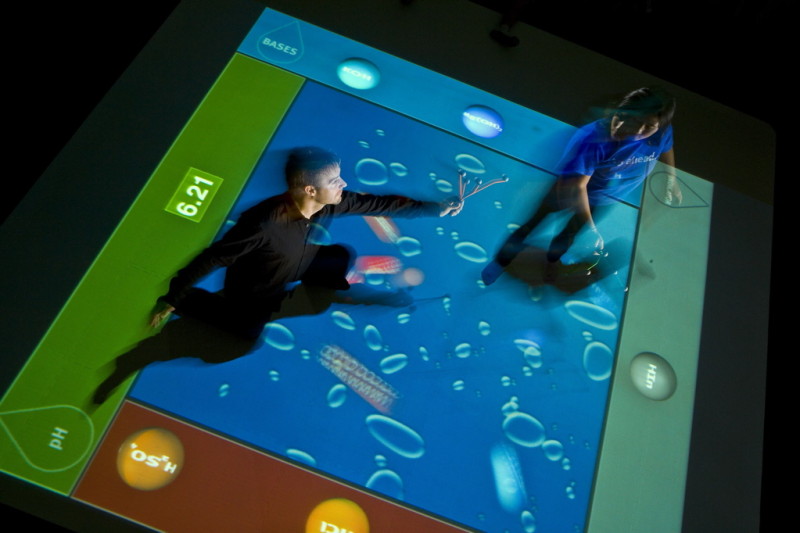
"caption": "SMALLab's Chemistry Titration Lab",
"description": null,
"title": "chem_art_directed_1024",
"credit": null,
"status": "inherit",
"isLoading": false,
"fetchFailed": false
},
"mindshift_25106": {
"type": "attachments",
"id": "mindshift_25106",
"meta": {
"index": "attachments_1716263798",
"site": "mindshift",
"id": "25106",
"found": true
},
"parent": 25100,
"imgSizes": {
"thumbnail": {
"file": "https://ww2.kqed.org/app/uploads/sites/23/2012/11/5638667887_54066a7c10_z-400x253.jpg",
"width": 400,
"mimeType": "image/jpeg",
"height": 253
},
"fd-sm": {
"file": "https://ww2.kqed.org/app/uploads/sites/23/2012/11/5638667887_54066a7c10_z-320x202.jpg",
"width": 320,
"mimeType": "image/jpeg",
"height": 202
},
"post-thumbnail": {
"file": "https://ww2.kqed.org/app/uploads/sites/23/2012/11/5638667887_54066a7c10_z-640x372.jpg",
"width": 640,
"mimeType": "image/jpeg",
"height": 372
},
"kqedFullSize": {
"file": "https://ww2.kqed.org/app/uploads/sites/23/2012/11/5638667887_54066a7c10_z.jpg",
"width": 640,
"height": 404
},
"guest-author-96": {
"file": "https://ww2.kqed.org/app/uploads/sites/23/2012/11/5638667887_54066a7c10_z-96x96.jpg",
"width": 96,
"mimeType": "image/jpeg",
"height": 96
},
"guest-author-64": {
"file": "https://ww2.kqed.org/app/uploads/sites/23/2012/11/5638667887_54066a7c10_z-64x64.jpg",
"width": 64,
"mimeType": "image/jpeg",
"height": 64
},
"detail": {
"file": "https://ww2.kqed.org/app/uploads/sites/23/2012/11/5638667887_54066a7c10_z-75x75.jpg",
"width": 75,
"mimeType": "image/jpeg",
"height": 75
},
"guest-author-32": {
"file": "https://ww2.kqed.org/app/uploads/sites/23/2012/11/5638667887_54066a7c10_z-32x32.jpg",
"width": 32,
"mimeType": "image/jpeg",
"height": 32
},
"guest-author-128": {
"file": "https://ww2.kqed.org/app/uploads/sites/23/2012/11/5638667887_54066a7c10_z-128x128.jpg",
"width": 128,
"mimeType": "image/jpeg",
"height": 128
}
},
"publishDate": 1353530028,
"modified": 1353530028,
"caption": null,
"description": null,
"title": "5638667887_54066a7c10_z",
"credit": null,
"status": "inherit",
"isLoading": false,
"fetchFailed": false
},
"mindshift_25083": {
"type": "attachments",
"id": "mindshift_25083",
"meta": {
"index": "attachments_1716263798",
"site": "mindshift",
"id": "25083",
"found": true
},
"parent": 25072,
"imgSizes": {
"thumbnail": {
"file": "https://ww2.kqed.org/app/uploads/sites/23/2012/11/5029699103_e1404620eb-400x297.jpg",
"width": 400,
"mimeType": "image/jpeg",
"height": 297
},
"fd-sm": {
"file": "https://ww2.kqed.org/app/uploads/sites/23/2012/11/5029699103_e1404620eb-320x238.jpg",
"width": 320,
"mimeType": "image/jpeg",
"height": 238
},
"kqedFullSize": {
"file": "https://ww2.kqed.org/app/uploads/sites/23/2012/11/5029699103_e1404620eb.jpg",
"width": 486,
"height": 361
},
"guest-author-96": {
"file": "https://ww2.kqed.org/app/uploads/sites/23/2012/11/5029699103_e1404620eb-96x96.jpg",
"width": 96,
"mimeType": "image/jpeg",
"height": 96
},
"guest-author-64": {
"file": "https://ww2.kqed.org/app/uploads/sites/23/2012/11/5029699103_e1404620eb-64x64.jpg",
"width": 64,
"mimeType": "image/jpeg",
"height": 64
},
"detail": {
"file": "https://ww2.kqed.org/app/uploads/sites/23/2012/11/5029699103_e1404620eb-75x75.jpg",
"width": 75,
"mimeType": "image/jpeg",
"height": 75
},
"guest-author-32": {
"file": "https://ww2.kqed.org/app/uploads/sites/23/2012/11/5029699103_e1404620eb-32x32.jpg",
"width": 32,
"mimeType": "image/jpeg",
"height": 32
},
"guest-author-128": {
"file": "https://ww2.kqed.org/app/uploads/sites/23/2012/11/5029699103_e1404620eb-128x128.jpg",
"width": 128,
"mimeType": "image/jpeg",
"height": 128
}
},
"publishDate": 1353524425,
"modified": 1353524425,
"caption": null,
"description": null,
"title": "5029699103_e1404620eb",
"credit": null,
"status": "inherit",
"isLoading": false,
"fetchFailed": false
},
"mindshift_24859": {
"type": "attachments",
"id": "mindshift_24859",
"meta": {
"index": "attachments_1716263798",
"site": "mindshift",
"id": "24859",
"found": true
},
"parent": 24851,
"imgSizes": {
"thumbnail": {
"file": "https://ww2.kqed.org/app/uploads/sites/23/2012/11/RainingCatsDogs-400x226.jpg",
"width": 400,
"mimeType": "image/jpeg",
"height": 226
},
"fd-sm": {
"file": "https://ww2.kqed.org/app/uploads/sites/23/2012/11/RainingCatsDogs-320x181.jpg",
"width": 320,
"mimeType": "image/jpeg",
"height": 181
},
"kqedFullSize": {
"file": "https://ww2.kqed.org/app/uploads/sites/23/2012/11/RainingCatsDogs.jpg",
"width": 620,
"height": 350
},
"guest-author-96": {
"file": "https://ww2.kqed.org/app/uploads/sites/23/2012/11/RainingCatsDogs-96x96.jpg",
"width": 96,
"mimeType": "image/jpeg",
"height": 96
},
"guest-author-64": {
"file": "https://ww2.kqed.org/app/uploads/sites/23/2012/11/RainingCatsDogs-64x64.jpg",
"width": 64,
"mimeType": "image/jpeg",
"height": 64
},
"detail": {
"file": "https://ww2.kqed.org/app/uploads/sites/23/2012/11/RainingCatsDogs-75x75.jpg",
"width": 75,
"mimeType": "image/jpeg",
"height": 75
},
"guest-author-32": {
"file": "https://ww2.kqed.org/app/uploads/sites/23/2012/11/RainingCatsDogs-32x32.jpg",
"width": 32,
"mimeType": "image/jpeg",
"height": 32
},
"guest-author-128": {
"file": "https://ww2.kqed.org/app/uploads/sites/23/2012/11/RainingCatsDogs-128x128.jpg",
"width": 128,
"mimeType": "image/jpeg",
"height": 128
}
},
"publishDate": 1352422484,
"modified": 1352422484,
"caption": null,
"description": null,
"title": "RainingCatsDogs",
"credit": null,
"status": "inherit",
"isLoading": false,
"fetchFailed": false
},
"mindshift_25042": {
"type": "attachments",
"id": "mindshift_25042",
"meta": {
"index": "attachments_1716263798",
"site": "mindshift",
"id": "25042",
"found": true
},
"parent": 24949,
"imgSizes": {
"thumbnail": {
"file": "https://ww2.kqed.org/app/uploads/sites/23/2012/11/globe2-400x248.jpg",
"width": 400,
"mimeType": "image/jpeg",
"height": 248
},
"fd-sm": {
"file": "https://ww2.kqed.org/app/uploads/sites/23/2012/11/globe2-320x198.jpg",
"width": 320,
"mimeType": "image/jpeg",
"height": 198
},
"kqedFullSize": {
"file": "https://ww2.kqed.org/app/uploads/sites/23/2012/11/globe2.jpg",
"width": 497,
"height": 308
},
"guest-author-96": {
"file": "https://ww2.kqed.org/app/uploads/sites/23/2012/11/globe2-96x96.jpg",
"width": 96,
"mimeType": "image/jpeg",
"height": 96
},
"guest-author-64": {
"file": "https://ww2.kqed.org/app/uploads/sites/23/2012/11/globe2-64x64.jpg",
"width": 64,
"mimeType": "image/jpeg",
"height": 64
},
"detail": {
"file": "https://ww2.kqed.org/app/uploads/sites/23/2012/11/globe2-75x75.jpg",
"width": 75,
"mimeType": "image/jpeg",
"height": 75
},
"guest-author-32": {
"file": "https://ww2.kqed.org/app/uploads/sites/23/2012/11/globe2-32x32.jpg",
"width": 32,
"mimeType": "image/jpeg",
"height": 32
},
"guest-author-128": {
"file": "https://ww2.kqed.org/app/uploads/sites/23/2012/11/globe2-128x128.jpg",
"width": 128,
"mimeType": "image/jpeg",
"height": 128
}
},
"publishDate": 1353346389,
"modified": 1353346389,
"caption": "Flickr:rwkvisual",
"description": null,
"title": "globe",
"credit": null,
"status": "inherit",
"isLoading": false,
"fetchFailed": false
},
"mindshift_24957": {
"type": "attachments",
"id": "mindshift_24957",
"meta": {
"index": "attachments_1716263798",
"site": "mindshift",
"id": "24957",
"found": true
},
"parent": 24944,
"imgSizes": {
"thumbnail": {
"file": "https://ww2.kqed.org/app/uploads/sites/23/2012/11/832525401-400x241.jpg",
"width": 400,
"mimeType": "image/jpeg",
"height": 241
},
"fd-sm": {
"file": "https://ww2.kqed.org/app/uploads/sites/23/2012/11/832525401-320x193.jpg",
"width": 320,
"mimeType": "image/jpeg",
"height": 193
},
"post-thumbnail": {
"file": "https://ww2.kqed.org/app/uploads/sites/23/2012/11/832525401-672x372.jpg",
"width": 672,
"mimeType": "image/jpeg",
"height": 372
},
"kqedFullSize": {
"file": "https://ww2.kqed.org/app/uploads/sites/23/2012/11/832525401.jpg",
"width": 718,
"height": 432
},
"guest-author-96": {
"file": "https://ww2.kqed.org/app/uploads/sites/23/2012/11/832525401-96x96.jpg",
"width": 96,
"mimeType": "image/jpeg",
"height": 96
},
"guest-author-64": {
"file": "https://ww2.kqed.org/app/uploads/sites/23/2012/11/832525401-64x64.jpg",
"width": 64,
"mimeType": "image/jpeg",
"height": 64
},
"detail": {
"file": "https://ww2.kqed.org/app/uploads/sites/23/2012/11/832525401-75x75.jpg",
"width": 75,
"mimeType": "image/jpeg",
"height": 75
},
"guest-author-32": {
"file": "https://ww2.kqed.org/app/uploads/sites/23/2012/11/832525401-32x32.jpg",
"width": 32,
"mimeType": "image/jpeg",
"height": 32
},
"guest-author-128": {
"file": "https://ww2.kqed.org/app/uploads/sites/23/2012/11/832525401-128x128.jpg",
"width": 128,
"mimeType": "image/jpeg",
"height": 128
}
},
"publishDate": 1353003040,
"modified": 1353003040,
"caption": null,
"description": null,
"title": "83252540(1)",
"credit": null,
"status": "inherit",
"isLoading": false,
"fetchFailed": false
},
"mindshift_24892": {
"type": "attachments",
"id": "mindshift_24892",
"meta": {
"index": "attachments_1716263798",
"site": "mindshift",
"id": "24892",
"found": true
},
"parent": 24869,
"imgSizes": {
"thumbnail": {
"file": "https://ww2.kqed.org/app/uploads/sites/23/2012/11/92259124-400x224.jpg",
"width": 400,
"mimeType": "image/jpeg",
"height": 224
},
"fd-sm": {
"file": "https://ww2.kqed.org/app/uploads/sites/23/2012/11/92259124-320x179.jpg",
"width": 320,
"mimeType": "image/jpeg",
"height": 179
},
"post-thumbnail": {
"file": "https://ww2.kqed.org/app/uploads/sites/23/2012/11/92259124-672x372.jpg",
"width": 672,
"mimeType": "image/jpeg",
"height": 372
},
"kqedFullSize": {
"file": "https://ww2.kqed.org/app/uploads/sites/23/2012/11/92259124.jpg",
"width": 724,
"height": 405
},
"guest-author-96": {
"file": "https://ww2.kqed.org/app/uploads/sites/23/2012/11/92259124-96x96.jpg",
"width": 96,
"mimeType": "image/jpeg",
"height": 96
},
"guest-author-64": {
"file": "https://ww2.kqed.org/app/uploads/sites/23/2012/11/92259124-64x64.jpg",
"width": 64,
"mimeType": "image/jpeg",
"height": 64
},
"detail": {
"file": "https://ww2.kqed.org/app/uploads/sites/23/2012/11/92259124-75x75.jpg",
"width": 75,
"mimeType": "image/jpeg",
"height": 75
},
"guest-author-32": {
"file": "https://ww2.kqed.org/app/uploads/sites/23/2012/11/92259124-32x32.jpg",
"width": 32,
"mimeType": "image/jpeg",
"height": 32
},
"guest-author-128": {
"file": "https://ww2.kqed.org/app/uploads/sites/23/2012/11/92259124-128x128.jpg",
"width": 128,
"mimeType": "image/jpeg",
"height": 128
}
},
"publishDate": 1352487504,
"modified": 1352487504,
"caption": null,
"description": null,
"title": "92259124",
"credit": null,
"status": "inherit",
"isLoading": false,
"fetchFailed": false
},
"mindshift_24751": {
"type": "attachments",
"id": "mindshift_24751",
"meta": {
"index": "attachments_1716263798",
"site": "mindshift",
"id": "24751",
"found": true
},
"parent": 24747,
"imgSizes": {
"thumbnail": {
"file": "https://ww2.kqed.org/app/uploads/sites/23/2012/11/boybuilds-400x258.jpg",
"width": 400,
"mimeType": "image/jpeg",
"height": 258
},
"fd-sm": {
"file": "https://ww2.kqed.org/app/uploads/sites/23/2012/11/boybuilds-320x206.jpg",
"width": 320,
"mimeType": "image/jpeg",
"height": 206
},
"post-thumbnail": {
"file": "https://ww2.kqed.org/app/uploads/sites/23/2012/11/boybuilds-620x372.jpg",
"width": 620,
"mimeType": "image/jpeg",
"height": 372
},
"kqedFullSize": {
"file": "https://ww2.kqed.org/app/uploads/sites/23/2012/11/boybuilds.jpg",
"width": 620,
"height": 400
},
"guest-author-96": {
"file": "https://ww2.kqed.org/app/uploads/sites/23/2012/11/boybuilds-96x96.jpg",
"width": 96,
"mimeType": "image/jpeg",
"height": 96
},
"guest-author-64": {
"file": "https://ww2.kqed.org/app/uploads/sites/23/2012/11/boybuilds-64x64.jpg",
"width": 64,
"mimeType": "image/jpeg",
"height": 64
},
"detail": {
"file": "https://ww2.kqed.org/app/uploads/sites/23/2012/11/boybuilds-75x75.jpg",
"width": 75,
"mimeType": "image/jpeg",
"height": 75
},
"guest-author-32": {
"file": "https://ww2.kqed.org/app/uploads/sites/23/2012/11/boybuilds-32x32.jpg",
"width": 32,
"mimeType": "image/jpeg",
"height": 32
},
"guest-author-128": {
"file": "https://ww2.kqed.org/app/uploads/sites/23/2012/11/boybuilds-128x128.jpg",
"width": 128,
"mimeType": "image/jpeg",
"height": 128
}
},
"publishDate": 1352220638,
"modified": 1352220638,
"caption": null,
"description": null,
"title": "boybuilds",
"credit": null,
"status": "inherit",
"isLoading": false,
"fetchFailed": false
},
"mindshift_24781": {
"type": "attachments",
"id": "mindshift_24781",
"meta": {
"index": "attachments_1716263798",
"site": "mindshift",
"id": "24781",
"found": true
},
"parent": 24780,
"imgSizes": {
"twentyfourteen-full-width": {
"file": "https://ww2.kqed.org/app/uploads/sites/23/2012/11/CIRCLE_2012YouthPoll_Summary_NewFont-1038x576.jpg",
"width": 1038,
"mimeType": "image/jpeg",
"height": 576
},
"thumbnail": {
"file": "https://ww2.kqed.org/app/uploads/sites/23/2012/11/CIRCLE_2012YouthPoll_Summary_NewFont-400x470.jpg",
"width": 400,
"mimeType": "image/jpeg",
"height": 470
},
"fd-sm": {
"file": "https://ww2.kqed.org/app/uploads/sites/23/2012/11/CIRCLE_2012YouthPoll_Summary_NewFont-320x376.jpg",
"width": 320,
"mimeType": "image/jpeg",
"height": 376
},
"post-thumbnail": {
"file": "https://ww2.kqed.org/app/uploads/sites/23/2012/11/CIRCLE_2012YouthPoll_Summary_NewFont-672x372.jpg",
"width": 672,
"mimeType": "image/jpeg",
"height": 372
},
"kqedFullSize": {
"file": "https://ww2.kqed.org/app/uploads/sites/23/2012/11/CIRCLE_2012YouthPoll_Summary_NewFont.jpg",
"width": 2048,
"height": 2408
},
"large": {
"file": "https://ww2.kqed.org/app/uploads/sites/23/2012/11/CIRCLE_2012YouthPoll_Summary_NewFont-1440x1693.jpg",
"width": 1440,
"mimeType": "image/jpeg",
"height": 1693
},
"guest-author-96": {
"file": "https://ww2.kqed.org/app/uploads/sites/23/2012/11/CIRCLE_2012YouthPoll_Summary_NewFont-96x96.jpg",
"width": 96,
"mimeType": "image/jpeg",
"height": 96
},
"medium": {
"file": "https://ww2.kqed.org/app/uploads/sites/23/2012/11/CIRCLE_2012YouthPoll_Summary_NewFont-800x941.jpg",
"width": 800,
"mimeType": "image/jpeg",
"height": 941
},
"guest-author-64": {
"file": "https://ww2.kqed.org/app/uploads/sites/23/2012/11/CIRCLE_2012YouthPoll_Summary_NewFont-64x64.jpg",
"width": 64,
"mimeType": "image/jpeg",
"height": 64
},
"guest-author-32": {
"file": "https://ww2.kqed.org/app/uploads/sites/23/2012/11/CIRCLE_2012YouthPoll_Summary_NewFont-32x32.jpg",
"width": 32,
"mimeType": "image/jpeg",
"height": 32
},
"fd-lrg": {
"file": "https://ww2.kqed.org/app/uploads/sites/23/2012/11/CIRCLE_2012YouthPoll_Summary_NewFont-1180x1387.jpg",
"width": 1180,
"mimeType": "image/jpeg",
"height": 1387
},
"fd-med": {
"file": "https://ww2.kqed.org/app/uploads/sites/23/2012/11/CIRCLE_2012YouthPoll_Summary_NewFont-768x903.jpg",
"width": 768,
"mimeType": "image/jpeg",
"height": 903
},
"detail": {
"file": "https://ww2.kqed.org/app/uploads/sites/23/2012/11/CIRCLE_2012YouthPoll_Summary_NewFont-75x75.jpg",
"width": 75,
"mimeType": "image/jpeg",
"height": 75
},
"guest-author-128": {
"file": "https://ww2.kqed.org/app/uploads/sites/23/2012/11/CIRCLE_2012YouthPoll_Summary_NewFont-128x128.jpg",
"width": 128,
"mimeType": "image/jpeg",
"height": 128
}
},
"publishDate": 1352226618,
"modified": 1352226618,
"caption": null,
"description": null,
"title": "CIRCLE_2012YouthPoll_Summary_NewFont",
"credit": null,
"status": "inherit",
"isLoading": false,
"fetchFailed": false
},
"mindshift_24733": {
"type": "attachments",
"id": "mindshift_24733",
"meta": {
"index": "attachments_1716263798",
"site": "mindshift",
"id": "24733",
"found": true
},
"parent": 24708,
"imgSizes": {
"twentyfourteen-full-width": {
"file": "https://ww2.kqed.org/app/uploads/sites/23/2012/11/Gangnam-Style-1038x576.png",
"width": 1038,
"mimeType": "image/png",
"height": 576
},
"thumbnail": {
"file": "https://ww2.kqed.org/app/uploads/sites/23/2012/11/Gangnam-Style-400x216.png",
"width": 400,
"mimeType": "image/png",
"height": 216
},
"fd-sm": {
"file": "https://ww2.kqed.org/app/uploads/sites/23/2012/11/Gangnam-Style-320x173.png",
"width": 320,
"mimeType": "image/png",
"height": 173
},
"post-thumbnail": {
"file": "https://ww2.kqed.org/app/uploads/sites/23/2012/11/Gangnam-Style-672x372.png",
"width": 672,
"mimeType": "image/png",
"height": 372
},
"kqedFullSize": {
"file": "https://ww2.kqed.org/app/uploads/sites/23/2012/11/Gangnam-Style.png",
"width": 1366,
"height": 737
},
"guest-author-96": {
"file": "https://ww2.kqed.org/app/uploads/sites/23/2012/11/Gangnam-Style-96x96.png",
"width": 96,
"mimeType": "image/png",
"height": 96
},
"medium": {
"file": "https://ww2.kqed.org/app/uploads/sites/23/2012/11/Gangnam-Style-800x432.png",
"width": 800,
"mimeType": "image/png",
"height": 432
},
"guest-author-64": {
"file": "https://ww2.kqed.org/app/uploads/sites/23/2012/11/Gangnam-Style-64x64.png",
"width": 64,
"mimeType": "image/png",
"height": 64
},
"guest-author-32": {
"file": "https://ww2.kqed.org/app/uploads/sites/23/2012/11/Gangnam-Style-32x32.png",
"width": 32,
"mimeType": "image/png",
"height": 32
},
"fd-lrg": {
"file": "https://ww2.kqed.org/app/uploads/sites/23/2012/11/Gangnam-Style-1180x637.png",
"width": 1180,
"mimeType": "image/png",
"height": 637
},
"fd-med": {
"file": "https://ww2.kqed.org/app/uploads/sites/23/2012/11/Gangnam-Style-768x414.png",
"width": 768,
"mimeType": "image/png",
"height": 414
},
"detail": {
"file": "https://ww2.kqed.org/app/uploads/sites/23/2012/11/Gangnam-Style-75x75.png",
"width": 75,
"mimeType": "image/png",
"height": 75
},
"guest-author-128": {
"file": "https://ww2.kqed.org/app/uploads/sites/23/2012/11/Gangnam-Style-128x128.png",
"width": 128,
"mimeType": "image/png",
"height": 128
}
},
"publishDate": 1352141585,
"modified": 1352141585,
"caption": "Gangnam Style",
"description": null,
"title": "Gangnam Style",
"credit": null,
"status": "inherit",
"isLoading": false,
"fetchFailed": false
},
"mindshift_24673": {
"type": "attachments",
"id": "mindshift_24673",
"meta": {
"index": "attachments_1716263798",
"site": "mindshift",
"id": "24673",
"found": true
},
"parent": 24667,
"imgSizes": {
"thumbnail": {
"file": "https://ww2.kqed.org/app/uploads/sites/23/2012/11/Screen-Shot-2012-11-01-at-11.26.52-AM-400x224.png",
"width": 400,
"mimeType": "image/png",
"height": 224
},
"fd-sm": {
"file": "https://ww2.kqed.org/app/uploads/sites/23/2012/11/Screen-Shot-2012-11-01-at-11.26.52-AM-320x179.png",
"width": 320,
"mimeType": "image/png",
"height": 179
},
"kqedFullSize": {
"file": "https://ww2.kqed.org/app/uploads/sites/23/2012/11/Screen-Shot-2012-11-01-at-11.26.52-AM.png",
"width": 635,
"height": 356
},
"guest-author-96": {
"file": "https://ww2.kqed.org/app/uploads/sites/23/2012/11/Screen-Shot-2012-11-01-at-11.26.52-AM-96x96.png",
"width": 96,
"mimeType": "image/png",
"height": 96
},
"guest-author-64": {
"file": "https://ww2.kqed.org/app/uploads/sites/23/2012/11/Screen-Shot-2012-11-01-at-11.26.52-AM-64x64.png",
"width": 64,
"mimeType": "image/png",
"height": 64
},
"detail": {
"file": "https://ww2.kqed.org/app/uploads/sites/23/2012/11/Screen-Shot-2012-11-01-at-11.26.52-AM-75x75.png",
"width": 75,
"mimeType": "image/png",
"height": 75
},
"guest-author-32": {
"file": "https://ww2.kqed.org/app/uploads/sites/23/2012/11/Screen-Shot-2012-11-01-at-11.26.52-AM-32x32.png",
"width": 32,
"mimeType": "image/png",
"height": 32
},
"guest-author-128": {
"file": "https://ww2.kqed.org/app/uploads/sites/23/2012/11/Screen-Shot-2012-11-01-at-11.26.52-AM-128x128.png",
"width": 128,
"mimeType": "image/png",
"height": 128
}
},
"publishDate": 1351794634,
"modified": 1351794634,
"caption": null,
"description": null,
"title": "Screen Shot 2012-11-01 at 11.26.52 AM",
"credit": null,
"status": "inherit",
"isLoading": false,
"fetchFailed": false
},
"mindshift_24639": {
"type": "attachments",
"id": "mindshift_24639",
"meta": {
"index": "attachments_1716263798",
"site": "mindshift",
"id": "24639",
"found": true
},
"parent": 24630,
"imgSizes": {
"twentyfourteen-full-width": {
"file": "https://ww2.kqed.org/app/uploads/sites/23/2012/11/photo-640x576.png",
"width": 640,
"mimeType": "image/png",
"height": 576
},
"thumbnail": {
"file": "https://ww2.kqed.org/app/uploads/sites/23/2012/11/photo-400x600.png",
"width": 400,
"mimeType": "image/png",
"height": 600
},
"fd-sm": {
"file": "https://ww2.kqed.org/app/uploads/sites/23/2012/11/photo-320x480.png",
"width": 320,
"mimeType": "image/png",
"height": 480
},
"post-thumbnail": {
"file": "https://ww2.kqed.org/app/uploads/sites/23/2012/11/photo-640x372.png",
"width": 640,
"mimeType": "image/png",
"height": 372
},
"kqedFullSize": {
"file": "https://ww2.kqed.org/app/uploads/sites/23/2012/11/photo.png",
"width": 640,
"height": 960
},
"guest-author-96": {
"file": "https://ww2.kqed.org/app/uploads/sites/23/2012/11/photo-96x96.png",
"width": 96,
"mimeType": "image/png",
"height": 96
},
"guest-author-64": {
"file": "https://ww2.kqed.org/app/uploads/sites/23/2012/11/photo-64x64.png",
"width": 64,
"mimeType": "image/png",
"height": 64
},
"detail": {
"file": "https://ww2.kqed.org/app/uploads/sites/23/2012/11/photo-75x75.png",
"width": 75,
"mimeType": "image/png",
"height": 75
},
"guest-author-32": {
"file": "https://ww2.kqed.org/app/uploads/sites/23/2012/11/photo-32x32.png",
"width": 32,
"mimeType": "image/png",
"height": 32
},
"guest-author-128": {
"file": "https://ww2.kqed.org/app/uploads/sites/23/2012/11/photo-128x128.png",
"width": 128,
"mimeType": "image/png",
"height": 128
}
},
"publishDate": 1351791386,
"modified": 1351791386,
"caption": null,
"description": null,
"title": "photo",
"credit": null,
"status": "inherit",
"isLoading": false,
"fetchFailed": false
}
},
"audioPlayerReducer": {
"postId": "stream_live",
"isPaused": true,
"isPlaying": false,
"pfsActive": false,
"pledgeModalIsOpen": true,
"playerDrawerIsOpen": false,
"liveAudioPlayStartedAt": 0,
"liveAudioPlayContext": ""
},
"authorsReducer": {
"tbarseghian": {
"type": "authors",
"id": "180",
"meta": {
"index": "authors_1716337520",
"id": "180",
"found": true
},
"name": "Tina Barseghian",
"firstName": "Tina",
"lastName": "Barseghian",
"slug": "tbarseghian",
"email": "tbarseghian@kqed.org",
"display_author_email": false,
"staff_mastheads": [],
"title": null,
"bio": null,
"avatar": "https://secure.gravatar.com/avatar/de7e6ced1239b7018fe4d2b61f723c90?s=600&d=blank&r=g",
"twitter": null,
"facebook": null,
"instagram": null,
"linkedin": null,
"sites": [
{
"site": "styleguide",
"roles": [
"contributor"
]
},
{
"site": "news",
"roles": [
"subscriber"
]
},
{
"site": "mindshift",
"roles": [
"subscriber"
]
},
{
"site": "bayareabites",
"roles": [
"subscriber"
]
}
],
"headData": {
"title": "Tina Barseghian | KQED",
"description": null,
"ogImgSrc": "https://secure.gravatar.com/avatar/de7e6ced1239b7018fe4d2b61f723c90?s=600&d=blank&r=g",
"twImgSrc": "https://secure.gravatar.com/avatar/de7e6ced1239b7018fe4d2b61f723c90?s=600&d=blank&r=g"
},
"isLoading": false,
"link": "/author/tbarseghian"
},
"katrinaschwartz": {
"type": "authors",
"id": "234",
"meta": {
"index": "authors_1716337520",
"id": "234",
"found": true
},
"name": "Katrina Schwartz",
"firstName": "Katrina",
"lastName": "Schwartz",
"slug": "katrinaschwartz",
"email": "kschwartz@kqed.org",
"display_author_email": false,
"staff_mastheads": [
"news"
],
"title": "Producer",
"bio": "Katrina Schwartz is a journalist based in San Francisco. She's worked at KPCC public radio in LA and has reported on air and online for KQED since 2010. She covered how teaching and learning is changing for MindShift between 2012 and 2020. She is the co-host of the MindShift podcast and now produces KQED's Bay Curious podcast.",
"avatar": "https://secure.gravatar.com/avatar/edb4ee79070447a018538c9aae6eeecf28786515b8a0c30e43b6b7dce5aa44c8?s=600&d=blank&r=g",
"twitter": "kschwart",
"bluesky": null,
"facebook": null,
"instagram": null,
"linkedin": null,
"sites": [
{
"site": "",
"roles": [
"editor"
]
},
{
"site": "news",
"roles": [
"editor"
]
},
{
"site": "mindshift",
"roles": [
"administrator"
]
},
{
"site": "stateofhealth",
"roles": [
"author"
]
},
{
"site": "science",
"roles": [
"editor"
]
}
],
"headData": {
"title": "Katrina Schwartz | KQED",
"description": "Producer",
"ogImgSrc": "https://secure.gravatar.com/avatar/edb4ee79070447a018538c9aae6eeecf28786515b8a0c30e43b6b7dce5aa44c8?s=600&d=blank&r=g",
"twImgSrc": "https://secure.gravatar.com/avatar/edb4ee79070447a018538c9aae6eeecf28786515b8a0c30e43b6b7dce5aa44c8?s=600&d=blank&r=g"
},
"isLoading": false,
"link": "/author/katrinaschwartz"
},
"anniempaul": {
"type": "authors",
"id": "4355",
"meta": {
"index": "authors_1716337520",
"id": "4355",
"found": true
},
"name": "Annie Murphy Paul",
"firstName": "Annie",
"lastName": "Murphy Paul",
"slug": "anniempaul",
"email": "anniempaul@gmail.com",
"display_author_email": false,
"staff_mastheads": [],
"title": null,
"bio": null,
"avatar": "https://secure.gravatar.com/avatar/060ea758e9b83d478e4e6c8a0466af50?s=600&d=blank&r=g",
"twitter": null,
"facebook": null,
"instagram": null,
"linkedin": null,
"sites": [
{
"site": "mindshift",
"roles": [
"author"
]
}
],
"headData": {
"title": "Annie Murphy Paul | KQED",
"description": null,
"ogImgSrc": "https://secure.gravatar.com/avatar/060ea758e9b83d478e4e6c8a0466af50?s=600&d=blank&r=g",
"twImgSrc": "https://secure.gravatar.com/avatar/060ea758e9b83d478e4e6c8a0466af50?s=600&d=blank&r=g"
},
"isLoading": false,
"link": "/author/anniempaul"
}
},
"pagesReducer": {
"mindshift_category_teaching-strategies": {
"type": "terms",
"id": "mindshift_193",
"meta": {
"index": "terms_1716263798",
"site": "mindshift",
"id": "193",
"score": 14.406914
},
"featImg": null,
"name": "Teaching Strategies",
"description": "Innovative ideas - projects, processes, curricula, and more - that are transforming how we teach and learn.",
"taxonomy": "category",
"headData": {
"twImgId": null,
"twTitle": null,
"ogTitle": null,
"ogImgId": null,
"twDescription": null,
"description": "Innovative ideas - projects, processes, curricula, and more - that are transforming how we teach and learn.",
"title": "Teaching Strategies Archives | KQED Mindshift",
"ogDescription": null
},
"ttid": 193,
"slug": "teaching-strategies",
"isLoading": false,
"title": "Teaching Strategies",
"pageMeta": {
"site": "mindshift",
"WpPageTemplate": "page-topic-editorial",
"currentPage": 64
},
"blocks": [
{
"blockName": "kqed/company-paragraph",
"content": "Innovative ideas - projects, processes, curricula, and more - that are transforming how we teach and learn."
},
{
"blockName": "kqed/post-list",
"attrs": {
"layout": "cardArticle2",
"query": "posts/mindshift?category=teaching-strategies",
"seeMore": false,
"paginated": true,
"page": 64
}
},
{
"blockName": "kqed/ad"
}
]
}
},
"pfsSessionReducer": {},
"postsReducer": {
"stream_live": {
"type": "live",
"id": "stream_live",
"audioUrl": "https://streams.kqed.org/kqedradio",
"title": "Live Stream",
"excerpt": "Live Stream information currently unavailable.",
"link": "/radio",
"featImg": "",
"label": {
"name": "KQED Live",
"link": "/"
}
},
"stream_kqedNewscast": {
"type": "posts",
"id": "stream_kqedNewscast",
"audioUrl": "https://www.kqed.org/.stream/anon/radio/RDnews/newscast.mp3?_=1",
"title": "KQED Newscast",
"featImg": "",
"label": {
"name": "88.5 FM",
"link": "/"
}
},
"mindshift_25135": {
"type": "posts",
"id": "mindshift_25135",
"meta": {
"index": "posts_1716263798",
"site": "mindshift",
"id": "25135",
"score": null,
"sort": [
1353958389000
]
},
"parent": 0,
"labelTerm": {
"site": "mindshift"
},
"blocks": [],
"publishDate": 1353958389,
"format": "aside",
"disqusTitle": "What's It Like to Be a Molecule? Science Meets Embodied Learning ",
"title": "What's It Like to Be a Molecule? Science Meets Embodied Learning ",
"headTitle": "MindShift | KQED News",
"content": "\u003cfigure id=\"attachment_25152\" class=\"wp-caption center\" style=\"max-width: 620px\">\u003ca href=\"http://ww2.kqed.org/mindshift/2012/11/whats-it-like-to-be-a-molecule-science-meets-embodied-learning/chem_art_directed_1024/\" rel=\"attachment wp-att-25152\">\u003cimg class=\"size-large wp-image-25152\" title=\"chem_art_directed_1024\" src=\"http://ww2.kqed.org/mindshift/wp-content/uploads/sites/23/2012/11/chem_art_directed_1024-620x413.jpg\" alt=\"\" width=\"620\" height=\"413\">\u003c/a>\u003cfigcaption class=\"wp-caption-text\">SMALLab's Chemistry Titration Lab\u003c/figcaption>\u003c/figure>\n\u003ch5>By Andrew Miller\u003c/h5>\n\u003cp class=\"dropcap-serif\">\"Embodied learning\" is a new initiative in the field of interactive and game-based learning, in which learning content is combined with physical movement. Among one of the leading organizations in bringing this movement to the classroom is \u003ca href=\"http://smallablearning.com\">SMALLab\u003c/a>, based in Los Angeles. The company has created activities -- check out their \u003ca href=\"http://smallablearning.com/scenarios/browse\">different learning scenarios \u003c/a>-- that use large projected environments as experimental playgrounds of movement connected to learning targets.\u003c/p>\n\u003cp>For example, in \u003ca href=\"http://smallablearning.com/research\">one activity\u003c/a>, students are put into “acids” and “bases” teams to experiment with molecules in a “virtual flask.” Students can add different molecules to the flask to see how their choices affect the simulated environment by using a “glowball” that contains color LEDs. The experiment, as described in a research brief, should show that, “as particles in the flask collide with each another, they undergo one of four reactions based on the general properties of acid and base in aqueous solution.” Here, the movement is necessary to experiment with the creation of acids and bases.\u003c/p>\n\u003cp>\u003ca href=\"http://smallablearning.com/research\">In another example,\u003c/a> students explore concepts in earth science, such as the geological layer cake, and use the glowball and other controllers to experiment with placing fossils in different layers of the earth in different environments, from swamps to mountains.\u003c/p>\n\u003cp>Schools can use the products in two ways, SMALLab and Flow, for a range of topics and grade levels, including sciences, English language arts, and the performing arts. With Flow, teachers can use an existing Interactive Whiteboard or any project surface along with Microsoft’s Kinect motion-capture camera. For schools that use SMALLab equipment, \"there are 12 motion-capture cameras to track students’ movements as they learn in an immersive, interactive space. For example, in the Constant Velocity Scenario, physics students can hear the sounds of their actions getting faster, \u003c!--more-->see graphs that change in real time, and feel how their bodies move through the space.\" Its open-source \u003ca href=\"http://smallablearning.com/developer-program\" target=\"_blank\">software development kit\u003c/a> allows schools to create new scenarios.\u003c/p>\n\u003cp>Why go through such lengths to teach this material? According to \u003ca href=\"http://www.ascd.org/research-a-topic/brain-based-learning-resources.aspx\">brain-based learning advocates\u003c/a>, evidence supports the notion that the work in embodied learning can lead to increased student achievement. John Medina author of \u003ca href=\"http://brainrules.net/\">Brain Rules\u003c/a>, claims that exercise boosts oxygen-rich blood flow to the brain, which helps students concentrate better in school.\u003c/p>\n\u003caside class=\"pullquote alignleft\">\n\u003ch5>READ MORE:\u003c/h5>\n\u003cul>\n\u003cli>\u003ca href=\"http://ww2.kqed.org/mindshift/2012/01/two-students-video-game-innovations-in-science/\">2 Students + Video Game = Innovations in Science\u003c/a>\u003c/li>\n\u003cli>\u003ca href=\"http://ww2.kqed.org/mindshift/2011/07/with-microsoft-kinect-students-can-learn-how-to-hack/\">Computer Science With a Twist: Students Hack into Kinect\u003c/a>\u003c/li>\n\u003cli>\u003ca href=\"http://ww2.kqed.org/mindshift/2011/12/combining-tv-and-active-play-microsoft-dives-in/\">Is it Possible To Combine TV and Active Play?\u003c/a>\u003c/li>\n\u003c/ul>\n\u003c/aside>\n\u003cp>In \u003ca href=\"http://smallablearning.com/research\">their own research\u003c/a> conducted in K-12 schools and museums across the country, SMALLab found that “student learning gains were significantly higher after the SMALLab learning intervention when compared to regular classroom instruction.” In some instances, the company says it found that \"there is a marked increase in the number of \u003cem>student-to-student\u003c/em> and \u003cem>student-discussions\u003c/em> during SMALLab.\"\u003c/p>\n\u003cp>[ad fullwidth]\u003c/p>\n\u003cp>For SMALLab to work well, the company recommends that embodied learning activities are one component of the instruction -- not the entire lesson. Order of activities is important as well, as students perform better when traditional instruction occurs before the embodied learning experiences.\u003c/p>\n\u003cp>But the company is cautious about the results. “At this juncture we cannot yet say which components lead to the increase in student learning,” the company says, and they call for further research to analyze the components of embodied learning experience.\u003c/p>\n\u003cp>The company's products are being used in different schools throughout the country. \u003ca href=\"http://www.efsd.net/MiddleSchool.cfm\">Elizabeth Forward Middle School\u003c/a>, outside Pittsburgh, Penn., is using a $20,000 grant to install SMALLab's equipment and curriculum for its STEM program. The company's products are also being used in \u003ca href=\"http://smallablearning.com/smallab-learning-and-einstruction-singapore-announce-global-partnership-k-12-embodied-and-engaging-l\">schools in Singapore\u003c/a>.\u003c/p>\n\u003cp>For schools interested in using embodied learning techniques, can the same results be achieved using low-tech tactics? If the goal is to make sense of and connect authentically with content, what tactics have teachers used that simulate the same concepts?\u003c/p>\n\u003cp>\u003c/p>\n\u003cp> \u003c/p>\n\n",
"disqusIdentifier": "25135 http://blogs.kqed.org/mindshift/?p=25135",
"disqusUrl": "https://ww2.kqed.org/mindshift/2012/11/26/whats-it-like-to-be-a-molecule-science-meets-embodied-learning/",
"stats": {
"hasVideo": false,
"hasChartOrMap": false,
"hasAudio": false,
"hasPolis": false,
"wordCount": 667,
"hasGoogleForm": false,
"hasGallery": false,
"hasHearkenModule": false,
"iframeSrcs": [],
"paragraphCount": 11
},
"modified": 1353958391,
"excerpt": null,
"headData": {
"twImgId": "",
"twTitle": "",
"ogTitle": "",
"ogImgId": "",
"twDescription": "",
"description": "By Andrew Miller "Embodied learning" is a new initiative in the field of interactive and game-based learning, in which learning content is combined with physical movement. Among one of the leading organizations in bringing this movement to the classroom is SMALLab, based in Los Angeles. The company has created activities -- check out their different",
"title": "What's It Like to Be a Molecule? Science Meets Embodied Learning | KQED",
"ogDescription": "",
"schema": {
"@context": "https://schema.org",
"@type": "Article",
"headline": "What's It Like to Be a Molecule? Science Meets Embodied Learning ",
"datePublished": "2012-11-26T11:33:09-08:00",
"dateModified": "2012-11-26T11:33:11-08:00",
"image": "https://cdn.kqed.org/wp-content/uploads/2020/02/KQED-OG-Image@1x.png"
}
},
"guestAuthors": [],
"slug": "whats-it-like-to-be-a-molecule-science-meets-embodied-learning",
"status": "publish",
"path": "/mindshift/25135/whats-it-like-to-be-a-molecule-science-meets-embodied-learning",
"audioTrackLength": null,
"parsedContent": [
{
"type": "contentString",
"content": "\u003cdiv class=\"post-body\">\u003cp>\u003cfigure id=\"attachment_25152\" class=\"wp-caption center\" style=\"max-width: 620px\">\u003ca href=\"http://ww2.kqed.org/mindshift/2012/11/whats-it-like-to-be-a-molecule-science-meets-embodied-learning/chem_art_directed_1024/\" rel=\"attachment wp-att-25152\">\u003cimg class=\"size-large wp-image-25152\" title=\"chem_art_directed_1024\" src=\"http://ww2.kqed.org/mindshift/wp-content/uploads/sites/23/2012/11/chem_art_directed_1024-620x413.jpg\" alt=\"\" width=\"620\" height=\"413\">\u003c/a>\u003cfigcaption class=\"wp-caption-text\">SMALLab's Chemistry Titration Lab\u003c/figcaption>\u003c/figure>\n\u003ch5>By Andrew Miller\u003c/h5>\n\u003cp class=\"dropcap-serif\">\"Embodied learning\" is a new initiative in the field of interactive and game-based learning, in which learning content is combined with physical movement. Among one of the leading organizations in bringing this movement to the classroom is \u003ca href=\"http://smallablearning.com\">SMALLab\u003c/a>, based in Los Angeles. The company has created activities -- check out their \u003ca href=\"http://smallablearning.com/scenarios/browse\">different learning scenarios \u003c/a>-- that use large projected environments as experimental playgrounds of movement connected to learning targets.\u003c/p>\n\u003cp>For example, in \u003ca href=\"http://smallablearning.com/research\">one activity\u003c/a>, students are put into “acids” and “bases” teams to experiment with molecules in a “virtual flask.” Students can add different molecules to the flask to see how their choices affect the simulated environment by using a “glowball” that contains color LEDs. The experiment, as described in a research brief, should show that, “as particles in the flask collide with each another, they undergo one of four reactions based on the general properties of acid and base in aqueous solution.” Here, the movement is necessary to experiment with the creation of acids and bases.\u003c/p>\n\u003cp>\u003ca href=\"http://smallablearning.com/research\">In another example,\u003c/a> students explore concepts in earth science, such as the geological layer cake, and use the glowball and other controllers to experiment with placing fossils in different layers of the earth in different environments, from swamps to mountains.\u003c/p>\n\u003cp>Schools can use the products in two ways, SMALLab and Flow, for a range of topics and grade levels, including sciences, English language arts, and the performing arts. With Flow, teachers can use an existing Interactive Whiteboard or any project surface along with Microsoft’s Kinect motion-capture camera. For schools that use SMALLab equipment, \"there are 12 motion-capture cameras to track students’ movements as they learn in an immersive, interactive space. For example, in the Constant Velocity Scenario, physics students can hear the sounds of their actions getting faster, \u003c!--more-->see graphs that change in real time, and feel how their bodies move through the space.\" Its open-source \u003ca href=\"http://smallablearning.com/developer-program\" target=\"_blank\">software development kit\u003c/a> allows schools to create new scenarios.\u003c/p>\n\u003cp>Why go through such lengths to teach this material? According to \u003ca href=\"http://www.ascd.org/research-a-topic/brain-based-learning-resources.aspx\">brain-based learning advocates\u003c/a>, evidence supports the notion that the work in embodied learning can lead to increased student achievement. John Medina author of \u003ca href=\"http://brainrules.net/\">Brain Rules\u003c/a>, claims that exercise boosts oxygen-rich blood flow to the brain, which helps students concentrate better in school.\u003c/p>\n\u003caside class=\"pullquote alignleft\">\n\u003ch5>READ MORE:\u003c/h5>\n\u003cul>\n\u003cli>\u003ca href=\"http://ww2.kqed.org/mindshift/2012/01/two-students-video-game-innovations-in-science/\">2 Students + Video Game = Innovations in Science\u003c/a>\u003c/li>\n\u003cli>\u003ca href=\"http://ww2.kqed.org/mindshift/2011/07/with-microsoft-kinect-students-can-learn-how-to-hack/\">Computer Science With a Twist: Students Hack into Kinect\u003c/a>\u003c/li>\n\u003cli>\u003ca href=\"http://ww2.kqed.org/mindshift/2011/12/combining-tv-and-active-play-microsoft-dives-in/\">Is it Possible To Combine TV and Active Play?\u003c/a>\u003c/li>\n\u003c/ul>\n\u003c/aside>\n\u003cp>In \u003ca href=\"http://smallablearning.com/research\">their own research\u003c/a> conducted in K-12 schools and museums across the country, SMALLab found that “student learning gains were significantly higher after the SMALLab learning intervention when compared to regular classroom instruction.” In some instances, the company says it found that \"there is a marked increase in the number of \u003cem>student-to-student\u003c/em> and \u003cem>student-discussions\u003c/em> during SMALLab.\"\u003c/p>\n\u003cp>\u003c/p>\u003c/div>",
"attributes": {
"named": {},
"numeric": []
}
},
{
"type": "component",
"content": "",
"name": "ad",
"attributes": {
"named": {
"label": "fullwidth"
},
"numeric": [
"fullwidth"
]
}
},
{
"type": "contentString",
"content": "\u003cdiv class=\"post-body\">\u003cp>\u003c/p>\n\u003cp>For SMALLab to work well, the company recommends that embodied learning activities are one component of the instruction -- not the entire lesson. Order of activities is important as well, as students perform better when traditional instruction occurs before the embodied learning experiences.\u003c/p>\n\u003cp>But the company is cautious about the results. “At this juncture we cannot yet say which components lead to the increase in student learning,” the company says, and they call for further research to analyze the components of embodied learning experience.\u003c/p>\n\u003cp>The company's products are being used in different schools throughout the country. \u003ca href=\"http://www.efsd.net/MiddleSchool.cfm\">Elizabeth Forward Middle School\u003c/a>, outside Pittsburgh, Penn., is using a $20,000 grant to install SMALLab's equipment and curriculum for its STEM program. The company's products are also being used in \u003ca href=\"http://smallablearning.com/smallab-learning-and-einstruction-singapore-announce-global-partnership-k-12-embodied-and-engaging-l\">schools in Singapore\u003c/a>.\u003c/p>\n\u003cp>For schools interested in using embodied learning techniques, can the same results be achieved using low-tech tactics? If the goal is to make sense of and connect authentically with content, what tactics have teachers used that simulate the same concepts?\u003c/p>\n\u003cp>\u003c/p>\n\u003cp> \u003c/p>\n\n\u003c/div>\u003c/p>",
"attributes": {
"named": {},
"numeric": []
}
}
],
"link": "/mindshift/25135/whats-it-like-to-be-a-molecule-science-meets-embodied-learning",
"authors": [
"4354"
],
"categories": [
"mindshift_192",
"mindshift_195",
"mindshift_193"
],
"tags": [
"mindshift_20902",
"mindshift_789",
"mindshift_973"
],
"featImg": "mindshift_25152",
"label": "mindshift"
},
"mindshift_25100": {
"type": "posts",
"id": "mindshift_25100",
"meta": {
"index": "posts_1716263798",
"site": "mindshift",
"id": "25100",
"score": null,
"sort": [
1353686417000
]
},
"parent": 0,
"labelTerm": {
"site": "mindshift",
"term": 20659
},
"blocks": [],
"publishDate": 1353686417,
"format": "aside",
"disqusTitle": "Beyond Talent and Smarts: Why Even Geniuses Struggle",
"title": "Beyond Talent and Smarts: Why Even Geniuses Struggle",
"headTitle": "GROWTH MINDSET | MindShift | KQED News",
"content": "\u003cdiv id=\"attachment_25106\" class=\"module image aligncenter mceTemp mceIEcenter\" style=\"width: 620px\">\u003ca href=\"http://www.flickr.com/photos/bunchesandbits/5638667887/sizes/z/in/photostream/\">\u003cimg class=\"size-large wp-image-25106\" title=\"5638667887_54066a7c10_z\" src=\"http://ww2.kqed.org/mindshift/wp-content/uploads/sites/23/2012/11/5638667887_54066a7c10_z-620x391.jpg\" alt=\"\" width=\"620\" height=\"391\">\u003c/a>\n\u003cp class=\"wp-media-credit\">Flickr:Bunchesandbits\u003c/p>\n\u003c/div>\n\u003cp class=\"dropcap-serif\">“The struggle with writing is over.”\u003c/p>\n\u003cp>That message, written on a Post-It note and affixed to his computer, brings the novelist Philip Roth great relief and contentment these days, according to a profile published earlier this week in the \u003ca href=\"http://www.nytimes.com/2012/11/18/books/struggle-over-philip-roth-reflects-on-putting-down-his-pen.html?pagewanted=all&pagewanted=print\">\u003cem>New York Times\u003c/em>\u003c/a>. At the age of 79, the author of more than 31 acclaimed books says he is finished with writing, and he couldn’t be happier. “I look at that note every morning,” he told \u003cem>Times\u003c/em> reporter Charles McGrath, “and it gives me such strength.”\u003c/p>\n\u003cp>Fans of Roth’s books—which include \u003cem>Goodbye Columbus\u003c/em>, \u003cem>Portnoy’s Complaint\u003c/em>, \u003cem>The Human Stain\u003c/em>, and the Pulitzer Prize-winning \u003cem>American Pastoral\u003c/em>—may be surprised to learn that he regarded writing as a struggle at all.\u003c/p>\n\u003cp>His words flowed so easily on the page, and his books arrived with such frequency in the stores: at times, close to one every year. But behind that proficiency and productivity was arduous, unrelenting work. Roth told his interviewer that he’d enjoyed spending time with friends at his house in Connecticut this past summer: “In the old days I couldn’t have people in the house all the time. When they came for the weekend, I couldn’t get out to write.”\u003c/p>\n\u003cp>Americans have a complicated relationship with this kind of relentless striving. We extol the virtues of hard work even as we idolize the “natural,” the star who effortlessly achieves, who wins the race \u003c!--more-->without breaking a sweat. The writer Malcolm Gladwell has called this tendency “\u003ca href=\"http://www.upenn.edu/pennnews/current/node/2048\">the naturalness bias\u003c/a>,” and notes that we bring it to bear on individuals ranging from athletes to artists to “gifted” children. In \u003ca href=\"www.fas.harvard.edu/~mrbworks/articles/2011_JESP.pdf\">a study published in the \u003cem>Journal of Experimental Social Psychology\u003c/em>\u003c/a> last year, Harvard\u003c/p>\n\u003caside class=\"pullquote alignleft\">\n\u003ch5>RELATED READING\u003c/h5>\n\u003cul>\n\u003cli>\u003ca href=\"http://ww2.kqed.org/mindshift/2011/11/can-everyone-be-smart-at-everything/\">Can Everyone Be Smart at Everything?\u003c/a>\u003c/li>\n\u003cli>\u003ca href=\"http://ww2.kqed.org/mindshift/2012/11/struggle-means-learning-difference-in-eastern-and-western-cultures/\">Struggle Means Learning: The Difference Between Eastern and Western Cultures\u003c/a>\u003c/li>\n\u003cli>\u003ca href=\"http://ww2.kqed.org/mindshift/2012/09/why-kids-need-schools-to-change/\">Why Kids Need School to Change\u003c/a>\u003c/li>\n\u003c/ul>\n\u003c/aside>\n\u003cp>psychologists Mahzarin Banaji and Chia-Jung Tsay applied a scientific lens to the phenomenon, gathering a group of professional musicians as subjects. The experimenters first asked the musicians their opinion on the source of musical achievement: Was \"effortful\" training more important, they inquired, or innate ability? The former, the musicians replied, expressing “the strong belief that strivers will achieve over naturals.”\u003c/p>\n\u003cp>[ad fullwidth]\u003c/p>\n\u003cp>Banaji and Tsay then described two pianists, equal in achievement but different in their paths to success: one was a natural, showing early evidence of high innate ability; the other was a striver, exhibiting early evidence of high motivation and perseverance. The investigators played an audio clip of each pianist performing, and asked the musicians for their judgments. Despite their stated belief in the value of effort, the naturalness bias won out: the musicians rated the “natural” performer as more talented, more likely to succeed, and more hirable than the striver. (In fact, the clips were played by the same performer, pianist Gwhyneth Chen.)\u003c/p>\n\u003cp>\u003ca href=\"http://www.ascd.org/publications/educational-leadership/sept10/vol68/num01/Even-Geniuses-Work-Hard.aspx\">Research by another psychologist\u003c/a>, Carol Dweck of Stanford University, has shown that children and adults who believe in the power of effort to overcome challenges (what she calls a “growth mindset”) are more resilient and ultimately more successful than those who are convinced that ability is innate (the “fixed mindset”). Banaji and Tsay’s experiment suggests that our faith in inborn talent “may operate less than consciously,” leading us to make “suboptimal choices and evaluations”—because, as volumes of research show, elite performance really is the product of striving.\u003c/p>\n\u003cp>Take it from Philip Roth, who’s spent a lifetime laboring to write perfect sentences. Or from Carol Dweck, who puts it more prosaically: “Even geniuses work hard.”\u003c/p>\n\u003cp>\u003c/p>\n\u003cp> \u003c/p>\n\n",
"disqusIdentifier": "25100 http://blogs.kqed.org/mindshift/?p=25100",
"disqusUrl": "https://ww2.kqed.org/mindshift/2012/11/23/beyond-talent-and-smarts-why-even-geniuses-struggle/",
"stats": {
"hasVideo": false,
"hasChartOrMap": false,
"hasAudio": false,
"hasPolis": false,
"wordCount": 636,
"hasGoogleForm": false,
"hasGallery": false,
"hasHearkenModule": false,
"iframeSrcs": [],
"paragraphCount": 10
},
"modified": 1395870447,
"excerpt": null,
"headData": {
"twImgId": "",
"twTitle": "",
"ogTitle": "",
"ogImgId": "",
"twDescription": "",
"description": "Flickr:Bunchesandbits “The struggle with writing is over.” That message, written on a Post-It note and affixed to his computer, brings the novelist Philip Roth great relief and contentment these days, according to a profile published earlier this week in the New York Times. At the age of 79, the author of more than 31 acclaimed",
"title": "Beyond Talent and Smarts: Why Even Geniuses Struggle | KQED",
"ogDescription": "",
"schema": {
"@context": "https://schema.org",
"@type": "Article",
"headline": "Beyond Talent and Smarts: Why Even Geniuses Struggle",
"datePublished": "2012-11-23T08:00:17-08:00",
"dateModified": "2014-03-26T14:47:27-07:00",
"image": "https://cdn.kqed.org/wp-content/uploads/2020/02/KQED-OG-Image@1x.png"
}
},
"guestAuthors": [],
"slug": "beyond-talent-and-smarts-why-even-geniuses-struggle",
"status": "publish",
"path": "/mindshift/25100/beyond-talent-and-smarts-why-even-geniuses-struggle",
"audioTrackLength": null,
"parsedContent": [
{
"type": "contentString",
"content": "\u003cdiv class=\"post-body\">\u003cp>\u003cdiv id=\"attachment_25106\" class=\"module image aligncenter mceTemp mceIEcenter\" style=\"width: 620px\">\u003ca href=\"http://www.flickr.com/photos/bunchesandbits/5638667887/sizes/z/in/photostream/\">\u003cimg class=\"size-large wp-image-25106\" title=\"5638667887_54066a7c10_z\" src=\"http://ww2.kqed.org/mindshift/wp-content/uploads/sites/23/2012/11/5638667887_54066a7c10_z-620x391.jpg\" alt=\"\" width=\"620\" height=\"391\">\u003c/a>\n\u003cp class=\"wp-media-credit\">Flickr:Bunchesandbits\u003c/p>\n\u003c/div>\n\u003cp class=\"dropcap-serif\">“The struggle with writing is over.”\u003c/p>\n\u003cp>That message, written on a Post-It note and affixed to his computer, brings the novelist Philip Roth great relief and contentment these days, according to a profile published earlier this week in the \u003ca href=\"http://www.nytimes.com/2012/11/18/books/struggle-over-philip-roth-reflects-on-putting-down-his-pen.html?pagewanted=all&pagewanted=print\">\u003cem>New York Times\u003c/em>\u003c/a>. At the age of 79, the author of more than 31 acclaimed books says he is finished with writing, and he couldn’t be happier. “I look at that note every morning,” he told \u003cem>Times\u003c/em> reporter Charles McGrath, “and it gives me such strength.”\u003c/p>\n\u003cp>Fans of Roth’s books—which include \u003cem>Goodbye Columbus\u003c/em>, \u003cem>Portnoy’s Complaint\u003c/em>, \u003cem>The Human Stain\u003c/em>, and the Pulitzer Prize-winning \u003cem>American Pastoral\u003c/em>—may be surprised to learn that he regarded writing as a struggle at all.\u003c/p>\n\u003cp>His words flowed so easily on the page, and his books arrived with such frequency in the stores: at times, close to one every year. But behind that proficiency and productivity was arduous, unrelenting work. Roth told his interviewer that he’d enjoyed spending time with friends at his house in Connecticut this past summer: “In the old days I couldn’t have people in the house all the time. When they came for the weekend, I couldn’t get out to write.”\u003c/p>\n\u003cp>Americans have a complicated relationship with this kind of relentless striving. We extol the virtues of hard work even as we idolize the “natural,” the star who effortlessly achieves, who wins the race \u003c!--more-->without breaking a sweat. The writer Malcolm Gladwell has called this tendency “\u003ca href=\"http://www.upenn.edu/pennnews/current/node/2048\">the naturalness bias\u003c/a>,” and notes that we bring it to bear on individuals ranging from athletes to artists to “gifted” children. In \u003ca href=\"www.fas.harvard.edu/~mrbworks/articles/2011_JESP.pdf\">a study published in the \u003cem>Journal of Experimental Social Psychology\u003c/em>\u003c/a> last year, Harvard\u003c/p>\n\u003caside class=\"pullquote alignleft\">\n\u003ch5>RELATED READING\u003c/h5>\n\u003cul>\n\u003cli>\u003ca href=\"http://ww2.kqed.org/mindshift/2011/11/can-everyone-be-smart-at-everything/\">Can Everyone Be Smart at Everything?\u003c/a>\u003c/li>\n\u003cli>\u003ca href=\"http://ww2.kqed.org/mindshift/2012/11/struggle-means-learning-difference-in-eastern-and-western-cultures/\">Struggle Means Learning: The Difference Between Eastern and Western Cultures\u003c/a>\u003c/li>\n\u003cli>\u003ca href=\"http://ww2.kqed.org/mindshift/2012/09/why-kids-need-schools-to-change/\">Why Kids Need School to Change\u003c/a>\u003c/li>\n\u003c/ul>\n\u003c/aside>\n\u003cp>psychologists Mahzarin Banaji and Chia-Jung Tsay applied a scientific lens to the phenomenon, gathering a group of professional musicians as subjects. The experimenters first asked the musicians their opinion on the source of musical achievement: Was \"effortful\" training more important, they inquired, or innate ability? The former, the musicians replied, expressing “the strong belief that strivers will achieve over naturals.”\u003c/p>\n\u003cp>\u003c/p>\u003c/div>",
"attributes": {
"named": {},
"numeric": []
}
},
{
"type": "component",
"content": "",
"name": "ad",
"attributes": {
"named": {
"label": "fullwidth"
},
"numeric": [
"fullwidth"
]
}
},
{
"type": "contentString",
"content": "\u003cdiv class=\"post-body\">\u003cp>\u003c/p>\n\u003cp>Banaji and Tsay then described two pianists, equal in achievement but different in their paths to success: one was a natural, showing early evidence of high innate ability; the other was a striver, exhibiting early evidence of high motivation and perseverance. The investigators played an audio clip of each pianist performing, and asked the musicians for their judgments. Despite their stated belief in the value of effort, the naturalness bias won out: the musicians rated the “natural” performer as more talented, more likely to succeed, and more hirable than the striver. (In fact, the clips were played by the same performer, pianist Gwhyneth Chen.)\u003c/p>\n\u003cp>\u003ca href=\"http://www.ascd.org/publications/educational-leadership/sept10/vol68/num01/Even-Geniuses-Work-Hard.aspx\">Research by another psychologist\u003c/a>, Carol Dweck of Stanford University, has shown that children and adults who believe in the power of effort to overcome challenges (what she calls a “growth mindset”) are more resilient and ultimately more successful than those who are convinced that ability is innate (the “fixed mindset”). Banaji and Tsay’s experiment suggests that our faith in inborn talent “may operate less than consciously,” leading us to make “suboptimal choices and evaluations”—because, as volumes of research show, elite performance really is the product of striving.\u003c/p>\n\u003cp>Take it from Philip Roth, who’s spent a lifetime laboring to write perfect sentences. Or from Carol Dweck, who puts it more prosaically: “Even geniuses work hard.”\u003c/p>\n\u003cp>\u003c/p>\n\u003cp> \u003c/p>\n\n\u003c/div>\u003c/p>",
"attributes": {
"named": {},
"numeric": []
}
}
],
"link": "/mindshift/25100/beyond-talent-and-smarts-why-even-geniuses-struggle",
"authors": [
"4355"
],
"series": [
"mindshift_20659"
],
"categories": [
"mindshift_192",
"mindshift_194",
"mindshift_193"
],
"tags": [
"mindshift_796",
"mindshift_870",
"mindshift_20512",
"mindshift_971"
],
"featImg": "mindshift_25106",
"label": "mindshift_20659"
},
"mindshift_25072": {
"type": "posts",
"id": "mindshift_25072",
"meta": {
"index": "posts_1716263798",
"site": "mindshift",
"id": "25072",
"score": null,
"sort": [
1353524818000
]
},
"parent": 0,
"labelTerm": {
"site": "mindshift"
},
"blocks": [],
"publishDate": 1353524818,
"format": "aside",
"disqusTitle": "For Holiday Travel, Apps to Keep Kids Busy",
"title": "For Holiday Travel, Apps to Keep Kids Busy",
"headTitle": "MindShift | KQED News",
"content": "\u003cdiv id=\"attachment_25083\" class=\"module image aligncenter mceTemp mceIEcenter\" style=\"width: 486px\">\u003ca href=\"http://www.flickr.com/photos/56155476@N08/6659992675/sizes/m/in/photostream/\">\u003cimg class=\"size-full wp-image-25083\" title=\"5029699103_e1404620eb\" src=\"http://ww2.kqed.org/mindshift/wp-content/uploads/sites/23/2012/11/5029699103_e1404620eb.jpg\" alt=\"\" width=\"486\" height=\"361\" srcset=\"https://ww2.kqed.org/app/uploads/sites/23/2012/11/5029699103_e1404620eb.jpg 486w, https://ww2.kqed.org/app/uploads/sites/23/2012/11/5029699103_e1404620eb-400x297.jpg 400w, https://ww2.kqed.org/app/uploads/sites/23/2012/11/5029699103_e1404620eb-320x238.jpg 320w\" sizes=\"(max-width: 486px) 100vw, 486px\">\u003c/a>\n\u003cp class=\"wp-media-credit\">Flickr: GoodNCrazy\u003c/p>\n\u003c/div>\n\u003ch5>By \u003ca href=\"http://www.npr.org/people/14562108/bill-chappell\" rel=\"author\">Bill Chappell\u003c/a>\u003c/h5>\n\u003cp class=\"dropcap-serif\">Thanksgiving is Thursday, and that means more than 43 million Americans will be on the road, driving to family gatherings. For many parents, the crowded roads can bring another challenge: Keeping a 9-year-old entertained along the way. And sometimes, DVDs are not enough. These days, kids love to tinker with smartphones and tablets, as well.\u003c/p>\n\u003cp>With that in mind, NPR's Renee Montagne spoke with an actual 9-year-old, Jane Frauenfelder, and her father, Mark. Together, they host the podcast \u003ca href=\"http://boingboing.net/tag/appsforkids\">Apps for Kids\u003c/a>.\u003c/p>\n\u003cp>Here's a list of apps the Frauenfelders recommend for traveling kids, in an interview airing on \u003cem>Morning Edition\u003c/em> Wednesday:\u003c/p>\n\u003cp>\u003ca href=\"http://thinkamingo.com/story-dice/\">\u003cstrong>Story Dice\u003c/strong>\u003c/a> — Making up stories is a time-honored way to pass the time on the road. This app gives you the basic elements of a story, in the form of simple images on dice (a face, a king's crown, a rocket, etc.). Players then string the images together.\u003c/p>\n\u003cp>\"What we like to do,\" Mark says, \"is take turns, each of us telling a story that uses all of those elements. And then we, as a family, vote on the best one.\"\u003c/p>\n\u003cp>[ad fullwidth]\u003c/p>\n\u003cp>Jane describes a typical story: \"One day, there was a kid on a school bus, and he was carrying a soccer ball. Then it flew out of the school bus, so he had to chase it. Then he met a magical unicorn that gave him a piece of toast.\"\u003c/p>\n\u003cp>\"That's the short version,\" Mark says.\u003c/p>\n\u003cp>The game is similar to \u003ca href=\"http://www.storycubes.com/products/rorys-story-cubes/\">Rory's Story Cubes\u003c/a>, which comes in both app and physical form.\u003c!--more-->\u003c/p>\n\u003cp>\u003ca href=\"http://www.mobbles.com/\">\u003cstrong>Mobbles\u003c/strong>\u003c/a> — Virtual pets are released weekly in this game, in which digital animals have their own quirks and needs.\u003c/p>\n\u003cp>\"You gotta take care of your Mobble every day,\" Jane says. \"Wash it, play with it, clean it. And it's actually a lot of work.\"\u003c/p>\n\u003cdiv id=\"attachment_25074\" class=\"module image aligncenter mceTemp mceIEcenter\" style=\"width: 620px\">\u003ca href=\"http://ww2.kqed.org/mindshift/2012/11/for-holiday-travel-apps-to-keep-kids-busy/app_travel/\" rel=\"attachment wp-att-25074\">\u003cimg class=\"size-large wp-image-25074\" title=\"app_travel\" src=\"http://ww2.kqed.org/mindshift/wp-content/uploads/sites/23/2012/11/app_travel_custom-67ca8c4fe469976b7107d3e6fd92dabd8dea3629-s4-620x128.jpg\" alt=\"\" width=\"620\" height=\"128\">\u003c/a>\n\u003cp class=\"wp-media-credit\">NPR\u003c/p>\n\u003c/div>\n\u003cp>Jane explains what she sees as the game's most fun feature: \"You can catch Mobbles if you're on the road somewhere. Like, maybe you're in Arizona. Then you can get like, a Mobble from that zone.\"\u003c/p>\n\u003cp>\u003ca href=\"http://www.postcardontherun.com\">\u003cstrong>Postcard on the Run\u003c/strong>\u003c/a> — Share images of your trip the old-fashioned way. \"You make a postcard, and then you can actually send it to somebody, in the mail,\" Jane says. \"Like, they make a real copy of it.\"\u003c/p>\n\u003cp>The cards can include a finger-written note, a map — or even a scent, in a feature called \"Smell Mail.\"\u003c/p>\n\u003ch5>\u003c/h5>\n\u003caside class=\"pullquote alignleft\">\n\u003ch5>RELATED READING:\u003c/h5>\n\u003cul>\n\u003cli>\u003ca href=\"http://ww2.kqed.org/mindshift/2011/11/read-create-or-hear-a-story-apps-for-traveling-with-kids/\">Read, Hear, or Create a Story: Apps for Traveling With Kids\u003c/a>\u003c/li>\n\u003c/ul>\n\u003cul>\n\u003cli>\u003ca href=\"http://ww2.kqed.org/mindshift/2011/12/awesome-apps-for-science-experiments-storytelling-coding-and-more/\">Apps for Science Experiments, Coding, and Learning Mandarin\u003c/a>\u003c/li>\n\u003c/ul>\n\u003cul>\n\u003cli>\u003ca href=\"http://ww2.kqed.org/mindshift/2011/09/10-awesome-apps-for-learning-about-music-nature-history-and-math/\">Apps for Learning About Music, Nature and History\u003c/a>\u003c/li>\n\u003c/ul>\n\u003c/aside>\n\u003cp>If that's not enough to fill your little one's time on the road, here are some bonus apps the Frauenfelders recommend trying:\u003c/p>\n\u003cp>\u003cstrong>\u003ca href=\"http://cobypic.com/\">Cobypic\u003c/a> —\u003c/strong> A coloring book for the digital age: kids fill in drawings with their own colors, chosen from photos taken on a smartphone's camera. The drawings range from simple images to iconic works of art.\u003c/p>\n\u003cp>\"It's kind of like an online coloring book,\" Jane says. \"But it's more fun.\"\u003c/p>\n\u003cp>\u003ca href=\"http://www.waze.com/\">\u003cstrong>Waze \u003c/strong>\u003c/a>— Sometimes diversions just won't do, and all a child (and a parent) wants is to get to their destination. Blending GPS maps with real-time tips from other drivers, Waze provides advice that can help you avoid traffic snarls, or find the cheapest nearby gas station.\u003c/p>\n\u003cp>Another feature allows friends to share their current location — and lets Waze's estimated 30 million users chat with one another on the road. Typical topics include speed cameras and lane closures.\u003c/p>\n\u003cp>You can learn more about Jane and her father's podcast, Apps for Kids, on \u003ca href=\"http://boingboing.net/tag/appsforkids\">Boing Boing\u003c/a>.\u003c/p>\n\u003cp>\u003c/p>\n\u003cp>\u003cem>This post originally appeared on \u003ca href=\"http://www.npr.org/blogs/alltechconsidered/2012/11/21/165598708/for-holiday-road-trips-apps-that-promise-diversions-for-kids?ft=1&f=1001\">NPR\u003c/a>.\u003c/em>\u003c/p>\n\n",
"disqusIdentifier": "25072 http://blogs.kqed.org/mindshift/?p=25072",
"disqusUrl": "https://ww2.kqed.org/mindshift/2012/11/21/for-holiday-travel-apps-to-keep-kids-busy/",
"stats": {
"hasVideo": false,
"hasChartOrMap": false,
"hasAudio": false,
"hasPolis": false,
"wordCount": 628,
"hasGoogleForm": false,
"hasGallery": false,
"hasHearkenModule": false,
"iframeSrcs": [],
"paragraphCount": 21
},
"modified": 1383092581,
"excerpt": null,
"headData": {
"twImgId": "",
"twTitle": "",
"ogTitle": "",
"ogImgId": "",
"twDescription": "",
"description": "Flickr: GoodNCrazy By Bill Chappell Thanksgiving is Thursday, and that means more than 43 million Americans will be on the road, driving to family gatherings. For many parents, the crowded roads can bring another challenge: Keeping a 9-year-old entertained along the way. And sometimes, DVDs are not enough. These days, kids love to tinker with",
"title": "For Holiday Travel, Apps to Keep Kids Busy | KQED",
"ogDescription": "",
"schema": {
"@context": "https://schema.org",
"@type": "Article",
"headline": "For Holiday Travel, Apps to Keep Kids Busy",
"datePublished": "2012-11-21T11:06:58-08:00",
"dateModified": "2013-10-29T17:23:01-07:00",
"image": "https://cdn.kqed.org/wp-content/uploads/2020/02/KQED-OG-Image@1x.png"
}
},
"guestAuthors": [],
"slug": "for-holiday-travel-apps-to-keep-kids-busy",
"status": "publish",
"path": "/mindshift/25072/for-holiday-travel-apps-to-keep-kids-busy",
"audioTrackLength": null,
"parsedContent": [
{
"type": "contentString",
"content": "\u003cdiv class=\"post-body\">\u003cp>\u003cdiv id=\"attachment_25083\" class=\"module image aligncenter mceTemp mceIEcenter\" style=\"width: 486px\">\u003ca href=\"http://www.flickr.com/photos/56155476@N08/6659992675/sizes/m/in/photostream/\">\u003cimg class=\"size-full wp-image-25083\" title=\"5029699103_e1404620eb\" src=\"http://ww2.kqed.org/mindshift/wp-content/uploads/sites/23/2012/11/5029699103_e1404620eb.jpg\" alt=\"\" width=\"486\" height=\"361\" srcset=\"https://ww2.kqed.org/app/uploads/sites/23/2012/11/5029699103_e1404620eb.jpg 486w, https://ww2.kqed.org/app/uploads/sites/23/2012/11/5029699103_e1404620eb-400x297.jpg 400w, https://ww2.kqed.org/app/uploads/sites/23/2012/11/5029699103_e1404620eb-320x238.jpg 320w\" sizes=\"(max-width: 486px) 100vw, 486px\">\u003c/a>\n\u003cp class=\"wp-media-credit\">Flickr: GoodNCrazy\u003c/p>\n\u003c/div>\n\u003ch5>By \u003ca href=\"http://www.npr.org/people/14562108/bill-chappell\" rel=\"author\">Bill Chappell\u003c/a>\u003c/h5>\n\u003cp class=\"dropcap-serif\">Thanksgiving is Thursday, and that means more than 43 million Americans will be on the road, driving to family gatherings. For many parents, the crowded roads can bring another challenge: Keeping a 9-year-old entertained along the way. And sometimes, DVDs are not enough. These days, kids love to tinker with smartphones and tablets, as well.\u003c/p>\n\u003cp>With that in mind, NPR's Renee Montagne spoke with an actual 9-year-old, Jane Frauenfelder, and her father, Mark. Together, they host the podcast \u003ca href=\"http://boingboing.net/tag/appsforkids\">Apps for Kids\u003c/a>.\u003c/p>\n\u003cp>Here's a list of apps the Frauenfelders recommend for traveling kids, in an interview airing on \u003cem>Morning Edition\u003c/em> Wednesday:\u003c/p>\n\u003cp>\u003ca href=\"http://thinkamingo.com/story-dice/\">\u003cstrong>Story Dice\u003c/strong>\u003c/a> — Making up stories is a time-honored way to pass the time on the road. This app gives you the basic elements of a story, in the form of simple images on dice (a face, a king's crown, a rocket, etc.). Players then string the images together.\u003c/p>\n\u003cp>\"What we like to do,\" Mark says, \"is take turns, each of us telling a story that uses all of those elements. And then we, as a family, vote on the best one.\"\u003c/p>\n\u003cp>\u003c/p>\u003c/div>",
"attributes": {
"named": {},
"numeric": []
}
},
{
"type": "component",
"content": "",
"name": "ad",
"attributes": {
"named": {
"label": "fullwidth"
},
"numeric": [
"fullwidth"
]
}
},
{
"type": "contentString",
"content": "\u003cdiv class=\"post-body\">\u003cp>\u003c/p>\n\u003cp>Jane describes a typical story: \"One day, there was a kid on a school bus, and he was carrying a soccer ball. Then it flew out of the school bus, so he had to chase it. Then he met a magical unicorn that gave him a piece of toast.\"\u003c/p>\n\u003cp>\"That's the short version,\" Mark says.\u003c/p>\n\u003cp>The game is similar to \u003ca href=\"http://www.storycubes.com/products/rorys-story-cubes/\">Rory's Story Cubes\u003c/a>, which comes in both app and physical form.\u003c!--more-->\u003c/p>\n\u003cp>\u003ca href=\"http://www.mobbles.com/\">\u003cstrong>Mobbles\u003c/strong>\u003c/a> — Virtual pets are released weekly in this game, in which digital animals have their own quirks and needs.\u003c/p>\n\u003cp>\"You gotta take care of your Mobble every day,\" Jane says. \"Wash it, play with it, clean it. And it's actually a lot of work.\"\u003c/p>\n\u003cdiv id=\"attachment_25074\" class=\"module image aligncenter mceTemp mceIEcenter\" style=\"width: 620px\">\u003ca href=\"http://ww2.kqed.org/mindshift/2012/11/for-holiday-travel-apps-to-keep-kids-busy/app_travel/\" rel=\"attachment wp-att-25074\">\u003cimg class=\"size-large wp-image-25074\" title=\"app_travel\" src=\"http://ww2.kqed.org/mindshift/wp-content/uploads/sites/23/2012/11/app_travel_custom-67ca8c4fe469976b7107d3e6fd92dabd8dea3629-s4-620x128.jpg\" alt=\"\" width=\"620\" height=\"128\">\u003c/a>\n\u003cp class=\"wp-media-credit\">NPR\u003c/p>\n\u003c/div>\n\u003cp>Jane explains what she sees as the game's most fun feature: \"You can catch Mobbles if you're on the road somewhere. Like, maybe you're in Arizona. Then you can get like, a Mobble from that zone.\"\u003c/p>\n\u003cp>\u003ca href=\"http://www.postcardontherun.com\">\u003cstrong>Postcard on the Run\u003c/strong>\u003c/a> — Share images of your trip the old-fashioned way. \"You make a postcard, and then you can actually send it to somebody, in the mail,\" Jane says. \"Like, they make a real copy of it.\"\u003c/p>\n\u003cp>The cards can include a finger-written note, a map — or even a scent, in a feature called \"Smell Mail.\"\u003c/p>\n\u003ch5>\u003c/h5>\n\u003caside class=\"pullquote alignleft\">\n\u003ch5>RELATED READING:\u003c/h5>\n\u003cul>\n\u003cli>\u003ca href=\"http://ww2.kqed.org/mindshift/2011/11/read-create-or-hear-a-story-apps-for-traveling-with-kids/\">Read, Hear, or Create a Story: Apps for Traveling With Kids\u003c/a>\u003c/li>\n\u003c/ul>\n\u003cul>\n\u003cli>\u003ca href=\"http://ww2.kqed.org/mindshift/2011/12/awesome-apps-for-science-experiments-storytelling-coding-and-more/\">Apps for Science Experiments, Coding, and Learning Mandarin\u003c/a>\u003c/li>\n\u003c/ul>\n\u003cul>\n\u003cli>\u003ca href=\"http://ww2.kqed.org/mindshift/2011/09/10-awesome-apps-for-learning-about-music-nature-history-and-math/\">Apps for Learning About Music, Nature and History\u003c/a>\u003c/li>\n\u003c/ul>\n\u003c/aside>\n\u003cp>If that's not enough to fill your little one's time on the road, here are some bonus apps the Frauenfelders recommend trying:\u003c/p>\n\u003cp>\u003cstrong>\u003ca href=\"http://cobypic.com/\">Cobypic\u003c/a> —\u003c/strong> A coloring book for the digital age: kids fill in drawings with their own colors, chosen from photos taken on a smartphone's camera. The drawings range from simple images to iconic works of art.\u003c/p>\n\u003cp>\"It's kind of like an online coloring book,\" Jane says. \"But it's more fun.\"\u003c/p>\n\u003cp>\u003ca href=\"http://www.waze.com/\">\u003cstrong>Waze \u003c/strong>\u003c/a>— Sometimes diversions just won't do, and all a child (and a parent) wants is to get to their destination. Blending GPS maps with real-time tips from other drivers, Waze provides advice that can help you avoid traffic snarls, or find the cheapest nearby gas station.\u003c/p>\n\u003cp>Another feature allows friends to share their current location — and lets Waze's estimated 30 million users chat with one another on the road. Typical topics include speed cameras and lane closures.\u003c/p>\n\u003cp>You can learn more about Jane and her father's podcast, Apps for Kids, on \u003ca href=\"http://boingboing.net/tag/appsforkids\">Boing Boing\u003c/a>.\u003c/p>\n\u003cp>\u003c/p>\n\u003cp>\u003cem>This post originally appeared on \u003ca href=\"http://www.npr.org/blogs/alltechconsidered/2012/11/21/165598708/for-holiday-road-trips-apps-that-promise-diversions-for-kids?ft=1&f=1001\">NPR\u003c/a>.\u003c/em>\u003c/p>\n\n\u003c/div>\u003c/p>",
"attributes": {
"named": {},
"numeric": []
}
}
],
"link": "/mindshift/25072/for-holiday-travel-apps-to-keep-kids-busy",
"authors": [
"4354"
],
"categories": [
"mindshift_193"
],
"tags": [
"mindshift_134",
"mindshift_970",
"mindshift_20902"
],
"featImg": "mindshift_25083",
"label": "mindshift"
},
"mindshift_24851": {
"type": "posts",
"id": "mindshift_24851",
"meta": {
"index": "posts_1716263798",
"site": "mindshift",
"id": "24851",
"score": null,
"sort": [
1353437185000
]
},
"parent": 0,
"labelTerm": {
"site": "mindshift"
},
"blocks": [],
"publishDate": 1353437185,
"format": "aside",
"disqusTitle": "Four Fun Videos That Explain Complex Language Arts Ideas",
"title": "Four Fun Videos That Explain Complex Language Arts Ideas",
"headTitle": "MindShift | KQED News",
"content": "\u003cp>http://www.youtube.com/watch?v=A0edKgL9EgM&list=UUsooa4yRKGN_zEE8iknghZA&index=26&feature=plcp\u003c/p>\n\u003cp>For educators looking for new ways to introduce ideas to students, videos can be a great way to spark interest.\u003c/p>\n\u003cdiv>\u003ca href=\"http://catlintucker.com/\">Catlin Tucker\u003c/a>, an English teacher in Windsor, Calif, curated her top video picks for an English classroom, which help explain complex ideas in different ways.\u003c/div>\n\u003cdiv>\u003c/div>\n\u003cdiv>\n\u003cul>\n\u003cli>This TED-Ed video, \u003ca href=\"http://www.youtube.com/watch?v=A0edKgL9EgM&list=UUsooa4yRKGN_zEE8iknghZA&index=26&feature=plcp\">The Art of the Metaphor\u003c/a>, narrated by Jane Hirshfield explains the difficult concept of metaphors, and figurative language in general. These intangible concepts are easier to understand through the art in this video.\u003c/li>\n\u003cli>Produced by Keven Brookhouser, the \u003ca title=\"blocked::http://www.youtube.com/playlist?list=PLGRQac668LQNnRJ7srM9YVnTxlXLGCFas\" href=\"http://www.youtube.com/playlist?list=PLGRQac668LQNnRJ7srM9YVnTxlXLGCFas\" target=\"_blank\">Writing Felonies\u003c/a> series of videos help explain basic English concepts (such as \u003ca title=\"blocked::http://www.youtube.com/watch?v=nd1zuYfjqnI&list=PLGRQac668LQNnRJ7srM9YVnTxlXLGCFas&index=1&feature=plpp_video\" href=\"http://www.youtube.com/watch?v=nd1zuYfjqnI&list=PLGRQac668LQNnRJ7srM9YVnTxlXLGCFas&index=1&feature=plpp_video\" target=\"_blank\">Passive Voice\u003c/a>,\u003ca href=\"http://www.youtube.com/watch?v=sq6JkXk4kDg&list=PLGRQac668LQNnRJ7srM9YVnTxlXLGCFas&index=2&feature=plpp_video\" target=\"_blank\"> Its and It's\u003c/a>, and \u003ca href=\"http://www.youtube.com/watch?v=hfsarIbdOH0&list=PLGRQac668LQNnRJ7srM9YVnTxlXLGCFas&index=6&feature=plpp_video\" target=\"_blank\">Pronoun Disagreements\u003c/a>).\u003c/li>\n\u003cli>Flocabulary features a rap video called \u003ca title=\"blocked::http://www.youtube.com/watch?v=c6I24S72Jps\" href=\"http://www.youtube.com/watch?v=c6I24S72Jps\">Five Elements (of a short story)\u003c/a> that breaks down the ideas of plot, character, conflict, theme and setting. Catchy tune!\u003c/li>\n\u003cli>\u003ca title=\"blocked::http://www.youtube.com/watch?v=f1b5kCvVBo8&feature=edu&list=PLC8AECA342F8DE840\" href=\"http://www.youtube.com/watch?v=f1b5kCvVBo8&feature=edu&list=PLC8AECA342F8DE840\">Onomatopoeia\u003c/a> is cute, simple and set to music with some great visuals.\u003c/li>\n\u003c/ul>\n\u003c/div>\n\u003cp>[ad fullwidth]\u003c/p>\u003cp>\u003c/p>\n",
"disqusIdentifier": "24851 http://blogs.kqed.org/mindshift/?p=24851",
"disqusUrl": "https://ww2.kqed.org/mindshift/2012/11/20/four-fun-videos-that-explain-complex-language-arts-ideas/",
"stats": {
"hasVideo": false,
"hasChartOrMap": false,
"hasAudio": false,
"hasPolis": false,
"wordCount": 165,
"hasGoogleForm": false,
"hasGallery": false,
"hasHearkenModule": false,
"iframeSrcs": [],
"paragraphCount": 3
},
"modified": 1363976704,
"excerpt": null,
"headData": {
"twImgId": "",
"twTitle": "",
"ogTitle": "",
"ogImgId": "",
"twDescription": "",
"description": "http://www.youtube.com/watch?v=A0edKgL9EgM&list=UUsooa4yRKGN_zEE8iknghZA&index=26&feature=plcp For educators looking for new ways to introduce ideas to students, videos can be a great way to spark interest. Catlin Tucker, an English teacher in Windsor, Calif, curated her top video picks for an English classroom, which help explain complex ideas in different ways. This TED-Ed video, The Art of the Metaphor, narrated by",
"title": "Four Fun Videos That Explain Complex Language Arts Ideas | KQED",
"ogDescription": "",
"schema": {
"@context": "https://schema.org",
"@type": "Article",
"headline": "Four Fun Videos That Explain Complex Language Arts Ideas",
"datePublished": "2012-11-20T10:46:25-08:00",
"dateModified": "2013-03-22T11:25:04-07:00",
"image": "https://cdn.kqed.org/wp-content/uploads/2020/02/KQED-OG-Image@1x.png"
}
},
"guestAuthors": [],
"slug": "four-fun-videos-that-explain-complex-language-arts-ideas",
"status": "publish",
"path": "/mindshift/24851/four-fun-videos-that-explain-complex-language-arts-ideas",
"audioTrackLength": null,
"parsedContent": [
{
"type": "contentString",
"content": "\u003cdiv class=\"post-body\">\u003cp>\u003c/p>\u003cp>\u003cspan class='utils-parseShortcode-shortcodes-__youtubeShortcode__embedYoutube'>\n \u003cspan class='utils-parseShortcode-shortcodes-__youtubeShortcode__embedYoutubeInside'>\n \u003ciframe\n loading='lazy'\n class='utils-parseShortcode-shortcodes-__youtubeShortcode__youtubePlayer'\n type='text/html'\n src='//www.youtube.com/embed/A0edKgL9EgM'\n title='//www.youtube.com/embed/A0edKgL9EgM'\n allowfullscreen='true'\n style='border:0;'>\u003c/iframe>\n \u003c/span>\n \u003c/span>\u003c/p>\u003cp>\u003cp>For educators looking for new ways to introduce ideas to students, videos can be a great way to spark interest.\u003c/p>\n\u003cdiv>\u003ca href=\"http://catlintucker.com/\">Catlin Tucker\u003c/a>, an English teacher in Windsor, Calif, curated her top video picks for an English classroom, which help explain complex ideas in different ways.\u003c/div>\n\u003cdiv>\u003c/div>\n\u003cdiv>\n\u003cul>\n\u003cli>This TED-Ed video, \u003ca href=\"http://www.youtube.com/watch?v=A0edKgL9EgM&list=UUsooa4yRKGN_zEE8iknghZA&index=26&feature=plcp\">The Art of the Metaphor\u003c/a>, narrated by Jane Hirshfield explains the difficult concept of metaphors, and figurative language in general. These intangible concepts are easier to understand through the art in this video.\u003c/li>\n\u003cli>Produced by Keven Brookhouser, the \u003ca title=\"blocked::http://www.youtube.com/playlist?list=PLGRQac668LQNnRJ7srM9YVnTxlXLGCFas\" href=\"http://www.youtube.com/playlist?list=PLGRQac668LQNnRJ7srM9YVnTxlXLGCFas\" target=\"_blank\">Writing Felonies\u003c/a> series of videos help explain basic English concepts (such as \u003ca title=\"blocked::http://www.youtube.com/watch?v=nd1zuYfjqnI&list=PLGRQac668LQNnRJ7srM9YVnTxlXLGCFas&index=1&feature=plpp_video\" href=\"http://www.youtube.com/watch?v=nd1zuYfjqnI&list=PLGRQac668LQNnRJ7srM9YVnTxlXLGCFas&index=1&feature=plpp_video\" target=\"_blank\">Passive Voice\u003c/a>,\u003ca href=\"http://www.youtube.com/watch?v=sq6JkXk4kDg&list=PLGRQac668LQNnRJ7srM9YVnTxlXLGCFas&index=2&feature=plpp_video\" target=\"_blank\"> Its and It's\u003c/a>, and \u003ca href=\"http://www.youtube.com/watch?v=hfsarIbdOH0&list=PLGRQac668LQNnRJ7srM9YVnTxlXLGCFas&index=6&feature=plpp_video\" target=\"_blank\">Pronoun Disagreements\u003c/a>).\u003c/li>\n\u003cli>Flocabulary features a rap video called \u003ca title=\"blocked::http://www.youtube.com/watch?v=c6I24S72Jps\" href=\"http://www.youtube.com/watch?v=c6I24S72Jps\">Five Elements (of a short story)\u003c/a> that breaks down the ideas of plot, character, conflict, theme and setting. Catchy tune!\u003c/li>\n\u003cli>\u003ca title=\"blocked::http://www.youtube.com/watch?v=f1b5kCvVBo8&feature=edu&list=PLC8AECA342F8DE840\" href=\"http://www.youtube.com/watch?v=f1b5kCvVBo8&feature=edu&list=PLC8AECA342F8DE840\">Onomatopoeia\u003c/a> is cute, simple and set to music with some great visuals.\u003c/li>\n\u003c/ul>\n\u003c/div>\n\u003cp>\u003c/p>\u003c/div>",
"attributes": {
"named": {},
"numeric": []
}
},
{
"type": "component",
"content": "",
"name": "ad",
"attributes": {
"named": {
"label": "fullwidth"
},
"numeric": [
"fullwidth"
]
}
},
{
"type": "contentString",
"content": "\u003cdiv class=\"post-body\">\u003cp>\u003c/p>\u003cp>\u003c/p>\n\u003c/div>\u003c/p>",
"attributes": {
"named": {},
"numeric": []
}
}
],
"link": "/mindshift/24851/four-fun-videos-that-explain-complex-language-arts-ideas",
"authors": [
"234"
],
"categories": [
"mindshift_193"
],
"tags": [
"mindshift_120",
"mindshift_875",
"mindshift_969",
"mindshift_56"
],
"featImg": "mindshift_24859",
"label": "mindshift"
},
"mindshift_24949": {
"type": "posts",
"id": "mindshift_24949",
"meta": {
"index": "posts_1716263798",
"site": "mindshift",
"id": "24949",
"score": null,
"sort": [
1353346534000
]
},
"parent": 0,
"labelTerm": {
"site": "mindshift"
},
"blocks": [],
"publishDate": 1353346534,
"format": "aside",
"disqusTitle": "5 Ways to Inspire Students Through Global Collaboration",
"title": "5 Ways to Inspire Students Through Global Collaboration",
"headTitle": "MindShift | KQED News",
"content": "\u003cdiv id=\"attachment_25042\" class=\"module image aligncenter mceTemp mceIEcenter\" style=\"width: 497px\">\u003ca href=\"http://www.flickr.com/photos/rwkphotography/3282192071/sizes/m/in/photostream/\">\u003cimg class=\"size-full wp-image-25042\" title=\"globe\" src=\"http://ww2.kqed.org/mindshift/wp-content/uploads/sites/23/2012/11/globe2.jpg\" alt=\"\" width=\"497\" height=\"308\" srcset=\"https://ww2.kqed.org/app/uploads/sites/23/2012/11/globe2.jpg 497w, https://ww2.kqed.org/app/uploads/sites/23/2012/11/globe2-400x248.jpg 400w, https://ww2.kqed.org/app/uploads/sites/23/2012/11/globe2-320x198.jpg 320w\" sizes=\"(max-width: 497px) 100vw, 497px\">\u003c/a>\n\u003cp class=\"wp-media-credit\">Flickr:rwkvisual\u003c/p>\n\u003c/div>\n\u003cp class=\"dropcap-serif\">The Internet has made the world smaller. Teachers can now collaborate with classrooms around the world to expose different culture to students. Two educators listed just a few of the advantages of investing in a globally connected classroom during a recent webinar hosted by \u003ca href=\"http://www.edweb.net/epals\">EdWeb\u003c/a>.\u003c/p>\n\u003cul>\n\u003cli>\u003cstrong>Working with students from a different culture motivates students.\u003c/strong> One easy way to connect globally is through email pen-pals. When students write letters to one another, they no longer see writing as a chore – it’s a communication tool that helps kids learn about a peer from a different culture. Teachers say students write longer and more in-depth accounts than if they’d been given an essay prompt.\u003c/li>\n\u003cli>\u003cstrong>Connecting globally sparks curiosity and independent learning.\u003c/strong> When a pen pal describes something unknown, like a famous cultural site or exotic animals, students have a personal reason to satisfy their curiosity by researching other cultures.\u003c/li>\n\u003cli>\u003cstrong>It’s easy to incorporate core curriculum lessons into global collaborations.\u003c/strong> For example, a teacher could require that students use metaphors or write persuasively by trying to convince their pen pal to come and visit. Tasks that would feel disconnected from the real world feel concrete to students who want to maintain good relationships with their pen pals.\u003c/li>\n\u003cli>\u003cstrong>It encourages problem solving.\u003c/strong> Students want their pen pal to understand what they're saying and if their writing is unclear, they're more inclined to be more clear. Teachers say international pen pals create a real audience that students care about, making them more willing to take suggestions, edit and rewrite.\u003c/li>\n\u003cli>\u003cstrong>Students become more worldly.\u003c/strong> By connecting with students their own age in very different cultural contexts, students learn to be more open-minded and tolerant of difference. The strangeness of another place becomes interesting, not threatening. Students at one school in Mali had to travel to a distant Internet café in order to write their emails, but they did it \u003c!--more-->because they were committed to their pen pals and excited about communicating with people living in a very different place.\u003c/li>\n\u003c/ul>\n\u003cp>International pen pals may be the most straightforward global collaboration available. But there are other services connecting students to one another through internet-based projects like book reviews, political discussions and virtual field trips.\u003c/p>\n\u003cp>\u003cstrong>3 RESOURCES TO START YOUR GLOBAL COLLABORATION\u003c/strong>\u003c/p>\n\u003cul>\n\u003cli>\u003ca href=\"http://www.corp.epals.com/\">Epals\u003c/a> is a free resource that allows educators to easily find other classrooms interested in collaborations. They also partner with educational institutions like the Smithsonian and National Geographic to build relationships between adults with expertise and students.\u003c/li>\n\u003cli>The \u003ca href=\"http://www.us.iearn.org/\">Interactive Educational and Resource Network (iEARN-USA)\u003c/a> connects youth around the world to one another to promote cultural understanding and learning. The site allows educators to design projects that fit curriculum requirements and focus on building a global community.\u003c/li>\n\u003cli>The \u003ca href=\"http://www.cilc.org/\">Center for Interactive Learning and Collaboration\u003c/a> (CILC) connects classrooms through videoconferencing. Educators can list the kind of interaction they’d like on the website and teachers elsewhere can pick a project they are interested in pursuing.\u003c/li>\n\u003c/ul>\n\u003cp>[ad fullwidth]\u003c/p>\u003cp>\u003c/p>\n",
"disqusIdentifier": "24949 http://blogs.kqed.org/mindshift/?p=24949",
"disqusUrl": "https://ww2.kqed.org/mindshift/2012/11/19/5-ways-to-inspire-students-through-global-collaboration/",
"stats": {
"hasVideo": false,
"hasChartOrMap": false,
"hasAudio": false,
"hasPolis": false,
"wordCount": 506,
"hasGoogleForm": false,
"hasGallery": false,
"hasHearkenModule": false,
"iframeSrcs": [],
"paragraphCount": 4
},
"modified": 1376435499,
"excerpt": null,
"headData": {
"twImgId": "",
"twTitle": "",
"ogTitle": "",
"ogImgId": "",
"twDescription": "",
"description": "Flickr:rwkvisual The Internet has made the world smaller. Teachers can now collaborate with classrooms around the world to expose different culture to students. Two educators listed just a few of the advantages of investing in a globally connected classroom during a recent webinar hosted by EdWeb. Working with students from a different culture motivates students.",
"title": "5 Ways to Inspire Students Through Global Collaboration | KQED",
"ogDescription": "",
"schema": {
"@context": "https://schema.org",
"@type": "Article",
"headline": "5 Ways to Inspire Students Through Global Collaboration",
"datePublished": "2012-11-19T09:35:34-08:00",
"dateModified": "2013-08-13T16:11:39-07:00",
"image": "https://cdn.kqed.org/wp-content/uploads/2020/02/KQED-OG-Image@1x.png"
}
},
"guestAuthors": [],
"slug": "5-ways-to-inspire-students-through-global-collaboration",
"status": "publish",
"path": "/mindshift/24949/5-ways-to-inspire-students-through-global-collaboration",
"audioTrackLength": null,
"parsedContent": [
{
"type": "contentString",
"content": "\u003cdiv class=\"post-body\">\u003cp>\u003cdiv id=\"attachment_25042\" class=\"module image aligncenter mceTemp mceIEcenter\" style=\"width: 497px\">\u003ca href=\"http://www.flickr.com/photos/rwkphotography/3282192071/sizes/m/in/photostream/\">\u003cimg class=\"size-full wp-image-25042\" title=\"globe\" src=\"http://ww2.kqed.org/mindshift/wp-content/uploads/sites/23/2012/11/globe2.jpg\" alt=\"\" width=\"497\" height=\"308\" srcset=\"https://ww2.kqed.org/app/uploads/sites/23/2012/11/globe2.jpg 497w, https://ww2.kqed.org/app/uploads/sites/23/2012/11/globe2-400x248.jpg 400w, https://ww2.kqed.org/app/uploads/sites/23/2012/11/globe2-320x198.jpg 320w\" sizes=\"(max-width: 497px) 100vw, 497px\">\u003c/a>\n\u003cp class=\"wp-media-credit\">Flickr:rwkvisual\u003c/p>\n\u003c/div>\n\u003cp class=\"dropcap-serif\">The Internet has made the world smaller. Teachers can now collaborate with classrooms around the world to expose different culture to students. Two educators listed just a few of the advantages of investing in a globally connected classroom during a recent webinar hosted by \u003ca href=\"http://www.edweb.net/epals\">EdWeb\u003c/a>.\u003c/p>\n\u003cul>\n\u003cli>\u003cstrong>Working with students from a different culture motivates students.\u003c/strong> One easy way to connect globally is through email pen-pals. When students write letters to one another, they no longer see writing as a chore – it’s a communication tool that helps kids learn about a peer from a different culture. Teachers say students write longer and more in-depth accounts than if they’d been given an essay prompt.\u003c/li>\n\u003cli>\u003cstrong>Connecting globally sparks curiosity and independent learning.\u003c/strong> When a pen pal describes something unknown, like a famous cultural site or exotic animals, students have a personal reason to satisfy their curiosity by researching other cultures.\u003c/li>\n\u003cli>\u003cstrong>It’s easy to incorporate core curriculum lessons into global collaborations.\u003c/strong> For example, a teacher could require that students use metaphors or write persuasively by trying to convince their pen pal to come and visit. Tasks that would feel disconnected from the real world feel concrete to students who want to maintain good relationships with their pen pals.\u003c/li>\n\u003cli>\u003cstrong>It encourages problem solving.\u003c/strong> Students want their pen pal to understand what they're saying and if their writing is unclear, they're more inclined to be more clear. Teachers say international pen pals create a real audience that students care about, making them more willing to take suggestions, edit and rewrite.\u003c/li>\n\u003cli>\u003cstrong>Students become more worldly.\u003c/strong> By connecting with students their own age in very different cultural contexts, students learn to be more open-minded and tolerant of difference. The strangeness of another place becomes interesting, not threatening. Students at one school in Mali had to travel to a distant Internet café in order to write their emails, but they did it \u003c!--more-->because they were committed to their pen pals and excited about communicating with people living in a very different place.\u003c/li>\n\u003c/ul>\n\u003cp>International pen pals may be the most straightforward global collaboration available. But there are other services connecting students to one another through internet-based projects like book reviews, political discussions and virtual field trips.\u003c/p>\n\u003cp>\u003cstrong>3 RESOURCES TO START YOUR GLOBAL COLLABORATION\u003c/strong>\u003c/p>\n\u003cul>\n\u003cli>\u003ca href=\"http://www.corp.epals.com/\">Epals\u003c/a> is a free resource that allows educators to easily find other classrooms interested in collaborations. They also partner with educational institutions like the Smithsonian and National Geographic to build relationships between adults with expertise and students.\u003c/li>\n\u003cli>The \u003ca href=\"http://www.us.iearn.org/\">Interactive Educational and Resource Network (iEARN-USA)\u003c/a> connects youth around the world to one another to promote cultural understanding and learning. The site allows educators to design projects that fit curriculum requirements and focus on building a global community.\u003c/li>\n\u003cli>The \u003ca href=\"http://www.cilc.org/\">Center for Interactive Learning and Collaboration\u003c/a> (CILC) connects classrooms through videoconferencing. Educators can list the kind of interaction they’d like on the website and teachers elsewhere can pick a project they are interested in pursuing.\u003c/li>\n\u003c/ul>\n\u003cp>\u003c/p>\u003c/div>",
"attributes": {
"named": {},
"numeric": []
}
},
{
"type": "component",
"content": "",
"name": "ad",
"attributes": {
"named": {
"label": "fullwidth"
},
"numeric": [
"fullwidth"
]
}
},
{
"type": "contentString",
"content": "\u003cdiv class=\"post-body\">\u003cp>\u003c/p>\u003cp>\u003c/p>\n\u003c/div>\u003c/p>",
"attributes": {
"named": {},
"numeric": []
}
}
],
"link": "/mindshift/24949/5-ways-to-inspire-students-through-global-collaboration",
"authors": [
"234"
],
"categories": [
"mindshift_194",
"mindshift_193"
],
"featImg": "mindshift_25042",
"label": "mindshift"
},
"mindshift_24944": {
"type": "posts",
"id": "mindshift_24944",
"meta": {
"index": "posts_1716263798",
"site": "mindshift",
"id": "24944",
"score": null,
"sort": [
1353003250000
]
},
"parent": 0,
"labelTerm": {
"site": "mindshift",
"term": 20659
},
"blocks": [],
"publishDate": 1353003250,
"format": "aside",
"disqusTitle": "Struggle Means Learning: Difference in Eastern and Western Cultures",
"title": "Struggle Means Learning: Difference in Eastern and Western Cultures",
"headTitle": "GROWTH MINDSET | MindShift | KQED News",
"content": "\u003ch5>\u003ca href=\"http://ww2.kqed.org/mindshift/2012/11/struggle-means-learning-difference-in-eastern-and-western-cultures/attachment/832525401/\" rel=\"attachment wp-att-24957\">\u003cimg class=\"alignright size-large wp-image-24957\" title=\"83252540(1)\" src=\"//ww2.kqed.org/mindshift/wp-content/uploads/sites/23/2012/11/832525401-620x373.jpg\" alt=\"\" width=\"620\" height=\"373\">\u003c/a>\u003c/h5>\n\u003ch5>By \u003ca href=\"http://www.npr.org/people/90889243/alix-spiegel\" rel=\"author\">Alix Spiegel\u003c/a>\u003c/h5>\n\u003cp class=\"dropcap-serif\">In 1979, when Jim Stigler was still a graduate student at the University of Michigan, he went to Japan to research teaching methods and found himself sitting in the back row of a crowded fourth-grade math class.\u003c/p>\n\u003cp>\"The teacher was trying to teach the class how to draw three-dimensional cubes on paper,\" Stigler explains, \"and one kid was just totally having trouble with it. His cube looked all cockeyed, so the teacher said to him, 'Why don't you go put yours on the board?' So right there I thought, 'That's interesting! He took the one who can't do it and told him to go and put it on the board.' \"\u003c/p>\n\u003cp>Stigler knew that in American classrooms, it was usually the best kid in the class who was invited to the board. And so he watched with interest as the Japanese student dutifully came to the board and started drawing, but still couldn't complete the cube. Every few minutes, the teacher would ask the rest of the class whether the kid had gotten it right, and the class would look up from their work, and shake their heads no. And as the period progressed, Stigler noticed that he — Stigler — was getting more and more anxious.\u003c/p>\n\u003caside class=\"pullquote alignleft\">\n\u003cp>In Japanese classrooms, teachers consciously design tasks that are slightly beyond the capabilities of the students they teach, so the students can actually experience struggling with something just outside their reach.\u003c/p>\n\u003c/aside>\n\u003cp>\"I realized that I was sitting there starting to perspire,\" he says, \"because I was really empathizing with this kid. I thought, 'This kid is going to break into tears!' \"\u003c/p>\n\u003cp>But the kid didn't break into tears. Stigler says the child continued to draw his cube with equanimity. \"And at the end of the class, he did make his cube look right! And the teacher said to the class, 'How does that look, class?' And they all looked up and said, 'He did it!' And they broke into applause.\" The kid smiled a huge smile and sat down, clearly proud of himself.\u003c/p>\n\u003cp>[ad fullwidth]\u003c/p>\n\u003cp>\u003ca href=\"http://www.psych.ucla.edu/faculty/faculty_page?id=63&area=4\">Stigler\u003c/a> is now a professor of psychology at UCLA who studies teaching and learning around the world, and he says it was this small experience that first got him thinking about how differently East and West approach the experience of intellectual struggle.\u003c/p>\n\u003cp>\"I think that from very early ages we [in America] see struggle as an indicator that you're just not very smart,\" Stigler says. \"It's a sign of low ability — people who are smart don't struggle, they just naturally get it, that's our folk theory. Whereas in Asian cultures they tend to see struggle more as an opportunity.\"\u003c/p>\n\u003cp>In Eastern cultures, Stigler says, it's just assumed that struggle is a predictable part of the learning process. Everyone is expected to struggle in the process of learning, and so struggling becomes a chance to show that you, the student, have what it takes emotionally to resolve the problem by persisting through that struggle.\u003c/p>\n\u003cp>\"They've taught them that suffering can be a good thing,\" Stigler says. \"I mean it sounds bad, but I think that's what they've taught them.\"\u003c/p>\n\u003cp>Granting that there is a lot of cultural diversity within East and West and it's possible to point to counterexamples in each, Stigler still sums up the difference this way: For the most part in American culture, intellectual struggle in schoolchildren is seen as an indicator of weakness, while in Eastern cultures it is not only tolerated but is often used to measure emotional strength.\u003c/p>\n\u003cp>It's a small difference in approach that Stigler believes has some very big implications.\u003c/p>\n\u003cp>\u003cstrong>'Struggle'\u003cbr>\n\u003c/strong>\u003c/p>\n\u003cp>Stigler is not the first psychologist to notice the difference in how East and West approach the experience of intellectual struggle.\u003c/p>\n\u003cp>\u003ca href=\"http://research.brown.edu/research/profile.php?id=1127251261\">Jin Li\u003c/a> is a professor at Brown University who, like Stigler, compares the learning beliefs of Asian and U.S. children. She says that to understand why these two cultures view struggle so differently, it's good to step back and examine how they think about where academic excellence comes from.\u003c/p>\n\u003cp>For the past decade or so, Li has been recording conversations between American mothers and their children, and Taiwanese mothers and their children. Li then analyzes those conversations to see how the mothers talk to the children about school.\u003c/p>\n\u003cp>She shared with me one conversation that she had recorded between an American mother and her 8-year-old son.\u003c/p>\n\u003cp>The mother and the son are discussing books. The son, though young, is a great student who loves to learn. He tells his mother that he and his friends talk about books even during recess, and she responds with this:\u003c/p>\n\u003cblockquote>\u003cp>\u003cstrong>Mother:\u003c/strong> Do you know that's what smart people do, smart grown-ups?\u003c/p>\n\u003cp>\u003cstrong>Child:\u003c/strong> I know ... talk about books.\u003c/p>\n\u003cp>\u003cstrong>Mother:\u003c/strong> Yeah. So that's a pretty smart thing to do to talk about a book.\u003c/p>\n\u003cp>\u003cstrong>Child:\u003c/strong> Hmmm mmmm.\u003c/p>\u003c/blockquote>\n\u003cp>It's a small exchange — a moment. But Li says, this drop of conversation contains a world of cultural assumptions and beliefs.\u003c/p>\n\u003cp>Essentially, the American mother is communicating to her son that the cause of his success in school is his intelligence. He's smart — which, Li says, is a common American view.\u003c/p>\n\u003cp>\"The idea of intelligence is believed in the West as a cause,\" Li explains. \"She is telling him that there is something in him, in his mind, that enables him to do what he does.\"\u003c/p>\n\u003cp>But in many Asian cultures, Li says, academic excellence isn't linked with intelligence in the same way. \"It resides in what they do, but not who they are, what they're born with,\" she says.\u003c/p>\n\u003cp>[contextly_sidebar id=\"d6266b491d62640b760bb7cb41a8ee0b\"]\u003c/p>\n\u003cp>She shares another conversation, this time between a Taiwanese mother and her 9-year-old son. They are talking about the piano — the boy won first place in a competition, and the mother is explaining to him why.\u003c/p>\n\u003cp>\"You practiced and practiced with lots of energy,\" she tells him. \"It got really hard, but you made a great effort. You \u003cem>\u003c/em>insisted on practicing yourself.\"\u003c/p>\n\u003cp>\"So the focus is on the process of persisting through it despite the challenges, not giving up, and that's what leads to success,\" Li says.\u003c/p>\n\u003caside class=\"pullquote alignleft\">\n\u003cp>If struggle indicates strength — an ability to face down the challenges that inevitably occur when you are trying to learn something — you're more willing to accept it.\u003c/p>\n\u003c/aside>\n\u003cp>All of this matters because the way you conceptualize the act of struggling with something profoundly affects your actual behavior.\u003c/p>\n\u003cp>Obviously if struggle indicates weakness — a lack of intelligence — it makes you feel bad, and so you're less likely to put up with it. But if struggle indicates strength — an ability to face down the challenges that inevitably occur when you are trying to learn something — you're more willing to accept it.\u003c/p>\n\u003cp>And Stigler feels in the real world it is easy to see the consequences of these different interpretations of struggle.\u003c/p>\n\u003cp>\"We did a study many years ago with first-grade students,\" he tells me. \"We decided to go out and give the students an impossible math problem to work on, and then we would measure how long they worked on it before they gave up.\"\u003c/p>\n\u003cp>The American students \"worked on it less than 30 seconds on average and then they basically looked at us and said, 'We haven't had this,' \" he says.\u003c/p>\n\u003cp>But the Japanese students worked for the entire hour on the impossible problem. \"And finally we had to stop the session because the hour was up. And then we had to debrief them and say, 'Oh, that was not a possible problem; that was an impossible problem!' and they looked at us like, 'What kind of animals are we?' \" Stigler recalls.\u003c/p>\n\u003cp>\"Think about that [kind of behavior] spread over a lifetime,\" he says. \"That's a big difference.\"\u003c/p>\n\u003cp>\u003cstrong>Not East Versus West\u003c/strong>\u003c/p>\n\u003cp>This is not to imply that the Eastern way of interpreting struggle — or anything else — is better than the Western way, or vice versa. Each have their strengths and weaknesses, which both sides know. Westerns tend to worry that their kids won't be able to compete against Asian kids who excel in many areas but especially in math and science. Li says that educators from Asian countries have their own set of worries.\u003c/p>\n\u003cp>\" 'Our children are not creative. Our children do not have individuality. They're just robots.' You hear the educators from Asian countries express that concern, a lot,\" she notes.\u003c/p>\n\u003cp>So, is it possible for one culture to adopt the beliefs of another culture if they see that culture producing better results?\u003c/p>\n\u003cp>Both Stigler and Li think that changing culture is hard, but that it's possible to think differently in ways that can help. \"Could we change our views of learning and place more emphasis on struggle?\" Stigler asks. \"Yeah.\"\u003c/p>\n\u003cp>For example, Stigler says, in the Japanese classrooms that he's studied, teachers consciously design tasks that are slightly beyond the capabilities of the students they teach, so the students can actually experience struggling with something just outside their reach. Then, once the task is mastered, the teachers actively point out that the student was able to accomplish it through hard work and struggle.\u003c/p>\n\u003cp>\"And I just think that especially in schools, we don't create enough of those experiences, and then we don't point them out clearly enough.\"\u003c/p>\n\u003cp>But we can, Stigler says.\u003c/p>\n\u003cp>In the meantime, he and the other psychologists doing this work say there are more differences to map — differences that allow both cultures to more clearly see who they are.\u003c/p>\n\u003cp>[ad floatright]\u003c/p>\n\u003cp>\u003cem>This post originally appeared on \u003ca href=\"http://www.npr.org/blogs/health/2012/11/12/164793058/struggle-for-smarts-how-eastern-and-western-cultures-tackle-learning\">NPR\u003c/a>.\u003c/em>\u003c/p>\n\n",
"disqusIdentifier": "24944 http://blogs.kqed.org/mindshift/?p=24944",
"disqusUrl": "https://ww2.kqed.org/mindshift/2012/11/15/struggle-means-learning-difference-in-eastern-and-western-cultures/",
"stats": {
"hasVideo": false,
"hasChartOrMap": false,
"hasAudio": false,
"hasPolis": false,
"wordCount": 1632,
"hasGoogleForm": false,
"hasGallery": false,
"hasHearkenModule": false,
"iframeSrcs": [],
"paragraphCount": 49
},
"modified": 1493923115,
"excerpt": "In Japanese classrooms, teachers consciously design tasks that are slightly beyond the capabilities of the students they teach, so the students can actually experience struggling with something just outside their reach.",
"headData": {
"twImgId": "",
"twTitle": "",
"ogTitle": "",
"ogImgId": "",
"twDescription": "",
"description": "In Japanese classrooms, teachers consciously design tasks that are slightly beyond the capabilities of the students they teach, so the students can actually experience struggling with something just outside their reach.",
"title": "Struggle Means Learning: Difference in Eastern and Western Cultures | KQED",
"ogDescription": "",
"schema": {
"@context": "https://schema.org",
"@type": "Article",
"headline": "Struggle Means Learning: Difference in Eastern and Western Cultures",
"datePublished": "2012-11-15T10:14:10-08:00",
"dateModified": "2017-05-04T11:38:35-07:00",
"image": "https://cdn.kqed.org/wp-content/uploads/2020/02/KQED-OG-Image@1x.png"
}
},
"guestAuthors": [],
"slug": "struggle-means-learning-difference-in-eastern-and-western-cultures",
"status": "publish",
"path": "/mindshift/24944/struggle-means-learning-difference-in-eastern-and-western-cultures",
"audioTrackLength": null,
"parsedContent": [
{
"type": "contentString",
"content": "\u003cdiv class=\"post-body\">\u003cp>\u003ch5>\u003ca href=\"http://ww2.kqed.org/mindshift/2012/11/struggle-means-learning-difference-in-eastern-and-western-cultures/attachment/832525401/\" rel=\"attachment wp-att-24957\">\u003cimg class=\"alignright size-large wp-image-24957\" title=\"83252540(1)\" src=\"//ww2.kqed.org/mindshift/wp-content/uploads/sites/23/2012/11/832525401-620x373.jpg\" alt=\"\" width=\"620\" height=\"373\">\u003c/a>\u003c/h5>\n\u003ch5>By \u003ca href=\"http://www.npr.org/people/90889243/alix-spiegel\" rel=\"author\">Alix Spiegel\u003c/a>\u003c/h5>\n\u003cp class=\"dropcap-serif\">In 1979, when Jim Stigler was still a graduate student at the University of Michigan, he went to Japan to research teaching methods and found himself sitting in the back row of a crowded fourth-grade math class.\u003c/p>\n\u003cp>\"The teacher was trying to teach the class how to draw three-dimensional cubes on paper,\" Stigler explains, \"and one kid was just totally having trouble with it. His cube looked all cockeyed, so the teacher said to him, 'Why don't you go put yours on the board?' So right there I thought, 'That's interesting! He took the one who can't do it and told him to go and put it on the board.' \"\u003c/p>\n\u003cp>Stigler knew that in American classrooms, it was usually the best kid in the class who was invited to the board. And so he watched with interest as the Japanese student dutifully came to the board and started drawing, but still couldn't complete the cube. Every few minutes, the teacher would ask the rest of the class whether the kid had gotten it right, and the class would look up from their work, and shake their heads no. And as the period progressed, Stigler noticed that he — Stigler — was getting more and more anxious.\u003c/p>\n\u003caside class=\"pullquote alignleft\">\n\u003cp>In Japanese classrooms, teachers consciously design tasks that are slightly beyond the capabilities of the students they teach, so the students can actually experience struggling with something just outside their reach.\u003c/p>\n\u003c/aside>\n\u003cp>\"I realized that I was sitting there starting to perspire,\" he says, \"because I was really empathizing with this kid. I thought, 'This kid is going to break into tears!' \"\u003c/p>\n\u003cp>But the kid didn't break into tears. Stigler says the child continued to draw his cube with equanimity. \"And at the end of the class, he did make his cube look right! And the teacher said to the class, 'How does that look, class?' And they all looked up and said, 'He did it!' And they broke into applause.\" The kid smiled a huge smile and sat down, clearly proud of himself.\u003c/p>\n\u003cp>\u003c/p>\u003c/div>",
"attributes": {
"named": {},
"numeric": []
}
},
{
"type": "component",
"content": "",
"name": "ad",
"attributes": {
"named": {
"label": "fullwidth"
},
"numeric": [
"fullwidth"
]
}
},
{
"type": "contentString",
"content": "\u003cdiv class=\"post-body\">\u003cp>\u003c/p>\n\u003cp>\u003ca href=\"http://www.psych.ucla.edu/faculty/faculty_page?id=63&area=4\">Stigler\u003c/a> is now a professor of psychology at UCLA who studies teaching and learning around the world, and he says it was this small experience that first got him thinking about how differently East and West approach the experience of intellectual struggle.\u003c/p>\n\u003cp>\"I think that from very early ages we [in America] see struggle as an indicator that you're just not very smart,\" Stigler says. \"It's a sign of low ability — people who are smart don't struggle, they just naturally get it, that's our folk theory. Whereas in Asian cultures they tend to see struggle more as an opportunity.\"\u003c/p>\n\u003cp>In Eastern cultures, Stigler says, it's just assumed that struggle is a predictable part of the learning process. Everyone is expected to struggle in the process of learning, and so struggling becomes a chance to show that you, the student, have what it takes emotionally to resolve the problem by persisting through that struggle.\u003c/p>\n\u003cp>\"They've taught them that suffering can be a good thing,\" Stigler says. \"I mean it sounds bad, but I think that's what they've taught them.\"\u003c/p>\n\u003cp>Granting that there is a lot of cultural diversity within East and West and it's possible to point to counterexamples in each, Stigler still sums up the difference this way: For the most part in American culture, intellectual struggle in schoolchildren is seen as an indicator of weakness, while in Eastern cultures it is not only tolerated but is often used to measure emotional strength.\u003c/p>\n\u003cp>It's a small difference in approach that Stigler believes has some very big implications.\u003c/p>\n\u003cp>\u003cstrong>'Struggle'\u003cbr>\n\u003c/strong>\u003c/p>\n\u003cp>Stigler is not the first psychologist to notice the difference in how East and West approach the experience of intellectual struggle.\u003c/p>\n\u003cp>\u003ca href=\"http://research.brown.edu/research/profile.php?id=1127251261\">Jin Li\u003c/a> is a professor at Brown University who, like Stigler, compares the learning beliefs of Asian and U.S. children. She says that to understand why these two cultures view struggle so differently, it's good to step back and examine how they think about where academic excellence comes from.\u003c/p>\n\u003cp>For the past decade or so, Li has been recording conversations between American mothers and their children, and Taiwanese mothers and their children. Li then analyzes those conversations to see how the mothers talk to the children about school.\u003c/p>\n\u003cp>She shared with me one conversation that she had recorded between an American mother and her 8-year-old son.\u003c/p>\n\u003cp>The mother and the son are discussing books. The son, though young, is a great student who loves to learn. He tells his mother that he and his friends talk about books even during recess, and she responds with this:\u003c/p>\n\u003cblockquote>\u003cp>\u003cstrong>Mother:\u003c/strong> Do you know that's what smart people do, smart grown-ups?\u003c/p>\n\u003cp>\u003cstrong>Child:\u003c/strong> I know ... talk about books.\u003c/p>\n\u003cp>\u003cstrong>Mother:\u003c/strong> Yeah. So that's a pretty smart thing to do to talk about a book.\u003c/p>\n\u003cp>\u003cstrong>Child:\u003c/strong> Hmmm mmmm.\u003c/p>\u003c/blockquote>\n\u003cp>It's a small exchange — a moment. But Li says, this drop of conversation contains a world of cultural assumptions and beliefs.\u003c/p>\n\u003cp>Essentially, the American mother is communicating to her son that the cause of his success in school is his intelligence. He's smart — which, Li says, is a common American view.\u003c/p>\n\u003cp>\"The idea of intelligence is believed in the West as a cause,\" Li explains. \"She is telling him that there is something in him, in his mind, that enables him to do what he does.\"\u003c/p>\n\u003cp>But in many Asian cultures, Li says, academic excellence isn't linked with intelligence in the same way. \"It resides in what they do, but not who they are, what they're born with,\" she says.\u003c/p>\n\u003cp>\u003c/p>\u003cp>\u003c/p>\u003cp>\u003c/p>\n\u003cp>She shares another conversation, this time between a Taiwanese mother and her 9-year-old son. They are talking about the piano — the boy won first place in a competition, and the mother is explaining to him why.\u003c/p>\n\u003cp>\"You practiced and practiced with lots of energy,\" she tells him. \"It got really hard, but you made a great effort. You \u003cem>\u003c/em>insisted on practicing yourself.\"\u003c/p>\n\u003cp>\"So the focus is on the process of persisting through it despite the challenges, not giving up, and that's what leads to success,\" Li says.\u003c/p>\n\u003caside class=\"pullquote alignleft\">\n\u003cp>If struggle indicates strength — an ability to face down the challenges that inevitably occur when you are trying to learn something — you're more willing to accept it.\u003c/p>\n\u003c/aside>\n\u003cp>All of this matters because the way you conceptualize the act of struggling with something profoundly affects your actual behavior.\u003c/p>\n\u003cp>Obviously if struggle indicates weakness — a lack of intelligence — it makes you feel bad, and so you're less likely to put up with it. But if struggle indicates strength — an ability to face down the challenges that inevitably occur when you are trying to learn something — you're more willing to accept it.\u003c/p>\n\u003cp>And Stigler feels in the real world it is easy to see the consequences of these different interpretations of struggle.\u003c/p>\n\u003cp>\"We did a study many years ago with first-grade students,\" he tells me. \"We decided to go out and give the students an impossible math problem to work on, and then we would measure how long they worked on it before they gave up.\"\u003c/p>\n\u003cp>The American students \"worked on it less than 30 seconds on average and then they basically looked at us and said, 'We haven't had this,' \" he says.\u003c/p>\n\u003cp>But the Japanese students worked for the entire hour on the impossible problem. \"And finally we had to stop the session because the hour was up. And then we had to debrief them and say, 'Oh, that was not a possible problem; that was an impossible problem!' and they looked at us like, 'What kind of animals are we?' \" Stigler recalls.\u003c/p>\n\u003cp>\"Think about that [kind of behavior] spread over a lifetime,\" he says. \"That's a big difference.\"\u003c/p>\n\u003cp>\u003cstrong>Not East Versus West\u003c/strong>\u003c/p>\n\u003cp>This is not to imply that the Eastern way of interpreting struggle — or anything else — is better than the Western way, or vice versa. Each have their strengths and weaknesses, which both sides know. Westerns tend to worry that their kids won't be able to compete against Asian kids who excel in many areas but especially in math and science. Li says that educators from Asian countries have their own set of worries.\u003c/p>\n\u003cp>\" 'Our children are not creative. Our children do not have individuality. They're just robots.' You hear the educators from Asian countries express that concern, a lot,\" she notes.\u003c/p>\n\u003cp>So, is it possible for one culture to adopt the beliefs of another culture if they see that culture producing better results?\u003c/p>\n\u003cp>Both Stigler and Li think that changing culture is hard, but that it's possible to think differently in ways that can help. \"Could we change our views of learning and place more emphasis on struggle?\" Stigler asks. \"Yeah.\"\u003c/p>\n\u003cp>For example, Stigler says, in the Japanese classrooms that he's studied, teachers consciously design tasks that are slightly beyond the capabilities of the students they teach, so the students can actually experience struggling with something just outside their reach. Then, once the task is mastered, the teachers actively point out that the student was able to accomplish it through hard work and struggle.\u003c/p>\n\u003cp>\"And I just think that especially in schools, we don't create enough of those experiences, and then we don't point them out clearly enough.\"\u003c/p>\n\u003cp>But we can, Stigler says.\u003c/p>\n\u003cp>In the meantime, he and the other psychologists doing this work say there are more differences to map — differences that allow both cultures to more clearly see who they are.\u003c/p>\n\u003cp>\u003c/p>\u003c/div>",
"attributes": {
"named": {},
"numeric": []
}
},
{
"type": "component",
"content": "",
"name": "ad",
"attributes": {
"named": {
"label": "floatright"
},
"numeric": [
"floatright"
]
}
},
{
"type": "contentString",
"content": "\u003cdiv class=\"post-body\">\u003cp>\u003c/p>\n\u003cp>\u003cem>This post originally appeared on \u003ca href=\"http://www.npr.org/blogs/health/2012/11/12/164793058/struggle-for-smarts-how-eastern-and-western-cultures-tackle-learning\">NPR\u003c/a>.\u003c/em>\u003c/p>\n\n\u003c/div>\u003c/p>",
"attributes": {
"named": {},
"numeric": []
}
}
],
"link": "/mindshift/24944/struggle-means-learning-difference-in-eastern-and-western-cultures",
"authors": [
"4354"
],
"series": [
"mindshift_20659"
],
"categories": [
"mindshift_192",
"mindshift_193"
],
"tags": [
"mindshift_870",
"mindshift_1040",
"mindshift_20512",
"mindshift_20657"
],
"featImg": "mindshift_24957",
"label": "mindshift_20659"
},
"mindshift_24869": {
"type": "posts",
"id": "mindshift_24869",
"meta": {
"index": "posts_1716263798",
"site": "mindshift",
"id": "24869",
"score": null,
"sort": [
1352487537000
]
},
"parent": 0,
"labelTerm": {
"site": "mindshift"
},
"blocks": [],
"publishDate": 1352487537,
"format": "standard",
"disqusTitle": "Why \"Googling It\" Is Not Enough",
"title": "Why \"Googling It\" Is Not Enough",
"headTitle": "MindShift | KQED News",
"content": "\u003cp class=\"dropcap-serif\">Has the Internet changed the way students conduct research? Yes, and not always for the better, reports to a study released last week by the Pew Research Center, “\u003ca href=\"http://pewinternet.org/Reports/2012/Student-Research\">How Teens Do Research in the Digital World\u003c/a>.” According to a survey of more than 2,000 middle and high school teachers, “research” for today’s students means “Googling,” and as a result, doing research “has shifted from a relatively slow process of intellectual curiosity and discovery to a fast-paced, short-term exercise aimed at locating just enough information to complete an assignment.”\u003c/p>\n\u003cp>While teachers in the survey acknowledge the benefits of the web for students—great depth and breadth of information, material presented in engaging multimedia formats, and the opportunity to become self-directed and self-reliant researchers—many of them express concern that easily-distracted students with short attention spans are not developing the skills required to do deep, original research.\u003c/p>\n\u003cp>From the report: \"Some 77% of advanced placement (AP) and National Writing Project (NWP) teachers surveyed say that the internet and digital search tools have had a 'mostly positive' impact \u003c!--more-->on their students’ research work. At the same time, 76% of teachers surveyed 'strongly agree' with the assertion that internet search engines have conditioned students to expect to be able to find information quickly and easily.”\u003c/p>\n\u003cp>Here are a few ways teachers, parents and others can help students go beyond Google.\u003c/p>\n\u003cp>\u003cstrong>PROMOTE DIGITAL LITERACY -- AND TRADITIONAL LITERACY, TOO. \u003c/strong>In the Pew survey, a majority of teachers agreed that “today’s technologies make it harder for students to find credible sources of information.” \u003ca href=\"http://ww2.kqed.org/mindshift/2012/03/building-good-search-skills-what-students-need-to-know/\">Instruction in digital literacy techniques\u003c/a>can show students how to\u003c/p>\n\u003caside class=\"pullquote alignleft\">\n\u003ch5>RELATED READING\u003c/h5>\n\u003cul>\n\u003cli>\u003ca href=\"http://ww2.kqed.org/mindshift/2012/03/building-good-search-skills-what-students-need-to-know/\">Building Good Search Skills: What Every Student Needs to Know\u003c/a>\u003c/li>\n\u003cli>\u003ca href=\"http://ww2.kqed.org/mindshift/2011/12/12-ways-to-be-more-search-savvy/\">12 Ways to Be More Search Savvy\u003c/a>\u003c/li>\n\u003cli>\u003ca href=\"http://ww2.kqed.org/mindshift/2011/01/why-every-student-should-learn-the-skills-of-a-journalist/\">Why Every Student Should Think Like a Journalist\u003c/a>\u003c/li>\n\u003c/ul>\n\u003c/aside>\n\u003cp>determine whether an online reference is legitimate and how to check its claims against other sources. But what students really need to navigate the inaccuracies and flat-out falsehoods so common on the web is a store of knowledge saved on the original hard drive: their own minds. Students must possess abundant factual knowledge in order to evaluate what they encounter on the web, and the best way to acquire content knowledge is still reading nonfiction books.\u003c/p>\n\u003cp>[ad fullwidth]\u003c/p>\n\u003cp>\u003cstrong>ENCOURAGE STUDENTS TO FACT-FIND FACE-TO-FACE. \u003c/strong>Young people who’ve grown up in the digital age often have the impression that everything anyone needs to know is located somewhere on the web—so devise assignments that show them it isn’t so. Ask them to find a book in the library that hasn’t yet been scanned by Google Books; require them to consult with a research librarian, who will give them a sense of how many and varied non-digital resources are available; have them conduct an oral history project, collecting stories from living people that can’t be found on a website.\u003c/p>\n\u003cp>\u003cstrong>GUIDE THEM TO SEARCH DEEPER.\u003c/strong>The Internet is not the enemy of careful research; after all, historians, scientists and other experts rely heavily on the web in their work. But they’re using their computers to access in-depth resources like online databases and academic journals—not only Yahoo and Wikipedia. Make sure students know that the results turned up by a search engine are only the topmost layer of information about their subject: from there, they’ve got to do a lot of digging. Google isn’t the end of their search, in other words—it’s just the beginning.\u003c/p>\n\u003cp>\u003c/p>\n\u003cp> \u003c/p>\n\n",
"disqusIdentifier": "24869 http://blogs.kqed.org/mindshift/?p=24869",
"disqusUrl": "https://ww2.kqed.org/mindshift/2012/11/09/why-googling-it-is-not-enough/",
"stats": {
"hasVideo": false,
"hasChartOrMap": false,
"hasAudio": false,
"hasPolis": false,
"wordCount": 614,
"hasGoogleForm": false,
"hasGallery": false,
"hasHearkenModule": false,
"iframeSrcs": [],
"paragraphCount": 9
},
"modified": 1480641302,
"excerpt": null,
"headData": {
"twImgId": "",
"twTitle": "",
"ogTitle": "",
"ogImgId": "",
"twDescription": "",
"description": "Has the Internet changed the way students conduct research? Yes, and not always for the better, reports to a study released last week by the Pew Research Center, “How Teens Do Research in the Digital World.” According to a survey of more than 2,000 middle and high school teachers, “research” for today’s students means “Googling,”",
"title": "Why \"Googling It\" Is Not Enough | KQED",
"ogDescription": "",
"schema": {
"@context": "https://schema.org",
"@type": "Article",
"headline": "Why \"Googling It\" Is Not Enough",
"datePublished": "2012-11-09T10:58:57-08:00",
"dateModified": "2016-12-01T17:15:02-08:00",
"image": "https://cdn.kqed.org/wp-content/uploads/2020/02/KQED-OG-Image@1x.png"
}
},
"guestAuthors": [],
"slug": "why-googling-it-is-not-enough",
"status": "publish",
"path": "/mindshift/24869/why-googling-it-is-not-enough",
"audioTrackLength": null,
"parsedContent": [
{
"type": "contentString",
"content": "\u003cdiv class=\"post-body\">\u003cp>\u003cp class=\"dropcap-serif\">Has the Internet changed the way students conduct research? Yes, and not always for the better, reports to a study released last week by the Pew Research Center, “\u003ca href=\"http://pewinternet.org/Reports/2012/Student-Research\">How Teens Do Research in the Digital World\u003c/a>.” According to a survey of more than 2,000 middle and high school teachers, “research” for today’s students means “Googling,” and as a result, doing research “has shifted from a relatively slow process of intellectual curiosity and discovery to a fast-paced, short-term exercise aimed at locating just enough information to complete an assignment.”\u003c/p>\n\u003cp>While teachers in the survey acknowledge the benefits of the web for students—great depth and breadth of information, material presented in engaging multimedia formats, and the opportunity to become self-directed and self-reliant researchers—many of them express concern that easily-distracted students with short attention spans are not developing the skills required to do deep, original research.\u003c/p>\n\u003cp>From the report: \"Some 77% of advanced placement (AP) and National Writing Project (NWP) teachers surveyed say that the internet and digital search tools have had a 'mostly positive' impact \u003c!--more-->on their students’ research work. At the same time, 76% of teachers surveyed 'strongly agree' with the assertion that internet search engines have conditioned students to expect to be able to find information quickly and easily.”\u003c/p>\n\u003cp>Here are a few ways teachers, parents and others can help students go beyond Google.\u003c/p>\n\u003cp>\u003cstrong>PROMOTE DIGITAL LITERACY -- AND TRADITIONAL LITERACY, TOO. \u003c/strong>In the Pew survey, a majority of teachers agreed that “today’s technologies make it harder for students to find credible sources of information.” \u003ca href=\"http://ww2.kqed.org/mindshift/2012/03/building-good-search-skills-what-students-need-to-know/\">Instruction in digital literacy techniques\u003c/a>can show students how to\u003c/p>\n\u003caside class=\"pullquote alignleft\">\n\u003ch5>RELATED READING\u003c/h5>\n\u003cul>\n\u003cli>\u003ca href=\"http://ww2.kqed.org/mindshift/2012/03/building-good-search-skills-what-students-need-to-know/\">Building Good Search Skills: What Every Student Needs to Know\u003c/a>\u003c/li>\n\u003cli>\u003ca href=\"http://ww2.kqed.org/mindshift/2011/12/12-ways-to-be-more-search-savvy/\">12 Ways to Be More Search Savvy\u003c/a>\u003c/li>\n\u003cli>\u003ca href=\"http://ww2.kqed.org/mindshift/2011/01/why-every-student-should-learn-the-skills-of-a-journalist/\">Why Every Student Should Think Like a Journalist\u003c/a>\u003c/li>\n\u003c/ul>\n\u003c/aside>\n\u003cp>determine whether an online reference is legitimate and how to check its claims against other sources. But what students really need to navigate the inaccuracies and flat-out falsehoods so common on the web is a store of knowledge saved on the original hard drive: their own minds. Students must possess abundant factual knowledge in order to evaluate what they encounter on the web, and the best way to acquire content knowledge is still reading nonfiction books.\u003c/p>\n\u003cp>\u003c/p>\u003c/div>",
"attributes": {
"named": {},
"numeric": []
}
},
{
"type": "component",
"content": "",
"name": "ad",
"attributes": {
"named": {
"label": "fullwidth"
},
"numeric": [
"fullwidth"
]
}
},
{
"type": "contentString",
"content": "\u003cdiv class=\"post-body\">\u003cp>\u003c/p>\n\u003cp>\u003cstrong>ENCOURAGE STUDENTS TO FACT-FIND FACE-TO-FACE. \u003c/strong>Young people who’ve grown up in the digital age often have the impression that everything anyone needs to know is located somewhere on the web—so devise assignments that show them it isn’t so. Ask them to find a book in the library that hasn’t yet been scanned by Google Books; require them to consult with a research librarian, who will give them a sense of how many and varied non-digital resources are available; have them conduct an oral history project, collecting stories from living people that can’t be found on a website.\u003c/p>\n\u003cp>\u003cstrong>GUIDE THEM TO SEARCH DEEPER.\u003c/strong>The Internet is not the enemy of careful research; after all, historians, scientists and other experts rely heavily on the web in their work. But they’re using their computers to access in-depth resources like online databases and academic journals—not only Yahoo and Wikipedia. Make sure students know that the results turned up by a search engine are only the topmost layer of information about their subject: from there, they’ve got to do a lot of digging. Google isn’t the end of their search, in other words—it’s just the beginning.\u003c/p>\n\u003cp>\u003c/p>\n\u003cp> \u003c/p>\n\n\u003c/div>\u003c/p>",
"attributes": {
"named": {},
"numeric": []
}
}
],
"link": "/mindshift/24869/why-googling-it-is-not-enough",
"authors": [
"4355"
],
"categories": [
"mindshift_192",
"mindshift_194",
"mindshift_193"
],
"tags": [
"mindshift_968",
"mindshift_821",
"mindshift_695"
],
"featImg": "mindshift_24892",
"label": "mindshift"
},
"mindshift_24747": {
"type": "posts",
"id": "mindshift_24747",
"meta": {
"index": "posts_1716263798",
"site": "mindshift",
"id": "24747",
"score": null,
"sort": [
1352319218000
]
},
"parent": 0,
"labelTerm": {
"site": "mindshift"
},
"blocks": [],
"publishDate": 1352319218,
"format": "aside",
"disqusTitle": "Harvard Wants to Know: How Does the Act of Making Shape Kids' Brains?",
"title": "Harvard Wants to Know: How Does the Act of Making Shape Kids' Brains?",
"headTitle": "MindShift | KQED News",
"content": "\u003cp style=\"text-align: left\" align=\"center\">\u003ca href=\"http://ww2.kqed.org/mindshift/2012/11/harvard-wants-to-know-how-does-making-shape-kids-brains/boybuilds/\" rel=\"attachment wp-att-24751\">\u003cimg class=\"alignright size-full wp-image-24751\" title=\"boybuilds\" src=\"http://ww2.kqed.org/mindshift/wp-content/uploads/sites/23/2012/11/boybuilds.jpg\" alt=\"\" width=\"620\" height=\"400\" srcset=\"https://ww2.kqed.org/app/uploads/sites/23/2012/11/boybuilds.jpg 620w, https://ww2.kqed.org/app/uploads/sites/23/2012/11/boybuilds-400x258.jpg 400w, https://ww2.kqed.org/app/uploads/sites/23/2012/11/boybuilds-320x206.jpg 320w\" sizes=\"(max-width: 620px) 100vw, 620px\">\u003c/a>\u003c/p>\n\u003cp class=\"dropcap-serif\">A group of Harvard researchers is teaming up with schools in Oakland, Calif. to explore how kids learn through making. Through an initiative called \u003ca href=\"http://www.pz.harvard.edu/\">Project Zero\u003c/a>, they're investigating the theory that kids learn best when they're actively engaged in designing and creating projects to explore concepts. It's closely aligned with the idea of \u003ca href=\"http://ww2.kqed.org/mindshift/2010/11/design-thinking-sparks-learning-in-rural-n-carolina/\">design thinking\u003c/a> and the \u003ca href=\"http://www.sfgate.com/opinion/article/Maker-movement-inspires-students-teachers-3535681.php\">Maker Movement\u003c/a> that's quickly taking shape in progressive education circles.\u003c/p>\n\u003cp style=\"text-align: left\" align=\"center\">Though it's still in very early stages -- just launched at the beginning of this school year -- researchers and educators at the school want to know how kids learn by \u003ca href=\"http://ww2.kqed.org/mindshift/2012/05/adam-savage-permission-to-make/>\">tinkering\u003c/a> – fooling around with something until one understands how it works. They want to know what happens cognitively – how this learning process helps form habits of mind, builds character and how it affects the individual.\u003c/p>\n\u003cp>To do that, they are working with both private and public schools in Oakland, headed by the Harvard researchers and 15 participating teachers who meet in study groups every six weeks to share ideas and to form a community.\u003c/p>\n\u003caside class=\"pullquote alignleft\">\n\u003cp>“It’s not a lesson plan; it’s not a curriculum; it’s a way to look at the world.”\u003c/p>\n\u003c/aside>\n\u003cp>Harvard will give teachers specific activities to incorporate into the lessons they already plan to teach. Educators will report back to the researchers on how the class behaved and what they noticed about their students through surveys and conversations. “Schools have been really open to this,” said Jennifer Ryan, the Project Zero coordinator. “It’s not a lesson plan; it’s not a curriculum; it’s a way to look at the world.”\u003c/p>\n\u003cp>[ad fullwidth]\u003c/p>\n\u003cp>\u003c!--more-->\u003c/p>\n\u003cp>\u003cstrong>IDEAS AND ACTIVITIES\u003c/strong>\u003c/p>\n\u003cp>The most recent activity required students to spend time examining an object – first looking at all its parts individually, then examining what each part does and how that fits within the whole, and ultimately identifying the complexities of the object. An elementary school teacher did this activity with physical objects in the classroom, like tennis shoes. At Oakland International High School, the technology teacher had students examine a Google Doc. Some teachers took the exercise a step further and had students re-purpose the object by redesigning it to be something else.\u003c/p>\n\u003cp>“In my experience with the kids, it allows them to more quickly gain a deeper understanding of what makes up that object and its purposes and its complexities,” said Ilya Pratt, Director of the DesignME program at \u003ca href=\"http://www.parkdayschool.org/site/default.aspx?PageID=1\">Park Day School\u003c/a>, an independent elementary and middle school. Pratt hopes that by designing things from an early age, kids will be able to explain concepts they've learned spatially. “As kids try to express their understanding in three dimensions it adds so much more to how they engage with a concept and wrap their mind around it,” she said.\u003c/p>\n\u003caside class=\"pullquote alignright\">\n\u003ch5>\u003cstrong>RELATED READING\u003c/strong>\u003c/h5>\n\u003cul>\n\u003cli>\u003ca href=\"http://ww2.kqed.org/mindshift/2012/10/recasting-teachers-and-students-as-designers/\">Recasting Teachers and Students as Designers\u003c/a>\u003c/li>\n\u003cli>\u003ca href=\"http://ww2.kqed.org/mindshift/2011/02/the-school-day-of-the-future-is-designed/\">The School Day of the Future is DESIGNED\u003c/a>\u003c/li>\n\u003cli>\u003ca href=\"http://ww2.kqed.org/mindshift/2011/05/what-happens-when-teachers-think-like-designers/\">Iterating and Ideating: Teachers Think Like Designers\u003c/a>\u003c/li>\n\u003c/ul>\n\u003c/aside>\n\u003cp>Project Zero is also asking teachers to look at student work differently. Rather than judging it based on the criteria they have in mind at the outset of the lesson, teachers are encouraged to take more time examining the work and the mind that created it before coming to a judgment. Project Zero has given teachers thinking routines to go through in order to practice a different way of seeing student work.\u003c/p>\n\u003cp>For the researchers the collaboration is about understanding theoretical questions around how children learn and what’s going on in the brain when they create, but it’s also about what happens on the ground, in classrooms. That’s unusual for them.\u003c/p>\n\u003cp>\u003c/p>\n\u003cp>“You get to see it in action and things happen that maybe you didn't expect, or that are very provocative and it allows you to change directions in ways you might not have otherwise,” Pratt said. She’s excited about the iterative approach and hopes that by the end of the three-year project they will not only have produced academic research in how design thinking affects education, but they will also know what works and what doesn't in the classroom.\u003c/p>\n\n",
"disqusIdentifier": "24747 http://blogs.kqed.org/mindshift/?p=24747",
"disqusUrl": "https://ww2.kqed.org/mindshift/2012/11/07/harvard-wants-to-know-how-does-making-shape-kids-brains/",
"stats": {
"hasVideo": false,
"hasChartOrMap": false,
"hasAudio": false,
"hasPolis": false,
"wordCount": 708,
"hasGoogleForm": false,
"hasGallery": false,
"hasHearkenModule": false,
"iframeSrcs": [],
"paragraphCount": 12
},
"modified": 1392912307,
"excerpt": null,
"headData": {
"twImgId": "",
"twTitle": "",
"ogTitle": "",
"ogImgId": "",
"twDescription": "",
"description": "A group of Harvard researchers is teaming up with schools in Oakland, Calif. to explore how kids learn through making. Through an initiative called Project Zero, they're investigating the theory that kids learn best when they're actively engaged in designing and creating projects to explore concepts. It's closely aligned with the idea of design thinking",
"title": "Harvard Wants to Know: How Does the Act of Making Shape Kids' Brains? | KQED",
"ogDescription": "",
"schema": {
"@context": "https://schema.org",
"@type": "Article",
"headline": "Harvard Wants to Know: How Does the Act of Making Shape Kids' Brains?",
"datePublished": "2012-11-07T12:13:38-08:00",
"dateModified": "2014-02-20T08:05:07-08:00",
"image": "https://cdn.kqed.org/wp-content/uploads/2020/02/KQED-OG-Image@1x.png"
}
},
"guestAuthors": [],
"slug": "harvard-wants-to-know-how-does-making-shape-kids-brains",
"status": "publish",
"path": "/mindshift/24747/harvard-wants-to-know-how-does-making-shape-kids-brains",
"audioTrackLength": null,
"parsedContent": [
{
"type": "contentString",
"content": "\u003cdiv class=\"post-body\">\u003cp>\u003cp style=\"text-align: left\" align=\"center\">\u003ca href=\"http://ww2.kqed.org/mindshift/2012/11/harvard-wants-to-know-how-does-making-shape-kids-brains/boybuilds/\" rel=\"attachment wp-att-24751\">\u003cimg class=\"alignright size-full wp-image-24751\" title=\"boybuilds\" src=\"http://ww2.kqed.org/mindshift/wp-content/uploads/sites/23/2012/11/boybuilds.jpg\" alt=\"\" width=\"620\" height=\"400\" srcset=\"https://ww2.kqed.org/app/uploads/sites/23/2012/11/boybuilds.jpg 620w, https://ww2.kqed.org/app/uploads/sites/23/2012/11/boybuilds-400x258.jpg 400w, https://ww2.kqed.org/app/uploads/sites/23/2012/11/boybuilds-320x206.jpg 320w\" sizes=\"(max-width: 620px) 100vw, 620px\">\u003c/a>\u003c/p>\n\u003cp class=\"dropcap-serif\">A group of Harvard researchers is teaming up with schools in Oakland, Calif. to explore how kids learn through making. Through an initiative called \u003ca href=\"http://www.pz.harvard.edu/\">Project Zero\u003c/a>, they're investigating the theory that kids learn best when they're actively engaged in designing and creating projects to explore concepts. It's closely aligned with the idea of \u003ca href=\"http://ww2.kqed.org/mindshift/2010/11/design-thinking-sparks-learning-in-rural-n-carolina/\">design thinking\u003c/a> and the \u003ca href=\"http://www.sfgate.com/opinion/article/Maker-movement-inspires-students-teachers-3535681.php\">Maker Movement\u003c/a> that's quickly taking shape in progressive education circles.\u003c/p>\n\u003cp style=\"text-align: left\" align=\"center\">Though it's still in very early stages -- just launched at the beginning of this school year -- researchers and educators at the school want to know how kids learn by \u003ca href=\"http://ww2.kqed.org/mindshift/2012/05/adam-savage-permission-to-make/>\">tinkering\u003c/a> – fooling around with something until one understands how it works. They want to know what happens cognitively – how this learning process helps form habits of mind, builds character and how it affects the individual.\u003c/p>\n\u003cp>To do that, they are working with both private and public schools in Oakland, headed by the Harvard researchers and 15 participating teachers who meet in study groups every six weeks to share ideas and to form a community.\u003c/p>\n\u003caside class=\"pullquote alignleft\">\n\u003cp>“It’s not a lesson plan; it’s not a curriculum; it’s a way to look at the world.”\u003c/p>\n\u003c/aside>\n\u003cp>Harvard will give teachers specific activities to incorporate into the lessons they already plan to teach. Educators will report back to the researchers on how the class behaved and what they noticed about their students through surveys and conversations. “Schools have been really open to this,” said Jennifer Ryan, the Project Zero coordinator. “It’s not a lesson plan; it’s not a curriculum; it’s a way to look at the world.”\u003c/p>\n\u003cp>\u003c/p>\u003c/div>",
"attributes": {
"named": {},
"numeric": []
}
},
{
"type": "component",
"content": "",
"name": "ad",
"attributes": {
"named": {
"label": "fullwidth"
},
"numeric": [
"fullwidth"
]
}
},
{
"type": "contentString",
"content": "\u003cdiv class=\"post-body\">\u003cp>\u003c/p>\n\u003cp>\u003c!--more-->\u003c/p>\n\u003cp>\u003cstrong>IDEAS AND ACTIVITIES\u003c/strong>\u003c/p>\n\u003cp>The most recent activity required students to spend time examining an object – first looking at all its parts individually, then examining what each part does and how that fits within the whole, and ultimately identifying the complexities of the object. An elementary school teacher did this activity with physical objects in the classroom, like tennis shoes. At Oakland International High School, the technology teacher had students examine a Google Doc. Some teachers took the exercise a step further and had students re-purpose the object by redesigning it to be something else.\u003c/p>\n\u003cp>“In my experience with the kids, it allows them to more quickly gain a deeper understanding of what makes up that object and its purposes and its complexities,” said Ilya Pratt, Director of the DesignME program at \u003ca href=\"http://www.parkdayschool.org/site/default.aspx?PageID=1\">Park Day School\u003c/a>, an independent elementary and middle school. Pratt hopes that by designing things from an early age, kids will be able to explain concepts they've learned spatially. “As kids try to express their understanding in three dimensions it adds so much more to how they engage with a concept and wrap their mind around it,” she said.\u003c/p>\n\u003caside class=\"pullquote alignright\">\n\u003ch5>\u003cstrong>RELATED READING\u003c/strong>\u003c/h5>\n\u003cul>\n\u003cli>\u003ca href=\"http://ww2.kqed.org/mindshift/2012/10/recasting-teachers-and-students-as-designers/\">Recasting Teachers and Students as Designers\u003c/a>\u003c/li>\n\u003cli>\u003ca href=\"http://ww2.kqed.org/mindshift/2011/02/the-school-day-of-the-future-is-designed/\">The School Day of the Future is DESIGNED\u003c/a>\u003c/li>\n\u003cli>\u003ca href=\"http://ww2.kqed.org/mindshift/2011/05/what-happens-when-teachers-think-like-designers/\">Iterating and Ideating: Teachers Think Like Designers\u003c/a>\u003c/li>\n\u003c/ul>\n\u003c/aside>\n\u003cp>Project Zero is also asking teachers to look at student work differently. Rather than judging it based on the criteria they have in mind at the outset of the lesson, teachers are encouraged to take more time examining the work and the mind that created it before coming to a judgment. Project Zero has given teachers thinking routines to go through in order to practice a different way of seeing student work.\u003c/p>\n\u003cp>For the researchers the collaboration is about understanding theoretical questions around how children learn and what’s going on in the brain when they create, but it’s also about what happens on the ground, in classrooms. That’s unusual for them.\u003c/p>\n\u003cp>\u003c/p>\n\u003cp>“You get to see it in action and things happen that maybe you didn't expect, or that are very provocative and it allows you to change directions in ways you might not have otherwise,” Pratt said. She’s excited about the iterative approach and hopes that by the end of the three-year project they will not only have produced academic research in how design thinking affects education, but they will also know what works and what doesn't in the classroom.\u003c/p>\n\n\u003c/div>\u003c/p>",
"attributes": {
"named": {},
"numeric": []
}
}
],
"link": "/mindshift/24747/harvard-wants-to-know-how-does-making-shape-kids-brains",
"authors": [
"234"
],
"categories": [
"mindshift_192",
"mindshift_194",
"mindshift_20523",
"mindshift_193"
],
"tags": [
"mindshift_167",
"mindshift_1040",
"mindshift_819",
"mindshift_967"
],
"featImg": "mindshift_24751",
"label": "mindshift"
},
"mindshift_24780": {
"type": "posts",
"id": "mindshift_24780",
"meta": {
"index": "posts_1716263798",
"site": "mindshift",
"id": "24780",
"score": null,
"sort": [
1352228036000
]
},
"parent": 0,
"labelTerm": {
"site": "mindshift"
},
"blocks": [],
"publishDate": 1352228036,
"format": "aside",
"disqusTitle": "A Case for Educating Future Voters",
"title": "A Case for Educating Future Voters",
"headTitle": "MindShift | KQED News",
"content": "\u003cfigure id=\"attachment_24781\" class=\"wp-caption alignright\" style=\"max-width: 620px\">\u003ca href=\"http://ww2.kqed.org/mindshift/2012/11/a-case-for-educating-future-voters/circle_2012youthpoll_summary_newfont/\" rel=\"attachment wp-att-24781\">\u003cimg class=\"size-large wp-image-24781\" title=\"CIRCLE_2012YouthPoll_Summary_NewFont\" src=\"http://ww2.kqed.org/mindshift/wp-content/uploads/sites/23/2012/11/CIRCLE_2012YouthPoll_Summary_NewFont-620x728.jpg\" alt=\"\" width=\"620\" height=\"728\">\u003c/a>\u003cfigcaption class=\"wp-caption-text\"> \u003c/figcaption>\u003c/figure>\n\u003cp>Here's a good reason to start engaging students at a young age in how the electoral process works: \u003cstrong>more than 40 percent of young Americans don’t know key information about the voting process,\u003c/strong> according to \u003ca href=\"http://www.civicyouth.org/knowledge-about-voter-laws-still-lacking/\">a poll of young people's view of the election\u003c/a> conducted by the Youth Education Fund. The survey polled 1,695 youth (ages 18-29) in June/July and 1,109 of the same youth between October 12 and 23.\u003c/p>\n\u003cp>The more they know and the more opportunities they have for civic engagement, the more likely they'll participate!\u003c/p>\n\u003cp>[ad fullwidth]\u003c/p>\u003cp>\u003c/p>\n",
"disqusIdentifier": "24780 http://blogs.kqed.org/mindshift/?p=24780",
"disqusUrl": "https://ww2.kqed.org/mindshift/2012/11/06/a-case-for-educating-future-voters/",
"stats": {
"hasVideo": false,
"hasChartOrMap": false,
"hasAudio": false,
"hasPolis": false,
"wordCount": 99,
"hasGoogleForm": false,
"hasGallery": false,
"hasHearkenModule": false,
"iframeSrcs": [],
"paragraphCount": 4
},
"modified": 1352228218,
"excerpt": null,
"headData": {
"twImgId": "",
"twTitle": "",
"ogTitle": "",
"ogImgId": "",
"twDescription": "",
"description": "Here's a good reason to start engaging students at a young age in how the electoral process works: more than 40 percent of young Americans don’t know key information about the voting process, according to a poll of young people's view of the election conducted by the Youth Education Fund. The survey polled 1,695 youth",
"title": "A Case for Educating Future Voters | KQED",
"ogDescription": "",
"schema": {
"@context": "https://schema.org",
"@type": "Article",
"headline": "A Case for Educating Future Voters",
"datePublished": "2012-11-06T10:53:56-08:00",
"dateModified": "2012-11-06T10:56:58-08:00",
"image": "https://cdn.kqed.org/wp-content/uploads/2020/02/KQED-OG-Image@1x.png"
}
},
"guestAuthors": [],
"slug": "a-case-for-educating-future-voters",
"status": "publish",
"path": "/mindshift/24780/a-case-for-educating-future-voters",
"audioTrackLength": null,
"parsedContent": [
{
"type": "contentString",
"content": "\u003cdiv class=\"post-body\">\u003cp>\u003cfigure id=\"attachment_24781\" class=\"wp-caption alignright\" style=\"max-width: 620px\">\u003ca href=\"http://ww2.kqed.org/mindshift/2012/11/a-case-for-educating-future-voters/circle_2012youthpoll_summary_newfont/\" rel=\"attachment wp-att-24781\">\u003cimg class=\"size-large wp-image-24781\" title=\"CIRCLE_2012YouthPoll_Summary_NewFont\" src=\"http://ww2.kqed.org/mindshift/wp-content/uploads/sites/23/2012/11/CIRCLE_2012YouthPoll_Summary_NewFont-620x728.jpg\" alt=\"\" width=\"620\" height=\"728\">\u003c/a>\u003cfigcaption class=\"wp-caption-text\"> \u003c/figcaption>\u003c/figure>\n\u003cp>Here's a good reason to start engaging students at a young age in how the electoral process works: \u003cstrong>more than 40 percent of young Americans don’t know key information about the voting process,\u003c/strong> according to \u003ca href=\"http://www.civicyouth.org/knowledge-about-voter-laws-still-lacking/\">a poll of young people's view of the election\u003c/a> conducted by the Youth Education Fund. The survey polled 1,695 youth (ages 18-29) in June/July and 1,109 of the same youth between October 12 and 23.\u003c/p>\n\u003cp>The more they know and the more opportunities they have for civic engagement, the more likely they'll participate!\u003c/p>\n\u003cp>\u003c/p>\u003c/div>",
"attributes": {
"named": {},
"numeric": []
}
},
{
"type": "component",
"content": "",
"name": "ad",
"attributes": {
"named": {
"label": "fullwidth"
},
"numeric": [
"fullwidth"
]
}
},
{
"type": "contentString",
"content": "\u003cdiv class=\"post-body\">\u003cp>\u003c/p>\u003cp>\u003c/p>\n\u003c/div>\u003c/p>",
"attributes": {
"named": {},
"numeric": []
}
}
],
"link": "/mindshift/24780/a-case-for-educating-future-voters",
"authors": [
"180"
],
"categories": [
"mindshift_194",
"mindshift_193"
],
"tags": [
"mindshift_906"
],
"featImg": "mindshift_24781",
"label": "mindshift"
},
"mindshift_24708": {
"type": "posts",
"id": "mindshift_24708",
"meta": {
"index": "posts_1716263798",
"site": "mindshift",
"id": "24708",
"score": null,
"sort": [
1352141683000
]
},
"parent": 0,
"labelTerm": {
"site": "mindshift"
},
"blocks": [],
"publishDate": 1352141683,
"format": "aside",
"disqusTitle": "10 Lessons Teachers Can Learn from YouTube's Popularity",
"title": "10 Lessons Teachers Can Learn from YouTube's Popularity",
"headTitle": "MindShift | KQED News",
"content": "\u003cfigure id=\"attachment_24733\" class=\"wp-caption alignright\" style=\"max-width: 620px\">\u003ca href=\"http://ww2.kqed.org/mindshift/2012/11/10-lessons-teachers-can-learn-from-youtubes-popularity/gangnam-style/\" rel=\"attachment wp-att-24733\">\u003cimg class=\"size-large wp-image-24733\" title=\"Gangnam Style\" src=\"http://ww2.kqed.org/mindshift/wp-content/uploads/sites/23/2012/11/Gangnam-Style-620x334.png\" alt=\"\" width=\"620\" height=\"334\">\u003c/a>\u003cfigcaption class=\"wp-caption-text\">Gangnam Style\u003c/figcaption>\u003c/figure>\n\u003ch5>By Terry Heick\u003c/h5>\n\u003cp>What might happen if educators experimented with some of the lessons YouTube’s staggering success has taught us?\u003c/p>\n\u003ch4>1. Interdependence\u003c/h4>\n\u003cp>Google-owned YouTube is friendly with Twitter, Facebook, Google+, blogging, and all forms of electronic media. This kind of seamless integration allows an impressive convergence with all other “Internet parts.”\u003c/p>\n\u003cp>\u003cstrong>Possibility for teachers:\u003c/strong> Consider interdependence of the entire school and/or district at every opportunity: how might the school improvement plan “talk” to standards-based grading in your classroom? How can the school website support communication with parents? Think of linking as much as possible. Also try cross-content units (e.g., merging Social Students with English as you study the relationship between Literature and Revolution)\u003c/p>\n\u003ch4>2. Diversity\u003c/h4>\n\u003cp>There is a ridiculous diversity of content on YouTube—from informal, user-made coverage of important social events to ridiculous, satiric memes featuring delusional dictators. Here, there are no more than 6 degrees of separation between cinnamon swallowing and Jean Paul Sartre.\u003c/p>\n\u003cp>\u003cstrong>Possibility for Teachers:\u003c/strong> Consider “mashing” content that might not suggest such mashing. The Pythagorean Theorem mixed with Occupy Wall Street. Civil Rights mixed with SpongeBob SquarePants. Yes, these are both admittedly bad ideas, but the concept is sound: for students \u003c!--more-->accustomed to extraordinary and often inane diversity, mimicking that strategically in the classroom can spark new ways of seeing old content. The question is, \u003ca href=\"http://www.youtube.com/results?search_query=will+it+blend&oq=will+it+blend&aq=f&aqi=g10&aql=&gs_sm=e&gs_upl=305l1668l0l1788l13l10l0l3l3l0l209l1159l0.5.2l7l0\">will it blend\u003c/a>?\u003c/p>\n\u003ch4>3. Brevity\u003c/h4>\n\u003cp>While there are feature-length films available, the sweet spot of YouTube lies in quick bursts of videos that allow users to continue self-actuating their own experience.\u003c/p>\n\u003cp>[ad fullwidth]\u003c/p>\n\u003cp>\u003cstrong>Possibility for Teachers:\u003c/strong> Kill the unit. Move to persistent, streaming “lessons.” Leverage the mini-lesson. Use project and mini-projects. Encourage intellectual stamina and endurance not through duration, but anchoring themes and projects that persist.\u003c/p>\n\u003ch4>4. Selective Social Interaction\u003c/h4>\n\u003cp>There are plenty of ways YouTube users can socially interact, but compared to other electronic media platforms, the YouTube experience can be as anonymous or transparent as the user defines.\u003c/p>\n\u003cp>\u003cstrong>Possibility for Teachers:\u003c/strong> Offer choices to publish work consistently, but not simply for the sake of publishing because it sounds “21\u003csup>st\u003c/sup> century.” Rather, allow students to understand the nuts and bolts of publishing. Why publish? To which audience? Through which media form? Distributed through which media channel? And most importantly, why? Offer optional group work with authentic reasons for collaboration—and opportunities for learners to move between class members and groups based on their expertise, interest, etc. Self-paced. Self-selected. (Tip: This type of capacity must be developed, not tried once and pitched because “it didn’t work.”)\u003c/p>\n\u003ch4>5. Non-traditional\u003c/h4>\n\u003cp>In a thumbing of the nose to the status quo, YouTube is a haven for whimsical, \u003ca href=\"http://www.youtube.com/watch?v=_OBlgSz8sSM&feature=player_embedded\">non-traditional content\u003c/a>.\u003c/p>\n\u003cp>\u003cstrong>Possibility for Teachers:\u003c/strong> As with YouTube, when the content is king and haughty formality is secondary, users feel empowered to engage. Give them what they need, and get out of their way even when you may not see the immediate “rigor” of an idea. See also #5.\u003c/p>\n\u003ch4>6. Humor\u003c/h4>\n\u003cp>People \u003ca href=\"http://www.youtube.com/watch?v=Uije_pnL8yU\">like to laugh\u003c/a>, and YouTube makes discovering, sharing, and commenting on funny videos simple.\u003c/p>\n\u003cp>\u003cstrong>Possibility for Teachers:\u003c/strong> We are quickly becoming a media-centered society. Across all content areas—especially those that don’t seem to suggest it—work in media forms that are funny, satiric, ironic, or self-effacing (students love that). \u003ca href=\"http://www.cracked.com/article_18417_9-famous-movie-villains-who-were-right-all-along.html\">Cracked.com\u003c/a> is an excellent example of how this can be done consistently.\u003c/p>\n\u003ch4>7. Cultural Hyperbole\u003c/h4>\n\u003cp>When you’ve got billions of videos, it should be no surprise that YouTube benefits from both \u003cem>diverse\u003c/em>\u003cem> \u003c/em>and \u003cem>spectacular\u003c/em>\u003cem> \u003c/em>content. It is the extreme that catches our eye, whether by topic (e.g., violence, humor, romance), or the context (e.g., watching a video with 500,000,000+ views). These opportunities offer the user the chance to, passively, participate in a kind of cultural spectacle—a daily, digital \u003ca href=\"http://www.youtube.com/watch?v=TJ4QF45Vygw\">Woodstock\u003c/a>. And the decidedly \u003ca href=\"http://www.youtube.com/watch?v=kfVsfOSbJY0\">non-Woodstock\u003c/a>.\u003c/p>\n\u003cp>\u003cstrong>Possibility for Teachers:\u003c/strong> This starts with knowing the ins, outs, and secrets of your curriculum. Where is there spectacle? What would be interesting to laypersons? What is often misunderstood? Think \u003ca href=\"http://www.youtube.com/watch?v=LjbJELjLgZg\">Mythbusters.\u003c/a>\u003c/p>\n\u003ch4>8. Passive Consumption\u003c/h4>\n\u003cp>Rather than a stack of books that require deep reading and intellectual stamina, or a stack of magazines that require endless skimming and page-turning, via the Google-based search engine, YouTube puts more media in your lap than you could ever hope to consume. Here, users’ roles are simple: surf the channel, and enjoy the show.\u003c/p>\n\u003cp>\u003cstrong>Possibility for Teachers:\u003c/strong> Make processes and procedure as simple and transparent as possible. This is not to suggest that instruction should occur below a learner’s \u003ca href=\"http://www.youtube.com/watch?v=rX8lRh1u5iE\">Zone of Proximal Development\u003c/a>, but rather that often procedural knowledge and murky processes can cloud what’s most important in a lesson. While an absolutely backwards idea in the learning process, passivity works wonders for digital media consumption. In the classroom, during \u003ca href=\"http://www.google.com/url?sa=t&rct=j&q=&esrc=s&source=web&cd=5&ved=0CD0QFjAE&url=http%3A%2F%2Fwww.marzanoresearch.com%2Fdocuments%2Ffree_resources%2Fclassroom_tools%2Finstruction%2FArtScienceofTeaching.pdf&ei=MmHrTvTyPMKItgezloWECw&usg=AFQjCNHB7XC5GYQyZb1tO0lQZhLXBCE8eA&sig2=suLud-5a2hYSu2mwrlhBMA\">critical input experiences\u003c/a> keep processes and procedure free from “debris,” learner-centered, and content-focused.\u003c/p>\n\u003ch4>9. Active Selection\u003c/h4>\n\u003cp>While largely passive, there is opportunity on YouTube for active participation, including forming video responses or \u003ca href=\"http://www.youtube.com/t/annotations_about\">video annotation\u003c/a>. This seems to counter the idea of passivity, but the role of interaction here is limited in intensity and duration.\u003c/p>\n\u003cp>\u003cstrong>Possibility for Teachers\u003c/strong>: Model decision-making with learners. Give them “voice and choice,” and hold them accountable for the power and responsibility that comes with choice.\u003c/p>\n\u003ch4>10. Assisted Discovery\u003c/h4>\n\u003cp>“\u003ca href=\"http://www.youtube.com/watch?v=pEYWeZfrk4M\">Suggested Videos\u003c/a>” change everything. Imagine every time you read a poem, based on some prescient mathematical algorithm another poem—similar in content, structure, or some other important way—materialized before your eyes, functioning as a kind of socially-suggested anthology. Game changing!\u003c/p>\n\u003cp>\u003cstrong>Possibility for Teachers:\u003c/strong> consider thematic instruction, where learning is anchored by a theme (“What is Design?”), rather than a handful of standards, the end-of-the-unit assessment, or worse, simply a genre.\u003c/p>\n\u003cp>\u003c/p>\n\u003cp>\u003cem>This post originally appeared on \u003ca href=\"http://www.teachthought.com/\">TeachThought\u003c/a>, where Terry Heick is the director of curriculum.\u003c/em>\u003c/p>\n\n",
"disqusIdentifier": "24708 http://blogs.kqed.org/mindshift/?p=24708",
"disqusUrl": "https://ww2.kqed.org/mindshift/2012/11/05/10-lessons-teachers-can-learn-from-youtubes-popularity/",
"stats": {
"hasVideo": false,
"hasChartOrMap": false,
"hasAudio": false,
"hasPolis": false,
"wordCount": 1028,
"hasGoogleForm": false,
"hasGallery": false,
"hasHearkenModule": false,
"iframeSrcs": [],
"paragraphCount": 24
},
"modified": 1352145779,
"excerpt": null,
"headData": {
"twImgId": "",
"twTitle": "",
"ogTitle": "",
"ogImgId": "",
"twDescription": "",
"description": "By Terry Heick What might happen if educators experimented with some of the lessons YouTube’s staggering success has taught us? 1. Interdependence Google-owned YouTube is friendly with Twitter, Facebook, Google+, blogging, and all forms of electronic media. This kind of seamless integration allows an impressive convergence with all other “Internet parts.” Possibility for teachers: Consider",
"title": "10 Lessons Teachers Can Learn from YouTube's Popularity | KQED",
"ogDescription": "",
"schema": {
"@context": "https://schema.org",
"@type": "Article",
"headline": "10 Lessons Teachers Can Learn from YouTube's Popularity",
"datePublished": "2012-11-05T10:54:43-08:00",
"dateModified": "2012-11-05T12:02:59-08:00",
"image": "https://cdn.kqed.org/wp-content/uploads/2020/02/KQED-OG-Image@1x.png"
}
},
"guestAuthors": [],
"slug": "10-lessons-teachers-can-learn-from-youtubes-popularity",
"status": "publish",
"path": "/mindshift/24708/10-lessons-teachers-can-learn-from-youtubes-popularity",
"audioTrackLength": null,
"parsedContent": [
{
"type": "contentString",
"content": "\u003cdiv class=\"post-body\">\u003cp>\u003cfigure id=\"attachment_24733\" class=\"wp-caption alignright\" style=\"max-width: 620px\">\u003ca href=\"http://ww2.kqed.org/mindshift/2012/11/10-lessons-teachers-can-learn-from-youtubes-popularity/gangnam-style/\" rel=\"attachment wp-att-24733\">\u003cimg class=\"size-large wp-image-24733\" title=\"Gangnam Style\" src=\"http://ww2.kqed.org/mindshift/wp-content/uploads/sites/23/2012/11/Gangnam-Style-620x334.png\" alt=\"\" width=\"620\" height=\"334\">\u003c/a>\u003cfigcaption class=\"wp-caption-text\">Gangnam Style\u003c/figcaption>\u003c/figure>\n\u003ch5>By Terry Heick\u003c/h5>\n\u003cp>What might happen if educators experimented with some of the lessons YouTube’s staggering success has taught us?\u003c/p>\n\u003ch4>1. Interdependence\u003c/h4>\n\u003cp>Google-owned YouTube is friendly with Twitter, Facebook, Google+, blogging, and all forms of electronic media. This kind of seamless integration allows an impressive convergence with all other “Internet parts.”\u003c/p>\n\u003cp>\u003cstrong>Possibility for teachers:\u003c/strong> Consider interdependence of the entire school and/or district at every opportunity: how might the school improvement plan “talk” to standards-based grading in your classroom? How can the school website support communication with parents? Think of linking as much as possible. Also try cross-content units (e.g., merging Social Students with English as you study the relationship between Literature and Revolution)\u003c/p>\n\u003ch4>2. Diversity\u003c/h4>\n\u003cp>There is a ridiculous diversity of content on YouTube—from informal, user-made coverage of important social events to ridiculous, satiric memes featuring delusional dictators. Here, there are no more than 6 degrees of separation between cinnamon swallowing and Jean Paul Sartre.\u003c/p>\n\u003cp>\u003cstrong>Possibility for Teachers:\u003c/strong> Consider “mashing” content that might not suggest such mashing. The Pythagorean Theorem mixed with Occupy Wall Street. Civil Rights mixed with SpongeBob SquarePants. Yes, these are both admittedly bad ideas, but the concept is sound: for students \u003c!--more-->accustomed to extraordinary and often inane diversity, mimicking that strategically in the classroom can spark new ways of seeing old content. The question is, \u003ca href=\"http://www.youtube.com/results?search_query=will+it+blend&oq=will+it+blend&aq=f&aqi=g10&aql=&gs_sm=e&gs_upl=305l1668l0l1788l13l10l0l3l3l0l209l1159l0.5.2l7l0\">will it blend\u003c/a>?\u003c/p>\n\u003ch4>3. Brevity\u003c/h4>\n\u003cp>While there are feature-length films available, the sweet spot of YouTube lies in quick bursts of videos that allow users to continue self-actuating their own experience.\u003c/p>\n\u003cp>\u003c/p>\u003c/div>",
"attributes": {
"named": {},
"numeric": []
}
},
{
"type": "component",
"content": "",
"name": "ad",
"attributes": {
"named": {
"label": "fullwidth"
},
"numeric": [
"fullwidth"
]
}
},
{
"type": "contentString",
"content": "\u003cdiv class=\"post-body\">\u003cp>\u003c/p>\n\u003cp>\u003cstrong>Possibility for Teachers:\u003c/strong> Kill the unit. Move to persistent, streaming “lessons.” Leverage the mini-lesson. Use project and mini-projects. Encourage intellectual stamina and endurance not through duration, but anchoring themes and projects that persist.\u003c/p>\n\u003ch4>4. Selective Social Interaction\u003c/h4>\n\u003cp>There are plenty of ways YouTube users can socially interact, but compared to other electronic media platforms, the YouTube experience can be as anonymous or transparent as the user defines.\u003c/p>\n\u003cp>\u003cstrong>Possibility for Teachers:\u003c/strong> Offer choices to publish work consistently, but not simply for the sake of publishing because it sounds “21\u003csup>st\u003c/sup> century.” Rather, allow students to understand the nuts and bolts of publishing. Why publish? To which audience? Through which media form? Distributed through which media channel? And most importantly, why? Offer optional group work with authentic reasons for collaboration—and opportunities for learners to move between class members and groups based on their expertise, interest, etc. Self-paced. Self-selected. (Tip: This type of capacity must be developed, not tried once and pitched because “it didn’t work.”)\u003c/p>\n\u003ch4>5. Non-traditional\u003c/h4>\n\u003cp>In a thumbing of the nose to the status quo, YouTube is a haven for whimsical, \u003ca href=\"http://www.youtube.com/watch?v=_OBlgSz8sSM&feature=player_embedded\">non-traditional content\u003c/a>.\u003c/p>\n\u003cp>\u003cstrong>Possibility for Teachers:\u003c/strong> As with YouTube, when the content is king and haughty formality is secondary, users feel empowered to engage. Give them what they need, and get out of their way even when you may not see the immediate “rigor” of an idea. See also #5.\u003c/p>\n\u003ch4>6. Humor\u003c/h4>\n\u003cp>People \u003ca href=\"http://www.youtube.com/watch?v=Uije_pnL8yU\">like to laugh\u003c/a>, and YouTube makes discovering, sharing, and commenting on funny videos simple.\u003c/p>\n\u003cp>\u003cstrong>Possibility for Teachers:\u003c/strong> We are quickly becoming a media-centered society. Across all content areas—especially those that don’t seem to suggest it—work in media forms that are funny, satiric, ironic, or self-effacing (students love that). \u003ca href=\"http://www.cracked.com/article_18417_9-famous-movie-villains-who-were-right-all-along.html\">Cracked.com\u003c/a> is an excellent example of how this can be done consistently.\u003c/p>\n\u003ch4>7. Cultural Hyperbole\u003c/h4>\n\u003cp>When you’ve got billions of videos, it should be no surprise that YouTube benefits from both \u003cem>diverse\u003c/em>\u003cem> \u003c/em>and \u003cem>spectacular\u003c/em>\u003cem> \u003c/em>content. It is the extreme that catches our eye, whether by topic (e.g., violence, humor, romance), or the context (e.g., watching a video with 500,000,000+ views). These opportunities offer the user the chance to, passively, participate in a kind of cultural spectacle—a daily, digital \u003ca href=\"http://www.youtube.com/watch?v=TJ4QF45Vygw\">Woodstock\u003c/a>. And the decidedly \u003ca href=\"http://www.youtube.com/watch?v=kfVsfOSbJY0\">non-Woodstock\u003c/a>.\u003c/p>\n\u003cp>\u003cstrong>Possibility for Teachers:\u003c/strong> This starts with knowing the ins, outs, and secrets of your curriculum. Where is there spectacle? What would be interesting to laypersons? What is often misunderstood? Think \u003ca href=\"http://www.youtube.com/watch?v=LjbJELjLgZg\">Mythbusters.\u003c/a>\u003c/p>\n\u003ch4>8. Passive Consumption\u003c/h4>\n\u003cp>Rather than a stack of books that require deep reading and intellectual stamina, or a stack of magazines that require endless skimming and page-turning, via the Google-based search engine, YouTube puts more media in your lap than you could ever hope to consume. Here, users’ roles are simple: surf the channel, and enjoy the show.\u003c/p>\n\u003cp>\u003cstrong>Possibility for Teachers:\u003c/strong> Make processes and procedure as simple and transparent as possible. This is not to suggest that instruction should occur below a learner’s \u003ca href=\"http://www.youtube.com/watch?v=rX8lRh1u5iE\">Zone of Proximal Development\u003c/a>, but rather that often procedural knowledge and murky processes can cloud what’s most important in a lesson. While an absolutely backwards idea in the learning process, passivity works wonders for digital media consumption. In the classroom, during \u003ca href=\"http://www.google.com/url?sa=t&rct=j&q=&esrc=s&source=web&cd=5&ved=0CD0QFjAE&url=http%3A%2F%2Fwww.marzanoresearch.com%2Fdocuments%2Ffree_resources%2Fclassroom_tools%2Finstruction%2FArtScienceofTeaching.pdf&ei=MmHrTvTyPMKItgezloWECw&usg=AFQjCNHB7XC5GYQyZb1tO0lQZhLXBCE8eA&sig2=suLud-5a2hYSu2mwrlhBMA\">critical input experiences\u003c/a> keep processes and procedure free from “debris,” learner-centered, and content-focused.\u003c/p>\n\u003ch4>9. Active Selection\u003c/h4>\n\u003cp>While largely passive, there is opportunity on YouTube for active participation, including forming video responses or \u003ca href=\"http://www.youtube.com/t/annotations_about\">video annotation\u003c/a>. This seems to counter the idea of passivity, but the role of interaction here is limited in intensity and duration.\u003c/p>\n\u003cp>\u003cstrong>Possibility for Teachers\u003c/strong>: Model decision-making with learners. Give them “voice and choice,” and hold them accountable for the power and responsibility that comes with choice.\u003c/p>\n\u003ch4>10. Assisted Discovery\u003c/h4>\n\u003cp>“\u003ca href=\"http://www.youtube.com/watch?v=pEYWeZfrk4M\">Suggested Videos\u003c/a>” change everything. Imagine every time you read a poem, based on some prescient mathematical algorithm another poem—similar in content, structure, or some other important way—materialized before your eyes, functioning as a kind of socially-suggested anthology. Game changing!\u003c/p>\n\u003cp>\u003cstrong>Possibility for Teachers:\u003c/strong> consider thematic instruction, where learning is anchored by a theme (“What is Design?”), rather than a handful of standards, the end-of-the-unit assessment, or worse, simply a genre.\u003c/p>\n\u003cp>\u003c/p>\n\u003cp>\u003cem>This post originally appeared on \u003ca href=\"http://www.teachthought.com/\">TeachThought\u003c/a>, where Terry Heick is the director of curriculum.\u003c/em>\u003c/p>\n\n\u003c/div>\u003c/p>",
"attributes": {
"named": {},
"numeric": []
}
}
],
"link": "/mindshift/24708/10-lessons-teachers-can-learn-from-youtubes-popularity",
"authors": [
"4354"
],
"categories": [
"mindshift_194",
"mindshift_195",
"mindshift_193"
],
"tags": [
"mindshift_56"
],
"featImg": "mindshift_24733",
"label": "mindshift"
},
"mindshift_24667": {
"type": "posts",
"id": "mindshift_24667",
"meta": {
"index": "posts_1716263798",
"site": "mindshift",
"id": "24667",
"score": null,
"sort": [
1351803624000
]
},
"parent": 0,
"labelTerm": {
"site": "mindshift"
},
"blocks": [],
"publishDate": 1351803624,
"format": "aside",
"disqusTitle": "The Power of One Teacher's Vision",
"title": "The Power of One Teacher's Vision",
"headTitle": "MindShift | KQED News",
"content": "\u003cp>\u003ca href=\"http://ww2.kqed.org/mindshift/2011/05/can-learning-really-be-fun-and-games/\">Ananth Pai is a masterful educator\u003c/a>, who runs a dynamic, student-centered classroom humming with activity -- what we imagine as the best-case scenario for blended learning. Pai has created individual learning plans for each of his students, which includes time with him, with other kids, and with online games. And though his students have shown exponential growth in achievement, Pai is frustrated that his successful tactics haven't been acknowledged or applied outside his class.\u003c/p>\n\u003cp>\"I couldn't be more stunned by the apathy,\" he says in this video, which also documents other schools and educators' attempts to change the traditional school paradigm.\u003c/p>\n\u003cp>Watch this short, but important film, created by \u003ca href=\"http://www.educationevolving.org/\">Education Evolving\u003c/a>.\u003c/p>\n\u003cp>http://youtu.be/KimG8igaZIA\u003c/p>\n\u003cp>[ad fullwidth]\u003c/p>\u003cp>\u003c/p>\n",
"disqusIdentifier": "24667 http://blogs.kqed.org/mindshift/?p=24667",
"disqusUrl": "https://ww2.kqed.org/mindshift/2012/11/01/the-power-of-one-teachers-vision/",
"stats": {
"hasVideo": false,
"hasChartOrMap": false,
"hasAudio": false,
"hasPolis": false,
"wordCount": 120,
"hasGoogleForm": false,
"hasGallery": false,
"hasHearkenModule": false,
"iframeSrcs": [],
"paragraphCount": 5
},
"modified": 1351796000,
"excerpt": null,
"headData": {
"twImgId": "",
"twTitle": "",
"ogTitle": "",
"ogImgId": "",
"twDescription": "",
"description": "Ananth Pai is a masterful educator, who runs a dynamic, student-centered classroom humming with activity -- what we imagine as the best-case scenario for blended learning. Pai has created individual learning plans for each of his students, which includes time with him, with other kids, and with online games. And though his students have shown",
"title": "The Power of One Teacher's Vision | KQED",
"ogDescription": "",
"schema": {
"@context": "https://schema.org",
"@type": "Article",
"headline": "The Power of One Teacher's Vision",
"datePublished": "2012-11-01T14:00:24-07:00",
"dateModified": "2012-11-01T11:53:20-07:00",
"image": "https://cdn.kqed.org/wp-content/uploads/2020/02/KQED-OG-Image@1x.png"
}
},
"guestAuthors": [],
"slug": "the-power-of-one-teachers-vision",
"status": "publish",
"path": "/mindshift/24667/the-power-of-one-teachers-vision",
"audioTrackLength": null,
"parsedContent": [
{
"type": "contentString",
"content": "\u003cdiv class=\"post-body\">\u003cp>\u003cp>\u003ca href=\"http://ww2.kqed.org/mindshift/2011/05/can-learning-really-be-fun-and-games/\">Ananth Pai is a masterful educator\u003c/a>, who runs a dynamic, student-centered classroom humming with activity -- what we imagine as the best-case scenario for blended learning. Pai has created individual learning plans for each of his students, which includes time with him, with other kids, and with online games. And though his students have shown exponential growth in achievement, Pai is frustrated that his successful tactics haven't been acknowledged or applied outside his class.\u003c/p>\n\u003cp>\"I couldn't be more stunned by the apathy,\" he says in this video, which also documents other schools and educators' attempts to change the traditional school paradigm.\u003c/p>\n\u003cp>Watch this short, but important film, created by \u003ca href=\"http://www.educationevolving.org/\">Education Evolving\u003c/a>.\u003c/p>\u003c/p>\u003cp>\u003cspan class='utils-parseShortcode-shortcodes-__youtubeShortcode__embedYoutube'>\n \u003cspan class='utils-parseShortcode-shortcodes-__youtubeShortcode__embedYoutubeInside'>\n \u003ciframe\n loading='lazy'\n class='utils-parseShortcode-shortcodes-__youtubeShortcode__youtubePlayer'\n type='text/html'\n src='//www.youtube.com/embed/KimG8igaZIA'\n title='//www.youtube.com/embed/KimG8igaZIA'\n allowfullscreen='true'\n style='border:0;'>\u003c/iframe>\n \u003c/span>\n \u003c/span>\u003c/p>\u003cp>\u003cp>\u003c/p>\u003c/div>",
"attributes": {
"named": {},
"numeric": []
}
},
{
"type": "component",
"content": "",
"name": "ad",
"attributes": {
"named": {
"label": "fullwidth"
},
"numeric": [
"fullwidth"
]
}
},
{
"type": "contentString",
"content": "\u003cdiv class=\"post-body\">\u003cp>\u003c/p>\u003cp>\u003c/p>\n\u003c/div>\u003c/p>",
"attributes": {
"named": {},
"numeric": []
}
}
],
"link": "/mindshift/24667/the-power-of-one-teachers-vision",
"authors": [
"180"
],
"categories": [
"mindshift_194",
"mindshift_195",
"mindshift_193"
],
"tags": [
"mindshift_966",
"mindshift_399",
"mindshift_20902",
"mindshift_65"
],
"featImg": "mindshift_24673",
"label": "mindshift"
},
"mindshift_24630": {
"type": "posts",
"id": "mindshift_24630",
"meta": {
"index": "posts_1716263798",
"site": "mindshift",
"id": "24630",
"score": null,
"sort": [
1351791866000
]
},
"parent": 0,
"labelTerm": {
"site": "mindshift"
},
"blocks": [],
"publishDate": 1351791866,
"format": "aside",
"disqusTitle": "How Should Teaching Change in the Age of Siri?",
"title": "How Should Teaching Change in the Age of Siri?",
"headTitle": "MindShift | KQED News",
"content": "\u003ch5>\u003ca href=\"http://ww2.kqed.org/mindshift/2012/11/how-should-teaching-change-in-the-age-of-siri/photo-18/\" rel=\"attachment wp-att-24639\">\u003cimg class=\"alignleft size-medium wp-image-24639\" title=\"photo\" src=\"http://ww2.kqed.org/mindshift/wp-content/uploads/sites/23/2012/11/photo-300x450.png\" alt=\"\" width=\"300\" height=\"450\">\u003c/a>By Marsha Ratzel\u003c/h5>\n\u003cp class=\"dropcap-serif\">“Siri, can you tell me what 2x+7 is?”\u003c/p>\n\u003cp>You know the future is rushing towards us when students no longer ask the teacher if they can use a calculator, but instead ask if they can ask Siri.\u003c/p>\n\u003cp>Siri shows a plot of the equation, what kind of geometric shape it is, and loads of other things that are well above the needs of eighth-graders. The image on the screen looked remarkably like the data one finds at the \u003ca href=\"http://www.wolframalpha.com/\">Wolfram Alpha\u003c/a> site. And sure enough, turns out Wolfram is built right into the Siri help menu.\u003c/p>\n\u003cp>Clearly it won’t take long for students to realize how easy this is to access. In a year’s time they’ll likely be well entrenched in using Siri or some Siri surrogate to find the answers to math problems and potentially lots of questions in other subjects.\u003c/p>\n\u003cp>In that light, how should teaching change?\u003c/p>\n\u003cp>[ad fullwidth]\u003c/p>\n\u003cp>Short of banning smartphones (a short-term solution, at best), the evolution of artificial intelligence services like Siri means that there will be a shift from a focus on finding the answer as the endpoint to a greater focus on analysis. You have the answer, but so what? What does that answer mean in a real-life situation?\u003c/p>\n\u003cp>Should teachers just take the bit that they have traditionally needed for this kind of problem or should they figure out how to use this extra information provided by Siri to push students' thinking beyond where it usually goes with eighth graders?\u003c/p>\n\u003caside class=\"pullquote alignleft\">\n\u003cp>Lessons are designed with the assumption that students will use readily available technology.\u003c/p>\n\u003c/aside>\n\u003cp>Taking digital tools and mobile technologies into account (not to mention Common Core expectations), it’s obvious that multiple-choice and true-false questions are not going to cut it anymore. Instead, educators have to design questions that force students into drawing conclusions and using the proof process that many of them haven’t encountered yet.\u003c/p>\n\u003cp>One method of practicing problem-solving is giving students both the question and the answer and asking them to explain \u003cem>how\u003c/em> to solve the problem — how you harvest the information from the problem and show the steps in the solution.\u003c/p>\n\u003cp>Here’s an example: Instead of reviewing the commutative and distributive properties with a worksheet where they would be able to enter the equation into Siri and get the answer, you ask the \u003c!--more-->question in a different way. You can ask them… \"Is 5(5x+7) = 25x+7 always, sometimes or never true?” Or you might ask “Is 3x-9 = 9-3x always, sometimes or never true?”\u003c/p>\n\u003cp>In the first example, they simply have to answer the question and Siri can help them find the answer pretty quickly. In the second example, students have to test out their idea with different kinds of numbers; positive, negative, fractions, improper, zero and big numbers. They search for an example that proves the equation true, or they search for a counter-example that proves what they conjecture to be false.\u003c/p>\n\u003cp>\u003cstrong>BALANCING ACT\u003c/strong>\u003c/p>\n\u003cp>Changing instruction in this way is a balancing act. Lessons are now designed with the assumption that students will use readily available technology, and build on prior knowledge so the learning will stick.\u003c/p>\n\u003cp>For example, when we study parallel and perpendicular lines, the objective is for students to learn how the coefficients of these lines are the same and how they are different. It’s easy to give them a definition to memorize, but will they remember it? Connecting the idea to something tangible that they’ve done will ensure that they will.\u003c/p>\n\u003cp>Many students already have free graphing calculator apps on their phones and use it regularly. They even send screenshots to show what they’re thinking or where they're stuck on a problem. In this case, the app is used just as pencil, notebooks, and graph paper.\u003c/p>\n\u003cp>\u003cstrong>IMPLICATIONS FOR OTHER SUBJECTS\u003c/strong>\u003c/p>\n\u003cp>Siri is helping students in other classes too. She’s very capable of finding the capitol of a state, the 22nd president of the USA, and who wrote the phrase “Four score and seven years ago.” She knows the plot of every book in the Google Library and won’t hesitate to define “iambic pentameter.” Chemical symbols? Physical laws? A snap.\u003c/p>\n\u003cp>I wonder how other teachers might have to rethink their teaching and assessment strategies — with Siri and her A.I. colleagues at our students’ beck and call?\u003c/p>\n\u003cp>\u003c/p>\n\u003cp>\u003cem>Marsha Ratzel is a National Board-certified teacher in the Blue Valley School District in Kansas, where she teaches middle school math, science, and sometimes social studies. A version of this post originally appeared on \u003ca href=\"http://plpnetwork.com/2012/10/23/teaching-age-siri/\">Voices from the Learning Revolution.\u003cbr>\n\u003c/a>\u003c/em>\u003c/p>\n\n",
"disqusIdentifier": "24630 http://blogs.kqed.org/mindshift/?p=24630",
"disqusUrl": "https://ww2.kqed.org/mindshift/2012/11/01/how-should-teaching-change-in-the-age-of-siri/",
"stats": {
"hasVideo": false,
"hasChartOrMap": false,
"hasAudio": false,
"hasPolis": false,
"wordCount": 802,
"hasGoogleForm": false,
"hasGallery": false,
"hasHearkenModule": false,
"iframeSrcs": [],
"paragraphCount": 21
},
"modified": 1351792240,
"excerpt": null,
"headData": {
"twImgId": "",
"twTitle": "",
"ogTitle": "",
"ogImgId": "",
"twDescription": "",
"description": "By Marsha Ratzel “Siri, can you tell me what 2x+7 is?” You know the future is rushing towards us when students no longer ask the teacher if they can use a calculator, but instead ask if they can ask Siri. Siri shows a plot of the equation, what kind of geometric shape it is, and",
"title": "How Should Teaching Change in the Age of Siri? | KQED",
"ogDescription": "",
"schema": {
"@context": "https://schema.org",
"@type": "Article",
"headline": "How Should Teaching Change in the Age of Siri?",
"datePublished": "2012-11-01T10:44:26-07:00",
"dateModified": "2012-11-01T10:50:40-07:00",
"image": "https://cdn.kqed.org/wp-content/uploads/2020/02/KQED-OG-Image@1x.png"
}
},
"guestAuthors": [],
"slug": "how-should-teaching-change-in-the-age-of-siri",
"status": "publish",
"path": "/mindshift/24630/how-should-teaching-change-in-the-age-of-siri",
"audioTrackLength": null,
"parsedContent": [
{
"type": "contentString",
"content": "\u003cdiv class=\"post-body\">\u003cp>\u003ch5>\u003ca href=\"http://ww2.kqed.org/mindshift/2012/11/how-should-teaching-change-in-the-age-of-siri/photo-18/\" rel=\"attachment wp-att-24639\">\u003cimg class=\"alignleft size-medium wp-image-24639\" title=\"photo\" src=\"http://ww2.kqed.org/mindshift/wp-content/uploads/sites/23/2012/11/photo-300x450.png\" alt=\"\" width=\"300\" height=\"450\">\u003c/a>By Marsha Ratzel\u003c/h5>\n\u003cp class=\"dropcap-serif\">“Siri, can you tell me what 2x+7 is?”\u003c/p>\n\u003cp>You know the future is rushing towards us when students no longer ask the teacher if they can use a calculator, but instead ask if they can ask Siri.\u003c/p>\n\u003cp>Siri shows a plot of the equation, what kind of geometric shape it is, and loads of other things that are well above the needs of eighth-graders. The image on the screen looked remarkably like the data one finds at the \u003ca href=\"http://www.wolframalpha.com/\">Wolfram Alpha\u003c/a> site. And sure enough, turns out Wolfram is built right into the Siri help menu.\u003c/p>\n\u003cp>Clearly it won’t take long for students to realize how easy this is to access. In a year’s time they’ll likely be well entrenched in using Siri or some Siri surrogate to find the answers to math problems and potentially lots of questions in other subjects.\u003c/p>\n\u003cp>In that light, how should teaching change?\u003c/p>\n\u003cp>\u003c/p>\u003c/div>",
"attributes": {
"named": {},
"numeric": []
}
},
{
"type": "component",
"content": "",
"name": "ad",
"attributes": {
"named": {
"label": "fullwidth"
},
"numeric": [
"fullwidth"
]
}
},
{
"type": "contentString",
"content": "\u003cdiv class=\"post-body\">\u003cp>\u003c/p>\n\u003cp>Short of banning smartphones (a short-term solution, at best), the evolution of artificial intelligence services like Siri means that there will be a shift from a focus on finding the answer as the endpoint to a greater focus on analysis. You have the answer, but so what? What does that answer mean in a real-life situation?\u003c/p>\n\u003cp>Should teachers just take the bit that they have traditionally needed for this kind of problem or should they figure out how to use this extra information provided by Siri to push students' thinking beyond where it usually goes with eighth graders?\u003c/p>\n\u003caside class=\"pullquote alignleft\">\n\u003cp>Lessons are designed with the assumption that students will use readily available technology.\u003c/p>\n\u003c/aside>\n\u003cp>Taking digital tools and mobile technologies into account (not to mention Common Core expectations), it’s obvious that multiple-choice and true-false questions are not going to cut it anymore. Instead, educators have to design questions that force students into drawing conclusions and using the proof process that many of them haven’t encountered yet.\u003c/p>\n\u003cp>One method of practicing problem-solving is giving students both the question and the answer and asking them to explain \u003cem>how\u003c/em> to solve the problem — how you harvest the information from the problem and show the steps in the solution.\u003c/p>\n\u003cp>Here’s an example: Instead of reviewing the commutative and distributive properties with a worksheet where they would be able to enter the equation into Siri and get the answer, you ask the \u003c!--more-->question in a different way. You can ask them… \"Is 5(5x+7) = 25x+7 always, sometimes or never true?” Or you might ask “Is 3x-9 = 9-3x always, sometimes or never true?”\u003c/p>\n\u003cp>In the first example, they simply have to answer the question and Siri can help them find the answer pretty quickly. In the second example, students have to test out their idea with different kinds of numbers; positive, negative, fractions, improper, zero and big numbers. They search for an example that proves the equation true, or they search for a counter-example that proves what they conjecture to be false.\u003c/p>\n\u003cp>\u003cstrong>BALANCING ACT\u003c/strong>\u003c/p>\n\u003cp>Changing instruction in this way is a balancing act. Lessons are now designed with the assumption that students will use readily available technology, and build on prior knowledge so the learning will stick.\u003c/p>\n\u003cp>For example, when we study parallel and perpendicular lines, the objective is for students to learn how the coefficients of these lines are the same and how they are different. It’s easy to give them a definition to memorize, but will they remember it? Connecting the idea to something tangible that they’ve done will ensure that they will.\u003c/p>\n\u003cp>Many students already have free graphing calculator apps on their phones and use it regularly. They even send screenshots to show what they’re thinking or where they're stuck on a problem. In this case, the app is used just as pencil, notebooks, and graph paper.\u003c/p>\n\u003cp>\u003cstrong>IMPLICATIONS FOR OTHER SUBJECTS\u003c/strong>\u003c/p>\n\u003cp>Siri is helping students in other classes too. She’s very capable of finding the capitol of a state, the 22nd president of the USA, and who wrote the phrase “Four score and seven years ago.” She knows the plot of every book in the Google Library and won’t hesitate to define “iambic pentameter.” Chemical symbols? Physical laws? A snap.\u003c/p>\n\u003cp>I wonder how other teachers might have to rethink their teaching and assessment strategies — with Siri and her A.I. colleagues at our students’ beck and call?\u003c/p>\n\u003cp>\u003c/p>\n\u003cp>\u003cem>Marsha Ratzel is a National Board-certified teacher in the Blue Valley School District in Kansas, where she teaches middle school math, science, and sometimes social studies. A version of this post originally appeared on \u003ca href=\"http://plpnetwork.com/2012/10/23/teaching-age-siri/\">Voices from the Learning Revolution.\u003cbr>\n\u003c/a>\u003c/em>\u003c/p>\n\n\u003c/div>\u003c/p>",
"attributes": {
"named": {},
"numeric": []
}
}
],
"link": "/mindshift/24630/how-should-teaching-change-in-the-age-of-siri",
"authors": [
"4354"
],
"categories": [
"mindshift_194",
"mindshift_195",
"mindshift_193"
],
"tags": [
"mindshift_965",
"mindshift_963",
"mindshift_964"
],
"featImg": "mindshift_24639",
"label": "mindshift"
}
},
"podcastsReducer": {
"isFetching": false,
"fetchFailed": false,
"hasFetched": false,
"podcasts": {}
},
"radioProgramsReducer": {
"isFetching": false,
"fetchFailed": false,
"hasFetched": false,
"radioPrograms": {}
},
"radioSearchSegmentsReducer": {},
"programsReducer": {
"all-things-considered": {
"id": "all-things-considered",
"title": "All Things Considered",
"info": "Every weekday, \u003cem>All Things Considered\u003c/em> hosts Robert Siegel, Audie Cornish, Ari Shapiro, and Kelly McEvers present the program's trademark mix of news, interviews, commentaries, reviews, and offbeat features. Michel Martin hosts on the weekends.",
"airtime": "MON-FRI 1pm-2pm, 4:30pm-6:30pm\u003cbr />SAT-SUN 5pm-6pm",
"imageSrc": "https://cdn.kqed.org/wp-content/uploads/2024/04/All-Things-Considered-Podcast-Tile-360x360-1.jpg",
"officialWebsiteLink": "https://www.npr.org/programs/all-things-considered/",
"meta": {
"site": "news",
"source": "npr"
},
"link": "/radio/program/all-things-considered"
},
"american-suburb-podcast": {
"id": "american-suburb-podcast",
"title": "American Suburb: The Podcast",
"tagline": "The flip side of gentrification, told through one town",
"info": "Gentrification is changing cities across America, forcing people from neighborhoods they have long called home. Call them the displaced. Now those priced out of the Bay Area are looking for a better life in an unlikely place. American Suburb follows this migration to one California town along the Delta, 45 miles from San Francisco. But is this once sleepy suburb ready for them?",
"imageSrc": "https://cdn.kqed.org/wp-content/uploads/2024/04/American-Suburb-Podcast-Tile-703x703-1.jpg",
"officialWebsiteLink": "/news/series/american-suburb-podcast",
"meta": {
"site": "news",
"source": "kqed",
"order": 19
},
"link": "/news/series/american-suburb-podcast/",
"subscribe": {
"npr": "https://rpb3r.app.goo.gl/RBrW",
"apple": "https://itunes.apple.com/WebObjects/MZStore.woa/wa/viewPodcast?mt=2&id=1287748328",
"tuneIn": "https://tunein.com/radio/American-Suburb-p1086805/",
"rss": "https://ww2.kqed.org/news/series/american-suburb-podcast/feed/podcast",
"google": "https://podcasts.google.com/feed/aHR0cHM6Ly9mZWVkcy5tZWdhcGhvbmUuZm0vS1FJTkMzMDExODgxNjA5"
}
},
"baycurious": {
"id": "baycurious",
"title": "Bay Curious",
"tagline": "Exploring the Bay Area, one question at a time",
"info": "KQED’s new podcast, Bay Curious, gets to the bottom of the mysteries — both profound and peculiar — that give the Bay Area its unique identity. And we’ll do it with your help! You ask the questions. You decide what Bay Curious investigates. And you join us on the journey to find the answers.",
"imageSrc": "https://cdn.kqed.org/wp-content/uploads/2024/04/Bay-Curious-Podcast-Tile-703x703-1.jpg",
"imageAlt": "KQED Bay Curious",
"officialWebsiteLink": "/news/series/baycurious",
"meta": {
"site": "news",
"source": "kqed",
"order": 3
},
"link": "/podcasts/baycurious",
"subscribe": {
"apple": "https://podcasts.apple.com/us/podcast/bay-curious/id1172473406",
"npr": "https://www.npr.org/podcasts/500557090/bay-curious",
"rss": "https://ww2.kqed.org/news/category/bay-curious-podcast/feed/podcast",
"amazon": "https://music.amazon.com/podcasts/9a90d476-aa04-455d-9a4c-0871ed6216d4/bay-curious",
"stitcher": "https://www.stitcher.com/podcast/kqed/bay-curious",
"spotify": "https://open.spotify.com/show/6O76IdmhixfijmhTZLIJ8k"
}
},
"bbc-world-service": {
"id": "bbc-world-service",
"title": "BBC World Service",
"info": "The day's top stories from BBC News compiled twice daily in the week, once at weekends.",
"airtime": "MON-FRI 9pm-10pm, TUE-FRI 1am-2am",
"imageSrc": "https://cdn.kqed.org/wp-content/uploads/2024/04/BBC-World-Service-Podcast-Tile-360x360-1.jpg",
"officialWebsiteLink": "https://www.bbc.co.uk/sounds/play/live:bbc_world_service",
"meta": {
"site": "news",
"source": "BBC World Service"
},
"link": "/radio/program/bbc-world-service",
"subscribe": {
"apple": "https://itunes.apple.com/us/podcast/global-news-podcast/id135067274?mt=2",
"tuneIn": "https://tunein.com/radio/BBC-World-Service-p455581/",
"rss": "https://podcasts.files.bbci.co.uk/p02nq0gn.rss"
}
},
"californiareport": {
"id": "californiareport",
"title": "The California Report",
"tagline": "California, day by day",
"info": "KQED’s statewide radio news program providing daily coverage of issues, trends and public policy decisions.",
"imageSrc": "https://cdn.kqed.org/wp-content/uploads/2024/04/The-California-Report-Podcast-Tile-703x703-1.jpg",
"imageAlt": "KQED The California Report",
"officialWebsiteLink": "/californiareport",
"meta": {
"site": "news",
"source": "kqed",
"order": 8
},
"link": "/californiareport",
"subscribe": {
"apple": "https://podcasts.apple.com/us/podcast/kqeds-the-california-report/id79681292",
"amazon": "https://music.amazon.com/podcasts/26099305-72af-4542-9dde-ac1807fe36d5/kqed-s-the-california-report",
"npr": "https://www.npr.org/podcasts/432285393/the-california-report",
"stitcher": "https://www.stitcher.com/podcast/kqedfm-kqeds-the-california-report-podcast-8838",
"rss": "https://ww2.kqed.org/news/tag/tcram/feed/podcast"
}
},
"californiareportmagazine": {
"id": "californiareportmagazine",
"title": "The California Report Magazine",
"tagline": "Your state, your stories",
"info": "Every week, The California Report Magazine takes you on a road trip for the ears: to visit the places and meet the people who make California unique. The in-depth storytelling podcast from the California Report.",
"airtime": "FRI 4:30pm-5pm, 6:30pm-7pm, 11pm-11:30pm",
"imageSrc": "https://cdn.kqed.org/wp-content/uploads/2024/04/The-California-Report-Magazine-Podcast-Tile-703x703-1.jpg",
"imageAlt": "KQED The California Report Magazine",
"officialWebsiteLink": "/californiareportmagazine",
"meta": {
"site": "news",
"source": "kqed",
"order": 10
},
"link": "/californiareportmagazine",
"subscribe": {
"apple": "https://podcasts.apple.com/us/podcast/the-california-report-magazine/id1314750545",
"google": "https://podcasts.google.com/feed/aHR0cHM6Ly9mZWVkcy5tZWdhcGhvbmUuZm0vS1FJTkM3NjkwNjk1OTAz",
"npr": "https://www.npr.org/podcasts/564733126/the-california-report-magazine",
"stitcher": "https://www.stitcher.com/podcast/kqed/the-california-report-magazine",
"rss": "https://ww2.kqed.org/news/tag/tcrmag/feed/podcast"
}
},
"city-arts": {
"id": "city-arts",
"title": "City Arts & Lectures",
"info": "A one-hour radio program to hear celebrated writers, artists and thinkers address contemporary ideas and values, often discussing the creative process. Please note: tapes or transcripts are not available",
"imageSrc": "https://ww2.kqed.org/radio/wp-content/uploads/sites/50/2018/05/cityartsandlecture-300x300.jpg",
"officialWebsiteLink": "https://www.cityarts.net/",
"airtime": "SUN 1pm-2pm, TUE 10pm, WED 1am",
"meta": {
"site": "news",
"source": "City Arts & Lectures"
},
"link": "https://www.cityarts.net",
"subscribe": {
"tuneIn": "https://tunein.com/radio/City-Arts-and-Lectures-p692/",
"rss": "https://www.cityarts.net/feed/"
}
},
"closealltabs": {
"id": "closealltabs",
"title": "Close All Tabs",
"tagline": "Your irreverent guide to the trends redefining our world",
"info": "Close All Tabs breaks down how digital culture shapes our world through thoughtful insights and irreverent humor.",
"imageSrc": "https://cdn.kqed.org/wp-content/uploads/2025/02/CAT_2_Tile-scaled.jpg",
"imageAlt": "KQED Close All Tabs",
"officialWebsiteLink": "/podcasts/closealltabs",
"meta": {
"site": "news",
"source": "kqed",
"order": 1
},
"link": "/podcasts/closealltabs",
"subscribe": {
"apple": "https://podcasts.apple.com/us/podcast/close-all-tabs/id214663465",
"rss": "https://feeds.megaphone.fm/KQINC6993880386",
"amazon": "https://music.amazon.com/podcasts/92d9d4ac-67a3-4eed-b10a-fb45d45b1ef2/close-all-tabs",
"spotify": "https://open.spotify.com/show/6LAJFHnGK1pYXYzv6SIol6?si=deb0cae19813417c"
}
},
"code-switch-life-kit": {
"id": "code-switch-life-kit",
"title": "Code Switch / Life Kit",
"info": "\u003cem>Code Switch\u003c/em>, which listeners will hear in the first part of the hour, has fearless and much-needed conversations about race. Hosted by journalists of color, the show tackles the subject of race head-on, exploring how it impacts every part of society — from politics and pop culture to history, sports and more.\u003cbr />\u003cbr />\u003cem>Life Kit\u003c/em>, which will be in the second part of the hour, guides you through spaces and feelings no one prepares you for — from finances to mental health, from workplace microaggressions to imposter syndrome, from relationships to parenting. The show features experts with real world experience and shares their knowledge. Because everyone needs a little help being human.\u003cbr />\u003cbr />\u003ca href=\"https://www.npr.org/podcasts/510312/codeswitch\">\u003cem>Code Switch\u003c/em> offical site and podcast\u003c/a>\u003cbr />\u003ca href=\"https://www.npr.org/lifekit\">\u003cem>Life Kit\u003c/em> offical site and podcast\u003c/a>\u003cbr />",
"airtime": "SUN 9pm-10pm",
"imageSrc": "https://cdn.kqed.org/wp-content/uploads/2024/04/Code-Switch-Life-Kit-Podcast-Tile-360x360-1.jpg",
"meta": {
"site": "radio",
"source": "npr"
},
"link": "/radio/program/code-switch-life-kit",
"subscribe": {
"apple": "https://podcasts.apple.com/podcast/1112190608?mt=2&at=11l79Y&ct=nprdirectory",
"google": "https://podcasts.google.com/feed/aHR0cHM6Ly93d3cubnByLm9yZy9yc3MvcG9kY2FzdC5waHA_aWQ9NTEwMzEy",
"spotify": "https://open.spotify.com/show/3bExJ9JQpkwNhoHvaIIuyV",
"rss": "https://feeds.npr.org/510312/podcast.xml"
}
},
"commonwealth-club": {
"id": "commonwealth-club",
"title": "Commonwealth Club of California Podcast",
"info": "The Commonwealth Club of California is the nation's oldest and largest public affairs forum. As a non-partisan forum, The Club brings to the public airwaves diverse viewpoints on important topics. The Club's weekly radio broadcast - the oldest in the U.S., dating back to 1924 - is carried across the nation on public radio stations and is now podcasting. Our website archive features audio of our recent programs, as well as selected speeches from our long and distinguished history. This podcast feed is usually updated twice a week and is always un-edited.",
"airtime": "THU 10pm, FRI 1am",
"imageSrc": "https://cdn.kqed.org/wp-content/uploads/2024/04/Commonwealth-Club-Podcast-Tile-360x360-1.jpg",
"officialWebsiteLink": "https://www.commonwealthclub.org/podcasts",
"meta": {
"site": "news",
"source": "Commonwealth Club of California"
},
"link": "/radio/program/commonwealth-club",
"subscribe": {
"apple": "https://itunes.apple.com/us/podcast/commonwealth-club-of-california-podcast/id976334034?mt=2",
"google": "https://podcasts.google.com/feed/aHR0cDovL3d3dy5jb21tb253ZWFsdGhjbHViLm9yZy9hdWRpby9wb2RjYXN0L3dlZWtseS54bWw",
"tuneIn": "https://tunein.com/radio/Commonwealth-Club-of-California-p1060/"
}
},
"forum": {
"id": "forum",
"title": "Forum",
"tagline": "The conversation starts here",
"info": "KQED’s live call-in program discussing local, state, national and international issues, as well as in-depth interviews.",
"airtime": "MON-FRI 9am-11am, 10pm-11pm",
"imageSrc": "https://cdn.kqed.org/wp-content/uploads/2024/04/Forum-Podcast-Tile-703x703-1.jpg",
"imageAlt": "KQED Forum with Mina Kim and Alexis Madrigal",
"officialWebsiteLink": "/forum",
"meta": {
"site": "news",
"source": "kqed",
"order": 9
},
"link": "/forum",
"subscribe": {
"apple": "https://podcasts.apple.com/us/podcast/kqeds-forum/id73329719",
"google": "https://podcasts.google.com/feed/aHR0cHM6Ly9mZWVkcy5tZWdhcGhvbmUuZm0vS1FJTkM5NTU3MzgxNjMz",
"npr": "https://www.npr.org/podcasts/432307980/forum",
"stitcher": "https://www.stitcher.com/podcast/kqedfm-kqeds-forum-podcast",
"rss": "https://feeds.megaphone.fm/KQINC9557381633"
}
},
"freakonomics-radio": {
"id": "freakonomics-radio",
"title": "Freakonomics Radio",
"info": "Freakonomics Radio is a one-hour award-winning podcast and public-radio project hosted by Stephen Dubner, with co-author Steve Levitt as a regular guest. It is produced in partnership with WNYC.",
"imageSrc": "https://ww2.kqed.org/news/wp-content/uploads/sites/10/2018/05/freakonomicsRadio.png",
"officialWebsiteLink": "http://freakonomics.com/",
"airtime": "SUN 1am-2am, SAT 3pm-4pm",
"meta": {
"site": "radio",
"source": "WNYC"
},
"link": "/radio/program/freakonomics-radio",
"subscribe": {
"npr": "https://rpb3r.app.goo.gl/4s8b",
"apple": "https://itunes.apple.com/us/podcast/freakonomics-radio/id354668519",
"tuneIn": "https://tunein.com/podcasts/WNYC-Podcasts/Freakonomics-Radio-p272293/",
"rss": "https://feeds.feedburner.com/freakonomicsradio"
}
},
"fresh-air": {
"id": "fresh-air",
"title": "Fresh Air",
"info": "Hosted by Terry Gross, \u003cem>Fresh Air from WHYY\u003c/em> is the Peabody Award-winning weekday magazine of contemporary arts and issues. One of public radio's most popular programs, Fresh Air features intimate conversations with today's biggest luminaries.",
"airtime": "MON-FRI 7pm-8pm",
"imageSrc": "https://cdn.kqed.org/wp-content/uploads/2024/04/Fresh-Air-Podcast-Tile-360x360-1.jpg",
"officialWebsiteLink": "https://www.npr.org/programs/fresh-air/",
"meta": {
"site": "radio",
"source": "npr"
},
"link": "/radio/program/fresh-air",
"subscribe": {
"npr": "https://rpb3r.app.goo.gl/4s8b",
"apple": "https://itunes.apple.com/WebObjects/MZStore.woa/wa/viewPodcast?s=143441&mt=2&id=214089682&at=11l79Y&ct=nprdirectory",
"tuneIn": "https://tunein.com/radio/Fresh-Air-p17/",
"rss": "https://feeds.npr.org/381444908/podcast.xml"
}
},
"here-and-now": {
"id": "here-and-now",
"title": "Here & Now",
"info": "A live production of NPR and WBUR Boston, in collaboration with stations across the country, Here & Now reflects the fluid world of news as it's happening in the middle of the day, with timely, in-depth news, interviews and conversation. Hosted by Robin Young, Jeremy Hobson and Tonya Mosley.",
"airtime": "MON-THU 11am-12pm",
"imageSrc": "https://cdn.kqed.org/wp-content/uploads/2024/04/Here-And-Now-Podcast-Tile-360x360-1.jpg",
"officialWebsiteLink": "http://www.wbur.org/hereandnow",
"meta": {
"site": "news",
"source": "npr"
},
"link": "/radio/program/here-and-now",
"subsdcribe": {
"apple": "https://itunes.apple.com/WebObjects/MZStore.woa/wa/viewPodcast?mt=2&id=426698661",
"tuneIn": "https://tunein.com/radio/Here--Now-p211/",
"rss": "https://feeds.npr.org/510051/podcast.xml"
}
},
"hidden-brain": {
"id": "hidden-brain",
"title": "Hidden Brain",
"info": "Shankar Vedantam uses science and storytelling to reveal the unconscious patterns that drive human behavior, shape our choices and direct our relationships.",
"imageSrc": "https://ww2.kqed.org/radio/wp-content/uploads/sites/50/2018/05/hiddenbrain.jpg",
"officialWebsiteLink": "https://www.npr.org/series/423302056/hidden-brain",
"airtime": "SUN 7pm-8pm",
"meta": {
"site": "news",
"source": "NPR"
},
"link": "/radio/program/hidden-brain",
"subscribe": {
"apple": "https://itunes.apple.com/us/podcast/hidden-brain/id1028908750?mt=2",
"tuneIn": "https://tunein.com/podcasts/Science-Podcasts/Hidden-Brain-p787503/",
"rss": "https://feeds.npr.org/510308/podcast.xml"
}
},
"how-i-built-this": {
"id": "how-i-built-this",
"title": "How I Built This with Guy Raz",
"info": "Guy Raz dives into the stories behind some of the world's best known companies. How I Built This weaves a narrative journey about innovators, entrepreneurs and idealists—and the movements they built.",
"imageSrc": "https://ww2.kqed.org/news/wp-content/uploads/sites/10/2018/05/howIBuiltThis.png",
"officialWebsiteLink": "https://www.npr.org/podcasts/510313/how-i-built-this",
"airtime": "SUN 7:30pm-8pm",
"meta": {
"site": "news",
"source": "npr"
},
"link": "/radio/program/how-i-built-this",
"subscribe": {
"npr": "https://rpb3r.app.goo.gl/3zxy",
"apple": "https://itunes.apple.com/us/podcast/how-i-built-this-with-guy-raz/id1150510297?mt=2",
"tuneIn": "https://tunein.com/podcasts/Arts--Culture-Podcasts/How-I-Built-This-p910896/",
"rss": "https://feeds.npr.org/510313/podcast.xml"
}
},
"hyphenacion": {
"id": "hyphenacion",
"title": "Hyphenación",
"tagline": "Where conversation and cultura meet",
"info": "What kind of no sabo word is Hyphenación? For us, it’s about living within a hyphenation. Like being a third-gen Mexican-American from the Texas border now living that Bay Area Chicano life. Like Xorje! Each week we bring together a couple of hyphenated Latinos to talk all about personal life choices: family, careers, relationships, belonging … everything is on the table. ",
"imageSrc": "https://cdn.kqed.org/wp-content/uploads/2025/03/Hyphenacion_FinalAssets_PodcastTile.png",
"imageAlt": "KQED Hyphenación",
"officialWebsiteLink": "/podcasts/hyphenacion",
"meta": {
"site": "news",
"source": "kqed",
"order": 15
},
"link": "/podcasts/hyphenacion",
"subscribe": {
"apple": "https://podcasts.apple.com/us/podcast/hyphenaci%C3%B3n/id1191591838",
"spotify": "https://open.spotify.com/show/2p3Fifq96nw9BPcmFdIq0o?si=39209f7b25774f38",
"youtube": "https://www.youtube.com/c/kqedarts",
"amazon": "https://music.amazon.com/podcasts/6c3dd23c-93fb-4aab-97ba-1725fa6315f1/hyphenaci%C3%B3n",
"rss": "https://feeds.megaphone.fm/KQINC2275451163"
}
},
"jerrybrown": {
"id": "jerrybrown",
"title": "The Political Mind of Jerry Brown",
"tagline": "Lessons from a lifetime in politics",
"info": "The Political Mind of Jerry Brown brings listeners the wisdom of the former Governor, Mayor, and presidential candidate. Scott Shafer interviewed Brown for more than 40 hours, covering the former governor's life and half-century in the political game – and Brown has some lessons he'd like to share. ",
"imageSrc": "https://cdn.kqed.org/wp-content/uploads/2024/04/The-Political-Mind-of-Jerry-Brown-Podcast-Tile-703x703-1.jpg",
"imageAlt": "KQED The Political Mind of Jerry Brown",
"officialWebsiteLink": "/podcasts/jerrybrown",
"meta": {
"site": "news",
"source": "kqed",
"order": 18
},
"link": "/podcasts/jerrybrown",
"subscribe": {
"npr": "https://www.npr.org/podcasts/790253322/the-political-mind-of-jerry-brown",
"apple": "https://itunes.apple.com/us/podcast/id1492194549",
"rss": "https://ww2.kqed.org/news/series/jerrybrown/feed/podcast/",
"tuneIn": "http://tun.in/pjGcK",
"stitcher": "https://www.stitcher.com/podcast/kqed/the-political-mind-of-jerry-brown",
"spotify": "https://open.spotify.com/show/54C1dmuyFyKMFttY6X2j6r?si=K8SgRCoISNK6ZbjpXrX5-w",
"amazon": "https://music.amazon.com/podcasts/44420f75-3b0e-4301-ab3b-16da6b09e543/the-political-mind-of-jerry-brown"
}
},
"latino-usa": {
"id": "latino-usa",
"title": "Latino USA",
"airtime": "MON 1am-2am, SUN 6pm-7pm",
"info": "Latino USA, the radio journal of news and culture, is the only national, English-language radio program produced from a Latino perspective.",
"imageSrc": "https://ww2.kqed.org/radio/wp-content/uploads/sites/50/2018/04/latinoUsa.jpg",
"officialWebsiteLink": "http://latinousa.org/",
"meta": {
"site": "news",
"source": "npr"
},
"link": "/radio/program/latino-usa",
"subscribe": {
"npr": "https://rpb3r.app.goo.gl/xtTd",
"apple": "https://itunes.apple.com/WebObjects/MZStore.woa/wa/viewPodcast?s=143441&mt=2&id=79681317&at=11l79Y&ct=nprdirectory",
"tuneIn": "https://tunein.com/radio/Latino-USA-p621/",
"rss": "https://feeds.npr.org/510016/podcast.xml"
}
},
"marketplace": {
"id": "marketplace",
"title": "Marketplace",
"info": "Our flagship program, helmed by Kai Ryssdal, examines what the day in money delivered, through stories, conversations, newsworthy numbers and more. Updated Monday through Friday at about 3:30 p.m. PT.",
"airtime": "MON-FRI 4pm-4:30pm, MON-WED 6:30pm-7pm",
"imageSrc": "https://cdn.kqed.org/wp-content/uploads/2024/04/Marketplace-Podcast-Tile-360x360-1.jpg",
"officialWebsiteLink": "https://www.marketplace.org/",
"meta": {
"site": "news",
"source": "American Public Media"
},
"link": "/radio/program/marketplace",
"subscribe": {
"apple": "https://itunes.apple.com/WebObjects/MZStore.woa/wa/viewPodcast?s=143441&mt=2&id=201853034&at=11l79Y&ct=nprdirectory",
"tuneIn": "https://tunein.com/radio/APM-Marketplace-p88/",
"rss": "https://feeds.publicradio.org/public_feeds/marketplace-pm/rss/rss"
}
},
"masters-of-scale": {
"id": "masters-of-scale",
"title": "Masters of Scale",
"info": "Masters of Scale is an original podcast in which LinkedIn co-founder and Greylock Partner Reid Hoffman sets out to describe and prove theories that explain how great entrepreneurs take their companies from zero to a gazillion in ingenious fashion.",
"airtime": "Every other Wednesday June 12 through October 16 at 8pm (repeats Thursdays at 2am)",
"imageSrc": "https://cdn.kqed.org/wp-content/uploads/2024/04/Masters-of-Scale-Podcast-Tile-360x360-1.jpg",
"officialWebsiteLink": "https://mastersofscale.com/",
"meta": {
"site": "radio",
"source": "WaitWhat"
},
"link": "/radio/program/masters-of-scale",
"subscribe": {
"apple": "http://mastersofscale.app.link/",
"rss": "https://rss.art19.com/masters-of-scale"
}
},
"mindshift": {
"id": "mindshift",
"title": "MindShift",
"tagline": "A podcast about the future of learning and how we raise our kids",
"info": "The MindShift podcast explores the innovations in education that are shaping how kids learn. Hosts Ki Sung and Katrina Schwartz introduce listeners to educators, researchers, parents and students who are developing effective ways to improve how kids learn. We cover topics like how fed-up administrators are developing surprising tactics to deal with classroom disruptions; how listening to podcasts are helping kids develop reading skills; the consequences of overparenting; and why interdisciplinary learning can engage students on all ends of the traditional achievement spectrum. This podcast is part of the MindShift education site, a division of KQED News. KQED is an NPR/PBS member station based in San Francisco. You can also visit the MindShift website for episodes and supplemental blog posts or tweet us \u003ca href=\"https://twitter.com/MindShiftKQED\">@MindShiftKQED\u003c/a> or visit us at \u003ca href=\"/mindshift\">MindShift.KQED.org\u003c/a>",
"imageSrc": "https://cdn.kqed.org/wp-content/uploads/2024/04/Mindshift-Podcast-Tile-703x703-1.jpg",
"imageAlt": "KQED MindShift: How We Will Learn",
"officialWebsiteLink": "/mindshift/",
"meta": {
"site": "news",
"source": "kqed",
"order": 12
},
"link": "/podcasts/mindshift",
"subscribe": {
"apple": "https://podcasts.apple.com/us/podcast/mindshift-podcast/id1078765985",
"google": "https://podcasts.google.com/feed/aHR0cHM6Ly9mZWVkcy5tZWdhcGhvbmUuZm0vS1FJTkM1NzY0NjAwNDI5",
"npr": "https://www.npr.org/podcasts/464615685/mind-shift-podcast",
"stitcher": "https://www.stitcher.com/podcast/kqed/stories-teachers-share",
"spotify": "https://open.spotify.com/show/0MxSpNYZKNprFLCl7eEtyx"
}
},
"morning-edition": {
"id": "morning-edition",
"title": "Morning Edition",
"info": "\u003cem>Morning Edition\u003c/em> takes listeners around the country and the world with multi-faceted stories and commentaries every weekday. Hosts Steve Inskeep, David Greene and Rachel Martin bring you the latest breaking news and features to prepare you for the day.",
"airtime": "MON-FRI 3am-9am",
"imageSrc": "https://cdn.kqed.org/wp-content/uploads/2024/04/Morning-Edition-Podcast-Tile-360x360-1.jpg",
"officialWebsiteLink": "https://www.npr.org/programs/morning-edition/",
"meta": {
"site": "news",
"source": "npr"
},
"link": "/radio/program/morning-edition"
},
"onourwatch": {
"id": "onourwatch",
"title": "On Our Watch",
"tagline": "Deeply-reported investigative journalism",
"info": "For decades, the process for how police police themselves has been inconsistent – if not opaque. In some states, like California, these proceedings were completely hidden. After a new police transparency law unsealed scores of internal affairs files, our reporters set out to examine these cases and the shadow world of police discipline. On Our Watch brings listeners into the rooms where officers are questioned and witnesses are interrogated to find out who this system is really protecting. Is it the officers, or the public they've sworn to serve?",
"imageSrc": "https://cdn.kqed.org/wp-content/uploads/2024/04/On-Our-Watch-Podcast-Tile-703x703-1.jpg",
"imageAlt": "On Our Watch from NPR and KQED",
"officialWebsiteLink": "/podcasts/onourwatch",
"meta": {
"site": "news",
"source": "kqed",
"order": 11
},
"link": "/podcasts/onourwatch",
"subscribe": {
"apple": "https://podcasts.apple.com/podcast/id1567098962",
"google": "https://podcasts.google.com/feed/aHR0cHM6Ly9mZWVkcy5ucHIub3JnLzUxMDM2MC9wb2RjYXN0LnhtbD9zYz1nb29nbGVwb2RjYXN0cw",
"npr": "https://rpb3r.app.goo.gl/onourwatch",
"spotify": "https://open.spotify.com/show/0OLWoyizopu6tY1XiuX70x",
"tuneIn": "https://tunein.com/radio/On-Our-Watch-p1436229/",
"stitcher": "https://www.stitcher.com/show/on-our-watch",
"rss": "https://feeds.npr.org/510360/podcast.xml"
}
},
"on-the-media": {
"id": "on-the-media",
"title": "On The Media",
"info": "Our weekly podcast explores how the media 'sausage' is made, casts an incisive eye on fluctuations in the marketplace of ideas, and examines threats to the freedom of information and expression in America and abroad. For one hour a week, the show tries to lift the veil from the process of \"making media,\" especially news media, because it's through that lens that we see the world and the world sees us",
"airtime": "SUN 2pm-3pm, MON 12am-1am",
"imageSrc": "https://ww2.kqed.org/radio/wp-content/uploads/sites/50/2018/04/onTheMedia.png",
"officialWebsiteLink": "https://www.wnycstudios.org/shows/otm",
"meta": {
"site": "news",
"source": "wnyc"
},
"link": "/radio/program/on-the-media",
"subscribe": {
"apple": "https://itunes.apple.com/us/podcast/on-the-media/id73330715?mt=2",
"tuneIn": "https://tunein.com/radio/On-the-Media-p69/",
"rss": "http://feeds.wnyc.org/onthemedia"
}
},
"pbs-newshour": {
"id": "pbs-newshour",
"title": "PBS NewsHour",
"info": "Analysis, background reports and updates from the PBS NewsHour putting today's news in context.",
"airtime": "MON-FRI 3pm-4pm",
"imageSrc": "https://cdn.kqed.org/wp-content/uploads/2024/04/PBS-News-Hour-Podcast-Tile-360x360-1.jpg",
"officialWebsiteLink": "https://www.pbs.org/newshour/",
"meta": {
"site": "news",
"source": "pbs"
},
"link": "/radio/program/pbs-newshour",
"subscribe": {
"apple": "https://itunes.apple.com/us/podcast/pbs-newshour-full-show/id394432287?mt=2",
"tuneIn": "https://tunein.com/radio/PBS-NewsHour---Full-Show-p425698/",
"rss": "https://www.pbs.org/newshour/feeds/rss/podcasts/show"
}
},
"perspectives": {
"id": "perspectives",
"title": "Perspectives",
"tagline": "KQED's series of daily listener commentaries since 1991",
"info": "KQED's series of daily listener commentaries since 1991.",
"imageSrc": "https://cdn.kqed.org/wp-content/uploads/2025/01/Perspectives_Tile_Final.jpg",
"imageAlt": "KQED Perspectives",
"officialWebsiteLink": "/perspectives/",
"meta": {
"site": "radio",
"source": "kqed",
"order": 14
},
"link": "/perspectives",
"subscribe": {
"apple": "https://podcasts.apple.com/us/podcast/id73801135",
"npr": "https://www.npr.org/podcasts/432309616/perspectives",
"rss": "https://ww2.kqed.org/perspectives/category/perspectives/feed/",
"google": "https://podcasts.google.com/feed/aHR0cHM6Ly93dzIua3FlZC5vcmcvcGVyc3BlY3RpdmVzL2NhdGVnb3J5L3BlcnNwZWN0aXZlcy9mZWVkLw"
}
},
"planet-money": {
"id": "planet-money",
"title": "Planet Money",
"info": "The economy explained. Imagine you could call up a friend and say, Meet me at the bar and tell me what's going on with the economy. Now imagine that's actually a fun evening.",
"airtime": "SUN 3pm-4pm",
"imageSrc": "https://ww2.kqed.org/radio/wp-content/uploads/sites/50/2018/04/planetmoney.jpg",
"officialWebsiteLink": "https://www.npr.org/sections/money/",
"meta": {
"site": "news",
"source": "npr"
},
"link": "/radio/program/planet-money",
"subscribe": {
"npr": "https://rpb3r.app.goo.gl/M4f5",
"apple": "https://itunes.apple.com/us/podcast/planet-money/id290783428?mt=2",
"tuneIn": "https://tunein.com/podcasts/Business--Economics-Podcasts/Planet-Money-p164680/",
"rss": "https://feeds.npr.org/510289/podcast.xml"
}
},
"politicalbreakdown": {
"id": "politicalbreakdown",
"title": "Political Breakdown",
"tagline": "Politics from a personal perspective",
"info": "Political Breakdown is a new series that explores the political intersection of California and the nation. Each week hosts Scott Shafer and Marisa Lagos are joined with a new special guest to unpack politics -- with personality — and offer an insider’s glimpse at how politics happens.",
"airtime": "THU 6:30pm-7pm",
"imageSrc": "https://cdn.kqed.org/wp-content/uploads/2024/04/Political-Breakdown-2024-Podcast-Tile-703x703-1.jpg",
"imageAlt": "KQED Political Breakdown",
"officialWebsiteLink": "/podcasts/politicalbreakdown",
"meta": {
"site": "radio",
"source": "kqed",
"order": 5
},
"link": "/podcasts/politicalbreakdown",
"subscribe": {
"apple": "https://podcasts.apple.com/us/podcast/political-breakdown/id1327641087",
"amazon": "https://music.amazon.com/podcasts/e0c2d153-ad36-4c8d-901d-f1da6a724824/political-breakdown",
"npr": "https://www.npr.org/podcasts/572155894/political-breakdown",
"stitcher": "https://www.stitcher.com/podcast/kqed/political-breakdown",
"spotify": "https://open.spotify.com/show/07RVyIjIdk2WDuVehvBMoN",
"rss": "https://ww2.kqed.org/news/tag/political-breakdown/feed/podcast"
}
},
"possible": {
"id": "possible",
"title": "Possible",
"info": "Possible is hosted by entrepreneur Reid Hoffman and writer Aria Finger. Together in Possible, Hoffman and Finger lead enlightening discussions about building a brighter collective future. The show features interviews with visionary guests like Trevor Noah, Sam Altman and Janette Sadik-Khan. Possible paints an optimistic portrait of the world we can create through science, policy, business, art and our shared humanity. It asks: What if everything goes right for once? How can we get there? Each episode also includes a short fiction story generated by advanced AI GPT-4, serving as a thought-provoking springboard to speculate how humanity could leverage technology for good.",
"airtime": "SUN 2pm",
"imageSrc": "https://cdn.kqed.org/wp-content/uploads/2024/04/Possible-Podcast-Tile-360x360-1.jpg",
"officialWebsiteLink": "https://www.possible.fm/",
"meta": {
"site": "news",
"source": "Possible"
},
"link": "/radio/program/possible",
"subscribe": {
"apple": "https://podcasts.apple.com/us/podcast/possible/id1677184070",
"spotify": "https://open.spotify.com/show/730YpdUSNlMyPQwNnyjp4k"
}
},
"pri-the-world": {
"id": "pri-the-world",
"title": "PRI's The World: Latest Edition",
"info": "Each weekday, host Marco Werman and his team of producers bring you the world's most interesting stories in an hour of radio that reminds us just how small our planet really is.",
"airtime": "MON-FRI 2pm-3pm",
"imageSrc": "https://cdn.kqed.org/wp-content/uploads/2024/04/The-World-Podcast-Tile-360x360-1.jpg",
"officialWebsiteLink": "https://www.pri.org/programs/the-world",
"meta": {
"site": "news",
"source": "PRI"
},
"link": "/radio/program/pri-the-world",
"subscribe": {
"apple": "https://itunes.apple.com/us/podcast/pris-the-world-latest-edition/id278196007?mt=2",
"tuneIn": "https://tunein.com/podcasts/News--Politics-Podcasts/PRIs-The-World-p24/",
"rss": "http://feeds.feedburner.com/pri/theworld"
}
},
"radiolab": {
"id": "radiolab",
"title": "Radiolab",
"info": "A two-time Peabody Award-winner, Radiolab is an investigation told through sounds and stories, and centered around one big idea. In the Radiolab world, information sounds like music and science and culture collide. Hosted by Jad Abumrad and Robert Krulwich, the show is designed for listeners who demand skepticism, but appreciate wonder. WNYC Studios is the producer of other leading podcasts including Freakonomics Radio, Death, Sex & Money, On the Media and many more.",
"airtime": "SUN 12am-1am, SAT 2pm-3pm",
"imageSrc": "https://ww2.kqed.org/radio/wp-content/uploads/sites/50/2018/04/radiolab1400.png",
"officialWebsiteLink": "https://www.wnycstudios.org/shows/radiolab/",
"meta": {
"site": "science",
"source": "WNYC"
},
"link": "/radio/program/radiolab",
"subscribe": {
"apple": "https://itunes.apple.com/us/podcast/radiolab/id152249110?mt=2",
"tuneIn": "https://tunein.com/radio/RadioLab-p68032/",
"rss": "https://feeds.wnyc.org/radiolab"
}
},
"reveal": {
"id": "reveal",
"title": "Reveal",
"info": "Created by The Center for Investigative Reporting and PRX, Reveal is public radios first one-hour weekly radio show and podcast dedicated to investigative reporting. Credible, fact based and without a partisan agenda, Reveal combines the power and artistry of driveway moment storytelling with data-rich reporting on critically important issues. The result is stories that inform and inspire, arming our listeners with information to right injustices, hold the powerful accountable and improve lives.Reveal is hosted by Al Letson and showcases the award-winning work of CIR and newsrooms large and small across the nation. In a radio and podcast market crowded with choices, Reveal focuses on important and often surprising stories that illuminate the world for our listeners.",
"airtime": "SAT 4pm-5pm",
"imageSrc": "https://ww2.kqed.org/radio/wp-content/uploads/sites/50/2018/04/reveal300px.png",
"officialWebsiteLink": "https://www.revealnews.org/episodes/",
"meta": {
"site": "news",
"source": "npr"
},
"link": "/radio/program/reveal",
"subscribe": {
"apple": "https://itunes.apple.com/us/podcast/reveal/id886009669",
"tuneIn": "https://tunein.com/radio/Reveal-p679597/",
"rss": "http://feeds.revealradio.org/revealpodcast"
}
},
"rightnowish": {
"id": "rightnowish",
"title": "Rightnowish",
"tagline": "Art is where you find it",
"info": "Rightnowish digs into life in the Bay Area right now… ish. Journalist Pendarvis Harshaw takes us to galleries painted on the sides of liquor stores in West Oakland. We'll dance in warehouses in the Bayview, make smoothies with kids in South Berkeley, and listen to classical music in a 1984 Cutlass Supreme in Richmond. Every week, Pen talks to movers and shakers about how the Bay Area shapes what they create, and how they shape the place we call home.",
"imageSrc": "https://cdn.kqed.org/wp-content/uploads/2024/04/Rightnowish-Podcast-Tile-500x500-1.jpg",
"imageAlt": "KQED Rightnowish with Pendarvis Harshaw",
"officialWebsiteLink": "/podcasts/rightnowish",
"meta": {
"site": "arts",
"source": "kqed",
"order": 16
},
"link": "/podcasts/rightnowish",
"subscribe": {
"npr": "https://www.npr.org/podcasts/721590300/rightnowish",
"rss": "https://ww2.kqed.org/arts/programs/rightnowish/feed/podcast",
"apple": "https://podcasts.apple.com/us/podcast/rightnowish/id1482187648",
"stitcher": "https://www.stitcher.com/podcast/kqed/rightnowish",
"google": "https://podcasts.google.com/feed/aHR0cHM6Ly9mZWVkcy5tZWdhcGhvbmUuZm0vS1FJTkMxMjU5MTY3NDc4",
"spotify": "https://open.spotify.com/show/7kEJuafTzTVan7B78ttz1I"
}
},
"science-friday": {
"id": "science-friday",
"title": "Science Friday",
"info": "Science Friday is a weekly science talk show, broadcast live over public radio stations nationwide. Each week, the show focuses on science topics that are in the news and tries to bring an educated, balanced discussion to bear on the scientific issues at hand. Panels of expert guests join host Ira Flatow, a veteran science journalist, to discuss science and to take questions from listeners during the call-in portion of the program.",
"airtime": "FRI 11am-1pm",
"imageSrc": "https://cdn.kqed.org/wp-content/uploads/2024/04/Science-Friday-Podcast-Tile-360x360-1.jpg",
"officialWebsiteLink": "https://www.wnycstudios.org/shows/science-friday",
"meta": {
"site": "news",
"source": "npr"
},
"link": "/radio/program/science-friday",
"subscribe": {
"apple": "https://itunes.apple.com/WebObjects/MZStore.woa/wa/viewPodcast?s=143441&mt=2&id=73329284&at=11l79Y&ct=nprdirectory",
"tuneIn": "https://tunein.com/radio/Science-Friday-p394/",
"rss": "http://feeds.wnyc.org/science-friday"
}
},
"snap-judgment": {
"id": "snap-judgment",
"title": "Snap Judgment",
"tagline": "Real stories with killer beats",
"info": "The Snap Judgment radio show and podcast mixes real stories with killer beats to produce cinematic, dramatic radio. Snap's musical brand of storytelling dares listeners to see the world through the eyes of another. This is storytelling... with a BEAT!! Snap first aired on public radio stations nationwide in July 2010. Today, Snap Judgment airs on over 450 public radio stations and is brought to the airwaves by KQED & PRX.",
"airtime": "SAT 1pm-2pm, 9pm-10pm",
"imageSrc": "https://cdn.kqed.org/wp-content/uploads/2024/05/Snap-Judgment-Podcast-Tile-703x703-1.jpg",
"imageAlt": "KQED Snap Judgment",
"officialWebsiteLink": "https://snapjudgment.org",
"meta": {
"site": "arts",
"source": "kqed",
"order": 4
},
"link": "https://snapjudgment.org",
"subscribe": {
"apple": "https://podcasts.apple.com/us/podcast/snap-judgment/id283657561",
"npr": "https://www.npr.org/podcasts/449018144/snap-judgment",
"stitcher": "https://www.pandora.com/podcast/snap-judgment/PC:241?source=stitcher-sunset",
"spotify": "https://open.spotify.com/show/3Cct7ZWmxHNAtLgBTqjC5v",
"rss": "https://snap.feed.snapjudgment.org/"
}
},
"soldout": {
"id": "soldout",
"title": "SOLD OUT: Rethinking Housing in America",
"tagline": "A new future for housing",
"info": "Sold Out: Rethinking Housing in America",
"imageSrc": "https://cdn.kqed.org/wp-content/uploads/2024/04/Sold-Out-Podcast-Tile-703x703-1.jpg",
"imageAlt": "KQED Sold Out: Rethinking Housing in America",
"officialWebsiteLink": "/podcasts/soldout",
"meta": {
"site": "news",
"source": "kqed",
"order": 13
},
"link": "/podcasts/soldout",
"subscribe": {
"npr": "https://www.npr.org/podcasts/911586047/s-o-l-d-o-u-t-a-new-future-for-housing",
"apple": "https://podcasts.apple.com/us/podcast/introducing-sold-out-rethinking-housing-in-america/id1531354937",
"rss": "https://feeds.megaphone.fm/soldout",
"spotify": "https://open.spotify.com/show/38dTBSk2ISFoPiyYNoKn1X",
"stitcher": "https://www.stitcher.com/podcast/kqed/sold-out-rethinking-housing-in-america",
"tunein": "https://tunein.com/radio/SOLD-OUT-Rethinking-Housing-in-America-p1365871/"
}
},
"spooked": {
"id": "spooked",
"title": "Spooked",
"tagline": "True-life supernatural stories",
"info": "",
"imageSrc": "https://cdn.kqed.org/wp-content/uploads/2024/10/Spooked-Podcast-Tile-703x703-1.jpg",
"imageAlt": "KQED Spooked",
"officialWebsiteLink": "https://spookedpodcast.org/",
"meta": {
"site": "news",
"source": "kqed",
"order": 7
},
"link": "https://spookedpodcast.org/",
"subscribe": {
"apple": "https://podcasts.apple.com/us/podcast/spooked/id1279361017",
"npr": "https://www.npr.org/podcasts/549547848/snap-judgment-presents-spooked",
"spotify": "https://open.spotify.com/show/76571Rfl3m7PLJQZKQIGCT",
"rss": "https://feeds.simplecast.com/TBotaapn"
}
},
"tech-nation": {
"id": "tech-nation",
"title": "Tech Nation Radio Podcast",
"info": "Tech Nation is a weekly public radio program, hosted by Dr. Moira Gunn. Founded in 1993, it has grown from a simple interview show to a multi-faceted production, featuring conversations with noted technology and science leaders, and a weekly science and technology-related commentary.",
"airtime": "FRI 10pm",
"imageSrc": "https://cdn.kqed.org/wp-content/uploads/2024/04/Tech-Nation-Radio-Podcast-Tile-360x360-1.jpg",
"officialWebsiteLink": "http://technation.podomatic.com/",
"meta": {
"site": "science",
"source": "Tech Nation Media"
},
"link": "/radio/program/tech-nation",
"subscribe": {
"rss": "https://technation.podomatic.com/rss2.xml"
}
},
"ted-radio-hour": {
"id": "ted-radio-hour",
"title": "TED Radio Hour",
"info": "The TED Radio Hour is a journey through fascinating ideas, astonishing inventions, fresh approaches to old problems, and new ways to think and create.",
"airtime": "SUN 3pm-4pm, SAT 10pm-11pm",
"imageSrc": "https://ww2.kqed.org/radio/wp-content/uploads/sites/50/2018/04/tedRadioHour.jpg",
"officialWebsiteLink": "https://www.npr.org/programs/ted-radio-hour/?showDate=2018-06-22",
"meta": {
"site": "news",
"source": "npr"
},
"link": "/radio/program/ted-radio-hour",
"subscribe": {
"npr": "https://rpb3r.app.goo.gl/8vsS",
"apple": "https://itunes.apple.com/WebObjects/MZStore.woa/wa/viewPodcast?s=143441&mt=2&id=523121474&at=11l79Y&ct=nprdirectory",
"tuneIn": "https://tunein.com/radio/TED-Radio-Hour-p418021/",
"rss": "https://feeds.npr.org/510298/podcast.xml"
}
},
"thebay": {
"id": "thebay",
"title": "The Bay",
"tagline": "Local news to keep you rooted",
"info": "Host Devin Katayama walks you through the biggest story of the day with reporters and newsmakers.",
"imageSrc": "https://cdn.kqed.org/wp-content/uploads/2024/04/The-Bay-Podcast-Tile-703x703-1.jpg",
"imageAlt": "KQED The Bay",
"officialWebsiteLink": "/podcasts/thebay",
"meta": {
"site": "radio",
"source": "kqed",
"order": 2
},
"link": "/podcasts/thebay",
"subscribe": {
"apple": "https://podcasts.apple.com/us/podcast/the-bay/id1350043452",
"amazon": "https://music.amazon.com/podcasts/d800ea4c-7a2c-42f2-b861-edaf78a5db0b/the-bay",
"npr": "https://www.npr.org/podcasts/586725995/the-bay",
"stitcher": "https://www.stitcher.com/podcast/kqed/the-bay",
"spotify": "https://open.spotify.com/show/4BIKBKIujizLHlIlBNaAqQ",
"rss": "https://feeds.megaphone.fm/KQINC8259786327"
}
},
"thelatest": {
"id": "thelatest",
"title": "The Latest",
"tagline": "Trusted local news in real time",
"info": "",
"imageSrc": "https://cdn.kqed.org/wp-content/uploads/2025/05/The-Latest-2025-Podcast-Tile-703x703-1.jpg",
"imageAlt": "KQED The Latest",
"officialWebsiteLink": "/thelatest",
"meta": {
"site": "news",
"source": "kqed",
"order": 6
},
"link": "/thelatest",
"subscribe": {
"apple": "https://podcasts.apple.com/us/podcast/the-latest-from-kqed/id1197721799",
"npr": "https://www.npr.org/podcasts/1257949365/the-latest-from-k-q-e-d",
"spotify": "https://open.spotify.com/show/5KIIXMgM9GTi5AepwOYvIZ?si=bd3053fec7244dba",
"rss": "https://feeds.megaphone.fm/KQINC9137121918"
}
},
"theleap": {
"id": "theleap",
"title": "The Leap",
"tagline": "What if you closed your eyes, and jumped?",
"info": "Stories about people making dramatic, risky changes, told by award-winning public radio reporter Judy Campbell.",
"imageSrc": "https://cdn.kqed.org/wp-content/uploads/2024/04/The-Leap-Podcast-Tile-703x703-1.jpg",
"imageAlt": "KQED The Leap",
"officialWebsiteLink": "/podcasts/theleap",
"meta": {
"site": "news",
"source": "kqed",
"order": 17
},
"link": "/podcasts/theleap",
"subscribe": {
"apple": "https://podcasts.apple.com/us/podcast/the-leap/id1046668171",
"npr": "https://www.npr.org/podcasts/447248267/the-leap",
"stitcher": "https://www.stitcher.com/podcast/kqed/the-leap",
"spotify": "https://open.spotify.com/show/3sSlVHHzU0ytLwuGs1SD1U",
"rss": "https://ww2.kqed.org/news/programs/the-leap/feed/podcast"
}
},
"the-moth-radio-hour": {
"id": "the-moth-radio-hour",
"title": "The Moth Radio Hour",
"info": "Since its launch in 1997, The Moth has presented thousands of true stories, told live and without notes, to standing-room-only crowds worldwide. Moth storytellers stand alone, under a spotlight, with only a microphone and a roomful of strangers. The storyteller and the audience embark on a high-wire act of shared experience which is both terrifying and exhilarating. Since 2008, The Moth podcast has featured many of our favorite stories told live on Moth stages around the country. For information on all of our programs and live events, visit themoth.org.",
"airtime": "SAT 8pm-9pm and SUN 11am-12pm",
"imageSrc": "https://ww2.kqed.org/radio/wp-content/uploads/sites/50/2018/04/theMoth.jpg",
"officialWebsiteLink": "https://themoth.org/",
"meta": {
"site": "arts",
"source": "prx"
},
"link": "/radio/program/the-moth-radio-hour",
"subscribe": {
"apple": "https://itunes.apple.com/us/podcast/the-moth-podcast/id275699983?mt=2",
"tuneIn": "https://tunein.com/radio/The-Moth-p273888/",
"rss": "http://feeds.themoth.org/themothpodcast"
}
},
"the-new-yorker-radio-hour": {
"id": "the-new-yorker-radio-hour",
"title": "The New Yorker Radio Hour",
"info": "The New Yorker Radio Hour is a weekly program presented by the magazine's editor, David Remnick, and produced by WNYC Studios and The New Yorker. Each episode features a diverse mix of interviews, profiles, storytelling, and an occasional burst of humor inspired by the magazine, and shaped by its writers, artists, and editors. This isn't a radio version of a magazine, but something all its own, reflecting the rich possibilities of audio storytelling and conversation. Theme music for the show was composed and performed by Merrill Garbus of tUnE-YArDs.",
"airtime": "SAT 10am-11am",
"imageSrc": "https://cdn.kqed.org/wp-content/uploads/2024/04/The-New-Yorker-Podcast-Tile-360x360-1.jpg",
"officialWebsiteLink": "https://www.wnycstudios.org/shows/tnyradiohour",
"meta": {
"site": "arts",
"source": "WNYC"
},
"link": "/radio/program/the-new-yorker-radio-hour",
"subscribe": {
"apple": "https://itunes.apple.com/us/podcast/id1050430296",
"tuneIn": "https://tunein.com/podcasts/WNYC-Podcasts/New-Yorker-Radio-Hour-p803804/",
"rss": "https://feeds.feedburner.com/newyorkerradiohour"
}
},
"the-sam-sanders-show": {
"id": "the-sam-sanders-show",
"title": "The Sam Sanders Show",
"info": "One of public radio's most dynamic voices, Sam Sanders helped launch The NPR Politics Podcast and hosted NPR's hit show It's Been A Minute. Now, the award-winning host returns with something brand new, The Sam Sanders Show. Every week, Sam Sanders and friends dig into the culture that shapes our lives: what's driving the biggest trends, how artists really think, and even the memes you can't stop scrolling past. Sam is beloved for his way of unpacking the world and bringing you up close to fresh currents and engaging conversations. The Sam Sanders Show is smart, funny and always a good time.",
"airtime": "FRI 12-1pm AND SAT 11am-12pm",
"imageSrc": "https://cdn.kqed.org/wp-content/uploads/2025/11/The-Sam-Sanders-Show-Podcast-Tile-400x400-1.jpg",
"officialWebsiteLink": "https://www.kcrw.com/shows/the-sam-sanders-show/latest",
"meta": {
"site": "arts",
"source": "KCRW"
},
"link": "https://www.kcrw.com/shows/the-sam-sanders-show/latest",
"subscribe": {
"rss": "https://feed.cdnstream1.com/zjb/feed/download/ac/28/59/ac28594c-e1d0-4231-8728-61865cdc80e8.xml"
}
},
"the-splendid-table": {
"id": "the-splendid-table",
"title": "The Splendid Table",
"info": "\u003cem>The Splendid Table\u003c/em> hosts our nation's conversations about cooking, sustainability and food culture.",
"imageSrc": "https://cdn.kqed.org/wp-content/uploads/2024/04/The-Splendid-Table-Podcast-Tile-360x360-1.jpg",
"officialWebsiteLink": "https://www.splendidtable.org/",
"airtime": "SUN 10-11 pm",
"meta": {
"site": "radio",
"source": "npr"
},
"link": "/radio/program/the-splendid-table"
},
"this-american-life": {
"id": "this-american-life",
"title": "This American Life",
"info": "This American Life is a weekly public radio show, heard by 2.2 million people on more than 500 stations. Another 2.5 million people download the weekly podcast. It is hosted by Ira Glass, produced in collaboration with Chicago Public Media, delivered to stations by PRX The Public Radio Exchange, and has won all of the major broadcasting awards.",
"airtime": "SAT 12pm-1pm, 7pm-8pm",
"imageSrc": "https://ww2.kqed.org/radio/wp-content/uploads/sites/50/2018/04/thisAmericanLife.png",
"officialWebsiteLink": "https://www.thisamericanlife.org/",
"meta": {
"site": "news",
"source": "wbez"
},
"link": "/radio/program/this-american-life",
"subscribe": {
"apple": "https://itunes.apple.com/WebObjects/MZStore.woa/wa/viewPodcast?s=143441&mt=2&id=201671138&at=11l79Y&ct=nprdirectory",
"rss": "https://www.thisamericanlife.org/podcast/rss.xml"
}
},
"tinydeskradio": {
"id": "tinydeskradio",
"title": "Tiny Desk Radio",
"info": "We're bringing the best of Tiny Desk to the airwaves, only on public radio.",
"airtime": "SUN 8pm and SAT 9pm",
"imageSrc": "https://cdn.kqed.org/wp-content/uploads/2025/04/300x300-For-Member-Station-Logo-Tiny-Desk-Radio-@2x.png",
"officialWebsiteLink": "https://www.npr.org/series/g-s1-52030/tiny-desk-radio",
"meta": {
"site": "news",
"source": "npr"
},
"link": "/radio/program/tinydeskradio",
"subscribe": {
"rss": "https://feeds.npr.org/g-s1-52030/rss.xml"
}
},
"wait-wait-dont-tell-me": {
"id": "wait-wait-dont-tell-me",
"title": "Wait Wait... Don't Tell Me!",
"info": "Peter Sagal and Bill Kurtis host the weekly NPR News quiz show alongside some of the best and brightest news and entertainment personalities.",
"airtime": "SUN 10am-11am, SAT 11am-12pm, SAT 6pm-7pm",
"imageSrc": "https://cdn.kqed.org/wp-content/uploads/2024/04/Wait-Wait-Podcast-Tile-300x300-1.jpg",
"officialWebsiteLink": "https://www.npr.org/programs/wait-wait-dont-tell-me/",
"meta": {
"site": "news",
"source": "npr"
},
"link": "/radio/program/wait-wait-dont-tell-me",
"subscribe": {
"npr": "https://rpb3r.app.goo.gl/Xogv",
"apple": "https://itunes.apple.com/WebObjects/MZStore.woa/wa/viewPodcast?s=143441&mt=2&id=121493804&at=11l79Y&ct=nprdirectory",
"tuneIn": "https://tunein.com/radio/Wait-Wait-Dont-Tell-Me-p46/",
"rss": "https://feeds.npr.org/344098539/podcast.xml"
}
},
"weekend-edition-saturday": {
"id": "weekend-edition-saturday",
"title": "Weekend Edition Saturday",
"info": "Weekend Edition Saturday wraps up the week's news and offers a mix of analysis and features on a wide range of topics, including arts, sports, entertainment, and human interest stories. The two-hour program is hosted by NPR's Peabody Award-winning Scott Simon.",
"airtime": "SAT 5am-10am",
"imageSrc": "https://cdn.kqed.org/wp-content/uploads/2024/04/Weekend-Edition-Podcast-Tile-360x360-1.jpg",
"officialWebsiteLink": "https://www.npr.org/programs/weekend-edition-saturday/",
"meta": {
"site": "news",
"source": "npr"
},
"link": "/radio/program/weekend-edition-saturday"
},
"weekend-edition-sunday": {
"id": "weekend-edition-sunday",
"title": "Weekend Edition Sunday",
"info": "Weekend Edition Sunday features interviews with newsmakers, artists, scientists, politicians, musicians, writers, theologians and historians. The program has covered news events from Nelson Mandela's 1990 release from a South African prison to the capture of Saddam Hussein.",
"airtime": "SUN 5am-10am",
"imageSrc": "https://cdn.kqed.org/wp-content/uploads/2024/04/Weekend-Edition-Podcast-Tile-360x360-1.jpg",
"officialWebsiteLink": "https://www.npr.org/programs/weekend-edition-sunday/",
"meta": {
"site": "news",
"source": "npr"
},
"link": "/radio/program/weekend-edition-sunday"
}
},
"racesReducer": {},
"racesGenElectionReducer": {},
"racesGenElection2026Reducer": {},
"racesGenElection2026PresidentialReducer": {},
"radioSchedulesReducer": {},
"listsReducer": {
"posts/mindshift?category=teaching-strategies": {
"isFetching": false,
"latestQuery": {
"from": 756,
"size": 12
},
"vitalsOnly": false,
"totalRequested": 12,
"isLoading": false,
"isLoadingMore": true,
"total": {
"value": 1188,
"relation": "eq"
},
"items": [
"mindshift_25135",
"mindshift_25100",
"mindshift_25072",
"mindshift_24851",
"mindshift_24949",
"mindshift_24944",
"mindshift_24869",
"mindshift_24747",
"mindshift_24780",
"mindshift_24708",
"mindshift_24667",
"mindshift_24630"
],
"complete": true
}
},
"recallGuideReducer": {
"intros": {},
"policy": {},
"candidates": {}
},
"savedArticleReducer": {
"articles": [],
"status": {}
},
"newslettersReducer": {
"isFetching": false,
"fetchFailed": false,
"hasFetched": false,
"newsletters": {},
"isSubscribing": false,
"isUnsubscribing": false,
"subscribedNewsletters": {}
},
"termsReducer": {
"about": {
"name": "About",
"type": "terms",
"id": "about",
"slug": "about",
"link": "/about",
"taxonomy": "site"
},
"arts": {
"name": "Arts & Culture",
"grouping": [
"arts",
"pop",
"trulyca"
],
"description": "KQED Arts provides daily in-depth coverage of the Bay Area's music, art, film, performing arts, literature and arts news, as well as cultural commentary and criticism.",
"type": "terms",
"id": "arts",
"slug": "arts",
"link": "/arts",
"taxonomy": "site"
},
"artschool": {
"name": "Art School",
"parent": "arts",
"type": "terms",
"id": "artschool",
"slug": "artschool",
"link": "/artschool",
"taxonomy": "site"
},
"bayareabites": {
"name": "KQED food",
"grouping": [
"food",
"bayareabites",
"checkplease"
],
"parent": "food",
"type": "terms",
"id": "bayareabites",
"slug": "bayareabites",
"link": "/food",
"taxonomy": "site"
},
"bayareahiphop": {
"name": "Bay Area Hiphop",
"type": "terms",
"id": "bayareahiphop",
"slug": "bayareahiphop",
"link": "/bayareahiphop",
"taxonomy": "site"
},
"campaign21": {
"name": "Campaign 21",
"type": "terms",
"id": "campaign21",
"slug": "campaign21",
"link": "/campaign21",
"taxonomy": "site"
},
"careers": {
"name": "Careers",
"type": "terms",
"id": "careers",
"slug": "careers",
"link": "/careers",
"taxonomy": "site"
},
"checkplease": {
"name": "KQED food",
"grouping": [
"food",
"bayareabites",
"checkplease"
],
"parent": "food",
"type": "terms",
"id": "checkplease",
"slug": "checkplease",
"link": "/food",
"taxonomy": "site"
},
"education": {
"name": "Education",
"grouping": [
"education"
],
"type": "terms",
"id": "education",
"slug": "education",
"link": "/education",
"taxonomy": "site"
},
"elections": {
"name": "Elections",
"type": "terms",
"id": "elections",
"slug": "elections",
"link": "/elections",
"taxonomy": "site"
},
"events": {
"name": "Events",
"type": "terms",
"id": "events",
"slug": "events",
"link": "/events",
"taxonomy": "site"
},
"event": {
"name": "Event",
"alias": "events",
"type": "terms",
"id": "event",
"slug": "event",
"link": "/event",
"taxonomy": "site"
},
"filmschoolshorts": {
"name": "Film School Shorts",
"type": "terms",
"id": "filmschoolshorts",
"slug": "filmschoolshorts",
"link": "/filmschoolshorts",
"taxonomy": "site"
},
"food": {
"name": "KQED food",
"grouping": [
"food",
"bayareabites",
"checkplease"
],
"type": "terms",
"id": "food",
"slug": "food",
"link": "/food",
"taxonomy": "site"
},
"forum": {
"name": "Forum",
"relatedContentQuery": "posts/forum?",
"parent": "news",
"type": "terms",
"id": "forum",
"slug": "forum",
"link": "/forum",
"taxonomy": "site"
},
"futureofyou": {
"name": "Future of You",
"grouping": [
"science",
"futureofyou"
],
"parent": "science",
"type": "terms",
"id": "futureofyou",
"slug": "futureofyou",
"link": "/futureofyou",
"taxonomy": "site"
},
"jpepinheart": {
"name": "KQED food",
"relatedContentQuery": "posts/food,bayareabites,checkplease",
"parent": "food",
"type": "terms",
"id": "jpepinheart",
"slug": "jpepinheart",
"link": "/food",
"taxonomy": "site"
},
"liveblog": {
"name": "Live Blog",
"type": "terms",
"id": "liveblog",
"slug": "liveblog",
"link": "/liveblog",
"taxonomy": "site"
},
"livetv": {
"name": "Live TV",
"parent": "tv",
"type": "terms",
"id": "livetv",
"slug": "livetv",
"link": "/livetv",
"taxonomy": "site"
},
"lowdown": {
"name": "The Lowdown",
"relatedContentQuery": "posts/lowdown?",
"parent": "news",
"type": "terms",
"id": "lowdown",
"slug": "lowdown",
"link": "/lowdown",
"taxonomy": "site"
},
"mindshift": {
"name": "Mindshift",
"parent": "news",
"description": "MindShift explores the future of education by highlighting the innovative – and sometimes counterintuitive – ways educators and parents are helping all children succeed.",
"type": "terms",
"id": "mindshift",
"slug": "mindshift",
"link": "/mindshift",
"taxonomy": "site"
},
"news": {
"name": "News",
"grouping": [
"news",
"forum"
],
"type": "terms",
"id": "news",
"slug": "news",
"link": "/news",
"taxonomy": "site"
},
"newsletters": {
"name": "newsletters",
"type": "terms",
"id": "newsletters",
"slug": "newsletters",
"link": "/newsletters",
"taxonomy": "site"
},
"perspectives": {
"name": "Perspectives",
"parent": "radio",
"type": "terms",
"id": "perspectives",
"slug": "perspectives",
"link": "/perspectives",
"taxonomy": "site"
},
"podcasts": {
"name": "Podcasts",
"type": "terms",
"id": "podcasts",
"slug": "podcasts",
"link": "/podcasts",
"taxonomy": "site"
},
"pop": {
"name": "Pop",
"parent": "arts",
"type": "terms",
"id": "pop",
"slug": "pop",
"link": "/pop",
"taxonomy": "site"
},
"pressroom": {
"name": "Pressroom",
"type": "terms",
"id": "pressroom",
"slug": "pressroom",
"link": "/pressroom",
"taxonomy": "site"
},
"quest": {
"name": "Quest",
"parent": "science",
"type": "terms",
"id": "quest",
"slug": "quest",
"link": "/quest",
"taxonomy": "site"
},
"radio": {
"name": "Radio",
"grouping": [
"forum",
"perspectives"
],
"description": "Listen to KQED Public Radio – home of Forum and The California Report – on 88.5 FM in San Francisco, 89.3 FM in Sacramento, 88.3 FM in Santa Rosa and 88.1 FM in Martinez.",
"type": "terms",
"id": "radio",
"slug": "radio",
"link": "/radio",
"taxonomy": "site"
},
"root": {
"name": "KQED",
"image": "https://ww2.kqed.org/app/uploads/2020/02/KQED-OG-Image@1x.png",
"imageWidth": 1200,
"imageHeight": 630,
"headData": {
"title": "KQED | News, Radio, Podcasts, TV | Public Media for Northern California",
"description": "KQED provides public radio, television, and independent reporting on issues that matter to the Bay Area. We’re the NPR and PBS member station for Northern California."
},
"type": "terms",
"id": "root",
"slug": "root",
"link": "/root",
"taxonomy": "site"
},
"science": {
"name": "Science",
"grouping": [
"science",
"futureofyou"
],
"description": "KQED Science brings you award-winning science and environment coverage from the Bay Area and beyond.",
"type": "terms",
"id": "science",
"slug": "science",
"link": "/science",
"taxonomy": "site"
},
"stateofhealth": {
"name": "State of Health",
"parent": "science",
"type": "terms",
"id": "stateofhealth",
"slug": "stateofhealth",
"link": "/stateofhealth",
"taxonomy": "site"
},
"support": {
"name": "Support",
"type": "terms",
"id": "support",
"slug": "support",
"link": "/support",
"taxonomy": "site"
},
"thedolist": {
"name": "The Do List",
"parent": "arts",
"type": "terms",
"id": "thedolist",
"slug": "thedolist",
"link": "/thedolist",
"taxonomy": "site"
},
"trulyca": {
"name": "Truly CA",
"grouping": [
"arts",
"pop",
"trulyca"
],
"parent": "arts",
"type": "terms",
"id": "trulyca",
"slug": "trulyca",
"link": "/trulyca",
"taxonomy": "site"
},
"tv": {
"name": "TV",
"type": "terms",
"id": "tv",
"slug": "tv",
"link": "/tv",
"taxonomy": "site"
},
"voterguide": {
"name": "Voter Guide",
"parent": "elections",
"alias": "elections",
"type": "terms",
"id": "voterguide",
"slug": "voterguide",
"link": "/voterguide",
"taxonomy": "site"
},
"guiaelectoral": {
"name": "Guia Electoral",
"parent": "elections",
"alias": "elections",
"type": "terms",
"id": "guiaelectoral",
"slug": "guiaelectoral",
"link": "/guiaelectoral",
"taxonomy": "site"
},
"mindshift_category_teaching-strategies": {
"isLoading": true
},
"mindshift_193": {
"type": "terms",
"id": "mindshift_193",
"meta": {
"index": "terms_1716263798",
"site": "mindshift",
"id": "193",
"found": true
},
"relationships": {},
"featImg": null,
"name": "Teaching Strategies",
"description": "Innovative ideas - projects, processes, curricula, and more - that are transforming how we teach and learn.",
"taxonomy": "category",
"headData": {
"twImgId": null,
"twTitle": null,
"ogTitle": null,
"ogImgId": null,
"twDescription": null,
"description": "Innovative ideas - projects, processes, curricula, and more - that are transforming how we teach and learn.",
"title": "Teaching Strategies Archives | KQED Mindshift",
"ogDescription": null
},
"ttid": 193,
"slug": "teaching-strategies",
"isLoading": false,
"link": "/mindshift/category/teaching-strategies"
},
"mindshift_192": {
"type": "terms",
"id": "mindshift_192",
"meta": {
"index": "terms_1716263798",
"site": "mindshift",
"id": "192",
"found": true
},
"relationships": {},
"featImg": null,
"name": "Big Ideas",
"description": "The latest findings from experts in the field related to the future of learning.",
"taxonomy": "category",
"headData": {
"twImgId": null,
"twTitle": null,
"ogTitle": null,
"ogImgId": null,
"twDescription": null,
"description": "The latest findings from experts in the field related to the future of learning.",
"title": "Big Ideas Archives | KQED Mindshift",
"ogDescription": null
},
"ttid": 192,
"slug": "big-ideas",
"isLoading": false,
"link": "/mindshift/category/big-ideas"
},
"mindshift_195": {
"type": "terms",
"id": "mindshift_195",
"meta": {
"index": "terms_1716263798",
"site": "mindshift",
"id": "195",
"found": true
},
"relationships": {},
"featImg": null,
"name": "Digital Tools",
"description": "How devices, software, and the Internet are changing the classroom dynamic.",
"taxonomy": "category",
"headData": {
"twImgId": null,
"twTitle": null,
"ogTitle": null,
"ogImgId": null,
"twDescription": null,
"description": "How devices, software, and the Internet are changing the classroom dynamic.",
"title": "Digital Tools Archives | KQED Mindshift",
"ogDescription": null
},
"ttid": 195,
"slug": "digital-tools",
"isLoading": false,
"link": "/mindshift/category/digital-tools"
},
"mindshift_20902": {
"type": "terms",
"id": "mindshift_20902",
"meta": {
"index": "terms_1716263798",
"site": "mindshift",
"id": "20902",
"found": true
},
"relationships": {},
"featImg": null,
"name": "Games",
"description": null,
"taxonomy": "tag",
"headData": {
"twImgId": null,
"twTitle": null,
"ogTitle": null,
"ogImgId": null,
"twDescription": null,
"description": null,
"title": "Games Archives - KQED Mindshift",
"ogDescription": null
},
"ttid": 67,
"slug": "games",
"isLoading": false,
"link": "/mindshift/tag/games"
},
"mindshift_789": {
"type": "terms",
"id": "mindshift_789",
"meta": {
"index": "terms_1716263798",
"site": "mindshift",
"id": "789",
"found": true
},
"relationships": {},
"featImg": null,
"name": "Microsoft Kinect",
"description": null,
"taxonomy": "tag",
"headData": {
"twImgId": null,
"twTitle": null,
"ogTitle": null,
"ogImgId": null,
"twDescription": null,
"description": null,
"title": "Microsoft Kinect Archives | KQED Mindshift",
"ogDescription": null
},
"ttid": 792,
"slug": "microsoft-kinect",
"isLoading": false,
"link": "/mindshift/tag/microsoft-kinect"
},
"mindshift_973": {
"type": "terms",
"id": "mindshift_973",
"meta": {
"index": "terms_1716263798",
"site": "mindshift",
"id": "973",
"found": true
},
"relationships": {},
"featImg": null,
"name": "SMALLab",
"description": null,
"taxonomy": "tag",
"headData": {
"twImgId": null,
"twTitle": null,
"ogTitle": null,
"ogImgId": null,
"twDescription": null,
"description": null,
"title": "SMALLab Archives | KQED Mindshift",
"ogDescription": null
},
"ttid": 978,
"slug": "smallab",
"isLoading": false,
"link": "/mindshift/tag/smallab"
},
"mindshift_20659": {
"type": "terms",
"id": "mindshift_20659",
"meta": {
"index": "terms_1716263798",
"site": "mindshift",
"id": "20659",
"found": true
},
"relationships": {},
"featImg": null,
"name": "GROWTH MINDSET",
"description": "Stanford psychologist Carol Dweck coined the term \u003ci>growth mindset\u003c/i> to describe student \u003ca href=\"http://blogs.kqed.org/mindshift/2014/03/whats-your-learning-disposition-how-to-foster-students-mindsets/\">belief that intelligence and ability can grow with effort\u003c/a>. If students believe the brain is a muscle that must be exercised, they’re more likely to interpret setbacks as opportunities to learn and improve. Conversely, students with a fixed mindset believe their ability is limited and show less motivation to take on new challenges.\r\n\r\nFostering a growth mindset has become increasingly central to many school cultures, especially for female students. Girls are more likely to believe that their ability is fixed, \u003ca href=\"http://blogs.kqed.org/mindshift/2012/01/girls-and-math-busting-the-stereotype/\">especially in math\u003c/a>. Helping them to develop a growth mindset can give girls the \u003ca href=\"http://blogs.kqed.org/mindshift/2013/04/giving-good-praise-to-girls-what-messages-stick/\">motivation to persevere in areas of study they find challenging\u003c/a> because they understand through hard work they can improve and succeed.\r\n\r\nThe notion of \u003ca href=\"http://blogs.kqed.org/mindshift/2012/11/struggle-means-learning-difference-in-eastern-and-western-cultures/\">struggle as it pertains to learning\u003c/a> is also a big component of the growth mindset idea: in many cultures, the point of struggle is when learning happens, and studies have shown that students have \u003ca href=\"http://blogs.kqed.org/mindshift/2014/02/bigger-gains-for-students-who-dont-have-help-solving-problems-struggle-to-learn/\">bigger gains in learning and understanding\u003c/a> if they’re left to figure it out on their own without teachers’ help.\r\n\r\nTake a look at the posts below, which include ideas for fostering growth mindsets, an \u003ca href=\"http://blogs.kqed.org/mindshift/2013/02/how-to-foster-grit-tenacity-and-perseverance-an-educators-guide/\">educators guide to fostering perseverance\u003c/a> and a discussion of why \u003ca href=\"http://blogs.kqed.org/mindshift/2012/11/beyond-talent-and-smarts-why-even-geniuses-struggle/\">even geniuses struggle\u003c/a>.\r\n\r\n\u003cstrong>DIG INTO GROWTH MINDSET\u003c/strong>\r\n\r\n1. \u003ca href=\"http://blogs.kqed.org/mindshift/2014/03/whats-your-learning-disposition-how-to-foster-students-mindsets/\">What’s Your Learning Disposition? How to Foster Students’ Mindsets\u003c/a>\r\n\r\n2. \u003ca href=\"http://blogs.kqed.org/mindshift/2012/11/beyond-talent-and-smarts-why-even-geniuses-struggle/\">Beyond Talent And Smarts: Why Even Geniuses Struggle\u003c/a>\r\n\r\n3. \u003ca href=\"http://blogs.kqed.org/mindshift/2012/11/struggle-means-learning-difference-in-eastern-and-western-cultures/\">Struggle Means Learning: Difference in Eastern and Western Cultures\u003c/a>\r\n\r\n4. \u003ca href=\"http://blogs.kqed.org/mindshift/2014/03/the-science-of-character-developing-positive-learning-traits/\">The Science of Character: Developing Positive Learning Traits\u003c/a>\r\n\r\n5. \u003ca href=\"http://blogs.kqed.org/mindshift/2013/04/giving-good-praise-to-girls-what-messages-stick/\">Giving Good Praise to Girls: What Messages Stick\u003c/a>\r\n\r\n6. \u003ca href=\"http://blogs.kqed.org/mindshift/2012/11/beyond-talent-and-smarts-why-even-geniuses-struggle/\">Beyond Talent and Smarts: Why Even Geniuses Struggle\u003c/a>\r\n\r\n7. \u003ca>Girls and Math: Busting the Stereotype\u003c/a>\r\n\r\n8. \u003ca href=\"http://blogs.kqed.org/mindshift/2013/06/eight-ways-of-looking-at-intelligence/\">Eight Ways of Looking at Intelligence\u003c/a>\r\n\r\n9. \u003ca href=\"http://blogs.kqed.org/mindshift/2011/11/can-everyone-be-smart-at-everything/\">Can Everyone Be Smart At Everything?\u003c/a>",
"taxonomy": "series",
"headData": {
"twImgId": null,
"twTitle": null,
"ogTitle": null,
"ogImgId": null,
"twDescription": null,
"description": "Learn from Carol Dweck, the world-renowned psychologist who coined the term \"growth mindset,\" about how to help your child develop a love of learning and a belief that they can succeed.",
"title": "Growth Mindset: A New Way to Think About Learning | KQED",
"ogDescription": null
},
"ttid": 19936,
"slug": "growth-academic-mindset-carol-dweck",
"isLoading": false,
"link": "/mindshift/series/growth-academic-mindset-carol-dweck"
},
"mindshift_194": {
"type": "terms",
"id": "mindshift_194",
"meta": {
"index": "terms_1716263798",
"site": "mindshift",
"id": "194",
"found": true
},
"relationships": {},
"featImg": null,
"name": "Culture",
"description": "How trends in technology – social networks, Internet privacy, cyberbullying – influence education.",
"taxonomy": "category",
"headData": {
"twImgId": null,
"twTitle": null,
"ogTitle": null,
"ogImgId": null,
"twDescription": null,
"description": "How trends in technology – social networks, Internet privacy, cyberbullying – influence education.",
"title": "Culture Archives | KQED Mindshift",
"ogDescription": null
},
"ttid": 194,
"slug": "culture",
"isLoading": false,
"link": "/mindshift/category/culture"
},
"mindshift_796": {
"type": "terms",
"id": "mindshift_796",
"meta": {
"index": "terms_1716263798",
"site": "mindshift",
"id": "796",
"found": true
},
"relationships": {},
"featImg": null,
"name": "Carol Dweck",
"description": null,
"taxonomy": "tag",
"headData": {
"twImgId": null,
"twTitle": null,
"ogTitle": null,
"ogImgId": null,
"twDescription": null,
"description": null,
"title": "Carol Dweck Archives | KQED Mindshift",
"ogDescription": null
},
"ttid": 799,
"slug": "carol-dweck",
"isLoading": false,
"link": "/mindshift/tag/carol-dweck"
},
"mindshift_870": {
"type": "terms",
"id": "mindshift_870",
"meta": {
"index": "terms_1716263798",
"site": "mindshift",
"id": "870",
"found": true
},
"relationships": {},
"featImg": null,
"name": "Failure",
"description": null,
"taxonomy": "tag",
"headData": {
"twImgId": null,
"twTitle": null,
"ogTitle": null,
"ogImgId": null,
"twDescription": null,
"description": null,
"title": "Failure Archives | KQED Mindshift",
"ogDescription": null
},
"ttid": 873,
"slug": "failure",
"isLoading": false,
"link": "/mindshift/tag/failure"
},
"mindshift_20512": {
"type": "terms",
"id": "mindshift_20512",
"meta": {
"index": "terms_1716263798",
"site": "mindshift",
"id": "20512",
"found": true
},
"relationships": {},
"featImg": null,
"name": "growth mindset",
"description": null,
"taxonomy": "tag",
"headData": {
"twImgId": null,
"twTitle": null,
"ogTitle": null,
"ogImgId": null,
"twDescription": null,
"description": null,
"title": "growth mindset Archives - KQED Mindshift",
"ogDescription": null
},
"ttid": 19789,
"slug": "growth-mindset",
"isLoading": false,
"link": "/mindshift/tag/growth-mindset"
},
"mindshift_971": {
"type": "terms",
"id": "mindshift_971",
"meta": {
"index": "terms_1716263798",
"site": "mindshift",
"id": "971",
"found": true
},
"relationships": {},
"featImg": null,
"name": "Philip Roth",
"description": null,
"taxonomy": "tag",
"headData": {
"twImgId": null,
"twTitle": null,
"ogTitle": null,
"ogImgId": null,
"twDescription": null,
"description": null,
"title": "Philip Roth Archives | KQED Mindshift",
"ogDescription": null
},
"ttid": 976,
"slug": "philip-roth",
"isLoading": false,
"link": "/mindshift/tag/philip-roth"
},
"mindshift_134": {
"type": "terms",
"id": "mindshift_134",
"meta": {
"index": "terms_1716263798",
"site": "mindshift",
"id": "134",
"found": true
},
"relationships": {},
"featImg": null,
"name": "apps",
"description": null,
"taxonomy": "tag",
"headData": {
"twImgId": null,
"twTitle": null,
"ogTitle": null,
"ogImgId": null,
"twDescription": null,
"description": null,
"title": "apps Archives | KQED Mindshift",
"ogDescription": null
},
"ttid": 134,
"slug": "apps",
"isLoading": false,
"link": "/mindshift/tag/apps"
},
"mindshift_970": {
"type": "terms",
"id": "mindshift_970",
"meta": {
"index": "terms_1716263798",
"site": "mindshift",
"id": "970",
"found": true
},
"relationships": {},
"featImg": null,
"name": "Boing Boing",
"description": null,
"taxonomy": "tag",
"headData": {
"twImgId": null,
"twTitle": null,
"ogTitle": null,
"ogImgId": null,
"twDescription": null,
"description": null,
"title": "Boing Boing Archives | KQED Mindshift",
"ogDescription": null
},
"ttid": 975,
"slug": "boing-boing",
"isLoading": false,
"link": "/mindshift/tag/boing-boing"
},
"mindshift_120": {
"type": "terms",
"id": "mindshift_120",
"meta": {
"index": "terms_1716263798",
"site": "mindshift",
"id": "120",
"found": true
},
"relationships": {},
"featImg": null,
"name": "language arts",
"description": null,
"taxonomy": "tag",
"headData": {
"twImgId": null,
"twTitle": null,
"ogTitle": null,
"ogImgId": null,
"twDescription": null,
"description": null,
"title": "language arts Archives | KQED Mindshift",
"ogDescription": null
},
"ttid": 120,
"slug": "language-arts",
"isLoading": false,
"link": "/mindshift/tag/language-arts"
},
"mindshift_875": {
"type": "terms",
"id": "mindshift_875",
"meta": {
"index": "terms_1716263798",
"site": "mindshift",
"id": "875",
"found": true
},
"relationships": {},
"featImg": null,
"name": "TED-Ed",
"description": null,
"taxonomy": "tag",
"headData": {
"twImgId": null,
"twTitle": null,
"ogTitle": null,
"ogImgId": null,
"twDescription": null,
"description": null,
"title": "TED-Ed Archives | KQED Mindshift",
"ogDescription": null
},
"ttid": 878,
"slug": "ted-ed",
"isLoading": false,
"link": "/mindshift/tag/ted-ed"
},
"mindshift_969": {
"type": "terms",
"id": "mindshift_969",
"meta": {
"index": "terms_1716263798",
"site": "mindshift",
"id": "969",
"found": true
},
"relationships": {},
"featImg": null,
"name": "Video Picks",
"description": null,
"taxonomy": "tag",
"headData": {
"twImgId": null,
"twTitle": null,
"ogTitle": null,
"ogImgId": null,
"twDescription": null,
"description": null,
"title": "Video Picks Archives | KQED Mindshift",
"ogDescription": null
},
"ttid": 974,
"slug": "video-picks",
"isLoading": false,
"link": "/mindshift/tag/video-picks"
},
"mindshift_56": {
"type": "terms",
"id": "mindshift_56",
"meta": {
"index": "terms_1716263798",
"site": "mindshift",
"id": "56",
"found": true
},
"relationships": {},
"featImg": null,
"name": "YouTube",
"description": null,
"taxonomy": "tag",
"headData": {
"twImgId": null,
"twTitle": null,
"ogTitle": null,
"ogImgId": null,
"twDescription": null,
"description": null,
"title": "YouTube Archives | KQED Mindshift",
"ogDescription": null
},
"ttid": 56,
"slug": "youtube",
"isLoading": false,
"link": "/mindshift/tag/youtube"
},
"mindshift_1040": {
"type": "terms",
"id": "mindshift_1040",
"meta": {
"index": "terms_1716263798",
"site": "mindshift",
"id": "1040",
"found": true
},
"relationships": {},
"featImg": null,
"name": "full-image",
"description": null,
"taxonomy": "tag",
"headData": {
"twImgId": null,
"twTitle": null,
"ogTitle": null,
"ogImgId": null,
"twDescription": null,
"description": null,
"title": "full-image Archives | KQED Mindshift",
"ogDescription": null
},
"ttid": 1045,
"slug": "full-image",
"isLoading": false,
"link": "/mindshift/tag/full-image"
},
"mindshift_20657": {
"type": "terms",
"id": "mindshift_20657",
"meta": {
"index": "terms_1716263798",
"site": "mindshift",
"id": "20657",
"found": true
},
"relationships": {},
"featImg": null,
"name": "struggle",
"description": null,
"taxonomy": "tag",
"headData": {
"twImgId": null,
"twTitle": null,
"ogTitle": null,
"ogImgId": null,
"twDescription": null,
"description": null,
"title": "struggle Archives | KQED Mindshift",
"ogDescription": null
},
"ttid": 19934,
"slug": "struggle",
"isLoading": false,
"link": "/mindshift/tag/struggle"
},
"mindshift_968": {
"type": "terms",
"id": "mindshift_968",
"meta": {
"index": "terms_1716263798",
"site": "mindshift",
"id": "968",
"found": true
},
"relationships": {},
"featImg": null,
"name": "digital literacy",
"description": null,
"taxonomy": "tag",
"headData": {
"twImgId": null,
"twTitle": null,
"ogTitle": null,
"ogImgId": null,
"twDescription": null,
"description": null,
"title": "digital literacy Archives | KQED Mindshift",
"ogDescription": null
},
"ttid": 973,
"slug": "digital-literacy",
"isLoading": false,
"link": "/mindshift/tag/digital-literacy"
},
"mindshift_821": {
"type": "terms",
"id": "mindshift_821",
"meta": {
"index": "terms_1716263798",
"site": "mindshift",
"id": "821",
"found": true
},
"relationships": {},
"featImg": null,
"name": "Pew Research",
"description": null,
"taxonomy": "tag",
"headData": {
"twImgId": null,
"twTitle": null,
"ogTitle": null,
"ogImgId": null,
"twDescription": null,
"description": null,
"title": "Pew Research Archives | KQED Mindshift",
"ogDescription": null
},
"ttid": 824,
"slug": "pew-research",
"isLoading": false,
"link": "/mindshift/tag/pew-research"
},
"mindshift_695": {
"type": "terms",
"id": "mindshift_695",
"meta": {
"index": "terms_1716263798",
"site": "mindshift",
"id": "695",
"found": true
},
"relationships": {},
"featImg": null,
"name": "search",
"description": null,
"taxonomy": "tag",
"headData": {
"twImgId": null,
"twTitle": null,
"ogTitle": null,
"ogImgId": null,
"twDescription": null,
"description": null,
"title": "search Archives | KQED Mindshift",
"ogDescription": null
},
"ttid": 698,
"slug": "search",
"isLoading": false,
"link": "/mindshift/tag/search"
},
"mindshift_20523": {
"type": "terms",
"id": "mindshift_20523",
"meta": {
"index": "terms_1716263798",
"site": "mindshift",
"id": "20523",
"found": true
},
"relationships": {},
"featImg": null,
"name": "Design Thinking",
"description": null,
"taxonomy": "category",
"headData": {
"twImgId": null,
"twTitle": null,
"ogTitle": null,
"ogImgId": null,
"twDescription": null,
"description": null,
"title": "Design Thinking Archives | KQED Mindshift",
"ogDescription": null
},
"ttid": 19800,
"slug": "design-thinking-2",
"isLoading": false,
"link": "/mindshift/category/design-thinking-2"
},
"mindshift_167": {
"type": "terms",
"id": "mindshift_167",
"meta": {
"index": "terms_1716263798",
"site": "mindshift",
"id": "167",
"found": true
},
"relationships": {},
"featImg": null,
"name": "design thinking",
"description": null,
"taxonomy": "tag",
"headData": {
"twImgId": null,
"twTitle": null,
"ogTitle": null,
"ogImgId": null,
"twDescription": null,
"description": null,
"title": "design thinking Archives | KQED Mindshift",
"ogDescription": null
},
"ttid": 167,
"slug": "design-thinking",
"isLoading": false,
"link": "/mindshift/tag/design-thinking"
},
"mindshift_819": {
"type": "terms",
"id": "mindshift_819",
"meta": {
"index": "terms_1716263798",
"site": "mindshift",
"id": "819",
"found": true
},
"relationships": {},
"featImg": null,
"name": "Harvard",
"description": null,
"taxonomy": "tag",
"headData": {
"twImgId": null,
"twTitle": null,
"ogTitle": null,
"ogImgId": null,
"twDescription": null,
"description": null,
"title": "Harvard Archives | KQED Mindshift",
"ogDescription": null
},
"ttid": 822,
"slug": "harvard",
"isLoading": false,
"link": "/mindshift/tag/harvard"
},
"mindshift_967": {
"type": "terms",
"id": "mindshift_967",
"meta": {
"index": "terms_1716263798",
"site": "mindshift",
"id": "967",
"found": true
},
"relationships": {},
"featImg": null,
"name": "Project Zero",
"description": null,
"taxonomy": "tag",
"headData": {
"twImgId": null,
"twTitle": null,
"ogTitle": null,
"ogImgId": null,
"twDescription": null,
"description": null,
"title": "Project Zero Archives | KQED Mindshift",
"ogDescription": null
},
"ttid": 972,
"slug": "project-zero",
"isLoading": false,
"link": "/mindshift/tag/project-zero"
},
"mindshift_906": {
"type": "terms",
"id": "mindshift_906",
"meta": {
"index": "terms_1716263798",
"site": "mindshift",
"id": "906",
"found": true
},
"relationships": {},
"featImg": null,
"name": "Election 2012",
"description": null,
"taxonomy": "tag",
"headData": {
"twImgId": null,
"twTitle": null,
"ogTitle": null,
"ogImgId": null,
"twDescription": null,
"description": null,
"title": "Election 2012 Archives | KQED Mindshift",
"ogDescription": null
},
"ttid": 910,
"slug": "election-2012",
"isLoading": false,
"link": "/mindshift/tag/election-2012"
},
"mindshift_966": {
"type": "terms",
"id": "mindshift_966",
"meta": {
"index": "terms_1716263798",
"site": "mindshift",
"id": "966",
"found": true
},
"relationships": {},
"featImg": null,
"name": "Ananth Pai",
"description": null,
"taxonomy": "tag",
"headData": {
"twImgId": null,
"twTitle": null,
"ogTitle": null,
"ogImgId": null,
"twDescription": null,
"description": null,
"title": "Ananth Pai Archives | KQED Mindshift",
"ogDescription": null
},
"ttid": 971,
"slug": "ananth-pai",
"isLoading": false,
"link": "/mindshift/tag/ananth-pai"
},
"mindshift_399": {
"type": "terms",
"id": "mindshift_399",
"meta": {
"index": "terms_1716263798",
"site": "mindshift",
"id": "399",
"found": true
},
"relationships": {},
"featImg": null,
"name": "blended learning",
"description": null,
"taxonomy": "tag",
"headData": {
"twImgId": null,
"twTitle": null,
"ogTitle": null,
"ogImgId": null,
"twDescription": null,
"description": null,
"title": "blended learning Archives | KQED Mindshift",
"ogDescription": null
},
"ttid": 400,
"slug": "blended-learning",
"isLoading": false,
"link": "/mindshift/tag/blended-learning"
},
"mindshift_65": {
"type": "terms",
"id": "mindshift_65",
"meta": {
"index": "terms_1716263798",
"site": "mindshift",
"id": "65",
"found": true
},
"relationships": {},
"featImg": null,
"name": "Technology in Schools",
"description": null,
"taxonomy": "tag",
"headData": {
"twImgId": null,
"twTitle": null,
"ogTitle": null,
"ogImgId": null,
"twDescription": null,
"description": null,
"title": "Technology in Schools Archives - KQED Mindshift",
"ogDescription": null
},
"ttid": 65,
"slug": "technology-in-schools",
"isLoading": false,
"link": "/mindshift/tag/technology-in-schools"
},
"mindshift_965": {
"type": "terms",
"id": "mindshift_965",
"meta": {
"index": "terms_1716263798",
"site": "mindshift",
"id": "965",
"found": true
},
"relationships": {},
"featImg": null,
"name": "Siri",
"description": null,
"taxonomy": "tag",
"headData": {
"twImgId": null,
"twTitle": null,
"ogTitle": null,
"ogImgId": null,
"twDescription": null,
"description": null,
"title": "Siri Archives | KQED Mindshift",
"ogDescription": null
},
"ttid": 970,
"slug": "siri",
"isLoading": false,
"link": "/mindshift/tag/siri"
},
"mindshift_963": {
"type": "terms",
"id": "mindshift_963",
"meta": {
"index": "terms_1716263798",
"site": "mindshift",
"id": "963",
"found": true
},
"relationships": {},
"featImg": null,
"name": "teaching with tech",
"description": null,
"taxonomy": "tag",
"headData": {
"twImgId": null,
"twTitle": null,
"ogTitle": null,
"ogImgId": null,
"twDescription": null,
"description": null,
"title": "teaching with tech Archives | KQED Mindshift",
"ogDescription": null
},
"ttid": 968,
"slug": "teaching-with-tech",
"isLoading": false,
"link": "/mindshift/tag/teaching-with-tech"
},
"mindshift_964": {
"type": "terms",
"id": "mindshift_964",
"meta": {
"index": "terms_1716263798",
"site": "mindshift",
"id": "964",
"found": true
},
"relationships": {},
"featImg": null,
"name": "Wolphram Alpha",
"description": null,
"taxonomy": "tag",
"headData": {
"twImgId": null,
"twTitle": null,
"ogTitle": null,
"ogImgId": null,
"twDescription": null,
"description": null,
"title": "Wolphram Alpha Archives | KQED Mindshift",
"ogDescription": null
},
"ttid": 969,
"slug": "wolphram-alpha",
"isLoading": false,
"link": "/mindshift/tag/wolphram-alpha"
}
},
"userPermissionsReducer": {
"wpLoggedIn": false
},
"eventsReducer": {},
"fssReducer": {},
"tvDailyScheduleReducer": {},
"tvWeeklyScheduleReducer": {},
"tvPrimetimeScheduleReducer": {},
"tvMonthlyScheduleReducer": {},
"userAccountReducer": {
"user": {
"email": null,
"emailStatus": "EMAIL_UNVALIDATED",
"loggedStatus": "LOGGED_OUT",
"loggingChecked": false,
"articles": [],
"firstName": null,
"lastName": null,
"phoneNumber": null,
"fetchingMembership": false,
"membershipError": false,
"memberships": [
{
"id": null,
"startDate": null,
"firstName": null,
"lastName": null,
"familyNumber": null,
"memberNumber": null,
"memberSince": null,
"expirationDate": null,
"pfsEligible": false,
"isSustaining": false,
"membershipLevel": "Prospect",
"membershipStatus": "Non Member",
"lastGiftDate": null,
"renewalDate": null,
"lastDonationAmount": null
}
]
},
"authModal": {
"isOpen": false,
"view": "LANDING_VIEW"
},
"error": null
},
"youthMediaReducer": {},
"checkPleaseReducer": {
"filterData": {
"region": {
"key": "Restaurant Region",
"filters": [
"Any Region"
]
},
"cuisine": {
"key": "Restaurant Cuisine",
"filters": [
"Any Cuisine"
]
}
},
"restaurantDataById": {},
"restaurantIdsSorted": [],
"error": null
},
"userAgentReducer": {
"userAgent": "Mozilla/5.0 AppleWebKit/537.36 (KHTML, like Gecko; compatible; ClaudeBot/1.0; +claudebot@anthropic.com)",
"isBot": true
},
"requestOutcomesReducer": {
"notFound": []
}
}