window.__IS_SSR__=true
window.__INITIAL_STATE__={
"attachmentsReducer": {
"audio_0": {
"type": "attachments",
"id": "audio_0",
"imgSizes": {
"kqedFullSize": {
"file": "https://ww2.kqed.org/news/wp-content/themes/KQED-unified/img/audio_bgs/background0.jpg"
}
}
},
"audio_1": {
"type": "attachments",
"id": "audio_1",
"imgSizes": {
"kqedFullSize": {
"file": "https://ww2.kqed.org/news/wp-content/themes/KQED-unified/img/audio_bgs/background1.jpg"
}
}
},
"audio_2": {
"type": "attachments",
"id": "audio_2",
"imgSizes": {
"kqedFullSize": {
"file": "https://ww2.kqed.org/news/wp-content/themes/KQED-unified/img/audio_bgs/background2.jpg"
}
}
},
"audio_3": {
"type": "attachments",
"id": "audio_3",
"imgSizes": {
"kqedFullSize": {
"file": "https://ww2.kqed.org/news/wp-content/themes/KQED-unified/img/audio_bgs/background3.jpg"
}
}
},
"audio_4": {
"type": "attachments",
"id": "audio_4",
"imgSizes": {
"kqedFullSize": {
"file": "https://ww2.kqed.org/news/wp-content/themes/KQED-unified/img/audio_bgs/background4.jpg"
}
}
},
"placeholder": {
"type": "attachments",
"id": "placeholder",
"imgSizes": {
"thumbnail": {
"file": "https://cdn.kqed.org/wp-content/uploads/2024/12/KQED-Default-Image-816638274-2000x1333-1-160x107.jpg",
"width": 160,
"height": 107,
"mimeType": "image/jpeg"
},
"medium": {
"file": "https://cdn.kqed.org/wp-content/uploads/2024/12/KQED-Default-Image-816638274-2000x1333-1-800x533.jpg",
"width": 800,
"height": 533,
"mimeType": "image/jpeg"
},
"medium_large": {
"file": "https://cdn.kqed.org/wp-content/uploads/2024/12/KQED-Default-Image-816638274-2000x1333-1-768x512.jpg",
"width": 768,
"height": 512,
"mimeType": "image/jpeg"
},
"large": {
"file": "https://cdn.kqed.org/wp-content/uploads/2024/12/KQED-Default-Image-816638274-2000x1333-1-1020x680.jpg",
"width": 1020,
"height": 680,
"mimeType": "image/jpeg"
},
"1536x1536": {
"file": "https://cdn.kqed.org/wp-content/uploads/2024/12/KQED-Default-Image-816638274-2000x1333-1-1536x1024.jpg",
"width": 1536,
"height": 1024,
"mimeType": "image/jpeg"
},
"fd-lrg": {
"file": "https://cdn.kqed.org/wp-content/uploads/2024/12/KQED-Default-Image-816638274-2000x1333-1-1536x1024.jpg",
"width": 1536,
"height": 1024,
"mimeType": "image/jpeg"
},
"fd-med": {
"file": "https://cdn.kqed.org/wp-content/uploads/2024/12/KQED-Default-Image-816638274-2000x1333-1-1020x680.jpg",
"width": 1020,
"height": 680,
"mimeType": "image/jpeg"
},
"fd-sm": {
"file": "https://cdn.kqed.org/wp-content/uploads/2024/12/KQED-Default-Image-816638274-2000x1333-1-800x533.jpg",
"width": 800,
"height": 533,
"mimeType": "image/jpeg"
},
"post-thumbnail": {
"file": "https://cdn.kqed.org/wp-content/uploads/2024/12/KQED-Default-Image-816638274-2000x1333-1-672x372.jpg",
"width": 672,
"height": 372,
"mimeType": "image/jpeg"
},
"twentyfourteen-full-width": {
"file": "https://cdn.kqed.org/wp-content/uploads/2024/12/KQED-Default-Image-816638274-2000x1333-1-1038x576.jpg",
"width": 1038,
"height": 576,
"mimeType": "image/jpeg"
},
"xxsmall": {
"file": "https://cdn.kqed.org/wp-content/uploads/2024/12/KQED-Default-Image-816638274-2000x1333-1-160x107.jpg",
"width": 160,
"height": 107,
"mimeType": "image/jpeg"
},
"xsmall": {
"file": "https://cdn.kqed.org/wp-content/uploads/2024/12/KQED-Default-Image-816638274-2000x1333-1-672x372.jpg",
"width": 672,
"height": 372,
"mimeType": "image/jpeg"
},
"small": {
"file": "https://cdn.kqed.org/wp-content/uploads/2024/12/KQED-Default-Image-816638274-2000x1333-1-672x372.jpg",
"width": 672,
"height": 372,
"mimeType": "image/jpeg"
},
"xlarge": {
"file": "https://cdn.kqed.org/wp-content/uploads/2024/12/KQED-Default-Image-816638274-2000x1333-1-1020x680.jpg",
"width": 1020,
"height": 680,
"mimeType": "image/jpeg"
},
"full-width": {
"file": "https://cdn.kqed.org/wp-content/uploads/2024/12/KQED-Default-Image-816638274-2000x1333-1-1920x1280.jpg",
"width": 1920,
"height": 1280,
"mimeType": "image/jpeg"
},
"guest-author-32": {
"file": "https://cdn.kqed.org/wp-content/uploads/2025/01/KQED-Default-Image-816638274-1333x1333-1-160x160.jpg",
"width": 32,
"height": 32,
"mimeType": "image/jpeg"
},
"guest-author-50": {
"file": "https://cdn.kqed.org/wp-content/uploads/2025/01/KQED-Default-Image-816638274-1333x1333-1-160x160.jpg",
"width": 50,
"height": 50,
"mimeType": "image/jpeg"
},
"guest-author-64": {
"file": "https://cdn.kqed.org/wp-content/uploads/2025/01/KQED-Default-Image-816638274-1333x1333-1-160x160.jpg",
"width": 64,
"height": 64,
"mimeType": "image/jpeg"
},
"guest-author-96": {
"file": "https://cdn.kqed.org/wp-content/uploads/2025/01/KQED-Default-Image-816638274-1333x1333-1-160x160.jpg",
"width": 96,
"height": 96,
"mimeType": "image/jpeg"
},
"guest-author-128": {
"file": "https://cdn.kqed.org/wp-content/uploads/2025/01/KQED-Default-Image-816638274-1333x1333-1-160x160.jpg",
"width": 128,
"height": 128,
"mimeType": "image/jpeg"
},
"detail": {
"file": "https://cdn.kqed.org/wp-content/uploads/2025/01/KQED-Default-Image-816638274-1333x1333-1-160x160.jpg",
"width": 160,
"height": 160,
"mimeType": "image/jpeg"
},
"kqedFullSize": {
"file": "https://cdn.kqed.org/wp-content/uploads/2024/12/KQED-Default-Image-816638274-2000x1333-1.jpg",
"width": 2000,
"height": 1333
}
}
},
"mindshift_36336": {
"type": "attachments",
"id": "mindshift_36336",
"meta": {
"index": "attachments_1716263798",
"site": "mindshift",
"id": "36336",
"found": true
},
"parent": 36333,
"imgSizes": {
"thumbnail": {
"file": "https://ww2.kqed.org/app/uploads/sites/23/2014/06/dance-400x257.jpg",
"width": 400,
"mimeType": "image/jpeg",
"height": 257
},
"fd-sm": {
"file": "https://ww2.kqed.org/app/uploads/sites/23/2014/06/dance-320x206.jpg",
"width": 320,
"mimeType": "image/jpeg",
"height": 206
},
"post-thumbnail": {
"file": "https://ww2.kqed.org/app/uploads/sites/23/2014/06/dance-660x372.jpg",
"width": 660,
"mimeType": "image/jpeg",
"height": 372
},
"kqedFullSize": {
"file": "https://ww2.kqed.org/app/uploads/sites/23/2014/06/dance.jpg",
"width": 660,
"height": 424
},
"guest-author-96": {
"file": "https://ww2.kqed.org/app/uploads/sites/23/2014/06/dance-96x96.jpg",
"width": 96,
"mimeType": "image/jpeg",
"height": 96
},
"guest-author-64": {
"file": "https://ww2.kqed.org/app/uploads/sites/23/2014/06/dance-64x64.jpg",
"width": 64,
"mimeType": "image/jpeg",
"height": 64
},
"guest-author-32": {
"file": "https://ww2.kqed.org/app/uploads/sites/23/2014/06/dance-32x32.jpg",
"width": 32,
"mimeType": "image/jpeg",
"height": 32
},
"guest-author-128": {
"file": "https://ww2.kqed.org/app/uploads/sites/23/2014/06/dance-128x128.jpg",
"width": 128,
"mimeType": "image/jpeg",
"height": 128
}
},
"publishDate": 1402946830,
"modified": 1402946830,
"caption": "(Holly Krake/Wikimedia Commons)",
"description": null,
"title": "dance",
"credit": null,
"status": "inherit",
"isLoading": false,
"fetchFailed": false
},
"mindshift_36038": {
"type": "attachments",
"id": "mindshift_36038",
"meta": {
"index": "attachments_1716263798",
"site": "mindshift",
"id": "36038",
"found": true
},
"parent": 36037,
"imgSizes": {
"thumbnail": {
"file": "https://ww2.kqed.org/app/uploads/sites/23/2014/06/dropout-data-400x225.jpg",
"width": 400,
"mimeType": "image/jpeg",
"height": 225
},
"fd-sm": {
"file": "https://ww2.kqed.org/app/uploads/sites/23/2014/06/dropout-data-320x180.jpg",
"width": 320,
"mimeType": "image/jpeg",
"height": 180
},
"kqedFullSize": {
"file": "https://ww2.kqed.org/app/uploads/sites/23/2014/06/dropout-data.jpg",
"width": 640,
"height": 360
},
"guest-author-96": {
"file": "https://ww2.kqed.org/app/uploads/sites/23/2014/06/dropout-data-96x96.jpg",
"width": 96,
"mimeType": "image/jpeg",
"height": 96
},
"guest-author-64": {
"file": "https://ww2.kqed.org/app/uploads/sites/23/2014/06/dropout-data-64x64.jpg",
"width": 64,
"mimeType": "image/jpeg",
"height": 64
},
"guest-author-32": {
"file": "https://ww2.kqed.org/app/uploads/sites/23/2014/06/dropout-data-32x32.jpg",
"width": 32,
"mimeType": "image/jpeg",
"height": 32
},
"guest-author-128": {
"file": "https://ww2.kqed.org/app/uploads/sites/23/2014/06/dropout-data-128x128.jpg",
"width": 128,
"mimeType": "image/jpeg",
"height": 128
}
},
"publishDate": 1401754368,
"modified": 1401754368,
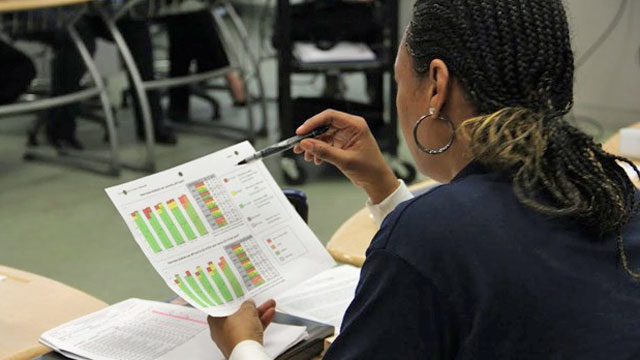
"caption": "A seventh grade teacher at Clinton Middle School in Los Angeles looks at Early Warning Indicator data during a morning meeting. (Alyson Bryant/Youth Radio)",
"description": null,
"title": "dropout-data",
"credit": null,
"status": "inherit",
"isLoading": false,
"fetchFailed": false
},
"mindshift_36082": {
"type": "attachments",
"id": "mindshift_36082",
"meta": {
"index": "attachments_1716263798",
"site": "mindshift",
"id": "36082",
"found": true
},
"parent": 36080,
"imgSizes": {
"twentyfourteen-full-width": {
"file": "https://ww2.kqed.org/app/uploads/sites/23/2014/06/handwriting-495x576.jpg",
"width": 495,
"mimeType": "image/jpeg",
"height": 576
},
"thumbnail": {
"file": "https://ww2.kqed.org/app/uploads/sites/23/2014/06/handwriting-400x514.jpg",
"width": 400,
"mimeType": "image/jpeg",
"height": 514
},
"fd-sm": {
"file": "https://ww2.kqed.org/app/uploads/sites/23/2014/06/handwriting-320x411.jpg",
"width": 320,
"mimeType": "image/jpeg",
"height": 411
},
"post-thumbnail": {
"file": "https://ww2.kqed.org/app/uploads/sites/23/2014/06/handwriting-495x372.jpg",
"width": 495,
"mimeType": "image/jpeg",
"height": 372
},
"kqedFullSize": {
"file": "https://ww2.kqed.org/app/uploads/sites/23/2014/06/handwriting.jpg",
"width": 495,
"height": 636
},
"guest-author-96": {
"file": "https://ww2.kqed.org/app/uploads/sites/23/2014/06/handwriting-96x96.jpg",
"width": 96,
"mimeType": "image/jpeg",
"height": 96
},
"guest-author-64": {
"file": "https://ww2.kqed.org/app/uploads/sites/23/2014/06/handwriting-64x64.jpg",
"width": 64,
"mimeType": "image/jpeg",
"height": 64
},
"guest-author-32": {
"file": "https://ww2.kqed.org/app/uploads/sites/23/2014/06/handwriting-32x32.jpg",
"width": 32,
"mimeType": "image/jpeg",
"height": 32
},
"guest-author-128": {
"file": "https://ww2.kqed.org/app/uploads/sites/23/2014/06/handwriting-128x128.jpg",
"width": 128,
"mimeType": "image/jpeg",
"height": 128
}
},
"publishDate": 1401915549,
"modified": 1401915549,
"caption": "Michael Mabry/New York Times",
"description": null,
"title": "handwriting",
"credit": null,
"status": "inherit",
"isLoading": false,
"fetchFailed": false
},
"mindshift_31497": {
"type": "attachments",
"id": "mindshift_31497",
"meta": {
"index": "attachments_1716263798",
"site": "mindshift",
"id": "31497",
"found": true
},
"parent": 31491,
"imgSizes": {
"thumbnail": {
"file": "https://ww2.kqed.org/app/uploads/sites/23/2013/09/black-girls-code640x360-400x225.jpg",
"width": 400,
"mimeType": "image/jpeg",
"height": 225
},
"fd-sm": {
"file": "https://ww2.kqed.org/app/uploads/sites/23/2013/09/black-girls-code640x360-320x180.jpg",
"width": 320,
"mimeType": "image/jpeg",
"height": 180
},
"kqedFullSize": {
"file": "https://ww2.kqed.org/app/uploads/sites/23/2013/09/black-girls-code640x360.jpg",
"width": 640,
"height": 360
},
"guest-author-96": {
"file": "https://ww2.kqed.org/app/uploads/sites/23/2013/09/black-girls-code640x360-96x96.jpg",
"width": 96,
"mimeType": "image/jpeg",
"height": 96
},
"guest-author-64": {
"file": "https://ww2.kqed.org/app/uploads/sites/23/2013/09/black-girls-code640x360-64x64.jpg",
"width": 64,
"mimeType": "image/jpeg",
"height": 64
},
"detail": {
"file": "https://ww2.kqed.org/app/uploads/sites/23/2013/09/black-girls-code640x360-75x75.jpg",
"width": 75,
"mimeType": "image/jpeg",
"height": 75
},
"guest-author-32": {
"file": "https://ww2.kqed.org/app/uploads/sites/23/2013/09/black-girls-code640x360-32x32.jpg",
"width": 32,
"mimeType": "image/jpeg",
"height": 32
},
"guest-author-128": {
"file": "https://ww2.kqed.org/app/uploads/sites/23/2013/09/black-girls-code640x360-128x128.jpg",
"width": 128,
"mimeType": "image/jpeg",
"height": 128
}
},
"publishDate": 1379635646,
"modified": 1379635646,
"caption": null,
"description": null,
"title": "black-girls-code640x360",
"credit": null,
"status": "inherit",
"isLoading": false,
"fetchFailed": false
},
"mindshift_36068": {
"type": "attachments",
"id": "mindshift_36068",
"meta": {
"index": "attachments_1716263798",
"site": "mindshift",
"id": "36068",
"found": true
},
"parent": 36063,
"imgSizes": {
"thumbnail": {
"file": "https://ww2.kqed.org/app/uploads/sites/23/2014/06/one-room-schoolhouse-400x225.jpg",
"width": 400,
"mimeType": "image/jpeg",
"height": 225
},
"fd-sm": {
"file": "https://ww2.kqed.org/app/uploads/sites/23/2014/06/one-room-schoolhouse-320x180.jpg",
"width": 320,
"mimeType": "image/jpeg",
"height": 180
},
"kqedFullSize": {
"file": "https://ww2.kqed.org/app/uploads/sites/23/2014/06/one-room-schoolhouse.jpg",
"width": 640,
"height": 360
},
"guest-author-96": {
"file": "https://ww2.kqed.org/app/uploads/sites/23/2014/06/one-room-schoolhouse-96x96.jpg",
"width": 96,
"mimeType": "image/jpeg",
"height": 96
},
"guest-author-64": {
"file": "https://ww2.kqed.org/app/uploads/sites/23/2014/06/one-room-schoolhouse-64x64.jpg",
"width": 64,
"mimeType": "image/jpeg",
"height": 64
},
"guest-author-32": {
"file": "https://ww2.kqed.org/app/uploads/sites/23/2014/06/one-room-schoolhouse-32x32.jpg",
"width": 32,
"mimeType": "image/jpeg",
"height": 32
},
"guest-author-128": {
"file": "https://ww2.kqed.org/app/uploads/sites/23/2014/06/one-room-schoolhouse-128x128.jpg",
"width": 128,
"mimeType": "image/jpeg",
"height": 128
}
},
"publishDate": 1401827825,
"modified": 1401827825,
"caption": "Barry Peterson/CBS",
"description": null,
"title": "one-room-schoolhouse",
"credit": null,
"status": "inherit",
"isLoading": false,
"fetchFailed": false
},
"mindshift_36014": {
"type": "attachments",
"id": "mindshift_36014",
"meta": {
"index": "attachments_1716263798",
"site": "mindshift",
"id": "36014",
"found": true
},
"parent": 35999,
"imgSizes": {
"thumbnail": {
"file": "https://ww2.kqed.org/app/uploads/sites/23/2014/06/hungry-hound-400x225.jpg",
"width": 400,
"mimeType": "image/jpeg",
"height": 225
},
"fd-sm": {
"file": "https://ww2.kqed.org/app/uploads/sites/23/2014/06/hungry-hound-320x180.jpg",
"width": 320,
"mimeType": "image/jpeg",
"height": 180
},
"kqedFullSize": {
"file": "https://ww2.kqed.org/app/uploads/sites/23/2014/06/hungry-hound.jpg",
"width": 640,
"height": 360
},
"guest-author-96": {
"file": "https://ww2.kqed.org/app/uploads/sites/23/2014/06/hungry-hound-96x96.jpg",
"width": 96,
"mimeType": "image/jpeg",
"height": 96
},
"guest-author-64": {
"file": "https://ww2.kqed.org/app/uploads/sites/23/2014/06/hungry-hound-64x64.jpg",
"width": 64,
"mimeType": "image/jpeg",
"height": 64
},
"guest-author-32": {
"file": "https://ww2.kqed.org/app/uploads/sites/23/2014/06/hungry-hound-32x32.jpg",
"width": 32,
"mimeType": "image/jpeg",
"height": 32
},
"guest-author-128": {
"file": "https://ww2.kqed.org/app/uploads/sites/23/2014/06/hungry-hound-128x128.jpg",
"width": 128,
"mimeType": "image/jpeg",
"height": 128
}
},
"publishDate": 1401735452,
"modified": 1401735452,
"caption": "\"The Case of the Hungry Hound,\" a student project for the science and math Performance-Based Assessments at Bate Middle School. (Charlie Hall/YouTube)",
"description": null,
"title": "hungry-hound",
"credit": null,
"status": "inherit",
"isLoading": false,
"fetchFailed": false
},
"mindshift_35941": {
"type": "attachments",
"id": "mindshift_35941",
"meta": {
"index": "attachments_1716263798",
"site": "mindshift",
"id": "35941",
"found": true
},
"parent": 35899,
"imgSizes": {
"thumbnail": {
"file": "https://ww2.kqed.org/app/uploads/sites/23/2014/05/going-to-college2-400x225.jpg",
"width": 400,
"mimeType": "image/jpeg",
"height": 225
},
"fd-sm": {
"file": "https://ww2.kqed.org/app/uploads/sites/23/2014/05/going-to-college2-320x180.jpg",
"width": 320,
"mimeType": "image/jpeg",
"height": 180
},
"kqedFullSize": {
"file": "https://ww2.kqed.org/app/uploads/sites/23/2014/05/going-to-college2.jpg",
"width": 640,
"height": 360
},
"guest-author-96": {
"file": "https://ww2.kqed.org/app/uploads/sites/23/2014/05/going-to-college2-96x96.jpg",
"width": 96,
"mimeType": "image/jpeg",
"height": 96
},
"guest-author-64": {
"file": "https://ww2.kqed.org/app/uploads/sites/23/2014/05/going-to-college2-64x64.jpg",
"width": 64,
"mimeType": "image/jpeg",
"height": 64
},
"guest-author-32": {
"file": "https://ww2.kqed.org/app/uploads/sites/23/2014/05/going-to-college2-32x32.jpg",
"width": 32,
"mimeType": "image/jpeg",
"height": 32
},
"guest-author-128": {
"file": "https://ww2.kqed.org/app/uploads/sites/23/2014/05/going-to-college2-128x128.jpg",
"width": 128,
"mimeType": "image/jpeg",
"height": 128
}
},
"publishDate": 1401383101,
"modified": 1401383101,
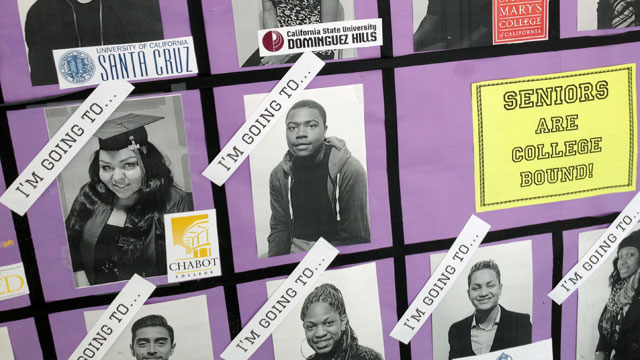
"caption": "The walls of Envision Academy of Arts and Technology in Oakland are covered with messages about academic perseverance and celebrations of its many seniors headed to college next year. (Katrina Schwartz)",
"description": null,
"title": "going-to-college2",
"credit": null,
"status": "inherit",
"isLoading": false,
"fetchFailed": false
},
"mindshift_35725": {
"type": "attachments",
"id": "mindshift_35725",
"meta": {
"index": "attachments_1716263798",
"site": "mindshift",
"id": "35725",
"found": true
},
"parent": 35718,
"imgSizes": {
"thumbnail": {
"file": "https://ww2.kqed.org/app/uploads/sites/23/2014/05/reflection-400x225.jpg",
"width": 400,
"mimeType": "image/jpeg",
"height": 225
},
"fd-sm": {
"file": "https://ww2.kqed.org/app/uploads/sites/23/2014/05/reflection-320x180.jpg",
"width": 320,
"mimeType": "image/jpeg",
"height": 180
},
"kqedFullSize": {
"file": "https://ww2.kqed.org/app/uploads/sites/23/2014/05/reflection.jpg",
"width": 640,
"height": 360
},
"guest-author-96": {
"file": "https://ww2.kqed.org/app/uploads/sites/23/2014/05/reflection-96x96.jpg",
"width": 96,
"mimeType": "image/jpeg",
"height": 96
},
"guest-author-64": {
"file": "https://ww2.kqed.org/app/uploads/sites/23/2014/05/reflection-64x64.jpg",
"width": 64,
"mimeType": "image/jpeg",
"height": 64
},
"guest-author-32": {
"file": "https://ww2.kqed.org/app/uploads/sites/23/2014/05/reflection-32x32.jpg",
"width": 32,
"mimeType": "image/jpeg",
"height": 32
},
"guest-author-128": {
"file": "https://ww2.kqed.org/app/uploads/sites/23/2014/05/reflection-128x128.jpg",
"width": 128,
"mimeType": "image/jpeg",
"height": 128
}
},
"publishDate": 1400187165,
"modified": 1400187165,
"caption": "Getty",
"description": null,
"title": "reflection",
"credit": null,
"status": "inherit",
"isLoading": false,
"fetchFailed": false
},
"mindshift_35501": {
"type": "attachments",
"id": "mindshift_35501",
"meta": {
"index": "attachments_1716263798",
"site": "mindshift",
"id": "35501",
"found": true
},
"parent": 35412,
"imgSizes": {
"thumbnail": {
"file": "https://ww2.kqed.org/app/uploads/sites/23/2014/05/6990975519_3d0edf43e2_z-e1399337565172-400x225.jpg",
"width": 400,
"mimeType": "image/jpeg",
"height": 225
},
"fd-sm": {
"file": "https://ww2.kqed.org/app/uploads/sites/23/2014/05/6990975519_3d0edf43e2_z-e1399337565172-320x180.jpg",
"width": 320,
"mimeType": "image/jpeg",
"height": 180
},
"kqedFullSize": {
"file": "https://ww2.kqed.org/app/uploads/sites/23/2014/05/6990975519_3d0edf43e2_z-e1399337565172.jpg",
"width": 640,
"height": 360
},
"guest-author-96": {
"file": "https://ww2.kqed.org/app/uploads/sites/23/2014/05/6990975519_3d0edf43e2_z-e1399337565172-96x96.jpg",
"width": 96,
"mimeType": "image/jpeg",
"height": 96
},
"guest-author-64": {
"file": "https://ww2.kqed.org/app/uploads/sites/23/2014/05/6990975519_3d0edf43e2_z-e1399337565172-64x64.jpg",
"width": 64,
"mimeType": "image/jpeg",
"height": 64
},
"guest-author-32": {
"file": "https://ww2.kqed.org/app/uploads/sites/23/2014/05/6990975519_3d0edf43e2_z-e1399337565172-32x32.jpg",
"width": 32,
"mimeType": "image/jpeg",
"height": 32
},
"guest-author-128": {
"file": "https://ww2.kqed.org/app/uploads/sites/23/2014/05/6990975519_3d0edf43e2_z-e1399337565172-128x128.jpg",
"width": 128,
"mimeType": "image/jpeg",
"height": 128
}
},
"publishDate": 1399337535,
"modified": 1399337535,
"caption": "syvwch",
"description": null,
"title": "6990975519_3d0edf43e2_z",
"credit": null,
"status": "inherit",
"isLoading": false,
"fetchFailed": false
},
"mindshift_35432": {
"type": "attachments",
"id": "mindshift_35432",
"meta": {
"index": "attachments_1716263798",
"site": "mindshift",
"id": "35432",
"found": true
},
"parent": 35187,
"imgSizes": {
"thumbnail": {
"file": "https://ww2.kqed.org/app/uploads/sites/23/2014/05/3113816327_9a3e7bdaff_z-e1399050892816-400x225.jpg",
"width": 400,
"mimeType": "image/jpeg",
"height": 225
},
"fd-sm": {
"file": "https://ww2.kqed.org/app/uploads/sites/23/2014/05/3113816327_9a3e7bdaff_z-e1399050892816-320x180.jpg",
"width": 320,
"mimeType": "image/jpeg",
"height": 180
},
"kqedFullSize": {
"file": "https://ww2.kqed.org/app/uploads/sites/23/2014/05/3113816327_9a3e7bdaff_z-e1399050892816.jpg",
"width": 640,
"height": 360
},
"guest-author-96": {
"file": "https://ww2.kqed.org/app/uploads/sites/23/2014/05/3113816327_9a3e7bdaff_z-e1399050892816-96x96.jpg",
"width": 96,
"mimeType": "image/jpeg",
"height": 96
},
"guest-author-64": {
"file": "https://ww2.kqed.org/app/uploads/sites/23/2014/05/3113816327_9a3e7bdaff_z-e1399050892816-64x64.jpg",
"width": 64,
"mimeType": "image/jpeg",
"height": 64
},
"guest-author-32": {
"file": "https://ww2.kqed.org/app/uploads/sites/23/2014/05/3113816327_9a3e7bdaff_z-e1399050892816-32x32.jpg",
"width": 32,
"mimeType": "image/jpeg",
"height": 32
},
"guest-author-128": {
"file": "https://ww2.kqed.org/app/uploads/sites/23/2014/05/3113816327_9a3e7bdaff_z-e1399050892816-128x128.jpg",
"width": 128,
"mimeType": "image/jpeg",
"height": 128
}
},
"publishDate": 1399050816,
"modified": 1399050816,
"caption": "Flickr:fhwrdh",
"description": null,
"title": "3113816327_9a3e7bdaff_z",
"credit": null,
"status": "inherit",
"isLoading": false,
"fetchFailed": false
}
},
"audioPlayerReducer": {
"postId": "stream_live",
"isPaused": true,
"isPlaying": false,
"pfsActive": false,
"pledgeModalIsOpen": true,
"playerDrawerIsOpen": false,
"liveAudioPlayStartedAt": 0,
"liveAudioPlayContext": ""
},
"authorsReducer": {
"byline_mindshift_35999": {
"type": "authors",
"id": "byline_mindshift_35999",
"meta": {
"override": true
},
"slug": "byline_mindshift_35999",
"name": "Anya Kamenetz",
"isLoading": false
},
"fsegre": {
"type": "authors",
"id": "226",
"meta": {
"index": "authors_1716337520",
"id": "226",
"found": true
},
"name": "Francesca Segre",
"firstName": "Francesca",
"lastName": "Segre",
"slug": "fsegre",
"email": "Francesca.segre@gmail.com",
"display_author_email": false,
"staff_mastheads": [],
"title": null,
"bio": null,
"avatar": "https://secure.gravatar.com/avatar/a6fef4038bf839e8d97305f7eb03fd2b?s=600&d=blank&r=g",
"twitter": null,
"facebook": null,
"instagram": null,
"linkedin": null,
"sites": [
{
"site": "news",
"roles": [
"subscriber"
]
},
{
"site": "mindshift",
"roles": [
"subscriber"
]
}
],
"headData": {
"title": "Francesca Segre | KQED",
"description": null,
"ogImgSrc": "https://secure.gravatar.com/avatar/a6fef4038bf839e8d97305f7eb03fd2b?s=600&d=blank&r=g",
"twImgSrc": "https://secure.gravatar.com/avatar/a6fef4038bf839e8d97305f7eb03fd2b?s=600&d=blank&r=g"
},
"isLoading": false,
"link": "/author/fsegre"
},
"katrinaschwartz": {
"type": "authors",
"id": "234",
"meta": {
"index": "authors_1716337520",
"id": "234",
"found": true
},
"name": "Katrina Schwartz",
"firstName": "Katrina",
"lastName": "Schwartz",
"slug": "katrinaschwartz",
"email": "kschwartz@kqed.org",
"display_author_email": false,
"staff_mastheads": [
"news"
],
"title": "Producer",
"bio": "Katrina Schwartz is a journalist based in San Francisco. She's worked at KPCC public radio in LA and has reported on air and online for KQED since 2010. She covered how teaching and learning is changing for MindShift between 2012 and 2020. She is the co-host of the MindShift podcast and now produces KQED's Bay Curious podcast.",
"avatar": "https://secure.gravatar.com/avatar/edb4ee79070447a018538c9aae6eeecf28786515b8a0c30e43b6b7dce5aa44c8?s=600&d=blank&r=g",
"twitter": "kschwart",
"bluesky": null,
"facebook": null,
"instagram": null,
"linkedin": null,
"sites": [
{
"site": "",
"roles": [
"editor"
]
},
{
"site": "news",
"roles": [
"editor"
]
},
{
"site": "mindshift",
"roles": [
"administrator"
]
},
{
"site": "stateofhealth",
"roles": [
"author"
]
},
{
"site": "science",
"roles": [
"editor"
]
}
],
"headData": {
"title": "Katrina Schwartz | KQED",
"description": "Producer",
"ogImgSrc": "https://secure.gravatar.com/avatar/edb4ee79070447a018538c9aae6eeecf28786515b8a0c30e43b6b7dce5aa44c8?s=600&d=blank&r=g",
"twImgSrc": "https://secure.gravatar.com/avatar/edb4ee79070447a018538c9aae6eeecf28786515b8a0c30e43b6b7dce5aa44c8?s=600&d=blank&r=g"
},
"isLoading": false,
"link": "/author/katrinaschwartz"
},
"anniempaul": {
"type": "authors",
"id": "4355",
"meta": {
"index": "authors_1716337520",
"id": "4355",
"found": true
},
"name": "Annie Murphy Paul",
"firstName": "Annie",
"lastName": "Murphy Paul",
"slug": "anniempaul",
"email": "anniempaul@gmail.com",
"display_author_email": false,
"staff_mastheads": [],
"title": null,
"bio": null,
"avatar": "https://secure.gravatar.com/avatar/060ea758e9b83d478e4e6c8a0466af50?s=600&d=blank&r=g",
"twitter": null,
"facebook": null,
"instagram": null,
"linkedin": null,
"sites": [
{
"site": "mindshift",
"roles": [
"author"
]
}
],
"headData": {
"title": "Annie Murphy Paul | KQED",
"description": null,
"ogImgSrc": "https://secure.gravatar.com/avatar/060ea758e9b83d478e4e6c8a0466af50?s=600&d=blank&r=g",
"twImgSrc": "https://secure.gravatar.com/avatar/060ea758e9b83d478e4e6c8a0466af50?s=600&d=blank&r=g"
},
"isLoading": false,
"link": "/author/anniempaul"
},
"lcollier": {
"type": "authors",
"id": "4555",
"meta": {
"index": "authors_1716337520",
"id": "4555",
"found": true
},
"name": "Lorna Collier",
"firstName": "Lorna",
"lastName": "Collier",
"slug": "lcollier",
"email": "lorna@lornacollier.com",
"display_author_email": false,
"staff_mastheads": [],
"title": null,
"bio": "Lorna Collier is a freelance writer specializing in education and technology.",
"avatar": "https://secure.gravatar.com/avatar/adb29c3b72882c9933257fd3e00c9273?s=600&d=blank&r=g",
"twitter": "lornacollier",
"facebook": null,
"instagram": null,
"linkedin": null,
"sites": [
{
"site": "mindshift",
"roles": [
"subscriber"
]
}
],
"headData": {
"title": "Lorna Collier | KQED",
"description": null,
"ogImgSrc": "https://secure.gravatar.com/avatar/adb29c3b72882c9933257fd3e00c9273?s=600&d=blank&r=g",
"twImgSrc": "https://secure.gravatar.com/avatar/adb29c3b72882c9933257fd3e00c9273?s=600&d=blank&r=g"
},
"isLoading": false,
"link": "/author/lcollier"
}
},
"pagesReducer": {
"mindshift_category_teaching-strategies": {
"type": "terms",
"id": "mindshift_193",
"meta": {
"index": "terms_1716263798",
"site": "mindshift",
"id": "193",
"score": 14.4071665
},
"featImg": null,
"name": "Teaching Strategies",
"description": "Innovative ideas - projects, processes, curricula, and more - that are transforming how we teach and learn.",
"taxonomy": "category",
"headData": {
"twImgId": null,
"twTitle": null,
"ogTitle": null,
"ogImgId": null,
"twDescription": null,
"description": "Innovative ideas - projects, processes, curricula, and more - that are transforming how we teach and learn.",
"title": "Teaching Strategies Archives | KQED Mindshift",
"ogDescription": null
},
"ttid": 193,
"slug": "teaching-strategies",
"isLoading": false,
"title": "Teaching Strategies",
"pageMeta": {
"site": "mindshift",
"WpPageTemplate": "page-topic-editorial",
"currentPage": 46
},
"blocks": [
{
"blockName": "kqed/company-paragraph",
"content": "Innovative ideas - projects, processes, curricula, and more - that are transforming how we teach and learn."
},
{
"blockName": "kqed/post-list",
"attrs": {
"layout": "cardArticle2",
"query": "posts/mindshift?category=teaching-strategies",
"seeMore": false,
"paginated": true,
"page": 46
}
},
{
"blockName": "kqed/ad"
}
]
}
},
"pfsSessionReducer": {},
"postsReducer": {
"stream_live": {
"type": "live",
"id": "stream_live",
"audioUrl": "https://streams.kqed.org/kqedradio",
"title": "Live Stream",
"excerpt": "Live Stream information currently unavailable.",
"link": "/radio",
"featImg": "",
"label": {
"name": "KQED Live",
"link": "/"
}
},
"stream_kqedNewscast": {
"type": "posts",
"id": "stream_kqedNewscast",
"audioUrl": "https://www.kqed.org/.stream/anon/radio/RDnews/newscast.mp3?_=1",
"title": "KQED Newscast",
"featImg": "",
"label": {
"name": "88.5 FM",
"link": "/"
}
},
"mindshift_36333": {
"type": "posts",
"id": "mindshift_36333",
"meta": {
"index": "posts_1716263798",
"site": "mindshift",
"id": "36333",
"score": null,
"sort": [
1402952625000
]
},
"parent": 0,
"labelTerm": {
"site": "mindshift"
},
"blocks": [],
"publishDate": 1402952625,
"format": "aside",
"disqusTitle": "Can 12 Minutes of Exercise Help Close the Achievement Gap?",
"title": "Can 12 Minutes of Exercise Help Close the Achievement Gap?",
"headTitle": "MindShift | KQED News",
"content": "\u003cp>Researchers are expanding on recent studies that find \u003ca href=\"http://www.tandfonline.com/doi/abs/10.1080/01443410.2012.723612#.U58-bfldV8E\" target=\"_blank\">exercise positively affects learning\u003c/a> in the K-12 environment by testing the theory on college students. In an \u003ca href=\"http://www.psmag.com/navigation/health-and-behavior/can-exercise-close-achievement-gap-83433/\" target=\"_blank\">article for Pacific Standard\u003c/a> Battina Chang writes that just 12 minutes of aerobic exercise closed the pre-existing score gap between low-income and higher-income students in the study.\u003cbr>\nhttp://www.psmag.com/navigation/health-and-behavior/can-exercise-close-achievement-gap-83433/\u003c/p>\n\u003cp>[ad fullwidth]\u003c/p>\u003cp>\u003c/p>\n",
"disqusIdentifier": "36333 http://blogs.kqed.org/mindshift/?p=36333",
"disqusUrl": "https://ww2.kqed.org/mindshift/2014/06/16/can-12-minutes-of-exercise-help-close-the-achievement-gap/",
"stats": {
"hasVideo": false,
"hasChartOrMap": false,
"hasAudio": false,
"hasPolis": false,
"wordCount": 72,
"hasGoogleForm": false,
"hasGallery": false,
"hasHearkenModule": false,
"iframeSrcs": [],
"paragraphCount": 3
},
"modified": 1456258015,
"excerpt": "Aerobic exercise could help narrow the achievement gap between low-income college students and their higher income peers.",
"headData": {
"twImgId": "",
"twTitle": "",
"ogTitle": "",
"ogImgId": "",
"twDescription": "",
"description": "Aerobic exercise could help narrow the achievement gap between low-income college students and their higher income peers.",
"title": "Can 12 Minutes of Exercise Help Close the Achievement Gap? | KQED",
"ogDescription": "",
"schema": {
"@context": "https://schema.org",
"@type": "Article",
"headline": "Can 12 Minutes of Exercise Help Close the Achievement Gap?",
"datePublished": "2014-06-16T14:03:45-07:00",
"dateModified": "2016-02-23T12:06:55-08:00",
"image": "https://cdn.kqed.org/wp-content/uploads/2020/02/KQED-OG-Image@1x.png"
}
},
"guestAuthors": [],
"slug": "can-12-minutes-of-exercise-help-close-the-achievement-gap",
"status": "publish",
"path": "/mindshift/36333/can-12-minutes-of-exercise-help-close-the-achievement-gap",
"audioTrackLength": null,
"parsedContent": [
{
"type": "contentString",
"content": "\u003cdiv class=\"post-body\">\u003cp>\u003cp>Researchers are expanding on recent studies that find \u003ca href=\"http://www.tandfonline.com/doi/abs/10.1080/01443410.2012.723612#.U58-bfldV8E\" target=\"_blank\">exercise positively affects learning\u003c/a> in the K-12 environment by testing the theory on college students. In an \u003ca href=\"http://www.psmag.com/navigation/health-and-behavior/can-exercise-close-achievement-gap-83433/\" target=\"_blank\">article for Pacific Standard\u003c/a> Battina Chang writes that just 12 minutes of aerobic exercise closed the pre-existing score gap between low-income and higher-income students in the study.\u003cbr>\nhttp://www.psmag.com/navigation/health-and-behavior/can-exercise-close-achievement-gap-83433/\u003c/p>\n\u003cp>\u003c/p>\u003c/div>",
"attributes": {
"named": {},
"numeric": []
}
},
{
"type": "component",
"content": "",
"name": "ad",
"attributes": {
"named": {
"label": "fullwidth"
},
"numeric": [
"fullwidth"
]
}
},
{
"type": "contentString",
"content": "\u003cdiv class=\"post-body\">\u003cp>\u003c/p>\u003cp>\u003c/p>\n\u003c/div>\u003c/p>",
"attributes": {
"named": {},
"numeric": []
}
}
],
"link": "/mindshift/36333/can-12-minutes-of-exercise-help-close-the-achievement-gap",
"authors": [
"4354"
],
"categories": [
"mindshift_193"
],
"tags": [
"mindshift_20694"
],
"featImg": "mindshift_36336",
"label": "mindshift"
},
"mindshift_36037": {
"type": "posts",
"id": "mindshift_36037",
"meta": {
"index": "posts_1716263798",
"site": "mindshift",
"id": "36037",
"score": null,
"sort": [
1402408851000
]
},
"parent": 0,
"labelTerm": {
"site": "mindshift"
},
"blocks": [],
"publishDate": 1402408851,
"format": "aside",
"disqusTitle": "The Payoffs and Pitfalls of Flagging 'At-Risk' Kids in Early Grades",
"title": "The Payoffs and Pitfalls of Flagging 'At-Risk' Kids in Early Grades",
"headTitle": "MindShift | KQED News",
"content": "\u003cfigure id=\"attachment_36038\" class=\"wp-caption aligncenter\" style=\"max-width: 640px\">\u003ca href=\"http://ww2.kqed.org/mindshift/wp-content/uploads/sites/23/2014/06/dropout-data.jpg\">\u003cimg class=\"size-full wp-image-36038\" src=\"http://ww2.kqed.org/mindshift/wp-content/uploads/sites/23/2014/06/dropout-data.jpg\" alt=\"A seventh grade teacher at Clinton Middle School in Los Angeles looks at Early Warning Indicator data during a morning meeting. (Alyson Bryant/Youth Radio)\" width=\"640\" height=\"360\" srcset=\"https://ww2.kqed.org/app/uploads/sites/23/2014/06/dropout-data.jpg 640w, https://ww2.kqed.org/app/uploads/sites/23/2014/06/dropout-data-400x225.jpg 400w, https://ww2.kqed.org/app/uploads/sites/23/2014/06/dropout-data-320x180.jpg 320w\" sizes=\"(max-width: 640px) 100vw, 640px\">\u003c/a>\u003cfigcaption class=\"wp-caption-text\">A seventh-grade teacher at Clinton Middle School in Los Angeles looks at Early Warning Indicator data during a morning meeting. (Alyson Bryant/Youth Radio)\u003c/figcaption>\u003c/figure>\n\u003cp>\u003cstrong>By Alyson Bryant, \u003ca href=\"https://youthradio.org/\" target=\"_blank\">Youth Radio\u003c/a>\u003c/strong>\u003c/p>\n\u003cp class=\"dropcap-serif\">Long before students have even entered ninth grade, teachers are looking to detailed data to figure out which kids are most likely to drop out of high school. Though this flagging system can call attention to a need for additional help to a potential dropout, there may be concerns, like inaccurate predictions, or worse, lowered expectations.\u003c/p>\n\u003cp>At \u003ca href=\"http://www.clintonmiddleschool.org/\" target=\"_blank\">Clinton Middle School\u003c/a> in East Los Angeles, teachers are using a system called Early Warning Indicators, or EWI, which is part of a school transformation program called \u003ca href=\"http://diplomasnow.org/\" target=\"_blank\">Diplomas Now,\u003c/a> currently used in 14 cities around the country. The system is based on recent research out of Johns Hopkins University that shows what specific factors best predict the likelihood of dropping out of high school. The warning system uses three data points – suspensions or behavior, attendance, and grades in middle school -- to identify kids at risk of not making it to high school graduation. According to an \u003ca href=\"http://opinionator.blogs.nytimes.com/2014/06/07/stop-holding-us-back/?_php=true&_type=blogs&_php=true&_type=blogs&ref=todayspaper&_r=1&\" target=\"_blank\">op-ed written by Diplomas Now in the New York Times\u003c/a>, in the 2012-13 school year, \"the program achieved a 41 percent reduction in chronically absent students, a 70 percent reduction in suspended students, a 69 percent reduction in students failing English and a 52 percent reduction in students failing math.\"\u003c/p>\n\u003cp>[contextly_sidebar id=\"00ff909ebab23d051fcecc4a3ed1469e\"]\u003c/p>\n\u003cp>Here’s how it works: After reviewing the trends, the teachers examine students’ names that are colored red or yellow, considered off-track or in danger of being off-track. At Clinton, signs of being off-track include coming to school less than 85 percent of the time, getting a bad behavior grade, or an F in any class. Students who show two or more of these signs are flagged.\u003c/p>\n\u003cp>[ad fullwidth]\u003c/p>\n\u003cp>The teachers then discuss the circumstances around each student, things like how often he or she visits the nurse, or what’s going on in the family. Then they brainstorm interventions. These can be simple, like saving an extra breakfast for a student, or more involved, like assigning tutoring or Saturday school.\u003c/p>\n\u003cp>Though teachers have always kept students’ needs in mind when grades have dipped or behavior has changed, typically those decisions were made within the teacher’s own classroom. Teachers don’t always know what’s going on in the classroom next door, and it’s fairly rare to have time carved out of the school day just to problem-solve around student data. Likewise, students often don’t realize that teachers are paying attention to their personal lives.\u003c/p>\n\u003cp>At Clinton, a student doing poorly in math class is every teacher’s problem, because that student is considered more likely to drop out. The faculty meets every month, hoping that within a month, they can bump a student back on-track -- a process they call “recovery.”\u003c/p>\n\u003cp>But does being off-track definitely mean that a student will drop out? The kids interviewed at Clinton are in seventh grade and only 12 years old. Can data accurately predict if one of them is going to drop out of high school five years down the line?\u003c/p>\n\u003caside class=\"pullquote alignleft\">\"What if what’s the cure for under-performance in middle school becomes a disease when they move on to college, because they’ve been told they can’t do it on their own?”\u003c/aside>\n\u003cp>That’s a question Chris West is wrestling with, based on his work developing an Early Warning Indicator system for Montgomery County Schools in Maryland. His system flagged “at-risk” students as young as first grade. One of his concerns is whether all this information can even be acted upon. He found that 76 percent of the students who dropped out had these warning indicators, but 47.4 percent of the non-dropouts had these indicators, too. What’s the risk of “mis-predicting”?\u003c/p>\n\u003cp>Ultimately, West said if you identify someone incorrectly, but they still show signs of disengagement, the effects of intervening could still be positive.\u003c/p>\n\u003cp>There’s another concern about these early flagging systems. What if knowing that certain kids are on the “at-risk” list colors the way teachers see them, and they start to expect less? Or what if the students start to expect less of themselves?\u003c/p>\n\u003cp>\u003ca href=\"http://www.utexas.edu/cola/centers/prc/directory/faculty/yeagerds\" target=\"_blank\">David Yeager\u003c/a>, an adolescent psychologist at the University of Texas, worries that early warning systems could undermine a student’s resilience. “What if what’s the cure for under-performance in middle school becomes a disease when they move on to college, because they’ve been told they can’t do it on their own?” he said.\u003c/p>\n\u003cfigure id=\"attachment_36043\" class=\"wp-caption alignleft\" style=\"max-width: 300px\">\u003ca href=\"http://ww2.kqed.org/mindshift/wp-content/uploads/sites/23/2014/06/clinton.jpeg\">\u003cimg class=\"size-medium wp-image-36043\" src=\"http://ww2.kqed.org/mindshift/wp-content/uploads/sites/23/2014/06/clinton-300x200.jpeg\" alt=\"Seventh grade teachers gather at 8 a.m. to look at attendance, behavior, and course performance data for their students. (Alyson Bryant/Youth Radio)\" width=\"300\" height=\"200\">\u003c/a>\u003cfigcaption class=\"wp-caption-text\">Seventh grade teachers gather at 8 a.m. to look at attendance, behavior, and course performance data for their students. (Alyson Bryant/Youth Radio)\u003c/figcaption>\u003c/figure>\n\u003cp>At Clinton, the students don’t necessarily know that they’ve been flagged. Principal Sissi O’Reilly said that her staff never uses the term “at-risk” to describe students. And because the teachers are intervening as soon as a student slips up, the interventions themselves can be small. “I’m not putting out fires, going around trying to solve problems. I’m supporting the system that supports individual kids,” said O’Reilly.\u003c/p>\n\u003cp>But English teacher Jason Black says he thinks it is okay to tell students outright if they’re being targeted. “I think that actually makes them feel good, knowing they have a team behind them, knowing that they have a lot of people they will let down,” said Black.\u003c/p>\n\u003cp>Eighth-grader Gabby said that she appreciated the intervention, because she already knew she was messing up. “My math teacher, she came to talk to me, she pulled me out individually and told me about my grades and she said English needs to be better… Then my history teacher pulled me out as well, so I knew that they really cared,” said Gabby.\u003c/p>\n\u003cp>And teachers end up grading themselves too, using the data trends to set goals for their own classrooms.\u003c/p>\n\u003cp>Creating the structure for this kind of data-driven attention doesn’t come cheap. There are almost as many support staff at Clinton as there are teachers, to provide wrap-around services, according to the principal.\u003c/p>\n\u003cp>Gabby went from an F to a B in English. But what happens when Gabby graduates from Clinton, and this strong support network disappears? For Andrea Schwartz who crunches the data at Clinton, that’s her biggest concern. “It keeps me up at night... How do we build up these kids so that they have a solid enough foundation that they can go on and progress?”\u003c/p>\n\u003cp>Outside of the Clinton campus, early warning data are collected on students throughout the Los Angeles School District. But according to Cynthia Lim at the Office of Data and Accountability, other schools don’t have the human capital to help teachers analyze and respond to that data consistently.\u003c/p>\n\u003cp>\u003cem>\u003cimg class=\"alignleft wp-image-36186 size-thumbnail\" src=\"http://ww2.kqed.org/mindshift/wp-content/uploads/sites/23/2014/06/logo-e1402352439180-140x65.jpg\" alt=\"logo\" width=\"140\" height=\"65\">\u003c/em>\u003c/p>\n\u003cp>[ad floatright]\u003c/p>\n\u003cp>\u003cem>This piece was produced by \u003ca href=\"https://youthradio.org/\" target=\"_blank\">Youth Radio\u003c/a>, in collaboration with Voicewaves Youth Media. Additional reporting by Robyn Gee / Youth Radio. Edited by Elisabeth Soep.\u003cbr>\n\u003c/em>\u003c/p>\n\n",
"disqusIdentifier": "36037 http://blogs.kqed.org/mindshift/?p=36037",
"disqusUrl": "https://ww2.kqed.org/mindshift/2014/06/10/whats-the-danger-of-flagging-at-risk-kids-early-on/",
"stats": {
"hasVideo": false,
"hasChartOrMap": false,
"hasAudio": false,
"hasPolis": false,
"wordCount": 1233,
"hasGoogleForm": false,
"hasGallery": false,
"hasHearkenModule": false,
"iframeSrcs": [],
"paragraphCount": 23
},
"modified": 1423076371,
"excerpt": "To help kids graduate from high school, educators may need to start looking data as early as middle school.",
"headData": {
"twImgId": "",
"twTitle": "",
"ogTitle": "",
"ogImgId": "",
"twDescription": "",
"description": "To help kids graduate from high school, educators may need to start looking data as early as middle school.",
"title": "The Payoffs and Pitfalls of Flagging 'At-Risk' Kids in Early Grades | KQED",
"ogDescription": "",
"schema": {
"@context": "https://schema.org",
"@type": "Article",
"headline": "The Payoffs and Pitfalls of Flagging 'At-Risk' Kids in Early Grades",
"datePublished": "2014-06-10T07:00:51-07:00",
"dateModified": "2015-02-04T10:59:31-08:00",
"image": "https://cdn.kqed.org/wp-content/uploads/2020/02/KQED-OG-Image@1x.png"
}
},
"guestAuthors": [],
"slug": "whats-the-danger-of-flagging-at-risk-kids-early-on",
"status": "publish",
"path": "/mindshift/36037/whats-the-danger-of-flagging-at-risk-kids-early-on",
"audioTrackLength": null,
"parsedContent": [
{
"type": "contentString",
"content": "\u003cdiv class=\"post-body\">\u003cp>\u003cfigure id=\"attachment_36038\" class=\"wp-caption aligncenter\" style=\"max-width: 640px\">\u003ca href=\"http://ww2.kqed.org/mindshift/wp-content/uploads/sites/23/2014/06/dropout-data.jpg\">\u003cimg class=\"size-full wp-image-36038\" src=\"http://ww2.kqed.org/mindshift/wp-content/uploads/sites/23/2014/06/dropout-data.jpg\" alt=\"A seventh grade teacher at Clinton Middle School in Los Angeles looks at Early Warning Indicator data during a morning meeting. (Alyson Bryant/Youth Radio)\" width=\"640\" height=\"360\" srcset=\"https://ww2.kqed.org/app/uploads/sites/23/2014/06/dropout-data.jpg 640w, https://ww2.kqed.org/app/uploads/sites/23/2014/06/dropout-data-400x225.jpg 400w, https://ww2.kqed.org/app/uploads/sites/23/2014/06/dropout-data-320x180.jpg 320w\" sizes=\"(max-width: 640px) 100vw, 640px\">\u003c/a>\u003cfigcaption class=\"wp-caption-text\">A seventh-grade teacher at Clinton Middle School in Los Angeles looks at Early Warning Indicator data during a morning meeting. (Alyson Bryant/Youth Radio)\u003c/figcaption>\u003c/figure>\n\u003cp>\u003cstrong>By Alyson Bryant, \u003ca href=\"https://youthradio.org/\" target=\"_blank\">Youth Radio\u003c/a>\u003c/strong>\u003c/p>\n\u003cp class=\"dropcap-serif\">Long before students have even entered ninth grade, teachers are looking to detailed data to figure out which kids are most likely to drop out of high school. Though this flagging system can call attention to a need for additional help to a potential dropout, there may be concerns, like inaccurate predictions, or worse, lowered expectations.\u003c/p>\n\u003cp>At \u003ca href=\"http://www.clintonmiddleschool.org/\" target=\"_blank\">Clinton Middle School\u003c/a> in East Los Angeles, teachers are using a system called Early Warning Indicators, or EWI, which is part of a school transformation program called \u003ca href=\"http://diplomasnow.org/\" target=\"_blank\">Diplomas Now,\u003c/a> currently used in 14 cities around the country. The system is based on recent research out of Johns Hopkins University that shows what specific factors best predict the likelihood of dropping out of high school. The warning system uses three data points – suspensions or behavior, attendance, and grades in middle school -- to identify kids at risk of not making it to high school graduation. According to an \u003ca href=\"http://opinionator.blogs.nytimes.com/2014/06/07/stop-holding-us-back/?_php=true&_type=blogs&_php=true&_type=blogs&ref=todayspaper&_r=1&\" target=\"_blank\">op-ed written by Diplomas Now in the New York Times\u003c/a>, in the 2012-13 school year, \"the program achieved a 41 percent reduction in chronically absent students, a 70 percent reduction in suspended students, a 69 percent reduction in students failing English and a 52 percent reduction in students failing math.\"\u003c/p>\n\u003cp>\u003c/p>\u003cp>\u003c/p>\u003cp>\u003c/p>\n\u003cp>Here’s how it works: After reviewing the trends, the teachers examine students’ names that are colored red or yellow, considered off-track or in danger of being off-track. At Clinton, signs of being off-track include coming to school less than 85 percent of the time, getting a bad behavior grade, or an F in any class. Students who show two or more of these signs are flagged.\u003c/p>\n\u003cp>\u003c/p>\u003c/div>",
"attributes": {
"named": {},
"numeric": []
}
},
{
"type": "component",
"content": "",
"name": "ad",
"attributes": {
"named": {
"label": "fullwidth"
},
"numeric": [
"fullwidth"
]
}
},
{
"type": "contentString",
"content": "\u003cdiv class=\"post-body\">\u003cp>\u003c/p>\n\u003cp>The teachers then discuss the circumstances around each student, things like how often he or she visits the nurse, or what’s going on in the family. Then they brainstorm interventions. These can be simple, like saving an extra breakfast for a student, or more involved, like assigning tutoring or Saturday school.\u003c/p>\n\u003cp>Though teachers have always kept students’ needs in mind when grades have dipped or behavior has changed, typically those decisions were made within the teacher’s own classroom. Teachers don’t always know what’s going on in the classroom next door, and it’s fairly rare to have time carved out of the school day just to problem-solve around student data. Likewise, students often don’t realize that teachers are paying attention to their personal lives.\u003c/p>\n\u003cp>At Clinton, a student doing poorly in math class is every teacher’s problem, because that student is considered more likely to drop out. The faculty meets every month, hoping that within a month, they can bump a student back on-track -- a process they call “recovery.”\u003c/p>\n\u003cp>But does being off-track definitely mean that a student will drop out? The kids interviewed at Clinton are in seventh grade and only 12 years old. Can data accurately predict if one of them is going to drop out of high school five years down the line?\u003c/p>\n\u003caside class=\"pullquote alignleft\">\"What if what’s the cure for under-performance in middle school becomes a disease when they move on to college, because they’ve been told they can’t do it on their own?”\u003c/aside>\n\u003cp>That’s a question Chris West is wrestling with, based on his work developing an Early Warning Indicator system for Montgomery County Schools in Maryland. His system flagged “at-risk” students as young as first grade. One of his concerns is whether all this information can even be acted upon. He found that 76 percent of the students who dropped out had these warning indicators, but 47.4 percent of the non-dropouts had these indicators, too. What’s the risk of “mis-predicting”?\u003c/p>\n\u003cp>Ultimately, West said if you identify someone incorrectly, but they still show signs of disengagement, the effects of intervening could still be positive.\u003c/p>\n\u003cp>There’s another concern about these early flagging systems. What if knowing that certain kids are on the “at-risk” list colors the way teachers see them, and they start to expect less? Or what if the students start to expect less of themselves?\u003c/p>\n\u003cp>\u003ca href=\"http://www.utexas.edu/cola/centers/prc/directory/faculty/yeagerds\" target=\"_blank\">David Yeager\u003c/a>, an adolescent psychologist at the University of Texas, worries that early warning systems could undermine a student’s resilience. “What if what’s the cure for under-performance in middle school becomes a disease when they move on to college, because they’ve been told they can’t do it on their own?” he said.\u003c/p>\n\u003cfigure id=\"attachment_36043\" class=\"wp-caption alignleft\" style=\"max-width: 300px\">\u003ca href=\"http://ww2.kqed.org/mindshift/wp-content/uploads/sites/23/2014/06/clinton.jpeg\">\u003cimg class=\"size-medium wp-image-36043\" src=\"http://ww2.kqed.org/mindshift/wp-content/uploads/sites/23/2014/06/clinton-300x200.jpeg\" alt=\"Seventh grade teachers gather at 8 a.m. to look at attendance, behavior, and course performance data for their students. (Alyson Bryant/Youth Radio)\" width=\"300\" height=\"200\">\u003c/a>\u003cfigcaption class=\"wp-caption-text\">Seventh grade teachers gather at 8 a.m. to look at attendance, behavior, and course performance data for their students. (Alyson Bryant/Youth Radio)\u003c/figcaption>\u003c/figure>\n\u003cp>At Clinton, the students don’t necessarily know that they’ve been flagged. Principal Sissi O’Reilly said that her staff never uses the term “at-risk” to describe students. And because the teachers are intervening as soon as a student slips up, the interventions themselves can be small. “I’m not putting out fires, going around trying to solve problems. I’m supporting the system that supports individual kids,” said O’Reilly.\u003c/p>\n\u003cp>But English teacher Jason Black says he thinks it is okay to tell students outright if they’re being targeted. “I think that actually makes them feel good, knowing they have a team behind them, knowing that they have a lot of people they will let down,” said Black.\u003c/p>\n\u003cp>Eighth-grader Gabby said that she appreciated the intervention, because she already knew she was messing up. “My math teacher, she came to talk to me, she pulled me out individually and told me about my grades and she said English needs to be better… Then my history teacher pulled me out as well, so I knew that they really cared,” said Gabby.\u003c/p>\n\u003cp>And teachers end up grading themselves too, using the data trends to set goals for their own classrooms.\u003c/p>\n\u003cp>Creating the structure for this kind of data-driven attention doesn’t come cheap. There are almost as many support staff at Clinton as there are teachers, to provide wrap-around services, according to the principal.\u003c/p>\n\u003cp>Gabby went from an F to a B in English. But what happens when Gabby graduates from Clinton, and this strong support network disappears? For Andrea Schwartz who crunches the data at Clinton, that’s her biggest concern. “It keeps me up at night... How do we build up these kids so that they have a solid enough foundation that they can go on and progress?”\u003c/p>\n\u003cp>Outside of the Clinton campus, early warning data are collected on students throughout the Los Angeles School District. But according to Cynthia Lim at the Office of Data and Accountability, other schools don’t have the human capital to help teachers analyze and respond to that data consistently.\u003c/p>\n\u003cp>\u003cem>\u003cimg class=\"alignleft wp-image-36186 size-thumbnail\" src=\"http://ww2.kqed.org/mindshift/wp-content/uploads/sites/23/2014/06/logo-e1402352439180-140x65.jpg\" alt=\"logo\" width=\"140\" height=\"65\">\u003c/em>\u003c/p>\n\u003cp>\u003c/p>\u003c/div>",
"attributes": {
"named": {},
"numeric": []
}
},
{
"type": "component",
"content": "",
"name": "ad",
"attributes": {
"named": {
"label": "floatright"
},
"numeric": [
"floatright"
]
}
},
{
"type": "contentString",
"content": "\u003cdiv class=\"post-body\">\u003cp>\u003c/p>\n\u003cp>\u003cem>This piece was produced by \u003ca href=\"https://youthradio.org/\" target=\"_blank\">Youth Radio\u003c/a>, in collaboration with Voicewaves Youth Media. Additional reporting by Robyn Gee / Youth Radio. Edited by Elisabeth Soep.\u003cbr>\n\u003c/em>\u003c/p>\n\n\u003c/div>\u003c/p>",
"attributes": {
"named": {},
"numeric": []
}
}
],
"link": "/mindshift/36037/whats-the-danger-of-flagging-at-risk-kids-early-on",
"authors": [
"4354"
],
"categories": [
"mindshift_193"
],
"tags": [
"mindshift_631",
"mindshift_196",
"mindshift_1040",
"mindshift_632"
],
"featImg": "mindshift_36038",
"label": "mindshift"
},
"mindshift_36080": {
"type": "posts",
"id": "mindshift_36080",
"meta": {
"index": "posts_1716263798",
"site": "mindshift",
"id": "36080",
"score": null,
"sort": [
1402005902000
]
},
"parent": 0,
"labelTerm": {
"site": "mindshift"
},
"blocks": [],
"publishDate": 1402005902,
"format": "aside",
"disqusTitle": "Does Losing Handwriting In School Mean Losing Other Skills Too?",
"title": "Does Losing Handwriting In School Mean Losing Other Skills Too?",
"headTitle": "MindShift | KQED News",
"content": "\u003cp>As laptops and tablets become more commonly used as writing tools, many are ready to leave the skill of handwriting behind. Most students will do most of their writing on computers, the thinking goes, so educators should get them started on keyboarding skills early. But psychologist are uncovering some unexpected benefits of learning -- not just to write, but to write by hand. In her \u003ca href=\"http://www.nytimes.com/2014/06/03/science/whats-lost-as-handwriting-fades.html?_r=1\" target=\"_blank\">New York Times article\u003c/a> Maria Konnikova explains some of the newest research.\u003c/p>\n\u003cp>\"New evidence suggests that the links between handwriting and broader educational development run deep. Children not only learn to read more quickly when they first learn to write by hand, but they also remain better able to generate ideas and retain information. In other words, it’s not just what we write that matters — but how. 'When we write, a unique neural circuit is automatically activated,' said Stanislas Dehaene, a psychologist at the Collège de France in Paris. 'There is a core recognition of the gesture in the written word, a sort of recognition by mental simulation in your brain.'\"\u003cbr>\nhttp://www.nytimes.com/2014/06/03/science/whats-lost-as-handwriting-fades.html\u003c/p>\n\u003cp>[ad fullwidth]\u003c/p>\u003cp>\u003c/p>\n",
"disqusIdentifier": "36080 http://blogs.kqed.org/mindshift/?p=36080",
"disqusUrl": "https://ww2.kqed.org/mindshift/2014/06/05/does-losing-handwriting-in-school-mean-losing-other-skills-too/",
"stats": {
"hasVideo": false,
"hasChartOrMap": false,
"hasAudio": false,
"hasPolis": false,
"wordCount": 196,
"hasGoogleForm": false,
"hasGallery": false,
"hasHearkenModule": false,
"iframeSrcs": [],
"paragraphCount": 4
},
"modified": 1456257895,
"excerpt": "Learning to write by hand has learning benefits that could be neglected if too much focus is put on keyboarding.",
"headData": {
"twImgId": "",
"twTitle": "",
"ogTitle": "",
"ogImgId": "",
"twDescription": "",
"description": "Learning to write by hand has learning benefits that could be neglected if too much focus is put on keyboarding.",
"title": "Does Losing Handwriting In School Mean Losing Other Skills Too? | KQED",
"ogDescription": "",
"schema": {
"@context": "https://schema.org",
"@type": "Article",
"headline": "Does Losing Handwriting In School Mean Losing Other Skills Too?",
"datePublished": "2014-06-05T15:05:02-07:00",
"dateModified": "2016-02-23T12:04:55-08:00",
"image": "https://cdn.kqed.org/wp-content/uploads/2020/02/KQED-OG-Image@1x.png"
}
},
"guestAuthors": [],
"slug": "does-losing-handwriting-in-school-mean-losing-other-skills-too",
"status": "publish",
"path": "/mindshift/36080/does-losing-handwriting-in-school-mean-losing-other-skills-too",
"audioTrackLength": null,
"parsedContent": [
{
"type": "contentString",
"content": "\u003cdiv class=\"post-body\">\u003cp>\u003cp>As laptops and tablets become more commonly used as writing tools, many are ready to leave the skill of handwriting behind. Most students will do most of their writing on computers, the thinking goes, so educators should get them started on keyboarding skills early. But psychologist are uncovering some unexpected benefits of learning -- not just to write, but to write by hand. In her \u003ca href=\"http://www.nytimes.com/2014/06/03/science/whats-lost-as-handwriting-fades.html?_r=1\" target=\"_blank\">New York Times article\u003c/a> Maria Konnikova explains some of the newest research.\u003c/p>\n\u003cp>\"New evidence suggests that the links between handwriting and broader educational development run deep. Children not only learn to read more quickly when they first learn to write by hand, but they also remain better able to generate ideas and retain information. In other words, it’s not just what we write that matters — but how. 'When we write, a unique neural circuit is automatically activated,' said Stanislas Dehaene, a psychologist at the Collège de France in Paris. 'There is a core recognition of the gesture in the written word, a sort of recognition by mental simulation in your brain.'\"\u003cbr>\nhttp://www.nytimes.com/2014/06/03/science/whats-lost-as-handwriting-fades.html\u003c/p>\n\u003cp>\u003c/p>\u003c/div>",
"attributes": {
"named": {},
"numeric": []
}
},
{
"type": "component",
"content": "",
"name": "ad",
"attributes": {
"named": {
"label": "fullwidth"
},
"numeric": [
"fullwidth"
]
}
},
{
"type": "contentString",
"content": "\u003cdiv class=\"post-body\">\u003cp>\u003c/p>\u003cp>\u003c/p>\n\u003c/div>\u003c/p>",
"attributes": {
"named": {},
"numeric": []
}
}
],
"link": "/mindshift/36080/does-losing-handwriting-in-school-mean-losing-other-skills-too",
"authors": [
"4354"
],
"categories": [
"mindshift_193"
],
"tags": [
"mindshift_20637"
],
"featImg": "mindshift_36082",
"label": "mindshift"
},
"mindshift_36055": {
"type": "posts",
"id": "mindshift_36055",
"meta": {
"index": "posts_1716263798",
"site": "mindshift",
"id": "36055",
"score": null,
"sort": [
1401915641000
]
},
"parent": 0,
"labelTerm": {
"site": "mindshift"
},
"blocks": [],
"publishDate": 1401915641,
"format": "aside",
"disqusTitle": "Could Minecraft Be the Hook to Get Girls Interested in Coding?",
"title": "Could Minecraft Be the Hook to Get Girls Interested in Coding?",
"headTitle": "MindShift | KQED News",
"content": "\u003cp>As coding becomes the \u003cem>lingua franca\u003c/em> of the future, girls are still hesitant to embrace it. Last year, only 18.5 percent of those who took the AP computer science test were girls, a slight drop from the previous year. The gender gap in science, technology, engineering and math fields has many educators worried, but those working with young coders say games could be an effective way to spark girls' interest. In a \u003ca href=\"http://www.nytimes.com/2014/06/01/opinion/sunday/how-to-get-girls-into-coding.html?_r=1\" target=\"_blank\">New York Times op-ed\u003c/a> Nitasha Tiku writes that Minecraft, in particular, has made it to the mainstream.\u003c/p>\n\u003cp>\"A hundred students were on ThoughtSTEM’s waiting list for its first Minecraft class two months ago. 'I would say that the girls are actually outperforming the boys, at least in my class,' Mr. Foster said. 'And it’s very good to see, because as computer scientists, we definitely recognize that there’s a big gender disparity in our field.' He added, 'There are just so many girls who play Minecraft who, as far as I’m concerned, are all people who can be swayed to pursue coding — they just don’t realize it yet.'\"\u003cbr>\nhttp://www.nytimes.com/2014/06/01/opinion/sunday/how-to-get-girls-into-coding.html\u003c/p>\n\u003cp>[ad fullwidth]\u003c/p>\u003cp>\u003c/p>\n",
"disqusIdentifier": "36055 http://blogs.kqed.org/mindshift/?p=36055",
"disqusUrl": "https://ww2.kqed.org/mindshift/2014/06/04/could-minecraft-be-the-hook-to-get-girls-interested-in-coding/",
"stats": {
"hasVideo": false,
"hasChartOrMap": false,
"hasAudio": false,
"hasPolis": false,
"wordCount": 210,
"hasGoogleForm": false,
"hasGallery": false,
"hasHearkenModule": false,
"iframeSrcs": [],
"paragraphCount": 4
},
"modified": 1456257800,
"excerpt": "Girls love to play Minecraft as much as boys, a fact educators would like to use to interest them in coding more generally.",
"headData": {
"twImgId": "",
"twTitle": "",
"ogTitle": "",
"ogImgId": "",
"twDescription": "",
"description": "Girls love to play Minecraft as much as boys, a fact educators would like to use to interest them in coding more generally.",
"title": "Could Minecraft Be the Hook to Get Girls Interested in Coding? | KQED",
"ogDescription": "",
"schema": {
"@context": "https://schema.org",
"@type": "Article",
"headline": "Could Minecraft Be the Hook to Get Girls Interested in Coding?",
"datePublished": "2014-06-04T14:00:41-07:00",
"dateModified": "2016-02-23T12:03:20-08:00",
"image": "https://cdn.kqed.org/wp-content/uploads/2020/02/KQED-OG-Image@1x.png"
}
},
"guestAuthors": [],
"slug": "could-minecraft-be-the-hook-to-get-girls-interested-in-coding",
"status": "publish",
"path": "/mindshift/36055/could-minecraft-be-the-hook-to-get-girls-interested-in-coding",
"audioTrackLength": null,
"parsedContent": [
{
"type": "contentString",
"content": "\u003cdiv class=\"post-body\">\u003cp>\u003cp>As coding becomes the \u003cem>lingua franca\u003c/em> of the future, girls are still hesitant to embrace it. Last year, only 18.5 percent of those who took the AP computer science test were girls, a slight drop from the previous year. The gender gap in science, technology, engineering and math fields has many educators worried, but those working with young coders say games could be an effective way to spark girls' interest. In a \u003ca href=\"http://www.nytimes.com/2014/06/01/opinion/sunday/how-to-get-girls-into-coding.html?_r=1\" target=\"_blank\">New York Times op-ed\u003c/a> Nitasha Tiku writes that Minecraft, in particular, has made it to the mainstream.\u003c/p>\n\u003cp>\"A hundred students were on ThoughtSTEM’s waiting list for its first Minecraft class two months ago. 'I would say that the girls are actually outperforming the boys, at least in my class,' Mr. Foster said. 'And it’s very good to see, because as computer scientists, we definitely recognize that there’s a big gender disparity in our field.' He added, 'There are just so many girls who play Minecraft who, as far as I’m concerned, are all people who can be swayed to pursue coding — they just don’t realize it yet.'\"\u003cbr>\nhttp://www.nytimes.com/2014/06/01/opinion/sunday/how-to-get-girls-into-coding.html\u003c/p>\n\u003cp>\u003c/p>\u003c/div>",
"attributes": {
"named": {},
"numeric": []
}
},
{
"type": "component",
"content": "",
"name": "ad",
"attributes": {
"named": {
"label": "fullwidth"
},
"numeric": [
"fullwidth"
]
}
},
{
"type": "contentString",
"content": "\u003cdiv class=\"post-body\">\u003cp>\u003c/p>\u003cp>\u003c/p>\n\u003c/div>\u003c/p>",
"attributes": {
"named": {},
"numeric": []
}
}
],
"link": "/mindshift/36055/could-minecraft-be-the-hook-to-get-girls-interested-in-coding",
"authors": [
"4354"
],
"categories": [
"mindshift_193"
],
"tags": [
"mindshift_981",
"mindshift_861"
],
"featImg": "mindshift_31497",
"label": "mindshift"
},
"mindshift_36063": {
"type": "posts",
"id": "mindshift_36063",
"meta": {
"index": "posts_1716263798",
"site": "mindshift",
"id": "36063",
"score": null,
"sort": [
1401830873000
]
},
"parent": 0,
"labelTerm": {
"site": "mindshift"
},
"blocks": [],
"publishDate": 1401830873,
"format": "aside",
"disqusTitle": "What Can Educators Learn From the One Room Schoolhouse Model?",
"title": "What Can Educators Learn From the One Room Schoolhouse Model?",
"headTitle": "MindShift | KQED News",
"content": "\u003cp>Believe it or not, one room schoolhouses like the one in \u003cem>Little House on the Prairie\u003c/em> still exist. While most public school students don't have one adult serving as their teacher, principal and guidance counselor all at once, the model allows for a style of teaching that could benefit teachers everywhere. Each student gets his or her own learning plan, works collaboratively with children of different ages, is encouraged to be an individual learner and gets the support he or she needs at the right moment. In his \u003ca href=\"http://www.cbsnews.com/news/lessons-to-be-learned-from-a-one-room-schoolhouse/\" target=\"_blank\">CBS segment, Barry Peterson reports\u003c/a> that parents appreciate that their children can progress academically at whatever pace suits them, without worrying if he or she is mature enough for a higher grade.\u003c/p>\n\u003cp>One mom, Cynthia Trygier, said the one room schoolhouse was a great fit for her son Thomas: \"Kindergarten, he was already moved up into first grade reading and math, and it was a smooth transition,\" she said. \"I don't want him to grow up too fast; I want him to enjoy his childhood. And in this school, he is still a first grader, but he's doing second and third grade work in reading and math.\"\u003c/p>\n\u003cp>http://www.cbsnews.com/news/lessons-to-be-learned-from-a-one-room-schoolhouse/\u003c/p>\n\u003cp>[ad fullwidth]\u003c/p>\u003cp>\u003c/p>\n",
"disqusIdentifier": "36063 http://blogs.kqed.org/mindshift/?p=36063",
"disqusUrl": "https://ww2.kqed.org/mindshift/2014/06/03/what-can-educators-learn-from-the-one-room-schoolhouse-model/",
"stats": {
"hasVideo": false,
"hasChartOrMap": false,
"hasAudio": false,
"hasPolis": false,
"wordCount": 214,
"hasGoogleForm": false,
"hasGallery": false,
"hasHearkenModule": false,
"iframeSrcs": [],
"paragraphCount": 4
},
"modified": 1456275663,
"excerpt": "The old one room schoolhouse model offers good lessons on valuing each learner and true personalization.",
"headData": {
"twImgId": "",
"twTitle": "",
"ogTitle": "",
"ogImgId": "",
"twDescription": "",
"description": "The old one room schoolhouse model offers good lessons on valuing each learner and true personalization.",
"title": "What Can Educators Learn From the One Room Schoolhouse Model? | KQED",
"ogDescription": "",
"schema": {
"@context": "https://schema.org",
"@type": "Article",
"headline": "What Can Educators Learn From the One Room Schoolhouse Model?",
"datePublished": "2014-06-03T14:27:53-07:00",
"dateModified": "2016-02-23T17:01:03-08:00",
"image": "https://cdn.kqed.org/wp-content/uploads/2020/02/KQED-OG-Image@1x.png"
}
},
"guestAuthors": [],
"slug": "what-can-educators-learn-from-the-one-room-schoolhouse-model",
"status": "publish",
"path": "/mindshift/36063/what-can-educators-learn-from-the-one-room-schoolhouse-model",
"audioTrackLength": null,
"parsedContent": [
{
"type": "contentString",
"content": "\u003cdiv class=\"post-body\">\u003cp>\u003cp>Believe it or not, one room schoolhouses like the one in \u003cem>Little House on the Prairie\u003c/em> still exist. While most public school students don't have one adult serving as their teacher, principal and guidance counselor all at once, the model allows for a style of teaching that could benefit teachers everywhere. Each student gets his or her own learning plan, works collaboratively with children of different ages, is encouraged to be an individual learner and gets the support he or she needs at the right moment. In his \u003ca href=\"http://www.cbsnews.com/news/lessons-to-be-learned-from-a-one-room-schoolhouse/\" target=\"_blank\">CBS segment, Barry Peterson reports\u003c/a> that parents appreciate that their children can progress academically at whatever pace suits them, without worrying if he or she is mature enough for a higher grade.\u003c/p>\n\u003cp>One mom, Cynthia Trygier, said the one room schoolhouse was a great fit for her son Thomas: \"Kindergarten, he was already moved up into first grade reading and math, and it was a smooth transition,\" she said. \"I don't want him to grow up too fast; I want him to enjoy his childhood. And in this school, he is still a first grader, but he's doing second and third grade work in reading and math.\"\u003c/p>\n\u003cp>http://www.cbsnews.com/news/lessons-to-be-learned-from-a-one-room-schoolhouse/\u003c/p>\n\u003cp>\u003c/p>\u003c/div>",
"attributes": {
"named": {},
"numeric": []
}
},
{
"type": "component",
"content": "",
"name": "ad",
"attributes": {
"named": {
"label": "fullwidth"
},
"numeric": [
"fullwidth"
]
}
},
{
"type": "contentString",
"content": "\u003cdiv class=\"post-body\">\u003cp>\u003c/p>\u003cp>\u003c/p>\n\u003c/div>\u003c/p>",
"attributes": {
"named": {},
"numeric": []
}
}
],
"link": "/mindshift/36063/what-can-educators-learn-from-the-one-room-schoolhouse-model",
"authors": [
"4354"
],
"categories": [
"mindshift_193"
],
"tags": [
"mindshift_421"
],
"featImg": "mindshift_36068",
"label": "mindshift"
},
"mindshift_36047": {
"type": "posts",
"id": "mindshift_36047",
"meta": {
"index": "posts_1716263798",
"site": "mindshift",
"id": "36047",
"score": null,
"sort": [
1401809413000
]
},
"parent": 0,
"labelTerm": {
"site": "mindshift"
},
"blocks": [],
"publishDate": 1401809413,
"format": "aside",
"disqusTitle": "How Students Make Progress in Learning",
"title": "How Students Make Progress in Learning",
"headTitle": "MindShift | KQED News",
"content": "\u003cfigure id=\"attachment_36053\" class=\"wp-caption aligncenter\" style=\"max-width: 640px\">\u003cimg src=\"http://ww2.kqed.org/mindshift/wp-content/uploads/sites/23/2014/06/9610022352_e056e19c70_z-e1401809360618.jpg\" alt=\"USDOE\" width=\"640\" height=\"329\" class=\"size-full wp-image-36053\" srcset=\"https://ww2.kqed.org/app/uploads/sites/23/2014/06/9610022352_e056e19c70_z-e1401809360618.jpg 640w, https://ww2.kqed.org/app/uploads/sites/23/2014/06/9610022352_e056e19c70_z-e1401809360618-400x206.jpg 400w, https://ww2.kqed.org/app/uploads/sites/23/2014/06/9610022352_e056e19c70_z-e1401809360618-320x165.jpg 320w\" sizes=\"(max-width: 640px) 100vw, 640px\">\u003cfigcaption class=\"wp-caption-text\">USDOE\u003c/figcaption>\u003c/figure>\n\u003cp class=\"dropcap-serif\">When we think and talk about learning, the metaphors we use matter. The language we employ when we describe how learning works can illuminate the process, allowing us to make accurate judgments and predictions—or it can lead us astray, setting up false expectations and giving us a misleading impression of what’s going on.\u003c/p>\n\u003cp>One of the most common analogies we apply to education is that of a staircase. As we learn, this model assumes, we steadily ascend in our knowledge and skills, leaving more elementary approaches behind. A child learning math, for example, will replace a simple strategy like counting on fingers with a more sophisticated strategy like retrieving math facts from memory. Under the long-lasting influence of psychologist Jean Piaget, staircase-like “stage theories” continue to dominate our mental images of how learning operates.\u003c/p>\n\u003cp>But in important ways, the staircase metaphor fails to capture the way cognitive change actually works. Research shows that children (and adults!) employ a variety of strategies to solve problems, not only the one “typical” of their stage of development. Around the time that learners begin to adopt a more advanced approach, they may return to earlier, more primitive approaches for a while.\u003c/p>\n\u003cp>\u003ca href=\"http://anniemurphypaul.com/wp-content/uploads/2014/06/20130219_091810.jpg\">\u003cimg class=\"alignright size-thumbnail wp-image-5249\" title=\"20130219_091810\" src=\"http://anniemurphypaul.com/wp-content/uploads/2014/06/20130219_091810-150x150.jpg\" alt=\"\" width=\"150\" height=\"150\">\u003c/a>This is not an orderly ascension up an ever-rising set of steps. It’s something more like waves on a beach, where one wave overtakes another and then pulls back, overtaken in turn by another advancing and then receding wave. “Overlapping waves” is, in fact, the name of a theory of intellectual development proposed by Robert Siegler, a professor of cognitive psychology at Carnegie Mellon University.\u003c/p>\n\u003cp>Here is Siegler writing about traditional notions of learning in his \u003ca href=\"http://global.oup.com/academic/product/emerging-minds-9780195126631;jsessionid=5962270C962AFA2B729C7642ECF04833?cc=us&lang=en&\" target=\"_blank\">book\u003c/a> \u003cem>Emerging Minds\u003c/em>: “Children are depicted as thinking in a given way for an extended period of time (a tread on the staircase); then their thinking undergoes a sudden, vertical shift (a riser on the staircase); then they think in a different, higher way for another extended period of time (the next tread), and so on.”\u003c/p>\n\u003cp>[ad fullwidth]\u003c/p>\n\u003cp>And here is Siegler writing about another, more apt image: “Rather than development being seen as stepping up from Level 1 to Level 2 to Level 3, it is envisioned as a gradual ebbing and flowing of the frequencies of alternative ways of thinking, with new approaches being added and old ones being eliminated as well. To capture this perspective in a visual metaphor, think of a series of overlapping waves, with each wave corresponding to a different rule, strategy, theory, or way of thinking.”\u003c/p>\n\u003cp>Research by Siegler and others shows that the overlapping waves model applies to learners of all ages, in all manner of subjects. Its image of a series of surging and receding waves is not only a more accurate view of learning than the staircase image; it’s also a more humane and forgiving one. How many of us have felt distressed to see our children, or ourselves, “slipping back” into ways of thinking and acting we thought we had outgrown? What a difference it makes to see such episodes not as a failure to ascend to the next stage, but as part of the natural movement, the ebb and flow, of learning. “Slipping back” isn’t a shameful retreat from our goal—it’s part of the process of getting there.\u003c/p>\n\u003cp>\u003cimg class=\"alignleft\" src=\"http://ww2.kqed.org/mindshift/wp-content/uploads/sites/23/2016/04/Podcast-Square-e1463002696628.jpg\" alt=\"\">\u003c/p>\n\u003ch3>\u003ca href=\"https://itunes.apple.com/us/podcast/id1078765985\">Subscribe in iTunes\u003c/a>\u003c/h3>\n\u003cp>Don't miss an episode of \u003cem>Stories Teachers Share\u003c/em>.\u003c/p>\n\u003cp>\u003c/p>\n\u003cp>Also available via \u003ca href=\"https://ww2.kqed.org/mindshift/category/stories-teachers-share/feed/\">RSS\u003c/a>.\u003c/p>\n\n",
"disqusIdentifier": "36047 http://blogs.kqed.org/mindshift/?p=36047",
"disqusUrl": "https://ww2.kqed.org/mindshift/2014/06/03/how-students-make-progress-in-learning/",
"stats": {
"hasVideo": false,
"hasChartOrMap": false,
"hasAudio": false,
"hasPolis": false,
"wordCount": 591,
"hasGoogleForm": false,
"hasGallery": false,
"hasHearkenModule": false,
"iframeSrcs": [],
"paragraphCount": 11
},
"modified": 1464996711,
"excerpt": "When we think and talk about learning, the metaphors we use matter. The language we employ when we describe how learning works can illuminate the process, allowing us to make accurate judgments and predictions—or it can lead us astray, setting up false expectations and giving us a misleading impression of what’s going on.",
"headData": {
"twImgId": "",
"twTitle": "",
"ogTitle": "",
"ogImgId": "",
"twDescription": "",
"description": "When we think and talk about learning, the metaphors we use matter. The language we employ when we describe how learning works can illuminate the process, allowing us to make accurate judgments and predictions—or it can lead us astray, setting up false expectations and giving us a misleading impression of what’s going on.",
"title": "How Students Make Progress in Learning | KQED",
"ogDescription": "",
"schema": {
"@context": "https://schema.org",
"@type": "Article",
"headline": "How Students Make Progress in Learning",
"datePublished": "2014-06-03T08:30:13-07:00",
"dateModified": "2016-06-03T16:31:51-07:00",
"image": "https://cdn.kqed.org/wp-content/uploads/2020/02/KQED-OG-Image@1x.png"
}
},
"guestAuthors": [],
"slug": "how-students-make-progress-in-learning",
"status": "publish",
"path": "/mindshift/36047/how-students-make-progress-in-learning",
"audioTrackLength": null,
"parsedContent": [
{
"type": "contentString",
"content": "\u003cdiv class=\"post-body\">\u003cp>\u003cfigure id=\"attachment_36053\" class=\"wp-caption aligncenter\" style=\"max-width: 640px\">\u003cimg src=\"http://ww2.kqed.org/mindshift/wp-content/uploads/sites/23/2014/06/9610022352_e056e19c70_z-e1401809360618.jpg\" alt=\"USDOE\" width=\"640\" height=\"329\" class=\"size-full wp-image-36053\" srcset=\"https://ww2.kqed.org/app/uploads/sites/23/2014/06/9610022352_e056e19c70_z-e1401809360618.jpg 640w, https://ww2.kqed.org/app/uploads/sites/23/2014/06/9610022352_e056e19c70_z-e1401809360618-400x206.jpg 400w, https://ww2.kqed.org/app/uploads/sites/23/2014/06/9610022352_e056e19c70_z-e1401809360618-320x165.jpg 320w\" sizes=\"(max-width: 640px) 100vw, 640px\">\u003cfigcaption class=\"wp-caption-text\">USDOE\u003c/figcaption>\u003c/figure>\n\u003cp class=\"dropcap-serif\">When we think and talk about learning, the metaphors we use matter. The language we employ when we describe how learning works can illuminate the process, allowing us to make accurate judgments and predictions—or it can lead us astray, setting up false expectations and giving us a misleading impression of what’s going on.\u003c/p>\n\u003cp>One of the most common analogies we apply to education is that of a staircase. As we learn, this model assumes, we steadily ascend in our knowledge and skills, leaving more elementary approaches behind. A child learning math, for example, will replace a simple strategy like counting on fingers with a more sophisticated strategy like retrieving math facts from memory. Under the long-lasting influence of psychologist Jean Piaget, staircase-like “stage theories” continue to dominate our mental images of how learning operates.\u003c/p>\n\u003cp>But in important ways, the staircase metaphor fails to capture the way cognitive change actually works. Research shows that children (and adults!) employ a variety of strategies to solve problems, not only the one “typical” of their stage of development. Around the time that learners begin to adopt a more advanced approach, they may return to earlier, more primitive approaches for a while.\u003c/p>\n\u003cp>\u003ca href=\"http://anniemurphypaul.com/wp-content/uploads/2014/06/20130219_091810.jpg\">\u003cimg class=\"alignright size-thumbnail wp-image-5249\" title=\"20130219_091810\" src=\"http://anniemurphypaul.com/wp-content/uploads/2014/06/20130219_091810-150x150.jpg\" alt=\"\" width=\"150\" height=\"150\">\u003c/a>This is not an orderly ascension up an ever-rising set of steps. It’s something more like waves on a beach, where one wave overtakes another and then pulls back, overtaken in turn by another advancing and then receding wave. “Overlapping waves” is, in fact, the name of a theory of intellectual development proposed by Robert Siegler, a professor of cognitive psychology at Carnegie Mellon University.\u003c/p>\n\u003cp>Here is Siegler writing about traditional notions of learning in his \u003ca href=\"http://global.oup.com/academic/product/emerging-minds-9780195126631;jsessionid=5962270C962AFA2B729C7642ECF04833?cc=us&lang=en&\" target=\"_blank\">book\u003c/a> \u003cem>Emerging Minds\u003c/em>: “Children are depicted as thinking in a given way for an extended period of time (a tread on the staircase); then their thinking undergoes a sudden, vertical shift (a riser on the staircase); then they think in a different, higher way for another extended period of time (the next tread), and so on.”\u003c/p>\n\u003cp>\u003c/p>\u003c/div>",
"attributes": {
"named": {},
"numeric": []
}
},
{
"type": "component",
"content": "",
"name": "ad",
"attributes": {
"named": {
"label": "fullwidth"
},
"numeric": [
"fullwidth"
]
}
},
{
"type": "contentString",
"content": "\u003cdiv class=\"post-body\">\u003cp>\u003c/p>\n\u003cp>And here is Siegler writing about another, more apt image: “Rather than development being seen as stepping up from Level 1 to Level 2 to Level 3, it is envisioned as a gradual ebbing and flowing of the frequencies of alternative ways of thinking, with new approaches being added and old ones being eliminated as well. To capture this perspective in a visual metaphor, think of a series of overlapping waves, with each wave corresponding to a different rule, strategy, theory, or way of thinking.”\u003c/p>\n\u003cp>Research by Siegler and others shows that the overlapping waves model applies to learners of all ages, in all manner of subjects. Its image of a series of surging and receding waves is not only a more accurate view of learning than the staircase image; it’s also a more humane and forgiving one. How many of us have felt distressed to see our children, or ourselves, “slipping back” into ways of thinking and acting we thought we had outgrown? What a difference it makes to see such episodes not as a failure to ascend to the next stage, but as part of the natural movement, the ebb and flow, of learning. “Slipping back” isn’t a shameful retreat from our goal—it’s part of the process of getting there.\u003c/p>\n\u003cp>\u003cimg class=\"alignleft\" src=\"http://ww2.kqed.org/mindshift/wp-content/uploads/sites/23/2016/04/Podcast-Square-e1463002696628.jpg\" alt=\"\">\u003c/p>\n\u003ch3>\u003ca href=\"https://itunes.apple.com/us/podcast/id1078765985\">Subscribe in iTunes\u003c/a>\u003c/h3>\n\u003cp>Don't miss an episode of \u003cem>Stories Teachers Share\u003c/em>.\u003c/p>\n\u003cp>\u003c/p>\n\u003cp>Also available via \u003ca href=\"https://ww2.kqed.org/mindshift/category/stories-teachers-share/feed/\">RSS\u003c/a>.\u003c/p>\n\n\u003c/div>\u003c/p>",
"attributes": {
"named": {},
"numeric": []
}
}
],
"link": "/mindshift/36047/how-students-make-progress-in-learning",
"authors": [
"4355"
],
"categories": [
"mindshift_193"
],
"tags": [
"mindshift_1040",
"mindshift_20690"
],
"label": "mindshift"
},
"mindshift_35999": {
"type": "posts",
"id": "mindshift_35999",
"meta": {
"index": "posts_1716263798",
"site": "mindshift",
"id": "35999",
"score": null,
"sort": [
1401739302000
]
},
"parent": 0,
"labelTerm": {
"site": "mindshift"
},
"blocks": [],
"publishDate": 1401739302,
"format": "aside",
"disqusTitle": "Schools Fight to Skip Standardized Tests, But Keep Learning Standards High",
"title": "Schools Fight to Skip Standardized Tests, But Keep Learning Standards High",
"headTitle": "MindShift | KQED News",
"content": "\u003cfigure id=\"attachment_36014\" class=\"wp-caption aligncenter\" style=\"max-width: 640px\">\u003ca href=\"http://ww2.kqed.org/mindshift/wp-content/uploads/sites/23/2014/06/hungry-hound.jpg\">\u003cimg class=\"size-full wp-image-36014\" src=\"http://ww2.kqed.org/mindshift/wp-content/uploads/sites/23/2014/06/hungry-hound.jpg\" alt='\"The Case of the Hungry Hound,\" a student project for the science and math Performance-Based Assessments at Bate Middle School. (Charlie Hall/YouTube)' width=\"640\" height=\"360\" srcset=\"https://ww2.kqed.org/app/uploads/sites/23/2014/06/hungry-hound.jpg 640w, https://ww2.kqed.org/app/uploads/sites/23/2014/06/hungry-hound-400x225.jpg 400w, https://ww2.kqed.org/app/uploads/sites/23/2014/06/hungry-hound-320x180.jpg 320w\" sizes=\"(max-width: 640px) 100vw, 640px\">\u003c/a>\u003cfigcaption class=\"wp-caption-text\">\"The Case of the Hungry Hound,\" a student project for the science and math Performance-Based Assessments at Bate Middle School. (Charlie Hall/YouTube)\u003c/figcaption>\u003c/figure>\n\u003cp class=\"dropcap-serif\">Bate Middle School is a mundane '70s-era, red-brick building. But what's happening inside is anything but mundane. I've driven the 37 miles from Lexington to see one of the most closely watched efforts in the country to change the way schools assess student learning. Principal Amy Swann and the district's Superintendent, Carmen Coleman, have completely overhauled their school's educational philosophy, moving away from standardized tests toward an approach called performance-based assessment.\u003c/p>\n\u003cp>Kentucky was the first state in the nation to adopt the Common Core and the tests that align with it. But this spring, the 1,700-student Danville district will skip those tests.\u003c/p>\n\u003cp>On a Wednesday afternoon in late March, I am waiting in the whitewashed hallway outside Diania Henderson's seventh-grade science class to see performance assessment in action. The seventh graders are sporting dresses, jackets, and ties. When the end-of-day bell rings, they file into the basement cafeteria, quiet and tense with only a few poking each other in the sides, for a snack of cheese crackers and Capri Suns. It is the day of the Science and Math Performance-Based Assessments, or as everyone calls them, the PBATs.\u003c/p>\n\u003caside class=\"pullquote alignleft\">\"Our kids are getting shortchanged because we’re trapped in this rat race of preparing for assessments.\"\u003c/aside>\n\u003cp>A special education student and aspiring chef earns the top mark of \"Outstanding\" for a detailed presentation on surface tension and various seasonings.\u003c/p>\n\u003cp>The whole seventh grade spreads out in small groups across the school building. Most of them are toting three-sided posterboards, like you might remember from middle school. But over the next two hours, as dusk gathers outside, it becomes clear that this is no ordinary science fair.\u003c/p>\n\u003cp>[ad fullwidth]\u003c/p>\n\u003cp>[youtube http://www.youtube.com/watch?v=Mzi6V54YvY8&w=640&h=360]\u003c/p>\n\u003cp>The entire curriculum at this school has been redesigned around interdisciplinary projects, which take several weeks to complete. The English and Social Studies 7\u003csup>th\u003c/sup>-grade PBATs were group projects that took place in the fall.\u003c/p>\n\u003cp>One by one, the students stand and give a 20-minute solo presentation with a PowerPoint or video. Separately, they've handed in 15-page research papers. They're giving these presentations to panels of judges made up of teachers from other grades or the high school, officials from a neighboring district, education students from the University of Kentucky, and fellow students.\u003c/p>\n\u003cp>When it's his turn, apple-cheeked Charlie Hall explains how he was able to lower the heartbeat of his Doberman, Rosie, and stop her from wolfing down her food by petting and talking to her.\u003c/p>\n\u003cp>Claire Strysick, with her hair in a neat bun, speaks about the impact of oil spills and presents the results of a chemical analysis of aquarium water polluted with petroleum.\u003c/p>\n\u003cp>I watch as student after student confidently answers questions about the steps of the scientific method, experimental design, math concepts like mean and median, and most impressively, how the project relates to his or her life. And they listen respectfully to each other, giving helpful feedback.\u003c/p>\n\u003cp>Most projects are graded \"outstanding\" or \"competent.\"A few are judged \"needs revision,\" which means the students will keep working on them until they pass muster.\u003c/p>\n\u003cp>There is high-level learning on display here, from the math and science content to independent research and public speaking skills. Yet Bate isn't some gifted school. Of the 400 students, 69 percent qualify for free and reduced lunch, and 38 percent are members of minority groups. About a fifth are in special ed.\u003c/p>\n\u003cp>\u003cstrong>Schools Can Do Better\u003c/strong>\u003c/p>\n\u003cp>Five years ago, when Carmen Coleman took over as superintendent, Bate Middle School was on the state \"watch list\" because of its low test scores. The state commissioner even made a surprise visit to the school to decide whether to shut it down.\u003c/p>\n\u003cp>[contextly_sidebar id=\"61c812a3e73551873128a21beaae5e01\"]\u003c/p>\n\u003cp>And so in the fall of 2011, Coleman asked her friend from graduate school at the University of Kentucky to take over as principal. \"She didn't say, 'Come take over my worst school,'\" Swann recalls with a laugh. \"But I just saw amazing teachers and kids.\"\u003c/p>\n\u003cp>Swann got right to work, reorganizing the staff, introducing project-based learning and setting expectations with a \"Danville diploma\" that included social and emotional skills, ethics, technological literacy, career readiness. In 2013, the school was designated an \u003ca href=\"http://www.p21.org/exemplar-program-case-studies\">\"exemplar school\" by the Partnership for 21\u003csup>st\u003c/sup> Century Skills\u003c/a>, one of just 25 in the nation.\u003c/p>\n\u003cp>\"There's maybe 10 people around the country who really understand how to demonstrate authentic learning through student work, and two of them are in Kentucky,\" says \u003ca href=\"http://gettingsmart.com/about/tom-vander-ark/\">Tom Vander Ark\u003c/a>, an author and former schools superintendent who has written extensively on school improvement.\u003c/p>\n\u003cp>What makes the Danville experiment particularly noteworthy is that Kentucky was out ahead of the nation on adoption of the \u003ca href=\"http://www.npr.org/blogs/ed/2014/05/27/307755798/the-common-core-faq\">Common Core State Standards \u003c/a>for English and math. Swann believes the standards are worthwhile, but thinks schools can do better than the tests that go with them. Though the new Common Core tests have been \u003ca href=\"http://www.npr.org/blogs/ed/2014/04/09/299073572/an-education-reporter-puts-himself-to-the-standardized-test\">touted as improvements \u003c/a>over what they replaced, she says they are really \"the same old multiple choice,\" and adds,\"I feel like on a standardized test you're really showing what kids don't know.\"\u003c/p>\n\u003cp>Swann and Coleman started looking for alternatives. Together, they visited award-winning schools all over the country, such as \u003ca href=\"http://www.bigpicture.org/\">Big Picture Learning, \u003c/a> an international network of over 100 schools that focus on individual passions, and \u003ca href=\"http://www.hightechhigh.org/\">High Tech High,\u003c/a> a school in New Jersey that uses computers in every class.\u003c/p>\n\u003cp>They were most impressed with a group of 39 schools in New York State called the \u003ca href=\"http://performanceassessment.org/\">Performance Standards Consortium.\u003c/a> Since 1997, these public schools have been exempt from state standardized tests. Instead of working from textbooks, students in performance schools create research projects, both solo and in groups, and present them for detailed feedback.\u003c/p>\n\u003cp>Students in these schools produce documentary films. They research position papers on immigration policy, conduct scientific studies of visual perception, and create mathematics puzzles.\u003c/p>\n\u003cp>\"It makes a big difference if kids are doing something that they care about,\" says Ann Cook, the leader of the consortium and founder of Urban Academy Laboratory High School,a Manhattan public school in the consortium. According to the most recent data available, Consortium schools in New York City have a dropout rate that's less than half the city's — \u003ca href=\"http://www.nyclu.org/files/releases/testing_consortium_report.pdf\">5.3 percent compared with 11.8 percent\u003c/a>. And these students also perform better in college.\u003c/p>\n\u003cp>\u003cstrong>From New York To Kentucky\u003c/strong>\u003c/p>\n\u003cp>In October of 2012, Swann traveled to New York to see a \"moderation study,\" where teachers at different performance schools get together to review each others' assignments and examples of students' work. This is yet another way in which performance teachers collaborate and solicit feedback to improve the quality of teaching and learning.\u003c/p>\n\u003cp>One assignment in particular captured Swann's attention. \"The teacher asked the students to design an amusement park ride. They had all the math in there, and physics, and it just really sparked something in me: That math doesn't have to be this boring class with lectures and standardized tests. I said, 'Let's take this back to Danville.'\"\u003c/p>\n\u003cp>When she got back from New York that fall, Swann held an all-hands staff meeting in the school library. \"I said, 'What if we designed a whole new assessment system?' They said, 'That's not possible.'\" Swann described all the exciting teaching and learning she'd seen in New York. \"They said, 'We like this better than the regular tests. We'll be behind you.'\"\u003c/p>\n\u003cp>Swann asked for an anonymous vote on the new plan, and 98 percent said yes.\u003c/p>\n\u003cp>A bill to allow Danville to skip the state tests unanimously passed the House in April of this year but was shot down in the Senate. The state Department of Education says discussions to find alternatives are ongoing. Regardless of what happens, the district will still give the ACT and its practice tests in 8th, 9th, 10th and 11th grades. (ACT scores are tied to scholarship money for public university students in Kentucky, and the nationally recognized test will help them benchmark student learning.)\u003c/p>\n\u003cp>But the yearly grind of prepping for weeks for state tests is over for now. Swann says it's making a big difference in what teachers do every day, especially in their ability to tailor instruction to each student's needs and interests.\u003c/p>\n\u003cp>With standardized tests, she says, \"from August to April I have to cover this content, and it doesn't matter if the kid is all the way up here, I have to pull them back down to review what they already know. And for the low-scoring kids, if I rush them through everything, they'll have a better chance of guessing it on the test. Everything with school ranking and teacher ranking is based on the tests, when instruction should be based on reaching the individual student and moving them forward.\"\u003c/p>\n\u003cp>Walk into a classroom at Bate and you can see students discussing their work together in small groups, clustered around a book or computer. The teachers circulate, ready to help where needed, or pull out a student to work one-on-one.\u003c/p>\n\u003cp>Kathy Merryman, the president of the Parent-Teacher Organization, has seen the evolution as her two children moved through Bate. I meet her in the hallway before the seventh grade PBATs, where she is helping a nervous student in a plaid shirt and bowtie rehearse his presentation.\u003c/p>\n\u003cp>\"Every teacher on the staff is here for these kids,\" Merryman says, \"and they are here till six o'clock tonight. And any teacher is willing to help out anyone who has a question. And they've all embraced performance-based learning, from the most traditional teacher to the most nontraditional teacher.\"\u003c/p>\n\u003cp>\"I have never worked in a school before where the teachers are all on board with one concept and one idea,\" agrees Larry Ebert, a special education teacher. \"Our goals are the same, and it's all about what's best for the kids. It really does take that collaborative aspect in order for the students to succeed.\"\u003c/p>\n\u003cp>\u003cstrong>Assessing Performance Assessment\u003c/strong>\u003c/p>\n\u003cp>Performance assessment has had a small, passionate group of supporters going back decades, especially among self-described progressive educators who think standardized tests are too blunt and too one-dimensional to measure the full range of how students learn.\u003c/p>\n\u003cp>It's related to two more widespread approaches: project-based learning and portfolios. Projects, like the familiar science fair, are usually a special add-on to the regular curriculum. Portfolios, which you may remember from art or creative writing class, seek to give a richer, multidimensional picture of students' capabilities by assembling a body of work.\u003c/p>\n\u003cp>These approaches allow students to follow their own interests and lean into their strengths. They are usually graded with a rubric, not a percentile. They address skills like presentation, communication, and teamwork that are common in the workplace but not part of most traditional schooling—or state-mandated testing.\u003c/p>\n\u003cp>On top of all that, performance assessment focuses on demonstrations of learning to outside evaluators. Students get a \"reality check\" by taking their learning before members of the community, and teachers who haven't taught them.\u003c/p>\n\u003cp>The experiment at Bate takes this approach a step further by making performance assessment the cornerstone of the entire curriculum.\u003c/p>\n\u003cp>Of course, there are reasons U.S. schools have gravitated toward standardized tests instead. They're (relatively) cheap, easily administered, and they carry the promise of some kind of \"objective\" measure. In other words, they're \"standardized.\" Performance assessment is the opposite of all that, and that is one reason it hasn't become widespread. With all its potential, performance assessment does set a very high bar for teachers and school leaders.\u003c/p>\n\u003cp>\"To embrace projects and performance assessment as the core pedagogical approach is obviously a gigantic shift,\" says Vander Ark. Even Cook, the head of the consortium in New York, agrees that it's \"not necessarily for everybody.\"\u003c/p>\n\u003cp>In fact, Kentucky itself implemented a statewide high-stakes assessment system in 1992 called \"KIRIS,\" that included student portfolios of work, performance tasks, and tests featuring open-ended questions. A \u003ca href=\"http://www.rand.org/pubs/monograph_reports/MR1014.html\">1996 report by an outside consultant\u003c/a> found that teachers and principals thought the system was good for instruction and raised expectations for students, but was burdensome and stressful to put in place. In 1998, the state dropped it.\u003c/p>\n\u003cp>However, as disquiet with standardized testing has grown, there's been a corresponding rise in interest in performance assessment. Supporters see it as an antidote that can be rigorous and address 21\u003csup>st\u003c/sup> century skills while also engaging students.\u003c/p>\n\u003cp>The chief state school officers in Kentucky and eight other states have formed a group known as the \u003ca href=\"http://www.ccsso.org/What_We_Do/Innovation_Lab_Network.html\">Innovation Lab Network.\u003c/a> These states have adopted performance-based learning as one of their \"critical attributes\" for a successful school. (The other states are California, Iowa, Maine, New Hampshire, Ohio, Oregon, West Virginia and Wisconsin.)\u003c/p>\n\u003cp>Several of these states are moving to include a performance-assessment option in public schools. Vermont is taking similar steps, and there is a \u003ca href=\"http://newenglandssc.org/\">New England Secondary School Consortium\u003c/a> of 400 high schools using it as well.\u003c/p>\n\u003cp>With performance assessment taking root in Danville, Swann and Coleman are now moving on to expand it to more places.\u003c/p>\n\u003cp>Coleman has left the Danville district to take aposition at the University of Kentucky's \u003ca href=\"http://uknow.uky.edu/content/national-center-innovation-education\">National Center for Innovation in Education,\u003c/a> where she hopes to oversee the founding of a performance-standards consortium like the one in New York. A neighboring district, Trigg, has expressed interest in joining Danville in giving up state tests.\u003c/p>\n\u003cp>\"We need to make a gigantic shift,\" says Coleman, echoing Vander Ark. \"Our kids are getting shortchanged because we're trapped in this rat race of preparing for assessments.\"\u003c/p>\n\u003cp>Amy Swann, meanwhile, has taken a new job as Chief Learning Officer at a national organization called \u003ca href=\"http://www.matchbooklearning.com/organization/our-team/dr.-amy-swann/\">Matchbook Learning\u003c/a>, based in Atlanta. She will be working to turn around more bottom-five-percent \"watch list\" schools in Detroit, Newark, and soon possibly in New Orleans and other cities.\u003c/p>\n\u003cp>\u003cstrong>'Who Bubbles In Answers At Their Job?' \u003c/strong>\u003c/p>\n\u003cp>While there's no data yet on how the approach is working in Danville, support for the idea in the schools and the community is high\u003cem>.\u003c/em>\u003c/p>\n\u003cp>Twelve-year-old Charlie Hall proves an excellent spokesperson for what's happening in his school. \"I liked school before, but now that we've taken this initiative into project-based learning, I really, really like it,\" he says over Skype from his living room.\u003c/p>\n\u003cp>Growing up with his mother and stepfather in Danville, Charlie has always been a good student, cheerful and independent. Besides playing with his dog Rosie, he likes playing soccer and making videos in his spare time. His PBAT project, on Rosie's heart rate, included an astonishingly slick video, complete with soundtrack, that his mother says he shot and edited all by himself.\u003c/p>\n\u003cp>\"Before, we would take tests like every single day and write long answers,\" he explains. \"So the transition from that really tight monotonous structure to a very free-flowing environment in the classroom might be a little different at first.\"\u003c/p>\n\u003cp>But he says he sees a huge payoff in the long term.\u003c/p>\n\u003cp>[ad floatright]\u003c/p>\n\u003cp>\"Let's get this straight — who is going to be bubbling in answers at their job? No one,\" he says, sounding like just the kind of engaged, motivated learner that Danville is trying to produce. \"We're getting skills that we're actually going to need later on in life. It's really cool.\"\u003c/p>\n\n",
"disqusIdentifier": "35999 http://blogs.kqed.org/mindshift/?p=35999",
"disqusUrl": "https://ww2.kqed.org/mindshift/2014/06/02/schools-skip-standardized-tests-but-keep-learning-standards-high/",
"stats": {
"hasVideo": true,
"hasChartOrMap": false,
"hasAudio": false,
"hasPolis": false,
"wordCount": 2637,
"hasGoogleForm": false,
"hasGallery": false,
"hasHearkenModule": false,
"iframeSrcs": [],
"paragraphCount": 60
},
"modified": 1401915576,
"excerpt": "How one district is moving past standardized tests in an effort to show deeper learning.",
"headData": {
"twImgId": "",
"twTitle": "",
"ogTitle": "",
"ogImgId": "",
"twDescription": "",
"description": "How one district is moving past standardized tests in an effort to show deeper learning.",
"title": "Schools Fight to Skip Standardized Tests, But Keep Learning Standards High | KQED",
"ogDescription": "",
"schema": {
"@context": "https://schema.org",
"@type": "Article",
"headline": "Schools Fight to Skip Standardized Tests, But Keep Learning Standards High",
"datePublished": "2014-06-02T13:01:42-07:00",
"dateModified": "2014-06-04T13:59:36-07:00",
"image": "https://cdn.kqed.org/wp-content/uploads/2020/02/KQED-OG-Image@1x.png"
}
},
"guestAuthors": [],
"slug": "schools-skip-standardized-tests-but-keep-learning-standards-high",
"status": "publish",
"nprApiLink": "http://api.npr.org/query?id=317433695&apiKey=MDAxOTAwOTE4MDEyMTkxMDAzNjczZDljZA004",
"nprByline": "Anya Kamenetz",
"nprStoryDate": "Sun, 01 Jun 2014 09:08:00 -0400",
"nprLastModifiedDate": "Mon, 02 Jun 2014 13:26:59 -0400",
"nprHtmlLink": "http://www.npr.org/blogs/ed/2014/06/01/317433695/in-kentucky-students-succeed-without-tests?ft=3&f=317433695",
"nprStoryId": "317433695",
"nprRetrievedStory": "1",
"nprPubDate": "Mon, 02 Jun 2014 13:27:00 -0400",
"path": "/mindshift/35999/schools-skip-standardized-tests-but-keep-learning-standards-high",
"audioTrackLength": null,
"parsedContent": [
{
"type": "contentString",
"content": "\u003cdiv class=\"post-body\">\u003cp>\u003cfigure id=\"attachment_36014\" class=\"wp-caption aligncenter\" style=\"max-width: 640px\">\u003ca href=\"http://ww2.kqed.org/mindshift/wp-content/uploads/sites/23/2014/06/hungry-hound.jpg\">\u003cimg class=\"size-full wp-image-36014\" src=\"http://ww2.kqed.org/mindshift/wp-content/uploads/sites/23/2014/06/hungry-hound.jpg\" alt='\"The Case of the Hungry Hound,\" a student project for the science and math Performance-Based Assessments at Bate Middle School. (Charlie Hall/YouTube)' width=\"640\" height=\"360\" srcset=\"https://ww2.kqed.org/app/uploads/sites/23/2014/06/hungry-hound.jpg 640w, https://ww2.kqed.org/app/uploads/sites/23/2014/06/hungry-hound-400x225.jpg 400w, https://ww2.kqed.org/app/uploads/sites/23/2014/06/hungry-hound-320x180.jpg 320w\" sizes=\"(max-width: 640px) 100vw, 640px\">\u003c/a>\u003cfigcaption class=\"wp-caption-text\">\"The Case of the Hungry Hound,\" a student project for the science and math Performance-Based Assessments at Bate Middle School. (Charlie Hall/YouTube)\u003c/figcaption>\u003c/figure>\n\u003cp class=\"dropcap-serif\">Bate Middle School is a mundane '70s-era, red-brick building. But what's happening inside is anything but mundane. I've driven the 37 miles from Lexington to see one of the most closely watched efforts in the country to change the way schools assess student learning. Principal Amy Swann and the district's Superintendent, Carmen Coleman, have completely overhauled their school's educational philosophy, moving away from standardized tests toward an approach called performance-based assessment.\u003c/p>\n\u003cp>Kentucky was the first state in the nation to adopt the Common Core and the tests that align with it. But this spring, the 1,700-student Danville district will skip those tests.\u003c/p>\n\u003cp>On a Wednesday afternoon in late March, I am waiting in the whitewashed hallway outside Diania Henderson's seventh-grade science class to see performance assessment in action. The seventh graders are sporting dresses, jackets, and ties. When the end-of-day bell rings, they file into the basement cafeteria, quiet and tense with only a few poking each other in the sides, for a snack of cheese crackers and Capri Suns. It is the day of the Science and Math Performance-Based Assessments, or as everyone calls them, the PBATs.\u003c/p>\n\u003caside class=\"pullquote alignleft\">\"Our kids are getting shortchanged because we’re trapped in this rat race of preparing for assessments.\"\u003c/aside>\n\u003cp>A special education student and aspiring chef earns the top mark of \"Outstanding\" for a detailed presentation on surface tension and various seasonings.\u003c/p>\n\u003cp>The whole seventh grade spreads out in small groups across the school building. Most of them are toting three-sided posterboards, like you might remember from middle school. But over the next two hours, as dusk gathers outside, it becomes clear that this is no ordinary science fair.\u003c/p>\n\u003cp>\u003c/p>\u003c/div>",
"attributes": {
"named": {},
"numeric": []
}
},
{
"type": "component",
"content": "",
"name": "ad",
"attributes": {
"named": {
"label": "fullwidth"
},
"numeric": [
"fullwidth"
]
}
},
{
"type": "contentString",
"content": "\u003cdiv class=\"post-body\">\u003cp>\u003c/p>\n\u003cp>\u003c/p>\u003cp>\u003cspan class='utils-parseShortcode-shortcodes-__youtubeShortcode__embedYoutube'>\n \u003cspan class='utils-parseShortcode-shortcodes-__youtubeShortcode__embedYoutubeInside'>\n \u003ciframe\n loading='lazy'\n class='utils-parseShortcode-shortcodes-__youtubeShortcode__youtubePlayer'\n type='text/html'\n src='//www.youtube.com/embed/Mzi6V54YvY8'\n title='//www.youtube.com/embed/Mzi6V54YvY8'\n allowfullscreen='true'\n style='border:0;'>\u003c/iframe>\n \u003c/span>\n \u003c/span>\u003c/p>\u003cp>\u003c/p>\n\u003cp>The entire curriculum at this school has been redesigned around interdisciplinary projects, which take several weeks to complete. The English and Social Studies 7\u003csup>th\u003c/sup>-grade PBATs were group projects that took place in the fall.\u003c/p>\n\u003cp>One by one, the students stand and give a 20-minute solo presentation with a PowerPoint or video. Separately, they've handed in 15-page research papers. They're giving these presentations to panels of judges made up of teachers from other grades or the high school, officials from a neighboring district, education students from the University of Kentucky, and fellow students.\u003c/p>\n\u003cp>When it's his turn, apple-cheeked Charlie Hall explains how he was able to lower the heartbeat of his Doberman, Rosie, and stop her from wolfing down her food by petting and talking to her.\u003c/p>\n\u003cp>Claire Strysick, with her hair in a neat bun, speaks about the impact of oil spills and presents the results of a chemical analysis of aquarium water polluted with petroleum.\u003c/p>\n\u003cp>I watch as student after student confidently answers questions about the steps of the scientific method, experimental design, math concepts like mean and median, and most impressively, how the project relates to his or her life. And they listen respectfully to each other, giving helpful feedback.\u003c/p>\n\u003cp>Most projects are graded \"outstanding\" or \"competent.\"A few are judged \"needs revision,\" which means the students will keep working on them until they pass muster.\u003c/p>\n\u003cp>There is high-level learning on display here, from the math and science content to independent research and public speaking skills. Yet Bate isn't some gifted school. Of the 400 students, 69 percent qualify for free and reduced lunch, and 38 percent are members of minority groups. About a fifth are in special ed.\u003c/p>\n\u003cp>\u003cstrong>Schools Can Do Better\u003c/strong>\u003c/p>\n\u003cp>Five years ago, when Carmen Coleman took over as superintendent, Bate Middle School was on the state \"watch list\" because of its low test scores. The state commissioner even made a surprise visit to the school to decide whether to shut it down.\u003c/p>\n\u003cp>\u003c/p>\u003cp>\u003c/p>\u003cp>\u003c/p>\n\u003cp>And so in the fall of 2011, Coleman asked her friend from graduate school at the University of Kentucky to take over as principal. \"She didn't say, 'Come take over my worst school,'\" Swann recalls with a laugh. \"But I just saw amazing teachers and kids.\"\u003c/p>\n\u003cp>Swann got right to work, reorganizing the staff, introducing project-based learning and setting expectations with a \"Danville diploma\" that included social and emotional skills, ethics, technological literacy, career readiness. In 2013, the school was designated an \u003ca href=\"http://www.p21.org/exemplar-program-case-studies\">\"exemplar school\" by the Partnership for 21\u003csup>st\u003c/sup> Century Skills\u003c/a>, one of just 25 in the nation.\u003c/p>\n\u003cp>\"There's maybe 10 people around the country who really understand how to demonstrate authentic learning through student work, and two of them are in Kentucky,\" says \u003ca href=\"http://gettingsmart.com/about/tom-vander-ark/\">Tom Vander Ark\u003c/a>, an author and former schools superintendent who has written extensively on school improvement.\u003c/p>\n\u003cp>What makes the Danville experiment particularly noteworthy is that Kentucky was out ahead of the nation on adoption of the \u003ca href=\"http://www.npr.org/blogs/ed/2014/05/27/307755798/the-common-core-faq\">Common Core State Standards \u003c/a>for English and math. Swann believes the standards are worthwhile, but thinks schools can do better than the tests that go with them. Though the new Common Core tests have been \u003ca href=\"http://www.npr.org/blogs/ed/2014/04/09/299073572/an-education-reporter-puts-himself-to-the-standardized-test\">touted as improvements \u003c/a>over what they replaced, she says they are really \"the same old multiple choice,\" and adds,\"I feel like on a standardized test you're really showing what kids don't know.\"\u003c/p>\n\u003cp>Swann and Coleman started looking for alternatives. Together, they visited award-winning schools all over the country, such as \u003ca href=\"http://www.bigpicture.org/\">Big Picture Learning, \u003c/a> an international network of over 100 schools that focus on individual passions, and \u003ca href=\"http://www.hightechhigh.org/\">High Tech High,\u003c/a> a school in New Jersey that uses computers in every class.\u003c/p>\n\u003cp>They were most impressed with a group of 39 schools in New York State called the \u003ca href=\"http://performanceassessment.org/\">Performance Standards Consortium.\u003c/a> Since 1997, these public schools have been exempt from state standardized tests. Instead of working from textbooks, students in performance schools create research projects, both solo and in groups, and present them for detailed feedback.\u003c/p>\n\u003cp>Students in these schools produce documentary films. They research position papers on immigration policy, conduct scientific studies of visual perception, and create mathematics puzzles.\u003c/p>\n\u003cp>\"It makes a big difference if kids are doing something that they care about,\" says Ann Cook, the leader of the consortium and founder of Urban Academy Laboratory High School,a Manhattan public school in the consortium. According to the most recent data available, Consortium schools in New York City have a dropout rate that's less than half the city's — \u003ca href=\"http://www.nyclu.org/files/releases/testing_consortium_report.pdf\">5.3 percent compared with 11.8 percent\u003c/a>. And these students also perform better in college.\u003c/p>\n\u003cp>\u003cstrong>From New York To Kentucky\u003c/strong>\u003c/p>\n\u003cp>In October of 2012, Swann traveled to New York to see a \"moderation study,\" where teachers at different performance schools get together to review each others' assignments and examples of students' work. This is yet another way in which performance teachers collaborate and solicit feedback to improve the quality of teaching and learning.\u003c/p>\n\u003cp>One assignment in particular captured Swann's attention. \"The teacher asked the students to design an amusement park ride. They had all the math in there, and physics, and it just really sparked something in me: That math doesn't have to be this boring class with lectures and standardized tests. I said, 'Let's take this back to Danville.'\"\u003c/p>\n\u003cp>When she got back from New York that fall, Swann held an all-hands staff meeting in the school library. \"I said, 'What if we designed a whole new assessment system?' They said, 'That's not possible.'\" Swann described all the exciting teaching and learning she'd seen in New York. \"They said, 'We like this better than the regular tests. We'll be behind you.'\"\u003c/p>\n\u003cp>Swann asked for an anonymous vote on the new plan, and 98 percent said yes.\u003c/p>\n\u003cp>A bill to allow Danville to skip the state tests unanimously passed the House in April of this year but was shot down in the Senate. The state Department of Education says discussions to find alternatives are ongoing. Regardless of what happens, the district will still give the ACT and its practice tests in 8th, 9th, 10th and 11th grades. (ACT scores are tied to scholarship money for public university students in Kentucky, and the nationally recognized test will help them benchmark student learning.)\u003c/p>\n\u003cp>But the yearly grind of prepping for weeks for state tests is over for now. Swann says it's making a big difference in what teachers do every day, especially in their ability to tailor instruction to each student's needs and interests.\u003c/p>\n\u003cp>With standardized tests, she says, \"from August to April I have to cover this content, and it doesn't matter if the kid is all the way up here, I have to pull them back down to review what they already know. And for the low-scoring kids, if I rush them through everything, they'll have a better chance of guessing it on the test. Everything with school ranking and teacher ranking is based on the tests, when instruction should be based on reaching the individual student and moving them forward.\"\u003c/p>\n\u003cp>Walk into a classroom at Bate and you can see students discussing their work together in small groups, clustered around a book or computer. The teachers circulate, ready to help where needed, or pull out a student to work one-on-one.\u003c/p>\n\u003cp>Kathy Merryman, the president of the Parent-Teacher Organization, has seen the evolution as her two children moved through Bate. I meet her in the hallway before the seventh grade PBATs, where she is helping a nervous student in a plaid shirt and bowtie rehearse his presentation.\u003c/p>\n\u003cp>\"Every teacher on the staff is here for these kids,\" Merryman says, \"and they are here till six o'clock tonight. And any teacher is willing to help out anyone who has a question. And they've all embraced performance-based learning, from the most traditional teacher to the most nontraditional teacher.\"\u003c/p>\n\u003cp>\"I have never worked in a school before where the teachers are all on board with one concept and one idea,\" agrees Larry Ebert, a special education teacher. \"Our goals are the same, and it's all about what's best for the kids. It really does take that collaborative aspect in order for the students to succeed.\"\u003c/p>\n\u003cp>\u003cstrong>Assessing Performance Assessment\u003c/strong>\u003c/p>\n\u003cp>Performance assessment has had a small, passionate group of supporters going back decades, especially among self-described progressive educators who think standardized tests are too blunt and too one-dimensional to measure the full range of how students learn.\u003c/p>\n\u003cp>It's related to two more widespread approaches: project-based learning and portfolios. Projects, like the familiar science fair, are usually a special add-on to the regular curriculum. Portfolios, which you may remember from art or creative writing class, seek to give a richer, multidimensional picture of students' capabilities by assembling a body of work.\u003c/p>\n\u003cp>These approaches allow students to follow their own interests and lean into their strengths. They are usually graded with a rubric, not a percentile. They address skills like presentation, communication, and teamwork that are common in the workplace but not part of most traditional schooling—or state-mandated testing.\u003c/p>\n\u003cp>On top of all that, performance assessment focuses on demonstrations of learning to outside evaluators. Students get a \"reality check\" by taking their learning before members of the community, and teachers who haven't taught them.\u003c/p>\n\u003cp>The experiment at Bate takes this approach a step further by making performance assessment the cornerstone of the entire curriculum.\u003c/p>\n\u003cp>Of course, there are reasons U.S. schools have gravitated toward standardized tests instead. They're (relatively) cheap, easily administered, and they carry the promise of some kind of \"objective\" measure. In other words, they're \"standardized.\" Performance assessment is the opposite of all that, and that is one reason it hasn't become widespread. With all its potential, performance assessment does set a very high bar for teachers and school leaders.\u003c/p>\n\u003cp>\"To embrace projects and performance assessment as the core pedagogical approach is obviously a gigantic shift,\" says Vander Ark. Even Cook, the head of the consortium in New York, agrees that it's \"not necessarily for everybody.\"\u003c/p>\n\u003cp>In fact, Kentucky itself implemented a statewide high-stakes assessment system in 1992 called \"KIRIS,\" that included student portfolios of work, performance tasks, and tests featuring open-ended questions. A \u003ca href=\"http://www.rand.org/pubs/monograph_reports/MR1014.html\">1996 report by an outside consultant\u003c/a> found that teachers and principals thought the system was good for instruction and raised expectations for students, but was burdensome and stressful to put in place. In 1998, the state dropped it.\u003c/p>\n\u003cp>However, as disquiet with standardized testing has grown, there's been a corresponding rise in interest in performance assessment. Supporters see it as an antidote that can be rigorous and address 21\u003csup>st\u003c/sup> century skills while also engaging students.\u003c/p>\n\u003cp>The chief state school officers in Kentucky and eight other states have formed a group known as the \u003ca href=\"http://www.ccsso.org/What_We_Do/Innovation_Lab_Network.html\">Innovation Lab Network.\u003c/a> These states have adopted performance-based learning as one of their \"critical attributes\" for a successful school. (The other states are California, Iowa, Maine, New Hampshire, Ohio, Oregon, West Virginia and Wisconsin.)\u003c/p>\n\u003cp>Several of these states are moving to include a performance-assessment option in public schools. Vermont is taking similar steps, and there is a \u003ca href=\"http://newenglandssc.org/\">New England Secondary School Consortium\u003c/a> of 400 high schools using it as well.\u003c/p>\n\u003cp>With performance assessment taking root in Danville, Swann and Coleman are now moving on to expand it to more places.\u003c/p>\n\u003cp>Coleman has left the Danville district to take aposition at the University of Kentucky's \u003ca href=\"http://uknow.uky.edu/content/national-center-innovation-education\">National Center for Innovation in Education,\u003c/a> where she hopes to oversee the founding of a performance-standards consortium like the one in New York. A neighboring district, Trigg, has expressed interest in joining Danville in giving up state tests.\u003c/p>\n\u003cp>\"We need to make a gigantic shift,\" says Coleman, echoing Vander Ark. \"Our kids are getting shortchanged because we're trapped in this rat race of preparing for assessments.\"\u003c/p>\n\u003cp>Amy Swann, meanwhile, has taken a new job as Chief Learning Officer at a national organization called \u003ca href=\"http://www.matchbooklearning.com/organization/our-team/dr.-amy-swann/\">Matchbook Learning\u003c/a>, based in Atlanta. She will be working to turn around more bottom-five-percent \"watch list\" schools in Detroit, Newark, and soon possibly in New Orleans and other cities.\u003c/p>\n\u003cp>\u003cstrong>'Who Bubbles In Answers At Their Job?' \u003c/strong>\u003c/p>\n\u003cp>While there's no data yet on how the approach is working in Danville, support for the idea in the schools and the community is high\u003cem>.\u003c/em>\u003c/p>\n\u003cp>Twelve-year-old Charlie Hall proves an excellent spokesperson for what's happening in his school. \"I liked school before, but now that we've taken this initiative into project-based learning, I really, really like it,\" he says over Skype from his living room.\u003c/p>\n\u003cp>Growing up with his mother and stepfather in Danville, Charlie has always been a good student, cheerful and independent. Besides playing with his dog Rosie, he likes playing soccer and making videos in his spare time. His PBAT project, on Rosie's heart rate, included an astonishingly slick video, complete with soundtrack, that his mother says he shot and edited all by himself.\u003c/p>\n\u003cp>\"Before, we would take tests like every single day and write long answers,\" he explains. \"So the transition from that really tight monotonous structure to a very free-flowing environment in the classroom might be a little different at first.\"\u003c/p>\n\u003cp>But he says he sees a huge payoff in the long term.\u003c/p>\n\u003cp>\u003c/p>\u003c/div>",
"attributes": {
"named": {},
"numeric": []
}
},
{
"type": "component",
"content": "",
"name": "ad",
"attributes": {
"named": {
"label": "floatright"
},
"numeric": [
"floatright"
]
}
},
{
"type": "contentString",
"content": "\u003cdiv class=\"post-body\">\u003cp>\u003c/p>\n\u003cp>\"Let's get this straight — who is going to be bubbling in answers at their job? No one,\" he says, sounding like just the kind of engaged, motivated learner that Danville is trying to produce. \"We're getting skills that we're actually going to need later on in life. It's really cool.\"\u003c/p>\n\n\u003c/div>\u003c/p>",
"attributes": {
"named": {},
"numeric": []
}
}
],
"link": "/mindshift/35999/schools-skip-standardized-tests-but-keep-learning-standards-high",
"authors": [
"byline_mindshift_35999"
],
"categories": [
"mindshift_193"
],
"tags": [
"mindshift_108",
"mindshift_1040"
],
"featImg": "mindshift_36014",
"label": "mindshift"
},
"mindshift_35969": {
"type": "posts",
"id": "mindshift_35969",
"meta": {
"index": "posts_1716263798",
"site": "mindshift",
"id": "35969",
"score": null,
"sort": [
1401717607000
]
},
"parent": 0,
"labelTerm": {
"site": "mindshift"
},
"blocks": [],
"publishDate": 1401717607,
"format": "aside",
"disqusTitle": "Is All This Student Data Changing the Way Teachers Teach?",
"title": "Is All This Student Data Changing the Way Teachers Teach?",
"headTitle": "MindShift | KQED News",
"content": "\u003cfigure id=\"attachment_35980\" class=\"wp-caption alignright\" style=\"max-width: 640px\">\u003cimg class=\"size-full wp-image-35980\" src=\"http://ww2.kqed.org/mindshift/wp-content/uploads/sites/23/2014/05/RS10497_IMG_3246-scr-e1401496664670.jpg\" alt=\" Christy Novack works with students in her Burlingame, Calif. classroom. Francesca Segre/MindShift\" width=\"640\" height=\"360\" srcset=\"https://ww2.kqed.org/app/uploads/sites/23/2014/05/RS10497_IMG_3246-scr-e1401496664670.jpg 640w, https://ww2.kqed.org/app/uploads/sites/23/2014/05/RS10497_IMG_3246-scr-e1401496664670-400x225.jpg 400w, https://ww2.kqed.org/app/uploads/sites/23/2014/05/RS10497_IMG_3246-scr-e1401496664670-320x180.jpg 320w\" sizes=\"(max-width: 640px) 100vw, 640px\">\u003cfigcaption class=\"wp-caption-text\">Christy Novack works with students in her Burlingame, Calif. classroom. Francesca Segre/MindShift\u003c/figcaption>\u003c/figure>\n\u003cdiv class=\"div_for_spokenlayer_player\" style=\"clear:both\">\u003c/div>\n\u003cp class=\"dropcap-serif\">With so much access to student data these days, teachers are experimenting with different tactics, and figuring out what's working and what's not. As with most scenarios using education technology, it's a mixed bag. But \u003ca href=\"http://ww2.kqed.org/mindshift/2014/05/whats-really-at-stake-untangling-issues-around-student-data-privacy/\" target=\"_blank\">questions of privacy\u003c/a> aside, how it's used depends on a variety of factors in each school and in each teacher’s classroom. Some teachers are embracing student data to inform their teaching, while others believe there's a risk of an over-reliance on hard numbers that doesn’t take into account the human factor.\u003c/p>\n\u003cp>For example, for Amy Walker, who teaches Spanish in a small, rural, low-income school in Marionville, Missouri, says using data can be helpful, but she’s leery of relying too heavily on it.\u003c/p>\n\u003cp>\"There is a place for data, but it can be overrated,” she says. “If you only use data, you're overlooking the humanity of the students.\"\u003c/p>\n\u003cp>Likewise, another educator raises a similar concern. “What then, you may be wondering, does a teacher do to assess a student's learning? Easy: We look, we listen, we give regular quizzes and tests to see what a child has retained. We confer with children, we ask them what will interest them, what will make them tick and want to keep working hard at school,” writes commenter Dave in response to \u003ca href=\"http://ww2.kqed.org/mindshift/2012/07/how-will-student-data-be-used/\" target=\"_blank\">an article about storing student data\u003c/a>.\u003c/p>\n\u003cp>But educators who do embrace data-driven teaching report that using data adds one more tool to their existing teaching tool chest, allowing them to help students in more specific areas of need.\u003c/p>\n\u003cp>[ad fullwidth]\u003c/p>\n\u003cp>Of the hundreds of educational apps and software programs on the market, most fall into three categories: analytical, motivational and instructional tools. And of these, many cross over and serve more than one purpose.\u003c/p>\n\u003cp>\u003cstrong>Pinpointing Student Needs\u003c/strong>\u003c/p>\n\u003cp>At Roosevelt Elementary School in the small, affluent San Francisco suburb of Burlingame, Calif., teacher Angelique Barry gives students short reading assessments, and uses \u003ca href=\"https://dibels.uoregon.edu/\" target=\"_blank\">DIBELS literacy software\u003c/a>, an analytical tool, to determine precisely where a child needs help. As an intervention specialist, she checks the analytics daily, then circulates between classrooms giving extra instruction to kids who need it.\u003c/p>\n\u003cp>“The data allows me to hone in on what specific area the student needs,” she says. “Instead of just saying ‘Johnny’s not a good reader,’ well, what makes Johnny not a good reader? Is it his fluency? His comprehension? His decoding?”\u003c/p>\n\u003caside class=\"pullquote alignleft\">“You don’t just pop a kid on a computer for an hour and a half everyday. That’d be as boring as worksheets or writing out times tables.”\u003c/aside>\n\u003cp>Barry says the numbers allow her to group children with similar needs together and come up with diagnoses and solutions without subjective input from teachers or parents.\u003c/p>\n\u003cp>“It takes the narrative out of a teacher’s story about Johnny. Whatever he comes to the table with – behavior, family or whatever. That might be a different part of what Johnny needs, but he doesn’t need reading help,” she says.\u003c/p>\n\u003cp>Down the hall, third-grade teacher Christy Novack says the \u003ca href=\"http://www.redschoolhouse.com/\" target=\"_blank\">OARS program\u003c/a>, which stores assessment scores and tracks alignment to Common Core standards, helps her communicate with parents.\u003cem> “\u003c/em>I can say a child is fine, but if I’m not showing data, it’s hard to convince a parent.” Novack, who has been a teacher for 14 years, says she already knows which children need help, but that the analytical software pinpoints specific needs more precisely than she can -- and it removes subjectivity. “How I perceive something is not how another teacher perceives something,” she says. “If I have data, we can examine it.”\u003c/p>\n\u003cp>But does having access to student data have a real impact on learning? “It’s hard to attribute student growth to any one factor, there are so many variables,” says Daniel R. Venables, author of \u003ca href=\"http://www.ascd.org/publications/books/114007/chapters/Introduction.aspx\">How Teachers Can Turn Data into Action\u003c/a>. But he says, “If we don't use data, we are left to rely on our hunches for making important instructional decisions.”\u003c/p>\n\u003cp>\u003cstrong>Can Software Really Teach?\u003cbr>\n\u003c/strong>\u003c/p>\n\u003cp>Roosevelt Elementary in Burlingame is piloting an instructional – or prescriptive – software tool called \u003ca href=\"http://www.ixl.com/\" target=\"_blank\">iXL\u003c/a>, which provides homework exercises aligned with the Common Core. Students can log into the iXL program from home and a teacher can get an analysis of the student’s homework right away.\u003c/p>\n\u003cp>Third-grade teacher Megan Horan says she likes using the software program because “it tracks how they’re doing and adjusts the problems accordingly. If they keep missing a certain type of problem, it makes it a little easier; if they’re excelling, it makes it more challenging. So it’s not everyone doing the exact same things.” The program awards students virtual medals when they achieve certain levels and parents are emailed decorated certificates with messages like, “Congratulations! John has answered 200 math problems!”\u003c/p>\n\u003cfigure id=\"attachment_35985\" class=\"wp-caption alignright\" style=\"max-width: 300px\">\u003cimg class=\"size-medium wp-image-35985\" src=\"http://ww2.kqed.org/mindshift/wp-content/uploads/sites/23/2014/05/RS10492_IMG_3241-sfi-300x225.jpg\" alt=\"Francesca Segre/MindShift\" width=\"300\" height=\"225\">\u003cfigcaption class=\"wp-caption-text\">Francesca Segre/MindShift\u003c/figcaption>\u003c/figure>\n\u003cp>While some may argue online practice and certificates are the equivalent of decorated certificates, Horan says the fact that it's online is capturing students' attention. “There’s a lot of buy-in from the kids,” she says.\u003c/p>\n\u003cp>For Novack, the other third-grade teacher at Roosevelt, moderation in using data is key. Novack gives kids access to the iXL program about two hours a month during class time. “You don’t just pop a kid on a computer for an hour and a half everyday. That’d be as boring as worksheets or writing out times tables,” she says. “It’s a supplement. You’re not replacing teaching.”\u003c/p>\n\u003cp>But at Mendez High School in Los Angeles, a school serving low-income kids, reality buffs the shine out of instructional software. Math teacher Geovanni Arellano says he tried assigning online homework using \u003ca href=\"http://web.stmath.com/\" target=\"_blank\">ST Math\u003c/a>, but less than half of the students ever logged in. “A few had legitimate reasons, like ‘I don’t have a laptop at home,’” Arellano said. Other students only have internet access on their mobile phones but there was no phone app for ST Math, a format problem echoed by other teachers seeking educational software access for low-income students. And when it comes to using instructional software in class, he rarely has enough working computers to go around. Unlike third graders, Arellano finds high schoolers aren’t impressed by the tech, and when kids do get a chance to get online, they often wander away from the instructional sites.\u003c/p>\n\u003cp>\u003cstrong>Creativity With Software\u003cbr>\n\u003c/strong>\u003c/p>\n\u003cp>While online homework and exercises aren’t proving effective with Arellano’s classroom full of high school students, he’s finding that a combination of access to learning software, real-time data and including his students in analyzing the data motivates his students.\u003c/p>\n\u003cp>Arellano teaches Algebra 1 to teens who didn’t take or pass the class in eighth grade. “All of my students have experienced failure in math. They hate math, so motivation is a big piece of it,” says Arellano. “I have to look for a lot of teaching strategies to get their attention.”\u003c/p>\n\u003cp>[contextly_sidebar id=\"a21b6435f2a0801596e6a06f7582fe0e\"]\u003c/p>\n\u003cp>Almost every week, Arellano gives the students a quiz, and when they’re done, they immediately scan their bubble sheets into an Illuminate analytical program on Arellano’s laptop and get their results. “As soon as they’re done, I project the data in front of the class, and together we’re able to have a data discussion,” he says. He shows the students the Response Frequency Report, which indicates how many kids answered which questions correctly. He then asks the students what they think the class needs to focus on. “Students like the data,” he says. “They’re very competitive. They want to see how they did compared to the other class. Did we beat them this time?”\u003c/p>\n\u003cp>At Roosevelt Elementary in Burlingame, Novack is also using data collection as a hook for her students – but in a completely different way. Novack’s third graders are learning about surveys by conducting them. The kids posted QR codes in the community and then used an app to collect and analyze the data.\u003c/p>\n\u003cp>“We are really pushing to be creators, not consumers of technology,” says school principal Matt Pavao.\u003c/p>\n\u003cp>\u003cstrong>Drawbacks of Data Software \u003c/strong>\u003c/p>\n\u003cp>While teachers’ use of data and software can help motivate, engage and specify instruction, some teachers find the obligation to input data time-consuming, they’re skeptical of the intentions of the software developers and they fear judgment from school administrators.\u003c/p>\n\u003cp>Roosevelt Elementary teacher Novack says inputting student test scores into the school’s data program can be chaotic. “January is a huge benchmark for a lot of school districts. If you have writing and ELA all at once, and there’s an expectation to get it in the data base by a certain date, and that is stressful,” Novack says. “You’re not given extra time to do this.” She says some teachers were so busy scoring and inputting assessment data that it took away from time usually spent preparing the curriculum. Teachers at this school reported spending as little as two hours annually to 40 hours a year to keep the data systems updated.\u003c/p>\n\u003cp>At the Los Angeles high school, Arellano says when he uses tests and answer keys that the district has already uploaded, the process takes virtually no time for him. However, when he creates his own exams and teaching tools through the software, it takes more time. “You get out of it what you put into it,” Arellano says.\u003c/p>\n\u003cp>While Roosevelt Elementary’s Megan Horan likes the software\u003cem>, s\u003c/em>he says, “I know there’s been a lot of resistance with teachers because they’re afraid it’s like Big Brother looking at them because the principals and district offices have access to it.”\u003c/p>\n\u003cp>There’s also the persistent argument that the educational software surge is investor-driven, with developers pushing software just to make a buck. Principal Pavao in Burlingame says he gets solicited every week to buy new software.\u003c/p>\n\u003cp>\u003cstrong>Teacher Training\u003c/strong>\u003c/p>\n\u003cp>Educators who report the most satisfaction with educational software have functioning computers for students and strong training on data software for teachers. “I see a great need to support teachers on tech. Training makes things easier and more engaging,” Novack says.\u003c/p>\n\u003cp>A Gartner Group study concluded that teachers found data more accessible and useful when they were allotted time and given training on the software. The study of the Fairfax County Public school district, the 11\u003csup>th\u003c/sup> largest in the nation, also found that when stakeholders (teachers, students and parents) were consulted on which tech to use in the school, there was a higher likelihood of tech alignment with the schools’ vision.\u003c/p>\n\u003cp>Venables adds that another critical factor is collecting ongoing data, as formative assessments, throughout the year. “Macro data can indicate \u003cem>what\u003c/em> is happening and perhaps even \u003cem>to whom\u003c/em> it is happening, but to find out \u003cem>why\u003c/em> it is happening and \u003cem>how\u003c/em> to fix it, teachers and teacher teams need to turn to the more detailed and frequent microdata,” he says. Analyzing and acting on microdata during the course of learning is where real change can take place.\u003c/p>\n\u003cp>[ad floatright]\u003c/p>\n\u003cp> \u003c/p>\n\n",
"disqusIdentifier": "35969 http://blogs.kqed.org/mindshift/?p=35969",
"disqusUrl": "https://ww2.kqed.org/mindshift/2014/06/02/is-all-this-student-data-changing-the-way-teachers-teach/",
"stats": {
"hasVideo": false,
"hasChartOrMap": false,
"hasAudio": false,
"hasPolis": false,
"wordCount": 1975,
"hasGoogleForm": false,
"hasGallery": false,
"hasHearkenModule": false,
"iframeSrcs": [],
"paragraphCount": 37
},
"modified": 1417826862,
"excerpt": "With so much access to student data these days, teachers are experimenting with different tactics, and figuring out what's working and what's not. As with most scenarios using education technology, it's a mixed bag. How it's used depends on a variety of factors in each school and in each teacher’s classroom. Some teachers are embracing student data to inform their teaching, while others believe there's a risk of an over-reliance on hard numbers that doesn’t take into account the human factor.",
"headData": {
"twImgId": "",
"twTitle": "",
"ogTitle": "",
"ogImgId": "",
"twDescription": "",
"description": "With so much access to student data these days, teachers are experimenting with different tactics, and figuring out what's working and what's not. As with most scenarios using education technology, it's a mixed bag. How it's used depends on a variety of factors in each school and in each teacher’s classroom. Some teachers are embracing student data to inform their teaching, while others believe there's a risk of an over-reliance on hard numbers that doesn’t take into account the human factor.",
"title": "Is All This Student Data Changing the Way Teachers Teach? | KQED",
"ogDescription": "",
"schema": {
"@context": "https://schema.org",
"@type": "Article",
"headline": "Is All This Student Data Changing the Way Teachers Teach?",
"datePublished": "2014-06-02T07:00:07-07:00",
"dateModified": "2014-12-05T16:47:42-08:00",
"image": "https://cdn.kqed.org/wp-content/uploads/2020/02/KQED-OG-Image@1x.png"
}
},
"guestAuthors": [],
"slug": "is-all-this-student-data-changing-the-way-teachers-teach",
"status": "publish",
"path": "/mindshift/35969/is-all-this-student-data-changing-the-way-teachers-teach",
"audioTrackLength": null,
"parsedContent": [
{
"type": "contentString",
"content": "\u003cdiv class=\"post-body\">\u003cp>\u003cfigure id=\"attachment_35980\" class=\"wp-caption alignright\" style=\"max-width: 640px\">\u003cimg class=\"size-full wp-image-35980\" src=\"http://ww2.kqed.org/mindshift/wp-content/uploads/sites/23/2014/05/RS10497_IMG_3246-scr-e1401496664670.jpg\" alt=\" Christy Novack works with students in her Burlingame, Calif. classroom. Francesca Segre/MindShift\" width=\"640\" height=\"360\" srcset=\"https://ww2.kqed.org/app/uploads/sites/23/2014/05/RS10497_IMG_3246-scr-e1401496664670.jpg 640w, https://ww2.kqed.org/app/uploads/sites/23/2014/05/RS10497_IMG_3246-scr-e1401496664670-400x225.jpg 400w, https://ww2.kqed.org/app/uploads/sites/23/2014/05/RS10497_IMG_3246-scr-e1401496664670-320x180.jpg 320w\" sizes=\"(max-width: 640px) 100vw, 640px\">\u003cfigcaption class=\"wp-caption-text\">Christy Novack works with students in her Burlingame, Calif. classroom. Francesca Segre/MindShift\u003c/figcaption>\u003c/figure>\n\u003cdiv class=\"div_for_spokenlayer_player\" style=\"clear:both\">\u003c/div>\n\u003cp class=\"dropcap-serif\">With so much access to student data these days, teachers are experimenting with different tactics, and figuring out what's working and what's not. As with most scenarios using education technology, it's a mixed bag. But \u003ca href=\"http://ww2.kqed.org/mindshift/2014/05/whats-really-at-stake-untangling-issues-around-student-data-privacy/\" target=\"_blank\">questions of privacy\u003c/a> aside, how it's used depends on a variety of factors in each school and in each teacher’s classroom. Some teachers are embracing student data to inform their teaching, while others believe there's a risk of an over-reliance on hard numbers that doesn’t take into account the human factor.\u003c/p>\n\u003cp>For example, for Amy Walker, who teaches Spanish in a small, rural, low-income school in Marionville, Missouri, says using data can be helpful, but she’s leery of relying too heavily on it.\u003c/p>\n\u003cp>\"There is a place for data, but it can be overrated,” she says. “If you only use data, you're overlooking the humanity of the students.\"\u003c/p>\n\u003cp>Likewise, another educator raises a similar concern. “What then, you may be wondering, does a teacher do to assess a student's learning? Easy: We look, we listen, we give regular quizzes and tests to see what a child has retained. We confer with children, we ask them what will interest them, what will make them tick and want to keep working hard at school,” writes commenter Dave in response to \u003ca href=\"http://ww2.kqed.org/mindshift/2012/07/how-will-student-data-be-used/\" target=\"_blank\">an article about storing student data\u003c/a>.\u003c/p>\n\u003cp>But educators who do embrace data-driven teaching report that using data adds one more tool to their existing teaching tool chest, allowing them to help students in more specific areas of need.\u003c/p>\n\u003cp>\u003c/p>\u003c/div>",
"attributes": {
"named": {},
"numeric": []
}
},
{
"type": "component",
"content": "",
"name": "ad",
"attributes": {
"named": {
"label": "fullwidth"
},
"numeric": [
"fullwidth"
]
}
},
{
"type": "contentString",
"content": "\u003cdiv class=\"post-body\">\u003cp>\u003c/p>\n\u003cp>Of the hundreds of educational apps and software programs on the market, most fall into three categories: analytical, motivational and instructional tools. And of these, many cross over and serve more than one purpose.\u003c/p>\n\u003cp>\u003cstrong>Pinpointing Student Needs\u003c/strong>\u003c/p>\n\u003cp>At Roosevelt Elementary School in the small, affluent San Francisco suburb of Burlingame, Calif., teacher Angelique Barry gives students short reading assessments, and uses \u003ca href=\"https://dibels.uoregon.edu/\" target=\"_blank\">DIBELS literacy software\u003c/a>, an analytical tool, to determine precisely where a child needs help. As an intervention specialist, she checks the analytics daily, then circulates between classrooms giving extra instruction to kids who need it.\u003c/p>\n\u003cp>“The data allows me to hone in on what specific area the student needs,” she says. “Instead of just saying ‘Johnny’s not a good reader,’ well, what makes Johnny not a good reader? Is it his fluency? His comprehension? His decoding?”\u003c/p>\n\u003caside class=\"pullquote alignleft\">“You don’t just pop a kid on a computer for an hour and a half everyday. That’d be as boring as worksheets or writing out times tables.”\u003c/aside>\n\u003cp>Barry says the numbers allow her to group children with similar needs together and come up with diagnoses and solutions without subjective input from teachers or parents.\u003c/p>\n\u003cp>“It takes the narrative out of a teacher’s story about Johnny. Whatever he comes to the table with – behavior, family or whatever. That might be a different part of what Johnny needs, but he doesn’t need reading help,” she says.\u003c/p>\n\u003cp>Down the hall, third-grade teacher Christy Novack says the \u003ca href=\"http://www.redschoolhouse.com/\" target=\"_blank\">OARS program\u003c/a>, which stores assessment scores and tracks alignment to Common Core standards, helps her communicate with parents.\u003cem> “\u003c/em>I can say a child is fine, but if I’m not showing data, it’s hard to convince a parent.” Novack, who has been a teacher for 14 years, says she already knows which children need help, but that the analytical software pinpoints specific needs more precisely than she can -- and it removes subjectivity. “How I perceive something is not how another teacher perceives something,” she says. “If I have data, we can examine it.”\u003c/p>\n\u003cp>But does having access to student data have a real impact on learning? “It’s hard to attribute student growth to any one factor, there are so many variables,” says Daniel R. Venables, author of \u003ca href=\"http://www.ascd.org/publications/books/114007/chapters/Introduction.aspx\">How Teachers Can Turn Data into Action\u003c/a>. But he says, “If we don't use data, we are left to rely on our hunches for making important instructional decisions.”\u003c/p>\n\u003cp>\u003cstrong>Can Software Really Teach?\u003cbr>\n\u003c/strong>\u003c/p>\n\u003cp>Roosevelt Elementary in Burlingame is piloting an instructional – or prescriptive – software tool called \u003ca href=\"http://www.ixl.com/\" target=\"_blank\">iXL\u003c/a>, which provides homework exercises aligned with the Common Core. Students can log into the iXL program from home and a teacher can get an analysis of the student’s homework right away.\u003c/p>\n\u003cp>Third-grade teacher Megan Horan says she likes using the software program because “it tracks how they’re doing and adjusts the problems accordingly. If they keep missing a certain type of problem, it makes it a little easier; if they’re excelling, it makes it more challenging. So it’s not everyone doing the exact same things.” The program awards students virtual medals when they achieve certain levels and parents are emailed decorated certificates with messages like, “Congratulations! John has answered 200 math problems!”\u003c/p>\n\u003cfigure id=\"attachment_35985\" class=\"wp-caption alignright\" style=\"max-width: 300px\">\u003cimg class=\"size-medium wp-image-35985\" src=\"http://ww2.kqed.org/mindshift/wp-content/uploads/sites/23/2014/05/RS10492_IMG_3241-sfi-300x225.jpg\" alt=\"Francesca Segre/MindShift\" width=\"300\" height=\"225\">\u003cfigcaption class=\"wp-caption-text\">Francesca Segre/MindShift\u003c/figcaption>\u003c/figure>\n\u003cp>While some may argue online practice and certificates are the equivalent of decorated certificates, Horan says the fact that it's online is capturing students' attention. “There’s a lot of buy-in from the kids,” she says.\u003c/p>\n\u003cp>For Novack, the other third-grade teacher at Roosevelt, moderation in using data is key. Novack gives kids access to the iXL program about two hours a month during class time. “You don’t just pop a kid on a computer for an hour and a half everyday. That’d be as boring as worksheets or writing out times tables,” she says. “It’s a supplement. You’re not replacing teaching.”\u003c/p>\n\u003cp>But at Mendez High School in Los Angeles, a school serving low-income kids, reality buffs the shine out of instructional software. Math teacher Geovanni Arellano says he tried assigning online homework using \u003ca href=\"http://web.stmath.com/\" target=\"_blank\">ST Math\u003c/a>, but less than half of the students ever logged in. “A few had legitimate reasons, like ‘I don’t have a laptop at home,’” Arellano said. Other students only have internet access on their mobile phones but there was no phone app for ST Math, a format problem echoed by other teachers seeking educational software access for low-income students. And when it comes to using instructional software in class, he rarely has enough working computers to go around. Unlike third graders, Arellano finds high schoolers aren’t impressed by the tech, and when kids do get a chance to get online, they often wander away from the instructional sites.\u003c/p>\n\u003cp>\u003cstrong>Creativity With Software\u003cbr>\n\u003c/strong>\u003c/p>\n\u003cp>While online homework and exercises aren’t proving effective with Arellano’s classroom full of high school students, he’s finding that a combination of access to learning software, real-time data and including his students in analyzing the data motivates his students.\u003c/p>\n\u003cp>Arellano teaches Algebra 1 to teens who didn’t take or pass the class in eighth grade. “All of my students have experienced failure in math. They hate math, so motivation is a big piece of it,” says Arellano. “I have to look for a lot of teaching strategies to get their attention.”\u003c/p>\n\u003cp>\u003c/p>\u003cp>\u003c/p>\u003cp>\u003c/p>\n\u003cp>Almost every week, Arellano gives the students a quiz, and when they’re done, they immediately scan their bubble sheets into an Illuminate analytical program on Arellano’s laptop and get their results. “As soon as they’re done, I project the data in front of the class, and together we’re able to have a data discussion,” he says. He shows the students the Response Frequency Report, which indicates how many kids answered which questions correctly. He then asks the students what they think the class needs to focus on. “Students like the data,” he says. “They’re very competitive. They want to see how they did compared to the other class. Did we beat them this time?”\u003c/p>\n\u003cp>At Roosevelt Elementary in Burlingame, Novack is also using data collection as a hook for her students – but in a completely different way. Novack’s third graders are learning about surveys by conducting them. The kids posted QR codes in the community and then used an app to collect and analyze the data.\u003c/p>\n\u003cp>“We are really pushing to be creators, not consumers of technology,” says school principal Matt Pavao.\u003c/p>\n\u003cp>\u003cstrong>Drawbacks of Data Software \u003c/strong>\u003c/p>\n\u003cp>While teachers’ use of data and software can help motivate, engage and specify instruction, some teachers find the obligation to input data time-consuming, they’re skeptical of the intentions of the software developers and they fear judgment from school administrators.\u003c/p>\n\u003cp>Roosevelt Elementary teacher Novack says inputting student test scores into the school’s data program can be chaotic. “January is a huge benchmark for a lot of school districts. If you have writing and ELA all at once, and there’s an expectation to get it in the data base by a certain date, and that is stressful,” Novack says. “You’re not given extra time to do this.” She says some teachers were so busy scoring and inputting assessment data that it took away from time usually spent preparing the curriculum. Teachers at this school reported spending as little as two hours annually to 40 hours a year to keep the data systems updated.\u003c/p>\n\u003cp>At the Los Angeles high school, Arellano says when he uses tests and answer keys that the district has already uploaded, the process takes virtually no time for him. However, when he creates his own exams and teaching tools through the software, it takes more time. “You get out of it what you put into it,” Arellano says.\u003c/p>\n\u003cp>While Roosevelt Elementary’s Megan Horan likes the software\u003cem>, s\u003c/em>he says, “I know there’s been a lot of resistance with teachers because they’re afraid it’s like Big Brother looking at them because the principals and district offices have access to it.”\u003c/p>\n\u003cp>There’s also the persistent argument that the educational software surge is investor-driven, with developers pushing software just to make a buck. Principal Pavao in Burlingame says he gets solicited every week to buy new software.\u003c/p>\n\u003cp>\u003cstrong>Teacher Training\u003c/strong>\u003c/p>\n\u003cp>Educators who report the most satisfaction with educational software have functioning computers for students and strong training on data software for teachers. “I see a great need to support teachers on tech. Training makes things easier and more engaging,” Novack says.\u003c/p>\n\u003cp>A Gartner Group study concluded that teachers found data more accessible and useful when they were allotted time and given training on the software. The study of the Fairfax County Public school district, the 11\u003csup>th\u003c/sup> largest in the nation, also found that when stakeholders (teachers, students and parents) were consulted on which tech to use in the school, there was a higher likelihood of tech alignment with the schools’ vision.\u003c/p>\n\u003cp>Venables adds that another critical factor is collecting ongoing data, as formative assessments, throughout the year. “Macro data can indicate \u003cem>what\u003c/em> is happening and perhaps even \u003cem>to whom\u003c/em> it is happening, but to find out \u003cem>why\u003c/em> it is happening and \u003cem>how\u003c/em> to fix it, teachers and teacher teams need to turn to the more detailed and frequent microdata,” he says. Analyzing and acting on microdata during the course of learning is where real change can take place.\u003c/p>\n\u003cp>\u003c/p>\u003c/div>",
"attributes": {
"named": {},
"numeric": []
}
},
{
"type": "component",
"content": "",
"name": "ad",
"attributes": {
"named": {
"label": "floatright"
},
"numeric": [
"floatright"
]
}
},
{
"type": "contentString",
"content": "\u003cdiv class=\"post-body\">\u003cp>\u003c/p>\n\u003cp> \u003c/p>\n\n\u003c/div>\u003c/p>",
"attributes": {
"named": {},
"numeric": []
}
}
],
"link": "/mindshift/35969/is-all-this-student-data-changing-the-way-teachers-teach",
"authors": [
"226"
],
"categories": [
"mindshift_193"
],
"tags": [
"mindshift_631",
"mindshift_1040",
"mindshift_20674"
],
"label": "mindshift"
},
"mindshift_35899": {
"type": "posts",
"id": "mindshift_35899",
"meta": {
"index": "posts_1716263798",
"site": "mindshift",
"id": "35899",
"score": null,
"sort": [
1401372042000
]
},
"parent": 0,
"labelTerm": {
"site": "mindshift"
},
"blocks": [],
"publishDate": 1401372042,
"format": "aside",
"disqusTitle": "Redesigning School to Graduate Capable, Confident Learners",
"title": "Redesigning School to Graduate Capable, Confident Learners",
"headTitle": "MindShift | KQED News",
"content": "\u003cfigure id=\"attachment_35941\" class=\"wp-caption aligncenter\" style=\"max-width: 640px\">\u003ca href=\"http://ww2.kqed.org/mindshift/wp-content/uploads/sites/23/2014/05/going-to-college2.jpg\">\u003cimg class=\"size-full wp-image-35941\" src=\"http://ww2.kqed.org/mindshift/wp-content/uploads/sites/23/2014/05/going-to-college2.jpg\" alt=\"The walls of Envision Academy of Arts and Technology in Oakland are covered with messages about academic perseverance and celebrations of its many seniors headed to college next year. (Katrina Schwartz)\" width=\"640\" height=\"360\" srcset=\"https://ww2.kqed.org/app/uploads/sites/23/2014/05/going-to-college2.jpg 640w, https://ww2.kqed.org/app/uploads/sites/23/2014/05/going-to-college2-400x225.jpg 400w, https://ww2.kqed.org/app/uploads/sites/23/2014/05/going-to-college2-320x180.jpg 320w\" sizes=\"(max-width: 640px) 100vw, 640px\">\u003c/a>\u003cfigcaption class=\"wp-caption-text\">The walls of Envision Academy of Arts and Technology in Oakland are covered with messages about academic perseverance and celebrations of its many seniors headed to college next year. (Katrina Schwartz)\u003c/figcaption>\u003c/figure>\n\u003cp class=\"dropcap-serif\">Twelfth grader Stazanae Tidwell sits on a stool facing three teachers and two students, ready to present her thesis, the product of four years of hard work.\u003c/p>\n\u003cp>She looks nervous, but confident as she begins her College Success Portfolio Defense at \u003ca href=\"http://envisionacademy.org/\" target=\"_blank\">Envision Academy\u003c/a> in Oakland, Calif. Tidwell will have to present three different projects she worked on during her senior year, laying out her thesis, providing evidence to support the thesis and connecting interdisciplinary ideas. She also has to show that she’s developed a personal philosophy of learning and that she can connect her academics to her personal life.\u003c/p>\n\u003cp>Tidwell's presentation represents Envision Academy's focus: to teach and measure skills that go beyond algebra and essay writing. In addition to taking the state assessments for the past 12 years, students have also been learning how to see themselves as scholars, so they can have the confidence to face challenges in college.\u003c/p>\n\u003cp>\u003ca href=\"http://www.envisionschools.org/\" target=\"_blank\">Envision Schools\u003c/a> is a small public charter network in the San Francisco Bay Area whose mission is to prepare students to get into and graduate from college, and to do this, teachers focus on helping students develop what they call a \u003ca href=\"http://ww2.kqed.org/mindshift/2014/02/how-do-we-create-rich-learning-opportunities-for-all-students/\" target=\"_blank\">“deeper learning” skill set\u003c/a>. Students have to master academic content and skills, collaborate effectively, think critically, reflect on how they learn, and understand how they can have an impact on their own success.\u003c/p>\n\u003cp>“We said if we are going to redesign high school so that kids go to and graduate from college, we’re going to have to teach and assess these outcomes,” sad Bob Lenz, co-founder of Envision Schools and Director of Innovation. The Portfolio Defense is the culminating assessment of these skills: four years of working to learn specific class content, and a steady progression towards proficiency in the deeper learning outcomes. “The portfolio defense is a really transformational rite of passage,” Lenz said. “Our young people are getting validated by the adults in their community that they are ready for the next step in their life and that’s a really powerful experience.”\u003c/p>\n\u003caside class=\"pullquote alignleft\">\"People start to expect you to be a failure or to be nothing. And I know that that’s not at all what I am. I know that I want to go far and I want to do a lot and I’m very capable of achieving my goals. It’s just time I show everyone that I can do it.\"\u003c/aside>\n\u003cp>Getting to the point where students can defend what they’ve learned and demonstrate that deeper learning skills takes a lot of hard work. Most ninth-graders at Envision Academy in Oakland come in reading at a sixth-grade level. All students have taken algebra, a requirement at public middle schools in Oakland, but only 14 percent are proficient at it when they start their freshmen year. There’s a lot of remediation so that students graduate secure in the knowledge that they can produce college-level work.\u003c/p>\n\u003cp>[ad fullwidth]\u003c/p>\n\u003cp>\u003cstrong>A RITE OF PASSAGE\u003c/strong>\u003c/p>\n\u003cp>Demonstrating what they think they’ve learned is a powerful experience for students. They're continually refining their projects to make sure they're meeting all the requirements stated on the rubric. But even once the project is deemed proficient, the student could fail his or her defense. It’s a high stakes moment where students put their best foot forward, answering questions and receiving feedback, both positive and negative from their teachers and peers.\u003c/p>\n\u003cp>If they fail, they have to go back and revise their presentations. “They learn that if they work really hard and they fail and they continue to work hard, with support they will eventually pass,” Lenz said. “And we think that is one of the biggest lessons they take away from this because this is what life is full of. And especially for low-income kids of color who go into college, they’re going to face adversity, and we want them prepared to fail and pick up and work hard and persist.”\u003c/p>\n\u003cp>\u003cstrong>WHAT DO STUDENTS THINK?\u003c/strong>\u003c/p>\n\u003cfigure id=\"attachment_35906\" class=\"wp-caption alignleft\" style=\"max-width: 300px\">\u003ca href=\"http://ww2.kqed.org/mindshift/wp-content/uploads/sites/23/2014/05/Stazanae.jpg\">\u003cimg class=\"size-medium wp-image-35906\" src=\"http://ww2.kqed.org/mindshift/wp-content/uploads/sites/23/2014/05/Stazanae-300x168.jpg\" alt=\"Stazanae Tidwell and her mother beam their happiness after Tidwell passed her Senior Success Portfolio Defense with distinction. (Katrina Schwartz/KQED)\" width=\"300\" height=\"168\">\u003c/a>\u003cfigcaption class=\"wp-caption-text\">Stazanae Tidwell and her mother beam their happiness after Tidwell passed her Senior Success Portfolio Defense with distinction. (Katrina Schwartz)\u003c/figcaption>\u003c/figure>\n\u003cp>“By doing these presentations I actually mastered the information,” said senior Stazanae Tidwell. “I feel like it pays off in the end because we’ll go into college with the skills we need.” Tidwell also readily admits that she failed many times on the path to her eventual success, passing her defense on the first try, with distinction.\u003c/p>\n\u003cp>During her defense, Tidwell discussed two literary texts from a psychoanalytical perspective and related them back to her own experience growing up low-income in Oakland. She discussed her father’s violent death on the streets, and that while the circumstances around his death were complicated, she ultimately attributes it to his lack of planning for a life after high school. She showed her defense panel the academic growth she has shown in high school by comparing her sophomore grades -- where she was failing every course -- to her senior year where she made the honor roll both semesters.\u003c/p>\n\u003cp>“I just feel like because I messed up so much it gets tiring,” Tidwell said. “People start to expect you to be a failure or to be nothing. And I know that that’s not at all what I am. I know that I want to go far and I want to do a lot and I’m very capable of achieving my goals. It’s just time I show everyone that I can do it.”\u003c/p>\n\u003cp>In her defense, Tidwell explained her philosophy of education as falling until one learns how and where to stand. Her life story clearly reflects that belief in redemption, something the school allowed her to achieve through its philosophy. Tidwell plans to attend a two-year college next year and hopes to transfer to Howard University.\u003c/p>\n\u003cp>\u003cstrong>ASSESSING DEEPER LEARNING\u003c/strong>\u003c/p>\n\u003cp>All teachers in the school have to assess students’ portfolio defenses, both for sophomores and for seniors. To prepare for that responsibility teachers go through rigorous training so they understand what the subject-area teacher taught and what qualities make it proficient. Teachers are also working to calibrate their interpretations of different presentations so that one person isn’t grading much more strictly or laxly than others.\u003c/p>\n\u003cp>“The powerful thing that comes out of that is that all the teachers and the staff in the building have a common standard of high expectations for all kids,” Lenz said. When preparing to evaluate defenses, subject area teachers do a mock-defense of the projects they assigned students to demonstrate to their peer graders what was taught, what a proficient presentation looks like, and to familiarize other subject area teachers with the content.\u003c/p>\n\u003caside class=\"pullquote alignleft\">\"Low-income kids of color who go into college are going to face adversity, and we want them prepared to fail and pick up and work hard and persist.\"\u003c/aside>\n\u003cp>The other teachers then practice scoring presentations against the rubric and discussing what qualities made it proficient or not. If their standards are too high or too low they have to recalibrate.\u003c/p>\n\u003cp>“The lens that they’re really looking towards is the deeper learning outcomes,” Lenz said. Students have already worked hard to make the projects they are presenting proficient in the eyes of their subject area teacher. The defense is more about the ability to communicate their ideas, think on their feet when they are asked questions and be able to articulate the connections between things they’ve learned.\u003c/p>\n\u003cp>\u003cstrong>DEVELOPING ACADEMIC IDENTITIES\u003c/strong>\u003c/p>\n\u003cp>When ninth-graders come into Envision Academy, teachers first work to build up their engagement with school, which Lenz said happens fairly quickly. The bigger challenge is to keep them engaged by providing supports that help them be successful. “They’ve had a repeated pattern of failure,” Lenz said. “What we’re trying to do is break that pattern and help them build a growth mindset so they see that their hard work will pay off to increase learning and increase success.”\u003c/p>\n\u003cfigure id=\"attachment_35903\" class=\"wp-caption alignleft\" style=\"max-width: 300px\">\u003ca href=\"http://ww2.kqed.org/mindshift/wp-content/uploads/sites/23/2014/05/evidence.jpg\">\u003cimg class=\"size-medium wp-image-35903\" src=\"http://ww2.kqed.org/mindshift/wp-content/uploads/sites/23/2014/05/evidence-300x168.jpg\" alt=\"A student project depicting themes in Alice Walker's novel "The Flowers" hangs on a classrom wall. (Katrina Schwartz/KQED)\" width=\"300\" height=\"168\">\u003c/a>\u003cfigcaption class=\"wp-caption-text\">A student project depicting themes in Alice Walker's short story \"The Flowers\" hangs on a classroom wall. (Katrina Schwartz)\u003c/figcaption>\u003c/figure>\n\u003cp>The school has five socio-emotional counselors to support students who have experienced trauma. They run a special program for African American boys to talk about their identity as scholars -- a direct attempt to turn around a persistent \u003ca href=\"http://www.pbs.org/wnet/tavissmiley/tsr/too-important-to-fail/fact-sheet-outcomes-for-young-black-men/\" target=\"_blank\">national trend of failing African American boys\u003c/a>. Everyone in the school participates in a Silent Sustained Reading program several times a week and there's lots of time to get extra help from teachers. Lenz says if they can keep them engaged through ninth grade, they build on that success in 10th grade, helping them to form a more positive academic identity.\u003c/p>\n\u003cp>To make sure they're on track, sophomores have to defend their first two years of learning, proving they're ready to move into the upper division. If sophomores can’t demonstrate proficiency on all parts of the sophomore rubric they have to keep working on it and defend again until they pass. Students at the school understand that learning is a process and that if they don’t understand the material or perform the skills well the first time they can continue trying. What matters is that they eventually demonstrate they can produce and discuss work that would be accepted in a college-level class.\u003c/p>\n\u003cp>“This experience is what I think helps our students develop that academic resilience and grit that helps them persist through college,” said Kirsten Grimm, Principal of Envision Academy of Arts and Technology in Oakland.\u003c/p>\n\u003cp>\u003cstrong>BUILDING PROFICIENCY THROUGH PROJECTS\u003c/strong>\u003c/p>\n\u003cp>A big part of helping students become proficient in the content and skills they need to graduate and succeed after school is to make a clear rubric for every project that defines the skills students will be expected to demonstrate.\u003c/p>\n\u003cfigure id=\"attachment_35905\" class=\"wp-caption alignright\" style=\"max-width: 300px\">\u003ca href=\"http://ww2.kqed.org/mindshift/wp-content/uploads/sites/23/2014/05/Defense-prep.jpg\">\u003cimg class=\"size-medium wp-image-35905\" src=\"http://ww2.kqed.org/mindshift/wp-content/uploads/sites/23/2014/05/Defense-prep-300x168.jpg\" alt=\"An Envision Academy teacher works with a student as he prepares his senior defense. (Katrina Schwartz/KQED)\" width=\"300\" height=\"168\">\u003c/a>\u003cfigcaption class=\"wp-caption-text\">An Envision Academy teacher works with a student as he prepares his senior defense. (Katrina Schwartz)\u003c/figcaption>\u003c/figure>\n\u003cp>“We can see what task a student is going to be asked to perform in order to demonstrate proficiency and we can work towards that,” said John Kittredge, a digital literacy and expression teacher at Envision Academy. In his class, which involves both practical computing skills and creative digital expression, Kittredge usually assigns a project that focuses on a specific technical skill first. For example, students were asked to make a “How-To” video to practice videography skills, but the video could explain something as simple as how to make a peanut butter and jelly sandwich. That way students can become comfortable with the technique before worrying about content.\u003c/p>\n\u003cp>“Then they take that technique and they apply it to something where the content is more creative or specifically driven by another class,” Kittredge said. “They have the opportunity to learn the skill and then apply it.” Teachers are preparing their students step-by-step for bigger projects that will include all the skills they will have to demonstrate they learned for that class.\u003c/p>\n\u003cp>[ad floatright]\u003c/p>\n\u003cp> \u003c/p>\n\n",
"disqusIdentifier": "35899 http://blogs.kqed.org/mindshift/?p=35899",
"disqusUrl": "https://ww2.kqed.org/mindshift/2014/05/29/redesigning-school-to-graduate-capable-confident-learners-deeper-learning/",
"stats": {
"hasVideo": false,
"hasChartOrMap": false,
"hasAudio": false,
"hasPolis": false,
"wordCount": 1923,
"hasGoogleForm": false,
"hasGallery": false,
"hasHearkenModule": false,
"iframeSrcs": [],
"paragraphCount": 29
},
"modified": 1492624042,
"excerpt": "Educators at schools that focus on deeper learning are nurturing confident, self-sufficient learners who are ready for the rigors of college regardless of their backgrounds. ",
"headData": {
"twImgId": "",
"twTitle": "",
"ogTitle": "",
"ogImgId": "",
"twDescription": "",
"description": "Educators at schools that focus on deeper learning are nurturing confident, self-sufficient learners who are ready for the rigors of college regardless of their backgrounds. ",
"title": "Redesigning School to Graduate Capable, Confident Learners | KQED",
"ogDescription": "",
"schema": {
"@context": "https://schema.org",
"@type": "Article",
"headline": "Redesigning School to Graduate Capable, Confident Learners",
"datePublished": "2014-05-29T07:00:42-07:00",
"dateModified": "2017-04-19T10:47:22-07:00",
"image": "https://cdn.kqed.org/wp-content/uploads/2020/02/KQED-OG-Image@1x.png"
}
},
"guestAuthors": [],
"slug": "redesigning-school-to-graduate-capable-confident-learners-deeper-learning",
"status": "publish",
"path": "/mindshift/35899/redesigning-school-to-graduate-capable-confident-learners-deeper-learning",
"audioTrackLength": null,
"parsedContent": [
{
"type": "contentString",
"content": "\u003cdiv class=\"post-body\">\u003cp>\u003cfigure id=\"attachment_35941\" class=\"wp-caption aligncenter\" style=\"max-width: 640px\">\u003ca href=\"http://ww2.kqed.org/mindshift/wp-content/uploads/sites/23/2014/05/going-to-college2.jpg\">\u003cimg class=\"size-full wp-image-35941\" src=\"http://ww2.kqed.org/mindshift/wp-content/uploads/sites/23/2014/05/going-to-college2.jpg\" alt=\"The walls of Envision Academy of Arts and Technology in Oakland are covered with messages about academic perseverance and celebrations of its many seniors headed to college next year. (Katrina Schwartz)\" width=\"640\" height=\"360\" srcset=\"https://ww2.kqed.org/app/uploads/sites/23/2014/05/going-to-college2.jpg 640w, https://ww2.kqed.org/app/uploads/sites/23/2014/05/going-to-college2-400x225.jpg 400w, https://ww2.kqed.org/app/uploads/sites/23/2014/05/going-to-college2-320x180.jpg 320w\" sizes=\"(max-width: 640px) 100vw, 640px\">\u003c/a>\u003cfigcaption class=\"wp-caption-text\">The walls of Envision Academy of Arts and Technology in Oakland are covered with messages about academic perseverance and celebrations of its many seniors headed to college next year. (Katrina Schwartz)\u003c/figcaption>\u003c/figure>\n\u003cp class=\"dropcap-serif\">Twelfth grader Stazanae Tidwell sits on a stool facing three teachers and two students, ready to present her thesis, the product of four years of hard work.\u003c/p>\n\u003cp>She looks nervous, but confident as she begins her College Success Portfolio Defense at \u003ca href=\"http://envisionacademy.org/\" target=\"_blank\">Envision Academy\u003c/a> in Oakland, Calif. Tidwell will have to present three different projects she worked on during her senior year, laying out her thesis, providing evidence to support the thesis and connecting interdisciplinary ideas. She also has to show that she’s developed a personal philosophy of learning and that she can connect her academics to her personal life.\u003c/p>\n\u003cp>Tidwell's presentation represents Envision Academy's focus: to teach and measure skills that go beyond algebra and essay writing. In addition to taking the state assessments for the past 12 years, students have also been learning how to see themselves as scholars, so they can have the confidence to face challenges in college.\u003c/p>\n\u003cp>\u003ca href=\"http://www.envisionschools.org/\" target=\"_blank\">Envision Schools\u003c/a> is a small public charter network in the San Francisco Bay Area whose mission is to prepare students to get into and graduate from college, and to do this, teachers focus on helping students develop what they call a \u003ca href=\"http://ww2.kqed.org/mindshift/2014/02/how-do-we-create-rich-learning-opportunities-for-all-students/\" target=\"_blank\">“deeper learning” skill set\u003c/a>. Students have to master academic content and skills, collaborate effectively, think critically, reflect on how they learn, and understand how they can have an impact on their own success.\u003c/p>\n\u003cp>“We said if we are going to redesign high school so that kids go to and graduate from college, we’re going to have to teach and assess these outcomes,” sad Bob Lenz, co-founder of Envision Schools and Director of Innovation. The Portfolio Defense is the culminating assessment of these skills: four years of working to learn specific class content, and a steady progression towards proficiency in the deeper learning outcomes. “The portfolio defense is a really transformational rite of passage,” Lenz said. “Our young people are getting validated by the adults in their community that they are ready for the next step in their life and that’s a really powerful experience.”\u003c/p>\n\u003caside class=\"pullquote alignleft\">\"People start to expect you to be a failure or to be nothing. And I know that that’s not at all what I am. I know that I want to go far and I want to do a lot and I’m very capable of achieving my goals. It’s just time I show everyone that I can do it.\"\u003c/aside>\n\u003cp>Getting to the point where students can defend what they’ve learned and demonstrate that deeper learning skills takes a lot of hard work. Most ninth-graders at Envision Academy in Oakland come in reading at a sixth-grade level. All students have taken algebra, a requirement at public middle schools in Oakland, but only 14 percent are proficient at it when they start their freshmen year. There’s a lot of remediation so that students graduate secure in the knowledge that they can produce college-level work.\u003c/p>\n\u003cp>\u003c/p>\u003c/div>",
"attributes": {
"named": {},
"numeric": []
}
},
{
"type": "component",
"content": "",
"name": "ad",
"attributes": {
"named": {
"label": "fullwidth"
},
"numeric": [
"fullwidth"
]
}
},
{
"type": "contentString",
"content": "\u003cdiv class=\"post-body\">\u003cp>\u003c/p>\n\u003cp>\u003cstrong>A RITE OF PASSAGE\u003c/strong>\u003c/p>\n\u003cp>Demonstrating what they think they’ve learned is a powerful experience for students. They're continually refining their projects to make sure they're meeting all the requirements stated on the rubric. But even once the project is deemed proficient, the student could fail his or her defense. It’s a high stakes moment where students put their best foot forward, answering questions and receiving feedback, both positive and negative from their teachers and peers.\u003c/p>\n\u003cp>If they fail, they have to go back and revise their presentations. “They learn that if they work really hard and they fail and they continue to work hard, with support they will eventually pass,” Lenz said. “And we think that is one of the biggest lessons they take away from this because this is what life is full of. And especially for low-income kids of color who go into college, they’re going to face adversity, and we want them prepared to fail and pick up and work hard and persist.”\u003c/p>\n\u003cp>\u003cstrong>WHAT DO STUDENTS THINK?\u003c/strong>\u003c/p>\n\u003cfigure id=\"attachment_35906\" class=\"wp-caption alignleft\" style=\"max-width: 300px\">\u003ca href=\"http://ww2.kqed.org/mindshift/wp-content/uploads/sites/23/2014/05/Stazanae.jpg\">\u003cimg class=\"size-medium wp-image-35906\" src=\"http://ww2.kqed.org/mindshift/wp-content/uploads/sites/23/2014/05/Stazanae-300x168.jpg\" alt=\"Stazanae Tidwell and her mother beam their happiness after Tidwell passed her Senior Success Portfolio Defense with distinction. (Katrina Schwartz/KQED)\" width=\"300\" height=\"168\">\u003c/a>\u003cfigcaption class=\"wp-caption-text\">Stazanae Tidwell and her mother beam their happiness after Tidwell passed her Senior Success Portfolio Defense with distinction. (Katrina Schwartz)\u003c/figcaption>\u003c/figure>\n\u003cp>“By doing these presentations I actually mastered the information,” said senior Stazanae Tidwell. “I feel like it pays off in the end because we’ll go into college with the skills we need.” Tidwell also readily admits that she failed many times on the path to her eventual success, passing her defense on the first try, with distinction.\u003c/p>\n\u003cp>During her defense, Tidwell discussed two literary texts from a psychoanalytical perspective and related them back to her own experience growing up low-income in Oakland. She discussed her father’s violent death on the streets, and that while the circumstances around his death were complicated, she ultimately attributes it to his lack of planning for a life after high school. She showed her defense panel the academic growth she has shown in high school by comparing her sophomore grades -- where she was failing every course -- to her senior year where she made the honor roll both semesters.\u003c/p>\n\u003cp>“I just feel like because I messed up so much it gets tiring,” Tidwell said. “People start to expect you to be a failure or to be nothing. And I know that that’s not at all what I am. I know that I want to go far and I want to do a lot and I’m very capable of achieving my goals. It’s just time I show everyone that I can do it.”\u003c/p>\n\u003cp>In her defense, Tidwell explained her philosophy of education as falling until one learns how and where to stand. Her life story clearly reflects that belief in redemption, something the school allowed her to achieve through its philosophy. Tidwell plans to attend a two-year college next year and hopes to transfer to Howard University.\u003c/p>\n\u003cp>\u003cstrong>ASSESSING DEEPER LEARNING\u003c/strong>\u003c/p>\n\u003cp>All teachers in the school have to assess students’ portfolio defenses, both for sophomores and for seniors. To prepare for that responsibility teachers go through rigorous training so they understand what the subject-area teacher taught and what qualities make it proficient. Teachers are also working to calibrate their interpretations of different presentations so that one person isn’t grading much more strictly or laxly than others.\u003c/p>\n\u003cp>“The powerful thing that comes out of that is that all the teachers and the staff in the building have a common standard of high expectations for all kids,” Lenz said. When preparing to evaluate defenses, subject area teachers do a mock-defense of the projects they assigned students to demonstrate to their peer graders what was taught, what a proficient presentation looks like, and to familiarize other subject area teachers with the content.\u003c/p>\n\u003caside class=\"pullquote alignleft\">\"Low-income kids of color who go into college are going to face adversity, and we want them prepared to fail and pick up and work hard and persist.\"\u003c/aside>\n\u003cp>The other teachers then practice scoring presentations against the rubric and discussing what qualities made it proficient or not. If their standards are too high or too low they have to recalibrate.\u003c/p>\n\u003cp>“The lens that they’re really looking towards is the deeper learning outcomes,” Lenz said. Students have already worked hard to make the projects they are presenting proficient in the eyes of their subject area teacher. The defense is more about the ability to communicate their ideas, think on their feet when they are asked questions and be able to articulate the connections between things they’ve learned.\u003c/p>\n\u003cp>\u003cstrong>DEVELOPING ACADEMIC IDENTITIES\u003c/strong>\u003c/p>\n\u003cp>When ninth-graders come into Envision Academy, teachers first work to build up their engagement with school, which Lenz said happens fairly quickly. The bigger challenge is to keep them engaged by providing supports that help them be successful. “They’ve had a repeated pattern of failure,” Lenz said. “What we’re trying to do is break that pattern and help them build a growth mindset so they see that their hard work will pay off to increase learning and increase success.”\u003c/p>\n\u003cfigure id=\"attachment_35903\" class=\"wp-caption alignleft\" style=\"max-width: 300px\">\u003ca href=\"http://ww2.kqed.org/mindshift/wp-content/uploads/sites/23/2014/05/evidence.jpg\">\u003cimg class=\"size-medium wp-image-35903\" src=\"http://ww2.kqed.org/mindshift/wp-content/uploads/sites/23/2014/05/evidence-300x168.jpg\" alt=\"A student project depicting themes in Alice Walker's novel "The Flowers" hangs on a classrom wall. (Katrina Schwartz/KQED)\" width=\"300\" height=\"168\">\u003c/a>\u003cfigcaption class=\"wp-caption-text\">A student project depicting themes in Alice Walker's short story \"The Flowers\" hangs on a classroom wall. (Katrina Schwartz)\u003c/figcaption>\u003c/figure>\n\u003cp>The school has five socio-emotional counselors to support students who have experienced trauma. They run a special program for African American boys to talk about their identity as scholars -- a direct attempt to turn around a persistent \u003ca href=\"http://www.pbs.org/wnet/tavissmiley/tsr/too-important-to-fail/fact-sheet-outcomes-for-young-black-men/\" target=\"_blank\">national trend of failing African American boys\u003c/a>. Everyone in the school participates in a Silent Sustained Reading program several times a week and there's lots of time to get extra help from teachers. Lenz says if they can keep them engaged through ninth grade, they build on that success in 10th grade, helping them to form a more positive academic identity.\u003c/p>\n\u003cp>To make sure they're on track, sophomores have to defend their first two years of learning, proving they're ready to move into the upper division. If sophomores can’t demonstrate proficiency on all parts of the sophomore rubric they have to keep working on it and defend again until they pass. Students at the school understand that learning is a process and that if they don’t understand the material or perform the skills well the first time they can continue trying. What matters is that they eventually demonstrate they can produce and discuss work that would be accepted in a college-level class.\u003c/p>\n\u003cp>“This experience is what I think helps our students develop that academic resilience and grit that helps them persist through college,” said Kirsten Grimm, Principal of Envision Academy of Arts and Technology in Oakland.\u003c/p>\n\u003cp>\u003cstrong>BUILDING PROFICIENCY THROUGH PROJECTS\u003c/strong>\u003c/p>\n\u003cp>A big part of helping students become proficient in the content and skills they need to graduate and succeed after school is to make a clear rubric for every project that defines the skills students will be expected to demonstrate.\u003c/p>\n\u003cfigure id=\"attachment_35905\" class=\"wp-caption alignright\" style=\"max-width: 300px\">\u003ca href=\"http://ww2.kqed.org/mindshift/wp-content/uploads/sites/23/2014/05/Defense-prep.jpg\">\u003cimg class=\"size-medium wp-image-35905\" src=\"http://ww2.kqed.org/mindshift/wp-content/uploads/sites/23/2014/05/Defense-prep-300x168.jpg\" alt=\"An Envision Academy teacher works with a student as he prepares his senior defense. (Katrina Schwartz/KQED)\" width=\"300\" height=\"168\">\u003c/a>\u003cfigcaption class=\"wp-caption-text\">An Envision Academy teacher works with a student as he prepares his senior defense. (Katrina Schwartz)\u003c/figcaption>\u003c/figure>\n\u003cp>“We can see what task a student is going to be asked to perform in order to demonstrate proficiency and we can work towards that,” said John Kittredge, a digital literacy and expression teacher at Envision Academy. In his class, which involves both practical computing skills and creative digital expression, Kittredge usually assigns a project that focuses on a specific technical skill first. For example, students were asked to make a “How-To” video to practice videography skills, but the video could explain something as simple as how to make a peanut butter and jelly sandwich. That way students can become comfortable with the technique before worrying about content.\u003c/p>\n\u003cp>“Then they take that technique and they apply it to something where the content is more creative or specifically driven by another class,” Kittredge said. “They have the opportunity to learn the skill and then apply it.” Teachers are preparing their students step-by-step for bigger projects that will include all the skills they will have to demonstrate they learned for that class.\u003c/p>\n\u003cp>\u003c/p>\u003c/div>",
"attributes": {
"named": {},
"numeric": []
}
},
{
"type": "component",
"content": "",
"name": "ad",
"attributes": {
"named": {
"label": "floatright"
},
"numeric": [
"floatright"
]
}
},
{
"type": "contentString",
"content": "\u003cdiv class=\"post-body\">\u003cp>\u003c/p>\n\u003cp> \u003c/p>\n\n\u003c/div>\u003c/p>",
"attributes": {
"named": {},
"numeric": []
}
}
],
"link": "/mindshift/35899/redesigning-school-to-graduate-capable-confident-learners-deeper-learning",
"authors": [
"234"
],
"categories": [
"mindshift_193"
],
"tags": [
"mindshift_21089",
"mindshift_939",
"mindshift_955",
"mindshift_1040",
"mindshift_256"
],
"featImg": "mindshift_35941",
"label": "mindshift"
},
"mindshift_35718": {
"type": "posts",
"id": "mindshift_35718",
"meta": {
"index": "posts_1716263798",
"site": "mindshift",
"id": "35718",
"score": null,
"sort": [
1400186824000
]
},
"parent": 0,
"labelTerm": {
"site": "mindshift"
},
"blocks": [],
"publishDate": 1400186824,
"format": "aside",
"disqusTitle": "Reflection: What Makes Learning Stick",
"title": "Reflection: What Makes Learning Stick",
"headTitle": "MindShift | KQED News",
"content": "\u003cp>There's so much pressure to churn through curriculum in most classes that there's little time for students to reflect on what they've learned. In an \u003ca href=\"http://www.theatlantic.com/education/archive/2014/05/study-you-really-can-work-smarter-not-harder/370819/\" target=\"_blank\">Atlantic article\u003c/a>, Nanette Fondas writes that new research indicates reflection time could be a crucial ingredient to learning. Researchers found that students who were given fifteen minutes to write reflections at the end of the day scored 23 percent higher on end-of-year assessments.\u003cbr>\nhttp://www.theatlantic.com/education/archive/2014/05/study-you-really-can-work-smarter-not-harder/370819/\u003c/p>\n\u003cp>[ad fullwidth]\u003c/p>\u003cp>\u003c/p>\n",
"disqusIdentifier": "35718 http://blogs.kqed.org/mindshift/?p=35718",
"disqusUrl": "https://ww2.kqed.org/mindshift/2014/05/15/reflection-what-makes-learning-stick/",
"stats": {
"hasVideo": false,
"hasChartOrMap": false,
"hasAudio": false,
"hasPolis": false,
"wordCount": 92,
"hasGoogleForm": false,
"hasGallery": false,
"hasHearkenModule": false,
"iframeSrcs": [],
"paragraphCount": 3
},
"modified": 1456257709,
"excerpt": "Even taking just fifteen minutes to reflect on what was learned during the day could significantly affect how well students retain the information.",
"headData": {
"twImgId": "",
"twTitle": "",
"ogTitle": "",
"ogImgId": "",
"twDescription": "",
"description": "Even taking just fifteen minutes to reflect on what was learned during the day could significantly affect how well students retain the information.",
"title": "Reflection: What Makes Learning Stick | KQED",
"ogDescription": "",
"schema": {
"@context": "https://schema.org",
"@type": "Article",
"headline": "Reflection: What Makes Learning Stick",
"datePublished": "2014-05-15T13:47:04-07:00",
"dateModified": "2016-02-23T12:01:49-08:00",
"image": "https://cdn.kqed.org/wp-content/uploads/2020/02/KQED-OG-Image@1x.png"
}
},
"guestAuthors": [],
"slug": "reflection-what-makes-learning-stick",
"status": "publish",
"path": "/mindshift/35718/reflection-what-makes-learning-stick",
"audioTrackLength": null,
"parsedContent": [
{
"type": "contentString",
"content": "\u003cdiv class=\"post-body\">\u003cp>\u003cp>There's so much pressure to churn through curriculum in most classes that there's little time for students to reflect on what they've learned. In an \u003ca href=\"http://www.theatlantic.com/education/archive/2014/05/study-you-really-can-work-smarter-not-harder/370819/\" target=\"_blank\">Atlantic article\u003c/a>, Nanette Fondas writes that new research indicates reflection time could be a crucial ingredient to learning. Researchers found that students who were given fifteen minutes to write reflections at the end of the day scored 23 percent higher on end-of-year assessments.\u003cbr>\nhttp://www.theatlantic.com/education/archive/2014/05/study-you-really-can-work-smarter-not-harder/370819/\u003c/p>\n\u003cp>\u003c/p>\u003c/div>",
"attributes": {
"named": {},
"numeric": []
}
},
{
"type": "component",
"content": "",
"name": "ad",
"attributes": {
"named": {
"label": "fullwidth"
},
"numeric": [
"fullwidth"
]
}
},
{
"type": "contentString",
"content": "\u003cdiv class=\"post-body\">\u003cp>\u003c/p>\u003cp>\u003c/p>\n\u003c/div>\u003c/p>",
"attributes": {
"named": {},
"numeric": []
}
}
],
"link": "/mindshift/35718/reflection-what-makes-learning-stick",
"authors": [
"4354"
],
"categories": [
"mindshift_193"
],
"featImg": "mindshift_35725",
"label": "mindshift"
},
"mindshift_35412": {
"type": "posts",
"id": "mindshift_35412",
"meta": {
"index": "posts_1716263798",
"site": "mindshift",
"id": "35412",
"score": null,
"sort": [
1399387260000
]
},
"parent": 0,
"labelTerm": {
"site": "mindshift"
},
"blocks": [],
"publishDate": 1399387260,
"format": "aside",
"disqusTitle": "How Are Teachers and Students Using Khan Academy?",
"title": "How Are Teachers and Students Using Khan Academy?",
"headTitle": "MindShift | KQED News",
"content": "\u003cfigure id=\"attachment_35501\" class=\"wp-caption aligncenter\" style=\"max-width: 640px\">\u003cimg class=\"size-full wp-image-35501\" src=\"http://ww2.kqed.org/mindshift/wp-content/uploads/sites/23/2014/05/6990975519_3d0edf43e2_z-e1399337565172.jpg\" alt=\"syvwch\" width=\"640\" height=\"360\" srcset=\"https://ww2.kqed.org/app/uploads/sites/23/2014/05/6990975519_3d0edf43e2_z-e1399337565172.jpg 640w, https://ww2.kqed.org/app/uploads/sites/23/2014/05/6990975519_3d0edf43e2_z-e1399337565172-400x225.jpg 400w, https://ww2.kqed.org/app/uploads/sites/23/2014/05/6990975519_3d0edf43e2_z-e1399337565172-320x180.jpg 320w\" sizes=\"(max-width: 640px) 100vw, 640px\">\u003cfigcaption class=\"wp-caption-text\">syvwch\u003c/figcaption>\u003c/figure>\n\u003cp class=\"dropcap-serif\">In 2006, Sal Khan started making YouTube videos meant to help his nieces with their math homework. Since then, \u003ca href=\"http://ww2.kqed.org/mindshift/2011/05/meet-sal-khan-the-jerry-seinfeld-of-the-education-revolution/\" target=\"_blank\">Khan’s video collection has grown\u003c/a> into a huge repository of tutorials used in and out of classrooms with a large team working behind the scenes to tailor tools and train teachers. The website now offers 5,500 instructional videos, 3,500 of which teach math concepts. There are 100,000 practice problems on the site, and last year, those problems were tackled more than 7 million times.\u003c/p>\n\u003cp>To find out more how these videos are being used, the Gates Foundation, one of Khan's biggest funders, commissioned an \u003ca href=\"http://www.sri.com/work/projects/research-use-khan-academy-schools\" target=\"_blank\">SRI International study\u003c/a> on what works and what barriers exist to effective implementation. Researchers conducted a two-year study of 70 teachers in 20 California schools between 2011-2013, choosing sites that serve mostly low-income students. Participating schools included both public and charter schools and spanned the K-12 range.\u003c/p>\n\u003cp>[contextly_sidebar id=\"5500da927da6999ac72ec4a1cfc8120a\"]\u003c/p>\n\u003cp>Researchers interviewed administrators, teachers, parents, and students in addition to observing classrooms. The final report is not the result of a randomized trial or an impact study because each teacher implemented the program differently and the tools themselves were changing during the study as Khan Academy responded to teacher feedback.\u003c/p>\n\u003cp>In summary, here's what researchers found: Schools' resources often dictated how teachers were able to use Khan Academy videos and problem sets. Schools with one-to-one laptop programs had more freedom to break out of traditional instruction styles and ask students to take responsibility for learning specific concepts by a given date. Schools that shared laptops were more often restricted to rotating students through practice problems while maintaining direct instruction. Individual school's missions, and teacher openness to change, also dictated how Khan Academy tools were used.\u003c/p>\n\u003cp>[ad fullwidth]\u003c/p>\n\u003cp>Despite the potential of freeing teachers to \u003ca href=\"http://ww2.kqed.org/mindshift/2013/07/khan-academy-offers-trainings/\" target=\"_blank\">incorporate inventive projects to class time\u003c/a>, the SRI report reveals that teachers didn’t drastically alter their teaching style when using these online tools. What the videos and quizzes have done is help with tracking data, assigning practice exercises, and supplementing instruction into existing classroom structures. Most teachers did not allow students to explore independently with the Khan platform, and instead assigned specific work. Researchers found a positive correlation with increased test scores, but little else to show that Khan Academy tools helped transform classrooms.\u003c/p>\n\u003cp>\u003cstrong>STUDENT AND TEACHER RESPONSES\u003c/strong>\u003c/p>\n\u003cp>Overall, 71 percent of students reported that they liked using Khan Academy and 32 percent said they \"liked math better\" after using the tools. Eight in 10 teachers reported they thought students were at least moderately engaged when using Khan Academy, although usage varied widely depending on the school or classroom. Some students said Khan Academy encouraged them to learn independently, with 45 percent reporting they were able to learn math on their own without the help of a teacher.\u003c/p>\n\u003cp>All but one of the pilot schools kept a direct instruction model, indicating to the researchers that teachers want to remain in charge of instruction. They also noticed that most students were not accustomed to independently learning and needed teachers to help them navigate that new freedom. Still, the SRI report found a positive association with the use of Khan Academy materials and test scores. Perhaps even more importantly, the report also notes that using Khan Academy helped students in three non-academic areas: it reduced math anxiety, improved their belief they could do math and improved academic efficacy -- students’ belief in their ability to succeed academically.\u003c/p>\n\u003cp>\u003cstrong>DRAWBACKS\u003c/strong>\u003c/p>\n\u003cp>Despite the positives, teachers had a lot of suggestions for how Khan Academy could serve their needs better. One big complaint was that Khan Academy had significant gaps in state-mandated curriculum, especially in geometry. Fifth- and sixth-grade teachers thought Khan’s practice problems were too hard for students.\u003c/p>\n\u003cp>During the two years since the study started, Khan Academy content has been adapted to address many of these problems. The content is now mapped to Common Core State Standards and videos are searchable by grade level and standard. There are tutorials and playlists that teachers can modify, and teachers can now recommend specific videos and problem sets to students, and students can set goals for themselves within the program. Additionally, all the data is accessible to teachers, allowing them to filter everything by class, or individually down to the problem set or time period.\u003c/p>\n\u003cp>But teachers like the tool overall, with 91 percent saying it supported them in introducing new concepts and 82 percent reporting the tool helped them identify students who were ahead and expose them to more advanced materials. Eight out of 10 teachers said the tools helped them monitor student progress and intervene when needed. Researchers also found a statistically significant positive relationship between increased use of Khan Academy and performance on the California Standards Test (CST).\u003c/p>\n\u003cp>The only site that had more advantaged students and high test scores used Khan Academy primarily to vary instruction. Teachers at this site were much more likely to allow students to poke around on the site, finding topics of interest to explore, than teachers at schools concerned about bringing students up to grade level. Could Khan Academy be falling into the \u003ca href=\"http://ww2.kqed.org/mindshift/2014/04/taking-stock-do-moocs-only-work-for-educated-people/\" target=\"_blank\">same trap as other tech innovations\u003c/a> that best serve a better educated and affluent population?\u003c/p>\n\u003cp>\u003cstrong>DIFFERENT APPROACHES\u003c/strong>\u003c/p>\n\u003cp>Teachers in the study used three main approaches to implementing Khan Academy in class, each dictated by the resources and goals of the school and teacher. While Khan Academy videos are often associated with the \u003ca href=\"http://ww2.kqed.org/mindshift/2013/05/flipped-classroom-2-0-mastery-levelcomptenecy-learning-with-videos/\" target=\"_blank\">flipped classroom model \u003c/a>in which teachers assign instructional videos to be watched at home, none of the teachers in this study used that model.\u003c/p>\n\u003cp>And though some educators have used Khan Academy videos as a launching point for project-based learning models, none of the teachers in this study reported using that model.\u003c/p>\n\u003cp>\u003cstrong>ROTATIONS\u003c/strong>\u003c/p>\n\u003cp>Perhaps the most common way to use Khan Academy in younger grades, according to the report, is through a rotational model. Teachers break the class into groups, often based on ability, and students rotate through different stations: one practicing problems on Khan Academy, one with direct instruction from the teacher and one with more practice on worksheets. This model is often used when teachers share devices between classes and don’t have enough for every student.\u003c/p>\n\u003cp>At a middle school serving mostly low-income, Latino students, teachers liked using Khan Academy this way because it allowed more advanced students to move at their own pace and struggling students could use the hint features to work their way through difficult problems. Teachers knew immediately when kids were struggling, which helped facilitate small group instruction time. And students said they liked getting immediate feedback on their progress, instead of waiting for teachers to grade worksheets.\u003c/p>\n\u003cp>\u003cstrong>REMEDIATION\u003cbr>\n\u003c/strong>\u003c/p>\n\u003cp>Another common way schools use Khan Academy is to help students who are behind to catch up. At a high school serving 80 percent students on free or reduced price lunch and 75 percent English Language Learners, Khan became a remedial tool. The school’s main goal was to show students the connection between hard work and success.\u003c/p>\n\u003cp>Khan Academy did help them do this, although it didn’t change the instructional approach at all. Teachers still provided direct, in-class instruction, supplemented by online practice with Khan Academy problems. Teachers using this model found the data Khan provides helpful for motivating students. They could demonstrate to students that when they did the work, they improved. It also helped teachers pinpoint when students had really mastered a topic. Using Khan Academy at this school was associated with higher test scores, although the uptick can’t be attributed entirely to the use of Khan Academy.\u003c/p>\n\u003cp>\u003cstrong>SELF-PACED\u003cbr>\n\u003c/strong>\u003c/p>\n\u003cp>The least traditional use of Khan Academy was at a high school using the online tool as a primary way to deliver self-paced instruction. The school’s mission focuses on helping students set goals for themselves, hold themselves accountable to those goals, and assess themselves along the way to make sure they stayed on target. Their approach to Khan Academy tools is similarly independent. Students move at their own pace through playlists compiled by teachers.\u003c/p>\n\u003cp>At this school, math time is \u003ca href=\"http://ww2.kqed.org/mindshift/2012/11/how-teachers-mix-online-math-with-classroom-instruction/\" target=\"_blank\">two hours per day with 200 kids in a big room\u003c/a>, each with access to his or her own computer. For the first 10 minutes of class, students look at their playlists and set a plan of action for their class time. During class, they work their way through Khan videos and problem sets, with teachers walking around offering individual help or giving smaller tutoring sessions in side rooms. When a student feels he's mastered a concept he takes a school-generated quiz and if he gets four out of five questions correct, he can move on to the next unit.\u003c/p>\n\u003cp>At the end of every two-hour work period students spent 10 minutes reflecting on their work, including writing exercises, surveys and self-evaluations. If a student falls too far behind, she's asked to make a step-by-step plan for how she would get back on track. This model puts the responsibility to learn on students and doesn’t work well for those who struggle to work independently. At the end of the study’s timeframe, the school was in the process of trying to modifying its approach to provide more face time to those students and to find a management tool that would give instructors even more real-time feedback on how well students were grasping topics.\u003c/p>\n\u003cp>The fact that the school has a one-to-one laptop program allowed students to use the entire two-hour time period to work at their own pace and finish assigned work. The design of the school also facilitated 200 students studying different topics in the same room, working together and discussing the math they were learning.\u003c/p>\n\u003cp> \u003c/p>\n\u003cp>[ad floatright]\u003c/p>\n\u003cp> \u003c/p>\n\n",
"disqusIdentifier": "35412 http://blogs.kqed.org/mindshift/?p=35412",
"disqusUrl": "https://ww2.kqed.org/mindshift/2014/05/06/how-are-teachers-and-students-using-khan-academy/",
"stats": {
"hasVideo": false,
"hasChartOrMap": false,
"hasAudio": false,
"hasPolis": false,
"wordCount": 1664,
"hasGoogleForm": false,
"hasGallery": false,
"hasHearkenModule": false,
"iframeSrcs": [],
"paragraphCount": 29
},
"modified": 1399393141,
"excerpt": "An SRI International report found that in general, the Khan Academy is not impacting traditional teacher directed instruction, especially when schools have limited access to computers.",
"headData": {
"twImgId": "",
"twTitle": "",
"ogTitle": "",
"ogImgId": "",
"twDescription": "",
"description": "An SRI International report found that in general, the Khan Academy is not impacting traditional teacher directed instruction, especially when schools have limited access to computers.",
"title": "How Are Teachers and Students Using Khan Academy? | KQED",
"ogDescription": "",
"schema": {
"@context": "https://schema.org",
"@type": "Article",
"headline": "How Are Teachers and Students Using Khan Academy?",
"datePublished": "2014-05-06T07:41:00-07:00",
"dateModified": "2014-05-06T09:19:01-07:00",
"image": "https://cdn.kqed.org/wp-content/uploads/2020/02/KQED-OG-Image@1x.png"
}
},
"guestAuthors": [],
"slug": "how-are-teachers-and-students-using-khan-academy",
"status": "publish",
"path": "/mindshift/35412/how-are-teachers-and-students-using-khan-academy",
"audioTrackLength": null,
"parsedContent": [
{
"type": "contentString",
"content": "\u003cdiv class=\"post-body\">\u003cp>\u003cfigure id=\"attachment_35501\" class=\"wp-caption aligncenter\" style=\"max-width: 640px\">\u003cimg class=\"size-full wp-image-35501\" src=\"http://ww2.kqed.org/mindshift/wp-content/uploads/sites/23/2014/05/6990975519_3d0edf43e2_z-e1399337565172.jpg\" alt=\"syvwch\" width=\"640\" height=\"360\" srcset=\"https://ww2.kqed.org/app/uploads/sites/23/2014/05/6990975519_3d0edf43e2_z-e1399337565172.jpg 640w, https://ww2.kqed.org/app/uploads/sites/23/2014/05/6990975519_3d0edf43e2_z-e1399337565172-400x225.jpg 400w, https://ww2.kqed.org/app/uploads/sites/23/2014/05/6990975519_3d0edf43e2_z-e1399337565172-320x180.jpg 320w\" sizes=\"(max-width: 640px) 100vw, 640px\">\u003cfigcaption class=\"wp-caption-text\">syvwch\u003c/figcaption>\u003c/figure>\n\u003cp class=\"dropcap-serif\">In 2006, Sal Khan started making YouTube videos meant to help his nieces with their math homework. Since then, \u003ca href=\"http://ww2.kqed.org/mindshift/2011/05/meet-sal-khan-the-jerry-seinfeld-of-the-education-revolution/\" target=\"_blank\">Khan’s video collection has grown\u003c/a> into a huge repository of tutorials used in and out of classrooms with a large team working behind the scenes to tailor tools and train teachers. The website now offers 5,500 instructional videos, 3,500 of which teach math concepts. There are 100,000 practice problems on the site, and last year, those problems were tackled more than 7 million times.\u003c/p>\n\u003cp>To find out more how these videos are being used, the Gates Foundation, one of Khan's biggest funders, commissioned an \u003ca href=\"http://www.sri.com/work/projects/research-use-khan-academy-schools\" target=\"_blank\">SRI International study\u003c/a> on what works and what barriers exist to effective implementation. Researchers conducted a two-year study of 70 teachers in 20 California schools between 2011-2013, choosing sites that serve mostly low-income students. Participating schools included both public and charter schools and spanned the K-12 range.\u003c/p>\n\u003cp>\u003c/p>\u003cp>\u003c/p>\u003cp>\u003c/p>\n\u003cp>Researchers interviewed administrators, teachers, parents, and students in addition to observing classrooms. The final report is not the result of a randomized trial or an impact study because each teacher implemented the program differently and the tools themselves were changing during the study as Khan Academy responded to teacher feedback.\u003c/p>\n\u003cp>In summary, here's what researchers found: Schools' resources often dictated how teachers were able to use Khan Academy videos and problem sets. Schools with one-to-one laptop programs had more freedom to break out of traditional instruction styles and ask students to take responsibility for learning specific concepts by a given date. Schools that shared laptops were more often restricted to rotating students through practice problems while maintaining direct instruction. Individual school's missions, and teacher openness to change, also dictated how Khan Academy tools were used.\u003c/p>\n\u003cp>\u003c/p>\u003c/div>",
"attributes": {
"named": {},
"numeric": []
}
},
{
"type": "component",
"content": "",
"name": "ad",
"attributes": {
"named": {
"label": "fullwidth"
},
"numeric": [
"fullwidth"
]
}
},
{
"type": "contentString",
"content": "\u003cdiv class=\"post-body\">\u003cp>\u003c/p>\n\u003cp>Despite the potential of freeing teachers to \u003ca href=\"http://ww2.kqed.org/mindshift/2013/07/khan-academy-offers-trainings/\" target=\"_blank\">incorporate inventive projects to class time\u003c/a>, the SRI report reveals that teachers didn’t drastically alter their teaching style when using these online tools. What the videos and quizzes have done is help with tracking data, assigning practice exercises, and supplementing instruction into existing classroom structures. Most teachers did not allow students to explore independently with the Khan platform, and instead assigned specific work. Researchers found a positive correlation with increased test scores, but little else to show that Khan Academy tools helped transform classrooms.\u003c/p>\n\u003cp>\u003cstrong>STUDENT AND TEACHER RESPONSES\u003c/strong>\u003c/p>\n\u003cp>Overall, 71 percent of students reported that they liked using Khan Academy and 32 percent said they \"liked math better\" after using the tools. Eight in 10 teachers reported they thought students were at least moderately engaged when using Khan Academy, although usage varied widely depending on the school or classroom. Some students said Khan Academy encouraged them to learn independently, with 45 percent reporting they were able to learn math on their own without the help of a teacher.\u003c/p>\n\u003cp>All but one of the pilot schools kept a direct instruction model, indicating to the researchers that teachers want to remain in charge of instruction. They also noticed that most students were not accustomed to independently learning and needed teachers to help them navigate that new freedom. Still, the SRI report found a positive association with the use of Khan Academy materials and test scores. Perhaps even more importantly, the report also notes that using Khan Academy helped students in three non-academic areas: it reduced math anxiety, improved their belief they could do math and improved academic efficacy -- students’ belief in their ability to succeed academically.\u003c/p>\n\u003cp>\u003cstrong>DRAWBACKS\u003c/strong>\u003c/p>\n\u003cp>Despite the positives, teachers had a lot of suggestions for how Khan Academy could serve their needs better. One big complaint was that Khan Academy had significant gaps in state-mandated curriculum, especially in geometry. Fifth- and sixth-grade teachers thought Khan’s practice problems were too hard for students.\u003c/p>\n\u003cp>During the two years since the study started, Khan Academy content has been adapted to address many of these problems. The content is now mapped to Common Core State Standards and videos are searchable by grade level and standard. There are tutorials and playlists that teachers can modify, and teachers can now recommend specific videos and problem sets to students, and students can set goals for themselves within the program. Additionally, all the data is accessible to teachers, allowing them to filter everything by class, or individually down to the problem set or time period.\u003c/p>\n\u003cp>But teachers like the tool overall, with 91 percent saying it supported them in introducing new concepts and 82 percent reporting the tool helped them identify students who were ahead and expose them to more advanced materials. Eight out of 10 teachers said the tools helped them monitor student progress and intervene when needed. Researchers also found a statistically significant positive relationship between increased use of Khan Academy and performance on the California Standards Test (CST).\u003c/p>\n\u003cp>The only site that had more advantaged students and high test scores used Khan Academy primarily to vary instruction. Teachers at this site were much more likely to allow students to poke around on the site, finding topics of interest to explore, than teachers at schools concerned about bringing students up to grade level. Could Khan Academy be falling into the \u003ca href=\"http://ww2.kqed.org/mindshift/2014/04/taking-stock-do-moocs-only-work-for-educated-people/\" target=\"_blank\">same trap as other tech innovations\u003c/a> that best serve a better educated and affluent population?\u003c/p>\n\u003cp>\u003cstrong>DIFFERENT APPROACHES\u003c/strong>\u003c/p>\n\u003cp>Teachers in the study used three main approaches to implementing Khan Academy in class, each dictated by the resources and goals of the school and teacher. While Khan Academy videos are often associated with the \u003ca href=\"http://ww2.kqed.org/mindshift/2013/05/flipped-classroom-2-0-mastery-levelcomptenecy-learning-with-videos/\" target=\"_blank\">flipped classroom model \u003c/a>in which teachers assign instructional videos to be watched at home, none of the teachers in this study used that model.\u003c/p>\n\u003cp>And though some educators have used Khan Academy videos as a launching point for project-based learning models, none of the teachers in this study reported using that model.\u003c/p>\n\u003cp>\u003cstrong>ROTATIONS\u003c/strong>\u003c/p>\n\u003cp>Perhaps the most common way to use Khan Academy in younger grades, according to the report, is through a rotational model. Teachers break the class into groups, often based on ability, and students rotate through different stations: one practicing problems on Khan Academy, one with direct instruction from the teacher and one with more practice on worksheets. This model is often used when teachers share devices between classes and don’t have enough for every student.\u003c/p>\n\u003cp>At a middle school serving mostly low-income, Latino students, teachers liked using Khan Academy this way because it allowed more advanced students to move at their own pace and struggling students could use the hint features to work their way through difficult problems. Teachers knew immediately when kids were struggling, which helped facilitate small group instruction time. And students said they liked getting immediate feedback on their progress, instead of waiting for teachers to grade worksheets.\u003c/p>\n\u003cp>\u003cstrong>REMEDIATION\u003cbr>\n\u003c/strong>\u003c/p>\n\u003cp>Another common way schools use Khan Academy is to help students who are behind to catch up. At a high school serving 80 percent students on free or reduced price lunch and 75 percent English Language Learners, Khan became a remedial tool. The school’s main goal was to show students the connection between hard work and success.\u003c/p>\n\u003cp>Khan Academy did help them do this, although it didn’t change the instructional approach at all. Teachers still provided direct, in-class instruction, supplemented by online practice with Khan Academy problems. Teachers using this model found the data Khan provides helpful for motivating students. They could demonstrate to students that when they did the work, they improved. It also helped teachers pinpoint when students had really mastered a topic. Using Khan Academy at this school was associated with higher test scores, although the uptick can’t be attributed entirely to the use of Khan Academy.\u003c/p>\n\u003cp>\u003cstrong>SELF-PACED\u003cbr>\n\u003c/strong>\u003c/p>\n\u003cp>The least traditional use of Khan Academy was at a high school using the online tool as a primary way to deliver self-paced instruction. The school’s mission focuses on helping students set goals for themselves, hold themselves accountable to those goals, and assess themselves along the way to make sure they stayed on target. Their approach to Khan Academy tools is similarly independent. Students move at their own pace through playlists compiled by teachers.\u003c/p>\n\u003cp>At this school, math time is \u003ca href=\"http://ww2.kqed.org/mindshift/2012/11/how-teachers-mix-online-math-with-classroom-instruction/\" target=\"_blank\">two hours per day with 200 kids in a big room\u003c/a>, each with access to his or her own computer. For the first 10 minutes of class, students look at their playlists and set a plan of action for their class time. During class, they work their way through Khan videos and problem sets, with teachers walking around offering individual help or giving smaller tutoring sessions in side rooms. When a student feels he's mastered a concept he takes a school-generated quiz and if he gets four out of five questions correct, he can move on to the next unit.\u003c/p>\n\u003cp>At the end of every two-hour work period students spent 10 minutes reflecting on their work, including writing exercises, surveys and self-evaluations. If a student falls too far behind, she's asked to make a step-by-step plan for how she would get back on track. This model puts the responsibility to learn on students and doesn’t work well for those who struggle to work independently. At the end of the study’s timeframe, the school was in the process of trying to modifying its approach to provide more face time to those students and to find a management tool that would give instructors even more real-time feedback on how well students were grasping topics.\u003c/p>\n\u003cp>The fact that the school has a one-to-one laptop program allowed students to use the entire two-hour time period to work at their own pace and finish assigned work. The design of the school also facilitated 200 students studying different topics in the same room, working together and discussing the math they were learning.\u003c/p>\n\u003cp> \u003c/p>\n\u003cp>\u003c/p>\u003c/div>",
"attributes": {
"named": {},
"numeric": []
}
},
{
"type": "component",
"content": "",
"name": "ad",
"attributes": {
"named": {
"label": "floatright"
},
"numeric": [
"floatright"
]
}
},
{
"type": "contentString",
"content": "\u003cdiv class=\"post-body\">\u003cp>\u003c/p>\n\u003cp> \u003c/p>\n\n\u003c/div>\u003c/p>",
"attributes": {
"named": {},
"numeric": []
}
}
],
"link": "/mindshift/35412/how-are-teachers-and-students-using-khan-academy",
"authors": [
"234"
],
"categories": [
"mindshift_193"
],
"tags": [
"mindshift_1040",
"mindshift_295",
"mindshift_381"
],
"featImg": "mindshift_35501",
"label": "mindshift"
},
"mindshift_35187": {
"type": "posts",
"id": "mindshift_35187",
"meta": {
"index": "posts_1716263798",
"site": "mindshift",
"id": "35187",
"score": null,
"sort": [
1399051251000
]
},
"parent": 0,
"labelTerm": {
"site": "mindshift"
},
"blocks": [],
"publishDate": 1399051251,
"format": "aside",
"disqusTitle": "Unshackled and Unschooled: Free-Range Learning Movement Grows",
"title": "Unshackled and Unschooled: Free-Range Learning Movement Grows",
"headTitle": "MindShift | KQED News",
"content": "\u003cfigure id=\"attachment_35432\" class=\"wp-caption aligncenter\" style=\"max-width: 640px\">\u003cimg class=\"size-full wp-image-35432\" src=\"http://ww2.kqed.org/mindshift/wp-content/uploads/sites/23/2014/05/3113816327_9a3e7bdaff_z-e1399050892816.jpg\" alt=\"Flickr:fhwrdh\" width=\"640\" height=\"360\" srcset=\"https://ww2.kqed.org/app/uploads/sites/23/2014/05/3113816327_9a3e7bdaff_z-e1399050892816.jpg 640w, https://ww2.kqed.org/app/uploads/sites/23/2014/05/3113816327_9a3e7bdaff_z-e1399050892816-400x225.jpg 400w, https://ww2.kqed.org/app/uploads/sites/23/2014/05/3113816327_9a3e7bdaff_z-e1399050892816-320x180.jpg 320w\" sizes=\"(max-width: 640px) 100vw, 640px\">\u003cfigcaption class=\"wp-caption-text\">Flickr:fhwrdh\u003c/figcaption>\u003c/figure>\n\u003cp class=\"dropcap-serif\">Most people have heard of homeschooling -- kids are educated by parents or caregivers at home, rather than at school, for a variety of reasons. But within the homeschooling community, the growing \"unschooling\" subset has a somewhat different, amorphous, definition.\u003c/p>\n\u003cp>Depending on whom you ask, \u003ca href=\"http://en.wikipedia.org/wiki/Unschooling\" target=\"_blank\">unschooling\u003c/a> is centered around what the child wants to learn using any and all resources available, not just fixed, school-prescribed curriculum. The general idea behind unschooling is this: getting kids to develop a love of learning for its own sake rather than for grades, and giving kids the opportunity to experience \"valuable hands-on, community-based, spontaneous, and real-world experiences.\"\u003c/p>\n\u003cp>That's exactly what Ellen Jenkins has made happen for her son. Jenkins, a stay-at-home mom and former high school art teacher in Dubuque, Iowa, knew she had to do something when she realized her son, Nyle, had not enjoyed kindergarten and continued to be deeply unhappy in first grade. This was a big contrast with Nyle’s 10-year-old sister, who loved school and thrived in a traditional classroom environment.\u003c/p>\n\u003cp>Jenkins went to Nyle’s school to observe him in class and immediately realized that her son “was bored — he wasn’t getting engaged or challenged.”\u003c/p>\n\u003cp>Jenkins and her husband, a high school English teacher, pulled Nyle out of school and began teaching him at home, first with a traditional, standards-based curriculum, but soon left that behind for a less structured approach. Jenkins focused on subjects that interested Nyle and involved plenty of outside activities, from nature center and museum visits to raising chickens and digging for bugs on the family’s two-acre lot.\u003c/p>\n\u003cp>[ad fullwidth]\u003c/p>\n\u003cp>Within two weeks of leaving school, she says, he “basically learned to read – an interest he hadn’t had in the classroom.” Nyle also developed an interest in writing; as part of a unit on biomes, he wrote a short story – “Nyle and the Thorny Devil” – that was chosen for publication in a Dubuque writer’s guild anthology, with Nyle, then 6, reading it to more than 100 people at a reception.\u003c/p>\n\u003cp>She credits the turnaround with less stress from having to follow a classroom routine, being able to set his own schedule, and “having more running time outside.” Jenkins says Nyle is happier, more peaceful, and more energetic because he was “given the chance to explore learning with the ability to write freely and on his own terms … It’s one more indicator that we made the right decision to educate Nyle outside the school environment.”\u003c/p>\n\u003cfigure id=\"attachment_35427\" class=\"wp-caption alignright\" style=\"max-width: 300px\">\u003cimg class=\"size-medium wp-image-35427\" src=\"http://ww2.kqed.org/mindshift/wp-content/uploads/sites/23/2014/05/nylechickandmom-300x460.jpg\" alt=\"Ellen Jenkins, 8-year-old Nyles and their chick.\" width=\"300\" height=\"460\">\u003cfigcaption class=\"wp-caption-text\">Ellen Jenkins, 8-year-old Nyles, and their chick.\u003c/figcaption>\u003c/figure>\n\u003cp>The Jenkins family has become one of a growing number of unschoolers – a type of homeschooler who opts for a more child-centered, personalized model of learning, rather than simply moving traditional lessons from classroom to home. Judging by the explosion of websites, books, Facebook groups, and homeschool groups adopting the unschooling label, the 40-year-old movement, first coined by author John Holt in the 1970s, appears to be on the upswing, as is homeschooling in general.\u003c/p>\n\u003cp>About 2.2 million school-aged children are homeschooled in the U.S. today – a number that’s growing by 5 to 10 percent annually, says Brian D. Ray, a former university professor and director of the \u003ca href=\"http://www.nheri.org\" target=\"_blank\">National Home Education Research Institute\u003c/a>.\u003c/p>\n\u003cp>Ray’s numbers are higher than the 1.77 million homeschoolers (representing 3.4 percent of all students) reported by the U.S. Department of Education in a \u003ca href=\"http://nces.ed.gov/pubs2013/2013028.pdf\" target=\"_blank\">2012 survey\u003c/a>. Ray believes the government’s survey undercounts the homeschool population, which he measures using data from states that keep it (not all do) plus input from home-school organizations and vendors.\u003c/p>\n\u003cp>While Ray doesn’t have data on the number of unschoolers, he senses momentum for it: “I hear people talking about it more.” In 2011, an\u003ca href=\"http://www.today.com/id/44316853/ns/today-back_to_school/t/schools-out-forever-unschoolers/#.U2PJWFN072U\" target=\"_blank\"> Associated Press story estimated\u003c/a> the number of unschoolers could be one-third of typical homeschoolers.\u003c/p>\n\u003cp>\"Being bored makes school miserable for a lot of kids, plus there is the element of compulsion, which completely changes any activity,\" Colorado unschool mom \u003ca href=\"http://www.today.com/id/44316853/ns/today-back_to_school/t/schools-out-forever-unschoolers/#.U2PJWFN072U\" target=\"_blank\">Carol Brown said in the AP article. \u003c/a>\u003c/p>\n\u003cp>Whether homeschooling or unschooling, home education is growing for several reasons. “It’s easier to try it than it used to be,” says Ray. “There is less adult peer pressure against it; it’s more socially accepted. The support services are expanded. And adults who were home-educated are now having children” – and have a higher rate of homeschooling their own children.\u003c/p>\n\u003cp>Jenkins notes that two years ago, when she pulled Nyle from public school, she felt she constantly had to defend her choice; now, she says, homeschooling seems to have become more common, with more homeschool groups popping up near her, and with her state – Iowa – recently doing away with testing and other restrictions for homeschoolers.\u003c/p>\n\u003cp>\u003cstrong>PROS AND CONS\u003c/strong>\u003c/p>\n\u003cp>Parents homeschool for many reasons. The most common, cited by 25 percent in the Department of Education study, was concern about the school environment (worries about safety, drugs, or negative peer pressure). And 19 percent of parents homeschool for the same reason as Jenkins: dissatisfaction with academic instruction. What's more, 16 percent of parents said they homeschool in order to provide religious instruction.\u003c/p>\n\u003cp>But there are plenty of reasons for parents not to choose to homeschool. Many aren’t sure they want to spend that much time with their kids, Ray says. And perhaps the most prevalent reason: They don’t know how they can afford to have a parent stay at home to be a teacher.\u003c/p>\n\u003cp>When possible, some families have shifted their lifestyles, with a second parent working from home or working part-time, Ray says, and single-parent families have been able to homeschool with help from grandparents or family members. Not counting the lack of (or lowered) income, the cost output to home-educate a child, Ray says, is about $400 to $600 annually on average.\u003c/p>\n\u003cp>For Jenkins, their decision for her to stay at home full time with her 1-year-old daughter and 3-year-old son, in addition to Nyle, now 8, means they're “broke and happy.” The family makes do on one income by cooking more (with Nyle and his siblings involved in cooking as a lesson) and driving less. They also use many free or low-cost resources in the community to help foster Nyle’s learning – free art classes offered by the local art museum, frequent library visits to stock up on books, passes to local nature centers, and membership in a new homeschooling parents’ group that plans to begin offering classes next year.\u003c/p>\n\u003cp>[contextly_sidebar id=\"4485bb6802670c88039c35660d1cccb7\"]\u003c/p>\n\u003cp>On a typical “unschool” day, Nyle might visit a library, tromp around the nature center and talk to the naturalists, feed and care for his chickens, work on spelling exercises online, do math worksheets, read and write and create artwork – spending no more than 90 minutes or so in actual formal learning, says Jenkins. She and Nyle delve deeply into topics they both agree to study – such as Egypt or insects or biomes -- incorporating math, science, social studies, English and other subjects as they relate to the topic.\u003c/p>\n\u003cp>Achievement tests indicate homeschool students do well; nationwide studies Ray has done show homeschoolers generally perform 15-30 percentile points above average, putting them in the 65th to 85th percentile.\u003c/p>\n\u003cp>A \u003ca href=\"http://psycnet.apa.org/journals/cbs/43/3/195/\" target=\"_blank\">2011 Canadian study\u003c/a> found that “structured” homeschool students ages five through 10 outperformed traditional students – but that “unstructured” homeschoolers (in other words, unschoolers) fared least well. Ray notes this study only looked at younger children, suggesting that by graduation age, kids may catch up; also, unstructured students aren’t necessarily learning standardized test items and so it isn’t surprising they wouldn’t do well on a test of this knowledge.\u003c/p>\n\u003cp>Dale J. Stephens was unschooled from grades six through 12 while living in a small California farm town; he did well enough on standardized tests to be recruited by colleges. Stephens chose a private college in Arkansas, but quickly became just as disenchanted with that type of formal, structured education as he had been with his public elementary school.\u003c/p>\n\u003cp>Stephens dropped out of college and started an \u003ca href=\"http://uncollege.org\" target=\"_blank\">UnCollege\u003c/a> movement, extending the idea of unschooling beyond K-12 to higher education. He received a Thiel Foundation grant for “changemakers” and wrote a book, “Hacking Your Education,” featuring people who have achieved success in careers without having degrees or having degrees in unrelated fields.\u003c/p>\n\u003cp>Last year, Stephens, 22, started \u003ca href=\"http://www.uncollege.org/gapyear/\" target=\"_blank\">The UnCollege Gap Year Program\u003c/a>. The program costs $15,000* and helps enrollees figure out what they want to do with their lives and includes stints living abroad and interning in relevant industries.\u003c/p>\n\u003cp>So far, says Stephens, half of those who enrolled in the program’s first cohort have received or taken job offers in the field they were pursuing.\u003c/p>\n\u003cp>As an unschooler, says Stephens, he was able to have experiences he couldn’t have had given the public school options in his hometown, including starting small businesses (flower delivery and photo sales), working on political campaigns, and helping his town build a new library. He also learned important life skills – how to find mentors, do good research, negotiate, be self-motivated – that he tries to impart to his Gap Year enrollees.\u003c/p>\n\u003cp>[ad floatright]\u003c/p>\n\u003cp>\u003cem> *Clarification: A previous version of this article stated the wrong cost for the program. The correct number is $15,000.\u003c/em>\u003c/p>\n\n",
"disqusIdentifier": "35187 http://blogs.kqed.org/mindshift/?p=35187",
"disqusUrl": "https://ww2.kqed.org/mindshift/2014/05/02/unshackled-and-unschooled-free-range-learning-movement-grows/",
"stats": {
"hasVideo": false,
"hasChartOrMap": false,
"hasAudio": false,
"hasPolis": false,
"wordCount": 1639,
"hasGoogleForm": false,
"hasGallery": false,
"hasHearkenModule": false,
"iframeSrcs": [],
"paragraphCount": 29
},
"modified": 1399411745,
"excerpt": "Most people have heard of homeschooling -- kids are educated by parents or caregivers at home, rather than at school, for a variety of reasons. But within the homeschooling community, the growing \"unschooling\" subset has a somewhat different, amorphous, definition -- and this movement is growing.",
"headData": {
"twImgId": "",
"twTitle": "",
"ogTitle": "",
"ogImgId": "",
"twDescription": "",
"description": "Most people have heard of homeschooling -- kids are educated by parents or caregivers at home, rather than at school, for a variety of reasons. But within the homeschooling community, the growing "unschooling" subset has a somewhat different, amorphous, definition -- and this movement is growing.",
"title": "Unshackled and Unschooled: Free-Range Learning Movement Grows | KQED",
"ogDescription": "",
"schema": {
"@context": "https://schema.org",
"@type": "Article",
"headline": "Unshackled and Unschooled: Free-Range Learning Movement Grows",
"datePublished": "2014-05-02T10:20:51-07:00",
"dateModified": "2014-05-06T14:29:05-07:00",
"image": "https://cdn.kqed.org/wp-content/uploads/2020/02/KQED-OG-Image@1x.png"
}
},
"guestAuthors": [],
"slug": "unshackled-and-unschooled-free-range-learning-movement-grows",
"status": "publish",
"path": "/mindshift/35187/unshackled-and-unschooled-free-range-learning-movement-grows",
"audioTrackLength": null,
"parsedContent": [
{
"type": "contentString",
"content": "\u003cdiv class=\"post-body\">\u003cp>\u003cfigure id=\"attachment_35432\" class=\"wp-caption aligncenter\" style=\"max-width: 640px\">\u003cimg class=\"size-full wp-image-35432\" src=\"http://ww2.kqed.org/mindshift/wp-content/uploads/sites/23/2014/05/3113816327_9a3e7bdaff_z-e1399050892816.jpg\" alt=\"Flickr:fhwrdh\" width=\"640\" height=\"360\" srcset=\"https://ww2.kqed.org/app/uploads/sites/23/2014/05/3113816327_9a3e7bdaff_z-e1399050892816.jpg 640w, https://ww2.kqed.org/app/uploads/sites/23/2014/05/3113816327_9a3e7bdaff_z-e1399050892816-400x225.jpg 400w, https://ww2.kqed.org/app/uploads/sites/23/2014/05/3113816327_9a3e7bdaff_z-e1399050892816-320x180.jpg 320w\" sizes=\"(max-width: 640px) 100vw, 640px\">\u003cfigcaption class=\"wp-caption-text\">Flickr:fhwrdh\u003c/figcaption>\u003c/figure>\n\u003cp class=\"dropcap-serif\">Most people have heard of homeschooling -- kids are educated by parents or caregivers at home, rather than at school, for a variety of reasons. But within the homeschooling community, the growing \"unschooling\" subset has a somewhat different, amorphous, definition.\u003c/p>\n\u003cp>Depending on whom you ask, \u003ca href=\"http://en.wikipedia.org/wiki/Unschooling\" target=\"_blank\">unschooling\u003c/a> is centered around what the child wants to learn using any and all resources available, not just fixed, school-prescribed curriculum. The general idea behind unschooling is this: getting kids to develop a love of learning for its own sake rather than for grades, and giving kids the opportunity to experience \"valuable hands-on, community-based, spontaneous, and real-world experiences.\"\u003c/p>\n\u003cp>That's exactly what Ellen Jenkins has made happen for her son. Jenkins, a stay-at-home mom and former high school art teacher in Dubuque, Iowa, knew she had to do something when she realized her son, Nyle, had not enjoyed kindergarten and continued to be deeply unhappy in first grade. This was a big contrast with Nyle’s 10-year-old sister, who loved school and thrived in a traditional classroom environment.\u003c/p>\n\u003cp>Jenkins went to Nyle’s school to observe him in class and immediately realized that her son “was bored — he wasn’t getting engaged or challenged.”\u003c/p>\n\u003cp>Jenkins and her husband, a high school English teacher, pulled Nyle out of school and began teaching him at home, first with a traditional, standards-based curriculum, but soon left that behind for a less structured approach. Jenkins focused on subjects that interested Nyle and involved plenty of outside activities, from nature center and museum visits to raising chickens and digging for bugs on the family’s two-acre lot.\u003c/p>\n\u003cp>\u003c/p>\u003c/div>",
"attributes": {
"named": {},
"numeric": []
}
},
{
"type": "component",
"content": "",
"name": "ad",
"attributes": {
"named": {
"label": "fullwidth"
},
"numeric": [
"fullwidth"
]
}
},
{
"type": "contentString",
"content": "\u003cdiv class=\"post-body\">\u003cp>\u003c/p>\n\u003cp>Within two weeks of leaving school, she says, he “basically learned to read – an interest he hadn’t had in the classroom.” Nyle also developed an interest in writing; as part of a unit on biomes, he wrote a short story – “Nyle and the Thorny Devil” – that was chosen for publication in a Dubuque writer’s guild anthology, with Nyle, then 6, reading it to more than 100 people at a reception.\u003c/p>\n\u003cp>She credits the turnaround with less stress from having to follow a classroom routine, being able to set his own schedule, and “having more running time outside.” Jenkins says Nyle is happier, more peaceful, and more energetic because he was “given the chance to explore learning with the ability to write freely and on his own terms … It’s one more indicator that we made the right decision to educate Nyle outside the school environment.”\u003c/p>\n\u003cfigure id=\"attachment_35427\" class=\"wp-caption alignright\" style=\"max-width: 300px\">\u003cimg class=\"size-medium wp-image-35427\" src=\"http://ww2.kqed.org/mindshift/wp-content/uploads/sites/23/2014/05/nylechickandmom-300x460.jpg\" alt=\"Ellen Jenkins, 8-year-old Nyles and their chick.\" width=\"300\" height=\"460\">\u003cfigcaption class=\"wp-caption-text\">Ellen Jenkins, 8-year-old Nyles, and their chick.\u003c/figcaption>\u003c/figure>\n\u003cp>The Jenkins family has become one of a growing number of unschoolers – a type of homeschooler who opts for a more child-centered, personalized model of learning, rather than simply moving traditional lessons from classroom to home. Judging by the explosion of websites, books, Facebook groups, and homeschool groups adopting the unschooling label, the 40-year-old movement, first coined by author John Holt in the 1970s, appears to be on the upswing, as is homeschooling in general.\u003c/p>\n\u003cp>About 2.2 million school-aged children are homeschooled in the U.S. today – a number that’s growing by 5 to 10 percent annually, says Brian D. Ray, a former university professor and director of the \u003ca href=\"http://www.nheri.org\" target=\"_blank\">National Home Education Research Institute\u003c/a>.\u003c/p>\n\u003cp>Ray’s numbers are higher than the 1.77 million homeschoolers (representing 3.4 percent of all students) reported by the U.S. Department of Education in a \u003ca href=\"http://nces.ed.gov/pubs2013/2013028.pdf\" target=\"_blank\">2012 survey\u003c/a>. Ray believes the government’s survey undercounts the homeschool population, which he measures using data from states that keep it (not all do) plus input from home-school organizations and vendors.\u003c/p>\n\u003cp>While Ray doesn’t have data on the number of unschoolers, he senses momentum for it: “I hear people talking about it more.” In 2011, an\u003ca href=\"http://www.today.com/id/44316853/ns/today-back_to_school/t/schools-out-forever-unschoolers/#.U2PJWFN072U\" target=\"_blank\"> Associated Press story estimated\u003c/a> the number of unschoolers could be one-third of typical homeschoolers.\u003c/p>\n\u003cp>\"Being bored makes school miserable for a lot of kids, plus there is the element of compulsion, which completely changes any activity,\" Colorado unschool mom \u003ca href=\"http://www.today.com/id/44316853/ns/today-back_to_school/t/schools-out-forever-unschoolers/#.U2PJWFN072U\" target=\"_blank\">Carol Brown said in the AP article. \u003c/a>\u003c/p>\n\u003cp>Whether homeschooling or unschooling, home education is growing for several reasons. “It’s easier to try it than it used to be,” says Ray. “There is less adult peer pressure against it; it’s more socially accepted. The support services are expanded. And adults who were home-educated are now having children” – and have a higher rate of homeschooling their own children.\u003c/p>\n\u003cp>Jenkins notes that two years ago, when she pulled Nyle from public school, she felt she constantly had to defend her choice; now, she says, homeschooling seems to have become more common, with more homeschool groups popping up near her, and with her state – Iowa – recently doing away with testing and other restrictions for homeschoolers.\u003c/p>\n\u003cp>\u003cstrong>PROS AND CONS\u003c/strong>\u003c/p>\n\u003cp>Parents homeschool for many reasons. The most common, cited by 25 percent in the Department of Education study, was concern about the school environment (worries about safety, drugs, or negative peer pressure). And 19 percent of parents homeschool for the same reason as Jenkins: dissatisfaction with academic instruction. What's more, 16 percent of parents said they homeschool in order to provide religious instruction.\u003c/p>\n\u003cp>But there are plenty of reasons for parents not to choose to homeschool. Many aren’t sure they want to spend that much time with their kids, Ray says. And perhaps the most prevalent reason: They don’t know how they can afford to have a parent stay at home to be a teacher.\u003c/p>\n\u003cp>When possible, some families have shifted their lifestyles, with a second parent working from home or working part-time, Ray says, and single-parent families have been able to homeschool with help from grandparents or family members. Not counting the lack of (or lowered) income, the cost output to home-educate a child, Ray says, is about $400 to $600 annually on average.\u003c/p>\n\u003cp>For Jenkins, their decision for her to stay at home full time with her 1-year-old daughter and 3-year-old son, in addition to Nyle, now 8, means they're “broke and happy.” The family makes do on one income by cooking more (with Nyle and his siblings involved in cooking as a lesson) and driving less. They also use many free or low-cost resources in the community to help foster Nyle’s learning – free art classes offered by the local art museum, frequent library visits to stock up on books, passes to local nature centers, and membership in a new homeschooling parents’ group that plans to begin offering classes next year.\u003c/p>\n\u003cp>\u003c/p>\u003cp>\u003c/p>\u003cp>\u003c/p>\n\u003cp>On a typical “unschool” day, Nyle might visit a library, tromp around the nature center and talk to the naturalists, feed and care for his chickens, work on spelling exercises online, do math worksheets, read and write and create artwork – spending no more than 90 minutes or so in actual formal learning, says Jenkins. She and Nyle delve deeply into topics they both agree to study – such as Egypt or insects or biomes -- incorporating math, science, social studies, English and other subjects as they relate to the topic.\u003c/p>\n\u003cp>Achievement tests indicate homeschool students do well; nationwide studies Ray has done show homeschoolers generally perform 15-30 percentile points above average, putting them in the 65th to 85th percentile.\u003c/p>\n\u003cp>A \u003ca href=\"http://psycnet.apa.org/journals/cbs/43/3/195/\" target=\"_blank\">2011 Canadian study\u003c/a> found that “structured” homeschool students ages five through 10 outperformed traditional students – but that “unstructured” homeschoolers (in other words, unschoolers) fared least well. Ray notes this study only looked at younger children, suggesting that by graduation age, kids may catch up; also, unstructured students aren’t necessarily learning standardized test items and so it isn’t surprising they wouldn’t do well on a test of this knowledge.\u003c/p>\n\u003cp>Dale J. Stephens was unschooled from grades six through 12 while living in a small California farm town; he did well enough on standardized tests to be recruited by colleges. Stephens chose a private college in Arkansas, but quickly became just as disenchanted with that type of formal, structured education as he had been with his public elementary school.\u003c/p>\n\u003cp>Stephens dropped out of college and started an \u003ca href=\"http://uncollege.org\" target=\"_blank\">UnCollege\u003c/a> movement, extending the idea of unschooling beyond K-12 to higher education. He received a Thiel Foundation grant for “changemakers” and wrote a book, “Hacking Your Education,” featuring people who have achieved success in careers without having degrees or having degrees in unrelated fields.\u003c/p>\n\u003cp>Last year, Stephens, 22, started \u003ca href=\"http://www.uncollege.org/gapyear/\" target=\"_blank\">The UnCollege Gap Year Program\u003c/a>. The program costs $15,000* and helps enrollees figure out what they want to do with their lives and includes stints living abroad and interning in relevant industries.\u003c/p>\n\u003cp>So far, says Stephens, half of those who enrolled in the program’s first cohort have received or taken job offers in the field they were pursuing.\u003c/p>\n\u003cp>As an unschooler, says Stephens, he was able to have experiences he couldn’t have had given the public school options in his hometown, including starting small businesses (flower delivery and photo sales), working on political campaigns, and helping his town build a new library. He also learned important life skills – how to find mentors, do good research, negotiate, be self-motivated – that he tries to impart to his Gap Year enrollees.\u003c/p>\n\u003cp>\u003c/p>\u003c/div>",
"attributes": {
"named": {},
"numeric": []
}
},
{
"type": "component",
"content": "",
"name": "ad",
"attributes": {
"named": {
"label": "floatright"
},
"numeric": [
"floatright"
]
}
},
{
"type": "contentString",
"content": "\u003cdiv class=\"post-body\">\u003cp>\u003c/p>\n\u003cp>\u003cem> *Clarification: A previous version of this article stated the wrong cost for the program. The correct number is $15,000.\u003c/em>\u003c/p>\n\n\u003c/div>\u003c/p>",
"attributes": {
"named": {},
"numeric": []
}
}
],
"link": "/mindshift/35187/unshackled-and-unschooled-free-range-learning-movement-grows",
"authors": [
"4555"
],
"categories": [
"mindshift_193"
],
"tags": [
"mindshift_1040",
"mindshift_289",
"mindshift_321"
],
"featImg": "mindshift_35432",
"label": "mindshift"
}
},
"podcastsReducer": {
"isFetching": false,
"fetchFailed": false,
"hasFetched": false,
"podcasts": {}
},
"radioProgramsReducer": {
"isFetching": false,
"fetchFailed": false,
"hasFetched": false,
"radioPrograms": {}
},
"radioSearchSegmentsReducer": {},
"programsReducer": {
"all-things-considered": {
"id": "all-things-considered",
"title": "All Things Considered",
"info": "Every weekday, \u003cem>All Things Considered\u003c/em> hosts Robert Siegel, Audie Cornish, Ari Shapiro, and Kelly McEvers present the program's trademark mix of news, interviews, commentaries, reviews, and offbeat features. Michel Martin hosts on the weekends.",
"airtime": "MON-FRI 1pm-2pm, 4:30pm-6:30pm\u003cbr />SAT-SUN 5pm-6pm",
"imageSrc": "https://cdn.kqed.org/wp-content/uploads/2024/04/All-Things-Considered-Podcast-Tile-360x360-1.jpg",
"officialWebsiteLink": "https://www.npr.org/programs/all-things-considered/",
"meta": {
"site": "news",
"source": "npr"
},
"link": "/radio/program/all-things-considered"
},
"american-suburb-podcast": {
"id": "american-suburb-podcast",
"title": "American Suburb: The Podcast",
"tagline": "The flip side of gentrification, told through one town",
"info": "Gentrification is changing cities across America, forcing people from neighborhoods they have long called home. Call them the displaced. Now those priced out of the Bay Area are looking for a better life in an unlikely place. American Suburb follows this migration to one California town along the Delta, 45 miles from San Francisco. But is this once sleepy suburb ready for them?",
"imageSrc": "https://cdn.kqed.org/wp-content/uploads/2024/04/American-Suburb-Podcast-Tile-703x703-1.jpg",
"officialWebsiteLink": "/news/series/american-suburb-podcast",
"meta": {
"site": "news",
"source": "kqed",
"order": 19
},
"link": "/news/series/american-suburb-podcast/",
"subscribe": {
"npr": "https://rpb3r.app.goo.gl/RBrW",
"apple": "https://itunes.apple.com/WebObjects/MZStore.woa/wa/viewPodcast?mt=2&id=1287748328",
"tuneIn": "https://tunein.com/radio/American-Suburb-p1086805/",
"rss": "https://ww2.kqed.org/news/series/american-suburb-podcast/feed/podcast",
"google": "https://podcasts.google.com/feed/aHR0cHM6Ly9mZWVkcy5tZWdhcGhvbmUuZm0vS1FJTkMzMDExODgxNjA5"
}
},
"baycurious": {
"id": "baycurious",
"title": "Bay Curious",
"tagline": "Exploring the Bay Area, one question at a time",
"info": "KQED’s new podcast, Bay Curious, gets to the bottom of the mysteries — both profound and peculiar — that give the Bay Area its unique identity. And we’ll do it with your help! You ask the questions. You decide what Bay Curious investigates. And you join us on the journey to find the answers.",
"imageSrc": "https://cdn.kqed.org/wp-content/uploads/2024/04/Bay-Curious-Podcast-Tile-703x703-1.jpg",
"imageAlt": "KQED Bay Curious",
"officialWebsiteLink": "/news/series/baycurious",
"meta": {
"site": "news",
"source": "kqed",
"order": 3
},
"link": "/podcasts/baycurious",
"subscribe": {
"apple": "https://podcasts.apple.com/us/podcast/bay-curious/id1172473406",
"npr": "https://www.npr.org/podcasts/500557090/bay-curious",
"rss": "https://ww2.kqed.org/news/category/bay-curious-podcast/feed/podcast",
"amazon": "https://music.amazon.com/podcasts/9a90d476-aa04-455d-9a4c-0871ed6216d4/bay-curious",
"stitcher": "https://www.stitcher.com/podcast/kqed/bay-curious",
"spotify": "https://open.spotify.com/show/6O76IdmhixfijmhTZLIJ8k"
}
},
"bbc-world-service": {
"id": "bbc-world-service",
"title": "BBC World Service",
"info": "The day's top stories from BBC News compiled twice daily in the week, once at weekends.",
"airtime": "MON-FRI 9pm-10pm, TUE-FRI 1am-2am",
"imageSrc": "https://cdn.kqed.org/wp-content/uploads/2024/04/BBC-World-Service-Podcast-Tile-360x360-1.jpg",
"officialWebsiteLink": "https://www.bbc.co.uk/sounds/play/live:bbc_world_service",
"meta": {
"site": "news",
"source": "BBC World Service"
},
"link": "/radio/program/bbc-world-service",
"subscribe": {
"apple": "https://itunes.apple.com/us/podcast/global-news-podcast/id135067274?mt=2",
"tuneIn": "https://tunein.com/radio/BBC-World-Service-p455581/",
"rss": "https://podcasts.files.bbci.co.uk/p02nq0gn.rss"
}
},
"californiareport": {
"id": "californiareport",
"title": "The California Report",
"tagline": "California, day by day",
"info": "KQED’s statewide radio news program providing daily coverage of issues, trends and public policy decisions.",
"imageSrc": "https://cdn.kqed.org/wp-content/uploads/2024/04/The-California-Report-Podcast-Tile-703x703-1.jpg",
"imageAlt": "KQED The California Report",
"officialWebsiteLink": "/californiareport",
"meta": {
"site": "news",
"source": "kqed",
"order": 8
},
"link": "/californiareport",
"subscribe": {
"apple": "https://podcasts.apple.com/us/podcast/kqeds-the-california-report/id79681292",
"amazon": "https://music.amazon.com/podcasts/26099305-72af-4542-9dde-ac1807fe36d5/kqed-s-the-california-report",
"npr": "https://www.npr.org/podcasts/432285393/the-california-report",
"stitcher": "https://www.stitcher.com/podcast/kqedfm-kqeds-the-california-report-podcast-8838",
"rss": "https://ww2.kqed.org/news/tag/tcram/feed/podcast"
}
},
"californiareportmagazine": {
"id": "californiareportmagazine",
"title": "The California Report Magazine",
"tagline": "Your state, your stories",
"info": "Every week, The California Report Magazine takes you on a road trip for the ears: to visit the places and meet the people who make California unique. The in-depth storytelling podcast from the California Report.",
"airtime": "FRI 4:30pm-5pm, 6:30pm-7pm, 11pm-11:30pm",
"imageSrc": "https://cdn.kqed.org/wp-content/uploads/2024/04/The-California-Report-Magazine-Podcast-Tile-703x703-1.jpg",
"imageAlt": "KQED The California Report Magazine",
"officialWebsiteLink": "/californiareportmagazine",
"meta": {
"site": "news",
"source": "kqed",
"order": 10
},
"link": "/californiareportmagazine",
"subscribe": {
"apple": "https://podcasts.apple.com/us/podcast/the-california-report-magazine/id1314750545",
"google": "https://podcasts.google.com/feed/aHR0cHM6Ly9mZWVkcy5tZWdhcGhvbmUuZm0vS1FJTkM3NjkwNjk1OTAz",
"npr": "https://www.npr.org/podcasts/564733126/the-california-report-magazine",
"stitcher": "https://www.stitcher.com/podcast/kqed/the-california-report-magazine",
"rss": "https://ww2.kqed.org/news/tag/tcrmag/feed/podcast"
}
},
"city-arts": {
"id": "city-arts",
"title": "City Arts & Lectures",
"info": "A one-hour radio program to hear celebrated writers, artists and thinkers address contemporary ideas and values, often discussing the creative process. Please note: tapes or transcripts are not available",
"imageSrc": "https://ww2.kqed.org/radio/wp-content/uploads/sites/50/2018/05/cityartsandlecture-300x300.jpg",
"officialWebsiteLink": "https://www.cityarts.net/",
"airtime": "SUN 1pm-2pm, TUE 10pm, WED 1am",
"meta": {
"site": "news",
"source": "City Arts & Lectures"
},
"link": "https://www.cityarts.net",
"subscribe": {
"tuneIn": "https://tunein.com/radio/City-Arts-and-Lectures-p692/",
"rss": "https://www.cityarts.net/feed/"
}
},
"closealltabs": {
"id": "closealltabs",
"title": "Close All Tabs",
"tagline": "Your irreverent guide to the trends redefining our world",
"info": "Close All Tabs breaks down how digital culture shapes our world through thoughtful insights and irreverent humor.",
"imageSrc": "https://cdn.kqed.org/wp-content/uploads/2025/02/CAT_2_Tile-scaled.jpg",
"imageAlt": "KQED Close All Tabs",
"officialWebsiteLink": "/podcasts/closealltabs",
"meta": {
"site": "news",
"source": "kqed",
"order": 1
},
"link": "/podcasts/closealltabs",
"subscribe": {
"apple": "https://podcasts.apple.com/us/podcast/close-all-tabs/id214663465",
"rss": "https://feeds.megaphone.fm/KQINC6993880386",
"amazon": "https://music.amazon.com/podcasts/92d9d4ac-67a3-4eed-b10a-fb45d45b1ef2/close-all-tabs",
"spotify": "https://open.spotify.com/show/6LAJFHnGK1pYXYzv6SIol6?si=deb0cae19813417c"
}
},
"code-switch-life-kit": {
"id": "code-switch-life-kit",
"title": "Code Switch / Life Kit",
"info": "\u003cem>Code Switch\u003c/em>, which listeners will hear in the first part of the hour, has fearless and much-needed conversations about race. Hosted by journalists of color, the show tackles the subject of race head-on, exploring how it impacts every part of society — from politics and pop culture to history, sports and more.\u003cbr />\u003cbr />\u003cem>Life Kit\u003c/em>, which will be in the second part of the hour, guides you through spaces and feelings no one prepares you for — from finances to mental health, from workplace microaggressions to imposter syndrome, from relationships to parenting. The show features experts with real world experience and shares their knowledge. Because everyone needs a little help being human.\u003cbr />\u003cbr />\u003ca href=\"https://www.npr.org/podcasts/510312/codeswitch\">\u003cem>Code Switch\u003c/em> offical site and podcast\u003c/a>\u003cbr />\u003ca href=\"https://www.npr.org/lifekit\">\u003cem>Life Kit\u003c/em> offical site and podcast\u003c/a>\u003cbr />",
"airtime": "SUN 9pm-10pm",
"imageSrc": "https://cdn.kqed.org/wp-content/uploads/2024/04/Code-Switch-Life-Kit-Podcast-Tile-360x360-1.jpg",
"meta": {
"site": "radio",
"source": "npr"
},
"link": "/radio/program/code-switch-life-kit",
"subscribe": {
"apple": "https://podcasts.apple.com/podcast/1112190608?mt=2&at=11l79Y&ct=nprdirectory",
"google": "https://podcasts.google.com/feed/aHR0cHM6Ly93d3cubnByLm9yZy9yc3MvcG9kY2FzdC5waHA_aWQ9NTEwMzEy",
"spotify": "https://open.spotify.com/show/3bExJ9JQpkwNhoHvaIIuyV",
"rss": "https://feeds.npr.org/510312/podcast.xml"
}
},
"commonwealth-club": {
"id": "commonwealth-club",
"title": "Commonwealth Club of California Podcast",
"info": "The Commonwealth Club of California is the nation's oldest and largest public affairs forum. As a non-partisan forum, The Club brings to the public airwaves diverse viewpoints on important topics. The Club's weekly radio broadcast - the oldest in the U.S., dating back to 1924 - is carried across the nation on public radio stations and is now podcasting. Our website archive features audio of our recent programs, as well as selected speeches from our long and distinguished history. This podcast feed is usually updated twice a week and is always un-edited.",
"airtime": "THU 10pm, FRI 1am",
"imageSrc": "https://cdn.kqed.org/wp-content/uploads/2024/04/Commonwealth-Club-Podcast-Tile-360x360-1.jpg",
"officialWebsiteLink": "https://www.commonwealthclub.org/podcasts",
"meta": {
"site": "news",
"source": "Commonwealth Club of California"
},
"link": "/radio/program/commonwealth-club",
"subscribe": {
"apple": "https://itunes.apple.com/us/podcast/commonwealth-club-of-california-podcast/id976334034?mt=2",
"google": "https://podcasts.google.com/feed/aHR0cDovL3d3dy5jb21tb253ZWFsdGhjbHViLm9yZy9hdWRpby9wb2RjYXN0L3dlZWtseS54bWw",
"tuneIn": "https://tunein.com/radio/Commonwealth-Club-of-California-p1060/"
}
},
"forum": {
"id": "forum",
"title": "Forum",
"tagline": "The conversation starts here",
"info": "KQED’s live call-in program discussing local, state, national and international issues, as well as in-depth interviews.",
"airtime": "MON-FRI 9am-11am, 10pm-11pm",
"imageSrc": "https://cdn.kqed.org/wp-content/uploads/2024/04/Forum-Podcast-Tile-703x703-1.jpg",
"imageAlt": "KQED Forum with Mina Kim and Alexis Madrigal",
"officialWebsiteLink": "/forum",
"meta": {
"site": "news",
"source": "kqed",
"order": 9
},
"link": "/forum",
"subscribe": {
"apple": "https://podcasts.apple.com/us/podcast/kqeds-forum/id73329719",
"google": "https://podcasts.google.com/feed/aHR0cHM6Ly9mZWVkcy5tZWdhcGhvbmUuZm0vS1FJTkM5NTU3MzgxNjMz",
"npr": "https://www.npr.org/podcasts/432307980/forum",
"stitcher": "https://www.stitcher.com/podcast/kqedfm-kqeds-forum-podcast",
"rss": "https://feeds.megaphone.fm/KQINC9557381633"
}
},
"freakonomics-radio": {
"id": "freakonomics-radio",
"title": "Freakonomics Radio",
"info": "Freakonomics Radio is a one-hour award-winning podcast and public-radio project hosted by Stephen Dubner, with co-author Steve Levitt as a regular guest. It is produced in partnership with WNYC.",
"imageSrc": "https://ww2.kqed.org/news/wp-content/uploads/sites/10/2018/05/freakonomicsRadio.png",
"officialWebsiteLink": "http://freakonomics.com/",
"airtime": "SUN 1am-2am, SAT 3pm-4pm",
"meta": {
"site": "radio",
"source": "WNYC"
},
"link": "/radio/program/freakonomics-radio",
"subscribe": {
"npr": "https://rpb3r.app.goo.gl/4s8b",
"apple": "https://itunes.apple.com/us/podcast/freakonomics-radio/id354668519",
"tuneIn": "https://tunein.com/podcasts/WNYC-Podcasts/Freakonomics-Radio-p272293/",
"rss": "https://feeds.feedburner.com/freakonomicsradio"
}
},
"fresh-air": {
"id": "fresh-air",
"title": "Fresh Air",
"info": "Hosted by Terry Gross, \u003cem>Fresh Air from WHYY\u003c/em> is the Peabody Award-winning weekday magazine of contemporary arts and issues. One of public radio's most popular programs, Fresh Air features intimate conversations with today's biggest luminaries.",
"airtime": "MON-FRI 7pm-8pm",
"imageSrc": "https://cdn.kqed.org/wp-content/uploads/2024/04/Fresh-Air-Podcast-Tile-360x360-1.jpg",
"officialWebsiteLink": "https://www.npr.org/programs/fresh-air/",
"meta": {
"site": "radio",
"source": "npr"
},
"link": "/radio/program/fresh-air",
"subscribe": {
"npr": "https://rpb3r.app.goo.gl/4s8b",
"apple": "https://itunes.apple.com/WebObjects/MZStore.woa/wa/viewPodcast?s=143441&mt=2&id=214089682&at=11l79Y&ct=nprdirectory",
"tuneIn": "https://tunein.com/radio/Fresh-Air-p17/",
"rss": "https://feeds.npr.org/381444908/podcast.xml"
}
},
"here-and-now": {
"id": "here-and-now",
"title": "Here & Now",
"info": "A live production of NPR and WBUR Boston, in collaboration with stations across the country, Here & Now reflects the fluid world of news as it's happening in the middle of the day, with timely, in-depth news, interviews and conversation. Hosted by Robin Young, Jeremy Hobson and Tonya Mosley.",
"airtime": "MON-THU 11am-12pm",
"imageSrc": "https://cdn.kqed.org/wp-content/uploads/2024/04/Here-And-Now-Podcast-Tile-360x360-1.jpg",
"officialWebsiteLink": "http://www.wbur.org/hereandnow",
"meta": {
"site": "news",
"source": "npr"
},
"link": "/radio/program/here-and-now",
"subsdcribe": {
"apple": "https://itunes.apple.com/WebObjects/MZStore.woa/wa/viewPodcast?mt=2&id=426698661",
"tuneIn": "https://tunein.com/radio/Here--Now-p211/",
"rss": "https://feeds.npr.org/510051/podcast.xml"
}
},
"hidden-brain": {
"id": "hidden-brain",
"title": "Hidden Brain",
"info": "Shankar Vedantam uses science and storytelling to reveal the unconscious patterns that drive human behavior, shape our choices and direct our relationships.",
"imageSrc": "https://ww2.kqed.org/radio/wp-content/uploads/sites/50/2018/05/hiddenbrain.jpg",
"officialWebsiteLink": "https://www.npr.org/series/423302056/hidden-brain",
"airtime": "SUN 7pm-8pm",
"meta": {
"site": "news",
"source": "NPR"
},
"link": "/radio/program/hidden-brain",
"subscribe": {
"apple": "https://itunes.apple.com/us/podcast/hidden-brain/id1028908750?mt=2",
"tuneIn": "https://tunein.com/podcasts/Science-Podcasts/Hidden-Brain-p787503/",
"rss": "https://feeds.npr.org/510308/podcast.xml"
}
},
"how-i-built-this": {
"id": "how-i-built-this",
"title": "How I Built This with Guy Raz",
"info": "Guy Raz dives into the stories behind some of the world's best known companies. How I Built This weaves a narrative journey about innovators, entrepreneurs and idealists—and the movements they built.",
"imageSrc": "https://ww2.kqed.org/news/wp-content/uploads/sites/10/2018/05/howIBuiltThis.png",
"officialWebsiteLink": "https://www.npr.org/podcasts/510313/how-i-built-this",
"airtime": "SUN 7:30pm-8pm",
"meta": {
"site": "news",
"source": "npr"
},
"link": "/radio/program/how-i-built-this",
"subscribe": {
"npr": "https://rpb3r.app.goo.gl/3zxy",
"apple": "https://itunes.apple.com/us/podcast/how-i-built-this-with-guy-raz/id1150510297?mt=2",
"tuneIn": "https://tunein.com/podcasts/Arts--Culture-Podcasts/How-I-Built-This-p910896/",
"rss": "https://feeds.npr.org/510313/podcast.xml"
}
},
"hyphenacion": {
"id": "hyphenacion",
"title": "Hyphenación",
"tagline": "Where conversation and cultura meet",
"info": "What kind of no sabo word is Hyphenación? For us, it’s about living within a hyphenation. Like being a third-gen Mexican-American from the Texas border now living that Bay Area Chicano life. Like Xorje! Each week we bring together a couple of hyphenated Latinos to talk all about personal life choices: family, careers, relationships, belonging … everything is on the table. ",
"imageSrc": "https://cdn.kqed.org/wp-content/uploads/2025/03/Hyphenacion_FinalAssets_PodcastTile.png",
"imageAlt": "KQED Hyphenación",
"officialWebsiteLink": "/podcasts/hyphenacion",
"meta": {
"site": "news",
"source": "kqed",
"order": 15
},
"link": "/podcasts/hyphenacion",
"subscribe": {
"apple": "https://podcasts.apple.com/us/podcast/hyphenaci%C3%B3n/id1191591838",
"spotify": "https://open.spotify.com/show/2p3Fifq96nw9BPcmFdIq0o?si=39209f7b25774f38",
"youtube": "https://www.youtube.com/c/kqedarts",
"amazon": "https://music.amazon.com/podcasts/6c3dd23c-93fb-4aab-97ba-1725fa6315f1/hyphenaci%C3%B3n",
"rss": "https://feeds.megaphone.fm/KQINC2275451163"
}
},
"jerrybrown": {
"id": "jerrybrown",
"title": "The Political Mind of Jerry Brown",
"tagline": "Lessons from a lifetime in politics",
"info": "The Political Mind of Jerry Brown brings listeners the wisdom of the former Governor, Mayor, and presidential candidate. Scott Shafer interviewed Brown for more than 40 hours, covering the former governor's life and half-century in the political game – and Brown has some lessons he'd like to share. ",
"imageSrc": "https://cdn.kqed.org/wp-content/uploads/2024/04/The-Political-Mind-of-Jerry-Brown-Podcast-Tile-703x703-1.jpg",
"imageAlt": "KQED The Political Mind of Jerry Brown",
"officialWebsiteLink": "/podcasts/jerrybrown",
"meta": {
"site": "news",
"source": "kqed",
"order": 18
},
"link": "/podcasts/jerrybrown",
"subscribe": {
"npr": "https://www.npr.org/podcasts/790253322/the-political-mind-of-jerry-brown",
"apple": "https://itunes.apple.com/us/podcast/id1492194549",
"rss": "https://ww2.kqed.org/news/series/jerrybrown/feed/podcast/",
"tuneIn": "http://tun.in/pjGcK",
"stitcher": "https://www.stitcher.com/podcast/kqed/the-political-mind-of-jerry-brown",
"spotify": "https://open.spotify.com/show/54C1dmuyFyKMFttY6X2j6r?si=K8SgRCoISNK6ZbjpXrX5-w",
"amazon": "https://music.amazon.com/podcasts/44420f75-3b0e-4301-ab3b-16da6b09e543/the-political-mind-of-jerry-brown"
}
},
"latino-usa": {
"id": "latino-usa",
"title": "Latino USA",
"airtime": "MON 1am-2am, SUN 6pm-7pm",
"info": "Latino USA, the radio journal of news and culture, is the only national, English-language radio program produced from a Latino perspective.",
"imageSrc": "https://ww2.kqed.org/radio/wp-content/uploads/sites/50/2018/04/latinoUsa.jpg",
"officialWebsiteLink": "http://latinousa.org/",
"meta": {
"site": "news",
"source": "npr"
},
"link": "/radio/program/latino-usa",
"subscribe": {
"npr": "https://rpb3r.app.goo.gl/xtTd",
"apple": "https://itunes.apple.com/WebObjects/MZStore.woa/wa/viewPodcast?s=143441&mt=2&id=79681317&at=11l79Y&ct=nprdirectory",
"tuneIn": "https://tunein.com/radio/Latino-USA-p621/",
"rss": "https://feeds.npr.org/510016/podcast.xml"
}
},
"marketplace": {
"id": "marketplace",
"title": "Marketplace",
"info": "Our flagship program, helmed by Kai Ryssdal, examines what the day in money delivered, through stories, conversations, newsworthy numbers and more. Updated Monday through Friday at about 3:30 p.m. PT.",
"airtime": "MON-FRI 4pm-4:30pm, MON-WED 6:30pm-7pm",
"imageSrc": "https://cdn.kqed.org/wp-content/uploads/2024/04/Marketplace-Podcast-Tile-360x360-1.jpg",
"officialWebsiteLink": "https://www.marketplace.org/",
"meta": {
"site": "news",
"source": "American Public Media"
},
"link": "/radio/program/marketplace",
"subscribe": {
"apple": "https://itunes.apple.com/WebObjects/MZStore.woa/wa/viewPodcast?s=143441&mt=2&id=201853034&at=11l79Y&ct=nprdirectory",
"tuneIn": "https://tunein.com/radio/APM-Marketplace-p88/",
"rss": "https://feeds.publicradio.org/public_feeds/marketplace-pm/rss/rss"
}
},
"masters-of-scale": {
"id": "masters-of-scale",
"title": "Masters of Scale",
"info": "Masters of Scale is an original podcast in which LinkedIn co-founder and Greylock Partner Reid Hoffman sets out to describe and prove theories that explain how great entrepreneurs take their companies from zero to a gazillion in ingenious fashion.",
"airtime": "Every other Wednesday June 12 through October 16 at 8pm (repeats Thursdays at 2am)",
"imageSrc": "https://cdn.kqed.org/wp-content/uploads/2024/04/Masters-of-Scale-Podcast-Tile-360x360-1.jpg",
"officialWebsiteLink": "https://mastersofscale.com/",
"meta": {
"site": "radio",
"source": "WaitWhat"
},
"link": "/radio/program/masters-of-scale",
"subscribe": {
"apple": "http://mastersofscale.app.link/",
"rss": "https://rss.art19.com/masters-of-scale"
}
},
"mindshift": {
"id": "mindshift",
"title": "MindShift",
"tagline": "A podcast about the future of learning and how we raise our kids",
"info": "The MindShift podcast explores the innovations in education that are shaping how kids learn. Hosts Ki Sung and Katrina Schwartz introduce listeners to educators, researchers, parents and students who are developing effective ways to improve how kids learn. We cover topics like how fed-up administrators are developing surprising tactics to deal with classroom disruptions; how listening to podcasts are helping kids develop reading skills; the consequences of overparenting; and why interdisciplinary learning can engage students on all ends of the traditional achievement spectrum. This podcast is part of the MindShift education site, a division of KQED News. KQED is an NPR/PBS member station based in San Francisco. You can also visit the MindShift website for episodes and supplemental blog posts or tweet us \u003ca href=\"https://twitter.com/MindShiftKQED\">@MindShiftKQED\u003c/a> or visit us at \u003ca href=\"/mindshift\">MindShift.KQED.org\u003c/a>",
"imageSrc": "https://cdn.kqed.org/wp-content/uploads/2024/04/Mindshift-Podcast-Tile-703x703-1.jpg",
"imageAlt": "KQED MindShift: How We Will Learn",
"officialWebsiteLink": "/mindshift/",
"meta": {
"site": "news",
"source": "kqed",
"order": 12
},
"link": "/podcasts/mindshift",
"subscribe": {
"apple": "https://podcasts.apple.com/us/podcast/mindshift-podcast/id1078765985",
"google": "https://podcasts.google.com/feed/aHR0cHM6Ly9mZWVkcy5tZWdhcGhvbmUuZm0vS1FJTkM1NzY0NjAwNDI5",
"npr": "https://www.npr.org/podcasts/464615685/mind-shift-podcast",
"stitcher": "https://www.stitcher.com/podcast/kqed/stories-teachers-share",
"spotify": "https://open.spotify.com/show/0MxSpNYZKNprFLCl7eEtyx"
}
},
"morning-edition": {
"id": "morning-edition",
"title": "Morning Edition",
"info": "\u003cem>Morning Edition\u003c/em> takes listeners around the country and the world with multi-faceted stories and commentaries every weekday. Hosts Steve Inskeep, David Greene and Rachel Martin bring you the latest breaking news and features to prepare you for the day.",
"airtime": "MON-FRI 3am-9am",
"imageSrc": "https://cdn.kqed.org/wp-content/uploads/2024/04/Morning-Edition-Podcast-Tile-360x360-1.jpg",
"officialWebsiteLink": "https://www.npr.org/programs/morning-edition/",
"meta": {
"site": "news",
"source": "npr"
},
"link": "/radio/program/morning-edition"
},
"onourwatch": {
"id": "onourwatch",
"title": "On Our Watch",
"tagline": "Deeply-reported investigative journalism",
"info": "For decades, the process for how police police themselves has been inconsistent – if not opaque. In some states, like California, these proceedings were completely hidden. After a new police transparency law unsealed scores of internal affairs files, our reporters set out to examine these cases and the shadow world of police discipline. On Our Watch brings listeners into the rooms where officers are questioned and witnesses are interrogated to find out who this system is really protecting. Is it the officers, or the public they've sworn to serve?",
"imageSrc": "https://cdn.kqed.org/wp-content/uploads/2024/04/On-Our-Watch-Podcast-Tile-703x703-1.jpg",
"imageAlt": "On Our Watch from NPR and KQED",
"officialWebsiteLink": "/podcasts/onourwatch",
"meta": {
"site": "news",
"source": "kqed",
"order": 11
},
"link": "/podcasts/onourwatch",
"subscribe": {
"apple": "https://podcasts.apple.com/podcast/id1567098962",
"google": "https://podcasts.google.com/feed/aHR0cHM6Ly9mZWVkcy5ucHIub3JnLzUxMDM2MC9wb2RjYXN0LnhtbD9zYz1nb29nbGVwb2RjYXN0cw",
"npr": "https://rpb3r.app.goo.gl/onourwatch",
"spotify": "https://open.spotify.com/show/0OLWoyizopu6tY1XiuX70x",
"tuneIn": "https://tunein.com/radio/On-Our-Watch-p1436229/",
"stitcher": "https://www.stitcher.com/show/on-our-watch",
"rss": "https://feeds.npr.org/510360/podcast.xml"
}
},
"on-the-media": {
"id": "on-the-media",
"title": "On The Media",
"info": "Our weekly podcast explores how the media 'sausage' is made, casts an incisive eye on fluctuations in the marketplace of ideas, and examines threats to the freedom of information and expression in America and abroad. For one hour a week, the show tries to lift the veil from the process of \"making media,\" especially news media, because it's through that lens that we see the world and the world sees us",
"airtime": "SUN 2pm-3pm, MON 12am-1am",
"imageSrc": "https://ww2.kqed.org/radio/wp-content/uploads/sites/50/2018/04/onTheMedia.png",
"officialWebsiteLink": "https://www.wnycstudios.org/shows/otm",
"meta": {
"site": "news",
"source": "wnyc"
},
"link": "/radio/program/on-the-media",
"subscribe": {
"apple": "https://itunes.apple.com/us/podcast/on-the-media/id73330715?mt=2",
"tuneIn": "https://tunein.com/radio/On-the-Media-p69/",
"rss": "http://feeds.wnyc.org/onthemedia"
}
},
"pbs-newshour": {
"id": "pbs-newshour",
"title": "PBS NewsHour",
"info": "Analysis, background reports and updates from the PBS NewsHour putting today's news in context.",
"airtime": "MON-FRI 3pm-4pm",
"imageSrc": "https://cdn.kqed.org/wp-content/uploads/2024/04/PBS-News-Hour-Podcast-Tile-360x360-1.jpg",
"officialWebsiteLink": "https://www.pbs.org/newshour/",
"meta": {
"site": "news",
"source": "pbs"
},
"link": "/radio/program/pbs-newshour",
"subscribe": {
"apple": "https://itunes.apple.com/us/podcast/pbs-newshour-full-show/id394432287?mt=2",
"tuneIn": "https://tunein.com/radio/PBS-NewsHour---Full-Show-p425698/",
"rss": "https://www.pbs.org/newshour/feeds/rss/podcasts/show"
}
},
"perspectives": {
"id": "perspectives",
"title": "Perspectives",
"tagline": "KQED's series of daily listener commentaries since 1991",
"info": "KQED's series of daily listener commentaries since 1991.",
"imageSrc": "https://cdn.kqed.org/wp-content/uploads/2025/01/Perspectives_Tile_Final.jpg",
"imageAlt": "KQED Perspectives",
"officialWebsiteLink": "/perspectives/",
"meta": {
"site": "radio",
"source": "kqed",
"order": 14
},
"link": "/perspectives",
"subscribe": {
"apple": "https://podcasts.apple.com/us/podcast/id73801135",
"npr": "https://www.npr.org/podcasts/432309616/perspectives",
"rss": "https://ww2.kqed.org/perspectives/category/perspectives/feed/",
"google": "https://podcasts.google.com/feed/aHR0cHM6Ly93dzIua3FlZC5vcmcvcGVyc3BlY3RpdmVzL2NhdGVnb3J5L3BlcnNwZWN0aXZlcy9mZWVkLw"
}
},
"planet-money": {
"id": "planet-money",
"title": "Planet Money",
"info": "The economy explained. Imagine you could call up a friend and say, Meet me at the bar and tell me what's going on with the economy. Now imagine that's actually a fun evening.",
"airtime": "SUN 3pm-4pm",
"imageSrc": "https://ww2.kqed.org/radio/wp-content/uploads/sites/50/2018/04/planetmoney.jpg",
"officialWebsiteLink": "https://www.npr.org/sections/money/",
"meta": {
"site": "news",
"source": "npr"
},
"link": "/radio/program/planet-money",
"subscribe": {
"npr": "https://rpb3r.app.goo.gl/M4f5",
"apple": "https://itunes.apple.com/us/podcast/planet-money/id290783428?mt=2",
"tuneIn": "https://tunein.com/podcasts/Business--Economics-Podcasts/Planet-Money-p164680/",
"rss": "https://feeds.npr.org/510289/podcast.xml"
}
},
"politicalbreakdown": {
"id": "politicalbreakdown",
"title": "Political Breakdown",
"tagline": "Politics from a personal perspective",
"info": "Political Breakdown is a new series that explores the political intersection of California and the nation. Each week hosts Scott Shafer and Marisa Lagos are joined with a new special guest to unpack politics -- with personality — and offer an insider’s glimpse at how politics happens.",
"airtime": "THU 6:30pm-7pm",
"imageSrc": "https://cdn.kqed.org/wp-content/uploads/2024/04/Political-Breakdown-2024-Podcast-Tile-703x703-1.jpg",
"imageAlt": "KQED Political Breakdown",
"officialWebsiteLink": "/podcasts/politicalbreakdown",
"meta": {
"site": "radio",
"source": "kqed",
"order": 5
},
"link": "/podcasts/politicalbreakdown",
"subscribe": {
"apple": "https://podcasts.apple.com/us/podcast/political-breakdown/id1327641087",
"amazon": "https://music.amazon.com/podcasts/e0c2d153-ad36-4c8d-901d-f1da6a724824/political-breakdown",
"npr": "https://www.npr.org/podcasts/572155894/political-breakdown",
"stitcher": "https://www.stitcher.com/podcast/kqed/political-breakdown",
"spotify": "https://open.spotify.com/show/07RVyIjIdk2WDuVehvBMoN",
"rss": "https://ww2.kqed.org/news/tag/political-breakdown/feed/podcast"
}
},
"possible": {
"id": "possible",
"title": "Possible",
"info": "Possible is hosted by entrepreneur Reid Hoffman and writer Aria Finger. Together in Possible, Hoffman and Finger lead enlightening discussions about building a brighter collective future. The show features interviews with visionary guests like Trevor Noah, Sam Altman and Janette Sadik-Khan. Possible paints an optimistic portrait of the world we can create through science, policy, business, art and our shared humanity. It asks: What if everything goes right for once? How can we get there? Each episode also includes a short fiction story generated by advanced AI GPT-4, serving as a thought-provoking springboard to speculate how humanity could leverage technology for good.",
"airtime": "SUN 2pm",
"imageSrc": "https://cdn.kqed.org/wp-content/uploads/2024/04/Possible-Podcast-Tile-360x360-1.jpg",
"officialWebsiteLink": "https://www.possible.fm/",
"meta": {
"site": "news",
"source": "Possible"
},
"link": "/radio/program/possible",
"subscribe": {
"apple": "https://podcasts.apple.com/us/podcast/possible/id1677184070",
"spotify": "https://open.spotify.com/show/730YpdUSNlMyPQwNnyjp4k"
}
},
"pri-the-world": {
"id": "pri-the-world",
"title": "PRI's The World: Latest Edition",
"info": "Each weekday, host Marco Werman and his team of producers bring you the world's most interesting stories in an hour of radio that reminds us just how small our planet really is.",
"airtime": "MON-FRI 2pm-3pm",
"imageSrc": "https://cdn.kqed.org/wp-content/uploads/2024/04/The-World-Podcast-Tile-360x360-1.jpg",
"officialWebsiteLink": "https://www.pri.org/programs/the-world",
"meta": {
"site": "news",
"source": "PRI"
},
"link": "/radio/program/pri-the-world",
"subscribe": {
"apple": "https://itunes.apple.com/us/podcast/pris-the-world-latest-edition/id278196007?mt=2",
"tuneIn": "https://tunein.com/podcasts/News--Politics-Podcasts/PRIs-The-World-p24/",
"rss": "http://feeds.feedburner.com/pri/theworld"
}
},
"radiolab": {
"id": "radiolab",
"title": "Radiolab",
"info": "A two-time Peabody Award-winner, Radiolab is an investigation told through sounds and stories, and centered around one big idea. In the Radiolab world, information sounds like music and science and culture collide. Hosted by Jad Abumrad and Robert Krulwich, the show is designed for listeners who demand skepticism, but appreciate wonder. WNYC Studios is the producer of other leading podcasts including Freakonomics Radio, Death, Sex & Money, On the Media and many more.",
"airtime": "SUN 12am-1am, SAT 2pm-3pm",
"imageSrc": "https://ww2.kqed.org/radio/wp-content/uploads/sites/50/2018/04/radiolab1400.png",
"officialWebsiteLink": "https://www.wnycstudios.org/shows/radiolab/",
"meta": {
"site": "science",
"source": "WNYC"
},
"link": "/radio/program/radiolab",
"subscribe": {
"apple": "https://itunes.apple.com/us/podcast/radiolab/id152249110?mt=2",
"tuneIn": "https://tunein.com/radio/RadioLab-p68032/",
"rss": "https://feeds.wnyc.org/radiolab"
}
},
"reveal": {
"id": "reveal",
"title": "Reveal",
"info": "Created by The Center for Investigative Reporting and PRX, Reveal is public radios first one-hour weekly radio show and podcast dedicated to investigative reporting. Credible, fact based and without a partisan agenda, Reveal combines the power and artistry of driveway moment storytelling with data-rich reporting on critically important issues. The result is stories that inform and inspire, arming our listeners with information to right injustices, hold the powerful accountable and improve lives.Reveal is hosted by Al Letson and showcases the award-winning work of CIR and newsrooms large and small across the nation. In a radio and podcast market crowded with choices, Reveal focuses on important and often surprising stories that illuminate the world for our listeners.",
"airtime": "SAT 4pm-5pm",
"imageSrc": "https://ww2.kqed.org/radio/wp-content/uploads/sites/50/2018/04/reveal300px.png",
"officialWebsiteLink": "https://www.revealnews.org/episodes/",
"meta": {
"site": "news",
"source": "npr"
},
"link": "/radio/program/reveal",
"subscribe": {
"apple": "https://itunes.apple.com/us/podcast/reveal/id886009669",
"tuneIn": "https://tunein.com/radio/Reveal-p679597/",
"rss": "http://feeds.revealradio.org/revealpodcast"
}
},
"rightnowish": {
"id": "rightnowish",
"title": "Rightnowish",
"tagline": "Art is where you find it",
"info": "Rightnowish digs into life in the Bay Area right now… ish. Journalist Pendarvis Harshaw takes us to galleries painted on the sides of liquor stores in West Oakland. We'll dance in warehouses in the Bayview, make smoothies with kids in South Berkeley, and listen to classical music in a 1984 Cutlass Supreme in Richmond. Every week, Pen talks to movers and shakers about how the Bay Area shapes what they create, and how they shape the place we call home.",
"imageSrc": "https://cdn.kqed.org/wp-content/uploads/2024/04/Rightnowish-Podcast-Tile-500x500-1.jpg",
"imageAlt": "KQED Rightnowish with Pendarvis Harshaw",
"officialWebsiteLink": "/podcasts/rightnowish",
"meta": {
"site": "arts",
"source": "kqed",
"order": 16
},
"link": "/podcasts/rightnowish",
"subscribe": {
"npr": "https://www.npr.org/podcasts/721590300/rightnowish",
"rss": "https://ww2.kqed.org/arts/programs/rightnowish/feed/podcast",
"apple": "https://podcasts.apple.com/us/podcast/rightnowish/id1482187648",
"stitcher": "https://www.stitcher.com/podcast/kqed/rightnowish",
"google": "https://podcasts.google.com/feed/aHR0cHM6Ly9mZWVkcy5tZWdhcGhvbmUuZm0vS1FJTkMxMjU5MTY3NDc4",
"spotify": "https://open.spotify.com/show/7kEJuafTzTVan7B78ttz1I"
}
},
"science-friday": {
"id": "science-friday",
"title": "Science Friday",
"info": "Science Friday is a weekly science talk show, broadcast live over public radio stations nationwide. Each week, the show focuses on science topics that are in the news and tries to bring an educated, balanced discussion to bear on the scientific issues at hand. Panels of expert guests join host Ira Flatow, a veteran science journalist, to discuss science and to take questions from listeners during the call-in portion of the program.",
"airtime": "FRI 11am-1pm",
"imageSrc": "https://cdn.kqed.org/wp-content/uploads/2024/04/Science-Friday-Podcast-Tile-360x360-1.jpg",
"officialWebsiteLink": "https://www.wnycstudios.org/shows/science-friday",
"meta": {
"site": "news",
"source": "npr"
},
"link": "/radio/program/science-friday",
"subscribe": {
"apple": "https://itunes.apple.com/WebObjects/MZStore.woa/wa/viewPodcast?s=143441&mt=2&id=73329284&at=11l79Y&ct=nprdirectory",
"tuneIn": "https://tunein.com/radio/Science-Friday-p394/",
"rss": "http://feeds.wnyc.org/science-friday"
}
},
"snap-judgment": {
"id": "snap-judgment",
"title": "Snap Judgment",
"tagline": "Real stories with killer beats",
"info": "The Snap Judgment radio show and podcast mixes real stories with killer beats to produce cinematic, dramatic radio. Snap's musical brand of storytelling dares listeners to see the world through the eyes of another. This is storytelling... with a BEAT!! Snap first aired on public radio stations nationwide in July 2010. Today, Snap Judgment airs on over 450 public radio stations and is brought to the airwaves by KQED & PRX.",
"airtime": "SAT 1pm-2pm, 9pm-10pm",
"imageSrc": "https://cdn.kqed.org/wp-content/uploads/2024/05/Snap-Judgment-Podcast-Tile-703x703-1.jpg",
"imageAlt": "KQED Snap Judgment",
"officialWebsiteLink": "https://snapjudgment.org",
"meta": {
"site": "arts",
"source": "kqed",
"order": 4
},
"link": "https://snapjudgment.org",
"subscribe": {
"apple": "https://podcasts.apple.com/us/podcast/snap-judgment/id283657561",
"npr": "https://www.npr.org/podcasts/449018144/snap-judgment",
"stitcher": "https://www.pandora.com/podcast/snap-judgment/PC:241?source=stitcher-sunset",
"spotify": "https://open.spotify.com/show/3Cct7ZWmxHNAtLgBTqjC5v",
"rss": "https://snap.feed.snapjudgment.org/"
}
},
"soldout": {
"id": "soldout",
"title": "SOLD OUT: Rethinking Housing in America",
"tagline": "A new future for housing",
"info": "Sold Out: Rethinking Housing in America",
"imageSrc": "https://cdn.kqed.org/wp-content/uploads/2024/04/Sold-Out-Podcast-Tile-703x703-1.jpg",
"imageAlt": "KQED Sold Out: Rethinking Housing in America",
"officialWebsiteLink": "/podcasts/soldout",
"meta": {
"site": "news",
"source": "kqed",
"order": 13
},
"link": "/podcasts/soldout",
"subscribe": {
"npr": "https://www.npr.org/podcasts/911586047/s-o-l-d-o-u-t-a-new-future-for-housing",
"apple": "https://podcasts.apple.com/us/podcast/introducing-sold-out-rethinking-housing-in-america/id1531354937",
"rss": "https://feeds.megaphone.fm/soldout",
"spotify": "https://open.spotify.com/show/38dTBSk2ISFoPiyYNoKn1X",
"stitcher": "https://www.stitcher.com/podcast/kqed/sold-out-rethinking-housing-in-america",
"tunein": "https://tunein.com/radio/SOLD-OUT-Rethinking-Housing-in-America-p1365871/"
}
},
"spooked": {
"id": "spooked",
"title": "Spooked",
"tagline": "True-life supernatural stories",
"info": "",
"imageSrc": "https://cdn.kqed.org/wp-content/uploads/2024/10/Spooked-Podcast-Tile-703x703-1.jpg",
"imageAlt": "KQED Spooked",
"officialWebsiteLink": "https://spookedpodcast.org/",
"meta": {
"site": "news",
"source": "kqed",
"order": 7
},
"link": "https://spookedpodcast.org/",
"subscribe": {
"apple": "https://podcasts.apple.com/us/podcast/spooked/id1279361017",
"npr": "https://www.npr.org/podcasts/549547848/snap-judgment-presents-spooked",
"spotify": "https://open.spotify.com/show/76571Rfl3m7PLJQZKQIGCT",
"rss": "https://feeds.simplecast.com/TBotaapn"
}
},
"tech-nation": {
"id": "tech-nation",
"title": "Tech Nation Radio Podcast",
"info": "Tech Nation is a weekly public radio program, hosted by Dr. Moira Gunn. Founded in 1993, it has grown from a simple interview show to a multi-faceted production, featuring conversations with noted technology and science leaders, and a weekly science and technology-related commentary.",
"airtime": "FRI 10pm",
"imageSrc": "https://cdn.kqed.org/wp-content/uploads/2024/04/Tech-Nation-Radio-Podcast-Tile-360x360-1.jpg",
"officialWebsiteLink": "http://technation.podomatic.com/",
"meta": {
"site": "science",
"source": "Tech Nation Media"
},
"link": "/radio/program/tech-nation",
"subscribe": {
"rss": "https://technation.podomatic.com/rss2.xml"
}
},
"ted-radio-hour": {
"id": "ted-radio-hour",
"title": "TED Radio Hour",
"info": "The TED Radio Hour is a journey through fascinating ideas, astonishing inventions, fresh approaches to old problems, and new ways to think and create.",
"airtime": "SUN 3pm-4pm, SAT 10pm-11pm",
"imageSrc": "https://ww2.kqed.org/radio/wp-content/uploads/sites/50/2018/04/tedRadioHour.jpg",
"officialWebsiteLink": "https://www.npr.org/programs/ted-radio-hour/?showDate=2018-06-22",
"meta": {
"site": "news",
"source": "npr"
},
"link": "/radio/program/ted-radio-hour",
"subscribe": {
"npr": "https://rpb3r.app.goo.gl/8vsS",
"apple": "https://itunes.apple.com/WebObjects/MZStore.woa/wa/viewPodcast?s=143441&mt=2&id=523121474&at=11l79Y&ct=nprdirectory",
"tuneIn": "https://tunein.com/radio/TED-Radio-Hour-p418021/",
"rss": "https://feeds.npr.org/510298/podcast.xml"
}
},
"thebay": {
"id": "thebay",
"title": "The Bay",
"tagline": "Local news to keep you rooted",
"info": "Host Devin Katayama walks you through the biggest story of the day with reporters and newsmakers.",
"imageSrc": "https://cdn.kqed.org/wp-content/uploads/2024/04/The-Bay-Podcast-Tile-703x703-1.jpg",
"imageAlt": "KQED The Bay",
"officialWebsiteLink": "/podcasts/thebay",
"meta": {
"site": "radio",
"source": "kqed",
"order": 2
},
"link": "/podcasts/thebay",
"subscribe": {
"apple": "https://podcasts.apple.com/us/podcast/the-bay/id1350043452",
"amazon": "https://music.amazon.com/podcasts/d800ea4c-7a2c-42f2-b861-edaf78a5db0b/the-bay",
"npr": "https://www.npr.org/podcasts/586725995/the-bay",
"stitcher": "https://www.stitcher.com/podcast/kqed/the-bay",
"spotify": "https://open.spotify.com/show/4BIKBKIujizLHlIlBNaAqQ",
"rss": "https://feeds.megaphone.fm/KQINC8259786327"
}
},
"thelatest": {
"id": "thelatest",
"title": "The Latest",
"tagline": "Trusted local news in real time",
"info": "",
"imageSrc": "https://cdn.kqed.org/wp-content/uploads/2025/05/The-Latest-2025-Podcast-Tile-703x703-1.jpg",
"imageAlt": "KQED The Latest",
"officialWebsiteLink": "/thelatest",
"meta": {
"site": "news",
"source": "kqed",
"order": 6
},
"link": "/thelatest",
"subscribe": {
"apple": "https://podcasts.apple.com/us/podcast/the-latest-from-kqed/id1197721799",
"npr": "https://www.npr.org/podcasts/1257949365/the-latest-from-k-q-e-d",
"spotify": "https://open.spotify.com/show/5KIIXMgM9GTi5AepwOYvIZ?si=bd3053fec7244dba",
"rss": "https://feeds.megaphone.fm/KQINC9137121918"
}
},
"theleap": {
"id": "theleap",
"title": "The Leap",
"tagline": "What if you closed your eyes, and jumped?",
"info": "Stories about people making dramatic, risky changes, told by award-winning public radio reporter Judy Campbell.",
"imageSrc": "https://cdn.kqed.org/wp-content/uploads/2024/04/The-Leap-Podcast-Tile-703x703-1.jpg",
"imageAlt": "KQED The Leap",
"officialWebsiteLink": "/podcasts/theleap",
"meta": {
"site": "news",
"source": "kqed",
"order": 17
},
"link": "/podcasts/theleap",
"subscribe": {
"apple": "https://podcasts.apple.com/us/podcast/the-leap/id1046668171",
"npr": "https://www.npr.org/podcasts/447248267/the-leap",
"stitcher": "https://www.stitcher.com/podcast/kqed/the-leap",
"spotify": "https://open.spotify.com/show/3sSlVHHzU0ytLwuGs1SD1U",
"rss": "https://ww2.kqed.org/news/programs/the-leap/feed/podcast"
}
},
"the-moth-radio-hour": {
"id": "the-moth-radio-hour",
"title": "The Moth Radio Hour",
"info": "Since its launch in 1997, The Moth has presented thousands of true stories, told live and without notes, to standing-room-only crowds worldwide. Moth storytellers stand alone, under a spotlight, with only a microphone and a roomful of strangers. The storyteller and the audience embark on a high-wire act of shared experience which is both terrifying and exhilarating. Since 2008, The Moth podcast has featured many of our favorite stories told live on Moth stages around the country. For information on all of our programs and live events, visit themoth.org.",
"airtime": "SAT 8pm-9pm and SUN 11am-12pm",
"imageSrc": "https://ww2.kqed.org/radio/wp-content/uploads/sites/50/2018/04/theMoth.jpg",
"officialWebsiteLink": "https://themoth.org/",
"meta": {
"site": "arts",
"source": "prx"
},
"link": "/radio/program/the-moth-radio-hour",
"subscribe": {
"apple": "https://itunes.apple.com/us/podcast/the-moth-podcast/id275699983?mt=2",
"tuneIn": "https://tunein.com/radio/The-Moth-p273888/",
"rss": "http://feeds.themoth.org/themothpodcast"
}
},
"the-new-yorker-radio-hour": {
"id": "the-new-yorker-radio-hour",
"title": "The New Yorker Radio Hour",
"info": "The New Yorker Radio Hour is a weekly program presented by the magazine's editor, David Remnick, and produced by WNYC Studios and The New Yorker. Each episode features a diverse mix of interviews, profiles, storytelling, and an occasional burst of humor inspired by the magazine, and shaped by its writers, artists, and editors. This isn't a radio version of a magazine, but something all its own, reflecting the rich possibilities of audio storytelling and conversation. Theme music for the show was composed and performed by Merrill Garbus of tUnE-YArDs.",
"airtime": "SAT 10am-11am",
"imageSrc": "https://cdn.kqed.org/wp-content/uploads/2024/04/The-New-Yorker-Podcast-Tile-360x360-1.jpg",
"officialWebsiteLink": "https://www.wnycstudios.org/shows/tnyradiohour",
"meta": {
"site": "arts",
"source": "WNYC"
},
"link": "/radio/program/the-new-yorker-radio-hour",
"subscribe": {
"apple": "https://itunes.apple.com/us/podcast/id1050430296",
"tuneIn": "https://tunein.com/podcasts/WNYC-Podcasts/New-Yorker-Radio-Hour-p803804/",
"rss": "https://feeds.feedburner.com/newyorkerradiohour"
}
},
"the-sam-sanders-show": {
"id": "the-sam-sanders-show",
"title": "The Sam Sanders Show",
"info": "One of public radio's most dynamic voices, Sam Sanders helped launch The NPR Politics Podcast and hosted NPR's hit show It's Been A Minute. Now, the award-winning host returns with something brand new, The Sam Sanders Show. Every week, Sam Sanders and friends dig into the culture that shapes our lives: what's driving the biggest trends, how artists really think, and even the memes you can't stop scrolling past. Sam is beloved for his way of unpacking the world and bringing you up close to fresh currents and engaging conversations. The Sam Sanders Show is smart, funny and always a good time.",
"airtime": "FRI 12-1pm AND SAT 11am-12pm",
"imageSrc": "https://cdn.kqed.org/wp-content/uploads/2025/11/The-Sam-Sanders-Show-Podcast-Tile-400x400-1.jpg",
"officialWebsiteLink": "https://www.kcrw.com/shows/the-sam-sanders-show/latest",
"meta": {
"site": "arts",
"source": "KCRW"
},
"link": "https://www.kcrw.com/shows/the-sam-sanders-show/latest",
"subscribe": {
"rss": "https://feed.cdnstream1.com/zjb/feed/download/ac/28/59/ac28594c-e1d0-4231-8728-61865cdc80e8.xml"
}
},
"the-splendid-table": {
"id": "the-splendid-table",
"title": "The Splendid Table",
"info": "\u003cem>The Splendid Table\u003c/em> hosts our nation's conversations about cooking, sustainability and food culture.",
"imageSrc": "https://cdn.kqed.org/wp-content/uploads/2024/04/The-Splendid-Table-Podcast-Tile-360x360-1.jpg",
"officialWebsiteLink": "https://www.splendidtable.org/",
"airtime": "SUN 10-11 pm",
"meta": {
"site": "radio",
"source": "npr"
},
"link": "/radio/program/the-splendid-table"
},
"this-american-life": {
"id": "this-american-life",
"title": "This American Life",
"info": "This American Life is a weekly public radio show, heard by 2.2 million people on more than 500 stations. Another 2.5 million people download the weekly podcast. It is hosted by Ira Glass, produced in collaboration with Chicago Public Media, delivered to stations by PRX The Public Radio Exchange, and has won all of the major broadcasting awards.",
"airtime": "SAT 12pm-1pm, 7pm-8pm",
"imageSrc": "https://ww2.kqed.org/radio/wp-content/uploads/sites/50/2018/04/thisAmericanLife.png",
"officialWebsiteLink": "https://www.thisamericanlife.org/",
"meta": {
"site": "news",
"source": "wbez"
},
"link": "/radio/program/this-american-life",
"subscribe": {
"apple": "https://itunes.apple.com/WebObjects/MZStore.woa/wa/viewPodcast?s=143441&mt=2&id=201671138&at=11l79Y&ct=nprdirectory",
"rss": "https://www.thisamericanlife.org/podcast/rss.xml"
}
},
"tinydeskradio": {
"id": "tinydeskradio",
"title": "Tiny Desk Radio",
"info": "We're bringing the best of Tiny Desk to the airwaves, only on public radio.",
"airtime": "SUN 8pm and SAT 9pm",
"imageSrc": "https://cdn.kqed.org/wp-content/uploads/2025/04/300x300-For-Member-Station-Logo-Tiny-Desk-Radio-@2x.png",
"officialWebsiteLink": "https://www.npr.org/series/g-s1-52030/tiny-desk-radio",
"meta": {
"site": "news",
"source": "npr"
},
"link": "/radio/program/tinydeskradio",
"subscribe": {
"rss": "https://feeds.npr.org/g-s1-52030/rss.xml"
}
},
"wait-wait-dont-tell-me": {
"id": "wait-wait-dont-tell-me",
"title": "Wait Wait... Don't Tell Me!",
"info": "Peter Sagal and Bill Kurtis host the weekly NPR News quiz show alongside some of the best and brightest news and entertainment personalities.",
"airtime": "SUN 10am-11am, SAT 11am-12pm, SAT 6pm-7pm",
"imageSrc": "https://cdn.kqed.org/wp-content/uploads/2024/04/Wait-Wait-Podcast-Tile-300x300-1.jpg",
"officialWebsiteLink": "https://www.npr.org/programs/wait-wait-dont-tell-me/",
"meta": {
"site": "news",
"source": "npr"
},
"link": "/radio/program/wait-wait-dont-tell-me",
"subscribe": {
"npr": "https://rpb3r.app.goo.gl/Xogv",
"apple": "https://itunes.apple.com/WebObjects/MZStore.woa/wa/viewPodcast?s=143441&mt=2&id=121493804&at=11l79Y&ct=nprdirectory",
"tuneIn": "https://tunein.com/radio/Wait-Wait-Dont-Tell-Me-p46/",
"rss": "https://feeds.npr.org/344098539/podcast.xml"
}
},
"weekend-edition-saturday": {
"id": "weekend-edition-saturday",
"title": "Weekend Edition Saturday",
"info": "Weekend Edition Saturday wraps up the week's news and offers a mix of analysis and features on a wide range of topics, including arts, sports, entertainment, and human interest stories. The two-hour program is hosted by NPR's Peabody Award-winning Scott Simon.",
"airtime": "SAT 5am-10am",
"imageSrc": "https://cdn.kqed.org/wp-content/uploads/2024/04/Weekend-Edition-Podcast-Tile-360x360-1.jpg",
"officialWebsiteLink": "https://www.npr.org/programs/weekend-edition-saturday/",
"meta": {
"site": "news",
"source": "npr"
},
"link": "/radio/program/weekend-edition-saturday"
},
"weekend-edition-sunday": {
"id": "weekend-edition-sunday",
"title": "Weekend Edition Sunday",
"info": "Weekend Edition Sunday features interviews with newsmakers, artists, scientists, politicians, musicians, writers, theologians and historians. The program has covered news events from Nelson Mandela's 1990 release from a South African prison to the capture of Saddam Hussein.",
"airtime": "SUN 5am-10am",
"imageSrc": "https://cdn.kqed.org/wp-content/uploads/2024/04/Weekend-Edition-Podcast-Tile-360x360-1.jpg",
"officialWebsiteLink": "https://www.npr.org/programs/weekend-edition-sunday/",
"meta": {
"site": "news",
"source": "npr"
},
"link": "/radio/program/weekend-edition-sunday"
}
},
"racesReducer": {},
"racesGenElectionReducer": {},
"racesGenElection2026Reducer": {},
"racesGenElection2026PresidentialReducer": {},
"radioSchedulesReducer": {},
"listsReducer": {
"posts/mindshift?category=teaching-strategies": {
"isFetching": false,
"latestQuery": {
"from": 540,
"size": 12
},
"vitalsOnly": false,
"totalRequested": 12,
"isLoading": false,
"isLoadingMore": true,
"total": {
"value": 1188,
"relation": "eq"
},
"items": [
"mindshift_36333",
"mindshift_36037",
"mindshift_36080",
"mindshift_36055",
"mindshift_36063",
"mindshift_36047",
"mindshift_35999",
"mindshift_35969",
"mindshift_35899",
"mindshift_35718",
"mindshift_35412",
"mindshift_35187"
],
"complete": true
}
},
"recallGuideReducer": {
"intros": {},
"policy": {},
"candidates": {}
},
"savedArticleReducer": {
"articles": [],
"status": {}
},
"newslettersReducer": {
"isFetching": false,
"fetchFailed": false,
"hasFetched": false,
"newsletters": {},
"isSubscribing": false,
"isUnsubscribing": false,
"subscribedNewsletters": {}
},
"termsReducer": {
"about": {
"name": "About",
"type": "terms",
"id": "about",
"slug": "about",
"link": "/about",
"taxonomy": "site"
},
"arts": {
"name": "Arts & Culture",
"grouping": [
"arts",
"pop",
"trulyca"
],
"description": "KQED Arts provides daily in-depth coverage of the Bay Area's music, art, film, performing arts, literature and arts news, as well as cultural commentary and criticism.",
"type": "terms",
"id": "arts",
"slug": "arts",
"link": "/arts",
"taxonomy": "site"
},
"artschool": {
"name": "Art School",
"parent": "arts",
"type": "terms",
"id": "artschool",
"slug": "artschool",
"link": "/artschool",
"taxonomy": "site"
},
"bayareabites": {
"name": "KQED food",
"grouping": [
"food",
"bayareabites",
"checkplease"
],
"parent": "food",
"type": "terms",
"id": "bayareabites",
"slug": "bayareabites",
"link": "/food",
"taxonomy": "site"
},
"bayareahiphop": {
"name": "Bay Area Hiphop",
"type": "terms",
"id": "bayareahiphop",
"slug": "bayareahiphop",
"link": "/bayareahiphop",
"taxonomy": "site"
},
"campaign21": {
"name": "Campaign 21",
"type": "terms",
"id": "campaign21",
"slug": "campaign21",
"link": "/campaign21",
"taxonomy": "site"
},
"careers": {
"name": "Careers",
"type": "terms",
"id": "careers",
"slug": "careers",
"link": "/careers",
"taxonomy": "site"
},
"checkplease": {
"name": "KQED food",
"grouping": [
"food",
"bayareabites",
"checkplease"
],
"parent": "food",
"type": "terms",
"id": "checkplease",
"slug": "checkplease",
"link": "/food",
"taxonomy": "site"
},
"education": {
"name": "Education",
"grouping": [
"education"
],
"type": "terms",
"id": "education",
"slug": "education",
"link": "/education",
"taxonomy": "site"
},
"elections": {
"name": "Elections",
"type": "terms",
"id": "elections",
"slug": "elections",
"link": "/elections",
"taxonomy": "site"
},
"events": {
"name": "Events",
"type": "terms",
"id": "events",
"slug": "events",
"link": "/events",
"taxonomy": "site"
},
"event": {
"name": "Event",
"alias": "events",
"type": "terms",
"id": "event",
"slug": "event",
"link": "/event",
"taxonomy": "site"
},
"filmschoolshorts": {
"name": "Film School Shorts",
"type": "terms",
"id": "filmschoolshorts",
"slug": "filmschoolshorts",
"link": "/filmschoolshorts",
"taxonomy": "site"
},
"food": {
"name": "KQED food",
"grouping": [
"food",
"bayareabites",
"checkplease"
],
"type": "terms",
"id": "food",
"slug": "food",
"link": "/food",
"taxonomy": "site"
},
"forum": {
"name": "Forum",
"relatedContentQuery": "posts/forum?",
"parent": "news",
"type": "terms",
"id": "forum",
"slug": "forum",
"link": "/forum",
"taxonomy": "site"
},
"futureofyou": {
"name": "Future of You",
"grouping": [
"science",
"futureofyou"
],
"parent": "science",
"type": "terms",
"id": "futureofyou",
"slug": "futureofyou",
"link": "/futureofyou",
"taxonomy": "site"
},
"jpepinheart": {
"name": "KQED food",
"relatedContentQuery": "posts/food,bayareabites,checkplease",
"parent": "food",
"type": "terms",
"id": "jpepinheart",
"slug": "jpepinheart",
"link": "/food",
"taxonomy": "site"
},
"liveblog": {
"name": "Live Blog",
"type": "terms",
"id": "liveblog",
"slug": "liveblog",
"link": "/liveblog",
"taxonomy": "site"
},
"livetv": {
"name": "Live TV",
"parent": "tv",
"type": "terms",
"id": "livetv",
"slug": "livetv",
"link": "/livetv",
"taxonomy": "site"
},
"lowdown": {
"name": "The Lowdown",
"relatedContentQuery": "posts/lowdown?",
"parent": "news",
"type": "terms",
"id": "lowdown",
"slug": "lowdown",
"link": "/lowdown",
"taxonomy": "site"
},
"mindshift": {
"name": "Mindshift",
"parent": "news",
"description": "MindShift explores the future of education by highlighting the innovative – and sometimes counterintuitive – ways educators and parents are helping all children succeed.",
"type": "terms",
"id": "mindshift",
"slug": "mindshift",
"link": "/mindshift",
"taxonomy": "site"
},
"news": {
"name": "News",
"grouping": [
"news",
"forum"
],
"type": "terms",
"id": "news",
"slug": "news",
"link": "/news",
"taxonomy": "site"
},
"newsletters": {
"name": "newsletters",
"type": "terms",
"id": "newsletters",
"slug": "newsletters",
"link": "/newsletters",
"taxonomy": "site"
},
"perspectives": {
"name": "Perspectives",
"parent": "radio",
"type": "terms",
"id": "perspectives",
"slug": "perspectives",
"link": "/perspectives",
"taxonomy": "site"
},
"podcasts": {
"name": "Podcasts",
"type": "terms",
"id": "podcasts",
"slug": "podcasts",
"link": "/podcasts",
"taxonomy": "site"
},
"pop": {
"name": "Pop",
"parent": "arts",
"type": "terms",
"id": "pop",
"slug": "pop",
"link": "/pop",
"taxonomy": "site"
},
"pressroom": {
"name": "Pressroom",
"type": "terms",
"id": "pressroom",
"slug": "pressroom",
"link": "/pressroom",
"taxonomy": "site"
},
"quest": {
"name": "Quest",
"parent": "science",
"type": "terms",
"id": "quest",
"slug": "quest",
"link": "/quest",
"taxonomy": "site"
},
"radio": {
"name": "Radio",
"grouping": [
"forum",
"perspectives"
],
"description": "Listen to KQED Public Radio – home of Forum and The California Report – on 88.5 FM in San Francisco, 89.3 FM in Sacramento, 88.3 FM in Santa Rosa and 88.1 FM in Martinez.",
"type": "terms",
"id": "radio",
"slug": "radio",
"link": "/radio",
"taxonomy": "site"
},
"root": {
"name": "KQED",
"image": "https://ww2.kqed.org/app/uploads/2020/02/KQED-OG-Image@1x.png",
"imageWidth": 1200,
"imageHeight": 630,
"headData": {
"title": "KQED | News, Radio, Podcasts, TV | Public Media for Northern California",
"description": "KQED provides public radio, television, and independent reporting on issues that matter to the Bay Area. We’re the NPR and PBS member station for Northern California."
},
"type": "terms",
"id": "root",
"slug": "root",
"link": "/root",
"taxonomy": "site"
},
"science": {
"name": "Science",
"grouping": [
"science",
"futureofyou"
],
"description": "KQED Science brings you award-winning science and environment coverage from the Bay Area and beyond.",
"type": "terms",
"id": "science",
"slug": "science",
"link": "/science",
"taxonomy": "site"
},
"stateofhealth": {
"name": "State of Health",
"parent": "science",
"type": "terms",
"id": "stateofhealth",
"slug": "stateofhealth",
"link": "/stateofhealth",
"taxonomy": "site"
},
"support": {
"name": "Support",
"type": "terms",
"id": "support",
"slug": "support",
"link": "/support",
"taxonomy": "site"
},
"thedolist": {
"name": "The Do List",
"parent": "arts",
"type": "terms",
"id": "thedolist",
"slug": "thedolist",
"link": "/thedolist",
"taxonomy": "site"
},
"trulyca": {
"name": "Truly CA",
"grouping": [
"arts",
"pop",
"trulyca"
],
"parent": "arts",
"type": "terms",
"id": "trulyca",
"slug": "trulyca",
"link": "/trulyca",
"taxonomy": "site"
},
"tv": {
"name": "TV",
"type": "terms",
"id": "tv",
"slug": "tv",
"link": "/tv",
"taxonomy": "site"
},
"voterguide": {
"name": "Voter Guide",
"parent": "elections",
"alias": "elections",
"type": "terms",
"id": "voterguide",
"slug": "voterguide",
"link": "/voterguide",
"taxonomy": "site"
},
"guiaelectoral": {
"name": "Guia Electoral",
"parent": "elections",
"alias": "elections",
"type": "terms",
"id": "guiaelectoral",
"slug": "guiaelectoral",
"link": "/guiaelectoral",
"taxonomy": "site"
},
"mindshift_category_teaching-strategies": {
"isLoading": true
},
"mindshift_193": {
"type": "terms",
"id": "mindshift_193",
"meta": {
"index": "terms_1716263798",
"site": "mindshift",
"id": "193",
"found": true
},
"relationships": {},
"featImg": null,
"name": "Teaching Strategies",
"description": "Innovative ideas - projects, processes, curricula, and more - that are transforming how we teach and learn.",
"taxonomy": "category",
"headData": {
"twImgId": null,
"twTitle": null,
"ogTitle": null,
"ogImgId": null,
"twDescription": null,
"description": "Innovative ideas - projects, processes, curricula, and more - that are transforming how we teach and learn.",
"title": "Teaching Strategies Archives | KQED Mindshift",
"ogDescription": null
},
"ttid": 193,
"slug": "teaching-strategies",
"isLoading": false,
"link": "/mindshift/category/teaching-strategies"
},
"mindshift_20694": {
"type": "terms",
"id": "mindshift_20694",
"meta": {
"index": "terms_1716263798",
"site": "mindshift",
"id": "20694",
"found": true
},
"relationships": {},
"featImg": null,
"name": "exercise",
"description": null,
"taxonomy": "tag",
"headData": {
"twImgId": null,
"twTitle": null,
"ogTitle": null,
"ogImgId": null,
"twDescription": null,
"description": null,
"title": "exercise Archives | KQED Mindshift",
"ogDescription": null
},
"ttid": 19971,
"slug": "exercise",
"isLoading": false,
"link": "/mindshift/tag/exercise"
},
"mindshift_631": {
"type": "terms",
"id": "mindshift_631",
"meta": {
"index": "terms_1716263798",
"site": "mindshift",
"id": "631",
"found": true
},
"relationships": {},
"featImg": null,
"name": "data",
"description": null,
"taxonomy": "tag",
"headData": {
"twImgId": null,
"twTitle": null,
"ogTitle": null,
"ogImgId": null,
"twDescription": null,
"description": null,
"title": "data Archives | KQED Mindshift",
"ogDescription": null
},
"ttid": 634,
"slug": "data",
"isLoading": false,
"link": "/mindshift/tag/data"
},
"mindshift_196": {
"type": "terms",
"id": "mindshift_196",
"meta": {
"index": "terms_1716263798",
"site": "mindshift",
"id": "196",
"found": true
},
"relationships": {},
"featImg": null,
"name": "dropout prevention",
"description": null,
"taxonomy": "tag",
"headData": {
"twImgId": null,
"twTitle": null,
"ogTitle": null,
"ogImgId": null,
"twDescription": null,
"description": null,
"title": "dropout prevention Archives | KQED Mindshift",
"ogDescription": null
},
"ttid": 196,
"slug": "dropout-prevention",
"isLoading": false,
"link": "/mindshift/tag/dropout-prevention"
},
"mindshift_1040": {
"type": "terms",
"id": "mindshift_1040",
"meta": {
"index": "terms_1716263798",
"site": "mindshift",
"id": "1040",
"found": true
},
"relationships": {},
"featImg": null,
"name": "full-image",
"description": null,
"taxonomy": "tag",
"headData": {
"twImgId": null,
"twTitle": null,
"ogTitle": null,
"ogImgId": null,
"twDescription": null,
"description": null,
"title": "full-image Archives | KQED Mindshift",
"ogDescription": null
},
"ttid": 1045,
"slug": "full-image",
"isLoading": false,
"link": "/mindshift/tag/full-image"
},
"mindshift_632": {
"type": "terms",
"id": "mindshift_632",
"meta": {
"index": "terms_1716263798",
"site": "mindshift",
"id": "632",
"found": true
},
"relationships": {},
"featImg": null,
"name": "student data systems",
"description": null,
"taxonomy": "tag",
"headData": {
"twImgId": null,
"twTitle": null,
"ogTitle": null,
"ogImgId": null,
"twDescription": null,
"description": null,
"title": "student data systems Archives | KQED Mindshift",
"ogDescription": null
},
"ttid": 635,
"slug": "student-data-systems",
"isLoading": false,
"link": "/mindshift/tag/student-data-systems"
},
"mindshift_20637": {
"type": "terms",
"id": "mindshift_20637",
"meta": {
"index": "terms_1716263798",
"site": "mindshift",
"id": "20637",
"found": true
},
"relationships": {},
"featImg": null,
"name": "handwriting",
"description": null,
"taxonomy": "tag",
"headData": {
"twImgId": null,
"twTitle": null,
"ogTitle": null,
"ogImgId": null,
"twDescription": null,
"description": null,
"title": "handwriting Archives | KQED Mindshift",
"ogDescription": null
},
"ttid": 19914,
"slug": "handwriting",
"isLoading": false,
"link": "/mindshift/tag/handwriting"
},
"mindshift_981": {
"type": "terms",
"id": "mindshift_981",
"meta": {
"index": "terms_1716263798",
"site": "mindshift",
"id": "981",
"found": true
},
"relationships": {},
"featImg": null,
"name": "coding",
"description": null,
"taxonomy": "tag",
"headData": {
"twImgId": null,
"twTitle": null,
"ogTitle": null,
"ogImgId": null,
"twDescription": null,
"description": null,
"title": "coding Archives | KQED Mindshift",
"ogDescription": null
},
"ttid": 986,
"slug": "coding",
"isLoading": false,
"link": "/mindshift/tag/coding"
},
"mindshift_861": {
"type": "terms",
"id": "mindshift_861",
"meta": {
"index": "terms_1716263798",
"site": "mindshift",
"id": "861",
"found": true
},
"relationships": {},
"featImg": null,
"name": "Minecraft",
"description": null,
"taxonomy": "tag",
"headData": {
"twImgId": null,
"twTitle": null,
"ogTitle": null,
"ogImgId": null,
"twDescription": null,
"description": null,
"title": "Minecraft Archives | KQED Mindshift",
"ogDescription": null
},
"ttid": 864,
"slug": "minecraft",
"isLoading": false,
"link": "/mindshift/tag/minecraft"
},
"mindshift_421": {
"type": "terms",
"id": "mindshift_421",
"meta": {
"index": "terms_1716263798",
"site": "mindshift",
"id": "421",
"found": true
},
"relationships": {},
"featImg": null,
"name": "personalized learning",
"description": null,
"taxonomy": "tag",
"headData": {
"twImgId": null,
"twTitle": null,
"ogTitle": null,
"ogImgId": null,
"twDescription": null,
"description": null,
"title": "personalized learning Archives | KQED Mindshift",
"ogDescription": null
},
"ttid": 422,
"slug": "personalized-learning",
"isLoading": false,
"link": "/mindshift/tag/personalized-learning"
},
"mindshift_20690": {
"type": "terms",
"id": "mindshift_20690",
"meta": {
"index": "terms_1716263798",
"site": "mindshift",
"id": "20690",
"found": true
},
"relationships": {},
"featImg": null,
"name": "scaffold",
"description": null,
"taxonomy": "tag",
"headData": {
"twImgId": null,
"twTitle": null,
"ogTitle": null,
"ogImgId": null,
"twDescription": null,
"description": null,
"title": "scaffold Archives | KQED Mindshift",
"ogDescription": null
},
"ttid": 19967,
"slug": "scaffold",
"isLoading": false,
"link": "/mindshift/tag/scaffold"
},
"mindshift_108": {
"type": "terms",
"id": "mindshift_108",
"meta": {
"index": "terms_1716263798",
"site": "mindshift",
"id": "108",
"found": true
},
"relationships": {},
"featImg": null,
"name": "assessment",
"description": null,
"taxonomy": "tag",
"headData": {
"twImgId": null,
"twTitle": null,
"ogTitle": null,
"ogImgId": null,
"twDescription": null,
"description": null,
"title": "assessment Archives | KQED Mindshift",
"ogDescription": null
},
"ttid": 108,
"slug": "assessments",
"isLoading": false,
"link": "/mindshift/tag/assessments"
},
"mindshift_20674": {
"type": "terms",
"id": "mindshift_20674",
"meta": {
"index": "terms_1716263798",
"site": "mindshift",
"id": "20674",
"found": true
},
"relationships": {},
"featImg": null,
"name": "student information systems",
"description": null,
"taxonomy": "tag",
"headData": {
"twImgId": null,
"twTitle": null,
"ogTitle": null,
"ogImgId": null,
"twDescription": null,
"description": null,
"title": "student information systems Archives | KQED Mindshift",
"ogDescription": null
},
"ttid": 19951,
"slug": "student-information-systems",
"isLoading": false,
"link": "/mindshift/tag/student-information-systems"
},
"mindshift_21089": {
"type": "terms",
"id": "mindshift_21089",
"meta": {
"index": "terms_1716263798",
"site": "mindshift",
"id": "21089",
"found": true
},
"relationships": {},
"featImg": null,
"name": "Bay Area Teachers",
"description": null,
"taxonomy": "tag",
"headData": {
"twImgId": null,
"twTitle": null,
"ogTitle": null,
"ogImgId": null,
"twDescription": null,
"description": null,
"title": "Bay Area Teachers Archives | KQED Mindshift",
"ogDescription": null
},
"ttid": 20361,
"slug": "bay-area-teachers",
"isLoading": false,
"link": "/mindshift/tag/bay-area-teachers"
},
"mindshift_939": {
"type": "terms",
"id": "mindshift_939",
"meta": {
"index": "terms_1716263798",
"site": "mindshift",
"id": "939",
"found": true
},
"relationships": {},
"featImg": null,
"name": "deeper learning",
"description": null,
"taxonomy": "tag",
"headData": {
"twImgId": null,
"twTitle": null,
"ogTitle": null,
"ogImgId": null,
"twDescription": null,
"description": null,
"title": "deeper learning Archives | KQED Mindshift",
"ogDescription": null
},
"ttid": 944,
"slug": "deeper-learning",
"isLoading": false,
"link": "/mindshift/tag/deeper-learning"
},
"mindshift_955": {
"type": "terms",
"id": "mindshift_955",
"meta": {
"index": "terms_1716263798",
"site": "mindshift",
"id": "955",
"found": true
},
"relationships": {},
"featImg": null,
"name": "Envision Schools",
"description": null,
"taxonomy": "tag",
"headData": {
"twImgId": null,
"twTitle": null,
"ogTitle": null,
"ogImgId": null,
"twDescription": null,
"description": null,
"title": "Envision Schools Archives | KQED Mindshift",
"ogDescription": null
},
"ttid": 960,
"slug": "envision-schools",
"isLoading": false,
"link": "/mindshift/tag/envision-schools"
},
"mindshift_256": {
"type": "terms",
"id": "mindshift_256",
"meta": {
"index": "terms_1716263798",
"site": "mindshift",
"id": "256",
"found": true
},
"relationships": {},
"featImg": null,
"name": "Project Based Learning",
"description": "Educators use Project Based Learning to allow students to make projects as they learn certain subjects.",
"taxonomy": "tag",
"headData": {
"twImgId": null,
"twTitle": null,
"ogTitle": null,
"ogImgId": null,
"twDescription": null,
"description": "Educators use Project Based Learning to allow students to make projects as they learn certain subjects.",
"title": "Project Based Learning Archives - KQED Mindshift",
"ogDescription": null
},
"ttid": 256,
"slug": "project-based-learning",
"isLoading": false,
"link": "/mindshift/tag/project-based-learning"
},
"mindshift_295": {
"type": "terms",
"id": "mindshift_295",
"meta": {
"index": "terms_1716263798",
"site": "mindshift",
"id": "295",
"found": true
},
"relationships": {},
"featImg": null,
"name": "Khan Academy",
"description": null,
"taxonomy": "tag",
"headData": {
"twImgId": null,
"twTitle": null,
"ogTitle": null,
"ogImgId": null,
"twDescription": null,
"description": null,
"title": "Khan Academy Archives | KQED Mindshift",
"ogDescription": null
},
"ttid": 296,
"slug": "khan-academy",
"isLoading": false,
"link": "/mindshift/tag/khan-academy"
},
"mindshift_381": {
"type": "terms",
"id": "mindshift_381",
"meta": {
"index": "terms_1716263798",
"site": "mindshift",
"id": "381",
"found": true
},
"relationships": {},
"featImg": null,
"name": "research",
"description": null,
"taxonomy": "tag",
"headData": {
"twImgId": null,
"twTitle": null,
"ogTitle": null,
"ogImgId": null,
"twDescription": null,
"description": null,
"title": "research Archives | KQED Mindshift",
"ogDescription": null
},
"ttid": 382,
"slug": "research-2",
"isLoading": false,
"link": "/mindshift/tag/research-2"
},
"mindshift_289": {
"type": "terms",
"id": "mindshift_289",
"meta": {
"index": "terms_1716263798",
"site": "mindshift",
"id": "289",
"found": true
},
"relationships": {},
"featImg": null,
"name": "homeschool",
"description": null,
"taxonomy": "tag",
"headData": {
"twImgId": null,
"twTitle": null,
"ogTitle": null,
"ogImgId": null,
"twDescription": null,
"description": null,
"title": "homeschool Archives | KQED Mindshift",
"ogDescription": null
},
"ttid": 290,
"slug": "homeschool",
"isLoading": false,
"link": "/mindshift/tag/homeschool"
},
"mindshift_321": {
"type": "terms",
"id": "mindshift_321",
"meta": {
"index": "terms_1716263798",
"site": "mindshift",
"id": "321",
"found": true
},
"relationships": {},
"featImg": null,
"name": "unschool",
"description": null,
"taxonomy": "tag",
"headData": {
"twImgId": null,
"twTitle": null,
"ogTitle": null,
"ogImgId": null,
"twDescription": null,
"description": null,
"title": "unschool Archives | KQED Mindshift",
"ogDescription": null
},
"ttid": 322,
"slug": "unschool",
"isLoading": false,
"link": "/mindshift/tag/unschool"
}
},
"userPermissionsReducer": {
"wpLoggedIn": false
},
"eventsReducer": {},
"fssReducer": {},
"tvDailyScheduleReducer": {},
"tvWeeklyScheduleReducer": {},
"tvPrimetimeScheduleReducer": {},
"tvMonthlyScheduleReducer": {},
"userAccountReducer": {
"user": {
"email": null,
"emailStatus": "EMAIL_UNVALIDATED",
"loggedStatus": "LOGGED_OUT",
"loggingChecked": false,
"articles": [],
"firstName": null,
"lastName": null,
"phoneNumber": null,
"fetchingMembership": false,
"membershipError": false,
"memberships": [
{
"id": null,
"startDate": null,
"firstName": null,
"lastName": null,
"familyNumber": null,
"memberNumber": null,
"memberSince": null,
"expirationDate": null,
"pfsEligible": false,
"isSustaining": false,
"membershipLevel": "Prospect",
"membershipStatus": "Non Member",
"lastGiftDate": null,
"renewalDate": null,
"lastDonationAmount": null
}
]
},
"authModal": {
"isOpen": false,
"view": "LANDING_VIEW"
},
"error": null
},
"youthMediaReducer": {},
"checkPleaseReducer": {
"filterData": {
"region": {
"key": "Restaurant Region",
"filters": [
"Any Region"
]
},
"cuisine": {
"key": "Restaurant Cuisine",
"filters": [
"Any Cuisine"
]
}
},
"restaurantDataById": {},
"restaurantIdsSorted": [],
"error": null
},
"userAgentReducer": {
"userAgent": "Mozilla/5.0 AppleWebKit/537.36 (KHTML, like Gecko; compatible; ClaudeBot/1.0; +claudebot@anthropic.com)",
"isBot": true
},
"requestOutcomesReducer": {
"notFound": []
}
}