window.__IS_SSR__=true
window.__INITIAL_STATE__={
"attachmentsReducer": {
"audio_0": {
"type": "attachments",
"id": "audio_0",
"imgSizes": {
"kqedFullSize": {
"file": "https://ww2.kqed.org/news/wp-content/themes/KQED-unified/img/audio_bgs/background0.jpg"
}
}
},
"audio_1": {
"type": "attachments",
"id": "audio_1",
"imgSizes": {
"kqedFullSize": {
"file": "https://ww2.kqed.org/news/wp-content/themes/KQED-unified/img/audio_bgs/background1.jpg"
}
}
},
"audio_2": {
"type": "attachments",
"id": "audio_2",
"imgSizes": {
"kqedFullSize": {
"file": "https://ww2.kqed.org/news/wp-content/themes/KQED-unified/img/audio_bgs/background2.jpg"
}
}
},
"audio_3": {
"type": "attachments",
"id": "audio_3",
"imgSizes": {
"kqedFullSize": {
"file": "https://ww2.kqed.org/news/wp-content/themes/KQED-unified/img/audio_bgs/background3.jpg"
}
}
},
"audio_4": {
"type": "attachments",
"id": "audio_4",
"imgSizes": {
"kqedFullSize": {
"file": "https://ww2.kqed.org/news/wp-content/themes/KQED-unified/img/audio_bgs/background4.jpg"
}
}
},
"placeholder": {
"type": "attachments",
"id": "placeholder",
"imgSizes": {
"thumbnail": {
"file": "https://cdn.kqed.org/wp-content/uploads/2024/12/KQED-Default-Image-816638274-2000x1333-1-160x107.jpg",
"width": 160,
"height": 107,
"mimeType": "image/jpeg"
},
"medium": {
"file": "https://cdn.kqed.org/wp-content/uploads/2024/12/KQED-Default-Image-816638274-2000x1333-1-800x533.jpg",
"width": 800,
"height": 533,
"mimeType": "image/jpeg"
},
"medium_large": {
"file": "https://cdn.kqed.org/wp-content/uploads/2024/12/KQED-Default-Image-816638274-2000x1333-1-768x512.jpg",
"width": 768,
"height": 512,
"mimeType": "image/jpeg"
},
"large": {
"file": "https://cdn.kqed.org/wp-content/uploads/2024/12/KQED-Default-Image-816638274-2000x1333-1-1020x680.jpg",
"width": 1020,
"height": 680,
"mimeType": "image/jpeg"
},
"1536x1536": {
"file": "https://cdn.kqed.org/wp-content/uploads/2024/12/KQED-Default-Image-816638274-2000x1333-1-1536x1024.jpg",
"width": 1536,
"height": 1024,
"mimeType": "image/jpeg"
},
"fd-lrg": {
"file": "https://cdn.kqed.org/wp-content/uploads/2024/12/KQED-Default-Image-816638274-2000x1333-1-1536x1024.jpg",
"width": 1536,
"height": 1024,
"mimeType": "image/jpeg"
},
"fd-med": {
"file": "https://cdn.kqed.org/wp-content/uploads/2024/12/KQED-Default-Image-816638274-2000x1333-1-1020x680.jpg",
"width": 1020,
"height": 680,
"mimeType": "image/jpeg"
},
"fd-sm": {
"file": "https://cdn.kqed.org/wp-content/uploads/2024/12/KQED-Default-Image-816638274-2000x1333-1-800x533.jpg",
"width": 800,
"height": 533,
"mimeType": "image/jpeg"
},
"post-thumbnail": {
"file": "https://cdn.kqed.org/wp-content/uploads/2024/12/KQED-Default-Image-816638274-2000x1333-1-672x372.jpg",
"width": 672,
"height": 372,
"mimeType": "image/jpeg"
},
"twentyfourteen-full-width": {
"file": "https://cdn.kqed.org/wp-content/uploads/2024/12/KQED-Default-Image-816638274-2000x1333-1-1038x576.jpg",
"width": 1038,
"height": 576,
"mimeType": "image/jpeg"
},
"xxsmall": {
"file": "https://cdn.kqed.org/wp-content/uploads/2024/12/KQED-Default-Image-816638274-2000x1333-1-160x107.jpg",
"width": 160,
"height": 107,
"mimeType": "image/jpeg"
},
"xsmall": {
"file": "https://cdn.kqed.org/wp-content/uploads/2024/12/KQED-Default-Image-816638274-2000x1333-1-672x372.jpg",
"width": 672,
"height": 372,
"mimeType": "image/jpeg"
},
"small": {
"file": "https://cdn.kqed.org/wp-content/uploads/2024/12/KQED-Default-Image-816638274-2000x1333-1-672x372.jpg",
"width": 672,
"height": 372,
"mimeType": "image/jpeg"
},
"xlarge": {
"file": "https://cdn.kqed.org/wp-content/uploads/2024/12/KQED-Default-Image-816638274-2000x1333-1-1020x680.jpg",
"width": 1020,
"height": 680,
"mimeType": "image/jpeg"
},
"full-width": {
"file": "https://cdn.kqed.org/wp-content/uploads/2024/12/KQED-Default-Image-816638274-2000x1333-1-1920x1280.jpg",
"width": 1920,
"height": 1280,
"mimeType": "image/jpeg"
},
"guest-author-32": {
"file": "https://cdn.kqed.org/wp-content/uploads/2025/01/KQED-Default-Image-816638274-1333x1333-1-160x160.jpg",
"width": 32,
"height": 32,
"mimeType": "image/jpeg"
},
"guest-author-50": {
"file": "https://cdn.kqed.org/wp-content/uploads/2025/01/KQED-Default-Image-816638274-1333x1333-1-160x160.jpg",
"width": 50,
"height": 50,
"mimeType": "image/jpeg"
},
"guest-author-64": {
"file": "https://cdn.kqed.org/wp-content/uploads/2025/01/KQED-Default-Image-816638274-1333x1333-1-160x160.jpg",
"width": 64,
"height": 64,
"mimeType": "image/jpeg"
},
"guest-author-96": {
"file": "https://cdn.kqed.org/wp-content/uploads/2025/01/KQED-Default-Image-816638274-1333x1333-1-160x160.jpg",
"width": 96,
"height": 96,
"mimeType": "image/jpeg"
},
"guest-author-128": {
"file": "https://cdn.kqed.org/wp-content/uploads/2025/01/KQED-Default-Image-816638274-1333x1333-1-160x160.jpg",
"width": 128,
"height": 128,
"mimeType": "image/jpeg"
},
"detail": {
"file": "https://cdn.kqed.org/wp-content/uploads/2025/01/KQED-Default-Image-816638274-1333x1333-1-160x160.jpg",
"width": 160,
"height": 160,
"mimeType": "image/jpeg"
},
"kqedFullSize": {
"file": "https://cdn.kqed.org/wp-content/uploads/2024/12/KQED-Default-Image-816638274-2000x1333-1.jpg",
"width": 2000,
"height": 1333
}
}
},
"mindshift_44006": {
"type": "attachments",
"id": "mindshift_44006",
"meta": {
"index": "attachments_1716263798",
"site": "mindshift",
"id": "44006",
"found": true
},
"parent": 43994,
"imgSizes": {
"thumbnail": {
"file": "https://ww2.kqed.org/app/uploads/sites/23/2016/02/math-and-art-400x225.jpg",
"width": 400,
"mimeType": "image/jpeg",
"height": 225
},
"kqedFullSize": {
"file": "https://ww2.kqed.org/app/uploads/sites/23/2016/02/math-and-art.jpg",
"width": 637,
"height": 359
},
"cat_post_thumb_sizecategory-posts-2": {
"file": "https://ww2.kqed.org/app/uploads/sites/23/2016/02/math-and-art-50x50.jpg",
"width": 50,
"mimeType": "image/jpeg",
"height": 50
},
"guest-author-96": {
"file": "https://ww2.kqed.org/app/uploads/sites/23/2016/02/math-and-art-96x96.jpg",
"width": 96,
"mimeType": "image/jpeg",
"height": 96
},
"guest-author-64": {
"file": "https://ww2.kqed.org/app/uploads/sites/23/2016/02/math-and-art-64x64.jpg",
"width": 64,
"mimeType": "image/jpeg",
"height": 64
},
"detail": {
"file": "https://ww2.kqed.org/app/uploads/sites/23/2016/02/math-and-art-75x75.jpg",
"width": 75,
"mimeType": "image/jpeg",
"height": 75
},
"guest-author-32": {
"file": "https://ww2.kqed.org/app/uploads/sites/23/2016/02/math-and-art-32x32.jpg",
"width": 32,
"mimeType": "image/jpeg",
"height": 32
},
"guest-author-128": {
"file": "https://ww2.kqed.org/app/uploads/sites/23/2016/02/math-and-art-128x128.jpg",
"width": 128,
"mimeType": "image/jpeg",
"height": 128
}
},
"publishDate": 1456362410,
"modified": 1456362483,
"caption": "Math and art.",
"description": null,
"title": "math-and-art",
"credit": "\u003ca href=\"https://www.youtube.com/watch?v=UP7nwl_g6sU\">Judy Klima/Integrated Arts Academy\u003c/a>",
"status": "inherit",
"isLoading": false,
"fetchFailed": false
},
"mindshift_43984": {
"type": "attachments",
"id": "mindshift_43984",
"meta": {
"index": "attachments_1716263798",
"site": "mindshift",
"id": "43984",
"found": true
},
"parent": 43983,
"imgSizes": {
"twentyfourteen-full-width": {
"file": "https://ww2.kqed.org/app/uploads/sites/23/2016/02/workingfromhome_custom-3ba55e0b418ca291c27f8ba143c08e9d71bc8874-1038x576.jpg",
"width": 1038,
"mimeType": "image/jpeg",
"height": 576
},
"thumbnail": {
"file": "https://ww2.kqed.org/app/uploads/sites/23/2016/02/workingfromhome_custom-3ba55e0b418ca291c27f8ba143c08e9d71bc8874-400x291.jpg",
"width": 400,
"mimeType": "image/jpeg",
"height": 291
},
"fd-sm": {
"file": "https://ww2.kqed.org/app/uploads/sites/23/2016/02/workingfromhome_custom-3ba55e0b418ca291c27f8ba143c08e9d71bc8874-960x698.jpg",
"width": 960,
"mimeType": "image/jpeg",
"height": 698
},
"post-thumbnail": {
"file": "https://ww2.kqed.org/app/uploads/sites/23/2016/02/workingfromhome_custom-3ba55e0b418ca291c27f8ba143c08e9d71bc8874-672x372.jpg",
"width": 672,
"mimeType": "image/jpeg",
"height": 372
},
"kqedFullSize": {
"file": "https://ww2.kqed.org/app/uploads/sites/23/2016/02/workingfromhome_custom-3ba55e0b418ca291c27f8ba143c08e9d71bc8874.jpg",
"width": 3509,
"height": 2550
},
"large": {
"file": "https://ww2.kqed.org/app/uploads/sites/23/2016/02/workingfromhome_custom-3ba55e0b418ca291c27f8ba143c08e9d71bc8874-1440x1046.jpg",
"width": 1440,
"mimeType": "image/jpeg",
"height": 1046
},
"guest-author-96": {
"file": "https://ww2.kqed.org/app/uploads/sites/23/2016/02/workingfromhome_custom-3ba55e0b418ca291c27f8ba143c08e9d71bc8874-96x96.jpg",
"width": 96,
"mimeType": "image/jpeg",
"height": 96
},
"medium": {
"file": "https://ww2.kqed.org/app/uploads/sites/23/2016/02/workingfromhome_custom-3ba55e0b418ca291c27f8ba143c08e9d71bc8874-800x581.jpg",
"width": 800,
"mimeType": "image/jpeg",
"height": 581
},
"guest-author-64": {
"file": "https://ww2.kqed.org/app/uploads/sites/23/2016/02/workingfromhome_custom-3ba55e0b418ca291c27f8ba143c08e9d71bc8874-64x64.jpg",
"width": 64,
"mimeType": "image/jpeg",
"height": 64
},
"guest-author-32": {
"file": "https://ww2.kqed.org/app/uploads/sites/23/2016/02/workingfromhome_custom-3ba55e0b418ca291c27f8ba143c08e9d71bc8874-32x32.jpg",
"width": 32,
"mimeType": "image/jpeg",
"height": 32
},
"cat_post_thumb_sizecategory-posts-2": {
"file": "https://ww2.kqed.org/app/uploads/sites/23/2016/02/workingfromhome_custom-3ba55e0b418ca291c27f8ba143c08e9d71bc8874-50x50.jpg",
"width": 50,
"mimeType": "image/jpeg",
"height": 50
},
"fd-lrg": {
"file": "https://ww2.kqed.org/app/uploads/sites/23/2016/02/workingfromhome_custom-3ba55e0b418ca291c27f8ba143c08e9d71bc8874-1920x1395.jpg",
"width": 1920,
"mimeType": "image/jpeg",
"height": 1395
},
"fd-med": {
"file": "https://ww2.kqed.org/app/uploads/sites/23/2016/02/workingfromhome_custom-3ba55e0b418ca291c27f8ba143c08e9d71bc8874-1180x858.jpg",
"width": 1180,
"mimeType": "image/jpeg",
"height": 858
},
"detail": {
"file": "https://ww2.kqed.org/app/uploads/sites/23/2016/02/workingfromhome_custom-3ba55e0b418ca291c27f8ba143c08e9d71bc8874-75x75.jpg",
"width": 75,
"mimeType": "image/jpeg",
"height": 75
},
"medium_large": {
"file": "https://ww2.kqed.org/app/uploads/sites/23/2016/02/workingfromhome_custom-3ba55e0b418ca291c27f8ba143c08e9d71bc8874-768x558.jpg",
"width": 768,
"mimeType": "image/jpeg",
"height": 558
},
"guest-author-128": {
"file": "https://ww2.kqed.org/app/uploads/sites/23/2016/02/workingfromhome_custom-3ba55e0b418ca291c27f8ba143c08e9d71bc8874-128x128.jpg",
"width": 128,
"mimeType": "image/jpeg",
"height": 128
}
},
"publishDate": 1456345734,
"modified": 1456345734,
"caption": null,
"description": "Boy doing schoolwork at home on laptop",
"title": "Boy doing schoolwork at home on laptop",
"credit": null,
"status": "inherit",
"isLoading": false,
"fetchFailed": false
},
"mindshift_43969": {
"type": "attachments",
"id": "mindshift_43969",
"meta": {
"index": "attachments_1716263798",
"site": "mindshift",
"id": "43969",
"found": true
},
"parent": 43831,
"imgSizes": {
"twentyfourteen-full-width": {
"file": "https://ww2.kqed.org/app/uploads/sites/23/2016/02/Stress-1038x576.jpg",
"width": 1038,
"mimeType": "image/jpeg",
"height": 576
},
"thumbnail": {
"file": "https://ww2.kqed.org/app/uploads/sites/23/2016/02/Stress-400x225.jpg",
"width": 400,
"mimeType": "image/jpeg",
"height": 225
},
"fd-sm": {
"file": "https://ww2.kqed.org/app/uploads/sites/23/2016/02/Stress-960x540.jpg",
"width": 960,
"mimeType": "image/jpeg",
"height": 540
},
"post-thumbnail": {
"file": "https://ww2.kqed.org/app/uploads/sites/23/2016/02/Stress-672x372.jpg",
"width": 672,
"mimeType": "image/jpeg",
"height": 372
},
"kqedFullSize": {
"file": "https://ww2.kqed.org/app/uploads/sites/23/2016/02/Stress.jpg",
"width": 1920,
"height": 1080
},
"large": {
"file": "https://ww2.kqed.org/app/uploads/sites/23/2016/02/Stress-1440x810.jpg",
"width": 1440,
"mimeType": "image/jpeg",
"height": 810
},
"guest-author-96": {
"file": "https://ww2.kqed.org/app/uploads/sites/23/2016/02/Stress-96x96.jpg",
"width": 96,
"mimeType": "image/jpeg",
"height": 96
},
"medium": {
"file": "https://ww2.kqed.org/app/uploads/sites/23/2016/02/Stress-800x450.jpg",
"width": 800,
"mimeType": "image/jpeg",
"height": 450
},
"guest-author-64": {
"file": "https://ww2.kqed.org/app/uploads/sites/23/2016/02/Stress-64x64.jpg",
"width": 64,
"mimeType": "image/jpeg",
"height": 64
},
"guest-author-32": {
"file": "https://ww2.kqed.org/app/uploads/sites/23/2016/02/Stress-32x32.jpg",
"width": 32,
"mimeType": "image/jpeg",
"height": 32
},
"cat_post_thumb_sizecategory-posts-2": {
"file": "https://ww2.kqed.org/app/uploads/sites/23/2016/02/Stress-50x50.jpg",
"width": 50,
"mimeType": "image/jpeg",
"height": 50
},
"fd-lrg": {
"file": "https://ww2.kqed.org/app/uploads/sites/23/2016/02/Stress-1920x1080.jpg",
"width": 1920,
"mimeType": "image/jpeg",
"height": 1080
},
"fd-med": {
"file": "https://ww2.kqed.org/app/uploads/sites/23/2016/02/Stress-1180x664.jpg",
"width": 1180,
"mimeType": "image/jpeg",
"height": 664
},
"detail": {
"file": "https://ww2.kqed.org/app/uploads/sites/23/2016/02/Stress-75x75.jpg",
"width": 75,
"mimeType": "image/jpeg",
"height": 75
},
"medium_large": {
"file": "https://ww2.kqed.org/app/uploads/sites/23/2016/02/Stress-768x432.jpg",
"width": 768,
"mimeType": "image/jpeg",
"height": 432
},
"guest-author-128": {
"file": "https://ww2.kqed.org/app/uploads/sites/23/2016/02/Stress-128x128.jpg",
"width": 128,
"mimeType": "image/jpeg",
"height": 128
}
},
"publishDate": 1456294356,
"modified": 1456294363,
"caption": null,
"description": null,
"title": "Stress",
"credit": "iStock",
"status": "inherit",
"isLoading": false,
"fetchFailed": false
},
"mindshift_43842": {
"type": "attachments",
"id": "mindshift_43842",
"meta": {
"index": "attachments_1716263798",
"site": "mindshift",
"id": "43842",
"found": true
},
"parent": 43827,
"imgSizes": {
"twentyfourteen-full-width": {
"file": "https://ww2.kqed.org/app/uploads/sites/23/2016/02/Robotics-CSG-1038x576.jpg",
"width": 1038,
"mimeType": "image/jpeg",
"height": 576
},
"thumbnail": {
"file": "https://ww2.kqed.org/app/uploads/sites/23/2016/02/Robotics-CSG-400x225.jpg",
"width": 400,
"mimeType": "image/jpeg",
"height": 225
},
"fd-sm": {
"file": "https://ww2.kqed.org/app/uploads/sites/23/2016/02/Robotics-CSG-960x540.jpg",
"width": 960,
"mimeType": "image/jpeg",
"height": 540
},
"post-thumbnail": {
"file": "https://ww2.kqed.org/app/uploads/sites/23/2016/02/Robotics-CSG-672x372.jpg",
"width": 672,
"mimeType": "image/jpeg",
"height": 372
},
"kqedFullSize": {
"file": "https://ww2.kqed.org/app/uploads/sites/23/2016/02/Robotics-CSG.jpg",
"width": 1920,
"height": 1080
},
"large": {
"file": "https://ww2.kqed.org/app/uploads/sites/23/2016/02/Robotics-CSG-1440x810.jpg",
"width": 1440,
"mimeType": "image/jpeg",
"height": 810
},
"guest-author-96": {
"file": "https://ww2.kqed.org/app/uploads/sites/23/2016/02/Robotics-CSG-96x96.jpg",
"width": 96,
"mimeType": "image/jpeg",
"height": 96
},
"medium": {
"file": "https://ww2.kqed.org/app/uploads/sites/23/2016/02/Robotics-CSG-800x450.jpg",
"width": 800,
"mimeType": "image/jpeg",
"height": 450
},
"guest-author-64": {
"file": "https://ww2.kqed.org/app/uploads/sites/23/2016/02/Robotics-CSG-64x64.jpg",
"width": 64,
"mimeType": "image/jpeg",
"height": 64
},
"guest-author-32": {
"file": "https://ww2.kqed.org/app/uploads/sites/23/2016/02/Robotics-CSG-32x32.jpg",
"width": 32,
"mimeType": "image/jpeg",
"height": 32
},
"cat_post_thumb_sizecategory-posts-2": {
"file": "https://ww2.kqed.org/app/uploads/sites/23/2016/02/Robotics-CSG-50x50.jpg",
"width": 50,
"mimeType": "image/jpeg",
"height": 50
},
"fd-lrg": {
"file": "https://ww2.kqed.org/app/uploads/sites/23/2016/02/Robotics-CSG-1920x1080.jpg",
"width": 1920,
"mimeType": "image/jpeg",
"height": 1080
},
"fd-med": {
"file": "https://ww2.kqed.org/app/uploads/sites/23/2016/02/Robotics-CSG-1180x664.jpg",
"width": 1180,
"mimeType": "image/jpeg",
"height": 664
},
"detail": {
"file": "https://ww2.kqed.org/app/uploads/sites/23/2016/02/Robotics-CSG-75x75.jpg",
"width": 75,
"mimeType": "image/jpeg",
"height": 75
},
"medium_large": {
"file": "https://ww2.kqed.org/app/uploads/sites/23/2016/02/Robotics-CSG-768x432.jpg",
"width": 768,
"mimeType": "image/jpeg",
"height": 432
},
"guest-author-128": {
"file": "https://ww2.kqed.org/app/uploads/sites/23/2016/02/Robotics-CSG-128x128.jpg",
"width": 128,
"mimeType": "image/jpeg",
"height": 128
}
},
"publishDate": 1456216764,
"modified": 1456217107,
"caption": "Robotics team at Columbus School for Girls. ",
"description": null,
"title": "Robotics-CSG",
"credit": "Courtesy of Linda Swarlis",
"status": "inherit",
"isLoading": false,
"fetchFailed": false
},
"mindshift_43822": {
"type": "attachments",
"id": "mindshift_43822",
"meta": {
"index": "attachments_1716263798",
"site": "mindshift",
"id": "43822",
"found": true
},
"parent": 43802,
"imgSizes": {
"twentyfourteen-full-width": {
"file": "https://ww2.kqed.org/app/uploads/sites/23/2016/02/chailey-ipad-1-1038x576.jpg",
"width": 1038,
"mimeType": "image/jpeg",
"height": 576
},
"thumbnail": {
"file": "https://ww2.kqed.org/app/uploads/sites/23/2016/02/chailey-ipad-1-400x299.jpg",
"width": 400,
"mimeType": "image/jpeg",
"height": 299
},
"fd-sm": {
"file": "https://ww2.kqed.org/app/uploads/sites/23/2016/02/chailey-ipad-1-960x717.jpg",
"width": 960,
"mimeType": "image/jpeg",
"height": 717
},
"post-thumbnail": {
"file": "https://ww2.kqed.org/app/uploads/sites/23/2016/02/chailey-ipad-1-672x372.jpg",
"width": 672,
"mimeType": "image/jpeg",
"height": 372
},
"kqedFullSize": {
"file": "https://ww2.kqed.org/app/uploads/sites/23/2016/02/chailey-ipad-1.jpg",
"width": 1824,
"height": 1362
},
"large": {
"file": "https://ww2.kqed.org/app/uploads/sites/23/2016/02/chailey-ipad-1-1440x1075.jpg",
"width": 1440,
"mimeType": "image/jpeg",
"height": 1075
},
"guest-author-96": {
"file": "https://ww2.kqed.org/app/uploads/sites/23/2016/02/chailey-ipad-1-96x96.jpg",
"width": 96,
"mimeType": "image/jpeg",
"height": 96
},
"medium": {
"file": "https://ww2.kqed.org/app/uploads/sites/23/2016/02/chailey-ipad-1-800x597.jpg",
"width": 800,
"mimeType": "image/jpeg",
"height": 597
},
"guest-author-64": {
"file": "https://ww2.kqed.org/app/uploads/sites/23/2016/02/chailey-ipad-1-64x64.jpg",
"width": 64,
"mimeType": "image/jpeg",
"height": 64
},
"guest-author-32": {
"file": "https://ww2.kqed.org/app/uploads/sites/23/2016/02/chailey-ipad-1-32x32.jpg",
"width": 32,
"mimeType": "image/jpeg",
"height": 32
},
"cat_post_thumb_sizecategory-posts-2": {
"file": "https://ww2.kqed.org/app/uploads/sites/23/2016/02/chailey-ipad-1-50x50.jpg",
"width": 50,
"mimeType": "image/jpeg",
"height": 50
},
"fd-med": {
"file": "https://ww2.kqed.org/app/uploads/sites/23/2016/02/chailey-ipad-1-1180x881.jpg",
"width": 1180,
"mimeType": "image/jpeg",
"height": 881
},
"detail": {
"file": "https://ww2.kqed.org/app/uploads/sites/23/2016/02/chailey-ipad-1-75x75.jpg",
"width": 75,
"mimeType": "image/jpeg",
"height": 75
},
"medium_large": {
"file": "https://ww2.kqed.org/app/uploads/sites/23/2016/02/chailey-ipad-1-768x573.jpg",
"width": 768,
"mimeType": "image/jpeg",
"height": 573
},
"guest-author-128": {
"file": "https://ww2.kqed.org/app/uploads/sites/23/2016/02/chailey-ipad-1-128x128.jpg",
"width": 128,
"mimeType": "image/jpeg",
"height": 128
}
},
"publishDate": 1456126913,
"modified": 1456127081,
"caption": null,
"description": null,
"title": "The completed wooden iPad stand",
"credit": "\u003ca href=\"https://www.flickr.com/photos/chailey/7015812939/in/photolist-5cfJSw-jWs7aj-52ox78-bFXSL4-s3LxbA-DNfwe-5nVrHi-4wYuK8-4p9jsv-3mKmjH-nSRc6H-7ecFEP-49GYC6-8kGgK-7rosg1-7fxZaT-cr5G-2w1Sp-77En3v-5mcoXt-4RTdaM-4CX1Gv-5SGHF2-kNhR-4hs4HK-hVWEhk-52sS6G-dCsVXV-dCsWAZ-dXsfsm-4s4wPn-rQT1Wa-55u9Pf-euDHmm-hZNuT-2jnhn1-7uCunn-NgcyR-7STWok-7LXqV1-rPuJw1-6YW8H-6xcCZm-55pXFa-5g9o67-4yCKNu-4nWivv-7fgvQx-o8BwV-3NVLZu\">chailey/Flickr\u003c/a>",
"status": "inherit",
"isLoading": false,
"fetchFailed": false
},
"mindshift_43784": {
"type": "attachments",
"id": "mindshift_43784",
"meta": {
"index": "attachments_1716263798",
"site": "mindshift",
"id": "43784",
"found": true
},
"parent": 43783,
"imgSizes": {
"twentyfourteen-full-width": {
"file": "https://ww2.kqed.org/app/uploads/sites/23/2016/02/introvert_custom-39b611dac82e54d53c6af5b37bb6337c928e8f73-1038x576.jpg",
"width": 1038,
"mimeType": "image/jpeg",
"height": 576
},
"thumbnail": {
"file": "https://ww2.kqed.org/app/uploads/sites/23/2016/02/introvert_custom-39b611dac82e54d53c6af5b37bb6337c928e8f73-400x278.jpg",
"width": 400,
"mimeType": "image/jpeg",
"height": 278
},
"fd-sm": {
"file": "https://ww2.kqed.org/app/uploads/sites/23/2016/02/introvert_custom-39b611dac82e54d53c6af5b37bb6337c928e8f73-960x666.jpg",
"width": 960,
"mimeType": "image/jpeg",
"height": 666
},
"post-thumbnail": {
"file": "https://ww2.kqed.org/app/uploads/sites/23/2016/02/introvert_custom-39b611dac82e54d53c6af5b37bb6337c928e8f73-672x372.jpg",
"width": 672,
"mimeType": "image/jpeg",
"height": 372
},
"kqedFullSize": {
"file": "https://ww2.kqed.org/app/uploads/sites/23/2016/02/introvert_custom-39b611dac82e54d53c6af5b37bb6337c928e8f73-e1455867067882.jpg",
"width": 1920,
"height": 1333
},
"large": {
"file": "https://ww2.kqed.org/app/uploads/sites/23/2016/02/introvert_custom-39b611dac82e54d53c6af5b37bb6337c928e8f73-1440x999.jpg",
"width": 1440,
"mimeType": "image/jpeg",
"height": 999
},
"guest-author-96": {
"file": "https://ww2.kqed.org/app/uploads/sites/23/2016/02/introvert_custom-39b611dac82e54d53c6af5b37bb6337c928e8f73-96x96.jpg",
"width": 96,
"mimeType": "image/jpeg",
"height": 96
},
"medium": {
"file": "https://ww2.kqed.org/app/uploads/sites/23/2016/02/introvert_custom-39b611dac82e54d53c6af5b37bb6337c928e8f73-800x555.jpg",
"width": 800,
"mimeType": "image/jpeg",
"height": 555
},
"guest-author-64": {
"file": "https://ww2.kqed.org/app/uploads/sites/23/2016/02/introvert_custom-39b611dac82e54d53c6af5b37bb6337c928e8f73-64x64.jpg",
"width": 64,
"mimeType": "image/jpeg",
"height": 64
},
"guest-author-32": {
"file": "https://ww2.kqed.org/app/uploads/sites/23/2016/02/introvert_custom-39b611dac82e54d53c6af5b37bb6337c928e8f73-32x32.jpg",
"width": 32,
"mimeType": "image/jpeg",
"height": 32
},
"cat_post_thumb_sizecategory-posts-2": {
"file": "https://ww2.kqed.org/app/uploads/sites/23/2016/02/introvert_custom-39b611dac82e54d53c6af5b37bb6337c928e8f73-50x50.jpg",
"width": 50,
"mimeType": "image/jpeg",
"height": 50
},
"fd-lrg": {
"file": "https://ww2.kqed.org/app/uploads/sites/23/2016/02/introvert_custom-39b611dac82e54d53c6af5b37bb6337c928e8f73-1920x1333.jpg",
"width": 1920,
"mimeType": "image/jpeg",
"height": 1333
},
"fd-med": {
"file": "https://ww2.kqed.org/app/uploads/sites/23/2016/02/introvert_custom-39b611dac82e54d53c6af5b37bb6337c928e8f73-1180x819.jpg",
"width": 1180,
"mimeType": "image/jpeg",
"height": 819
},
"detail": {
"file": "https://ww2.kqed.org/app/uploads/sites/23/2016/02/introvert_custom-39b611dac82e54d53c6af5b37bb6337c928e8f73-75x75.jpg",
"width": 75,
"mimeType": "image/jpeg",
"height": 75
},
"medium_large": {
"file": "https://ww2.kqed.org/app/uploads/sites/23/2016/02/introvert_custom-39b611dac82e54d53c6af5b37bb6337c928e8f73-768x533.jpg",
"width": 768,
"mimeType": "image/jpeg",
"height": 533
},
"guest-author-128": {
"file": "https://ww2.kqed.org/app/uploads/sites/23/2016/02/introvert_custom-39b611dac82e54d53c6af5b37bb6337c928e8f73-128x128.jpg",
"width": 128,
"mimeType": "image/jpeg",
"height": 128
}
},
"publishDate": 1455832672,
"modified": 1455867076,
"caption": null,
"description": "Student hiding under a des",
"title": "Student hiding under a desk",
"credit": "LA Johnson/NPR",
"status": "inherit",
"isLoading": false,
"fetchFailed": false
},
"mindshift_43736": {
"type": "attachments",
"id": "mindshift_43736",
"meta": {
"index": "attachments_1716263798",
"site": "mindshift",
"id": "43736",
"found": true
},
"parent": 43732,
"imgSizes": {
"twentyfourteen-full-width": {
"file": "https://ww2.kqed.org/app/uploads/sites/23/2016/02/n0a2840_slide-b2f0cb0eb392433b055d9d3ddf7d2871cf1dfba8-1038x576.jpg",
"width": 1038,
"mimeType": "image/jpeg",
"height": 576
},
"thumbnail": {
"file": "https://ww2.kqed.org/app/uploads/sites/23/2016/02/n0a2840_slide-b2f0cb0eb392433b055d9d3ddf7d2871cf1dfba8-400x267.jpg",
"width": 400,
"mimeType": "image/jpeg",
"height": 267
},
"fd-sm": {
"file": "https://ww2.kqed.org/app/uploads/sites/23/2016/02/n0a2840_slide-b2f0cb0eb392433b055d9d3ddf7d2871cf1dfba8-960x640.jpg",
"width": 960,
"mimeType": "image/jpeg",
"height": 640
},
"post-thumbnail": {
"file": "https://ww2.kqed.org/app/uploads/sites/23/2016/02/n0a2840_slide-b2f0cb0eb392433b055d9d3ddf7d2871cf1dfba8-672x372.jpg",
"width": 672,
"mimeType": "image/jpeg",
"height": 372
},
"kqedFullSize": {
"file": "https://ww2.kqed.org/app/uploads/sites/23/2016/02/n0a2840_slide-b2f0cb0eb392433b055d9d3ddf7d2871cf1dfba8-e1455775322983.jpg",
"width": 1920,
"height": 1280
},
"large": {
"file": "https://ww2.kqed.org/app/uploads/sites/23/2016/02/n0a2840_slide-b2f0cb0eb392433b055d9d3ddf7d2871cf1dfba8-1440x960.jpg",
"width": 1440,
"mimeType": "image/jpeg",
"height": 960
},
"guest-author-96": {
"file": "https://ww2.kqed.org/app/uploads/sites/23/2016/02/n0a2840_slide-b2f0cb0eb392433b055d9d3ddf7d2871cf1dfba8-96x96.jpg",
"width": 96,
"mimeType": "image/jpeg",
"height": 96
},
"medium": {
"file": "https://ww2.kqed.org/app/uploads/sites/23/2016/02/n0a2840_slide-b2f0cb0eb392433b055d9d3ddf7d2871cf1dfba8-800x533.jpg",
"width": 800,
"mimeType": "image/jpeg",
"height": 533
},
"guest-author-64": {
"file": "https://ww2.kqed.org/app/uploads/sites/23/2016/02/n0a2840_slide-b2f0cb0eb392433b055d9d3ddf7d2871cf1dfba8-64x64.jpg",
"width": 64,
"mimeType": "image/jpeg",
"height": 64
},
"guest-author-32": {
"file": "https://ww2.kqed.org/app/uploads/sites/23/2016/02/n0a2840_slide-b2f0cb0eb392433b055d9d3ddf7d2871cf1dfba8-32x32.jpg",
"width": 32,
"mimeType": "image/jpeg",
"height": 32
},
"cat_post_thumb_sizecategory-posts-2": {
"file": "https://ww2.kqed.org/app/uploads/sites/23/2016/02/n0a2840_slide-b2f0cb0eb392433b055d9d3ddf7d2871cf1dfba8-50x50.jpg",
"width": 50,
"mimeType": "image/jpeg",
"height": 50
},
"fd-lrg": {
"file": "https://ww2.kqed.org/app/uploads/sites/23/2016/02/n0a2840_slide-b2f0cb0eb392433b055d9d3ddf7d2871cf1dfba8-1920x1280.jpg",
"width": 1920,
"mimeType": "image/jpeg",
"height": 1280
},
"fd-med": {
"file": "https://ww2.kqed.org/app/uploads/sites/23/2016/02/n0a2840_slide-b2f0cb0eb392433b055d9d3ddf7d2871cf1dfba8-1180x787.jpg",
"width": 1180,
"mimeType": "image/jpeg",
"height": 787
},
"detail": {
"file": "https://ww2.kqed.org/app/uploads/sites/23/2016/02/n0a2840_slide-b2f0cb0eb392433b055d9d3ddf7d2871cf1dfba8-75x75.jpg",
"width": 75,
"mimeType": "image/jpeg",
"height": 75
},
"medium_large": {
"file": "https://ww2.kqed.org/app/uploads/sites/23/2016/02/n0a2840_slide-b2f0cb0eb392433b055d9d3ddf7d2871cf1dfba8-768x512.jpg",
"width": 768,
"mimeType": "image/jpeg",
"height": 512
},
"guest-author-128": {
"file": "https://ww2.kqed.org/app/uploads/sites/23/2016/02/n0a2840_slide-b2f0cb0eb392433b055d9d3ddf7d2871cf1dfba8-128x128.jpg",
"width": 128,
"mimeType": "image/jpeg",
"height": 128
}
},
"publishDate": 1455649800,
"modified": 1455775344,
"caption": "Students line up with their cardboard violins before going to their next class.\n",
"description": "Students line up with their cardboard violins before going to their next class.",
"title": "Students line up with their cardboard violins before going to their next class.",
"credit": "Talia Herman/NPR",
"status": "inherit",
"isLoading": false,
"fetchFailed": false
},
"mindshift_43707": {
"type": "attachments",
"id": "mindshift_43707",
"meta": {
"index": "attachments_1716263798",
"site": "mindshift",
"id": "43707",
"found": true
},
"parent": 43704,
"imgSizes": {
"thumbnail": {
"file": "https://ww2.kqed.org/app/uploads/sites/23/2016/02/math-olympiad-400x225.jpg",
"width": 400,
"mimeType": "image/jpeg",
"height": 225
},
"fd-sm": {
"file": "https://ww2.kqed.org/app/uploads/sites/23/2016/02/math-olympiad-960x540.jpg",
"width": 960,
"mimeType": "image/jpeg",
"height": 540
},
"post-thumbnail": {
"file": "https://ww2.kqed.org/app/uploads/sites/23/2016/02/math-olympiad-672x372.jpg",
"width": 672,
"mimeType": "image/jpeg",
"height": 372
},
"kqedFullSize": {
"file": "https://ww2.kqed.org/app/uploads/sites/23/2016/02/math-olympiad.jpg",
"width": 960,
"height": 540
},
"cat_post_thumb_sizecategory-posts-2": {
"file": "https://ww2.kqed.org/app/uploads/sites/23/2016/02/math-olympiad-50x50.jpg",
"width": 50,
"mimeType": "image/jpeg",
"height": 50
},
"guest-author-96": {
"file": "https://ww2.kqed.org/app/uploads/sites/23/2016/02/math-olympiad-96x96.jpg",
"width": 96,
"mimeType": "image/jpeg",
"height": 96
},
"medium": {
"file": "https://ww2.kqed.org/app/uploads/sites/23/2016/02/math-olympiad-800x450.jpg",
"width": 800,
"mimeType": "image/jpeg",
"height": 450
},
"guest-author-64": {
"file": "https://ww2.kqed.org/app/uploads/sites/23/2016/02/math-olympiad-64x64.jpg",
"width": 64,
"mimeType": "image/jpeg",
"height": 64
},
"detail": {
"file": "https://ww2.kqed.org/app/uploads/sites/23/2016/02/math-olympiad-75x75.jpg",
"width": 75,
"mimeType": "image/jpeg",
"height": 75
},
"guest-author-32": {
"file": "https://ww2.kqed.org/app/uploads/sites/23/2016/02/math-olympiad-32x32.jpg",
"width": 32,
"mimeType": "image/jpeg",
"height": 32
},
"medium_large": {
"file": "https://ww2.kqed.org/app/uploads/sites/23/2016/02/math-olympiad-768x432.jpg",
"width": 768,
"mimeType": "image/jpeg",
"height": 432
},
"guest-author-128": {
"file": "https://ww2.kqed.org/app/uploads/sites/23/2016/02/math-olympiad-128x128.jpg",
"width": 128,
"mimeType": "image/jpeg",
"height": 128
}
},
"publishDate": 1455133304,
"modified": 1455133401,
"caption": "Mitchell Lee won a gold medal at the 2012 International Mathematical Olympiad.",
"description": null,
"title": "math-olympiad",
"credit": "\u003ca href=\"https://www.flickr.com/photos/maaorg/7590807556/\">Mathematical Association of America/Flickr\u003c/a>",
"status": "inherit",
"isLoading": false,
"fetchFailed": false
},
"mindshift_43637": {
"type": "attachments",
"id": "mindshift_43637",
"meta": {
"index": "attachments_1716263798",
"site": "mindshift",
"id": "43637",
"found": true
},
"parent": 43636,
"imgSizes": {
"twentyfourteen-full-width": {
"file": "https://ww2.kqed.org/app/uploads/sites/23/2016/02/012016-cu-la-program-006-9ea801b43098232aec8453e1a604c2e31741b949-1038x576.jpg",
"width": 1038,
"mimeType": "image/jpeg",
"height": 576
},
"thumbnail": {
"file": "https://ww2.kqed.org/app/uploads/sites/23/2016/02/012016-cu-la-program-006-9ea801b43098232aec8453e1a604c2e31741b949-400x300.jpg",
"width": 400,
"mimeType": "image/jpeg",
"height": 300
},
"fd-sm": {
"file": "https://ww2.kqed.org/app/uploads/sites/23/2016/02/012016-cu-la-program-006-9ea801b43098232aec8453e1a604c2e31741b949-960x719.jpg",
"width": 960,
"mimeType": "image/jpeg",
"height": 719
},
"post-thumbnail": {
"file": "https://ww2.kqed.org/app/uploads/sites/23/2016/02/012016-cu-la-program-006-9ea801b43098232aec8453e1a604c2e31741b949-672x372.jpg",
"width": 672,
"mimeType": "image/jpeg",
"height": 372
},
"kqedFullSize": {
"file": "https://ww2.kqed.org/app/uploads/sites/23/2016/02/012016-cu-la-program-006-9ea801b43098232aec8453e1a604c2e31741b949.jpg",
"width": 2664,
"height": 1996
},
"large": {
"file": "https://ww2.kqed.org/app/uploads/sites/23/2016/02/012016-cu-la-program-006-9ea801b43098232aec8453e1a604c2e31741b949-1440x1079.jpg",
"width": 1440,
"mimeType": "image/jpeg",
"height": 1079
},
"guest-author-96": {
"file": "https://ww2.kqed.org/app/uploads/sites/23/2016/02/012016-cu-la-program-006-9ea801b43098232aec8453e1a604c2e31741b949-96x96.jpg",
"width": 96,
"mimeType": "image/jpeg",
"height": 96
},
"medium": {
"file": "https://ww2.kqed.org/app/uploads/sites/23/2016/02/012016-cu-la-program-006-9ea801b43098232aec8453e1a604c2e31741b949-800x599.jpg",
"width": 800,
"mimeType": "image/jpeg",
"height": 599
},
"guest-author-64": {
"file": "https://ww2.kqed.org/app/uploads/sites/23/2016/02/012016-cu-la-program-006-9ea801b43098232aec8453e1a604c2e31741b949-64x64.jpg",
"width": 64,
"mimeType": "image/jpeg",
"height": 64
},
"guest-author-32": {
"file": "https://ww2.kqed.org/app/uploads/sites/23/2016/02/012016-cu-la-program-006-9ea801b43098232aec8453e1a604c2e31741b949-32x32.jpg",
"width": 32,
"mimeType": "image/jpeg",
"height": 32
},
"cat_post_thumb_sizecategory-posts-2": {
"file": "https://ww2.kqed.org/app/uploads/sites/23/2016/02/012016-cu-la-program-006-9ea801b43098232aec8453e1a604c2e31741b949-50x50.jpg",
"width": 50,
"mimeType": "image/jpeg",
"height": 50
},
"fd-lrg": {
"file": "https://ww2.kqed.org/app/uploads/sites/23/2016/02/012016-cu-la-program-006-9ea801b43098232aec8453e1a604c2e31741b949-1920x1439.jpg",
"width": 1920,
"mimeType": "image/jpeg",
"height": 1439
},
"fd-med": {
"file": "https://ww2.kqed.org/app/uploads/sites/23/2016/02/012016-cu-la-program-006-9ea801b43098232aec8453e1a604c2e31741b949-1180x884.jpg",
"width": 1180,
"mimeType": "image/jpeg",
"height": 884
},
"detail": {
"file": "https://ww2.kqed.org/app/uploads/sites/23/2016/02/012016-cu-la-program-006-9ea801b43098232aec8453e1a604c2e31741b949-75x75.jpg",
"width": 75,
"mimeType": "image/jpeg",
"height": 75
},
"medium_large": {
"file": "https://ww2.kqed.org/app/uploads/sites/23/2016/02/012016-cu-la-program-006-9ea801b43098232aec8453e1a604c2e31741b949-768x575.jpg",
"width": 768,
"mimeType": "image/jpeg",
"height": 575
},
"guest-author-128": {
"file": "https://ww2.kqed.org/app/uploads/sites/23/2016/02/012016-cu-la-program-006-9ea801b43098232aec8453e1a604c2e31741b949-128x128.jpg",
"width": 128,
"mimeType": "image/jpeg",
"height": 128
}
},
"publishDate": 1454605963,
"modified": 1454606796,
"caption": null,
"description": "Amelia Westerdale works with physics students during a tutorial session at CU Boulder. Westerdale is part of the Learning Assistant program, tasked with helping coach and tutor students.",
"title": "Amelia Westerdale works with physics students during a tutorial session at CU Boulder. Westerdale is part of the Learning Assistant program, tasked with helping coach and tutor students.",
"credit": "Theo Stroomer for NPR",
"status": "inherit",
"isLoading": false,
"fetchFailed": false
},
"mindshift_43575": {
"type": "attachments",
"id": "mindshift_43575",
"meta": {
"index": "attachments_1716263798",
"site": "mindshift",
"id": "43575",
"found": true
},
"parent": 43321,
"imgSizes": {
"twentyfourteen-full-width": {
"file": "https://ww2.kqed.org/app/uploads/sites/23/2016/02/super-heros-1038x576.jpg",
"width": 1038,
"mimeType": "image/jpeg",
"height": 576
},
"thumbnail": {
"file": "https://ww2.kqed.org/app/uploads/sites/23/2016/02/super-heros-400x225.jpg",
"width": 400,
"mimeType": "image/jpeg",
"height": 225
},
"fd-sm": {
"file": "https://ww2.kqed.org/app/uploads/sites/23/2016/02/super-heros-960x540.jpg",
"width": 960,
"mimeType": "image/jpeg",
"height": 540
},
"post-thumbnail": {
"file": "https://ww2.kqed.org/app/uploads/sites/23/2016/02/super-heros-672x372.jpg",
"width": 672,
"mimeType": "image/jpeg",
"height": 372
},
"kqedFullSize": {
"file": "https://ww2.kqed.org/app/uploads/sites/23/2016/02/super-heros.jpg",
"width": 1920,
"height": 1080
},
"large": {
"file": "https://ww2.kqed.org/app/uploads/sites/23/2016/02/super-heros-1440x810.jpg",
"width": 1440,
"mimeType": "image/jpeg",
"height": 810
},
"guest-author-96": {
"file": "https://ww2.kqed.org/app/uploads/sites/23/2016/02/super-heros-96x96.jpg",
"width": 96,
"mimeType": "image/jpeg",
"height": 96
},
"medium": {
"file": "https://ww2.kqed.org/app/uploads/sites/23/2016/02/super-heros-800x450.jpg",
"width": 800,
"mimeType": "image/jpeg",
"height": 450
},
"guest-author-64": {
"file": "https://ww2.kqed.org/app/uploads/sites/23/2016/02/super-heros-64x64.jpg",
"width": 64,
"mimeType": "image/jpeg",
"height": 64
},
"guest-author-32": {
"file": "https://ww2.kqed.org/app/uploads/sites/23/2016/02/super-heros-32x32.jpg",
"width": 32,
"mimeType": "image/jpeg",
"height": 32
},
"cat_post_thumb_sizecategory-posts-2": {
"file": "https://ww2.kqed.org/app/uploads/sites/23/2016/02/super-heros-50x50.jpg",
"width": 50,
"mimeType": "image/jpeg",
"height": 50
},
"fd-lrg": {
"file": "https://ww2.kqed.org/app/uploads/sites/23/2016/02/super-heros-1920x1080.jpg",
"width": 1920,
"mimeType": "image/jpeg",
"height": 1080
},
"fd-med": {
"file": "https://ww2.kqed.org/app/uploads/sites/23/2016/02/super-heros-1180x664.jpg",
"width": 1180,
"mimeType": "image/jpeg",
"height": 664
},
"detail": {
"file": "https://ww2.kqed.org/app/uploads/sites/23/2016/02/super-heros-75x75.jpg",
"width": 75,
"mimeType": "image/jpeg",
"height": 75
},
"medium_large": {
"file": "https://ww2.kqed.org/app/uploads/sites/23/2016/02/super-heros-768x432.jpg",
"width": 768,
"mimeType": "image/jpeg",
"height": 432
},
"guest-author-128": {
"file": "https://ww2.kqed.org/app/uploads/sites/23/2016/02/super-heros-128x128.jpg",
"width": 128,
"mimeType": "image/jpeg",
"height": 128
}
},
"publishDate": 1454317193,
"modified": 1454317200,
"caption": null,
"description": null,
"title": "super-heros",
"credit": "iStock",
"status": "inherit",
"isLoading": false,
"fetchFailed": false
},
"mindshift_43471": {
"type": "attachments",
"id": "mindshift_43471",
"meta": {
"index": "attachments_1716263798",
"site": "mindshift",
"id": "43471",
"found": true
},
"parent": 43193,
"imgSizes": {
"twentyfourteen-full-width": {
"file": "https://ww2.kqed.org/app/uploads/sites/23/2016/01/Hands-1038x576.jpg",
"width": 1038,
"mimeType": "image/jpeg",
"height": 576
},
"thumbnail": {
"file": "https://ww2.kqed.org/app/uploads/sites/23/2016/01/Hands-400x225.jpg",
"width": 400,
"mimeType": "image/jpeg",
"height": 225
},
"fd-sm": {
"file": "https://ww2.kqed.org/app/uploads/sites/23/2016/01/Hands-960x540.jpg",
"width": 960,
"mimeType": "image/jpeg",
"height": 540
},
"post-thumbnail": {
"file": "https://ww2.kqed.org/app/uploads/sites/23/2016/01/Hands-672x372.jpg",
"width": 672,
"mimeType": "image/jpeg",
"height": 372
},
"kqedFullSize": {
"file": "https://ww2.kqed.org/app/uploads/sites/23/2016/01/Hands.jpg",
"width": 1920,
"height": 1080
},
"large": {
"file": "https://ww2.kqed.org/app/uploads/sites/23/2016/01/Hands-1440x810.jpg",
"width": 1440,
"mimeType": "image/jpeg",
"height": 810
},
"guest-author-96": {
"file": "https://ww2.kqed.org/app/uploads/sites/23/2016/01/Hands-96x96.jpg",
"width": 96,
"mimeType": "image/jpeg",
"height": 96
},
"medium": {
"file": "https://ww2.kqed.org/app/uploads/sites/23/2016/01/Hands-800x450.jpg",
"width": 800,
"mimeType": "image/jpeg",
"height": 450
},
"guest-author-64": {
"file": "https://ww2.kqed.org/app/uploads/sites/23/2016/01/Hands-64x64.jpg",
"width": 64,
"mimeType": "image/jpeg",
"height": 64
},
"guest-author-32": {
"file": "https://ww2.kqed.org/app/uploads/sites/23/2016/01/Hands-32x32.jpg",
"width": 32,
"mimeType": "image/jpeg",
"height": 32
},
"cat_post_thumb_sizecategory-posts-2": {
"file": "https://ww2.kqed.org/app/uploads/sites/23/2016/01/Hands-50x50.jpg",
"width": 50,
"mimeType": "image/jpeg",
"height": 50
},
"fd-lrg": {
"file": "https://ww2.kqed.org/app/uploads/sites/23/2016/01/Hands-1920x1080.jpg",
"width": 1920,
"mimeType": "image/jpeg",
"height": 1080
},
"fd-med": {
"file": "https://ww2.kqed.org/app/uploads/sites/23/2016/01/Hands-1180x664.jpg",
"width": 1180,
"mimeType": "image/jpeg",
"height": 664
},
"detail": {
"file": "https://ww2.kqed.org/app/uploads/sites/23/2016/01/Hands-75x75.jpg",
"width": 75,
"mimeType": "image/jpeg",
"height": 75
},
"medium_large": {
"file": "https://ww2.kqed.org/app/uploads/sites/23/2016/01/Hands-768x432.jpg",
"width": 768,
"mimeType": "image/jpeg",
"height": 432
},
"guest-author-128": {
"file": "https://ww2.kqed.org/app/uploads/sites/23/2016/01/Hands-128x128.jpg",
"width": 128,
"mimeType": "image/jpeg",
"height": 128
}
},
"publishDate": 1453706816,
"modified": 1453706824,
"caption": null,
"description": null,
"title": "Hands",
"credit": "iStock",
"status": "inherit",
"isLoading": false,
"fetchFailed": false
},
"mindshift_43360": {
"type": "attachments",
"id": "mindshift_43360",
"meta": {
"index": "attachments_1716263798",
"site": "mindshift",
"id": "43360",
"found": true
},
"parent": 43326,
"imgSizes": {
"twentyfourteen-full-width": {
"file": "https://ww2.kqed.org/app/uploads/sites/23/2016/01/self-control-1038x576.jpg",
"width": 1038,
"mimeType": "image/jpeg",
"height": 576
},
"thumbnail": {
"file": "https://ww2.kqed.org/app/uploads/sites/23/2016/01/self-control-400x225.jpg",
"width": 400,
"mimeType": "image/jpeg",
"height": 225
},
"fd-sm": {
"file": "https://ww2.kqed.org/app/uploads/sites/23/2016/01/self-control-960x540.jpg",
"width": 960,
"mimeType": "image/jpeg",
"height": 540
},
"post-thumbnail": {
"file": "https://ww2.kqed.org/app/uploads/sites/23/2016/01/self-control-672x372.jpg",
"width": 672,
"mimeType": "image/jpeg",
"height": 372
},
"kqedFullSize": {
"file": "https://ww2.kqed.org/app/uploads/sites/23/2016/01/self-control.jpg",
"width": 1920,
"height": 1080
},
"large": {
"file": "https://ww2.kqed.org/app/uploads/sites/23/2016/01/self-control-1440x810.jpg",
"width": 1440,
"mimeType": "image/jpeg",
"height": 810
},
"guest-author-96": {
"file": "https://ww2.kqed.org/app/uploads/sites/23/2016/01/self-control-96x96.jpg",
"width": 96,
"mimeType": "image/jpeg",
"height": 96
},
"medium": {
"file": "https://ww2.kqed.org/app/uploads/sites/23/2016/01/self-control-800x450.jpg",
"width": 800,
"mimeType": "image/jpeg",
"height": 450
},
"guest-author-64": {
"file": "https://ww2.kqed.org/app/uploads/sites/23/2016/01/self-control-64x64.jpg",
"width": 64,
"mimeType": "image/jpeg",
"height": 64
},
"guest-author-32": {
"file": "https://ww2.kqed.org/app/uploads/sites/23/2016/01/self-control-32x32.jpg",
"width": 32,
"mimeType": "image/jpeg",
"height": 32
},
"cat_post_thumb_sizecategory-posts-2": {
"file": "https://ww2.kqed.org/app/uploads/sites/23/2016/01/self-control-50x50.jpg",
"width": 50,
"mimeType": "image/jpeg",
"height": 50
},
"fd-lrg": {
"file": "https://ww2.kqed.org/app/uploads/sites/23/2016/01/self-control-1920x1080.jpg",
"width": 1920,
"mimeType": "image/jpeg",
"height": 1080
},
"fd-med": {
"file": "https://ww2.kqed.org/app/uploads/sites/23/2016/01/self-control-1180x664.jpg",
"width": 1180,
"mimeType": "image/jpeg",
"height": 664
},
"detail": {
"file": "https://ww2.kqed.org/app/uploads/sites/23/2016/01/self-control-75x75.jpg",
"width": 75,
"mimeType": "image/jpeg",
"height": 75
},
"medium_large": {
"file": "https://ww2.kqed.org/app/uploads/sites/23/2016/01/self-control-768x432.jpg",
"width": 768,
"mimeType": "image/jpeg",
"height": 432
},
"guest-author-128": {
"file": "https://ww2.kqed.org/app/uploads/sites/23/2016/01/self-control-128x128.jpg",
"width": 128,
"mimeType": "image/jpeg",
"height": 128
}
},
"publishDate": 1452504586,
"modified": 1452504592,
"caption": null,
"description": null,
"title": "self-control",
"credit": "iStock",
"status": "inherit",
"isLoading": false,
"fetchFailed": false
}
},
"audioPlayerReducer": {
"postId": "stream_live",
"isPaused": true,
"isPlaying": false,
"pfsActive": false,
"pledgeModalIsOpen": true,
"playerDrawerIsOpen": false,
"liveAudioPlayStartedAt": 0,
"liveAudioPlayContext": ""
},
"authorsReducer": {
"byline_mindshift_43983": {
"type": "authors",
"id": "byline_mindshift_43983",
"meta": {
"override": true
},
"slug": "byline_mindshift_43983",
"name": "Anya Kamenetz",
"isLoading": false
},
"byline_mindshift_43783": {
"type": "authors",
"id": "byline_mindshift_43783",
"meta": {
"override": true
},
"slug": "byline_mindshift_43783",
"name": "Elissa Nadworny ",
"isLoading": false
},
"byline_mindshift_43732": {
"type": "authors",
"id": "byline_mindshift_43732",
"meta": {
"override": true
},
"slug": "byline_mindshift_43732",
"name": "Eric Westervelt ",
"isLoading": false
},
"byline_mindshift_43636": {
"type": "authors",
"id": "byline_mindshift_43636",
"meta": {
"override": true
},
"slug": "byline_mindshift_43636",
"name": "Anya Kamenetz, NPR",
"isLoading": false
},
"katrinaschwartz": {
"type": "authors",
"id": "234",
"meta": {
"index": "authors_1716337520",
"id": "234",
"found": true
},
"name": "Katrina Schwartz",
"firstName": "Katrina",
"lastName": "Schwartz",
"slug": "katrinaschwartz",
"email": "kschwartz@kqed.org",
"display_author_email": false,
"staff_mastheads": [
"news"
],
"title": "Producer",
"bio": "Katrina Schwartz is a journalist based in San Francisco. She's worked at KPCC public radio in LA and has reported on air and online for KQED since 2010. She covered how teaching and learning is changing for MindShift between 2012 and 2020. She is the co-host of the MindShift podcast and now produces KQED's Bay Curious podcast.",
"avatar": "https://secure.gravatar.com/avatar/edb4ee79070447a018538c9aae6eeecf28786515b8a0c30e43b6b7dce5aa44c8?s=600&d=blank&r=g",
"twitter": "kschwart",
"bluesky": null,
"facebook": null,
"instagram": null,
"linkedin": null,
"sites": [
{
"site": "",
"roles": [
"editor"
]
},
{
"site": "news",
"roles": [
"editor"
]
},
{
"site": "mindshift",
"roles": [
"administrator"
]
},
{
"site": "stateofhealth",
"roles": [
"author"
]
},
{
"site": "science",
"roles": [
"editor"
]
}
],
"headData": {
"title": "Katrina Schwartz | KQED",
"description": "Producer",
"ogImgSrc": "https://secure.gravatar.com/avatar/edb4ee79070447a018538c9aae6eeecf28786515b8a0c30e43b6b7dce5aa44c8?s=600&d=blank&r=g",
"twImgSrc": "https://secure.gravatar.com/avatar/edb4ee79070447a018538c9aae6eeecf28786515b8a0c30e43b6b7dce5aa44c8?s=600&d=blank&r=g"
},
"isLoading": false,
"link": "/author/katrinaschwartz"
},
"zstavely": {
"type": "authors",
"id": "3225",
"meta": {
"index": "authors_1716337520",
"id": "3225",
"found": true
},
"name": "Zaidee Stavely",
"firstName": "Zaidee",
"lastName": "Stavely",
"slug": "zstavely",
"email": "zstavely@gmail.com",
"display_author_email": false,
"staff_mastheads": [],
"title": "KQED Contributor",
"bio": "Zaidee Stavely is an award-winning reporter who writes about race, equity, immigration, and education.",
"avatar": "https://secure.gravatar.com/avatar/5154b3ee56a721c916ca429372ae629c?s=600&d=blank&r=g",
"twitter": null,
"facebook": null,
"instagram": null,
"linkedin": null,
"sites": [
{
"site": "news",
"roles": [
"subscriber"
]
},
{
"site": "mindshift",
"roles": [
"contributor"
]
}
],
"headData": {
"title": "Zaidee Stavely | KQED",
"description": "KQED Contributor",
"ogImgSrc": "https://secure.gravatar.com/avatar/5154b3ee56a721c916ca429372ae629c?s=600&d=blank&r=g",
"twImgSrc": "https://secure.gravatar.com/avatar/5154b3ee56a721c916ca429372ae629c?s=600&d=blank&r=g"
},
"isLoading": false,
"link": "/author/zstavely"
},
"dfkris": {
"type": "authors",
"id": "11087",
"meta": {
"index": "authors_1716337520",
"id": "11087",
"found": true
},
"name": "Deborah Farmer Kris",
"firstName": "Deborah Farmer",
"lastName": "Kris",
"slug": "dfkris",
"email": "dfkris@gmail.com",
"display_author_email": false,
"staff_mastheads": [],
"title": null,
"bio": "\u003cem>\u003ca href=\"https://twitter.com/@dfkris\">Deborah Farmer Kris\u003c/a> has taught elementary, middle and high school and served as a charter school administrator. She spent a decade as an associate at Boston University’s \u003c/em>\u003cem>\u003ca href=\"http://www.bu.edu/ccsr/about-us/\">Center for Character and Social Responsibility\u003c/a>, \u003c/em>\u003cem>researching, writing, and consulting with schools. She is the mother of two young children. You can follower her on Twitter \u003ca href=\"https://twitter.com/@dfkris\">@dfkris\u003c/a>.\u003c/em>",
"avatar": "https://secure.gravatar.com/avatar/48efe6f17031ed31222b74af9605fe5a?s=600&d=blank&r=g",
"twitter": "dfkris",
"facebook": null,
"instagram": null,
"linkedin": null,
"sites": [
{
"site": "mindshift",
"roles": [
"author"
]
}
],
"headData": {
"title": "Deborah Farmer Kris | KQED",
"description": null,
"ogImgSrc": "https://secure.gravatar.com/avatar/48efe6f17031ed31222b74af9605fe5a?s=600&d=blank&r=g",
"twImgSrc": "https://secure.gravatar.com/avatar/48efe6f17031ed31222b74af9605fe5a?s=600&d=blank&r=g"
},
"isLoading": false,
"link": "/author/dfkris"
}
},
"pagesReducer": {
"mindshift_category_teaching-strategies": {
"type": "terms",
"id": "mindshift_193",
"meta": {
"index": "terms_1716263798",
"site": "mindshift",
"id": "193",
"score": 14.406914
},
"featImg": null,
"name": "Teaching Strategies",
"description": "Innovative ideas - projects, processes, curricula, and more - that are transforming how we teach and learn.",
"taxonomy": "category",
"headData": {
"twImgId": null,
"twTitle": null,
"ogTitle": null,
"ogImgId": null,
"twDescription": null,
"description": "Innovative ideas - projects, processes, curricula, and more - that are transforming how we teach and learn.",
"title": "Teaching Strategies Archives | KQED Mindshift",
"ogDescription": null
},
"ttid": 193,
"slug": "teaching-strategies",
"isLoading": false,
"title": "Teaching Strategies",
"pageMeta": {
"site": "mindshift",
"WpPageTemplate": "page-topic-editorial",
"currentPage": 36
},
"blocks": [
{
"blockName": "kqed/company-paragraph",
"content": "Innovative ideas - projects, processes, curricula, and more - that are transforming how we teach and learn."
},
{
"blockName": "kqed/post-list",
"attrs": {
"layout": "cardArticle2",
"query": "posts/mindshift?category=teaching-strategies",
"seeMore": false,
"paginated": true,
"page": 36
}
},
{
"blockName": "kqed/ad"
}
]
}
},
"pfsSessionReducer": {},
"postsReducer": {
"stream_live": {
"type": "live",
"id": "stream_live",
"audioUrl": "https://streams.kqed.org/kqedradio",
"title": "Live Stream",
"excerpt": "Live Stream information currently unavailable.",
"link": "/radio",
"featImg": "",
"label": {
"name": "KQED Live",
"link": "/"
}
},
"stream_kqedNewscast": {
"type": "posts",
"id": "stream_kqedNewscast",
"audioUrl": "https://www.kqed.org/.stream/anon/radio/RDnews/newscast.mp3?_=1",
"title": "KQED Newscast",
"featImg": "",
"label": {
"name": "88.5 FM",
"link": "/"
}
},
"mindshift_43994": {
"type": "posts",
"id": "mindshift_43994",
"meta": {
"index": "posts_1716263798",
"site": "mindshift",
"id": "43994",
"score": null,
"sort": [
1456820409000
]
},
"parent": 0,
"labelTerm": {
"site": "mindshift"
},
"blocks": [],
"publishDate": 1456820409,
"format": "standard",
"disqusTitle": "Arts Integration Allows Students to Engage Abstract Concepts in New Ways",
"title": "Arts Integration Allows Students to Engage Abstract Concepts in New Ways",
"headTitle": "MindShift | KQED News",
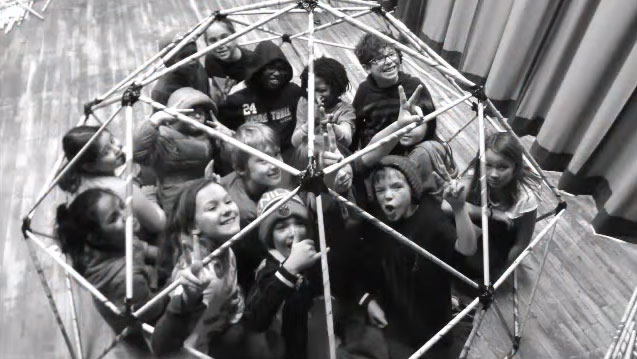
"content": "\u003cp>In just a few years, art education has gone from the easiest thing to cut in a school budget to an increasingly utilized teaching technique to increase student engagement and deepen understanding. Arts organizations with an education mission are teaming up with classroom teachers to develop lessons that use drama, music, visual art and dance to help students understand concepts that can be abstract and complex.\u003c/p>\n\u003cp>\u003c!-- iframe plugin v.4.3 wordpress.org/plugins/iframe/ -->\u003cbr>\n\u003ciframe width=\"640\" height=\"360\" src=\"https://www.youtube.com/embed/UP7nwl_g6sU?rel=0\" frameborder=\"0\" scrolling=\"yes\" class=\"iframe-class\">\u003c/iframe>\u003c/p>\n\u003cp>In a \u003ca href=\"https://www.washingtonpost.com/local/education/teachers-are-using-theater-and-dance-to-teach-math--and-its-working/2016/02/22/61f8dc0c-d68b-11e5-b195-2e29a4e13425_story.html\" target=\"_blank\">Washington Post article\u003c/a>, Moriah Balingit details one such program in Fairfax County, VA. Grade level teachers said they learned a lot from the trained arts-integration specialists and have tried to incorporate some of the strategies on their own as well. Balingit writes that an external evaluation of the program found it to be success at improving achievement as well:\u003c/p>\n\u003cblockquote>\u003cp>\"Researcher Mengli Song said the students in the program did not necessarily learn additional math content but they did demonstrate a better grasp of the material. And the effect was comparable to other early-childhood interventions. 'It’s not a huge effect, but it’s a non-trivial, notable effect,' Song said.\"\u003c/p>\u003c/blockquote>\n\u003cp>https://www.washingtonpost.com/local/education/teachers-are-using-theater-and-dance-to-teach-math--and-its-working/2016/02/22/61f8dc0c-d68b-11e5-b195-2e29a4e13425_story.html\u003c/p>\n\u003cp>[ad fullwidth]\u003c/p>\u003cp>\u003c/p>\n",
"disqusIdentifier": "43994 http://ww2.kqed.org/mindshift/?p=43994",
"disqusUrl": "https://ww2.kqed.org/mindshift/2016/03/01/arts-integration-allows-students-to-engage-abstract-concepts-in-new-ways/",
"stats": {
"hasVideo": true,
"hasChartOrMap": true,
"hasAudio": false,
"hasPolis": false,
"wordCount": 219,
"hasGoogleForm": false,
"hasGallery": false,
"hasHearkenModule": false,
"iframeSrcs": [
"https://www.youtube.com/embed/UP7nwl_g6sU"
],
"paragraphCount": 6
},
"modified": 1498595644,
"excerpt": "Schools across the country are finding that integrating arts into academic subjects can be a powerful way to help students deepen their understanding.",
"headData": {
"twImgId": "",
"twTitle": "",
"ogTitle": "",
"ogImgId": "",
"twDescription": "",
"description": "Schools across the country are finding that integrating arts into academic subjects can be a powerful way to help students deepen their understanding.",
"title": "Arts Integration Allows Students to Engage Abstract Concepts in New Ways | KQED",
"ogDescription": "",
"schema": {
"@context": "https://schema.org",
"@type": "Article",
"headline": "Arts Integration Allows Students to Engage Abstract Concepts in New Ways",
"datePublished": "2016-03-01T00:20:09-08:00",
"dateModified": "2017-06-27T13:34:04-07:00",
"image": "https://cdn.kqed.org/wp-content/uploads/2020/02/KQED-OG-Image@1x.png"
}
},
"guestAuthors": [],
"slug": "arts-integration-allows-students-to-engage-abstract-concepts-in-new-ways",
"status": "publish",
"path": "/mindshift/43994/arts-integration-allows-students-to-engage-abstract-concepts-in-new-ways",
"audioTrackLength": null,
"parsedContent": [
{
"type": "contentString",
"content": "\u003cdiv class=\"post-body\">\u003cp>\u003cp>In just a few years, art education has gone from the easiest thing to cut in a school budget to an increasingly utilized teaching technique to increase student engagement and deepen understanding. Arts organizations with an education mission are teaming up with classroom teachers to develop lessons that use drama, music, visual art and dance to help students understand concepts that can be abstract and complex.\u003c/p>\n\u003cp>\u003c!-- iframe plugin v.4.3 wordpress.org/plugins/iframe/ -->\u003cbr>\n\u003ciframe width=\"640\" height=\"360\" src=\"https://www.youtube.com/embed/UP7nwl_g6sU?rel=0\" frameborder=\"0\" scrolling=\"yes\" class=\"iframe-class\">\u003c/iframe>\u003c/p>\n\u003cp>In a \u003ca href=\"https://www.washingtonpost.com/local/education/teachers-are-using-theater-and-dance-to-teach-math--and-its-working/2016/02/22/61f8dc0c-d68b-11e5-b195-2e29a4e13425_story.html\" target=\"_blank\">Washington Post article\u003c/a>, Moriah Balingit details one such program in Fairfax County, VA. Grade level teachers said they learned a lot from the trained arts-integration specialists and have tried to incorporate some of the strategies on their own as well. Balingit writes that an external evaluation of the program found it to be success at improving achievement as well:\u003c/p>\n\u003cblockquote>\u003cp>\"Researcher Mengli Song said the students in the program did not necessarily learn additional math content but they did demonstrate a better grasp of the material. And the effect was comparable to other early-childhood interventions. 'It’s not a huge effect, but it’s a non-trivial, notable effect,' Song said.\"\u003c/p>\u003c/blockquote>\n\u003cp>https://www.washingtonpost.com/local/education/teachers-are-using-theater-and-dance-to-teach-math--and-its-working/2016/02/22/61f8dc0c-d68b-11e5-b195-2e29a4e13425_story.html\u003c/p>\n\u003cp>\u003c/p>\u003c/div>",
"attributes": {
"named": {},
"numeric": []
}
},
{
"type": "component",
"content": "",
"name": "ad",
"attributes": {
"named": {
"label": "fullwidth"
},
"numeric": [
"fullwidth"
]
}
},
{
"type": "contentString",
"content": "\u003cdiv class=\"post-body\">\u003cp>\u003c/p>\u003cp>\u003c/p>\n\u003c/div>\u003c/p>",
"attributes": {
"named": {},
"numeric": []
}
}
],
"link": "/mindshift/43994/arts-integration-allows-students-to-engage-abstract-concepts-in-new-ways",
"authors": [
"4354"
],
"categories": [
"mindshift_193"
],
"tags": [
"mindshift_20784",
"mindshift_1040",
"mindshift_20789",
"mindshift_392"
],
"featImg": "mindshift_44006",
"label": "mindshift"
},
"mindshift_43983": {
"type": "posts",
"id": "mindshift_43983",
"meta": {
"index": "posts_1716263798",
"site": "mindshift",
"id": "43983",
"score": null,
"sort": [
1456351247000
]
},
"parent": 0,
"labelTerm": {
"site": "mindshift"
},
"blocks": [],
"publishDate": 1456351247,
"format": "standard",
"disqusTitle": "High School 'Work From Home Day' Gives Students Taste of Independence",
"title": "High School 'Work From Home Day' Gives Students Taste of Independence",
"headTitle": "MindShift | KQED News",
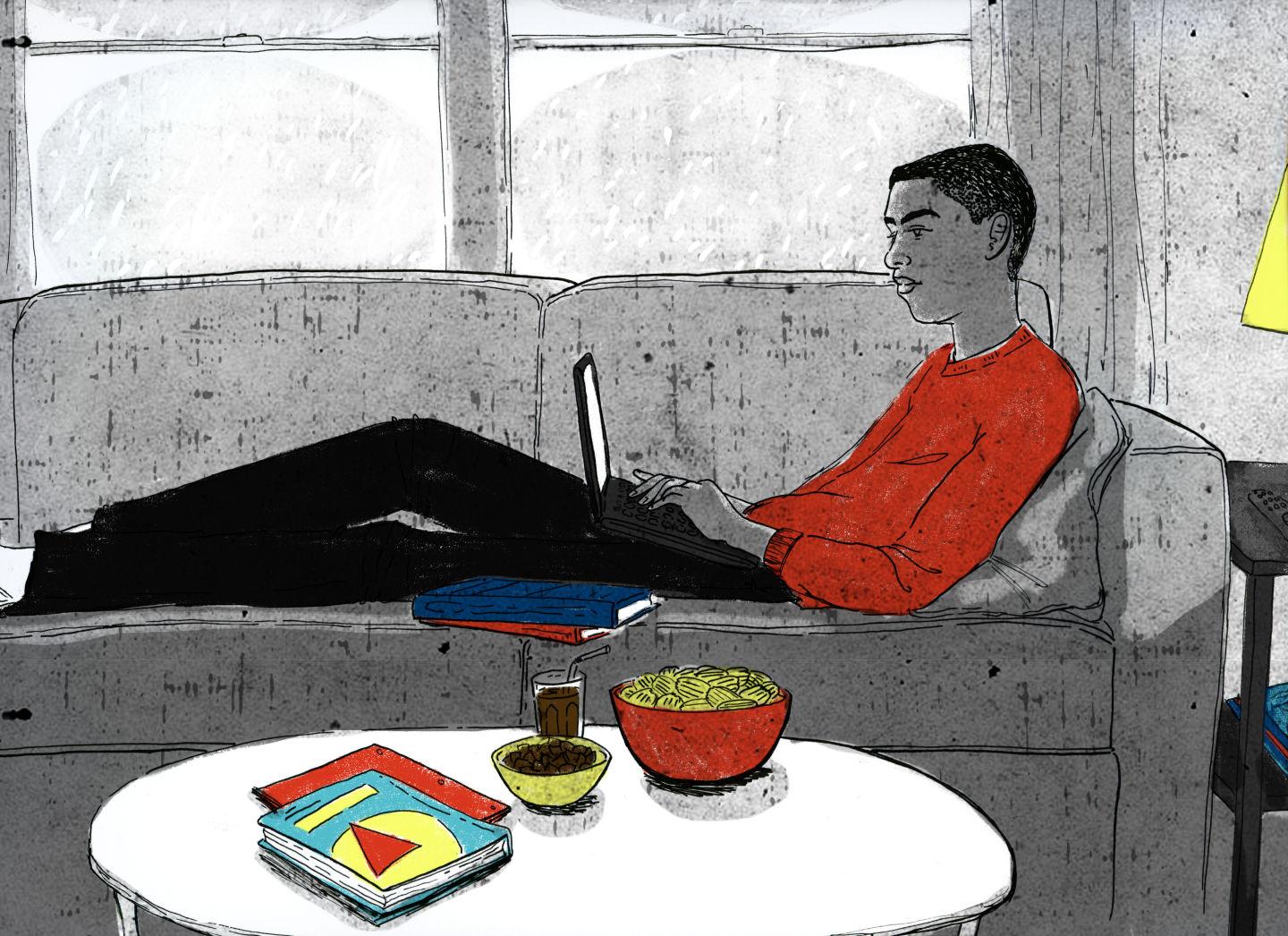
"content": "\u003cp>One cold Monday this month, all the students of Park Ridge High School stayed home: wearing their PJs, munching on pretzels and Oreos, hanging out on the couch.\u003c/p>\n\u003cp>It wasn't a snow day or measles epidemic. It was the school's first Virtual Day, where in-person classes were replaced with written lessons and real-time video chats delivered online.\u003c/p>\n\u003cp>The idea arose because the school, just north of New York City in Park Ridge, N.J., issued every student a Mac laptop last year, says Tina Bacolas, the school's head of instructional technology.\u003c/p>\n\u003caside class=\"pullquote alignright\">'Our ultimate goal is to prepare kids for life after high school.'\u003c/aside>\n\u003cp>The school chose a software system called \u003ca href=\"https://www.schoology.com/k-12\">Schoology\u003c/a> that allows students and teachers to communicate by text and video and post assignments.\u003c/p>\n\u003cp>\"Once we had that up and running, the idea of a virtual school day was thrown out there\" as a way of testing those capabilities, Bacolas told NPR Ed.\u003c/p>\n\u003cp>[ad fullwidth]\u003c/p>\n\u003cp>\"Our ultimate goal is to prepare kids for life after high school,\" says principal Troy Lederman. \"Most colleges say that kids should be taking at least one online course, and there's a lot of careers where people can work from home.\"\u003c/p>\n\u003cp>And then there's the added benefit of having a backup plan for the school in case of snow days or other emergencies.\u003c/p>\n\u003cp>In a \u003ca href=\"https://www.youtube.com/watch?v=eg3JpVcx29g\">video posted to YouTube\u003c/a> the week before the experiment, students were all for it. \"I'm excited because I'm going to take my laptop to Starbucks and do all my work while I enjoy a Frappucino,\" says a student in a cap and a hooded sweatshirt.\u003c/p>\n\u003cp>\"I like to listen to music when I work and it helps me focus, so I think it will be really helpful,\" says a girl with a half-shaved head.\u003c/p>\n\u003cp>In student surveys taken after the event, the feedback was overwhelmingly positive. Virtual \"attendance\" was 98 percent for the day, better than a regular day.\u003c/p>\n\u003cp>Teachers, says Bacolas, were a bit less gung-ho. \"We definitely have a population of teachers who are older, who were overly upset and cautious\" about trying to teach through the platform alone. But 60 percent of teachers said the experiment pushed them to learn a new tech skill or software feature, and 70 percent used the day to introduce new material, not just review.\u003c/p>\n\u003cp>For this first-time experiment, teachers were required to come to school, and the building kept to the typical bell schedule, with virtual lessons held in real time.\u003c/p>\n\u003cp>About 50 students, or fewer than 10 percent of the student body, showed up. They told Bacolas that home wasn't a great place for them to learn because, among other reasons, \"My baby brother is distracting\"; \"My mom has three dogs\"; and, \"I have soccer right after school so I might as well show up.\"\u003c/p>\n\u003cp>Nationwide, about \u003ca href=\"http://www.npr.org/sections/ed/2015/02/02/382167062/virtual-schools-bring-real-concerns-about-quality\">400,000 K-12 students are taking or have taken at least one fully online course\u003c/a>, and far more schools are using platforms like Schoology to provide online assignments outside of traditional school hours. By and large the format seems to work well for students who use it as an occasional supplement, as Park Ridge High is doing — for example, to take an AP course that their school doesn't offer. Completely virtual schools, studies say, tend to have worse outcomes as a group.\u003c/p>\n\u003cp>Having a work-from-home day wouldn't work as well in some districts as it did in affluent Bergen County, where the principal said \"99 percent\" of students have high-speed Internet access at home.\u003c/p>\n\u003cp>A recent survey \u003ca href=\"http://www.joanganzcooneycenter.org/publication/opportunity-for-all-technology-and-learning-in-lower-income-families/\">of low-income families\u003c/a> with school-age kids by Rutgers University and the Joan Ganz Cooney Center found that nearly 1 in 4 relied on mobile phones only for Internet use at home.\u003c/p>\n\u003cp>Working from home also didn't work as well for a small number of students at Park Ridge: those who have special needs and require one-on-one, face-to-face support to stay on track.\u003c/p>\n\u003cp>\u003c/p>\n\u003cp>The students' biggest request for the next Virtual Day was that the school take one step further into the world of telecommuting, by posting all the assignments at the beginning of the day and allowing students to truly go at their own pace — \"showing up\" only for the occasional real-time discussion.\u003c/p>\n\u003cdiv class=\"fullattribution\">Copyright 2016 NPR. To see more, visit http://www.npr.org/.\u003cimg src=\"http://www.google-analytics.com/__utm.gif?utmac=UA-5828686-4&utmdt=Study+In+Your+PJs%3F+What+A+High+School+%27Work+From+Home+Day%27+Looks+Like&utme=8(APIKey)9(MDAxOTAwOTE4MDEyMTkxMDAzNjczZDljZA004)\" alt=\"\">\u003c/div>\n\n",
"disqusIdentifier": "43983 http://ww2.kqed.org/mindshift/?p=43983",
"disqusUrl": "https://ww2.kqed.org/mindshift/2016/02/24/high-school-work-from-home-day-gives-students-taste-of-independence/",
"stats": {
"hasVideo": false,
"hasChartOrMap": false,
"hasAudio": false,
"hasPolis": false,
"wordCount": 738,
"hasGoogleForm": false,
"hasGallery": false,
"hasHearkenModule": false,
"iframeSrcs": [],
"paragraphCount": 20
},
"modified": 1456351465,
"excerpt": "No alarm. No school bus. No problem. Thanks to a school's laptop program, everyone takes a virtual lesson.",
"headData": {
"twImgId": "",
"twTitle": "",
"ogTitle": "",
"ogImgId": "",
"twDescription": "",
"description": "No alarm. No school bus. No problem. Thanks to a school's laptop program, everyone takes a virtual lesson.",
"title": "High School 'Work From Home Day' Gives Students Taste of Independence | KQED",
"ogDescription": "",
"schema": {
"@context": "https://schema.org",
"@type": "Article",
"headline": "High School 'Work From Home Day' Gives Students Taste of Independence",
"datePublished": "2016-02-24T14:00:47-08:00",
"dateModified": "2016-02-24T14:04:25-08:00",
"image": "https://cdn.kqed.org/wp-content/uploads/2020/02/KQED-OG-Image@1x.png"
}
},
"guestAuthors": [],
"slug": "high-school-work-from-home-day-gives-students-taste-of-independence",
"status": "publish",
"nprApiLink": "http://api.npr.org/query?id=466460375&apiKey=MDAxOTAwOTE4MDEyMTkxMDAzNjczZDljZA004",
"nprByline": "Anya Kamenetz",
"nprStoryDate": "Tue, 23 Feb 2016 06:37:00 -0500",
"nprLastModifiedDate": "Tue, 23 Feb 2016 14:00:14 -0500",
"nprHtmlLink": "http://www.npr.org/sections/ed/2016/02/23/466460375/study-in-your-pjs-what-a-high-school-work-from-home-day-looks-like?ft=nprml&f=466460375",
"nprImageAgency": "NPR",
"nprImageCredit": "LA Johnson",
"nprStoryId": "466460375",
"nprRetrievedStory": "1",
"nprPubDate": "Tue, 23 Feb 2016 14:00:00 -0500",
"path": "/mindshift/43983/high-school-work-from-home-day-gives-students-taste-of-independence",
"audioTrackLength": null,
"parsedContent": [
{
"type": "contentString",
"content": "\u003cdiv class=\"post-body\">\u003cp>\u003cp>One cold Monday this month, all the students of Park Ridge High School stayed home: wearing their PJs, munching on pretzels and Oreos, hanging out on the couch.\u003c/p>\n\u003cp>It wasn't a snow day or measles epidemic. It was the school's first Virtual Day, where in-person classes were replaced with written lessons and real-time video chats delivered online.\u003c/p>\n\u003cp>The idea arose because the school, just north of New York City in Park Ridge, N.J., issued every student a Mac laptop last year, says Tina Bacolas, the school's head of instructional technology.\u003c/p>\n\u003caside class=\"pullquote alignright\">'Our ultimate goal is to prepare kids for life after high school.'\u003c/aside>\n\u003cp>The school chose a software system called \u003ca href=\"https://www.schoology.com/k-12\">Schoology\u003c/a> that allows students and teachers to communicate by text and video and post assignments.\u003c/p>\n\u003cp>\"Once we had that up and running, the idea of a virtual school day was thrown out there\" as a way of testing those capabilities, Bacolas told NPR Ed.\u003c/p>\n\u003cp>\u003c/p>\u003c/div>",
"attributes": {
"named": {},
"numeric": []
}
},
{
"type": "component",
"content": "",
"name": "ad",
"attributes": {
"named": {
"label": "fullwidth"
},
"numeric": [
"fullwidth"
]
}
},
{
"type": "contentString",
"content": "\u003cdiv class=\"post-body\">\u003cp>\u003c/p>\n\u003cp>\"Our ultimate goal is to prepare kids for life after high school,\" says principal Troy Lederman. \"Most colleges say that kids should be taking at least one online course, and there's a lot of careers where people can work from home.\"\u003c/p>\n\u003cp>And then there's the added benefit of having a backup plan for the school in case of snow days or other emergencies.\u003c/p>\n\u003cp>In a \u003ca href=\"https://www.youtube.com/watch?v=eg3JpVcx29g\">video posted to YouTube\u003c/a> the week before the experiment, students were all for it. \"I'm excited because I'm going to take my laptop to Starbucks and do all my work while I enjoy a Frappucino,\" says a student in a cap and a hooded sweatshirt.\u003c/p>\n\u003cp>\"I like to listen to music when I work and it helps me focus, so I think it will be really helpful,\" says a girl with a half-shaved head.\u003c/p>\n\u003cp>In student surveys taken after the event, the feedback was overwhelmingly positive. Virtual \"attendance\" was 98 percent for the day, better than a regular day.\u003c/p>\n\u003cp>Teachers, says Bacolas, were a bit less gung-ho. \"We definitely have a population of teachers who are older, who were overly upset and cautious\" about trying to teach through the platform alone. But 60 percent of teachers said the experiment pushed them to learn a new tech skill or software feature, and 70 percent used the day to introduce new material, not just review.\u003c/p>\n\u003cp>For this first-time experiment, teachers were required to come to school, and the building kept to the typical bell schedule, with virtual lessons held in real time.\u003c/p>\n\u003cp>About 50 students, or fewer than 10 percent of the student body, showed up. They told Bacolas that home wasn't a great place for them to learn because, among other reasons, \"My baby brother is distracting\"; \"My mom has three dogs\"; and, \"I have soccer right after school so I might as well show up.\"\u003c/p>\n\u003cp>Nationwide, about \u003ca href=\"http://www.npr.org/sections/ed/2015/02/02/382167062/virtual-schools-bring-real-concerns-about-quality\">400,000 K-12 students are taking or have taken at least one fully online course\u003c/a>, and far more schools are using platforms like Schoology to provide online assignments outside of traditional school hours. By and large the format seems to work well for students who use it as an occasional supplement, as Park Ridge High is doing — for example, to take an AP course that their school doesn't offer. Completely virtual schools, studies say, tend to have worse outcomes as a group.\u003c/p>\n\u003cp>Having a work-from-home day wouldn't work as well in some districts as it did in affluent Bergen County, where the principal said \"99 percent\" of students have high-speed Internet access at home.\u003c/p>\n\u003cp>A recent survey \u003ca href=\"http://www.joanganzcooneycenter.org/publication/opportunity-for-all-technology-and-learning-in-lower-income-families/\">of low-income families\u003c/a> with school-age kids by Rutgers University and the Joan Ganz Cooney Center found that nearly 1 in 4 relied on mobile phones only for Internet use at home.\u003c/p>\n\u003cp>Working from home also didn't work as well for a small number of students at Park Ridge: those who have special needs and require one-on-one, face-to-face support to stay on track.\u003c/p>\n\u003cp>\u003c/p>\n\u003cp>The students' biggest request for the next Virtual Day was that the school take one step further into the world of telecommuting, by posting all the assignments at the beginning of the day and allowing students to truly go at their own pace — \"showing up\" only for the occasional real-time discussion.\u003c/p>\n\u003cdiv class=\"fullattribution\">Copyright 2016 NPR. To see more, visit http://www.npr.org/.\u003cimg src=\"http://www.google-analytics.com/__utm.gif?utmac=UA-5828686-4&utmdt=Study+In+Your+PJs%3F+What+A+High+School+%27Work+From+Home+Day%27+Looks+Like&utme=8(APIKey)9(MDAxOTAwOTE4MDEyMTkxMDAzNjczZDljZA004)\" alt=\"\">\u003c/div>\n\n\u003c/div>\u003c/p>",
"attributes": {
"named": {},
"numeric": []
}
}
],
"link": "/mindshift/43983/high-school-work-from-home-day-gives-students-taste-of-independence",
"authors": [
"byline_mindshift_43983"
],
"categories": [
"mindshift_195",
"mindshift_193"
],
"tags": [
"mindshift_750",
"mindshift_122",
"mindshift_496"
],
"featImg": "mindshift_43984",
"label": "mindshift"
},
"mindshift_43831": {
"type": "posts",
"id": "mindshift_43831",
"meta": {
"index": "posts_1716263798",
"site": "mindshift",
"id": "43831",
"score": null,
"sort": [
1456329566000
]
},
"parent": 0,
"labelTerm": {
"site": "mindshift"
},
"blocks": [],
"publishDate": 1456329566,
"format": "standard",
"disqusTitle": "How Harnessing the Positive Side of Stress Can Change Student Mindsets",
"title": "How Harnessing the Positive Side of Stress Can Change Student Mindsets",
"headTitle": "MindShift | KQED News",
"content": "\u003cp>Carol Dweck's work on \u003ca href=\"http://ww2.kqed.org/mindshift/tag/growth-mindset/\" target=\"_blank\">growth mindset \u003c/a>and its power to help people view challenges as opportunities to improve has helped many students understand their beliefs about themselves. When empowered with the understanding that intelligence is malleable, students can develop how they approach school and life. But the revelations around mindsets don't end there -- they apply to other areas of education, including how \u003ca href=\"http://wendyberrymendes.com/cms/uploads/CDPS_reappraisal.pdf\" target=\"_blank\">students view and react to stress\u003c/a>.\u003c/p>\n\u003cp>There is a lot of research about how stress negatively impacts health, cognitive functioning and \u003ca href=\"http://ww2.kqed.org/mindshift/2016/01/11/research-based-strategies-to-help-children-develop-self-control/\" target=\"_blank\">self-control\u003c/a>, but less often discussed are how those findings change when people \u003ca href=\"https://mbl.stanford.edu/sites/default/files/crum_rethinkingstress_jpsp_2013_0.pdf\" target=\"_blank\">see their stress as a positive motivator\u003c/a>. “In a number of situations, accepting and embracing the stress instead of trying to calm down helped students to do better,” said Kelly McGonigal, a health psychologist and lecturer at Stanford University at a \u003ca href=\"http://www.learningandthebrain.com/Event-328/Shaping-Student-Mindsets/Program\" target=\"_blank\">Learning and the Brain conference\u003c/a> on mindsets.\u003c/p>\n\u003caside class=\"pullquote alignright\">'If you are able to look back on your life and tell yourself a story about your stress that includes how you learned from it, it continues to create a narrative of strength, learning and growth.'\u003ccite>Kelly McGonigal, Stanford lecturer, author\u003c/cite>\u003c/aside>\n\u003cp>McGonigal defines stress as “what arises in your body, in your brain and in your community when something you care about is at stake.” She acknowledges that stress can make some people feel paralyzed and might lead them to underperform. She calls that reaction a “threat response” to stress, but says if educators can help students to have a “challenge response” to stress, which includes the realization that they have the resources to handle the situation, the stress can actually energize students to do better.\u003c/p>\n\u003cp>This more positive approach doesn’t negate the very real effects on the brain from constant high levels of stress. McGonigal is clear that the first priority in any situation is to relieve suffering. She says it’s useful to help students learn tactics to calm down in the moment, like\u003ca href=\"http://ww2.kqed.org/mindshift/2014/01/17/low-income-schools-see-big-benefits-in-teaching-mindfulness/\" target=\"_blank\"> mindfulness\u003c/a> or other cortisol-reduction exercises, but those strategies aren’t enough on their own. Life is stressful in big and small ways; rather than trying to erase stress from life, it may be beneficial to approach inevitable stress more positively.\u003c/p>\n\u003cp>“There is almost no relationship between the amount of stress you are under and your stress mindset,” said McGonigal. Learning tactics to change one’s outlook on stress can be beneficial for anyone. “How you think about stress seems to influence how you cope with stress,” she said.\u003c/p>\n\u003cp>[ad fullwidth]\u003c/p>\n\u003cp>When people try to avoid stress or stressful situations, they often behave in escapist ways. They look for distractions or use coping mechanisms like drinking to deal with the stress they feel. Conversely, people who have a more balanced or welcoming approach to stress tend to be more proactive. When they start to feel stressed out, they are more likely to address the source of the stress, ask for help, talk about their stress or even find the humor in it.\u003c/p>\n\u003cp>\u003c!-- iframe plugin v.4.3 wordpress.org/plugins/iframe/ -->\u003cbr>\n\u003ciframe width=\"640\" height=\"360\" src=\"https://www.youtube.com/embed/RcGyVTAoXEU\" frameborder=\"0\" allow=\"accelerometer; autoplay; encrypted-media; gyroscope; picture-in-picture\" scrolling=\"yes\" class=\"iframe-class\">\u003c/iframe>\u003c/p>\n\u003cp>When students learn to think about stress in this more positive way, they can actually use it to improve learning, to find purpose and to form stronger emotional connections to others, McGonigal said. In her popular TED talk, McGonigal describes how the stress hormone oxytocin primes people to take action and makes them crave closeness. Even as the body is releasing adrenaline and cortisol that produce anxious feelings, it is also releasing oxytocin, which can help people build resiliency against that anxiety.\u003c/p>\n\u003cp>McGonigal views the dual nature of the body’s stress response as an opportunity. She suggests three interventions to help students (or anyone) change their approach to stress and create resiliency in the face of anxiety.\u003c/p>\n\u003cp>\u003cstrong>#1 Caring for others builds resiliency against stress\u003c/strong>\u003c/p>\n\u003cp>To help people reset their mindsets about stress, encourage them to care for others. The biological reaction to stress naturally includes a desire to connect with others. Nurturing that inclination can dramatically reduce the harmful negative effects of stress.\u003c/p>\n\u003cp>A \u003ca href=\"http://www.psychologicalscience.org/index.php/news/releases/helping-others-dampens-the-effects-of-everyday-stress.html\" target=\"_blank\">study\u003c/a> done at Yale in 2015 asked 77 adults to report every stressful event that happened to them each day, including work, school, interpersonal or financial stresses. They also kept track of all the times they helped someone throughout the day. Finally, every day the subjects took a mental health well-being test because researchers wanted to see how caring behavior affected well-being. They found that on stressful days when the person had engaged in few acts of kindness, mental health tanked. But when the person experienced a lot of stress, but also helped others, often their well-being stayed even.\u003c/p>\n\u003cp>\u003ca href=\"http://sites.northwestern.edu/foundationsofhealth/files/2013/05/13-JAMA-Pediatrics-volunteering-CV-risk.pdf\" target=\"_blank\">Another study\u003c/a> done at the University of British Columbia and Northwestern with 106 10th-graders found that kids who were randomly assigned to offer acts of kindness throughout the day had lower levels of toxic stress. They had less inflammation, lower cholesterol, and better heart and metabolic health. In their summary of results, the authors write, “Preliminary analyses within the intervention group suggest that those who increased the most in empathy and altruistic behaviors, and who decreased the most in negative mood, also showed the greatest decreases in cardiovascular risk over time.”\u003c/p>\n\u003cp>Even something as simple as a visual reminder, like a wristband, to be \u003ca href=\"http://compassionit.com/programs/\" target=\"_blank\">compassionate toward others\u003c/a> can have surprising results. It reminds kids that their teachers and parents value caring as much as academics, and gives them a sanctioned reason to point out compassionate behavior in others, as well as practicing it themselves.\u003c/p>\n\u003cp>\u003cstrong>#2 Purpose in life reduces stress\u003c/strong>\u003c/p>\n\u003cp>At the University of Illinois \u003ca href=\"https://www.researchgate.net/publication/225439629_Purpose_Mood_and_Pleasure_in_Predicting_Satisfaction_Judgments\" target=\"_blank\">researchers studied\u003c/a> how purpose in life related to happiness and mood in 222 college students. They found that students with low life-purpose were satisfied with their lives when they were happy, but very unsatisfied when their mood was low. In contrast, students with high life-purpose were satisfied with their lives whether or not they were having a bad day. Their purpose created resiliency.\u003c/p>\n\u003cp>“People who have a meaningful life worry more and have more stress than people with a less meaningful life,” McGonigal said. But that isn’t necessarily bad. People feel stress around things they care about, so when they have a high sense of purpose they naturally experience more stress. “Stress and meaning go together,” she said. She’s convinced that how we think about stress in relationship to meaning will determine whether we’re on the stress-induced heart attack side of stress or the energized, motivated side of stress.\u003c/p>\n\u003cp>To increase students’ sense of purpose, McGonigal suggests teachers simply ask students to reflect on a series of questions that help illuminate their values.\u003c/p>\n\u003cul>\n\u003cli>What quality or strength do you value about yourself? (This is different than what a teacher or adult would value about you.)\u003c/li>\n\u003cli>What activity, role or relationship brings you meaning, satisfaction or joy? McGonigal says students often point out things like sports, art or being a sibling. The point is to get at something bigger than self.\u003c/li>\n\u003cli>What mission, purpose or community do you serve? This question expands the sense of self and gets at what a student cares about.\u003c/li>\n\u003cli>Why are these important to you?\u003c/li>\n\u003c/ul>\n\u003cp>\u003ca href=\"http://itp.wceruw.org/documents/Cohenannurev-psych-psychologyofchange_final_E2.pdf\" target=\"_blank\">Studies on simple self-affirmation exercises\u003c/a> like this one can have dramatic impacts on how students view their ability to handle difficult situations. “It has been shown to increase students’ ability to see the meaning when they face stress or adversity and have a sense of themselves as adequate to the challenge,” McGonigal said.\u003c/p>\n\u003cp>\u003cstrong>#3 Focus on how stress can help students grow\u003c/strong>\u003c/p>\n\u003cp>Here’s where growth mindset comes back into the story, because thinking of challenges -- no matter the context -- as learning opportunities can reframe even the toughest experiences.\u003c/p>\n\u003caside class=\"pullquote alignleft\">'Typically, human beings learn and grow from even the experiences we'd want to protect them from.'\u003c/aside>\n\u003cp>\u003ca href=\"http://www.ncbi.nlm.nih.gov/pubmed/25346382\" target=\"_blank\">Researchers at the University of Southern California asked \u003c/a>564 alternative high school students about the worst experience of their lives. Many teenagers have already experienced really terrible things, including sexual abuse, cancer and homelessness. “Kids in the study had experienced real adversity, in additional to typical teenage adversity,” McGonigal said. The students were then asked how that experience affected their personal strength, compassion, activities, closeness to others, spiritual understanding, handling difficulties, direction in life and appreciation for life. On every measure students reported a positive change because of the terrible experience.\u003c/p>\n\u003cp>“Typically, human beings learn and grow from even the experiences we’d want to protect them from,” McGonigal said. Carol Dweck’s work has shown how important this growth can be in the academic world, but it can be \u003ca href=\"http://journals.plos.org/plosone/article?id=10.1371/journal.pone.0136427\" target=\"_blank\">true about stressful life events, too\u003c/a>.\u003c/p>\n\u003cp>A \u003ca href=\"http://digitalcommons.hope.edu/cgi/viewcontent.cgi?article=1297&context=faculty_publications\" target=\"_blank\">study at Hope College\u003c/a> asked students to think about an experience that was personally painful, bothersome or embarrassing. An experimental group was told doing this was an opportunity to learn, grow and become stronger. “This was not hard for people to do, no matter what the experience was,” McGonigal said. “And when they did it, they shifted into a different stress state, one that looked more like resilience.”\u003c/p>\n\u003cp>The group that thought about that painful experience without the intervention, however, exhibited signs of toxic stress. All these studies demonstrate that how students think about and perceive their experiences are very important to how their bodies react to the resulting stress.\u003c/p>\n\u003cp>“If you are able to look back on your life and tell yourself a story about your stress that includes how you learned from it, it continues to create a narrative of strength, learning and growth,” McGonigal said.\u003c/p>\n\u003cp>An easy intervention to help students build a growth mindset about stressful situations is to break into small groups and share stories of facing challenges and persevering through them. The stories don’t have to be academic, but it should be a time when the student got better at that skill or learned something. Then students can write about the strengths they drew on, reflect on who or what supported them, and think about what they learned and how they grew. This is particularly powerful when adults share, too.\u003c/p>\n\u003cp>Sharing with a group can help students see that struggle is common to everyone. It can also help highlight different strategies people used in those moments of adversity and how productive challenges can be.\u003c/p>\n\u003cp>“The most effective mindset interventions start with a new idea, some science, and then you have people talk about it,” McGonigal said. When students can relate the idea to their own experiences, it becomes much more powerful.\u003c/p>\n\u003cp>“When we are anxious, stop interpreting it as a sign we are inadequate and start seeing it as a way we can rise to the challenge,” McGonigal said.\u003c/p>\n\u003cp>[ad floatright]\u003c/p>\n\u003cp>To her, the best of these three interventions is that they can help convert mindsets about stress, even when a person isn’t conscious of it. Like mindfulness training, these strategies can shift the narrative and subtly color experiences of stress going forward.\u003c/p>\n\n",
"disqusIdentifier": "43831 http://ww2.kqed.org/mindshift/?p=43831",
"disqusUrl": "https://ww2.kqed.org/mindshift/2016/02/24/what-harnessing-the-positive-side-of-stress-can-do-for-students/",
"stats": {
"hasVideo": true,
"hasChartOrMap": true,
"hasAudio": false,
"hasPolis": false,
"wordCount": 1874,
"hasGoogleForm": false,
"hasGallery": false,
"hasHearkenModule": false,
"iframeSrcs": [
"https://www.youtube.com/embed/RcGyVTAoXEU"
],
"paragraphCount": 33
},
"modified": 1561145973,
"excerpt": "Some types of stress can be used in a more positive way in order to improve learning, develop purpose and form stronger emotional connections with others. ",
"headData": {
"twImgId": "",
"twTitle": "",
"ogTitle": "",
"ogImgId": "",
"twDescription": "",
"description": "Some types of stress can be used in a more positive way in order to improve learning, develop purpose and form stronger emotional connections with others. ",
"title": "How Harnessing the Positive Side of Stress Can Change Student Mindsets | KQED",
"ogDescription": "",
"schema": {
"@context": "https://schema.org",
"@type": "Article",
"headline": "How Harnessing the Positive Side of Stress Can Change Student Mindsets",
"datePublished": "2016-02-24T07:59:26-08:00",
"dateModified": "2019-06-21T12:39:33-07:00",
"image": "https://cdn.kqed.org/wp-content/uploads/2020/02/KQED-OG-Image@1x.png"
}
},
"guestAuthors": [],
"slug": "what-harnessing-the-positive-side-of-stress-can-do-for-students",
"status": "publish",
"path": "/mindshift/43831/what-harnessing-the-positive-side-of-stress-can-do-for-students",
"audioTrackLength": null,
"parsedContent": [
{
"type": "contentString",
"content": "\u003cdiv class=\"post-body\">\u003cp>\u003cp>Carol Dweck's work on \u003ca href=\"http://ww2.kqed.org/mindshift/tag/growth-mindset/\" target=\"_blank\">growth mindset \u003c/a>and its power to help people view challenges as opportunities to improve has helped many students understand their beliefs about themselves. When empowered with the understanding that intelligence is malleable, students can develop how they approach school and life. But the revelations around mindsets don't end there -- they apply to other areas of education, including how \u003ca href=\"http://wendyberrymendes.com/cms/uploads/CDPS_reappraisal.pdf\" target=\"_blank\">students view and react to stress\u003c/a>.\u003c/p>\n\u003cp>There is a lot of research about how stress negatively impacts health, cognitive functioning and \u003ca href=\"http://ww2.kqed.org/mindshift/2016/01/11/research-based-strategies-to-help-children-develop-self-control/\" target=\"_blank\">self-control\u003c/a>, but less often discussed are how those findings change when people \u003ca href=\"https://mbl.stanford.edu/sites/default/files/crum_rethinkingstress_jpsp_2013_0.pdf\" target=\"_blank\">see their stress as a positive motivator\u003c/a>. “In a number of situations, accepting and embracing the stress instead of trying to calm down helped students to do better,” said Kelly McGonigal, a health psychologist and lecturer at Stanford University at a \u003ca href=\"http://www.learningandthebrain.com/Event-328/Shaping-Student-Mindsets/Program\" target=\"_blank\">Learning and the Brain conference\u003c/a> on mindsets.\u003c/p>\n\u003caside class=\"pullquote alignright\">'If you are able to look back on your life and tell yourself a story about your stress that includes how you learned from it, it continues to create a narrative of strength, learning and growth.'\u003ccite>Kelly McGonigal, Stanford lecturer, author\u003c/cite>\u003c/aside>\n\u003cp>McGonigal defines stress as “what arises in your body, in your brain and in your community when something you care about is at stake.” She acknowledges that stress can make some people feel paralyzed and might lead them to underperform. She calls that reaction a “threat response” to stress, but says if educators can help students to have a “challenge response” to stress, which includes the realization that they have the resources to handle the situation, the stress can actually energize students to do better.\u003c/p>\n\u003cp>This more positive approach doesn’t negate the very real effects on the brain from constant high levels of stress. McGonigal is clear that the first priority in any situation is to relieve suffering. She says it’s useful to help students learn tactics to calm down in the moment, like\u003ca href=\"http://ww2.kqed.org/mindshift/2014/01/17/low-income-schools-see-big-benefits-in-teaching-mindfulness/\" target=\"_blank\"> mindfulness\u003c/a> or other cortisol-reduction exercises, but those strategies aren’t enough on their own. Life is stressful in big and small ways; rather than trying to erase stress from life, it may be beneficial to approach inevitable stress more positively.\u003c/p>\n\u003cp>“There is almost no relationship between the amount of stress you are under and your stress mindset,” said McGonigal. Learning tactics to change one’s outlook on stress can be beneficial for anyone. “How you think about stress seems to influence how you cope with stress,” she said.\u003c/p>\n\u003cp>\u003c/p>\u003c/div>",
"attributes": {
"named": {},
"numeric": []
}
},
{
"type": "component",
"content": "",
"name": "ad",
"attributes": {
"named": {
"label": "fullwidth"
},
"numeric": [
"fullwidth"
]
}
},
{
"type": "contentString",
"content": "\u003cdiv class=\"post-body\">\u003cp>\u003c/p>\n\u003cp>When people try to avoid stress or stressful situations, they often behave in escapist ways. They look for distractions or use coping mechanisms like drinking to deal with the stress they feel. Conversely, people who have a more balanced or welcoming approach to stress tend to be more proactive. When they start to feel stressed out, they are more likely to address the source of the stress, ask for help, talk about their stress or even find the humor in it.\u003c/p>\n\u003cp>\u003c!-- iframe plugin v.4.3 wordpress.org/plugins/iframe/ -->\u003cbr>\n\u003ciframe width=\"640\" height=\"360\" src=\"https://www.youtube.com/embed/RcGyVTAoXEU\" frameborder=\"0\" allow=\"accelerometer; autoplay; encrypted-media; gyroscope; picture-in-picture\" scrolling=\"yes\" class=\"iframe-class\">\u003c/iframe>\u003c/p>\n\u003cp>When students learn to think about stress in this more positive way, they can actually use it to improve learning, to find purpose and to form stronger emotional connections to others, McGonigal said. In her popular TED talk, McGonigal describes how the stress hormone oxytocin primes people to take action and makes them crave closeness. Even as the body is releasing adrenaline and cortisol that produce anxious feelings, it is also releasing oxytocin, which can help people build resiliency against that anxiety.\u003c/p>\n\u003cp>McGonigal views the dual nature of the body’s stress response as an opportunity. She suggests three interventions to help students (or anyone) change their approach to stress and create resiliency in the face of anxiety.\u003c/p>\n\u003cp>\u003cstrong>#1 Caring for others builds resiliency against stress\u003c/strong>\u003c/p>\n\u003cp>To help people reset their mindsets about stress, encourage them to care for others. The biological reaction to stress naturally includes a desire to connect with others. Nurturing that inclination can dramatically reduce the harmful negative effects of stress.\u003c/p>\n\u003cp>A \u003ca href=\"http://www.psychologicalscience.org/index.php/news/releases/helping-others-dampens-the-effects-of-everyday-stress.html\" target=\"_blank\">study\u003c/a> done at Yale in 2015 asked 77 adults to report every stressful event that happened to them each day, including work, school, interpersonal or financial stresses. They also kept track of all the times they helped someone throughout the day. Finally, every day the subjects took a mental health well-being test because researchers wanted to see how caring behavior affected well-being. They found that on stressful days when the person had engaged in few acts of kindness, mental health tanked. But when the person experienced a lot of stress, but also helped others, often their well-being stayed even.\u003c/p>\n\u003cp>\u003ca href=\"http://sites.northwestern.edu/foundationsofhealth/files/2013/05/13-JAMA-Pediatrics-volunteering-CV-risk.pdf\" target=\"_blank\">Another study\u003c/a> done at the University of British Columbia and Northwestern with 106 10th-graders found that kids who were randomly assigned to offer acts of kindness throughout the day had lower levels of toxic stress. They had less inflammation, lower cholesterol, and better heart and metabolic health. In their summary of results, the authors write, “Preliminary analyses within the intervention group suggest that those who increased the most in empathy and altruistic behaviors, and who decreased the most in negative mood, also showed the greatest decreases in cardiovascular risk over time.”\u003c/p>\n\u003cp>Even something as simple as a visual reminder, like a wristband, to be \u003ca href=\"http://compassionit.com/programs/\" target=\"_blank\">compassionate toward others\u003c/a> can have surprising results. It reminds kids that their teachers and parents value caring as much as academics, and gives them a sanctioned reason to point out compassionate behavior in others, as well as practicing it themselves.\u003c/p>\n\u003cp>\u003cstrong>#2 Purpose in life reduces stress\u003c/strong>\u003c/p>\n\u003cp>At the University of Illinois \u003ca href=\"https://www.researchgate.net/publication/225439629_Purpose_Mood_and_Pleasure_in_Predicting_Satisfaction_Judgments\" target=\"_blank\">researchers studied\u003c/a> how purpose in life related to happiness and mood in 222 college students. They found that students with low life-purpose were satisfied with their lives when they were happy, but very unsatisfied when their mood was low. In contrast, students with high life-purpose were satisfied with their lives whether or not they were having a bad day. Their purpose created resiliency.\u003c/p>\n\u003cp>“People who have a meaningful life worry more and have more stress than people with a less meaningful life,” McGonigal said. But that isn’t necessarily bad. People feel stress around things they care about, so when they have a high sense of purpose they naturally experience more stress. “Stress and meaning go together,” she said. She’s convinced that how we think about stress in relationship to meaning will determine whether we’re on the stress-induced heart attack side of stress or the energized, motivated side of stress.\u003c/p>\n\u003cp>To increase students’ sense of purpose, McGonigal suggests teachers simply ask students to reflect on a series of questions that help illuminate their values.\u003c/p>\n\u003cul>\n\u003cli>What quality or strength do you value about yourself? (This is different than what a teacher or adult would value about you.)\u003c/li>\n\u003cli>What activity, role or relationship brings you meaning, satisfaction or joy? McGonigal says students often point out things like sports, art or being a sibling. The point is to get at something bigger than self.\u003c/li>\n\u003cli>What mission, purpose or community do you serve? This question expands the sense of self and gets at what a student cares about.\u003c/li>\n\u003cli>Why are these important to you?\u003c/li>\n\u003c/ul>\n\u003cp>\u003ca href=\"http://itp.wceruw.org/documents/Cohenannurev-psych-psychologyofchange_final_E2.pdf\" target=\"_blank\">Studies on simple self-affirmation exercises\u003c/a> like this one can have dramatic impacts on how students view their ability to handle difficult situations. “It has been shown to increase students’ ability to see the meaning when they face stress or adversity and have a sense of themselves as adequate to the challenge,” McGonigal said.\u003c/p>\n\u003cp>\u003cstrong>#3 Focus on how stress can help students grow\u003c/strong>\u003c/p>\n\u003cp>Here’s where growth mindset comes back into the story, because thinking of challenges -- no matter the context -- as learning opportunities can reframe even the toughest experiences.\u003c/p>\n\u003caside class=\"pullquote alignleft\">'Typically, human beings learn and grow from even the experiences we'd want to protect them from.'\u003c/aside>\n\u003cp>\u003ca href=\"http://www.ncbi.nlm.nih.gov/pubmed/25346382\" target=\"_blank\">Researchers at the University of Southern California asked \u003c/a>564 alternative high school students about the worst experience of their lives. Many teenagers have already experienced really terrible things, including sexual abuse, cancer and homelessness. “Kids in the study had experienced real adversity, in additional to typical teenage adversity,” McGonigal said. The students were then asked how that experience affected their personal strength, compassion, activities, closeness to others, spiritual understanding, handling difficulties, direction in life and appreciation for life. On every measure students reported a positive change because of the terrible experience.\u003c/p>\n\u003cp>“Typically, human beings learn and grow from even the experiences we’d want to protect them from,” McGonigal said. Carol Dweck’s work has shown how important this growth can be in the academic world, but it can be \u003ca href=\"http://journals.plos.org/plosone/article?id=10.1371/journal.pone.0136427\" target=\"_blank\">true about stressful life events, too\u003c/a>.\u003c/p>\n\u003cp>A \u003ca href=\"http://digitalcommons.hope.edu/cgi/viewcontent.cgi?article=1297&context=faculty_publications\" target=\"_blank\">study at Hope College\u003c/a> asked students to think about an experience that was personally painful, bothersome or embarrassing. An experimental group was told doing this was an opportunity to learn, grow and become stronger. “This was not hard for people to do, no matter what the experience was,” McGonigal said. “And when they did it, they shifted into a different stress state, one that looked more like resilience.”\u003c/p>\n\u003cp>The group that thought about that painful experience without the intervention, however, exhibited signs of toxic stress. All these studies demonstrate that how students think about and perceive their experiences are very important to how their bodies react to the resulting stress.\u003c/p>\n\u003cp>“If you are able to look back on your life and tell yourself a story about your stress that includes how you learned from it, it continues to create a narrative of strength, learning and growth,” McGonigal said.\u003c/p>\n\u003cp>An easy intervention to help students build a growth mindset about stressful situations is to break into small groups and share stories of facing challenges and persevering through them. The stories don’t have to be academic, but it should be a time when the student got better at that skill or learned something. Then students can write about the strengths they drew on, reflect on who or what supported them, and think about what they learned and how they grew. This is particularly powerful when adults share, too.\u003c/p>\n\u003cp>Sharing with a group can help students see that struggle is common to everyone. It can also help highlight different strategies people used in those moments of adversity and how productive challenges can be.\u003c/p>\n\u003cp>“The most effective mindset interventions start with a new idea, some science, and then you have people talk about it,” McGonigal said. When students can relate the idea to their own experiences, it becomes much more powerful.\u003c/p>\n\u003cp>“When we are anxious, stop interpreting it as a sign we are inadequate and start seeing it as a way we can rise to the challenge,” McGonigal said.\u003c/p>\n\u003cp>\u003c/p>\u003c/div>",
"attributes": {
"named": {},
"numeric": []
}
},
{
"type": "component",
"content": "",
"name": "ad",
"attributes": {
"named": {
"label": "floatright"
},
"numeric": [
"floatright"
]
}
},
{
"type": "contentString",
"content": "\u003cdiv class=\"post-body\">\u003cp>\u003c/p>\n\u003cp>To her, the best of these three interventions is that they can help convert mindsets about stress, even when a person isn’t conscious of it. Like mindfulness training, these strategies can shift the narrative and subtly color experiences of stress going forward.\u003c/p>\n\n\u003c/div>\u003c/p>",
"attributes": {
"named": {},
"numeric": []
}
}
],
"link": "/mindshift/43831/what-harnessing-the-positive-side-of-stress-can-do-for-students",
"authors": [
"234"
],
"categories": [
"mindshift_192",
"mindshift_20827",
"mindshift_193"
],
"tags": [
"mindshift_20650",
"mindshift_20784",
"mindshift_1040",
"mindshift_20512",
"mindshift_20972",
"mindshift_20925"
],
"featImg": "mindshift_43969",
"label": "mindshift"
},
"mindshift_43827": {
"type": "posts",
"id": "mindshift_43827",
"meta": {
"index": "posts_1716263798",
"site": "mindshift",
"id": "43827",
"score": null,
"sort": [
1456217945000
]
},
"parent": 0,
"labelTerm": {
"site": "mindshift"
},
"blocks": [],
"publishDate": 1456217945,
"format": "standard",
"disqusTitle": "How Teaching Spatial Skills Could Be Part of a School’s Strategic Plan",
"title": "How Teaching Spatial Skills Could Be Part of a School’s Strategic Plan",
"headTitle": "MindShift | KQED News",
"content": "\u003cp>Spatial skills don’t get a lot of attention in K-12 education, despite \u003ca href=\"https://my.vanderbilt.edu/smpy/files/2013/02/Wai2009SpatialAbility.pdf\">research\u003c/a> pointing to the link between spatial reasoning and academic achievement, creativity and the arts. So when Linda Swarlis first happened upon the research for herself, she had a revelation.\u003c/p>\n\u003cp>“This was a game changer for me,” said Swarlis, director of information services at \u003ca href=\"http://www.columbusschoolforgirls.org/\">Columbus School for Girls\u003c/a>, a PreK-12 school in Ohio. “I had never heard of the impact of spatial ability on \u003ca href=\"http://onlinelibrary.wiley.com/doi/10.1002/j.2168-9830.1997.tb00278.x/abstract\">engineering\u003c/a> and \u003ca href=\"http://msutoday.msu.edu/news/2013/spatial-training-boosts-math-skills/\">mathematics\u003c/a> success.”\u003c/p>\n\u003cp>Swarlis then learned about \u003ca href=\"http://ww2.kqed.org/mindshift/2016/02/22/can-teaching-spatial-skills-help-bridge-the-stem-gender-gap/%20http://ww2.kqed.org/mindshift/2016/02/22/can-teaching-spatial-skills-help-bridge-the-stem-gender-gap/\">Sheryl Sorby’s work\u003c/a> on retaining struggling female engineering college students by teaching them how to mentally manipulate objects and boost their visualization skills. But Swarlis wanted to engage students in spatial skills training before they got to college; she wanted to find ways to offer more spatial experiences to students at her school.\u003c/p>\n\u003cp>\u003cstrong>Getting Started\u003c/strong>\u003c/p>\n\u003cp>In 2007, Columbus School for Girls added “spatial skills development” to its new strategic plan, based on suggestions from Swarlis and a fellow administrator. “Change was not instantaneous,” Swarlis said, but supportive colleagues in each of the school’s divisions helped get the ball rolling.\u003c/p>\n\u003cp>[ad fullwidth]\u003c/p>\n\u003cp>Teachers started from a place of strength, weaving spatial activities and spatial language into their existing curriculum. The head of the lower school asked Swarlis to present the research to her faculty, with an emphasis on what can be practically accomplished. For example, the preschool and kindergarten children began to create maps of the campus, design and build 3-D treehouses and use geoboards. Teachers became more conscientious about their use of \u003ca href=\"http://www.ncbi.nlm.nih.gov/pubmed/22010900\">spatial language\u003c/a> and began to encourage the girls to \u003ca href=\"http://psychology.uchicago.edu/people/faculty/levine/Ehrlich_et_al_2006.pdf\">gesture\u003c/a> as a tool for strengthening spatial reasoning.\u003c/p>\n\u003cfigure id=\"attachment_43841\" class=\"wp-caption alignnone\" style=\"max-width: 1920px\">\u003cimg class=\"size-full wp-image-43841\" src=\"http://ww2.kqed.org/mindshift/wp-content/uploads/sites/23/2016/02/Lego-League-3.jpg\" alt=\"Students in the Columbus School for Girls Lego League during a competition. \" width=\"1920\" height=\"1080\" srcset=\"https://ww2.kqed.org/app/uploads/sites/23/2016/02/Lego-League-3.jpg 1920w, https://ww2.kqed.org/app/uploads/sites/23/2016/02/Lego-League-3-400x225.jpg 400w, https://ww2.kqed.org/app/uploads/sites/23/2016/02/Lego-League-3-800x450.jpg 800w, https://ww2.kqed.org/app/uploads/sites/23/2016/02/Lego-League-3-768x432.jpg 768w, https://ww2.kqed.org/app/uploads/sites/23/2016/02/Lego-League-3-1440x810.jpg 1440w, https://ww2.kqed.org/app/uploads/sites/23/2016/02/Lego-League-3-1180x664.jpg 1180w, https://ww2.kqed.org/app/uploads/sites/23/2016/02/Lego-League-3-960x540.jpg 960w\" sizes=\"(max-width: 1920px) 100vw, 1920px\">\u003cfigcaption class=\"wp-caption-text\">Students in the Columbus School for Girls Lego League during a competition. \u003ccite>(Courtesy of Linda Swarlis)\u003c/cite>\u003c/figcaption>\u003c/figure>\n\u003cp>Over time, their efforts have dramatically increased the cumulative opportunities for students to have rich spatial experiences. These days lower school students build with Legos, magnetic blocks, Kapla blocks and Goldiblox. Coding begins in first grade and robotics instruction begins in fourth grade. Middle school girls continue to play with blocks -- CSG has a successful Lego League team -- and they use digital design tools such the 3-D modeling software SketchUp. Middle and upper school students have a chance to engage in explicit spatial visualization training, the upper school has a thriving robotics team and teachers in every division have been using more maps.\u003c/p>\n\u003cp>\u003cstrong>Beyond Math and Science Classrooms\u003c/strong>\u003c/p>\n\u003cp>Swarlis said that many of the PE, drama and art teachers intuitively understood the importance of spatial reasoning -- and this initiative has prompted them to be a little more intentional in how they explain the concept to students.\u003c/p>\n\u003cp>Middle school drama teacher Liz Bishara engages seventh- and eighth-graders in a blocking project that requires them to notate actors’ locations while paying attention to audience sight lines. She said spatial reasoning is vital to theater because of the audience's perspective from every seat in the house. \"You need to understand angles and spacing -- and you also need to be able to rotate the stage in your head,” said Bishara.\u003c/p>\n\u003cp>In the last year, the art and science departments in the upper school have worked together to create three new offerings -- Principles of Engineering and Design, The Art of Design, and The Intersection of Art and Engineering. “I think spatial reasoning is something artists intrinsically have to work with, whether it is consciously done or not,\" said upper school art teacher Susan O’Connor. \"On a two-dimensional surface, it is all about creating the illusion that space exists . . . and in a three-dimensional work, spatial reasoning is taught via physically maneuvering the material through our physical space.”\u003c/p>\n\u003cp>Even the library has gotten on board, creating stations with Legos, knitting supplies, jigsaw puzzles and a chess set.\u003c/p>\n\u003cp>\u003cstrong>Spreading the Message\u003c/strong>\u003c/p>\n\u003cp>\u003ca href=\"https://www.ncwit.org/profile/sheryl-sorby\">Sheryl Sorby\u003c/a>, an engineering professor and researcher, has worked with several schools on creating spatial skills initiatives. She said she often encounters resistance to adding spatial skills curriculum because of existing workloads and mandates around standardized tests. Educators begin to warm up when Sorby shares spatial skills research and tells them, \"a lot of times spatial skills aren’t directly on the test, but spatial skills will help you perform better on the test.”\u003c/p>\n\u003cp>At the Columbus School for Girls, Swarlis said that as a first step, administrators need to help bridge the skills gap. \"Many teachers will need step-by-step support on how to introduce spatial skills into their curriculum,” she said.\u003c/p>\n\u003cp>She recommends starting with simple, low-cost interventions, such as encouraging teachers to use more spatial language, \u003ca href=\"http://www.pbs.org/parents/expert-tips-advice/2016/01/children-still-need-read-draw-maps/\">maps\u003c/a> and blocks or manipulatives.\u003c/p>\n\u003cp>To help other schools, Swarlis \u003ca href=\"http://columbusschoolforgirls.libguides.com/Spatialskilldevelopment#s-lg-box-8875769\">has created a website\u003c/a> that provides details about her school’s efforts, including links to lesson plans and summer reading materials for teachers. For educators and administrators beginning their research, Swarlis suggests checking out the Spatial Intelligence and Learning Center’s \u003ca href=\"http://spatiallearning.org/index.php/initiatives/initiative-8-outreach\">outreach initiative\u003c/a> and Sorby’s \u003ca href=\"http://tedxtalks.ted.com/video/Recruiting-women-for-Science-Te\">recent TEDx talk\u003c/a>.\u003c/p>\n\u003cp>\u003c/p>\n\u003cp>“The research is so compelling,” said Swarlis. “What amazes me is how much is known at the university level about the impact of spatial skills on STEM performance and how little of that research has trickled down to the K-12 world.”\u003c/p>\n\n",
"disqusIdentifier": "43827 http://ww2.kqed.org/mindshift/?p=43827",
"disqusUrl": "https://ww2.kqed.org/mindshift/2016/02/23/how-teaching-spatial-skills-could-be-part-of-a-schools-strategic-plan/",
"stats": {
"hasVideo": false,
"hasChartOrMap": false,
"hasAudio": false,
"hasPolis": false,
"wordCount": 907,
"hasGoogleForm": false,
"hasGallery": false,
"hasHearkenModule": false,
"iframeSrcs": [],
"paragraphCount": 20
},
"modified": 1456218197,
"excerpt": "One school in Columbus, Ohio, has prioritized spatial skills as part of its strategic plan and incorporates spatial skills into arts and science curriculum. ",
"headData": {
"twImgId": "",
"twTitle": "",
"ogTitle": "",
"ogImgId": "",
"twDescription": "",
"description": "One school in Columbus, Ohio, has prioritized spatial skills as part of its strategic plan and incorporates spatial skills into arts and science curriculum. ",
"title": "How Teaching Spatial Skills Could Be Part of a School’s Strategic Plan | KQED",
"ogDescription": "",
"schema": {
"@context": "https://schema.org",
"@type": "Article",
"headline": "How Teaching Spatial Skills Could Be Part of a School’s Strategic Plan",
"datePublished": "2016-02-23T00:59:05-08:00",
"dateModified": "2016-02-23T01:03:17-08:00",
"image": "https://cdn.kqed.org/wp-content/uploads/2020/02/KQED-OG-Image@1x.png"
}
},
"guestAuthors": [],
"slug": "how-teaching-spatial-skills-could-be-part-of-a-schools-strategic-plan",
"status": "publish",
"path": "/mindshift/43827/how-teaching-spatial-skills-could-be-part-of-a-schools-strategic-plan",
"audioTrackLength": null,
"parsedContent": [
{
"type": "contentString",
"content": "\u003cdiv class=\"post-body\">\u003cp>\u003cp>Spatial skills don’t get a lot of attention in K-12 education, despite \u003ca href=\"https://my.vanderbilt.edu/smpy/files/2013/02/Wai2009SpatialAbility.pdf\">research\u003c/a> pointing to the link between spatial reasoning and academic achievement, creativity and the arts. So when Linda Swarlis first happened upon the research for herself, she had a revelation.\u003c/p>\n\u003cp>“This was a game changer for me,” said Swarlis, director of information services at \u003ca href=\"http://www.columbusschoolforgirls.org/\">Columbus School for Girls\u003c/a>, a PreK-12 school in Ohio. “I had never heard of the impact of spatial ability on \u003ca href=\"http://onlinelibrary.wiley.com/doi/10.1002/j.2168-9830.1997.tb00278.x/abstract\">engineering\u003c/a> and \u003ca href=\"http://msutoday.msu.edu/news/2013/spatial-training-boosts-math-skills/\">mathematics\u003c/a> success.”\u003c/p>\n\u003cp>Swarlis then learned about \u003ca href=\"http://ww2.kqed.org/mindshift/2016/02/22/can-teaching-spatial-skills-help-bridge-the-stem-gender-gap/%20http://ww2.kqed.org/mindshift/2016/02/22/can-teaching-spatial-skills-help-bridge-the-stem-gender-gap/\">Sheryl Sorby’s work\u003c/a> on retaining struggling female engineering college students by teaching them how to mentally manipulate objects and boost their visualization skills. But Swarlis wanted to engage students in spatial skills training before they got to college; she wanted to find ways to offer more spatial experiences to students at her school.\u003c/p>\n\u003cp>\u003cstrong>Getting Started\u003c/strong>\u003c/p>\n\u003cp>In 2007, Columbus School for Girls added “spatial skills development” to its new strategic plan, based on suggestions from Swarlis and a fellow administrator. “Change was not instantaneous,” Swarlis said, but supportive colleagues in each of the school’s divisions helped get the ball rolling.\u003c/p>\n\u003cp>\u003c/p>\u003c/div>",
"attributes": {
"named": {},
"numeric": []
}
},
{
"type": "component",
"content": "",
"name": "ad",
"attributes": {
"named": {
"label": "fullwidth"
},
"numeric": [
"fullwidth"
]
}
},
{
"type": "contentString",
"content": "\u003cdiv class=\"post-body\">\u003cp>\u003c/p>\n\u003cp>Teachers started from a place of strength, weaving spatial activities and spatial language into their existing curriculum. The head of the lower school asked Swarlis to present the research to her faculty, with an emphasis on what can be practically accomplished. For example, the preschool and kindergarten children began to create maps of the campus, design and build 3-D treehouses and use geoboards. Teachers became more conscientious about their use of \u003ca href=\"http://www.ncbi.nlm.nih.gov/pubmed/22010900\">spatial language\u003c/a> and began to encourage the girls to \u003ca href=\"http://psychology.uchicago.edu/people/faculty/levine/Ehrlich_et_al_2006.pdf\">gesture\u003c/a> as a tool for strengthening spatial reasoning.\u003c/p>\n\u003cfigure id=\"attachment_43841\" class=\"wp-caption alignnone\" style=\"max-width: 1920px\">\u003cimg class=\"size-full wp-image-43841\" src=\"http://ww2.kqed.org/mindshift/wp-content/uploads/sites/23/2016/02/Lego-League-3.jpg\" alt=\"Students in the Columbus School for Girls Lego League during a competition. \" width=\"1920\" height=\"1080\" srcset=\"https://ww2.kqed.org/app/uploads/sites/23/2016/02/Lego-League-3.jpg 1920w, https://ww2.kqed.org/app/uploads/sites/23/2016/02/Lego-League-3-400x225.jpg 400w, https://ww2.kqed.org/app/uploads/sites/23/2016/02/Lego-League-3-800x450.jpg 800w, https://ww2.kqed.org/app/uploads/sites/23/2016/02/Lego-League-3-768x432.jpg 768w, https://ww2.kqed.org/app/uploads/sites/23/2016/02/Lego-League-3-1440x810.jpg 1440w, https://ww2.kqed.org/app/uploads/sites/23/2016/02/Lego-League-3-1180x664.jpg 1180w, https://ww2.kqed.org/app/uploads/sites/23/2016/02/Lego-League-3-960x540.jpg 960w\" sizes=\"(max-width: 1920px) 100vw, 1920px\">\u003cfigcaption class=\"wp-caption-text\">Students in the Columbus School for Girls Lego League during a competition. \u003ccite>(Courtesy of Linda Swarlis)\u003c/cite>\u003c/figcaption>\u003c/figure>\n\u003cp>Over time, their efforts have dramatically increased the cumulative opportunities for students to have rich spatial experiences. These days lower school students build with Legos, magnetic blocks, Kapla blocks and Goldiblox. Coding begins in first grade and robotics instruction begins in fourth grade. Middle school girls continue to play with blocks -- CSG has a successful Lego League team -- and they use digital design tools such the 3-D modeling software SketchUp. Middle and upper school students have a chance to engage in explicit spatial visualization training, the upper school has a thriving robotics team and teachers in every division have been using more maps.\u003c/p>\n\u003cp>\u003cstrong>Beyond Math and Science Classrooms\u003c/strong>\u003c/p>\n\u003cp>Swarlis said that many of the PE, drama and art teachers intuitively understood the importance of spatial reasoning -- and this initiative has prompted them to be a little more intentional in how they explain the concept to students.\u003c/p>\n\u003cp>Middle school drama teacher Liz Bishara engages seventh- and eighth-graders in a blocking project that requires them to notate actors’ locations while paying attention to audience sight lines. She said spatial reasoning is vital to theater because of the audience's perspective from every seat in the house. \"You need to understand angles and spacing -- and you also need to be able to rotate the stage in your head,” said Bishara.\u003c/p>\n\u003cp>In the last year, the art and science departments in the upper school have worked together to create three new offerings -- Principles of Engineering and Design, The Art of Design, and The Intersection of Art and Engineering. “I think spatial reasoning is something artists intrinsically have to work with, whether it is consciously done or not,\" said upper school art teacher Susan O’Connor. \"On a two-dimensional surface, it is all about creating the illusion that space exists . . . and in a three-dimensional work, spatial reasoning is taught via physically maneuvering the material through our physical space.”\u003c/p>\n\u003cp>Even the library has gotten on board, creating stations with Legos, knitting supplies, jigsaw puzzles and a chess set.\u003c/p>\n\u003cp>\u003cstrong>Spreading the Message\u003c/strong>\u003c/p>\n\u003cp>\u003ca href=\"https://www.ncwit.org/profile/sheryl-sorby\">Sheryl Sorby\u003c/a>, an engineering professor and researcher, has worked with several schools on creating spatial skills initiatives. She said she often encounters resistance to adding spatial skills curriculum because of existing workloads and mandates around standardized tests. Educators begin to warm up when Sorby shares spatial skills research and tells them, \"a lot of times spatial skills aren’t directly on the test, but spatial skills will help you perform better on the test.”\u003c/p>\n\u003cp>At the Columbus School for Girls, Swarlis said that as a first step, administrators need to help bridge the skills gap. \"Many teachers will need step-by-step support on how to introduce spatial skills into their curriculum,” she said.\u003c/p>\n\u003cp>She recommends starting with simple, low-cost interventions, such as encouraging teachers to use more spatial language, \u003ca href=\"http://www.pbs.org/parents/expert-tips-advice/2016/01/children-still-need-read-draw-maps/\">maps\u003c/a> and blocks or manipulatives.\u003c/p>\n\u003cp>To help other schools, Swarlis \u003ca href=\"http://columbusschoolforgirls.libguides.com/Spatialskilldevelopment#s-lg-box-8875769\">has created a website\u003c/a> that provides details about her school’s efforts, including links to lesson plans and summer reading materials for teachers. For educators and administrators beginning their research, Swarlis suggests checking out the Spatial Intelligence and Learning Center’s \u003ca href=\"http://spatiallearning.org/index.php/initiatives/initiative-8-outreach\">outreach initiative\u003c/a> and Sorby’s \u003ca href=\"http://tedxtalks.ted.com/video/Recruiting-women-for-Science-Te\">recent TEDx talk\u003c/a>.\u003c/p>\n\u003cp>\u003c/p>\n\u003cp>“The research is so compelling,” said Swarlis. “What amazes me is how much is known at the university level about the impact of spatial skills on STEM performance and how little of that research has trickled down to the K-12 world.”\u003c/p>\n\n\u003c/div>\u003c/p>",
"attributes": {
"named": {},
"numeric": []
}
}
],
"link": "/mindshift/43827/how-teaching-spatial-skills-could-be-part-of-a-schools-strategic-plan",
"authors": [
"11087"
],
"categories": [
"mindshift_193"
],
"tags": [
"mindshift_20784",
"mindshift_1040",
"mindshift_20530",
"mindshift_47"
],
"featImg": "mindshift_43842",
"label": "mindshift"
},
"mindshift_43802": {
"type": "posts",
"id": "mindshift_43802",
"meta": {
"index": "posts_1716263798",
"site": "mindshift",
"id": "43802",
"score": null,
"sort": [
1456128118000
]
},
"parent": 0,
"labelTerm": {
"site": "mindshift"
},
"blocks": [],
"publishDate": 1456128118,
"format": "standard",
"disqusTitle": "Can Teaching Spatial Skills Help Bridge the STEM Gender Gap?",
"title": "Can Teaching Spatial Skills Help Bridge the STEM Gender Gap?",
"headTitle": "MindShift | KQED News",
"content": "\u003cp>For all the emphasis placed on science, technology, engineering and math instruction, not much attention is given to a skill set that’s closely related with success in STEM: spatial skills.\u003c/p>\n\u003cp>The ability to mentally manipulate objects is key to success in many fields, including physics and engineering. Spatial skills are an \u003ca href=\"http://udel.edu/~roberta/pdfs/FindingMissingPiece.pdf\">early indicator\u003c/a> of later achievement in mathematics, they “\u003ca href=\"http://groups.psych.northwestern.edu/uttal/vittae/documents/Spatial%20Abilities%20and%20STEM%20education%20.pdf\">strongly predict\u003c/a>” who will pursue STEM careers, and they are \u003ca href=\"https://my.vanderbilt.edu/smpy/files/2013/01/Kell-et-al.-2013b1.pdf\">more predictive\u003c/a> of future creativity and innovation than math scores. In fact, a \u003ca href=\"https://my.vanderbilt.edu/smpy/files/2013/02/Wai2009SpatialAbility.pdf\">review\u003c/a> of 50 years of research shows that spatial skills have a “robust influence” on STEM domains.\u003c/p>\n\u003cp>However, women generally score lower than men on tests of spatial reasoning -- particularly measures of spatial visualization and mental rotation. Some researchers point to \u003ca href=\"https://www.psychologytoday.com/blog/sexual-personalities/201601/where-s-the-nearest-starbucks-sex-differences-in-wayfinding\">evolution\u003c/a> as the culprit, while others have tied the discrepancies to \u003ca href=\"https://news.illinois.edu/blog/view/6367/204881\">hormone\u003c/a> \u003ca href=\"http://www.nytimes.com/1988/11/18/us/female-sex-hormone-is-tied-to-ability-to-perform-tasks.html\">levels\u003c/a> or \u003ca href=\"http://www.sciencedaily.com/releases/2008/12/081217124430.htm\">brain structure.\u003c/a> As one researcher put it, “Sex differences in spatial ability are \u003ca href=\"http://www.ncbi.nlm.nih.gov/pubmed/7724690\">well documented\u003c/a>, but poorly understood.”\u003c/p>\n\u003cp>Sheryl Sorby said she’s not interested in arguing about why the gap exists because \u003ca href=\"http://spatiallearning.org/index.php/showcase/155-showcase-june-2012-the-malleability-of-spatial-skills-a-meta-analysis-of-training-studies\">training and practice\u003c/a> can close it.\u003c/p>\n\u003cp>“A lot of people believe that spatial intelligence is a fixed quantity -- that you either have good spatial skills or you don’t -- but that’s simply not true,” said Sorby, an \u003ca href=\"https://www.ncwit.org/profile/sheryl-sorby\">engineering professor\u003c/a>. This misperception is particularly harmful to girls who may not be encouraged to engage in spatially rich activities that would set them up for later STEM success.\u003c/p>\n\u003cp>[ad fullwidth]\u003c/p>\n\u003cp>“We may start with this small biological difference, but it grows because of our environment,” said Sorby. For example, starting at an early age, boys are more likely to engage in activities that boost spatial reasoning. Research shows that boys \u003ca href=\"http://pss.sagepub.com/content/early/2015/01/27/0956797614563338.abstract\">play with spatial toys\u003c/a> more than \u003ca href=\"http://www.npr.org/sections/monkeysee/2013/06/28/196605763/girls-legos-are-a-hit-but-why-do-girls-need-special-legos\">girls\u003c/a> do -- and spatial toys are often \u003ca href=\"http://www.theatlantic.com/business/archive/2014/12/toys-are-more-divided-by-gender-now-than-they-were-50-years-ago/383556/\">marketed\u003c/a> \u003ca href=\"http://time.com/3989850/target-gender-signs/\">explicitly\u003c/a> to boys. In addition, \u003ca href=\"http://jpepsy.oxfordjournals.org/content/23/1/33.full.pdf\">studies\u003c/a> find that parents are “less likely to restrain the exploratory behavior of boys,” such as allowing them to \u003ca href=\"http://www.ncbi.nlm.nih.gov/pmc/articles/PMC4229936/\">roam\u003c/a> further from home than girls their same age.\u003c/p>\n\u003cp>\u003cstrong>The Ripple Effects of Spatial Reasoning\u003c/strong>\u003c/p>\n\u003cp>Boosting girls’ spatial skills can have a positive effect on other domains. Sorby believes that the small but persistent gender gap in standardized math scores can be largely explained by differences in spatial reasoning: Girls tend to do worse than boys on test items that have a spatial component.\u003c/p>\n\u003cp>A \u003ca href=\"http://spatiallearning.org/index.php/showcase/195-showcase-may-2014-spatial-ability-mediates-the-gender-difference-in-middle-school-students-science-performance\">2014 review\u003c/a> of middle school physical science exam scores found that the gender difference boiled down to a few specific questions that required mental rotation. According to one report, “after students’ scores on the mental rotation assessment were taken into account, there was no longer a gender difference in physical science scores.”\u003c/p>\n\u003cp>Early in her career, Sorby wondered if spatial skills training could help colleges retain female students in engineering, a field with an acute gender disparity. \u003ca href=\"https://ngcproject.org/statistics\">As of 2011,\u003c/a> 19 percent of all undergraduate degrees in engineering were awarded to women, and 3 percent were awarded to women of color. \u003cspan class=\"s1\">Sorby said that at many colleges, the first engineering courses for beginning students cover design graphics, which is highly spatial. \u003c/span>\u003c/p>\n\u003cp>When Sorby taught at Michigan Technological University, she noticed that some female students -- who otherwise excelled in math and science -- would struggle with the class and choose to switch majors. “They assumed they didn’t have what it took to be an engineer,” said Sorby, “when the real issue was a weakness in spatial skills.”\u003c/p>\n\u003cfigure id=\"attachment_43803\" class=\"wp-caption alignnone\" style=\"max-width: 888px\">\u003cimg class=\"size-full wp-image-43803\" src=\"http://ww2.kqed.org/mindshift/wp-content/uploads/sites/23/2016/02/Spatial-test.png\" alt='From \"Educational Research in Developing 3-D Spatial Skills for Engineering Students\" by Sheryl A. Sorby.' width=\"888\" height=\"570\" srcset=\"https://ww2.kqed.org/app/uploads/sites/23/2016/02/Spatial-test.png 888w, https://ww2.kqed.org/app/uploads/sites/23/2016/02/Spatial-test-400x257.png 400w, https://ww2.kqed.org/app/uploads/sites/23/2016/02/Spatial-test-800x514.png 800w, https://ww2.kqed.org/app/uploads/sites/23/2016/02/Spatial-test-768x493.png 768w\" sizes=\"(max-width: 888px) 100vw, 888px\">\u003cfigcaption class=\"wp-caption-text\">From \"Educational Research in Developing 3-D Spatial Skills for Engineering\u003cbr>Students\" by Sheryl A. Sorby.\u003c/figcaption>\u003c/figure>\n\u003cp>To help her incoming engineering students, Sorby developed a \"short introduction to spatial visualization\" class. The course is 15 hours of instructional time -- “a miniscule amount of time” in the scheme of things -- but the payoff has been worthwhile. Sorby taught students how to sketch figures from multiple perspectives, look at cross sections of objects and create 3-D objects through paper folding exercises. Students who took the class \u003ca href=\"http://www.tandfonline.com/doi/abs/10.1080/09500690802595839#.VqElBFMrKLI\">not only\u003c/a> improved their spatial skills, but also their grades in all STEM classes improved, and they were more likely to graduate with an engineering degree.\u003c/p>\n\u003cp>In ninth grade at the \u003ca href=\"https://www.columbusschoolforgirls.org/\">Columbus School for Girls\u003c/a>, students can take a version of Sorby’s spatial visualization course as a spring elective. The course is nine lessons and is taught by Linda Swarlis, director of information services. Swarlis says she often hears from graduates about how this course helped them in their college STEM classes. One young woman described how she found herself the only female enrolled in an inorganic chemistry class at a competitive college.\u003c/p>\n\u003cp>“The professor introduced the concept of \u003ca href=\"https://en.wikipedia.org/wiki/Chirality_(chemistry)\">chirality\u003c/a>, and she recognized the concept as the right hand rule in engineering, something that she learned in her spatial visualization course,” said Swarlis.\u003c/p>\n\u003cp>Given that spatial skills can be learned, what can parents and teachers do? Sorby offers these suggestions:\u003c/p>\n\u003cp>\u003cstrong>Encourage Block Play:\u003c/strong> Playing with blocks and puzzles \u003ca href=\"http://pss.sagepub.com/content/early/2015/01/27/0956797614563338.abstract\">correlates\u003c/a> with spatial development. Lego kits are particularly good for strengthening spatial visualization because kids have to examine a 2-D diagram and turn it into a 3-D model, said Sorby. She also recommends trying out some of the new engineering toys that have hit the market, such as \u003ca href=\"http://www.goldieblox.com/\">Goldiblox\u003c/a>.\u003c/p>\n\u003cp>\u003cstrong>Involve Girls in Practical Spatial Tasks:\u003c/strong> When planning a road trip, hand a map to your daughters and ask them to plan the route, said Sorby. When putting together a piece of IKEA furniture, involve girls in reading the instructions and screwing it together. These types of activities build skills and confidence.\u003c/p>\n\u003cp>\u003cstrong>Hold, Build and Sketch 3-D Objects:\u003c/strong> Sketching 3-D objects improves students’ mental visualization and rotation skills. Have children build an object out of blocks and then sketch it. Then have them rotate the object and sketch it again. Recent research also suggests that “holding an object in your hand seems to help you visualize it,” says Sorby. For example, showing students a 2-D model of a molecule does not help them nearly as much as handing them a model that they can hold, turn and examine from different angles.\u003c/p>\n\u003cp>\u003cstrong>Play 3-D Video Games:\u003c/strong> \u003ca href=\"http://pss.sagepub.com/content/18/10/850.abstract\">One study\u003c/a> found that a mere 10 hours of “playing an action video game can virtually eliminate this gender difference in spatial attention and simultaneously decrease the gender disparity in mental rotation ability.” The authors speculate that more exposure to 3-D video games “could play a significant role as part of a larger strategy designed to interest women in science and engineering careers.”\u003c/p>\n\u003cp>[ad floatright]\u003c/p>\n\u003cp>\u003cstrong>Remember the power of expectation:\u003c/strong> “If we have a child with poor math skills, we don’t say, ‘That’s too bad -- you’ll have poor math skills for the rest of your life.’ But with spatial skills we tend to do that,” said Sorby. “Instead we need to tell kids, ‘You can develop these skills just like you develop any skill.’ ”\u003c/p>\n\n",
"disqusIdentifier": "43802 http://ww2.kqed.org/mindshift/?p=43802",
"disqusUrl": "https://ww2.kqed.org/mindshift/2016/02/22/can-teaching-spatial-skills-help-bridge-the-stem-gender-gap/",
"stats": {
"hasVideo": false,
"hasChartOrMap": false,
"hasAudio": false,
"hasPolis": false,
"wordCount": 1185,
"hasGoogleForm": false,
"hasGallery": false,
"hasHearkenModule": false,
"iframeSrcs": [],
"paragraphCount": 22
},
"modified": 1578334572,
"excerpt": "Many girls are encouraged to pursue STEM studies, but they can sometimes lack the spatial skills needed to excel. One professor created a training program to help all people improve their spatial skills. ",
"headData": {
"twImgId": "",
"twTitle": "",
"ogTitle": "",
"ogImgId": "",
"twDescription": "",
"description": "Many girls are encouraged to pursue STEM studies, but they can sometimes lack the spatial skills needed to excel. One professor created a training program to help all people improve their spatial skills. ",
"title": "Can Teaching Spatial Skills Help Bridge the STEM Gender Gap? | KQED",
"ogDescription": "",
"schema": {
"@context": "https://schema.org",
"@type": "Article",
"headline": "Can Teaching Spatial Skills Help Bridge the STEM Gender Gap?",
"datePublished": "2016-02-22T00:01:58-08:00",
"dateModified": "2020-01-06T10:16:12-08:00",
"image": "https://cdn.kqed.org/wp-content/uploads/2020/02/KQED-OG-Image@1x.png"
}
},
"guestAuthors": [],
"slug": "can-teaching-spatial-skills-help-bridge-the-stem-gender-gap",
"status": "publish",
"path": "/mindshift/43802/can-teaching-spatial-skills-help-bridge-the-stem-gender-gap",
"audioTrackLength": null,
"parsedContent": [
{
"type": "contentString",
"content": "\u003cdiv class=\"post-body\">\u003cp>\u003cp>For all the emphasis placed on science, technology, engineering and math instruction, not much attention is given to a skill set that’s closely related with success in STEM: spatial skills.\u003c/p>\n\u003cp>The ability to mentally manipulate objects is key to success in many fields, including physics and engineering. Spatial skills are an \u003ca href=\"http://udel.edu/~roberta/pdfs/FindingMissingPiece.pdf\">early indicator\u003c/a> of later achievement in mathematics, they “\u003ca href=\"http://groups.psych.northwestern.edu/uttal/vittae/documents/Spatial%20Abilities%20and%20STEM%20education%20.pdf\">strongly predict\u003c/a>” who will pursue STEM careers, and they are \u003ca href=\"https://my.vanderbilt.edu/smpy/files/2013/01/Kell-et-al.-2013b1.pdf\">more predictive\u003c/a> of future creativity and innovation than math scores. In fact, a \u003ca href=\"https://my.vanderbilt.edu/smpy/files/2013/02/Wai2009SpatialAbility.pdf\">review\u003c/a> of 50 years of research shows that spatial skills have a “robust influence” on STEM domains.\u003c/p>\n\u003cp>However, women generally score lower than men on tests of spatial reasoning -- particularly measures of spatial visualization and mental rotation. Some researchers point to \u003ca href=\"https://www.psychologytoday.com/blog/sexual-personalities/201601/where-s-the-nearest-starbucks-sex-differences-in-wayfinding\">evolution\u003c/a> as the culprit, while others have tied the discrepancies to \u003ca href=\"https://news.illinois.edu/blog/view/6367/204881\">hormone\u003c/a> \u003ca href=\"http://www.nytimes.com/1988/11/18/us/female-sex-hormone-is-tied-to-ability-to-perform-tasks.html\">levels\u003c/a> or \u003ca href=\"http://www.sciencedaily.com/releases/2008/12/081217124430.htm\">brain structure.\u003c/a> As one researcher put it, “Sex differences in spatial ability are \u003ca href=\"http://www.ncbi.nlm.nih.gov/pubmed/7724690\">well documented\u003c/a>, but poorly understood.”\u003c/p>\n\u003cp>Sheryl Sorby said she’s not interested in arguing about why the gap exists because \u003ca href=\"http://spatiallearning.org/index.php/showcase/155-showcase-june-2012-the-malleability-of-spatial-skills-a-meta-analysis-of-training-studies\">training and practice\u003c/a> can close it.\u003c/p>\n\u003cp>“A lot of people believe that spatial intelligence is a fixed quantity -- that you either have good spatial skills or you don’t -- but that’s simply not true,” said Sorby, an \u003ca href=\"https://www.ncwit.org/profile/sheryl-sorby\">engineering professor\u003c/a>. This misperception is particularly harmful to girls who may not be encouraged to engage in spatially rich activities that would set them up for later STEM success.\u003c/p>\n\u003cp>\u003c/p>\u003c/div>",
"attributes": {
"named": {},
"numeric": []
}
},
{
"type": "component",
"content": "",
"name": "ad",
"attributes": {
"named": {
"label": "fullwidth"
},
"numeric": [
"fullwidth"
]
}
},
{
"type": "contentString",
"content": "\u003cdiv class=\"post-body\">\u003cp>\u003c/p>\n\u003cp>“We may start with this small biological difference, but it grows because of our environment,” said Sorby. For example, starting at an early age, boys are more likely to engage in activities that boost spatial reasoning. Research shows that boys \u003ca href=\"http://pss.sagepub.com/content/early/2015/01/27/0956797614563338.abstract\">play with spatial toys\u003c/a> more than \u003ca href=\"http://www.npr.org/sections/monkeysee/2013/06/28/196605763/girls-legos-are-a-hit-but-why-do-girls-need-special-legos\">girls\u003c/a> do -- and spatial toys are often \u003ca href=\"http://www.theatlantic.com/business/archive/2014/12/toys-are-more-divided-by-gender-now-than-they-were-50-years-ago/383556/\">marketed\u003c/a> \u003ca href=\"http://time.com/3989850/target-gender-signs/\">explicitly\u003c/a> to boys. In addition, \u003ca href=\"http://jpepsy.oxfordjournals.org/content/23/1/33.full.pdf\">studies\u003c/a> find that parents are “less likely to restrain the exploratory behavior of boys,” such as allowing them to \u003ca href=\"http://www.ncbi.nlm.nih.gov/pmc/articles/PMC4229936/\">roam\u003c/a> further from home than girls their same age.\u003c/p>\n\u003cp>\u003cstrong>The Ripple Effects of Spatial Reasoning\u003c/strong>\u003c/p>\n\u003cp>Boosting girls’ spatial skills can have a positive effect on other domains. Sorby believes that the small but persistent gender gap in standardized math scores can be largely explained by differences in spatial reasoning: Girls tend to do worse than boys on test items that have a spatial component.\u003c/p>\n\u003cp>A \u003ca href=\"http://spatiallearning.org/index.php/showcase/195-showcase-may-2014-spatial-ability-mediates-the-gender-difference-in-middle-school-students-science-performance\">2014 review\u003c/a> of middle school physical science exam scores found that the gender difference boiled down to a few specific questions that required mental rotation. According to one report, “after students’ scores on the mental rotation assessment were taken into account, there was no longer a gender difference in physical science scores.”\u003c/p>\n\u003cp>Early in her career, Sorby wondered if spatial skills training could help colleges retain female students in engineering, a field with an acute gender disparity. \u003ca href=\"https://ngcproject.org/statistics\">As of 2011,\u003c/a> 19 percent of all undergraduate degrees in engineering were awarded to women, and 3 percent were awarded to women of color. \u003cspan class=\"s1\">Sorby said that at many colleges, the first engineering courses for beginning students cover design graphics, which is highly spatial. \u003c/span>\u003c/p>\n\u003cp>When Sorby taught at Michigan Technological University, she noticed that some female students -- who otherwise excelled in math and science -- would struggle with the class and choose to switch majors. “They assumed they didn’t have what it took to be an engineer,” said Sorby, “when the real issue was a weakness in spatial skills.”\u003c/p>\n\u003cfigure id=\"attachment_43803\" class=\"wp-caption alignnone\" style=\"max-width: 888px\">\u003cimg class=\"size-full wp-image-43803\" src=\"http://ww2.kqed.org/mindshift/wp-content/uploads/sites/23/2016/02/Spatial-test.png\" alt='From \"Educational Research in Developing 3-D Spatial Skills for Engineering Students\" by Sheryl A. Sorby.' width=\"888\" height=\"570\" srcset=\"https://ww2.kqed.org/app/uploads/sites/23/2016/02/Spatial-test.png 888w, https://ww2.kqed.org/app/uploads/sites/23/2016/02/Spatial-test-400x257.png 400w, https://ww2.kqed.org/app/uploads/sites/23/2016/02/Spatial-test-800x514.png 800w, https://ww2.kqed.org/app/uploads/sites/23/2016/02/Spatial-test-768x493.png 768w\" sizes=\"(max-width: 888px) 100vw, 888px\">\u003cfigcaption class=\"wp-caption-text\">From \"Educational Research in Developing 3-D Spatial Skills for Engineering\u003cbr>Students\" by Sheryl A. Sorby.\u003c/figcaption>\u003c/figure>\n\u003cp>To help her incoming engineering students, Sorby developed a \"short introduction to spatial visualization\" class. The course is 15 hours of instructional time -- “a miniscule amount of time” in the scheme of things -- but the payoff has been worthwhile. Sorby taught students how to sketch figures from multiple perspectives, look at cross sections of objects and create 3-D objects through paper folding exercises. Students who took the class \u003ca href=\"http://www.tandfonline.com/doi/abs/10.1080/09500690802595839#.VqElBFMrKLI\">not only\u003c/a> improved their spatial skills, but also their grades in all STEM classes improved, and they were more likely to graduate with an engineering degree.\u003c/p>\n\u003cp>In ninth grade at the \u003ca href=\"https://www.columbusschoolforgirls.org/\">Columbus School for Girls\u003c/a>, students can take a version of Sorby’s spatial visualization course as a spring elective. The course is nine lessons and is taught by Linda Swarlis, director of information services. Swarlis says she often hears from graduates about how this course helped them in their college STEM classes. One young woman described how she found herself the only female enrolled in an inorganic chemistry class at a competitive college.\u003c/p>\n\u003cp>“The professor introduced the concept of \u003ca href=\"https://en.wikipedia.org/wiki/Chirality_(chemistry)\">chirality\u003c/a>, and she recognized the concept as the right hand rule in engineering, something that she learned in her spatial visualization course,” said Swarlis.\u003c/p>\n\u003cp>Given that spatial skills can be learned, what can parents and teachers do? Sorby offers these suggestions:\u003c/p>\n\u003cp>\u003cstrong>Encourage Block Play:\u003c/strong> Playing with blocks and puzzles \u003ca href=\"http://pss.sagepub.com/content/early/2015/01/27/0956797614563338.abstract\">correlates\u003c/a> with spatial development. Lego kits are particularly good for strengthening spatial visualization because kids have to examine a 2-D diagram and turn it into a 3-D model, said Sorby. She also recommends trying out some of the new engineering toys that have hit the market, such as \u003ca href=\"http://www.goldieblox.com/\">Goldiblox\u003c/a>.\u003c/p>\n\u003cp>\u003cstrong>Involve Girls in Practical Spatial Tasks:\u003c/strong> When planning a road trip, hand a map to your daughters and ask them to plan the route, said Sorby. When putting together a piece of IKEA furniture, involve girls in reading the instructions and screwing it together. These types of activities build skills and confidence.\u003c/p>\n\u003cp>\u003cstrong>Hold, Build and Sketch 3-D Objects:\u003c/strong> Sketching 3-D objects improves students’ mental visualization and rotation skills. Have children build an object out of blocks and then sketch it. Then have them rotate the object and sketch it again. Recent research also suggests that “holding an object in your hand seems to help you visualize it,” says Sorby. For example, showing students a 2-D model of a molecule does not help them nearly as much as handing them a model that they can hold, turn and examine from different angles.\u003c/p>\n\u003cp>\u003cstrong>Play 3-D Video Games:\u003c/strong> \u003ca href=\"http://pss.sagepub.com/content/18/10/850.abstract\">One study\u003c/a> found that a mere 10 hours of “playing an action video game can virtually eliminate this gender difference in spatial attention and simultaneously decrease the gender disparity in mental rotation ability.” The authors speculate that more exposure to 3-D video games “could play a significant role as part of a larger strategy designed to interest women in science and engineering careers.”\u003c/p>\n\u003cp>\u003c/p>\u003c/div>",
"attributes": {
"named": {},
"numeric": []
}
},
{
"type": "component",
"content": "",
"name": "ad",
"attributes": {
"named": {
"label": "floatright"
},
"numeric": [
"floatright"
]
}
},
{
"type": "contentString",
"content": "\u003cdiv class=\"post-body\">\u003cp>\u003c/p>\n\u003cp>\u003cstrong>Remember the power of expectation:\u003c/strong> “If we have a child with poor math skills, we don’t say, ‘That’s too bad -- you’ll have poor math skills for the rest of your life.’ But with spatial skills we tend to do that,” said Sorby. “Instead we need to tell kids, ‘You can develop these skills just like you develop any skill.’ ”\u003c/p>\n\n\u003c/div>\u003c/p>",
"attributes": {
"named": {},
"numeric": []
}
}
],
"link": "/mindshift/43802/can-teaching-spatial-skills-help-bridge-the-stem-gender-gap",
"authors": [
"11087"
],
"categories": [
"mindshift_192",
"mindshift_193"
],
"tags": [
"mindshift_20967",
"mindshift_20784",
"mindshift_1040",
"mindshift_20825",
"mindshift_20877",
"mindshift_20530",
"mindshift_47"
],
"featImg": "mindshift_43822",
"label": "mindshift"
},
"mindshift_43783": {
"type": "posts",
"id": "mindshift_43783",
"meta": {
"index": "posts_1716263798",
"site": "mindshift",
"id": "43783",
"score": null,
"sort": [
1455868839000
]
},
"parent": 0,
"labelTerm": {
"site": "mindshift"
},
"blocks": [],
"publishDate": 1455868839,
"format": "standard",
"disqusTitle": "Strategies to Ensure Introverted Students Feel Valued at School",
"title": "Strategies to Ensure Introverted Students Feel Valued at School",
"headTitle": "MindShift | KQED News",
"content": "\u003cp>When Susan Cain wrote \u003cem>Quiet: The Power of Introverts in a World That Can't Stop Talking \u003c/em>in 2012, it was a big success. The book made the cover of \u003cem>Time\u003c/em> magazine, spent weeks on the \u003cem>New York Times\u003c/em> best-sellers list and was the subject of one of the \u003ca href=\"http://ww2.kqed.org/mindshift/2012/03/14/fostering-the-power-of-introverts/\" target=\"_blank\">most-watched TED Talks\u003c/a>, with more than 13 million views.\u003c/p>\n\u003cp>From that grew \u003ca href=\"http://www.quietrev.com/\">The Quiet Revolution\u003c/a>, a company Cain co-founded that continues to produce and share content about, and for, introverts. The site offers an online training course for parents and stories submitted by readers about being introverted. There's even \u003ca href=\"https://itunes.apple.com/us/podcast/quiet-power-introverts-susan/id1065074566?mt=2&ign-mpt=uo%3D4\">a podcast\u003c/a>.\u003c/p>\n\u003cp>Kids, Cain says, \"are at the heart and center of it.\"\u003c/p>\n\u003cp>\"Introverts often are really amazing, talented, gifted, loving children, and they feel like there's something wrong with them,\" she says. \"And our mission is to make it so that the next generation of kids does not grow up feeling that way.\"\u003c/p>\n\u003cp>In her latest book, \u003cem>Quiet Power: The Secret Strengths of Introverts, \u003c/em>she's taking her message about introverts to teenagers. Though the book is written for young adults, it's also a tool for teachers and parents.\u003c/p>\n\u003cp>[ad fullwidth]\u003c/p>\n\u003cp>I talked with Cain about her mission of supporting introverts, and asked her advice on how to teach them.\u003c/p>\n\u003cp>\u003cstrong>So what does it mean to be an introverted child?\u003c/strong>\u003c/p>\n\u003cp>It's really not different for a child than for an adult. It's a person who feels at their best and at their most alive when they're in quieter, more mellow environments. And it stems from a neurobiological difference between introverts and extroverts. Literally, different nervous systems. Introverts have nervous systems that simply react more to everything that's going on around them, and that means they feel more in their sweet spot when there's less stuff happening. And extroverts have nervous systems that react less, which means that they don't get to their sweet spot until there's more stuff happening. And so this is why you see these different behavioral preferences. An introverted kid would rather draw quietly or would rather play their favorite sport with one or two other kids. A more extroverted child would rather be part of a big gang and a big noisy birthday party, and not only not be fazed by it but seem to really relish all that stimulation.\u003c/p>\n\u003cp>\u003cstrong>And it's different from being shy?\u003c/strong>\u003c/p>\n\u003cp>It is different. Shyness is much more about the fear of being judged. It's a kind of self-consciousness and not wanting people to look at you and feeling easily embarrassed or easily shamed. These are all the feelings that a shy child would have. And in practice, many introverted children are also shy, but many are not, and you can also have children that are quite extroverted but who are shy, and as soon as they overcome their shyness, you see them being in the middle of the big gang. So it's really important when you're working with children to understand what is actually happening inside them so that you make sure that you're responding to the right thing.\u003c/p>\n\u003cp>\u003cstrong>So let's talk about schools. Where do they come in?\u003c/strong>\u003c/p>\n\u003cp>You know, lots of schools are really hungry for information on how they can do a better job of working with these kids.\u003c/p>\n\u003cp>They're asking good questions: What indeed are the right ways to think about class participation? And are we over-evaluating as an educational culture? We overvalue the person who raises their hand all the time. Why is that important? Do we overvalue in quantity, as opposed to quality, of participation? Are there ways to think about class participation differently? Like we [at Quiet Revolution] have been encouraging schools to think in terms of classroom engagement rather than participation. Take a more holistic way of looking at how a child is engaging with this material or with their classmates.\u003c/p>\n\u003cp>\u003cstrong>One of the anecdotes I loved in the book was when the teacher had her students think for a minute before answering. What other kind of good ideas or tips can teachers use like that?\u003c/strong>\u003c/p>\n\u003cp>Another idea is the think/pair/share technique, which I think many teachers are familiar with already, but may not realize the power of it within a population of students. This is a technique where the teacher asks the students a question; asks them to think about the answer. They pair up with another student to talk about their reflections. And then, once they're paired, once they've articulated it with that partner, then you ask each pair to share their thoughts with the room as a whole. And this does a lot of great things for introverted kids. No. 1, it gives them the time to process. No. 2, it allows them to get the experience of articulating their thoughts out loud. But in front of only one other student, they don't have to do it in front of the whole class. And then, often, once they have had that warmup period with one other student, they're then much more likely to want to share with the whole class.\u003c/p>\n\u003cp>So this is a technique that works, it works equally well for introverts and extroverts. It's great for the extroverts, too, but it just happens to work well with the more reticent kids.\u003c/p>\n\u003cp>\u003cstrong>What do you think about using social media or technology in the classroom? Helpful for introverts? Harmful?\u003c/strong>\u003c/p>\n\u003cp>Helpful. Well, of course social media is such a big thing, so for introverts, there are pros and cons. But my first impulse is to say helpful, and there are teachers now who are starting to incorporate social media into their classrooms and report that the more reticent children are much more likely to participate when their means of expression is through their screens. They can type their answer into a screen, the other students then see what they have written or typed or whatever, and then \"real life\" dialogue begins based on the initial ideas that were contributed through the screen.\u003c/p>\n\u003cp>So in general I'm a big fan of social media. I think incorporating it creatively into the class can work. If we're talking about it as an educational technique, then I am all for it.\u003c/p>\n\u003cp>\u003cstrong>This brings me to another school-related trauma: the public speech. Should teachers kind of push introverts along, out of their comfort zone?\u003c/strong>\u003c/p>\n\u003cp>Yeah, so I think that it's important, of course. The key, if we're talking about public speaking or really anything that kids are fearful of, is to think of anxiety levels on a scale of 1 to 10, and to make sure you're pushing kids within a zone of 4 to 6.\u003c/p>\n\u003cp>If you have a kid who is really freaking out, they're really in that 7-to-10 zone, it's just too dangerous to push them at that point. They might succeed, they might, you know, do well and feel this is great. But there's too big a risk of it backfiring and the experience going poorly and the fear being further codified in their brain.\u003c/p>\n\u003cp>So you're much better off meeting a fear in small steps. The answer is not: 'OK, you never have to do ... ' The Answer is: \"OK. You're afraid of public speaking. Why don't you prepare your speech and work on it first with your best friend?\"\u003c/p>\n\u003cp>Give the speech to your friend. And then, when you've done that, maybe you can give it to another, smaller group. From there, you work up in stages, to finally giving the all out speech. You look for ways to make the experience less anxiety producing.\u003c/p>\n\u003cp>\u003cstrong>In the book, you mention that loving the topic can help kids get into their speech. \u003c/strong>\u003c/p>\n\u003cp>Making sure that the child is speaking about a subject that they're truly passionate about and excited to speak about is important. Because again, this is ... biochemical. If you tap into your body's behavioral activation system by speaking about something you're excited about, then that overcomes the body's behavioral inhibition system. Which is the system in your body telling you, stop. Slow down. Get the heck off the stage. So it does require extra work on the part of the teacher and an extra degree of thought and care, which I recognize is not always easy, you know, for overburdened teachers. But it goes a long way.\u003c/p>\n\u003cp>\u003cstrong>What about group work? Is that good for introverts?\u003c/strong>\u003c/p>\n\u003cp>[ad floatright]\u003c/p>\n\u003cp>In my experience, it depends a lot on how the group is structured. How carefully it's structured. Because I've seen group work where it works really well, you've got kids who work well together, everybody knows their role. That can be a really positive experience. And then I've seen big free-for-all groups where it's \u003cem>Lord of The Flies\u003c/em> and you've got the most dominant kids taking over. Everyone else is checked out. So it can really go both ways.\u003c/p>\n\u003cdiv class=\"fullattribution\">Copyright 2016 NPR. To see more, visit http://www.npr.org/.\u003cimg src=\"http://www.google-analytics.com/__utm.gif?utmac=UA-5828686-4&utmdt=How+Parents+And+Teachers+Can+Nurture+The+%27Quiet+Power%27+Of+Introverts&utme=8(APIKey)9(MDAxOTAwOTE4MDEyMTkxMDAzNjczZDljZA004)\" alt=\"\">\u003c/div>\n\n",
"disqusIdentifier": "43783 http://ww2.kqed.org/mindshift/?p=43783",
"disqusUrl": "https://ww2.kqed.org/mindshift/2016/02/19/strategies-to-ensure-introverted-students-feel-valued-at-school/",
"stats": {
"hasVideo": false,
"hasChartOrMap": false,
"hasAudio": false,
"hasPolis": false,
"wordCount": 1535,
"hasGoogleForm": false,
"hasGallery": false,
"hasHearkenModule": false,
"iframeSrcs": [],
"paragraphCount": 30
},
"modified": 1455868839,
"excerpt": "A new book looks inside the minds of introverted kids and teens, with lessons for schools on class participation, groupthink and public speaking.",
"headData": {
"twImgId": "",
"twTitle": "",
"ogTitle": "",
"ogImgId": "",
"twDescription": "",
"description": "A new book looks inside the minds of introverted kids and teens, with lessons for schools on class participation, groupthink and public speaking.",
"title": "Strategies to Ensure Introverted Students Feel Valued at School | KQED",
"ogDescription": "",
"schema": {
"@context": "https://schema.org",
"@type": "Article",
"headline": "Strategies to Ensure Introverted Students Feel Valued at School",
"datePublished": "2016-02-19T00:00:39-08:00",
"dateModified": "2016-02-19T00:00:39-08:00",
"image": "https://cdn.kqed.org/wp-content/uploads/2020/02/KQED-OG-Image@1x.png"
}
},
"guestAuthors": [],
"slug": "strategies-to-ensure-introverted-students-feel-valued-at-school",
"status": "publish",
"nprApiLink": "http://api.npr.org/query?id=465999756&apiKey=MDAxOTAwOTE4MDEyMTkxMDAzNjczZDljZA004",
"nprByline": "Elissa Nadworny ",
"nprStoryDate": "Thu, 18 Feb 2016 06:40:00 -0500",
"nprLastModifiedDate": "Thu, 18 Feb 2016 11:28:25 -0500",
"nprHtmlLink": "http://www.npr.org/sections/ed/2016/02/18/465999756/how-parents-and-teachers-can-nurture-the-quiet-power-of-introverts?ft=nprml&f=465999756",
"nprImageAgency": "NPR",
"nprImageCredit": "LA Johnson",
"nprStoryId": "465999756",
"nprRetrievedStory": "1",
"nprPubDate": "Thu, 18 Feb 2016 11:28:00 -0500",
"path": "/mindshift/43783/strategies-to-ensure-introverted-students-feel-valued-at-school",
"audioTrackLength": null,
"parsedContent": [
{
"type": "contentString",
"content": "\u003cdiv class=\"post-body\">\u003cp>\u003cp>When Susan Cain wrote \u003cem>Quiet: The Power of Introverts in a World That Can't Stop Talking \u003c/em>in 2012, it was a big success. The book made the cover of \u003cem>Time\u003c/em> magazine, spent weeks on the \u003cem>New York Times\u003c/em> best-sellers list and was the subject of one of the \u003ca href=\"http://ww2.kqed.org/mindshift/2012/03/14/fostering-the-power-of-introverts/\" target=\"_blank\">most-watched TED Talks\u003c/a>, with more than 13 million views.\u003c/p>\n\u003cp>From that grew \u003ca href=\"http://www.quietrev.com/\">The Quiet Revolution\u003c/a>, a company Cain co-founded that continues to produce and share content about, and for, introverts. The site offers an online training course for parents and stories submitted by readers about being introverted. There's even \u003ca href=\"https://itunes.apple.com/us/podcast/quiet-power-introverts-susan/id1065074566?mt=2&ign-mpt=uo%3D4\">a podcast\u003c/a>.\u003c/p>\n\u003cp>Kids, Cain says, \"are at the heart and center of it.\"\u003c/p>\n\u003cp>\"Introverts often are really amazing, talented, gifted, loving children, and they feel like there's something wrong with them,\" she says. \"And our mission is to make it so that the next generation of kids does not grow up feeling that way.\"\u003c/p>\n\u003cp>In her latest book, \u003cem>Quiet Power: The Secret Strengths of Introverts, \u003c/em>she's taking her message about introverts to teenagers. Though the book is written for young adults, it's also a tool for teachers and parents.\u003c/p>\n\u003cp>\u003c/p>\u003c/div>",
"attributes": {
"named": {},
"numeric": []
}
},
{
"type": "component",
"content": "",
"name": "ad",
"attributes": {
"named": {
"label": "fullwidth"
},
"numeric": [
"fullwidth"
]
}
},
{
"type": "contentString",
"content": "\u003cdiv class=\"post-body\">\u003cp>\u003c/p>\n\u003cp>I talked with Cain about her mission of supporting introverts, and asked her advice on how to teach them.\u003c/p>\n\u003cp>\u003cstrong>So what does it mean to be an introverted child?\u003c/strong>\u003c/p>\n\u003cp>It's really not different for a child than for an adult. It's a person who feels at their best and at their most alive when they're in quieter, more mellow environments. And it stems from a neurobiological difference between introverts and extroverts. Literally, different nervous systems. Introverts have nervous systems that simply react more to everything that's going on around them, and that means they feel more in their sweet spot when there's less stuff happening. And extroverts have nervous systems that react less, which means that they don't get to their sweet spot until there's more stuff happening. And so this is why you see these different behavioral preferences. An introverted kid would rather draw quietly or would rather play their favorite sport with one or two other kids. A more extroverted child would rather be part of a big gang and a big noisy birthday party, and not only not be fazed by it but seem to really relish all that stimulation.\u003c/p>\n\u003cp>\u003cstrong>And it's different from being shy?\u003c/strong>\u003c/p>\n\u003cp>It is different. Shyness is much more about the fear of being judged. It's a kind of self-consciousness and not wanting people to look at you and feeling easily embarrassed or easily shamed. These are all the feelings that a shy child would have. And in practice, many introverted children are also shy, but many are not, and you can also have children that are quite extroverted but who are shy, and as soon as they overcome their shyness, you see them being in the middle of the big gang. So it's really important when you're working with children to understand what is actually happening inside them so that you make sure that you're responding to the right thing.\u003c/p>\n\u003cp>\u003cstrong>So let's talk about schools. Where do they come in?\u003c/strong>\u003c/p>\n\u003cp>You know, lots of schools are really hungry for information on how they can do a better job of working with these kids.\u003c/p>\n\u003cp>They're asking good questions: What indeed are the right ways to think about class participation? And are we over-evaluating as an educational culture? We overvalue the person who raises their hand all the time. Why is that important? Do we overvalue in quantity, as opposed to quality, of participation? Are there ways to think about class participation differently? Like we [at Quiet Revolution] have been encouraging schools to think in terms of classroom engagement rather than participation. Take a more holistic way of looking at how a child is engaging with this material or with their classmates.\u003c/p>\n\u003cp>\u003cstrong>One of the anecdotes I loved in the book was when the teacher had her students think for a minute before answering. What other kind of good ideas or tips can teachers use like that?\u003c/strong>\u003c/p>\n\u003cp>Another idea is the think/pair/share technique, which I think many teachers are familiar with already, but may not realize the power of it within a population of students. This is a technique where the teacher asks the students a question; asks them to think about the answer. They pair up with another student to talk about their reflections. And then, once they're paired, once they've articulated it with that partner, then you ask each pair to share their thoughts with the room as a whole. And this does a lot of great things for introverted kids. No. 1, it gives them the time to process. No. 2, it allows them to get the experience of articulating their thoughts out loud. But in front of only one other student, they don't have to do it in front of the whole class. And then, often, once they have had that warmup period with one other student, they're then much more likely to want to share with the whole class.\u003c/p>\n\u003cp>So this is a technique that works, it works equally well for introverts and extroverts. It's great for the extroverts, too, but it just happens to work well with the more reticent kids.\u003c/p>\n\u003cp>\u003cstrong>What do you think about using social media or technology in the classroom? Helpful for introverts? Harmful?\u003c/strong>\u003c/p>\n\u003cp>Helpful. Well, of course social media is such a big thing, so for introverts, there are pros and cons. But my first impulse is to say helpful, and there are teachers now who are starting to incorporate social media into their classrooms and report that the more reticent children are much more likely to participate when their means of expression is through their screens. They can type their answer into a screen, the other students then see what they have written or typed or whatever, and then \"real life\" dialogue begins based on the initial ideas that were contributed through the screen.\u003c/p>\n\u003cp>So in general I'm a big fan of social media. I think incorporating it creatively into the class can work. If we're talking about it as an educational technique, then I am all for it.\u003c/p>\n\u003cp>\u003cstrong>This brings me to another school-related trauma: the public speech. Should teachers kind of push introverts along, out of their comfort zone?\u003c/strong>\u003c/p>\n\u003cp>Yeah, so I think that it's important, of course. The key, if we're talking about public speaking or really anything that kids are fearful of, is to think of anxiety levels on a scale of 1 to 10, and to make sure you're pushing kids within a zone of 4 to 6.\u003c/p>\n\u003cp>If you have a kid who is really freaking out, they're really in that 7-to-10 zone, it's just too dangerous to push them at that point. They might succeed, they might, you know, do well and feel this is great. But there's too big a risk of it backfiring and the experience going poorly and the fear being further codified in their brain.\u003c/p>\n\u003cp>So you're much better off meeting a fear in small steps. The answer is not: 'OK, you never have to do ... ' The Answer is: \"OK. You're afraid of public speaking. Why don't you prepare your speech and work on it first with your best friend?\"\u003c/p>\n\u003cp>Give the speech to your friend. And then, when you've done that, maybe you can give it to another, smaller group. From there, you work up in stages, to finally giving the all out speech. You look for ways to make the experience less anxiety producing.\u003c/p>\n\u003cp>\u003cstrong>In the book, you mention that loving the topic can help kids get into their speech. \u003c/strong>\u003c/p>\n\u003cp>Making sure that the child is speaking about a subject that they're truly passionate about and excited to speak about is important. Because again, this is ... biochemical. If you tap into your body's behavioral activation system by speaking about something you're excited about, then that overcomes the body's behavioral inhibition system. Which is the system in your body telling you, stop. Slow down. Get the heck off the stage. So it does require extra work on the part of the teacher and an extra degree of thought and care, which I recognize is not always easy, you know, for overburdened teachers. But it goes a long way.\u003c/p>\n\u003cp>\u003cstrong>What about group work? Is that good for introverts?\u003c/strong>\u003c/p>\n\u003cp>\u003c/p>\u003c/div>",
"attributes": {
"named": {},
"numeric": []
}
},
{
"type": "component",
"content": "",
"name": "ad",
"attributes": {
"named": {
"label": "floatright"
},
"numeric": [
"floatright"
]
}
},
{
"type": "contentString",
"content": "\u003cdiv class=\"post-body\">\u003cp>\u003c/p>\n\u003cp>In my experience, it depends a lot on how the group is structured. How carefully it's structured. Because I've seen group work where it works really well, you've got kids who work well together, everybody knows their role. That can be a really positive experience. And then I've seen big free-for-all groups where it's \u003cem>Lord of The Flies\u003c/em> and you've got the most dominant kids taking over. Everyone else is checked out. So it can really go both ways.\u003c/p>\n\u003cdiv class=\"fullattribution\">Copyright 2016 NPR. To see more, visit http://www.npr.org/.\u003cimg src=\"http://www.google-analytics.com/__utm.gif?utmac=UA-5828686-4&utmdt=How+Parents+And+Teachers+Can+Nurture+The+%27Quiet+Power%27+Of+Introverts&utme=8(APIKey)9(MDAxOTAwOTE4MDEyMTkxMDAzNjczZDljZA004)\" alt=\"\">\u003c/div>\n\n\u003c/div>\u003c/p>",
"attributes": {
"named": {},
"numeric": []
}
}
],
"link": "/mindshift/43783/strategies-to-ensure-introverted-students-feel-valued-at-school",
"authors": [
"byline_mindshift_43783"
],
"categories": [
"mindshift_193"
],
"tags": [
"mindshift_20784",
"mindshift_1040",
"mindshift_20970",
"mindshift_20971"
],
"featImg": "mindshift_43784",
"label": "mindshift"
},
"mindshift_43732": {
"type": "posts",
"id": "mindshift_43732",
"meta": {
"index": "posts_1716263798",
"site": "mindshift",
"id": "43732",
"score": null,
"sort": [
1455782585000
]
},
"parent": 0,
"labelTerm": {
"site": "mindshift"
},
"blocks": [],
"publishDate": 1455782585,
"format": "standard",
"disqusTitle": "How Music Education Can Lighten Kids' Lives And Improve Learning Outcomes",
"title": "How Music Education Can Lighten Kids' Lives And Improve Learning Outcomes",
"headTitle": "MindShift | KQED News",
"content": "\u003cp>A group of 10- and 11-year-olds giggle as professional cellist Frederic Rosselet flexes his wrist as if he's made of rubber. \"\u003cem>Really\u003c/em> flexible in your wrist,\" he tells the students. \"It's your arm basically that does the work.\"\u003c/p>\n\u003cp>The cello students at Downer Elementary School in San Pablo, Calif., drag their bows across their cello's strings, following Rosselet's wrist-shaking lead.\u003c/p>\n\u003cp>Screeeech. It needs work.\u003c/p>\n\u003cp>\"Guys, wanna try that again? 'Forte' means?\"\u003c/p>\n\u003cp>\"Loud!\" the students reply.\u003c/p>\n\u003cp>[ad fullwidth]\u003c/p>\n\u003cp>\"OK, let's look at bar 22. Three and four and ... \" The screeches at the start of class slowly start to sound like something resembling Beethoven's Sixth Symphony, or at least the section of it these students are working on.\u003c/p>\n\u003caside class=\"pullquote alignright\">'It just gets me happy. And I'd rather be doing something that I love to do, instead of just watching TV which I can watch anytime.'\u003c/aside>\n\u003cp>\"That's already a little better,\" Rosselet says with a faint smile. \"Good.\"\u003c/p>\n\u003cp>Scores of orchestras across America do some kind of music-education outreach.\u003c/p>\n\u003cp>But few of them are embedded in the life of a school three days a week. That's what the \u003ca href=\"http://www.californiasymphony.org/sound-minds\" target=\"_blank\">Sound Minds\u003c/a> program is doing. It was created in partnership with the California Symphony, a professional orchestra based in Walnut Creek, Calif., that plays in the Bay Area.\u003c/p>\n\u003cp>The organization has musically adopted Downer Elementary, located in a predominantly lower-income city in the northeast part of the San Francisco Bay.\u003c/p>\n\u003cp>The symphony pays for professional musician-educators to teach a focused curriculum throughout the year, from music fundamentals to individual and group cello and violin.\u003c/p>\n\u003cp>So far it has paid off: Participants are testing higher in math and reading than students who aren't in the program. But Sound Minds, its creators say, also promotes music's intrinsic power to uplift, inspire and challenge.\u003c/p>\n\u003cp>\u003cimg class=\"alignnone size-full wp-image-43734\" src=\"http://ww2.kqed.org/mindshift/wp-content/uploads/sites/23/2016/02/n0a2682-crop_slide-401243d29a4530c126c033fd61b158902fb239ea-e1455775172229.jpg\" alt=\"Carlos Garcia (right) chats with other students during the Sound Minds after-school program at Downer Elementary.\" width=\"1920\" height=\"1280\">\u003c/p>\n\u003cp>After all, schools in lower-income areas often \u003ca href=\"http://nces.ed.gov/pubs2012/2012014rev.pdf\">see fewer music and arts programs\u003c/a> than their wealthier counterparts.\u003c/p>\n\u003cp>\"Our families are working-class, and sometimes the invisible class,\" says Downer Elementary Principal Marco Gonzales. \"They're finding work where they can find work. They're cleaning houses. They're digging ditches.\"\u003c/p>\n\u003cp>The school serves mainly struggling Latino families, many of them immigrants from Mexico. More than 95 percent of its students receive free and reduced-price lunch.\u003c/p>\n\u003cp>\"Some of our families are undocumented, that's not something we look into,\" says Gonzales (who, I found out after reporting this story, is the brother of my NPR colleague and veteran correspondent, Richard Gonzales.)\u003c/p>\n\u003cp>\"And so a lot of our families are on the fringe of society — and in the shadows,\" the principal adds. \"They've left their comfort zone to make a better life for their kids.\"\u003c/p>\n\u003cp>Music is now a pillar of his strategy to help forge that better life — out of the shadows. The Sound Minds program is free for any student who wants in. It's modeled on \u003ca href=\"https://www.elsistemausa.org/\">El Sistema\u003c/a>, Venezuela's pioneering music program that reaches out to impoverished kids.\u003c/p>\n\u003cp>Classical music organizations across the U.S. are struggling to attract younger audiences, stay afloat and stay relevant. So is it a tough sell, reaching elementary students — a demographic that loves pop music and TV shows like The Voice and American Idol?\u003c/p>\n\u003cp>Ten-year-old Jocelyn Castaneda, who studies the cello, says it isn't for her. \"It just gets me happy,\" she says. \"And I'd rather be doing something that I love to do, instead of just watching TV which I can watch anytime.\"\u003c/p>\n\u003cfigure id=\"attachment_43735\" class=\"wp-caption alignnone\" style=\"max-width: 1920px\">\u003cimg class=\"size-full wp-image-43735\" src=\"http://ww2.kqed.org/mindshift/wp-content/uploads/sites/23/2016/02/n0a2818_slide-c8265d83742940122340590e4dbdd47608f3eb22-e1455775245279.jpg\" alt='\"The Sound Minds program is the most transformational program I have witnessed in my 21 years as an elementary school principal.\" — Principal Marco Gonzales in the library at Downer Elementary.' width=\"1920\" height=\"1280\">\u003cfigcaption class=\"wp-caption-text\">\"The Sound Minds program is the most transformational program I have witnessed in my 21 years as an elementary school principal.\" — Principal Marco Gonzales in the library at Downer Elementary. \u003ccite>(Talia Herman/NPR)\u003c/cite>\u003c/figcaption>\u003c/figure>\n\u003cp>Principal Gonzales agrees. \"We bring something to the kids' lives that they may not even dreamed about, but is a common reality in other communities where you do music or you do gymnastics or you do sports after school and your parents pay for it,\" he explains. \"Here, we're able to provide it for free and our parents have been enthusiastic. They're proud of their children.\"\u003c/p>\n\u003cp>Children such as 11-year-old Carlos Garcia. He wears glasses and a slightly mischievous smile. He's a small guy. His kid-sized cello seems almost as big as he is. He has stuck with the instrument for more than four years.\u003c/p>\n\u003cp>After class, I ask him what he likes about the cello.\u003c/p>\n\u003cp>\"It's like a shark's following you, you know.\"\u003c/p>\n\u003cp>Wait, it's like a shark is following you? Explain that.\u003c/p>\n\u003cp>\"In the movie, like, when a shark is following you and wants to eat you and they play, like, a song.\"\u003c/p>\n\u003cp>Ahh, the famous John Williams score from \u003cem>Jaws\u003c/em>. Big cello part. Got it.\u003c/p>\n\u003cp>\"You could go to Hollywood, play, and be rich, yeah,\" Carlos says confidently.\u003c/p>\n\u003cp>Hollywood cellist. I like it, I tell Carlos.\u003c/p>\n\u003cp>\"I kinda like it, yeah,\" he says.\u003c/p>\n\u003cp>Amy Haltom joined Sound Minds precisely to teach less-affluent kids who might not otherwise be exposed to the arts and music.\u003c/p>\n\u003cp>\"It's all well and good to perform Bach cantatas to appreciative audiences in the Bay Area,\" she says. \"But I reached this point in my career where I asked 'what is this all for?\"\u003c/p>\n\u003cfigure id=\"attachment_43733\" class=\"wp-caption alignnone\" style=\"max-width: 1920px\">\u003cimg class=\"size-full wp-image-43733\" src=\"http://ww2.kqed.org/mindshift/wp-content/uploads/sites/23/2016/02/n0a2696_slide-bb00546fc18980273ec47a08c95b9e20e5e58a2a-e1455775126105.jpg\" alt=\"Students get fitted for violins at Downer Elementary School in San Pablo, Calif. The school offers a free music program called Sound Minds.\" width=\"1920\" height=\"1280\">\u003cfigcaption class=\"wp-caption-text\">Students get fitted for violins at Downer Elementary School in San Pablo, Calif. The school offers a free music program called Sound Minds. \u003ccite>(Talia Herman/NPR)\u003c/cite>\u003c/figcaption>\u003c/figure>\n\u003cp>Haltom moved from San Francisco to Richmond, right next to San Pablo, to be closer to the life of the school community. \"This is my purpose!\" she says. \"For me it's been tremendously life-changing personally and professionally.\"\u003c/p>\n\u003cp>Before students in the program can take up the cello or violin, they have to take an introduction to music fundamentals, which includes the basics of sight reading, beats and rhythm.\u003c/p>\n\u003cp>Advocates for music education often say that studying music boosts overall learning. A few studies \u003ca href=\"http://onlinelibrary.wiley.com/doi/10.1111/jrir.12010/abstract\">have shown a link\u003c/a> between music training and improved reading skills.\u003c/p>\n\u003cp>The California Symphony says its own crunching of Downer's standardized test data show that students who've been in Sound Minds for one year are achieving far above their peers.\u003c/p>\n\u003cp>\"In third grade, they are testing at math proficiency rates, meaning testing at grade level or higher, at quadruple the rate compared to their peers who are not enrolled in the program,\" says \u003ca href=\"https://www.sfcv.org/article/california-symphony-back-in-black-under-new-director\">Aubrey Bergauer\u003c/a>, the symphony's executive director.\u003c/p>\n\u003cp>And in reading scores, they're seeing similar results. \"Most of these kids are learning English as a second language, and to see these kinds of results off of a primarily music education program is phenomenal,\" Bergauer says.\u003c/p>\n\u003cp>But this is just one elementary school. The big question is whether this kind of program can be replicated on a wider scale.\u003c/p>\n\u003cp>That would mostly come down to money. The symphony spends some $80,000 a year on Sound Minds, and the school another $20,000, not including facilities.\u003c/p>\n\u003cp>The rest of the schools in the West Contra Costa Unified District — and many schools around the country — aren't so lucky. The district spends an average of just $5,000 a year per school on music education.\u003c/p>\n\u003cp>The symphony wants to spread the program to other area schools. But that remains mostly a dream.\u003c/p>\n\u003cp>\"One lesson we've learned is don't go too big, too fast,\" Bergauer says. \"We learned that we can make a bigger difference if we invest here at Donner Elementary first, grow this program, adding new students to it every year while continuing with the original class.\"\u003c/p>\n\u003cp>Christopher Woodside, with \u003ca href=\"http://www.nafme.org/\" target=\"_blank\">National Association for Music Education\u003c/a>, is grateful for any and all interest in building quality music programs in schools. But, he argues, there has to be a much bigger effort nationally to help close the opportunity gap between rich and poor districts.\u003c/p>\n\u003cp>[ad floatright]\u003c/p>\n\u003cp>\"We have to make a fundamental commitment that I think starts on Capitol Hill,\" and extends to the state and local levels, he says. A national effort to make sure that every student is exposed to music \"in the same way we dedicate our policy chops to math or reading or science.\"\u003c/p>\n\u003cfigure id=\"attachment_43775\" class=\"wp-caption alignnone\" style=\"max-width: 1700px\">\u003cimg class=\"size-full wp-image-43775\" src=\"http://ww2.kqed.org/mindshift/wp-content/uploads/sites/23/2016/02/Collage.jpg\" alt=\"Clockwise from top left: Two cardboard violins lay on the ground; 11-year-old Carlos Garcia poses for a portrait; Downer is in a predominantly low-income district.\" width=\"1700\" height=\"1161\" srcset=\"https://ww2.kqed.org/app/uploads/sites/23/2016/02/Collage.jpg 1700w, https://ww2.kqed.org/app/uploads/sites/23/2016/02/Collage-400x273.jpg 400w, https://ww2.kqed.org/app/uploads/sites/23/2016/02/Collage-800x546.jpg 800w, https://ww2.kqed.org/app/uploads/sites/23/2016/02/Collage-768x524.jpg 768w, https://ww2.kqed.org/app/uploads/sites/23/2016/02/Collage-1440x983.jpg 1440w, https://ww2.kqed.org/app/uploads/sites/23/2016/02/Collage-1180x806.jpg 1180w, https://ww2.kqed.org/app/uploads/sites/23/2016/02/Collage-960x656.jpg 960w\" sizes=\"(max-width: 1700px) 100vw, 1700px\">\u003cfigcaption class=\"wp-caption-text\">Clockwise from top left: Two cardboard violins lay on the ground; 11-year-old Carlos Garcia poses for a portrait; Downer is in a predominantly low-income district. \u003ccite>(Talia Herman/NPR)\u003c/cite>\u003c/figcaption>\u003c/figure>\n\u003cdiv class=\"fullattribution\">Copyright 2016 NPR. To see more, visit http://www.npr.org/.\u003cimg src=\"http://www.google-analytics.com/__utm.gif?utmac=UA-5828686-4&utmdt=A+Symphony%27s+Big+Challenge%3A+Lift+A+Tough+School+Through+Music+&utme=8(APIKey)9(MDAxOTAwOTE4MDEyMTkxMDAzNjczZDljZA004)\" alt=\"\">\u003c/div>\n\n",
"disqusIdentifier": "43732 http://ww2.kqed.org/mindshift/?p=43732",
"disqusUrl": "https://ww2.kqed.org/mindshift/2016/02/18/how-music-education-can-lighten-kids-lives-and-improve-learning-outcomes/",
"stats": {
"hasVideo": false,
"hasChartOrMap": false,
"hasAudio": false,
"hasPolis": false,
"wordCount": 1417,
"hasGoogleForm": false,
"hasGallery": false,
"hasHearkenModule": false,
"iframeSrcs": [],
"paragraphCount": 48
},
"modified": 1455782585,
"excerpt": "Embedding musicians in a low-income elementary school has brought gains in math and reading. But is this a boutique approach, or could it be scaled?",
"headData": {
"twImgId": "",
"twTitle": "",
"ogTitle": "",
"ogImgId": "",
"twDescription": "",
"description": "Embedding musicians in a low-income elementary school has brought gains in math and reading. But is this a boutique approach, or could it be scaled?",
"title": "How Music Education Can Lighten Kids' Lives And Improve Learning Outcomes | KQED",
"ogDescription": "",
"schema": {
"@context": "https://schema.org",
"@type": "Article",
"headline": "How Music Education Can Lighten Kids' Lives And Improve Learning Outcomes",
"datePublished": "2016-02-18T00:03:05-08:00",
"dateModified": "2016-02-18T00:03:05-08:00",
"image": "https://cdn.kqed.org/wp-content/uploads/2020/02/KQED-OG-Image@1x.png"
}
},
"guestAuthors": [],
"slug": "how-music-education-can-lighten-kids-lives-and-improve-learning-outcomes",
"status": "publish",
"nprApiLink": "http://api.npr.org/query?id=466221834&apiKey=MDAxOTAwOTE4MDEyMTkxMDAzNjczZDljZA004",
"nprByline": "Eric Westervelt ",
"nprStoryDate": "Sat, 13 Feb 2016 12:05:10 -0500",
"nprLastModifiedDate": "Sat, 13 Feb 2016 12:05:10 -0500",
"nprHtmlLink": "http://www.npr.org/sections/ed/2016/02/13/466221834/a-symphonys-big-challenge-lift-a-tough-school-through-music?ft=nprml&f=466221834",
"nprImageAgency": "Talia Herman for NPR",
"nprStoryId": "466221834",
"nprRetrievedStory": "1",
"nprPubDate": "Sat, 13 Feb 2016 12:05:00 -0500",
"path": "/mindshift/43732/how-music-education-can-lighten-kids-lives-and-improve-learning-outcomes",
"audioTrackLength": null,
"parsedContent": [
{
"type": "contentString",
"content": "\u003cdiv class=\"post-body\">\u003cp>\u003cp>A group of 10- and 11-year-olds giggle as professional cellist Frederic Rosselet flexes his wrist as if he's made of rubber. \"\u003cem>Really\u003c/em> flexible in your wrist,\" he tells the students. \"It's your arm basically that does the work.\"\u003c/p>\n\u003cp>The cello students at Downer Elementary School in San Pablo, Calif., drag their bows across their cello's strings, following Rosselet's wrist-shaking lead.\u003c/p>\n\u003cp>Screeeech. It needs work.\u003c/p>\n\u003cp>\"Guys, wanna try that again? 'Forte' means?\"\u003c/p>\n\u003cp>\"Loud!\" the students reply.\u003c/p>\n\u003cp>\u003c/p>\u003c/div>",
"attributes": {
"named": {},
"numeric": []
}
},
{
"type": "component",
"content": "",
"name": "ad",
"attributes": {
"named": {
"label": "fullwidth"
},
"numeric": [
"fullwidth"
]
}
},
{
"type": "contentString",
"content": "\u003cdiv class=\"post-body\">\u003cp>\u003c/p>\n\u003cp>\"OK, let's look at bar 22. Three and four and ... \" The screeches at the start of class slowly start to sound like something resembling Beethoven's Sixth Symphony, or at least the section of it these students are working on.\u003c/p>\n\u003caside class=\"pullquote alignright\">'It just gets me happy. And I'd rather be doing something that I love to do, instead of just watching TV which I can watch anytime.'\u003c/aside>\n\u003cp>\"That's already a little better,\" Rosselet says with a faint smile. \"Good.\"\u003c/p>\n\u003cp>Scores of orchestras across America do some kind of music-education outreach.\u003c/p>\n\u003cp>But few of them are embedded in the life of a school three days a week. That's what the \u003ca href=\"http://www.californiasymphony.org/sound-minds\" target=\"_blank\">Sound Minds\u003c/a> program is doing. It was created in partnership with the California Symphony, a professional orchestra based in Walnut Creek, Calif., that plays in the Bay Area.\u003c/p>\n\u003cp>The organization has musically adopted Downer Elementary, located in a predominantly lower-income city in the northeast part of the San Francisco Bay.\u003c/p>\n\u003cp>The symphony pays for professional musician-educators to teach a focused curriculum throughout the year, from music fundamentals to individual and group cello and violin.\u003c/p>\n\u003cp>So far it has paid off: Participants are testing higher in math and reading than students who aren't in the program. But Sound Minds, its creators say, also promotes music's intrinsic power to uplift, inspire and challenge.\u003c/p>\n\u003cp>\u003cimg class=\"alignnone size-full wp-image-43734\" src=\"http://ww2.kqed.org/mindshift/wp-content/uploads/sites/23/2016/02/n0a2682-crop_slide-401243d29a4530c126c033fd61b158902fb239ea-e1455775172229.jpg\" alt=\"Carlos Garcia (right) chats with other students during the Sound Minds after-school program at Downer Elementary.\" width=\"1920\" height=\"1280\">\u003c/p>\n\u003cp>After all, schools in lower-income areas often \u003ca href=\"http://nces.ed.gov/pubs2012/2012014rev.pdf\">see fewer music and arts programs\u003c/a> than their wealthier counterparts.\u003c/p>\n\u003cp>\"Our families are working-class, and sometimes the invisible class,\" says Downer Elementary Principal Marco Gonzales. \"They're finding work where they can find work. They're cleaning houses. They're digging ditches.\"\u003c/p>\n\u003cp>The school serves mainly struggling Latino families, many of them immigrants from Mexico. More than 95 percent of its students receive free and reduced-price lunch.\u003c/p>\n\u003cp>\"Some of our families are undocumented, that's not something we look into,\" says Gonzales (who, I found out after reporting this story, is the brother of my NPR colleague and veteran correspondent, Richard Gonzales.)\u003c/p>\n\u003cp>\"And so a lot of our families are on the fringe of society — and in the shadows,\" the principal adds. \"They've left their comfort zone to make a better life for their kids.\"\u003c/p>\n\u003cp>Music is now a pillar of his strategy to help forge that better life — out of the shadows. The Sound Minds program is free for any student who wants in. It's modeled on \u003ca href=\"https://www.elsistemausa.org/\">El Sistema\u003c/a>, Venezuela's pioneering music program that reaches out to impoverished kids.\u003c/p>\n\u003cp>Classical music organizations across the U.S. are struggling to attract younger audiences, stay afloat and stay relevant. So is it a tough sell, reaching elementary students — a demographic that loves pop music and TV shows like The Voice and American Idol?\u003c/p>\n\u003cp>Ten-year-old Jocelyn Castaneda, who studies the cello, says it isn't for her. \"It just gets me happy,\" she says. \"And I'd rather be doing something that I love to do, instead of just watching TV which I can watch anytime.\"\u003c/p>\n\u003cfigure id=\"attachment_43735\" class=\"wp-caption alignnone\" style=\"max-width: 1920px\">\u003cimg class=\"size-full wp-image-43735\" src=\"http://ww2.kqed.org/mindshift/wp-content/uploads/sites/23/2016/02/n0a2818_slide-c8265d83742940122340590e4dbdd47608f3eb22-e1455775245279.jpg\" alt='\"The Sound Minds program is the most transformational program I have witnessed in my 21 years as an elementary school principal.\" — Principal Marco Gonzales in the library at Downer Elementary.' width=\"1920\" height=\"1280\">\u003cfigcaption class=\"wp-caption-text\">\"The Sound Minds program is the most transformational program I have witnessed in my 21 years as an elementary school principal.\" — Principal Marco Gonzales in the library at Downer Elementary. \u003ccite>(Talia Herman/NPR)\u003c/cite>\u003c/figcaption>\u003c/figure>\n\u003cp>Principal Gonzales agrees. \"We bring something to the kids' lives that they may not even dreamed about, but is a common reality in other communities where you do music or you do gymnastics or you do sports after school and your parents pay for it,\" he explains. \"Here, we're able to provide it for free and our parents have been enthusiastic. They're proud of their children.\"\u003c/p>\n\u003cp>Children such as 11-year-old Carlos Garcia. He wears glasses and a slightly mischievous smile. He's a small guy. His kid-sized cello seems almost as big as he is. He has stuck with the instrument for more than four years.\u003c/p>\n\u003cp>After class, I ask him what he likes about the cello.\u003c/p>\n\u003cp>\"It's like a shark's following you, you know.\"\u003c/p>\n\u003cp>Wait, it's like a shark is following you? Explain that.\u003c/p>\n\u003cp>\"In the movie, like, when a shark is following you and wants to eat you and they play, like, a song.\"\u003c/p>\n\u003cp>Ahh, the famous John Williams score from \u003cem>Jaws\u003c/em>. Big cello part. Got it.\u003c/p>\n\u003cp>\"You could go to Hollywood, play, and be rich, yeah,\" Carlos says confidently.\u003c/p>\n\u003cp>Hollywood cellist. I like it, I tell Carlos.\u003c/p>\n\u003cp>\"I kinda like it, yeah,\" he says.\u003c/p>\n\u003cp>Amy Haltom joined Sound Minds precisely to teach less-affluent kids who might not otherwise be exposed to the arts and music.\u003c/p>\n\u003cp>\"It's all well and good to perform Bach cantatas to appreciative audiences in the Bay Area,\" she says. \"But I reached this point in my career where I asked 'what is this all for?\"\u003c/p>\n\u003cfigure id=\"attachment_43733\" class=\"wp-caption alignnone\" style=\"max-width: 1920px\">\u003cimg class=\"size-full wp-image-43733\" src=\"http://ww2.kqed.org/mindshift/wp-content/uploads/sites/23/2016/02/n0a2696_slide-bb00546fc18980273ec47a08c95b9e20e5e58a2a-e1455775126105.jpg\" alt=\"Students get fitted for violins at Downer Elementary School in San Pablo, Calif. The school offers a free music program called Sound Minds.\" width=\"1920\" height=\"1280\">\u003cfigcaption class=\"wp-caption-text\">Students get fitted for violins at Downer Elementary School in San Pablo, Calif. The school offers a free music program called Sound Minds. \u003ccite>(Talia Herman/NPR)\u003c/cite>\u003c/figcaption>\u003c/figure>\n\u003cp>Haltom moved from San Francisco to Richmond, right next to San Pablo, to be closer to the life of the school community. \"This is my purpose!\" she says. \"For me it's been tremendously life-changing personally and professionally.\"\u003c/p>\n\u003cp>Before students in the program can take up the cello or violin, they have to take an introduction to music fundamentals, which includes the basics of sight reading, beats and rhythm.\u003c/p>\n\u003cp>Advocates for music education often say that studying music boosts overall learning. A few studies \u003ca href=\"http://onlinelibrary.wiley.com/doi/10.1111/jrir.12010/abstract\">have shown a link\u003c/a> between music training and improved reading skills.\u003c/p>\n\u003cp>The California Symphony says its own crunching of Downer's standardized test data show that students who've been in Sound Minds for one year are achieving far above their peers.\u003c/p>\n\u003cp>\"In third grade, they are testing at math proficiency rates, meaning testing at grade level or higher, at quadruple the rate compared to their peers who are not enrolled in the program,\" says \u003ca href=\"https://www.sfcv.org/article/california-symphony-back-in-black-under-new-director\">Aubrey Bergauer\u003c/a>, the symphony's executive director.\u003c/p>\n\u003cp>And in reading scores, they're seeing similar results. \"Most of these kids are learning English as a second language, and to see these kinds of results off of a primarily music education program is phenomenal,\" Bergauer says.\u003c/p>\n\u003cp>But this is just one elementary school. The big question is whether this kind of program can be replicated on a wider scale.\u003c/p>\n\u003cp>That would mostly come down to money. The symphony spends some $80,000 a year on Sound Minds, and the school another $20,000, not including facilities.\u003c/p>\n\u003cp>The rest of the schools in the West Contra Costa Unified District — and many schools around the country — aren't so lucky. The district spends an average of just $5,000 a year per school on music education.\u003c/p>\n\u003cp>The symphony wants to spread the program to other area schools. But that remains mostly a dream.\u003c/p>\n\u003cp>\"One lesson we've learned is don't go too big, too fast,\" Bergauer says. \"We learned that we can make a bigger difference if we invest here at Donner Elementary first, grow this program, adding new students to it every year while continuing with the original class.\"\u003c/p>\n\u003cp>Christopher Woodside, with \u003ca href=\"http://www.nafme.org/\" target=\"_blank\">National Association for Music Education\u003c/a>, is grateful for any and all interest in building quality music programs in schools. But, he argues, there has to be a much bigger effort nationally to help close the opportunity gap between rich and poor districts.\u003c/p>\n\u003cp>\u003c/p>\u003c/div>",
"attributes": {
"named": {},
"numeric": []
}
},
{
"type": "component",
"content": "",
"name": "ad",
"attributes": {
"named": {
"label": "floatright"
},
"numeric": [
"floatright"
]
}
},
{
"type": "contentString",
"content": "\u003cdiv class=\"post-body\">\u003cp>\u003c/p>\n\u003cp>\"We have to make a fundamental commitment that I think starts on Capitol Hill,\" and extends to the state and local levels, he says. A national effort to make sure that every student is exposed to music \"in the same way we dedicate our policy chops to math or reading or science.\"\u003c/p>\n\u003cfigure id=\"attachment_43775\" class=\"wp-caption alignnone\" style=\"max-width: 1700px\">\u003cimg class=\"size-full wp-image-43775\" src=\"http://ww2.kqed.org/mindshift/wp-content/uploads/sites/23/2016/02/Collage.jpg\" alt=\"Clockwise from top left: Two cardboard violins lay on the ground; 11-year-old Carlos Garcia poses for a portrait; Downer is in a predominantly low-income district.\" width=\"1700\" height=\"1161\" srcset=\"https://ww2.kqed.org/app/uploads/sites/23/2016/02/Collage.jpg 1700w, https://ww2.kqed.org/app/uploads/sites/23/2016/02/Collage-400x273.jpg 400w, https://ww2.kqed.org/app/uploads/sites/23/2016/02/Collage-800x546.jpg 800w, https://ww2.kqed.org/app/uploads/sites/23/2016/02/Collage-768x524.jpg 768w, https://ww2.kqed.org/app/uploads/sites/23/2016/02/Collage-1440x983.jpg 1440w, https://ww2.kqed.org/app/uploads/sites/23/2016/02/Collage-1180x806.jpg 1180w, https://ww2.kqed.org/app/uploads/sites/23/2016/02/Collage-960x656.jpg 960w\" sizes=\"(max-width: 1700px) 100vw, 1700px\">\u003cfigcaption class=\"wp-caption-text\">Clockwise from top left: Two cardboard violins lay on the ground; 11-year-old Carlos Garcia poses for a portrait; Downer is in a predominantly low-income district. \u003ccite>(Talia Herman/NPR)\u003c/cite>\u003c/figcaption>\u003c/figure>\n\u003cdiv class=\"fullattribution\">Copyright 2016 NPR. To see more, visit http://www.npr.org/.\u003cimg src=\"http://www.google-analytics.com/__utm.gif?utmac=UA-5828686-4&utmdt=A+Symphony%27s+Big+Challenge%3A+Lift+A+Tough+School+Through+Music+&utme=8(APIKey)9(MDAxOTAwOTE4MDEyMTkxMDAzNjczZDljZA004)\" alt=\"\">\u003c/div>\n\n\u003c/div>\u003c/p>",
"attributes": {
"named": {},
"numeric": []
}
}
],
"link": "/mindshift/43732/how-music-education-can-lighten-kids-lives-and-improve-learning-outcomes",
"authors": [
"byline_mindshift_43732"
],
"categories": [
"mindshift_193"
],
"tags": [
"mindshift_950",
"mindshift_20784",
"mindshift_1040",
"mindshift_364"
],
"featImg": "mindshift_43736",
"label": "mindshift"
},
"mindshift_43704": {
"type": "posts",
"id": "mindshift_43704",
"meta": {
"index": "posts_1716263798",
"site": "mindshift",
"id": "43704",
"score": null,
"sort": [
1455138011000
]
},
"parent": 0,
"labelTerm": {
"site": "mindshift"
},
"blocks": [],
"publishDate": 1455138011,
"format": "standard",
"disqusTitle": "Is Quality Math Preparation The Next Equity Battleground?",
"title": "Is Quality Math Preparation The Next Equity Battleground?",
"headTitle": "MindShift | KQED News",
"content": "\u003cp>Math education in the United States is consistently under the spotlight, in part because the majority of kids aren't performing well on international tests that compare math achievement. Since jobs in science, technology, engineering and math fields are projected to grow, the country's poor math performance worries many educators, business leaders and policy makers. Many affluent parents, who are themselves often employed in STEM fields, understand how important strong math skills could be to their children's future success. Unhappy with the quality of math instruction in public schools, these families are seeking extracurricular math training for their children in the form of camps, clubs and competitions. And it's working. For kids who love math and have access to these types of programs, high level math ability is increasing.\u003c/p>\n\u003cp>In \u003ca href=\"http://www.theatlantic.com/magazine/archive/2016/03/the-math-revolution/426855/\">The Atlantic\u003c/a>, Peg Tyre describes what makes these extracurricular (and often expensive) math programs so successful. She found that almost universally teachers in these elite programs focus on conceptual math, not memorization or formulas. Students use their conceptual knowledge to explore, conjecture, predict and solve open-ended problems. And it's fun because the focus is on solving a complicated, challenging problems, not on practicing one skill over and over. Tyre writes:\u003c/p>\n\u003cblockquote>\u003cp>\"Rifkin trains her teachers to expect challenging questions from students at every level, even from pupils as young as 5, so lessons toggle back and forth between the obvious and the mind-bendingly abstract. 'The youngest ones, very naturally, their minds see math differently,' she told me. 'It is common that they can ask simple questions and then, in the next minute, a very complicated one. But if the teacher doesn’t know enough mathematics, she will answer the simple question and shut down the other, more difficult one. We want children to ask difficult questions, to engage so it is not boring, to be able to do algebra at an early age, sure, but also to see it for what it is: a tool for critical thinking. If their teachers can’t help them do this, well—' Rifkin searched for the word that expressed her level of dismay. 'It is a betrayal.'\"\u003c/p>\u003c/blockquote>\n\u003cp>Tyre's article shows that with good instruction, kids from every background can succeed at the highest levels. The big question remains, how can this type of teaching become the norm for all students from the earliest ages? Without some big systemic changes, deep math preparation could quickly become yet another barrier to economic equality in this country.\u003cbr>\nhttp://www.theatlantic.com/magazine/archive/2016/03/the-math-revolution/426855/\u003c/p>\n\u003cp>[ad fullwidth]\u003c/p>\u003cp>\u003c/p>\n",
"disqusIdentifier": "43704 http://ww2.kqed.org/mindshift/?p=43704",
"disqusUrl": "https://ww2.kqed.org/mindshift/2016/02/10/is-quality-math-preparation-the-next-equity-battleground/",
"stats": {
"hasVideo": false,
"hasChartOrMap": false,
"hasAudio": false,
"hasPolis": false,
"wordCount": 433,
"hasGoogleForm": false,
"hasGallery": false,
"hasHearkenModule": false,
"iframeSrcs": [],
"paragraphCount": 6
},
"modified": 1456183777,
"excerpt": "Affluent families are seeking extracurricular math coaching that engenders a love of math starting at an early age. This focus is increasing the number of very high math achievers, but does little for the student without the means.",
"headData": {
"twImgId": "",
"twTitle": "",
"ogTitle": "",
"ogImgId": "",
"twDescription": "",
"description": "Affluent families are seeking extracurricular math coaching that engenders a love of math starting at an early age. This focus is increasing the number of very high math achievers, but does little for the student without the means.",
"title": "Is Quality Math Preparation The Next Equity Battleground? | KQED",
"ogDescription": "",
"schema": {
"@context": "https://schema.org",
"@type": "Article",
"headline": "Is Quality Math Preparation The Next Equity Battleground?",
"datePublished": "2016-02-10T13:00:11-08:00",
"dateModified": "2016-02-22T15:29:37-08:00",
"image": "https://cdn.kqed.org/wp-content/uploads/2020/02/KQED-OG-Image@1x.png"
}
},
"guestAuthors": [],
"slug": "is-quality-math-preparation-the-next-equity-battleground",
"status": "publish",
"path": "/mindshift/43704/is-quality-math-preparation-the-next-equity-battleground",
"audioTrackLength": null,
"parsedContent": [
{
"type": "contentString",
"content": "\u003cdiv class=\"post-body\">\u003cp>\u003cp>Math education in the United States is consistently under the spotlight, in part because the majority of kids aren't performing well on international tests that compare math achievement. Since jobs in science, technology, engineering and math fields are projected to grow, the country's poor math performance worries many educators, business leaders and policy makers. Many affluent parents, who are themselves often employed in STEM fields, understand how important strong math skills could be to their children's future success. Unhappy with the quality of math instruction in public schools, these families are seeking extracurricular math training for their children in the form of camps, clubs and competitions. And it's working. For kids who love math and have access to these types of programs, high level math ability is increasing.\u003c/p>\n\u003cp>In \u003ca href=\"http://www.theatlantic.com/magazine/archive/2016/03/the-math-revolution/426855/\">The Atlantic\u003c/a>, Peg Tyre describes what makes these extracurricular (and often expensive) math programs so successful. She found that almost universally teachers in these elite programs focus on conceptual math, not memorization or formulas. Students use their conceptual knowledge to explore, conjecture, predict and solve open-ended problems. And it's fun because the focus is on solving a complicated, challenging problems, not on practicing one skill over and over. Tyre writes:\u003c/p>\n\u003cblockquote>\u003cp>\"Rifkin trains her teachers to expect challenging questions from students at every level, even from pupils as young as 5, so lessons toggle back and forth between the obvious and the mind-bendingly abstract. 'The youngest ones, very naturally, their minds see math differently,' she told me. 'It is common that they can ask simple questions and then, in the next minute, a very complicated one. But if the teacher doesn’t know enough mathematics, she will answer the simple question and shut down the other, more difficult one. We want children to ask difficult questions, to engage so it is not boring, to be able to do algebra at an early age, sure, but also to see it for what it is: a tool for critical thinking. If their teachers can’t help them do this, well—' Rifkin searched for the word that expressed her level of dismay. 'It is a betrayal.'\"\u003c/p>\u003c/blockquote>\n\u003cp>Tyre's article shows that with good instruction, kids from every background can succeed at the highest levels. The big question remains, how can this type of teaching become the norm for all students from the earliest ages? Without some big systemic changes, deep math preparation could quickly become yet another barrier to economic equality in this country.\u003cbr>\nhttp://www.theatlantic.com/magazine/archive/2016/03/the-math-revolution/426855/\u003c/p>\n\u003cp>\u003c/p>\u003c/div>",
"attributes": {
"named": {},
"numeric": []
}
},
{
"type": "component",
"content": "",
"name": "ad",
"attributes": {
"named": {
"label": "fullwidth"
},
"numeric": [
"fullwidth"
]
}
},
{
"type": "contentString",
"content": "\u003cdiv class=\"post-body\">\u003cp>\u003c/p>\u003cp>\u003c/p>\n\u003c/div>\u003c/p>",
"attributes": {
"named": {},
"numeric": []
}
}
],
"link": "/mindshift/43704/is-quality-math-preparation-the-next-equity-battleground",
"authors": [
"234"
],
"categories": [
"mindshift_192",
"mindshift_193"
],
"tags": [
"mindshift_20701",
"mindshift_392",
"mindshift_20813"
],
"featImg": "mindshift_43707",
"label": "mindshift"
},
"mindshift_43636": {
"type": "posts",
"id": "mindshift_43636",
"meta": {
"index": "posts_1716263798",
"site": "mindshift",
"id": "43636",
"score": null,
"sort": [
1454607158000
]
},
"parent": 0,
"labelTerm": {
"site": "mindshift"
},
"blocks": [],
"publishDate": 1454607158,
"format": "standard",
"disqusTitle": "Why Some Colleges Are Ditching the Science Lecture For Hands-On Learning",
"title": "Why Some Colleges Are Ditching the Science Lecture For Hands-On Learning",
"headTitle": "MindShift | KQED News",
"content": "\u003cp>\"Squat! Squat! Squat! Higher! Faster!\"\u003c/p>\n\u003cp>In the basement of the Duane Physics and Astrophysics building at the University of Colorado Boulder, a science demonstration is going on — but it looks more like a vaudeville act.\u003c/p>\n\u003cp>One by one, students balance precariously on a rotating platform. Then they are handed what looks like a spinning bicycle wheel, holding it by two handles that stick out from either side of what would be the hub of the wheel. When you flip the wheel over, like a pizza, your body starts rotating in the opposite direction.\u003c/p>\n\u003cp>The principle at work is called angular momentum, explains Katie Dudley: \"You can move or stop yourself by changing what you do to the wheel.\"\u003c/p>\n\u003cp>Dudley is a blonde 20-year-old junior with glasses, an aerospace engineering major. She's in charge of today's session, tutoring a roomful of students who are her own age or even a bit older. She's a Learning Assistant — an undergraduate trained and paid to help teach fellow students.\u003c/p>\n\u003cp>[ad fullwidth]\u003c/p>\n\u003cp>Most science and engineering classes around the country are a lot less interactive, a lot more intimidating, and daresay it, a lot less fun than this one. CU Boulder has started a movement to improve the quality of science education around the country, not only on campuses but in K-12 classrooms. And the LAs, as they're called, are at the center of this work.\u003c/p>\n\u003caside class=\"pullquote alignright\">'If you just teach by standing at the blackboard and try to transmit your understanding of physics just by words, then even a minimal standard typically is not reached. Students aren't learning that stuff.'\u003c/aside>\n\u003cp>The efforts here began with professors like Steven Pollock, who team-teaches the Physics 1110 course where Dudley is an LA. As we sit upstairs in his office, he tells me that about 15 years ago, he switched his research specialty from nuclear physics to the teaching of physics.\u003c/p>\n\u003cp>\"I just sort of saw myself in 2000 looking forward 20 or 30 years to retirement,\" he explains. \"I could either have learned a little bit more about the strange quark content of the proton, or how people learn physics and how to teach it better. And it seemed like that was way more important to the world.\"\u003c/p>\n\u003cp>Not everyone agreed. When Pollock came up for tenure here, the department was split in half, for and against. But since then, he's been named a national \u003ca href=\"http://www.colorado.edu/news/releases/2013/11/14/cu-boulder-physicist-steven-pollock-named-2013-us-professor-year\">Professor of the Year\u003c/a>.\u003c/p>\n\u003cp>His former colleague Carl Wieman, who earned the Nobel Prize in Physics in 1995, has carried on similar research at Stanford. Pollock and Wieman are both leading colleagues, across disciplines from astronomy to physics, in researching how people learn science, and then applying that knowledge in the classroom.\u003c/p>\n\u003cp>One major point that the studies have proven is something you might already guess: Lectures don't really work. They leave most people without a solid grasp of even basic concepts, Pollock says.\u003c/p>\n\u003cp>\"If you just teach by standing at the blackboard and try to transmit your understanding of physics just by words, then even a minimal standard typically is not reached,\" he explains. \"Students aren't learning that stuff.\"\u003c/p>\n\u003cp>CU Boulder still has big lectures, but science and engineering classes also feature weekly small group discussions, labs and demonstrations facilitated by the LAs, sometimes under the supervision of grad students. The LAs take a course on pedagogy that emphasizes the use of open-ended questions, and other research-driven teaching techniques. As a side effect, these bright young scientific minds get curious about the process of teaching and learning itself.\u003c/p>\n\u003cp>\"I use my engineering thought with students, to figure out what they already know and are good at,\" Dudley says. \"I have to figure out where they are, where we need to get them, and what steps might work best with each individual student. So every student is like a new engineering challenge to solve.\"\u003c/p>\n\u003cp>WIth the help of the LAs, says Pollock, \"We can use pedagogy that is very effective, but needs a good teacher-student ratio. We've got lots of people here in the room to help out.\"\u003c/p>\n\u003cp>The program has a \"sneaky\" faculty-development angle as well, Pollock adds. That's because, in order to take advantage of the LAs' help, professors have to shake up their old passive, lecture-based teaching methods.\u003c/p>\n\u003cp>In weekly training sessions, instead of asking content-based questions, the LAs are likely to ask professors about common student misconceptions or other pedagogical matters. \"It improves our own teaching when we have to think about teaching with these undergrads,\" Pollock explains.\u003c/p>\n\u003cp>\u003cimg src=\"http://ww2.kqed.org/mindshift/wp-content/uploads/sites/23/2016/02/012016-cu-la-program-014_slide-a1226699336543961d205acdffff77e21e0b16cb-800x533.jpg\" alt=\"Students Geya Kairamkonda, left, and Patrick Murphy perform an experiment on elecitric charge using Scotch tape during a physics tutorial session. Their class utilizes Learning Assistants as tutors.\" width=\"800\" height=\"533\" class=\"alignright size-medium wp-image-43640\" srcset=\"https://ww2.kqed.org/app/uploads/sites/23/2016/02/012016-cu-la-program-014_slide-a1226699336543961d205acdffff77e21e0b16cb-800x533.jpg 800w, https://ww2.kqed.org/app/uploads/sites/23/2016/02/012016-cu-la-program-014_slide-a1226699336543961d205acdffff77e21e0b16cb-400x267.jpg 400w, https://ww2.kqed.org/app/uploads/sites/23/2016/02/012016-cu-la-program-014_slide-a1226699336543961d205acdffff77e21e0b16cb-768x512.jpg 768w, https://ww2.kqed.org/app/uploads/sites/23/2016/02/012016-cu-la-program-014_slide-a1226699336543961d205acdffff77e21e0b16cb-1440x960.jpg 1440w, https://ww2.kqed.org/app/uploads/sites/23/2016/02/012016-cu-la-program-014_slide-a1226699336543961d205acdffff77e21e0b16cb-1180x786.jpg 1180w, https://ww2.kqed.org/app/uploads/sites/23/2016/02/012016-cu-la-program-014_slide-a1226699336543961d205acdffff77e21e0b16cb-960x640.jpg 960w\" sizes=\"(max-width: 800px) 100vw, 800px\">\u003c/p>\n\u003cp>The department's own research shows that use of LAs improves students' understanding of science concepts in physics, astronomy and biology. Students who take LA-supported courses are more engaged in their studies and up to 10 percent more likely to graduate.\u003c/p>\n\u003cp>The students in the basement demo session report the same thing.\u003c/p>\n\u003cp>\"Katie's the best,\" says Brenda Ortiz, a junior studying psychology and education. \"I feel super comfortable asking her questions. If you don't get it one way, she has multiple ways of explaining it to you.\"\u003c/p>\n\u003cp>Evan Dong, a freshman majoring in mechanical engineering who's sitting at Brenda's table, admits he's actually here just \"for fun.\"\u003c/p>\n\u003cp>His own section of this course was earlier in the afternoon, but he often shows up at Katie's section also: \"I've been riding on that wheel for the past two hours. It makes me dizzy, but that's part of the fun!\"\u003c/p>\n\u003cp>\u003cstrong>Broader Applications\u003c/strong>\u003c/p>\n\u003cp>But the LA program is shifting the momentum at another level too.\u003c/p>\n\u003cp>There's a lot of talk about the importance of STEM — Science, Technology, Engineering and Math, for America's future competitiveness. But across the country, very few undergraduate math and science majors go on to become classroom teachers.\u003c/p>\n\u003cp>\"One a year — that's a high-producing institution,\" explains Valerie Otero, referring specifically to physics majors going into the K-12 classroom. Otero helped start up the LA program soon after she came to CU Boulder's School of Education in 2003.\u003c/p>\n\u003cp>The lack of teachers with science backgrounds means that most students get their first introduction to STEM disciplines from teachers who are less familiar with the subjects — and who may even be intimidated by them. This \"math anxiety\" gets transferred to students, research says. Even at the middle school level, about a third of math and science teachers nationwide either did not major in the field or are not certified to teach it.\u003c/p>\n\u003cp>\u003cimg src=\"http://ww2.kqed.org/mindshift/wp-content/uploads/sites/23/2016/02/012016-cu-la-program-026_slide-2638d1e8585c9ccf6d7e9aa468219702b5c62296-800x533.jpg\" alt=\"Learning Assistant Michael Byars, standing, talks with, from left, students Anna Eydinova, Aaron Higa, and Austin Reed during an evolutionary biology class.\" width=\"800\" height=\"533\" class=\"alignleft size-medium wp-image-43641\" srcset=\"https://ww2.kqed.org/app/uploads/sites/23/2016/02/012016-cu-la-program-026_slide-2638d1e8585c9ccf6d7e9aa468219702b5c62296-800x533.jpg 800w, https://ww2.kqed.org/app/uploads/sites/23/2016/02/012016-cu-la-program-026_slide-2638d1e8585c9ccf6d7e9aa468219702b5c62296-400x267.jpg 400w, https://ww2.kqed.org/app/uploads/sites/23/2016/02/012016-cu-la-program-026_slide-2638d1e8585c9ccf6d7e9aa468219702b5c62296-768x512.jpg 768w, https://ww2.kqed.org/app/uploads/sites/23/2016/02/012016-cu-la-program-026_slide-2638d1e8585c9ccf6d7e9aa468219702b5c62296-1440x960.jpg 1440w, https://ww2.kqed.org/app/uploads/sites/23/2016/02/012016-cu-la-program-026_slide-2638d1e8585c9ccf6d7e9aa468219702b5c62296-1180x786.jpg 1180w, https://ww2.kqed.org/app/uploads/sites/23/2016/02/012016-cu-la-program-026_slide-2638d1e8585c9ccf6d7e9aa468219702b5c62296-960x640.jpg 960w\" sizes=\"(max-width: 800px) 100vw, 800px\">\u003c/p>\n\u003cp>With the introduction of the learning assistant program, today, about 16 to 20 LAs every year at CU Boulder get their teaching certificate while they're still undergraduates.\u003c/p>\n\u003cp>The number is small in absolute terms, but it means a lot for access to quality science and math teaching. Especially in places like the Rosebud Indian Reservation in South Dakota, where Ian Her Many Horses, a Ph.D. student in computer science, is planning to return to teach.\u003c/p>\n\u003cp>\"Coming out of the College of Engineering, I would not have had access to becoming a teacher,\" he says. \"This was a way for me to get my foot in the door.\"\u003c/p>\n\u003cp>In the meantime, he's teaching the pedagogy course to other LAs, keeping his teaching skills sharp.\u003c/p>\n\u003cp>Otero says their research — following former LAs into the classroom — shows that they continue to be more likely to use more evidence-based teaching techniques, like group discussions.\u003c/p>\n\u003cp>This effect on the STEM teacher pipeline is a big reason the LA program is now being copied at 88 universities around the country.\u003c/p>\n\u003cp>\"It's spreading like wildfire,\" says Otero, who has set up a website sharing their training materials. The program leaders often travel to teach and speak about the model. Nationwide there are about 3000 LAs right now, and all told they're working with tens of thousands of students.\u003c/p>\n\u003cp>Katie Dudley is one LA who plans to go into teaching, even though she could make a lot more money in an engineering job. I asked her if she ever gets pushback from people, even family members, who feel like she should be taking some other, more lucrative career path. \"All the time,\" she admits.\u003c/p>\n\u003cp>Carissa Marsh, a former LA, is working at CU Boulder towards a certificate to teach high school. She admits that changing the image of science education is part of the challenge of the LA program. \"When I tell somebody that I'm going into education but I studied biology, their first response is, 'Why aren't you becoming a doctor?' or, 'You're too smart to go into education!' or, 'There's no money in education.'\"\u003c/p>\n\u003cp>[ad floatright]\u003c/p>\n\u003cp>Those comments \"grate on me every single time,\" she says. \"This is my passion. I don't think anybody can be too smart for education. I want my kids to have first-rate teachers who know the science and aren't going into it as a backup plan. I wish that more people could see education the way I see education.\" \u003c/p>\n\u003cdiv class=\"fullattribution\">Copyright 2016 NPR. To see more, visit http://www.npr.org/.\u003cimg src=\"http://www.google-analytics.com/__utm.gif?utmac=UA-5828686-4&utmdt=Making+Science+Teaching+More+Than+%27A+Backup+Plan%27&utme=8(APIKey)9(MDAxOTAwOTE4MDEyMTkxMDAzNjczZDljZA004)\">\u003c/div>\n\n",
"disqusIdentifier": "43636 http://ww2.kqed.org/mindshift/?p=43636",
"disqusUrl": "https://ww2.kqed.org/mindshift/2016/02/04/why-some-colleges-are-ditching-the-science-lecture-for-hands-on-learning/",
"stats": {
"hasVideo": false,
"hasChartOrMap": false,
"hasAudio": false,
"hasPolis": false,
"wordCount": 1534,
"hasGoogleForm": false,
"hasGallery": false,
"hasHearkenModule": false,
"iframeSrcs": [],
"paragraphCount": 41
},
"modified": 1454607158,
"excerpt": "The Learning Assistant Program at the University of Colorado Boulder trains undergraduates -- and by extension professors -- in better teaching techniques. It's affecting science learning from kindergarten through college.",
"headData": {
"twImgId": "",
"twTitle": "",
"ogTitle": "",
"ogImgId": "",
"twDescription": "",
"description": "The Learning Assistant Program at the University of Colorado Boulder trains undergraduates -- and by extension professors -- in better teaching techniques. It's affecting science learning from kindergarten through college.",
"title": "Why Some Colleges Are Ditching the Science Lecture For Hands-On Learning | KQED",
"ogDescription": "",
"schema": {
"@context": "https://schema.org",
"@type": "Article",
"headline": "Why Some Colleges Are Ditching the Science Lecture For Hands-On Learning",
"datePublished": "2016-02-04T09:32:38-08:00",
"dateModified": "2016-02-04T09:32:38-08:00",
"image": "https://cdn.kqed.org/wp-content/uploads/2020/02/KQED-OG-Image@1x.png"
}
},
"guestAuthors": [],
"slug": "why-some-colleges-are-ditching-the-science-lecture-for-hands-on-learning",
"status": "publish",
"nprApiLink": "http://api.npr.org/query?id=461942790&apiKey=MDAxOTAwOTE4MDEyMTkxMDAzNjczZDljZA004",
"nprByline": "Anya Kamenetz, NPR",
"nprStoryDate": "Thu, 04 Feb 2016 09:00:00 -0500",
"nprLastModifiedDate": "Thu, 04 Feb 2016 09:34:58 -0500",
"nprHtmlLink": "http://www.npr.org/sections/ed/2016/02/04/461942790/making-science-teaching-more-than-a-backup-plan?ft=nprml&f=461942790",
"nprImageAgency": "Theo Stroomer for NPR",
"nprStoryId": "461942790",
"nprRetrievedStory": "1",
"nprPubDate": "Thu, 04 Feb 2016 09:34:00 -0500",
"path": "/mindshift/43636/why-some-colleges-are-ditching-the-science-lecture-for-hands-on-learning",
"audioTrackLength": null,
"parsedContent": [
{
"type": "contentString",
"content": "\u003cdiv class=\"post-body\">\u003cp>\u003cp>\"Squat! Squat! Squat! Higher! Faster!\"\u003c/p>\n\u003cp>In the basement of the Duane Physics and Astrophysics building at the University of Colorado Boulder, a science demonstration is going on — but it looks more like a vaudeville act.\u003c/p>\n\u003cp>One by one, students balance precariously on a rotating platform. Then they are handed what looks like a spinning bicycle wheel, holding it by two handles that stick out from either side of what would be the hub of the wheel. When you flip the wheel over, like a pizza, your body starts rotating in the opposite direction.\u003c/p>\n\u003cp>The principle at work is called angular momentum, explains Katie Dudley: \"You can move or stop yourself by changing what you do to the wheel.\"\u003c/p>\n\u003cp>Dudley is a blonde 20-year-old junior with glasses, an aerospace engineering major. She's in charge of today's session, tutoring a roomful of students who are her own age or even a bit older. She's a Learning Assistant — an undergraduate trained and paid to help teach fellow students.\u003c/p>\n\u003cp>\u003c/p>\u003c/div>",
"attributes": {
"named": {},
"numeric": []
}
},
{
"type": "component",
"content": "",
"name": "ad",
"attributes": {
"named": {
"label": "fullwidth"
},
"numeric": [
"fullwidth"
]
}
},
{
"type": "contentString",
"content": "\u003cdiv class=\"post-body\">\u003cp>\u003c/p>\n\u003cp>Most science and engineering classes around the country are a lot less interactive, a lot more intimidating, and daresay it, a lot less fun than this one. CU Boulder has started a movement to improve the quality of science education around the country, not only on campuses but in K-12 classrooms. And the LAs, as they're called, are at the center of this work.\u003c/p>\n\u003caside class=\"pullquote alignright\">'If you just teach by standing at the blackboard and try to transmit your understanding of physics just by words, then even a minimal standard typically is not reached. Students aren't learning that stuff.'\u003c/aside>\n\u003cp>The efforts here began with professors like Steven Pollock, who team-teaches the Physics 1110 course where Dudley is an LA. As we sit upstairs in his office, he tells me that about 15 years ago, he switched his research specialty from nuclear physics to the teaching of physics.\u003c/p>\n\u003cp>\"I just sort of saw myself in 2000 looking forward 20 or 30 years to retirement,\" he explains. \"I could either have learned a little bit more about the strange quark content of the proton, or how people learn physics and how to teach it better. And it seemed like that was way more important to the world.\"\u003c/p>\n\u003cp>Not everyone agreed. When Pollock came up for tenure here, the department was split in half, for and against. But since then, he's been named a national \u003ca href=\"http://www.colorado.edu/news/releases/2013/11/14/cu-boulder-physicist-steven-pollock-named-2013-us-professor-year\">Professor of the Year\u003c/a>.\u003c/p>\n\u003cp>His former colleague Carl Wieman, who earned the Nobel Prize in Physics in 1995, has carried on similar research at Stanford. Pollock and Wieman are both leading colleagues, across disciplines from astronomy to physics, in researching how people learn science, and then applying that knowledge in the classroom.\u003c/p>\n\u003cp>One major point that the studies have proven is something you might already guess: Lectures don't really work. They leave most people without a solid grasp of even basic concepts, Pollock says.\u003c/p>\n\u003cp>\"If you just teach by standing at the blackboard and try to transmit your understanding of physics just by words, then even a minimal standard typically is not reached,\" he explains. \"Students aren't learning that stuff.\"\u003c/p>\n\u003cp>CU Boulder still has big lectures, but science and engineering classes also feature weekly small group discussions, labs and demonstrations facilitated by the LAs, sometimes under the supervision of grad students. The LAs take a course on pedagogy that emphasizes the use of open-ended questions, and other research-driven teaching techniques. As a side effect, these bright young scientific minds get curious about the process of teaching and learning itself.\u003c/p>\n\u003cp>\"I use my engineering thought with students, to figure out what they already know and are good at,\" Dudley says. \"I have to figure out where they are, where we need to get them, and what steps might work best with each individual student. So every student is like a new engineering challenge to solve.\"\u003c/p>\n\u003cp>WIth the help of the LAs, says Pollock, \"We can use pedagogy that is very effective, but needs a good teacher-student ratio. We've got lots of people here in the room to help out.\"\u003c/p>\n\u003cp>The program has a \"sneaky\" faculty-development angle as well, Pollock adds. That's because, in order to take advantage of the LAs' help, professors have to shake up their old passive, lecture-based teaching methods.\u003c/p>\n\u003cp>In weekly training sessions, instead of asking content-based questions, the LAs are likely to ask professors about common student misconceptions or other pedagogical matters. \"It improves our own teaching when we have to think about teaching with these undergrads,\" Pollock explains.\u003c/p>\n\u003cp>\u003cimg src=\"http://ww2.kqed.org/mindshift/wp-content/uploads/sites/23/2016/02/012016-cu-la-program-014_slide-a1226699336543961d205acdffff77e21e0b16cb-800x533.jpg\" alt=\"Students Geya Kairamkonda, left, and Patrick Murphy perform an experiment on elecitric charge using Scotch tape during a physics tutorial session. Their class utilizes Learning Assistants as tutors.\" width=\"800\" height=\"533\" class=\"alignright size-medium wp-image-43640\" srcset=\"https://ww2.kqed.org/app/uploads/sites/23/2016/02/012016-cu-la-program-014_slide-a1226699336543961d205acdffff77e21e0b16cb-800x533.jpg 800w, https://ww2.kqed.org/app/uploads/sites/23/2016/02/012016-cu-la-program-014_slide-a1226699336543961d205acdffff77e21e0b16cb-400x267.jpg 400w, https://ww2.kqed.org/app/uploads/sites/23/2016/02/012016-cu-la-program-014_slide-a1226699336543961d205acdffff77e21e0b16cb-768x512.jpg 768w, https://ww2.kqed.org/app/uploads/sites/23/2016/02/012016-cu-la-program-014_slide-a1226699336543961d205acdffff77e21e0b16cb-1440x960.jpg 1440w, https://ww2.kqed.org/app/uploads/sites/23/2016/02/012016-cu-la-program-014_slide-a1226699336543961d205acdffff77e21e0b16cb-1180x786.jpg 1180w, https://ww2.kqed.org/app/uploads/sites/23/2016/02/012016-cu-la-program-014_slide-a1226699336543961d205acdffff77e21e0b16cb-960x640.jpg 960w\" sizes=\"(max-width: 800px) 100vw, 800px\">\u003c/p>\n\u003cp>The department's own research shows that use of LAs improves students' understanding of science concepts in physics, astronomy and biology. Students who take LA-supported courses are more engaged in their studies and up to 10 percent more likely to graduate.\u003c/p>\n\u003cp>The students in the basement demo session report the same thing.\u003c/p>\n\u003cp>\"Katie's the best,\" says Brenda Ortiz, a junior studying psychology and education. \"I feel super comfortable asking her questions. If you don't get it one way, she has multiple ways of explaining it to you.\"\u003c/p>\n\u003cp>Evan Dong, a freshman majoring in mechanical engineering who's sitting at Brenda's table, admits he's actually here just \"for fun.\"\u003c/p>\n\u003cp>His own section of this course was earlier in the afternoon, but he often shows up at Katie's section also: \"I've been riding on that wheel for the past two hours. It makes me dizzy, but that's part of the fun!\"\u003c/p>\n\u003cp>\u003cstrong>Broader Applications\u003c/strong>\u003c/p>\n\u003cp>But the LA program is shifting the momentum at another level too.\u003c/p>\n\u003cp>There's a lot of talk about the importance of STEM — Science, Technology, Engineering and Math, for America's future competitiveness. But across the country, very few undergraduate math and science majors go on to become classroom teachers.\u003c/p>\n\u003cp>\"One a year — that's a high-producing institution,\" explains Valerie Otero, referring specifically to physics majors going into the K-12 classroom. Otero helped start up the LA program soon after she came to CU Boulder's School of Education in 2003.\u003c/p>\n\u003cp>The lack of teachers with science backgrounds means that most students get their first introduction to STEM disciplines from teachers who are less familiar with the subjects — and who may even be intimidated by them. This \"math anxiety\" gets transferred to students, research says. Even at the middle school level, about a third of math and science teachers nationwide either did not major in the field or are not certified to teach it.\u003c/p>\n\u003cp>\u003cimg src=\"http://ww2.kqed.org/mindshift/wp-content/uploads/sites/23/2016/02/012016-cu-la-program-026_slide-2638d1e8585c9ccf6d7e9aa468219702b5c62296-800x533.jpg\" alt=\"Learning Assistant Michael Byars, standing, talks with, from left, students Anna Eydinova, Aaron Higa, and Austin Reed during an evolutionary biology class.\" width=\"800\" height=\"533\" class=\"alignleft size-medium wp-image-43641\" srcset=\"https://ww2.kqed.org/app/uploads/sites/23/2016/02/012016-cu-la-program-026_slide-2638d1e8585c9ccf6d7e9aa468219702b5c62296-800x533.jpg 800w, https://ww2.kqed.org/app/uploads/sites/23/2016/02/012016-cu-la-program-026_slide-2638d1e8585c9ccf6d7e9aa468219702b5c62296-400x267.jpg 400w, https://ww2.kqed.org/app/uploads/sites/23/2016/02/012016-cu-la-program-026_slide-2638d1e8585c9ccf6d7e9aa468219702b5c62296-768x512.jpg 768w, https://ww2.kqed.org/app/uploads/sites/23/2016/02/012016-cu-la-program-026_slide-2638d1e8585c9ccf6d7e9aa468219702b5c62296-1440x960.jpg 1440w, https://ww2.kqed.org/app/uploads/sites/23/2016/02/012016-cu-la-program-026_slide-2638d1e8585c9ccf6d7e9aa468219702b5c62296-1180x786.jpg 1180w, https://ww2.kqed.org/app/uploads/sites/23/2016/02/012016-cu-la-program-026_slide-2638d1e8585c9ccf6d7e9aa468219702b5c62296-960x640.jpg 960w\" sizes=\"(max-width: 800px) 100vw, 800px\">\u003c/p>\n\u003cp>With the introduction of the learning assistant program, today, about 16 to 20 LAs every year at CU Boulder get their teaching certificate while they're still undergraduates.\u003c/p>\n\u003cp>The number is small in absolute terms, but it means a lot for access to quality science and math teaching. Especially in places like the Rosebud Indian Reservation in South Dakota, where Ian Her Many Horses, a Ph.D. student in computer science, is planning to return to teach.\u003c/p>\n\u003cp>\"Coming out of the College of Engineering, I would not have had access to becoming a teacher,\" he says. \"This was a way for me to get my foot in the door.\"\u003c/p>\n\u003cp>In the meantime, he's teaching the pedagogy course to other LAs, keeping his teaching skills sharp.\u003c/p>\n\u003cp>Otero says their research — following former LAs into the classroom — shows that they continue to be more likely to use more evidence-based teaching techniques, like group discussions.\u003c/p>\n\u003cp>This effect on the STEM teacher pipeline is a big reason the LA program is now being copied at 88 universities around the country.\u003c/p>\n\u003cp>\"It's spreading like wildfire,\" says Otero, who has set up a website sharing their training materials. The program leaders often travel to teach and speak about the model. Nationwide there are about 3000 LAs right now, and all told they're working with tens of thousands of students.\u003c/p>\n\u003cp>Katie Dudley is one LA who plans to go into teaching, even though she could make a lot more money in an engineering job. I asked her if she ever gets pushback from people, even family members, who feel like she should be taking some other, more lucrative career path. \"All the time,\" she admits.\u003c/p>\n\u003cp>Carissa Marsh, a former LA, is working at CU Boulder towards a certificate to teach high school. She admits that changing the image of science education is part of the challenge of the LA program. \"When I tell somebody that I'm going into education but I studied biology, their first response is, 'Why aren't you becoming a doctor?' or, 'You're too smart to go into education!' or, 'There's no money in education.'\"\u003c/p>\n\u003cp>\u003c/p>\u003c/div>",
"attributes": {
"named": {},
"numeric": []
}
},
{
"type": "component",
"content": "",
"name": "ad",
"attributes": {
"named": {
"label": "floatright"
},
"numeric": [
"floatright"
]
}
},
{
"type": "contentString",
"content": "\u003cdiv class=\"post-body\">\u003cp>\u003c/p>\n\u003cp>Those comments \"grate on me every single time,\" she says. \"This is my passion. I don't think anybody can be too smart for education. I want my kids to have first-rate teachers who know the science and aren't going into it as a backup plan. I wish that more people could see education the way I see education.\" \u003c/p>\n\u003cdiv class=\"fullattribution\">Copyright 2016 NPR. To see more, visit http://www.npr.org/.\u003cimg src=\"http://www.google-analytics.com/__utm.gif?utmac=UA-5828686-4&utmdt=Making+Science+Teaching+More+Than+%27A+Backup+Plan%27&utme=8(APIKey)9(MDAxOTAwOTE4MDEyMTkxMDAzNjczZDljZA004)\">\u003c/div>\n\n\u003c/div>\u003c/p>",
"attributes": {
"named": {},
"numeric": []
}
}
],
"link": "/mindshift/43636/why-some-colleges-are-ditching-the-science-lecture-for-hands-on-learning",
"authors": [
"byline_mindshift_43636"
],
"categories": [
"mindshift_193"
],
"tags": [
"mindshift_20784",
"mindshift_1040",
"mindshift_20797",
"mindshift_68",
"mindshift_551"
],
"featImg": "mindshift_43637",
"label": "mindshift"
},
"mindshift_43321": {
"type": "posts",
"id": "mindshift_43321",
"meta": {
"index": "posts_1716263798",
"site": "mindshift",
"id": "43321",
"score": null,
"sort": [
1454317063000
]
},
"parent": 0,
"labelTerm": {
"site": "mindshift"
},
"blocks": [],
"publishDate": 1454317063,
"format": "standard",
"disqusTitle": "What Character Strengths Should Educators Focus On and How?",
"title": "What Character Strengths Should Educators Focus On and How?",
"headTitle": "MindShift | KQED News",
"content": "\u003cp>Educators of all ages, from kindergarten through college, are quickly realizing that academic skills aren’t enough to ensure student success. Increasingly educators and district leaders are trying to incorporate non-cognitive skills into the school day that they hope will help students develop the inner fortitude and confidence to push through personal and learning challenges. But even as \u003ca href=\"http://commonwealthmagazine.org/uncategorized/content-of-their-character/\" target=\"_blank\">character development programs have become more popular\u003c/a>, there hasn’t been much consensus on which character strengths lead to the best long term results.\u003c/p>\n\u003cp>In a small scale study conducted in the Boston Area, \u003ca href=\"http://people.bu.edu/seider/\" target=\"_blank\">Boston University Education Professor Scott Seider\u003c/a> tried to determine which character strengths correlate with student success and examined how different approaches to character development impacted students. The results of his study are part of his book \u003cem>\u003ca href=\"http://people.bu.edu/seider/CharCompass.html\" target=\"_blank\">Character Compass: How Powerful School Culture Can Point Students Towards Success\u003c/a>\u003c/em>. Seider studied three charter schools within 10 miles of one another, all serving mostly children of color, and all performing well on standardized tests. The schools were similar in terms of structure, demographics and academic achievement, but each school chose to define and focus on character development in different ways.\u003c/p>\n\u003caside class=\"pullquote alignright\">'The strongest predictors of grade point average were perseverance and school-connectedness.'\u003ccite>Scott Seider, Boston University Education Professor\u003c/cite>\u003c/aside>\n\u003cp>Seider chose the schools for their similarities and because their character development programs fell into three categories: civic character, moral character, and performance character. He defines civic character as the strengths students need to be informed and compassionate citizens of the world. Moral character on the other hand is more connected to an individual’s ability to engage in ethical relationships with other people. And finally, Seider defines performance character as the skills students need to maximize achievement.\u003c/p>\n\u003cp>Seider gave students at all three schools a character survey at the beginning of the school year and again at the end with questions meant to measure empathy, integrity (strengths he defines as moral character), perseverance, daring/courage (which he defines as performance character), social responsibility and school connectedness (which he defines as ethical character). He compared GPAs and number of demerits as a way of assessing conduct. He also interviewed 15 students at each school about their experiences and spent between 15-20 days observing at each school.\u003c/p>\n\u003cp>\u003cstrong>MORAL CHARACTER\u003c/strong>\u003c/p>\n\u003cp>[ad fullwidth]\u003c/p>\n\u003cp>\u003ca href=\"http://www.bostonprep.org/\" target=\"_blank\">Boston Preparatory Charter School\u003c/a> focused on moral character. “When I say moral character, I’m talking about an individual’s ability to engage in ethical relationships with other individuals,” Seider said as he explained the study and its results at a \u003ca href=\"http://www.learningandthebrain.com/\" target=\"_blank\">Learning and the Brain conference\u003c/a> in Boston. Boston Prep focused on qualities like courage, compassion, integrity, perseverance and respect primarily through an ethics class students took every year from sixth grade through senior year of high school. In sixth grade students explored the idea of integrity and how it relates to telling the truth. In seventh grade they focused on responsibility for one’s actions, and in eighth grade they discussed how to stay true to oneself and the concept of authenticity.\u003c/p>\n\u003cp>Seider sat in on one 8th grade discussion about Harvey Milk, the first openly gay person to be elected to political office in California. “Students were thinking through what it means to be true to yourself and connecting it to things inside and outside of school,” Seider said.\u003c/p>\n\u003cp>\u003ca href=\"http://people.bu.edu/seider/CharCompass.html\" rel=\"attachment wp-att-43324\">\u003cimg class=\"alignleft wp-image-43324\" src=\"http://ww2.kqed.org/mindshift/wp-content/uploads/sites/23/2016/01/Screen-shot-2016-01-06-at-11.37.31-AM.png\" alt=\"Screen shot 2016-01-06 at 11.37.31 AM\" width=\"250\" height=\"309\">\u003c/a>\u003c/p>\n\u003cp>At the high school level, students read Plato’s social contract theory and discussed how it interacts with personal integrity. When Seider visited students were comparing the lives of Muhammad Ali and Pat Tillman, wrestling with the moral question of what to do when personal opinion doesn’t line up with the social contract.\u003c/p>\n\u003cp>“At the end of the year the students showed a higher level of commitment to integrity than students at the other two schools,” Seider said. And, at the high school level students seemed to feel more empathy. “Ethics class seemed to be slowing them down a little bit and had them thinking more about the decision they were making,” Seider said. That doesn’t mean students always made the right decision, but at least they were thinking about it.\u003c/p>\n\u003cp>\u003cstrong>PERFORMANCE CHARACTER\u003c/strong>\u003c/p>\n\u003cp>At \u003ca href=\"http://roxburyprep.uncommonschools.org/\" target=\"_blank\">Roxbury Charter Preparatory\u003c/a>, a middle school, the focus is on performance character and qualities that help students maximize achievement. School leaders focus on things like grit, perseverance, and self-control primarily through discussion and practice during an advisory period. The school emphasized how effort leads to results with school wide competitions like a digits of pi memorization contest and a public speaking extravaganza where every student works to present a speech or poem to the student body.\u003c/p>\n\u003cp>Seider sat in on one advisory session when students were working on their public speaking skills. A student presented and then got feedback from peers and the advisor on things like volume, making eye contact, accuracy and emphasizing important words. The tone of these meetings underscored that hard work is important for improvement and that everyone supports one another.\u003c/p>\n\u003cp>“What I found was that the kids at Roxbury Prep showed higher perseverance than the kids at the other two schools,” Seider said. He recognizes that perhaps that isn’t surprising since the survey tool asked students to self-report and perseverance was a socially desirable answer within the cultural context of their school. But Seider still believes their responses indicate that students are thinking about the value of these qualities in relationship to their own lives.\u003c/p>\n\u003cp>\u003cstrong>CIVIC CHARACTER\u003c/strong>\u003c/p>\n\u003cp>Civic character education most closely aligns to the ideas of Horace Mann and Thomas Jefferson, who believed one role of education is to create better citizens. These strengths focus on students’ ability to fulfill their responsibility to a community. The \u003ca href=\"http://www.pacrim.org/\" target=\"_blank\">Academy of the Pacific Rim\u003c/a>, which focused on these qualities was founded on the principle of merging the best qualities of Eastern and Western education.\u003c/p>\n\u003cp>Sixth graders at Academy of the Pacific Rim took a character education class in which they focused on what it means to be part of a community. They read a book called \u003cem>\u003ca href=\"http://www.paulfleischman.net/newsletter.htm\" target=\"_blank\">Seedfolks\u003c/a>\u003c/em> which features a diverse group of people tending a community garden, each contributing something unique to the collective effort. And all the middle school grades had a townhall style meeting once a month where concerns can and are raised by both teachers and students. For example, Seider sat in on a discussion students raised and led about whether the boys were distracting the girls during class time.\u003c/p>\n\u003cp>As students at the school get older, they are encouraged to continue broadening their perception of their community from just their class to the world writ large. All seniors must complete a capstone in which they choose a social issue they care about and spend a large portion of the fall semester researching the topic before presenting to the junior and senior classes. Then in the spring semester, students find a non-profit or business working on their issue and complete a six week internship there.\u003c/p>\n\u003cp>Seider said after completing the study and watching how the civic character curriculum played out he wished he had included a measure of global citizenship in his model. “What I did see was a significant shift in their sense of ‘daring’ -- their willingness to take a positive risk,” Seider explained in a follow-up email. “And I think that was due in large part to the many opportunities that Academy of the Pacific Rim gave its students to exert their voice and agency (e.g. participating in a class town meeting, making real changes to the school through student government, identifying a social issue and working to address it).”\u003c/p>\n\u003cp>\u003cstrong>OVERALL FINDINGS\u003c/strong>\u003c/p>\n\u003cp>“The strongest predictors of grade point average were perseverance and school-connectedness,” Seider said. This is merely a correlation, but of the six character strengths he measured those were the only two that seemed to have a significant impact on academic performance. Interestingly neither of those two characteristics figured into conduct, where integrity was the only strength that remained in the model. “What’s interesting is that moral, performance and civic character strengths are all part of the equation,” Seider said.\u003c/p>\n\u003cp>Seider is well aware of the problems involved in comparing GPAs between schools or even conduct demerits since both those measures could be different between schools. He found that there are certain character strengths that correlate with stronger GPAs and with better conduct. Separately, he found that when schools focus on certain character strengths they see shifts in those areas, but the two parts of the study don’t fit neatly together.\u003c/p>\n\u003cp>“Maybe it’s not that shocking that different character emphasis do lead to different outcomes,” Seider said, but the study did lead him to see some commonalities in how school’s approached the difficult idea of teaching character. All three schools helped students build schemas -- the mental structures that help someone determine how to act in different situations -- to which they could constantly refer.\u003c/p>\n\u003cp>Another important commonality was vocabulary. Each school worked to build up a common language about their targeted character strengths. “You would see faculty and students using the language to interact with one another,” Seider said. Even sports coaches used the character language the school carefully cultivated. And having that common language helped with perhaps the most important feature of these programs, facilitating cross-context transfer.\u003c/p>\n\u003cp>“We have to use that language to engage students in thinking about their ability to persevere or show integrity in specific contexts,” Seider said. It’s tempting to believe that skills like integrity are generalizable across all situations, but his research shows that educators effectively must treat each new context as grounds of a discussion about how the character strengths apply. Kids won’t always immediately see the connections without help.\u003c/p>\n\u003cp>This study is most interesting in the specifics of how these schools chose to incorporate character education into both social and academic situations, than it is as a way to draw broad conclusions. When schools explicitly focus on a limited set of character strengths they do see changes in how students rate themselves on those qualities. It’s not that one or another specific quality is the most important, but rather that these strengths can be cultivated when they are explicitly woven into both the academic and social fabric of the school.\u003c/p>\n\u003cp>[ad floatright]\u003c/p>\n\u003cp>“If someone asked me what character traits to focus on, I would choose one from each character type,” Seider said. Each schema can provide powerful ways to motivate and enable students to be competent and ethical citizens of the world.\u003c/p>\n\n",
"disqusIdentifier": "43321 http://ww2.kqed.org/mindshift/?p=43321",
"disqusUrl": "https://ww2.kqed.org/mindshift/2016/02/01/what-character-strengths-should-educators-focus-on-and-how/",
"stats": {
"hasVideo": false,
"hasChartOrMap": false,
"hasAudio": false,
"hasPolis": false,
"wordCount": 1797,
"hasGoogleForm": false,
"hasGallery": false,
"hasHearkenModule": false,
"iframeSrcs": [],
"paragraphCount": 29
},
"modified": 1454317503,
"excerpt": "How do schools that focus on character affect students? One researcher took a close look by comparing schools that focus on moral, civic and performance character. ",
"headData": {
"twImgId": "",
"twTitle": "",
"ogTitle": "",
"ogImgId": "",
"twDescription": "",
"description": "How do schools that focus on character affect students? One researcher took a close look by comparing schools that focus on moral, civic and performance character. ",
"title": "What Character Strengths Should Educators Focus On and How? | KQED",
"ogDescription": "",
"schema": {
"@context": "https://schema.org",
"@type": "Article",
"headline": "What Character Strengths Should Educators Focus On and How?",
"datePublished": "2016-02-01T00:57:43-08:00",
"dateModified": "2016-02-01T01:05:03-08:00",
"image": "https://cdn.kqed.org/wp-content/uploads/2020/02/KQED-OG-Image@1x.png"
}
},
"guestAuthors": [],
"slug": "what-character-strengths-should-educators-focus-on-and-how",
"status": "publish",
"path": "/mindshift/43321/what-character-strengths-should-educators-focus-on-and-how",
"audioTrackLength": null,
"parsedContent": [
{
"type": "contentString",
"content": "\u003cdiv class=\"post-body\">\u003cp>\u003cp>Educators of all ages, from kindergarten through college, are quickly realizing that academic skills aren’t enough to ensure student success. Increasingly educators and district leaders are trying to incorporate non-cognitive skills into the school day that they hope will help students develop the inner fortitude and confidence to push through personal and learning challenges. But even as \u003ca href=\"http://commonwealthmagazine.org/uncategorized/content-of-their-character/\" target=\"_blank\">character development programs have become more popular\u003c/a>, there hasn’t been much consensus on which character strengths lead to the best long term results.\u003c/p>\n\u003cp>In a small scale study conducted in the Boston Area, \u003ca href=\"http://people.bu.edu/seider/\" target=\"_blank\">Boston University Education Professor Scott Seider\u003c/a> tried to determine which character strengths correlate with student success and examined how different approaches to character development impacted students. The results of his study are part of his book \u003cem>\u003ca href=\"http://people.bu.edu/seider/CharCompass.html\" target=\"_blank\">Character Compass: How Powerful School Culture Can Point Students Towards Success\u003c/a>\u003c/em>. Seider studied three charter schools within 10 miles of one another, all serving mostly children of color, and all performing well on standardized tests. The schools were similar in terms of structure, demographics and academic achievement, but each school chose to define and focus on character development in different ways.\u003c/p>\n\u003caside class=\"pullquote alignright\">'The strongest predictors of grade point average were perseverance and school-connectedness.'\u003ccite>Scott Seider, Boston University Education Professor\u003c/cite>\u003c/aside>\n\u003cp>Seider chose the schools for their similarities and because their character development programs fell into three categories: civic character, moral character, and performance character. He defines civic character as the strengths students need to be informed and compassionate citizens of the world. Moral character on the other hand is more connected to an individual’s ability to engage in ethical relationships with other people. And finally, Seider defines performance character as the skills students need to maximize achievement.\u003c/p>\n\u003cp>Seider gave students at all three schools a character survey at the beginning of the school year and again at the end with questions meant to measure empathy, integrity (strengths he defines as moral character), perseverance, daring/courage (which he defines as performance character), social responsibility and school connectedness (which he defines as ethical character). He compared GPAs and number of demerits as a way of assessing conduct. He also interviewed 15 students at each school about their experiences and spent between 15-20 days observing at each school.\u003c/p>\n\u003cp>\u003cstrong>MORAL CHARACTER\u003c/strong>\u003c/p>\n\u003cp>\u003c/p>\u003c/div>",
"attributes": {
"named": {},
"numeric": []
}
},
{
"type": "component",
"content": "",
"name": "ad",
"attributes": {
"named": {
"label": "fullwidth"
},
"numeric": [
"fullwidth"
]
}
},
{
"type": "contentString",
"content": "\u003cdiv class=\"post-body\">\u003cp>\u003c/p>\n\u003cp>\u003ca href=\"http://www.bostonprep.org/\" target=\"_blank\">Boston Preparatory Charter School\u003c/a> focused on moral character. “When I say moral character, I’m talking about an individual’s ability to engage in ethical relationships with other individuals,” Seider said as he explained the study and its results at a \u003ca href=\"http://www.learningandthebrain.com/\" target=\"_blank\">Learning and the Brain conference\u003c/a> in Boston. Boston Prep focused on qualities like courage, compassion, integrity, perseverance and respect primarily through an ethics class students took every year from sixth grade through senior year of high school. In sixth grade students explored the idea of integrity and how it relates to telling the truth. In seventh grade they focused on responsibility for one’s actions, and in eighth grade they discussed how to stay true to oneself and the concept of authenticity.\u003c/p>\n\u003cp>Seider sat in on one 8th grade discussion about Harvey Milk, the first openly gay person to be elected to political office in California. “Students were thinking through what it means to be true to yourself and connecting it to things inside and outside of school,” Seider said.\u003c/p>\n\u003cp>\u003ca href=\"http://people.bu.edu/seider/CharCompass.html\" rel=\"attachment wp-att-43324\">\u003cimg class=\"alignleft wp-image-43324\" src=\"http://ww2.kqed.org/mindshift/wp-content/uploads/sites/23/2016/01/Screen-shot-2016-01-06-at-11.37.31-AM.png\" alt=\"Screen shot 2016-01-06 at 11.37.31 AM\" width=\"250\" height=\"309\">\u003c/a>\u003c/p>\n\u003cp>At the high school level, students read Plato’s social contract theory and discussed how it interacts with personal integrity. When Seider visited students were comparing the lives of Muhammad Ali and Pat Tillman, wrestling with the moral question of what to do when personal opinion doesn’t line up with the social contract.\u003c/p>\n\u003cp>“At the end of the year the students showed a higher level of commitment to integrity than students at the other two schools,” Seider said. And, at the high school level students seemed to feel more empathy. “Ethics class seemed to be slowing them down a little bit and had them thinking more about the decision they were making,” Seider said. That doesn’t mean students always made the right decision, but at least they were thinking about it.\u003c/p>\n\u003cp>\u003cstrong>PERFORMANCE CHARACTER\u003c/strong>\u003c/p>\n\u003cp>At \u003ca href=\"http://roxburyprep.uncommonschools.org/\" target=\"_blank\">Roxbury Charter Preparatory\u003c/a>, a middle school, the focus is on performance character and qualities that help students maximize achievement. School leaders focus on things like grit, perseverance, and self-control primarily through discussion and practice during an advisory period. The school emphasized how effort leads to results with school wide competitions like a digits of pi memorization contest and a public speaking extravaganza where every student works to present a speech or poem to the student body.\u003c/p>\n\u003cp>Seider sat in on one advisory session when students were working on their public speaking skills. A student presented and then got feedback from peers and the advisor on things like volume, making eye contact, accuracy and emphasizing important words. The tone of these meetings underscored that hard work is important for improvement and that everyone supports one another.\u003c/p>\n\u003cp>“What I found was that the kids at Roxbury Prep showed higher perseverance than the kids at the other two schools,” Seider said. He recognizes that perhaps that isn’t surprising since the survey tool asked students to self-report and perseverance was a socially desirable answer within the cultural context of their school. But Seider still believes their responses indicate that students are thinking about the value of these qualities in relationship to their own lives.\u003c/p>\n\u003cp>\u003cstrong>CIVIC CHARACTER\u003c/strong>\u003c/p>\n\u003cp>Civic character education most closely aligns to the ideas of Horace Mann and Thomas Jefferson, who believed one role of education is to create better citizens. These strengths focus on students’ ability to fulfill their responsibility to a community. The \u003ca href=\"http://www.pacrim.org/\" target=\"_blank\">Academy of the Pacific Rim\u003c/a>, which focused on these qualities was founded on the principle of merging the best qualities of Eastern and Western education.\u003c/p>\n\u003cp>Sixth graders at Academy of the Pacific Rim took a character education class in which they focused on what it means to be part of a community. They read a book called \u003cem>\u003ca href=\"http://www.paulfleischman.net/newsletter.htm\" target=\"_blank\">Seedfolks\u003c/a>\u003c/em> which features a diverse group of people tending a community garden, each contributing something unique to the collective effort. And all the middle school grades had a townhall style meeting once a month where concerns can and are raised by both teachers and students. For example, Seider sat in on a discussion students raised and led about whether the boys were distracting the girls during class time.\u003c/p>\n\u003cp>As students at the school get older, they are encouraged to continue broadening their perception of their community from just their class to the world writ large. All seniors must complete a capstone in which they choose a social issue they care about and spend a large portion of the fall semester researching the topic before presenting to the junior and senior classes. Then in the spring semester, students find a non-profit or business working on their issue and complete a six week internship there.\u003c/p>\n\u003cp>Seider said after completing the study and watching how the civic character curriculum played out he wished he had included a measure of global citizenship in his model. “What I did see was a significant shift in their sense of ‘daring’ -- their willingness to take a positive risk,” Seider explained in a follow-up email. “And I think that was due in large part to the many opportunities that Academy of the Pacific Rim gave its students to exert their voice and agency (e.g. participating in a class town meeting, making real changes to the school through student government, identifying a social issue and working to address it).”\u003c/p>\n\u003cp>\u003cstrong>OVERALL FINDINGS\u003c/strong>\u003c/p>\n\u003cp>“The strongest predictors of grade point average were perseverance and school-connectedness,” Seider said. This is merely a correlation, but of the six character strengths he measured those were the only two that seemed to have a significant impact on academic performance. Interestingly neither of those two characteristics figured into conduct, where integrity was the only strength that remained in the model. “What’s interesting is that moral, performance and civic character strengths are all part of the equation,” Seider said.\u003c/p>\n\u003cp>Seider is well aware of the problems involved in comparing GPAs between schools or even conduct demerits since both those measures could be different between schools. He found that there are certain character strengths that correlate with stronger GPAs and with better conduct. Separately, he found that when schools focus on certain character strengths they see shifts in those areas, but the two parts of the study don’t fit neatly together.\u003c/p>\n\u003cp>“Maybe it’s not that shocking that different character emphasis do lead to different outcomes,” Seider said, but the study did lead him to see some commonalities in how school’s approached the difficult idea of teaching character. All three schools helped students build schemas -- the mental structures that help someone determine how to act in different situations -- to which they could constantly refer.\u003c/p>\n\u003cp>Another important commonality was vocabulary. Each school worked to build up a common language about their targeted character strengths. “You would see faculty and students using the language to interact with one another,” Seider said. Even sports coaches used the character language the school carefully cultivated. And having that common language helped with perhaps the most important feature of these programs, facilitating cross-context transfer.\u003c/p>\n\u003cp>“We have to use that language to engage students in thinking about their ability to persevere or show integrity in specific contexts,” Seider said. It’s tempting to believe that skills like integrity are generalizable across all situations, but his research shows that educators effectively must treat each new context as grounds of a discussion about how the character strengths apply. Kids won’t always immediately see the connections without help.\u003c/p>\n\u003cp>This study is most interesting in the specifics of how these schools chose to incorporate character education into both social and academic situations, than it is as a way to draw broad conclusions. When schools explicitly focus on a limited set of character strengths they do see changes in how students rate themselves on those qualities. It’s not that one or another specific quality is the most important, but rather that these strengths can be cultivated when they are explicitly woven into both the academic and social fabric of the school.\u003c/p>\n\u003cp>\u003c/p>\u003c/div>",
"attributes": {
"named": {},
"numeric": []
}
},
{
"type": "component",
"content": "",
"name": "ad",
"attributes": {
"named": {
"label": "floatright"
},
"numeric": [
"floatright"
]
}
},
{
"type": "contentString",
"content": "\u003cdiv class=\"post-body\">\u003cp>\u003c/p>\n\u003cp>“If someone asked me what character traits to focus on, I would choose one from each character type,” Seider said. Each schema can provide powerful ways to motivate and enable students to be competent and ethical citizens of the world.\u003c/p>\n\n\u003c/div>\u003c/p>",
"attributes": {
"named": {},
"numeric": []
}
}
],
"link": "/mindshift/43321/what-character-strengths-should-educators-focus-on-and-how",
"authors": [
"234"
],
"categories": [
"mindshift_193"
],
"tags": [
"mindshift_20649",
"mindshift_20784",
"mindshift_1040",
"mindshift_945",
"mindshift_20867"
],
"featImg": "mindshift_43575",
"label": "mindshift"
},
"mindshift_43193": {
"type": "posts",
"id": "mindshift_43193",
"meta": {
"index": "posts_1716263798",
"site": "mindshift",
"id": "43193",
"score": null,
"sort": [
1453710022000
]
},
"parent": 0,
"labelTerm": {
"site": "mindshift"
},
"blocks": [],
"publishDate": 1453710022,
"format": "standard",
"disqusTitle": "How Can Schools Tap Into Parent Power For the Good of Students?",
"title": "How Can Schools Tap Into Parent Power For the Good of Students?",
"headTitle": "MindShift | KQED News",
"content": "\u003cp>When Yesenia Gonzalez welcomed her daughter’s teacher into her home for the first time, she was ready for another lecture on how she could be a better parent. That’s what she was used to hearing from school officials. So she was surprised when the teacher asked about her hopes for her daughter’s future, and her concerns.\u003c/p>\n\u003cp>“I didn’t become a better parent, which is what schools always seem to want to train us on,” Gonzalez said. She already knows she’s a good parent, but the visit gave her something else.\u003c/p>\n\u003cp>“I became an advocate for my children and I grabbed that tool and I went with it. It took one teacher in my home, in my living room, to give me that,” Gonzalez said.\u003c/p>\n\u003cp>The home visit helped Gonzalez see that the teachers at her daughter’s school wanted her to succeed. Gonzalez had a terrible middle school experience herself and hadn’t finished high school, but having a teacher in her home, treating her as an equal partner, made her feel respected. She was no longer afraid school staff would turn her away if she needed help, and her new trust in the teacher made her want to support him by helping out in the classroom.\u003c/p>\n\u003caside class=\"pullquote alignright\">'All of a sudden they start to feel worthy and worthwhile. People will forget what you say, but they'll always remember how you made them feel.'\u003c/aside>\n\u003cp>Gonzalez helped start the \u003ca href=\"http://www.pthvp.org/index.php/sacramento-region\" target=\"_blank\">Parent-Teacher Home Visit Project\u003c/a> in Sacramento. She has now \u003ca href=\"http://ww2.kqed.org/news/2015/12/02/the-power-of-home-visits-to-connect-teachers-with-kids-and-their-families\" target=\"_blank\">helped train thousands of teachers nationwide\u003c/a>, encouraging them to share their fears and even role-play making a phone call to set up a visit. She always emphasizes to teachers and school officials that visits must be voluntary.\u003c/p>\n\u003cp>[ad fullwidth]\u003c/p>\n\u003cp>“It’s a mutual respect between family and teacher,” said Lisa Levasseur, former teacher and associate director of the project. “If you’re going to go visit, you let them know you’re coming. You make a phone call and you find out what time works best for the family. Parents don’t get a say in when back-to-school night is or when conferences are. They’re told. So the power in building this partnership is that the parents have some say of when you get to come over.”\u003c/p>\n\u003cp>The trainers also urge teachers to visit a wide cross section of kids, instead of targeting only those who are struggling. Not only is it important that students doing well also know adults care for them, but visiting only kids who are having trouble undermines the purpose of the program.\u003c/p>\n\u003cp>“If you’re only focusing on the kids who are failing, or only on the kids who are getting suspended, parents talk,” Levasseur said. “I’m a parent and I don’t want a teacher coming to my house when I know they are only visiting the kids that are in trouble.”\u003c/p>\n\u003cp>\u003c!-- iframe plugin v.4.3 wordpress.org/plugins/iframe/ -->\u003cbr>\n\u003ciframe width=\"640\" height=\"360\" src=\"https://www.youtube.com/embed/pEn06v3Pl_4\" frameborder=\"0\" scrolling=\"yes\" class=\"iframe-class\">\u003c/iframe>\u003c/p>\n\u003cp>A home visit was where Flor Pedraza found out what the ACT and SAT were, and what her son needed to do to finish high school and go to college. Sometimes this kind of information is given out to parents at back-to-school night or sent home in a child’s backpack, but Pedraza said it didn’t really make sense until a teacher explained it to her face-to-face, in her home.\u003c/p>\n\u003cp>“It made a huge difference, because they were telling me and looking directly in my eyes,” she said.\u003c/p>\n\u003cp>Before the visit, both Pedraza and her son, Marcos, were nervous -- the only other time someone from school had visited was when Marcos was in fifth grade and it was negative. “The teacher was only complaining about the bad things that my son did, but she never addressed me to say, ‘As a teacher, I can do this,’ or ‘You, as a mother, can do this.’ She didn’t give me any tools for what we could do,” says Pedraza.\u003c/p>\n\u003cp>But this visit was different: It was all positive. The counselor who visited their home asked Marcos if he needed any help in any classes, and she got him into after-school tutoring for math. She told Pedraza about parent classes she didn’t know existed. Afterward, Pedraza felt she had the right language to talk with her son about school, and because he knew she cared, he started applying himself more. He raised his grades from C’s and D’s to A’s and B’s.\u003c/p>\n\u003cp>That’s why it’s so important to keep the first visit positive, says Sacramento teacher Lisette Lemay. “I think that’s where the shift happens in the student, because all of a sudden they start to feel worthy and worthwhile. People will forget what you say, but they’ll always remember how you made them feel.”\u003c/p>\n\u003cp>In some cases this early relationship-building can completely change the relationship between teachers and parents, which many teachers say has changed over the past several decades. When teachers and parents trust each other, it becomes easier for parents to listen to a teacher’s side of a conflict, instead of automatically siding with their child against the teacher.\u003c/p>\n\u003cp>“Many teachers report when a problem does occur at school, they aren't afraid to communicate with the parents because a trust has been developed. They have shared hopes and dreams together, and they are now partners for the success of the shared student,” Levasseur said.\u003c/p>\n\u003cp>\u003cstrong>MORE WORK FOR TEACHERS?\u003c/strong>\u003c/p>\n\u003cp>This might seem like one more thing teachers have to do, but many participating educators say the extra investment is worth the payoff in the classroom. And it’s not unpaid time. The Parent-Teacher Home Visit Project asks school districts to compensate teachers for time spent on home visits.\u003c/p>\n\u003cp>Teachers say the visits are fun and offer a window into the lives and cultures of their students. When teachers understand where students are coming from, they can plan more relevant curriculum and have a better sense of the context of conflicts.\u003c/p>\n\u003cp>These visits can also help teachers connect to the communities they serve. Lemay remembers feeling adrift at a new school. She didn’t feel she was a part of the broader community and was struggling to connect to her students. “The home visit changed my perception,” Lemay said. “I felt like I had an advocate in this parent; she could advocate for me and I could advocate for her.”\u003c/p>\n\u003cp>\u003cstrong>STUDENTS FEEL CARED FOR\u003c/strong>\u003c/p>\n\u003cp>Schools participating in the Parent-Teacher Home Visit Project have seen profound results in students. The visits have improved attendance, classroom behavior and parent participation. In high school, home visits can help students make a positive transition into freshman year. New students have at least one friendly face, and because the emphasis of the first visit is relationship-building, it helps build a sense of community that keeps kids in school until graduation.\u003c/p>\n\u003cp>At \u003ca href=\"http://www.scusd.edu/school/luther-burbank\" target=\"_blank\">Luther Burbank High School \u003c/a>in Sacramento, students who received visits both their freshman and junior years applied to college at triple the rates of students who did not receive home visits. While the freshman visit focuses on relationship-building, the junior-year visit helps students and parents learn all they’ll need for college-readiness.\u003c/p>\n\u003cp>Beyond statistics about college applicants and attendance rates, sometimes the relationship formed through that simple visit can be a lifeline for students. Luther Burbank High School counselor Emily Catlett remembers one visit in particular, when she visited a student living in a one-bedroom apartment with her mother and six siblings. Later, that student started missing a lot of school. Catlett’s recollection of the home visit made her more determined to find her.\u003c/p>\n\u003cp>It turned out that the student was staying home from school to baby-sit three younger siblings. Two of them had had trouble enrolling in kindergarten and first grade because they didn’t have birth certificates. Catlett helped the family enroll the two brothers and worked with the student’s mother to find care for the youngest child so the oldest could return to school.\u003c/p>\n\u003cp>[ad floatright]\u003c/p>\n\u003cp>“Every time I see her and make eye contact with her, I know she knows I fought for her,” says Catlett. “That’s one of the hardest things I’ve ever done, but it was well worth it.”\u003c/p>\n\n",
"disqusIdentifier": "43193 http://ww2.kqed.org/mindshift/?p=43193",
"disqusUrl": "https://ww2.kqed.org/mindshift/2016/01/25/how-can-schools-tap-into-parent-power-for-the-good-of-students/",
"stats": {
"hasVideo": true,
"hasChartOrMap": true,
"hasAudio": false,
"hasPolis": false,
"wordCount": 1454,
"hasGoogleForm": false,
"hasGallery": false,
"hasHearkenModule": false,
"iframeSrcs": [
"https://www.youtube.com/embed/pEn06v3Pl_4"
],
"paragraphCount": 28
},
"modified": 1453710022,
"excerpt": "A program pays teachers to visit students at home and meet with their family. The home visits have helped parents become better-informed advocates for their kids and stronger allies with teachers.",
"headData": {
"twImgId": "",
"twTitle": "",
"ogTitle": "",
"ogImgId": "",
"twDescription": "",
"description": "A program pays teachers to visit students at home and meet with their family. The home visits have helped parents become better-informed advocates for their kids and stronger allies with teachers.",
"title": "How Can Schools Tap Into Parent Power For the Good of Students? | KQED",
"ogDescription": "",
"schema": {
"@context": "https://schema.org",
"@type": "Article",
"headline": "How Can Schools Tap Into Parent Power For the Good of Students?",
"datePublished": "2016-01-25T00:20:22-08:00",
"dateModified": "2016-01-25T00:20:22-08:00",
"image": "https://cdn.kqed.org/wp-content/uploads/2020/02/KQED-OG-Image@1x.png"
}
},
"guestAuthors": [],
"slug": "how-can-schools-tap-into-parent-power-for-the-good-of-students",
"status": "publish",
"path": "/mindshift/43193/how-can-schools-tap-into-parent-power-for-the-good-of-students",
"audioTrackLength": null,
"parsedContent": [
{
"type": "contentString",
"content": "\u003cdiv class=\"post-body\">\u003cp>\u003cp>When Yesenia Gonzalez welcomed her daughter’s teacher into her home for the first time, she was ready for another lecture on how she could be a better parent. That’s what she was used to hearing from school officials. So she was surprised when the teacher asked about her hopes for her daughter’s future, and her concerns.\u003c/p>\n\u003cp>“I didn’t become a better parent, which is what schools always seem to want to train us on,” Gonzalez said. She already knows she’s a good parent, but the visit gave her something else.\u003c/p>\n\u003cp>“I became an advocate for my children and I grabbed that tool and I went with it. It took one teacher in my home, in my living room, to give me that,” Gonzalez said.\u003c/p>\n\u003cp>The home visit helped Gonzalez see that the teachers at her daughter’s school wanted her to succeed. Gonzalez had a terrible middle school experience herself and hadn’t finished high school, but having a teacher in her home, treating her as an equal partner, made her feel respected. She was no longer afraid school staff would turn her away if she needed help, and her new trust in the teacher made her want to support him by helping out in the classroom.\u003c/p>\n\u003caside class=\"pullquote alignright\">'All of a sudden they start to feel worthy and worthwhile. People will forget what you say, but they'll always remember how you made them feel.'\u003c/aside>\n\u003cp>Gonzalez helped start the \u003ca href=\"http://www.pthvp.org/index.php/sacramento-region\" target=\"_blank\">Parent-Teacher Home Visit Project\u003c/a> in Sacramento. She has now \u003ca href=\"http://ww2.kqed.org/news/2015/12/02/the-power-of-home-visits-to-connect-teachers-with-kids-and-their-families\" target=\"_blank\">helped train thousands of teachers nationwide\u003c/a>, encouraging them to share their fears and even role-play making a phone call to set up a visit. She always emphasizes to teachers and school officials that visits must be voluntary.\u003c/p>\n\u003cp>\u003c/p>\u003c/div>",
"attributes": {
"named": {},
"numeric": []
}
},
{
"type": "component",
"content": "",
"name": "ad",
"attributes": {
"named": {
"label": "fullwidth"
},
"numeric": [
"fullwidth"
]
}
},
{
"type": "contentString",
"content": "\u003cdiv class=\"post-body\">\u003cp>\u003c/p>\n\u003cp>“It’s a mutual respect between family and teacher,” said Lisa Levasseur, former teacher and associate director of the project. “If you’re going to go visit, you let them know you’re coming. You make a phone call and you find out what time works best for the family. Parents don’t get a say in when back-to-school night is or when conferences are. They’re told. So the power in building this partnership is that the parents have some say of when you get to come over.”\u003c/p>\n\u003cp>The trainers also urge teachers to visit a wide cross section of kids, instead of targeting only those who are struggling. Not only is it important that students doing well also know adults care for them, but visiting only kids who are having trouble undermines the purpose of the program.\u003c/p>\n\u003cp>“If you’re only focusing on the kids who are failing, or only on the kids who are getting suspended, parents talk,” Levasseur said. “I’m a parent and I don’t want a teacher coming to my house when I know they are only visiting the kids that are in trouble.”\u003c/p>\n\u003cp>\u003c!-- iframe plugin v.4.3 wordpress.org/plugins/iframe/ -->\u003cbr>\n\u003ciframe width=\"640\" height=\"360\" src=\"https://www.youtube.com/embed/pEn06v3Pl_4\" frameborder=\"0\" scrolling=\"yes\" class=\"iframe-class\">\u003c/iframe>\u003c/p>\n\u003cp>A home visit was where Flor Pedraza found out what the ACT and SAT were, and what her son needed to do to finish high school and go to college. Sometimes this kind of information is given out to parents at back-to-school night or sent home in a child’s backpack, but Pedraza said it didn’t really make sense until a teacher explained it to her face-to-face, in her home.\u003c/p>\n\u003cp>“It made a huge difference, because they were telling me and looking directly in my eyes,” she said.\u003c/p>\n\u003cp>Before the visit, both Pedraza and her son, Marcos, were nervous -- the only other time someone from school had visited was when Marcos was in fifth grade and it was negative. “The teacher was only complaining about the bad things that my son did, but she never addressed me to say, ‘As a teacher, I can do this,’ or ‘You, as a mother, can do this.’ She didn’t give me any tools for what we could do,” says Pedraza.\u003c/p>\n\u003cp>But this visit was different: It was all positive. The counselor who visited their home asked Marcos if he needed any help in any classes, and she got him into after-school tutoring for math. She told Pedraza about parent classes she didn’t know existed. Afterward, Pedraza felt she had the right language to talk with her son about school, and because he knew she cared, he started applying himself more. He raised his grades from C’s and D’s to A’s and B’s.\u003c/p>\n\u003cp>That’s why it’s so important to keep the first visit positive, says Sacramento teacher Lisette Lemay. “I think that’s where the shift happens in the student, because all of a sudden they start to feel worthy and worthwhile. People will forget what you say, but they’ll always remember how you made them feel.”\u003c/p>\n\u003cp>In some cases this early relationship-building can completely change the relationship between teachers and parents, which many teachers say has changed over the past several decades. When teachers and parents trust each other, it becomes easier for parents to listen to a teacher’s side of a conflict, instead of automatically siding with their child against the teacher.\u003c/p>\n\u003cp>“Many teachers report when a problem does occur at school, they aren't afraid to communicate with the parents because a trust has been developed. They have shared hopes and dreams together, and they are now partners for the success of the shared student,” Levasseur said.\u003c/p>\n\u003cp>\u003cstrong>MORE WORK FOR TEACHERS?\u003c/strong>\u003c/p>\n\u003cp>This might seem like one more thing teachers have to do, but many participating educators say the extra investment is worth the payoff in the classroom. And it’s not unpaid time. The Parent-Teacher Home Visit Project asks school districts to compensate teachers for time spent on home visits.\u003c/p>\n\u003cp>Teachers say the visits are fun and offer a window into the lives and cultures of their students. When teachers understand where students are coming from, they can plan more relevant curriculum and have a better sense of the context of conflicts.\u003c/p>\n\u003cp>These visits can also help teachers connect to the communities they serve. Lemay remembers feeling adrift at a new school. She didn’t feel she was a part of the broader community and was struggling to connect to her students. “The home visit changed my perception,” Lemay said. “I felt like I had an advocate in this parent; she could advocate for me and I could advocate for her.”\u003c/p>\n\u003cp>\u003cstrong>STUDENTS FEEL CARED FOR\u003c/strong>\u003c/p>\n\u003cp>Schools participating in the Parent-Teacher Home Visit Project have seen profound results in students. The visits have improved attendance, classroom behavior and parent participation. In high school, home visits can help students make a positive transition into freshman year. New students have at least one friendly face, and because the emphasis of the first visit is relationship-building, it helps build a sense of community that keeps kids in school until graduation.\u003c/p>\n\u003cp>At \u003ca href=\"http://www.scusd.edu/school/luther-burbank\" target=\"_blank\">Luther Burbank High School \u003c/a>in Sacramento, students who received visits both their freshman and junior years applied to college at triple the rates of students who did not receive home visits. While the freshman visit focuses on relationship-building, the junior-year visit helps students and parents learn all they’ll need for college-readiness.\u003c/p>\n\u003cp>Beyond statistics about college applicants and attendance rates, sometimes the relationship formed through that simple visit can be a lifeline for students. Luther Burbank High School counselor Emily Catlett remembers one visit in particular, when she visited a student living in a one-bedroom apartment with her mother and six siblings. Later, that student started missing a lot of school. Catlett’s recollection of the home visit made her more determined to find her.\u003c/p>\n\u003cp>It turned out that the student was staying home from school to baby-sit three younger siblings. Two of them had had trouble enrolling in kindergarten and first grade because they didn’t have birth certificates. Catlett helped the family enroll the two brothers and worked with the student’s mother to find care for the youngest child so the oldest could return to school.\u003c/p>\n\u003cp>\u003c/p>\u003c/div>",
"attributes": {
"named": {},
"numeric": []
}
},
{
"type": "component",
"content": "",
"name": "ad",
"attributes": {
"named": {
"label": "floatright"
},
"numeric": [
"floatright"
]
}
},
{
"type": "contentString",
"content": "\u003cdiv class=\"post-body\">\u003cp>\u003c/p>\n\u003cp>“Every time I see her and make eye contact with her, I know she knows I fought for her,” says Catlett. “That’s one of the hardest things I’ve ever done, but it was well worth it.”\u003c/p>\n\n\u003c/div>\u003c/p>",
"attributes": {
"named": {},
"numeric": []
}
}
],
"link": "/mindshift/43193/how-can-schools-tap-into-parent-power-for-the-good-of-students",
"authors": [
"3225"
],
"categories": [
"mindshift_192",
"mindshift_193"
],
"tags": [
"mindshift_20784",
"mindshift_1040",
"mindshift_20961",
"mindshift_231",
"mindshift_20737"
],
"featImg": "mindshift_43471",
"label": "mindshift"
},
"mindshift_43326": {
"type": "posts",
"id": "mindshift_43326",
"meta": {
"index": "posts_1716263798",
"site": "mindshift",
"id": "43326",
"score": null,
"sort": [
1452504878000
]
},
"parent": 0,
"labelTerm": {
"site": "mindshift"
},
"blocks": [],
"publishDate": 1452504878,
"format": "standard",
"disqusTitle": "Research-based Strategies to Help Children Develop Self-Control",
"title": "Research-based Strategies to Help Children Develop Self-Control",
"headTitle": "MindShift | KQED News",
"content": "\u003cp>It all started when psychology professor \u003ca href=\"http://www.columbia.edu/cu/psychology/indiv_pages/mischel/Walter_Mischel.html\" target=\"_blank\">Walter Mischel\u003c/a> was watching his four closely-spaced daughters growing up. He realized he had no idea what was going on in their brains that made it possible for a child who at one moment had no impulse control and just a few months later could inhibit her emotions, wait for things and have conversations. He became curious about how children develop these skills, which led to the famous marshmallow experiment conducted at the Bing Nursery School on Stanford’s campus, where Mischel was a professor.\u003c/p>\n\u003cp>That study has become famous over the last 50 years, leading to many hilarious \u003ca href=\"https://www.youtube.com/results?search_query=marshmallow+test\" target=\"_blank\">YouTube videos\u003c/a> (none of which are the original test subjects) and a lifetime’s work examining how various strategies can help both adults and children learn to delay gratification.\u003c/p>\n\u003cp>In the original marshmallow study, researchers spent time building up trust and rapport with their 4-year-old subjects before starting the experiment. The researcher then told the child that she was going to leave him in the room with a treat (cookie, pretzel or marshmallow) and if he waited to eat it until she returned, she would give him two marshmallows. Alternatively, the child could put an end to his misery by ringing the bell, at which point the researcher would return, but the child would get only the one treat. Mischel and his colleagues followed the test subjects over the next 50 years and found that those who were able to wait fared better on a variety of indices, including \u003ca href=\"http://www.newyorker.com/magazine/2009/05/18/dont-2\" target=\"_blank\">higher SAT scores\u003c/a>, better ability to cope with stress and a lower body mass index.\u003c/p>\n\u003caside class=\"pullquote alignright\">'To even want to delay gratification requires a trust expectation that's often not there for kids for whom self-control and delayed gratification is most difficult.'\u003c/aside>\n\u003cp>“One of the biggest determinators of choices of that kind is trust,” Mischel said at a Learning and the Brain conference in Boston.\u003c/p>\n\u003cp>He is now a psychology professor at Columbia University. Critics of his work often point out that children living in low-income communities, many of whom have experienced discrimination or disrespect from society, \u003ca href=\"http://www.sciencedirect.com/science/article/pii/S0010027712001849\" target=\"_blank\">have no reason to trust those in positions of authority\u003c/a>. Those kids might scarf down the marshmallow, not because they have no self-control but because they have no reason to believe the researcher is telling the truth about a second marshmallow.\u003c/p>\n\u003cp>[ad fullwidth]\u003c/p>\n\u003cp>Mischel agrees that the importance of a trusting relationship between the adult and child is often overlooked in reporting about his research. He began studying that aspect \u003ca href=\"http://www.bloomberg.com/bw/articles/2012-10-17/what-does-the-marshmallow-test-actually-test\" target=\"_blank\">at the very beginning of this work\u003c/a>.\u003c/p>\n\u003cp>“To even want to delay gratification requires a trust expectation that’s often not there for kids for whom self-control and delayed gratification is most difficult,” Mischel said. For children whose worlds are unstable and unpredictable, the marshmallow test may be testing belief in authority as much as self-control.\u003c/p>\n\u003cp>\u003c!-- iframe plugin v.4.3 wordpress.org/plugins/iframe/ -->\u003cbr>\n\u003ciframe width=\"480\" height=\"360\" src=\"https://www.youtube.com/embed/G7LN96jEXHc\" frameborder=\"0\" scrolling=\"yes\" class=\"iframe-class\">\u003c/iframe>\u003c/p>\n\u003cp>But aside from the specifics of the marshmallow test, lots of research has shown the value of self-control to positive life outcomes. That’s why Mischel is trying to focus the conversation on strategies educators and parents can use to help kids build self-control.\u003c/p>\n\u003cp>“The value of self-control has been measured in lots of longitudinal studies,” said \u003ca href=\"https://psy.fsu.edu/faculty/baumeister.dp.html\" target=\"_blank\">Roy Baumeister\u003c/a>, a psychologist at Florida State University who studies self-control and helped debunk an earlier theory that self-esteem was the foundation of academic success.\u003c/p>\n\u003cp>Self-control is the ability to override thoughts, impulses and emotions, and people who have it tend to do better in school and work. Baumeister said studies have shown people with high levels of self-control have better relationships, are happier, have less stress, are in better physical health, have better mental health and live longer.\u003c/p>\n\u003cp>Baumeister’s work has also helped demonstrate that self-control is like a muscle -- it can be strengthened with exercise, but \u003ca href=\"http://www.nytimes.com/2011/08/21/magazine/do-you-suffer-from-decision-fatigue.html?pagewanted=all&_r=0\" target=\"_blank\">it also tires\u003c/a>. “You have one resource, willpower, and you can expend it on different things,” Baumeister said at a Learning and the Brain conference.\u003c/p>\n\u003cp>So if a child uses up all his willpower controlling his emotions, he may be too depleted to show a lot of self-control at performing tasks. Additionally, making decisions and compromising use the same reserves of willpower. When people are depleted, they are more likely to default to old behaviors, less likely to compromise, more likely to follow impulses and less likely to trust others.\u003c/p>\n\u003cp>Knowing how important self-control is for positive outcomes, but recognizing that many children are experiencing several demands for their self-control at all times, how can educators help students build up their self-control muscles so they don’t tire as quickly?\u003cbr>\n\u003cstrong>\u003cbr>\nSTRATEGIES TO DELAY GRATIFICATION\u003c/strong>\u003c/p>\n\u003cp>Mischel says that his studies of tactics used by 4- and 5-year-olds hold true for older people as well. One of the biggest ones is self-distraction. During the marshmallow test, kids sit in that room by themselves with the coveted marshmallow in front of them, and they sing to themselves or imagine they are somewhere else.\u003c/p>\n\u003caside class=\"pullquote alignleft\">'The critical thing is to make delayed consequences more visible, more complete, more consequential, and to make the immediate rewards less hot.'\u003c/aside>\n\u003cp>“It’s purposeful self-distraction with executive function,” Mischel said. “They have the goal in mind. They are actively inhibiting the responses. They are preventing hands from reaching out to take it.”\u003c/p>\n\u003cp>Another common strategy kids use is self-distancing. Mischel described one boy who picked up the bell he would use to call the researcher back into the room and slowly, very carefully, moved it to the edge of the table as far from him as possible. Other kids pretended the marshmallow was a picture, instead of real food, making it seem less attractive. Mischel even worked with \"Sesame Street\" on a Cookie Monster skit that would show young kids that it pays to wait.\u003c/p>\n\u003cp>\u003c!-- iframe plugin v.4.3 wordpress.org/plugins/iframe/ -->\u003cbr>\n\u003ciframe width=\"640\" height=\"360\" src=\"https://www.youtube.com/embed/XsC2W587_Fc\" frameborder=\"0\" scrolling=\"yes\" class=\"iframe-class\">\u003c/iframe>\u003c/p>\n\u003cp>While the original marshmallow test has come \u003ca href=\"http://www.thedailybeast.com/articles/2010/02/19/just-let-them-eat-the-marshmallow.html\" target=\"_blank\">under fire\u003c/a> for its small size and homogenous makeup (all the kids were either children of Stanford faculty or graduate students), Mischel has continued delayed gratification studies with students in the South Bronx with similar results. He said the keys are to keep the goal in mind, to suppress responses and to monitor progress toward the goal.\u003c/p>\n\u003cp>All humans have what Mischel calls a “hot system” and a “cool system,” both of which are crucially important. The hot system is where the fight-or-flight syndrome comes from. It is emotional, simple, stress-induced, reflexive, fast, centered in the amygdala and draws on the limbic system. It’s fundamental to survival and it develops early. When the hot system goes up, the cool system goes down. Mischel said most kids living in difficult situations are forced into using their “hot system” most of the time.\u003c/p>\n\u003cp>The cool system is cognitive, complex, reflective and slow. It is based in the frontal lobe and hippocampus and develops later. It is attenuated by stress and is crucial to self-control. The two systems work at opposite purposes, but both are important to survival and success.\u003c/p>\n\u003cp>When it comes to helping students delay gratification and thus work on self-control, Mischel said his experiments show “you have to cool the now and heat the later.” In other words, things that are immediate stimulate the hot system, but delayed gratification requires the cool system. So, when trying to get a student to see the benefit of working hard all the way through school so he or she can get into college, educators have to help students see that delayed reward as “hot.”\u003c/p>\n\u003cp>“The critical thing is to make delayed consequences more visible, more complete, more consequential and to make the immediate rewards less hot,” Mischel said. When kids are stressed out, it’s much more difficult for them to keep long-term goals in mind because they are constantly activating their “hot” or stress-induced system.\u003c/p>\n\u003cp>Mischel has \u003ca href=\"http://www.newyorker.com/science/maria-konnikova/struggles-psychologist-studying-self-control\" target=\"_blank\">personal experience with the strategies he recommends\u003c/a>. He used to smoke three packs of cigarettes a day and often a pipe at night. He knew that smoking was bad for him, but that wasn’t enough to make the consequences feel real. One day he saw a man in the Stanford hospital getting ready for radiation. “That image is what allowed me to make the delayed consequences hot,” Mischel said. “Every time I reached for the cigarette, I remembered that image.” And he was able to quit smoking using that very personal image to help him delay gratification.\u003c/p>\n\u003cp>Mischel suggests that to help students develop self-control, educators could spend a little time helping kids identify their own hot spots and developing strategies to mediate them. For example, if a student knows that texts from friends distract him from homework, then he’ll turn off his phone when he’s trying to focus. It’s a pre-determined “if/then” plan based on specific trigger points. But to make that plan, students have to know what the “if” is.\u003c/p>\n\u003cp>“The research makes it very clear that the human brain is far more educable than previously thought,” Mischel said. He sees this kind of individual mapping as a key to developing emotional intelligence and ultimately as a route to much more freedom, choice and agency. Rather than having instinct drive decisions, kids can learn to make the decisions they believe will benefit them in the long term.\u003c/p>\n\u003cp>“We don’t want to train our children to be without hot emotionality, we just want them to be in control,” Mischel said.\u003c/p>\n\u003cp>Young people are actually getting better at delaying gratification and self-control, Mischel said. He points out that just as intelligence has been increasing over the past 60 years, so, too, have these other characteristics. He attributes the change to technology, and is particularly excited about \u003ca href=\"http://ww2.kqed.org/mindshift/2014/05/16/social-and-emotional-benefits-of-video-games-metacognition-and-relationships/\" target=\"_blank\">video games\u003c/a>, which he says require setting a goal, inhibiting interfering responses and using attention-control mechanisms to reach that goal.\u003c/p>\n\u003cp>“It may be a distraction from doing their arithmetic, but the games themselves can be enormously useful tools in enhancing executive function,” Mischel said.\u003c/p>\n\u003cp>[ad floatright]\u003c/p>\n\u003cp>Ultimately, he believes if educators can find productive ways to use his research in classrooms, they will also improve student motivation, which can’t be detached from the idea of student efficacy in meeting goals.\u003c/p>\n\n",
"disqusIdentifier": "43326 http://ww2.kqed.org/mindshift/?p=43326",
"disqusUrl": "https://ww2.kqed.org/mindshift/2016/01/11/research-based-strategies-to-help-children-develop-self-control/",
"stats": {
"hasVideo": true,
"hasChartOrMap": true,
"hasAudio": false,
"hasPolis": false,
"wordCount": 1775,
"hasGoogleForm": false,
"hasGallery": false,
"hasHearkenModule": false,
"iframeSrcs": [
"https://www.youtube.com/embed/G7LN96jEXHc",
"https://www.youtube.com/embed/XsC2W587_Fc"
],
"paragraphCount": 32
},
"modified": 1452504878,
"excerpt": "Self-control has been connected to positive outcomes for kids later in life. Walter Mischel outlines strategies educators can use to help kids grow this skill. ",
"headData": {
"twImgId": "",
"twTitle": "",
"ogTitle": "",
"ogImgId": "",
"twDescription": "",
"description": "Self-control has been connected to positive outcomes for kids later in life. Walter Mischel outlines strategies educators can use to help kids grow this skill. ",
"title": "Research-based Strategies to Help Children Develop Self-Control | KQED",
"ogDescription": "",
"schema": {
"@context": "https://schema.org",
"@type": "Article",
"headline": "Research-based Strategies to Help Children Develop Self-Control",
"datePublished": "2016-01-11T01:34:38-08:00",
"dateModified": "2016-01-11T01:34:38-08:00",
"image": "https://cdn.kqed.org/wp-content/uploads/2020/02/KQED-OG-Image@1x.png"
}
},
"guestAuthors": [],
"slug": "research-based-strategies-to-help-children-develop-self-control",
"status": "publish",
"path": "/mindshift/43326/research-based-strategies-to-help-children-develop-self-control",
"audioTrackLength": null,
"parsedContent": [
{
"type": "contentString",
"content": "\u003cdiv class=\"post-body\">\u003cp>\u003cp>It all started when psychology professor \u003ca href=\"http://www.columbia.edu/cu/psychology/indiv_pages/mischel/Walter_Mischel.html\" target=\"_blank\">Walter Mischel\u003c/a> was watching his four closely-spaced daughters growing up. He realized he had no idea what was going on in their brains that made it possible for a child who at one moment had no impulse control and just a few months later could inhibit her emotions, wait for things and have conversations. He became curious about how children develop these skills, which led to the famous marshmallow experiment conducted at the Bing Nursery School on Stanford’s campus, where Mischel was a professor.\u003c/p>\n\u003cp>That study has become famous over the last 50 years, leading to many hilarious \u003ca href=\"https://www.youtube.com/results?search_query=marshmallow+test\" target=\"_blank\">YouTube videos\u003c/a> (none of which are the original test subjects) and a lifetime’s work examining how various strategies can help both adults and children learn to delay gratification.\u003c/p>\n\u003cp>In the original marshmallow study, researchers spent time building up trust and rapport with their 4-year-old subjects before starting the experiment. The researcher then told the child that she was going to leave him in the room with a treat (cookie, pretzel or marshmallow) and if he waited to eat it until she returned, she would give him two marshmallows. Alternatively, the child could put an end to his misery by ringing the bell, at which point the researcher would return, but the child would get only the one treat. Mischel and his colleagues followed the test subjects over the next 50 years and found that those who were able to wait fared better on a variety of indices, including \u003ca href=\"http://www.newyorker.com/magazine/2009/05/18/dont-2\" target=\"_blank\">higher SAT scores\u003c/a>, better ability to cope with stress and a lower body mass index.\u003c/p>\n\u003caside class=\"pullquote alignright\">'To even want to delay gratification requires a trust expectation that's often not there for kids for whom self-control and delayed gratification is most difficult.'\u003c/aside>\n\u003cp>“One of the biggest determinators of choices of that kind is trust,” Mischel said at a Learning and the Brain conference in Boston.\u003c/p>\n\u003cp>He is now a psychology professor at Columbia University. Critics of his work often point out that children living in low-income communities, many of whom have experienced discrimination or disrespect from society, \u003ca href=\"http://www.sciencedirect.com/science/article/pii/S0010027712001849\" target=\"_blank\">have no reason to trust those in positions of authority\u003c/a>. Those kids might scarf down the marshmallow, not because they have no self-control but because they have no reason to believe the researcher is telling the truth about a second marshmallow.\u003c/p>\n\u003cp>\u003c/p>\u003c/div>",
"attributes": {
"named": {},
"numeric": []
}
},
{
"type": "component",
"content": "",
"name": "ad",
"attributes": {
"named": {
"label": "fullwidth"
},
"numeric": [
"fullwidth"
]
}
},
{
"type": "contentString",
"content": "\u003cdiv class=\"post-body\">\u003cp>\u003c/p>\n\u003cp>Mischel agrees that the importance of a trusting relationship between the adult and child is often overlooked in reporting about his research. He began studying that aspect \u003ca href=\"http://www.bloomberg.com/bw/articles/2012-10-17/what-does-the-marshmallow-test-actually-test\" target=\"_blank\">at the very beginning of this work\u003c/a>.\u003c/p>\n\u003cp>“To even want to delay gratification requires a trust expectation that’s often not there for kids for whom self-control and delayed gratification is most difficult,” Mischel said. For children whose worlds are unstable and unpredictable, the marshmallow test may be testing belief in authority as much as self-control.\u003c/p>\n\u003cp>\u003c!-- iframe plugin v.4.3 wordpress.org/plugins/iframe/ -->\u003cbr>\n\u003ciframe width=\"480\" height=\"360\" src=\"https://www.youtube.com/embed/G7LN96jEXHc\" frameborder=\"0\" scrolling=\"yes\" class=\"iframe-class\">\u003c/iframe>\u003c/p>\n\u003cp>But aside from the specifics of the marshmallow test, lots of research has shown the value of self-control to positive life outcomes. That’s why Mischel is trying to focus the conversation on strategies educators and parents can use to help kids build self-control.\u003c/p>\n\u003cp>“The value of self-control has been measured in lots of longitudinal studies,” said \u003ca href=\"https://psy.fsu.edu/faculty/baumeister.dp.html\" target=\"_blank\">Roy Baumeister\u003c/a>, a psychologist at Florida State University who studies self-control and helped debunk an earlier theory that self-esteem was the foundation of academic success.\u003c/p>\n\u003cp>Self-control is the ability to override thoughts, impulses and emotions, and people who have it tend to do better in school and work. Baumeister said studies have shown people with high levels of self-control have better relationships, are happier, have less stress, are in better physical health, have better mental health and live longer.\u003c/p>\n\u003cp>Baumeister’s work has also helped demonstrate that self-control is like a muscle -- it can be strengthened with exercise, but \u003ca href=\"http://www.nytimes.com/2011/08/21/magazine/do-you-suffer-from-decision-fatigue.html?pagewanted=all&_r=0\" target=\"_blank\">it also tires\u003c/a>. “You have one resource, willpower, and you can expend it on different things,” Baumeister said at a Learning and the Brain conference.\u003c/p>\n\u003cp>So if a child uses up all his willpower controlling his emotions, he may be too depleted to show a lot of self-control at performing tasks. Additionally, making decisions and compromising use the same reserves of willpower. When people are depleted, they are more likely to default to old behaviors, less likely to compromise, more likely to follow impulses and less likely to trust others.\u003c/p>\n\u003cp>Knowing how important self-control is for positive outcomes, but recognizing that many children are experiencing several demands for their self-control at all times, how can educators help students build up their self-control muscles so they don’t tire as quickly?\u003cbr>\n\u003cstrong>\u003cbr>\nSTRATEGIES TO DELAY GRATIFICATION\u003c/strong>\u003c/p>\n\u003cp>Mischel says that his studies of tactics used by 4- and 5-year-olds hold true for older people as well. One of the biggest ones is self-distraction. During the marshmallow test, kids sit in that room by themselves with the coveted marshmallow in front of them, and they sing to themselves or imagine they are somewhere else.\u003c/p>\n\u003caside class=\"pullquote alignleft\">'The critical thing is to make delayed consequences more visible, more complete, more consequential, and to make the immediate rewards less hot.'\u003c/aside>\n\u003cp>“It’s purposeful self-distraction with executive function,” Mischel said. “They have the goal in mind. They are actively inhibiting the responses. They are preventing hands from reaching out to take it.”\u003c/p>\n\u003cp>Another common strategy kids use is self-distancing. Mischel described one boy who picked up the bell he would use to call the researcher back into the room and slowly, very carefully, moved it to the edge of the table as far from him as possible. Other kids pretended the marshmallow was a picture, instead of real food, making it seem less attractive. Mischel even worked with \"Sesame Street\" on a Cookie Monster skit that would show young kids that it pays to wait.\u003c/p>\n\u003cp>\u003c!-- iframe plugin v.4.3 wordpress.org/plugins/iframe/ -->\u003cbr>\n\u003ciframe width=\"640\" height=\"360\" src=\"https://www.youtube.com/embed/XsC2W587_Fc\" frameborder=\"0\" scrolling=\"yes\" class=\"iframe-class\">\u003c/iframe>\u003c/p>\n\u003cp>While the original marshmallow test has come \u003ca href=\"http://www.thedailybeast.com/articles/2010/02/19/just-let-them-eat-the-marshmallow.html\" target=\"_blank\">under fire\u003c/a> for its small size and homogenous makeup (all the kids were either children of Stanford faculty or graduate students), Mischel has continued delayed gratification studies with students in the South Bronx with similar results. He said the keys are to keep the goal in mind, to suppress responses and to monitor progress toward the goal.\u003c/p>\n\u003cp>All humans have what Mischel calls a “hot system” and a “cool system,” both of which are crucially important. The hot system is where the fight-or-flight syndrome comes from. It is emotional, simple, stress-induced, reflexive, fast, centered in the amygdala and draws on the limbic system. It’s fundamental to survival and it develops early. When the hot system goes up, the cool system goes down. Mischel said most kids living in difficult situations are forced into using their “hot system” most of the time.\u003c/p>\n\u003cp>The cool system is cognitive, complex, reflective and slow. It is based in the frontal lobe and hippocampus and develops later. It is attenuated by stress and is crucial to self-control. The two systems work at opposite purposes, but both are important to survival and success.\u003c/p>\n\u003cp>When it comes to helping students delay gratification and thus work on self-control, Mischel said his experiments show “you have to cool the now and heat the later.” In other words, things that are immediate stimulate the hot system, but delayed gratification requires the cool system. So, when trying to get a student to see the benefit of working hard all the way through school so he or she can get into college, educators have to help students see that delayed reward as “hot.”\u003c/p>\n\u003cp>“The critical thing is to make delayed consequences more visible, more complete, more consequential and to make the immediate rewards less hot,” Mischel said. When kids are stressed out, it’s much more difficult for them to keep long-term goals in mind because they are constantly activating their “hot” or stress-induced system.\u003c/p>\n\u003cp>Mischel has \u003ca href=\"http://www.newyorker.com/science/maria-konnikova/struggles-psychologist-studying-self-control\" target=\"_blank\">personal experience with the strategies he recommends\u003c/a>. He used to smoke three packs of cigarettes a day and often a pipe at night. He knew that smoking was bad for him, but that wasn’t enough to make the consequences feel real. One day he saw a man in the Stanford hospital getting ready for radiation. “That image is what allowed me to make the delayed consequences hot,” Mischel said. “Every time I reached for the cigarette, I remembered that image.” And he was able to quit smoking using that very personal image to help him delay gratification.\u003c/p>\n\u003cp>Mischel suggests that to help students develop self-control, educators could spend a little time helping kids identify their own hot spots and developing strategies to mediate them. For example, if a student knows that texts from friends distract him from homework, then he’ll turn off his phone when he’s trying to focus. It’s a pre-determined “if/then” plan based on specific trigger points. But to make that plan, students have to know what the “if” is.\u003c/p>\n\u003cp>“The research makes it very clear that the human brain is far more educable than previously thought,” Mischel said. He sees this kind of individual mapping as a key to developing emotional intelligence and ultimately as a route to much more freedom, choice and agency. Rather than having instinct drive decisions, kids can learn to make the decisions they believe will benefit them in the long term.\u003c/p>\n\u003cp>“We don’t want to train our children to be without hot emotionality, we just want them to be in control,” Mischel said.\u003c/p>\n\u003cp>Young people are actually getting better at delaying gratification and self-control, Mischel said. He points out that just as intelligence has been increasing over the past 60 years, so, too, have these other characteristics. He attributes the change to technology, and is particularly excited about \u003ca href=\"http://ww2.kqed.org/mindshift/2014/05/16/social-and-emotional-benefits-of-video-games-metacognition-and-relationships/\" target=\"_blank\">video games\u003c/a>, which he says require setting a goal, inhibiting interfering responses and using attention-control mechanisms to reach that goal.\u003c/p>\n\u003cp>“It may be a distraction from doing their arithmetic, but the games themselves can be enormously useful tools in enhancing executive function,” Mischel said.\u003c/p>\n\u003cp>\u003c/p>\u003c/div>",
"attributes": {
"named": {},
"numeric": []
}
},
{
"type": "component",
"content": "",
"name": "ad",
"attributes": {
"named": {
"label": "floatright"
},
"numeric": [
"floatright"
]
}
},
{
"type": "contentString",
"content": "\u003cdiv class=\"post-body\">\u003cp>\u003c/p>\n\u003cp>Ultimately, he believes if educators can find productive ways to use his research in classrooms, they will also improve student motivation, which can’t be detached from the idea of student efficacy in meeting goals.\u003c/p>\n\n\u003c/div>\u003c/p>",
"attributes": {
"named": {},
"numeric": []
}
}
],
"link": "/mindshift/43326/research-based-strategies-to-help-children-develop-self-control",
"authors": [
"234"
],
"categories": [
"mindshift_192",
"mindshift_193"
],
"tags": [
"mindshift_20955",
"mindshift_20784",
"mindshift_1040",
"mindshift_20787",
"mindshift_46",
"mindshift_20954",
"mindshift_20956"
],
"featImg": "mindshift_43360",
"label": "mindshift"
}
},
"podcastsReducer": {
"isFetching": false,
"fetchFailed": false,
"hasFetched": false,
"podcasts": {}
},
"radioProgramsReducer": {
"isFetching": false,
"fetchFailed": false,
"hasFetched": false,
"radioPrograms": {}
},
"radioSearchSegmentsReducer": {},
"programsReducer": {
"all-things-considered": {
"id": "all-things-considered",
"title": "All Things Considered",
"info": "Every weekday, \u003cem>All Things Considered\u003c/em> hosts Robert Siegel, Audie Cornish, Ari Shapiro, and Kelly McEvers present the program's trademark mix of news, interviews, commentaries, reviews, and offbeat features. Michel Martin hosts on the weekends.",
"airtime": "MON-FRI 1pm-2pm, 4:30pm-6:30pm\u003cbr />SAT-SUN 5pm-6pm",
"imageSrc": "https://cdn.kqed.org/wp-content/uploads/2024/04/All-Things-Considered-Podcast-Tile-360x360-1.jpg",
"officialWebsiteLink": "https://www.npr.org/programs/all-things-considered/",
"meta": {
"site": "news",
"source": "npr"
},
"link": "/radio/program/all-things-considered"
},
"american-suburb-podcast": {
"id": "american-suburb-podcast",
"title": "American Suburb: The Podcast",
"tagline": "The flip side of gentrification, told through one town",
"info": "Gentrification is changing cities across America, forcing people from neighborhoods they have long called home. Call them the displaced. Now those priced out of the Bay Area are looking for a better life in an unlikely place. American Suburb follows this migration to one California town along the Delta, 45 miles from San Francisco. But is this once sleepy suburb ready for them?",
"imageSrc": "https://cdn.kqed.org/wp-content/uploads/2024/04/American-Suburb-Podcast-Tile-703x703-1.jpg",
"officialWebsiteLink": "/news/series/american-suburb-podcast",
"meta": {
"site": "news",
"source": "kqed",
"order": 19
},
"link": "/news/series/american-suburb-podcast/",
"subscribe": {
"npr": "https://rpb3r.app.goo.gl/RBrW",
"apple": "https://itunes.apple.com/WebObjects/MZStore.woa/wa/viewPodcast?mt=2&id=1287748328",
"tuneIn": "https://tunein.com/radio/American-Suburb-p1086805/",
"rss": "https://ww2.kqed.org/news/series/american-suburb-podcast/feed/podcast",
"google": "https://podcasts.google.com/feed/aHR0cHM6Ly9mZWVkcy5tZWdhcGhvbmUuZm0vS1FJTkMzMDExODgxNjA5"
}
},
"baycurious": {
"id": "baycurious",
"title": "Bay Curious",
"tagline": "Exploring the Bay Area, one question at a time",
"info": "KQED’s new podcast, Bay Curious, gets to the bottom of the mysteries — both profound and peculiar — that give the Bay Area its unique identity. And we’ll do it with your help! You ask the questions. You decide what Bay Curious investigates. And you join us on the journey to find the answers.",
"imageSrc": "https://cdn.kqed.org/wp-content/uploads/2024/04/Bay-Curious-Podcast-Tile-703x703-1.jpg",
"imageAlt": "KQED Bay Curious",
"officialWebsiteLink": "/news/series/baycurious",
"meta": {
"site": "news",
"source": "kqed",
"order": 3
},
"link": "/podcasts/baycurious",
"subscribe": {
"apple": "https://podcasts.apple.com/us/podcast/bay-curious/id1172473406",
"npr": "https://www.npr.org/podcasts/500557090/bay-curious",
"rss": "https://ww2.kqed.org/news/category/bay-curious-podcast/feed/podcast",
"amazon": "https://music.amazon.com/podcasts/9a90d476-aa04-455d-9a4c-0871ed6216d4/bay-curious",
"stitcher": "https://www.stitcher.com/podcast/kqed/bay-curious",
"spotify": "https://open.spotify.com/show/6O76IdmhixfijmhTZLIJ8k"
}
},
"bbc-world-service": {
"id": "bbc-world-service",
"title": "BBC World Service",
"info": "The day's top stories from BBC News compiled twice daily in the week, once at weekends.",
"airtime": "MON-FRI 9pm-10pm, TUE-FRI 1am-2am",
"imageSrc": "https://cdn.kqed.org/wp-content/uploads/2024/04/BBC-World-Service-Podcast-Tile-360x360-1.jpg",
"officialWebsiteLink": "https://www.bbc.co.uk/sounds/play/live:bbc_world_service",
"meta": {
"site": "news",
"source": "BBC World Service"
},
"link": "/radio/program/bbc-world-service",
"subscribe": {
"apple": "https://itunes.apple.com/us/podcast/global-news-podcast/id135067274?mt=2",
"tuneIn": "https://tunein.com/radio/BBC-World-Service-p455581/",
"rss": "https://podcasts.files.bbci.co.uk/p02nq0gn.rss"
}
},
"californiareport": {
"id": "californiareport",
"title": "The California Report",
"tagline": "California, day by day",
"info": "KQED’s statewide radio news program providing daily coverage of issues, trends and public policy decisions.",
"imageSrc": "https://cdn.kqed.org/wp-content/uploads/2024/04/The-California-Report-Podcast-Tile-703x703-1.jpg",
"imageAlt": "KQED The California Report",
"officialWebsiteLink": "/californiareport",
"meta": {
"site": "news",
"source": "kqed",
"order": 8
},
"link": "/californiareport",
"subscribe": {
"apple": "https://podcasts.apple.com/us/podcast/kqeds-the-california-report/id79681292",
"amazon": "https://music.amazon.com/podcasts/26099305-72af-4542-9dde-ac1807fe36d5/kqed-s-the-california-report",
"npr": "https://www.npr.org/podcasts/432285393/the-california-report",
"stitcher": "https://www.stitcher.com/podcast/kqedfm-kqeds-the-california-report-podcast-8838",
"rss": "https://ww2.kqed.org/news/tag/tcram/feed/podcast"
}
},
"californiareportmagazine": {
"id": "californiareportmagazine",
"title": "The California Report Magazine",
"tagline": "Your state, your stories",
"info": "Every week, The California Report Magazine takes you on a road trip for the ears: to visit the places and meet the people who make California unique. The in-depth storytelling podcast from the California Report.",
"airtime": "FRI 4:30pm-5pm, 6:30pm-7pm, 11pm-11:30pm",
"imageSrc": "https://cdn.kqed.org/wp-content/uploads/2024/04/The-California-Report-Magazine-Podcast-Tile-703x703-1.jpg",
"imageAlt": "KQED The California Report Magazine",
"officialWebsiteLink": "/californiareportmagazine",
"meta": {
"site": "news",
"source": "kqed",
"order": 10
},
"link": "/californiareportmagazine",
"subscribe": {
"apple": "https://podcasts.apple.com/us/podcast/the-california-report-magazine/id1314750545",
"google": "https://podcasts.google.com/feed/aHR0cHM6Ly9mZWVkcy5tZWdhcGhvbmUuZm0vS1FJTkM3NjkwNjk1OTAz",
"npr": "https://www.npr.org/podcasts/564733126/the-california-report-magazine",
"stitcher": "https://www.stitcher.com/podcast/kqed/the-california-report-magazine",
"rss": "https://ww2.kqed.org/news/tag/tcrmag/feed/podcast"
}
},
"city-arts": {
"id": "city-arts",
"title": "City Arts & Lectures",
"info": "A one-hour radio program to hear celebrated writers, artists and thinkers address contemporary ideas and values, often discussing the creative process. Please note: tapes or transcripts are not available",
"imageSrc": "https://ww2.kqed.org/radio/wp-content/uploads/sites/50/2018/05/cityartsandlecture-300x300.jpg",
"officialWebsiteLink": "https://www.cityarts.net/",
"airtime": "SUN 1pm-2pm, TUE 10pm, WED 1am",
"meta": {
"site": "news",
"source": "City Arts & Lectures"
},
"link": "https://www.cityarts.net",
"subscribe": {
"tuneIn": "https://tunein.com/radio/City-Arts-and-Lectures-p692/",
"rss": "https://www.cityarts.net/feed/"
}
},
"closealltabs": {
"id": "closealltabs",
"title": "Close All Tabs",
"tagline": "Your irreverent guide to the trends redefining our world",
"info": "Close All Tabs breaks down how digital culture shapes our world through thoughtful insights and irreverent humor.",
"imageSrc": "https://cdn.kqed.org/wp-content/uploads/2025/02/CAT_2_Tile-scaled.jpg",
"imageAlt": "KQED Close All Tabs",
"officialWebsiteLink": "/podcasts/closealltabs",
"meta": {
"site": "news",
"source": "kqed",
"order": 1
},
"link": "/podcasts/closealltabs",
"subscribe": {
"apple": "https://podcasts.apple.com/us/podcast/close-all-tabs/id214663465",
"rss": "https://feeds.megaphone.fm/KQINC6993880386",
"amazon": "https://music.amazon.com/podcasts/92d9d4ac-67a3-4eed-b10a-fb45d45b1ef2/close-all-tabs",
"spotify": "https://open.spotify.com/show/6LAJFHnGK1pYXYzv6SIol6?si=deb0cae19813417c"
}
},
"code-switch-life-kit": {
"id": "code-switch-life-kit",
"title": "Code Switch / Life Kit",
"info": "\u003cem>Code Switch\u003c/em>, which listeners will hear in the first part of the hour, has fearless and much-needed conversations about race. Hosted by journalists of color, the show tackles the subject of race head-on, exploring how it impacts every part of society — from politics and pop culture to history, sports and more.\u003cbr />\u003cbr />\u003cem>Life Kit\u003c/em>, which will be in the second part of the hour, guides you through spaces and feelings no one prepares you for — from finances to mental health, from workplace microaggressions to imposter syndrome, from relationships to parenting. The show features experts with real world experience and shares their knowledge. Because everyone needs a little help being human.\u003cbr />\u003cbr />\u003ca href=\"https://www.npr.org/podcasts/510312/codeswitch\">\u003cem>Code Switch\u003c/em> offical site and podcast\u003c/a>\u003cbr />\u003ca href=\"https://www.npr.org/lifekit\">\u003cem>Life Kit\u003c/em> offical site and podcast\u003c/a>\u003cbr />",
"airtime": "SUN 9pm-10pm",
"imageSrc": "https://cdn.kqed.org/wp-content/uploads/2024/04/Code-Switch-Life-Kit-Podcast-Tile-360x360-1.jpg",
"meta": {
"site": "radio",
"source": "npr"
},
"link": "/radio/program/code-switch-life-kit",
"subscribe": {
"apple": "https://podcasts.apple.com/podcast/1112190608?mt=2&at=11l79Y&ct=nprdirectory",
"google": "https://podcasts.google.com/feed/aHR0cHM6Ly93d3cubnByLm9yZy9yc3MvcG9kY2FzdC5waHA_aWQ9NTEwMzEy",
"spotify": "https://open.spotify.com/show/3bExJ9JQpkwNhoHvaIIuyV",
"rss": "https://feeds.npr.org/510312/podcast.xml"
}
},
"commonwealth-club": {
"id": "commonwealth-club",
"title": "Commonwealth Club of California Podcast",
"info": "The Commonwealth Club of California is the nation's oldest and largest public affairs forum. As a non-partisan forum, The Club brings to the public airwaves diverse viewpoints on important topics. The Club's weekly radio broadcast - the oldest in the U.S., dating back to 1924 - is carried across the nation on public radio stations and is now podcasting. Our website archive features audio of our recent programs, as well as selected speeches from our long and distinguished history. This podcast feed is usually updated twice a week and is always un-edited.",
"airtime": "THU 10pm, FRI 1am",
"imageSrc": "https://cdn.kqed.org/wp-content/uploads/2024/04/Commonwealth-Club-Podcast-Tile-360x360-1.jpg",
"officialWebsiteLink": "https://www.commonwealthclub.org/podcasts",
"meta": {
"site": "news",
"source": "Commonwealth Club of California"
},
"link": "/radio/program/commonwealth-club",
"subscribe": {
"apple": "https://itunes.apple.com/us/podcast/commonwealth-club-of-california-podcast/id976334034?mt=2",
"google": "https://podcasts.google.com/feed/aHR0cDovL3d3dy5jb21tb253ZWFsdGhjbHViLm9yZy9hdWRpby9wb2RjYXN0L3dlZWtseS54bWw",
"tuneIn": "https://tunein.com/radio/Commonwealth-Club-of-California-p1060/"
}
},
"forum": {
"id": "forum",
"title": "Forum",
"tagline": "The conversation starts here",
"info": "KQED’s live call-in program discussing local, state, national and international issues, as well as in-depth interviews.",
"airtime": "MON-FRI 9am-11am, 10pm-11pm",
"imageSrc": "https://cdn.kqed.org/wp-content/uploads/2024/04/Forum-Podcast-Tile-703x703-1.jpg",
"imageAlt": "KQED Forum with Mina Kim and Alexis Madrigal",
"officialWebsiteLink": "/forum",
"meta": {
"site": "news",
"source": "kqed",
"order": 9
},
"link": "/forum",
"subscribe": {
"apple": "https://podcasts.apple.com/us/podcast/kqeds-forum/id73329719",
"google": "https://podcasts.google.com/feed/aHR0cHM6Ly9mZWVkcy5tZWdhcGhvbmUuZm0vS1FJTkM5NTU3MzgxNjMz",
"npr": "https://www.npr.org/podcasts/432307980/forum",
"stitcher": "https://www.stitcher.com/podcast/kqedfm-kqeds-forum-podcast",
"rss": "https://feeds.megaphone.fm/KQINC9557381633"
}
},
"freakonomics-radio": {
"id": "freakonomics-radio",
"title": "Freakonomics Radio",
"info": "Freakonomics Radio is a one-hour award-winning podcast and public-radio project hosted by Stephen Dubner, with co-author Steve Levitt as a regular guest. It is produced in partnership with WNYC.",
"imageSrc": "https://ww2.kqed.org/news/wp-content/uploads/sites/10/2018/05/freakonomicsRadio.png",
"officialWebsiteLink": "http://freakonomics.com/",
"airtime": "SUN 1am-2am, SAT 3pm-4pm",
"meta": {
"site": "radio",
"source": "WNYC"
},
"link": "/radio/program/freakonomics-radio",
"subscribe": {
"npr": "https://rpb3r.app.goo.gl/4s8b",
"apple": "https://itunes.apple.com/us/podcast/freakonomics-radio/id354668519",
"tuneIn": "https://tunein.com/podcasts/WNYC-Podcasts/Freakonomics-Radio-p272293/",
"rss": "https://feeds.feedburner.com/freakonomicsradio"
}
},
"fresh-air": {
"id": "fresh-air",
"title": "Fresh Air",
"info": "Hosted by Terry Gross, \u003cem>Fresh Air from WHYY\u003c/em> is the Peabody Award-winning weekday magazine of contemporary arts and issues. One of public radio's most popular programs, Fresh Air features intimate conversations with today's biggest luminaries.",
"airtime": "MON-FRI 7pm-8pm",
"imageSrc": "https://cdn.kqed.org/wp-content/uploads/2024/04/Fresh-Air-Podcast-Tile-360x360-1.jpg",
"officialWebsiteLink": "https://www.npr.org/programs/fresh-air/",
"meta": {
"site": "radio",
"source": "npr"
},
"link": "/radio/program/fresh-air",
"subscribe": {
"npr": "https://rpb3r.app.goo.gl/4s8b",
"apple": "https://itunes.apple.com/WebObjects/MZStore.woa/wa/viewPodcast?s=143441&mt=2&id=214089682&at=11l79Y&ct=nprdirectory",
"tuneIn": "https://tunein.com/radio/Fresh-Air-p17/",
"rss": "https://feeds.npr.org/381444908/podcast.xml"
}
},
"here-and-now": {
"id": "here-and-now",
"title": "Here & Now",
"info": "A live production of NPR and WBUR Boston, in collaboration with stations across the country, Here & Now reflects the fluid world of news as it's happening in the middle of the day, with timely, in-depth news, interviews and conversation. Hosted by Robin Young, Jeremy Hobson and Tonya Mosley.",
"airtime": "MON-THU 11am-12pm",
"imageSrc": "https://cdn.kqed.org/wp-content/uploads/2024/04/Here-And-Now-Podcast-Tile-360x360-1.jpg",
"officialWebsiteLink": "http://www.wbur.org/hereandnow",
"meta": {
"site": "news",
"source": "npr"
},
"link": "/radio/program/here-and-now",
"subsdcribe": {
"apple": "https://itunes.apple.com/WebObjects/MZStore.woa/wa/viewPodcast?mt=2&id=426698661",
"tuneIn": "https://tunein.com/radio/Here--Now-p211/",
"rss": "https://feeds.npr.org/510051/podcast.xml"
}
},
"hidden-brain": {
"id": "hidden-brain",
"title": "Hidden Brain",
"info": "Shankar Vedantam uses science and storytelling to reveal the unconscious patterns that drive human behavior, shape our choices and direct our relationships.",
"imageSrc": "https://ww2.kqed.org/radio/wp-content/uploads/sites/50/2018/05/hiddenbrain.jpg",
"officialWebsiteLink": "https://www.npr.org/series/423302056/hidden-brain",
"airtime": "SUN 7pm-8pm",
"meta": {
"site": "news",
"source": "NPR"
},
"link": "/radio/program/hidden-brain",
"subscribe": {
"apple": "https://itunes.apple.com/us/podcast/hidden-brain/id1028908750?mt=2",
"tuneIn": "https://tunein.com/podcasts/Science-Podcasts/Hidden-Brain-p787503/",
"rss": "https://feeds.npr.org/510308/podcast.xml"
}
},
"how-i-built-this": {
"id": "how-i-built-this",
"title": "How I Built This with Guy Raz",
"info": "Guy Raz dives into the stories behind some of the world's best known companies. How I Built This weaves a narrative journey about innovators, entrepreneurs and idealists—and the movements they built.",
"imageSrc": "https://ww2.kqed.org/news/wp-content/uploads/sites/10/2018/05/howIBuiltThis.png",
"officialWebsiteLink": "https://www.npr.org/podcasts/510313/how-i-built-this",
"airtime": "SUN 7:30pm-8pm",
"meta": {
"site": "news",
"source": "npr"
},
"link": "/radio/program/how-i-built-this",
"subscribe": {
"npr": "https://rpb3r.app.goo.gl/3zxy",
"apple": "https://itunes.apple.com/us/podcast/how-i-built-this-with-guy-raz/id1150510297?mt=2",
"tuneIn": "https://tunein.com/podcasts/Arts--Culture-Podcasts/How-I-Built-This-p910896/",
"rss": "https://feeds.npr.org/510313/podcast.xml"
}
},
"hyphenacion": {
"id": "hyphenacion",
"title": "Hyphenación",
"tagline": "Where conversation and cultura meet",
"info": "What kind of no sabo word is Hyphenación? For us, it’s about living within a hyphenation. Like being a third-gen Mexican-American from the Texas border now living that Bay Area Chicano life. Like Xorje! Each week we bring together a couple of hyphenated Latinos to talk all about personal life choices: family, careers, relationships, belonging … everything is on the table. ",
"imageSrc": "https://cdn.kqed.org/wp-content/uploads/2025/03/Hyphenacion_FinalAssets_PodcastTile.png",
"imageAlt": "KQED Hyphenación",
"officialWebsiteLink": "/podcasts/hyphenacion",
"meta": {
"site": "news",
"source": "kqed",
"order": 15
},
"link": "/podcasts/hyphenacion",
"subscribe": {
"apple": "https://podcasts.apple.com/us/podcast/hyphenaci%C3%B3n/id1191591838",
"spotify": "https://open.spotify.com/show/2p3Fifq96nw9BPcmFdIq0o?si=39209f7b25774f38",
"youtube": "https://www.youtube.com/c/kqedarts",
"amazon": "https://music.amazon.com/podcasts/6c3dd23c-93fb-4aab-97ba-1725fa6315f1/hyphenaci%C3%B3n",
"rss": "https://feeds.megaphone.fm/KQINC2275451163"
}
},
"jerrybrown": {
"id": "jerrybrown",
"title": "The Political Mind of Jerry Brown",
"tagline": "Lessons from a lifetime in politics",
"info": "The Political Mind of Jerry Brown brings listeners the wisdom of the former Governor, Mayor, and presidential candidate. Scott Shafer interviewed Brown for more than 40 hours, covering the former governor's life and half-century in the political game – and Brown has some lessons he'd like to share. ",
"imageSrc": "https://cdn.kqed.org/wp-content/uploads/2024/04/The-Political-Mind-of-Jerry-Brown-Podcast-Tile-703x703-1.jpg",
"imageAlt": "KQED The Political Mind of Jerry Brown",
"officialWebsiteLink": "/podcasts/jerrybrown",
"meta": {
"site": "news",
"source": "kqed",
"order": 18
},
"link": "/podcasts/jerrybrown",
"subscribe": {
"npr": "https://www.npr.org/podcasts/790253322/the-political-mind-of-jerry-brown",
"apple": "https://itunes.apple.com/us/podcast/id1492194549",
"rss": "https://ww2.kqed.org/news/series/jerrybrown/feed/podcast/",
"tuneIn": "http://tun.in/pjGcK",
"stitcher": "https://www.stitcher.com/podcast/kqed/the-political-mind-of-jerry-brown",
"spotify": "https://open.spotify.com/show/54C1dmuyFyKMFttY6X2j6r?si=K8SgRCoISNK6ZbjpXrX5-w",
"amazon": "https://music.amazon.com/podcasts/44420f75-3b0e-4301-ab3b-16da6b09e543/the-political-mind-of-jerry-brown"
}
},
"latino-usa": {
"id": "latino-usa",
"title": "Latino USA",
"airtime": "MON 1am-2am, SUN 6pm-7pm",
"info": "Latino USA, the radio journal of news and culture, is the only national, English-language radio program produced from a Latino perspective.",
"imageSrc": "https://ww2.kqed.org/radio/wp-content/uploads/sites/50/2018/04/latinoUsa.jpg",
"officialWebsiteLink": "http://latinousa.org/",
"meta": {
"site": "news",
"source": "npr"
},
"link": "/radio/program/latino-usa",
"subscribe": {
"npr": "https://rpb3r.app.goo.gl/xtTd",
"apple": "https://itunes.apple.com/WebObjects/MZStore.woa/wa/viewPodcast?s=143441&mt=2&id=79681317&at=11l79Y&ct=nprdirectory",
"tuneIn": "https://tunein.com/radio/Latino-USA-p621/",
"rss": "https://feeds.npr.org/510016/podcast.xml"
}
},
"marketplace": {
"id": "marketplace",
"title": "Marketplace",
"info": "Our flagship program, helmed by Kai Ryssdal, examines what the day in money delivered, through stories, conversations, newsworthy numbers and more. Updated Monday through Friday at about 3:30 p.m. PT.",
"airtime": "MON-FRI 4pm-4:30pm, MON-WED 6:30pm-7pm",
"imageSrc": "https://cdn.kqed.org/wp-content/uploads/2024/04/Marketplace-Podcast-Tile-360x360-1.jpg",
"officialWebsiteLink": "https://www.marketplace.org/",
"meta": {
"site": "news",
"source": "American Public Media"
},
"link": "/radio/program/marketplace",
"subscribe": {
"apple": "https://itunes.apple.com/WebObjects/MZStore.woa/wa/viewPodcast?s=143441&mt=2&id=201853034&at=11l79Y&ct=nprdirectory",
"tuneIn": "https://tunein.com/radio/APM-Marketplace-p88/",
"rss": "https://feeds.publicradio.org/public_feeds/marketplace-pm/rss/rss"
}
},
"masters-of-scale": {
"id": "masters-of-scale",
"title": "Masters of Scale",
"info": "Masters of Scale is an original podcast in which LinkedIn co-founder and Greylock Partner Reid Hoffman sets out to describe and prove theories that explain how great entrepreneurs take their companies from zero to a gazillion in ingenious fashion.",
"airtime": "Every other Wednesday June 12 through October 16 at 8pm (repeats Thursdays at 2am)",
"imageSrc": "https://cdn.kqed.org/wp-content/uploads/2024/04/Masters-of-Scale-Podcast-Tile-360x360-1.jpg",
"officialWebsiteLink": "https://mastersofscale.com/",
"meta": {
"site": "radio",
"source": "WaitWhat"
},
"link": "/radio/program/masters-of-scale",
"subscribe": {
"apple": "http://mastersofscale.app.link/",
"rss": "https://rss.art19.com/masters-of-scale"
}
},
"mindshift": {
"id": "mindshift",
"title": "MindShift",
"tagline": "A podcast about the future of learning and how we raise our kids",
"info": "The MindShift podcast explores the innovations in education that are shaping how kids learn. Hosts Ki Sung and Katrina Schwartz introduce listeners to educators, researchers, parents and students who are developing effective ways to improve how kids learn. We cover topics like how fed-up administrators are developing surprising tactics to deal with classroom disruptions; how listening to podcasts are helping kids develop reading skills; the consequences of overparenting; and why interdisciplinary learning can engage students on all ends of the traditional achievement spectrum. This podcast is part of the MindShift education site, a division of KQED News. KQED is an NPR/PBS member station based in San Francisco. You can also visit the MindShift website for episodes and supplemental blog posts or tweet us \u003ca href=\"https://twitter.com/MindShiftKQED\">@MindShiftKQED\u003c/a> or visit us at \u003ca href=\"/mindshift\">MindShift.KQED.org\u003c/a>",
"imageSrc": "https://cdn.kqed.org/wp-content/uploads/2024/04/Mindshift-Podcast-Tile-703x703-1.jpg",
"imageAlt": "KQED MindShift: How We Will Learn",
"officialWebsiteLink": "/mindshift/",
"meta": {
"site": "news",
"source": "kqed",
"order": 12
},
"link": "/podcasts/mindshift",
"subscribe": {
"apple": "https://podcasts.apple.com/us/podcast/mindshift-podcast/id1078765985",
"google": "https://podcasts.google.com/feed/aHR0cHM6Ly9mZWVkcy5tZWdhcGhvbmUuZm0vS1FJTkM1NzY0NjAwNDI5",
"npr": "https://www.npr.org/podcasts/464615685/mind-shift-podcast",
"stitcher": "https://www.stitcher.com/podcast/kqed/stories-teachers-share",
"spotify": "https://open.spotify.com/show/0MxSpNYZKNprFLCl7eEtyx"
}
},
"morning-edition": {
"id": "morning-edition",
"title": "Morning Edition",
"info": "\u003cem>Morning Edition\u003c/em> takes listeners around the country and the world with multi-faceted stories and commentaries every weekday. Hosts Steve Inskeep, David Greene and Rachel Martin bring you the latest breaking news and features to prepare you for the day.",
"airtime": "MON-FRI 3am-9am",
"imageSrc": "https://cdn.kqed.org/wp-content/uploads/2024/04/Morning-Edition-Podcast-Tile-360x360-1.jpg",
"officialWebsiteLink": "https://www.npr.org/programs/morning-edition/",
"meta": {
"site": "news",
"source": "npr"
},
"link": "/radio/program/morning-edition"
},
"onourwatch": {
"id": "onourwatch",
"title": "On Our Watch",
"tagline": "Deeply-reported investigative journalism",
"info": "For decades, the process for how police police themselves has been inconsistent – if not opaque. In some states, like California, these proceedings were completely hidden. After a new police transparency law unsealed scores of internal affairs files, our reporters set out to examine these cases and the shadow world of police discipline. On Our Watch brings listeners into the rooms where officers are questioned and witnesses are interrogated to find out who this system is really protecting. Is it the officers, or the public they've sworn to serve?",
"imageSrc": "https://cdn.kqed.org/wp-content/uploads/2024/04/On-Our-Watch-Podcast-Tile-703x703-1.jpg",
"imageAlt": "On Our Watch from NPR and KQED",
"officialWebsiteLink": "/podcasts/onourwatch",
"meta": {
"site": "news",
"source": "kqed",
"order": 11
},
"link": "/podcasts/onourwatch",
"subscribe": {
"apple": "https://podcasts.apple.com/podcast/id1567098962",
"google": "https://podcasts.google.com/feed/aHR0cHM6Ly9mZWVkcy5ucHIub3JnLzUxMDM2MC9wb2RjYXN0LnhtbD9zYz1nb29nbGVwb2RjYXN0cw",
"npr": "https://rpb3r.app.goo.gl/onourwatch",
"spotify": "https://open.spotify.com/show/0OLWoyizopu6tY1XiuX70x",
"tuneIn": "https://tunein.com/radio/On-Our-Watch-p1436229/",
"stitcher": "https://www.stitcher.com/show/on-our-watch",
"rss": "https://feeds.npr.org/510360/podcast.xml"
}
},
"on-the-media": {
"id": "on-the-media",
"title": "On The Media",
"info": "Our weekly podcast explores how the media 'sausage' is made, casts an incisive eye on fluctuations in the marketplace of ideas, and examines threats to the freedom of information and expression in America and abroad. For one hour a week, the show tries to lift the veil from the process of \"making media,\" especially news media, because it's through that lens that we see the world and the world sees us",
"airtime": "SUN 2pm-3pm, MON 12am-1am",
"imageSrc": "https://ww2.kqed.org/radio/wp-content/uploads/sites/50/2018/04/onTheMedia.png",
"officialWebsiteLink": "https://www.wnycstudios.org/shows/otm",
"meta": {
"site": "news",
"source": "wnyc"
},
"link": "/radio/program/on-the-media",
"subscribe": {
"apple": "https://itunes.apple.com/us/podcast/on-the-media/id73330715?mt=2",
"tuneIn": "https://tunein.com/radio/On-the-Media-p69/",
"rss": "http://feeds.wnyc.org/onthemedia"
}
},
"pbs-newshour": {
"id": "pbs-newshour",
"title": "PBS NewsHour",
"info": "Analysis, background reports and updates from the PBS NewsHour putting today's news in context.",
"airtime": "MON-FRI 3pm-4pm",
"imageSrc": "https://cdn.kqed.org/wp-content/uploads/2024/04/PBS-News-Hour-Podcast-Tile-360x360-1.jpg",
"officialWebsiteLink": "https://www.pbs.org/newshour/",
"meta": {
"site": "news",
"source": "pbs"
},
"link": "/radio/program/pbs-newshour",
"subscribe": {
"apple": "https://itunes.apple.com/us/podcast/pbs-newshour-full-show/id394432287?mt=2",
"tuneIn": "https://tunein.com/radio/PBS-NewsHour---Full-Show-p425698/",
"rss": "https://www.pbs.org/newshour/feeds/rss/podcasts/show"
}
},
"perspectives": {
"id": "perspectives",
"title": "Perspectives",
"tagline": "KQED's series of daily listener commentaries since 1991",
"info": "KQED's series of daily listener commentaries since 1991.",
"imageSrc": "https://cdn.kqed.org/wp-content/uploads/2025/01/Perspectives_Tile_Final.jpg",
"imageAlt": "KQED Perspectives",
"officialWebsiteLink": "/perspectives/",
"meta": {
"site": "radio",
"source": "kqed",
"order": 14
},
"link": "/perspectives",
"subscribe": {
"apple": "https://podcasts.apple.com/us/podcast/id73801135",
"npr": "https://www.npr.org/podcasts/432309616/perspectives",
"rss": "https://ww2.kqed.org/perspectives/category/perspectives/feed/",
"google": "https://podcasts.google.com/feed/aHR0cHM6Ly93dzIua3FlZC5vcmcvcGVyc3BlY3RpdmVzL2NhdGVnb3J5L3BlcnNwZWN0aXZlcy9mZWVkLw"
}
},
"planet-money": {
"id": "planet-money",
"title": "Planet Money",
"info": "The economy explained. Imagine you could call up a friend and say, Meet me at the bar and tell me what's going on with the economy. Now imagine that's actually a fun evening.",
"airtime": "SUN 3pm-4pm",
"imageSrc": "https://ww2.kqed.org/radio/wp-content/uploads/sites/50/2018/04/planetmoney.jpg",
"officialWebsiteLink": "https://www.npr.org/sections/money/",
"meta": {
"site": "news",
"source": "npr"
},
"link": "/radio/program/planet-money",
"subscribe": {
"npr": "https://rpb3r.app.goo.gl/M4f5",
"apple": "https://itunes.apple.com/us/podcast/planet-money/id290783428?mt=2",
"tuneIn": "https://tunein.com/podcasts/Business--Economics-Podcasts/Planet-Money-p164680/",
"rss": "https://feeds.npr.org/510289/podcast.xml"
}
},
"politicalbreakdown": {
"id": "politicalbreakdown",
"title": "Political Breakdown",
"tagline": "Politics from a personal perspective",
"info": "Political Breakdown is a new series that explores the political intersection of California and the nation. Each week hosts Scott Shafer and Marisa Lagos are joined with a new special guest to unpack politics -- with personality — and offer an insider’s glimpse at how politics happens.",
"airtime": "THU 6:30pm-7pm",
"imageSrc": "https://cdn.kqed.org/wp-content/uploads/2024/04/Political-Breakdown-2024-Podcast-Tile-703x703-1.jpg",
"imageAlt": "KQED Political Breakdown",
"officialWebsiteLink": "/podcasts/politicalbreakdown",
"meta": {
"site": "radio",
"source": "kqed",
"order": 5
},
"link": "/podcasts/politicalbreakdown",
"subscribe": {
"apple": "https://podcasts.apple.com/us/podcast/political-breakdown/id1327641087",
"amazon": "https://music.amazon.com/podcasts/e0c2d153-ad36-4c8d-901d-f1da6a724824/political-breakdown",
"npr": "https://www.npr.org/podcasts/572155894/political-breakdown",
"stitcher": "https://www.stitcher.com/podcast/kqed/political-breakdown",
"spotify": "https://open.spotify.com/show/07RVyIjIdk2WDuVehvBMoN",
"rss": "https://ww2.kqed.org/news/tag/political-breakdown/feed/podcast"
}
},
"possible": {
"id": "possible",
"title": "Possible",
"info": "Possible is hosted by entrepreneur Reid Hoffman and writer Aria Finger. Together in Possible, Hoffman and Finger lead enlightening discussions about building a brighter collective future. The show features interviews with visionary guests like Trevor Noah, Sam Altman and Janette Sadik-Khan. Possible paints an optimistic portrait of the world we can create through science, policy, business, art and our shared humanity. It asks: What if everything goes right for once? How can we get there? Each episode also includes a short fiction story generated by advanced AI GPT-4, serving as a thought-provoking springboard to speculate how humanity could leverage technology for good.",
"airtime": "SUN 2pm",
"imageSrc": "https://cdn.kqed.org/wp-content/uploads/2024/04/Possible-Podcast-Tile-360x360-1.jpg",
"officialWebsiteLink": "https://www.possible.fm/",
"meta": {
"site": "news",
"source": "Possible"
},
"link": "/radio/program/possible",
"subscribe": {
"apple": "https://podcasts.apple.com/us/podcast/possible/id1677184070",
"spotify": "https://open.spotify.com/show/730YpdUSNlMyPQwNnyjp4k"
}
},
"pri-the-world": {
"id": "pri-the-world",
"title": "PRI's The World: Latest Edition",
"info": "Each weekday, host Marco Werman and his team of producers bring you the world's most interesting stories in an hour of radio that reminds us just how small our planet really is.",
"airtime": "MON-FRI 2pm-3pm",
"imageSrc": "https://cdn.kqed.org/wp-content/uploads/2024/04/The-World-Podcast-Tile-360x360-1.jpg",
"officialWebsiteLink": "https://www.pri.org/programs/the-world",
"meta": {
"site": "news",
"source": "PRI"
},
"link": "/radio/program/pri-the-world",
"subscribe": {
"apple": "https://itunes.apple.com/us/podcast/pris-the-world-latest-edition/id278196007?mt=2",
"tuneIn": "https://tunein.com/podcasts/News--Politics-Podcasts/PRIs-The-World-p24/",
"rss": "http://feeds.feedburner.com/pri/theworld"
}
},
"radiolab": {
"id": "radiolab",
"title": "Radiolab",
"info": "A two-time Peabody Award-winner, Radiolab is an investigation told through sounds and stories, and centered around one big idea. In the Radiolab world, information sounds like music and science and culture collide. Hosted by Jad Abumrad and Robert Krulwich, the show is designed for listeners who demand skepticism, but appreciate wonder. WNYC Studios is the producer of other leading podcasts including Freakonomics Radio, Death, Sex & Money, On the Media and many more.",
"airtime": "SUN 12am-1am, SAT 2pm-3pm",
"imageSrc": "https://ww2.kqed.org/radio/wp-content/uploads/sites/50/2018/04/radiolab1400.png",
"officialWebsiteLink": "https://www.wnycstudios.org/shows/radiolab/",
"meta": {
"site": "science",
"source": "WNYC"
},
"link": "/radio/program/radiolab",
"subscribe": {
"apple": "https://itunes.apple.com/us/podcast/radiolab/id152249110?mt=2",
"tuneIn": "https://tunein.com/radio/RadioLab-p68032/",
"rss": "https://feeds.wnyc.org/radiolab"
}
},
"reveal": {
"id": "reveal",
"title": "Reveal",
"info": "Created by The Center for Investigative Reporting and PRX, Reveal is public radios first one-hour weekly radio show and podcast dedicated to investigative reporting. Credible, fact based and without a partisan agenda, Reveal combines the power and artistry of driveway moment storytelling with data-rich reporting on critically important issues. The result is stories that inform and inspire, arming our listeners with information to right injustices, hold the powerful accountable and improve lives.Reveal is hosted by Al Letson and showcases the award-winning work of CIR and newsrooms large and small across the nation. In a radio and podcast market crowded with choices, Reveal focuses on important and often surprising stories that illuminate the world for our listeners.",
"airtime": "SAT 4pm-5pm",
"imageSrc": "https://ww2.kqed.org/radio/wp-content/uploads/sites/50/2018/04/reveal300px.png",
"officialWebsiteLink": "https://www.revealnews.org/episodes/",
"meta": {
"site": "news",
"source": "npr"
},
"link": "/radio/program/reveal",
"subscribe": {
"apple": "https://itunes.apple.com/us/podcast/reveal/id886009669",
"tuneIn": "https://tunein.com/radio/Reveal-p679597/",
"rss": "http://feeds.revealradio.org/revealpodcast"
}
},
"rightnowish": {
"id": "rightnowish",
"title": "Rightnowish",
"tagline": "Art is where you find it",
"info": "Rightnowish digs into life in the Bay Area right now… ish. Journalist Pendarvis Harshaw takes us to galleries painted on the sides of liquor stores in West Oakland. We'll dance in warehouses in the Bayview, make smoothies with kids in South Berkeley, and listen to classical music in a 1984 Cutlass Supreme in Richmond. Every week, Pen talks to movers and shakers about how the Bay Area shapes what they create, and how they shape the place we call home.",
"imageSrc": "https://cdn.kqed.org/wp-content/uploads/2024/04/Rightnowish-Podcast-Tile-500x500-1.jpg",
"imageAlt": "KQED Rightnowish with Pendarvis Harshaw",
"officialWebsiteLink": "/podcasts/rightnowish",
"meta": {
"site": "arts",
"source": "kqed",
"order": 16
},
"link": "/podcasts/rightnowish",
"subscribe": {
"npr": "https://www.npr.org/podcasts/721590300/rightnowish",
"rss": "https://ww2.kqed.org/arts/programs/rightnowish/feed/podcast",
"apple": "https://podcasts.apple.com/us/podcast/rightnowish/id1482187648",
"stitcher": "https://www.stitcher.com/podcast/kqed/rightnowish",
"google": "https://podcasts.google.com/feed/aHR0cHM6Ly9mZWVkcy5tZWdhcGhvbmUuZm0vS1FJTkMxMjU5MTY3NDc4",
"spotify": "https://open.spotify.com/show/7kEJuafTzTVan7B78ttz1I"
}
},
"science-friday": {
"id": "science-friday",
"title": "Science Friday",
"info": "Science Friday is a weekly science talk show, broadcast live over public radio stations nationwide. Each week, the show focuses on science topics that are in the news and tries to bring an educated, balanced discussion to bear on the scientific issues at hand. Panels of expert guests join host Ira Flatow, a veteran science journalist, to discuss science and to take questions from listeners during the call-in portion of the program.",
"airtime": "FRI 11am-1pm",
"imageSrc": "https://cdn.kqed.org/wp-content/uploads/2024/04/Science-Friday-Podcast-Tile-360x360-1.jpg",
"officialWebsiteLink": "https://www.wnycstudios.org/shows/science-friday",
"meta": {
"site": "news",
"source": "npr"
},
"link": "/radio/program/science-friday",
"subscribe": {
"apple": "https://itunes.apple.com/WebObjects/MZStore.woa/wa/viewPodcast?s=143441&mt=2&id=73329284&at=11l79Y&ct=nprdirectory",
"tuneIn": "https://tunein.com/radio/Science-Friday-p394/",
"rss": "http://feeds.wnyc.org/science-friday"
}
},
"snap-judgment": {
"id": "snap-judgment",
"title": "Snap Judgment",
"tagline": "Real stories with killer beats",
"info": "The Snap Judgment radio show and podcast mixes real stories with killer beats to produce cinematic, dramatic radio. Snap's musical brand of storytelling dares listeners to see the world through the eyes of another. This is storytelling... with a BEAT!! Snap first aired on public radio stations nationwide in July 2010. Today, Snap Judgment airs on over 450 public radio stations and is brought to the airwaves by KQED & PRX.",
"airtime": "SAT 1pm-2pm, 9pm-10pm",
"imageSrc": "https://cdn.kqed.org/wp-content/uploads/2024/05/Snap-Judgment-Podcast-Tile-703x703-1.jpg",
"imageAlt": "KQED Snap Judgment",
"officialWebsiteLink": "https://snapjudgment.org",
"meta": {
"site": "arts",
"source": "kqed",
"order": 4
},
"link": "https://snapjudgment.org",
"subscribe": {
"apple": "https://podcasts.apple.com/us/podcast/snap-judgment/id283657561",
"npr": "https://www.npr.org/podcasts/449018144/snap-judgment",
"stitcher": "https://www.pandora.com/podcast/snap-judgment/PC:241?source=stitcher-sunset",
"spotify": "https://open.spotify.com/show/3Cct7ZWmxHNAtLgBTqjC5v",
"rss": "https://snap.feed.snapjudgment.org/"
}
},
"soldout": {
"id": "soldout",
"title": "SOLD OUT: Rethinking Housing in America",
"tagline": "A new future for housing",
"info": "Sold Out: Rethinking Housing in America",
"imageSrc": "https://cdn.kqed.org/wp-content/uploads/2024/04/Sold-Out-Podcast-Tile-703x703-1.jpg",
"imageAlt": "KQED Sold Out: Rethinking Housing in America",
"officialWebsiteLink": "/podcasts/soldout",
"meta": {
"site": "news",
"source": "kqed",
"order": 13
},
"link": "/podcasts/soldout",
"subscribe": {
"npr": "https://www.npr.org/podcasts/911586047/s-o-l-d-o-u-t-a-new-future-for-housing",
"apple": "https://podcasts.apple.com/us/podcast/introducing-sold-out-rethinking-housing-in-america/id1531354937",
"rss": "https://feeds.megaphone.fm/soldout",
"spotify": "https://open.spotify.com/show/38dTBSk2ISFoPiyYNoKn1X",
"stitcher": "https://www.stitcher.com/podcast/kqed/sold-out-rethinking-housing-in-america",
"tunein": "https://tunein.com/radio/SOLD-OUT-Rethinking-Housing-in-America-p1365871/"
}
},
"spooked": {
"id": "spooked",
"title": "Spooked",
"tagline": "True-life supernatural stories",
"info": "",
"imageSrc": "https://cdn.kqed.org/wp-content/uploads/2024/10/Spooked-Podcast-Tile-703x703-1.jpg",
"imageAlt": "KQED Spooked",
"officialWebsiteLink": "https://spookedpodcast.org/",
"meta": {
"site": "news",
"source": "kqed",
"order": 7
},
"link": "https://spookedpodcast.org/",
"subscribe": {
"apple": "https://podcasts.apple.com/us/podcast/spooked/id1279361017",
"npr": "https://www.npr.org/podcasts/549547848/snap-judgment-presents-spooked",
"spotify": "https://open.spotify.com/show/76571Rfl3m7PLJQZKQIGCT",
"rss": "https://feeds.simplecast.com/TBotaapn"
}
},
"tech-nation": {
"id": "tech-nation",
"title": "Tech Nation Radio Podcast",
"info": "Tech Nation is a weekly public radio program, hosted by Dr. Moira Gunn. Founded in 1993, it has grown from a simple interview show to a multi-faceted production, featuring conversations with noted technology and science leaders, and a weekly science and technology-related commentary.",
"airtime": "FRI 10pm",
"imageSrc": "https://cdn.kqed.org/wp-content/uploads/2024/04/Tech-Nation-Radio-Podcast-Tile-360x360-1.jpg",
"officialWebsiteLink": "http://technation.podomatic.com/",
"meta": {
"site": "science",
"source": "Tech Nation Media"
},
"link": "/radio/program/tech-nation",
"subscribe": {
"rss": "https://technation.podomatic.com/rss2.xml"
}
},
"ted-radio-hour": {
"id": "ted-radio-hour",
"title": "TED Radio Hour",
"info": "The TED Radio Hour is a journey through fascinating ideas, astonishing inventions, fresh approaches to old problems, and new ways to think and create.",
"airtime": "SUN 3pm-4pm, SAT 10pm-11pm",
"imageSrc": "https://ww2.kqed.org/radio/wp-content/uploads/sites/50/2018/04/tedRadioHour.jpg",
"officialWebsiteLink": "https://www.npr.org/programs/ted-radio-hour/?showDate=2018-06-22",
"meta": {
"site": "news",
"source": "npr"
},
"link": "/radio/program/ted-radio-hour",
"subscribe": {
"npr": "https://rpb3r.app.goo.gl/8vsS",
"apple": "https://itunes.apple.com/WebObjects/MZStore.woa/wa/viewPodcast?s=143441&mt=2&id=523121474&at=11l79Y&ct=nprdirectory",
"tuneIn": "https://tunein.com/radio/TED-Radio-Hour-p418021/",
"rss": "https://feeds.npr.org/510298/podcast.xml"
}
},
"thebay": {
"id": "thebay",
"title": "The Bay",
"tagline": "Local news to keep you rooted",
"info": "Host Devin Katayama walks you through the biggest story of the day with reporters and newsmakers.",
"imageSrc": "https://cdn.kqed.org/wp-content/uploads/2024/04/The-Bay-Podcast-Tile-703x703-1.jpg",
"imageAlt": "KQED The Bay",
"officialWebsiteLink": "/podcasts/thebay",
"meta": {
"site": "radio",
"source": "kqed",
"order": 2
},
"link": "/podcasts/thebay",
"subscribe": {
"apple": "https://podcasts.apple.com/us/podcast/the-bay/id1350043452",
"amazon": "https://music.amazon.com/podcasts/d800ea4c-7a2c-42f2-b861-edaf78a5db0b/the-bay",
"npr": "https://www.npr.org/podcasts/586725995/the-bay",
"stitcher": "https://www.stitcher.com/podcast/kqed/the-bay",
"spotify": "https://open.spotify.com/show/4BIKBKIujizLHlIlBNaAqQ",
"rss": "https://feeds.megaphone.fm/KQINC8259786327"
}
},
"thelatest": {
"id": "thelatest",
"title": "The Latest",
"tagline": "Trusted local news in real time",
"info": "",
"imageSrc": "https://cdn.kqed.org/wp-content/uploads/2025/05/The-Latest-2025-Podcast-Tile-703x703-1.jpg",
"imageAlt": "KQED The Latest",
"officialWebsiteLink": "/thelatest",
"meta": {
"site": "news",
"source": "kqed",
"order": 6
},
"link": "/thelatest",
"subscribe": {
"apple": "https://podcasts.apple.com/us/podcast/the-latest-from-kqed/id1197721799",
"npr": "https://www.npr.org/podcasts/1257949365/the-latest-from-k-q-e-d",
"spotify": "https://open.spotify.com/show/5KIIXMgM9GTi5AepwOYvIZ?si=bd3053fec7244dba",
"rss": "https://feeds.megaphone.fm/KQINC9137121918"
}
},
"theleap": {
"id": "theleap",
"title": "The Leap",
"tagline": "What if you closed your eyes, and jumped?",
"info": "Stories about people making dramatic, risky changes, told by award-winning public radio reporter Judy Campbell.",
"imageSrc": "https://cdn.kqed.org/wp-content/uploads/2024/04/The-Leap-Podcast-Tile-703x703-1.jpg",
"imageAlt": "KQED The Leap",
"officialWebsiteLink": "/podcasts/theleap",
"meta": {
"site": "news",
"source": "kqed",
"order": 17
},
"link": "/podcasts/theleap",
"subscribe": {
"apple": "https://podcasts.apple.com/us/podcast/the-leap/id1046668171",
"npr": "https://www.npr.org/podcasts/447248267/the-leap",
"stitcher": "https://www.stitcher.com/podcast/kqed/the-leap",
"spotify": "https://open.spotify.com/show/3sSlVHHzU0ytLwuGs1SD1U",
"rss": "https://ww2.kqed.org/news/programs/the-leap/feed/podcast"
}
},
"the-moth-radio-hour": {
"id": "the-moth-radio-hour",
"title": "The Moth Radio Hour",
"info": "Since its launch in 1997, The Moth has presented thousands of true stories, told live and without notes, to standing-room-only crowds worldwide. Moth storytellers stand alone, under a spotlight, with only a microphone and a roomful of strangers. The storyteller and the audience embark on a high-wire act of shared experience which is both terrifying and exhilarating. Since 2008, The Moth podcast has featured many of our favorite stories told live on Moth stages around the country. For information on all of our programs and live events, visit themoth.org.",
"airtime": "SAT 8pm-9pm and SUN 11am-12pm",
"imageSrc": "https://ww2.kqed.org/radio/wp-content/uploads/sites/50/2018/04/theMoth.jpg",
"officialWebsiteLink": "https://themoth.org/",
"meta": {
"site": "arts",
"source": "prx"
},
"link": "/radio/program/the-moth-radio-hour",
"subscribe": {
"apple": "https://itunes.apple.com/us/podcast/the-moth-podcast/id275699983?mt=2",
"tuneIn": "https://tunein.com/radio/The-Moth-p273888/",
"rss": "http://feeds.themoth.org/themothpodcast"
}
},
"the-new-yorker-radio-hour": {
"id": "the-new-yorker-radio-hour",
"title": "The New Yorker Radio Hour",
"info": "The New Yorker Radio Hour is a weekly program presented by the magazine's editor, David Remnick, and produced by WNYC Studios and The New Yorker. Each episode features a diverse mix of interviews, profiles, storytelling, and an occasional burst of humor inspired by the magazine, and shaped by its writers, artists, and editors. This isn't a radio version of a magazine, but something all its own, reflecting the rich possibilities of audio storytelling and conversation. Theme music for the show was composed and performed by Merrill Garbus of tUnE-YArDs.",
"airtime": "SAT 10am-11am",
"imageSrc": "https://cdn.kqed.org/wp-content/uploads/2024/04/The-New-Yorker-Podcast-Tile-360x360-1.jpg",
"officialWebsiteLink": "https://www.wnycstudios.org/shows/tnyradiohour",
"meta": {
"site": "arts",
"source": "WNYC"
},
"link": "/radio/program/the-new-yorker-radio-hour",
"subscribe": {
"apple": "https://itunes.apple.com/us/podcast/id1050430296",
"tuneIn": "https://tunein.com/podcasts/WNYC-Podcasts/New-Yorker-Radio-Hour-p803804/",
"rss": "https://feeds.feedburner.com/newyorkerradiohour"
}
},
"the-sam-sanders-show": {
"id": "the-sam-sanders-show",
"title": "The Sam Sanders Show",
"info": "One of public radio's most dynamic voices, Sam Sanders helped launch The NPR Politics Podcast and hosted NPR's hit show It's Been A Minute. Now, the award-winning host returns with something brand new, The Sam Sanders Show. Every week, Sam Sanders and friends dig into the culture that shapes our lives: what's driving the biggest trends, how artists really think, and even the memes you can't stop scrolling past. Sam is beloved for his way of unpacking the world and bringing you up close to fresh currents and engaging conversations. The Sam Sanders Show is smart, funny and always a good time.",
"airtime": "FRI 12-1pm AND SAT 11am-12pm",
"imageSrc": "https://cdn.kqed.org/wp-content/uploads/2025/11/The-Sam-Sanders-Show-Podcast-Tile-400x400-1.jpg",
"officialWebsiteLink": "https://www.kcrw.com/shows/the-sam-sanders-show/latest",
"meta": {
"site": "arts",
"source": "KCRW"
},
"link": "https://www.kcrw.com/shows/the-sam-sanders-show/latest",
"subscribe": {
"rss": "https://feed.cdnstream1.com/zjb/feed/download/ac/28/59/ac28594c-e1d0-4231-8728-61865cdc80e8.xml"
}
},
"the-splendid-table": {
"id": "the-splendid-table",
"title": "The Splendid Table",
"info": "\u003cem>The Splendid Table\u003c/em> hosts our nation's conversations about cooking, sustainability and food culture.",
"imageSrc": "https://cdn.kqed.org/wp-content/uploads/2024/04/The-Splendid-Table-Podcast-Tile-360x360-1.jpg",
"officialWebsiteLink": "https://www.splendidtable.org/",
"airtime": "SUN 10-11 pm",
"meta": {
"site": "radio",
"source": "npr"
},
"link": "/radio/program/the-splendid-table"
},
"this-american-life": {
"id": "this-american-life",
"title": "This American Life",
"info": "This American Life is a weekly public radio show, heard by 2.2 million people on more than 500 stations. Another 2.5 million people download the weekly podcast. It is hosted by Ira Glass, produced in collaboration with Chicago Public Media, delivered to stations by PRX The Public Radio Exchange, and has won all of the major broadcasting awards.",
"airtime": "SAT 12pm-1pm, 7pm-8pm",
"imageSrc": "https://ww2.kqed.org/radio/wp-content/uploads/sites/50/2018/04/thisAmericanLife.png",
"officialWebsiteLink": "https://www.thisamericanlife.org/",
"meta": {
"site": "news",
"source": "wbez"
},
"link": "/radio/program/this-american-life",
"subscribe": {
"apple": "https://itunes.apple.com/WebObjects/MZStore.woa/wa/viewPodcast?s=143441&mt=2&id=201671138&at=11l79Y&ct=nprdirectory",
"rss": "https://www.thisamericanlife.org/podcast/rss.xml"
}
},
"tinydeskradio": {
"id": "tinydeskradio",
"title": "Tiny Desk Radio",
"info": "We're bringing the best of Tiny Desk to the airwaves, only on public radio.",
"airtime": "SUN 8pm and SAT 9pm",
"imageSrc": "https://cdn.kqed.org/wp-content/uploads/2025/04/300x300-For-Member-Station-Logo-Tiny-Desk-Radio-@2x.png",
"officialWebsiteLink": "https://www.npr.org/series/g-s1-52030/tiny-desk-radio",
"meta": {
"site": "news",
"source": "npr"
},
"link": "/radio/program/tinydeskradio",
"subscribe": {
"rss": "https://feeds.npr.org/g-s1-52030/rss.xml"
}
},
"wait-wait-dont-tell-me": {
"id": "wait-wait-dont-tell-me",
"title": "Wait Wait... Don't Tell Me!",
"info": "Peter Sagal and Bill Kurtis host the weekly NPR News quiz show alongside some of the best and brightest news and entertainment personalities.",
"airtime": "SUN 10am-11am, SAT 11am-12pm, SAT 6pm-7pm",
"imageSrc": "https://cdn.kqed.org/wp-content/uploads/2024/04/Wait-Wait-Podcast-Tile-300x300-1.jpg",
"officialWebsiteLink": "https://www.npr.org/programs/wait-wait-dont-tell-me/",
"meta": {
"site": "news",
"source": "npr"
},
"link": "/radio/program/wait-wait-dont-tell-me",
"subscribe": {
"npr": "https://rpb3r.app.goo.gl/Xogv",
"apple": "https://itunes.apple.com/WebObjects/MZStore.woa/wa/viewPodcast?s=143441&mt=2&id=121493804&at=11l79Y&ct=nprdirectory",
"tuneIn": "https://tunein.com/radio/Wait-Wait-Dont-Tell-Me-p46/",
"rss": "https://feeds.npr.org/344098539/podcast.xml"
}
},
"weekend-edition-saturday": {
"id": "weekend-edition-saturday",
"title": "Weekend Edition Saturday",
"info": "Weekend Edition Saturday wraps up the week's news and offers a mix of analysis and features on a wide range of topics, including arts, sports, entertainment, and human interest stories. The two-hour program is hosted by NPR's Peabody Award-winning Scott Simon.",
"airtime": "SAT 5am-10am",
"imageSrc": "https://cdn.kqed.org/wp-content/uploads/2024/04/Weekend-Edition-Podcast-Tile-360x360-1.jpg",
"officialWebsiteLink": "https://www.npr.org/programs/weekend-edition-saturday/",
"meta": {
"site": "news",
"source": "npr"
},
"link": "/radio/program/weekend-edition-saturday"
},
"weekend-edition-sunday": {
"id": "weekend-edition-sunday",
"title": "Weekend Edition Sunday",
"info": "Weekend Edition Sunday features interviews with newsmakers, artists, scientists, politicians, musicians, writers, theologians and historians. The program has covered news events from Nelson Mandela's 1990 release from a South African prison to the capture of Saddam Hussein.",
"airtime": "SUN 5am-10am",
"imageSrc": "https://cdn.kqed.org/wp-content/uploads/2024/04/Weekend-Edition-Podcast-Tile-360x360-1.jpg",
"officialWebsiteLink": "https://www.npr.org/programs/weekend-edition-sunday/",
"meta": {
"site": "news",
"source": "npr"
},
"link": "/radio/program/weekend-edition-sunday"
}
},
"racesReducer": {},
"racesGenElectionReducer": {},
"racesGenElection2026Reducer": {},
"racesGenElection2026PresidentialReducer": {},
"radioSchedulesReducer": {},
"listsReducer": {
"posts/mindshift?category=teaching-strategies": {
"isFetching": false,
"latestQuery": {
"from": 420,
"size": 12
},
"vitalsOnly": false,
"totalRequested": 12,
"isLoading": false,
"isLoadingMore": true,
"total": {
"value": 1188,
"relation": "eq"
},
"items": [
"mindshift_43994",
"mindshift_43983",
"mindshift_43831",
"mindshift_43827",
"mindshift_43802",
"mindshift_43783",
"mindshift_43732",
"mindshift_43704",
"mindshift_43636",
"mindshift_43321",
"mindshift_43193",
"mindshift_43326"
],
"complete": true
}
},
"recallGuideReducer": {
"intros": {},
"policy": {},
"candidates": {}
},
"savedArticleReducer": {
"articles": [],
"status": {}
},
"newslettersReducer": {
"isFetching": false,
"fetchFailed": false,
"hasFetched": false,
"newsletters": {},
"isSubscribing": false,
"isUnsubscribing": false,
"subscribedNewsletters": {}
},
"termsReducer": {
"about": {
"name": "About",
"type": "terms",
"id": "about",
"slug": "about",
"link": "/about",
"taxonomy": "site"
},
"arts": {
"name": "Arts & Culture",
"grouping": [
"arts",
"pop",
"trulyca"
],
"description": "KQED Arts provides daily in-depth coverage of the Bay Area's music, art, film, performing arts, literature and arts news, as well as cultural commentary and criticism.",
"type": "terms",
"id": "arts",
"slug": "arts",
"link": "/arts",
"taxonomy": "site"
},
"artschool": {
"name": "Art School",
"parent": "arts",
"type": "terms",
"id": "artschool",
"slug": "artschool",
"link": "/artschool",
"taxonomy": "site"
},
"bayareabites": {
"name": "KQED food",
"grouping": [
"food",
"bayareabites",
"checkplease"
],
"parent": "food",
"type": "terms",
"id": "bayareabites",
"slug": "bayareabites",
"link": "/food",
"taxonomy": "site"
},
"bayareahiphop": {
"name": "Bay Area Hiphop",
"type": "terms",
"id": "bayareahiphop",
"slug": "bayareahiphop",
"link": "/bayareahiphop",
"taxonomy": "site"
},
"campaign21": {
"name": "Campaign 21",
"type": "terms",
"id": "campaign21",
"slug": "campaign21",
"link": "/campaign21",
"taxonomy": "site"
},
"careers": {
"name": "Careers",
"type": "terms",
"id": "careers",
"slug": "careers",
"link": "/careers",
"taxonomy": "site"
},
"checkplease": {
"name": "KQED food",
"grouping": [
"food",
"bayareabites",
"checkplease"
],
"parent": "food",
"type": "terms",
"id": "checkplease",
"slug": "checkplease",
"link": "/food",
"taxonomy": "site"
},
"education": {
"name": "Education",
"grouping": [
"education"
],
"type": "terms",
"id": "education",
"slug": "education",
"link": "/education",
"taxonomy": "site"
},
"elections": {
"name": "Elections",
"type": "terms",
"id": "elections",
"slug": "elections",
"link": "/elections",
"taxonomy": "site"
},
"events": {
"name": "Events",
"type": "terms",
"id": "events",
"slug": "events",
"link": "/events",
"taxonomy": "site"
},
"event": {
"name": "Event",
"alias": "events",
"type": "terms",
"id": "event",
"slug": "event",
"link": "/event",
"taxonomy": "site"
},
"filmschoolshorts": {
"name": "Film School Shorts",
"type": "terms",
"id": "filmschoolshorts",
"slug": "filmschoolshorts",
"link": "/filmschoolshorts",
"taxonomy": "site"
},
"food": {
"name": "KQED food",
"grouping": [
"food",
"bayareabites",
"checkplease"
],
"type": "terms",
"id": "food",
"slug": "food",
"link": "/food",
"taxonomy": "site"
},
"forum": {
"name": "Forum",
"relatedContentQuery": "posts/forum?",
"parent": "news",
"type": "terms",
"id": "forum",
"slug": "forum",
"link": "/forum",
"taxonomy": "site"
},
"futureofyou": {
"name": "Future of You",
"grouping": [
"science",
"futureofyou"
],
"parent": "science",
"type": "terms",
"id": "futureofyou",
"slug": "futureofyou",
"link": "/futureofyou",
"taxonomy": "site"
},
"jpepinheart": {
"name": "KQED food",
"relatedContentQuery": "posts/food,bayareabites,checkplease",
"parent": "food",
"type": "terms",
"id": "jpepinheart",
"slug": "jpepinheart",
"link": "/food",
"taxonomy": "site"
},
"liveblog": {
"name": "Live Blog",
"type": "terms",
"id": "liveblog",
"slug": "liveblog",
"link": "/liveblog",
"taxonomy": "site"
},
"livetv": {
"name": "Live TV",
"parent": "tv",
"type": "terms",
"id": "livetv",
"slug": "livetv",
"link": "/livetv",
"taxonomy": "site"
},
"lowdown": {
"name": "The Lowdown",
"relatedContentQuery": "posts/lowdown?",
"parent": "news",
"type": "terms",
"id": "lowdown",
"slug": "lowdown",
"link": "/lowdown",
"taxonomy": "site"
},
"mindshift": {
"name": "Mindshift",
"parent": "news",
"description": "MindShift explores the future of education by highlighting the innovative – and sometimes counterintuitive – ways educators and parents are helping all children succeed.",
"type": "terms",
"id": "mindshift",
"slug": "mindshift",
"link": "/mindshift",
"taxonomy": "site"
},
"news": {
"name": "News",
"grouping": [
"news",
"forum"
],
"type": "terms",
"id": "news",
"slug": "news",
"link": "/news",
"taxonomy": "site"
},
"newsletters": {
"name": "newsletters",
"type": "terms",
"id": "newsletters",
"slug": "newsletters",
"link": "/newsletters",
"taxonomy": "site"
},
"perspectives": {
"name": "Perspectives",
"parent": "radio",
"type": "terms",
"id": "perspectives",
"slug": "perspectives",
"link": "/perspectives",
"taxonomy": "site"
},
"podcasts": {
"name": "Podcasts",
"type": "terms",
"id": "podcasts",
"slug": "podcasts",
"link": "/podcasts",
"taxonomy": "site"
},
"pop": {
"name": "Pop",
"parent": "arts",
"type": "terms",
"id": "pop",
"slug": "pop",
"link": "/pop",
"taxonomy": "site"
},
"pressroom": {
"name": "Pressroom",
"type": "terms",
"id": "pressroom",
"slug": "pressroom",
"link": "/pressroom",
"taxonomy": "site"
},
"quest": {
"name": "Quest",
"parent": "science",
"type": "terms",
"id": "quest",
"slug": "quest",
"link": "/quest",
"taxonomy": "site"
},
"radio": {
"name": "Radio",
"grouping": [
"forum",
"perspectives"
],
"description": "Listen to KQED Public Radio – home of Forum and The California Report – on 88.5 FM in San Francisco, 89.3 FM in Sacramento, 88.3 FM in Santa Rosa and 88.1 FM in Martinez.",
"type": "terms",
"id": "radio",
"slug": "radio",
"link": "/radio",
"taxonomy": "site"
},
"root": {
"name": "KQED",
"image": "https://ww2.kqed.org/app/uploads/2020/02/KQED-OG-Image@1x.png",
"imageWidth": 1200,
"imageHeight": 630,
"headData": {
"title": "KQED | News, Radio, Podcasts, TV | Public Media for Northern California",
"description": "KQED provides public radio, television, and independent reporting on issues that matter to the Bay Area. We’re the NPR and PBS member station for Northern California."
},
"type": "terms",
"id": "root",
"slug": "root",
"link": "/root",
"taxonomy": "site"
},
"science": {
"name": "Science",
"grouping": [
"science",
"futureofyou"
],
"description": "KQED Science brings you award-winning science and environment coverage from the Bay Area and beyond.",
"type": "terms",
"id": "science",
"slug": "science",
"link": "/science",
"taxonomy": "site"
},
"stateofhealth": {
"name": "State of Health",
"parent": "science",
"type": "terms",
"id": "stateofhealth",
"slug": "stateofhealth",
"link": "/stateofhealth",
"taxonomy": "site"
},
"support": {
"name": "Support",
"type": "terms",
"id": "support",
"slug": "support",
"link": "/support",
"taxonomy": "site"
},
"thedolist": {
"name": "The Do List",
"parent": "arts",
"type": "terms",
"id": "thedolist",
"slug": "thedolist",
"link": "/thedolist",
"taxonomy": "site"
},
"trulyca": {
"name": "Truly CA",
"grouping": [
"arts",
"pop",
"trulyca"
],
"parent": "arts",
"type": "terms",
"id": "trulyca",
"slug": "trulyca",
"link": "/trulyca",
"taxonomy": "site"
},
"tv": {
"name": "TV",
"type": "terms",
"id": "tv",
"slug": "tv",
"link": "/tv",
"taxonomy": "site"
},
"voterguide": {
"name": "Voter Guide",
"parent": "elections",
"alias": "elections",
"type": "terms",
"id": "voterguide",
"slug": "voterguide",
"link": "/voterguide",
"taxonomy": "site"
},
"guiaelectoral": {
"name": "Guia Electoral",
"parent": "elections",
"alias": "elections",
"type": "terms",
"id": "guiaelectoral",
"slug": "guiaelectoral",
"link": "/guiaelectoral",
"taxonomy": "site"
},
"mindshift_category_teaching-strategies": {
"isLoading": true
},
"mindshift_193": {
"type": "terms",
"id": "mindshift_193",
"meta": {
"index": "terms_1716263798",
"site": "mindshift",
"id": "193",
"found": true
},
"relationships": {},
"featImg": null,
"name": "Teaching Strategies",
"description": "Innovative ideas - projects, processes, curricula, and more - that are transforming how we teach and learn.",
"taxonomy": "category",
"headData": {
"twImgId": null,
"twTitle": null,
"ogTitle": null,
"ogImgId": null,
"twDescription": null,
"description": "Innovative ideas - projects, processes, curricula, and more - that are transforming how we teach and learn.",
"title": "Teaching Strategies Archives | KQED Mindshift",
"ogDescription": null
},
"ttid": 193,
"slug": "teaching-strategies",
"isLoading": false,
"link": "/mindshift/category/teaching-strategies"
},
"mindshift_20784": {
"type": "terms",
"id": "mindshift_20784",
"meta": {
"index": "terms_1716263798",
"site": "mindshift",
"id": "20784",
"found": true
},
"relationships": {},
"featImg": null,
"name": "featured",
"description": null,
"taxonomy": "tag",
"headData": {
"twImgId": null,
"twTitle": null,
"ogTitle": null,
"ogImgId": null,
"twDescription": null,
"description": null,
"title": "featured Archives | KQED Mindshift",
"ogDescription": null
},
"ttid": 20061,
"slug": "featured",
"isLoading": false,
"link": "/mindshift/tag/featured"
},
"mindshift_1040": {
"type": "terms",
"id": "mindshift_1040",
"meta": {
"index": "terms_1716263798",
"site": "mindshift",
"id": "1040",
"found": true
},
"relationships": {},
"featImg": null,
"name": "full-image",
"description": null,
"taxonomy": "tag",
"headData": {
"twImgId": null,
"twTitle": null,
"ogTitle": null,
"ogImgId": null,
"twDescription": null,
"description": null,
"title": "full-image Archives | KQED Mindshift",
"ogDescription": null
},
"ttid": 1045,
"slug": "full-image",
"isLoading": false,
"link": "/mindshift/tag/full-image"
},
"mindshift_20789": {
"type": "terms",
"id": "mindshift_20789",
"meta": {
"index": "terms_1716263798",
"site": "mindshift",
"id": "20789",
"found": true
},
"relationships": {},
"featImg": null,
"name": "integrated arts education",
"description": null,
"taxonomy": "tag",
"headData": {
"twImgId": null,
"twTitle": null,
"ogTitle": null,
"ogImgId": null,
"twDescription": null,
"description": null,
"title": "integrated arts education Archives | KQED Mindshift",
"ogDescription": null
},
"ttid": 20066,
"slug": "integrated-arts-education",
"isLoading": false,
"link": "/mindshift/tag/integrated-arts-education"
},
"mindshift_392": {
"type": "terms",
"id": "mindshift_392",
"meta": {
"index": "terms_1716263798",
"site": "mindshift",
"id": "392",
"found": true
},
"relationships": {},
"featImg": null,
"name": "math",
"description": null,
"taxonomy": "tag",
"headData": {
"twImgId": null,
"twTitle": null,
"ogTitle": null,
"ogImgId": null,
"twDescription": null,
"description": null,
"title": "math Archives - KQED Mindshift",
"ogDescription": null
},
"ttid": 393,
"slug": "math",
"isLoading": false,
"link": "/mindshift/tag/math"
},
"mindshift_195": {
"type": "terms",
"id": "mindshift_195",
"meta": {
"index": "terms_1716263798",
"site": "mindshift",
"id": "195",
"found": true
},
"relationships": {},
"featImg": null,
"name": "Digital Tools",
"description": "How devices, software, and the Internet are changing the classroom dynamic.",
"taxonomy": "category",
"headData": {
"twImgId": null,
"twTitle": null,
"ogTitle": null,
"ogImgId": null,
"twDescription": null,
"description": "How devices, software, and the Internet are changing the classroom dynamic.",
"title": "Digital Tools Archives | KQED Mindshift",
"ogDescription": null
},
"ttid": 195,
"slug": "digital-tools",
"isLoading": false,
"link": "/mindshift/category/digital-tools"
},
"mindshift_750": {
"type": "terms",
"id": "mindshift_750",
"meta": {
"index": "terms_1716263798",
"site": "mindshift",
"id": "750",
"found": true
},
"relationships": {},
"featImg": null,
"name": "one-to-one",
"description": null,
"taxonomy": "tag",
"headData": {
"twImgId": null,
"twTitle": null,
"ogTitle": null,
"ogImgId": null,
"twDescription": null,
"description": null,
"title": "one-to-one Archives | KQED Mindshift",
"ogDescription": null
},
"ttid": 753,
"slug": "one-to-one",
"isLoading": false,
"link": "/mindshift/tag/one-to-one"
},
"mindshift_122": {
"type": "terms",
"id": "mindshift_122",
"meta": {
"index": "terms_1716263798",
"site": "mindshift",
"id": "122",
"found": true
},
"relationships": {},
"featImg": null,
"name": "online learning",
"description": null,
"taxonomy": "tag",
"headData": {
"twImgId": null,
"twTitle": null,
"ogTitle": null,
"ogImgId": null,
"twDescription": null,
"description": null,
"title": "online learning Archives | KQED Mindshift",
"ogDescription": null
},
"ttid": 122,
"slug": "online-learning",
"isLoading": false,
"link": "/mindshift/tag/online-learning"
},
"mindshift_496": {
"type": "terms",
"id": "mindshift_496",
"meta": {
"index": "terms_1716263798",
"site": "mindshift",
"id": "496",
"found": true
},
"relationships": {},
"featImg": null,
"name": "virtual education",
"description": null,
"taxonomy": "tag",
"headData": {
"twImgId": null,
"twTitle": null,
"ogTitle": null,
"ogImgId": null,
"twDescription": null,
"description": null,
"title": "virtual education Archives | KQED Mindshift",
"ogDescription": null
},
"ttid": 499,
"slug": "virtual-education",
"isLoading": false,
"link": "/mindshift/tag/virtual-education"
},
"mindshift_192": {
"type": "terms",
"id": "mindshift_192",
"meta": {
"index": "terms_1716263798",
"site": "mindshift",
"id": "192",
"found": true
},
"relationships": {},
"featImg": null,
"name": "Big Ideas",
"description": "The latest findings from experts in the field related to the future of learning.",
"taxonomy": "category",
"headData": {
"twImgId": null,
"twTitle": null,
"ogTitle": null,
"ogImgId": null,
"twDescription": null,
"description": "The latest findings from experts in the field related to the future of learning.",
"title": "Big Ideas Archives | KQED Mindshift",
"ogDescription": null
},
"ttid": 192,
"slug": "big-ideas",
"isLoading": false,
"link": "/mindshift/category/big-ideas"
},
"mindshift_20827": {
"type": "terms",
"id": "mindshift_20827",
"meta": {
"index": "terms_1716263798",
"site": "mindshift",
"id": "20827",
"found": true
},
"relationships": {},
"featImg": null,
"name": "Motivation",
"description": null,
"taxonomy": "category",
"headData": {
"twImgId": null,
"twTitle": null,
"ogTitle": null,
"ogImgId": null,
"twDescription": null,
"description": null,
"title": "Motivation Archives | KQED Mindshift",
"ogDescription": null
},
"ttid": 20105,
"slug": "motivation",
"isLoading": false,
"link": "/mindshift/category/motivation"
},
"mindshift_20650": {
"type": "terms",
"id": "mindshift_20650",
"meta": {
"index": "terms_1716263798",
"site": "mindshift",
"id": "20650",
"found": true
},
"relationships": {},
"featImg": null,
"name": "academic mindsets",
"description": null,
"taxonomy": "tag",
"headData": {
"twImgId": null,
"twTitle": null,
"ogTitle": null,
"ogImgId": null,
"twDescription": null,
"description": null,
"title": "academic mindsets Archives | KQED Mindshift",
"ogDescription": null
},
"ttid": 19927,
"slug": "academic-mindsets",
"isLoading": false,
"link": "/mindshift/tag/academic-mindsets"
},
"mindshift_20512": {
"type": "terms",
"id": "mindshift_20512",
"meta": {
"index": "terms_1716263798",
"site": "mindshift",
"id": "20512",
"found": true
},
"relationships": {},
"featImg": null,
"name": "growth mindset",
"description": null,
"taxonomy": "tag",
"headData": {
"twImgId": null,
"twTitle": null,
"ogTitle": null,
"ogImgId": null,
"twDescription": null,
"description": null,
"title": "growth mindset Archives - KQED Mindshift",
"ogDescription": null
},
"ttid": 19789,
"slug": "growth-mindset",
"isLoading": false,
"link": "/mindshift/tag/growth-mindset"
},
"mindshift_20972": {
"type": "terms",
"id": "mindshift_20972",
"meta": {
"index": "terms_1716263798",
"site": "mindshift",
"id": "20972",
"found": true
},
"relationships": {},
"featImg": null,
"name": "Kelly McGonigal",
"description": null,
"taxonomy": "tag",
"headData": {
"twImgId": null,
"twTitle": null,
"ogTitle": null,
"ogImgId": null,
"twDescription": null,
"description": null,
"title": "Kelly McGonigal Archives | KQED Mindshift",
"ogDescription": null
},
"ttid": 20244,
"slug": "kelly-mcgonigal",
"isLoading": false,
"link": "/mindshift/tag/kelly-mcgonigal"
},
"mindshift_20925": {
"type": "terms",
"id": "mindshift_20925",
"meta": {
"index": "terms_1716263798",
"site": "mindshift",
"id": "20925",
"found": true
},
"relationships": {},
"featImg": null,
"name": "stress",
"description": null,
"taxonomy": "tag",
"headData": {
"twImgId": null,
"twTitle": null,
"ogTitle": null,
"ogImgId": null,
"twDescription": null,
"description": null,
"title": "stress Archives | KQED Mindshift",
"ogDescription": null
},
"ttid": 20197,
"slug": "stress",
"isLoading": false,
"link": "/mindshift/tag/stress"
},
"mindshift_20530": {
"type": "terms",
"id": "mindshift_20530",
"meta": {
"index": "terms_1716263798",
"site": "mindshift",
"id": "20530",
"found": true
},
"relationships": {},
"featImg": null,
"name": "spatial skills",
"description": null,
"taxonomy": "tag",
"headData": {
"twImgId": null,
"twTitle": null,
"ogTitle": null,
"ogImgId": null,
"twDescription": null,
"description": null,
"title": "spatial skills Archives | KQED Mindshift",
"ogDescription": null
},
"ttid": 19807,
"slug": "spatial-skills",
"isLoading": false,
"link": "/mindshift/tag/spatial-skills"
},
"mindshift_47": {
"type": "terms",
"id": "mindshift_47",
"meta": {
"index": "terms_1716263798",
"site": "mindshift",
"id": "47",
"found": true
},
"relationships": {},
"featImg": null,
"name": "STEM",
"description": null,
"taxonomy": "tag",
"headData": {
"twImgId": null,
"twTitle": null,
"ogTitle": null,
"ogImgId": null,
"twDescription": null,
"description": null,
"title": "STEM Archives - KQED Mindshift",
"ogDescription": null
},
"ttid": 47,
"slug": "stem",
"isLoading": false,
"link": "/mindshift/tag/stem"
},
"mindshift_20967": {
"type": "terms",
"id": "mindshift_20967",
"meta": {
"index": "terms_1716263798",
"site": "mindshift",
"id": "20967",
"found": true
},
"relationships": {},
"featImg": null,
"name": "engineering",
"description": null,
"taxonomy": "tag",
"headData": {
"twImgId": null,
"twTitle": null,
"ogTitle": null,
"ogImgId": null,
"twDescription": null,
"description": null,
"title": "engineering Archives | KQED Mindshift",
"ogDescription": null
},
"ttid": 20239,
"slug": "engineering",
"isLoading": false,
"link": "/mindshift/tag/engineering"
},
"mindshift_20825": {
"type": "terms",
"id": "mindshift_20825",
"meta": {
"index": "terms_1716263798",
"site": "mindshift",
"id": "20825",
"found": true
},
"relationships": {},
"featImg": null,
"name": "girls",
"description": null,
"taxonomy": "tag",
"headData": {
"twImgId": null,
"twTitle": null,
"ogTitle": null,
"ogImgId": null,
"twDescription": null,
"description": null,
"title": "girls Archives | KQED Mindshift",
"ogDescription": null
},
"ttid": 20102,
"slug": "girls",
"isLoading": false,
"link": "/mindshift/tag/girls"
},
"mindshift_20877": {
"type": "terms",
"id": "mindshift_20877",
"meta": {
"index": "terms_1716263798",
"site": "mindshift",
"id": "20877",
"found": true
},
"relationships": {},
"featImg": null,
"name": "Ninth Grade",
"description": null,
"taxonomy": "tag",
"headData": {
"twImgId": null,
"twTitle": null,
"ogTitle": null,
"ogImgId": null,
"twDescription": null,
"description": null,
"title": "Ninth Grade Archives | KQED Mindshift",
"ogDescription": null
},
"ttid": 20155,
"slug": "ninth-grade",
"isLoading": false,
"link": "/mindshift/tag/ninth-grade"
},
"mindshift_20970": {
"type": "terms",
"id": "mindshift_20970",
"meta": {
"index": "terms_1716263798",
"site": "mindshift",
"id": "20970",
"found": true
},
"relationships": {},
"featImg": null,
"name": "introvert",
"description": null,
"taxonomy": "tag",
"headData": {
"twImgId": null,
"twTitle": null,
"ogTitle": null,
"ogImgId": null,
"twDescription": null,
"description": null,
"title": "introvert Archives | KQED Mindshift",
"ogDescription": null
},
"ttid": 20242,
"slug": "introvert",
"isLoading": false,
"link": "/mindshift/tag/introvert"
},
"mindshift_20971": {
"type": "terms",
"id": "mindshift_20971",
"meta": {
"index": "terms_1716263798",
"site": "mindshift",
"id": "20971",
"found": true
},
"relationships": {},
"featImg": null,
"name": "Susan Cain",
"description": null,
"taxonomy": "tag",
"headData": {
"twImgId": null,
"twTitle": null,
"ogTitle": null,
"ogImgId": null,
"twDescription": null,
"description": null,
"title": "Susan Cain Archives | KQED Mindshift",
"ogDescription": null
},
"ttid": 20243,
"slug": "susan-cain",
"isLoading": false,
"link": "/mindshift/tag/susan-cain"
},
"mindshift_950": {
"type": "terms",
"id": "mindshift_950",
"meta": {
"index": "terms_1716263798",
"site": "mindshift",
"id": "950",
"found": true
},
"relationships": {},
"featImg": null,
"name": "arts",
"description": null,
"taxonomy": "tag",
"headData": {
"twImgId": null,
"twTitle": null,
"ogTitle": null,
"ogImgId": null,
"twDescription": null,
"description": null,
"title": "arts Archives | KQED Mindshift",
"ogDescription": null
},
"ttid": 955,
"slug": "arts",
"isLoading": false,
"link": "/mindshift/tag/arts"
},
"mindshift_364": {
"type": "terms",
"id": "mindshift_364",
"meta": {
"index": "terms_1716263798",
"site": "mindshift",
"id": "364",
"found": true
},
"relationships": {},
"featImg": null,
"name": "music",
"description": null,
"taxonomy": "tag",
"headData": {
"twImgId": null,
"twTitle": null,
"ogTitle": null,
"ogImgId": null,
"twDescription": null,
"description": null,
"title": "music Archives | KQED Mindshift",
"ogDescription": null
},
"ttid": 365,
"slug": "music",
"isLoading": false,
"link": "/mindshift/tag/music"
},
"mindshift_20701": {
"type": "terms",
"id": "mindshift_20701",
"meta": {
"index": "terms_1716263798",
"site": "mindshift",
"id": "20701",
"found": true
},
"relationships": {},
"featImg": null,
"name": "equity",
"description": null,
"taxonomy": "tag",
"headData": {
"twImgId": null,
"twTitle": null,
"ogTitle": null,
"ogImgId": null,
"twDescription": null,
"description": null,
"title": "equity Archives - KQED Mindshift",
"ogDescription": null
},
"ttid": 19978,
"slug": "equity",
"isLoading": false,
"link": "/mindshift/tag/equity"
},
"mindshift_20813": {
"type": "terms",
"id": "mindshift_20813",
"meta": {
"index": "terms_1716263798",
"site": "mindshift",
"id": "20813",
"found": true
},
"relationships": {},
"featImg": null,
"name": "math circles",
"description": null,
"taxonomy": "tag",
"headData": {
"twImgId": null,
"twTitle": null,
"ogTitle": null,
"ogImgId": null,
"twDescription": null,
"description": null,
"title": "math circles Archives | KQED Mindshift",
"ogDescription": null
},
"ttid": 20090,
"slug": "math-circles",
"isLoading": false,
"link": "/mindshift/tag/math-circles"
},
"mindshift_20797": {
"type": "terms",
"id": "mindshift_20797",
"meta": {
"index": "terms_1716263798",
"site": "mindshift",
"id": "20797",
"found": true
},
"relationships": {},
"featImg": null,
"name": "hands-on learning",
"description": null,
"taxonomy": "tag",
"headData": {
"twImgId": null,
"twTitle": null,
"ogTitle": null,
"ogImgId": null,
"twDescription": null,
"description": null,
"title": "hands-on learning Archives | KQED Mindshift",
"ogDescription": null
},
"ttid": 20074,
"slug": "hands-on-learning",
"isLoading": false,
"link": "/mindshift/tag/hands-on-learning"
},
"mindshift_68": {
"type": "terms",
"id": "mindshift_68",
"meta": {
"index": "terms_1716263798",
"site": "mindshift",
"id": "68",
"found": true
},
"relationships": {},
"featImg": null,
"name": "Higher Education",
"description": null,
"taxonomy": "tag",
"headData": {
"twImgId": null,
"twTitle": null,
"ogTitle": null,
"ogImgId": null,
"twDescription": null,
"description": null,
"title": "Higher Education Archives - KQED Mindshift",
"ogDescription": null
},
"ttid": 68,
"slug": "higher-education",
"isLoading": false,
"link": "/mindshift/tag/higher-education"
},
"mindshift_551": {
"type": "terms",
"id": "mindshift_551",
"meta": {
"index": "terms_1716263798",
"site": "mindshift",
"id": "551",
"found": true
},
"relationships": {},
"featImg": null,
"name": "science",
"description": null,
"taxonomy": "tag",
"headData": {
"twImgId": null,
"twTitle": null,
"ogTitle": null,
"ogImgId": null,
"twDescription": null,
"description": null,
"title": "science Archives | KQED Mindshift",
"ogDescription": null
},
"ttid": 554,
"slug": "science",
"isLoading": false,
"link": "/mindshift/tag/science"
},
"mindshift_20649": {
"type": "terms",
"id": "mindshift_20649",
"meta": {
"index": "terms_1716263798",
"site": "mindshift",
"id": "20649",
"found": true
},
"relationships": {},
"featImg": null,
"name": "character",
"description": null,
"taxonomy": "tag",
"headData": {
"twImgId": null,
"twTitle": null,
"ogTitle": null,
"ogImgId": null,
"twDescription": null,
"description": null,
"title": "character Archives | KQED Mindshift",
"ogDescription": null
},
"ttid": 19926,
"slug": "character",
"isLoading": false,
"link": "/mindshift/tag/character"
},
"mindshift_945": {
"type": "terms",
"id": "mindshift_945",
"meta": {
"index": "terms_1716263798",
"site": "mindshift",
"id": "945",
"found": true
},
"relationships": {},
"featImg": null,
"name": "grit",
"description": null,
"taxonomy": "tag",
"headData": {
"twImgId": null,
"twTitle": null,
"ogTitle": null,
"ogImgId": null,
"twDescription": null,
"description": null,
"title": "grit Archives | KQED Mindshift",
"ogDescription": null
},
"ttid": 950,
"slug": "grit",
"isLoading": false,
"link": "/mindshift/tag/grit"
},
"mindshift_20867": {
"type": "terms",
"id": "mindshift_20867",
"meta": {
"index": "terms_1716263798",
"site": "mindshift",
"id": "20867",
"found": true
},
"relationships": {},
"featImg": null,
"name": "non-cognitive skills",
"description": null,
"taxonomy": "tag",
"headData": {
"twImgId": null,
"twTitle": null,
"ogTitle": null,
"ogImgId": null,
"twDescription": null,
"description": null,
"title": "non-cognitive skills Archives | KQED Mindshift",
"ogDescription": null
},
"ttid": 20145,
"slug": "non-cognitive-skills",
"isLoading": false,
"link": "/mindshift/tag/non-cognitive-skills"
},
"mindshift_20961": {
"type": "terms",
"id": "mindshift_20961",
"meta": {
"index": "terms_1716263798",
"site": "mindshift",
"id": "20961",
"found": true
},
"relationships": {},
"featImg": null,
"name": "home visits",
"description": null,
"taxonomy": "tag",
"headData": {
"twImgId": null,
"twTitle": null,
"ogTitle": null,
"ogImgId": null,
"twDescription": null,
"description": null,
"title": "home visits Archives | KQED Mindshift",
"ogDescription": null
},
"ttid": 20233,
"slug": "home-visits",
"isLoading": false,
"link": "/mindshift/tag/home-visits"
},
"mindshift_231": {
"type": "terms",
"id": "mindshift_231",
"meta": {
"index": "terms_1716263798",
"site": "mindshift",
"id": "231",
"found": true
},
"relationships": {},
"featImg": null,
"name": "parent communication",
"description": null,
"taxonomy": "tag",
"headData": {
"twImgId": null,
"twTitle": null,
"ogTitle": null,
"ogImgId": null,
"twDescription": null,
"description": null,
"title": "parent communication Archives | KQED Mindshift",
"ogDescription": null
},
"ttid": 231,
"slug": "parent-communication",
"isLoading": false,
"link": "/mindshift/tag/parent-communication"
},
"mindshift_20737": {
"type": "terms",
"id": "mindshift_20737",
"meta": {
"index": "terms_1716263798",
"site": "mindshift",
"id": "20737",
"found": true
},
"relationships": {},
"featImg": null,
"name": "parent-teacher conference",
"description": null,
"taxonomy": "tag",
"headData": {
"twImgId": null,
"twTitle": null,
"ogTitle": null,
"ogImgId": null,
"twDescription": null,
"description": null,
"title": "parent-teacher conference Archives | KQED Mindshift",
"ogDescription": null
},
"ttid": 20014,
"slug": "parent-teacher-conference",
"isLoading": false,
"link": "/mindshift/tag/parent-teacher-conference"
},
"mindshift_20955": {
"type": "terms",
"id": "mindshift_20955",
"meta": {
"index": "terms_1716263798",
"site": "mindshift",
"id": "20955",
"found": true
},
"relationships": {},
"featImg": null,
"name": "executive function",
"description": null,
"taxonomy": "tag",
"headData": {
"twImgId": null,
"twTitle": null,
"ogTitle": null,
"ogImgId": null,
"twDescription": null,
"description": null,
"title": "executive function Archives | KQED Mindshift",
"ogDescription": null
},
"ttid": 20227,
"slug": "executive-function",
"isLoading": false,
"link": "/mindshift/tag/executive-function"
},
"mindshift_20787": {
"type": "terms",
"id": "mindshift_20787",
"meta": {
"index": "terms_1716263798",
"site": "mindshift",
"id": "20787",
"found": true
},
"relationships": {},
"featImg": null,
"name": "marshmallow test",
"description": null,
"taxonomy": "tag",
"headData": {
"twImgId": null,
"twTitle": null,
"ogTitle": null,
"ogImgId": null,
"twDescription": null,
"description": null,
"title": "marshmallow test Archives | KQED Mindshift",
"ogDescription": null
},
"ttid": 20064,
"slug": "marshmallow-test",
"isLoading": false,
"link": "/mindshift/tag/marshmallow-test"
},
"mindshift_46": {
"type": "terms",
"id": "mindshift_46",
"meta": {
"index": "terms_1716263798",
"site": "mindshift",
"id": "46",
"found": true
},
"relationships": {},
"featImg": null,
"name": "Neuroscience",
"description": null,
"taxonomy": "tag",
"headData": {
"twImgId": null,
"twTitle": null,
"ogTitle": null,
"ogImgId": null,
"twDescription": null,
"description": null,
"title": "Neuroscience Archives | KQED Mindshift",
"ogDescription": null
},
"ttid": 46,
"slug": "neuroscience",
"isLoading": false,
"link": "/mindshift/tag/neuroscience"
},
"mindshift_20954": {
"type": "terms",
"id": "mindshift_20954",
"meta": {
"index": "terms_1716263798",
"site": "mindshift",
"id": "20954",
"found": true
},
"relationships": {},
"featImg": null,
"name": "self-control",
"description": null,
"taxonomy": "tag",
"headData": {
"twImgId": null,
"twTitle": null,
"ogTitle": null,
"ogImgId": null,
"twDescription": null,
"description": null,
"title": "self-control Archives | KQED Mindshift",
"ogDescription": null
},
"ttid": 20226,
"slug": "self-control",
"isLoading": false,
"link": "/mindshift/tag/self-control"
},
"mindshift_20956": {
"type": "terms",
"id": "mindshift_20956",
"meta": {
"index": "terms_1716263798",
"site": "mindshift",
"id": "20956",
"found": true
},
"relationships": {},
"featImg": null,
"name": "Walter Mischel",
"description": null,
"taxonomy": "tag",
"headData": {
"twImgId": null,
"twTitle": null,
"ogTitle": null,
"ogImgId": null,
"twDescription": null,
"description": null,
"title": "Walter Mischel Archives | KQED Mindshift",
"ogDescription": null
},
"ttid": 20228,
"slug": "walter-mischel",
"isLoading": false,
"link": "/mindshift/tag/walter-mischel"
}
},
"userPermissionsReducer": {
"wpLoggedIn": false
},
"eventsReducer": {},
"fssReducer": {},
"tvDailyScheduleReducer": {},
"tvWeeklyScheduleReducer": {},
"tvPrimetimeScheduleReducer": {},
"tvMonthlyScheduleReducer": {},
"userAccountReducer": {
"user": {
"email": null,
"emailStatus": "EMAIL_UNVALIDATED",
"loggedStatus": "LOGGED_OUT",
"loggingChecked": false,
"articles": [],
"firstName": null,
"lastName": null,
"phoneNumber": null,
"fetchingMembership": false,
"membershipError": false,
"memberships": [
{
"id": null,
"startDate": null,
"firstName": null,
"lastName": null,
"familyNumber": null,
"memberNumber": null,
"memberSince": null,
"expirationDate": null,
"pfsEligible": false,
"isSustaining": false,
"membershipLevel": "Prospect",
"membershipStatus": "Non Member",
"lastGiftDate": null,
"renewalDate": null,
"lastDonationAmount": null
}
]
},
"authModal": {
"isOpen": false,
"view": "LANDING_VIEW"
},
"error": null
},
"youthMediaReducer": {},
"checkPleaseReducer": {
"filterData": {
"region": {
"key": "Restaurant Region",
"filters": [
"Any Region"
]
},
"cuisine": {
"key": "Restaurant Cuisine",
"filters": [
"Any Cuisine"
]
}
},
"restaurantDataById": {},
"restaurantIdsSorted": [],
"error": null
},
"userAgentReducer": {
"userAgent": "Mozilla/5.0 AppleWebKit/537.36 (KHTML, like Gecko; compatible; ClaudeBot/1.0; +claudebot@anthropic.com)",
"isBot": true
},
"requestOutcomesReducer": {
"notFound": []
}
}