window.__IS_SSR__=true
window.__INITIAL_STATE__={
"attachmentsReducer": {
"audio_0": {
"type": "attachments",
"id": "audio_0",
"imgSizes": {
"kqedFullSize": {
"file": "https://ww2.kqed.org/news/wp-content/themes/KQED-unified/img/audio_bgs/background0.jpg"
}
}
},
"audio_1": {
"type": "attachments",
"id": "audio_1",
"imgSizes": {
"kqedFullSize": {
"file": "https://ww2.kqed.org/news/wp-content/themes/KQED-unified/img/audio_bgs/background1.jpg"
}
}
},
"audio_2": {
"type": "attachments",
"id": "audio_2",
"imgSizes": {
"kqedFullSize": {
"file": "https://ww2.kqed.org/news/wp-content/themes/KQED-unified/img/audio_bgs/background2.jpg"
}
}
},
"audio_3": {
"type": "attachments",
"id": "audio_3",
"imgSizes": {
"kqedFullSize": {
"file": "https://ww2.kqed.org/news/wp-content/themes/KQED-unified/img/audio_bgs/background3.jpg"
}
}
},
"audio_4": {
"type": "attachments",
"id": "audio_4",
"imgSizes": {
"kqedFullSize": {
"file": "https://ww2.kqed.org/news/wp-content/themes/KQED-unified/img/audio_bgs/background4.jpg"
}
}
},
"placeholder": {
"type": "attachments",
"id": "placeholder",
"imgSizes": {
"thumbnail": {
"file": "https://cdn.kqed.org/wp-content/uploads/2024/12/KQED-Default-Image-816638274-2000x1333-1-160x107.jpg",
"width": 160,
"height": 107,
"mimeType": "image/jpeg"
},
"medium": {
"file": "https://cdn.kqed.org/wp-content/uploads/2024/12/KQED-Default-Image-816638274-2000x1333-1-800x533.jpg",
"width": 800,
"height": 533,
"mimeType": "image/jpeg"
},
"medium_large": {
"file": "https://cdn.kqed.org/wp-content/uploads/2024/12/KQED-Default-Image-816638274-2000x1333-1-768x512.jpg",
"width": 768,
"height": 512,
"mimeType": "image/jpeg"
},
"large": {
"file": "https://cdn.kqed.org/wp-content/uploads/2024/12/KQED-Default-Image-816638274-2000x1333-1-1020x680.jpg",
"width": 1020,
"height": 680,
"mimeType": "image/jpeg"
},
"1536x1536": {
"file": "https://cdn.kqed.org/wp-content/uploads/2024/12/KQED-Default-Image-816638274-2000x1333-1-1536x1024.jpg",
"width": 1536,
"height": 1024,
"mimeType": "image/jpeg"
},
"fd-lrg": {
"file": "https://cdn.kqed.org/wp-content/uploads/2024/12/KQED-Default-Image-816638274-2000x1333-1-1536x1024.jpg",
"width": 1536,
"height": 1024,
"mimeType": "image/jpeg"
},
"fd-med": {
"file": "https://cdn.kqed.org/wp-content/uploads/2024/12/KQED-Default-Image-816638274-2000x1333-1-1020x680.jpg",
"width": 1020,
"height": 680,
"mimeType": "image/jpeg"
},
"fd-sm": {
"file": "https://cdn.kqed.org/wp-content/uploads/2024/12/KQED-Default-Image-816638274-2000x1333-1-800x533.jpg",
"width": 800,
"height": 533,
"mimeType": "image/jpeg"
},
"post-thumbnail": {
"file": "https://cdn.kqed.org/wp-content/uploads/2024/12/KQED-Default-Image-816638274-2000x1333-1-672x372.jpg",
"width": 672,
"height": 372,
"mimeType": "image/jpeg"
},
"twentyfourteen-full-width": {
"file": "https://cdn.kqed.org/wp-content/uploads/2024/12/KQED-Default-Image-816638274-2000x1333-1-1038x576.jpg",
"width": 1038,
"height": 576,
"mimeType": "image/jpeg"
},
"xxsmall": {
"file": "https://cdn.kqed.org/wp-content/uploads/2024/12/KQED-Default-Image-816638274-2000x1333-1-160x107.jpg",
"width": 160,
"height": 107,
"mimeType": "image/jpeg"
},
"xsmall": {
"file": "https://cdn.kqed.org/wp-content/uploads/2024/12/KQED-Default-Image-816638274-2000x1333-1-672x372.jpg",
"width": 672,
"height": 372,
"mimeType": "image/jpeg"
},
"small": {
"file": "https://cdn.kqed.org/wp-content/uploads/2024/12/KQED-Default-Image-816638274-2000x1333-1-672x372.jpg",
"width": 672,
"height": 372,
"mimeType": "image/jpeg"
},
"xlarge": {
"file": "https://cdn.kqed.org/wp-content/uploads/2024/12/KQED-Default-Image-816638274-2000x1333-1-1020x680.jpg",
"width": 1020,
"height": 680,
"mimeType": "image/jpeg"
},
"full-width": {
"file": "https://cdn.kqed.org/wp-content/uploads/2024/12/KQED-Default-Image-816638274-2000x1333-1-1920x1280.jpg",
"width": 1920,
"height": 1280,
"mimeType": "image/jpeg"
},
"guest-author-32": {
"file": "https://cdn.kqed.org/wp-content/uploads/2025/01/KQED-Default-Image-816638274-1333x1333-1-160x160.jpg",
"width": 32,
"height": 32,
"mimeType": "image/jpeg"
},
"guest-author-50": {
"file": "https://cdn.kqed.org/wp-content/uploads/2025/01/KQED-Default-Image-816638274-1333x1333-1-160x160.jpg",
"width": 50,
"height": 50,
"mimeType": "image/jpeg"
},
"guest-author-64": {
"file": "https://cdn.kqed.org/wp-content/uploads/2025/01/KQED-Default-Image-816638274-1333x1333-1-160x160.jpg",
"width": 64,
"height": 64,
"mimeType": "image/jpeg"
},
"guest-author-96": {
"file": "https://cdn.kqed.org/wp-content/uploads/2025/01/KQED-Default-Image-816638274-1333x1333-1-160x160.jpg",
"width": 96,
"height": 96,
"mimeType": "image/jpeg"
},
"guest-author-128": {
"file": "https://cdn.kqed.org/wp-content/uploads/2025/01/KQED-Default-Image-816638274-1333x1333-1-160x160.jpg",
"width": 128,
"height": 128,
"mimeType": "image/jpeg"
},
"detail": {
"file": "https://cdn.kqed.org/wp-content/uploads/2025/01/KQED-Default-Image-816638274-1333x1333-1-160x160.jpg",
"width": 160,
"height": 160,
"mimeType": "image/jpeg"
},
"kqedFullSize": {
"file": "https://cdn.kqed.org/wp-content/uploads/2024/12/KQED-Default-Image-816638274-2000x1333-1.jpg",
"width": 2000,
"height": 1333
}
}
},
"mindshift_48687": {
"type": "attachments",
"id": "mindshift_48687",
"meta": {
"index": "attachments_1716263798",
"site": "mindshift",
"id": "48687",
"found": true
},
"parent": 48684,
"imgSizes": {
"small": {
"file": "https://ww2.kqed.org/app/uploads/sites/23/2017/07/dancing-cat-520x305.png",
"width": 520,
"mimeType": "image/png",
"height": 305
},
"thumbnail": {
"file": "https://ww2.kqed.org/app/uploads/sites/23/2017/07/dancing-cat-160x94.png",
"width": 160,
"mimeType": "image/png",
"height": 94
},
"post-thumbnail": {
"file": "https://ww2.kqed.org/app/uploads/sites/23/2017/07/dancing-cat-672x372.png",
"width": 672,
"mimeType": "image/png",
"height": 372
},
"xsmall": {
"file": "https://ww2.kqed.org/app/uploads/sites/23/2017/07/dancing-cat-375x220.png",
"width": 375,
"mimeType": "image/png",
"height": 220
},
"kqedFullSize": {
"file": "https://ww2.kqed.org/app/uploads/sites/23/2017/07/dancing-cat.png",
"width": 804,
"height": 472
},
"guest-author-50": {
"file": "https://ww2.kqed.org/app/uploads/sites/23/2017/07/dancing-cat-50x50.png",
"width": 50,
"mimeType": "image/png",
"height": 50
},
"guest-author-96": {
"file": "https://ww2.kqed.org/app/uploads/sites/23/2017/07/dancing-cat-96x96.png",
"width": 96,
"mimeType": "image/png",
"height": 96
},
"medium": {
"file": "https://ww2.kqed.org/app/uploads/sites/23/2017/07/dancing-cat-800x470.png",
"width": 800,
"mimeType": "image/png",
"height": 470
},
"guest-author-64": {
"file": "https://ww2.kqed.org/app/uploads/sites/23/2017/07/dancing-cat-64x64.png",
"width": 64,
"mimeType": "image/png",
"height": 64
},
"guest-author-32": {
"file": "https://ww2.kqed.org/app/uploads/sites/23/2017/07/dancing-cat-32x32.png",
"width": 32,
"mimeType": "image/png",
"height": 32
},
"detail": {
"file": "https://ww2.kqed.org/app/uploads/sites/23/2017/07/dancing-cat-150x150.png",
"width": 150,
"mimeType": "image/png",
"height": 150
},
"medium_large": {
"file": "https://ww2.kqed.org/app/uploads/sites/23/2017/07/dancing-cat-768x451.png",
"width": 768,
"mimeType": "image/png",
"height": 451
},
"guest-author-128": {
"file": "https://ww2.kqed.org/app/uploads/sites/23/2017/07/dancing-cat-128x128.png",
"width": 128,
"mimeType": "image/png",
"height": 128
},
"xxsmall": {
"file": "https://ww2.kqed.org/app/uploads/sites/23/2017/07/dancing-cat-240x141.png",
"width": 240,
"mimeType": "image/png",
"height": 141
}
},
"publishDate": 1499978773,
"modified": 1499978829,
"caption": "Example of a Scratch coding project.",
"description": null,
"title": "dancing cat",
"credit": "Screenshot from \u003ca href=\"https://vimeo.com/65583694\">Scratch Overview video\u003c/a>",
"status": "inherit",
"isLoading": false,
"fetchFailed": false
},
"mindshift_48698": {
"type": "attachments",
"id": "mindshift_48698",
"meta": {
"index": "attachments_1716263798",
"site": "mindshift",
"id": "48698",
"found": true
},
"parent": 48603,
"imgSizes": {
"small": {
"file": "https://ww2.kqed.org/app/uploads/sites/23/2017/07/STEM-520x322.jpg",
"width": 520,
"mimeType": "image/jpeg",
"height": 322
},
"twentyfourteen-full-width": {
"file": "https://ww2.kqed.org/app/uploads/sites/23/2017/07/STEM-1038x576.jpg",
"width": 1038,
"mimeType": "image/jpeg",
"height": 576
},
"thumbnail": {
"file": "https://ww2.kqed.org/app/uploads/sites/23/2017/07/STEM-160x99.jpg",
"width": 160,
"mimeType": "image/jpeg",
"height": 99
},
"fd-sm": {
"file": "https://ww2.kqed.org/app/uploads/sites/23/2017/07/STEM-960x594.jpg",
"width": 960,
"mimeType": "image/jpeg",
"height": 594
},
"post-thumbnail": {
"file": "https://ww2.kqed.org/app/uploads/sites/23/2017/07/STEM-672x372.jpg",
"width": 672,
"mimeType": "image/jpeg",
"height": 372
},
"xsmall": {
"file": "https://ww2.kqed.org/app/uploads/sites/23/2017/07/STEM-375x232.jpg",
"width": 375,
"mimeType": "image/jpeg",
"height": 232
},
"kqedFullSize": {
"file": "https://ww2.kqed.org/app/uploads/sites/23/2017/07/STEM-e1500014854661.jpg",
"width": 1920,
"height": 1189
},
"large": {
"file": "https://ww2.kqed.org/app/uploads/sites/23/2017/07/STEM-1020x632.jpg",
"width": 1020,
"mimeType": "image/jpeg",
"height": 632
},
"xlarge": {
"file": "https://ww2.kqed.org/app/uploads/sites/23/2017/07/STEM-1180x731.jpg",
"width": 1180,
"mimeType": "image/jpeg",
"height": 731
},
"guest-author-50": {
"file": "https://ww2.kqed.org/app/uploads/sites/23/2017/07/STEM-50x50.jpg",
"width": 50,
"mimeType": "image/jpeg",
"height": 50
},
"guest-author-96": {
"file": "https://ww2.kqed.org/app/uploads/sites/23/2017/07/STEM-96x96.jpg",
"width": 96,
"mimeType": "image/jpeg",
"height": 96
},
"medium": {
"file": "https://ww2.kqed.org/app/uploads/sites/23/2017/07/STEM-800x495.jpg",
"width": 800,
"mimeType": "image/jpeg",
"height": 495
},
"guest-author-64": {
"file": "https://ww2.kqed.org/app/uploads/sites/23/2017/07/STEM-64x64.jpg",
"width": 64,
"mimeType": "image/jpeg",
"height": 64
},
"guest-author-32": {
"file": "https://ww2.kqed.org/app/uploads/sites/23/2017/07/STEM-32x32.jpg",
"width": 32,
"mimeType": "image/jpeg",
"height": 32
},
"fd-lrg": {
"file": "https://ww2.kqed.org/app/uploads/sites/23/2017/07/STEM-1920x1189.jpg",
"width": 1920,
"mimeType": "image/jpeg",
"height": 1189
},
"fd-med": {
"file": "https://ww2.kqed.org/app/uploads/sites/23/2017/07/STEM-1180x731.jpg",
"width": 1180,
"mimeType": "image/jpeg",
"height": 731
},
"full-width": {
"file": "https://ww2.kqed.org/app/uploads/sites/23/2017/07/STEM-1920x1189.jpg",
"width": 1920,
"mimeType": "image/jpeg",
"height": 1189
},
"detail": {
"file": "https://ww2.kqed.org/app/uploads/sites/23/2017/07/STEM-150x150.jpg",
"width": 150,
"mimeType": "image/jpeg",
"height": 150
},
"medium_large": {
"file": "https://ww2.kqed.org/app/uploads/sites/23/2017/07/STEM-768x476.jpg",
"width": 768,
"mimeType": "image/jpeg",
"height": 476
},
"guest-author-128": {
"file": "https://ww2.kqed.org/app/uploads/sites/23/2017/07/STEM-128x128.jpg",
"width": 128,
"mimeType": "image/jpeg",
"height": 128
},
"xxsmall": {
"file": "https://ww2.kqed.org/app/uploads/sites/23/2017/07/STEM-240x149.jpg",
"width": 240,
"mimeType": "image/jpeg",
"height": 149
}
},
"publishDate": 1500014828,
"modified": 1500014866,
"caption": null,
"description": null,
"title": "STEM",
"credit": "iStock/Wavebreakmedia",
"status": "inherit",
"isLoading": false,
"fetchFailed": false
},
"mindshift_48529": {
"type": "attachments",
"id": "mindshift_48529",
"meta": {
"index": "attachments_1716263798",
"site": "mindshift",
"id": "48529",
"found": true
},
"parent": 48526,
"imgSizes": {
"small": {
"file": "https://ww2.kqed.org/app/uploads/sites/23/2017/06/French-Middle-School-Students-2c7489c9f62f58546673bde49ac32c6444d1485d-s800-c85-520x389.jpg",
"width": 520,
"mimeType": "image/jpeg",
"height": 389
},
"twentyfourteen-full-width": {
"file": "https://ww2.kqed.org/app/uploads/sites/23/2017/06/French-Middle-School-Students-2c7489c9f62f58546673bde49ac32c6444d1485d-s800-c85-800x576.jpg",
"width": 800,
"mimeType": "image/jpeg",
"height": 576
},
"thumbnail": {
"file": "https://ww2.kqed.org/app/uploads/sites/23/2017/06/French-Middle-School-Students-2c7489c9f62f58546673bde49ac32c6444d1485d-s800-c85-160x120.jpg",
"width": 160,
"mimeType": "image/jpeg",
"height": 120
},
"post-thumbnail": {
"file": "https://ww2.kqed.org/app/uploads/sites/23/2017/06/French-Middle-School-Students-2c7489c9f62f58546673bde49ac32c6444d1485d-s800-c85-672x372.jpg",
"width": 672,
"mimeType": "image/jpeg",
"height": 372
},
"xsmall": {
"file": "https://ww2.kqed.org/app/uploads/sites/23/2017/06/French-Middle-School-Students-2c7489c9f62f58546673bde49ac32c6444d1485d-s800-c85-375x281.jpg",
"width": 375,
"mimeType": "image/jpeg",
"height": 281
},
"kqedFullSize": {
"file": "https://ww2.kqed.org/app/uploads/sites/23/2017/06/French-Middle-School-Students-2c7489c9f62f58546673bde49ac32c6444d1485d-s800-c85.jpg",
"width": 800,
"height": 599
},
"guest-author-50": {
"file": "https://ww2.kqed.org/app/uploads/sites/23/2017/06/French-Middle-School-Students-2c7489c9f62f58546673bde49ac32c6444d1485d-s800-c85-50x50.jpg",
"width": 50,
"mimeType": "image/jpeg",
"height": 50
},
"guest-author-96": {
"file": "https://ww2.kqed.org/app/uploads/sites/23/2017/06/French-Middle-School-Students-2c7489c9f62f58546673bde49ac32c6444d1485d-s800-c85-96x96.jpg",
"width": 96,
"mimeType": "image/jpeg",
"height": 96
},
"medium": {
"file": "https://ww2.kqed.org/app/uploads/sites/23/2017/06/French-Middle-School-Students-2c7489c9f62f58546673bde49ac32c6444d1485d-s800-c85-800x599.jpg",
"width": 800,
"mimeType": "image/jpeg",
"height": 599
},
"guest-author-64": {
"file": "https://ww2.kqed.org/app/uploads/sites/23/2017/06/French-Middle-School-Students-2c7489c9f62f58546673bde49ac32c6444d1485d-s800-c85-64x64.jpg",
"width": 64,
"mimeType": "image/jpeg",
"height": 64
},
"guest-author-32": {
"file": "https://ww2.kqed.org/app/uploads/sites/23/2017/06/French-Middle-School-Students-2c7489c9f62f58546673bde49ac32c6444d1485d-s800-c85-32x32.jpg",
"width": 32,
"mimeType": "image/jpeg",
"height": 32
},
"detail": {
"file": "https://ww2.kqed.org/app/uploads/sites/23/2017/06/French-Middle-School-Students-2c7489c9f62f58546673bde49ac32c6444d1485d-s800-c85-150x150.jpg",
"width": 150,
"mimeType": "image/jpeg",
"height": 150
},
"medium_large": {
"file": "https://ww2.kqed.org/app/uploads/sites/23/2017/06/French-Middle-School-Students-2c7489c9f62f58546673bde49ac32c6444d1485d-s800-c85-768x575.jpg",
"width": 768,
"mimeType": "image/jpeg",
"height": 575
},
"guest-author-128": {
"file": "https://ww2.kqed.org/app/uploads/sites/23/2017/06/French-Middle-School-Students-2c7489c9f62f58546673bde49ac32c6444d1485d-s800-c85-128x128.jpg",
"width": 128,
"mimeType": "image/jpeg",
"height": 128
},
"xxsmall": {
"file": "https://ww2.kqed.org/app/uploads/sites/23/2017/06/French-Middle-School-Students-2c7489c9f62f58546673bde49ac32c6444d1485d-s800-c85-240x180.jpg",
"width": 240,
"mimeType": "image/jpeg",
"height": 180
}
},
"publishDate": 1498564830,
"modified": 1498564870,
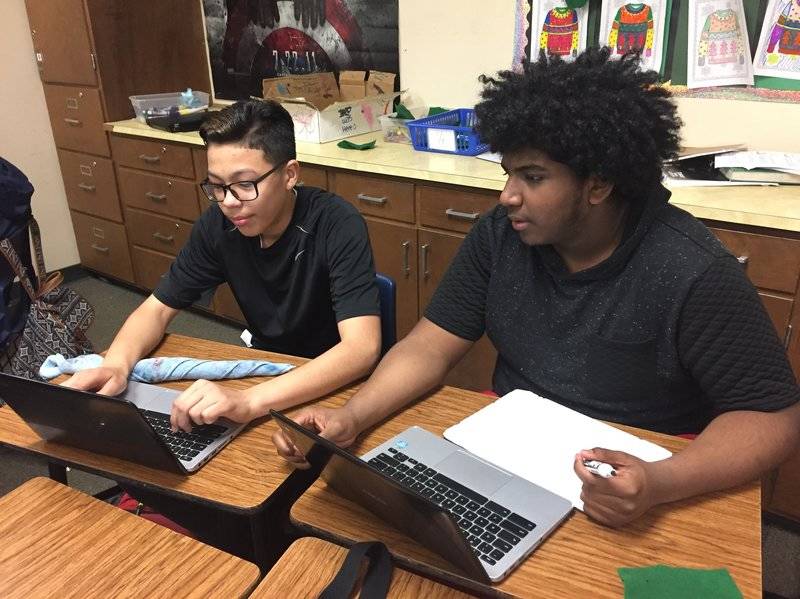
"caption": "Eighth graders Cristian Munoz (left) and Clifton Steward work on their Chromebooks during a language arts class at French Middle School in Topeka, Kan. Both students were eligible to bring the devices home this summer.",
"description": null,
"title": "French Middle School Students-2c7489c9f62f58546673bde49ac32c6444d1485d-s800-c85",
"credit": "Scott Ritter/Courtesy of French Middle School",
"status": "inherit",
"isLoading": false,
"fetchFailed": false
},
"mindshift_48439": {
"type": "attachments",
"id": "mindshift_48439",
"meta": {
"index": "attachments_1716263798",
"site": "mindshift",
"id": "48439",
"found": true
},
"parent": 48430,
"imgSizes": {
"small": {
"file": "https://ww2.kqed.org/app/uploads/sites/23/2017/06/Globe-1-520x389.jpg",
"width": 520,
"mimeType": "image/jpeg",
"height": 389
},
"twentyfourteen-full-width": {
"file": "https://ww2.kqed.org/app/uploads/sites/23/2017/06/Globe-1-1038x576.jpg",
"width": 1038,
"mimeType": "image/jpeg",
"height": 576
},
"thumbnail": {
"file": "https://ww2.kqed.org/app/uploads/sites/23/2017/06/Globe-1-160x120.jpg",
"width": 160,
"mimeType": "image/jpeg",
"height": 120
},
"fd-sm": {
"file": "https://ww2.kqed.org/app/uploads/sites/23/2017/06/Globe-1-960x719.jpg",
"width": 960,
"mimeType": "image/jpeg",
"height": 719
},
"post-thumbnail": {
"file": "https://ww2.kqed.org/app/uploads/sites/23/2017/06/Globe-1-672x372.jpg",
"width": 672,
"mimeType": "image/jpeg",
"height": 372
},
"xsmall": {
"file": "https://ww2.kqed.org/app/uploads/sites/23/2017/06/Globe-1-375x281.jpg",
"width": 375,
"mimeType": "image/jpeg",
"height": 281
},
"kqedFullSize": {
"file": "https://ww2.kqed.org/app/uploads/sites/23/2017/06/Globe-1-e1497542909812.jpg",
"width": 1920,
"height": 1437
},
"large": {
"file": "https://ww2.kqed.org/app/uploads/sites/23/2017/06/Globe-1-1020x764.jpg",
"width": 1020,
"mimeType": "image/jpeg",
"height": 764
},
"xlarge": {
"file": "https://ww2.kqed.org/app/uploads/sites/23/2017/06/Globe-1-1180x883.jpg",
"width": 1180,
"mimeType": "image/jpeg",
"height": 883
},
"guest-author-50": {
"file": "https://ww2.kqed.org/app/uploads/sites/23/2017/06/Globe-1-50x50.jpg",
"width": 50,
"mimeType": "image/jpeg",
"height": 50
},
"guest-author-96": {
"file": "https://ww2.kqed.org/app/uploads/sites/23/2017/06/Globe-1-96x96.jpg",
"width": 96,
"mimeType": "image/jpeg",
"height": 96
},
"medium": {
"file": "https://ww2.kqed.org/app/uploads/sites/23/2017/06/Globe-1-800x599.jpg",
"width": 800,
"mimeType": "image/jpeg",
"height": 599
},
"guest-author-64": {
"file": "https://ww2.kqed.org/app/uploads/sites/23/2017/06/Globe-1-64x64.jpg",
"width": 64,
"mimeType": "image/jpeg",
"height": 64
},
"guest-author-32": {
"file": "https://ww2.kqed.org/app/uploads/sites/23/2017/06/Globe-1-32x32.jpg",
"width": 32,
"mimeType": "image/jpeg",
"height": 32
},
"fd-lrg": {
"file": "https://ww2.kqed.org/app/uploads/sites/23/2017/06/Globe-1-1920x1437.jpg",
"width": 1920,
"mimeType": "image/jpeg",
"height": 1437
},
"fd-med": {
"file": "https://ww2.kqed.org/app/uploads/sites/23/2017/06/Globe-1-1180x883.jpg",
"width": 1180,
"mimeType": "image/jpeg",
"height": 883
},
"full-width": {
"file": "https://ww2.kqed.org/app/uploads/sites/23/2017/06/Globe-1-1920x1437.jpg",
"width": 1920,
"mimeType": "image/jpeg",
"height": 1437
},
"detail": {
"file": "https://ww2.kqed.org/app/uploads/sites/23/2017/06/Globe-1-150x150.jpg",
"width": 150,
"mimeType": "image/jpeg",
"height": 150
},
"medium_large": {
"file": "https://ww2.kqed.org/app/uploads/sites/23/2017/06/Globe-1-768x575.jpg",
"width": 768,
"mimeType": "image/jpeg",
"height": 575
},
"guest-author-128": {
"file": "https://ww2.kqed.org/app/uploads/sites/23/2017/06/Globe-1-128x128.jpg",
"width": 128,
"mimeType": "image/jpeg",
"height": 128
},
"xxsmall": {
"file": "https://ww2.kqed.org/app/uploads/sites/23/2017/06/Globe-1-240x180.jpg",
"width": 240,
"mimeType": "image/jpeg",
"height": 180
}
},
"publishDate": 1497542870,
"modified": 1497542925,
"caption": null,
"description": null,
"title": null,
"credit": "iStock/RomoloTavani ",
"status": "inherit",
"isLoading": false,
"fetchFailed": false
},
"mindshift_48244": {
"type": "attachments",
"id": "mindshift_48244",
"meta": {
"index": "attachments_1716263798",
"site": "mindshift",
"id": "48244",
"found": true
},
"parent": 48233,
"imgSizes": {
"small": {
"file": "https://ww2.kqed.org/app/uploads/sites/23/2017/05/Empathy-games-520x424.jpg",
"width": 520,
"mimeType": "image/jpeg",
"height": 424
},
"twentyfourteen-full-width": {
"file": "https://ww2.kqed.org/app/uploads/sites/23/2017/05/Empathy-games-1038x576.jpg",
"width": 1038,
"mimeType": "image/jpeg",
"height": 576
},
"thumbnail": {
"file": "https://ww2.kqed.org/app/uploads/sites/23/2017/05/Empathy-games-160x130.jpg",
"width": 160,
"mimeType": "image/jpeg",
"height": 130
},
"fd-sm": {
"file": "https://ww2.kqed.org/app/uploads/sites/23/2017/05/Empathy-games-960x782.jpg",
"width": 960,
"mimeType": "image/jpeg",
"height": 782
},
"post-thumbnail": {
"file": "https://ww2.kqed.org/app/uploads/sites/23/2017/05/Empathy-games-672x372.jpg",
"width": 672,
"mimeType": "image/jpeg",
"height": 372
},
"xsmall": {
"file": "https://ww2.kqed.org/app/uploads/sites/23/2017/05/Empathy-games-375x306.jpg",
"width": 375,
"mimeType": "image/jpeg",
"height": 306
},
"kqedFullSize": {
"file": "https://ww2.kqed.org/app/uploads/sites/23/2017/05/Empathy-games-e1494852585645.jpg",
"width": 1920,
"height": 1564
},
"large": {
"file": "https://ww2.kqed.org/app/uploads/sites/23/2017/05/Empathy-games-1020x831.jpg",
"width": 1020,
"mimeType": "image/jpeg",
"height": 831
},
"xlarge": {
"file": "https://ww2.kqed.org/app/uploads/sites/23/2017/05/Empathy-games-1180x961.jpg",
"width": 1180,
"mimeType": "image/jpeg",
"height": 961
},
"guest-author-50": {
"file": "https://ww2.kqed.org/app/uploads/sites/23/2017/05/Empathy-games-50x50.jpg",
"width": 50,
"mimeType": "image/jpeg",
"height": 50
},
"guest-author-96": {
"file": "https://ww2.kqed.org/app/uploads/sites/23/2017/05/Empathy-games-96x96.jpg",
"width": 96,
"mimeType": "image/jpeg",
"height": 96
},
"medium": {
"file": "https://ww2.kqed.org/app/uploads/sites/23/2017/05/Empathy-games-800x652.jpg",
"width": 800,
"mimeType": "image/jpeg",
"height": 652
},
"guest-author-64": {
"file": "https://ww2.kqed.org/app/uploads/sites/23/2017/05/Empathy-games-64x64.jpg",
"width": 64,
"mimeType": "image/jpeg",
"height": 64
},
"guest-author-32": {
"file": "https://ww2.kqed.org/app/uploads/sites/23/2017/05/Empathy-games-32x32.jpg",
"width": 32,
"mimeType": "image/jpeg",
"height": 32
},
"fd-lrg": {
"file": "https://ww2.kqed.org/app/uploads/sites/23/2017/05/Empathy-games-1920x1564.jpg",
"width": 1920,
"mimeType": "image/jpeg",
"height": 1564
},
"fd-med": {
"file": "https://ww2.kqed.org/app/uploads/sites/23/2017/05/Empathy-games-1180x961.jpg",
"width": 1180,
"mimeType": "image/jpeg",
"height": 961
},
"full-width": {
"file": "https://ww2.kqed.org/app/uploads/sites/23/2017/05/Empathy-games-1920x1564.jpg",
"width": 1920,
"mimeType": "image/jpeg",
"height": 1564
},
"detail": {
"file": "https://ww2.kqed.org/app/uploads/sites/23/2017/05/Empathy-games-150x150.jpg",
"width": 150,
"mimeType": "image/jpeg",
"height": 150
},
"medium_large": {
"file": "https://ww2.kqed.org/app/uploads/sites/23/2017/05/Empathy-games-768x626.jpg",
"width": 768,
"mimeType": "image/jpeg",
"height": 626
},
"guest-author-128": {
"file": "https://ww2.kqed.org/app/uploads/sites/23/2017/05/Empathy-games-128x128.jpg",
"width": 128,
"mimeType": "image/jpeg",
"height": 128
},
"xxsmall": {
"file": "https://ww2.kqed.org/app/uploads/sites/23/2017/05/Empathy-games-240x196.jpg",
"width": 240,
"mimeType": "image/jpeg",
"height": 196
}
},
"publishDate": 1494852559,
"modified": 1494852559,
"caption": null,
"description": null,
"title": "Empathy-games",
"credit": null,
"status": "inherit",
"isLoading": false,
"fetchFailed": false
},
"mindshift_48108": {
"type": "attachments",
"id": "mindshift_48108",
"meta": {
"index": "attachments_1716263798",
"site": "mindshift",
"id": "48108",
"found": true
},
"parent": 48033,
"imgSizes": {
"small": {
"file": "https://ww2.kqed.org/app/uploads/sites/23/2017/04/Text-520x347.jpg",
"width": 520,
"mimeType": "image/jpeg",
"height": 347
},
"twentyfourteen-full-width": {
"file": "https://ww2.kqed.org/app/uploads/sites/23/2017/04/Text-1038x576.jpg",
"width": 1038,
"mimeType": "image/jpeg",
"height": 576
},
"thumbnail": {
"file": "https://ww2.kqed.org/app/uploads/sites/23/2017/04/Text-160x107.jpg",
"width": 160,
"mimeType": "image/jpeg",
"height": 107
},
"fd-sm": {
"file": "https://ww2.kqed.org/app/uploads/sites/23/2017/04/Text-960x640.jpg",
"width": 960,
"mimeType": "image/jpeg",
"height": 640
},
"post-thumbnail": {
"file": "https://ww2.kqed.org/app/uploads/sites/23/2017/04/Text-672x372.jpg",
"width": 672,
"mimeType": "image/jpeg",
"height": 372
},
"xsmall": {
"file": "https://ww2.kqed.org/app/uploads/sites/23/2017/04/Text-375x250.jpg",
"width": 375,
"mimeType": "image/jpeg",
"height": 250
},
"kqedFullSize": {
"file": "https://ww2.kqed.org/app/uploads/sites/23/2017/04/Text-e1492779870915.jpg",
"width": 1920,
"height": 1280
},
"large": {
"file": "https://ww2.kqed.org/app/uploads/sites/23/2017/04/Text-1020x680.jpg",
"width": 1020,
"mimeType": "image/jpeg",
"height": 680
},
"xlarge": {
"file": "https://ww2.kqed.org/app/uploads/sites/23/2017/04/Text-1180x787.jpg",
"width": 1180,
"mimeType": "image/jpeg",
"height": 787
},
"guest-author-50": {
"file": "https://ww2.kqed.org/app/uploads/sites/23/2017/04/Text-50x50.jpg",
"width": 50,
"mimeType": "image/jpeg",
"height": 50
},
"guest-author-96": {
"file": "https://ww2.kqed.org/app/uploads/sites/23/2017/04/Text-96x96.jpg",
"width": 96,
"mimeType": "image/jpeg",
"height": 96
},
"medium": {
"file": "https://ww2.kqed.org/app/uploads/sites/23/2017/04/Text-800x533.jpg",
"width": 800,
"mimeType": "image/jpeg",
"height": 533
},
"guest-author-64": {
"file": "https://ww2.kqed.org/app/uploads/sites/23/2017/04/Text-64x64.jpg",
"width": 64,
"mimeType": "image/jpeg",
"height": 64
},
"guest-author-32": {
"file": "https://ww2.kqed.org/app/uploads/sites/23/2017/04/Text-32x32.jpg",
"width": 32,
"mimeType": "image/jpeg",
"height": 32
},
"fd-lrg": {
"file": "https://ww2.kqed.org/app/uploads/sites/23/2017/04/Text-1920x1280.jpg",
"width": 1920,
"mimeType": "image/jpeg",
"height": 1280
},
"fd-med": {
"file": "https://ww2.kqed.org/app/uploads/sites/23/2017/04/Text-1180x787.jpg",
"width": 1180,
"mimeType": "image/jpeg",
"height": 787
},
"full-width": {
"file": "https://ww2.kqed.org/app/uploads/sites/23/2017/04/Text-1920x1280.jpg",
"width": 1920,
"mimeType": "image/jpeg",
"height": 1280
},
"detail": {
"file": "https://ww2.kqed.org/app/uploads/sites/23/2017/04/Text-150x150.jpg",
"width": 150,
"mimeType": "image/jpeg",
"height": 150
},
"medium_large": {
"file": "https://ww2.kqed.org/app/uploads/sites/23/2017/04/Text-768x512.jpg",
"width": 768,
"mimeType": "image/jpeg",
"height": 512
},
"guest-author-128": {
"file": "https://ww2.kqed.org/app/uploads/sites/23/2017/04/Text-128x128.jpg",
"width": 128,
"mimeType": "image/jpeg",
"height": 128
},
"xxsmall": {
"file": "https://ww2.kqed.org/app/uploads/sites/23/2017/04/Text-240x160.jpg",
"width": 240,
"mimeType": "image/jpeg",
"height": 160
}
},
"publishDate": 1492779835,
"modified": 1492779858,
"caption": null,
"description": null,
"title": "Text",
"credit": "iStock/monkeybusinessimages ",
"status": "inherit",
"isLoading": false,
"fetchFailed": false
},
"mindshift_47799": {
"type": "attachments",
"id": "mindshift_47799",
"meta": {
"index": "attachments_1716263798",
"site": "mindshift",
"id": "47799",
"found": true
},
"parent": 47772,
"imgSizes": {
"small": {
"file": "https://ww2.kqed.org/app/uploads/sites/23/2017/03/Elk-520x375.jpg",
"width": 520,
"mimeType": "image/jpeg",
"height": 375
},
"twentyfourteen-full-width": {
"file": "https://ww2.kqed.org/app/uploads/sites/23/2017/03/Elk-1038x576.jpg",
"width": 1038,
"mimeType": "image/jpeg",
"height": 576
},
"thumbnail": {
"file": "https://ww2.kqed.org/app/uploads/sites/23/2017/03/Elk-160x115.jpg",
"width": 160,
"mimeType": "image/jpeg",
"height": 115
},
"fd-sm": {
"file": "https://ww2.kqed.org/app/uploads/sites/23/2017/03/Elk-960x693.jpg",
"width": 960,
"mimeType": "image/jpeg",
"height": 693
},
"post-thumbnail": {
"file": "https://ww2.kqed.org/app/uploads/sites/23/2017/03/Elk-672x372.jpg",
"width": 672,
"mimeType": "image/jpeg",
"height": 372
},
"xsmall": {
"file": "https://ww2.kqed.org/app/uploads/sites/23/2017/03/Elk-375x271.jpg",
"width": 375,
"mimeType": "image/jpeg",
"height": 271
},
"kqedFullSize": {
"file": "https://ww2.kqed.org/app/uploads/sites/23/2017/03/Elk-e1490078690596.jpg",
"width": 1920,
"height": 1385
},
"large": {
"file": "https://ww2.kqed.org/app/uploads/sites/23/2017/03/Elk-1020x736.jpg",
"width": 1020,
"mimeType": "image/jpeg",
"height": 736
},
"xlarge": {
"file": "https://ww2.kqed.org/app/uploads/sites/23/2017/03/Elk-1180x851.jpg",
"width": 1180,
"mimeType": "image/jpeg",
"height": 851
},
"guest-author-50": {
"file": "https://ww2.kqed.org/app/uploads/sites/23/2017/03/Elk-50x50.jpg",
"width": 50,
"mimeType": "image/jpeg",
"height": 50
},
"guest-author-96": {
"file": "https://ww2.kqed.org/app/uploads/sites/23/2017/03/Elk-96x96.jpg",
"width": 96,
"mimeType": "image/jpeg",
"height": 96
},
"medium": {
"file": "https://ww2.kqed.org/app/uploads/sites/23/2017/03/Elk-800x577.jpg",
"width": 800,
"mimeType": "image/jpeg",
"height": 577
},
"guest-author-64": {
"file": "https://ww2.kqed.org/app/uploads/sites/23/2017/03/Elk-64x64.jpg",
"width": 64,
"mimeType": "image/jpeg",
"height": 64
},
"guest-author-32": {
"file": "https://ww2.kqed.org/app/uploads/sites/23/2017/03/Elk-32x32.jpg",
"width": 32,
"mimeType": "image/jpeg",
"height": 32
},
"fd-lrg": {
"file": "https://ww2.kqed.org/app/uploads/sites/23/2017/03/Elk-1920x1385.jpg",
"width": 1920,
"mimeType": "image/jpeg",
"height": 1385
},
"fd-med": {
"file": "https://ww2.kqed.org/app/uploads/sites/23/2017/03/Elk-1180x851.jpg",
"width": 1180,
"mimeType": "image/jpeg",
"height": 851
},
"full-width": {
"file": "https://ww2.kqed.org/app/uploads/sites/23/2017/03/Elk-1920x1385.jpg",
"width": 1920,
"mimeType": "image/jpeg",
"height": 1385
},
"detail": {
"file": "https://ww2.kqed.org/app/uploads/sites/23/2017/03/Elk-150x150.jpg",
"width": 150,
"mimeType": "image/jpeg",
"height": 150
},
"medium_large": {
"file": "https://ww2.kqed.org/app/uploads/sites/23/2017/03/Elk-768x554.jpg",
"width": 768,
"mimeType": "image/jpeg",
"height": 554
},
"guest-author-128": {
"file": "https://ww2.kqed.org/app/uploads/sites/23/2017/03/Elk-128x128.jpg",
"width": 128,
"mimeType": "image/jpeg",
"height": 128
},
"xxsmall": {
"file": "https://ww2.kqed.org/app/uploads/sites/23/2017/03/Elk-240x173.jpg",
"width": 240,
"mimeType": "image/jpeg",
"height": 173
}
},
"publishDate": 1490078652,
"modified": 1490078679,
"caption": null,
"description": null,
"title": "Battling bull elk in rut season",
"credit": "iStock/florencemcginn ",
"status": "inherit",
"isLoading": false,
"fetchFailed": false
},
"mindshift_47722": {
"type": "attachments",
"id": "mindshift_47722",
"meta": {
"index": "attachments_1716263798",
"site": "mindshift",
"id": "47722",
"found": true
},
"parent": 47561,
"imgSizes": {
"small": {
"file": "https://ww2.kqed.org/app/uploads/sites/23/2017/03/Hammill-520x376.jpg",
"width": 520,
"mimeType": "image/jpeg",
"height": 376
},
"twentyfourteen-full-width": {
"file": "https://ww2.kqed.org/app/uploads/sites/23/2017/03/Hammill-1038x576.jpg",
"width": 1038,
"mimeType": "image/jpeg",
"height": 576
},
"thumbnail": {
"file": "https://ww2.kqed.org/app/uploads/sites/23/2017/03/Hammill-160x116.jpg",
"width": 160,
"mimeType": "image/jpeg",
"height": 116
},
"fd-sm": {
"file": "https://ww2.kqed.org/app/uploads/sites/23/2017/03/Hammill-960x694.jpg",
"width": 960,
"mimeType": "image/jpeg",
"height": 694
},
"post-thumbnail": {
"file": "https://ww2.kqed.org/app/uploads/sites/23/2017/03/Hammill-672x372.jpg",
"width": 672,
"mimeType": "image/jpeg",
"height": 372
},
"xsmall": {
"file": "https://ww2.kqed.org/app/uploads/sites/23/2017/03/Hammill-375x271.jpg",
"width": 375,
"mimeType": "image/jpeg",
"height": 271
},
"kqedFullSize": {
"file": "https://ww2.kqed.org/app/uploads/sites/23/2017/03/Hammill-e1488978053419.jpg",
"width": 1920,
"height": 1388
},
"large": {
"file": "https://ww2.kqed.org/app/uploads/sites/23/2017/03/Hammill-1020x738.jpg",
"width": 1020,
"mimeType": "image/jpeg",
"height": 738
},
"xlarge": {
"file": "https://ww2.kqed.org/app/uploads/sites/23/2017/03/Hammill-1180x853.jpg",
"width": 1180,
"mimeType": "image/jpeg",
"height": 853
},
"guest-author-50": {
"file": "https://ww2.kqed.org/app/uploads/sites/23/2017/03/Hammill-50x50.jpg",
"width": 50,
"mimeType": "image/jpeg",
"height": 50
},
"guest-author-96": {
"file": "https://ww2.kqed.org/app/uploads/sites/23/2017/03/Hammill-96x96.jpg",
"width": 96,
"mimeType": "image/jpeg",
"height": 96
},
"medium": {
"file": "https://ww2.kqed.org/app/uploads/sites/23/2017/03/Hammill-800x579.jpg",
"width": 800,
"mimeType": "image/jpeg",
"height": 579
},
"guest-author-64": {
"file": "https://ww2.kqed.org/app/uploads/sites/23/2017/03/Hammill-64x64.jpg",
"width": 64,
"mimeType": "image/jpeg",
"height": 64
},
"guest-author-32": {
"file": "https://ww2.kqed.org/app/uploads/sites/23/2017/03/Hammill-32x32.jpg",
"width": 32,
"mimeType": "image/jpeg",
"height": 32
},
"fd-lrg": {
"file": "https://ww2.kqed.org/app/uploads/sites/23/2017/03/Hammill-1920x1388.jpg",
"width": 1920,
"mimeType": "image/jpeg",
"height": 1388
},
"fd-med": {
"file": "https://ww2.kqed.org/app/uploads/sites/23/2017/03/Hammill-1180x853.jpg",
"width": 1180,
"mimeType": "image/jpeg",
"height": 853
},
"full-width": {
"file": "https://ww2.kqed.org/app/uploads/sites/23/2017/03/Hammill-1920x1388.jpg",
"width": 1920,
"mimeType": "image/jpeg",
"height": 1388
},
"detail": {
"file": "https://ww2.kqed.org/app/uploads/sites/23/2017/03/Hammill-150x150.jpg",
"width": 150,
"mimeType": "image/jpeg",
"height": 150
},
"medium_large": {
"file": "https://ww2.kqed.org/app/uploads/sites/23/2017/03/Hammill-768x555.jpg",
"width": 768,
"mimeType": "image/jpeg",
"height": 555
},
"guest-author-128": {
"file": "https://ww2.kqed.org/app/uploads/sites/23/2017/03/Hammill-128x128.jpg",
"width": 128,
"mimeType": "image/jpeg",
"height": 128
},
"xxsmall": {
"file": "https://ww2.kqed.org/app/uploads/sites/23/2017/03/Hammill-240x174.jpg",
"width": 240,
"mimeType": "image/jpeg",
"height": 174
}
},
"publishDate": 1488977960,
"modified": 1488985283,
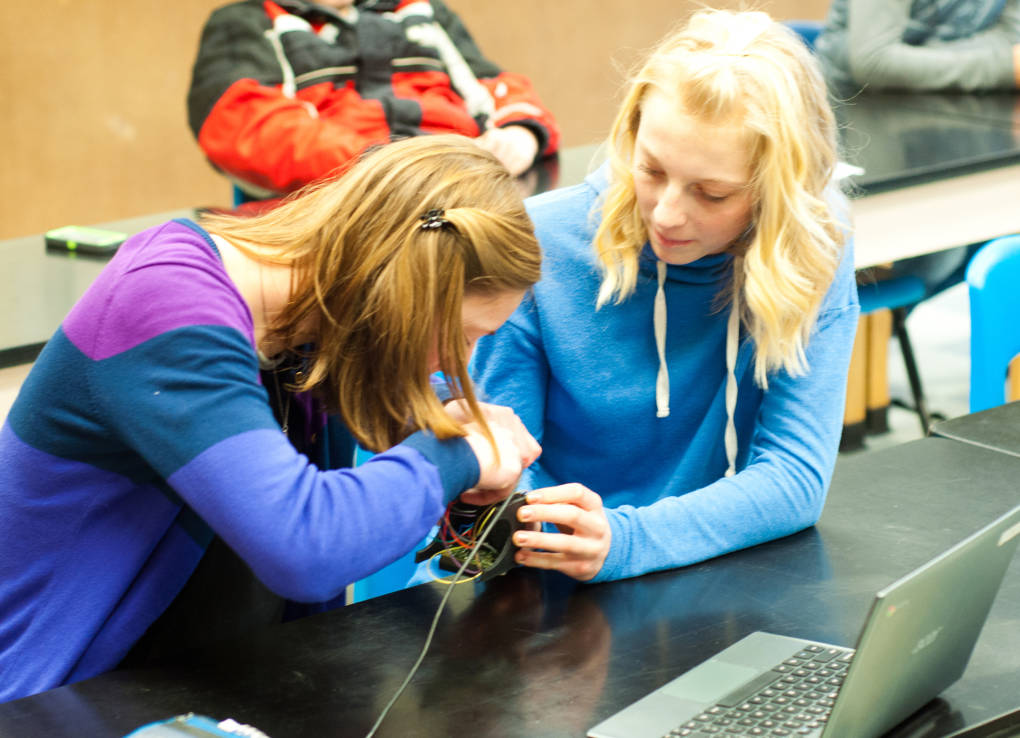
"caption": "Students work on air quality monitors designed to capture data in their communities.",
"description": "Students work on air quality monitors designed to capture data in their communities.",
"title": "Hammill",
"credit": "Courtesy of Brock Hammill",
"status": "inherit",
"isLoading": false,
"fetchFailed": false
},
"mindshift_47470": {
"type": "attachments",
"id": "mindshift_47470",
"meta": {
"index": "attachments_1716263798",
"site": "mindshift",
"id": "47470",
"found": true
},
"parent": 47462,
"imgSizes": {
"small": {
"file": "https://ww2.kqed.org/app/uploads/sites/23/2017/02/instrument-riddle-520x274.png",
"width": 520,
"mimeType": "image/png",
"height": 274
},
"thumbnail": {
"file": "https://ww2.kqed.org/app/uploads/sites/23/2017/02/instrument-riddle-160x84.png",
"width": 160,
"mimeType": "image/png",
"height": 84
},
"post-thumbnail": {
"file": "https://ww2.kqed.org/app/uploads/sites/23/2017/02/instrument-riddle-672x372.png",
"width": 672,
"mimeType": "image/png",
"height": 372
},
"xsmall": {
"file": "https://ww2.kqed.org/app/uploads/sites/23/2017/02/instrument-riddle-375x198.png",
"width": 375,
"mimeType": "image/png",
"height": 198
},
"kqedFullSize": {
"file": "https://ww2.kqed.org/app/uploads/sites/23/2017/02/instrument-riddle.png",
"width": 799,
"height": 421
},
"guest-author-50": {
"file": "https://ww2.kqed.org/app/uploads/sites/23/2017/02/instrument-riddle-50x50.png",
"width": 50,
"mimeType": "image/png",
"height": 50
},
"guest-author-96": {
"file": "https://ww2.kqed.org/app/uploads/sites/23/2017/02/instrument-riddle-96x96.png",
"width": 96,
"mimeType": "image/png",
"height": 96
},
"guest-author-64": {
"file": "https://ww2.kqed.org/app/uploads/sites/23/2017/02/instrument-riddle-64x64.png",
"width": 64,
"mimeType": "image/png",
"height": 64
},
"guest-author-32": {
"file": "https://ww2.kqed.org/app/uploads/sites/23/2017/02/instrument-riddle-32x32.png",
"width": 32,
"mimeType": "image/png",
"height": 32
},
"detail": {
"file": "https://ww2.kqed.org/app/uploads/sites/23/2017/02/instrument-riddle-150x150.png",
"width": 150,
"mimeType": "image/png",
"height": 150
},
"medium_large": {
"file": "https://ww2.kqed.org/app/uploads/sites/23/2017/02/instrument-riddle-768x405.png",
"width": 768,
"mimeType": "image/png",
"height": 405
},
"guest-author-128": {
"file": "https://ww2.kqed.org/app/uploads/sites/23/2017/02/instrument-riddle-128x128.png",
"width": 128,
"mimeType": "image/png",
"height": 128
},
"xxsmall": {
"file": "https://ww2.kqed.org/app/uploads/sites/23/2017/02/instrument-riddle-240x126.png",
"width": 240,
"mimeType": "image/png",
"height": 126
}
},
"publishDate": 1486064028,
"modified": 1486064086,
"caption": null,
"description": null,
"title": "instrument riddle",
"credit": "Artrake Studio/\u003ca href=\"http://ed.ted.com/lessons/can-you-solve-the-prisoner-boxes-riddle-yossi-elran\">TED-Ed\u003c/a>",
"status": "inherit",
"isLoading": false,
"fetchFailed": false
},
"mindshift_47700": {
"type": "attachments",
"id": "mindshift_47700",
"meta": {
"index": "attachments_1716263798",
"site": "mindshift",
"id": "47700",
"found": true
},
"parent": 47699,
"imgSizes": {
"small": {
"file": "https://ww2.kqed.org/app/uploads/sites/23/2017/03/text-helper_slide-0544904d1a0c48bac08fa046a256741a7273dea8-520x347.jpg",
"width": 520,
"mimeType": "image/jpeg",
"height": 347
},
"twentyfourteen-full-width": {
"file": "https://ww2.kqed.org/app/uploads/sites/23/2017/03/text-helper_slide-0544904d1a0c48bac08fa046a256741a7273dea8-1038x576.jpg",
"width": 1038,
"mimeType": "image/jpeg",
"height": 576
},
"thumbnail": {
"file": "https://ww2.kqed.org/app/uploads/sites/23/2017/03/text-helper_slide-0544904d1a0c48bac08fa046a256741a7273dea8-160x107.jpg",
"width": 160,
"mimeType": "image/jpeg",
"height": 107
},
"fd-sm": {
"file": "https://ww2.kqed.org/app/uploads/sites/23/2017/03/text-helper_slide-0544904d1a0c48bac08fa046a256741a7273dea8-960x640.jpg",
"width": 960,
"mimeType": "image/jpeg",
"height": 640
},
"post-thumbnail": {
"file": "https://ww2.kqed.org/app/uploads/sites/23/2017/03/text-helper_slide-0544904d1a0c48bac08fa046a256741a7273dea8-672x372.jpg",
"width": 672,
"mimeType": "image/jpeg",
"height": 372
},
"xsmall": {
"file": "https://ww2.kqed.org/app/uploads/sites/23/2017/03/text-helper_slide-0544904d1a0c48bac08fa046a256741a7273dea8-375x250.jpg",
"width": 375,
"mimeType": "image/jpeg",
"height": 250
},
"kqedFullSize": {
"file": "https://ww2.kqed.org/app/uploads/sites/23/2017/03/text-helper_slide-0544904d1a0c48bac08fa046a256741a7273dea8-e1488550563559.jpg",
"width": 1920,
"height": 1280
},
"large": {
"file": "https://ww2.kqed.org/app/uploads/sites/23/2017/03/text-helper_slide-0544904d1a0c48bac08fa046a256741a7273dea8-1020x680.jpg",
"width": 1020,
"mimeType": "image/jpeg",
"height": 680
},
"xlarge": {
"file": "https://ww2.kqed.org/app/uploads/sites/23/2017/03/text-helper_slide-0544904d1a0c48bac08fa046a256741a7273dea8-1180x787.jpg",
"width": 1180,
"mimeType": "image/jpeg",
"height": 787
},
"guest-author-50": {
"file": "https://ww2.kqed.org/app/uploads/sites/23/2017/03/text-helper_slide-0544904d1a0c48bac08fa046a256741a7273dea8-50x50.jpg",
"width": 50,
"mimeType": "image/jpeg",
"height": 50
},
"guest-author-96": {
"file": "https://ww2.kqed.org/app/uploads/sites/23/2017/03/text-helper_slide-0544904d1a0c48bac08fa046a256741a7273dea8-96x96.jpg",
"width": 96,
"mimeType": "image/jpeg",
"height": 96
},
"medium": {
"file": "https://ww2.kqed.org/app/uploads/sites/23/2017/03/text-helper_slide-0544904d1a0c48bac08fa046a256741a7273dea8-800x533.jpg",
"width": 800,
"mimeType": "image/jpeg",
"height": 533
},
"guest-author-64": {
"file": "https://ww2.kqed.org/app/uploads/sites/23/2017/03/text-helper_slide-0544904d1a0c48bac08fa046a256741a7273dea8-64x64.jpg",
"width": 64,
"mimeType": "image/jpeg",
"height": 64
},
"guest-author-32": {
"file": "https://ww2.kqed.org/app/uploads/sites/23/2017/03/text-helper_slide-0544904d1a0c48bac08fa046a256741a7273dea8-32x32.jpg",
"width": 32,
"mimeType": "image/jpeg",
"height": 32
},
"fd-lrg": {
"file": "https://ww2.kqed.org/app/uploads/sites/23/2017/03/text-helper_slide-0544904d1a0c48bac08fa046a256741a7273dea8-1920x1280.jpg",
"width": 1920,
"mimeType": "image/jpeg",
"height": 1280
},
"fd-med": {
"file": "https://ww2.kqed.org/app/uploads/sites/23/2017/03/text-helper_slide-0544904d1a0c48bac08fa046a256741a7273dea8-1180x787.jpg",
"width": 1180,
"mimeType": "image/jpeg",
"height": 787
},
"full-width": {
"file": "https://ww2.kqed.org/app/uploads/sites/23/2017/03/text-helper_slide-0544904d1a0c48bac08fa046a256741a7273dea8-1920x1280.jpg",
"width": 1920,
"mimeType": "image/jpeg",
"height": 1280
},
"detail": {
"file": "https://ww2.kqed.org/app/uploads/sites/23/2017/03/text-helper_slide-0544904d1a0c48bac08fa046a256741a7273dea8-150x150.jpg",
"width": 150,
"mimeType": "image/jpeg",
"height": 150
},
"medium_large": {
"file": "https://ww2.kqed.org/app/uploads/sites/23/2017/03/text-helper_slide-0544904d1a0c48bac08fa046a256741a7273dea8-768x512.jpg",
"width": 768,
"mimeType": "image/jpeg",
"height": 512
},
"guest-author-128": {
"file": "https://ww2.kqed.org/app/uploads/sites/23/2017/03/text-helper_slide-0544904d1a0c48bac08fa046a256741a7273dea8-128x128.jpg",
"width": 128,
"mimeType": "image/jpeg",
"height": 128
},
"xxsmall": {
"file": "https://ww2.kqed.org/app/uploads/sites/23/2017/03/text-helper_slide-0544904d1a0c48bac08fa046a256741a7273dea8-240x160.jpg",
"width": 240,
"mimeType": "image/jpeg",
"height": 160
}
},
"publishDate": 1488549650,
"modified": 1488550581,
"caption": null,
"description": "Text Message",
"title": "Text Message",
"credit": "NPR/LA Johnson",
"status": "inherit",
"isLoading": false,
"fetchFailed": false
},
"mindshift_47637": {
"type": "attachments",
"id": "mindshift_47637",
"meta": {
"index": "attachments_1716263798",
"site": "mindshift",
"id": "47637",
"found": true
},
"parent": 47636,
"imgSizes": {
"small": {
"file": "https://ww2.kqed.org/app/uploads/sites/23/2017/02/wiki-world_slide-4ee47917eeb75b0eee4e77e0747f42ef7a8a4af0-520x347.jpg",
"width": 520,
"mimeType": "image/jpeg",
"height": 347
},
"twentyfourteen-full-width": {
"file": "https://ww2.kqed.org/app/uploads/sites/23/2017/02/wiki-world_slide-4ee47917eeb75b0eee4e77e0747f42ef7a8a4af0-1038x576.jpg",
"width": 1038,
"mimeType": "image/jpeg",
"height": 576
},
"thumbnail": {
"file": "https://ww2.kqed.org/app/uploads/sites/23/2017/02/wiki-world_slide-4ee47917eeb75b0eee4e77e0747f42ef7a8a4af0-160x107.jpg",
"width": 160,
"mimeType": "image/jpeg",
"height": 107
},
"fd-sm": {
"file": "https://ww2.kqed.org/app/uploads/sites/23/2017/02/wiki-world_slide-4ee47917eeb75b0eee4e77e0747f42ef7a8a4af0-960x640.jpg",
"width": 960,
"mimeType": "image/jpeg",
"height": 640
},
"post-thumbnail": {
"file": "https://ww2.kqed.org/app/uploads/sites/23/2017/02/wiki-world_slide-4ee47917eeb75b0eee4e77e0747f42ef7a8a4af0-672x372.jpg",
"width": 672,
"mimeType": "image/jpeg",
"height": 372
},
"xsmall": {
"file": "https://ww2.kqed.org/app/uploads/sites/23/2017/02/wiki-world_slide-4ee47917eeb75b0eee4e77e0747f42ef7a8a4af0-375x250.jpg",
"width": 375,
"mimeType": "image/jpeg",
"height": 250
},
"kqedFullSize": {
"file": "https://ww2.kqed.org/app/uploads/sites/23/2017/02/wiki-world_slide-4ee47917eeb75b0eee4e77e0747f42ef7a8a4af0-e1487795266553.jpg",
"width": 1920,
"height": 1280
},
"large": {
"file": "https://ww2.kqed.org/app/uploads/sites/23/2017/02/wiki-world_slide-4ee47917eeb75b0eee4e77e0747f42ef7a8a4af0-1020x680.jpg",
"width": 1020,
"mimeType": "image/jpeg",
"height": 680
},
"xlarge": {
"file": "https://ww2.kqed.org/app/uploads/sites/23/2017/02/wiki-world_slide-4ee47917eeb75b0eee4e77e0747f42ef7a8a4af0-1180x787.jpg",
"width": 1180,
"mimeType": "image/jpeg",
"height": 787
},
"guest-author-50": {
"file": "https://ww2.kqed.org/app/uploads/sites/23/2017/02/wiki-world_slide-4ee47917eeb75b0eee4e77e0747f42ef7a8a4af0-50x50.jpg",
"width": 50,
"mimeType": "image/jpeg",
"height": 50
},
"guest-author-96": {
"file": "https://ww2.kqed.org/app/uploads/sites/23/2017/02/wiki-world_slide-4ee47917eeb75b0eee4e77e0747f42ef7a8a4af0-96x96.jpg",
"width": 96,
"mimeType": "image/jpeg",
"height": 96
},
"medium": {
"file": "https://ww2.kqed.org/app/uploads/sites/23/2017/02/wiki-world_slide-4ee47917eeb75b0eee4e77e0747f42ef7a8a4af0-800x533.jpg",
"width": 800,
"mimeType": "image/jpeg",
"height": 533
},
"guest-author-64": {
"file": "https://ww2.kqed.org/app/uploads/sites/23/2017/02/wiki-world_slide-4ee47917eeb75b0eee4e77e0747f42ef7a8a4af0-64x64.jpg",
"width": 64,
"mimeType": "image/jpeg",
"height": 64
},
"guest-author-32": {
"file": "https://ww2.kqed.org/app/uploads/sites/23/2017/02/wiki-world_slide-4ee47917eeb75b0eee4e77e0747f42ef7a8a4af0-32x32.jpg",
"width": 32,
"mimeType": "image/jpeg",
"height": 32
},
"fd-lrg": {
"file": "https://ww2.kqed.org/app/uploads/sites/23/2017/02/wiki-world_slide-4ee47917eeb75b0eee4e77e0747f42ef7a8a4af0-1920x1280.jpg",
"width": 1920,
"mimeType": "image/jpeg",
"height": 1280
},
"fd-med": {
"file": "https://ww2.kqed.org/app/uploads/sites/23/2017/02/wiki-world_slide-4ee47917eeb75b0eee4e77e0747f42ef7a8a4af0-1180x787.jpg",
"width": 1180,
"mimeType": "image/jpeg",
"height": 787
},
"full-width": {
"file": "https://ww2.kqed.org/app/uploads/sites/23/2017/02/wiki-world_slide-4ee47917eeb75b0eee4e77e0747f42ef7a8a4af0-1920x1280.jpg",
"width": 1920,
"mimeType": "image/jpeg",
"height": 1280
},
"detail": {
"file": "https://ww2.kqed.org/app/uploads/sites/23/2017/02/wiki-world_slide-4ee47917eeb75b0eee4e77e0747f42ef7a8a4af0-150x150.jpg",
"width": 150,
"mimeType": "image/jpeg",
"height": 150
},
"medium_large": {
"file": "https://ww2.kqed.org/app/uploads/sites/23/2017/02/wiki-world_slide-4ee47917eeb75b0eee4e77e0747f42ef7a8a4af0-768x512.jpg",
"width": 768,
"mimeType": "image/jpeg",
"height": 512
},
"guest-author-128": {
"file": "https://ww2.kqed.org/app/uploads/sites/23/2017/02/wiki-world_slide-4ee47917eeb75b0eee4e77e0747f42ef7a8a4af0-128x128.jpg",
"width": 128,
"mimeType": "image/jpeg",
"height": 128
},
"xxsmall": {
"file": "https://ww2.kqed.org/app/uploads/sites/23/2017/02/wiki-world_slide-4ee47917eeb75b0eee4e77e0747f42ef7a8a4af0-240x160.jpg",
"width": 240,
"mimeType": "image/jpeg",
"height": 160
}
},
"publishDate": 1487795192,
"modified": 1487795284,
"caption": null,
"description": "Wiki-world",
"title": "Wiki-world",
"credit": "NPR/LA Johnson ",
"status": "inherit",
"isLoading": false,
"fetchFailed": false
},
"mindshift_47565": {
"type": "attachments",
"id": "mindshift_47565",
"meta": {
"index": "attachments_1716263798",
"site": "mindshift",
"id": "47565",
"found": true
},
"parent": 47476,
"imgSizes": {
"small": {
"file": "https://ww2.kqed.org/app/uploads/sites/23/2017/02/Light-Bulb-520x303.jpg",
"width": 520,
"mimeType": "image/jpeg",
"height": 303
},
"twentyfourteen-full-width": {
"file": "https://ww2.kqed.org/app/uploads/sites/23/2017/02/Light-Bulb-1038x576.jpg",
"width": 1038,
"mimeType": "image/jpeg",
"height": 576
},
"thumbnail": {
"file": "https://ww2.kqed.org/app/uploads/sites/23/2017/02/Light-Bulb-160x93.jpg",
"width": 160,
"mimeType": "image/jpeg",
"height": 93
},
"fd-sm": {
"file": "https://ww2.kqed.org/app/uploads/sites/23/2017/02/Light-Bulb-960x560.jpg",
"width": 960,
"mimeType": "image/jpeg",
"height": 560
},
"post-thumbnail": {
"file": "https://ww2.kqed.org/app/uploads/sites/23/2017/02/Light-Bulb-672x372.jpg",
"width": 672,
"mimeType": "image/jpeg",
"height": 372
},
"xsmall": {
"file": "https://ww2.kqed.org/app/uploads/sites/23/2017/02/Light-Bulb-375x219.jpg",
"width": 375,
"mimeType": "image/jpeg",
"height": 219
},
"kqedFullSize": {
"file": "https://ww2.kqed.org/app/uploads/sites/23/2017/02/Light-Bulb-e1487167753349.jpg",
"width": 1920,
"height": 1120
},
"large": {
"file": "https://ww2.kqed.org/app/uploads/sites/23/2017/02/Light-Bulb-1020x595.jpg",
"width": 1020,
"mimeType": "image/jpeg",
"height": 595
},
"xlarge": {
"file": "https://ww2.kqed.org/app/uploads/sites/23/2017/02/Light-Bulb-1180x688.jpg",
"width": 1180,
"mimeType": "image/jpeg",
"height": 688
},
"guest-author-50": {
"file": "https://ww2.kqed.org/app/uploads/sites/23/2017/02/Light-Bulb-50x50.jpg",
"width": 50,
"mimeType": "image/jpeg",
"height": 50
},
"guest-author-96": {
"file": "https://ww2.kqed.org/app/uploads/sites/23/2017/02/Light-Bulb-96x96.jpg",
"width": 96,
"mimeType": "image/jpeg",
"height": 96
},
"medium": {
"file": "https://ww2.kqed.org/app/uploads/sites/23/2017/02/Light-Bulb-800x467.jpg",
"width": 800,
"mimeType": "image/jpeg",
"height": 467
},
"guest-author-64": {
"file": "https://ww2.kqed.org/app/uploads/sites/23/2017/02/Light-Bulb-64x64.jpg",
"width": 64,
"mimeType": "image/jpeg",
"height": 64
},
"guest-author-32": {
"file": "https://ww2.kqed.org/app/uploads/sites/23/2017/02/Light-Bulb-32x32.jpg",
"width": 32,
"mimeType": "image/jpeg",
"height": 32
},
"fd-lrg": {
"file": "https://ww2.kqed.org/app/uploads/sites/23/2017/02/Light-Bulb-1920x1120.jpg",
"width": 1920,
"mimeType": "image/jpeg",
"height": 1120
},
"fd-med": {
"file": "https://ww2.kqed.org/app/uploads/sites/23/2017/02/Light-Bulb-1180x688.jpg",
"width": 1180,
"mimeType": "image/jpeg",
"height": 688
},
"full-width": {
"file": "https://ww2.kqed.org/app/uploads/sites/23/2017/02/Light-Bulb-1920x1120.jpg",
"width": 1920,
"mimeType": "image/jpeg",
"height": 1120
},
"detail": {
"file": "https://ww2.kqed.org/app/uploads/sites/23/2017/02/Light-Bulb-150x150.jpg",
"width": 150,
"mimeType": "image/jpeg",
"height": 150
},
"medium_large": {
"file": "https://ww2.kqed.org/app/uploads/sites/23/2017/02/Light-Bulb-768x448.jpg",
"width": 768,
"mimeType": "image/jpeg",
"height": 448
},
"guest-author-128": {
"file": "https://ww2.kqed.org/app/uploads/sites/23/2017/02/Light-Bulb-128x128.jpg",
"width": 128,
"mimeType": "image/jpeg",
"height": 128
},
"xxsmall": {
"file": "https://ww2.kqed.org/app/uploads/sites/23/2017/02/Light-Bulb-240x140.jpg",
"width": 240,
"mimeType": "image/jpeg",
"height": 140
}
},
"publishDate": 1487167719,
"modified": 1487167747,
"caption": null,
"description": null,
"title": "Light-Bulb",
"credit": "iStock/Peshkova",
"status": "inherit",
"isLoading": false,
"fetchFailed": false
}
},
"audioPlayerReducer": {
"postId": "stream_live",
"isPaused": true,
"isPlaying": false,
"pfsActive": false,
"pledgeModalIsOpen": true,
"playerDrawerIsOpen": false,
"liveAudioPlayStartedAt": 0,
"liveAudioPlayContext": ""
},
"authorsReducer": {
"byline_mindshift_48603": {
"type": "authors",
"id": "byline_mindshift_48603",
"meta": {
"override": true
},
"slug": "byline_mindshift_48603",
"name": "\u003ca href=\"https://www.commonsense.org/education/users/danny-wagner\">Danny Wagner, Common Sense Education\u003c/a>",
"isLoading": false
},
"byline_mindshift_48526": {
"type": "authors",
"id": "byline_mindshift_48526",
"meta": {
"override": true
},
"slug": "byline_mindshift_48526",
"name": "Mollie Simon",
"isLoading": false
},
"byline_mindshift_48430": {
"type": "authors",
"id": "byline_mindshift_48430",
"meta": {
"override": true
},
"slug": "byline_mindshift_48430",
"name": "\u003ca href “https://www.commonsense.org/education/users/danny-wagner>Danny Wagner, Common Sense Education\u003c/a>",
"isLoading": false
},
"byline_mindshift_48233": {
"type": "authors",
"id": "byline_mindshift_48233",
"meta": {
"override": true
},
"slug": "byline_mindshift_48233",
"name": "\u003ca href=\"https://www.commonsense.org/education/users/danny-wagner\">Danny Wagner, Common Sense Education\u003c/a>",
"isLoading": false
},
"byline_mindshift_48033": {
"type": "authors",
"id": "byline_mindshift_48033",
"meta": {
"override": true
},
"slug": "byline_mindshift_48033",
"name": "\u003ca href=\"https://www.commonsense.org/education/users/danny-wagner\">Danny Wagner, Common Sense Education\u003c/a>",
"isLoading": false
},
"byline_mindshift_47772": {
"type": "authors",
"id": "byline_mindshift_47772",
"meta": {
"override": true
},
"slug": "byline_mindshift_47772",
"name": "\u003ca href “https://www.commonsense.org/education/users/danny-wagner”>Danny Wagner, Common Sense Education\u003c/a>",
"isLoading": false
},
"byline_mindshift_47699": {
"type": "authors",
"id": "byline_mindshift_47699",
"meta": {
"override": true
},
"slug": "byline_mindshift_47699",
"name": "Anya Kamenetz and Cory Turner",
"isLoading": false
},
"byline_mindshift_47636": {
"type": "authors",
"id": "byline_mindshift_47636",
"meta": {
"override": true
},
"slug": "byline_mindshift_47636",
"name": "Anya Kamenetz",
"isLoading": false
},
"katrinaschwartz": {
"type": "authors",
"id": "234",
"meta": {
"index": "authors_1716337520",
"id": "234",
"found": true
},
"name": "Katrina Schwartz",
"firstName": "Katrina",
"lastName": "Schwartz",
"slug": "katrinaschwartz",
"email": "kschwartz@kqed.org",
"display_author_email": false,
"staff_mastheads": [
"news"
],
"title": "Producer",
"bio": "Katrina Schwartz is a journalist based in San Francisco. She's worked at KPCC public radio in LA and has reported on air and online for KQED since 2010. She covered how teaching and learning is changing for MindShift between 2012 and 2020. She is the co-host of the MindShift podcast and now produces KQED's Bay Curious podcast.",
"avatar": "https://secure.gravatar.com/avatar/edb4ee79070447a018538c9aae6eeecf28786515b8a0c30e43b6b7dce5aa44c8?s=600&d=blank&r=g",
"twitter": "kschwart",
"bluesky": null,
"facebook": null,
"instagram": null,
"linkedin": null,
"sites": [
{
"site": "",
"roles": [
"editor"
]
},
{
"site": "news",
"roles": [
"editor"
]
},
{
"site": "mindshift",
"roles": [
"administrator"
]
},
{
"site": "stateofhealth",
"roles": [
"author"
]
},
{
"site": "science",
"roles": [
"editor"
]
}
],
"headData": {
"title": "Katrina Schwartz | KQED",
"description": "Producer",
"ogImgSrc": "https://secure.gravatar.com/avatar/edb4ee79070447a018538c9aae6eeecf28786515b8a0c30e43b6b7dce5aa44c8?s=600&d=blank&r=g",
"twImgSrc": "https://secure.gravatar.com/avatar/edb4ee79070447a018538c9aae6eeecf28786515b8a0c30e43b6b7dce5aa44c8?s=600&d=blank&r=g"
},
"isLoading": false,
"link": "/author/katrinaschwartz"
},
"lshaffer": {
"type": "authors",
"id": "11330",
"meta": {
"index": "authors_1716337520",
"id": "11330",
"found": true
},
"name": "Leah Shaffer",
"firstName": "Leah",
"lastName": "Shaffer",
"slug": "lshaffer",
"email": "leahabshaffer@gmail.com",
"display_author_email": false,
"staff_mastheads": [],
"title": null,
"bio": null,
"avatar": "https://secure.gravatar.com/avatar/ee7b4bb631d0c035e426aba5e260f9ce?s=600&d=blank&r=g",
"twitter": null,
"facebook": null,
"instagram": null,
"linkedin": null,
"sites": [
{
"site": "mindshift",
"roles": [
"author"
]
}
],
"headData": {
"title": "Leah Shaffer | KQED",
"description": null,
"ogImgSrc": "https://secure.gravatar.com/avatar/ee7b4bb631d0c035e426aba5e260f9ce?s=600&d=blank&r=g",
"twImgSrc": "https://secure.gravatar.com/avatar/ee7b4bb631d0c035e426aba5e260f9ce?s=600&d=blank&r=g"
},
"isLoading": false,
"link": "/author/lshaffer"
}
},
"pagesReducer": {
"mindshift_category_digital-tools": {
"type": "terms",
"id": "mindshift_195",
"meta": {
"index": "terms_1716263798",
"site": "mindshift",
"id": "195",
"score": 14.406026
},
"featImg": null,
"name": "Digital Tools",
"description": "How devices, software, and the Internet are changing the classroom dynamic.",
"taxonomy": "category",
"headData": {
"twImgId": null,
"twTitle": null,
"ogTitle": null,
"ogImgId": null,
"twDescription": null,
"description": "How devices, software, and the Internet are changing the classroom dynamic.",
"title": "Digital Tools Archives | KQED Mindshift",
"ogDescription": null
},
"ttid": 195,
"slug": "digital-tools",
"isLoading": false,
"title": "Digital Tools",
"pageMeta": {
"site": "mindshift",
"WpPageTemplate": "page-topic-editorial",
"currentPage": 9
},
"blocks": [
{
"blockName": "kqed/company-paragraph",
"content": "How devices, software, and the Internet are changing the classroom dynamic."
},
{
"blockName": "kqed/post-list",
"attrs": {
"layout": "cardArticle2",
"query": "posts/mindshift?category=digital-tools",
"seeMore": false,
"paginated": true,
"page": 9
}
},
{
"blockName": "kqed/ad"
}
]
}
},
"pfsSessionReducer": {},
"postsReducer": {
"stream_live": {
"type": "live",
"id": "stream_live",
"audioUrl": "https://streams.kqed.org/kqedradio",
"title": "Live Stream",
"excerpt": "Live Stream information currently unavailable.",
"link": "/radio",
"featImg": "",
"label": {
"name": "KQED Live",
"link": "/"
}
},
"stream_kqedNewscast": {
"type": "posts",
"id": "stream_kqedNewscast",
"audioUrl": "https://www.kqed.org/.stream/anon/radio/RDnews/newscast.mp3?_=1",
"title": "KQED Newscast",
"featImg": "",
"label": {
"name": "88.5 FM",
"link": "/"
}
},
"mindshift_48684": {
"type": "posts",
"id": "mindshift_48684",
"meta": {
"index": "posts_1716263798",
"site": "mindshift",
"id": "48684",
"score": null,
"sort": [
1500296400000
]
},
"parent": 0,
"labelTerm": {
"site": "mindshift"
},
"blocks": [],
"publishDate": 1500296400,
"format": "standard",
"disqusTitle": "MIT's Scratch Program Is Evolving For Greater, More Mobile Creativity",
"title": "MIT's Scratch Program Is Evolving For Greater, More Mobile Creativity",
"headTitle": "MindShift | KQED News",
"content": "\u003cp>Mitch Resnick has been working on how to give students new avenues of creative expression for over a decade. His \u003ca href=\"https://llk.media.mit.edu/\" target=\"_blank\" rel=\"noopener noreferrer\">Lifelong Kindergarten\u003c/a> group at the MIT Media Lab develops \u003ca href=\"https://llk.media.mit.edu/projects/783/\" target=\"_blank\" rel=\"noopener noreferrer\">Scratch\u003c/a>, one of the most popular coding programs for kids, which is based on the seminal work of Seymour Papert, who died in 2016. When Resnick thinks about the guiding philosophy behind Scratch, he thinks of one of its users -- \u003ca href=\"https://scratch.mit.edu/users/ipzy/\" target=\"_blank\" rel=\"noopener noreferrer\">Ipzy\u003c/a>.\u003c/p>\n\u003cp>Ipzy started using Scratch at age 11. Ipzy -- who goes by the gender neutral pronoun \"they\"* -- loved to draw and heard that Scratch might help them animate their art. Ipzy's first Scratch project was a simple animation where the eyes and ears of a drawing moved subtly. “You can almost see [Ipzy] here dipping [their] toe in the water of something new,” said Resnick during a presentation at the \u003ca href=\"https://conference.iste.org/2017/\" target=\"_blank\" rel=\"noopener noreferrer\">International Society for Technology in Education\u003c/a> conference.\u003c/p>\n\u003cp>Over time Ipzy started making more complicated projects in Scratch. They created the \u003ca href=\"https://scratch.mit.edu/projects/13772905/\" target=\"_blank\" rel=\"noopener noreferrer\">Lemonade Time game\u003c/a> in which players wander through a world gathering the ingredients to make lemonade. Ipzy started to become well-known in the Scratch online community as someone who made things other people liked, and people started asking if they could use Ipzy's artwork in their projects. That led Ipzy to rebrand as Ipzy Studios, but they freely allowed others access to their artwork, with permission to modify, as long as they were credited.\u003c/p>\n\u003cp>“[Ipzy] was becoming a good citizen,” Resnick said. “In addition to sharing [their] artwork [they were] also beginning to share the things [they were] learning about programming.” Ipzy, like so many other kids passionate about a topic, began making tutorials about how they did things like \u003ca href=\"https://scratch.mit.edu/projects/168691186/\" target=\"_blank\" rel=\"noopener noreferrer\">make a scrolling background\u003c/a>. They shared their code and commented on it to point out tricky things. And, Ipzy started to get comments and feedback, which they actively responded to, sometimes even \u003ca href=\"https://scratch.mit.edu/projects/114874755/\" target=\"_blank\" rel=\"noopener noreferrer\">changing a game \u003c/a>or project by popular demand.\u003c/p>\n\u003cp>\u003c!-- iframe plugin v.4.3 wordpress.org/plugins/iframe/ -->\u003cbr>\n\u003ciframe allowtransparency=\"true\" width=\"640\" height=\"360\" src=\"//scratch.mit.edu/projects/embed/13772905/?autostart=false\" frameborder=\"0\" scrolling=\"yes\" class=\"iframe-class\">\u003c/iframe>\u003c/p>\n\u003cp>[ad fullwidth]\u003c/p>\n\u003cp>Resnick loves the story of Ipzy because their evolution within the Scratch community illustrates the four key ingredients his team thinks are integral to a great experience: \u003ca href=\"https://ww2.kqed.org/mindshift/2017/05/01/projects-passion-peers-and-play-seymour-paperts-vision-for-learning/\" target=\"_blank\" rel=\"noopener noreferrer\">projects, passion, peers and play\u003c/a>. Ipzy wasn’t using Scratch because someone told them coding would be an important skill for their future; they were using it to express creativity in new ways.\u003c/p>\n\u003cp>“We created Scratch to give people new ways to think about things,” Resnick said. For him the project is at the center of that goal. “A project is a way to put your idea into action. As kids work on projects, they learn core ideas in a meaningful context.”\u003c/p>\n\u003cp>The project reflects kids’ passions, but also what they are learning. One kid made a Scratch project to accompany his reading of \u003cem>Charlotte’s Web\u003c/em>. In his animation, the pig gets smaller as it moves away. That shows his learning about perspective, as well as math, because in order to make the code do that he would have had to multiply by a fraction. Resnick loves that projects allow kids to integrate their knowledge across disciplines in natural ways.\u003c/p>\n\u003cp>As coding programs for kids have proliferated, Resnick believes even more firmly in the project as the foundational unit because it \u003ca href=\"https://ww2.kqed.org/mindshift/2015/12/15/engage-kids-with-coding-by-letting-them-design-create-and-tell-stories/\" target=\"_blank\" rel=\"noopener noreferrer\">springs from kids’ creativity\u003c/a> and is not constrained by the program. He worries about coding software that emphasizes the syntax of the code rather than the creativity of the project. He acknowledges that many of these puzzle-based games are fun and kids like them, but he wishes kids had more freedom of expression within them.\u003c/p>\n\u003cp>“I really question whether kids doing this are going to be creative with the technology and learn to really express themselves,” Resnick said.\u003c/p>\n\u003cp>He believes strongly in the power of passion to drive learning and cites \u003ca href=\"https://ww2.kqed.org/mindshift/2014/10/22/how-teachers-can-motivate-students-of-any-age/\" target=\"_blank\" rel=\"noopener noreferrer\">motivation\u003c/a> research showing that when external rewards like badges are introduced they may give an initial boost of excitement, but long-term motivation diminishes.\u003c/p>\n\u003cp>That’s why collaborative, peer-to-peer learning is so important to the Scratch developers. In many ways \u003ca href=\"https://ww2.kqed.org/mindshift/2017/07/10/7-questions-principals-should-ask-when-hiring-future-ready-teachers/\" target=\"_blank\" rel=\"noopener noreferrer\">creating for and alongside other people helps provide the internal motivation\u003c/a> that an external reward cannot stimulate. Resnick likes to point out that Ipzy started coding out of a love for drawing and a desire to add animation to those creations, but stayed because of the Scratch community.\u003c/p>\n\u003cp>“We launched the programming language and the online community at the exact same time,” Resnick said. “To us they are inextricably linked. Being part of a community is part of that creative learning process.”\u003c/p>\n\u003cp>People tend to expect collaborative learning environments in the physical world, but have a harder time creating them in the digital world. Ipzy’s Lemonade Time game is a good example of how powerful an online community can be. Lemonade Time was viewed over 15,000 times by other users, so Ipzy had an audience, which was motivating. Several thousand people indicated they loved the game, and perhaps even more flattering, dozens of people made variations on Ipzy's project.\u003c/p>\n\u003cp>There were comments, suggestions, and questions about why Ipzy had made certain choices. Ipzy engaged with these comments and made changes based upon them, illustrating how something becomes better when people think about it together.\u003c/p>\n\u003cp>The Scratch team puts a lot of effort into moderating the community to maintain the type of positive, safe environment where kids like Ipzy can play -- not just to have fun, but to take risks, test boundaries and try new things. The blocks themselves are easy to set aside and pick up later, so there’s no negative consequence to trying something new. That playful spirit is cultivated and carefully nurtured.\u003c/p>\n\u003cp>\u003cstrong>SCRATCH 3.0\u003c/strong>\u003c/p>\n\u003cp>Using this history of projects built on passions, in community and with a playful spirit, the Scratch team is gearing up to release a new version of Scratch. They’re integrating feedback from educators and users by making teacher accounts, learning resources, in-person communities and several new features to the actual program.\u003c/p>\n\u003cp>The new version of Scratch is being designed to work on mobile devices, so it will be lighter and more flexible. The developers are redesigning the blocks to be more finger-friendly and to look more horizontal, akin to the Scratch Jr. blocks, which can be used for the lighter, smaller projects likely to be created on a mobile device.\u003c/p>\n\u003cp>The team is also working on a way to integrate the physical world with Scratch using what they’re currently calling a “Scratch Pad,” but whose name could change. Its design is intentionally minimal, just a small round object with a knob, a button, a slot and sensors inside.\u003c/p>\n\u003cblockquote class=\"twitter-tweet\">\n\u003cp dir=\"ltr\" lang=\"en\">A little demo of what's to come with \u003ca href=\"https://twitter.com/hashtag/Scratch3?src=hash\">#Scratch3\u003c/a>.0 - mobile, and easier interaction with physical creations \u003ca href=\"https://twitter.com/hashtag/ISTE17?src=hash\">#ISTE17\u003c/a> \u003ca href=\"https://t.co/0gFF0n7xYL\">pic.twitter.com/0gFF0n7xYL\u003c/a>\u003c/p>\n\u003cp>— Katrina Schwartz (@Kschwart) \u003ca href=\"https://twitter.com/Kschwart/status/885612725916753925\">July 13, 2017\u003c/a>\u003c/p>\u003c/blockquote>\n\u003cp>“We want to make it easy for people to build around it,” Resnick said. The team is currently thinking the slot would allow cardboard to be the universal connector, and kids could build from there. The simplicity of the hardware means it can become part of anything, a controller for a game, an accelerometer, anything a kid might want to program.\u003c/p>\n\u003cp>“We see Scratch as a type of building,” Resnick said. “Kids are building programs with Scratch, so we really want to give them the experience of building in the physical world and in the computational world.”\u003c/p>\n\u003cp>The developers are testing these new features out on a separate \u003ca href=\"http://scratchx.org/\" target=\"_blank\" rel=\"noopener noreferrer\">ScratchX site\u003c/a>, where they’ve posted open-source code for the various extensions that could work with other types of physical devices like Lego WeDo, Arduinos or even text-to-speech. The idea is to make it easier for kids to write programs in Scratch that control or manipulate things they have built in the physical world.\u003c/p>\n\u003cp>“We also want to make it really easy for other people to add their own extensions,” Resnick said. “We don’t want to be the bottleneck.” Other developers have already posted some of those extensions to the ScratchX site. Resnick hopes to have an alpha version of Scratch 3.0 running by early 2018 so a wider community can begin playing with it on the ScratchX site. Then later in the year they’ll integrate the 3.0 version with the existing Scratch website and community. The developers hope, but aren’t promising, that everything will be ready for the start of school in 2018.\u003c/p>\n\u003cfigure id=\"attachment_48689\" class=\"wp-caption aligncenter\" style=\"max-width: 640px\">\u003cimg class=\"size-large wp-image-48689\" src=\"https://ww2.kqed.org/mindshift/wp-content/uploads/sites/23/2017/07/scratch-pad-1020x765.jpg\" alt=\"\" width=\"640\" height=\"480\" srcset=\"https://ww2.kqed.org/app/uploads/sites/23/2017/07/scratch-pad-1020x765.jpg 1020w, https://ww2.kqed.org/app/uploads/sites/23/2017/07/scratch-pad-160x120.jpg 160w, https://ww2.kqed.org/app/uploads/sites/23/2017/07/scratch-pad-800x600.jpg 800w, https://ww2.kqed.org/app/uploads/sites/23/2017/07/scratch-pad-768x576.jpg 768w, https://ww2.kqed.org/app/uploads/sites/23/2017/07/scratch-pad-1180x885.jpg 1180w, https://ww2.kqed.org/app/uploads/sites/23/2017/07/scratch-pad-960x720.jpg 960w, https://ww2.kqed.org/app/uploads/sites/23/2017/07/scratch-pad-240x180.jpg 240w, https://ww2.kqed.org/app/uploads/sites/23/2017/07/scratch-pad-375x281.jpg 375w, https://ww2.kqed.org/app/uploads/sites/23/2017/07/scratch-pad-520x390.jpg 520w\" sizes=\"(max-width: 640px) 100vw, 640px\">\u003cfigcaption class=\"wp-caption-text\">Scratch developers demonstrated how kids could use many kinds of materials to build physical objects around the \"Scratch Pad,\" which could then be programmed with Scratch. \u003ccite>(Katrina Schwartz)\u003c/cite>\u003c/figcaption>\u003c/figure>\n\u003cp>“We put the tool out there, but we continue to be amazed and delighted by ways teachers and kids and parents are making use of it in ways that we would never have imagined,” Resnick said. “We hope the new version will continue to lead to more creativity.”\u003c/p>\n\u003cp>\u003cstrong>TEACHER ACCOUNTS\u003c/strong>\u003c/p>\n\u003cp>Scratch started as a tool for kids, not as an ed-tech tool built for classrooms, so managing Scratch projects has been challenging for some teachers trying to use Scratch in the classroom. Now, teachers can create a \u003ca href=\"https://scratch.mit.edu/educators/#teacher-accounts\" target=\"_blank\" rel=\"noopener noreferrer\">teacher account\u003c/a>, signified by a purple bar at the top, and then can create classes. From within the class, the teacher can send a sign-up link so students can sign up for the class and create an account within the class. This process does not require separate email sign-ons for each student, a process Scratch developers heard from teachers was very challenging. The class accounts ask for less information and are more managed by teachers. Students cannot link their existing personal Scratch account to the class, but they can keep it separate for their own use.\u003c/p>\n\u003cp>Within class accounts, teachers can manually change student passwords, assign work, send updates and moderate student behavior. If a student does something against the policies of the Scratch community, moderators at MIT will send an email to the teacher. Teachers can also create studios, like assignments, and all students in the class will automatically be followers of the studio, receive updates and be able to add to it.\u003c/p>\n\u003cp>It’s important to know that if a teacher closes a class, all the accounts associated with it will close, too. And there’s not an easy internal way to transfer projects from a student’s class account to his personal one. However, he could download the project and re-upload it to his personal Scratch account in order to preserve the work after the school year is over.\u003c/p>\n\u003cp>“When we were doing our initial exploration, some teachers really wanted a walled garden,” said Kasia Chmielinski, the product lead for Scratch at the MIT Media Lab. They wanted their students to use Scratch without being part of the wider Scratch community. “Our philosophy at Scratch is that the community is a really important part of the learning,” Chmielinski said. “They come for the coding and stay for the community.” That’s why the developers decided not to offer a walled garden option. The closest thing to that functionality would be working in offline mode, which will still be available. Teachers can \u003ca href=\"Teacher-accounts@scratch.mit.edu\" target=\"_blank\" rel=\"noopener noreferrer\">email\u003c/a> the Scratch team to convert their personal accounts to teacher accounts.\u003c/p>\n\u003cp>Scratch developers at MIT are also trying to build up the supportive materials they offer to teachers who want to get started using Scratch in the classroom. They’ve built \u003ca href=\"https://scratch.mit.edu/tips\" target=\"_blank\" rel=\"noopener noreferrer\">Learning Resource Cards\u003c/a> that are downloadable and modifiable so teachers can change them to suit their needs. They’ve also invested in a coordinator to support \u003ca href=\"https://day.scratch.mit.edu/\" target=\"_blank\" rel=\"noopener noreferrer\">in-person meetups\u003c/a> of people who use and love Scratch. While the online community is robust, they see value in supporting people to meet, play and program face-to-face as well.\u003c/p>\n\u003cp>The changes to Scratch 3.0 indicate the developers value input from the educator community, and see teachers as a core user group of their product. They don’t want to lose their core philosophy around projects, passion, peers, and play in the process, but rather spread those ideals to schools and classrooms that use Scratch.\u003c/p>\n\u003cp>[ad floatright]\u003c/p>\n\u003cp>\u003cem>*This post has been updated to reflect Ipzy's gender pronoun. \u003c/em>\u003c/p>\n\n",
"disqusIdentifier": "48684 https://ww2.kqed.org/mindshift/?p=48684",
"disqusUrl": "https://ww2.kqed.org/mindshift/2017/07/17/mits-scratch-program-is-evolving-for-greater-more-mobile-creativity/",
"stats": {
"hasVideo": false,
"hasChartOrMap": true,
"hasAudio": false,
"hasPolis": false,
"wordCount": 2103,
"hasGoogleForm": false,
"hasGallery": false,
"hasHearkenModule": false,
"iframeSrcs": [
"//scratch.mit.edu/projects/embed/13772905/"
],
"paragraphCount": 36
},
"modified": 1500398109,
"excerpt": "Developers at MIT Media Lab are gearing up to release a new version of Scratch that works on mobile devices, can be integrated with physical objects, and that is lighter and faster.",
"headData": {
"twImgId": "",
"twTitle": "",
"ogTitle": "",
"ogImgId": "",
"twDescription": "",
"description": "Developers at MIT Media Lab are gearing up to release a new version of Scratch that works on mobile devices, can be integrated with physical objects, and that is lighter and faster.",
"title": "MIT's Scratch Program Is Evolving For Greater, More Mobile Creativity | KQED",
"ogDescription": "",
"schema": {
"@context": "https://schema.org",
"@type": "Article",
"headline": "MIT's Scratch Program Is Evolving For Greater, More Mobile Creativity",
"datePublished": "2017-07-17T06:00:00-07:00",
"dateModified": "2017-07-18T10:15:09-07:00",
"image": "https://cdn.kqed.org/wp-content/uploads/2020/02/KQED-OG-Image@1x.png"
}
},
"guestAuthors": [],
"slug": "mits-scratch-program-is-evolving-for-greater-more-mobile-creativity",
"status": "publish",
"path": "/mindshift/48684/mits-scratch-program-is-evolving-for-greater-more-mobile-creativity",
"audioTrackLength": null,
"parsedContent": [
{
"type": "contentString",
"content": "\u003cdiv class=\"post-body\">\u003cp>\u003cp>Mitch Resnick has been working on how to give students new avenues of creative expression for over a decade. His \u003ca href=\"https://llk.media.mit.edu/\" target=\"_blank\" rel=\"noopener noreferrer\">Lifelong Kindergarten\u003c/a> group at the MIT Media Lab develops \u003ca href=\"https://llk.media.mit.edu/projects/783/\" target=\"_blank\" rel=\"noopener noreferrer\">Scratch\u003c/a>, one of the most popular coding programs for kids, which is based on the seminal work of Seymour Papert, who died in 2016. When Resnick thinks about the guiding philosophy behind Scratch, he thinks of one of its users -- \u003ca href=\"https://scratch.mit.edu/users/ipzy/\" target=\"_blank\" rel=\"noopener noreferrer\">Ipzy\u003c/a>.\u003c/p>\n\u003cp>Ipzy started using Scratch at age 11. Ipzy -- who goes by the gender neutral pronoun \"they\"* -- loved to draw and heard that Scratch might help them animate their art. Ipzy's first Scratch project was a simple animation where the eyes and ears of a drawing moved subtly. “You can almost see [Ipzy] here dipping [their] toe in the water of something new,” said Resnick during a presentation at the \u003ca href=\"https://conference.iste.org/2017/\" target=\"_blank\" rel=\"noopener noreferrer\">International Society for Technology in Education\u003c/a> conference.\u003c/p>\n\u003cp>Over time Ipzy started making more complicated projects in Scratch. They created the \u003ca href=\"https://scratch.mit.edu/projects/13772905/\" target=\"_blank\" rel=\"noopener noreferrer\">Lemonade Time game\u003c/a> in which players wander through a world gathering the ingredients to make lemonade. Ipzy started to become well-known in the Scratch online community as someone who made things other people liked, and people started asking if they could use Ipzy's artwork in their projects. That led Ipzy to rebrand as Ipzy Studios, but they freely allowed others access to their artwork, with permission to modify, as long as they were credited.\u003c/p>\n\u003cp>“[Ipzy] was becoming a good citizen,” Resnick said. “In addition to sharing [their] artwork [they were] also beginning to share the things [they were] learning about programming.” Ipzy, like so many other kids passionate about a topic, began making tutorials about how they did things like \u003ca href=\"https://scratch.mit.edu/projects/168691186/\" target=\"_blank\" rel=\"noopener noreferrer\">make a scrolling background\u003c/a>. They shared their code and commented on it to point out tricky things. And, Ipzy started to get comments and feedback, which they actively responded to, sometimes even \u003ca href=\"https://scratch.mit.edu/projects/114874755/\" target=\"_blank\" rel=\"noopener noreferrer\">changing a game \u003c/a>or project by popular demand.\u003c/p>\n\u003cp>\u003c!-- iframe plugin v.4.3 wordpress.org/plugins/iframe/ -->\u003cbr>\n\u003ciframe allowtransparency=\"true\" width=\"640\" height=\"360\" src=\"//scratch.mit.edu/projects/embed/13772905/?autostart=false\" frameborder=\"0\" scrolling=\"yes\" class=\"iframe-class\">\u003c/iframe>\u003c/p>\n\u003cp>\u003c/p>\u003c/div>",
"attributes": {
"named": {},
"numeric": []
}
},
{
"type": "component",
"content": "",
"name": "ad",
"attributes": {
"named": {
"label": "fullwidth"
},
"numeric": [
"fullwidth"
]
}
},
{
"type": "contentString",
"content": "\u003cdiv class=\"post-body\">\u003cp>\u003c/p>\n\u003cp>Resnick loves the story of Ipzy because their evolution within the Scratch community illustrates the four key ingredients his team thinks are integral to a great experience: \u003ca href=\"https://ww2.kqed.org/mindshift/2017/05/01/projects-passion-peers-and-play-seymour-paperts-vision-for-learning/\" target=\"_blank\" rel=\"noopener noreferrer\">projects, passion, peers and play\u003c/a>. Ipzy wasn’t using Scratch because someone told them coding would be an important skill for their future; they were using it to express creativity in new ways.\u003c/p>\n\u003cp>“We created Scratch to give people new ways to think about things,” Resnick said. For him the project is at the center of that goal. “A project is a way to put your idea into action. As kids work on projects, they learn core ideas in a meaningful context.”\u003c/p>\n\u003cp>The project reflects kids’ passions, but also what they are learning. One kid made a Scratch project to accompany his reading of \u003cem>Charlotte’s Web\u003c/em>. In his animation, the pig gets smaller as it moves away. That shows his learning about perspective, as well as math, because in order to make the code do that he would have had to multiply by a fraction. Resnick loves that projects allow kids to integrate their knowledge across disciplines in natural ways.\u003c/p>\n\u003cp>As coding programs for kids have proliferated, Resnick believes even more firmly in the project as the foundational unit because it \u003ca href=\"https://ww2.kqed.org/mindshift/2015/12/15/engage-kids-with-coding-by-letting-them-design-create-and-tell-stories/\" target=\"_blank\" rel=\"noopener noreferrer\">springs from kids’ creativity\u003c/a> and is not constrained by the program. He worries about coding software that emphasizes the syntax of the code rather than the creativity of the project. He acknowledges that many of these puzzle-based games are fun and kids like them, but he wishes kids had more freedom of expression within them.\u003c/p>\n\u003cp>“I really question whether kids doing this are going to be creative with the technology and learn to really express themselves,” Resnick said.\u003c/p>\n\u003cp>He believes strongly in the power of passion to drive learning and cites \u003ca href=\"https://ww2.kqed.org/mindshift/2014/10/22/how-teachers-can-motivate-students-of-any-age/\" target=\"_blank\" rel=\"noopener noreferrer\">motivation\u003c/a> research showing that when external rewards like badges are introduced they may give an initial boost of excitement, but long-term motivation diminishes.\u003c/p>\n\u003cp>That’s why collaborative, peer-to-peer learning is so important to the Scratch developers. In many ways \u003ca href=\"https://ww2.kqed.org/mindshift/2017/07/10/7-questions-principals-should-ask-when-hiring-future-ready-teachers/\" target=\"_blank\" rel=\"noopener noreferrer\">creating for and alongside other people helps provide the internal motivation\u003c/a> that an external reward cannot stimulate. Resnick likes to point out that Ipzy started coding out of a love for drawing and a desire to add animation to those creations, but stayed because of the Scratch community.\u003c/p>\n\u003cp>“We launched the programming language and the online community at the exact same time,” Resnick said. “To us they are inextricably linked. Being part of a community is part of that creative learning process.”\u003c/p>\n\u003cp>People tend to expect collaborative learning environments in the physical world, but have a harder time creating them in the digital world. Ipzy’s Lemonade Time game is a good example of how powerful an online community can be. Lemonade Time was viewed over 15,000 times by other users, so Ipzy had an audience, which was motivating. Several thousand people indicated they loved the game, and perhaps even more flattering, dozens of people made variations on Ipzy's project.\u003c/p>\n\u003cp>There were comments, suggestions, and questions about why Ipzy had made certain choices. Ipzy engaged with these comments and made changes based upon them, illustrating how something becomes better when people think about it together.\u003c/p>\n\u003cp>The Scratch team puts a lot of effort into moderating the community to maintain the type of positive, safe environment where kids like Ipzy can play -- not just to have fun, but to take risks, test boundaries and try new things. The blocks themselves are easy to set aside and pick up later, so there’s no negative consequence to trying something new. That playful spirit is cultivated and carefully nurtured.\u003c/p>\n\u003cp>\u003cstrong>SCRATCH 3.0\u003c/strong>\u003c/p>\n\u003cp>Using this history of projects built on passions, in community and with a playful spirit, the Scratch team is gearing up to release a new version of Scratch. They’re integrating feedback from educators and users by making teacher accounts, learning resources, in-person communities and several new features to the actual program.\u003c/p>\n\u003cp>The new version of Scratch is being designed to work on mobile devices, so it will be lighter and more flexible. The developers are redesigning the blocks to be more finger-friendly and to look more horizontal, akin to the Scratch Jr. blocks, which can be used for the lighter, smaller projects likely to be created on a mobile device.\u003c/p>\n\u003cp>The team is also working on a way to integrate the physical world with Scratch using what they’re currently calling a “Scratch Pad,” but whose name could change. Its design is intentionally minimal, just a small round object with a knob, a button, a slot and sensors inside.\u003c/p>\n\u003cblockquote class=\"twitter-tweet\">\n\u003cp dir=\"ltr\" lang=\"en\">A little demo of what's to come with \u003ca href=\"https://twitter.com/hashtag/Scratch3?src=hash\">#Scratch3\u003c/a>.0 - mobile, and easier interaction with physical creations \u003ca href=\"https://twitter.com/hashtag/ISTE17?src=hash\">#ISTE17\u003c/a> \u003ca href=\"https://t.co/0gFF0n7xYL\">pic.twitter.com/0gFF0n7xYL\u003c/a>\u003c/p>\n\u003cp>— Katrina Schwartz (@Kschwart) \u003ca href=\"https://twitter.com/Kschwart/status/885612725916753925\">July 13, 2017\u003c/a>\u003c/p>\u003c/blockquote>\n\u003cp>“We want to make it easy for people to build around it,” Resnick said. The team is currently thinking the slot would allow cardboard to be the universal connector, and kids could build from there. The simplicity of the hardware means it can become part of anything, a controller for a game, an accelerometer, anything a kid might want to program.\u003c/p>\n\u003cp>“We see Scratch as a type of building,” Resnick said. “Kids are building programs with Scratch, so we really want to give them the experience of building in the physical world and in the computational world.”\u003c/p>\n\u003cp>The developers are testing these new features out on a separate \u003ca href=\"http://scratchx.org/\" target=\"_blank\" rel=\"noopener noreferrer\">ScratchX site\u003c/a>, where they’ve posted open-source code for the various extensions that could work with other types of physical devices like Lego WeDo, Arduinos or even text-to-speech. The idea is to make it easier for kids to write programs in Scratch that control or manipulate things they have built in the physical world.\u003c/p>\n\u003cp>“We also want to make it really easy for other people to add their own extensions,” Resnick said. “We don’t want to be the bottleneck.” Other developers have already posted some of those extensions to the ScratchX site. Resnick hopes to have an alpha version of Scratch 3.0 running by early 2018 so a wider community can begin playing with it on the ScratchX site. Then later in the year they’ll integrate the 3.0 version with the existing Scratch website and community. The developers hope, but aren’t promising, that everything will be ready for the start of school in 2018.\u003c/p>\n\u003cfigure id=\"attachment_48689\" class=\"wp-caption aligncenter\" style=\"max-width: 640px\">\u003cimg class=\"size-large wp-image-48689\" src=\"https://ww2.kqed.org/mindshift/wp-content/uploads/sites/23/2017/07/scratch-pad-1020x765.jpg\" alt=\"\" width=\"640\" height=\"480\" srcset=\"https://ww2.kqed.org/app/uploads/sites/23/2017/07/scratch-pad-1020x765.jpg 1020w, https://ww2.kqed.org/app/uploads/sites/23/2017/07/scratch-pad-160x120.jpg 160w, https://ww2.kqed.org/app/uploads/sites/23/2017/07/scratch-pad-800x600.jpg 800w, https://ww2.kqed.org/app/uploads/sites/23/2017/07/scratch-pad-768x576.jpg 768w, https://ww2.kqed.org/app/uploads/sites/23/2017/07/scratch-pad-1180x885.jpg 1180w, https://ww2.kqed.org/app/uploads/sites/23/2017/07/scratch-pad-960x720.jpg 960w, https://ww2.kqed.org/app/uploads/sites/23/2017/07/scratch-pad-240x180.jpg 240w, https://ww2.kqed.org/app/uploads/sites/23/2017/07/scratch-pad-375x281.jpg 375w, https://ww2.kqed.org/app/uploads/sites/23/2017/07/scratch-pad-520x390.jpg 520w\" sizes=\"(max-width: 640px) 100vw, 640px\">\u003cfigcaption class=\"wp-caption-text\">Scratch developers demonstrated how kids could use many kinds of materials to build physical objects around the \"Scratch Pad,\" which could then be programmed with Scratch. \u003ccite>(Katrina Schwartz)\u003c/cite>\u003c/figcaption>\u003c/figure>\n\u003cp>“We put the tool out there, but we continue to be amazed and delighted by ways teachers and kids and parents are making use of it in ways that we would never have imagined,” Resnick said. “We hope the new version will continue to lead to more creativity.”\u003c/p>\n\u003cp>\u003cstrong>TEACHER ACCOUNTS\u003c/strong>\u003c/p>\n\u003cp>Scratch started as a tool for kids, not as an ed-tech tool built for classrooms, so managing Scratch projects has been challenging for some teachers trying to use Scratch in the classroom. Now, teachers can create a \u003ca href=\"https://scratch.mit.edu/educators/#teacher-accounts\" target=\"_blank\" rel=\"noopener noreferrer\">teacher account\u003c/a>, signified by a purple bar at the top, and then can create classes. From within the class, the teacher can send a sign-up link so students can sign up for the class and create an account within the class. This process does not require separate email sign-ons for each student, a process Scratch developers heard from teachers was very challenging. The class accounts ask for less information and are more managed by teachers. Students cannot link their existing personal Scratch account to the class, but they can keep it separate for their own use.\u003c/p>\n\u003cp>Within class accounts, teachers can manually change student passwords, assign work, send updates and moderate student behavior. If a student does something against the policies of the Scratch community, moderators at MIT will send an email to the teacher. Teachers can also create studios, like assignments, and all students in the class will automatically be followers of the studio, receive updates and be able to add to it.\u003c/p>\n\u003cp>It’s important to know that if a teacher closes a class, all the accounts associated with it will close, too. And there’s not an easy internal way to transfer projects from a student’s class account to his personal one. However, he could download the project and re-upload it to his personal Scratch account in order to preserve the work after the school year is over.\u003c/p>\n\u003cp>“When we were doing our initial exploration, some teachers really wanted a walled garden,” said Kasia Chmielinski, the product lead for Scratch at the MIT Media Lab. They wanted their students to use Scratch without being part of the wider Scratch community. “Our philosophy at Scratch is that the community is a really important part of the learning,” Chmielinski said. “They come for the coding and stay for the community.” That’s why the developers decided not to offer a walled garden option. The closest thing to that functionality would be working in offline mode, which will still be available. Teachers can \u003ca href=\"Teacher-accounts@scratch.mit.edu\" target=\"_blank\" rel=\"noopener noreferrer\">email\u003c/a> the Scratch team to convert their personal accounts to teacher accounts.\u003c/p>\n\u003cp>Scratch developers at MIT are also trying to build up the supportive materials they offer to teachers who want to get started using Scratch in the classroom. They’ve built \u003ca href=\"https://scratch.mit.edu/tips\" target=\"_blank\" rel=\"noopener noreferrer\">Learning Resource Cards\u003c/a> that are downloadable and modifiable so teachers can change them to suit their needs. They’ve also invested in a coordinator to support \u003ca href=\"https://day.scratch.mit.edu/\" target=\"_blank\" rel=\"noopener noreferrer\">in-person meetups\u003c/a> of people who use and love Scratch. While the online community is robust, they see value in supporting people to meet, play and program face-to-face as well.\u003c/p>\n\u003cp>The changes to Scratch 3.0 indicate the developers value input from the educator community, and see teachers as a core user group of their product. They don’t want to lose their core philosophy around projects, passion, peers, and play in the process, but rather spread those ideals to schools and classrooms that use Scratch.\u003c/p>\n\u003cp>\u003c/p>\u003c/div>",
"attributes": {
"named": {},
"numeric": []
}
},
{
"type": "component",
"content": "",
"name": "ad",
"attributes": {
"named": {
"label": "floatright"
},
"numeric": [
"floatright"
]
}
},
{
"type": "contentString",
"content": "\u003cdiv class=\"post-body\">\u003cp>\u003c/p>\n\u003cp>\u003cem>*This post has been updated to reflect Ipzy's gender pronoun. \u003c/em>\u003c/p>\n\n\u003c/div>\u003c/p>",
"attributes": {
"named": {},
"numeric": []
}
}
],
"link": "/mindshift/48684/mits-scratch-program-is-evolving-for-greater-more-mobile-creativity",
"authors": [
"234"
],
"categories": [
"mindshift_195"
],
"tags": [
"mindshift_981",
"mindshift_862",
"mindshift_20784",
"mindshift_1040",
"mindshift_21114",
"mindshift_713",
"mindshift_500"
],
"featImg": "mindshift_48687",
"label": "mindshift"
},
"mindshift_48603": {
"type": "posts",
"id": "mindshift_48603",
"meta": {
"index": "posts_1716263798",
"site": "mindshift",
"id": "48603",
"score": null,
"sort": [
1500014979000
]
},
"parent": 0,
"labelTerm": {
"site": "mindshift"
},
"blocks": [],
"publishDate": 1500014979,
"format": "standard",
"disqusTitle": "4 Tools to Boost Communication Skills in the STEM Classroom",
"title": "4 Tools to Boost Communication Skills in the STEM Classroom",
"headTitle": "MindShift | KQED News",
"content": "\u003cp>Healthy communication is vital to thriving workplace communities, and it’s essential for effective collaborative classrooms as well. Knowing when and how to express yourself, recognizing nonverbal cues, and being able to discern what's important when someone speaks can be key factors in building interpersonal relationships. By practicing communication skills, students will get better at asking for help and expressing what they need, and over time they will develop the skills and confidence to tell you more clearly what they've learned in class.\u003c/p>\n\u003cp>\u003cspan style=\"font-weight: 400\">In STEM fields, empathetic communication is a fundamental ingredient for success. Whether you’re a healthcare professional or a programmer, you must be able to take highly technical knowledge and describe it in a clear and simple way for others. If students learn to express ideas in a persuasive way and respond gracefully to reactions to their opinions, they’ll be able to promote innovation and social change through fields like bioengineering or video game design. You may not be able to see the outcomes of bolstering students' communication right away, but the transfer to real-world situations will one day be undeniable\u003c/span>\u003cspan style=\"font-weight: 400\">.\u003c/span>\u003c/p>\n\u003cp>\u003cspan style=\"font-weight: 400\">Check out these picks to improve verbal and nonverbal communication in the STEM classroom. \u003c/span>\u003c/p>\n\u003cp>\u003ca href=\"https://www.commonsense.org/education/website/penpal-schools\">\u003cimg class=\"alignleft wp-image-48605\" src=\"https://ww2.kqed.org/mindshift/wp-content/uploads/sites/23/2017/07/penpal.png\" alt=\"\" width=\"250\" height=\"250\" srcset=\"https://ww2.kqed.org/app/uploads/sites/23/2017/07/penpal.png 400w, https://ww2.kqed.org/app/uploads/sites/23/2017/07/penpal-160x160.png 160w, https://ww2.kqed.org/app/uploads/sites/23/2017/07/penpal-240x240.png 240w, https://ww2.kqed.org/app/uploads/sites/23/2017/07/penpal-375x375.png 375w, https://ww2.kqed.org/app/uploads/sites/23/2017/07/penpal-32x32.png 32w, https://ww2.kqed.org/app/uploads/sites/23/2017/07/penpal-50x50.png 50w, https://ww2.kqed.org/app/uploads/sites/23/2017/07/penpal-64x64.png 64w, https://ww2.kqed.org/app/uploads/sites/23/2017/07/penpal-96x96.png 96w, https://ww2.kqed.org/app/uploads/sites/23/2017/07/penpal-128x128.png 128w, https://ww2.kqed.org/app/uploads/sites/23/2017/07/penpal-150x150.png 150w\" sizes=\"(max-width: 250px) 100vw, 250px\">\u003c/a>\u003c/p>\n\u003cp>\u003ca href=\"https://www.commonsense.org/education/website/penpal-schools\">\u003cb>PenPal Schools\u003c/b>\u003cspan style=\"font-weight: 400\">\u003cbr>\n\u003c/span>\u003c/a>\u003cspan style=\"font-weight: 400\">PenPal Schools is a global, online learning community where students can connect with others to collaborate on online projects. Students practice thinking critically about the world and working together as a team, while learning to communicate with someone from an unfamiliar background. Although it’s set up for many subjects, and there are some STEM projects already (like Protecting the Planet), you can \u003c/span>\u003ca href=\"https://go.penpalschools.com/projects/create-your-own-project\">\u003cspan style=\"font-weight: 400\">create your own project\u003c/span>\u003c/a>\u003cspan style=\"font-weight: 400\"> related to any subject you wish -- whether it be calculus or coding. \u003c/span>\u003c/p>\n\u003cp>[ad fullwidth]\u003c/p>\n\u003cp>\u003ca href=\"https://www.commonsense.org/education/website/cuethink\">\u003cimg class=\"alignleft wp-image-48608 size-full\" src=\"https://ww2.kqed.org/mindshift/wp-content/uploads/sites/23/2017/07/cuethink.jpg\" alt=\"\" width=\"240\" height=\"240\" srcset=\"https://ww2.kqed.org/app/uploads/sites/23/2017/07/cuethink.jpg 240w, https://ww2.kqed.org/app/uploads/sites/23/2017/07/cuethink-160x160.jpg 160w, https://ww2.kqed.org/app/uploads/sites/23/2017/07/cuethink-32x32.jpg 32w, https://ww2.kqed.org/app/uploads/sites/23/2017/07/cuethink-50x50.jpg 50w, https://ww2.kqed.org/app/uploads/sites/23/2017/07/cuethink-64x64.jpg 64w, https://ww2.kqed.org/app/uploads/sites/23/2017/07/cuethink-96x96.jpg 96w, https://ww2.kqed.org/app/uploads/sites/23/2017/07/cuethink-128x128.jpg 128w, https://ww2.kqed.org/app/uploads/sites/23/2017/07/cuethink-150x150.jpg 150w\" sizes=\"(max-width: 240px) 100vw, 240px\">\u003c/a>\u003ca href=\"https://www.commonsense.org/education/website/cuethink\">\u003cb>CueThink\u003c/b>\u003cspan style=\"font-weight: 400\">\u003cbr>\n\u003c/span>\u003c/a>\u003cspan style=\"font-weight: 400\">CueThink guides students through four steps for solving math problems: Understand, Plan, Solve, and Review. \u003c/span>\u003cspan style=\"font-weight: 400\">When working through the stepped-out solutions, students write what they notice, create a plan, and record multiple solutions. Students can practice communication skills by recording videos of their solutions and sharing them with their classmates. Then they can focus on improving their writing by adding concise, clear critiques of other students’ methods.\u003c/span>\u003c/p>\n\u003cp>\u003ca href=\"https://www.commonsense.org/education/app/science-journal\">\u003cimg class=\"alignleft wp-image-48606\" src=\"https://ww2.kqed.org/mindshift/wp-content/uploads/sites/23/2017/07/sciencejournal.png\" alt=\"\" width=\"250\" height=\"250\" srcset=\"https://ww2.kqed.org/app/uploads/sites/23/2017/07/sciencejournal.png 300w, https://ww2.kqed.org/app/uploads/sites/23/2017/07/sciencejournal-160x160.png 160w, https://ww2.kqed.org/app/uploads/sites/23/2017/07/sciencejournal-240x240.png 240w, https://ww2.kqed.org/app/uploads/sites/23/2017/07/sciencejournal-32x32.png 32w, https://ww2.kqed.org/app/uploads/sites/23/2017/07/sciencejournal-50x50.png 50w, https://ww2.kqed.org/app/uploads/sites/23/2017/07/sciencejournal-64x64.png 64w, https://ww2.kqed.org/app/uploads/sites/23/2017/07/sciencejournal-96x96.png 96w, https://ww2.kqed.org/app/uploads/sites/23/2017/07/sciencejournal-128x128.png 128w, https://ww2.kqed.org/app/uploads/sites/23/2017/07/sciencejournal-150x150.png 150w\" sizes=\"(max-width: 250px) 100vw, 250px\">\u003c/a>\u003ca href=\"https://www.commonsense.org/education/app/science-journal\">\u003cb>Science Journal\u003c/b>\u003c/a>\u003c/p>\n\u003cp>\u003cspan style=\"font-weight: 400\">Measure \u003c/span>\u003ca href=\"https://makingscience.withgoogle.com/science-journal/activities/activity-getting-started-sound\">\u003cspan style=\"font-weight: 400\">sound\u003c/span>\u003c/a>\u003cspan style=\"font-weight: 400\">, \u003c/span>\u003ca href=\"https://makingscience.withgoogle.com/science-journal/activities/activity-getting-started-light\">\u003cspan style=\"font-weight: 400\">light\u003c/span>\u003c/a>\u003cspan style=\"font-weight: 400\">, and more using sensors in Android phones with this app from Google. As students collect data in real time, they can compare multiple trials (like with the app \u003c/span>\u003ca href=\"https://www.commonsense.org/education/app/lab4physics\">\u003cspan style=\"font-weight: 400\">Lab4Physics\u003c/span>\u003c/a>\u003cspan style=\"font-weight: 400\">). Students can also add their own audio observations. Have other students listen to the audio and see if they can understand the analysis and interpret the results effectively. If students don’t have an Android device, have them record audio observations from experiments directly on their phones. \u003c/span>\u003c/p>\n\u003cp>\u003ca href=\"https://www.commonsense.org/education/website/flocabulary\">\u003cimg class=\"alignleft wp-image-48604\" src=\"https://ww2.kqed.org/mindshift/wp-content/uploads/sites/23/2017/07/flocabulary.jpg\" alt=\"\" width=\"250\" height=\"250\" srcset=\"https://ww2.kqed.org/app/uploads/sites/23/2017/07/flocabulary.jpg 400w, https://ww2.kqed.org/app/uploads/sites/23/2017/07/flocabulary-160x160.jpg 160w, https://ww2.kqed.org/app/uploads/sites/23/2017/07/flocabulary-240x240.jpg 240w, https://ww2.kqed.org/app/uploads/sites/23/2017/07/flocabulary-375x375.jpg 375w, https://ww2.kqed.org/app/uploads/sites/23/2017/07/flocabulary-32x32.jpg 32w, https://ww2.kqed.org/app/uploads/sites/23/2017/07/flocabulary-50x50.jpg 50w, https://ww2.kqed.org/app/uploads/sites/23/2017/07/flocabulary-64x64.jpg 64w, https://ww2.kqed.org/app/uploads/sites/23/2017/07/flocabulary-96x96.jpg 96w, https://ww2.kqed.org/app/uploads/sites/23/2017/07/flocabulary-128x128.jpg 128w, https://ww2.kqed.org/app/uploads/sites/23/2017/07/flocabulary-150x150.jpg 150w\" sizes=\"(max-width: 250px) 100vw, 250px\">\u003c/a>\u003c/p>\n\u003cp>\u003ca href=\"https://www.commonsense.org/education/website/flocabulary\">\u003cb>Flocabulary\u003c/b>\u003cspan style=\"font-weight: 400\">\u003cbr>\n\u003c/span>\u003c/a>\u003cspan style=\"font-weight: 400\">Introduce new math or science concepts -- or help students memorize facts -- by listening to quality educational hip-hop songs and videos with Flocabulary. But don’t just practice listening skills: Break down the songs through meaningful in-class discussion and analysis. Then, as individuals or in groups, have students \u003c/span>\u003ca href=\"https://www.flocabulary.com/warp/intro/\">\u003cspan style=\"font-weight: 400\">create a song\u003c/span>\u003c/a>\u003cspan style=\"font-weight: 400\"> of their own. By constructing their own lyrics about the content, students will learn how to communicate their knowledge of STEM topics in a different way. \u003c/span>\u003c/p>\n\u003cp>\u003c/p>\n\u003cp>\u003cem>\u003cspan style=\"font-weight: 400\">This article’s content is an extension of the \u003c/span>\u003ca href=\"https://www.commonsense.org/education/blog/we-all-teach-sel-inspiring-activities-for-every-classroom\">\u003cspan style=\"font-weight: 400\">We All Teach SEL\u003c/span>\u003c/a>\u003cspan style=\"font-weight: 400\"> blog series from Common Sense Education. Check it out for a complete look at social and emotional learning in the classroom.\u003c/span>\u003c/em>\u003c/p>\n\n",
"disqusIdentifier": "48603 https://ww2.kqed.org/mindshift/?p=48603",
"disqusUrl": "https://ww2.kqed.org/mindshift/2017/07/13/4-tools-to-boost-communication-skills-in-the-stem-classroom/",
"stats": {
"hasVideo": false,
"hasChartOrMap": false,
"hasAudio": false,
"hasPolis": false,
"wordCount": 557,
"hasGoogleForm": false,
"hasGallery": false,
"hasHearkenModule": false,
"iframeSrcs": [],
"paragraphCount": 13
},
"modified": 1500014979,
"excerpt": "Strong communication skills are fundamental to success in STEM fields. These four tools can help students better communicate complex issues to peers and others around the world. ",
"headData": {
"twImgId": "",
"twTitle": "",
"ogTitle": "",
"ogImgId": "",
"twDescription": "",
"description": "Strong communication skills are fundamental to success in STEM fields. These four tools can help students better communicate complex issues to peers and others around the world. ",
"title": "4 Tools to Boost Communication Skills in the STEM Classroom | KQED",
"ogDescription": "",
"schema": {
"@context": "https://schema.org",
"@type": "Article",
"headline": "4 Tools to Boost Communication Skills in the STEM Classroom",
"datePublished": "2017-07-13T23:49:39-07:00",
"dateModified": "2017-07-13T23:49:39-07:00",
"image": "https://cdn.kqed.org/wp-content/uploads/2020/02/KQED-OG-Image@1x.png"
}
},
"guestAuthors": [],
"slug": "4-tools-to-boost-communication-skills-in-the-stem-classroom",
"status": "publish",
"nprByline": "\u003ca href=\"https://www.commonsense.org/education/users/danny-wagner\">Danny Wagner, Common Sense Education\u003c/a>",
"path": "/mindshift/48603/4-tools-to-boost-communication-skills-in-the-stem-classroom",
"audioTrackLength": null,
"parsedContent": [
{
"type": "contentString",
"content": "\u003cdiv class=\"post-body\">\u003cp>\u003cp>Healthy communication is vital to thriving workplace communities, and it’s essential for effective collaborative classrooms as well. Knowing when and how to express yourself, recognizing nonverbal cues, and being able to discern what's important when someone speaks can be key factors in building interpersonal relationships. By practicing communication skills, students will get better at asking for help and expressing what they need, and over time they will develop the skills and confidence to tell you more clearly what they've learned in class.\u003c/p>\n\u003cp>\u003cspan style=\"font-weight: 400\">In STEM fields, empathetic communication is a fundamental ingredient for success. Whether you’re a healthcare professional or a programmer, you must be able to take highly technical knowledge and describe it in a clear and simple way for others. If students learn to express ideas in a persuasive way and respond gracefully to reactions to their opinions, they’ll be able to promote innovation and social change through fields like bioengineering or video game design. You may not be able to see the outcomes of bolstering students' communication right away, but the transfer to real-world situations will one day be undeniable\u003c/span>\u003cspan style=\"font-weight: 400\">.\u003c/span>\u003c/p>\n\u003cp>\u003cspan style=\"font-weight: 400\">Check out these picks to improve verbal and nonverbal communication in the STEM classroom. \u003c/span>\u003c/p>\n\u003cp>\u003ca href=\"https://www.commonsense.org/education/website/penpal-schools\">\u003cimg class=\"alignleft wp-image-48605\" src=\"https://ww2.kqed.org/mindshift/wp-content/uploads/sites/23/2017/07/penpal.png\" alt=\"\" width=\"250\" height=\"250\" srcset=\"https://ww2.kqed.org/app/uploads/sites/23/2017/07/penpal.png 400w, https://ww2.kqed.org/app/uploads/sites/23/2017/07/penpal-160x160.png 160w, https://ww2.kqed.org/app/uploads/sites/23/2017/07/penpal-240x240.png 240w, https://ww2.kqed.org/app/uploads/sites/23/2017/07/penpal-375x375.png 375w, https://ww2.kqed.org/app/uploads/sites/23/2017/07/penpal-32x32.png 32w, https://ww2.kqed.org/app/uploads/sites/23/2017/07/penpal-50x50.png 50w, https://ww2.kqed.org/app/uploads/sites/23/2017/07/penpal-64x64.png 64w, https://ww2.kqed.org/app/uploads/sites/23/2017/07/penpal-96x96.png 96w, https://ww2.kqed.org/app/uploads/sites/23/2017/07/penpal-128x128.png 128w, https://ww2.kqed.org/app/uploads/sites/23/2017/07/penpal-150x150.png 150w\" sizes=\"(max-width: 250px) 100vw, 250px\">\u003c/a>\u003c/p>\n\u003cp>\u003ca href=\"https://www.commonsense.org/education/website/penpal-schools\">\u003cb>PenPal Schools\u003c/b>\u003cspan style=\"font-weight: 400\">\u003cbr>\n\u003c/span>\u003c/a>\u003cspan style=\"font-weight: 400\">PenPal Schools is a global, online learning community where students can connect with others to collaborate on online projects. Students practice thinking critically about the world and working together as a team, while learning to communicate with someone from an unfamiliar background. Although it’s set up for many subjects, and there are some STEM projects already (like Protecting the Planet), you can \u003c/span>\u003ca href=\"https://go.penpalschools.com/projects/create-your-own-project\">\u003cspan style=\"font-weight: 400\">create your own project\u003c/span>\u003c/a>\u003cspan style=\"font-weight: 400\"> related to any subject you wish -- whether it be calculus or coding. \u003c/span>\u003c/p>\n\u003cp>\u003c/p>\u003c/div>",
"attributes": {
"named": {},
"numeric": []
}
},
{
"type": "component",
"content": "",
"name": "ad",
"attributes": {
"named": {
"label": "fullwidth"
},
"numeric": [
"fullwidth"
]
}
},
{
"type": "contentString",
"content": "\u003cdiv class=\"post-body\">\u003cp>\u003c/p>\n\u003cp>\u003ca href=\"https://www.commonsense.org/education/website/cuethink\">\u003cimg class=\"alignleft wp-image-48608 size-full\" src=\"https://ww2.kqed.org/mindshift/wp-content/uploads/sites/23/2017/07/cuethink.jpg\" alt=\"\" width=\"240\" height=\"240\" srcset=\"https://ww2.kqed.org/app/uploads/sites/23/2017/07/cuethink.jpg 240w, https://ww2.kqed.org/app/uploads/sites/23/2017/07/cuethink-160x160.jpg 160w, https://ww2.kqed.org/app/uploads/sites/23/2017/07/cuethink-32x32.jpg 32w, https://ww2.kqed.org/app/uploads/sites/23/2017/07/cuethink-50x50.jpg 50w, https://ww2.kqed.org/app/uploads/sites/23/2017/07/cuethink-64x64.jpg 64w, https://ww2.kqed.org/app/uploads/sites/23/2017/07/cuethink-96x96.jpg 96w, https://ww2.kqed.org/app/uploads/sites/23/2017/07/cuethink-128x128.jpg 128w, https://ww2.kqed.org/app/uploads/sites/23/2017/07/cuethink-150x150.jpg 150w\" sizes=\"(max-width: 240px) 100vw, 240px\">\u003c/a>\u003ca href=\"https://www.commonsense.org/education/website/cuethink\">\u003cb>CueThink\u003c/b>\u003cspan style=\"font-weight: 400\">\u003cbr>\n\u003c/span>\u003c/a>\u003cspan style=\"font-weight: 400\">CueThink guides students through four steps for solving math problems: Understand, Plan, Solve, and Review. \u003c/span>\u003cspan style=\"font-weight: 400\">When working through the stepped-out solutions, students write what they notice, create a plan, and record multiple solutions. Students can practice communication skills by recording videos of their solutions and sharing them with their classmates. Then they can focus on improving their writing by adding concise, clear critiques of other students’ methods.\u003c/span>\u003c/p>\n\u003cp>\u003ca href=\"https://www.commonsense.org/education/app/science-journal\">\u003cimg class=\"alignleft wp-image-48606\" src=\"https://ww2.kqed.org/mindshift/wp-content/uploads/sites/23/2017/07/sciencejournal.png\" alt=\"\" width=\"250\" height=\"250\" srcset=\"https://ww2.kqed.org/app/uploads/sites/23/2017/07/sciencejournal.png 300w, https://ww2.kqed.org/app/uploads/sites/23/2017/07/sciencejournal-160x160.png 160w, https://ww2.kqed.org/app/uploads/sites/23/2017/07/sciencejournal-240x240.png 240w, https://ww2.kqed.org/app/uploads/sites/23/2017/07/sciencejournal-32x32.png 32w, https://ww2.kqed.org/app/uploads/sites/23/2017/07/sciencejournal-50x50.png 50w, https://ww2.kqed.org/app/uploads/sites/23/2017/07/sciencejournal-64x64.png 64w, https://ww2.kqed.org/app/uploads/sites/23/2017/07/sciencejournal-96x96.png 96w, https://ww2.kqed.org/app/uploads/sites/23/2017/07/sciencejournal-128x128.png 128w, https://ww2.kqed.org/app/uploads/sites/23/2017/07/sciencejournal-150x150.png 150w\" sizes=\"(max-width: 250px) 100vw, 250px\">\u003c/a>\u003ca href=\"https://www.commonsense.org/education/app/science-journal\">\u003cb>Science Journal\u003c/b>\u003c/a>\u003c/p>\n\u003cp>\u003cspan style=\"font-weight: 400\">Measure \u003c/span>\u003ca href=\"https://makingscience.withgoogle.com/science-journal/activities/activity-getting-started-sound\">\u003cspan style=\"font-weight: 400\">sound\u003c/span>\u003c/a>\u003cspan style=\"font-weight: 400\">, \u003c/span>\u003ca href=\"https://makingscience.withgoogle.com/science-journal/activities/activity-getting-started-light\">\u003cspan style=\"font-weight: 400\">light\u003c/span>\u003c/a>\u003cspan style=\"font-weight: 400\">, and more using sensors in Android phones with this app from Google. As students collect data in real time, they can compare multiple trials (like with the app \u003c/span>\u003ca href=\"https://www.commonsense.org/education/app/lab4physics\">\u003cspan style=\"font-weight: 400\">Lab4Physics\u003c/span>\u003c/a>\u003cspan style=\"font-weight: 400\">). Students can also add their own audio observations. Have other students listen to the audio and see if they can understand the analysis and interpret the results effectively. If students don’t have an Android device, have them record audio observations from experiments directly on their phones. \u003c/span>\u003c/p>\n\u003cp>\u003ca href=\"https://www.commonsense.org/education/website/flocabulary\">\u003cimg class=\"alignleft wp-image-48604\" src=\"https://ww2.kqed.org/mindshift/wp-content/uploads/sites/23/2017/07/flocabulary.jpg\" alt=\"\" width=\"250\" height=\"250\" srcset=\"https://ww2.kqed.org/app/uploads/sites/23/2017/07/flocabulary.jpg 400w, https://ww2.kqed.org/app/uploads/sites/23/2017/07/flocabulary-160x160.jpg 160w, https://ww2.kqed.org/app/uploads/sites/23/2017/07/flocabulary-240x240.jpg 240w, https://ww2.kqed.org/app/uploads/sites/23/2017/07/flocabulary-375x375.jpg 375w, https://ww2.kqed.org/app/uploads/sites/23/2017/07/flocabulary-32x32.jpg 32w, https://ww2.kqed.org/app/uploads/sites/23/2017/07/flocabulary-50x50.jpg 50w, https://ww2.kqed.org/app/uploads/sites/23/2017/07/flocabulary-64x64.jpg 64w, https://ww2.kqed.org/app/uploads/sites/23/2017/07/flocabulary-96x96.jpg 96w, https://ww2.kqed.org/app/uploads/sites/23/2017/07/flocabulary-128x128.jpg 128w, https://ww2.kqed.org/app/uploads/sites/23/2017/07/flocabulary-150x150.jpg 150w\" sizes=\"(max-width: 250px) 100vw, 250px\">\u003c/a>\u003c/p>\n\u003cp>\u003ca href=\"https://www.commonsense.org/education/website/flocabulary\">\u003cb>Flocabulary\u003c/b>\u003cspan style=\"font-weight: 400\">\u003cbr>\n\u003c/span>\u003c/a>\u003cspan style=\"font-weight: 400\">Introduce new math or science concepts -- or help students memorize facts -- by listening to quality educational hip-hop songs and videos with Flocabulary. But don’t just practice listening skills: Break down the songs through meaningful in-class discussion and analysis. Then, as individuals or in groups, have students \u003c/span>\u003ca href=\"https://www.flocabulary.com/warp/intro/\">\u003cspan style=\"font-weight: 400\">create a song\u003c/span>\u003c/a>\u003cspan style=\"font-weight: 400\"> of their own. By constructing their own lyrics about the content, students will learn how to communicate their knowledge of STEM topics in a different way. \u003c/span>\u003c/p>\n\u003cp>\u003c/p>\n\u003cp>\u003cem>\u003cspan style=\"font-weight: 400\">This article’s content is an extension of the \u003c/span>\u003ca href=\"https://www.commonsense.org/education/blog/we-all-teach-sel-inspiring-activities-for-every-classroom\">\u003cspan style=\"font-weight: 400\">We All Teach SEL\u003c/span>\u003c/a>\u003cspan style=\"font-weight: 400\"> blog series from Common Sense Education. Check it out for a complete look at social and emotional learning in the classroom.\u003c/span>\u003c/em>\u003c/p>\n\n\u003c/div>\u003c/p>",
"attributes": {
"named": {},
"numeric": []
}
}
],
"link": "/mindshift/48603/4-tools-to-boost-communication-skills-in-the-stem-classroom",
"authors": [
"byline_mindshift_48603"
],
"categories": [
"mindshift_195"
],
"tags": [
"mindshift_20912",
"mindshift_21036",
"mindshift_962",
"mindshift_20784",
"mindshift_1040",
"mindshift_47"
],
"featImg": "mindshift_48698",
"label": "mindshift"
},
"mindshift_48526": {
"type": "posts",
"id": "mindshift_48526",
"meta": {
"index": "posts_1716263798",
"site": "mindshift",
"id": "48526",
"score": null,
"sort": [
1498565673000
]
},
"parent": 0,
"labelTerm": {
"site": "mindshift"
},
"blocks": [],
"publishDate": 1498565673,
"format": "standard",
"disqusTitle": "Schools Let Students Take Laptops Home In Hopes Of Curbing 'Summer Slide'",
"title": "Schools Let Students Take Laptops Home In Hopes Of Curbing 'Summer Slide'",
"headTitle": "MindShift | KQED News",
"content": "\u003cp>When principal Kelli Hoffman ran into her students at a McDonald's during summer break, she knew they weren't there for the McNuggets.\u003c/p>\n\u003cp>The two rising eighth-graders at French Middle School had invested in a Coke to unlock a bigger prize: free Wi-Fi. They sat logged into their school-provided Chromebooks studying exercise ideas from their sports coaches.\u003c/p>\n\u003cp>Hoffman's district, Topeka Public Schools in Kansas, is one of a rising number of systems that are letting students take their school-issued devices home over the summer months.\u003c/p>\n\u003cp>\"It has opened up a huge educational resource to our kids who may not have access otherwise,\" Hoffman said.\u003c/p>\n\u003cp>Carrie Grant, who graduated this year from the Lammersville Unified School District in California, said having a device last summer made her life easier. Without the school computer, she wouldn't have had her own laptop to work on.\u003c/p>\n\u003cp>[ad fullwidth]\u003c/p>\n\u003cp>She used it to stay connected with friends through her school's Google Chat system and watched Netflix, but also saved time for academics.\u003c/p>\n\u003cp>\"Because I took summer school it was easier for me to get classes done than it was before, and I used it to apply for scholarships,\" said Grant, who is now choosing between colleges in Texas and Georgia.\u003c/p>\n\u003cp>Some see distributing school laptops as a tool to extend learning during the summer and reduce the disparities between lower and higher income students. At French Middle, nearly \u003ca href=\"https://www.publicschoolreview.com/marjorie-french-middle-school-profile\">60 percent\u003c/a> of students are eligible for free lunch.\u003c/p>\n\u003cp>\"We don't want the haves and have nots,\" said Kristen Landis, the director of technology for the North Penn School District in Pennsylvania, which allows students to take home their Chromebooks.\u003c/p>\n\u003cp>But, there is no research yet to show whether device distribution cuts back on \u003ca href=\"http://www.npr.org/sections/ed/2014/05/30/317360969/free-ways-to-beat-the-summer-slide\">summer slide\u003c/a>, the learning losses most acutely experienced by lower income students during the summer when lessons from the school year are forgotten. And, no one seems to be tracking which schools across the country are implementing the lending programs.\u003c/p>\n\u003cp>\"Summer is the most unequal time in America,\" said Matthew Boulay, the interim CEO of the National Summer Learning Association. \"I think we tend to have this idyllic view of what childhood summers are, but the reality is that for kids living in poverty, summer can be a time of isolation and hunger.\"\u003c/p>\n\u003cp>While some students head off to camps and family vacations, others are left without the resources that accompany a school year, including school lunches, sports teams and a place to go while parents are at work during the day.\u003c/p>\n\u003cp>Schools across the country adopting 1-to-1 device-to-student programs at rapid rates. In 2016 alone, \u003ca href=\"https://www.futuresource-consulting.com/Press-K-12-Education-Market-Qtr4-0317.html\">12.6 million mobile computers\u003c/a> were sold for K-12 classrooms for a few hundred dollars. Some see summer lending as a way to level the playing field for students.\u003c/p>\n\u003cp>\"We had essentially three observations: Parents could use their computers for work, students could keep up with school-related emails and services over the summer and a majority of families who participated described it as a positive experience,\" Ankeny School District Superintendent Bruce Kimpston said of his Iowa district's summer pilot program last year.\u003c/p>\n\u003cp>And the summer months, when there is no one to remind them to charge their computers, can make students more conscious about maintaining the devices.\u003c/p>\n\u003cp>\"It gives students ownership of the device, and they take better care of the device if they have ownership,\" said Greater Clark County Schools Technology Director Brett Clark.\u003c/p>\n\u003cp>The Indiana school system also requires students to be registered for the next school year to get a device for the summer.\u003c/p>\n\u003cp>\"It helps encourage families to register for school, which helps us out because we base our school budget on who is enrolled,\" Clark said.\u003c/p>\n\u003cp>Letting students leave for break with their laptops in hand is not enough to cut back on inequality though, New York University professor \u003ca href=\"http://www.npr.org/2014/12/30/373783189/talk-sing-read-write-play-how-libraries-reach-kids-before-they-can-read\">Susan Neuman\u003c/a> said.\u003c/p>\n\u003cp>\"One thing we too often focus on is the sexy interventions like sending home a mobile device, but those people who haven't had the experience will use them differently,\" she said. \"In low-income groups the kids would use the games and cheap thrills [available via computers], whereas those kids that had been mentored with a parent next to them use it as a prep school in a box.\"\u003c/p>\n\u003cp>Neuman said it's important for schools to provide parents with information on the best way to use the devices. Since not all parents are equally familiar with technology themselves, schools can level the playing field by telling them about good online learning sites and best practices for limiting screen time.\u003c/p>\n\u003cp>She emphasized that technology runs the risk of drawing kids away from their parents instead of bringing them together during the summer.\u003c/p>\n\u003cp>\"Parents in low-income neighborhoods want to learn along with their children and are interested in being part of the digital age,\" she said. \"Kids shouldn't just be given the equipment and told 'go.' They should be given content recommendations along with that.\"\u003c/p>\n\u003cp>Administrators recognize that students aren't necessarily spending their summers number crunching and reading Voltaire.\u003c/p>\n\u003cp>\"Honestly, it doesn't matter,\" said Jennifer Williams, technology director of California's Fullerton Joint Union High School District. \"If they are in summer school of course they will be using them for education. For the others, they will use it for what kids use it for. They will use it for games. If you take too many fun things away, they won't value the device.\"\u003c/p>\n\u003cp>Sean Alen Little, a rising seventh-grader at French Middle, said he will use his computer for his stop-motion projects this summer.\u003c/p>\n\u003cp>\"I hope to write scripts for my movies I make,\" he said.\u003c/p>\n\u003cp>Little's mom said she let her son, who has access to other devices at home, decide whether to opt-in to the summer take-home program.\u003c/p>\n\u003cp>\"I wanted him to take responsibility for it if he chose to keep it over the summer,\" Sanela Hasanovic-Little said.\u003c/p>\n\u003cp>The National Summer Learning Association's Boulay, who has 11- and 14-year-old daughters, said it's important not to make summer learning punitive or mandatory, but instead to see summer as an opportunity to get away from the constraints and norms of what happens during the school year.\u003c/p>\n\u003cp>Jodi Meyer, a parent and teacher in Ankeny, Iowa, said her son's teachers gave him summer exercises to do on the educational site Edmodo. Boulay has his kids log on to Duolingo and Khan Academy each day on break.\u003c/p>\n\u003cfigure id=\"attachment_48530\" class=\"wp-caption alignright\" style=\"max-width: 400px\">\u003cimg class=\"size-full wp-image-48530\" src=\"https://ww2.kqed.org/mindshift/wp-content/uploads/sites/23/2017/06/jodi-meyer2-2b1bb5b57e895a8fbb4681761bf18293e69e0cdb-s400-c85.jpg\" alt=\"\" width=\"400\" height=\"300\" srcset=\"https://ww2.kqed.org/app/uploads/sites/23/2017/06/jodi-meyer2-2b1bb5b57e895a8fbb4681761bf18293e69e0cdb-s400-c85.jpg 400w, https://ww2.kqed.org/app/uploads/sites/23/2017/06/jodi-meyer2-2b1bb5b57e895a8fbb4681761bf18293e69e0cdb-s400-c85-160x120.jpg 160w, https://ww2.kqed.org/app/uploads/sites/23/2017/06/jodi-meyer2-2b1bb5b57e895a8fbb4681761bf18293e69e0cdb-s400-c85-240x180.jpg 240w, https://ww2.kqed.org/app/uploads/sites/23/2017/06/jodi-meyer2-2b1bb5b57e895a8fbb4681761bf18293e69e0cdb-s400-c85-375x281.jpg 375w\" sizes=\"(max-width: 400px) 100vw, 400px\">\u003cfigcaption class=\"wp-caption-text\">Jodi Meyer's daughter Megan, a rising ninth-grader in the Ankeny Community School District in Iowa, works on her school-provided laptop while on summer break. \u003ccite>(Courtesy of Jodi Meyer)\u003c/cite>\u003c/figcaption>\u003c/figure>\n\u003cp>Some school systems are still deciding how to handle student devices when school's out.\u003c/p>\n\u003cp>Administrators and teachers in the Fullerton Joint Union High School District decided there were compelling reasons for students to have the district's new devices and reasons they should be left at school.\u003c/p>\n\u003cp>\"Rather than say one way or the other without data to support either one, we said we will try it in different ways in different schools and see at the end of the summer,\" said Williams, the district's technology director.\u003c/p>\n\u003cp>They let the schools decide whether they wanted to check them in, check them out, or just give them to summer school students.\u003c/p>\n\u003cp>Williams said collecting Chromebooks is not as simple as throwing textbooks on a shelf. The devices have to be stored in air-conditioned rooms and carefully tagged for reissuing.\u003c/p>\n\u003cp>But, checking them out means someone must be available for repairs over the summer.\u003c/p>\n\u003cp>\"We will know at the end of the summer if one was a bad decision. We are hoping that it will be clear what will be the best way to go,\" Williams said.\u003c/p>\n\u003cp>[ad floatright]\u003c/p>\n\u003cp>\u003cem>Mollie Simon is the NPR Business Desk intern.\u003c/em>\u003c/p>\n\u003cdiv class=\"fullattribution\">Copyright 2017 NPR. To see more, visit http://www.npr.org/.\u003cimg src=\"https://www.google-analytics.com/__utm.gif?utmac=UA-5828686-4&utmdt=Schools+Let+Students+Take+Laptops+Home+In+Hopes+Of+Curbing+%27Summer+Slide%27&utme=8(APIKey)9(MDAxOTAwOTE4MDEyMTkxMDAzNjczZDljZA004)\">\u003c/div>\n\n",
"disqusIdentifier": "48526 https://ww2.kqed.org/mindshift/?p=48526",
"disqusUrl": "https://ww2.kqed.org/mindshift/2017/06/27/schools-let-students-take-laptops-home-in-hopes-of-curbing-summer-slide/",
"stats": {
"hasVideo": false,
"hasChartOrMap": false,
"hasAudio": false,
"hasPolis": false,
"wordCount": 1338,
"hasGoogleForm": false,
"hasGallery": false,
"hasHearkenModule": false,
"iframeSrcs": [],
"paragraphCount": 41
},
"modified": 1498565673,
"excerpt": "More districts are letting students take computers home for the summer. Officials hope the devices help fill in learning gaps, but experts say parents must play a role to make the lending effective.",
"headData": {
"twImgId": "",
"twTitle": "",
"ogTitle": "",
"ogImgId": "",
"twDescription": "",
"description": "More districts are letting students take computers home for the summer. Officials hope the devices help fill in learning gaps, but experts say parents must play a role to make the lending effective.",
"title": "Schools Let Students Take Laptops Home In Hopes Of Curbing 'Summer Slide' | KQED",
"ogDescription": "",
"schema": {
"@context": "https://schema.org",
"@type": "Article",
"headline": "Schools Let Students Take Laptops Home In Hopes Of Curbing 'Summer Slide'",
"datePublished": "2017-06-27T05:14:33-07:00",
"dateModified": "2017-06-27T05:14:33-07:00",
"image": "https://cdn.kqed.org/wp-content/uploads/2020/02/KQED-OG-Image@1x.png"
}
},
"guestAuthors": [],
"slug": "schools-let-students-take-laptops-home-in-hopes-of-curbing-summer-slide",
"status": "publish",
"nprApiLink": "http://api.npr.org/query?id=534151564&apiKey=MDAxOTAwOTE4MDEyMTkxMDAzNjczZDljZA004",
"nprByline": "Mollie Simon",
"nprStoryDate": "Sat, 24 Jun 2017 08:01:23 -0400",
"nprLastModifiedDate": "Sat, 24 Jun 2017 08:01:23 -0400",
"nprHtmlLink": "http://www.npr.org/sections/alltechconsidered/2017/06/24/534151564/schools-let-students-take-laptops-home-in-hopes-of-curbing-summer-slide?ft=nprml&f=534151564",
"nprStoryId": "534151564",
"nprRetrievedStory": "1",
"nprPubDate": "Sat, 24 Jun 2017 08:01:00 -0400",
"path": "/mindshift/48526/schools-let-students-take-laptops-home-in-hopes-of-curbing-summer-slide",
"audioTrackLength": null,
"parsedContent": [
{
"type": "contentString",
"content": "\u003cdiv class=\"post-body\">\u003cp>\u003cp>When principal Kelli Hoffman ran into her students at a McDonald's during summer break, she knew they weren't there for the McNuggets.\u003c/p>\n\u003cp>The two rising eighth-graders at French Middle School had invested in a Coke to unlock a bigger prize: free Wi-Fi. They sat logged into their school-provided Chromebooks studying exercise ideas from their sports coaches.\u003c/p>\n\u003cp>Hoffman's district, Topeka Public Schools in Kansas, is one of a rising number of systems that are letting students take their school-issued devices home over the summer months.\u003c/p>\n\u003cp>\"It has opened up a huge educational resource to our kids who may not have access otherwise,\" Hoffman said.\u003c/p>\n\u003cp>Carrie Grant, who graduated this year from the Lammersville Unified School District in California, said having a device last summer made her life easier. Without the school computer, she wouldn't have had her own laptop to work on.\u003c/p>\n\u003cp>\u003c/p>\u003c/div>",
"attributes": {
"named": {},
"numeric": []
}
},
{
"type": "component",
"content": "",
"name": "ad",
"attributes": {
"named": {
"label": "fullwidth"
},
"numeric": [
"fullwidth"
]
}
},
{
"type": "contentString",
"content": "\u003cdiv class=\"post-body\">\u003cp>\u003c/p>\n\u003cp>She used it to stay connected with friends through her school's Google Chat system and watched Netflix, but also saved time for academics.\u003c/p>\n\u003cp>\"Because I took summer school it was easier for me to get classes done than it was before, and I used it to apply for scholarships,\" said Grant, who is now choosing between colleges in Texas and Georgia.\u003c/p>\n\u003cp>Some see distributing school laptops as a tool to extend learning during the summer and reduce the disparities between lower and higher income students. At French Middle, nearly \u003ca href=\"https://www.publicschoolreview.com/marjorie-french-middle-school-profile\">60 percent\u003c/a> of students are eligible for free lunch.\u003c/p>\n\u003cp>\"We don't want the haves and have nots,\" said Kristen Landis, the director of technology for the North Penn School District in Pennsylvania, which allows students to take home their Chromebooks.\u003c/p>\n\u003cp>But, there is no research yet to show whether device distribution cuts back on \u003ca href=\"http://www.npr.org/sections/ed/2014/05/30/317360969/free-ways-to-beat-the-summer-slide\">summer slide\u003c/a>, the learning losses most acutely experienced by lower income students during the summer when lessons from the school year are forgotten. And, no one seems to be tracking which schools across the country are implementing the lending programs.\u003c/p>\n\u003cp>\"Summer is the most unequal time in America,\" said Matthew Boulay, the interim CEO of the National Summer Learning Association. \"I think we tend to have this idyllic view of what childhood summers are, but the reality is that for kids living in poverty, summer can be a time of isolation and hunger.\"\u003c/p>\n\u003cp>While some students head off to camps and family vacations, others are left without the resources that accompany a school year, including school lunches, sports teams and a place to go while parents are at work during the day.\u003c/p>\n\u003cp>Schools across the country adopting 1-to-1 device-to-student programs at rapid rates. In 2016 alone, \u003ca href=\"https://www.futuresource-consulting.com/Press-K-12-Education-Market-Qtr4-0317.html\">12.6 million mobile computers\u003c/a> were sold for K-12 classrooms for a few hundred dollars. Some see summer lending as a way to level the playing field for students.\u003c/p>\n\u003cp>\"We had essentially three observations: Parents could use their computers for work, students could keep up with school-related emails and services over the summer and a majority of families who participated described it as a positive experience,\" Ankeny School District Superintendent Bruce Kimpston said of his Iowa district's summer pilot program last year.\u003c/p>\n\u003cp>And the summer months, when there is no one to remind them to charge their computers, can make students more conscious about maintaining the devices.\u003c/p>\n\u003cp>\"It gives students ownership of the device, and they take better care of the device if they have ownership,\" said Greater Clark County Schools Technology Director Brett Clark.\u003c/p>\n\u003cp>The Indiana school system also requires students to be registered for the next school year to get a device for the summer.\u003c/p>\n\u003cp>\"It helps encourage families to register for school, which helps us out because we base our school budget on who is enrolled,\" Clark said.\u003c/p>\n\u003cp>Letting students leave for break with their laptops in hand is not enough to cut back on inequality though, New York University professor \u003ca href=\"http://www.npr.org/2014/12/30/373783189/talk-sing-read-write-play-how-libraries-reach-kids-before-they-can-read\">Susan Neuman\u003c/a> said.\u003c/p>\n\u003cp>\"One thing we too often focus on is the sexy interventions like sending home a mobile device, but those people who haven't had the experience will use them differently,\" she said. \"In low-income groups the kids would use the games and cheap thrills [available via computers], whereas those kids that had been mentored with a parent next to them use it as a prep school in a box.\"\u003c/p>\n\u003cp>Neuman said it's important for schools to provide parents with information on the best way to use the devices. Since not all parents are equally familiar with technology themselves, schools can level the playing field by telling them about good online learning sites and best practices for limiting screen time.\u003c/p>\n\u003cp>She emphasized that technology runs the risk of drawing kids away from their parents instead of bringing them together during the summer.\u003c/p>\n\u003cp>\"Parents in low-income neighborhoods want to learn along with their children and are interested in being part of the digital age,\" she said. \"Kids shouldn't just be given the equipment and told 'go.' They should be given content recommendations along with that.\"\u003c/p>\n\u003cp>Administrators recognize that students aren't necessarily spending their summers number crunching and reading Voltaire.\u003c/p>\n\u003cp>\"Honestly, it doesn't matter,\" said Jennifer Williams, technology director of California's Fullerton Joint Union High School District. \"If they are in summer school of course they will be using them for education. For the others, they will use it for what kids use it for. They will use it for games. If you take too many fun things away, they won't value the device.\"\u003c/p>\n\u003cp>Sean Alen Little, a rising seventh-grader at French Middle, said he will use his computer for his stop-motion projects this summer.\u003c/p>\n\u003cp>\"I hope to write scripts for my movies I make,\" he said.\u003c/p>\n\u003cp>Little's mom said she let her son, who has access to other devices at home, decide whether to opt-in to the summer take-home program.\u003c/p>\n\u003cp>\"I wanted him to take responsibility for it if he chose to keep it over the summer,\" Sanela Hasanovic-Little said.\u003c/p>\n\u003cp>The National Summer Learning Association's Boulay, who has 11- and 14-year-old daughters, said it's important not to make summer learning punitive or mandatory, but instead to see summer as an opportunity to get away from the constraints and norms of what happens during the school year.\u003c/p>\n\u003cp>Jodi Meyer, a parent and teacher in Ankeny, Iowa, said her son's teachers gave him summer exercises to do on the educational site Edmodo. Boulay has his kids log on to Duolingo and Khan Academy each day on break.\u003c/p>\n\u003cfigure id=\"attachment_48530\" class=\"wp-caption alignright\" style=\"max-width: 400px\">\u003cimg class=\"size-full wp-image-48530\" src=\"https://ww2.kqed.org/mindshift/wp-content/uploads/sites/23/2017/06/jodi-meyer2-2b1bb5b57e895a8fbb4681761bf18293e69e0cdb-s400-c85.jpg\" alt=\"\" width=\"400\" height=\"300\" srcset=\"https://ww2.kqed.org/app/uploads/sites/23/2017/06/jodi-meyer2-2b1bb5b57e895a8fbb4681761bf18293e69e0cdb-s400-c85.jpg 400w, https://ww2.kqed.org/app/uploads/sites/23/2017/06/jodi-meyer2-2b1bb5b57e895a8fbb4681761bf18293e69e0cdb-s400-c85-160x120.jpg 160w, https://ww2.kqed.org/app/uploads/sites/23/2017/06/jodi-meyer2-2b1bb5b57e895a8fbb4681761bf18293e69e0cdb-s400-c85-240x180.jpg 240w, https://ww2.kqed.org/app/uploads/sites/23/2017/06/jodi-meyer2-2b1bb5b57e895a8fbb4681761bf18293e69e0cdb-s400-c85-375x281.jpg 375w\" sizes=\"(max-width: 400px) 100vw, 400px\">\u003cfigcaption class=\"wp-caption-text\">Jodi Meyer's daughter Megan, a rising ninth-grader in the Ankeny Community School District in Iowa, works on her school-provided laptop while on summer break. \u003ccite>(Courtesy of Jodi Meyer)\u003c/cite>\u003c/figcaption>\u003c/figure>\n\u003cp>Some school systems are still deciding how to handle student devices when school's out.\u003c/p>\n\u003cp>Administrators and teachers in the Fullerton Joint Union High School District decided there were compelling reasons for students to have the district's new devices and reasons they should be left at school.\u003c/p>\n\u003cp>\"Rather than say one way or the other without data to support either one, we said we will try it in different ways in different schools and see at the end of the summer,\" said Williams, the district's technology director.\u003c/p>\n\u003cp>They let the schools decide whether they wanted to check them in, check them out, or just give them to summer school students.\u003c/p>\n\u003cp>Williams said collecting Chromebooks is not as simple as throwing textbooks on a shelf. The devices have to be stored in air-conditioned rooms and carefully tagged for reissuing.\u003c/p>\n\u003cp>But, checking them out means someone must be available for repairs over the summer.\u003c/p>\n\u003cp>\"We will know at the end of the summer if one was a bad decision. We are hoping that it will be clear what will be the best way to go,\" Williams said.\u003c/p>\n\u003cp>\u003c/p>\u003c/div>",
"attributes": {
"named": {},
"numeric": []
}
},
{
"type": "component",
"content": "",
"name": "ad",
"attributes": {
"named": {
"label": "floatright"
},
"numeric": [
"floatright"
]
}
},
{
"type": "contentString",
"content": "\u003cdiv class=\"post-body\">\u003cp>\u003c/p>\n\u003cp>\u003cem>Mollie Simon is the NPR Business Desk intern.\u003c/em>\u003c/p>\n\u003cdiv class=\"fullattribution\">Copyright 2017 NPR. To see more, visit http://www.npr.org/.\u003cimg src=\"https://www.google-analytics.com/__utm.gif?utmac=UA-5828686-4&utmdt=Schools+Let+Students+Take+Laptops+Home+In+Hopes+Of+Curbing+%27Summer+Slide%27&utme=8(APIKey)9(MDAxOTAwOTE4MDEyMTkxMDAzNjczZDljZA004)\">\u003c/div>\n\n\u003c/div>\u003c/p>",
"attributes": {
"named": {},
"numeric": []
}
}
],
"link": "/mindshift/48526/schools-let-students-take-laptops-home-in-hopes-of-curbing-summer-slide",
"authors": [
"byline_mindshift_48526"
],
"categories": [
"mindshift_195",
"mindshift_193"
],
"tags": [
"mindshift_20701",
"mindshift_20784",
"mindshift_1040",
"mindshift_750",
"mindshift_514"
],
"featImg": "mindshift_48529",
"label": "mindshift"
},
"mindshift_48430": {
"type": "posts",
"id": "mindshift_48430",
"meta": {
"index": "posts_1716263798",
"site": "mindshift",
"id": "48430",
"score": null,
"sort": [
1497532578000
]
},
"parent": 0,
"labelTerm": {
"site": "mindshift"
},
"blocks": [],
"publishDate": 1497532578,
"format": "standard",
"disqusTitle": "4 Tools For Kids To Help Develop Compassion and Social Change",
"title": "4 Tools For Kids To Help Develop Compassion and Social Change",
"headTitle": "MindShift | KQED News",
"content": "\u003cp>\u003cb>\u003c/b>\u003cspan style=\"font-weight: 400\">It's important to understand the distinction between \"empathy\" and \"compassion.\" Empathy allows us to sense other people's emotions, like grief or joy, and imagine what someone else might be thinking. Compassion is similar, but also involves a desire to help the person. Earlier this year at a Chicago school, students felt compassion for their teacher\u003c/span>\u003cspan style=\"font-weight: 400\"> -- who was battling cancer -- and \u003c/span>\u003ca href=\"http://www.today.com/news/students-surprise-choir-teacher-amazing-grace-after-she-beats-cancer-t75266\">\u003cspan style=\"font-weight: 400\">followed up with a thoughtful act\u003c/span>\u003c/a>\u003cspan style=\"font-weight: 400\">. The difference between feeling someone's pain (empathy) and having an urge to help (compassion) is transformational and is an important part of teaching in our classrooms. \u003c/span>\u003c/p>\n\u003cp>\u003cspan style=\"font-weight: 400\">Research suggests that children younger than two \u003c/span>\u003ca href=\"http://journals.plos.org/plosone/article?id=10.1371/journal.pone.0039211\">\u003cspan style=\"font-weight: 400\">exhibit greater happiness when giving rather than receiving\u003c/span>\u003c/a>\u003cspan style=\"font-weight: 400\">. With that early foundation in place, teachers can incorporate compassion to create a culture where students are one step closer to making real, positive change in their communities.\u003c/span>\u003c/p>\n\u003cp>\u003cspan style=\"font-weight: 400\">Check out these picks to start cultivating compassion and promoting social change in the classroom. \u003c/span>\u003c/p>\n\u003cp>\u003cb>\u003c/b>\u003cb>\u003ca href=\"https://www.commonsense.org/education/website/the-wonderment\">\u003cimg class=\"wp-image-48434 alignleft\" src=\"https://ww2.kqed.org/mindshift/wp-content/uploads/sites/23/2017/06/wonderment.jpeg\" alt=\"\" width=\"250\" height=\"250\" srcset=\"https://ww2.kqed.org/app/uploads/sites/23/2017/06/wonderment.jpeg 400w, https://ww2.kqed.org/app/uploads/sites/23/2017/06/wonderment-160x160.jpeg 160w, https://ww2.kqed.org/app/uploads/sites/23/2017/06/wonderment-240x240.jpeg 240w, https://ww2.kqed.org/app/uploads/sites/23/2017/06/wonderment-375x375.jpeg 375w, https://ww2.kqed.org/app/uploads/sites/23/2017/06/wonderment-32x32.jpeg 32w, https://ww2.kqed.org/app/uploads/sites/23/2017/06/wonderment-50x50.jpeg 50w, https://ww2.kqed.org/app/uploads/sites/23/2017/06/wonderment-64x64.jpeg 64w, https://ww2.kqed.org/app/uploads/sites/23/2017/06/wonderment-96x96.jpeg 96w, https://ww2.kqed.org/app/uploads/sites/23/2017/06/wonderment-128x128.jpeg 128w, https://ww2.kqed.org/app/uploads/sites/23/2017/06/wonderment-150x150.jpeg 150w\" sizes=\"(max-width: 250px) 100vw, 250px\">\u003c/a>\u003ca href=\"https://www.commonsense.org/education/website/the-wonderment\">The Wonderment\u003c/a>\u003cbr>\n\u003c/b>\u003c/p>\n\u003cp>\u003cspan style=\"font-weight: 400\">This global site and community promotes awareness and action as kids explore the world around them. Kids submit creations to the site, and with each submission a “Wondermeter” rises higher. Once it reaches the top, the latest \u003c/span>\u003ca href=\"https://thewonderment.com/worldofgood\">\u003cspan style=\"font-weight: 400\">user-picked project\u003c/span>\u003c/a>\u003cspan style=\"font-weight: 400\"> -- such as a water-sanitation project in a developing country -- will be funded by an outside donor. Kids can take their compassion and caring for others and crowdsource community-improvement projects around the world.\u003c/span>\u003c/p>\n\u003cp>[ad fullwidth]\u003c/p>\n\u003cp> \u003c/p>\n\u003cp>\u003ca href=\"https://www.commonsense.org/education/website/facing-history-and-ourselves\">\u003cimg class=\"wp-image-48432 alignleft\" src=\"https://ww2.kqed.org/mindshift/wp-content/uploads/sites/23/2017/06/facinghistory.jpg\" alt=\"\" width=\"250\" height=\"250\" srcset=\"https://ww2.kqed.org/app/uploads/sites/23/2017/06/facinghistory.jpg 400w, https://ww2.kqed.org/app/uploads/sites/23/2017/06/facinghistory-160x160.jpg 160w, https://ww2.kqed.org/app/uploads/sites/23/2017/06/facinghistory-240x240.jpg 240w, https://ww2.kqed.org/app/uploads/sites/23/2017/06/facinghistory-375x375.jpg 375w, https://ww2.kqed.org/app/uploads/sites/23/2017/06/facinghistory-32x32.jpg 32w, https://ww2.kqed.org/app/uploads/sites/23/2017/06/facinghistory-50x50.jpg 50w, https://ww2.kqed.org/app/uploads/sites/23/2017/06/facinghistory-64x64.jpg 64w, https://ww2.kqed.org/app/uploads/sites/23/2017/06/facinghistory-96x96.jpg 96w, https://ww2.kqed.org/app/uploads/sites/23/2017/06/facinghistory-128x128.jpg 128w, https://ww2.kqed.org/app/uploads/sites/23/2017/06/facinghistory-150x150.jpg 150w\" sizes=\"(max-width: 250px) 100vw, 250px\">\u003c/a> \u003ca href=\"https://www.commonsense.org/education/website/facing-history-and-ourselves\">\u003cb>Facing History and Ourselves\u003c/b>\u003cspan style=\"font-weight: 400\">\u003cbr>\n\u003c/span>\u003c/a>\u003c/p>\n\u003cp>\u003cspan style=\"font-weight: 400\">Use Facing History's resources to reflect on students' experiences and beliefs about tough topics such as racism, bullying, human rights, and bigotry. Through focused discussion -- and activities like creating and sharing a \u003c/span>\u003ca href=\"https://www.facinghistory.org/resource-library/teaching-strategies/biopoem-identity-poetry\">\u003cspan style=\"font-weight: 400\">bio-poem\u003c/span>\u003c/a>\u003cspan style=\"font-weight: 400\"> -- students’ personal struggles will naturally emerge and may promote deeper empathy and compassion for one another. Students can then work together to make a plan to inspire positive change in their school culture and in the diverse community. \u003c/span>\u003c/p>\n\u003cp> \u003c/p>\n\u003cp>\u003cb>\u003c/b>\u003cb>\u003ca href=\"https://www.commonsense.org/education/website/climate-kids-nasas-eyes-on-the-earth\">\u003cimg class=\"wp-image-48431 alignleft\" src=\"https://ww2.kqed.org/mindshift/wp-content/uploads/sites/23/2017/06/Climate-Kids.png\" alt=\"\" width=\"250\" height=\"243\" srcset=\"https://ww2.kqed.org/app/uploads/sites/23/2017/06/Climate-Kids.png 411w, https://ww2.kqed.org/app/uploads/sites/23/2017/06/Climate-Kids-160x156.png 160w, https://ww2.kqed.org/app/uploads/sites/23/2017/06/Climate-Kids-240x234.png 240w, https://ww2.kqed.org/app/uploads/sites/23/2017/06/Climate-Kids-375x365.png 375w, https://ww2.kqed.org/app/uploads/sites/23/2017/06/Climate-Kids-32x32.png 32w, https://ww2.kqed.org/app/uploads/sites/23/2017/06/Climate-Kids-50x50.png 50w\" sizes=\"(max-width: 250px) 100vw, 250px\">\u003c/a>\u003ca href=\"https://www.commonsense.org/education/website/climate-kids-nasas-eyes-on-the-earth\">Climate Kids\u003c/a>\u003c/b>\u003c/p>\n\u003cp>\u003cspan style=\"font-weight: 400\">This resource from NASA can help build compassion by showing students the communities of people and organisms that are affected by climate change. Engaging with the \u003c/span>\u003ca href=\"http://climatekids.nasa.gov/time-machine/\">\u003cspan style=\"font-weight: 400\">Time Machine\u003c/span>\u003c/a>\u003cspan style=\"font-weight: 400\">, students will find evidence of climate impact and can make predictions about what might happen if we do nothing. Those students moved by the site can use the evidence to justify the need for action -- possibly to design solutions such as energy plans for schools or improved desalination systems.\u003c/span>\u003c/p>\n\u003cp> \u003c/p>\n\u003cp>\u003cb>\u003c/b>\u003cb>\u003ca href=\"https://www.commonsense.org/education/app/nyt-vr-virtual-reality-stories-from-the-nytimes\">\u003cimg class=\"alignleft wp-image-48433\" src=\"https://ww2.kqed.org/mindshift/wp-content/uploads/sites/23/2017/06/nytvr2.jpg\" alt=\"\" width=\"250\" height=\"250\" srcset=\"https://ww2.kqed.org/app/uploads/sites/23/2017/06/nytvr2.jpg 256w, https://ww2.kqed.org/app/uploads/sites/23/2017/06/nytvr2-160x160.jpg 160w, https://ww2.kqed.org/app/uploads/sites/23/2017/06/nytvr2-240x240.jpg 240w, https://ww2.kqed.org/app/uploads/sites/23/2017/06/nytvr2-32x32.jpg 32w, https://ww2.kqed.org/app/uploads/sites/23/2017/06/nytvr2-50x50.jpg 50w, https://ww2.kqed.org/app/uploads/sites/23/2017/06/nytvr2-64x64.jpg 64w, https://ww2.kqed.org/app/uploads/sites/23/2017/06/nytvr2-96x96.jpg 96w, https://ww2.kqed.org/app/uploads/sites/23/2017/06/nytvr2-128x128.jpg 128w, https://ww2.kqed.org/app/uploads/sites/23/2017/06/nytvr2-150x150.jpg 150w\" sizes=\"(max-width: 250px) 100vw, 250px\">\u003c/a>\u003ca href=\"https://www.commonsense.org/education/app/nyt-vr-virtual-reality-stories-from-the-nytimes\">NYT VR\u003c/a>\u003c/b>\u003cspan style=\"font-weight: 400\">\u003cbr>\n\u003c/span>\u003c/p>\n\u003cp>\u003cspan style=\"font-weight: 400\">Immersive virtual reality videos from The New York Times engage students in human-interest stories, like one that features the stories of three children whose families were displaced by war and conflict in Africa, the Middle East, and eastern Europe. Other videos take users inside a walk through New York City or on a trip to the U.S.-Mexico border. Afterwards, students can create mock-ups of a 3D film about the historical struggles of their own community, designed to elicit empathy and compassion and a call to action.\u003c/span>\u003c/p>\n\u003cp>\u003c/p>\n\u003cp>\u003cem>\u003cspan style=\"font-weight: 400\">This article’s content is an extension of the \u003c/span>\u003ca href=\"https://www.commonsense.org/education/blog/we-all-teach-sel-inspiring-activities-for-every-classroom\">\u003cspan style=\"font-weight: 400\">We All Teach SEL\u003c/span>\u003c/a>\u003cspan style=\"font-weight: 400\"> blog series from Common Sense Education. Check it out for a complete look at social and emotional learning in the classroom.\u003c/span>\u003c/em>\u003c/p>\n\n",
"disqusIdentifier": "48430 https://ww2.kqed.org/mindshift/?p=48430",
"disqusUrl": "https://ww2.kqed.org/mindshift/2017/06/15/4-tools-for-kids-to-help-develop-compassion-and-social-change/",
"stats": {
"hasVideo": false,
"hasChartOrMap": false,
"hasAudio": false,
"hasPolis": false,
"wordCount": 521,
"hasGoogleForm": false,
"hasGallery": false,
"hasHearkenModule": false,
"iframeSrcs": [],
"paragraphCount": 13
},
"modified": 1497544848,
"excerpt": "Tools that can help kids develop perspective and see the outcomes of their actions can help develop their sense of empathy and compassion. ",
"headData": {
"twImgId": "",
"twTitle": "",
"ogTitle": "",
"ogImgId": "",
"twDescription": "",
"description": "Tools that can help kids develop perspective and see the outcomes of their actions can help develop their sense of empathy and compassion. ",
"title": "4 Tools For Kids To Help Develop Compassion and Social Change | KQED",
"ogDescription": "",
"schema": {
"@context": "https://schema.org",
"@type": "Article",
"headline": "4 Tools For Kids To Help Develop Compassion and Social Change",
"datePublished": "2017-06-15T06:16:18-07:00",
"dateModified": "2017-06-15T09:40:48-07:00",
"image": "https://cdn.kqed.org/wp-content/uploads/2020/02/KQED-OG-Image@1x.png"
}
},
"guestAuthors": [],
"slug": "4-tools-for-kids-to-help-develop-compassion-and-social-change",
"status": "publish",
"nprByline": "\u003ca href “https://www.commonsense.org/education/users/danny-wagner>Danny Wagner, Common Sense Education\u003c/a>",
"WpOldSlug": "__trashed",
"path": "/mindshift/48430/4-tools-for-kids-to-help-develop-compassion-and-social-change",
"audioTrackLength": null,
"parsedContent": [
{
"type": "contentString",
"content": "\u003cdiv class=\"post-body\">\u003cp>\u003cp>\u003cb>\u003c/b>\u003cspan style=\"font-weight: 400\">It's important to understand the distinction between \"empathy\" and \"compassion.\" Empathy allows us to sense other people's emotions, like grief or joy, and imagine what someone else might be thinking. Compassion is similar, but also involves a desire to help the person. Earlier this year at a Chicago school, students felt compassion for their teacher\u003c/span>\u003cspan style=\"font-weight: 400\"> -- who was battling cancer -- and \u003c/span>\u003ca href=\"http://www.today.com/news/students-surprise-choir-teacher-amazing-grace-after-she-beats-cancer-t75266\">\u003cspan style=\"font-weight: 400\">followed up with a thoughtful act\u003c/span>\u003c/a>\u003cspan style=\"font-weight: 400\">. The difference between feeling someone's pain (empathy) and having an urge to help (compassion) is transformational and is an important part of teaching in our classrooms. \u003c/span>\u003c/p>\n\u003cp>\u003cspan style=\"font-weight: 400\">Research suggests that children younger than two \u003c/span>\u003ca href=\"http://journals.plos.org/plosone/article?id=10.1371/journal.pone.0039211\">\u003cspan style=\"font-weight: 400\">exhibit greater happiness when giving rather than receiving\u003c/span>\u003c/a>\u003cspan style=\"font-weight: 400\">. With that early foundation in place, teachers can incorporate compassion to create a culture where students are one step closer to making real, positive change in their communities.\u003c/span>\u003c/p>\n\u003cp>\u003cspan style=\"font-weight: 400\">Check out these picks to start cultivating compassion and promoting social change in the classroom. \u003c/span>\u003c/p>\n\u003cp>\u003cb>\u003c/b>\u003cb>\u003ca href=\"https://www.commonsense.org/education/website/the-wonderment\">\u003cimg class=\"wp-image-48434 alignleft\" src=\"https://ww2.kqed.org/mindshift/wp-content/uploads/sites/23/2017/06/wonderment.jpeg\" alt=\"\" width=\"250\" height=\"250\" srcset=\"https://ww2.kqed.org/app/uploads/sites/23/2017/06/wonderment.jpeg 400w, https://ww2.kqed.org/app/uploads/sites/23/2017/06/wonderment-160x160.jpeg 160w, https://ww2.kqed.org/app/uploads/sites/23/2017/06/wonderment-240x240.jpeg 240w, https://ww2.kqed.org/app/uploads/sites/23/2017/06/wonderment-375x375.jpeg 375w, https://ww2.kqed.org/app/uploads/sites/23/2017/06/wonderment-32x32.jpeg 32w, https://ww2.kqed.org/app/uploads/sites/23/2017/06/wonderment-50x50.jpeg 50w, https://ww2.kqed.org/app/uploads/sites/23/2017/06/wonderment-64x64.jpeg 64w, https://ww2.kqed.org/app/uploads/sites/23/2017/06/wonderment-96x96.jpeg 96w, https://ww2.kqed.org/app/uploads/sites/23/2017/06/wonderment-128x128.jpeg 128w, https://ww2.kqed.org/app/uploads/sites/23/2017/06/wonderment-150x150.jpeg 150w\" sizes=\"(max-width: 250px) 100vw, 250px\">\u003c/a>\u003ca href=\"https://www.commonsense.org/education/website/the-wonderment\">The Wonderment\u003c/a>\u003cbr>\n\u003c/b>\u003c/p>\n\u003cp>\u003cspan style=\"font-weight: 400\">This global site and community promotes awareness and action as kids explore the world around them. Kids submit creations to the site, and with each submission a “Wondermeter” rises higher. Once it reaches the top, the latest \u003c/span>\u003ca href=\"https://thewonderment.com/worldofgood\">\u003cspan style=\"font-weight: 400\">user-picked project\u003c/span>\u003c/a>\u003cspan style=\"font-weight: 400\"> -- such as a water-sanitation project in a developing country -- will be funded by an outside donor. Kids can take their compassion and caring for others and crowdsource community-improvement projects around the world.\u003c/span>\u003c/p>\n\u003cp>\u003c/p>\u003c/div>",
"attributes": {
"named": {},
"numeric": []
}
},
{
"type": "component",
"content": "",
"name": "ad",
"attributes": {
"named": {
"label": "fullwidth"
},
"numeric": [
"fullwidth"
]
}
},
{
"type": "contentString",
"content": "\u003cdiv class=\"post-body\">\u003cp>\u003c/p>\n\u003cp> \u003c/p>\n\u003cp>\u003ca href=\"https://www.commonsense.org/education/website/facing-history-and-ourselves\">\u003cimg class=\"wp-image-48432 alignleft\" src=\"https://ww2.kqed.org/mindshift/wp-content/uploads/sites/23/2017/06/facinghistory.jpg\" alt=\"\" width=\"250\" height=\"250\" srcset=\"https://ww2.kqed.org/app/uploads/sites/23/2017/06/facinghistory.jpg 400w, https://ww2.kqed.org/app/uploads/sites/23/2017/06/facinghistory-160x160.jpg 160w, https://ww2.kqed.org/app/uploads/sites/23/2017/06/facinghistory-240x240.jpg 240w, https://ww2.kqed.org/app/uploads/sites/23/2017/06/facinghistory-375x375.jpg 375w, https://ww2.kqed.org/app/uploads/sites/23/2017/06/facinghistory-32x32.jpg 32w, https://ww2.kqed.org/app/uploads/sites/23/2017/06/facinghistory-50x50.jpg 50w, https://ww2.kqed.org/app/uploads/sites/23/2017/06/facinghistory-64x64.jpg 64w, https://ww2.kqed.org/app/uploads/sites/23/2017/06/facinghistory-96x96.jpg 96w, https://ww2.kqed.org/app/uploads/sites/23/2017/06/facinghistory-128x128.jpg 128w, https://ww2.kqed.org/app/uploads/sites/23/2017/06/facinghistory-150x150.jpg 150w\" sizes=\"(max-width: 250px) 100vw, 250px\">\u003c/a> \u003ca href=\"https://www.commonsense.org/education/website/facing-history-and-ourselves\">\u003cb>Facing History and Ourselves\u003c/b>\u003cspan style=\"font-weight: 400\">\u003cbr>\n\u003c/span>\u003c/a>\u003c/p>\n\u003cp>\u003cspan style=\"font-weight: 400\">Use Facing History's resources to reflect on students' experiences and beliefs about tough topics such as racism, bullying, human rights, and bigotry. Through focused discussion -- and activities like creating and sharing a \u003c/span>\u003ca href=\"https://www.facinghistory.org/resource-library/teaching-strategies/biopoem-identity-poetry\">\u003cspan style=\"font-weight: 400\">bio-poem\u003c/span>\u003c/a>\u003cspan style=\"font-weight: 400\"> -- students’ personal struggles will naturally emerge and may promote deeper empathy and compassion for one another. Students can then work together to make a plan to inspire positive change in their school culture and in the diverse community. \u003c/span>\u003c/p>\n\u003cp> \u003c/p>\n\u003cp>\u003cb>\u003c/b>\u003cb>\u003ca href=\"https://www.commonsense.org/education/website/climate-kids-nasas-eyes-on-the-earth\">\u003cimg class=\"wp-image-48431 alignleft\" src=\"https://ww2.kqed.org/mindshift/wp-content/uploads/sites/23/2017/06/Climate-Kids.png\" alt=\"\" width=\"250\" height=\"243\" srcset=\"https://ww2.kqed.org/app/uploads/sites/23/2017/06/Climate-Kids.png 411w, https://ww2.kqed.org/app/uploads/sites/23/2017/06/Climate-Kids-160x156.png 160w, https://ww2.kqed.org/app/uploads/sites/23/2017/06/Climate-Kids-240x234.png 240w, https://ww2.kqed.org/app/uploads/sites/23/2017/06/Climate-Kids-375x365.png 375w, https://ww2.kqed.org/app/uploads/sites/23/2017/06/Climate-Kids-32x32.png 32w, https://ww2.kqed.org/app/uploads/sites/23/2017/06/Climate-Kids-50x50.png 50w\" sizes=\"(max-width: 250px) 100vw, 250px\">\u003c/a>\u003ca href=\"https://www.commonsense.org/education/website/climate-kids-nasas-eyes-on-the-earth\">Climate Kids\u003c/a>\u003c/b>\u003c/p>\n\u003cp>\u003cspan style=\"font-weight: 400\">This resource from NASA can help build compassion by showing students the communities of people and organisms that are affected by climate change. Engaging with the \u003c/span>\u003ca href=\"http://climatekids.nasa.gov/time-machine/\">\u003cspan style=\"font-weight: 400\">Time Machine\u003c/span>\u003c/a>\u003cspan style=\"font-weight: 400\">, students will find evidence of climate impact and can make predictions about what might happen if we do nothing. Those students moved by the site can use the evidence to justify the need for action -- possibly to design solutions such as energy plans for schools or improved desalination systems.\u003c/span>\u003c/p>\n\u003cp> \u003c/p>\n\u003cp>\u003cb>\u003c/b>\u003cb>\u003ca href=\"https://www.commonsense.org/education/app/nyt-vr-virtual-reality-stories-from-the-nytimes\">\u003cimg class=\"alignleft wp-image-48433\" src=\"https://ww2.kqed.org/mindshift/wp-content/uploads/sites/23/2017/06/nytvr2.jpg\" alt=\"\" width=\"250\" height=\"250\" srcset=\"https://ww2.kqed.org/app/uploads/sites/23/2017/06/nytvr2.jpg 256w, https://ww2.kqed.org/app/uploads/sites/23/2017/06/nytvr2-160x160.jpg 160w, https://ww2.kqed.org/app/uploads/sites/23/2017/06/nytvr2-240x240.jpg 240w, https://ww2.kqed.org/app/uploads/sites/23/2017/06/nytvr2-32x32.jpg 32w, https://ww2.kqed.org/app/uploads/sites/23/2017/06/nytvr2-50x50.jpg 50w, https://ww2.kqed.org/app/uploads/sites/23/2017/06/nytvr2-64x64.jpg 64w, https://ww2.kqed.org/app/uploads/sites/23/2017/06/nytvr2-96x96.jpg 96w, https://ww2.kqed.org/app/uploads/sites/23/2017/06/nytvr2-128x128.jpg 128w, https://ww2.kqed.org/app/uploads/sites/23/2017/06/nytvr2-150x150.jpg 150w\" sizes=\"(max-width: 250px) 100vw, 250px\">\u003c/a>\u003ca href=\"https://www.commonsense.org/education/app/nyt-vr-virtual-reality-stories-from-the-nytimes\">NYT VR\u003c/a>\u003c/b>\u003cspan style=\"font-weight: 400\">\u003cbr>\n\u003c/span>\u003c/p>\n\u003cp>\u003cspan style=\"font-weight: 400\">Immersive virtual reality videos from The New York Times engage students in human-interest stories, like one that features the stories of three children whose families were displaced by war and conflict in Africa, the Middle East, and eastern Europe. Other videos take users inside a walk through New York City or on a trip to the U.S.-Mexico border. Afterwards, students can create mock-ups of a 3D film about the historical struggles of their own community, designed to elicit empathy and compassion and a call to action.\u003c/span>\u003c/p>\n\u003cp>\u003c/p>\n\u003cp>\u003cem>\u003cspan style=\"font-weight: 400\">This article’s content is an extension of the \u003c/span>\u003ca href=\"https://www.commonsense.org/education/blog/we-all-teach-sel-inspiring-activities-for-every-classroom\">\u003cspan style=\"font-weight: 400\">We All Teach SEL\u003c/span>\u003c/a>\u003cspan style=\"font-weight: 400\"> blog series from Common Sense Education. Check it out for a complete look at social and emotional learning in the classroom.\u003c/span>\u003c/em>\u003c/p>\n\n\u003c/div>\u003c/p>",
"attributes": {
"named": {},
"numeric": []
}
}
],
"link": "/mindshift/48430/4-tools-for-kids-to-help-develop-compassion-and-social-change",
"authors": [
"byline_mindshift_48430"
],
"categories": [
"mindshift_195"
],
"tags": [
"mindshift_20912",
"mindshift_968",
"mindshift_273",
"mindshift_20699",
"mindshift_20784",
"mindshift_1040",
"mindshift_943"
],
"featImg": "mindshift_48439",
"label": "mindshift"
},
"mindshift_48233": {
"type": "posts",
"id": "mindshift_48233",
"meta": {
"index": "posts_1716263798",
"site": "mindshift",
"id": "48233",
"score": null,
"sort": [
1494853226000
]
},
"parent": 0,
"labelTerm": {
"site": "mindshift"
},
"blocks": [],
"publishDate": 1494853226,
"format": "standard",
"disqusTitle": "4 Games to Spark Empathy-building in the Classroom",
"title": "4 Games to Spark Empathy-building in the Classroom",
"headTitle": "MindShift | KQED News",
"content": "\u003cp>Can technology help kids develop empathy? Due to the rise of virtual reality experiences, there’s been some buzz lately about the impact technology might have on how we understand and share the feelings of others.\u003c/p>\n\u003cp>Since video games have an inherent ability to transport us to places and meet people we normally wouldn’t, teachers can use them to create authentic experiences in their classes -- where students reflect on their own lives, share personal stories with peers, and hopefully begin to share in the perspectives of others. Games can't be the sole tool to help build empathy, but emotional and powerful moments in games can drive meaningful discussions in the classroom.\u003c/p>\n\u003cp>Though it may be a leap for educators to incorporate mainstream video games into instruction, these types of games can sometimes offer more convincing experiences than those created specifically for the classroom -- especially when it comes to building social and emotional skills.\u003c/p>\n\u003cp>Check out these picks to help jump-start conversations around empathy in the classroom.\u003c/p>\n\u003cp>\u003ca href=\"https://www.commonsense.org/education/game/gone-home\">\u003cimg class=\"size-full wp-image-48236 alignleft\" src=\"https://ww2.kqed.org/mindshift/wp-content/uploads/sites/23/2017/05/gone_home-e1494851320843.jpg\" alt=\"\" width=\"250\" height=\"250\">\u003c/a>\u003cb>\u003ca href=\"https://www.commonsense.org/education/game/gone-home\">Gone Home\u003c/a>\u003cbr>\n\u003c/b>\u003cspan style=\"font-weight: 400\">This narrative-driven exploration game’s story will elicit very different reactions from players -- it’s about life, love, identity, and family. Used in ELA classes to teach students about character development and theme, it can also be used as an empathy builder. As kids learn about the characters, they will inevitably find struggles that mirror their daily lives, and this is a great place to start having a discussion. Kids can take screenshots of situations they relate most to and create storytelling groups for sharing in class. \u003c/span>\u003c/p>\n\u003cp>[ad fullwidth]\u003c/p>\n\u003cp>\u003cb>\u003c/b>\u003cb>\u003ca href=\"https://www.commonsense.org/education/game/brothers-a-tale-of-two-sons\">\u003cimg class=\"size-full wp-image-48235 alignleft\" src=\"https://ww2.kqed.org/mindshift/wp-content/uploads/sites/23/2017/05/brothers-e1494851409849.jpg\" alt=\"\" width=\"250\" height=\"250\">\u003c/a>\u003ca href=\"https://www.commonsense.org/education/game/brothers-a-tale-of-two-sons\">Brothers: A Tale of 2 Sons\u003c/a>\u003c/b>\u003cspan style=\"font-weight: 400\">\u003cbr>\n\u003c/span>\u003cspan style=\"font-weight: 400\">The control scheme -- using one device to control two characters independently -- is a perfect metaphor for this game’s theme of working together. By the end, kids will also have experienced a tale of family bonds and perseverance after grief and tragedy. Students can work in pairs to solve a problem after playing the game, and document how having a partner changes the way they think, talk, and act -- especially when things don’t go right. \u003c/span>\u003c/p>\n\u003cp>\u003cb>\u003c/b>\u003cb>\u003ca href=\"https://www.commonsense.org/education/game/that-dragon-cancer\">\u003cimg class=\"wp-image-48237 size-full alignleft\" src=\"https://ww2.kqed.org/mindshift/wp-content/uploads/sites/23/2017/05/dragon-e1494851600619.jpg\" alt=\"\" width=\"250\" height=\"141\">\u003c/a>\u003ca href=\"https://www.commonsense.org/education/game/that-dragon-cancer\">That Dragon, Cancer\u003c/a>\u003cbr>\n\u003c/b>\u003cspan style=\"font-weight: 400\">The creators of That Dragon, Cancer used their game as an outlet for making meaning of tragedy, and that is conveyed to the player as they relive memories of dealing with grief. Kids will experience strong emotions as they play, and will recognize how we all need healthy outlets for tough times. Students can work in groups to brainstorm ways they can respond to difficult emotions they might experience in their lives -- maybe by creating a video or designing an app or game.\u003c/span>\u003c/p>\n\u003cp>\u003cb>\u003c/b>\u003cb>\u003ca href=\"https://www.commonsense.org/education/game/journey\">\u003cimg class=\"size-full wp-image-48238 alignleft\" src=\"https://ww2.kqed.org/mindshift/wp-content/uploads/sites/23/2017/05/Journey-e1494851677134.png\" alt=\"\" width=\"250\" height=\"167\">\u003c/a>\u003ca href=\"https://www.commonsense.org/education/game/journey\">Journey\u003c/a>\u003cbr>\n\u003c/b>\u003cspan style=\"font-weight: 400\">There’s more to Journey than the beautiful vistas. Along your trek, you’ll inevitably run into another player (controlled by another human or the computer). With only the ability to communicate through simple tones and sounds, it’s up to you how much you work together to reach your destination. These interactions -- and how each student might respond to them differently -- are the perfect setting to talk about empathy and how limitations in communication may have an effect on how much we understand and relate to each other.\u003c/span>\u003c/p>\n\u003cp>\u003c/p>\n\u003cp>\u003cem>\u003cspan style=\"font-weight: 400\">This article’s content is an extension of the \u003c/span>\u003ca href=\"https://www.commonsense.org/education/blog/we-all-teach-sel-inspiring-activities-for-every-classroom\">\u003cspan style=\"font-weight: 400\">We All Teach SEL\u003c/span>\u003c/a>\u003cspan style=\"font-weight: 400\"> blog series from Common Sense Education. Check it out for a complete look at social and emotional learning in the classroom.\u003c/span>\u003c/em>\u003c/p>\n\n",
"disqusIdentifier": "48233 https://ww2.kqed.org/mindshift/?p=48233",
"disqusUrl": "https://ww2.kqed.org/mindshift/2017/05/15/4-games-to-spark-empathy-building-in-the-classroom/",
"stats": {
"hasVideo": false,
"hasChartOrMap": false,
"hasAudio": false,
"hasPolis": false,
"wordCount": 567,
"hasGoogleForm": false,
"hasGallery": false,
"hasHearkenModule": false,
"iframeSrcs": [],
"paragraphCount": 11
},
"modified": 1494853430,
"excerpt": "\"Gone Home,\" \"Brothers,\" \"Journey\" and \"That Dragon, Cancer\" are games that can help students empathize with others by experiencing others' struggles and emotions. ",
"headData": {
"twImgId": "",
"twTitle": "",
"ogTitle": "",
"ogImgId": "",
"twDescription": "",
"description": ""Gone Home," "Brothers," "Journey" and "That Dragon, Cancer" are games that can help students empathize with others by experiencing others' struggles and emotions. ",
"title": "4 Games to Spark Empathy-building in the Classroom | KQED",
"ogDescription": "",
"schema": {
"@context": "https://schema.org",
"@type": "Article",
"headline": "4 Games to Spark Empathy-building in the Classroom",
"datePublished": "2017-05-15T06:00:26-07:00",
"dateModified": "2017-05-15T06:03:50-07:00",
"image": "https://cdn.kqed.org/wp-content/uploads/2020/02/KQED-OG-Image@1x.png"
}
},
"guestAuthors": [],
"slug": "4-games-to-spark-empathy-building-in-the-classroom",
"status": "publish",
"nprByline": "\u003ca href=\"https://www.commonsense.org/education/users/danny-wagner\">Danny Wagner, Common Sense Education\u003c/a>",
"path": "/mindshift/48233/4-games-to-spark-empathy-building-in-the-classroom",
"audioTrackLength": null,
"parsedContent": [
{
"type": "contentString",
"content": "\u003cdiv class=\"post-body\">\u003cp>\u003cp>Can technology help kids develop empathy? Due to the rise of virtual reality experiences, there’s been some buzz lately about the impact technology might have on how we understand and share the feelings of others.\u003c/p>\n\u003cp>Since video games have an inherent ability to transport us to places and meet people we normally wouldn’t, teachers can use them to create authentic experiences in their classes -- where students reflect on their own lives, share personal stories with peers, and hopefully begin to share in the perspectives of others. Games can't be the sole tool to help build empathy, but emotional and powerful moments in games can drive meaningful discussions in the classroom.\u003c/p>\n\u003cp>Though it may be a leap for educators to incorporate mainstream video games into instruction, these types of games can sometimes offer more convincing experiences than those created specifically for the classroom -- especially when it comes to building social and emotional skills.\u003c/p>\n\u003cp>Check out these picks to help jump-start conversations around empathy in the classroom.\u003c/p>\n\u003cp>\u003ca href=\"https://www.commonsense.org/education/game/gone-home\">\u003cimg class=\"size-full wp-image-48236 alignleft\" src=\"https://ww2.kqed.org/mindshift/wp-content/uploads/sites/23/2017/05/gone_home-e1494851320843.jpg\" alt=\"\" width=\"250\" height=\"250\">\u003c/a>\u003cb>\u003ca href=\"https://www.commonsense.org/education/game/gone-home\">Gone Home\u003c/a>\u003cbr>\n\u003c/b>\u003cspan style=\"font-weight: 400\">This narrative-driven exploration game’s story will elicit very different reactions from players -- it’s about life, love, identity, and family. Used in ELA classes to teach students about character development and theme, it can also be used as an empathy builder. As kids learn about the characters, they will inevitably find struggles that mirror their daily lives, and this is a great place to start having a discussion. Kids can take screenshots of situations they relate most to and create storytelling groups for sharing in class. \u003c/span>\u003c/p>\n\u003cp>\u003c/p>\u003c/div>",
"attributes": {
"named": {},
"numeric": []
}
},
{
"type": "component",
"content": "",
"name": "ad",
"attributes": {
"named": {
"label": "fullwidth"
},
"numeric": [
"fullwidth"
]
}
},
{
"type": "contentString",
"content": "\u003cdiv class=\"post-body\">\u003cp>\u003c/p>\n\u003cp>\u003cb>\u003c/b>\u003cb>\u003ca href=\"https://www.commonsense.org/education/game/brothers-a-tale-of-two-sons\">\u003cimg class=\"size-full wp-image-48235 alignleft\" src=\"https://ww2.kqed.org/mindshift/wp-content/uploads/sites/23/2017/05/brothers-e1494851409849.jpg\" alt=\"\" width=\"250\" height=\"250\">\u003c/a>\u003ca href=\"https://www.commonsense.org/education/game/brothers-a-tale-of-two-sons\">Brothers: A Tale of 2 Sons\u003c/a>\u003c/b>\u003cspan style=\"font-weight: 400\">\u003cbr>\n\u003c/span>\u003cspan style=\"font-weight: 400\">The control scheme -- using one device to control two characters independently -- is a perfect metaphor for this game’s theme of working together. By the end, kids will also have experienced a tale of family bonds and perseverance after grief and tragedy. Students can work in pairs to solve a problem after playing the game, and document how having a partner changes the way they think, talk, and act -- especially when things don’t go right. \u003c/span>\u003c/p>\n\u003cp>\u003cb>\u003c/b>\u003cb>\u003ca href=\"https://www.commonsense.org/education/game/that-dragon-cancer\">\u003cimg class=\"wp-image-48237 size-full alignleft\" src=\"https://ww2.kqed.org/mindshift/wp-content/uploads/sites/23/2017/05/dragon-e1494851600619.jpg\" alt=\"\" width=\"250\" height=\"141\">\u003c/a>\u003ca href=\"https://www.commonsense.org/education/game/that-dragon-cancer\">That Dragon, Cancer\u003c/a>\u003cbr>\n\u003c/b>\u003cspan style=\"font-weight: 400\">The creators of That Dragon, Cancer used their game as an outlet for making meaning of tragedy, and that is conveyed to the player as they relive memories of dealing with grief. Kids will experience strong emotions as they play, and will recognize how we all need healthy outlets for tough times. Students can work in groups to brainstorm ways they can respond to difficult emotions they might experience in their lives -- maybe by creating a video or designing an app or game.\u003c/span>\u003c/p>\n\u003cp>\u003cb>\u003c/b>\u003cb>\u003ca href=\"https://www.commonsense.org/education/game/journey\">\u003cimg class=\"size-full wp-image-48238 alignleft\" src=\"https://ww2.kqed.org/mindshift/wp-content/uploads/sites/23/2017/05/Journey-e1494851677134.png\" alt=\"\" width=\"250\" height=\"167\">\u003c/a>\u003ca href=\"https://www.commonsense.org/education/game/journey\">Journey\u003c/a>\u003cbr>\n\u003c/b>\u003cspan style=\"font-weight: 400\">There’s more to Journey than the beautiful vistas. Along your trek, you’ll inevitably run into another player (controlled by another human or the computer). With only the ability to communicate through simple tones and sounds, it’s up to you how much you work together to reach your destination. These interactions -- and how each student might respond to them differently -- are the perfect setting to talk about empathy and how limitations in communication may have an effect on how much we understand and relate to each other.\u003c/span>\u003c/p>\n\u003cp>\u003c/p>\n\u003cp>\u003cem>\u003cspan style=\"font-weight: 400\">This article’s content is an extension of the \u003c/span>\u003ca href=\"https://www.commonsense.org/education/blog/we-all-teach-sel-inspiring-activities-for-every-classroom\">\u003cspan style=\"font-weight: 400\">We All Teach SEL\u003c/span>\u003c/a>\u003cspan style=\"font-weight: 400\"> blog series from Common Sense Education. Check it out for a complete look at social and emotional learning in the classroom.\u003c/span>\u003c/em>\u003c/p>\n\n\u003c/div>\u003c/p>",
"attributes": {
"named": {},
"numeric": []
}
}
],
"link": "/mindshift/48233/4-games-to-spark-empathy-building-in-the-classroom",
"authors": [
"byline_mindshift_48233"
],
"categories": [
"mindshift_195"
],
"tags": [
"mindshift_20912",
"mindshift_20784",
"mindshift_1040",
"mindshift_20655",
"mindshift_20774"
],
"featImg": "mindshift_48244",
"label": "mindshift"
},
"mindshift_48033": {
"type": "posts",
"id": "mindshift_48033",
"meta": {
"index": "posts_1716263798",
"site": "mindshift",
"id": "48033",
"score": null,
"sort": [
1492780214000
]
},
"parent": 0,
"labelTerm": {
"site": "mindshift"
},
"blocks": [],
"publishDate": 1492780214,
"format": "standard",
"disqusTitle": "4 Digital Tools That Help Students Practice Integrity",
"title": "4 Digital Tools That Help Students Practice Integrity",
"headTitle": "MindShift | KQED News",
"content": "\u003cp>\u003cspan style=\"font-weight: 400\">Students are expected to demonstrate integrity in the classroom, but how often are they given the chance to practice modeling it? Teachers have an enormous obligation to do what’s right, and as role models they’re given that opportunity each day. But in order to achieve a student-centered environment, kids need to be encouraged to showcase who they are and what they value. Practicing these skills is necessary so that students' actions will be consistent with their beliefs and they'll then be able to listen to the feelings and concerns of others without judgment.\u003c/span>\u003c/p>\n\u003cp>\u003cspan style=\"font-weight: 400\">With digital technology amplifying social interaction and expression, it's more important than ever to not only inspire integrity, but also prepare students for the tough choices that lie ahead. Luckily, there are ways to harness the collaboration and communication features of digital tools to keep students honest about the originality of their work, make them more accountable for their decisions, give them a place to stand up for what’s right, and let them work together to uncover the truth.\u003c/span>\u003c/p>\n\u003cp>\u003cspan style=\"font-weight: 400\">Check out these tools for ways to give students a platform to demonstrate their honesty, courage, and integrity in the classroom. \u003c/span>\u003c/p>\n\u003cp>\u003ca href=\"https://www.commonsense.org/education/website/turnitin\">\u003cimg class=\"alignleft wp-image-48102\" src=\"https://ww2.kqed.org/mindshift/wp-content/uploads/sites/23/2017/04/Turnitin-e1492754210871.jpg\" alt=\"Turnitin\" width=\"175\" height=\"175\">\u003c/a>\u003c/p>\n\u003cp>\u003cb>\u003ca href=\"https://www.commonsense.org/education/website/turnitin\">Turnitin\u003cbr>\n\u003c/a>\u003c/b>\u003cspan style=\"font-weight: 400\">Encourage original work and give feedback with Turnitin, where \u003c/span>\u003cspan style=\"font-weight: 400\">students submit writing assignments and the site detects plagiarism and improper citation. Discuss the importance of originality, giving credit to others, and the consequences of plagiarism in \u003c/span>\u003ca href=\"https://www.bostonglobe.com/metro/2017/03/24/masconomet-principal-resigns-over-plagiarism-claims/C7eT8rZHwK0Ar81HCDOTEP/story.html\">\u003cspan style=\"font-weight: 400\">education\u003c/span>\u003c/a>\u003cspan style=\"font-weight: 400\"> and \u003c/span>\u003ca href=\"https://www.washingtonpost.com/news/arts-and-entertainment/wp/2015/03/10/robin-thicke-pharrell-williams-owe-marvin-gayes-family-7-4-million-for-blurred-lines-jury-decides/?utm_term=.010e2ca1d121\">\u003cspan style=\"font-weight: 400\">pop culture\u003c/span>\u003c/a>\u003cspan style=\"font-weight: 400\">. Students can also give helpful but honest feedback on each other's work with Turnitin’s PeerMark feature.\u003c/span>\u003c/p>\n\u003cp>[ad fullwidth]\u003c/p>\n\u003cp>\u003cb>\u003c/b>\u003cb>\u003ca href=\"https://www.commonsense.org/education/website/remind\">\u003cimg class=\"alignleft wp-image-48105\" src=\"https://ww2.kqed.org/mindshift/wp-content/uploads/sites/23/2017/04/Remind-e1492754258889.png\" alt=\"Remind\" width=\"175\" height=\"175\">\u003c/a>\u003ca href=\"https://www.commonsense.org/education/website/remind\">Remind\u003c/a>\u003cbr>\n\u003c/b>\u003cspan style=\"font-weight: 400\">With Remind, teachers can safely text due-date reminders for assignments right to the phones of students or parents. While this won’t necessarily mean the days of late homework are over, students will be held more accountable for their choices. Students can demonstrate their integrity by owning up to missed deadlines and using the two-way messaging service to give real explanations for why work is late.\u003c/span>\u003c/p>\n\u003cp>\u003cb>\u003c/b>\u003cb>\u003ca href=\"https://www.commonsense.org/education/app/stopt\">\u003cimg class=\"alignleft size-full wp-image-48103\" src=\"https://ww2.kqed.org/mindshift/wp-content/uploads/sites/23/2017/04/Stopt.jpg\" alt=\"Stop!t\" width=\"175\" height=\"175\" srcset=\"https://ww2.kqed.org/app/uploads/sites/23/2017/04/Stopt.jpg 175w, https://ww2.kqed.org/app/uploads/sites/23/2017/04/Stopt-160x160.jpg 160w, https://ww2.kqed.org/app/uploads/sites/23/2017/04/Stopt-32x32.jpg 32w, https://ww2.kqed.org/app/uploads/sites/23/2017/04/Stopt-50x50.jpg 50w, https://ww2.kqed.org/app/uploads/sites/23/2017/04/Stopt-64x64.jpg 64w, https://ww2.kqed.org/app/uploads/sites/23/2017/04/Stopt-96x96.jpg 96w, https://ww2.kqed.org/app/uploads/sites/23/2017/04/Stopt-128x128.jpg 128w, https://ww2.kqed.org/app/uploads/sites/23/2017/04/Stopt-150x150.jpg 150w\" sizes=\"(max-width: 175px) 100vw, 175px\">\u003c/a>\u003ca href=\"https://www.commonsense.org/education/app/stopt\">Stop!t\u003c/a>\u003cbr>\n\u003c/b>\u003cspan style=\"font-weight: 400\">This reporting tool allows students to take action against bullying by easily texting information or sharing a picture or video. Since reporting is anonymous, students are encouraged to “do the right thing” without fear of a backlash. Educators can develop and demonstrate guidelines that show students when and why they should report bullying and how showing integrity sometimes means making tough decisions.\u003c/span>\u003c/p>\n\u003cp>\u003cb>\u003c/b>\u003cb>\u003ca href=\"https://www.commonsense.org/education/website/nowcomment\">\u003cimg class=\"alignleft wp-image-48104\" src=\"https://ww2.kqed.org/mindshift/wp-content/uploads/sites/23/2017/04/NowComment-e1492754311184.jpg\" alt=\"NowComment\" width=\"175\" height=\"175\">\u003c/a>\u003ca href=\"https://www.commonsense.org/education/website/nowcomment\">NowComment\u003c/a>\u003cbr>\n\u003c/b>NowComment is an online platform that helps groups of students mark up and have conversations about texts, websites, videos, and more. Students can upload and annotate online media to determine if it’s satire, propaganda, or downright false. Working together as fact-finding detectives, students can talk about how harmful misleading information can be and how they can work together to promote the truth.\u003c/p>\n\u003cp>\u003c/p>\n\u003cp>\u003cem>This article’s content is an extension of the \u003ca href=\"https://www.commonsense.org/education/blog/we-all-teach-sel-inspiring-activities-for-every-classroom\">We All Teach SEL\u003c/a> blog series from Common Sense Education. Check it out for a complete look at social and emotional learning in the classroom.\u003c/em>\u003c/p>\n\n",
"disqusIdentifier": "48033 https://ww2.kqed.org/mindshift/?p=48033",
"disqusUrl": "https://ww2.kqed.org/mindshift/2017/04/21/four-digital-tools-to-help-students-practice-integrity/",
"stats": {
"hasVideo": false,
"hasChartOrMap": false,
"hasAudio": false,
"hasPolis": false,
"wordCount": 508,
"hasGoogleForm": false,
"hasGallery": false,
"hasHearkenModule": false,
"iframeSrcs": [],
"paragraphCount": 11
},
"modified": 1492780303,
"excerpt": "Digital tools can help give students a platform to demonstrate their honesty, courage, and integrity in the classroom on a regular basis. ",
"headData": {
"twImgId": "",
"twTitle": "",
"ogTitle": "",
"ogImgId": "",
"twDescription": "",
"description": "Digital tools can help give students a platform to demonstrate their honesty, courage, and integrity in the classroom on a regular basis. ",
"title": "4 Digital Tools That Help Students Practice Integrity | KQED",
"ogDescription": "",
"schema": {
"@context": "https://schema.org",
"@type": "Article",
"headline": "4 Digital Tools That Help Students Practice Integrity",
"datePublished": "2017-04-21T06:10:14-07:00",
"dateModified": "2017-04-21T06:11:43-07:00",
"image": "https://cdn.kqed.org/wp-content/uploads/2020/02/KQED-OG-Image@1x.png"
}
},
"guestAuthors": [],
"slug": "four-digital-tools-to-help-students-practice-integrity",
"status": "publish",
"nprByline": "\u003ca href=\"https://www.commonsense.org/education/users/danny-wagner\">Danny Wagner, Common Sense Education\u003c/a>",
"path": "/mindshift/48033/four-digital-tools-to-help-students-practice-integrity",
"audioTrackLength": null,
"parsedContent": [
{
"type": "contentString",
"content": "\u003cdiv class=\"post-body\">\u003cp>\u003cp>\u003cspan style=\"font-weight: 400\">Students are expected to demonstrate integrity in the classroom, but how often are they given the chance to practice modeling it? Teachers have an enormous obligation to do what’s right, and as role models they’re given that opportunity each day. But in order to achieve a student-centered environment, kids need to be encouraged to showcase who they are and what they value. Practicing these skills is necessary so that students' actions will be consistent with their beliefs and they'll then be able to listen to the feelings and concerns of others without judgment.\u003c/span>\u003c/p>\n\u003cp>\u003cspan style=\"font-weight: 400\">With digital technology amplifying social interaction and expression, it's more important than ever to not only inspire integrity, but also prepare students for the tough choices that lie ahead. Luckily, there are ways to harness the collaboration and communication features of digital tools to keep students honest about the originality of their work, make them more accountable for their decisions, give them a place to stand up for what’s right, and let them work together to uncover the truth.\u003c/span>\u003c/p>\n\u003cp>\u003cspan style=\"font-weight: 400\">Check out these tools for ways to give students a platform to demonstrate their honesty, courage, and integrity in the classroom. \u003c/span>\u003c/p>\n\u003cp>\u003ca href=\"https://www.commonsense.org/education/website/turnitin\">\u003cimg class=\"alignleft wp-image-48102\" src=\"https://ww2.kqed.org/mindshift/wp-content/uploads/sites/23/2017/04/Turnitin-e1492754210871.jpg\" alt=\"Turnitin\" width=\"175\" height=\"175\">\u003c/a>\u003c/p>\n\u003cp>\u003cb>\u003ca href=\"https://www.commonsense.org/education/website/turnitin\">Turnitin\u003cbr>\n\u003c/a>\u003c/b>\u003cspan style=\"font-weight: 400\">Encourage original work and give feedback with Turnitin, where \u003c/span>\u003cspan style=\"font-weight: 400\">students submit writing assignments and the site detects plagiarism and improper citation. Discuss the importance of originality, giving credit to others, and the consequences of plagiarism in \u003c/span>\u003ca href=\"https://www.bostonglobe.com/metro/2017/03/24/masconomet-principal-resigns-over-plagiarism-claims/C7eT8rZHwK0Ar81HCDOTEP/story.html\">\u003cspan style=\"font-weight: 400\">education\u003c/span>\u003c/a>\u003cspan style=\"font-weight: 400\"> and \u003c/span>\u003ca href=\"https://www.washingtonpost.com/news/arts-and-entertainment/wp/2015/03/10/robin-thicke-pharrell-williams-owe-marvin-gayes-family-7-4-million-for-blurred-lines-jury-decides/?utm_term=.010e2ca1d121\">\u003cspan style=\"font-weight: 400\">pop culture\u003c/span>\u003c/a>\u003cspan style=\"font-weight: 400\">. Students can also give helpful but honest feedback on each other's work with Turnitin’s PeerMark feature.\u003c/span>\u003c/p>\n\u003cp>\u003c/p>\u003c/div>",
"attributes": {
"named": {},
"numeric": []
}
},
{
"type": "component",
"content": "",
"name": "ad",
"attributes": {
"named": {
"label": "fullwidth"
},
"numeric": [
"fullwidth"
]
}
},
{
"type": "contentString",
"content": "\u003cdiv class=\"post-body\">\u003cp>\u003c/p>\n\u003cp>\u003cb>\u003c/b>\u003cb>\u003ca href=\"https://www.commonsense.org/education/website/remind\">\u003cimg class=\"alignleft wp-image-48105\" src=\"https://ww2.kqed.org/mindshift/wp-content/uploads/sites/23/2017/04/Remind-e1492754258889.png\" alt=\"Remind\" width=\"175\" height=\"175\">\u003c/a>\u003ca href=\"https://www.commonsense.org/education/website/remind\">Remind\u003c/a>\u003cbr>\n\u003c/b>\u003cspan style=\"font-weight: 400\">With Remind, teachers can safely text due-date reminders for assignments right to the phones of students or parents. While this won’t necessarily mean the days of late homework are over, students will be held more accountable for their choices. Students can demonstrate their integrity by owning up to missed deadlines and using the two-way messaging service to give real explanations for why work is late.\u003c/span>\u003c/p>\n\u003cp>\u003cb>\u003c/b>\u003cb>\u003ca href=\"https://www.commonsense.org/education/app/stopt\">\u003cimg class=\"alignleft size-full wp-image-48103\" src=\"https://ww2.kqed.org/mindshift/wp-content/uploads/sites/23/2017/04/Stopt.jpg\" alt=\"Stop!t\" width=\"175\" height=\"175\" srcset=\"https://ww2.kqed.org/app/uploads/sites/23/2017/04/Stopt.jpg 175w, https://ww2.kqed.org/app/uploads/sites/23/2017/04/Stopt-160x160.jpg 160w, https://ww2.kqed.org/app/uploads/sites/23/2017/04/Stopt-32x32.jpg 32w, https://ww2.kqed.org/app/uploads/sites/23/2017/04/Stopt-50x50.jpg 50w, https://ww2.kqed.org/app/uploads/sites/23/2017/04/Stopt-64x64.jpg 64w, https://ww2.kqed.org/app/uploads/sites/23/2017/04/Stopt-96x96.jpg 96w, https://ww2.kqed.org/app/uploads/sites/23/2017/04/Stopt-128x128.jpg 128w, https://ww2.kqed.org/app/uploads/sites/23/2017/04/Stopt-150x150.jpg 150w\" sizes=\"(max-width: 175px) 100vw, 175px\">\u003c/a>\u003ca href=\"https://www.commonsense.org/education/app/stopt\">Stop!t\u003c/a>\u003cbr>\n\u003c/b>\u003cspan style=\"font-weight: 400\">This reporting tool allows students to take action against bullying by easily texting information or sharing a picture or video. Since reporting is anonymous, students are encouraged to “do the right thing” without fear of a backlash. Educators can develop and demonstrate guidelines that show students when and why they should report bullying and how showing integrity sometimes means making tough decisions.\u003c/span>\u003c/p>\n\u003cp>\u003cb>\u003c/b>\u003cb>\u003ca href=\"https://www.commonsense.org/education/website/nowcomment\">\u003cimg class=\"alignleft wp-image-48104\" src=\"https://ww2.kqed.org/mindshift/wp-content/uploads/sites/23/2017/04/NowComment-e1492754311184.jpg\" alt=\"NowComment\" width=\"175\" height=\"175\">\u003c/a>\u003ca href=\"https://www.commonsense.org/education/website/nowcomment\">NowComment\u003c/a>\u003cbr>\n\u003c/b>NowComment is an online platform that helps groups of students mark up and have conversations about texts, websites, videos, and more. Students can upload and annotate online media to determine if it’s satire, propaganda, or downright false. Working together as fact-finding detectives, students can talk about how harmful misleading information can be and how they can work together to promote the truth.\u003c/p>\n\u003cp>\u003c/p>\n\u003cp>\u003cem>This article’s content is an extension of the \u003ca href=\"https://www.commonsense.org/education/blog/we-all-teach-sel-inspiring-activities-for-every-classroom\">We All Teach SEL\u003c/a> blog series from Common Sense Education. Check it out for a complete look at social and emotional learning in the classroom.\u003c/em>\u003c/p>\n\n\u003c/div>\u003c/p>",
"attributes": {
"named": {},
"numeric": []
}
}
],
"link": "/mindshift/48033/four-digital-tools-to-help-students-practice-integrity",
"authors": [
"byline_mindshift_48033"
],
"categories": [
"mindshift_195"
],
"tags": [
"mindshift_739",
"mindshift_20912",
"mindshift_962",
"mindshift_20784",
"mindshift_1040"
],
"featImg": "mindshift_48108",
"label": "mindshift"
},
"mindshift_47772": {
"type": "posts",
"id": "mindshift_47772",
"meta": {
"index": "posts_1716263798",
"site": "mindshift",
"id": "47772",
"score": null,
"sort": [
1490078884000
]
},
"parent": 0,
"labelTerm": {
"site": "mindshift"
},
"blocks": [],
"publishDate": 1490078884,
"format": "standard",
"disqusTitle": "4 Tools To Help Kids Understand Conflict and Self-Control",
"title": "4 Tools To Help Kids Understand Conflict and Self-Control",
"headTitle": "MindShift | KQED News",
"content": "\u003cp>\u003cspan style=\"font-weight: 400\">Let’s face it: Kids have diverse opinions and they’re bound to disagree with one another. Today arguments occur not only in the hallway or classroom, but online as well. And whether or not these conflicts escalate \u003c/span>\u003cspan style=\"font-weight: 400\">can\u003c/span>\u003cspan style=\"font-weight: 400\"> depend on how well students recognize and manage their emotions.\u003c/span>\u003c/p>\n\u003cp>\u003cspan style=\"font-weight: 400\">There are many ways to help build self-control in the face of rising frustration, whether students turn to meditation or build constructed arguments on the fly. Since we live in a democracy that values passionate and polarizing views -- especially in our educational systems -- it’s \u003c/span>\u003cspan style=\"font-weight: 400\">all the more important to know how to\u003c/span>\u003cspan style=\"font-weight: 400\"> help kids manage their feelings responsibly. \u003c/span>\u003cspan style=\"font-weight: 400\"> \u003c/span>\u003c/p>\n\u003cp>\u003cspan style=\"font-weight: 400\">Here are some tips and tools for seamlessly integrating self-control and life-skills-building into the classroom.\u003c/span>\u003c/p>\n\u003cp>\u003ca href=\"https://www.commonsense.org/education/app/mars-gen-one-argubot-academy\">\u003cb>\u003cimg class=\"alignleft wp-image-47796\" src=\"https://ww2.kqed.org/mindshift/wp-content/uploads/sites/23/2017/03/Mars-Gen-One.png\" alt=\"Mars Gen One\" width=\"250\" height=\"247\" srcset=\"https://ww2.kqed.org/app/uploads/sites/23/2017/03/Mars-Gen-One.png 619w, https://ww2.kqed.org/app/uploads/sites/23/2017/03/Mars-Gen-One-160x158.png 160w, https://ww2.kqed.org/app/uploads/sites/23/2017/03/Mars-Gen-One-240x237.png 240w, https://ww2.kqed.org/app/uploads/sites/23/2017/03/Mars-Gen-One-375x370.png 375w, https://ww2.kqed.org/app/uploads/sites/23/2017/03/Mars-Gen-One-520x513.png 520w, https://ww2.kqed.org/app/uploads/sites/23/2017/03/Mars-Gen-One-32x32.png 32w, https://ww2.kqed.org/app/uploads/sites/23/2017/03/Mars-Gen-One-50x50.png 50w, https://ww2.kqed.org/app/uploads/sites/23/2017/03/Mars-Gen-One-64x64.png 64w, https://ww2.kqed.org/app/uploads/sites/23/2017/03/Mars-Gen-One-96x96.png 96w\" sizes=\"(max-width: 250px) 100vw, 250px\">Mars Gen One: Argubot Academy\u003c/b>\u003c/a>\u003c/p>\n\u003cp>\u003cspan style=\"font-weight: 400\">One way to promote healthy debate is by showing students that good arguments are based on thorough preparation. \u003c/span>\u003cspan style=\"font-weight: 400\">This \u003c/span>\u003cspan style=\"font-weight: 400\">game lets students select claims and evidence to become more persuasive. Once they learn the art of the argument, students can debate some tough topics online or in class. By practicing the game’s techniques, students will be ready for that next conflict with facts, and not have to resort to underhanded tactics or name-calling.\u003c/span>\u003c/p>\n\u003cp>[ad fullwidth]\u003c/p>\n\u003cp>\u003ca href=\"https://www.commonsense.org/education/website/listenwise\">\u003cb>\u003cimg class=\"alignleft wp-image-47791\" src=\"https://ww2.kqed.org/mindshift/wp-content/uploads/sites/23/2017/03/Listenwise.png\" alt=\"Listenwise\" width=\"250\" height=\"167\" srcset=\"https://ww2.kqed.org/app/uploads/sites/23/2017/03/Listenwise.png 600w, https://ww2.kqed.org/app/uploads/sites/23/2017/03/Listenwise-160x107.png 160w, https://ww2.kqed.org/app/uploads/sites/23/2017/03/Listenwise-240x160.png 240w, https://ww2.kqed.org/app/uploads/sites/23/2017/03/Listenwise-375x250.png 375w, https://ww2.kqed.org/app/uploads/sites/23/2017/03/Listenwise-520x347.png 520w\" sizes=\"(max-width: 250px) 100vw, 250px\">Listenwise\u003c/b>\u003c/a>\u003c/p>\n\u003cp>\u003cspan style=\"font-weight: 400\">A website filled with podcasts covering \u003c/span>\u003ca href=\"https://listenwise.com/current_events\">\u003cspan style=\"font-weight: 400\">current events\u003c/span>\u003c/a>\u003cspan style=\"font-weight: 400\">, Listenwise is a good platform for students to practice patience when confronted with controversial ideas or opposing views \u003c/span>\u003cspan style=\"font-weight: 400\">that appear in the news on topics like race, politics and religion\u003c/span>\u003cspan style=\"font-weight: 400\">. As students listen, \u003c/span>\u003cspan style=\"font-weight: 400\">they can\u003c/span>\u003cspan style=\"font-weight: 400\"> describe and rank the strength of their emotions as the story progresses. Then, they can analyze how their reactions changed over time, reflect on how diverse opinions made them feel, and make a strategy for being mindful in the future.\u003c/span>\u003c/p>\n\u003cp>\u003ca href=\"https://www.commonsense.org/education/website/twitter\">\u003cb>\u003cimg class=\"alignleft size-full wp-image-47794\" src=\"https://ww2.kqed.org/mindshift/wp-content/uploads/sites/23/2017/03/Twitter-e1490077019387.png\" alt=\"Twitter\" width=\"250\" height=\"250\">Twitter\u003c/b>\u003c/a>\u003c/p>\n\u003cp>\u003cspan style=\"font-weight: 400\">Twitter has been a go-to platform for teens and adults to air grievances\u003c/span>\u003cspan style=\"font-weight: 400\">, and the consequences can have a lasting impact on people’s digital footprints. Twitter is also a valuable communications tool that can be a great way to share ideas and engage in conversations\u003c/span>\u003cspan style=\"font-weight: 400\">. Kids need to understand the risks of social sharing \u003c/span>\u003cspan style=\"font-weight: 400\">and can be taught the importance of using the tool conscientiously by seeing\u003c/span>\u003cspan style=\"font-weight: 400\"> some of the consequences of \u003c/span>\u003ca href=\"https://www.nytimes.com/2015/02/15/magazine/how-one-stupid-tweet-ruined-justine-saccos-life.html?_r=0\">\u003cspan style=\"font-weight: 400\">tweeting emotionally or impulsively\u003c/span>\u003c/a>\u003cspan style=\"font-weight: 400\">. Students can tweet about a topic from class. But \u003c/span>\u003cspan style=\"font-weight: 400\">before it goes out into the world\u003c/span>\u003cspan style=\"font-weight: 400\">, they can write out how they think people will react to it.\u003c/span>\u003c/p>\n\u003cp>\u003ca href=\"https://www.commonsense.org/education/app/smiling-mind\">\u003cb>\u003cimg class=\"alignleft wp-image-47793\" src=\"https://ww2.kqed.org/mindshift/wp-content/uploads/sites/23/2017/03/Smiling-Mind-1020x1020.jpg\" alt=\"Smiling Mind\" width=\"250\" height=\"250\" srcset=\"https://ww2.kqed.org/app/uploads/sites/23/2017/03/Smiling-Mind-1020x1020.jpg 1020w, https://ww2.kqed.org/app/uploads/sites/23/2017/03/Smiling-Mind-160x160.jpg 160w, https://ww2.kqed.org/app/uploads/sites/23/2017/03/Smiling-Mind-800x800.jpg 800w, https://ww2.kqed.org/app/uploads/sites/23/2017/03/Smiling-Mind-768x768.jpg 768w, https://ww2.kqed.org/app/uploads/sites/23/2017/03/Smiling-Mind-960x960.jpg 960w, https://ww2.kqed.org/app/uploads/sites/23/2017/03/Smiling-Mind-240x240.jpg 240w, https://ww2.kqed.org/app/uploads/sites/23/2017/03/Smiling-Mind-375x375.jpg 375w, https://ww2.kqed.org/app/uploads/sites/23/2017/03/Smiling-Mind-520x520.jpg 520w, https://ww2.kqed.org/app/uploads/sites/23/2017/03/Smiling-Mind-32x32.jpg 32w, https://ww2.kqed.org/app/uploads/sites/23/2017/03/Smiling-Mind-50x50.jpg 50w, https://ww2.kqed.org/app/uploads/sites/23/2017/03/Smiling-Mind-64x64.jpg 64w, https://ww2.kqed.org/app/uploads/sites/23/2017/03/Smiling-Mind-96x96.jpg 96w, https://ww2.kqed.org/app/uploads/sites/23/2017/03/Smiling-Mind-128x128.jpg 128w, https://ww2.kqed.org/app/uploads/sites/23/2017/03/Smiling-Mind-150x150.jpg 150w, https://ww2.kqed.org/app/uploads/sites/23/2017/03/Smiling-Mind.jpg 1024w\" sizes=\"(max-width: 250px) 100vw, 250px\">Smiling Mind\u003c/b>\u003c/a>\u003c/p>\n\u003cp>\u003cspan style=\"font-weight: 400\">Smiling Mind is an app that helps students practice meditation through breathing exercises and visualizations. \u003c/span>\u003cspan style=\"font-weight: 400\">Practicing some of these self-calming skills have been shown to help kids focus at school and at home. Smiling Mind can help \u003c/span>\u003cspan style=\"font-weight: 400\">kids learn lifelong skills to cope with stress and stay calm. Hopefully the next time they get into an argument, they’ll remember to just breathe.\u003c/span>\u003c/p>\n\u003cp>\u003c/p>\n\u003cp>\u003cem>\u003cspan style=\"font-weight: 400\">This article’s content is an extension of the \u003c/span>\u003ca href=\"https://www.commonsense.org/education/blog/we-all-teach-sel-inspiring-activities-for-every-classroom\">\u003cspan style=\"font-weight: 400\">We All Teach SEL\u003c/span>\u003c/a>\u003cspan style=\"font-weight: 400\"> blog series from Common Sense Education. Check it out for a complete look at social and emotional learning in the classroom.\u003c/span>\u003c/em>\u003c/p>\n\n",
"disqusIdentifier": "47772 https://ww2.kqed.org/mindshift/?p=47772",
"disqusUrl": "https://ww2.kqed.org/mindshift/2017/03/20/4-tools-to-help-kids-understand-conflict-and-self-control/",
"stats": {
"hasVideo": false,
"hasChartOrMap": false,
"hasAudio": false,
"hasPolis": false,
"wordCount": 510,
"hasGoogleForm": false,
"hasGallery": false,
"hasHearkenModule": false,
"iframeSrcs": [],
"paragraphCount": 14
},
"modified": 1490078884,
"excerpt": "Conflict in school is bound to arise among kids. Some tools can help kids become better at making arguments and hearing one another out or just take guided breaths to calm down.",
"headData": {
"twImgId": "",
"twTitle": "",
"ogTitle": "",
"ogImgId": "",
"twDescription": "",
"description": "Conflict in school is bound to arise among kids. Some tools can help kids become better at making arguments and hearing one another out or just take guided breaths to calm down.",
"title": "4 Tools To Help Kids Understand Conflict and Self-Control | KQED",
"ogDescription": "",
"schema": {
"@context": "https://schema.org",
"@type": "Article",
"headline": "4 Tools To Help Kids Understand Conflict and Self-Control",
"datePublished": "2017-03-20T23:48:04-07:00",
"dateModified": "2017-03-20T23:48:04-07:00",
"image": "https://cdn.kqed.org/wp-content/uploads/2020/02/KQED-OG-Image@1x.png"
}
},
"guestAuthors": [],
"slug": "4-tools-to-help-kids-understand-conflict-and-self-control",
"status": "publish",
"nprByline": "\u003ca href “https://www.commonsense.org/education/users/danny-wagner”>Danny Wagner, Common Sense Education\u003c/a>",
"path": "/mindshift/47772/4-tools-to-help-kids-understand-conflict-and-self-control",
"audioTrackLength": null,
"parsedContent": [
{
"type": "contentString",
"content": "\u003cdiv class=\"post-body\">\u003cp>\u003cp>\u003cspan style=\"font-weight: 400\">Let’s face it: Kids have diverse opinions and they’re bound to disagree with one another. Today arguments occur not only in the hallway or classroom, but online as well. And whether or not these conflicts escalate \u003c/span>\u003cspan style=\"font-weight: 400\">can\u003c/span>\u003cspan style=\"font-weight: 400\"> depend on how well students recognize and manage their emotions.\u003c/span>\u003c/p>\n\u003cp>\u003cspan style=\"font-weight: 400\">There are many ways to help build self-control in the face of rising frustration, whether students turn to meditation or build constructed arguments on the fly. Since we live in a democracy that values passionate and polarizing views -- especially in our educational systems -- it’s \u003c/span>\u003cspan style=\"font-weight: 400\">all the more important to know how to\u003c/span>\u003cspan style=\"font-weight: 400\"> help kids manage their feelings responsibly. \u003c/span>\u003cspan style=\"font-weight: 400\"> \u003c/span>\u003c/p>\n\u003cp>\u003cspan style=\"font-weight: 400\">Here are some tips and tools for seamlessly integrating self-control and life-skills-building into the classroom.\u003c/span>\u003c/p>\n\u003cp>\u003ca href=\"https://www.commonsense.org/education/app/mars-gen-one-argubot-academy\">\u003cb>\u003cimg class=\"alignleft wp-image-47796\" src=\"https://ww2.kqed.org/mindshift/wp-content/uploads/sites/23/2017/03/Mars-Gen-One.png\" alt=\"Mars Gen One\" width=\"250\" height=\"247\" srcset=\"https://ww2.kqed.org/app/uploads/sites/23/2017/03/Mars-Gen-One.png 619w, https://ww2.kqed.org/app/uploads/sites/23/2017/03/Mars-Gen-One-160x158.png 160w, https://ww2.kqed.org/app/uploads/sites/23/2017/03/Mars-Gen-One-240x237.png 240w, https://ww2.kqed.org/app/uploads/sites/23/2017/03/Mars-Gen-One-375x370.png 375w, https://ww2.kqed.org/app/uploads/sites/23/2017/03/Mars-Gen-One-520x513.png 520w, https://ww2.kqed.org/app/uploads/sites/23/2017/03/Mars-Gen-One-32x32.png 32w, https://ww2.kqed.org/app/uploads/sites/23/2017/03/Mars-Gen-One-50x50.png 50w, https://ww2.kqed.org/app/uploads/sites/23/2017/03/Mars-Gen-One-64x64.png 64w, https://ww2.kqed.org/app/uploads/sites/23/2017/03/Mars-Gen-One-96x96.png 96w\" sizes=\"(max-width: 250px) 100vw, 250px\">Mars Gen One: Argubot Academy\u003c/b>\u003c/a>\u003c/p>\n\u003cp>\u003cspan style=\"font-weight: 400\">One way to promote healthy debate is by showing students that good arguments are based on thorough preparation. \u003c/span>\u003cspan style=\"font-weight: 400\">This \u003c/span>\u003cspan style=\"font-weight: 400\">game lets students select claims and evidence to become more persuasive. Once they learn the art of the argument, students can debate some tough topics online or in class. By practicing the game’s techniques, students will be ready for that next conflict with facts, and not have to resort to underhanded tactics or name-calling.\u003c/span>\u003c/p>\n\u003cp>\u003c/p>\u003c/div>",
"attributes": {
"named": {},
"numeric": []
}
},
{
"type": "component",
"content": "",
"name": "ad",
"attributes": {
"named": {
"label": "fullwidth"
},
"numeric": [
"fullwidth"
]
}
},
{
"type": "contentString",
"content": "\u003cdiv class=\"post-body\">\u003cp>\u003c/p>\n\u003cp>\u003ca href=\"https://www.commonsense.org/education/website/listenwise\">\u003cb>\u003cimg class=\"alignleft wp-image-47791\" src=\"https://ww2.kqed.org/mindshift/wp-content/uploads/sites/23/2017/03/Listenwise.png\" alt=\"Listenwise\" width=\"250\" height=\"167\" srcset=\"https://ww2.kqed.org/app/uploads/sites/23/2017/03/Listenwise.png 600w, https://ww2.kqed.org/app/uploads/sites/23/2017/03/Listenwise-160x107.png 160w, https://ww2.kqed.org/app/uploads/sites/23/2017/03/Listenwise-240x160.png 240w, https://ww2.kqed.org/app/uploads/sites/23/2017/03/Listenwise-375x250.png 375w, https://ww2.kqed.org/app/uploads/sites/23/2017/03/Listenwise-520x347.png 520w\" sizes=\"(max-width: 250px) 100vw, 250px\">Listenwise\u003c/b>\u003c/a>\u003c/p>\n\u003cp>\u003cspan style=\"font-weight: 400\">A website filled with podcasts covering \u003c/span>\u003ca href=\"https://listenwise.com/current_events\">\u003cspan style=\"font-weight: 400\">current events\u003c/span>\u003c/a>\u003cspan style=\"font-weight: 400\">, Listenwise is a good platform for students to practice patience when confronted with controversial ideas or opposing views \u003c/span>\u003cspan style=\"font-weight: 400\">that appear in the news on topics like race, politics and religion\u003c/span>\u003cspan style=\"font-weight: 400\">. As students listen, \u003c/span>\u003cspan style=\"font-weight: 400\">they can\u003c/span>\u003cspan style=\"font-weight: 400\"> describe and rank the strength of their emotions as the story progresses. Then, they can analyze how their reactions changed over time, reflect on how diverse opinions made them feel, and make a strategy for being mindful in the future.\u003c/span>\u003c/p>\n\u003cp>\u003ca href=\"https://www.commonsense.org/education/website/twitter\">\u003cb>\u003cimg class=\"alignleft size-full wp-image-47794\" src=\"https://ww2.kqed.org/mindshift/wp-content/uploads/sites/23/2017/03/Twitter-e1490077019387.png\" alt=\"Twitter\" width=\"250\" height=\"250\">Twitter\u003c/b>\u003c/a>\u003c/p>\n\u003cp>\u003cspan style=\"font-weight: 400\">Twitter has been a go-to platform for teens and adults to air grievances\u003c/span>\u003cspan style=\"font-weight: 400\">, and the consequences can have a lasting impact on people’s digital footprints. Twitter is also a valuable communications tool that can be a great way to share ideas and engage in conversations\u003c/span>\u003cspan style=\"font-weight: 400\">. Kids need to understand the risks of social sharing \u003c/span>\u003cspan style=\"font-weight: 400\">and can be taught the importance of using the tool conscientiously by seeing\u003c/span>\u003cspan style=\"font-weight: 400\"> some of the consequences of \u003c/span>\u003ca href=\"https://www.nytimes.com/2015/02/15/magazine/how-one-stupid-tweet-ruined-justine-saccos-life.html?_r=0\">\u003cspan style=\"font-weight: 400\">tweeting emotionally or impulsively\u003c/span>\u003c/a>\u003cspan style=\"font-weight: 400\">. Students can tweet about a topic from class. But \u003c/span>\u003cspan style=\"font-weight: 400\">before it goes out into the world\u003c/span>\u003cspan style=\"font-weight: 400\">, they can write out how they think people will react to it.\u003c/span>\u003c/p>\n\u003cp>\u003ca href=\"https://www.commonsense.org/education/app/smiling-mind\">\u003cb>\u003cimg class=\"alignleft wp-image-47793\" src=\"https://ww2.kqed.org/mindshift/wp-content/uploads/sites/23/2017/03/Smiling-Mind-1020x1020.jpg\" alt=\"Smiling Mind\" width=\"250\" height=\"250\" srcset=\"https://ww2.kqed.org/app/uploads/sites/23/2017/03/Smiling-Mind-1020x1020.jpg 1020w, https://ww2.kqed.org/app/uploads/sites/23/2017/03/Smiling-Mind-160x160.jpg 160w, https://ww2.kqed.org/app/uploads/sites/23/2017/03/Smiling-Mind-800x800.jpg 800w, https://ww2.kqed.org/app/uploads/sites/23/2017/03/Smiling-Mind-768x768.jpg 768w, https://ww2.kqed.org/app/uploads/sites/23/2017/03/Smiling-Mind-960x960.jpg 960w, https://ww2.kqed.org/app/uploads/sites/23/2017/03/Smiling-Mind-240x240.jpg 240w, https://ww2.kqed.org/app/uploads/sites/23/2017/03/Smiling-Mind-375x375.jpg 375w, https://ww2.kqed.org/app/uploads/sites/23/2017/03/Smiling-Mind-520x520.jpg 520w, https://ww2.kqed.org/app/uploads/sites/23/2017/03/Smiling-Mind-32x32.jpg 32w, https://ww2.kqed.org/app/uploads/sites/23/2017/03/Smiling-Mind-50x50.jpg 50w, https://ww2.kqed.org/app/uploads/sites/23/2017/03/Smiling-Mind-64x64.jpg 64w, https://ww2.kqed.org/app/uploads/sites/23/2017/03/Smiling-Mind-96x96.jpg 96w, https://ww2.kqed.org/app/uploads/sites/23/2017/03/Smiling-Mind-128x128.jpg 128w, https://ww2.kqed.org/app/uploads/sites/23/2017/03/Smiling-Mind-150x150.jpg 150w, https://ww2.kqed.org/app/uploads/sites/23/2017/03/Smiling-Mind.jpg 1024w\" sizes=\"(max-width: 250px) 100vw, 250px\">Smiling Mind\u003c/b>\u003c/a>\u003c/p>\n\u003cp>\u003cspan style=\"font-weight: 400\">Smiling Mind is an app that helps students practice meditation through breathing exercises and visualizations. \u003c/span>\u003cspan style=\"font-weight: 400\">Practicing some of these self-calming skills have been shown to help kids focus at school and at home. Smiling Mind can help \u003c/span>\u003cspan style=\"font-weight: 400\">kids learn lifelong skills to cope with stress and stay calm. Hopefully the next time they get into an argument, they’ll remember to just breathe.\u003c/span>\u003c/p>\n\u003cp>\u003c/p>\n\u003cp>\u003cem>\u003cspan style=\"font-weight: 400\">This article’s content is an extension of the \u003c/span>\u003ca href=\"https://www.commonsense.org/education/blog/we-all-teach-sel-inspiring-activities-for-every-classroom\">\u003cspan style=\"font-weight: 400\">We All Teach SEL\u003c/span>\u003c/a>\u003cspan style=\"font-weight: 400\"> blog series from Common Sense Education. Check it out for a complete look at social and emotional learning in the classroom.\u003c/span>\u003c/em>\u003c/p>\n\n\u003c/div>\u003c/p>",
"attributes": {
"named": {},
"numeric": []
}
}
],
"link": "/mindshift/47772/4-tools-to-help-kids-understand-conflict-and-self-control",
"authors": [
"byline_mindshift_47772"
],
"categories": [
"mindshift_195"
],
"tags": [
"mindshift_20912",
"mindshift_20784",
"mindshift_1040",
"mindshift_548",
"mindshift_841",
"mindshift_74",
"mindshift_30"
],
"featImg": "mindshift_47799",
"label": "mindshift"
},
"mindshift_47561": {
"type": "posts",
"id": "mindshift_47561",
"meta": {
"index": "posts_1716263798",
"site": "mindshift",
"id": "47561",
"score": null,
"sort": [
1488985183000
]
},
"parent": 0,
"labelTerm": {
"site": "mindshift"
},
"blocks": [],
"publishDate": 1488985183,
"format": "standard",
"disqusTitle": "How Maker Mindsets Can Be An Easy Fit For Rural Schools",
"title": "How Maker Mindsets Can Be An Easy Fit For Rural Schools",
"headTitle": "MindShift | KQED News",
"content": "\u003cp>The maker movement has expanded greatly in recent years and much of the attention has focused on cities with high population density and large well-funded school districts. In rural districts, teachers are also developing \u003ca href=\"http://makezine.com/2014/10/07/how-to-start-a-makerspace-in-small-town-america-2/\">maker projects\u003c/a> to help students gain the benefits that come from hands-on experiences, while better understanding the needs of their communities.\u003c/p>\n\u003cp>Take for instance the work being done by Brock Hamill at Corvallis High School in Montana. The students in his science class construct air sensors and analyze data in a way that helps address a problem unique to their community. Air pollution poses a problem for that region of Montana because of nearby forest fires and, in the winter, use of wood-burning stoves.\u003c/p>\n\u003cp>“We can just get days and days and days of smoke,” said Hammill, and it can get to the point where sports practice and games must be canceled.\u003c/p>\n\u003cp>Working with a teacher training program at the \u003ca href=\"https://cehsweb.health.umt.edu/um-workshop-teachers-brings-environmental-health-local-classrooms\">University of Montana\u003c/a>, Hammill borrowed expensive air sensors for his students to use for a couple of days each semester. But he wanted his students to have more access to sensors, so he set \u003ca href=\"http://www.howmuchsnow.com/arduino/airquality/grovedust/\">about making his own.\u003c/a> His first task was to see if he could even make a sensor from scratch and then test its accuracy so that his students could do the same.\u003c/p>\n\u003cp>“I took it as a challenge to see what could we do,” he said.\u003c/p>\n\u003cp>[ad fullwidth]\u003c/p>\n\u003cp>First, Hammill created step-by-step instructions on his \u003ca href=\"https://airquality406.wordpress.com/\">website\u003c/a> to provide students some structure for such a new project. He then used a $500 grant from Montana State University to purchase enough equipment to make seven air sensors. All of his students were able to build those sensors in class, a project that included putting together hardware and software that could transmit data to the internet.\u003c/p>\n\u003cp>https://www.youtube.com/watch?v=j-i3MTqprVk\u003c/p>\n\u003cp>Then students had the opportunity to make modifications to the air sensors, such as having the light color change to represent different air quality measures. Students -- who had unfettered access to their sensors -- also worked on making them more adaptable to different environments.\u003c/p>\n\u003cp>“They were working on wearable models you could just use a battery with and put in your pocket,” said Hammill. This would let students publish their real-time exposure to air pollutants at their exact location. Students also had the challenge of making a sensor that would register volatile organic compounds, such as paint fumes.\u003c/p>\n\u003cp>“They were just changing code left and right, making it work,” he said. “They liked it, too, because they'd never worked hardware and software together. They'd change the code and run it and show other groups.”\u003c/p>\n\u003cp>The air sensor project helped students understand a problem in their community while giving them much-need computer programming skills. “It's just hard for these rural schools to get a computer programming teacher,” he said.\u003c/p>\n\u003cp>\u003cstrong>OLD-SCHOOL MAKER\u003c/strong>\u003c/p>\n\u003cp>Rural districts might already be offering a maker program and not realize it. Organizations such as 4-H and Future Farmers of America teach agricultural education skills that involve a lot of \"making.\" Students might be designing, programming and learning about technology under the auspices of such a curriculum.\u003c/p>\n\u003cp>Jacob Bowers teaches a variety of agriculture classes in his town of Pella, Iowa. In that program, high school students learn how to fly drones over farm fields and analyze data from those flights. Thanks to a grant from the Carl Perkins Vocational and Technical Innovation Act, Bowers purchased drones to be shared by his and neighboring districts. Along with learning how to fly the drones, students learn data analysis. Bowers also gets permission from farmers to look at their field data, which come from more expensive drones.\u003c/p>\n\u003cp>Students spend less time flying and more time figuring out how to program a drone to take the footage they want, he said. For instance, a drone can be equipped with a UV camera to determine the health of a field. Depending on the type of light bouncing back at the camera, farmers can determine how much fertilizer is needed on the field. The same thing works for a temperature camera. Based on the temperatures coming back, students can figure out where different soil types are located.\u003c/p>\n\u003cp>https://www.youtube.com/watch?v=v3YcZtlVrls\u003c/p>\n\u003cp>Having the students figure out fertilizer plans is the big challenge to master. With efficient use of fertilizer, “we save the farmer money and it's a little less hard on the environment as well,” said Bowers.\u003c/p>\n\u003cp>Bowers isn't just teaching kids how to crunch numbers on spreadsheets. In his greenhouse class, students design hydroponic systems.\u003c/p>\n\u003cp>“They actually work together to build a more sustainable hydroponic system that can make a lot of produce,” he said.\u003c/p>\n\u003cp>Next year, he plans to teach a metals class where students learn to run a small business creating metal signs. They'll learn to run the books, find clients and use design software to make different products for those clients. All this is in the spirit of maker education. But how tech-driven the program is depends on the teacher, said Bowers.\u003c/p>\n\u003cp>The big takeaway is “identifying what skills are going to be applicable 20 years from now,” he said.\u003c/p>\n\u003cp>That's why he focuses on fertilizer figures and data analysis, because that's something students will likely always need to understand if they work in agriculture.\u003c/p>\n\u003cp>As other teachers have seen, students who struggle with academics often shine in a maker space. Bowers sees that in his hydroponics class.\u003c/p>\n\u003cp>“They're excited to walk in and be able to show other students what they know.”\u003c/p>\n\u003cp>\u003cstrong>TAKE IT SLOW\u003c/strong>\u003c/p>\n\u003cp>Giving students access to skills they normally might not be exposed to is a big value of the maker culture. But when maker spaces are new to a school, schools might experience some growing pains.\u003c/p>\n\u003cp>Noelle McCammond worked as technology support for the Corning Union Elementary School district and helped design the maker space at Maywood Middle School with \u003ca href=\"https://ww2.kqed.org/mindshift/2016/08/25/how-a-makerspace-in-juvenile-hall-helps-young-people-see-their-value/\">Michelle Carlson\u003c/a>\u003cstrong>,\u003c/strong> an educational consultant who helps bring maker spaces to schools.\u003c/p>\n\u003cp>They tried to make the first maker project open-ended, but students didn't really know where to start and needed more structure.\u003c/p>\n\u003cp>“Our student population and our teachers really struggled with it,” said Carlson.\u003c/p>\n\u003cp>They had to walk back the process a little bit and spend time just cultivating that idea of being creative and seeing what's out there, said McCammond.\u003c/p>\n\u003cp>“We had to be really structured and give them clear roles,” she added.\u003c/p>\n\u003cp>[ad floatright]\u003c/p>\n\u003cp>But as students got more comfortable with maker equipment, teachers were able to give them time to tinker.\u003c/p>\n\n",
"disqusIdentifier": "47561 https://ww2.kqed.org/mindshift/?p=47561",
"disqusUrl": "https://ww2.kqed.org/mindshift/2017/03/08/how-maker-mindsets-can-be-an-easy-fit-for-rural-schools/",
"stats": {
"hasVideo": true,
"hasChartOrMap": false,
"hasAudio": false,
"hasPolis": false,
"wordCount": 1159,
"hasGoogleForm": false,
"hasGallery": false,
"hasHearkenModule": false,
"iframeSrcs": [],
"paragraphCount": 32
},
"modified": 1488985287,
"excerpt": "Maker spaces are helping students in rural communities apply technology in a way that's relevant to their local needs. ",
"headData": {
"twImgId": "",
"twTitle": "",
"ogTitle": "",
"ogImgId": "",
"twDescription": "",
"description": "Maker spaces are helping students in rural communities apply technology in a way that's relevant to their local needs. ",
"title": "How Maker Mindsets Can Be An Easy Fit For Rural Schools | KQED",
"ogDescription": "",
"schema": {
"@context": "https://schema.org",
"@type": "Article",
"headline": "How Maker Mindsets Can Be An Easy Fit For Rural Schools",
"datePublished": "2017-03-08T06:59:43-08:00",
"dateModified": "2017-03-08T07:01:27-08:00",
"image": "https://cdn.kqed.org/wp-content/uploads/2020/02/KQED-OG-Image@1x.png"
}
},
"guestAuthors": [],
"slug": "how-maker-mindsets-can-be-an-easy-fit-for-rural-schools",
"status": "publish",
"path": "/mindshift/47561/how-maker-mindsets-can-be-an-easy-fit-for-rural-schools",
"audioTrackLength": null,
"parsedContent": [
{
"type": "contentString",
"content": "\u003cdiv class=\"post-body\">\u003cp>\u003cp>The maker movement has expanded greatly in recent years and much of the attention has focused on cities with high population density and large well-funded school districts. In rural districts, teachers are also developing \u003ca href=\"http://makezine.com/2014/10/07/how-to-start-a-makerspace-in-small-town-america-2/\">maker projects\u003c/a> to help students gain the benefits that come from hands-on experiences, while better understanding the needs of their communities.\u003c/p>\n\u003cp>Take for instance the work being done by Brock Hamill at Corvallis High School in Montana. The students in his science class construct air sensors and analyze data in a way that helps address a problem unique to their community. Air pollution poses a problem for that region of Montana because of nearby forest fires and, in the winter, use of wood-burning stoves.\u003c/p>\n\u003cp>“We can just get days and days and days of smoke,” said Hammill, and it can get to the point where sports practice and games must be canceled.\u003c/p>\n\u003cp>Working with a teacher training program at the \u003ca href=\"https://cehsweb.health.umt.edu/um-workshop-teachers-brings-environmental-health-local-classrooms\">University of Montana\u003c/a>, Hammill borrowed expensive air sensors for his students to use for a couple of days each semester. But he wanted his students to have more access to sensors, so he set \u003ca href=\"http://www.howmuchsnow.com/arduino/airquality/grovedust/\">about making his own.\u003c/a> His first task was to see if he could even make a sensor from scratch and then test its accuracy so that his students could do the same.\u003c/p>\n\u003cp>“I took it as a challenge to see what could we do,” he said.\u003c/p>\n\u003cp>\u003c/p>\u003c/div>",
"attributes": {
"named": {},
"numeric": []
}
},
{
"type": "component",
"content": "",
"name": "ad",
"attributes": {
"named": {
"label": "fullwidth"
},
"numeric": [
"fullwidth"
]
}
},
{
"type": "contentString",
"content": "\u003cdiv class=\"post-body\">\u003cp>\u003c/p>\n\u003cp>First, Hammill created step-by-step instructions on his \u003ca href=\"https://airquality406.wordpress.com/\">website\u003c/a> to provide students some structure for such a new project. He then used a $500 grant from Montana State University to purchase enough equipment to make seven air sensors. All of his students were able to build those sensors in class, a project that included putting together hardware and software that could transmit data to the internet.\u003c/p>\u003c/p>\u003cp>\u003cspan class='utils-parseShortcode-shortcodes-__youtubeShortcode__embedYoutube'>\n \u003cspan class='utils-parseShortcode-shortcodes-__youtubeShortcode__embedYoutubeInside'>\n \u003ciframe\n loading='lazy'\n class='utils-parseShortcode-shortcodes-__youtubeShortcode__youtubePlayer'\n type='text/html'\n src='//www.youtube.com/embed/j-i3MTqprVk'\n title='//www.youtube.com/embed/j-i3MTqprVk'\n allowfullscreen='true'\n style='border:0;'>\u003c/iframe>\n \u003c/span>\n \u003c/span>\u003c/p>\u003cp>\u003cp>Then students had the opportunity to make modifications to the air sensors, such as having the light color change to represent different air quality measures. Students -- who had unfettered access to their sensors -- also worked on making them more adaptable to different environments.\u003c/p>\n\u003cp>“They were working on wearable models you could just use a battery with and put in your pocket,” said Hammill. This would let students publish their real-time exposure to air pollutants at their exact location. Students also had the challenge of making a sensor that would register volatile organic compounds, such as paint fumes.\u003c/p>\n\u003cp>“They were just changing code left and right, making it work,” he said. “They liked it, too, because they'd never worked hardware and software together. They'd change the code and run it and show other groups.”\u003c/p>\n\u003cp>The air sensor project helped students understand a problem in their community while giving them much-need computer programming skills. “It's just hard for these rural schools to get a computer programming teacher,” he said.\u003c/p>\n\u003cp>\u003cstrong>OLD-SCHOOL MAKER\u003c/strong>\u003c/p>\n\u003cp>Rural districts might already be offering a maker program and not realize it. Organizations such as 4-H and Future Farmers of America teach agricultural education skills that involve a lot of \"making.\" Students might be designing, programming and learning about technology under the auspices of such a curriculum.\u003c/p>\n\u003cp>Jacob Bowers teaches a variety of agriculture classes in his town of Pella, Iowa. In that program, high school students learn how to fly drones over farm fields and analyze data from those flights. Thanks to a grant from the Carl Perkins Vocational and Technical Innovation Act, Bowers purchased drones to be shared by his and neighboring districts. Along with learning how to fly the drones, students learn data analysis. Bowers also gets permission from farmers to look at their field data, which come from more expensive drones.\u003c/p>\n\u003cp>Students spend less time flying and more time figuring out how to program a drone to take the footage they want, he said. For instance, a drone can be equipped with a UV camera to determine the health of a field. Depending on the type of light bouncing back at the camera, farmers can determine how much fertilizer is needed on the field. The same thing works for a temperature camera. Based on the temperatures coming back, students can figure out where different soil types are located.\u003c/p>\u003c/p>\u003cp>\u003cspan class='utils-parseShortcode-shortcodes-__youtubeShortcode__embedYoutube'>\n \u003cspan class='utils-parseShortcode-shortcodes-__youtubeShortcode__embedYoutubeInside'>\n \u003ciframe\n loading='lazy'\n class='utils-parseShortcode-shortcodes-__youtubeShortcode__youtubePlayer'\n type='text/html'\n src='//www.youtube.com/embed/v3YcZtlVrls'\n title='//www.youtube.com/embed/v3YcZtlVrls'\n allowfullscreen='true'\n style='border:0;'>\u003c/iframe>\n \u003c/span>\n \u003c/span>\u003c/p>\u003cp>\u003cp>Having the students figure out fertilizer plans is the big challenge to master. With efficient use of fertilizer, “we save the farmer money and it's a little less hard on the environment as well,” said Bowers.\u003c/p>\n\u003cp>Bowers isn't just teaching kids how to crunch numbers on spreadsheets. In his greenhouse class, students design hydroponic systems.\u003c/p>\n\u003cp>“They actually work together to build a more sustainable hydroponic system that can make a lot of produce,” he said.\u003c/p>\n\u003cp>Next year, he plans to teach a metals class where students learn to run a small business creating metal signs. They'll learn to run the books, find clients and use design software to make different products for those clients. All this is in the spirit of maker education. But how tech-driven the program is depends on the teacher, said Bowers.\u003c/p>\n\u003cp>The big takeaway is “identifying what skills are going to be applicable 20 years from now,” he said.\u003c/p>\n\u003cp>That's why he focuses on fertilizer figures and data analysis, because that's something students will likely always need to understand if they work in agriculture.\u003c/p>\n\u003cp>As other teachers have seen, students who struggle with academics often shine in a maker space. Bowers sees that in his hydroponics class.\u003c/p>\n\u003cp>“They're excited to walk in and be able to show other students what they know.”\u003c/p>\n\u003cp>\u003cstrong>TAKE IT SLOW\u003c/strong>\u003c/p>\n\u003cp>Giving students access to skills they normally might not be exposed to is a big value of the maker culture. But when maker spaces are new to a school, schools might experience some growing pains.\u003c/p>\n\u003cp>Noelle McCammond worked as technology support for the Corning Union Elementary School district and helped design the maker space at Maywood Middle School with \u003ca href=\"https://ww2.kqed.org/mindshift/2016/08/25/how-a-makerspace-in-juvenile-hall-helps-young-people-see-their-value/\">Michelle Carlson\u003c/a>\u003cstrong>,\u003c/strong> an educational consultant who helps bring maker spaces to schools.\u003c/p>\n\u003cp>They tried to make the first maker project open-ended, but students didn't really know where to start and needed more structure.\u003c/p>\n\u003cp>“Our student population and our teachers really struggled with it,” said Carlson.\u003c/p>\n\u003cp>They had to walk back the process a little bit and spend time just cultivating that idea of being creative and seeing what's out there, said McCammond.\u003c/p>\n\u003cp>“We had to be really structured and give them clear roles,” she added.\u003c/p>\n\u003cp>\u003c/p>\u003c/div>",
"attributes": {
"named": {},
"numeric": []
}
},
{
"type": "component",
"content": "",
"name": "ad",
"attributes": {
"named": {
"label": "floatright"
},
"numeric": [
"floatright"
]
}
},
{
"type": "contentString",
"content": "\u003cdiv class=\"post-body\">\u003cp>\u003c/p>\n\u003cp>But as students got more comfortable with maker equipment, teachers were able to give them time to tinker.\u003c/p>\n\n\u003c/div>\u003c/p>",
"attributes": {
"named": {},
"numeric": []
}
}
],
"link": "/mindshift/47561/how-maker-mindsets-can-be-an-easy-fit-for-rural-schools",
"authors": [
"11330"
],
"categories": [
"mindshift_195"
],
"tags": [
"mindshift_20784",
"mindshift_1040",
"mindshift_980",
"mindshift_20627",
"mindshift_975"
],
"featImg": "mindshift_47722",
"label": "mindshift"
},
"mindshift_47462": {
"type": "posts",
"id": "mindshift_47462",
"meta": {
"index": "posts_1716263798",
"site": "mindshift",
"id": "47462",
"score": null,
"sort": [
1488908713000
]
},
"parent": 0,
"labelTerm": {
"site": "mindshift"
},
"blocks": [],
"publishDate": 1488908713,
"format": "standard",
"disqusTitle": "Three Fun Riddles Filled With Math Problem Solving",
"title": "Three Fun Riddles Filled With Math Problem Solving",
"headTitle": "MindShift | KQED News",
"content": "\u003cp>In the rush to cover standards and ensure students have learned the concepts they will need in the future, it's easy to lose sight of how fun math can be. These three TED-Ed videos offer fun, challenging riddles that can also be explicitly connected to mathematical concepts. The \u003ca href=\"https://ed.ted.com/lessons/can-you-solve-the-prisoner-boxes-riddle-yossi-elran\">\"Prisoner Box\" \u003c/a>problem is essentially a loop and could be a high-interest way to dive into this topic.\u003c/p>\n\u003cp>https://www.youtube.com/watch?v=vIdStMTgNl0&feature=youtu.be\u003c/p>\n\u003cp>In this \u003ca href=\"http://ed.ted.com/lessons/can-you-solve-the-control-room-riddle-dennis-shasha\">next puzzle\u003c/a>, viewers are cast as intrepid secret spies, tasked with deactivating a death ray. It's also an interesting introduction to visual models and graph theory. The answer explanation starts at 1:04 in the video.\u003c/p>\n\u003cp>https://www.youtube.com/watch?v=3mbdiky5dLw\u003c/p>\n\u003cp>Who can resist trying to solve a brain teaser that Albert Einstein supposedly wrote? \u003ca href=\"http://ed.ted.com/lessons/can-you-solve-einstein-s-riddle-dan-van-der-vieren\">This problem\u003c/a> seems pretty complicated at first, but it could be a great way to give students an opportunity to sift through the information given and start making sense of it. The video explicitly talks about some effective problem solving strategies like trial and error that can help students develop their logical intuition. And, while this is a silly problem about a stolen fish, multiple variable equations require a similar type of logic.\u003c/p>\n\u003cp>[ad fullwidth]\u003c/p>\n\u003cp>https://www.youtube.com/watch?v=1rDVz_Fb6HQ\u003c/p>\n\u003cp>\u003c/p>\n\u003cp> \u003c/p>\n\n",
"disqusIdentifier": "47462 https://ww2.kqed.org/mindshift/?p=47462",
"disqusUrl": "https://ww2.kqed.org/mindshift/2017/03/07/three-fun-riddles-filled-with-math-problem-solving/",
"stats": {
"hasVideo": true,
"hasChartOrMap": false,
"hasAudio": false,
"hasPolis": false,
"wordCount": 224,
"hasGoogleForm": false,
"hasGallery": false,
"hasHearkenModule": false,
"iframeSrcs": [],
"paragraphCount": 5
},
"modified": 1489097451,
"excerpt": "TED-Ed has produced some fun riddle videos that could be great ways to pique kids' interest in more complicated topics like loops, graph theory, and multiple variable equations.",
"headData": {
"twImgId": "",
"twTitle": "",
"ogTitle": "",
"ogImgId": "",
"twDescription": "",
"description": "TED-Ed has produced some fun riddle videos that could be great ways to pique kids' interest in more complicated topics like loops, graph theory, and multiple variable equations.",
"title": "Three Fun Riddles Filled With Math Problem Solving | KQED",
"ogDescription": "",
"schema": {
"@context": "https://schema.org",
"@type": "Article",
"headline": "Three Fun Riddles Filled With Math Problem Solving",
"datePublished": "2017-03-07T09:45:13-08:00",
"dateModified": "2017-03-09T14:10:51-08:00",
"image": "https://cdn.kqed.org/wp-content/uploads/2020/02/KQED-OG-Image@1x.png"
}
},
"guestAuthors": [],
"slug": "three-fun-riddles-filled-with-math-problem-solving",
"status": "publish",
"path": "/mindshift/47462/three-fun-riddles-filled-with-math-problem-solving",
"audioTrackLength": null,
"parsedContent": [
{
"type": "contentString",
"content": "\u003cdiv class=\"post-body\">\u003cp>\u003cp>In the rush to cover standards and ensure students have learned the concepts they will need in the future, it's easy to lose sight of how fun math can be. These three TED-Ed videos offer fun, challenging riddles that can also be explicitly connected to mathematical concepts. The \u003ca href=\"https://ed.ted.com/lessons/can-you-solve-the-prisoner-boxes-riddle-yossi-elran\">\"Prisoner Box\" \u003c/a>problem is essentially a loop and could be a high-interest way to dive into this topic.\u003c/p>\u003c/p>\u003cp>\u003cspan class='utils-parseShortcode-shortcodes-__youtubeShortcode__embedYoutube'>\n \u003cspan class='utils-parseShortcode-shortcodes-__youtubeShortcode__embedYoutubeInside'>\n \u003ciframe\n loading='lazy'\n class='utils-parseShortcode-shortcodes-__youtubeShortcode__youtubePlayer'\n type='text/html'\n src='//www.youtube.com/embed/vIdStMTgNl0'\n title='//www.youtube.com/embed/vIdStMTgNl0'\n allowfullscreen='true'\n style='border:0;'>\u003c/iframe>\n \u003c/span>\n \u003c/span>\u003c/p>\u003cp>\u003cp>In this \u003ca href=\"http://ed.ted.com/lessons/can-you-solve-the-control-room-riddle-dennis-shasha\">next puzzle\u003c/a>, viewers are cast as intrepid secret spies, tasked with deactivating a death ray. It's also an interesting introduction to visual models and graph theory. The answer explanation starts at 1:04 in the video.\u003c/p>\u003c/p>\u003cp>\u003cspan class='utils-parseShortcode-shortcodes-__youtubeShortcode__embedYoutube'>\n \u003cspan class='utils-parseShortcode-shortcodes-__youtubeShortcode__embedYoutubeInside'>\n \u003ciframe\n loading='lazy'\n class='utils-parseShortcode-shortcodes-__youtubeShortcode__youtubePlayer'\n type='text/html'\n src='//www.youtube.com/embed/3mbdiky5dLw'\n title='//www.youtube.com/embed/3mbdiky5dLw'\n allowfullscreen='true'\n style='border:0;'>\u003c/iframe>\n \u003c/span>\n \u003c/span>\u003c/p>\u003cp>\u003cp>Who can resist trying to solve a brain teaser that Albert Einstein supposedly wrote? \u003ca href=\"http://ed.ted.com/lessons/can-you-solve-einstein-s-riddle-dan-van-der-vieren\">This problem\u003c/a> seems pretty complicated at first, but it could be a great way to give students an opportunity to sift through the information given and start making sense of it. The video explicitly talks about some effective problem solving strategies like trial and error that can help students develop their logical intuition. And, while this is a silly problem about a stolen fish, multiple variable equations require a similar type of logic.\u003c/p>\n\u003cp>\u003c/p>\u003c/div>",
"attributes": {
"named": {},
"numeric": []
}
},
{
"type": "component",
"content": "",
"name": "ad",
"attributes": {
"named": {
"label": "fullwidth"
},
"numeric": [
"fullwidth"
]
}
},
{
"type": "contentString",
"content": "\u003cdiv class=\"post-body\">\u003cp>\u003c/p>\u003c/p>\u003cp>\u003cspan class='utils-parseShortcode-shortcodes-__youtubeShortcode__embedYoutube'>\n \u003cspan class='utils-parseShortcode-shortcodes-__youtubeShortcode__embedYoutubeInside'>\n \u003ciframe\n loading='lazy'\n class='utils-parseShortcode-shortcodes-__youtubeShortcode__youtubePlayer'\n type='text/html'\n src='//www.youtube.com/embed/1rDVz_Fb6HQ'\n title='//www.youtube.com/embed/1rDVz_Fb6HQ'\n allowfullscreen='true'\n style='border:0;'>\u003c/iframe>\n \u003c/span>\n \u003c/span>\u003c/p>\u003cp>\u003cp>\u003c/p>\n\u003cp> \u003c/p>\n\n\u003c/div>\u003c/p>",
"attributes": {
"named": {},
"numeric": []
}
}
],
"link": "/mindshift/47462/three-fun-riddles-filled-with-math-problem-solving",
"authors": [
"234"
],
"categories": [
"mindshift_195"
],
"tags": [
"mindshift_20784",
"mindshift_1040",
"mindshift_21058",
"mindshift_392",
"mindshift_875",
"mindshift_707"
],
"featImg": "mindshift_47470",
"label": "mindshift"
},
"mindshift_47699": {
"type": "posts",
"id": "mindshift_47699",
"meta": {
"index": "posts_1716263798",
"site": "mindshift",
"id": "47699",
"score": null,
"sort": [
1488550447000
]
},
"parent": 0,
"labelTerm": {
"site": "mindshift"
},
"blocks": [],
"publishDate": 1488550447,
"format": "standard",
"disqusTitle": "Using Timely Text Messages To Curb Missed Assignments and Class",
"title": "Using Timely Text Messages To Curb Missed Assignments and Class",
"headTitle": "MindShift | KQED News",
"content": "\u003cp>My bank sends me a text alert when my account balance is low. My wireless company sends me a text alert when I'm about to use up my monthly data. Somebody — I guess the National Oceanic and Atmospheric Administration? --sends me a text alert when it's going to rain a whole lot.\u003c/p>\n\u003cp>A few clever researchers said: \"Hey! What if we could send text alerts to parents when students miss class or don't turn in their homework?\" And what do you know, it worked.\u003c/p>\n\u003cp>Take it away, \u003ca href=\"http://www.columbia.edu/~psb2101/ParentRCT.pdf\" target=\"_blank\">Peter Bergman and Eric W. Chan of Teachers College, Columbia University\u003c/a>:\u003c/p>\n\u003cblockquote>\u003cp>\"In a field experiment across 22 middle and high schools, we [sent] automated text-message alerts to parents about their child's missed assignments, grades and class absences. The intervention reduces course failures by 39% and increases class attendance by 17%.\"\u003c/p>\u003c/blockquote>\n\u003cp>That's from a draft paper they've just released. They say the intervention was especially helpful for students who were struggling academically. The students' GPAs improved by a quarter of a point on a four-point scale. And students were more likely to stay in school.\u003c/p>\n\u003cp>Bergman told NPR Ed that he has been researching the power of texting parents for about six years. In a previous study in Los Angeles, he tapped out the texts by hand.\u003c/p>\n\u003cp>[ad fullwidth]\u003c/p>\n\u003cp>This time, working with the largest school district in West Virginia, they built software that communicated directly with the electronic gradebook that teachers were already using, and they used the phone numbers parents provided on class lists. The result was automated messages like this one:\u003c/p>\n\u003cul>\n\u003cli>Parent alert: Jaden has 5 missing assignments in science class. For more information log online.\u003c/li>\n\u003c/ul>\n\u003cp>What's really interesting is that, for the most part, parents \u003cem>didn't \u003c/em>follow up by logging online. Studies across hundreds of schools with online portals show that very few ever do.\u003c/p>\n\u003cp>Simply sending updates to parents' pockets, though, seemed to make all the difference. They contacted the school more often. And presumably, they talked to their kids.\u003c/p>\n\u003cp>Bergman says that, when asked, parents who got the text messages showed a more realistic, less optimistic view of their children's school performance.\u003c/p>\n\u003cp>Lots of research supports the idea that students succeed when parents get involved. But most policymakers treat parental involvement as something that's determined largely by factors that are tough to budge, like family income and education. This study suggests that parents may just need a little help.\u003c/p>\n\u003cp>\"If my Internet goes down, I can call any time, day or night,\" says Bergman, who must have a better Internet provider than I do.\u003c/p>\n\u003cp>\"If I want to figure out whether my child's missing any assignments, by 8 or 9 p.m. when I get home from work, good luck,\" Bergman adds. \"The school is shut.\"\u003c/p>\n\u003cp>Report cards come out quarterly. Children and teens may shade the truth. But timely text reports from teachers can apparently prompt better behavior. And all for a fraction of a cent per message.\u003c/p>\n\u003cp>Bergman hastens to underline that text messages are no panacea: \"I think this is one piece of a larger puzzle.\" For one thing, the significant results came almost entirely from the high school students in the study, not the middle-schoolers.\u003c/p>\n\u003cp>Still, interest in the general area of \"nudging\" better behavior is growing. NPR Ed previously covered trials using text messages and emails that \u003ca href=\"http://www.npr.org/sections/ed/2016/08/06/487620412/scientific-secrets-to-keep-kids-in-college\">prompt college students to sign up for financial aid\u003c/a> and \u003ca href=\"http://www.npr.org/sections/ed/2015/09/23/442285909/making-college-more-affordable-one-text-at-a-time\">reduce dropouts among adult-education students.\u003c/a>\u003c/p>\n\u003cp>\u003c/p>\n\u003cp>Justin Reich, who studies education technology at MIT, says this direction of research looking for simple, cheap interventions is welcome. \"I think there is a serious problem in ed-tech funding, which is that there's too much interest in things that look sexy, that are on the horizon, and are untested and unproven,\" he says. \"If we can adopt a technology that is almost universally accessible to parents, it has positive outcomes on their kid, and it doesn't cost very much, that seems like a positive thing to me.\"\u003c/p>\n\u003cdiv class=\"fullattribution\">Copyright 2017 NPR. To see more, visit http://www.npr.org/.\u003cimg src=\"http://www.google-analytics.com/__utm.gif?utmac=UA-5828686-4&utmdt=Parent+Alert%21+Your+Child+Just+Skipped+Class&utme=8(APIKey)9(MDAxOTAwOTE4MDEyMTkxMDAzNjczZDljZA004)\">\u003c/div>\n\n",
"disqusIdentifier": "47699 https://ww2.kqed.org/mindshift/?p=47699",
"disqusUrl": "https://ww2.kqed.org/mindshift/2017/03/03/using-timely-text-messages-to-curb-missed-assignments-and-class/",
"stats": {
"hasVideo": false,
"hasChartOrMap": false,
"hasAudio": false,
"hasPolis": false,
"wordCount": 687,
"hasGoogleForm": false,
"hasGallery": false,
"hasHearkenModule": false,
"iframeSrcs": [],
"paragraphCount": 19
},
"modified": 1488550593,
"excerpt": "In a study, automated text messages to parents reduced absences and the number of F's earned by high school students.",
"headData": {
"twImgId": "",
"twTitle": "",
"ogTitle": "",
"ogImgId": "",
"twDescription": "",
"description": "In a study, automated text messages to parents reduced absences and the number of F's earned by high school students.",
"title": "Using Timely Text Messages To Curb Missed Assignments and Class | KQED",
"ogDescription": "",
"schema": {
"@context": "https://schema.org",
"@type": "Article",
"headline": "Using Timely Text Messages To Curb Missed Assignments and Class",
"datePublished": "2017-03-03T06:14:07-08:00",
"dateModified": "2017-03-03T06:16:33-08:00",
"image": "https://cdn.kqed.org/wp-content/uploads/2020/02/KQED-OG-Image@1x.png"
}
},
"guestAuthors": [],
"slug": "using-timely-text-messages-to-curb-missed-assignments-and-class",
"status": "publish",
"nprApiLink": "http://api.npr.org/query?id=517757199&apiKey=MDAxOTAwOTE4MDEyMTkxMDAzNjczZDljZA004",
"nprByline": "Anya Kamenetz and Cory Turner",
"nprStoryDate": "Thu, 02 Mar 2017 10:31:00 -0500",
"nprLastModifiedDate": "Thu, 02 Mar 2017 21:45:15 -0500",
"nprHtmlLink": "http://www.npr.org/sections/ed/2017/03/02/517757199/parent-alert-your-child-just-skipped-class?ft=nprml&f=517757199",
"nprAudio": "https://ondemand.npr.org/anon.npr-mp3/npr/atc/2017/03/20170302_atc_parent_alert_your_child_just_skipped_class.mp3?orgId=1&topicId=1013&d=236&p=2&story=517757199&t=progseg&e=518103527&seg=5&ft=nprml&f=517757199",
"nprImageAgency": "NPR",
"nprImageCredit": "LA Johnson",
"nprAudioM3u": "http://api.npr.org/m3u/1518197174-ff1e21.m3u?orgId=1&topicId=1013&d=236&p=2&story=517757199&t=progseg&e=518103527&seg=5&ft=nprml&f=517757199",
"nprStoryId": "517757199",
"nprRetrievedStory": "1",
"nprPubDate": "Thu, 02 Mar 2017 19:14:00 -0500",
"path": "/mindshift/47699/using-timely-text-messages-to-curb-missed-assignments-and-class",
"audioUrl": "https://ondemand.npr.org/anon.npr-mp3/npr/atc/2017/03/20170302_atc_parent_alert_your_child_just_skipped_class.mp3?orgId=1&topicId=1013&d=236&p=2&story=517757199&t=progseg&e=518103527&seg=5&ft=nprml&f=517757199",
"audioTrackLength": null,
"parsedContent": [
{
"type": "contentString",
"content": "\u003cdiv class=\"post-body\">\u003cp>\u003cp>My bank sends me a text alert when my account balance is low. My wireless company sends me a text alert when I'm about to use up my monthly data. Somebody — I guess the National Oceanic and Atmospheric Administration? --sends me a text alert when it's going to rain a whole lot.\u003c/p>\n\u003cp>A few clever researchers said: \"Hey! What if we could send text alerts to parents when students miss class or don't turn in their homework?\" And what do you know, it worked.\u003c/p>\n\u003cp>Take it away, \u003ca href=\"http://www.columbia.edu/~psb2101/ParentRCT.pdf\" target=\"_blank\">Peter Bergman and Eric W. Chan of Teachers College, Columbia University\u003c/a>:\u003c/p>\n\u003cblockquote>\u003cp>\"In a field experiment across 22 middle and high schools, we [sent] automated text-message alerts to parents about their child's missed assignments, grades and class absences. The intervention reduces course failures by 39% and increases class attendance by 17%.\"\u003c/p>\u003c/blockquote>\n\u003cp>That's from a draft paper they've just released. They say the intervention was especially helpful for students who were struggling academically. The students' GPAs improved by a quarter of a point on a four-point scale. And students were more likely to stay in school.\u003c/p>\n\u003cp>Bergman told NPR Ed that he has been researching the power of texting parents for about six years. In a previous study in Los Angeles, he tapped out the texts by hand.\u003c/p>\n\u003cp>\u003c/p>\u003c/div>",
"attributes": {
"named": {},
"numeric": []
}
},
{
"type": "component",
"content": "",
"name": "ad",
"attributes": {
"named": {
"label": "fullwidth"
},
"numeric": [
"fullwidth"
]
}
},
{
"type": "contentString",
"content": "\u003cdiv class=\"post-body\">\u003cp>\u003c/p>\n\u003cp>This time, working with the largest school district in West Virginia, they built software that communicated directly with the electronic gradebook that teachers were already using, and they used the phone numbers parents provided on class lists. The result was automated messages like this one:\u003c/p>\n\u003cul>\n\u003cli>Parent alert: Jaden has 5 missing assignments in science class. For more information log online.\u003c/li>\n\u003c/ul>\n\u003cp>What's really interesting is that, for the most part, parents \u003cem>didn't \u003c/em>follow up by logging online. Studies across hundreds of schools with online portals show that very few ever do.\u003c/p>\n\u003cp>Simply sending updates to parents' pockets, though, seemed to make all the difference. They contacted the school more often. And presumably, they talked to their kids.\u003c/p>\n\u003cp>Bergman says that, when asked, parents who got the text messages showed a more realistic, less optimistic view of their children's school performance.\u003c/p>\n\u003cp>Lots of research supports the idea that students succeed when parents get involved. But most policymakers treat parental involvement as something that's determined largely by factors that are tough to budge, like family income and education. This study suggests that parents may just need a little help.\u003c/p>\n\u003cp>\"If my Internet goes down, I can call any time, day or night,\" says Bergman, who must have a better Internet provider than I do.\u003c/p>\n\u003cp>\"If I want to figure out whether my child's missing any assignments, by 8 or 9 p.m. when I get home from work, good luck,\" Bergman adds. \"The school is shut.\"\u003c/p>\n\u003cp>Report cards come out quarterly. Children and teens may shade the truth. But timely text reports from teachers can apparently prompt better behavior. And all for a fraction of a cent per message.\u003c/p>\n\u003cp>Bergman hastens to underline that text messages are no panacea: \"I think this is one piece of a larger puzzle.\" For one thing, the significant results came almost entirely from the high school students in the study, not the middle-schoolers.\u003c/p>\n\u003cp>Still, interest in the general area of \"nudging\" better behavior is growing. NPR Ed previously covered trials using text messages and emails that \u003ca href=\"http://www.npr.org/sections/ed/2016/08/06/487620412/scientific-secrets-to-keep-kids-in-college\">prompt college students to sign up for financial aid\u003c/a> and \u003ca href=\"http://www.npr.org/sections/ed/2015/09/23/442285909/making-college-more-affordable-one-text-at-a-time\">reduce dropouts among adult-education students.\u003c/a>\u003c/p>\n\u003cp>\u003c/p>\n\u003cp>Justin Reich, who studies education technology at MIT, says this direction of research looking for simple, cheap interventions is welcome. \"I think there is a serious problem in ed-tech funding, which is that there's too much interest in things that look sexy, that are on the horizon, and are untested and unproven,\" he says. \"If we can adopt a technology that is almost universally accessible to parents, it has positive outcomes on their kid, and it doesn't cost very much, that seems like a positive thing to me.\"\u003c/p>\n\u003cdiv class=\"fullattribution\">Copyright 2017 NPR. To see more, visit http://www.npr.org/.\u003cimg src=\"http://www.google-analytics.com/__utm.gif?utmac=UA-5828686-4&utmdt=Parent+Alert%21+Your+Child+Just+Skipped+Class&utme=8(APIKey)9(MDAxOTAwOTE4MDEyMTkxMDAzNjczZDljZA004)\">\u003c/div>\n\n\u003c/div>\u003c/p>",
"attributes": {
"named": {},
"numeric": []
}
}
],
"link": "/mindshift/47699/using-timely-text-messages-to-curb-missed-assignments-and-class",
"authors": [
"byline_mindshift_47699"
],
"categories": [
"mindshift_195"
],
"tags": [
"mindshift_20784",
"mindshift_1040",
"mindshift_20868",
"mindshift_917"
],
"featImg": "mindshift_47700",
"label": "mindshift"
},
"mindshift_47636": {
"type": "posts",
"id": "mindshift_47636",
"meta": {
"index": "posts_1716263798",
"site": "mindshift",
"id": "47636",
"score": null,
"sort": [
1487795626000
]
},
"parent": 0,
"labelTerm": {
"site": "mindshift"
},
"blocks": [],
"publishDate": 1487795626,
"format": "standard",
"disqusTitle": "What Writing Wikipedia Entries Can Teach Students About Digital Literacy",
"title": "What Writing Wikipedia Entries Can Teach Students About Digital Literacy",
"headTitle": "MindShift | KQED News",
"content": "\u003cp>\u003ca href=\"http://www.npr.org/sections/alltechconsidered/2016/11/23/503146770/npr-finds-the-head-of-a-covert-fake-news-operation-in-the-suburbs\">Fake news \u003c/a>has been, well, \u003ca href=\"http://www.npr.org/tags/502124007/fake-news\">in the news\u003c/a> a lot lately. But for the world's largest crowdsourced encyclopedia, it's nothing new.\u003c/p>\n\u003cp>\"Wikipedia has been dealing with fake news since it started 16 years ago,\" notes LiAnna Davis, deputy director of the Wiki Education Foundation.\u003c/p>\n\u003cp>To combat misinformation, Wikipedia has developed a robust corps of volunteer editors. Anyone can write new entries and scrutinize existing ones for adherence to Wikipedia's rules on sourcing and neutrality. While it's not free of errors or pranks, what results is a resource that 50 million people turn to daily on hundreds of thousands of topics in a few dozen languages.\u003c/p>\n\u003cp>Today, \u003ca href=\"http://www.npr.org/sections/ed/2017/02/16/514364210/5-ways-teachers-are-fighting-fake-news\">educators are among those\u003c/a> more concerned than ever with standards of truth and evidence and with the lightning-fast spread of misinformation online. And the Wiki Education Foundation, a freestanding nonprofit, is sharing Wikipedia's methods with a growing number of college students, and striking a blow for digital literacy along the way.\u003c/p>\n\u003cp>The foundation gives professors the technical assistance they need to assign students, instead of writing a research paper, to write a brand-new Wikipedia entry, or expand an existing entry, on any topic in virtually any discipline.\u003c/p>\n\u003cp>[ad fullwidth]\u003c/p>\n\u003cp>This spring, 7,500 students are expected to participate. Among the many items past students written on are:\u003c/p>\n\u003cul>\n\u003cli>\u003ca href=\"https://en.wikipedia.org/wiki/Social_data_revolution\">The \"social data revolution.\"\u003c/a>\u003c/li>\n\u003cli>\u003ca href=\"https://en.wikipedia.org/wiki/Environmental_issues_in_Kuwait\">Environmental issues in Kuwait\u003c/a>.\u003c/li>\n\u003cli>\u003ca href=\"https://en.wikipedia.org/wiki/Bess_Meredyth\">The silent film star Bess Meredyth\u003c/a>.\u003c/li>\n\u003c/ul>\n\u003cp>Since the program began six years ago, Davis says, students have collectively added more than 25 million words of content to Wikipedia.\u003c/p>\n\u003cp>Jennifer Malkowski, an assistant professor of film and media studies at Smith College, assigned her class on new media and participatory culture to write and contribute to Wikipedia entries this past fall.\u003c/p>\n\u003cp>\"One of the things they really liked about it was the ability to share knowledge beyond the professor — that audience of one,\" she says. While all Smith students are expected to use good research methods in their classes, knowing that their entries might be rejected outright if they didn't conform to Wikipedia's standards \"felt like a higher stake than the difference between a B and an A-minus,\" she says.\u003c/p>\n\u003cp>Malkowski will be leading a workshop to help her colleagues, some of whom are less technically minded, learn how to make Wikipedia assignments in their own classes as well.\u003c/p>\n\u003cp>Davis says many professors report a greater level of effort from their students on Wikipedia assignments. \"If you're writing something millions of people are going to read, it's a reason to do a really good job, to go into a library and get a deep understanding of the topic.\"\u003c/p>\n\u003cp>Some professors, like Tamar Carroll, an assistant professor of history at Rochester Institute of Technology, see Wikipedia as a way to make previously neglected areas of knowledge more visible. For Carroll, it's women's history. She says a former student recently emailed her to say that her Wikipedia entry on \u003ca href=\"https://en.wikipedia.org/wiki/Mary_Stafford_Anthony\">Mary Stafford Anthony\u003c/a>, the suffragist and sister of Susan B. Anthony, was \"the most meaningful assignment she had\" as an undergraduate.\u003c/p>\n\u003cp>There's another learning opportunity too. Every Wikipedia entry has a \"talk\" page, where editors discuss changes, and a \"view history\" page that shows additions and deletions over time.\u003c/p>\n\u003cp>Peeking behind that curtain, says Malkowski, helps \"expose how knowledge is collectively created and how different voices might come to consensus, or not, on a particular topic.\" Right now, she adds, \"is an especially important time to be asking these epistemological questions.\"\u003c/p>\n\u003cp>According to the foundation's own survey, 87 percent of university faculty who participated in the program reported an increase in their students' media literacy. By grinding some Internet info-sausage themselves, essentially, they gained a better understanding of what goes into it.\u003c/p>\n\u003cp>It's an interesting turn of events for Wikipedia, which, as Davis acknowledges, has had a bad rap in academic circles as the lazy student's substitute for real research.\u003c/p>\n\u003cp>\u003c/p>\n\u003cp>\"When I first started going to academic conferences, people would hide and say, 'Don't let my department chair see me,' \" talking to you, says Davis. She added that Wikipedia should only be a starting point for a university-level research paper, never a footnoted source.\u003c/p>\n\u003cdiv class=\"fullattribution\">Copyright 2017 NPR. To see more, visit http://www.npr.org/.\u003cimg src=\"http://www.google-analytics.com/__utm.gif?utmac=UA-5828686-4&utmdt=What+Students+Can+Learn+By+Writing+For+Wikipedia&utme=8(APIKey)9(MDAxOTAwOTE4MDEyMTkxMDAzNjczZDljZA004)\">\u003c/div>\n\n",
"disqusIdentifier": "47636 https://ww2.kqed.org/mindshift/?p=47636",
"disqusUrl": "https://ww2.kqed.org/mindshift/2017/02/22/what-writing-wikipedia-entries-can-teach-students-about-digital-literacy/",
"stats": {
"hasVideo": false,
"hasChartOrMap": false,
"hasAudio": false,
"hasPolis": false,
"wordCount": 714,
"hasGoogleForm": false,
"hasGallery": false,
"hasHearkenModule": false,
"iframeSrcs": [],
"paragraphCount": 19
},
"modified": 1497649669,
"excerpt": "Creating Wikipedia entries is helping college students understand digital content and what goes into creating factual information. ",
"headData": {
"twImgId": "",
"twTitle": "",
"ogTitle": "",
"ogImgId": "",
"twDescription": "",
"description": "Creating Wikipedia entries is helping college students understand digital content and what goes into creating factual information. ",
"title": "What Writing Wikipedia Entries Can Teach Students About Digital Literacy | KQED",
"ogDescription": "",
"schema": {
"@context": "https://schema.org",
"@type": "Article",
"headline": "What Writing Wikipedia Entries Can Teach Students About Digital Literacy",
"datePublished": "2017-02-22T12:33:46-08:00",
"dateModified": "2017-06-16T14:47:49-07:00",
"image": "https://cdn.kqed.org/wp-content/uploads/2020/02/KQED-OG-Image@1x.png"
}
},
"guestAuthors": [],
"slug": "what-writing-wikipedia-entries-can-teach-students-about-digital-literacy",
"status": "publish",
"nprApiLink": "http://api.npr.org/query?id=515244025&apiKey=MDAxOTAwOTE4MDEyMTkxMDAzNjczZDljZA004",
"nprByline": "Anya Kamenetz",
"nprStoryDate": "Wed, 22 Feb 2017 06:00:00 -0500",
"nprLastModifiedDate": "Wed, 22 Feb 2017 10:37:49 -0500",
"nprHtmlLink": "http://www.npr.org/sections/ed/2017/02/22/515244025/what-students-can-learn-by-writing-for-wikipedia?ft=nprml&f=515244025",
"nprImageAgency": "NPR",
"nprImageCredit": "LA Johnson",
"nprStoryId": "515244025",
"nprRetrievedStory": "1",
"nprPubDate": "Wed, 22 Feb 2017 10:37:00 -0500",
"path": "/mindshift/47636/what-writing-wikipedia-entries-can-teach-students-about-digital-literacy",
"audioTrackLength": null,
"parsedContent": [
{
"type": "contentString",
"content": "\u003cdiv class=\"post-body\">\u003cp>\u003cp>\u003ca href=\"http://www.npr.org/sections/alltechconsidered/2016/11/23/503146770/npr-finds-the-head-of-a-covert-fake-news-operation-in-the-suburbs\">Fake news \u003c/a>has been, well, \u003ca href=\"http://www.npr.org/tags/502124007/fake-news\">in the news\u003c/a> a lot lately. But for the world's largest crowdsourced encyclopedia, it's nothing new.\u003c/p>\n\u003cp>\"Wikipedia has been dealing with fake news since it started 16 years ago,\" notes LiAnna Davis, deputy director of the Wiki Education Foundation.\u003c/p>\n\u003cp>To combat misinformation, Wikipedia has developed a robust corps of volunteer editors. Anyone can write new entries and scrutinize existing ones for adherence to Wikipedia's rules on sourcing and neutrality. While it's not free of errors or pranks, what results is a resource that 50 million people turn to daily on hundreds of thousands of topics in a few dozen languages.\u003c/p>\n\u003cp>Today, \u003ca href=\"http://www.npr.org/sections/ed/2017/02/16/514364210/5-ways-teachers-are-fighting-fake-news\">educators are among those\u003c/a> more concerned than ever with standards of truth and evidence and with the lightning-fast spread of misinformation online. And the Wiki Education Foundation, a freestanding nonprofit, is sharing Wikipedia's methods with a growing number of college students, and striking a blow for digital literacy along the way.\u003c/p>\n\u003cp>The foundation gives professors the technical assistance they need to assign students, instead of writing a research paper, to write a brand-new Wikipedia entry, or expand an existing entry, on any topic in virtually any discipline.\u003c/p>\n\u003cp>\u003c/p>\u003c/div>",
"attributes": {
"named": {},
"numeric": []
}
},
{
"type": "component",
"content": "",
"name": "ad",
"attributes": {
"named": {
"label": "fullwidth"
},
"numeric": [
"fullwidth"
]
}
},
{
"type": "contentString",
"content": "\u003cdiv class=\"post-body\">\u003cp>\u003c/p>\n\u003cp>This spring, 7,500 students are expected to participate. Among the many items past students written on are:\u003c/p>\n\u003cul>\n\u003cli>\u003ca href=\"https://en.wikipedia.org/wiki/Social_data_revolution\">The \"social data revolution.\"\u003c/a>\u003c/li>\n\u003cli>\u003ca href=\"https://en.wikipedia.org/wiki/Environmental_issues_in_Kuwait\">Environmental issues in Kuwait\u003c/a>.\u003c/li>\n\u003cli>\u003ca href=\"https://en.wikipedia.org/wiki/Bess_Meredyth\">The silent film star Bess Meredyth\u003c/a>.\u003c/li>\n\u003c/ul>\n\u003cp>Since the program began six years ago, Davis says, students have collectively added more than 25 million words of content to Wikipedia.\u003c/p>\n\u003cp>Jennifer Malkowski, an assistant professor of film and media studies at Smith College, assigned her class on new media and participatory culture to write and contribute to Wikipedia entries this past fall.\u003c/p>\n\u003cp>\"One of the things they really liked about it was the ability to share knowledge beyond the professor — that audience of one,\" she says. While all Smith students are expected to use good research methods in their classes, knowing that their entries might be rejected outright if they didn't conform to Wikipedia's standards \"felt like a higher stake than the difference between a B and an A-minus,\" she says.\u003c/p>\n\u003cp>Malkowski will be leading a workshop to help her colleagues, some of whom are less technically minded, learn how to make Wikipedia assignments in their own classes as well.\u003c/p>\n\u003cp>Davis says many professors report a greater level of effort from their students on Wikipedia assignments. \"If you're writing something millions of people are going to read, it's a reason to do a really good job, to go into a library and get a deep understanding of the topic.\"\u003c/p>\n\u003cp>Some professors, like Tamar Carroll, an assistant professor of history at Rochester Institute of Technology, see Wikipedia as a way to make previously neglected areas of knowledge more visible. For Carroll, it's women's history. She says a former student recently emailed her to say that her Wikipedia entry on \u003ca href=\"https://en.wikipedia.org/wiki/Mary_Stafford_Anthony\">Mary Stafford Anthony\u003c/a>, the suffragist and sister of Susan B. Anthony, was \"the most meaningful assignment she had\" as an undergraduate.\u003c/p>\n\u003cp>There's another learning opportunity too. Every Wikipedia entry has a \"talk\" page, where editors discuss changes, and a \"view history\" page that shows additions and deletions over time.\u003c/p>\n\u003cp>Peeking behind that curtain, says Malkowski, helps \"expose how knowledge is collectively created and how different voices might come to consensus, or not, on a particular topic.\" Right now, she adds, \"is an especially important time to be asking these epistemological questions.\"\u003c/p>\n\u003cp>According to the foundation's own survey, 87 percent of university faculty who participated in the program reported an increase in their students' media literacy. By grinding some Internet info-sausage themselves, essentially, they gained a better understanding of what goes into it.\u003c/p>\n\u003cp>It's an interesting turn of events for Wikipedia, which, as Davis acknowledges, has had a bad rap in academic circles as the lazy student's substitute for real research.\u003c/p>\n\u003cp>\u003c/p>\n\u003cp>\"When I first started going to academic conferences, people would hide and say, 'Don't let my department chair see me,' \" talking to you, says Davis. She added that Wikipedia should only be a starting point for a university-level research paper, never a footnoted source.\u003c/p>\n\u003cdiv class=\"fullattribution\">Copyright 2017 NPR. To see more, visit http://www.npr.org/.\u003cimg src=\"http://www.google-analytics.com/__utm.gif?utmac=UA-5828686-4&utmdt=What+Students+Can+Learn+By+Writing+For+Wikipedia&utme=8(APIKey)9(MDAxOTAwOTE4MDEyMTkxMDAzNjczZDljZA004)\">\u003c/div>\n\n\u003c/div>\u003c/p>",
"attributes": {
"named": {},
"numeric": []
}
}
],
"link": "/mindshift/47636/what-writing-wikipedia-entries-can-teach-students-about-digital-literacy",
"authors": [
"byline_mindshift_47636"
],
"categories": [
"mindshift_195"
],
"tags": [
"mindshift_822",
"mindshift_968",
"mindshift_273",
"mindshift_21067",
"mindshift_455"
],
"featImg": "mindshift_47637",
"label": "mindshift"
},
"mindshift_47476": {
"type": "posts",
"id": "mindshift_47476",
"meta": {
"index": "posts_1716263798",
"site": "mindshift",
"id": "47476",
"score": null,
"sort": [
1487167842000
]
},
"parent": 0,
"labelTerm": {
"site": "mindshift"
},
"blocks": [],
"publishDate": 1487167842,
"format": "standard",
"disqusTitle": "Can Micro-credentials Create More Meaningful Professional Development For Teachers?",
"title": "Can Micro-credentials Create More Meaningful Professional Development For Teachers?",
"headTitle": "MindShift | KQED News",
"content": "\u003cp>Learning science says people learn best when they apply new information to their own contexts. When learners can make mistakes, reflect on new strategies, get feedback, and try again they gain a deeper understanding of the topic. But these elements are rarely applied to professional development. School districts spend a lot of money on trainings for educators, but the\u003ca href=\"https://s3.amazonaws.com/edtech-production/reports/Gates-PDMarketResearch-Dec5.pdf\"> returns on that investment are not always clear\u003c/a>. Many teachers say that even when the professional development is interesting -- not always a given -- they often feel like it’s one more thing to do in an already jampacked academic schedule. While educators around the country are slowly adopting various approaches that allow them to better differentiate learning for students, the same is rarely true for the adult learners in the system.\u003c/p>\n\u003cp>In order to help teachers learn and and become proficient in relevant skills, a nascent movement of nonprofits, states, districts and educators are exploring what a competency-based professional learning system could look like using micro-credentials. \u003ca href=\"http://digitalpromise.org/about/\" target=\"_blank\">Digital Promise\u003c/a>, a nonprofit with a mission of “accelerating innovation in education,” has been a \u003ca href=\"http://digitalpromise.org/initiative/educator-micro-credentials/\" target=\"_blank\">strong proponent of micro-credentials\u003c/a>, describing them as competency-based, on-demand, personalized and shareable.\u003c/p>\n\u003cp>Micro-credentials have the benefit of being rooted in classroom practice. In this model, teachers can no longer attend a workshop and receive credit for merely being there. Instead, they must take their learning back into their classrooms and try it out, submitting evidence, receiving feedback from peers and refining their approach. They also have to reflect on what they learned through those experiences. Participating teachers then submit these artifacts, which are evaluated before the micro-credential is awarded. If the reviewers feel the educator did not submit strong enough evidence of learning, they can provide feedback and ask the educators to try again. *\u003c/p>\n\u003cp>“The ability to try it right away in my classroom and to get feedback from my colleagues and the person running the micro-credential was really important,” said Brian Adamczyk, a health and physical education teacher at Kettle Moraine High School in Wisconsin. He’s taken several micro-credentials, including one on idea generation, another on productive research, and a third on effective class discussion. The discussion course involved reading a book, participating in asynchronous online discussions and reflecting on what was going poorly and well in his own implementation of the strategies. Adamczyk appreciated learning from colleagues who teach various ages across the district, all with valuable ideas he could try.\u003c/p>\n\u003caside class=\"pullquote alignleft\">'I don't consider it extra work because you're picking what you want to learn about and you're getting to use it right away with the kids.'\u003ccite>Megan Sayas, third-grade teacher\u003c/cite>\u003c/aside>\n\u003cp>In his course on effective class discussion, Adamczyk learned to focus on the depth of his question asking to provoke more thoughtful debate from students. He also tried out various brainstorming techniques to get student ideas out and circulating before diving in on a topic. He likes that he can choose to earn micro-credentials in areas of his practice where he wants to improve and that he can complete them with flexibility, contributing when he has time. Kettle Moraine uses the \u003ca href=\"https://bloomboard.com/\" target=\"_blank\">BloomBoard\u003c/a> platform to house the course materials, artifacts, feedback, discussions, and ultimately the micro-credential itself in a digital portfolio.\u003c/p>\n\u003cfigure id=\"attachment_47479\" class=\"wp-caption alignnone\" style=\"max-width: 640px\">\u003ca href=\"http://digitalpromise.org/wp-content/uploads/2014/05/micro-credentials-full-size.png\">\u003cimg class=\"size-large wp-image-47479\" src=\"https://ww2.kqed.org/mindshift/wp-content/uploads/sites/23/2017/02/micro-credentials-inforgraphic-1020x2187.png\" alt=\"Digital Promise designers created an infographic to explain the benefits they see in micro-credentials.\" width=\"640\" height=\"1372\" srcset=\"https://ww2.kqed.org/app/uploads/sites/23/2017/02/micro-credentials-inforgraphic-1020x2187.png 1020w, https://ww2.kqed.org/app/uploads/sites/23/2017/02/micro-credentials-inforgraphic-160x343.png 160w, https://ww2.kqed.org/app/uploads/sites/23/2017/02/micro-credentials-inforgraphic-800x1715.png 800w, https://ww2.kqed.org/app/uploads/sites/23/2017/02/micro-credentials-inforgraphic-768x1647.png 768w, https://ww2.kqed.org/app/uploads/sites/23/2017/02/micro-credentials-inforgraphic-1180x2530.png 1180w, https://ww2.kqed.org/app/uploads/sites/23/2017/02/micro-credentials-inforgraphic-960x2058.png 960w, https://ww2.kqed.org/app/uploads/sites/23/2017/02/micro-credentials-inforgraphic-240x515.png 240w, https://ww2.kqed.org/app/uploads/sites/23/2017/02/micro-credentials-inforgraphic-375x804.png 375w, https://ww2.kqed.org/app/uploads/sites/23/2017/02/micro-credentials-inforgraphic-520x1115.png 520w, https://ww2.kqed.org/app/uploads/sites/23/2017/02/micro-credentials-inforgraphic.png 1539w\" sizes=\"(max-width: 640px) 100vw, 640px\">\u003c/a>\u003cfigcaption class=\"wp-caption-text\">Digital Promise designers created an infographic to explain the benefits they see in micro-credentials. \u003ccite>(\u003ca href=\"http://digitalpromise.org/initiative/educator-micro-credentials/micro-credential-resources-hub/\">Digital Promise\u003c/a>)\u003c/cite>\u003c/figcaption>\u003c/figure>\n\u003cp>\u003cstrong>KETTLE MORAINE\u003c/strong>\u003c/p>\n\u003cp>[ad fullwidth]\u003c/p>\n\u003cp>Kettle Moraine, a small suburban Wisconsin district about 30 miles west of Milwaukee, has taken the lead on micro-credentials. For the past several years the district has been focused on personalizing learning for its students by introducing more choice into classrooms, using blended learning strategies and offering multi-age classrooms. In 2011, when the teachers unions in Wisconsin lost much of its bargaining power through the passage of Act 10, Kettle Moraine’s superintendent, \u003ca href=\"http://www.kmsd.edu/domain/256\" target=\"_blank\">Patricia Deklotz\u003c/a>, watched as districts around the state responded by instituting performance-based evaluations. That worried her.\u003c/p>\n\u003cp>“I was extremely concerned that all the work I had been doing to build collaboration would be trashed as they competed,” Deklotz said at a summit on micro-credentials hosted by Digital Promise. “I did not want teachers competing. I think the only way we serve students is collaboratively.”\u003c/p>\n\u003cp>Deklotz decided that rather than focusing on competition in her district, she would use the new latitude to change the compensation structure for teachers so they could add to their base pay for completing micro-credentials of their choosing. Deklotz liked this approach because it would give her teachers the chance to personalize their own professional learning, and give them some of the choice and agency that she hoped they would turn around and apply in their classrooms. Deklotz acknowledges that initially there was pushback from the most senior teachers “until they realized that they could increase their compensation beyond what was the top of our salary scale.”\u003c/p>\n\u003cp>\u003cstrong>DEVELOPING OWNERSHIP\u003c/strong>\u003c/p>\n\u003cp>Adamczyk said the most in-depth micro-credentials took him about nine or 10 weeks to complete, but said “the time is worth it when you see the results in your class.” For him, being trusted to choose the courses that will most benefit his growth or a particular group of students is a big step toward treating teachers as professionals. And, knowing that earning a micro-credential will add to his base pay is a nice incentive to pursue these opportunities.\u003c/p>\n\u003cp>In Kettle Moraine teachers can earn $200, $400 or $600 toward their base pay, depending on the type of micro-credential. The district allows teachers to take courses through outside nonprofits like Digital Promise, district-created micro-credentials or individually proposed credentials. The micro-credential must be pre-approved in order to count toward compensation, so that district leadership can keep an eye on costs.\u003c/p>\n\u003cp>“It has created the most impact of any initiative I’ve ever had in education,” Superintendent Deklotz said. As soon as the district instituted the policy, educators were developing ideas for micro-credentials. A literacy coach proposed a micro-credential on literacy across disciplines, and immediately 42 people signed up to take it.\u003c/p>\n\u003cp>“They were working on a goal we knew we wanted to accomplish, but doing it in a way to recognize the expertise of our educators,” Deklotz said. Rather than bringing in an outside expert, the group worked together to read research, apply ideas in the classroom and discuss. Deklotz said it is the first time she has seen teachers take ownership over district goals that were previously top-down initiatives.\u003c/p>\n\u003cp>“There’s an efficacy you see in teachers that are involved in this work that I think is awakening that sleeping giant. I think part of the power is giving them a voice in diagnosing and meeting the needs of students,” she said.\u003c/p>\n\u003cp>Megan Sayas, a third-grade teacher at Cushing Elementary, has taken numerous micro-credentials, often with her grade-level team. She’s found this approach particularly helpful because then she and her colleagues are on the same page about goals in the classroom. The third-grade team is unusually collaborative, often sharing students and rotating them between teachers for different subjects. Sayas and her two colleagues took a micro-credential about fostering a \u003ca href=\"https://ww2.kqed.org/mindshift/2015/12/29/beyond-working-hard-what-growth-mindset-teaches-us-about-our-brains/\" target=\"_blank\">growth mindset\u003c/a> in the classroom through Digital Promise last year, and are now jointly working to build in activities and habits of mind at the beginning of each school year.\u003c/p>\n\u003cp>Some of Sayas’ colleagues have been skeptical that the micro-credential is just more work on top of the already hectic and overwhelming job of teaching. But Sayas says because the learning directly ties into her classroom goals, and she can see gains immediately, she doesn’t feel that way. “I don’t consider it extra work because you’re picking what you want to learn about and you’re getting to use it right away with the kids,” she said. She, like Adamczyk, noted that being compensated for the work is a nice gesture from the district, but that the freedom to personalize her own professional growth has been rewarding on its own.\u003c/p>\n\u003cp>Last year Sayas tried to focus on tying together science, technology, engineering and math (STEM) concepts \u003ca href=\"https://ww2.kqed.org/mindshift/2016/12/22/five-ways-design-and-making-can-help-science-education-come-alive/\" target=\"_blank\">through design\u003c/a>. She wasn’t completely sure how to do that, although she knew it was one of the goals for elementary science, so she took a micro-credential on how to incorporate \u003ca href=\"https://ww2.kqed.org/mindshift/2013/10/16/design-thinking-deconstructed/\" target=\"_blank\">design thinking\u003c/a> into her class. Her students designed, tested, built and iterated on boat designs that would not only float, but also hold as many pennies as possible. She was already planning to teach an integrated project, but the micro-credential gave her some resources and research backing to begin that process with some support.\u003c/p>\n\u003cp>\u003c!-- iframe plugin v.4.3 wordpress.org/plugins/iframe/ -->\u003cbr>\n\u003ciframe width=\"640\" height=\"360\" src=\"https://www.youtube.com/embed/zFi1TvTygsg?rel=0\" frameborder=\"0\" scrolling=\"yes\" class=\"iframe-class\">\u003c/iframe>\u003c/p>\n\u003cp>\u003cstrong>\u003cbr>\nWHAT'S HAPPENING ELSEWHERE?\u003c/strong>\u003c/p>\n\u003cp>While Kettle Moraine has the most developed micro-credential program, other districts and states are exploring the possibilities as well. Every district operates within its own context and has its own restraints, but many educators are excited at a type of professional development that is competency-based, grounded in research, and is assessed for how it was implemented in the classroom.\u003c/p>\n\u003cp>San Lorenzo School District science coordinator Jim Clark is grappling with the thorny problem of helping middle and high school teachers adapt to the Next Generation Science Standards (NGSS) using a micro-credentialing model. He gives teachers the option of attending a two-hour workshop on a specific skill and then asks them to use that skill in their classrooms. Clark observes and gives feedback. Teachers get one micro-credential for this cycle and Clark is working to have micro-credentials recognized for advancement in the district’s salary scale.\u003c/p>\n\u003cp>“It just seemed like a really good way to address one of my main concerns, which is that there is a widespread support network for all of our teachers, which means tapping into the expertise that our teachers have,” Clark said. The NGSS represents a substantial shift in how teachers develop science lessons, and teachers need practice engaging students with content through interesting real-world phenomena. Clark sees micro-credentials as a way to recognize teachers’ hard work to develop their teaching practice in key areas, and hopes those who have been through the process will become resources for other teachers in their buildings. Ultimately, he hopes the science department across the district will be a cooperative, teamlike environment that will make teachers want to stay in the district.\u003c/p>\n\u003cp>Tennessee is currently \u003ca href=\"http://tn.gov/assets/entities/education/attachments/Personalized_Learning_Task_Force_Report.pdf\" target=\"_blank\">piloting micro-credentials\u003c/a> as a pathway toward relicensure with 60 teachers. The state is in the early stages of its program, but is working with stakeholders across the state to address issues of quality, assessment and the experiences of teachers earning micro-credentials. Advocates of micro-credentials hope that if Tennessee’s pilot progresses smoothly, it could be the first state to formalize micro-credentials in this way.\u003c/p>\n\u003cp>Seminole County Public Schools is also looking at how micro-credentials could shake up existing models of professional development after surveying its educators and finding that 70 percent of respondents were dissatisfied with workshops where they show up to “sit and get.” Teachers want more follow-up, and help putting ideas into practice. While there is no district micro-credentialing program yet, 85 teachers in the district are currently working on one designed by the \u003ca href=\"http://www.leonschools.net/cms/lib7/FL01903265/Centricity/Domain/262/Growth%20Mindset%20Micro-credential%20District%20Information%20Sheet.pdf\" target=\"_blank\">Florida Department of Education and Digital Promise\u003c/a>.\u003c/p>\n\u003cp>Seminole County is also working to build a network of Central Florida districts that recognize micro-credentials before jumping in feet first, said Ryan Peetz, who manages blended learning and digital learning implementation for the district. “We shouldn't be creating something that isn’t going to apply to the other districts around us,” Peetz said. That way, if a teacher moves to a new district, he or she can go knowing their hard work will be recognized elsewhere.\u003c/p>\n\u003cp>These are just a few of the initiatives happening around the country.\u003c/p>\n\u003cp>\u003cstrong>CHALLENGES\u003c/strong>\u003c/p>\n\u003cp>The micro-credential movement is still quite small, and many districts are still exploring how it might fit into existing pay, licensing and evaluation structures. Digital Promise has been trying to ensure that the micro-credentials that do exist are high quality by emphasizing that they should be \u003ca href=\"http://digitalpromise.org/initiative/educator-micro-credentials/how-it-works/\" target=\"_blank\">research-based, evidence-based and assessment-based\u003c/a>. Advocates hope that \u003ca href=\"http://digitalpromise.org/wp-content/uploads/2016/03/micro-credentialsforimpact.pdf\" target=\"_blank\">setting standards for high-quality micro-credentials\u003c/a> early will provide a strong foundation as more companies and nonprofits begin offering them.\u003c/p>\n\u003cp>If the movement grows, keeping the offerings high quality will be essential to their success, but it’s also an expensive endeavor. So far, organizations like Center for Teaching Quality and Digital Promise have shouldered those costs using philanthropic dollars, but reviewing micro-credential submissions takes capacity and could be quite expensive. Kettle Moraine uses its own teachers to evaluate district-initiated micro-credentials and pays them for that work. Two reviewers look at the evidence a teacher submits, and if they don’t agree a third person breaks the tie. Superintendent Deklotz says being a reviewer is great professional learning in and of itself.\u003c/p>\n\u003cp>“Everyone who is sitting on that review would tell you they are a better teacher because of their understanding of the system. They will rave about what they have learned simply by reviewing,” Deklotz said. Other districts, like Seminole County, aren’t so sure about having teachers evaluate their own peers. They are considering peer reviews by teachers from other districts.\u003c/p>\n\u003cp>Moving forward, the question of high-level rigorous review will be an important one. Leaders in this movement don’t want micro-credentials to be confused with digital badges, essentially a gold star without a lot behind it, or a rubber stamp. Instead, they hope the ecosystem will evolve so that states and districts will be able to identify high-quality courses from the rest and the micro-credential itself will be a form of currency for teachers to demonstrate their knowledge and skills.\u003c/p>\n\u003cp>[ad floatright]\u003c/p>\n\u003cp>\u003cem>*The article has been modified to reflect that while individual districts may require micro-credential evidence to be submitted within a specific time frame, the Digital Promise platform does not.\u003c/em>\u003c/p>\n\n",
"disqusIdentifier": "47476 https://ww2.kqed.org/mindshift/?p=47476",
"disqusUrl": "https://ww2.kqed.org/mindshift/2017/02/15/can-micro-credentials-create-meaningful-professional-development-for-teachers/",
"stats": {
"hasVideo": true,
"hasChartOrMap": true,
"hasAudio": false,
"hasPolis": false,
"wordCount": 2397,
"hasGoogleForm": false,
"hasGallery": false,
"hasHearkenModule": false,
"iframeSrcs": [
"https://www.youtube.com/embed/zFi1TvTygsg"
],
"paragraphCount": 35
},
"modified": 1487190647,
"excerpt": "Districts around the country are experimenting with micro-credentials as a way to allow teachers to personalize their professional learning so they can focus on growing skills they really need.",
"headData": {
"twImgId": "",
"twTitle": "",
"ogTitle": "",
"ogImgId": "",
"twDescription": "",
"description": "Districts around the country are experimenting with micro-credentials as a way to allow teachers to personalize their professional learning so they can focus on growing skills they really need.",
"title": "Can Micro-credentials Create More Meaningful Professional Development For Teachers? | KQED",
"ogDescription": "",
"schema": {
"@context": "https://schema.org",
"@type": "Article",
"headline": "Can Micro-credentials Create More Meaningful Professional Development For Teachers?",
"datePublished": "2017-02-15T06:10:42-08:00",
"dateModified": "2017-02-15T12:30:47-08:00",
"image": "https://cdn.kqed.org/wp-content/uploads/2020/02/KQED-OG-Image@1x.png"
}
},
"guestAuthors": [],
"slug": "can-micro-credentials-create-meaningful-professional-development-for-teachers",
"status": "publish",
"path": "/mindshift/47476/can-micro-credentials-create-meaningful-professional-development-for-teachers",
"audioTrackLength": null,
"parsedContent": [
{
"type": "contentString",
"content": "\u003cdiv class=\"post-body\">\u003cp>\u003cp>Learning science says people learn best when they apply new information to their own contexts. When learners can make mistakes, reflect on new strategies, get feedback, and try again they gain a deeper understanding of the topic. But these elements are rarely applied to professional development. School districts spend a lot of money on trainings for educators, but the\u003ca href=\"https://s3.amazonaws.com/edtech-production/reports/Gates-PDMarketResearch-Dec5.pdf\"> returns on that investment are not always clear\u003c/a>. Many teachers say that even when the professional development is interesting -- not always a given -- they often feel like it’s one more thing to do in an already jampacked academic schedule. While educators around the country are slowly adopting various approaches that allow them to better differentiate learning for students, the same is rarely true for the adult learners in the system.\u003c/p>\n\u003cp>In order to help teachers learn and and become proficient in relevant skills, a nascent movement of nonprofits, states, districts and educators are exploring what a competency-based professional learning system could look like using micro-credentials. \u003ca href=\"http://digitalpromise.org/about/\" target=\"_blank\">Digital Promise\u003c/a>, a nonprofit with a mission of “accelerating innovation in education,” has been a \u003ca href=\"http://digitalpromise.org/initiative/educator-micro-credentials/\" target=\"_blank\">strong proponent of micro-credentials\u003c/a>, describing them as competency-based, on-demand, personalized and shareable.\u003c/p>\n\u003cp>Micro-credentials have the benefit of being rooted in classroom practice. In this model, teachers can no longer attend a workshop and receive credit for merely being there. Instead, they must take their learning back into their classrooms and try it out, submitting evidence, receiving feedback from peers and refining their approach. They also have to reflect on what they learned through those experiences. Participating teachers then submit these artifacts, which are evaluated before the micro-credential is awarded. If the reviewers feel the educator did not submit strong enough evidence of learning, they can provide feedback and ask the educators to try again. *\u003c/p>\n\u003cp>“The ability to try it right away in my classroom and to get feedback from my colleagues and the person running the micro-credential was really important,” said Brian Adamczyk, a health and physical education teacher at Kettle Moraine High School in Wisconsin. He’s taken several micro-credentials, including one on idea generation, another on productive research, and a third on effective class discussion. The discussion course involved reading a book, participating in asynchronous online discussions and reflecting on what was going poorly and well in his own implementation of the strategies. Adamczyk appreciated learning from colleagues who teach various ages across the district, all with valuable ideas he could try.\u003c/p>\n\u003caside class=\"pullquote alignleft\">'I don't consider it extra work because you're picking what you want to learn about and you're getting to use it right away with the kids.'\u003ccite>Megan Sayas, third-grade teacher\u003c/cite>\u003c/aside>\n\u003cp>In his course on effective class discussion, Adamczyk learned to focus on the depth of his question asking to provoke more thoughtful debate from students. He also tried out various brainstorming techniques to get student ideas out and circulating before diving in on a topic. He likes that he can choose to earn micro-credentials in areas of his practice where he wants to improve and that he can complete them with flexibility, contributing when he has time. Kettle Moraine uses the \u003ca href=\"https://bloomboard.com/\" target=\"_blank\">BloomBoard\u003c/a> platform to house the course materials, artifacts, feedback, discussions, and ultimately the micro-credential itself in a digital portfolio.\u003c/p>\n\u003cfigure id=\"attachment_47479\" class=\"wp-caption alignnone\" style=\"max-width: 640px\">\u003ca href=\"http://digitalpromise.org/wp-content/uploads/2014/05/micro-credentials-full-size.png\">\u003cimg class=\"size-large wp-image-47479\" src=\"https://ww2.kqed.org/mindshift/wp-content/uploads/sites/23/2017/02/micro-credentials-inforgraphic-1020x2187.png\" alt=\"Digital Promise designers created an infographic to explain the benefits they see in micro-credentials.\" width=\"640\" height=\"1372\" srcset=\"https://ww2.kqed.org/app/uploads/sites/23/2017/02/micro-credentials-inforgraphic-1020x2187.png 1020w, https://ww2.kqed.org/app/uploads/sites/23/2017/02/micro-credentials-inforgraphic-160x343.png 160w, https://ww2.kqed.org/app/uploads/sites/23/2017/02/micro-credentials-inforgraphic-800x1715.png 800w, https://ww2.kqed.org/app/uploads/sites/23/2017/02/micro-credentials-inforgraphic-768x1647.png 768w, https://ww2.kqed.org/app/uploads/sites/23/2017/02/micro-credentials-inforgraphic-1180x2530.png 1180w, https://ww2.kqed.org/app/uploads/sites/23/2017/02/micro-credentials-inforgraphic-960x2058.png 960w, https://ww2.kqed.org/app/uploads/sites/23/2017/02/micro-credentials-inforgraphic-240x515.png 240w, https://ww2.kqed.org/app/uploads/sites/23/2017/02/micro-credentials-inforgraphic-375x804.png 375w, https://ww2.kqed.org/app/uploads/sites/23/2017/02/micro-credentials-inforgraphic-520x1115.png 520w, https://ww2.kqed.org/app/uploads/sites/23/2017/02/micro-credentials-inforgraphic.png 1539w\" sizes=\"(max-width: 640px) 100vw, 640px\">\u003c/a>\u003cfigcaption class=\"wp-caption-text\">Digital Promise designers created an infographic to explain the benefits they see in micro-credentials. \u003ccite>(\u003ca href=\"http://digitalpromise.org/initiative/educator-micro-credentials/micro-credential-resources-hub/\">Digital Promise\u003c/a>)\u003c/cite>\u003c/figcaption>\u003c/figure>\n\u003cp>\u003cstrong>KETTLE MORAINE\u003c/strong>\u003c/p>\n\u003cp>\u003c/p>\u003c/div>",
"attributes": {
"named": {},
"numeric": []
}
},
{
"type": "component",
"content": "",
"name": "ad",
"attributes": {
"named": {
"label": "fullwidth"
},
"numeric": [
"fullwidth"
]
}
},
{
"type": "contentString",
"content": "\u003cdiv class=\"post-body\">\u003cp>\u003c/p>\n\u003cp>Kettle Moraine, a small suburban Wisconsin district about 30 miles west of Milwaukee, has taken the lead on micro-credentials. For the past several years the district has been focused on personalizing learning for its students by introducing more choice into classrooms, using blended learning strategies and offering multi-age classrooms. In 2011, when the teachers unions in Wisconsin lost much of its bargaining power through the passage of Act 10, Kettle Moraine’s superintendent, \u003ca href=\"http://www.kmsd.edu/domain/256\" target=\"_blank\">Patricia Deklotz\u003c/a>, watched as districts around the state responded by instituting performance-based evaluations. That worried her.\u003c/p>\n\u003cp>“I was extremely concerned that all the work I had been doing to build collaboration would be trashed as they competed,” Deklotz said at a summit on micro-credentials hosted by Digital Promise. “I did not want teachers competing. I think the only way we serve students is collaboratively.”\u003c/p>\n\u003cp>Deklotz decided that rather than focusing on competition in her district, she would use the new latitude to change the compensation structure for teachers so they could add to their base pay for completing micro-credentials of their choosing. Deklotz liked this approach because it would give her teachers the chance to personalize their own professional learning, and give them some of the choice and agency that she hoped they would turn around and apply in their classrooms. Deklotz acknowledges that initially there was pushback from the most senior teachers “until they realized that they could increase their compensation beyond what was the top of our salary scale.”\u003c/p>\n\u003cp>\u003cstrong>DEVELOPING OWNERSHIP\u003c/strong>\u003c/p>\n\u003cp>Adamczyk said the most in-depth micro-credentials took him about nine or 10 weeks to complete, but said “the time is worth it when you see the results in your class.” For him, being trusted to choose the courses that will most benefit his growth or a particular group of students is a big step toward treating teachers as professionals. And, knowing that earning a micro-credential will add to his base pay is a nice incentive to pursue these opportunities.\u003c/p>\n\u003cp>In Kettle Moraine teachers can earn $200, $400 or $600 toward their base pay, depending on the type of micro-credential. The district allows teachers to take courses through outside nonprofits like Digital Promise, district-created micro-credentials or individually proposed credentials. The micro-credential must be pre-approved in order to count toward compensation, so that district leadership can keep an eye on costs.\u003c/p>\n\u003cp>“It has created the most impact of any initiative I’ve ever had in education,” Superintendent Deklotz said. As soon as the district instituted the policy, educators were developing ideas for micro-credentials. A literacy coach proposed a micro-credential on literacy across disciplines, and immediately 42 people signed up to take it.\u003c/p>\n\u003cp>“They were working on a goal we knew we wanted to accomplish, but doing it in a way to recognize the expertise of our educators,” Deklotz said. Rather than bringing in an outside expert, the group worked together to read research, apply ideas in the classroom and discuss. Deklotz said it is the first time she has seen teachers take ownership over district goals that were previously top-down initiatives.\u003c/p>\n\u003cp>“There’s an efficacy you see in teachers that are involved in this work that I think is awakening that sleeping giant. I think part of the power is giving them a voice in diagnosing and meeting the needs of students,” she said.\u003c/p>\n\u003cp>Megan Sayas, a third-grade teacher at Cushing Elementary, has taken numerous micro-credentials, often with her grade-level team. She’s found this approach particularly helpful because then she and her colleagues are on the same page about goals in the classroom. The third-grade team is unusually collaborative, often sharing students and rotating them between teachers for different subjects. Sayas and her two colleagues took a micro-credential about fostering a \u003ca href=\"https://ww2.kqed.org/mindshift/2015/12/29/beyond-working-hard-what-growth-mindset-teaches-us-about-our-brains/\" target=\"_blank\">growth mindset\u003c/a> in the classroom through Digital Promise last year, and are now jointly working to build in activities and habits of mind at the beginning of each school year.\u003c/p>\n\u003cp>Some of Sayas’ colleagues have been skeptical that the micro-credential is just more work on top of the already hectic and overwhelming job of teaching. But Sayas says because the learning directly ties into her classroom goals, and she can see gains immediately, she doesn’t feel that way. “I don’t consider it extra work because you’re picking what you want to learn about and you’re getting to use it right away with the kids,” she said. She, like Adamczyk, noted that being compensated for the work is a nice gesture from the district, but that the freedom to personalize her own professional growth has been rewarding on its own.\u003c/p>\n\u003cp>Last year Sayas tried to focus on tying together science, technology, engineering and math (STEM) concepts \u003ca href=\"https://ww2.kqed.org/mindshift/2016/12/22/five-ways-design-and-making-can-help-science-education-come-alive/\" target=\"_blank\">through design\u003c/a>. She wasn’t completely sure how to do that, although she knew it was one of the goals for elementary science, so she took a micro-credential on how to incorporate \u003ca href=\"https://ww2.kqed.org/mindshift/2013/10/16/design-thinking-deconstructed/\" target=\"_blank\">design thinking\u003c/a> into her class. Her students designed, tested, built and iterated on boat designs that would not only float, but also hold as many pennies as possible. She was already planning to teach an integrated project, but the micro-credential gave her some resources and research backing to begin that process with some support.\u003c/p>\n\u003cp>\u003c!-- iframe plugin v.4.3 wordpress.org/plugins/iframe/ -->\u003cbr>\n\u003ciframe width=\"640\" height=\"360\" src=\"https://www.youtube.com/embed/zFi1TvTygsg?rel=0\" frameborder=\"0\" scrolling=\"yes\" class=\"iframe-class\">\u003c/iframe>\u003c/p>\n\u003cp>\u003cstrong>\u003cbr>\nWHAT'S HAPPENING ELSEWHERE?\u003c/strong>\u003c/p>\n\u003cp>While Kettle Moraine has the most developed micro-credential program, other districts and states are exploring the possibilities as well. Every district operates within its own context and has its own restraints, but many educators are excited at a type of professional development that is competency-based, grounded in research, and is assessed for how it was implemented in the classroom.\u003c/p>\n\u003cp>San Lorenzo School District science coordinator Jim Clark is grappling with the thorny problem of helping middle and high school teachers adapt to the Next Generation Science Standards (NGSS) using a micro-credentialing model. He gives teachers the option of attending a two-hour workshop on a specific skill and then asks them to use that skill in their classrooms. Clark observes and gives feedback. Teachers get one micro-credential for this cycle and Clark is working to have micro-credentials recognized for advancement in the district’s salary scale.\u003c/p>\n\u003cp>“It just seemed like a really good way to address one of my main concerns, which is that there is a widespread support network for all of our teachers, which means tapping into the expertise that our teachers have,” Clark said. The NGSS represents a substantial shift in how teachers develop science lessons, and teachers need practice engaging students with content through interesting real-world phenomena. Clark sees micro-credentials as a way to recognize teachers’ hard work to develop their teaching practice in key areas, and hopes those who have been through the process will become resources for other teachers in their buildings. Ultimately, he hopes the science department across the district will be a cooperative, teamlike environment that will make teachers want to stay in the district.\u003c/p>\n\u003cp>Tennessee is currently \u003ca href=\"http://tn.gov/assets/entities/education/attachments/Personalized_Learning_Task_Force_Report.pdf\" target=\"_blank\">piloting micro-credentials\u003c/a> as a pathway toward relicensure with 60 teachers. The state is in the early stages of its program, but is working with stakeholders across the state to address issues of quality, assessment and the experiences of teachers earning micro-credentials. Advocates of micro-credentials hope that if Tennessee’s pilot progresses smoothly, it could be the first state to formalize micro-credentials in this way.\u003c/p>\n\u003cp>Seminole County Public Schools is also looking at how micro-credentials could shake up existing models of professional development after surveying its educators and finding that 70 percent of respondents were dissatisfied with workshops where they show up to “sit and get.” Teachers want more follow-up, and help putting ideas into practice. While there is no district micro-credentialing program yet, 85 teachers in the district are currently working on one designed by the \u003ca href=\"http://www.leonschools.net/cms/lib7/FL01903265/Centricity/Domain/262/Growth%20Mindset%20Micro-credential%20District%20Information%20Sheet.pdf\" target=\"_blank\">Florida Department of Education and Digital Promise\u003c/a>.\u003c/p>\n\u003cp>Seminole County is also working to build a network of Central Florida districts that recognize micro-credentials before jumping in feet first, said Ryan Peetz, who manages blended learning and digital learning implementation for the district. “We shouldn't be creating something that isn’t going to apply to the other districts around us,” Peetz said. That way, if a teacher moves to a new district, he or she can go knowing their hard work will be recognized elsewhere.\u003c/p>\n\u003cp>These are just a few of the initiatives happening around the country.\u003c/p>\n\u003cp>\u003cstrong>CHALLENGES\u003c/strong>\u003c/p>\n\u003cp>The micro-credential movement is still quite small, and many districts are still exploring how it might fit into existing pay, licensing and evaluation structures. Digital Promise has been trying to ensure that the micro-credentials that do exist are high quality by emphasizing that they should be \u003ca href=\"http://digitalpromise.org/initiative/educator-micro-credentials/how-it-works/\" target=\"_blank\">research-based, evidence-based and assessment-based\u003c/a>. Advocates hope that \u003ca href=\"http://digitalpromise.org/wp-content/uploads/2016/03/micro-credentialsforimpact.pdf\" target=\"_blank\">setting standards for high-quality micro-credentials\u003c/a> early will provide a strong foundation as more companies and nonprofits begin offering them.\u003c/p>\n\u003cp>If the movement grows, keeping the offerings high quality will be essential to their success, but it’s also an expensive endeavor. So far, organizations like Center for Teaching Quality and Digital Promise have shouldered those costs using philanthropic dollars, but reviewing micro-credential submissions takes capacity and could be quite expensive. Kettle Moraine uses its own teachers to evaluate district-initiated micro-credentials and pays them for that work. Two reviewers look at the evidence a teacher submits, and if they don’t agree a third person breaks the tie. Superintendent Deklotz says being a reviewer is great professional learning in and of itself.\u003c/p>\n\u003cp>“Everyone who is sitting on that review would tell you they are a better teacher because of their understanding of the system. They will rave about what they have learned simply by reviewing,” Deklotz said. Other districts, like Seminole County, aren’t so sure about having teachers evaluate their own peers. They are considering peer reviews by teachers from other districts.\u003c/p>\n\u003cp>Moving forward, the question of high-level rigorous review will be an important one. Leaders in this movement don’t want micro-credentials to be confused with digital badges, essentially a gold star without a lot behind it, or a rubber stamp. Instead, they hope the ecosystem will evolve so that states and districts will be able to identify high-quality courses from the rest and the micro-credential itself will be a form of currency for teachers to demonstrate their knowledge and skills.\u003c/p>\n\u003cp>\u003c/p>\u003c/div>",
"attributes": {
"named": {},
"numeric": []
}
},
{
"type": "component",
"content": "",
"name": "ad",
"attributes": {
"named": {
"label": "floatright"
},
"numeric": [
"floatright"
]
}
},
{
"type": "contentString",
"content": "\u003cdiv class=\"post-body\">\u003cp>\u003c/p>\n\u003cp>\u003cem>*The article has been modified to reflect that while individual districts may require micro-credential evidence to be submitted within a specific time frame, the Digital Promise platform does not.\u003c/em>\u003c/p>\n\n\u003c/div>\u003c/p>",
"attributes": {
"named": {},
"numeric": []
}
}
],
"link": "/mindshift/47476/can-micro-credentials-create-meaningful-professional-development-for-teachers",
"authors": [
"234"
],
"categories": [
"mindshift_192",
"mindshift_195"
],
"tags": [
"mindshift_721",
"mindshift_20784",
"mindshift_1040",
"mindshift_21060",
"mindshift_421",
"mindshift_96"
],
"featImg": "mindshift_47565",
"label": "mindshift"
}
},
"podcastsReducer": {
"isFetching": false,
"fetchFailed": false,
"hasFetched": false,
"podcasts": {}
},
"radioProgramsReducer": {
"isFetching": false,
"fetchFailed": false,
"hasFetched": false,
"radioPrograms": {}
},
"radioSearchSegmentsReducer": {},
"programsReducer": {
"all-things-considered": {
"id": "all-things-considered",
"title": "All Things Considered",
"info": "Every weekday, \u003cem>All Things Considered\u003c/em> hosts Robert Siegel, Audie Cornish, Ari Shapiro, and Kelly McEvers present the program's trademark mix of news, interviews, commentaries, reviews, and offbeat features. Michel Martin hosts on the weekends.",
"airtime": "MON-FRI 1pm-2pm, 4:30pm-6:30pm\u003cbr />SAT-SUN 5pm-6pm",
"imageSrc": "https://cdn.kqed.org/wp-content/uploads/2024/04/All-Things-Considered-Podcast-Tile-360x360-1.jpg",
"officialWebsiteLink": "https://www.npr.org/programs/all-things-considered/",
"meta": {
"site": "news",
"source": "npr"
},
"link": "/radio/program/all-things-considered"
},
"american-suburb-podcast": {
"id": "american-suburb-podcast",
"title": "American Suburb: The Podcast",
"tagline": "The flip side of gentrification, told through one town",
"info": "Gentrification is changing cities across America, forcing people from neighborhoods they have long called home. Call them the displaced. Now those priced out of the Bay Area are looking for a better life in an unlikely place. American Suburb follows this migration to one California town along the Delta, 45 miles from San Francisco. But is this once sleepy suburb ready for them?",
"imageSrc": "https://cdn.kqed.org/wp-content/uploads/2024/04/American-Suburb-Podcast-Tile-703x703-1.jpg",
"officialWebsiteLink": "/news/series/american-suburb-podcast",
"meta": {
"site": "news",
"source": "kqed",
"order": 19
},
"link": "/news/series/american-suburb-podcast/",
"subscribe": {
"npr": "https://rpb3r.app.goo.gl/RBrW",
"apple": "https://itunes.apple.com/WebObjects/MZStore.woa/wa/viewPodcast?mt=2&id=1287748328",
"tuneIn": "https://tunein.com/radio/American-Suburb-p1086805/",
"rss": "https://ww2.kqed.org/news/series/american-suburb-podcast/feed/podcast",
"google": "https://podcasts.google.com/feed/aHR0cHM6Ly9mZWVkcy5tZWdhcGhvbmUuZm0vS1FJTkMzMDExODgxNjA5"
}
},
"baycurious": {
"id": "baycurious",
"title": "Bay Curious",
"tagline": "Exploring the Bay Area, one question at a time",
"info": "KQED’s new podcast, Bay Curious, gets to the bottom of the mysteries — both profound and peculiar — that give the Bay Area its unique identity. And we’ll do it with your help! You ask the questions. You decide what Bay Curious investigates. And you join us on the journey to find the answers.",
"imageSrc": "https://cdn.kqed.org/wp-content/uploads/2024/04/Bay-Curious-Podcast-Tile-703x703-1.jpg",
"imageAlt": "KQED Bay Curious",
"officialWebsiteLink": "/news/series/baycurious",
"meta": {
"site": "news",
"source": "kqed",
"order": 3
},
"link": "/podcasts/baycurious",
"subscribe": {
"apple": "https://podcasts.apple.com/us/podcast/bay-curious/id1172473406",
"npr": "https://www.npr.org/podcasts/500557090/bay-curious",
"rss": "https://ww2.kqed.org/news/category/bay-curious-podcast/feed/podcast",
"amazon": "https://music.amazon.com/podcasts/9a90d476-aa04-455d-9a4c-0871ed6216d4/bay-curious",
"stitcher": "https://www.stitcher.com/podcast/kqed/bay-curious",
"spotify": "https://open.spotify.com/show/6O76IdmhixfijmhTZLIJ8k"
}
},
"bbc-world-service": {
"id": "bbc-world-service",
"title": "BBC World Service",
"info": "The day's top stories from BBC News compiled twice daily in the week, once at weekends.",
"airtime": "MON-FRI 9pm-10pm, TUE-FRI 1am-2am",
"imageSrc": "https://cdn.kqed.org/wp-content/uploads/2024/04/BBC-World-Service-Podcast-Tile-360x360-1.jpg",
"officialWebsiteLink": "https://www.bbc.co.uk/sounds/play/live:bbc_world_service",
"meta": {
"site": "news",
"source": "BBC World Service"
},
"link": "/radio/program/bbc-world-service",
"subscribe": {
"apple": "https://itunes.apple.com/us/podcast/global-news-podcast/id135067274?mt=2",
"tuneIn": "https://tunein.com/radio/BBC-World-Service-p455581/",
"rss": "https://podcasts.files.bbci.co.uk/p02nq0gn.rss"
}
},
"californiareport": {
"id": "californiareport",
"title": "The California Report",
"tagline": "California, day by day",
"info": "KQED’s statewide radio news program providing daily coverage of issues, trends and public policy decisions.",
"imageSrc": "https://cdn.kqed.org/wp-content/uploads/2024/04/The-California-Report-Podcast-Tile-703x703-1.jpg",
"imageAlt": "KQED The California Report",
"officialWebsiteLink": "/californiareport",
"meta": {
"site": "news",
"source": "kqed",
"order": 8
},
"link": "/californiareport",
"subscribe": {
"apple": "https://podcasts.apple.com/us/podcast/kqeds-the-california-report/id79681292",
"amazon": "https://music.amazon.com/podcasts/26099305-72af-4542-9dde-ac1807fe36d5/kqed-s-the-california-report",
"npr": "https://www.npr.org/podcasts/432285393/the-california-report",
"stitcher": "https://www.stitcher.com/podcast/kqedfm-kqeds-the-california-report-podcast-8838",
"rss": "https://ww2.kqed.org/news/tag/tcram/feed/podcast"
}
},
"californiareportmagazine": {
"id": "californiareportmagazine",
"title": "The California Report Magazine",
"tagline": "Your state, your stories",
"info": "Every week, The California Report Magazine takes you on a road trip for the ears: to visit the places and meet the people who make California unique. The in-depth storytelling podcast from the California Report.",
"airtime": "FRI 4:30pm-5pm, 6:30pm-7pm, 11pm-11:30pm",
"imageSrc": "https://cdn.kqed.org/wp-content/uploads/2024/04/The-California-Report-Magazine-Podcast-Tile-703x703-1.jpg",
"imageAlt": "KQED The California Report Magazine",
"officialWebsiteLink": "/californiareportmagazine",
"meta": {
"site": "news",
"source": "kqed",
"order": 10
},
"link": "/californiareportmagazine",
"subscribe": {
"apple": "https://podcasts.apple.com/us/podcast/the-california-report-magazine/id1314750545",
"google": "https://podcasts.google.com/feed/aHR0cHM6Ly9mZWVkcy5tZWdhcGhvbmUuZm0vS1FJTkM3NjkwNjk1OTAz",
"npr": "https://www.npr.org/podcasts/564733126/the-california-report-magazine",
"stitcher": "https://www.stitcher.com/podcast/kqed/the-california-report-magazine",
"rss": "https://ww2.kqed.org/news/tag/tcrmag/feed/podcast"
}
},
"city-arts": {
"id": "city-arts",
"title": "City Arts & Lectures",
"info": "A one-hour radio program to hear celebrated writers, artists and thinkers address contemporary ideas and values, often discussing the creative process. Please note: tapes or transcripts are not available",
"imageSrc": "https://ww2.kqed.org/radio/wp-content/uploads/sites/50/2018/05/cityartsandlecture-300x300.jpg",
"officialWebsiteLink": "https://www.cityarts.net/",
"airtime": "SUN 1pm-2pm, TUE 10pm, WED 1am",
"meta": {
"site": "news",
"source": "City Arts & Lectures"
},
"link": "https://www.cityarts.net",
"subscribe": {
"tuneIn": "https://tunein.com/radio/City-Arts-and-Lectures-p692/",
"rss": "https://www.cityarts.net/feed/"
}
},
"closealltabs": {
"id": "closealltabs",
"title": "Close All Tabs",
"tagline": "Your irreverent guide to the trends redefining our world",
"info": "Close All Tabs breaks down how digital culture shapes our world through thoughtful insights and irreverent humor.",
"imageSrc": "https://cdn.kqed.org/wp-content/uploads/2025/02/CAT_2_Tile-scaled.jpg",
"imageAlt": "KQED Close All Tabs",
"officialWebsiteLink": "/podcasts/closealltabs",
"meta": {
"site": "news",
"source": "kqed",
"order": 1
},
"link": "/podcasts/closealltabs",
"subscribe": {
"apple": "https://podcasts.apple.com/us/podcast/close-all-tabs/id214663465",
"rss": "https://feeds.megaphone.fm/KQINC6993880386",
"amazon": "https://music.amazon.com/podcasts/92d9d4ac-67a3-4eed-b10a-fb45d45b1ef2/close-all-tabs",
"spotify": "https://open.spotify.com/show/6LAJFHnGK1pYXYzv6SIol6?si=deb0cae19813417c"
}
},
"code-switch-life-kit": {
"id": "code-switch-life-kit",
"title": "Code Switch / Life Kit",
"info": "\u003cem>Code Switch\u003c/em>, which listeners will hear in the first part of the hour, has fearless and much-needed conversations about race. Hosted by journalists of color, the show tackles the subject of race head-on, exploring how it impacts every part of society — from politics and pop culture to history, sports and more.\u003cbr />\u003cbr />\u003cem>Life Kit\u003c/em>, which will be in the second part of the hour, guides you through spaces and feelings no one prepares you for — from finances to mental health, from workplace microaggressions to imposter syndrome, from relationships to parenting. The show features experts with real world experience and shares their knowledge. Because everyone needs a little help being human.\u003cbr />\u003cbr />\u003ca href=\"https://www.npr.org/podcasts/510312/codeswitch\">\u003cem>Code Switch\u003c/em> offical site and podcast\u003c/a>\u003cbr />\u003ca href=\"https://www.npr.org/lifekit\">\u003cem>Life Kit\u003c/em> offical site and podcast\u003c/a>\u003cbr />",
"airtime": "SUN 9pm-10pm",
"imageSrc": "https://cdn.kqed.org/wp-content/uploads/2024/04/Code-Switch-Life-Kit-Podcast-Tile-360x360-1.jpg",
"meta": {
"site": "radio",
"source": "npr"
},
"link": "/radio/program/code-switch-life-kit",
"subscribe": {
"apple": "https://podcasts.apple.com/podcast/1112190608?mt=2&at=11l79Y&ct=nprdirectory",
"google": "https://podcasts.google.com/feed/aHR0cHM6Ly93d3cubnByLm9yZy9yc3MvcG9kY2FzdC5waHA_aWQ9NTEwMzEy",
"spotify": "https://open.spotify.com/show/3bExJ9JQpkwNhoHvaIIuyV",
"rss": "https://feeds.npr.org/510312/podcast.xml"
}
},
"commonwealth-club": {
"id": "commonwealth-club",
"title": "Commonwealth Club of California Podcast",
"info": "The Commonwealth Club of California is the nation's oldest and largest public affairs forum. As a non-partisan forum, The Club brings to the public airwaves diverse viewpoints on important topics. The Club's weekly radio broadcast - the oldest in the U.S., dating back to 1924 - is carried across the nation on public radio stations and is now podcasting. Our website archive features audio of our recent programs, as well as selected speeches from our long and distinguished history. This podcast feed is usually updated twice a week and is always un-edited.",
"airtime": "THU 10pm, FRI 1am",
"imageSrc": "https://cdn.kqed.org/wp-content/uploads/2024/04/Commonwealth-Club-Podcast-Tile-360x360-1.jpg",
"officialWebsiteLink": "https://www.commonwealthclub.org/podcasts",
"meta": {
"site": "news",
"source": "Commonwealth Club of California"
},
"link": "/radio/program/commonwealth-club",
"subscribe": {
"apple": "https://itunes.apple.com/us/podcast/commonwealth-club-of-california-podcast/id976334034?mt=2",
"google": "https://podcasts.google.com/feed/aHR0cDovL3d3dy5jb21tb253ZWFsdGhjbHViLm9yZy9hdWRpby9wb2RjYXN0L3dlZWtseS54bWw",
"tuneIn": "https://tunein.com/radio/Commonwealth-Club-of-California-p1060/"
}
},
"forum": {
"id": "forum",
"title": "Forum",
"tagline": "The conversation starts here",
"info": "KQED’s live call-in program discussing local, state, national and international issues, as well as in-depth interviews.",
"airtime": "MON-FRI 9am-11am, 10pm-11pm",
"imageSrc": "https://cdn.kqed.org/wp-content/uploads/2024/04/Forum-Podcast-Tile-703x703-1.jpg",
"imageAlt": "KQED Forum with Mina Kim and Alexis Madrigal",
"officialWebsiteLink": "/forum",
"meta": {
"site": "news",
"source": "kqed",
"order": 9
},
"link": "/forum",
"subscribe": {
"apple": "https://podcasts.apple.com/us/podcast/kqeds-forum/id73329719",
"google": "https://podcasts.google.com/feed/aHR0cHM6Ly9mZWVkcy5tZWdhcGhvbmUuZm0vS1FJTkM5NTU3MzgxNjMz",
"npr": "https://www.npr.org/podcasts/432307980/forum",
"stitcher": "https://www.stitcher.com/podcast/kqedfm-kqeds-forum-podcast",
"rss": "https://feeds.megaphone.fm/KQINC9557381633"
}
},
"freakonomics-radio": {
"id": "freakonomics-radio",
"title": "Freakonomics Radio",
"info": "Freakonomics Radio is a one-hour award-winning podcast and public-radio project hosted by Stephen Dubner, with co-author Steve Levitt as a regular guest. It is produced in partnership with WNYC.",
"imageSrc": "https://ww2.kqed.org/news/wp-content/uploads/sites/10/2018/05/freakonomicsRadio.png",
"officialWebsiteLink": "http://freakonomics.com/",
"airtime": "SUN 1am-2am, SAT 3pm-4pm",
"meta": {
"site": "radio",
"source": "WNYC"
},
"link": "/radio/program/freakonomics-radio",
"subscribe": {
"npr": "https://rpb3r.app.goo.gl/4s8b",
"apple": "https://itunes.apple.com/us/podcast/freakonomics-radio/id354668519",
"tuneIn": "https://tunein.com/podcasts/WNYC-Podcasts/Freakonomics-Radio-p272293/",
"rss": "https://feeds.feedburner.com/freakonomicsradio"
}
},
"fresh-air": {
"id": "fresh-air",
"title": "Fresh Air",
"info": "Hosted by Terry Gross, \u003cem>Fresh Air from WHYY\u003c/em> is the Peabody Award-winning weekday magazine of contemporary arts and issues. One of public radio's most popular programs, Fresh Air features intimate conversations with today's biggest luminaries.",
"airtime": "MON-FRI 7pm-8pm",
"imageSrc": "https://cdn.kqed.org/wp-content/uploads/2024/04/Fresh-Air-Podcast-Tile-360x360-1.jpg",
"officialWebsiteLink": "https://www.npr.org/programs/fresh-air/",
"meta": {
"site": "radio",
"source": "npr"
},
"link": "/radio/program/fresh-air",
"subscribe": {
"npr": "https://rpb3r.app.goo.gl/4s8b",
"apple": "https://itunes.apple.com/WebObjects/MZStore.woa/wa/viewPodcast?s=143441&mt=2&id=214089682&at=11l79Y&ct=nprdirectory",
"tuneIn": "https://tunein.com/radio/Fresh-Air-p17/",
"rss": "https://feeds.npr.org/381444908/podcast.xml"
}
},
"here-and-now": {
"id": "here-and-now",
"title": "Here & Now",
"info": "A live production of NPR and WBUR Boston, in collaboration with stations across the country, Here & Now reflects the fluid world of news as it's happening in the middle of the day, with timely, in-depth news, interviews and conversation. Hosted by Robin Young, Jeremy Hobson and Tonya Mosley.",
"airtime": "MON-THU 11am-12pm",
"imageSrc": "https://cdn.kqed.org/wp-content/uploads/2024/04/Here-And-Now-Podcast-Tile-360x360-1.jpg",
"officialWebsiteLink": "http://www.wbur.org/hereandnow",
"meta": {
"site": "news",
"source": "npr"
},
"link": "/radio/program/here-and-now",
"subsdcribe": {
"apple": "https://itunes.apple.com/WebObjects/MZStore.woa/wa/viewPodcast?mt=2&id=426698661",
"tuneIn": "https://tunein.com/radio/Here--Now-p211/",
"rss": "https://feeds.npr.org/510051/podcast.xml"
}
},
"hidden-brain": {
"id": "hidden-brain",
"title": "Hidden Brain",
"info": "Shankar Vedantam uses science and storytelling to reveal the unconscious patterns that drive human behavior, shape our choices and direct our relationships.",
"imageSrc": "https://ww2.kqed.org/radio/wp-content/uploads/sites/50/2018/05/hiddenbrain.jpg",
"officialWebsiteLink": "https://www.npr.org/series/423302056/hidden-brain",
"airtime": "SUN 7pm-8pm",
"meta": {
"site": "news",
"source": "NPR"
},
"link": "/radio/program/hidden-brain",
"subscribe": {
"apple": "https://itunes.apple.com/us/podcast/hidden-brain/id1028908750?mt=2",
"tuneIn": "https://tunein.com/podcasts/Science-Podcasts/Hidden-Brain-p787503/",
"rss": "https://feeds.npr.org/510308/podcast.xml"
}
},
"how-i-built-this": {
"id": "how-i-built-this",
"title": "How I Built This with Guy Raz",
"info": "Guy Raz dives into the stories behind some of the world's best known companies. How I Built This weaves a narrative journey about innovators, entrepreneurs and idealists—and the movements they built.",
"imageSrc": "https://ww2.kqed.org/news/wp-content/uploads/sites/10/2018/05/howIBuiltThis.png",
"officialWebsiteLink": "https://www.npr.org/podcasts/510313/how-i-built-this",
"airtime": "SUN 7:30pm-8pm",
"meta": {
"site": "news",
"source": "npr"
},
"link": "/radio/program/how-i-built-this",
"subscribe": {
"npr": "https://rpb3r.app.goo.gl/3zxy",
"apple": "https://itunes.apple.com/us/podcast/how-i-built-this-with-guy-raz/id1150510297?mt=2",
"tuneIn": "https://tunein.com/podcasts/Arts--Culture-Podcasts/How-I-Built-This-p910896/",
"rss": "https://feeds.npr.org/510313/podcast.xml"
}
},
"hyphenacion": {
"id": "hyphenacion",
"title": "Hyphenación",
"tagline": "Where conversation and cultura meet",
"info": "What kind of no sabo word is Hyphenación? For us, it’s about living within a hyphenation. Like being a third-gen Mexican-American from the Texas border now living that Bay Area Chicano life. Like Xorje! Each week we bring together a couple of hyphenated Latinos to talk all about personal life choices: family, careers, relationships, belonging … everything is on the table. ",
"imageSrc": "https://cdn.kqed.org/wp-content/uploads/2025/03/Hyphenacion_FinalAssets_PodcastTile.png",
"imageAlt": "KQED Hyphenación",
"officialWebsiteLink": "/podcasts/hyphenacion",
"meta": {
"site": "news",
"source": "kqed",
"order": 15
},
"link": "/podcasts/hyphenacion",
"subscribe": {
"apple": "https://podcasts.apple.com/us/podcast/hyphenaci%C3%B3n/id1191591838",
"spotify": "https://open.spotify.com/show/2p3Fifq96nw9BPcmFdIq0o?si=39209f7b25774f38",
"youtube": "https://www.youtube.com/c/kqedarts",
"amazon": "https://music.amazon.com/podcasts/6c3dd23c-93fb-4aab-97ba-1725fa6315f1/hyphenaci%C3%B3n",
"rss": "https://feeds.megaphone.fm/KQINC2275451163"
}
},
"jerrybrown": {
"id": "jerrybrown",
"title": "The Political Mind of Jerry Brown",
"tagline": "Lessons from a lifetime in politics",
"info": "The Political Mind of Jerry Brown brings listeners the wisdom of the former Governor, Mayor, and presidential candidate. Scott Shafer interviewed Brown for more than 40 hours, covering the former governor's life and half-century in the political game – and Brown has some lessons he'd like to share. ",
"imageSrc": "https://cdn.kqed.org/wp-content/uploads/2024/04/The-Political-Mind-of-Jerry-Brown-Podcast-Tile-703x703-1.jpg",
"imageAlt": "KQED The Political Mind of Jerry Brown",
"officialWebsiteLink": "/podcasts/jerrybrown",
"meta": {
"site": "news",
"source": "kqed",
"order": 18
},
"link": "/podcasts/jerrybrown",
"subscribe": {
"npr": "https://www.npr.org/podcasts/790253322/the-political-mind-of-jerry-brown",
"apple": "https://itunes.apple.com/us/podcast/id1492194549",
"rss": "https://ww2.kqed.org/news/series/jerrybrown/feed/podcast/",
"tuneIn": "http://tun.in/pjGcK",
"stitcher": "https://www.stitcher.com/podcast/kqed/the-political-mind-of-jerry-brown",
"spotify": "https://open.spotify.com/show/54C1dmuyFyKMFttY6X2j6r?si=K8SgRCoISNK6ZbjpXrX5-w",
"amazon": "https://music.amazon.com/podcasts/44420f75-3b0e-4301-ab3b-16da6b09e543/the-political-mind-of-jerry-brown"
}
},
"latino-usa": {
"id": "latino-usa",
"title": "Latino USA",
"airtime": "MON 1am-2am, SUN 6pm-7pm",
"info": "Latino USA, the radio journal of news and culture, is the only national, English-language radio program produced from a Latino perspective.",
"imageSrc": "https://ww2.kqed.org/radio/wp-content/uploads/sites/50/2018/04/latinoUsa.jpg",
"officialWebsiteLink": "http://latinousa.org/",
"meta": {
"site": "news",
"source": "npr"
},
"link": "/radio/program/latino-usa",
"subscribe": {
"npr": "https://rpb3r.app.goo.gl/xtTd",
"apple": "https://itunes.apple.com/WebObjects/MZStore.woa/wa/viewPodcast?s=143441&mt=2&id=79681317&at=11l79Y&ct=nprdirectory",
"tuneIn": "https://tunein.com/radio/Latino-USA-p621/",
"rss": "https://feeds.npr.org/510016/podcast.xml"
}
},
"marketplace": {
"id": "marketplace",
"title": "Marketplace",
"info": "Our flagship program, helmed by Kai Ryssdal, examines what the day in money delivered, through stories, conversations, newsworthy numbers and more. Updated Monday through Friday at about 3:30 p.m. PT.",
"airtime": "MON-FRI 4pm-4:30pm, MON-WED 6:30pm-7pm",
"imageSrc": "https://cdn.kqed.org/wp-content/uploads/2024/04/Marketplace-Podcast-Tile-360x360-1.jpg",
"officialWebsiteLink": "https://www.marketplace.org/",
"meta": {
"site": "news",
"source": "American Public Media"
},
"link": "/radio/program/marketplace",
"subscribe": {
"apple": "https://itunes.apple.com/WebObjects/MZStore.woa/wa/viewPodcast?s=143441&mt=2&id=201853034&at=11l79Y&ct=nprdirectory",
"tuneIn": "https://tunein.com/radio/APM-Marketplace-p88/",
"rss": "https://feeds.publicradio.org/public_feeds/marketplace-pm/rss/rss"
}
},
"masters-of-scale": {
"id": "masters-of-scale",
"title": "Masters of Scale",
"info": "Masters of Scale is an original podcast in which LinkedIn co-founder and Greylock Partner Reid Hoffman sets out to describe and prove theories that explain how great entrepreneurs take their companies from zero to a gazillion in ingenious fashion.",
"airtime": "Every other Wednesday June 12 through October 16 at 8pm (repeats Thursdays at 2am)",
"imageSrc": "https://cdn.kqed.org/wp-content/uploads/2024/04/Masters-of-Scale-Podcast-Tile-360x360-1.jpg",
"officialWebsiteLink": "https://mastersofscale.com/",
"meta": {
"site": "radio",
"source": "WaitWhat"
},
"link": "/radio/program/masters-of-scale",
"subscribe": {
"apple": "http://mastersofscale.app.link/",
"rss": "https://rss.art19.com/masters-of-scale"
}
},
"mindshift": {
"id": "mindshift",
"title": "MindShift",
"tagline": "A podcast about the future of learning and how we raise our kids",
"info": "The MindShift podcast explores the innovations in education that are shaping how kids learn. Hosts Ki Sung and Katrina Schwartz introduce listeners to educators, researchers, parents and students who are developing effective ways to improve how kids learn. We cover topics like how fed-up administrators are developing surprising tactics to deal with classroom disruptions; how listening to podcasts are helping kids develop reading skills; the consequences of overparenting; and why interdisciplinary learning can engage students on all ends of the traditional achievement spectrum. This podcast is part of the MindShift education site, a division of KQED News. KQED is an NPR/PBS member station based in San Francisco. You can also visit the MindShift website for episodes and supplemental blog posts or tweet us \u003ca href=\"https://twitter.com/MindShiftKQED\">@MindShiftKQED\u003c/a> or visit us at \u003ca href=\"/mindshift\">MindShift.KQED.org\u003c/a>",
"imageSrc": "https://cdn.kqed.org/wp-content/uploads/2024/04/Mindshift-Podcast-Tile-703x703-1.jpg",
"imageAlt": "KQED MindShift: How We Will Learn",
"officialWebsiteLink": "/mindshift/",
"meta": {
"site": "news",
"source": "kqed",
"order": 12
},
"link": "/podcasts/mindshift",
"subscribe": {
"apple": "https://podcasts.apple.com/us/podcast/mindshift-podcast/id1078765985",
"google": "https://podcasts.google.com/feed/aHR0cHM6Ly9mZWVkcy5tZWdhcGhvbmUuZm0vS1FJTkM1NzY0NjAwNDI5",
"npr": "https://www.npr.org/podcasts/464615685/mind-shift-podcast",
"stitcher": "https://www.stitcher.com/podcast/kqed/stories-teachers-share",
"spotify": "https://open.spotify.com/show/0MxSpNYZKNprFLCl7eEtyx"
}
},
"morning-edition": {
"id": "morning-edition",
"title": "Morning Edition",
"info": "\u003cem>Morning Edition\u003c/em> takes listeners around the country and the world with multi-faceted stories and commentaries every weekday. Hosts Steve Inskeep, David Greene and Rachel Martin bring you the latest breaking news and features to prepare you for the day.",
"airtime": "MON-FRI 3am-9am",
"imageSrc": "https://cdn.kqed.org/wp-content/uploads/2024/04/Morning-Edition-Podcast-Tile-360x360-1.jpg",
"officialWebsiteLink": "https://www.npr.org/programs/morning-edition/",
"meta": {
"site": "news",
"source": "npr"
},
"link": "/radio/program/morning-edition"
},
"onourwatch": {
"id": "onourwatch",
"title": "On Our Watch",
"tagline": "Deeply-reported investigative journalism",
"info": "For decades, the process for how police police themselves has been inconsistent – if not opaque. In some states, like California, these proceedings were completely hidden. After a new police transparency law unsealed scores of internal affairs files, our reporters set out to examine these cases and the shadow world of police discipline. On Our Watch brings listeners into the rooms where officers are questioned and witnesses are interrogated to find out who this system is really protecting. Is it the officers, or the public they've sworn to serve?",
"imageSrc": "https://cdn.kqed.org/wp-content/uploads/2024/04/On-Our-Watch-Podcast-Tile-703x703-1.jpg",
"imageAlt": "On Our Watch from NPR and KQED",
"officialWebsiteLink": "/podcasts/onourwatch",
"meta": {
"site": "news",
"source": "kqed",
"order": 11
},
"link": "/podcasts/onourwatch",
"subscribe": {
"apple": "https://podcasts.apple.com/podcast/id1567098962",
"google": "https://podcasts.google.com/feed/aHR0cHM6Ly9mZWVkcy5ucHIub3JnLzUxMDM2MC9wb2RjYXN0LnhtbD9zYz1nb29nbGVwb2RjYXN0cw",
"npr": "https://rpb3r.app.goo.gl/onourwatch",
"spotify": "https://open.spotify.com/show/0OLWoyizopu6tY1XiuX70x",
"tuneIn": "https://tunein.com/radio/On-Our-Watch-p1436229/",
"stitcher": "https://www.stitcher.com/show/on-our-watch",
"rss": "https://feeds.npr.org/510360/podcast.xml"
}
},
"on-the-media": {
"id": "on-the-media",
"title": "On The Media",
"info": "Our weekly podcast explores how the media 'sausage' is made, casts an incisive eye on fluctuations in the marketplace of ideas, and examines threats to the freedom of information and expression in America and abroad. For one hour a week, the show tries to lift the veil from the process of \"making media,\" especially news media, because it's through that lens that we see the world and the world sees us",
"airtime": "SUN 2pm-3pm, MON 12am-1am",
"imageSrc": "https://ww2.kqed.org/radio/wp-content/uploads/sites/50/2018/04/onTheMedia.png",
"officialWebsiteLink": "https://www.wnycstudios.org/shows/otm",
"meta": {
"site": "news",
"source": "wnyc"
},
"link": "/radio/program/on-the-media",
"subscribe": {
"apple": "https://itunes.apple.com/us/podcast/on-the-media/id73330715?mt=2",
"tuneIn": "https://tunein.com/radio/On-the-Media-p69/",
"rss": "http://feeds.wnyc.org/onthemedia"
}
},
"pbs-newshour": {
"id": "pbs-newshour",
"title": "PBS NewsHour",
"info": "Analysis, background reports and updates from the PBS NewsHour putting today's news in context.",
"airtime": "MON-FRI 3pm-4pm",
"imageSrc": "https://cdn.kqed.org/wp-content/uploads/2024/04/PBS-News-Hour-Podcast-Tile-360x360-1.jpg",
"officialWebsiteLink": "https://www.pbs.org/newshour/",
"meta": {
"site": "news",
"source": "pbs"
},
"link": "/radio/program/pbs-newshour",
"subscribe": {
"apple": "https://itunes.apple.com/us/podcast/pbs-newshour-full-show/id394432287?mt=2",
"tuneIn": "https://tunein.com/radio/PBS-NewsHour---Full-Show-p425698/",
"rss": "https://www.pbs.org/newshour/feeds/rss/podcasts/show"
}
},
"perspectives": {
"id": "perspectives",
"title": "Perspectives",
"tagline": "KQED's series of daily listener commentaries since 1991",
"info": "KQED's series of daily listener commentaries since 1991.",
"imageSrc": "https://cdn.kqed.org/wp-content/uploads/2025/01/Perspectives_Tile_Final.jpg",
"imageAlt": "KQED Perspectives",
"officialWebsiteLink": "/perspectives/",
"meta": {
"site": "radio",
"source": "kqed",
"order": 14
},
"link": "/perspectives",
"subscribe": {
"apple": "https://podcasts.apple.com/us/podcast/id73801135",
"npr": "https://www.npr.org/podcasts/432309616/perspectives",
"rss": "https://ww2.kqed.org/perspectives/category/perspectives/feed/",
"google": "https://podcasts.google.com/feed/aHR0cHM6Ly93dzIua3FlZC5vcmcvcGVyc3BlY3RpdmVzL2NhdGVnb3J5L3BlcnNwZWN0aXZlcy9mZWVkLw"
}
},
"planet-money": {
"id": "planet-money",
"title": "Planet Money",
"info": "The economy explained. Imagine you could call up a friend and say, Meet me at the bar and tell me what's going on with the economy. Now imagine that's actually a fun evening.",
"airtime": "SUN 3pm-4pm",
"imageSrc": "https://ww2.kqed.org/radio/wp-content/uploads/sites/50/2018/04/planetmoney.jpg",
"officialWebsiteLink": "https://www.npr.org/sections/money/",
"meta": {
"site": "news",
"source": "npr"
},
"link": "/radio/program/planet-money",
"subscribe": {
"npr": "https://rpb3r.app.goo.gl/M4f5",
"apple": "https://itunes.apple.com/us/podcast/planet-money/id290783428?mt=2",
"tuneIn": "https://tunein.com/podcasts/Business--Economics-Podcasts/Planet-Money-p164680/",
"rss": "https://feeds.npr.org/510289/podcast.xml"
}
},
"politicalbreakdown": {
"id": "politicalbreakdown",
"title": "Political Breakdown",
"tagline": "Politics from a personal perspective",
"info": "Political Breakdown is a new series that explores the political intersection of California and the nation. Each week hosts Scott Shafer and Marisa Lagos are joined with a new special guest to unpack politics -- with personality — and offer an insider’s glimpse at how politics happens.",
"airtime": "THU 6:30pm-7pm",
"imageSrc": "https://cdn.kqed.org/wp-content/uploads/2024/04/Political-Breakdown-2024-Podcast-Tile-703x703-1.jpg",
"imageAlt": "KQED Political Breakdown",
"officialWebsiteLink": "/podcasts/politicalbreakdown",
"meta": {
"site": "radio",
"source": "kqed",
"order": 5
},
"link": "/podcasts/politicalbreakdown",
"subscribe": {
"apple": "https://podcasts.apple.com/us/podcast/political-breakdown/id1327641087",
"amazon": "https://music.amazon.com/podcasts/e0c2d153-ad36-4c8d-901d-f1da6a724824/political-breakdown",
"npr": "https://www.npr.org/podcasts/572155894/political-breakdown",
"stitcher": "https://www.stitcher.com/podcast/kqed/political-breakdown",
"spotify": "https://open.spotify.com/show/07RVyIjIdk2WDuVehvBMoN",
"rss": "https://ww2.kqed.org/news/tag/political-breakdown/feed/podcast"
}
},
"possible": {
"id": "possible",
"title": "Possible",
"info": "Possible is hosted by entrepreneur Reid Hoffman and writer Aria Finger. Together in Possible, Hoffman and Finger lead enlightening discussions about building a brighter collective future. The show features interviews with visionary guests like Trevor Noah, Sam Altman and Janette Sadik-Khan. Possible paints an optimistic portrait of the world we can create through science, policy, business, art and our shared humanity. It asks: What if everything goes right for once? How can we get there? Each episode also includes a short fiction story generated by advanced AI GPT-4, serving as a thought-provoking springboard to speculate how humanity could leverage technology for good.",
"airtime": "SUN 2pm",
"imageSrc": "https://cdn.kqed.org/wp-content/uploads/2024/04/Possible-Podcast-Tile-360x360-1.jpg",
"officialWebsiteLink": "https://www.possible.fm/",
"meta": {
"site": "news",
"source": "Possible"
},
"link": "/radio/program/possible",
"subscribe": {
"apple": "https://podcasts.apple.com/us/podcast/possible/id1677184070",
"spotify": "https://open.spotify.com/show/730YpdUSNlMyPQwNnyjp4k"
}
},
"pri-the-world": {
"id": "pri-the-world",
"title": "PRI's The World: Latest Edition",
"info": "Each weekday, host Marco Werman and his team of producers bring you the world's most interesting stories in an hour of radio that reminds us just how small our planet really is.",
"airtime": "MON-FRI 2pm-3pm",
"imageSrc": "https://cdn.kqed.org/wp-content/uploads/2024/04/The-World-Podcast-Tile-360x360-1.jpg",
"officialWebsiteLink": "https://www.pri.org/programs/the-world",
"meta": {
"site": "news",
"source": "PRI"
},
"link": "/radio/program/pri-the-world",
"subscribe": {
"apple": "https://itunes.apple.com/us/podcast/pris-the-world-latest-edition/id278196007?mt=2",
"tuneIn": "https://tunein.com/podcasts/News--Politics-Podcasts/PRIs-The-World-p24/",
"rss": "http://feeds.feedburner.com/pri/theworld"
}
},
"radiolab": {
"id": "radiolab",
"title": "Radiolab",
"info": "A two-time Peabody Award-winner, Radiolab is an investigation told through sounds and stories, and centered around one big idea. In the Radiolab world, information sounds like music and science and culture collide. Hosted by Jad Abumrad and Robert Krulwich, the show is designed for listeners who demand skepticism, but appreciate wonder. WNYC Studios is the producer of other leading podcasts including Freakonomics Radio, Death, Sex & Money, On the Media and many more.",
"airtime": "SUN 12am-1am, SAT 2pm-3pm",
"imageSrc": "https://ww2.kqed.org/radio/wp-content/uploads/sites/50/2018/04/radiolab1400.png",
"officialWebsiteLink": "https://www.wnycstudios.org/shows/radiolab/",
"meta": {
"site": "science",
"source": "WNYC"
},
"link": "/radio/program/radiolab",
"subscribe": {
"apple": "https://itunes.apple.com/us/podcast/radiolab/id152249110?mt=2",
"tuneIn": "https://tunein.com/radio/RadioLab-p68032/",
"rss": "https://feeds.wnyc.org/radiolab"
}
},
"reveal": {
"id": "reveal",
"title": "Reveal",
"info": "Created by The Center for Investigative Reporting and PRX, Reveal is public radios first one-hour weekly radio show and podcast dedicated to investigative reporting. Credible, fact based and without a partisan agenda, Reveal combines the power and artistry of driveway moment storytelling with data-rich reporting on critically important issues. The result is stories that inform and inspire, arming our listeners with information to right injustices, hold the powerful accountable and improve lives.Reveal is hosted by Al Letson and showcases the award-winning work of CIR and newsrooms large and small across the nation. In a radio and podcast market crowded with choices, Reveal focuses on important and often surprising stories that illuminate the world for our listeners.",
"airtime": "SAT 4pm-5pm",
"imageSrc": "https://ww2.kqed.org/radio/wp-content/uploads/sites/50/2018/04/reveal300px.png",
"officialWebsiteLink": "https://www.revealnews.org/episodes/",
"meta": {
"site": "news",
"source": "npr"
},
"link": "/radio/program/reveal",
"subscribe": {
"apple": "https://itunes.apple.com/us/podcast/reveal/id886009669",
"tuneIn": "https://tunein.com/radio/Reveal-p679597/",
"rss": "http://feeds.revealradio.org/revealpodcast"
}
},
"rightnowish": {
"id": "rightnowish",
"title": "Rightnowish",
"tagline": "Art is where you find it",
"info": "Rightnowish digs into life in the Bay Area right now… ish. Journalist Pendarvis Harshaw takes us to galleries painted on the sides of liquor stores in West Oakland. We'll dance in warehouses in the Bayview, make smoothies with kids in South Berkeley, and listen to classical music in a 1984 Cutlass Supreme in Richmond. Every week, Pen talks to movers and shakers about how the Bay Area shapes what they create, and how they shape the place we call home.",
"imageSrc": "https://cdn.kqed.org/wp-content/uploads/2024/04/Rightnowish-Podcast-Tile-500x500-1.jpg",
"imageAlt": "KQED Rightnowish with Pendarvis Harshaw",
"officialWebsiteLink": "/podcasts/rightnowish",
"meta": {
"site": "arts",
"source": "kqed",
"order": 16
},
"link": "/podcasts/rightnowish",
"subscribe": {
"npr": "https://www.npr.org/podcasts/721590300/rightnowish",
"rss": "https://ww2.kqed.org/arts/programs/rightnowish/feed/podcast",
"apple": "https://podcasts.apple.com/us/podcast/rightnowish/id1482187648",
"stitcher": "https://www.stitcher.com/podcast/kqed/rightnowish",
"google": "https://podcasts.google.com/feed/aHR0cHM6Ly9mZWVkcy5tZWdhcGhvbmUuZm0vS1FJTkMxMjU5MTY3NDc4",
"spotify": "https://open.spotify.com/show/7kEJuafTzTVan7B78ttz1I"
}
},
"science-friday": {
"id": "science-friday",
"title": "Science Friday",
"info": "Science Friday is a weekly science talk show, broadcast live over public radio stations nationwide. Each week, the show focuses on science topics that are in the news and tries to bring an educated, balanced discussion to bear on the scientific issues at hand. Panels of expert guests join host Ira Flatow, a veteran science journalist, to discuss science and to take questions from listeners during the call-in portion of the program.",
"airtime": "FRI 11am-1pm",
"imageSrc": "https://cdn.kqed.org/wp-content/uploads/2024/04/Science-Friday-Podcast-Tile-360x360-1.jpg",
"officialWebsiteLink": "https://www.wnycstudios.org/shows/science-friday",
"meta": {
"site": "news",
"source": "npr"
},
"link": "/radio/program/science-friday",
"subscribe": {
"apple": "https://itunes.apple.com/WebObjects/MZStore.woa/wa/viewPodcast?s=143441&mt=2&id=73329284&at=11l79Y&ct=nprdirectory",
"tuneIn": "https://tunein.com/radio/Science-Friday-p394/",
"rss": "http://feeds.wnyc.org/science-friday"
}
},
"snap-judgment": {
"id": "snap-judgment",
"title": "Snap Judgment",
"tagline": "Real stories with killer beats",
"info": "The Snap Judgment radio show and podcast mixes real stories with killer beats to produce cinematic, dramatic radio. Snap's musical brand of storytelling dares listeners to see the world through the eyes of another. This is storytelling... with a BEAT!! Snap first aired on public radio stations nationwide in July 2010. Today, Snap Judgment airs on over 450 public radio stations and is brought to the airwaves by KQED & PRX.",
"airtime": "SAT 1pm-2pm, 9pm-10pm",
"imageSrc": "https://cdn.kqed.org/wp-content/uploads/2024/05/Snap-Judgment-Podcast-Tile-703x703-1.jpg",
"imageAlt": "KQED Snap Judgment",
"officialWebsiteLink": "https://snapjudgment.org",
"meta": {
"site": "arts",
"source": "kqed",
"order": 4
},
"link": "https://snapjudgment.org",
"subscribe": {
"apple": "https://podcasts.apple.com/us/podcast/snap-judgment/id283657561",
"npr": "https://www.npr.org/podcasts/449018144/snap-judgment",
"stitcher": "https://www.pandora.com/podcast/snap-judgment/PC:241?source=stitcher-sunset",
"spotify": "https://open.spotify.com/show/3Cct7ZWmxHNAtLgBTqjC5v",
"rss": "https://snap.feed.snapjudgment.org/"
}
},
"soldout": {
"id": "soldout",
"title": "SOLD OUT: Rethinking Housing in America",
"tagline": "A new future for housing",
"info": "Sold Out: Rethinking Housing in America",
"imageSrc": "https://cdn.kqed.org/wp-content/uploads/2024/04/Sold-Out-Podcast-Tile-703x703-1.jpg",
"imageAlt": "KQED Sold Out: Rethinking Housing in America",
"officialWebsiteLink": "/podcasts/soldout",
"meta": {
"site": "news",
"source": "kqed",
"order": 13
},
"link": "/podcasts/soldout",
"subscribe": {
"npr": "https://www.npr.org/podcasts/911586047/s-o-l-d-o-u-t-a-new-future-for-housing",
"apple": "https://podcasts.apple.com/us/podcast/introducing-sold-out-rethinking-housing-in-america/id1531354937",
"rss": "https://feeds.megaphone.fm/soldout",
"spotify": "https://open.spotify.com/show/38dTBSk2ISFoPiyYNoKn1X",
"stitcher": "https://www.stitcher.com/podcast/kqed/sold-out-rethinking-housing-in-america",
"tunein": "https://tunein.com/radio/SOLD-OUT-Rethinking-Housing-in-America-p1365871/"
}
},
"spooked": {
"id": "spooked",
"title": "Spooked",
"tagline": "True-life supernatural stories",
"info": "",
"imageSrc": "https://cdn.kqed.org/wp-content/uploads/2024/10/Spooked-Podcast-Tile-703x703-1.jpg",
"imageAlt": "KQED Spooked",
"officialWebsiteLink": "https://spookedpodcast.org/",
"meta": {
"site": "news",
"source": "kqed",
"order": 7
},
"link": "https://spookedpodcast.org/",
"subscribe": {
"apple": "https://podcasts.apple.com/us/podcast/spooked/id1279361017",
"npr": "https://www.npr.org/podcasts/549547848/snap-judgment-presents-spooked",
"spotify": "https://open.spotify.com/show/76571Rfl3m7PLJQZKQIGCT",
"rss": "https://feeds.simplecast.com/TBotaapn"
}
},
"tech-nation": {
"id": "tech-nation",
"title": "Tech Nation Radio Podcast",
"info": "Tech Nation is a weekly public radio program, hosted by Dr. Moira Gunn. Founded in 1993, it has grown from a simple interview show to a multi-faceted production, featuring conversations with noted technology and science leaders, and a weekly science and technology-related commentary.",
"airtime": "FRI 10pm",
"imageSrc": "https://cdn.kqed.org/wp-content/uploads/2024/04/Tech-Nation-Radio-Podcast-Tile-360x360-1.jpg",
"officialWebsiteLink": "http://technation.podomatic.com/",
"meta": {
"site": "science",
"source": "Tech Nation Media"
},
"link": "/radio/program/tech-nation",
"subscribe": {
"rss": "https://technation.podomatic.com/rss2.xml"
}
},
"ted-radio-hour": {
"id": "ted-radio-hour",
"title": "TED Radio Hour",
"info": "The TED Radio Hour is a journey through fascinating ideas, astonishing inventions, fresh approaches to old problems, and new ways to think and create.",
"airtime": "SUN 3pm-4pm, SAT 10pm-11pm",
"imageSrc": "https://ww2.kqed.org/radio/wp-content/uploads/sites/50/2018/04/tedRadioHour.jpg",
"officialWebsiteLink": "https://www.npr.org/programs/ted-radio-hour/?showDate=2018-06-22",
"meta": {
"site": "news",
"source": "npr"
},
"link": "/radio/program/ted-radio-hour",
"subscribe": {
"npr": "https://rpb3r.app.goo.gl/8vsS",
"apple": "https://itunes.apple.com/WebObjects/MZStore.woa/wa/viewPodcast?s=143441&mt=2&id=523121474&at=11l79Y&ct=nprdirectory",
"tuneIn": "https://tunein.com/radio/TED-Radio-Hour-p418021/",
"rss": "https://feeds.npr.org/510298/podcast.xml"
}
},
"thebay": {
"id": "thebay",
"title": "The Bay",
"tagline": "Local news to keep you rooted",
"info": "Host Devin Katayama walks you through the biggest story of the day with reporters and newsmakers.",
"imageSrc": "https://cdn.kqed.org/wp-content/uploads/2024/04/The-Bay-Podcast-Tile-703x703-1.jpg",
"imageAlt": "KQED The Bay",
"officialWebsiteLink": "/podcasts/thebay",
"meta": {
"site": "radio",
"source": "kqed",
"order": 2
},
"link": "/podcasts/thebay",
"subscribe": {
"apple": "https://podcasts.apple.com/us/podcast/the-bay/id1350043452",
"amazon": "https://music.amazon.com/podcasts/d800ea4c-7a2c-42f2-b861-edaf78a5db0b/the-bay",
"npr": "https://www.npr.org/podcasts/586725995/the-bay",
"stitcher": "https://www.stitcher.com/podcast/kqed/the-bay",
"spotify": "https://open.spotify.com/show/4BIKBKIujizLHlIlBNaAqQ",
"rss": "https://feeds.megaphone.fm/KQINC8259786327"
}
},
"thelatest": {
"id": "thelatest",
"title": "The Latest",
"tagline": "Trusted local news in real time",
"info": "",
"imageSrc": "https://cdn.kqed.org/wp-content/uploads/2025/05/The-Latest-2025-Podcast-Tile-703x703-1.jpg",
"imageAlt": "KQED The Latest",
"officialWebsiteLink": "/thelatest",
"meta": {
"site": "news",
"source": "kqed",
"order": 6
},
"link": "/thelatest",
"subscribe": {
"apple": "https://podcasts.apple.com/us/podcast/the-latest-from-kqed/id1197721799",
"npr": "https://www.npr.org/podcasts/1257949365/the-latest-from-k-q-e-d",
"spotify": "https://open.spotify.com/show/5KIIXMgM9GTi5AepwOYvIZ?si=bd3053fec7244dba",
"rss": "https://feeds.megaphone.fm/KQINC9137121918"
}
},
"theleap": {
"id": "theleap",
"title": "The Leap",
"tagline": "What if you closed your eyes, and jumped?",
"info": "Stories about people making dramatic, risky changes, told by award-winning public radio reporter Judy Campbell.",
"imageSrc": "https://cdn.kqed.org/wp-content/uploads/2024/04/The-Leap-Podcast-Tile-703x703-1.jpg",
"imageAlt": "KQED The Leap",
"officialWebsiteLink": "/podcasts/theleap",
"meta": {
"site": "news",
"source": "kqed",
"order": 17
},
"link": "/podcasts/theleap",
"subscribe": {
"apple": "https://podcasts.apple.com/us/podcast/the-leap/id1046668171",
"npr": "https://www.npr.org/podcasts/447248267/the-leap",
"stitcher": "https://www.stitcher.com/podcast/kqed/the-leap",
"spotify": "https://open.spotify.com/show/3sSlVHHzU0ytLwuGs1SD1U",
"rss": "https://ww2.kqed.org/news/programs/the-leap/feed/podcast"
}
},
"the-moth-radio-hour": {
"id": "the-moth-radio-hour",
"title": "The Moth Radio Hour",
"info": "Since its launch in 1997, The Moth has presented thousands of true stories, told live and without notes, to standing-room-only crowds worldwide. Moth storytellers stand alone, under a spotlight, with only a microphone and a roomful of strangers. The storyteller and the audience embark on a high-wire act of shared experience which is both terrifying and exhilarating. Since 2008, The Moth podcast has featured many of our favorite stories told live on Moth stages around the country. For information on all of our programs and live events, visit themoth.org.",
"airtime": "SAT 8pm-9pm and SUN 11am-12pm",
"imageSrc": "https://ww2.kqed.org/radio/wp-content/uploads/sites/50/2018/04/theMoth.jpg",
"officialWebsiteLink": "https://themoth.org/",
"meta": {
"site": "arts",
"source": "prx"
},
"link": "/radio/program/the-moth-radio-hour",
"subscribe": {
"apple": "https://itunes.apple.com/us/podcast/the-moth-podcast/id275699983?mt=2",
"tuneIn": "https://tunein.com/radio/The-Moth-p273888/",
"rss": "http://feeds.themoth.org/themothpodcast"
}
},
"the-new-yorker-radio-hour": {
"id": "the-new-yorker-radio-hour",
"title": "The New Yorker Radio Hour",
"info": "The New Yorker Radio Hour is a weekly program presented by the magazine's editor, David Remnick, and produced by WNYC Studios and The New Yorker. Each episode features a diverse mix of interviews, profiles, storytelling, and an occasional burst of humor inspired by the magazine, and shaped by its writers, artists, and editors. This isn't a radio version of a magazine, but something all its own, reflecting the rich possibilities of audio storytelling and conversation. Theme music for the show was composed and performed by Merrill Garbus of tUnE-YArDs.",
"airtime": "SAT 10am-11am",
"imageSrc": "https://cdn.kqed.org/wp-content/uploads/2024/04/The-New-Yorker-Podcast-Tile-360x360-1.jpg",
"officialWebsiteLink": "https://www.wnycstudios.org/shows/tnyradiohour",
"meta": {
"site": "arts",
"source": "WNYC"
},
"link": "/radio/program/the-new-yorker-radio-hour",
"subscribe": {
"apple": "https://itunes.apple.com/us/podcast/id1050430296",
"tuneIn": "https://tunein.com/podcasts/WNYC-Podcasts/New-Yorker-Radio-Hour-p803804/",
"rss": "https://feeds.feedburner.com/newyorkerradiohour"
}
},
"the-sam-sanders-show": {
"id": "the-sam-sanders-show",
"title": "The Sam Sanders Show",
"info": "One of public radio's most dynamic voices, Sam Sanders helped launch The NPR Politics Podcast and hosted NPR's hit show It's Been A Minute. Now, the award-winning host returns with something brand new, The Sam Sanders Show. Every week, Sam Sanders and friends dig into the culture that shapes our lives: what's driving the biggest trends, how artists really think, and even the memes you can't stop scrolling past. Sam is beloved for his way of unpacking the world and bringing you up close to fresh currents and engaging conversations. The Sam Sanders Show is smart, funny and always a good time.",
"airtime": "FRI 12-1pm AND SAT 11am-12pm",
"imageSrc": "https://cdn.kqed.org/wp-content/uploads/2025/11/The-Sam-Sanders-Show-Podcast-Tile-400x400-1.jpg",
"officialWebsiteLink": "https://www.kcrw.com/shows/the-sam-sanders-show/latest",
"meta": {
"site": "arts",
"source": "KCRW"
},
"link": "https://www.kcrw.com/shows/the-sam-sanders-show/latest",
"subscribe": {
"rss": "https://feed.cdnstream1.com/zjb/feed/download/ac/28/59/ac28594c-e1d0-4231-8728-61865cdc80e8.xml"
}
},
"the-splendid-table": {
"id": "the-splendid-table",
"title": "The Splendid Table",
"info": "\u003cem>The Splendid Table\u003c/em> hosts our nation's conversations about cooking, sustainability and food culture.",
"imageSrc": "https://cdn.kqed.org/wp-content/uploads/2024/04/The-Splendid-Table-Podcast-Tile-360x360-1.jpg",
"officialWebsiteLink": "https://www.splendidtable.org/",
"airtime": "SUN 10-11 pm",
"meta": {
"site": "radio",
"source": "npr"
},
"link": "/radio/program/the-splendid-table"
},
"this-american-life": {
"id": "this-american-life",
"title": "This American Life",
"info": "This American Life is a weekly public radio show, heard by 2.2 million people on more than 500 stations. Another 2.5 million people download the weekly podcast. It is hosted by Ira Glass, produced in collaboration with Chicago Public Media, delivered to stations by PRX The Public Radio Exchange, and has won all of the major broadcasting awards.",
"airtime": "SAT 12pm-1pm, 7pm-8pm",
"imageSrc": "https://ww2.kqed.org/radio/wp-content/uploads/sites/50/2018/04/thisAmericanLife.png",
"officialWebsiteLink": "https://www.thisamericanlife.org/",
"meta": {
"site": "news",
"source": "wbez"
},
"link": "/radio/program/this-american-life",
"subscribe": {
"apple": "https://itunes.apple.com/WebObjects/MZStore.woa/wa/viewPodcast?s=143441&mt=2&id=201671138&at=11l79Y&ct=nprdirectory",
"rss": "https://www.thisamericanlife.org/podcast/rss.xml"
}
},
"tinydeskradio": {
"id": "tinydeskradio",
"title": "Tiny Desk Radio",
"info": "We're bringing the best of Tiny Desk to the airwaves, only on public radio.",
"airtime": "SUN 8pm and SAT 9pm",
"imageSrc": "https://cdn.kqed.org/wp-content/uploads/2025/04/300x300-For-Member-Station-Logo-Tiny-Desk-Radio-@2x.png",
"officialWebsiteLink": "https://www.npr.org/series/g-s1-52030/tiny-desk-radio",
"meta": {
"site": "news",
"source": "npr"
},
"link": "/radio/program/tinydeskradio",
"subscribe": {
"rss": "https://feeds.npr.org/g-s1-52030/rss.xml"
}
},
"wait-wait-dont-tell-me": {
"id": "wait-wait-dont-tell-me",
"title": "Wait Wait... Don't Tell Me!",
"info": "Peter Sagal and Bill Kurtis host the weekly NPR News quiz show alongside some of the best and brightest news and entertainment personalities.",
"airtime": "SUN 10am-11am, SAT 11am-12pm, SAT 6pm-7pm",
"imageSrc": "https://cdn.kqed.org/wp-content/uploads/2024/04/Wait-Wait-Podcast-Tile-300x300-1.jpg",
"officialWebsiteLink": "https://www.npr.org/programs/wait-wait-dont-tell-me/",
"meta": {
"site": "news",
"source": "npr"
},
"link": "/radio/program/wait-wait-dont-tell-me",
"subscribe": {
"npr": "https://rpb3r.app.goo.gl/Xogv",
"apple": "https://itunes.apple.com/WebObjects/MZStore.woa/wa/viewPodcast?s=143441&mt=2&id=121493804&at=11l79Y&ct=nprdirectory",
"tuneIn": "https://tunein.com/radio/Wait-Wait-Dont-Tell-Me-p46/",
"rss": "https://feeds.npr.org/344098539/podcast.xml"
}
},
"weekend-edition-saturday": {
"id": "weekend-edition-saturday",
"title": "Weekend Edition Saturday",
"info": "Weekend Edition Saturday wraps up the week's news and offers a mix of analysis and features on a wide range of topics, including arts, sports, entertainment, and human interest stories. The two-hour program is hosted by NPR's Peabody Award-winning Scott Simon.",
"airtime": "SAT 5am-10am",
"imageSrc": "https://cdn.kqed.org/wp-content/uploads/2024/04/Weekend-Edition-Podcast-Tile-360x360-1.jpg",
"officialWebsiteLink": "https://www.npr.org/programs/weekend-edition-saturday/",
"meta": {
"site": "news",
"source": "npr"
},
"link": "/radio/program/weekend-edition-saturday"
},
"weekend-edition-sunday": {
"id": "weekend-edition-sunday",
"title": "Weekend Edition Sunday",
"info": "Weekend Edition Sunday features interviews with newsmakers, artists, scientists, politicians, musicians, writers, theologians and historians. The program has covered news events from Nelson Mandela's 1990 release from a South African prison to the capture of Saddam Hussein.",
"airtime": "SUN 5am-10am",
"imageSrc": "https://cdn.kqed.org/wp-content/uploads/2024/04/Weekend-Edition-Podcast-Tile-360x360-1.jpg",
"officialWebsiteLink": "https://www.npr.org/programs/weekend-edition-sunday/",
"meta": {
"site": "news",
"source": "npr"
},
"link": "/radio/program/weekend-edition-sunday"
}
},
"racesReducer": {},
"racesGenElectionReducer": {},
"racesGenElection2026Reducer": {},
"radioSchedulesReducer": {},
"listsReducer": {
"posts/mindshift?category=digital-tools": {
"isFetching": false,
"latestQuery": {
"from": 96,
"size": 12
},
"vitalsOnly": false,
"totalRequested": 12,
"isLoading": false,
"isLoadingMore": true,
"total": {
"value": 747,
"relation": "eq"
},
"items": [
"mindshift_48684",
"mindshift_48603",
"mindshift_48526",
"mindshift_48430",
"mindshift_48233",
"mindshift_48033",
"mindshift_47772",
"mindshift_47561",
"mindshift_47462",
"mindshift_47699",
"mindshift_47636",
"mindshift_47476"
],
"complete": true
}
},
"recallGuideReducer": {
"intros": {},
"policy": {},
"candidates": {}
},
"savedArticleReducer": {
"articles": [],
"status": {}
},
"newslettersReducer": {
"isFetching": false,
"fetchFailed": false,
"hasFetched": false,
"newsletters": {},
"isSubscribing": false,
"isUnsubscribing": false,
"subscribedNewsletters": {}
},
"termsReducer": {
"about": {
"name": "About",
"type": "terms",
"id": "about",
"slug": "about",
"link": "/about",
"taxonomy": "site"
},
"arts": {
"name": "Arts & Culture",
"grouping": [
"arts",
"pop",
"trulyca"
],
"description": "KQED Arts provides daily in-depth coverage of the Bay Area's music, art, film, performing arts, literature and arts news, as well as cultural commentary and criticism.",
"type": "terms",
"id": "arts",
"slug": "arts",
"link": "/arts",
"taxonomy": "site"
},
"artschool": {
"name": "Art School",
"parent": "arts",
"type": "terms",
"id": "artschool",
"slug": "artschool",
"link": "/artschool",
"taxonomy": "site"
},
"bayareabites": {
"name": "KQED food",
"grouping": [
"food",
"bayareabites",
"checkplease"
],
"parent": "food",
"type": "terms",
"id": "bayareabites",
"slug": "bayareabites",
"link": "/food",
"taxonomy": "site"
},
"bayareahiphop": {
"name": "Bay Area Hiphop",
"type": "terms",
"id": "bayareahiphop",
"slug": "bayareahiphop",
"link": "/bayareahiphop",
"taxonomy": "site"
},
"campaign21": {
"name": "Campaign 21",
"type": "terms",
"id": "campaign21",
"slug": "campaign21",
"link": "/campaign21",
"taxonomy": "site"
},
"careers": {
"name": "Careers",
"type": "terms",
"id": "careers",
"slug": "careers",
"link": "/careers",
"taxonomy": "site"
},
"checkplease": {
"name": "KQED food",
"grouping": [
"food",
"bayareabites",
"checkplease"
],
"parent": "food",
"type": "terms",
"id": "checkplease",
"slug": "checkplease",
"link": "/food",
"taxonomy": "site"
},
"education": {
"name": "Education",
"grouping": [
"education"
],
"type": "terms",
"id": "education",
"slug": "education",
"link": "/education",
"taxonomy": "site"
},
"elections": {
"name": "Elections",
"type": "terms",
"id": "elections",
"slug": "elections",
"link": "/elections",
"taxonomy": "site"
},
"events": {
"name": "Events",
"type": "terms",
"id": "events",
"slug": "events",
"link": "/events",
"taxonomy": "site"
},
"event": {
"name": "Event",
"alias": "events",
"type": "terms",
"id": "event",
"slug": "event",
"link": "/event",
"taxonomy": "site"
},
"filmschoolshorts": {
"name": "Film School Shorts",
"type": "terms",
"id": "filmschoolshorts",
"slug": "filmschoolshorts",
"link": "/filmschoolshorts",
"taxonomy": "site"
},
"food": {
"name": "KQED food",
"grouping": [
"food",
"bayareabites",
"checkplease"
],
"type": "terms",
"id": "food",
"slug": "food",
"link": "/food",
"taxonomy": "site"
},
"forum": {
"name": "Forum",
"relatedContentQuery": "posts/forum?",
"parent": "news",
"type": "terms",
"id": "forum",
"slug": "forum",
"link": "/forum",
"taxonomy": "site"
},
"futureofyou": {
"name": "Future of You",
"grouping": [
"science",
"futureofyou"
],
"parent": "science",
"type": "terms",
"id": "futureofyou",
"slug": "futureofyou",
"link": "/futureofyou",
"taxonomy": "site"
},
"jpepinheart": {
"name": "KQED food",
"relatedContentQuery": "posts/food,bayareabites,checkplease",
"parent": "food",
"type": "terms",
"id": "jpepinheart",
"slug": "jpepinheart",
"link": "/food",
"taxonomy": "site"
},
"liveblog": {
"name": "Live Blog",
"type": "terms",
"id": "liveblog",
"slug": "liveblog",
"link": "/liveblog",
"taxonomy": "site"
},
"livetv": {
"name": "Live TV",
"parent": "tv",
"type": "terms",
"id": "livetv",
"slug": "livetv",
"link": "/livetv",
"taxonomy": "site"
},
"lowdown": {
"name": "The Lowdown",
"relatedContentQuery": "posts/lowdown?",
"parent": "news",
"type": "terms",
"id": "lowdown",
"slug": "lowdown",
"link": "/lowdown",
"taxonomy": "site"
},
"mindshift": {
"name": "Mindshift",
"parent": "news",
"description": "MindShift explores the future of education by highlighting the innovative – and sometimes counterintuitive – ways educators and parents are helping all children succeed.",
"type": "terms",
"id": "mindshift",
"slug": "mindshift",
"link": "/mindshift",
"taxonomy": "site"
},
"news": {
"name": "News",
"grouping": [
"news",
"forum"
],
"type": "terms",
"id": "news",
"slug": "news",
"link": "/news",
"taxonomy": "site"
},
"newsletters": {
"name": "newsletters",
"type": "terms",
"id": "newsletters",
"slug": "newsletters",
"link": "/newsletters",
"taxonomy": "site"
},
"perspectives": {
"name": "Perspectives",
"parent": "radio",
"type": "terms",
"id": "perspectives",
"slug": "perspectives",
"link": "/perspectives",
"taxonomy": "site"
},
"podcasts": {
"name": "Podcasts",
"type": "terms",
"id": "podcasts",
"slug": "podcasts",
"link": "/podcasts",
"taxonomy": "site"
},
"pop": {
"name": "Pop",
"parent": "arts",
"type": "terms",
"id": "pop",
"slug": "pop",
"link": "/pop",
"taxonomy": "site"
},
"pressroom": {
"name": "Pressroom",
"type": "terms",
"id": "pressroom",
"slug": "pressroom",
"link": "/pressroom",
"taxonomy": "site"
},
"quest": {
"name": "Quest",
"parent": "science",
"type": "terms",
"id": "quest",
"slug": "quest",
"link": "/quest",
"taxonomy": "site"
},
"radio": {
"name": "Radio",
"grouping": [
"forum",
"perspectives"
],
"description": "Listen to KQED Public Radio – home of Forum and The California Report – on 88.5 FM in San Francisco, 89.3 FM in Sacramento, 88.3 FM in Santa Rosa and 88.1 FM in Martinez.",
"type": "terms",
"id": "radio",
"slug": "radio",
"link": "/radio",
"taxonomy": "site"
},
"root": {
"name": "KQED",
"image": "https://ww2.kqed.org/app/uploads/2020/02/KQED-OG-Image@1x.png",
"imageWidth": 1200,
"imageHeight": 630,
"headData": {
"title": "KQED | News, Radio, Podcasts, TV | Public Media for Northern California",
"description": "KQED provides public radio, television, and independent reporting on issues that matter to the Bay Area. We’re the NPR and PBS member station for Northern California."
},
"type": "terms",
"id": "root",
"slug": "root",
"link": "/root",
"taxonomy": "site"
},
"science": {
"name": "Science",
"grouping": [
"science",
"futureofyou"
],
"description": "KQED Science brings you award-winning science and environment coverage from the Bay Area and beyond.",
"type": "terms",
"id": "science",
"slug": "science",
"link": "/science",
"taxonomy": "site"
},
"stateofhealth": {
"name": "State of Health",
"parent": "science",
"type": "terms",
"id": "stateofhealth",
"slug": "stateofhealth",
"link": "/stateofhealth",
"taxonomy": "site"
},
"support": {
"name": "Support",
"type": "terms",
"id": "support",
"slug": "support",
"link": "/support",
"taxonomy": "site"
},
"thedolist": {
"name": "The Do List",
"parent": "arts",
"type": "terms",
"id": "thedolist",
"slug": "thedolist",
"link": "/thedolist",
"taxonomy": "site"
},
"trulyca": {
"name": "Truly CA",
"grouping": [
"arts",
"pop",
"trulyca"
],
"parent": "arts",
"type": "terms",
"id": "trulyca",
"slug": "trulyca",
"link": "/trulyca",
"taxonomy": "site"
},
"tv": {
"name": "TV",
"type": "terms",
"id": "tv",
"slug": "tv",
"link": "/tv",
"taxonomy": "site"
},
"voterguide": {
"name": "Voter Guide",
"parent": "elections",
"alias": "elections",
"type": "terms",
"id": "voterguide",
"slug": "voterguide",
"link": "/voterguide",
"taxonomy": "site"
},
"guiaelectoral": {
"name": "Guia Electoral",
"parent": "elections",
"alias": "elections",
"type": "terms",
"id": "guiaelectoral",
"slug": "guiaelectoral",
"link": "/guiaelectoral",
"taxonomy": "site"
},
"mindshift_category_digital-tools": {
"isLoading": true
},
"mindshift_195": {
"type": "terms",
"id": "mindshift_195",
"meta": {
"index": "terms_1716263798",
"site": "mindshift",
"id": "195",
"found": true
},
"relationships": {},
"featImg": null,
"name": "Digital Tools",
"description": "How devices, software, and the Internet are changing the classroom dynamic.",
"taxonomy": "category",
"headData": {
"twImgId": null,
"twTitle": null,
"ogTitle": null,
"ogImgId": null,
"twDescription": null,
"description": "How devices, software, and the Internet are changing the classroom dynamic.",
"title": "Digital Tools Archives | KQED Mindshift",
"ogDescription": null
},
"ttid": 195,
"slug": "digital-tools",
"isLoading": false,
"link": "/mindshift/category/digital-tools"
},
"mindshift_981": {
"type": "terms",
"id": "mindshift_981",
"meta": {
"index": "terms_1716263798",
"site": "mindshift",
"id": "981",
"found": true
},
"relationships": {},
"featImg": null,
"name": "coding",
"description": null,
"taxonomy": "tag",
"headData": {
"twImgId": null,
"twTitle": null,
"ogTitle": null,
"ogImgId": null,
"twDescription": null,
"description": null,
"title": "coding Archives | KQED Mindshift",
"ogDescription": null
},
"ttid": 986,
"slug": "coding",
"isLoading": false,
"link": "/mindshift/tag/coding"
},
"mindshift_862": {
"type": "terms",
"id": "mindshift_862",
"meta": {
"index": "terms_1716263798",
"site": "mindshift",
"id": "862",
"found": true
},
"relationships": {},
"featImg": null,
"name": "creativity",
"description": null,
"taxonomy": "tag",
"headData": {
"twImgId": null,
"twTitle": null,
"ogTitle": null,
"ogImgId": null,
"twDescription": null,
"description": null,
"title": "creativity Archives | KQED Mindshift",
"ogDescription": null
},
"ttid": 865,
"slug": "creativity",
"isLoading": false,
"link": "/mindshift/tag/creativity"
},
"mindshift_20784": {
"type": "terms",
"id": "mindshift_20784",
"meta": {
"index": "terms_1716263798",
"site": "mindshift",
"id": "20784",
"found": true
},
"relationships": {},
"featImg": null,
"name": "featured",
"description": null,
"taxonomy": "tag",
"headData": {
"twImgId": null,
"twTitle": null,
"ogTitle": null,
"ogImgId": null,
"twDescription": null,
"description": null,
"title": "featured Archives | KQED Mindshift",
"ogDescription": null
},
"ttid": 20061,
"slug": "featured",
"isLoading": false,
"link": "/mindshift/tag/featured"
},
"mindshift_1040": {
"type": "terms",
"id": "mindshift_1040",
"meta": {
"index": "terms_1716263798",
"site": "mindshift",
"id": "1040",
"found": true
},
"relationships": {},
"featImg": null,
"name": "full-image",
"description": null,
"taxonomy": "tag",
"headData": {
"twImgId": null,
"twTitle": null,
"ogTitle": null,
"ogImgId": null,
"twDescription": null,
"description": null,
"title": "full-image Archives | KQED Mindshift",
"ogDescription": null
},
"ttid": 1045,
"slug": "full-image",
"isLoading": false,
"link": "/mindshift/tag/full-image"
},
"mindshift_21114": {
"type": "terms",
"id": "mindshift_21114",
"meta": {
"index": "terms_1716263798",
"site": "mindshift",
"id": "21114",
"found": true
},
"relationships": {},
"featImg": null,
"name": "ISTE 2017",
"description": null,
"taxonomy": "tag",
"headData": {
"twImgId": null,
"twTitle": null,
"ogTitle": null,
"ogImgId": null,
"twDescription": null,
"description": null,
"title": "ISTE 2017 Archives | KQED Mindshift",
"ogDescription": null
},
"ttid": 20386,
"slug": "iste-2017",
"isLoading": false,
"link": "/mindshift/tag/iste-2017"
},
"mindshift_713": {
"type": "terms",
"id": "mindshift_713",
"meta": {
"index": "terms_1716263798",
"site": "mindshift",
"id": "713",
"found": true
},
"relationships": {},
"featImg": null,
"name": "Mitch Resnick",
"description": null,
"taxonomy": "tag",
"headData": {
"twImgId": null,
"twTitle": null,
"ogTitle": null,
"ogImgId": null,
"twDescription": null,
"description": null,
"title": "Mitch Resnick Archives | KQED Mindshift",
"ogDescription": null
},
"ttid": 716,
"slug": "mitch-resnick",
"isLoading": false,
"link": "/mindshift/tag/mitch-resnick"
},
"mindshift_500": {
"type": "terms",
"id": "mindshift_500",
"meta": {
"index": "terms_1716263798",
"site": "mindshift",
"id": "500",
"found": true
},
"relationships": {},
"featImg": null,
"name": "Scratch",
"description": null,
"taxonomy": "tag",
"headData": {
"twImgId": null,
"twTitle": null,
"ogTitle": null,
"ogImgId": null,
"twDescription": null,
"description": null,
"title": "Scratch Archives | KQED Mindshift",
"ogDescription": null
},
"ttid": 503,
"slug": "scratch",
"isLoading": false,
"link": "/mindshift/tag/scratch"
},
"mindshift_20912": {
"type": "terms",
"id": "mindshift_20912",
"meta": {
"index": "terms_1716263798",
"site": "mindshift",
"id": "20912",
"found": true
},
"relationships": {},
"featImg": null,
"name": "Common Sense",
"description": null,
"taxonomy": "tag",
"headData": {
"twImgId": null,
"twTitle": null,
"ogTitle": null,
"ogImgId": null,
"twDescription": null,
"description": null,
"title": "Common Sense Archives | KQED Mindshift",
"ogDescription": null
},
"ttid": 20184,
"slug": "common-sense",
"isLoading": false,
"link": "/mindshift/tag/common-sense"
},
"mindshift_21036": {
"type": "terms",
"id": "mindshift_21036",
"meta": {
"index": "terms_1716263798",
"site": "mindshift",
"id": "21036",
"found": true
},
"relationships": {},
"featImg": null,
"name": "communication",
"description": null,
"taxonomy": "tag",
"headData": {
"twImgId": null,
"twTitle": null,
"ogTitle": null,
"ogImgId": null,
"twDescription": null,
"description": null,
"title": "communication Archives | KQED Mindshift",
"ogDescription": null
},
"ttid": 20308,
"slug": "communication",
"isLoading": false,
"link": "/mindshift/tag/communication"
},
"mindshift_962": {
"type": "terms",
"id": "mindshift_962",
"meta": {
"index": "terms_1716263798",
"site": "mindshift",
"id": "962",
"found": true
},
"relationships": {},
"featImg": null,
"name": "ed tech",
"description": null,
"taxonomy": "tag",
"headData": {
"twImgId": null,
"twTitle": null,
"ogTitle": null,
"ogImgId": null,
"twDescription": null,
"description": null,
"title": "ed tech Archives | KQED Mindshift",
"ogDescription": null
},
"ttid": 967,
"slug": "ed-tech",
"isLoading": false,
"link": "/mindshift/tag/ed-tech"
},
"mindshift_47": {
"type": "terms",
"id": "mindshift_47",
"meta": {
"index": "terms_1716263798",
"site": "mindshift",
"id": "47",
"found": true
},
"relationships": {},
"featImg": null,
"name": "STEM",
"description": null,
"taxonomy": "tag",
"headData": {
"twImgId": null,
"twTitle": null,
"ogTitle": null,
"ogImgId": null,
"twDescription": null,
"description": null,
"title": "STEM Archives - KQED Mindshift",
"ogDescription": null
},
"ttid": 47,
"slug": "stem",
"isLoading": false,
"link": "/mindshift/tag/stem"
},
"mindshift_193": {
"type": "terms",
"id": "mindshift_193",
"meta": {
"index": "terms_1716263798",
"site": "mindshift",
"id": "193",
"found": true
},
"relationships": {},
"featImg": null,
"name": "Teaching Strategies",
"description": "Innovative ideas - projects, processes, curricula, and more - that are transforming how we teach and learn.",
"taxonomy": "category",
"headData": {
"twImgId": null,
"twTitle": null,
"ogTitle": null,
"ogImgId": null,
"twDescription": null,
"description": "Innovative ideas - projects, processes, curricula, and more - that are transforming how we teach and learn.",
"title": "Teaching Strategies Archives | KQED Mindshift",
"ogDescription": null
},
"ttid": 193,
"slug": "teaching-strategies",
"isLoading": false,
"link": "/mindshift/category/teaching-strategies"
},
"mindshift_20701": {
"type": "terms",
"id": "mindshift_20701",
"meta": {
"index": "terms_1716263798",
"site": "mindshift",
"id": "20701",
"found": true
},
"relationships": {},
"featImg": null,
"name": "equity",
"description": null,
"taxonomy": "tag",
"headData": {
"twImgId": null,
"twTitle": null,
"ogTitle": null,
"ogImgId": null,
"twDescription": null,
"description": null,
"title": "equity Archives - KQED Mindshift",
"ogDescription": null
},
"ttid": 19978,
"slug": "equity",
"isLoading": false,
"link": "/mindshift/tag/equity"
},
"mindshift_750": {
"type": "terms",
"id": "mindshift_750",
"meta": {
"index": "terms_1716263798",
"site": "mindshift",
"id": "750",
"found": true
},
"relationships": {},
"featImg": null,
"name": "one-to-one",
"description": null,
"taxonomy": "tag",
"headData": {
"twImgId": null,
"twTitle": null,
"ogTitle": null,
"ogImgId": null,
"twDescription": null,
"description": null,
"title": "one-to-one Archives | KQED Mindshift",
"ogDescription": null
},
"ttid": 753,
"slug": "one-to-one",
"isLoading": false,
"link": "/mindshift/tag/one-to-one"
},
"mindshift_514": {
"type": "terms",
"id": "mindshift_514",
"meta": {
"index": "terms_1716263798",
"site": "mindshift",
"id": "514",
"found": true
},
"relationships": {},
"featImg": null,
"name": "summer slide",
"description": null,
"taxonomy": "tag",
"headData": {
"twImgId": null,
"twTitle": null,
"ogTitle": null,
"ogImgId": null,
"twDescription": null,
"description": null,
"title": "summer slide Archives | KQED Mindshift",
"ogDescription": null
},
"ttid": 517,
"slug": "summer-slide",
"isLoading": false,
"link": "/mindshift/tag/summer-slide"
},
"mindshift_968": {
"type": "terms",
"id": "mindshift_968",
"meta": {
"index": "terms_1716263798",
"site": "mindshift",
"id": "968",
"found": true
},
"relationships": {},
"featImg": null,
"name": "digital literacy",
"description": null,
"taxonomy": "tag",
"headData": {
"twImgId": null,
"twTitle": null,
"ogTitle": null,
"ogImgId": null,
"twDescription": null,
"description": null,
"title": "digital literacy Archives | KQED Mindshift",
"ogDescription": null
},
"ttid": 973,
"slug": "digital-literacy",
"isLoading": false,
"link": "/mindshift/tag/digital-literacy"
},
"mindshift_273": {
"type": "terms",
"id": "mindshift_273",
"meta": {
"index": "terms_1716263798",
"site": "mindshift",
"id": "273",
"found": true
},
"relationships": {},
"featImg": null,
"name": "digital media",
"description": null,
"taxonomy": "tag",
"headData": {
"twImgId": null,
"twTitle": null,
"ogTitle": null,
"ogImgId": null,
"twDescription": null,
"description": null,
"title": "digital media Archives | KQED Mindshift",
"ogDescription": null
},
"ttid": 274,
"slug": "digital-media",
"isLoading": false,
"link": "/mindshift/tag/digital-media"
},
"mindshift_20699": {
"type": "terms",
"id": "mindshift_20699",
"meta": {
"index": "terms_1716263798",
"site": "mindshift",
"id": "20699",
"found": true
},
"relationships": {},
"featImg": null,
"name": "empathy",
"description": null,
"taxonomy": "tag",
"headData": {
"twImgId": null,
"twTitle": null,
"ogTitle": null,
"ogImgId": null,
"twDescription": null,
"description": null,
"title": "empathy Archives | KQED Mindshift",
"ogDescription": null
},
"ttid": 19976,
"slug": "empathy",
"isLoading": false,
"link": "/mindshift/tag/empathy"
},
"mindshift_943": {
"type": "terms",
"id": "mindshift_943",
"meta": {
"index": "terms_1716263798",
"site": "mindshift",
"id": "943",
"found": true
},
"relationships": {},
"featImg": null,
"name": "social emotional learning",
"description": null,
"taxonomy": "tag",
"headData": {
"twImgId": null,
"twTitle": null,
"ogTitle": null,
"ogImgId": null,
"twDescription": null,
"description": null,
"title": "social emotional learning Archives - KQED Mindshift",
"ogDescription": null
},
"ttid": 948,
"slug": "social-emotional-learning",
"isLoading": false,
"link": "/mindshift/tag/social-emotional-learning"
},
"mindshift_20655": {
"type": "terms",
"id": "mindshift_20655",
"meta": {
"index": "terms_1716263798",
"site": "mindshift",
"id": "20655",
"found": true
},
"relationships": {},
"featImg": null,
"name": "Games and learning",
"description": null,
"taxonomy": "tag",
"headData": {
"twImgId": null,
"twTitle": null,
"ogTitle": null,
"ogImgId": null,
"twDescription": null,
"description": null,
"title": "Games and learning Archives | KQED Mindshift",
"ogDescription": null
},
"ttid": 19932,
"slug": "games-and-learning",
"isLoading": false,
"link": "/mindshift/tag/games-and-learning"
},
"mindshift_20774": {
"type": "terms",
"id": "mindshift_20774",
"meta": {
"index": "terms_1716263798",
"site": "mindshift",
"id": "20774",
"found": true
},
"relationships": {},
"featImg": null,
"name": "role-playing games",
"description": null,
"taxonomy": "tag",
"headData": {
"twImgId": null,
"twTitle": null,
"ogTitle": null,
"ogImgId": null,
"twDescription": null,
"description": null,
"title": "role-playing games Archives | KQED Mindshift",
"ogDescription": null
},
"ttid": 20051,
"slug": "role-playing-games",
"isLoading": false,
"link": "/mindshift/tag/role-playing-games"
},
"mindshift_739": {
"type": "terms",
"id": "mindshift_739",
"meta": {
"index": "terms_1716263798",
"site": "mindshift",
"id": "739",
"found": true
},
"relationships": {},
"featImg": null,
"name": "cheating",
"description": null,
"taxonomy": "tag",
"headData": {
"twImgId": null,
"twTitle": null,
"ogTitle": null,
"ogImgId": null,
"twDescription": null,
"description": null,
"title": "cheating Archives | KQED Mindshift",
"ogDescription": null
},
"ttid": 742,
"slug": "cheating",
"isLoading": false,
"link": "/mindshift/tag/cheating"
},
"mindshift_548": {
"type": "terms",
"id": "mindshift_548",
"meta": {
"index": "terms_1716263798",
"site": "mindshift",
"id": "548",
"found": true
},
"relationships": {},
"featImg": null,
"name": "game-based learning",
"description": null,
"taxonomy": "tag",
"headData": {
"twImgId": null,
"twTitle": null,
"ogTitle": null,
"ogImgId": null,
"twDescription": null,
"description": null,
"title": "game-based learning Archives | KQED Mindshift",
"ogDescription": null
},
"ttid": 551,
"slug": "game-based-learning",
"isLoading": false,
"link": "/mindshift/tag/game-based-learning"
},
"mindshift_841": {
"type": "terms",
"id": "mindshift_841",
"meta": {
"index": "terms_1716263798",
"site": "mindshift",
"id": "841",
"found": true
},
"relationships": {},
"featImg": null,
"name": "mindfulness",
"description": null,
"taxonomy": "tag",
"headData": {
"twImgId": null,
"twTitle": null,
"ogTitle": null,
"ogImgId": null,
"twDescription": null,
"description": null,
"title": "mindfulness Archives - KQED Mindshift",
"ogDescription": null
},
"ttid": 844,
"slug": "mindfulness",
"isLoading": false,
"link": "/mindshift/tag/mindfulness"
},
"mindshift_74": {
"type": "terms",
"id": "mindshift_74",
"meta": {
"index": "terms_1716263798",
"site": "mindshift",
"id": "74",
"found": true
},
"relationships": {},
"featImg": null,
"name": "Podcasts",
"description": null,
"taxonomy": "tag",
"headData": {
"twImgId": null,
"twTitle": null,
"ogTitle": null,
"ogImgId": null,
"twDescription": null,
"description": null,
"title": "Podcasts Archives | KQED Mindshift",
"ogDescription": null
},
"ttid": 74,
"slug": "podcasts",
"isLoading": false,
"link": "/mindshift/tag/podcasts"
},
"mindshift_30": {
"type": "terms",
"id": "mindshift_30",
"meta": {
"index": "terms_1716263798",
"site": "mindshift",
"id": "30",
"found": true
},
"relationships": {},
"featImg": null,
"name": "Social Media",
"description": null,
"taxonomy": "tag",
"headData": {
"twImgId": null,
"twTitle": null,
"ogTitle": null,
"ogImgId": null,
"twDescription": null,
"description": null,
"title": "Social Media Archives | KQED Mindshift",
"ogDescription": null
},
"ttid": 30,
"slug": "social-media",
"isLoading": false,
"link": "/mindshift/tag/social-media"
},
"mindshift_980": {
"type": "terms",
"id": "mindshift_980",
"meta": {
"index": "terms_1716263798",
"site": "mindshift",
"id": "980",
"found": true
},
"relationships": {},
"featImg": null,
"name": "maker movement",
"description": null,
"taxonomy": "tag",
"headData": {
"twImgId": null,
"twTitle": null,
"ogTitle": null,
"ogImgId": null,
"twDescription": null,
"description": null,
"title": "maker movement Archives | KQED Mindshift",
"ogDescription": null
},
"ttid": 985,
"slug": "maker-movement",
"isLoading": false,
"link": "/mindshift/tag/maker-movement"
},
"mindshift_20627": {
"type": "terms",
"id": "mindshift_20627",
"meta": {
"index": "terms_1716263798",
"site": "mindshift",
"id": "20627",
"found": true
},
"relationships": {},
"featImg": null,
"name": "rural schools",
"description": null,
"taxonomy": "tag",
"headData": {
"twImgId": null,
"twTitle": null,
"ogTitle": null,
"ogImgId": null,
"twDescription": null,
"description": null,
"title": "rural schools Archives | KQED Mindshift",
"ogDescription": null
},
"ttid": 19904,
"slug": "rural-schools",
"isLoading": false,
"link": "/mindshift/tag/rural-schools"
},
"mindshift_975": {
"type": "terms",
"id": "mindshift_975",
"meta": {
"index": "terms_1716263798",
"site": "mindshift",
"id": "975",
"found": true
},
"relationships": {},
"featImg": null,
"name": "tinkering",
"description": null,
"taxonomy": "tag",
"headData": {
"twImgId": null,
"twTitle": null,
"ogTitle": null,
"ogImgId": null,
"twDescription": null,
"description": null,
"title": "tinkering Archives | KQED Mindshift",
"ogDescription": null
},
"ttid": 980,
"slug": "tinkering",
"isLoading": false,
"link": "/mindshift/tag/tinkering"
},
"mindshift_21058": {
"type": "terms",
"id": "mindshift_21058",
"meta": {
"index": "terms_1716263798",
"site": "mindshift",
"id": "21058",
"found": true
},
"relationships": {},
"featImg": null,
"name": "logic",
"description": null,
"taxonomy": "tag",
"headData": {
"twImgId": null,
"twTitle": null,
"ogTitle": null,
"ogImgId": null,
"twDescription": null,
"description": null,
"title": "logic Archives | KQED Mindshift",
"ogDescription": null
},
"ttid": 20330,
"slug": "logic",
"isLoading": false,
"link": "/mindshift/tag/logic"
},
"mindshift_392": {
"type": "terms",
"id": "mindshift_392",
"meta": {
"index": "terms_1716263798",
"site": "mindshift",
"id": "392",
"found": true
},
"relationships": {},
"featImg": null,
"name": "math",
"description": null,
"taxonomy": "tag",
"headData": {
"twImgId": null,
"twTitle": null,
"ogTitle": null,
"ogImgId": null,
"twDescription": null,
"description": null,
"title": "math Archives - KQED Mindshift",
"ogDescription": null
},
"ttid": 393,
"slug": "math",
"isLoading": false,
"link": "/mindshift/tag/math"
},
"mindshift_875": {
"type": "terms",
"id": "mindshift_875",
"meta": {
"index": "terms_1716263798",
"site": "mindshift",
"id": "875",
"found": true
},
"relationships": {},
"featImg": null,
"name": "TED-Ed",
"description": null,
"taxonomy": "tag",
"headData": {
"twImgId": null,
"twTitle": null,
"ogTitle": null,
"ogImgId": null,
"twDescription": null,
"description": null,
"title": "TED-Ed Archives | KQED Mindshift",
"ogDescription": null
},
"ttid": 878,
"slug": "ted-ed",
"isLoading": false,
"link": "/mindshift/tag/ted-ed"
},
"mindshift_707": {
"type": "terms",
"id": "mindshift_707",
"meta": {
"index": "terms_1716263798",
"site": "mindshift",
"id": "707",
"found": true
},
"relationships": {},
"featImg": null,
"name": "videos",
"description": null,
"taxonomy": "tag",
"headData": {
"twImgId": null,
"twTitle": null,
"ogTitle": null,
"ogImgId": null,
"twDescription": null,
"description": null,
"title": "videos Archives | KQED Mindshift",
"ogDescription": null
},
"ttid": 710,
"slug": "videos",
"isLoading": false,
"link": "/mindshift/tag/videos"
},
"mindshift_20868": {
"type": "terms",
"id": "mindshift_20868",
"meta": {
"index": "terms_1716263798",
"site": "mindshift",
"id": "20868",
"found": true
},
"relationships": {},
"featImg": null,
"name": "Interventions",
"description": null,
"taxonomy": "tag",
"headData": {
"twImgId": null,
"twTitle": null,
"ogTitle": null,
"ogImgId": null,
"twDescription": null,
"description": null,
"title": "Interventions Archives | KQED Mindshift",
"ogDescription": null
},
"ttid": 20146,
"slug": "interventions",
"isLoading": false,
"link": "/mindshift/tag/interventions"
},
"mindshift_917": {
"type": "terms",
"id": "mindshift_917",
"meta": {
"index": "terms_1716263798",
"site": "mindshift",
"id": "917",
"found": true
},
"relationships": {},
"featImg": null,
"name": "texting",
"description": null,
"taxonomy": "tag",
"headData": {
"twImgId": null,
"twTitle": null,
"ogTitle": null,
"ogImgId": null,
"twDescription": null,
"description": null,
"title": "texting Archives | KQED Mindshift",
"ogDescription": null
},
"ttid": 921,
"slug": "texting",
"isLoading": false,
"link": "/mindshift/tag/texting"
},
"mindshift_822": {
"type": "terms",
"id": "mindshift_822",
"meta": {
"index": "terms_1716263798",
"site": "mindshift",
"id": "822",
"found": true
},
"relationships": {},
"featImg": null,
"name": "digital citizenship",
"description": null,
"taxonomy": "tag",
"headData": {
"twImgId": null,
"twTitle": null,
"ogTitle": null,
"ogImgId": null,
"twDescription": null,
"description": null,
"title": "digital citizenship Archives | KQED Mindshift",
"ogDescription": null
},
"ttid": 825,
"slug": "digital-citizenship",
"isLoading": false,
"link": "/mindshift/tag/digital-citizenship"
},
"mindshift_21067": {
"type": "terms",
"id": "mindshift_21067",
"meta": {
"index": "terms_1716263798",
"site": "mindshift",
"id": "21067",
"found": true
},
"relationships": {},
"featImg": null,
"name": "media literacy",
"description": null,
"taxonomy": "tag",
"headData": {
"twImgId": null,
"twTitle": null,
"ogTitle": null,
"ogImgId": null,
"twDescription": null,
"description": null,
"title": "media literacy Archives | KQED Mindshift",
"ogDescription": null
},
"ttid": 20339,
"slug": "media-literacy",
"isLoading": false,
"link": "/mindshift/tag/media-literacy"
},
"mindshift_455": {
"type": "terms",
"id": "mindshift_455",
"meta": {
"index": "terms_1716263798",
"site": "mindshift",
"id": "455",
"found": true
},
"relationships": {},
"featImg": null,
"name": "Wikipedia",
"description": null,
"taxonomy": "tag",
"headData": {
"twImgId": null,
"twTitle": null,
"ogTitle": null,
"ogImgId": null,
"twDescription": null,
"description": null,
"title": "Wikipedia Archives | KQED Mindshift",
"ogDescription": null
},
"ttid": 457,
"slug": "wikipedia",
"isLoading": false,
"link": "/mindshift/tag/wikipedia"
},
"mindshift_192": {
"type": "terms",
"id": "mindshift_192",
"meta": {
"index": "terms_1716263798",
"site": "mindshift",
"id": "192",
"found": true
},
"relationships": {},
"featImg": null,
"name": "Big Ideas",
"description": "The latest findings from experts in the field related to the future of learning.",
"taxonomy": "category",
"headData": {
"twImgId": null,
"twTitle": null,
"ogTitle": null,
"ogImgId": null,
"twDescription": null,
"description": "The latest findings from experts in the field related to the future of learning.",
"title": "Big Ideas Archives | KQED Mindshift",
"ogDescription": null
},
"ttid": 192,
"slug": "big-ideas",
"isLoading": false,
"link": "/mindshift/category/big-ideas"
},
"mindshift_721": {
"type": "terms",
"id": "mindshift_721",
"meta": {
"index": "terms_1716263798",
"site": "mindshift",
"id": "721",
"found": true
},
"relationships": {},
"featImg": null,
"name": "Digital Promise",
"description": null,
"taxonomy": "tag",
"headData": {
"twImgId": null,
"twTitle": null,
"ogTitle": null,
"ogImgId": null,
"twDescription": null,
"description": null,
"title": "Digital Promise Archives | KQED Mindshift",
"ogDescription": null
},
"ttid": 724,
"slug": "digital-promise",
"isLoading": false,
"link": "/mindshift/tag/digital-promise"
},
"mindshift_21060": {
"type": "terms",
"id": "mindshift_21060",
"meta": {
"index": "terms_1716263798",
"site": "mindshift",
"id": "21060",
"found": true
},
"relationships": {},
"featImg": null,
"name": "micro-credential",
"description": null,
"taxonomy": "tag",
"headData": {
"twImgId": null,
"twTitle": null,
"ogTitle": null,
"ogImgId": null,
"twDescription": null,
"description": null,
"title": "micro-credential Archives | KQED Mindshift",
"ogDescription": null
},
"ttid": 20332,
"slug": "micro-credential",
"isLoading": false,
"link": "/mindshift/tag/micro-credential"
},
"mindshift_421": {
"type": "terms",
"id": "mindshift_421",
"meta": {
"index": "terms_1716263798",
"site": "mindshift",
"id": "421",
"found": true
},
"relationships": {},
"featImg": null,
"name": "personalized learning",
"description": null,
"taxonomy": "tag",
"headData": {
"twImgId": null,
"twTitle": null,
"ogTitle": null,
"ogImgId": null,
"twDescription": null,
"description": null,
"title": "personalized learning Archives | KQED Mindshift",
"ogDescription": null
},
"ttid": 422,
"slug": "personalized-learning",
"isLoading": false,
"link": "/mindshift/tag/personalized-learning"
},
"mindshift_96": {
"type": "terms",
"id": "mindshift_96",
"meta": {
"index": "terms_1716263798",
"site": "mindshift",
"id": "96",
"found": true
},
"relationships": {},
"featImg": null,
"name": "professional development",
"description": null,
"taxonomy": "tag",
"headData": {
"twImgId": null,
"twTitle": null,
"ogTitle": null,
"ogImgId": null,
"twDescription": null,
"description": null,
"title": "professional development Archives | KQED Mindshift",
"ogDescription": null
},
"ttid": 96,
"slug": "professional-development",
"isLoading": false,
"link": "/mindshift/tag/professional-development"
}
},
"userPermissionsReducer": {
"wpLoggedIn": false
},
"eventsReducer": {},
"fssReducer": {},
"tvDailyScheduleReducer": {},
"tvWeeklyScheduleReducer": {},
"tvPrimetimeScheduleReducer": {},
"tvMonthlyScheduleReducer": {},
"userAccountReducer": {
"user": {
"email": null,
"emailStatus": "EMAIL_UNVALIDATED",
"loggedStatus": "LOGGED_OUT",
"loggingChecked": false,
"articles": [],
"firstName": null,
"lastName": null,
"phoneNumber": null,
"fetchingMembership": false,
"membershipError": false,
"memberships": [
{
"id": null,
"startDate": null,
"firstName": null,
"lastName": null,
"familyNumber": null,
"memberNumber": null,
"memberSince": null,
"expirationDate": null,
"pfsEligible": false,
"isSustaining": false,
"membershipLevel": "Prospect",
"membershipStatus": "Non Member",
"lastGiftDate": null,
"renewalDate": null,
"lastDonationAmount": null
}
]
},
"authModal": {
"isOpen": false,
"view": "LANDING_VIEW"
},
"error": null
},
"youthMediaReducer": {},
"checkPleaseReducer": {
"filterData": {
"region": {
"key": "Restaurant Region",
"filters": [
"Any Region"
]
},
"cuisine": {
"key": "Restaurant Cuisine",
"filters": [
"Any Cuisine"
]
}
},
"restaurantDataById": {},
"restaurantIdsSorted": [],
"error": null
},
"userAgentReducer": {
"userAgent": "Mozilla/5.0 AppleWebKit/537.36 (KHTML, like Gecko; compatible; ClaudeBot/1.0; +claudebot@anthropic.com)",
"isBot": true
},
"requestOutcomesReducer": {
"notFound": []
}
}