window.__IS_SSR__=true
window.__INITIAL_STATE__={
"attachmentsReducer": {
"audio_0": {
"type": "attachments",
"id": "audio_0",
"imgSizes": {
"kqedFullSize": {
"file": "https://ww2.kqed.org/news/wp-content/themes/KQED-unified/img/audio_bgs/background0.jpg"
}
}
},
"audio_1": {
"type": "attachments",
"id": "audio_1",
"imgSizes": {
"kqedFullSize": {
"file": "https://ww2.kqed.org/news/wp-content/themes/KQED-unified/img/audio_bgs/background1.jpg"
}
}
},
"audio_2": {
"type": "attachments",
"id": "audio_2",
"imgSizes": {
"kqedFullSize": {
"file": "https://ww2.kqed.org/news/wp-content/themes/KQED-unified/img/audio_bgs/background2.jpg"
}
}
},
"audio_3": {
"type": "attachments",
"id": "audio_3",
"imgSizes": {
"kqedFullSize": {
"file": "https://ww2.kqed.org/news/wp-content/themes/KQED-unified/img/audio_bgs/background3.jpg"
}
}
},
"audio_4": {
"type": "attachments",
"id": "audio_4",
"imgSizes": {
"kqedFullSize": {
"file": "https://ww2.kqed.org/news/wp-content/themes/KQED-unified/img/audio_bgs/background4.jpg"
}
}
},
"placeholder": {
"type": "attachments",
"id": "placeholder",
"imgSizes": {
"thumbnail": {
"file": "https://cdn.kqed.org/wp-content/uploads/2024/12/KQED-Default-Image-816638274-2000x1333-1-160x107.jpg",
"width": 160,
"height": 107,
"mimeType": "image/jpeg"
},
"medium": {
"file": "https://cdn.kqed.org/wp-content/uploads/2024/12/KQED-Default-Image-816638274-2000x1333-1-800x533.jpg",
"width": 800,
"height": 533,
"mimeType": "image/jpeg"
},
"medium_large": {
"file": "https://cdn.kqed.org/wp-content/uploads/2024/12/KQED-Default-Image-816638274-2000x1333-1-768x512.jpg",
"width": 768,
"height": 512,
"mimeType": "image/jpeg"
},
"large": {
"file": "https://cdn.kqed.org/wp-content/uploads/2024/12/KQED-Default-Image-816638274-2000x1333-1-1020x680.jpg",
"width": 1020,
"height": 680,
"mimeType": "image/jpeg"
},
"1536x1536": {
"file": "https://cdn.kqed.org/wp-content/uploads/2024/12/KQED-Default-Image-816638274-2000x1333-1-1536x1024.jpg",
"width": 1536,
"height": 1024,
"mimeType": "image/jpeg"
},
"fd-lrg": {
"file": "https://cdn.kqed.org/wp-content/uploads/2024/12/KQED-Default-Image-816638274-2000x1333-1-1536x1024.jpg",
"width": 1536,
"height": 1024,
"mimeType": "image/jpeg"
},
"fd-med": {
"file": "https://cdn.kqed.org/wp-content/uploads/2024/12/KQED-Default-Image-816638274-2000x1333-1-1020x680.jpg",
"width": 1020,
"height": 680,
"mimeType": "image/jpeg"
},
"fd-sm": {
"file": "https://cdn.kqed.org/wp-content/uploads/2024/12/KQED-Default-Image-816638274-2000x1333-1-800x533.jpg",
"width": 800,
"height": 533,
"mimeType": "image/jpeg"
},
"post-thumbnail": {
"file": "https://cdn.kqed.org/wp-content/uploads/2024/12/KQED-Default-Image-816638274-2000x1333-1-672x372.jpg",
"width": 672,
"height": 372,
"mimeType": "image/jpeg"
},
"twentyfourteen-full-width": {
"file": "https://cdn.kqed.org/wp-content/uploads/2024/12/KQED-Default-Image-816638274-2000x1333-1-1038x576.jpg",
"width": 1038,
"height": 576,
"mimeType": "image/jpeg"
},
"xxsmall": {
"file": "https://cdn.kqed.org/wp-content/uploads/2024/12/KQED-Default-Image-816638274-2000x1333-1-160x107.jpg",
"width": 160,
"height": 107,
"mimeType": "image/jpeg"
},
"xsmall": {
"file": "https://cdn.kqed.org/wp-content/uploads/2024/12/KQED-Default-Image-816638274-2000x1333-1-672x372.jpg",
"width": 672,
"height": 372,
"mimeType": "image/jpeg"
},
"small": {
"file": "https://cdn.kqed.org/wp-content/uploads/2024/12/KQED-Default-Image-816638274-2000x1333-1-672x372.jpg",
"width": 672,
"height": 372,
"mimeType": "image/jpeg"
},
"xlarge": {
"file": "https://cdn.kqed.org/wp-content/uploads/2024/12/KQED-Default-Image-816638274-2000x1333-1-1020x680.jpg",
"width": 1020,
"height": 680,
"mimeType": "image/jpeg"
},
"full-width": {
"file": "https://cdn.kqed.org/wp-content/uploads/2024/12/KQED-Default-Image-816638274-2000x1333-1-1920x1280.jpg",
"width": 1920,
"height": 1280,
"mimeType": "image/jpeg"
},
"guest-author-32": {
"file": "https://cdn.kqed.org/wp-content/uploads/2025/01/KQED-Default-Image-816638274-1333x1333-1-160x160.jpg",
"width": 32,
"height": 32,
"mimeType": "image/jpeg"
},
"guest-author-50": {
"file": "https://cdn.kqed.org/wp-content/uploads/2025/01/KQED-Default-Image-816638274-1333x1333-1-160x160.jpg",
"width": 50,
"height": 50,
"mimeType": "image/jpeg"
},
"guest-author-64": {
"file": "https://cdn.kqed.org/wp-content/uploads/2025/01/KQED-Default-Image-816638274-1333x1333-1-160x160.jpg",
"width": 64,
"height": 64,
"mimeType": "image/jpeg"
},
"guest-author-96": {
"file": "https://cdn.kqed.org/wp-content/uploads/2025/01/KQED-Default-Image-816638274-1333x1333-1-160x160.jpg",
"width": 96,
"height": 96,
"mimeType": "image/jpeg"
},
"guest-author-128": {
"file": "https://cdn.kqed.org/wp-content/uploads/2025/01/KQED-Default-Image-816638274-1333x1333-1-160x160.jpg",
"width": 128,
"height": 128,
"mimeType": "image/jpeg"
},
"detail": {
"file": "https://cdn.kqed.org/wp-content/uploads/2025/01/KQED-Default-Image-816638274-1333x1333-1-160x160.jpg",
"width": 160,
"height": 160,
"mimeType": "image/jpeg"
},
"kqedFullSize": {
"file": "https://cdn.kqed.org/wp-content/uploads/2024/12/KQED-Default-Image-816638274-2000x1333-1.jpg",
"width": 2000,
"height": 1333
}
}
},
"mindshift_50808": {
"type": "attachments",
"id": "mindshift_50808",
"meta": {
"index": "attachments_1716263798",
"site": "mindshift",
"id": "50808",
"found": true
},
"parent": 50540,
"imgSizes": {
"small": {
"file": "https://ww2.kqed.org/app/uploads/sites/23/2018/03/iStock-147764489-520x416.jpg",
"width": 520,
"mimeType": "image/jpeg",
"height": 416
},
"twentyfourteen-full-width": {
"file": "https://ww2.kqed.org/app/uploads/sites/23/2018/03/iStock-147764489-1038x576.jpg",
"width": 1038,
"mimeType": "image/jpeg",
"height": 576
},
"thumbnail": {
"file": "https://ww2.kqed.org/app/uploads/sites/23/2018/03/iStock-147764489-160x128.jpg",
"width": 160,
"mimeType": "image/jpeg",
"height": 128
},
"fd-sm": {
"file": "https://ww2.kqed.org/app/uploads/sites/23/2018/03/iStock-147764489-960x768.jpg",
"width": 960,
"mimeType": "image/jpeg",
"height": 768
},
"post-thumbnail": {
"file": "https://ww2.kqed.org/app/uploads/sites/23/2018/03/iStock-147764489-672x372.jpg",
"width": 672,
"mimeType": "image/jpeg",
"height": 372
},
"xsmall": {
"file": "https://ww2.kqed.org/app/uploads/sites/23/2018/03/iStock-147764489-375x300.jpg",
"width": 375,
"mimeType": "image/jpeg",
"height": 300
},
"kqedFullSize": {
"file": "https://ww2.kqed.org/app/uploads/sites/23/2018/03/iStock-147764489.jpg",
"width": 1936,
"height": 1549
},
"large": {
"file": "https://ww2.kqed.org/app/uploads/sites/23/2018/03/iStock-147764489-1020x816.jpg",
"width": 1020,
"mimeType": "image/jpeg",
"height": 816
},
"xlarge": {
"file": "https://ww2.kqed.org/app/uploads/sites/23/2018/03/iStock-147764489-1180x944.jpg",
"width": 1180,
"mimeType": "image/jpeg",
"height": 944
},
"guest-author-50": {
"file": "https://ww2.kqed.org/app/uploads/sites/23/2018/03/iStock-147764489-50x50.jpg",
"width": 50,
"mimeType": "image/jpeg",
"height": 50
},
"guest-author-96": {
"file": "https://ww2.kqed.org/app/uploads/sites/23/2018/03/iStock-147764489-96x96.jpg",
"width": 96,
"mimeType": "image/jpeg",
"height": 96
},
"medium": {
"file": "https://ww2.kqed.org/app/uploads/sites/23/2018/03/iStock-147764489-800x640.jpg",
"width": 800,
"mimeType": "image/jpeg",
"height": 640
},
"guest-author-64": {
"file": "https://ww2.kqed.org/app/uploads/sites/23/2018/03/iStock-147764489-64x64.jpg",
"width": 64,
"mimeType": "image/jpeg",
"height": 64
},
"guest-author-32": {
"file": "https://ww2.kqed.org/app/uploads/sites/23/2018/03/iStock-147764489-32x32.jpg",
"width": 32,
"mimeType": "image/jpeg",
"height": 32
},
"fd-lrg": {
"file": "https://ww2.kqed.org/app/uploads/sites/23/2018/03/iStock-147764489-1920x1536.jpg",
"width": 1920,
"mimeType": "image/jpeg",
"height": 1536
},
"fd-med": {
"file": "https://ww2.kqed.org/app/uploads/sites/23/2018/03/iStock-147764489-1180x944.jpg",
"width": 1180,
"mimeType": "image/jpeg",
"height": 944
},
"full-width": {
"file": "https://ww2.kqed.org/app/uploads/sites/23/2018/03/iStock-147764489-1920x1536.jpg",
"width": 1920,
"mimeType": "image/jpeg",
"height": 1536
},
"detail": {
"file": "https://ww2.kqed.org/app/uploads/sites/23/2018/03/iStock-147764489-150x150.jpg",
"width": 150,
"mimeType": "image/jpeg",
"height": 150
},
"medium_large": {
"file": "https://ww2.kqed.org/app/uploads/sites/23/2018/03/iStock-147764489-768x614.jpg",
"width": 768,
"mimeType": "image/jpeg",
"height": 614
},
"guest-author-128": {
"file": "https://ww2.kqed.org/app/uploads/sites/23/2018/03/iStock-147764489-128x128.jpg",
"width": 128,
"mimeType": "image/jpeg",
"height": 128
},
"xxsmall": {
"file": "https://ww2.kqed.org/app/uploads/sites/23/2018/03/iStock-147764489-240x192.jpg",
"width": 240,
"mimeType": "image/jpeg",
"height": 192
}
},
"publishDate": 1521491585,
"modified": 1521491605,
"caption": null,
"description": null,
"title": "Birds sharing and tweeting / Social media dialog",
"credit": "iStock/CurvaBezier",
"status": "inherit",
"isLoading": false,
"fetchFailed": false
},
"mindshift_50824": {
"type": "attachments",
"id": "mindshift_50824",
"meta": {
"index": "attachments_1716263798",
"site": "mindshift",
"id": "50824",
"found": true
},
"parent": 50486,
"imgSizes": {
"small": {
"file": "https://ww2.kqed.org/app/uploads/sites/23/2018/03/iStock-467251930-520x347.jpg",
"width": 520,
"mimeType": "image/jpeg",
"height": 347
},
"twentyfourteen-full-width": {
"file": "https://ww2.kqed.org/app/uploads/sites/23/2018/03/iStock-467251930-1038x576.jpg",
"width": 1038,
"mimeType": "image/jpeg",
"height": 576
},
"thumbnail": {
"file": "https://ww2.kqed.org/app/uploads/sites/23/2018/03/iStock-467251930-160x107.jpg",
"width": 160,
"mimeType": "image/jpeg",
"height": 107
},
"fd-sm": {
"file": "https://ww2.kqed.org/app/uploads/sites/23/2018/03/iStock-467251930-960x640.jpg",
"width": 960,
"mimeType": "image/jpeg",
"height": 640
},
"post-thumbnail": {
"file": "https://ww2.kqed.org/app/uploads/sites/23/2018/03/iStock-467251930-672x372.jpg",
"width": 672,
"mimeType": "image/jpeg",
"height": 372
},
"xsmall": {
"file": "https://ww2.kqed.org/app/uploads/sites/23/2018/03/iStock-467251930-375x250.jpg",
"width": 375,
"mimeType": "image/jpeg",
"height": 250
},
"kqedFullSize": {
"file": "https://ww2.kqed.org/app/uploads/sites/23/2018/03/iStock-467251930-e1521741456170.jpg",
"width": 1920,
"height": 1280
},
"large": {
"file": "https://ww2.kqed.org/app/uploads/sites/23/2018/03/iStock-467251930-1020x680.jpg",
"width": 1020,
"mimeType": "image/jpeg",
"height": 680
},
"xlarge": {
"file": "https://ww2.kqed.org/app/uploads/sites/23/2018/03/iStock-467251930-1180x787.jpg",
"width": 1180,
"mimeType": "image/jpeg",
"height": 787
},
"guest-author-50": {
"file": "https://ww2.kqed.org/app/uploads/sites/23/2018/03/iStock-467251930-50x50.jpg",
"width": 50,
"mimeType": "image/jpeg",
"height": 50
},
"guest-author-96": {
"file": "https://ww2.kqed.org/app/uploads/sites/23/2018/03/iStock-467251930-96x96.jpg",
"width": 96,
"mimeType": "image/jpeg",
"height": 96
},
"medium": {
"file": "https://ww2.kqed.org/app/uploads/sites/23/2018/03/iStock-467251930-800x533.jpg",
"width": 800,
"mimeType": "image/jpeg",
"height": 533
},
"guest-author-64": {
"file": "https://ww2.kqed.org/app/uploads/sites/23/2018/03/iStock-467251930-64x64.jpg",
"width": 64,
"mimeType": "image/jpeg",
"height": 64
},
"guest-author-32": {
"file": "https://ww2.kqed.org/app/uploads/sites/23/2018/03/iStock-467251930-32x32.jpg",
"width": 32,
"mimeType": "image/jpeg",
"height": 32
},
"fd-lrg": {
"file": "https://ww2.kqed.org/app/uploads/sites/23/2018/03/iStock-467251930-1920x1280.jpg",
"width": 1920,
"mimeType": "image/jpeg",
"height": 1280
},
"fd-med": {
"file": "https://ww2.kqed.org/app/uploads/sites/23/2018/03/iStock-467251930-1180x787.jpg",
"width": 1180,
"mimeType": "image/jpeg",
"height": 787
},
"full-width": {
"file": "https://ww2.kqed.org/app/uploads/sites/23/2018/03/iStock-467251930-1920x1280.jpg",
"width": 1920,
"mimeType": "image/jpeg",
"height": 1280
},
"detail": {
"file": "https://ww2.kqed.org/app/uploads/sites/23/2018/03/iStock-467251930-150x150.jpg",
"width": 150,
"mimeType": "image/jpeg",
"height": 150
},
"medium_large": {
"file": "https://ww2.kqed.org/app/uploads/sites/23/2018/03/iStock-467251930-768x512.jpg",
"width": 768,
"mimeType": "image/jpeg",
"height": 512
},
"guest-author-128": {
"file": "https://ww2.kqed.org/app/uploads/sites/23/2018/03/iStock-467251930-128x128.jpg",
"width": 128,
"mimeType": "image/jpeg",
"height": 128
},
"xxsmall": {
"file": "https://ww2.kqed.org/app/uploads/sites/23/2018/03/iStock-467251930-240x160.jpg",
"width": 240,
"mimeType": "image/jpeg",
"height": 160
}
},
"publishDate": 1521741428,
"modified": 1521741449,
"caption": null,
"description": null,
"title": "Pointing at sky",
"credit": "iStock/KatarzynaBialasiewicz",
"status": "inherit",
"isLoading": false,
"fetchFailed": false
},
"mindshift_50815": {
"type": "attachments",
"id": "mindshift_50815",
"meta": {
"index": "attachments_1716263798",
"site": "mindshift",
"id": "50815",
"found": true
},
"parent": 50781,
"imgSizes": {
"small": {
"file": "https://ww2.kqed.org/app/uploads/sites/23/2018/03/iStock-160481055-520x347.jpg",
"width": 520,
"mimeType": "image/jpeg",
"height": 347
},
"twentyfourteen-full-width": {
"file": "https://ww2.kqed.org/app/uploads/sites/23/2018/03/iStock-160481055-1038x576.jpg",
"width": 1038,
"mimeType": "image/jpeg",
"height": 576
},
"thumbnail": {
"file": "https://ww2.kqed.org/app/uploads/sites/23/2018/03/iStock-160481055-160x107.jpg",
"width": 160,
"mimeType": "image/jpeg",
"height": 107
},
"fd-sm": {
"file": "https://ww2.kqed.org/app/uploads/sites/23/2018/03/iStock-160481055-960x640.jpg",
"width": 960,
"mimeType": "image/jpeg",
"height": 640
},
"post-thumbnail": {
"file": "https://ww2.kqed.org/app/uploads/sites/23/2018/03/iStock-160481055-672x372.jpg",
"width": 672,
"mimeType": "image/jpeg",
"height": 372
},
"xsmall": {
"file": "https://ww2.kqed.org/app/uploads/sites/23/2018/03/iStock-160481055-375x250.jpg",
"width": 375,
"mimeType": "image/jpeg",
"height": 250
},
"kqedFullSize": {
"file": "https://ww2.kqed.org/app/uploads/sites/23/2018/03/iStock-160481055-e1521614443194.jpg",
"width": 1920,
"height": 1280
},
"large": {
"file": "https://ww2.kqed.org/app/uploads/sites/23/2018/03/iStock-160481055-1020x680.jpg",
"width": 1020,
"mimeType": "image/jpeg",
"height": 680
},
"xlarge": {
"file": "https://ww2.kqed.org/app/uploads/sites/23/2018/03/iStock-160481055-1180x787.jpg",
"width": 1180,
"mimeType": "image/jpeg",
"height": 787
},
"guest-author-50": {
"file": "https://ww2.kqed.org/app/uploads/sites/23/2018/03/iStock-160481055-50x50.jpg",
"width": 50,
"mimeType": "image/jpeg",
"height": 50
},
"guest-author-96": {
"file": "https://ww2.kqed.org/app/uploads/sites/23/2018/03/iStock-160481055-96x96.jpg",
"width": 96,
"mimeType": "image/jpeg",
"height": 96
},
"medium": {
"file": "https://ww2.kqed.org/app/uploads/sites/23/2018/03/iStock-160481055-800x533.jpg",
"width": 800,
"mimeType": "image/jpeg",
"height": 533
},
"guest-author-64": {
"file": "https://ww2.kqed.org/app/uploads/sites/23/2018/03/iStock-160481055-64x64.jpg",
"width": 64,
"mimeType": "image/jpeg",
"height": 64
},
"guest-author-32": {
"file": "https://ww2.kqed.org/app/uploads/sites/23/2018/03/iStock-160481055-32x32.jpg",
"width": 32,
"mimeType": "image/jpeg",
"height": 32
},
"fd-lrg": {
"file": "https://ww2.kqed.org/app/uploads/sites/23/2018/03/iStock-160481055-1920x1280.jpg",
"width": 1920,
"mimeType": "image/jpeg",
"height": 1280
},
"fd-med": {
"file": "https://ww2.kqed.org/app/uploads/sites/23/2018/03/iStock-160481055-1180x787.jpg",
"width": 1180,
"mimeType": "image/jpeg",
"height": 787
},
"full-width": {
"file": "https://ww2.kqed.org/app/uploads/sites/23/2018/03/iStock-160481055-1920x1280.jpg",
"width": 1920,
"mimeType": "image/jpeg",
"height": 1280
},
"detail": {
"file": "https://ww2.kqed.org/app/uploads/sites/23/2018/03/iStock-160481055-150x150.jpg",
"width": 150,
"mimeType": "image/jpeg",
"height": 150
},
"medium_large": {
"file": "https://ww2.kqed.org/app/uploads/sites/23/2018/03/iStock-160481055-768x512.jpg",
"width": 768,
"mimeType": "image/jpeg",
"height": 512
},
"guest-author-128": {
"file": "https://ww2.kqed.org/app/uploads/sites/23/2018/03/iStock-160481055-128x128.jpg",
"width": 128,
"mimeType": "image/jpeg",
"height": 128
},
"xxsmall": {
"file": "https://ww2.kqed.org/app/uploads/sites/23/2018/03/iStock-160481055-240x160.jpg",
"width": 240,
"mimeType": "image/jpeg",
"height": 160
}
},
"publishDate": 1521614425,
"modified": 1521614457,
"caption": null,
"description": null,
"title": "Trying to hear",
"credit": "iStock/sergey02",
"status": "inherit",
"isLoading": false,
"fetchFailed": false
},
"mindshift_50704": {
"type": "attachments",
"id": "mindshift_50704",
"meta": {
"index": "attachments_1716263798",
"site": "mindshift",
"id": "50704",
"found": true
},
"parent": 50701,
"imgSizes": {
"small": {
"file": "https://ww2.kqed.org/app/uploads/sites/23/2018/03/MaderMsRuralCourses3-520x347.jpg",
"width": 520,
"mimeType": "image/jpeg",
"height": 347
},
"twentyfourteen-full-width": {
"file": "https://ww2.kqed.org/app/uploads/sites/23/2018/03/MaderMsRuralCourses3-1038x576.jpg",
"width": 1038,
"mimeType": "image/jpeg",
"height": 576
},
"thumbnail": {
"file": "https://ww2.kqed.org/app/uploads/sites/23/2018/03/MaderMsRuralCourses3-160x107.jpg",
"width": 160,
"mimeType": "image/jpeg",
"height": 107
},
"fd-sm": {
"file": "https://ww2.kqed.org/app/uploads/sites/23/2018/03/MaderMsRuralCourses3-960x640.jpg",
"width": 960,
"mimeType": "image/jpeg",
"height": 640
},
"post-thumbnail": {
"file": "https://ww2.kqed.org/app/uploads/sites/23/2018/03/MaderMsRuralCourses3-672x372.jpg",
"width": 672,
"mimeType": "image/jpeg",
"height": 372
},
"xsmall": {
"file": "https://ww2.kqed.org/app/uploads/sites/23/2018/03/MaderMsRuralCourses3-375x250.jpg",
"width": 375,
"mimeType": "image/jpeg",
"height": 250
},
"kqedFullSize": {
"file": "https://ww2.kqed.org/app/uploads/sites/23/2018/03/MaderMsRuralCourses3.jpg",
"width": 1800,
"height": 1200
},
"large": {
"file": "https://ww2.kqed.org/app/uploads/sites/23/2018/03/MaderMsRuralCourses3-1020x680.jpg",
"width": 1020,
"mimeType": "image/jpeg",
"height": 680
},
"xlarge": {
"file": "https://ww2.kqed.org/app/uploads/sites/23/2018/03/MaderMsRuralCourses3-1180x787.jpg",
"width": 1180,
"mimeType": "image/jpeg",
"height": 787
},
"guest-author-50": {
"file": "https://ww2.kqed.org/app/uploads/sites/23/2018/03/MaderMsRuralCourses3-50x50.jpg",
"width": 50,
"mimeType": "image/jpeg",
"height": 50
},
"guest-author-96": {
"file": "https://ww2.kqed.org/app/uploads/sites/23/2018/03/MaderMsRuralCourses3-96x96.jpg",
"width": 96,
"mimeType": "image/jpeg",
"height": 96
},
"medium": {
"file": "https://ww2.kqed.org/app/uploads/sites/23/2018/03/MaderMsRuralCourses3-800x533.jpg",
"width": 800,
"mimeType": "image/jpeg",
"height": 533
},
"guest-author-64": {
"file": "https://ww2.kqed.org/app/uploads/sites/23/2018/03/MaderMsRuralCourses3-64x64.jpg",
"width": 64,
"mimeType": "image/jpeg",
"height": 64
},
"guest-author-32": {
"file": "https://ww2.kqed.org/app/uploads/sites/23/2018/03/MaderMsRuralCourses3-32x32.jpg",
"width": 32,
"mimeType": "image/jpeg",
"height": 32
},
"fd-med": {
"file": "https://ww2.kqed.org/app/uploads/sites/23/2018/03/MaderMsRuralCourses3-1180x787.jpg",
"width": 1180,
"mimeType": "image/jpeg",
"height": 787
},
"detail": {
"file": "https://ww2.kqed.org/app/uploads/sites/23/2018/03/MaderMsRuralCourses3-150x150.jpg",
"width": 150,
"mimeType": "image/jpeg",
"height": 150
},
"medium_large": {
"file": "https://ww2.kqed.org/app/uploads/sites/23/2018/03/MaderMsRuralCourses3-768x512.jpg",
"width": 768,
"mimeType": "image/jpeg",
"height": 512
},
"guest-author-128": {
"file": "https://ww2.kqed.org/app/uploads/sites/23/2018/03/MaderMsRuralCourses3-128x128.jpg",
"width": 128,
"mimeType": "image/jpeg",
"height": 128
},
"xxsmall": {
"file": "https://ww2.kqed.org/app/uploads/sites/23/2018/03/MaderMsRuralCourses3-240x160.jpg",
"width": 240,
"mimeType": "image/jpeg",
"height": 160
}
},
"publishDate": 1520350828,
"modified": 1520351005,
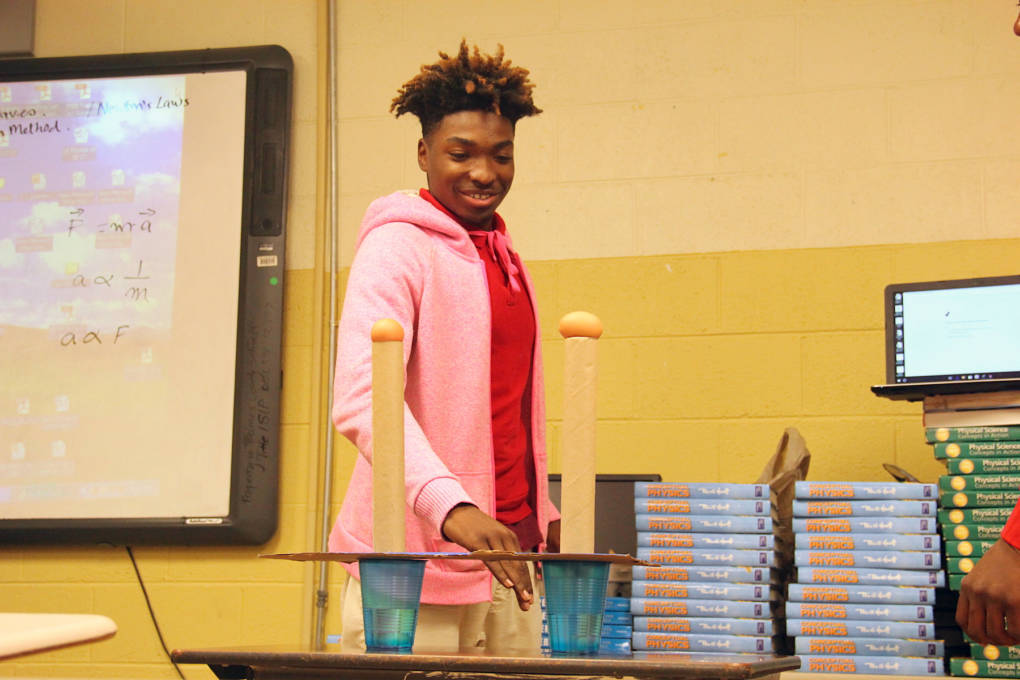
"caption": "Student Jaylen Dennis sets up an experiment to test one of Newton’s Laws. ",
"description": null,
"title": "MaderMsRuralCourses3",
"credit": "Jackie Mader/The Hechinger Report",
"status": "inherit",
"isLoading": false,
"fetchFailed": false
},
"mindshift_49424": {
"type": "attachments",
"id": "mindshift_49424",
"meta": {
"index": "attachments_1716263798",
"site": "mindshift",
"id": "49424",
"found": true
},
"parent": 49391,
"imgSizes": {
"small": {
"file": "https://ww2.kqed.org/app/uploads/sites/23/2017/10/8523054564_5864908067_k-520x388.jpg",
"width": 520,
"mimeType": "image/jpeg",
"height": 388
},
"twentyfourteen-full-width": {
"file": "https://ww2.kqed.org/app/uploads/sites/23/2017/10/8523054564_5864908067_k-1038x576.jpg",
"width": 1038,
"mimeType": "image/jpeg",
"height": 576
},
"thumbnail": {
"file": "https://ww2.kqed.org/app/uploads/sites/23/2017/10/8523054564_5864908067_k-160x120.jpg",
"width": 160,
"mimeType": "image/jpeg",
"height": 120
},
"fd-sm": {
"file": "https://ww2.kqed.org/app/uploads/sites/23/2017/10/8523054564_5864908067_k-960x717.jpg",
"width": 960,
"mimeType": "image/jpeg",
"height": 717
},
"post-thumbnail": {
"file": "https://ww2.kqed.org/app/uploads/sites/23/2017/10/8523054564_5864908067_k-672x372.jpg",
"width": 672,
"mimeType": "image/jpeg",
"height": 372
},
"xsmall": {
"file": "https://ww2.kqed.org/app/uploads/sites/23/2017/10/8523054564_5864908067_k-375x280.jpg",
"width": 375,
"mimeType": "image/jpeg",
"height": 280
},
"kqedFullSize": {
"file": "https://ww2.kqed.org/app/uploads/sites/23/2017/10/8523054564_5864908067_k.jpg",
"width": 2048,
"height": 1530
},
"large": {
"file": "https://ww2.kqed.org/app/uploads/sites/23/2017/10/8523054564_5864908067_k-1020x762.jpg",
"width": 1020,
"mimeType": "image/jpeg",
"height": 762
},
"xlarge": {
"file": "https://ww2.kqed.org/app/uploads/sites/23/2017/10/8523054564_5864908067_k-1180x882.jpg",
"width": 1180,
"mimeType": "image/jpeg",
"height": 882
},
"guest-author-50": {
"file": "https://ww2.kqed.org/app/uploads/sites/23/2017/10/8523054564_5864908067_k-50x50.jpg",
"width": 50,
"mimeType": "image/jpeg",
"height": 50
},
"guest-author-96": {
"file": "https://ww2.kqed.org/app/uploads/sites/23/2017/10/8523054564_5864908067_k-96x96.jpg",
"width": 96,
"mimeType": "image/jpeg",
"height": 96
},
"medium": {
"file": "https://ww2.kqed.org/app/uploads/sites/23/2017/10/8523054564_5864908067_k-800x598.jpg",
"width": 800,
"mimeType": "image/jpeg",
"height": 598
},
"guest-author-64": {
"file": "https://ww2.kqed.org/app/uploads/sites/23/2017/10/8523054564_5864908067_k-64x64.jpg",
"width": 64,
"mimeType": "image/jpeg",
"height": 64
},
"guest-author-32": {
"file": "https://ww2.kqed.org/app/uploads/sites/23/2017/10/8523054564_5864908067_k-32x32.jpg",
"width": 32,
"mimeType": "image/jpeg",
"height": 32
},
"fd-lrg": {
"file": "https://ww2.kqed.org/app/uploads/sites/23/2017/10/8523054564_5864908067_k-1920x1434.jpg",
"width": 1920,
"mimeType": "image/jpeg",
"height": 1434
},
"fd-med": {
"file": "https://ww2.kqed.org/app/uploads/sites/23/2017/10/8523054564_5864908067_k-1180x882.jpg",
"width": 1180,
"mimeType": "image/jpeg",
"height": 882
},
"full-width": {
"file": "https://ww2.kqed.org/app/uploads/sites/23/2017/10/8523054564_5864908067_k-1920x1434.jpg",
"width": 1920,
"mimeType": "image/jpeg",
"height": 1434
},
"detail": {
"file": "https://ww2.kqed.org/app/uploads/sites/23/2017/10/8523054564_5864908067_k-150x150.jpg",
"width": 150,
"mimeType": "image/jpeg",
"height": 150
},
"medium_large": {
"file": "https://ww2.kqed.org/app/uploads/sites/23/2017/10/8523054564_5864908067_k-768x574.jpg",
"width": 768,
"mimeType": "image/jpeg",
"height": 574
},
"guest-author-128": {
"file": "https://ww2.kqed.org/app/uploads/sites/23/2017/10/8523054564_5864908067_k-128x128.jpg",
"width": 128,
"mimeType": "image/jpeg",
"height": 128
},
"xxsmall": {
"file": "https://ww2.kqed.org/app/uploads/sites/23/2017/10/8523054564_5864908067_k-240x179.jpg",
"width": 240,
"mimeType": "image/jpeg",
"height": 179
}
},
"publishDate": 1507590475,
"modified": 1507590592,
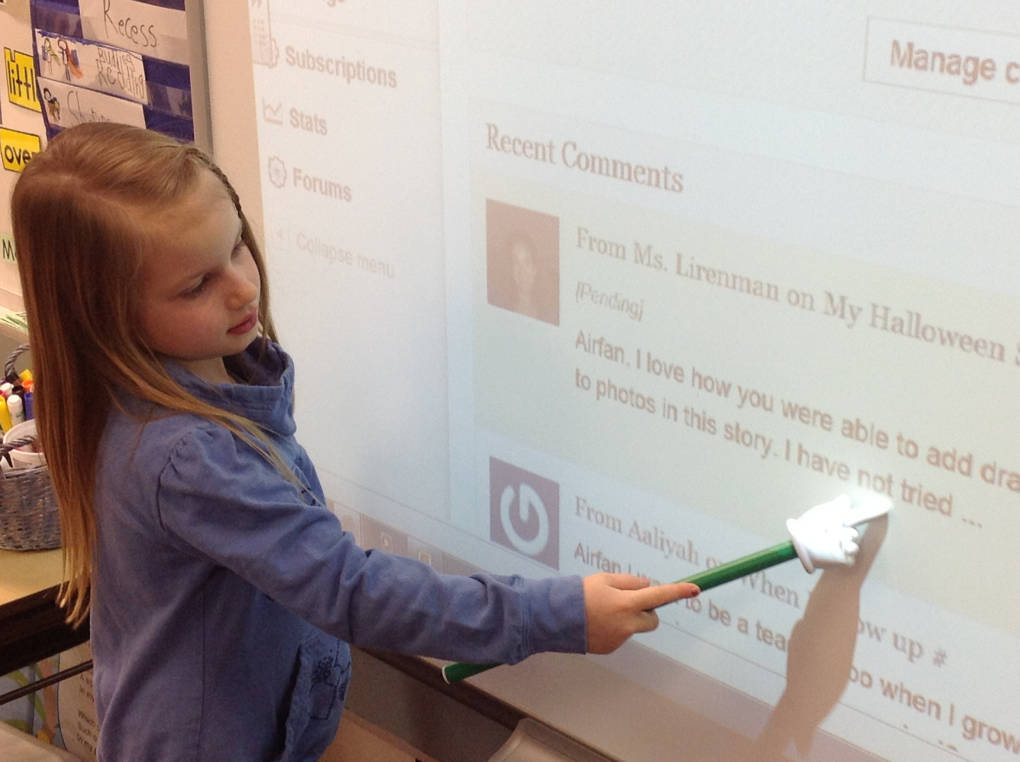
"caption": "One of Kathy Cassidy's students practices reading with the class Twitter page.",
"description": null,
"title": "8523054564_5864908067_k",
"credit": "Courtesy \u003ca href=\"https://www.flickr.com/photos/kathycassidy/\">Kathy Cassidy\u003c/a>",
"status": "inherit",
"isLoading": false,
"fetchFailed": false
},
"mindshift_50526": {
"type": "attachments",
"id": "mindshift_50526",
"meta": {
"index": "attachments_1716263798",
"site": "mindshift",
"id": "50526",
"found": true
},
"parent": 50525,
"imgSizes": {
"small": {
"file": "https://ww2.kqed.org/app/uploads/sites/23/2018/02/biesingernprscreensfinal_custom-02b214cdbd5ce119dd60547eabfeab88a30c02d6-520x325.jpe",
"width": 520,
"mimeType": "image/jpeg",
"height": 325
},
"twentyfourteen-full-width": {
"file": "https://ww2.kqed.org/app/uploads/sites/23/2018/02/biesingernprscreensfinal_custom-02b214cdbd5ce119dd60547eabfeab88a30c02d6-1038x576.jpe",
"width": 1038,
"mimeType": "image/jpeg",
"height": 576
},
"thumbnail": {
"file": "https://ww2.kqed.org/app/uploads/sites/23/2018/02/biesingernprscreensfinal_custom-02b214cdbd5ce119dd60547eabfeab88a30c02d6-160x100.jpe",
"width": 160,
"mimeType": "image/jpeg",
"height": 100
},
"fd-sm": {
"file": "https://ww2.kqed.org/app/uploads/sites/23/2018/02/biesingernprscreensfinal_custom-02b214cdbd5ce119dd60547eabfeab88a30c02d6-960x599.jpe",
"width": 960,
"mimeType": "image/jpeg",
"height": 599
},
"post-thumbnail": {
"file": "https://ww2.kqed.org/app/uploads/sites/23/2018/02/biesingernprscreensfinal_custom-02b214cdbd5ce119dd60547eabfeab88a30c02d6-672x372.jpe",
"width": 672,
"mimeType": "image/jpeg",
"height": 372
},
"xsmall": {
"file": "https://ww2.kqed.org/app/uploads/sites/23/2018/02/biesingernprscreensfinal_custom-02b214cdbd5ce119dd60547eabfeab88a30c02d6-375x234.jpe",
"width": 375,
"mimeType": "image/jpeg",
"height": 234
},
"kqedFullSize": {
"file": "https://ww2.kqed.org/app/uploads/sites/23/2018/02/biesingernprscreensfinal_custom-02b214cdbd5ce119dd60547eabfeab88a30c02d6-e1518022987628.jpe",
"width": 1920,
"height": 1198
},
"large": {
"file": "https://ww2.kqed.org/app/uploads/sites/23/2018/02/biesingernprscreensfinal_custom-02b214cdbd5ce119dd60547eabfeab88a30c02d6-1020x637.jpe",
"width": 1020,
"mimeType": "image/jpeg",
"height": 637
},
"xlarge": {
"file": "https://ww2.kqed.org/app/uploads/sites/23/2018/02/biesingernprscreensfinal_custom-02b214cdbd5ce119dd60547eabfeab88a30c02d6-1180x736.jpe",
"width": 1180,
"mimeType": "image/jpeg",
"height": 736
},
"guest-author-50": {
"file": "https://ww2.kqed.org/app/uploads/sites/23/2018/02/biesingernprscreensfinal_custom-02b214cdbd5ce119dd60547eabfeab88a30c02d6-50x50.jpe",
"width": 50,
"mimeType": "image/jpeg",
"height": 50
},
"guest-author-96": {
"file": "https://ww2.kqed.org/app/uploads/sites/23/2018/02/biesingernprscreensfinal_custom-02b214cdbd5ce119dd60547eabfeab88a30c02d6-96x96.jpe",
"width": 96,
"mimeType": "image/jpeg",
"height": 96
},
"medium": {
"file": "https://ww2.kqed.org/app/uploads/sites/23/2018/02/biesingernprscreensfinal_custom-02b214cdbd5ce119dd60547eabfeab88a30c02d6-800x499.jpe",
"width": 800,
"mimeType": "image/jpeg",
"height": 499
},
"guest-author-64": {
"file": "https://ww2.kqed.org/app/uploads/sites/23/2018/02/biesingernprscreensfinal_custom-02b214cdbd5ce119dd60547eabfeab88a30c02d6-64x64.jpe",
"width": 64,
"mimeType": "image/jpeg",
"height": 64
},
"guest-author-32": {
"file": "https://ww2.kqed.org/app/uploads/sites/23/2018/02/biesingernprscreensfinal_custom-02b214cdbd5ce119dd60547eabfeab88a30c02d6-32x32.jpe",
"width": 32,
"mimeType": "image/jpeg",
"height": 32
},
"fd-lrg": {
"file": "https://ww2.kqed.org/app/uploads/sites/23/2018/02/biesingernprscreensfinal_custom-02b214cdbd5ce119dd60547eabfeab88a30c02d6-1920x1198.jpe",
"width": 1920,
"mimeType": "image/jpeg",
"height": 1198
},
"fd-med": {
"file": "https://ww2.kqed.org/app/uploads/sites/23/2018/02/biesingernprscreensfinal_custom-02b214cdbd5ce119dd60547eabfeab88a30c02d6-1180x736.jpe",
"width": 1180,
"mimeType": "image/jpeg",
"height": 736
},
"full-width": {
"file": "https://ww2.kqed.org/app/uploads/sites/23/2018/02/biesingernprscreensfinal_custom-02b214cdbd5ce119dd60547eabfeab88a30c02d6-1920x1198.jpe",
"width": 1920,
"mimeType": "image/jpeg",
"height": 1198
},
"detail": {
"file": "https://ww2.kqed.org/app/uploads/sites/23/2018/02/biesingernprscreensfinal_custom-02b214cdbd5ce119dd60547eabfeab88a30c02d6-150x150.jpe",
"width": 150,
"mimeType": "image/jpeg",
"height": 150
},
"medium_large": {
"file": "https://ww2.kqed.org/app/uploads/sites/23/2018/02/biesingernprscreensfinal_custom-02b214cdbd5ce119dd60547eabfeab88a30c02d6-768x479.jpe",
"width": 768,
"mimeType": "image/jpeg",
"height": 479
},
"guest-author-128": {
"file": "https://ww2.kqed.org/app/uploads/sites/23/2018/02/biesingernprscreensfinal_custom-02b214cdbd5ce119dd60547eabfeab88a30c02d6-128x128.jpe",
"width": 128,
"mimeType": "image/jpeg",
"height": 128
},
"xxsmall": {
"file": "https://ww2.kqed.org/app/uploads/sites/23/2018/02/biesingernprscreensfinal_custom-02b214cdbd5ce119dd60547eabfeab88a30c02d6-240x150.jpe",
"width": 240,
"mimeType": "image/jpeg",
"height": 150
}
},
"publishDate": 1518022900,
"modified": 1518022996,
"caption": null,
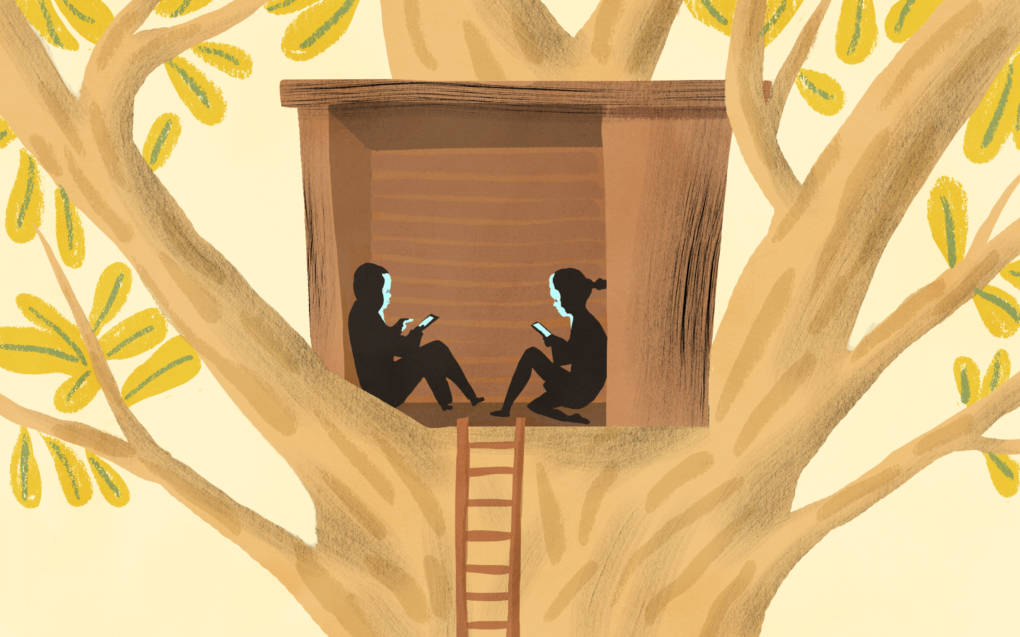
"description": "Screentime Experts",
"title": "Screentime Experts",
"credit": "Raymond Biesinger for NPR",
"status": "inherit",
"isLoading": false,
"fetchFailed": false
},
"mindshift_50511": {
"type": "attachments",
"id": "mindshift_50511",
"meta": {
"index": "attachments_1716263798",
"site": "mindshift",
"id": "50511",
"found": true
},
"parent": 50510,
"imgSizes": {
"small": {
"file": "https://ww2.kqed.org/app/uploads/sites/23/2018/02/npr_screens_new2_custom-4e22cedc1e58d03955066863206b94c28ae47c77-520x325.jpg",
"width": 520,
"mimeType": "image/jpeg",
"height": 325
},
"twentyfourteen-full-width": {
"file": "https://ww2.kqed.org/app/uploads/sites/23/2018/02/npr_screens_new2_custom-4e22cedc1e58d03955066863206b94c28ae47c77-1038x576.jpg",
"width": 1038,
"mimeType": "image/jpeg",
"height": 576
},
"thumbnail": {
"file": "https://ww2.kqed.org/app/uploads/sites/23/2018/02/npr_screens_new2_custom-4e22cedc1e58d03955066863206b94c28ae47c77-160x100.jpg",
"width": 160,
"mimeType": "image/jpeg",
"height": 100
},
"fd-sm": {
"file": "https://ww2.kqed.org/app/uploads/sites/23/2018/02/npr_screens_new2_custom-4e22cedc1e58d03955066863206b94c28ae47c77-960x599.jpg",
"width": 960,
"mimeType": "image/jpeg",
"height": 599
},
"post-thumbnail": {
"file": "https://ww2.kqed.org/app/uploads/sites/23/2018/02/npr_screens_new2_custom-4e22cedc1e58d03955066863206b94c28ae47c77-672x372.jpg",
"width": 672,
"mimeType": "image/jpeg",
"height": 372
},
"xsmall": {
"file": "https://ww2.kqed.org/app/uploads/sites/23/2018/02/npr_screens_new2_custom-4e22cedc1e58d03955066863206b94c28ae47c77-375x234.jpg",
"width": 375,
"mimeType": "image/jpeg",
"height": 234
},
"kqedFullSize": {
"file": "https://ww2.kqed.org/app/uploads/sites/23/2018/02/npr_screens_new2_custom-4e22cedc1e58d03955066863206b94c28ae47c77-e1517856427891.jpg",
"width": 1920,
"height": 1198
},
"large": {
"file": "https://ww2.kqed.org/app/uploads/sites/23/2018/02/npr_screens_new2_custom-4e22cedc1e58d03955066863206b94c28ae47c77-1020x637.jpg",
"width": 1020,
"mimeType": "image/jpeg",
"height": 637
},
"xlarge": {
"file": "https://ww2.kqed.org/app/uploads/sites/23/2018/02/npr_screens_new2_custom-4e22cedc1e58d03955066863206b94c28ae47c77-1180x736.jpg",
"width": 1180,
"mimeType": "image/jpeg",
"height": 736
},
"guest-author-50": {
"file": "https://ww2.kqed.org/app/uploads/sites/23/2018/02/npr_screens_new2_custom-4e22cedc1e58d03955066863206b94c28ae47c77-50x50.jpg",
"width": 50,
"mimeType": "image/jpeg",
"height": 50
},
"guest-author-96": {
"file": "https://ww2.kqed.org/app/uploads/sites/23/2018/02/npr_screens_new2_custom-4e22cedc1e58d03955066863206b94c28ae47c77-96x96.jpg",
"width": 96,
"mimeType": "image/jpeg",
"height": 96
},
"medium": {
"file": "https://ww2.kqed.org/app/uploads/sites/23/2018/02/npr_screens_new2_custom-4e22cedc1e58d03955066863206b94c28ae47c77-800x499.jpg",
"width": 800,
"mimeType": "image/jpeg",
"height": 499
},
"guest-author-64": {
"file": "https://ww2.kqed.org/app/uploads/sites/23/2018/02/npr_screens_new2_custom-4e22cedc1e58d03955066863206b94c28ae47c77-64x64.jpg",
"width": 64,
"mimeType": "image/jpeg",
"height": 64
},
"guest-author-32": {
"file": "https://ww2.kqed.org/app/uploads/sites/23/2018/02/npr_screens_new2_custom-4e22cedc1e58d03955066863206b94c28ae47c77-32x32.jpg",
"width": 32,
"mimeType": "image/jpeg",
"height": 32
},
"fd-lrg": {
"file": "https://ww2.kqed.org/app/uploads/sites/23/2018/02/npr_screens_new2_custom-4e22cedc1e58d03955066863206b94c28ae47c77-1920x1198.jpg",
"width": 1920,
"mimeType": "image/jpeg",
"height": 1198
},
"fd-med": {
"file": "https://ww2.kqed.org/app/uploads/sites/23/2018/02/npr_screens_new2_custom-4e22cedc1e58d03955066863206b94c28ae47c77-1180x736.jpg",
"width": 1180,
"mimeType": "image/jpeg",
"height": 736
},
"full-width": {
"file": "https://ww2.kqed.org/app/uploads/sites/23/2018/02/npr_screens_new2_custom-4e22cedc1e58d03955066863206b94c28ae47c77-1920x1198.jpg",
"width": 1920,
"mimeType": "image/jpeg",
"height": 1198
},
"detail": {
"file": "https://ww2.kqed.org/app/uploads/sites/23/2018/02/npr_screens_new2_custom-4e22cedc1e58d03955066863206b94c28ae47c77-150x150.jpg",
"width": 150,
"mimeType": "image/jpeg",
"height": 150
},
"medium_large": {
"file": "https://ww2.kqed.org/app/uploads/sites/23/2018/02/npr_screens_new2_custom-4e22cedc1e58d03955066863206b94c28ae47c77-768x479.jpg",
"width": 768,
"mimeType": "image/jpeg",
"height": 479
},
"guest-author-128": {
"file": "https://ww2.kqed.org/app/uploads/sites/23/2018/02/npr_screens_new2_custom-4e22cedc1e58d03955066863206b94c28ae47c77-128x128.jpg",
"width": 128,
"mimeType": "image/jpeg",
"height": 128
},
"xxsmall": {
"file": "https://ww2.kqed.org/app/uploads/sites/23/2018/02/npr_screens_new2_custom-4e22cedc1e58d03955066863206b94c28ae47c77-240x150.jpg",
"width": 240,
"mimeType": "image/jpeg",
"height": 150
}
},
"publishDate": 1517856155,
"modified": 1517856442,
"caption": null,
"description": "Teen tech addiction",
"title": "Teen tech addiction",
"credit": "Lilli Carré for NPR",
"status": "inherit",
"isLoading": false,
"fetchFailed": false
},
"mindshift_49845": {
"type": "attachments",
"id": "mindshift_49845",
"meta": {
"index": "attachments_1716263798",
"site": "mindshift",
"id": "49845",
"found": true
},
"parent": 49841,
"imgSizes": {
"small": {
"file": "https://ww2.kqed.org/app/uploads/sites/23/2017/12/kids-discuss-520x293.jpg",
"width": 520,
"mimeType": "image/jpeg",
"height": 293
},
"twentyfourteen-full-width": {
"file": "https://ww2.kqed.org/app/uploads/sites/23/2017/12/kids-discuss-1038x576.jpg",
"width": 1038,
"mimeType": "image/jpeg",
"height": 576
},
"thumbnail": {
"file": "https://ww2.kqed.org/app/uploads/sites/23/2017/12/kids-discuss-160x90.jpg",
"width": 160,
"mimeType": "image/jpeg",
"height": 90
},
"fd-sm": {
"file": "https://ww2.kqed.org/app/uploads/sites/23/2017/12/kids-discuss-960x540.jpg",
"width": 960,
"mimeType": "image/jpeg",
"height": 540
},
"post-thumbnail": {
"file": "https://ww2.kqed.org/app/uploads/sites/23/2017/12/kids-discuss-672x372.jpg",
"width": 672,
"mimeType": "image/jpeg",
"height": 372
},
"xsmall": {
"file": "https://ww2.kqed.org/app/uploads/sites/23/2017/12/kids-discuss-375x211.jpg",
"width": 375,
"mimeType": "image/jpeg",
"height": 211
},
"kqedFullSize": {
"file": "https://ww2.kqed.org/app/uploads/sites/23/2017/12/kids-discuss.jpg",
"width": 1920,
"height": 1080
},
"large": {
"file": "https://ww2.kqed.org/app/uploads/sites/23/2017/12/kids-discuss-1020x574.jpg",
"width": 1020,
"mimeType": "image/jpeg",
"height": 574
},
"xlarge": {
"file": "https://ww2.kqed.org/app/uploads/sites/23/2017/12/kids-discuss-1180x664.jpg",
"width": 1180,
"mimeType": "image/jpeg",
"height": 664
},
"guest-author-50": {
"file": "https://ww2.kqed.org/app/uploads/sites/23/2017/12/kids-discuss-50x50.jpg",
"width": 50,
"mimeType": "image/jpeg",
"height": 50
},
"guest-author-96": {
"file": "https://ww2.kqed.org/app/uploads/sites/23/2017/12/kids-discuss-96x96.jpg",
"width": 96,
"mimeType": "image/jpeg",
"height": 96
},
"medium": {
"file": "https://ww2.kqed.org/app/uploads/sites/23/2017/12/kids-discuss-800x450.jpg",
"width": 800,
"mimeType": "image/jpeg",
"height": 450
},
"guest-author-64": {
"file": "https://ww2.kqed.org/app/uploads/sites/23/2017/12/kids-discuss-64x64.jpg",
"width": 64,
"mimeType": "image/jpeg",
"height": 64
},
"guest-author-32": {
"file": "https://ww2.kqed.org/app/uploads/sites/23/2017/12/kids-discuss-32x32.jpg",
"width": 32,
"mimeType": "image/jpeg",
"height": 32
},
"fd-lrg": {
"file": "https://ww2.kqed.org/app/uploads/sites/23/2017/12/kids-discuss-1920x1080.jpg",
"width": 1920,
"mimeType": "image/jpeg",
"height": 1080
},
"fd-med": {
"file": "https://ww2.kqed.org/app/uploads/sites/23/2017/12/kids-discuss-1180x664.jpg",
"width": 1180,
"mimeType": "image/jpeg",
"height": 664
},
"full-width": {
"file": "https://ww2.kqed.org/app/uploads/sites/23/2017/12/kids-discuss-1920x1080.jpg",
"width": 1920,
"mimeType": "image/jpeg",
"height": 1080
},
"detail": {
"file": "https://ww2.kqed.org/app/uploads/sites/23/2017/12/kids-discuss-150x150.jpg",
"width": 150,
"mimeType": "image/jpeg",
"height": 150
},
"medium_large": {
"file": "https://ww2.kqed.org/app/uploads/sites/23/2017/12/kids-discuss-768x432.jpg",
"width": 768,
"mimeType": "image/jpeg",
"height": 432
},
"guest-author-128": {
"file": "https://ww2.kqed.org/app/uploads/sites/23/2017/12/kids-discuss-128x128.jpg",
"width": 128,
"mimeType": "image/jpeg",
"height": 128
},
"xxsmall": {
"file": "https://ww2.kqed.org/app/uploads/sites/23/2017/12/kids-discuss-240x135.jpg",
"width": 240,
"mimeType": "image/jpeg",
"height": 135
}
},
"publishDate": 1512679900,
"modified": 1512679991,
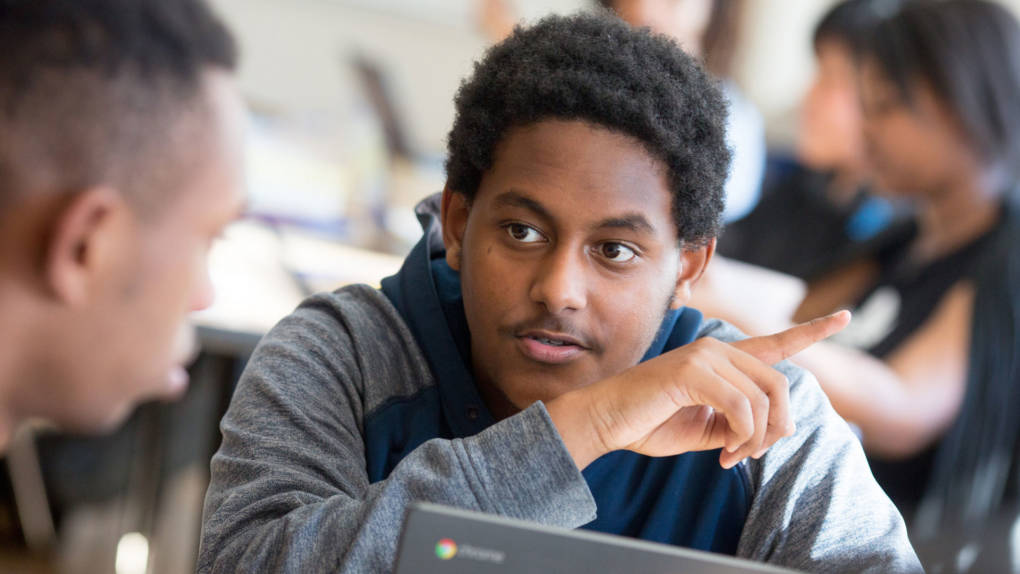
"caption": "Students discuss.",
"description": null,
"title": "kids-discuss",
"credit": "\u003ca href=\" www.deeperlearning4all.org/images\">Courtesy of Allison Shelley/The Verbatim Agency for American Education: Images of Teachers and Students in Action\u003c/a>",
"status": "inherit",
"isLoading": false,
"fetchFailed": false
},
"mindshift_50049": {
"type": "attachments",
"id": "mindshift_50049",
"meta": {
"index": "attachments_1716263798",
"site": "mindshift",
"id": "50049",
"found": true
},
"parent": 50048,
"imgSizes": {
"small": {
"file": "https://ww2.kqed.org/app/uploads/sites/23/2018/01/paigevickers_npr_finals_9-5-03_smaller_custom-4789586620d63d2bf424134d17ca31f87635df77-520x292.jpg",
"width": 520,
"mimeType": "image/jpeg",
"height": 292
},
"twentyfourteen-full-width": {
"file": "https://ww2.kqed.org/app/uploads/sites/23/2018/01/paigevickers_npr_finals_9-5-03_smaller_custom-4789586620d63d2bf424134d17ca31f87635df77-1038x576.jpg",
"width": 1038,
"mimeType": "image/jpeg",
"height": 576
},
"thumbnail": {
"file": "https://ww2.kqed.org/app/uploads/sites/23/2018/01/paigevickers_npr_finals_9-5-03_smaller_custom-4789586620d63d2bf424134d17ca31f87635df77-160x90.jpg",
"width": 160,
"mimeType": "image/jpeg",
"height": 90
},
"fd-sm": {
"file": "https://ww2.kqed.org/app/uploads/sites/23/2018/01/paigevickers_npr_finals_9-5-03_smaller_custom-4789586620d63d2bf424134d17ca31f87635df77-960x539.jpg",
"width": 960,
"mimeType": "image/jpeg",
"height": 539
},
"post-thumbnail": {
"file": "https://ww2.kqed.org/app/uploads/sites/23/2018/01/paigevickers_npr_finals_9-5-03_smaller_custom-4789586620d63d2bf424134d17ca31f87635df77-672x372.jpg",
"width": 672,
"mimeType": "image/jpeg",
"height": 372
},
"xsmall": {
"file": "https://ww2.kqed.org/app/uploads/sites/23/2018/01/paigevickers_npr_finals_9-5-03_smaller_custom-4789586620d63d2bf424134d17ca31f87635df77-375x211.jpg",
"width": 375,
"mimeType": "image/jpeg",
"height": 211
},
"kqedFullSize": {
"file": "https://ww2.kqed.org/app/uploads/sites/23/2018/01/paigevickers_npr_finals_9-5-03_smaller_custom-4789586620d63d2bf424134d17ca31f87635df77-e1516869902488.jpg",
"width": 1920,
"height": 1078
},
"large": {
"file": "https://ww2.kqed.org/app/uploads/sites/23/2018/01/paigevickers_npr_finals_9-5-03_smaller_custom-4789586620d63d2bf424134d17ca31f87635df77-1020x573.jpg",
"width": 1020,
"mimeType": "image/jpeg",
"height": 573
},
"xlarge": {
"file": "https://ww2.kqed.org/app/uploads/sites/23/2018/01/paigevickers_npr_finals_9-5-03_smaller_custom-4789586620d63d2bf424134d17ca31f87635df77-1180x663.jpg",
"width": 1180,
"mimeType": "image/jpeg",
"height": 663
},
"guest-author-50": {
"file": "https://ww2.kqed.org/app/uploads/sites/23/2018/01/paigevickers_npr_finals_9-5-03_smaller_custom-4789586620d63d2bf424134d17ca31f87635df77-50x50.jpg",
"width": 50,
"mimeType": "image/jpeg",
"height": 50
},
"guest-author-96": {
"file": "https://ww2.kqed.org/app/uploads/sites/23/2018/01/paigevickers_npr_finals_9-5-03_smaller_custom-4789586620d63d2bf424134d17ca31f87635df77-96x96.jpg",
"width": 96,
"mimeType": "image/jpeg",
"height": 96
},
"medium": {
"file": "https://ww2.kqed.org/app/uploads/sites/23/2018/01/paigevickers_npr_finals_9-5-03_smaller_custom-4789586620d63d2bf424134d17ca31f87635df77-800x449.jpg",
"width": 800,
"mimeType": "image/jpeg",
"height": 449
},
"guest-author-64": {
"file": "https://ww2.kqed.org/app/uploads/sites/23/2018/01/paigevickers_npr_finals_9-5-03_smaller_custom-4789586620d63d2bf424134d17ca31f87635df77-64x64.jpg",
"width": 64,
"mimeType": "image/jpeg",
"height": 64
},
"guest-author-32": {
"file": "https://ww2.kqed.org/app/uploads/sites/23/2018/01/paigevickers_npr_finals_9-5-03_smaller_custom-4789586620d63d2bf424134d17ca31f87635df77-32x32.jpg",
"width": 32,
"mimeType": "image/jpeg",
"height": 32
},
"fd-lrg": {
"file": "https://ww2.kqed.org/app/uploads/sites/23/2018/01/paigevickers_npr_finals_9-5-03_smaller_custom-4789586620d63d2bf424134d17ca31f87635df77-1920x1078.jpg",
"width": 1920,
"mimeType": "image/jpeg",
"height": 1078
},
"fd-med": {
"file": "https://ww2.kqed.org/app/uploads/sites/23/2018/01/paigevickers_npr_finals_9-5-03_smaller_custom-4789586620d63d2bf424134d17ca31f87635df77-1180x663.jpg",
"width": 1180,
"mimeType": "image/jpeg",
"height": 663
},
"full-width": {
"file": "https://ww2.kqed.org/app/uploads/sites/23/2018/01/paigevickers_npr_finals_9-5-03_smaller_custom-4789586620d63d2bf424134d17ca31f87635df77-1920x1078.jpg",
"width": 1920,
"mimeType": "image/jpeg",
"height": 1078
},
"detail": {
"file": "https://ww2.kqed.org/app/uploads/sites/23/2018/01/paigevickers_npr_finals_9-5-03_smaller_custom-4789586620d63d2bf424134d17ca31f87635df77-150x150.jpg",
"width": 150,
"mimeType": "image/jpeg",
"height": 150
},
"medium_large": {
"file": "https://ww2.kqed.org/app/uploads/sites/23/2018/01/paigevickers_npr_finals_9-5-03_smaller_custom-4789586620d63d2bf424134d17ca31f87635df77-768x431.jpg",
"width": 768,
"mimeType": "image/jpeg",
"height": 431
},
"guest-author-128": {
"file": "https://ww2.kqed.org/app/uploads/sites/23/2018/01/paigevickers_npr_finals_9-5-03_smaller_custom-4789586620d63d2bf424134d17ca31f87635df77-128x128.jpg",
"width": 128,
"mimeType": "image/jpeg",
"height": 128
},
"xxsmall": {
"file": "https://ww2.kqed.org/app/uploads/sites/23/2018/01/paigevickers_npr_finals_9-5-03_smaller_custom-4789586620d63d2bf424134d17ca31f87635df77-240x135.jpg",
"width": 240,
"mimeType": "image/jpeg",
"height": 135
}
},
"publishDate": 1516869690,
"modified": 1516869914,
"caption": null,
"description": "Laptops in the classroom: yay or nay?",
"title": "Laptops in the classroom: yay or nay?",
"credit": "Paige Vickers for NPR",
"status": "inherit",
"isLoading": false,
"fetchFailed": false
},
"mindshift_50041": {
"type": "attachments",
"id": "mindshift_50041",
"meta": {
"index": "attachments_1716263798",
"site": "mindshift",
"id": "50041",
"found": true
},
"parent": 50040,
"imgSizes": {
"small": {
"file": "https://ww2.kqed.org/app/uploads/sites/23/2018/01/YuhasScienceofLearning-520x390.jpg",
"width": 520,
"mimeType": "image/jpeg",
"height": 390
},
"twentyfourteen-full-width": {
"file": "https://ww2.kqed.org/app/uploads/sites/23/2018/01/YuhasScienceofLearning-1038x576.jpg",
"width": 1038,
"mimeType": "image/jpeg",
"height": 576
},
"thumbnail": {
"file": "https://ww2.kqed.org/app/uploads/sites/23/2018/01/YuhasScienceofLearning-160x120.jpg",
"width": 160,
"mimeType": "image/jpeg",
"height": 120
},
"fd-sm": {
"file": "https://ww2.kqed.org/app/uploads/sites/23/2018/01/YuhasScienceofLearning-960x720.jpg",
"width": 960,
"mimeType": "image/jpeg",
"height": 720
},
"post-thumbnail": {
"file": "https://ww2.kqed.org/app/uploads/sites/23/2018/01/YuhasScienceofLearning-672x372.jpg",
"width": 672,
"mimeType": "image/jpeg",
"height": 372
},
"xsmall": {
"file": "https://ww2.kqed.org/app/uploads/sites/23/2018/01/YuhasScienceofLearning-375x281.jpg",
"width": 375,
"mimeType": "image/jpeg",
"height": 281
},
"kqedFullSize": {
"file": "https://ww2.kqed.org/app/uploads/sites/23/2018/01/YuhasScienceofLearning-e1516737447166.jpg",
"width": 1920,
"height": 1440
},
"large": {
"file": "https://ww2.kqed.org/app/uploads/sites/23/2018/01/YuhasScienceofLearning-1020x765.jpg",
"width": 1020,
"mimeType": "image/jpeg",
"height": 765
},
"xlarge": {
"file": "https://ww2.kqed.org/app/uploads/sites/23/2018/01/YuhasScienceofLearning-1180x885.jpg",
"width": 1180,
"mimeType": "image/jpeg",
"height": 885
},
"guest-author-50": {
"file": "https://ww2.kqed.org/app/uploads/sites/23/2018/01/YuhasScienceofLearning-50x50.jpg",
"width": 50,
"mimeType": "image/jpeg",
"height": 50
},
"guest-author-96": {
"file": "https://ww2.kqed.org/app/uploads/sites/23/2018/01/YuhasScienceofLearning-96x96.jpg",
"width": 96,
"mimeType": "image/jpeg",
"height": 96
},
"medium": {
"file": "https://ww2.kqed.org/app/uploads/sites/23/2018/01/YuhasScienceofLearning-800x600.jpg",
"width": 800,
"mimeType": "image/jpeg",
"height": 600
},
"guest-author-64": {
"file": "https://ww2.kqed.org/app/uploads/sites/23/2018/01/YuhasScienceofLearning-64x64.jpg",
"width": 64,
"mimeType": "image/jpeg",
"height": 64
},
"guest-author-32": {
"file": "https://ww2.kqed.org/app/uploads/sites/23/2018/01/YuhasScienceofLearning-32x32.jpg",
"width": 32,
"mimeType": "image/jpeg",
"height": 32
},
"fd-lrg": {
"file": "https://ww2.kqed.org/app/uploads/sites/23/2018/01/YuhasScienceofLearning-1920x1440.jpg",
"width": 1920,
"mimeType": "image/jpeg",
"height": 1440
},
"fd-med": {
"file": "https://ww2.kqed.org/app/uploads/sites/23/2018/01/YuhasScienceofLearning-1180x885.jpg",
"width": 1180,
"mimeType": "image/jpeg",
"height": 885
},
"full-width": {
"file": "https://ww2.kqed.org/app/uploads/sites/23/2018/01/YuhasScienceofLearning-1920x1440.jpg",
"width": 1920,
"mimeType": "image/jpeg",
"height": 1440
},
"detail": {
"file": "https://ww2.kqed.org/app/uploads/sites/23/2018/01/YuhasScienceofLearning-150x150.jpg",
"width": 150,
"mimeType": "image/jpeg",
"height": 150
},
"medium_large": {
"file": "https://ww2.kqed.org/app/uploads/sites/23/2018/01/YuhasScienceofLearning-768x576.jpg",
"width": 768,
"mimeType": "image/jpeg",
"height": 576
},
"guest-author-128": {
"file": "https://ww2.kqed.org/app/uploads/sites/23/2018/01/YuhasScienceofLearning-128x128.jpg",
"width": 128,
"mimeType": "image/jpeg",
"height": 128
},
"xxsmall": {
"file": "https://ww2.kqed.org/app/uploads/sites/23/2018/01/YuhasScienceofLearning-240x180.jpg",
"width": 240,
"mimeType": "image/jpeg",
"height": 180
}
},
"publishDate": 1516737429,
"modified": 1516737503,
"caption": "Huyen Le and her daughter Katelynn Trinh. Through “nudges” via texts, Le gets reminded of activities to do with Katelynn that enhance her learning. ",
"description": null,
"title": "YuhasScienceofLearning",
"credit": "Courtesy of Huyen Le",
"status": "inherit",
"isLoading": false,
"fetchFailed": false
},
"mindshift_49982": {
"type": "attachments",
"id": "mindshift_49982",
"meta": {
"index": "attachments_1716263798",
"site": "mindshift",
"id": "49982",
"found": true
},
"parent": 49976,
"imgSizes": {
"small": {
"file": "https://ww2.kqed.org/app/uploads/sites/23/2018/01/iStock-836673534-e1515743454390-520x356.jpg",
"width": 520,
"mimeType": "image/jpeg",
"height": 356
},
"twentyfourteen-full-width": {
"file": "https://ww2.kqed.org/app/uploads/sites/23/2018/01/iStock-836673534-e1515743454390-1038x576.jpg",
"width": 1038,
"mimeType": "image/jpeg",
"height": 576
},
"thumbnail": {
"file": "https://ww2.kqed.org/app/uploads/sites/23/2018/01/iStock-836673534-e1515743454390-160x110.jpg",
"width": 160,
"mimeType": "image/jpeg",
"height": 110
},
"fd-sm": {
"file": "https://ww2.kqed.org/app/uploads/sites/23/2018/01/iStock-836673534-e1515743454390-960x657.jpg",
"width": 960,
"mimeType": "image/jpeg",
"height": 657
},
"post-thumbnail": {
"file": "https://ww2.kqed.org/app/uploads/sites/23/2018/01/iStock-836673534-e1515743454390-672x372.jpg",
"width": 672,
"mimeType": "image/jpeg",
"height": 372
},
"xsmall": {
"file": "https://ww2.kqed.org/app/uploads/sites/23/2018/01/iStock-836673534-e1515743454390-375x257.jpg",
"width": 375,
"mimeType": "image/jpeg",
"height": 257
},
"kqedFullSize": {
"file": "https://ww2.kqed.org/app/uploads/sites/23/2018/01/iStock-836673534-e1515743454390.jpg",
"width": 1532,
"height": 1049
},
"large": {
"file": "https://ww2.kqed.org/app/uploads/sites/23/2018/01/iStock-836673534-e1515743454390-1020x698.jpg",
"width": 1020,
"mimeType": "image/jpeg",
"height": 698
},
"xlarge": {
"file": "https://ww2.kqed.org/app/uploads/sites/23/2018/01/iStock-836673534-e1515743454390-1180x808.jpg",
"width": 1180,
"mimeType": "image/jpeg",
"height": 808
},
"guest-author-50": {
"file": "https://ww2.kqed.org/app/uploads/sites/23/2018/01/iStock-836673534-e1515743454390-50x50.jpg",
"width": 50,
"mimeType": "image/jpeg",
"height": 50
},
"guest-author-96": {
"file": "https://ww2.kqed.org/app/uploads/sites/23/2018/01/iStock-836673534-e1515743454390-96x96.jpg",
"width": 96,
"mimeType": "image/jpeg",
"height": 96
},
"medium": {
"file": "https://ww2.kqed.org/app/uploads/sites/23/2018/01/iStock-836673534-e1515743454390-800x548.jpg",
"width": 800,
"mimeType": "image/jpeg",
"height": 548
},
"guest-author-64": {
"file": "https://ww2.kqed.org/app/uploads/sites/23/2018/01/iStock-836673534-e1515743454390-64x64.jpg",
"width": 64,
"mimeType": "image/jpeg",
"height": 64
},
"guest-author-32": {
"file": "https://ww2.kqed.org/app/uploads/sites/23/2018/01/iStock-836673534-e1515743454390-32x32.jpg",
"width": 32,
"mimeType": "image/jpeg",
"height": 32
},
"fd-lrg": {
"file": "https://ww2.kqed.org/app/uploads/sites/23/2018/01/iStock-836673534-1920x1280.jpg",
"width": 1920,
"mimeType": "image/jpeg",
"height": 1280
},
"fd-med": {
"file": "https://ww2.kqed.org/app/uploads/sites/23/2018/01/iStock-836673534-e1515743454390-1180x808.jpg",
"width": 1180,
"mimeType": "image/jpeg",
"height": 808
},
"full-width": {
"file": "https://ww2.kqed.org/app/uploads/sites/23/2018/01/iStock-836673534-1920x1280.jpg",
"width": 1920,
"mimeType": "image/jpeg",
"height": 1280
},
"detail": {
"file": "https://ww2.kqed.org/app/uploads/sites/23/2018/01/iStock-836673534-e1515743454390-150x150.jpg",
"width": 150,
"mimeType": "image/jpeg",
"height": 150
},
"medium_large": {
"file": "https://ww2.kqed.org/app/uploads/sites/23/2018/01/iStock-836673534-e1515743454390-768x526.jpg",
"width": 768,
"mimeType": "image/jpeg",
"height": 526
},
"guest-author-128": {
"file": "https://ww2.kqed.org/app/uploads/sites/23/2018/01/iStock-836673534-e1515743454390-128x128.jpg",
"width": 128,
"mimeType": "image/jpeg",
"height": 128
},
"xxsmall": {
"file": "https://ww2.kqed.org/app/uploads/sites/23/2018/01/iStock-836673534-e1515743454390-240x164.jpg",
"width": 240,
"mimeType": "image/jpeg",
"height": 164
}
},
"publishDate": 1515743387,
"modified": 1515743407,
"caption": null,
"description": null,
"title": "iStock-836673534",
"credit": "iStock/Madedee",
"status": "inherit",
"isLoading": false,
"fetchFailed": false
},
"mindshift_49925": {
"type": "attachments",
"id": "mindshift_49925",
"meta": {
"index": "attachments_1716263798",
"site": "mindshift",
"id": "49925",
"found": true
},
"parent": 49921,
"imgSizes": {
"small": {
"file": "https://ww2.kqed.org/app/uploads/sites/23/2017/12/iStock-577343570-520x299.jpg",
"width": 520,
"mimeType": "image/jpeg",
"height": 299
},
"twentyfourteen-full-width": {
"file": "https://ww2.kqed.org/app/uploads/sites/23/2017/12/iStock-577343570-1038x576.jpg",
"width": 1038,
"mimeType": "image/jpeg",
"height": 576
},
"thumbnail": {
"file": "https://ww2.kqed.org/app/uploads/sites/23/2017/12/iStock-577343570-160x92.jpg",
"width": 160,
"mimeType": "image/jpeg",
"height": 92
},
"fd-sm": {
"file": "https://ww2.kqed.org/app/uploads/sites/23/2017/12/iStock-577343570-960x551.jpg",
"width": 960,
"mimeType": "image/jpeg",
"height": 551
},
"post-thumbnail": {
"file": "https://ww2.kqed.org/app/uploads/sites/23/2017/12/iStock-577343570-672x372.jpg",
"width": 672,
"mimeType": "image/jpeg",
"height": 372
},
"xsmall": {
"file": "https://ww2.kqed.org/app/uploads/sites/23/2017/12/iStock-577343570-375x215.jpg",
"width": 375,
"mimeType": "image/jpeg",
"height": 215
},
"kqedFullSize": {
"file": "https://ww2.kqed.org/app/uploads/sites/23/2017/12/iStock-577343570-e1514451490771.jpg",
"width": 1920,
"height": 1102
},
"large": {
"file": "https://ww2.kqed.org/app/uploads/sites/23/2017/12/iStock-577343570-1020x586.jpg",
"width": 1020,
"mimeType": "image/jpeg",
"height": 586
},
"xlarge": {
"file": "https://ww2.kqed.org/app/uploads/sites/23/2017/12/iStock-577343570-1180x678.jpg",
"width": 1180,
"mimeType": "image/jpeg",
"height": 678
},
"guest-author-50": {
"file": "https://ww2.kqed.org/app/uploads/sites/23/2017/12/iStock-577343570-50x50.jpg",
"width": 50,
"mimeType": "image/jpeg",
"height": 50
},
"guest-author-96": {
"file": "https://ww2.kqed.org/app/uploads/sites/23/2017/12/iStock-577343570-96x96.jpg",
"width": 96,
"mimeType": "image/jpeg",
"height": 96
},
"medium": {
"file": "https://ww2.kqed.org/app/uploads/sites/23/2017/12/iStock-577343570-800x459.jpg",
"width": 800,
"mimeType": "image/jpeg",
"height": 459
},
"guest-author-64": {
"file": "https://ww2.kqed.org/app/uploads/sites/23/2017/12/iStock-577343570-64x64.jpg",
"width": 64,
"mimeType": "image/jpeg",
"height": 64
},
"guest-author-32": {
"file": "https://ww2.kqed.org/app/uploads/sites/23/2017/12/iStock-577343570-32x32.jpg",
"width": 32,
"mimeType": "image/jpeg",
"height": 32
},
"fd-lrg": {
"file": "https://ww2.kqed.org/app/uploads/sites/23/2017/12/iStock-577343570-1920x1102.jpg",
"width": 1920,
"mimeType": "image/jpeg",
"height": 1102
},
"fd-med": {
"file": "https://ww2.kqed.org/app/uploads/sites/23/2017/12/iStock-577343570-1180x678.jpg",
"width": 1180,
"mimeType": "image/jpeg",
"height": 678
},
"full-width": {
"file": "https://ww2.kqed.org/app/uploads/sites/23/2017/12/iStock-577343570-1920x1102.jpg",
"width": 1920,
"mimeType": "image/jpeg",
"height": 1102
},
"detail": {
"file": "https://ww2.kqed.org/app/uploads/sites/23/2017/12/iStock-577343570-150x150.jpg",
"width": 150,
"mimeType": "image/jpeg",
"height": 150
},
"medium_large": {
"file": "https://ww2.kqed.org/app/uploads/sites/23/2017/12/iStock-577343570-768x441.jpg",
"width": 768,
"mimeType": "image/jpeg",
"height": 441
},
"guest-author-128": {
"file": "https://ww2.kqed.org/app/uploads/sites/23/2017/12/iStock-577343570-128x128.jpg",
"width": 128,
"mimeType": "image/jpeg",
"height": 128
},
"xxsmall": {
"file": "https://ww2.kqed.org/app/uploads/sites/23/2017/12/iStock-577343570-240x138.jpg",
"width": 240,
"mimeType": "image/jpeg",
"height": 138
}
},
"publishDate": 1514451464,
"modified": 1514451505,
"caption": null,
"description": null,
"title": "iStock-577343570",
"credit": "iStock/Rawpixel",
"status": "inherit",
"isLoading": false,
"fetchFailed": false
}
},
"audioPlayerReducer": {
"postId": "stream_live",
"isPaused": true,
"isPlaying": false,
"pfsActive": false,
"pledgeModalIsOpen": true,
"playerDrawerIsOpen": false,
"liveAudioPlayStartedAt": 0,
"liveAudioPlayContext": ""
},
"authorsReducer": {
"byline_mindshift_50540": {
"type": "authors",
"id": "byline_mindshift_50540",
"meta": {
"override": true
},
"slug": "byline_mindshift_50540",
"name": "\u003ca href=\"https://twitter.com/kristenlepore\">Kristen Rae Lepore\u003c/a>",
"isLoading": false
},
"byline_mindshift_50486": {
"type": "authors",
"id": "byline_mindshift_50486",
"meta": {
"override": true
},
"slug": "byline_mindshift_50486",
"name": "\u003ca href=\"https://www.commonsense.org/education/\">Danny Wagner, Common Sense Education\u003c/a>",
"isLoading": false
},
"byline_mindshift_50781": {
"type": "authors",
"id": "byline_mindshift_50781",
"meta": {
"override": true
},
"slug": "byline_mindshift_50781",
"name": "Suzanne Bouffard",
"isLoading": false
},
"byline_mindshift_50701": {
"type": "authors",
"id": "byline_mindshift_50701",
"meta": {
"override": true
},
"slug": "byline_mindshift_50701",
"name": "\u003ca href “http://hechingerreport.org/>Jackie Mader, The Hechinger Report\u003c/a>",
"isLoading": false
},
"byline_mindshift_50525": {
"type": "authors",
"id": "byline_mindshift_50525",
"meta": {
"override": true
},
"slug": "byline_mindshift_50525",
"name": "Anya Kamenetz",
"isLoading": false
},
"byline_mindshift_50510": {
"type": "authors",
"id": "byline_mindshift_50510",
"meta": {
"override": true
},
"slug": "byline_mindshift_50510",
"name": "Anya Kamenetz",
"isLoading": false
},
"byline_mindshift_50048": {
"type": "authors",
"id": "byline_mindshift_50048",
"meta": {
"override": true
},
"slug": "byline_mindshift_50048",
"name": "Anya Kamenetz",
"isLoading": false
},
"byline_mindshift_50040": {
"type": "authors",
"id": "byline_mindshift_50040",
"meta": {
"override": true
},
"slug": "byline_mindshift_50040",
"name": "\u003ca href=\"http://hechingerreport.org/\">Daisy Yuhas, The Hechinger Report\u003c/a>",
"isLoading": false
},
"byline_mindshift_49976": {
"type": "authors",
"id": "byline_mindshift_49976",
"meta": {
"override": true
},
"slug": "byline_mindshift_49976",
"name": "\u003ca href=\"https://www.commonsense.org/education/\">Danny Wagner, Common Sense Education\u003c/a>",
"isLoading": false
},
"byline_mindshift_49921": {
"type": "authors",
"id": "byline_mindshift_49921",
"meta": {
"override": true
},
"slug": "byline_mindshift_49921",
"name": "\u003ca href=\"https://www.gse.harvard.edu/uk/author/leah-shafer/517481\">Leah Shafer, Usable Knowledge\u003c/a>",
"isLoading": false
},
"katrinaschwartz": {
"type": "authors",
"id": "234",
"meta": {
"index": "authors_1716337520",
"id": "234",
"found": true
},
"name": "Katrina Schwartz",
"firstName": "Katrina",
"lastName": "Schwartz",
"slug": "katrinaschwartz",
"email": "kschwartz@kqed.org",
"display_author_email": false,
"staff_mastheads": [
"news"
],
"title": "Producer",
"bio": "Katrina Schwartz is a journalist based in San Francisco. She's worked at KPCC public radio in LA and has reported on air and online for KQED since 2010. She covered how teaching and learning is changing for MindShift between 2012 and 2020. She is the co-host of the MindShift podcast and now produces KQED's Bay Curious podcast.",
"avatar": "https://secure.gravatar.com/avatar/edb4ee79070447a018538c9aae6eeecf28786515b8a0c30e43b6b7dce5aa44c8?s=600&d=blank&r=g",
"twitter": "kschwart",
"bluesky": null,
"facebook": null,
"instagram": null,
"linkedin": null,
"sites": [
{
"site": "",
"roles": [
"editor"
]
},
{
"site": "news",
"roles": [
"editor"
]
},
{
"site": "mindshift",
"roles": [
"administrator"
]
},
{
"site": "stateofhealth",
"roles": [
"author"
]
},
{
"site": "science",
"roles": [
"editor"
]
}
],
"headData": {
"title": "Katrina Schwartz | KQED",
"description": "Producer",
"ogImgSrc": "https://secure.gravatar.com/avatar/edb4ee79070447a018538c9aae6eeecf28786515b8a0c30e43b6b7dce5aa44c8?s=600&d=blank&r=g",
"twImgSrc": "https://secure.gravatar.com/avatar/edb4ee79070447a018538c9aae6eeecf28786515b8a0c30e43b6b7dce5aa44c8?s=600&d=blank&r=g"
},
"isLoading": false,
"link": "/author/katrinaschwartz"
}
},
"pagesReducer": {
"mindshift_category_digital-tools": {
"type": "terms",
"id": "mindshift_195",
"meta": {
"index": "terms_1716263798",
"site": "mindshift",
"id": "195",
"score": 14.406026
},
"featImg": null,
"name": "Digital Tools",
"description": "How devices, software, and the Internet are changing the classroom dynamic.",
"taxonomy": "category",
"headData": {
"twImgId": null,
"twTitle": null,
"ogTitle": null,
"ogImgId": null,
"twDescription": null,
"description": "How devices, software, and the Internet are changing the classroom dynamic.",
"title": "Digital Tools Archives | KQED Mindshift",
"ogDescription": null
},
"ttid": 195,
"slug": "digital-tools",
"isLoading": false,
"title": "Digital Tools",
"pageMeta": {
"site": "mindshift",
"WpPageTemplate": "page-topic-editorial",
"currentPage": 7
},
"blocks": [
{
"blockName": "kqed/company-paragraph",
"content": "How devices, software, and the Internet are changing the classroom dynamic."
},
{
"blockName": "kqed/post-list",
"attrs": {
"layout": "cardArticle2",
"query": "posts/mindshift?category=digital-tools",
"seeMore": false,
"paginated": true,
"page": 7
}
},
{
"blockName": "kqed/ad"
}
]
}
},
"pfsSessionReducer": {},
"postsReducer": {
"stream_live": {
"type": "live",
"id": "stream_live",
"audioUrl": "https://streams.kqed.org/kqedradio",
"title": "Live Stream",
"excerpt": "Live Stream information currently unavailable.",
"link": "/radio",
"featImg": "",
"label": {
"name": "KQED Live",
"link": "/"
}
},
"stream_kqedNewscast": {
"type": "posts",
"id": "stream_kqedNewscast",
"audioUrl": "https://www.kqed.org/.stream/anon/radio/RDnews/newscast.mp3?_=1",
"title": "KQED Newscast",
"featImg": "",
"label": {
"name": "88.5 FM",
"link": "/"
}
},
"mindshift_50540": {
"type": "posts",
"id": "mindshift_50540",
"meta": {
"index": "posts_1716263798",
"site": "mindshift",
"id": "50540",
"score": null,
"sort": [
1522045247000
]
},
"parent": 0,
"labelTerm": {
"site": "mindshift"
},
"blocks": [],
"publishDate": 1522045247,
"format": "standard",
"disqusTitle": "When Pushing Boundaries in Math Education, Where Can Teachers Turn For Help and Camaraderie?",
"title": "When Pushing Boundaries in Math Education, Where Can Teachers Turn For Help and Camaraderie?",
"headTitle": "MindShift | KQED News",
"content": "\u003cp>\u003cspan style=\"font-weight: 400\">Earlier this year, math educator and Desmos executive \u003c/span>\u003ca href=\"http://blog.mrmeyer.com\">\u003cspan style=\"font-weight: 400\">Dan Meyer\u003c/span>\u003c/a>\u003cspan style=\"font-weight: 400\"> published a piece entitled \u003c/span>\u003ca href=\"http://blog.mrmeyer.com/2018/lonely-math-teachers/\">\u003cspan style=\"font-weight: 400\">“Lonely Math Teachers”\u003c/span>\u003c/a>\u003cspan style=\"font-weight: 400\"> in which he raised the shortcomings of social media and the need for innovative math teachers to connect online. In his post, he made the case for Twitter. At its best, he argues, Twitter can be an invaluable tool for professional development among educators. \u003c/span>\u003c/p>\n\u003cp>\u003cspan style=\"font-weight: 400\">He writes: \u003c/span>\u003c/p>\n\u003cblockquote>\u003cp>\u003cspan style=\"font-weight: 400\">For the right teacher, Twitter is the best ambient, low-intensity professional development and community you’ll find. Maybe Twitter isn’t as good for development or community as a high-intensity, three-year program located at your school site. But if you want to get your brain spinning on an interesting problem of practice in the amount of time it takes you to tap an app, \u003c/span>\u003ci>\u003cspan style=\"font-weight: 400\">Twitter is the only game in town\u003c/span>\u003c/i>\u003cspan style=\"font-weight: 400\">.\u003c/span>\u003c/p>\u003c/blockquote>\n\u003cp>\u003cspan style=\"font-weight: 400\">But here’s the problem: It’s takes a lot of courage to put yourself out there, to broadcast your opinions and to ask for input. And just because you put yourself out there, it doesn’t always mean you’ll get a response. Hence Meyer’s new website: \u003c/span>\u003ca href=\"http://www.lonelymathteachers.com\">\u003cspan style=\"font-weight: 400\">Lonely Math Teachers\u003c/span>\u003c/a>\u003cspan style=\"font-weight: 400\">, in which he curates those lonely tweets that have gone unanswered. \u003c/span>\u003c/p>\n\u003cp>https://twitter.com/DavidKButlerUoA/status/891362801041723392?ref_src=twsrc%5Etfw&ref_url=http%3A%2F%2Fblog.mrmeyer.com%2F2018%2Flonely-math-teachers%2F\u003c/p>\n\u003cp>\u003cspan style=\"font-weight: 400\">This conundrum brings us to an important question: As an educator, how do you overcome the shortcomings of social media and network with other innovative teachers beyond the Internet?\u003c/span>\u003c/p>\n\u003cp>[ad fullwidth]\u003c/p>\n\u003cp>\u003cspan style=\"font-weight: 400\"> For answers, \u003c/span>\u003cspan style=\"font-weight: 400\">we turned to various educators, who shared tips on building camaraderie and tapping into existing math communities. These tips and strategies include both online and offline approaches, many of which can be applied to any subject, not just math. \u003c/span>\u003c/p>\n\u003cp>\u003cb>Find mentors and collaborators in your own school\u003c/b>\u003c/p>\n\u003cp>\u003cspan style=\"font-weight: 400\">\"Does your school allow for teachers to build communities ad hoc?\" That’s the first question you should ask yourself, said \u003c/span>\u003ca href=\"http://thejosevilson.com\">\u003cspan style=\"font-weight: 400\">José Luis Vilson\u003c/span>\u003c/a>\u003cspan style=\"font-weight: 400\">, a math teacher and author of \u003c/span>\u003ca href=\"https://www.amazon.com/This-Not-Test-Narrative-Education/dp/1608463702\">\u003ci>\u003cspan style=\"font-weight: 400\">This Is Not A Test: A New Narrative on Race, Class, and Education\u003c/span>\u003c/i>\u003c/a>\u003ci>\u003cspan style=\"font-weight: 400\">.\u003c/span>\u003c/i> \u003cspan style=\"font-weight: 400\">\"Generally, high performing countries spend way more time planning that they do actually working in the classrooms,” he said. \u003c/span>\u003c/p>\n\u003cp>\u003cspan style=\"font-weight: 400\">When Vilson was just starting out as a classroom teacher, he turned to his peers to build upon his own skills and create camaraderie. \u003c/span>\u003cspan style=\"font-weight: 400\">\"I leaned heavily on \u003ca href=\"https://www.kqed.org/mindshift/33897\">visiting all of my colleagues\u003c/a> two to three times a week,” he said. He would spend time observing and then ask follow-up questions in free periods: “'\u003c/span>\u003cspan style=\"font-weight: 400\">How did you do that?' 'What did you do?' 'Can I take notes on that?' \u003c/span>\u003cspan style=\"font-weight: 400\">I started becoming a conglomerate of all the teachers I've seen,\" he said.\u003c/span>\u003c/p>\n\u003cp>\u003cspan style=\"font-weight: 400\">Ultimately, educators don’t all have to teach the same way but those classroom experiences can help you innovate and tailor your curriculum in a way that makes sense for you and your students. \u003c/span>\u003c/p>\n\u003cp>\u003cspan style=\"font-weight: 400\">“Obviously you hear what to do and what not to do—but mainly it’s about what actually fits into your teacher persona,” he said. “We don't all have to do the same thing. We are going to teach in a way that is responsive to the students but also what's responsive to what we envision as a teacher.”\u003c/span>\u003c/p>\n\u003cp>https://www.youtube.com/watch?v=spAErEfmexA&\u003c/p>\n\u003cp>\u003cb>Curate a Twitter feed filled with diverse voices to broaden perspective \u003c/b>\u003c/p>\n\u003cp>\u003ca href=\"https://twitter.com/lybryakebreab\">\u003cspan style=\"font-weight: 400\">Lybrya Kebreab\u003c/span>\u003c/a>\u003cspan style=\"font-weight: 400\"> is a math coach at Westlake Middle School in Oakland, California. She says Twitter is where she found her people. \u003c/span>\u003cspan style=\"font-weight: 400\">\"It was good to see [through Twitter] I wasn't the only person to see the potential of education, and specifically math, to empower students and teachers.\"\u003c/span>\u003c/p>\n\u003cp>\u003cspan style=\"font-weight: 400\">But it took her awhile to actually join in on the conversation. At first, she just observed. \u003c/span>\u003cspan style=\"font-weight: 400\">\"You don't have to say anything to anyone but at least get on and watch and listen to other perspectives for as long as you need to. The whole point is to keep growing.\" \u003c/span>\u003c/p>\n\u003cp>\u003cspan style=\"font-weight: 400\">That being said, it’s easy for social media platforms to become an echo chamber filled with similar voices. Kebreab‘s advice is to\u003c/span>\u003cspan style=\"font-weight: 400\"> curate a diverse feed filled with educators from different backgrounds and expertise. \"People who have done different jobs have a much wider and broader sense of the big picture [of educational systems]. But then people who have only been in one place have a very deep knowledge base—so both of those perspectives are needed,” she said. \"Our upbringing and experiences have a huge impact on how we see things.\"\u003c/span>\u003c/p>\n\u003cp>\u003cspan style=\"font-weight: 400\">Kebreab spent many years as a classroom teacher, and she said Twitter helped her expand her craft. She used the platform as a way to gather new ideas and inspiration around math curriculum. \u003c/span>\u003c/p>\n\u003cp>\u003cspan style=\"font-weight: 400\">\"Anytime I did a math lesson that I really wanted to go well and I wanted different perspectives on, I would just put the idea on Twitter and people would give feedback and specific ideas on how to make it better,” said \u003c/span>\u003cspan style=\"font-weight: 400\">Kebreab. “\u003c/span>\u003cspan style=\"font-weight: 400\">Every time I did that, they saw the lesson from a perspective I didn't see.” She recalls a time when she heard feedback from a teacher in the Midwest: \"That perspective the teacher in Nebraska gave me from Twitter might be similar to the perspective of a kid sitting in my room. But I can't see it with my California perspective—so I am able to reach more children with more eyes on the lesson.\"\u003c/span>\u003c/p>\n\u003cp>\u003cb>Share your point of view, and encourage your peers to do the same \u003c/b>\u003c/p>\n\u003cp>\u003cspan style=\"font-weight: 400\">If you feel comfortable on Twitter, one way to build upon those relationships is to share your experiences on a personal blog. Just last month, Kebreab started a WordPress \u003ca href=\"https://lybryaslogoflearning.wordpress.com/\">blog\u003c/a>. And in her \u003ca href=\"https://lybryaslogoflearning.wordpress.com/2018/01/16/play-full-math/\">first post,\u003c/a> she wrote about why play has become so important to her while teaching math: “I’m obsessed with creating joy, laughter and warm memories of in-depth explorations with equations, shapes, patterns, graphs, conjectures, arguments and counterarguments, and most importantly, connections, in the rooms for which I have been blessed with stewardship,” she writes. \u003c/span>\u003c/p>\n\u003cp>\u003cspan style=\"font-weight: 400\">She kicked off her blog with a topic she’s been exploring for some time and she says that’s a key part of building a community and generating conversation: having a niche. \u003c/span>\u003cb>\"\u003c/b>\u003cspan style=\"font-weight: 400\">I've been incessantly encouraged to start blogging by my Twitter friends and by my friends in my immediate math circle. They said I should write, so I wrote,”\u003c/span>\u003cspan style=\"font-weight: 400\"> she said. “I wanted to write something I was passionate about. And I'm passionate about kids being kids and analyzing consequences for the way adults impose their adult worries onto kids in this culture of high testing.\"\u003c/span>\u003c/p>\n\u003cp>\u003cspan style=\"font-weight: 400\">Thus far, \u003c/span>\u003cspan style=\"font-weight: 400\">Kebreab\u003c/span>\u003cspan style=\"font-weight: 400\"> says all conversations have been respectful, even when there are disagreements or “Twitter fights” as she calls them. “We have to engage the other side or else we aren't really pushing ourselves as much as we could,” she said. Ultimately, she said, the more you talk about what you care about, the more people will come to you for information and support on that specific topic. \"You start to be known for whatever your pocket is, and the more you expose yourself to the people on Twitter, the more people want to interact with you,\" she said. \"The more you put yourself out there, the more people come to support you.\"\u003c/span>\u003c/p>\n\u003cp>https://twitter.com/LybryaKebreab/status/969611633092907008\u003c/p>\n\u003cp>\u003cb>Tap into existing math networks online and in person\u003c/b>\u003c/p>\n\u003cp>\u003cspan style=\"font-weight: 400\">There are collaborators who have been working to \u003c/span>\u003cspan style=\"font-weight: 400\">create and cultivate online and in-person spaces for math educators. \u003c/span>\u003ca href=\"http://tjzager.com\">\u003cspan style=\"font-weight: 400\">Tracy Zager \u003c/span>\u003c/a>\u003cspan style=\"font-weight: 400\">is one of those people. She’s a longtime math coach and author of the book \u003c/span>\u003ca href=\"https://www.stenhouse.com/content/becoming-math-teacher-you-wish-youd-had\">\u003ci>\u003cspan style=\"font-weight: 400\">Becoming the Math Teacher You Wish You Had.\u003c/span>\u003c/i>\u003c/a>\u003c/p>\n\u003cp>\u003cspan style=\"font-weight: 400\">She encourages math educators to use hashtags on social media like #iteachmath, #mtbos, #elemmathchat, #msmathchat, and #swdmathchat. This helps raise the visibility of posts, and it also provides relevant streams of conversation that you can follow. \u003c/span>\u003cb> \u003c/b>\u003cspan style=\"font-weight: 400\">She says to look for \"little teeny moments to send something out.\" For example: \"If I am in a classroom and a kid says or does something interesting, I will take a picture of their work or jot down their thinking, and then tweet with a math teacher twitter hashtag like #mtbos, #iteachmath, or #elemmathchat and ask, \u003c/span>\u003ci>\u003cspan style=\"font-weight: 400\">What would you ask this student? \u003c/span>\u003c/i>\u003cspan style=\"font-weight: 400\">or \u003c/span>\u003ci>\u003cspan style=\"font-weight: 400\">What problem should we pose next? \u003c/span>\u003c/i>\u003cspan style=\"font-weight: 400\">Within a couple hours, the teacher and I will have new ideas to think through together,\" Zager said. \"I can pull all these colleagues into my classrooms with me. I find reaching out to teachers online enriches my conversations and relationships with teachers in person.\"\u003c/span>\u003c/p>\n\u003cp>https://twitter.com/TracyZager/status/956615162349457409\u003c/p>\n\u003cp>\u003cspan style=\"font-weight: 400\">For additional experiences outside of social media, Zager points to teacher organized opportunities like the \u003c/span>\u003ca href=\"https://www.bigmarker.com/communities/GlobalMathDept/conferences\">\u003cspan style=\"font-weight: 400\">Global Math Department\u003c/span>\u003c/a>\u003cspan style=\"font-weight: 400\">’s free weekly webinar, as well as the in-person conference, \u003c/span>\u003ca href=\"http://tmathc.com\">\u003cspan style=\"font-weight: 400\">Twitter Math Camp\u003c/span>\u003c/a>\u003cspan style=\"font-weight: 400\">. \u003c/span>\u003c/p>\n\u003cp>\u003cspan style=\"font-weight: 400\">And then there’s the annual game night for math teachers that \u003c/span>\u003cspan style=\"font-weight: 400\">Zager\u003c/span>\u003cspan style=\"font-weight: 400\"> and a few of her friends dreamt up. The last one took place in San Antonio and was sponsored by the \u003c/span>\u003ca href=\"https://www.nctm.org\">\u003cspan style=\"font-weight: 400\">National Council of of Teachers of Mathematics\u003c/span>\u003c/a>\u003cspan style=\"font-weight: 400\">. (You can follow the tweets at \u003c/span>\u003ca href=\"http://tjzager.com/2017/04/15/ncsmnctm-my-favorite/\">\u003cspan style=\"font-weight: 400\">#MTBoSGameNight.\u003c/span>\u003c/a>\u003cspan style=\"font-weight: 400\">) She says those in person events can deepen \u003c/span>\u003cspan style=\"font-weight: 400\">relationships and foster emotional connections with other math innovators. And oftentimes, those relationships will sustain over time, not only in person but also online. \u003c/span>\u003c/p>\n\u003cp>[ad floatright]\u003c/p>\n\u003cp>\u003cspan style=\"font-weight: 400\">“\u003c/span>\u003cspan style=\"font-weight: 400\">The internet is awash with stuff. There's so much out there and much of it is terrible, so I think that is part of the reason to find a community,” she said. “It helps us find the good stuff more quickly because there is just too much to sift through alone. We can help each other develop good taste in what choices to make and what resources to use in thoughtful ways.”\u003c/span>\u003c/p>\n\n",
"disqusIdentifier": "50540 https://ww2.kqed.org/mindshift/?p=50540",
"disqusUrl": "https://ww2.kqed.org/mindshift/2018/03/25/when-pushing-boundaries-in-math-education-where-can-teachers-turn-for-help-and-camaraderie/",
"stats": {
"hasVideo": true,
"hasChartOrMap": false,
"hasAudio": false,
"hasPolis": false,
"wordCount": 1684,
"hasGoogleForm": false,
"hasGallery": false,
"hasHearkenModule": false,
"iframeSrcs": [],
"paragraphCount": 29
},
"modified": 1522082163,
"excerpt": "When tweets for help go unnoticed, what can educators do? Several experienced math educators share their best resources for connecting online and in person to help improve how they teach. ",
"headData": {
"twImgId": "",
"twTitle": "",
"ogTitle": "",
"ogImgId": "",
"twDescription": "",
"description": "When tweets for help go unnoticed, what can educators do? Several experienced math educators share their best resources for connecting online and in person to help improve how they teach. ",
"title": "When Pushing Boundaries in Math Education, Where Can Teachers Turn For Help and Camaraderie? | KQED",
"ogDescription": "",
"schema": {
"@context": "https://schema.org",
"@type": "Article",
"headline": "When Pushing Boundaries in Math Education, Where Can Teachers Turn For Help and Camaraderie?",
"datePublished": "2018-03-25T23:20:47-07:00",
"dateModified": "2018-03-26T09:36:03-07:00",
"image": "https://cdn.kqed.org/wp-content/uploads/2020/02/KQED-OG-Image@1x.png"
}
},
"guestAuthors": [],
"slug": "when-pushing-boundaries-in-math-education-where-can-teachers-turn-for-help-and-camaraderie",
"status": "publish",
"nprByline": "\u003ca href=\"https://twitter.com/kristenlepore\">Kristen Rae Lepore\u003c/a>",
"path": "/mindshift/50540/when-pushing-boundaries-in-math-education-where-can-teachers-turn-for-help-and-camaraderie",
"audioTrackLength": null,
"parsedContent": [
{
"type": "contentString",
"content": "\u003cdiv class=\"post-body\">\u003cp>\u003cp>\u003cspan style=\"font-weight: 400\">Earlier this year, math educator and Desmos executive \u003c/span>\u003ca href=\"http://blog.mrmeyer.com\">\u003cspan style=\"font-weight: 400\">Dan Meyer\u003c/span>\u003c/a>\u003cspan style=\"font-weight: 400\"> published a piece entitled \u003c/span>\u003ca href=\"http://blog.mrmeyer.com/2018/lonely-math-teachers/\">\u003cspan style=\"font-weight: 400\">“Lonely Math Teachers”\u003c/span>\u003c/a>\u003cspan style=\"font-weight: 400\"> in which he raised the shortcomings of social media and the need for innovative math teachers to connect online. In his post, he made the case for Twitter. At its best, he argues, Twitter can be an invaluable tool for professional development among educators. \u003c/span>\u003c/p>\n\u003cp>\u003cspan style=\"font-weight: 400\">He writes: \u003c/span>\u003c/p>\n\u003cblockquote>\u003cp>\u003cspan style=\"font-weight: 400\">For the right teacher, Twitter is the best ambient, low-intensity professional development and community you’ll find. Maybe Twitter isn’t as good for development or community as a high-intensity, three-year program located at your school site. But if you want to get your brain spinning on an interesting problem of practice in the amount of time it takes you to tap an app, \u003c/span>\u003ci>\u003cspan style=\"font-weight: 400\">Twitter is the only game in town\u003c/span>\u003c/i>\u003cspan style=\"font-weight: 400\">.\u003c/span>\u003c/p>\u003c/blockquote>\n\u003cp>\u003cspan style=\"font-weight: 400\">But here’s the problem: It’s takes a lot of courage to put yourself out there, to broadcast your opinions and to ask for input. And just because you put yourself out there, it doesn’t always mean you’ll get a response. Hence Meyer’s new website: \u003c/span>\u003ca href=\"http://www.lonelymathteachers.com\">\u003cspan style=\"font-weight: 400\">Lonely Math Teachers\u003c/span>\u003c/a>\u003cspan style=\"font-weight: 400\">, in which he curates those lonely tweets that have gone unanswered. \u003c/span>\u003c/p>\u003c/p>\u003c/div>",
"attributes": {
"named": {},
"numeric": []
}
},
{
"type": "component",
"content": "",
"name": "singleTwitterStatus",
"attributes": {
"named": {
"id": "891362801041723392"
},
"numeric": []
}
},
{
"type": "contentString",
"content": "\u003cdiv class=\"post-body\">\u003cp>\n\u003cp>\u003cspan style=\"font-weight: 400\">This conundrum brings us to an important question: As an educator, how do you overcome the shortcomings of social media and network with other innovative teachers beyond the Internet?\u003c/span>\u003c/p>\n\u003cp>\u003c/p>\u003c/div>",
"attributes": {
"named": {},
"numeric": []
}
},
{
"type": "component",
"content": "",
"name": "ad",
"attributes": {
"named": {
"label": "fullwidth"
},
"numeric": [
"fullwidth"
]
}
},
{
"type": "contentString",
"content": "\u003cdiv class=\"post-body\">\u003cp>\u003c/p>\n\u003cp>\u003cspan style=\"font-weight: 400\"> For answers, \u003c/span>\u003cspan style=\"font-weight: 400\">we turned to various educators, who shared tips on building camaraderie and tapping into existing math communities. These tips and strategies include both online and offline approaches, many of which can be applied to any subject, not just math. \u003c/span>\u003c/p>\n\u003cp>\u003cb>Find mentors and collaborators in your own school\u003c/b>\u003c/p>\n\u003cp>\u003cspan style=\"font-weight: 400\">\"Does your school allow for teachers to build communities ad hoc?\" That’s the first question you should ask yourself, said \u003c/span>\u003ca href=\"http://thejosevilson.com\">\u003cspan style=\"font-weight: 400\">José Luis Vilson\u003c/span>\u003c/a>\u003cspan style=\"font-weight: 400\">, a math teacher and author of \u003c/span>\u003ca href=\"https://www.amazon.com/This-Not-Test-Narrative-Education/dp/1608463702\">\u003ci>\u003cspan style=\"font-weight: 400\">This Is Not A Test: A New Narrative on Race, Class, and Education\u003c/span>\u003c/i>\u003c/a>\u003ci>\u003cspan style=\"font-weight: 400\">.\u003c/span>\u003c/i> \u003cspan style=\"font-weight: 400\">\"Generally, high performing countries spend way more time planning that they do actually working in the classrooms,” he said. \u003c/span>\u003c/p>\n\u003cp>\u003cspan style=\"font-weight: 400\">When Vilson was just starting out as a classroom teacher, he turned to his peers to build upon his own skills and create camaraderie. \u003c/span>\u003cspan style=\"font-weight: 400\">\"I leaned heavily on \u003ca href=\"https://www.kqed.org/mindshift/33897\">visiting all of my colleagues\u003c/a> two to three times a week,” he said. He would spend time observing and then ask follow-up questions in free periods: “'\u003c/span>\u003cspan style=\"font-weight: 400\">How did you do that?' 'What did you do?' 'Can I take notes on that?' \u003c/span>\u003cspan style=\"font-weight: 400\">I started becoming a conglomerate of all the teachers I've seen,\" he said.\u003c/span>\u003c/p>\n\u003cp>\u003cspan style=\"font-weight: 400\">Ultimately, educators don’t all have to teach the same way but those classroom experiences can help you innovate and tailor your curriculum in a way that makes sense for you and your students. \u003c/span>\u003c/p>\n\u003cp>\u003cspan style=\"font-weight: 400\">“Obviously you hear what to do and what not to do—but mainly it’s about what actually fits into your teacher persona,” he said. “We don't all have to do the same thing. We are going to teach in a way that is responsive to the students but also what's responsive to what we envision as a teacher.”\u003c/span>\u003c/p>\u003c/p>\u003cp>\u003cspan class='utils-parseShortcode-shortcodes-__youtubeShortcode__embedYoutube'>\n \u003cspan class='utils-parseShortcode-shortcodes-__youtubeShortcode__embedYoutubeInside'>\n \u003ciframe\n loading='lazy'\n class='utils-parseShortcode-shortcodes-__youtubeShortcode__youtubePlayer'\n type='text/html'\n src='//www.youtube.com/embed/spAErEfmexA'\n title='//www.youtube.com/embed/spAErEfmexA'\n allowfullscreen='true'\n style='border:0;'>\u003c/iframe>\n \u003c/span>\n \u003c/span>\u003c/p>\u003cp>\u003cp>\u003cb>Curate a Twitter feed filled with diverse voices to broaden perspective \u003c/b>\u003c/p>\n\u003cp>\u003ca href=\"https://twitter.com/lybryakebreab\">\u003cspan style=\"font-weight: 400\">Lybrya Kebreab\u003c/span>\u003c/a>\u003cspan style=\"font-weight: 400\"> is a math coach at Westlake Middle School in Oakland, California. She says Twitter is where she found her people. \u003c/span>\u003cspan style=\"font-weight: 400\">\"It was good to see [through Twitter] I wasn't the only person to see the potential of education, and specifically math, to empower students and teachers.\"\u003c/span>\u003c/p>\n\u003cp>\u003cspan style=\"font-weight: 400\">But it took her awhile to actually join in on the conversation. At first, she just observed. \u003c/span>\u003cspan style=\"font-weight: 400\">\"You don't have to say anything to anyone but at least get on and watch and listen to other perspectives for as long as you need to. The whole point is to keep growing.\" \u003c/span>\u003c/p>\n\u003cp>\u003cspan style=\"font-weight: 400\">That being said, it’s easy for social media platforms to become an echo chamber filled with similar voices. Kebreab‘s advice is to\u003c/span>\u003cspan style=\"font-weight: 400\"> curate a diverse feed filled with educators from different backgrounds and expertise. \"People who have done different jobs have a much wider and broader sense of the big picture [of educational systems]. But then people who have only been in one place have a very deep knowledge base—so both of those perspectives are needed,” she said. \"Our upbringing and experiences have a huge impact on how we see things.\"\u003c/span>\u003c/p>\n\u003cp>\u003cspan style=\"font-weight: 400\">Kebreab spent many years as a classroom teacher, and she said Twitter helped her expand her craft. She used the platform as a way to gather new ideas and inspiration around math curriculum. \u003c/span>\u003c/p>\n\u003cp>\u003cspan style=\"font-weight: 400\">\"Anytime I did a math lesson that I really wanted to go well and I wanted different perspectives on, I would just put the idea on Twitter and people would give feedback and specific ideas on how to make it better,” said \u003c/span>\u003cspan style=\"font-weight: 400\">Kebreab. “\u003c/span>\u003cspan style=\"font-weight: 400\">Every time I did that, they saw the lesson from a perspective I didn't see.” She recalls a time when she heard feedback from a teacher in the Midwest: \"That perspective the teacher in Nebraska gave me from Twitter might be similar to the perspective of a kid sitting in my room. But I can't see it with my California perspective—so I am able to reach more children with more eyes on the lesson.\"\u003c/span>\u003c/p>\n\u003cp>\u003cb>Share your point of view, and encourage your peers to do the same \u003c/b>\u003c/p>\n\u003cp>\u003cspan style=\"font-weight: 400\">If you feel comfortable on Twitter, one way to build upon those relationships is to share your experiences on a personal blog. Just last month, Kebreab started a WordPress \u003ca href=\"https://lybryaslogoflearning.wordpress.com/\">blog\u003c/a>. And in her \u003ca href=\"https://lybryaslogoflearning.wordpress.com/2018/01/16/play-full-math/\">first post,\u003c/a> she wrote about why play has become so important to her while teaching math: “I’m obsessed with creating joy, laughter and warm memories of in-depth explorations with equations, shapes, patterns, graphs, conjectures, arguments and counterarguments, and most importantly, connections, in the rooms for which I have been blessed with stewardship,” she writes. \u003c/span>\u003c/p>\n\u003cp>\u003cspan style=\"font-weight: 400\">She kicked off her blog with a topic she’s been exploring for some time and she says that’s a key part of building a community and generating conversation: having a niche. \u003c/span>\u003cb>\"\u003c/b>\u003cspan style=\"font-weight: 400\">I've been incessantly encouraged to start blogging by my Twitter friends and by my friends in my immediate math circle. They said I should write, so I wrote,”\u003c/span>\u003cspan style=\"font-weight: 400\"> she said. “I wanted to write something I was passionate about. And I'm passionate about kids being kids and analyzing consequences for the way adults impose their adult worries onto kids in this culture of high testing.\"\u003c/span>\u003c/p>\n\u003cp>\u003cspan style=\"font-weight: 400\">Thus far, \u003c/span>\u003cspan style=\"font-weight: 400\">Kebreab\u003c/span>\u003cspan style=\"font-weight: 400\"> says all conversations have been respectful, even when there are disagreements or “Twitter fights” as she calls them. “We have to engage the other side or else we aren't really pushing ourselves as much as we could,” she said. Ultimately, she said, the more you talk about what you care about, the more people will come to you for information and support on that specific topic. \"You start to be known for whatever your pocket is, and the more you expose yourself to the people on Twitter, the more people want to interact with you,\" she said. \"The more you put yourself out there, the more people come to support you.\"\u003c/span>\u003c/p>\u003c/p>\u003c/div>",
"attributes": {
"named": {},
"numeric": []
}
},
{
"type": "component",
"content": "",
"name": "singleTwitterStatus",
"attributes": {
"named": {
"id": "969611633092907008"
},
"numeric": []
}
},
{
"type": "contentString",
"content": "\u003cdiv class=\"post-body\">\u003cp>\n\u003cp>\u003cb>Tap into existing math networks online and in person\u003c/b>\u003c/p>\n\u003cp>\u003cspan style=\"font-weight: 400\">There are collaborators who have been working to \u003c/span>\u003cspan style=\"font-weight: 400\">create and cultivate online and in-person spaces for math educators. \u003c/span>\u003ca href=\"http://tjzager.com\">\u003cspan style=\"font-weight: 400\">Tracy Zager \u003c/span>\u003c/a>\u003cspan style=\"font-weight: 400\">is one of those people. She’s a longtime math coach and author of the book \u003c/span>\u003ca href=\"https://www.stenhouse.com/content/becoming-math-teacher-you-wish-youd-had\">\u003ci>\u003cspan style=\"font-weight: 400\">Becoming the Math Teacher You Wish You Had.\u003c/span>\u003c/i>\u003c/a>\u003c/p>\n\u003cp>\u003cspan style=\"font-weight: 400\">She encourages math educators to use hashtags on social media like #iteachmath, #mtbos, #elemmathchat, #msmathchat, and #swdmathchat. This helps raise the visibility of posts, and it also provides relevant streams of conversation that you can follow. \u003c/span>\u003cb> \u003c/b>\u003cspan style=\"font-weight: 400\">She says to look for \"little teeny moments to send something out.\" For example: \"If I am in a classroom and a kid says or does something interesting, I will take a picture of their work or jot down their thinking, and then tweet with a math teacher twitter hashtag like #mtbos, #iteachmath, or #elemmathchat and ask, \u003c/span>\u003ci>\u003cspan style=\"font-weight: 400\">What would you ask this student? \u003c/span>\u003c/i>\u003cspan style=\"font-weight: 400\">or \u003c/span>\u003ci>\u003cspan style=\"font-weight: 400\">What problem should we pose next? \u003c/span>\u003c/i>\u003cspan style=\"font-weight: 400\">Within a couple hours, the teacher and I will have new ideas to think through together,\" Zager said. \"I can pull all these colleagues into my classrooms with me. I find reaching out to teachers online enriches my conversations and relationships with teachers in person.\"\u003c/span>\u003c/p>\u003c/p>\u003c/div>",
"attributes": {
"named": {},
"numeric": []
}
},
{
"type": "component",
"content": "",
"name": "singleTwitterStatus",
"attributes": {
"named": {
"id": "956615162349457409"
},
"numeric": []
}
},
{
"type": "contentString",
"content": "\u003cdiv class=\"post-body\">\u003cp>\n\u003cp>\u003cspan style=\"font-weight: 400\">For additional experiences outside of social media, Zager points to teacher organized opportunities like the \u003c/span>\u003ca href=\"https://www.bigmarker.com/communities/GlobalMathDept/conferences\">\u003cspan style=\"font-weight: 400\">Global Math Department\u003c/span>\u003c/a>\u003cspan style=\"font-weight: 400\">’s free weekly webinar, as well as the in-person conference, \u003c/span>\u003ca href=\"http://tmathc.com\">\u003cspan style=\"font-weight: 400\">Twitter Math Camp\u003c/span>\u003c/a>\u003cspan style=\"font-weight: 400\">. \u003c/span>\u003c/p>\n\u003cp>\u003cspan style=\"font-weight: 400\">And then there’s the annual game night for math teachers that \u003c/span>\u003cspan style=\"font-weight: 400\">Zager\u003c/span>\u003cspan style=\"font-weight: 400\"> and a few of her friends dreamt up. The last one took place in San Antonio and was sponsored by the \u003c/span>\u003ca href=\"https://www.nctm.org\">\u003cspan style=\"font-weight: 400\">National Council of of Teachers of Mathematics\u003c/span>\u003c/a>\u003cspan style=\"font-weight: 400\">. (You can follow the tweets at \u003c/span>\u003ca href=\"http://tjzager.com/2017/04/15/ncsmnctm-my-favorite/\">\u003cspan style=\"font-weight: 400\">#MTBoSGameNight.\u003c/span>\u003c/a>\u003cspan style=\"font-weight: 400\">) She says those in person events can deepen \u003c/span>\u003cspan style=\"font-weight: 400\">relationships and foster emotional connections with other math innovators. And oftentimes, those relationships will sustain over time, not only in person but also online. \u003c/span>\u003c/p>\n\u003cp>\u003c/p>\u003c/div>",
"attributes": {
"named": {},
"numeric": []
}
},
{
"type": "component",
"content": "",
"name": "ad",
"attributes": {
"named": {
"label": "floatright"
},
"numeric": [
"floatright"
]
}
},
{
"type": "contentString",
"content": "\u003cdiv class=\"post-body\">\u003cp>\u003c/p>\n\u003cp>\u003cspan style=\"font-weight: 400\">“\u003c/span>\u003cspan style=\"font-weight: 400\">The internet is awash with stuff. There's so much out there and much of it is terrible, so I think that is part of the reason to find a community,” she said. “It helps us find the good stuff more quickly because there is just too much to sift through alone. We can help each other develop good taste in what choices to make and what resources to use in thoughtful ways.”\u003c/span>\u003c/p>\n\n\u003c/div>\u003c/p>",
"attributes": {
"named": {},
"numeric": []
}
}
],
"link": "/mindshift/50540/when-pushing-boundaries-in-math-education-where-can-teachers-turn-for-help-and-camaraderie",
"authors": [
"byline_mindshift_50540"
],
"categories": [
"mindshift_192",
"mindshift_195"
],
"tags": [
"mindshift_20784",
"mindshift_1040",
"mindshift_392",
"mindshift_507",
"mindshift_96"
],
"featImg": "mindshift_50808",
"label": "mindshift"
},
"mindshift_50486": {
"type": "posts",
"id": "mindshift_50486",
"meta": {
"index": "posts_1716263798",
"site": "mindshift",
"id": "50486",
"score": null,
"sort": [
1521742978000
]
},
"parent": 0,
"labelTerm": {
"site": "mindshift"
},
"blocks": [],
"publishDate": 1521742978,
"format": "standard",
"disqusTitle": "4 STEM Tools That Turn Students’ Curiosity Into Real Learning",
"title": "4 STEM Tools That Turn Students’ Curiosity Into Real Learning",
"headTitle": "MindShift | KQED News",
"content": "\u003cp>\u003cspan style=\"font-weight: 400\">To some, curiosity suggests actively seeking out challenges and new experiences. While that's partly true, studies suggest that curiosity has a deeper impact on learning. Scientists at the University of California, Davis found that \u003c/span>\u003ca href=\"https://www.scientificamerican.com/article/curiosity-prepares-the-brain-for-better-learning/\">\u003cspan style=\"font-weight: 400\">brain activity increased\u003c/span>\u003c/a>\u003cspan style=\"font-weight: 400\"> when participants were more curious about certain questions, resulting in greater quick recall as well as long-term memory. For teachers, this means students' curiosity might be harnessed to promote more meaningful learning. \u003c/span>\u003c/p>\n\u003cp>\u003cspan style=\"font-weight: 400\">What's most meaningful about curious exploration is the path, not the destination; STEM educators in particular have long valued inquiry- and project-based approaches that support this. But it's up to teachers to help students realize that while technology can make the discovery process easy, finding an answer from an internet search tends to be much less satisfying than the struggle it took to get there. The good news is that student curiosity isn't in short supply, and while some students seek understanding more than others, all have the ability to push the limits of what is known. \u003c/span>\u003c/p>\n\u003cp>\u003cspan style=\"font-weight: 400\">Check out these picks to get students exploring the big and small with virtual reality and augmented reality, making and coding their own inventions, and collecting real-time data from household objects to help channel kids’ curiosity for the world into deep learning.\u003c/span>\u003c/p>\n\u003cp>\u003ca href=\"https://www.commonsense.org/education/app/lifeliqe\">\u003cimg class=\"alignleft wp-image-50487\" src=\"https://ww2.kqed.org/mindshift/wp-content/uploads/sites/23/2018/02/lifeliqe-1.png\" alt=\"\" width=\"250\" height=\"250\" srcset=\"https://ww2.kqed.org/app/uploads/sites/23/2018/02/lifeliqe-1.png 400w, https://ww2.kqed.org/app/uploads/sites/23/2018/02/lifeliqe-1-160x160.png 160w, https://ww2.kqed.org/app/uploads/sites/23/2018/02/lifeliqe-1-240x240.png 240w, https://ww2.kqed.org/app/uploads/sites/23/2018/02/lifeliqe-1-375x375.png 375w, https://ww2.kqed.org/app/uploads/sites/23/2018/02/lifeliqe-1-32x32.png 32w, https://ww2.kqed.org/app/uploads/sites/23/2018/02/lifeliqe-1-50x50.png 50w, https://ww2.kqed.org/app/uploads/sites/23/2018/02/lifeliqe-1-64x64.png 64w, https://ww2.kqed.org/app/uploads/sites/23/2018/02/lifeliqe-1-96x96.png 96w, https://ww2.kqed.org/app/uploads/sites/23/2018/02/lifeliqe-1-128x128.png 128w, https://ww2.kqed.org/app/uploads/sites/23/2018/02/lifeliqe-1-150x150.png 150w\" sizes=\"(max-width: 250px) 100vw, 250px\">\u003c/a>\u003ca href=\"https://www.commonsense.org/education/app/lifeliqe\">\u003cb>Lifeliqe\u003c/b>\u003c/a>\u003c/p>\n\u003cp>\u003cspan style=\"font-weight: 400\">There’s so much to explore with this tool that contains tons of interactive 3D models. Students will find models spanning a variety of subjects and topics, including prehistoric mammals (science), a dodecahedron (geometry), or Stonehenge (culture). Besides letting students rotate or zoom in on models that peak their interest, teachers can guide students to use the augmented reality feature to take pictures of the models with real-life or student-constructed backgrounds. \u003c/span>\u003c/p>\n\u003cp>[ad fullwidth]\u003c/p>\n\u003cp>\u003ca href=\"https://www.commonsense.org/education/app/the-pocketlab\">\u003cimg class=\"alignleft wp-image-50488\" src=\"https://ww2.kqed.org/mindshift/wp-content/uploads/sites/23/2018/02/pocketlab.png\" alt=\"\" width=\"250\" height=\"250\" srcset=\"https://ww2.kqed.org/app/uploads/sites/23/2018/02/pocketlab.png 400w, https://ww2.kqed.org/app/uploads/sites/23/2018/02/pocketlab-160x160.png 160w, https://ww2.kqed.org/app/uploads/sites/23/2018/02/pocketlab-240x240.png 240w, https://ww2.kqed.org/app/uploads/sites/23/2018/02/pocketlab-375x375.png 375w, https://ww2.kqed.org/app/uploads/sites/23/2018/02/pocketlab-32x32.png 32w, https://ww2.kqed.org/app/uploads/sites/23/2018/02/pocketlab-50x50.png 50w, https://ww2.kqed.org/app/uploads/sites/23/2018/02/pocketlab-64x64.png 64w, https://ww2.kqed.org/app/uploads/sites/23/2018/02/pocketlab-96x96.png 96w, https://ww2.kqed.org/app/uploads/sites/23/2018/02/pocketlab-128x128.png 128w, https://ww2.kqed.org/app/uploads/sites/23/2018/02/pocketlab-150x150.png 150w\" sizes=\"(max-width: 250px) 100vw, 250px\">\u003c/a>\u003cbr>\n\u003ca href=\"https://www.commonsense.org/education/app/pocketlab\">\u003cb>PocketLab\u003c/b>\u003cspan style=\"font-weight: 400\">\u003cbr>\n\u003c/span>\u003c/a>\u003cspan style=\"font-weight: 400\">With PocketLab, \u003c/span>\u003cspan style=\"font-weight: 400\">a small wireless sensor pairs with your device to collect data such as acceleration, pressure, magnetic field, and temperature in real time. While there are lesson plans on the site that introduce students to engineering and other STEM topics, let kids come up with a question they want to answer. They can strap the sensor to the leg of a gymnast, place it inside a soccer ball, or attach it to a bicycle wheel, \u003c/span>\u003ca href=\"http://support.thepocketlab.com/blog/newton-s-first-and-second-laws-of-motion-with-rockets\">\u003cspan style=\"font-weight: 400\">rocket\u003c/span>\u003c/a>\u003cspan style=\"font-weight: 400\">, or \u003c/span>\u003ca href=\"http://support.thepocketlab.com/blog/experiment-17-ceiling-fan-in-winter\">\u003cspan style=\"font-weight: 400\">ceiling fan\u003c/span>\u003c/a>\u003cspan style=\"font-weight: 400\"> blade. Then, watch the student-driven learning happen.\u003c/span>\u003c/p>\n\u003cp>\u003ca href=\"https://www.commonsense.org/education/app/sam-edu\">\u003cimg class=\"alignleft wp-image-50489\" src=\"https://ww2.kqed.org/mindshift/wp-content/uploads/sites/23/2018/02/sam_labs_icon.jpg\" alt=\"\" width=\"250\" height=\"250\" srcset=\"https://ww2.kqed.org/app/uploads/sites/23/2018/02/sam_labs_icon.jpg 400w, https://ww2.kqed.org/app/uploads/sites/23/2018/02/sam_labs_icon-160x160.jpg 160w, https://ww2.kqed.org/app/uploads/sites/23/2018/02/sam_labs_icon-240x240.jpg 240w, https://ww2.kqed.org/app/uploads/sites/23/2018/02/sam_labs_icon-375x375.jpg 375w, https://ww2.kqed.org/app/uploads/sites/23/2018/02/sam_labs_icon-32x32.jpg 32w, https://ww2.kqed.org/app/uploads/sites/23/2018/02/sam_labs_icon-50x50.jpg 50w, https://ww2.kqed.org/app/uploads/sites/23/2018/02/sam_labs_icon-64x64.jpg 64w, https://ww2.kqed.org/app/uploads/sites/23/2018/02/sam_labs_icon-96x96.jpg 96w, https://ww2.kqed.org/app/uploads/sites/23/2018/02/sam_labs_icon-128x128.jpg 128w, https://ww2.kqed.org/app/uploads/sites/23/2018/02/sam_labs_icon-150x150.jpg 150w\" sizes=\"(max-width: 250px) 100vw, 250px\">\u003c/a>\u003ca href=\"https://www.commonsense.org/education/app/sam-edu\">\u003cb>SAM Edu\u003c/b>\u003c/a>\u003c/p>\n\u003cp>\u003cspan style=\"font-weight: 400\">SAM blocks include buttons, dc motors, LED lights, and more that can be programmed with drag-and-drop commands for sound, color, behavior, etc. Students will be designing and building things, practicing engineering skills, and engaging in imaginative play. Some students will relish the chance to create at their whim. However, teachers can create more meaningful experiential learning tasks by having students design a product that solves a problem at home, at school, or in the community.\u003c/span>\u003c/p>\n\u003cp>\u003ca href=\"https://www.commonsense.org/education/app/expeditions\">\u003cimg class=\"wp-image-50490 alignleft\" src=\"https://ww2.kqed.org/mindshift/wp-content/uploads/sites/23/2018/02/expeditions_0.png\" alt=\"\" width=\"250\" height=\"250\" srcset=\"https://ww2.kqed.org/app/uploads/sites/23/2018/02/expeditions_0.png 300w, https://ww2.kqed.org/app/uploads/sites/23/2018/02/expeditions_0-160x160.png 160w, https://ww2.kqed.org/app/uploads/sites/23/2018/02/expeditions_0-240x240.png 240w, https://ww2.kqed.org/app/uploads/sites/23/2018/02/expeditions_0-32x32.png 32w, https://ww2.kqed.org/app/uploads/sites/23/2018/02/expeditions_0-50x50.png 50w, https://ww2.kqed.org/app/uploads/sites/23/2018/02/expeditions_0-64x64.png 64w, https://ww2.kqed.org/app/uploads/sites/23/2018/02/expeditions_0-96x96.png 96w, https://ww2.kqed.org/app/uploads/sites/23/2018/02/expeditions_0-128x128.png 128w, https://ww2.kqed.org/app/uploads/sites/23/2018/02/expeditions_0-150x150.png 150w\" sizes=\"(max-width: 250px) 100vw, 250px\">\u003c/a>\u003ca href=\"https://www.commonsense.org/education/app/expeditions\">\u003cb>Expeditions\u003c/b>\u003c/a>\u003c/p>\n\u003cp>\u003cspan style=\"font-weight: 400\">Students will get lost in these virtual reality field trips. Each expedition is made up of various scenes that include 360-degree panoramas and 3D images, and take students from under the sea to outer space. Handy travel guides and Google Cardboard viewers make students feel like real explorers and provide needed context. Once kids have spent time investigating on their own, have them work together to create their own AR or VR experience with tools like \u003c/span>\u003ca href=\"https://www.commonsense.org/education/website/cospaces-edu\">\u003cspan style=\"font-weight: 400\">CoSpaces Edu\u003c/span>\u003c/a>\u003cspan style=\"font-weight: 400\"> or \u003c/span>\u003ca href=\"https://www.commonsense.org/education/website/metaverse\">\u003cspan style=\"font-weight: 400\">Metaverse\u003c/span>\u003c/a>\u003cspan style=\"font-weight: 400\">. \u003c/span>\u003c/p>\n\u003cp>\u003c/p>\n\u003cp>\u003cem>\u003cspan style=\"font-weight: 400\">This article’s content is an extension of the \u003c/span>\u003ca href=\"https://www.commonsense.org/education/blog/we-all-teach-sel-inspiring-activities-for-every-classroom\">\u003cspan style=\"font-weight: 400\">We All Teach SEL\u003c/span>\u003c/a>\u003cspan style=\"font-weight: 400\"> blog series from Common Sense Education. Check it out for a complete look at social and emotional learning in the classroom.\u003c/span>\u003c/em>\u003c/p>\n\n",
"disqusIdentifier": "50486 https://ww2.kqed.org/mindshift/?p=50486",
"disqusUrl": "https://ww2.kqed.org/mindshift/2018/03/22/4-stem-tools-that-turn-students-curiosity-into-real-learning/",
"stats": {
"hasVideo": false,
"hasChartOrMap": false,
"hasAudio": false,
"hasPolis": false,
"wordCount": 578,
"hasGoogleForm": false,
"hasGallery": false,
"hasHearkenModule": false,
"iframeSrcs": [],
"paragraphCount": 13
},
"modified": 1521742978,
"excerpt": "Tools like Expeditions, SAM and Lifeliqe connect kids to the greater world using augmented and virtual reality, while PocketLabs allows students to collect data for scientific experiments. ",
"headData": {
"twImgId": "",
"twTitle": "",
"ogTitle": "",
"ogImgId": "",
"twDescription": "",
"description": "Tools like Expeditions, SAM and Lifeliqe connect kids to the greater world using augmented and virtual reality, while PocketLabs allows students to collect data for scientific experiments. ",
"title": "4 STEM Tools That Turn Students’ Curiosity Into Real Learning | KQED",
"ogDescription": "",
"schema": {
"@context": "https://schema.org",
"@type": "Article",
"headline": "4 STEM Tools That Turn Students’ Curiosity Into Real Learning",
"datePublished": "2018-03-22T11:22:58-07:00",
"dateModified": "2018-03-22T11:22:58-07:00",
"image": "https://cdn.kqed.org/wp-content/uploads/2020/02/KQED-OG-Image@1x.png"
}
},
"guestAuthors": [],
"slug": "4-stem-tools-that-turn-students-curiosity-into-real-learning",
"status": "publish",
"nprByline": "\u003ca href=\"https://www.commonsense.org/education/\">Danny Wagner, Common Sense Education\u003c/a>",
"path": "/mindshift/50486/4-stem-tools-that-turn-students-curiosity-into-real-learning",
"audioTrackLength": null,
"parsedContent": [
{
"type": "contentString",
"content": "\u003cdiv class=\"post-body\">\u003cp>\u003cp>\u003cspan style=\"font-weight: 400\">To some, curiosity suggests actively seeking out challenges and new experiences. While that's partly true, studies suggest that curiosity has a deeper impact on learning. Scientists at the University of California, Davis found that \u003c/span>\u003ca href=\"https://www.scientificamerican.com/article/curiosity-prepares-the-brain-for-better-learning/\">\u003cspan style=\"font-weight: 400\">brain activity increased\u003c/span>\u003c/a>\u003cspan style=\"font-weight: 400\"> when participants were more curious about certain questions, resulting in greater quick recall as well as long-term memory. For teachers, this means students' curiosity might be harnessed to promote more meaningful learning. \u003c/span>\u003c/p>\n\u003cp>\u003cspan style=\"font-weight: 400\">What's most meaningful about curious exploration is the path, not the destination; STEM educators in particular have long valued inquiry- and project-based approaches that support this. But it's up to teachers to help students realize that while technology can make the discovery process easy, finding an answer from an internet search tends to be much less satisfying than the struggle it took to get there. The good news is that student curiosity isn't in short supply, and while some students seek understanding more than others, all have the ability to push the limits of what is known. \u003c/span>\u003c/p>\n\u003cp>\u003cspan style=\"font-weight: 400\">Check out these picks to get students exploring the big and small with virtual reality and augmented reality, making and coding their own inventions, and collecting real-time data from household objects to help channel kids’ curiosity for the world into deep learning.\u003c/span>\u003c/p>\n\u003cp>\u003ca href=\"https://www.commonsense.org/education/app/lifeliqe\">\u003cimg class=\"alignleft wp-image-50487\" src=\"https://ww2.kqed.org/mindshift/wp-content/uploads/sites/23/2018/02/lifeliqe-1.png\" alt=\"\" width=\"250\" height=\"250\" srcset=\"https://ww2.kqed.org/app/uploads/sites/23/2018/02/lifeliqe-1.png 400w, https://ww2.kqed.org/app/uploads/sites/23/2018/02/lifeliqe-1-160x160.png 160w, https://ww2.kqed.org/app/uploads/sites/23/2018/02/lifeliqe-1-240x240.png 240w, https://ww2.kqed.org/app/uploads/sites/23/2018/02/lifeliqe-1-375x375.png 375w, https://ww2.kqed.org/app/uploads/sites/23/2018/02/lifeliqe-1-32x32.png 32w, https://ww2.kqed.org/app/uploads/sites/23/2018/02/lifeliqe-1-50x50.png 50w, https://ww2.kqed.org/app/uploads/sites/23/2018/02/lifeliqe-1-64x64.png 64w, https://ww2.kqed.org/app/uploads/sites/23/2018/02/lifeliqe-1-96x96.png 96w, https://ww2.kqed.org/app/uploads/sites/23/2018/02/lifeliqe-1-128x128.png 128w, https://ww2.kqed.org/app/uploads/sites/23/2018/02/lifeliqe-1-150x150.png 150w\" sizes=\"(max-width: 250px) 100vw, 250px\">\u003c/a>\u003ca href=\"https://www.commonsense.org/education/app/lifeliqe\">\u003cb>Lifeliqe\u003c/b>\u003c/a>\u003c/p>\n\u003cp>\u003cspan style=\"font-weight: 400\">There’s so much to explore with this tool that contains tons of interactive 3D models. Students will find models spanning a variety of subjects and topics, including prehistoric mammals (science), a dodecahedron (geometry), or Stonehenge (culture). Besides letting students rotate or zoom in on models that peak their interest, teachers can guide students to use the augmented reality feature to take pictures of the models with real-life or student-constructed backgrounds. \u003c/span>\u003c/p>\n\u003cp>\u003c/p>\u003c/div>",
"attributes": {
"named": {},
"numeric": []
}
},
{
"type": "component",
"content": "",
"name": "ad",
"attributes": {
"named": {
"label": "fullwidth"
},
"numeric": [
"fullwidth"
]
}
},
{
"type": "contentString",
"content": "\u003cdiv class=\"post-body\">\u003cp>\u003c/p>\n\u003cp>\u003ca href=\"https://www.commonsense.org/education/app/the-pocketlab\">\u003cimg class=\"alignleft wp-image-50488\" src=\"https://ww2.kqed.org/mindshift/wp-content/uploads/sites/23/2018/02/pocketlab.png\" alt=\"\" width=\"250\" height=\"250\" srcset=\"https://ww2.kqed.org/app/uploads/sites/23/2018/02/pocketlab.png 400w, https://ww2.kqed.org/app/uploads/sites/23/2018/02/pocketlab-160x160.png 160w, https://ww2.kqed.org/app/uploads/sites/23/2018/02/pocketlab-240x240.png 240w, https://ww2.kqed.org/app/uploads/sites/23/2018/02/pocketlab-375x375.png 375w, https://ww2.kqed.org/app/uploads/sites/23/2018/02/pocketlab-32x32.png 32w, https://ww2.kqed.org/app/uploads/sites/23/2018/02/pocketlab-50x50.png 50w, https://ww2.kqed.org/app/uploads/sites/23/2018/02/pocketlab-64x64.png 64w, https://ww2.kqed.org/app/uploads/sites/23/2018/02/pocketlab-96x96.png 96w, https://ww2.kqed.org/app/uploads/sites/23/2018/02/pocketlab-128x128.png 128w, https://ww2.kqed.org/app/uploads/sites/23/2018/02/pocketlab-150x150.png 150w\" sizes=\"(max-width: 250px) 100vw, 250px\">\u003c/a>\u003cbr>\n\u003ca href=\"https://www.commonsense.org/education/app/pocketlab\">\u003cb>PocketLab\u003c/b>\u003cspan style=\"font-weight: 400\">\u003cbr>\n\u003c/span>\u003c/a>\u003cspan style=\"font-weight: 400\">With PocketLab, \u003c/span>\u003cspan style=\"font-weight: 400\">a small wireless sensor pairs with your device to collect data such as acceleration, pressure, magnetic field, and temperature in real time. While there are lesson plans on the site that introduce students to engineering and other STEM topics, let kids come up with a question they want to answer. They can strap the sensor to the leg of a gymnast, place it inside a soccer ball, or attach it to a bicycle wheel, \u003c/span>\u003ca href=\"http://support.thepocketlab.com/blog/newton-s-first-and-second-laws-of-motion-with-rockets\">\u003cspan style=\"font-weight: 400\">rocket\u003c/span>\u003c/a>\u003cspan style=\"font-weight: 400\">, or \u003c/span>\u003ca href=\"http://support.thepocketlab.com/blog/experiment-17-ceiling-fan-in-winter\">\u003cspan style=\"font-weight: 400\">ceiling fan\u003c/span>\u003c/a>\u003cspan style=\"font-weight: 400\"> blade. Then, watch the student-driven learning happen.\u003c/span>\u003c/p>\n\u003cp>\u003ca href=\"https://www.commonsense.org/education/app/sam-edu\">\u003cimg class=\"alignleft wp-image-50489\" src=\"https://ww2.kqed.org/mindshift/wp-content/uploads/sites/23/2018/02/sam_labs_icon.jpg\" alt=\"\" width=\"250\" height=\"250\" srcset=\"https://ww2.kqed.org/app/uploads/sites/23/2018/02/sam_labs_icon.jpg 400w, https://ww2.kqed.org/app/uploads/sites/23/2018/02/sam_labs_icon-160x160.jpg 160w, https://ww2.kqed.org/app/uploads/sites/23/2018/02/sam_labs_icon-240x240.jpg 240w, https://ww2.kqed.org/app/uploads/sites/23/2018/02/sam_labs_icon-375x375.jpg 375w, https://ww2.kqed.org/app/uploads/sites/23/2018/02/sam_labs_icon-32x32.jpg 32w, https://ww2.kqed.org/app/uploads/sites/23/2018/02/sam_labs_icon-50x50.jpg 50w, https://ww2.kqed.org/app/uploads/sites/23/2018/02/sam_labs_icon-64x64.jpg 64w, https://ww2.kqed.org/app/uploads/sites/23/2018/02/sam_labs_icon-96x96.jpg 96w, https://ww2.kqed.org/app/uploads/sites/23/2018/02/sam_labs_icon-128x128.jpg 128w, https://ww2.kqed.org/app/uploads/sites/23/2018/02/sam_labs_icon-150x150.jpg 150w\" sizes=\"(max-width: 250px) 100vw, 250px\">\u003c/a>\u003ca href=\"https://www.commonsense.org/education/app/sam-edu\">\u003cb>SAM Edu\u003c/b>\u003c/a>\u003c/p>\n\u003cp>\u003cspan style=\"font-weight: 400\">SAM blocks include buttons, dc motors, LED lights, and more that can be programmed with drag-and-drop commands for sound, color, behavior, etc. Students will be designing and building things, practicing engineering skills, and engaging in imaginative play. Some students will relish the chance to create at their whim. However, teachers can create more meaningful experiential learning tasks by having students design a product that solves a problem at home, at school, or in the community.\u003c/span>\u003c/p>\n\u003cp>\u003ca href=\"https://www.commonsense.org/education/app/expeditions\">\u003cimg class=\"wp-image-50490 alignleft\" src=\"https://ww2.kqed.org/mindshift/wp-content/uploads/sites/23/2018/02/expeditions_0.png\" alt=\"\" width=\"250\" height=\"250\" srcset=\"https://ww2.kqed.org/app/uploads/sites/23/2018/02/expeditions_0.png 300w, https://ww2.kqed.org/app/uploads/sites/23/2018/02/expeditions_0-160x160.png 160w, https://ww2.kqed.org/app/uploads/sites/23/2018/02/expeditions_0-240x240.png 240w, https://ww2.kqed.org/app/uploads/sites/23/2018/02/expeditions_0-32x32.png 32w, https://ww2.kqed.org/app/uploads/sites/23/2018/02/expeditions_0-50x50.png 50w, https://ww2.kqed.org/app/uploads/sites/23/2018/02/expeditions_0-64x64.png 64w, https://ww2.kqed.org/app/uploads/sites/23/2018/02/expeditions_0-96x96.png 96w, https://ww2.kqed.org/app/uploads/sites/23/2018/02/expeditions_0-128x128.png 128w, https://ww2.kqed.org/app/uploads/sites/23/2018/02/expeditions_0-150x150.png 150w\" sizes=\"(max-width: 250px) 100vw, 250px\">\u003c/a>\u003ca href=\"https://www.commonsense.org/education/app/expeditions\">\u003cb>Expeditions\u003c/b>\u003c/a>\u003c/p>\n\u003cp>\u003cspan style=\"font-weight: 400\">Students will get lost in these virtual reality field trips. Each expedition is made up of various scenes that include 360-degree panoramas and 3D images, and take students from under the sea to outer space. Handy travel guides and Google Cardboard viewers make students feel like real explorers and provide needed context. Once kids have spent time investigating on their own, have them work together to create their own AR or VR experience with tools like \u003c/span>\u003ca href=\"https://www.commonsense.org/education/website/cospaces-edu\">\u003cspan style=\"font-weight: 400\">CoSpaces Edu\u003c/span>\u003c/a>\u003cspan style=\"font-weight: 400\"> or \u003c/span>\u003ca href=\"https://www.commonsense.org/education/website/metaverse\">\u003cspan style=\"font-weight: 400\">Metaverse\u003c/span>\u003c/a>\u003cspan style=\"font-weight: 400\">. \u003c/span>\u003c/p>\n\u003cp>\u003c/p>\n\u003cp>\u003cem>\u003cspan style=\"font-weight: 400\">This article’s content is an extension of the \u003c/span>\u003ca href=\"https://www.commonsense.org/education/blog/we-all-teach-sel-inspiring-activities-for-every-classroom\">\u003cspan style=\"font-weight: 400\">We All Teach SEL\u003c/span>\u003c/a>\u003cspan style=\"font-weight: 400\"> blog series from Common Sense Education. Check it out for a complete look at social and emotional learning in the classroom.\u003c/span>\u003c/em>\u003c/p>\n\n\u003c/div>\u003c/p>",
"attributes": {
"named": {},
"numeric": []
}
}
],
"link": "/mindshift/50486/4-stem-tools-that-turn-students-curiosity-into-real-learning",
"authors": [
"byline_mindshift_50486"
],
"categories": [
"mindshift_195"
],
"tags": [
"mindshift_335",
"mindshift_20912",
"mindshift_20784",
"mindshift_1040",
"mindshift_47",
"mindshift_21004"
],
"featImg": "mindshift_50824",
"label": "mindshift"
},
"mindshift_50781": {
"type": "posts",
"id": "mindshift_50781",
"meta": {
"index": "posts_1716263798",
"site": "mindshift",
"id": "50781",
"score": null,
"sort": [
1521616259000
]
},
"parent": 0,
"labelTerm": {
"site": "mindshift"
},
"blocks": [],
"publishDate": 1521616259,
"format": "standard",
"disqusTitle": "Hey, Alexa, What Are You Teaching Our Kids?",
"title": "Hey, Alexa, What Are You Teaching Our Kids?",
"headTitle": "MindShift | KQED News",
"content": "\u003cp>“Alexa, tell me a story.” “Siri, what is 32 divided by 3?” “Google, why does it snow?”\u003c/p>\n\u003cp>\u003ca href=\"https://www.nationalpublicmedia.com/smart-audio-report/\">One in six\u003c/a> Americans now owns a smart speaker like Amazon’s Alexa or Google Home, and \u003ca href=\"https://www.voicebot.ai/2017/04/14/gartner-predicts-75-us-households-will-smart-speakers-2020/\">75 percent of homes\u003c/a> are likely to have one by 2020. That means information and learning opportunities are more accessible to children than ever before, but it also raises unsettling questions for educators and parents. How do children know whether to trust information from these devices’ disembodied voices? Will kids miss opportunities for rich conversation when they ask Alexa a question instead of mom or dad?\u003c/p>\n\u003cp>Smart speakers are so new that we don’t yet know for sure how they are impacting learning and development. But it’s a question of great interest to many media and child development experts as they, like the rest of us, try to keep up with the ever-evolving technology around us.\u003c/p>\n\u003cp>\u003cstrong>Lots of talk but little conversation \u003c/strong>\u003c/p>\n\u003cp>It’s no surprise that children delight in the ease and speed of information provided by smart speakers, given their endless curiosity and appetite for instant gratification. But it takes more than information to learn. Another key ingredient for learning, especially in young children, is conversation. \u003ca href=\"https://www.gse.harvard.edu/news/uk/18/02/brain-changing-power-conversation\">Mounting evidence\u003c/a> shows that children develop better language, literacy and social skills when they are engaged in lots of \u003ca href=\"https://developingchild.harvard.edu/science/key-concepts/serve-and-return/\">“serve-and-return,”\u003c/a> or back-and-forth, dialogue with adults. (They don’t learn as much from \u003ca href=\"https://www.tandfonline.com/doi/abs/10.1080/15475441.2011.579839\">hearing adults talk\u003c/a> around them.) The most beneficial conversations involve \u003ca href=\"http://onlinelibrary.wiley.com/doi/10.1111/cogs.12349/full\">“wh-“ questions\u003c/a>, like why and where, and involve lots of turn-taking.\u003c/p>\n\u003cp>[ad fullwidth]\u003c/p>\n\u003cp>An interaction with a smart speaker is not a conversation — at least not yet — and that concerns some experts. “I’m worried about parents handing off the responsibility for serve-and-return conversations to the device because they’re tired,” says Chip Donohue, director of the \u003ca href=\"http://teccenter.erikson.edu/\">Technology in Early Childhood Center\u003c/a> at the Erikson Institute. We adults do have some bad habits around technology, studies find; for example, \u003ca href=\"https://jamanetwork.com/journals/jamapediatrics/fullarticle/2478386\">parents tend to talk less\u003c/a> with their children in the presence of an electronic toy than a traditional one.\u003c/p>\n\u003cp>Does that mean young children shouldn’t use smart speakers? Not necessarily. The key is to be thoughtful about \u003cem>how\u003c/em> they are using them, advise Donohue and other child development experts. Adults should make sure children are still getting plenty of rich conversation, and they can do that in combination with the devices. For example, if a child asks Alexa, “What’s the weather?,” a parent can turn that into a learning opportunity by asking him a follow-up question like, “Alexa told us it’s raining, so what do you think we should wear?”\u003c/p>\n\u003cp>Parents should also monitor how the child feels about interacting with the device. Children could become frustrated if the devices don’t understand them. On the other hand, some speech therapists suggest the devices could actually motivate children to practice their articulation. It likely depends on the child, and the issue may soon become moot; engineers are \u003ca href=\"https://www.frontiersin.org/articles/10.3389/fnhum.2017.00073/full\">tackling the challenge\u003c/a> of developing \u003ca href=\"https://www.nytimes.com/2014/10/20/business/media/sesame-workshop-to-tackle-preschool-literacy-with-technology.html\">robots attuned to children’s speech patterns\u003c/a>.\u003c/p>\n\u003cp>\u003cstrong>Smart speakers as storytellers\u003c/strong>\u003c/p>\n\u003cp>Children of all ages love stories, so they are likely to be attracted to smart speakers’ storytelling and audiobook functions. Parents can ask, “Alexa, read a bedtime story to Allie,” Amazon suggests on its \u003ca href=\"https://www.amazon.com/gp/browse.html?node=15144553011&tag=googhydr-20&hvadid=245714959094&hvpos=1t1&hvexid=&hvnetw=g&hvrand=15721243467772355848&hvpone=&hvptwo=&hvqmt=b&hvdev=c&ref=pd_sl_4rd22a8txv_e&hvtargid=kwd-319065120890\">website\u003c/a>. Many parents and teachers cringe at the notion of delegating that most classic of bonding moments to a robot. But when an adult isn’t available, children probably do benefit from asking the device for a story. \u003ca href=\"https://www.kqed.org/mindshift/46824/what-types-of-sound-experiences-enable-children-to-learn-best\">Listening to audiobooks and podcasts\u003c/a> can be helpful for reading development, at least \u003ca href=\"https://www.washingtonpost.com/news/answer-sheet/wp/2016/07/31/is-listening-to-a-book-a-cheating/?utm_term=.59f3e0fef718\">for comprehension and vocabulary, although not for decoding\u003c/a>. And listening to audio narration while following along with text \u003ca href=\"https://www.slj.com/2011/06/sljarchives/are-ebooks-any-good/\">helps struggling readers\u003c/a>.\u003c/p>\n\u003cp>Lisa Guernsey, deputy director of the \u003ca href=\"https://www.newamerica.org/education-policy/\">Education Policy\u003c/a> program and director of the \u003ca href=\"https://www.newamerica.org/education-policy/learning-technologies-project/\">Learning Technologies\u003c/a> project at New America, recommends that educators and parents should take a “both-and” approach to printed books and newer media, including smart speakers. Different media offer different benefits. For example, Guernsey points out that audiobooks allow children to engage their imaginations. On the other hand, printed books make it easier to do \u003ca href=\"https://ies.ed.gov/ncee/wwc/Docs/InterventionReports/WWC_Dialogic_Reading_020807.pdf\">dialogic reading\u003c/a>, a highly effective strategy where an adult pauses while reading to ask questions that require thought and analysis. In addition, children’s needs vary. For instance, \u003ca href=\"http://psycnet.apa.org/record/2004-15619-003\">English language learners\u003c/a> and children with \u003ca href=\"https://www.sciencedaily.com/releases/2016/12/161206111709.htm\">below-average vocabulary\u003c/a> levels tend to comprehend less with audio narration than when hearing a present adult read the story.\u003c/p>\n\u003cp>\u003cstrong>Expanding notions of literacy \u003c/strong>\u003c/p>\n\u003cp>Guernsey points out that getting information from smart speakers isn’t all that different from hearing the news in our cars or relying on smartphones — but in all cases, young people are failing to evaluate the information source. According to a \u003ca href=\"https://ed.stanford.edu/news/stanford-researchers-find-students-have-trouble-judging-credibility-information-online\">Stanford study\u003c/a>, 80 percent of middle schoolers thought “sponsored content” on a news website was a real story, and three-quarters of high schoolers couldn’t tell the difference between a real news website and a fake one. Media literacy education is lacking in most schools, according to Sherri Hope Culver, who directs the \u003ca href=\"https://centermil.org/\">Center for Media and Information Literacy\u003c/a> at Temple University, and smart speakers only heighten the urgency of filling that gap.\u003c/p>\n\u003cp>The \u003ca href=\"https://namle.net/\">National Association for Media Literacy Education (NAMLE)\u003c/a> provides helpful resources with questions young people should ask about the content they are consuming, including who created the message, its purpose, and the values that are included and omitted. That is a complex process that requires adult scaffolding, especially when a disembodied voice provides information with no visible cues such as \u003ca href=\"https://www.iste.org/explore/articleDetail?articleid=2093&category=Digital-and-media-literacy&article=Today%27s+news%3a+Real+or+fake%3f+%5bInfographic%5d\">a website’s url, byline and links to credible sources. \u003c/a>“The earlier we start those conversations, the better,” counsels Culver.\u003c/p>\n\u003cp>Smart speakers aren’t inherently beneficial or harmful — it’s the way we use them that determines whether children will gain or lose learning opportunities. As they become increasingly present in our lives, it is important for educators and parents to help children understand the devices’ functions and limitations. \u003ca href=\"https://drive.google.com/file/d/0B552cSaArazGUGpma2RKWDFTYUU/view\">A recent MIT study\u003c/a> found that young children viewed smart speakers as having thoughts and feelings like a human, and Culver thinks the line between technology and humans is likely to get blurrier as devices look and sound more human.\u003c/p>\n\u003cp>[ad floatright]\u003c/p>\n\u003cp>“This is the first moment when we are having that interaction [with robots] on a large scale,” she points out. “It’s fascinating, cool and scary.”\u003c/p>\n\n",
"disqusIdentifier": "50781 https://ww2.kqed.org/mindshift/?p=50781",
"disqusUrl": "https://ww2.kqed.org/mindshift/2018/03/21/hey-alexa-what-are-you-teaching-our-kids/",
"stats": {
"hasVideo": false,
"hasChartOrMap": false,
"hasAudio": false,
"hasPolis": false,
"wordCount": 1119,
"hasGoogleForm": false,
"hasGallery": false,
"hasHearkenModule": false,
"iframeSrcs": [],
"paragraphCount": 18
},
"modified": 1521616259,
"excerpt": "As smart speakers proliferate in homes, childhood development experts are monitoring how kids interact with devices and make informed choices about what they hear. ",
"headData": {
"twImgId": "",
"twTitle": "",
"ogTitle": "",
"ogImgId": "",
"twDescription": "",
"description": "As smart speakers proliferate in homes, childhood development experts are monitoring how kids interact with devices and make informed choices about what they hear. ",
"title": "Hey, Alexa, What Are You Teaching Our Kids? | KQED",
"ogDescription": "",
"schema": {
"@context": "https://schema.org",
"@type": "Article",
"headline": "Hey, Alexa, What Are You Teaching Our Kids?",
"datePublished": "2018-03-21T00:10:59-07:00",
"dateModified": "2018-03-21T00:10:59-07:00",
"image": "https://cdn.kqed.org/wp-content/uploads/2020/02/KQED-OG-Image@1x.png"
}
},
"guestAuthors": [],
"slug": "hey-alexa-what-are-you-teaching-our-kids",
"status": "publish",
"nprByline": "Suzanne Bouffard",
"path": "/mindshift/50781/hey-alexa-what-are-you-teaching-our-kids",
"audioTrackLength": null,
"parsedContent": [
{
"type": "contentString",
"content": "\u003cdiv class=\"post-body\">\u003cp>\u003cp>“Alexa, tell me a story.” “Siri, what is 32 divided by 3?” “Google, why does it snow?”\u003c/p>\n\u003cp>\u003ca href=\"https://www.nationalpublicmedia.com/smart-audio-report/\">One in six\u003c/a> Americans now owns a smart speaker like Amazon’s Alexa or Google Home, and \u003ca href=\"https://www.voicebot.ai/2017/04/14/gartner-predicts-75-us-households-will-smart-speakers-2020/\">75 percent of homes\u003c/a> are likely to have one by 2020. That means information and learning opportunities are more accessible to children than ever before, but it also raises unsettling questions for educators and parents. How do children know whether to trust information from these devices’ disembodied voices? Will kids miss opportunities for rich conversation when they ask Alexa a question instead of mom or dad?\u003c/p>\n\u003cp>Smart speakers are so new that we don’t yet know for sure how they are impacting learning and development. But it’s a question of great interest to many media and child development experts as they, like the rest of us, try to keep up with the ever-evolving technology around us.\u003c/p>\n\u003cp>\u003cstrong>Lots of talk but little conversation \u003c/strong>\u003c/p>\n\u003cp>It’s no surprise that children delight in the ease and speed of information provided by smart speakers, given their endless curiosity and appetite for instant gratification. But it takes more than information to learn. Another key ingredient for learning, especially in young children, is conversation. \u003ca href=\"https://www.gse.harvard.edu/news/uk/18/02/brain-changing-power-conversation\">Mounting evidence\u003c/a> shows that children develop better language, literacy and social skills when they are engaged in lots of \u003ca href=\"https://developingchild.harvard.edu/science/key-concepts/serve-and-return/\">“serve-and-return,”\u003c/a> or back-and-forth, dialogue with adults. (They don’t learn as much from \u003ca href=\"https://www.tandfonline.com/doi/abs/10.1080/15475441.2011.579839\">hearing adults talk\u003c/a> around them.) The most beneficial conversations involve \u003ca href=\"http://onlinelibrary.wiley.com/doi/10.1111/cogs.12349/full\">“wh-“ questions\u003c/a>, like why and where, and involve lots of turn-taking.\u003c/p>\n\u003cp>\u003c/p>\u003c/div>",
"attributes": {
"named": {},
"numeric": []
}
},
{
"type": "component",
"content": "",
"name": "ad",
"attributes": {
"named": {
"label": "fullwidth"
},
"numeric": [
"fullwidth"
]
}
},
{
"type": "contentString",
"content": "\u003cdiv class=\"post-body\">\u003cp>\u003c/p>\n\u003cp>An interaction with a smart speaker is not a conversation — at least not yet — and that concerns some experts. “I’m worried about parents handing off the responsibility for serve-and-return conversations to the device because they’re tired,” says Chip Donohue, director of the \u003ca href=\"http://teccenter.erikson.edu/\">Technology in Early Childhood Center\u003c/a> at the Erikson Institute. We adults do have some bad habits around technology, studies find; for example, \u003ca href=\"https://jamanetwork.com/journals/jamapediatrics/fullarticle/2478386\">parents tend to talk less\u003c/a> with their children in the presence of an electronic toy than a traditional one.\u003c/p>\n\u003cp>Does that mean young children shouldn’t use smart speakers? Not necessarily. The key is to be thoughtful about \u003cem>how\u003c/em> they are using them, advise Donohue and other child development experts. Adults should make sure children are still getting plenty of rich conversation, and they can do that in combination with the devices. For example, if a child asks Alexa, “What’s the weather?,” a parent can turn that into a learning opportunity by asking him a follow-up question like, “Alexa told us it’s raining, so what do you think we should wear?”\u003c/p>\n\u003cp>Parents should also monitor how the child feels about interacting with the device. Children could become frustrated if the devices don’t understand them. On the other hand, some speech therapists suggest the devices could actually motivate children to practice their articulation. It likely depends on the child, and the issue may soon become moot; engineers are \u003ca href=\"https://www.frontiersin.org/articles/10.3389/fnhum.2017.00073/full\">tackling the challenge\u003c/a> of developing \u003ca href=\"https://www.nytimes.com/2014/10/20/business/media/sesame-workshop-to-tackle-preschool-literacy-with-technology.html\">robots attuned to children’s speech patterns\u003c/a>.\u003c/p>\n\u003cp>\u003cstrong>Smart speakers as storytellers\u003c/strong>\u003c/p>\n\u003cp>Children of all ages love stories, so they are likely to be attracted to smart speakers’ storytelling and audiobook functions. Parents can ask, “Alexa, read a bedtime story to Allie,” Amazon suggests on its \u003ca href=\"https://www.amazon.com/gp/browse.html?node=15144553011&tag=googhydr-20&hvadid=245714959094&hvpos=1t1&hvexid=&hvnetw=g&hvrand=15721243467772355848&hvpone=&hvptwo=&hvqmt=b&hvdev=c&ref=pd_sl_4rd22a8txv_e&hvtargid=kwd-319065120890\">website\u003c/a>. Many parents and teachers cringe at the notion of delegating that most classic of bonding moments to a robot. But when an adult isn’t available, children probably do benefit from asking the device for a story. \u003ca href=\"https://www.kqed.org/mindshift/46824/what-types-of-sound-experiences-enable-children-to-learn-best\">Listening to audiobooks and podcasts\u003c/a> can be helpful for reading development, at least \u003ca href=\"https://www.washingtonpost.com/news/answer-sheet/wp/2016/07/31/is-listening-to-a-book-a-cheating/?utm_term=.59f3e0fef718\">for comprehension and vocabulary, although not for decoding\u003c/a>. And listening to audio narration while following along with text \u003ca href=\"https://www.slj.com/2011/06/sljarchives/are-ebooks-any-good/\">helps struggling readers\u003c/a>.\u003c/p>\n\u003cp>Lisa Guernsey, deputy director of the \u003ca href=\"https://www.newamerica.org/education-policy/\">Education Policy\u003c/a> program and director of the \u003ca href=\"https://www.newamerica.org/education-policy/learning-technologies-project/\">Learning Technologies\u003c/a> project at New America, recommends that educators and parents should take a “both-and” approach to printed books and newer media, including smart speakers. Different media offer different benefits. For example, Guernsey points out that audiobooks allow children to engage their imaginations. On the other hand, printed books make it easier to do \u003ca href=\"https://ies.ed.gov/ncee/wwc/Docs/InterventionReports/WWC_Dialogic_Reading_020807.pdf\">dialogic reading\u003c/a>, a highly effective strategy where an adult pauses while reading to ask questions that require thought and analysis. In addition, children’s needs vary. For instance, \u003ca href=\"http://psycnet.apa.org/record/2004-15619-003\">English language learners\u003c/a> and children with \u003ca href=\"https://www.sciencedaily.com/releases/2016/12/161206111709.htm\">below-average vocabulary\u003c/a> levels tend to comprehend less with audio narration than when hearing a present adult read the story.\u003c/p>\n\u003cp>\u003cstrong>Expanding notions of literacy \u003c/strong>\u003c/p>\n\u003cp>Guernsey points out that getting information from smart speakers isn’t all that different from hearing the news in our cars or relying on smartphones — but in all cases, young people are failing to evaluate the information source. According to a \u003ca href=\"https://ed.stanford.edu/news/stanford-researchers-find-students-have-trouble-judging-credibility-information-online\">Stanford study\u003c/a>, 80 percent of middle schoolers thought “sponsored content” on a news website was a real story, and three-quarters of high schoolers couldn’t tell the difference between a real news website and a fake one. Media literacy education is lacking in most schools, according to Sherri Hope Culver, who directs the \u003ca href=\"https://centermil.org/\">Center for Media and Information Literacy\u003c/a> at Temple University, and smart speakers only heighten the urgency of filling that gap.\u003c/p>\n\u003cp>The \u003ca href=\"https://namle.net/\">National Association for Media Literacy Education (NAMLE)\u003c/a> provides helpful resources with questions young people should ask about the content they are consuming, including who created the message, its purpose, and the values that are included and omitted. That is a complex process that requires adult scaffolding, especially when a disembodied voice provides information with no visible cues such as \u003ca href=\"https://www.iste.org/explore/articleDetail?articleid=2093&category=Digital-and-media-literacy&article=Today%27s+news%3a+Real+or+fake%3f+%5bInfographic%5d\">a website’s url, byline and links to credible sources. \u003c/a>“The earlier we start those conversations, the better,” counsels Culver.\u003c/p>\n\u003cp>Smart speakers aren’t inherently beneficial or harmful — it’s the way we use them that determines whether children will gain or lose learning opportunities. As they become increasingly present in our lives, it is important for educators and parents to help children understand the devices’ functions and limitations. \u003ca href=\"https://drive.google.com/file/d/0B552cSaArazGUGpma2RKWDFTYUU/view\">A recent MIT study\u003c/a> found that young children viewed smart speakers as having thoughts and feelings like a human, and Culver thinks the line between technology and humans is likely to get blurrier as devices look and sound more human.\u003c/p>\n\u003cp>\u003c/p>\u003c/div>",
"attributes": {
"named": {},
"numeric": []
}
},
{
"type": "component",
"content": "",
"name": "ad",
"attributes": {
"named": {
"label": "floatright"
},
"numeric": [
"floatright"
]
}
},
{
"type": "contentString",
"content": "\u003cdiv class=\"post-body\">\u003cp>\u003c/p>\n\u003cp>“This is the first moment when we are having that interaction [with robots] on a large scale,” she points out. “It’s fascinating, cool and scary.”\u003c/p>\n\n\u003c/div>\u003c/p>",
"attributes": {
"named": {},
"numeric": []
}
}
],
"link": "/mindshift/50781/hey-alexa-what-are-you-teaching-our-kids",
"authors": [
"byline_mindshift_50781"
],
"categories": [
"mindshift_192",
"mindshift_195"
],
"tags": [
"mindshift_21052",
"mindshift_20565",
"mindshift_20720",
"mindshift_20784",
"mindshift_1040",
"mindshift_21067",
"mindshift_74",
"mindshift_21182"
],
"featImg": "mindshift_50815",
"label": "mindshift"
},
"mindshift_50701": {
"type": "posts",
"id": "mindshift_50701",
"meta": {
"index": "posts_1716263798",
"site": "mindshift",
"id": "50701",
"score": null,
"sort": [
1520356085000
]
},
"parent": 0,
"labelTerm": {
"site": "mindshift"
},
"blocks": [],
"publishDate": 1520356085,
"format": "standard",
"disqusTitle": "Can Online Learning Level the AP Playing Field for Rural Students?",
"title": "Can Online Learning Level the AP Playing Field for Rural Students?",
"headTitle": "MindShift | KQED News",
"content": "\u003cp>LEXINGTON, Miss. — Inside a rural high school, five Advanced Placement physics students furiously scribbled notes about a video of a Yale University professor speaking more than 1,200 miles away. With textbooks open, they watched a lecture about Newton’s Laws on a giant screen, while their classroom teacher simultaneously offered examples of those laws in action. When the lecture ended, they had yet another to chance to learn: A physics video chat with their tutor, a sophomore physics major at Yale.\u003c/p>\n\u003cp>The unconventional flurry of both in-person and virtual academics in a school that had never before offered AP physics is part of a broader experiment that experts say could herald the future of education, especially for rural schools. That experiment is starting with these high schoolers in the Mississippi Delta, one of the poorest and most rural parts of the country. It’s too soon to know how well the free pilot program mixing online and in-person learning will work, but one thing is clear: Without it, said \u003ca href=\"http://www.holmes.k12.ms.us/superintendent-1\">Holmes County Superintendent Angel Meeks,\u003c/a> AP physics in this rural Mississippi district “would not exist.”\u003c/p>\n\u003cp>“Students in Holmes County do not have the same benefits as students in more affluent areas,” Meeks said. “This is a once-in-a-lifetime opportunity to provide access and opportunity they might not otherwise have.”\u003c/p>\n\u003cp>Providing a rigorous pre-college curriculum has long been a struggle in many of the more than \u003ca href=\"https://nces.ed.gov/surveys/ruraled/tables/a.1.a.-1.asp\">7,100\u003c/a> U.S. rural school districts, where a lack of teachers, dwindling enrollment numbers and tight budgets make it difficult to offer electives, foreign languages and even basic classes that are a given in many suburban and urban schools. As a result, rural students often lag their peers in advanced courses, and also in college attendance and completion.\u003c/p>\n\u003cp>A \u003ca href=\"https://scholars.unh.edu/cgi/viewcontent.cgi?referer=&httpsredir=1&article=1234&context=carsey\">2015 report\u003c/a> found that the lack of AP classes may increase the financial burden on college-bound rural students: Students who don’t take AP classes don’t earn college credit that could enable them to graduate more quickly, and such students are “more likely to pay for additional remedial coursework when beginning college.”\u003c/p>\n\u003cp>[ad fullwidth]\u003c/p>\n\u003cp>That’s why there’s considerable excitement about the free program bringing AP physics to Mississippi this school year, courtesy of the \u003ca href=\"http://globalteachingproject.com/\">Global Teaching Project\u003c/a>, a Washington D.C.-based education company that is part of a nonprofit consortium in the state. A few years ago, the Holmes County school district offered a few college-level AP courses at only one of its three high schools. After the three schools consolidated during the 2014-15 school year, the newly formed Holmes County Central High School was able to offer five classes, including AP calculus, English language and English literature.\u003c/p>\n\u003cfigure id=\"attachment_50706\" class=\"wp-caption alignnone\" style=\"max-width: 1800px\">\u003cimg class=\"size-full wp-image-50706\" src=\"https://ww2.kqed.org/mindshift/wp-content/uploads/sites/23/2018/03/MaderMsRuralCourses5.jpg\" alt=\"\" width=\"1800\" height=\"1200\" srcset=\"https://ww2.kqed.org/app/uploads/sites/23/2018/03/MaderMsRuralCourses5.jpg 1800w, https://ww2.kqed.org/app/uploads/sites/23/2018/03/MaderMsRuralCourses5-160x107.jpg 160w, https://ww2.kqed.org/app/uploads/sites/23/2018/03/MaderMsRuralCourses5-800x533.jpg 800w, https://ww2.kqed.org/app/uploads/sites/23/2018/03/MaderMsRuralCourses5-768x512.jpg 768w, https://ww2.kqed.org/app/uploads/sites/23/2018/03/MaderMsRuralCourses5-1020x680.jpg 1020w, https://ww2.kqed.org/app/uploads/sites/23/2018/03/MaderMsRuralCourses5-1180x787.jpg 1180w, https://ww2.kqed.org/app/uploads/sites/23/2018/03/MaderMsRuralCourses5-960x640.jpg 960w, https://ww2.kqed.org/app/uploads/sites/23/2018/03/MaderMsRuralCourses5-240x160.jpg 240w, https://ww2.kqed.org/app/uploads/sites/23/2018/03/MaderMsRuralCourses5-375x250.jpg 375w, https://ww2.kqed.org/app/uploads/sites/23/2018/03/MaderMsRuralCourses5-520x347.jpg 520w\" sizes=\"(max-width: 1800px) 100vw, 1800px\">\u003cfigcaption class=\"wp-caption-text\">A word wall of physics vocabulary terms in a classroom at Holmes County Central High School. \u003ccite>(Jackie Mader/The Hechinger Report)\u003c/cite>\u003c/figcaption>\u003c/figure>\n\u003cp>Holmes County, where \u003ca href=\"https://censusreporter.org/profiles/97000US2801980-holmes-county-school-district-ms/\">half the students live below poverty level\u003c/a>, is following a national trend by using online resources to offer more advanced high school courses to its students. It’s a model that Betsy DeVos, the U.S. Secretary of Education, has \u003ca href=\"https://www.politico.com/story/2017/10/08/education-betsy-devos-online-charter-schools-poor-results-243556\">called for\u003c/a>, claiming that virtual schools can offer “valuable options’’ in rural areas, where educators are eager to expand courses, as long as they don’t have to push already tight budgets or direct student funding away from schools.\u003c/p>\n\u003cp>Indeed, many rural districts have turned to online offerings as a fast way to increase college-level courses and either fill in for teachers they don’t have, or make better use of the teachers they do have. If a teacher is not fully qualified or certified to teach a course, some schools opt to have that teacher facilitate an online class for students, checking progress and answering student questions. Earlier this year, Illinois launched a self-directed online AP pilot program for \u003ca href=\"https://www.seattletimes.com/nation-world/rural-schools-in-illinois-online-ap-courses/\">75 students at 10 rural high schools\u003c/a>. In \u003ca href=\"https://www.usnews.com/high-schools/blogs/high-school-notes/articles/2017-02-27/rural-high-schools-get-teens-into-advanced-placement-courses\">Maine\u003c/a>, students at rural schools can take courses through a state-funded online program, but must work with an adult mentor at school during the course. In Colorado, rural districts have worked together to offer more AP courses by creating video conference classrooms, where kids at \u003ca href=\"http://www.hcn.org/articles/how-one-tiny-high-school-hacked-advanced-placement-classes\">one high school can watch courses\u003c/a> taught by a teacher at a neighboring school.\u003c/p>\n\u003cp>Still, as more rural schools look to virtual programs for help, there’s little evidence that online learning is equal to or can exceed outcomes from traditional in-person instruction, and some experts are urging caution — along with greater attention to quality. Some of the more time intensive virtual programs have shown poor outcomes.\u003c/p>\n\u003cp>Gary Miron, an education professor specializing in evaluation, measurement, and research at Western Michigan University’s College of Education and Human Development, is concerned about the rate at which many states are adopting online learning programs, or even making participation in these programs a graduation requirement. “We’re getting legislation [about online learning] pushed in quickly and rolled out really rapidly, and we really still don’t have sufficient evidence,” Miron said.\u003c/p>\n\u003cp>Although it’s not easy to track participation in online programs, a report by the \u003ca href=\"https://www.evergreenedgroup.com/\">Evergreen Education Group\u003c/a>, a leader in digital learning research, estimated that \u003ca href=\"https://www.edweek.org/ew/articles/2017/06/14/online-classes-for-k-12-schools-what-you.html\">some 2.7 million students took about 4.5 million online courses\u003c/a> in 2014-15. That’s a sharp increase from the 2002-03 school year, when, according to the U.S. Department of Education, students took 317,000 online courses.\u003c/p>\n\u003cp>At least \u003ca href=\"http://www.ncsl.org/research/education/online-learning-as-graduation-requirement.aspx\">five states\u003c/a> now require an online course as a graduation requirement, and many schools that turn to online learning find a growing number of programs available, all with varying degrees of depth and breadth. Some choose individual units or lessons within classrooms where students can move at their own pace, with a teacher serving as a facilitator.\u003c/p>\n\u003cp>Schools can also choose programs developed by various organizations or colleges, \u003ca href=\"https://www.washingtonpost.com/news/grade-point/wp/2015/07/22/the-new-frontier-for-advanced-placement-online-ap-lessons-for-free/?utm_term=.f2c08166f74b\">offering lessons intended to supplement teaching in difficult AP subjects\u003c/a>, rather than serving as the sole learning experience for students. They can also turn to organizations like \u003ca href=\"http://www.k12.com/virtual-school-offerings/free-online-public-schools/high-school-program-courses/ap-honors-course-list.html\">K12.com\u003c/a> for online Advanced Placement courses. K12.com says the courses “follow curriculum specified by the College Board.”\u003c/p>\n\u003cp>At the more extreme end of the spectrum, some high school students \u003ca href=\"https://www.edweek.org/ew/articles/2017/06/14/online-classes-for-k-12-schools-what-you.html?r=1331048516&intc=EW-TC17-TOC\">enroll in virtual schools\u003c/a> for all or some classes, which may be run by states, nonprofits, universities, or private companies. Quality can vary greatly. Some states have embraced full-time virtual schools: In Pennsylvania \u003ca href=\"https://www.politico.com/story/2017/10/08/education-betsy-devos-online-charter-schools-poor-results-243556\">more than 30,000 students are enrolled in virtual charter schools that have a graduation rate of only 48 percent\u003c/a>.\u003c/p>\n\u003cp>Nationally, some providers of online education have faced controversy, lawsuits, and even shutdowns for misleading students and failing to provide an education. In 2017, several companies opened so-called “online high schools” that turned out to be \u003ca href=\"https://www.ftc.gov/news-events/press-releases/2017/02/operators-online-high-schools-settle-ftc-charges-they-misled-tens\">no more than diploma mills\u003c/a>. The businesses, charged with violations by the Federal Trade Commission, were later banned from operating in a settlement reached with the federal agency.\u003c/p>\n\u003cp>And while outcomes for students studying in online schools are “\u003ca href=\"http://nepc.colorado.edu/newsletter/2016/04/virtual-schools-annual-2016\">consistently below traditional public schools\u003c/a>,” enrollment in full-time online and blended learning schools continues to increase, according to a 2016 report by the National Education Policy Center. The authors of the report called for more oversight of virtual and blended learning schools, and urged policymakers to slow or stop their growth until more research is done.\u003c/p>\n\u003cfigure id=\"attachment_50705\" class=\"wp-caption alignnone\" style=\"max-width: 1800px\">\u003cimg class=\"size-full wp-image-50705\" src=\"https://ww2.kqed.org/mindshift/wp-content/uploads/sites/23/2018/03/MaderMSruralcourses4.jpg\" alt=\"\" width=\"1800\" height=\"1200\" srcset=\"https://ww2.kqed.org/app/uploads/sites/23/2018/03/MaderMSruralcourses4.jpg 1800w, https://ww2.kqed.org/app/uploads/sites/23/2018/03/MaderMSruralcourses4-160x107.jpg 160w, https://ww2.kqed.org/app/uploads/sites/23/2018/03/MaderMSruralcourses4-800x533.jpg 800w, https://ww2.kqed.org/app/uploads/sites/23/2018/03/MaderMSruralcourses4-768x512.jpg 768w, https://ww2.kqed.org/app/uploads/sites/23/2018/03/MaderMSruralcourses4-1020x680.jpg 1020w, https://ww2.kqed.org/app/uploads/sites/23/2018/03/MaderMSruralcourses4-1180x787.jpg 1180w, https://ww2.kqed.org/app/uploads/sites/23/2018/03/MaderMSruralcourses4-960x640.jpg 960w, https://ww2.kqed.org/app/uploads/sites/23/2018/03/MaderMSruralcourses4-240x160.jpg 240w, https://ww2.kqed.org/app/uploads/sites/23/2018/03/MaderMSruralcourses4-375x250.jpg 375w, https://ww2.kqed.org/app/uploads/sites/23/2018/03/MaderMSruralcourses4-520x347.jpg 520w\" sizes=\"(max-width: 1800px) 100vw, 1800px\">\u003cfigcaption class=\"wp-caption-text\">A stack of old physics textbooks sits in a classroom at Holmes County Central High School. The Global Teaching Project purchased new textbook for students taking AP physics this year. \u003ccite>(Jackie Mader/The Hechinger Report)\u003c/cite>\u003c/figcaption>\u003c/figure>\n\u003cp>\u003cstrong>Potential pathways, solutions\u003c/strong>\u003c/p>\n\u003cp>Other possible solutions for improving access to courses have been offered by rural school advocates, like Robert Mahaffey, executive director of the\u003ca href=\"http://www.ruraledu.org/\"> Rural School and Community Trust,\u003c/a> who proposes expanding courses in rural schools that invest more in their staff, as well as offering teachers more pathways towards credentials and certification\u003c/p>\n\u003cp>“We don’t want to lower the bar or water down that content,” Mahaffey said. “[T]teachers need to be in positions where they’re able to deliver content and not be restricted by particular credentials … how can we create professional pathways for teachers so they can get those certifications?” he added.\u003c/p>\n\u003cp>Miron of Western Michigan is fond of the idea of high schools joining forces to share teachers or using technology so students in one high school can take a class, and participate virtually, as it is taught in a neighboring school.\u003c/p>\n\u003cp>Offering a course online is cheaper than hiring a full-time teacher for each school, but finding a way to offer online courses while still keeping “the ownership of curriculum and instruction local” is ideal, Miron said. By having some control over online learning programs, schools can keep tabs on quality and completion, which may be hard to do for online programs — especially if schools are paying other providers for classes.\u003c/p>\n\u003cp>Miron is also skeptical whether students in high school or younger grades can direct their own learning to the extent that some online programs expect. “It’s naive to think these students can sit and master the curriculum on their own,” Miron said. Programs “may have wonderful technology … but what we strongly believe is kids at the primary and secondary level of education don’t have the metacognitive skills to be successful with online instruction as it’s being delivered.”\u003c/p>\n\u003cp>And, if programs lack oversight, it can be hard for a school to know if a student is performing poorly, or has dropped out, until it’s too late. This is especially true for online programs that enroll high numbers of students, Miron said.\u003c/p>\n\u003cp>A 2012 investigation by the Florida Center for Investigative Reporting and StateImpact Florida, for example, found student-teacher ratios at the online school \u003ca href=\"http://www.k12.com/k12-education.html\">K12.com\u003c/a>, which contracts with various Florida districts to provide online classes, were as high as \u003ca href=\"https://stateimpact.npr.org/florida/2012/09/16/in-k12-courses-275-students-to-a-single-teacher/\">275 students to one teacher\u003c/a>. K12.com offered schools a smaller student-to-teacher ratio for an additional per-student fee. At the time of the reporting, the state’s maximum ratio for brick-and-mortar schools was 25 students to one teacher.\u003c/p>\n\u003cp>\u003cstrong>Why Mississippi?\u003c/strong>\u003c/p>\n\u003cp>In Mississippi, which has lagged the nation in high-speed internet access for students, some districts have cobbled together funds for laptops and other devices that assist students with learning, allowing individual teachers to structure classes with technology. The state also offers a \u003ca href=\"http://www.mde.k12.ms.us/PN/VPS\">free online virtual school\u003c/a> where students can take up to two units of classes each year to supplement in-person courses, but enrollment in that program is limited. The program is currently full and no additional state-funded courses are currently available.\u003c/p>\n\u003cp>The Global Teaching Project chose to pilot its program in 10 low-income high schools in Mississippi because the state is largely rural, lacks certified teachers, and because the “need was so great” said Matthew Dolan, chief executive of the program.\u003c/p>\n\u003cp>Dolan, a Washington-based attorney, hopes the project will eventually be a solution for rural schools nationwide that want the best of both the online and brick-and-mortar education worlds: high-quality expert teachers, student support, resources, small class sizes and human interaction.\u003c/p>\n\u003cp>“[We wanted] to try to come up with a solution for the overwhelming majority of rural schools … that frankly don’t have the teachers to take the lead,” he said. Dolan, who knew several Mississippi lawmakers from his tenure in Washington, was aware that Mississippi allows “consortiums,” or groups of organizations and school districts to band together, creating a vehicle for innovative programs. He relied on the advantages offered by this vehicle, and the Global Teaching Project launched the Mississippi Public School Consortium for Educational Access in 2017.\u003c/p>\n\u003cp>Dolan also relied on connections from his alma maters, Yale and the University of Virginia, to recruit tutors for the non-profit consortium, funded partly by the \u003ca href=\"http://www.jkcf.org/\">Jack Kent Cooke Foundation\u003c/a> which is also among the various funders of \u003cem>The Hechinger Report.\u003c/em>\u003c/p>\n\u003cp>The Global Teaching Project incorporates aspects of successful high-quality online programs, many recommended by the International Association for K-12 Online Learning (iNACOL), which publishes \u003ca href=\"https://www.inacol.org/wp-content/uploads/2015/02/national-standards-for-quality-online-courses-v2.pdf\">standards for quality online learning programs\u003c/a>. These standards include elements like instructor-student and student-student interaction, the presence of frequent assessments, and content aligned with state standards or AP courses.\u003c/p>\n\u003cp>Bruce Friend, chief operating officer for \u003ca href=\"https://www.inacol.org/about/\">iNACOL,\u003c/a> said teacher-student interaction is one of the most important aspects of any online course. “I’m not at all a fan of online learning programs where the teacher serves more as a tutor than the actual teacher,” Friend said. “There’s a difference between me really being your instructor who’s proactively making sure you understand the concepts and skills versus me saying ‘Hey…go through your online course. I’m here if you have any questions.’”\u003c/p>\n\u003cfigure id=\"attachment_50702\" class=\"wp-caption alignnone\" style=\"max-width: 1920px\">\u003cimg class=\"size-full wp-image-50702\" src=\"https://ww2.kqed.org/mindshift/wp-content/uploads/sites/23/2018/03/MaderMSRuralCourses1-e1520350918308.jpg\" alt=\"\" width=\"1920\" height=\"1280\">\u003cfigcaption class=\"wp-caption-text\">Iftikhar Azeem, a physics teacher at Holmes County Central High School, reviews a lesson with students. \u003ccite>(Jackie Mader/The Hechinger Report)\u003c/cite>\u003c/figcaption>\u003c/figure>\n\u003cp>\u003cstrong>How a ‘real-life’ teacher engages students\u003c/strong>\u003c/p>\n\u003cp>At Holmes Central High on a recent winter morning, physics teacher Iftikhar Azeem reviewed three of Newton’s Laws with his students, after watching Yale \u003ca href=\"https://physics.yale.edu/people/meg-urry\">Professor Meg Urry\u003c/a> on the screen set up at the front of the classroom.\u003c/p>\n\u003cp>“If you drop something on the floor, what happens?” Azeem asked.\u003c/p>\n\u003cp>“It stops,” one student offered.\u003c/p>\n\u003cp>“Why?” Azeem persisted.\u003c/p>\n\u003cp>“Friction,” another student answered.\u003c/p>\n\u003cp>“So, is that good or bad?” Azeem asked.\u003c/p>\n\u003cp>“Because otherwise things just keep going and don’t stop!” a student exclaimed.\u003c/p>\n\u003cp>The rest of class contained a flurry of virtual and in-person activities. Azeem led students through a makeshift experiment involving eggs, cardboard rolls, and cups of water to demonstrate how potential energy transitions to kinetic energy. Students checked in with their Yale tutor via video chat. Later, they took out cell phones and texted answers to an online physics program.\u003c/p>\n\u003cp>In May, Azeem’s students will take the AP physics exam, along with a handful of students from the other nine rural high schools participating in the program. Last year, 527 students in the state took the Physics I exam, and only 175 passed. In Mississippi, where \u003ca href=\"http://www.ruraledu.org/user_uploads/file/WRM-2015-16.pdf\">44 percent of students\u003c/a> attend rural schools, performance on Advanced Placement exams has long lagged the national average. In 2017, the average score on all AP exams statewide was a 2.2, compared to a 2.84 nationwide. A 3 is the minimum score accepted by many schools to earn college credit.\u003c/p>\n\u003cp>During the 2015-16 school year, Mississippi rolled out an initiative to increase participation in AP exams, especially among low-income and minority students. That year, participation on AP exams increased 37.9 percent for minority students, according to the state’s \u003ca href=\"http://www.mde.k12.ms.us/TD/news/2016/09/28/mississippi-students-increase-advanced-placement-participation-achievement\">Department of Education\u003c/a>.\u003c/p>\n\u003cp>But access to such courses is still a problem. Many high schools in more rural parts of the state offer just a few, according to a review of College Board data. In many urban, more populated and affluent high schools, students have access to dozens; Oxford High School in Oxford, Mississippi offers 16 AP courses while Madison Central High School just outside of Jackson offers 23 courses.\u003c/p>\n\u003cp>The Holmes County students are effusive in their praise of the program so far. They especially like the personalized video-conference tutoring from an undergraduate. “Having a tutor makes it easier,” said Jaylen Dennis, 17, who plans to major in electrical engineering.\u003c/p>\n\u003cp>His classmate, Tamos Stevenson, who plans to study architecture, agreed. “He understands in the real world why we’re learning this.”\u003c/p>\n\u003cp>Senior Anna Martin, whose college plans include majoring in meteorology, doesn’t mind watching lectures on a video. “If we don’t understand the video, we have a teacher,” she said, motioning at Azeem, a certified physics teacher who knows the topic, but isn’t certified to teach Advanced Placement.\u003c/p>\n\u003cp>Azeem said the program is unique in offering multiple opportunities for students to get help, in person, online or via text. Still, the rural nature of the school creates limitations. Some students don’t have Internet access or computers at home. And the school does not have a physics lab.\u003c/p>\n\u003cp>“We need equipment,” Azeem said.\u003c/p>\n\u003cp>Dolan of the Global Teaching Project said they are attempting to create a model that can be “scaled readily” and, right now, will cost nothing for school districts.\u003c/p>\n\u003cp>For now, the project is funded by grant money and donations that are made to the consortium, but Dolan eventually hopes to make a profit. The most expensive aspect of the course so far has been filming lectures and paying for post-production of videos, which have cost between $100,000 and $150,000. The program also pays college students from the University of Virginia and Yale who act as tutors and meet students in person during a two-week summer program in Mississippi.\u003c/p>\n\u003cp>While staff at the Global Teaching Project would like to see students succeed on the AP exams, they also want to “build a community of achievement in rural Mississippi” that encourages students to “revise their notion of themselves and ambition for themselves.” Next year, the group hopes to offer additional AP courses to the participating schools in Mississippi, and is speaking with other districts around the country about expanding.\u003c/p>\n\u003cp>Holmes County Central High School principal Charles Lacy said the experience is teaching students that “it’s ok to be smart and work hard.” Lacy said he sees online and distance learning as the future when it comes to providing more opportunity for students in areas like Holmes, which doesn’t have certified AP teachers.\u003c/p>\n\u003cp>“It certainly is my hope that this is the pilot for what will be the model in years to come,” Lacy said.\u003c/p>\n\u003cp>Superintendent Meeks said providing a high-quality option for students to take Advanced Placement classes could be a game-changer not just for schools in the Mississippi Delta, but for underprivileged schools nationwide.\u003c/p>\n\u003cp>“If it can succeed in Holmes County … it could succeed in any situation where children are in poverty and where [there is] a lack of resources,” Meeks said.\u003c/p>\n\u003cp>\u003cem>This story was produced by \u003c/em>\u003ca href=\"http://hechingerreport.org/\">The Hechinger Report\u003c/a>\u003cem>, a nonprofit, independent news organization focused on inequality and innovation in education. Sign up for \u003c/em>\u003ca href=\"http://eepurl.com/c36ixT\">\u003cem>our newsletter\u003c/em>\u003c/a>\u003cem>.\u003c/em>\u003c/p>\n\u003cp>[ad floatright]\u003c/p>\n\u003cp> \u003c/p>\n\n",
"disqusIdentifier": "50701 https://ww2.kqed.org/mindshift/?p=50701",
"disqusUrl": "https://ww2.kqed.org/mindshift/2018/03/06/can-online-learning-level-the-ap-playing-field-for-rural-students/",
"stats": {
"hasVideo": false,
"hasChartOrMap": false,
"hasAudio": false,
"hasPolis": false,
"wordCount": 3140,
"hasGoogleForm": false,
"hasGallery": false,
"hasHearkenModule": false,
"iframeSrcs": [],
"paragraphCount": 59
},
"modified": 1520356085,
"excerpt": "Some schools are wading deeper into more immersive online ed, but experts urge caution.\r\n\r\n",
"headData": {
"twImgId": "",
"twTitle": "",
"ogTitle": "",
"ogImgId": "",
"twDescription": "",
"description": "Some schools are wading deeper into more immersive online ed, but experts urge caution.\r\n\r\n",
"title": "Can Online Learning Level the AP Playing Field for Rural Students? | KQED",
"ogDescription": "",
"schema": {
"@context": "https://schema.org",
"@type": "Article",
"headline": "Can Online Learning Level the AP Playing Field for Rural Students?",
"datePublished": "2018-03-06T09:08:05-08:00",
"dateModified": "2018-03-06T09:08:05-08:00",
"image": "https://cdn.kqed.org/wp-content/uploads/2020/02/KQED-OG-Image@1x.png"
}
},
"guestAuthors": [],
"slug": "can-online-learning-level-the-ap-playing-field-for-rural-students",
"status": "publish",
"nprByline": "\u003ca href “http://hechingerreport.org/>Jackie Mader, The Hechinger Report\u003c/a>",
"path": "/mindshift/50701/can-online-learning-level-the-ap-playing-field-for-rural-students",
"audioTrackLength": null,
"parsedContent": [
{
"type": "contentString",
"content": "\u003cdiv class=\"post-body\">\u003cp>\u003cp>LEXINGTON, Miss. — Inside a rural high school, five Advanced Placement physics students furiously scribbled notes about a video of a Yale University professor speaking more than 1,200 miles away. With textbooks open, they watched a lecture about Newton’s Laws on a giant screen, while their classroom teacher simultaneously offered examples of those laws in action. When the lecture ended, they had yet another to chance to learn: A physics video chat with their tutor, a sophomore physics major at Yale.\u003c/p>\n\u003cp>The unconventional flurry of both in-person and virtual academics in a school that had never before offered AP physics is part of a broader experiment that experts say could herald the future of education, especially for rural schools. That experiment is starting with these high schoolers in the Mississippi Delta, one of the poorest and most rural parts of the country. It’s too soon to know how well the free pilot program mixing online and in-person learning will work, but one thing is clear: Without it, said \u003ca href=\"http://www.holmes.k12.ms.us/superintendent-1\">Holmes County Superintendent Angel Meeks,\u003c/a> AP physics in this rural Mississippi district “would not exist.”\u003c/p>\n\u003cp>“Students in Holmes County do not have the same benefits as students in more affluent areas,” Meeks said. “This is a once-in-a-lifetime opportunity to provide access and opportunity they might not otherwise have.”\u003c/p>\n\u003cp>Providing a rigorous pre-college curriculum has long been a struggle in many of the more than \u003ca href=\"https://nces.ed.gov/surveys/ruraled/tables/a.1.a.-1.asp\">7,100\u003c/a> U.S. rural school districts, where a lack of teachers, dwindling enrollment numbers and tight budgets make it difficult to offer electives, foreign languages and even basic classes that are a given in many suburban and urban schools. As a result, rural students often lag their peers in advanced courses, and also in college attendance and completion.\u003c/p>\n\u003cp>A \u003ca href=\"https://scholars.unh.edu/cgi/viewcontent.cgi?referer=&httpsredir=1&article=1234&context=carsey\">2015 report\u003c/a> found that the lack of AP classes may increase the financial burden on college-bound rural students: Students who don’t take AP classes don’t earn college credit that could enable them to graduate more quickly, and such students are “more likely to pay for additional remedial coursework when beginning college.”\u003c/p>\n\u003cp>\u003c/p>\u003c/div>",
"attributes": {
"named": {},
"numeric": []
}
},
{
"type": "component",
"content": "",
"name": "ad",
"attributes": {
"named": {
"label": "fullwidth"
},
"numeric": [
"fullwidth"
]
}
},
{
"type": "contentString",
"content": "\u003cdiv class=\"post-body\">\u003cp>\u003c/p>\n\u003cp>That’s why there’s considerable excitement about the free program bringing AP physics to Mississippi this school year, courtesy of the \u003ca href=\"http://globalteachingproject.com/\">Global Teaching Project\u003c/a>, a Washington D.C.-based education company that is part of a nonprofit consortium in the state. A few years ago, the Holmes County school district offered a few college-level AP courses at only one of its three high schools. After the three schools consolidated during the 2014-15 school year, the newly formed Holmes County Central High School was able to offer five classes, including AP calculus, English language and English literature.\u003c/p>\n\u003cfigure id=\"attachment_50706\" class=\"wp-caption alignnone\" style=\"max-width: 1800px\">\u003cimg class=\"size-full wp-image-50706\" src=\"https://ww2.kqed.org/mindshift/wp-content/uploads/sites/23/2018/03/MaderMsRuralCourses5.jpg\" alt=\"\" width=\"1800\" height=\"1200\" srcset=\"https://ww2.kqed.org/app/uploads/sites/23/2018/03/MaderMsRuralCourses5.jpg 1800w, https://ww2.kqed.org/app/uploads/sites/23/2018/03/MaderMsRuralCourses5-160x107.jpg 160w, https://ww2.kqed.org/app/uploads/sites/23/2018/03/MaderMsRuralCourses5-800x533.jpg 800w, https://ww2.kqed.org/app/uploads/sites/23/2018/03/MaderMsRuralCourses5-768x512.jpg 768w, https://ww2.kqed.org/app/uploads/sites/23/2018/03/MaderMsRuralCourses5-1020x680.jpg 1020w, https://ww2.kqed.org/app/uploads/sites/23/2018/03/MaderMsRuralCourses5-1180x787.jpg 1180w, https://ww2.kqed.org/app/uploads/sites/23/2018/03/MaderMsRuralCourses5-960x640.jpg 960w, https://ww2.kqed.org/app/uploads/sites/23/2018/03/MaderMsRuralCourses5-240x160.jpg 240w, https://ww2.kqed.org/app/uploads/sites/23/2018/03/MaderMsRuralCourses5-375x250.jpg 375w, https://ww2.kqed.org/app/uploads/sites/23/2018/03/MaderMsRuralCourses5-520x347.jpg 520w\" sizes=\"(max-width: 1800px) 100vw, 1800px\">\u003cfigcaption class=\"wp-caption-text\">A word wall of physics vocabulary terms in a classroom at Holmes County Central High School. \u003ccite>(Jackie Mader/The Hechinger Report)\u003c/cite>\u003c/figcaption>\u003c/figure>\n\u003cp>Holmes County, where \u003ca href=\"https://censusreporter.org/profiles/97000US2801980-holmes-county-school-district-ms/\">half the students live below poverty level\u003c/a>, is following a national trend by using online resources to offer more advanced high school courses to its students. It’s a model that Betsy DeVos, the U.S. Secretary of Education, has \u003ca href=\"https://www.politico.com/story/2017/10/08/education-betsy-devos-online-charter-schools-poor-results-243556\">called for\u003c/a>, claiming that virtual schools can offer “valuable options’’ in rural areas, where educators are eager to expand courses, as long as they don’t have to push already tight budgets or direct student funding away from schools.\u003c/p>\n\u003cp>Indeed, many rural districts have turned to online offerings as a fast way to increase college-level courses and either fill in for teachers they don’t have, or make better use of the teachers they do have. If a teacher is not fully qualified or certified to teach a course, some schools opt to have that teacher facilitate an online class for students, checking progress and answering student questions. Earlier this year, Illinois launched a self-directed online AP pilot program for \u003ca href=\"https://www.seattletimes.com/nation-world/rural-schools-in-illinois-online-ap-courses/\">75 students at 10 rural high schools\u003c/a>. In \u003ca href=\"https://www.usnews.com/high-schools/blogs/high-school-notes/articles/2017-02-27/rural-high-schools-get-teens-into-advanced-placement-courses\">Maine\u003c/a>, students at rural schools can take courses through a state-funded online program, but must work with an adult mentor at school during the course. In Colorado, rural districts have worked together to offer more AP courses by creating video conference classrooms, where kids at \u003ca href=\"http://www.hcn.org/articles/how-one-tiny-high-school-hacked-advanced-placement-classes\">one high school can watch courses\u003c/a> taught by a teacher at a neighboring school.\u003c/p>\n\u003cp>Still, as more rural schools look to virtual programs for help, there’s little evidence that online learning is equal to or can exceed outcomes from traditional in-person instruction, and some experts are urging caution — along with greater attention to quality. Some of the more time intensive virtual programs have shown poor outcomes.\u003c/p>\n\u003cp>Gary Miron, an education professor specializing in evaluation, measurement, and research at Western Michigan University’s College of Education and Human Development, is concerned about the rate at which many states are adopting online learning programs, or even making participation in these programs a graduation requirement. “We’re getting legislation [about online learning] pushed in quickly and rolled out really rapidly, and we really still don’t have sufficient evidence,” Miron said.\u003c/p>\n\u003cp>Although it’s not easy to track participation in online programs, a report by the \u003ca href=\"https://www.evergreenedgroup.com/\">Evergreen Education Group\u003c/a>, a leader in digital learning research, estimated that \u003ca href=\"https://www.edweek.org/ew/articles/2017/06/14/online-classes-for-k-12-schools-what-you.html\">some 2.7 million students took about 4.5 million online courses\u003c/a> in 2014-15. That’s a sharp increase from the 2002-03 school year, when, according to the U.S. Department of Education, students took 317,000 online courses.\u003c/p>\n\u003cp>At least \u003ca href=\"http://www.ncsl.org/research/education/online-learning-as-graduation-requirement.aspx\">five states\u003c/a> now require an online course as a graduation requirement, and many schools that turn to online learning find a growing number of programs available, all with varying degrees of depth and breadth. Some choose individual units or lessons within classrooms where students can move at their own pace, with a teacher serving as a facilitator.\u003c/p>\n\u003cp>Schools can also choose programs developed by various organizations or colleges, \u003ca href=\"https://www.washingtonpost.com/news/grade-point/wp/2015/07/22/the-new-frontier-for-advanced-placement-online-ap-lessons-for-free/?utm_term=.f2c08166f74b\">offering lessons intended to supplement teaching in difficult AP subjects\u003c/a>, rather than serving as the sole learning experience for students. They can also turn to organizations like \u003ca href=\"http://www.k12.com/virtual-school-offerings/free-online-public-schools/high-school-program-courses/ap-honors-course-list.html\">K12.com\u003c/a> for online Advanced Placement courses. K12.com says the courses “follow curriculum specified by the College Board.”\u003c/p>\n\u003cp>At the more extreme end of the spectrum, some high school students \u003ca href=\"https://www.edweek.org/ew/articles/2017/06/14/online-classes-for-k-12-schools-what-you.html?r=1331048516&intc=EW-TC17-TOC\">enroll in virtual schools\u003c/a> for all or some classes, which may be run by states, nonprofits, universities, or private companies. Quality can vary greatly. Some states have embraced full-time virtual schools: In Pennsylvania \u003ca href=\"https://www.politico.com/story/2017/10/08/education-betsy-devos-online-charter-schools-poor-results-243556\">more than 30,000 students are enrolled in virtual charter schools that have a graduation rate of only 48 percent\u003c/a>.\u003c/p>\n\u003cp>Nationally, some providers of online education have faced controversy, lawsuits, and even shutdowns for misleading students and failing to provide an education. In 2017, several companies opened so-called “online high schools” that turned out to be \u003ca href=\"https://www.ftc.gov/news-events/press-releases/2017/02/operators-online-high-schools-settle-ftc-charges-they-misled-tens\">no more than diploma mills\u003c/a>. The businesses, charged with violations by the Federal Trade Commission, were later banned from operating in a settlement reached with the federal agency.\u003c/p>\n\u003cp>And while outcomes for students studying in online schools are “\u003ca href=\"http://nepc.colorado.edu/newsletter/2016/04/virtual-schools-annual-2016\">consistently below traditional public schools\u003c/a>,” enrollment in full-time online and blended learning schools continues to increase, according to a 2016 report by the National Education Policy Center. The authors of the report called for more oversight of virtual and blended learning schools, and urged policymakers to slow or stop their growth until more research is done.\u003c/p>\n\u003cfigure id=\"attachment_50705\" class=\"wp-caption alignnone\" style=\"max-width: 1800px\">\u003cimg class=\"size-full wp-image-50705\" src=\"https://ww2.kqed.org/mindshift/wp-content/uploads/sites/23/2018/03/MaderMSruralcourses4.jpg\" alt=\"\" width=\"1800\" height=\"1200\" srcset=\"https://ww2.kqed.org/app/uploads/sites/23/2018/03/MaderMSruralcourses4.jpg 1800w, https://ww2.kqed.org/app/uploads/sites/23/2018/03/MaderMSruralcourses4-160x107.jpg 160w, https://ww2.kqed.org/app/uploads/sites/23/2018/03/MaderMSruralcourses4-800x533.jpg 800w, https://ww2.kqed.org/app/uploads/sites/23/2018/03/MaderMSruralcourses4-768x512.jpg 768w, https://ww2.kqed.org/app/uploads/sites/23/2018/03/MaderMSruralcourses4-1020x680.jpg 1020w, https://ww2.kqed.org/app/uploads/sites/23/2018/03/MaderMSruralcourses4-1180x787.jpg 1180w, https://ww2.kqed.org/app/uploads/sites/23/2018/03/MaderMSruralcourses4-960x640.jpg 960w, https://ww2.kqed.org/app/uploads/sites/23/2018/03/MaderMSruralcourses4-240x160.jpg 240w, https://ww2.kqed.org/app/uploads/sites/23/2018/03/MaderMSruralcourses4-375x250.jpg 375w, https://ww2.kqed.org/app/uploads/sites/23/2018/03/MaderMSruralcourses4-520x347.jpg 520w\" sizes=\"(max-width: 1800px) 100vw, 1800px\">\u003cfigcaption class=\"wp-caption-text\">A stack of old physics textbooks sits in a classroom at Holmes County Central High School. The Global Teaching Project purchased new textbook for students taking AP physics this year. \u003ccite>(Jackie Mader/The Hechinger Report)\u003c/cite>\u003c/figcaption>\u003c/figure>\n\u003cp>\u003cstrong>Potential pathways, solutions\u003c/strong>\u003c/p>\n\u003cp>Other possible solutions for improving access to courses have been offered by rural school advocates, like Robert Mahaffey, executive director of the\u003ca href=\"http://www.ruraledu.org/\"> Rural School and Community Trust,\u003c/a> who proposes expanding courses in rural schools that invest more in their staff, as well as offering teachers more pathways towards credentials and certification\u003c/p>\n\u003cp>“We don’t want to lower the bar or water down that content,” Mahaffey said. “[T]teachers need to be in positions where they’re able to deliver content and not be restricted by particular credentials … how can we create professional pathways for teachers so they can get those certifications?” he added.\u003c/p>\n\u003cp>Miron of Western Michigan is fond of the idea of high schools joining forces to share teachers or using technology so students in one high school can take a class, and participate virtually, as it is taught in a neighboring school.\u003c/p>\n\u003cp>Offering a course online is cheaper than hiring a full-time teacher for each school, but finding a way to offer online courses while still keeping “the ownership of curriculum and instruction local” is ideal, Miron said. By having some control over online learning programs, schools can keep tabs on quality and completion, which may be hard to do for online programs — especially if schools are paying other providers for classes.\u003c/p>\n\u003cp>Miron is also skeptical whether students in high school or younger grades can direct their own learning to the extent that some online programs expect. “It’s naive to think these students can sit and master the curriculum on their own,” Miron said. Programs “may have wonderful technology … but what we strongly believe is kids at the primary and secondary level of education don’t have the metacognitive skills to be successful with online instruction as it’s being delivered.”\u003c/p>\n\u003cp>And, if programs lack oversight, it can be hard for a school to know if a student is performing poorly, or has dropped out, until it’s too late. This is especially true for online programs that enroll high numbers of students, Miron said.\u003c/p>\n\u003cp>A 2012 investigation by the Florida Center for Investigative Reporting and StateImpact Florida, for example, found student-teacher ratios at the online school \u003ca href=\"http://www.k12.com/k12-education.html\">K12.com\u003c/a>, which contracts with various Florida districts to provide online classes, were as high as \u003ca href=\"https://stateimpact.npr.org/florida/2012/09/16/in-k12-courses-275-students-to-a-single-teacher/\">275 students to one teacher\u003c/a>. K12.com offered schools a smaller student-to-teacher ratio for an additional per-student fee. At the time of the reporting, the state’s maximum ratio for brick-and-mortar schools was 25 students to one teacher.\u003c/p>\n\u003cp>\u003cstrong>Why Mississippi?\u003c/strong>\u003c/p>\n\u003cp>In Mississippi, which has lagged the nation in high-speed internet access for students, some districts have cobbled together funds for laptops and other devices that assist students with learning, allowing individual teachers to structure classes with technology. The state also offers a \u003ca href=\"http://www.mde.k12.ms.us/PN/VPS\">free online virtual school\u003c/a> where students can take up to two units of classes each year to supplement in-person courses, but enrollment in that program is limited. The program is currently full and no additional state-funded courses are currently available.\u003c/p>\n\u003cp>The Global Teaching Project chose to pilot its program in 10 low-income high schools in Mississippi because the state is largely rural, lacks certified teachers, and because the “need was so great” said Matthew Dolan, chief executive of the program.\u003c/p>\n\u003cp>Dolan, a Washington-based attorney, hopes the project will eventually be a solution for rural schools nationwide that want the best of both the online and brick-and-mortar education worlds: high-quality expert teachers, student support, resources, small class sizes and human interaction.\u003c/p>\n\u003cp>“[We wanted] to try to come up with a solution for the overwhelming majority of rural schools … that frankly don’t have the teachers to take the lead,” he said. Dolan, who knew several Mississippi lawmakers from his tenure in Washington, was aware that Mississippi allows “consortiums,” or groups of organizations and school districts to band together, creating a vehicle for innovative programs. He relied on the advantages offered by this vehicle, and the Global Teaching Project launched the Mississippi Public School Consortium for Educational Access in 2017.\u003c/p>\n\u003cp>Dolan also relied on connections from his alma maters, Yale and the University of Virginia, to recruit tutors for the non-profit consortium, funded partly by the \u003ca href=\"http://www.jkcf.org/\">Jack Kent Cooke Foundation\u003c/a> which is also among the various funders of \u003cem>The Hechinger Report.\u003c/em>\u003c/p>\n\u003cp>The Global Teaching Project incorporates aspects of successful high-quality online programs, many recommended by the International Association for K-12 Online Learning (iNACOL), which publishes \u003ca href=\"https://www.inacol.org/wp-content/uploads/2015/02/national-standards-for-quality-online-courses-v2.pdf\">standards for quality online learning programs\u003c/a>. These standards include elements like instructor-student and student-student interaction, the presence of frequent assessments, and content aligned with state standards or AP courses.\u003c/p>\n\u003cp>Bruce Friend, chief operating officer for \u003ca href=\"https://www.inacol.org/about/\">iNACOL,\u003c/a> said teacher-student interaction is one of the most important aspects of any online course. “I’m not at all a fan of online learning programs where the teacher serves more as a tutor than the actual teacher,” Friend said. “There’s a difference between me really being your instructor who’s proactively making sure you understand the concepts and skills versus me saying ‘Hey…go through your online course. I’m here if you have any questions.’”\u003c/p>\n\u003cfigure id=\"attachment_50702\" class=\"wp-caption alignnone\" style=\"max-width: 1920px\">\u003cimg class=\"size-full wp-image-50702\" src=\"https://ww2.kqed.org/mindshift/wp-content/uploads/sites/23/2018/03/MaderMSRuralCourses1-e1520350918308.jpg\" alt=\"\" width=\"1920\" height=\"1280\">\u003cfigcaption class=\"wp-caption-text\">Iftikhar Azeem, a physics teacher at Holmes County Central High School, reviews a lesson with students. \u003ccite>(Jackie Mader/The Hechinger Report)\u003c/cite>\u003c/figcaption>\u003c/figure>\n\u003cp>\u003cstrong>How a ‘real-life’ teacher engages students\u003c/strong>\u003c/p>\n\u003cp>At Holmes Central High on a recent winter morning, physics teacher Iftikhar Azeem reviewed three of Newton’s Laws with his students, after watching Yale \u003ca href=\"https://physics.yale.edu/people/meg-urry\">Professor Meg Urry\u003c/a> on the screen set up at the front of the classroom.\u003c/p>\n\u003cp>“If you drop something on the floor, what happens?” Azeem asked.\u003c/p>\n\u003cp>“It stops,” one student offered.\u003c/p>\n\u003cp>“Why?” Azeem persisted.\u003c/p>\n\u003cp>“Friction,” another student answered.\u003c/p>\n\u003cp>“So, is that good or bad?” Azeem asked.\u003c/p>\n\u003cp>“Because otherwise things just keep going and don’t stop!” a student exclaimed.\u003c/p>\n\u003cp>The rest of class contained a flurry of virtual and in-person activities. Azeem led students through a makeshift experiment involving eggs, cardboard rolls, and cups of water to demonstrate how potential energy transitions to kinetic energy. Students checked in with their Yale tutor via video chat. Later, they took out cell phones and texted answers to an online physics program.\u003c/p>\n\u003cp>In May, Azeem’s students will take the AP physics exam, along with a handful of students from the other nine rural high schools participating in the program. Last year, 527 students in the state took the Physics I exam, and only 175 passed. In Mississippi, where \u003ca href=\"http://www.ruraledu.org/user_uploads/file/WRM-2015-16.pdf\">44 percent of students\u003c/a> attend rural schools, performance on Advanced Placement exams has long lagged the national average. In 2017, the average score on all AP exams statewide was a 2.2, compared to a 2.84 nationwide. A 3 is the minimum score accepted by many schools to earn college credit.\u003c/p>\n\u003cp>During the 2015-16 school year, Mississippi rolled out an initiative to increase participation in AP exams, especially among low-income and minority students. That year, participation on AP exams increased 37.9 percent for minority students, according to the state’s \u003ca href=\"http://www.mde.k12.ms.us/TD/news/2016/09/28/mississippi-students-increase-advanced-placement-participation-achievement\">Department of Education\u003c/a>.\u003c/p>\n\u003cp>But access to such courses is still a problem. Many high schools in more rural parts of the state offer just a few, according to a review of College Board data. In many urban, more populated and affluent high schools, students have access to dozens; Oxford High School in Oxford, Mississippi offers 16 AP courses while Madison Central High School just outside of Jackson offers 23 courses.\u003c/p>\n\u003cp>The Holmes County students are effusive in their praise of the program so far. They especially like the personalized video-conference tutoring from an undergraduate. “Having a tutor makes it easier,” said Jaylen Dennis, 17, who plans to major in electrical engineering.\u003c/p>\n\u003cp>His classmate, Tamos Stevenson, who plans to study architecture, agreed. “He understands in the real world why we’re learning this.”\u003c/p>\n\u003cp>Senior Anna Martin, whose college plans include majoring in meteorology, doesn’t mind watching lectures on a video. “If we don’t understand the video, we have a teacher,” she said, motioning at Azeem, a certified physics teacher who knows the topic, but isn’t certified to teach Advanced Placement.\u003c/p>\n\u003cp>Azeem said the program is unique in offering multiple opportunities for students to get help, in person, online or via text. Still, the rural nature of the school creates limitations. Some students don’t have Internet access or computers at home. And the school does not have a physics lab.\u003c/p>\n\u003cp>“We need equipment,” Azeem said.\u003c/p>\n\u003cp>Dolan of the Global Teaching Project said they are attempting to create a model that can be “scaled readily” and, right now, will cost nothing for school districts.\u003c/p>\n\u003cp>For now, the project is funded by grant money and donations that are made to the consortium, but Dolan eventually hopes to make a profit. The most expensive aspect of the course so far has been filming lectures and paying for post-production of videos, which have cost between $100,000 and $150,000. The program also pays college students from the University of Virginia and Yale who act as tutors and meet students in person during a two-week summer program in Mississippi.\u003c/p>\n\u003cp>While staff at the Global Teaching Project would like to see students succeed on the AP exams, they also want to “build a community of achievement in rural Mississippi” that encourages students to “revise their notion of themselves and ambition for themselves.” Next year, the group hopes to offer additional AP courses to the participating schools in Mississippi, and is speaking with other districts around the country about expanding.\u003c/p>\n\u003cp>Holmes County Central High School principal Charles Lacy said the experience is teaching students that “it’s ok to be smart and work hard.” Lacy said he sees online and distance learning as the future when it comes to providing more opportunity for students in areas like Holmes, which doesn’t have certified AP teachers.\u003c/p>\n\u003cp>“It certainly is my hope that this is the pilot for what will be the model in years to come,” Lacy said.\u003c/p>\n\u003cp>Superintendent Meeks said providing a high-quality option for students to take Advanced Placement classes could be a game-changer not just for schools in the Mississippi Delta, but for underprivileged schools nationwide.\u003c/p>\n\u003cp>“If it can succeed in Holmes County … it could succeed in any situation where children are in poverty and where [there is] a lack of resources,” Meeks said.\u003c/p>\n\u003cp>\u003cem>This story was produced by \u003c/em>\u003ca href=\"http://hechingerreport.org/\">The Hechinger Report\u003c/a>\u003cem>, a nonprofit, independent news organization focused on inequality and innovation in education. Sign up for \u003c/em>\u003ca href=\"http://eepurl.com/c36ixT\">\u003cem>our newsletter\u003c/em>\u003c/a>\u003cem>.\u003c/em>\u003c/p>\n\u003cp>\u003c/p>\u003c/div>",
"attributes": {
"named": {},
"numeric": []
}
},
{
"type": "component",
"content": "",
"name": "ad",
"attributes": {
"named": {
"label": "floatright"
},
"numeric": [
"floatright"
]
}
},
{
"type": "contentString",
"content": "\u003cdiv class=\"post-body\">\u003cp>\u003c/p>\n\u003cp> \u003c/p>\n\n\u003c/div>\u003c/p>",
"attributes": {
"named": {},
"numeric": []
}
}
],
"link": "/mindshift/50701/can-online-learning-level-the-ap-playing-field-for-rural-students",
"authors": [
"byline_mindshift_50701"
],
"categories": [
"mindshift_192",
"mindshift_20546",
"mindshift_195"
],
"tags": [
"mindshift_912",
"mindshift_20784",
"mindshift_1040",
"mindshift_384",
"mindshift_607",
"mindshift_20627"
],
"featImg": "mindshift_50704",
"label": "mindshift"
},
"mindshift_49391": {
"type": "posts",
"id": "mindshift_49391",
"meta": {
"index": "posts_1716263798",
"site": "mindshift",
"id": "49391",
"score": null,
"sort": [
1518418482000
]
},
"parent": 0,
"labelTerm": {
"site": "mindshift"
},
"blocks": [],
"publishDate": 1518418482,
"format": "standard",
"disqusTitle": "Why Even Young Students Benefit From Connecting Globally",
"title": "Why Even Young Students Benefit From Connecting Globally",
"headTitle": "MindShift | KQED News",
"content": "\u003cp>\u003cem>The excerpt below is from the book \u003ca href=\"https://www.amazon.com/Connected-Start-Global-Learning-Primary-ebook/dp/B00V8T8Z1S\" target=\"_blank\" rel=\"noopener\">“Connected From the Start: Global Learning In the Primary Grades,”\u003c/a> by Kathy Cassidy, published by \u003ca href=\"http://plpnetwork.com/connected-from-the-start-book/\" target=\"_blank\" rel=\"noopener\">Powerful Learning Press\u003c/a>.\u003c/em>\u003c/p>\n\u003cp>\u003cstrong>By Kathy Cassidy\u003c/strong>\u003c/p>\n\u003cp>Some teachers I talk to say they do not have time to connect with other classrooms because they are too busy covering their curriculum. In fact, connecting with others is not an addition to our curriculum. It is not something we do after we have finished our reading and math for the day. It is the way we do our curriculum. From practicing counting by fives or comparing similarities and differences via Skype, to writing for a worldwide audience, to making and sharing videos of social studies concepts on our blogs, we connect and invite the world to learn with us and to help us learn. Although learning from others is a key reason why I continue to connect my classroom online, there are many other reasons as well.\u003c/p>\n\u003cp>\u003cstrong>1. Our Students Will Be Part Of a Hyper-Connected World\u003c/strong>\u003c/p>\n\u003cp>The world seems to shrink a bit more every day. This has been the pattern for many decades. As this trend continues, the world that my students will be part of in their adult lives will be incredibly connected. Twenty-five years ago, I spent some time living in Thailand. When my husband and I left Canada to move there, we knew that our only connection with our family and friends would be letters and an occasional (and expensive) telephone call. If we were to make that move now, there would be a multitude of ways we could connect with home, both synchronously and asynchronously, anytime we chose. Although having a computer or device with an internet connection in my students’ homes becomes a little more common every year, not every child in my class has this access. Sometimes these children and their parents are able to access the Internet from a relative’s home or from the public library. What is clear is that we are continually moving toward the point at which every family will be connected.\u003c/p>\n\u003cp>[ad fullwidth]\u003c/p>\n\u003cp>These connections are not restricted to our private lives. Business is also becoming more globally connected. It is possible and perhaps even probable that our students will spend much of their working lives in some kind of virtual conversation with colleagues from around the world. If that is even a possibility, we owe it to them to begin to prepare them for that option. We want to get them ready for the world they will be part of, not the world that we lived in as children, or even the world we live in now.\u003c/p>\n\u003cp>\u003cstrong>2. A Global Perspective Increases Empathy\u003c/strong>\u003c/p>\n\u003cp>The enthusiasm of my students at the discovery of the volcano near the Voyagers’ school was tempered by the fact that they knew volcanoes could be extremely dangerous. Because of our online connection and conversations, they felt about the students in New Zealand the same way as they did about the students in the classroom next door. They were concerned for their safety, and it was important to them to find out if their friends were in danger in the event of a volcanic eruption. It is easy to brush off dangers or catastrophic events when they do not personally affect your life. Knowing others who may be affected by that danger takes something abstract and makes it personal. You begin to care. My students were relieved to discover that the volcano in New Zealand did not spew lava—only ash—and that the ash had never endangered any of the students at the school in Palmerston North.\u003c/p>\n\u003cp>From children in places far from where we live, my students have learned that not everyone has the same alphabet, that people speak other languages, that some areas do not have snow in the winter, that children everywhere learn to read and write, that school rules can be different, and that, yes, there are trees in Wisconsin. Without our online connections, these global understandings might not have been gained for many years, if ever.\u003c/p>\n\u003cp>\u003cstrong>3. Kids Often Learn Best From Other Kids\u003c/strong>\u003c/p>\n\u003cp>Kids can often learn better from a classmate or another child than they can from their teacher. If you are a teacher, I’m sure you’ve seen this in your own classroom. I certainly have.\u003c/p>\n\u003cfigure id=\"attachment_49425\" class=\"wp-caption aligncenter\" style=\"max-width: 640px\">\u003ca href=\"https://www.flickr.com/photos/kathycassidy/\">\u003cimg class=\"wp-image-49425 size-large\" src=\"https://ww2.kqed.org/mindshift/wp-content/uploads/sites/23/2017/10/6910692050_bd5bd10c8d_k-1020x765.jpg\" alt=\"A student practices reading with his Skype partner.\" width=\"640\" height=\"480\" srcset=\"https://ww2.kqed.org/app/uploads/sites/23/2017/10/6910692050_bd5bd10c8d_k-1020x765.jpg 1020w, https://ww2.kqed.org/app/uploads/sites/23/2017/10/6910692050_bd5bd10c8d_k-160x120.jpg 160w, https://ww2.kqed.org/app/uploads/sites/23/2017/10/6910692050_bd5bd10c8d_k-800x600.jpg 800w, https://ww2.kqed.org/app/uploads/sites/23/2017/10/6910692050_bd5bd10c8d_k-768x576.jpg 768w, https://ww2.kqed.org/app/uploads/sites/23/2017/10/6910692050_bd5bd10c8d_k-1180x885.jpg 1180w, https://ww2.kqed.org/app/uploads/sites/23/2017/10/6910692050_bd5bd10c8d_k-960x720.jpg 960w, https://ww2.kqed.org/app/uploads/sites/23/2017/10/6910692050_bd5bd10c8d_k-240x180.jpg 240w, https://ww2.kqed.org/app/uploads/sites/23/2017/10/6910692050_bd5bd10c8d_k-375x281.jpg 375w, https://ww2.kqed.org/app/uploads/sites/23/2017/10/6910692050_bd5bd10c8d_k-520x390.jpg 520w\" sizes=\"(max-width: 640px) 100vw, 640px\">\u003c/a>\u003cfigcaption class=\"wp-caption-text\">A student practices reading with a teacher-in-training on Skype. \u003ccite>(Kathy Cassidy/\u003ca href=\"https://www.flickr.com/photos/kathycassidy/\">Flickr\u003c/a>)\u003c/cite>\u003c/figcaption>\u003c/figure>\n\u003cp>I remember one of the moments that this was hammered home to me. One of the objectives in my curriculum at the time was learning the difference between needs and wants. I planned and taught a couple of what I thought were fabulous lessons about what each of these concepts was and the difference between the two. Then, I asked the students to make a Common Craft type of video to show what they had learned. If you are not familiar with Common Craft, they have a series of simple but brilliant videos explaining concepts such as Twitter, social media, RSS and wikis. The camera points at a table and films the narrator’s hands. As he talks, the narrator pulls pieces of paper with simple drawings or words in and out of the camera’s view.\u003c/p>\n\u003cp>My students’ task was to create a similar video to show what they had learned about the difference between needs and wants. When the videos were completed, it was obvious that despite my brilliant teaching, three of the students still did not understand the difference between these two words. Instead of re-teaching, I took those three students aside and showed them videos created by students who obviously had a clear grasp of the concepts.\u003c/p>\n\u003cp>It was like the lights went on. After having seen what their peers had created, those three students all clearly understood the differences, and they were able to go on to create a new video showing this learning. You can probably think of similar things that have happened in your own classroom.\u003c/p>\n\u003cp>Now, imagine those “aha” moments happening through a connection with a child in another place your students have never been and will probably never have a chance to visit. I could have simply told my students that there are volcanoes in New Zealand, or read a book about children who wear uniforms to school, or shown a video about children who live near the ocean. Would my teaching have provoked the same learning? I don’t think so. As we talked with our Kiwi friends below the equator, the children could ask questions and get answers. They could observe the learning of the other children in response to the answers we gave. My students could be part of the lives of people who lived on the other side of the world. This vivid personal connection both inspired their learning and made it more meaningful to them.\u003c/p>\n\u003cp>\u003cstrong>4. We Learn about Online Etiquette and Safety\u003c/strong>\u003c/p>\n\u003cp>Some people worry that young children should not be online because they cannot be safe. Instead, I worry that young children who are isolated from social technologies will not learn HOW to be safe online. In our increasingly connected world, it is important for even five and six-year-olds to begin to learn what is appropriate when using technology to connect.\u003c/p>\n\u003cfigure id=\"attachment_49427\" class=\"wp-caption aligncenter\" style=\"max-width: 640px\">\u003ca href=\"https://www.flickr.com/photos/kathycassidy/8522478858/in/photolist-dZ6W3E-4u1Qzg-6p7Ay8\">\u003cimg class=\"wp-image-49427 size-large\" src=\"https://ww2.kqed.org/mindshift/wp-content/uploads/sites/23/2017/10/8522478858_21951c49c8_h-1020x966.jpg\" alt=\"Kathy Cassidy with her student.\" width=\"640\" height=\"606\" srcset=\"https://ww2.kqed.org/app/uploads/sites/23/2017/10/8522478858_21951c49c8_h-1020x966.jpg 1020w, https://ww2.kqed.org/app/uploads/sites/23/2017/10/8522478858_21951c49c8_h-160x152.jpg 160w, https://ww2.kqed.org/app/uploads/sites/23/2017/10/8522478858_21951c49c8_h-800x758.jpg 800w, https://ww2.kqed.org/app/uploads/sites/23/2017/10/8522478858_21951c49c8_h-768x728.jpg 768w, https://ww2.kqed.org/app/uploads/sites/23/2017/10/8522478858_21951c49c8_h-1180x1118.jpg 1180w, https://ww2.kqed.org/app/uploads/sites/23/2017/10/8522478858_21951c49c8_h-960x910.jpg 960w, https://ww2.kqed.org/app/uploads/sites/23/2017/10/8522478858_21951c49c8_h-240x227.jpg 240w, https://ww2.kqed.org/app/uploads/sites/23/2017/10/8522478858_21951c49c8_h-375x355.jpg 375w, https://ww2.kqed.org/app/uploads/sites/23/2017/10/8522478858_21951c49c8_h-520x493.jpg 520w, https://ww2.kqed.org/app/uploads/sites/23/2017/10/8522478858_21951c49c8_h.jpg 1600w\" sizes=\"(max-width: 640px) 100vw, 640px\">\u003c/a>\u003cfigcaption class=\"wp-caption-text\">Kathy Cassidy with her student. \u003ccite>(A student)\u003c/cite>\u003c/figcaption>\u003c/figure>\n\u003cp>While I agree we need to take steps to protect children, I think it is equally important that we begin to teach them how to handle themselves in virtual settings. Having them create digital content and interact in a safe manner is essential learning for a child growing up in the Internet age. Unfortunately, we are not having many conversations about this at the level where decisions are made about education policy and practice.\u003c/p>\n\u003cp>Almost everyone knows the story of an adult who, because of something that was posted online, was denied a chance at a job, or lost their employment, or was censured in some way. I know of a young man who was denied a chance to compete for a coveted job in tourism because the sponsoring organization found a video of him online using profanity at a professional football game. Incidents such as this are happening more and more often.\u003c/p>\n\u003cp>The issue of online bullying is also gaining worldwide media attention. Many children and adults do not realize that once something is online, it stays online. You may be able to delete it from your website or Facebook page, but you must assume there will always be a record of what you posted somewhere in cyberspace. As significant as this issue has become in our lives, it will become even more important in the future as our world continues to become more connected.\u003c/p>\n\u003cp>Even 10 years ago, we could never have predicted how important the Internet and the connections it allows would become. A positive digital footprint is on its way to becoming an essential part of all our lives. Even five and six year olds can begin to understand this concept.\u003c/p>\n\u003cp>My curriculum asks me to teach the students how to recognize potential safety risks in play areas. To my students, the Internet is a play area. Online safety is just one of the forms of safety that they need to learn to be healthy and secure as they grow.\u003c/p>\n\u003cp>When my own children were too young to cross the street on their own, I took their hand and crossed with them. As they grew, I let go of their hand and walked beside them. When they were ready, I watched as they crossed the street on their own. Finally, they were ready to do it entirely without me.\u003c/p>\n\u003cp>When my primary-aged students begin to interact online, I do not set them loose to explore on their own. I figuratively take their hand and we do things together. After much modeling, I let the students do it while I watch. When those habits are firmly established, I watch from afar while they do it without me. I do this to ensure that they interact online in a safe and appropriate way.\u003c/p>\n\u003cp>\u003cstrong>5. I Place a High Value on Serendipity\u003c/strong>\u003c/p>\n\u003cp>Time and again, our classroom interactions with students far away have resulted in unforeseen learning. When we began connecting with the classroom in New Zealand, I had no idea that they lived near the ocean or that they had a volcano nearby. Those unexpected realities led to serendipitous learning.\u003c/p>\n\u003cp>Over the years, we have “accidentally” discovered that some schools have no girls, that some people go swimming on Christmas Day and that some schools have no school buses. We’ve learned what it looks like to have a tornado drill in a classroom. Year after year, I have let the students “discover” for themselves that when we chat with students in Australia or New Zealand, it is already the next day there. The learning is much stickier when they suddenly perceive that the kids down under are having summer when we are having winter and that not everyone wears snow clothes for four months of the year.\u003c/p>\n\u003cp>One day my class received a package in the mail from New Zealand. It contained some wonderful treasures such as kina and paua shells and ash from a “real” volcano. This led to more wonderful questions about why the pumice was so light and how the paua shell got to be blue inside, and why anyone would think to eat the spiky kina shellfish! More serendipity.\u003c/p>\n\u003cp>These kinds of connections bring something to the classroom that nothing else can. Connecting globally has changed my classroom and my teaching practice in such a profound way that I feel almost claustrophobic thinking about old-style instruction. Maybe you already enjoy this same sense of freedom to connect. If not, let me introduce you to the tools I use to lower our classroom walls and welcome the world in.\u003c/p>\n\u003cp>[ad floatright]\u003c/p>\n\u003cp>\u003cem>\u003ca href=\"https://twitter.com/kathycassidy?lang=en\" target=\"_blank\" rel=\"noopener\">Kathy Cassidy\u003c/a> is a Grade One teacher for Prairie South Schools in Moose Jaw, SK, Canada, and an Apple Distinguished Educator. Since 2005, she has been integrating various technologies into her teaching practice to help “connect” her primary-grades students so they can become global learners. In addition to her widely followed \u003ca href=\"http://mscassidysclass.edublogs.org/\" target=\"_blank\" rel=\"noopener\">classroom blog\u003c/a>, she writes about her professional work at \u003ca href=\"http://kathycassidy.com/\" target=\"_blank\" rel=\"noopener\">Primary Preoccupation\u003c/a> and for the \u003ca href=\"http://plpnetwork.com/category/voices/\" target=\"_blank\" rel=\"noopener\">Voices from the Learning Revolution\u003c/a> group blog.\u003c/em>\u003c/p>\n\n",
"disqusIdentifier": "49391 https://ww2.kqed.org/mindshift/?p=49391",
"disqusUrl": "https://ww2.kqed.org/mindshift/2018/02/11/why-even-young-students-benefit-from-connecting-globally/",
"stats": {
"hasVideo": false,
"hasChartOrMap": false,
"hasAudio": false,
"hasPolis": false,
"wordCount": 2093,
"hasGoogleForm": false,
"hasGallery": false,
"hasHearkenModule": false,
"iframeSrcs": [],
"paragraphCount": 32
},
"modified": 1518418482,
"excerpt": "First grade teacher Kathy Cassidy shares why she believes it's important to connect her young students with learners around the world.",
"headData": {
"twImgId": "",
"twTitle": "",
"ogTitle": "",
"ogImgId": "",
"twDescription": "",
"description": "First grade teacher Kathy Cassidy shares why she believes it's important to connect her young students with learners around the world.",
"title": "Why Even Young Students Benefit From Connecting Globally | KQED",
"ogDescription": "",
"schema": {
"@context": "https://schema.org",
"@type": "Article",
"headline": "Why Even Young Students Benefit From Connecting Globally",
"datePublished": "2018-02-11T22:54:42-08:00",
"dateModified": "2018-02-11T22:54:42-08:00",
"image": "https://cdn.kqed.org/wp-content/uploads/2020/02/KQED-OG-Image@1x.png"
}
},
"guestAuthors": [],
"slug": "why-even-young-students-benefit-from-connecting-globally",
"status": "publish",
"path": "/mindshift/49391/why-even-young-students-benefit-from-connecting-globally",
"audioTrackLength": null,
"parsedContent": [
{
"type": "contentString",
"content": "\u003cdiv class=\"post-body\">\u003cp>\u003cp>\u003cem>The excerpt below is from the book \u003ca href=\"https://www.amazon.com/Connected-Start-Global-Learning-Primary-ebook/dp/B00V8T8Z1S\" target=\"_blank\" rel=\"noopener\">“Connected From the Start: Global Learning In the Primary Grades,”\u003c/a> by Kathy Cassidy, published by \u003ca href=\"http://plpnetwork.com/connected-from-the-start-book/\" target=\"_blank\" rel=\"noopener\">Powerful Learning Press\u003c/a>.\u003c/em>\u003c/p>\n\u003cp>\u003cstrong>By Kathy Cassidy\u003c/strong>\u003c/p>\n\u003cp>Some teachers I talk to say they do not have time to connect with other classrooms because they are too busy covering their curriculum. In fact, connecting with others is not an addition to our curriculum. It is not something we do after we have finished our reading and math for the day. It is the way we do our curriculum. From practicing counting by fives or comparing similarities and differences via Skype, to writing for a worldwide audience, to making and sharing videos of social studies concepts on our blogs, we connect and invite the world to learn with us and to help us learn. Although learning from others is a key reason why I continue to connect my classroom online, there are many other reasons as well.\u003c/p>\n\u003cp>\u003cstrong>1. Our Students Will Be Part Of a Hyper-Connected World\u003c/strong>\u003c/p>\n\u003cp>The world seems to shrink a bit more every day. This has been the pattern for many decades. As this trend continues, the world that my students will be part of in their adult lives will be incredibly connected. Twenty-five years ago, I spent some time living in Thailand. When my husband and I left Canada to move there, we knew that our only connection with our family and friends would be letters and an occasional (and expensive) telephone call. If we were to make that move now, there would be a multitude of ways we could connect with home, both synchronously and asynchronously, anytime we chose. Although having a computer or device with an internet connection in my students’ homes becomes a little more common every year, not every child in my class has this access. Sometimes these children and their parents are able to access the Internet from a relative’s home or from the public library. What is clear is that we are continually moving toward the point at which every family will be connected.\u003c/p>\n\u003cp>\u003c/p>\u003c/div>",
"attributes": {
"named": {},
"numeric": []
}
},
{
"type": "component",
"content": "",
"name": "ad",
"attributes": {
"named": {
"label": "fullwidth"
},
"numeric": [
"fullwidth"
]
}
},
{
"type": "contentString",
"content": "\u003cdiv class=\"post-body\">\u003cp>\u003c/p>\n\u003cp>These connections are not restricted to our private lives. Business is also becoming more globally connected. It is possible and perhaps even probable that our students will spend much of their working lives in some kind of virtual conversation with colleagues from around the world. If that is even a possibility, we owe it to them to begin to prepare them for that option. We want to get them ready for the world they will be part of, not the world that we lived in as children, or even the world we live in now.\u003c/p>\n\u003cp>\u003cstrong>2. A Global Perspective Increases Empathy\u003c/strong>\u003c/p>\n\u003cp>The enthusiasm of my students at the discovery of the volcano near the Voyagers’ school was tempered by the fact that they knew volcanoes could be extremely dangerous. Because of our online connection and conversations, they felt about the students in New Zealand the same way as they did about the students in the classroom next door. They were concerned for their safety, and it was important to them to find out if their friends were in danger in the event of a volcanic eruption. It is easy to brush off dangers or catastrophic events when they do not personally affect your life. Knowing others who may be affected by that danger takes something abstract and makes it personal. You begin to care. My students were relieved to discover that the volcano in New Zealand did not spew lava—only ash—and that the ash had never endangered any of the students at the school in Palmerston North.\u003c/p>\n\u003cp>From children in places far from where we live, my students have learned that not everyone has the same alphabet, that people speak other languages, that some areas do not have snow in the winter, that children everywhere learn to read and write, that school rules can be different, and that, yes, there are trees in Wisconsin. Without our online connections, these global understandings might not have been gained for many years, if ever.\u003c/p>\n\u003cp>\u003cstrong>3. Kids Often Learn Best From Other Kids\u003c/strong>\u003c/p>\n\u003cp>Kids can often learn better from a classmate or another child than they can from their teacher. If you are a teacher, I’m sure you’ve seen this in your own classroom. I certainly have.\u003c/p>\n\u003cfigure id=\"attachment_49425\" class=\"wp-caption aligncenter\" style=\"max-width: 640px\">\u003ca href=\"https://www.flickr.com/photos/kathycassidy/\">\u003cimg class=\"wp-image-49425 size-large\" src=\"https://ww2.kqed.org/mindshift/wp-content/uploads/sites/23/2017/10/6910692050_bd5bd10c8d_k-1020x765.jpg\" alt=\"A student practices reading with his Skype partner.\" width=\"640\" height=\"480\" srcset=\"https://ww2.kqed.org/app/uploads/sites/23/2017/10/6910692050_bd5bd10c8d_k-1020x765.jpg 1020w, https://ww2.kqed.org/app/uploads/sites/23/2017/10/6910692050_bd5bd10c8d_k-160x120.jpg 160w, https://ww2.kqed.org/app/uploads/sites/23/2017/10/6910692050_bd5bd10c8d_k-800x600.jpg 800w, https://ww2.kqed.org/app/uploads/sites/23/2017/10/6910692050_bd5bd10c8d_k-768x576.jpg 768w, https://ww2.kqed.org/app/uploads/sites/23/2017/10/6910692050_bd5bd10c8d_k-1180x885.jpg 1180w, https://ww2.kqed.org/app/uploads/sites/23/2017/10/6910692050_bd5bd10c8d_k-960x720.jpg 960w, https://ww2.kqed.org/app/uploads/sites/23/2017/10/6910692050_bd5bd10c8d_k-240x180.jpg 240w, https://ww2.kqed.org/app/uploads/sites/23/2017/10/6910692050_bd5bd10c8d_k-375x281.jpg 375w, https://ww2.kqed.org/app/uploads/sites/23/2017/10/6910692050_bd5bd10c8d_k-520x390.jpg 520w\" sizes=\"(max-width: 640px) 100vw, 640px\">\u003c/a>\u003cfigcaption class=\"wp-caption-text\">A student practices reading with a teacher-in-training on Skype. \u003ccite>(Kathy Cassidy/\u003ca href=\"https://www.flickr.com/photos/kathycassidy/\">Flickr\u003c/a>)\u003c/cite>\u003c/figcaption>\u003c/figure>\n\u003cp>I remember one of the moments that this was hammered home to me. One of the objectives in my curriculum at the time was learning the difference between needs and wants. I planned and taught a couple of what I thought were fabulous lessons about what each of these concepts was and the difference between the two. Then, I asked the students to make a Common Craft type of video to show what they had learned. If you are not familiar with Common Craft, they have a series of simple but brilliant videos explaining concepts such as Twitter, social media, RSS and wikis. The camera points at a table and films the narrator’s hands. As he talks, the narrator pulls pieces of paper with simple drawings or words in and out of the camera’s view.\u003c/p>\n\u003cp>My students’ task was to create a similar video to show what they had learned about the difference between needs and wants. When the videos were completed, it was obvious that despite my brilliant teaching, three of the students still did not understand the difference between these two words. Instead of re-teaching, I took those three students aside and showed them videos created by students who obviously had a clear grasp of the concepts.\u003c/p>\n\u003cp>It was like the lights went on. After having seen what their peers had created, those three students all clearly understood the differences, and they were able to go on to create a new video showing this learning. You can probably think of similar things that have happened in your own classroom.\u003c/p>\n\u003cp>Now, imagine those “aha” moments happening through a connection with a child in another place your students have never been and will probably never have a chance to visit. I could have simply told my students that there are volcanoes in New Zealand, or read a book about children who wear uniforms to school, or shown a video about children who live near the ocean. Would my teaching have provoked the same learning? I don’t think so. As we talked with our Kiwi friends below the equator, the children could ask questions and get answers. They could observe the learning of the other children in response to the answers we gave. My students could be part of the lives of people who lived on the other side of the world. This vivid personal connection both inspired their learning and made it more meaningful to them.\u003c/p>\n\u003cp>\u003cstrong>4. We Learn about Online Etiquette and Safety\u003c/strong>\u003c/p>\n\u003cp>Some people worry that young children should not be online because they cannot be safe. Instead, I worry that young children who are isolated from social technologies will not learn HOW to be safe online. In our increasingly connected world, it is important for even five and six-year-olds to begin to learn what is appropriate when using technology to connect.\u003c/p>\n\u003cfigure id=\"attachment_49427\" class=\"wp-caption aligncenter\" style=\"max-width: 640px\">\u003ca href=\"https://www.flickr.com/photos/kathycassidy/8522478858/in/photolist-dZ6W3E-4u1Qzg-6p7Ay8\">\u003cimg class=\"wp-image-49427 size-large\" src=\"https://ww2.kqed.org/mindshift/wp-content/uploads/sites/23/2017/10/8522478858_21951c49c8_h-1020x966.jpg\" alt=\"Kathy Cassidy with her student.\" width=\"640\" height=\"606\" srcset=\"https://ww2.kqed.org/app/uploads/sites/23/2017/10/8522478858_21951c49c8_h-1020x966.jpg 1020w, https://ww2.kqed.org/app/uploads/sites/23/2017/10/8522478858_21951c49c8_h-160x152.jpg 160w, https://ww2.kqed.org/app/uploads/sites/23/2017/10/8522478858_21951c49c8_h-800x758.jpg 800w, https://ww2.kqed.org/app/uploads/sites/23/2017/10/8522478858_21951c49c8_h-768x728.jpg 768w, https://ww2.kqed.org/app/uploads/sites/23/2017/10/8522478858_21951c49c8_h-1180x1118.jpg 1180w, https://ww2.kqed.org/app/uploads/sites/23/2017/10/8522478858_21951c49c8_h-960x910.jpg 960w, https://ww2.kqed.org/app/uploads/sites/23/2017/10/8522478858_21951c49c8_h-240x227.jpg 240w, https://ww2.kqed.org/app/uploads/sites/23/2017/10/8522478858_21951c49c8_h-375x355.jpg 375w, https://ww2.kqed.org/app/uploads/sites/23/2017/10/8522478858_21951c49c8_h-520x493.jpg 520w, https://ww2.kqed.org/app/uploads/sites/23/2017/10/8522478858_21951c49c8_h.jpg 1600w\" sizes=\"(max-width: 640px) 100vw, 640px\">\u003c/a>\u003cfigcaption class=\"wp-caption-text\">Kathy Cassidy with her student. \u003ccite>(A student)\u003c/cite>\u003c/figcaption>\u003c/figure>\n\u003cp>While I agree we need to take steps to protect children, I think it is equally important that we begin to teach them how to handle themselves in virtual settings. Having them create digital content and interact in a safe manner is essential learning for a child growing up in the Internet age. Unfortunately, we are not having many conversations about this at the level where decisions are made about education policy and practice.\u003c/p>\n\u003cp>Almost everyone knows the story of an adult who, because of something that was posted online, was denied a chance at a job, or lost their employment, or was censured in some way. I know of a young man who was denied a chance to compete for a coveted job in tourism because the sponsoring organization found a video of him online using profanity at a professional football game. Incidents such as this are happening more and more often.\u003c/p>\n\u003cp>The issue of online bullying is also gaining worldwide media attention. Many children and adults do not realize that once something is online, it stays online. You may be able to delete it from your website or Facebook page, but you must assume there will always be a record of what you posted somewhere in cyberspace. As significant as this issue has become in our lives, it will become even more important in the future as our world continues to become more connected.\u003c/p>\n\u003cp>Even 10 years ago, we could never have predicted how important the Internet and the connections it allows would become. A positive digital footprint is on its way to becoming an essential part of all our lives. Even five and six year olds can begin to understand this concept.\u003c/p>\n\u003cp>My curriculum asks me to teach the students how to recognize potential safety risks in play areas. To my students, the Internet is a play area. Online safety is just one of the forms of safety that they need to learn to be healthy and secure as they grow.\u003c/p>\n\u003cp>When my own children were too young to cross the street on their own, I took their hand and crossed with them. As they grew, I let go of their hand and walked beside them. When they were ready, I watched as they crossed the street on their own. Finally, they were ready to do it entirely without me.\u003c/p>\n\u003cp>When my primary-aged students begin to interact online, I do not set them loose to explore on their own. I figuratively take their hand and we do things together. After much modeling, I let the students do it while I watch. When those habits are firmly established, I watch from afar while they do it without me. I do this to ensure that they interact online in a safe and appropriate way.\u003c/p>\n\u003cp>\u003cstrong>5. I Place a High Value on Serendipity\u003c/strong>\u003c/p>\n\u003cp>Time and again, our classroom interactions with students far away have resulted in unforeseen learning. When we began connecting with the classroom in New Zealand, I had no idea that they lived near the ocean or that they had a volcano nearby. Those unexpected realities led to serendipitous learning.\u003c/p>\n\u003cp>Over the years, we have “accidentally” discovered that some schools have no girls, that some people go swimming on Christmas Day and that some schools have no school buses. We’ve learned what it looks like to have a tornado drill in a classroom. Year after year, I have let the students “discover” for themselves that when we chat with students in Australia or New Zealand, it is already the next day there. The learning is much stickier when they suddenly perceive that the kids down under are having summer when we are having winter and that not everyone wears snow clothes for four months of the year.\u003c/p>\n\u003cp>One day my class received a package in the mail from New Zealand. It contained some wonderful treasures such as kina and paua shells and ash from a “real” volcano. This led to more wonderful questions about why the pumice was so light and how the paua shell got to be blue inside, and why anyone would think to eat the spiky kina shellfish! More serendipity.\u003c/p>\n\u003cp>These kinds of connections bring something to the classroom that nothing else can. Connecting globally has changed my classroom and my teaching practice in such a profound way that I feel almost claustrophobic thinking about old-style instruction. Maybe you already enjoy this same sense of freedom to connect. If not, let me introduce you to the tools I use to lower our classroom walls and welcome the world in.\u003c/p>\n\u003cp>\u003c/p>\u003c/div>",
"attributes": {
"named": {},
"numeric": []
}
},
{
"type": "component",
"content": "",
"name": "ad",
"attributes": {
"named": {
"label": "floatright"
},
"numeric": [
"floatright"
]
}
},
{
"type": "contentString",
"content": "\u003cdiv class=\"post-body\">\u003cp>\u003c/p>\n\u003cp>\u003cem>\u003ca href=\"https://twitter.com/kathycassidy?lang=en\" target=\"_blank\" rel=\"noopener\">Kathy Cassidy\u003c/a> is a Grade One teacher for Prairie South Schools in Moose Jaw, SK, Canada, and an Apple Distinguished Educator. Since 2005, she has been integrating various technologies into her teaching practice to help “connect” her primary-grades students so they can become global learners. In addition to her widely followed \u003ca href=\"http://mscassidysclass.edublogs.org/\" target=\"_blank\" rel=\"noopener\">classroom blog\u003c/a>, she writes about her professional work at \u003ca href=\"http://kathycassidy.com/\" target=\"_blank\" rel=\"noopener\">Primary Preoccupation\u003c/a> and for the \u003ca href=\"http://plpnetwork.com/category/voices/\" target=\"_blank\" rel=\"noopener\">Voices from the Learning Revolution\u003c/a> group blog.\u003c/em>\u003c/p>\n\n\u003c/div>\u003c/p>",
"attributes": {
"named": {},
"numeric": []
}
}
],
"link": "/mindshift/49391/why-even-young-students-benefit-from-connecting-globally",
"authors": [
"4354"
],
"categories": [
"mindshift_20546",
"mindshift_195",
"mindshift_193"
],
"tags": [
"mindshift_1015",
"mindshift_20678",
"mindshift_21101",
"mindshift_20784",
"mindshift_1040",
"mindshift_85",
"mindshift_30"
],
"featImg": "mindshift_49424",
"label": "mindshift"
},
"mindshift_50525": {
"type": "posts",
"id": "mindshift_50525",
"meta": {
"index": "posts_1716263798",
"site": "mindshift",
"id": "50525",
"score": null,
"sort": [
1518023104000
]
},
"parent": 0,
"labelTerm": {
"site": "mindshift"
},
"blocks": [],
"publishDate": 1518023104,
"format": "standard",
"disqusTitle": "What The Screen Time Experts Do With Their Own Kids",
"title": "What The Screen Time Experts Do With Their Own Kids",
"headTitle": "MindShift | KQED News",
"content": "\u003cp>Parents today struggle to set screen time guidelines.\u003c/p>\n\u003cp>One big reason is a lack of role models. Grandma doesn't have any tried-and-true sayings about iPad time. This stuff is just too new.\u003c/p>\n\u003cp>But many experts on kids and media are also parents themselves. So when I was interviewing dozens of them \u003ca href=\"https://www.npr.org/sections/ed/2018/01/29/579555277/what-kind-of-screen-time-parent-are-you-take-this-quiz-and-find-out\">for my book The Art of Screen Time\u003cem>,\u003c/em>\u003c/a> I asked them how they made screen time rules at home.\u003c/p>\n\u003cp>None of them held themselves up as paragons, but it was interesting to see how the priorities they focused on in their own research corresponded with the priorities they set at home.\u003c/p>\n\u003cp>\u003cstrong>House Rules for the research pediatrician:\u003c/strong>\u003c/p>\n\u003cp>[ad fullwidth]\u003c/p>\n\u003cp>Dr. Jenny Radesky is the lead author of the most recent revision of the \u003ca href=\"http://pediatrics.aappublications.org/content/early/2016/10/19/peds.2016-2591\"> guidelines on media and children\u003c/a> from the American Academy of Pediatrics. She is also the mother of two young boys, and as she says, \"We're not a tech-averse household.\"\u003c/p>\n\u003cp>She and her husband both grew up watching \"tons of TV\" and playing video games. \"We have a big flatscreen TV,\" Radesky says. \"I have a smartphone.\"\u003c/p>\n\u003cp>In fact, she says, as a doctor she may be more prone to distraction than he is: \"My husband's really good. His stuff is always just on the kitchen counter and he hardly checks it unless it rings. But if I'm on call I have my pager on. If something is an emergency that's how I can be found.\"\u003c/p>\n\u003cp>For the kids, since they started school, the rule is \"no media on weekdays.\" They unplug at family dinner and before bed. They have a family movie night on Fridays, which is an example of the principle Radesky touts in her research, of \"joint media engagement,\" or simply sharing screen time.\u003c/p>\n\u003cp>On weekends, they allow the kids cartoons, apps and games like Minecraft. But more than just limiting time, says Radesky, \"I try to help my older son be aware of the way he reacts to video games or how to interpret information we find online.\" For example, she tries to explain how he is being manipulated by games that ask him to make purchases while playing.\u003c/p>\n\u003cp>\u003cstrong>House Rules for the sleep researcher:\u003c/strong>\u003c/p>\n\u003cp>Lauren Hale is a sleep researcher at Stony Brook University in New York. She sums up her findings from over a decade of research: \"As kids and adults watch or use screens, with light shining in their eyes and close to their face, bedtime gets delayed. It takes longer to fall asleep, sleep quality is reduced and total sleep time is decreased.\"\u003c/p>\n\u003cp>Hale is also the mother of two young children. She strictly enforces these rules: No screens in the hour before bed, no screens in the bedroom and no screens as part of the bedtime routine. It seems to be sinking in. When he was 4 years old, her son told his grandmother: \"You don't want to look at a screen before bed because it tells your brain to stay awake.\"\u003c/p>\n\u003cp>\u003cstrong>House Rules for the anti-obesity doctor:\u003c/strong>\u003c/p>\n\u003cp>Tom Warshawski, a pediatrician in Canada and founder of the Childhood Obesity Foundation there, has been involved in education efforts to get parents to cut back on media time.\u003c/p>\n\u003cp>His materials promote the formula 5- 2- 1- 0. That means five servings of fruits and vegetables a day, no more than two hours of screens, one hour of physical activity, and no sugary beverages.\u003c/p>\n\u003cp>He and his wife, also a doctor, split their pediatrics practice when their son and daughter were young so that one of them could always be home.\u003c/p>\n\u003cp>\"We limited TV to an hour on weekdays after all other homework was done,\" he says. \"We said categorically no video games — my daughter didn't care, but my son thought it was extremely oppressive and unfair. Then he resigned himself. Ultimately, both of them have thanked us.\"\u003c/p>\n\u003cp>\u003cstrong>House Rules for the media and violence researcher:\u003c/strong>\u003c/p>\n\u003cp>Douglas Gentile, a professor at Iowa State University, has two nearly grown daughters. He says when they were younger, he \"pretty much followed AAP guidelines: one hour a day in elementary school, two hours as they got older. But I'm much more strict on content than I am on time.\"\u003c/p>\n\u003cp>Not surprisingly, he doesn't rely on ratings. Instead, he would watch something himself before allowing his girls to see it. They were big fans of the Harry Potter books; they would wait for each movie to come out on video and then watch it in short bits, fast-forwarding through the scary parts.\u003c/p>\n\u003cp>But, he says, being the strict dad did once backfire in a funny way. He's a huge Star Wars fan. \"I was 13 when the original movie came out. I waited 10 years, ever since she was born, to share this pivotal, important movie with my older daughter.\"\u003c/p>\n\u003cp>Based on his description, though, she wasn't having it.\u003c/p>\n\u003cp>\"She says, 'No. All they do is fight all the way through it.'\u003c/p>\n\u003cp>\" 'Oh, please?'\u003c/p>\n\u003cp>\" 'No, Dad.' \"\u003c/p>\n\u003cp>\u003c/p>\n\u003cp>Reluctantly, Gentile saw her point: \"She had learned the lesson — if the movie is just about people fighting, it's not going to make her feel happy. She's not going to enjoy it.\"\u003c/p>\n\u003cdiv class=\"fullattribution\">Copyright 2018 NPR. To see more, visit http://www.npr.org/.\u003cimg src=\"https://www.google-analytics.com/__utm.gif?utmac=UA-5828686-4&utmdt=What+The+Screen+Time+Experts+Do+With+Their+Own+Kids&utme=8(APIKey)9(MDAxOTAwOTE4MDEyMTkxMDAzNjczZDljZA004)\">\u003c/div>\n\n",
"disqusIdentifier": "50525 https://ww2.kqed.org/mindshift/?p=50525",
"disqusUrl": "https://ww2.kqed.org/mindshift/2018/02/07/what-the-screen-time-experts-do-with-their-own-kids/",
"stats": {
"hasVideo": false,
"hasChartOrMap": false,
"hasAudio": false,
"hasPolis": false,
"wordCount": 884,
"hasGoogleForm": false,
"hasGallery": false,
"hasHearkenModule": false,
"iframeSrcs": [],
"paragraphCount": 29
},
"modified": 1518023104,
"excerpt": "Many of these experts are also parents, and their work informs their approach to making rules with their kids about phones, TV and other media.",
"headData": {
"twImgId": "",
"twTitle": "",
"ogTitle": "",
"ogImgId": "",
"twDescription": "",
"description": "Many of these experts are also parents, and their work informs their approach to making rules with their kids about phones, TV and other media.",
"title": "What The Screen Time Experts Do With Their Own Kids | KQED",
"ogDescription": "",
"schema": {
"@context": "https://schema.org",
"@type": "Article",
"headline": "What The Screen Time Experts Do With Their Own Kids",
"datePublished": "2018-02-07T09:05:04-08:00",
"dateModified": "2018-02-07T09:05:04-08:00",
"image": "https://cdn.kqed.org/wp-content/uploads/2020/02/KQED-OG-Image@1x.png"
}
},
"guestAuthors": [],
"slug": "what-the-screen-time-experts-do-with-their-own-kids",
"status": "publish",
"nprApiLink": "http://api.npr.org/query?id=579555110&apiKey=MDAxOTAwOTE4MDEyMTkxMDAzNjczZDljZA004",
"nprByline": "Anya Kamenetz",
"nprStoryDate": "Tue, 06 Feb 2018 06:01:00 -0500",
"nprLastModifiedDate": "Tue, 06 Feb 2018 13:31:07 -0500",
"nprHtmlLink": "https://www.npr.org/sections/ed/2018/02/06/579555110/what-the-screen-time-experts-do-with-their-own-kids?ft=nprml&f=579555110",
"nprImageAgency": "Raymond Biesinger for NPR",
"nprStoryId": "579555110",
"nprRetrievedStory": "1",
"nprPubDate": "Tue, 06 Feb 2018 13:30:00 -0500",
"path": "/mindshift/50525/what-the-screen-time-experts-do-with-their-own-kids",
"audioTrackLength": null,
"parsedContent": [
{
"type": "contentString",
"content": "\u003cdiv class=\"post-body\">\u003cp>\u003cp>Parents today struggle to set screen time guidelines.\u003c/p>\n\u003cp>One big reason is a lack of role models. Grandma doesn't have any tried-and-true sayings about iPad time. This stuff is just too new.\u003c/p>\n\u003cp>But many experts on kids and media are also parents themselves. So when I was interviewing dozens of them \u003ca href=\"https://www.npr.org/sections/ed/2018/01/29/579555277/what-kind-of-screen-time-parent-are-you-take-this-quiz-and-find-out\">for my book The Art of Screen Time\u003cem>,\u003c/em>\u003c/a> I asked them how they made screen time rules at home.\u003c/p>\n\u003cp>None of them held themselves up as paragons, but it was interesting to see how the priorities they focused on in their own research corresponded with the priorities they set at home.\u003c/p>\n\u003cp>\u003cstrong>House Rules for the research pediatrician:\u003c/strong>\u003c/p>\n\u003cp>\u003c/p>\u003c/div>",
"attributes": {
"named": {},
"numeric": []
}
},
{
"type": "component",
"content": "",
"name": "ad",
"attributes": {
"named": {
"label": "fullwidth"
},
"numeric": [
"fullwidth"
]
}
},
{
"type": "contentString",
"content": "\u003cdiv class=\"post-body\">\u003cp>\u003c/p>\n\u003cp>Dr. Jenny Radesky is the lead author of the most recent revision of the \u003ca href=\"http://pediatrics.aappublications.org/content/early/2016/10/19/peds.2016-2591\"> guidelines on media and children\u003c/a> from the American Academy of Pediatrics. She is also the mother of two young boys, and as she says, \"We're not a tech-averse household.\"\u003c/p>\n\u003cp>She and her husband both grew up watching \"tons of TV\" and playing video games. \"We have a big flatscreen TV,\" Radesky says. \"I have a smartphone.\"\u003c/p>\n\u003cp>In fact, she says, as a doctor she may be more prone to distraction than he is: \"My husband's really good. His stuff is always just on the kitchen counter and he hardly checks it unless it rings. But if I'm on call I have my pager on. If something is an emergency that's how I can be found.\"\u003c/p>\n\u003cp>For the kids, since they started school, the rule is \"no media on weekdays.\" They unplug at family dinner and before bed. They have a family movie night on Fridays, which is an example of the principle Radesky touts in her research, of \"joint media engagement,\" or simply sharing screen time.\u003c/p>\n\u003cp>On weekends, they allow the kids cartoons, apps and games like Minecraft. But more than just limiting time, says Radesky, \"I try to help my older son be aware of the way he reacts to video games or how to interpret information we find online.\" For example, she tries to explain how he is being manipulated by games that ask him to make purchases while playing.\u003c/p>\n\u003cp>\u003cstrong>House Rules for the sleep researcher:\u003c/strong>\u003c/p>\n\u003cp>Lauren Hale is a sleep researcher at Stony Brook University in New York. She sums up her findings from over a decade of research: \"As kids and adults watch or use screens, with light shining in their eyes and close to their face, bedtime gets delayed. It takes longer to fall asleep, sleep quality is reduced and total sleep time is decreased.\"\u003c/p>\n\u003cp>Hale is also the mother of two young children. She strictly enforces these rules: No screens in the hour before bed, no screens in the bedroom and no screens as part of the bedtime routine. It seems to be sinking in. When he was 4 years old, her son told his grandmother: \"You don't want to look at a screen before bed because it tells your brain to stay awake.\"\u003c/p>\n\u003cp>\u003cstrong>House Rules for the anti-obesity doctor:\u003c/strong>\u003c/p>\n\u003cp>Tom Warshawski, a pediatrician in Canada and founder of the Childhood Obesity Foundation there, has been involved in education efforts to get parents to cut back on media time.\u003c/p>\n\u003cp>His materials promote the formula 5- 2- 1- 0. That means five servings of fruits and vegetables a day, no more than two hours of screens, one hour of physical activity, and no sugary beverages.\u003c/p>\n\u003cp>He and his wife, also a doctor, split their pediatrics practice when their son and daughter were young so that one of them could always be home.\u003c/p>\n\u003cp>\"We limited TV to an hour on weekdays after all other homework was done,\" he says. \"We said categorically no video games — my daughter didn't care, but my son thought it was extremely oppressive and unfair. Then he resigned himself. Ultimately, both of them have thanked us.\"\u003c/p>\n\u003cp>\u003cstrong>House Rules for the media and violence researcher:\u003c/strong>\u003c/p>\n\u003cp>Douglas Gentile, a professor at Iowa State University, has two nearly grown daughters. He says when they were younger, he \"pretty much followed AAP guidelines: one hour a day in elementary school, two hours as they got older. But I'm much more strict on content than I am on time.\"\u003c/p>\n\u003cp>Not surprisingly, he doesn't rely on ratings. Instead, he would watch something himself before allowing his girls to see it. They were big fans of the Harry Potter books; they would wait for each movie to come out on video and then watch it in short bits, fast-forwarding through the scary parts.\u003c/p>\n\u003cp>But, he says, being the strict dad did once backfire in a funny way. He's a huge Star Wars fan. \"I was 13 when the original movie came out. I waited 10 years, ever since she was born, to share this pivotal, important movie with my older daughter.\"\u003c/p>\n\u003cp>Based on his description, though, she wasn't having it.\u003c/p>\n\u003cp>\"She says, 'No. All they do is fight all the way through it.'\u003c/p>\n\u003cp>\" 'Oh, please?'\u003c/p>\n\u003cp>\" 'No, Dad.' \"\u003c/p>\n\u003cp>\u003c/p>\n\u003cp>Reluctantly, Gentile saw her point: \"She had learned the lesson — if the movie is just about people fighting, it's not going to make her feel happy. She's not going to enjoy it.\"\u003c/p>\n\u003cdiv class=\"fullattribution\">Copyright 2018 NPR. To see more, visit http://www.npr.org/.\u003cimg src=\"https://www.google-analytics.com/__utm.gif?utmac=UA-5828686-4&utmdt=What+The+Screen+Time+Experts+Do+With+Their+Own+Kids&utme=8(APIKey)9(MDAxOTAwOTE4MDEyMTkxMDAzNjczZDljZA004)\">\u003c/div>\n\n\u003c/div>\u003c/p>",
"attributes": {
"named": {},
"numeric": []
}
}
],
"link": "/mindshift/50525/what-the-screen-time-experts-do-with-their-own-kids",
"authors": [
"byline_mindshift_50525"
],
"categories": [
"mindshift_192",
"mindshift_195"
],
"tags": [
"mindshift_20565",
"mindshift_20678",
"mindshift_20784",
"mindshift_1040",
"mindshift_20940",
"mindshift_21116",
"mindshift_20816"
],
"featImg": "mindshift_50526",
"label": "mindshift"
},
"mindshift_50510": {
"type": "posts",
"id": "mindshift_50510",
"meta": {
"index": "posts_1716263798",
"site": "mindshift",
"id": "50510",
"score": null,
"sort": [
1517856559000
]
},
"parent": 0,
"labelTerm": {
"site": "mindshift"
},
"blocks": [],
"publishDate": 1517856559,
"format": "standard",
"disqusTitle": "Teens and Tech: Distinguishing Addiction from Habit",
"title": "Teens and Tech: Distinguishing Addiction from Habit",
"headTitle": "MindShift | KQED News",
"content": "\u003cp>Look up from this screen right now. Take a look around. On a bus. In a cafe. Even at a stoplight. Chances are, most of the other people in your line of sight are staring at their phones or other devices. And if they don't happen to have one out, it is certainly tucked away in a pocket or bag.\u003c/p>\n\u003cp>But are we truly addicted to technology? And what about our kids? It's a scary question, and a big one for scientists right now. Still, while the debate rages on, some doctors and technologists are focusing on solutions.\u003c/p>\n\u003cp>\"There is a fairly even split in the scientific community about whether 'tech addiction' is a real thing,\" says Dr. Michael Bishop. He runs Summerland, which he calls \"a summer camp for screen overuse,\" for teens.\u003c/p>\n\u003cp>\u003cstrong>Dueling diagnoses\u003c/strong>\u003c/p>\n\u003cp>\"Technology addiction\" doesn't appear in the latest Diagnostic and Statistical Manual, the DSM-V, published in 2013. That's the Bible of the psychiatric profession in the United States. The closest it comes is something called \"Internet Gaming Disorder,\" and that is listed as a condition for further study, not an official diagnosis.\u003c/p>\n\u003cp>[ad fullwidth]\u003c/p>\n\u003cp>This omission is important not only because it shapes therapists' and doctors' understanding of their patients, but because without an official DSM code, it is harder to bill insurers for treatment of a specific issue.\u003c/p>\n\u003cp>The World Health Organization has, by contrast, listed \"gaming disorder\" as a \u003ca href=\"https://icd.who.int/dev11/l-m/en#/http%3a%2f%2fid.who.int%2ficd%2fentity%2f1448597234\">disorder due to an addictive behavior\u003c/a> in the next edition of the International Classification of Diseases, an internationally used diagnostic manual.\u003c/p>\n\u003cp>Dr. Nicholas Kardaras is the author of the 2016 book \u003cem>Glow Kids: How Screen Addiction Is Hijacking Our Kids. \u003c/em>When I ask him about the term \"addiction\" he doesn't miss a beat.\u003c/p>\n\u003cp>There are brain-imaging studies of the effects of screen time, he says. And he also has treated many teens who are so wrapped up in video games that they don't even get up to use the bathroom.\u003c/p>\n\u003cp>He says the evidence is clear, but we're not ready to face it.\u003c/p>\n\u003cp>\"We have, as a society, gone all-in on tech,\" he says. \"So we don't want some buzz-killing truth-sayers telling us that the emperor has no clothes and that the devices that we've all so fallen in love with can be a problem\" — especially for kids and their developing brains, he adds.\u003c/p>\n\u003cp>Addiction may not be an official term in the U.S., at least not yet. But researchers and clinicians like Bishop, who avoid using it, are still concerned about some of the patterns of behavior they see.\u003c/p>\n\u003cp>\"I came to this issue out of a place of deep skepticism: addicted to video games? That can't be right,\" said Dr. Douglas Gentile at Iowa State University, who has been researching the effects of media on children for decades.\u003c/p>\n\u003cp>But, \"I've been forced by data to accept that it's a problem,\" he told me when I interviewed him\u003ca href=\"https://www.npr.org/sections/ed/2018/01/29/579555277/what-kind-of-screen-time-parent-are-you-take-this-quiz-and-find-out\"> for my book\u003c/a> \u003cem>The Art of Screen Time\u003c/em>. \"Addiction to video games and Internet use, defined as 'serious dysfunction in multiple aspects of your life that achieves clinical significance,' does seem to exist.\"\u003c/p>\n\u003cp>\u003cstrong>Measuring problematic use\u003c/strong>\u003c/p>\n\u003cp>Gentile's definition doesn't address the question of whether media can cause changes in your brain, or create a true physical dependency.\u003c/p>\n\u003cp>It also doesn't address the question, raised by some of the clinicians I've spoken with, of whether media overuse is best thought of as a symptom of something else, such as depression, anxiety or ADHD. Gentile's definition simply asks whether someone's relationship to media is causing problems to the extent that they would benefit from getting some help.\u003c/p>\n\u003cp>Gentile was one of the co-authors of a study published in November that tried to shed more light on that question. The study \u003ca href=\"http://psycnet.apa.org/record/2017-51599-001\">has the subtitle\u003c/a> \"A Parent Report Measure of Screen Media 'Addiction' in Children.\" Note that the term addiction is in quotes here. In the study, researchers asked parents of school-aged children to complete a questionnaire based on the criteria for \"Internet Gaming Disorder.\"\u003c/p>\n\u003cp>For example, it asked, is their preferred media activity the only thing that puts them in a good mood? Are they angry or otherwise unhappy when forced to unplug? Is their use increasing over time? Do they sneak around to use screens? Does it interfere with family activities, friendships or school?\u003c/p>\n\u003cp>The experts I've talked to say the question of whether an adult, or a child, has a problem with technology can't be answered simply by measuring screen time. What matters most, this study suggests, is your relationship to it, and that requires looking at the full context of life.\u003c/p>\n\u003cp>\u003cstrong>Seeking treatment\u003c/strong>\u003c/p>\n\u003cp>Though tech addiction isn't officially recognized yet in the United States, there are in-patient treatment facilities for teens that try to address the problem.\u003c/p>\n\u003cp>For my book, I interviewed a teenage boy who attended a wilderness therapy program in Utah called Outback.\u003c/p>\n\u003cp>\"I started playing when I was around 9 years old,\" said Griffin, whose last name I didn't use to protect his privacy. He chose email over a phone interview. \"I played because I found it fun, but after a while I played mostly because I preferred it over socializing and confronting my problems.\"\u003c/p>\n\u003cp>After he spent weeks hiking through the wilderness, his mother saw a lot of improvement in his demeanor and focus. However, Griffin came home to a reality where he still needed a laptop for high school and still used a smartphone to connect with friends.\u003c/p>\n\u003cp>Bishop, who runs two therapeutic Summerland camps in California and North Carolina, says the teens who come to him fall into two broad categories. There are the ones, overwhelmingly boys, who spend so much time playing video games that, in his words, they \"fall behind in their social skills.\" Often they are battling depression or anxiety, or may be on the autism spectrum.\u003c/p>\n\u003cp>Then, there is a group of mostly girls who misuse and overuse social media. They may be obsessed with taking selfies — Bishop calls them \"selfists\" — or they may have sent inappropriate pictures of themselves or bullied others online.\u003c/p>\n\u003cp>Regardless of the problem, \"We feel the issue is best conceptualized as a 'habit' over an 'addiction,' \" Bishop says. \"When teens think about their behavior as a habit, they are more empowered to change.\"\u003c/p>\n\u003cp>Labeling someone an addict, essentially saying they have a chronic disease, is a powerful move. And it may be especially dangerous for teens, who are in the process of forming their identities, says Maia Szalavitz.\u003c/p>\n\u003cp>Szalavitz is an addiction expert and the author of \u003cem>Unbroken Brain: A Revolutionary New Way Of Understanding Addiction. \u003c/em>Based on her experience with drug and alcohol addiction, she thinks grouping kids together who have problems with screens can be counterproductive. Young people with milder problems may learn from their more \"deviant peers,\" she says. For that reason, she would encourage families to start with individual or family counseling.\u003c/p>\n\u003cp>Different habits demand different approaches to treatment. People who have problematic relationships with alcohol, drugs or gambling can choose abstinence, though it's far from easy. Those who are binge eaters, however, cannot. They must rebuild their relationships with food while continuing to eat every day.\u003c/p>\n\u003cp>In today's world, technology may be more like food than it is like alcohol. Video games or social media may be avoidable, but most students need to use computers for school assignments, build tech skills for the workplace, and learn to combat distraction and procrastination as part of growing up.\u003c/p>\n\u003cp>How can people, especially young people, forge healthier relationships with technology while continuing to use it every day? Some technologists believe that what has to happen is a change in the tech itself.\u003c/p>\n\u003cp>\u003cstrong>A public health approach\u003c/strong>\u003c/p>\n\u003cp>Tristan Harris is the cofounder of the Center for Humane Technology, an organization dedicated to pushing for more \"humane\" technology. A former \"design ethicist\" at Google, he tells NPR's Steve Inskeep that he saw the tech industry turning toward something \"less and less about actually trying to benefit people and more and more about how do we keep people hooked. \"\u003c/p>\n\u003cp>In other words, as long as these companies make their money from advertising, they will have incentive to try to design products that maximize the time you spend using them, whether or not it makes your life better. Harris' solution is to pressure the industry to turn to new business models, such as subscription services. \"We're trying to completely change the incentives away from addiction, and the way to do that is to change the business model.\"\u003c/p>\n\u003cp>Along with Common Sense Media, a nonprofit that offers parents research and resources on kids' media use, they are currently launching a \"Truth About Tech\" campaign that Harris compares to \u003ca href=\"https://www.npr.org/sections/health-shots/2017/11/27/566014966/in-ads-tobacco-companies-admit-they-made-cigarettes-more-addictive\">anti-smoking campaigns\u003c/a> exposing the workings of Big Tobacco.\u003c/p>\n\u003cp>\u003cstrong>Fighting tech with tech\u003c/strong>\u003c/p>\n\u003cp>For over a decade Gabe Zichermann was a self-described \"cheerleader\" for what's called \"gamification.\" He consulted with the world's largest corporations and governments on how to make their products and policies as compelling as a video game.\u003c/p>\n\u003cp>But, he says, \"There was a moment I realized that things had gone too far.\" He was in a restaurant and looked around and saw \"literally everyone was looking at their phones.\" Zichermann started thinking about his family history and about his own relationship to technology.\u003c/p>\n\u003cp>He realized that his work up to that point had been contributing to some serious social problems. Like Harris, he is concerned that in a world of ubiquitous and free content, platform and device makers make more money the more time you spend on screens.\u003c/p>\n\u003cp>This, he says, results in \"a ton of compulsive behavior\" — around everything from pornography to World of Warcraft to Facebook. Feeling \"partially responsible,\" Zichermann set out to create an anti-addiction app.\u003c/p>\n\u003cp>It's called Onward, and it has a number of different features and approaches in both free and paid modes.\u003c/p>\n\u003cp>It can simply monitor in the background and give you a report of your use, which for some people, says Zichermann, is enough to motivate change. Or it can share that report with someone else — say, a parent — for accountability (the app is rated for use by 13-year-olds and above).\u003c/p>\n\u003cp>Or, say you want to stop browsing Facebook during business hours. The paid mode of the app allows you to block Facebook, but it can also monitor in the background to try to predict when you \u003cem>might \u003c/em>be about to surf there. \"The idea is that when the drink is in your hand, it's too late,\" says Zichermann.\u003c/p>\n\u003cp>In that moment, the app serves up an intervention like a breathing exercise, or an invitation to get in touch with a friend. Zichermann calls this, \"a robot sitting on your shoulder — the angel of your good intention.\"\u003c/p>\n\u003cp>The company has partnered with both UCLA Health and Columbia University Medical Center to research the efficacy of the app, and Zichermann says they plan to seek FDA approval as a so-called \"digiceutical.\"\u003c/p>\n\u003cp>In essence, Zichermann is trying to gamify balance — to keep score and offer people rewards for turning away from behavior that's become a problem.\u003c/p>\n\u003cp>[ad floatright]\u003c/p>\n\u003cp>The word \"addiction\" may currently be attracting controversy, but you don't need a doctor's official pronouncement to work on putting the devices down more often — or to encourage your kids to do so as well.\u003c/p>\n\u003cdiv class=\"fullattribution\">Copyright 2018 NPR. To see more, visit http://www.npr.org/.\u003cimg src=\"https://www.google-analytics.com/__utm.gif?utmac=UA-5828686-4&utmdt=Screen+Addiction+Among+Teens%3A+Is+There+Such+A+Thing%3F+&utme=8(APIKey)9(MDAxOTAwOTE4MDEyMTkxMDAzNjczZDljZA004)\">\u003c/div>\n\n",
"disqusIdentifier": "50510 https://ww2.kqed.org/mindshift/?p=50510",
"disqusUrl": "https://ww2.kqed.org/mindshift/2018/02/05/teens-and-tech-distinguishing-addiction-from-habit/",
"stats": {
"hasVideo": false,
"hasChartOrMap": false,
"hasAudio": false,
"hasPolis": false,
"wordCount": 1943,
"hasGoogleForm": false,
"hasGallery": false,
"hasHearkenModule": false,
"iframeSrcs": [],
"paragraphCount": 51
},
"modified": 1517856559,
"excerpt": "The psychiatric profession is still divided, but there are treatment programs, apps and a new public campaign to address media overuse.",
"headData": {
"twImgId": "",
"twTitle": "",
"ogTitle": "",
"ogImgId": "",
"twDescription": "",
"description": "The psychiatric profession is still divided, but there are treatment programs, apps and a new public campaign to address media overuse.",
"title": "Teens and Tech: Distinguishing Addiction from Habit | KQED",
"ogDescription": "",
"schema": {
"@context": "https://schema.org",
"@type": "Article",
"headline": "Teens and Tech: Distinguishing Addiction from Habit",
"datePublished": "2018-02-05T10:49:19-08:00",
"dateModified": "2018-02-05T10:49:19-08:00",
"image": "https://cdn.kqed.org/wp-content/uploads/2020/02/KQED-OG-Image@1x.png"
}
},
"guestAuthors": [],
"slug": "teens-and-tech-distinguishing-addiction-from-habit",
"status": "publish",
"nprApiLink": "http://api.npr.org/query?id=579554273&apiKey=MDAxOTAwOTE4MDEyMTkxMDAzNjczZDljZA004",
"nprByline": "Anya Kamenetz",
"nprStoryDate": "Mon, 05 Feb 2018 05:00:00 -0500",
"nprLastModifiedDate": "Mon, 05 Feb 2018 11:26:29 -0500",
"nprHtmlLink": "https://www.npr.org/sections/ed/2018/02/05/579554273/screen-addiction-among-teens-is-there-such-a-thing?ft=nprml&f=579554273",
"nprAudio": "https://ondemand.npr.org/anon.npr-mp3/npr/me/2018/02/20180205_me_screen_addiction_among_teens_is_there_such_a_thing_.mp3?orgId=1&topicId=1013&aggIds=130593764&d=264&p=3&story=579554273&ft=nprml&f=579554273",
"nprImageAgency": "Lilli Carré for NPR",
"nprAudioM3u": "http://api.npr.org/m3u/1583279208-c4d810.m3u?orgId=1&topicId=1013&aggIds=130593764&d=264&p=3&story=579554273&ft=nprml&f=579554273",
"nprStoryId": "579554273",
"nprRetrievedStory": "1",
"nprPubDate": "Mon, 05 Feb 2018 11:33:00 -0500",
"path": "/mindshift/50510/teens-and-tech-distinguishing-addiction-from-habit",
"audioUrl": "https://ondemand.npr.org/anon.npr-mp3/npr/me/2018/02/20180205_me_screen_addiction_among_teens_is_there_such_a_thing_.mp3?orgId=1&topicId=1013&aggIds=130593764&d=264&p=3&story=579554273&ft=nprml&f=579554273",
"audioTrackLength": null,
"parsedContent": [
{
"type": "contentString",
"content": "\u003cdiv class=\"post-body\">\u003cp>\u003cp>Look up from this screen right now. Take a look around. On a bus. In a cafe. Even at a stoplight. Chances are, most of the other people in your line of sight are staring at their phones or other devices. And if they don't happen to have one out, it is certainly tucked away in a pocket or bag.\u003c/p>\n\u003cp>But are we truly addicted to technology? And what about our kids? It's a scary question, and a big one for scientists right now. Still, while the debate rages on, some doctors and technologists are focusing on solutions.\u003c/p>\n\u003cp>\"There is a fairly even split in the scientific community about whether 'tech addiction' is a real thing,\" says Dr. Michael Bishop. He runs Summerland, which he calls \"a summer camp for screen overuse,\" for teens.\u003c/p>\n\u003cp>\u003cstrong>Dueling diagnoses\u003c/strong>\u003c/p>\n\u003cp>\"Technology addiction\" doesn't appear in the latest Diagnostic and Statistical Manual, the DSM-V, published in 2013. That's the Bible of the psychiatric profession in the United States. The closest it comes is something called \"Internet Gaming Disorder,\" and that is listed as a condition for further study, not an official diagnosis.\u003c/p>\n\u003cp>\u003c/p>\u003c/div>",
"attributes": {
"named": {},
"numeric": []
}
},
{
"type": "component",
"content": "",
"name": "ad",
"attributes": {
"named": {
"label": "fullwidth"
},
"numeric": [
"fullwidth"
]
}
},
{
"type": "contentString",
"content": "\u003cdiv class=\"post-body\">\u003cp>\u003c/p>\n\u003cp>This omission is important not only because it shapes therapists' and doctors' understanding of their patients, but because without an official DSM code, it is harder to bill insurers for treatment of a specific issue.\u003c/p>\n\u003cp>The World Health Organization has, by contrast, listed \"gaming disorder\" as a \u003ca href=\"https://icd.who.int/dev11/l-m/en#/http%3a%2f%2fid.who.int%2ficd%2fentity%2f1448597234\">disorder due to an addictive behavior\u003c/a> in the next edition of the International Classification of Diseases, an internationally used diagnostic manual.\u003c/p>\n\u003cp>Dr. Nicholas Kardaras is the author of the 2016 book \u003cem>Glow Kids: How Screen Addiction Is Hijacking Our Kids. \u003c/em>When I ask him about the term \"addiction\" he doesn't miss a beat.\u003c/p>\n\u003cp>There are brain-imaging studies of the effects of screen time, he says. And he also has treated many teens who are so wrapped up in video games that they don't even get up to use the bathroom.\u003c/p>\n\u003cp>He says the evidence is clear, but we're not ready to face it.\u003c/p>\n\u003cp>\"We have, as a society, gone all-in on tech,\" he says. \"So we don't want some buzz-killing truth-sayers telling us that the emperor has no clothes and that the devices that we've all so fallen in love with can be a problem\" — especially for kids and their developing brains, he adds.\u003c/p>\n\u003cp>Addiction may not be an official term in the U.S., at least not yet. But researchers and clinicians like Bishop, who avoid using it, are still concerned about some of the patterns of behavior they see.\u003c/p>\n\u003cp>\"I came to this issue out of a place of deep skepticism: addicted to video games? That can't be right,\" said Dr. Douglas Gentile at Iowa State University, who has been researching the effects of media on children for decades.\u003c/p>\n\u003cp>But, \"I've been forced by data to accept that it's a problem,\" he told me when I interviewed him\u003ca href=\"https://www.npr.org/sections/ed/2018/01/29/579555277/what-kind-of-screen-time-parent-are-you-take-this-quiz-and-find-out\"> for my book\u003c/a> \u003cem>The Art of Screen Time\u003c/em>. \"Addiction to video games and Internet use, defined as 'serious dysfunction in multiple aspects of your life that achieves clinical significance,' does seem to exist.\"\u003c/p>\n\u003cp>\u003cstrong>Measuring problematic use\u003c/strong>\u003c/p>\n\u003cp>Gentile's definition doesn't address the question of whether media can cause changes in your brain, or create a true physical dependency.\u003c/p>\n\u003cp>It also doesn't address the question, raised by some of the clinicians I've spoken with, of whether media overuse is best thought of as a symptom of something else, such as depression, anxiety or ADHD. Gentile's definition simply asks whether someone's relationship to media is causing problems to the extent that they would benefit from getting some help.\u003c/p>\n\u003cp>Gentile was one of the co-authors of a study published in November that tried to shed more light on that question. The study \u003ca href=\"http://psycnet.apa.org/record/2017-51599-001\">has the subtitle\u003c/a> \"A Parent Report Measure of Screen Media 'Addiction' in Children.\" Note that the term addiction is in quotes here. In the study, researchers asked parents of school-aged children to complete a questionnaire based on the criteria for \"Internet Gaming Disorder.\"\u003c/p>\n\u003cp>For example, it asked, is their preferred media activity the only thing that puts them in a good mood? Are they angry or otherwise unhappy when forced to unplug? Is their use increasing over time? Do they sneak around to use screens? Does it interfere with family activities, friendships or school?\u003c/p>\n\u003cp>The experts I've talked to say the question of whether an adult, or a child, has a problem with technology can't be answered simply by measuring screen time. What matters most, this study suggests, is your relationship to it, and that requires looking at the full context of life.\u003c/p>\n\u003cp>\u003cstrong>Seeking treatment\u003c/strong>\u003c/p>\n\u003cp>Though tech addiction isn't officially recognized yet in the United States, there are in-patient treatment facilities for teens that try to address the problem.\u003c/p>\n\u003cp>For my book, I interviewed a teenage boy who attended a wilderness therapy program in Utah called Outback.\u003c/p>\n\u003cp>\"I started playing when I was around 9 years old,\" said Griffin, whose last name I didn't use to protect his privacy. He chose email over a phone interview. \"I played because I found it fun, but after a while I played mostly because I preferred it over socializing and confronting my problems.\"\u003c/p>\n\u003cp>After he spent weeks hiking through the wilderness, his mother saw a lot of improvement in his demeanor and focus. However, Griffin came home to a reality where he still needed a laptop for high school and still used a smartphone to connect with friends.\u003c/p>\n\u003cp>Bishop, who runs two therapeutic Summerland camps in California and North Carolina, says the teens who come to him fall into two broad categories. There are the ones, overwhelmingly boys, who spend so much time playing video games that, in his words, they \"fall behind in their social skills.\" Often they are battling depression or anxiety, or may be on the autism spectrum.\u003c/p>\n\u003cp>Then, there is a group of mostly girls who misuse and overuse social media. They may be obsessed with taking selfies — Bishop calls them \"selfists\" — or they may have sent inappropriate pictures of themselves or bullied others online.\u003c/p>\n\u003cp>Regardless of the problem, \"We feel the issue is best conceptualized as a 'habit' over an 'addiction,' \" Bishop says. \"When teens think about their behavior as a habit, they are more empowered to change.\"\u003c/p>\n\u003cp>Labeling someone an addict, essentially saying they have a chronic disease, is a powerful move. And it may be especially dangerous for teens, who are in the process of forming their identities, says Maia Szalavitz.\u003c/p>\n\u003cp>Szalavitz is an addiction expert and the author of \u003cem>Unbroken Brain: A Revolutionary New Way Of Understanding Addiction. \u003c/em>Based on her experience with drug and alcohol addiction, she thinks grouping kids together who have problems with screens can be counterproductive. Young people with milder problems may learn from their more \"deviant peers,\" she says. For that reason, she would encourage families to start with individual or family counseling.\u003c/p>\n\u003cp>Different habits demand different approaches to treatment. People who have problematic relationships with alcohol, drugs or gambling can choose abstinence, though it's far from easy. Those who are binge eaters, however, cannot. They must rebuild their relationships with food while continuing to eat every day.\u003c/p>\n\u003cp>In today's world, technology may be more like food than it is like alcohol. Video games or social media may be avoidable, but most students need to use computers for school assignments, build tech skills for the workplace, and learn to combat distraction and procrastination as part of growing up.\u003c/p>\n\u003cp>How can people, especially young people, forge healthier relationships with technology while continuing to use it every day? Some technologists believe that what has to happen is a change in the tech itself.\u003c/p>\n\u003cp>\u003cstrong>A public health approach\u003c/strong>\u003c/p>\n\u003cp>Tristan Harris is the cofounder of the Center for Humane Technology, an organization dedicated to pushing for more \"humane\" technology. A former \"design ethicist\" at Google, he tells NPR's Steve Inskeep that he saw the tech industry turning toward something \"less and less about actually trying to benefit people and more and more about how do we keep people hooked. \"\u003c/p>\n\u003cp>In other words, as long as these companies make their money from advertising, they will have incentive to try to design products that maximize the time you spend using them, whether or not it makes your life better. Harris' solution is to pressure the industry to turn to new business models, such as subscription services. \"We're trying to completely change the incentives away from addiction, and the way to do that is to change the business model.\"\u003c/p>\n\u003cp>Along with Common Sense Media, a nonprofit that offers parents research and resources on kids' media use, they are currently launching a \"Truth About Tech\" campaign that Harris compares to \u003ca href=\"https://www.npr.org/sections/health-shots/2017/11/27/566014966/in-ads-tobacco-companies-admit-they-made-cigarettes-more-addictive\">anti-smoking campaigns\u003c/a> exposing the workings of Big Tobacco.\u003c/p>\n\u003cp>\u003cstrong>Fighting tech with tech\u003c/strong>\u003c/p>\n\u003cp>For over a decade Gabe Zichermann was a self-described \"cheerleader\" for what's called \"gamification.\" He consulted with the world's largest corporations and governments on how to make their products and policies as compelling as a video game.\u003c/p>\n\u003cp>But, he says, \"There was a moment I realized that things had gone too far.\" He was in a restaurant and looked around and saw \"literally everyone was looking at their phones.\" Zichermann started thinking about his family history and about his own relationship to technology.\u003c/p>\n\u003cp>He realized that his work up to that point had been contributing to some serious social problems. Like Harris, he is concerned that in a world of ubiquitous and free content, platform and device makers make more money the more time you spend on screens.\u003c/p>\n\u003cp>This, he says, results in \"a ton of compulsive behavior\" — around everything from pornography to World of Warcraft to Facebook. Feeling \"partially responsible,\" Zichermann set out to create an anti-addiction app.\u003c/p>\n\u003cp>It's called Onward, and it has a number of different features and approaches in both free and paid modes.\u003c/p>\n\u003cp>It can simply monitor in the background and give you a report of your use, which for some people, says Zichermann, is enough to motivate change. Or it can share that report with someone else — say, a parent — for accountability (the app is rated for use by 13-year-olds and above).\u003c/p>\n\u003cp>Or, say you want to stop browsing Facebook during business hours. The paid mode of the app allows you to block Facebook, but it can also monitor in the background to try to predict when you \u003cem>might \u003c/em>be about to surf there. \"The idea is that when the drink is in your hand, it's too late,\" says Zichermann.\u003c/p>\n\u003cp>In that moment, the app serves up an intervention like a breathing exercise, or an invitation to get in touch with a friend. Zichermann calls this, \"a robot sitting on your shoulder — the angel of your good intention.\"\u003c/p>\n\u003cp>The company has partnered with both UCLA Health and Columbia University Medical Center to research the efficacy of the app, and Zichermann says they plan to seek FDA approval as a so-called \"digiceutical.\"\u003c/p>\n\u003cp>In essence, Zichermann is trying to gamify balance — to keep score and offer people rewards for turning away from behavior that's become a problem.\u003c/p>\n\u003cp>\u003c/p>\u003c/div>",
"attributes": {
"named": {},
"numeric": []
}
},
{
"type": "component",
"content": "",
"name": "ad",
"attributes": {
"named": {
"label": "floatright"
},
"numeric": [
"floatright"
]
}
},
{
"type": "contentString",
"content": "\u003cdiv class=\"post-body\">\u003cp>\u003c/p>\n\u003cp>The word \"addiction\" may currently be attracting controversy, but you don't need a doctor's official pronouncement to work on putting the devices down more often — or to encourage your kids to do so as well.\u003c/p>\n\u003cdiv class=\"fullattribution\">Copyright 2018 NPR. To see more, visit http://www.npr.org/.\u003cimg src=\"https://www.google-analytics.com/__utm.gif?utmac=UA-5828686-4&utmdt=Screen+Addiction+Among+Teens%3A+Is+There+Such+A+Thing%3F+&utme=8(APIKey)9(MDAxOTAwOTE4MDEyMTkxMDAzNjczZDljZA004)\">\u003c/div>\n\n\u003c/div>\u003c/p>",
"attributes": {
"named": {},
"numeric": []
}
}
],
"link": "/mindshift/50510/teens-and-tech-distinguishing-addiction-from-habit",
"authors": [
"byline_mindshift_50510"
],
"categories": [
"mindshift_192",
"mindshift_195"
],
"tags": [
"mindshift_20589",
"mindshift_20525",
"mindshift_20784",
"mindshift_1040",
"mindshift_478",
"mindshift_20865",
"mindshift_21116",
"mindshift_20816"
],
"featImg": "mindshift_50511",
"label": "mindshift"
},
"mindshift_49841": {
"type": "posts",
"id": "mindshift_49841",
"meta": {
"index": "posts_1716263798",
"site": "mindshift",
"id": "49841",
"score": null,
"sort": [
1517233894000
]
},
"parent": 0,
"labelTerm": {
"site": "mindshift"
},
"blocks": [],
"publishDate": 1517233894,
"format": "standard",
"disqusTitle": "A Tech Tool Designed For Collaboration Online And Offline",
"title": "A Tech Tool Designed For Collaboration Online And Offline",
"headTitle": "MindShift | KQED News",
"content": "\u003cp>The \u003ca href=\"https://ww2.kqed.org/mindshift/2016/08/11/the-connections-between-computer-use-and-learning-outcomes-in-students/\" target=\"_blank\" rel=\"noopener\">lack of clear evidence\u003c/a> that adding technology to classrooms makes them more effective has dimmed some of the excitement around its potential to radically transform learning. Advocates for technology are quick to point out that \u003ca href=\"https://www.rand.org/pubs/research_reports/RR2042.html\" target=\"_blank\" rel=\"noopener\">implementation matters\u003c/a>, and getting the most out of technology that allows students to create, collaborate and connect across space and time will require \u003ca href=\"https://ww2.kqed.org/mindshift/2014/08/06/what-are-the-most-powerful-uses-of-tech-for-learning/\" target=\"_blank\" rel=\"noopener\">fundamental shifts in teaching\u003c/a>. Skeptics, meanwhile, worry that precious education dollars are spent on expensive technology that strips the learning environment of important social dimensions, instead \u003ca href=\"https://ww2.kqed.org/mindshift/2013/01/22/shifting-tactics-rocketship-changes-computer-lab-model/\" target=\"_blank\" rel=\"noopener\">isolating students on screens\u003c/a>.\u003c/p>\n\u003cp>There is truth in both sides of the argument. And \u003ca href=\"https://ww2.kqed.org/mindshift/2017/11/06/its-time-for-a-deeper-conversation-about-how-schools-use-technology/\" target=\"_blank\" rel=\"noopener\">lack of clarity \u003c/a>about how to ensure technology lives up to its potential has led harried teachers to question whether it’s worth their time to change everything they do in the classroom.\u003c/p>\n\u003cp>Educators in Horry County, South Carolina have gone through this cycle of excitement about technology followed by a period of rethinking their strategy over the past few years. “We expected to see things dramatically move towards the use of technology in a very productive, constructive, critical way,” said Jeanie Dailey, a social studies learning specialist for the district. “And I don’t think that happened.”\u003c/p>\n\u003cp>Teachers found, as many others have, that at points devices were distractions to students, they had a tendency to make learning more individualistic, and that adults can’t assume because students have grown up with technology they automatically know how to \u003ca href=\"https://ww2.kqed.org/mindshift/2013/05/24/teaching-respect-and-responsibility-even-to-digital-natives/\" target=\"_blank\" rel=\"noopener\">use devices productively\u003c/a>. “The piece that was making me so sad was that the kids weren’t being challenged to think collaboratively using these tools,” Dailey said.\u003c/p>\n\u003caside class=\"pullquote alignright\">'One of the things that has been a guiding principle of my career is we don't know the talents and strengths of the students in our room.'\u003ccite>Jeanie Dailey, social studies specialist\u003c/cite>\u003c/aside>\n\u003cp>But Dailey and a team of social studies teachers think they may have found a tool that gives them the flexibility to hold onto best practices they’ve long used, while leveraging computing power. \u003ca href=\"https://versolearning.com/\" target=\"_blank\" rel=\"noopener\">Verso Learning\u003c/a> is an Australian company that describes itself as a tool to help teachers take learning from the \u003ca href=\"https://ww2.kqed.org/mindshift/2017/06/14/how-do-you-know-when-a-teaching-strategy-is-most-effective-john-hattie-has-an-idea/\" target=\"_blank\" rel=\"noopener\">surface level to deep thinking\u003c/a> quickly. It’s basically an online communication platform, but Dailey and her team have found it has elevated the quality of thinking and discussion happening in middle school classrooms.\u003c/p>\n\u003cp>[ad fullwidth]\u003c/p>\n\u003cp>“I’ve never lost sight of the fact that true literacy is listening, speaking, reading and writing,” said Dailey, who has taught for 40 years. “It’s real simple, but we don’t do it. So I see this as an extension of the work I’ve done in my career. Verso excites me, quite frankly. It gets back to some of the basics, but it has a 21st century feel.”\u003c/p>\n\u003cp>Dailey has plenty of experience teaching these basic tenets of literacy without technology, but she has found elements of the virtual environment on Verso to be particularly powerful for highlighting unexpected pockets of brilliance in the room.\u003c/p>\n\u003cp>\u003c!-- iframe plugin v.4.3 wordpress.org/plugins/iframe/ -->\u003cbr>\n\u003ciframe width=\"640\" height=\"360\" src=\"https://www.youtube.com/embed/CMLab3sUN2w\" frameborder=\"0\" gesture=\"media\" allow=\"encrypted-media\" scrolling=\"yes\" class=\"iframe-class\">\u003c/iframe>\u003c/p>\n\u003cp>“One of the things that has been a guiding principle of my career is we don’t know the talents and strengths of the students in our room,” Dailey said. “We know the high flyers and we know the ones who don’t perform well.” Because students can interact anonymously on Verso’s platform, and they can’t see other students’ responses until they’ve shared one of their own, Dailey sees more participation and more interaction between students who may never work together otherwise.\u003c/p>\n\u003cp>Unlike many tools that intend to keep students within the program as much as possible, Verso is designed to meld face-to-face interaction with online collaboration. Verso CEO Phil Stubbs says often when teachers first experiment with Verso they make the mistake of using it as an online question asking tool. Stubbs likes to say, “We want to see kids not at their first thinking, but at their best thinking,” something he believes only happens when they’ve been exposed to the ideas of others.\u003c/p>\n\u003cp>For example, a typical activity middle school social studies teachers use starts with a provocative, open-ended question that drives at a hard-to-grasp or core concept in the curriculum. For seventh graders in Horry County studying global history, that prompt might be: What was the biggest cause of the French Revolution?\u003c/p>\n\u003cp>Students are given time to jot down their initial thoughts on paper and then they share their thinking in a small group. Only after they’ve had this initial opportunity to activate their thinking and interact with peers do students begin typing an answer into Verso – getting at what Stubbs would call their best thinking in that moment. Student responses to the question show up anonymously; after sharing their own response students are usually required to read and respond to several of their peers, also anonymously.\u003c/p>\n\u003cp>Then, teachers can easily group students based on their responses to the question. For example, they may put students who agree into a group and then ask them to discuss their thinking in face-to-face groups before collaboratively writing a statement that synthesizes the arguments each member made.\u003c/p>\n\u003caside class=\"pullquote alignleft\">'Some of the things they said were very deep thinking -- it was pretty awesome.'\u003ccite>Jennifer Wilson, seventh grade social studies teacher\u003c/cite>\u003c/aside>\n\u003cp>“If you can take kids to a synthesis level in one class, you’ve done a great job,” said Dailey, who is constantly pushing the teachers she coaches to remember that despite the massive amount of content social studies teachers have to cover in a year, none of it will make a lasting impact without deeper thinking.\u003c/p>\n\u003cp>“We run the danger of making it very low level questioning, very right/wrong answer questioning, multiple choice type responses and assessments,” Dailey said. “We run the risk in that kind of environment of forgetting what the big picture is -- that we want to make all kids college and career ready.”\u003c/p>\n\u003cp>For Samantha House, a seventh grade social studies teacher at St. James Middle School (a public school in Horry County), structuring the lesson so there are multiple points of collaboration helps all learners feel comfortable participating. “By the time it’s no longer anonymous they’ve had a lot of opportunities to see correct answers,” House said. “So they’ve learned from their peers.” And, just as importantly in her mind, many of her shy students, as well as those who struggle, have seen their ideas validated by anonymous peer responses. That makes them feel more confident to speak up during small group or whole-class discussions.\u003c/p>\n\u003cp>[contextly_sidebar id=\"Jwv2BpisDcuHIdM3Qd7iJV7KSKN2X5VT\"]\u003c/p>\n\u003cp>Early on House and other teachers realized that \u003ca href=\"https://ww2.kqed.org/mindshift/2017/10/15/developing-students-ability-to-give-and-take-effective-feedback/\" target=\"_blank\" rel=\"noopener\">students didn’t know how to give one another substantive feedback\u003c/a>. When asked to comment on one another’s contributions in Verso students would write unhelpful things like, “I agree.” In response, teachers started giving them sentence starters to agree, disagree or extend another person’s idea. House says she’s seen an improvement in the academic vocabulary students use when responding to each other. And she's beginning to see that online practice spill over into the conversations students have in-person too.\u003c/p>\n\u003cp>At first House worried that an anonymous online discussion forum like Verso would lead to inappropriate or bullying comments, but she’s been surprised that the only comments her students flag are ones that don’t appropriately use the sentence starters for good feedback.\u003c/p>\n\u003cp>When Jennifer Wilson first tried Verso with her seventh graders at Aynor Middle she hadn’t had any professional development. She used the tool as a space for students to make a claim about the book they were reading and back it up with evidence. That worked well, but she’s even more excited about the collaborative structures she has since learned through professional development. She says the Verso activities work best when she asks a meaty, open-ended question and pairs work in Verso with the Kagan cooperative structures teachers in this district have been using for some time.\u003c/p>\n\u003cp>For example Wilson asked students which founding document was most important to the country: the Declaration of Independence, the Constitution, or the Bill of Rights (students understood the Bill of Rights is part of the Constitution, but thought it should be considered on its own). To formulate answers students had to understand the differences in the documents and make evidence-based arguments. “Some of the things they said were very deep thinking -- it was pretty awesome,” Wilson said.\u003c/p>\n\u003cp>Wilson said preparing Verso lessons takes time because she has to plan a pre-Verso activity to get students thinking on their own, come up with a rich provocation or question for the Verso, and then make sure students debrief afterwards. She uses Verso once every two weeks, but she thinks the practice there is spilling over into students’ writing and academic discourse.\u003c/p>\n\u003cp>Using Verso can be a bit more challenging when there’s a broad array of abilities in the classroom. “With high level honors students that works beautifully,” said Annette Nerone, a seventh grade social studies teacher at Myrtle Beach Middle School. “It’s not as simple with lower-level kids because now you're introducing a lot of different processes in one lesson.” Nerone has more English language learners and kids with special needs in her classes and she finds they need more support with Verso activities because they require so much reading and writing.\u003c/p>\n\u003cp>“The higher level students can jump right in and they’ll basically do it on their own and the conversations are amazing. But with my lower level students, they need more support along the way,” Nerone said. She helps them by simplifying the instructions, offering sentence frames, and giving them lists of helpful vocabulary to include in their answers.\u003c/p>\n\u003cp>She also likes to start activities by having students work together so that the kids who understand more English can help their peers understand the question and documents. Despite the inherent challenges of working with students who are struggling with the language, Nerone says students are proud when they write a response in Verso and see it pop up in the class dialogue.\u003c/p>\n\u003cp>Nerone particularly likes using Verso in conjunction with the Kagan structures. She finds students enjoy the face-to-face interactions. “They’ll write interesting things to one another, but I think it’s kind of like human beings emailing back and forth. When you take the human side out of it you lose so much,” she said.\u003c/p>\n\u003cp>Verso CEO Phil Stubbs agrees that the collaboration piece is key to making Verso a deep learning experience. His team has baked collaborative structures into the \u003ca href=\"https://versolearning.com/campus-features/\" target=\"_blank\" rel=\"noopener\">premium version\u003c/a> of the technology with features like lesson builders, recipe cards, the ability to connect with other teachers, and other \u003ca href=\"https://versolearning.com/teaching-resources/sample-activities/\" target=\"_blank\" rel=\"noopener\">professional development\u003c/a>. “You can only move from best to better if you have collaborative structures,” Stubbs said.\u003c/p>\n\u003cp>Jeanie Dailey has appreciated Stubbs’ commitment to collaboration and the student experience. She knows his job is to sell a product, but she’s found him to be a helpful thought partner as she’s worked with classroom teachers on how to get the most out of the tool in Horry County.\u003c/p>\n\u003cp>“To me the exciting piece is if you can create a model that teachers can follow, step by step by step, you can change how they think about the construction of knowledge,” Dailey said. She believes the model they are following gets students to go from a surface knowledge of a subject to a deeper level of synthesis and reflection in one 60-minute class period. And some teachers even take it a step further, asking kids to think metacognitively about how the comments and suggestions of peers changed their thinking on a topic.\u003c/p>\n\u003cp>[ad floatright]\u003c/p>\n\u003cp>Dailey won’t have data until students take the standardized social studies exam in the spring, but she’s hoping all the writing they’ve done in Verso will boost their performance on the document-based questions. She says seeing improvement on test scores would be nice, but her real goals are bigger than that: “What I want to do as a social studies leader is help provide students with experiences that are enriching to them, that makes them better thinkers, deeper thinkers, more curious thinkers.”\u003c/p>\n\n",
"disqusIdentifier": "49841 https://ww2.kqed.org/mindshift/?p=49841",
"disqusUrl": "https://ww2.kqed.org/mindshift/2018/01/29/a-tech-tool-designed-for-collaboration-online-and-offline/",
"stats": {
"hasVideo": true,
"hasChartOrMap": true,
"hasAudio": false,
"hasPolis": false,
"wordCount": 2129,
"hasGoogleForm": false,
"hasGallery": false,
"hasHearkenModule": false,
"iframeSrcs": [
"https://www.youtube.com/embed/CMLab3sUN2w"
],
"paragraphCount": 32
},
"modified": 1517233894,
"excerpt": "These teachers say they've found a digital tool that melds tried-and-true teacher practices with effective online collaboration.",
"headData": {
"twImgId": "",
"twTitle": "",
"ogTitle": "",
"ogImgId": "",
"twDescription": "",
"description": "These teachers say they've found a digital tool that melds tried-and-true teacher practices with effective online collaboration.",
"title": "A Tech Tool Designed For Collaboration Online And Offline | KQED",
"ogDescription": "",
"schema": {
"@context": "https://schema.org",
"@type": "Article",
"headline": "A Tech Tool Designed For Collaboration Online And Offline",
"datePublished": "2018-01-29T05:51:34-08:00",
"dateModified": "2018-01-29T05:51:34-08:00",
"image": "https://cdn.kqed.org/wp-content/uploads/2020/02/KQED-OG-Image@1x.png"
}
},
"guestAuthors": [],
"slug": "a-tech-tool-designed-for-collaboration-online-and-offline",
"status": "publish",
"path": "/mindshift/49841/a-tech-tool-designed-for-collaboration-online-and-offline",
"audioTrackLength": null,
"parsedContent": [
{
"type": "contentString",
"content": "\u003cdiv class=\"post-body\">\u003cp>\u003cp>The \u003ca href=\"https://ww2.kqed.org/mindshift/2016/08/11/the-connections-between-computer-use-and-learning-outcomes-in-students/\" target=\"_blank\" rel=\"noopener\">lack of clear evidence\u003c/a> that adding technology to classrooms makes them more effective has dimmed some of the excitement around its potential to radically transform learning. Advocates for technology are quick to point out that \u003ca href=\"https://www.rand.org/pubs/research_reports/RR2042.html\" target=\"_blank\" rel=\"noopener\">implementation matters\u003c/a>, and getting the most out of technology that allows students to create, collaborate and connect across space and time will require \u003ca href=\"https://ww2.kqed.org/mindshift/2014/08/06/what-are-the-most-powerful-uses-of-tech-for-learning/\" target=\"_blank\" rel=\"noopener\">fundamental shifts in teaching\u003c/a>. Skeptics, meanwhile, worry that precious education dollars are spent on expensive technology that strips the learning environment of important social dimensions, instead \u003ca href=\"https://ww2.kqed.org/mindshift/2013/01/22/shifting-tactics-rocketship-changes-computer-lab-model/\" target=\"_blank\" rel=\"noopener\">isolating students on screens\u003c/a>.\u003c/p>\n\u003cp>There is truth in both sides of the argument. And \u003ca href=\"https://ww2.kqed.org/mindshift/2017/11/06/its-time-for-a-deeper-conversation-about-how-schools-use-technology/\" target=\"_blank\" rel=\"noopener\">lack of clarity \u003c/a>about how to ensure technology lives up to its potential has led harried teachers to question whether it’s worth their time to change everything they do in the classroom.\u003c/p>\n\u003cp>Educators in Horry County, South Carolina have gone through this cycle of excitement about technology followed by a period of rethinking their strategy over the past few years. “We expected to see things dramatically move towards the use of technology in a very productive, constructive, critical way,” said Jeanie Dailey, a social studies learning specialist for the district. “And I don’t think that happened.”\u003c/p>\n\u003cp>Teachers found, as many others have, that at points devices were distractions to students, they had a tendency to make learning more individualistic, and that adults can’t assume because students have grown up with technology they automatically know how to \u003ca href=\"https://ww2.kqed.org/mindshift/2013/05/24/teaching-respect-and-responsibility-even-to-digital-natives/\" target=\"_blank\" rel=\"noopener\">use devices productively\u003c/a>. “The piece that was making me so sad was that the kids weren’t being challenged to think collaboratively using these tools,” Dailey said.\u003c/p>\n\u003caside class=\"pullquote alignright\">'One of the things that has been a guiding principle of my career is we don't know the talents and strengths of the students in our room.'\u003ccite>Jeanie Dailey, social studies specialist\u003c/cite>\u003c/aside>\n\u003cp>But Dailey and a team of social studies teachers think they may have found a tool that gives them the flexibility to hold onto best practices they’ve long used, while leveraging computing power. \u003ca href=\"https://versolearning.com/\" target=\"_blank\" rel=\"noopener\">Verso Learning\u003c/a> is an Australian company that describes itself as a tool to help teachers take learning from the \u003ca href=\"https://ww2.kqed.org/mindshift/2017/06/14/how-do-you-know-when-a-teaching-strategy-is-most-effective-john-hattie-has-an-idea/\" target=\"_blank\" rel=\"noopener\">surface level to deep thinking\u003c/a> quickly. It’s basically an online communication platform, but Dailey and her team have found it has elevated the quality of thinking and discussion happening in middle school classrooms.\u003c/p>\n\u003cp>\u003c/p>\u003c/div>",
"attributes": {
"named": {},
"numeric": []
}
},
{
"type": "component",
"content": "",
"name": "ad",
"attributes": {
"named": {
"label": "fullwidth"
},
"numeric": [
"fullwidth"
]
}
},
{
"type": "contentString",
"content": "\u003cdiv class=\"post-body\">\u003cp>\u003c/p>\n\u003cp>“I’ve never lost sight of the fact that true literacy is listening, speaking, reading and writing,” said Dailey, who has taught for 40 years. “It’s real simple, but we don’t do it. So I see this as an extension of the work I’ve done in my career. Verso excites me, quite frankly. It gets back to some of the basics, but it has a 21st century feel.”\u003c/p>\n\u003cp>Dailey has plenty of experience teaching these basic tenets of literacy without technology, but she has found elements of the virtual environment on Verso to be particularly powerful for highlighting unexpected pockets of brilliance in the room.\u003c/p>\n\u003cp>\u003c!-- iframe plugin v.4.3 wordpress.org/plugins/iframe/ -->\u003cbr>\n\u003ciframe width=\"640\" height=\"360\" src=\"https://www.youtube.com/embed/CMLab3sUN2w\" frameborder=\"0\" gesture=\"media\" allow=\"encrypted-media\" scrolling=\"yes\" class=\"iframe-class\">\u003c/iframe>\u003c/p>\n\u003cp>“One of the things that has been a guiding principle of my career is we don’t know the talents and strengths of the students in our room,” Dailey said. “We know the high flyers and we know the ones who don’t perform well.” Because students can interact anonymously on Verso’s platform, and they can’t see other students’ responses until they’ve shared one of their own, Dailey sees more participation and more interaction between students who may never work together otherwise.\u003c/p>\n\u003cp>Unlike many tools that intend to keep students within the program as much as possible, Verso is designed to meld face-to-face interaction with online collaboration. Verso CEO Phil Stubbs says often when teachers first experiment with Verso they make the mistake of using it as an online question asking tool. Stubbs likes to say, “We want to see kids not at their first thinking, but at their best thinking,” something he believes only happens when they’ve been exposed to the ideas of others.\u003c/p>\n\u003cp>For example, a typical activity middle school social studies teachers use starts with a provocative, open-ended question that drives at a hard-to-grasp or core concept in the curriculum. For seventh graders in Horry County studying global history, that prompt might be: What was the biggest cause of the French Revolution?\u003c/p>\n\u003cp>Students are given time to jot down their initial thoughts on paper and then they share their thinking in a small group. Only after they’ve had this initial opportunity to activate their thinking and interact with peers do students begin typing an answer into Verso – getting at what Stubbs would call their best thinking in that moment. Student responses to the question show up anonymously; after sharing their own response students are usually required to read and respond to several of their peers, also anonymously.\u003c/p>\n\u003cp>Then, teachers can easily group students based on their responses to the question. For example, they may put students who agree into a group and then ask them to discuss their thinking in face-to-face groups before collaboratively writing a statement that synthesizes the arguments each member made.\u003c/p>\n\u003caside class=\"pullquote alignleft\">'Some of the things they said were very deep thinking -- it was pretty awesome.'\u003ccite>Jennifer Wilson, seventh grade social studies teacher\u003c/cite>\u003c/aside>\n\u003cp>“If you can take kids to a synthesis level in one class, you’ve done a great job,” said Dailey, who is constantly pushing the teachers she coaches to remember that despite the massive amount of content social studies teachers have to cover in a year, none of it will make a lasting impact without deeper thinking.\u003c/p>\n\u003cp>“We run the danger of making it very low level questioning, very right/wrong answer questioning, multiple choice type responses and assessments,” Dailey said. “We run the risk in that kind of environment of forgetting what the big picture is -- that we want to make all kids college and career ready.”\u003c/p>\n\u003cp>For Samantha House, a seventh grade social studies teacher at St. James Middle School (a public school in Horry County), structuring the lesson so there are multiple points of collaboration helps all learners feel comfortable participating. “By the time it’s no longer anonymous they’ve had a lot of opportunities to see correct answers,” House said. “So they’ve learned from their peers.” And, just as importantly in her mind, many of her shy students, as well as those who struggle, have seen their ideas validated by anonymous peer responses. That makes them feel more confident to speak up during small group or whole-class discussions.\u003c/p>\n\u003cp>\u003c/p>\u003cp>\u003c/p>\u003cp>\u003c/p>\n\u003cp>Early on House and other teachers realized that \u003ca href=\"https://ww2.kqed.org/mindshift/2017/10/15/developing-students-ability-to-give-and-take-effective-feedback/\" target=\"_blank\" rel=\"noopener\">students didn’t know how to give one another substantive feedback\u003c/a>. When asked to comment on one another’s contributions in Verso students would write unhelpful things like, “I agree.” In response, teachers started giving them sentence starters to agree, disagree or extend another person’s idea. House says she’s seen an improvement in the academic vocabulary students use when responding to each other. And she's beginning to see that online practice spill over into the conversations students have in-person too.\u003c/p>\n\u003cp>At first House worried that an anonymous online discussion forum like Verso would lead to inappropriate or bullying comments, but she’s been surprised that the only comments her students flag are ones that don’t appropriately use the sentence starters for good feedback.\u003c/p>\n\u003cp>When Jennifer Wilson first tried Verso with her seventh graders at Aynor Middle she hadn’t had any professional development. She used the tool as a space for students to make a claim about the book they were reading and back it up with evidence. That worked well, but she’s even more excited about the collaborative structures she has since learned through professional development. She says the Verso activities work best when she asks a meaty, open-ended question and pairs work in Verso with the Kagan cooperative structures teachers in this district have been using for some time.\u003c/p>\n\u003cp>For example Wilson asked students which founding document was most important to the country: the Declaration of Independence, the Constitution, or the Bill of Rights (students understood the Bill of Rights is part of the Constitution, but thought it should be considered on its own). To formulate answers students had to understand the differences in the documents and make evidence-based arguments. “Some of the things they said were very deep thinking -- it was pretty awesome,” Wilson said.\u003c/p>\n\u003cp>Wilson said preparing Verso lessons takes time because she has to plan a pre-Verso activity to get students thinking on their own, come up with a rich provocation or question for the Verso, and then make sure students debrief afterwards. She uses Verso once every two weeks, but she thinks the practice there is spilling over into students’ writing and academic discourse.\u003c/p>\n\u003cp>Using Verso can be a bit more challenging when there’s a broad array of abilities in the classroom. “With high level honors students that works beautifully,” said Annette Nerone, a seventh grade social studies teacher at Myrtle Beach Middle School. “It’s not as simple with lower-level kids because now you're introducing a lot of different processes in one lesson.” Nerone has more English language learners and kids with special needs in her classes and she finds they need more support with Verso activities because they require so much reading and writing.\u003c/p>\n\u003cp>“The higher level students can jump right in and they’ll basically do it on their own and the conversations are amazing. But with my lower level students, they need more support along the way,” Nerone said. She helps them by simplifying the instructions, offering sentence frames, and giving them lists of helpful vocabulary to include in their answers.\u003c/p>\n\u003cp>She also likes to start activities by having students work together so that the kids who understand more English can help their peers understand the question and documents. Despite the inherent challenges of working with students who are struggling with the language, Nerone says students are proud when they write a response in Verso and see it pop up in the class dialogue.\u003c/p>\n\u003cp>Nerone particularly likes using Verso in conjunction with the Kagan structures. She finds students enjoy the face-to-face interactions. “They’ll write interesting things to one another, but I think it’s kind of like human beings emailing back and forth. When you take the human side out of it you lose so much,” she said.\u003c/p>\n\u003cp>Verso CEO Phil Stubbs agrees that the collaboration piece is key to making Verso a deep learning experience. His team has baked collaborative structures into the \u003ca href=\"https://versolearning.com/campus-features/\" target=\"_blank\" rel=\"noopener\">premium version\u003c/a> of the technology with features like lesson builders, recipe cards, the ability to connect with other teachers, and other \u003ca href=\"https://versolearning.com/teaching-resources/sample-activities/\" target=\"_blank\" rel=\"noopener\">professional development\u003c/a>. “You can only move from best to better if you have collaborative structures,” Stubbs said.\u003c/p>\n\u003cp>Jeanie Dailey has appreciated Stubbs’ commitment to collaboration and the student experience. She knows his job is to sell a product, but she’s found him to be a helpful thought partner as she’s worked with classroom teachers on how to get the most out of the tool in Horry County.\u003c/p>\n\u003cp>“To me the exciting piece is if you can create a model that teachers can follow, step by step by step, you can change how they think about the construction of knowledge,” Dailey said. She believes the model they are following gets students to go from a surface knowledge of a subject to a deeper level of synthesis and reflection in one 60-minute class period. And some teachers even take it a step further, asking kids to think metacognitively about how the comments and suggestions of peers changed their thinking on a topic.\u003c/p>\n\u003cp>\u003c/p>\u003c/div>",
"attributes": {
"named": {},
"numeric": []
}
},
{
"type": "component",
"content": "",
"name": "ad",
"attributes": {
"named": {
"label": "floatright"
},
"numeric": [
"floatright"
]
}
},
{
"type": "contentString",
"content": "\u003cdiv class=\"post-body\">\u003cp>\u003c/p>\n\u003cp>Dailey won’t have data until students take the standardized social studies exam in the spring, but she’s hoping all the writing they’ve done in Verso will boost their performance on the document-based questions. She says seeing improvement on test scores would be nice, but her real goals are bigger than that: “What I want to do as a social studies leader is help provide students with experiences that are enriching to them, that makes them better thinkers, deeper thinkers, more curious thinkers.”\u003c/p>\n\n\u003c/div>\u003c/p>",
"attributes": {
"named": {},
"numeric": []
}
}
],
"link": "/mindshift/49841/a-tech-tool-designed-for-collaboration-online-and-offline",
"authors": [
"234"
],
"categories": [
"mindshift_195",
"mindshift_193"
],
"tags": [
"mindshift_1028",
"mindshift_20784",
"mindshift_21074",
"mindshift_1040",
"mindshift_20601",
"mindshift_125"
],
"featImg": "mindshift_49845",
"label": "mindshift"
},
"mindshift_50048": {
"type": "posts",
"id": "mindshift_50048",
"meta": {
"index": "posts_1716263798",
"site": "mindshift",
"id": "50048",
"score": null,
"sort": [
1516869958000
]
},
"parent": 0,
"labelTerm": {
"site": "mindshift"
},
"blocks": [],
"publishDate": 1516869958,
"format": "standard",
"disqusTitle": "Laptops And Phones In The Classroom: Yea, Nay Or A Third Way?",
"title": "Laptops And Phones In The Classroom: Yea, Nay Or A Third Way?",
"headTitle": "MindShift | KQED News",
"content": "\u003cp>\u003cem>\"If something on their desk or in their pocket dings, rings or vibrates — they will lose focus.\"\u003c/em>\u003c/p>\n\u003cp>\u003cem>\"Students are doing so much in class, distraction and disruption isn't really something I worry about.\"\u003c/em>\u003c/p>\n\u003cp>How should teachers — both K-12 and college — deal with the use of computers and phones by students in class?\u003c/p>\n\u003cp>On the one hand, those sleek little supercomputers promise to connect us to all human knowledge. On the other hand, they are also scientifically designed by some of the world's top geniuses to feel as compelling as oxygen.\u003c/p>\n\u003cp>So where does that leave teachers? Should you ban these devices in the classroom? Let students go whole hog? Or is there a happy medium?\u003c/p>\n\u003cp>[ad fullwidth]\u003c/p>\n\u003cp>This seemingly simple topic ends up being what one professor and pedagogy expert calls \"a Rorschach test for so much that's going on in education.\"\u003c/p>\n\u003cp>Recently, the California state teachers' pension fund weighed in — as a large investor in Apple, the makers of the iPhone. In an open letter, along with another activist shareholder, they\u003ca href=\"https://thinkdifferentlyaboutkids.com/\"> called on the company\u003c/a> to study digital distraction among youth and to make it easier to limit young people's use.\u003c/p>\n\u003cp>The letter cited a national survey that found two-thirds of K-12 teachers said the number of students who are negatively distracted by digital technologies in the classroom is growing. Of those teachers surveyed, 75 percent said students' ability to focus on educational tasks has decreased.\u003c/p>\n\u003cp>Research at the college level backs that up; a small, 2017 study \u003ca href=\"https://www.scientificamerican.com/article/students-are-better-off-without-a-laptop-in-the-classroom/\">at the University of Michigan\u003c/a> found students in an introductory psychology course spent up to a third of class time surfing the web to non-academic sites — even though they knew that the researchers were tracking their computer use.\u003c/p>\n\u003cp>Sounds ominous. But the debate over devices in the classroom has many more perspectives. I spoke with four professors, a high school teacher, a psychiatrist and a technologist to get a range of different views.\u003c/p>\n\u003cp>\u003cstrong>No way, no how\u003c/strong>\u003c/p>\n\u003cp>Allia Griffin teaches in the Department of Ethnic Studies at Santa Clara University in California. Her policy is simple: \"Phones/devices must be turned off and not visible during class time.\"\u003c/p>\n\u003cp>Her reason is simple too: \"Phones are distracting. My experience has been that no matter how invested a student may be in a class discussion or lecture, if something on their desk or in their pocket dings, rings or vibrates — they will lose focus.\"\u003c/p>\n\u003cp>And she worries about missed opportunities to socialize face-to-face. \"Beyond being distracting, students also use phones/laptops/devices as objects to hide behind to avoid participating in class or interacting with their peers.\"\u003c/p>\n\u003cp>Frequently, Griffin adds, \"I will walk into a classroom on the first day of the quarter and will find 30 students sitting silently in their seats and individually texting or Instagram-ing on their phones. This is a tragic scene. The college classroom is ... a unique space to exchange ideas and thoughts and develop the ability to communicate with a variety of people.\"\u003c/p>\n\u003cp>\u003cstrong>\"Candy\" is unhealthy\u003c/strong>\u003c/p>\n\u003cp>Katherine Welzenbach teaches high school chemistry in Overland Park, Kan. She, too, bans cellphones — and even backpacks, where phones often hide — in her classes.\u003c/p>\n\u003cp>These devices are worse than distracting, she says. They can connect teens to cyberbullying, hate speech, sexting and other \"unhealthy\" experiences.\u003c/p>\n\u003cp>Welzenbach is vocal about her stance, despite what she calls \"shaming\" of teachers like herself who take a hard line. \"Teachers who see cell phones as distractions are often labeled as being 'unengaging.' \"\u003c/p>\n\u003cp>She understands the argument that teens need to learn to use the Internet appropriately. But she uses healthy eating as an analogy: Don't give kids unlimited access to \"Halloween candy and Christmas cookies while they are still learning to eat a balanced diet.\"\u003c/p>\n\u003cp>\u003cstrong>Distraction has an upside\u003c/strong>\u003c/p>\n\u003cp>What you're really talking about when you talk about laptop bans, says Jesse Stommel, is student freedom.\u003c/p>\n\u003cp>\"Ultimately, I see strict laptop policies (and especially blanket bans) as a form of control,\" explains Stommel, who directs the Division of Teaching and Learning Technologies at the University of Mary Washington in Fredericksburg, Va.\u003c/p>\n\u003cp>And that, he tells NPR, is a bad thing. \"I don't think the attention of students is actually something teachers can or should control.\"\u003c/p>\n\u003cp>Stommel, who's been engaged in many debates over laptop bans on Twitter, calls the issue \"weirdly divisive\" but also, in the end, \"a red herring.\"\u003c/p>\n\u003cp>Instead of an \"authoritarian approach,\" he suggests a conversation.\u003c/p>\n\u003cp>\"We can talk to students about attention and have them talk to us about how attention works for them,\" Stommel says. \"This is the kind of metacognitive work that is the stuff of learning.\"\u003c/p>\n\u003cp>Distraction, he adds, can actually be a gateway to learning. It can be necessary for \"peak experiences like making connections, having epiphanies, understanding abstract concepts.\"\u003c/p>\n\u003cp>There may also be times, he says, that the phone or computer can be an in-class tool. \"We can also ask students to use their devices in ways that help them and the rest of the class, looking up a confusing term, polling their friends on Facebook about a topic we're discussing or taking collaborative notes in an open document.\"\u003c/p>\n\u003cp>On the other hand, says Stommel, there may be times and places to shut it down, too: \"We can ask students to close their laptops at particular moments, recognizing that it is useful to learn different things, at different times, in different ways.\"\u003c/p>\n\u003cp>\u003cstrong>Embrace diversity\u003c/strong>\u003c/p>\n\u003cp>Catherine Prendergast, a professor of English at the University of Illinois at Urbana-Champaign, also believes that blanket bans are a bad idea. But her concern is a little different than Stommel's. She's thinking about students with special needs.\u003c/p>\n\u003cp>\"Federal law, including the Americans with Disabilities Act [ADA], extends to protect students' classrooms,\" she tells NPR. \"If a student needs to use a laptop as an accommodation, they have a right to do so.\"\u003c/p>\n\u003cp>But making the student ask to bring a laptop could be seen as an invasion of privacy, Prendergast says. Better to allow them for all: \"The ADA enjoins us to affirmatively seek to remove barriers to education and to make our classrooms more inclusive, not less.\"\u003c/p>\n\u003cp>\u003cstrong> Some students need to be device-free\u003c/strong>\u003c/p>\n\u003cp>Victoria Dunckley, a Los Angeles-based psychiatrist and the author of \u003cem>Reset Your Child's Brain,\u003c/em> has a different perspective. She prescribes strict limits on screen time to young people who are suffering from a variety of psychological ills. She says she's encountered \"pushback\" when trying to shield her patients from using devices at schools that have integrated them into the classroom.\u003c/p>\n\u003cp>\u003cstrong>If your students are distracted, then improve your teaching \u003c/strong>\u003c/p>\n\u003cp>Derek Bruff is a mathematician and director of the Center for Teaching at Vanderbilt University in Nashville.\u003c/p>\n\u003cp>He says research finds that note-taking by hand can lead to better recall than note-taking by typing on a computer. The reason is that when you write more slowly by hand, you have to think through what you're hearing and put down only the most important bits; touch-typers tend to transcribe what a person is saying without doing much processing of what they're hearing.\u003c/p>\n\u003cp>However, Bruff adds, comparing those two scenarios misses a point that's backed up by even more research: Lecturing while someone takes notes is not a very engaging or effective mode of teaching to begin with.\u003c/p>\n\u003cp>\"If you're going to spend 80 to 100 percent of your class time lecturing, phones are going to be distracting to students,\" he says.\u003c/p>\n\u003cp>What works much better? Getting students to collaborate and debate in small groups, for one thing. He's also seen anecdotally that, \"If you give students something productive and on-topic to do with their devices,\" it reduces idle browsing. He calls this the \"Google jockey\" approach.\u003c/p>\n\u003cp>Like Stommel, he believes there is a time and a place for laptops and phones, but also a time and place to exclude them. \"Sometimes you want three students around a piece of paper.\"\u003c/p>\n\u003cp>\u003cstrong>Fight technology with technology\u003c/strong>\u003c/p>\n\u003cp>Alanna Harvey is the co-founder and marketing director of Flipd, a phone app that limits the use of your phone. You can set a timer to lock yourself out of all functions except for basic texts and phone calls.\u003c/p>\n\u003cp>Not long after launch, they noticed that college students were among their biggest user base, and began aiming the app at educators.\u003c/p>\n\u003cp>\"Our research and discussions with customers have consistently found that digital distractions are negatively impacting the learning experience for students and educators,\" she says.\u003c/p>\n\u003cp>Harvey argues that Flipd offers a fresh, not coercive approach. Rather than instituting a ban, the company encourages professors to offer extra credit for installing the app and using it during class.\u003c/p>\n\u003cp>Highly engaging lesson plans, as Bruff advocates, are all well and good, but they're no match for the latest game or social network, Harvey says.\u003c/p>\n\u003cp>\"Some of the most engaging professors I know are Flipd customers,\" she says. \"Which I believe suggests that the problem isn't the professor, it may not even be the students, but it's the devices we know that are designed to influence and manipulate our behavior in many ways.\"\u003c/p>\n\u003cp>\u003cstrong>Bring policies in line with values\u003c/strong>\u003c/p>\n\u003cp>John Warner, who teaches English at the College of Charleston in South Carolina, has been on both sides of the device divide.\u003c/p>\n\u003cp>As recently as four years ago he had a policy of \"no laptops in class, except for specific, designated activities,\" and banned cell phones except for emergencies. But after engaging in debates online with Stommel and others, his position shifted.\u003c/p>\n\u003cp>He sees himself as \"more of a catalyst for learning, rather than a conduit of information.\" In order to live up to that value, he in turn needed his students to be what he calls \"self-governing\" over technology.\u003c/p>\n\u003cp>[ad floatright]\u003c/p>\n\u003cp>Warner says it's been working well. He has small writing classes, with about 20 students, and he almost never asks them to simply sit and take notes. \"Students are doing so much in class,\" he says, \"distraction and disruption isn't really something I worry about. They're too busy.\"\u003c/p>\n\u003cdiv class=\"fullattribution\">Copyright 2018 NPR. To see more, visit http://www.npr.org/.\u003cimg src=\"https://www.google-analytics.com/__utm.gif?utmac=UA-5828686-4&utmdt=Laptops+And+Phones+In+The+Classroom%3A+Yea%2C+Nay+Or+A+Third+Way%3F&utme=8(APIKey)9(MDAxOTAwOTE4MDEyMTkxMDAzNjczZDljZA004)\">\u003c/div>\n\n",
"disqusIdentifier": "50048 https://ww2.kqed.org/mindshift/?p=50048",
"disqusUrl": "https://ww2.kqed.org/mindshift/2018/01/25/laptops-and-phones-in-the-classroom-yea-nay-or-a-third-way/",
"stats": {
"hasVideo": false,
"hasChartOrMap": false,
"hasAudio": false,
"hasPolis": false,
"wordCount": 1721,
"hasGoogleForm": false,
"hasGallery": false,
"hasHearkenModule": false,
"iframeSrcs": [],
"paragraphCount": 57
},
"modified": 1516869958,
"excerpt": "We asked teachers, professors, a psychiatrist and a technologist for their thoughts, and we heard a range of opinions on one of the most \"weirdly divisive\" issues in education.",
"headData": {
"twImgId": "",
"twTitle": "",
"ogTitle": "",
"ogImgId": "",
"twDescription": "",
"description": "We asked teachers, professors, a psychiatrist and a technologist for their thoughts, and we heard a range of opinions on one of the most "weirdly divisive" issues in education.",
"title": "Laptops And Phones In The Classroom: Yea, Nay Or A Third Way? | KQED",
"ogDescription": "",
"schema": {
"@context": "https://schema.org",
"@type": "Article",
"headline": "Laptops And Phones In The Classroom: Yea, Nay Or A Third Way?",
"datePublished": "2018-01-25T00:45:58-08:00",
"dateModified": "2018-01-25T00:45:58-08:00",
"image": "https://cdn.kqed.org/wp-content/uploads/2020/02/KQED-OG-Image@1x.png"
}
},
"guestAuthors": [],
"slug": "laptops-and-phones-in-the-classroom-yea-nay-or-a-third-way",
"status": "publish",
"nprApiLink": "http://api.npr.org/query?id=578437957&apiKey=MDAxOTAwOTE4MDEyMTkxMDAzNjczZDljZA004",
"nprByline": "Anya Kamenetz",
"nprStoryDate": "Wed, 24 Jan 2018 06:00:00 -0500",
"nprLastModifiedDate": "Wed, 24 Jan 2018 12:02:36 -0500",
"nprHtmlLink": "https://www.npr.org/sections/ed/2018/01/24/578437957/laptops-and-phones-in-the-classroom-yea-nay-or-a-third-way?ft=nprml&f=578437957",
"nprImageAgency": "Paige Vickers for NPR",
"nprStoryId": "578437957",
"nprRetrievedStory": "1",
"nprPubDate": "Wed, 24 Jan 2018 12:02:00 -0500",
"path": "/mindshift/50048/laptops-and-phones-in-the-classroom-yea-nay-or-a-third-way",
"audioTrackLength": null,
"parsedContent": [
{
"type": "contentString",
"content": "\u003cdiv class=\"post-body\">\u003cp>\u003cp>\u003cem>\"If something on their desk or in their pocket dings, rings or vibrates — they will lose focus.\"\u003c/em>\u003c/p>\n\u003cp>\u003cem>\"Students are doing so much in class, distraction and disruption isn't really something I worry about.\"\u003c/em>\u003c/p>\n\u003cp>How should teachers — both K-12 and college — deal with the use of computers and phones by students in class?\u003c/p>\n\u003cp>On the one hand, those sleek little supercomputers promise to connect us to all human knowledge. On the other hand, they are also scientifically designed by some of the world's top geniuses to feel as compelling as oxygen.\u003c/p>\n\u003cp>So where does that leave teachers? Should you ban these devices in the classroom? Let students go whole hog? Or is there a happy medium?\u003c/p>\n\u003cp>\u003c/p>\u003c/div>",
"attributes": {
"named": {},
"numeric": []
}
},
{
"type": "component",
"content": "",
"name": "ad",
"attributes": {
"named": {
"label": "fullwidth"
},
"numeric": [
"fullwidth"
]
}
},
{
"type": "contentString",
"content": "\u003cdiv class=\"post-body\">\u003cp>\u003c/p>\n\u003cp>This seemingly simple topic ends up being what one professor and pedagogy expert calls \"a Rorschach test for so much that's going on in education.\"\u003c/p>\n\u003cp>Recently, the California state teachers' pension fund weighed in — as a large investor in Apple, the makers of the iPhone. In an open letter, along with another activist shareholder, they\u003ca href=\"https://thinkdifferentlyaboutkids.com/\"> called on the company\u003c/a> to study digital distraction among youth and to make it easier to limit young people's use.\u003c/p>\n\u003cp>The letter cited a national survey that found two-thirds of K-12 teachers said the number of students who are negatively distracted by digital technologies in the classroom is growing. Of those teachers surveyed, 75 percent said students' ability to focus on educational tasks has decreased.\u003c/p>\n\u003cp>Research at the college level backs that up; a small, 2017 study \u003ca href=\"https://www.scientificamerican.com/article/students-are-better-off-without-a-laptop-in-the-classroom/\">at the University of Michigan\u003c/a> found students in an introductory psychology course spent up to a third of class time surfing the web to non-academic sites — even though they knew that the researchers were tracking their computer use.\u003c/p>\n\u003cp>Sounds ominous. But the debate over devices in the classroom has many more perspectives. I spoke with four professors, a high school teacher, a psychiatrist and a technologist to get a range of different views.\u003c/p>\n\u003cp>\u003cstrong>No way, no how\u003c/strong>\u003c/p>\n\u003cp>Allia Griffin teaches in the Department of Ethnic Studies at Santa Clara University in California. Her policy is simple: \"Phones/devices must be turned off and not visible during class time.\"\u003c/p>\n\u003cp>Her reason is simple too: \"Phones are distracting. My experience has been that no matter how invested a student may be in a class discussion or lecture, if something on their desk or in their pocket dings, rings or vibrates — they will lose focus.\"\u003c/p>\n\u003cp>And she worries about missed opportunities to socialize face-to-face. \"Beyond being distracting, students also use phones/laptops/devices as objects to hide behind to avoid participating in class or interacting with their peers.\"\u003c/p>\n\u003cp>Frequently, Griffin adds, \"I will walk into a classroom on the first day of the quarter and will find 30 students sitting silently in their seats and individually texting or Instagram-ing on their phones. This is a tragic scene. The college classroom is ... a unique space to exchange ideas and thoughts and develop the ability to communicate with a variety of people.\"\u003c/p>\n\u003cp>\u003cstrong>\"Candy\" is unhealthy\u003c/strong>\u003c/p>\n\u003cp>Katherine Welzenbach teaches high school chemistry in Overland Park, Kan. She, too, bans cellphones — and even backpacks, where phones often hide — in her classes.\u003c/p>\n\u003cp>These devices are worse than distracting, she says. They can connect teens to cyberbullying, hate speech, sexting and other \"unhealthy\" experiences.\u003c/p>\n\u003cp>Welzenbach is vocal about her stance, despite what she calls \"shaming\" of teachers like herself who take a hard line. \"Teachers who see cell phones as distractions are often labeled as being 'unengaging.' \"\u003c/p>\n\u003cp>She understands the argument that teens need to learn to use the Internet appropriately. But she uses healthy eating as an analogy: Don't give kids unlimited access to \"Halloween candy and Christmas cookies while they are still learning to eat a balanced diet.\"\u003c/p>\n\u003cp>\u003cstrong>Distraction has an upside\u003c/strong>\u003c/p>\n\u003cp>What you're really talking about when you talk about laptop bans, says Jesse Stommel, is student freedom.\u003c/p>\n\u003cp>\"Ultimately, I see strict laptop policies (and especially blanket bans) as a form of control,\" explains Stommel, who directs the Division of Teaching and Learning Technologies at the University of Mary Washington in Fredericksburg, Va.\u003c/p>\n\u003cp>And that, he tells NPR, is a bad thing. \"I don't think the attention of students is actually something teachers can or should control.\"\u003c/p>\n\u003cp>Stommel, who's been engaged in many debates over laptop bans on Twitter, calls the issue \"weirdly divisive\" but also, in the end, \"a red herring.\"\u003c/p>\n\u003cp>Instead of an \"authoritarian approach,\" he suggests a conversation.\u003c/p>\n\u003cp>\"We can talk to students about attention and have them talk to us about how attention works for them,\" Stommel says. \"This is the kind of metacognitive work that is the stuff of learning.\"\u003c/p>\n\u003cp>Distraction, he adds, can actually be a gateway to learning. It can be necessary for \"peak experiences like making connections, having epiphanies, understanding abstract concepts.\"\u003c/p>\n\u003cp>There may also be times, he says, that the phone or computer can be an in-class tool. \"We can also ask students to use their devices in ways that help them and the rest of the class, looking up a confusing term, polling their friends on Facebook about a topic we're discussing or taking collaborative notes in an open document.\"\u003c/p>\n\u003cp>On the other hand, says Stommel, there may be times and places to shut it down, too: \"We can ask students to close their laptops at particular moments, recognizing that it is useful to learn different things, at different times, in different ways.\"\u003c/p>\n\u003cp>\u003cstrong>Embrace diversity\u003c/strong>\u003c/p>\n\u003cp>Catherine Prendergast, a professor of English at the University of Illinois at Urbana-Champaign, also believes that blanket bans are a bad idea. But her concern is a little different than Stommel's. She's thinking about students with special needs.\u003c/p>\n\u003cp>\"Federal law, including the Americans with Disabilities Act [ADA], extends to protect students' classrooms,\" she tells NPR. \"If a student needs to use a laptop as an accommodation, they have a right to do so.\"\u003c/p>\n\u003cp>But making the student ask to bring a laptop could be seen as an invasion of privacy, Prendergast says. Better to allow them for all: \"The ADA enjoins us to affirmatively seek to remove barriers to education and to make our classrooms more inclusive, not less.\"\u003c/p>\n\u003cp>\u003cstrong> Some students need to be device-free\u003c/strong>\u003c/p>\n\u003cp>Victoria Dunckley, a Los Angeles-based psychiatrist and the author of \u003cem>Reset Your Child's Brain,\u003c/em> has a different perspective. She prescribes strict limits on screen time to young people who are suffering from a variety of psychological ills. She says she's encountered \"pushback\" when trying to shield her patients from using devices at schools that have integrated them into the classroom.\u003c/p>\n\u003cp>\u003cstrong>If your students are distracted, then improve your teaching \u003c/strong>\u003c/p>\n\u003cp>Derek Bruff is a mathematician and director of the Center for Teaching at Vanderbilt University in Nashville.\u003c/p>\n\u003cp>He says research finds that note-taking by hand can lead to better recall than note-taking by typing on a computer. The reason is that when you write more slowly by hand, you have to think through what you're hearing and put down only the most important bits; touch-typers tend to transcribe what a person is saying without doing much processing of what they're hearing.\u003c/p>\n\u003cp>However, Bruff adds, comparing those two scenarios misses a point that's backed up by even more research: Lecturing while someone takes notes is not a very engaging or effective mode of teaching to begin with.\u003c/p>\n\u003cp>\"If you're going to spend 80 to 100 percent of your class time lecturing, phones are going to be distracting to students,\" he says.\u003c/p>\n\u003cp>What works much better? Getting students to collaborate and debate in small groups, for one thing. He's also seen anecdotally that, \"If you give students something productive and on-topic to do with their devices,\" it reduces idle browsing. He calls this the \"Google jockey\" approach.\u003c/p>\n\u003cp>Like Stommel, he believes there is a time and a place for laptops and phones, but also a time and place to exclude them. \"Sometimes you want three students around a piece of paper.\"\u003c/p>\n\u003cp>\u003cstrong>Fight technology with technology\u003c/strong>\u003c/p>\n\u003cp>Alanna Harvey is the co-founder and marketing director of Flipd, a phone app that limits the use of your phone. You can set a timer to lock yourself out of all functions except for basic texts and phone calls.\u003c/p>\n\u003cp>Not long after launch, they noticed that college students were among their biggest user base, and began aiming the app at educators.\u003c/p>\n\u003cp>\"Our research and discussions with customers have consistently found that digital distractions are negatively impacting the learning experience for students and educators,\" she says.\u003c/p>\n\u003cp>Harvey argues that Flipd offers a fresh, not coercive approach. Rather than instituting a ban, the company encourages professors to offer extra credit for installing the app and using it during class.\u003c/p>\n\u003cp>Highly engaging lesson plans, as Bruff advocates, are all well and good, but they're no match for the latest game or social network, Harvey says.\u003c/p>\n\u003cp>\"Some of the most engaging professors I know are Flipd customers,\" she says. \"Which I believe suggests that the problem isn't the professor, it may not even be the students, but it's the devices we know that are designed to influence and manipulate our behavior in many ways.\"\u003c/p>\n\u003cp>\u003cstrong>Bring policies in line with values\u003c/strong>\u003c/p>\n\u003cp>John Warner, who teaches English at the College of Charleston in South Carolina, has been on both sides of the device divide.\u003c/p>\n\u003cp>As recently as four years ago he had a policy of \"no laptops in class, except for specific, designated activities,\" and banned cell phones except for emergencies. But after engaging in debates online with Stommel and others, his position shifted.\u003c/p>\n\u003cp>He sees himself as \"more of a catalyst for learning, rather than a conduit of information.\" In order to live up to that value, he in turn needed his students to be what he calls \"self-governing\" over technology.\u003c/p>\n\u003cp>\u003c/p>\u003c/div>",
"attributes": {
"named": {},
"numeric": []
}
},
{
"type": "component",
"content": "",
"name": "ad",
"attributes": {
"named": {
"label": "floatright"
},
"numeric": [
"floatright"
]
}
},
{
"type": "contentString",
"content": "\u003cdiv class=\"post-body\">\u003cp>\u003c/p>\n\u003cp>Warner says it's been working well. He has small writing classes, with about 20 students, and he almost never asks them to simply sit and take notes. \"Students are doing so much in class,\" he says, \"distraction and disruption isn't really something I worry about. They're too busy.\"\u003c/p>\n\u003cdiv class=\"fullattribution\">Copyright 2018 NPR. To see more, visit http://www.npr.org/.\u003cimg src=\"https://www.google-analytics.com/__utm.gif?utmac=UA-5828686-4&utmdt=Laptops+And+Phones+In+The+Classroom%3A+Yea%2C+Nay+Or+A+Third+Way%3F&utme=8(APIKey)9(MDAxOTAwOTE4MDEyMTkxMDAzNjczZDljZA004)\">\u003c/div>\n\n\u003c/div>\u003c/p>",
"attributes": {
"named": {},
"numeric": []
}
}
],
"link": "/mindshift/50048/laptops-and-phones-in-the-classroom-yea-nay-or-a-third-way",
"authors": [
"byline_mindshift_50048"
],
"categories": [
"mindshift_192",
"mindshift_195"
],
"tags": [
"mindshift_685",
"mindshift_20784",
"mindshift_1040",
"mindshift_21116",
"mindshift_20816"
],
"featImg": "mindshift_50049",
"label": "mindshift"
},
"mindshift_50040": {
"type": "posts",
"id": "mindshift_50040",
"meta": {
"index": "posts_1716263798",
"site": "mindshift",
"id": "50040",
"score": null,
"sort": [
1516779640000
]
},
"parent": 0,
"labelTerm": {
"site": "mindshift"
},
"blocks": [],
"publishDate": 1516779640,
"format": "standard",
"disqusTitle": "How Tips via Text Message May Help Parents and Preschoolers Learn",
"title": "How Tips via Text Message May Help Parents and Preschoolers Learn",
"headTitle": "MindShift | KQED News",
"content": "\u003cp>Tending toddlers can require endless reserves of energy. Just ask Huyen Le, supervisor of a family resource center in San Jose, California. After a full day’s work managing children’s reading programs and parenting workshops, she returns home to her own two-year-old daughter, Katelynn.\u003c/p>\n\u003cp>“We do a lot in our center. Sometimes, I forget to do it with my kid at home,” Le says. Seeking inspiration, she turns to her phone where, for the last 10 months, she’s been receiving text messages with simple educational games, tips on how to engage with Katelynn and reminders of simple learning activities they can do together.\u003c/p>\n\u003cp>The texts come from a team of researchers at Stanford University’s \u003ca href=\"https://cepa.stanford.edu/cepalabs/tipsbytext\">Center for Education Policy Analysis (CEPA) Labs\u003c/a>. Each message goes out to parents or other caregivers and reminds them of the skills young children will eventually need for school and how to help kids build them.\u003c/p>\n\u003cp>The approach is inspired in part by “nudge” techniques, that is, behavioral interventions that push a person during decision-making towards a certain goal. For example, many employers nudge you to save for retirement by contributing a portion of your paycheck to a 401k. You could always opt out, but making saving a default decision spares you the task of regularly choosing how much to put away – it lightens your cognitive load, so to speak.\u003c/p>\n\u003cp>Nudges could have a powerful effect on education. Parental engagement can be a major factor in a student’s success or failure – and parents tend to have a lot on their minds. So several researchers are exploring how a simple text-based nudge to parents could improve their kids’ academic performance by making engagement easier and even habitual for parents.\u003c/p>\n\u003cp>[ad fullwidth]\u003c/p>\n\u003cp>For instance, Peter Bergman, at Teachers College, Columbia University, found that in one West Virginia school district, simply keeping parents in the loop, through texting, as to their child’s absences and grades \u003ca href=\"http://www.columbia.edu/~psb2101/ParentRCT.pdf\">could cut course failures for middle and high school students by nearly 40 percent\u003c/a>. (The Hechinger Report is an independently funded unit of Teachers College.) Reminders made monitoring a child easier, thus increasing the odds mom or dad would stay involved in a kid’s educational life. Texting, Bergman explains, while not the only communication option, is a wide-reaching, effective and inexpensive medium.\u003c/p>\n\u003cp>The program Le participates in aims at parents of much younger children. Three times a week, researchers from CEPA Labs send parents and other caregivers suggestions on how to support children’s literacy, numeracy and social and emotional skills. Bath time, walks in the park and familiar household interactions become opportunities for children to learn and practice concepts they will later use in school.\u003c/p>\n\u003cp>For example, a Monday message might flag an important domain (“children need to know the letters to learn how to read & write”); a Wednesday text might provide a related learning activity (such as asking a child to find the first letter in his or her name on signs or labels); and a Friday message might offer encouragement (“Keep pointing out the letters. You’re preparing your child 4 K [Kindergarten]!”).\u003c/p>\n\u003cp>Results thus far are encouraging. \u003ca href=\"https://cepa.stanford.edu/sites/default/files/One%20Step%20CEPA%20Working%20Paper%206%201%2017.pdf\">In an analysis of 935 families\u003c/a> with children in preschool in the San Francisco Unified School District, Loeb and her colleagues found that after eight months, teachers noted that text-receiving parents asked more questions about their child’s progress than other adults, and the kids themselves improved their literacy skills.\u003c/p>\n\u003cp>“In the long run it tells us we can positively affect parenting, particularly for kids who have traditionally not been as well served,” says Stanford professor of education Susannah Loeb. In fact, language skills advanced most among kids who started the program with the lowest scores in a literacy assessment.\u003c/p>\n\u003cp>These approaches work, explains University of Chicago professor Ariel Kalil, because they gradually reshape a parent’s routine and habits. Kalil, who co-directs the Behavioral Insights and Parenting Lab, has found that low-income parents know what they \u003cem>should \u003c/em>do with their kids – such as reading more books or practicing counting – but fail to follow through as other parts of their life get in the way. “The issue is basically habit formation, you have a gap between wanting to do something and actually doing it,” she says.\u003c/p>\n\u003cp>Along with the lab’s other co-director, University of Chicago professor Susan Mayer, Kalil is also exploring text-based nudges for low-income families. For instance, in a \u003ca href=\"http://www.nber.org/papers/w21602\">six-week study involving 169 parents\u003c/a>, Kalil and Mayer gave families tablets preloaded with more than 500 children’s stories.\u003c/p>\n\u003cp>Half of participating parents were asked to set weekly goals for how much time they would spend reading to kids, and then received texts with reminders of those targets, progress reports on meeting the aims and even notification when they spent the most time reading of any parent in the study in a given week. The other families received a tablet but no additional reading prompts. At the end of the intervention, the adults who had received the extra nudges spent more than twice as much time reading each week with their kids – a difference of 89 minutes on average.\u003c/p>\n\u003cp>If all of this reminds you of FitBit, but for family time, you’re right. In fact, both Loeb and Kalil make that comparison. Regular reminders of your progress, tips to achieve goals and, yes, gentle social pressure are all nudges that fitness trackers use to not just get you moving but also make walking habitual. If your device breaks, perhaps you won’t make 10,000 steps a day, but you’ll have created a routine that makes it likely you’ll hit, say, 7,000.\u003c/p>\n\u003cp>In that respect, the texting-based education interventions can also stick. Kalil and Mayer found that three months after their experiment had wrapped up and the tablets had been taken away, the parents who had received nudges were \u003cem>still\u003c/em> spending twice as much time reading to their kids as the other families who participated. Building on those successes, Kalil and Mayer are exploring interventions aimed at parents’ math skills, math anxiety and improving preschool attendance.\u003c/p>\n\u003cp>Perhaps because these interventions help parents achieve their goals in a collaborative, not paternalistic, spirit, families across these programs seem to appreciate the reminders. Le, who has helped enroll other caregivers at center where she works into the Stanford program, says, “They really enjoy receiving the texts.”\u003c/p>\n\u003cp>She herself likes having a record of activities to try with Katelynn.\u003c/p>\n\u003cp>“It’s good to have it in the phone,” she says, where she can save a message for later if she can’t act on a tip right away. Given the many demands of parenthood, it can be nice to know that even when things become overwhelming someone will gently nudge you back on track.\u003c/p>\n\u003cp>[ad floatright]\u003c/p>\n\u003cp>\u003cem>This story was produced by \u003ca href=\"http://hechingerreport.org/\">The Hechinger Report\u003c/a>, the nonprofit, independent news website focused on inequality and innovation in education. \u003c/em>\u003ca href=\"http://hechingerreport.us2.list-manage2.com/subscribe?u=66c306eebb323868c3ce353c1&id=a4f3e0748b\">\u003cem>Sign up for our newsletter.\u003c/em>\u003c/a>\u003c/p>\n\n",
"disqusIdentifier": "50040 https://ww2.kqed.org/mindshift/?p=50040",
"disqusUrl": "https://ww2.kqed.org/mindshift/2018/01/23/how-tips-via-text-message-may-help-parents-and-preschoolers-learn/",
"stats": {
"hasVideo": false,
"hasChartOrMap": false,
"hasAudio": false,
"hasPolis": false,
"wordCount": 1214,
"hasGoogleForm": false,
"hasGallery": false,
"hasHearkenModule": false,
"iframeSrcs": [],
"paragraphCount": 21
},
"modified": 1516779640,
"excerpt": "Text “nudges” can boost literacy and numeracy among young children by reminding parents and changing their habits.",
"headData": {
"twImgId": "",
"twTitle": "",
"ogTitle": "",
"ogImgId": "",
"twDescription": "",
"description": "Text “nudges” can boost literacy and numeracy among young children by reminding parents and changing their habits.",
"title": "How Tips via Text Message May Help Parents and Preschoolers Learn | KQED",
"ogDescription": "",
"schema": {
"@context": "https://schema.org",
"@type": "Article",
"headline": "How Tips via Text Message May Help Parents and Preschoolers Learn",
"datePublished": "2018-01-23T23:40:40-08:00",
"dateModified": "2018-01-23T23:40:40-08:00",
"image": "https://cdn.kqed.org/wp-content/uploads/2020/02/KQED-OG-Image@1x.png"
}
},
"guestAuthors": [],
"slug": "how-tips-via-text-message-may-help-parents-and-preschoolers-learn",
"status": "publish",
"nprByline": "\u003ca href=\"http://hechingerreport.org/\">Daisy Yuhas, The Hechinger Report\u003c/a>",
"path": "/mindshift/50040/how-tips-via-text-message-may-help-parents-and-preschoolers-learn",
"audioTrackLength": null,
"parsedContent": [
{
"type": "contentString",
"content": "\u003cdiv class=\"post-body\">\u003cp>\u003cp>Tending toddlers can require endless reserves of energy. Just ask Huyen Le, supervisor of a family resource center in San Jose, California. After a full day’s work managing children’s reading programs and parenting workshops, she returns home to her own two-year-old daughter, Katelynn.\u003c/p>\n\u003cp>“We do a lot in our center. Sometimes, I forget to do it with my kid at home,” Le says. Seeking inspiration, she turns to her phone where, for the last 10 months, she’s been receiving text messages with simple educational games, tips on how to engage with Katelynn and reminders of simple learning activities they can do together.\u003c/p>\n\u003cp>The texts come from a team of researchers at Stanford University’s \u003ca href=\"https://cepa.stanford.edu/cepalabs/tipsbytext\">Center for Education Policy Analysis (CEPA) Labs\u003c/a>. Each message goes out to parents or other caregivers and reminds them of the skills young children will eventually need for school and how to help kids build them.\u003c/p>\n\u003cp>The approach is inspired in part by “nudge” techniques, that is, behavioral interventions that push a person during decision-making towards a certain goal. For example, many employers nudge you to save for retirement by contributing a portion of your paycheck to a 401k. You could always opt out, but making saving a default decision spares you the task of regularly choosing how much to put away – it lightens your cognitive load, so to speak.\u003c/p>\n\u003cp>Nudges could have a powerful effect on education. Parental engagement can be a major factor in a student’s success or failure – and parents tend to have a lot on their minds. So several researchers are exploring how a simple text-based nudge to parents could improve their kids’ academic performance by making engagement easier and even habitual for parents.\u003c/p>\n\u003cp>\u003c/p>\u003c/div>",
"attributes": {
"named": {},
"numeric": []
}
},
{
"type": "component",
"content": "",
"name": "ad",
"attributes": {
"named": {
"label": "fullwidth"
},
"numeric": [
"fullwidth"
]
}
},
{
"type": "contentString",
"content": "\u003cdiv class=\"post-body\">\u003cp>\u003c/p>\n\u003cp>For instance, Peter Bergman, at Teachers College, Columbia University, found that in one West Virginia school district, simply keeping parents in the loop, through texting, as to their child’s absences and grades \u003ca href=\"http://www.columbia.edu/~psb2101/ParentRCT.pdf\">could cut course failures for middle and high school students by nearly 40 percent\u003c/a>. (The Hechinger Report is an independently funded unit of Teachers College.) Reminders made monitoring a child easier, thus increasing the odds mom or dad would stay involved in a kid’s educational life. Texting, Bergman explains, while not the only communication option, is a wide-reaching, effective and inexpensive medium.\u003c/p>\n\u003cp>The program Le participates in aims at parents of much younger children. Three times a week, researchers from CEPA Labs send parents and other caregivers suggestions on how to support children’s literacy, numeracy and social and emotional skills. Bath time, walks in the park and familiar household interactions become opportunities for children to learn and practice concepts they will later use in school.\u003c/p>\n\u003cp>For example, a Monday message might flag an important domain (“children need to know the letters to learn how to read & write”); a Wednesday text might provide a related learning activity (such as asking a child to find the first letter in his or her name on signs or labels); and a Friday message might offer encouragement (“Keep pointing out the letters. You’re preparing your child 4 K [Kindergarten]!”).\u003c/p>\n\u003cp>Results thus far are encouraging. \u003ca href=\"https://cepa.stanford.edu/sites/default/files/One%20Step%20CEPA%20Working%20Paper%206%201%2017.pdf\">In an analysis of 935 families\u003c/a> with children in preschool in the San Francisco Unified School District, Loeb and her colleagues found that after eight months, teachers noted that text-receiving parents asked more questions about their child’s progress than other adults, and the kids themselves improved their literacy skills.\u003c/p>\n\u003cp>“In the long run it tells us we can positively affect parenting, particularly for kids who have traditionally not been as well served,” says Stanford professor of education Susannah Loeb. In fact, language skills advanced most among kids who started the program with the lowest scores in a literacy assessment.\u003c/p>\n\u003cp>These approaches work, explains University of Chicago professor Ariel Kalil, because they gradually reshape a parent’s routine and habits. Kalil, who co-directs the Behavioral Insights and Parenting Lab, has found that low-income parents know what they \u003cem>should \u003c/em>do with their kids – such as reading more books or practicing counting – but fail to follow through as other parts of their life get in the way. “The issue is basically habit formation, you have a gap between wanting to do something and actually doing it,” she says.\u003c/p>\n\u003cp>Along with the lab’s other co-director, University of Chicago professor Susan Mayer, Kalil is also exploring text-based nudges for low-income families. For instance, in a \u003ca href=\"http://www.nber.org/papers/w21602\">six-week study involving 169 parents\u003c/a>, Kalil and Mayer gave families tablets preloaded with more than 500 children’s stories.\u003c/p>\n\u003cp>Half of participating parents were asked to set weekly goals for how much time they would spend reading to kids, and then received texts with reminders of those targets, progress reports on meeting the aims and even notification when they spent the most time reading of any parent in the study in a given week. The other families received a tablet but no additional reading prompts. At the end of the intervention, the adults who had received the extra nudges spent more than twice as much time reading each week with their kids – a difference of 89 minutes on average.\u003c/p>\n\u003cp>If all of this reminds you of FitBit, but for family time, you’re right. In fact, both Loeb and Kalil make that comparison. Regular reminders of your progress, tips to achieve goals and, yes, gentle social pressure are all nudges that fitness trackers use to not just get you moving but also make walking habitual. If your device breaks, perhaps you won’t make 10,000 steps a day, but you’ll have created a routine that makes it likely you’ll hit, say, 7,000.\u003c/p>\n\u003cp>In that respect, the texting-based education interventions can also stick. Kalil and Mayer found that three months after their experiment had wrapped up and the tablets had been taken away, the parents who had received nudges were \u003cem>still\u003c/em> spending twice as much time reading to their kids as the other families who participated. Building on those successes, Kalil and Mayer are exploring interventions aimed at parents’ math skills, math anxiety and improving preschool attendance.\u003c/p>\n\u003cp>Perhaps because these interventions help parents achieve their goals in a collaborative, not paternalistic, spirit, families across these programs seem to appreciate the reminders. Le, who has helped enroll other caregivers at center where she works into the Stanford program, says, “They really enjoy receiving the texts.”\u003c/p>\n\u003cp>She herself likes having a record of activities to try with Katelynn.\u003c/p>\n\u003cp>“It’s good to have it in the phone,” she says, where she can save a message for later if she can’t act on a tip right away. Given the many demands of parenthood, it can be nice to know that even when things become overwhelming someone will gently nudge you back on track.\u003c/p>\n\u003cp>\u003c/p>\u003c/div>",
"attributes": {
"named": {},
"numeric": []
}
},
{
"type": "component",
"content": "",
"name": "ad",
"attributes": {
"named": {
"label": "floatright"
},
"numeric": [
"floatright"
]
}
},
{
"type": "contentString",
"content": "\u003cdiv class=\"post-body\">\u003cp>\u003c/p>\n\u003cp>\u003cem>This story was produced by \u003ca href=\"http://hechingerreport.org/\">The Hechinger Report\u003c/a>, the nonprofit, independent news website focused on inequality and innovation in education. \u003c/em>\u003ca href=\"http://hechingerreport.us2.list-manage2.com/subscribe?u=66c306eebb323868c3ce353c1&id=a4f3e0748b\">\u003cem>Sign up for our newsletter.\u003c/em>\u003c/a>\u003c/p>\n\n\u003c/div>\u003c/p>",
"attributes": {
"named": {},
"numeric": []
}
}
],
"link": "/mindshift/50040/how-tips-via-text-message-may-help-parents-and-preschoolers-learn",
"authors": [
"byline_mindshift_50040"
],
"categories": [
"mindshift_192",
"mindshift_195"
],
"tags": [
"mindshift_20720",
"mindshift_20784",
"mindshift_1040",
"mindshift_21163",
"mindshift_152",
"mindshift_21164",
"mindshift_79",
"mindshift_917"
],
"featImg": "mindshift_50041",
"label": "mindshift"
},
"mindshift_49976": {
"type": "posts",
"id": "mindshift_49976",
"meta": {
"index": "posts_1716263798",
"site": "mindshift",
"id": "49976",
"score": null,
"sort": [
1515780086000
]
},
"parent": 0,
"labelTerm": {
"site": "mindshift"
},
"blocks": [],
"publishDate": 1515780086,
"format": "standard",
"disqusTitle": "4 Tools to Help Empower Kids to Stand Up for What's Right",
"title": "4 Tools to Help Empower Kids to Stand Up for What's Right",
"headTitle": "MindShift | KQED News",
"content": "\u003cp>\u003cspan style=\"font-weight: 400\">Compared to some of \u003c/span>\u003ca href=\"https://www.commonsense.org/education/blog/we-all-teach-sel-inspiring-activities-for-every-classroom\">\u003cspan style=\"font-weight: 400\">the other social and emotional learning (SEL) strengths\u003c/span>\u003c/a>\u003cspan style=\"font-weight: 400\">, there's limited research on courage. For some psychologists, however, what defines courage is clear: To be courageous is to identify a meaningful goal and make the choice to reach it, despite personal risk. But what's \"meaningful\"? Values vary widely, and some who might feel they're exhibiting courage instead exhibit what Cynthia Pury calls \"bad courage,\" which she describes as \"\u003c/span>\u003ca href=\"http://greatergood.berkeley.edu/article/item/when_courage_goes_bad\">\u003cspan style=\"font-weight: 400\">bravery in pursuit of goals that result in the destruction of oneself or of other people\u003c/span>\u003c/a>\u003cspan style=\"font-weight: 400\">.\" \u003c/span>\u003c/p>\n\u003cp>\u003cspan style=\"font-weight: 400\">For our kids, it's important that they not only stand up for their convictions but also think critically about what's right and fight for equity and justice for all people. By being critical, courageous, confident and independent, kids \u003c/span>\u003ca href=\"http://www.salemnews.com/news/local_news/two-students-speak-out-against-anti-semitic-symbol/article_b71bafaa-2f42-5e0b-8efc-67f0267f389b.html\">\u003cspan style=\"font-weight: 400\">can change their schools\u003c/span>\u003c/a>\u003cspan style=\"font-weight: 400\"> and the world, emerging as better decision-makers more prepared to face adversity and support and defend uncommon -- yet just -- views. \u003c/span>\u003c/p>\n\u003cp>\u003cspan style=\"font-weight: 400\">Check out these picks to help kids find and amplify their unique voices.\u003c/span>\u003c/p>\n\u003cp> \u003c/p>\n\u003cp>\u003ca href=\"https://www.commonsense.org/education/app/sit-with-us\">\u003cimg class=\"alignleft wp-image-49979\" src=\"https://ww2.kqed.org/mindshift/wp-content/uploads/sites/23/2018/01/sitwithus.jpg\" alt=\"\" width=\"250\" height=\"250\" srcset=\"https://ww2.kqed.org/app/uploads/sites/23/2018/01/sitwithus.jpg 400w, https://ww2.kqed.org/app/uploads/sites/23/2018/01/sitwithus-160x160.jpg 160w, https://ww2.kqed.org/app/uploads/sites/23/2018/01/sitwithus-240x240.jpg 240w, https://ww2.kqed.org/app/uploads/sites/23/2018/01/sitwithus-375x375.jpg 375w, https://ww2.kqed.org/app/uploads/sites/23/2018/01/sitwithus-32x32.jpg 32w, https://ww2.kqed.org/app/uploads/sites/23/2018/01/sitwithus-50x50.jpg 50w, https://ww2.kqed.org/app/uploads/sites/23/2018/01/sitwithus-64x64.jpg 64w, https://ww2.kqed.org/app/uploads/sites/23/2018/01/sitwithus-96x96.jpg 96w, https://ww2.kqed.org/app/uploads/sites/23/2018/01/sitwithus-128x128.jpg 128w, https://ww2.kqed.org/app/uploads/sites/23/2018/01/sitwithus-150x150.jpg 150w\" sizes=\"(max-width: 250px) 100vw, 250px\">\u003c/a>\u003c/p>\n\u003cp>[ad fullwidth]\u003c/p>\n\u003cp>\u003ca href=\"https://www.commonsense.org/education/app/sit-with-us\">\u003cb>Sit With Us\u003c/b>\u003c/a>\u003c/p>\n\u003cp>\u003cspan style=\"font-weight: 400\">This social app, created by a teen, takes a stand against bullying and helps kids find a seat at lunch. If used regularly in a school, students can break out of their traditional friend groups and search for new, welcoming tables. Students can take it further by becoming ambassadors and leaders who host open lunches for others. Kids can be a force for change with this tool, breaking down the barriers between peers who normally don't interact with each other.\u003c/span>\u003c/p>\n\u003cp> \u003c/p>\n\u003cp>\u003ca href=\"https://www.commonsense.org/education/website/the-harry-potter-alliance\">\u003cimg class=\"alignleft wp-image-49977\" src=\"https://ww2.kqed.org/mindshift/wp-content/uploads/sites/23/2018/01/harry.jpg\" alt=\"\" width=\"250\" height=\"250\" srcset=\"https://ww2.kqed.org/app/uploads/sites/23/2018/01/harry.jpg 400w, https://ww2.kqed.org/app/uploads/sites/23/2018/01/harry-160x160.jpg 160w, https://ww2.kqed.org/app/uploads/sites/23/2018/01/harry-240x240.jpg 240w, https://ww2.kqed.org/app/uploads/sites/23/2018/01/harry-375x375.jpg 375w, https://ww2.kqed.org/app/uploads/sites/23/2018/01/harry-32x32.jpg 32w, https://ww2.kqed.org/app/uploads/sites/23/2018/01/harry-50x50.jpg 50w, https://ww2.kqed.org/app/uploads/sites/23/2018/01/harry-64x64.jpg 64w, https://ww2.kqed.org/app/uploads/sites/23/2018/01/harry-96x96.jpg 96w, https://ww2.kqed.org/app/uploads/sites/23/2018/01/harry-128x128.jpg 128w, https://ww2.kqed.org/app/uploads/sites/23/2018/01/harry-150x150.jpg 150w\" sizes=\"(max-width: 250px) 100vw, 250px\">\u003c/a>\u003c/p>\n\u003cp>\u003ca href=\"https://www.commonsense.org/education/website/the-harry-potter-alliance\">\u003cb>The Harry Potter Alliance\u003c/b>\u003cspan style=\"font-weight: 400\">\u003cbr>\n\u003c/span>\u003c/a>\u003c/p>\n\u003cp>\u003cspan style=\"font-weight: 400\">By starting HPA chapters, students can work with supportive communities to do \u003c/span>\u003ca href=\"http://www.thehpalliance.org/campaign\">\u003cspan style=\"font-weight: 400\">good work\u003c/span>\u003c/a>\u003cspan style=\"font-weight: 400\"> and make the world a better place. This non-profit organization hosts online campaigns and events that encourage kids to take action on social issues such as gender equality and literacy. Students can even attend Wizard Activist School to help them build the skills necessary to lead and empower others. Through skill-building and community, kids will be able to tackle social justice head-on.\u003c/span>\u003c/p>\n\u003cp> \u003c/p>\n\u003cp>\u003ca href=\"https://www.commonsense.org/education/website/youth-voices\">\u003cimg class=\"alignleft wp-image-49980\" src=\"https://ww2.kqed.org/mindshift/wp-content/uploads/sites/23/2018/01/youth.jpg\" alt=\"\" width=\"250\" height=\"250\" srcset=\"https://ww2.kqed.org/app/uploads/sites/23/2018/01/youth.jpg 369w, https://ww2.kqed.org/app/uploads/sites/23/2018/01/youth-160x160.jpg 160w, https://ww2.kqed.org/app/uploads/sites/23/2018/01/youth-240x240.jpg 240w, https://ww2.kqed.org/app/uploads/sites/23/2018/01/youth-32x32.jpg 32w, https://ww2.kqed.org/app/uploads/sites/23/2018/01/youth-50x50.jpg 50w, https://ww2.kqed.org/app/uploads/sites/23/2018/01/youth-64x64.jpg 64w, https://ww2.kqed.org/app/uploads/sites/23/2018/01/youth-96x96.jpg 96w, https://ww2.kqed.org/app/uploads/sites/23/2018/01/youth-128x128.jpg 128w, https://ww2.kqed.org/app/uploads/sites/23/2018/01/youth-150x150.jpg 150w\" sizes=\"(max-width: 250px) 100vw, 250px\">\u003c/a>\u003c/p>\n\u003cp>\u003ca href=\"https://www.commonsense.org/education/website/youth-voices\">\u003cb>Youth Voices\u003c/b>\u003c/a>\u003c/p>\n\u003cp>\u003cspan style=\"font-weight: 400\">In this online community, kids can explore provocative issues such as \u003c/span>\u003ca href=\"http://www.youthvoices.live/category/homelessness/\">\u003cspan style=\"font-weight: 400\">homelessness\u003c/span>\u003c/a>\u003cspan style=\"font-weight: 400\"> or \u003c/span>\u003ca href=\"http://www.youthvoices.live/category/racism/\">\u003cspan style=\"font-weight: 400\">racism\u003c/span>\u003c/a>\u003cspan style=\"font-weight: 400\"> and then create poems, stories, and video conversations to argue their point of view. Students can rally others to comment on their message and start an online discussion. By providing an authentic audience for student writing, this social network can help students connect to young writers with various interests and build a portfolio of independent thought.\u003c/span>\u003c/p>\n\u003cp> \u003c/p>\n\u003cp>\u003ca href=\"https://www.commonsense.org/education/website/inspired\">\u003cimg class=\"alignleft wp-image-49978\" src=\"https://ww2.kqed.org/mindshift/wp-content/uploads/sites/23/2018/01/inspired.jpg\" alt=\"\" width=\"250\" height=\"250\" srcset=\"https://ww2.kqed.org/app/uploads/sites/23/2018/01/inspired.jpg 400w, https://ww2.kqed.org/app/uploads/sites/23/2018/01/inspired-160x160.jpg 160w, https://ww2.kqed.org/app/uploads/sites/23/2018/01/inspired-240x240.jpg 240w, https://ww2.kqed.org/app/uploads/sites/23/2018/01/inspired-375x375.jpg 375w, https://ww2.kqed.org/app/uploads/sites/23/2018/01/inspired-32x32.jpg 32w, https://ww2.kqed.org/app/uploads/sites/23/2018/01/inspired-50x50.jpg 50w, https://ww2.kqed.org/app/uploads/sites/23/2018/01/inspired-64x64.jpg 64w, https://ww2.kqed.org/app/uploads/sites/23/2018/01/inspired-96x96.jpg 96w, https://ww2.kqed.org/app/uploads/sites/23/2018/01/inspired-128x128.jpg 128w, https://ww2.kqed.org/app/uploads/sites/23/2018/01/inspired-150x150.jpg 150w\" sizes=\"(max-width: 250px) 100vw, 250px\">\u003c/a>\u003c/p>\n\u003cp>\u003ca href=\"https://www.commonsense.org/education/website/inspired\">\u003cb>inspirED\u003c/b>\u003c/a>\u003c/p>\n\u003cp>\u003cspan style=\"font-weight: 400\">inspirED acts as a resource for lessons that build social and emotional skills and promote a student-led community in schools. Along with the uplifting activities that give students strategies for feeling more energized and empowered, teachers can help students organize an \u003c/span>\u003ca href=\"https://inspired.fb.com/teams/\">\u003cspan style=\"font-weight: 400\">inspirED team\u003c/span>\u003c/a>\u003cspan style=\"font-weight: 400\">. This team can work together to make an impact on the entire school community; kids can come together and blend their unique voices to lead the school in positive change.\u003c/span>\u003c/p>\n\u003cp>\u003c/p>\n\u003cp>\u003cem>\u003cspan style=\"font-weight: 400\">This article’s content is an extension of the \u003c/span>\u003ca href=\"https://www.commonsense.org/education/blog/we-all-teach-sel-inspiring-activities-for-every-classroom\">\u003cspan style=\"font-weight: 400\">We All Teach SEL\u003c/span>\u003c/a>\u003cspan style=\"font-weight: 400\"> blog series from Common Sense Education. Check it out for a complete look at social and emotional learning in the classroom.\u003c/span>\u003c/em>\u003c/p>\n\n",
"disqusIdentifier": "49976 https://ww2.kqed.org/mindshift/?p=49976",
"disqusUrl": "https://ww2.kqed.org/mindshift/2018/01/12/4-tools-to-help-empower-kids-to-stand-up-for-whats-right/",
"stats": {
"hasVideo": false,
"hasChartOrMap": false,
"hasAudio": false,
"hasPolis": false,
"wordCount": 523,
"hasGoogleForm": false,
"hasGallery": false,
"hasHearkenModule": false,
"iframeSrcs": [],
"paragraphCount": 18
},
"modified": 1515780294,
"excerpt": "These apps and digital tools selected by Common Sense Education can enable students to help lonely kids during lunchtime or find social causes they care about. ",
"headData": {
"twImgId": "",
"twTitle": "",
"ogTitle": "",
"ogImgId": "",
"twDescription": "",
"description": "These apps and digital tools selected by Common Sense Education can enable students to help lonely kids during lunchtime or find social causes they care about. ",
"title": "4 Tools to Help Empower Kids to Stand Up for What's Right | KQED",
"ogDescription": "",
"schema": {
"@context": "https://schema.org",
"@type": "Article",
"headline": "4 Tools to Help Empower Kids to Stand Up for What's Right",
"datePublished": "2018-01-12T10:01:26-08:00",
"dateModified": "2018-01-12T10:04:54-08:00",
"image": "https://cdn.kqed.org/wp-content/uploads/2020/02/KQED-OG-Image@1x.png"
}
},
"guestAuthors": [],
"slug": "4-tools-to-help-empower-kids-to-stand-up-for-whats-right",
"status": "publish",
"nprByline": "\u003ca href=\"https://www.commonsense.org/education/\">Danny Wagner, Common Sense Education\u003c/a>",
"path": "/mindshift/49976/4-tools-to-help-empower-kids-to-stand-up-for-whats-right",
"audioTrackLength": null,
"parsedContent": [
{
"type": "contentString",
"content": "\u003cdiv class=\"post-body\">\u003cp>\u003cp>\u003cspan style=\"font-weight: 400\">Compared to some of \u003c/span>\u003ca href=\"https://www.commonsense.org/education/blog/we-all-teach-sel-inspiring-activities-for-every-classroom\">\u003cspan style=\"font-weight: 400\">the other social and emotional learning (SEL) strengths\u003c/span>\u003c/a>\u003cspan style=\"font-weight: 400\">, there's limited research on courage. For some psychologists, however, what defines courage is clear: To be courageous is to identify a meaningful goal and make the choice to reach it, despite personal risk. But what's \"meaningful\"? Values vary widely, and some who might feel they're exhibiting courage instead exhibit what Cynthia Pury calls \"bad courage,\" which she describes as \"\u003c/span>\u003ca href=\"http://greatergood.berkeley.edu/article/item/when_courage_goes_bad\">\u003cspan style=\"font-weight: 400\">bravery in pursuit of goals that result in the destruction of oneself or of other people\u003c/span>\u003c/a>\u003cspan style=\"font-weight: 400\">.\" \u003c/span>\u003c/p>\n\u003cp>\u003cspan style=\"font-weight: 400\">For our kids, it's important that they not only stand up for their convictions but also think critically about what's right and fight for equity and justice for all people. By being critical, courageous, confident and independent, kids \u003c/span>\u003ca href=\"http://www.salemnews.com/news/local_news/two-students-speak-out-against-anti-semitic-symbol/article_b71bafaa-2f42-5e0b-8efc-67f0267f389b.html\">\u003cspan style=\"font-weight: 400\">can change their schools\u003c/span>\u003c/a>\u003cspan style=\"font-weight: 400\"> and the world, emerging as better decision-makers more prepared to face adversity and support and defend uncommon -- yet just -- views. \u003c/span>\u003c/p>\n\u003cp>\u003cspan style=\"font-weight: 400\">Check out these picks to help kids find and amplify their unique voices.\u003c/span>\u003c/p>\n\u003cp> \u003c/p>\n\u003cp>\u003ca href=\"https://www.commonsense.org/education/app/sit-with-us\">\u003cimg class=\"alignleft wp-image-49979\" src=\"https://ww2.kqed.org/mindshift/wp-content/uploads/sites/23/2018/01/sitwithus.jpg\" alt=\"\" width=\"250\" height=\"250\" srcset=\"https://ww2.kqed.org/app/uploads/sites/23/2018/01/sitwithus.jpg 400w, https://ww2.kqed.org/app/uploads/sites/23/2018/01/sitwithus-160x160.jpg 160w, https://ww2.kqed.org/app/uploads/sites/23/2018/01/sitwithus-240x240.jpg 240w, https://ww2.kqed.org/app/uploads/sites/23/2018/01/sitwithus-375x375.jpg 375w, https://ww2.kqed.org/app/uploads/sites/23/2018/01/sitwithus-32x32.jpg 32w, https://ww2.kqed.org/app/uploads/sites/23/2018/01/sitwithus-50x50.jpg 50w, https://ww2.kqed.org/app/uploads/sites/23/2018/01/sitwithus-64x64.jpg 64w, https://ww2.kqed.org/app/uploads/sites/23/2018/01/sitwithus-96x96.jpg 96w, https://ww2.kqed.org/app/uploads/sites/23/2018/01/sitwithus-128x128.jpg 128w, https://ww2.kqed.org/app/uploads/sites/23/2018/01/sitwithus-150x150.jpg 150w\" sizes=\"(max-width: 250px) 100vw, 250px\">\u003c/a>\u003c/p>\n\u003cp>\u003c/p>\u003c/div>",
"attributes": {
"named": {},
"numeric": []
}
},
{
"type": "component",
"content": "",
"name": "ad",
"attributes": {
"named": {
"label": "fullwidth"
},
"numeric": [
"fullwidth"
]
}
},
{
"type": "contentString",
"content": "\u003cdiv class=\"post-body\">\u003cp>\u003c/p>\n\u003cp>\u003ca href=\"https://www.commonsense.org/education/app/sit-with-us\">\u003cb>Sit With Us\u003c/b>\u003c/a>\u003c/p>\n\u003cp>\u003cspan style=\"font-weight: 400\">This social app, created by a teen, takes a stand against bullying and helps kids find a seat at lunch. If used regularly in a school, students can break out of their traditional friend groups and search for new, welcoming tables. Students can take it further by becoming ambassadors and leaders who host open lunches for others. Kids can be a force for change with this tool, breaking down the barriers between peers who normally don't interact with each other.\u003c/span>\u003c/p>\n\u003cp> \u003c/p>\n\u003cp>\u003ca href=\"https://www.commonsense.org/education/website/the-harry-potter-alliance\">\u003cimg class=\"alignleft wp-image-49977\" src=\"https://ww2.kqed.org/mindshift/wp-content/uploads/sites/23/2018/01/harry.jpg\" alt=\"\" width=\"250\" height=\"250\" srcset=\"https://ww2.kqed.org/app/uploads/sites/23/2018/01/harry.jpg 400w, https://ww2.kqed.org/app/uploads/sites/23/2018/01/harry-160x160.jpg 160w, https://ww2.kqed.org/app/uploads/sites/23/2018/01/harry-240x240.jpg 240w, https://ww2.kqed.org/app/uploads/sites/23/2018/01/harry-375x375.jpg 375w, https://ww2.kqed.org/app/uploads/sites/23/2018/01/harry-32x32.jpg 32w, https://ww2.kqed.org/app/uploads/sites/23/2018/01/harry-50x50.jpg 50w, https://ww2.kqed.org/app/uploads/sites/23/2018/01/harry-64x64.jpg 64w, https://ww2.kqed.org/app/uploads/sites/23/2018/01/harry-96x96.jpg 96w, https://ww2.kqed.org/app/uploads/sites/23/2018/01/harry-128x128.jpg 128w, https://ww2.kqed.org/app/uploads/sites/23/2018/01/harry-150x150.jpg 150w\" sizes=\"(max-width: 250px) 100vw, 250px\">\u003c/a>\u003c/p>\n\u003cp>\u003ca href=\"https://www.commonsense.org/education/website/the-harry-potter-alliance\">\u003cb>The Harry Potter Alliance\u003c/b>\u003cspan style=\"font-weight: 400\">\u003cbr>\n\u003c/span>\u003c/a>\u003c/p>\n\u003cp>\u003cspan style=\"font-weight: 400\">By starting HPA chapters, students can work with supportive communities to do \u003c/span>\u003ca href=\"http://www.thehpalliance.org/campaign\">\u003cspan style=\"font-weight: 400\">good work\u003c/span>\u003c/a>\u003cspan style=\"font-weight: 400\"> and make the world a better place. This non-profit organization hosts online campaigns and events that encourage kids to take action on social issues such as gender equality and literacy. Students can even attend Wizard Activist School to help them build the skills necessary to lead and empower others. Through skill-building and community, kids will be able to tackle social justice head-on.\u003c/span>\u003c/p>\n\u003cp> \u003c/p>\n\u003cp>\u003ca href=\"https://www.commonsense.org/education/website/youth-voices\">\u003cimg class=\"alignleft wp-image-49980\" src=\"https://ww2.kqed.org/mindshift/wp-content/uploads/sites/23/2018/01/youth.jpg\" alt=\"\" width=\"250\" height=\"250\" srcset=\"https://ww2.kqed.org/app/uploads/sites/23/2018/01/youth.jpg 369w, https://ww2.kqed.org/app/uploads/sites/23/2018/01/youth-160x160.jpg 160w, https://ww2.kqed.org/app/uploads/sites/23/2018/01/youth-240x240.jpg 240w, https://ww2.kqed.org/app/uploads/sites/23/2018/01/youth-32x32.jpg 32w, https://ww2.kqed.org/app/uploads/sites/23/2018/01/youth-50x50.jpg 50w, https://ww2.kqed.org/app/uploads/sites/23/2018/01/youth-64x64.jpg 64w, https://ww2.kqed.org/app/uploads/sites/23/2018/01/youth-96x96.jpg 96w, https://ww2.kqed.org/app/uploads/sites/23/2018/01/youth-128x128.jpg 128w, https://ww2.kqed.org/app/uploads/sites/23/2018/01/youth-150x150.jpg 150w\" sizes=\"(max-width: 250px) 100vw, 250px\">\u003c/a>\u003c/p>\n\u003cp>\u003ca href=\"https://www.commonsense.org/education/website/youth-voices\">\u003cb>Youth Voices\u003c/b>\u003c/a>\u003c/p>\n\u003cp>\u003cspan style=\"font-weight: 400\">In this online community, kids can explore provocative issues such as \u003c/span>\u003ca href=\"http://www.youthvoices.live/category/homelessness/\">\u003cspan style=\"font-weight: 400\">homelessness\u003c/span>\u003c/a>\u003cspan style=\"font-weight: 400\"> or \u003c/span>\u003ca href=\"http://www.youthvoices.live/category/racism/\">\u003cspan style=\"font-weight: 400\">racism\u003c/span>\u003c/a>\u003cspan style=\"font-weight: 400\"> and then create poems, stories, and video conversations to argue their point of view. Students can rally others to comment on their message and start an online discussion. By providing an authentic audience for student writing, this social network can help students connect to young writers with various interests and build a portfolio of independent thought.\u003c/span>\u003c/p>\n\u003cp> \u003c/p>\n\u003cp>\u003ca href=\"https://www.commonsense.org/education/website/inspired\">\u003cimg class=\"alignleft wp-image-49978\" src=\"https://ww2.kqed.org/mindshift/wp-content/uploads/sites/23/2018/01/inspired.jpg\" alt=\"\" width=\"250\" height=\"250\" srcset=\"https://ww2.kqed.org/app/uploads/sites/23/2018/01/inspired.jpg 400w, https://ww2.kqed.org/app/uploads/sites/23/2018/01/inspired-160x160.jpg 160w, https://ww2.kqed.org/app/uploads/sites/23/2018/01/inspired-240x240.jpg 240w, https://ww2.kqed.org/app/uploads/sites/23/2018/01/inspired-375x375.jpg 375w, https://ww2.kqed.org/app/uploads/sites/23/2018/01/inspired-32x32.jpg 32w, https://ww2.kqed.org/app/uploads/sites/23/2018/01/inspired-50x50.jpg 50w, https://ww2.kqed.org/app/uploads/sites/23/2018/01/inspired-64x64.jpg 64w, https://ww2.kqed.org/app/uploads/sites/23/2018/01/inspired-96x96.jpg 96w, https://ww2.kqed.org/app/uploads/sites/23/2018/01/inspired-128x128.jpg 128w, https://ww2.kqed.org/app/uploads/sites/23/2018/01/inspired-150x150.jpg 150w\" sizes=\"(max-width: 250px) 100vw, 250px\">\u003c/a>\u003c/p>\n\u003cp>\u003ca href=\"https://www.commonsense.org/education/website/inspired\">\u003cb>inspirED\u003c/b>\u003c/a>\u003c/p>\n\u003cp>\u003cspan style=\"font-weight: 400\">inspirED acts as a resource for lessons that build social and emotional skills and promote a student-led community in schools. Along with the uplifting activities that give students strategies for feeling more energized and empowered, teachers can help students organize an \u003c/span>\u003ca href=\"https://inspired.fb.com/teams/\">\u003cspan style=\"font-weight: 400\">inspirED team\u003c/span>\u003c/a>\u003cspan style=\"font-weight: 400\">. This team can work together to make an impact on the entire school community; kids can come together and blend their unique voices to lead the school in positive change.\u003c/span>\u003c/p>\n\u003cp>\u003c/p>\n\u003cp>\u003cem>\u003cspan style=\"font-weight: 400\">This article’s content is an extension of the \u003c/span>\u003ca href=\"https://www.commonsense.org/education/blog/we-all-teach-sel-inspiring-activities-for-every-classroom\">\u003cspan style=\"font-weight: 400\">We All Teach SEL\u003c/span>\u003c/a>\u003cspan style=\"font-weight: 400\"> blog series from Common Sense Education. Check it out for a complete look at social and emotional learning in the classroom.\u003c/span>\u003c/em>\u003c/p>\n\n\u003c/div>\u003c/p>",
"attributes": {
"named": {},
"numeric": []
}
}
],
"link": "/mindshift/49976/4-tools-to-help-empower-kids-to-stand-up-for-whats-right",
"authors": [
"byline_mindshift_49976"
],
"categories": [
"mindshift_195"
],
"tags": [
"mindshift_20912",
"mindshift_962",
"mindshift_20784",
"mindshift_1040",
"mindshift_943"
],
"featImg": "mindshift_49982",
"label": "mindshift"
},
"mindshift_49921": {
"type": "posts",
"id": "mindshift_49921",
"meta": {
"index": "posts_1716263798",
"site": "mindshift",
"id": "49921",
"score": null,
"sort": [
1514451833000
]
},
"parent": 0,
"labelTerm": {
"site": "mindshift"
},
"blocks": [],
"publishDate": 1514451833,
"format": "standard",
"disqusTitle": "How Parents Can Help Kids Navigate the Pressures of Their Digital Lives",
"title": "How Parents Can Help Kids Navigate the Pressures of Their Digital Lives",
"headTitle": "MindShift | KQED News",
"content": "\u003cp>As adults witness the rising tides of teenaged anxiety, it’s tough not to notice a common thread that runs through the epidemic — something that past generations never dealt with. Clutched in the hand of nearly every teen is a smartphone, buzzing and beeping and blinking with social media notifications.\u003c/p>\n\u003cp>Parents, all too often, just want to grab their teen’s phone and stuff it in a drawer. But is social media and the omnipresence of digital interactions really the cause of all this anxiety?\u003c/p>\n\u003cp>The short answer is: It’s complicated.\u003c/p>\n\u003cp>Recent studies have noted a \u003ca href=\"https://www.washingtonpost.com/news/parenting/wp/2017/12/13/digital-double-standards-youre-probably-making-as-a-parent/\" rel=\"nofollow\">significant uptick in depression and suicidal thoughts\u003c/a> over the past several years for teens, especially those who spend multiple hours a day using screens, and especially girls. But many of the pressures teenagers feel from social media are actually consistent with developmentally normal concerns around social standing and self-expression. Social media can certainly exacerbate these anxieties, but for parents to truly help their children cope, they should avoid making a blanket condemnation. Instead, parents should tailor their approach to the individual, learning where a particular child's stressors lie and how that child can best gain control of this alluring, powerful way to connect with peers.\u003c/p>\n\u003cp>\u003cstrong>A Link Between Social Media and Mental Health Concerns\u003c/strong>\u003c/p>\n\u003cp>[ad fullwidth]\u003c/p>\n\u003cp>Many experts have described a rise in \u003ca href=\"https://www.theatlantic.com/magazine/archive/2017/09/has-the-smartphone-destroyed-a-generation/534198/\" rel=\"nofollow\">sleeplessness, loneliness, worry, and dependence\u003c/a> among teenagers — a rise that coincides with the release of the first iPhone 10 years ago. One \u003ca href=\"http://journals.sagepub.com/doi/full/10.1177/2167702617723376\" rel=\"nofollow\">study\u003c/a> found that 48 percent of teens who spend five hours per day on an electronic device have at least one suicide risk factor, compared to 33 percent of teens who spend two hours a day on an electronic device. We’ve all heard anecdotes, too, of teens being reduced to tears from the constant communication and comparisons that social media invites.\u003c/p>\n\u003cp>Through likes and follows, teens are \"getting actual data on how much people like them and their appearance,\" says \u003ca href=\"https://childmind.org/bio/lindsey-giller-psyd/\" rel=\"nofollow\">Lindsey Giller\u003c/a>, a clinical psychologist at the \u003ca href=\"https://childmind.org/\" rel=\"nofollow\">Child Mind Institute\u003c/a> who specializes in youth and young adults with mood disorders. \"And you're not having any break from that technology.\" She's seen teens with anxiety, poor self-esteem, insecurity, and sadness attributed, at least in part, to constant social media use.\u003c/p>\n\u003cp>\u003cstrong>Teenage Challenges and Stressors, Exacerbated\u003c/strong>\u003c/p>\n\u003cp>But the connection between anxiety and social media might not be simple, or purely negative. Correlation does not equal causation; it may be that depression and anxiety lead to more social media use, for example, rather than the other way around. There could also be an unknown third variable — for instance, academic pressures or economic concerns — connecting them, or teens could simply be more likely to admit to mental health concerns now than they were in previous generations.\u003c/p>\n\u003cp>It’s also important to remember that teens experience social media in a \u003ca href=\"https://www.gse.harvard.edu/news/uk/17/09/insta\">wide range of ways\u003c/a>. The ability to raise awareness, connect with people across the world, and share moments of beauty can be \u003ca href=\"http://www.slate.com/articles/technology/future_tense/2017/08/smartphones_haven_t_destroyed_a_generation.html\" rel=\"nofollow\">empowering and uplifting\u003c/a> for some. And many teens understand that the images they see are curated snapshots, not real-life indicators, and are less likely to let those posts make them feel insecure about their own lives.\u003c/p>\n\u003cp>Above all, says researcher \u003ca href=\"https://www.gse.harvard.edu/node/493341\" rel=\"nofollow\">Emily Weinstein\u003c/a>, who studies teens and their social media habits, parents need to keep in mind that it’s probably not \u003cem>just\u003c/em> social media that’s making their teens anxious — it’s the normal social stressors that these platforms facilitate, albeit at a different size and scale.\u003c/p>\n\u003cp>“So many of the behaviors we’re talking about have pre-digital corollaries,” says Weinstein, a postdoctoral fellow at the \u003ca>Harvard Graduate School of Education\u003c/a>. “They’re the same sort of developmental challenges that adolescents have grappled with for decades, though now they’re taking place in different spaces that can certainly amplify them and shift their quality, quantity, and scale.“\u003c/p>\n\u003cp>\"But the idea of wanting to fit in, the critical importance of peer relationships, and the process of figuring out which version of yourself you want to be and how you want to express that identity to others — those features of adolescence are not new.”\u003c/p>\n\u003cp>\u003cstrong>What’s Triggering about Social Media?\u003cbr>\n\u003c/strong>\u003cbr>\nYouth and technology expert \u003ca href=\"https://cyber.harvard.edu/people/alenhart\" rel=\"nofollow\">Amanda Lenhart\u003c/a>’s 2015 \u003ca href=\"http://www.pewinternet.org/2015/08/06/teens-technology-and-friendships/\" rel=\"nofollow\">Pew study\u003c/a> of teens, technology, and friendships reveals a range of social media-induced stressors:\u003c/p>\n\u003cul>\n\u003cli>Seeing people posting about events to which you haven’t been invited\u003c/li>\n\u003cli>Feeling pressure to post positive and attractive content about yourself\u003c/li>\n\u003cli>Feeling pressure to get comments and likes on your posts\u003c/li>\n\u003cli>Having someone post things about you that you cannot change or control\u003c/li>\n\u003c/ul>\n\u003cp>In analyses of thousands of adolescents’ reactions to digital stressors, Weinstein and her colleagues have found even more challenges:\u003c/p>\n\u003cul>\n\u003cli>Feeling replaceable: If you don’t respond to a best friend’s picture quickly or effusively enough, will she find a better friend?\u003c/li>\n\u003cli>Too much communication: A boyfriend or girlfriend wants you to be texting far more often than you’re comfortable with.\u003c/li>\n\u003cli>Digital “FOMO”: If you’re not up-to-date on the latest social media posts, will it prevent you from feeling like you can participate in real-life conversations at school the next day?\u003c/li>\n\u003cli>Attachment to actual devices: If your phone is out of reach, will your privacy be invaded? Will you miss a message from a friend when he needs you?\u003c/li>\n\u003c/ul>\n\u003cp>\u003cstrong>For Parents, Strategies on Mitigating Anxiety — Without Overreacting\u003c/strong>\u003c/p>\n\u003cp>With so many different stressors, a key piece of advice for parents is to individualize your approach. In the same way that different teenagers need different types of social support from their parents, they need different types of digital support, as well. Weinstein suggests that if your teen seems irritable or overwhelmed by social media, pay attention to what specifically is causing those feelings.\u003c/p>\n\u003cp>Giller agrees. \"Really check in with your teen about what's going on,\" she says. Parents can and should help support and problem-solve with their teen, but they should also offer validation about how difficult these situations can be.\u003c/p>\n\u003cp>Relatedly, don’t just take your teen’s phone away if you suspect drama. Doing so won’t get to the heart of the social issue at play — and it could potentially make your teen more upset by separating her from her friends and other aspects of digital media she enjoys. \u003c/p>\n\u003cp>However, as a family, you can also set screen-free times — whether it’s every evening after 9 p.m., on the car ride to school, an occasional screen-free weekend, or longer stretches over vacations and camps. “Many teens say they appreciate” these chances, says education writer \u003ca href=\"https://www.npr.org/people/302894536/anya-kamenetz\" rel=\"nofollow\">Anya Kamenetz\u003c/a>, whose upcoming book \u003ca href=\"http://www.anyakamenetz.net/\" rel=\"nofollow\">\u003cem>The Art of Screen Time: How Your Family Can Balance Digital Media and Real Life\u003c/em>\u003c/a> explores these issues in-depth.\u003c/p>\n\u003cp>A significant part of your teen’s phone habits may be related to her parents, too. “Be good role models in your own use of tech,” advises Kamenetz. That means being mindful of \u003ca href=\"https://www.washingtonpost.com/news/parenting/wp/2017/12/13/digital-double-standards-youre-probably-making-as-a-parent/?utm_term=.a71377bb9bf3\" rel=\"nofollow\">your own distracted habit \u003c/a>of reaching for your cell, but it also means rejecting the isolation that screen time can generate. Make digital media an opportunity for real-life social opportunities, she says. Share some media activities with your teenager — playing games, watching YouTube clips, or reading up on mutual interests together.\u003c/p>\n\u003cp>And in most situations, it’s best to work \u003cem>with\u003c/em> your teen to set social media expectations. “You want to build consensus and get their buy-in,” says Kamenetz. Constant surveillance or control won’t build trust. Make it an open, mutual discussion. \u003c/p>\n\u003cp>You want to get teens to put their devices down on their own, says Weinstein, “so that you’re helping them build their ability to manage their interactions with and through technology.” And that’s increasingly looking like a key life skill that we’ll all need to develop, now and into the future.\u003c/p>\n\u003cp>[ad floatright]\u003c/p>\n\u003cp>\u003cem>\u003ca href=\"https://twitter.com/leahjshafer\">Leah Shafer\u003c/a> is a staff writer for \u003ca href=\"https://www.gse.harvard.edu/uk\">Usable Knowledge\u003c/a>, which translates education research and well-tested practices so they’re accessible to practitioners, policymakers, and parents. \u003ca href=\"https://www.gse.harvard.edu/uk\">Usable Knowledge \u003c/a>is based at the Harvard Graduate School of Education. \u003c/em>\u003c/p>\n\n",
"disqusIdentifier": "49921 https://ww2.kqed.org/mindshift/?p=49921",
"disqusUrl": "https://ww2.kqed.org/mindshift/2017/12/28/how-parents-can-help-kids-navigate-the-pressures-of-their-digital-lives/",
"stats": {
"hasVideo": false,
"hasChartOrMap": false,
"hasAudio": false,
"hasPolis": false,
"wordCount": 1437,
"hasGoogleForm": false,
"hasGallery": false,
"hasHearkenModule": false,
"iframeSrcs": [],
"paragraphCount": 26
},
"modified": 1514451833,
"excerpt": "In the same way that different teenagers need different types of social support from their parents, they need different types of digital support, as well. If your teen seems irritable or overwhelmed by social media, pay attention to what specifically is causing those feelings.",
"headData": {
"twImgId": "",
"twTitle": "",
"ogTitle": "",
"ogImgId": "",
"twDescription": "",
"description": "In the same way that different teenagers need different types of social support from their parents, they need different types of digital support, as well. If your teen seems irritable or overwhelmed by social media, pay attention to what specifically is causing those feelings.",
"title": "How Parents Can Help Kids Navigate the Pressures of Their Digital Lives | KQED",
"ogDescription": "",
"schema": {
"@context": "https://schema.org",
"@type": "Article",
"headline": "How Parents Can Help Kids Navigate the Pressures of Their Digital Lives",
"datePublished": "2017-12-28T01:03:53-08:00",
"dateModified": "2017-12-28T01:03:53-08:00",
"image": "https://cdn.kqed.org/wp-content/uploads/2020/02/KQED-OG-Image@1x.png"
}
},
"guestAuthors": [],
"slug": "how-parents-can-help-kids-navigate-the-pressures-of-their-digital-lives",
"status": "publish",
"nprByline": "\u003ca href=\"https://www.gse.harvard.edu/uk/author/leah-shafer/517481\">Leah Shafer, Usable Knowledge\u003c/a>",
"path": "/mindshift/49921/how-parents-can-help-kids-navigate-the-pressures-of-their-digital-lives",
"audioTrackLength": null,
"parsedContent": [
{
"type": "contentString",
"content": "\u003cdiv class=\"post-body\">\u003cp>\u003cp>As adults witness the rising tides of teenaged anxiety, it’s tough not to notice a common thread that runs through the epidemic — something that past generations never dealt with. Clutched in the hand of nearly every teen is a smartphone, buzzing and beeping and blinking with social media notifications.\u003c/p>\n\u003cp>Parents, all too often, just want to grab their teen’s phone and stuff it in a drawer. But is social media and the omnipresence of digital interactions really the cause of all this anxiety?\u003c/p>\n\u003cp>The short answer is: It’s complicated.\u003c/p>\n\u003cp>Recent studies have noted a \u003ca href=\"https://www.washingtonpost.com/news/parenting/wp/2017/12/13/digital-double-standards-youre-probably-making-as-a-parent/\" rel=\"nofollow\">significant uptick in depression and suicidal thoughts\u003c/a> over the past several years for teens, especially those who spend multiple hours a day using screens, and especially girls. But many of the pressures teenagers feel from social media are actually consistent with developmentally normal concerns around social standing and self-expression. Social media can certainly exacerbate these anxieties, but for parents to truly help their children cope, they should avoid making a blanket condemnation. Instead, parents should tailor their approach to the individual, learning where a particular child's stressors lie and how that child can best gain control of this alluring, powerful way to connect with peers.\u003c/p>\n\u003cp>\u003cstrong>A Link Between Social Media and Mental Health Concerns\u003c/strong>\u003c/p>\n\u003cp>\u003c/p>\u003c/div>",
"attributes": {
"named": {},
"numeric": []
}
},
{
"type": "component",
"content": "",
"name": "ad",
"attributes": {
"named": {
"label": "fullwidth"
},
"numeric": [
"fullwidth"
]
}
},
{
"type": "contentString",
"content": "\u003cdiv class=\"post-body\">\u003cp>\u003c/p>\n\u003cp>Many experts have described a rise in \u003ca href=\"https://www.theatlantic.com/magazine/archive/2017/09/has-the-smartphone-destroyed-a-generation/534198/\" rel=\"nofollow\">sleeplessness, loneliness, worry, and dependence\u003c/a> among teenagers — a rise that coincides with the release of the first iPhone 10 years ago. One \u003ca href=\"http://journals.sagepub.com/doi/full/10.1177/2167702617723376\" rel=\"nofollow\">study\u003c/a> found that 48 percent of teens who spend five hours per day on an electronic device have at least one suicide risk factor, compared to 33 percent of teens who spend two hours a day on an electronic device. We’ve all heard anecdotes, too, of teens being reduced to tears from the constant communication and comparisons that social media invites.\u003c/p>\n\u003cp>Through likes and follows, teens are \"getting actual data on how much people like them and their appearance,\" says \u003ca href=\"https://childmind.org/bio/lindsey-giller-psyd/\" rel=\"nofollow\">Lindsey Giller\u003c/a>, a clinical psychologist at the \u003ca href=\"https://childmind.org/\" rel=\"nofollow\">Child Mind Institute\u003c/a> who specializes in youth and young adults with mood disorders. \"And you're not having any break from that technology.\" She's seen teens with anxiety, poor self-esteem, insecurity, and sadness attributed, at least in part, to constant social media use.\u003c/p>\n\u003cp>\u003cstrong>Teenage Challenges and Stressors, Exacerbated\u003c/strong>\u003c/p>\n\u003cp>But the connection between anxiety and social media might not be simple, or purely negative. Correlation does not equal causation; it may be that depression and anxiety lead to more social media use, for example, rather than the other way around. There could also be an unknown third variable — for instance, academic pressures or economic concerns — connecting them, or teens could simply be more likely to admit to mental health concerns now than they were in previous generations.\u003c/p>\n\u003cp>It’s also important to remember that teens experience social media in a \u003ca href=\"https://www.gse.harvard.edu/news/uk/17/09/insta\">wide range of ways\u003c/a>. The ability to raise awareness, connect with people across the world, and share moments of beauty can be \u003ca href=\"http://www.slate.com/articles/technology/future_tense/2017/08/smartphones_haven_t_destroyed_a_generation.html\" rel=\"nofollow\">empowering and uplifting\u003c/a> for some. And many teens understand that the images they see are curated snapshots, not real-life indicators, and are less likely to let those posts make them feel insecure about their own lives.\u003c/p>\n\u003cp>Above all, says researcher \u003ca href=\"https://www.gse.harvard.edu/node/493341\" rel=\"nofollow\">Emily Weinstein\u003c/a>, who studies teens and their social media habits, parents need to keep in mind that it’s probably not \u003cem>just\u003c/em> social media that’s making their teens anxious — it’s the normal social stressors that these platforms facilitate, albeit at a different size and scale.\u003c/p>\n\u003cp>“So many of the behaviors we’re talking about have pre-digital corollaries,” says Weinstein, a postdoctoral fellow at the \u003ca>Harvard Graduate School of Education\u003c/a>. “They’re the same sort of developmental challenges that adolescents have grappled with for decades, though now they’re taking place in different spaces that can certainly amplify them and shift their quality, quantity, and scale.“\u003c/p>\n\u003cp>\"But the idea of wanting to fit in, the critical importance of peer relationships, and the process of figuring out which version of yourself you want to be and how you want to express that identity to others — those features of adolescence are not new.”\u003c/p>\n\u003cp>\u003cstrong>What’s Triggering about Social Media?\u003cbr>\n\u003c/strong>\u003cbr>\nYouth and technology expert \u003ca href=\"https://cyber.harvard.edu/people/alenhart\" rel=\"nofollow\">Amanda Lenhart\u003c/a>’s 2015 \u003ca href=\"http://www.pewinternet.org/2015/08/06/teens-technology-and-friendships/\" rel=\"nofollow\">Pew study\u003c/a> of teens, technology, and friendships reveals a range of social media-induced stressors:\u003c/p>\n\u003cul>\n\u003cli>Seeing people posting about events to which you haven’t been invited\u003c/li>\n\u003cli>Feeling pressure to post positive and attractive content about yourself\u003c/li>\n\u003cli>Feeling pressure to get comments and likes on your posts\u003c/li>\n\u003cli>Having someone post things about you that you cannot change or control\u003c/li>\n\u003c/ul>\n\u003cp>In analyses of thousands of adolescents’ reactions to digital stressors, Weinstein and her colleagues have found even more challenges:\u003c/p>\n\u003cul>\n\u003cli>Feeling replaceable: If you don’t respond to a best friend’s picture quickly or effusively enough, will she find a better friend?\u003c/li>\n\u003cli>Too much communication: A boyfriend or girlfriend wants you to be texting far more often than you’re comfortable with.\u003c/li>\n\u003cli>Digital “FOMO”: If you’re not up-to-date on the latest social media posts, will it prevent you from feeling like you can participate in real-life conversations at school the next day?\u003c/li>\n\u003cli>Attachment to actual devices: If your phone is out of reach, will your privacy be invaded? Will you miss a message from a friend when he needs you?\u003c/li>\n\u003c/ul>\n\u003cp>\u003cstrong>For Parents, Strategies on Mitigating Anxiety — Without Overreacting\u003c/strong>\u003c/p>\n\u003cp>With so many different stressors, a key piece of advice for parents is to individualize your approach. In the same way that different teenagers need different types of social support from their parents, they need different types of digital support, as well. Weinstein suggests that if your teen seems irritable or overwhelmed by social media, pay attention to what specifically is causing those feelings.\u003c/p>\n\u003cp>Giller agrees. \"Really check in with your teen about what's going on,\" she says. Parents can and should help support and problem-solve with their teen, but they should also offer validation about how difficult these situations can be.\u003c/p>\n\u003cp>Relatedly, don’t just take your teen’s phone away if you suspect drama. Doing so won’t get to the heart of the social issue at play — and it could potentially make your teen more upset by separating her from her friends and other aspects of digital media she enjoys. \u003c/p>\n\u003cp>However, as a family, you can also set screen-free times — whether it’s every evening after 9 p.m., on the car ride to school, an occasional screen-free weekend, or longer stretches over vacations and camps. “Many teens say they appreciate” these chances, says education writer \u003ca href=\"https://www.npr.org/people/302894536/anya-kamenetz\" rel=\"nofollow\">Anya Kamenetz\u003c/a>, whose upcoming book \u003ca href=\"http://www.anyakamenetz.net/\" rel=\"nofollow\">\u003cem>The Art of Screen Time: How Your Family Can Balance Digital Media and Real Life\u003c/em>\u003c/a> explores these issues in-depth.\u003c/p>\n\u003cp>A significant part of your teen’s phone habits may be related to her parents, too. “Be good role models in your own use of tech,” advises Kamenetz. That means being mindful of \u003ca href=\"https://www.washingtonpost.com/news/parenting/wp/2017/12/13/digital-double-standards-youre-probably-making-as-a-parent/?utm_term=.a71377bb9bf3\" rel=\"nofollow\">your own distracted habit \u003c/a>of reaching for your cell, but it also means rejecting the isolation that screen time can generate. Make digital media an opportunity for real-life social opportunities, she says. Share some media activities with your teenager — playing games, watching YouTube clips, or reading up on mutual interests together.\u003c/p>\n\u003cp>And in most situations, it’s best to work \u003cem>with\u003c/em> your teen to set social media expectations. “You want to build consensus and get their buy-in,” says Kamenetz. Constant surveillance or control won’t build trust. Make it an open, mutual discussion. \u003c/p>\n\u003cp>You want to get teens to put their devices down on their own, says Weinstein, “so that you’re helping them build their ability to manage their interactions with and through technology.” And that’s increasingly looking like a key life skill that we’ll all need to develop, now and into the future.\u003c/p>\n\u003cp>\u003c/p>\u003c/div>",
"attributes": {
"named": {},
"numeric": []
}
},
{
"type": "component",
"content": "",
"name": "ad",
"attributes": {
"named": {
"label": "floatright"
},
"numeric": [
"floatright"
]
}
},
{
"type": "contentString",
"content": "\u003cdiv class=\"post-body\">\u003cp>\u003c/p>\n\u003cp>\u003cem>\u003ca href=\"https://twitter.com/leahjshafer\">Leah Shafer\u003c/a> is a staff writer for \u003ca href=\"https://www.gse.harvard.edu/uk\">Usable Knowledge\u003c/a>, which translates education research and well-tested practices so they’re accessible to practitioners, policymakers, and parents. \u003ca href=\"https://www.gse.harvard.edu/uk\">Usable Knowledge \u003c/a>is based at the Harvard Graduate School of Education. \u003c/em>\u003c/p>\n\n\u003c/div>\u003c/p>",
"attributes": {
"named": {},
"numeric": []
}
}
],
"link": "/mindshift/49921/how-parents-can-help-kids-navigate-the-pressures-of-their-digital-lives",
"authors": [
"byline_mindshift_49921"
],
"categories": [
"mindshift_195"
],
"tags": [
"mindshift_20589",
"mindshift_20784",
"mindshift_1040",
"mindshift_20816",
"mindshift_30",
"mindshift_20557",
"mindshift_21159"
],
"featImg": "mindshift_49925",
"label": "mindshift"
}
},
"podcastsReducer": {
"isFetching": false,
"fetchFailed": false,
"hasFetched": false,
"podcasts": {}
},
"radioProgramsReducer": {
"isFetching": false,
"fetchFailed": false,
"hasFetched": false,
"radioPrograms": {}
},
"radioSearchSegmentsReducer": {},
"programsReducer": {
"all-things-considered": {
"id": "all-things-considered",
"title": "All Things Considered",
"info": "Every weekday, \u003cem>All Things Considered\u003c/em> hosts Robert Siegel, Audie Cornish, Ari Shapiro, and Kelly McEvers present the program's trademark mix of news, interviews, commentaries, reviews, and offbeat features. Michel Martin hosts on the weekends.",
"airtime": "MON-FRI 1pm-2pm, 4:30pm-6:30pm\u003cbr />SAT-SUN 5pm-6pm",
"imageSrc": "https://cdn.kqed.org/wp-content/uploads/2024/04/All-Things-Considered-Podcast-Tile-360x360-1.jpg",
"officialWebsiteLink": "https://www.npr.org/programs/all-things-considered/",
"meta": {
"site": "news",
"source": "npr"
},
"link": "/radio/program/all-things-considered"
},
"american-suburb-podcast": {
"id": "american-suburb-podcast",
"title": "American Suburb: The Podcast",
"tagline": "The flip side of gentrification, told through one town",
"info": "Gentrification is changing cities across America, forcing people from neighborhoods they have long called home. Call them the displaced. Now those priced out of the Bay Area are looking for a better life in an unlikely place. American Suburb follows this migration to one California town along the Delta, 45 miles from San Francisco. But is this once sleepy suburb ready for them?",
"imageSrc": "https://cdn.kqed.org/wp-content/uploads/2024/04/American-Suburb-Podcast-Tile-703x703-1.jpg",
"officialWebsiteLink": "/news/series/american-suburb-podcast",
"meta": {
"site": "news",
"source": "kqed",
"order": 19
},
"link": "/news/series/american-suburb-podcast/",
"subscribe": {
"npr": "https://rpb3r.app.goo.gl/RBrW",
"apple": "https://itunes.apple.com/WebObjects/MZStore.woa/wa/viewPodcast?mt=2&id=1287748328",
"tuneIn": "https://tunein.com/radio/American-Suburb-p1086805/",
"rss": "https://ww2.kqed.org/news/series/american-suburb-podcast/feed/podcast",
"google": "https://podcasts.google.com/feed/aHR0cHM6Ly9mZWVkcy5tZWdhcGhvbmUuZm0vS1FJTkMzMDExODgxNjA5"
}
},
"baycurious": {
"id": "baycurious",
"title": "Bay Curious",
"tagline": "Exploring the Bay Area, one question at a time",
"info": "KQED’s new podcast, Bay Curious, gets to the bottom of the mysteries — both profound and peculiar — that give the Bay Area its unique identity. And we’ll do it with your help! You ask the questions. You decide what Bay Curious investigates. And you join us on the journey to find the answers.",
"imageSrc": "https://cdn.kqed.org/wp-content/uploads/2024/04/Bay-Curious-Podcast-Tile-703x703-1.jpg",
"imageAlt": "KQED Bay Curious",
"officialWebsiteLink": "/news/series/baycurious",
"meta": {
"site": "news",
"source": "kqed",
"order": 3
},
"link": "/podcasts/baycurious",
"subscribe": {
"apple": "https://podcasts.apple.com/us/podcast/bay-curious/id1172473406",
"npr": "https://www.npr.org/podcasts/500557090/bay-curious",
"rss": "https://ww2.kqed.org/news/category/bay-curious-podcast/feed/podcast",
"amazon": "https://music.amazon.com/podcasts/9a90d476-aa04-455d-9a4c-0871ed6216d4/bay-curious",
"stitcher": "https://www.stitcher.com/podcast/kqed/bay-curious",
"spotify": "https://open.spotify.com/show/6O76IdmhixfijmhTZLIJ8k"
}
},
"bbc-world-service": {
"id": "bbc-world-service",
"title": "BBC World Service",
"info": "The day's top stories from BBC News compiled twice daily in the week, once at weekends.",
"airtime": "MON-FRI 9pm-10pm, TUE-FRI 1am-2am",
"imageSrc": "https://cdn.kqed.org/wp-content/uploads/2024/04/BBC-World-Service-Podcast-Tile-360x360-1.jpg",
"officialWebsiteLink": "https://www.bbc.co.uk/sounds/play/live:bbc_world_service",
"meta": {
"site": "news",
"source": "BBC World Service"
},
"link": "/radio/program/bbc-world-service",
"subscribe": {
"apple": "https://itunes.apple.com/us/podcast/global-news-podcast/id135067274?mt=2",
"tuneIn": "https://tunein.com/radio/BBC-World-Service-p455581/",
"rss": "https://podcasts.files.bbci.co.uk/p02nq0gn.rss"
}
},
"californiareport": {
"id": "californiareport",
"title": "The California Report",
"tagline": "California, day by day",
"info": "KQED’s statewide radio news program providing daily coverage of issues, trends and public policy decisions.",
"imageSrc": "https://cdn.kqed.org/wp-content/uploads/2024/04/The-California-Report-Podcast-Tile-703x703-1.jpg",
"imageAlt": "KQED The California Report",
"officialWebsiteLink": "/californiareport",
"meta": {
"site": "news",
"source": "kqed",
"order": 8
},
"link": "/californiareport",
"subscribe": {
"apple": "https://podcasts.apple.com/us/podcast/kqeds-the-california-report/id79681292",
"amazon": "https://music.amazon.com/podcasts/26099305-72af-4542-9dde-ac1807fe36d5/kqed-s-the-california-report",
"npr": "https://www.npr.org/podcasts/432285393/the-california-report",
"stitcher": "https://www.stitcher.com/podcast/kqedfm-kqeds-the-california-report-podcast-8838",
"rss": "https://ww2.kqed.org/news/tag/tcram/feed/podcast"
}
},
"californiareportmagazine": {
"id": "californiareportmagazine",
"title": "The California Report Magazine",
"tagline": "Your state, your stories",
"info": "Every week, The California Report Magazine takes you on a road trip for the ears: to visit the places and meet the people who make California unique. The in-depth storytelling podcast from the California Report.",
"airtime": "FRI 4:30pm-5pm, 6:30pm-7pm, 11pm-11:30pm",
"imageSrc": "https://cdn.kqed.org/wp-content/uploads/2024/04/The-California-Report-Magazine-Podcast-Tile-703x703-1.jpg",
"imageAlt": "KQED The California Report Magazine",
"officialWebsiteLink": "/californiareportmagazine",
"meta": {
"site": "news",
"source": "kqed",
"order": 10
},
"link": "/californiareportmagazine",
"subscribe": {
"apple": "https://podcasts.apple.com/us/podcast/the-california-report-magazine/id1314750545",
"google": "https://podcasts.google.com/feed/aHR0cHM6Ly9mZWVkcy5tZWdhcGhvbmUuZm0vS1FJTkM3NjkwNjk1OTAz",
"npr": "https://www.npr.org/podcasts/564733126/the-california-report-magazine",
"stitcher": "https://www.stitcher.com/podcast/kqed/the-california-report-magazine",
"rss": "https://ww2.kqed.org/news/tag/tcrmag/feed/podcast"
}
},
"city-arts": {
"id": "city-arts",
"title": "City Arts & Lectures",
"info": "A one-hour radio program to hear celebrated writers, artists and thinkers address contemporary ideas and values, often discussing the creative process. Please note: tapes or transcripts are not available",
"imageSrc": "https://ww2.kqed.org/radio/wp-content/uploads/sites/50/2018/05/cityartsandlecture-300x300.jpg",
"officialWebsiteLink": "https://www.cityarts.net/",
"airtime": "SUN 1pm-2pm, TUE 10pm, WED 1am",
"meta": {
"site": "news",
"source": "City Arts & Lectures"
},
"link": "https://www.cityarts.net",
"subscribe": {
"tuneIn": "https://tunein.com/radio/City-Arts-and-Lectures-p692/",
"rss": "https://www.cityarts.net/feed/"
}
},
"closealltabs": {
"id": "closealltabs",
"title": "Close All Tabs",
"tagline": "Your irreverent guide to the trends redefining our world",
"info": "Close All Tabs breaks down how digital culture shapes our world through thoughtful insights and irreverent humor.",
"imageSrc": "https://cdn.kqed.org/wp-content/uploads/2025/02/CAT_2_Tile-scaled.jpg",
"imageAlt": "KQED Close All Tabs",
"officialWebsiteLink": "/podcasts/closealltabs",
"meta": {
"site": "news",
"source": "kqed",
"order": 1
},
"link": "/podcasts/closealltabs",
"subscribe": {
"apple": "https://podcasts.apple.com/us/podcast/close-all-tabs/id214663465",
"rss": "https://feeds.megaphone.fm/KQINC6993880386",
"amazon": "https://music.amazon.com/podcasts/92d9d4ac-67a3-4eed-b10a-fb45d45b1ef2/close-all-tabs",
"spotify": "https://open.spotify.com/show/6LAJFHnGK1pYXYzv6SIol6?si=deb0cae19813417c"
}
},
"code-switch-life-kit": {
"id": "code-switch-life-kit",
"title": "Code Switch / Life Kit",
"info": "\u003cem>Code Switch\u003c/em>, which listeners will hear in the first part of the hour, has fearless and much-needed conversations about race. Hosted by journalists of color, the show tackles the subject of race head-on, exploring how it impacts every part of society — from politics and pop culture to history, sports and more.\u003cbr />\u003cbr />\u003cem>Life Kit\u003c/em>, which will be in the second part of the hour, guides you through spaces and feelings no one prepares you for — from finances to mental health, from workplace microaggressions to imposter syndrome, from relationships to parenting. The show features experts with real world experience and shares their knowledge. Because everyone needs a little help being human.\u003cbr />\u003cbr />\u003ca href=\"https://www.npr.org/podcasts/510312/codeswitch\">\u003cem>Code Switch\u003c/em> offical site and podcast\u003c/a>\u003cbr />\u003ca href=\"https://www.npr.org/lifekit\">\u003cem>Life Kit\u003c/em> offical site and podcast\u003c/a>\u003cbr />",
"airtime": "SUN 9pm-10pm",
"imageSrc": "https://cdn.kqed.org/wp-content/uploads/2024/04/Code-Switch-Life-Kit-Podcast-Tile-360x360-1.jpg",
"meta": {
"site": "radio",
"source": "npr"
},
"link": "/radio/program/code-switch-life-kit",
"subscribe": {
"apple": "https://podcasts.apple.com/podcast/1112190608?mt=2&at=11l79Y&ct=nprdirectory",
"google": "https://podcasts.google.com/feed/aHR0cHM6Ly93d3cubnByLm9yZy9yc3MvcG9kY2FzdC5waHA_aWQ9NTEwMzEy",
"spotify": "https://open.spotify.com/show/3bExJ9JQpkwNhoHvaIIuyV",
"rss": "https://feeds.npr.org/510312/podcast.xml"
}
},
"commonwealth-club": {
"id": "commonwealth-club",
"title": "Commonwealth Club of California Podcast",
"info": "The Commonwealth Club of California is the nation's oldest and largest public affairs forum. As a non-partisan forum, The Club brings to the public airwaves diverse viewpoints on important topics. The Club's weekly radio broadcast - the oldest in the U.S., dating back to 1924 - is carried across the nation on public radio stations and is now podcasting. Our website archive features audio of our recent programs, as well as selected speeches from our long and distinguished history. This podcast feed is usually updated twice a week and is always un-edited.",
"airtime": "THU 10pm, FRI 1am",
"imageSrc": "https://cdn.kqed.org/wp-content/uploads/2024/04/Commonwealth-Club-Podcast-Tile-360x360-1.jpg",
"officialWebsiteLink": "https://www.commonwealthclub.org/podcasts",
"meta": {
"site": "news",
"source": "Commonwealth Club of California"
},
"link": "/radio/program/commonwealth-club",
"subscribe": {
"apple": "https://itunes.apple.com/us/podcast/commonwealth-club-of-california-podcast/id976334034?mt=2",
"google": "https://podcasts.google.com/feed/aHR0cDovL3d3dy5jb21tb253ZWFsdGhjbHViLm9yZy9hdWRpby9wb2RjYXN0L3dlZWtseS54bWw",
"tuneIn": "https://tunein.com/radio/Commonwealth-Club-of-California-p1060/"
}
},
"forum": {
"id": "forum",
"title": "Forum",
"tagline": "The conversation starts here",
"info": "KQED’s live call-in program discussing local, state, national and international issues, as well as in-depth interviews.",
"airtime": "MON-FRI 9am-11am, 10pm-11pm",
"imageSrc": "https://cdn.kqed.org/wp-content/uploads/2024/04/Forum-Podcast-Tile-703x703-1.jpg",
"imageAlt": "KQED Forum with Mina Kim and Alexis Madrigal",
"officialWebsiteLink": "/forum",
"meta": {
"site": "news",
"source": "kqed",
"order": 9
},
"link": "/forum",
"subscribe": {
"apple": "https://podcasts.apple.com/us/podcast/kqeds-forum/id73329719",
"google": "https://podcasts.google.com/feed/aHR0cHM6Ly9mZWVkcy5tZWdhcGhvbmUuZm0vS1FJTkM5NTU3MzgxNjMz",
"npr": "https://www.npr.org/podcasts/432307980/forum",
"stitcher": "https://www.stitcher.com/podcast/kqedfm-kqeds-forum-podcast",
"rss": "https://feeds.megaphone.fm/KQINC9557381633"
}
},
"freakonomics-radio": {
"id": "freakonomics-radio",
"title": "Freakonomics Radio",
"info": "Freakonomics Radio is a one-hour award-winning podcast and public-radio project hosted by Stephen Dubner, with co-author Steve Levitt as a regular guest. It is produced in partnership with WNYC.",
"imageSrc": "https://ww2.kqed.org/news/wp-content/uploads/sites/10/2018/05/freakonomicsRadio.png",
"officialWebsiteLink": "http://freakonomics.com/",
"airtime": "SUN 1am-2am, SAT 3pm-4pm",
"meta": {
"site": "radio",
"source": "WNYC"
},
"link": "/radio/program/freakonomics-radio",
"subscribe": {
"npr": "https://rpb3r.app.goo.gl/4s8b",
"apple": "https://itunes.apple.com/us/podcast/freakonomics-radio/id354668519",
"tuneIn": "https://tunein.com/podcasts/WNYC-Podcasts/Freakonomics-Radio-p272293/",
"rss": "https://feeds.feedburner.com/freakonomicsradio"
}
},
"fresh-air": {
"id": "fresh-air",
"title": "Fresh Air",
"info": "Hosted by Terry Gross, \u003cem>Fresh Air from WHYY\u003c/em> is the Peabody Award-winning weekday magazine of contemporary arts and issues. One of public radio's most popular programs, Fresh Air features intimate conversations with today's biggest luminaries.",
"airtime": "MON-FRI 7pm-8pm",
"imageSrc": "https://cdn.kqed.org/wp-content/uploads/2024/04/Fresh-Air-Podcast-Tile-360x360-1.jpg",
"officialWebsiteLink": "https://www.npr.org/programs/fresh-air/",
"meta": {
"site": "radio",
"source": "npr"
},
"link": "/radio/program/fresh-air",
"subscribe": {
"npr": "https://rpb3r.app.goo.gl/4s8b",
"apple": "https://itunes.apple.com/WebObjects/MZStore.woa/wa/viewPodcast?s=143441&mt=2&id=214089682&at=11l79Y&ct=nprdirectory",
"tuneIn": "https://tunein.com/radio/Fresh-Air-p17/",
"rss": "https://feeds.npr.org/381444908/podcast.xml"
}
},
"here-and-now": {
"id": "here-and-now",
"title": "Here & Now",
"info": "A live production of NPR and WBUR Boston, in collaboration with stations across the country, Here & Now reflects the fluid world of news as it's happening in the middle of the day, with timely, in-depth news, interviews and conversation. Hosted by Robin Young, Jeremy Hobson and Tonya Mosley.",
"airtime": "MON-THU 11am-12pm",
"imageSrc": "https://cdn.kqed.org/wp-content/uploads/2024/04/Here-And-Now-Podcast-Tile-360x360-1.jpg",
"officialWebsiteLink": "http://www.wbur.org/hereandnow",
"meta": {
"site": "news",
"source": "npr"
},
"link": "/radio/program/here-and-now",
"subsdcribe": {
"apple": "https://itunes.apple.com/WebObjects/MZStore.woa/wa/viewPodcast?mt=2&id=426698661",
"tuneIn": "https://tunein.com/radio/Here--Now-p211/",
"rss": "https://feeds.npr.org/510051/podcast.xml"
}
},
"hidden-brain": {
"id": "hidden-brain",
"title": "Hidden Brain",
"info": "Shankar Vedantam uses science and storytelling to reveal the unconscious patterns that drive human behavior, shape our choices and direct our relationships.",
"imageSrc": "https://ww2.kqed.org/radio/wp-content/uploads/sites/50/2018/05/hiddenbrain.jpg",
"officialWebsiteLink": "https://www.npr.org/series/423302056/hidden-brain",
"airtime": "SUN 7pm-8pm",
"meta": {
"site": "news",
"source": "NPR"
},
"link": "/radio/program/hidden-brain",
"subscribe": {
"apple": "https://itunes.apple.com/us/podcast/hidden-brain/id1028908750?mt=2",
"tuneIn": "https://tunein.com/podcasts/Science-Podcasts/Hidden-Brain-p787503/",
"rss": "https://feeds.npr.org/510308/podcast.xml"
}
},
"how-i-built-this": {
"id": "how-i-built-this",
"title": "How I Built This with Guy Raz",
"info": "Guy Raz dives into the stories behind some of the world's best known companies. How I Built This weaves a narrative journey about innovators, entrepreneurs and idealists—and the movements they built.",
"imageSrc": "https://ww2.kqed.org/news/wp-content/uploads/sites/10/2018/05/howIBuiltThis.png",
"officialWebsiteLink": "https://www.npr.org/podcasts/510313/how-i-built-this",
"airtime": "SUN 7:30pm-8pm",
"meta": {
"site": "news",
"source": "npr"
},
"link": "/radio/program/how-i-built-this",
"subscribe": {
"npr": "https://rpb3r.app.goo.gl/3zxy",
"apple": "https://itunes.apple.com/us/podcast/how-i-built-this-with-guy-raz/id1150510297?mt=2",
"tuneIn": "https://tunein.com/podcasts/Arts--Culture-Podcasts/How-I-Built-This-p910896/",
"rss": "https://feeds.npr.org/510313/podcast.xml"
}
},
"hyphenacion": {
"id": "hyphenacion",
"title": "Hyphenación",
"tagline": "Where conversation and cultura meet",
"info": "What kind of no sabo word is Hyphenación? For us, it’s about living within a hyphenation. Like being a third-gen Mexican-American from the Texas border now living that Bay Area Chicano life. Like Xorje! Each week we bring together a couple of hyphenated Latinos to talk all about personal life choices: family, careers, relationships, belonging … everything is on the table. ",
"imageSrc": "https://cdn.kqed.org/wp-content/uploads/2025/03/Hyphenacion_FinalAssets_PodcastTile.png",
"imageAlt": "KQED Hyphenación",
"officialWebsiteLink": "/podcasts/hyphenacion",
"meta": {
"site": "news",
"source": "kqed",
"order": 15
},
"link": "/podcasts/hyphenacion",
"subscribe": {
"apple": "https://podcasts.apple.com/us/podcast/hyphenaci%C3%B3n/id1191591838",
"spotify": "https://open.spotify.com/show/2p3Fifq96nw9BPcmFdIq0o?si=39209f7b25774f38",
"youtube": "https://www.youtube.com/c/kqedarts",
"amazon": "https://music.amazon.com/podcasts/6c3dd23c-93fb-4aab-97ba-1725fa6315f1/hyphenaci%C3%B3n",
"rss": "https://feeds.megaphone.fm/KQINC2275451163"
}
},
"jerrybrown": {
"id": "jerrybrown",
"title": "The Political Mind of Jerry Brown",
"tagline": "Lessons from a lifetime in politics",
"info": "The Political Mind of Jerry Brown brings listeners the wisdom of the former Governor, Mayor, and presidential candidate. Scott Shafer interviewed Brown for more than 40 hours, covering the former governor's life and half-century in the political game – and Brown has some lessons he'd like to share. ",
"imageSrc": "https://cdn.kqed.org/wp-content/uploads/2024/04/The-Political-Mind-of-Jerry-Brown-Podcast-Tile-703x703-1.jpg",
"imageAlt": "KQED The Political Mind of Jerry Brown",
"officialWebsiteLink": "/podcasts/jerrybrown",
"meta": {
"site": "news",
"source": "kqed",
"order": 18
},
"link": "/podcasts/jerrybrown",
"subscribe": {
"npr": "https://www.npr.org/podcasts/790253322/the-political-mind-of-jerry-brown",
"apple": "https://itunes.apple.com/us/podcast/id1492194549",
"rss": "https://ww2.kqed.org/news/series/jerrybrown/feed/podcast/",
"tuneIn": "http://tun.in/pjGcK",
"stitcher": "https://www.stitcher.com/podcast/kqed/the-political-mind-of-jerry-brown",
"spotify": "https://open.spotify.com/show/54C1dmuyFyKMFttY6X2j6r?si=K8SgRCoISNK6ZbjpXrX5-w",
"amazon": "https://music.amazon.com/podcasts/44420f75-3b0e-4301-ab3b-16da6b09e543/the-political-mind-of-jerry-brown"
}
},
"latino-usa": {
"id": "latino-usa",
"title": "Latino USA",
"airtime": "MON 1am-2am, SUN 6pm-7pm",
"info": "Latino USA, the radio journal of news and culture, is the only national, English-language radio program produced from a Latino perspective.",
"imageSrc": "https://ww2.kqed.org/radio/wp-content/uploads/sites/50/2018/04/latinoUsa.jpg",
"officialWebsiteLink": "http://latinousa.org/",
"meta": {
"site": "news",
"source": "npr"
},
"link": "/radio/program/latino-usa",
"subscribe": {
"npr": "https://rpb3r.app.goo.gl/xtTd",
"apple": "https://itunes.apple.com/WebObjects/MZStore.woa/wa/viewPodcast?s=143441&mt=2&id=79681317&at=11l79Y&ct=nprdirectory",
"tuneIn": "https://tunein.com/radio/Latino-USA-p621/",
"rss": "https://feeds.npr.org/510016/podcast.xml"
}
},
"marketplace": {
"id": "marketplace",
"title": "Marketplace",
"info": "Our flagship program, helmed by Kai Ryssdal, examines what the day in money delivered, through stories, conversations, newsworthy numbers and more. Updated Monday through Friday at about 3:30 p.m. PT.",
"airtime": "MON-FRI 4pm-4:30pm, MON-WED 6:30pm-7pm",
"imageSrc": "https://cdn.kqed.org/wp-content/uploads/2024/04/Marketplace-Podcast-Tile-360x360-1.jpg",
"officialWebsiteLink": "https://www.marketplace.org/",
"meta": {
"site": "news",
"source": "American Public Media"
},
"link": "/radio/program/marketplace",
"subscribe": {
"apple": "https://itunes.apple.com/WebObjects/MZStore.woa/wa/viewPodcast?s=143441&mt=2&id=201853034&at=11l79Y&ct=nprdirectory",
"tuneIn": "https://tunein.com/radio/APM-Marketplace-p88/",
"rss": "https://feeds.publicradio.org/public_feeds/marketplace-pm/rss/rss"
}
},
"masters-of-scale": {
"id": "masters-of-scale",
"title": "Masters of Scale",
"info": "Masters of Scale is an original podcast in which LinkedIn co-founder and Greylock Partner Reid Hoffman sets out to describe and prove theories that explain how great entrepreneurs take their companies from zero to a gazillion in ingenious fashion.",
"airtime": "Every other Wednesday June 12 through October 16 at 8pm (repeats Thursdays at 2am)",
"imageSrc": "https://cdn.kqed.org/wp-content/uploads/2024/04/Masters-of-Scale-Podcast-Tile-360x360-1.jpg",
"officialWebsiteLink": "https://mastersofscale.com/",
"meta": {
"site": "radio",
"source": "WaitWhat"
},
"link": "/radio/program/masters-of-scale",
"subscribe": {
"apple": "http://mastersofscale.app.link/",
"rss": "https://rss.art19.com/masters-of-scale"
}
},
"mindshift": {
"id": "mindshift",
"title": "MindShift",
"tagline": "A podcast about the future of learning and how we raise our kids",
"info": "The MindShift podcast explores the innovations in education that are shaping how kids learn. Hosts Ki Sung and Katrina Schwartz introduce listeners to educators, researchers, parents and students who are developing effective ways to improve how kids learn. We cover topics like how fed-up administrators are developing surprising tactics to deal with classroom disruptions; how listening to podcasts are helping kids develop reading skills; the consequences of overparenting; and why interdisciplinary learning can engage students on all ends of the traditional achievement spectrum. This podcast is part of the MindShift education site, a division of KQED News. KQED is an NPR/PBS member station based in San Francisco. You can also visit the MindShift website for episodes and supplemental blog posts or tweet us \u003ca href=\"https://twitter.com/MindShiftKQED\">@MindShiftKQED\u003c/a> or visit us at \u003ca href=\"/mindshift\">MindShift.KQED.org\u003c/a>",
"imageSrc": "https://cdn.kqed.org/wp-content/uploads/2024/04/Mindshift-Podcast-Tile-703x703-1.jpg",
"imageAlt": "KQED MindShift: How We Will Learn",
"officialWebsiteLink": "/mindshift/",
"meta": {
"site": "news",
"source": "kqed",
"order": 12
},
"link": "/podcasts/mindshift",
"subscribe": {
"apple": "https://podcasts.apple.com/us/podcast/mindshift-podcast/id1078765985",
"google": "https://podcasts.google.com/feed/aHR0cHM6Ly9mZWVkcy5tZWdhcGhvbmUuZm0vS1FJTkM1NzY0NjAwNDI5",
"npr": "https://www.npr.org/podcasts/464615685/mind-shift-podcast",
"stitcher": "https://www.stitcher.com/podcast/kqed/stories-teachers-share",
"spotify": "https://open.spotify.com/show/0MxSpNYZKNprFLCl7eEtyx"
}
},
"morning-edition": {
"id": "morning-edition",
"title": "Morning Edition",
"info": "\u003cem>Morning Edition\u003c/em> takes listeners around the country and the world with multi-faceted stories and commentaries every weekday. Hosts Steve Inskeep, David Greene and Rachel Martin bring you the latest breaking news and features to prepare you for the day.",
"airtime": "MON-FRI 3am-9am",
"imageSrc": "https://cdn.kqed.org/wp-content/uploads/2024/04/Morning-Edition-Podcast-Tile-360x360-1.jpg",
"officialWebsiteLink": "https://www.npr.org/programs/morning-edition/",
"meta": {
"site": "news",
"source": "npr"
},
"link": "/radio/program/morning-edition"
},
"onourwatch": {
"id": "onourwatch",
"title": "On Our Watch",
"tagline": "Deeply-reported investigative journalism",
"info": "For decades, the process for how police police themselves has been inconsistent – if not opaque. In some states, like California, these proceedings were completely hidden. After a new police transparency law unsealed scores of internal affairs files, our reporters set out to examine these cases and the shadow world of police discipline. On Our Watch brings listeners into the rooms where officers are questioned and witnesses are interrogated to find out who this system is really protecting. Is it the officers, or the public they've sworn to serve?",
"imageSrc": "https://cdn.kqed.org/wp-content/uploads/2024/04/On-Our-Watch-Podcast-Tile-703x703-1.jpg",
"imageAlt": "On Our Watch from NPR and KQED",
"officialWebsiteLink": "/podcasts/onourwatch",
"meta": {
"site": "news",
"source": "kqed",
"order": 11
},
"link": "/podcasts/onourwatch",
"subscribe": {
"apple": "https://podcasts.apple.com/podcast/id1567098962",
"google": "https://podcasts.google.com/feed/aHR0cHM6Ly9mZWVkcy5ucHIub3JnLzUxMDM2MC9wb2RjYXN0LnhtbD9zYz1nb29nbGVwb2RjYXN0cw",
"npr": "https://rpb3r.app.goo.gl/onourwatch",
"spotify": "https://open.spotify.com/show/0OLWoyizopu6tY1XiuX70x",
"tuneIn": "https://tunein.com/radio/On-Our-Watch-p1436229/",
"stitcher": "https://www.stitcher.com/show/on-our-watch",
"rss": "https://feeds.npr.org/510360/podcast.xml"
}
},
"on-the-media": {
"id": "on-the-media",
"title": "On The Media",
"info": "Our weekly podcast explores how the media 'sausage' is made, casts an incisive eye on fluctuations in the marketplace of ideas, and examines threats to the freedom of information and expression in America and abroad. For one hour a week, the show tries to lift the veil from the process of \"making media,\" especially news media, because it's through that lens that we see the world and the world sees us",
"airtime": "SUN 2pm-3pm, MON 12am-1am",
"imageSrc": "https://ww2.kqed.org/radio/wp-content/uploads/sites/50/2018/04/onTheMedia.png",
"officialWebsiteLink": "https://www.wnycstudios.org/shows/otm",
"meta": {
"site": "news",
"source": "wnyc"
},
"link": "/radio/program/on-the-media",
"subscribe": {
"apple": "https://itunes.apple.com/us/podcast/on-the-media/id73330715?mt=2",
"tuneIn": "https://tunein.com/radio/On-the-Media-p69/",
"rss": "http://feeds.wnyc.org/onthemedia"
}
},
"pbs-newshour": {
"id": "pbs-newshour",
"title": "PBS NewsHour",
"info": "Analysis, background reports and updates from the PBS NewsHour putting today's news in context.",
"airtime": "MON-FRI 3pm-4pm",
"imageSrc": "https://cdn.kqed.org/wp-content/uploads/2024/04/PBS-News-Hour-Podcast-Tile-360x360-1.jpg",
"officialWebsiteLink": "https://www.pbs.org/newshour/",
"meta": {
"site": "news",
"source": "pbs"
},
"link": "/radio/program/pbs-newshour",
"subscribe": {
"apple": "https://itunes.apple.com/us/podcast/pbs-newshour-full-show/id394432287?mt=2",
"tuneIn": "https://tunein.com/radio/PBS-NewsHour---Full-Show-p425698/",
"rss": "https://www.pbs.org/newshour/feeds/rss/podcasts/show"
}
},
"perspectives": {
"id": "perspectives",
"title": "Perspectives",
"tagline": "KQED's series of daily listener commentaries since 1991",
"info": "KQED's series of daily listener commentaries since 1991.",
"imageSrc": "https://cdn.kqed.org/wp-content/uploads/2025/01/Perspectives_Tile_Final.jpg",
"imageAlt": "KQED Perspectives",
"officialWebsiteLink": "/perspectives/",
"meta": {
"site": "radio",
"source": "kqed",
"order": 14
},
"link": "/perspectives",
"subscribe": {
"apple": "https://podcasts.apple.com/us/podcast/id73801135",
"npr": "https://www.npr.org/podcasts/432309616/perspectives",
"rss": "https://ww2.kqed.org/perspectives/category/perspectives/feed/",
"google": "https://podcasts.google.com/feed/aHR0cHM6Ly93dzIua3FlZC5vcmcvcGVyc3BlY3RpdmVzL2NhdGVnb3J5L3BlcnNwZWN0aXZlcy9mZWVkLw"
}
},
"planet-money": {
"id": "planet-money",
"title": "Planet Money",
"info": "The economy explained. Imagine you could call up a friend and say, Meet me at the bar and tell me what's going on with the economy. Now imagine that's actually a fun evening.",
"airtime": "SUN 3pm-4pm",
"imageSrc": "https://ww2.kqed.org/radio/wp-content/uploads/sites/50/2018/04/planetmoney.jpg",
"officialWebsiteLink": "https://www.npr.org/sections/money/",
"meta": {
"site": "news",
"source": "npr"
},
"link": "/radio/program/planet-money",
"subscribe": {
"npr": "https://rpb3r.app.goo.gl/M4f5",
"apple": "https://itunes.apple.com/us/podcast/planet-money/id290783428?mt=2",
"tuneIn": "https://tunein.com/podcasts/Business--Economics-Podcasts/Planet-Money-p164680/",
"rss": "https://feeds.npr.org/510289/podcast.xml"
}
},
"politicalbreakdown": {
"id": "politicalbreakdown",
"title": "Political Breakdown",
"tagline": "Politics from a personal perspective",
"info": "Political Breakdown is a new series that explores the political intersection of California and the nation. Each week hosts Scott Shafer and Marisa Lagos are joined with a new special guest to unpack politics -- with personality — and offer an insider’s glimpse at how politics happens.",
"airtime": "THU 6:30pm-7pm",
"imageSrc": "https://cdn.kqed.org/wp-content/uploads/2024/04/Political-Breakdown-2024-Podcast-Tile-703x703-1.jpg",
"imageAlt": "KQED Political Breakdown",
"officialWebsiteLink": "/podcasts/politicalbreakdown",
"meta": {
"site": "radio",
"source": "kqed",
"order": 5
},
"link": "/podcasts/politicalbreakdown",
"subscribe": {
"apple": "https://podcasts.apple.com/us/podcast/political-breakdown/id1327641087",
"amazon": "https://music.amazon.com/podcasts/e0c2d153-ad36-4c8d-901d-f1da6a724824/political-breakdown",
"npr": "https://www.npr.org/podcasts/572155894/political-breakdown",
"stitcher": "https://www.stitcher.com/podcast/kqed/political-breakdown",
"spotify": "https://open.spotify.com/show/07RVyIjIdk2WDuVehvBMoN",
"rss": "https://ww2.kqed.org/news/tag/political-breakdown/feed/podcast"
}
},
"possible": {
"id": "possible",
"title": "Possible",
"info": "Possible is hosted by entrepreneur Reid Hoffman and writer Aria Finger. Together in Possible, Hoffman and Finger lead enlightening discussions about building a brighter collective future. The show features interviews with visionary guests like Trevor Noah, Sam Altman and Janette Sadik-Khan. Possible paints an optimistic portrait of the world we can create through science, policy, business, art and our shared humanity. It asks: What if everything goes right for once? How can we get there? Each episode also includes a short fiction story generated by advanced AI GPT-4, serving as a thought-provoking springboard to speculate how humanity could leverage technology for good.",
"airtime": "SUN 2pm",
"imageSrc": "https://cdn.kqed.org/wp-content/uploads/2024/04/Possible-Podcast-Tile-360x360-1.jpg",
"officialWebsiteLink": "https://www.possible.fm/",
"meta": {
"site": "news",
"source": "Possible"
},
"link": "/radio/program/possible",
"subscribe": {
"apple": "https://podcasts.apple.com/us/podcast/possible/id1677184070",
"spotify": "https://open.spotify.com/show/730YpdUSNlMyPQwNnyjp4k"
}
},
"pri-the-world": {
"id": "pri-the-world",
"title": "PRI's The World: Latest Edition",
"info": "Each weekday, host Marco Werman and his team of producers bring you the world's most interesting stories in an hour of radio that reminds us just how small our planet really is.",
"airtime": "MON-FRI 2pm-3pm",
"imageSrc": "https://cdn.kqed.org/wp-content/uploads/2024/04/The-World-Podcast-Tile-360x360-1.jpg",
"officialWebsiteLink": "https://www.pri.org/programs/the-world",
"meta": {
"site": "news",
"source": "PRI"
},
"link": "/radio/program/pri-the-world",
"subscribe": {
"apple": "https://itunes.apple.com/us/podcast/pris-the-world-latest-edition/id278196007?mt=2",
"tuneIn": "https://tunein.com/podcasts/News--Politics-Podcasts/PRIs-The-World-p24/",
"rss": "http://feeds.feedburner.com/pri/theworld"
}
},
"radiolab": {
"id": "radiolab",
"title": "Radiolab",
"info": "A two-time Peabody Award-winner, Radiolab is an investigation told through sounds and stories, and centered around one big idea. In the Radiolab world, information sounds like music and science and culture collide. Hosted by Jad Abumrad and Robert Krulwich, the show is designed for listeners who demand skepticism, but appreciate wonder. WNYC Studios is the producer of other leading podcasts including Freakonomics Radio, Death, Sex & Money, On the Media and many more.",
"airtime": "SUN 12am-1am, SAT 2pm-3pm",
"imageSrc": "https://ww2.kqed.org/radio/wp-content/uploads/sites/50/2018/04/radiolab1400.png",
"officialWebsiteLink": "https://www.wnycstudios.org/shows/radiolab/",
"meta": {
"site": "science",
"source": "WNYC"
},
"link": "/radio/program/radiolab",
"subscribe": {
"apple": "https://itunes.apple.com/us/podcast/radiolab/id152249110?mt=2",
"tuneIn": "https://tunein.com/radio/RadioLab-p68032/",
"rss": "https://feeds.wnyc.org/radiolab"
}
},
"reveal": {
"id": "reveal",
"title": "Reveal",
"info": "Created by The Center for Investigative Reporting and PRX, Reveal is public radios first one-hour weekly radio show and podcast dedicated to investigative reporting. Credible, fact based and without a partisan agenda, Reveal combines the power and artistry of driveway moment storytelling with data-rich reporting on critically important issues. The result is stories that inform and inspire, arming our listeners with information to right injustices, hold the powerful accountable and improve lives.Reveal is hosted by Al Letson and showcases the award-winning work of CIR and newsrooms large and small across the nation. In a radio and podcast market crowded with choices, Reveal focuses on important and often surprising stories that illuminate the world for our listeners.",
"airtime": "SAT 4pm-5pm",
"imageSrc": "https://ww2.kqed.org/radio/wp-content/uploads/sites/50/2018/04/reveal300px.png",
"officialWebsiteLink": "https://www.revealnews.org/episodes/",
"meta": {
"site": "news",
"source": "npr"
},
"link": "/radio/program/reveal",
"subscribe": {
"apple": "https://itunes.apple.com/us/podcast/reveal/id886009669",
"tuneIn": "https://tunein.com/radio/Reveal-p679597/",
"rss": "http://feeds.revealradio.org/revealpodcast"
}
},
"rightnowish": {
"id": "rightnowish",
"title": "Rightnowish",
"tagline": "Art is where you find it",
"info": "Rightnowish digs into life in the Bay Area right now… ish. Journalist Pendarvis Harshaw takes us to galleries painted on the sides of liquor stores in West Oakland. We'll dance in warehouses in the Bayview, make smoothies with kids in South Berkeley, and listen to classical music in a 1984 Cutlass Supreme in Richmond. Every week, Pen talks to movers and shakers about how the Bay Area shapes what they create, and how they shape the place we call home.",
"imageSrc": "https://cdn.kqed.org/wp-content/uploads/2024/04/Rightnowish-Podcast-Tile-500x500-1.jpg",
"imageAlt": "KQED Rightnowish with Pendarvis Harshaw",
"officialWebsiteLink": "/podcasts/rightnowish",
"meta": {
"site": "arts",
"source": "kqed",
"order": 16
},
"link": "/podcasts/rightnowish",
"subscribe": {
"npr": "https://www.npr.org/podcasts/721590300/rightnowish",
"rss": "https://ww2.kqed.org/arts/programs/rightnowish/feed/podcast",
"apple": "https://podcasts.apple.com/us/podcast/rightnowish/id1482187648",
"stitcher": "https://www.stitcher.com/podcast/kqed/rightnowish",
"google": "https://podcasts.google.com/feed/aHR0cHM6Ly9mZWVkcy5tZWdhcGhvbmUuZm0vS1FJTkMxMjU5MTY3NDc4",
"spotify": "https://open.spotify.com/show/7kEJuafTzTVan7B78ttz1I"
}
},
"science-friday": {
"id": "science-friday",
"title": "Science Friday",
"info": "Science Friday is a weekly science talk show, broadcast live over public radio stations nationwide. Each week, the show focuses on science topics that are in the news and tries to bring an educated, balanced discussion to bear on the scientific issues at hand. Panels of expert guests join host Ira Flatow, a veteran science journalist, to discuss science and to take questions from listeners during the call-in portion of the program.",
"airtime": "FRI 11am-1pm",
"imageSrc": "https://cdn.kqed.org/wp-content/uploads/2024/04/Science-Friday-Podcast-Tile-360x360-1.jpg",
"officialWebsiteLink": "https://www.wnycstudios.org/shows/science-friday",
"meta": {
"site": "news",
"source": "npr"
},
"link": "/radio/program/science-friday",
"subscribe": {
"apple": "https://itunes.apple.com/WebObjects/MZStore.woa/wa/viewPodcast?s=143441&mt=2&id=73329284&at=11l79Y&ct=nprdirectory",
"tuneIn": "https://tunein.com/radio/Science-Friday-p394/",
"rss": "http://feeds.wnyc.org/science-friday"
}
},
"snap-judgment": {
"id": "snap-judgment",
"title": "Snap Judgment",
"tagline": "Real stories with killer beats",
"info": "The Snap Judgment radio show and podcast mixes real stories with killer beats to produce cinematic, dramatic radio. Snap's musical brand of storytelling dares listeners to see the world through the eyes of another. This is storytelling... with a BEAT!! Snap first aired on public radio stations nationwide in July 2010. Today, Snap Judgment airs on over 450 public radio stations and is brought to the airwaves by KQED & PRX.",
"airtime": "SAT 1pm-2pm, 9pm-10pm",
"imageSrc": "https://cdn.kqed.org/wp-content/uploads/2024/05/Snap-Judgment-Podcast-Tile-703x703-1.jpg",
"imageAlt": "KQED Snap Judgment",
"officialWebsiteLink": "https://snapjudgment.org",
"meta": {
"site": "arts",
"source": "kqed",
"order": 4
},
"link": "https://snapjudgment.org",
"subscribe": {
"apple": "https://podcasts.apple.com/us/podcast/snap-judgment/id283657561",
"npr": "https://www.npr.org/podcasts/449018144/snap-judgment",
"stitcher": "https://www.pandora.com/podcast/snap-judgment/PC:241?source=stitcher-sunset",
"spotify": "https://open.spotify.com/show/3Cct7ZWmxHNAtLgBTqjC5v",
"rss": "https://snap.feed.snapjudgment.org/"
}
},
"soldout": {
"id": "soldout",
"title": "SOLD OUT: Rethinking Housing in America",
"tagline": "A new future for housing",
"info": "Sold Out: Rethinking Housing in America",
"imageSrc": "https://cdn.kqed.org/wp-content/uploads/2024/04/Sold-Out-Podcast-Tile-703x703-1.jpg",
"imageAlt": "KQED Sold Out: Rethinking Housing in America",
"officialWebsiteLink": "/podcasts/soldout",
"meta": {
"site": "news",
"source": "kqed",
"order": 13
},
"link": "/podcasts/soldout",
"subscribe": {
"npr": "https://www.npr.org/podcasts/911586047/s-o-l-d-o-u-t-a-new-future-for-housing",
"apple": "https://podcasts.apple.com/us/podcast/introducing-sold-out-rethinking-housing-in-america/id1531354937",
"rss": "https://feeds.megaphone.fm/soldout",
"spotify": "https://open.spotify.com/show/38dTBSk2ISFoPiyYNoKn1X",
"stitcher": "https://www.stitcher.com/podcast/kqed/sold-out-rethinking-housing-in-america",
"tunein": "https://tunein.com/radio/SOLD-OUT-Rethinking-Housing-in-America-p1365871/"
}
},
"spooked": {
"id": "spooked",
"title": "Spooked",
"tagline": "True-life supernatural stories",
"info": "",
"imageSrc": "https://cdn.kqed.org/wp-content/uploads/2024/10/Spooked-Podcast-Tile-703x703-1.jpg",
"imageAlt": "KQED Spooked",
"officialWebsiteLink": "https://spookedpodcast.org/",
"meta": {
"site": "news",
"source": "kqed",
"order": 7
},
"link": "https://spookedpodcast.org/",
"subscribe": {
"apple": "https://podcasts.apple.com/us/podcast/spooked/id1279361017",
"npr": "https://www.npr.org/podcasts/549547848/snap-judgment-presents-spooked",
"spotify": "https://open.spotify.com/show/76571Rfl3m7PLJQZKQIGCT",
"rss": "https://feeds.simplecast.com/TBotaapn"
}
},
"tech-nation": {
"id": "tech-nation",
"title": "Tech Nation Radio Podcast",
"info": "Tech Nation is a weekly public radio program, hosted by Dr. Moira Gunn. Founded in 1993, it has grown from a simple interview show to a multi-faceted production, featuring conversations with noted technology and science leaders, and a weekly science and technology-related commentary.",
"airtime": "FRI 10pm",
"imageSrc": "https://cdn.kqed.org/wp-content/uploads/2024/04/Tech-Nation-Radio-Podcast-Tile-360x360-1.jpg",
"officialWebsiteLink": "http://technation.podomatic.com/",
"meta": {
"site": "science",
"source": "Tech Nation Media"
},
"link": "/radio/program/tech-nation",
"subscribe": {
"rss": "https://technation.podomatic.com/rss2.xml"
}
},
"ted-radio-hour": {
"id": "ted-radio-hour",
"title": "TED Radio Hour",
"info": "The TED Radio Hour is a journey through fascinating ideas, astonishing inventions, fresh approaches to old problems, and new ways to think and create.",
"airtime": "SUN 3pm-4pm, SAT 10pm-11pm",
"imageSrc": "https://ww2.kqed.org/radio/wp-content/uploads/sites/50/2018/04/tedRadioHour.jpg",
"officialWebsiteLink": "https://www.npr.org/programs/ted-radio-hour/?showDate=2018-06-22",
"meta": {
"site": "news",
"source": "npr"
},
"link": "/radio/program/ted-radio-hour",
"subscribe": {
"npr": "https://rpb3r.app.goo.gl/8vsS",
"apple": "https://itunes.apple.com/WebObjects/MZStore.woa/wa/viewPodcast?s=143441&mt=2&id=523121474&at=11l79Y&ct=nprdirectory",
"tuneIn": "https://tunein.com/radio/TED-Radio-Hour-p418021/",
"rss": "https://feeds.npr.org/510298/podcast.xml"
}
},
"thebay": {
"id": "thebay",
"title": "The Bay",
"tagline": "Local news to keep you rooted",
"info": "Host Devin Katayama walks you through the biggest story of the day with reporters and newsmakers.",
"imageSrc": "https://cdn.kqed.org/wp-content/uploads/2024/04/The-Bay-Podcast-Tile-703x703-1.jpg",
"imageAlt": "KQED The Bay",
"officialWebsiteLink": "/podcasts/thebay",
"meta": {
"site": "radio",
"source": "kqed",
"order": 2
},
"link": "/podcasts/thebay",
"subscribe": {
"apple": "https://podcasts.apple.com/us/podcast/the-bay/id1350043452",
"amazon": "https://music.amazon.com/podcasts/d800ea4c-7a2c-42f2-b861-edaf78a5db0b/the-bay",
"npr": "https://www.npr.org/podcasts/586725995/the-bay",
"stitcher": "https://www.stitcher.com/podcast/kqed/the-bay",
"spotify": "https://open.spotify.com/show/4BIKBKIujizLHlIlBNaAqQ",
"rss": "https://feeds.megaphone.fm/KQINC8259786327"
}
},
"thelatest": {
"id": "thelatest",
"title": "The Latest",
"tagline": "Trusted local news in real time",
"info": "",
"imageSrc": "https://cdn.kqed.org/wp-content/uploads/2025/05/The-Latest-2025-Podcast-Tile-703x703-1.jpg",
"imageAlt": "KQED The Latest",
"officialWebsiteLink": "/thelatest",
"meta": {
"site": "news",
"source": "kqed",
"order": 6
},
"link": "/thelatest",
"subscribe": {
"apple": "https://podcasts.apple.com/us/podcast/the-latest-from-kqed/id1197721799",
"npr": "https://www.npr.org/podcasts/1257949365/the-latest-from-k-q-e-d",
"spotify": "https://open.spotify.com/show/5KIIXMgM9GTi5AepwOYvIZ?si=bd3053fec7244dba",
"rss": "https://feeds.megaphone.fm/KQINC9137121918"
}
},
"theleap": {
"id": "theleap",
"title": "The Leap",
"tagline": "What if you closed your eyes, and jumped?",
"info": "Stories about people making dramatic, risky changes, told by award-winning public radio reporter Judy Campbell.",
"imageSrc": "https://cdn.kqed.org/wp-content/uploads/2024/04/The-Leap-Podcast-Tile-703x703-1.jpg",
"imageAlt": "KQED The Leap",
"officialWebsiteLink": "/podcasts/theleap",
"meta": {
"site": "news",
"source": "kqed",
"order": 17
},
"link": "/podcasts/theleap",
"subscribe": {
"apple": "https://podcasts.apple.com/us/podcast/the-leap/id1046668171",
"npr": "https://www.npr.org/podcasts/447248267/the-leap",
"stitcher": "https://www.stitcher.com/podcast/kqed/the-leap",
"spotify": "https://open.spotify.com/show/3sSlVHHzU0ytLwuGs1SD1U",
"rss": "https://ww2.kqed.org/news/programs/the-leap/feed/podcast"
}
},
"the-moth-radio-hour": {
"id": "the-moth-radio-hour",
"title": "The Moth Radio Hour",
"info": "Since its launch in 1997, The Moth has presented thousands of true stories, told live and without notes, to standing-room-only crowds worldwide. Moth storytellers stand alone, under a spotlight, with only a microphone and a roomful of strangers. The storyteller and the audience embark on a high-wire act of shared experience which is both terrifying and exhilarating. Since 2008, The Moth podcast has featured many of our favorite stories told live on Moth stages around the country. For information on all of our programs and live events, visit themoth.org.",
"airtime": "SAT 8pm-9pm and SUN 11am-12pm",
"imageSrc": "https://ww2.kqed.org/radio/wp-content/uploads/sites/50/2018/04/theMoth.jpg",
"officialWebsiteLink": "https://themoth.org/",
"meta": {
"site": "arts",
"source": "prx"
},
"link": "/radio/program/the-moth-radio-hour",
"subscribe": {
"apple": "https://itunes.apple.com/us/podcast/the-moth-podcast/id275699983?mt=2",
"tuneIn": "https://tunein.com/radio/The-Moth-p273888/",
"rss": "http://feeds.themoth.org/themothpodcast"
}
},
"the-new-yorker-radio-hour": {
"id": "the-new-yorker-radio-hour",
"title": "The New Yorker Radio Hour",
"info": "The New Yorker Radio Hour is a weekly program presented by the magazine's editor, David Remnick, and produced by WNYC Studios and The New Yorker. Each episode features a diverse mix of interviews, profiles, storytelling, and an occasional burst of humor inspired by the magazine, and shaped by its writers, artists, and editors. This isn't a radio version of a magazine, but something all its own, reflecting the rich possibilities of audio storytelling and conversation. Theme music for the show was composed and performed by Merrill Garbus of tUnE-YArDs.",
"airtime": "SAT 10am-11am",
"imageSrc": "https://cdn.kqed.org/wp-content/uploads/2024/04/The-New-Yorker-Podcast-Tile-360x360-1.jpg",
"officialWebsiteLink": "https://www.wnycstudios.org/shows/tnyradiohour",
"meta": {
"site": "arts",
"source": "WNYC"
},
"link": "/radio/program/the-new-yorker-radio-hour",
"subscribe": {
"apple": "https://itunes.apple.com/us/podcast/id1050430296",
"tuneIn": "https://tunein.com/podcasts/WNYC-Podcasts/New-Yorker-Radio-Hour-p803804/",
"rss": "https://feeds.feedburner.com/newyorkerradiohour"
}
},
"the-sam-sanders-show": {
"id": "the-sam-sanders-show",
"title": "The Sam Sanders Show",
"info": "One of public radio's most dynamic voices, Sam Sanders helped launch The NPR Politics Podcast and hosted NPR's hit show It's Been A Minute. Now, the award-winning host returns with something brand new, The Sam Sanders Show. Every week, Sam Sanders and friends dig into the culture that shapes our lives: what's driving the biggest trends, how artists really think, and even the memes you can't stop scrolling past. Sam is beloved for his way of unpacking the world and bringing you up close to fresh currents and engaging conversations. The Sam Sanders Show is smart, funny and always a good time.",
"airtime": "FRI 12-1pm AND SAT 11am-12pm",
"imageSrc": "https://cdn.kqed.org/wp-content/uploads/2025/11/The-Sam-Sanders-Show-Podcast-Tile-400x400-1.jpg",
"officialWebsiteLink": "https://www.kcrw.com/shows/the-sam-sanders-show/latest",
"meta": {
"site": "arts",
"source": "KCRW"
},
"link": "https://www.kcrw.com/shows/the-sam-sanders-show/latest",
"subscribe": {
"rss": "https://feed.cdnstream1.com/zjb/feed/download/ac/28/59/ac28594c-e1d0-4231-8728-61865cdc80e8.xml"
}
},
"the-splendid-table": {
"id": "the-splendid-table",
"title": "The Splendid Table",
"info": "\u003cem>The Splendid Table\u003c/em> hosts our nation's conversations about cooking, sustainability and food culture.",
"imageSrc": "https://cdn.kqed.org/wp-content/uploads/2024/04/The-Splendid-Table-Podcast-Tile-360x360-1.jpg",
"officialWebsiteLink": "https://www.splendidtable.org/",
"airtime": "SUN 10-11 pm",
"meta": {
"site": "radio",
"source": "npr"
},
"link": "/radio/program/the-splendid-table"
},
"this-american-life": {
"id": "this-american-life",
"title": "This American Life",
"info": "This American Life is a weekly public radio show, heard by 2.2 million people on more than 500 stations. Another 2.5 million people download the weekly podcast. It is hosted by Ira Glass, produced in collaboration with Chicago Public Media, delivered to stations by PRX The Public Radio Exchange, and has won all of the major broadcasting awards.",
"airtime": "SAT 12pm-1pm, 7pm-8pm",
"imageSrc": "https://ww2.kqed.org/radio/wp-content/uploads/sites/50/2018/04/thisAmericanLife.png",
"officialWebsiteLink": "https://www.thisamericanlife.org/",
"meta": {
"site": "news",
"source": "wbez"
},
"link": "/radio/program/this-american-life",
"subscribe": {
"apple": "https://itunes.apple.com/WebObjects/MZStore.woa/wa/viewPodcast?s=143441&mt=2&id=201671138&at=11l79Y&ct=nprdirectory",
"rss": "https://www.thisamericanlife.org/podcast/rss.xml"
}
},
"tinydeskradio": {
"id": "tinydeskradio",
"title": "Tiny Desk Radio",
"info": "We're bringing the best of Tiny Desk to the airwaves, only on public radio.",
"airtime": "SUN 8pm and SAT 9pm",
"imageSrc": "https://cdn.kqed.org/wp-content/uploads/2025/04/300x300-For-Member-Station-Logo-Tiny-Desk-Radio-@2x.png",
"officialWebsiteLink": "https://www.npr.org/series/g-s1-52030/tiny-desk-radio",
"meta": {
"site": "news",
"source": "npr"
},
"link": "/radio/program/tinydeskradio",
"subscribe": {
"rss": "https://feeds.npr.org/g-s1-52030/rss.xml"
}
},
"wait-wait-dont-tell-me": {
"id": "wait-wait-dont-tell-me",
"title": "Wait Wait... Don't Tell Me!",
"info": "Peter Sagal and Bill Kurtis host the weekly NPR News quiz show alongside some of the best and brightest news and entertainment personalities.",
"airtime": "SUN 10am-11am, SAT 11am-12pm, SAT 6pm-7pm",
"imageSrc": "https://cdn.kqed.org/wp-content/uploads/2024/04/Wait-Wait-Podcast-Tile-300x300-1.jpg",
"officialWebsiteLink": "https://www.npr.org/programs/wait-wait-dont-tell-me/",
"meta": {
"site": "news",
"source": "npr"
},
"link": "/radio/program/wait-wait-dont-tell-me",
"subscribe": {
"npr": "https://rpb3r.app.goo.gl/Xogv",
"apple": "https://itunes.apple.com/WebObjects/MZStore.woa/wa/viewPodcast?s=143441&mt=2&id=121493804&at=11l79Y&ct=nprdirectory",
"tuneIn": "https://tunein.com/radio/Wait-Wait-Dont-Tell-Me-p46/",
"rss": "https://feeds.npr.org/344098539/podcast.xml"
}
},
"weekend-edition-saturday": {
"id": "weekend-edition-saturday",
"title": "Weekend Edition Saturday",
"info": "Weekend Edition Saturday wraps up the week's news and offers a mix of analysis and features on a wide range of topics, including arts, sports, entertainment, and human interest stories. The two-hour program is hosted by NPR's Peabody Award-winning Scott Simon.",
"airtime": "SAT 5am-10am",
"imageSrc": "https://cdn.kqed.org/wp-content/uploads/2024/04/Weekend-Edition-Podcast-Tile-360x360-1.jpg",
"officialWebsiteLink": "https://www.npr.org/programs/weekend-edition-saturday/",
"meta": {
"site": "news",
"source": "npr"
},
"link": "/radio/program/weekend-edition-saturday"
},
"weekend-edition-sunday": {
"id": "weekend-edition-sunday",
"title": "Weekend Edition Sunday",
"info": "Weekend Edition Sunday features interviews with newsmakers, artists, scientists, politicians, musicians, writers, theologians and historians. The program has covered news events from Nelson Mandela's 1990 release from a South African prison to the capture of Saddam Hussein.",
"airtime": "SUN 5am-10am",
"imageSrc": "https://cdn.kqed.org/wp-content/uploads/2024/04/Weekend-Edition-Podcast-Tile-360x360-1.jpg",
"officialWebsiteLink": "https://www.npr.org/programs/weekend-edition-sunday/",
"meta": {
"site": "news",
"source": "npr"
},
"link": "/radio/program/weekend-edition-sunday"
}
},
"racesReducer": {},
"racesGenElectionReducer": {},
"racesGenElection2026Reducer": {},
"radioSchedulesReducer": {},
"listsReducer": {
"posts/mindshift?category=digital-tools": {
"isFetching": false,
"latestQuery": {
"from": 72,
"size": 12
},
"vitalsOnly": false,
"totalRequested": 12,
"isLoading": false,
"isLoadingMore": true,
"total": {
"value": 747,
"relation": "eq"
},
"items": [
"mindshift_50540",
"mindshift_50486",
"mindshift_50781",
"mindshift_50701",
"mindshift_49391",
"mindshift_50525",
"mindshift_50510",
"mindshift_49841",
"mindshift_50048",
"mindshift_50040",
"mindshift_49976",
"mindshift_49921"
],
"complete": true
}
},
"recallGuideReducer": {
"intros": {},
"policy": {},
"candidates": {}
},
"savedArticleReducer": {
"articles": [],
"status": {}
},
"newslettersReducer": {
"isFetching": false,
"fetchFailed": false,
"hasFetched": false,
"newsletters": {},
"isSubscribing": false,
"isUnsubscribing": false,
"subscribedNewsletters": {}
},
"termsReducer": {
"about": {
"name": "About",
"type": "terms",
"id": "about",
"slug": "about",
"link": "/about",
"taxonomy": "site"
},
"arts": {
"name": "Arts & Culture",
"grouping": [
"arts",
"pop",
"trulyca"
],
"description": "KQED Arts provides daily in-depth coverage of the Bay Area's music, art, film, performing arts, literature and arts news, as well as cultural commentary and criticism.",
"type": "terms",
"id": "arts",
"slug": "arts",
"link": "/arts",
"taxonomy": "site"
},
"artschool": {
"name": "Art School",
"parent": "arts",
"type": "terms",
"id": "artschool",
"slug": "artschool",
"link": "/artschool",
"taxonomy": "site"
},
"bayareabites": {
"name": "KQED food",
"grouping": [
"food",
"bayareabites",
"checkplease"
],
"parent": "food",
"type": "terms",
"id": "bayareabites",
"slug": "bayareabites",
"link": "/food",
"taxonomy": "site"
},
"bayareahiphop": {
"name": "Bay Area Hiphop",
"type": "terms",
"id": "bayareahiphop",
"slug": "bayareahiphop",
"link": "/bayareahiphop",
"taxonomy": "site"
},
"campaign21": {
"name": "Campaign 21",
"type": "terms",
"id": "campaign21",
"slug": "campaign21",
"link": "/campaign21",
"taxonomy": "site"
},
"careers": {
"name": "Careers",
"type": "terms",
"id": "careers",
"slug": "careers",
"link": "/careers",
"taxonomy": "site"
},
"checkplease": {
"name": "KQED food",
"grouping": [
"food",
"bayareabites",
"checkplease"
],
"parent": "food",
"type": "terms",
"id": "checkplease",
"slug": "checkplease",
"link": "/food",
"taxonomy": "site"
},
"education": {
"name": "Education",
"grouping": [
"education"
],
"type": "terms",
"id": "education",
"slug": "education",
"link": "/education",
"taxonomy": "site"
},
"elections": {
"name": "Elections",
"type": "terms",
"id": "elections",
"slug": "elections",
"link": "/elections",
"taxonomy": "site"
},
"events": {
"name": "Events",
"type": "terms",
"id": "events",
"slug": "events",
"link": "/events",
"taxonomy": "site"
},
"event": {
"name": "Event",
"alias": "events",
"type": "terms",
"id": "event",
"slug": "event",
"link": "/event",
"taxonomy": "site"
},
"filmschoolshorts": {
"name": "Film School Shorts",
"type": "terms",
"id": "filmschoolshorts",
"slug": "filmschoolshorts",
"link": "/filmschoolshorts",
"taxonomy": "site"
},
"food": {
"name": "KQED food",
"grouping": [
"food",
"bayareabites",
"checkplease"
],
"type": "terms",
"id": "food",
"slug": "food",
"link": "/food",
"taxonomy": "site"
},
"forum": {
"name": "Forum",
"relatedContentQuery": "posts/forum?",
"parent": "news",
"type": "terms",
"id": "forum",
"slug": "forum",
"link": "/forum",
"taxonomy": "site"
},
"futureofyou": {
"name": "Future of You",
"grouping": [
"science",
"futureofyou"
],
"parent": "science",
"type": "terms",
"id": "futureofyou",
"slug": "futureofyou",
"link": "/futureofyou",
"taxonomy": "site"
},
"jpepinheart": {
"name": "KQED food",
"relatedContentQuery": "posts/food,bayareabites,checkplease",
"parent": "food",
"type": "terms",
"id": "jpepinheart",
"slug": "jpepinheart",
"link": "/food",
"taxonomy": "site"
},
"liveblog": {
"name": "Live Blog",
"type": "terms",
"id": "liveblog",
"slug": "liveblog",
"link": "/liveblog",
"taxonomy": "site"
},
"livetv": {
"name": "Live TV",
"parent": "tv",
"type": "terms",
"id": "livetv",
"slug": "livetv",
"link": "/livetv",
"taxonomy": "site"
},
"lowdown": {
"name": "The Lowdown",
"relatedContentQuery": "posts/lowdown?",
"parent": "news",
"type": "terms",
"id": "lowdown",
"slug": "lowdown",
"link": "/lowdown",
"taxonomy": "site"
},
"mindshift": {
"name": "Mindshift",
"parent": "news",
"description": "MindShift explores the future of education by highlighting the innovative – and sometimes counterintuitive – ways educators and parents are helping all children succeed.",
"type": "terms",
"id": "mindshift",
"slug": "mindshift",
"link": "/mindshift",
"taxonomy": "site"
},
"news": {
"name": "News",
"grouping": [
"news",
"forum"
],
"type": "terms",
"id": "news",
"slug": "news",
"link": "/news",
"taxonomy": "site"
},
"newsletters": {
"name": "newsletters",
"type": "terms",
"id": "newsletters",
"slug": "newsletters",
"link": "/newsletters",
"taxonomy": "site"
},
"perspectives": {
"name": "Perspectives",
"parent": "radio",
"type": "terms",
"id": "perspectives",
"slug": "perspectives",
"link": "/perspectives",
"taxonomy": "site"
},
"podcasts": {
"name": "Podcasts",
"type": "terms",
"id": "podcasts",
"slug": "podcasts",
"link": "/podcasts",
"taxonomy": "site"
},
"pop": {
"name": "Pop",
"parent": "arts",
"type": "terms",
"id": "pop",
"slug": "pop",
"link": "/pop",
"taxonomy": "site"
},
"pressroom": {
"name": "Pressroom",
"type": "terms",
"id": "pressroom",
"slug": "pressroom",
"link": "/pressroom",
"taxonomy": "site"
},
"quest": {
"name": "Quest",
"parent": "science",
"type": "terms",
"id": "quest",
"slug": "quest",
"link": "/quest",
"taxonomy": "site"
},
"radio": {
"name": "Radio",
"grouping": [
"forum",
"perspectives"
],
"description": "Listen to KQED Public Radio – home of Forum and The California Report – on 88.5 FM in San Francisco, 89.3 FM in Sacramento, 88.3 FM in Santa Rosa and 88.1 FM in Martinez.",
"type": "terms",
"id": "radio",
"slug": "radio",
"link": "/radio",
"taxonomy": "site"
},
"root": {
"name": "KQED",
"image": "https://ww2.kqed.org/app/uploads/2020/02/KQED-OG-Image@1x.png",
"imageWidth": 1200,
"imageHeight": 630,
"headData": {
"title": "KQED | News, Radio, Podcasts, TV | Public Media for Northern California",
"description": "KQED provides public radio, television, and independent reporting on issues that matter to the Bay Area. We’re the NPR and PBS member station for Northern California."
},
"type": "terms",
"id": "root",
"slug": "root",
"link": "/root",
"taxonomy": "site"
},
"science": {
"name": "Science",
"grouping": [
"science",
"futureofyou"
],
"description": "KQED Science brings you award-winning science and environment coverage from the Bay Area and beyond.",
"type": "terms",
"id": "science",
"slug": "science",
"link": "/science",
"taxonomy": "site"
},
"stateofhealth": {
"name": "State of Health",
"parent": "science",
"type": "terms",
"id": "stateofhealth",
"slug": "stateofhealth",
"link": "/stateofhealth",
"taxonomy": "site"
},
"support": {
"name": "Support",
"type": "terms",
"id": "support",
"slug": "support",
"link": "/support",
"taxonomy": "site"
},
"thedolist": {
"name": "The Do List",
"parent": "arts",
"type": "terms",
"id": "thedolist",
"slug": "thedolist",
"link": "/thedolist",
"taxonomy": "site"
},
"trulyca": {
"name": "Truly CA",
"grouping": [
"arts",
"pop",
"trulyca"
],
"parent": "arts",
"type": "terms",
"id": "trulyca",
"slug": "trulyca",
"link": "/trulyca",
"taxonomy": "site"
},
"tv": {
"name": "TV",
"type": "terms",
"id": "tv",
"slug": "tv",
"link": "/tv",
"taxonomy": "site"
},
"voterguide": {
"name": "Voter Guide",
"parent": "elections",
"alias": "elections",
"type": "terms",
"id": "voterguide",
"slug": "voterguide",
"link": "/voterguide",
"taxonomy": "site"
},
"guiaelectoral": {
"name": "Guia Electoral",
"parent": "elections",
"alias": "elections",
"type": "terms",
"id": "guiaelectoral",
"slug": "guiaelectoral",
"link": "/guiaelectoral",
"taxonomy": "site"
},
"mindshift_category_digital-tools": {
"isLoading": true
},
"mindshift_195": {
"type": "terms",
"id": "mindshift_195",
"meta": {
"index": "terms_1716263798",
"site": "mindshift",
"id": "195",
"found": true
},
"relationships": {},
"featImg": null,
"name": "Digital Tools",
"description": "How devices, software, and the Internet are changing the classroom dynamic.",
"taxonomy": "category",
"headData": {
"twImgId": null,
"twTitle": null,
"ogTitle": null,
"ogImgId": null,
"twDescription": null,
"description": "How devices, software, and the Internet are changing the classroom dynamic.",
"title": "Digital Tools Archives | KQED Mindshift",
"ogDescription": null
},
"ttid": 195,
"slug": "digital-tools",
"isLoading": false,
"link": "/mindshift/category/digital-tools"
},
"mindshift_192": {
"type": "terms",
"id": "mindshift_192",
"meta": {
"index": "terms_1716263798",
"site": "mindshift",
"id": "192",
"found": true
},
"relationships": {},
"featImg": null,
"name": "Big Ideas",
"description": "The latest findings from experts in the field related to the future of learning.",
"taxonomy": "category",
"headData": {
"twImgId": null,
"twTitle": null,
"ogTitle": null,
"ogImgId": null,
"twDescription": null,
"description": "The latest findings from experts in the field related to the future of learning.",
"title": "Big Ideas Archives | KQED Mindshift",
"ogDescription": null
},
"ttid": 192,
"slug": "big-ideas",
"isLoading": false,
"link": "/mindshift/category/big-ideas"
},
"mindshift_20784": {
"type": "terms",
"id": "mindshift_20784",
"meta": {
"index": "terms_1716263798",
"site": "mindshift",
"id": "20784",
"found": true
},
"relationships": {},
"featImg": null,
"name": "featured",
"description": null,
"taxonomy": "tag",
"headData": {
"twImgId": null,
"twTitle": null,
"ogTitle": null,
"ogImgId": null,
"twDescription": null,
"description": null,
"title": "featured Archives | KQED Mindshift",
"ogDescription": null
},
"ttid": 20061,
"slug": "featured",
"isLoading": false,
"link": "/mindshift/tag/featured"
},
"mindshift_1040": {
"type": "terms",
"id": "mindshift_1040",
"meta": {
"index": "terms_1716263798",
"site": "mindshift",
"id": "1040",
"found": true
},
"relationships": {},
"featImg": null,
"name": "full-image",
"description": null,
"taxonomy": "tag",
"headData": {
"twImgId": null,
"twTitle": null,
"ogTitle": null,
"ogImgId": null,
"twDescription": null,
"description": null,
"title": "full-image Archives | KQED Mindshift",
"ogDescription": null
},
"ttid": 1045,
"slug": "full-image",
"isLoading": false,
"link": "/mindshift/tag/full-image"
},
"mindshift_392": {
"type": "terms",
"id": "mindshift_392",
"meta": {
"index": "terms_1716263798",
"site": "mindshift",
"id": "392",
"found": true
},
"relationships": {},
"featImg": null,
"name": "math",
"description": null,
"taxonomy": "tag",
"headData": {
"twImgId": null,
"twTitle": null,
"ogTitle": null,
"ogImgId": null,
"twDescription": null,
"description": null,
"title": "math Archives - KQED Mindshift",
"ogDescription": null
},
"ttid": 393,
"slug": "math",
"isLoading": false,
"link": "/mindshift/tag/math"
},
"mindshift_507": {
"type": "terms",
"id": "mindshift_507",
"meta": {
"index": "terms_1716263798",
"site": "mindshift",
"id": "507",
"found": true
},
"relationships": {},
"featImg": null,
"name": "PLN",
"description": null,
"taxonomy": "tag",
"headData": {
"twImgId": null,
"twTitle": null,
"ogTitle": null,
"ogImgId": null,
"twDescription": null,
"description": null,
"title": "PLN Archives | KQED Mindshift",
"ogDescription": null
},
"ttid": 510,
"slug": "pln",
"isLoading": false,
"link": "/mindshift/tag/pln"
},
"mindshift_96": {
"type": "terms",
"id": "mindshift_96",
"meta": {
"index": "terms_1716263798",
"site": "mindshift",
"id": "96",
"found": true
},
"relationships": {},
"featImg": null,
"name": "professional development",
"description": null,
"taxonomy": "tag",
"headData": {
"twImgId": null,
"twTitle": null,
"ogTitle": null,
"ogImgId": null,
"twDescription": null,
"description": null,
"title": "professional development Archives | KQED Mindshift",
"ogDescription": null
},
"ttid": 96,
"slug": "professional-development",
"isLoading": false,
"link": "/mindshift/tag/professional-development"
},
"mindshift_335": {
"type": "terms",
"id": "mindshift_335",
"meta": {
"index": "terms_1716263798",
"site": "mindshift",
"id": "335",
"found": true
},
"relationships": {},
"featImg": null,
"name": "Augmented Reality",
"description": null,
"taxonomy": "tag",
"headData": {
"twImgId": null,
"twTitle": null,
"ogTitle": null,
"ogImgId": null,
"twDescription": null,
"description": null,
"title": "Augmented Reality Archives | KQED Mindshift",
"ogDescription": null
},
"ttid": 336,
"slug": "augmented-reality",
"isLoading": false,
"link": "/mindshift/tag/augmented-reality"
},
"mindshift_20912": {
"type": "terms",
"id": "mindshift_20912",
"meta": {
"index": "terms_1716263798",
"site": "mindshift",
"id": "20912",
"found": true
},
"relationships": {},
"featImg": null,
"name": "Common Sense",
"description": null,
"taxonomy": "tag",
"headData": {
"twImgId": null,
"twTitle": null,
"ogTitle": null,
"ogImgId": null,
"twDescription": null,
"description": null,
"title": "Common Sense Archives | KQED Mindshift",
"ogDescription": null
},
"ttid": 20184,
"slug": "common-sense",
"isLoading": false,
"link": "/mindshift/tag/common-sense"
},
"mindshift_47": {
"type": "terms",
"id": "mindshift_47",
"meta": {
"index": "terms_1716263798",
"site": "mindshift",
"id": "47",
"found": true
},
"relationships": {},
"featImg": null,
"name": "STEM",
"description": null,
"taxonomy": "tag",
"headData": {
"twImgId": null,
"twTitle": null,
"ogTitle": null,
"ogImgId": null,
"twDescription": null,
"description": null,
"title": "STEM Archives - KQED Mindshift",
"ogDescription": null
},
"ttid": 47,
"slug": "stem",
"isLoading": false,
"link": "/mindshift/tag/stem"
},
"mindshift_21004": {
"type": "terms",
"id": "mindshift_21004",
"meta": {
"index": "terms_1716263798",
"site": "mindshift",
"id": "21004",
"found": true
},
"relationships": {},
"featImg": null,
"name": "virtual reality",
"description": null,
"taxonomy": "tag",
"headData": {
"twImgId": null,
"twTitle": null,
"ogTitle": null,
"ogImgId": null,
"twDescription": null,
"description": null,
"title": "virtual reality Archives | KQED Mindshift",
"ogDescription": null
},
"ttid": 20276,
"slug": "virtual-reality",
"isLoading": false,
"link": "/mindshift/tag/virtual-reality"
},
"mindshift_21052": {
"type": "terms",
"id": "mindshift_21052",
"meta": {
"index": "terms_1716263798",
"site": "mindshift",
"id": "21052",
"found": true
},
"relationships": {},
"featImg": null,
"name": "auditory learning",
"description": null,
"taxonomy": "tag",
"headData": {
"twImgId": null,
"twTitle": null,
"ogTitle": null,
"ogImgId": null,
"twDescription": null,
"description": null,
"title": "auditory learning Archives | KQED Mindshift",
"ogDescription": null
},
"ttid": 20324,
"slug": "auditory-learning",
"isLoading": false,
"link": "/mindshift/tag/auditory-learning"
},
"mindshift_20565": {
"type": "terms",
"id": "mindshift_20565",
"meta": {
"index": "terms_1716263798",
"site": "mindshift",
"id": "20565",
"found": true
},
"relationships": {},
"featImg": null,
"name": "children and media",
"description": null,
"taxonomy": "tag",
"headData": {
"twImgId": null,
"twTitle": null,
"ogTitle": null,
"ogImgId": null,
"twDescription": null,
"description": null,
"title": "children and media Archives | KQED Mindshift",
"ogDescription": null
},
"ttid": 19842,
"slug": "children-and-media",
"isLoading": false,
"link": "/mindshift/tag/children-and-media"
},
"mindshift_20720": {
"type": "terms",
"id": "mindshift_20720",
"meta": {
"index": "terms_1716263798",
"site": "mindshift",
"id": "20720",
"found": true
},
"relationships": {},
"featImg": null,
"name": "early childhood education",
"description": null,
"taxonomy": "tag",
"headData": {
"twImgId": null,
"twTitle": null,
"ogTitle": null,
"ogImgId": null,
"twDescription": null,
"description": null,
"title": "early childhood education Archives | KQED Mindshift",
"ogDescription": null
},
"ttid": 19997,
"slug": "early-childhood-education",
"isLoading": false,
"link": "/mindshift/tag/early-childhood-education"
},
"mindshift_21067": {
"type": "terms",
"id": "mindshift_21067",
"meta": {
"index": "terms_1716263798",
"site": "mindshift",
"id": "21067",
"found": true
},
"relationships": {},
"featImg": null,
"name": "media literacy",
"description": null,
"taxonomy": "tag",
"headData": {
"twImgId": null,
"twTitle": null,
"ogTitle": null,
"ogImgId": null,
"twDescription": null,
"description": null,
"title": "media literacy Archives | KQED Mindshift",
"ogDescription": null
},
"ttid": 20339,
"slug": "media-literacy",
"isLoading": false,
"link": "/mindshift/tag/media-literacy"
},
"mindshift_74": {
"type": "terms",
"id": "mindshift_74",
"meta": {
"index": "terms_1716263798",
"site": "mindshift",
"id": "74",
"found": true
},
"relationships": {},
"featImg": null,
"name": "Podcasts",
"description": null,
"taxonomy": "tag",
"headData": {
"twImgId": null,
"twTitle": null,
"ogTitle": null,
"ogImgId": null,
"twDescription": null,
"description": null,
"title": "Podcasts Archives | KQED Mindshift",
"ogDescription": null
},
"ttid": 74,
"slug": "podcasts",
"isLoading": false,
"link": "/mindshift/tag/podcasts"
},
"mindshift_21182": {
"type": "terms",
"id": "mindshift_21182",
"meta": {
"index": "terms_1716263798",
"site": "mindshift",
"id": "21182",
"found": true
},
"relationships": {},
"featImg": null,
"name": "smart speakers",
"description": null,
"taxonomy": "tag",
"headData": {
"twImgId": null,
"twTitle": null,
"ogTitle": null,
"ogImgId": null,
"twDescription": null,
"description": null,
"title": "smart speakers Archives | KQED Mindshift",
"ogDescription": null
},
"ttid": 20454,
"slug": "smart-speakers",
"isLoading": false,
"link": "/mindshift/tag/smart-speakers"
},
"mindshift_20546": {
"type": "terms",
"id": "mindshift_20546",
"meta": {
"index": "terms_1716263798",
"site": "mindshift",
"id": "20546",
"found": true
},
"relationships": {},
"featImg": null,
"name": "Blended Learning",
"description": null,
"taxonomy": "category",
"headData": {
"twImgId": null,
"twTitle": null,
"ogTitle": null,
"ogImgId": null,
"twDescription": null,
"description": null,
"title": "Blended Learning Archives | KQED Mindshift",
"ogDescription": null
},
"ttid": 19823,
"slug": "blended-learning-2",
"isLoading": false,
"link": "/mindshift/category/blended-learning-2"
},
"mindshift_912": {
"type": "terms",
"id": "mindshift_912",
"meta": {
"index": "terms_1716263798",
"site": "mindshift",
"id": "912",
"found": true
},
"relationships": {},
"featImg": null,
"name": "Advanced Placement",
"description": null,
"taxonomy": "tag",
"headData": {
"twImgId": null,
"twTitle": null,
"ogTitle": null,
"ogImgId": null,
"twDescription": null,
"description": null,
"title": "Advanced Placement Archives | KQED Mindshift",
"ogDescription": null
},
"ttid": 916,
"slug": "advanced-placement",
"isLoading": false,
"link": "/mindshift/tag/advanced-placement"
},
"mindshift_384": {
"type": "terms",
"id": "mindshift_384",
"meta": {
"index": "terms_1716263798",
"site": "mindshift",
"id": "384",
"found": true
},
"relationships": {},
"featImg": null,
"name": "online education",
"description": null,
"taxonomy": "tag",
"headData": {
"twImgId": null,
"twTitle": null,
"ogTitle": null,
"ogImgId": null,
"twDescription": null,
"description": null,
"title": "online education Archives | KQED Mindshift",
"ogDescription": null
},
"ttid": 385,
"slug": "online-education",
"isLoading": false,
"link": "/mindshift/tag/online-education"
},
"mindshift_607": {
"type": "terms",
"id": "mindshift_607",
"meta": {
"index": "terms_1716263798",
"site": "mindshift",
"id": "607",
"found": true
},
"relationships": {},
"featImg": null,
"name": "online mentoring",
"description": null,
"taxonomy": "tag",
"headData": {
"twImgId": null,
"twTitle": null,
"ogTitle": null,
"ogImgId": null,
"twDescription": null,
"description": null,
"title": "online mentoring Archives | KQED Mindshift",
"ogDescription": null
},
"ttid": 610,
"slug": "online-mentoring",
"isLoading": false,
"link": "/mindshift/tag/online-mentoring"
},
"mindshift_20627": {
"type": "terms",
"id": "mindshift_20627",
"meta": {
"index": "terms_1716263798",
"site": "mindshift",
"id": "20627",
"found": true
},
"relationships": {},
"featImg": null,
"name": "rural schools",
"description": null,
"taxonomy": "tag",
"headData": {
"twImgId": null,
"twTitle": null,
"ogTitle": null,
"ogImgId": null,
"twDescription": null,
"description": null,
"title": "rural schools Archives | KQED Mindshift",
"ogDescription": null
},
"ttid": 19904,
"slug": "rural-schools",
"isLoading": false,
"link": "/mindshift/tag/rural-schools"
},
"mindshift_193": {
"type": "terms",
"id": "mindshift_193",
"meta": {
"index": "terms_1716263798",
"site": "mindshift",
"id": "193",
"found": true
},
"relationships": {},
"featImg": null,
"name": "Teaching Strategies",
"description": "Innovative ideas - projects, processes, curricula, and more - that are transforming how we teach and learn.",
"taxonomy": "category",
"headData": {
"twImgId": null,
"twTitle": null,
"ogTitle": null,
"ogImgId": null,
"twDescription": null,
"description": "Innovative ideas - projects, processes, curricula, and more - that are transforming how we teach and learn.",
"title": "Teaching Strategies Archives | KQED Mindshift",
"ogDescription": null
},
"ttid": 193,
"slug": "teaching-strategies",
"isLoading": false,
"link": "/mindshift/category/teaching-strategies"
},
"mindshift_1015": {
"type": "terms",
"id": "mindshift_1015",
"meta": {
"index": "terms_1716263798",
"site": "mindshift",
"id": "1015",
"found": true
},
"relationships": {},
"featImg": null,
"name": "connected learning",
"description": null,
"taxonomy": "tag",
"headData": {
"twImgId": null,
"twTitle": null,
"ogTitle": null,
"ogImgId": null,
"twDescription": null,
"description": null,
"title": "connected learning Archives | KQED Mindshift",
"ogDescription": null
},
"ttid": 1020,
"slug": "connected-learning",
"isLoading": false,
"link": "/mindshift/tag/connected-learning"
},
"mindshift_20678": {
"type": "terms",
"id": "mindshift_20678",
"meta": {
"index": "terms_1716263798",
"site": "mindshift",
"id": "20678",
"found": true
},
"relationships": {},
"featImg": null,
"name": "education technology",
"description": null,
"taxonomy": "tag",
"headData": {
"twImgId": null,
"twTitle": null,
"ogTitle": null,
"ogImgId": null,
"twDescription": null,
"description": null,
"title": "education technology Archives | KQED Mindshift",
"ogDescription": null
},
"ttid": 19955,
"slug": "education-technology",
"isLoading": false,
"link": "/mindshift/tag/education-technology"
},
"mindshift_21101": {
"type": "terms",
"id": "mindshift_21101",
"meta": {
"index": "terms_1716263798",
"site": "mindshift",
"id": "21101",
"found": true
},
"relationships": {},
"featImg": null,
"name": "elementary",
"description": null,
"taxonomy": "tag",
"headData": {
"twImgId": null,
"twTitle": null,
"ogTitle": null,
"ogImgId": null,
"twDescription": null,
"description": null,
"title": "elementary Archives | KQED Mindshift",
"ogDescription": null
},
"ttid": 20373,
"slug": "elementary",
"isLoading": false,
"link": "/mindshift/tag/elementary"
},
"mindshift_85": {
"type": "terms",
"id": "mindshift_85",
"meta": {
"index": "terms_1716263798",
"site": "mindshift",
"id": "85",
"found": true
},
"relationships": {},
"featImg": null,
"name": "global learning",
"description": null,
"taxonomy": "tag",
"headData": {
"twImgId": null,
"twTitle": null,
"ogTitle": null,
"ogImgId": null,
"twDescription": null,
"description": null,
"title": "global learning Archives | KQED Mindshift",
"ogDescription": null
},
"ttid": 85,
"slug": "global-learning",
"isLoading": false,
"link": "/mindshift/tag/global-learning"
},
"mindshift_30": {
"type": "terms",
"id": "mindshift_30",
"meta": {
"index": "terms_1716263798",
"site": "mindshift",
"id": "30",
"found": true
},
"relationships": {},
"featImg": null,
"name": "Social Media",
"description": null,
"taxonomy": "tag",
"headData": {
"twImgId": null,
"twTitle": null,
"ogTitle": null,
"ogImgId": null,
"twDescription": null,
"description": null,
"title": "Social Media Archives | KQED Mindshift",
"ogDescription": null
},
"ttid": 30,
"slug": "social-media",
"isLoading": false,
"link": "/mindshift/tag/social-media"
},
"mindshift_20940": {
"type": "terms",
"id": "mindshift_20940",
"meta": {
"index": "terms_1716263798",
"site": "mindshift",
"id": "20940",
"found": true
},
"relationships": {},
"featImg": null,
"name": "joint media engagement",
"description": null,
"taxonomy": "tag",
"headData": {
"twImgId": null,
"twTitle": null,
"ogTitle": null,
"ogImgId": null,
"twDescription": null,
"description": null,
"title": "joint media engagement Archives | KQED Mindshift",
"ogDescription": null
},
"ttid": 20212,
"slug": "joint-media-engagement",
"isLoading": false,
"link": "/mindshift/tag/joint-media-engagement"
},
"mindshift_21116": {
"type": "terms",
"id": "mindshift_21116",
"meta": {
"index": "terms_1716263798",
"site": "mindshift",
"id": "21116",
"found": true
},
"relationships": {},
"featImg": null,
"name": "phone addiction",
"description": null,
"taxonomy": "tag",
"headData": {
"twImgId": null,
"twTitle": null,
"ogTitle": null,
"ogImgId": null,
"twDescription": null,
"description": null,
"title": "phone addiction Archives | KQED Mindshift",
"ogDescription": null
},
"ttid": 20388,
"slug": "phone-addiction",
"isLoading": false,
"link": "/mindshift/tag/phone-addiction"
},
"mindshift_20816": {
"type": "terms",
"id": "mindshift_20816",
"meta": {
"index": "terms_1716263798",
"site": "mindshift",
"id": "20816",
"found": true
},
"relationships": {},
"featImg": null,
"name": "screen time",
"description": null,
"taxonomy": "tag",
"headData": {
"twImgId": null,
"twTitle": null,
"ogTitle": null,
"ogImgId": null,
"twDescription": null,
"description": null,
"title": "screen time Archives | KQED Mindshift",
"ogDescription": null
},
"ttid": 20093,
"slug": "screen-time",
"isLoading": false,
"link": "/mindshift/tag/screen-time"
},
"mindshift_20589": {
"type": "terms",
"id": "mindshift_20589",
"meta": {
"index": "terms_1716263798",
"site": "mindshift",
"id": "20589",
"found": true
},
"relationships": {},
"featImg": null,
"name": "anxiety",
"description": null,
"taxonomy": "tag",
"headData": {
"twImgId": null,
"twTitle": null,
"ogTitle": null,
"ogImgId": null,
"twDescription": null,
"description": null,
"title": "anxiety Archives | KQED Mindshift",
"ogDescription": null
},
"ttid": 19866,
"slug": "anxiety",
"isLoading": false,
"link": "/mindshift/tag/anxiety"
},
"mindshift_20525": {
"type": "terms",
"id": "mindshift_20525",
"meta": {
"index": "terms_1716263798",
"site": "mindshift",
"id": "20525",
"found": true
},
"relationships": {},
"featImg": null,
"name": "Common Sense Media",
"description": null,
"taxonomy": "tag",
"headData": {
"twImgId": null,
"twTitle": null,
"ogTitle": null,
"ogImgId": null,
"twDescription": null,
"description": null,
"title": "Common Sense Media Archives | KQED Mindshift",
"ogDescription": null
},
"ttid": 19802,
"slug": "common-sense-media",
"isLoading": false,
"link": "/mindshift/tag/common-sense-media"
},
"mindshift_478": {
"type": "terms",
"id": "mindshift_478",
"meta": {
"index": "terms_1716263798",
"site": "mindshift",
"id": "478",
"found": true
},
"relationships": {},
"featImg": null,
"name": "gamification",
"description": null,
"taxonomy": "tag",
"headData": {
"twImgId": null,
"twTitle": null,
"ogTitle": null,
"ogImgId": null,
"twDescription": null,
"description": null,
"title": "gamification Archives | KQED Mindshift",
"ogDescription": null
},
"ttid": 480,
"slug": "gamification",
"isLoading": false,
"link": "/mindshift/tag/gamification"
},
"mindshift_20865": {
"type": "terms",
"id": "mindshift_20865",
"meta": {
"index": "terms_1716263798",
"site": "mindshift",
"id": "20865",
"found": true
},
"relationships": {},
"featImg": null,
"name": "mental health",
"description": null,
"taxonomy": "tag",
"headData": {
"twImgId": null,
"twTitle": null,
"ogTitle": null,
"ogImgId": null,
"twDescription": null,
"description": null,
"title": "mental health Archives - KQED Mindshift",
"ogDescription": null
},
"ttid": 20143,
"slug": "mental-health",
"isLoading": false,
"link": "/mindshift/tag/mental-health"
},
"mindshift_1028": {
"type": "terms",
"id": "mindshift_1028",
"meta": {
"index": "terms_1716263798",
"site": "mindshift",
"id": "1028",
"found": true
},
"relationships": {},
"featImg": null,
"name": "collaboration",
"description": null,
"taxonomy": "tag",
"headData": {
"twImgId": null,
"twTitle": null,
"ogTitle": null,
"ogImgId": null,
"twDescription": null,
"description": null,
"title": "collaboration Archives | KQED Mindshift",
"ogDescription": null
},
"ttid": 1033,
"slug": "collaboration",
"isLoading": false,
"link": "/mindshift/tag/collaboration"
},
"mindshift_21074": {
"type": "terms",
"id": "mindshift_21074",
"meta": {
"index": "terms_1716263798",
"site": "mindshift",
"id": "21074",
"found": true
},
"relationships": {},
"featImg": null,
"name": "feedback",
"description": null,
"taxonomy": "tag",
"headData": {
"twImgId": null,
"twTitle": null,
"ogTitle": null,
"ogImgId": null,
"twDescription": null,
"description": null,
"title": "feedback Archives | KQED Mindshift",
"ogDescription": null
},
"ttid": 20346,
"slug": "feedback",
"isLoading": false,
"link": "/mindshift/tag/feedback"
},
"mindshift_20601": {
"type": "terms",
"id": "mindshift_20601",
"meta": {
"index": "terms_1716263798",
"site": "mindshift",
"id": "20601",
"found": true
},
"relationships": {},
"featImg": null,
"name": "questions",
"description": null,
"taxonomy": "tag",
"headData": {
"twImgId": null,
"twTitle": null,
"ogTitle": null,
"ogImgId": null,
"twDescription": null,
"description": null,
"title": "questions Archives | KQED Mindshift",
"ogDescription": null
},
"ttid": 19878,
"slug": "questions",
"isLoading": false,
"link": "/mindshift/tag/questions"
},
"mindshift_125": {
"type": "terms",
"id": "mindshift_125",
"meta": {
"index": "terms_1716263798",
"site": "mindshift",
"id": "125",
"found": true
},
"relationships": {},
"featImg": null,
"name": "tech tools",
"description": null,
"taxonomy": "tag",
"headData": {
"twImgId": null,
"twTitle": null,
"ogTitle": null,
"ogImgId": null,
"twDescription": null,
"description": null,
"title": "tech tools Archives | KQED Mindshift",
"ogDescription": null
},
"ttid": 125,
"slug": "tech-tools",
"isLoading": false,
"link": "/mindshift/tag/tech-tools"
},
"mindshift_685": {
"type": "terms",
"id": "mindshift_685",
"meta": {
"index": "terms_1716263798",
"site": "mindshift",
"id": "685",
"found": true
},
"relationships": {},
"featImg": null,
"name": "cell phone policy",
"description": null,
"taxonomy": "tag",
"headData": {
"twImgId": null,
"twTitle": null,
"ogTitle": null,
"ogImgId": null,
"twDescription": null,
"description": null,
"title": "cell phone policy Archives | KQED Mindshift",
"ogDescription": null
},
"ttid": 688,
"slug": "cell-phone-policy",
"isLoading": false,
"link": "/mindshift/tag/cell-phone-policy"
},
"mindshift_21163": {
"type": "terms",
"id": "mindshift_21163",
"meta": {
"index": "terms_1716263798",
"site": "mindshift",
"id": "21163",
"found": true
},
"relationships": {},
"featImg": null,
"name": "nudge",
"description": null,
"taxonomy": "tag",
"headData": {
"twImgId": null,
"twTitle": null,
"ogTitle": null,
"ogImgId": null,
"twDescription": null,
"description": null,
"title": "nudge Archives | KQED Mindshift",
"ogDescription": null
},
"ttid": 20435,
"slug": "nudge",
"isLoading": false,
"link": "/mindshift/tag/nudge"
},
"mindshift_152": {
"type": "terms",
"id": "mindshift_152",
"meta": {
"index": "terms_1716263798",
"site": "mindshift",
"id": "152",
"found": true
},
"relationships": {},
"featImg": null,
"name": "preschool",
"description": null,
"taxonomy": "tag",
"headData": {
"twImgId": null,
"twTitle": null,
"ogTitle": null,
"ogImgId": null,
"twDescription": null,
"description": null,
"title": "preschool Archives | KQED Mindshift",
"ogDescription": null
},
"ttid": 152,
"slug": "preschool",
"isLoading": false,
"link": "/mindshift/tag/preschool"
},
"mindshift_21164": {
"type": "terms",
"id": "mindshift_21164",
"meta": {
"index": "terms_1716263798",
"site": "mindshift",
"id": "21164",
"found": true
},
"relationships": {},
"featImg": null,
"name": "push notifications",
"description": null,
"taxonomy": "tag",
"headData": {
"twImgId": null,
"twTitle": null,
"ogTitle": null,
"ogImgId": null,
"twDescription": null,
"description": null,
"title": "push notifications Archives | KQED Mindshift",
"ogDescription": null
},
"ttid": 20436,
"slug": "push-notifications",
"isLoading": false,
"link": "/mindshift/tag/push-notifications"
},
"mindshift_79": {
"type": "terms",
"id": "mindshift_79",
"meta": {
"index": "terms_1716263798",
"site": "mindshift",
"id": "79",
"found": true
},
"relationships": {},
"featImg": null,
"name": "Stanford",
"description": null,
"taxonomy": "tag",
"headData": {
"twImgId": null,
"twTitle": null,
"ogTitle": null,
"ogImgId": null,
"twDescription": null,
"description": null,
"title": "Stanford Archives | KQED Mindshift",
"ogDescription": null
},
"ttid": 79,
"slug": "stanford",
"isLoading": false,
"link": "/mindshift/tag/stanford"
},
"mindshift_917": {
"type": "terms",
"id": "mindshift_917",
"meta": {
"index": "terms_1716263798",
"site": "mindshift",
"id": "917",
"found": true
},
"relationships": {},
"featImg": null,
"name": "texting",
"description": null,
"taxonomy": "tag",
"headData": {
"twImgId": null,
"twTitle": null,
"ogTitle": null,
"ogImgId": null,
"twDescription": null,
"description": null,
"title": "texting Archives | KQED Mindshift",
"ogDescription": null
},
"ttid": 921,
"slug": "texting",
"isLoading": false,
"link": "/mindshift/tag/texting"
},
"mindshift_962": {
"type": "terms",
"id": "mindshift_962",
"meta": {
"index": "terms_1716263798",
"site": "mindshift",
"id": "962",
"found": true
},
"relationships": {},
"featImg": null,
"name": "ed tech",
"description": null,
"taxonomy": "tag",
"headData": {
"twImgId": null,
"twTitle": null,
"ogTitle": null,
"ogImgId": null,
"twDescription": null,
"description": null,
"title": "ed tech Archives | KQED Mindshift",
"ogDescription": null
},
"ttid": 967,
"slug": "ed-tech",
"isLoading": false,
"link": "/mindshift/tag/ed-tech"
},
"mindshift_943": {
"type": "terms",
"id": "mindshift_943",
"meta": {
"index": "terms_1716263798",
"site": "mindshift",
"id": "943",
"found": true
},
"relationships": {},
"featImg": null,
"name": "social emotional learning",
"description": null,
"taxonomy": "tag",
"headData": {
"twImgId": null,
"twTitle": null,
"ogTitle": null,
"ogImgId": null,
"twDescription": null,
"description": null,
"title": "social emotional learning Archives - KQED Mindshift",
"ogDescription": null
},
"ttid": 948,
"slug": "social-emotional-learning",
"isLoading": false,
"link": "/mindshift/tag/social-emotional-learning"
},
"mindshift_20557": {
"type": "terms",
"id": "mindshift_20557",
"meta": {
"index": "terms_1716263798",
"site": "mindshift",
"id": "20557",
"found": true
},
"relationships": {},
"featImg": null,
"name": "student motivation",
"description": null,
"taxonomy": "tag",
"headData": {
"twImgId": null,
"twTitle": null,
"ogTitle": null,
"ogImgId": null,
"twDescription": null,
"description": null,
"title": "student motivation Archives | KQED Mindshift",
"ogDescription": null
},
"ttid": 19834,
"slug": "student-motivation",
"isLoading": false,
"link": "/mindshift/tag/student-motivation"
},
"mindshift_21159": {
"type": "terms",
"id": "mindshift_21159",
"meta": {
"index": "terms_1716263798",
"site": "mindshift",
"id": "21159",
"found": true
},
"relationships": {},
"featImg": null,
"name": "teenage brain",
"description": null,
"taxonomy": "tag",
"headData": {
"twImgId": null,
"twTitle": null,
"ogTitle": null,
"ogImgId": null,
"twDescription": null,
"description": null,
"title": "teenage brain Archives | KQED Mindshift",
"ogDescription": null
},
"ttid": 20431,
"slug": "teenage-brain",
"isLoading": false,
"link": "/mindshift/tag/teenage-brain"
}
},
"userPermissionsReducer": {
"wpLoggedIn": false
},
"eventsReducer": {},
"fssReducer": {},
"tvDailyScheduleReducer": {},
"tvWeeklyScheduleReducer": {},
"tvPrimetimeScheduleReducer": {},
"tvMonthlyScheduleReducer": {},
"userAccountReducer": {
"user": {
"email": null,
"emailStatus": "EMAIL_UNVALIDATED",
"loggedStatus": "LOGGED_OUT",
"loggingChecked": false,
"articles": [],
"firstName": null,
"lastName": null,
"phoneNumber": null,
"fetchingMembership": false,
"membershipError": false,
"memberships": [
{
"id": null,
"startDate": null,
"firstName": null,
"lastName": null,
"familyNumber": null,
"memberNumber": null,
"memberSince": null,
"expirationDate": null,
"pfsEligible": false,
"isSustaining": false,
"membershipLevel": "Prospect",
"membershipStatus": "Non Member",
"lastGiftDate": null,
"renewalDate": null,
"lastDonationAmount": null
}
]
},
"authModal": {
"isOpen": false,
"view": "LANDING_VIEW"
},
"error": null
},
"youthMediaReducer": {},
"checkPleaseReducer": {
"filterData": {
"region": {
"key": "Restaurant Region",
"filters": [
"Any Region"
]
},
"cuisine": {
"key": "Restaurant Cuisine",
"filters": [
"Any Cuisine"
]
}
},
"restaurantDataById": {},
"restaurantIdsSorted": [],
"error": null
},
"userAgentReducer": {
"userAgent": "Mozilla/5.0 AppleWebKit/537.36 (KHTML, like Gecko; compatible; ClaudeBot/1.0; +claudebot@anthropic.com)",
"isBot": true
},
"requestOutcomesReducer": {
"notFound": []
}
}