window.__IS_SSR__=true
window.__INITIAL_STATE__={
"attachmentsReducer": {
"audio_0": {
"type": "attachments",
"id": "audio_0",
"imgSizes": {
"kqedFullSize": {
"file": "https://ww2.kqed.org/news/wp-content/themes/KQED-unified/img/audio_bgs/background0.jpg"
}
}
},
"audio_1": {
"type": "attachments",
"id": "audio_1",
"imgSizes": {
"kqedFullSize": {
"file": "https://ww2.kqed.org/news/wp-content/themes/KQED-unified/img/audio_bgs/background1.jpg"
}
}
},
"audio_2": {
"type": "attachments",
"id": "audio_2",
"imgSizes": {
"kqedFullSize": {
"file": "https://ww2.kqed.org/news/wp-content/themes/KQED-unified/img/audio_bgs/background2.jpg"
}
}
},
"audio_3": {
"type": "attachments",
"id": "audio_3",
"imgSizes": {
"kqedFullSize": {
"file": "https://ww2.kqed.org/news/wp-content/themes/KQED-unified/img/audio_bgs/background3.jpg"
}
}
},
"audio_4": {
"type": "attachments",
"id": "audio_4",
"imgSizes": {
"kqedFullSize": {
"file": "https://ww2.kqed.org/news/wp-content/themes/KQED-unified/img/audio_bgs/background4.jpg"
}
}
},
"placeholder": {
"type": "attachments",
"id": "placeholder",
"imgSizes": {
"thumbnail": {
"file": "https://cdn.kqed.org/wp-content/uploads/2024/12/KQED-Default-Image-816638274-2000x1333-1-160x107.jpg",
"width": 160,
"height": 107,
"mimeType": "image/jpeg"
},
"medium": {
"file": "https://cdn.kqed.org/wp-content/uploads/2024/12/KQED-Default-Image-816638274-2000x1333-1-800x533.jpg",
"width": 800,
"height": 533,
"mimeType": "image/jpeg"
},
"medium_large": {
"file": "https://cdn.kqed.org/wp-content/uploads/2024/12/KQED-Default-Image-816638274-2000x1333-1-768x512.jpg",
"width": 768,
"height": 512,
"mimeType": "image/jpeg"
},
"large": {
"file": "https://cdn.kqed.org/wp-content/uploads/2024/12/KQED-Default-Image-816638274-2000x1333-1-1020x680.jpg",
"width": 1020,
"height": 680,
"mimeType": "image/jpeg"
},
"1536x1536": {
"file": "https://cdn.kqed.org/wp-content/uploads/2024/12/KQED-Default-Image-816638274-2000x1333-1-1536x1024.jpg",
"width": 1536,
"height": 1024,
"mimeType": "image/jpeg"
},
"fd-lrg": {
"file": "https://cdn.kqed.org/wp-content/uploads/2024/12/KQED-Default-Image-816638274-2000x1333-1-1536x1024.jpg",
"width": 1536,
"height": 1024,
"mimeType": "image/jpeg"
},
"fd-med": {
"file": "https://cdn.kqed.org/wp-content/uploads/2024/12/KQED-Default-Image-816638274-2000x1333-1-1020x680.jpg",
"width": 1020,
"height": 680,
"mimeType": "image/jpeg"
},
"fd-sm": {
"file": "https://cdn.kqed.org/wp-content/uploads/2024/12/KQED-Default-Image-816638274-2000x1333-1-800x533.jpg",
"width": 800,
"height": 533,
"mimeType": "image/jpeg"
},
"post-thumbnail": {
"file": "https://cdn.kqed.org/wp-content/uploads/2024/12/KQED-Default-Image-816638274-2000x1333-1-672x372.jpg",
"width": 672,
"height": 372,
"mimeType": "image/jpeg"
},
"twentyfourteen-full-width": {
"file": "https://cdn.kqed.org/wp-content/uploads/2024/12/KQED-Default-Image-816638274-2000x1333-1-1038x576.jpg",
"width": 1038,
"height": 576,
"mimeType": "image/jpeg"
},
"xxsmall": {
"file": "https://cdn.kqed.org/wp-content/uploads/2024/12/KQED-Default-Image-816638274-2000x1333-1-160x107.jpg",
"width": 160,
"height": 107,
"mimeType": "image/jpeg"
},
"xsmall": {
"file": "https://cdn.kqed.org/wp-content/uploads/2024/12/KQED-Default-Image-816638274-2000x1333-1-672x372.jpg",
"width": 672,
"height": 372,
"mimeType": "image/jpeg"
},
"small": {
"file": "https://cdn.kqed.org/wp-content/uploads/2024/12/KQED-Default-Image-816638274-2000x1333-1-672x372.jpg",
"width": 672,
"height": 372,
"mimeType": "image/jpeg"
},
"xlarge": {
"file": "https://cdn.kqed.org/wp-content/uploads/2024/12/KQED-Default-Image-816638274-2000x1333-1-1020x680.jpg",
"width": 1020,
"height": 680,
"mimeType": "image/jpeg"
},
"full-width": {
"file": "https://cdn.kqed.org/wp-content/uploads/2024/12/KQED-Default-Image-816638274-2000x1333-1-1920x1280.jpg",
"width": 1920,
"height": 1280,
"mimeType": "image/jpeg"
},
"guest-author-32": {
"file": "https://cdn.kqed.org/wp-content/uploads/2025/01/KQED-Default-Image-816638274-1333x1333-1-160x160.jpg",
"width": 32,
"height": 32,
"mimeType": "image/jpeg"
},
"guest-author-50": {
"file": "https://cdn.kqed.org/wp-content/uploads/2025/01/KQED-Default-Image-816638274-1333x1333-1-160x160.jpg",
"width": 50,
"height": 50,
"mimeType": "image/jpeg"
},
"guest-author-64": {
"file": "https://cdn.kqed.org/wp-content/uploads/2025/01/KQED-Default-Image-816638274-1333x1333-1-160x160.jpg",
"width": 64,
"height": 64,
"mimeType": "image/jpeg"
},
"guest-author-96": {
"file": "https://cdn.kqed.org/wp-content/uploads/2025/01/KQED-Default-Image-816638274-1333x1333-1-160x160.jpg",
"width": 96,
"height": 96,
"mimeType": "image/jpeg"
},
"guest-author-128": {
"file": "https://cdn.kqed.org/wp-content/uploads/2025/01/KQED-Default-Image-816638274-1333x1333-1-160x160.jpg",
"width": 128,
"height": 128,
"mimeType": "image/jpeg"
},
"detail": {
"file": "https://cdn.kqed.org/wp-content/uploads/2025/01/KQED-Default-Image-816638274-1333x1333-1-160x160.jpg",
"width": 160,
"height": 160,
"mimeType": "image/jpeg"
},
"kqedFullSize": {
"file": "https://cdn.kqed.org/wp-content/uploads/2024/12/KQED-Default-Image-816638274-2000x1333-1.jpg",
"width": 2000,
"height": 1333
}
}
},
"mindshift_6639": {
"type": "attachments",
"id": "mindshift_6639",
"meta": {
"index": "attachments_1716263798",
"site": "mindshift",
"id": "6639",
"found": true
},
"parent": 6630,
"imgSizes": {
"thumbnail": {
"file": "https://ww2.kqed.org/app/uploads/sites/23/2011/01/ipad-400x266.jpg",
"width": 400,
"mimeType": "image/jpeg",
"height": 266
},
"fd-sm": {
"file": "https://ww2.kqed.org/app/uploads/sites/23/2011/01/ipad-320x213.jpg",
"width": 320,
"mimeType": "image/jpeg",
"height": 213
},
"kqedFullSize": {
"file": "https://ww2.kqed.org/app/uploads/sites/23/2011/01/ipad.jpg",
"width": 500,
"height": 333
},
"guest-author-96": {
"file": "https://ww2.kqed.org/app/uploads/sites/23/2011/01/ipad-96x96.jpg",
"width": 96,
"mimeType": "image/jpeg",
"height": 96
},
"guest-author-64": {
"file": "https://ww2.kqed.org/app/uploads/sites/23/2011/01/ipad-64x64.jpg",
"width": 64,
"mimeType": "image/jpeg",
"height": 64
},
"detail": {
"file": "https://ww2.kqed.org/app/uploads/sites/23/2011/01/ipad-75x75.jpg",
"width": 75,
"mimeType": "image/jpeg",
"height": 75
},
"guest-author-32": {
"file": "https://ww2.kqed.org/app/uploads/sites/23/2011/01/ipad-32x32.jpg",
"width": 32,
"mimeType": "image/jpeg",
"height": 32
},
"guest-author-128": {
"file": "https://ww2.kqed.org/app/uploads/sites/23/2011/01/ipad-128x128.jpg",
"width": 128,
"mimeType": "image/jpeg",
"height": 128
}
},
"publishDate": 1295400318,
"modified": 1295400318,
"caption": null,
"description": null,
"title": "iPad on Tanmay's jeans",
"credit": null,
"status": "inherit",
"isLoading": false,
"fetchFailed": false
},
"mindshift_5843": {
"type": "attachments",
"id": "mindshift_5843",
"meta": {
"index": "attachments_1716263798",
"site": "mindshift",
"id": "5843",
"found": true
},
"parent": 5510,
"imgSizes": {
"twentyfourteen-full-width": {
"file": "https://ww2.kqed.org/app/uploads/sites/23/2010/12/listenup-mindshift-photo-640x576.jpg",
"width": 640,
"mimeType": "image/jpeg",
"height": 576
},
"thumbnail": {
"file": "https://ww2.kqed.org/app/uploads/sites/23/2010/12/listenup-mindshift-photo-400x400.jpg",
"width": 400,
"mimeType": "image/jpeg",
"height": 400
},
"fd-sm": {
"file": "https://ww2.kqed.org/app/uploads/sites/23/2010/12/listenup-mindshift-photo-320x320.jpg",
"width": 320,
"mimeType": "image/jpeg",
"height": 320
},
"post-thumbnail": {
"file": "https://ww2.kqed.org/app/uploads/sites/23/2010/12/listenup-mindshift-photo-640x372.jpg",
"width": 640,
"mimeType": "image/jpeg",
"height": 372
},
"kqedFullSize": {
"file": "https://ww2.kqed.org/app/uploads/sites/23/2010/12/listenup-mindshift-photo.jpg",
"width": 640,
"height": 640
},
"guest-author-96": {
"file": "https://ww2.kqed.org/app/uploads/sites/23/2010/12/listenup-mindshift-photo-96x96.jpg",
"width": 96,
"mimeType": "image/jpeg",
"height": 96
},
"guest-author-64": {
"file": "https://ww2.kqed.org/app/uploads/sites/23/2010/12/listenup-mindshift-photo-64x64.jpg",
"width": 64,
"mimeType": "image/jpeg",
"height": 64
},
"detail": {
"file": "https://ww2.kqed.org/app/uploads/sites/23/2010/12/listenup-mindshift-photo-75x75.jpg",
"width": 75,
"mimeType": "image/jpeg",
"height": 75
},
"guest-author-32": {
"file": "https://ww2.kqed.org/app/uploads/sites/23/2010/12/listenup-mindshift-photo-32x32.jpg",
"width": 32,
"mimeType": "image/jpeg",
"height": 32
},
"guest-author-128": {
"file": "https://ww2.kqed.org/app/uploads/sites/23/2010/12/listenup-mindshift-photo-128x128.jpg",
"width": 128,
"mimeType": "image/jpeg",
"height": 128
}
},
"publishDate": 1293488994,
"modified": 1293488994,
"caption": null,
"description": null,
"title": "Listen Up! Student filmmakers",
"credit": null,
"status": "inherit",
"isLoading": false,
"fetchFailed": false
},
"mindshift_5449": {
"type": "attachments",
"id": "mindshift_5449",
"meta": {
"index": "attachments_1716263798",
"site": "mindshift",
"id": "5449",
"found": true
},
"parent": 5166,
"imgSizes": {
"thumbnail": {
"file": "https://ww2.kqed.org/app/uploads/sites/23/2010/12/4191381737_e97eef1e8c_z1-400x266.jpg",
"width": 400,
"mimeType": "image/jpeg",
"height": 266
},
"fd-sm": {
"file": "https://ww2.kqed.org/app/uploads/sites/23/2010/12/4191381737_e97eef1e8c_z1-320x213.jpg",
"width": 320,
"mimeType": "image/jpeg",
"height": 213
},
"post-thumbnail": {
"file": "https://ww2.kqed.org/app/uploads/sites/23/2010/12/4191381737_e97eef1e8c_z1-640x372.jpg",
"width": 640,
"mimeType": "image/jpeg",
"height": 372
},
"kqedFullSize": {
"file": "https://ww2.kqed.org/app/uploads/sites/23/2010/12/4191381737_e97eef1e8c_z1.jpg",
"width": 640,
"height": 426
},
"guest-author-96": {
"file": "https://ww2.kqed.org/app/uploads/sites/23/2010/12/4191381737_e97eef1e8c_z1-96x96.jpg",
"width": 96,
"mimeType": "image/jpeg",
"height": 96
},
"guest-author-64": {
"file": "https://ww2.kqed.org/app/uploads/sites/23/2010/12/4191381737_e97eef1e8c_z1-64x64.jpg",
"width": 64,
"mimeType": "image/jpeg",
"height": 64
},
"detail": {
"file": "https://ww2.kqed.org/app/uploads/sites/23/2010/12/4191381737_e97eef1e8c_z1-75x75.jpg",
"width": 75,
"mimeType": "image/jpeg",
"height": 75
},
"guest-author-32": {
"file": "https://ww2.kqed.org/app/uploads/sites/23/2010/12/4191381737_e97eef1e8c_z1-32x32.jpg",
"width": 32,
"mimeType": "image/jpeg",
"height": 32
},
"guest-author-128": {
"file": "https://ww2.kqed.org/app/uploads/sites/23/2010/12/4191381737_e97eef1e8c_z1-128x128.jpg",
"width": 128,
"mimeType": "image/jpeg",
"height": 128
}
},
"publishDate": 1292629246,
"modified": 1292629246,
"caption": null,
"description": null,
"title": "child with laptop",
"credit": null,
"status": "inherit",
"isLoading": false,
"fetchFailed": false
},
"mindshift_6270": {
"type": "attachments",
"id": "mindshift_6270",
"meta": {
"index": "attachments_1716263798",
"site": "mindshift",
"id": "6270",
"found": true
},
"parent": 6268,
"imgSizes": {
"thumbnail": {
"file": "https://ww2.kqed.org/app/uploads/sites/23/2011/01/2330323726_61b725b577_z-400x267.jpg",
"width": 400,
"mimeType": "image/jpeg",
"height": 267
},
"fd-sm": {
"file": "https://ww2.kqed.org/app/uploads/sites/23/2011/01/2330323726_61b725b577_z-320x214.jpg",
"width": 320,
"mimeType": "image/jpeg",
"height": 214
},
"post-thumbnail": {
"file": "https://ww2.kqed.org/app/uploads/sites/23/2011/01/2330323726_61b725b577_z-640x372.jpg",
"width": 640,
"mimeType": "image/jpeg",
"height": 372
},
"kqedFullSize": {
"file": "https://ww2.kqed.org/app/uploads/sites/23/2011/01/2330323726_61b725b577_z.jpg",
"width": 640,
"height": 427
},
"guest-author-96": {
"file": "https://ww2.kqed.org/app/uploads/sites/23/2011/01/2330323726_61b725b577_z-96x96.jpg",
"width": 96,
"mimeType": "image/jpeg",
"height": 96
},
"guest-author-64": {
"file": "https://ww2.kqed.org/app/uploads/sites/23/2011/01/2330323726_61b725b577_z-64x64.jpg",
"width": 64,
"mimeType": "image/jpeg",
"height": 64
},
"detail": {
"file": "https://ww2.kqed.org/app/uploads/sites/23/2011/01/2330323726_61b725b577_z-75x75.jpg",
"width": 75,
"mimeType": "image/jpeg",
"height": 75
},
"guest-author-32": {
"file": "https://ww2.kqed.org/app/uploads/sites/23/2011/01/2330323726_61b725b577_z-32x32.jpg",
"width": 32,
"mimeType": "image/jpeg",
"height": 32
},
"guest-author-128": {
"file": "https://ww2.kqed.org/app/uploads/sites/23/2011/01/2330323726_61b725b577_z-128x128.jpg",
"width": 128,
"mimeType": "image/jpeg",
"height": 128
}
},
"publishDate": 1294695659,
"modified": 1294695659,
"caption": null,
"description": null,
"title": "Reporter's notebook",
"credit": null,
"status": "inherit",
"isLoading": false,
"fetchFailed": false
},
"mindshift_6143": {
"type": "attachments",
"id": "mindshift_6143",
"meta": {
"index": "attachments_1716263798",
"site": "mindshift",
"id": "6143",
"found": true
},
"parent": 6136,
"imgSizes": {
"kqedFullSize": {
"file": "https://ww2.kqed.org/app/uploads/sites/23/2011/01/cover_science_earthscience.png",
"width": 100,
"height": 109
},
"guest-author-96": {
"file": "https://ww2.kqed.org/app/uploads/sites/23/2011/01/cover_science_earthscience-96x96.png",
"width": 96,
"mimeType": "image/png",
"height": 96
},
"guest-author-64": {
"file": "https://ww2.kqed.org/app/uploads/sites/23/2011/01/cover_science_earthscience-64x64.png",
"width": 64,
"mimeType": "image/png",
"height": 64
},
"detail": {
"file": "https://ww2.kqed.org/app/uploads/sites/23/2011/01/cover_science_earthscience-75x75.png",
"width": 75,
"mimeType": "image/png",
"height": 75
},
"guest-author-32": {
"file": "https://ww2.kqed.org/app/uploads/sites/23/2011/01/cover_science_earthscience-32x32.png",
"width": 32,
"mimeType": "image/png",
"height": 32
}
},
"publishDate": 1294350751,
"modified": 1294350751,
"caption": null,
"description": null,
"title": "cover_science_earthscience",
"credit": null,
"status": "inherit",
"isLoading": false,
"fetchFailed": false
},
"mindshift_6049": {
"type": "attachments",
"id": "mindshift_6049",
"meta": {
"index": "attachments_1716263798",
"site": "mindshift",
"id": "6049",
"found": true
},
"parent": 6048,
"imgSizes": {
"thumbnail": {
"file": "https://ww2.kqed.org/app/uploads/sites/23/2011/01/Screen-shot-2011-01-05-at-10.32.35-AM-400x217.png",
"width": 400,
"mimeType": "image/png",
"height": 217
},
"fd-sm": {
"file": "https://ww2.kqed.org/app/uploads/sites/23/2011/01/Screen-shot-2011-01-05-at-10.32.35-AM-320x174.png",
"width": 320,
"mimeType": "image/png",
"height": 174
},
"kqedFullSize": {
"file": "https://ww2.kqed.org/app/uploads/sites/23/2011/01/Screen-shot-2011-01-05-at-10.32.35-AM.png",
"width": 635,
"height": 345
},
"guest-author-96": {
"file": "https://ww2.kqed.org/app/uploads/sites/23/2011/01/Screen-shot-2011-01-05-at-10.32.35-AM-96x96.png",
"width": 96,
"mimeType": "image/png",
"height": 96
},
"guest-author-64": {
"file": "https://ww2.kqed.org/app/uploads/sites/23/2011/01/Screen-shot-2011-01-05-at-10.32.35-AM-64x64.png",
"width": 64,
"mimeType": "image/png",
"height": 64
},
"detail": {
"file": "https://ww2.kqed.org/app/uploads/sites/23/2011/01/Screen-shot-2011-01-05-at-10.32.35-AM-75x75.png",
"width": 75,
"mimeType": "image/png",
"height": 75
},
"guest-author-32": {
"file": "https://ww2.kqed.org/app/uploads/sites/23/2011/01/Screen-shot-2011-01-05-at-10.32.35-AM-32x32.png",
"width": 32,
"mimeType": "image/png",
"height": 32
},
"guest-author-128": {
"file": "https://ww2.kqed.org/app/uploads/sites/23/2011/01/Screen-shot-2011-01-05-at-10.32.35-AM-128x128.png",
"width": 128,
"mimeType": "image/png",
"height": 128
}
},
"publishDate": 1294252848,
"modified": 1294252848,
"caption": null,
"description": null,
"title": "Screen shot 2011-01-05 at 10.32.35 AM",
"credit": null,
"status": "inherit",
"isLoading": false,
"fetchFailed": false
},
"mindshift_5906": {
"type": "attachments",
"id": "mindshift_5906",
"meta": {
"index": "attachments_1716263798",
"site": "mindshift",
"id": "5906",
"found": true
},
"parent": 5900,
"imgSizes": {
"twentyfourteen-full-width": {
"file": "https://ww2.kqed.org/app/uploads/sites/23/2010/12/hand-keyboard-640x576.jpg",
"width": 640,
"mimeType": "image/jpeg",
"height": 576
},
"thumbnail": {
"file": "https://ww2.kqed.org/app/uploads/sites/23/2010/12/hand-keyboard-400x400.jpg",
"width": 400,
"mimeType": "image/jpeg",
"height": 400
},
"fd-sm": {
"file": "https://ww2.kqed.org/app/uploads/sites/23/2010/12/hand-keyboard-320x320.jpg",
"width": 320,
"mimeType": "image/jpeg",
"height": 320
},
"post-thumbnail": {
"file": "https://ww2.kqed.org/app/uploads/sites/23/2010/12/hand-keyboard-640x372.jpg",
"width": 640,
"mimeType": "image/jpeg",
"height": 372
},
"kqedFullSize": {
"file": "https://ww2.kqed.org/app/uploads/sites/23/2010/12/hand-keyboard.jpg",
"width": 640,
"height": 640
},
"guest-author-96": {
"file": "https://ww2.kqed.org/app/uploads/sites/23/2010/12/hand-keyboard-96x96.jpg",
"width": 96,
"mimeType": "image/jpeg",
"height": 96
},
"guest-author-64": {
"file": "https://ww2.kqed.org/app/uploads/sites/23/2010/12/hand-keyboard-64x64.jpg",
"width": 64,
"mimeType": "image/jpeg",
"height": 64
},
"detail": {
"file": "https://ww2.kqed.org/app/uploads/sites/23/2010/12/hand-keyboard-75x75.jpg",
"width": 75,
"mimeType": "image/jpeg",
"height": 75
},
"guest-author-32": {
"file": "https://ww2.kqed.org/app/uploads/sites/23/2010/12/hand-keyboard-32x32.jpg",
"width": 32,
"mimeType": "image/jpeg",
"height": 32
},
"guest-author-128": {
"file": "https://ww2.kqed.org/app/uploads/sites/23/2010/12/hand-keyboard-128x128.jpg",
"width": 128,
"mimeType": "image/jpeg",
"height": 128
}
},
"publishDate": 1293667276,
"modified": 1293667276,
"caption": null,
"description": null,
"title": "hand-keyboard",
"credit": null,
"status": "inherit",
"isLoading": false,
"fetchFailed": false
},
"mindshift_5960": {
"type": "attachments",
"id": "mindshift_5960",
"meta": {
"index": "attachments_1716263798",
"site": "mindshift",
"id": "5960",
"found": true
},
"parent": 5958,
"imgSizes": {
"thumbnail": {
"file": "https://ww2.kqed.org/app/uploads/sites/23/2011/01/oracio-alvarado-400x267.jpg",
"width": 400,
"mimeType": "image/jpeg",
"height": 267
},
"fd-sm": {
"file": "https://ww2.kqed.org/app/uploads/sites/23/2011/01/oracio-alvarado-320x214.jpg",
"width": 320,
"mimeType": "image/jpeg",
"height": 214
},
"kqedFullSize": {
"file": "https://ww2.kqed.org/app/uploads/sites/23/2011/01/oracio-alvarado.jpg",
"width": 500,
"height": 334
},
"guest-author-96": {
"file": "https://ww2.kqed.org/app/uploads/sites/23/2011/01/oracio-alvarado-96x96.jpg",
"width": 96,
"mimeType": "image/jpeg",
"height": 96
},
"guest-author-64": {
"file": "https://ww2.kqed.org/app/uploads/sites/23/2011/01/oracio-alvarado-64x64.jpg",
"width": 64,
"mimeType": "image/jpeg",
"height": 64
},
"detail": {
"file": "https://ww2.kqed.org/app/uploads/sites/23/2011/01/oracio-alvarado-75x75.jpg",
"width": 75,
"mimeType": "image/jpeg",
"height": 75
},
"guest-author-32": {
"file": "https://ww2.kqed.org/app/uploads/sites/23/2011/01/oracio-alvarado-32x32.jpg",
"width": 32,
"mimeType": "image/jpeg",
"height": 32
},
"guest-author-128": {
"file": "https://ww2.kqed.org/app/uploads/sites/23/2011/01/oracio-alvarado-128x128.jpg",
"width": 128,
"mimeType": "image/jpeg",
"height": 128
}
},
"publishDate": 1294087617,
"modified": 1294087617,
"caption": null,
"description": null,
"title": "oracio alvarado",
"credit": null,
"status": "inherit",
"isLoading": false,
"fetchFailed": false
},
"mindshift_5815": {
"type": "attachments",
"id": "mindshift_5815",
"meta": {
"index": "attachments_1716263798",
"site": "mindshift",
"id": "5815",
"found": true
},
"parent": 5812,
"imgSizes": {
"kqedFullSize": {
"file": "https://ww2.kqed.org/app/uploads/sites/23/2010/12/apps-300x3001.jpg",
"width": 300,
"height": 300
},
"guest-author-96": {
"file": "https://ww2.kqed.org/app/uploads/sites/23/2010/12/apps-300x3001-96x96.jpg",
"width": 96,
"mimeType": "image/jpeg",
"height": 96
},
"guest-author-64": {
"file": "https://ww2.kqed.org/app/uploads/sites/23/2010/12/apps-300x3001-64x64.jpg",
"width": 64,
"mimeType": "image/jpeg",
"height": 64
},
"detail": {
"file": "https://ww2.kqed.org/app/uploads/sites/23/2010/12/apps-300x3001-75x75.jpg",
"width": 75,
"mimeType": "image/jpeg",
"height": 75
},
"guest-author-32": {
"file": "https://ww2.kqed.org/app/uploads/sites/23/2010/12/apps-300x3001-32x32.jpg",
"width": 32,
"mimeType": "image/jpeg",
"height": 32
},
"guest-author-128": {
"file": "https://ww2.kqed.org/app/uploads/sites/23/2010/12/apps-300x3001-128x128.jpg",
"width": 128,
"mimeType": "image/jpeg",
"height": 128
}
},
"publishDate": 1293144439,
"modified": 1293144439,
"caption": null,
"description": null,
"title": "apps-300x300",
"credit": null,
"status": "inherit",
"isLoading": false,
"fetchFailed": false
}
},
"audioPlayerReducer": {
"postId": "stream_live",
"isPaused": true,
"isPlaying": false,
"pfsActive": false,
"pledgeModalIsOpen": true,
"playerDrawerIsOpen": false,
"liveAudioPlayStartedAt": 0,
"liveAudioPlayContext": ""
},
"authorsReducer": {
"tbarseghian": {
"type": "authors",
"id": "180",
"meta": {
"index": "authors_1716337520",
"id": "180",
"found": true
},
"name": "Tina Barseghian",
"firstName": "Tina",
"lastName": "Barseghian",
"slug": "tbarseghian",
"email": "tbarseghian@kqed.org",
"display_author_email": false,
"staff_mastheads": [],
"title": null,
"bio": null,
"avatar": "https://secure.gravatar.com/avatar/de7e6ced1239b7018fe4d2b61f723c90?s=600&d=blank&r=g",
"twitter": null,
"facebook": null,
"instagram": null,
"linkedin": null,
"sites": [
{
"site": "styleguide",
"roles": [
"contributor"
]
},
{
"site": "news",
"roles": [
"subscriber"
]
},
{
"site": "mindshift",
"roles": [
"subscriber"
]
},
{
"site": "bayareabites",
"roles": [
"subscriber"
]
}
],
"headData": {
"title": "Tina Barseghian | KQED",
"description": null,
"ogImgSrc": "https://secure.gravatar.com/avatar/de7e6ced1239b7018fe4d2b61f723c90?s=600&d=blank&r=g",
"twImgSrc": "https://secure.gravatar.com/avatar/de7e6ced1239b7018fe4d2b61f723c90?s=600&d=blank&r=g"
},
"isLoading": false,
"link": "/author/tbarseghian"
},
"sbernard": {
"type": "authors",
"id": "4351",
"meta": {
"index": "authors_1716337520",
"id": "4351",
"found": true
},
"name": "Sara Bernard",
"firstName": "Sara",
"lastName": "Bernard",
"slug": "sbernard",
"email": "saralacy@gmail.com",
"display_author_email": false,
"staff_mastheads": [],
"title": null,
"bio": null,
"avatar": "https://secure.gravatar.com/avatar/69bae8afcc64ab67f6e3709cfb4bef26?s=600&d=blank&r=g",
"twitter": null,
"facebook": null,
"instagram": null,
"linkedin": null,
"sites": [
{
"site": "mindshift",
"roles": [
"subscriber"
]
}
],
"headData": {
"title": "Sara Bernard | KQED",
"description": null,
"ogImgSrc": "https://secure.gravatar.com/avatar/69bae8afcc64ab67f6e3709cfb4bef26?s=600&d=blank&r=g",
"twImgSrc": "https://secure.gravatar.com/avatar/69bae8afcc64ab67f6e3709cfb4bef26?s=600&d=blank&r=g"
},
"isLoading": false,
"link": "/author/sbernard"
}
},
"pagesReducer": {
"mindshift_category_digital-tools": {
"type": "terms",
"id": "mindshift_195",
"meta": {
"index": "terms_1716263798",
"site": "mindshift",
"id": "195",
"score": 14.406617
},
"featImg": null,
"name": "Digital Tools",
"description": "How devices, software, and the Internet are changing the classroom dynamic.",
"taxonomy": "category",
"headData": {
"twImgId": null,
"twTitle": null,
"ogTitle": null,
"ogImgId": null,
"twDescription": null,
"description": "How devices, software, and the Internet are changing the classroom dynamic.",
"title": "Digital Tools Archives | KQED Mindshift",
"ogDescription": null
},
"ttid": 195,
"slug": "digital-tools",
"isLoading": false,
"title": "Digital Tools",
"pageMeta": {
"site": "mindshift",
"WpPageTemplate": "page-topic-editorial",
"currentPage": 61
},
"blocks": [
{
"blockName": "kqed/company-paragraph",
"content": "How devices, software, and the Internet are changing the classroom dynamic."
},
{
"blockName": "kqed/post-list",
"attrs": {
"layout": "cardArticle2",
"query": "posts/mindshift?category=digital-tools",
"seeMore": false,
"paginated": true,
"page": 61
}
},
{
"blockName": "kqed/ad"
}
]
}
},
"pfsSessionReducer": {},
"postsReducer": {
"stream_live": {
"type": "live",
"id": "stream_live",
"audioUrl": "https://streams.kqed.org/kqedradio",
"title": "Live Stream",
"excerpt": "Live Stream information currently unavailable.",
"link": "/radio",
"featImg": "",
"label": {
"name": "KQED Live",
"link": "/"
}
},
"stream_kqedNewscast": {
"type": "posts",
"id": "stream_kqedNewscast",
"audioUrl": "https://www.kqed.org/.stream/anon/radio/RDnews/newscast.mp3?_=1",
"title": "KQED Newscast",
"featImg": "",
"label": {
"name": "88.5 FM",
"link": "/"
}
},
"mindshift_6630": {
"type": "posts",
"id": "mindshift_6630",
"meta": {
"index": "posts_1716263798",
"site": "mindshift",
"id": "6630",
"score": null,
"sort": [
1295400989000
]
},
"parent": 0,
"labelTerm": {
"site": "mindshift"
},
"blocks": [],
"publishDate": 1295400989,
"format": "aside",
"disqusTitle": "Learning Algebra with the iPad",
"title": "Learning Algebra with the iPad",
"headTitle": "MindShift | KQED News",
"content": "\u003ch5>\n\u003c/h5>\u003cp>\u003ca href=\"http://www.flickr.com/photos/neuralchaos/4566931407/sizes/m/in/photostream/\">\u003cimg class=\"size-medium wp-image-6639\" title=\"iPad on Tanmay's jeans\" src=\"http://ww2.kqed.org/mindshift/wp-content/uploads/sites/23/2011/01/ipad-300x199.jpg\" alt=\"\" width=\"300\" height=\"199\">\u003c/a>\u003c/p>\n\u003cp>\"Is this \u003cem>\u003cstrong>the\u003c/strong>\u003c/em> device or is this the \u003cstrong>first\u003c/strong> device? It’s hard to say. But what we can certainly say firmly is that it’s the best thing to have come along so far. The reason we did this test is to learn as a content provider, how do we take a really well-designed, high-functioning mobile device and re-imagine curriculum, students interacting with learning in their own way? And that’s the exciting part with what we’ve done and what we’re trying to do.\"\n\u003c/p>\u003cp>- John Sipe, Jr. Senior Vice President, National Sales Manager, Houghton Mifflin Harcourt, on the company's year-long pilot program with the iPad algebra curriculum. I'll be posting the interview in its entirety over the next couple of days.\u003c/p>\n\u003cp>[ad fullwidth]\u003c/p>\u003cp>\u003c/p>\n",
"disqusIdentifier": "6630 http://blogs.kqed.org/mindshift/?p=6630",
"disqusUrl": "https://ww2.kqed.org/mindshift/2011/01/18/learning-algebra-with-the-ipad/",
"stats": {
"hasVideo": false,
"hasChartOrMap": false,
"hasAudio": false,
"hasPolis": false,
"wordCount": 137,
"hasGoogleForm": false,
"hasGallery": false,
"hasHearkenModule": false,
"iframeSrcs": [],
"paragraphCount": 5
},
"modified": 1295462004,
"excerpt": null,
"headData": {
"twImgId": "",
"twTitle": "",
"ogTitle": "",
"ogImgId": "",
"twDescription": "",
"description": ""Is this the device or is this the first device? It’s hard to say. But what we can certainly say firmly is that it’s the best thing to have come along so far. The reason we did this test is to learn as a content provider, how do we take a really well-designed, high-functioning mobile",
"title": "Learning Algebra with the iPad | KQED",
"ogDescription": "",
"schema": {
"@context": "https://schema.org",
"@type": "Article",
"headline": "Learning Algebra with the iPad",
"datePublished": "2011-01-18T17:36:29-08:00",
"dateModified": "2011-01-19T10:33:24-08:00",
"image": "https://cdn.kqed.org/wp-content/uploads/2020/02/KQED-OG-Image@1x.png"
}
},
"guestAuthors": [],
"slug": "learning-algebra-with-the-ipad",
"status": "publish",
"path": "/mindshift/6630/learning-algebra-with-the-ipad",
"audioTrackLength": null,
"parsedContent": [
{
"type": "contentString",
"content": "\u003cdiv class=\"post-body\">\u003cp>\u003ch5>\n\u003c/h5>\u003cp>\u003ca href=\"http://www.flickr.com/photos/neuralchaos/4566931407/sizes/m/in/photostream/\">\u003cimg class=\"size-medium wp-image-6639\" title=\"iPad on Tanmay's jeans\" src=\"http://ww2.kqed.org/mindshift/wp-content/uploads/sites/23/2011/01/ipad-300x199.jpg\" alt=\"\" width=\"300\" height=\"199\">\u003c/a>\u003c/p>\n\u003cp>\"Is this \u003cem>\u003cstrong>the\u003c/strong>\u003c/em> device or is this the \u003cstrong>first\u003c/strong> device? It’s hard to say. But what we can certainly say firmly is that it’s the best thing to have come along so far. The reason we did this test is to learn as a content provider, how do we take a really well-designed, high-functioning mobile device and re-imagine curriculum, students interacting with learning in their own way? And that’s the exciting part with what we’ve done and what we’re trying to do.\"\n\u003c/p>\u003cp>- John Sipe, Jr. Senior Vice President, National Sales Manager, Houghton Mifflin Harcourt, on the company's year-long pilot program with the iPad algebra curriculum. I'll be posting the interview in its entirety over the next couple of days.\u003c/p>\n\u003cp>\u003c/p>\u003c/div>",
"attributes": {
"named": {},
"numeric": []
}
},
{
"type": "component",
"content": "",
"name": "ad",
"attributes": {
"named": {
"label": "fullwidth"
},
"numeric": [
"fullwidth"
]
}
},
{
"type": "contentString",
"content": "\u003cdiv class=\"post-body\">\u003cp>\u003c/p>\u003cp>\u003c/p>\n\u003c/div>\u003c/p>",
"attributes": {
"named": {},
"numeric": []
}
}
],
"link": "/mindshift/6630/learning-algebra-with-the-ipad",
"authors": [
"180"
],
"categories": [
"mindshift_195"
],
"tags": [
"mindshift_276",
"mindshift_275",
"mindshift_274",
"mindshift_81"
],
"featImg": "mindshift_6639",
"label": "mindshift"
},
"mindshift_5510": {
"type": "posts",
"id": "mindshift_5510",
"meta": {
"index": "posts_1716263798",
"site": "mindshift",
"id": "5510",
"score": null,
"sort": [
1295384409000
]
},
"parent": 0,
"labelTerm": {
"site": "mindshift"
},
"blocks": [],
"publishDate": 1295384409,
"format": "aside",
"disqusTitle": "Creating Media Connects Kids to Global Events",
"title": "Creating Media Connects Kids to Global Events",
"headTitle": "MindShift | KQED News",
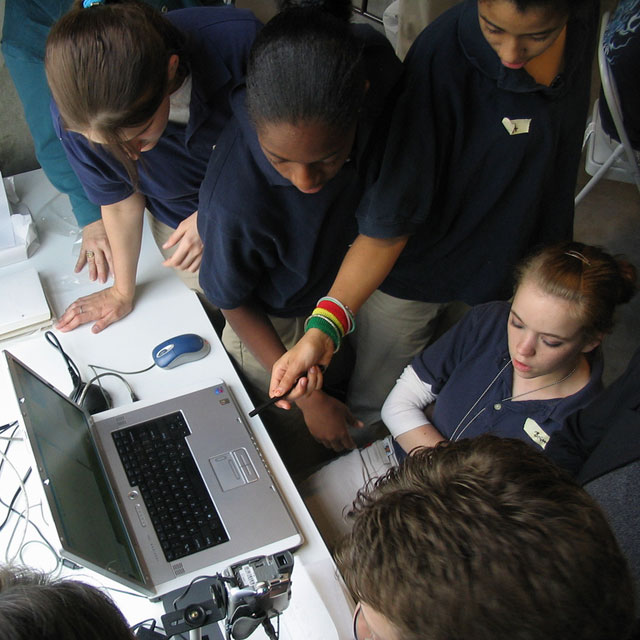
"content": "\u003cp>\u003ca href=\"http://www.flickr.com/photos/listenup/184276946/\">\u003cimg class=\"size-medium wp-image-5843\" src=\"http://ww2.kqed.org/mindshift/wp-content/uploads/sites/23/2010/12/listenup-mindshift-photo-300x300.jpg\" alt=\"\" width=\"300\" height=\"300\">\u003c/a>\u003c/p>\n\u003ch5>By Sara Bernard\u003c/h5>\n\u003cp>Over the past five years, more than 27,000 students from Australia to Senegal to San Francisco have made films and other media about a wide range of subjects -- from young refugees, to how to improve public education in the U.S., to environmental preservation, racial and gender discrimination, and more. They’ve produced their work in and outside of school and have taken it to festivals like \u003ca href=\"http://www.cinequest.org\" target=\"_blank\">Cinequest\u003c/a> and \u003ca href=\"http://www.sundance.org/\" target=\"_blank\">Sundance\u003c/a>.\u003c/p>\n\u003cp>The common thread with all these projects is \u003ca href=\"http://www.youthvoices.adobe.com/\">Adobe Youth Voices\u003c/a> (AYV), which is part of the \u003ca href=\"http://www.adobe.com/aboutadobe/philanthropy/foundation/\">Adobe Foundation\u003c/a>. As a non-profit arm of a for-profit company, AYV supports youth media and education organizations (including \u003ca href=\"http://listenup.org/\">Listen Up!\u003c/a>, the \u003ca href=\"http://www.bavc.org/\">Bay Area Video Coalition\u003c/a>, \u003ca href=\"http://reelworks.org/\">Reel Works\u003c/a>, \u003ca href=\"http://www.wnyc.org/shows/rookies/\">Radio Rookies\u003c/a>, \u003ca href=\"http://www.iearn.org/\">iEARN\u003c/a>, and the \u003ca href=\"http://www.computerclubhouse.org/\">Intel Computer Clubhouse Network\u003c/a>) by providing grants, collaborative partnerships, professional development, tech tools and resources, and a worldwide network of teachers, students, and professionals making media together.\u003c/p>\n\u003cp>The premise behind the program: Media-making enables students to express themselves, address important global issues, and -- as they're using the latest technology to work on community-based projects, still a rare breed in most classrooms – to \"bridge that gap between school and what's going to happen when they leave school,\" says AYV program manager Patricia Cogley.\u003c!--more-->\u003c/p>\n\u003cp>The National Youth Listening Tour, for instance, is a program sponsored by the Department of Education to help reduce dropout rates and improve public education through youth input, and AYV student media will be featured in Boston, Seattle, and the San Francisco Bay Area.\u003c/p>\n\u003cp>[ad fullwidth]\u003c/p>\n\u003cp>\u003ca href=\"http://www.pbs.org/pov/filmmakers/voicescape.php\">Project VoiceScape\u003c/a> is a new partnership between Adobe Youth Voices, the \u003ca href=\"http://www.pbs.org/foundation\">PBS Foundation\u003c/a>, and PBS' \u003ca href=\"http://www.pbs.org/pov/\">POV \u003c/a>that pairs young people with award-winning documentary filmmakers to help mentor emerging artists and showcase their work at festivals nationwide.\u003c/p>\n\u003cp>And through a \u003ca href=\"http://www.donorschoose.org/donors/viewChallenge.html?id=113808\">partnership with DonorsChoose.org\u003c/a>, anyone can help support specific school projects such as \"\u003ca href=\"http://www.donorschoose.org/donors/proposal.html?id=479629&challengeid=113808\">What Matters Most: Kids Find Their Voice Using Technology\u003c/a>,\" a multimedia project for fourth and fifth graders in Seattle, WA.\u003c/p>\n\u003cp>While most of the work AYV does is through partnerships with other foundations or media organizations, interested teachers and project leaders can now access \u003ca href=\"http://essentials.youthvoices.adobe.com/\" target=\"_blank\">AYV Essentials\u003c/a>: free curricula, lesson plans, student stories, and other resources that AYV staff have combed through and tagged as particularly successful.\u003c/p>\n\u003cp>AYV’s aim is not \"to convince everyone to be media-makers,\" though, says Cogley. \"It's about engagement. Young people who identify that they have a story to tell or a message to give to a community experience a real boost in self-esteem. They start to see that their opinion matters.\"\u003c/p>\n\u003cp>(Check \u003ca href=\"http://www.kqed.org/radio/programs/forum/\">here\u003c/a> for a recent round table discussion with AYV senior manager Miguel Salinas and lead educator Gregg Witkin about 21st century learning and arts education on \u003ca href=\"http://www.kqed.org/radio/programs/forum/\">KQED's Forum\u003c/a>).\u003c/p>\n\u003cp>\u003c/p>\n\u003cp>\u003cstrong> \u003c/strong>\u003c/p>\n\n",
"disqusIdentifier": "5510 http://blogs.kqed.org/mindshift/?p=5510",
"disqusUrl": "https://ww2.kqed.org/mindshift/2011/01/18/creating-media-connects-kids-to-global-events/",
"stats": {
"hasVideo": false,
"hasChartOrMap": false,
"hasAudio": false,
"hasPolis": false,
"wordCount": 463,
"hasGoogleForm": false,
"hasGallery": false,
"hasHearkenModule": false,
"iframeSrcs": [],
"paragraphCount": 13
},
"modified": 1295387772,
"excerpt": null,
"headData": {
"twImgId": "",
"twTitle": "",
"ogTitle": "",
"ogImgId": "",
"twDescription": "",
"description": "By Sara Bernard Over the past five years, more than 27,000 students from Australia to Senegal to San Francisco have made films and other media about a wide range of subjects -- from young refugees, to how to improve public education in the U.S., to environmental preservation, racial and gender discrimination, and more. They’ve produced",
"title": "Creating Media Connects Kids to Global Events | KQED",
"ogDescription": "",
"schema": {
"@context": "https://schema.org",
"@type": "Article",
"headline": "Creating Media Connects Kids to Global Events",
"datePublished": "2011-01-18T13:00:09-08:00",
"dateModified": "2011-01-18T13:56:12-08:00",
"image": "https://cdn.kqed.org/wp-content/uploads/2020/02/KQED-OG-Image@1x.png"
}
},
"guestAuthors": [],
"slug": "creating-media-connects-kids-to-global-events",
"status": "publish",
"path": "/mindshift/5510/creating-media-connects-kids-to-global-events",
"audioTrackLength": null,
"parsedContent": [
{
"type": "contentString",
"content": "\u003cdiv class=\"post-body\">\u003cp>\u003cp>\u003ca href=\"http://www.flickr.com/photos/listenup/184276946/\">\u003cimg class=\"size-medium wp-image-5843\" src=\"http://ww2.kqed.org/mindshift/wp-content/uploads/sites/23/2010/12/listenup-mindshift-photo-300x300.jpg\" alt=\"\" width=\"300\" height=\"300\">\u003c/a>\u003c/p>\n\u003ch5>By Sara Bernard\u003c/h5>\n\u003cp>Over the past five years, more than 27,000 students from Australia to Senegal to San Francisco have made films and other media about a wide range of subjects -- from young refugees, to how to improve public education in the U.S., to environmental preservation, racial and gender discrimination, and more. They’ve produced their work in and outside of school and have taken it to festivals like \u003ca href=\"http://www.cinequest.org\" target=\"_blank\">Cinequest\u003c/a> and \u003ca href=\"http://www.sundance.org/\" target=\"_blank\">Sundance\u003c/a>.\u003c/p>\n\u003cp>The common thread with all these projects is \u003ca href=\"http://www.youthvoices.adobe.com/\">Adobe Youth Voices\u003c/a> (AYV), which is part of the \u003ca href=\"http://www.adobe.com/aboutadobe/philanthropy/foundation/\">Adobe Foundation\u003c/a>. As a non-profit arm of a for-profit company, AYV supports youth media and education organizations (including \u003ca href=\"http://listenup.org/\">Listen Up!\u003c/a>, the \u003ca href=\"http://www.bavc.org/\">Bay Area Video Coalition\u003c/a>, \u003ca href=\"http://reelworks.org/\">Reel Works\u003c/a>, \u003ca href=\"http://www.wnyc.org/shows/rookies/\">Radio Rookies\u003c/a>, \u003ca href=\"http://www.iearn.org/\">iEARN\u003c/a>, and the \u003ca href=\"http://www.computerclubhouse.org/\">Intel Computer Clubhouse Network\u003c/a>) by providing grants, collaborative partnerships, professional development, tech tools and resources, and a worldwide network of teachers, students, and professionals making media together.\u003c/p>\n\u003cp>The premise behind the program: Media-making enables students to express themselves, address important global issues, and -- as they're using the latest technology to work on community-based projects, still a rare breed in most classrooms – to \"bridge that gap between school and what's going to happen when they leave school,\" says AYV program manager Patricia Cogley.\u003c!--more-->\u003c/p>\n\u003cp>The National Youth Listening Tour, for instance, is a program sponsored by the Department of Education to help reduce dropout rates and improve public education through youth input, and AYV student media will be featured in Boston, Seattle, and the San Francisco Bay Area.\u003c/p>\n\u003cp>\u003c/p>\u003c/div>",
"attributes": {
"named": {},
"numeric": []
}
},
{
"type": "component",
"content": "",
"name": "ad",
"attributes": {
"named": {
"label": "fullwidth"
},
"numeric": [
"fullwidth"
]
}
},
{
"type": "contentString",
"content": "\u003cdiv class=\"post-body\">\u003cp>\u003c/p>\n\u003cp>\u003ca href=\"http://www.pbs.org/pov/filmmakers/voicescape.php\">Project VoiceScape\u003c/a> is a new partnership between Adobe Youth Voices, the \u003ca href=\"http://www.pbs.org/foundation\">PBS Foundation\u003c/a>, and PBS' \u003ca href=\"http://www.pbs.org/pov/\">POV \u003c/a>that pairs young people with award-winning documentary filmmakers to help mentor emerging artists and showcase their work at festivals nationwide.\u003c/p>\n\u003cp>And through a \u003ca href=\"http://www.donorschoose.org/donors/viewChallenge.html?id=113808\">partnership with DonorsChoose.org\u003c/a>, anyone can help support specific school projects such as \"\u003ca href=\"http://www.donorschoose.org/donors/proposal.html?id=479629&challengeid=113808\">What Matters Most: Kids Find Their Voice Using Technology\u003c/a>,\" a multimedia project for fourth and fifth graders in Seattle, WA.\u003c/p>\n\u003cp>While most of the work AYV does is through partnerships with other foundations or media organizations, interested teachers and project leaders can now access \u003ca href=\"http://essentials.youthvoices.adobe.com/\" target=\"_blank\">AYV Essentials\u003c/a>: free curricula, lesson plans, student stories, and other resources that AYV staff have combed through and tagged as particularly successful.\u003c/p>\n\u003cp>AYV’s aim is not \"to convince everyone to be media-makers,\" though, says Cogley. \"It's about engagement. Young people who identify that they have a story to tell or a message to give to a community experience a real boost in self-esteem. They start to see that their opinion matters.\"\u003c/p>\n\u003cp>(Check \u003ca href=\"http://www.kqed.org/radio/programs/forum/\">here\u003c/a> for a recent round table discussion with AYV senior manager Miguel Salinas and lead educator Gregg Witkin about 21st century learning and arts education on \u003ca href=\"http://www.kqed.org/radio/programs/forum/\">KQED's Forum\u003c/a>).\u003c/p>\n\u003cp>\u003c/p>\n\u003cp>\u003cstrong> \u003c/strong>\u003c/p>\n\n\u003c/div>\u003c/p>",
"attributes": {
"named": {},
"numeric": []
}
}
],
"link": "/mindshift/5510/creating-media-connects-kids-to-global-events",
"authors": [
"4351"
],
"categories": [
"mindshift_195"
],
"tags": [
"mindshift_239",
"mindshift_273",
"mindshift_242",
"mindshift_245",
"mindshift_240",
"mindshift_243",
"mindshift_244",
"mindshift_241"
],
"featImg": "mindshift_5843",
"label": "mindshift"
},
"mindshift_6476": {
"type": "posts",
"id": "mindshift_6476",
"meta": {
"index": "posts_1716263798",
"site": "mindshift",
"id": "6476",
"score": null,
"sort": [
1294947030000
]
},
"parent": 0,
"labelTerm": {
"site": "mindshift"
},
"blocks": [],
"publishDate": 1294947030,
"format": "aside",
"disqusTitle": "Where to Start? Go Online",
"title": "Where to Start? Go Online",
"headTitle": "MindShift | KQED News",
"content": "\u003cp>Mashable's \u003ca href=\"http://mashable.com/2011/01/07/online-education-websites/\">comprehensive list\u003c/a> of online education sites is an incredible resource for educators.\u003c/p>\n\u003cp>The list includes everything from online schools -- both K12 and higher ed, to the behind-the-scenes learning management companies, to rich content sites like \u003ca href=\"http://ww2.kqed.org/mindshift/2010/12/salman-khan-teaches-the-world-one-youtube-video-at-a-time/\">Khan Academy\u003c/a> and \u003ca href=\"http://ww2.kqed.org/mindshift/2010/10/teachers-customize-textbooks-online/\">OER Commons\u003c/a>, to live tutor and collaborative learning sits like \u003ca href=\"http://www.livemocha.com/\">LiveMocha\u003c/a>.\u003c/p>\n\u003cp>It's definitely worth bookmarking.\u003c/p>\n\u003cp>[ad fullwidth]\u003c/p>\u003cp>\u003c/p>\n",
"disqusIdentifier": "6476 http://blogs.kqed.org/mindshift/?p=6476",
"disqusUrl": "https://ww2.kqed.org/mindshift/2011/01/13/where-to-start-go-online/",
"stats": {
"hasVideo": false,
"hasChartOrMap": false,
"hasAudio": false,
"hasPolis": false,
"wordCount": 60,
"hasGoogleForm": false,
"hasGallery": false,
"hasHearkenModule": false,
"iframeSrcs": [],
"paragraphCount": 5
},
"modified": 1294944934,
"excerpt": null,
"headData": {
"twImgId": "",
"twTitle": "",
"ogTitle": "",
"ogImgId": "",
"twDescription": "",
"description": "Mashable's comprehensive list of online education sites is an incredible resource for educators. The list includes everything from online schools -- both K12 and higher ed, to the behind-the-scenes learning management companies, to rich content sites like Khan Academy and OER Commons, to live tutor and collaborative learning sits like LiveMocha. It's definitely worth bookmarking.",
"title": "Where to Start? Go Online | KQED",
"ogDescription": "",
"schema": {
"@context": "https://schema.org",
"@type": "Article",
"headline": "Where to Start? Go Online",
"datePublished": "2011-01-13T11:30:30-08:00",
"dateModified": "2011-01-13T10:55:34-08:00",
"image": "https://cdn.kqed.org/wp-content/uploads/2020/02/KQED-OG-Image@1x.png"
}
},
"guestAuthors": [],
"slug": "where-to-start-go-online",
"status": "publish",
"path": "/mindshift/6476/where-to-start-go-online",
"audioTrackLength": null,
"parsedContent": [
{
"type": "contentString",
"content": "\u003cdiv class=\"post-body\">\u003cp>\u003cp>Mashable's \u003ca href=\"http://mashable.com/2011/01/07/online-education-websites/\">comprehensive list\u003c/a> of online education sites is an incredible resource for educators.\u003c/p>\n\u003cp>The list includes everything from online schools -- both K12 and higher ed, to the behind-the-scenes learning management companies, to rich content sites like \u003ca href=\"http://ww2.kqed.org/mindshift/2010/12/salman-khan-teaches-the-world-one-youtube-video-at-a-time/\">Khan Academy\u003c/a> and \u003ca href=\"http://ww2.kqed.org/mindshift/2010/10/teachers-customize-textbooks-online/\">OER Commons\u003c/a>, to live tutor and collaborative learning sits like \u003ca href=\"http://www.livemocha.com/\">LiveMocha\u003c/a>.\u003c/p>\n\u003cp>It's definitely worth bookmarking.\u003c/p>\n\u003cp>\u003c/p>\u003c/div>",
"attributes": {
"named": {},
"numeric": []
}
},
{
"type": "component",
"content": "",
"name": "ad",
"attributes": {
"named": {
"label": "fullwidth"
},
"numeric": [
"fullwidth"
]
}
},
{
"type": "contentString",
"content": "\u003cdiv class=\"post-body\">\u003cp>\u003c/p>\u003cp>\u003c/p>\n\u003c/div>\u003c/p>",
"attributes": {
"named": {},
"numeric": []
}
}
],
"link": "/mindshift/6476/where-to-start-go-online",
"authors": [
"180"
],
"categories": [
"mindshift_195"
],
"tags": [
"mindshift_233",
"mindshift_122"
],
"label": "mindshift"
},
"mindshift_5166": {
"type": "posts",
"id": "mindshift_5166",
"meta": {
"index": "posts_1716263798",
"site": "mindshift",
"id": "5166",
"score": null,
"sort": [
1294784066000
]
},
"parent": 0,
"labelTerm": {
"site": "mindshift"
},
"blocks": [],
"publishDate": 1294784066,
"format": "aside",
"disqusTitle": "8 Social Media Sites Just for Kids ",
"title": "8 Social Media Sites Just for Kids ",
"headTitle": "MindShift | KQED News",
"content": "\u003cdiv class=\"module image left mceTemp\" style=\"width: 300px;\">\u003ca href=\"http://www.flickr.com/photos/45688888@N08/4191381737/\">\u003cimg class=\"size-medium wp-image-5449\" src=\"http://ww2.kqed.org/mindshift/wp-content/uploads/sites/23/2010/12/4191381737_e97eef1e8c_z1-300x199.jpg\" alt=\"\" width=\"300\" height=\"199\">\u003c/a>\n\u003cp class=\"credit\">Flickr: P i c t u r e Y o u t h\u003c/p>\n\u003c/div>\n\u003ch5>By Sara Bernard\u003c/h5>\n\u003cp>Technically, Facebook doesn't allow kids under the age of 13 to register for the site. That hasn't stopped pre-teens from simply lying about their birthdates.\u003c/p>\n\u003cp>But kids under 13 don't have to be left out of the social media world. A growing number of highly protected, kid-only sites offer viable alternatives to the unfiltered Internet world out there that allow children to exercise their social media muscles (something they're going to do anyway) without running into online predators or inappropriate content.\u003c/p>\n\u003cp>Of course, it's still just as important to educate kids about Internet safety and appropriate online behavior as it is to create technological barriers between them and unsafe situations.\u003c/p>\n\u003cp>\"As a teacher I see it as my responsibility to teach students how to engage with their peers online in a healthy and productive way,\" \u003ca href=\"http://ww2.kqed.org/mindshift/2010/11/6-ways-social-media-is-changing-education/\">writes teacher Catlin Tucker\u003c/a> in response to an article about how social media is changing education. \"Online communication is rapidly becoming an essential life skill. Shouldn’t we as teachers support students in learning and mastering this skill?\"\u003c/p>\n\u003cp>To that end, here are eight kid-friendly social media options:\u003c/p>\n\u003cp>[ad fullwidth]\u003c/p>\n\u003cp>\u003ca href=\"http://www.dizeo.com/\" target=\"_blank\">Dizeo\u003c/a>: A fully-monitored site that calls itself \"social networking training wheels,\" complete with video and music sharing, homework help from subject-specialist tutors, and educational videos on Internet safety.\u003c/p>\n\u003cp>\u003ca href=\"http://yoursphere.com/\" target=\"_blank\">YourSphere\u003c/a>: This one offers games, prizes, avatars, and \"spheres,\" or interest groups centered on sports, television, art, music, humanitarian causes, and more. Tough filters verify identities, require parental consent, perform a \"predator check,\" and include real, live human oversight of site activity.\u003c!--more-->\u003c/p>\n\u003cp>\u003ca href=\"http://www.scuttlepad.com/\" target=\"_blank\">ScuttlePad\u003c/a>: Designed exclusively for kids age six through eleven, ScuttlePad goes so far as to allow \"guided communication\" using predefined word lists. A Facebook for the younger set, ScuttlePad lets kids connect with kids around the world, upload photos, chat, and send messages.\u003c/p>\n\u003cp>\u003ca href=\"https://www.whatswhat.me/\" target=\"_blank\">What's What\u003c/a>: Each member logs in with a webcam and facial recognition technology verifies that it really is only kids who use the site. Users are separated by grade to encourage \"age-appropriate friending\" and next to every message is a \"Report It\" button so that kids can easily get help if they feel they're being cyberbullied.\u003c/p>\n\u003cp>\u003ca href=\"http://www.gianthello.com/\" target=\"_blank\">giantHello\u003c/a>: Kids can connect with one another, create and join fan pages, share favorite sites and ideas, and play a ton of online games. Kids user-tested the site extensively before it was launched.\u003c/p>\n\u003cp>\u003ca href=\"http://www.mysecretcircle.com/\" target=\"_blank\">My Secret Circle\u003c/a>: This one is girls-only as well as kids-only. Girls ages eight through twelve make friends using secure \"Friend Codes,\" play games, voice chat, and even keep secret (but shareable) diaries.\u003c/p>\n\u003cp>\u003ca href=\"http://www.skid-e-kids.com/\" target=\"_blank\">Skid-e Kids\u003c/a>: Expected to launch on January 7, 2011, this one claims it is \"the total experience of Facebook without being on Facebook.\" Features include toy and game swaps, educational questions and answers, and \"movie night.\"\u003c/p>\n\u003cp>\u003c/p>\n\u003cp>\u003ca href=\"http://togetherville.com/\" target=\"_blank\">Togetherville\u003c/a>: A safe online experience for the whole family. Parents create \"online neighborhoods\" for children under ten to interact with friends and neighbors they already know and trust. Kids can create artwork, send and receive gifts, upload photos and profile information, watch videos, and more.\u003c/p>\n\n",
"disqusIdentifier": "5166 http://blogs.kqed.org/mindshift/?p=5166",
"disqusUrl": "https://ww2.kqed.org/mindshift/2011/01/11/8-social-media-sites-just-for-kids/",
"stats": {
"hasVideo": false,
"hasChartOrMap": false,
"hasAudio": false,
"hasPolis": false,
"wordCount": 535,
"hasGoogleForm": false,
"hasGallery": false,
"hasHearkenModule": false,
"iframeSrcs": [],
"paragraphCount": 15
},
"modified": 1300907762,
"excerpt": null,
"headData": {
"twImgId": "",
"twTitle": "",
"ogTitle": "",
"ogImgId": "",
"twDescription": "",
"description": "Flickr: P i c t u r e Y o u t h By Sara Bernard Technically, Facebook doesn't allow kids under the age of 13 to register for the site. That hasn't stopped pre-teens from simply lying about their birthdates. But kids under 13 don't have to be left out of the social media",
"title": "8 Social Media Sites Just for Kids | KQED",
"ogDescription": "",
"schema": {
"@context": "https://schema.org",
"@type": "Article",
"headline": "8 Social Media Sites Just for Kids ",
"datePublished": "2011-01-11T14:14:26-08:00",
"dateModified": "2011-03-23T12:16:02-07:00",
"image": "https://cdn.kqed.org/wp-content/uploads/2020/02/KQED-OG-Image@1x.png"
}
},
"guestAuthors": [],
"slug": "8-social-media-sites-just-for-kids",
"status": "publish",
"path": "/mindshift/5166/8-social-media-sites-just-for-kids",
"audioTrackLength": null,
"parsedContent": [
{
"type": "contentString",
"content": "\u003cdiv class=\"post-body\">\u003cp>\u003cdiv class=\"module image left mceTemp\" style=\"width: 300px;\">\u003ca href=\"http://www.flickr.com/photos/45688888@N08/4191381737/\">\u003cimg class=\"size-medium wp-image-5449\" src=\"http://ww2.kqed.org/mindshift/wp-content/uploads/sites/23/2010/12/4191381737_e97eef1e8c_z1-300x199.jpg\" alt=\"\" width=\"300\" height=\"199\">\u003c/a>\n\u003cp class=\"credit\">Flickr: P i c t u r e Y o u t h\u003c/p>\n\u003c/div>\n\u003ch5>By Sara Bernard\u003c/h5>\n\u003cp>Technically, Facebook doesn't allow kids under the age of 13 to register for the site. That hasn't stopped pre-teens from simply lying about their birthdates.\u003c/p>\n\u003cp>But kids under 13 don't have to be left out of the social media world. A growing number of highly protected, kid-only sites offer viable alternatives to the unfiltered Internet world out there that allow children to exercise their social media muscles (something they're going to do anyway) without running into online predators or inappropriate content.\u003c/p>\n\u003cp>Of course, it's still just as important to educate kids about Internet safety and appropriate online behavior as it is to create technological barriers between them and unsafe situations.\u003c/p>\n\u003cp>\"As a teacher I see it as my responsibility to teach students how to engage with their peers online in a healthy and productive way,\" \u003ca href=\"http://ww2.kqed.org/mindshift/2010/11/6-ways-social-media-is-changing-education/\">writes teacher Catlin Tucker\u003c/a> in response to an article about how social media is changing education. \"Online communication is rapidly becoming an essential life skill. Shouldn’t we as teachers support students in learning and mastering this skill?\"\u003c/p>\n\u003cp>To that end, here are eight kid-friendly social media options:\u003c/p>\n\u003cp>\u003c/p>\u003c/div>",
"attributes": {
"named": {},
"numeric": []
}
},
{
"type": "component",
"content": "",
"name": "ad",
"attributes": {
"named": {
"label": "fullwidth"
},
"numeric": [
"fullwidth"
]
}
},
{
"type": "contentString",
"content": "\u003cdiv class=\"post-body\">\u003cp>\u003c/p>\n\u003cp>\u003ca href=\"http://www.dizeo.com/\" target=\"_blank\">Dizeo\u003c/a>: A fully-monitored site that calls itself \"social networking training wheels,\" complete with video and music sharing, homework help from subject-specialist tutors, and educational videos on Internet safety.\u003c/p>\n\u003cp>\u003ca href=\"http://yoursphere.com/\" target=\"_blank\">YourSphere\u003c/a>: This one offers games, prizes, avatars, and \"spheres,\" or interest groups centered on sports, television, art, music, humanitarian causes, and more. Tough filters verify identities, require parental consent, perform a \"predator check,\" and include real, live human oversight of site activity.\u003c!--more-->\u003c/p>\n\u003cp>\u003ca href=\"http://www.scuttlepad.com/\" target=\"_blank\">ScuttlePad\u003c/a>: Designed exclusively for kids age six through eleven, ScuttlePad goes so far as to allow \"guided communication\" using predefined word lists. A Facebook for the younger set, ScuttlePad lets kids connect with kids around the world, upload photos, chat, and send messages.\u003c/p>\n\u003cp>\u003ca href=\"https://www.whatswhat.me/\" target=\"_blank\">What's What\u003c/a>: Each member logs in with a webcam and facial recognition technology verifies that it really is only kids who use the site. Users are separated by grade to encourage \"age-appropriate friending\" and next to every message is a \"Report It\" button so that kids can easily get help if they feel they're being cyberbullied.\u003c/p>\n\u003cp>\u003ca href=\"http://www.gianthello.com/\" target=\"_blank\">giantHello\u003c/a>: Kids can connect with one another, create and join fan pages, share favorite sites and ideas, and play a ton of online games. Kids user-tested the site extensively before it was launched.\u003c/p>\n\u003cp>\u003ca href=\"http://www.mysecretcircle.com/\" target=\"_blank\">My Secret Circle\u003c/a>: This one is girls-only as well as kids-only. Girls ages eight through twelve make friends using secure \"Friend Codes,\" play games, voice chat, and even keep secret (but shareable) diaries.\u003c/p>\n\u003cp>\u003ca href=\"http://www.skid-e-kids.com/\" target=\"_blank\">Skid-e Kids\u003c/a>: Expected to launch on January 7, 2011, this one claims it is \"the total experience of Facebook without being on Facebook.\" Features include toy and game swaps, educational questions and answers, and \"movie night.\"\u003c/p>\n\u003cp>\u003c/p>\n\u003cp>\u003ca href=\"http://togetherville.com/\" target=\"_blank\">Togetherville\u003c/a>: A safe online experience for the whole family. Parents create \"online neighborhoods\" for children under ten to interact with friends and neighbors they already know and trust. Kids can create artwork, send and receive gifts, upload photos and profile information, watch videos, and more.\u003c/p>\n\n\u003c/div>\u003c/p>",
"attributes": {
"named": {},
"numeric": []
}
}
],
"link": "/mindshift/5166/8-social-media-sites-just-for-kids",
"authors": [
"4351"
],
"categories": [
"mindshift_195"
],
"tags": [
"mindshift_73",
"mindshift_31",
"mindshift_227",
"mindshift_226",
"mindshift_225",
"mindshift_30",
"mindshift_223"
],
"featImg": "mindshift_5449",
"label": "mindshift"
},
"mindshift_6330": {
"type": "posts",
"id": "mindshift_6330",
"meta": {
"index": "posts_1716263798",
"site": "mindshift",
"id": "6330",
"score": null,
"sort": [
1294776770000
]
},
"parent": 0,
"labelTerm": {
"site": "mindshift"
},
"blocks": [],
"publishDate": 1294776770,
"format": "aside",
"disqusTitle": "One Teacher's Rave Reviews of the iPad",
"title": "One Teacher's Rave Reviews of the iPad",
"headTitle": "MindShift | KQED News",
"content": "\u003cp>It's way too early to know whether the iPad will have an effect on the education system as a whole. We need time to study its impact on how students learn. But anecdotal evidence from teachers so far is encouraging.\u003c/p>\n\u003cp>See what \u003ca href=\"http://www.macworld.com/article/157013/2011/01/ipadintheschool.html\">Frasier Speirs \u003c/a>from Cedars School of Excellence has to say about deploying 115 iPads in school.\u003c/p>\n\u003cblockquote>\u003cp>The biggest early change has been in teaching art. Apps like \u003ca href=\"http://www.macworld.com/appguide/app.html?id=458359&expand=false\">Brushes\u003c/a>, \u003ca href=\"http://www.macworld.com/appguide/app.html?id=460473&expand=false\">MoodBoard Pro\u003c/a>, and \u003ca href=\"http://www.macworld.com/appguide/app.html?id=318252&expand=false\">Photoshop Express\u003c/a> help children experiment with art and build confidence. Children are often reluctant to try new things in art class for fear of getting something wrong. With the freedom to simply try things, with the safety of unlimited undo, their creativity has opened up dramatically. Similarly, in English our teachers are now having to teach the art of keeping to a word limit because children are producing longer and better pieces of writing than ever before.\u003c/p>\n\u003cp>Are there things we wish the iPad did better? Of course. Is there another computing device that meets our needs more fully? Not right now. The iPad has transformed our school, and we have only begun to find out what’s possible.\u003c/p>\u003c/blockquote>\n\u003cp>I'd love to hear from other educators or parents the specifics on how they're seeing students' learning process changing.\u003c/p>\n\u003cp>[Via Scott McLeod's\u003ca href=\"http://www.minddump.org/taking-the-ipad-away-would-now-completely-bre?utm_source=feedburner&utm_medium=feed&utm_campaign=Feed%3A+mcleodminddump+%28Mind+Dump%29&utm_content=Google+Reader\"> Mind Dump\u003c/a>.]\u003c/p>\n\u003cp>[ad fullwidth]\u003c/p>\u003cp>\u003c/p>\n",
"disqusIdentifier": "6330 http://blogs.kqed.org/mindshift/?p=6330",
"disqusUrl": "https://ww2.kqed.org/mindshift/2011/01/11/6330/",
"stats": {
"hasVideo": false,
"hasChartOrMap": false,
"hasAudio": false,
"hasPolis": false,
"wordCount": 223,
"hasGoogleForm": false,
"hasGallery": false,
"hasHearkenModule": false,
"iframeSrcs": [],
"paragraphCount": 8
},
"modified": 1294776808,
"excerpt": null,
"headData": {
"twImgId": "",
"twTitle": "",
"ogTitle": "",
"ogImgId": "",
"twDescription": "",
"description": "It's way too early to know whether the iPad will have an effect on the education system as a whole. We need time to study its impact on how students learn. But anecdotal evidence from teachers so far is encouraging. See what Frasier Speirs from Cedars School of Excellence has to say about deploying 115",
"title": "One Teacher's Rave Reviews of the iPad | KQED",
"ogDescription": "",
"schema": {
"@context": "https://schema.org",
"@type": "Article",
"headline": "One Teacher's Rave Reviews of the iPad",
"datePublished": "2011-01-11T12:12:50-08:00",
"dateModified": "2011-01-11T12:13:28-08:00",
"image": "https://cdn.kqed.org/wp-content/uploads/2020/02/KQED-OG-Image@1x.png"
}
},
"guestAuthors": [],
"slug": "6330",
"status": "publish",
"path": "/mindshift/6330/6330",
"audioTrackLength": null,
"parsedContent": [
{
"type": "contentString",
"content": "\u003cdiv class=\"post-body\">\u003cp>\u003cp>It's way too early to know whether the iPad will have an effect on the education system as a whole. We need time to study its impact on how students learn. But anecdotal evidence from teachers so far is encouraging.\u003c/p>\n\u003cp>See what \u003ca href=\"http://www.macworld.com/article/157013/2011/01/ipadintheschool.html\">Frasier Speirs \u003c/a>from Cedars School of Excellence has to say about deploying 115 iPads in school.\u003c/p>\n\u003cblockquote>\u003cp>The biggest early change has been in teaching art. Apps like \u003ca href=\"http://www.macworld.com/appguide/app.html?id=458359&expand=false\">Brushes\u003c/a>, \u003ca href=\"http://www.macworld.com/appguide/app.html?id=460473&expand=false\">MoodBoard Pro\u003c/a>, and \u003ca href=\"http://www.macworld.com/appguide/app.html?id=318252&expand=false\">Photoshop Express\u003c/a> help children experiment with art and build confidence. Children are often reluctant to try new things in art class for fear of getting something wrong. With the freedom to simply try things, with the safety of unlimited undo, their creativity has opened up dramatically. Similarly, in English our teachers are now having to teach the art of keeping to a word limit because children are producing longer and better pieces of writing than ever before.\u003c/p>\n\u003cp>Are there things we wish the iPad did better? Of course. Is there another computing device that meets our needs more fully? Not right now. The iPad has transformed our school, and we have only begun to find out what’s possible.\u003c/p>\u003c/blockquote>\n\u003cp>I'd love to hear from other educators or parents the specifics on how they're seeing students' learning process changing.\u003c/p>\n\u003cp>[Via Scott McLeod's\u003ca href=\"http://www.minddump.org/taking-the-ipad-away-would-now-completely-bre?utm_source=feedburner&utm_medium=feed&utm_campaign=Feed%3A+mcleodminddump+%28Mind+Dump%29&utm_content=Google+Reader\"> Mind Dump\u003c/a>.]\u003c/p>\n\u003cp>\u003c/p>\u003c/div>",
"attributes": {
"named": {},
"numeric": []
}
},
{
"type": "component",
"content": "",
"name": "ad",
"attributes": {
"named": {
"label": "fullwidth"
},
"numeric": [
"fullwidth"
]
}
},
{
"type": "contentString",
"content": "\u003cdiv class=\"post-body\">\u003cp>\u003c/p>\u003cp>\u003c/p>\n\u003c/div>\u003c/p>",
"attributes": {
"named": {},
"numeric": []
}
}
],
"link": "/mindshift/6330/6330",
"authors": [
"180"
],
"categories": [
"mindshift_195",
"mindshift_193"
],
"tags": [
"mindshift_81"
],
"label": "mindshift"
},
"mindshift_6268": {
"type": "posts",
"id": "mindshift_6268",
"meta": {
"index": "posts_1716263798",
"site": "mindshift",
"id": "6268",
"score": null,
"sort": [
1294696475000
]
},
"parent": 0,
"labelTerm": {
"site": "mindshift"
},
"blocks": [],
"publishDate": 1294696475,
"format": "aside",
"disqusTitle": "Why Every Student Should Learn the Skills of a Journalist",
"title": "Why Every Student Should Learn the Skills of a Journalist",
"headTitle": "MindShift | KQED News",
"content": "\u003cp>\u003cstrong> \u003c/strong>\u003c/p>\n\u003cdiv id=\"attachment_6270\" class=\"module image aligncenter mceTemp mceIEcenter\" style=\"width: 620px;\">\u003cstrong>\u003cstrong>\u003ca rel=\"attachment wp-att-6270\" href=\"http://ww2.kqed.org/mindshift/2011/01/why-every-student-should-learn-the-skills-of-a-journalist/reporters-notebook/\">\u003cimg class=\"size-large wp-image-6270\" title=\"Reporter's notebook\" src=\"http://ww2.kqed.org/mindshift/wp-content/uploads/sites/23/2011/01/2330323726_61b725b577_z-620x413.jpg\" alt=\"\" width=\"620\" height=\"413\">\u003c/a>\u003c/strong>\u003c/strong>\n\u003cp class=\"credit\">\u003cstrong>\u003cstrong>Flickr: sskennel\u003c/strong>\u003c/strong>\u003c/p>\n\u003cp class=\"caption\">\n\u003c/p>\u003c/div>\n\u003cp>How do we make schools more relevant to students? Teach them the skills they need in the real world, with tools they use every day. That's exactly what Esther Wojcicki, a teacher of English and journalism at Palo Alto High School, is attempting to do with the recent launch of the website \u003ca href=\"http://21stcenturylit.org\">21STCenturyLit\u003c/a>. I interviewed Esther about the site, and how she hopes it will serve as a useful tool for both students and educators.\u003c/p>\n\u003cp>\u003cstrong>- How do you describe the mission for \u003ca href=\"http://21stcenturylit.org\">21STcenturylit\u003c/a>?\u003c/strong>\u003c/p>\n\u003cp>The mission of 21STcenturylit.org is three fold: it is to teach students how to be intelligent consumers of digital media, to teach students how to be skillful creators of digital media, and to teach students how to search intelligently. We are living in an age when digital media and new digital tools are revolutionizing the world. Schools need to help student learn these skills, not block and censor the Internet.\u003c/p>\n\u003cp>\u003cstrong>- Why is this important right now?\u003c/strong>\u003c/p>\n\u003cp>[ad fullwidth]\u003c/p>\n\u003cp>We need to make school more relevant to the world we live in to combat the huge dropout problem we face. We also need to train kids to have the skills needed in the digital world. They need to know how to communicate using multiple media; they need to know how to read and write for the web; they need to know how to use social media for things other than checking on their friends. Schools should be teaching this; businesses want to hire kids with these skills.\u003c/p>\n\u003cp>More than 40 percent of high school students nationwide drop out of school. While there are many reasons why kids drop out including economic factors, lack of reading skills, one of the main reasons cited is that they find school irrelevant, boring, and punitive.\u003c/p>\n\u003cp>We as a nation also have a critical need for trained IT workers that is not being met by our educational system. If students learn to use digital media in school and go on to computer science courses, it will provide good jobs for them and fill an important need for our country. Right now we are getting IT workers from other countries and kids are not getting the training they need in schools.\u003c!--more-->\u003c/p>\n\u003cp>\u003cstrong>How do you think the work of a journalist mirrors that of a media consumer (newspaper reader, web user, etc.)? \u003c/strong>\u003c/p>\n\u003cp>The skills of a journalist mirror those of today’s media consumer which is why news literacy is a critical skill for all students. Like journalists, students today are gathering information; however, unlike journalists they do not have the skills for analyzing it, or writing about it. They should be taught these skills in school; we need to teach kids how to critically examine their research and make intelligent decisions about it. We need to teach them how to write for the web so they can feed empowered to participate. Many kids are connected to their Facebook account and their phone, but they do not comment on blogs or even write blogs.\u003c/p>\n\u003cp>\u003cstrong>How is this being received by the education community? How are you getting the word out, and how many educators so far have come upon this site?\u003c/strong>\u003c/p>\n\u003cp>Most teachers are interested in teaching these skills; however, many don’t feel that they have the necessary skills themselves. Teachers need time to learn these skills through professional development. They need time to learn how they can modify their teaching to incorporate the teaching of digital skills.\u003c/p>\n\u003cfigure id=\"attachment_6277\" class=\"wp-caption alignright\" style=\"max-width: 140px\">\u003cimg class=\"size-thumbnail wp-image-6277\" title=\"EstherWojcicki\" src=\"http://ww2.kqed.org/mindshift/wp-content/uploads/sites/23/2011/01/EstherWojcicki-140x140.jpg\" alt=\"\" width=\"140\" height=\"140\">\u003cfigcaption class=\"wp-caption-text\">Esther Wojcicki\u003c/figcaption>\u003c/figure>\n\u003cp>For example, English teachers need to teach students how to collaborate online with their writing projects. Just using the web to collaborate helps student understand what is happening in businesses. Instead of writing a paper, printing it out and turning it in, kids can turn the paper in online and peer-edit their work online before turning it in. One of the most widely used collaboration tools is Google Docs, a free online word processing program. In using this method, students learn more than just how to write a paper; they learn how to use digital tools.\u003c/p>\n\u003cp>Students should also learn to blog. At the moment, many schools block blogging because they are worried kids will access ‘inappropriate’ blogs. How is this teaching kids about the real world?\u003c/p>\n\u003caside class=\"pullquote alignleft\">We need to make school more relevant to the world we live in to combat the huge dropout problem we face. We also need to train kids to have the skills needed in the digital world.\u003c/aside>\n\u003cp>Students can be asked, for example, to do research on health care in America and compare it to health care in other parts of the world. Just doing the research is exciting for students but most of them do not know how to analyze their results. They need to be taught. For example, who created the website, what are their political objectives, how objective is the information. Administrators need to help teachers who in turn help students learn how to analyze their result, not block the web. In too many schools today, the web is blocked!! Yes, blocked. Schools use special censoring services that ensure that kids will never find anything ‘objectionable.’ How is this teaching about the real world when they are never allowed to access the real world, except at home. Schools are making themselves irrelevant by failing to teach kids about the world we live in.\u003c/p>\n\u003cp>\u003cstrong>- What's your hope with this site?\u003c/strong>\u003c/p>\n\u003cp>I'm hoping that this site will provide teachers several lesson plans that will help them teach students a) how to search effectively b) how to analyze their search results c) how to differentiate between fact and opinion d) how to write for the web. I have lesson plans to teach how to write a personality feature, how to write a news story, how to write reviews of movies, games, books, websites. There are also lesson plans of how to understand copyright and how to use Creative Commons licenses to modify copyright so students can learn to share and remix legally.\u003c/p>\n\u003cp>\u003cstrong>How are educators accessing these kinds of excellent resources online? Do you believe there's a good system in place to let them know, or do you think it's still quite fragmented and decentralized?\u003cbr>\n\u003c/strong>\u003c/p>\n\u003cp>\u003cstrong> \u003c/strong>\u003c/p>\n\u003cp>The system is still quite fragmented and decentralized. There are many sites and many entrepreneurs trying to create materials for teachers but one of the main problems is finding these resources. If the user doesn’t know the key words, then they won’t find them.\u003c/p>\n\u003cp>\u003cstrong>What solution do you think might work for creating a central repository of sorts? \u003c/strong>\u003c/p>\n\u003cp>[ad floatright]\u003c/p>\n\u003cp>I am working with a group of universities who are looking at ways to optimize the finding of \u003ca href=\"http://www.oercommons.org/\">Open Educational Resources\u003c/a>. Hopefully, this will happen in 2011 but until then teachers need to know the address of the site or the key words to find the materials.\u003c/p>\n\n",
"disqusIdentifier": "6268 http://blogs.kqed.org/mindshift/?p=6268",
"disqusUrl": "https://ww2.kqed.org/mindshift/2011/01/10/why-every-student-should-learn-the-skills-of-a-journalist/",
"stats": {
"hasVideo": false,
"hasChartOrMap": false,
"hasAudio": false,
"hasPolis": false,
"wordCount": 1156,
"hasGoogleForm": false,
"hasGallery": false,
"hasHearkenModule": false,
"iframeSrcs": [],
"paragraphCount": 24
},
"modified": 1294696477,
"excerpt": null,
"headData": {
"twImgId": "",
"twTitle": "",
"ogTitle": "",
"ogImgId": "",
"twDescription": "",
"description": "Flickr: sskennel How do we make schools more relevant to students? Teach them the skills they need in the real world, with tools they use every day. That's exactly what Esther Wojcicki, a teacher of English and journalism at Palo Alto High School, is attempting to do with the recent launch of the website 21STCenturyLit.",
"title": "Why Every Student Should Learn the Skills of a Journalist | KQED",
"ogDescription": "",
"schema": {
"@context": "https://schema.org",
"@type": "Article",
"headline": "Why Every Student Should Learn the Skills of a Journalist",
"datePublished": "2011-01-10T13:54:35-08:00",
"dateModified": "2011-01-10T13:54:37-08:00",
"image": "https://cdn.kqed.org/wp-content/uploads/2020/02/KQED-OG-Image@1x.png"
}
},
"guestAuthors": [],
"slug": "why-every-student-should-learn-the-skills-of-a-journalist",
"status": "publish",
"path": "/mindshift/6268/why-every-student-should-learn-the-skills-of-a-journalist",
"audioTrackLength": null,
"parsedContent": [
{
"type": "contentString",
"content": "\u003cdiv class=\"post-body\">\u003cp>\u003cp>\u003cstrong> \u003c/strong>\u003c/p>\n\u003cdiv id=\"attachment_6270\" class=\"module image aligncenter mceTemp mceIEcenter\" style=\"width: 620px;\">\u003cstrong>\u003cstrong>\u003ca rel=\"attachment wp-att-6270\" href=\"http://ww2.kqed.org/mindshift/2011/01/why-every-student-should-learn-the-skills-of-a-journalist/reporters-notebook/\">\u003cimg class=\"size-large wp-image-6270\" title=\"Reporter's notebook\" src=\"http://ww2.kqed.org/mindshift/wp-content/uploads/sites/23/2011/01/2330323726_61b725b577_z-620x413.jpg\" alt=\"\" width=\"620\" height=\"413\">\u003c/a>\u003c/strong>\u003c/strong>\n\u003cp class=\"credit\">\u003cstrong>\u003cstrong>Flickr: sskennel\u003c/strong>\u003c/strong>\u003c/p>\n\u003cp class=\"caption\">\n\u003c/p>\u003c/div>\n\u003cp>How do we make schools more relevant to students? Teach them the skills they need in the real world, with tools they use every day. That's exactly what Esther Wojcicki, a teacher of English and journalism at Palo Alto High School, is attempting to do with the recent launch of the website \u003ca href=\"http://21stcenturylit.org\">21STCenturyLit\u003c/a>. I interviewed Esther about the site, and how she hopes it will serve as a useful tool for both students and educators.\u003c/p>\n\u003cp>\u003cstrong>- How do you describe the mission for \u003ca href=\"http://21stcenturylit.org\">21STcenturylit\u003c/a>?\u003c/strong>\u003c/p>\n\u003cp>The mission of 21STcenturylit.org is three fold: it is to teach students how to be intelligent consumers of digital media, to teach students how to be skillful creators of digital media, and to teach students how to search intelligently. We are living in an age when digital media and new digital tools are revolutionizing the world. Schools need to help student learn these skills, not block and censor the Internet.\u003c/p>\n\u003cp>\u003cstrong>- Why is this important right now?\u003c/strong>\u003c/p>\n\u003cp>\u003c/p>\u003c/div>",
"attributes": {
"named": {},
"numeric": []
}
},
{
"type": "component",
"content": "",
"name": "ad",
"attributes": {
"named": {
"label": "fullwidth"
},
"numeric": [
"fullwidth"
]
}
},
{
"type": "contentString",
"content": "\u003cdiv class=\"post-body\">\u003cp>\u003c/p>\n\u003cp>We need to make school more relevant to the world we live in to combat the huge dropout problem we face. We also need to train kids to have the skills needed in the digital world. They need to know how to communicate using multiple media; they need to know how to read and write for the web; they need to know how to use social media for things other than checking on their friends. Schools should be teaching this; businesses want to hire kids with these skills.\u003c/p>\n\u003cp>More than 40 percent of high school students nationwide drop out of school. While there are many reasons why kids drop out including economic factors, lack of reading skills, one of the main reasons cited is that they find school irrelevant, boring, and punitive.\u003c/p>\n\u003cp>We as a nation also have a critical need for trained IT workers that is not being met by our educational system. If students learn to use digital media in school and go on to computer science courses, it will provide good jobs for them and fill an important need for our country. Right now we are getting IT workers from other countries and kids are not getting the training they need in schools.\u003c!--more-->\u003c/p>\n\u003cp>\u003cstrong>How do you think the work of a journalist mirrors that of a media consumer (newspaper reader, web user, etc.)? \u003c/strong>\u003c/p>\n\u003cp>The skills of a journalist mirror those of today’s media consumer which is why news literacy is a critical skill for all students. Like journalists, students today are gathering information; however, unlike journalists they do not have the skills for analyzing it, or writing about it. They should be taught these skills in school; we need to teach kids how to critically examine their research and make intelligent decisions about it. We need to teach them how to write for the web so they can feed empowered to participate. Many kids are connected to their Facebook account and their phone, but they do not comment on blogs or even write blogs.\u003c/p>\n\u003cp>\u003cstrong>How is this being received by the education community? How are you getting the word out, and how many educators so far have come upon this site?\u003c/strong>\u003c/p>\n\u003cp>Most teachers are interested in teaching these skills; however, many don’t feel that they have the necessary skills themselves. Teachers need time to learn these skills through professional development. They need time to learn how they can modify their teaching to incorporate the teaching of digital skills.\u003c/p>\n\u003cfigure id=\"attachment_6277\" class=\"wp-caption alignright\" style=\"max-width: 140px\">\u003cimg class=\"size-thumbnail wp-image-6277\" title=\"EstherWojcicki\" src=\"http://ww2.kqed.org/mindshift/wp-content/uploads/sites/23/2011/01/EstherWojcicki-140x140.jpg\" alt=\"\" width=\"140\" height=\"140\">\u003cfigcaption class=\"wp-caption-text\">Esther Wojcicki\u003c/figcaption>\u003c/figure>\n\u003cp>For example, English teachers need to teach students how to collaborate online with their writing projects. Just using the web to collaborate helps student understand what is happening in businesses. Instead of writing a paper, printing it out and turning it in, kids can turn the paper in online and peer-edit their work online before turning it in. One of the most widely used collaboration tools is Google Docs, a free online word processing program. In using this method, students learn more than just how to write a paper; they learn how to use digital tools.\u003c/p>\n\u003cp>Students should also learn to blog. At the moment, many schools block blogging because they are worried kids will access ‘inappropriate’ blogs. How is this teaching kids about the real world?\u003c/p>\n\u003caside class=\"pullquote alignleft\">We need to make school more relevant to the world we live in to combat the huge dropout problem we face. We also need to train kids to have the skills needed in the digital world.\u003c/aside>\n\u003cp>Students can be asked, for example, to do research on health care in America and compare it to health care in other parts of the world. Just doing the research is exciting for students but most of them do not know how to analyze their results. They need to be taught. For example, who created the website, what are their political objectives, how objective is the information. Administrators need to help teachers who in turn help students learn how to analyze their result, not block the web. In too many schools today, the web is blocked!! Yes, blocked. Schools use special censoring services that ensure that kids will never find anything ‘objectionable.’ How is this teaching about the real world when they are never allowed to access the real world, except at home. Schools are making themselves irrelevant by failing to teach kids about the world we live in.\u003c/p>\n\u003cp>\u003cstrong>- What's your hope with this site?\u003c/strong>\u003c/p>\n\u003cp>I'm hoping that this site will provide teachers several lesson plans that will help them teach students a) how to search effectively b) how to analyze their search results c) how to differentiate between fact and opinion d) how to write for the web. I have lesson plans to teach how to write a personality feature, how to write a news story, how to write reviews of movies, games, books, websites. There are also lesson plans of how to understand copyright and how to use Creative Commons licenses to modify copyright so students can learn to share and remix legally.\u003c/p>\n\u003cp>\u003cstrong>How are educators accessing these kinds of excellent resources online? Do you believe there's a good system in place to let them know, or do you think it's still quite fragmented and decentralized?\u003cbr>\n\u003c/strong>\u003c/p>\n\u003cp>\u003cstrong> \u003c/strong>\u003c/p>\n\u003cp>The system is still quite fragmented and decentralized. There are many sites and many entrepreneurs trying to create materials for teachers but one of the main problems is finding these resources. If the user doesn’t know the key words, then they won’t find them.\u003c/p>\n\u003cp>\u003cstrong>What solution do you think might work for creating a central repository of sorts? \u003c/strong>\u003c/p>\n\u003cp>\u003c/p>\u003c/div>",
"attributes": {
"named": {},
"numeric": []
}
},
{
"type": "component",
"content": "",
"name": "ad",
"attributes": {
"named": {
"label": "floatright"
},
"numeric": [
"floatright"
]
}
},
{
"type": "contentString",
"content": "\u003cdiv class=\"post-body\">\u003cp>\u003c/p>\n\u003cp>I am working with a group of universities who are looking at ways to optimize the finding of \u003ca href=\"http://www.oercommons.org/\">Open Educational Resources\u003c/a>. Hopefully, this will happen in 2011 but until then teachers need to know the address of the site or the key words to find the materials.\u003c/p>\n\n\u003c/div>\u003c/p>",
"attributes": {
"named": {},
"numeric": []
}
}
],
"link": "/mindshift/6268/why-every-student-should-learn-the-skills-of-a-journalist",
"authors": [
"180"
],
"categories": [
"mindshift_195"
],
"tags": [
"mindshift_262",
"mindshift_261"
],
"featImg": "mindshift_6270",
"label": "mindshift"
},
"mindshift_6136": {
"type": "posts",
"id": "mindshift_6136",
"meta": {
"index": "posts_1716263798",
"site": "mindshift",
"id": "6136",
"score": null,
"sort": [
1294350791000
]
},
"parent": 0,
"labelTerm": {
"site": "mindshift"
},
"blocks": [],
"publishDate": 1294350791,
"format": "aside",
"disqusTitle": "How Free is \"Free\"? ",
"title": "How Free is \"Free\"? ",
"headTitle": "MindShift | KQED News",
"content": "\u003cp>\u003ca rel=\"attachment wp-att-6143\" href=\"http://ww2.kqed.org/mindshift/2011/01/how-free-is-free/cover_science_earthscience/\">\u003cimg class=\"alignright size-full wp-image-6143\" title=\"cover_science_earthscience\" src=\"http://ww2.kqed.org/mindshift/wp-content/uploads/sites/23/2011/01/cover_science_earthscience.png\" alt=\"\" width=\"100\" height=\"109\">\u003c/a>The \u003ca href=\"http://ww2.kqed.org/mindshift/2011/01/the-living-book-movement-free-education-for-all/\">article about CK12's open-source digital FlexBooks\u003c/a> compelled a reader to respond with some questions.\u003c/p>\n\u003cp>He writes:\u003c/p>\n\u003cblockquote>\u003cp>I have developed a strong interest in open or free text ever since I purchased a brand new grey-market, European textbook for 60 dollars, a full third of what Americans pay for the same biology book. I also got into a heated discussion with my professor about free education, and free information. I was upset because he forced us to buy his access guide and sub par \"media lab\" that he created with flash sometime in 2002.\u003c!--more-->\u003c/p>\n\u003cp>I have a few questions that this article does not address. The first is who is involved with creating the content for the books? Are the writers paid? volunteers? vetted? If they are paid then who is paying for the free books? And my last question is are the books truly free, meaning does anyone have access to them? Calling something free, then selling a college level product at an inflated rate to make up for the lost profits is, in my opinion, inconsistent with a desire to provide free high quality information to students.\u003c/p>\u003c/blockquote>\n\u003cp>I asked Neeru Khosla, the founder of \u003ca href=\"http://www.ck12.org/\">CK12\u003c/a> to respond directly.\u003c/p>\n\u003cblockquote>\u003cp>CK-12 FlexBooks are created by teachers who have had domain experience for at least 5 years or so. In addition to the authors, we have domain expert, technical editor, and editing. The books when they are finalized through this team are also sent to classroom teachers for feedback and review.\u003c/p>\n\u003cp>Our books are not written by volunteers, however you can donate a book to our project and we will determine the quality at this point as is the case of People’s Physics Book and From Stargazers to Starships. We pay them a small fee. The money comes from funding through grant from a private foundation. These books are truly free everyone has access to them. We don't have any limitation.\u003c/p>\u003c/blockquote>\n\u003cp>And lastly, my input:\u003c/p>\n\u003cp>CK-12's FlexBooks earned perfect scores in Phase Two of California's \u003ca href=\"http://www.clrn.org/fdti/\">Free Digital Textbook Initiative\u003c/a>.\u003c/p>\n\u003cp>[ad fullwidth]\u003c/p>\u003cp>\u003c/p>\n",
"disqusIdentifier": "6136 http://blogs.kqed.org/mindshift/?p=6136",
"disqusUrl": "https://ww2.kqed.org/mindshift/2011/01/06/how-free-is-free/",
"stats": {
"hasVideo": false,
"hasChartOrMap": false,
"hasAudio": false,
"hasPolis": false,
"wordCount": 351,
"hasGoogleForm": false,
"hasGallery": false,
"hasHearkenModule": false,
"iframeSrcs": [],
"paragraphCount": 11
},
"modified": 1294350811,
"excerpt": null,
"headData": {
"twImgId": "",
"twTitle": "",
"ogTitle": "",
"ogImgId": "",
"twDescription": "",
"description": "The article about CK12's open-source digital FlexBooks compelled a reader to respond with some questions. He writes: I have developed a strong interest in open or free text ever since I purchased a brand new grey-market, European textbook for 60 dollars, a full third of what Americans pay for the same biology book. I also",
"title": "How Free is \"Free\"? | KQED",
"ogDescription": "",
"schema": {
"@context": "https://schema.org",
"@type": "Article",
"headline": "How Free is \"Free\"? ",
"datePublished": "2011-01-06T13:53:11-08:00",
"dateModified": "2011-01-06T13:53:31-08:00",
"image": "https://cdn.kqed.org/wp-content/uploads/2020/02/KQED-OG-Image@1x.png"
}
},
"guestAuthors": [],
"slug": "how-free-is-free",
"status": "publish",
"path": "/mindshift/6136/how-free-is-free",
"audioTrackLength": null,
"parsedContent": [
{
"type": "contentString",
"content": "\u003cdiv class=\"post-body\">\u003cp>\u003cp>\u003ca rel=\"attachment wp-att-6143\" href=\"http://ww2.kqed.org/mindshift/2011/01/how-free-is-free/cover_science_earthscience/\">\u003cimg class=\"alignright size-full wp-image-6143\" title=\"cover_science_earthscience\" src=\"http://ww2.kqed.org/mindshift/wp-content/uploads/sites/23/2011/01/cover_science_earthscience.png\" alt=\"\" width=\"100\" height=\"109\">\u003c/a>The \u003ca href=\"http://ww2.kqed.org/mindshift/2011/01/the-living-book-movement-free-education-for-all/\">article about CK12's open-source digital FlexBooks\u003c/a> compelled a reader to respond with some questions.\u003c/p>\n\u003cp>He writes:\u003c/p>\n\u003cblockquote>\u003cp>I have developed a strong interest in open or free text ever since I purchased a brand new grey-market, European textbook for 60 dollars, a full third of what Americans pay for the same biology book. I also got into a heated discussion with my professor about free education, and free information. I was upset because he forced us to buy his access guide and sub par \"media lab\" that he created with flash sometime in 2002.\u003c!--more-->\u003c/p>\n\u003cp>I have a few questions that this article does not address. The first is who is involved with creating the content for the books? Are the writers paid? volunteers? vetted? If they are paid then who is paying for the free books? And my last question is are the books truly free, meaning does anyone have access to them? Calling something free, then selling a college level product at an inflated rate to make up for the lost profits is, in my opinion, inconsistent with a desire to provide free high quality information to students.\u003c/p>\u003c/blockquote>\n\u003cp>I asked Neeru Khosla, the founder of \u003ca href=\"http://www.ck12.org/\">CK12\u003c/a> to respond directly.\u003c/p>\n\u003cblockquote>\u003cp>CK-12 FlexBooks are created by teachers who have had domain experience for at least 5 years or so. In addition to the authors, we have domain expert, technical editor, and editing. The books when they are finalized through this team are also sent to classroom teachers for feedback and review.\u003c/p>\n\u003cp>Our books are not written by volunteers, however you can donate a book to our project and we will determine the quality at this point as is the case of People’s Physics Book and From Stargazers to Starships. We pay them a small fee. The money comes from funding through grant from a private foundation. These books are truly free everyone has access to them. We don't have any limitation.\u003c/p>\u003c/blockquote>\n\u003cp>And lastly, my input:\u003c/p>\n\u003cp>CK-12's FlexBooks earned perfect scores in Phase Two of California's \u003ca href=\"http://www.clrn.org/fdti/\">Free Digital Textbook Initiative\u003c/a>.\u003c/p>\n\u003cp>\u003c/p>\u003c/div>",
"attributes": {
"named": {},
"numeric": []
}
},
{
"type": "component",
"content": "",
"name": "ad",
"attributes": {
"named": {
"label": "fullwidth"
},
"numeric": [
"fullwidth"
]
}
},
{
"type": "contentString",
"content": "\u003cdiv class=\"post-body\">\u003cp>\u003c/p>\u003cp>\u003c/p>\n\u003c/div>\u003c/p>",
"attributes": {
"named": {},
"numeric": []
}
}
],
"link": "/mindshift/6136/how-free-is-free",
"authors": [
"180"
],
"categories": [
"mindshift_195"
],
"tags": [
"mindshift_26",
"mindshift_33",
"mindshift_76"
],
"featImg": "mindshift_6143",
"label": "mindshift"
},
"mindshift_6048": {
"type": "posts",
"id": "mindshift_6048",
"meta": {
"index": "posts_1716263798",
"site": "mindshift",
"id": "6048",
"score": null,
"sort": [
1294252982000
]
},
"parent": 0,
"labelTerm": {
"site": "mindshift"
},
"blocks": [],
"publishDate": 1294252982,
"format": "aside",
"disqusTitle": "Lady Gaga Songs Teach History ",
"title": "Lady Gaga Songs Teach History ",
"headTitle": "MindShift | KQED News",
"content": "\u003cp>\u003ca rel=\"attachment wp-att-6049\" href=\"http://ww2.kqed.org/mindshift/2011/01/lady-gaga-songs-teach-history/screen-shot-2011-01-05-at-10-32-35-am/\">\u003cimg class=\"alignleft size-thumbnail wp-image-6049\" title=\"Screen shot 2011-01-05 at 10.32.35 AM\" src=\"http://ww2.kqed.org/mindshift/wp-content/uploads/sites/23/2011/01/Screen-shot-2011-01-05-at-10.32.35-AM-140x140.png\" alt=\"\" width=\"140\" height=\"140\">\u003c/a>For those who think history is boring, maybe Lady Gaga can change their tune.\u003c/p>\n\u003cp>Two Hawaii teachers have created music videos for YouTube that use pop songs to teach classical history, according to \u003ca href=\"http://www.staradvertiser.com/news/20110102_Teachers_Gaga_over_history_on_YouTube.html\">an article in the Star Advertiser\u003c/a>.\u003c/p>\n\u003cp>So far, the duo has produced 49 videos on YouTube.\u003c/p>\n\u003cblockquote>\u003cp>\"We've only had wildly ecstatic responses. It just blows them away,\" Mahelona said [one of the teachers]. \"The kids just eat it up. And then they take the exam and just from singing the songs, they would remember everything.\"\u003c/p>\u003c/blockquote>\n\u003cp>Lady Gaga's famous \"Bad Romance\" helps illustrate the French Revolution. Check it out.\u003c/p>\n\u003cp>http://www.youtube.com/watch?v=wXsZbkt0yqo\u003c/p>\n\u003cp>[ad fullwidth]\u003c/p>\u003cp>\u003c/p>\n",
"disqusIdentifier": "6048 http://blogs.kqed.org/mindshift/?p=6048",
"disqusUrl": "https://ww2.kqed.org/mindshift/2011/01/05/lady-gaga-songs-teach-history/",
"stats": {
"hasVideo": false,
"hasChartOrMap": false,
"hasAudio": false,
"hasPolis": false,
"wordCount": 112,
"hasGoogleForm": false,
"hasGallery": false,
"hasHearkenModule": false,
"iframeSrcs": [],
"paragraphCount": 7
},
"modified": 1294264351,
"excerpt": null,
"headData": {
"twImgId": "",
"twTitle": "",
"ogTitle": "",
"ogImgId": "",
"twDescription": "",
"description": "For those who think history is boring, maybe Lady Gaga can change their tune. Two Hawaii teachers have created music videos for YouTube that use pop songs to teach classical history, according to an article in the Star Advertiser. So far, the duo has produced 49 videos on YouTube. "We've only had wildly ecstatic responses.",
"title": "Lady Gaga Songs Teach History | KQED",
"ogDescription": "",
"schema": {
"@context": "https://schema.org",
"@type": "Article",
"headline": "Lady Gaga Songs Teach History ",
"datePublished": "2011-01-05T10:43:02-08:00",
"dateModified": "2011-01-05T13:52:31-08:00",
"image": "https://cdn.kqed.org/wp-content/uploads/2020/02/KQED-OG-Image@1x.png"
}
},
"guestAuthors": [],
"slug": "lady-gaga-songs-teach-history",
"status": "publish",
"path": "/mindshift/6048/lady-gaga-songs-teach-history",
"audioTrackLength": null,
"parsedContent": [
{
"type": "contentString",
"content": "\u003cdiv class=\"post-body\">\u003cp>\u003cp>\u003ca rel=\"attachment wp-att-6049\" href=\"http://ww2.kqed.org/mindshift/2011/01/lady-gaga-songs-teach-history/screen-shot-2011-01-05-at-10-32-35-am/\">\u003cimg class=\"alignleft size-thumbnail wp-image-6049\" title=\"Screen shot 2011-01-05 at 10.32.35 AM\" src=\"http://ww2.kqed.org/mindshift/wp-content/uploads/sites/23/2011/01/Screen-shot-2011-01-05-at-10.32.35-AM-140x140.png\" alt=\"\" width=\"140\" height=\"140\">\u003c/a>For those who think history is boring, maybe Lady Gaga can change their tune.\u003c/p>\n\u003cp>Two Hawaii teachers have created music videos for YouTube that use pop songs to teach classical history, according to \u003ca href=\"http://www.staradvertiser.com/news/20110102_Teachers_Gaga_over_history_on_YouTube.html\">an article in the Star Advertiser\u003c/a>.\u003c/p>\n\u003cp>So far, the duo has produced 49 videos on YouTube.\u003c/p>\n\u003cblockquote>\u003cp>\"We've only had wildly ecstatic responses. It just blows them away,\" Mahelona said [one of the teachers]. \"The kids just eat it up. And then they take the exam and just from singing the songs, they would remember everything.\"\u003c/p>\u003c/blockquote>\n\u003cp>Lady Gaga's famous \"Bad Romance\" helps illustrate the French Revolution. Check it out.\u003c/p>\u003c/p>\u003cp>\u003cspan class='utils-parseShortcode-shortcodes-__youtubeShortcode__embedYoutube'>\n \u003cspan class='utils-parseShortcode-shortcodes-__youtubeShortcode__embedYoutubeInside'>\n \u003ciframe\n loading='lazy'\n class='utils-parseShortcode-shortcodes-__youtubeShortcode__youtubePlayer'\n type='text/html'\n src='//www.youtube.com/embed/wXsZbkt0yqo'\n title='//www.youtube.com/embed/wXsZbkt0yqo'\n allowfullscreen='true'\n style='border:0;'>\u003c/iframe>\n \u003c/span>\n \u003c/span>\u003c/p>\u003cp>\u003cp>\u003c/p>\u003c/div>",
"attributes": {
"named": {},
"numeric": []
}
},
{
"type": "component",
"content": "",
"name": "ad",
"attributes": {
"named": {
"label": "fullwidth"
},
"numeric": [
"fullwidth"
]
}
},
{
"type": "contentString",
"content": "\u003cdiv class=\"post-body\">\u003cp>\u003c/p>\u003cp>\u003c/p>\n\u003c/div>\u003c/p>",
"attributes": {
"named": {},
"numeric": []
}
}
],
"link": "/mindshift/6048/lady-gaga-songs-teach-history",
"authors": [
"180"
],
"categories": [
"mindshift_195"
],
"featImg": "mindshift_6049",
"label": "mindshift"
},
"mindshift_5900": {
"type": "posts",
"id": "mindshift_5900",
"meta": {
"index": "posts_1716263798",
"site": "mindshift",
"id": "5900",
"score": null,
"sort": [
1294092404000
]
},
"parent": 0,
"labelTerm": {
"site": "mindshift"
},
"blocks": [],
"publishDate": 1294092404,
"format": "aside",
"disqusTitle": "The \"Living Book\" Movement: Free Education For All",
"title": "The \"Living Book\" Movement: Free Education For All",
"headTitle": "MindShift | KQED News",
"content": "\u003cp>\u003ca href=\"http://www.flickr.com/photos/john/47544223/\">\u003cimg class=\"size-medium wp-image-5906\" src=\"http://ww2.kqed.org/mindshift/wp-content/uploads/sites/23/2010/12/hand-keyboard-300x300.jpg\" alt=\"\" width=\"300\" height=\"300\">\u003c/a>\u003c/p>\n\u003ch5>By Sara Bernard\u003c/h5>\n\u003cp>They're free, they're customizable, and they meet state standards.\u003c/p>\n\u003cp>Those are the three biggest selling points of \u003ca href=\"http://www.ck12.org/flexbook/\">CK12 Flexbooks\u003c/a>, digital educational content for K-12 schools.\u003c/p>\n\u003cp>FlexBooks are developed through a combination of author donations, licensing partnerships, university collaborations, and incentives for community-based authorship, and teachers can customize them to their hearts' content.\u003c/p>\n\u003cp>\"We can't make all kids get an education,\" says Neeru Khosla, CK-12's co-founder and executive director, \"but we can make it simpler, easier, and more affordable. That's the philosophy behind the openness as far as I'm concerned.\"\u003c/p>\n\u003cp>[ad fullwidth]\u003c/p>\n\u003cp>While print is still not out of the picture, Khosala says , open-source textbooks are certainly the wave of the future.\u003c/p>\n\u003cp>\u003cstrong>Q: Have you seen a lot of growth in the open source movement in education recently?\u003c/strong>\u003c/p>\n\u003cp>\u003cstrong>A:\u003c/strong> Yes, we've made a lot of strides. For me, it's the spirit more than anything else. It's not about profits. It's about making sure that everyone has access to information. You can argue, \"How can you expect people to have access to information if they don't have access to computers?\" But I think that more and more, computers are becoming readily available in libraries and schools.\u003c/p>\n\u003cp>The open educational resources movement is also creating more organized sources of information -- more contextualized information, rather than just, \"Here it is, now you have to go find it.\" There are a whole bunch of other organizations like us, such as the \u003ca href=\"http://oli.web.cmu.edu/openlearning/\" target=\"_blank\">Open Learning Initiative\u003c/a> from Carnegie Mellon.\u003c!--more-->\u003c/p>\n\u003cp>\u003cstrong>Q: What are the barriers to adopting this kind of textbook model?\u003c/strong>\u003c/p>\n\u003cp>\u003cstrong>A: \u003c/strong>Right\u003cstrong> \u003c/strong>now, a teacher gets whatever curriculum the school wants to use. Often, they've been using the same curriculum for years and it's the one the state recommends. Frankly, we are not in that place yet. We just started four years ago and it's a huge change we're creating out there. People are slowly starting to see that there is another choice. It's much like any community project: the more that people hear about it, the more they will come flocking.\u003c/p>\n\u003cp>The open textbook movement has happened so fast that some people are saying, \"We are not sure this is the same quality we are used to.\" And that's fair. If someone came to me and said \"Use this thing,\" I'd also expect to see a match in quality. There's been quite a firestorm because California is recommending our textbooks, for instance. That is a huge hurdle to have jumped over and landed on our feet.\u003c/p>\n\u003cp>Again, it's just a slow spreading of the word. The funny thing is that teachers are already doing this -- they are already looking for and finding content [\u003cem>on the Web\u003c/em>] that they can use in every class. The only thing that's different here is that you have it all in once place. I think that if you give [CK-12] another year or two, we'll be in a much different place the next time we talk.\u003c/p>\n\u003cp>\u003cstrong>Q: What kind of reaction are you getting from teachers and administrators?\u003c/strong>\u003c/p>\n\u003cp>\u003cstrong>A: \u003c/strong>Well, I can't say that anyone has said to us, \"This is crap.\" I can't say that because I haven't heard that at all! We get emails over and over from parents, students, and teachers saying, \"This is a great project, this is wonderful, this is just what we needed, thank you so much for doing this.\"\u003c/p>\n\u003caside class=\"pullquote alignleft\">\"The funny thing is that teachers are already doing this -- they are already looking for and finding content [\u003cem>on the Web\u003c/em>] that they can use in every class.\"\u003c/aside>\n\u003cp>We provide the content the way educators need it, similar to what they've been used to with traditional textbooks. Within each FlexBook chapter, there are lessons, and each lesson has all the components: the idea, the standards it matches, the questions, the glossary, as well as videos and multimedia links. Each book also has three different versions: grade level, remedial, and advanced.\u003c/p>\n\u003cp>I call it a \"living book.\" It's more than just a text. The success of open textbooks is that -- their adaptability to a local environment.\u003c/p>\n\u003cp>\u003cstrong>Q: What kind of reaction are you getting from students?\u003c/strong>\u003c/p>\n\u003cp>\u003cstrong>A: \u003c/strong>Every summer we've had thirty-five students do internships with us so that we could gather their reactions to the content. And they love it. They don't have to worry about the distractions they have in a textbook. It's straightforward. They can learn exactly what they need to learn. Especially for a certain kind of kid, traditional textbooks can be very distracting.\u003c/p>\n\u003cp>\u003cstrong>Q: What about teachers and students who prefer print?\u003c/strong>\u003c/p>\n\u003cp>\u003cstrong>A: \u003c/strong>Using open textbooks doesn't mean that you can't provide the content in a print format. In the event that all students don't have access to a computer, teachers can still print stuff out. You can print exactly what you need rather than the whole textbook. If students are moving more quickly or slowly, you can give them exactly what they need. You can constantly course correct.\u003c/p>\n\u003cp>\u003c/p>\n\u003cp>Of course, we can't afford to buy print books for everyone, but as our demand goes up and more school districts want to use the content, we'll form partnerships with on-demand presses to keep costs down. [\u003cem>California is interested in CK-12 Flexbooks, for instance; CK-12 received perfect scores on Phase II of the state's \u003ca href=\"http://www.ck12.org/about/ca/freetextbooks\" target=\"_blank\">Free Digital Textbooks Initiative\u003c/a>\u003c/em>]. This way, you won't have to pay for any marketing or business development; all you're paying for is the book.\u003c/p>\n\n",
"disqusIdentifier": "5900 http://blogs.kqed.org/mindshift/?p=5900",
"disqusUrl": "https://ww2.kqed.org/mindshift/2011/01/03/the-living-book-movement-free-education-for-all/",
"stats": {
"hasVideo": false,
"hasChartOrMap": false,
"hasAudio": false,
"hasPolis": false,
"wordCount": 948,
"hasGoogleForm": false,
"hasGallery": false,
"hasHearkenModule": false,
"iframeSrcs": [],
"paragraphCount": 24
},
"modified": 1294170761,
"excerpt": null,
"headData": {
"twImgId": "",
"twTitle": "",
"ogTitle": "",
"ogImgId": "",
"twDescription": "",
"description": "By Sara Bernard They're free, they're customizable, and they meet state standards. Those are the three biggest selling points of CK12 Flexbooks, digital educational content for K-12 schools. FlexBooks are developed through a combination of author donations, licensing partnerships, university collaborations, and incentives for community-based authorship, and teachers can customize them to their hearts' content.",
"title": "The \"Living Book\" Movement: Free Education For All | KQED",
"ogDescription": "",
"schema": {
"@context": "https://schema.org",
"@type": "Article",
"headline": "The \"Living Book\" Movement: Free Education For All",
"datePublished": "2011-01-03T14:06:44-08:00",
"dateModified": "2011-01-04T11:52:41-08:00",
"image": "https://cdn.kqed.org/wp-content/uploads/2020/02/KQED-OG-Image@1x.png"
}
},
"guestAuthors": [],
"slug": "the-living-book-movement-free-education-for-all",
"status": "publish",
"path": "/mindshift/5900/the-living-book-movement-free-education-for-all",
"audioTrackLength": null,
"parsedContent": [
{
"type": "contentString",
"content": "\u003cdiv class=\"post-body\">\u003cp>\u003cp>\u003ca href=\"http://www.flickr.com/photos/john/47544223/\">\u003cimg class=\"size-medium wp-image-5906\" src=\"http://ww2.kqed.org/mindshift/wp-content/uploads/sites/23/2010/12/hand-keyboard-300x300.jpg\" alt=\"\" width=\"300\" height=\"300\">\u003c/a>\u003c/p>\n\u003ch5>By Sara Bernard\u003c/h5>\n\u003cp>They're free, they're customizable, and they meet state standards.\u003c/p>\n\u003cp>Those are the three biggest selling points of \u003ca href=\"http://www.ck12.org/flexbook/\">CK12 Flexbooks\u003c/a>, digital educational content for K-12 schools.\u003c/p>\n\u003cp>FlexBooks are developed through a combination of author donations, licensing partnerships, university collaborations, and incentives for community-based authorship, and teachers can customize them to their hearts' content.\u003c/p>\n\u003cp>\"We can't make all kids get an education,\" says Neeru Khosla, CK-12's co-founder and executive director, \"but we can make it simpler, easier, and more affordable. That's the philosophy behind the openness as far as I'm concerned.\"\u003c/p>\n\u003cp>\u003c/p>\u003c/div>",
"attributes": {
"named": {},
"numeric": []
}
},
{
"type": "component",
"content": "",
"name": "ad",
"attributes": {
"named": {
"label": "fullwidth"
},
"numeric": [
"fullwidth"
]
}
},
{
"type": "contentString",
"content": "\u003cdiv class=\"post-body\">\u003cp>\u003c/p>\n\u003cp>While print is still not out of the picture, Khosala says , open-source textbooks are certainly the wave of the future.\u003c/p>\n\u003cp>\u003cstrong>Q: Have you seen a lot of growth in the open source movement in education recently?\u003c/strong>\u003c/p>\n\u003cp>\u003cstrong>A:\u003c/strong> Yes, we've made a lot of strides. For me, it's the spirit more than anything else. It's not about profits. It's about making sure that everyone has access to information. You can argue, \"How can you expect people to have access to information if they don't have access to computers?\" But I think that more and more, computers are becoming readily available in libraries and schools.\u003c/p>\n\u003cp>The open educational resources movement is also creating more organized sources of information -- more contextualized information, rather than just, \"Here it is, now you have to go find it.\" There are a whole bunch of other organizations like us, such as the \u003ca href=\"http://oli.web.cmu.edu/openlearning/\" target=\"_blank\">Open Learning Initiative\u003c/a> from Carnegie Mellon.\u003c!--more-->\u003c/p>\n\u003cp>\u003cstrong>Q: What are the barriers to adopting this kind of textbook model?\u003c/strong>\u003c/p>\n\u003cp>\u003cstrong>A: \u003c/strong>Right\u003cstrong> \u003c/strong>now, a teacher gets whatever curriculum the school wants to use. Often, they've been using the same curriculum for years and it's the one the state recommends. Frankly, we are not in that place yet. We just started four years ago and it's a huge change we're creating out there. People are slowly starting to see that there is another choice. It's much like any community project: the more that people hear about it, the more they will come flocking.\u003c/p>\n\u003cp>The open textbook movement has happened so fast that some people are saying, \"We are not sure this is the same quality we are used to.\" And that's fair. If someone came to me and said \"Use this thing,\" I'd also expect to see a match in quality. There's been quite a firestorm because California is recommending our textbooks, for instance. That is a huge hurdle to have jumped over and landed on our feet.\u003c/p>\n\u003cp>Again, it's just a slow spreading of the word. The funny thing is that teachers are already doing this -- they are already looking for and finding content [\u003cem>on the Web\u003c/em>] that they can use in every class. The only thing that's different here is that you have it all in once place. I think that if you give [CK-12] another year or two, we'll be in a much different place the next time we talk.\u003c/p>\n\u003cp>\u003cstrong>Q: What kind of reaction are you getting from teachers and administrators?\u003c/strong>\u003c/p>\n\u003cp>\u003cstrong>A: \u003c/strong>Well, I can't say that anyone has said to us, \"This is crap.\" I can't say that because I haven't heard that at all! We get emails over and over from parents, students, and teachers saying, \"This is a great project, this is wonderful, this is just what we needed, thank you so much for doing this.\"\u003c/p>\n\u003caside class=\"pullquote alignleft\">\"The funny thing is that teachers are already doing this -- they are already looking for and finding content [\u003cem>on the Web\u003c/em>] that they can use in every class.\"\u003c/aside>\n\u003cp>We provide the content the way educators need it, similar to what they've been used to with traditional textbooks. Within each FlexBook chapter, there are lessons, and each lesson has all the components: the idea, the standards it matches, the questions, the glossary, as well as videos and multimedia links. Each book also has three different versions: grade level, remedial, and advanced.\u003c/p>\n\u003cp>I call it a \"living book.\" It's more than just a text. The success of open textbooks is that -- their adaptability to a local environment.\u003c/p>\n\u003cp>\u003cstrong>Q: What kind of reaction are you getting from students?\u003c/strong>\u003c/p>\n\u003cp>\u003cstrong>A: \u003c/strong>Every summer we've had thirty-five students do internships with us so that we could gather their reactions to the content. And they love it. They don't have to worry about the distractions they have in a textbook. It's straightforward. They can learn exactly what they need to learn. Especially for a certain kind of kid, traditional textbooks can be very distracting.\u003c/p>\n\u003cp>\u003cstrong>Q: What about teachers and students who prefer print?\u003c/strong>\u003c/p>\n\u003cp>\u003cstrong>A: \u003c/strong>Using open textbooks doesn't mean that you can't provide the content in a print format. In the event that all students don't have access to a computer, teachers can still print stuff out. You can print exactly what you need rather than the whole textbook. If students are moving more quickly or slowly, you can give them exactly what they need. You can constantly course correct.\u003c/p>\n\u003cp>\u003c/p>\n\u003cp>Of course, we can't afford to buy print books for everyone, but as our demand goes up and more school districts want to use the content, we'll form partnerships with on-demand presses to keep costs down. [\u003cem>California is interested in CK-12 Flexbooks, for instance; CK-12 received perfect scores on Phase II of the state's \u003ca href=\"http://www.ck12.org/about/ca/freetextbooks\" target=\"_blank\">Free Digital Textbooks Initiative\u003c/a>\u003c/em>]. This way, you won't have to pay for any marketing or business development; all you're paying for is the book.\u003c/p>\n\n\u003c/div>\u003c/p>",
"attributes": {
"named": {},
"numeric": []
}
}
],
"link": "/mindshift/5900/the-living-book-movement-free-education-for-all",
"authors": [
"4351"
],
"categories": [
"mindshift_195"
],
"tags": [
"mindshift_250",
"mindshift_246",
"mindshift_33",
"mindshift_247",
"mindshift_248",
"mindshift_249",
"mindshift_76"
],
"featImg": "mindshift_5906",
"label": "mindshift"
},
"mindshift_5958": {
"type": "posts",
"id": "mindshift_5958",
"meta": {
"index": "posts_1716263798",
"site": "mindshift",
"id": "5958",
"score": null,
"sort": [
1294087728000
]
},
"parent": 0,
"labelTerm": {
"site": "mindshift"
},
"blocks": [],
"publishDate": 1294087728,
"format": "aside",
"disqusTitle": "Can Cell Phones Solve Teacher Shortages?",
"title": "Can Cell Phones Solve Teacher Shortages?",
"headTitle": "MindShift | KQED News",
"content": "\u003cp>\u003ca href=\"http://www.flickr.com/photos/slpunk99/25086979/sizes/m/in/photostream/\">\u003cimg class=\"size-thumbnail wp-image-5960\" title=\"oracio alvarado\" src=\"http://ww2.kqed.org/mindshift/wp-content/uploads/sites/23/2011/01/oracio-alvarado-140x140.jpg\" alt=\"\" width=\"140\" height=\"140\">\u003c/a>\u003c/p>\n\u003cp>Joel Klein believes they could, according to a \u003ca href=\"http://www.nypost.com/p/news/local/his_next_course_ed_tech_strategy_YyAUeiDpzFXE8IylSvy6lJ\">New York Post article\u003c/a>.\u003c/p>\n\u003cp>The former New York City Schools Chancellor, under whose leadership the \u003ca href=\"http://ww2.kqed.org/mindshift/2010/12/school-of-one-revolutionizes-traditional-classroom-model/\">School of One project\u003c/a> was launched, now works for News Corp., which owns The Post.\u003c/p>\n\u003cp>From the article:\u003c/p>\n\u003cblockquote>\u003cp>Klein was hesitant to delve into details about his new endeavors, but he said one project would likely attempt to address teacher shortages in high-poverty countries by using\u003ca href=\"http://www.nypost.com/t/Cellular_Phones\"> cellphone \u003c/a>technology.\u003c/p>\n\u003cp>Picture students learning how to add through animated math video games delivered onto their cellphones, for example.\u003c/p>\n\u003cp>\"Part of my theory on Africa is to think about how you design a system for a continent where there's a lot of communication mechanisms and no teachers,\" he said.\u003c/p>\u003c/blockquote>\n\u003cp>News Corporation, \u003ca href=\"http://ww2.kqed.org/mindshift/tag/rupert-murdoch/\">Rupert Murdoch\u003c/a>'s mega-media company also recently \u003ca href=\"http://www.nytimes.com/2010/11/24/nyregion/24newscorp.html\">bought Wireless Generation \u003c/a>for $360 million. Christopher Rush, co-founder of School of One, also works for Wireless Generation.\u003c/p>\n\u003cp>[ad fullwidth]\u003c/p>\n\u003cp>\u003c/p>\n\u003cp>\u003ca href=\"http://www.nypost.com/p/news/local/his_next_course_ed_tech_strategy_YyAUeiDpzFXE8IylSvy6lJ#ixzz1A0RLROJw\">\u003cbr>\n\u003c/a>\u003c/p>\n\n",
"disqusIdentifier": "5958 http://blogs.kqed.org/mindshift/?p=5958",
"disqusUrl": "https://ww2.kqed.org/mindshift/2011/01/03/can-cell-phones-solve-teacher-shortages/",
"stats": {
"hasVideo": false,
"hasChartOrMap": false,
"hasAudio": false,
"hasPolis": false,
"wordCount": 151,
"hasGoogleForm": false,
"hasGallery": false,
"hasHearkenModule": false,
"iframeSrcs": [],
"paragraphCount": 11
},
"modified": 1294091592,
"excerpt": null,
"headData": {
"twImgId": "",
"twTitle": "",
"ogTitle": "",
"ogImgId": "",
"twDescription": "",
"description": "Joel Klein believes they could, according to a New York Post article. The former New York City Schools Chancellor, under whose leadership the School of One project was launched, now works for News Corp., which owns The Post. From the article: Klein was hesitant to delve into details about his new endeavors, but he said",
"title": "Can Cell Phones Solve Teacher Shortages? | KQED",
"ogDescription": "",
"schema": {
"@context": "https://schema.org",
"@type": "Article",
"headline": "Can Cell Phones Solve Teacher Shortages?",
"datePublished": "2011-01-03T12:48:48-08:00",
"dateModified": "2011-01-03T13:53:12-08:00",
"image": "https://cdn.kqed.org/wp-content/uploads/2020/02/KQED-OG-Image@1x.png"
}
},
"guestAuthors": [],
"slug": "can-cell-phones-solve-teacher-shortages",
"status": "publish",
"path": "/mindshift/5958/can-cell-phones-solve-teacher-shortages",
"audioTrackLength": null,
"parsedContent": [
{
"type": "contentString",
"content": "\u003cdiv class=\"post-body\">\u003cp>\u003cp>\u003ca href=\"http://www.flickr.com/photos/slpunk99/25086979/sizes/m/in/photostream/\">\u003cimg class=\"size-thumbnail wp-image-5960\" title=\"oracio alvarado\" src=\"http://ww2.kqed.org/mindshift/wp-content/uploads/sites/23/2011/01/oracio-alvarado-140x140.jpg\" alt=\"\" width=\"140\" height=\"140\">\u003c/a>\u003c/p>\n\u003cp>Joel Klein believes they could, according to a \u003ca href=\"http://www.nypost.com/p/news/local/his_next_course_ed_tech_strategy_YyAUeiDpzFXE8IylSvy6lJ\">New York Post article\u003c/a>.\u003c/p>\n\u003cp>The former New York City Schools Chancellor, under whose leadership the \u003ca href=\"http://ww2.kqed.org/mindshift/2010/12/school-of-one-revolutionizes-traditional-classroom-model/\">School of One project\u003c/a> was launched, now works for News Corp., which owns The Post.\u003c/p>\n\u003cp>From the article:\u003c/p>\n\u003cblockquote>\u003cp>Klein was hesitant to delve into details about his new endeavors, but he said one project would likely attempt to address teacher shortages in high-poverty countries by using\u003ca href=\"http://www.nypost.com/t/Cellular_Phones\"> cellphone \u003c/a>technology.\u003c/p>\n\u003cp>Picture students learning how to add through animated math video games delivered onto their cellphones, for example.\u003c/p>\n\u003cp>\"Part of my theory on Africa is to think about how you design a system for a continent where there's a lot of communication mechanisms and no teachers,\" he said.\u003c/p>\u003c/blockquote>\n\u003cp>News Corporation, \u003ca href=\"http://ww2.kqed.org/mindshift/tag/rupert-murdoch/\">Rupert Murdoch\u003c/a>'s mega-media company also recently \u003ca href=\"http://www.nytimes.com/2010/11/24/nyregion/24newscorp.html\">bought Wireless Generation \u003c/a>for $360 million. Christopher Rush, co-founder of School of One, also works for Wireless Generation.\u003c/p>\n\u003cp>\u003c/p>\u003c/div>",
"attributes": {
"named": {},
"numeric": []
}
},
{
"type": "component",
"content": "",
"name": "ad",
"attributes": {
"named": {
"label": "fullwidth"
},
"numeric": [
"fullwidth"
]
}
},
{
"type": "contentString",
"content": "\u003cdiv class=\"post-body\">\u003cp>\u003c/p>\n\u003cp>\u003c/p>\n\u003cp>\u003ca href=\"http://www.nypost.com/p/news/local/his_next_course_ed_tech_strategy_YyAUeiDpzFXE8IylSvy6lJ#ixzz1A0RLROJw\">\u003cbr>\n\u003c/a>\u003c/p>\n\n\u003c/div>\u003c/p>",
"attributes": {
"named": {},
"numeric": []
}
}
],
"link": "/mindshift/5958/can-cell-phones-solve-teacher-shortages",
"authors": [
"180"
],
"categories": [
"mindshift_195"
],
"tags": [
"mindshift_251",
"mindshift_216",
"mindshift_217"
],
"featImg": "mindshift_5960",
"label": "mindshift"
},
"mindshift_5948": {
"type": "posts",
"id": "mindshift_5948",
"meta": {
"index": "posts_1716263798",
"site": "mindshift",
"id": "5948",
"score": null,
"sort": [
1294083042000
]
},
"parent": 0,
"labelTerm": {
"site": "mindshift"
},
"blocks": [],
"publishDate": 1294083042,
"format": "aside",
"disqusTitle": "A Few More Top 10 Lists in Education",
"title": "A Few More Top 10 Lists in Education",
"headTitle": "MindShift | KQED News",
"content": "\u003cp>It's no surprise that the iPad tops E-School News' \"\u003ca href=\"http://www.eschoolnews.com/2011/01/03/the-10-biggest-ed-tech-stories-of-2010/?\">Top 10 Biggest Ed-Tech Stories for 2010\u003c/a>.\"\u003c/p>\n\u003cp>The touch-screen tablet has made a news splash for engaging learners of all ages by bringing to life everything from\u003ca href=\"http://ww2.kqed.org/mindshift/2010/12/classic-childrens-stories-come-alive-on-the-ipad/\"> children's fairytales\u003c/a> to \u003ca href=\"http://ww2.kqed.org/mindshift/2010/10/motion-math-app-for-kids/\">math\u003c/a> and \u003ca href=\"http://ww2.kqed.org/mindshift/2010/09/digital-textbooks-movement-like-the-pharmaceutical-market/\">science\u003c/a>.\u003c/p>\n\u003cp>Other top hits on the list: online privacy, the \u003ca href=\"http://ww2.kqed.org/mindshift/tag/karen-cator/?order=asc\">National Education Technology Plan\u003c/a>, schools' use of cell phones.\u003c/p>\n\u003cp>While we're still assessing education trends, check out the San Francisco Chronicle's \u003ca href=\"http://www.sfgate.com/cgi-bin/blogs/rnorton/detail?entry_id=80163\">top education stories of the decade\u003c/a>. Writer Rachel Norton includes the rise of autism, technology advances (and stalls), Geoffrey Canada's \"whatever it takes\" movement, and charter school momentum on her list.\u003c/p>\n\u003cp>[ad fullwidth]\u003c/p>\u003cp>\u003c/p>\n",
"disqusIdentifier": "5948 http://blogs.kqed.org/mindshift/?p=5948",
"disqusUrl": "https://ww2.kqed.org/mindshift/2011/01/03/top-trends-in-education-technology-in-2010/",
"stats": {
"hasVideo": false,
"hasChartOrMap": false,
"hasAudio": false,
"hasPolis": false,
"wordCount": 113,
"hasGoogleForm": false,
"hasGallery": false,
"hasHearkenModule": false,
"iframeSrcs": [],
"paragraphCount": 6
},
"modified": 1294082609,
"excerpt": null,
"headData": {
"twImgId": "",
"twTitle": "",
"ogTitle": "",
"ogImgId": "",
"twDescription": "",
"description": "It's no surprise that the iPad tops E-School News' "Top 10 Biggest Ed-Tech Stories for 2010." The touch-screen tablet has made a news splash for engaging learners of all ages by bringing to life everything from children's fairytales to math and science. Other top hits on the list: online privacy, the National Education Technology Plan,",
"title": "A Few More Top 10 Lists in Education | KQED",
"ogDescription": "",
"schema": {
"@context": "https://schema.org",
"@type": "Article",
"headline": "A Few More Top 10 Lists in Education",
"datePublished": "2011-01-03T11:30:42-08:00",
"dateModified": "2011-01-03T11:23:29-08:00",
"image": "https://cdn.kqed.org/wp-content/uploads/2020/02/KQED-OG-Image@1x.png"
}
},
"guestAuthors": [],
"slug": "top-trends-in-education-technology-in-2010",
"status": "publish",
"path": "/mindshift/5948/top-trends-in-education-technology-in-2010",
"audioTrackLength": null,
"parsedContent": [
{
"type": "contentString",
"content": "\u003cdiv class=\"post-body\">\u003cp>\u003cp>It's no surprise that the iPad tops E-School News' \"\u003ca href=\"http://www.eschoolnews.com/2011/01/03/the-10-biggest-ed-tech-stories-of-2010/?\">Top 10 Biggest Ed-Tech Stories for 2010\u003c/a>.\"\u003c/p>\n\u003cp>The touch-screen tablet has made a news splash for engaging learners of all ages by bringing to life everything from\u003ca href=\"http://ww2.kqed.org/mindshift/2010/12/classic-childrens-stories-come-alive-on-the-ipad/\"> children's fairytales\u003c/a> to \u003ca href=\"http://ww2.kqed.org/mindshift/2010/10/motion-math-app-for-kids/\">math\u003c/a> and \u003ca href=\"http://ww2.kqed.org/mindshift/2010/09/digital-textbooks-movement-like-the-pharmaceutical-market/\">science\u003c/a>.\u003c/p>\n\u003cp>Other top hits on the list: online privacy, the \u003ca href=\"http://ww2.kqed.org/mindshift/tag/karen-cator/?order=asc\">National Education Technology Plan\u003c/a>, schools' use of cell phones.\u003c/p>\n\u003cp>While we're still assessing education trends, check out the San Francisco Chronicle's \u003ca href=\"http://www.sfgate.com/cgi-bin/blogs/rnorton/detail?entry_id=80163\">top education stories of the decade\u003c/a>. Writer Rachel Norton includes the rise of autism, technology advances (and stalls), Geoffrey Canada's \"whatever it takes\" movement, and charter school momentum on her list.\u003c/p>\n\u003cp>\u003c/p>\u003c/div>",
"attributes": {
"named": {},
"numeric": []
}
},
{
"type": "component",
"content": "",
"name": "ad",
"attributes": {
"named": {
"label": "fullwidth"
},
"numeric": [
"fullwidth"
]
}
},
{
"type": "contentString",
"content": "\u003cdiv class=\"post-body\">\u003cp>\u003c/p>\u003cp>\u003c/p>\n\u003c/div>\u003c/p>",
"attributes": {
"named": {},
"numeric": []
}
}
],
"link": "/mindshift/5948/top-trends-in-education-technology-in-2010",
"authors": [
"180"
],
"categories": [
"mindshift_195"
],
"tags": [
"mindshift_81"
],
"label": "mindshift"
},
"mindshift_5812": {
"type": "posts",
"id": "mindshift_5812",
"meta": {
"index": "posts_1716263798",
"site": "mindshift",
"id": "5812",
"score": null,
"sort": [
1293753635000
]
},
"parent": 0,
"labelTerm": {
"site": "mindshift"
},
"blocks": [],
"publishDate": 1293753635,
"format": "aside",
"disqusTitle": "Finding Value in Mobile Learning Apps",
"title": "Finding Value in Mobile Learning Apps",
"headTitle": "MindShift | KQED News",
"content": "\u003cp>\u003ca rel=\"attachment wp-att-5815\" href=\"http://ww2.kqed.org/mindshift/2010/12/finding-value-in-mobile-learning-apps/apps-300x300/\">\u003cimg class=\"size-full wp-image-5815\" title=\"apps-300x300\" src=\"http://ww2.kqed.org/mindshift/wp-content/uploads/sites/23/2010/12/apps-300x3001.jpg\" alt=\"\" width=\"300\" height=\"300\" srcset=\"https://ww2.kqed.org/app/uploads/sites/23/2010/12/apps-300x3001.jpg 300w, https://ww2.kqed.org/app/uploads/sites/23/2010/12/apps-300x3001-32x32.jpg 32w, https://ww2.kqed.org/app/uploads/sites/23/2010/12/apps-300x3001-64x64.jpg 64w, https://ww2.kqed.org/app/uploads/sites/23/2010/12/apps-300x3001-96x96.jpg 96w, https://ww2.kqed.org/app/uploads/sites/23/2010/12/apps-300x3001-128x128.jpg 128w, https://ww2.kqed.org/app/uploads/sites/23/2010/12/apps-300x3001-75x75.jpg 75w\" sizes=\"(max-width: 300px) 100vw, 300px\">\u003c/a>\u003c/p>\n\u003cp>The mobile app world is changing constantly, as are learning theories around them. For more context on the Cooney Center's study \"\u003ca href=\"http://www.joanganzcooneycenter.org/Reports-27.html\">Is There an App for That?\u003c/a>\" here's my Q&A with \u003ca href=\"http://ww2.kqed.org/mindshift/tag/michael-levine/\">Dr. Michael Levine\u003c/a>, executive director of the Center, Dr. Cynthia Chiong, the report's lead author, and co-author Carly Shuler.\u003c/p>\n\u003cp>\u003cstrong>How does this report change the thinking around mobile learning apps? \u003c/strong>\u003c/p>\n\u003cp>Before the report, we thought of the mobile device as simply another platform for educational applications, only more mobile. But we discovered that the unique affordances of the mobile device is actually going to shift how technology is used in educational settings. This breakthrough has potential to address long standing concerns with young children using media. 1) The average session is short - this calls for a different kind of application. Kids probably aren't going to watch a 30-minute show on a phone or spend an hour playing a game like they might on a computer or video game console. This may help to allay concerns of too much screen time for kids. 2) The touch screen allows for more active involvement. This can help to address concerns of passive learning (like watching a show).\u003c/p>\n\u003cp>\u003cstrong>Should parents feel guilty about allowing their kids to use their mobile phones for games? \u003c/strong>\u003c/p>\n\u003cp>[ad fullwidth]\u003c/p>\n\u003cp>No. Kids see their parents using mobile phones all the time. It is only natural for them to want to use them too. And from the data in our study it looks like many parents are letting their children use them responsibly - with restrictions and in moderation. We recommend a balanced media diet that consists of content that is fun, educational, and doesn't take up too much time in a given day. \u003cimg title=\"More...\" src=\"http://ww2.kqed.org/mindshift/wp-includes/js/tinymce/plugins/wordpress/img/trans.gif\" alt=\"\">\u003c/p>\n\u003cp>However there is reason to worry that such vigilance will erode over time and we would be quite concerned if young children, especially preschoolers began to dramatically increase their mobile screen time.\u003cbr>\n\u003c!--more-->\u003c/p>\n\u003cp>\u003cstrong>Based on the design principles the study lists, are there any mobile apps you'd recommend to parents now, even if they're not fully \"there\" yet? The study mentions \u003ca href=\"http://itunes.apple.com/us/app/martha-speaks-dog-party/id343675996?mt=8\" target=\"_blank\">Martha Speaks\u003c/a> and \u003ca href=\"http://itunes.apple.com/us/app/super-why/id357422351?mt=8\">Superwhy\u003c/a>, but any others that might not be PBS-related?\u003c/strong>\u003c/p>\n\u003cp>There are dozens of fun and educational new app's for elementary age children. Two that we have looked at closely are \u003ca href=\"http://itunes.apple.com/us/app/project-noah/id351012414?mt=8\">Project NOAH\u003c/a>, a citizen science app that allows children to collect real time data on their favorite animals, flowers and other organisms. A second one is \u003ca href=\"http://ww2.kqed.org/mindshift/2010/10/motion-math-app-for-kids/\">Motion Math\u003c/a>, which teaches fractions to children.\u003c/p>\n\u003cp>\u003cstrong>Were you surprised at the finding in the study that \"there is reason to believe that children currently may not play with an app for long enough to learn much\"?\u003c/strong>\u003c/p>\n\u003cp>Not surprising at all. Researchers and designers are just at the beginning of their work on mobile apps and there isn't yet an established \"mobile theory of learning.\" The shortened sessions we observed will probably be an important factor for designing educational apps. It's especially not surprising when you think about the context that children are most often playing with apps - in the car and on the go.\u003c/p>\n\u003cp>\u003cstrong>What are the most important factors of a great educational app?\u003c/strong>\u003c/p>\n\u003cp>At least for right now, mobile apps are meant as supplemental and informal - so make it fun! We also value the intergenerational potential for the apps to help start rich conversations among adults and their children. They should be based on pedagogy and we should continue to do more research in the area.\u003c/p>\n\u003cp>\u003cstrong>Why is adaptive technology important in these apps? Are you seeing any encouraging products in the market that truly qualify as such?\u003c/strong>\u003c/p>\n\u003caside class=\"pullquote alignleft\">The shortened sessions we observed will probably be an important factor for designing educational apps.\u003c/aside>\n\u003cp>Students learn and progress at different paces. It is important to be able to target specific skills at an individual level. Adaptive technology makes it easier to pinpoint those specific skills and also monitor individual student progress. Thus, adaptive technology is often seen in relation to assessment measures. The leader in creating adaptive mobile learning tools in classrooms for young children is \u003ca href=\"http://www.wgen.net\">Wireless Generation\u003c/a>. Another group well worth watching is the work of the \u003ca href=\"http://www.innovationsforlearning.org/about_teachermate.php\">Teacher Mate technology\u003c/a>.\u003c/p>\n\u003cp>\u003cstrong>How can parents differentiate between legitimate educational apps and those that just claim they are?\u003c/strong>\u003c/p>\n\u003cp>This is a significant gap in this rapidly emerging field, and one of the main recommendations that our report makes: App developers’ claims of educational impact are largely unsubstantiated and should be based on specific evidence. Parents need more information from consumer groups and educators on how mobile devices can and should be used as learning tools.\u003c/p>\n\u003cp>1) Go to trusted sources--groups such as \u003ca href=\"http://www.commonsensemedia.org\" target=\"_blank\">Common Sense Media\u003c/a> and \u003ca href=\"http://childrenstech.com/\" target=\"_blank\">Children's Technology Review\u003c/a> are establishing criteria to judge just how effective, age appropriate and well-designed apps are.\u003c/p>\n\u003cp>2) Most products that have research backing the content will have those research studies available on their website.\u003c/p>\n\u003cp>\u003cstrong>How can the educational community make sure that kids from under-served communities have the same access to these educational materials?\u003cbr>\n\u003c/strong>\u003c/p>\n\u003cp>We know that the average smart phone buyer - at least for iphones - is skewed towards higher income individuals. But reports still show that more lower income families own a new smart phone than a new computer. Smart phones are cheaper. Perhaps smart phones are a good way to start bridging that gap.\u003c/p>\n\u003cp>\u003c/p>\n\u003cp>Ideally, these devices will begin to get integrated into the education system through public funding and other grants, taking the expense away from the consumer. However, at this point examples of such are few and far between.\u003c/p>\n\n",
"disqusIdentifier": "5812 http://blogs.kqed.org/mindshift/?p=5812",
"disqusUrl": "https://ww2.kqed.org/mindshift/2010/12/30/finding-value-in-mobile-learning-apps/",
"stats": {
"hasVideo": false,
"hasChartOrMap": false,
"hasAudio": false,
"hasPolis": false,
"wordCount": 933,
"hasGoogleForm": false,
"hasGallery": false,
"hasHearkenModule": false,
"iframeSrcs": [],
"paragraphCount": 24
},
"modified": 1293735009,
"excerpt": null,
"headData": {
"twImgId": "",
"twTitle": "",
"ogTitle": "",
"ogImgId": "",
"twDescription": "",
"description": "The mobile app world is changing constantly, as are learning theories around them. For more context on the Cooney Center's study "Is There an App for That?" here's my Q&A with Dr. Michael Levine, executive director of the Center, Dr. Cynthia Chiong, the report's lead author, and co-author Carly Shuler. How does this report change",
"title": "Finding Value in Mobile Learning Apps | KQED",
"ogDescription": "",
"schema": {
"@context": "https://schema.org",
"@type": "Article",
"headline": "Finding Value in Mobile Learning Apps",
"datePublished": "2010-12-30T16:00:35-08:00",
"dateModified": "2010-12-30T10:50:09-08:00",
"image": "https://cdn.kqed.org/wp-content/uploads/2020/02/KQED-OG-Image@1x.png"
}
},
"guestAuthors": [],
"slug": "finding-value-in-mobile-learning-apps",
"status": "publish",
"path": "/mindshift/5812/finding-value-in-mobile-learning-apps",
"audioTrackLength": null,
"parsedContent": [
{
"type": "contentString",
"content": "\u003cdiv class=\"post-body\">\u003cp>\u003cp>\u003ca rel=\"attachment wp-att-5815\" href=\"http://ww2.kqed.org/mindshift/2010/12/finding-value-in-mobile-learning-apps/apps-300x300/\">\u003cimg class=\"size-full wp-image-5815\" title=\"apps-300x300\" src=\"http://ww2.kqed.org/mindshift/wp-content/uploads/sites/23/2010/12/apps-300x3001.jpg\" alt=\"\" width=\"300\" height=\"300\" srcset=\"https://ww2.kqed.org/app/uploads/sites/23/2010/12/apps-300x3001.jpg 300w, https://ww2.kqed.org/app/uploads/sites/23/2010/12/apps-300x3001-32x32.jpg 32w, https://ww2.kqed.org/app/uploads/sites/23/2010/12/apps-300x3001-64x64.jpg 64w, https://ww2.kqed.org/app/uploads/sites/23/2010/12/apps-300x3001-96x96.jpg 96w, https://ww2.kqed.org/app/uploads/sites/23/2010/12/apps-300x3001-128x128.jpg 128w, https://ww2.kqed.org/app/uploads/sites/23/2010/12/apps-300x3001-75x75.jpg 75w\" sizes=\"(max-width: 300px) 100vw, 300px\">\u003c/a>\u003c/p>\n\u003cp>The mobile app world is changing constantly, as are learning theories around them. For more context on the Cooney Center's study \"\u003ca href=\"http://www.joanganzcooneycenter.org/Reports-27.html\">Is There an App for That?\u003c/a>\" here's my Q&A with \u003ca href=\"http://ww2.kqed.org/mindshift/tag/michael-levine/\">Dr. Michael Levine\u003c/a>, executive director of the Center, Dr. Cynthia Chiong, the report's lead author, and co-author Carly Shuler.\u003c/p>\n\u003cp>\u003cstrong>How does this report change the thinking around mobile learning apps? \u003c/strong>\u003c/p>\n\u003cp>Before the report, we thought of the mobile device as simply another platform for educational applications, only more mobile. But we discovered that the unique affordances of the mobile device is actually going to shift how technology is used in educational settings. This breakthrough has potential to address long standing concerns with young children using media. 1) The average session is short - this calls for a different kind of application. Kids probably aren't going to watch a 30-minute show on a phone or spend an hour playing a game like they might on a computer or video game console. This may help to allay concerns of too much screen time for kids. 2) The touch screen allows for more active involvement. This can help to address concerns of passive learning (like watching a show).\u003c/p>\n\u003cp>\u003cstrong>Should parents feel guilty about allowing their kids to use their mobile phones for games? \u003c/strong>\u003c/p>\n\u003cp>\u003c/p>\u003c/div>",
"attributes": {
"named": {},
"numeric": []
}
},
{
"type": "component",
"content": "",
"name": "ad",
"attributes": {
"named": {
"label": "fullwidth"
},
"numeric": [
"fullwidth"
]
}
},
{
"type": "contentString",
"content": "\u003cdiv class=\"post-body\">\u003cp>\u003c/p>\n\u003cp>No. Kids see their parents using mobile phones all the time. It is only natural for them to want to use them too. And from the data in our study it looks like many parents are letting their children use them responsibly - with restrictions and in moderation. We recommend a balanced media diet that consists of content that is fun, educational, and doesn't take up too much time in a given day. \u003cimg title=\"More...\" src=\"http://ww2.kqed.org/mindshift/wp-includes/js/tinymce/plugins/wordpress/img/trans.gif\" alt=\"\">\u003c/p>\n\u003cp>However there is reason to worry that such vigilance will erode over time and we would be quite concerned if young children, especially preschoolers began to dramatically increase their mobile screen time.\u003cbr>\n\u003c!--more-->\u003c/p>\n\u003cp>\u003cstrong>Based on the design principles the study lists, are there any mobile apps you'd recommend to parents now, even if they're not fully \"there\" yet? The study mentions \u003ca href=\"http://itunes.apple.com/us/app/martha-speaks-dog-party/id343675996?mt=8\" target=\"_blank\">Martha Speaks\u003c/a> and \u003ca href=\"http://itunes.apple.com/us/app/super-why/id357422351?mt=8\">Superwhy\u003c/a>, but any others that might not be PBS-related?\u003c/strong>\u003c/p>\n\u003cp>There are dozens of fun and educational new app's for elementary age children. Two that we have looked at closely are \u003ca href=\"http://itunes.apple.com/us/app/project-noah/id351012414?mt=8\">Project NOAH\u003c/a>, a citizen science app that allows children to collect real time data on their favorite animals, flowers and other organisms. A second one is \u003ca href=\"http://ww2.kqed.org/mindshift/2010/10/motion-math-app-for-kids/\">Motion Math\u003c/a>, which teaches fractions to children.\u003c/p>\n\u003cp>\u003cstrong>Were you surprised at the finding in the study that \"there is reason to believe that children currently may not play with an app for long enough to learn much\"?\u003c/strong>\u003c/p>\n\u003cp>Not surprising at all. Researchers and designers are just at the beginning of their work on mobile apps and there isn't yet an established \"mobile theory of learning.\" The shortened sessions we observed will probably be an important factor for designing educational apps. It's especially not surprising when you think about the context that children are most often playing with apps - in the car and on the go.\u003c/p>\n\u003cp>\u003cstrong>What are the most important factors of a great educational app?\u003c/strong>\u003c/p>\n\u003cp>At least for right now, mobile apps are meant as supplemental and informal - so make it fun! We also value the intergenerational potential for the apps to help start rich conversations among adults and their children. They should be based on pedagogy and we should continue to do more research in the area.\u003c/p>\n\u003cp>\u003cstrong>Why is adaptive technology important in these apps? Are you seeing any encouraging products in the market that truly qualify as such?\u003c/strong>\u003c/p>\n\u003caside class=\"pullquote alignleft\">The shortened sessions we observed will probably be an important factor for designing educational apps.\u003c/aside>\n\u003cp>Students learn and progress at different paces. It is important to be able to target specific skills at an individual level. Adaptive technology makes it easier to pinpoint those specific skills and also monitor individual student progress. Thus, adaptive technology is often seen in relation to assessment measures. The leader in creating adaptive mobile learning tools in classrooms for young children is \u003ca href=\"http://www.wgen.net\">Wireless Generation\u003c/a>. Another group well worth watching is the work of the \u003ca href=\"http://www.innovationsforlearning.org/about_teachermate.php\">Teacher Mate technology\u003c/a>.\u003c/p>\n\u003cp>\u003cstrong>How can parents differentiate between legitimate educational apps and those that just claim they are?\u003c/strong>\u003c/p>\n\u003cp>This is a significant gap in this rapidly emerging field, and one of the main recommendations that our report makes: App developers’ claims of educational impact are largely unsubstantiated and should be based on specific evidence. Parents need more information from consumer groups and educators on how mobile devices can and should be used as learning tools.\u003c/p>\n\u003cp>1) Go to trusted sources--groups such as \u003ca href=\"http://www.commonsensemedia.org\" target=\"_blank\">Common Sense Media\u003c/a> and \u003ca href=\"http://childrenstech.com/\" target=\"_blank\">Children's Technology Review\u003c/a> are establishing criteria to judge just how effective, age appropriate and well-designed apps are.\u003c/p>\n\u003cp>2) Most products that have research backing the content will have those research studies available on their website.\u003c/p>\n\u003cp>\u003cstrong>How can the educational community make sure that kids from under-served communities have the same access to these educational materials?\u003cbr>\n\u003c/strong>\u003c/p>\n\u003cp>We know that the average smart phone buyer - at least for iphones - is skewed towards higher income individuals. But reports still show that more lower income families own a new smart phone than a new computer. Smart phones are cheaper. Perhaps smart phones are a good way to start bridging that gap.\u003c/p>\n\u003cp>\u003c/p>\n\u003cp>Ideally, these devices will begin to get integrated into the education system through public funding and other grants, taking the expense away from the consumer. However, at this point examples of such are few and far between.\u003c/p>\n\n\u003c/div>\u003c/p>",
"attributes": {
"named": {},
"numeric": []
}
}
],
"link": "/mindshift/5812/finding-value-in-mobile-learning-apps",
"authors": [
"180"
],
"categories": [
"mindshift_195",
"mindshift_193"
],
"tags": [
"mindshift_134",
"mindshift_187"
],
"featImg": "mindshift_5815",
"label": "mindshift"
}
},
"podcastsReducer": {
"isFetching": false,
"fetchFailed": false,
"hasFetched": false,
"podcasts": {}
},
"radioProgramsReducer": {
"isFetching": false,
"fetchFailed": false,
"hasFetched": false,
"radioPrograms": {}
},
"radioSearchSegmentsReducer": {},
"programsReducer": {
"all-things-considered": {
"id": "all-things-considered",
"title": "All Things Considered",
"info": "Every weekday, \u003cem>All Things Considered\u003c/em> hosts Robert Siegel, Audie Cornish, Ari Shapiro, and Kelly McEvers present the program's trademark mix of news, interviews, commentaries, reviews, and offbeat features. Michel Martin hosts on the weekends.",
"airtime": "MON-FRI 1pm-2pm, 4:30pm-6:30pm\u003cbr />SAT-SUN 5pm-6pm",
"imageSrc": "https://cdn.kqed.org/wp-content/uploads/2024/04/All-Things-Considered-Podcast-Tile-360x360-1.jpg",
"officialWebsiteLink": "https://www.npr.org/programs/all-things-considered/",
"meta": {
"site": "news",
"source": "npr"
},
"link": "/radio/program/all-things-considered"
},
"american-suburb-podcast": {
"id": "american-suburb-podcast",
"title": "American Suburb: The Podcast",
"tagline": "The flip side of gentrification, told through one town",
"info": "Gentrification is changing cities across America, forcing people from neighborhoods they have long called home. Call them the displaced. Now those priced out of the Bay Area are looking for a better life in an unlikely place. American Suburb follows this migration to one California town along the Delta, 45 miles from San Francisco. But is this once sleepy suburb ready for them?",
"imageSrc": "https://cdn.kqed.org/wp-content/uploads/2024/04/American-Suburb-Podcast-Tile-703x703-1.jpg",
"officialWebsiteLink": "/news/series/american-suburb-podcast",
"meta": {
"site": "news",
"source": "kqed",
"order": 19
},
"link": "/news/series/american-suburb-podcast/",
"subscribe": {
"npr": "https://rpb3r.app.goo.gl/RBrW",
"apple": "https://itunes.apple.com/WebObjects/MZStore.woa/wa/viewPodcast?mt=2&id=1287748328",
"tuneIn": "https://tunein.com/radio/American-Suburb-p1086805/",
"rss": "https://ww2.kqed.org/news/series/american-suburb-podcast/feed/podcast",
"google": "https://podcasts.google.com/feed/aHR0cHM6Ly9mZWVkcy5tZWdhcGhvbmUuZm0vS1FJTkMzMDExODgxNjA5"
}
},
"baycurious": {
"id": "baycurious",
"title": "Bay Curious",
"tagline": "Exploring the Bay Area, one question at a time",
"info": "KQED’s new podcast, Bay Curious, gets to the bottom of the mysteries — both profound and peculiar — that give the Bay Area its unique identity. And we’ll do it with your help! You ask the questions. You decide what Bay Curious investigates. And you join us on the journey to find the answers.",
"imageSrc": "https://cdn.kqed.org/wp-content/uploads/2024/04/Bay-Curious-Podcast-Tile-703x703-1.jpg",
"imageAlt": "KQED Bay Curious",
"officialWebsiteLink": "/news/series/baycurious",
"meta": {
"site": "news",
"source": "kqed",
"order": 3
},
"link": "/podcasts/baycurious",
"subscribe": {
"apple": "https://podcasts.apple.com/us/podcast/bay-curious/id1172473406",
"npr": "https://www.npr.org/podcasts/500557090/bay-curious",
"rss": "https://ww2.kqed.org/news/category/bay-curious-podcast/feed/podcast",
"amazon": "https://music.amazon.com/podcasts/9a90d476-aa04-455d-9a4c-0871ed6216d4/bay-curious",
"stitcher": "https://www.stitcher.com/podcast/kqed/bay-curious",
"spotify": "https://open.spotify.com/show/6O76IdmhixfijmhTZLIJ8k"
}
},
"bbc-world-service": {
"id": "bbc-world-service",
"title": "BBC World Service",
"info": "The day's top stories from BBC News compiled twice daily in the week, once at weekends.",
"airtime": "MON-FRI 9pm-10pm, TUE-FRI 1am-2am",
"imageSrc": "https://cdn.kqed.org/wp-content/uploads/2024/04/BBC-World-Service-Podcast-Tile-360x360-1.jpg",
"officialWebsiteLink": "https://www.bbc.co.uk/sounds/play/live:bbc_world_service",
"meta": {
"site": "news",
"source": "BBC World Service"
},
"link": "/radio/program/bbc-world-service",
"subscribe": {
"apple": "https://itunes.apple.com/us/podcast/global-news-podcast/id135067274?mt=2",
"tuneIn": "https://tunein.com/radio/BBC-World-Service-p455581/",
"rss": "https://podcasts.files.bbci.co.uk/p02nq0gn.rss"
}
},
"californiareport": {
"id": "californiareport",
"title": "The California Report",
"tagline": "California, day by day",
"info": "KQED’s statewide radio news program providing daily coverage of issues, trends and public policy decisions.",
"imageSrc": "https://cdn.kqed.org/wp-content/uploads/2024/04/The-California-Report-Podcast-Tile-703x703-1.jpg",
"imageAlt": "KQED The California Report",
"officialWebsiteLink": "/californiareport",
"meta": {
"site": "news",
"source": "kqed",
"order": 8
},
"link": "/californiareport",
"subscribe": {
"apple": "https://podcasts.apple.com/us/podcast/kqeds-the-california-report/id79681292",
"amazon": "https://music.amazon.com/podcasts/26099305-72af-4542-9dde-ac1807fe36d5/kqed-s-the-california-report",
"npr": "https://www.npr.org/podcasts/432285393/the-california-report",
"stitcher": "https://www.stitcher.com/podcast/kqedfm-kqeds-the-california-report-podcast-8838",
"rss": "https://ww2.kqed.org/news/tag/tcram/feed/podcast"
}
},
"californiareportmagazine": {
"id": "californiareportmagazine",
"title": "The California Report Magazine",
"tagline": "Your state, your stories",
"info": "Every week, The California Report Magazine takes you on a road trip for the ears: to visit the places and meet the people who make California unique. The in-depth storytelling podcast from the California Report.",
"airtime": "FRI 4:30pm-5pm, 6:30pm-7pm, 11pm-11:30pm",
"imageSrc": "https://cdn.kqed.org/wp-content/uploads/2024/04/The-California-Report-Magazine-Podcast-Tile-703x703-1.jpg",
"imageAlt": "KQED The California Report Magazine",
"officialWebsiteLink": "/californiareportmagazine",
"meta": {
"site": "news",
"source": "kqed",
"order": 10
},
"link": "/californiareportmagazine",
"subscribe": {
"apple": "https://podcasts.apple.com/us/podcast/the-california-report-magazine/id1314750545",
"google": "https://podcasts.google.com/feed/aHR0cHM6Ly9mZWVkcy5tZWdhcGhvbmUuZm0vS1FJTkM3NjkwNjk1OTAz",
"npr": "https://www.npr.org/podcasts/564733126/the-california-report-magazine",
"stitcher": "https://www.stitcher.com/podcast/kqed/the-california-report-magazine",
"rss": "https://ww2.kqed.org/news/tag/tcrmag/feed/podcast"
}
},
"city-arts": {
"id": "city-arts",
"title": "City Arts & Lectures",
"info": "A one-hour radio program to hear celebrated writers, artists and thinkers address contemporary ideas and values, often discussing the creative process. Please note: tapes or transcripts are not available",
"imageSrc": "https://ww2.kqed.org/radio/wp-content/uploads/sites/50/2018/05/cityartsandlecture-300x300.jpg",
"officialWebsiteLink": "https://www.cityarts.net/",
"airtime": "SUN 1pm-2pm, TUE 10pm, WED 1am",
"meta": {
"site": "news",
"source": "City Arts & Lectures"
},
"link": "https://www.cityarts.net",
"subscribe": {
"tuneIn": "https://tunein.com/radio/City-Arts-and-Lectures-p692/",
"rss": "https://www.cityarts.net/feed/"
}
},
"closealltabs": {
"id": "closealltabs",
"title": "Close All Tabs",
"tagline": "Your irreverent guide to the trends redefining our world",
"info": "Close All Tabs breaks down how digital culture shapes our world through thoughtful insights and irreverent humor.",
"imageSrc": "https://cdn.kqed.org/wp-content/uploads/2025/02/CAT_2_Tile-scaled.jpg",
"imageAlt": "KQED Close All Tabs",
"officialWebsiteLink": "/podcasts/closealltabs",
"meta": {
"site": "news",
"source": "kqed",
"order": 1
},
"link": "/podcasts/closealltabs",
"subscribe": {
"apple": "https://podcasts.apple.com/us/podcast/close-all-tabs/id214663465",
"rss": "https://feeds.megaphone.fm/KQINC6993880386",
"amazon": "https://music.amazon.com/podcasts/92d9d4ac-67a3-4eed-b10a-fb45d45b1ef2/close-all-tabs",
"spotify": "https://open.spotify.com/show/6LAJFHnGK1pYXYzv6SIol6?si=deb0cae19813417c"
}
},
"code-switch-life-kit": {
"id": "code-switch-life-kit",
"title": "Code Switch / Life Kit",
"info": "\u003cem>Code Switch\u003c/em>, which listeners will hear in the first part of the hour, has fearless and much-needed conversations about race. Hosted by journalists of color, the show tackles the subject of race head-on, exploring how it impacts every part of society — from politics and pop culture to history, sports and more.\u003cbr />\u003cbr />\u003cem>Life Kit\u003c/em>, which will be in the second part of the hour, guides you through spaces and feelings no one prepares you for — from finances to mental health, from workplace microaggressions to imposter syndrome, from relationships to parenting. The show features experts with real world experience and shares their knowledge. Because everyone needs a little help being human.\u003cbr />\u003cbr />\u003ca href=\"https://www.npr.org/podcasts/510312/codeswitch\">\u003cem>Code Switch\u003c/em> offical site and podcast\u003c/a>\u003cbr />\u003ca href=\"https://www.npr.org/lifekit\">\u003cem>Life Kit\u003c/em> offical site and podcast\u003c/a>\u003cbr />",
"airtime": "SUN 9pm-10pm",
"imageSrc": "https://cdn.kqed.org/wp-content/uploads/2024/04/Code-Switch-Life-Kit-Podcast-Tile-360x360-1.jpg",
"meta": {
"site": "radio",
"source": "npr"
},
"link": "/radio/program/code-switch-life-kit",
"subscribe": {
"apple": "https://podcasts.apple.com/podcast/1112190608?mt=2&at=11l79Y&ct=nprdirectory",
"google": "https://podcasts.google.com/feed/aHR0cHM6Ly93d3cubnByLm9yZy9yc3MvcG9kY2FzdC5waHA_aWQ9NTEwMzEy",
"spotify": "https://open.spotify.com/show/3bExJ9JQpkwNhoHvaIIuyV",
"rss": "https://feeds.npr.org/510312/podcast.xml"
}
},
"commonwealth-club": {
"id": "commonwealth-club",
"title": "Commonwealth Club of California Podcast",
"info": "The Commonwealth Club of California is the nation's oldest and largest public affairs forum. As a non-partisan forum, The Club brings to the public airwaves diverse viewpoints on important topics. The Club's weekly radio broadcast - the oldest in the U.S., dating back to 1924 - is carried across the nation on public radio stations and is now podcasting. Our website archive features audio of our recent programs, as well as selected speeches from our long and distinguished history. This podcast feed is usually updated twice a week and is always un-edited.",
"airtime": "THU 10pm, FRI 1am",
"imageSrc": "https://cdn.kqed.org/wp-content/uploads/2024/04/Commonwealth-Club-Podcast-Tile-360x360-1.jpg",
"officialWebsiteLink": "https://www.commonwealthclub.org/podcasts",
"meta": {
"site": "news",
"source": "Commonwealth Club of California"
},
"link": "/radio/program/commonwealth-club",
"subscribe": {
"apple": "https://itunes.apple.com/us/podcast/commonwealth-club-of-california-podcast/id976334034?mt=2",
"google": "https://podcasts.google.com/feed/aHR0cDovL3d3dy5jb21tb253ZWFsdGhjbHViLm9yZy9hdWRpby9wb2RjYXN0L3dlZWtseS54bWw",
"tuneIn": "https://tunein.com/radio/Commonwealth-Club-of-California-p1060/"
}
},
"forum": {
"id": "forum",
"title": "Forum",
"tagline": "The conversation starts here",
"info": "KQED’s live call-in program discussing local, state, national and international issues, as well as in-depth interviews.",
"airtime": "MON-FRI 9am-11am, 10pm-11pm",
"imageSrc": "https://cdn.kqed.org/wp-content/uploads/2024/04/Forum-Podcast-Tile-703x703-1.jpg",
"imageAlt": "KQED Forum with Mina Kim and Alexis Madrigal",
"officialWebsiteLink": "/forum",
"meta": {
"site": "news",
"source": "kqed",
"order": 9
},
"link": "/forum",
"subscribe": {
"apple": "https://podcasts.apple.com/us/podcast/kqeds-forum/id73329719",
"google": "https://podcasts.google.com/feed/aHR0cHM6Ly9mZWVkcy5tZWdhcGhvbmUuZm0vS1FJTkM5NTU3MzgxNjMz",
"npr": "https://www.npr.org/podcasts/432307980/forum",
"stitcher": "https://www.stitcher.com/podcast/kqedfm-kqeds-forum-podcast",
"rss": "https://feeds.megaphone.fm/KQINC9557381633"
}
},
"freakonomics-radio": {
"id": "freakonomics-radio",
"title": "Freakonomics Radio",
"info": "Freakonomics Radio is a one-hour award-winning podcast and public-radio project hosted by Stephen Dubner, with co-author Steve Levitt as a regular guest. It is produced in partnership with WNYC.",
"imageSrc": "https://ww2.kqed.org/news/wp-content/uploads/sites/10/2018/05/freakonomicsRadio.png",
"officialWebsiteLink": "http://freakonomics.com/",
"airtime": "SUN 1am-2am, SAT 3pm-4pm",
"meta": {
"site": "radio",
"source": "WNYC"
},
"link": "/radio/program/freakonomics-radio",
"subscribe": {
"npr": "https://rpb3r.app.goo.gl/4s8b",
"apple": "https://itunes.apple.com/us/podcast/freakonomics-radio/id354668519",
"tuneIn": "https://tunein.com/podcasts/WNYC-Podcasts/Freakonomics-Radio-p272293/",
"rss": "https://feeds.feedburner.com/freakonomicsradio"
}
},
"fresh-air": {
"id": "fresh-air",
"title": "Fresh Air",
"info": "Hosted by Terry Gross, \u003cem>Fresh Air from WHYY\u003c/em> is the Peabody Award-winning weekday magazine of contemporary arts and issues. One of public radio's most popular programs, Fresh Air features intimate conversations with today's biggest luminaries.",
"airtime": "MON-FRI 7pm-8pm",
"imageSrc": "https://cdn.kqed.org/wp-content/uploads/2024/04/Fresh-Air-Podcast-Tile-360x360-1.jpg",
"officialWebsiteLink": "https://www.npr.org/programs/fresh-air/",
"meta": {
"site": "radio",
"source": "npr"
},
"link": "/radio/program/fresh-air",
"subscribe": {
"npr": "https://rpb3r.app.goo.gl/4s8b",
"apple": "https://itunes.apple.com/WebObjects/MZStore.woa/wa/viewPodcast?s=143441&mt=2&id=214089682&at=11l79Y&ct=nprdirectory",
"tuneIn": "https://tunein.com/radio/Fresh-Air-p17/",
"rss": "https://feeds.npr.org/381444908/podcast.xml"
}
},
"here-and-now": {
"id": "here-and-now",
"title": "Here & Now",
"info": "A live production of NPR and WBUR Boston, in collaboration with stations across the country, Here & Now reflects the fluid world of news as it's happening in the middle of the day, with timely, in-depth news, interviews and conversation. Hosted by Robin Young, Jeremy Hobson and Tonya Mosley.",
"airtime": "MON-THU 11am-12pm",
"imageSrc": "https://cdn.kqed.org/wp-content/uploads/2024/04/Here-And-Now-Podcast-Tile-360x360-1.jpg",
"officialWebsiteLink": "http://www.wbur.org/hereandnow",
"meta": {
"site": "news",
"source": "npr"
},
"link": "/radio/program/here-and-now",
"subsdcribe": {
"apple": "https://itunes.apple.com/WebObjects/MZStore.woa/wa/viewPodcast?mt=2&id=426698661",
"tuneIn": "https://tunein.com/radio/Here--Now-p211/",
"rss": "https://feeds.npr.org/510051/podcast.xml"
}
},
"hidden-brain": {
"id": "hidden-brain",
"title": "Hidden Brain",
"info": "Shankar Vedantam uses science and storytelling to reveal the unconscious patterns that drive human behavior, shape our choices and direct our relationships.",
"imageSrc": "https://ww2.kqed.org/radio/wp-content/uploads/sites/50/2018/05/hiddenbrain.jpg",
"officialWebsiteLink": "https://www.npr.org/series/423302056/hidden-brain",
"airtime": "SUN 7pm-8pm",
"meta": {
"site": "news",
"source": "NPR"
},
"link": "/radio/program/hidden-brain",
"subscribe": {
"apple": "https://itunes.apple.com/us/podcast/hidden-brain/id1028908750?mt=2",
"tuneIn": "https://tunein.com/podcasts/Science-Podcasts/Hidden-Brain-p787503/",
"rss": "https://feeds.npr.org/510308/podcast.xml"
}
},
"how-i-built-this": {
"id": "how-i-built-this",
"title": "How I Built This with Guy Raz",
"info": "Guy Raz dives into the stories behind some of the world's best known companies. How I Built This weaves a narrative journey about innovators, entrepreneurs and idealists—and the movements they built.",
"imageSrc": "https://ww2.kqed.org/news/wp-content/uploads/sites/10/2018/05/howIBuiltThis.png",
"officialWebsiteLink": "https://www.npr.org/podcasts/510313/how-i-built-this",
"airtime": "SUN 7:30pm-8pm",
"meta": {
"site": "news",
"source": "npr"
},
"link": "/radio/program/how-i-built-this",
"subscribe": {
"npr": "https://rpb3r.app.goo.gl/3zxy",
"apple": "https://itunes.apple.com/us/podcast/how-i-built-this-with-guy-raz/id1150510297?mt=2",
"tuneIn": "https://tunein.com/podcasts/Arts--Culture-Podcasts/How-I-Built-This-p910896/",
"rss": "https://feeds.npr.org/510313/podcast.xml"
}
},
"hyphenacion": {
"id": "hyphenacion",
"title": "Hyphenación",
"tagline": "Where conversation and cultura meet",
"info": "What kind of no sabo word is Hyphenación? For us, it’s about living within a hyphenation. Like being a third-gen Mexican-American from the Texas border now living that Bay Area Chicano life. Like Xorje! Each week we bring together a couple of hyphenated Latinos to talk all about personal life choices: family, careers, relationships, belonging … everything is on the table. ",
"imageSrc": "https://cdn.kqed.org/wp-content/uploads/2025/03/Hyphenacion_FinalAssets_PodcastTile.png",
"imageAlt": "KQED Hyphenación",
"officialWebsiteLink": "/podcasts/hyphenacion",
"meta": {
"site": "news",
"source": "kqed",
"order": 15
},
"link": "/podcasts/hyphenacion",
"subscribe": {
"apple": "https://podcasts.apple.com/us/podcast/hyphenaci%C3%B3n/id1191591838",
"spotify": "https://open.spotify.com/show/2p3Fifq96nw9BPcmFdIq0o?si=39209f7b25774f38",
"youtube": "https://www.youtube.com/c/kqedarts",
"amazon": "https://music.amazon.com/podcasts/6c3dd23c-93fb-4aab-97ba-1725fa6315f1/hyphenaci%C3%B3n",
"rss": "https://feeds.megaphone.fm/KQINC2275451163"
}
},
"jerrybrown": {
"id": "jerrybrown",
"title": "The Political Mind of Jerry Brown",
"tagline": "Lessons from a lifetime in politics",
"info": "The Political Mind of Jerry Brown brings listeners the wisdom of the former Governor, Mayor, and presidential candidate. Scott Shafer interviewed Brown for more than 40 hours, covering the former governor's life and half-century in the political game – and Brown has some lessons he'd like to share. ",
"imageSrc": "https://cdn.kqed.org/wp-content/uploads/2024/04/The-Political-Mind-of-Jerry-Brown-Podcast-Tile-703x703-1.jpg",
"imageAlt": "KQED The Political Mind of Jerry Brown",
"officialWebsiteLink": "/podcasts/jerrybrown",
"meta": {
"site": "news",
"source": "kqed",
"order": 18
},
"link": "/podcasts/jerrybrown",
"subscribe": {
"npr": "https://www.npr.org/podcasts/790253322/the-political-mind-of-jerry-brown",
"apple": "https://itunes.apple.com/us/podcast/id1492194549",
"rss": "https://ww2.kqed.org/news/series/jerrybrown/feed/podcast/",
"tuneIn": "http://tun.in/pjGcK",
"stitcher": "https://www.stitcher.com/podcast/kqed/the-political-mind-of-jerry-brown",
"spotify": "https://open.spotify.com/show/54C1dmuyFyKMFttY6X2j6r?si=K8SgRCoISNK6ZbjpXrX5-w",
"amazon": "https://music.amazon.com/podcasts/44420f75-3b0e-4301-ab3b-16da6b09e543/the-political-mind-of-jerry-brown"
}
},
"latino-usa": {
"id": "latino-usa",
"title": "Latino USA",
"airtime": "MON 1am-2am, SUN 6pm-7pm",
"info": "Latino USA, the radio journal of news and culture, is the only national, English-language radio program produced from a Latino perspective.",
"imageSrc": "https://ww2.kqed.org/radio/wp-content/uploads/sites/50/2018/04/latinoUsa.jpg",
"officialWebsiteLink": "http://latinousa.org/",
"meta": {
"site": "news",
"source": "npr"
},
"link": "/radio/program/latino-usa",
"subscribe": {
"npr": "https://rpb3r.app.goo.gl/xtTd",
"apple": "https://itunes.apple.com/WebObjects/MZStore.woa/wa/viewPodcast?s=143441&mt=2&id=79681317&at=11l79Y&ct=nprdirectory",
"tuneIn": "https://tunein.com/radio/Latino-USA-p621/",
"rss": "https://feeds.npr.org/510016/podcast.xml"
}
},
"marketplace": {
"id": "marketplace",
"title": "Marketplace",
"info": "Our flagship program, helmed by Kai Ryssdal, examines what the day in money delivered, through stories, conversations, newsworthy numbers and more. Updated Monday through Friday at about 3:30 p.m. PT.",
"airtime": "MON-FRI 4pm-4:30pm, MON-WED 6:30pm-7pm",
"imageSrc": "https://cdn.kqed.org/wp-content/uploads/2024/04/Marketplace-Podcast-Tile-360x360-1.jpg",
"officialWebsiteLink": "https://www.marketplace.org/",
"meta": {
"site": "news",
"source": "American Public Media"
},
"link": "/radio/program/marketplace",
"subscribe": {
"apple": "https://itunes.apple.com/WebObjects/MZStore.woa/wa/viewPodcast?s=143441&mt=2&id=201853034&at=11l79Y&ct=nprdirectory",
"tuneIn": "https://tunein.com/radio/APM-Marketplace-p88/",
"rss": "https://feeds.publicradio.org/public_feeds/marketplace-pm/rss/rss"
}
},
"masters-of-scale": {
"id": "masters-of-scale",
"title": "Masters of Scale",
"info": "Masters of Scale is an original podcast in which LinkedIn co-founder and Greylock Partner Reid Hoffman sets out to describe and prove theories that explain how great entrepreneurs take their companies from zero to a gazillion in ingenious fashion.",
"airtime": "Every other Wednesday June 12 through October 16 at 8pm (repeats Thursdays at 2am)",
"imageSrc": "https://cdn.kqed.org/wp-content/uploads/2024/04/Masters-of-Scale-Podcast-Tile-360x360-1.jpg",
"officialWebsiteLink": "https://mastersofscale.com/",
"meta": {
"site": "radio",
"source": "WaitWhat"
},
"link": "/radio/program/masters-of-scale",
"subscribe": {
"apple": "http://mastersofscale.app.link/",
"rss": "https://rss.art19.com/masters-of-scale"
}
},
"mindshift": {
"id": "mindshift",
"title": "MindShift",
"tagline": "A podcast about the future of learning and how we raise our kids",
"info": "The MindShift podcast explores the innovations in education that are shaping how kids learn. Hosts Ki Sung and Katrina Schwartz introduce listeners to educators, researchers, parents and students who are developing effective ways to improve how kids learn. We cover topics like how fed-up administrators are developing surprising tactics to deal with classroom disruptions; how listening to podcasts are helping kids develop reading skills; the consequences of overparenting; and why interdisciplinary learning can engage students on all ends of the traditional achievement spectrum. This podcast is part of the MindShift education site, a division of KQED News. KQED is an NPR/PBS member station based in San Francisco. You can also visit the MindShift website for episodes and supplemental blog posts or tweet us \u003ca href=\"https://twitter.com/MindShiftKQED\">@MindShiftKQED\u003c/a> or visit us at \u003ca href=\"/mindshift\">MindShift.KQED.org\u003c/a>",
"imageSrc": "https://cdn.kqed.org/wp-content/uploads/2024/04/Mindshift-Podcast-Tile-703x703-1.jpg",
"imageAlt": "KQED MindShift: How We Will Learn",
"officialWebsiteLink": "/mindshift/",
"meta": {
"site": "news",
"source": "kqed",
"order": 12
},
"link": "/podcasts/mindshift",
"subscribe": {
"apple": "https://podcasts.apple.com/us/podcast/mindshift-podcast/id1078765985",
"google": "https://podcasts.google.com/feed/aHR0cHM6Ly9mZWVkcy5tZWdhcGhvbmUuZm0vS1FJTkM1NzY0NjAwNDI5",
"npr": "https://www.npr.org/podcasts/464615685/mind-shift-podcast",
"stitcher": "https://www.stitcher.com/podcast/kqed/stories-teachers-share",
"spotify": "https://open.spotify.com/show/0MxSpNYZKNprFLCl7eEtyx"
}
},
"morning-edition": {
"id": "morning-edition",
"title": "Morning Edition",
"info": "\u003cem>Morning Edition\u003c/em> takes listeners around the country and the world with multi-faceted stories and commentaries every weekday. Hosts Steve Inskeep, David Greene and Rachel Martin bring you the latest breaking news and features to prepare you for the day.",
"airtime": "MON-FRI 3am-9am",
"imageSrc": "https://cdn.kqed.org/wp-content/uploads/2024/04/Morning-Edition-Podcast-Tile-360x360-1.jpg",
"officialWebsiteLink": "https://www.npr.org/programs/morning-edition/",
"meta": {
"site": "news",
"source": "npr"
},
"link": "/radio/program/morning-edition"
},
"onourwatch": {
"id": "onourwatch",
"title": "On Our Watch",
"tagline": "Deeply-reported investigative journalism",
"info": "For decades, the process for how police police themselves has been inconsistent – if not opaque. In some states, like California, these proceedings were completely hidden. After a new police transparency law unsealed scores of internal affairs files, our reporters set out to examine these cases and the shadow world of police discipline. On Our Watch brings listeners into the rooms where officers are questioned and witnesses are interrogated to find out who this system is really protecting. Is it the officers, or the public they've sworn to serve?",
"imageSrc": "https://cdn.kqed.org/wp-content/uploads/2024/04/On-Our-Watch-Podcast-Tile-703x703-1.jpg",
"imageAlt": "On Our Watch from NPR and KQED",
"officialWebsiteLink": "/podcasts/onourwatch",
"meta": {
"site": "news",
"source": "kqed",
"order": 11
},
"link": "/podcasts/onourwatch",
"subscribe": {
"apple": "https://podcasts.apple.com/podcast/id1567098962",
"google": "https://podcasts.google.com/feed/aHR0cHM6Ly9mZWVkcy5ucHIub3JnLzUxMDM2MC9wb2RjYXN0LnhtbD9zYz1nb29nbGVwb2RjYXN0cw",
"npr": "https://rpb3r.app.goo.gl/onourwatch",
"spotify": "https://open.spotify.com/show/0OLWoyizopu6tY1XiuX70x",
"tuneIn": "https://tunein.com/radio/On-Our-Watch-p1436229/",
"stitcher": "https://www.stitcher.com/show/on-our-watch",
"rss": "https://feeds.npr.org/510360/podcast.xml"
}
},
"on-the-media": {
"id": "on-the-media",
"title": "On The Media",
"info": "Our weekly podcast explores how the media 'sausage' is made, casts an incisive eye on fluctuations in the marketplace of ideas, and examines threats to the freedom of information and expression in America and abroad. For one hour a week, the show tries to lift the veil from the process of \"making media,\" especially news media, because it's through that lens that we see the world and the world sees us",
"airtime": "SUN 2pm-3pm, MON 12am-1am",
"imageSrc": "https://ww2.kqed.org/radio/wp-content/uploads/sites/50/2018/04/onTheMedia.png",
"officialWebsiteLink": "https://www.wnycstudios.org/shows/otm",
"meta": {
"site": "news",
"source": "wnyc"
},
"link": "/radio/program/on-the-media",
"subscribe": {
"apple": "https://itunes.apple.com/us/podcast/on-the-media/id73330715?mt=2",
"tuneIn": "https://tunein.com/radio/On-the-Media-p69/",
"rss": "http://feeds.wnyc.org/onthemedia"
}
},
"pbs-newshour": {
"id": "pbs-newshour",
"title": "PBS NewsHour",
"info": "Analysis, background reports and updates from the PBS NewsHour putting today's news in context.",
"airtime": "MON-FRI 3pm-4pm",
"imageSrc": "https://cdn.kqed.org/wp-content/uploads/2024/04/PBS-News-Hour-Podcast-Tile-360x360-1.jpg",
"officialWebsiteLink": "https://www.pbs.org/newshour/",
"meta": {
"site": "news",
"source": "pbs"
},
"link": "/radio/program/pbs-newshour",
"subscribe": {
"apple": "https://itunes.apple.com/us/podcast/pbs-newshour-full-show/id394432287?mt=2",
"tuneIn": "https://tunein.com/radio/PBS-NewsHour---Full-Show-p425698/",
"rss": "https://www.pbs.org/newshour/feeds/rss/podcasts/show"
}
},
"perspectives": {
"id": "perspectives",
"title": "Perspectives",
"tagline": "KQED's series of daily listener commentaries since 1991",
"info": "KQED's series of daily listener commentaries since 1991.",
"imageSrc": "https://cdn.kqed.org/wp-content/uploads/2025/01/Perspectives_Tile_Final.jpg",
"imageAlt": "KQED Perspectives",
"officialWebsiteLink": "/perspectives/",
"meta": {
"site": "radio",
"source": "kqed",
"order": 14
},
"link": "/perspectives",
"subscribe": {
"apple": "https://podcasts.apple.com/us/podcast/id73801135",
"npr": "https://www.npr.org/podcasts/432309616/perspectives",
"rss": "https://ww2.kqed.org/perspectives/category/perspectives/feed/",
"google": "https://podcasts.google.com/feed/aHR0cHM6Ly93dzIua3FlZC5vcmcvcGVyc3BlY3RpdmVzL2NhdGVnb3J5L3BlcnNwZWN0aXZlcy9mZWVkLw"
}
},
"planet-money": {
"id": "planet-money",
"title": "Planet Money",
"info": "The economy explained. Imagine you could call up a friend and say, Meet me at the bar and tell me what's going on with the economy. Now imagine that's actually a fun evening.",
"airtime": "SUN 3pm-4pm",
"imageSrc": "https://ww2.kqed.org/radio/wp-content/uploads/sites/50/2018/04/planetmoney.jpg",
"officialWebsiteLink": "https://www.npr.org/sections/money/",
"meta": {
"site": "news",
"source": "npr"
},
"link": "/radio/program/planet-money",
"subscribe": {
"npr": "https://rpb3r.app.goo.gl/M4f5",
"apple": "https://itunes.apple.com/us/podcast/planet-money/id290783428?mt=2",
"tuneIn": "https://tunein.com/podcasts/Business--Economics-Podcasts/Planet-Money-p164680/",
"rss": "https://feeds.npr.org/510289/podcast.xml"
}
},
"politicalbreakdown": {
"id": "politicalbreakdown",
"title": "Political Breakdown",
"tagline": "Politics from a personal perspective",
"info": "Political Breakdown is a new series that explores the political intersection of California and the nation. Each week hosts Scott Shafer and Marisa Lagos are joined with a new special guest to unpack politics -- with personality — and offer an insider’s glimpse at how politics happens.",
"airtime": "THU 6:30pm-7pm",
"imageSrc": "https://cdn.kqed.org/wp-content/uploads/2024/04/Political-Breakdown-2024-Podcast-Tile-703x703-1.jpg",
"imageAlt": "KQED Political Breakdown",
"officialWebsiteLink": "/podcasts/politicalbreakdown",
"meta": {
"site": "radio",
"source": "kqed",
"order": 5
},
"link": "/podcasts/politicalbreakdown",
"subscribe": {
"apple": "https://podcasts.apple.com/us/podcast/political-breakdown/id1327641087",
"amazon": "https://music.amazon.com/podcasts/e0c2d153-ad36-4c8d-901d-f1da6a724824/political-breakdown",
"npr": "https://www.npr.org/podcasts/572155894/political-breakdown",
"stitcher": "https://www.stitcher.com/podcast/kqed/political-breakdown",
"spotify": "https://open.spotify.com/show/07RVyIjIdk2WDuVehvBMoN",
"rss": "https://ww2.kqed.org/news/tag/political-breakdown/feed/podcast"
}
},
"possible": {
"id": "possible",
"title": "Possible",
"info": "Possible is hosted by entrepreneur Reid Hoffman and writer Aria Finger. Together in Possible, Hoffman and Finger lead enlightening discussions about building a brighter collective future. The show features interviews with visionary guests like Trevor Noah, Sam Altman and Janette Sadik-Khan. Possible paints an optimistic portrait of the world we can create through science, policy, business, art and our shared humanity. It asks: What if everything goes right for once? How can we get there? Each episode also includes a short fiction story generated by advanced AI GPT-4, serving as a thought-provoking springboard to speculate how humanity could leverage technology for good.",
"airtime": "SUN 2pm",
"imageSrc": "https://cdn.kqed.org/wp-content/uploads/2024/04/Possible-Podcast-Tile-360x360-1.jpg",
"officialWebsiteLink": "https://www.possible.fm/",
"meta": {
"site": "news",
"source": "Possible"
},
"link": "/radio/program/possible",
"subscribe": {
"apple": "https://podcasts.apple.com/us/podcast/possible/id1677184070",
"spotify": "https://open.spotify.com/show/730YpdUSNlMyPQwNnyjp4k"
}
},
"pri-the-world": {
"id": "pri-the-world",
"title": "PRI's The World: Latest Edition",
"info": "Each weekday, host Marco Werman and his team of producers bring you the world's most interesting stories in an hour of radio that reminds us just how small our planet really is.",
"airtime": "MON-FRI 2pm-3pm",
"imageSrc": "https://cdn.kqed.org/wp-content/uploads/2024/04/The-World-Podcast-Tile-360x360-1.jpg",
"officialWebsiteLink": "https://www.pri.org/programs/the-world",
"meta": {
"site": "news",
"source": "PRI"
},
"link": "/radio/program/pri-the-world",
"subscribe": {
"apple": "https://itunes.apple.com/us/podcast/pris-the-world-latest-edition/id278196007?mt=2",
"tuneIn": "https://tunein.com/podcasts/News--Politics-Podcasts/PRIs-The-World-p24/",
"rss": "http://feeds.feedburner.com/pri/theworld"
}
},
"radiolab": {
"id": "radiolab",
"title": "Radiolab",
"info": "A two-time Peabody Award-winner, Radiolab is an investigation told through sounds and stories, and centered around one big idea. In the Radiolab world, information sounds like music and science and culture collide. Hosted by Jad Abumrad and Robert Krulwich, the show is designed for listeners who demand skepticism, but appreciate wonder. WNYC Studios is the producer of other leading podcasts including Freakonomics Radio, Death, Sex & Money, On the Media and many more.",
"airtime": "SUN 12am-1am, SAT 2pm-3pm",
"imageSrc": "https://ww2.kqed.org/radio/wp-content/uploads/sites/50/2018/04/radiolab1400.png",
"officialWebsiteLink": "https://www.wnycstudios.org/shows/radiolab/",
"meta": {
"site": "science",
"source": "WNYC"
},
"link": "/radio/program/radiolab",
"subscribe": {
"apple": "https://itunes.apple.com/us/podcast/radiolab/id152249110?mt=2",
"tuneIn": "https://tunein.com/radio/RadioLab-p68032/",
"rss": "https://feeds.wnyc.org/radiolab"
}
},
"reveal": {
"id": "reveal",
"title": "Reveal",
"info": "Created by The Center for Investigative Reporting and PRX, Reveal is public radios first one-hour weekly radio show and podcast dedicated to investigative reporting. Credible, fact based and without a partisan agenda, Reveal combines the power and artistry of driveway moment storytelling with data-rich reporting on critically important issues. The result is stories that inform and inspire, arming our listeners with information to right injustices, hold the powerful accountable and improve lives.Reveal is hosted by Al Letson and showcases the award-winning work of CIR and newsrooms large and small across the nation. In a radio and podcast market crowded with choices, Reveal focuses on important and often surprising stories that illuminate the world for our listeners.",
"airtime": "SAT 4pm-5pm",
"imageSrc": "https://ww2.kqed.org/radio/wp-content/uploads/sites/50/2018/04/reveal300px.png",
"officialWebsiteLink": "https://www.revealnews.org/episodes/",
"meta": {
"site": "news",
"source": "npr"
},
"link": "/radio/program/reveal",
"subscribe": {
"apple": "https://itunes.apple.com/us/podcast/reveal/id886009669",
"tuneIn": "https://tunein.com/radio/Reveal-p679597/",
"rss": "http://feeds.revealradio.org/revealpodcast"
}
},
"rightnowish": {
"id": "rightnowish",
"title": "Rightnowish",
"tagline": "Art is where you find it",
"info": "Rightnowish digs into life in the Bay Area right now… ish. Journalist Pendarvis Harshaw takes us to galleries painted on the sides of liquor stores in West Oakland. We'll dance in warehouses in the Bayview, make smoothies with kids in South Berkeley, and listen to classical music in a 1984 Cutlass Supreme in Richmond. Every week, Pen talks to movers and shakers about how the Bay Area shapes what they create, and how they shape the place we call home.",
"imageSrc": "https://cdn.kqed.org/wp-content/uploads/2024/04/Rightnowish-Podcast-Tile-500x500-1.jpg",
"imageAlt": "KQED Rightnowish with Pendarvis Harshaw",
"officialWebsiteLink": "/podcasts/rightnowish",
"meta": {
"site": "arts",
"source": "kqed",
"order": 16
},
"link": "/podcasts/rightnowish",
"subscribe": {
"npr": "https://www.npr.org/podcasts/721590300/rightnowish",
"rss": "https://ww2.kqed.org/arts/programs/rightnowish/feed/podcast",
"apple": "https://podcasts.apple.com/us/podcast/rightnowish/id1482187648",
"stitcher": "https://www.stitcher.com/podcast/kqed/rightnowish",
"google": "https://podcasts.google.com/feed/aHR0cHM6Ly9mZWVkcy5tZWdhcGhvbmUuZm0vS1FJTkMxMjU5MTY3NDc4",
"spotify": "https://open.spotify.com/show/7kEJuafTzTVan7B78ttz1I"
}
},
"science-friday": {
"id": "science-friday",
"title": "Science Friday",
"info": "Science Friday is a weekly science talk show, broadcast live over public radio stations nationwide. Each week, the show focuses on science topics that are in the news and tries to bring an educated, balanced discussion to bear on the scientific issues at hand. Panels of expert guests join host Ira Flatow, a veteran science journalist, to discuss science and to take questions from listeners during the call-in portion of the program.",
"airtime": "FRI 11am-1pm",
"imageSrc": "https://cdn.kqed.org/wp-content/uploads/2024/04/Science-Friday-Podcast-Tile-360x360-1.jpg",
"officialWebsiteLink": "https://www.wnycstudios.org/shows/science-friday",
"meta": {
"site": "news",
"source": "npr"
},
"link": "/radio/program/science-friday",
"subscribe": {
"apple": "https://itunes.apple.com/WebObjects/MZStore.woa/wa/viewPodcast?s=143441&mt=2&id=73329284&at=11l79Y&ct=nprdirectory",
"tuneIn": "https://tunein.com/radio/Science-Friday-p394/",
"rss": "http://feeds.wnyc.org/science-friday"
}
},
"snap-judgment": {
"id": "snap-judgment",
"title": "Snap Judgment",
"tagline": "Real stories with killer beats",
"info": "The Snap Judgment radio show and podcast mixes real stories with killer beats to produce cinematic, dramatic radio. Snap's musical brand of storytelling dares listeners to see the world through the eyes of another. This is storytelling... with a BEAT!! Snap first aired on public radio stations nationwide in July 2010. Today, Snap Judgment airs on over 450 public radio stations and is brought to the airwaves by KQED & PRX.",
"airtime": "SAT 1pm-2pm, 9pm-10pm",
"imageSrc": "https://cdn.kqed.org/wp-content/uploads/2024/05/Snap-Judgment-Podcast-Tile-703x703-1.jpg",
"imageAlt": "KQED Snap Judgment",
"officialWebsiteLink": "https://snapjudgment.org",
"meta": {
"site": "arts",
"source": "kqed",
"order": 4
},
"link": "https://snapjudgment.org",
"subscribe": {
"apple": "https://podcasts.apple.com/us/podcast/snap-judgment/id283657561",
"npr": "https://www.npr.org/podcasts/449018144/snap-judgment",
"stitcher": "https://www.pandora.com/podcast/snap-judgment/PC:241?source=stitcher-sunset",
"spotify": "https://open.spotify.com/show/3Cct7ZWmxHNAtLgBTqjC5v",
"rss": "https://snap.feed.snapjudgment.org/"
}
},
"soldout": {
"id": "soldout",
"title": "SOLD OUT: Rethinking Housing in America",
"tagline": "A new future for housing",
"info": "Sold Out: Rethinking Housing in America",
"imageSrc": "https://cdn.kqed.org/wp-content/uploads/2024/04/Sold-Out-Podcast-Tile-703x703-1.jpg",
"imageAlt": "KQED Sold Out: Rethinking Housing in America",
"officialWebsiteLink": "/podcasts/soldout",
"meta": {
"site": "news",
"source": "kqed",
"order": 13
},
"link": "/podcasts/soldout",
"subscribe": {
"npr": "https://www.npr.org/podcasts/911586047/s-o-l-d-o-u-t-a-new-future-for-housing",
"apple": "https://podcasts.apple.com/us/podcast/introducing-sold-out-rethinking-housing-in-america/id1531354937",
"rss": "https://feeds.megaphone.fm/soldout",
"spotify": "https://open.spotify.com/show/38dTBSk2ISFoPiyYNoKn1X",
"stitcher": "https://www.stitcher.com/podcast/kqed/sold-out-rethinking-housing-in-america",
"tunein": "https://tunein.com/radio/SOLD-OUT-Rethinking-Housing-in-America-p1365871/"
}
},
"spooked": {
"id": "spooked",
"title": "Spooked",
"tagline": "True-life supernatural stories",
"info": "",
"imageSrc": "https://cdn.kqed.org/wp-content/uploads/2024/10/Spooked-Podcast-Tile-703x703-1.jpg",
"imageAlt": "KQED Spooked",
"officialWebsiteLink": "https://spookedpodcast.org/",
"meta": {
"site": "news",
"source": "kqed",
"order": 7
},
"link": "https://spookedpodcast.org/",
"subscribe": {
"apple": "https://podcasts.apple.com/us/podcast/spooked/id1279361017",
"npr": "https://www.npr.org/podcasts/549547848/snap-judgment-presents-spooked",
"spotify": "https://open.spotify.com/show/76571Rfl3m7PLJQZKQIGCT",
"rss": "https://feeds.simplecast.com/TBotaapn"
}
},
"tech-nation": {
"id": "tech-nation",
"title": "Tech Nation Radio Podcast",
"info": "Tech Nation is a weekly public radio program, hosted by Dr. Moira Gunn. Founded in 1993, it has grown from a simple interview show to a multi-faceted production, featuring conversations with noted technology and science leaders, and a weekly science and technology-related commentary.",
"airtime": "FRI 10pm",
"imageSrc": "https://cdn.kqed.org/wp-content/uploads/2024/04/Tech-Nation-Radio-Podcast-Tile-360x360-1.jpg",
"officialWebsiteLink": "http://technation.podomatic.com/",
"meta": {
"site": "science",
"source": "Tech Nation Media"
},
"link": "/radio/program/tech-nation",
"subscribe": {
"rss": "https://technation.podomatic.com/rss2.xml"
}
},
"ted-radio-hour": {
"id": "ted-radio-hour",
"title": "TED Radio Hour",
"info": "The TED Radio Hour is a journey through fascinating ideas, astonishing inventions, fresh approaches to old problems, and new ways to think and create.",
"airtime": "SUN 3pm-4pm, SAT 10pm-11pm",
"imageSrc": "https://ww2.kqed.org/radio/wp-content/uploads/sites/50/2018/04/tedRadioHour.jpg",
"officialWebsiteLink": "https://www.npr.org/programs/ted-radio-hour/?showDate=2018-06-22",
"meta": {
"site": "news",
"source": "npr"
},
"link": "/radio/program/ted-radio-hour",
"subscribe": {
"npr": "https://rpb3r.app.goo.gl/8vsS",
"apple": "https://itunes.apple.com/WebObjects/MZStore.woa/wa/viewPodcast?s=143441&mt=2&id=523121474&at=11l79Y&ct=nprdirectory",
"tuneIn": "https://tunein.com/radio/TED-Radio-Hour-p418021/",
"rss": "https://feeds.npr.org/510298/podcast.xml"
}
},
"thebay": {
"id": "thebay",
"title": "The Bay",
"tagline": "Local news to keep you rooted",
"info": "Host Devin Katayama walks you through the biggest story of the day with reporters and newsmakers.",
"imageSrc": "https://cdn.kqed.org/wp-content/uploads/2024/04/The-Bay-Podcast-Tile-703x703-1.jpg",
"imageAlt": "KQED The Bay",
"officialWebsiteLink": "/podcasts/thebay",
"meta": {
"site": "radio",
"source": "kqed",
"order": 2
},
"link": "/podcasts/thebay",
"subscribe": {
"apple": "https://podcasts.apple.com/us/podcast/the-bay/id1350043452",
"amazon": "https://music.amazon.com/podcasts/d800ea4c-7a2c-42f2-b861-edaf78a5db0b/the-bay",
"npr": "https://www.npr.org/podcasts/586725995/the-bay",
"stitcher": "https://www.stitcher.com/podcast/kqed/the-bay",
"spotify": "https://open.spotify.com/show/4BIKBKIujizLHlIlBNaAqQ",
"rss": "https://feeds.megaphone.fm/KQINC8259786327"
}
},
"thelatest": {
"id": "thelatest",
"title": "The Latest",
"tagline": "Trusted local news in real time",
"info": "",
"imageSrc": "https://cdn.kqed.org/wp-content/uploads/2025/05/The-Latest-2025-Podcast-Tile-703x703-1.jpg",
"imageAlt": "KQED The Latest",
"officialWebsiteLink": "/thelatest",
"meta": {
"site": "news",
"source": "kqed",
"order": 6
},
"link": "/thelatest",
"subscribe": {
"apple": "https://podcasts.apple.com/us/podcast/the-latest-from-kqed/id1197721799",
"npr": "https://www.npr.org/podcasts/1257949365/the-latest-from-k-q-e-d",
"spotify": "https://open.spotify.com/show/5KIIXMgM9GTi5AepwOYvIZ?si=bd3053fec7244dba",
"rss": "https://feeds.megaphone.fm/KQINC9137121918"
}
},
"theleap": {
"id": "theleap",
"title": "The Leap",
"tagline": "What if you closed your eyes, and jumped?",
"info": "Stories about people making dramatic, risky changes, told by award-winning public radio reporter Judy Campbell.",
"imageSrc": "https://cdn.kqed.org/wp-content/uploads/2024/04/The-Leap-Podcast-Tile-703x703-1.jpg",
"imageAlt": "KQED The Leap",
"officialWebsiteLink": "/podcasts/theleap",
"meta": {
"site": "news",
"source": "kqed",
"order": 17
},
"link": "/podcasts/theleap",
"subscribe": {
"apple": "https://podcasts.apple.com/us/podcast/the-leap/id1046668171",
"npr": "https://www.npr.org/podcasts/447248267/the-leap",
"stitcher": "https://www.stitcher.com/podcast/kqed/the-leap",
"spotify": "https://open.spotify.com/show/3sSlVHHzU0ytLwuGs1SD1U",
"rss": "https://ww2.kqed.org/news/programs/the-leap/feed/podcast"
}
},
"the-moth-radio-hour": {
"id": "the-moth-radio-hour",
"title": "The Moth Radio Hour",
"info": "Since its launch in 1997, The Moth has presented thousands of true stories, told live and without notes, to standing-room-only crowds worldwide. Moth storytellers stand alone, under a spotlight, with only a microphone and a roomful of strangers. The storyteller and the audience embark on a high-wire act of shared experience which is both terrifying and exhilarating. Since 2008, The Moth podcast has featured many of our favorite stories told live on Moth stages around the country. For information on all of our programs and live events, visit themoth.org.",
"airtime": "SAT 8pm-9pm and SUN 11am-12pm",
"imageSrc": "https://ww2.kqed.org/radio/wp-content/uploads/sites/50/2018/04/theMoth.jpg",
"officialWebsiteLink": "https://themoth.org/",
"meta": {
"site": "arts",
"source": "prx"
},
"link": "/radio/program/the-moth-radio-hour",
"subscribe": {
"apple": "https://itunes.apple.com/us/podcast/the-moth-podcast/id275699983?mt=2",
"tuneIn": "https://tunein.com/radio/The-Moth-p273888/",
"rss": "http://feeds.themoth.org/themothpodcast"
}
},
"the-new-yorker-radio-hour": {
"id": "the-new-yorker-radio-hour",
"title": "The New Yorker Radio Hour",
"info": "The New Yorker Radio Hour is a weekly program presented by the magazine's editor, David Remnick, and produced by WNYC Studios and The New Yorker. Each episode features a diverse mix of interviews, profiles, storytelling, and an occasional burst of humor inspired by the magazine, and shaped by its writers, artists, and editors. This isn't a radio version of a magazine, but something all its own, reflecting the rich possibilities of audio storytelling and conversation. Theme music for the show was composed and performed by Merrill Garbus of tUnE-YArDs.",
"airtime": "SAT 10am-11am",
"imageSrc": "https://cdn.kqed.org/wp-content/uploads/2024/04/The-New-Yorker-Podcast-Tile-360x360-1.jpg",
"officialWebsiteLink": "https://www.wnycstudios.org/shows/tnyradiohour",
"meta": {
"site": "arts",
"source": "WNYC"
},
"link": "/radio/program/the-new-yorker-radio-hour",
"subscribe": {
"apple": "https://itunes.apple.com/us/podcast/id1050430296",
"tuneIn": "https://tunein.com/podcasts/WNYC-Podcasts/New-Yorker-Radio-Hour-p803804/",
"rss": "https://feeds.feedburner.com/newyorkerradiohour"
}
},
"the-sam-sanders-show": {
"id": "the-sam-sanders-show",
"title": "The Sam Sanders Show",
"info": "One of public radio's most dynamic voices, Sam Sanders helped launch The NPR Politics Podcast and hosted NPR's hit show It's Been A Minute. Now, the award-winning host returns with something brand new, The Sam Sanders Show. Every week, Sam Sanders and friends dig into the culture that shapes our lives: what's driving the biggest trends, how artists really think, and even the memes you can't stop scrolling past. Sam is beloved for his way of unpacking the world and bringing you up close to fresh currents and engaging conversations. The Sam Sanders Show is smart, funny and always a good time.",
"airtime": "FRI 12-1pm AND SAT 11am-12pm",
"imageSrc": "https://cdn.kqed.org/wp-content/uploads/2025/11/The-Sam-Sanders-Show-Podcast-Tile-400x400-1.jpg",
"officialWebsiteLink": "https://www.kcrw.com/shows/the-sam-sanders-show/latest",
"meta": {
"site": "arts",
"source": "KCRW"
},
"link": "https://www.kcrw.com/shows/the-sam-sanders-show/latest",
"subscribe": {
"rss": "https://feed.cdnstream1.com/zjb/feed/download/ac/28/59/ac28594c-e1d0-4231-8728-61865cdc80e8.xml"
}
},
"the-splendid-table": {
"id": "the-splendid-table",
"title": "The Splendid Table",
"info": "\u003cem>The Splendid Table\u003c/em> hosts our nation's conversations about cooking, sustainability and food culture.",
"imageSrc": "https://cdn.kqed.org/wp-content/uploads/2024/04/The-Splendid-Table-Podcast-Tile-360x360-1.jpg",
"officialWebsiteLink": "https://www.splendidtable.org/",
"airtime": "SUN 10-11 pm",
"meta": {
"site": "radio",
"source": "npr"
},
"link": "/radio/program/the-splendid-table"
},
"this-american-life": {
"id": "this-american-life",
"title": "This American Life",
"info": "This American Life is a weekly public radio show, heard by 2.2 million people on more than 500 stations. Another 2.5 million people download the weekly podcast. It is hosted by Ira Glass, produced in collaboration with Chicago Public Media, delivered to stations by PRX The Public Radio Exchange, and has won all of the major broadcasting awards.",
"airtime": "SAT 12pm-1pm, 7pm-8pm",
"imageSrc": "https://ww2.kqed.org/radio/wp-content/uploads/sites/50/2018/04/thisAmericanLife.png",
"officialWebsiteLink": "https://www.thisamericanlife.org/",
"meta": {
"site": "news",
"source": "wbez"
},
"link": "/radio/program/this-american-life",
"subscribe": {
"apple": "https://itunes.apple.com/WebObjects/MZStore.woa/wa/viewPodcast?s=143441&mt=2&id=201671138&at=11l79Y&ct=nprdirectory",
"rss": "https://www.thisamericanlife.org/podcast/rss.xml"
}
},
"tinydeskradio": {
"id": "tinydeskradio",
"title": "Tiny Desk Radio",
"info": "We're bringing the best of Tiny Desk to the airwaves, only on public radio.",
"airtime": "SUN 8pm and SAT 9pm",
"imageSrc": "https://cdn.kqed.org/wp-content/uploads/2025/04/300x300-For-Member-Station-Logo-Tiny-Desk-Radio-@2x.png",
"officialWebsiteLink": "https://www.npr.org/series/g-s1-52030/tiny-desk-radio",
"meta": {
"site": "news",
"source": "npr"
},
"link": "/radio/program/tinydeskradio",
"subscribe": {
"rss": "https://feeds.npr.org/g-s1-52030/rss.xml"
}
},
"wait-wait-dont-tell-me": {
"id": "wait-wait-dont-tell-me",
"title": "Wait Wait... Don't Tell Me!",
"info": "Peter Sagal and Bill Kurtis host the weekly NPR News quiz show alongside some of the best and brightest news and entertainment personalities.",
"airtime": "SUN 10am-11am, SAT 11am-12pm, SAT 6pm-7pm",
"imageSrc": "https://cdn.kqed.org/wp-content/uploads/2024/04/Wait-Wait-Podcast-Tile-300x300-1.jpg",
"officialWebsiteLink": "https://www.npr.org/programs/wait-wait-dont-tell-me/",
"meta": {
"site": "news",
"source": "npr"
},
"link": "/radio/program/wait-wait-dont-tell-me",
"subscribe": {
"npr": "https://rpb3r.app.goo.gl/Xogv",
"apple": "https://itunes.apple.com/WebObjects/MZStore.woa/wa/viewPodcast?s=143441&mt=2&id=121493804&at=11l79Y&ct=nprdirectory",
"tuneIn": "https://tunein.com/radio/Wait-Wait-Dont-Tell-Me-p46/",
"rss": "https://feeds.npr.org/344098539/podcast.xml"
}
},
"weekend-edition-saturday": {
"id": "weekend-edition-saturday",
"title": "Weekend Edition Saturday",
"info": "Weekend Edition Saturday wraps up the week's news and offers a mix of analysis and features on a wide range of topics, including arts, sports, entertainment, and human interest stories. The two-hour program is hosted by NPR's Peabody Award-winning Scott Simon.",
"airtime": "SAT 5am-10am",
"imageSrc": "https://cdn.kqed.org/wp-content/uploads/2024/04/Weekend-Edition-Podcast-Tile-360x360-1.jpg",
"officialWebsiteLink": "https://www.npr.org/programs/weekend-edition-saturday/",
"meta": {
"site": "news",
"source": "npr"
},
"link": "/radio/program/weekend-edition-saturday"
},
"weekend-edition-sunday": {
"id": "weekend-edition-sunday",
"title": "Weekend Edition Sunday",
"info": "Weekend Edition Sunday features interviews with newsmakers, artists, scientists, politicians, musicians, writers, theologians and historians. The program has covered news events from Nelson Mandela's 1990 release from a South African prison to the capture of Saddam Hussein.",
"airtime": "SUN 5am-10am",
"imageSrc": "https://cdn.kqed.org/wp-content/uploads/2024/04/Weekend-Edition-Podcast-Tile-360x360-1.jpg",
"officialWebsiteLink": "https://www.npr.org/programs/weekend-edition-sunday/",
"meta": {
"site": "news",
"source": "npr"
},
"link": "/radio/program/weekend-edition-sunday"
}
},
"racesReducer": {},
"racesGenElectionReducer": {},
"racesGenElection2026Reducer": {},
"racesGenElection2026PresidentialReducer": {},
"radioSchedulesReducer": {},
"listsReducer": {
"posts/mindshift?category=digital-tools": {
"isFetching": false,
"latestQuery": {
"from": 720,
"size": 12
},
"vitalsOnly": false,
"totalRequested": 12,
"isLoading": false,
"isLoadingMore": true,
"total": {
"value": 747,
"relation": "eq"
},
"items": [
"mindshift_6630",
"mindshift_5510",
"mindshift_6476",
"mindshift_5166",
"mindshift_6330",
"mindshift_6268",
"mindshift_6136",
"mindshift_6048",
"mindshift_5900",
"mindshift_5958",
"mindshift_5948",
"mindshift_5812"
],
"complete": true
}
},
"recallGuideReducer": {
"intros": {},
"policy": {},
"candidates": {}
},
"savedArticleReducer": {
"articles": [],
"status": {}
},
"newslettersReducer": {
"isFetching": false,
"fetchFailed": false,
"hasFetched": false,
"newsletters": {},
"isSubscribing": false,
"isUnsubscribing": false,
"subscribedNewsletters": {}
},
"termsReducer": {
"about": {
"name": "About",
"type": "terms",
"id": "about",
"slug": "about",
"link": "/about",
"taxonomy": "site"
},
"arts": {
"name": "Arts & Culture",
"grouping": [
"arts",
"pop",
"trulyca"
],
"description": "KQED Arts provides daily in-depth coverage of the Bay Area's music, art, film, performing arts, literature and arts news, as well as cultural commentary and criticism.",
"type": "terms",
"id": "arts",
"slug": "arts",
"link": "/arts",
"taxonomy": "site"
},
"artschool": {
"name": "Art School",
"parent": "arts",
"type": "terms",
"id": "artschool",
"slug": "artschool",
"link": "/artschool",
"taxonomy": "site"
},
"bayareabites": {
"name": "KQED food",
"grouping": [
"food",
"bayareabites",
"checkplease"
],
"parent": "food",
"type": "terms",
"id": "bayareabites",
"slug": "bayareabites",
"link": "/food",
"taxonomy": "site"
},
"bayareahiphop": {
"name": "Bay Area Hiphop",
"type": "terms",
"id": "bayareahiphop",
"slug": "bayareahiphop",
"link": "/bayareahiphop",
"taxonomy": "site"
},
"campaign21": {
"name": "Campaign 21",
"type": "terms",
"id": "campaign21",
"slug": "campaign21",
"link": "/campaign21",
"taxonomy": "site"
},
"careers": {
"name": "Careers",
"type": "terms",
"id": "careers",
"slug": "careers",
"link": "/careers",
"taxonomy": "site"
},
"checkplease": {
"name": "KQED food",
"grouping": [
"food",
"bayareabites",
"checkplease"
],
"parent": "food",
"type": "terms",
"id": "checkplease",
"slug": "checkplease",
"link": "/food",
"taxonomy": "site"
},
"education": {
"name": "Education",
"grouping": [
"education"
],
"type": "terms",
"id": "education",
"slug": "education",
"link": "/education",
"taxonomy": "site"
},
"elections": {
"name": "Elections",
"type": "terms",
"id": "elections",
"slug": "elections",
"link": "/elections",
"taxonomy": "site"
},
"events": {
"name": "Events",
"type": "terms",
"id": "events",
"slug": "events",
"link": "/events",
"taxonomy": "site"
},
"event": {
"name": "Event",
"alias": "events",
"type": "terms",
"id": "event",
"slug": "event",
"link": "/event",
"taxonomy": "site"
},
"filmschoolshorts": {
"name": "Film School Shorts",
"type": "terms",
"id": "filmschoolshorts",
"slug": "filmschoolshorts",
"link": "/filmschoolshorts",
"taxonomy": "site"
},
"food": {
"name": "KQED food",
"grouping": [
"food",
"bayareabites",
"checkplease"
],
"type": "terms",
"id": "food",
"slug": "food",
"link": "/food",
"taxonomy": "site"
},
"forum": {
"name": "Forum",
"relatedContentQuery": "posts/forum?",
"parent": "news",
"type": "terms",
"id": "forum",
"slug": "forum",
"link": "/forum",
"taxonomy": "site"
},
"futureofyou": {
"name": "Future of You",
"grouping": [
"science",
"futureofyou"
],
"parent": "science",
"type": "terms",
"id": "futureofyou",
"slug": "futureofyou",
"link": "/futureofyou",
"taxonomy": "site"
},
"jpepinheart": {
"name": "KQED food",
"relatedContentQuery": "posts/food,bayareabites,checkplease",
"parent": "food",
"type": "terms",
"id": "jpepinheart",
"slug": "jpepinheart",
"link": "/food",
"taxonomy": "site"
},
"liveblog": {
"name": "Live Blog",
"type": "terms",
"id": "liveblog",
"slug": "liveblog",
"link": "/liveblog",
"taxonomy": "site"
},
"livetv": {
"name": "Live TV",
"parent": "tv",
"type": "terms",
"id": "livetv",
"slug": "livetv",
"link": "/livetv",
"taxonomy": "site"
},
"lowdown": {
"name": "The Lowdown",
"relatedContentQuery": "posts/lowdown?",
"parent": "news",
"type": "terms",
"id": "lowdown",
"slug": "lowdown",
"link": "/lowdown",
"taxonomy": "site"
},
"mindshift": {
"name": "Mindshift",
"parent": "news",
"description": "MindShift explores the future of education by highlighting the innovative – and sometimes counterintuitive – ways educators and parents are helping all children succeed.",
"type": "terms",
"id": "mindshift",
"slug": "mindshift",
"link": "/mindshift",
"taxonomy": "site"
},
"news": {
"name": "News",
"grouping": [
"news",
"forum"
],
"type": "terms",
"id": "news",
"slug": "news",
"link": "/news",
"taxonomy": "site"
},
"newsletters": {
"name": "newsletters",
"type": "terms",
"id": "newsletters",
"slug": "newsletters",
"link": "/newsletters",
"taxonomy": "site"
},
"perspectives": {
"name": "Perspectives",
"parent": "radio",
"type": "terms",
"id": "perspectives",
"slug": "perspectives",
"link": "/perspectives",
"taxonomy": "site"
},
"podcasts": {
"name": "Podcasts",
"type": "terms",
"id": "podcasts",
"slug": "podcasts",
"link": "/podcasts",
"taxonomy": "site"
},
"pop": {
"name": "Pop",
"parent": "arts",
"type": "terms",
"id": "pop",
"slug": "pop",
"link": "/pop",
"taxonomy": "site"
},
"pressroom": {
"name": "Pressroom",
"type": "terms",
"id": "pressroom",
"slug": "pressroom",
"link": "/pressroom",
"taxonomy": "site"
},
"quest": {
"name": "Quest",
"parent": "science",
"type": "terms",
"id": "quest",
"slug": "quest",
"link": "/quest",
"taxonomy": "site"
},
"radio": {
"name": "Radio",
"grouping": [
"forum",
"perspectives"
],
"description": "Listen to KQED Public Radio – home of Forum and The California Report – on 88.5 FM in San Francisco, 89.3 FM in Sacramento, 88.3 FM in Santa Rosa and 88.1 FM in Martinez.",
"type": "terms",
"id": "radio",
"slug": "radio",
"link": "/radio",
"taxonomy": "site"
},
"root": {
"name": "KQED",
"image": "https://ww2.kqed.org/app/uploads/2020/02/KQED-OG-Image@1x.png",
"imageWidth": 1200,
"imageHeight": 630,
"headData": {
"title": "KQED | News, Radio, Podcasts, TV | Public Media for Northern California",
"description": "KQED provides public radio, television, and independent reporting on issues that matter to the Bay Area. We’re the NPR and PBS member station for Northern California."
},
"type": "terms",
"id": "root",
"slug": "root",
"link": "/root",
"taxonomy": "site"
},
"science": {
"name": "Science",
"grouping": [
"science",
"futureofyou"
],
"description": "KQED Science brings you award-winning science and environment coverage from the Bay Area and beyond.",
"type": "terms",
"id": "science",
"slug": "science",
"link": "/science",
"taxonomy": "site"
},
"stateofhealth": {
"name": "State of Health",
"parent": "science",
"type": "terms",
"id": "stateofhealth",
"slug": "stateofhealth",
"link": "/stateofhealth",
"taxonomy": "site"
},
"support": {
"name": "Support",
"type": "terms",
"id": "support",
"slug": "support",
"link": "/support",
"taxonomy": "site"
},
"thedolist": {
"name": "The Do List",
"parent": "arts",
"type": "terms",
"id": "thedolist",
"slug": "thedolist",
"link": "/thedolist",
"taxonomy": "site"
},
"trulyca": {
"name": "Truly CA",
"grouping": [
"arts",
"pop",
"trulyca"
],
"parent": "arts",
"type": "terms",
"id": "trulyca",
"slug": "trulyca",
"link": "/trulyca",
"taxonomy": "site"
},
"tv": {
"name": "TV",
"type": "terms",
"id": "tv",
"slug": "tv",
"link": "/tv",
"taxonomy": "site"
},
"voterguide": {
"name": "Voter Guide",
"parent": "elections",
"alias": "elections",
"type": "terms",
"id": "voterguide",
"slug": "voterguide",
"link": "/voterguide",
"taxonomy": "site"
},
"guiaelectoral": {
"name": "Guia Electoral",
"parent": "elections",
"alias": "elections",
"type": "terms",
"id": "guiaelectoral",
"slug": "guiaelectoral",
"link": "/guiaelectoral",
"taxonomy": "site"
},
"mindshift_category_digital-tools": {
"isLoading": true
},
"mindshift_195": {
"type": "terms",
"id": "mindshift_195",
"meta": {
"index": "terms_1716263798",
"site": "mindshift",
"id": "195",
"found": true
},
"relationships": {},
"featImg": null,
"name": "Digital Tools",
"description": "How devices, software, and the Internet are changing the classroom dynamic.",
"taxonomy": "category",
"headData": {
"twImgId": null,
"twTitle": null,
"ogTitle": null,
"ogImgId": null,
"twDescription": null,
"description": "How devices, software, and the Internet are changing the classroom dynamic.",
"title": "Digital Tools Archives | KQED Mindshift",
"ogDescription": null
},
"ttid": 195,
"slug": "digital-tools",
"isLoading": false,
"link": "/mindshift/category/digital-tools"
},
"mindshift_276": {
"type": "terms",
"id": "mindshift_276",
"meta": {
"index": "terms_1716263798",
"site": "mindshift",
"id": "276",
"found": true
},
"relationships": {},
"featImg": null,
"name": "algebra",
"description": null,
"taxonomy": "tag",
"headData": {
"twImgId": null,
"twTitle": null,
"ogTitle": null,
"ogImgId": null,
"twDescription": null,
"description": null,
"title": "algebra Archives | KQED Mindshift",
"ogDescription": null
},
"ttid": 277,
"slug": "algebra",
"isLoading": false,
"link": "/mindshift/tag/algebra"
},
"mindshift_275": {
"type": "terms",
"id": "mindshift_275",
"meta": {
"index": "terms_1716263798",
"site": "mindshift",
"id": "275",
"found": true
},
"relationships": {},
"featImg": null,
"name": "HMH-Fuse Pilot Study",
"description": "What happens when an eighth-grade algebra class replaces textbooks with iPads?",
"taxonomy": "tag",
"headData": {
"twImgId": null,
"twTitle": null,
"ogTitle": null,
"ogImgId": null,
"twDescription": null,
"description": "What happens when an eighth-grade algebra class replaces textbooks with iPads?",
"title": "HMH-Fuse Pilot Study Archives | KQED Mindshift",
"ogDescription": null
},
"ttid": 276,
"slug": "hmh-fuse-pilot-study",
"isLoading": false,
"link": "/mindshift/tag/hmh-fuse-pilot-study"
},
"mindshift_274": {
"type": "terms",
"id": "mindshift_274",
"meta": {
"index": "terms_1716263798",
"site": "mindshift",
"id": "274",
"found": true
},
"relationships": {},
"featImg": null,
"name": "Houghton Mifflin Harcourt",
"description": null,
"taxonomy": "tag",
"headData": {
"twImgId": null,
"twTitle": null,
"ogTitle": null,
"ogImgId": null,
"twDescription": null,
"description": null,
"title": "Houghton Mifflin Harcourt Archives | KQED Mindshift",
"ogDescription": null
},
"ttid": 275,
"slug": "houghton-mifflin-harcourt",
"isLoading": false,
"link": "/mindshift/tag/houghton-mifflin-harcourt"
},
"mindshift_81": {
"type": "terms",
"id": "mindshift_81",
"meta": {
"index": "terms_1716263798",
"site": "mindshift",
"id": "81",
"found": true
},
"relationships": {},
"featImg": null,
"name": "iPad",
"description": null,
"taxonomy": "tag",
"headData": {
"twImgId": null,
"twTitle": null,
"ogTitle": null,
"ogImgId": null,
"twDescription": null,
"description": null,
"title": "iPad Archives | KQED Mindshift",
"ogDescription": null
},
"ttid": 81,
"slug": "ipad",
"isLoading": false,
"link": "/mindshift/tag/ipad"
},
"mindshift_239": {
"type": "terms",
"id": "mindshift_239",
"meta": {
"index": "terms_1716263798",
"site": "mindshift",
"id": "239",
"found": true
},
"relationships": {},
"featImg": null,
"name": "Adobe Youth Voices",
"description": null,
"taxonomy": "tag",
"headData": {
"twImgId": null,
"twTitle": null,
"ogTitle": null,
"ogImgId": null,
"twDescription": null,
"description": null,
"title": "Adobe Youth Voices Archives | KQED Mindshift",
"ogDescription": null
},
"ttid": 239,
"slug": "adobe-youth-voices",
"isLoading": false,
"link": "/mindshift/tag/adobe-youth-voices"
},
"mindshift_273": {
"type": "terms",
"id": "mindshift_273",
"meta": {
"index": "terms_1716263798",
"site": "mindshift",
"id": "273",
"found": true
},
"relationships": {},
"featImg": null,
"name": "digital media",
"description": null,
"taxonomy": "tag",
"headData": {
"twImgId": null,
"twTitle": null,
"ogTitle": null,
"ogImgId": null,
"twDescription": null,
"description": null,
"title": "digital media Archives | KQED Mindshift",
"ogDescription": null
},
"ttid": 274,
"slug": "digital-media",
"isLoading": false,
"link": "/mindshift/tag/digital-media"
},
"mindshift_242": {
"type": "terms",
"id": "mindshift_242",
"meta": {
"index": "terms_1716263798",
"site": "mindshift",
"id": "242",
"found": true
},
"relationships": {},
"featImg": null,
"name": "filmmaking",
"description": null,
"taxonomy": "tag",
"headData": {
"twImgId": null,
"twTitle": null,
"ogTitle": null,
"ogImgId": null,
"twDescription": null,
"description": null,
"title": "filmmaking Archives | KQED Mindshift",
"ogDescription": null
},
"ttid": 242,
"slug": "filmmaking",
"isLoading": false,
"link": "/mindshift/tag/filmmaking"
},
"mindshift_245": {
"type": "terms",
"id": "mindshift_245",
"meta": {
"index": "terms_1716263798",
"site": "mindshift",
"id": "245",
"found": true
},
"relationships": {},
"featImg": null,
"name": "iEARN",
"description": null,
"taxonomy": "tag",
"headData": {
"twImgId": null,
"twTitle": null,
"ogTitle": null,
"ogImgId": null,
"twDescription": null,
"description": null,
"title": "iEARN Archives | KQED Mindshift",
"ogDescription": null
},
"ttid": 245,
"slug": "iearn",
"isLoading": false,
"link": "/mindshift/tag/iearn"
},
"mindshift_240": {
"type": "terms",
"id": "mindshift_240",
"meta": {
"index": "terms_1716263798",
"site": "mindshift",
"id": "240",
"found": true
},
"relationships": {},
"featImg": null,
"name": "Listen Up",
"description": null,
"taxonomy": "tag",
"headData": {
"twImgId": null,
"twTitle": null,
"ogTitle": null,
"ogImgId": null,
"twDescription": null,
"description": null,
"title": "Listen Up Archives | KQED Mindshift",
"ogDescription": null
},
"ttid": 240,
"slug": "listen-up",
"isLoading": false,
"link": "/mindshift/tag/listen-up"
},
"mindshift_243": {
"type": "terms",
"id": "mindshift_243",
"meta": {
"index": "terms_1716263798",
"site": "mindshift",
"id": "243",
"found": true
},
"relationships": {},
"featImg": null,
"name": "multimedia",
"description": null,
"taxonomy": "tag",
"headData": {
"twImgId": null,
"twTitle": null,
"ogTitle": null,
"ogImgId": null,
"twDescription": null,
"description": null,
"title": "multimedia Archives | KQED Mindshift",
"ogDescription": null
},
"ttid": 243,
"slug": "multimedia",
"isLoading": false,
"link": "/mindshift/tag/multimedia"
},
"mindshift_244": {
"type": "terms",
"id": "mindshift_244",
"meta": {
"index": "terms_1716263798",
"site": "mindshift",
"id": "244",
"found": true
},
"relationships": {},
"featImg": null,
"name": "PBS Foundation",
"description": null,
"taxonomy": "tag",
"headData": {
"twImgId": null,
"twTitle": null,
"ogTitle": null,
"ogImgId": null,
"twDescription": null,
"description": null,
"title": "PBS Foundation Archives | KQED Mindshift",
"ogDescription": null
},
"ttid": 244,
"slug": "pbs-foundation",
"isLoading": false,
"link": "/mindshift/tag/pbs-foundation"
},
"mindshift_241": {
"type": "terms",
"id": "mindshift_241",
"meta": {
"index": "terms_1716263798",
"site": "mindshift",
"id": "241",
"found": true
},
"relationships": {},
"featImg": null,
"name": "youth media",
"description": null,
"taxonomy": "tag",
"headData": {
"twImgId": null,
"twTitle": null,
"ogTitle": null,
"ogImgId": null,
"twDescription": null,
"description": null,
"title": "youth media Archives | KQED Mindshift",
"ogDescription": null
},
"ttid": 241,
"slug": "youth-media",
"isLoading": false,
"link": "/mindshift/tag/youth-media"
},
"mindshift_233": {
"type": "terms",
"id": "mindshift_233",
"meta": {
"index": "terms_1716263798",
"site": "mindshift",
"id": "233",
"found": true
},
"relationships": {},
"featImg": null,
"name": "mashable",
"description": null,
"taxonomy": "tag",
"headData": {
"twImgId": null,
"twTitle": null,
"ogTitle": null,
"ogImgId": null,
"twDescription": null,
"description": null,
"title": "mashable Archives | KQED Mindshift",
"ogDescription": null
},
"ttid": 233,
"slug": "mashable",
"isLoading": false,
"link": "/mindshift/tag/mashable"
},
"mindshift_122": {
"type": "terms",
"id": "mindshift_122",
"meta": {
"index": "terms_1716263798",
"site": "mindshift",
"id": "122",
"found": true
},
"relationships": {},
"featImg": null,
"name": "online learning",
"description": null,
"taxonomy": "tag",
"headData": {
"twImgId": null,
"twTitle": null,
"ogTitle": null,
"ogImgId": null,
"twDescription": null,
"description": null,
"title": "online learning Archives | KQED Mindshift",
"ogDescription": null
},
"ttid": 122,
"slug": "online-learning",
"isLoading": false,
"link": "/mindshift/tag/online-learning"
},
"mindshift_73": {
"type": "terms",
"id": "mindshift_73",
"meta": {
"index": "terms_1716263798",
"site": "mindshift",
"id": "73",
"found": true
},
"relationships": {},
"featImg": null,
"name": "cyberbullying",
"description": null,
"taxonomy": "tag",
"headData": {
"twImgId": null,
"twTitle": null,
"ogTitle": null,
"ogImgId": null,
"twDescription": null,
"description": null,
"title": "cyberbullying Archives | KQED Mindshift",
"ogDescription": null
},
"ttid": 73,
"slug": "cyberbullying",
"isLoading": false,
"link": "/mindshift/tag/cyberbullying"
},
"mindshift_31": {
"type": "terms",
"id": "mindshift_31",
"meta": {
"index": "terms_1716263798",
"site": "mindshift",
"id": "31",
"found": true
},
"relationships": {},
"featImg": null,
"name": "Facebook",
"description": null,
"taxonomy": "tag",
"headData": {
"twImgId": null,
"twTitle": null,
"ogTitle": null,
"ogImgId": null,
"twDescription": null,
"description": null,
"title": "Facebook Archives | KQED Mindshift",
"ogDescription": null
},
"ttid": 31,
"slug": "facebook",
"isLoading": false,
"link": "/mindshift/tag/facebook"
},
"mindshift_227": {
"type": "terms",
"id": "mindshift_227",
"meta": {
"index": "terms_1716263798",
"site": "mindshift",
"id": "227",
"found": true
},
"relationships": {},
"featImg": null,
"name": "Internet filtering",
"description": null,
"taxonomy": "tag",
"headData": {
"twImgId": null,
"twTitle": null,
"ogTitle": null,
"ogImgId": null,
"twDescription": null,
"description": null,
"title": "Internet filtering Archives | KQED Mindshift",
"ogDescription": null
},
"ttid": 227,
"slug": "internet-filtering",
"isLoading": false,
"link": "/mindshift/tag/internet-filtering"
},
"mindshift_226": {
"type": "terms",
"id": "mindshift_226",
"meta": {
"index": "terms_1716263798",
"site": "mindshift",
"id": "226",
"found": true
},
"relationships": {},
"featImg": null,
"name": "Internet safety",
"description": null,
"taxonomy": "tag",
"headData": {
"twImgId": null,
"twTitle": null,
"ogTitle": null,
"ogImgId": null,
"twDescription": null,
"description": null,
"title": "Internet safety Archives | KQED Mindshift",
"ogDescription": null
},
"ttid": 226,
"slug": "internet-safety",
"isLoading": false,
"link": "/mindshift/tag/internet-safety"
},
"mindshift_225": {
"type": "terms",
"id": "mindshift_225",
"meta": {
"index": "terms_1716263798",
"site": "mindshift",
"id": "225",
"found": true
},
"relationships": {},
"featImg": null,
"name": "online predators",
"description": null,
"taxonomy": "tag",
"headData": {
"twImgId": null,
"twTitle": null,
"ogTitle": null,
"ogImgId": null,
"twDescription": null,
"description": null,
"title": "online predators Archives | KQED Mindshift",
"ogDescription": null
},
"ttid": 225,
"slug": "online-predators",
"isLoading": false,
"link": "/mindshift/tag/online-predators"
},
"mindshift_30": {
"type": "terms",
"id": "mindshift_30",
"meta": {
"index": "terms_1716263798",
"site": "mindshift",
"id": "30",
"found": true
},
"relationships": {},
"featImg": null,
"name": "Social Media",
"description": null,
"taxonomy": "tag",
"headData": {
"twImgId": null,
"twTitle": null,
"ogTitle": null,
"ogImgId": null,
"twDescription": null,
"description": null,
"title": "Social Media Archives | KQED Mindshift",
"ogDescription": null
},
"ttid": 30,
"slug": "social-media",
"isLoading": false,
"link": "/mindshift/tag/social-media"
},
"mindshift_223": {
"type": "terms",
"id": "mindshift_223",
"meta": {
"index": "terms_1716263798",
"site": "mindshift",
"id": "223",
"found": true
},
"relationships": {},
"featImg": null,
"name": "social networking",
"description": null,
"taxonomy": "tag",
"headData": {
"twImgId": null,
"twTitle": null,
"ogTitle": null,
"ogImgId": null,
"twDescription": null,
"description": null,
"title": "social networking Archives | KQED Mindshift",
"ogDescription": null
},
"ttid": 223,
"slug": "social-networking",
"isLoading": false,
"link": "/mindshift/tag/social-networking"
},
"mindshift_193": {
"type": "terms",
"id": "mindshift_193",
"meta": {
"index": "terms_1716263798",
"site": "mindshift",
"id": "193",
"found": true
},
"relationships": {},
"featImg": null,
"name": "Teaching Strategies",
"description": "Innovative ideas - projects, processes, curricula, and more - that are transforming how we teach and learn.",
"taxonomy": "category",
"headData": {
"twImgId": null,
"twTitle": null,
"ogTitle": null,
"ogImgId": null,
"twDescription": null,
"description": "Innovative ideas - projects, processes, curricula, and more - that are transforming how we teach and learn.",
"title": "Teaching Strategies Archives | KQED Mindshift",
"ogDescription": null
},
"ttid": 193,
"slug": "teaching-strategies",
"isLoading": false,
"link": "/mindshift/category/teaching-strategies"
},
"mindshift_262": {
"type": "terms",
"id": "mindshift_262",
"meta": {
"index": "terms_1716263798",
"site": "mindshift",
"id": "262",
"found": true
},
"relationships": {},
"featImg": null,
"name": "21st-century-skills",
"description": null,
"taxonomy": "tag",
"headData": {
"twImgId": null,
"twTitle": null,
"ogTitle": null,
"ogImgId": null,
"twDescription": null,
"description": null,
"title": "21st-century-skills Archives | KQED Mindshift",
"ogDescription": null
},
"ttid": 262,
"slug": "21st-century-skills",
"isLoading": false,
"link": "/mindshift/tag/21st-century-skills"
},
"mindshift_261": {
"type": "terms",
"id": "mindshift_261",
"meta": {
"index": "terms_1716263798",
"site": "mindshift",
"id": "261",
"found": true
},
"relationships": {},
"featImg": null,
"name": "21stCenturyLit.org",
"description": null,
"taxonomy": "tag",
"headData": {
"twImgId": null,
"twTitle": null,
"ogTitle": null,
"ogImgId": null,
"twDescription": null,
"description": null,
"title": "21stCenturyLit.org Archives | KQED Mindshift",
"ogDescription": null
},
"ttid": 261,
"slug": "21stcenturylit-org",
"isLoading": false,
"link": "/mindshift/tag/21stcenturylit-org"
},
"mindshift_26": {
"type": "terms",
"id": "mindshift_26",
"meta": {
"index": "terms_1716263798",
"site": "mindshift",
"id": "26",
"found": true
},
"relationships": {},
"featImg": null,
"name": "CK12",
"description": null,
"taxonomy": "tag",
"headData": {
"twImgId": null,
"twTitle": null,
"ogTitle": null,
"ogImgId": null,
"twDescription": null,
"description": null,
"title": "CK12 Archives | KQED Mindshift",
"ogDescription": null
},
"ttid": 26,
"slug": "ck12",
"isLoading": false,
"link": "/mindshift/tag/ck12"
},
"mindshift_33": {
"type": "terms",
"id": "mindshift_33",
"meta": {
"index": "terms_1716263798",
"site": "mindshift",
"id": "33",
"found": true
},
"relationships": {},
"featImg": null,
"name": "digital textbooks",
"description": null,
"taxonomy": "tag",
"headData": {
"twImgId": null,
"twTitle": null,
"ogTitle": null,
"ogImgId": null,
"twDescription": null,
"description": null,
"title": "digital textbooks Archives | KQED Mindshift",
"ogDescription": null
},
"ttid": 33,
"slug": "digital-textbooks",
"isLoading": false,
"link": "/mindshift/tag/digital-textbooks"
},
"mindshift_76": {
"type": "terms",
"id": "mindshift_76",
"meta": {
"index": "terms_1716263798",
"site": "mindshift",
"id": "76",
"found": true
},
"relationships": {},
"featImg": null,
"name": "Open Source",
"description": null,
"taxonomy": "tag",
"headData": {
"twImgId": null,
"twTitle": null,
"ogTitle": null,
"ogImgId": null,
"twDescription": null,
"description": null,
"title": "Open Source Archives | KQED Mindshift",
"ogDescription": null
},
"ttid": 76,
"slug": "open-source",
"isLoading": false,
"link": "/mindshift/tag/open-source"
},
"mindshift_250": {
"type": "terms",
"id": "mindshift_250",
"meta": {
"index": "terms_1716263798",
"site": "mindshift",
"id": "250",
"found": true
},
"relationships": {},
"featImg": null,
"name": "California Free Digital Textbooks Initiative",
"description": null,
"taxonomy": "tag",
"headData": {
"twImgId": null,
"twTitle": null,
"ogTitle": null,
"ogImgId": null,
"twDescription": null,
"description": null,
"title": "California Free Digital Textbooks Initiative Archives | KQED Mindshift",
"ogDescription": null
},
"ttid": 250,
"slug": "california-free-digital-textbooks-initiative",
"isLoading": false,
"link": "/mindshift/tag/california-free-digital-textbooks-initiative"
},
"mindshift_246": {
"type": "terms",
"id": "mindshift_246",
"meta": {
"index": "terms_1716263798",
"site": "mindshift",
"id": "246",
"found": true
},
"relationships": {},
"featImg": null,
"name": "CK-12 Foundation",
"description": null,
"taxonomy": "tag",
"headData": {
"twImgId": null,
"twTitle": null,
"ogTitle": null,
"ogImgId": null,
"twDescription": null,
"description": null,
"title": "CK-12 Foundation Archives | KQED Mindshift",
"ogDescription": null
},
"ttid": 246,
"slug": "ck-12-foundation",
"isLoading": false,
"link": "/mindshift/tag/ck-12-foundation"
},
"mindshift_247": {
"type": "terms",
"id": "mindshift_247",
"meta": {
"index": "terms_1716263798",
"site": "mindshift",
"id": "247",
"found": true
},
"relationships": {},
"featImg": null,
"name": "FlexBooks",
"description": null,
"taxonomy": "tag",
"headData": {
"twImgId": null,
"twTitle": null,
"ogTitle": null,
"ogImgId": null,
"twDescription": null,
"description": null,
"title": "FlexBooks Archives | KQED Mindshift",
"ogDescription": null
},
"ttid": 247,
"slug": "flexbooks",
"isLoading": false,
"link": "/mindshift/tag/flexbooks"
},
"mindshift_248": {
"type": "terms",
"id": "mindshift_248",
"meta": {
"index": "terms_1716263798",
"site": "mindshift",
"id": "248",
"found": true
},
"relationships": {},
"featImg": null,
"name": "Neeru Khosla",
"description": null,
"taxonomy": "tag",
"headData": {
"twImgId": null,
"twTitle": null,
"ogTitle": null,
"ogImgId": null,
"twDescription": null,
"description": null,
"title": "Neeru Khosla Archives | KQED Mindshift",
"ogDescription": null
},
"ttid": 248,
"slug": "neeru-khosla",
"isLoading": false,
"link": "/mindshift/tag/neeru-khosla"
},
"mindshift_249": {
"type": "terms",
"id": "mindshift_249",
"meta": {
"index": "terms_1716263798",
"site": "mindshift",
"id": "249",
"found": true
},
"relationships": {},
"featImg": null,
"name": "online textbooks",
"description": null,
"taxonomy": "tag",
"headData": {
"twImgId": null,
"twTitle": null,
"ogTitle": null,
"ogImgId": null,
"twDescription": null,
"description": null,
"title": "online textbooks Archives | KQED Mindshift",
"ogDescription": null
},
"ttid": 249,
"slug": "online-textbooks",
"isLoading": false,
"link": "/mindshift/tag/online-textbooks"
},
"mindshift_251": {
"type": "terms",
"id": "mindshift_251",
"meta": {
"index": "terms_1716263798",
"site": "mindshift",
"id": "251",
"found": true
},
"relationships": {},
"featImg": null,
"name": "mobile",
"description": null,
"taxonomy": "tag",
"headData": {
"twImgId": null,
"twTitle": null,
"ogTitle": null,
"ogImgId": null,
"twDescription": null,
"description": null,
"title": "mobile Archives | KQED Mindshift",
"ogDescription": null
},
"ttid": 251,
"slug": "mobile",
"isLoading": false,
"link": "/mindshift/tag/mobile"
},
"mindshift_216": {
"type": "terms",
"id": "mindshift_216",
"meta": {
"index": "terms_1716263798",
"site": "mindshift",
"id": "216",
"found": true
},
"relationships": {},
"featImg": null,
"name": "Rupert Murdoch",
"description": null,
"taxonomy": "tag",
"headData": {
"twImgId": null,
"twTitle": null,
"ogTitle": null,
"ogImgId": null,
"twDescription": null,
"description": null,
"title": "Rupert Murdoch Archives | KQED Mindshift",
"ogDescription": null
},
"ttid": 216,
"slug": "rupert-murdoch",
"isLoading": false,
"link": "/mindshift/tag/rupert-murdoch"
},
"mindshift_217": {
"type": "terms",
"id": "mindshift_217",
"meta": {
"index": "terms_1716263798",
"site": "mindshift",
"id": "217",
"found": true
},
"relationships": {},
"featImg": null,
"name": "Wireless Generation",
"description": null,
"taxonomy": "tag",
"headData": {
"twImgId": null,
"twTitle": null,
"ogTitle": null,
"ogImgId": null,
"twDescription": null,
"description": null,
"title": "Wireless Generation Archives | KQED Mindshift",
"ogDescription": null
},
"ttid": 217,
"slug": "wireless-generation",
"isLoading": false,
"link": "/mindshift/tag/wireless-generation"
},
"mindshift_134": {
"type": "terms",
"id": "mindshift_134",
"meta": {
"index": "terms_1716263798",
"site": "mindshift",
"id": "134",
"found": true
},
"relationships": {},
"featImg": null,
"name": "apps",
"description": null,
"taxonomy": "tag",
"headData": {
"twImgId": null,
"twTitle": null,
"ogTitle": null,
"ogImgId": null,
"twDescription": null,
"description": null,
"title": "apps Archives | KQED Mindshift",
"ogDescription": null
},
"ttid": 134,
"slug": "apps",
"isLoading": false,
"link": "/mindshift/tag/apps"
},
"mindshift_187": {
"type": "terms",
"id": "mindshift_187",
"meta": {
"index": "terms_1716263798",
"site": "mindshift",
"id": "187",
"found": true
},
"relationships": {},
"featImg": null,
"name": "Mobile Learning",
"description": null,
"taxonomy": "tag",
"headData": {
"twImgId": null,
"twTitle": null,
"ogTitle": null,
"ogImgId": null,
"twDescription": null,
"description": null,
"title": "Mobile Learning Archives | KQED Mindshift",
"ogDescription": null
},
"ttid": 187,
"slug": "mobile-learning",
"isLoading": false,
"link": "/mindshift/tag/mobile-learning"
}
},
"userPermissionsReducer": {
"wpLoggedIn": false
},
"eventsReducer": {},
"fssReducer": {},
"tvDailyScheduleReducer": {},
"tvWeeklyScheduleReducer": {},
"tvPrimetimeScheduleReducer": {},
"tvMonthlyScheduleReducer": {},
"userAccountReducer": {
"user": {
"email": null,
"emailStatus": "EMAIL_UNVALIDATED",
"loggedStatus": "LOGGED_OUT",
"loggingChecked": false,
"articles": [],
"firstName": null,
"lastName": null,
"phoneNumber": null,
"fetchingMembership": false,
"membershipError": false,
"memberships": [
{
"id": null,
"startDate": null,
"firstName": null,
"lastName": null,
"familyNumber": null,
"memberNumber": null,
"memberSince": null,
"expirationDate": null,
"pfsEligible": false,
"isSustaining": false,
"membershipLevel": "Prospect",
"membershipStatus": "Non Member",
"lastGiftDate": null,
"renewalDate": null,
"lastDonationAmount": null
}
]
},
"authModal": {
"isOpen": false,
"view": "LANDING_VIEW"
},
"error": null
},
"youthMediaReducer": {},
"checkPleaseReducer": {
"filterData": {
"region": {
"key": "Restaurant Region",
"filters": [
"Any Region"
]
},
"cuisine": {
"key": "Restaurant Cuisine",
"filters": [
"Any Cuisine"
]
}
},
"restaurantDataById": {},
"restaurantIdsSorted": [],
"error": null
},
"userAgentReducer": {
"userAgent": "Mozilla/5.0 AppleWebKit/537.36 (KHTML, like Gecko; compatible; ClaudeBot/1.0; +claudebot@anthropic.com)",
"isBot": true
},
"requestOutcomesReducer": {
"notFound": []
}
}