window.__IS_SSR__=true
window.__INITIAL_STATE__={
"attachmentsReducer": {
"audio_0": {
"type": "attachments",
"id": "audio_0",
"imgSizes": {
"kqedFullSize": {
"file": "https://ww2.kqed.org/news/wp-content/themes/KQED-unified/img/audio_bgs/background0.jpg"
}
}
},
"audio_1": {
"type": "attachments",
"id": "audio_1",
"imgSizes": {
"kqedFullSize": {
"file": "https://ww2.kqed.org/news/wp-content/themes/KQED-unified/img/audio_bgs/background1.jpg"
}
}
},
"audio_2": {
"type": "attachments",
"id": "audio_2",
"imgSizes": {
"kqedFullSize": {
"file": "https://ww2.kqed.org/news/wp-content/themes/KQED-unified/img/audio_bgs/background2.jpg"
}
}
},
"audio_3": {
"type": "attachments",
"id": "audio_3",
"imgSizes": {
"kqedFullSize": {
"file": "https://ww2.kqed.org/news/wp-content/themes/KQED-unified/img/audio_bgs/background3.jpg"
}
}
},
"audio_4": {
"type": "attachments",
"id": "audio_4",
"imgSizes": {
"kqedFullSize": {
"file": "https://ww2.kqed.org/news/wp-content/themes/KQED-unified/img/audio_bgs/background4.jpg"
}
}
},
"placeholder": {
"type": "attachments",
"id": "placeholder",
"imgSizes": {
"thumbnail": {
"file": "https://cdn.kqed.org/wp-content/uploads/2024/12/KQED-Default-Image-816638274-2000x1333-1-160x107.jpg",
"width": 160,
"height": 107,
"mimeType": "image/jpeg"
},
"medium": {
"file": "https://cdn.kqed.org/wp-content/uploads/2024/12/KQED-Default-Image-816638274-2000x1333-1-800x533.jpg",
"width": 800,
"height": 533,
"mimeType": "image/jpeg"
},
"medium_large": {
"file": "https://cdn.kqed.org/wp-content/uploads/2024/12/KQED-Default-Image-816638274-2000x1333-1-768x512.jpg",
"width": 768,
"height": 512,
"mimeType": "image/jpeg"
},
"large": {
"file": "https://cdn.kqed.org/wp-content/uploads/2024/12/KQED-Default-Image-816638274-2000x1333-1-1020x680.jpg",
"width": 1020,
"height": 680,
"mimeType": "image/jpeg"
},
"1536x1536": {
"file": "https://cdn.kqed.org/wp-content/uploads/2024/12/KQED-Default-Image-816638274-2000x1333-1-1536x1024.jpg",
"width": 1536,
"height": 1024,
"mimeType": "image/jpeg"
},
"fd-lrg": {
"file": "https://cdn.kqed.org/wp-content/uploads/2024/12/KQED-Default-Image-816638274-2000x1333-1-1536x1024.jpg",
"width": 1536,
"height": 1024,
"mimeType": "image/jpeg"
},
"fd-med": {
"file": "https://cdn.kqed.org/wp-content/uploads/2024/12/KQED-Default-Image-816638274-2000x1333-1-1020x680.jpg",
"width": 1020,
"height": 680,
"mimeType": "image/jpeg"
},
"fd-sm": {
"file": "https://cdn.kqed.org/wp-content/uploads/2024/12/KQED-Default-Image-816638274-2000x1333-1-800x533.jpg",
"width": 800,
"height": 533,
"mimeType": "image/jpeg"
},
"post-thumbnail": {
"file": "https://cdn.kqed.org/wp-content/uploads/2024/12/KQED-Default-Image-816638274-2000x1333-1-672x372.jpg",
"width": 672,
"height": 372,
"mimeType": "image/jpeg"
},
"twentyfourteen-full-width": {
"file": "https://cdn.kqed.org/wp-content/uploads/2024/12/KQED-Default-Image-816638274-2000x1333-1-1038x576.jpg",
"width": 1038,
"height": 576,
"mimeType": "image/jpeg"
},
"xxsmall": {
"file": "https://cdn.kqed.org/wp-content/uploads/2024/12/KQED-Default-Image-816638274-2000x1333-1-160x107.jpg",
"width": 160,
"height": 107,
"mimeType": "image/jpeg"
},
"xsmall": {
"file": "https://cdn.kqed.org/wp-content/uploads/2024/12/KQED-Default-Image-816638274-2000x1333-1-672x372.jpg",
"width": 672,
"height": 372,
"mimeType": "image/jpeg"
},
"small": {
"file": "https://cdn.kqed.org/wp-content/uploads/2024/12/KQED-Default-Image-816638274-2000x1333-1-672x372.jpg",
"width": 672,
"height": 372,
"mimeType": "image/jpeg"
},
"xlarge": {
"file": "https://cdn.kqed.org/wp-content/uploads/2024/12/KQED-Default-Image-816638274-2000x1333-1-1020x680.jpg",
"width": 1020,
"height": 680,
"mimeType": "image/jpeg"
},
"full-width": {
"file": "https://cdn.kqed.org/wp-content/uploads/2024/12/KQED-Default-Image-816638274-2000x1333-1-1920x1280.jpg",
"width": 1920,
"height": 1280,
"mimeType": "image/jpeg"
},
"guest-author-32": {
"file": "https://cdn.kqed.org/wp-content/uploads/2025/01/KQED-Default-Image-816638274-1333x1333-1-160x160.jpg",
"width": 32,
"height": 32,
"mimeType": "image/jpeg"
},
"guest-author-50": {
"file": "https://cdn.kqed.org/wp-content/uploads/2025/01/KQED-Default-Image-816638274-1333x1333-1-160x160.jpg",
"width": 50,
"height": 50,
"mimeType": "image/jpeg"
},
"guest-author-64": {
"file": "https://cdn.kqed.org/wp-content/uploads/2025/01/KQED-Default-Image-816638274-1333x1333-1-160x160.jpg",
"width": 64,
"height": 64,
"mimeType": "image/jpeg"
},
"guest-author-96": {
"file": "https://cdn.kqed.org/wp-content/uploads/2025/01/KQED-Default-Image-816638274-1333x1333-1-160x160.jpg",
"width": 96,
"height": 96,
"mimeType": "image/jpeg"
},
"guest-author-128": {
"file": "https://cdn.kqed.org/wp-content/uploads/2025/01/KQED-Default-Image-816638274-1333x1333-1-160x160.jpg",
"width": 128,
"height": 128,
"mimeType": "image/jpeg"
},
"detail": {
"file": "https://cdn.kqed.org/wp-content/uploads/2025/01/KQED-Default-Image-816638274-1333x1333-1-160x160.jpg",
"width": 160,
"height": 160,
"mimeType": "image/jpeg"
},
"kqedFullSize": {
"file": "https://cdn.kqed.org/wp-content/uploads/2024/12/KQED-Default-Image-816638274-2000x1333-1.jpg",
"width": 2000,
"height": 1333
}
}
},
"mindshift_21907": {
"type": "attachments",
"id": "mindshift_21907",
"meta": {
"index": "attachments_1716263798",
"site": "mindshift",
"id": "21907",
"found": true
},
"parent": 21898,
"imgSizes": {
"thumbnail": {
"file": "https://ww2.kqed.org/app/uploads/sites/23/2012/06/Screen-Shot-2012-06-06-at-11.38.26-AM-400x244.png",
"width": 400,
"mimeType": "image/png",
"height": 244
},
"fd-sm": {
"file": "https://ww2.kqed.org/app/uploads/sites/23/2012/06/Screen-Shot-2012-06-06-at-11.38.26-AM-320x195.png",
"width": 320,
"mimeType": "image/png",
"height": 195
},
"post-thumbnail": {
"file": "https://ww2.kqed.org/app/uploads/sites/23/2012/06/Screen-Shot-2012-06-06-at-11.38.26-AM-672x372.png",
"width": 672,
"mimeType": "image/png",
"height": 372
},
"kqedFullSize": {
"file": "https://ww2.kqed.org/app/uploads/sites/23/2012/06/Screen-Shot-2012-06-06-at-11.38.26-AM.png",
"width": 934,
"height": 570
},
"fd-med": {
"file": "https://ww2.kqed.org/app/uploads/sites/23/2012/06/Screen-Shot-2012-06-06-at-11.38.26-AM-768x469.png",
"width": 768,
"mimeType": "image/png",
"height": 469
},
"guest-author-96": {
"file": "https://ww2.kqed.org/app/uploads/sites/23/2012/06/Screen-Shot-2012-06-06-at-11.38.26-AM-96x96.png",
"width": 96,
"mimeType": "image/png",
"height": 96
},
"medium": {
"file": "https://ww2.kqed.org/app/uploads/sites/23/2012/06/Screen-Shot-2012-06-06-at-11.38.26-AM-800x488.png",
"width": 800,
"mimeType": "image/png",
"height": 488
},
"guest-author-64": {
"file": "https://ww2.kqed.org/app/uploads/sites/23/2012/06/Screen-Shot-2012-06-06-at-11.38.26-AM-64x64.png",
"width": 64,
"mimeType": "image/png",
"height": 64
},
"detail": {
"file": "https://ww2.kqed.org/app/uploads/sites/23/2012/06/Screen-Shot-2012-06-06-at-11.38.26-AM-75x75.png",
"width": 75,
"mimeType": "image/png",
"height": 75
},
"guest-author-32": {
"file": "https://ww2.kqed.org/app/uploads/sites/23/2012/06/Screen-Shot-2012-06-06-at-11.38.26-AM-32x32.png",
"width": 32,
"mimeType": "image/png",
"height": 32
},
"guest-author-128": {
"file": "https://ww2.kqed.org/app/uploads/sites/23/2012/06/Screen-Shot-2012-06-06-at-11.38.26-AM-128x128.png",
"width": 128,
"mimeType": "image/png",
"height": 128
}
},
"publishDate": 1339007934,
"modified": 1339007934,
"caption": null,
"description": null,
"title": "Screen Shot 2012-06-06 at 11.38.26 AM",
"credit": null,
"status": "inherit",
"isLoading": false,
"fetchFailed": false
},
"mindshift_21792": {
"type": "attachments",
"id": "mindshift_21792",
"meta": {
"index": "attachments_1716263798",
"site": "mindshift",
"id": "21792",
"found": true
},
"parent": 21777,
"imgSizes": {
"thumbnail": {
"file": "https://ww2.kqed.org/app/uploads/sites/23/2012/05/1348258211-400x262.jpg",
"width": 400,
"mimeType": "image/jpeg",
"height": 262
},
"fd-sm": {
"file": "https://ww2.kqed.org/app/uploads/sites/23/2012/05/1348258211-320x210.jpg",
"width": 320,
"mimeType": "image/jpeg",
"height": 210
},
"post-thumbnail": {
"file": "https://ww2.kqed.org/app/uploads/sites/23/2012/05/1348258211-571x372.jpg",
"width": 571,
"mimeType": "image/jpeg",
"height": 372
},
"kqedFullSize": {
"file": "https://ww2.kqed.org/app/uploads/sites/23/2012/05/1348258211.jpg",
"width": 571,
"height": 374
},
"guest-author-96": {
"file": "https://ww2.kqed.org/app/uploads/sites/23/2012/05/1348258211-96x96.jpg",
"width": 96,
"mimeType": "image/jpeg",
"height": 96
},
"guest-author-64": {
"file": "https://ww2.kqed.org/app/uploads/sites/23/2012/05/1348258211-64x64.jpg",
"width": 64,
"mimeType": "image/jpeg",
"height": 64
},
"detail": {
"file": "https://ww2.kqed.org/app/uploads/sites/23/2012/05/1348258211-75x75.jpg",
"width": 75,
"mimeType": "image/jpeg",
"height": 75
},
"guest-author-32": {
"file": "https://ww2.kqed.org/app/uploads/sites/23/2012/05/1348258211-32x32.jpg",
"width": 32,
"mimeType": "image/jpeg",
"height": 32
},
"guest-author-128": {
"file": "https://ww2.kqed.org/app/uploads/sites/23/2012/05/1348258211-128x128.jpg",
"width": 128,
"mimeType": "image/jpeg",
"height": 128
}
},
"publishDate": 1338488527,
"modified": 1338488527,
"caption": null,
"description": "E-book E-reader Tablet Computer",
"title": "134825821",
"credit": null,
"status": "inherit",
"isLoading": false,
"fetchFailed": false
},
"mindshift_21741": {
"type": "attachments",
"id": "mindshift_21741",
"meta": {
"index": "attachments_1716263798",
"site": "mindshift",
"id": "21741",
"found": true
},
"parent": 21711,
"imgSizes": {
"thumbnail": {
"file": "https://ww2.kqed.org/app/uploads/sites/23/2012/05/test-92-400x216.png",
"width": 400,
"mimeType": "image/png",
"height": 216
},
"fd-sm": {
"file": "https://ww2.kqed.org/app/uploads/sites/23/2012/05/test-92-320x172.png",
"width": 320,
"mimeType": "image/png",
"height": 172
},
"kqedFullSize": {
"file": "https://ww2.kqed.org/app/uploads/sites/23/2012/05/test-92.png",
"width": 477,
"height": 257
},
"guest-author-96": {
"file": "https://ww2.kqed.org/app/uploads/sites/23/2012/05/test-92-96x96.png",
"width": 96,
"mimeType": "image/png",
"height": 96
},
"guest-author-64": {
"file": "https://ww2.kqed.org/app/uploads/sites/23/2012/05/test-92-64x64.png",
"width": 64,
"mimeType": "image/png",
"height": 64
},
"detail": {
"file": "https://ww2.kqed.org/app/uploads/sites/23/2012/05/test-92-75x75.png",
"width": 75,
"mimeType": "image/png",
"height": 75
},
"guest-author-32": {
"file": "https://ww2.kqed.org/app/uploads/sites/23/2012/05/test-92-32x32.png",
"width": 32,
"mimeType": "image/png",
"height": 32
},
"guest-author-128": {
"file": "https://ww2.kqed.org/app/uploads/sites/23/2012/05/test-92-128x128.png",
"width": 128,
"mimeType": "image/png",
"height": 128
}
},
"publishDate": 1338297249,
"modified": 1338297249,
"caption": null,
"description": null,
"title": "test 9",
"credit": null,
"status": "inherit",
"isLoading": false,
"fetchFailed": false
},
"mindshift_21768": {
"type": "attachments",
"id": "mindshift_21768",
"meta": {
"index": "attachments_1716263798",
"site": "mindshift",
"id": "21768",
"found": true
},
"parent": 21666,
"imgSizes": {
"thumbnail": {
"file": "https://ww2.kqed.org/app/uploads/sites/23/2012/05/1337437691-400x257.jpg",
"width": 400,
"mimeType": "image/jpeg",
"height": 257
},
"fd-sm": {
"file": "https://ww2.kqed.org/app/uploads/sites/23/2012/05/1337437691-320x206.jpg",
"width": 320,
"mimeType": "image/jpeg",
"height": 206
},
"post-thumbnail": {
"file": "https://ww2.kqed.org/app/uploads/sites/23/2012/05/1337437691-669x372.jpg",
"width": 669,
"mimeType": "image/jpeg",
"height": 372
},
"kqedFullSize": {
"file": "https://ww2.kqed.org/app/uploads/sites/23/2012/05/1337437691.jpg",
"width": 669,
"height": 430
},
"guest-author-96": {
"file": "https://ww2.kqed.org/app/uploads/sites/23/2012/05/1337437691-96x96.jpg",
"width": 96,
"mimeType": "image/jpeg",
"height": 96
},
"guest-author-64": {
"file": "https://ww2.kqed.org/app/uploads/sites/23/2012/05/1337437691-64x64.jpg",
"width": 64,
"mimeType": "image/jpeg",
"height": 64
},
"detail": {
"file": "https://ww2.kqed.org/app/uploads/sites/23/2012/05/1337437691-75x75.jpg",
"width": 75,
"mimeType": "image/jpeg",
"height": 75
},
"guest-author-32": {
"file": "https://ww2.kqed.org/app/uploads/sites/23/2012/05/1337437691-32x32.jpg",
"width": 32,
"mimeType": "image/jpeg",
"height": 32
},
"guest-author-128": {
"file": "https://ww2.kqed.org/app/uploads/sites/23/2012/05/1337437691-128x128.jpg",
"width": 128,
"mimeType": "image/jpeg",
"height": 128
}
},
"publishDate": 1338309534,
"modified": 1338309534,
"caption": null,
"description": "Mother and daughter reading electronic book",
"title": "133743769",
"credit": null,
"status": "inherit",
"isLoading": false,
"fetchFailed": false
},
"mindshift_21555": {
"type": "attachments",
"id": "mindshift_21555",
"meta": {
"index": "attachments_1716263798",
"site": "mindshift",
"id": "21555",
"found": true
},
"parent": 21544,
"imgSizes": {
"thumbnail": {
"file": "https://ww2.kqed.org/app/uploads/sites/23/2012/05/139975501-400x266.jpg",
"width": 400,
"mimeType": "image/jpeg",
"height": 266
},
"fd-sm": {
"file": "https://ww2.kqed.org/app/uploads/sites/23/2012/05/139975501-320x213.jpg",
"width": 320,
"mimeType": "image/jpeg",
"height": 213
},
"post-thumbnail": {
"file": "https://ww2.kqed.org/app/uploads/sites/23/2012/05/139975501-672x372.jpg",
"width": 672,
"mimeType": "image/jpeg",
"height": 372
},
"kqedFullSize": {
"file": "https://ww2.kqed.org/app/uploads/sites/23/2012/05/139975501.jpg",
"width": 725,
"height": 483
},
"guest-author-96": {
"file": "https://ww2.kqed.org/app/uploads/sites/23/2012/05/139975501-96x96.jpg",
"width": 96,
"mimeType": "image/jpeg",
"height": 96
},
"guest-author-64": {
"file": "https://ww2.kqed.org/app/uploads/sites/23/2012/05/139975501-64x64.jpg",
"width": 64,
"mimeType": "image/jpeg",
"height": 64
},
"detail": {
"file": "https://ww2.kqed.org/app/uploads/sites/23/2012/05/139975501-75x75.jpg",
"width": 75,
"mimeType": "image/jpeg",
"height": 75
},
"guest-author-32": {
"file": "https://ww2.kqed.org/app/uploads/sites/23/2012/05/139975501-32x32.jpg",
"width": 32,
"mimeType": "image/jpeg",
"height": 32
},
"guest-author-128": {
"file": "https://ww2.kqed.org/app/uploads/sites/23/2012/05/139975501-128x128.jpg",
"width": 128,
"mimeType": "image/jpeg",
"height": 128
}
},
"publishDate": 1337622478,
"modified": 1337622478,
"caption": null,
"description": "mobile use prohibited",
"title": "139975501",
"credit": null,
"status": "inherit",
"isLoading": false,
"fetchFailed": false
},
"mindshift_21483": {
"type": "attachments",
"id": "mindshift_21483",
"meta": {
"index": "attachments_1716263798",
"site": "mindshift",
"id": "21483",
"found": true
},
"parent": 21448,
"imgSizes": {
"thumbnail": {
"file": "https://ww2.kqed.org/app/uploads/sites/23/2012/05/Screen-Shot-2012-05-16-at-10.22.24-AM-400x234.png",
"width": 400,
"mimeType": "image/png",
"height": 234
},
"fd-sm": {
"file": "https://ww2.kqed.org/app/uploads/sites/23/2012/05/Screen-Shot-2012-05-16-at-10.22.24-AM-320x187.png",
"width": 320,
"mimeType": "image/png",
"height": 187
},
"kqedFullSize": {
"file": "https://ww2.kqed.org/app/uploads/sites/23/2012/05/Screen-Shot-2012-05-16-at-10.22.24-AM.png",
"width": 583,
"height": 341
},
"guest-author-96": {
"file": "https://ww2.kqed.org/app/uploads/sites/23/2012/05/Screen-Shot-2012-05-16-at-10.22.24-AM-96x96.png",
"width": 96,
"mimeType": "image/png",
"height": 96
},
"guest-author-64": {
"file": "https://ww2.kqed.org/app/uploads/sites/23/2012/05/Screen-Shot-2012-05-16-at-10.22.24-AM-64x64.png",
"width": 64,
"mimeType": "image/png",
"height": 64
},
"detail": {
"file": "https://ww2.kqed.org/app/uploads/sites/23/2012/05/Screen-Shot-2012-05-16-at-10.22.24-AM-75x75.png",
"width": 75,
"mimeType": "image/png",
"height": 75
},
"guest-author-32": {
"file": "https://ww2.kqed.org/app/uploads/sites/23/2012/05/Screen-Shot-2012-05-16-at-10.22.24-AM-32x32.png",
"width": 32,
"mimeType": "image/png",
"height": 32
},
"guest-author-128": {
"file": "https://ww2.kqed.org/app/uploads/sites/23/2012/05/Screen-Shot-2012-05-16-at-10.22.24-AM-128x128.png",
"width": 128,
"mimeType": "image/png",
"height": 128
}
},
"publishDate": 1337188976,
"modified": 1337188976,
"caption": null,
"description": null,
"title": "Screen Shot 2012-05-16 at 10.22.24 AM",
"credit": null,
"status": "inherit",
"isLoading": false,
"fetchFailed": false
},
"mindshift_21436": {
"type": "attachments",
"id": "mindshift_21436",
"meta": {
"index": "attachments_1716263798",
"site": "mindshift",
"id": "21436",
"found": true
},
"parent": 21356,
"imgSizes": {
"thumbnail": {
"file": "https://ww2.kqed.org/app/uploads/sites/23/2012/05/120651229-400x267.jpg",
"width": 400,
"mimeType": "image/jpeg",
"height": 267
},
"fd-sm": {
"file": "https://ww2.kqed.org/app/uploads/sites/23/2012/05/120651229-320x213.jpg",
"width": 320,
"mimeType": "image/jpeg",
"height": 213
},
"kqedFullSize": {
"file": "https://ww2.kqed.org/app/uploads/sites/23/2012/05/120651229.jpg",
"width": 507,
"height": 338
},
"guest-author-96": {
"file": "https://ww2.kqed.org/app/uploads/sites/23/2012/05/120651229-96x96.jpg",
"width": 96,
"mimeType": "image/jpeg",
"height": 96
},
"guest-author-64": {
"file": "https://ww2.kqed.org/app/uploads/sites/23/2012/05/120651229-64x64.jpg",
"width": 64,
"mimeType": "image/jpeg",
"height": 64
},
"detail": {
"file": "https://ww2.kqed.org/app/uploads/sites/23/2012/05/120651229-75x75.jpg",
"width": 75,
"mimeType": "image/jpeg",
"height": 75
},
"guest-author-32": {
"file": "https://ww2.kqed.org/app/uploads/sites/23/2012/05/120651229-32x32.jpg",
"width": 32,
"mimeType": "image/jpeg",
"height": 32
},
"guest-author-128": {
"file": "https://ww2.kqed.org/app/uploads/sites/23/2012/05/120651229-128x128.jpg",
"width": 128,
"mimeType": "image/jpeg",
"height": 128
}
},
"publishDate": 1337104978,
"modified": 1337104978,
"caption": null,
"description": "Translate",
"title": "120651229",
"credit": null,
"status": "inherit",
"isLoading": false,
"fetchFailed": false
},
"mindshift_21404": {
"type": "attachments",
"id": "mindshift_21404",
"meta": {
"index": "attachments_1716263798",
"site": "mindshift",
"id": "21404",
"found": true
},
"parent": 21373,
"imgSizes": {
"thumbnail": {
"file": "https://ww2.kqed.org/app/uploads/sites/23/2012/05/colleges2-400x222.jpg",
"width": 400,
"mimeType": "image/jpeg",
"height": 222
},
"fd-sm": {
"file": "https://ww2.kqed.org/app/uploads/sites/23/2012/05/colleges2-320x178.jpg",
"width": 320,
"mimeType": "image/jpeg",
"height": 178
},
"kqedFullSize": {
"file": "https://ww2.kqed.org/app/uploads/sites/23/2012/05/colleges2.jpg",
"width": 495,
"height": 275
},
"guest-author-96": {
"file": "https://ww2.kqed.org/app/uploads/sites/23/2012/05/colleges2-96x96.jpg",
"width": 96,
"mimeType": "image/jpeg",
"height": 96
},
"guest-author-64": {
"file": "https://ww2.kqed.org/app/uploads/sites/23/2012/05/colleges2-64x64.jpg",
"width": 64,
"mimeType": "image/jpeg",
"height": 64
},
"detail": {
"file": "https://ww2.kqed.org/app/uploads/sites/23/2012/05/colleges2-75x75.jpg",
"width": 75,
"mimeType": "image/jpeg",
"height": 75
},
"guest-author-32": {
"file": "https://ww2.kqed.org/app/uploads/sites/23/2012/05/colleges2-32x32.jpg",
"width": 32,
"mimeType": "image/jpeg",
"height": 32
},
"guest-author-128": {
"file": "https://ww2.kqed.org/app/uploads/sites/23/2012/05/colleges2-128x128.jpg",
"width": 128,
"mimeType": "image/jpeg",
"height": 128
}
},
"publishDate": 1337026923,
"modified": 1337026923,
"caption": null,
"description": null,
"title": "colleges2",
"credit": null,
"status": "inherit",
"isLoading": false,
"fetchFailed": false
},
"mindshift_21324": {
"type": "attachments",
"id": "mindshift_21324",
"meta": {
"index": "attachments_1716263798",
"site": "mindshift",
"id": "21324",
"found": true
},
"parent": 21290,
"imgSizes": {
"thumbnail": {
"file": "https://ww2.kqed.org/app/uploads/sites/23/2012/05/IMG_85171-400x230.jpg",
"width": 400,
"mimeType": "image/jpeg",
"height": 230
},
"fd-sm": {
"file": "https://ww2.kqed.org/app/uploads/sites/23/2012/05/IMG_85171-320x184.jpg",
"width": 320,
"mimeType": "image/jpeg",
"height": 184
},
"post-thumbnail": {
"file": "https://ww2.kqed.org/app/uploads/sites/23/2012/05/IMG_85171-650x372.jpg",
"width": 650,
"mimeType": "image/jpeg",
"height": 372
},
"kqedFullSize": {
"file": "https://ww2.kqed.org/app/uploads/sites/23/2012/05/IMG_85171.jpg",
"width": 650,
"height": 374
},
"guest-author-96": {
"file": "https://ww2.kqed.org/app/uploads/sites/23/2012/05/IMG_85171-96x96.jpg",
"width": 96,
"mimeType": "image/jpeg",
"height": 96
},
"guest-author-64": {
"file": "https://ww2.kqed.org/app/uploads/sites/23/2012/05/IMG_85171-64x64.jpg",
"width": 64,
"mimeType": "image/jpeg",
"height": 64
},
"detail": {
"file": "https://ww2.kqed.org/app/uploads/sites/23/2012/05/IMG_85171-75x75.jpg",
"width": 75,
"mimeType": "image/jpeg",
"height": 75
},
"guest-author-32": {
"file": "https://ww2.kqed.org/app/uploads/sites/23/2012/05/IMG_85171-32x32.jpg",
"width": 32,
"mimeType": "image/jpeg",
"height": 32
},
"guest-author-128": {
"file": "https://ww2.kqed.org/app/uploads/sites/23/2012/05/IMG_85171-128x128.jpg",
"width": 128,
"mimeType": "image/jpeg",
"height": 128
}
},
"publishDate": 1336686884,
"modified": 1336686884,
"caption": "A.P. Chemistry students use their cell phones to answer their teacher's question.",
"description": null,
"title": "IMG_8517",
"credit": null,
"status": "inherit",
"isLoading": false,
"fetchFailed": false
},
"mindshift_21284": {
"type": "attachments",
"id": "mindshift_21284",
"meta": {
"index": "attachments_1716263798",
"site": "mindshift",
"id": "21284",
"found": true
},
"parent": 21262,
"imgSizes": {
"thumbnail": {
"file": "https://ww2.kqed.org/app/uploads/sites/23/2012/05/IMG_8760-2-400x250.jpg",
"width": 400,
"mimeType": "image/jpeg",
"height": 250
},
"fd-sm": {
"file": "https://ww2.kqed.org/app/uploads/sites/23/2012/05/IMG_8760-2-320x200.jpg",
"width": 320,
"mimeType": "image/jpeg",
"height": 200
},
"post-thumbnail": {
"file": "https://ww2.kqed.org/app/uploads/sites/23/2012/05/IMG_8760-2-618x372.jpg",
"width": 618,
"mimeType": "image/jpeg",
"height": 372
},
"kqedFullSize": {
"file": "https://ww2.kqed.org/app/uploads/sites/23/2012/05/IMG_8760-2.jpg",
"width": 618,
"height": 386
},
"guest-author-96": {
"file": "https://ww2.kqed.org/app/uploads/sites/23/2012/05/IMG_8760-2-96x96.jpg",
"width": 96,
"mimeType": "image/jpeg",
"height": 96
},
"guest-author-64": {
"file": "https://ww2.kqed.org/app/uploads/sites/23/2012/05/IMG_8760-2-64x64.jpg",
"width": 64,
"mimeType": "image/jpeg",
"height": 64
},
"detail": {
"file": "https://ww2.kqed.org/app/uploads/sites/23/2012/05/IMG_8760-2-75x75.jpg",
"width": 75,
"mimeType": "image/jpeg",
"height": 75
},
"guest-author-32": {
"file": "https://ww2.kqed.org/app/uploads/sites/23/2012/05/IMG_8760-2-32x32.jpg",
"width": 32,
"mimeType": "image/jpeg",
"height": 32
},
"guest-author-128": {
"file": "https://ww2.kqed.org/app/uploads/sites/23/2012/05/IMG_8760-2-128x128.jpg",
"width": 128,
"mimeType": "image/jpeg",
"height": 128
}
},
"publishDate": 1336588363,
"modified": 1336588363,
"caption": null,
"description": null,
"title": "IMG_8760-2",
"credit": null,
"status": "inherit",
"isLoading": false,
"fetchFailed": false
},
"mindshift_21213": {
"type": "attachments",
"id": "mindshift_21213",
"meta": {
"index": "attachments_1716263798",
"site": "mindshift",
"id": "21213",
"found": true
},
"parent": 21205,
"imgSizes": {
"kqedFullSize": {
"file": "https://ww2.kqed.org/app/uploads/sites/23/2012/05/800px-XO-3_Photo10-e1336498552273.jpg",
"width": 285,
"height": 181
},
"guest-author-96": {
"file": "https://ww2.kqed.org/app/uploads/sites/23/2012/05/800px-XO-3_Photo10-e1336498552273-96x96.jpg",
"width": 96,
"mimeType": "image/jpeg",
"height": 96
},
"guest-author-64": {
"file": "https://ww2.kqed.org/app/uploads/sites/23/2012/05/800px-XO-3_Photo10-e1336498552273-64x64.jpg",
"width": 64,
"mimeType": "image/jpeg",
"height": 64
},
"detail": {
"file": "https://ww2.kqed.org/app/uploads/sites/23/2012/05/800px-XO-3_Photo10-e1336498552273-75x75.jpg",
"width": 75,
"mimeType": "image/jpeg",
"height": 75
},
"guest-author-32": {
"file": "https://ww2.kqed.org/app/uploads/sites/23/2012/05/800px-XO-3_Photo10-e1336498552273-32x32.jpg",
"width": 32,
"mimeType": "image/jpeg",
"height": 32
},
"guest-author-128": {
"file": "https://ww2.kqed.org/app/uploads/sites/23/2012/05/800px-XO-3_Photo10-e1336498552273-128x128.jpg",
"width": 128,
"mimeType": "image/jpeg",
"height": 128
}
},
"publishDate": 1336496616,
"modified": 1336496616,
"caption": null,
"description": null,
"title": "800px-XO-3_Photo10",
"credit": null,
"status": "inherit",
"isLoading": false,
"fetchFailed": false
},
"mindshift_21096": {
"type": "attachments",
"id": "mindshift_21096",
"meta": {
"index": "attachments_1716263798",
"site": "mindshift",
"id": "21096",
"found": true
},
"parent": 21085,
"imgSizes": {
"thumbnail": {
"file": "https://ww2.kqed.org/app/uploads/sites/23/2012/05/6660073135_a315ee4b17-400x300.jpg",
"width": 400,
"mimeType": "image/jpeg",
"height": 300
},
"fd-sm": {
"file": "https://ww2.kqed.org/app/uploads/sites/23/2012/05/6660073135_a315ee4b17-320x240.jpg",
"width": 320,
"mimeType": "image/jpeg",
"height": 240
},
"post-thumbnail": {
"file": "https://ww2.kqed.org/app/uploads/sites/23/2012/05/6660073135_a315ee4b17-500x372.jpg",
"width": 500,
"mimeType": "image/jpeg",
"height": 372
},
"kqedFullSize": {
"file": "https://ww2.kqed.org/app/uploads/sites/23/2012/05/6660073135_a315ee4b17.jpg",
"width": 500,
"height": 375
},
"guest-author-96": {
"file": "https://ww2.kqed.org/app/uploads/sites/23/2012/05/6660073135_a315ee4b17-96x96.jpg",
"width": 96,
"mimeType": "image/jpeg",
"height": 96
},
"guest-author-64": {
"file": "https://ww2.kqed.org/app/uploads/sites/23/2012/05/6660073135_a315ee4b17-64x64.jpg",
"width": 64,
"mimeType": "image/jpeg",
"height": 64
},
"detail": {
"file": "https://ww2.kqed.org/app/uploads/sites/23/2012/05/6660073135_a315ee4b17-75x75.jpg",
"width": 75,
"mimeType": "image/jpeg",
"height": 75
},
"guest-author-32": {
"file": "https://ww2.kqed.org/app/uploads/sites/23/2012/05/6660073135_a315ee4b17-32x32.jpg",
"width": 32,
"mimeType": "image/jpeg",
"height": 32
},
"guest-author-128": {
"file": "https://ww2.kqed.org/app/uploads/sites/23/2012/05/6660073135_a315ee4b17-128x128.jpg",
"width": 128,
"mimeType": "image/jpeg",
"height": 128
}
},
"publishDate": 1335930695,
"modified": 1335930695,
"caption": null,
"description": null,
"title": "6660073135_a315ee4b17",
"credit": null,
"status": "inherit",
"isLoading": false,
"fetchFailed": false
}
},
"audioPlayerReducer": {
"postId": "stream_live",
"isPaused": true,
"isPlaying": false,
"pfsActive": false,
"pledgeModalIsOpen": true,
"playerDrawerIsOpen": false,
"liveAudioPlayStartedAt": 0,
"liveAudioPlayContext": ""
},
"authorsReducer": {
"tbarseghian": {
"type": "authors",
"id": "180",
"meta": {
"index": "authors_1716337520",
"id": "180",
"found": true
},
"name": "Tina Barseghian",
"firstName": "Tina",
"lastName": "Barseghian",
"slug": "tbarseghian",
"email": "tbarseghian@kqed.org",
"display_author_email": false,
"staff_mastheads": [],
"title": null,
"bio": null,
"avatar": "https://secure.gravatar.com/avatar/de7e6ced1239b7018fe4d2b61f723c90?s=600&d=blank&r=g",
"twitter": null,
"facebook": null,
"instagram": null,
"linkedin": null,
"sites": [
{
"site": "styleguide",
"roles": [
"contributor"
]
},
{
"site": "news",
"roles": [
"subscriber"
]
},
{
"site": "mindshift",
"roles": [
"subscriber"
]
},
{
"site": "bayareabites",
"roles": [
"subscriber"
]
}
],
"headData": {
"title": "Tina Barseghian | KQED",
"description": null,
"ogImgSrc": "https://secure.gravatar.com/avatar/de7e6ced1239b7018fe4d2b61f723c90?s=600&d=blank&r=g",
"twImgSrc": "https://secure.gravatar.com/avatar/de7e6ced1239b7018fe4d2b61f723c90?s=600&d=blank&r=g"
},
"isLoading": false,
"link": "/author/tbarseghian"
},
"katrinaschwartz": {
"type": "authors",
"id": "234",
"meta": {
"index": "authors_1716337520",
"id": "234",
"found": true
},
"name": "Katrina Schwartz",
"firstName": "Katrina",
"lastName": "Schwartz",
"slug": "katrinaschwartz",
"email": "kschwartz@kqed.org",
"display_author_email": false,
"staff_mastheads": [
"news"
],
"title": "Producer",
"bio": "Katrina Schwartz is a journalist based in San Francisco. She's worked at KPCC public radio in LA and has reported on air and online for KQED since 2010. She covered how teaching and learning is changing for MindShift between 2012 and 2020. She is the co-host of the MindShift podcast and now produces KQED's Bay Curious podcast.",
"avatar": "https://secure.gravatar.com/avatar/edb4ee79070447a018538c9aae6eeecf28786515b8a0c30e43b6b7dce5aa44c8?s=600&d=blank&r=g",
"twitter": "kschwart",
"bluesky": null,
"facebook": null,
"instagram": null,
"linkedin": null,
"sites": [
{
"site": "",
"roles": [
"editor"
]
},
{
"site": "news",
"roles": [
"editor"
]
},
{
"site": "mindshift",
"roles": [
"administrator"
]
},
{
"site": "stateofhealth",
"roles": [
"author"
]
},
{
"site": "science",
"roles": [
"editor"
]
}
],
"headData": {
"title": "Katrina Schwartz | KQED",
"description": "Producer",
"ogImgSrc": "https://secure.gravatar.com/avatar/edb4ee79070447a018538c9aae6eeecf28786515b8a0c30e43b6b7dce5aa44c8?s=600&d=blank&r=g",
"twImgSrc": "https://secure.gravatar.com/avatar/edb4ee79070447a018538c9aae6eeecf28786515b8a0c30e43b6b7dce5aa44c8?s=600&d=blank&r=g"
},
"isLoading": false,
"link": "/author/katrinaschwartz"
},
"tasha": {
"type": "authors",
"id": "4359",
"meta": {
"index": "authors_1716337520",
"id": "4359",
"found": true
},
"name": "Tasha Bergson-Michelson",
"firstName": "Tasha",
"lastName": "Bergson-Michelson",
"slug": "tasha",
"email": "tbm@google.com",
"display_author_email": false,
"staff_mastheads": [],
"title": null,
"bio": "Tasha Bergson-Michelson is a member of the Google Search Education team. She is a professional librarian and searcher with a passion for helping people find, assess, and use the information they need. Contact Tasha and check out the Search Education website at: http://www.google.com/insidesearch/searcheducation/.",
"avatar": "https://secure.gravatar.com/avatar/30f3d90e1fdd837c7ad31460128e80be?s=600&d=blank&r=g",
"twitter": null,
"facebook": null,
"instagram": null,
"linkedin": null,
"sites": [
{
"site": "mindshift",
"roles": [
"edit_files",
"upload_files",
"subscriber"
]
}
],
"headData": {
"title": "Tasha Bergson-Michelson | KQED",
"description": null,
"ogImgSrc": "https://secure.gravatar.com/avatar/30f3d90e1fdd837c7ad31460128e80be?s=600&d=blank&r=g",
"twImgSrc": "https://secure.gravatar.com/avatar/30f3d90e1fdd837c7ad31460128e80be?s=600&d=blank&r=g"
},
"isLoading": false,
"link": "/author/tasha"
}
},
"pagesReducer": {
"mindshift_category_digital-tools": {
"type": "terms",
"id": "mindshift_195",
"meta": {
"index": "terms_1716263798",
"site": "mindshift",
"id": "195",
"score": 14.406237
},
"featImg": null,
"name": "Digital Tools",
"description": "How devices, software, and the Internet are changing the classroom dynamic.",
"taxonomy": "category",
"headData": {
"twImgId": null,
"twTitle": null,
"ogTitle": null,
"ogImgId": null,
"twDescription": null,
"description": "How devices, software, and the Internet are changing the classroom dynamic.",
"title": "Digital Tools Archives | KQED Mindshift",
"ogDescription": null
},
"ttid": 195,
"slug": "digital-tools",
"isLoading": false,
"title": "Digital Tools",
"pageMeta": {
"site": "mindshift",
"WpPageTemplate": "page-topic-editorial",
"currentPage": 38
},
"blocks": [
{
"blockName": "kqed/company-paragraph",
"content": "How devices, software, and the Internet are changing the classroom dynamic."
},
{
"blockName": "kqed/post-list",
"attrs": {
"layout": "cardArticle2",
"query": "posts/mindshift?category=digital-tools",
"seeMore": false,
"paginated": true,
"page": 38
}
},
{
"blockName": "kqed/ad"
}
]
}
},
"pfsSessionReducer": {},
"postsReducer": {
"stream_live": {
"type": "live",
"id": "stream_live",
"audioUrl": "https://streams.kqed.org/kqedradio",
"title": "Live Stream",
"excerpt": "Live Stream information currently unavailable.",
"link": "/radio",
"featImg": "",
"label": {
"name": "KQED Live",
"link": "/"
}
},
"stream_kqedNewscast": {
"type": "posts",
"id": "stream_kqedNewscast",
"audioUrl": "https://www.kqed.org/.stream/anon/radio/RDnews/newscast.mp3?_=1",
"title": "KQED Newscast",
"featImg": "",
"label": {
"name": "88.5 FM",
"link": "/"
}
},
"mindshift_21898": {
"type": "posts",
"id": "mindshift_21898",
"meta": {
"index": "posts_1716263798",
"site": "mindshift",
"id": "21898",
"score": null,
"sort": [
1339008080000
]
},
"parent": 0,
"labelTerm": {
"site": "mindshift"
},
"blocks": [],
"publishDate": 1339008080,
"format": "aside",
"disqusTitle": "How Educators Are Using Learnist",
"title": "How Educators Are Using Learnist",
"headTitle": "MindShift | KQED News",
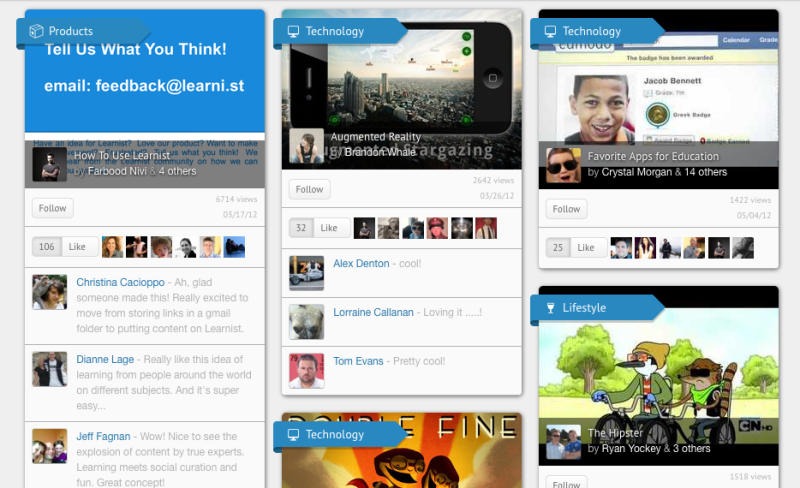
"content": "\u003ch5>\u003ca href=\"http://ww2.kqed.org/mindshift/2012/06/how-educators-are-using-learnist/screen-shot-2012-06-06-at-11-38-26-am/\" rel=\"attachment wp-att-21907\">\u003cimg class=\"alignleft size-medium wp-image-21907\" title=\"Screen Shot 2012-06-06 at 11.38.26 AM\" src=\"http://ww2.kqed.org/mindshift/wp-content/uploads/sites/23/2012/06/Screen-Shot-2012-06-06-at-11.38.26-AM-300x183.png\" alt=\"\" width=\"300\" height=\"183\">\u003c/a>By Jennifer Roland\u003c/h5>\n\u003cp>In the weeks since Learnist launched, educators have been finding ways to put it to use.\u003c/p>\n\u003cp>\u003ca href=\"http://www.learni.st/\">Learnist\u003c/a>, as many have already pointed out, works much like \u003ca href=\"http://www.pinterest.com\">Pinterest\u003c/a> -- a way to catalog online resources on a topic and share them with the user's social network. And like Pinterest, it looks like a digital bulletin board with pictures and messages, and connects with Facebook accounts. In fact, the site's \"learning boards\" look quite a bit like Facebook’s timeline feature, and Facebook membership is required to use Learnist at this point.\u003c/p>\n\u003cp>In its current closed beta form, Learnist, launched by Grockit, is still very much in its infancy, but some curious teachers have already jumped on the wagon. Time will tell whether educators will stick with Pinterest, or migrate to Learnist because of its association with \u003ca href=\"http://grockit.com\">Grockit\u003c/a>, which already has a large and loyal following as a social learning tool.\u003c/p>\n\u003cp>College physics instructor Leilah McCarthy created \u003ca href=\"http://learni.st/users/leilah.mccarthy\">collections on subjects like electromagnetism, mechanics, and waves\u003c/a>. High school English teacher Amy Gallagher Critchett posted \u003ca href=\"http://learni.st/users/421\">lessons on grammar and writing\u003c/a>. Also under the \"Education\" category are topics like Mythology, Analyzing Literature, Applying the Pythagorean Theorem, The Great Gatsby, and Common Core Math Standards.\u003c/p>\n\u003cp>Educators can also find some professional development, including information about \u003ca href=\"http://learni.st/users/195/boards/885-flipped-classroom\">flipped classrooms\u003c/a>, \u003ca href=\"http://learni.st/users/wezie.morgan/boards/1554-technology-in-the-classroom\">technology integration\u003c/a>, all about the \u003ca href=\"http://learni.st/users/36/boards/224-d-i-y-education\">collision between DIY and education\u003c/a>, and a \u003ca href=\"http://learni.st/users/MikeFisher/boards/1731-2012-summer-camp-webinars-online-pd\">professional development summer camp\u003c/a>.\u003c/p>\n\u003cp>[ad fullwidth]\u003c/p>\n\u003cp>Students can also use Learnist to share resources for group projects, to prepare notes to study for tests and write papers. The Facebook integration ensures that they can keep each other \u003c!--more-->up-to-date when they make changes to shared study boards.\u003c/p>\n\u003cp>But \u003ca href=\"http://learni.st/?category=10\">education\u003c/a> is just one of about 20 topics on Learnist. You'll also find topics such as Do-it-yourself instructions, like \u003ca href=\"http://learni.st/users/aaron.burcell/boards/236-kitchen-hacks\">Aaron Burcell's Kitchen Hacks\u003c/a> and \u003ca href=\"http://learni.st/learnings/958-how-to-make-milk-foam-without-a-frother-or-a-machine\">How to Make Milk Foam\u003c/a>; technology how-tos like \u003ca href=\"http://learni.st/users/crystaldcrowder/boards/1346-software-tutorials\">Software Tutorials \u003c/a>and \u003ca href=\"http://learni.st/users/karenmasullo/boards/1246-social-media-risk-management\">Social Media Risk Management\u003c/a>; and lifestyle topics like \u003ca href=\"http://learni.st/users/5/boards/414-benefits-of-cycling\">Benefits of Cycling\u003c/a> are all intermingled with topics related to formal education, such as \u003ca href=\"http://learni.st/users/wgordon3/boards/1260-the-classroom-of-the-future\">Bill Gordon's Classroom of the Future.\u003c/a>\u003c/p>\n\u003cp>Companies have also found Learnist as a way to market their products, as with the \u003ca href=\"http://learni.st/users/crystal.schmelzer/boards/900-favorite-apps-for-education\">Favorite Apps for Education\u003c/a> tag, which is populated with boards from private companies that want to market their wares.\u003c/p>\n\u003cp>The creators of \u003ca href=\"http://learni.st/users/farbood/boards/159-how-to-use-learnist\">Learnist\u003c/a> put together some resources to help users make useful boards.\u003c/p>\n\u003cp>\u003c/p>\n\u003cp> \u003c/p>\n\n",
"disqusIdentifier": "21898 http://blogs.kqed.org/mindshift/?p=21898",
"disqusUrl": "https://ww2.kqed.org/mindshift/2012/06/06/how-educators-are-using-learnist/",
"stats": {
"hasVideo": false,
"hasChartOrMap": false,
"hasAudio": false,
"hasPolis": false,
"wordCount": 395,
"hasGoogleForm": false,
"hasGallery": false,
"hasHearkenModule": false,
"iframeSrcs": [],
"paragraphCount": 11
},
"modified": 1339090368,
"excerpt": null,
"headData": {
"twImgId": "",
"twTitle": "",
"ogTitle": "",
"ogImgId": "",
"twDescription": "",
"description": "By Jennifer Roland In the weeks since Learnist launched, educators have been finding ways to put it to use. Learnist, as many have already pointed out, works much like Pinterest -- a way to catalog online resources on a topic and share them with the user's social network. And like Pinterest, it looks like a",
"title": "How Educators Are Using Learnist | KQED",
"ogDescription": "",
"schema": {
"@context": "https://schema.org",
"@type": "Article",
"headline": "How Educators Are Using Learnist",
"datePublished": "2012-06-06T11:41:20-07:00",
"dateModified": "2012-06-07T10:32:48-07:00",
"image": "https://cdn.kqed.org/wp-content/uploads/2020/02/KQED-OG-Image@1x.png"
}
},
"guestAuthors": [],
"slug": "how-educators-are-using-learnist",
"status": "publish",
"path": "/mindshift/21898/how-educators-are-using-learnist",
"audioTrackLength": null,
"parsedContent": [
{
"type": "contentString",
"content": "\u003cdiv class=\"post-body\">\u003cp>\u003ch5>\u003ca href=\"http://ww2.kqed.org/mindshift/2012/06/how-educators-are-using-learnist/screen-shot-2012-06-06-at-11-38-26-am/\" rel=\"attachment wp-att-21907\">\u003cimg class=\"alignleft size-medium wp-image-21907\" title=\"Screen Shot 2012-06-06 at 11.38.26 AM\" src=\"http://ww2.kqed.org/mindshift/wp-content/uploads/sites/23/2012/06/Screen-Shot-2012-06-06-at-11.38.26-AM-300x183.png\" alt=\"\" width=\"300\" height=\"183\">\u003c/a>By Jennifer Roland\u003c/h5>\n\u003cp>In the weeks since Learnist launched, educators have been finding ways to put it to use.\u003c/p>\n\u003cp>\u003ca href=\"http://www.learni.st/\">Learnist\u003c/a>, as many have already pointed out, works much like \u003ca href=\"http://www.pinterest.com\">Pinterest\u003c/a> -- a way to catalog online resources on a topic and share them with the user's social network. And like Pinterest, it looks like a digital bulletin board with pictures and messages, and connects with Facebook accounts. In fact, the site's \"learning boards\" look quite a bit like Facebook’s timeline feature, and Facebook membership is required to use Learnist at this point.\u003c/p>\n\u003cp>In its current closed beta form, Learnist, launched by Grockit, is still very much in its infancy, but some curious teachers have already jumped on the wagon. Time will tell whether educators will stick with Pinterest, or migrate to Learnist because of its association with \u003ca href=\"http://grockit.com\">Grockit\u003c/a>, which already has a large and loyal following as a social learning tool.\u003c/p>\n\u003cp>College physics instructor Leilah McCarthy created \u003ca href=\"http://learni.st/users/leilah.mccarthy\">collections on subjects like electromagnetism, mechanics, and waves\u003c/a>. High school English teacher Amy Gallagher Critchett posted \u003ca href=\"http://learni.st/users/421\">lessons on grammar and writing\u003c/a>. Also under the \"Education\" category are topics like Mythology, Analyzing Literature, Applying the Pythagorean Theorem, The Great Gatsby, and Common Core Math Standards.\u003c/p>\n\u003cp>Educators can also find some professional development, including information about \u003ca href=\"http://learni.st/users/195/boards/885-flipped-classroom\">flipped classrooms\u003c/a>, \u003ca href=\"http://learni.st/users/wezie.morgan/boards/1554-technology-in-the-classroom\">technology integration\u003c/a>, all about the \u003ca href=\"http://learni.st/users/36/boards/224-d-i-y-education\">collision between DIY and education\u003c/a>, and a \u003ca href=\"http://learni.st/users/MikeFisher/boards/1731-2012-summer-camp-webinars-online-pd\">professional development summer camp\u003c/a>.\u003c/p>\n\u003cp>\u003c/p>\u003c/div>",
"attributes": {
"named": {},
"numeric": []
}
},
{
"type": "component",
"content": "",
"name": "ad",
"attributes": {
"named": {
"label": "fullwidth"
},
"numeric": [
"fullwidth"
]
}
},
{
"type": "contentString",
"content": "\u003cdiv class=\"post-body\">\u003cp>\u003c/p>\n\u003cp>Students can also use Learnist to share resources for group projects, to prepare notes to study for tests and write papers. The Facebook integration ensures that they can keep each other \u003c!--more-->up-to-date when they make changes to shared study boards.\u003c/p>\n\u003cp>But \u003ca href=\"http://learni.st/?category=10\">education\u003c/a> is just one of about 20 topics on Learnist. You'll also find topics such as Do-it-yourself instructions, like \u003ca href=\"http://learni.st/users/aaron.burcell/boards/236-kitchen-hacks\">Aaron Burcell's Kitchen Hacks\u003c/a> and \u003ca href=\"http://learni.st/learnings/958-how-to-make-milk-foam-without-a-frother-or-a-machine\">How to Make Milk Foam\u003c/a>; technology how-tos like \u003ca href=\"http://learni.st/users/crystaldcrowder/boards/1346-software-tutorials\">Software Tutorials \u003c/a>and \u003ca href=\"http://learni.st/users/karenmasullo/boards/1246-social-media-risk-management\">Social Media Risk Management\u003c/a>; and lifestyle topics like \u003ca href=\"http://learni.st/users/5/boards/414-benefits-of-cycling\">Benefits of Cycling\u003c/a> are all intermingled with topics related to formal education, such as \u003ca href=\"http://learni.st/users/wgordon3/boards/1260-the-classroom-of-the-future\">Bill Gordon's Classroom of the Future.\u003c/a>\u003c/p>\n\u003cp>Companies have also found Learnist as a way to market their products, as with the \u003ca href=\"http://learni.st/users/crystal.schmelzer/boards/900-favorite-apps-for-education\">Favorite Apps for Education\u003c/a> tag, which is populated with boards from private companies that want to market their wares.\u003c/p>\n\u003cp>The creators of \u003ca href=\"http://learni.st/users/farbood/boards/159-how-to-use-learnist\">Learnist\u003c/a> put together some resources to help users make useful boards.\u003c/p>\n\u003cp>\u003c/p>\n\u003cp> \u003c/p>\n\n\u003c/div>\u003c/p>",
"attributes": {
"named": {},
"numeric": []
}
}
],
"link": "/mindshift/21898/how-educators-are-using-learnist",
"authors": [
"4354"
],
"categories": [
"mindshift_195"
],
"tags": [
"mindshift_31",
"mindshift_712",
"mindshift_884",
"mindshift_833"
],
"featImg": "mindshift_21907",
"label": "mindshift"
},
"mindshift_21777": {
"type": "posts",
"id": "mindshift_21777",
"meta": {
"index": "posts_1716263798",
"site": "mindshift",
"id": "21777",
"score": null,
"sort": [
1338488924000
]
},
"parent": 0,
"labelTerm": {
"site": "mindshift"
},
"blocks": [],
"publishDate": 1338488924,
"format": "aside",
"disqusTitle": "How Open Education is Changing the Texture of Content",
"title": "How Open Education is Changing the Texture of Content",
"headTitle": "MindShift | KQED News",
"content": "\u003cfigure id=\"attachment_21792\" class=\"wp-caption alignright\" style=\"max-width: 571px\">\u003ca href=\"http://ww2.kqed.org/mindshift/2012/05/how-open-education-is-changing-the-texture-of-content/134825821-2/\" rel=\"attachment wp-att-21792\">\u003cimg class=\"size-full wp-image-21792\" title=\"134825821\" src=\"http://ww2.kqed.org/mindshift/wp-content/uploads/sites/23/2012/05/1348258211.jpg\" alt=\"\" width=\"571\" height=\"374\" srcset=\"https://ww2.kqed.org/app/uploads/sites/23/2012/05/1348258211.jpg 571w, https://ww2.kqed.org/app/uploads/sites/23/2012/05/1348258211-400x262.jpg 400w, https://ww2.kqed.org/app/uploads/sites/23/2012/05/1348258211-320x210.jpg 320w\" sizes=\"(max-width: 571px) 100vw, 571px\">\u003c/a>\u003cfigcaption class=\"wp-caption-text\"> \u003c/figcaption>\u003c/figure>\n\u003ch5>By Frank Catalano\u003c/h5>\n\u003cp class=\"dropcap-serif\">Schools are moving from creamy to chunky -- but not in relation to cafeteria peanut butter. The change in texture is happening with content.\u003c/p>\n\u003cp>Instruction that was structured linearly, captured in books that were all-inclusive monoliths with a predetermined progression for a uniform, somewhat “creamy” consistency, is shifting to newer forms of instructional content that are more “chunky,” beginning as a scattered landscape of digital pieces that are then assembled to support full courses\u003c/p>\n\u003cp>The trend, steady and apparently inexorable, is inspired by higher education, driven by financial pressures, propelled by foundations and the federal government, and enabled by technology.\u003c/p>\n\u003cp>Digital course materials are, of course, nothing new. One of the highest-profile such initiatives, MIT’s OpenCourseWare, is a \u003ca href=\"http://ocw.mit.edu/about/our-history/\">decade old\u003c/a>. And digital textbooks, which have morphed from crude PDF representations of paper books to interactive \u003ca href=\"http://ww2.kqed.org/mindshift/2012/01/did-apple-just-reinvent-the-textbook/\">iBooks\u003c/a>, have also been available for years.\u003c/p>\n\u003caside class=\"pullquote alignleft\">\n\u003cp>Pluto’s planetary status in flux? Swap out chunks without wiping out the lesson or course.\u003c/p>\n\u003c/aside>\n\u003cp>Now, digital curriculum -- in both college and K-12 -- seems to be shifting from attempts to break apart comprehensive digital textbooks to meet classroom needs, to building up lessons and courseware from individual instructional chunks. And that has the potential to make the traditional definition of “textbook” somewhat quaint.\u003c/p>\n\u003cp>[ad fullwidth]\u003c/p>\n\u003cp>Encouraging this acceleration of digital chunky content, in large part, is the Open Educational \u003c!--more-->Resources (OER) movement.\u003c/p>\n\u003cp>\u003ca href=\"http://ww2.kqed.org/mindshift/2012/05/how-open-education-is-changing-the-texture-of-content/600px-us-deptofeducation-seal-svg/\" rel=\"attachment wp-att-21793\">\u003cimg class=\"alignright size-thumbnail wp-image-21793\" title=\"600px-US-DeptOfEducation-Seal.svg\" src=\"http://ww2.kqed.org/mindshift/wp-content/uploads/sites/23/2012/05/600px-US-DeptOfEducation-Seal.svg_-140x140.png\" alt=\"\" width=\"140\" height=\"140\">\u003c/a>OER, though \u003ca href=\"http://en.wikipedia.org/wiki/Open_educational_resources\">definitions\u003c/a> vary, is at its heart digital instructional content that's designed to be mixed, modified and shared. In other words, a teacher can pick and choose learning elements he or she needs for a lesson from a variety of sources, make changes, use those lessons in class, and theoretically then distribute either the individual pieces or the completed combination to other educators for their use.\u003c/p>\n\u003cp>It’s like creating your own music playlist by choosing tracks from various artists and sequencing them any way you want.\u003c/p>\n\u003cp>Overall, four core factors have come together to fuel the rise of digital content, including OER pieces, across the educational landscape, from kindergarten to college:\u003c/p>\n\u003cp>\u003cstrong>PRICE\u003c/strong>. Ask any educator the appeal of OER you'll likely to hear, “It’s free content.” While that may not always be true (there is OER available to institutions by subscription through the delightfully named \u003ca href=\"http://hippocampus.org/\">HippoCampus\u003c/a>, for example), and not all digital content is OER (just ask any education industry company), perceptions do matter. And the perception that a lot of quality content is available for only the cost of labor has led a lot of school districts and teachers to try it during difficult budget times.\u003c/p>\n\u003cp>\u003cstrong>AVAILABILITY\u003c/strong>. Spurred by entrepreneurs and fueled by funding from, among others, the Gates and Hewlett Foundations (as well as the continued efforts of long-time educational publishers and ed-tech companies), there's simply a lot more digital content on the web than there used to be, for example \u003ca href=\"http://www.khanacademy.org/\">Khan Academy\u003c/a> videos and materials from \u003ca href=\"http://www.nasa.gov/audience/foreducators/index.html\">NASA\u003c/a>. But significantly more has been developed by existing educational powerhouses, start-ups and educators themselves. Anything digital, and granular enough, works.\u003c/p>\n\u003cp>\u003cstrong>DISCOVERABILITY\u003c/strong>. A big challenge has simply been finding what online materials exist on the web beyond known repositories such as \u003ca href=\"http://www.curriki.org/\">Curriki\u003c/a>. Two very prominent, and public, initiatives are tackling this.\u003c/p>\n\u003cp>\u003ca href=\"http://ww2.kqed.org/mindshift/2012/05/how-open-education-is-changing-the-texture-of-content/learningregistry1/\" rel=\"attachment wp-att-21794\">\u003cimg class=\"alignleft size-medium wp-image-21794\" title=\"LearningRegistry1\" src=\"http://ww2.kqed.org/mindshift/wp-content/uploads/sites/23/2012/05/LearningRegistry1-300x221.jpg\" alt=\"\" width=\"300\" height=\"221\">\u003c/a>Last November, the U.S. Departments of Education and Defense \u003ca href=\"http://www.educause.edu/blog/jcummings/FederalLearningRegistryforDigi/241549\">launched\u003c/a> the beta of the \u003ca href=\"http://www.learningregistry.org/\">Learning Registry\u003c/a>, which is basically a directory of kindergarten-through-adult digital education resources from a wide variety of government, state, district and private sources. What makes the Registry unique is that any provider can register content (the National Archives, Smithsonian and PBS were among the early participants), and any educator can quickly find lessons plans and content specific to his or her unique needs based on subject, grade level or other criteria. And the Learning Registry doesn’t just reside at one address on the web; it’s more of a embeddable, distributed index that can be \u003ca href=\"http://demolearningregistry.sri.com/browse/index.html?search=\">browsed\u003c/a> from many websites.\u003c/p>\n\u003cp>A second, related effort is the \u003ca href=\"http://lrmi.net/\">Learning Resource Metadata Initiative\u003c/a>. Steered by the Association of Educational Publishers and Creative Commons, LRMI is a fast-tracked project, launched just last June, to make it easier to find educational resources via major search engines such as Google, Bing, and Yahoo. At its core, this is about consistently tagging digital educational content – no matter who creates it – with metadata that search engines understand.\u003c/p>\n\u003cp>Taken together, the hope is that LRMI and the Learning Registry will go a long way toward solving the problem of highlighting appropriate educational chunks.\u003c/p>\n\u003cp>\u003cstrong>\u003ca href=\"http://ww2.kqed.org/mindshift/2012/05/how-open-education-is-changing-the-texture-of-content/cc-large/\" rel=\"attachment wp-att-21795\">\u003cimg class=\"alignright size-thumbnail wp-image-21795\" title=\"cc.large\" src=\"http://ww2.kqed.org/mindshift/wp-content/uploads/sites/23/2012/05/cc.large_-140x140.png\" alt=\"\" width=\"140\" height=\"140\">\u003c/a>FLEXIBILITY\u003c/strong>. A large part of the appeal of digital chunked content is its flexibility. Pluto’s planetary status in flux? Swap out chunks without wiping out the lesson or course (but keep the old one, just in case the astronomical \u003ca href=\"http://en.wikipedia.org/wiki/File:Pluto_Protest_and_Counter_Protest.jpg\">protests\u003c/a> are successful). And flexibility goes beyond delivery via pixel.\u003c/p>\n\u003cp>Utah, for example, has the Utah Open Textbook high school science curriculum. Created from OER content, the course textbooks are then printed and distributed. But the cost is $5.35 per book, versus about $80 for a traditional science textbook, prompting the project’s \u003ca href=\"https://twitter.com/#%21/opencontent\">David Wiley\u003c/a> to \u003ca href=\"http://www.slideshare.net/opencontent/the-5-texbook\">note\u003c/a> at this year’s SXSWedu conference that these become books kids mark up and keep, rather than having to turn in at the end of the year.\u003c/p>\n\u003cp>In higher education, \u003ca href=\"http://academicpub.sharedbook.com/academicpub/\">AcademicPub\u003c/a> allows digital textbooks to be created with a mix of copyrighted (paid) and open (free) content. The automated process leads to a custom electronic or paper book – essentially, a digital course pack. And there are several other examples.\u003c/p>\n\u003cp>But the increased use of chunked digital content, especially OER, is not without pitfalls. The overused phrase, “free like a puppy, not free like a beer,” applies to any effort that replaces publisher cost with teacher labor to find, assemble and maintain content (even if, once assembled ,content is shared). And if the materials aren’t printed, every student has to have access to a hardware device that properly displays the content.\u003c/p>\n\u003cp>[ad floatright]\u003c/p>\n\u003cp>Yet flexible, “free,” and findable may trump the downsides as digital curriculum adds more do-it-yourself options alongside its pre-built counterparts – as long as no student or teacher trips over the chunks.\u003c/p>\n\u003ch5>\u003cem>\u003cstrong>Frank Catalano\u003c/strong>\u003c/em>\u003cem> is a consultant, author and veteran analyst of digital education and consumer technologies. He tweets \u003ca href=\"http://twitter.com/frankcatalano\">\u003cstrong>@FrankCatalano\u003c/strong>\u003c/a>, consults as \u003ca href=\"http://intrinsicstrategy.com/\">\u003cstrong>Intrinsic Strategy\u003c/strong>\u003c/a>, and writes the regular Practical Nerd column for\u003c/em>\u003cem> \u003c/em>\u003cem>\u003ca href=\"http://practicalnerd.com/\">\u003cstrong>GeekWire\u003c/strong>\u003c/a>.\u003c/em>\u003c/h5>\n\n",
"disqusIdentifier": "21777 http://blogs.kqed.org/mindshift/?p=21777",
"disqusUrl": "https://ww2.kqed.org/mindshift/2012/05/31/how-open-education-is-changing-the-texture-of-content/",
"stats": {
"hasVideo": false,
"hasChartOrMap": false,
"hasAudio": false,
"hasPolis": false,
"wordCount": 1089,
"hasGoogleForm": false,
"hasGallery": false,
"hasHearkenModule": false,
"iframeSrcs": [],
"paragraphCount": 22
},
"modified": 1346965668,
"excerpt": null,
"headData": {
"twImgId": "",
"twTitle": "",
"ogTitle": "",
"ogImgId": "",
"twDescription": "",
"description": "By Frank Catalano Schools are moving from creamy to chunky -- but not in relation to cafeteria peanut butter. The change in texture is happening with content. Instruction that was structured linearly, captured in books that were all-inclusive monoliths with a predetermined progression for a uniform, somewhat “creamy” consistency, is shifting to newer forms of",
"title": "How Open Education is Changing the Texture of Content | KQED",
"ogDescription": "",
"schema": {
"@context": "https://schema.org",
"@type": "Article",
"headline": "How Open Education is Changing the Texture of Content",
"datePublished": "2012-05-31T11:28:44-07:00",
"dateModified": "2012-09-06T14:07:48-07:00",
"image": "https://cdn.kqed.org/wp-content/uploads/2020/02/KQED-OG-Image@1x.png"
}
},
"guestAuthors": [],
"slug": "how-open-education-is-changing-the-texture-of-content",
"status": "publish",
"path": "/mindshift/21777/how-open-education-is-changing-the-texture-of-content",
"audioTrackLength": null,
"parsedContent": [
{
"type": "contentString",
"content": "\u003cdiv class=\"post-body\">\u003cp>\u003cfigure id=\"attachment_21792\" class=\"wp-caption alignright\" style=\"max-width: 571px\">\u003ca href=\"http://ww2.kqed.org/mindshift/2012/05/how-open-education-is-changing-the-texture-of-content/134825821-2/\" rel=\"attachment wp-att-21792\">\u003cimg class=\"size-full wp-image-21792\" title=\"134825821\" src=\"http://ww2.kqed.org/mindshift/wp-content/uploads/sites/23/2012/05/1348258211.jpg\" alt=\"\" width=\"571\" height=\"374\" srcset=\"https://ww2.kqed.org/app/uploads/sites/23/2012/05/1348258211.jpg 571w, https://ww2.kqed.org/app/uploads/sites/23/2012/05/1348258211-400x262.jpg 400w, https://ww2.kqed.org/app/uploads/sites/23/2012/05/1348258211-320x210.jpg 320w\" sizes=\"(max-width: 571px) 100vw, 571px\">\u003c/a>\u003cfigcaption class=\"wp-caption-text\"> \u003c/figcaption>\u003c/figure>\n\u003ch5>By Frank Catalano\u003c/h5>\n\u003cp class=\"dropcap-serif\">Schools are moving from creamy to chunky -- but not in relation to cafeteria peanut butter. The change in texture is happening with content.\u003c/p>\n\u003cp>Instruction that was structured linearly, captured in books that were all-inclusive monoliths with a predetermined progression for a uniform, somewhat “creamy” consistency, is shifting to newer forms of instructional content that are more “chunky,” beginning as a scattered landscape of digital pieces that are then assembled to support full courses\u003c/p>\n\u003cp>The trend, steady and apparently inexorable, is inspired by higher education, driven by financial pressures, propelled by foundations and the federal government, and enabled by technology.\u003c/p>\n\u003cp>Digital course materials are, of course, nothing new. One of the highest-profile such initiatives, MIT’s OpenCourseWare, is a \u003ca href=\"http://ocw.mit.edu/about/our-history/\">decade old\u003c/a>. And digital textbooks, which have morphed from crude PDF representations of paper books to interactive \u003ca href=\"http://ww2.kqed.org/mindshift/2012/01/did-apple-just-reinvent-the-textbook/\">iBooks\u003c/a>, have also been available for years.\u003c/p>\n\u003caside class=\"pullquote alignleft\">\n\u003cp>Pluto’s planetary status in flux? Swap out chunks without wiping out the lesson or course.\u003c/p>\n\u003c/aside>\n\u003cp>Now, digital curriculum -- in both college and K-12 -- seems to be shifting from attempts to break apart comprehensive digital textbooks to meet classroom needs, to building up lessons and courseware from individual instructional chunks. And that has the potential to make the traditional definition of “textbook” somewhat quaint.\u003c/p>\n\u003cp>\u003c/p>\u003c/div>",
"attributes": {
"named": {},
"numeric": []
}
},
{
"type": "component",
"content": "",
"name": "ad",
"attributes": {
"named": {
"label": "fullwidth"
},
"numeric": [
"fullwidth"
]
}
},
{
"type": "contentString",
"content": "\u003cdiv class=\"post-body\">\u003cp>\u003c/p>\n\u003cp>Encouraging this acceleration of digital chunky content, in large part, is the Open Educational \u003c!--more-->Resources (OER) movement.\u003c/p>\n\u003cp>\u003ca href=\"http://ww2.kqed.org/mindshift/2012/05/how-open-education-is-changing-the-texture-of-content/600px-us-deptofeducation-seal-svg/\" rel=\"attachment wp-att-21793\">\u003cimg class=\"alignright size-thumbnail wp-image-21793\" title=\"600px-US-DeptOfEducation-Seal.svg\" src=\"http://ww2.kqed.org/mindshift/wp-content/uploads/sites/23/2012/05/600px-US-DeptOfEducation-Seal.svg_-140x140.png\" alt=\"\" width=\"140\" height=\"140\">\u003c/a>OER, though \u003ca href=\"http://en.wikipedia.org/wiki/Open_educational_resources\">definitions\u003c/a> vary, is at its heart digital instructional content that's designed to be mixed, modified and shared. In other words, a teacher can pick and choose learning elements he or she needs for a lesson from a variety of sources, make changes, use those lessons in class, and theoretically then distribute either the individual pieces or the completed combination to other educators for their use.\u003c/p>\n\u003cp>It’s like creating your own music playlist by choosing tracks from various artists and sequencing them any way you want.\u003c/p>\n\u003cp>Overall, four core factors have come together to fuel the rise of digital content, including OER pieces, across the educational landscape, from kindergarten to college:\u003c/p>\n\u003cp>\u003cstrong>PRICE\u003c/strong>. Ask any educator the appeal of OER you'll likely to hear, “It’s free content.” While that may not always be true (there is OER available to institutions by subscription through the delightfully named \u003ca href=\"http://hippocampus.org/\">HippoCampus\u003c/a>, for example), and not all digital content is OER (just ask any education industry company), perceptions do matter. And the perception that a lot of quality content is available for only the cost of labor has led a lot of school districts and teachers to try it during difficult budget times.\u003c/p>\n\u003cp>\u003cstrong>AVAILABILITY\u003c/strong>. Spurred by entrepreneurs and fueled by funding from, among others, the Gates and Hewlett Foundations (as well as the continued efforts of long-time educational publishers and ed-tech companies), there's simply a lot more digital content on the web than there used to be, for example \u003ca href=\"http://www.khanacademy.org/\">Khan Academy\u003c/a> videos and materials from \u003ca href=\"http://www.nasa.gov/audience/foreducators/index.html\">NASA\u003c/a>. But significantly more has been developed by existing educational powerhouses, start-ups and educators themselves. Anything digital, and granular enough, works.\u003c/p>\n\u003cp>\u003cstrong>DISCOVERABILITY\u003c/strong>. A big challenge has simply been finding what online materials exist on the web beyond known repositories such as \u003ca href=\"http://www.curriki.org/\">Curriki\u003c/a>. Two very prominent, and public, initiatives are tackling this.\u003c/p>\n\u003cp>\u003ca href=\"http://ww2.kqed.org/mindshift/2012/05/how-open-education-is-changing-the-texture-of-content/learningregistry1/\" rel=\"attachment wp-att-21794\">\u003cimg class=\"alignleft size-medium wp-image-21794\" title=\"LearningRegistry1\" src=\"http://ww2.kqed.org/mindshift/wp-content/uploads/sites/23/2012/05/LearningRegistry1-300x221.jpg\" alt=\"\" width=\"300\" height=\"221\">\u003c/a>Last November, the U.S. Departments of Education and Defense \u003ca href=\"http://www.educause.edu/blog/jcummings/FederalLearningRegistryforDigi/241549\">launched\u003c/a> the beta of the \u003ca href=\"http://www.learningregistry.org/\">Learning Registry\u003c/a>, which is basically a directory of kindergarten-through-adult digital education resources from a wide variety of government, state, district and private sources. What makes the Registry unique is that any provider can register content (the National Archives, Smithsonian and PBS were among the early participants), and any educator can quickly find lessons plans and content specific to his or her unique needs based on subject, grade level or other criteria. And the Learning Registry doesn’t just reside at one address on the web; it’s more of a embeddable, distributed index that can be \u003ca href=\"http://demolearningregistry.sri.com/browse/index.html?search=\">browsed\u003c/a> from many websites.\u003c/p>\n\u003cp>A second, related effort is the \u003ca href=\"http://lrmi.net/\">Learning Resource Metadata Initiative\u003c/a>. Steered by the Association of Educational Publishers and Creative Commons, LRMI is a fast-tracked project, launched just last June, to make it easier to find educational resources via major search engines such as Google, Bing, and Yahoo. At its core, this is about consistently tagging digital educational content – no matter who creates it – with metadata that search engines understand.\u003c/p>\n\u003cp>Taken together, the hope is that LRMI and the Learning Registry will go a long way toward solving the problem of highlighting appropriate educational chunks.\u003c/p>\n\u003cp>\u003cstrong>\u003ca href=\"http://ww2.kqed.org/mindshift/2012/05/how-open-education-is-changing-the-texture-of-content/cc-large/\" rel=\"attachment wp-att-21795\">\u003cimg class=\"alignright size-thumbnail wp-image-21795\" title=\"cc.large\" src=\"http://ww2.kqed.org/mindshift/wp-content/uploads/sites/23/2012/05/cc.large_-140x140.png\" alt=\"\" width=\"140\" height=\"140\">\u003c/a>FLEXIBILITY\u003c/strong>. A large part of the appeal of digital chunked content is its flexibility. Pluto’s planetary status in flux? Swap out chunks without wiping out the lesson or course (but keep the old one, just in case the astronomical \u003ca href=\"http://en.wikipedia.org/wiki/File:Pluto_Protest_and_Counter_Protest.jpg\">protests\u003c/a> are successful). And flexibility goes beyond delivery via pixel.\u003c/p>\n\u003cp>Utah, for example, has the Utah Open Textbook high school science curriculum. Created from OER content, the course textbooks are then printed and distributed. But the cost is $5.35 per book, versus about $80 for a traditional science textbook, prompting the project’s \u003ca href=\"https://twitter.com/#%21/opencontent\">David Wiley\u003c/a> to \u003ca href=\"http://www.slideshare.net/opencontent/the-5-texbook\">note\u003c/a> at this year’s SXSWedu conference that these become books kids mark up and keep, rather than having to turn in at the end of the year.\u003c/p>\n\u003cp>In higher education, \u003ca href=\"http://academicpub.sharedbook.com/academicpub/\">AcademicPub\u003c/a> allows digital textbooks to be created with a mix of copyrighted (paid) and open (free) content. The automated process leads to a custom electronic or paper book – essentially, a digital course pack. And there are several other examples.\u003c/p>\n\u003cp>But the increased use of chunked digital content, especially OER, is not without pitfalls. The overused phrase, “free like a puppy, not free like a beer,” applies to any effort that replaces publisher cost with teacher labor to find, assemble and maintain content (even if, once assembled ,content is shared). And if the materials aren’t printed, every student has to have access to a hardware device that properly displays the content.\u003c/p>\n\u003cp>\u003c/p>\u003c/div>",
"attributes": {
"named": {},
"numeric": []
}
},
{
"type": "component",
"content": "",
"name": "ad",
"attributes": {
"named": {
"label": "floatright"
},
"numeric": [
"floatright"
]
}
},
{
"type": "contentString",
"content": "\u003cdiv class=\"post-body\">\u003cp>\u003c/p>\n\u003cp>Yet flexible, “free,” and findable may trump the downsides as digital curriculum adds more do-it-yourself options alongside its pre-built counterparts – as long as no student or teacher trips over the chunks.\u003c/p>\n\u003ch5>\u003cem>\u003cstrong>Frank Catalano\u003c/strong>\u003c/em>\u003cem> is a consultant, author and veteran analyst of digital education and consumer technologies. He tweets \u003ca href=\"http://twitter.com/frankcatalano\">\u003cstrong>@FrankCatalano\u003c/strong>\u003c/a>, consults as \u003ca href=\"http://intrinsicstrategy.com/\">\u003cstrong>Intrinsic Strategy\u003c/strong>\u003c/a>, and writes the regular Practical Nerd column for\u003c/em>\u003cem> \u003c/em>\u003cem>\u003ca href=\"http://practicalnerd.com/\">\u003cstrong>GeekWire\u003c/strong>\u003c/a>.\u003c/em>\u003c/h5>\n\n\u003c/div>\u003c/p>",
"attributes": {
"named": {},
"numeric": []
}
}
],
"link": "/mindshift/21777/how-open-education-is-changing-the-texture-of-content",
"authors": [
"4354"
],
"categories": [
"mindshift_195",
"mindshift_193"
],
"tags": [
"mindshift_880",
"mindshift_881",
"mindshift_159",
"mindshift_76"
],
"featImg": "mindshift_21792",
"label": "mindshift"
},
"mindshift_21711": {
"type": "posts",
"id": "mindshift_21711",
"meta": {
"index": "posts_1716263798",
"site": "mindshift",
"id": "21711",
"score": null,
"sort": [
1338397886000
]
},
"parent": 0,
"labelTerm": {
"site": "mindshift"
},
"blocks": [],
"publishDate": 1338397886,
"format": "aside",
"disqusTitle": "How to Identify Mysterious Images Online",
"title": "How to Identify Mysterious Images Online",
"headTitle": "MindShift | KQED News",
"content": "\u003cfigure id=\"attachment_21741\" class=\"wp-caption left\" style=\"max-width: 300px\">\u003ca href=\"http://ww2.kqed.org/mindshift/2012/05/how-to-identify-mysterious-images-online/test-9-3/\" rel=\"attachment wp-att-21741\">\u003cimg class=\"size-medium wp-image-21741\" title=\"test 9\" src=\"http://ww2.kqed.org/mindshift/wp-content/uploads/sites/23/2012/05/test-92-300x161.png\" alt=\"Image that a student finds online\" width=\"300\" height=\"161\">\u003c/a>\u003cfigcaption class=\"wp-caption-text\"> \u003c/figcaption>\u003c/figure>\n\u003cp>Can't figure out the source of an image you found online? There's an easy trick you might not know about -- and it's an essential tool for citing sources.\u003c/p>\n\u003cp>Students who find images they want to use in projects need to follow the appropriate rules of citation: state the title and the original source.\u003c/p>\n\u003cp>But with so much misinformation and mis-attribution online, students might either change the research topic to avoid the problem altogether or simply cite the source poorly.\u003c/p>\n\u003cp>Take, for example, a student wanting to use this image (above) labeled as a cartoon by Rube Goldberg. Since he wants to use it in a project, he must find the original source of the image, but when he tries looking through Rube Goldberg’s \u003ca href=\"http://www.rubegoldberg.com/?page=home\">illustrations of absurd, overly-complex machines\u003c/a>, the artistic style looks different. That was a dead end.\u003c/p>\n\u003cp>But there's a Google tool that allows him to use an image as a search term.\u003c/p>\n\u003cp>[ad fullwidth]\u003c/p>\n\u003cp>Within just a few seconds, he can discover another artist, named W. Heath Robinson, who also designed humorous machines. With just a few more clicks, he will identify “Testing Golf Drivers,” \u003c!--more-->noted as coming from Robinson’s book, \u003cem>Humors of Golf\u003c/em>, in 1923. He can then search to confirm the citation.\u003c/p>\n\u003cp>From a complete mystery to a citable entity in the blink of an eye.\u003c/p>\n\u003cp>\u003ca href=\"http://ww2.kqed.org/mindshift/2012/05/how-to-identify-mysterious-images-online/search-by-image-results-heath-robinson-3/\" rel=\"attachment wp-att-21753\">\u003cimg class=\"alignleft size-large wp-image-21753\" title=\"search by image results heath robinson\" src=\"http://ww2.kqed.org/mindshift/wp-content/uploads/sites/23/2012/05/search-by-image-results-heath-robinson2-620x405.png\" alt=\"\" width=\"620\" height=\"405\">\u003c/a>\u003c/p>\n\u003cp>Here's how to use Search by Image:\u003c/p>\n\u003cp>1) Access Google Images by navigating directly to \u003ca href=\"http://images.google.com/\">http://images.google.com\u003c/a> or by running a search and then clicking on\u003cem> Images\u003c/em> in the black stripe across the top of the page or in the left-hand column.\u003c/p>\n\u003cp style=\"text-align: center\">\u003ca href=\"http://ww2.kqed.org/mindshift/2012/05/how-to-identify-mysterious-images-online/images-3/\" rel=\"attachment wp-att-21719\">\u003cbr>\n\u003c/a>\u003ca href=\"http://ww2.kqed.org/mindshift/2012/05/how-to-identify-mysterious-images-online/images-5/\" rel=\"attachment wp-att-21747\">\u003cimg class=\"alignleft size-large wp-image-21747\" title=\"images\" src=\"http://ww2.kqed.org/mindshift/wp-content/uploads/sites/23/2012/05/images4-620x207.png\" alt=\"\" width=\"620\" height=\"207\">\u003c/a>\u003c/p>\n\u003cp> \u003c/p>\n\u003cp>2) Notice that in the Google Images search bar, specifically, there is an icon of a camera on the right-hand end.\u003c/p>\n\u003cp>\u003ca href=\"http://ww2.kqed.org/mindshift/2012/05/how-to-identify-mysterious-images-online/google-images-homepage-search-bar-2/\" rel=\"attachment wp-att-21744\">\u003cimg class=\"alignleft size-large wp-image-21744\" title=\"google images homepage search bar\" src=\"http://ww2.kqed.org/mindshift/wp-content/uploads/sites/23/2012/05/google-images-homepage-search-bar1-620x188.png\" alt=\"\" width=\"620\" height=\"188\">\u003c/a>\u003c/p>\n\u003cp>3) Simply drag-and-drop the image in question into any search bar with the camera icon. Alternately, click on the camera icon to paste in the web address of an image, or upload an image--which means you can also identify where that vacation photo was taken.\u003c/p>\n\u003cp>\u003ca href=\"http://ww2.kqed.org/mindshift/2012/05/how-to-identify-mysterious-images-online/search-by-image-box-open-3/\" rel=\"attachment wp-att-21749\">\u003cimg class=\"alignleft size-large wp-image-21749\" title=\"search by image box open\" src=\"http://ww2.kqed.org/mindshift/wp-content/uploads/sites/23/2012/05/search-by-image-box-open2-620x149.png\" alt=\"\" width=\"620\" height=\"149\">\u003c/a>\u003c/p>\n\u003cp>4) Wait for a moment while Google searches its image index.\u003c/p>\n\u003cp>\u003ca href=\"http://ww2.kqed.org/mindshift/2012/05/how-to-identify-mysterious-images-online/search-by-image-uploading-file-2/\" rel=\"attachment wp-att-21750\">\u003cimg class=\"alignleft size-large wp-image-21750\" title='search by image \"uploading file\"' src=\"http://ww2.kqed.org/mindshift/wp-content/uploads/sites/23/2012/05/search-by-image-uploading-file1-620x163.png\" alt=\"\" width=\"620\" height=\"163\">\u003c/a>\u003c/p>\n\u003cp>5) View your results. Notice any search terms Google automatically adds to the search box to better describe your image. Dig around a bit among the results, and feel free to tweak the search terms as you discover a bit of information to help you target the image:\u003c/p>\n\u003cp>\u003ca href=\"http://ww2.kqed.org/mindshift/2012/05/how-to-identify-mysterious-images-online/heath-robinson-golf-drivers-search-by-image-4/\" rel=\"attachment wp-att-21754\">\u003cimg class=\"alignleft size-full wp-image-21754\" title=\"[heath robinson golf drivers] search by image\" src=\"http://ww2.kqed.org/mindshift/wp-content/uploads/sites/23/2012/05/heath-robinson-golf-drivers-search-by-image3.png\" alt=\"\" width=\"598\" height=\"854\" srcset=\"https://ww2.kqed.org/app/uploads/sites/23/2012/05/heath-robinson-golf-drivers-search-by-image3.png 598w, https://ww2.kqed.org/app/uploads/sites/23/2012/05/heath-robinson-golf-drivers-search-by-image3-400x571.png 400w, https://ww2.kqed.org/app/uploads/sites/23/2012/05/heath-robinson-golf-drivers-search-by-image3-320x457.png 320w\" sizes=\"(max-width: 598px) 100vw, 598px\">\u003c/a>\u003c/p>\n\u003cp> \u003c/p>\n\u003cp>\u003c/p>\n\u003cp>Go find that cool picture that passed through your social network, and figure out where it actually originated!\u003c/p>\n\n",
"disqusIdentifier": "21711 http://blogs.kqed.org/mindshift/?p=21711",
"disqusUrl": "https://ww2.kqed.org/mindshift/2012/05/30/how-to-identify-mysterious-images-online/",
"stats": {
"hasVideo": false,
"hasChartOrMap": false,
"hasAudio": false,
"hasPolis": false,
"wordCount": 427,
"hasGoogleForm": false,
"hasGallery": false,
"hasHearkenModule": false,
"iframeSrcs": [],
"paragraphCount": 21
},
"modified": 1338397888,
"excerpt": null,
"headData": {
"twImgId": "",
"twTitle": "",
"ogTitle": "",
"ogImgId": "",
"twDescription": "",
"description": "Can't figure out the source of an image you found online? There's an easy trick you might not know about -- and it's an essential tool for citing sources. Students who find images they want to use in projects need to follow the appropriate rules of citation: state the title and the original source. But",
"title": "How to Identify Mysterious Images Online | KQED",
"ogDescription": "",
"schema": {
"@context": "https://schema.org",
"@type": "Article",
"headline": "How to Identify Mysterious Images Online",
"datePublished": "2012-05-30T10:11:26-07:00",
"dateModified": "2012-05-30T10:11:28-07:00",
"image": "https://cdn.kqed.org/wp-content/uploads/2020/02/KQED-OG-Image@1x.png"
}
},
"guestAuthors": [],
"slug": "how-to-identify-mysterious-images-online",
"status": "publish",
"path": "/mindshift/21711/how-to-identify-mysterious-images-online",
"audioTrackLength": null,
"parsedContent": [
{
"type": "contentString",
"content": "\u003cdiv class=\"post-body\">\u003cp>\u003cfigure id=\"attachment_21741\" class=\"wp-caption left\" style=\"max-width: 300px\">\u003ca href=\"http://ww2.kqed.org/mindshift/2012/05/how-to-identify-mysterious-images-online/test-9-3/\" rel=\"attachment wp-att-21741\">\u003cimg class=\"size-medium wp-image-21741\" title=\"test 9\" src=\"http://ww2.kqed.org/mindshift/wp-content/uploads/sites/23/2012/05/test-92-300x161.png\" alt=\"Image that a student finds online\" width=\"300\" height=\"161\">\u003c/a>\u003cfigcaption class=\"wp-caption-text\"> \u003c/figcaption>\u003c/figure>\n\u003cp>Can't figure out the source of an image you found online? There's an easy trick you might not know about -- and it's an essential tool for citing sources.\u003c/p>\n\u003cp>Students who find images they want to use in projects need to follow the appropriate rules of citation: state the title and the original source.\u003c/p>\n\u003cp>But with so much misinformation and mis-attribution online, students might either change the research topic to avoid the problem altogether or simply cite the source poorly.\u003c/p>\n\u003cp>Take, for example, a student wanting to use this image (above) labeled as a cartoon by Rube Goldberg. Since he wants to use it in a project, he must find the original source of the image, but when he tries looking through Rube Goldberg’s \u003ca href=\"http://www.rubegoldberg.com/?page=home\">illustrations of absurd, overly-complex machines\u003c/a>, the artistic style looks different. That was a dead end.\u003c/p>\n\u003cp>But there's a Google tool that allows him to use an image as a search term.\u003c/p>\n\u003cp>\u003c/p>\u003c/div>",
"attributes": {
"named": {},
"numeric": []
}
},
{
"type": "component",
"content": "",
"name": "ad",
"attributes": {
"named": {
"label": "fullwidth"
},
"numeric": [
"fullwidth"
]
}
},
{
"type": "contentString",
"content": "\u003cdiv class=\"post-body\">\u003cp>\u003c/p>\n\u003cp>Within just a few seconds, he can discover another artist, named W. Heath Robinson, who also designed humorous machines. With just a few more clicks, he will identify “Testing Golf Drivers,” \u003c!--more-->noted as coming from Robinson’s book, \u003cem>Humors of Golf\u003c/em>, in 1923. He can then search to confirm the citation.\u003c/p>\n\u003cp>From a complete mystery to a citable entity in the blink of an eye.\u003c/p>\n\u003cp>\u003ca href=\"http://ww2.kqed.org/mindshift/2012/05/how-to-identify-mysterious-images-online/search-by-image-results-heath-robinson-3/\" rel=\"attachment wp-att-21753\">\u003cimg class=\"alignleft size-large wp-image-21753\" title=\"search by image results heath robinson\" src=\"http://ww2.kqed.org/mindshift/wp-content/uploads/sites/23/2012/05/search-by-image-results-heath-robinson2-620x405.png\" alt=\"\" width=\"620\" height=\"405\">\u003c/a>\u003c/p>\n\u003cp>Here's how to use Search by Image:\u003c/p>\n\u003cp>1) Access Google Images by navigating directly to \u003ca href=\"http://images.google.com/\">http://images.google.com\u003c/a> or by running a search and then clicking on\u003cem> Images\u003c/em> in the black stripe across the top of the page or in the left-hand column.\u003c/p>\n\u003cp style=\"text-align: center\">\u003ca href=\"http://ww2.kqed.org/mindshift/2012/05/how-to-identify-mysterious-images-online/images-3/\" rel=\"attachment wp-att-21719\">\u003cbr>\n\u003c/a>\u003ca href=\"http://ww2.kqed.org/mindshift/2012/05/how-to-identify-mysterious-images-online/images-5/\" rel=\"attachment wp-att-21747\">\u003cimg class=\"alignleft size-large wp-image-21747\" title=\"images\" src=\"http://ww2.kqed.org/mindshift/wp-content/uploads/sites/23/2012/05/images4-620x207.png\" alt=\"\" width=\"620\" height=\"207\">\u003c/a>\u003c/p>\n\u003cp> \u003c/p>\n\u003cp>2) Notice that in the Google Images search bar, specifically, there is an icon of a camera on the right-hand end.\u003c/p>\n\u003cp>\u003ca href=\"http://ww2.kqed.org/mindshift/2012/05/how-to-identify-mysterious-images-online/google-images-homepage-search-bar-2/\" rel=\"attachment wp-att-21744\">\u003cimg class=\"alignleft size-large wp-image-21744\" title=\"google images homepage search bar\" src=\"http://ww2.kqed.org/mindshift/wp-content/uploads/sites/23/2012/05/google-images-homepage-search-bar1-620x188.png\" alt=\"\" width=\"620\" height=\"188\">\u003c/a>\u003c/p>\n\u003cp>3) Simply drag-and-drop the image in question into any search bar with the camera icon. Alternately, click on the camera icon to paste in the web address of an image, or upload an image--which means you can also identify where that vacation photo was taken.\u003c/p>\n\u003cp>\u003ca href=\"http://ww2.kqed.org/mindshift/2012/05/how-to-identify-mysterious-images-online/search-by-image-box-open-3/\" rel=\"attachment wp-att-21749\">\u003cimg class=\"alignleft size-large wp-image-21749\" title=\"search by image box open\" src=\"http://ww2.kqed.org/mindshift/wp-content/uploads/sites/23/2012/05/search-by-image-box-open2-620x149.png\" alt=\"\" width=\"620\" height=\"149\">\u003c/a>\u003c/p>\n\u003cp>4) Wait for a moment while Google searches its image index.\u003c/p>\n\u003cp>\u003ca href=\"http://ww2.kqed.org/mindshift/2012/05/how-to-identify-mysterious-images-online/search-by-image-uploading-file-2/\" rel=\"attachment wp-att-21750\">\u003cimg class=\"alignleft size-large wp-image-21750\" title='search by image \"uploading file\"' src=\"http://ww2.kqed.org/mindshift/wp-content/uploads/sites/23/2012/05/search-by-image-uploading-file1-620x163.png\" alt=\"\" width=\"620\" height=\"163\">\u003c/a>\u003c/p>\n\u003cp>5) View your results. Notice any search terms Google automatically adds to the search box to better describe your image. Dig around a bit among the results, and feel free to tweak the search terms as you discover a bit of information to help you target the image:\u003c/p>\n\u003cp>\u003ca href=\"http://ww2.kqed.org/mindshift/2012/05/how-to-identify-mysterious-images-online/heath-robinson-golf-drivers-search-by-image-4/\" rel=\"attachment wp-att-21754\">\u003cimg class=\"alignleft size-full wp-image-21754\" title=\"[heath robinson golf drivers] search by image\" src=\"http://ww2.kqed.org/mindshift/wp-content/uploads/sites/23/2012/05/heath-robinson-golf-drivers-search-by-image3.png\" alt=\"\" width=\"598\" height=\"854\" srcset=\"https://ww2.kqed.org/app/uploads/sites/23/2012/05/heath-robinson-golf-drivers-search-by-image3.png 598w, https://ww2.kqed.org/app/uploads/sites/23/2012/05/heath-robinson-golf-drivers-search-by-image3-400x571.png 400w, https://ww2.kqed.org/app/uploads/sites/23/2012/05/heath-robinson-golf-drivers-search-by-image3-320x457.png 320w\" sizes=\"(max-width: 598px) 100vw, 598px\">\u003c/a>\u003c/p>\n\u003cp> \u003c/p>\n\u003cp>\u003c/p>\n\u003cp>Go find that cool picture that passed through your social network, and figure out where it actually originated!\u003c/p>\n\n\u003c/div>\u003c/p>",
"attributes": {
"named": {},
"numeric": []
}
}
],
"link": "/mindshift/21711/how-to-identify-mysterious-images-online",
"authors": [
"4359"
],
"categories": [
"mindshift_195"
],
"featImg": "mindshift_21741",
"label": "mindshift"
},
"mindshift_21666": {
"type": "posts",
"id": "mindshift_21666",
"meta": {
"index": "posts_1716263798",
"site": "mindshift",
"id": "21666",
"score": null,
"sort": [
1338296453000
]
},
"parent": 0,
"labelTerm": {
"site": "mindshift"
},
"blocks": [],
"publishDate": 1338296453,
"format": "aside",
"disqusTitle": "For Young Readers, Print or Digital Books?",
"title": "For Young Readers, Print or Digital Books?",
"headTitle": "MindShift | KQED News",
"content": "\u003cdiv id=\"attachment_21768\" class=\"module image alignright mceTemp\" style=\"width: 620px\">\u003ca href=\"http://ww2.kqed.org/mindshift/2012/05/for-young-readers-print-or-digital-books/133743769-2/\" rel=\"attachment wp-att-21768\">\u003cimg class=\"size-large wp-image-21768\" title=\"133743769\" src=\"http://ww2.kqed.org/mindshift/wp-content/uploads/sites/23/2012/05/1337437691-620x398.jpg\" alt=\"\" width=\"620\" height=\"398\">\u003c/a>\n\u003cp class=\"wp-media-credit\">Thinkstock\u003c/p>\n\u003c/div>\n\u003cp class=\"dropcap-serif\">Print or digital? Adults grapple with which is the best way to read -- not only for themselves, but especially when it comes to their kids. Whether or not \u003ca href=\"http://www.nytimes.com/2011/11/21/business/for-their-children-many-e-book-readers-insist-on-paper.html\">parents prefer print books\u003c/a> over interactive e-books for their kids, the question is, what's actually better for them?\u003c/p>\n\u003cp>Depends on what you're trying to achieve. According to a \u003ca href=\"http://www.joanganzcooneycenter.org/Reports-35.html\">study of a small group\u003c/a> of parents released today by the \u003ca href=\"http://www.joanganzcooneycenter.org\">Joan Ganz Cooney Center\u003c/a>, kids age 3 to 6 remembered more narrative details -- \"What happened in the story?\" -- from print books than from enhanced e-books with multimedia features.\u003c/p>\n\u003cp>But when kids were asked one plot question for each story, (i.e., \"Why did x do y?\"), there was \u003cem>no\u003c/em> difference between the print book readers and the enhanced e-book readers.\u003c/p>\n\u003cp>\"I would definitely make the distinction that the platform affected recall instead of comprehension,\" said Cynthia Chiong, the lead author of the survey conducted at New York Hall of Science's Preschool Place.\u003c/p>\n\u003cp>The study, the first of its kind to qualify the difference between basic and enhanced e-readers versus print books, examined 32 pairs of parents and their 3–6-year-old children as they read a print book and an e-book together. Half of the pairs read a basic e-book and the other half read an enhanced e-book.\u003c/p>\n\u003caside class=\"pullquote alignleft\">\n\u003cp>\"Now it’s time to start thinking more purposefully and thoughtfully into what goes into the creation of an e-book.\"\u003c/p>\n\u003c/aside>\n\u003cp>Researchers found that while the multimedia features of enhanced e-books grabbed children's attention, those same features also distracted young readers and led more to \"non-content related interactions.\" Features like animation, sound effects, videos, and games made it more difficult for some parents to keep kids focused on reading and diminished kids' recall of the text. Parents continually had to tell kids not to turn the page or not to touch the tablets, according to Chiong.\u003c/p>\n\u003cp>[ad fullwidth]\u003c/p>\n\u003cp>The implication? Parents and teachers should choose basic e-books like the Kindle or Nook over enhanced e-books, such as the iPad, if they want a more literacy-focused co-reading experience with children. Prompting kids with questions that relate to the text, labeling and naming objects, and encouraging kids to talk about the book's content from their own perspective all elicit \u003c!--more-->kids to be more verbal, and can lead to improved vocabulary and language development, the study states.\u003c/p>\n\u003cp>But if \"engagement\" is the objective, the issue gets murkier. When it came time to measuring \"child-book\" engagement, based on the child's direct attention and touch, more kids showed higher levels of engagement for the e-books than the print books, though a majority were equally engaged by both book types. Children also physically interacted with the enhanced e-book more than when reading either the print or basic e-book.\u003c/p>\n\u003cdiv>\n\u003cp>On the other hand, when measuring \"overall engagement\" —a composite of parent-child interaction, child-book interaction, parent-book interaction, and signs of enjoyment -- an interesting trend emerged: 63% of the parent-child pairs were as engaged reading the print book as they were when reading the e-book (both types); 6% of the pairs were more engaged with the e-book than the print book, compared to the 31% of pairs that were more engaged with the print book than the e-book.\u003c/p>\n\u003c/div>\n\u003cp>\"Kids loved the enhanced e-books,\" Chiong said. \"It was great to see the level of engagement, how much they were enjoying it -- and that's one of our goals as parents, is engaging kids. If this can do that, especially in kids who might not otherwise be interested, it’s perfect.\"\u003c/p>\n\u003cp>Chiong added that this study focused on younger kids -- questions and priorities will be different for measuring the differences for older readers.\u003c/p>\n\u003cp>\u003cstrong>PARENTS' EXPERIENCE\u003c/strong>\u003c/p>\n\u003cp>\u003cstrong>\u003c/strong>Parents' comments showed a wide range of reactions. Some parents appreciated the iPad's effect on their young readers.\u003c/p>\n\u003cp>\"They're able to hear the words...It came alive. I don't have to do the reading,\" said the mother of a three-year old. \"Not only that, they pay more attention to the iPad. Sound effects were an excellent idea -- they like the books with sound effects.\"\u003c/p>\n\u003cp>Another parent appreciated the e-books' prompts. \"Actually.. [I liked the e-book] because I don't know what questions to ask sometimes and the iPad showed what to repeat and say,\" said a mother of a five-year old boy.\u003c/p>\n\u003cp>\u003cstrong>NEXT STEPS\u003c/strong>\u003c/p>\n\u003cp>For this \"quick study,\" which researchers recognize is limited by the small number of those surveyed, the intent is to help guide more comprehensive research in the future.\u003c/p>\n\u003cp>\"This whole explosion of e-books has been great, and we love seeing what’s happening with the innovation, but now it’s time to start thinking more purposefully and thoughtfully into what goes into the creation of an e-book,\" Chiong said.\u003c/p>\n\u003cp>Researchers advise that e-book designers be discriminating about the types of features they add to enhanced e-books, \"especially when those features do not directly relate to the story,\" the study states. Parents should also be able to have more control over settings to features so they can tailor the reading experience to their own needs.\u003c/p>\n\u003cp>Researchers believe a similar study should be done with a larger and more representative sample of participants and books, and should examine what types, combinations, and placement of e-book features help or hinder learning and conversation, and should explore how different populations (e.g., lower income families, non-native English speaking families) use them.\u003c/p>\n\u003cp>\u003c/p>\n\u003cp> \u003c/p>\n\n",
"disqusIdentifier": "21666 http://blogs.kqed.org/mindshift/?p=21666",
"disqusUrl": "https://ww2.kqed.org/mindshift/2012/05/29/for-young-readers-print-or-digital-books/",
"stats": {
"hasVideo": false,
"hasChartOrMap": false,
"hasAudio": false,
"hasPolis": false,
"wordCount": 943,
"hasGoogleForm": false,
"hasGallery": false,
"hasHearkenModule": false,
"iframeSrcs": [],
"paragraphCount": 22
},
"modified": 1338309602,
"excerpt": null,
"headData": {
"twImgId": "",
"twTitle": "",
"ogTitle": "",
"ogImgId": "",
"twDescription": "",
"description": "Thinkstock Print or digital? Adults grapple with which is the best way to read -- not only for themselves, but especially when it comes to their kids. Whether or not parents prefer print books over interactive e-books for their kids, the question is, what's actually better for them? Depends on what you're trying to achieve.",
"title": "For Young Readers, Print or Digital Books? | KQED",
"ogDescription": "",
"schema": {
"@context": "https://schema.org",
"@type": "Article",
"headline": "For Young Readers, Print or Digital Books?",
"datePublished": "2012-05-29T06:00:53-07:00",
"dateModified": "2012-05-29T09:40:02-07:00",
"image": "https://cdn.kqed.org/wp-content/uploads/2020/02/KQED-OG-Image@1x.png"
}
},
"guestAuthors": [],
"slug": "for-young-readers-print-or-digital-books",
"status": "publish",
"path": "/mindshift/21666/for-young-readers-print-or-digital-books",
"audioTrackLength": null,
"parsedContent": [
{
"type": "contentString",
"content": "\u003cdiv class=\"post-body\">\u003cp>\u003cdiv id=\"attachment_21768\" class=\"module image alignright mceTemp\" style=\"width: 620px\">\u003ca href=\"http://ww2.kqed.org/mindshift/2012/05/for-young-readers-print-or-digital-books/133743769-2/\" rel=\"attachment wp-att-21768\">\u003cimg class=\"size-large wp-image-21768\" title=\"133743769\" src=\"http://ww2.kqed.org/mindshift/wp-content/uploads/sites/23/2012/05/1337437691-620x398.jpg\" alt=\"\" width=\"620\" height=\"398\">\u003c/a>\n\u003cp class=\"wp-media-credit\">Thinkstock\u003c/p>\n\u003c/div>\n\u003cp class=\"dropcap-serif\">Print or digital? Adults grapple with which is the best way to read -- not only for themselves, but especially when it comes to their kids. Whether or not \u003ca href=\"http://www.nytimes.com/2011/11/21/business/for-their-children-many-e-book-readers-insist-on-paper.html\">parents prefer print books\u003c/a> over interactive e-books for their kids, the question is, what's actually better for them?\u003c/p>\n\u003cp>Depends on what you're trying to achieve. According to a \u003ca href=\"http://www.joanganzcooneycenter.org/Reports-35.html\">study of a small group\u003c/a> of parents released today by the \u003ca href=\"http://www.joanganzcooneycenter.org\">Joan Ganz Cooney Center\u003c/a>, kids age 3 to 6 remembered more narrative details -- \"What happened in the story?\" -- from print books than from enhanced e-books with multimedia features.\u003c/p>\n\u003cp>But when kids were asked one plot question for each story, (i.e., \"Why did x do y?\"), there was \u003cem>no\u003c/em> difference between the print book readers and the enhanced e-book readers.\u003c/p>\n\u003cp>\"I would definitely make the distinction that the platform affected recall instead of comprehension,\" said Cynthia Chiong, the lead author of the survey conducted at New York Hall of Science's Preschool Place.\u003c/p>\n\u003cp>The study, the first of its kind to qualify the difference between basic and enhanced e-readers versus print books, examined 32 pairs of parents and their 3–6-year-old children as they read a print book and an e-book together. Half of the pairs read a basic e-book and the other half read an enhanced e-book.\u003c/p>\n\u003caside class=\"pullquote alignleft\">\n\u003cp>\"Now it’s time to start thinking more purposefully and thoughtfully into what goes into the creation of an e-book.\"\u003c/p>\n\u003c/aside>\n\u003cp>Researchers found that while the multimedia features of enhanced e-books grabbed children's attention, those same features also distracted young readers and led more to \"non-content related interactions.\" Features like animation, sound effects, videos, and games made it more difficult for some parents to keep kids focused on reading and diminished kids' recall of the text. Parents continually had to tell kids not to turn the page or not to touch the tablets, according to Chiong.\u003c/p>\n\u003cp>\u003c/p>\u003c/div>",
"attributes": {
"named": {},
"numeric": []
}
},
{
"type": "component",
"content": "",
"name": "ad",
"attributes": {
"named": {
"label": "fullwidth"
},
"numeric": [
"fullwidth"
]
}
},
{
"type": "contentString",
"content": "\u003cdiv class=\"post-body\">\u003cp>\u003c/p>\n\u003cp>The implication? Parents and teachers should choose basic e-books like the Kindle or Nook over enhanced e-books, such as the iPad, if they want a more literacy-focused co-reading experience with children. Prompting kids with questions that relate to the text, labeling and naming objects, and encouraging kids to talk about the book's content from their own perspective all elicit \u003c!--more-->kids to be more verbal, and can lead to improved vocabulary and language development, the study states.\u003c/p>\n\u003cp>But if \"engagement\" is the objective, the issue gets murkier. When it came time to measuring \"child-book\" engagement, based on the child's direct attention and touch, more kids showed higher levels of engagement for the e-books than the print books, though a majority were equally engaged by both book types. Children also physically interacted with the enhanced e-book more than when reading either the print or basic e-book.\u003c/p>\n\u003cdiv>\n\u003cp>On the other hand, when measuring \"overall engagement\" —a composite of parent-child interaction, child-book interaction, parent-book interaction, and signs of enjoyment -- an interesting trend emerged: 63% of the parent-child pairs were as engaged reading the print book as they were when reading the e-book (both types); 6% of the pairs were more engaged with the e-book than the print book, compared to the 31% of pairs that were more engaged with the print book than the e-book.\u003c/p>\n\u003c/div>\n\u003cp>\"Kids loved the enhanced e-books,\" Chiong said. \"It was great to see the level of engagement, how much they were enjoying it -- and that's one of our goals as parents, is engaging kids. If this can do that, especially in kids who might not otherwise be interested, it’s perfect.\"\u003c/p>\n\u003cp>Chiong added that this study focused on younger kids -- questions and priorities will be different for measuring the differences for older readers.\u003c/p>\n\u003cp>\u003cstrong>PARENTS' EXPERIENCE\u003c/strong>\u003c/p>\n\u003cp>\u003cstrong>\u003c/strong>Parents' comments showed a wide range of reactions. Some parents appreciated the iPad's effect on their young readers.\u003c/p>\n\u003cp>\"They're able to hear the words...It came alive. I don't have to do the reading,\" said the mother of a three-year old. \"Not only that, they pay more attention to the iPad. Sound effects were an excellent idea -- they like the books with sound effects.\"\u003c/p>\n\u003cp>Another parent appreciated the e-books' prompts. \"Actually.. [I liked the e-book] because I don't know what questions to ask sometimes and the iPad showed what to repeat and say,\" said a mother of a five-year old boy.\u003c/p>\n\u003cp>\u003cstrong>NEXT STEPS\u003c/strong>\u003c/p>\n\u003cp>For this \"quick study,\" which researchers recognize is limited by the small number of those surveyed, the intent is to help guide more comprehensive research in the future.\u003c/p>\n\u003cp>\"This whole explosion of e-books has been great, and we love seeing what’s happening with the innovation, but now it’s time to start thinking more purposefully and thoughtfully into what goes into the creation of an e-book,\" Chiong said.\u003c/p>\n\u003cp>Researchers advise that e-book designers be discriminating about the types of features they add to enhanced e-books, \"especially when those features do not directly relate to the story,\" the study states. Parents should also be able to have more control over settings to features so they can tailor the reading experience to their own needs.\u003c/p>\n\u003cp>Researchers believe a similar study should be done with a larger and more representative sample of participants and books, and should examine what types, combinations, and placement of e-book features help or hinder learning and conversation, and should explore how different populations (e.g., lower income families, non-native English speaking families) use them.\u003c/p>\n\u003cp>\u003c/p>\n\u003cp> \u003c/p>\n\n\u003c/div>\u003c/p>",
"attributes": {
"named": {},
"numeric": []
}
}
],
"link": "/mindshift/21666/for-young-readers-print-or-digital-books",
"authors": [
"180"
],
"categories": [
"mindshift_192",
"mindshift_194",
"mindshift_195",
"mindshift_193"
],
"tags": [
"mindshift_360",
"mindshift_198",
"mindshift_81",
"mindshift_200",
"mindshift_131",
"mindshift_879"
],
"featImg": "mindshift_21768",
"label": "mindshift"
},
"mindshift_21544": {
"type": "posts",
"id": "mindshift_21544",
"meta": {
"index": "posts_1716263798",
"site": "mindshift",
"id": "21544",
"score": null,
"sort": [
1337622749000
]
},
"parent": 0,
"labelTerm": {
"site": "mindshift"
},
"blocks": [],
"publishDate": 1337622749,
"format": "aside",
"disqusTitle": "Schools and Students Clash Over Use of Technology",
"title": "Schools and Students Clash Over Use of Technology",
"headTitle": "MindShift | KQED News",
"content": "\u003ch5>\u003ca href=\"http://ww2.kqed.org/mindshift/wp-content/uploads/sites/23/2012/05/139975501.jpg\">\u003cimg class=\"alignleft size-medium wp-image-21555\" title=\"139975501\" src=\"http://ww2.kqed.org/mindshift/wp-content/uploads/sites/23/2012/05/139975501-300x199.jpg\" alt=\"\" width=\"300\" height=\"199\">\u003c/a>By Katrina Schwartz\u003c/h5>\n\u003cp class=\"dropcap-serif\">When it comes to using technology in school, the tension between what students and parents want and what schools allow is becoming more apparent -- and more divisive.\u003c/p>\n\u003cp>Students want more control over how they use technology in school, but many classrooms are still making it difficult. That’s according to the most recent \u003ca href=\"http://www.tomorrow.org/speakup/2012_PersonalizedLearning.html\">Speak Up 2011\u003c/a> report, “Mapping a Personalized Learning Journey,” which reflects the views of more than 416,000 K-12 students, parents, and educators nationwide surveyed on how technology can enhance the learning environment. They survey is produced by \u003ca href=\"http://www.tomorrow.org/about/about.html\">Project Tomorrow\u003c/a>, an educational non-profit focused on raising student voices in education policy discussions. The theme for this survey focused on individualized learning paths.\u003c/p>\n\u003cp>Students aren't just posting personal pictures and stories on Facebook -- it’s just as much a part of their social lives as it is a place where they connect with each other for school work, too. According to the survey, 46 percent of students have used Facebook to collaborate on school projects, and one in 10 high school students have tweeted about an academic subject. Meanwhile, in formal classroom settings, the practice of using these online tools as an acceptable means of learning has been slow: half of all middle and high school students say they can't access social media sites at school. Educational policy makers need to connect the dots between what motivates and encourages students to learn and what’s actually happening in the classroom, the report states.\u003c/p>\n\u003caside class=\"pullquote alignleft\">\n\u003cp>65 percent of school principals said it was unlikely they would allow personal devices in the coming school year.\u003c/p>\n\u003c/aside>\n\u003cp>That connection might be found in students’ own mobile devices. A whopping 45 percent of middle-schoolers and 55 percent of high-schoolers say that they mainly access the Internet through mobile devices. And access to tablets doubled between 2010 and 2011 – up to 26 percent for middle-schoolers and 21percent of high-schoolers. These are increasingly important ways that students can interact with the world, follow their own interests and supplement their school-based learning.\u003c/p>\n\u003cp>More than half of students – 56 percent of middle-schoolers and 59 percent of high-schoolers \u003c!--more-->-- reported that they would like to be able to use their own devices and learning tools in the classroom, something that many parents surveyed said they would support. But the idea is still met with resistance from administrators, 52 percent of whom said they don't allow students to use any personal mobile device in class, at least partially because a blended learning model represents a shift in the relationship between teacher and student.\u003c/p>\n\u003cp>[ad fullwidth]\u003c/p>\n\u003cp>Although a nascent \u003ca href=\"http://ww2.kqed.org/mindshift/2012/02/in-cash-strapped-schools-kids-bring-their-own-tech-devices/\">Bring Your Own Technology (or Device) movement\u003c/a> is beginning to take shape, a full 65 percent of school principals said it was unlikely they would allow personal devices in the coming school year. This, in spite of the fact that students \u003ca href=\"http://ww2.kqed.org/mindshift/2011/05/how-can-students-use-their-own-devices-in-school-ask-them/\">say the devices will help them\u003c/a>, and nearly two-thirds of parents said they would support their children using personalized devices to learn in school. What’s more, parents from across income categories were willing to buy devices for their children in order to increase their interest and engagement in learning.\u003c/p>\n\u003cp>When parents were asked what most concerns them about their children’s future almost three-quarters said they worry that their children won’t “get the right skills” to succeed in the future.\u003c/p>\n\u003cp>But students might have to look outside of school for this. Already, 12 percent of high school students have taken an online class on their own, outside of the classroom, to learn about a topic that interested them.\u003c/p>\n\u003cp>Blended learning classrooms, where students can fluidly use technology as learning tools, \u003ca href=\"http://ww2.kqed.org/mindshift/2011/11/technology-adds-spark-to-science-education/\">may encourage more interest\u003c/a> in science and math subjects, too. In the survey, 20 percent of students in classrooms without much technology expressed a strong interest in STEM careers, whereas 27 percent of their counterparts in more student-directed and technology focused classrooms reported interest in the subjects. This indicates that the \u003cem>way\u003c/em> kids learn seems to influence what they’re interested in pursuing.\u003c/p>\n\u003cp>\u003c/p>\n\u003cp>This recent survey clearly points to a disconnect between students’ interest in how they want to learn, and their lack of access to these tools in schools.\u003c/p>\n\n",
"disqusIdentifier": "21544 http://blogs.kqed.org/mindshift/?p=21544",
"disqusUrl": "https://ww2.kqed.org/mindshift/2012/05/21/schools-and-students-clash-over-use-of-technology/",
"stats": {
"hasVideo": false,
"hasChartOrMap": false,
"hasAudio": false,
"hasPolis": false,
"wordCount": 724,
"hasGoogleForm": false,
"hasGallery": false,
"hasHearkenModule": false,
"iframeSrcs": [],
"paragraphCount": 12
},
"modified": 1337624101,
"excerpt": null,
"headData": {
"twImgId": "",
"twTitle": "",
"ogTitle": "",
"ogImgId": "",
"twDescription": "",
"description": "By Katrina Schwartz When it comes to using technology in school, the tension between what students and parents want and what schools allow is becoming more apparent -- and more divisive. Students want more control over how they use technology in school, but many classrooms are still making it difficult. That’s according to the most",
"title": "Schools and Students Clash Over Use of Technology | KQED",
"ogDescription": "",
"schema": {
"@context": "https://schema.org",
"@type": "Article",
"headline": "Schools and Students Clash Over Use of Technology",
"datePublished": "2012-05-21T10:52:29-07:00",
"dateModified": "2012-05-21T11:15:01-07:00",
"image": "https://cdn.kqed.org/wp-content/uploads/2020/02/KQED-OG-Image@1x.png"
}
},
"guestAuthors": [],
"slug": "schools-and-students-clash-over-use-of-technology",
"status": "publish",
"path": "/mindshift/21544/schools-and-students-clash-over-use-of-technology",
"audioTrackLength": null,
"parsedContent": [
{
"type": "contentString",
"content": "\u003cdiv class=\"post-body\">\u003cp>\u003ch5>\u003ca href=\"http://ww2.kqed.org/mindshift/wp-content/uploads/sites/23/2012/05/139975501.jpg\">\u003cimg class=\"alignleft size-medium wp-image-21555\" title=\"139975501\" src=\"http://ww2.kqed.org/mindshift/wp-content/uploads/sites/23/2012/05/139975501-300x199.jpg\" alt=\"\" width=\"300\" height=\"199\">\u003c/a>By Katrina Schwartz\u003c/h5>\n\u003cp class=\"dropcap-serif\">When it comes to using technology in school, the tension between what students and parents want and what schools allow is becoming more apparent -- and more divisive.\u003c/p>\n\u003cp>Students want more control over how they use technology in school, but many classrooms are still making it difficult. That’s according to the most recent \u003ca href=\"http://www.tomorrow.org/speakup/2012_PersonalizedLearning.html\">Speak Up 2011\u003c/a> report, “Mapping a Personalized Learning Journey,” which reflects the views of more than 416,000 K-12 students, parents, and educators nationwide surveyed on how technology can enhance the learning environment. They survey is produced by \u003ca href=\"http://www.tomorrow.org/about/about.html\">Project Tomorrow\u003c/a>, an educational non-profit focused on raising student voices in education policy discussions. The theme for this survey focused on individualized learning paths.\u003c/p>\n\u003cp>Students aren't just posting personal pictures and stories on Facebook -- it’s just as much a part of their social lives as it is a place where they connect with each other for school work, too. According to the survey, 46 percent of students have used Facebook to collaborate on school projects, and one in 10 high school students have tweeted about an academic subject. Meanwhile, in formal classroom settings, the practice of using these online tools as an acceptable means of learning has been slow: half of all middle and high school students say they can't access social media sites at school. Educational policy makers need to connect the dots between what motivates and encourages students to learn and what’s actually happening in the classroom, the report states.\u003c/p>\n\u003caside class=\"pullquote alignleft\">\n\u003cp>65 percent of school principals said it was unlikely they would allow personal devices in the coming school year.\u003c/p>\n\u003c/aside>\n\u003cp>That connection might be found in students’ own mobile devices. A whopping 45 percent of middle-schoolers and 55 percent of high-schoolers say that they mainly access the Internet through mobile devices. And access to tablets doubled between 2010 and 2011 – up to 26 percent for middle-schoolers and 21percent of high-schoolers. These are increasingly important ways that students can interact with the world, follow their own interests and supplement their school-based learning.\u003c/p>\n\u003cp>More than half of students – 56 percent of middle-schoolers and 59 percent of high-schoolers \u003c!--more-->-- reported that they would like to be able to use their own devices and learning tools in the classroom, something that many parents surveyed said they would support. But the idea is still met with resistance from administrators, 52 percent of whom said they don't allow students to use any personal mobile device in class, at least partially because a blended learning model represents a shift in the relationship between teacher and student.\u003c/p>\n\u003cp>\u003c/p>\u003c/div>",
"attributes": {
"named": {},
"numeric": []
}
},
{
"type": "component",
"content": "",
"name": "ad",
"attributes": {
"named": {
"label": "fullwidth"
},
"numeric": [
"fullwidth"
]
}
},
{
"type": "contentString",
"content": "\u003cdiv class=\"post-body\">\u003cp>\u003c/p>\n\u003cp>Although a nascent \u003ca href=\"http://ww2.kqed.org/mindshift/2012/02/in-cash-strapped-schools-kids-bring-their-own-tech-devices/\">Bring Your Own Technology (or Device) movement\u003c/a> is beginning to take shape, a full 65 percent of school principals said it was unlikely they would allow personal devices in the coming school year. This, in spite of the fact that students \u003ca href=\"http://ww2.kqed.org/mindshift/2011/05/how-can-students-use-their-own-devices-in-school-ask-them/\">say the devices will help them\u003c/a>, and nearly two-thirds of parents said they would support their children using personalized devices to learn in school. What’s more, parents from across income categories were willing to buy devices for their children in order to increase their interest and engagement in learning.\u003c/p>\n\u003cp>When parents were asked what most concerns them about their children’s future almost three-quarters said they worry that their children won’t “get the right skills” to succeed in the future.\u003c/p>\n\u003cp>But students might have to look outside of school for this. Already, 12 percent of high school students have taken an online class on their own, outside of the classroom, to learn about a topic that interested them.\u003c/p>\n\u003cp>Blended learning classrooms, where students can fluidly use technology as learning tools, \u003ca href=\"http://ww2.kqed.org/mindshift/2011/11/technology-adds-spark-to-science-education/\">may encourage more interest\u003c/a> in science and math subjects, too. In the survey, 20 percent of students in classrooms without much technology expressed a strong interest in STEM careers, whereas 27 percent of their counterparts in more student-directed and technology focused classrooms reported interest in the subjects. This indicates that the \u003cem>way\u003c/em> kids learn seems to influence what they’re interested in pursuing.\u003c/p>\n\u003cp>\u003c/p>\n\u003cp>This recent survey clearly points to a disconnect between students’ interest in how they want to learn, and their lack of access to these tools in schools.\u003c/p>\n\n\u003c/div>\u003c/p>",
"attributes": {
"named": {},
"numeric": []
}
}
],
"link": "/mindshift/21544/schools-and-students-clash-over-use-of-technology",
"authors": [
"4354"
],
"categories": [
"mindshift_192",
"mindshift_194",
"mindshift_195",
"mindshift_193"
],
"tags": [
"mindshift_31",
"mindshift_122",
"mindshift_429",
"mindshift_30",
"mindshift_874",
"mindshift_65"
],
"featImg": "mindshift_21555",
"label": "mindshift"
},
"mindshift_21448": {
"type": "posts",
"id": "mindshift_21448",
"meta": {
"index": "posts_1716263798",
"site": "mindshift",
"id": "21448",
"score": null,
"sort": [
1337189020000
]
},
"parent": 0,
"labelTerm": {
"site": "mindshift"
},
"blocks": [],
"publishDate": 1337189020,
"format": "aside",
"disqusTitle": "Teachers Transform Minecraft for Class Use",
"title": "Teachers Transform Minecraft for Class Use",
"headTitle": "MindShift | KQED News",
"content": "\u003cfigure id=\"attachment_21483\" class=\"wp-caption center\" style=\"max-width: 583px\">\u003cimg class=\"size-full wp-image-21483\" title=\"Screen Shot 2012-05-16 at 10.22.24 AM\" src=\"http://ww2.kqed.org/mindshift/wp-content/uploads/sites/23/2012/05/Screen-Shot-2012-05-16-at-10.22.24-AM.png\" alt=\"\" width=\"583\" height=\"341\" srcset=\"https://ww2.kqed.org/app/uploads/sites/23/2012/05/Screen-Shot-2012-05-16-at-10.22.24-AM.png 583w, https://ww2.kqed.org/app/uploads/sites/23/2012/05/Screen-Shot-2012-05-16-at-10.22.24-AM-400x234.png 400w, https://ww2.kqed.org/app/uploads/sites/23/2012/05/Screen-Shot-2012-05-16-at-10.22.24-AM-320x187.png 320w\" sizes=\"(max-width: 583px) 100vw, 583px\">\u003cfigcaption class=\"wp-caption-text\"> \u003c/figcaption>\u003c/figure>\n\u003ch5>By Katrina Schwartz\u003c/h5>\n\u003cp class=\"dropcap-serif\">Educators have been tapping into the wildly popular online game \u003ca href=\"http://www.minecraft.net\">Minecraft\u003c/a> for its potential as a learning tool for a while now -- to teach physics, math, and computer science. But until recently, the game was mostly the territory of computer science teachers, and even they were forced to use the commercial version of the online game.\u003c/p>\n\u003cp>So a few months ago, two teachers, \u003ca href=\"http://Minecraftteacher.net/\">Santeri Koivisto and Joel Levin\u003c/a>, decided to make the software more accessible and relevant to teachers. They joined forces to found \u003ca href=\"http://Minecraftedu.com/index.php\">MinecraftEdu\u003c/a> and started offering discounted educator licenses to Minecraft. MinecraftEdu now offers a plug-in, which enables teachers to tailor the software to individual curriculum. And a fresh \u003ca href=\"http://Minecraftedu.com/wiki/index.php?title=Teaching_with_MinecraftEdu\">new wiki\u003c/a> is dedicated to sharing ideas with topic suggestions such as “How To Use Redstone, (a fictional mineral) To Teach Electricity.” Teachers can also work with others to\u003ca href=\"http://warrenbez.com/?p=70\"> co-develop lesson plans\u003c/a> within the game software.\u003c/p>\n\u003cp>Teachers like to use Minecraft because it's a \u003ca href=\"http://ww2.kqed.org/mindshift/2011/03/legos-for-the-digital-age-students-build-imaginary-worlds/\">“sandbox” game\u003c/a> -- it provides players nearly limitless freedom to build within it. As a player’s skill develops, the game’s complexity increases \u003cem>ad infinitum\u003c/em>. In multi-player levels, players collaborate on building complex structures, use programming features to build contraptions, games, or compose music. Meanwhile, beginning players use their problem solving skills to scavenge for materials. They learn to mine stone for building, and coal for making fire.\u003c/p>\n\u003caside class=\"pullquote alignleft\">\n\u003cp>\"Many educational games start with the question, ‘What should we teach with the game?’ and they forget the most important part, that it should be a great game too.\"\u003c/p>\n\u003c/aside>\n\u003cp>Koivisto and Levin decided to pursue a classroom application after observing students solve complicated problems with their collaboration in the game. When Koivisto tested Minecraft at a Finnish school, one-third of the 20 teachers in the study later chose to incorporate the game into their teaching.\u003c/p>\n\u003cp>Koivisto and Levin, who uses the game with his second-grade students, are part of the growing movement of teachers who see video games as more than entertainment and educational games \u003c!--more-->as more than a means to an end. They flip the usual query of educational games, “What should we teach?” for a different question altogether: “Is it fun?\"\u003c/p>\n\u003cp>[ad fullwidth]\u003c/p>\n\u003cp>“Many educational games start with the question ‘What should we teach with the game?’ and they forget the most important part, that it should be a great game too,” says Koivisto, who lives in Finland.\u003c/p>\n\u003cp>They also steer clear of specific educational agenda for the game. Instead, they encourage teachers to first watch how their students behave in the Minecraft world, \u003cem>then\u003c/em> proceed with lesson plans that incorporate the game and the student's reaction to it.\u003c/p>\n\u003ch5>\u003c/h5>\n\u003caside class=\"pullquote alignright\">\n\u003ch5>RELATED READING:\u003c/h5>\n\u003cul>\n\u003cli>\u003ca href=\"http://ww2.kqed.org/mindshift/tag/minecraft/\">Building Civilizations, Brick by Brick \u003c/a>\u003c/li>\n\u003cli>\u003ca href=\"http://ww2.kqed.org/mindshift/2011/03/legos-for-the-digital-age-students-build-imaginary-worlds/\">LEGOs for the Digital Age \u003c/a>\u003c/li>\n\u003cli>\u003ca href=\"http://ww2.kqed.org/mindshift/2012/05/new-survey-half-of-teachers-use-digital-games-in-class/\">Half of Teachers Surveyed Use Digital Games \u003c/a>\u003c/li>\n\u003c/ul>\n\u003c/aside>\n\u003cp>New York public school science teacher Matt Coia says the MinecraftEdu version provides a deeper level of administrative control than the commercial version, and dovetails neatly with his general teaching goals. “As a teacher, I can select how much freedom the students are allowed to have within the game and also the level at which the game reacts with them,” he says. Coia also likes that MinecraftEdu allows him to build customized maps to elaborate on a specific concept.\u003c/p>\n\u003cp>Currently, 300 schools around the world, half in the U.S., have purchased game licenses. As with most games, the pricing structure is complicated. For schools and educators, the price is $18 per license (per computer). Schools can buy bundles of licenses that make the cost of each about half that price.\u003c/p>\n\u003cp>\u003c/p>\n\u003cp>Though Coia's school was willing to pay for the game, he says he would have gone for it anyway. “Looking back, I would have paid it out of pocket if I needed to,\" he said. \"It's that good.”\u003c/p>\n\n",
"disqusIdentifier": "21448 http://blogs.kqed.org/mindshift/?p=21448",
"disqusUrl": "https://ww2.kqed.org/mindshift/2012/05/16/teachers-transform-commercial-video-game-for-class-use/",
"stats": {
"hasVideo": false,
"hasChartOrMap": false,
"hasAudio": false,
"hasPolis": false,
"wordCount": 655,
"hasGoogleForm": false,
"hasGallery": false,
"hasHearkenModule": false,
"iframeSrcs": [],
"paragraphCount": 12
},
"modified": 1398125769,
"excerpt": "Seeing its massive potential as a learning tool, 2 teachers -- one in Finland, one in the U.S. -- took it upon themselves to create a version for educators. ",
"headData": {
"twImgId": "",
"twTitle": "",
"ogTitle": "",
"ogImgId": "",
"twDescription": "",
"description": "Seeing its massive potential as a learning tool, 2 teachers -- one in Finland, one in the U.S. -- took it upon themselves to create a version for educators. ",
"title": "Teachers Transform Minecraft for Class Use | KQED",
"ogDescription": "",
"schema": {
"@context": "https://schema.org",
"@type": "Article",
"headline": "Teachers Transform Minecraft for Class Use",
"datePublished": "2012-05-16T10:23:40-07:00",
"dateModified": "2014-04-21T17:16:09-07:00",
"image": "https://cdn.kqed.org/wp-content/uploads/2020/02/KQED-OG-Image@1x.png"
}
},
"guestAuthors": [],
"slug": "teachers-transform-commercial-video-game-for-class-use",
"status": "publish",
"path": "/mindshift/21448/teachers-transform-commercial-video-game-for-class-use",
"audioTrackLength": null,
"parsedContent": [
{
"type": "contentString",
"content": "\u003cdiv class=\"post-body\">\u003cp>\u003cfigure id=\"attachment_21483\" class=\"wp-caption center\" style=\"max-width: 583px\">\u003cimg class=\"size-full wp-image-21483\" title=\"Screen Shot 2012-05-16 at 10.22.24 AM\" src=\"http://ww2.kqed.org/mindshift/wp-content/uploads/sites/23/2012/05/Screen-Shot-2012-05-16-at-10.22.24-AM.png\" alt=\"\" width=\"583\" height=\"341\" srcset=\"https://ww2.kqed.org/app/uploads/sites/23/2012/05/Screen-Shot-2012-05-16-at-10.22.24-AM.png 583w, https://ww2.kqed.org/app/uploads/sites/23/2012/05/Screen-Shot-2012-05-16-at-10.22.24-AM-400x234.png 400w, https://ww2.kqed.org/app/uploads/sites/23/2012/05/Screen-Shot-2012-05-16-at-10.22.24-AM-320x187.png 320w\" sizes=\"(max-width: 583px) 100vw, 583px\">\u003cfigcaption class=\"wp-caption-text\"> \u003c/figcaption>\u003c/figure>\n\u003ch5>By Katrina Schwartz\u003c/h5>\n\u003cp class=\"dropcap-serif\">Educators have been tapping into the wildly popular online game \u003ca href=\"http://www.minecraft.net\">Minecraft\u003c/a> for its potential as a learning tool for a while now -- to teach physics, math, and computer science. But until recently, the game was mostly the territory of computer science teachers, and even they were forced to use the commercial version of the online game.\u003c/p>\n\u003cp>So a few months ago, two teachers, \u003ca href=\"http://Minecraftteacher.net/\">Santeri Koivisto and Joel Levin\u003c/a>, decided to make the software more accessible and relevant to teachers. They joined forces to found \u003ca href=\"http://Minecraftedu.com/index.php\">MinecraftEdu\u003c/a> and started offering discounted educator licenses to Minecraft. MinecraftEdu now offers a plug-in, which enables teachers to tailor the software to individual curriculum. And a fresh \u003ca href=\"http://Minecraftedu.com/wiki/index.php?title=Teaching_with_MinecraftEdu\">new wiki\u003c/a> is dedicated to sharing ideas with topic suggestions such as “How To Use Redstone, (a fictional mineral) To Teach Electricity.” Teachers can also work with others to\u003ca href=\"http://warrenbez.com/?p=70\"> co-develop lesson plans\u003c/a> within the game software.\u003c/p>\n\u003cp>Teachers like to use Minecraft because it's a \u003ca href=\"http://ww2.kqed.org/mindshift/2011/03/legos-for-the-digital-age-students-build-imaginary-worlds/\">“sandbox” game\u003c/a> -- it provides players nearly limitless freedom to build within it. As a player’s skill develops, the game’s complexity increases \u003cem>ad infinitum\u003c/em>. In multi-player levels, players collaborate on building complex structures, use programming features to build contraptions, games, or compose music. Meanwhile, beginning players use their problem solving skills to scavenge for materials. They learn to mine stone for building, and coal for making fire.\u003c/p>\n\u003caside class=\"pullquote alignleft\">\n\u003cp>\"Many educational games start with the question, ‘What should we teach with the game?’ and they forget the most important part, that it should be a great game too.\"\u003c/p>\n\u003c/aside>\n\u003cp>Koivisto and Levin decided to pursue a classroom application after observing students solve complicated problems with their collaboration in the game. When Koivisto tested Minecraft at a Finnish school, one-third of the 20 teachers in the study later chose to incorporate the game into their teaching.\u003c/p>\n\u003cp>Koivisto and Levin, who uses the game with his second-grade students, are part of the growing movement of teachers who see video games as more than entertainment and educational games \u003c!--more-->as more than a means to an end. They flip the usual query of educational games, “What should we teach?” for a different question altogether: “Is it fun?\"\u003c/p>\n\u003cp>\u003c/p>\u003c/div>",
"attributes": {
"named": {},
"numeric": []
}
},
{
"type": "component",
"content": "",
"name": "ad",
"attributes": {
"named": {
"label": "fullwidth"
},
"numeric": [
"fullwidth"
]
}
},
{
"type": "contentString",
"content": "\u003cdiv class=\"post-body\">\u003cp>\u003c/p>\n\u003cp>“Many educational games start with the question ‘What should we teach with the game?’ and they forget the most important part, that it should be a great game too,” says Koivisto, who lives in Finland.\u003c/p>\n\u003cp>They also steer clear of specific educational agenda for the game. Instead, they encourage teachers to first watch how their students behave in the Minecraft world, \u003cem>then\u003c/em> proceed with lesson plans that incorporate the game and the student's reaction to it.\u003c/p>\n\u003ch5>\u003c/h5>\n\u003caside class=\"pullquote alignright\">\n\u003ch5>RELATED READING:\u003c/h5>\n\u003cul>\n\u003cli>\u003ca href=\"http://ww2.kqed.org/mindshift/tag/minecraft/\">Building Civilizations, Brick by Brick \u003c/a>\u003c/li>\n\u003cli>\u003ca href=\"http://ww2.kqed.org/mindshift/2011/03/legos-for-the-digital-age-students-build-imaginary-worlds/\">LEGOs for the Digital Age \u003c/a>\u003c/li>\n\u003cli>\u003ca href=\"http://ww2.kqed.org/mindshift/2012/05/new-survey-half-of-teachers-use-digital-games-in-class/\">Half of Teachers Surveyed Use Digital Games \u003c/a>\u003c/li>\n\u003c/ul>\n\u003c/aside>\n\u003cp>New York public school science teacher Matt Coia says the MinecraftEdu version provides a deeper level of administrative control than the commercial version, and dovetails neatly with his general teaching goals. “As a teacher, I can select how much freedom the students are allowed to have within the game and also the level at which the game reacts with them,” he says. Coia also likes that MinecraftEdu allows him to build customized maps to elaborate on a specific concept.\u003c/p>\n\u003cp>Currently, 300 schools around the world, half in the U.S., have purchased game licenses. As with most games, the pricing structure is complicated. For schools and educators, the price is $18 per license (per computer). Schools can buy bundles of licenses that make the cost of each about half that price.\u003c/p>\n\u003cp>\u003c/p>\n\u003cp>Though Coia's school was willing to pay for the game, he says he would have gone for it anyway. “Looking back, I would have paid it out of pocket if I needed to,\" he said. \"It's that good.”\u003c/p>\n\n\u003c/div>\u003c/p>",
"attributes": {
"named": {},
"numeric": []
}
}
],
"link": "/mindshift/21448/teachers-transform-commercial-video-game-for-class-use",
"authors": [
"234"
],
"categories": [
"mindshift_195",
"mindshift_193"
],
"tags": [
"mindshift_20902",
"mindshift_861",
"mindshift_114"
],
"featImg": "mindshift_21483",
"label": "mindshift"
},
"mindshift_21356": {
"type": "posts",
"id": "mindshift_21356",
"meta": {
"index": "posts_1716263798",
"site": "mindshift",
"id": "21356",
"score": null,
"sort": [
1337105495000
]
},
"parent": 0,
"labelTerm": {
"site": "mindshift"
},
"blocks": [],
"publishDate": 1337105495,
"format": "aside",
"disqusTitle": "Websites in Different Languages Offer More Global Perspective",
"title": "Websites in Different Languages Offer More Global Perspective",
"headTitle": "MindShift | KQED News",
"content": "\u003cp>\u003ca href=\"http://ww2.kqed.org/mindshift/2012/05/websites-in-foreign-languages-offer-more-direct-look/attachment/120651229/\" rel=\"attachment wp-att-21436\">\u003cimg class=\"alignleft size-medium wp-image-21436\" title=\"120651229\" src=\"http://ww2.kqed.org/mindshift/wp-content/uploads/sites/23/2012/05/120651229-300x200.jpg\" alt=\"\" width=\"300\" height=\"200\">\u003c/a>The wired world has made it possible for people from all across the globe to connect and learn from each other. In a few days, \u003cem>New York Times\u003c/em> reporter Nicholas Kristof will \u003ca href=\"http://kristof.blogs.nytimes.com/2012/05/08/participate-in-a-live-g-hangout-with-ambassador-rice-and-me/?smid=gp-nytimes\">host a Hangout\u003c/a> and interview United Nations Ambassador Susan Rice during school hours. In classes across the country, students are hearing about the Greek debt crisis; presidential elections in France, Serbia, Armenia, Greece, and Egypt, as well as Secretary Clinton’s recent travels to China.\u003c/p>\n\u003cp>International news coverage gives us one set of perspectives on these events. But students can also have more immediate access to global conversations -- in the languages that are being spoken. Here's how.\u003c/p>\n\u003cp>\u003cstrong>TRANSLATED FOREIGN PAGES\u003cbr>\n\u003c/strong>\u003c/p>\n\u003cp>Google’s translated foreign pages offer a direct view into websites created in other languages. Enter a simple query, such as [\u003ca href=\"https://www.google.com/search?sourceid=chrome&ie=UTF-8&q=presidential+election\">presidential election\u003c/a>], and you'll get a typical page of results. If you're searching in the U.S., you'll tend to see information on the latest Republican primaries, the date of the national election in November, and both general web search and Google News results about the upcoming election. To the left-hand side of the screen is a column showing a number of links, including one promising “More search tools.”\u003c!--more-->\u003c/p>\n\u003cp>\u003ca href=\"http://ww2.kqed.org/mindshift/2012/05/websites-in-foreign-languages-offer-more-direct-look/presidential-elections/\" rel=\"attachment wp-att-21417\">\u003cimg class=\"aligncenter size-large wp-image-21417\" title=\"[presidential elections]\" src=\"http://ww2.kqed.org/mindshift/wp-content/uploads/sites/23/2012/05/presidential-elections-620x572.jpg\" alt=\"Search results for [presidential elections]\" width=\"620\" height=\"572\">\u003c/a>\u003c/p>\n\u003cp>[ad fullwidth]\u003c/p>\n\u003cp>Clicking on the “More search tools” link (highlighted in the screenshot above) exposes a variety of filters, including “Translated foreign pages.” This particular filter translates your search, and runs it in a wide variety of languages. It returns results in the language or languages with the most results:\u003c/p>\n\u003cp> \u003c/p>\n\u003cp>\u003ca href=\"http://ww2.kqed.org/mindshift/2012/05/websites-in-foreign-languages-offer-more-direct-look/presidential-elections-tfp/\" rel=\"attachment wp-att-21419\">\u003cimg class=\"alignnone size-large wp-image-21419\" title=\"[presidential elections] translated foreign pages\" src=\"http://ww2.kqed.org/mindshift/wp-content/uploads/sites/23/2012/05/presidential-elections-tfp-620x594.jpg\" alt=\"Translated foreign pages filter for [presidential election]\" width=\"620\" height=\"594\">\u003c/a>\u003c/p>\n\u003cp>You can stick with the automatically-selected languages, or select one or more of the 56 handled by this filter. The results do not appear in the language of origin, however, but are displayed in English, with the additional “Translated from” line in grey below the web address of each result to indicate the pages are actually written in another language.\u003c/p>\n\u003cp>When you click on a specific result, you're taken to the page as it looks in the original, but with automatically generated machine translated English in place of the original text. By mousing over any phrase, you can view the original text.\u003c/p>\n\u003cp> \u003c/p>\n\u003cp>\u003ca href=\"http://ww2.kqed.org/mindshift/2012/05/websites-in-foreign-languages-offer-more-direct-look/tfp-mouse-over-to-see-original-2/\" rel=\"attachment wp-att-21421\">\u003cimg class=\"alignnone size-large wp-image-21421\" title=\"tfp mouse over to see original\" src=\"http://ww2.kqed.org/mindshift/wp-content/uploads/sites/23/2012/05/tfp-mouse-over-to-see-original1-620x117.jpg\" alt=\"\" width=\"620\" height=\"117\">\u003c/a>\u003c/p>\n\u003cp> \u003c/p>\n\u003cp>This tool provides a powerful tour of the world with only a click. Within the search results for [\u003ca href=\"http://www.google.com/search?q=presidential+election&hl=en&client=safari&tbo=1&rls=en&output=search&source=lnt&tbs=clir:1&sa=X&ei=1xmxT-GfKKamiQKo0cWKBA&ved=0CBEQpwUoBg&biw=1280&bih=652\">presidential election\u003c/a>], by simply changing the language to French or Arabic or Serbian, you not only transform the voices you encounter, but you also define--to some extent--the subject from the elections in France, to those in Egypt, to those in Serbia. Likewise, a search like [\u003ca href=\"http://www.google.com/search?q=hollande++presidential+election&hl=en&client=safari&tbo=1&rls=en&tbs=clir:1,clirtl:de,clira:r&prmd=imvns&biw=1280&bih=652\">hollande presidential election\u003c/a>] among German sources offers up a different slice of international perspectives.\u003c/p>\n\u003cp>These results are machine-translated by the same technology that runs Google Translate, which \u003ca href=\"http://googletranslate.blogspot.com/2012/04/breaking-down-language-barriersix-years.html\">now translates as much text on a given day\u003c/a> as you would find in a million books. Translations can take a bit of patience to read, and students will want to be careful about how literally they interpret the language they see. With guidance, however, students can find information that would simply not be accessible otherwise.\u003c/p>\n\u003cp>Take, for example, the student who was representing Portuguese-speaking Cape Verde at a Model United Nations conference back in 2010. He was assigned to the World Health Organization, where he was to play the part of Cape Verde in debates regarding world policy on dealing with infectious diseases. This student had read about a recent epidemic of Dengue Fever in Cape Verde, and had access to a variety of English-language documents outlining how other nations had pitched in to help with the medical crisis, and analyses of how Cape Verde handled matters. But the student wanted the Cape Verdean perspective, and wanted to know what the government had communicated domestically, and with those translations, he found them.\u003c/p>\n\u003cp>This particular tool can be used in reverse to provide scaffolding for English Language Learners, too. Recently, a group of high school students who happened to be refugees from Mongolia came to a search class. They used Google Mongolia’s translated foreign pages filter to access English-language pages about the American Revolutionary War, but view them in their native tongue, to help gain some basic vocabulary and concepts to support their English-language reading.\u003c/p>\n\u003cp>\u003cstrong>SITE: SEARCHING BY DOMAIN\u003cbr>\n\u003c/strong>\u003c/p>\n\u003cp>Another option is simply to include the \u003cem>site:\u003c/em> operator in a basic search, followed by a country’s domain. The\u003cem> site:\u003c/em> operator works in most search engines.\u003c/p>\n\u003cp>For example, students who want to read about what sites out of Brazil have to say about explorer Pedro Alvares Cabral only need search for [\u003ca href=\"https://www.google.com/search?sourceid=chrome&ie=UTF-8&q=pedro+alvares+cabral+site%3Abr\">pedro alvares cabral site:br\u003c/a>]. This search retrieves specifically websites that end with .br, but not those originating from Brazil but ending with .com or other such \u003ca href=\"https://www.google.com/search?sourceid=chrome&ie=UTF-8&q=define%3Atop+level+domain#hl=en&q=top+level+domain&tbs=dfn:1&tbo=u&sa=X&ei=b2KsT_SnIZCG8QTR4cC5BA&ved=0CGoQkQ4&bav=on.2,or.r_gc.r_pw.r_cp.,cf.osb&fp=c52d3ffb959a2072&biw=1344&bih=743\">top level domains\u003c/a>. Note there is no space between the \u003cem>site:\u003c/em> and the country abbreviation.\u003c/p>\n\u003cp>\u003ca href=\"http://ww2.kqed.org/mindshift/2012/05/websites-in-foreign-languages-offer-more-direct-look/pedro-alvares-cabral-site-br/\" rel=\"attachment wp-att-21422\">\u003cimg class=\"alignnone size-large wp-image-21422\" title=\"[pedro alvares cabral site-br]\" src=\"http://ww2.kqed.org/mindshift/wp-content/uploads/sites/23/2012/05/pedro-alvares-cabral-site-br-620x688.jpg\" alt=\"\" width=\"620\" height=\"688\">\u003c/a>\u003c/p>\n\u003cp> \u003c/p>\n\u003cp>Notice that the above search uses only the explorer’s name, which works in both English and Portuguese, so you get results in both languages. Alternately, the search [\u003ca href=\"https://www.google.com/search?sourceid=chrome&ie=UTF-8&q=titanic+site%3Auk#sclient=psy-ab&hl=en&q=captain+pedro+alvares+cabral++site:br&oq=captain+pedro+alvares+cabral++site:br&aq=f&aqi=&aql=&gs_l=serp.3...24912.28437.8.28659.9.9.0.0.0.4.413.1820.0j8j4-1.9.0...0.0.2_JisT_uiYE&pbx=1&bav=on.2,or.r_gc.r_pw.r_cp.,cf.osb&fp=c52d3ffb959a2072&biw=1352&bih=743\">captain pedro alvares cabral site:br\u003c/a>], starting with the English word \u003cem>captain\u003c/em> only brings back English-language sources:\u003c/p>\n\u003cp> \u003c/p>\n\u003cp>\u003ca href=\"http://ww2.kqed.org/mindshift/2012/05/websites-in-foreign-languages-offer-more-direct-look/captain-pedro-alvares-cabral-site-br/\" rel=\"attachment wp-att-21423\">\u003cimg class=\"alignnone size-large wp-image-21423\" title=\"[captain pedro alvares cabral site-br]\" src=\"http://ww2.kqed.org/mindshift/wp-content/uploads/sites/23/2012/05/captain-pedro-alvares-cabral-site-br-620x720.jpg\" alt=\"\" width=\"620\" height=\"720\">\u003c/a>\u003c/p>\n\u003cp>\u003cstrong>SEARCH BY REGION\u003cbr>\n\u003c/strong>\u003c/p>\n\u003cp>A broader way to capture sites originating in a specific country is to use the “region” search in Google’s Advanced Search.\u003c/p>\n\u003cp>Run a basic search, and then find the cog icon in the upper right-hand corner of the screen. Click on it to access the Advanced Search link.\u003c/p>\n\u003cp>\u003ca href=\"http://ww2.kqed.org/mindshift/2012/05/websites-in-foreign-languages-offer-more-direct-look/russia-japan-relations/\" rel=\"attachment wp-att-21424\">\u003cimg class=\"alignnone size-large wp-image-21424\" title=\"[russia japan relations]\" src=\"http://ww2.kqed.org/mindshift/wp-content/uploads/sites/23/2012/05/russia-japan-relations-620x297.jpg\" alt=\"\" width=\"620\" height=\"297\">\u003c/a>\u003c/p>\n\u003cp>The second section of the Advanced Search page, labeled “Then narrow your results by...” offers a chance to pick a region from which you want all of your results to originate. Note that, if you search using English words, your search results will contain pages that have your terms in English--no translation takes place with this tool.\u003cbr>\n\u003ca href=\"http://ww2.kqed.org/mindshift/2012/05/websites-in-foreign-languages-offer-more-direct-look/advanced-search-region/\" rel=\"attachment wp-att-21425\">\u003cimg class=\"alignnone size-large wp-image-21425\" title=\"advanced search region\" src=\"http://ww2.kqed.org/mindshift/wp-content/uploads/sites/23/2012/05/advanced-search-region-620x233.jpg\" alt=\"\" width=\"620\" height=\"233\">\u003c/a>\u003c/p>\n\u003cp>Results will differ, however, which you can see by comparing the results for the same search terms when filtered by pages from Japan:\u003c/p>\n\u003cp>\u003ca href=\"http://ww2.kqed.org/mindshift/2012/05/websites-in-foreign-languages-offer-more-direct-look/russia-japan-relations-japan-results/\" rel=\"attachment wp-att-21426\">\u003cimg class=\"alignnone size-large wp-image-21426\" title=\"[russia japan relations] japan results\" src=\"http://ww2.kqed.org/mindshift/wp-content/uploads/sites/23/2012/05/russia-japan-relations-japan-results-620x628.jpg\" alt=\"\" width=\"620\" height=\"628\">\u003c/a>\u003c/p>\n\u003cp>And from Russia:\u003c/p>\n\u003cp>\u003ca href=\"http://ww2.kqed.org/mindshift/2012/05/websites-in-foreign-languages-offer-more-direct-look/russia-japan-relations-russia-results/\" rel=\"attachment wp-att-21427\">\u003cimg class=\"alignnone size-large wp-image-21427\" title=\"[russia japan relations] russia results\" src=\"http://ww2.kqed.org/mindshift/wp-content/uploads/sites/23/2012/05/russia-japan-relations-russia-results-620x702.jpg\" alt=\"\" width=\"620\" height=\"702\">\u003c/a>\u003c/p>\n\u003cp>It's interesting to compare the results to each other--and even to the results found with Translated foreign pages. With Translated foreign pages, students get the perspective of Russian or Japanese speakers communicating with each other, while the English-languages sources represent a position targeted at the English-speaking world. Taken together, these results can help students begin to access a more sophisticated picture of the world around us.\u003c/p>\n\u003cp>[ad floatright]\u003c/p>\n\u003cp>Whose shoes will you walk in today?\u003c/p>\n\u003ch5>\u003cem>Have a question for The Savvy Searcher? Contact \u003ca title=\"Tasha on Google+\" href=\"http://https//plus.google.com/113879286190138108366/posts\" target=\"_blank\">Tasha on Google+\u003c/a> or at tbm [at] google [dot] com and check out the \u003ca href=\"http://www.google.com/insidesearch/searcheducation/\">Search Education Team’s resources\u003c/a>. Read more from \u003ca href=\"http://mindshift.kqed.org/feature/savvy-searcher/\">The Savvy Searcher\u003c/a>.\u003c/em>\u003c/h5>\n\n",
"disqusIdentifier": "21356 http://blogs.kqed.org/mindshift/?p=21356",
"disqusUrl": "https://ww2.kqed.org/mindshift/2012/05/15/websites-in-foreign-languages-offer-more-direct-look/",
"stats": {
"hasVideo": false,
"hasChartOrMap": false,
"hasAudio": false,
"hasPolis": false,
"wordCount": 1129,
"hasGoogleForm": false,
"hasGallery": false,
"hasHearkenModule": false,
"iframeSrcs": [],
"paragraphCount": 33
},
"modified": 1337106092,
"excerpt": null,
"headData": {
"twImgId": "",
"twTitle": "",
"ogTitle": "",
"ogImgId": "",
"twDescription": "",
"description": "The wired world has made it possible for people from all across the globe to connect and learn from each other. In a few days, New York Times reporter Nicholas Kristof will host a Hangout and interview United Nations Ambassador Susan Rice during school hours. In classes across the country, students are hearing about the",
"title": "Websites in Different Languages Offer More Global Perspective | KQED",
"ogDescription": "",
"schema": {
"@context": "https://schema.org",
"@type": "Article",
"headline": "Websites in Different Languages Offer More Global Perspective",
"datePublished": "2012-05-15T11:11:35-07:00",
"dateModified": "2012-05-15T11:21:32-07:00",
"image": "https://cdn.kqed.org/wp-content/uploads/2020/02/KQED-OG-Image@1x.png"
}
},
"guestAuthors": [],
"slug": "websites-in-foreign-languages-offer-more-direct-look",
"status": "publish",
"path": "/mindshift/21356/websites-in-foreign-languages-offer-more-direct-look",
"audioTrackLength": null,
"parsedContent": [
{
"type": "contentString",
"content": "\u003cdiv class=\"post-body\">\u003cp>\u003cp>\u003ca href=\"http://ww2.kqed.org/mindshift/2012/05/websites-in-foreign-languages-offer-more-direct-look/attachment/120651229/\" rel=\"attachment wp-att-21436\">\u003cimg class=\"alignleft size-medium wp-image-21436\" title=\"120651229\" src=\"http://ww2.kqed.org/mindshift/wp-content/uploads/sites/23/2012/05/120651229-300x200.jpg\" alt=\"\" width=\"300\" height=\"200\">\u003c/a>The wired world has made it possible for people from all across the globe to connect and learn from each other. In a few days, \u003cem>New York Times\u003c/em> reporter Nicholas Kristof will \u003ca href=\"http://kristof.blogs.nytimes.com/2012/05/08/participate-in-a-live-g-hangout-with-ambassador-rice-and-me/?smid=gp-nytimes\">host a Hangout\u003c/a> and interview United Nations Ambassador Susan Rice during school hours. In classes across the country, students are hearing about the Greek debt crisis; presidential elections in France, Serbia, Armenia, Greece, and Egypt, as well as Secretary Clinton’s recent travels to China.\u003c/p>\n\u003cp>International news coverage gives us one set of perspectives on these events. But students can also have more immediate access to global conversations -- in the languages that are being spoken. Here's how.\u003c/p>\n\u003cp>\u003cstrong>TRANSLATED FOREIGN PAGES\u003cbr>\n\u003c/strong>\u003c/p>\n\u003cp>Google’s translated foreign pages offer a direct view into websites created in other languages. Enter a simple query, such as [\u003ca href=\"https://www.google.com/search?sourceid=chrome&ie=UTF-8&q=presidential+election\">presidential election\u003c/a>], and you'll get a typical page of results. If you're searching in the U.S., you'll tend to see information on the latest Republican primaries, the date of the national election in November, and both general web search and Google News results about the upcoming election. To the left-hand side of the screen is a column showing a number of links, including one promising “More search tools.”\u003c!--more-->\u003c/p>\n\u003cp>\u003ca href=\"http://ww2.kqed.org/mindshift/2012/05/websites-in-foreign-languages-offer-more-direct-look/presidential-elections/\" rel=\"attachment wp-att-21417\">\u003cimg class=\"aligncenter size-large wp-image-21417\" title=\"[presidential elections]\" src=\"http://ww2.kqed.org/mindshift/wp-content/uploads/sites/23/2012/05/presidential-elections-620x572.jpg\" alt=\"Search results for [presidential elections]\" width=\"620\" height=\"572\">\u003c/a>\u003c/p>\n\u003cp>\u003c/p>\u003c/div>",
"attributes": {
"named": {},
"numeric": []
}
},
{
"type": "component",
"content": "",
"name": "ad",
"attributes": {
"named": {
"label": "fullwidth"
},
"numeric": [
"fullwidth"
]
}
},
{
"type": "contentString",
"content": "\u003cdiv class=\"post-body\">\u003cp>\u003c/p>\n\u003cp>Clicking on the “More search tools” link (highlighted in the screenshot above) exposes a variety of filters, including “Translated foreign pages.” This particular filter translates your search, and runs it in a wide variety of languages. It returns results in the language or languages with the most results:\u003c/p>\n\u003cp> \u003c/p>\n\u003cp>\u003ca href=\"http://ww2.kqed.org/mindshift/2012/05/websites-in-foreign-languages-offer-more-direct-look/presidential-elections-tfp/\" rel=\"attachment wp-att-21419\">\u003cimg class=\"alignnone size-large wp-image-21419\" title=\"[presidential elections] translated foreign pages\" src=\"http://ww2.kqed.org/mindshift/wp-content/uploads/sites/23/2012/05/presidential-elections-tfp-620x594.jpg\" alt=\"Translated foreign pages filter for [presidential election]\" width=\"620\" height=\"594\">\u003c/a>\u003c/p>\n\u003cp>You can stick with the automatically-selected languages, or select one or more of the 56 handled by this filter. The results do not appear in the language of origin, however, but are displayed in English, with the additional “Translated from” line in grey below the web address of each result to indicate the pages are actually written in another language.\u003c/p>\n\u003cp>When you click on a specific result, you're taken to the page as it looks in the original, but with automatically generated machine translated English in place of the original text. By mousing over any phrase, you can view the original text.\u003c/p>\n\u003cp> \u003c/p>\n\u003cp>\u003ca href=\"http://ww2.kqed.org/mindshift/2012/05/websites-in-foreign-languages-offer-more-direct-look/tfp-mouse-over-to-see-original-2/\" rel=\"attachment wp-att-21421\">\u003cimg class=\"alignnone size-large wp-image-21421\" title=\"tfp mouse over to see original\" src=\"http://ww2.kqed.org/mindshift/wp-content/uploads/sites/23/2012/05/tfp-mouse-over-to-see-original1-620x117.jpg\" alt=\"\" width=\"620\" height=\"117\">\u003c/a>\u003c/p>\n\u003cp> \u003c/p>\n\u003cp>This tool provides a powerful tour of the world with only a click. Within the search results for [\u003ca href=\"http://www.google.com/search?q=presidential+election&hl=en&client=safari&tbo=1&rls=en&output=search&source=lnt&tbs=clir:1&sa=X&ei=1xmxT-GfKKamiQKo0cWKBA&ved=0CBEQpwUoBg&biw=1280&bih=652\">presidential election\u003c/a>], by simply changing the language to French or Arabic or Serbian, you not only transform the voices you encounter, but you also define--to some extent--the subject from the elections in France, to those in Egypt, to those in Serbia. Likewise, a search like [\u003ca href=\"http://www.google.com/search?q=hollande++presidential+election&hl=en&client=safari&tbo=1&rls=en&tbs=clir:1,clirtl:de,clira:r&prmd=imvns&biw=1280&bih=652\">hollande presidential election\u003c/a>] among German sources offers up a different slice of international perspectives.\u003c/p>\n\u003cp>These results are machine-translated by the same technology that runs Google Translate, which \u003ca href=\"http://googletranslate.blogspot.com/2012/04/breaking-down-language-barriersix-years.html\">now translates as much text on a given day\u003c/a> as you would find in a million books. Translations can take a bit of patience to read, and students will want to be careful about how literally they interpret the language they see. With guidance, however, students can find information that would simply not be accessible otherwise.\u003c/p>\n\u003cp>Take, for example, the student who was representing Portuguese-speaking Cape Verde at a Model United Nations conference back in 2010. He was assigned to the World Health Organization, where he was to play the part of Cape Verde in debates regarding world policy on dealing with infectious diseases. This student had read about a recent epidemic of Dengue Fever in Cape Verde, and had access to a variety of English-language documents outlining how other nations had pitched in to help with the medical crisis, and analyses of how Cape Verde handled matters. But the student wanted the Cape Verdean perspective, and wanted to know what the government had communicated domestically, and with those translations, he found them.\u003c/p>\n\u003cp>This particular tool can be used in reverse to provide scaffolding for English Language Learners, too. Recently, a group of high school students who happened to be refugees from Mongolia came to a search class. They used Google Mongolia’s translated foreign pages filter to access English-language pages about the American Revolutionary War, but view them in their native tongue, to help gain some basic vocabulary and concepts to support their English-language reading.\u003c/p>\n\u003cp>\u003cstrong>SITE: SEARCHING BY DOMAIN\u003cbr>\n\u003c/strong>\u003c/p>\n\u003cp>Another option is simply to include the \u003cem>site:\u003c/em> operator in a basic search, followed by a country’s domain. The\u003cem> site:\u003c/em> operator works in most search engines.\u003c/p>\n\u003cp>For example, students who want to read about what sites out of Brazil have to say about explorer Pedro Alvares Cabral only need search for [\u003ca href=\"https://www.google.com/search?sourceid=chrome&ie=UTF-8&q=pedro+alvares+cabral+site%3Abr\">pedro alvares cabral site:br\u003c/a>]. This search retrieves specifically websites that end with .br, but not those originating from Brazil but ending with .com or other such \u003ca href=\"https://www.google.com/search?sourceid=chrome&ie=UTF-8&q=define%3Atop+level+domain#hl=en&q=top+level+domain&tbs=dfn:1&tbo=u&sa=X&ei=b2KsT_SnIZCG8QTR4cC5BA&ved=0CGoQkQ4&bav=on.2,or.r_gc.r_pw.r_cp.,cf.osb&fp=c52d3ffb959a2072&biw=1344&bih=743\">top level domains\u003c/a>. Note there is no space between the \u003cem>site:\u003c/em> and the country abbreviation.\u003c/p>\n\u003cp>\u003ca href=\"http://ww2.kqed.org/mindshift/2012/05/websites-in-foreign-languages-offer-more-direct-look/pedro-alvares-cabral-site-br/\" rel=\"attachment wp-att-21422\">\u003cimg class=\"alignnone size-large wp-image-21422\" title=\"[pedro alvares cabral site-br]\" src=\"http://ww2.kqed.org/mindshift/wp-content/uploads/sites/23/2012/05/pedro-alvares-cabral-site-br-620x688.jpg\" alt=\"\" width=\"620\" height=\"688\">\u003c/a>\u003c/p>\n\u003cp> \u003c/p>\n\u003cp>Notice that the above search uses only the explorer’s name, which works in both English and Portuguese, so you get results in both languages. Alternately, the search [\u003ca href=\"https://www.google.com/search?sourceid=chrome&ie=UTF-8&q=titanic+site%3Auk#sclient=psy-ab&hl=en&q=captain+pedro+alvares+cabral++site:br&oq=captain+pedro+alvares+cabral++site:br&aq=f&aqi=&aql=&gs_l=serp.3...24912.28437.8.28659.9.9.0.0.0.4.413.1820.0j8j4-1.9.0...0.0.2_JisT_uiYE&pbx=1&bav=on.2,or.r_gc.r_pw.r_cp.,cf.osb&fp=c52d3ffb959a2072&biw=1352&bih=743\">captain pedro alvares cabral site:br\u003c/a>], starting with the English word \u003cem>captain\u003c/em> only brings back English-language sources:\u003c/p>\n\u003cp> \u003c/p>\n\u003cp>\u003ca href=\"http://ww2.kqed.org/mindshift/2012/05/websites-in-foreign-languages-offer-more-direct-look/captain-pedro-alvares-cabral-site-br/\" rel=\"attachment wp-att-21423\">\u003cimg class=\"alignnone size-large wp-image-21423\" title=\"[captain pedro alvares cabral site-br]\" src=\"http://ww2.kqed.org/mindshift/wp-content/uploads/sites/23/2012/05/captain-pedro-alvares-cabral-site-br-620x720.jpg\" alt=\"\" width=\"620\" height=\"720\">\u003c/a>\u003c/p>\n\u003cp>\u003cstrong>SEARCH BY REGION\u003cbr>\n\u003c/strong>\u003c/p>\n\u003cp>A broader way to capture sites originating in a specific country is to use the “region” search in Google’s Advanced Search.\u003c/p>\n\u003cp>Run a basic search, and then find the cog icon in the upper right-hand corner of the screen. Click on it to access the Advanced Search link.\u003c/p>\n\u003cp>\u003ca href=\"http://ww2.kqed.org/mindshift/2012/05/websites-in-foreign-languages-offer-more-direct-look/russia-japan-relations/\" rel=\"attachment wp-att-21424\">\u003cimg class=\"alignnone size-large wp-image-21424\" title=\"[russia japan relations]\" src=\"http://ww2.kqed.org/mindshift/wp-content/uploads/sites/23/2012/05/russia-japan-relations-620x297.jpg\" alt=\"\" width=\"620\" height=\"297\">\u003c/a>\u003c/p>\n\u003cp>The second section of the Advanced Search page, labeled “Then narrow your results by...” offers a chance to pick a region from which you want all of your results to originate. Note that, if you search using English words, your search results will contain pages that have your terms in English--no translation takes place with this tool.\u003cbr>\n\u003ca href=\"http://ww2.kqed.org/mindshift/2012/05/websites-in-foreign-languages-offer-more-direct-look/advanced-search-region/\" rel=\"attachment wp-att-21425\">\u003cimg class=\"alignnone size-large wp-image-21425\" title=\"advanced search region\" src=\"http://ww2.kqed.org/mindshift/wp-content/uploads/sites/23/2012/05/advanced-search-region-620x233.jpg\" alt=\"\" width=\"620\" height=\"233\">\u003c/a>\u003c/p>\n\u003cp>Results will differ, however, which you can see by comparing the results for the same search terms when filtered by pages from Japan:\u003c/p>\n\u003cp>\u003ca href=\"http://ww2.kqed.org/mindshift/2012/05/websites-in-foreign-languages-offer-more-direct-look/russia-japan-relations-japan-results/\" rel=\"attachment wp-att-21426\">\u003cimg class=\"alignnone size-large wp-image-21426\" title=\"[russia japan relations] japan results\" src=\"http://ww2.kqed.org/mindshift/wp-content/uploads/sites/23/2012/05/russia-japan-relations-japan-results-620x628.jpg\" alt=\"\" width=\"620\" height=\"628\">\u003c/a>\u003c/p>\n\u003cp>And from Russia:\u003c/p>\n\u003cp>\u003ca href=\"http://ww2.kqed.org/mindshift/2012/05/websites-in-foreign-languages-offer-more-direct-look/russia-japan-relations-russia-results/\" rel=\"attachment wp-att-21427\">\u003cimg class=\"alignnone size-large wp-image-21427\" title=\"[russia japan relations] russia results\" src=\"http://ww2.kqed.org/mindshift/wp-content/uploads/sites/23/2012/05/russia-japan-relations-russia-results-620x702.jpg\" alt=\"\" width=\"620\" height=\"702\">\u003c/a>\u003c/p>\n\u003cp>It's interesting to compare the results to each other--and even to the results found with Translated foreign pages. With Translated foreign pages, students get the perspective of Russian or Japanese speakers communicating with each other, while the English-languages sources represent a position targeted at the English-speaking world. Taken together, these results can help students begin to access a more sophisticated picture of the world around us.\u003c/p>\n\u003cp>\u003c/p>\u003c/div>",
"attributes": {
"named": {},
"numeric": []
}
},
{
"type": "component",
"content": "",
"name": "ad",
"attributes": {
"named": {
"label": "floatright"
},
"numeric": [
"floatright"
]
}
},
{
"type": "contentString",
"content": "\u003cdiv class=\"post-body\">\u003cp>\u003c/p>\n\u003cp>Whose shoes will you walk in today?\u003c/p>\n\u003ch5>\u003cem>Have a question for The Savvy Searcher? Contact \u003ca title=\"Tasha on Google+\" href=\"http://https//plus.google.com/113879286190138108366/posts\" target=\"_blank\">Tasha on Google+\u003c/a> or at tbm [at] google [dot] com and check out the \u003ca href=\"http://www.google.com/insidesearch/searcheducation/\">Search Education Team’s resources\u003c/a>. Read more from \u003ca href=\"http://mindshift.kqed.org/feature/savvy-searcher/\">The Savvy Searcher\u003c/a>.\u003c/em>\u003c/h5>\n\n\u003c/div>\u003c/p>",
"attributes": {
"named": {},
"numeric": []
}
}
],
"link": "/mindshift/21356/websites-in-foreign-languages-offer-more-direct-look",
"authors": [
"4359"
],
"categories": [
"mindshift_195"
],
"featImg": "mindshift_21436",
"label": "mindshift"
},
"mindshift_21373": {
"type": "posts",
"id": "mindshift_21373",
"meta": {
"index": "posts_1716263798",
"site": "mindshift",
"id": "21373",
"score": null,
"sort": [
1337028084000
]
},
"parent": 0,
"labelTerm": {
"site": "mindshift"
},
"blocks": [],
"publishDate": 1337028084,
"format": "aside",
"disqusTitle": "Guide to MOOCs: Free, Quality Higher Education ",
"title": "Guide to MOOCs: Free, Quality Higher Education ",
"headTitle": "MindShift | KQED News",
"content": "\u003ch5>\u003ca href=\"http://ww2.kqed.org/mindshift/wp-content/uploads/sites/23/2012/05/colleges2.jpg\">\u003cimg class=\"alignright size-medium wp-image-21404\" title=\"colleges2\" src=\"http://ww2.kqed.org/mindshift/wp-content/uploads/sites/23/2012/05/colleges2-300x166.jpg\" alt=\"\" width=\"300\" height=\"166\">\u003c/a>By Katrina Schwartz\u003c/h5>\n\u003cp class=\"dropcap-serif\">As the current generation of college graduates wrangles with \u003ca href=\"http://www.nytimes.com/2012/05/13/business/student-loans-weighing-down-a-generation-with-heavy-debt.html\">an unprecedented amount of debt\u003c/a>, a sea change is underway in higher education. \u003ca href=\"http://ww2.kqed.org/mindshift/2012/01/legacy-and-lessons-from-stanfords-free-online-classes/\">More and more elite universities\u003c/a> are offering free online courses that might characterize the next iteration of the college experience for the forthcoming generation of students.\u003c/p>\n\u003cp>Will students be able to receive the equivalent of a bachelors degree for free? How will brick-and-mortar institutions be used in the future? Will academic rigor suffer? How will credentials or tuition apply to those who come to campus and those who complete courses online?\u003c/p>\n\u003cp>At the moment, students of these online courses receive certificates of completion, but no university credit. But the movement is still in \u003ca href=\"http://www.nytimes.com/2012/05/04/opinion/brooks-the-campus-tsunami.html\">major flux\u003c/a> as we speak, as day by day, yet another development in free online education is announced. What started \u003ca href=\"http://ww2.kqed.org/mindshift/2011/04/10-ways-open-courseware-has-freed-education/\">11 years ago with MIT's OpenCourseWare\u003c/a> -- the syllabi, lecture notes, problem sets and solutions, exams, reading lists, and event video lectures from more than 2,000 MIT courses -- has amassed into an explosive \u003c!--more-->movement that's compelling venerable institutions to \u003ca href=\"http://ww2.kqed.org/mindshift/2012/01/legacy-and-lessons-from-stanfords-free-online-classes/\">reconfigure their education platform\u003c/a> to an online audience.\u003c/p>\n\u003cp>Last fall, a group of Stanford professors \u003ca href=\"http://ww2.kqed.org/mindshift/2011/08/stanford-for-everyone-more-than-120000-enroll-in-free-classes/\">decided to offer a few courses\u003c/a> online free of charge and were overwhelmed when hundreds of thousands of students signed up for their courses. That experiment has spawned the growth of similar endeavors. Here's a guide to some of the newest free education sites and what they offer, with the big caveat that this will soon change, as more institutions come aboard.\u003c/p>\n\u003cul>\n\u003cul>\n\u003cul>\n\u003cli>\u003cstrong>\u003cstrong>\u003ca href=\"https://www.coursera.org/\">COURSERA\u003c/a>.\u003c/strong>\u003c/strong> Coursera is an interactive online learning system that offers free courses from Princeton, Stanford, University of California, Berkeley, University of Michigan—Ann Arbor and University of Pennsylvania. Their courses span the range from humanities, to social science, computer science, business, biology, medicine and mathematics. Andrew Ng, one of the Stanford professors whose class drew an astounding 100,000 students, and his new business partner, Daphne Koller, announced that they received $16 million in investment capitol from two prominent Silicon Valley firms to launch the project. Students will have access to lectures, interactive elements like quiz questions interspersed throughout lectures to help students recall and retain information, and peer-grading for homework, essays and tests. They plan to use crowd-sourcing algorithms to help ensure accuracy in peer grading, a move that will also help professors manage such large-scale classes. What's more, Coursera’s partner institutions will use the online learning platform to enhance in-class teaching. Based on a \u003ca href=\"http://www2.ed.gov/rschstat/eval/tech/evidence-based-practices/finalreport.pdf\">Department of Education study\u003c/a> that shows online learning can be as effective as classroom learning, the participating universities will offer a mixture of interactive and static learning to explore the best way for students to retain the information.\u003cem>\u003c/em>\u003cem>\u003cstrong> CERTIFICATION\u003c/strong>: \u003c/em>As with the popular Stanford courses, students will not get academic credit from the participating institutions, but will receive a certificate of completion from the professor.\u003c/li>\n\u003c/ul>\n\u003c/ul>\n\u003c/ul>\n\u003cul>\n\u003cul>\n\u003cul>\n\u003cli>\u003ca href=\"http://www.mitx.mit.edu/\">\u003cstrong>MITx\u003c/strong>\u003c/a> --> \u003ca href=\"http://www.edxonline.org/\">edX\u003c/a>. MIT took its \u003ca href=\"http://ocw.mit.edu/about/\">OpenCourseWare\u003c/a> platform to the next level with \u003ca href=\"http://mitx.mit.edu/\">MITx\u003c/a>, which offers full professor-taught courses online (not just class materials), but after just one course this spring (Circuits and Electronics), MITx entered an agreement with Harvard, and is now part of edX. The two universities will use the MITx platform to bring in a wider array of classes to the site. What's key here is the software for the platform is open-source, so other universities can use it too. The more universities add content, the more compelling a choice edX becomes amidst the growing number of offerings. Both schools have invested heavily in the project -- each gave $30 million to a non-profit organization that they will co-manage. Edx will feature video lectures, embedded quizzes, interactive learning, online labs, and a lot of peer interaction.\u003cem>\u003cem>\u003cstrong> CERTIFICATION\u003c/strong>:\u003c/em> \u003c/em>Certificates of mastery will be given to students who demonstrate knowledge of course material.\u003c/li>\n\u003c/ul>\n\u003c/ul>\n\u003c/ul>\n\u003cul>\n\u003cli>\u003cstrong>\u003ca href=\"http://www.udacity.com/\">UDACITY\u003c/a>. \u003c/strong>Sebastian Thrun, one of the professors who offered the first set of free online Stanford classes last year, which drew 160,000 registrants (22,000 finished the class), left a tenured position at the university to start Udacity, which focuses on computer science. Thrun taught an online artificial intelligence course for free at Stanford last fall with Dr. Peter Norvig, another artificial intelligence expert. Their course drew 160,000 students, with 22,000 students finishing the class. That inspired Thrun to start Udacity, which pulls in outside experts like \u003ca href=\"http://thinkvitamin.com/code/steve-huffman-on-lessons-learned-at-reddit/\">Reddit co-founder Steve Huffman\u003c/a>, to teach courses. They do not operate under the auspices of a university, although some of their guest-lecturers do teach at other universities. Their course offerings are aimed at practical computer science skills, like how to build an app or search engine.\u003cem>\u003cstrong> CERTIFICATION\u003c/strong>: \u003c/em>Students receive a certificate of completion at the end of the course signed by the instructor.\u003c/li>\n\u003c/ul>\n\u003cul>\n\u003cli>\u003cstrong>\u003ca href=\"http://www.udemy.com/\">UDEMY\u003c/a>.\u003c/strong> Staying away from high-profile academic names, this site tagline is “the university of you.” Courses can be taught by anyone, and most are free, though some cost a small fee ranging between $5-$250. Whether or how much to charge is up to the instructor. The course offerings on Udemy are broad; they’ve got non-traditional courses like “Tournament Poker Theory” (cost $39) or “Yoga For Weight Loss” (cost $39), in addition to traditional academic subjects like computer science, business, and marketing. The site encourages anyone to become an instructor and build name or brand recognition.\u003c/li>\n\u003cli>\u003ca href=\"http://p2pu.org/en/\">P2PU\u003c/a>. Similar to Udemy, Peer-2-Peer University uses the open education model to allow users to learn from others on the web or design and teach courses. Course offerings are broad, but there is some attempt to categorize by offering “schools” of web development, mathematics, social innovation, and education. The courses are totally free and P2PU gives out badges in recognition of completion. Again, the model requires a significant amount of participation and collaboration from students, including grading each others' assignments.\u003c/li>\n\u003cli>\u003cstrong>\u003ca href=\"http://www.minervaproject.com/philosophy.html\">MINERVA PROJECT\u003c/a>. \u003c/strong>Billing it as the “first elite American University to be launched in a century,” Minerva CEO Ben Nelson, who was formerly CEO of Snapfish, intends to launch a full-fledged, \"Ivy League-quality\" online university by 2014. Rather than offering separate courses, the university will offer a complete college education with an accompanying degree. The cost is yet undetermined, though Nelson has said it will cost significantly less than most college degrees cost today. The Minerva Project has drawn attention from investors and is trying to draw the best professors possible by giving out Minerva Prizes to the best college-level teachers that come with a cash reward.\u003c/li>\n\u003c/ul>\n\u003cp> \u003c/p>\n\u003cp>[ad fullwidth]\u003c/p>\u003cp>[ad floatright]\u003c/p>\n",
"disqusIdentifier": "21373 http://blogs.kqed.org/mindshift/?p=21373",
"disqusUrl": "https://ww2.kqed.org/mindshift/2012/05/14/guide-to-free-quality-higher-education/",
"stats": {
"hasVideo": false,
"hasChartOrMap": false,
"hasAudio": false,
"hasPolis": false,
"wordCount": 1109,
"hasGoogleForm": false,
"hasGallery": false,
"hasHearkenModule": false,
"iframeSrcs": [],
"paragraphCount": 5
},
"modified": 1348590961,
"excerpt": "More and more Ivy League universities are offering free online courses. Here's a comprehensive guide to what's available to enterprising students.",
"headData": {
"twImgId": "",
"twTitle": "",
"ogTitle": "",
"ogImgId": "",
"twDescription": "",
"description": "More and more Ivy League universities are offering free online courses. Here's a comprehensive guide to what's available to enterprising students.",
"title": "Guide to MOOCs: Free, Quality Higher Education | KQED",
"ogDescription": "",
"schema": {
"@context": "https://schema.org",
"@type": "Article",
"headline": "Guide to MOOCs: Free, Quality Higher Education ",
"datePublished": "2012-05-14T13:41:24-07:00",
"dateModified": "2012-09-25T09:36:01-07:00",
"image": "https://cdn.kqed.org/wp-content/uploads/2020/02/KQED-OG-Image@1x.png"
}
},
"guestAuthors": [],
"slug": "guide-to-free-quality-higher-education",
"status": "publish",
"path": "/mindshift/21373/guide-to-free-quality-higher-education",
"audioTrackLength": null,
"parsedContent": [
{
"type": "contentString",
"content": "\u003cdiv class=\"post-body\">\u003cp>\u003ch5>\u003ca href=\"http://ww2.kqed.org/mindshift/wp-content/uploads/sites/23/2012/05/colleges2.jpg\">\u003cimg class=\"alignright size-medium wp-image-21404\" title=\"colleges2\" src=\"http://ww2.kqed.org/mindshift/wp-content/uploads/sites/23/2012/05/colleges2-300x166.jpg\" alt=\"\" width=\"300\" height=\"166\">\u003c/a>By Katrina Schwartz\u003c/h5>\n\u003cp class=\"dropcap-serif\">As the current generation of college graduates wrangles with \u003ca href=\"http://www.nytimes.com/2012/05/13/business/student-loans-weighing-down-a-generation-with-heavy-debt.html\">an unprecedented amount of debt\u003c/a>, a sea change is underway in higher education. \u003ca href=\"http://ww2.kqed.org/mindshift/2012/01/legacy-and-lessons-from-stanfords-free-online-classes/\">More and more elite universities\u003c/a> are offering free online courses that might characterize the next iteration of the college experience for the forthcoming generation of students.\u003c/p>\n\u003cp>Will students be able to receive the equivalent of a bachelors degree for free? How will brick-and-mortar institutions be used in the future? Will academic rigor suffer? How will credentials or tuition apply to those who come to campus and those who complete courses online?\u003c/p>\n\u003cp>At the moment, students of these online courses receive certificates of completion, but no university credit. But the movement is still in \u003ca href=\"http://www.nytimes.com/2012/05/04/opinion/brooks-the-campus-tsunami.html\">major flux\u003c/a> as we speak, as day by day, yet another development in free online education is announced. What started \u003ca href=\"http://ww2.kqed.org/mindshift/2011/04/10-ways-open-courseware-has-freed-education/\">11 years ago with MIT's OpenCourseWare\u003c/a> -- the syllabi, lecture notes, problem sets and solutions, exams, reading lists, and event video lectures from more than 2,000 MIT courses -- has amassed into an explosive \u003c!--more-->movement that's compelling venerable institutions to \u003ca href=\"http://ww2.kqed.org/mindshift/2012/01/legacy-and-lessons-from-stanfords-free-online-classes/\">reconfigure their education platform\u003c/a> to an online audience.\u003c/p>\n\u003cp>Last fall, a group of Stanford professors \u003ca href=\"http://ww2.kqed.org/mindshift/2011/08/stanford-for-everyone-more-than-120000-enroll-in-free-classes/\">decided to offer a few courses\u003c/a> online free of charge and were overwhelmed when hundreds of thousands of students signed up for their courses. That experiment has spawned the growth of similar endeavors. Here's a guide to some of the newest free education sites and what they offer, with the big caveat that this will soon change, as more institutions come aboard.\u003c/p>\n\u003cul>\n\u003cul>\n\u003cul>\n\u003cli>\u003cstrong>\u003cstrong>\u003ca href=\"https://www.coursera.org/\">COURSERA\u003c/a>.\u003c/strong>\u003c/strong> Coursera is an interactive online learning system that offers free courses from Princeton, Stanford, University of California, Berkeley, University of Michigan—Ann Arbor and University of Pennsylvania. Their courses span the range from humanities, to social science, computer science, business, biology, medicine and mathematics. Andrew Ng, one of the Stanford professors whose class drew an astounding 100,000 students, and his new business partner, Daphne Koller, announced that they received $16 million in investment capitol from two prominent Silicon Valley firms to launch the project. Students will have access to lectures, interactive elements like quiz questions interspersed throughout lectures to help students recall and retain information, and peer-grading for homework, essays and tests. They plan to use crowd-sourcing algorithms to help ensure accuracy in peer grading, a move that will also help professors manage such large-scale classes. What's more, Coursera’s partner institutions will use the online learning platform to enhance in-class teaching. Based on a \u003ca href=\"http://www2.ed.gov/rschstat/eval/tech/evidence-based-practices/finalreport.pdf\">Department of Education study\u003c/a> that shows online learning can be as effective as classroom learning, the participating universities will offer a mixture of interactive and static learning to explore the best way for students to retain the information.\u003cem>\u003c/em>\u003cem>\u003cstrong> CERTIFICATION\u003c/strong>: \u003c/em>As with the popular Stanford courses, students will not get academic credit from the participating institutions, but will receive a certificate of completion from the professor.\u003c/li>\n\u003c/ul>\n\u003c/ul>\n\u003c/ul>\n\u003cul>\n\u003cul>\n\u003cul>\n\u003cli>\u003ca href=\"http://www.mitx.mit.edu/\">\u003cstrong>MITx\u003c/strong>\u003c/a> --> \u003ca href=\"http://www.edxonline.org/\">edX\u003c/a>. MIT took its \u003ca href=\"http://ocw.mit.edu/about/\">OpenCourseWare\u003c/a> platform to the next level with \u003ca href=\"http://mitx.mit.edu/\">MITx\u003c/a>, which offers full professor-taught courses online (not just class materials), but after just one course this spring (Circuits and Electronics), MITx entered an agreement with Harvard, and is now part of edX. The two universities will use the MITx platform to bring in a wider array of classes to the site. What's key here is the software for the platform is open-source, so other universities can use it too. The more universities add content, the more compelling a choice edX becomes amidst the growing number of offerings. Both schools have invested heavily in the project -- each gave $30 million to a non-profit organization that they will co-manage. Edx will feature video lectures, embedded quizzes, interactive learning, online labs, and a lot of peer interaction.\u003cem>\u003cem>\u003cstrong> CERTIFICATION\u003c/strong>:\u003c/em> \u003c/em>Certificates of mastery will be given to students who demonstrate knowledge of course material.\u003c/li>\n\u003c/ul>\n\u003c/ul>\n\u003c/ul>\n\u003cul>\n\u003cli>\u003cstrong>\u003ca href=\"http://www.udacity.com/\">UDACITY\u003c/a>. \u003c/strong>Sebastian Thrun, one of the professors who offered the first set of free online Stanford classes last year, which drew 160,000 registrants (22,000 finished the class), left a tenured position at the university to start Udacity, which focuses on computer science. Thrun taught an online artificial intelligence course for free at Stanford last fall with Dr. Peter Norvig, another artificial intelligence expert. Their course drew 160,000 students, with 22,000 students finishing the class. That inspired Thrun to start Udacity, which pulls in outside experts like \u003ca href=\"http://thinkvitamin.com/code/steve-huffman-on-lessons-learned-at-reddit/\">Reddit co-founder Steve Huffman\u003c/a>, to teach courses. They do not operate under the auspices of a university, although some of their guest-lecturers do teach at other universities. Their course offerings are aimed at practical computer science skills, like how to build an app or search engine.\u003cem>\u003cstrong> CERTIFICATION\u003c/strong>: \u003c/em>Students receive a certificate of completion at the end of the course signed by the instructor.\u003c/li>\n\u003c/ul>\n\u003cul>\n\u003cli>\u003cstrong>\u003ca href=\"http://www.udemy.com/\">UDEMY\u003c/a>.\u003c/strong> Staying away from high-profile academic names, this site tagline is “the university of you.” Courses can be taught by anyone, and most are free, though some cost a small fee ranging between $5-$250. Whether or how much to charge is up to the instructor. The course offerings on Udemy are broad; they’ve got non-traditional courses like “Tournament Poker Theory” (cost $39) or “Yoga For Weight Loss” (cost $39), in addition to traditional academic subjects like computer science, business, and marketing. The site encourages anyone to become an instructor and build name or brand recognition.\u003c/li>\n\u003cli>\u003ca href=\"http://p2pu.org/en/\">P2PU\u003c/a>. Similar to Udemy, Peer-2-Peer University uses the open education model to allow users to learn from others on the web or design and teach courses. Course offerings are broad, but there is some attempt to categorize by offering “schools” of web development, mathematics, social innovation, and education. The courses are totally free and P2PU gives out badges in recognition of completion. Again, the model requires a significant amount of participation and collaboration from students, including grading each others' assignments.\u003c/li>\n\u003cli>\u003cstrong>\u003ca href=\"http://www.minervaproject.com/philosophy.html\">MINERVA PROJECT\u003c/a>. \u003c/strong>Billing it as the “first elite American University to be launched in a century,” Minerva CEO Ben Nelson, who was formerly CEO of Snapfish, intends to launch a full-fledged, \"Ivy League-quality\" online university by 2014. Rather than offering separate courses, the university will offer a complete college education with an accompanying degree. The cost is yet undetermined, though Nelson has said it will cost significantly less than most college degrees cost today. The Minerva Project has drawn attention from investors and is trying to draw the best professors possible by giving out Minerva Prizes to the best college-level teachers that come with a cash reward.\u003c/li>\n\u003c/ul>\n\u003cp> \u003c/p>\n\u003cp>\u003c/p>\u003c/div>",
"attributes": {
"named": {},
"numeric": []
}
},
{
"type": "component",
"content": "",
"name": "ad",
"attributes": {
"named": {
"label": "fullwidth"
},
"numeric": [
"fullwidth"
]
}
},
{
"type": "contentString",
"content": "\u003cdiv class=\"post-body\">\u003cp>\u003c/p>\u003cp>\u003c/p>\u003c/div>",
"attributes": {
"named": {},
"numeric": []
}
},
{
"type": "component",
"content": "",
"name": "ad",
"attributes": {
"named": {
"label": "floatright"
},
"numeric": [
"floatright"
]
}
},
{
"type": "contentString",
"content": "\u003cdiv class=\"post-body\">\u003cp>\u003c/p>\n\u003c/div>\u003c/p>",
"attributes": {
"named": {},
"numeric": []
}
}
],
"link": "/mindshift/21373/guide-to-free-quality-higher-education",
"authors": [
"4354"
],
"categories": [
"mindshift_194",
"mindshift_195",
"mindshift_193"
],
"tags": [
"mindshift_852",
"mindshift_819",
"mindshift_68",
"mindshift_869",
"mindshift_556",
"mindshift_867",
"mindshift_654",
"mindshift_76",
"mindshift_79",
"mindshift_868"
],
"featImg": "mindshift_21404",
"label": "mindshift"
},
"mindshift_21290": {
"type": "posts",
"id": "mindshift_21290",
"meta": {
"index": "posts_1716263798",
"site": "mindshift",
"id": "21290",
"score": null,
"sort": [
1336681418000
]
},
"parent": 0,
"labelTerm": {
"site": "mindshift"
},
"blocks": [],
"publishDate": 1336681418,
"format": "aside",
"disqusTitle": "How Teachers Make Cell Phones Work in the Classroom",
"title": "How Teachers Make Cell Phones Work in the Classroom",
"headTitle": "MindShift | KQED News",
"content": "\u003cfigure id=\"attachment_21324\" class=\"wp-caption center\" style=\"max-width: 620px\">\u003ca href=\"http://ww2.kqed.org/mindshift/2012/05/how-teachers-make-cell-phones-work-in-the-classroom/img_8517-2/\" rel=\"attachment wp-att-21324\">\u003cimg class=\"size-large wp-image-21324\" title=\"IMG_8517\" src=\"http://ww2.kqed.org/mindshift/wp-content/uploads/sites/23/2012/05/IMG_85171-620x356.jpg\" alt=\"\" width=\"620\" height=\"356\">\u003c/a>\u003cfigcaption class=\"wp-caption-text\">A.P. Chemistry students use their cell phones to answer their teacher's question.\u003c/figcaption>\u003c/figure>\n\u003cp class=\"dropcap-serif\">When we talk about using cell phones in class, we’re not just talking about using cell phones in class.\u003c/p>\n\u003cp>The idea of mobile learning touches on just about every subject that \u003cem>any\u003c/em> technology addresses: social media, digital citizenship, content-knowledge versus skill-building, Internet filtering and safety laws, teaching techniques, bring-your-own-device policies, school budgets.\u003c/p>\n\u003cp>At its core, the issues associated with mobile learning get to the very fundamentals of what happens in class everyday. At their best, cell phones and mobile devices seamlessly facilitate what students and teachers already do in thriving, inspiring classrooms. Students communicate and collaborate with each other and the teacher. They apply facts and information they’ve found to formulate or back up their ideas. They create projects to deepen their understanding, association with, and presentation of ideas.\u003c/p>\n\u003caside class=\"pullquote alignleft\">\n\u003ch5>Guide to Mobile Learning\u003c/h5>\n\u003cp>\u003ca href=\"http://ww2.kqed.org/mindshift/wp-content/uploads/sites/23/2012/04/Mobile-Mind-Shift-Icon1.png\">\u003cimg class=\"alignleft size-thumbnail wp-image-20803\" title=\"Mobile Mind Shift Icon\" src=\"http://ww2.kqed.org/mindshift/wp-content/uploads/sites/23/2012/04/Mobile-Mind-Shift-Icon1-140x140.png\" alt=\"\" width=\"86\" height=\"86\">\u003c/a>\u003c/p>\n\u003cp>This is part four of a series exploring mobile learning co-produced by \u003ca title=\"MindShift\" href=\"../\">MindShift\u003c/a> and \u003ca title=\"Spotlight on Digital Media & Learning\" href=\"http://spotlight.macfound.org/\">Spotlight on Digital Media & Learning\u003c/a>.\u003c/p>\n\u003cp>Other posts in this series include:\u003c/p>\n\u003cul>\n\u003cli>\u003ca title=\"Amidst a Mobile Revolution in Schools, Will Old Teaching Tactics Work?\" href=\"http://ww2.kqed.org/mindshift/2012/03/amidst-a-mobile-revolution-in-schools-will-old-teaching-tactics-prevail/\">Amidst a Mobile Revolution in Schools\u003cbr>\n\u003c/a>\u003ca title=\"Amidst a Mobile Revolution in Schools, Will Old Teaching Tactics Work?\" href=\"http://ww2.kqed.org/mindshift/2012/03/amidst-a-mobile-revolution-in-schools-will-old-teaching-tactics-prevail/\">Will Old Teaching Tactics Work?\u003c/a>\u003c/li>\n\u003cli>\u003ca href=\"http://ww2.kqed.org/mindshift/2012/04/in-the-digital-age-welcoming-cell-phones-in-the-class/\">In the Digital Age, Welcoming Cell Phones in the Class\u003c/a>\u003ca title=\"Welcoming Mobile: More Districts Are Rewriting Acceptable Use Policies, Embracing Smartphones and Social Media in Schools\" href=\"http://spotlight.macfound.org/featured-stories/entry/welcoming-mobile-rewriting-acceptable-use-smartphones-and-social-media/\">.\u003c/a>\u003c/li>\n\u003cli>\u003ca href=\"http://ww2.kqed.org/mindshift/2012/04/augmented-reality-coming-soon-to-a-school-near-you/\">Augmented Reality, Coming Soon to a School Near You\u003c/a>\u003c/li>\n\u003c/ul>\n\u003c/aside>\n\u003cp>In the most ideal class settings, mobile devices disappear into the background, like markers and whiteboards, pencil and paper – not because they’re \u003cem>not\u003c/em> being used, but because they’re simply tools, a means to an end. The “end” can be any number of things: to gauge student understanding of a concept, to capture notes and ideas to be used and studied later, to calculate, to communicate, to express ideas.\u003c/p>\n\u003cp>\u003cstrong>WHEN IT WORKS\u003c/strong>\u003c/p>\n\u003cp>[ad fullwidth]\u003c/p>\n\u003cp>In Ramsey Musallam’s A.P. Chemistry class at Sacred Heart Cathedral Preparatory in San Francisco, cell phones are a natural extension of the way he communicates with his students.\u003c/p>\n\u003cp>As soon as kids walk in, Musallam sends out a text blast through \u003ca href=\"https://www.remind101.com/\">Remind101\u003c/a>, asking them a challenge question that’s related to the day’s lesson. “First person to tell me the units on K for a second order reaction gets chocolate,” he types and sends off. His students know he does this regularly, so they’re constantly anticipating the question during the day, in and out of class.\u003c/p>\n\u003cp>“Sure, that’s kind of cute,” he says, admitting that it can be seen as gimmicky. “But more importantly, in my mind that’s saying, ‘You’re carrying around something that I can contact you with.’ It’s a fun ways to stay motivated in our day, which can be pretty dry sometimes. It’s a chance to think about what we’re learning outside the context of state testing.”\u003c/p>\n\u003caside class=\"pullquote alignright\">\n\u003cp>\"I want it to be as rich and as visual as possible. I want them to see things, not just know it.”\u003c/p>\n\u003c/aside>\n\u003cp>Once the class settles in and things are rolling along, the steady hum gets louder when kids are excited or working together, then quieter again when they’re working out problems on their individual little whiteboards (to be clear, these are not digital).\u003c/p>\n\u003cp>Musallam constantly walks around, sending out directives – “Write the answer on your table!” ““I \u003c!--more-->want you guys to come up with an answer now, and text it in,” “What’s the ridonculous choice out of all these answers here?\"\u003c/p>\n\u003cp>Students work in groups, and when they have a question, they call him over. He arrives with iPad in hand and records his voice and his writing on the iPad, which he immediately uploads to the class website so other students can benefit from the explanations instantaneously. (This, by the way, is another form of flipped teaching, he says.)\u003c/p>\n\u003cp>“This way, if I need to explain a common question, everyone can access it,” he says. “I don’t have to repeat myself going from group to group.” But rather than stop what everybody else is doing so he can explain a concept, students can watch the video he just created if they need to. “I’ll just tell them to look at the online tutorials to find out about common questions,” he says.\u003c/p>\n\u003cfigure id=\"attachment_21304\" class=\"wp-caption alignright\" style=\"max-width: 300px\">\u003ca href=\"http://ww2.kqed.org/mindshift/2012/05/how-teachers-make-cell-phones-work-in-the-classroom/img_8535/\" rel=\"attachment wp-att-21304\">\u003cimg class=\"size-medium wp-image-21304\" title=\"IMG_8535\" src=\"http://ww2.kqed.org/mindshift/wp-content/uploads/sites/23/2012/05/IMG_8535-300x199.jpg\" alt=\"\" width=\"300\" height=\"199\">\u003c/a>\u003cfigcaption class=\"wp-caption-text\">Ramsey Musallam considers the online poll reflecting his students' answers.\u003c/figcaption>\u003c/figure>\n\u003cp>During class, he asks students to take a multiple-choice quiz and send in their answers through a poll on their cell phones. The students’ votes are immediately displayed on the projector that’s hooked up to Musallam’s laptop.\u003c/p>\n\u003cp>This is key, Musallam says, because seeing the answers that get the most votes makes a big impression on his students. “If they all held up note cards that said their answers -- A,B,C or D -- the visual of the ‘distractors’ [the wrong answers] wouldn’t be as powerful,” he says. “And this makes the experience more immediate. I want it to be as rich and as visual as possible. I want them to see things, not just know it.”\u003c/p>\n\u003cp>Musallam can list a litany of reasons why and how mobile devices spice things up in class. “The data integration wouldn’t be as rich, the experience wouldn’t be as dynamic, the cognitive load is higher,” he says. But even though all but one of his students have cell phones and use them for polling and instantaneous quizzing, it’s clear that they would be just as rapt in the classroom activities without them; they’re not necessarily fixated on the fact that they’re using cell phones or that they’re seeing instantaneous results of their polls. Their eyes and ears are on him.\u003c/p>\n\u003cp>What makes Musallam’s class an interesting case study is that his teaching practice is based on a specific technique: he incorporates peer-instruction and inquiry-based learning, \u003ca href=\"http://ww2.kqed.org/mindshift/2012/02/dont-lecture-me-rethinking-how-college-students-learn-2/\">mirroring Harvard professor Eric Mazur\u003c/a>. The videos and polls just help support that.\u003c/p>\n\u003cp>“I’m using it in the context of peer instruction, which is research based. You get anonymous feedback, which is great, and kids see all that information condensed,” he says. “Sometimes it’s just cute and fun and that wears off. But much more often, it’s more efficient and meaningful, and it makes the classroom feel like a bigger place.”\u003c/p>\n\u003cp>Seventh-grade history teacher James Sanders, who teaches at Kipp San Francisco Bay Academy, makes the analogy of the cell phone as a tool being used in a modern-day shop class: It makes things a lot easier.\u003c/p>\n\u003cfigure id=\"attachment_21306\" class=\"wp-caption left\" style=\"max-width: 300px\">\u003ca href=\"http://ww2.kqed.org/mindshift/2012/05/how-teachers-make-cell-phones-work-in-the-classroom/img_8600/\" rel=\"attachment wp-att-21306\">\u003cimg class=\"size-medium wp-image-21306\" title=\"IMG_8600\" src=\"http://ww2.kqed.org/mindshift/wp-content/uploads/sites/23/2012/05/IMG_8600-300x450.jpg\" alt=\"\" width=\"300\" height=\"450\">\u003c/a>\u003cfigcaption class=\"wp-caption-text\">As Mussallam writes on the iPad, it's being shown on the projector.\u003c/figcaption>\u003c/figure>\n\u003cp>Though every student in his history class has a Google Chromebook, only 60 percent have what he calls “smarter” phones, and many have iPod Touches. So he has students work in groups of three or four.\u003c/p>\n\u003cp>Using \u003ca href=\"http://www.socrative.com/quizzes\">Socrative\u003c/a>, an app that shows real-time poll results for both multiple-choice and short-answer quizzes, he challenges his students at the end of class to answer specific questions in order to get a broad look at whether they understood the concepts discussed that day.\u003c/p>\n\u003cp>But with subjective topics like world history, and a challenge like “Write one or two sentences why the Aztec Empire fell,” how can students convey a deep, meaningful understanding in just a couple of sentences?\u003c/p>\n\u003cp>“Writing concise paragraphs explaining complex concepts is incredibly powerful,” Sanders says, adding that the class also works on research papers and projects around historical characters in addition to these short polls.\u003c/p>\n\u003cp>The tool also allows students to read each others' responses, which allows for a “deeper level of analysis,” he says. “I can ask them to write their answers on paper, submit it, review it myself, and then choose one or two to highlight in class, but the idea of having these tools is that it augments our skills as teachers. To be able to ask a question of 30 students and get response instantaneously just speeds up the learning process, rather than waiting for individual students to respond.”\u003c/p>\n\u003cp>\u003cstrong>IS IT WORTHWHILE?\u003c/strong>\u003c/p>\n\u003cp>But for every teacher who’s able to seamlessly integrate cell phones and other mobile devices, there’s another who doesn’t see the transformation as easily. Paul Barnwell, who now teaches English and digital media at Fern Creek Traditional High School in Louisville, Kentucky, decided to stop using cell phones in class after giving it a go with an eighth-grade class.\u003c/p>\n\u003cp>Barnwell bucked the school’s policy and used Poll Everywhere for both multiple-choice and open-ended exit poll questions. About three-quarters of the students had cell phones at the time.\u003c/p>\n\u003caside class=\"pullquote alignleft\">\n\u003cp>\"Writing concise paragraphs explaining complex concepts is incredibly powerful.\"\u003c/p>\n\u003c/aside>\n\u003cp>“The kids were pumped up to use their taboo devices,” he says. “After a few trials, they quickly understood how to submit their answers, and the engagement factor was high since their responses popped up onto the projected screen.”\u003c/p>\n\u003cp>But he was uneasy with excluding those who didn’t have a phone or the ability to text. And, he said, some of the “class clowns” took advantage of the anonymity of the polling to text inappropriate statements.\u003c/p>\n\u003cp>“I decided it wasn’t worth the time or the hassle,” he says.\u003c/p>\n\u003cp>Barnwell doesn’t like the idea of letting students Tweet information to a common address and hasn’t found an application that “promotes efficient ‘best practice’ yet. “But I'm also not seeking it out,” he says, adding that because he’s got 10 desktop computers in his current class, students can use them for research projects and looking up facts online.\u003c/p>\n\u003cp>Barnwell hasn’t given up completely on cell phones, though. “If I can plan a lesson to ensure that high-level thinking is encouraged and greater participation, I might try phones again,” he says. “As far as polling and other simple uses, I see little benefit at this point. I can't stand how most teenagers thoughtlessly and even belligerently use Twitter.”\u003c/p>\n\u003cp>\u003cstrong>TEACHING DIGITAL CITIZENSHIP\u003cbr>\n\u003c/strong>\u003c/p>\n\u003cp>It’s not uncommon for kids to use cell phones for inappropriate behavior at school. But some believe that when students misuse the devices at school, teachers must step in.\u003c/p>\n\u003cp>“It’s our responsibility as educators to teach kids how to interact with the world,” Sanders says. “Those interpersonal human conversations are incredibly valuable.”\u003c/p>\n\u003cfigure id=\"attachment_21307\" class=\"wp-caption alignright\" style=\"max-width: 300px\">\u003ca href=\"http://ww2.kqed.org/mindshift/2012/05/how-teachers-make-cell-phones-work-in-the-classroom/img_8590/\" rel=\"attachment wp-att-21307\">\u003cimg class=\"size-medium wp-image-21307\" title=\"IMG_8590\" src=\"http://ww2.kqed.org/mindshift/wp-content/uploads/sites/23/2012/05/IMG_8590-300x199.jpg\" alt=\"\" width=\"300\" height=\"199\">\u003c/a>\u003cfigcaption class=\"wp-caption-text\">Cell phones are just another tool, like pen and paper.\u003c/figcaption>\u003c/figure>\n\u003cp>At Sacred Heart, where Ramsey Musallam teaches, the school's cell phone policy is shifting, as they try to sort out their social policies.\u003c/p>\n\u003cp>“Right now, kids can’t use cell phones unless a teacher instructs them, but that’s evolving,” says principal Gary Cannon. But if kids are using them to take pictures, they’re not reprimanded by faculty.\u003c/p>\n\u003cp>The staff fully recognizes that the cell phone is just a tool. Twitter and texting are just tools used to say or do what might happen in the hallways and dining halls regardless.\u003c/p>\n\u003cp>\u003cstrong>\u003c/strong>“The challenge is giving them a sense of a digital footprint,” Cannon says.\u003c/p>\n\u003cp>For Musallam, that’s all part of how he sees his job as an educator.\u003c/p>\n\u003cp>[ad floatright]\u003c/p>\n\u003cp>“I’m here to serve my students,” he says. “If we can leverage cell phones in a way that’s meaningful, I’m going to do it.”\u003c/p>\n\n",
"disqusIdentifier": "21290 http://blogs.kqed.org/mindshift/?p=21290",
"disqusUrl": "https://ww2.kqed.org/mindshift/2012/05/10/how-teachers-make-cell-phones-work-in-the-classroom/",
"stats": {
"hasVideo": false,
"hasChartOrMap": false,
"hasAudio": false,
"hasPolis": false,
"wordCount": 1988,
"hasGoogleForm": false,
"hasGallery": false,
"hasHearkenModule": false,
"iframeSrcs": [],
"paragraphCount": 46
},
"modified": 1339190246,
"excerpt": "In the most ideal class settings, mobile devices disappear into the background, like markers and whiteboards, pencil and paper – not because they’re not being used, but because they’re simply tools. ",
"headData": {
"twImgId": "",
"twTitle": "",
"ogTitle": "",
"ogImgId": "",
"twDescription": "",
"description": "In the most ideal class settings, mobile devices disappear into the background, like markers and whiteboards, pencil and paper – not because they’re not being used, but because they’re simply tools. ",
"title": "How Teachers Make Cell Phones Work in the Classroom | KQED",
"ogDescription": "",
"schema": {
"@context": "https://schema.org",
"@type": "Article",
"headline": "How Teachers Make Cell Phones Work in the Classroom",
"datePublished": "2012-05-10T13:23:38-07:00",
"dateModified": "2012-06-08T14:17:26-07:00",
"image": "https://cdn.kqed.org/wp-content/uploads/2020/02/KQED-OG-Image@1x.png"
}
},
"guestAuthors": [],
"slug": "how-teachers-make-cell-phones-work-in-the-classroom",
"status": "publish",
"path": "/mindshift/21290/how-teachers-make-cell-phones-work-in-the-classroom",
"audioTrackLength": null,
"parsedContent": [
{
"type": "contentString",
"content": "\u003cdiv class=\"post-body\">\u003cp>\u003cfigure id=\"attachment_21324\" class=\"wp-caption center\" style=\"max-width: 620px\">\u003ca href=\"http://ww2.kqed.org/mindshift/2012/05/how-teachers-make-cell-phones-work-in-the-classroom/img_8517-2/\" rel=\"attachment wp-att-21324\">\u003cimg class=\"size-large wp-image-21324\" title=\"IMG_8517\" src=\"http://ww2.kqed.org/mindshift/wp-content/uploads/sites/23/2012/05/IMG_85171-620x356.jpg\" alt=\"\" width=\"620\" height=\"356\">\u003c/a>\u003cfigcaption class=\"wp-caption-text\">A.P. Chemistry students use their cell phones to answer their teacher's question.\u003c/figcaption>\u003c/figure>\n\u003cp class=\"dropcap-serif\">When we talk about using cell phones in class, we’re not just talking about using cell phones in class.\u003c/p>\n\u003cp>The idea of mobile learning touches on just about every subject that \u003cem>any\u003c/em> technology addresses: social media, digital citizenship, content-knowledge versus skill-building, Internet filtering and safety laws, teaching techniques, bring-your-own-device policies, school budgets.\u003c/p>\n\u003cp>At its core, the issues associated with mobile learning get to the very fundamentals of what happens in class everyday. At their best, cell phones and mobile devices seamlessly facilitate what students and teachers already do in thriving, inspiring classrooms. Students communicate and collaborate with each other and the teacher. They apply facts and information they’ve found to formulate or back up their ideas. They create projects to deepen their understanding, association with, and presentation of ideas.\u003c/p>\n\u003caside class=\"pullquote alignleft\">\n\u003ch5>Guide to Mobile Learning\u003c/h5>\n\u003cp>\u003ca href=\"http://ww2.kqed.org/mindshift/wp-content/uploads/sites/23/2012/04/Mobile-Mind-Shift-Icon1.png\">\u003cimg class=\"alignleft size-thumbnail wp-image-20803\" title=\"Mobile Mind Shift Icon\" src=\"http://ww2.kqed.org/mindshift/wp-content/uploads/sites/23/2012/04/Mobile-Mind-Shift-Icon1-140x140.png\" alt=\"\" width=\"86\" height=\"86\">\u003c/a>\u003c/p>\n\u003cp>This is part four of a series exploring mobile learning co-produced by \u003ca title=\"MindShift\" href=\"../\">MindShift\u003c/a> and \u003ca title=\"Spotlight on Digital Media & Learning\" href=\"http://spotlight.macfound.org/\">Spotlight on Digital Media & Learning\u003c/a>.\u003c/p>\n\u003cp>Other posts in this series include:\u003c/p>\n\u003cul>\n\u003cli>\u003ca title=\"Amidst a Mobile Revolution in Schools, Will Old Teaching Tactics Work?\" href=\"http://ww2.kqed.org/mindshift/2012/03/amidst-a-mobile-revolution-in-schools-will-old-teaching-tactics-prevail/\">Amidst a Mobile Revolution in Schools\u003cbr>\n\u003c/a>\u003ca title=\"Amidst a Mobile Revolution in Schools, Will Old Teaching Tactics Work?\" href=\"http://ww2.kqed.org/mindshift/2012/03/amidst-a-mobile-revolution-in-schools-will-old-teaching-tactics-prevail/\">Will Old Teaching Tactics Work?\u003c/a>\u003c/li>\n\u003cli>\u003ca href=\"http://ww2.kqed.org/mindshift/2012/04/in-the-digital-age-welcoming-cell-phones-in-the-class/\">In the Digital Age, Welcoming Cell Phones in the Class\u003c/a>\u003ca title=\"Welcoming Mobile: More Districts Are Rewriting Acceptable Use Policies, Embracing Smartphones and Social Media in Schools\" href=\"http://spotlight.macfound.org/featured-stories/entry/welcoming-mobile-rewriting-acceptable-use-smartphones-and-social-media/\">.\u003c/a>\u003c/li>\n\u003cli>\u003ca href=\"http://ww2.kqed.org/mindshift/2012/04/augmented-reality-coming-soon-to-a-school-near-you/\">Augmented Reality, Coming Soon to a School Near You\u003c/a>\u003c/li>\n\u003c/ul>\n\u003c/aside>\n\u003cp>In the most ideal class settings, mobile devices disappear into the background, like markers and whiteboards, pencil and paper – not because they’re \u003cem>not\u003c/em> being used, but because they’re simply tools, a means to an end. The “end” can be any number of things: to gauge student understanding of a concept, to capture notes and ideas to be used and studied later, to calculate, to communicate, to express ideas.\u003c/p>\n\u003cp>\u003cstrong>WHEN IT WORKS\u003c/strong>\u003c/p>\n\u003cp>\u003c/p>\u003c/div>",
"attributes": {
"named": {},
"numeric": []
}
},
{
"type": "component",
"content": "",
"name": "ad",
"attributes": {
"named": {
"label": "fullwidth"
},
"numeric": [
"fullwidth"
]
}
},
{
"type": "contentString",
"content": "\u003cdiv class=\"post-body\">\u003cp>\u003c/p>\n\u003cp>In Ramsey Musallam’s A.P. Chemistry class at Sacred Heart Cathedral Preparatory in San Francisco, cell phones are a natural extension of the way he communicates with his students.\u003c/p>\n\u003cp>As soon as kids walk in, Musallam sends out a text blast through \u003ca href=\"https://www.remind101.com/\">Remind101\u003c/a>, asking them a challenge question that’s related to the day’s lesson. “First person to tell me the units on K for a second order reaction gets chocolate,” he types and sends off. His students know he does this regularly, so they’re constantly anticipating the question during the day, in and out of class.\u003c/p>\n\u003cp>“Sure, that’s kind of cute,” he says, admitting that it can be seen as gimmicky. “But more importantly, in my mind that’s saying, ‘You’re carrying around something that I can contact you with.’ It’s a fun ways to stay motivated in our day, which can be pretty dry sometimes. It’s a chance to think about what we’re learning outside the context of state testing.”\u003c/p>\n\u003caside class=\"pullquote alignright\">\n\u003cp>\"I want it to be as rich and as visual as possible. I want them to see things, not just know it.”\u003c/p>\n\u003c/aside>\n\u003cp>Once the class settles in and things are rolling along, the steady hum gets louder when kids are excited or working together, then quieter again when they’re working out problems on their individual little whiteboards (to be clear, these are not digital).\u003c/p>\n\u003cp>Musallam constantly walks around, sending out directives – “Write the answer on your table!” ““I \u003c!--more-->want you guys to come up with an answer now, and text it in,” “What’s the ridonculous choice out of all these answers here?\"\u003c/p>\n\u003cp>Students work in groups, and when they have a question, they call him over. He arrives with iPad in hand and records his voice and his writing on the iPad, which he immediately uploads to the class website so other students can benefit from the explanations instantaneously. (This, by the way, is another form of flipped teaching, he says.)\u003c/p>\n\u003cp>“This way, if I need to explain a common question, everyone can access it,” he says. “I don’t have to repeat myself going from group to group.” But rather than stop what everybody else is doing so he can explain a concept, students can watch the video he just created if they need to. “I’ll just tell them to look at the online tutorials to find out about common questions,” he says.\u003c/p>\n\u003cfigure id=\"attachment_21304\" class=\"wp-caption alignright\" style=\"max-width: 300px\">\u003ca href=\"http://ww2.kqed.org/mindshift/2012/05/how-teachers-make-cell-phones-work-in-the-classroom/img_8535/\" rel=\"attachment wp-att-21304\">\u003cimg class=\"size-medium wp-image-21304\" title=\"IMG_8535\" src=\"http://ww2.kqed.org/mindshift/wp-content/uploads/sites/23/2012/05/IMG_8535-300x199.jpg\" alt=\"\" width=\"300\" height=\"199\">\u003c/a>\u003cfigcaption class=\"wp-caption-text\">Ramsey Musallam considers the online poll reflecting his students' answers.\u003c/figcaption>\u003c/figure>\n\u003cp>During class, he asks students to take a multiple-choice quiz and send in their answers through a poll on their cell phones. The students’ votes are immediately displayed on the projector that’s hooked up to Musallam’s laptop.\u003c/p>\n\u003cp>This is key, Musallam says, because seeing the answers that get the most votes makes a big impression on his students. “If they all held up note cards that said their answers -- A,B,C or D -- the visual of the ‘distractors’ [the wrong answers] wouldn’t be as powerful,” he says. “And this makes the experience more immediate. I want it to be as rich and as visual as possible. I want them to see things, not just know it.”\u003c/p>\n\u003cp>Musallam can list a litany of reasons why and how mobile devices spice things up in class. “The data integration wouldn’t be as rich, the experience wouldn’t be as dynamic, the cognitive load is higher,” he says. But even though all but one of his students have cell phones and use them for polling and instantaneous quizzing, it’s clear that they would be just as rapt in the classroom activities without them; they’re not necessarily fixated on the fact that they’re using cell phones or that they’re seeing instantaneous results of their polls. Their eyes and ears are on him.\u003c/p>\n\u003cp>What makes Musallam’s class an interesting case study is that his teaching practice is based on a specific technique: he incorporates peer-instruction and inquiry-based learning, \u003ca href=\"http://ww2.kqed.org/mindshift/2012/02/dont-lecture-me-rethinking-how-college-students-learn-2/\">mirroring Harvard professor Eric Mazur\u003c/a>. The videos and polls just help support that.\u003c/p>\n\u003cp>“I’m using it in the context of peer instruction, which is research based. You get anonymous feedback, which is great, and kids see all that information condensed,” he says. “Sometimes it’s just cute and fun and that wears off. But much more often, it’s more efficient and meaningful, and it makes the classroom feel like a bigger place.”\u003c/p>\n\u003cp>Seventh-grade history teacher James Sanders, who teaches at Kipp San Francisco Bay Academy, makes the analogy of the cell phone as a tool being used in a modern-day shop class: It makes things a lot easier.\u003c/p>\n\u003cfigure id=\"attachment_21306\" class=\"wp-caption left\" style=\"max-width: 300px\">\u003ca href=\"http://ww2.kqed.org/mindshift/2012/05/how-teachers-make-cell-phones-work-in-the-classroom/img_8600/\" rel=\"attachment wp-att-21306\">\u003cimg class=\"size-medium wp-image-21306\" title=\"IMG_8600\" src=\"http://ww2.kqed.org/mindshift/wp-content/uploads/sites/23/2012/05/IMG_8600-300x450.jpg\" alt=\"\" width=\"300\" height=\"450\">\u003c/a>\u003cfigcaption class=\"wp-caption-text\">As Mussallam writes on the iPad, it's being shown on the projector.\u003c/figcaption>\u003c/figure>\n\u003cp>Though every student in his history class has a Google Chromebook, only 60 percent have what he calls “smarter” phones, and many have iPod Touches. So he has students work in groups of three or four.\u003c/p>\n\u003cp>Using \u003ca href=\"http://www.socrative.com/quizzes\">Socrative\u003c/a>, an app that shows real-time poll results for both multiple-choice and short-answer quizzes, he challenges his students at the end of class to answer specific questions in order to get a broad look at whether they understood the concepts discussed that day.\u003c/p>\n\u003cp>But with subjective topics like world history, and a challenge like “Write one or two sentences why the Aztec Empire fell,” how can students convey a deep, meaningful understanding in just a couple of sentences?\u003c/p>\n\u003cp>“Writing concise paragraphs explaining complex concepts is incredibly powerful,” Sanders says, adding that the class also works on research papers and projects around historical characters in addition to these short polls.\u003c/p>\n\u003cp>The tool also allows students to read each others' responses, which allows for a “deeper level of analysis,” he says. “I can ask them to write their answers on paper, submit it, review it myself, and then choose one or two to highlight in class, but the idea of having these tools is that it augments our skills as teachers. To be able to ask a question of 30 students and get response instantaneously just speeds up the learning process, rather than waiting for individual students to respond.”\u003c/p>\n\u003cp>\u003cstrong>IS IT WORTHWHILE?\u003c/strong>\u003c/p>\n\u003cp>But for every teacher who’s able to seamlessly integrate cell phones and other mobile devices, there’s another who doesn’t see the transformation as easily. Paul Barnwell, who now teaches English and digital media at Fern Creek Traditional High School in Louisville, Kentucky, decided to stop using cell phones in class after giving it a go with an eighth-grade class.\u003c/p>\n\u003cp>Barnwell bucked the school’s policy and used Poll Everywhere for both multiple-choice and open-ended exit poll questions. About three-quarters of the students had cell phones at the time.\u003c/p>\n\u003caside class=\"pullquote alignleft\">\n\u003cp>\"Writing concise paragraphs explaining complex concepts is incredibly powerful.\"\u003c/p>\n\u003c/aside>\n\u003cp>“The kids were pumped up to use their taboo devices,” he says. “After a few trials, they quickly understood how to submit their answers, and the engagement factor was high since their responses popped up onto the projected screen.”\u003c/p>\n\u003cp>But he was uneasy with excluding those who didn’t have a phone or the ability to text. And, he said, some of the “class clowns” took advantage of the anonymity of the polling to text inappropriate statements.\u003c/p>\n\u003cp>“I decided it wasn’t worth the time or the hassle,” he says.\u003c/p>\n\u003cp>Barnwell doesn’t like the idea of letting students Tweet information to a common address and hasn’t found an application that “promotes efficient ‘best practice’ yet. “But I'm also not seeking it out,” he says, adding that because he’s got 10 desktop computers in his current class, students can use them for research projects and looking up facts online.\u003c/p>\n\u003cp>Barnwell hasn’t given up completely on cell phones, though. “If I can plan a lesson to ensure that high-level thinking is encouraged and greater participation, I might try phones again,” he says. “As far as polling and other simple uses, I see little benefit at this point. I can't stand how most teenagers thoughtlessly and even belligerently use Twitter.”\u003c/p>\n\u003cp>\u003cstrong>TEACHING DIGITAL CITIZENSHIP\u003cbr>\n\u003c/strong>\u003c/p>\n\u003cp>It’s not uncommon for kids to use cell phones for inappropriate behavior at school. But some believe that when students misuse the devices at school, teachers must step in.\u003c/p>\n\u003cp>“It’s our responsibility as educators to teach kids how to interact with the world,” Sanders says. “Those interpersonal human conversations are incredibly valuable.”\u003c/p>\n\u003cfigure id=\"attachment_21307\" class=\"wp-caption alignright\" style=\"max-width: 300px\">\u003ca href=\"http://ww2.kqed.org/mindshift/2012/05/how-teachers-make-cell-phones-work-in-the-classroom/img_8590/\" rel=\"attachment wp-att-21307\">\u003cimg class=\"size-medium wp-image-21307\" title=\"IMG_8590\" src=\"http://ww2.kqed.org/mindshift/wp-content/uploads/sites/23/2012/05/IMG_8590-300x199.jpg\" alt=\"\" width=\"300\" height=\"199\">\u003c/a>\u003cfigcaption class=\"wp-caption-text\">Cell phones are just another tool, like pen and paper.\u003c/figcaption>\u003c/figure>\n\u003cp>At Sacred Heart, where Ramsey Musallam teaches, the school's cell phone policy is shifting, as they try to sort out their social policies.\u003c/p>\n\u003cp>“Right now, kids can’t use cell phones unless a teacher instructs them, but that’s evolving,” says principal Gary Cannon. But if kids are using them to take pictures, they’re not reprimanded by faculty.\u003c/p>\n\u003cp>The staff fully recognizes that the cell phone is just a tool. Twitter and texting are just tools used to say or do what might happen in the hallways and dining halls regardless.\u003c/p>\n\u003cp>\u003cstrong>\u003c/strong>“The challenge is giving them a sense of a digital footprint,” Cannon says.\u003c/p>\n\u003cp>For Musallam, that’s all part of how he sees his job as an educator.\u003c/p>\n\u003cp>\u003c/p>\u003c/div>",
"attributes": {
"named": {},
"numeric": []
}
},
{
"type": "component",
"content": "",
"name": "ad",
"attributes": {
"named": {
"label": "floatright"
},
"numeric": [
"floatright"
]
}
},
{
"type": "contentString",
"content": "\u003cdiv class=\"post-body\">\u003cp>\u003c/p>\n\u003cp>“I’m here to serve my students,” he says. “If we can leverage cell phones in a way that’s meaningful, I’m going to do it.”\u003c/p>\n\n\u003c/div>\u003c/p>",
"attributes": {
"named": {},
"numeric": []
}
}
],
"link": "/mindshift/21290/how-teachers-make-cell-phones-work-in-the-classroom",
"authors": [
"180"
],
"categories": [
"mindshift_194",
"mindshift_195",
"mindshift_193"
],
"tags": [
"mindshift_866",
"mindshift_251",
"mindshift_187",
"mindshift_20905",
"mindshift_865",
"mindshift_490"
],
"featImg": "mindshift_21324",
"label": "mindshift"
},
"mindshift_21262": {
"type": "posts",
"id": "mindshift_21262",
"meta": {
"index": "posts_1716263798",
"site": "mindshift",
"id": "21262",
"score": null,
"sort": [
1336585318000
]
},
"parent": 0,
"labelTerm": {
"site": "mindshift"
},
"blocks": [],
"publishDate": 1336585318,
"format": "aside",
"disqusTitle": "For Exams, is Using the Internet Considered Cheating?",
"title": "For Exams, is Using the Internet Considered Cheating?",
"headTitle": "MindShift | KQED News",
"content": "\u003cdiv id=\"attachment_21284\" class=\"module image aligncenter mceTemp mceIEcenter\" style=\"width: 618px\">\u003ca href=\"http://ww2.kqed.org/mindshift/wp-content/uploads/sites/23/2012/05/IMG_8760-2.jpg\">\u003cimg class=\"size-full wp-image-21284\" title=\"\" src=\"http://ww2.kqed.org/mindshift/wp-content/uploads/sites/23/2012/05/IMG_8760-2.jpg\" alt=\"\" width=\"618\" height=\"386\" srcset=\"https://ww2.kqed.org/app/uploads/sites/23/2012/05/IMG_8760-2.jpg 618w, https://ww2.kqed.org/app/uploads/sites/23/2012/05/IMG_8760-2-400x250.jpg 400w, https://ww2.kqed.org/app/uploads/sites/23/2012/05/IMG_8760-2-320x200.jpg 320w\" sizes=\"(max-width: 618px) 100vw, 618px\">\u003c/a>\n\u003cp class=\"wp-media-credit\">Erin Scott\u003c/p>\n\u003c/div>\n\u003ch5>By Ann Michaelsen\u003c/h5>\n\u003cp class=\"dropcap-serif\">Students sit in the test-taking room, with full access to computers and wireless connections. As they work on national exams, they can be seen accessing the Internet from time to time. Are the results from this test going to be corrupted because these test-takers are not isolated from global information resources?\u003c/p>\n\u003cp>What is \u003ca>high-tech cheating\u003c/a> exactly? Is it really a problem, or do our old-school definitions of cheating need rethinking?\u003c/p>\n\u003cp>Most educators agree that students must meet certain requirements if they’re going to succeed as citizens and workers. \"The term '21st-century skills' is generally used to refer to certain core competencies such as collaboration, digital literacy, critical thinking, and problem-solving that advocates believe schools need to teach to help students thrive in today’s world, according to \u003ca href=\"http://www.edweek.org/tsb/articles/2010/10/12/01panel.h04.html\">Education Week\u003c/a>.\u003c/p>\n\u003caside class=\"pullquote alignleft\">\n\u003cp>\"Our exams have to reflect daily life in the classroom and daily life in the classroom has to reflect life in society.\"\u003c/p>\n\u003c/aside>\n\u003cp>But when you look closely at these competencies and think about how students perform on exams, it starts getting complicated. What qualifies as cheating and what qualifies as a natural extension of learning, when students are increasingly expected to apply online research skills to find specific information in the vast ocean of facts and data?\u003c/p>\n\u003cp>\u003cstrong>WHAT DENMARK HAS LEARNED\u003c/strong>\u003c/p>\n\u003cp>[ad fullwidth]\u003c/p>\n\u003cp>In November 2009, 14 Danish upper secondary schools used the Internet during written exams, and a \u003ca href=\"http://eng.uvm.dk/News/%7E/UVM-EN/Content/News/Eng/2010/Okt/101008-Use-of-internet-in-exams-is-a-success\">follow-up report\u003c/a> in 2010 by a group of auditors concluded that the experiment was a success. “The Internet is an integrated part of students’ everyday lives and education so this \u003c!--more-->development is natural. The experiment shows there is a range of positive effects,” the Danish minister of education \u003ca href=\"http://eng.uvm.dk/News/%7E/UVM-EN/Content/News/Eng/2010/Okt/101008-Use-of-internet-in-exams-is-a-success\" target=\"_blank\">is quoted as saying.\u003c/a>\u003c/p>\n\u003cp>What went on in Denmark classrooms during the testing experiment? A BBC reporter, who visited the school, \u003ca>reported that\u003c/a> during the exam, students are limited in their Internet use and violating the rules is considered cheating, which can carry a severe penalty. But the most significant part of the report is not about Internet use, but about the test itself.\u003c/p>\n\u003cp>\"The teachers also think the nature of the questions make it harder to cheat in exams. Students are no longer required to regurgitate facts and figures. Instead the emphasis is on their ability to sift through and analyze information,\" the reporter says.\u003c/p>\n\u003cp>“Our exams have to reflect daily life in the classroom and daily life in the classroom has to reflect life in society. The Internet is indispensable, including in the exam situation,” says Minister for education in Denmark, Bertel Haarder.\u003c/p>\n\u003cp>If this is a success in Denmark — dating back to 2010 — why aren’t more countries doing this? Minister Haarder predicts: “I’m sure that it would be a matter of a very few years when most European countries will be on the same line.”\u003c/p>\n\u003cp>\u003cstrong>IMPLICATIONS FOR STUDENTS\u003c/strong>\u003c/p>\n\u003cp>What then are the implications for students and how will this alter the way they work during their exams? My English class at Sandvika High School in Oslo, Norway will be participating this month in a national trial for using the Internet during examinations. The Norwegian Department of Education sent out an invitation to all high schools in February, asking for some innovative “connected” schools to take part. The testing will only involve a small number of schools and students.\u003c/p>\n\u003cp>Since Norway’s first experiment involves a small number of students, the exam questions will not be changed in any way. All students will take the exam across the nation — the only difference is that one group will have full access to the Internet. Searching is allowed, communicating with each other during the exam is not. The difference for participating schools is that students don't need to memorize information.\u003c/p>\n\u003caside class=\"pullquote alignright\">\n\u003cp>\"Students are no longer required to regurgitate facts and figures. Instead the emphasis is on their ability to sift through and analyze information.\"\u003c/p>\n\u003c/aside>\n\u003cp>It’s 2012. Why is looking up information during an exam or test considered cheating? That's how the world works. No one is expected to know or remember all the facts and information available out there.\u003c/p>\n\u003cp>The world is constantly changing and keeping up with even the most important new content is difficult. Imagine writing about global challenges like famine, drought or global warming without being able to look up any information (these are topics likely to be addressed in the exam). Instead of barring the Internet, students should be taught how to filter the information, judge its credibility, and use it to build logical arguments and greater understanding.\u003c/p>\n\u003cp>We should concentrate on getting our kids online and “\u003ca href=\"http://www.forbes.com/sites/shelisrael/2012/04/26/howard-rheingold-on-his-new-book-net-smart/\">Net Smart\u003c/a>,” as Howard Rheingold advocates in his new book. Searching online can be time consuming, and under the pressure of timed exams, students will have to be very careful about the minutes they spend searching online. That is my main concern. Test-takers who will have access to the Internet need to practice: Where will I find reliable sources? How much information do I really need? When must I stop searching and start writing? And how do I document my sources?\u003c/p>\n\u003cp>Students participating in this trial say their biggest challenge will be identifying reliable sources. But they're also afraid that since they have online access, they will be judged differently. The ministry of education has promised this is not going to happen, and the teachers grading these exams will be monitored carefully.\u003c/p>\n\u003cp>If communication and collaboration are valued 21st-century skills, it will not be possible to hone these skills unless exams are changed in radical ways.\u003c/p>\n\u003cp>\u003cem>Ann Michaelsen recently joined PLP’s new international \u003ca href=\"http://plpnetwork.com/advisory-board/\" target=\"_blank\">Board of Advisors\u003c/a>. She will write a follow-up after her students participate in Norway’s experiment and share some of the experience with us.\u003c/em>\u003c/p>\n\u003cp>\u003c/p>\n\u003cp>\u003cem>\u003ca href=\"http://plpnetwork.com/2012/05/03/connected-test-taking-is-it-cheating/\">A version of this post\u003c/a> originally appeared on Voices from the Learning Revolution.\u003c/em>\u003c/p>\n\n",
"disqusIdentifier": "21262 http://blogs.kqed.org/mindshift/?p=21262",
"disqusUrl": "https://ww2.kqed.org/mindshift/2012/05/09/for-exams-is-using-the-internet-considered-cheating/",
"stats": {
"hasVideo": false,
"hasChartOrMap": false,
"hasAudio": false,
"hasPolis": false,
"wordCount": 1002,
"hasGoogleForm": false,
"hasGallery": false,
"hasHearkenModule": false,
"iframeSrcs": [],
"paragraphCount": 23
},
"modified": 1336588381,
"excerpt": null,
"headData": {
"twImgId": "",
"twTitle": "",
"ogTitle": "",
"ogImgId": "",
"twDescription": "",
"description": "Erin Scott By Ann Michaelsen Students sit in the test-taking room, with full access to computers and wireless connections. As they work on national exams, they can be seen accessing the Internet from time to time. Are the results from this test going to be corrupted because these test-takers are not isolated from global information",
"title": "For Exams, is Using the Internet Considered Cheating? | KQED",
"ogDescription": "",
"schema": {
"@context": "https://schema.org",
"@type": "Article",
"headline": "For Exams, is Using the Internet Considered Cheating?",
"datePublished": "2012-05-09T10:41:58-07:00",
"dateModified": "2012-05-09T11:33:01-07:00",
"image": "https://cdn.kqed.org/wp-content/uploads/2020/02/KQED-OG-Image@1x.png"
}
},
"guestAuthors": [],
"slug": "for-exams-is-using-the-internet-considered-cheating",
"status": "publish",
"path": "/mindshift/21262/for-exams-is-using-the-internet-considered-cheating",
"audioTrackLength": null,
"parsedContent": [
{
"type": "contentString",
"content": "\u003cdiv class=\"post-body\">\u003cp>\u003cdiv id=\"attachment_21284\" class=\"module image aligncenter mceTemp mceIEcenter\" style=\"width: 618px\">\u003ca href=\"http://ww2.kqed.org/mindshift/wp-content/uploads/sites/23/2012/05/IMG_8760-2.jpg\">\u003cimg class=\"size-full wp-image-21284\" title=\"\" src=\"http://ww2.kqed.org/mindshift/wp-content/uploads/sites/23/2012/05/IMG_8760-2.jpg\" alt=\"\" width=\"618\" height=\"386\" srcset=\"https://ww2.kqed.org/app/uploads/sites/23/2012/05/IMG_8760-2.jpg 618w, https://ww2.kqed.org/app/uploads/sites/23/2012/05/IMG_8760-2-400x250.jpg 400w, https://ww2.kqed.org/app/uploads/sites/23/2012/05/IMG_8760-2-320x200.jpg 320w\" sizes=\"(max-width: 618px) 100vw, 618px\">\u003c/a>\n\u003cp class=\"wp-media-credit\">Erin Scott\u003c/p>\n\u003c/div>\n\u003ch5>By Ann Michaelsen\u003c/h5>\n\u003cp class=\"dropcap-serif\">Students sit in the test-taking room, with full access to computers and wireless connections. As they work on national exams, they can be seen accessing the Internet from time to time. Are the results from this test going to be corrupted because these test-takers are not isolated from global information resources?\u003c/p>\n\u003cp>What is \u003ca>high-tech cheating\u003c/a> exactly? Is it really a problem, or do our old-school definitions of cheating need rethinking?\u003c/p>\n\u003cp>Most educators agree that students must meet certain requirements if they’re going to succeed as citizens and workers. \"The term '21st-century skills' is generally used to refer to certain core competencies such as collaboration, digital literacy, critical thinking, and problem-solving that advocates believe schools need to teach to help students thrive in today’s world, according to \u003ca href=\"http://www.edweek.org/tsb/articles/2010/10/12/01panel.h04.html\">Education Week\u003c/a>.\u003c/p>\n\u003caside class=\"pullquote alignleft\">\n\u003cp>\"Our exams have to reflect daily life in the classroom and daily life in the classroom has to reflect life in society.\"\u003c/p>\n\u003c/aside>\n\u003cp>But when you look closely at these competencies and think about how students perform on exams, it starts getting complicated. What qualifies as cheating and what qualifies as a natural extension of learning, when students are increasingly expected to apply online research skills to find specific information in the vast ocean of facts and data?\u003c/p>\n\u003cp>\u003cstrong>WHAT DENMARK HAS LEARNED\u003c/strong>\u003c/p>\n\u003cp>\u003c/p>\u003c/div>",
"attributes": {
"named": {},
"numeric": []
}
},
{
"type": "component",
"content": "",
"name": "ad",
"attributes": {
"named": {
"label": "fullwidth"
},
"numeric": [
"fullwidth"
]
}
},
{
"type": "contentString",
"content": "\u003cdiv class=\"post-body\">\u003cp>\u003c/p>\n\u003cp>In November 2009, 14 Danish upper secondary schools used the Internet during written exams, and a \u003ca href=\"http://eng.uvm.dk/News/%7E/UVM-EN/Content/News/Eng/2010/Okt/101008-Use-of-internet-in-exams-is-a-success\">follow-up report\u003c/a> in 2010 by a group of auditors concluded that the experiment was a success. “The Internet is an integrated part of students’ everyday lives and education so this \u003c!--more-->development is natural. The experiment shows there is a range of positive effects,” the Danish minister of education \u003ca href=\"http://eng.uvm.dk/News/%7E/UVM-EN/Content/News/Eng/2010/Okt/101008-Use-of-internet-in-exams-is-a-success\" target=\"_blank\">is quoted as saying.\u003c/a>\u003c/p>\n\u003cp>What went on in Denmark classrooms during the testing experiment? A BBC reporter, who visited the school, \u003ca>reported that\u003c/a> during the exam, students are limited in their Internet use and violating the rules is considered cheating, which can carry a severe penalty. But the most significant part of the report is not about Internet use, but about the test itself.\u003c/p>\n\u003cp>\"The teachers also think the nature of the questions make it harder to cheat in exams. Students are no longer required to regurgitate facts and figures. Instead the emphasis is on their ability to sift through and analyze information,\" the reporter says.\u003c/p>\n\u003cp>“Our exams have to reflect daily life in the classroom and daily life in the classroom has to reflect life in society. The Internet is indispensable, including in the exam situation,” says Minister for education in Denmark, Bertel Haarder.\u003c/p>\n\u003cp>If this is a success in Denmark — dating back to 2010 — why aren’t more countries doing this? Minister Haarder predicts: “I’m sure that it would be a matter of a very few years when most European countries will be on the same line.”\u003c/p>\n\u003cp>\u003cstrong>IMPLICATIONS FOR STUDENTS\u003c/strong>\u003c/p>\n\u003cp>What then are the implications for students and how will this alter the way they work during their exams? My English class at Sandvika High School in Oslo, Norway will be participating this month in a national trial for using the Internet during examinations. The Norwegian Department of Education sent out an invitation to all high schools in February, asking for some innovative “connected” schools to take part. The testing will only involve a small number of schools and students.\u003c/p>\n\u003cp>Since Norway’s first experiment involves a small number of students, the exam questions will not be changed in any way. All students will take the exam across the nation — the only difference is that one group will have full access to the Internet. Searching is allowed, communicating with each other during the exam is not. The difference for participating schools is that students don't need to memorize information.\u003c/p>\n\u003caside class=\"pullquote alignright\">\n\u003cp>\"Students are no longer required to regurgitate facts and figures. Instead the emphasis is on their ability to sift through and analyze information.\"\u003c/p>\n\u003c/aside>\n\u003cp>It’s 2012. Why is looking up information during an exam or test considered cheating? That's how the world works. No one is expected to know or remember all the facts and information available out there.\u003c/p>\n\u003cp>The world is constantly changing and keeping up with even the most important new content is difficult. Imagine writing about global challenges like famine, drought or global warming without being able to look up any information (these are topics likely to be addressed in the exam). Instead of barring the Internet, students should be taught how to filter the information, judge its credibility, and use it to build logical arguments and greater understanding.\u003c/p>\n\u003cp>We should concentrate on getting our kids online and “\u003ca href=\"http://www.forbes.com/sites/shelisrael/2012/04/26/howard-rheingold-on-his-new-book-net-smart/\">Net Smart\u003c/a>,” as Howard Rheingold advocates in his new book. Searching online can be time consuming, and under the pressure of timed exams, students will have to be very careful about the minutes they spend searching online. That is my main concern. Test-takers who will have access to the Internet need to practice: Where will I find reliable sources? How much information do I really need? When must I stop searching and start writing? And how do I document my sources?\u003c/p>\n\u003cp>Students participating in this trial say their biggest challenge will be identifying reliable sources. But they're also afraid that since they have online access, they will be judged differently. The ministry of education has promised this is not going to happen, and the teachers grading these exams will be monitored carefully.\u003c/p>\n\u003cp>If communication and collaboration are valued 21st-century skills, it will not be possible to hone these skills unless exams are changed in radical ways.\u003c/p>\n\u003cp>\u003cem>Ann Michaelsen recently joined PLP’s new international \u003ca href=\"http://plpnetwork.com/advisory-board/\" target=\"_blank\">Board of Advisors\u003c/a>. She will write a follow-up after her students participate in Norway’s experiment and share some of the experience with us.\u003c/em>\u003c/p>\n\u003cp>\u003c/p>\n\u003cp>\u003cem>\u003ca href=\"http://plpnetwork.com/2012/05/03/connected-test-taking-is-it-cheating/\">A version of this post\u003c/a> originally appeared on Voices from the Learning Revolution.\u003c/em>\u003c/p>\n\n\u003c/div>\u003c/p>",
"attributes": {
"named": {},
"numeric": []
}
}
],
"link": "/mindshift/21262/for-exams-is-using-the-internet-considered-cheating",
"authors": [
"4354"
],
"categories": [
"mindshift_194",
"mindshift_195",
"mindshift_193"
],
"tags": [
"mindshift_739",
"mindshift_864"
],
"featImg": "mindshift_21284",
"label": "mindshift"
},
"mindshift_21205": {
"type": "posts",
"id": "mindshift_21205",
"meta": {
"index": "posts_1716263798",
"site": "mindshift",
"id": "21205",
"score": null,
"sort": [
1336499389000
]
},
"parent": 0,
"labelTerm": {
"site": "mindshift"
},
"blocks": [],
"publishDate": 1336499389,
"format": "aside",
"disqusTitle": "Which Device Will Win the Tablet Battle?",
"title": "Which Device Will Win the Tablet Battle?",
"headTitle": "MindShift | KQED News",
"content": "\u003cfigure id=\"attachment_21213\" class=\"wp-caption left\" style=\"max-width: 285px\">\u003ca href=\"http://ww2.kqed.org/mindshift/wp-content/uploads/sites/23/2012/05/800px-XO-3_Photo10-e1336498552273.jpg\">\u003cimg class=\"size-full wp-image-21213\" title=\"800px-XO-3_Photo10\" src=\"http://ww2.kqed.org/mindshift/wp-content/uploads/sites/23/2012/05/800px-XO-3_Photo10-e1336498552273.jpg\" alt=\"\" width=\"285\" height=\"181\">\u003c/a>\u003cfigcaption class=\"wp-caption-text\"> \u003c/figcaption>\u003c/figure>\n\u003cp>\u003ca href=\"http://ww2.kqed.org/mindshift/wp-content/uploads/sites/23/2012/05/Aakash35-e1336498577277.jpg\">\u003cimg class=\"alignright size-full wp-image-21220\" title=\"Aakash35\" src=\"http://ww2.kqed.org/mindshift/wp-content/uploads/sites/23/2012/05/Aakash35-e1336498577277.jpg\" alt=\"\" width=\"290\" height=\"178\">\u003c/a>\u003c/p>\n\u003ch5>By Frank Catalano\u003c/h5>\n\u003cp class=\"dropcap-serif\">The future of tablets in our schools may not be coming from Cupertino. Or even the U.S.\u003c/p>\n\u003cp>Despite the craze around\u003ca href=\"http://ww2.kqed.org/mindshift/2012/04/when-technologies-collide-consumer-k-12-and-higher-ed/\"> Apple’s iPad\u003c/a>, it's only been two years since the device was introduced, and that may not be enough time to separate fad from trend over the long term in education. And while the iPad’s presence – and promotion by the Apple faithful since its launch in 2010 – is hard to ignore, a winning tablet trend hasn’t been clearly established on a global basis.\u003c/p>\n\u003cp>It’s certainly true that tablets are on the upswing in K-12 schools and higher education. There’s no shortage of U.S. numbers to cite. Going beyond statistics of tablet penetration (in one case, most recently, 25% of college students and 17% of college seniors), it’s in the composition of purchases where the data can get interesting. For example, a \u003ca href=\"http://www.pearsonfoundation.org/pr/20120314-new-survey-finds-dramatic-increase-in-tablet-ownership-among-college-students-and-high-school-seniors.html\">Harris Interactive/Pearson Foundation survey \u003c/a>released in March gave iPads the largest share among college students (at 63%), followed by the Kindle Fire (26%) and the Samsung Galaxy Tab (15%).\u003c/p>\n\u003caside class=\"pullquote alignleft\">\n\u003cp>As U.S. education appears to be moving toward tablets in pockets here and there, other countries’ education officials are embracing them in bulk.\u003c/p>\n\u003c/aside>\n\u003cp>Another way to read those figures: It’s roughly a 60/40 split between Apple’s iOS operating system and all flavors of Android devices (“flavors” might be the right word, as Android has named its more recent OS versions Ice Cream Sandwich and Gingerbread). These \u003ca href=\"http://www.geekwire.com/2012/kindle-fire-captures-majority-android-tablet-market/\">relative rankings\u003c/a> among popular Android tablets in education mirror the broader U.S. consumer market.\u003c/p>\n\u003cp>[ad fullwidth]\u003c/p>\n\u003cp>But the scope of some big decisions made by international government agencies – and the price of non-U.S. devices – could upset the apple cart.\u003c/p>\n\u003cp>Consider India. Last fall saw the launch of the highly touted US$50 Aakash Android tablet for education (subsidized to US$35). That initiative \u003ca href=\"http://timesofindia.indiatimes.com/tech/news/hardware/Whats-troubling-Indian-govts-35-tablet/articleshow/11990312.cms\">subsequently stumbled\u003c/a> following reports the first models built by the UK firm \u003ca href=\"http://aakashtablet.com/\">DataWind\u003c/a> were sluggish and fragile. The government has since decided to \u003ca href=\"http://www.firstpost.com/tech/aakash-controversy-datawind-blames-iit-rajasthan-for-failure-267080.html\">press ahead \u003c/a>with a new version with improved specifications.\u003c/p>\n\u003cp>Yet the overwhelming interest in what was supposed to be a first run of 100,000 tablets has spurred the growth of a handful of new education-focused competitors. They’ve developed tablets that are more expensive, but apparently more capable: the US$100 \u003ca href=\"http://www.telecomtiger.com/Corporate_fullstory.aspx?passfrom=breakingnews&storyid=13565§ion=S162\">ATab\u003c/a>, US$150 \u003ca href=\"http://businesstoday.intoday.in/story/micromax-funbook-india-price-features-hcl-metab-u1/1/23825.html\">HCL MeTab,\u003c/a> \u003c!--more-->and, perhaps most interesting, the US$125 \u003ca href=\"http://m.ibnlive.com/news/micromax-launches-rs-65k-funbook-android-tablet/245430-11.html\">Funbook\u003c/a> – interesting in that manufacturer Micromax’s education content partner for the Funbook is the international educational publishing giant Pearson. All of these relatively inexpensive devices run on Android.\u003c/p>\n\u003cp>Another international initiative of note: One Laptop Per Child’s XO-3, \u003ca href=\"http://ww2.kqed.org/mindshift/2012/01/a-100-solar-powered-tablet-will-this-be-the-one/\">a projected $100 tablet\u003c/a>, due this year, with prototypes shown at January’s Consumer Electronics Show. Designed for students in developing countries, it has OLPC’s now-signature hand crank (for when regular power isn’t available) and it, too, runs on Android (or OLPC’s own Sugar OS).\u003c/p>\n\u003cp>\u003cstrong>INTERNATIONAL GROWTH\u003c/strong>\u003c/p>\n\u003cp>No matter how cheap, having hardware isn’t enough if there isn’t a market. Yet as rapidly as U.S. education appears to be moving toward tablets in a decentralized manner, in pockets here and there, other countries’ education officials are embracing them in bulk.\u003c/p>\n\u003cp>Thailand’s Ministry of Education has announced \u003ca href=\"http://www.nationmultimedia.com/national/Tablets-are-Coming-Tablets-are-Coming-30175708.html\">plans to provide tablets\u003c/a> for all of its first-grade students – 900,000 of them. As part of its Digital Education Revolution program, Australia has provided every 9th-through-12th grade student with either a laptop or a tablet this year – and due to purchases of lower-cost tablets, the number of devices actually \u003ca href=\"http://www.theaustralian.com.au/national-affairs/education/school-computers-soon-to-outnumber-students/story-fn59nlz9-1226272169466\">outnumber students\u003c/a>.\u003c/p>\n\u003cp>And though \u003ca href=\"http://www.washingtonpost.com/world/asia_pacific/in-south-korean-classrooms-digital-textbook-revolution-meets-some-resistance/2012/03/21/gIQAxiNGYS_story.html\">doubts have been expressed \u003c/a>about providing tablets for the youngest grades, South Korea is still moving ahead with plans to replace K-12 textbooks with tablets starting in 2014.\u003c/p>\n\u003cp>Regardless of where in the world they're deployed, tablets present key issues that must be dealt with: Settling on appropriate educational content for a full curriculum, whether to attach a keyboard, and the ideal tablet screen size. While many inexpensive tablets are 7 inches, more expensive models such as the iPad are 10 inches – and that’s the minimum size required, for example, for using tablets for the forthcoming \u003ca href=\"http://www.parcconline.org/technology\">Common Core assessments\u003c/a>. Plus, of course, there are the traditional concerns that apply to any technology in education, such as teacher training, using the tech effectively for learning, and cost.\u003c/p>\n\u003cp>\u003c/p>\n\u003cp>Considering the \u003ca href=\"http://ww2.kqed.org/mindshift/2012/04/when-technologies-collide-consumer-k-12-and-higher-ed/\">speed of tech adoption and growth\u003c/a> in the past few years, it's clear that tablets will pervade the education landscape. But it's too early to foretell which devices, or even operating systems, will last or turn out to be fads.\u003c/p>\n\u003ch5>\u003cem> Frank Catalano is a consultant, author and veteran analyst of digital education and consumer technologies. He tweets\u003ca href=\"http://twitter.com/frankcatalano\"> @FrankCatalano\u003c/a>, consults as \u003ca href=\"http://intrinsicstrategy.com/\">Intrinsic Strategy\u003c/a>, and writes the regular \u003ca href=\"http://practicalnerd.com/\">Practical Nerd\u003c/a> column for GeekWire.\u003c/em>\u003c/h5>\n\n",
"disqusIdentifier": "21205 http://blogs.kqed.org/mindshift/?p=21205",
"disqusUrl": "https://ww2.kqed.org/mindshift/2012/05/08/which-device-will-win-the-tablet-battle/",
"stats": {
"hasVideo": false,
"hasChartOrMap": false,
"hasAudio": false,
"hasPolis": false,
"wordCount": 847,
"hasGoogleForm": false,
"hasGallery": false,
"hasHearkenModule": false,
"iframeSrcs": [],
"paragraphCount": 17
},
"modified": 1336514998,
"excerpt": null,
"headData": {
"twImgId": "",
"twTitle": "",
"ogTitle": "",
"ogImgId": "",
"twDescription": "",
"description": "By Frank Catalano The future of tablets in our schools may not be coming from Cupertino. Or even the U.S. Despite the craze around Apple’s iPad, it's only been two years since the device was introduced, and that may not be enough time to separate fad from trend over the long term in education. And",
"title": "Which Device Will Win the Tablet Battle? | KQED",
"ogDescription": "",
"schema": {
"@context": "https://schema.org",
"@type": "Article",
"headline": "Which Device Will Win the Tablet Battle?",
"datePublished": "2012-05-08T10:49:49-07:00",
"dateModified": "2012-05-08T15:09:58-07:00",
"image": "https://cdn.kqed.org/wp-content/uploads/2020/02/KQED-OG-Image@1x.png"
}
},
"guestAuthors": [],
"slug": "which-device-will-win-the-tablet-battle",
"status": "publish",
"path": "/mindshift/21205/which-device-will-win-the-tablet-battle",
"audioTrackLength": null,
"parsedContent": [
{
"type": "contentString",
"content": "\u003cdiv class=\"post-body\">\u003cp>\u003cfigure id=\"attachment_21213\" class=\"wp-caption left\" style=\"max-width: 285px\">\u003ca href=\"http://ww2.kqed.org/mindshift/wp-content/uploads/sites/23/2012/05/800px-XO-3_Photo10-e1336498552273.jpg\">\u003cimg class=\"size-full wp-image-21213\" title=\"800px-XO-3_Photo10\" src=\"http://ww2.kqed.org/mindshift/wp-content/uploads/sites/23/2012/05/800px-XO-3_Photo10-e1336498552273.jpg\" alt=\"\" width=\"285\" height=\"181\">\u003c/a>\u003cfigcaption class=\"wp-caption-text\"> \u003c/figcaption>\u003c/figure>\n\u003cp>\u003ca href=\"http://ww2.kqed.org/mindshift/wp-content/uploads/sites/23/2012/05/Aakash35-e1336498577277.jpg\">\u003cimg class=\"alignright size-full wp-image-21220\" title=\"Aakash35\" src=\"http://ww2.kqed.org/mindshift/wp-content/uploads/sites/23/2012/05/Aakash35-e1336498577277.jpg\" alt=\"\" width=\"290\" height=\"178\">\u003c/a>\u003c/p>\n\u003ch5>By Frank Catalano\u003c/h5>\n\u003cp class=\"dropcap-serif\">The future of tablets in our schools may not be coming from Cupertino. Or even the U.S.\u003c/p>\n\u003cp>Despite the craze around\u003ca href=\"http://ww2.kqed.org/mindshift/2012/04/when-technologies-collide-consumer-k-12-and-higher-ed/\"> Apple’s iPad\u003c/a>, it's only been two years since the device was introduced, and that may not be enough time to separate fad from trend over the long term in education. And while the iPad’s presence – and promotion by the Apple faithful since its launch in 2010 – is hard to ignore, a winning tablet trend hasn’t been clearly established on a global basis.\u003c/p>\n\u003cp>It’s certainly true that tablets are on the upswing in K-12 schools and higher education. There’s no shortage of U.S. numbers to cite. Going beyond statistics of tablet penetration (in one case, most recently, 25% of college students and 17% of college seniors), it’s in the composition of purchases where the data can get interesting. For example, a \u003ca href=\"http://www.pearsonfoundation.org/pr/20120314-new-survey-finds-dramatic-increase-in-tablet-ownership-among-college-students-and-high-school-seniors.html\">Harris Interactive/Pearson Foundation survey \u003c/a>released in March gave iPads the largest share among college students (at 63%), followed by the Kindle Fire (26%) and the Samsung Galaxy Tab (15%).\u003c/p>\n\u003caside class=\"pullquote alignleft\">\n\u003cp>As U.S. education appears to be moving toward tablets in pockets here and there, other countries’ education officials are embracing them in bulk.\u003c/p>\n\u003c/aside>\n\u003cp>Another way to read those figures: It’s roughly a 60/40 split between Apple’s iOS operating system and all flavors of Android devices (“flavors” might be the right word, as Android has named its more recent OS versions Ice Cream Sandwich and Gingerbread). These \u003ca href=\"http://www.geekwire.com/2012/kindle-fire-captures-majority-android-tablet-market/\">relative rankings\u003c/a> among popular Android tablets in education mirror the broader U.S. consumer market.\u003c/p>\n\u003cp>\u003c/p>\u003c/div>",
"attributes": {
"named": {},
"numeric": []
}
},
{
"type": "component",
"content": "",
"name": "ad",
"attributes": {
"named": {
"label": "fullwidth"
},
"numeric": [
"fullwidth"
]
}
},
{
"type": "contentString",
"content": "\u003cdiv class=\"post-body\">\u003cp>\u003c/p>\n\u003cp>But the scope of some big decisions made by international government agencies – and the price of non-U.S. devices – could upset the apple cart.\u003c/p>\n\u003cp>Consider India. Last fall saw the launch of the highly touted US$50 Aakash Android tablet for education (subsidized to US$35). That initiative \u003ca href=\"http://timesofindia.indiatimes.com/tech/news/hardware/Whats-troubling-Indian-govts-35-tablet/articleshow/11990312.cms\">subsequently stumbled\u003c/a> following reports the first models built by the UK firm \u003ca href=\"http://aakashtablet.com/\">DataWind\u003c/a> were sluggish and fragile. The government has since decided to \u003ca href=\"http://www.firstpost.com/tech/aakash-controversy-datawind-blames-iit-rajasthan-for-failure-267080.html\">press ahead \u003c/a>with a new version with improved specifications.\u003c/p>\n\u003cp>Yet the overwhelming interest in what was supposed to be a first run of 100,000 tablets has spurred the growth of a handful of new education-focused competitors. They’ve developed tablets that are more expensive, but apparently more capable: the US$100 \u003ca href=\"http://www.telecomtiger.com/Corporate_fullstory.aspx?passfrom=breakingnews&storyid=13565§ion=S162\">ATab\u003c/a>, US$150 \u003ca href=\"http://businesstoday.intoday.in/story/micromax-funbook-india-price-features-hcl-metab-u1/1/23825.html\">HCL MeTab,\u003c/a> \u003c!--more-->and, perhaps most interesting, the US$125 \u003ca href=\"http://m.ibnlive.com/news/micromax-launches-rs-65k-funbook-android-tablet/245430-11.html\">Funbook\u003c/a> – interesting in that manufacturer Micromax’s education content partner for the Funbook is the international educational publishing giant Pearson. All of these relatively inexpensive devices run on Android.\u003c/p>\n\u003cp>Another international initiative of note: One Laptop Per Child’s XO-3, \u003ca href=\"http://ww2.kqed.org/mindshift/2012/01/a-100-solar-powered-tablet-will-this-be-the-one/\">a projected $100 tablet\u003c/a>, due this year, with prototypes shown at January’s Consumer Electronics Show. Designed for students in developing countries, it has OLPC’s now-signature hand crank (for when regular power isn’t available) and it, too, runs on Android (or OLPC’s own Sugar OS).\u003c/p>\n\u003cp>\u003cstrong>INTERNATIONAL GROWTH\u003c/strong>\u003c/p>\n\u003cp>No matter how cheap, having hardware isn’t enough if there isn’t a market. Yet as rapidly as U.S. education appears to be moving toward tablets in a decentralized manner, in pockets here and there, other countries’ education officials are embracing them in bulk.\u003c/p>\n\u003cp>Thailand’s Ministry of Education has announced \u003ca href=\"http://www.nationmultimedia.com/national/Tablets-are-Coming-Tablets-are-Coming-30175708.html\">plans to provide tablets\u003c/a> for all of its first-grade students – 900,000 of them. As part of its Digital Education Revolution program, Australia has provided every 9th-through-12th grade student with either a laptop or a tablet this year – and due to purchases of lower-cost tablets, the number of devices actually \u003ca href=\"http://www.theaustralian.com.au/national-affairs/education/school-computers-soon-to-outnumber-students/story-fn59nlz9-1226272169466\">outnumber students\u003c/a>.\u003c/p>\n\u003cp>And though \u003ca href=\"http://www.washingtonpost.com/world/asia_pacific/in-south-korean-classrooms-digital-textbook-revolution-meets-some-resistance/2012/03/21/gIQAxiNGYS_story.html\">doubts have been expressed \u003c/a>about providing tablets for the youngest grades, South Korea is still moving ahead with plans to replace K-12 textbooks with tablets starting in 2014.\u003c/p>\n\u003cp>Regardless of where in the world they're deployed, tablets present key issues that must be dealt with: Settling on appropriate educational content for a full curriculum, whether to attach a keyboard, and the ideal tablet screen size. While many inexpensive tablets are 7 inches, more expensive models such as the iPad are 10 inches – and that’s the minimum size required, for example, for using tablets for the forthcoming \u003ca href=\"http://www.parcconline.org/technology\">Common Core assessments\u003c/a>. Plus, of course, there are the traditional concerns that apply to any technology in education, such as teacher training, using the tech effectively for learning, and cost.\u003c/p>\n\u003cp>\u003c/p>\n\u003cp>Considering the \u003ca href=\"http://ww2.kqed.org/mindshift/2012/04/when-technologies-collide-consumer-k-12-and-higher-ed/\">speed of tech adoption and growth\u003c/a> in the past few years, it's clear that tablets will pervade the education landscape. But it's too early to foretell which devices, or even operating systems, will last or turn out to be fads.\u003c/p>\n\u003ch5>\u003cem> Frank Catalano is a consultant, author and veteran analyst of digital education and consumer technologies. He tweets\u003ca href=\"http://twitter.com/frankcatalano\"> @FrankCatalano\u003c/a>, consults as \u003ca href=\"http://intrinsicstrategy.com/\">Intrinsic Strategy\u003c/a>, and writes the regular \u003ca href=\"http://practicalnerd.com/\">Practical Nerd\u003c/a> column for GeekWire.\u003c/em>\u003c/h5>\n\n\u003c/div>\u003c/p>",
"attributes": {
"named": {},
"numeric": []
}
}
],
"link": "/mindshift/21205/which-device-will-win-the-tablet-battle",
"authors": [
"4354"
],
"categories": [
"mindshift_195"
],
"tags": [
"mindshift_23",
"mindshift_33",
"mindshift_198",
"mindshift_81",
"mindshift_525"
],
"featImg": "mindshift_21213",
"label": "mindshift"
},
"mindshift_21085": {
"type": "posts",
"id": "mindshift_21085",
"meta": {
"index": "posts_1716263798",
"site": "mindshift",
"id": "21085",
"score": null,
"sort": [
1335974413000
]
},
"parent": 0,
"labelTerm": {
"site": "mindshift"
},
"blocks": [],
"publishDate": 1335974413,
"format": "aside",
"disqusTitle": "New Report: Half of Teachers Surveyed Use Digital Games in Class",
"title": "New Report: Half of Teachers Surveyed Use Digital Games in Class",
"headTitle": "MindShift | KQED News",
"content": "\u003cfigure id=\"attachment_21096\" class=\"wp-caption alignnone\" style=\"max-width: 500px\">\u003ca href=\"http://www.flickr.com/photos/56155476@N08/6660073135/sizes/m/in/photostream/\">\u003cimg class=\"size-full wp-image-21096\" title=\"\" src=\"http://ww2.kqed.org/mindshift/wp-content/uploads/sites/23/2012/05/6660073135_a315ee4b17.jpg\" alt=\"\" width=\"500\" height=\"375\" srcset=\"https://ww2.kqed.org/app/uploads/sites/23/2012/05/6660073135_a315ee4b17.jpg 500w, https://ww2.kqed.org/app/uploads/sites/23/2012/05/6660073135_a315ee4b17-400x300.jpg 400w, https://ww2.kqed.org/app/uploads/sites/23/2012/05/6660073135_a315ee4b17-320x240.jpg 320w\" sizes=\"(max-width: 500px) 100vw, 500px\">\u003c/a>\u003cfigcaption class=\"wp-caption-text\"> \" credit=\"Flickr: Flickingerbrad\u003c/figcaption>\u003c/figure>\n\u003cp>No longer relegated to experimental programs, digital games are becoming much more commonly used in classrooms across the country, according to \u003ca href=\"http://www.joanganzcooneycenter.org/wp-content/uploads/2012/07/jgcc_teacher_survey.pdf\">a survey by\u003c/a> the \u003ca href=\"http://www.joanganzcooneycenter.org\">Joan Ganz Cooney Center\u003c/a> released today.\u003c/p>\n\u003cp>Half of the 505 K-8 teachers surveyed said they use digital games with their students two or more days a week, and 18 percent use them daily.\u003c/p>\n\u003cp>There will be further, more in-depth coverage of this report in the coming weeks, but in the meantime, some more statistics from the study:\u003c/p>\n\u003cul>\n\u003cli>Nearly 70 percent said that \"lower-performing students engage more with subject content with use of digital games.\"\u003c/li>\n\u003cli>Three-fifths reported \"increased attention to specific tasks and improved collaborations among all students.\"\u003c/li>\n\u003cli>Sixty percent said using digital games \"helps personalize instruction and better assess student knowledge and learning.\"\u003c/li>\n\u003cli>Though most use Apple or PC computers, 25 percent said their students use iPads or tablet computers, and less than 10 percent use other mobile devices or video game consoles.\u003c/li>\n\u003cli>62% said games make it easier to level lessons and effectively teach the range of learners in \u003c!--more-->their class.\u003c/li>\n\u003c/ul>\n\u003cp>Teachers mostly used literacy (50 percent) and math (35 percent) games in class, and said the games' alignment with Common Core State Standards was the most valuable quality, the study showed.\u003c/p>\n\u003cp>\u003ca href=\"http://ww2.kqed.org/mindshift/2012/05/new-survey-half-of-teachers-use-digital-games-in-class/screen-shot-2012-05-02-at-7-27-53-am/\" rel=\"attachment wp-att-21110\">\u003cimg class=\"aligncenter size-large wp-image-21110\" title=\"Screen shot 2012-05-02 at 7.27.53 AM\" src=\"http://ww2.kqed.org/mindshift/wp-content/uploads/sites/23/2012/05/Screen-shot-2012-05-02-at-7.27.53-AM-620x478.png\" alt=\"\" width=\"620\" height=\"478\">\u003c/a>\u003c/p>\n\u003cp>[ad fullwidth]\u003c/p>\n\u003cp>Teachers said that the cost of digital games was the primary obstacle to integrating them into class. But only 17% of those surveyed said the school spent $100 or more on games, and 40 percent were not sure. Lack of access to technology resources and emphasis on preparing for standardized testing were also listed as obstacles.\u003c/p>\n\u003cp>\u003ca href=\"http://ww2.kqed.org/mindshift/2012/05/new-survey-half-of-teachers-use-digital-games-in-class/jgcc_teacher_survey_chart_barriers/\" rel=\"attachment wp-att-21093\">\u003cimg class=\"aligncenter size-large wp-image-21093\" title=\"jgcc_teacher_survey_chart_barriers\" src=\"http://ww2.kqed.org/mindshift/wp-content/uploads/sites/23/2012/05/jgcc_teacher_survey_chart_barriers-620x300.jpg\" alt=\"\" width=\"620\" height=\"300\">\u003c/a>\u003c/p>\n\u003cp>The majority of teachers surveyed taught K-5, and 86 percent teach in public schools -- 60 percent of which are Title I schools. What's more, 80 percent of teachers surveyed have been teaching for at least five years, and 20 percent have been teaching for more than 25 years.\u003c/p>\n\u003cdiv>Researchers of the study conclude that teachers need to be trained on how best to use these digital games -- not just those who are unfamiliar with them, but even those who feel they're moderately comfortable with using games.\u003c/div>\n\u003cdiv>\u003c/div>\n\u003cp>The online survey, conducted last month by VeraQuest, sampled 505 school teachers who taught kindergarten through eighth grade in the U.S., and was meant to investigate what teachers think about digital games and how games impact students beyond academic achievement. Teachers were randomly selected from a targeted panel of K-8 grade classrooms that are \"generally proportional of the demographic strata of total U.S. teachers,\" according to the news announcement.\u003c/p>\n\u003cp>The survey also included a series of videos featuring case studies that can be \u003ca href=\"http://www.youtube.com/playlist?list=PLA3C69D48D4FFE87E\">viewed here\u003c/a>.\u003c/p>\n\u003cp>The \u003cem>Teacher Attitudes about Digital Games in the Classroom \u003c/em>survey is part of research conducted by the \u003ca href=\"http://www.joanganzcooneycenter.org/Initiatives-39.html\">Games and Learning Publishing Council\u003c/a>, convened by the Cooney Center and E-Line Media, and funded by the Bill & Melinda Gates Foundation, and the John S. and James L. Knight Foundation. The survey also received additional support from BrainPOP, which creates games for classrooms.\u003c/p>\n\u003cp>\u003c/p>\n\u003cp> \u003c/p>\n\n",
"disqusIdentifier": "21085 http://blogs.kqed.org/mindshift/?p=21085",
"disqusUrl": "https://ww2.kqed.org/mindshift/2012/05/02/new-survey-half-of-teachers-use-digital-games-in-class/",
"stats": {
"hasVideo": false,
"hasChartOrMap": false,
"hasAudio": false,
"hasPolis": false,
"wordCount": 514,
"hasGoogleForm": false,
"hasGallery": false,
"hasHearkenModule": false,
"iframeSrcs": [],
"paragraphCount": 13
},
"modified": 1401749088,
"excerpt": null,
"headData": {
"twImgId": "",
"twTitle": "",
"ogTitle": "",
"ogImgId": "",
"twDescription": "",
"description": "No longer relegated to experimental programs, digital games are becoming much more commonly used in classrooms across the country, according to a survey by the Joan Ganz Cooney Center released today. Half of the 505 K-8 teachers surveyed said they use digital games with their students two or more days a week, and 18 percent",
"title": "New Report: Half of Teachers Surveyed Use Digital Games in Class | KQED",
"ogDescription": "",
"schema": {
"@context": "https://schema.org",
"@type": "Article",
"headline": "New Report: Half of Teachers Surveyed Use Digital Games in Class",
"datePublished": "2012-05-02T09:00:13-07:00",
"dateModified": "2014-06-02T15:44:48-07:00",
"image": "https://cdn.kqed.org/wp-content/uploads/2020/02/KQED-OG-Image@1x.png"
}
},
"guestAuthors": [],
"slug": "new-survey-half-of-teachers-use-digital-games-in-class",
"status": "publish",
"path": "/mindshift/21085/new-survey-half-of-teachers-use-digital-games-in-class",
"audioTrackLength": null,
"parsedContent": [
{
"type": "contentString",
"content": "\u003cdiv class=\"post-body\">\u003cp>\u003cfigure id=\"attachment_21096\" class=\"wp-caption alignnone\" style=\"max-width: 500px\">\u003ca href=\"http://www.flickr.com/photos/56155476@N08/6660073135/sizes/m/in/photostream/\">\u003cimg class=\"size-full wp-image-21096\" title=\"\" src=\"http://ww2.kqed.org/mindshift/wp-content/uploads/sites/23/2012/05/6660073135_a315ee4b17.jpg\" alt=\"\" width=\"500\" height=\"375\" srcset=\"https://ww2.kqed.org/app/uploads/sites/23/2012/05/6660073135_a315ee4b17.jpg 500w, https://ww2.kqed.org/app/uploads/sites/23/2012/05/6660073135_a315ee4b17-400x300.jpg 400w, https://ww2.kqed.org/app/uploads/sites/23/2012/05/6660073135_a315ee4b17-320x240.jpg 320w\" sizes=\"(max-width: 500px) 100vw, 500px\">\u003c/a>\u003cfigcaption class=\"wp-caption-text\"> \" credit=\"Flickr: Flickingerbrad\u003c/figcaption>\u003c/figure>\n\u003cp>No longer relegated to experimental programs, digital games are becoming much more commonly used in classrooms across the country, according to \u003ca href=\"http://www.joanganzcooneycenter.org/wp-content/uploads/2012/07/jgcc_teacher_survey.pdf\">a survey by\u003c/a> the \u003ca href=\"http://www.joanganzcooneycenter.org\">Joan Ganz Cooney Center\u003c/a> released today.\u003c/p>\n\u003cp>Half of the 505 K-8 teachers surveyed said they use digital games with their students two or more days a week, and 18 percent use them daily.\u003c/p>\n\u003cp>There will be further, more in-depth coverage of this report in the coming weeks, but in the meantime, some more statistics from the study:\u003c/p>\n\u003cul>\n\u003cli>Nearly 70 percent said that \"lower-performing students engage more with subject content with use of digital games.\"\u003c/li>\n\u003cli>Three-fifths reported \"increased attention to specific tasks and improved collaborations among all students.\"\u003c/li>\n\u003cli>Sixty percent said using digital games \"helps personalize instruction and better assess student knowledge and learning.\"\u003c/li>\n\u003cli>Though most use Apple or PC computers, 25 percent said their students use iPads or tablet computers, and less than 10 percent use other mobile devices or video game consoles.\u003c/li>\n\u003cli>62% said games make it easier to level lessons and effectively teach the range of learners in \u003c!--more-->their class.\u003c/li>\n\u003c/ul>\n\u003cp>Teachers mostly used literacy (50 percent) and math (35 percent) games in class, and said the games' alignment with Common Core State Standards was the most valuable quality, the study showed.\u003c/p>\n\u003cp>\u003ca href=\"http://ww2.kqed.org/mindshift/2012/05/new-survey-half-of-teachers-use-digital-games-in-class/screen-shot-2012-05-02-at-7-27-53-am/\" rel=\"attachment wp-att-21110\">\u003cimg class=\"aligncenter size-large wp-image-21110\" title=\"Screen shot 2012-05-02 at 7.27.53 AM\" src=\"http://ww2.kqed.org/mindshift/wp-content/uploads/sites/23/2012/05/Screen-shot-2012-05-02-at-7.27.53-AM-620x478.png\" alt=\"\" width=\"620\" height=\"478\">\u003c/a>\u003c/p>\n\u003cp>\u003c/p>\u003c/div>",
"attributes": {
"named": {},
"numeric": []
}
},
{
"type": "component",
"content": "",
"name": "ad",
"attributes": {
"named": {
"label": "fullwidth"
},
"numeric": [
"fullwidth"
]
}
},
{
"type": "contentString",
"content": "\u003cdiv class=\"post-body\">\u003cp>\u003c/p>\n\u003cp>Teachers said that the cost of digital games was the primary obstacle to integrating them into class. But only 17% of those surveyed said the school spent $100 or more on games, and 40 percent were not sure. Lack of access to technology resources and emphasis on preparing for standardized testing were also listed as obstacles.\u003c/p>\n\u003cp>\u003ca href=\"http://ww2.kqed.org/mindshift/2012/05/new-survey-half-of-teachers-use-digital-games-in-class/jgcc_teacher_survey_chart_barriers/\" rel=\"attachment wp-att-21093\">\u003cimg class=\"aligncenter size-large wp-image-21093\" title=\"jgcc_teacher_survey_chart_barriers\" src=\"http://ww2.kqed.org/mindshift/wp-content/uploads/sites/23/2012/05/jgcc_teacher_survey_chart_barriers-620x300.jpg\" alt=\"\" width=\"620\" height=\"300\">\u003c/a>\u003c/p>\n\u003cp>The majority of teachers surveyed taught K-5, and 86 percent teach in public schools -- 60 percent of which are Title I schools. What's more, 80 percent of teachers surveyed have been teaching for at least five years, and 20 percent have been teaching for more than 25 years.\u003c/p>\n\u003cdiv>Researchers of the study conclude that teachers need to be trained on how best to use these digital games -- not just those who are unfamiliar with them, but even those who feel they're moderately comfortable with using games.\u003c/div>\n\u003cdiv>\u003c/div>\n\u003cp>The online survey, conducted last month by VeraQuest, sampled 505 school teachers who taught kindergarten through eighth grade in the U.S., and was meant to investigate what teachers think about digital games and how games impact students beyond academic achievement. Teachers were randomly selected from a targeted panel of K-8 grade classrooms that are \"generally proportional of the demographic strata of total U.S. teachers,\" according to the news announcement.\u003c/p>\n\u003cp>The survey also included a series of videos featuring case studies that can be \u003ca href=\"http://www.youtube.com/playlist?list=PLA3C69D48D4FFE87E\">viewed here\u003c/a>.\u003c/p>\n\u003cp>The \u003cem>Teacher Attitudes about Digital Games in the Classroom \u003c/em>survey is part of research conducted by the \u003ca href=\"http://www.joanganzcooneycenter.org/Initiatives-39.html\">Games and Learning Publishing Council\u003c/a>, convened by the Cooney Center and E-Line Media, and funded by the Bill & Melinda Gates Foundation, and the John S. and James L. Knight Foundation. The survey also received additional support from BrainPOP, which creates games for classrooms.\u003c/p>\n\u003cp>\u003c/p>\n\u003cp> \u003c/p>\n\n\u003c/div>\u003c/p>",
"attributes": {
"named": {},
"numeric": []
}
}
],
"link": "/mindshift/21085/new-survey-half-of-teachers-use-digital-games-in-class",
"authors": [
"180"
],
"categories": [
"mindshift_192",
"mindshift_195",
"mindshift_193"
],
"tags": [
"mindshift_20902",
"mindshift_200"
],
"featImg": "mindshift_21096",
"label": "mindshift"
}
},
"podcastsReducer": {
"isFetching": false,
"fetchFailed": false,
"hasFetched": false,
"podcasts": {}
},
"radioProgramsReducer": {
"isFetching": false,
"fetchFailed": false,
"hasFetched": false,
"radioPrograms": {}
},
"radioSearchSegmentsReducer": {},
"programsReducer": {
"all-things-considered": {
"id": "all-things-considered",
"title": "All Things Considered",
"info": "Every weekday, \u003cem>All Things Considered\u003c/em> hosts Robert Siegel, Audie Cornish, Ari Shapiro, and Kelly McEvers present the program's trademark mix of news, interviews, commentaries, reviews, and offbeat features. Michel Martin hosts on the weekends.",
"airtime": "MON-FRI 1pm-2pm, 4:30pm-6:30pm\u003cbr />SAT-SUN 5pm-6pm",
"imageSrc": "https://cdn.kqed.org/wp-content/uploads/2024/04/All-Things-Considered-Podcast-Tile-360x360-1.jpg",
"officialWebsiteLink": "https://www.npr.org/programs/all-things-considered/",
"meta": {
"site": "news",
"source": "npr"
},
"link": "/radio/program/all-things-considered"
},
"american-suburb-podcast": {
"id": "american-suburb-podcast",
"title": "American Suburb: The Podcast",
"tagline": "The flip side of gentrification, told through one town",
"info": "Gentrification is changing cities across America, forcing people from neighborhoods they have long called home. Call them the displaced. Now those priced out of the Bay Area are looking for a better life in an unlikely place. American Suburb follows this migration to one California town along the Delta, 45 miles from San Francisco. But is this once sleepy suburb ready for them?",
"imageSrc": "https://cdn.kqed.org/wp-content/uploads/2024/04/American-Suburb-Podcast-Tile-703x703-1.jpg",
"officialWebsiteLink": "/news/series/american-suburb-podcast",
"meta": {
"site": "news",
"source": "kqed",
"order": 19
},
"link": "/news/series/american-suburb-podcast/",
"subscribe": {
"npr": "https://rpb3r.app.goo.gl/RBrW",
"apple": "https://itunes.apple.com/WebObjects/MZStore.woa/wa/viewPodcast?mt=2&id=1287748328",
"tuneIn": "https://tunein.com/radio/American-Suburb-p1086805/",
"rss": "https://ww2.kqed.org/news/series/american-suburb-podcast/feed/podcast",
"google": "https://podcasts.google.com/feed/aHR0cHM6Ly9mZWVkcy5tZWdhcGhvbmUuZm0vS1FJTkMzMDExODgxNjA5"
}
},
"baycurious": {
"id": "baycurious",
"title": "Bay Curious",
"tagline": "Exploring the Bay Area, one question at a time",
"info": "KQED’s new podcast, Bay Curious, gets to the bottom of the mysteries — both profound and peculiar — that give the Bay Area its unique identity. And we’ll do it with your help! You ask the questions. You decide what Bay Curious investigates. And you join us on the journey to find the answers.",
"imageSrc": "https://cdn.kqed.org/wp-content/uploads/2024/04/Bay-Curious-Podcast-Tile-703x703-1.jpg",
"imageAlt": "KQED Bay Curious",
"officialWebsiteLink": "/news/series/baycurious",
"meta": {
"site": "news",
"source": "kqed",
"order": 3
},
"link": "/podcasts/baycurious",
"subscribe": {
"apple": "https://podcasts.apple.com/us/podcast/bay-curious/id1172473406",
"npr": "https://www.npr.org/podcasts/500557090/bay-curious",
"rss": "https://ww2.kqed.org/news/category/bay-curious-podcast/feed/podcast",
"amazon": "https://music.amazon.com/podcasts/9a90d476-aa04-455d-9a4c-0871ed6216d4/bay-curious",
"stitcher": "https://www.stitcher.com/podcast/kqed/bay-curious",
"spotify": "https://open.spotify.com/show/6O76IdmhixfijmhTZLIJ8k"
}
},
"bbc-world-service": {
"id": "bbc-world-service",
"title": "BBC World Service",
"info": "The day's top stories from BBC News compiled twice daily in the week, once at weekends.",
"airtime": "MON-FRI 9pm-10pm, TUE-FRI 1am-2am",
"imageSrc": "https://cdn.kqed.org/wp-content/uploads/2024/04/BBC-World-Service-Podcast-Tile-360x360-1.jpg",
"officialWebsiteLink": "https://www.bbc.co.uk/sounds/play/live:bbc_world_service",
"meta": {
"site": "news",
"source": "BBC World Service"
},
"link": "/radio/program/bbc-world-service",
"subscribe": {
"apple": "https://itunes.apple.com/us/podcast/global-news-podcast/id135067274?mt=2",
"tuneIn": "https://tunein.com/radio/BBC-World-Service-p455581/",
"rss": "https://podcasts.files.bbci.co.uk/p02nq0gn.rss"
}
},
"californiareport": {
"id": "californiareport",
"title": "The California Report",
"tagline": "California, day by day",
"info": "KQED’s statewide radio news program providing daily coverage of issues, trends and public policy decisions.",
"imageSrc": "https://cdn.kqed.org/wp-content/uploads/2024/04/The-California-Report-Podcast-Tile-703x703-1.jpg",
"imageAlt": "KQED The California Report",
"officialWebsiteLink": "/californiareport",
"meta": {
"site": "news",
"source": "kqed",
"order": 8
},
"link": "/californiareport",
"subscribe": {
"apple": "https://podcasts.apple.com/us/podcast/kqeds-the-california-report/id79681292",
"amazon": "https://music.amazon.com/podcasts/26099305-72af-4542-9dde-ac1807fe36d5/kqed-s-the-california-report",
"npr": "https://www.npr.org/podcasts/432285393/the-california-report",
"stitcher": "https://www.stitcher.com/podcast/kqedfm-kqeds-the-california-report-podcast-8838",
"rss": "https://ww2.kqed.org/news/tag/tcram/feed/podcast"
}
},
"californiareportmagazine": {
"id": "californiareportmagazine",
"title": "The California Report Magazine",
"tagline": "Your state, your stories",
"info": "Every week, The California Report Magazine takes you on a road trip for the ears: to visit the places and meet the people who make California unique. The in-depth storytelling podcast from the California Report.",
"airtime": "FRI 4:30pm-5pm, 6:30pm-7pm, 11pm-11:30pm",
"imageSrc": "https://cdn.kqed.org/wp-content/uploads/2024/04/The-California-Report-Magazine-Podcast-Tile-703x703-1.jpg",
"imageAlt": "KQED The California Report Magazine",
"officialWebsiteLink": "/californiareportmagazine",
"meta": {
"site": "news",
"source": "kqed",
"order": 10
},
"link": "/californiareportmagazine",
"subscribe": {
"apple": "https://podcasts.apple.com/us/podcast/the-california-report-magazine/id1314750545",
"google": "https://podcasts.google.com/feed/aHR0cHM6Ly9mZWVkcy5tZWdhcGhvbmUuZm0vS1FJTkM3NjkwNjk1OTAz",
"npr": "https://www.npr.org/podcasts/564733126/the-california-report-magazine",
"stitcher": "https://www.stitcher.com/podcast/kqed/the-california-report-magazine",
"rss": "https://ww2.kqed.org/news/tag/tcrmag/feed/podcast"
}
},
"city-arts": {
"id": "city-arts",
"title": "City Arts & Lectures",
"info": "A one-hour radio program to hear celebrated writers, artists and thinkers address contemporary ideas and values, often discussing the creative process. Please note: tapes or transcripts are not available",
"imageSrc": "https://ww2.kqed.org/radio/wp-content/uploads/sites/50/2018/05/cityartsandlecture-300x300.jpg",
"officialWebsiteLink": "https://www.cityarts.net/",
"airtime": "SUN 1pm-2pm, TUE 10pm, WED 1am",
"meta": {
"site": "news",
"source": "City Arts & Lectures"
},
"link": "https://www.cityarts.net",
"subscribe": {
"tuneIn": "https://tunein.com/radio/City-Arts-and-Lectures-p692/",
"rss": "https://www.cityarts.net/feed/"
}
},
"closealltabs": {
"id": "closealltabs",
"title": "Close All Tabs",
"tagline": "Your irreverent guide to the trends redefining our world",
"info": "Close All Tabs breaks down how digital culture shapes our world through thoughtful insights and irreverent humor.",
"imageSrc": "https://cdn.kqed.org/wp-content/uploads/2025/02/CAT_2_Tile-scaled.jpg",
"imageAlt": "KQED Close All Tabs",
"officialWebsiteLink": "/podcasts/closealltabs",
"meta": {
"site": "news",
"source": "kqed",
"order": 1
},
"link": "/podcasts/closealltabs",
"subscribe": {
"apple": "https://podcasts.apple.com/us/podcast/close-all-tabs/id214663465",
"rss": "https://feeds.megaphone.fm/KQINC6993880386",
"amazon": "https://music.amazon.com/podcasts/92d9d4ac-67a3-4eed-b10a-fb45d45b1ef2/close-all-tabs",
"spotify": "https://open.spotify.com/show/6LAJFHnGK1pYXYzv6SIol6?si=deb0cae19813417c"
}
},
"code-switch-life-kit": {
"id": "code-switch-life-kit",
"title": "Code Switch / Life Kit",
"info": "\u003cem>Code Switch\u003c/em>, which listeners will hear in the first part of the hour, has fearless and much-needed conversations about race. Hosted by journalists of color, the show tackles the subject of race head-on, exploring how it impacts every part of society — from politics and pop culture to history, sports and more.\u003cbr />\u003cbr />\u003cem>Life Kit\u003c/em>, which will be in the second part of the hour, guides you through spaces and feelings no one prepares you for — from finances to mental health, from workplace microaggressions to imposter syndrome, from relationships to parenting. The show features experts with real world experience and shares their knowledge. Because everyone needs a little help being human.\u003cbr />\u003cbr />\u003ca href=\"https://www.npr.org/podcasts/510312/codeswitch\">\u003cem>Code Switch\u003c/em> offical site and podcast\u003c/a>\u003cbr />\u003ca href=\"https://www.npr.org/lifekit\">\u003cem>Life Kit\u003c/em> offical site and podcast\u003c/a>\u003cbr />",
"airtime": "SUN 9pm-10pm",
"imageSrc": "https://cdn.kqed.org/wp-content/uploads/2024/04/Code-Switch-Life-Kit-Podcast-Tile-360x360-1.jpg",
"meta": {
"site": "radio",
"source": "npr"
},
"link": "/radio/program/code-switch-life-kit",
"subscribe": {
"apple": "https://podcasts.apple.com/podcast/1112190608?mt=2&at=11l79Y&ct=nprdirectory",
"google": "https://podcasts.google.com/feed/aHR0cHM6Ly93d3cubnByLm9yZy9yc3MvcG9kY2FzdC5waHA_aWQ9NTEwMzEy",
"spotify": "https://open.spotify.com/show/3bExJ9JQpkwNhoHvaIIuyV",
"rss": "https://feeds.npr.org/510312/podcast.xml"
}
},
"commonwealth-club": {
"id": "commonwealth-club",
"title": "Commonwealth Club of California Podcast",
"info": "The Commonwealth Club of California is the nation's oldest and largest public affairs forum. As a non-partisan forum, The Club brings to the public airwaves diverse viewpoints on important topics. The Club's weekly radio broadcast - the oldest in the U.S., dating back to 1924 - is carried across the nation on public radio stations and is now podcasting. Our website archive features audio of our recent programs, as well as selected speeches from our long and distinguished history. This podcast feed is usually updated twice a week and is always un-edited.",
"airtime": "THU 10pm, FRI 1am",
"imageSrc": "https://cdn.kqed.org/wp-content/uploads/2024/04/Commonwealth-Club-Podcast-Tile-360x360-1.jpg",
"officialWebsiteLink": "https://www.commonwealthclub.org/podcasts",
"meta": {
"site": "news",
"source": "Commonwealth Club of California"
},
"link": "/radio/program/commonwealth-club",
"subscribe": {
"apple": "https://itunes.apple.com/us/podcast/commonwealth-club-of-california-podcast/id976334034?mt=2",
"google": "https://podcasts.google.com/feed/aHR0cDovL3d3dy5jb21tb253ZWFsdGhjbHViLm9yZy9hdWRpby9wb2RjYXN0L3dlZWtseS54bWw",
"tuneIn": "https://tunein.com/radio/Commonwealth-Club-of-California-p1060/"
}
},
"forum": {
"id": "forum",
"title": "Forum",
"tagline": "The conversation starts here",
"info": "KQED’s live call-in program discussing local, state, national and international issues, as well as in-depth interviews.",
"airtime": "MON-FRI 9am-11am, 10pm-11pm",
"imageSrc": "https://cdn.kqed.org/wp-content/uploads/2024/04/Forum-Podcast-Tile-703x703-1.jpg",
"imageAlt": "KQED Forum with Mina Kim and Alexis Madrigal",
"officialWebsiteLink": "/forum",
"meta": {
"site": "news",
"source": "kqed",
"order": 9
},
"link": "/forum",
"subscribe": {
"apple": "https://podcasts.apple.com/us/podcast/kqeds-forum/id73329719",
"google": "https://podcasts.google.com/feed/aHR0cHM6Ly9mZWVkcy5tZWdhcGhvbmUuZm0vS1FJTkM5NTU3MzgxNjMz",
"npr": "https://www.npr.org/podcasts/432307980/forum",
"stitcher": "https://www.stitcher.com/podcast/kqedfm-kqeds-forum-podcast",
"rss": "https://feeds.megaphone.fm/KQINC9557381633"
}
},
"freakonomics-radio": {
"id": "freakonomics-radio",
"title": "Freakonomics Radio",
"info": "Freakonomics Radio is a one-hour award-winning podcast and public-radio project hosted by Stephen Dubner, with co-author Steve Levitt as a regular guest. It is produced in partnership with WNYC.",
"imageSrc": "https://ww2.kqed.org/news/wp-content/uploads/sites/10/2018/05/freakonomicsRadio.png",
"officialWebsiteLink": "http://freakonomics.com/",
"airtime": "SUN 1am-2am, SAT 3pm-4pm",
"meta": {
"site": "radio",
"source": "WNYC"
},
"link": "/radio/program/freakonomics-radio",
"subscribe": {
"npr": "https://rpb3r.app.goo.gl/4s8b",
"apple": "https://itunes.apple.com/us/podcast/freakonomics-radio/id354668519",
"tuneIn": "https://tunein.com/podcasts/WNYC-Podcasts/Freakonomics-Radio-p272293/",
"rss": "https://feeds.feedburner.com/freakonomicsradio"
}
},
"fresh-air": {
"id": "fresh-air",
"title": "Fresh Air",
"info": "Hosted by Terry Gross, \u003cem>Fresh Air from WHYY\u003c/em> is the Peabody Award-winning weekday magazine of contemporary arts and issues. One of public radio's most popular programs, Fresh Air features intimate conversations with today's biggest luminaries.",
"airtime": "MON-FRI 7pm-8pm",
"imageSrc": "https://cdn.kqed.org/wp-content/uploads/2024/04/Fresh-Air-Podcast-Tile-360x360-1.jpg",
"officialWebsiteLink": "https://www.npr.org/programs/fresh-air/",
"meta": {
"site": "radio",
"source": "npr"
},
"link": "/radio/program/fresh-air",
"subscribe": {
"npr": "https://rpb3r.app.goo.gl/4s8b",
"apple": "https://itunes.apple.com/WebObjects/MZStore.woa/wa/viewPodcast?s=143441&mt=2&id=214089682&at=11l79Y&ct=nprdirectory",
"tuneIn": "https://tunein.com/radio/Fresh-Air-p17/",
"rss": "https://feeds.npr.org/381444908/podcast.xml"
}
},
"here-and-now": {
"id": "here-and-now",
"title": "Here & Now",
"info": "A live production of NPR and WBUR Boston, in collaboration with stations across the country, Here & Now reflects the fluid world of news as it's happening in the middle of the day, with timely, in-depth news, interviews and conversation. Hosted by Robin Young, Jeremy Hobson and Tonya Mosley.",
"airtime": "MON-THU 11am-12pm",
"imageSrc": "https://cdn.kqed.org/wp-content/uploads/2024/04/Here-And-Now-Podcast-Tile-360x360-1.jpg",
"officialWebsiteLink": "http://www.wbur.org/hereandnow",
"meta": {
"site": "news",
"source": "npr"
},
"link": "/radio/program/here-and-now",
"subsdcribe": {
"apple": "https://itunes.apple.com/WebObjects/MZStore.woa/wa/viewPodcast?mt=2&id=426698661",
"tuneIn": "https://tunein.com/radio/Here--Now-p211/",
"rss": "https://feeds.npr.org/510051/podcast.xml"
}
},
"hidden-brain": {
"id": "hidden-brain",
"title": "Hidden Brain",
"info": "Shankar Vedantam uses science and storytelling to reveal the unconscious patterns that drive human behavior, shape our choices and direct our relationships.",
"imageSrc": "https://ww2.kqed.org/radio/wp-content/uploads/sites/50/2018/05/hiddenbrain.jpg",
"officialWebsiteLink": "https://www.npr.org/series/423302056/hidden-brain",
"airtime": "SUN 7pm-8pm",
"meta": {
"site": "news",
"source": "NPR"
},
"link": "/radio/program/hidden-brain",
"subscribe": {
"apple": "https://itunes.apple.com/us/podcast/hidden-brain/id1028908750?mt=2",
"tuneIn": "https://tunein.com/podcasts/Science-Podcasts/Hidden-Brain-p787503/",
"rss": "https://feeds.npr.org/510308/podcast.xml"
}
},
"how-i-built-this": {
"id": "how-i-built-this",
"title": "How I Built This with Guy Raz",
"info": "Guy Raz dives into the stories behind some of the world's best known companies. How I Built This weaves a narrative journey about innovators, entrepreneurs and idealists—and the movements they built.",
"imageSrc": "https://ww2.kqed.org/news/wp-content/uploads/sites/10/2018/05/howIBuiltThis.png",
"officialWebsiteLink": "https://www.npr.org/podcasts/510313/how-i-built-this",
"airtime": "SUN 7:30pm-8pm",
"meta": {
"site": "news",
"source": "npr"
},
"link": "/radio/program/how-i-built-this",
"subscribe": {
"npr": "https://rpb3r.app.goo.gl/3zxy",
"apple": "https://itunes.apple.com/us/podcast/how-i-built-this-with-guy-raz/id1150510297?mt=2",
"tuneIn": "https://tunein.com/podcasts/Arts--Culture-Podcasts/How-I-Built-This-p910896/",
"rss": "https://feeds.npr.org/510313/podcast.xml"
}
},
"hyphenacion": {
"id": "hyphenacion",
"title": "Hyphenación",
"tagline": "Where conversation and cultura meet",
"info": "What kind of no sabo word is Hyphenación? For us, it’s about living within a hyphenation. Like being a third-gen Mexican-American from the Texas border now living that Bay Area Chicano life. Like Xorje! Each week we bring together a couple of hyphenated Latinos to talk all about personal life choices: family, careers, relationships, belonging … everything is on the table. ",
"imageSrc": "https://cdn.kqed.org/wp-content/uploads/2025/03/Hyphenacion_FinalAssets_PodcastTile.png",
"imageAlt": "KQED Hyphenación",
"officialWebsiteLink": "/podcasts/hyphenacion",
"meta": {
"site": "news",
"source": "kqed",
"order": 15
},
"link": "/podcasts/hyphenacion",
"subscribe": {
"apple": "https://podcasts.apple.com/us/podcast/hyphenaci%C3%B3n/id1191591838",
"spotify": "https://open.spotify.com/show/2p3Fifq96nw9BPcmFdIq0o?si=39209f7b25774f38",
"youtube": "https://www.youtube.com/c/kqedarts",
"amazon": "https://music.amazon.com/podcasts/6c3dd23c-93fb-4aab-97ba-1725fa6315f1/hyphenaci%C3%B3n",
"rss": "https://feeds.megaphone.fm/KQINC2275451163"
}
},
"jerrybrown": {
"id": "jerrybrown",
"title": "The Political Mind of Jerry Brown",
"tagline": "Lessons from a lifetime in politics",
"info": "The Political Mind of Jerry Brown brings listeners the wisdom of the former Governor, Mayor, and presidential candidate. Scott Shafer interviewed Brown for more than 40 hours, covering the former governor's life and half-century in the political game – and Brown has some lessons he'd like to share. ",
"imageSrc": "https://cdn.kqed.org/wp-content/uploads/2024/04/The-Political-Mind-of-Jerry-Brown-Podcast-Tile-703x703-1.jpg",
"imageAlt": "KQED The Political Mind of Jerry Brown",
"officialWebsiteLink": "/podcasts/jerrybrown",
"meta": {
"site": "news",
"source": "kqed",
"order": 18
},
"link": "/podcasts/jerrybrown",
"subscribe": {
"npr": "https://www.npr.org/podcasts/790253322/the-political-mind-of-jerry-brown",
"apple": "https://itunes.apple.com/us/podcast/id1492194549",
"rss": "https://ww2.kqed.org/news/series/jerrybrown/feed/podcast/",
"tuneIn": "http://tun.in/pjGcK",
"stitcher": "https://www.stitcher.com/podcast/kqed/the-political-mind-of-jerry-brown",
"spotify": "https://open.spotify.com/show/54C1dmuyFyKMFttY6X2j6r?si=K8SgRCoISNK6ZbjpXrX5-w",
"amazon": "https://music.amazon.com/podcasts/44420f75-3b0e-4301-ab3b-16da6b09e543/the-political-mind-of-jerry-brown"
}
},
"latino-usa": {
"id": "latino-usa",
"title": "Latino USA",
"airtime": "MON 1am-2am, SUN 6pm-7pm",
"info": "Latino USA, the radio journal of news and culture, is the only national, English-language radio program produced from a Latino perspective.",
"imageSrc": "https://ww2.kqed.org/radio/wp-content/uploads/sites/50/2018/04/latinoUsa.jpg",
"officialWebsiteLink": "http://latinousa.org/",
"meta": {
"site": "news",
"source": "npr"
},
"link": "/radio/program/latino-usa",
"subscribe": {
"npr": "https://rpb3r.app.goo.gl/xtTd",
"apple": "https://itunes.apple.com/WebObjects/MZStore.woa/wa/viewPodcast?s=143441&mt=2&id=79681317&at=11l79Y&ct=nprdirectory",
"tuneIn": "https://tunein.com/radio/Latino-USA-p621/",
"rss": "https://feeds.npr.org/510016/podcast.xml"
}
},
"marketplace": {
"id": "marketplace",
"title": "Marketplace",
"info": "Our flagship program, helmed by Kai Ryssdal, examines what the day in money delivered, through stories, conversations, newsworthy numbers and more. Updated Monday through Friday at about 3:30 p.m. PT.",
"airtime": "MON-FRI 4pm-4:30pm, MON-WED 6:30pm-7pm",
"imageSrc": "https://cdn.kqed.org/wp-content/uploads/2024/04/Marketplace-Podcast-Tile-360x360-1.jpg",
"officialWebsiteLink": "https://www.marketplace.org/",
"meta": {
"site": "news",
"source": "American Public Media"
},
"link": "/radio/program/marketplace",
"subscribe": {
"apple": "https://itunes.apple.com/WebObjects/MZStore.woa/wa/viewPodcast?s=143441&mt=2&id=201853034&at=11l79Y&ct=nprdirectory",
"tuneIn": "https://tunein.com/radio/APM-Marketplace-p88/",
"rss": "https://feeds.publicradio.org/public_feeds/marketplace-pm/rss/rss"
}
},
"masters-of-scale": {
"id": "masters-of-scale",
"title": "Masters of Scale",
"info": "Masters of Scale is an original podcast in which LinkedIn co-founder and Greylock Partner Reid Hoffman sets out to describe and prove theories that explain how great entrepreneurs take their companies from zero to a gazillion in ingenious fashion.",
"airtime": "Every other Wednesday June 12 through October 16 at 8pm (repeats Thursdays at 2am)",
"imageSrc": "https://cdn.kqed.org/wp-content/uploads/2024/04/Masters-of-Scale-Podcast-Tile-360x360-1.jpg",
"officialWebsiteLink": "https://mastersofscale.com/",
"meta": {
"site": "radio",
"source": "WaitWhat"
},
"link": "/radio/program/masters-of-scale",
"subscribe": {
"apple": "http://mastersofscale.app.link/",
"rss": "https://rss.art19.com/masters-of-scale"
}
},
"mindshift": {
"id": "mindshift",
"title": "MindShift",
"tagline": "A podcast about the future of learning and how we raise our kids",
"info": "The MindShift podcast explores the innovations in education that are shaping how kids learn. Hosts Ki Sung and Katrina Schwartz introduce listeners to educators, researchers, parents and students who are developing effective ways to improve how kids learn. We cover topics like how fed-up administrators are developing surprising tactics to deal with classroom disruptions; how listening to podcasts are helping kids develop reading skills; the consequences of overparenting; and why interdisciplinary learning can engage students on all ends of the traditional achievement spectrum. This podcast is part of the MindShift education site, a division of KQED News. KQED is an NPR/PBS member station based in San Francisco. You can also visit the MindShift website for episodes and supplemental blog posts or tweet us \u003ca href=\"https://twitter.com/MindShiftKQED\">@MindShiftKQED\u003c/a> or visit us at \u003ca href=\"/mindshift\">MindShift.KQED.org\u003c/a>",
"imageSrc": "https://cdn.kqed.org/wp-content/uploads/2024/04/Mindshift-Podcast-Tile-703x703-1.jpg",
"imageAlt": "KQED MindShift: How We Will Learn",
"officialWebsiteLink": "/mindshift/",
"meta": {
"site": "news",
"source": "kqed",
"order": 12
},
"link": "/podcasts/mindshift",
"subscribe": {
"apple": "https://podcasts.apple.com/us/podcast/mindshift-podcast/id1078765985",
"google": "https://podcasts.google.com/feed/aHR0cHM6Ly9mZWVkcy5tZWdhcGhvbmUuZm0vS1FJTkM1NzY0NjAwNDI5",
"npr": "https://www.npr.org/podcasts/464615685/mind-shift-podcast",
"stitcher": "https://www.stitcher.com/podcast/kqed/stories-teachers-share",
"spotify": "https://open.spotify.com/show/0MxSpNYZKNprFLCl7eEtyx"
}
},
"morning-edition": {
"id": "morning-edition",
"title": "Morning Edition",
"info": "\u003cem>Morning Edition\u003c/em> takes listeners around the country and the world with multi-faceted stories and commentaries every weekday. Hosts Steve Inskeep, David Greene and Rachel Martin bring you the latest breaking news and features to prepare you for the day.",
"airtime": "MON-FRI 3am-9am",
"imageSrc": "https://cdn.kqed.org/wp-content/uploads/2024/04/Morning-Edition-Podcast-Tile-360x360-1.jpg",
"officialWebsiteLink": "https://www.npr.org/programs/morning-edition/",
"meta": {
"site": "news",
"source": "npr"
},
"link": "/radio/program/morning-edition"
},
"onourwatch": {
"id": "onourwatch",
"title": "On Our Watch",
"tagline": "Deeply-reported investigative journalism",
"info": "For decades, the process for how police police themselves has been inconsistent – if not opaque. In some states, like California, these proceedings were completely hidden. After a new police transparency law unsealed scores of internal affairs files, our reporters set out to examine these cases and the shadow world of police discipline. On Our Watch brings listeners into the rooms where officers are questioned and witnesses are interrogated to find out who this system is really protecting. Is it the officers, or the public they've sworn to serve?",
"imageSrc": "https://cdn.kqed.org/wp-content/uploads/2024/04/On-Our-Watch-Podcast-Tile-703x703-1.jpg",
"imageAlt": "On Our Watch from NPR and KQED",
"officialWebsiteLink": "/podcasts/onourwatch",
"meta": {
"site": "news",
"source": "kqed",
"order": 11
},
"link": "/podcasts/onourwatch",
"subscribe": {
"apple": "https://podcasts.apple.com/podcast/id1567098962",
"google": "https://podcasts.google.com/feed/aHR0cHM6Ly9mZWVkcy5ucHIub3JnLzUxMDM2MC9wb2RjYXN0LnhtbD9zYz1nb29nbGVwb2RjYXN0cw",
"npr": "https://rpb3r.app.goo.gl/onourwatch",
"spotify": "https://open.spotify.com/show/0OLWoyizopu6tY1XiuX70x",
"tuneIn": "https://tunein.com/radio/On-Our-Watch-p1436229/",
"stitcher": "https://www.stitcher.com/show/on-our-watch",
"rss": "https://feeds.npr.org/510360/podcast.xml"
}
},
"on-the-media": {
"id": "on-the-media",
"title": "On The Media",
"info": "Our weekly podcast explores how the media 'sausage' is made, casts an incisive eye on fluctuations in the marketplace of ideas, and examines threats to the freedom of information and expression in America and abroad. For one hour a week, the show tries to lift the veil from the process of \"making media,\" especially news media, because it's through that lens that we see the world and the world sees us",
"airtime": "SUN 2pm-3pm, MON 12am-1am",
"imageSrc": "https://ww2.kqed.org/radio/wp-content/uploads/sites/50/2018/04/onTheMedia.png",
"officialWebsiteLink": "https://www.wnycstudios.org/shows/otm",
"meta": {
"site": "news",
"source": "wnyc"
},
"link": "/radio/program/on-the-media",
"subscribe": {
"apple": "https://itunes.apple.com/us/podcast/on-the-media/id73330715?mt=2",
"tuneIn": "https://tunein.com/radio/On-the-Media-p69/",
"rss": "http://feeds.wnyc.org/onthemedia"
}
},
"pbs-newshour": {
"id": "pbs-newshour",
"title": "PBS NewsHour",
"info": "Analysis, background reports and updates from the PBS NewsHour putting today's news in context.",
"airtime": "MON-FRI 3pm-4pm",
"imageSrc": "https://cdn.kqed.org/wp-content/uploads/2024/04/PBS-News-Hour-Podcast-Tile-360x360-1.jpg",
"officialWebsiteLink": "https://www.pbs.org/newshour/",
"meta": {
"site": "news",
"source": "pbs"
},
"link": "/radio/program/pbs-newshour",
"subscribe": {
"apple": "https://itunes.apple.com/us/podcast/pbs-newshour-full-show/id394432287?mt=2",
"tuneIn": "https://tunein.com/radio/PBS-NewsHour---Full-Show-p425698/",
"rss": "https://www.pbs.org/newshour/feeds/rss/podcasts/show"
}
},
"perspectives": {
"id": "perspectives",
"title": "Perspectives",
"tagline": "KQED's series of daily listener commentaries since 1991",
"info": "KQED's series of daily listener commentaries since 1991.",
"imageSrc": "https://cdn.kqed.org/wp-content/uploads/2025/01/Perspectives_Tile_Final.jpg",
"imageAlt": "KQED Perspectives",
"officialWebsiteLink": "/perspectives/",
"meta": {
"site": "radio",
"source": "kqed",
"order": 14
},
"link": "/perspectives",
"subscribe": {
"apple": "https://podcasts.apple.com/us/podcast/id73801135",
"npr": "https://www.npr.org/podcasts/432309616/perspectives",
"rss": "https://ww2.kqed.org/perspectives/category/perspectives/feed/",
"google": "https://podcasts.google.com/feed/aHR0cHM6Ly93dzIua3FlZC5vcmcvcGVyc3BlY3RpdmVzL2NhdGVnb3J5L3BlcnNwZWN0aXZlcy9mZWVkLw"
}
},
"planet-money": {
"id": "planet-money",
"title": "Planet Money",
"info": "The economy explained. Imagine you could call up a friend and say, Meet me at the bar and tell me what's going on with the economy. Now imagine that's actually a fun evening.",
"airtime": "SUN 3pm-4pm",
"imageSrc": "https://ww2.kqed.org/radio/wp-content/uploads/sites/50/2018/04/planetmoney.jpg",
"officialWebsiteLink": "https://www.npr.org/sections/money/",
"meta": {
"site": "news",
"source": "npr"
},
"link": "/radio/program/planet-money",
"subscribe": {
"npr": "https://rpb3r.app.goo.gl/M4f5",
"apple": "https://itunes.apple.com/us/podcast/planet-money/id290783428?mt=2",
"tuneIn": "https://tunein.com/podcasts/Business--Economics-Podcasts/Planet-Money-p164680/",
"rss": "https://feeds.npr.org/510289/podcast.xml"
}
},
"politicalbreakdown": {
"id": "politicalbreakdown",
"title": "Political Breakdown",
"tagline": "Politics from a personal perspective",
"info": "Political Breakdown is a new series that explores the political intersection of California and the nation. Each week hosts Scott Shafer and Marisa Lagos are joined with a new special guest to unpack politics -- with personality — and offer an insider’s glimpse at how politics happens.",
"airtime": "THU 6:30pm-7pm",
"imageSrc": "https://cdn.kqed.org/wp-content/uploads/2024/04/Political-Breakdown-2024-Podcast-Tile-703x703-1.jpg",
"imageAlt": "KQED Political Breakdown",
"officialWebsiteLink": "/podcasts/politicalbreakdown",
"meta": {
"site": "radio",
"source": "kqed",
"order": 5
},
"link": "/podcasts/politicalbreakdown",
"subscribe": {
"apple": "https://podcasts.apple.com/us/podcast/political-breakdown/id1327641087",
"amazon": "https://music.amazon.com/podcasts/e0c2d153-ad36-4c8d-901d-f1da6a724824/political-breakdown",
"npr": "https://www.npr.org/podcasts/572155894/political-breakdown",
"stitcher": "https://www.stitcher.com/podcast/kqed/political-breakdown",
"spotify": "https://open.spotify.com/show/07RVyIjIdk2WDuVehvBMoN",
"rss": "https://ww2.kqed.org/news/tag/political-breakdown/feed/podcast"
}
},
"possible": {
"id": "possible",
"title": "Possible",
"info": "Possible is hosted by entrepreneur Reid Hoffman and writer Aria Finger. Together in Possible, Hoffman and Finger lead enlightening discussions about building a brighter collective future. The show features interviews with visionary guests like Trevor Noah, Sam Altman and Janette Sadik-Khan. Possible paints an optimistic portrait of the world we can create through science, policy, business, art and our shared humanity. It asks: What if everything goes right for once? How can we get there? Each episode also includes a short fiction story generated by advanced AI GPT-4, serving as a thought-provoking springboard to speculate how humanity could leverage technology for good.",
"airtime": "SUN 2pm",
"imageSrc": "https://cdn.kqed.org/wp-content/uploads/2024/04/Possible-Podcast-Tile-360x360-1.jpg",
"officialWebsiteLink": "https://www.possible.fm/",
"meta": {
"site": "news",
"source": "Possible"
},
"link": "/radio/program/possible",
"subscribe": {
"apple": "https://podcasts.apple.com/us/podcast/possible/id1677184070",
"spotify": "https://open.spotify.com/show/730YpdUSNlMyPQwNnyjp4k"
}
},
"pri-the-world": {
"id": "pri-the-world",
"title": "PRI's The World: Latest Edition",
"info": "Each weekday, host Marco Werman and his team of producers bring you the world's most interesting stories in an hour of radio that reminds us just how small our planet really is.",
"airtime": "MON-FRI 2pm-3pm",
"imageSrc": "https://cdn.kqed.org/wp-content/uploads/2024/04/The-World-Podcast-Tile-360x360-1.jpg",
"officialWebsiteLink": "https://www.pri.org/programs/the-world",
"meta": {
"site": "news",
"source": "PRI"
},
"link": "/radio/program/pri-the-world",
"subscribe": {
"apple": "https://itunes.apple.com/us/podcast/pris-the-world-latest-edition/id278196007?mt=2",
"tuneIn": "https://tunein.com/podcasts/News--Politics-Podcasts/PRIs-The-World-p24/",
"rss": "http://feeds.feedburner.com/pri/theworld"
}
},
"radiolab": {
"id": "radiolab",
"title": "Radiolab",
"info": "A two-time Peabody Award-winner, Radiolab is an investigation told through sounds and stories, and centered around one big idea. In the Radiolab world, information sounds like music and science and culture collide. Hosted by Jad Abumrad and Robert Krulwich, the show is designed for listeners who demand skepticism, but appreciate wonder. WNYC Studios is the producer of other leading podcasts including Freakonomics Radio, Death, Sex & Money, On the Media and many more.",
"airtime": "SUN 12am-1am, SAT 2pm-3pm",
"imageSrc": "https://ww2.kqed.org/radio/wp-content/uploads/sites/50/2018/04/radiolab1400.png",
"officialWebsiteLink": "https://www.wnycstudios.org/shows/radiolab/",
"meta": {
"site": "science",
"source": "WNYC"
},
"link": "/radio/program/radiolab",
"subscribe": {
"apple": "https://itunes.apple.com/us/podcast/radiolab/id152249110?mt=2",
"tuneIn": "https://tunein.com/radio/RadioLab-p68032/",
"rss": "https://feeds.wnyc.org/radiolab"
}
},
"reveal": {
"id": "reveal",
"title": "Reveal",
"info": "Created by The Center for Investigative Reporting and PRX, Reveal is public radios first one-hour weekly radio show and podcast dedicated to investigative reporting. Credible, fact based and without a partisan agenda, Reveal combines the power and artistry of driveway moment storytelling with data-rich reporting on critically important issues. The result is stories that inform and inspire, arming our listeners with information to right injustices, hold the powerful accountable and improve lives.Reveal is hosted by Al Letson and showcases the award-winning work of CIR and newsrooms large and small across the nation. In a radio and podcast market crowded with choices, Reveal focuses on important and often surprising stories that illuminate the world for our listeners.",
"airtime": "SAT 4pm-5pm",
"imageSrc": "https://ww2.kqed.org/radio/wp-content/uploads/sites/50/2018/04/reveal300px.png",
"officialWebsiteLink": "https://www.revealnews.org/episodes/",
"meta": {
"site": "news",
"source": "npr"
},
"link": "/radio/program/reveal",
"subscribe": {
"apple": "https://itunes.apple.com/us/podcast/reveal/id886009669",
"tuneIn": "https://tunein.com/radio/Reveal-p679597/",
"rss": "http://feeds.revealradio.org/revealpodcast"
}
},
"rightnowish": {
"id": "rightnowish",
"title": "Rightnowish",
"tagline": "Art is where you find it",
"info": "Rightnowish digs into life in the Bay Area right now… ish. Journalist Pendarvis Harshaw takes us to galleries painted on the sides of liquor stores in West Oakland. We'll dance in warehouses in the Bayview, make smoothies with kids in South Berkeley, and listen to classical music in a 1984 Cutlass Supreme in Richmond. Every week, Pen talks to movers and shakers about how the Bay Area shapes what they create, and how they shape the place we call home.",
"imageSrc": "https://cdn.kqed.org/wp-content/uploads/2024/04/Rightnowish-Podcast-Tile-500x500-1.jpg",
"imageAlt": "KQED Rightnowish with Pendarvis Harshaw",
"officialWebsiteLink": "/podcasts/rightnowish",
"meta": {
"site": "arts",
"source": "kqed",
"order": 16
},
"link": "/podcasts/rightnowish",
"subscribe": {
"npr": "https://www.npr.org/podcasts/721590300/rightnowish",
"rss": "https://ww2.kqed.org/arts/programs/rightnowish/feed/podcast",
"apple": "https://podcasts.apple.com/us/podcast/rightnowish/id1482187648",
"stitcher": "https://www.stitcher.com/podcast/kqed/rightnowish",
"google": "https://podcasts.google.com/feed/aHR0cHM6Ly9mZWVkcy5tZWdhcGhvbmUuZm0vS1FJTkMxMjU5MTY3NDc4",
"spotify": "https://open.spotify.com/show/7kEJuafTzTVan7B78ttz1I"
}
},
"science-friday": {
"id": "science-friday",
"title": "Science Friday",
"info": "Science Friday is a weekly science talk show, broadcast live over public radio stations nationwide. Each week, the show focuses on science topics that are in the news and tries to bring an educated, balanced discussion to bear on the scientific issues at hand. Panels of expert guests join host Ira Flatow, a veteran science journalist, to discuss science and to take questions from listeners during the call-in portion of the program.",
"airtime": "FRI 11am-1pm",
"imageSrc": "https://cdn.kqed.org/wp-content/uploads/2024/04/Science-Friday-Podcast-Tile-360x360-1.jpg",
"officialWebsiteLink": "https://www.wnycstudios.org/shows/science-friday",
"meta": {
"site": "news",
"source": "npr"
},
"link": "/radio/program/science-friday",
"subscribe": {
"apple": "https://itunes.apple.com/WebObjects/MZStore.woa/wa/viewPodcast?s=143441&mt=2&id=73329284&at=11l79Y&ct=nprdirectory",
"tuneIn": "https://tunein.com/radio/Science-Friday-p394/",
"rss": "http://feeds.wnyc.org/science-friday"
}
},
"snap-judgment": {
"id": "snap-judgment",
"title": "Snap Judgment",
"tagline": "Real stories with killer beats",
"info": "The Snap Judgment radio show and podcast mixes real stories with killer beats to produce cinematic, dramatic radio. Snap's musical brand of storytelling dares listeners to see the world through the eyes of another. This is storytelling... with a BEAT!! Snap first aired on public radio stations nationwide in July 2010. Today, Snap Judgment airs on over 450 public radio stations and is brought to the airwaves by KQED & PRX.",
"airtime": "SAT 1pm-2pm, 9pm-10pm",
"imageSrc": "https://cdn.kqed.org/wp-content/uploads/2024/05/Snap-Judgment-Podcast-Tile-703x703-1.jpg",
"imageAlt": "KQED Snap Judgment",
"officialWebsiteLink": "https://snapjudgment.org",
"meta": {
"site": "arts",
"source": "kqed",
"order": 4
},
"link": "https://snapjudgment.org",
"subscribe": {
"apple": "https://podcasts.apple.com/us/podcast/snap-judgment/id283657561",
"npr": "https://www.npr.org/podcasts/449018144/snap-judgment",
"stitcher": "https://www.pandora.com/podcast/snap-judgment/PC:241?source=stitcher-sunset",
"spotify": "https://open.spotify.com/show/3Cct7ZWmxHNAtLgBTqjC5v",
"rss": "https://snap.feed.snapjudgment.org/"
}
},
"soldout": {
"id": "soldout",
"title": "SOLD OUT: Rethinking Housing in America",
"tagline": "A new future for housing",
"info": "Sold Out: Rethinking Housing in America",
"imageSrc": "https://cdn.kqed.org/wp-content/uploads/2024/04/Sold-Out-Podcast-Tile-703x703-1.jpg",
"imageAlt": "KQED Sold Out: Rethinking Housing in America",
"officialWebsiteLink": "/podcasts/soldout",
"meta": {
"site": "news",
"source": "kqed",
"order": 13
},
"link": "/podcasts/soldout",
"subscribe": {
"npr": "https://www.npr.org/podcasts/911586047/s-o-l-d-o-u-t-a-new-future-for-housing",
"apple": "https://podcasts.apple.com/us/podcast/introducing-sold-out-rethinking-housing-in-america/id1531354937",
"rss": "https://feeds.megaphone.fm/soldout",
"spotify": "https://open.spotify.com/show/38dTBSk2ISFoPiyYNoKn1X",
"stitcher": "https://www.stitcher.com/podcast/kqed/sold-out-rethinking-housing-in-america",
"tunein": "https://tunein.com/radio/SOLD-OUT-Rethinking-Housing-in-America-p1365871/"
}
},
"spooked": {
"id": "spooked",
"title": "Spooked",
"tagline": "True-life supernatural stories",
"info": "",
"imageSrc": "https://cdn.kqed.org/wp-content/uploads/2024/10/Spooked-Podcast-Tile-703x703-1.jpg",
"imageAlt": "KQED Spooked",
"officialWebsiteLink": "https://spookedpodcast.org/",
"meta": {
"site": "news",
"source": "kqed",
"order": 7
},
"link": "https://spookedpodcast.org/",
"subscribe": {
"apple": "https://podcasts.apple.com/us/podcast/spooked/id1279361017",
"npr": "https://www.npr.org/podcasts/549547848/snap-judgment-presents-spooked",
"spotify": "https://open.spotify.com/show/76571Rfl3m7PLJQZKQIGCT",
"rss": "https://feeds.simplecast.com/TBotaapn"
}
},
"tech-nation": {
"id": "tech-nation",
"title": "Tech Nation Radio Podcast",
"info": "Tech Nation is a weekly public radio program, hosted by Dr. Moira Gunn. Founded in 1993, it has grown from a simple interview show to a multi-faceted production, featuring conversations with noted technology and science leaders, and a weekly science and technology-related commentary.",
"airtime": "FRI 10pm",
"imageSrc": "https://cdn.kqed.org/wp-content/uploads/2024/04/Tech-Nation-Radio-Podcast-Tile-360x360-1.jpg",
"officialWebsiteLink": "http://technation.podomatic.com/",
"meta": {
"site": "science",
"source": "Tech Nation Media"
},
"link": "/radio/program/tech-nation",
"subscribe": {
"rss": "https://technation.podomatic.com/rss2.xml"
}
},
"ted-radio-hour": {
"id": "ted-radio-hour",
"title": "TED Radio Hour",
"info": "The TED Radio Hour is a journey through fascinating ideas, astonishing inventions, fresh approaches to old problems, and new ways to think and create.",
"airtime": "SUN 3pm-4pm, SAT 10pm-11pm",
"imageSrc": "https://ww2.kqed.org/radio/wp-content/uploads/sites/50/2018/04/tedRadioHour.jpg",
"officialWebsiteLink": "https://www.npr.org/programs/ted-radio-hour/?showDate=2018-06-22",
"meta": {
"site": "news",
"source": "npr"
},
"link": "/radio/program/ted-radio-hour",
"subscribe": {
"npr": "https://rpb3r.app.goo.gl/8vsS",
"apple": "https://itunes.apple.com/WebObjects/MZStore.woa/wa/viewPodcast?s=143441&mt=2&id=523121474&at=11l79Y&ct=nprdirectory",
"tuneIn": "https://tunein.com/radio/TED-Radio-Hour-p418021/",
"rss": "https://feeds.npr.org/510298/podcast.xml"
}
},
"thebay": {
"id": "thebay",
"title": "The Bay",
"tagline": "Local news to keep you rooted",
"info": "Host Devin Katayama walks you through the biggest story of the day with reporters and newsmakers.",
"imageSrc": "https://cdn.kqed.org/wp-content/uploads/2024/04/The-Bay-Podcast-Tile-703x703-1.jpg",
"imageAlt": "KQED The Bay",
"officialWebsiteLink": "/podcasts/thebay",
"meta": {
"site": "radio",
"source": "kqed",
"order": 2
},
"link": "/podcasts/thebay",
"subscribe": {
"apple": "https://podcasts.apple.com/us/podcast/the-bay/id1350043452",
"amazon": "https://music.amazon.com/podcasts/d800ea4c-7a2c-42f2-b861-edaf78a5db0b/the-bay",
"npr": "https://www.npr.org/podcasts/586725995/the-bay",
"stitcher": "https://www.stitcher.com/podcast/kqed/the-bay",
"spotify": "https://open.spotify.com/show/4BIKBKIujizLHlIlBNaAqQ",
"rss": "https://feeds.megaphone.fm/KQINC8259786327"
}
},
"thelatest": {
"id": "thelatest",
"title": "The Latest",
"tagline": "Trusted local news in real time",
"info": "",
"imageSrc": "https://cdn.kqed.org/wp-content/uploads/2025/05/The-Latest-2025-Podcast-Tile-703x703-1.jpg",
"imageAlt": "KQED The Latest",
"officialWebsiteLink": "/thelatest",
"meta": {
"site": "news",
"source": "kqed",
"order": 6
},
"link": "/thelatest",
"subscribe": {
"apple": "https://podcasts.apple.com/us/podcast/the-latest-from-kqed/id1197721799",
"npr": "https://www.npr.org/podcasts/1257949365/the-latest-from-k-q-e-d",
"spotify": "https://open.spotify.com/show/5KIIXMgM9GTi5AepwOYvIZ?si=bd3053fec7244dba",
"rss": "https://feeds.megaphone.fm/KQINC9137121918"
}
},
"theleap": {
"id": "theleap",
"title": "The Leap",
"tagline": "What if you closed your eyes, and jumped?",
"info": "Stories about people making dramatic, risky changes, told by award-winning public radio reporter Judy Campbell.",
"imageSrc": "https://cdn.kqed.org/wp-content/uploads/2024/04/The-Leap-Podcast-Tile-703x703-1.jpg",
"imageAlt": "KQED The Leap",
"officialWebsiteLink": "/podcasts/theleap",
"meta": {
"site": "news",
"source": "kqed",
"order": 17
},
"link": "/podcasts/theleap",
"subscribe": {
"apple": "https://podcasts.apple.com/us/podcast/the-leap/id1046668171",
"npr": "https://www.npr.org/podcasts/447248267/the-leap",
"stitcher": "https://www.stitcher.com/podcast/kqed/the-leap",
"spotify": "https://open.spotify.com/show/3sSlVHHzU0ytLwuGs1SD1U",
"rss": "https://ww2.kqed.org/news/programs/the-leap/feed/podcast"
}
},
"the-moth-radio-hour": {
"id": "the-moth-radio-hour",
"title": "The Moth Radio Hour",
"info": "Since its launch in 1997, The Moth has presented thousands of true stories, told live and without notes, to standing-room-only crowds worldwide. Moth storytellers stand alone, under a spotlight, with only a microphone and a roomful of strangers. The storyteller and the audience embark on a high-wire act of shared experience which is both terrifying and exhilarating. Since 2008, The Moth podcast has featured many of our favorite stories told live on Moth stages around the country. For information on all of our programs and live events, visit themoth.org.",
"airtime": "SAT 8pm-9pm and SUN 11am-12pm",
"imageSrc": "https://ww2.kqed.org/radio/wp-content/uploads/sites/50/2018/04/theMoth.jpg",
"officialWebsiteLink": "https://themoth.org/",
"meta": {
"site": "arts",
"source": "prx"
},
"link": "/radio/program/the-moth-radio-hour",
"subscribe": {
"apple": "https://itunes.apple.com/us/podcast/the-moth-podcast/id275699983?mt=2",
"tuneIn": "https://tunein.com/radio/The-Moth-p273888/",
"rss": "http://feeds.themoth.org/themothpodcast"
}
},
"the-new-yorker-radio-hour": {
"id": "the-new-yorker-radio-hour",
"title": "The New Yorker Radio Hour",
"info": "The New Yorker Radio Hour is a weekly program presented by the magazine's editor, David Remnick, and produced by WNYC Studios and The New Yorker. Each episode features a diverse mix of interviews, profiles, storytelling, and an occasional burst of humor inspired by the magazine, and shaped by its writers, artists, and editors. This isn't a radio version of a magazine, but something all its own, reflecting the rich possibilities of audio storytelling and conversation. Theme music for the show was composed and performed by Merrill Garbus of tUnE-YArDs.",
"airtime": "SAT 10am-11am",
"imageSrc": "https://cdn.kqed.org/wp-content/uploads/2024/04/The-New-Yorker-Podcast-Tile-360x360-1.jpg",
"officialWebsiteLink": "https://www.wnycstudios.org/shows/tnyradiohour",
"meta": {
"site": "arts",
"source": "WNYC"
},
"link": "/radio/program/the-new-yorker-radio-hour",
"subscribe": {
"apple": "https://itunes.apple.com/us/podcast/id1050430296",
"tuneIn": "https://tunein.com/podcasts/WNYC-Podcasts/New-Yorker-Radio-Hour-p803804/",
"rss": "https://feeds.feedburner.com/newyorkerradiohour"
}
},
"the-sam-sanders-show": {
"id": "the-sam-sanders-show",
"title": "The Sam Sanders Show",
"info": "One of public radio's most dynamic voices, Sam Sanders helped launch The NPR Politics Podcast and hosted NPR's hit show It's Been A Minute. Now, the award-winning host returns with something brand new, The Sam Sanders Show. Every week, Sam Sanders and friends dig into the culture that shapes our lives: what's driving the biggest trends, how artists really think, and even the memes you can't stop scrolling past. Sam is beloved for his way of unpacking the world and bringing you up close to fresh currents and engaging conversations. The Sam Sanders Show is smart, funny and always a good time.",
"airtime": "FRI 12-1pm AND SAT 11am-12pm",
"imageSrc": "https://cdn.kqed.org/wp-content/uploads/2025/11/The-Sam-Sanders-Show-Podcast-Tile-400x400-1.jpg",
"officialWebsiteLink": "https://www.kcrw.com/shows/the-sam-sanders-show/latest",
"meta": {
"site": "arts",
"source": "KCRW"
},
"link": "https://www.kcrw.com/shows/the-sam-sanders-show/latest",
"subscribe": {
"rss": "https://feed.cdnstream1.com/zjb/feed/download/ac/28/59/ac28594c-e1d0-4231-8728-61865cdc80e8.xml"
}
},
"the-splendid-table": {
"id": "the-splendid-table",
"title": "The Splendid Table",
"info": "\u003cem>The Splendid Table\u003c/em> hosts our nation's conversations about cooking, sustainability and food culture.",
"imageSrc": "https://cdn.kqed.org/wp-content/uploads/2024/04/The-Splendid-Table-Podcast-Tile-360x360-1.jpg",
"officialWebsiteLink": "https://www.splendidtable.org/",
"airtime": "SUN 10-11 pm",
"meta": {
"site": "radio",
"source": "npr"
},
"link": "/radio/program/the-splendid-table"
},
"this-american-life": {
"id": "this-american-life",
"title": "This American Life",
"info": "This American Life is a weekly public radio show, heard by 2.2 million people on more than 500 stations. Another 2.5 million people download the weekly podcast. It is hosted by Ira Glass, produced in collaboration with Chicago Public Media, delivered to stations by PRX The Public Radio Exchange, and has won all of the major broadcasting awards.",
"airtime": "SAT 12pm-1pm, 7pm-8pm",
"imageSrc": "https://ww2.kqed.org/radio/wp-content/uploads/sites/50/2018/04/thisAmericanLife.png",
"officialWebsiteLink": "https://www.thisamericanlife.org/",
"meta": {
"site": "news",
"source": "wbez"
},
"link": "/radio/program/this-american-life",
"subscribe": {
"apple": "https://itunes.apple.com/WebObjects/MZStore.woa/wa/viewPodcast?s=143441&mt=2&id=201671138&at=11l79Y&ct=nprdirectory",
"rss": "https://www.thisamericanlife.org/podcast/rss.xml"
}
},
"tinydeskradio": {
"id": "tinydeskradio",
"title": "Tiny Desk Radio",
"info": "We're bringing the best of Tiny Desk to the airwaves, only on public radio.",
"airtime": "SUN 8pm and SAT 9pm",
"imageSrc": "https://cdn.kqed.org/wp-content/uploads/2025/04/300x300-For-Member-Station-Logo-Tiny-Desk-Radio-@2x.png",
"officialWebsiteLink": "https://www.npr.org/series/g-s1-52030/tiny-desk-radio",
"meta": {
"site": "news",
"source": "npr"
},
"link": "/radio/program/tinydeskradio",
"subscribe": {
"rss": "https://feeds.npr.org/g-s1-52030/rss.xml"
}
},
"wait-wait-dont-tell-me": {
"id": "wait-wait-dont-tell-me",
"title": "Wait Wait... Don't Tell Me!",
"info": "Peter Sagal and Bill Kurtis host the weekly NPR News quiz show alongside some of the best and brightest news and entertainment personalities.",
"airtime": "SUN 10am-11am, SAT 11am-12pm, SAT 6pm-7pm",
"imageSrc": "https://cdn.kqed.org/wp-content/uploads/2024/04/Wait-Wait-Podcast-Tile-300x300-1.jpg",
"officialWebsiteLink": "https://www.npr.org/programs/wait-wait-dont-tell-me/",
"meta": {
"site": "news",
"source": "npr"
},
"link": "/radio/program/wait-wait-dont-tell-me",
"subscribe": {
"npr": "https://rpb3r.app.goo.gl/Xogv",
"apple": "https://itunes.apple.com/WebObjects/MZStore.woa/wa/viewPodcast?s=143441&mt=2&id=121493804&at=11l79Y&ct=nprdirectory",
"tuneIn": "https://tunein.com/radio/Wait-Wait-Dont-Tell-Me-p46/",
"rss": "https://feeds.npr.org/344098539/podcast.xml"
}
},
"weekend-edition-saturday": {
"id": "weekend-edition-saturday",
"title": "Weekend Edition Saturday",
"info": "Weekend Edition Saturday wraps up the week's news and offers a mix of analysis and features on a wide range of topics, including arts, sports, entertainment, and human interest stories. The two-hour program is hosted by NPR's Peabody Award-winning Scott Simon.",
"airtime": "SAT 5am-10am",
"imageSrc": "https://cdn.kqed.org/wp-content/uploads/2024/04/Weekend-Edition-Podcast-Tile-360x360-1.jpg",
"officialWebsiteLink": "https://www.npr.org/programs/weekend-edition-saturday/",
"meta": {
"site": "news",
"source": "npr"
},
"link": "/radio/program/weekend-edition-saturday"
},
"weekend-edition-sunday": {
"id": "weekend-edition-sunday",
"title": "Weekend Edition Sunday",
"info": "Weekend Edition Sunday features interviews with newsmakers, artists, scientists, politicians, musicians, writers, theologians and historians. The program has covered news events from Nelson Mandela's 1990 release from a South African prison to the capture of Saddam Hussein.",
"airtime": "SUN 5am-10am",
"imageSrc": "https://cdn.kqed.org/wp-content/uploads/2024/04/Weekend-Edition-Podcast-Tile-360x360-1.jpg",
"officialWebsiteLink": "https://www.npr.org/programs/weekend-edition-sunday/",
"meta": {
"site": "news",
"source": "npr"
},
"link": "/radio/program/weekend-edition-sunday"
}
},
"racesReducer": {},
"racesGenElectionReducer": {},
"racesGenElection2026Reducer": {},
"racesGenElection2026PresidentialReducer": {},
"radioSchedulesReducer": {},
"listsReducer": {
"posts/mindshift?category=digital-tools": {
"isFetching": false,
"latestQuery": {
"from": 444,
"size": 12
},
"vitalsOnly": false,
"totalRequested": 12,
"isLoading": false,
"isLoadingMore": true,
"total": {
"value": 747,
"relation": "eq"
},
"items": [
"mindshift_21898",
"mindshift_21777",
"mindshift_21711",
"mindshift_21666",
"mindshift_21544",
"mindshift_21448",
"mindshift_21356",
"mindshift_21373",
"mindshift_21290",
"mindshift_21262",
"mindshift_21205",
"mindshift_21085"
],
"complete": true
}
},
"recallGuideReducer": {
"intros": {},
"policy": {},
"candidates": {}
},
"savedArticleReducer": {
"articles": [],
"status": {}
},
"newslettersReducer": {
"isFetching": false,
"fetchFailed": false,
"hasFetched": false,
"newsletters": {},
"isSubscribing": false,
"isUnsubscribing": false,
"subscribedNewsletters": {}
},
"termsReducer": {
"about": {
"name": "About",
"type": "terms",
"id": "about",
"slug": "about",
"link": "/about",
"taxonomy": "site"
},
"arts": {
"name": "Arts & Culture",
"grouping": [
"arts",
"pop",
"trulyca"
],
"description": "KQED Arts provides daily in-depth coverage of the Bay Area's music, art, film, performing arts, literature and arts news, as well as cultural commentary and criticism.",
"type": "terms",
"id": "arts",
"slug": "arts",
"link": "/arts",
"taxonomy": "site"
},
"artschool": {
"name": "Art School",
"parent": "arts",
"type": "terms",
"id": "artschool",
"slug": "artschool",
"link": "/artschool",
"taxonomy": "site"
},
"bayareabites": {
"name": "KQED food",
"grouping": [
"food",
"bayareabites",
"checkplease"
],
"parent": "food",
"type": "terms",
"id": "bayareabites",
"slug": "bayareabites",
"link": "/food",
"taxonomy": "site"
},
"bayareahiphop": {
"name": "Bay Area Hiphop",
"type": "terms",
"id": "bayareahiphop",
"slug": "bayareahiphop",
"link": "/bayareahiphop",
"taxonomy": "site"
},
"campaign21": {
"name": "Campaign 21",
"type": "terms",
"id": "campaign21",
"slug": "campaign21",
"link": "/campaign21",
"taxonomy": "site"
},
"careers": {
"name": "Careers",
"type": "terms",
"id": "careers",
"slug": "careers",
"link": "/careers",
"taxonomy": "site"
},
"checkplease": {
"name": "KQED food",
"grouping": [
"food",
"bayareabites",
"checkplease"
],
"parent": "food",
"type": "terms",
"id": "checkplease",
"slug": "checkplease",
"link": "/food",
"taxonomy": "site"
},
"education": {
"name": "Education",
"grouping": [
"education"
],
"type": "terms",
"id": "education",
"slug": "education",
"link": "/education",
"taxonomy": "site"
},
"elections": {
"name": "Elections",
"type": "terms",
"id": "elections",
"slug": "elections",
"link": "/elections",
"taxonomy": "site"
},
"events": {
"name": "Events",
"type": "terms",
"id": "events",
"slug": "events",
"link": "/events",
"taxonomy": "site"
},
"event": {
"name": "Event",
"alias": "events",
"type": "terms",
"id": "event",
"slug": "event",
"link": "/event",
"taxonomy": "site"
},
"filmschoolshorts": {
"name": "Film School Shorts",
"type": "terms",
"id": "filmschoolshorts",
"slug": "filmschoolshorts",
"link": "/filmschoolshorts",
"taxonomy": "site"
},
"food": {
"name": "KQED food",
"grouping": [
"food",
"bayareabites",
"checkplease"
],
"type": "terms",
"id": "food",
"slug": "food",
"link": "/food",
"taxonomy": "site"
},
"forum": {
"name": "Forum",
"relatedContentQuery": "posts/forum?",
"parent": "news",
"type": "terms",
"id": "forum",
"slug": "forum",
"link": "/forum",
"taxonomy": "site"
},
"futureofyou": {
"name": "Future of You",
"grouping": [
"science",
"futureofyou"
],
"parent": "science",
"type": "terms",
"id": "futureofyou",
"slug": "futureofyou",
"link": "/futureofyou",
"taxonomy": "site"
},
"jpepinheart": {
"name": "KQED food",
"relatedContentQuery": "posts/food,bayareabites,checkplease",
"parent": "food",
"type": "terms",
"id": "jpepinheart",
"slug": "jpepinheart",
"link": "/food",
"taxonomy": "site"
},
"liveblog": {
"name": "Live Blog",
"type": "terms",
"id": "liveblog",
"slug": "liveblog",
"link": "/liveblog",
"taxonomy": "site"
},
"livetv": {
"name": "Live TV",
"parent": "tv",
"type": "terms",
"id": "livetv",
"slug": "livetv",
"link": "/livetv",
"taxonomy": "site"
},
"lowdown": {
"name": "The Lowdown",
"relatedContentQuery": "posts/lowdown?",
"parent": "news",
"type": "terms",
"id": "lowdown",
"slug": "lowdown",
"link": "/lowdown",
"taxonomy": "site"
},
"mindshift": {
"name": "Mindshift",
"parent": "news",
"description": "MindShift explores the future of education by highlighting the innovative – and sometimes counterintuitive – ways educators and parents are helping all children succeed.",
"type": "terms",
"id": "mindshift",
"slug": "mindshift",
"link": "/mindshift",
"taxonomy": "site"
},
"news": {
"name": "News",
"grouping": [
"news",
"forum"
],
"type": "terms",
"id": "news",
"slug": "news",
"link": "/news",
"taxonomy": "site"
},
"newsletters": {
"name": "newsletters",
"type": "terms",
"id": "newsletters",
"slug": "newsletters",
"link": "/newsletters",
"taxonomy": "site"
},
"perspectives": {
"name": "Perspectives",
"parent": "radio",
"type": "terms",
"id": "perspectives",
"slug": "perspectives",
"link": "/perspectives",
"taxonomy": "site"
},
"podcasts": {
"name": "Podcasts",
"type": "terms",
"id": "podcasts",
"slug": "podcasts",
"link": "/podcasts",
"taxonomy": "site"
},
"pop": {
"name": "Pop",
"parent": "arts",
"type": "terms",
"id": "pop",
"slug": "pop",
"link": "/pop",
"taxonomy": "site"
},
"pressroom": {
"name": "Pressroom",
"type": "terms",
"id": "pressroom",
"slug": "pressroom",
"link": "/pressroom",
"taxonomy": "site"
},
"quest": {
"name": "Quest",
"parent": "science",
"type": "terms",
"id": "quest",
"slug": "quest",
"link": "/quest",
"taxonomy": "site"
},
"radio": {
"name": "Radio",
"grouping": [
"forum",
"perspectives"
],
"description": "Listen to KQED Public Radio – home of Forum and The California Report – on 88.5 FM in San Francisco, 89.3 FM in Sacramento, 88.3 FM in Santa Rosa and 88.1 FM in Martinez.",
"type": "terms",
"id": "radio",
"slug": "radio",
"link": "/radio",
"taxonomy": "site"
},
"root": {
"name": "KQED",
"image": "https://ww2.kqed.org/app/uploads/2020/02/KQED-OG-Image@1x.png",
"imageWidth": 1200,
"imageHeight": 630,
"headData": {
"title": "KQED | News, Radio, Podcasts, TV | Public Media for Northern California",
"description": "KQED provides public radio, television, and independent reporting on issues that matter to the Bay Area. We’re the NPR and PBS member station for Northern California."
},
"type": "terms",
"id": "root",
"slug": "root",
"link": "/root",
"taxonomy": "site"
},
"science": {
"name": "Science",
"grouping": [
"science",
"futureofyou"
],
"description": "KQED Science brings you award-winning science and environment coverage from the Bay Area and beyond.",
"type": "terms",
"id": "science",
"slug": "science",
"link": "/science",
"taxonomy": "site"
},
"stateofhealth": {
"name": "State of Health",
"parent": "science",
"type": "terms",
"id": "stateofhealth",
"slug": "stateofhealth",
"link": "/stateofhealth",
"taxonomy": "site"
},
"support": {
"name": "Support",
"type": "terms",
"id": "support",
"slug": "support",
"link": "/support",
"taxonomy": "site"
},
"thedolist": {
"name": "The Do List",
"parent": "arts",
"type": "terms",
"id": "thedolist",
"slug": "thedolist",
"link": "/thedolist",
"taxonomy": "site"
},
"trulyca": {
"name": "Truly CA",
"grouping": [
"arts",
"pop",
"trulyca"
],
"parent": "arts",
"type": "terms",
"id": "trulyca",
"slug": "trulyca",
"link": "/trulyca",
"taxonomy": "site"
},
"tv": {
"name": "TV",
"type": "terms",
"id": "tv",
"slug": "tv",
"link": "/tv",
"taxonomy": "site"
},
"voterguide": {
"name": "Voter Guide",
"parent": "elections",
"alias": "elections",
"type": "terms",
"id": "voterguide",
"slug": "voterguide",
"link": "/voterguide",
"taxonomy": "site"
},
"guiaelectoral": {
"name": "Guia Electoral",
"parent": "elections",
"alias": "elections",
"type": "terms",
"id": "guiaelectoral",
"slug": "guiaelectoral",
"link": "/guiaelectoral",
"taxonomy": "site"
},
"mindshift_category_digital-tools": {
"isLoading": true
},
"mindshift_195": {
"type": "terms",
"id": "mindshift_195",
"meta": {
"index": "terms_1716263798",
"site": "mindshift",
"id": "195",
"found": true
},
"relationships": {},
"featImg": null,
"name": "Digital Tools",
"description": "How devices, software, and the Internet are changing the classroom dynamic.",
"taxonomy": "category",
"headData": {
"twImgId": null,
"twTitle": null,
"ogTitle": null,
"ogImgId": null,
"twDescription": null,
"description": "How devices, software, and the Internet are changing the classroom dynamic.",
"title": "Digital Tools Archives | KQED Mindshift",
"ogDescription": null
},
"ttid": 195,
"slug": "digital-tools",
"isLoading": false,
"link": "/mindshift/category/digital-tools"
},
"mindshift_31": {
"type": "terms",
"id": "mindshift_31",
"meta": {
"index": "terms_1716263798",
"site": "mindshift",
"id": "31",
"found": true
},
"relationships": {},
"featImg": null,
"name": "Facebook",
"description": null,
"taxonomy": "tag",
"headData": {
"twImgId": null,
"twTitle": null,
"ogTitle": null,
"ogImgId": null,
"twDescription": null,
"description": null,
"title": "Facebook Archives | KQED Mindshift",
"ogDescription": null
},
"ttid": 31,
"slug": "facebook",
"isLoading": false,
"link": "/mindshift/tag/facebook"
},
"mindshift_712": {
"type": "terms",
"id": "mindshift_712",
"meta": {
"index": "terms_1716263798",
"site": "mindshift",
"id": "712",
"found": true
},
"relationships": {},
"featImg": null,
"name": "Grockit",
"description": null,
"taxonomy": "tag",
"headData": {
"twImgId": null,
"twTitle": null,
"ogTitle": null,
"ogImgId": null,
"twDescription": null,
"description": null,
"title": "Grockit Archives | KQED Mindshift",
"ogDescription": null
},
"ttid": 715,
"slug": "grockit",
"isLoading": false,
"link": "/mindshift/tag/grockit"
},
"mindshift_884": {
"type": "terms",
"id": "mindshift_884",
"meta": {
"index": "terms_1716263798",
"site": "mindshift",
"id": "884",
"found": true
},
"relationships": {},
"featImg": null,
"name": "Learnist",
"description": null,
"taxonomy": "tag",
"headData": {
"twImgId": null,
"twTitle": null,
"ogTitle": null,
"ogImgId": null,
"twDescription": null,
"description": null,
"title": "Learnist Archives | KQED Mindshift",
"ogDescription": null
},
"ttid": 887,
"slug": "learnist",
"isLoading": false,
"link": "/mindshift/tag/learnist"
},
"mindshift_833": {
"type": "terms",
"id": "mindshift_833",
"meta": {
"index": "terms_1716263798",
"site": "mindshift",
"id": "833",
"found": true
},
"relationships": {},
"featImg": null,
"name": "Pinterest",
"description": null,
"taxonomy": "tag",
"headData": {
"twImgId": null,
"twTitle": null,
"ogTitle": null,
"ogImgId": null,
"twDescription": null,
"description": null,
"title": "Pinterest Archives | KQED Mindshift",
"ogDescription": null
},
"ttid": 836,
"slug": "pinterest",
"isLoading": false,
"link": "/mindshift/tag/pinterest"
},
"mindshift_193": {
"type": "terms",
"id": "mindshift_193",
"meta": {
"index": "terms_1716263798",
"site": "mindshift",
"id": "193",
"found": true
},
"relationships": {},
"featImg": null,
"name": "Teaching Strategies",
"description": "Innovative ideas - projects, processes, curricula, and more - that are transforming how we teach and learn.",
"taxonomy": "category",
"headData": {
"twImgId": null,
"twTitle": null,
"ogTitle": null,
"ogImgId": null,
"twDescription": null,
"description": "Innovative ideas - projects, processes, curricula, and more - that are transforming how we teach and learn.",
"title": "Teaching Strategies Archives | KQED Mindshift",
"ogDescription": null
},
"ttid": 193,
"slug": "teaching-strategies",
"isLoading": false,
"link": "/mindshift/category/teaching-strategies"
},
"mindshift_880": {
"type": "terms",
"id": "mindshift_880",
"meta": {
"index": "terms_1716263798",
"site": "mindshift",
"id": "880",
"found": true
},
"relationships": {},
"featImg": null,
"name": "Learning Registry",
"description": null,
"taxonomy": "tag",
"headData": {
"twImgId": null,
"twTitle": null,
"ogTitle": null,
"ogImgId": null,
"twDescription": null,
"description": null,
"title": "Learning Registry Archives | KQED Mindshift",
"ogDescription": null
},
"ttid": 883,
"slug": "learning-registry",
"isLoading": false,
"link": "/mindshift/tag/learning-registry"
},
"mindshift_881": {
"type": "terms",
"id": "mindshift_881",
"meta": {
"index": "terms_1716263798",
"site": "mindshift",
"id": "881",
"found": true
},
"relationships": {},
"featImg": null,
"name": "LRMI",
"description": null,
"taxonomy": "tag",
"headData": {
"twImgId": null,
"twTitle": null,
"ogTitle": null,
"ogImgId": null,
"twDescription": null,
"description": null,
"title": "LRMI Archives | KQED Mindshift",
"ogDescription": null
},
"ttid": 884,
"slug": "lrmi",
"isLoading": false,
"link": "/mindshift/tag/lrmi"
},
"mindshift_159": {
"type": "terms",
"id": "mindshift_159",
"meta": {
"index": "terms_1716263798",
"site": "mindshift",
"id": "159",
"found": true
},
"relationships": {},
"featImg": null,
"name": "open education resources",
"description": null,
"taxonomy": "tag",
"headData": {
"twImgId": null,
"twTitle": null,
"ogTitle": null,
"ogImgId": null,
"twDescription": null,
"description": null,
"title": "open education resources Archives | KQED Mindshift",
"ogDescription": null
},
"ttid": 159,
"slug": "open-education-resources",
"isLoading": false,
"link": "/mindshift/tag/open-education-resources"
},
"mindshift_76": {
"type": "terms",
"id": "mindshift_76",
"meta": {
"index": "terms_1716263798",
"site": "mindshift",
"id": "76",
"found": true
},
"relationships": {},
"featImg": null,
"name": "Open Source",
"description": null,
"taxonomy": "tag",
"headData": {
"twImgId": null,
"twTitle": null,
"ogTitle": null,
"ogImgId": null,
"twDescription": null,
"description": null,
"title": "Open Source Archives | KQED Mindshift",
"ogDescription": null
},
"ttid": 76,
"slug": "open-source",
"isLoading": false,
"link": "/mindshift/tag/open-source"
},
"mindshift_192": {
"type": "terms",
"id": "mindshift_192",
"meta": {
"index": "terms_1716263798",
"site": "mindshift",
"id": "192",
"found": true
},
"relationships": {},
"featImg": null,
"name": "Big Ideas",
"description": "The latest findings from experts in the field related to the future of learning.",
"taxonomy": "category",
"headData": {
"twImgId": null,
"twTitle": null,
"ogTitle": null,
"ogImgId": null,
"twDescription": null,
"description": "The latest findings from experts in the field related to the future of learning.",
"title": "Big Ideas Archives | KQED Mindshift",
"ogDescription": null
},
"ttid": 192,
"slug": "big-ideas",
"isLoading": false,
"link": "/mindshift/category/big-ideas"
},
"mindshift_194": {
"type": "terms",
"id": "mindshift_194",
"meta": {
"index": "terms_1716263798",
"site": "mindshift",
"id": "194",
"found": true
},
"relationships": {},
"featImg": null,
"name": "Culture",
"description": "How trends in technology – social networks, Internet privacy, cyberbullying – influence education.",
"taxonomy": "category",
"headData": {
"twImgId": null,
"twTitle": null,
"ogTitle": null,
"ogImgId": null,
"twDescription": null,
"description": "How trends in technology – social networks, Internet privacy, cyberbullying – influence education.",
"title": "Culture Archives | KQED Mindshift",
"ogDescription": null
},
"ttid": 194,
"slug": "culture",
"isLoading": false,
"link": "/mindshift/category/culture"
},
"mindshift_360": {
"type": "terms",
"id": "mindshift_360",
"meta": {
"index": "terms_1716263798",
"site": "mindshift",
"id": "360",
"found": true
},
"relationships": {},
"featImg": null,
"name": "e-books",
"description": null,
"taxonomy": "tag",
"headData": {
"twImgId": null,
"twTitle": null,
"ogTitle": null,
"ogImgId": null,
"twDescription": null,
"description": null,
"title": "e-books Archives | KQED Mindshift",
"ogDescription": null
},
"ttid": 361,
"slug": "e-books",
"isLoading": false,
"link": "/mindshift/tag/e-books"
},
"mindshift_198": {
"type": "terms",
"id": "mindshift_198",
"meta": {
"index": "terms_1716263798",
"site": "mindshift",
"id": "198",
"found": true
},
"relationships": {},
"featImg": null,
"name": "e-readers",
"description": null,
"taxonomy": "tag",
"headData": {
"twImgId": null,
"twTitle": null,
"ogTitle": null,
"ogImgId": null,
"twDescription": null,
"description": null,
"title": "e-readers Archives | KQED Mindshift",
"ogDescription": null
},
"ttid": 198,
"slug": "e-readers",
"isLoading": false,
"link": "/mindshift/tag/e-readers"
},
"mindshift_81": {
"type": "terms",
"id": "mindshift_81",
"meta": {
"index": "terms_1716263798",
"site": "mindshift",
"id": "81",
"found": true
},
"relationships": {},
"featImg": null,
"name": "iPad",
"description": null,
"taxonomy": "tag",
"headData": {
"twImgId": null,
"twTitle": null,
"ogTitle": null,
"ogImgId": null,
"twDescription": null,
"description": null,
"title": "iPad Archives | KQED Mindshift",
"ogDescription": null
},
"ttid": 81,
"slug": "ipad",
"isLoading": false,
"link": "/mindshift/tag/ipad"
},
"mindshift_200": {
"type": "terms",
"id": "mindshift_200",
"meta": {
"index": "terms_1716263798",
"site": "mindshift",
"id": "200",
"found": true
},
"relationships": {},
"featImg": null,
"name": "Joan Ganz Cooney Center",
"description": null,
"taxonomy": "tag",
"headData": {
"twImgId": null,
"twTitle": null,
"ogTitle": null,
"ogImgId": null,
"twDescription": null,
"description": null,
"title": "Joan Ganz Cooney Center Archives | KQED Mindshift",
"ogDescription": null
},
"ttid": 200,
"slug": "joan-ganz-cooney-center",
"isLoading": false,
"link": "/mindshift/tag/joan-ganz-cooney-center"
},
"mindshift_131": {
"type": "terms",
"id": "mindshift_131",
"meta": {
"index": "terms_1716263798",
"site": "mindshift",
"id": "131",
"found": true
},
"relationships": {},
"featImg": null,
"name": "kindle",
"description": null,
"taxonomy": "tag",
"headData": {
"twImgId": null,
"twTitle": null,
"ogTitle": null,
"ogImgId": null,
"twDescription": null,
"description": null,
"title": "kindle Archives | KQED Mindshift",
"ogDescription": null
},
"ttid": 131,
"slug": "kindle",
"isLoading": false,
"link": "/mindshift/tag/kindle"
},
"mindshift_879": {
"type": "terms",
"id": "mindshift_879",
"meta": {
"index": "terms_1716263798",
"site": "mindshift",
"id": "879",
"found": true
},
"relationships": {},
"featImg": null,
"name": "Nook",
"description": null,
"taxonomy": "tag",
"headData": {
"twImgId": null,
"twTitle": null,
"ogTitle": null,
"ogImgId": null,
"twDescription": null,
"description": null,
"title": "Nook Archives | KQED Mindshift",
"ogDescription": null
},
"ttid": 882,
"slug": "nook",
"isLoading": false,
"link": "/mindshift/tag/nook"
},
"mindshift_122": {
"type": "terms",
"id": "mindshift_122",
"meta": {
"index": "terms_1716263798",
"site": "mindshift",
"id": "122",
"found": true
},
"relationships": {},
"featImg": null,
"name": "online learning",
"description": null,
"taxonomy": "tag",
"headData": {
"twImgId": null,
"twTitle": null,
"ogTitle": null,
"ogImgId": null,
"twDescription": null,
"description": null,
"title": "online learning Archives | KQED Mindshift",
"ogDescription": null
},
"ttid": 122,
"slug": "online-learning",
"isLoading": false,
"link": "/mindshift/tag/online-learning"
},
"mindshift_429": {
"type": "terms",
"id": "mindshift_429",
"meta": {
"index": "terms_1716263798",
"site": "mindshift",
"id": "429",
"found": true
},
"relationships": {},
"featImg": null,
"name": "project tomorrow",
"description": null,
"taxonomy": "tag",
"headData": {
"twImgId": null,
"twTitle": null,
"ogTitle": null,
"ogImgId": null,
"twDescription": null,
"description": null,
"title": "project tomorrow Archives | KQED Mindshift",
"ogDescription": null
},
"ttid": 430,
"slug": "project-tomorrow",
"isLoading": false,
"link": "/mindshift/tag/project-tomorrow"
},
"mindshift_30": {
"type": "terms",
"id": "mindshift_30",
"meta": {
"index": "terms_1716263798",
"site": "mindshift",
"id": "30",
"found": true
},
"relationships": {},
"featImg": null,
"name": "Social Media",
"description": null,
"taxonomy": "tag",
"headData": {
"twImgId": null,
"twTitle": null,
"ogTitle": null,
"ogImgId": null,
"twDescription": null,
"description": null,
"title": "Social Media Archives | KQED Mindshift",
"ogDescription": null
},
"ttid": 30,
"slug": "social-media",
"isLoading": false,
"link": "/mindshift/tag/social-media"
},
"mindshift_874": {
"type": "terms",
"id": "mindshift_874",
"meta": {
"index": "terms_1716263798",
"site": "mindshift",
"id": "874",
"found": true
},
"relationships": {},
"featImg": null,
"name": "Speak up 2011",
"description": null,
"taxonomy": "tag",
"headData": {
"twImgId": null,
"twTitle": null,
"ogTitle": null,
"ogImgId": null,
"twDescription": null,
"description": null,
"title": "Speak up 2011 Archives | KQED Mindshift",
"ogDescription": null
},
"ttid": 877,
"slug": "speak-up-2011",
"isLoading": false,
"link": "/mindshift/tag/speak-up-2011"
},
"mindshift_65": {
"type": "terms",
"id": "mindshift_65",
"meta": {
"index": "terms_1716263798",
"site": "mindshift",
"id": "65",
"found": true
},
"relationships": {},
"featImg": null,
"name": "Technology in Schools",
"description": null,
"taxonomy": "tag",
"headData": {
"twImgId": null,
"twTitle": null,
"ogTitle": null,
"ogImgId": null,
"twDescription": null,
"description": null,
"title": "Technology in Schools Archives - KQED Mindshift",
"ogDescription": null
},
"ttid": 65,
"slug": "technology-in-schools",
"isLoading": false,
"link": "/mindshift/tag/technology-in-schools"
},
"mindshift_20902": {
"type": "terms",
"id": "mindshift_20902",
"meta": {
"index": "terms_1716263798",
"site": "mindshift",
"id": "20902",
"found": true
},
"relationships": {},
"featImg": null,
"name": "Games",
"description": null,
"taxonomy": "tag",
"headData": {
"twImgId": null,
"twTitle": null,
"ogTitle": null,
"ogImgId": null,
"twDescription": null,
"description": null,
"title": "Games Archives - KQED Mindshift",
"ogDescription": null
},
"ttid": 67,
"slug": "games",
"isLoading": false,
"link": "/mindshift/tag/games"
},
"mindshift_861": {
"type": "terms",
"id": "mindshift_861",
"meta": {
"index": "terms_1716263798",
"site": "mindshift",
"id": "861",
"found": true
},
"relationships": {},
"featImg": null,
"name": "Minecraft",
"description": null,
"taxonomy": "tag",
"headData": {
"twImgId": null,
"twTitle": null,
"ogTitle": null,
"ogImgId": null,
"twDescription": null,
"description": null,
"title": "Minecraft Archives | KQED Mindshift",
"ogDescription": null
},
"ttid": 864,
"slug": "minecraft",
"isLoading": false,
"link": "/mindshift/tag/minecraft"
},
"mindshift_114": {
"type": "terms",
"id": "mindshift_114",
"meta": {
"index": "terms_1716263798",
"site": "mindshift",
"id": "114",
"found": true
},
"relationships": {},
"featImg": null,
"name": "video games",
"description": null,
"taxonomy": "tag",
"headData": {
"twImgId": null,
"twTitle": null,
"ogTitle": null,
"ogImgId": null,
"twDescription": null,
"description": null,
"title": "video games Archives | KQED Mindshift",
"ogDescription": null
},
"ttid": 114,
"slug": "video-games",
"isLoading": false,
"link": "/mindshift/tag/video-games"
},
"mindshift_852": {
"type": "terms",
"id": "mindshift_852",
"meta": {
"index": "terms_1716263798",
"site": "mindshift",
"id": "852",
"found": true
},
"relationships": {},
"featImg": null,
"name": "Coursera",
"description": null,
"taxonomy": "tag",
"headData": {
"twImgId": null,
"twTitle": null,
"ogTitle": null,
"ogImgId": null,
"twDescription": null,
"description": null,
"title": "Coursera Archives | KQED Mindshift",
"ogDescription": null
},
"ttid": 855,
"slug": "coursera",
"isLoading": false,
"link": "/mindshift/tag/coursera"
},
"mindshift_819": {
"type": "terms",
"id": "mindshift_819",
"meta": {
"index": "terms_1716263798",
"site": "mindshift",
"id": "819",
"found": true
},
"relationships": {},
"featImg": null,
"name": "Harvard",
"description": null,
"taxonomy": "tag",
"headData": {
"twImgId": null,
"twTitle": null,
"ogTitle": null,
"ogImgId": null,
"twDescription": null,
"description": null,
"title": "Harvard Archives | KQED Mindshift",
"ogDescription": null
},
"ttid": 822,
"slug": "harvard",
"isLoading": false,
"link": "/mindshift/tag/harvard"
},
"mindshift_68": {
"type": "terms",
"id": "mindshift_68",
"meta": {
"index": "terms_1716263798",
"site": "mindshift",
"id": "68",
"found": true
},
"relationships": {},
"featImg": null,
"name": "Higher Education",
"description": null,
"taxonomy": "tag",
"headData": {
"twImgId": null,
"twTitle": null,
"ogTitle": null,
"ogImgId": null,
"twDescription": null,
"description": null,
"title": "Higher Education Archives - KQED Mindshift",
"ogDescription": null
},
"ttid": 68,
"slug": "higher-education",
"isLoading": false,
"link": "/mindshift/tag/higher-education"
},
"mindshift_869": {
"type": "terms",
"id": "mindshift_869",
"meta": {
"index": "terms_1716263798",
"site": "mindshift",
"id": "869",
"found": true
},
"relationships": {},
"featImg": null,
"name": "Minerva",
"description": null,
"taxonomy": "tag",
"headData": {
"twImgId": null,
"twTitle": null,
"ogTitle": null,
"ogImgId": null,
"twDescription": null,
"description": null,
"title": "Minerva Archives | KQED Mindshift",
"ogDescription": null
},
"ttid": 872,
"slug": "minerva",
"isLoading": false,
"link": "/mindshift/tag/minerva"
},
"mindshift_556": {
"type": "terms",
"id": "mindshift_556",
"meta": {
"index": "terms_1716263798",
"site": "mindshift",
"id": "556",
"found": true
},
"relationships": {},
"featImg": null,
"name": "MIT",
"description": null,
"taxonomy": "tag",
"headData": {
"twImgId": null,
"twTitle": null,
"ogTitle": null,
"ogImgId": null,
"twDescription": null,
"description": null,
"title": "MIT Archives | KQED Mindshift",
"ogDescription": null
},
"ttid": 559,
"slug": "mit",
"isLoading": false,
"link": "/mindshift/tag/mit"
},
"mindshift_867": {
"type": "terms",
"id": "mindshift_867",
"meta": {
"index": "terms_1716263798",
"site": "mindshift",
"id": "867",
"found": true
},
"relationships": {},
"featImg": null,
"name": "MITx",
"description": null,
"taxonomy": "tag",
"headData": {
"twImgId": null,
"twTitle": null,
"ogTitle": null,
"ogImgId": null,
"twDescription": null,
"description": null,
"title": "MITx Archives | KQED Mindshift",
"ogDescription": null
},
"ttid": 870,
"slug": "mitx",
"isLoading": false,
"link": "/mindshift/tag/mitx"
},
"mindshift_654": {
"type": "terms",
"id": "mindshift_654",
"meta": {
"index": "terms_1716263798",
"site": "mindshift",
"id": "654",
"found": true
},
"relationships": {},
"featImg": null,
"name": "MOOC",
"description": null,
"taxonomy": "tag",
"headData": {
"twImgId": null,
"twTitle": null,
"ogTitle": null,
"ogImgId": null,
"twDescription": null,
"description": null,
"title": "MOOC Archives | KQED Mindshift",
"ogDescription": null
},
"ttid": 657,
"slug": "mooc",
"isLoading": false,
"link": "/mindshift/tag/mooc"
},
"mindshift_79": {
"type": "terms",
"id": "mindshift_79",
"meta": {
"index": "terms_1716263798",
"site": "mindshift",
"id": "79",
"found": true
},
"relationships": {},
"featImg": null,
"name": "Stanford",
"description": null,
"taxonomy": "tag",
"headData": {
"twImgId": null,
"twTitle": null,
"ogTitle": null,
"ogImgId": null,
"twDescription": null,
"description": null,
"title": "Stanford Archives | KQED Mindshift",
"ogDescription": null
},
"ttid": 79,
"slug": "stanford",
"isLoading": false,
"link": "/mindshift/tag/stanford"
},
"mindshift_868": {
"type": "terms",
"id": "mindshift_868",
"meta": {
"index": "terms_1716263798",
"site": "mindshift",
"id": "868",
"found": true
},
"relationships": {},
"featImg": null,
"name": "Udacity",
"description": null,
"taxonomy": "tag",
"headData": {
"twImgId": null,
"twTitle": null,
"ogTitle": null,
"ogImgId": null,
"twDescription": null,
"description": null,
"title": "Udacity Archives | KQED Mindshift",
"ogDescription": null
},
"ttid": 871,
"slug": "udacity",
"isLoading": false,
"link": "/mindshift/tag/udacity"
},
"mindshift_866": {
"type": "terms",
"id": "mindshift_866",
"meta": {
"index": "terms_1716263798",
"site": "mindshift",
"id": "866",
"found": true
},
"relationships": {},
"featImg": null,
"name": "cell phones",
"description": null,
"taxonomy": "tag",
"headData": {
"twImgId": null,
"twTitle": null,
"ogTitle": null,
"ogImgId": null,
"twDescription": null,
"description": null,
"title": "cell phones Archives | KQED Mindshift",
"ogDescription": null
},
"ttid": 869,
"slug": "cell-phones",
"isLoading": false,
"link": "/mindshift/tag/cell-phones"
},
"mindshift_251": {
"type": "terms",
"id": "mindshift_251",
"meta": {
"index": "terms_1716263798",
"site": "mindshift",
"id": "251",
"found": true
},
"relationships": {},
"featImg": null,
"name": "mobile",
"description": null,
"taxonomy": "tag",
"headData": {
"twImgId": null,
"twTitle": null,
"ogTitle": null,
"ogImgId": null,
"twDescription": null,
"description": null,
"title": "mobile Archives | KQED Mindshift",
"ogDescription": null
},
"ttid": 251,
"slug": "mobile",
"isLoading": false,
"link": "/mindshift/tag/mobile"
},
"mindshift_187": {
"type": "terms",
"id": "mindshift_187",
"meta": {
"index": "terms_1716263798",
"site": "mindshift",
"id": "187",
"found": true
},
"relationships": {},
"featImg": null,
"name": "Mobile Learning",
"description": null,
"taxonomy": "tag",
"headData": {
"twImgId": null,
"twTitle": null,
"ogTitle": null,
"ogImgId": null,
"twDescription": null,
"description": null,
"title": "Mobile Learning Archives | KQED Mindshift",
"ogDescription": null
},
"ttid": 187,
"slug": "mobile-learning",
"isLoading": false,
"link": "/mindshift/tag/mobile-learning"
},
"mindshift_20905": {
"type": "terms",
"id": "mindshift_20905",
"meta": {
"index": "terms_1716263798",
"site": "mindshift",
"id": "20905",
"found": true
},
"relationships": {},
"featImg": null,
"name": "Mobile Learning Series",
"description": null,
"taxonomy": "tag",
"headData": {
"twImgId": null,
"twTitle": null,
"ogTitle": null,
"ogImgId": null,
"twDescription": null,
"description": null,
"title": "Mobile Learning Series Archives | KQED Mindshift",
"ogDescription": null
},
"ttid": 889,
"slug": "mobile-learning-series",
"isLoading": false,
"link": "/mindshift/tag/mobile-learning-series"
},
"mindshift_865": {
"type": "terms",
"id": "mindshift_865",
"meta": {
"index": "terms_1716263798",
"site": "mindshift",
"id": "865",
"found": true
},
"relationships": {},
"featImg": null,
"name": "Remind101",
"description": null,
"taxonomy": "tag",
"headData": {
"twImgId": null,
"twTitle": null,
"ogTitle": null,
"ogImgId": null,
"twDescription": null,
"description": null,
"title": "Remind101 Archives | KQED Mindshift",
"ogDescription": null
},
"ttid": 868,
"slug": "remind101",
"isLoading": false,
"link": "/mindshift/tag/remind101"
},
"mindshift_490": {
"type": "terms",
"id": "mindshift_490",
"meta": {
"index": "terms_1716263798",
"site": "mindshift",
"id": "490",
"found": true
},
"relationships": {},
"featImg": null,
"name": "texting in class",
"description": null,
"taxonomy": "tag",
"headData": {
"twImgId": null,
"twTitle": null,
"ogTitle": null,
"ogImgId": null,
"twDescription": null,
"description": null,
"title": "texting in class Archives | KQED Mindshift",
"ogDescription": null
},
"ttid": 493,
"slug": "texting-in-class",
"isLoading": false,
"link": "/mindshift/tag/texting-in-class"
},
"mindshift_739": {
"type": "terms",
"id": "mindshift_739",
"meta": {
"index": "terms_1716263798",
"site": "mindshift",
"id": "739",
"found": true
},
"relationships": {},
"featImg": null,
"name": "cheating",
"description": null,
"taxonomy": "tag",
"headData": {
"twImgId": null,
"twTitle": null,
"ogTitle": null,
"ogImgId": null,
"twDescription": null,
"description": null,
"title": "cheating Archives | KQED Mindshift",
"ogDescription": null
},
"ttid": 742,
"slug": "cheating",
"isLoading": false,
"link": "/mindshift/tag/cheating"
},
"mindshift_864": {
"type": "terms",
"id": "mindshift_864",
"meta": {
"index": "terms_1716263798",
"site": "mindshift",
"id": "864",
"found": true
},
"relationships": {},
"featImg": null,
"name": "search education",
"description": null,
"taxonomy": "tag",
"headData": {
"twImgId": null,
"twTitle": null,
"ogTitle": null,
"ogImgId": null,
"twDescription": null,
"description": null,
"title": "search education Archives | KQED Mindshift",
"ogDescription": null
},
"ttid": 867,
"slug": "search-education",
"isLoading": false,
"link": "/mindshift/tag/search-education"
},
"mindshift_23": {
"type": "terms",
"id": "mindshift_23",
"meta": {
"index": "terms_1716263798",
"site": "mindshift",
"id": "23",
"found": true
},
"relationships": {},
"featImg": null,
"name": "Apple",
"description": null,
"taxonomy": "tag",
"headData": {
"twImgId": null,
"twTitle": null,
"ogTitle": null,
"ogImgId": null,
"twDescription": null,
"description": null,
"title": "Apple Archives | KQED Mindshift",
"ogDescription": null
},
"ttid": 23,
"slug": "apple",
"isLoading": false,
"link": "/mindshift/tag/apple"
},
"mindshift_33": {
"type": "terms",
"id": "mindshift_33",
"meta": {
"index": "terms_1716263798",
"site": "mindshift",
"id": "33",
"found": true
},
"relationships": {},
"featImg": null,
"name": "digital textbooks",
"description": null,
"taxonomy": "tag",
"headData": {
"twImgId": null,
"twTitle": null,
"ogTitle": null,
"ogImgId": null,
"twDescription": null,
"description": null,
"title": "digital textbooks Archives | KQED Mindshift",
"ogDescription": null
},
"ttid": 33,
"slug": "digital-textbooks",
"isLoading": false,
"link": "/mindshift/tag/digital-textbooks"
},
"mindshift_525": {
"type": "terms",
"id": "mindshift_525",
"meta": {
"index": "terms_1716263798",
"site": "mindshift",
"id": "525",
"found": true
},
"relationships": {},
"featImg": null,
"name": "tablet",
"description": null,
"taxonomy": "tag",
"headData": {
"twImgId": null,
"twTitle": null,
"ogTitle": null,
"ogImgId": null,
"twDescription": null,
"description": null,
"title": "tablet Archives | KQED Mindshift",
"ogDescription": null
},
"ttid": 528,
"slug": "tablet",
"isLoading": false,
"link": "/mindshift/tag/tablet"
}
},
"userPermissionsReducer": {
"wpLoggedIn": false
},
"eventsReducer": {},
"fssReducer": {},
"tvDailyScheduleReducer": {},
"tvWeeklyScheduleReducer": {},
"tvPrimetimeScheduleReducer": {},
"tvMonthlyScheduleReducer": {},
"userAccountReducer": {
"user": {
"email": null,
"emailStatus": "EMAIL_UNVALIDATED",
"loggedStatus": "LOGGED_OUT",
"loggingChecked": false,
"articles": [],
"firstName": null,
"lastName": null,
"phoneNumber": null,
"fetchingMembership": false,
"membershipError": false,
"memberships": [
{
"id": null,
"startDate": null,
"firstName": null,
"lastName": null,
"familyNumber": null,
"memberNumber": null,
"memberSince": null,
"expirationDate": null,
"pfsEligible": false,
"isSustaining": false,
"membershipLevel": "Prospect",
"membershipStatus": "Non Member",
"lastGiftDate": null,
"renewalDate": null,
"lastDonationAmount": null
}
]
},
"authModal": {
"isOpen": false,
"view": "LANDING_VIEW"
},
"error": null
},
"youthMediaReducer": {},
"checkPleaseReducer": {
"filterData": {
"region": {
"key": "Restaurant Region",
"filters": [
"Any Region"
]
},
"cuisine": {
"key": "Restaurant Cuisine",
"filters": [
"Any Cuisine"
]
}
},
"restaurantDataById": {},
"restaurantIdsSorted": [],
"error": null
},
"userAgentReducer": {
"userAgent": "Mozilla/5.0 AppleWebKit/537.36 (KHTML, like Gecko; compatible; ClaudeBot/1.0; +claudebot@anthropic.com)",
"isBot": true
},
"requestOutcomesReducer": {
"notFound": []
}
}