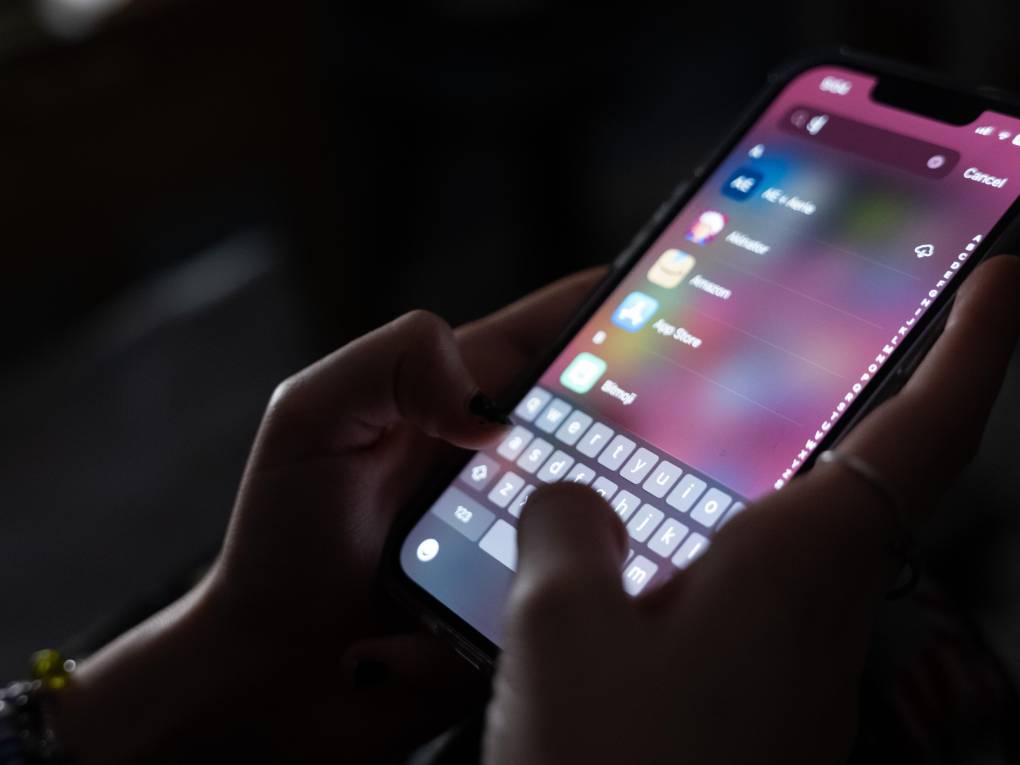
window.__IS_SSR__=true
window.__INITIAL_STATE__={
"attachmentsReducer": {
"audio_0": {
"type": "attachments",
"id": "audio_0",
"imgSizes": {
"kqedFullSize": {
"file": "https://ww2.kqed.org/news/wp-content/themes/KQED-unified/img/audio_bgs/background0.jpg"
}
}
},
"audio_1": {
"type": "attachments",
"id": "audio_1",
"imgSizes": {
"kqedFullSize": {
"file": "https://ww2.kqed.org/news/wp-content/themes/KQED-unified/img/audio_bgs/background1.jpg"
}
}
},
"audio_2": {
"type": "attachments",
"id": "audio_2",
"imgSizes": {
"kqedFullSize": {
"file": "https://ww2.kqed.org/news/wp-content/themes/KQED-unified/img/audio_bgs/background2.jpg"
}
}
},
"audio_3": {
"type": "attachments",
"id": "audio_3",
"imgSizes": {
"kqedFullSize": {
"file": "https://ww2.kqed.org/news/wp-content/themes/KQED-unified/img/audio_bgs/background3.jpg"
}
}
},
"audio_4": {
"type": "attachments",
"id": "audio_4",
"imgSizes": {
"kqedFullSize": {
"file": "https://ww2.kqed.org/news/wp-content/themes/KQED-unified/img/audio_bgs/background4.jpg"
}
}
},
"placeholder": {
"type": "attachments",
"id": "placeholder",
"imgSizes": {
"thumbnail": {
"file": "https://cdn.kqed.org/wp-content/uploads/2024/12/KQED-Default-Image-816638274-2000x1333-1-160x107.jpg",
"width": 160,
"height": 107,
"mimeType": "image/jpeg"
},
"medium": {
"file": "https://cdn.kqed.org/wp-content/uploads/2024/12/KQED-Default-Image-816638274-2000x1333-1-800x533.jpg",
"width": 800,
"height": 533,
"mimeType": "image/jpeg"
},
"medium_large": {
"file": "https://cdn.kqed.org/wp-content/uploads/2024/12/KQED-Default-Image-816638274-2000x1333-1-768x512.jpg",
"width": 768,
"height": 512,
"mimeType": "image/jpeg"
},
"large": {
"file": "https://cdn.kqed.org/wp-content/uploads/2024/12/KQED-Default-Image-816638274-2000x1333-1-1020x680.jpg",
"width": 1020,
"height": 680,
"mimeType": "image/jpeg"
},
"1536x1536": {
"file": "https://cdn.kqed.org/wp-content/uploads/2024/12/KQED-Default-Image-816638274-2000x1333-1-1536x1024.jpg",
"width": 1536,
"height": 1024,
"mimeType": "image/jpeg"
},
"fd-lrg": {
"file": "https://cdn.kqed.org/wp-content/uploads/2024/12/KQED-Default-Image-816638274-2000x1333-1-1536x1024.jpg",
"width": 1536,
"height": 1024,
"mimeType": "image/jpeg"
},
"fd-med": {
"file": "https://cdn.kqed.org/wp-content/uploads/2024/12/KQED-Default-Image-816638274-2000x1333-1-1020x680.jpg",
"width": 1020,
"height": 680,
"mimeType": "image/jpeg"
},
"fd-sm": {
"file": "https://cdn.kqed.org/wp-content/uploads/2024/12/KQED-Default-Image-816638274-2000x1333-1-800x533.jpg",
"width": 800,
"height": 533,
"mimeType": "image/jpeg"
},
"post-thumbnail": {
"file": "https://cdn.kqed.org/wp-content/uploads/2024/12/KQED-Default-Image-816638274-2000x1333-1-672x372.jpg",
"width": 672,
"height": 372,
"mimeType": "image/jpeg"
},
"twentyfourteen-full-width": {
"file": "https://cdn.kqed.org/wp-content/uploads/2024/12/KQED-Default-Image-816638274-2000x1333-1-1038x576.jpg",
"width": 1038,
"height": 576,
"mimeType": "image/jpeg"
},
"xxsmall": {
"file": "https://cdn.kqed.org/wp-content/uploads/2024/12/KQED-Default-Image-816638274-2000x1333-1-160x107.jpg",
"width": 160,
"height": 107,
"mimeType": "image/jpeg"
},
"xsmall": {
"file": "https://cdn.kqed.org/wp-content/uploads/2024/12/KQED-Default-Image-816638274-2000x1333-1-672x372.jpg",
"width": 672,
"height": 372,
"mimeType": "image/jpeg"
},
"small": {
"file": "https://cdn.kqed.org/wp-content/uploads/2024/12/KQED-Default-Image-816638274-2000x1333-1-672x372.jpg",
"width": 672,
"height": 372,
"mimeType": "image/jpeg"
},
"xlarge": {
"file": "https://cdn.kqed.org/wp-content/uploads/2024/12/KQED-Default-Image-816638274-2000x1333-1-1020x680.jpg",
"width": 1020,
"height": 680,
"mimeType": "image/jpeg"
},
"full-width": {
"file": "https://cdn.kqed.org/wp-content/uploads/2024/12/KQED-Default-Image-816638274-2000x1333-1-1920x1280.jpg",
"width": 1920,
"height": 1280,
"mimeType": "image/jpeg"
},
"guest-author-32": {
"file": "https://cdn.kqed.org/wp-content/uploads/2025/01/KQED-Default-Image-816638274-1333x1333-1-160x160.jpg",
"width": 32,
"height": 32,
"mimeType": "image/jpeg"
},
"guest-author-50": {
"file": "https://cdn.kqed.org/wp-content/uploads/2025/01/KQED-Default-Image-816638274-1333x1333-1-160x160.jpg",
"width": 50,
"height": 50,
"mimeType": "image/jpeg"
},
"guest-author-64": {
"file": "https://cdn.kqed.org/wp-content/uploads/2025/01/KQED-Default-Image-816638274-1333x1333-1-160x160.jpg",
"width": 64,
"height": 64,
"mimeType": "image/jpeg"
},
"guest-author-96": {
"file": "https://cdn.kqed.org/wp-content/uploads/2025/01/KQED-Default-Image-816638274-1333x1333-1-160x160.jpg",
"width": 96,
"height": 96,
"mimeType": "image/jpeg"
},
"guest-author-128": {
"file": "https://cdn.kqed.org/wp-content/uploads/2025/01/KQED-Default-Image-816638274-1333x1333-1-160x160.jpg",
"width": 128,
"height": 128,
"mimeType": "image/jpeg"
},
"detail": {
"file": "https://cdn.kqed.org/wp-content/uploads/2025/01/KQED-Default-Image-816638274-1333x1333-1-160x160.jpg",
"width": 160,
"height": 160,
"mimeType": "image/jpeg"
},
"kqedFullSize": {
"file": "https://cdn.kqed.org/wp-content/uploads/2024/12/KQED-Default-Image-816638274-2000x1333-1.jpg",
"width": 2000,
"height": 1333
}
}
},
"mindshift_64134": {
"type": "attachments",
"id": "mindshift_64134",
"meta": {
"index": "attachments_1716263798",
"site": "mindshift",
"id": "64134",
"found": true
},
"title": null,
"publishDate": 1719778657,
"status": "inherit",
"parent": 64133,
"modified": 1719778936,
"caption": null,
"credit": "Spencer Platt/Getty Images",
"altTag": "Two hands hold a smart phone. Thumb types in the search field for an app",
"description": null,
"imgSizes": {
"medium": {
"file": "https://cdn.kqed.org/wp-content/uploads/sites/23/2024/06/gettyimages-1977635957-800x600.jpeg",
"width": 800,
"height": 600,
"mimeType": "image/jpeg"
},
"large": {
"file": "https://cdn.kqed.org/wp-content/uploads/sites/23/2024/06/gettyimages-1977635957-1020x765.jpeg",
"width": 1020,
"height": 765,
"mimeType": "image/jpeg"
},
"thumbnail": {
"file": "https://cdn.kqed.org/wp-content/uploads/sites/23/2024/06/gettyimages-1977635957-160x120.jpeg",
"width": 160,
"height": 120,
"mimeType": "image/jpeg"
},
"medium_large": {
"file": "https://cdn.kqed.org/wp-content/uploads/sites/23/2024/06/gettyimages-1977635957-768x576.jpeg",
"width": 768,
"height": 576,
"mimeType": "image/jpeg"
},
"1536x1536": {
"file": "https://cdn.kqed.org/wp-content/uploads/sites/23/2024/06/gettyimages-1977635957-1536x1152.jpeg",
"width": 1536,
"height": 1152,
"mimeType": "image/jpeg"
},
"2048x2048": {
"file": "https://cdn.kqed.org/wp-content/uploads/sites/23/2024/06/gettyimages-1977635957-2048x1536.jpeg",
"width": 2048,
"height": 1536,
"mimeType": "image/jpeg"
},
"post-thumbnail": {
"file": "https://cdn.kqed.org/wp-content/uploads/sites/23/2024/06/gettyimages-1977635957-672x372.jpeg",
"width": 672,
"height": 372,
"mimeType": "image/jpeg"
},
"twentyfourteen-full-width": {
"file": "https://cdn.kqed.org/wp-content/uploads/sites/23/2024/06/gettyimages-1977635957-1038x576.jpeg",
"width": 1038,
"height": 576,
"mimeType": "image/jpeg"
},
"full-width": {
"file": "https://cdn.kqed.org/wp-content/uploads/sites/23/2024/06/gettyimages-1977635957-1920x1440.jpeg",
"width": 1920,
"height": 1440,
"mimeType": "image/jpeg"
},
"kqedFullSize": {
"file": "https://cdn.kqed.org/wp-content/uploads/sites/23/2024/06/gettyimages-1977635957-scaled.jpeg",
"width": 2560,
"height": 1920
}
},
"isLoading": false,
"fetchFailed": false
},
"mindshift_64073": {
"type": "attachments",
"id": "mindshift_64073",
"meta": {
"index": "attachments_1716263798",
"site": "mindshift",
"id": "64073",
"found": true
},
"title": null,
"publishDate": 1718981820,
"status": "inherit",
"parent": 64071,
"modified": 1718981935,
"caption": null,
"credit": "Ihor Lukianenko/iStock",
"altTag": "Brain with headphones floating above a book and laptop on a yellow background",
"description": null,
"imgSizes": {
"medium": {
"file": "https://cdn.kqed.org/wp-content/uploads/sites/23/2024/06/iStock-1445800398-800x533.jpg",
"width": 800,
"height": 533,
"mimeType": "image/jpeg"
},
"large": {
"file": "https://cdn.kqed.org/wp-content/uploads/sites/23/2024/06/iStock-1445800398-1020x680.jpg",
"width": 1020,
"height": 680,
"mimeType": "image/jpeg"
},
"thumbnail": {
"file": "https://cdn.kqed.org/wp-content/uploads/sites/23/2024/06/iStock-1445800398-160x107.jpg",
"width": 160,
"height": 107,
"mimeType": "image/jpeg"
},
"medium_large": {
"file": "https://cdn.kqed.org/wp-content/uploads/sites/23/2024/06/iStock-1445800398-768x512.jpg",
"width": 768,
"height": 512,
"mimeType": "image/jpeg"
},
"1536x1536": {
"file": "https://cdn.kqed.org/wp-content/uploads/sites/23/2024/06/iStock-1445800398-1536x1024.jpg",
"width": 1536,
"height": 1024,
"mimeType": "image/jpeg"
},
"2048x2048": {
"file": "https://cdn.kqed.org/wp-content/uploads/sites/23/2024/06/iStock-1445800398-2048x1365.jpg",
"width": 2048,
"height": 1365,
"mimeType": "image/jpeg"
},
"post-thumbnail": {
"file": "https://cdn.kqed.org/wp-content/uploads/sites/23/2024/06/iStock-1445800398-672x372.jpg",
"width": 672,
"height": 372,
"mimeType": "image/jpeg"
},
"twentyfourteen-full-width": {
"file": "https://cdn.kqed.org/wp-content/uploads/sites/23/2024/06/iStock-1445800398-1038x576.jpg",
"width": 1038,
"height": 576,
"mimeType": "image/jpeg"
},
"full-width": {
"file": "https://cdn.kqed.org/wp-content/uploads/sites/23/2024/06/iStock-1445800398-1920x1280.jpg",
"width": 1920,
"height": 1280,
"mimeType": "image/jpeg"
},
"kqedFullSize": {
"file": "https://cdn.kqed.org/wp-content/uploads/sites/23/2024/06/iStock-1445800398.jpg",
"width": 2121,
"height": 1414
}
},
"isLoading": false,
"fetchFailed": false
},
"mindshift_64015": {
"type": "attachments",
"id": "mindshift_64015",
"meta": {
"index": "attachments_1716263798",
"site": "mindshift",
"id": "64015",
"found": true
},
"title": "A young male Black character talking to a cute round robot, an artificial intelligence concept",
"publishDate": 1718418733,
"status": "inherit",
"parent": 64014,
"modified": 1718418790,
"caption": null,
"credit": "nadia_bormotova/iStock",
"altTag": null,
"description": null,
"imgSizes": {
"medium": {
"file": "https://cdn.kqed.org/wp-content/uploads/sites/23/2024/06/iStock-1307746875-800x567.jpg",
"width": 800,
"height": 567,
"mimeType": "image/jpeg"
},
"large": {
"file": "https://cdn.kqed.org/wp-content/uploads/sites/23/2024/06/iStock-1307746875-1020x722.jpg",
"width": 1020,
"height": 722,
"mimeType": "image/jpeg"
},
"thumbnail": {
"file": "https://cdn.kqed.org/wp-content/uploads/sites/23/2024/06/iStock-1307746875-160x113.jpg",
"width": 160,
"height": 113,
"mimeType": "image/jpeg"
},
"medium_large": {
"file": "https://cdn.kqed.org/wp-content/uploads/sites/23/2024/06/iStock-1307746875-768x544.jpg",
"width": 768,
"height": 544,
"mimeType": "image/jpeg"
},
"1536x1536": {
"file": "https://cdn.kqed.org/wp-content/uploads/sites/23/2024/06/iStock-1307746875-1536x1088.jpg",
"width": 1536,
"height": 1088,
"mimeType": "image/jpeg"
},
"2048x2048": {
"file": "https://cdn.kqed.org/wp-content/uploads/sites/23/2024/06/iStock-1307746875-2048x1451.jpg",
"width": 2048,
"height": 1451,
"mimeType": "image/jpeg"
},
"post-thumbnail": {
"file": "https://cdn.kqed.org/wp-content/uploads/sites/23/2024/06/iStock-1307746875-672x372.jpg",
"width": 672,
"height": 372,
"mimeType": "image/jpeg"
},
"twentyfourteen-full-width": {
"file": "https://cdn.kqed.org/wp-content/uploads/sites/23/2024/06/iStock-1307746875-1038x576.jpg",
"width": 1038,
"height": 576,
"mimeType": "image/jpeg"
},
"full-width": {
"file": "https://cdn.kqed.org/wp-content/uploads/sites/23/2024/06/iStock-1307746875-1920x1360.jpg",
"width": 1920,
"height": 1360,
"mimeType": "image/jpeg"
},
"kqedFullSize": {
"file": "https://cdn.kqed.org/wp-content/uploads/sites/23/2024/06/iStock-1307746875.jpg",
"width": 2057,
"height": 1457
}
},
"isLoading": false,
"fetchFailed": false
},
"mindshift_63946": {
"type": "attachments",
"id": "mindshift_63946",
"meta": {
"index": "attachments_1716263798",
"site": "mindshift",
"id": "63946",
"found": true
},
"title": "screens",
"publishDate": 1717676575,
"status": "inherit",
"parent": 63944,
"modified": 1717676617,
"caption": "The biggest predictor of screen time for kids is how much their parents use their devices, a new study finds.",
"credit": "Kathleen Finlay/Getty Images/Image Source",
"altTag": null,
"description": null,
"imgSizes": {
"medium": {
"file": "https://cdn.kqed.org/wp-content/uploads/sites/23/2024/06/screens-800x600.jpeg",
"width": 800,
"height": 600,
"mimeType": "image/jpeg"
},
"large": {
"file": "https://cdn.kqed.org/wp-content/uploads/sites/23/2024/06/screens-1020x765.jpeg",
"width": 1020,
"height": 765,
"mimeType": "image/jpeg"
},
"thumbnail": {
"file": "https://cdn.kqed.org/wp-content/uploads/sites/23/2024/06/screens-160x120.jpeg",
"width": 160,
"height": 120,
"mimeType": "image/jpeg"
},
"medium_large": {
"file": "https://cdn.kqed.org/wp-content/uploads/sites/23/2024/06/screens-768x576.jpeg",
"width": 768,
"height": 576,
"mimeType": "image/jpeg"
},
"post-thumbnail": {
"file": "https://cdn.kqed.org/wp-content/uploads/sites/23/2024/06/screens-672x372.jpeg",
"width": 672,
"height": 372,
"mimeType": "image/jpeg"
},
"twentyfourteen-full-width": {
"file": "https://cdn.kqed.org/wp-content/uploads/sites/23/2024/06/screens-1038x576.jpeg",
"width": 1038,
"height": 576,
"mimeType": "image/jpeg"
},
"kqedFullSize": {
"file": "https://cdn.kqed.org/wp-content/uploads/sites/23/2024/06/screens.jpeg",
"width": 1300,
"height": 975
}
},
"isLoading": false,
"fetchFailed": false
},
"mindshift_63912": {
"type": "attachments",
"id": "mindshift_63912",
"meta": {
"index": "attachments_1716263798",
"site": "mindshift",
"id": "63912",
"found": true
},
"title": null,
"publishDate": 1717266676,
"status": "inherit",
"parent": 63901,
"modified": 1717266699,
"caption": null,
"credit": "Malorny/Getty Images",
"altTag": null,
"description": null,
"imgSizes": {
"medium": {
"file": "https://cdn.kqed.org/wp-content/uploads/sites/23/2024/06/Barshay-AI-800x480.jpg",
"width": 800,
"height": 480,
"mimeType": "image/jpeg"
},
"large": {
"file": "https://cdn.kqed.org/wp-content/uploads/sites/23/2024/06/Barshay-AI-1020x612.jpg",
"width": 1020,
"height": 612,
"mimeType": "image/jpeg"
},
"thumbnail": {
"file": "https://cdn.kqed.org/wp-content/uploads/sites/23/2024/06/Barshay-AI-160x96.jpg",
"width": 160,
"height": 96,
"mimeType": "image/jpeg"
},
"medium_large": {
"file": "https://cdn.kqed.org/wp-content/uploads/sites/23/2024/06/Barshay-AI-768x461.jpg",
"width": 768,
"height": 461,
"mimeType": "image/jpeg"
},
"1536x1536": {
"file": "https://cdn.kqed.org/wp-content/uploads/sites/23/2024/06/Barshay-AI-1536x922.jpg",
"width": 1536,
"height": 922,
"mimeType": "image/jpeg"
},
"2048x2048": {
"file": "https://cdn.kqed.org/wp-content/uploads/sites/23/2024/06/Barshay-AI-2048x1229.jpg",
"width": 2048,
"height": 1229,
"mimeType": "image/jpeg"
},
"post-thumbnail": {
"file": "https://cdn.kqed.org/wp-content/uploads/sites/23/2024/06/Barshay-AI-672x372.jpg",
"width": 672,
"height": 372,
"mimeType": "image/jpeg"
},
"twentyfourteen-full-width": {
"file": "https://cdn.kqed.org/wp-content/uploads/sites/23/2024/06/Barshay-AI-1038x576.jpg",
"width": 1038,
"height": 576,
"mimeType": "image/jpeg"
},
"full-width": {
"file": "https://cdn.kqed.org/wp-content/uploads/sites/23/2024/06/Barshay-AI-1920x1152.jpg",
"width": 1920,
"height": 1152,
"mimeType": "image/jpeg"
},
"kqedFullSize": {
"file": "https://cdn.kqed.org/wp-content/uploads/sites/23/2024/06/Barshay-AI.jpg",
"width": 2235,
"height": 1341
}
},
"isLoading": false,
"fetchFailed": false
},
"mindshift_63811": {
"type": "attachments",
"id": "mindshift_63811",
"meta": {
"index": "attachments_1716263798",
"site": "mindshift",
"id": "63811",
"found": true
},
"parent": 63809,
"imgSizes": {
"twentyfourteen-full-width": {
"file": "https://cdn.kqed.org/wp-content/uploads/sites/23/2024/05/iStock-949211888-1038x576.jpg",
"width": 1038,
"mimeType": "image/jpeg",
"height": 576
},
"thumbnail": {
"file": "https://cdn.kqed.org/wp-content/uploads/sites/23/2024/05/iStock-949211888-160x107.jpg",
"width": 160,
"mimeType": "image/jpeg",
"height": 107
},
"post-thumbnail": {
"file": "https://cdn.kqed.org/wp-content/uploads/sites/23/2024/05/iStock-949211888-672x372.jpg",
"width": 672,
"mimeType": "image/jpeg",
"height": 372
},
"kqedFullSize": {
"file": "https://cdn.kqed.org/wp-content/uploads/sites/23/2024/05/iStock-949211888-scaled.jpg",
"width": 2560,
"height": 1707
},
"2048x2048": {
"file": "https://cdn.kqed.org/wp-content/uploads/sites/23/2024/05/iStock-949211888-2048x1365.jpg",
"width": 2048,
"mimeType": "image/jpeg",
"height": 1365
},
"large": {
"file": "https://cdn.kqed.org/wp-content/uploads/sites/23/2024/05/iStock-949211888-1020x680.jpg",
"width": 1020,
"mimeType": "image/jpeg",
"height": 680
},
"1536x1536": {
"file": "https://cdn.kqed.org/wp-content/uploads/sites/23/2024/05/iStock-949211888-1536x1024.jpg",
"width": 1536,
"mimeType": "image/jpeg",
"height": 1024
},
"full-width": {
"file": "https://cdn.kqed.org/wp-content/uploads/sites/23/2024/05/iStock-949211888-1920x1280.jpg",
"width": 1920,
"mimeType": "image/jpeg",
"height": 1280
},
"medium": {
"file": "https://cdn.kqed.org/wp-content/uploads/sites/23/2024/05/iStock-949211888-800x533.jpg",
"width": 800,
"mimeType": "image/jpeg",
"height": 533
},
"medium_large": {
"file": "https://cdn.kqed.org/wp-content/uploads/sites/23/2024/05/iStock-949211888-768x512.jpg",
"width": 768,
"mimeType": "image/jpeg",
"height": 512
}
},
"publishDate": 1715953236,
"modified": 1715953259,
"caption": null,
"description": null,
"title": "Robot Ticking Off Checkboxes On Document",
"credit": "AndreyPopov/iStock",
"status": "inherit",
"altTag": "Close-up Of A Robot Hand Ticking Off Checkboxes On Document With Pen",
"isLoading": false,
"fetchFailed": false
},
"mindshift_63791": {
"type": "attachments",
"id": "mindshift_63791",
"meta": {
"index": "attachments_1716263798",
"site": "mindshift",
"id": "63791",
"found": true
},
"parent": 63790,
"imgSizes": {
"twentyfourteen-full-width": {
"file": "https://cdn.kqed.org/wp-content/uploads/sites/23/2024/05/gettyimages-860450454-1-_custom-7ee67b747a912c6e85a2e90216633e83ec45d8ac-1038x576.jpg",
"width": 1038,
"mimeType": "image/jpeg",
"height": 576
},
"thumbnail": {
"file": "https://cdn.kqed.org/wp-content/uploads/sites/23/2024/05/gettyimages-860450454-1-_custom-7ee67b747a912c6e85a2e90216633e83ec45d8ac-160x101.jpg",
"width": 160,
"mimeType": "image/jpeg",
"height": 101
},
"post-thumbnail": {
"file": "https://cdn.kqed.org/wp-content/uploads/sites/23/2024/05/gettyimages-860450454-1-_custom-7ee67b747a912c6e85a2e90216633e83ec45d8ac-672x372.jpg",
"width": 672,
"mimeType": "image/jpeg",
"height": 372
},
"kqedFullSize": {
"file": "https://cdn.kqed.org/wp-content/uploads/sites/23/2024/05/gettyimages-860450454-1-_custom-7ee67b747a912c6e85a2e90216633e83ec45d8ac.jpg",
"width": 2134,
"height": 1343
},
"2048x2048": {
"file": "https://cdn.kqed.org/wp-content/uploads/sites/23/2024/05/gettyimages-860450454-1-_custom-7ee67b747a912c6e85a2e90216633e83ec45d8ac-2048x1289.jpg",
"width": 2048,
"mimeType": "image/jpeg",
"height": 1289
},
"large": {
"file": "https://cdn.kqed.org/wp-content/uploads/sites/23/2024/05/gettyimages-860450454-1-_custom-7ee67b747a912c6e85a2e90216633e83ec45d8ac-1020x642.jpg",
"width": 1020,
"mimeType": "image/jpeg",
"height": 642
},
"1536x1536": {
"file": "https://cdn.kqed.org/wp-content/uploads/sites/23/2024/05/gettyimages-860450454-1-_custom-7ee67b747a912c6e85a2e90216633e83ec45d8ac-1536x967.jpg",
"width": 1536,
"mimeType": "image/jpeg",
"height": 967
},
"full-width": {
"file": "https://cdn.kqed.org/wp-content/uploads/sites/23/2024/05/gettyimages-860450454-1-_custom-7ee67b747a912c6e85a2e90216633e83ec45d8ac-1920x1208.jpg",
"width": 1920,
"mimeType": "image/jpeg",
"height": 1208
},
"medium": {
"file": "https://cdn.kqed.org/wp-content/uploads/sites/23/2024/05/gettyimages-860450454-1-_custom-7ee67b747a912c6e85a2e90216633e83ec45d8ac-800x503.jpg",
"width": 800,
"mimeType": "image/jpeg",
"height": 503
},
"medium_large": {
"file": "https://cdn.kqed.org/wp-content/uploads/sites/23/2024/05/gettyimages-860450454-1-_custom-7ee67b747a912c6e85a2e90216633e83ec45d8ac-768x483.jpg",
"width": 768,
"mimeType": "image/jpeg",
"height": 483
}
},
"publishDate": 1715689143,
"modified": 1715691520,
"caption": "Research shows kids who spend two hours a day outside are less likely to develop myopia.",
"description": null,
"title": "Research shows kids who spend two hours a day outside are less likely to develop myopia.",
"credit": "nazar_ab/Getty Images",
"status": "inherit",
"altTag": null,
"isLoading": false,
"fetchFailed": false
},
"mindshift_63760": {
"type": "attachments",
"id": "mindshift_63760",
"meta": {
"index": "attachments_1716263798",
"site": "mindshift",
"id": "63760",
"found": true
},
"parent": 63759,
"imgSizes": {
"twentyfourteen-full-width": {
"file": "https://cdn.kqed.org/wp-content/uploads/sites/23/2024/05/gettyimages-1288374839_slide-049af7169e5369c44e76ef938734734d322cb450-1038x576.jpg",
"width": 1038,
"mimeType": "image/jpeg",
"height": 576
},
"thumbnail": {
"file": "https://cdn.kqed.org/wp-content/uploads/sites/23/2024/05/gettyimages-1288374839_slide-049af7169e5369c44e76ef938734734d322cb450-160x107.jpg",
"width": 160,
"mimeType": "image/jpeg",
"height": 107
},
"post-thumbnail": {
"file": "https://cdn.kqed.org/wp-content/uploads/sites/23/2024/05/gettyimages-1288374839_slide-049af7169e5369c44e76ef938734734d322cb450-672x372.jpg",
"width": 672,
"mimeType": "image/jpeg",
"height": 372
},
"kqedFullSize": {
"file": "https://cdn.kqed.org/wp-content/uploads/sites/23/2024/05/gettyimages-1288374839_slide-049af7169e5369c44e76ef938734734d322cb450.jpg",
"width": 2061,
"height": 1374
},
"2048x2048": {
"file": "https://cdn.kqed.org/wp-content/uploads/sites/23/2024/05/gettyimages-1288374839_slide-049af7169e5369c44e76ef938734734d322cb450-2048x1365.jpg",
"width": 2048,
"mimeType": "image/jpeg",
"height": 1365
},
"large": {
"file": "https://cdn.kqed.org/wp-content/uploads/sites/23/2024/05/gettyimages-1288374839_slide-049af7169e5369c44e76ef938734734d322cb450-1020x680.jpg",
"width": 1020,
"mimeType": "image/jpeg",
"height": 680
},
"1536x1536": {
"file": "https://cdn.kqed.org/wp-content/uploads/sites/23/2024/05/gettyimages-1288374839_slide-049af7169e5369c44e76ef938734734d322cb450-1536x1024.jpg",
"width": 1536,
"mimeType": "image/jpeg",
"height": 1024
},
"full-width": {
"file": "https://cdn.kqed.org/wp-content/uploads/sites/23/2024/05/gettyimages-1288374839_slide-049af7169e5369c44e76ef938734734d322cb450-1920x1280.jpg",
"width": 1920,
"mimeType": "image/jpeg",
"height": 1280
},
"medium": {
"file": "https://cdn.kqed.org/wp-content/uploads/sites/23/2024/05/gettyimages-1288374839_slide-049af7169e5369c44e76ef938734734d322cb450-800x533.jpg",
"width": 800,
"mimeType": "image/jpeg",
"height": 533
},
"medium_large": {
"file": "https://cdn.kqed.org/wp-content/uploads/sites/23/2024/05/gettyimages-1288374839_slide-049af7169e5369c44e76ef938734734d322cb450-768x512.jpg",
"width": 768,
"mimeType": "image/jpeg",
"height": 512
}
},
"publishDate": 1715603935,
"modified": 1715604134,
"caption": null,
"description": null,
"title": null,
"credit": "Ivan-balvan/Getty Images/iStock",
"status": "inherit",
"altTag": "Close up of a hand writing in a journal or notebook with a silver pen",
"isLoading": false,
"fetchFailed": false
},
"mindshift_63682": {
"type": "attachments",
"id": "mindshift_63682",
"meta": {
"index": "attachments_1716263798",
"site": "mindshift",
"id": "63682",
"found": true
},
"parent": 63681,
"imgSizes": {
"twentyfourteen-full-width": {
"file": "https://cdn.kqed.org/wp-content/uploads/sites/23/2024/04/gettyimages-1406710116_sq-1944ec9d9207f359229e9f28cd6203fd3bacf0c1-1038x576.jpg",
"width": 1038,
"mimeType": "image/jpeg",
"height": 576
},
"thumbnail": {
"file": "https://cdn.kqed.org/wp-content/uploads/sites/23/2024/04/gettyimages-1406710116_sq-1944ec9d9207f359229e9f28cd6203fd3bacf0c1-160x160.jpg",
"width": 160,
"mimeType": "image/jpeg",
"height": 160
},
"post-thumbnail": {
"file": "https://cdn.kqed.org/wp-content/uploads/sites/23/2024/04/gettyimages-1406710116_sq-1944ec9d9207f359229e9f28cd6203fd3bacf0c1-672x372.jpg",
"width": 672,
"mimeType": "image/jpeg",
"height": 372
},
"kqedFullSize": {
"file": "https://cdn.kqed.org/wp-content/uploads/sites/23/2024/04/gettyimages-1406710116_sq-1944ec9d9207f359229e9f28cd6203fd3bacf0c1-scaled.jpg",
"width": 2560,
"height": 2560
},
"2048x2048": {
"file": "https://cdn.kqed.org/wp-content/uploads/sites/23/2024/04/gettyimages-1406710116_sq-1944ec9d9207f359229e9f28cd6203fd3bacf0c1-2048x2048.jpg",
"width": 2048,
"mimeType": "image/jpeg",
"height": 2048
},
"large": {
"file": "https://cdn.kqed.org/wp-content/uploads/sites/23/2024/04/gettyimages-1406710116_sq-1944ec9d9207f359229e9f28cd6203fd3bacf0c1-1020x1020.jpg",
"width": 1020,
"mimeType": "image/jpeg",
"height": 1020
},
"1536x1536": {
"file": "https://cdn.kqed.org/wp-content/uploads/sites/23/2024/04/gettyimages-1406710116_sq-1944ec9d9207f359229e9f28cd6203fd3bacf0c1-1536x1536.jpg",
"width": 1536,
"mimeType": "image/jpeg",
"height": 1536
},
"full-width": {
"file": "https://cdn.kqed.org/wp-content/uploads/sites/23/2024/04/gettyimages-1406710116_sq-1944ec9d9207f359229e9f28cd6203fd3bacf0c1-1920x1920.jpg",
"width": 1920,
"mimeType": "image/jpeg",
"height": 1920
},
"medium": {
"file": "https://cdn.kqed.org/wp-content/uploads/sites/23/2024/04/gettyimages-1406710116_sq-1944ec9d9207f359229e9f28cd6203fd3bacf0c1-800x800.jpg",
"width": 800,
"mimeType": "image/jpeg",
"height": 800
},
"medium_large": {
"file": "https://cdn.kqed.org/wp-content/uploads/sites/23/2024/04/gettyimages-1406710116_sq-1944ec9d9207f359229e9f28cd6203fd3bacf0c1-768x768.jpg",
"width": 768,
"mimeType": "image/jpeg",
"height": 768
}
},
"publishDate": 1714524934,
"modified": 1714525189,
"caption": null,
"description": null,
"title": "Misinformation",
"credit": "MicrovOne/Getty Images",
"status": "inherit",
"altTag": null,
"isLoading": false,
"fetchFailed": false
},
"mindshift_63520": {
"type": "attachments",
"id": "mindshift_63520",
"meta": {
"index": "attachments_1716263798",
"site": "mindshift",
"id": "63520",
"found": true
},
"parent": 63519,
"imgSizes": {
"twentyfourteen-full-width": {
"file": "https://cdn.kqed.org/wp-content/uploads/sites/23/2024/04/iStock-1397004194-1038x576.jpg",
"width": 1038,
"mimeType": "image/jpeg",
"height": 576
},
"thumbnail": {
"file": "https://cdn.kqed.org/wp-content/uploads/sites/23/2024/04/iStock-1397004194-160x128.jpg",
"width": 160,
"mimeType": "image/jpeg",
"height": 128
},
"post-thumbnail": {
"file": "https://cdn.kqed.org/wp-content/uploads/sites/23/2024/04/iStock-1397004194-672x372.jpg",
"width": 672,
"mimeType": "image/jpeg",
"height": 372
},
"kqedFullSize": {
"file": "https://cdn.kqed.org/wp-content/uploads/sites/23/2024/04/iStock-1397004194.jpg",
"width": 1936,
"height": 1549
},
"large": {
"file": "https://cdn.kqed.org/wp-content/uploads/sites/23/2024/04/iStock-1397004194-1020x816.jpg",
"width": 1020,
"mimeType": "image/jpeg",
"height": 816
},
"1536x1536": {
"file": "https://cdn.kqed.org/wp-content/uploads/sites/23/2024/04/iStock-1397004194-1536x1229.jpg",
"width": 1536,
"mimeType": "image/jpeg",
"height": 1229
},
"full-width": {
"file": "https://cdn.kqed.org/wp-content/uploads/sites/23/2024/04/iStock-1397004194-1920x1536.jpg",
"width": 1920,
"mimeType": "image/jpeg",
"height": 1536
},
"medium": {
"file": "https://cdn.kqed.org/wp-content/uploads/sites/23/2024/04/iStock-1397004194-800x640.jpg",
"width": 800,
"mimeType": "image/jpeg",
"height": 640
},
"medium_large": {
"file": "https://cdn.kqed.org/wp-content/uploads/sites/23/2024/04/iStock-1397004194-768x614.jpg",
"width": 768,
"mimeType": "image/jpeg",
"height": 614
}
},
"publishDate": 1712679260,
"modified": 1712679345,
"caption": null,
"description": null,
"title": null,
"credit": "Marina Nuxoll/iStock",
"status": "inherit",
"altTag": "People next to a big smartphone while using smartphones in their hands. Social media elements and emoji icons on the background.",
"isLoading": false,
"fetchFailed": false
},
"mindshift_63471": {
"type": "attachments",
"id": "mindshift_63471",
"meta": {
"index": "attachments_1716263798",
"site": "mindshift",
"id": "63471",
"found": true
},
"parent": 63470,
"imgSizes": {
"twentyfourteen-full-width": {
"file": "https://cdn.kqed.org/wp-content/uploads/sites/23/2024/04/gettyimages-999231414-48ba7919555fc96d67034f4bf98cb2459afce822-1038x576.jpg",
"width": 1038,
"mimeType": "image/jpeg",
"height": 576
},
"thumbnail": {
"file": "https://cdn.kqed.org/wp-content/uploads/sites/23/2024/04/gettyimages-999231414-48ba7919555fc96d67034f4bf98cb2459afce822-160x120.jpg",
"width": 160,
"mimeType": "image/jpeg",
"height": 120
},
"post-thumbnail": {
"file": "https://cdn.kqed.org/wp-content/uploads/sites/23/2024/04/gettyimages-999231414-48ba7919555fc96d67034f4bf98cb2459afce822-672x372.jpg",
"width": 672,
"mimeType": "image/jpeg",
"height": 372
},
"kqedFullSize": {
"file": "https://cdn.kqed.org/wp-content/uploads/sites/23/2024/04/gettyimages-999231414-48ba7919555fc96d67034f4bf98cb2459afce822-scaled.jpg",
"width": 2560,
"height": 1920
},
"2048x2048": {
"file": "https://cdn.kqed.org/wp-content/uploads/sites/23/2024/04/gettyimages-999231414-48ba7919555fc96d67034f4bf98cb2459afce822-2048x1536.jpg",
"width": 2048,
"mimeType": "image/jpeg",
"height": 1536
},
"large": {
"file": "https://cdn.kqed.org/wp-content/uploads/sites/23/2024/04/gettyimages-999231414-48ba7919555fc96d67034f4bf98cb2459afce822-1020x765.jpg",
"width": 1020,
"mimeType": "image/jpeg",
"height": 765
},
"1536x1536": {
"file": "https://cdn.kqed.org/wp-content/uploads/sites/23/2024/04/gettyimages-999231414-48ba7919555fc96d67034f4bf98cb2459afce822-1536x1152.jpg",
"width": 1536,
"mimeType": "image/jpeg",
"height": 1152
},
"full-width": {
"file": "https://cdn.kqed.org/wp-content/uploads/sites/23/2024/04/gettyimages-999231414-48ba7919555fc96d67034f4bf98cb2459afce822-1920x1440.jpg",
"width": 1920,
"mimeType": "image/jpeg",
"height": 1440
},
"medium": {
"file": "https://cdn.kqed.org/wp-content/uploads/sites/23/2024/04/gettyimages-999231414-48ba7919555fc96d67034f4bf98cb2459afce822-800x600.jpg",
"width": 800,
"mimeType": "image/jpeg",
"height": 600
},
"medium_large": {
"file": "https://cdn.kqed.org/wp-content/uploads/sites/23/2024/04/gettyimages-999231414-48ba7919555fc96d67034f4bf98cb2459afce822-768x576.jpg",
"width": 768,
"mimeType": "image/jpeg",
"height": 576
}
},
"publishDate": 1712237097,
"modified": 1712237097,
"caption": null,
"description": null,
"title": "Around the country, state legislatures and school districts are looking at ways to keep cellphones from being a distraction in schools.",
"credit": null,
"status": "inherit",
"altTag": null,
"isLoading": false,
"fetchFailed": false
},
"mindshift_63443": {
"type": "attachments",
"id": "mindshift_63443",
"meta": {
"index": "attachments_1716263798",
"site": "mindshift",
"id": "63443",
"found": true
},
"parent": 63441,
"imgSizes": {
"twentyfourteen-full-width": {
"file": "https://cdn.kqed.org/wp-content/uploads/sites/23/2024/04/iStock-2084965056-1038x576.jpg",
"width": 1038,
"mimeType": "image/jpeg",
"height": 576
},
"thumbnail": {
"file": "https://cdn.kqed.org/wp-content/uploads/sites/23/2024/04/iStock-2084965056-160x90.jpg",
"width": 160,
"mimeType": "image/jpeg",
"height": 90
},
"post-thumbnail": {
"file": "https://cdn.kqed.org/wp-content/uploads/sites/23/2024/04/iStock-2084965056-672x372.jpg",
"width": 672,
"mimeType": "image/jpeg",
"height": 372
},
"kqedFullSize": {
"file": "https://cdn.kqed.org/wp-content/uploads/sites/23/2024/04/iStock-2084965056.jpg",
"width": 1365,
"height": 768
},
"large": {
"file": "https://cdn.kqed.org/wp-content/uploads/sites/23/2024/04/iStock-2084965056-1020x574.jpg",
"width": 1020,
"mimeType": "image/jpeg",
"height": 574
},
"medium": {
"file": "https://cdn.kqed.org/wp-content/uploads/sites/23/2024/04/iStock-2084965056-800x450.jpg",
"width": 800,
"mimeType": "image/jpeg",
"height": 450
},
"medium_large": {
"file": "https://cdn.kqed.org/wp-content/uploads/sites/23/2024/04/iStock-2084965056-768x432.jpg",
"width": 768,
"mimeType": "image/jpeg",
"height": 432
}
},
"publishDate": 1712003916,
"modified": 1712003995,
"caption": null,
"description": null,
"title": "On device AI chip inside Smart phone. 3d rendering",
"credit": "mesh cube/iStock",
"status": "inherit",
"altTag": "A brain sitting on a smart phone with a lit up screen. Lines reach on from phone against a blue background.",
"isLoading": false,
"fetchFailed": false
}
},
"audioPlayerReducer": {
"postId": "stream_live",
"isPaused": true,
"isPlaying": false,
"pfsActive": false,
"pledgeModalIsOpen": true,
"playerDrawerIsOpen": false,
"liveAudioPlayStartedAt": 0,
"liveAudioPlayContext": ""
},
"authorsReducer": {
"byline_mindshift_64133": {
"type": "authors",
"id": "byline_mindshift_64133",
"meta": {
"override": true
},
"slug": "byline_mindshift_64133",
"name": "Jason Breslow",
"isLoading": false
},
"byline_mindshift_64071": {
"type": "authors",
"id": "byline_mindshift_64071",
"meta": {
"override": true
},
"slug": "byline_mindshift_64071",
"name": "Jill Barshay, \u003ca href=\"https://hechingerreport.org/\" target=\"_blank\">The Hechinger Report\u003c/a>",
"isLoading": false
},
"byline_mindshift_64014": {
"type": "authors",
"id": "byline_mindshift_64014",
"meta": {
"override": true
},
"slug": "byline_mindshift_64014",
"name": "Jill Barshay, \u003ca href=\"https://hechingerreport.org/\" target=\"_blank\">The Hechinger Report\u003c/a>",
"isLoading": false
},
"byline_mindshift_63944": {
"type": "authors",
"id": "byline_mindshift_63944",
"meta": {
"override": true
},
"slug": "byline_mindshift_63944",
"name": "Maria Godoy",
"isLoading": false
},
"byline_mindshift_63901": {
"type": "authors",
"id": "byline_mindshift_63901",
"meta": {
"override": true
},
"slug": "byline_mindshift_63901",
"name": "Jill Barshay, \u003ca href=\"https://hechingerreport.org/\" target=\"_blank\">The Hechinger Report\u003c/a>",
"isLoading": false
},
"byline_mindshift_63809": {
"type": "authors",
"id": "byline_mindshift_63809",
"meta": {
"override": true
},
"slug": "byline_mindshift_63809",
"name": "Jill Barshay, \u003ca href=\"https://hechingerreport.org/\" target=\"_blank\">The Hechinger Report\u003c/a>",
"isLoading": false
},
"byline_mindshift_63790": {
"type": "authors",
"id": "byline_mindshift_63790",
"meta": {
"override": true
},
"slug": "byline_mindshift_63790",
"name": "Maria Godoy",
"isLoading": false
},
"byline_mindshift_63759": {
"type": "authors",
"id": "byline_mindshift_63759",
"meta": {
"override": true
},
"slug": "byline_mindshift_63759",
"name": "Jonathan Lambert",
"isLoading": false
},
"byline_mindshift_63681": {
"type": "authors",
"id": "byline_mindshift_63681",
"meta": {
"override": true
},
"slug": "byline_mindshift_63681",
"name": "Greg Rosalsky",
"isLoading": false
},
"byline_mindshift_63470": {
"type": "authors",
"id": "byline_mindshift_63470",
"meta": {
"override": true
},
"slug": "byline_mindshift_63470",
"name": "Kirsten Adair",
"isLoading": false
},
"mjacksonretondo": {
"type": "authors",
"id": "11759",
"meta": {
"index": "authors_1716337520",
"id": "11759",
"found": true
},
"name": "Marlena Jackson-Retondo",
"firstName": "Marlena",
"lastName": "Jackson-Retondo",
"slug": "mjacksonretondo",
"email": "mjacksonretondo@kqed.org",
"display_author_email": false,
"staff_mastheads": [],
"title": "Engagement Producer",
"bio": "Marlena Jackson-Retondo is the engagement producer for KQED's \u003cem>Forum \u003c/em>and \u003cem>Mindshift\u003c/em>. Prior to joining the team in 2022, Marlena was an intern with the KQED Digital News Engagement team. She grew up in the Bay Area.\u003cem> \u003c/em>",
"avatar": "https://secure.gravatar.com/avatar/94ab429312e9a676559e31d1894130df?s=600&d=blank&r=g",
"twitter": null,
"facebook": null,
"instagram": null,
"linkedin": null,
"sites": [
{
"site": "arts",
"roles": [
"editor"
]
},
{
"site": "news",
"roles": [
"contributor"
]
},
{
"site": "mindshift",
"roles": [
"editor"
]
},
{
"site": "forum",
"roles": [
"editor"
]
}
],
"headData": {
"title": "Marlena Jackson-Retondo | KQED",
"description": "Engagement Producer",
"ogImgSrc": "https://secure.gravatar.com/avatar/94ab429312e9a676559e31d1894130df?s=600&d=blank&r=g",
"twImgSrc": "https://secure.gravatar.com/avatar/94ab429312e9a676559e31d1894130df?s=600&d=blank&r=g"
},
"isLoading": false,
"link": "/author/mjacksonretondo"
}
},
"pagesReducer": {
"mindshift_category_digital-tools": {
"type": "terms",
"id": "mindshift_195",
"meta": {
"index": "terms_1716263798",
"site": "mindshift",
"id": "195",
"score": 14.406026
},
"featImg": null,
"name": "Digital Tools",
"description": "How devices, software, and the Internet are changing the classroom dynamic.",
"taxonomy": "category",
"headData": {
"twImgId": null,
"twTitle": null,
"ogTitle": null,
"ogImgId": null,
"twDescription": null,
"description": "How devices, software, and the Internet are changing the classroom dynamic.",
"title": "Digital Tools Archives | KQED Mindshift",
"ogDescription": null
},
"ttid": 195,
"slug": "digital-tools",
"isLoading": false,
"title": "Digital Tools",
"pageMeta": {
"site": "mindshift",
"WpPageTemplate": "page-topic-editorial",
"currentPage": 3
},
"blocks": [
{
"blockName": "kqed/company-paragraph",
"content": "How devices, software, and the Internet are changing the classroom dynamic."
},
{
"blockName": "kqed/post-list",
"attrs": {
"layout": "cardArticle2",
"query": "posts/mindshift?category=digital-tools",
"seeMore": false,
"paginated": true,
"page": 3
}
},
{
"blockName": "kqed/ad"
}
]
}
},
"pfsSessionReducer": {},
"postsReducer": {
"stream_live": {
"type": "live",
"id": "stream_live",
"audioUrl": "https://streams.kqed.org/kqedradio",
"title": "Live Stream",
"excerpt": "Live Stream information currently unavailable.",
"link": "/radio",
"featImg": "",
"label": {
"name": "KQED Live",
"link": "/"
}
},
"stream_kqedNewscast": {
"type": "posts",
"id": "stream_kqedNewscast",
"audioUrl": "https://www.kqed.org/.stream/anon/radio/RDnews/newscast.mp3?_=1",
"title": "KQED Newscast",
"featImg": "",
"label": {
"name": "88.5 FM",
"link": "/"
}
},
"mindshift_64133": {
"type": "posts",
"id": "mindshift_64133",
"meta": {
"index": "posts_1716263798",
"site": "mindshift",
"id": "64133",
"score": null,
"sort": [
1719692647000
]
},
"guestAuthors": [],
"slug": "new-york-city-is-moving-to-ban-phones-from-school-will-it-work",
"title": "New York City Is Moving to Ban Phones From School. Will It Work?",
"publishDate": 1719692647,
"format": "standard",
"headTitle": "New York City Is Moving to Ban Phones From School. Will It Work? | KQED",
"labelTerm": {
"site": "mindshift"
},
"content": "\u003cp>It may soon be phones down for students in New York City, the largest school district in the nation.\u003c/p>\n\u003cp>David Banks, the chancellor of New York City Public Schools, announced Wednesday that he and Mayor Eric Adams plan to ban the use of phones in the coming weeks, saying phones have gone from a distraction to an addiction for many of the city’s more than 900,000 students.\u003c/p>\n\u003cp>“They’re not just a distraction, kids are fully addicted now to phones,” Banks said \u003ca href=\"https://www.fox5ny.com/news/nyc-schools-ban-cellphones\">in an interview\u003c/a> with local Fox affiliate WNYW. “And many parents will understand this because even when kids are not in school, it’s very hard to get them to even talk to each other anymore. They’re buried in their phones 20 hours out of the day.”\u003c/p>\n\u003cp>News of the ban — which Banks said could take effect as early as January — follows the decision by the Los Angeles Unified School District earlier this month to ban student cellphone and social media use \u003ca href=\"https://laist.com/news/education/lausd-los-angeles-unified-cellphone-ban-use-on-campus\">starting next year\u003c/a>. And it comes as \u003ca href=\"https://www.kqed.org/mindshift/63944/worried-about-your-kids-screen-time-limit-your-own\">parents\u003c/a>, \u003ca href=\"https://x.com/MattRKay/status/1780376984415252698\">educators\u003c/a> and policymakers alike voice growing concern not only about the challenges phones can present for students’ academic achievement, but also their overall well-being.\u003c/p>\n\u003cp>Many of those fears were underscored this month, when U.S. Surgeon General Vivek Murthy called on Congress to require a surgeon’s general warning on social media, citing the potential harm to children and teens in particular. “The warning label I’m calling for,” Murthy \u003ca href=\"https://www.npr.org/2024/06/17/nx-s1-5008816/u-s-surgeon-general-calls-for-tobacco-style-warning-labels-for-social-media\">told NPR\u003c/a>, “… would help make sure that parents know what we know, as public health and medical professionals, which is that there really is an association here between social media use and \u003ca href=\"https://www.kqed.org/mindshift/62233/how-to-help-your-kids-navigate-social-media-without-getting-lost\">mental health harms\u003c/a> for adolescents.”\u003c/p>\n\u003cp>[ad fullwidth]\u003c/p>\n\u003cp>With New York and Los Angeles now poised to become the two largest districts to address those concerns with new bans, here’s a look at where else bans are happening and what we know about how well they work.\u003c/p>\n\u003ch3>How much are kids on their phone anyway?\u003c/h3>\n\u003cp>A lot. In one \u003ca href=\"https://www.commonsensemedia.org/sites/default/files/research/report/2023-cs-smartphone-research-report_final-for-web.pdf\">study\u003c/a> last year from the group Common Sense Media, researchers found that on a typical day, kids between the ages of 11 and 17 were on their phones for a median of almost 4 1/2 hours per day. And while some kids only used their phones for a few minutes, others averaged more than 16 hours a day.\u003c/p>\n\u003cp>A good share of that screen time is happening at school. The same Common Sense study found that 97% of kids use their phones during school hours for a median of about 43 minutes per day — roughly the length of one full classroom lesson.\u003c/p>\n\u003cp>For educators, \u003ca href=\"https://www.kqed.org/mindshift/63519/distracted-students-understanding-these-3-myths-of-attention-span-can-help\">all that distraction\u003c/a> can make their work much, much harder. One-third of public K-12 teachers say that students being distracted by their cellphones is a “major problem,” according to a survey conducted last year \u003ca href=\"https://www.pewresearch.org/short-reads/2024/06/12/72-percent-of-us-high-school-teachers-say-cellphone-distraction-is-a-major-problem-in-the-classroom/?_hsmi=312016766\">by the Pew Research Center\u003c/a>. And the older students are, the worse the problem seems to get. Just 6% of elementary school teachers saw phone use as a major problem in the study, but by middle school the figure rose to 33%. By high school, some 72% of teachers said phones were a major problem.\u003c/p>\n\u003ch3>Where are the bans happening?\u003c/h3>\n\u003cp>The history of phone bans go back at least 35 years. In 1989, Maryland ushered in one of the first with a ban on pagers and “cellular telephones,” which lawmakers passed in part in response to a spike in illegal drug sales. But in the wake of the 1999 Columbine High School massacre, many school districts began to rethink the bans in order to help students and their parents reach one another in an emergency.\u003c/p>\n\u003cp>In recent years, the pendulum has started to swing back in the other direction, as concerns about distracted students and the risks of social media use among children have continued to grow. Today, roughly three-quarters of schools have some form of policy prohibiting the non-academic use of cellphones in the classroom, \u003ca href=\"https://nces.ed.gov/pubs2024/2024043.pdf\">according to the U.S. Department of Education\u003c/a>.\u003c/p>\n\u003cp>Individual school districts have mostly led the charge when it comes to passing limits or outright bans, but states have increasingly begun to enter the fray. Last year, Florida became the first state to crack down on phones in public schools with a law that bans student cellphone use during class time. The law also blocks access to social media for students on district Wi-Fi.\u003c/p>\n\u003cp>Indiana passed \u003ca href=\"https://www.kqed.org/mindshift/63470/indiana-lawmakers-ban-cellphones-in-class-now-its-up-to-schools-to-figure-out-how\">a similar law\u003c/a> earlier this year, and states including Kansas, Louisiana, New York, Ohio, Oklahoma, Pennsylvania and Vermont are also eying what is becoming known as “phone-free schools” legislation.\u003c/p>\n\u003cp>In a time of deep political division, the issue is one that has garnered rare bipartisan support. In December, Republican Sen. Tom Cotton of Arkansas and Democratic Sen. Tim Kaine of Virginia, introduced a bill that would require a federal study on the effects of cellphone use in schools and the effects it is having on students’ mental health and academic achievement.\u003c/p>\n\u003ch3>What do the bans look like in practice?\u003c/h3>\n\u003cp>On the individual district level, bans can take many different forms. In some districts, like in Flint, Mich., phones are not allowed anywhere or at any time during the school day. Students can’t even have them with them \u003ca href=\"https://core-docs.s3.us-east-1.amazonaws.com/documents/asset/uploaded_file/4307/FCS/3768044/Student_Code_of_Conduct_2023-2024.pdf\">on the bus\u003c/a>. In other schools, like the City on a Hill Circuit Street charter school in Boston, students are forced to hand their phones to administrators at the start of the day. The devices are then stuffed into pouches \u003ca href=\"https://www.npr.org/2018/01/11/577101803/a-schools-way-to-fight-phones-in-class-lock-em-up\">and locked\u003c/a> until dismissal time.\u003c/p>\n\u003cp>Other districts will allow devices during lunch or in hallways. Or they may restrict them for elementary students, but have more relaxed policies for students in middle or high school.\u003c/p>\n\u003cp>The bans can be tough to police, though. Students naturally don’t love them. Even many parents are opposed, saying it’s important to preserve a line of communication with their children in case of an emergency. One recent national survey found \u003ca href=\"https://nationalparentsunion.org/wp-content/uploads/2024/02/National-Parents-Union-February-2024-Survey-Topline.pdf\">70%\u003c/a> of parents were opposed to completely banning phones in schools outright.\u003c/p>\n\u003cp>Given the resistance, policing these policies can prove challenging. Thirty percent of teachers whose schools or districts have cellphone policies say they are either very or somewhat difficult to enforce, \u003ca href=\"https://www.pewresearch.org/short-reads/2024/06/12/72-percent-of-us-high-school-teachers-say-cellphone-distraction-is-a-major-problem-in-the-classroom/?_hsmi=312016766\">according to Pew\u003c/a>.\u003c/p>\n\u003cp>“The most successful bans tend to be the ones where there’s strong leadership that’s really supporting teachers in enforcing the bans,” said Liz Kolb, a clinical professor in teacher education and learning technologies at the University of Michigan. “So it really comes from leadership, being able to support teachers and also encourage teachers to not shirk the ban in order to get good favor with students or parents.”\u003c/p>\n\u003ch3>How effective are they?\u003c/h3>\n\u003cp>The results seem to be mixed. In one 2016 study from the U.K., \u003ca href=\"https://www.sciencedirect.com/science/article/abs/pii/S0927537116300136\">researchers found\u003c/a> that cellphone bans helped lead to increased test scores among high school students. A separate \u003ca href=\"https://papers.ssrn.com/sol3/papers.cfm?abstract_id=4735240\">study\u003c/a> out of Norway found that smartphone bans in middle schools were associated with higher test scores for girls, but not for boys. (The researchers guessed that’s because girls spent more time on their phones).\u003c/p>\n\u003cp>In other areas, the research is similarly murky. Research from Spain has shown that cellphone bans were linked to \u003ca href=\"https://www.emerald.com/insight/content/doi/10.1108/AEA-05-2021-0112/full/html\">a reduction in cyberbullying\u003c/a>. But \u003ca href=\"https://nces.ed.gov/pubs2019/2019053.pdf\">a federal survey\u003c/a> of U.S. principals published in 2016 found that rates of cyberbullying were actually higher in schools that had bans than they were in schools without such restrictions. (The report did not offer any explanation as to why).\u003c/p>\n\u003cp>There are other potential drawbacks as well. Some critics point out that banning phones in the classroom can make it more difficult for educators to engage with students about \u003ca href=\"https://www.kqed.org/mindshift/63441/10-hacks-to-boost-teens-executive-function-skills-and-manage-screen-time\">healthy ways to be using their devices\u003c/a>.\u003c/p>\n\u003cp>Others argue that bans can disproportionately harm students from lower socioeconomic households — many of whom rely on their phones as their main device for accessing resources and tools because they may not have access to a laptop. Such concerns are part of the reason New York City rolled back a previous cellphone ban \u003ca href=\"https://www.reuters.com/article/idUSKBN0KG1IR/\">in 2015\u003c/a>.\u003c/p>\n\u003cp>Kolb says it’s important for educators and parents alike to remember that a ban in and of itself is not a magic solution, and that for restrictions to work, schools need to right-size their policies.\u003c/p>\n\u003cp>“There’s both positive and potential harmful impacts,” she said. “If you ban it, it’s not going to immediately cure all the cyberbullying. It’s not going to immediately take a D student to an A student. There’s a lot more factors involved in it. And so you have to really make sure that when you ban cellphones, that it’s not just a symptom of a bigger problem that might be happening.”\u003c/p>\n\u003cp>[ad floatright]\u003c/p>\n\u003cp>Copyright 2024 NPR. To see more, visit https://www.npr.org.\u003c/p>\n\n",
"blocks": [],
"excerpt": "New York may soon be the largest school district in the U.S. to ban phones from the classroom. “They’re not just a distraction, kids are fully addicted now to phones,\" says the city's schools chancellor. ",
"status": "publish",
"parent": 0,
"modified": 1719780080,
"stats": {
"hasAudio": false,
"hasVideo": false,
"hasChartOrMap": false,
"iframeSrcs": [],
"hasGoogleForm": false,
"hasGallery": false,
"hasHearkenModule": false,
"hasPolis": false,
"paragraphCount": 28,
"wordCount": 1513
},
"headData": {
"title": "New York City Is Moving to Ban Phones From School. Will It Work? | KQED",
"description": "New York may soon be the largest school district in the U.S. to ban phones from the classroom.",
"ogTitle": "",
"ogDescription": "",
"ogImgId": "mindshift_64134",
"twTitle": "",
"twDescription": "",
"twImgId": "mindshift_64134",
"socialDescription": "New York may soon be the largest school district in the U.S. to ban phones from the classroom.",
"schema": {
"@context": "https://schema.org",
"@type": "Article",
"headline": "New York City Is Moving to Ban Phones From School. Will It Work?",
"datePublished": "2024-06-29T13:24:07-07:00",
"dateModified": "2024-06-30T13:41:20-07:00",
"image": "https://cdn.kqed.org/wp-content/uploads/2020/02/KQED-OG-Image@1x.png"
}
},
"sticky": false,
"nprByline": "Jason Breslow",
"nprStoryId": "nx-s1-5021605",
"nprHtmlLink": "https://www.npr.org/2024/06/28/nx-s1-5021605/school-cellphone-bans-new-york-city",
"nprRetrievedStory": "1",
"nprPubDate": "2024-06-28T08:30:00-04:00",
"nprStoryDate": "2024-06-28T08:30:00-04:00",
"nprLastModifiedDate": "2024-06-28T08:30:22.28-04:00",
"excludeFromSiteSearch": "Include",
"showOnAuthorArchivePages": "No",
"articleAge": "0",
"path": "/mindshift/64133/new-york-city-is-moving-to-ban-phones-from-school-will-it-work",
"audioTrackLength": null,
"parsedContent": [
{
"type": "contentString",
"content": "\u003cdiv class=\"post-body\">\u003cp>\u003cp>It may soon be phones down for students in New York City, the largest school district in the nation.\u003c/p>\n\u003cp>David Banks, the chancellor of New York City Public Schools, announced Wednesday that he and Mayor Eric Adams plan to ban the use of phones in the coming weeks, saying phones have gone from a distraction to an addiction for many of the city’s more than 900,000 students.\u003c/p>\n\u003cp>“They’re not just a distraction, kids are fully addicted now to phones,” Banks said \u003ca href=\"https://www.fox5ny.com/news/nyc-schools-ban-cellphones\">in an interview\u003c/a> with local Fox affiliate WNYW. “And many parents will understand this because even when kids are not in school, it’s very hard to get them to even talk to each other anymore. They’re buried in their phones 20 hours out of the day.”\u003c/p>\n\u003cp>News of the ban — which Banks said could take effect as early as January — follows the decision by the Los Angeles Unified School District earlier this month to ban student cellphone and social media use \u003ca href=\"https://laist.com/news/education/lausd-los-angeles-unified-cellphone-ban-use-on-campus\">starting next year\u003c/a>. And it comes as \u003ca href=\"https://www.kqed.org/mindshift/63944/worried-about-your-kids-screen-time-limit-your-own\">parents\u003c/a>, \u003ca href=\"https://x.com/MattRKay/status/1780376984415252698\">educators\u003c/a> and policymakers alike voice growing concern not only about the challenges phones can present for students’ academic achievement, but also their overall well-being.\u003c/p>\n\u003cp>Many of those fears were underscored this month, when U.S. Surgeon General Vivek Murthy called on Congress to require a surgeon’s general warning on social media, citing the potential harm to children and teens in particular. “The warning label I’m calling for,” Murthy \u003ca href=\"https://www.npr.org/2024/06/17/nx-s1-5008816/u-s-surgeon-general-calls-for-tobacco-style-warning-labels-for-social-media\">told NPR\u003c/a>, “… would help make sure that parents know what we know, as public health and medical professionals, which is that there really is an association here between social media use and \u003ca href=\"https://www.kqed.org/mindshift/62233/how-to-help-your-kids-navigate-social-media-without-getting-lost\">mental health harms\u003c/a> for adolescents.”\u003c/p>\n\u003cp>\u003c/p>\u003c/div>",
"attributes": {
"named": {},
"numeric": []
}
},
{
"type": "component",
"content": "",
"name": "ad",
"attributes": {
"named": {
"label": "fullwidth"
},
"numeric": [
"fullwidth"
]
}
},
{
"type": "contentString",
"content": "\u003cdiv class=\"post-body\">\u003cp>\u003c/p>\n\u003cp>With New York and Los Angeles now poised to become the two largest districts to address those concerns with new bans, here’s a look at where else bans are happening and what we know about how well they work.\u003c/p>\n\u003ch3>How much are kids on their phone anyway?\u003c/h3>\n\u003cp>A lot. In one \u003ca href=\"https://www.commonsensemedia.org/sites/default/files/research/report/2023-cs-smartphone-research-report_final-for-web.pdf\">study\u003c/a> last year from the group Common Sense Media, researchers found that on a typical day, kids between the ages of 11 and 17 were on their phones for a median of almost 4 1/2 hours per day. And while some kids only used their phones for a few minutes, others averaged more than 16 hours a day.\u003c/p>\n\u003cp>A good share of that screen time is happening at school. The same Common Sense study found that 97% of kids use their phones during school hours for a median of about 43 minutes per day — roughly the length of one full classroom lesson.\u003c/p>\n\u003cp>For educators, \u003ca href=\"https://www.kqed.org/mindshift/63519/distracted-students-understanding-these-3-myths-of-attention-span-can-help\">all that distraction\u003c/a> can make their work much, much harder. One-third of public K-12 teachers say that students being distracted by their cellphones is a “major problem,” according to a survey conducted last year \u003ca href=\"https://www.pewresearch.org/short-reads/2024/06/12/72-percent-of-us-high-school-teachers-say-cellphone-distraction-is-a-major-problem-in-the-classroom/?_hsmi=312016766\">by the Pew Research Center\u003c/a>. And the older students are, the worse the problem seems to get. Just 6% of elementary school teachers saw phone use as a major problem in the study, but by middle school the figure rose to 33%. By high school, some 72% of teachers said phones were a major problem.\u003c/p>\n\u003ch3>Where are the bans happening?\u003c/h3>\n\u003cp>The history of phone bans go back at least 35 years. In 1989, Maryland ushered in one of the first with a ban on pagers and “cellular telephones,” which lawmakers passed in part in response to a spike in illegal drug sales. But in the wake of the 1999 Columbine High School massacre, many school districts began to rethink the bans in order to help students and their parents reach one another in an emergency.\u003c/p>\n\u003cp>In recent years, the pendulum has started to swing back in the other direction, as concerns about distracted students and the risks of social media use among children have continued to grow. Today, roughly three-quarters of schools have some form of policy prohibiting the non-academic use of cellphones in the classroom, \u003ca href=\"https://nces.ed.gov/pubs2024/2024043.pdf\">according to the U.S. Department of Education\u003c/a>.\u003c/p>\n\u003cp>Individual school districts have mostly led the charge when it comes to passing limits or outright bans, but states have increasingly begun to enter the fray. Last year, Florida became the first state to crack down on phones in public schools with a law that bans student cellphone use during class time. The law also blocks access to social media for students on district Wi-Fi.\u003c/p>\n\u003cp>Indiana passed \u003ca href=\"https://www.kqed.org/mindshift/63470/indiana-lawmakers-ban-cellphones-in-class-now-its-up-to-schools-to-figure-out-how\">a similar law\u003c/a> earlier this year, and states including Kansas, Louisiana, New York, Ohio, Oklahoma, Pennsylvania and Vermont are also eying what is becoming known as “phone-free schools” legislation.\u003c/p>\n\u003cp>In a time of deep political division, the issue is one that has garnered rare bipartisan support. In December, Republican Sen. Tom Cotton of Arkansas and Democratic Sen. Tim Kaine of Virginia, introduced a bill that would require a federal study on the effects of cellphone use in schools and the effects it is having on students’ mental health and academic achievement.\u003c/p>\n\u003ch3>What do the bans look like in practice?\u003c/h3>\n\u003cp>On the individual district level, bans can take many different forms. In some districts, like in Flint, Mich., phones are not allowed anywhere or at any time during the school day. Students can’t even have them with them \u003ca href=\"https://core-docs.s3.us-east-1.amazonaws.com/documents/asset/uploaded_file/4307/FCS/3768044/Student_Code_of_Conduct_2023-2024.pdf\">on the bus\u003c/a>. In other schools, like the City on a Hill Circuit Street charter school in Boston, students are forced to hand their phones to administrators at the start of the day. The devices are then stuffed into pouches \u003ca href=\"https://www.npr.org/2018/01/11/577101803/a-schools-way-to-fight-phones-in-class-lock-em-up\">and locked\u003c/a> until dismissal time.\u003c/p>\n\u003cp>Other districts will allow devices during lunch or in hallways. Or they may restrict them for elementary students, but have more relaxed policies for students in middle or high school.\u003c/p>\n\u003cp>The bans can be tough to police, though. Students naturally don’t love them. Even many parents are opposed, saying it’s important to preserve a line of communication with their children in case of an emergency. One recent national survey found \u003ca href=\"https://nationalparentsunion.org/wp-content/uploads/2024/02/National-Parents-Union-February-2024-Survey-Topline.pdf\">70%\u003c/a> of parents were opposed to completely banning phones in schools outright.\u003c/p>\n\u003cp>Given the resistance, policing these policies can prove challenging. Thirty percent of teachers whose schools or districts have cellphone policies say they are either very or somewhat difficult to enforce, \u003ca href=\"https://www.pewresearch.org/short-reads/2024/06/12/72-percent-of-us-high-school-teachers-say-cellphone-distraction-is-a-major-problem-in-the-classroom/?_hsmi=312016766\">according to Pew\u003c/a>.\u003c/p>\n\u003cp>“The most successful bans tend to be the ones where there’s strong leadership that’s really supporting teachers in enforcing the bans,” said Liz Kolb, a clinical professor in teacher education and learning technologies at the University of Michigan. “So it really comes from leadership, being able to support teachers and also encourage teachers to not shirk the ban in order to get good favor with students or parents.”\u003c/p>\n\u003ch3>How effective are they?\u003c/h3>\n\u003cp>The results seem to be mixed. In one 2016 study from the U.K., \u003ca href=\"https://www.sciencedirect.com/science/article/abs/pii/S0927537116300136\">researchers found\u003c/a> that cellphone bans helped lead to increased test scores among high school students. A separate \u003ca href=\"https://papers.ssrn.com/sol3/papers.cfm?abstract_id=4735240\">study\u003c/a> out of Norway found that smartphone bans in middle schools were associated with higher test scores for girls, but not for boys. (The researchers guessed that’s because girls spent more time on their phones).\u003c/p>\n\u003cp>In other areas, the research is similarly murky. Research from Spain has shown that cellphone bans were linked to \u003ca href=\"https://www.emerald.com/insight/content/doi/10.1108/AEA-05-2021-0112/full/html\">a reduction in cyberbullying\u003c/a>. But \u003ca href=\"https://nces.ed.gov/pubs2019/2019053.pdf\">a federal survey\u003c/a> of U.S. principals published in 2016 found that rates of cyberbullying were actually higher in schools that had bans than they were in schools without such restrictions. (The report did not offer any explanation as to why).\u003c/p>\n\u003cp>There are other potential drawbacks as well. Some critics point out that banning phones in the classroom can make it more difficult for educators to engage with students about \u003ca href=\"https://www.kqed.org/mindshift/63441/10-hacks-to-boost-teens-executive-function-skills-and-manage-screen-time\">healthy ways to be using their devices\u003c/a>.\u003c/p>\n\u003cp>Others argue that bans can disproportionately harm students from lower socioeconomic households — many of whom rely on their phones as their main device for accessing resources and tools because they may not have access to a laptop. Such concerns are part of the reason New York City rolled back a previous cellphone ban \u003ca href=\"https://www.reuters.com/article/idUSKBN0KG1IR/\">in 2015\u003c/a>.\u003c/p>\n\u003cp>Kolb says it’s important for educators and parents alike to remember that a ban in and of itself is not a magic solution, and that for restrictions to work, schools need to right-size their policies.\u003c/p>\n\u003cp>“There’s both positive and potential harmful impacts,” she said. “If you ban it, it’s not going to immediately cure all the cyberbullying. It’s not going to immediately take a D student to an A student. There’s a lot more factors involved in it. And so you have to really make sure that when you ban cellphones, that it’s not just a symptom of a bigger problem that might be happening.”\u003c/p>\n\u003cp>\u003c/p>\u003c/div>",
"attributes": {
"named": {},
"numeric": []
}
},
{
"type": "component",
"content": "",
"name": "ad",
"attributes": {
"named": {
"label": "floatright"
},
"numeric": [
"floatright"
]
}
},
{
"type": "contentString",
"content": "\u003cdiv class=\"post-body\">\u003cp>\u003c/p>\n\u003cp>Copyright 2024 NPR. To see more, visit https://www.npr.org.\u003c/p>\n\n\u003c/div>\u003c/p>",
"attributes": {
"named": {},
"numeric": []
}
}
],
"link": "/mindshift/64133/new-york-city-is-moving-to-ban-phones-from-school-will-it-work",
"authors": [
"byline_mindshift_64133"
],
"categories": [
"mindshift_194",
"mindshift_195"
],
"tags": [
"mindshift_866",
"mindshift_21116",
"mindshift_20816",
"mindshift_393",
"mindshift_21926"
],
"featImg": "mindshift_64134",
"label": "mindshift"
},
"mindshift_64071": {
"type": "posts",
"id": "mindshift_64071",
"meta": {
"index": "posts_1716263798",
"site": "mindshift",
"id": "64071",
"score": null,
"sort": [
1719223254000
]
},
"guestAuthors": [],
"slug": "this-is-your-brain-this-is-your-brain-on-screens",
"title": "This Is Your Brain. This Is Your Brain on Screens",
"publishDate": 1719223254,
"format": "standard",
"headTitle": "This Is Your Brain. This Is Your Brain on Screens | KQED",
"labelTerm": {
"site": "mindshift"
},
"content": "\u003cp>\u003cspan style=\"font-weight: 400\">Studies show that students of all ages, from elementary school to college, tend to absorb more when they’re reading on paper rather than screens. The advantage for paper is a small one, but it’s been replicated in \u003c/span>\u003ca href=\"https://onlinelibrary.wiley.com/doi/abs/10.1111/1467-9817.12269\">\u003cspan style=\"font-weight: 400\">dozens of laboratory experiments\u003c/span>\u003c/a>\u003cspan style=\"font-weight: 400\">, particularly when students are reading about science or other nonfiction texts.\u003c/span>\u003c/p>\n\u003cp>\u003cspan style=\"font-weight: 400\">Experts debate why comprehension is worse on screens. Some think the glare and flicker of screens tax the brain more than ink on paper. Others conjecture that students have a tendency to skim online but read with more attention and effort on paper. \u003ca href=\"https://www.kqed.org/mindshift/63519/distracted-students-understanding-these-3-myths-of-attention-span-can-help\">Digital distraction\u003c/a> is an obvious downside to screens. But internet browsing, texting or TikTok breaks aren’t allowed in the controlled conditions of these laboratory studies.\u003c/span>\u003c/p>\n\u003cp>\u003cspan style=\"font-weight: 400\">Neuroscientists around the world are trying to peer inside the brain to solve the mystery. Recent studies have begun to document salient differences in brain activity when reading on paper versus screens. None of the studies I discuss below is definitive or perfect, but together they raise interesting questions for future researchers to explore. \u003c/span>\u003c/p>\n\u003cp>\u003cspan style=\"font-weight: 400\">One Korean research team documented that young adults had lower concentrations of oxygenated hemoglobin in a section of the brain called the prefrontal cortex when reading on paper compared with screens. The prefrontal cortex is associated with working memory and that could mean the brain is \u003c/span>\u003ca href=\"https://www.mdpi.com/2076-3425/14/1/76\">\u003cspan style=\"font-weight: 400\">more efficient\u003c/span>\u003c/a>\u003cspan style=\"font-weight: 400\"> in absorbing and memorizing new information on paper, according to a study published in January 2024 in the journal Brain Sciences. An experiment in Japan, published in 2020, also noticed \u003c/span>\u003ca href=\"https://www.sciencedirect.com/science/article/pii/S1877050920320457?via%3Dihub\">\u003cspan style=\"font-weight: 400\">less blood flow in the prefrontal cortex \u003c/span>\u003c/a>\u003cspan style=\"font-weight: 400\">when readers were recalling words in a passage that they had read on paper, and more blood flow with screens.\u003c/span>\u003c/p>\n\u003cp>\u003cspan style=\"font-weight: 400\">But it’s not clear what that increased blood flow means. The brain needs to be activated in order to learn and one could also argue that the extra brain activation during screen reading could be good for learning. \u003c/span>\u003c/p>\n\u003cp>[ad fullwidth]\u003c/p>\n\u003cp>\u003cspan style=\"font-weight: 400\">Instead of looking at blood flow, a team of Israeli scientists analyzed electrical activity in the brains of 6- to 8-year-olds. When the children read on paper, there was more power in high-frequency brainwaves. When the children read from screens, there was more energy in low-frequency bands. \u003c/span>\u003c/p>\n\u003cp>\u003cspan style=\"font-weight: 400\">The Israeli scientists interpreted these frequency differences as a sign of better concentration and attention when reading on paper. In their \u003c/span>\u003ca href=\"https://journals.plos.org/plosone/article?id=10.1371/journal.pone.0283863\">\u003cspan style=\"font-weight: 400\">2023 paper\u003c/span>\u003c/a>\u003cspan style=\"font-weight: 400\">, they noted that attention difficulties and mind wandering have been associated with lower frequency bands – exactly the bands that were elevated during screen reading. However, it was a tiny study of 15 children and the researchers could not confirm whether the children’s minds were actually wandering when they were reading on screens. \u003c/span>\u003c/p>\n\u003cp>\u003cspan style=\"font-weight: 400\">Another group of neuroscientists in New York City has also been looking at electrical activity in the brain. But instead of documenting what happens inside the brain while reading, they looked at what happens in the brain just after reading, when students are responding to questions about a text. \u003c/span>\u003c/p>\n\u003cp>\u003cspan style=\"font-weight: 400\">The study, \u003c/span>\u003ca href=\"https://journals.plos.org/plosone/article?id=10.1371/journal.pone.0290807#pone.0290807.ref033\">\u003cspan style=\"font-weight: 400\">published in the peer-reviewed journal PLOS ONE in May 2024\u003c/span>\u003c/a>\u003cspan style=\"font-weight: 400\">, was conducted by neuroscientists at Teachers College, Columbia University, where The Hechinger Report is also based. My news organization is an independent unit of the college, but I am covering this study just like I cover other educational research. \u003c/span>\u003c/p>\n\u003cp>\u003cspan style=\"font-weight: 400\">In the study, 59 children, age 10 to 12, read short passages, half on screens and half on paper. After reading the passage, the children were shown new words, one at a time, and asked whether they were related to the passage they had just read. The children wore stretchy hair nets embedded with electrodes. More than a hundred sensors measured electrical currents inside their brains a split second after each new word was revealed.\u003c/span>\u003c/p>\n\u003cp>\u003cspan style=\"font-weight: 400\">For most words, there was no difference in brain activity between screens and paper. There was more positive voltage when the word was obviously related to the text, such as the word “flow” after reading a passage about volcanoes. There was more negative voltage with an unrelated word like “bucket,” which the researchers said was an indication of surprise and additional brain processing. These brainwaves were similar regardless of whether the child had read the passage on paper or on screens. \u003c/span>\u003c/p>\n\u003cp>\u003cspan style=\"font-weight: 400\">However, there were stark differences between paper and screens when it came to ambiguous words, ones where you could make a creative argument that the word was tangentially related to the reading passage or just as easily explain why it was unrelated. Take for example, the word “roar” after reading about volcanoes. Children who had read the passage on paper showed more positive voltage, just as they had for clearly related words like “flow.” Yet, those who had read the passage on screens showed more negative activity, just as they had for unrelated words like “bucket.”\u003c/span>\u003c/p>\n\u003cp>\u003cspan style=\"font-weight: 400\">For the researchers, the brainwave difference for ambiguous words was a sign that students were engaging in “deeper” reading on paper. According to this theory, the more deeply information is processed, the more associations the brain makes. The electrical activity the neuroscientists detected reveals the traces of these associations and connections. \u003c/span>\u003c/p>\n\u003cp>\u003cspan style=\"font-weight: 400\">Despite this indication of deeper reading, the researchers didn’t detect any differences in basic comprehension. The children in this experiment did just as well on a simple comprehension test after reading a passage on paper as they did on screens. The neuroscientists told me that the comprehension test they administered was only to verify that the children had actually read the passage and wasn’t designed to detect deeper reading. I wish, however, the children had been asked to do something involving more analysis to buttress their argument that students had engaged in deeper reading on paper.\u003c/span>\u003c/p>\n\u003cp>\u003cspan style=\"font-weight: 400\">Virginia Clinton-Lisell, a reading researcher at the University of North Dakota who was not involved in this study, said she was “skeptical” of its conclusions, in part because the word-association exercise the neuroscientists created hasn’t been validated by outside researchers. Brain activation during a word association exercise may not be proof that we process language more thoroughly or deeply on paper.\u003c/span>\u003c/p>\n\u003cp>\u003cspan style=\"font-weight: 400\">One noteworthy result from this experiment is speed. Many reading experts have believed that comprehension is often worse on screens because students are skimming rather than reading. But in the controlled conditions of this laboratory experiment, there were no differences in reading speed: 57 seconds on the laptop compared to 58 seconds on paper – statistically equivalent in a small experiment like this. And so that raises more questions about why the brain is acting differently between the two media. \u003c/span>\u003c/p>\n\u003cp>\u003cspan style=\"font-weight: 400\">“I’m not sure why one would process some visual images more deeply than others if the subjects spent similar amounts of time looking at them,” said Timothy Shanahan, a reading research expert and a professor emeritus at the University of Illinois at Chicago. \u003c/span>\u003c/p>\n\u003cp>\u003cspan style=\"font-weight: 400\">None of this work settles the debate over reading on screens versus paper. All of them ignore the promise of interactive features, such as glossaries and games, which can \u003c/span>\u003ca href=\"https://www.tandfonline.com/doi/abs/10.1080/10494820.2021.1943453\">\u003cspan style=\"font-weight: 400\">swing the advantage to electronic texts\u003c/span>\u003c/a>\u003cspan style=\"font-weight: 400\">. Early research can be messy, and that’s a normal part of the scientific process. But so far, the evidence seems to be corroborating conventional reading research that something different is going on when kids log in rather than turn a page.\u003c/span>\u003c/p>\n\u003cp>[ad floatright]\u003c/p>\n\u003cp>\u003ci>\u003cspan style=\"font-weight: 400\">This story about \u003c/span>\u003c/i>\u003ca href=\"https://hechingerreport.org/proof-points-neuroscience-paper-v-screens-reading/\">\u003ci>\u003cspan style=\"font-weight: 400\">reading on screens vs. paper\u003c/span>\u003c/i>\u003c/a>\u003ci>\u003cspan style=\"font-weight: 400\"> was written by Jill Barshay and produced by \u003c/span>\u003c/i>\u003ca href=\"https://hechingerreport.org/special-reports/higher-education/\">\u003ci>\u003cspan style=\"font-weight: 400\">The Hechinger Report\u003c/span>\u003c/i>\u003c/a>\u003ci>\u003cspan style=\"font-weight: 400\">, a nonprofit, independent news organization focused on inequality and innovation in education. Sign up for \u003c/span>\u003c/i>\u003ca href=\"https://hechingerreport.org/proofpoints/\">\u003ci>\u003cspan style=\"font-weight: 400\">Proof Points\u003c/span>\u003c/i>\u003c/a>\u003ci>\u003cspan style=\"font-weight: 400\"> and other \u003c/span>\u003c/i>\u003ca href=\"https://hechingerreport.org/newsletters/\">\u003ci>\u003cspan style=\"font-weight: 400\">Hechinger newsletters\u003c/span>\u003c/i>\u003c/a>\u003ci>\u003cspan style=\"font-weight: 400\">.\u003c/span>\u003c/i>\u003c/p>\n\n",
"blocks": [],
"excerpt": "Scientists are studying differences in brain activity that could explain why reading comprehension is better on paper than screens.",
"status": "publish",
"parent": 0,
"modified": 1718987277,
"stats": {
"hasAudio": false,
"hasVideo": false,
"hasChartOrMap": false,
"iframeSrcs": [],
"hasGoogleForm": false,
"hasGallery": false,
"hasHearkenModule": false,
"hasPolis": false,
"paragraphCount": 21,
"wordCount": 1297
},
"headData": {
"title": "This Is Your Brain. This Is Your Brain on Screens | KQED",
"description": "Scientists are studying differences in brain activity that could explain why reading comprehension is better on paper than screens.",
"ogTitle": "",
"ogDescription": "",
"ogImgId": "",
"twTitle": "",
"twDescription": "",
"twImgId": "",
"socialDescription": "Scientists are studying differences in brain activity that could explain why reading comprehension is better on paper than screens.",
"schema": {
"@context": "https://schema.org",
"@type": "Article",
"headline": "This Is Your Brain. This Is Your Brain on Screens",
"datePublished": "2024-06-24T03:00:54-07:00",
"dateModified": "2024-06-21T09:27:57-07:00",
"image": "https://cdn.kqed.org/wp-content/uploads/2020/02/KQED-OG-Image@1x.png"
}
},
"sticky": false,
"nprByline": "Jill Barshay, \u003ca href=\"https://hechingerreport.org/\" target=\"_blank\">The Hechinger Report\u003c/a>",
"excludeFromSiteSearch": "Include",
"showOnAuthorArchivePages": "No",
"articleAge": "0",
"path": "/mindshift/64071/this-is-your-brain-this-is-your-brain-on-screens",
"audioTrackLength": null,
"parsedContent": [
{
"type": "contentString",
"content": "\u003cdiv class=\"post-body\">\u003cp>\u003cp>\u003cspan style=\"font-weight: 400\">Studies show that students of all ages, from elementary school to college, tend to absorb more when they’re reading on paper rather than screens. The advantage for paper is a small one, but it’s been replicated in \u003c/span>\u003ca href=\"https://onlinelibrary.wiley.com/doi/abs/10.1111/1467-9817.12269\">\u003cspan style=\"font-weight: 400\">dozens of laboratory experiments\u003c/span>\u003c/a>\u003cspan style=\"font-weight: 400\">, particularly when students are reading about science or other nonfiction texts.\u003c/span>\u003c/p>\n\u003cp>\u003cspan style=\"font-weight: 400\">Experts debate why comprehension is worse on screens. Some think the glare and flicker of screens tax the brain more than ink on paper. Others conjecture that students have a tendency to skim online but read with more attention and effort on paper. \u003ca href=\"https://www.kqed.org/mindshift/63519/distracted-students-understanding-these-3-myths-of-attention-span-can-help\">Digital distraction\u003c/a> is an obvious downside to screens. But internet browsing, texting or TikTok breaks aren’t allowed in the controlled conditions of these laboratory studies.\u003c/span>\u003c/p>\n\u003cp>\u003cspan style=\"font-weight: 400\">Neuroscientists around the world are trying to peer inside the brain to solve the mystery. Recent studies have begun to document salient differences in brain activity when reading on paper versus screens. None of the studies I discuss below is definitive or perfect, but together they raise interesting questions for future researchers to explore. \u003c/span>\u003c/p>\n\u003cp>\u003cspan style=\"font-weight: 400\">One Korean research team documented that young adults had lower concentrations of oxygenated hemoglobin in a section of the brain called the prefrontal cortex when reading on paper compared with screens. The prefrontal cortex is associated with working memory and that could mean the brain is \u003c/span>\u003ca href=\"https://www.mdpi.com/2076-3425/14/1/76\">\u003cspan style=\"font-weight: 400\">more efficient\u003c/span>\u003c/a>\u003cspan style=\"font-weight: 400\"> in absorbing and memorizing new information on paper, according to a study published in January 2024 in the journal Brain Sciences. An experiment in Japan, published in 2020, also noticed \u003c/span>\u003ca href=\"https://www.sciencedirect.com/science/article/pii/S1877050920320457?via%3Dihub\">\u003cspan style=\"font-weight: 400\">less blood flow in the prefrontal cortex \u003c/span>\u003c/a>\u003cspan style=\"font-weight: 400\">when readers were recalling words in a passage that they had read on paper, and more blood flow with screens.\u003c/span>\u003c/p>\n\u003cp>\u003cspan style=\"font-weight: 400\">But it’s not clear what that increased blood flow means. The brain needs to be activated in order to learn and one could also argue that the extra brain activation during screen reading could be good for learning. \u003c/span>\u003c/p>\n\u003cp>\u003c/p>\u003c/div>",
"attributes": {
"named": {},
"numeric": []
}
},
{
"type": "component",
"content": "",
"name": "ad",
"attributes": {
"named": {
"label": "fullwidth"
},
"numeric": [
"fullwidth"
]
}
},
{
"type": "contentString",
"content": "\u003cdiv class=\"post-body\">\u003cp>\u003c/p>\n\u003cp>\u003cspan style=\"font-weight: 400\">Instead of looking at blood flow, a team of Israeli scientists analyzed electrical activity in the brains of 6- to 8-year-olds. When the children read on paper, there was more power in high-frequency brainwaves. When the children read from screens, there was more energy in low-frequency bands. \u003c/span>\u003c/p>\n\u003cp>\u003cspan style=\"font-weight: 400\">The Israeli scientists interpreted these frequency differences as a sign of better concentration and attention when reading on paper. In their \u003c/span>\u003ca href=\"https://journals.plos.org/plosone/article?id=10.1371/journal.pone.0283863\">\u003cspan style=\"font-weight: 400\">2023 paper\u003c/span>\u003c/a>\u003cspan style=\"font-weight: 400\">, they noted that attention difficulties and mind wandering have been associated with lower frequency bands – exactly the bands that were elevated during screen reading. However, it was a tiny study of 15 children and the researchers could not confirm whether the children’s minds were actually wandering when they were reading on screens. \u003c/span>\u003c/p>\n\u003cp>\u003cspan style=\"font-weight: 400\">Another group of neuroscientists in New York City has also been looking at electrical activity in the brain. But instead of documenting what happens inside the brain while reading, they looked at what happens in the brain just after reading, when students are responding to questions about a text. \u003c/span>\u003c/p>\n\u003cp>\u003cspan style=\"font-weight: 400\">The study, \u003c/span>\u003ca href=\"https://journals.plos.org/plosone/article?id=10.1371/journal.pone.0290807#pone.0290807.ref033\">\u003cspan style=\"font-weight: 400\">published in the peer-reviewed journal PLOS ONE in May 2024\u003c/span>\u003c/a>\u003cspan style=\"font-weight: 400\">, was conducted by neuroscientists at Teachers College, Columbia University, where The Hechinger Report is also based. My news organization is an independent unit of the college, but I am covering this study just like I cover other educational research. \u003c/span>\u003c/p>\n\u003cp>\u003cspan style=\"font-weight: 400\">In the study, 59 children, age 10 to 12, read short passages, half on screens and half on paper. After reading the passage, the children were shown new words, one at a time, and asked whether they were related to the passage they had just read. The children wore stretchy hair nets embedded with electrodes. More than a hundred sensors measured electrical currents inside their brains a split second after each new word was revealed.\u003c/span>\u003c/p>\n\u003cp>\u003cspan style=\"font-weight: 400\">For most words, there was no difference in brain activity between screens and paper. There was more positive voltage when the word was obviously related to the text, such as the word “flow” after reading a passage about volcanoes. There was more negative voltage with an unrelated word like “bucket,” which the researchers said was an indication of surprise and additional brain processing. These brainwaves were similar regardless of whether the child had read the passage on paper or on screens. \u003c/span>\u003c/p>\n\u003cp>\u003cspan style=\"font-weight: 400\">However, there were stark differences between paper and screens when it came to ambiguous words, ones where you could make a creative argument that the word was tangentially related to the reading passage or just as easily explain why it was unrelated. Take for example, the word “roar” after reading about volcanoes. Children who had read the passage on paper showed more positive voltage, just as they had for clearly related words like “flow.” Yet, those who had read the passage on screens showed more negative activity, just as they had for unrelated words like “bucket.”\u003c/span>\u003c/p>\n\u003cp>\u003cspan style=\"font-weight: 400\">For the researchers, the brainwave difference for ambiguous words was a sign that students were engaging in “deeper” reading on paper. According to this theory, the more deeply information is processed, the more associations the brain makes. The electrical activity the neuroscientists detected reveals the traces of these associations and connections. \u003c/span>\u003c/p>\n\u003cp>\u003cspan style=\"font-weight: 400\">Despite this indication of deeper reading, the researchers didn’t detect any differences in basic comprehension. The children in this experiment did just as well on a simple comprehension test after reading a passage on paper as they did on screens. The neuroscientists told me that the comprehension test they administered was only to verify that the children had actually read the passage and wasn’t designed to detect deeper reading. I wish, however, the children had been asked to do something involving more analysis to buttress their argument that students had engaged in deeper reading on paper.\u003c/span>\u003c/p>\n\u003cp>\u003cspan style=\"font-weight: 400\">Virginia Clinton-Lisell, a reading researcher at the University of North Dakota who was not involved in this study, said she was “skeptical” of its conclusions, in part because the word-association exercise the neuroscientists created hasn’t been validated by outside researchers. Brain activation during a word association exercise may not be proof that we process language more thoroughly or deeply on paper.\u003c/span>\u003c/p>\n\u003cp>\u003cspan style=\"font-weight: 400\">One noteworthy result from this experiment is speed. Many reading experts have believed that comprehension is often worse on screens because students are skimming rather than reading. But in the controlled conditions of this laboratory experiment, there were no differences in reading speed: 57 seconds on the laptop compared to 58 seconds on paper – statistically equivalent in a small experiment like this. And so that raises more questions about why the brain is acting differently between the two media. \u003c/span>\u003c/p>\n\u003cp>\u003cspan style=\"font-weight: 400\">“I’m not sure why one would process some visual images more deeply than others if the subjects spent similar amounts of time looking at them,” said Timothy Shanahan, a reading research expert and a professor emeritus at the University of Illinois at Chicago. \u003c/span>\u003c/p>\n\u003cp>\u003cspan style=\"font-weight: 400\">None of this work settles the debate over reading on screens versus paper. All of them ignore the promise of interactive features, such as glossaries and games, which can \u003c/span>\u003ca href=\"https://www.tandfonline.com/doi/abs/10.1080/10494820.2021.1943453\">\u003cspan style=\"font-weight: 400\">swing the advantage to electronic texts\u003c/span>\u003c/a>\u003cspan style=\"font-weight: 400\">. Early research can be messy, and that’s a normal part of the scientific process. But so far, the evidence seems to be corroborating conventional reading research that something different is going on when kids log in rather than turn a page.\u003c/span>\u003c/p>\n\u003cp>\u003c/p>\u003c/div>",
"attributes": {
"named": {},
"numeric": []
}
},
{
"type": "component",
"content": "",
"name": "ad",
"attributes": {
"named": {
"label": "floatright"
},
"numeric": [
"floatright"
]
}
},
{
"type": "contentString",
"content": "\u003cdiv class=\"post-body\">\u003cp>\u003c/p>\n\u003cp>\u003ci>\u003cspan style=\"font-weight: 400\">This story about \u003c/span>\u003c/i>\u003ca href=\"https://hechingerreport.org/proof-points-neuroscience-paper-v-screens-reading/\">\u003ci>\u003cspan style=\"font-weight: 400\">reading on screens vs. paper\u003c/span>\u003c/i>\u003c/a>\u003ci>\u003cspan style=\"font-weight: 400\"> was written by Jill Barshay and produced by \u003c/span>\u003c/i>\u003ca href=\"https://hechingerreport.org/special-reports/higher-education/\">\u003ci>\u003cspan style=\"font-weight: 400\">The Hechinger Report\u003c/span>\u003c/i>\u003c/a>\u003ci>\u003cspan style=\"font-weight: 400\">, a nonprofit, independent news organization focused on inequality and innovation in education. Sign up for \u003c/span>\u003c/i>\u003ca href=\"https://hechingerreport.org/proofpoints/\">\u003ci>\u003cspan style=\"font-weight: 400\">Proof Points\u003c/span>\u003c/i>\u003c/a>\u003ci>\u003cspan style=\"font-weight: 400\"> and other \u003c/span>\u003c/i>\u003ca href=\"https://hechingerreport.org/newsletters/\">\u003ci>\u003cspan style=\"font-weight: 400\">Hechinger newsletters\u003c/span>\u003c/i>\u003c/a>\u003ci>\u003cspan style=\"font-weight: 400\">.\u003c/span>\u003c/i>\u003c/p>\n\n\u003c/div>\u003c/p>",
"attributes": {
"named": {},
"numeric": []
}
}
],
"link": "/mindshift/64071/this-is-your-brain-this-is-your-brain-on-screens",
"authors": [
"byline_mindshift_64071"
],
"categories": [
"mindshift_195",
"mindshift_21504"
],
"tags": [
"mindshift_21129",
"mindshift_46",
"mindshift_550",
"mindshift_20816"
],
"featImg": "mindshift_64073",
"label": "mindshift"
},
"mindshift_64014": {
"type": "posts",
"id": "mindshift_64014",
"meta": {
"index": "posts_1716263798",
"site": "mindshift",
"id": "64014",
"score": null,
"sort": [
1718618429000
]
},
"guestAuthors": [],
"slug": "teens-are-looking-to-ai-for-answers-about-their-personal-lives-not-just-homework-help",
"title": "Teens Are Looking to AI for Answers About Their Personal Lives, Not Just Homework Help",
"publishDate": 1718618429,
"format": "standard",
"headTitle": "Teens Are Looking to AI for Answers About Their Personal Lives, Not Just Homework Help | KQED",
"labelTerm": {
"site": "mindshift"
},
"content": "\u003cp>\u003cspan style=\"font-weight: 400\">Two new surveys, both released this month, show how high school and college-age students are embracing artificial intelligence. There are some inconsistencies and many unanswered questions, but what stands out is how much teens are turning to AI for information and to ask questions, not just to do their homework for them. And they’re using it for personal reasons as well as for school. Another big takeaway is that there are different patterns by race and ethnicity with Black, Hispanic and Asian American students often adopting AI faster than white students.\u003c/span>\u003c/p>\n\u003cp>\u003cspan style=\"font-weight: 400\">The \u003c/span>\u003ca href=\"https://www.commonsensemedia.org/sites/default/files/research/report/teen-and-young-adult-perspectives-on-generative-ai.pdf\">\u003cspan style=\"font-weight: 400\">first report\u003c/span>\u003c/a>\u003cspan style=\"font-weight: 400\">, released on June 3, was conducted by three nonprofit organizations, \u003c/span>\u003ca href=\"http://www.hopelab.org/\">\u003cspan style=\"font-weight: 400\">Hopelab\u003c/span>\u003c/a>\u003cspan style=\"font-weight: 400\">, \u003c/span>\u003ca href=\"https://www.commonsense.org/\">\u003cspan style=\"font-weight: 400\">Common Sense Media,\u003c/span>\u003c/a>\u003cspan style=\"font-weight: 400\"> and \u003c/span>\u003ca href=\"https://digitalthriving.gse.harvard.edu/\">\u003cspan style=\"font-weight: 400\">the Center for Digital Thriving at the Harvard Graduate School of Education\u003c/span>\u003c/a>\u003cspan style=\"font-weight: 400\">. These organizations surveyed 1,274 teens and young adults aged 14-22 across the U.S. from October to November 2023. At that time, only half the teens and young adults said they had ever used AI, with just 4% using it daily or almost every day. \u003c/span>\u003c/p>\n\u003cp>\u003cspan style=\"font-weight: 400\">Emily Weinstein, executive director for the Center for Digital Thriving, a research center that investigates how youth are interacting with technology, said that more teens are “certainly” using AI now that these tools are embedded in more apps and websites, such as Google Search. Last October and November, when this survey was conducted, teens typically had to take the initiative to navigate to an AI site and create an account. An exception was Snapchat, a social media app that had already added an AI chatbot for its users.\u003c/span>\u003c/p>\n\u003cp>\u003cimg loading=\"lazy\" decoding=\"async\" class=\"aligncenter size-full wp-image-64016\" src=\"https://cdn.kqed.org/wp-content/uploads/sites/23/2024/06/image1-1.png\" alt=\"\" width=\"632\" height=\"1024\" srcset=\"https://cdn.kqed.org/wp-content/uploads/sites/23/2024/06/image1-1.png 632w, https://cdn.kqed.org/wp-content/uploads/sites/23/2024/06/image1-1-160x259.png 160w\" sizes=\"(max-width: 632px) 100vw, 632px\">\u003c/p>\n\u003cp>\u003cspan style=\"font-weight: 400\">More than half of the early adopters said they had used AI for getting information and for brainstorming, the first and second most popular uses. This survey didn’t ask teens if they were using AI for cheating, such as prompting ChatGPT to write their papers for them. However, among the half of respondents who were already using AI, fewer than half – 46% – said they were using it for help with school work. The fourth most common use was for generating pictures.\u003c/span>\u003c/p>\n\u003cp>[ad fullwidth]\u003c/p>\n\u003cp>\u003cspan style=\"font-weight: 400\">The survey also asked teens a couple of open-response questions. Some teens told researchers that they are asking AI private questions that they were too embarrassed to ask their parents or their friends. “Teens are telling us I have questions that are easier to ask robots than people,” said Weinstein.\u003c/span>\u003c/p>\n\u003cp>\u003cspan style=\"font-weight: 400\">Weinstein wants to know more about the quality and the accuracy of the answers that AI is giving teens, especially those with mental health struggles, and how privacy is being protected when students share personal information with chatbots.\u003c/span>\u003c/p>\n\u003cp>\u003cspan style=\"font-weight: 400\">The \u003c/span>\u003ca href=\"https://8ce82b94a8c4fdc3ea6d-b1d233e3bc3cb10858bea65ff05e18f2.ssl.cf2.rackcdn.com/bf/24/cd3646584af89e7c668c7705a006/deck-impact-analysis-national-schools-tech-tracker-may-2024-1.pdf\">\u003cspan style=\"font-weight: 400\">second report\u003c/span>\u003c/a>\u003cspan style=\"font-weight: 400\">, released on June 11, was conducted by Impact Research and commissioned by the \u003c/span>\u003ca href=\"https://www.waltonfamilyfoundation.org/learning/the-value-of-ai-in-todays-classrooms\">\u003cspan style=\"font-weight: 400\">Walton Family Foundation\u003c/span>\u003c/a>\u003cspan style=\"font-weight: 400\">. In May 2024, Impact Research surveyed 1,003 teachers, 1,001 students aged 12-18, 1,003 college students, and 1,000 parents about their use and views of AI.\u003c/span>\u003c/p>\n\u003cp>\u003cspan style=\"font-weight: 400\">This survey, which took place six months after the Hopelab-Common Sense survey, demonstrated how quickly usage is growing. It found that 49% of students, aged 12-18, said they used ChatGPT at least once a week for school, up 26 percentage points since 2023. Forty-nine percent of college undergraduates also said they were using ChatGPT every week for school but there was no comparison data from 2023.\u003c/span>\u003c/p>\n\u003cp>\u003cspan style=\"font-weight: 400\">Among 12- to 18-year-olds and college students who had used AI chatbots for school, 56% said they had used it for help in writing essays and other writing assignments. Undergraduate students were more than twice as likely as 12- to 18-year-olds to say using AI felt like cheating, 22% versus 8%. Earlier \u003c/span>\u003ca href=\"https://ed.stanford.edu/news/what-do-ai-chatbots-really-mean-students-and-cheating\">\u003cspan style=\"font-weight: 400\">2023 surveys of student cheating by scholars at Stanford\u003c/span>\u003c/a>\u003cspan style=\"font-weight: 400\"> University did not detect an increase in cheating with ChatGPT and other generative AI tools. But as students use AI more, students’ understanding of what constitutes cheating may also be evolving. \u003c/span>\u003c/p>\n\u003cp>\u003cspan style=\"font-weight: 400\">\u003cimg loading=\"lazy\" decoding=\"async\" class=\"aligncenter size-full wp-image-64017\" src=\"https://cdn.kqed.org/wp-content/uploads/sites/23/2024/06/image2-1.png\" alt=\"\" width=\"1552\" height=\"1196\" srcset=\"https://cdn.kqed.org/wp-content/uploads/sites/23/2024/06/image2-1.png 1552w, https://cdn.kqed.org/wp-content/uploads/sites/23/2024/06/image2-1-800x616.png 800w, https://cdn.kqed.org/wp-content/uploads/sites/23/2024/06/image2-1-1020x786.png 1020w, https://cdn.kqed.org/wp-content/uploads/sites/23/2024/06/image2-1-160x123.png 160w, https://cdn.kqed.org/wp-content/uploads/sites/23/2024/06/image2-1-768x592.png 768w, https://cdn.kqed.org/wp-content/uploads/sites/23/2024/06/image2-1-1536x1184.png 1536w\" sizes=\"(max-width: 1552px) 100vw, 1552px\">\u003c/span>\u003c/p>\n\u003cp>\u003cspan style=\"font-weight: 400\">More than 60% of college students who used AI said they were using it to study for tests and quizzes. Half of the college students who used AI said they were using it to deepen their subject knowledge, perhaps, as if it were an online encyclopedia. There was no indication from this survey if students were checking the accuracy of the information.\u003c/span>\u003c/p>\n\u003cp>\u003cspan style=\"font-weight: 400\">Both surveys noticed differences by race and ethnicity. The first Hopelab-Common Sense survey found that 7% of Black students, aged 14-22, were using AI every day, compared with 5% of Hispanic students and 3% of white students. In the open-ended questions, one Black teen girl wrote that, with AI, “we can change who we are and become someone else that we want to become.” \u003c/span>\u003c/p>\n\u003cp>\u003cspan style=\"font-weight: 400\">The Walton Foundation survey found that Hispanic and Asian American students were sometimes more likely to use AI than white and Black students, especially for personal purposes. \u003c/span>\u003c/p>\n\u003cp>\u003cspan style=\"font-weight: 400\">These are all early snapshots that are likely to keep shifting. \u003c/span>\u003ca href=\"https://www.cnet.com/tech/mobile/apple-partners-with-openai-for-chatgpt-on-iphones-ipads-and-macs/\">\u003cspan style=\"font-weight: 400\">OpenAI is expected to become part of the Apple \u003c/span>\u003c/a>\u003cspan style=\"font-weight: 400\">universe in the fall, including its iPhones, computers and iPads. “These numbers are going to go up and they’re going to go up really fast,” said Weinstein. “Imagine that we could go back 15 years in time when social media use was just starting with teens. This feels like an opportunity for adults to pay attention.”\u003c/span>\u003c/p>\n\u003cp>\u003c/p>\n\u003cp>\u003ci>\u003cspan style=\"font-weight: 400\">This story about \u003c/span>\u003c/i>\u003ca href=\"https://hechingerreport.org/proof-points-teens-ai-surveys/\">\u003ci>\u003cspan style=\"font-weight: 400\">ChatGPT in education\u003c/span>\u003c/i>\u003c/a>\u003ci>\u003cspan style=\"font-weight: 400\"> was written by Jill Barshay and produced by \u003c/span>\u003c/i>\u003ca href=\"https://hechingerreport.org/special-reports/higher-education/\">\u003ci>\u003cspan style=\"font-weight: 400\">The Hechinger Report\u003c/span>\u003c/i>\u003c/a>\u003ci>\u003cspan style=\"font-weight: 400\">, a nonprofit, independent news organization focused on inequality and innovation in education. Sign up for \u003c/span>\u003c/i>\u003ca href=\"https://hechingerreport.org/proofpoints/\">\u003ci>\u003cspan style=\"font-weight: 400\">Proof Points\u003c/span>\u003c/i>\u003c/a>\u003ci>\u003cspan style=\"font-weight: 400\"> and other \u003c/span>\u003c/i>\u003ca href=\"https://hechingerreport.org/newsletters/\">\u003ci>\u003cspan style=\"font-weight: 400\">Hechinger newsletters\u003c/span>\u003c/i>\u003c/a>\u003ci>\u003cspan style=\"font-weight: 400\">.\u003c/span>\u003c/i>\u003c/p>\n\n",
"blocks": [],
"excerpt": "Rapidly evolving usage patterns for show Black, Hispanic and Asian American youth are often quick to adopt artificial intelligence tools.",
"status": "publish",
"parent": 0,
"modified": 1718543129,
"stats": {
"hasAudio": false,
"hasVideo": false,
"hasChartOrMap": false,
"iframeSrcs": [],
"hasGoogleForm": false,
"hasGallery": false,
"hasHearkenModule": false,
"hasPolis": false,
"paragraphCount": 18,
"wordCount": 937
},
"headData": {
"title": "Teens Are Looking to AI for Answers About Their Personal Lives, Not Just Homework Help | KQED",
"description": "Rapidly evolving usage patterns for show Black, Hispanic and Asian American youth are often quick to adopt artificial intelligence tools.",
"ogTitle": "",
"ogDescription": "",
"ogImgId": "",
"twTitle": "",
"twDescription": "",
"twImgId": "",
"socialDescription": "Rapidly evolving usage patterns for show Black, Hispanic and Asian American youth are often quick to adopt artificial intelligence tools.",
"schema": {
"@context": "https://schema.org",
"@type": "Article",
"headline": "Teens Are Looking to AI for Answers About Their Personal Lives, Not Just Homework Help",
"datePublished": "2024-06-17T03:00:29-07:00",
"dateModified": "2024-06-16T06:05:29-07:00",
"image": "https://cdn.kqed.org/wp-content/uploads/2020/02/KQED-OG-Image@1x.png"
}
},
"sticky": false,
"nprByline": "Jill Barshay, \u003ca href=\"https://hechingerreport.org/\" target=\"_blank\">The Hechinger Report\u003c/a>",
"excludeFromSiteSearch": "Include",
"showOnAuthorArchivePages": "No",
"articleAge": "0",
"path": "/mindshift/64014/teens-are-looking-to-ai-for-answers-about-their-personal-lives-not-just-homework-help",
"audioTrackLength": null,
"parsedContent": [
{
"type": "contentString",
"content": "\u003cdiv class=\"post-body\">\u003cp>\u003cp>\u003cspan style=\"font-weight: 400\">Two new surveys, both released this month, show how high school and college-age students are embracing artificial intelligence. There are some inconsistencies and many unanswered questions, but what stands out is how much teens are turning to AI for information and to ask questions, not just to do their homework for them. And they’re using it for personal reasons as well as for school. Another big takeaway is that there are different patterns by race and ethnicity with Black, Hispanic and Asian American students often adopting AI faster than white students.\u003c/span>\u003c/p>\n\u003cp>\u003cspan style=\"font-weight: 400\">The \u003c/span>\u003ca href=\"https://www.commonsensemedia.org/sites/default/files/research/report/teen-and-young-adult-perspectives-on-generative-ai.pdf\">\u003cspan style=\"font-weight: 400\">first report\u003c/span>\u003c/a>\u003cspan style=\"font-weight: 400\">, released on June 3, was conducted by three nonprofit organizations, \u003c/span>\u003ca href=\"http://www.hopelab.org/\">\u003cspan style=\"font-weight: 400\">Hopelab\u003c/span>\u003c/a>\u003cspan style=\"font-weight: 400\">, \u003c/span>\u003ca href=\"https://www.commonsense.org/\">\u003cspan style=\"font-weight: 400\">Common Sense Media,\u003c/span>\u003c/a>\u003cspan style=\"font-weight: 400\"> and \u003c/span>\u003ca href=\"https://digitalthriving.gse.harvard.edu/\">\u003cspan style=\"font-weight: 400\">the Center for Digital Thriving at the Harvard Graduate School of Education\u003c/span>\u003c/a>\u003cspan style=\"font-weight: 400\">. These organizations surveyed 1,274 teens and young adults aged 14-22 across the U.S. from October to November 2023. At that time, only half the teens and young adults said they had ever used AI, with just 4% using it daily or almost every day. \u003c/span>\u003c/p>\n\u003cp>\u003cspan style=\"font-weight: 400\">Emily Weinstein, executive director for the Center for Digital Thriving, a research center that investigates how youth are interacting with technology, said that more teens are “certainly” using AI now that these tools are embedded in more apps and websites, such as Google Search. Last October and November, when this survey was conducted, teens typically had to take the initiative to navigate to an AI site and create an account. An exception was Snapchat, a social media app that had already added an AI chatbot for its users.\u003c/span>\u003c/p>\n\u003cp>\u003cimg loading=\"lazy\" decoding=\"async\" class=\"aligncenter size-full wp-image-64016\" src=\"https://cdn.kqed.org/wp-content/uploads/sites/23/2024/06/image1-1.png\" alt=\"\" width=\"632\" height=\"1024\" srcset=\"https://cdn.kqed.org/wp-content/uploads/sites/23/2024/06/image1-1.png 632w, https://cdn.kqed.org/wp-content/uploads/sites/23/2024/06/image1-1-160x259.png 160w\" sizes=\"(max-width: 632px) 100vw, 632px\">\u003c/p>\n\u003cp>\u003cspan style=\"font-weight: 400\">More than half of the early adopters said they had used AI for getting information and for brainstorming, the first and second most popular uses. This survey didn’t ask teens if they were using AI for cheating, such as prompting ChatGPT to write their papers for them. However, among the half of respondents who were already using AI, fewer than half – 46% – said they were using it for help with school work. The fourth most common use was for generating pictures.\u003c/span>\u003c/p>\n\u003cp>\u003c/p>\u003c/div>",
"attributes": {
"named": {},
"numeric": []
}
},
{
"type": "component",
"content": "",
"name": "ad",
"attributes": {
"named": {
"label": "fullwidth"
},
"numeric": [
"fullwidth"
]
}
},
{
"type": "contentString",
"content": "\u003cdiv class=\"post-body\">\u003cp>\u003c/p>\n\u003cp>\u003cspan style=\"font-weight: 400\">The survey also asked teens a couple of open-response questions. Some teens told researchers that they are asking AI private questions that they were too embarrassed to ask their parents or their friends. “Teens are telling us I have questions that are easier to ask robots than people,” said Weinstein.\u003c/span>\u003c/p>\n\u003cp>\u003cspan style=\"font-weight: 400\">Weinstein wants to know more about the quality and the accuracy of the answers that AI is giving teens, especially those with mental health struggles, and how privacy is being protected when students share personal information with chatbots.\u003c/span>\u003c/p>\n\u003cp>\u003cspan style=\"font-weight: 400\">The \u003c/span>\u003ca href=\"https://8ce82b94a8c4fdc3ea6d-b1d233e3bc3cb10858bea65ff05e18f2.ssl.cf2.rackcdn.com/bf/24/cd3646584af89e7c668c7705a006/deck-impact-analysis-national-schools-tech-tracker-may-2024-1.pdf\">\u003cspan style=\"font-weight: 400\">second report\u003c/span>\u003c/a>\u003cspan style=\"font-weight: 400\">, released on June 11, was conducted by Impact Research and commissioned by the \u003c/span>\u003ca href=\"https://www.waltonfamilyfoundation.org/learning/the-value-of-ai-in-todays-classrooms\">\u003cspan style=\"font-weight: 400\">Walton Family Foundation\u003c/span>\u003c/a>\u003cspan style=\"font-weight: 400\">. In May 2024, Impact Research surveyed 1,003 teachers, 1,001 students aged 12-18, 1,003 college students, and 1,000 parents about their use and views of AI.\u003c/span>\u003c/p>\n\u003cp>\u003cspan style=\"font-weight: 400\">This survey, which took place six months after the Hopelab-Common Sense survey, demonstrated how quickly usage is growing. It found that 49% of students, aged 12-18, said they used ChatGPT at least once a week for school, up 26 percentage points since 2023. Forty-nine percent of college undergraduates also said they were using ChatGPT every week for school but there was no comparison data from 2023.\u003c/span>\u003c/p>\n\u003cp>\u003cspan style=\"font-weight: 400\">Among 12- to 18-year-olds and college students who had used AI chatbots for school, 56% said they had used it for help in writing essays and other writing assignments. Undergraduate students were more than twice as likely as 12- to 18-year-olds to say using AI felt like cheating, 22% versus 8%. Earlier \u003c/span>\u003ca href=\"https://ed.stanford.edu/news/what-do-ai-chatbots-really-mean-students-and-cheating\">\u003cspan style=\"font-weight: 400\">2023 surveys of student cheating by scholars at Stanford\u003c/span>\u003c/a>\u003cspan style=\"font-weight: 400\"> University did not detect an increase in cheating with ChatGPT and other generative AI tools. But as students use AI more, students’ understanding of what constitutes cheating may also be evolving. \u003c/span>\u003c/p>\n\u003cp>\u003cspan style=\"font-weight: 400\">\u003cimg loading=\"lazy\" decoding=\"async\" class=\"aligncenter size-full wp-image-64017\" src=\"https://cdn.kqed.org/wp-content/uploads/sites/23/2024/06/image2-1.png\" alt=\"\" width=\"1552\" height=\"1196\" srcset=\"https://cdn.kqed.org/wp-content/uploads/sites/23/2024/06/image2-1.png 1552w, https://cdn.kqed.org/wp-content/uploads/sites/23/2024/06/image2-1-800x616.png 800w, https://cdn.kqed.org/wp-content/uploads/sites/23/2024/06/image2-1-1020x786.png 1020w, https://cdn.kqed.org/wp-content/uploads/sites/23/2024/06/image2-1-160x123.png 160w, https://cdn.kqed.org/wp-content/uploads/sites/23/2024/06/image2-1-768x592.png 768w, https://cdn.kqed.org/wp-content/uploads/sites/23/2024/06/image2-1-1536x1184.png 1536w\" sizes=\"(max-width: 1552px) 100vw, 1552px\">\u003c/span>\u003c/p>\n\u003cp>\u003cspan style=\"font-weight: 400\">More than 60% of college students who used AI said they were using it to study for tests and quizzes. Half of the college students who used AI said they were using it to deepen their subject knowledge, perhaps, as if it were an online encyclopedia. There was no indication from this survey if students were checking the accuracy of the information.\u003c/span>\u003c/p>\n\u003cp>\u003cspan style=\"font-weight: 400\">Both surveys noticed differences by race and ethnicity. The first Hopelab-Common Sense survey found that 7% of Black students, aged 14-22, were using AI every day, compared with 5% of Hispanic students and 3% of white students. In the open-ended questions, one Black teen girl wrote that, with AI, “we can change who we are and become someone else that we want to become.” \u003c/span>\u003c/p>\n\u003cp>\u003cspan style=\"font-weight: 400\">The Walton Foundation survey found that Hispanic and Asian American students were sometimes more likely to use AI than white and Black students, especially for personal purposes. \u003c/span>\u003c/p>\n\u003cp>\u003cspan style=\"font-weight: 400\">These are all early snapshots that are likely to keep shifting. \u003c/span>\u003ca href=\"https://www.cnet.com/tech/mobile/apple-partners-with-openai-for-chatgpt-on-iphones-ipads-and-macs/\">\u003cspan style=\"font-weight: 400\">OpenAI is expected to become part of the Apple \u003c/span>\u003c/a>\u003cspan style=\"font-weight: 400\">universe in the fall, including its iPhones, computers and iPads. “These numbers are going to go up and they’re going to go up really fast,” said Weinstein. “Imagine that we could go back 15 years in time when social media use was just starting with teens. This feels like an opportunity for adults to pay attention.”\u003c/span>\u003c/p>\n\u003cp>\u003c/p>\n\u003cp>\u003ci>\u003cspan style=\"font-weight: 400\">This story about \u003c/span>\u003c/i>\u003ca href=\"https://hechingerreport.org/proof-points-teens-ai-surveys/\">\u003ci>\u003cspan style=\"font-weight: 400\">ChatGPT in education\u003c/span>\u003c/i>\u003c/a>\u003ci>\u003cspan style=\"font-weight: 400\"> was written by Jill Barshay and produced by \u003c/span>\u003c/i>\u003ca href=\"https://hechingerreport.org/special-reports/higher-education/\">\u003ci>\u003cspan style=\"font-weight: 400\">The Hechinger Report\u003c/span>\u003c/i>\u003c/a>\u003ci>\u003cspan style=\"font-weight: 400\">, a nonprofit, independent news organization focused on inequality and innovation in education. Sign up for \u003c/span>\u003c/i>\u003ca href=\"https://hechingerreport.org/proofpoints/\">\u003ci>\u003cspan style=\"font-weight: 400\">Proof Points\u003c/span>\u003c/i>\u003c/a>\u003ci>\u003cspan style=\"font-weight: 400\"> and other \u003c/span>\u003c/i>\u003ca href=\"https://hechingerreport.org/newsletters/\">\u003ci>\u003cspan style=\"font-weight: 400\">Hechinger newsletters\u003c/span>\u003c/i>\u003c/a>\u003ci>\u003cspan style=\"font-weight: 400\">.\u003c/span>\u003c/i>\u003c/p>\n\n\u003c/div>\u003c/p>",
"attributes": {
"named": {},
"numeric": []
}
}
],
"link": "/mindshift/64014/teens-are-looking-to-ai-for-answers-about-their-personal-lives-not-just-homework-help",
"authors": [
"byline_mindshift_64014"
],
"categories": [
"mindshift_195",
"mindshift_21504",
"mindshift_20874"
],
"tags": [
"mindshift_1023",
"mindshift_1038"
],
"featImg": "mindshift_64015",
"label": "mindshift"
},
"mindshift_63944": {
"type": "posts",
"id": "mindshift_63944",
"meta": {
"index": "posts_1716263798",
"site": "mindshift",
"id": "63944",
"score": null,
"sort": [
1717676823000
]
},
"guestAuthors": [],
"slug": "worried-about-your-kids-screen-time-limit-your-own",
"title": "Worried About Your Kid's Screen Time? Limit Your Own",
"publishDate": 1717676823,
"format": "standard",
"headTitle": "Worried About Your Kid’s Screen Time? Limit Your Own | KQED",
"labelTerm": {
"site": "mindshift"
},
"content": "\u003cp>It’s me. Hi. I’m the problem. It’s me.\u003c/p>\n\u003cp>As the parent of a tween and a young teenager, I couldn’t help but think of these Taylor Swift lyrics when reading the \u003ca href=\"https://www.nature.com/articles/s41390-024-03243-y\">findings of a new study\u003c/a> that looks at the links between parenting strategies and screen use among young adolescents.\u003c/p>\n\u003cp>The study looked at data from more than 10,000 12- and 13-year-olds and their parents, who were asked about their screen-use habits, including texting, social media, video chatting, watching videos and browsing the internet. The researchers also asked whether their screen use was problematic — for example, whether kids wanted to quit using screens but felt they couldn’t or whether their screen habits interfered with school work or daily life.\u003c/p>\n\u003cp>One key finding that jumped out at me: One of the biggest predictors of how much time kids spend on screens — and whether that use is problematic — is how much parents themselves use their screens when they are around their kids.\u003c/p>\n\u003cp>\u003cem>“\u003c/em>It’s really important to role-model screen behaviors for your children,” says \u003ca href=\"https://profiles.ucsf.edu/jason.nagata\">Jason Nagata\u003c/a>, a pediatrician at the University of California, San Francisco and the lead author of the study, which appears in the journal \u003cem>Pediatric Research\u003c/em>. “Even if teens say that they don’t get influenced by their parents, the data does show that, actually, parents are a bigger influence than they may think.”\u003c/p>\n\u003cp>[ad fullwidth]\u003c/p>\n\u003cp>It’s very common for parents like myself to feel guilty about their own screen use, says \u003ca href=\"https://midas.umich.edu/faculty-member/jenny-radesky/\">Jenny Radesky\u003c/a>, a developmental behavioral pediatrician and media researcher at the University of Michigan.\u003c/p>\n\u003cp>But instead of beating ourselves up about it, she says, it’s important for parents to realize that just like kids, we too are vulnerable to the draws of technology that is deliberately designed to keep us scrolling.\u003c/p>\n\u003cp>“We have been asked to parent around an increasingly complex digital ecosystem that’s actively working against our limit-setting” — for ourselves and our kids, she says.\u003c/p>\n\u003cp>But even if parents are fighting against bigger forces designed to keep us glued to screens, that doesn’t mean we are completely helpless. Nagata’s research looked at parenting strategies that worked best to curb screen use specifically among early adolescents because, he notes, this is a time when kids are seeking more independence and “because we tend to see kids spending a lot more time on media once they hit their teenage years.”\u003c/p>\n\u003cp>So, what does work?\u003c/p>\n\u003cp>Some of the study’s findings seem fairly obvious: Keeping meal times and bedtime screen-free are strategies strongly linked to kids spending less time on screens and exhibiting less problematic screen use. And \u003ca href=\"https://www.sleephealthjournal.org/article/S2352-7218(23)00034-7/fulltext\">Nagata’s prior research\u003c/a> has found that keeping screens out of the bedroom is a good strategy, because having a device in the bedroom was linked to trouble falling and staying asleep in preteens.\u003c/p>\n\u003cp>As for that finding that parental screen use also really matters, Radesky says it echoes what she often hears from teens in her work as co-medical director of the American Academy of Pediatrics’ \u003ca href=\"https://www.aap.org/en/patient-care/media-and-children/center-of-excellence-on-social-media-and-youth-mental-health/\">Center of Excellence on Social Media and Youth Mental Health\u003c/a>.\u003c/p>\n\u003cp>“We’ve heard a lot from teenagers that when their parents are using their phones, they’re really stuck on their own social media accounts — they just look unavailable,” Radesky says. “They don’t look like they’re ready and available for a teen to come up and talk and be a sounding board.”\u003c/p>\n\u003cp>Given the addictive design of technology, Radesky says the message shouldn’t be to blame the parents. The message should be to talk with your kids about why you feel so pulled in by screens. Ask, “Why do I spend so much time on this app? Is it time that I feel is really meaningful and adding to my day? Or is it time that I’d love to replace with other things?”\u003c/p>\n\u003cp>She says she favors this collaborative approach to setting boundaries around screen use for young tweens and teens, rather than using screens as a reward or punishment to control behavior. In fact, the new study shows that, at least with this age group, using screens as a reward or punishment can actually backfire — it was linked to kids spending more time on their devices.\u003c/p>\n\u003cp>Instead, Radesky says it’s better to set consistent family guidelines around screen use, so kids know when they can and can’t use them without obsessing about “earning” screen time.\u003c/p>\n\u003cp>And when it comes to tweens and teens, coming up with these rules together can be a good way to get kids to buy into boundaries — and to help both them and their parents break bad screen habits.\u003c/p>\n\u003cp>\u003cem>This story was edited by Jane Greenhalgh.\u003c/em>\u003c/p>\n\u003cp>\u003c/p>\n\u003cp>Copyright 2024 NPR. To see more, visit https://www.npr.org.\u003cimg decoding=\"async\" src=\"https://www.google-analytics.com/__utm.gif?utmac=UA-5828686-4&utmdt=What+we+do+%28and+don%27t%29+know+about+teacher+shortages%2C+and+what+can+be+done+about+them&utme=8(APIKey)9(MDAxOTAwOTE4MDEyMTkxMDAzNjczZDljZA004)\">\u003c/p>\n\n",
"blocks": [],
"excerpt": "A new study finds that one of the biggest predictors of how much time teens and tweens spend on screens is how much parents use their screens when they are around their kids.",
"status": "publish",
"parent": 0,
"modified": 1717678650,
"stats": {
"hasAudio": false,
"hasVideo": false,
"hasChartOrMap": false,
"iframeSrcs": [],
"hasGoogleForm": false,
"hasGallery": false,
"hasHearkenModule": false,
"hasPolis": false,
"paragraphCount": 21,
"wordCount": 848
},
"headData": {
"title": "Worried About Your Kid's Screen Time? Limit Your Own | KQED",
"description": "A new study finds that parent screen usage is one of the biggest predictors of how much time teens and tweens spend on digital devices.",
"ogTitle": "",
"ogDescription": "",
"ogImgId": "",
"twTitle": "",
"twDescription": "",
"twImgId": "",
"socialDescription": "A new study finds that parent screen usage is one of the biggest predictors of how much time teens and tweens spend on digital devices.",
"schema": {
"@context": "https://schema.org",
"@type": "Article",
"headline": "Worried About Your Kid's Screen Time? Limit Your Own",
"datePublished": "2024-06-06T05:27:03-07:00",
"dateModified": "2024-06-06T05:57:30-07:00",
"image": "https://cdn.kqed.org/wp-content/uploads/2020/02/KQED-OG-Image@1x.png"
}
},
"sticky": false,
"nprByline": "Maria Godoy",
"nprStoryId": "nx-s1-4993778",
"nprHtmlLink": "https://www.npr.org/sections/shots-health-news/2024/06/06/nx-s1-4993778/give-yourself-your-kids-break-from-screen-time-guilt",
"nprRetrievedStory": "1",
"nprPubDate": "2024-06-06T05:00:00-04:00",
"nprStoryDate": "2024-06-06T05:00:00-04:00",
"nprLastModifiedDate": "2024-06-06T05:02:12.376-04:00",
"excludeFromSiteSearch": "Include",
"showOnAuthorArchivePages": "No",
"articleAge": "0",
"path": "/mindshift/63944/worried-about-your-kids-screen-time-limit-your-own",
"audioTrackLength": null,
"parsedContent": [
{
"type": "contentString",
"content": "\u003cdiv class=\"post-body\">\u003cp>\u003cp>It’s me. Hi. I’m the problem. It’s me.\u003c/p>\n\u003cp>As the parent of a tween and a young teenager, I couldn’t help but think of these Taylor Swift lyrics when reading the \u003ca href=\"https://www.nature.com/articles/s41390-024-03243-y\">findings of a new study\u003c/a> that looks at the links between parenting strategies and screen use among young adolescents.\u003c/p>\n\u003cp>The study looked at data from more than 10,000 12- and 13-year-olds and their parents, who were asked about their screen-use habits, including texting, social media, video chatting, watching videos and browsing the internet. The researchers also asked whether their screen use was problematic — for example, whether kids wanted to quit using screens but felt they couldn’t or whether their screen habits interfered with school work or daily life.\u003c/p>\n\u003cp>One key finding that jumped out at me: One of the biggest predictors of how much time kids spend on screens — and whether that use is problematic — is how much parents themselves use their screens when they are around their kids.\u003c/p>\n\u003cp>\u003cem>“\u003c/em>It’s really important to role-model screen behaviors for your children,” says \u003ca href=\"https://profiles.ucsf.edu/jason.nagata\">Jason Nagata\u003c/a>, a pediatrician at the University of California, San Francisco and the lead author of the study, which appears in the journal \u003cem>Pediatric Research\u003c/em>. “Even if teens say that they don’t get influenced by their parents, the data does show that, actually, parents are a bigger influence than they may think.”\u003c/p>\n\u003cp>\u003c/p>\u003c/div>",
"attributes": {
"named": {},
"numeric": []
}
},
{
"type": "component",
"content": "",
"name": "ad",
"attributes": {
"named": {
"label": "fullwidth"
},
"numeric": [
"fullwidth"
]
}
},
{
"type": "contentString",
"content": "\u003cdiv class=\"post-body\">\u003cp>\u003c/p>\n\u003cp>It’s very common for parents like myself to feel guilty about their own screen use, says \u003ca href=\"https://midas.umich.edu/faculty-member/jenny-radesky/\">Jenny Radesky\u003c/a>, a developmental behavioral pediatrician and media researcher at the University of Michigan.\u003c/p>\n\u003cp>But instead of beating ourselves up about it, she says, it’s important for parents to realize that just like kids, we too are vulnerable to the draws of technology that is deliberately designed to keep us scrolling.\u003c/p>\n\u003cp>“We have been asked to parent around an increasingly complex digital ecosystem that’s actively working against our limit-setting” — for ourselves and our kids, she says.\u003c/p>\n\u003cp>But even if parents are fighting against bigger forces designed to keep us glued to screens, that doesn’t mean we are completely helpless. Nagata’s research looked at parenting strategies that worked best to curb screen use specifically among early adolescents because, he notes, this is a time when kids are seeking more independence and “because we tend to see kids spending a lot more time on media once they hit their teenage years.”\u003c/p>\n\u003cp>So, what does work?\u003c/p>\n\u003cp>Some of the study’s findings seem fairly obvious: Keeping meal times and bedtime screen-free are strategies strongly linked to kids spending less time on screens and exhibiting less problematic screen use. And \u003ca href=\"https://www.sleephealthjournal.org/article/S2352-7218(23)00034-7/fulltext\">Nagata’s prior research\u003c/a> has found that keeping screens out of the bedroom is a good strategy, because having a device in the bedroom was linked to trouble falling and staying asleep in preteens.\u003c/p>\n\u003cp>As for that finding that parental screen use also really matters, Radesky says it echoes what she often hears from teens in her work as co-medical director of the American Academy of Pediatrics’ \u003ca href=\"https://www.aap.org/en/patient-care/media-and-children/center-of-excellence-on-social-media-and-youth-mental-health/\">Center of Excellence on Social Media and Youth Mental Health\u003c/a>.\u003c/p>\n\u003cp>“We’ve heard a lot from teenagers that when their parents are using their phones, they’re really stuck on their own social media accounts — they just look unavailable,” Radesky says. “They don’t look like they’re ready and available for a teen to come up and talk and be a sounding board.”\u003c/p>\n\u003cp>Given the addictive design of technology, Radesky says the message shouldn’t be to blame the parents. The message should be to talk with your kids about why you feel so pulled in by screens. Ask, “Why do I spend so much time on this app? Is it time that I feel is really meaningful and adding to my day? Or is it time that I’d love to replace with other things?”\u003c/p>\n\u003cp>She says she favors this collaborative approach to setting boundaries around screen use for young tweens and teens, rather than using screens as a reward or punishment to control behavior. In fact, the new study shows that, at least with this age group, using screens as a reward or punishment can actually backfire — it was linked to kids spending more time on their devices.\u003c/p>\n\u003cp>Instead, Radesky says it’s better to set consistent family guidelines around screen use, so kids know when they can and can’t use them without obsessing about “earning” screen time.\u003c/p>\n\u003cp>And when it comes to tweens and teens, coming up with these rules together can be a good way to get kids to buy into boundaries — and to help both them and their parents break bad screen habits.\u003c/p>\n\u003cp>\u003cem>This story was edited by Jane Greenhalgh.\u003c/em>\u003c/p>\n\u003cp>\u003c/p>\n\u003cp>Copyright 2024 NPR. To see more, visit https://www.npr.org.\u003cimg decoding=\"async\" src=\"https://www.google-analytics.com/__utm.gif?utmac=UA-5828686-4&utmdt=What+we+do+%28and+don%27t%29+know+about+teacher+shortages%2C+and+what+can+be+done+about+them&utme=8(APIKey)9(MDAxOTAwOTE4MDEyMTkxMDAzNjczZDljZA004)\">\u003c/p>\n\n\u003c/div>\u003c/p>",
"attributes": {
"named": {},
"numeric": []
}
}
],
"link": "/mindshift/63944/worried-about-your-kids-screen-time-limit-your-own",
"authors": [
"byline_mindshift_63944"
],
"categories": [
"mindshift_21445",
"mindshift_194",
"mindshift_195",
"mindshift_21504",
"mindshift_21385",
"mindshift_20874"
],
"tags": [
"mindshift_21093",
"mindshift_866",
"mindshift_21473",
"mindshift_20568",
"mindshift_20816"
],
"featImg": "mindshift_63946",
"label": "mindshift"
},
"mindshift_63901": {
"type": "posts",
"id": "mindshift_63901",
"meta": {
"index": "posts_1716263798",
"site": "mindshift",
"id": "63901",
"score": null,
"sort": [
1717408850000
]
},
"guestAuthors": [],
"slug": "writing-researcher-finds-ai-feedback-better-than-i-thought",
"title": "Writing Researcher Finds AI Feedback ‘Better Than I Thought’",
"publishDate": 1717408850,
"format": "standard",
"headTitle": "Writing Researcher Finds AI Feedback ‘Better Than I Thought’ | KQED",
"labelTerm": {
"site": "mindshift"
},
"content": "\u003cp>\u003cspan style=\"font-weight: 400\">This week I challenged my editor to face off against a machine. Barbara Kantrowitz gamely accepted, under one condition: “You have to file early.” Ever since ChatGPT arrived in 2022, many journalists have made a public stunt out of asking the new generation of artificial intelligence to write their stories. Those AI stories were often bland and sprinkled with errors. I wanted to understand how well ChatGPT handled a different aspect of writing: giving feedback.\u003c/span>\u003c/p>\n\u003cp>\u003cspan style=\"font-weight: 400\">My curiosity was piqued by a new \u003c/span>\u003ca href=\"https://www.sciencedirect.com/science/article/pii/S0959475224000215\">\u003cspan style=\"font-weight: 400\">study\u003c/span>\u003c/a>\u003cspan style=\"font-weight: 400\">, published in the June 2024 issue of the peer-reviewed journal Learning and Instruction, that evaluated the quality of ChatGPT’s feedback on students’ writing. A team of researchers compared AI with human feedback on 200 history essays written by students in grades 6 through 12 and they determined that human feedback was generally a bit better. Humans had a particular advantage in advising students on something to work on that would be appropriate for where they are in their development as a writer. \u003c/span>\u003c/p>\n\u003cp>\u003cspan style=\"font-weight: 400\">But ChatGPT came close. On a five-point scale that the researchers used to rate feedback quality, with a 5 being the highest quality feedback, ChatGPT averaged a 3.6 compared with a 4.0 average from a team of 16 expert human evaluators. It was a tough challenge. Most of these humans had taught writing for more than 15 years or they had considerable experience in writing instruction. All received three hours of training for this exercise plus extra pay for providing the feedback.\u003c/span>\u003c/p>\n\u003cp>\u003cspan style=\"font-weight: 400\">ChatGPT even beat these experts in one aspect; it was slightly better at giving feedback on students’ reasoning, argumentation and use of evidence from source materials – the features that the researchers had wanted the writing evaluators to focus on.\u003c/span>\u003c/p>\n\u003cp>\u003cspan style=\"font-weight: 400\">“It was better than I thought it was going to be because I didn’t have a lot of hope that it was going to be that good,” said Steve Graham, a well-regarded expert on writing instruction at Arizona State University, and a member of the study’s research team. “It wasn’t always accurate. But sometimes it was right on the money. And I think we’ll learn how to make it better.”\u003c/span>\u003c/p>\n\u003ch2>Average ratings for the quality of ChatGPT and human feedback on 200 student essays\u003c/h2>\n\u003cfigure id=\"attachment_63905\" class=\"wp-caption aligncenter\" style=\"max-width: 780px\">\u003cimg loading=\"lazy\" decoding=\"async\" class=\"wp-image-63905 size-full\" src=\"https://cdn.kqed.org/wp-content/uploads/sites/23/2024/06/image3.png\" alt=\"\" width=\"780\" height=\"472\" srcset=\"https://cdn.kqed.org/wp-content/uploads/sites/23/2024/06/image3.png 780w, https://cdn.kqed.org/wp-content/uploads/sites/23/2024/06/image3-160x97.png 160w, https://cdn.kqed.org/wp-content/uploads/sites/23/2024/06/image3-768x465.png 768w\" sizes=\"(max-width: 780px) 100vw, 780px\">\u003cfigcaption class=\"wp-caption-text\">Researchers rated the quality of the feedback on a five-point scale across five different categories. Criteria-based refers to whether the feedback addressed the main goals of the writing assignment, in this case, to produce a well-reasoned argument about history using evidence from the reading source materials that the students were given. Clear directions mean whether the feedback included specific examples of something the student did well and clear directions for improvement. Accuracy means whether the feedback advice was correct without errors. Essential Features refer to whether the suggestion on what the student should work on next is appropriate for where the student is in his writing development and is an important element of this genre of writing. Supportive Tone refers to whether the feedback is delivered with language that is affirming, respectful and supportive, as opposed to condescending, impolite or authoritarian. \u003ccite>(Source: Fig. 1 of Steiss et al, “Comparing the quality of human and ChatGPT feedback of students’ writing,” Learning and Instruction, June 2024.)\u003c/cite>\u003c/figcaption>\u003c/figure>\n\u003cp>\u003cspan style=\"font-weight: 400\">Exactly how ChatGPT is able to give good feedback is something of a black box even to the writing researchers who conducted this study. Artificial intelligence doesn’t comprehend things in the same way that humans do. But somehow, through the \u003c/span>\u003ca href=\"https://medium.com/data-science-at-microsoft/how-large-language-models-work-91c362f5b78f#:~:text=ChatGPT%2C%20for%20example%2C%20is%20based,to%20process%20images%20and%20text.\">\u003cspan style=\"font-weight: 400\">neural networks\u003c/span>\u003c/a>\u003cspan style=\"font-weight: 400\"> that ChatGPT’s programmers built, it is picking up on patterns from all the writing it has previously digested, and it is able to apply those patterns to a new text. \u003c/span>\u003c/p>\n\u003cp>[ad fullwidth]\u003c/p>\n\u003cp>\u003cspan style=\"font-weight: 400\">The surprising “relatively high quality” of ChatGPT’s feedback is important because it means that the new artificial intelligence of large language models, also known as generative AI, could potentially help students improve their writing. One of the biggest problems in writing instruction in U.S. schools is that teachers assign too little writing, Graham said, often because teachers feel that they don’t have the time to give personalized feedback to each student. That leaves students without sufficient practice to become good writers. In theory, teachers might be willing to assign more writing or insist on revisions for each paper if students (or teachers) could use ChatGPT to provide feedback between drafts. \u003c/span>\u003c/p>\n\u003cp>\u003cspan style=\"font-weight: 400\">Despite the potential, Graham isn’t an enthusiastic cheerleader for AI. “My biggest fear is that it becomes the writer,” he said. He worries that students will not limit their use of ChatGPT to helpful feedback, but ask it to do their thinking, analyzing and writing for them. That’s not good for learning. The research team also worries that writing instruction will suffer if teachers delegate too much feedback to ChatGPT. Seeing students’ incremental progress and common mistakes remain important for deciding what to teach next, the researchers said. For example, seeing loads of run-on sentences in your students’ papers might prompt a lesson on how to break them up. But if you don’t see them, you might not think to teach it. Another common concern among writing instructors is that AI feedback will steer everyone to write in the same homogenized way. A young writer’s unique voice could be flattened out before it even has the chance to develop.\u003c/span>\u003c/p>\n\u003cp>\u003cspan style=\"font-weight: 400\">There’s also the risk that students may not be interested in heeding AI feedback. Students often ignore the painstaking feedback that their teachers already give on their essays. Why should we think students will pay attention to feedback if they start getting more of it from a machine? \u003c/span>\u003c/p>\n\u003cp>\u003cspan style=\"font-weight: 400\">Still, Graham and his research colleagues at the University of California, Irvine, are continuing to study how AI could be used effectively and whether it ultimately improves students’ writing. “You can’t ignore it,” said Graham. “We either learn to live with it in useful ways, or we’re going to be very unhappy with it.”\u003c/span>\u003c/p>\n\u003cp>\u003cspan style=\"font-weight: 400\">Right now, the researchers are studying how students might \u003c/span>\u003ca href=\"https://docs.google.com/document/d/1YzgckyaLgFwlj3jDILohq9xZ8Ec5msmS/edit\">\u003cspan style=\"font-weight: 400\">converse back-and-forth with ChatGPT like a writing coach\u003c/span>\u003c/a>\u003cspan style=\"font-weight: 400\"> in order to understand the feedback and decide which suggestions to use.\u003c/span>\u003c/p>\n\u003ch2>Example of feedback from a human and ChatGPT on the same essay\u003c/h2>\n\u003cfigure id=\"attachment_63906\" class=\"wp-caption aligncenter\" style=\"max-width: 780px\">\u003cimg loading=\"lazy\" decoding=\"async\" class=\"size-full wp-image-63906\" src=\"https://cdn.kqed.org/wp-content/uploads/sites/23/2024/06/image2.jpg\" alt=\"\" width=\"780\" height=\"976\" srcset=\"https://cdn.kqed.org/wp-content/uploads/sites/23/2024/06/image2.jpg 780w, https://cdn.kqed.org/wp-content/uploads/sites/23/2024/06/image2-160x200.jpg 160w, https://cdn.kqed.org/wp-content/uploads/sites/23/2024/06/image2-768x961.jpg 768w\" sizes=\"(max-width: 780px) 100vw, 780px\">\u003cfigcaption class=\"wp-caption-text\">Source: Steiss et al, “Comparing the quality of human and ChatGPT feedback of students’ writing,” Learning and Instruction, June 2024.\u003c/figcaption>\u003c/figure>\n\u003cp>\u003cspan style=\"font-weight: 400\">In the current study, the researchers didn’t track whether students understood or employed the feedback, but only sought to measure its quality. Judging the quality of feedback is a rather subjective exercise, just as feedback itself is a bundle of subjective judgment calls. Smart people can disagree on what good writing looks like and how to revise bad writing. \u003c/span>\u003c/p>\n\u003cp>\u003cspan style=\"font-weight: 400\">In this case, the research team came up with its own criteria for what constitutes good feedback on a history essay. They instructed the humans to focus on the student’s reasoning and argumentation, rather than, say, grammar and punctuation. They also told the human raters to adopt a “glow and grow strategy” for delivering the feedback by first finding something to praise, then identifying a particular area for improvement. \u003c/span>\u003c/p>\n\u003cp>\u003cspan style=\"font-weight: 400\">The human raters provided this kind of feedback on hundreds of history essays from 2021 to 2023, as part of an unrelated study of an \u003c/span>\u003ca href=\"http://www.writecenter.org/uclaims-curriculum.html\">\u003cspan style=\"font-weight: 400\">initiative to boost writing at school\u003c/span>\u003c/a>\u003cspan style=\"font-weight: 400\">. The researchers randomly grabbed 200 of these essays and fed the raw student writing – without the human feedback – to version 3.5 of ChatGPT and asked it to give feedback, too.\u003c/span>\u003c/p>\n\u003cp>\u003cspan style=\"font-weight: 400\">At first, the AI feedback was terrible, but as the researchers tinkered with the instructions, or the “prompt,” they typed into ChatGPT, the feedback improved. The researchers eventually settled upon this wording: “Pretend you are a secondary school teacher. Provide 2-3 pieces of specific, actionable feedback on each of the following essays. … Use a friendly and encouraging tone.” The researchers also fed the assignment that the students were given, for example, “Why did the Montgomery Bus Boycott succeed?” along with the reading source material that the students were provided. (More details about how the researchers prompted ChatGPT are explained in \u003c/span>\u003ca href=\"https://hechingerreport.org/wp-content/uploads/2024/05/1-s2.0-S0959475224000215-mmc1-1.docx\">\u003cspan style=\"font-weight: 400\">Appendix C of the study\u003c/span>\u003c/a>\u003cspan style=\"font-weight: 400\">.)\u003c/span>\u003c/p>\n\u003cp>\u003cspan style=\"font-weight: 400\">The humans took about 20 to 25 minutes per essay. ChatGPT’s feedback came back instantly. The humans sometimes marked up sentences by, for example, showing a place where the student could have cited a source to buttress an argument. ChatGPT didn’t write any in-line comments and only wrote a note to the student. \u003c/span>\u003c/p>\n\u003cp>\u003cspan style=\"font-weight: 400\">Researchers then read through both sets of feedback – human and machine – for each essay, comparing and rating them. (It was supposed to be a blind comparison test and the feedback raters were not told who authored each one. However, the language and tone of ChatGPT were distinct giveaways, and the in-line comments were a tell of human feedback.)\u003c/span>\u003c/p>\n\u003cp>\u003cspan style=\"font-weight: 400\">Humans appeared to have a clear edge with the very strongest and the very weakest writers, the researchers found. They were better at pushing a strong writer a little bit further, for example, by suggesting that the student consider and address a counterargument. ChatGPT struggled to come up with ideas for a student who was already meeting the objectives of a well-argued essay with evidence from the reading source materials. ChatGPT also struggled with the weakest writers. The researchers had to drop two of the essays from the study because they were so short that ChatGPT didn’t have any feedback for the student. The human rater was able to parse out some meaning from a brief, incomplete sentence and offer a suggestion. \u003c/span>\u003c/p>\n\u003cp>\u003cspan style=\"font-weight: 400\">In one student essay about the Montgomery Bus Boycott, reprinted above, the human feedback seemed too generic to me: “Next time, I would love to see some evidence from the sources to help back up your claim.” ChatGPT, by contrast, specifically suggested that the student could have mentioned how much revenue the bus company lost during the boycott – an idea that was mentioned in the student’s essay. ChatGPT also suggested that the student could have mentioned specific actions that the NAACP and other organizations took. But the student had actually mentioned a few of these specific actions in his essay. That part of ChatGPT’s feedback was plainly inaccurate. \u003c/span>\u003c/p>\n\u003cp>\u003cspan style=\"font-weight: 400\">In another student writing example, also reprinted below, the human straightforwardly pointed out that the student had gotten an historical fact wrong. ChatGPT appeared to affirm that the student’s mistaken version of events was correct.\u003c/span>\u003c/p>\n\u003ch2>Another example of feedback from a human and ChatGPT on the same essay\u003c/h2>\n\u003cfigure id=\"attachment_63904\" class=\"wp-caption aligncenter\" style=\"max-width: 780px\">\u003cimg loading=\"lazy\" decoding=\"async\" class=\"size-full wp-image-63904\" src=\"https://cdn.kqed.org/wp-content/uploads/sites/23/2024/06/image4.jpg\" alt=\"\" width=\"780\" height=\"603\" srcset=\"https://cdn.kqed.org/wp-content/uploads/sites/23/2024/06/image4.jpg 780w, https://cdn.kqed.org/wp-content/uploads/sites/23/2024/06/image4-160x124.jpg 160w, https://cdn.kqed.org/wp-content/uploads/sites/23/2024/06/image4-768x594.jpg 768w\" sizes=\"(max-width: 780px) 100vw, 780px\">\u003cfigcaption class=\"wp-caption-text\">Source: Steiss et al, “Comparing the quality of human and ChatGPT feedback of students’ writing,” Learning and Instruction, June 2024.\u003c/figcaption>\u003c/figure>\n\u003cp>\u003cspan style=\"font-weight: 400\">So how did ChatGPT’s review of my first draft stack up against my editor’s? One of the researchers on the study team suggested a prompt that I could paste into ChatGPT. \u003c/span>\u003cspan style=\"font-weight: 400\">After a few back and forth questions with the chatbot about my grade level and intended audience, it initially spit out some generic advice that had little connection to the ideas and words of my story. It seemed more interested in format and presentation, suggesting a summary at the top and subheads to organize the body. One suggestion would have made my piece too long-winded. Its advice to add examples of how AI feedback might be beneficial was something that I had already done. I then asked for specific things to change in my draft, and ChatGPT came back with some great subhead ideas. I plan to use them in my newsletter, which you can see if you \u003c/span>\u003ca href=\"https://hechingerreport.org/proofpoints/\">\u003cspan style=\"font-weight: 400\">sign up for it here\u003c/span>\u003c/a>\u003cspan style=\"font-weight: 400\">. (And if you want to see my prompt and dialogue with ChatGPT, here is the \u003c/span>\u003ca href=\"https://chatgpt.com/share/97261c91-5ef7-461a-b612-47749f915c5e\">\u003cspan style=\"font-weight: 400\">link\u003c/span>\u003c/a>\u003cspan style=\"font-weight: 400\">.) \u003c/span>\u003c/p>\n\u003cp>\u003cspan style=\"font-weight: 400\">My human editor, Barbara, was the clear winner in this round. She tightened up my writing, fixed style errors and helped me brainstorm this ending. Barbara’s job is safe – for now. \u003c/span>\u003c/p>\n\u003cp>[ad floatright]\u003c/p>\n\u003cp>\u003ci>\u003cspan style=\"font-weight: 400\">This story about \u003c/span>\u003c/i>\u003ca href=\"https://hechingerreport.org/proof-points-writing-ai-feedback/\">\u003ci>\u003cspan style=\"font-weight: 400\">AI feedback\u003c/span>\u003c/i>\u003c/a>\u003ci>\u003cspan style=\"font-weight: 400\"> was written by Jill Barshay and produced by \u003c/span>\u003c/i>\u003ca href=\"https://hechingerreport.org/special-reports/higher-education/\">\u003ci>\u003cspan style=\"font-weight: 400\">The Hechinger Report\u003c/span>\u003c/i>\u003c/a>\u003ci>\u003cspan style=\"font-weight: 400\">, a nonprofit, independent news organization focused on inequality and innovation in education. Sign up for \u003c/span>\u003c/i>\u003ca href=\"https://hechingerreport.org/proofpoints/\">\u003ci>\u003cspan style=\"font-weight: 400\">Proof Points\u003c/span>\u003c/i>\u003c/a>\u003ci>\u003cspan style=\"font-weight: 400\"> and other \u003c/span>\u003c/i>\u003ca href=\"https://hechingerreport.org/newsletters/\">\u003ci>\u003cspan style=\"font-weight: 400\">Hechinger newsletters\u003c/span>\u003c/i>\u003c/a>\u003ci>\u003cspan style=\"font-weight: 400\">.\u003c/span>\u003c/i>\u003c/p>\n\n",
"blocks": [],
"excerpt": "Will AI feedback help improve writing, or will students will on it too much?",
"status": "publish",
"parent": 0,
"modified": 1717416967,
"stats": {
"hasAudio": false,
"hasVideo": false,
"hasChartOrMap": false,
"iframeSrcs": [],
"hasGoogleForm": false,
"hasGallery": false,
"hasHearkenModule": false,
"hasPolis": false,
"paragraphCount": 25,
"wordCount": 2111
},
"headData": {
"title": "Writing Researcher Finds AI Feedback ‘Better Than I Thought’ | KQED",
"description": "Will AI feedback help improve writing, or will students lean on it too much?",
"ogTitle": "",
"ogDescription": "",
"ogImgId": "mindshift_63912",
"twTitle": "",
"twDescription": "",
"twImgId": "mindshift_63912",
"socialDescription": "Will AI feedback help improve writing, or will students lean on it too much?",
"schema": {
"@context": "https://schema.org",
"@type": "Article",
"headline": "Writing Researcher Finds AI Feedback ‘Better Than I Thought’",
"datePublished": "2024-06-03T03:00:50-07:00",
"dateModified": "2024-06-03T05:16:07-07:00",
"image": "https://cdn.kqed.org/wp-content/uploads/2020/02/KQED-OG-Image@1x.png"
}
},
"sticky": false,
"nprByline": "Jill Barshay, \u003ca href=\"https://hechingerreport.org/\" target=\"_blank\">The Hechinger Report\u003c/a>",
"nprStoryId": "kqed-63901",
"excludeFromSiteSearch": "Include",
"showOnAuthorArchivePages": "No",
"articleAge": "0",
"path": "/mindshift/63901/writing-researcher-finds-ai-feedback-better-than-i-thought",
"audioTrackLength": null,
"parsedContent": [
{
"type": "contentString",
"content": "\u003cdiv class=\"post-body\">\u003cp>\u003cp>\u003cspan style=\"font-weight: 400\">This week I challenged my editor to face off against a machine. Barbara Kantrowitz gamely accepted, under one condition: “You have to file early.” Ever since ChatGPT arrived in 2022, many journalists have made a public stunt out of asking the new generation of artificial intelligence to write their stories. Those AI stories were often bland and sprinkled with errors. I wanted to understand how well ChatGPT handled a different aspect of writing: giving feedback.\u003c/span>\u003c/p>\n\u003cp>\u003cspan style=\"font-weight: 400\">My curiosity was piqued by a new \u003c/span>\u003ca href=\"https://www.sciencedirect.com/science/article/pii/S0959475224000215\">\u003cspan style=\"font-weight: 400\">study\u003c/span>\u003c/a>\u003cspan style=\"font-weight: 400\">, published in the June 2024 issue of the peer-reviewed journal Learning and Instruction, that evaluated the quality of ChatGPT’s feedback on students’ writing. A team of researchers compared AI with human feedback on 200 history essays written by students in grades 6 through 12 and they determined that human feedback was generally a bit better. Humans had a particular advantage in advising students on something to work on that would be appropriate for where they are in their development as a writer. \u003c/span>\u003c/p>\n\u003cp>\u003cspan style=\"font-weight: 400\">But ChatGPT came close. On a five-point scale that the researchers used to rate feedback quality, with a 5 being the highest quality feedback, ChatGPT averaged a 3.6 compared with a 4.0 average from a team of 16 expert human evaluators. It was a tough challenge. Most of these humans had taught writing for more than 15 years or they had considerable experience in writing instruction. All received three hours of training for this exercise plus extra pay for providing the feedback.\u003c/span>\u003c/p>\n\u003cp>\u003cspan style=\"font-weight: 400\">ChatGPT even beat these experts in one aspect; it was slightly better at giving feedback on students’ reasoning, argumentation and use of evidence from source materials – the features that the researchers had wanted the writing evaluators to focus on.\u003c/span>\u003c/p>\n\u003cp>\u003cspan style=\"font-weight: 400\">“It was better than I thought it was going to be because I didn’t have a lot of hope that it was going to be that good,” said Steve Graham, a well-regarded expert on writing instruction at Arizona State University, and a member of the study’s research team. “It wasn’t always accurate. But sometimes it was right on the money. And I think we’ll learn how to make it better.”\u003c/span>\u003c/p>\n\u003ch2>Average ratings for the quality of ChatGPT and human feedback on 200 student essays\u003c/h2>\n\u003cfigure id=\"attachment_63905\" class=\"wp-caption aligncenter\" style=\"max-width: 780px\">\u003cimg loading=\"lazy\" decoding=\"async\" class=\"wp-image-63905 size-full\" src=\"https://cdn.kqed.org/wp-content/uploads/sites/23/2024/06/image3.png\" alt=\"\" width=\"780\" height=\"472\" srcset=\"https://cdn.kqed.org/wp-content/uploads/sites/23/2024/06/image3.png 780w, https://cdn.kqed.org/wp-content/uploads/sites/23/2024/06/image3-160x97.png 160w, https://cdn.kqed.org/wp-content/uploads/sites/23/2024/06/image3-768x465.png 768w\" sizes=\"(max-width: 780px) 100vw, 780px\">\u003cfigcaption class=\"wp-caption-text\">Researchers rated the quality of the feedback on a five-point scale across five different categories. Criteria-based refers to whether the feedback addressed the main goals of the writing assignment, in this case, to produce a well-reasoned argument about history using evidence from the reading source materials that the students were given. Clear directions mean whether the feedback included specific examples of something the student did well and clear directions for improvement. Accuracy means whether the feedback advice was correct without errors. Essential Features refer to whether the suggestion on what the student should work on next is appropriate for where the student is in his writing development and is an important element of this genre of writing. Supportive Tone refers to whether the feedback is delivered with language that is affirming, respectful and supportive, as opposed to condescending, impolite or authoritarian. \u003ccite>(Source: Fig. 1 of Steiss et al, “Comparing the quality of human and ChatGPT feedback of students’ writing,” Learning and Instruction, June 2024.)\u003c/cite>\u003c/figcaption>\u003c/figure>\n\u003cp>\u003cspan style=\"font-weight: 400\">Exactly how ChatGPT is able to give good feedback is something of a black box even to the writing researchers who conducted this study. Artificial intelligence doesn’t comprehend things in the same way that humans do. But somehow, through the \u003c/span>\u003ca href=\"https://medium.com/data-science-at-microsoft/how-large-language-models-work-91c362f5b78f#:~:text=ChatGPT%2C%20for%20example%2C%20is%20based,to%20process%20images%20and%20text.\">\u003cspan style=\"font-weight: 400\">neural networks\u003c/span>\u003c/a>\u003cspan style=\"font-weight: 400\"> that ChatGPT’s programmers built, it is picking up on patterns from all the writing it has previously digested, and it is able to apply those patterns to a new text. \u003c/span>\u003c/p>\n\u003cp>\u003c/p>\u003c/div>",
"attributes": {
"named": {},
"numeric": []
}
},
{
"type": "component",
"content": "",
"name": "ad",
"attributes": {
"named": {
"label": "fullwidth"
},
"numeric": [
"fullwidth"
]
}
},
{
"type": "contentString",
"content": "\u003cdiv class=\"post-body\">\u003cp>\u003c/p>\n\u003cp>\u003cspan style=\"font-weight: 400\">The surprising “relatively high quality” of ChatGPT’s feedback is important because it means that the new artificial intelligence of large language models, also known as generative AI, could potentially help students improve their writing. One of the biggest problems in writing instruction in U.S. schools is that teachers assign too little writing, Graham said, often because teachers feel that they don’t have the time to give personalized feedback to each student. That leaves students without sufficient practice to become good writers. In theory, teachers might be willing to assign more writing or insist on revisions for each paper if students (or teachers) could use ChatGPT to provide feedback between drafts. \u003c/span>\u003c/p>\n\u003cp>\u003cspan style=\"font-weight: 400\">Despite the potential, Graham isn’t an enthusiastic cheerleader for AI. “My biggest fear is that it becomes the writer,” he said. He worries that students will not limit their use of ChatGPT to helpful feedback, but ask it to do their thinking, analyzing and writing for them. That’s not good for learning. The research team also worries that writing instruction will suffer if teachers delegate too much feedback to ChatGPT. Seeing students’ incremental progress and common mistakes remain important for deciding what to teach next, the researchers said. For example, seeing loads of run-on sentences in your students’ papers might prompt a lesson on how to break them up. But if you don’t see them, you might not think to teach it. Another common concern among writing instructors is that AI feedback will steer everyone to write in the same homogenized way. A young writer’s unique voice could be flattened out before it even has the chance to develop.\u003c/span>\u003c/p>\n\u003cp>\u003cspan style=\"font-weight: 400\">There’s also the risk that students may not be interested in heeding AI feedback. Students often ignore the painstaking feedback that their teachers already give on their essays. Why should we think students will pay attention to feedback if they start getting more of it from a machine? \u003c/span>\u003c/p>\n\u003cp>\u003cspan style=\"font-weight: 400\">Still, Graham and his research colleagues at the University of California, Irvine, are continuing to study how AI could be used effectively and whether it ultimately improves students’ writing. “You can’t ignore it,” said Graham. “We either learn to live with it in useful ways, or we’re going to be very unhappy with it.”\u003c/span>\u003c/p>\n\u003cp>\u003cspan style=\"font-weight: 400\">Right now, the researchers are studying how students might \u003c/span>\u003ca href=\"https://docs.google.com/document/d/1YzgckyaLgFwlj3jDILohq9xZ8Ec5msmS/edit\">\u003cspan style=\"font-weight: 400\">converse back-and-forth with ChatGPT like a writing coach\u003c/span>\u003c/a>\u003cspan style=\"font-weight: 400\"> in order to understand the feedback and decide which suggestions to use.\u003c/span>\u003c/p>\n\u003ch2>Example of feedback from a human and ChatGPT on the same essay\u003c/h2>\n\u003cfigure id=\"attachment_63906\" class=\"wp-caption aligncenter\" style=\"max-width: 780px\">\u003cimg loading=\"lazy\" decoding=\"async\" class=\"size-full wp-image-63906\" src=\"https://cdn.kqed.org/wp-content/uploads/sites/23/2024/06/image2.jpg\" alt=\"\" width=\"780\" height=\"976\" srcset=\"https://cdn.kqed.org/wp-content/uploads/sites/23/2024/06/image2.jpg 780w, https://cdn.kqed.org/wp-content/uploads/sites/23/2024/06/image2-160x200.jpg 160w, https://cdn.kqed.org/wp-content/uploads/sites/23/2024/06/image2-768x961.jpg 768w\" sizes=\"(max-width: 780px) 100vw, 780px\">\u003cfigcaption class=\"wp-caption-text\">Source: Steiss et al, “Comparing the quality of human and ChatGPT feedback of students’ writing,” Learning and Instruction, June 2024.\u003c/figcaption>\u003c/figure>\n\u003cp>\u003cspan style=\"font-weight: 400\">In the current study, the researchers didn’t track whether students understood or employed the feedback, but only sought to measure its quality. Judging the quality of feedback is a rather subjective exercise, just as feedback itself is a bundle of subjective judgment calls. Smart people can disagree on what good writing looks like and how to revise bad writing. \u003c/span>\u003c/p>\n\u003cp>\u003cspan style=\"font-weight: 400\">In this case, the research team came up with its own criteria for what constitutes good feedback on a history essay. They instructed the humans to focus on the student’s reasoning and argumentation, rather than, say, grammar and punctuation. They also told the human raters to adopt a “glow and grow strategy” for delivering the feedback by first finding something to praise, then identifying a particular area for improvement. \u003c/span>\u003c/p>\n\u003cp>\u003cspan style=\"font-weight: 400\">The human raters provided this kind of feedback on hundreds of history essays from 2021 to 2023, as part of an unrelated study of an \u003c/span>\u003ca href=\"http://www.writecenter.org/uclaims-curriculum.html\">\u003cspan style=\"font-weight: 400\">initiative to boost writing at school\u003c/span>\u003c/a>\u003cspan style=\"font-weight: 400\">. The researchers randomly grabbed 200 of these essays and fed the raw student writing – without the human feedback – to version 3.5 of ChatGPT and asked it to give feedback, too.\u003c/span>\u003c/p>\n\u003cp>\u003cspan style=\"font-weight: 400\">At first, the AI feedback was terrible, but as the researchers tinkered with the instructions, or the “prompt,” they typed into ChatGPT, the feedback improved. The researchers eventually settled upon this wording: “Pretend you are a secondary school teacher. Provide 2-3 pieces of specific, actionable feedback on each of the following essays. … Use a friendly and encouraging tone.” The researchers also fed the assignment that the students were given, for example, “Why did the Montgomery Bus Boycott succeed?” along with the reading source material that the students were provided. (More details about how the researchers prompted ChatGPT are explained in \u003c/span>\u003ca href=\"https://hechingerreport.org/wp-content/uploads/2024/05/1-s2.0-S0959475224000215-mmc1-1.docx\">\u003cspan style=\"font-weight: 400\">Appendix C of the study\u003c/span>\u003c/a>\u003cspan style=\"font-weight: 400\">.)\u003c/span>\u003c/p>\n\u003cp>\u003cspan style=\"font-weight: 400\">The humans took about 20 to 25 minutes per essay. ChatGPT’s feedback came back instantly. The humans sometimes marked up sentences by, for example, showing a place where the student could have cited a source to buttress an argument. ChatGPT didn’t write any in-line comments and only wrote a note to the student. \u003c/span>\u003c/p>\n\u003cp>\u003cspan style=\"font-weight: 400\">Researchers then read through both sets of feedback – human and machine – for each essay, comparing and rating them. (It was supposed to be a blind comparison test and the feedback raters were not told who authored each one. However, the language and tone of ChatGPT were distinct giveaways, and the in-line comments were a tell of human feedback.)\u003c/span>\u003c/p>\n\u003cp>\u003cspan style=\"font-weight: 400\">Humans appeared to have a clear edge with the very strongest and the very weakest writers, the researchers found. They were better at pushing a strong writer a little bit further, for example, by suggesting that the student consider and address a counterargument. ChatGPT struggled to come up with ideas for a student who was already meeting the objectives of a well-argued essay with evidence from the reading source materials. ChatGPT also struggled with the weakest writers. The researchers had to drop two of the essays from the study because they were so short that ChatGPT didn’t have any feedback for the student. The human rater was able to parse out some meaning from a brief, incomplete sentence and offer a suggestion. \u003c/span>\u003c/p>\n\u003cp>\u003cspan style=\"font-weight: 400\">In one student essay about the Montgomery Bus Boycott, reprinted above, the human feedback seemed too generic to me: “Next time, I would love to see some evidence from the sources to help back up your claim.” ChatGPT, by contrast, specifically suggested that the student could have mentioned how much revenue the bus company lost during the boycott – an idea that was mentioned in the student’s essay. ChatGPT also suggested that the student could have mentioned specific actions that the NAACP and other organizations took. But the student had actually mentioned a few of these specific actions in his essay. That part of ChatGPT’s feedback was plainly inaccurate. \u003c/span>\u003c/p>\n\u003cp>\u003cspan style=\"font-weight: 400\">In another student writing example, also reprinted below, the human straightforwardly pointed out that the student had gotten an historical fact wrong. ChatGPT appeared to affirm that the student’s mistaken version of events was correct.\u003c/span>\u003c/p>\n\u003ch2>Another example of feedback from a human and ChatGPT on the same essay\u003c/h2>\n\u003cfigure id=\"attachment_63904\" class=\"wp-caption aligncenter\" style=\"max-width: 780px\">\u003cimg loading=\"lazy\" decoding=\"async\" class=\"size-full wp-image-63904\" src=\"https://cdn.kqed.org/wp-content/uploads/sites/23/2024/06/image4.jpg\" alt=\"\" width=\"780\" height=\"603\" srcset=\"https://cdn.kqed.org/wp-content/uploads/sites/23/2024/06/image4.jpg 780w, https://cdn.kqed.org/wp-content/uploads/sites/23/2024/06/image4-160x124.jpg 160w, https://cdn.kqed.org/wp-content/uploads/sites/23/2024/06/image4-768x594.jpg 768w\" sizes=\"(max-width: 780px) 100vw, 780px\">\u003cfigcaption class=\"wp-caption-text\">Source: Steiss et al, “Comparing the quality of human and ChatGPT feedback of students’ writing,” Learning and Instruction, June 2024.\u003c/figcaption>\u003c/figure>\n\u003cp>\u003cspan style=\"font-weight: 400\">So how did ChatGPT’s review of my first draft stack up against my editor’s? One of the researchers on the study team suggested a prompt that I could paste into ChatGPT. \u003c/span>\u003cspan style=\"font-weight: 400\">After a few back and forth questions with the chatbot about my grade level and intended audience, it initially spit out some generic advice that had little connection to the ideas and words of my story. It seemed more interested in format and presentation, suggesting a summary at the top and subheads to organize the body. One suggestion would have made my piece too long-winded. Its advice to add examples of how AI feedback might be beneficial was something that I had already done. I then asked for specific things to change in my draft, and ChatGPT came back with some great subhead ideas. I plan to use them in my newsletter, which you can see if you \u003c/span>\u003ca href=\"https://hechingerreport.org/proofpoints/\">\u003cspan style=\"font-weight: 400\">sign up for it here\u003c/span>\u003c/a>\u003cspan style=\"font-weight: 400\">. (And if you want to see my prompt and dialogue with ChatGPT, here is the \u003c/span>\u003ca href=\"https://chatgpt.com/share/97261c91-5ef7-461a-b612-47749f915c5e\">\u003cspan style=\"font-weight: 400\">link\u003c/span>\u003c/a>\u003cspan style=\"font-weight: 400\">.) \u003c/span>\u003c/p>\n\u003cp>\u003cspan style=\"font-weight: 400\">My human editor, Barbara, was the clear winner in this round. She tightened up my writing, fixed style errors and helped me brainstorm this ending. Barbara’s job is safe – for now. \u003c/span>\u003c/p>\n\u003cp>\u003c/p>\u003c/div>",
"attributes": {
"named": {},
"numeric": []
}
},
{
"type": "component",
"content": "",
"name": "ad",
"attributes": {
"named": {
"label": "floatright"
},
"numeric": [
"floatright"
]
}
},
{
"type": "contentString",
"content": "\u003cdiv class=\"post-body\">\u003cp>\u003c/p>\n\u003cp>\u003ci>\u003cspan style=\"font-weight: 400\">This story about \u003c/span>\u003c/i>\u003ca href=\"https://hechingerreport.org/proof-points-writing-ai-feedback/\">\u003ci>\u003cspan style=\"font-weight: 400\">AI feedback\u003c/span>\u003c/i>\u003c/a>\u003ci>\u003cspan style=\"font-weight: 400\"> was written by Jill Barshay and produced by \u003c/span>\u003c/i>\u003ca href=\"https://hechingerreport.org/special-reports/higher-education/\">\u003ci>\u003cspan style=\"font-weight: 400\">The Hechinger Report\u003c/span>\u003c/i>\u003c/a>\u003ci>\u003cspan style=\"font-weight: 400\">, a nonprofit, independent news organization focused on inequality and innovation in education. Sign up for \u003c/span>\u003c/i>\u003ca href=\"https://hechingerreport.org/proofpoints/\">\u003ci>\u003cspan style=\"font-weight: 400\">Proof Points\u003c/span>\u003c/i>\u003c/a>\u003ci>\u003cspan style=\"font-weight: 400\"> and other \u003c/span>\u003c/i>\u003ca href=\"https://hechingerreport.org/newsletters/\">\u003ci>\u003cspan style=\"font-weight: 400\">Hechinger newsletters\u003c/span>\u003c/i>\u003c/a>\u003ci>\u003cspan style=\"font-weight: 400\">.\u003c/span>\u003c/i>\u003c/p>\n\n\u003c/div>\u003c/p>",
"attributes": {
"named": {},
"numeric": []
}
}
],
"link": "/mindshift/63901/writing-researcher-finds-ai-feedback-better-than-i-thought",
"authors": [
"byline_mindshift_63901"
],
"categories": [
"mindshift_195",
"mindshift_21504"
],
"tags": [
"mindshift_1023",
"mindshift_21511"
],
"featImg": "mindshift_63912",
"label": "mindshift"
},
"mindshift_63809": {
"type": "posts",
"id": "mindshift_63809",
"meta": {
"index": "posts_1716263798",
"site": "mindshift",
"id": "63809",
"score": null,
"sort": [
1716199258000
]
},
"parent": 0,
"labelTerm": {
"site": "mindshift"
},
"blocks": [],
"publishDate": 1716199258,
"format": "standard",
"title": "AI Essay Grading Could Help Overburdened Teachers, But Researchers Say It Needs More Work",
"headTitle": "AI Essay Grading Could Help Overburdened Teachers, But Researchers Say It Needs More Work | KQED",
"content": "\u003cp>\u003cspan style=\"font-weight: 400\">Grading papers is hard work. “I hate it,” a teacher friend confessed to me. And that’s a major reason why middle and high school teachers don’t assign more writing to their students. Even an efficient high school English teacher who can read and evaluate an essay in 20 minutes would spend 3,000 minutes, or 50 hours, grading if she’s teaching six classes of 25 students each. There aren’t enough hours in the day. \u003c/span>\u003c/p>\n\u003cp>\u003cspan style=\"font-weight: 400\">Could ChatGPT relieve teachers of some of the burden of grading papers? Early research is finding that the new \u003ca href=\"https://kqed.org/mindshift/tag/artificial-intelligence\">artificial intelligence\u003c/a> of large language models, also known as generative AI, is approaching the accuracy of a human in scoring essays and is likely to become even better soon. But we still don’t know whether offloading essay grading to ChatGPT will ultimately improve or harm student writing.\u003c/span>\u003c/p>\n\u003cp>\u003cspan style=\"font-weight: 400\">Tamara Tate, a researcher at University California, Irvine, and an associate director of her university’s Digital Learning Lab, is studying how teachers might use ChatGPT to improve writing instruction. Most recently, Tate and her seven-member research team, which includes writing expert Steve Graham at Arizona State University, compared how ChatGPT stacked up against humans in scoring 1,800 history and English essays written by middle and high school students. \u003c/span>\u003c/p>\n\u003cp>\u003cspan style=\"font-weight: 400\">Tate said ChatGPT was “roughly speaking, probably as good as an average busy teacher” and “certainly as good as an overburdened below-average teacher.” But, she said, ChatGPT isn’t yet accurate enough to be used on a high-stakes test or on an essay that would affect a final grade in a class.\u003c/span>\u003c/p>\n\u003cp>\u003cspan style=\"font-weight: 400\">Tate presented her \u003c/span>\u003ca href=\"https://osf.io/preprints/osf/7xpre\">\u003cspan style=\"font-weight: 400\">study on ChatGPT essay scoring\u003c/span>\u003c/a>\u003cspan style=\"font-weight: 400\"> at the 2024 annual meeting of the American Educational Research Association in Philadelphia in April. (The paper is under peer review for publication and is still undergoing revision.) \u003c/span>\u003c/p>\n\u003cp>[ad fullwidth]\u003c/p>\n\u003cp>\u003cspan style=\"font-weight: 400\">Most remarkably, the researchers obtained these fairly decent essay scores from ChatGPT without training it first with sample essays. That means it is possible for any teacher to use it to grade any essay instantly with minimal expense and effort. “Teachers might have more bandwidth to assign more writing,” said Tate. “You have to be careful how you say that because you never want to take teachers out of the loop.” \u003c/span>\u003c/p>\n\u003cp>\u003cspan style=\"font-weight: 400\">Writing instruction could ultimately suffer, Tate warned, if teachers delegate too much grading to ChatGPT. Seeing students’ incremental progress and common mistakes remain important for deciding what to teach next, she said. For example, seeing loads of run-on sentences in your students’ papers might prompt a lesson on how to break them up. But if you don’t see them, you might not think to teach it. \u003c/span>\u003c/p>\n\u003cp>\u003cspan style=\"font-weight: 400\">In the study, Tate and her research team calculated that ChatGPT’s essay scores were in “fair” to “moderate” agreement with those of well-trained human evaluators. In one batch of 943 essays, ChatGPT was within a point of the human grader 89% of the time. On a six-point grading scale that researchers used in the study, ChatGPT often gave an essay a 2 when an expert human evaluator thought it was really a 1. But this level of agreement – within one point – dropped to 83% of the time in another batch of 344 English papers and slid even farther to 76% of the time in a third batch of 493 history essays. That means there were more instances where ChatGPT gave an essay a 4, for example, when a teacher marked it a 6. And that’s why Tate says these ChatGPT grades should only be used for low-stakes purposes in a classroom, such as a preliminary grade on a first draft.\u003c/span>\u003c/p>\n\u003cp>\u003cb>ChatGPT scored an essay within one point of a human grader 89% of the time in one batch of essays\u003c/b>\u003c/p>\n\u003cfigure id=\"attachment_63815\" class=\"wp-caption aligncenter\" style=\"max-width: 780px\">\u003cimg loading=\"lazy\" decoding=\"async\" class=\"size-full wp-image-63815\" src=\"https://cdn.kqed.org/wp-content/uploads/sites/23/2024/05/image1-1.png\" alt=\"\" width=\"780\" height=\"269\" srcset=\"https://cdn.kqed.org/wp-content/uploads/sites/23/2024/05/image1-1.png 780w, https://cdn.kqed.org/wp-content/uploads/sites/23/2024/05/image1-1-160x55.png 160w, https://cdn.kqed.org/wp-content/uploads/sites/23/2024/05/image1-1-768x265.png 768w\" sizes=\"(max-width: 780px) 100vw, 780px\">\u003cfigcaption class=\"wp-caption-text\">Corpus 3 refers to one batch of 943 essays, which represents more than half of the 1,800 essays that were scored in this study. Numbers highlighted in green show exact score matches between ChatGPT and a human. Yellow highlights scores in which ChatGPT was within one point of the human score. \u003ccite>(Source: Tamara Tate, University of California, Irvine (2024))\u003c/cite>\u003c/figcaption>\u003c/figure>\n\u003cp>\u003cspan style=\"font-weight: 400\">Still, this level of accuracy was impressive because even teachers disagree on how to score an essay and one-point discrepancies are common. Exact agreement, which only happens half the time between human raters, was worse for AI, which matched the human score exactly only about 40% of the time. Humans were far more likely to give a top grade of a 6 or a bottom grade of a 1. ChatGPT tended to cluster grades more in the middle, between 2 and 5. \u003c/span>\u003c/p>\n\u003cp>\u003cspan style=\"font-weight: 400\">Tate set up ChatGPT for a tough challenge, competing against teachers and experts with PhDs who had received three hours of training in how to properly evaluate essays. “Teachers generally receive very little training in secondary school writing and they’re not going to be this accurate,” said Tate. “This is a gold-standard human evaluator we have here.”\u003c/span>\u003c/p>\n\u003cp>\u003cspan style=\"font-weight: 400\">The raters had been paid to score these 1,800 essays as part of three earlier studies on student writing. Researchers fed these same student essays – ungraded – into ChatGPT and asked ChatGPT to score them cold. ChatGPT hadn’t been given any graded examples to calibrate its scores. All the researchers did was copy and paste an excerpt of the same scoring guidelines that the humans used, called a grading rubric, into ChatGPT and told it to “pretend” it was a teacher and score the essays on a scale of 1 to 6. \u003c/span>\u003c/p>\n\u003ch2>\u003cb>Older robo graders\u003c/b>\u003c/h2>\n\u003cp>\u003cspan style=\"font-weight: 400\">Earlier versions of automated essay graders have had \u003c/span>\u003ca href=\"https://www.ets.org/content/dam/ets-org/pdfs/e-rater/e-rater-research-publications.pdf\">\u003cspan style=\"font-weight: 400\">higher rates of accuracy\u003c/span>\u003c/a>\u003cspan style=\"font-weight: 400\">. But they were expensive and time-consuming to create because scientists had to train the computer with hundreds of human-graded essays for each essay question. That’s economically feasible only in limited situations, such as for a standardized test, where thousands of students answer the same essay question. \u003c/span>\u003c/p>\n\u003cp>\u003cspan style=\"font-weight: 400\">Earlier robo graders could also be gamed, once a student understood the features that the computer system was grading for. In some cases, nonsense essays received high marks if fancy \u003c/span>\u003ca href=\"https://www.lornacollier.com/robogradingCC912.pdf\">\u003cspan style=\"font-weight: 400\">vocabulary words\u003c/span>\u003c/a>\u003cspan style=\"font-weight: 400\"> were sprinkled in them. ChatGPT isn’t grading for particular hallmarks, but is analyzing patterns in massive datasets of language. Tate says she hasn’t yet seen ChatGPT give a high score to a nonsense essay. \u003c/span>\u003c/p>\n\u003cp>\u003cspan style=\"font-weight: 400\">Tate expects ChatGPT’s grading accuracy to improve rapidly as new versions are released. Already, the research team has detected that the newer 4.0 version, which requires a paid subscription, is scoring more accurately than the free 3.5 version. Tate suspects that small tweaks to the grading instructions, or prompts, given to ChatGPT could improve existing versions. She is interested in testing whether ChatGPT’s scoring could become more reliable if a teacher trained it with just a few, perhaps five, sample essays that she has already graded. “Your average teacher might be willing to do that,” said Tate.\u003c/span>\u003c/p>\n\u003cp>\u003cspan style=\"font-weight: 400\">Many ed tech startups, and even well-known vendors of educational materials, are now marketing \u003c/span>\u003ca href=\"https://www.essaygrader.ai/\">\u003cspan style=\"font-weight: 400\">new AI essay robo graders\u003c/span>\u003c/a>\u003cspan style=\"font-weight: 400\"> to schools. Many of them are powered under the hood by ChatGPT or another large language model and I learned from this study that accuracy rates can be reported in ways that can make the new AI graders seem more accurate than they are. Tate’s team calculated that, on a population level, there was no difference between human and AI scores. ChatGPT can already reliably tell you the average essay score in a school or, say, in the state of California. \u003c/span>\u003c/p>\n\u003ch2>\u003cb>Questions for AI vendors\u003c/b>\u003c/h2>\n\u003cp>\u003cspan style=\"font-weight: 400\">At this point, it is not as accurate in scoring an individual student. And a teacher wants to know exactly how each student is doing. Tate advises teachers and school leaders who are considering using an AI essay grader to ask specific questions about accuracy rates on the student level:\u003c/span>\u003ci>\u003cspan style=\"font-weight: 400\"> \u003c/span>\u003c/i>\u003cspan style=\"font-weight: 400\">What is the rate of exact agreement between the AI grader and a human rater on each essay? How often are they within one-point of each other?\u003c/span>\u003c/p>\n\u003cp>\u003cspan style=\"font-weight: 400\">The next step in Tate’s research is to study whether student writing improves after having an essay graded by ChatGPT. She’d like teachers to try using ChatGPT to score a first draft and then see if it encourages revisions, which are critical for improving writing. Tate thinks teachers could make it “almost like a game: how do I get my score up?” \u003c/span>\u003c/p>\n\u003cp>\u003cspan style=\"font-weight: 400\">Of course, it’s unclear if grades alone, without concrete feedback or suggestions for improvement, will motivate students to make revisions. Students may be discouraged by a low score from ChatGPT and give up. Many students might ignore a machine grade and only want to deal with a human they know. Still, Tate says some students are too scared to show their writing to a teacher until it’s in decent shape, and seeing their score improve on ChatGPT might be just the kind of positive feedback they need. \u003c/span>\u003c/p>\n\u003cp>\u003cspan style=\"font-weight: 400\">“We know that a lot of students aren’t doing any revision,” said Tate. “If we can get them to look at their paper again, that is already a win.”\u003c/span>\u003c/p>\n\u003cp>\u003cspan style=\"font-weight: 400\">That does give me hope, but I’m also worried that kids will just ask ChatGPT to write the whole essay for them in the first place.\u003c/span>\u003c/p>\n\u003cp>[ad floatright]\u003c/p>\n\u003cp>\u003ci>\u003cspan style=\"font-weight: 400\">This story about \u003c/span>\u003c/i>\u003ca href=\"https://hechingerreport.org/proof-points-ai-essay-grading/\">\u003ci>\u003cspan style=\"font-weight: 400\">AI essay scoring\u003c/span>\u003c/i>\u003c/a> \u003ci>\u003cspan style=\"font-weight: 400\">was written by Jill Barshay and produced by \u003c/span>\u003c/i>\u003ca href=\"https://hechingerreport.org/special-reports/higher-education/\">\u003cspan style=\"font-weight: 400\">The Hechinger Report\u003c/span>\u003c/a>\u003ci>\u003cspan style=\"font-weight: 400\">, a nonprofit, independent news organization focused on inequality and innovation in education. Sign up for \u003c/span>\u003c/i>\u003ca href=\"https://hechingerreport.org/proofpoints/\">\u003ci>\u003cspan style=\"font-weight: 400\">Proof Points\u003c/span>\u003c/i>\u003c/a> \u003ci>\u003cspan style=\"font-weight: 400\">and other \u003c/span>\u003c/i>\u003ca href=\"https://hechingerreport.org/newsletters/\">\u003ci>\u003cspan style=\"font-weight: 400\">Hechinger newsletters\u003c/span>\u003c/i>\u003c/a>\u003ci>\u003cspan style=\"font-weight: 400\">.\u003c/span>\u003c/i>\u003c/p>\n\n",
"stats": {
"hasVideo": false,
"hasChartOrMap": false,
"hasAudio": false,
"hasPolis": false,
"wordCount": 1665,
"hasGoogleForm": false,
"hasGallery": false,
"hasHearkenModule": false,
"iframeSrcs": [],
"paragraphCount": 24
},
"modified": 1715954563,
"excerpt": "Early research suggests that generative AI is approaching the accuracy of a human in scoring essays and is likely to become even better soon.",
"headData": {
"twImgId": "",
"twTitle": "",
"ogTitle": "",
"ogImgId": "",
"twDescription": "",
"description": "Early research suggests that generative AI is approaching human accuracy in scoring essays and is likely to become even better soon.",
"socialDescription": "Early research suggests that generative AI is approaching human accuracy in scoring essays and is likely to become even better soon.",
"title": "AI Essay Grading Could Help Overburdened Teachers, But Researchers Say It Needs More Work | KQED",
"ogDescription": "",
"schema": {
"@context": "https://schema.org",
"@type": "Article",
"headline": "AI Essay Grading Could Help Overburdened Teachers, But Researchers Say It Needs More Work",
"datePublished": "2024-05-20T03:00:58-07:00",
"dateModified": "2024-05-17T07:02:43-07:00",
"image": "https://cdn.kqed.org/wp-content/uploads/2020/02/KQED-OG-Image@1x.png"
}
},
"guestAuthors": [],
"slug": "ai-essay-grading-could-help-overburdened-teachers-but-researchers-say-it-needs-more-work",
"status": "publish",
"nprByline": "Jill Barshay, \u003ca href=\"https://hechingerreport.org/\" target=\"_blank\">The Hechinger Report\u003c/a>",
"excludeFromSiteSearch": "Include",
"sticky": false,
"showOnAuthorArchivePages": "No",
"articleAge": "0",
"path": "/mindshift/63809/ai-essay-grading-could-help-overburdened-teachers-but-researchers-say-it-needs-more-work",
"audioTrackLength": null,
"parsedContent": [
{
"type": "contentString",
"content": "\u003cdiv class=\"post-body\">\u003cp>\u003cp>\u003cspan style=\"font-weight: 400\">Grading papers is hard work. “I hate it,” a teacher friend confessed to me. And that’s a major reason why middle and high school teachers don’t assign more writing to their students. Even an efficient high school English teacher who can read and evaluate an essay in 20 minutes would spend 3,000 minutes, or 50 hours, grading if she’s teaching six classes of 25 students each. There aren’t enough hours in the day. \u003c/span>\u003c/p>\n\u003cp>\u003cspan style=\"font-weight: 400\">Could ChatGPT relieve teachers of some of the burden of grading papers? Early research is finding that the new \u003ca href=\"https://kqed.org/mindshift/tag/artificial-intelligence\">artificial intelligence\u003c/a> of large language models, also known as generative AI, is approaching the accuracy of a human in scoring essays and is likely to become even better soon. But we still don’t know whether offloading essay grading to ChatGPT will ultimately improve or harm student writing.\u003c/span>\u003c/p>\n\u003cp>\u003cspan style=\"font-weight: 400\">Tamara Tate, a researcher at University California, Irvine, and an associate director of her university’s Digital Learning Lab, is studying how teachers might use ChatGPT to improve writing instruction. Most recently, Tate and her seven-member research team, which includes writing expert Steve Graham at Arizona State University, compared how ChatGPT stacked up against humans in scoring 1,800 history and English essays written by middle and high school students. \u003c/span>\u003c/p>\n\u003cp>\u003cspan style=\"font-weight: 400\">Tate said ChatGPT was “roughly speaking, probably as good as an average busy teacher” and “certainly as good as an overburdened below-average teacher.” But, she said, ChatGPT isn’t yet accurate enough to be used on a high-stakes test or on an essay that would affect a final grade in a class.\u003c/span>\u003c/p>\n\u003cp>\u003cspan style=\"font-weight: 400\">Tate presented her \u003c/span>\u003ca href=\"https://osf.io/preprints/osf/7xpre\">\u003cspan style=\"font-weight: 400\">study on ChatGPT essay scoring\u003c/span>\u003c/a>\u003cspan style=\"font-weight: 400\"> at the 2024 annual meeting of the American Educational Research Association in Philadelphia in April. (The paper is under peer review for publication and is still undergoing revision.) \u003c/span>\u003c/p>\n\u003cp>\u003c/p>\u003c/div>",
"attributes": {
"named": {},
"numeric": []
}
},
{
"type": "component",
"content": "",
"name": "ad",
"attributes": {
"named": {
"label": "fullwidth"
},
"numeric": [
"fullwidth"
]
}
},
{
"type": "contentString",
"content": "\u003cdiv class=\"post-body\">\u003cp>\u003c/p>\n\u003cp>\u003cspan style=\"font-weight: 400\">Most remarkably, the researchers obtained these fairly decent essay scores from ChatGPT without training it first with sample essays. That means it is possible for any teacher to use it to grade any essay instantly with minimal expense and effort. “Teachers might have more bandwidth to assign more writing,” said Tate. “You have to be careful how you say that because you never want to take teachers out of the loop.” \u003c/span>\u003c/p>\n\u003cp>\u003cspan style=\"font-weight: 400\">Writing instruction could ultimately suffer, Tate warned, if teachers delegate too much grading to ChatGPT. Seeing students’ incremental progress and common mistakes remain important for deciding what to teach next, she said. For example, seeing loads of run-on sentences in your students’ papers might prompt a lesson on how to break them up. But if you don’t see them, you might not think to teach it. \u003c/span>\u003c/p>\n\u003cp>\u003cspan style=\"font-weight: 400\">In the study, Tate and her research team calculated that ChatGPT’s essay scores were in “fair” to “moderate” agreement with those of well-trained human evaluators. In one batch of 943 essays, ChatGPT was within a point of the human grader 89% of the time. On a six-point grading scale that researchers used in the study, ChatGPT often gave an essay a 2 when an expert human evaluator thought it was really a 1. But this level of agreement – within one point – dropped to 83% of the time in another batch of 344 English papers and slid even farther to 76% of the time in a third batch of 493 history essays. That means there were more instances where ChatGPT gave an essay a 4, for example, when a teacher marked it a 6. And that’s why Tate says these ChatGPT grades should only be used for low-stakes purposes in a classroom, such as a preliminary grade on a first draft.\u003c/span>\u003c/p>\n\u003cp>\u003cb>ChatGPT scored an essay within one point of a human grader 89% of the time in one batch of essays\u003c/b>\u003c/p>\n\u003cfigure id=\"attachment_63815\" class=\"wp-caption aligncenter\" style=\"max-width: 780px\">\u003cimg loading=\"lazy\" decoding=\"async\" class=\"size-full wp-image-63815\" src=\"https://cdn.kqed.org/wp-content/uploads/sites/23/2024/05/image1-1.png\" alt=\"\" width=\"780\" height=\"269\" srcset=\"https://cdn.kqed.org/wp-content/uploads/sites/23/2024/05/image1-1.png 780w, https://cdn.kqed.org/wp-content/uploads/sites/23/2024/05/image1-1-160x55.png 160w, https://cdn.kqed.org/wp-content/uploads/sites/23/2024/05/image1-1-768x265.png 768w\" sizes=\"(max-width: 780px) 100vw, 780px\">\u003cfigcaption class=\"wp-caption-text\">Corpus 3 refers to one batch of 943 essays, which represents more than half of the 1,800 essays that were scored in this study. Numbers highlighted in green show exact score matches between ChatGPT and a human. Yellow highlights scores in which ChatGPT was within one point of the human score. \u003ccite>(Source: Tamara Tate, University of California, Irvine (2024))\u003c/cite>\u003c/figcaption>\u003c/figure>\n\u003cp>\u003cspan style=\"font-weight: 400\">Still, this level of accuracy was impressive because even teachers disagree on how to score an essay and one-point discrepancies are common. Exact agreement, which only happens half the time between human raters, was worse for AI, which matched the human score exactly only about 40% of the time. Humans were far more likely to give a top grade of a 6 or a bottom grade of a 1. ChatGPT tended to cluster grades more in the middle, between 2 and 5. \u003c/span>\u003c/p>\n\u003cp>\u003cspan style=\"font-weight: 400\">Tate set up ChatGPT for a tough challenge, competing against teachers and experts with PhDs who had received three hours of training in how to properly evaluate essays. “Teachers generally receive very little training in secondary school writing and they’re not going to be this accurate,” said Tate. “This is a gold-standard human evaluator we have here.”\u003c/span>\u003c/p>\n\u003cp>\u003cspan style=\"font-weight: 400\">The raters had been paid to score these 1,800 essays as part of three earlier studies on student writing. Researchers fed these same student essays – ungraded – into ChatGPT and asked ChatGPT to score them cold. ChatGPT hadn’t been given any graded examples to calibrate its scores. All the researchers did was copy and paste an excerpt of the same scoring guidelines that the humans used, called a grading rubric, into ChatGPT and told it to “pretend” it was a teacher and score the essays on a scale of 1 to 6. \u003c/span>\u003c/p>\n\u003ch2>\u003cb>Older robo graders\u003c/b>\u003c/h2>\n\u003cp>\u003cspan style=\"font-weight: 400\">Earlier versions of automated essay graders have had \u003c/span>\u003ca href=\"https://www.ets.org/content/dam/ets-org/pdfs/e-rater/e-rater-research-publications.pdf\">\u003cspan style=\"font-weight: 400\">higher rates of accuracy\u003c/span>\u003c/a>\u003cspan style=\"font-weight: 400\">. But they were expensive and time-consuming to create because scientists had to train the computer with hundreds of human-graded essays for each essay question. That’s economically feasible only in limited situations, such as for a standardized test, where thousands of students answer the same essay question. \u003c/span>\u003c/p>\n\u003cp>\u003cspan style=\"font-weight: 400\">Earlier robo graders could also be gamed, once a student understood the features that the computer system was grading for. In some cases, nonsense essays received high marks if fancy \u003c/span>\u003ca href=\"https://www.lornacollier.com/robogradingCC912.pdf\">\u003cspan style=\"font-weight: 400\">vocabulary words\u003c/span>\u003c/a>\u003cspan style=\"font-weight: 400\"> were sprinkled in them. ChatGPT isn’t grading for particular hallmarks, but is analyzing patterns in massive datasets of language. Tate says she hasn’t yet seen ChatGPT give a high score to a nonsense essay. \u003c/span>\u003c/p>\n\u003cp>\u003cspan style=\"font-weight: 400\">Tate expects ChatGPT’s grading accuracy to improve rapidly as new versions are released. Already, the research team has detected that the newer 4.0 version, which requires a paid subscription, is scoring more accurately than the free 3.5 version. Tate suspects that small tweaks to the grading instructions, or prompts, given to ChatGPT could improve existing versions. She is interested in testing whether ChatGPT’s scoring could become more reliable if a teacher trained it with just a few, perhaps five, sample essays that she has already graded. “Your average teacher might be willing to do that,” said Tate.\u003c/span>\u003c/p>\n\u003cp>\u003cspan style=\"font-weight: 400\">Many ed tech startups, and even well-known vendors of educational materials, are now marketing \u003c/span>\u003ca href=\"https://www.essaygrader.ai/\">\u003cspan style=\"font-weight: 400\">new AI essay robo graders\u003c/span>\u003c/a>\u003cspan style=\"font-weight: 400\"> to schools. Many of them are powered under the hood by ChatGPT or another large language model and I learned from this study that accuracy rates can be reported in ways that can make the new AI graders seem more accurate than they are. Tate’s team calculated that, on a population level, there was no difference between human and AI scores. ChatGPT can already reliably tell you the average essay score in a school or, say, in the state of California. \u003c/span>\u003c/p>\n\u003ch2>\u003cb>Questions for AI vendors\u003c/b>\u003c/h2>\n\u003cp>\u003cspan style=\"font-weight: 400\">At this point, it is not as accurate in scoring an individual student. And a teacher wants to know exactly how each student is doing. Tate advises teachers and school leaders who are considering using an AI essay grader to ask specific questions about accuracy rates on the student level:\u003c/span>\u003ci>\u003cspan style=\"font-weight: 400\"> \u003c/span>\u003c/i>\u003cspan style=\"font-weight: 400\">What is the rate of exact agreement between the AI grader and a human rater on each essay? How often are they within one-point of each other?\u003c/span>\u003c/p>\n\u003cp>\u003cspan style=\"font-weight: 400\">The next step in Tate’s research is to study whether student writing improves after having an essay graded by ChatGPT. She’d like teachers to try using ChatGPT to score a first draft and then see if it encourages revisions, which are critical for improving writing. Tate thinks teachers could make it “almost like a game: how do I get my score up?” \u003c/span>\u003c/p>\n\u003cp>\u003cspan style=\"font-weight: 400\">Of course, it’s unclear if grades alone, without concrete feedback or suggestions for improvement, will motivate students to make revisions. Students may be discouraged by a low score from ChatGPT and give up. Many students might ignore a machine grade and only want to deal with a human they know. Still, Tate says some students are too scared to show their writing to a teacher until it’s in decent shape, and seeing their score improve on ChatGPT might be just the kind of positive feedback they need. \u003c/span>\u003c/p>\n\u003cp>\u003cspan style=\"font-weight: 400\">“We know that a lot of students aren’t doing any revision,” said Tate. “If we can get them to look at their paper again, that is already a win.”\u003c/span>\u003c/p>\n\u003cp>\u003cspan style=\"font-weight: 400\">That does give me hope, but I’m also worried that kids will just ask ChatGPT to write the whole essay for them in the first place.\u003c/span>\u003c/p>\n\u003cp>\u003c/p>\u003c/div>",
"attributes": {
"named": {},
"numeric": []
}
},
{
"type": "component",
"content": "",
"name": "ad",
"attributes": {
"named": {
"label": "floatright"
},
"numeric": [
"floatright"
]
}
},
{
"type": "contentString",
"content": "\u003cdiv class=\"post-body\">\u003cp>\u003c/p>\n\u003cp>\u003ci>\u003cspan style=\"font-weight: 400\">This story about \u003c/span>\u003c/i>\u003ca href=\"https://hechingerreport.org/proof-points-ai-essay-grading/\">\u003ci>\u003cspan style=\"font-weight: 400\">AI essay scoring\u003c/span>\u003c/i>\u003c/a> \u003ci>\u003cspan style=\"font-weight: 400\">was written by Jill Barshay and produced by \u003c/span>\u003c/i>\u003ca href=\"https://hechingerreport.org/special-reports/higher-education/\">\u003cspan style=\"font-weight: 400\">The Hechinger Report\u003c/span>\u003c/a>\u003ci>\u003cspan style=\"font-weight: 400\">, a nonprofit, independent news organization focused on inequality and innovation in education. Sign up for \u003c/span>\u003c/i>\u003ca href=\"https://hechingerreport.org/proofpoints/\">\u003ci>\u003cspan style=\"font-weight: 400\">Proof Points\u003c/span>\u003c/i>\u003c/a> \u003ci>\u003cspan style=\"font-weight: 400\">and other \u003c/span>\u003c/i>\u003ca href=\"https://hechingerreport.org/newsletters/\">\u003ci>\u003cspan style=\"font-weight: 400\">Hechinger newsletters\u003c/span>\u003c/i>\u003c/a>\u003ci>\u003cspan style=\"font-weight: 400\">.\u003c/span>\u003c/i>\u003c/p>\n\n\u003c/div>\u003c/p>",
"attributes": {
"named": {},
"numeric": []
}
}
],
"link": "/mindshift/63809/ai-essay-grading-could-help-overburdened-teachers-but-researchers-say-it-needs-more-work",
"authors": [
"byline_mindshift_63809"
],
"categories": [
"mindshift_195",
"mindshift_21504"
],
"tags": [
"mindshift_1023",
"mindshift_21511",
"mindshift_21107"
],
"featImg": "mindshift_63811",
"label": "mindshift"
},
"mindshift_63790": {
"type": "posts",
"id": "mindshift_63790",
"meta": {
"index": "posts_1716263798",
"site": "mindshift",
"id": "63790",
"score": null,
"sort": [
1715602751000
]
},
"parent": 0,
"labelTerm": {
"site": "mindshift"
},
"blocks": [],
"publishDate": 1715602751,
"format": "standard",
"title": "Want To Protect Your Kids' Eyes from Myopia? Get Them To Play Outside",
"headTitle": "Want To Protect Your Kids’ Eyes from Myopia? Get Them To Play Outside | KQED",
"content": "\u003cp>If you’re a parent struggling to get your kids’ off their devices and outdoors to play, here’s another reason to keep trying: Spending at least two hours outside each day is one of the most important things your kids can do to protect their eyesight.\u003c/p>\n\u003cp>\u003cstrong>“\u003c/strong>We think that outdoor time is the best form of prevention for nearsightedness,” says \u003ca href=\"https://www.wheatoneye.com/eye-doctor/noha-s-ekdawi-m-d/\">Dr. Noha Ekdawi\u003c/a>, a pediatric ophthalmologist in Wheaton, Ill.\u003c/p>\n\u003cp>And that’s important, because the number of kids with nearsightedness – or myopia – has been growing rapidly in the U.S., and in many other parts of the world.\u003c/p>\n\u003cp>In the U.S., 42% of people are now myopic – up from 25% back in the 1970s. In some East Asian countries, as many as 90% of people are myopic by the time they’re young adults.\u003c/p>\n\u003cp>It’s a trend Ekdawi has seen among her own young patients. When she started practicing 15 years ago, one or two of the children she saw had myopia. But these days, “about 50% of my patients have myopia, which is an incredibly high number.” Ekdawi calls the increase astronomical.\u003c/p>\n\u003cp>[ad fullwidth]\u003c/p>\n\u003cp>\u003ca href=\"https://www.mayoclinic.org/diseases-conditions/nearsightedness/symptoms-causes/syc-20375556\">Myopia occurs \u003c/a>when the eyeball stretches and grows too long, which makes far away objects look blurry.\u003c/p>\n\u003cp>Once a kid gets myopia, their eyeball will keep stretching and the condition will get progressively worse. If they develop \u003ca href=\"https://www.ncbi.nlm.nih.gov/pmc/articles/PMC6688422/#:~:text=People%20with%20high%20myopia%20have,the%20risk%20of%20retinal%20tears.\">high myopia\u003c/a>, it can increase the risk of serious eye problems down the road, such as retinal detachments, glaucoma and cataracts. It can even lead to blindness.\u003c/p>\n\u003cp>There are \u003ca href=\"https://www.aao.org/eye-health/diseases/myopia-control-in-children#:~:text=Low%2Ddose%20atropine%20eye%20drops&text=Myopia%20worsens%20as%20the%20eye,or%20itchiness%20around%20the%20eye.\">treatments available\u003c/a> to help slow the progression of myopia, including prescription atropine eye drops, special soft disposable contact lenses called MiSight, and hard contacts worn overnight known as orthokeratology, or ortho-K. But Ekdawi says the best approach is to protect children from developing myopia in the first place.\u003c/p>\n\u003cp>So how can spending time outside help?\u003c/p>\n\u003cp>That’s what Ian Morgan wanted to find out. \u003ca href=\"https://researchers.anu.edu.au/researchers/morgan-ig\">Morgan is a myopia researcher\u003c/a> at the Australian National University. A couple of decades ago, he noticed that the rates of myopia in East Asia were much higher than they were in Sydney.\u003c/p>\n\u003cp>He knew from animal studies that light stimulates the eye to release the neurotransmitter dopamine, which can slow the eyeball from stretching. “Australians are famous for their outdoor-oriented lifestyle,” he thought. “Maybe there’s a link between getting outside a lot and preventing the development of myopia.”\u003c/p>\n\u003cp>To test that theory, he and his colleagues designed a \u003ca href=\"https://pubmed.ncbi.nlm.nih.gov/18294691/\">two-year study\u003c/a> involving more than 4,000 6 and 12-year-olds in Sydney. Turns out, the researchers were right.\u003c/p>\n\u003cp>\u003cstrong>“\u003c/strong>The children who reported spending more time outdoors were less likely to be myopic and, we showed later on, less likely to become myopic,” Morgan says of \u003ca href=\"https://pubmed.ncbi.nlm.nih.gov/18294691/\">the finding\u003c/a>, which was published in 2008.\u003c/p>\n\u003cp>Morgan’s research caught the attention of \u003ca href=\"https://www.changgung.hospital/en/m/doc-info.aspx?id=1230\">Dr. Pei-Chang Wu\u003c/a>, an ophthalmologist in Taiwan. As a retina specialist at Chang Gung Memorial Hospital in Kaohsiung, he’d seen the consequences of high myopia in patients as young as 10 with tears in their retina. Some even had retinal detachment – which can result in blindness if not treated quickly.\u003c/p>\n\u003cp>At the time, Wu’s young son was starting first grade, and he worried about Taiwan’s sky-high rates of myopia. Around \u003ca href=\"https://www.sciencedirect.com/science/article/pii/S0161642020306795#:~:text=Prevalence%20and%20Trends%20of%20High%20Myopia&text=The%20prevalence%20of%20high%20myopia%20in%2015%2Dyear%2Dold%20schoolchildren,0.039%3B%20Fig%201B\">90% of teens there\u003c/a> have it by the end of high school. Wu says the academic culture in Taiwan’s primary schools didn’t allow for much outdoor recess. “Many teachers want students to practice their homework during recess,” he says.\u003c/p>\n\u003cp>But Wu convinced his son’s elementary school to increase outdoor time. He also recruited a control school. A year later, his son’s school had half as many new myopia cases as the other school. “We saw the results – they were very successful,” Wu says.\u003c/p>\n\u003cp>He did more research, at more schools, and eventually convinced Taiwan’s Ministry of Education to encourage all primary schools to send students out doors for at least 2 hours a day, every day. The program launched in September 2010. And after decades of trending upward, the rate of myopia among Taiwan’s elementary school students began falling – from an all-time high of 50% in 2011 \u003ca href=\"https://www.aaojournal.org/article/S0161-6420(20)30139-1/fulltext\">down to 45.1% by 2015\u003c/a>. It’s a major achievement, says Ian Morgan.\u003c/p>\n\u003cp>“Certainly the people who have led the field are the people in Taiwan,” Morgan says.\u003c/p>\n\u003cp>Other studies have found that outdoor time can reduce the chances that kids will develop myopia even if they’re doing lots of near work, such as reading or looking at screens – something that has also risen dramatically in recent years. Outdoor time also helps even if kids have\u003ca href=\"https://iovs.arvojournals.org/article.aspx?articleid=2183997&resultClick=1\"> parents who have myopia. \u003c/a>\u003c/p>\n\u003cp>To get that eyesight protection, research suggests kids should be spending at least two hours a day outdoors – every single day. And the younger you intervene, the better.\u003c/p>\n\u003cfigure class=\"wp-block-embed npr-promo-card insettwocolumn\">\n\u003cdiv class=\"wp-block-embed__wrapper\">\u003c/div>\n\u003c/figure>\n\u003cp>“To me, it’s like, eat your vegetables. You have to spend time outside,” Ekdawi says.\u003c/p>\n\u003cp>It doesn’t even matter if it’s sunny or cloudy – or what the kids are doing. “You can go to the park, you can ride your bike, you can sit and be a tree, walk your dog. All these things count,” she says.\u003c/p>\n\u003cp>And if you are worried about leaving time for homework, Ekdawi suggests having kids do that outside, too. As long as they are outdoors, that’s what matters.\u003c/p>\n\u003cp>[ad floatright]\u003c/p>\n\u003cp>\u003cem>This story was edited by Jane Greenhalgh.\u003c/em>\u003c/p>\n\u003cdiv class=\"npr-transcript\">\n\u003cp>\u003cstrong>Transcript:\u003c/strong>\u003c/p>\n\u003cp>MICHEL MARTIN, HOST:\u003c/p>\n\u003cp>If you are a parent struggling to get your kids off their devices and outdoors to play, here is another reason to keep trying. Spending at least 2 hours outside each day may be the most important thing your kids can do to protect them from becoming nearsighted. NPR’s Maria Godoy has this report.\u003c/p>\n\u003cp>MARIA GODOY, BYLINE: On a sunny weekday afternoon, a group of elementary school age kids play tag at a park in suburban Silver Spring, Md.\u003c/p>\n\u003cp>UNIDENTIFIED CHILD #1: Not it.\u003c/p>\n\u003cp>UNIDENTIFIED CHILD #2: Not it.\u003c/p>\n\u003cp>GODOY: This outdoor playtime isn’t just good fun and exercise. Research shows it’s also key to preventing children from developing myopia, or nearsightedness.\u003c/p>\n\u003cp>NOHA EKDAWI: About 50% of my patients have myopia, which is an incredibly high number.\u003c/p>\n\u003cp>GODOY: Dr. Noha Ekdawi is a pediatric ophthalmologist in Wheaton, Ill. She says the number of kids she sees with myopia has grown astronomically over the 15 years she’s been in practice.\u003c/p>\n\u003cp>EKDAWI: Near-sightedness is just needing glasses to see distance. And inherently being nearsighted isn’t bad, necessarily.\u003c/p>\n\u003cp>GODOY: The problem is when you get myopia in childhood, it gets progressively worse. Myopia occurs when the eyeball stretches and grows too long, so faraway objects look blurry. If the eyeball stretches too much, it can increase the risk of serious eye problems down the road.\u003c/p>\n\u003cp>EKDAWI: Like retinal detachments, macular problems, glaucoma, cataract.\u003c/p>\n\u003cp>GODOY: That’s why prevention is so important. But how can spending time outside help? That’s what Ian Morgan wanted to know. He’s a researcher at the Australian National University. A couple of decades ago, Morgan noticed that rates of myopia in East Asia were much higher than they were in Sydney.\u003c/p>\n\u003cp>IAN MORGAN: We thought, well, Australians are famous for their outdoor-oriented lifestyle. And we thought maybe there’s a link between getting outside a lot and preventing the development of myopia.\u003c/p>\n\u003cp>GODOY: So he designed a two-year study of more than 4,000 kids in Sydney to test that theory. Turns out, he was right.\u003c/p>\n\u003cp>MORGAN: The children who reported spending more time outdoors were less likely to be myopic and we showed later are less likely to become myopic.\u003c/p>\n\u003cp>GODOY: Morgan’s research got the attention of Dr. Pei-Chang Wu, an ophthalmologist in Taiwan. His young son was starting first grade, and he worried about Taiwan’s sky-high rates of myopia. Ninety percent of students there have it by the time they leave school. Wu says the academic culture in Taiwan’s schools didn’t allow for much outdoor recess.\u003c/p>\n\u003cp>PEI-CHANG WU: Many teachers – they want students to practice their homework. And in Taiwan, outside is also very hot.\u003c/p>\n\u003cp>GODOY: Kids weren’t so keen to go outside, but Wu convinced his son’s elementary school to increase outdoor time. He also recruited a control school. A year later, his son’s school had half as many new myopia cases as the other school.\u003c/p>\n\u003cp>WU: We see the results very successful.\u003c/p>\n\u003cp>GODOY: He did more research at more schools and eventually convinced Taiwan’s Ministry of Education to encourage all elementary schools to send students outdoors for at least 2 hours a day every day. Since the program launched in 2010, Taiwan’s childhood myopia rates have dropped significantly. Ian Morgan says it’s a huge achievement.\u003c/p>\n\u003cp>MORGAN: Certainly the people who have lead the field are the people in Taiwan.\u003c/p>\n\u003cp>GODOY: Noha Ekdawi says the leading theory about why outdoor time helps is that outdoor light stimulates the eye to release more of the neurotransmitter dopamine.\u003c/p>\n\u003cp>EKDAWI: We think it raises dopamine levels in their bodies and changes something about the growth rate of the back of the eye to stop it from stretching and that’s that stretching that causes nearsightedness.\u003c/p>\n\u003cp>GODOY: To get that eyesight protection, the research suggests kids should be spending at least 2 hours a day outdoors every single day.\u003c/p>\n\u003cp>EKDAWI: To me, it’s like eat your vegetables. You have to spend time outside.\u003c/p>\n\u003cp>GODOY: Ekdawi says, it doesn’t even matter if it’s sunny or cloudy or what the kids are doing.\u003c/p>\n\u003cp>EKDAWI: You can go to the park, you can ride your bike, you can sit and be a tree, walk your dog – all these things count.\u003c/p>\n\u003cp>GODOY: If you’re worried about time for homework, have them do it outside too. As long as they’re outdoors, that’s what matters.\u003c/p>\n\u003cp>Maria Godoy, NPR News.\u003c/p>\n\u003c/div>\n\n",
"stats": {
"hasVideo": false,
"hasChartOrMap": false,
"hasAudio": false,
"hasPolis": false,
"wordCount": 1745,
"hasGoogleForm": false,
"hasGallery": false,
"hasHearkenModule": false,
"iframeSrcs": [],
"paragraphCount": 56
},
"modified": 1715691916,
"excerpt": "Childhood myopia, or nearsightedness, is growing rapidly in the U.S. and around the world. Researchers say kids who spend two hours outside every day, are less likely to develop the condition.",
"headData": {
"twImgId": "mindshift_63791",
"twTitle": "",
"ogTitle": "",
"ogImgId": "mindshift_63791",
"twDescription": "",
"description": "Childhood myopia, or nearsightedness, is growing rapidly. Researchers say kids who spend two hours outside every day are less likely to develop it.",
"socialDescription": "Childhood myopia, or nearsightedness, is growing rapidly. Researchers say kids who spend two hours outside every day are less likely to develop it.",
"title": "Want To Protect Your Kids' Eyes from Myopia? Get Them To Play Outside | KQED",
"ogDescription": "",
"schema": {
"@context": "https://schema.org",
"@type": "Article",
"headline": "Want To Protect Your Kids' Eyes from Myopia? Get Them To Play Outside",
"datePublished": "2024-05-13T05:19:11-07:00",
"dateModified": "2024-05-14T06:05:16-07:00",
"image": "https://cdn.kqed.org/wp-content/uploads/2020/02/KQED-OG-Image@1x.png"
}
},
"guestAuthors": [],
"slug": "want-to-protect-your-kids-eyes-from-myopia-get-them-to-play-outside",
"status": "publish",
"nprByline": "Maria Godoy",
"nprStoryDate": "2024-05-13T05:00:34-04:00",
"excludeFromSiteSearch": "Include",
"nprLastModifiedDate": "2024-05-13T13:19:15-04:00",
"sticky": false,
"nprHtmlLink": "https://www.npr.org/sections/health-shots/2024/05/13/1250555639/kids-eyesight-myopia-near-sighted-nearsightedness-outdoor-play",
"nprAudio": "https://ondemand.npr.org/anon.npr-mp3/npr/me/2024/05/20240513_me_outdoor_time_is_good_for_your_kids_eyesight_heres_why.mp3?d=261&size=4181308&e=1250555639&t=progseg&seg=12&p=3",
"showOnAuthorArchivePages": "No",
"articleAge": "0",
"nprStoryId": "1250555639",
"nprRetrievedStory": "1",
"nprPubDate": "2024-05-13T05:00:34-04:00",
"path": "/mindshift/63790/want-to-protect-your-kids-eyes-from-myopia-get-them-to-play-outside",
"audioUrl": "https://ondemand.npr.org/anon.npr-mp3/npr/me/2024/05/20240513_me_outdoor_time_is_good_for_your_kids_eyesight_heres_why.mp3?d=261&size=4181308&e=1250555639&t=progseg&seg=12&p=3",
"audioTrackLength": null,
"parsedContent": [
{
"type": "contentString",
"content": "\u003cdiv class=\"post-body\">\u003cp>\u003cp>If you’re a parent struggling to get your kids’ off their devices and outdoors to play, here’s another reason to keep trying: Spending at least two hours outside each day is one of the most important things your kids can do to protect their eyesight.\u003c/p>\n\u003cp>\u003cstrong>“\u003c/strong>We think that outdoor time is the best form of prevention for nearsightedness,” says \u003ca href=\"https://www.wheatoneye.com/eye-doctor/noha-s-ekdawi-m-d/\">Dr. Noha Ekdawi\u003c/a>, a pediatric ophthalmologist in Wheaton, Ill.\u003c/p>\n\u003cp>And that’s important, because the number of kids with nearsightedness – or myopia – has been growing rapidly in the U.S., and in many other parts of the world.\u003c/p>\n\u003cp>In the U.S., 42% of people are now myopic – up from 25% back in the 1970s. In some East Asian countries, as many as 90% of people are myopic by the time they’re young adults.\u003c/p>\n\u003cp>It’s a trend Ekdawi has seen among her own young patients. When she started practicing 15 years ago, one or two of the children she saw had myopia. But these days, “about 50% of my patients have myopia, which is an incredibly high number.” Ekdawi calls the increase astronomical.\u003c/p>\n\u003cp>\u003c/p>\u003c/div>",
"attributes": {
"named": {},
"numeric": []
}
},
{
"type": "component",
"content": "",
"name": "ad",
"attributes": {
"named": {
"label": "fullwidth"
},
"numeric": [
"fullwidth"
]
}
},
{
"type": "contentString",
"content": "\u003cdiv class=\"post-body\">\u003cp>\u003c/p>\n\u003cp>\u003ca href=\"https://www.mayoclinic.org/diseases-conditions/nearsightedness/symptoms-causes/syc-20375556\">Myopia occurs \u003c/a>when the eyeball stretches and grows too long, which makes far away objects look blurry.\u003c/p>\n\u003cp>Once a kid gets myopia, their eyeball will keep stretching and the condition will get progressively worse. If they develop \u003ca href=\"https://www.ncbi.nlm.nih.gov/pmc/articles/PMC6688422/#:~:text=People%20with%20high%20myopia%20have,the%20risk%20of%20retinal%20tears.\">high myopia\u003c/a>, it can increase the risk of serious eye problems down the road, such as retinal detachments, glaucoma and cataracts. It can even lead to blindness.\u003c/p>\n\u003cp>There are \u003ca href=\"https://www.aao.org/eye-health/diseases/myopia-control-in-children#:~:text=Low%2Ddose%20atropine%20eye%20drops&text=Myopia%20worsens%20as%20the%20eye,or%20itchiness%20around%20the%20eye.\">treatments available\u003c/a> to help slow the progression of myopia, including prescription atropine eye drops, special soft disposable contact lenses called MiSight, and hard contacts worn overnight known as orthokeratology, or ortho-K. But Ekdawi says the best approach is to protect children from developing myopia in the first place.\u003c/p>\n\u003cp>So how can spending time outside help?\u003c/p>\n\u003cp>That’s what Ian Morgan wanted to find out. \u003ca href=\"https://researchers.anu.edu.au/researchers/morgan-ig\">Morgan is a myopia researcher\u003c/a> at the Australian National University. A couple of decades ago, he noticed that the rates of myopia in East Asia were much higher than they were in Sydney.\u003c/p>\n\u003cp>He knew from animal studies that light stimulates the eye to release the neurotransmitter dopamine, which can slow the eyeball from stretching. “Australians are famous for their outdoor-oriented lifestyle,” he thought. “Maybe there’s a link between getting outside a lot and preventing the development of myopia.”\u003c/p>\n\u003cp>To test that theory, he and his colleagues designed a \u003ca href=\"https://pubmed.ncbi.nlm.nih.gov/18294691/\">two-year study\u003c/a> involving more than 4,000 6 and 12-year-olds in Sydney. Turns out, the researchers were right.\u003c/p>\n\u003cp>\u003cstrong>“\u003c/strong>The children who reported spending more time outdoors were less likely to be myopic and, we showed later on, less likely to become myopic,” Morgan says of \u003ca href=\"https://pubmed.ncbi.nlm.nih.gov/18294691/\">the finding\u003c/a>, which was published in 2008.\u003c/p>\n\u003cp>Morgan’s research caught the attention of \u003ca href=\"https://www.changgung.hospital/en/m/doc-info.aspx?id=1230\">Dr. Pei-Chang Wu\u003c/a>, an ophthalmologist in Taiwan. As a retina specialist at Chang Gung Memorial Hospital in Kaohsiung, he’d seen the consequences of high myopia in patients as young as 10 with tears in their retina. Some even had retinal detachment – which can result in blindness if not treated quickly.\u003c/p>\n\u003cp>At the time, Wu’s young son was starting first grade, and he worried about Taiwan’s sky-high rates of myopia. Around \u003ca href=\"https://www.sciencedirect.com/science/article/pii/S0161642020306795#:~:text=Prevalence%20and%20Trends%20of%20High%20Myopia&text=The%20prevalence%20of%20high%20myopia%20in%2015%2Dyear%2Dold%20schoolchildren,0.039%3B%20Fig%201B\">90% of teens there\u003c/a> have it by the end of high school. Wu says the academic culture in Taiwan’s primary schools didn’t allow for much outdoor recess. “Many teachers want students to practice their homework during recess,” he says.\u003c/p>\n\u003cp>But Wu convinced his son’s elementary school to increase outdoor time. He also recruited a control school. A year later, his son’s school had half as many new myopia cases as the other school. “We saw the results – they were very successful,” Wu says.\u003c/p>\n\u003cp>He did more research, at more schools, and eventually convinced Taiwan’s Ministry of Education to encourage all primary schools to send students out doors for at least 2 hours a day, every day. The program launched in September 2010. And after decades of trending upward, the rate of myopia among Taiwan’s elementary school students began falling – from an all-time high of 50% in 2011 \u003ca href=\"https://www.aaojournal.org/article/S0161-6420(20)30139-1/fulltext\">down to 45.1% by 2015\u003c/a>. It’s a major achievement, says Ian Morgan.\u003c/p>\n\u003cp>“Certainly the people who have led the field are the people in Taiwan,” Morgan says.\u003c/p>\n\u003cp>Other studies have found that outdoor time can reduce the chances that kids will develop myopia even if they’re doing lots of near work, such as reading or looking at screens – something that has also risen dramatically in recent years. Outdoor time also helps even if kids have\u003ca href=\"https://iovs.arvojournals.org/article.aspx?articleid=2183997&resultClick=1\"> parents who have myopia. \u003c/a>\u003c/p>\n\u003cp>To get that eyesight protection, research suggests kids should be spending at least two hours a day outdoors – every single day. And the younger you intervene, the better.\u003c/p>\n\u003cfigure class=\"wp-block-embed npr-promo-card insettwocolumn\">\n\u003cdiv class=\"wp-block-embed__wrapper\">\u003c/div>\n\u003c/figure>\n\u003cp>“To me, it’s like, eat your vegetables. You have to spend time outside,” Ekdawi says.\u003c/p>\n\u003cp>It doesn’t even matter if it’s sunny or cloudy – or what the kids are doing. “You can go to the park, you can ride your bike, you can sit and be a tree, walk your dog. All these things count,” she says.\u003c/p>\n\u003cp>And if you are worried about leaving time for homework, Ekdawi suggests having kids do that outside, too. As long as they are outdoors, that’s what matters.\u003c/p>\n\u003cp>\u003c/p>\u003c/div>",
"attributes": {
"named": {},
"numeric": []
}
},
{
"type": "component",
"content": "",
"name": "ad",
"attributes": {
"named": {
"label": "floatright"
},
"numeric": [
"floatright"
]
}
},
{
"type": "contentString",
"content": "\u003cdiv class=\"post-body\">\u003cp>\u003c/p>\n\u003cp>\u003cem>This story was edited by Jane Greenhalgh.\u003c/em>\u003c/p>\n\u003cdiv class=\"npr-transcript\">\n\u003cp>\u003cstrong>Transcript:\u003c/strong>\u003c/p>\n\u003cp>MICHEL MARTIN, HOST:\u003c/p>\n\u003cp>If you are a parent struggling to get your kids off their devices and outdoors to play, here is another reason to keep trying. Spending at least 2 hours outside each day may be the most important thing your kids can do to protect them from becoming nearsighted. NPR’s Maria Godoy has this report.\u003c/p>\n\u003cp>MARIA GODOY, BYLINE: On a sunny weekday afternoon, a group of elementary school age kids play tag at a park in suburban Silver Spring, Md.\u003c/p>\n\u003cp>UNIDENTIFIED CHILD #1: Not it.\u003c/p>\n\u003cp>UNIDENTIFIED CHILD #2: Not it.\u003c/p>\n\u003cp>GODOY: This outdoor playtime isn’t just good fun and exercise. Research shows it’s also key to preventing children from developing myopia, or nearsightedness.\u003c/p>\n\u003cp>NOHA EKDAWI: About 50% of my patients have myopia, which is an incredibly high number.\u003c/p>\n\u003cp>GODOY: Dr. Noha Ekdawi is a pediatric ophthalmologist in Wheaton, Ill. She says the number of kids she sees with myopia has grown astronomically over the 15 years she’s been in practice.\u003c/p>\n\u003cp>EKDAWI: Near-sightedness is just needing glasses to see distance. And inherently being nearsighted isn’t bad, necessarily.\u003c/p>\n\u003cp>GODOY: The problem is when you get myopia in childhood, it gets progressively worse. Myopia occurs when the eyeball stretches and grows too long, so faraway objects look blurry. If the eyeball stretches too much, it can increase the risk of serious eye problems down the road.\u003c/p>\n\u003cp>EKDAWI: Like retinal detachments, macular problems, glaucoma, cataract.\u003c/p>\n\u003cp>GODOY: That’s why prevention is so important. But how can spending time outside help? That’s what Ian Morgan wanted to know. He’s a researcher at the Australian National University. A couple of decades ago, Morgan noticed that rates of myopia in East Asia were much higher than they were in Sydney.\u003c/p>\n\u003cp>IAN MORGAN: We thought, well, Australians are famous for their outdoor-oriented lifestyle. And we thought maybe there’s a link between getting outside a lot and preventing the development of myopia.\u003c/p>\n\u003cp>GODOY: So he designed a two-year study of more than 4,000 kids in Sydney to test that theory. Turns out, he was right.\u003c/p>\n\u003cp>MORGAN: The children who reported spending more time outdoors were less likely to be myopic and we showed later are less likely to become myopic.\u003c/p>\n\u003cp>GODOY: Morgan’s research got the attention of Dr. Pei-Chang Wu, an ophthalmologist in Taiwan. His young son was starting first grade, and he worried about Taiwan’s sky-high rates of myopia. Ninety percent of students there have it by the time they leave school. Wu says the academic culture in Taiwan’s schools didn’t allow for much outdoor recess.\u003c/p>\n\u003cp>PEI-CHANG WU: Many teachers – they want students to practice their homework. And in Taiwan, outside is also very hot.\u003c/p>\n\u003cp>GODOY: Kids weren’t so keen to go outside, but Wu convinced his son’s elementary school to increase outdoor time. He also recruited a control school. A year later, his son’s school had half as many new myopia cases as the other school.\u003c/p>\n\u003cp>WU: We see the results very successful.\u003c/p>\n\u003cp>GODOY: He did more research at more schools and eventually convinced Taiwan’s Ministry of Education to encourage all elementary schools to send students outdoors for at least 2 hours a day every day. Since the program launched in 2010, Taiwan’s childhood myopia rates have dropped significantly. Ian Morgan says it’s a huge achievement.\u003c/p>\n\u003cp>MORGAN: Certainly the people who have lead the field are the people in Taiwan.\u003c/p>\n\u003cp>GODOY: Noha Ekdawi says the leading theory about why outdoor time helps is that outdoor light stimulates the eye to release more of the neurotransmitter dopamine.\u003c/p>\n\u003cp>EKDAWI: We think it raises dopamine levels in their bodies and changes something about the growth rate of the back of the eye to stop it from stretching and that’s that stretching that causes nearsightedness.\u003c/p>\n\u003cp>GODOY: To get that eyesight protection, the research suggests kids should be spending at least 2 hours a day outdoors every single day.\u003c/p>\n\u003cp>EKDAWI: To me, it’s like eat your vegetables. You have to spend time outside.\u003c/p>\n\u003cp>GODOY: Ekdawi says, it doesn’t even matter if it’s sunny or cloudy or what the kids are doing.\u003c/p>\n\u003cp>EKDAWI: You can go to the park, you can ride your bike, you can sit and be a tree, walk your dog – all these things count.\u003c/p>\n\u003cp>GODOY: If you’re worried about time for homework, have them do it outside too. As long as they’re outdoors, that’s what matters.\u003c/p>\n\u003cp>Maria Godoy, NPR News.\u003c/p>\n\u003c/div>\n\n\u003c/div>\u003c/p>",
"attributes": {
"named": {},
"numeric": []
}
}
],
"link": "/mindshift/63790/want-to-protect-your-kids-eyes-from-myopia-get-them-to-play-outside",
"authors": [
"byline_mindshift_63790"
],
"categories": [
"mindshift_195",
"mindshift_21504"
],
"tags": [
"mindshift_21922",
"mindshift_21117",
"mindshift_20816"
],
"featImg": "mindshift_63791",
"label": "mindshift"
},
"mindshift_63759": {
"type": "posts",
"id": "mindshift_63759",
"meta": {
"index": "posts_1716263798",
"site": "mindshift",
"id": "63759",
"score": null,
"sort": [
1715431142000
]
},
"parent": 0,
"labelTerm": {
"site": "mindshift"
},
"blocks": [],
"publishDate": 1715431142,
"format": "standard",
"title": "Why Writing by Hand Beats Typing for Thinking and Learning",
"headTitle": "Why Writing by Hand Beats Typing for Thinking and Learning | KQED",
"content": "\u003cp>If you’re like many digitally savvy Americans, it has likely been a while since you’ve spent much time writing by hand.\u003c/p>\n\u003cp>The laborious process of tracing out our thoughts, letter by letter, on the page is becoming a relic of the past in our screen-dominated world, where text messages and thumb-typed grocery lists have replaced handwritten letters and sticky notes. Electronic keyboards offer obvious efficiency benefits that have undoubtedly boosted our productivity — imagine having to write all your emails longhand.\u003c/p>\n\u003cp>To keep up, many schools are introducing computers as early as preschool, meaning some kids may learn the basics of typing before writing by hand.\u003c/p>\n\u003cp>But giving up this slower, more tactile way of expressing ourselves may come at a significant cost, according to a growing body of research that’s uncovering the surprising cognitive benefits of taking pen to paper, or even stylus to iPad — for both children and adults.\u003c/p>\n\u003cp>In kids, studies show that tracing out ABCs, as opposed to typing them, leads to \u003ca href=\"https://www.sciencedirect.com/science/article/abs/pii/S0001691804001167\">better and longer-lasting recognition\u003c/a> and understanding of letters. Writing by hand also improves \u003ca href=\"https://www.ncbi.nlm.nih.gov/pmc/articles/PMC8222525/\">memory and recall\u003c/a> of words, laying down the foundations of literacy and learning. In adults, taking notes by hand during a lecture, instead of typing, can lead to \u003ca href=\"https://journals.sagepub.com/doi/abs/10.1177/0956797614524581\">better conceptual understanding\u003c/a> of material.\u003c/p>\n\u003cp>[ad fullwidth]\u003c/p>\n\u003cp>“There’s actually some very important things going on during the embodied experience of writing by hand,” says \u003ca href=\"https://www.rameshlab.com/\">Ramesh Balasubramaniam\u003c/a>, a neuroscientist at the University of California, Merced. “It has important cognitive benefits.”\u003c/p>\n\u003cp>While those benefits have long been recognized by some (for instance, many authors, including \u003ca href=\"https://www.newyorker.com/magazine/2017/10/16/jennifer-egans-travels-through-time\">Jennifer Egan\u003c/a> and \u003ca href=\"https://www.buzzfeed.com/hayleycampbell/the-art-of-neil-gaiman\">Neil Gaiman\u003c/a>, draft their stories by hand to stoke creativity), scientists have only recently started investigating \u003cem>why\u003c/em> writing by hand has these effects.\u003c/p>\n\u003cp>A slew of recent brain imaging research suggests handwriting’s power stems from the relative complexity of the process and how it forces different brain systems to work together to reproduce the shapes of letters in our heads onto the page.\u003c/p>\n\u003ch3>Your brain on handwriting\u003c/h3>\n\u003cp>Both handwriting and typing involve moving our hands and fingers to create words on a page. But handwriting, it turns out, requires a lot more fine-tuned coordination between the motor and visual systems. This seems to more deeply engage the brain in ways that support learning.\u003c/p>\n\u003cp>“Handwriting is probably among the most complex motor skills that the brain is capable of,” says \u003ca href=\"https://lnc.univ-amu.fr/en/profile/longcamp-marieke\">Marieke Longcamp\u003c/a>, a cognitive neuroscientist at Aix-Marseille Université.\u003c/p>\n\u003cp>Gripping a pen nimbly enough to write is a complicated task, as it requires your brain to continuously monitor the pressure that each finger exerts on the pen. Then, your motor system has to delicately modify that pressure to re-create each letter of the words in your head on the page.\u003c/p>\n\u003cp>“Your fingers have to each do something different to produce a recognizable letter,” says \u003ca href=\"https://as.vanderbilt.edu/neuroscience/research-3/search-by-faculty/vinci-booher-sophia-department-of-psychology-and-human-development/\">Sophia Vinci-Booher\u003c/a>, an educational neuroscientist at Vanderbilt University. Adding to the complexity, your visual system must continuously process that letter as it’s formed. With each stroke, your brain compares the unfolding script with mental models of the letters and words, making adjustments to fingers in real time to create the letters’ shapes, says Vinci-Booher.\u003c/p>\n\u003cp>That’s not true for typing.\u003c/p>\n\u003cp>To type “tap” your fingers don’t have to trace out the form of the letters — they just make three relatively simple and uniform movements. In comparison, it takes a lot more brainpower, as well as cross-talk between brain areas, to write than type.\u003c/p>\n\u003cp>Recent brain imaging studies bolster this idea. A study published in January found that when students write by hand, brain areas involved in motor and visual information processing “\u003ca href=\"https://www.frontiersin.org/journals/psychology/articles/10.3389/fpsyg.2023.1219945/full\">sync up\u003c/a>” with areas crucial to memory formation, firing at frequencies associated with learning.\u003c/p>\n\u003cp>“We don’t see that [synchronized activity] in typewriting at all,” says \u003ca href=\"https://www.ntnu.edu/employees/audrey.meer\">Audrey van der Meer\u003c/a>, a psychologist and study co-author at the Norwegian University of Science and Technology. She suggests that writing by hand is a neurobiologically richer process and that this richness may confer some cognitive benefits.\u003c/p>\n\u003cp>Other experts agree. “There seems to be something fundamental about engaging your body to produce these shapes,” says \u003ca href=\"https://psy.uncg.edu/directory/wiley/\">Robert Wiley\u003c/a>, a cognitive psychologist at the University of North Carolina, Greensboro. “It lets you make associations between your body and what you’re seeing and hearing,” he says, which might give the mind more footholds for accessing a given concept or idea.\u003c/p>\n\u003cp>Those extra footholds are especially important for learning in kids, but they may give adults a leg up too. Wiley and others worry that ditching handwriting for typing could have serious consequences for how we all learn and think.\u003c/p>\n\u003ch3>What might be lost as handwriting wanes\u003c/h3>\n\u003cp>The clearest consequence of screens and keyboards replacing pen and paper might be on kids’ ability to learn the building blocks of literacy — letters.\u003c/p>\n\u003cp>“Letter recognition in early childhood is actually one of the best predictors of later reading and math attainment,” says Vinci-Booher. Her work suggests the process of learning to write letters by hand is crucial for learning to read them.\u003c/p>\n\u003cp>“When kids write letters, they’re just messy,” she says. As kids practice writing “A,” each iteration is different, and that variability helps solidify their conceptual understanding of the letter.\u003c/p>\n\u003cp>Research suggests kids learn to recognize letters better when seeing variable handwritten examples, compared with uniform typed examples.\u003c/p>\n\u003cp>This helps \u003ca href=\"https://onlinelibrary.wiley.com/doi/full/10.1111/desc.12965\">develop areas of the brain used during reading\u003c/a> in older children and adults, Vinci-Booher found.\u003c/p>\n\u003cp>“This could be one of the ways that early experiences actually translate to long-term life outcomes,” she says. “These visually demanding, fine motor actions bake in neural communication patterns that are really important for learning later on.”\u003c/p>\n\u003cp>Ditching handwriting instruction could mean that those skills don’t get developed as well, which could impair kids’ ability to learn down the road.\u003c/p>\n\u003cp>“If young children are not receiving any handwriting training, which is very good brain stimulation, then their brains simply won’t reach their full potential,” says van der Meer. “It’s scary to think of the potential consequences.”\u003c/p>\n\u003cp>Many states are trying to avoid these risks by mandating cursive instruction. This year, California started \u003ca href=\"https://www.npr.org/2024/01/14/1224674052/california-is-mandating-cursive-handwriting-instruction-in-elementary-schools\">requiring elementary school students to learn cursive\u003c/a>, and similar bills are moving through state legislatures in several states, including Indiana, Kentucky, South Carolina and Wisconsin. (So far, evidence suggests that it’s the writing by hand that matters, not whether it’s print or cursive.)\u003c/p>\n\u003ch3>Slowing down and processing information\u003c/h3>\n\u003cp>For adults, one of the main benefits of writing by hand is that it simply forces us to slow down.\u003c/p>\n\u003cp>During a meeting or lecture, it’s possible to type what you’re hearing verbatim. But often, “you’re not actually processing that information — you’re just typing in the blind,” says van der Meer. “If you take notes by hand, you can’t write everything down,” she says.\u003c/p>\n\u003cp>The relative slowness of the medium forces you to process the information, writing key words or phrases and using drawing or arrows to work through ideas, she says. “You make the information your own,” she says, which helps it stick in the brain.\u003c/p>\n\u003cp>Such connections and integration are still possible when typing, but they need to be made more intentionally. And sometimes, efficiency wins out. “When you’re writing a long essay, it’s obviously much more practical to use a keyboard,” says van der Meer.\u003c/p>\n\u003cp>Still, given our long history of using our hands to mark meaning in the world, some scientists worry about the more diffuse consequences of offloading our thinking to computers.\u003c/p>\n\u003cp>“We’re foisting a lot of our knowledge, extending our cognition, to other devices, so it’s only natural that we’ve started using these other agents to do our writing for us,” says Balasubramaniam.\u003c/p>\n\u003cp>It’s possible that this might free up our minds to do other kinds of hard thinking, he says. Or we might be sacrificing a fundamental process that’s crucial for the kinds of immersive cognitive experiences that enable us to learn and think at our full potential.\u003c/p>\n\u003cp>Balasubramaniam stresses, however, that we don’t have to ditch digital tools to harness the power of handwriting. So far, research suggests that scribbling with a stylus on a screen activates the same brain pathways as etching ink on paper. It’s the movement that counts, he says, not its final form.\u003c/p>\n\u003cp>[ad floatright]\u003c/p>\n\u003cp>\u003cem>Jonathan Lambert is a Washington, D.C.-based freelance journalist who covers science, health and policy.\u003c/em>\u003c/p>\n\n",
"stats": {
"hasVideo": false,
"hasChartOrMap": false,
"hasAudio": false,
"hasPolis": false,
"wordCount": 1496,
"hasGoogleForm": false,
"hasGallery": false,
"hasHearkenModule": false,
"iframeSrcs": [],
"paragraphCount": 38
},
"modified": 1715605065,
"excerpt": "Researchers are learning that handwriting engages the brain in ways typing can't match, raising questions about the costs of screens, especially for kids.",
"headData": {
"twImgId": "mindshift_63760",
"twTitle": "",
"ogTitle": "",
"ogImgId": "mindshift_63760",
"twDescription": "",
"description": "Researchers are learning that handwriting engages the brain in ways typing can't match, raising questions about the costs of screens, especially for kids.",
"socialDescription": "Researchers are learning that handwriting engages the brain in ways typing can't match, raising questions about the costs of screens, especially for kids.",
"title": "Why Writing by Hand Beats Typing for Thinking and Learning | KQED",
"ogDescription": "",
"schema": {
"@context": "https://schema.org",
"@type": "Article",
"headline": "Why Writing by Hand Beats Typing for Thinking and Learning",
"datePublished": "2024-05-11T05:39:02-07:00",
"dateModified": "2024-05-13T05:57:45-07:00",
"image": "https://cdn.kqed.org/wp-content/uploads/2020/02/KQED-OG-Image@1x.png"
}
},
"guestAuthors": [],
"slug": "why-writing-by-hand-beats-typing-for-thinking-and-learning",
"status": "publish",
"nprByline": "Jonathan Lambert",
"nprStoryDate": "2024-05-11T07:00:42-04:00",
"excludeFromSiteSearch": "Include",
"nprLastModifiedDate": "2024-05-11T07:00:42-04:00",
"sticky": false,
"nprHtmlLink": "https://www.npr.org/sections/health-shots/2024/05/11/1250529661/handwriting-cursive-typing-schools-learning-brain",
"showOnAuthorArchivePages": "No",
"articleAge": "0",
"nprStoryId": "1250529661",
"nprRetrievedStory": "1",
"nprPubDate": "2024-05-11T07:00:42-04:00",
"path": "/mindshift/63759/why-writing-by-hand-beats-typing-for-thinking-and-learning",
"audioTrackLength": null,
"parsedContent": [
{
"type": "contentString",
"content": "\u003cdiv class=\"post-body\">\u003cp>\u003cp>If you’re like many digitally savvy Americans, it has likely been a while since you’ve spent much time writing by hand.\u003c/p>\n\u003cp>The laborious process of tracing out our thoughts, letter by letter, on the page is becoming a relic of the past in our screen-dominated world, where text messages and thumb-typed grocery lists have replaced handwritten letters and sticky notes. Electronic keyboards offer obvious efficiency benefits that have undoubtedly boosted our productivity — imagine having to write all your emails longhand.\u003c/p>\n\u003cp>To keep up, many schools are introducing computers as early as preschool, meaning some kids may learn the basics of typing before writing by hand.\u003c/p>\n\u003cp>But giving up this slower, more tactile way of expressing ourselves may come at a significant cost, according to a growing body of research that’s uncovering the surprising cognitive benefits of taking pen to paper, or even stylus to iPad — for both children and adults.\u003c/p>\n\u003cp>In kids, studies show that tracing out ABCs, as opposed to typing them, leads to \u003ca href=\"https://www.sciencedirect.com/science/article/abs/pii/S0001691804001167\">better and longer-lasting recognition\u003c/a> and understanding of letters. Writing by hand also improves \u003ca href=\"https://www.ncbi.nlm.nih.gov/pmc/articles/PMC8222525/\">memory and recall\u003c/a> of words, laying down the foundations of literacy and learning. In adults, taking notes by hand during a lecture, instead of typing, can lead to \u003ca href=\"https://journals.sagepub.com/doi/abs/10.1177/0956797614524581\">better conceptual understanding\u003c/a> of material.\u003c/p>\n\u003cp>\u003c/p>\u003c/div>",
"attributes": {
"named": {},
"numeric": []
}
},
{
"type": "component",
"content": "",
"name": "ad",
"attributes": {
"named": {
"label": "fullwidth"
},
"numeric": [
"fullwidth"
]
}
},
{
"type": "contentString",
"content": "\u003cdiv class=\"post-body\">\u003cp>\u003c/p>\n\u003cp>“There’s actually some very important things going on during the embodied experience of writing by hand,” says \u003ca href=\"https://www.rameshlab.com/\">Ramesh Balasubramaniam\u003c/a>, a neuroscientist at the University of California, Merced. “It has important cognitive benefits.”\u003c/p>\n\u003cp>While those benefits have long been recognized by some (for instance, many authors, including \u003ca href=\"https://www.newyorker.com/magazine/2017/10/16/jennifer-egans-travels-through-time\">Jennifer Egan\u003c/a> and \u003ca href=\"https://www.buzzfeed.com/hayleycampbell/the-art-of-neil-gaiman\">Neil Gaiman\u003c/a>, draft their stories by hand to stoke creativity), scientists have only recently started investigating \u003cem>why\u003c/em> writing by hand has these effects.\u003c/p>\n\u003cp>A slew of recent brain imaging research suggests handwriting’s power stems from the relative complexity of the process and how it forces different brain systems to work together to reproduce the shapes of letters in our heads onto the page.\u003c/p>\n\u003ch3>Your brain on handwriting\u003c/h3>\n\u003cp>Both handwriting and typing involve moving our hands and fingers to create words on a page. But handwriting, it turns out, requires a lot more fine-tuned coordination between the motor and visual systems. This seems to more deeply engage the brain in ways that support learning.\u003c/p>\n\u003cp>“Handwriting is probably among the most complex motor skills that the brain is capable of,” says \u003ca href=\"https://lnc.univ-amu.fr/en/profile/longcamp-marieke\">Marieke Longcamp\u003c/a>, a cognitive neuroscientist at Aix-Marseille Université.\u003c/p>\n\u003cp>Gripping a pen nimbly enough to write is a complicated task, as it requires your brain to continuously monitor the pressure that each finger exerts on the pen. Then, your motor system has to delicately modify that pressure to re-create each letter of the words in your head on the page.\u003c/p>\n\u003cp>“Your fingers have to each do something different to produce a recognizable letter,” says \u003ca href=\"https://as.vanderbilt.edu/neuroscience/research-3/search-by-faculty/vinci-booher-sophia-department-of-psychology-and-human-development/\">Sophia Vinci-Booher\u003c/a>, an educational neuroscientist at Vanderbilt University. Adding to the complexity, your visual system must continuously process that letter as it’s formed. With each stroke, your brain compares the unfolding script with mental models of the letters and words, making adjustments to fingers in real time to create the letters’ shapes, says Vinci-Booher.\u003c/p>\n\u003cp>That’s not true for typing.\u003c/p>\n\u003cp>To type “tap” your fingers don’t have to trace out the form of the letters — they just make three relatively simple and uniform movements. In comparison, it takes a lot more brainpower, as well as cross-talk between brain areas, to write than type.\u003c/p>\n\u003cp>Recent brain imaging studies bolster this idea. A study published in January found that when students write by hand, brain areas involved in motor and visual information processing “\u003ca href=\"https://www.frontiersin.org/journals/psychology/articles/10.3389/fpsyg.2023.1219945/full\">sync up\u003c/a>” with areas crucial to memory formation, firing at frequencies associated with learning.\u003c/p>\n\u003cp>“We don’t see that [synchronized activity] in typewriting at all,” says \u003ca href=\"https://www.ntnu.edu/employees/audrey.meer\">Audrey van der Meer\u003c/a>, a psychologist and study co-author at the Norwegian University of Science and Technology. She suggests that writing by hand is a neurobiologically richer process and that this richness may confer some cognitive benefits.\u003c/p>\n\u003cp>Other experts agree. “There seems to be something fundamental about engaging your body to produce these shapes,” says \u003ca href=\"https://psy.uncg.edu/directory/wiley/\">Robert Wiley\u003c/a>, a cognitive psychologist at the University of North Carolina, Greensboro. “It lets you make associations between your body and what you’re seeing and hearing,” he says, which might give the mind more footholds for accessing a given concept or idea.\u003c/p>\n\u003cp>Those extra footholds are especially important for learning in kids, but they may give adults a leg up too. Wiley and others worry that ditching handwriting for typing could have serious consequences for how we all learn and think.\u003c/p>\n\u003ch3>What might be lost as handwriting wanes\u003c/h3>\n\u003cp>The clearest consequence of screens and keyboards replacing pen and paper might be on kids’ ability to learn the building blocks of literacy — letters.\u003c/p>\n\u003cp>“Letter recognition in early childhood is actually one of the best predictors of later reading and math attainment,” says Vinci-Booher. Her work suggests the process of learning to write letters by hand is crucial for learning to read them.\u003c/p>\n\u003cp>“When kids write letters, they’re just messy,” she says. As kids practice writing “A,” each iteration is different, and that variability helps solidify their conceptual understanding of the letter.\u003c/p>\n\u003cp>Research suggests kids learn to recognize letters better when seeing variable handwritten examples, compared with uniform typed examples.\u003c/p>\n\u003cp>This helps \u003ca href=\"https://onlinelibrary.wiley.com/doi/full/10.1111/desc.12965\">develop areas of the brain used during reading\u003c/a> in older children and adults, Vinci-Booher found.\u003c/p>\n\u003cp>“This could be one of the ways that early experiences actually translate to long-term life outcomes,” she says. “These visually demanding, fine motor actions bake in neural communication patterns that are really important for learning later on.”\u003c/p>\n\u003cp>Ditching handwriting instruction could mean that those skills don’t get developed as well, which could impair kids’ ability to learn down the road.\u003c/p>\n\u003cp>“If young children are not receiving any handwriting training, which is very good brain stimulation, then their brains simply won’t reach their full potential,” says van der Meer. “It’s scary to think of the potential consequences.”\u003c/p>\n\u003cp>Many states are trying to avoid these risks by mandating cursive instruction. This year, California started \u003ca href=\"https://www.npr.org/2024/01/14/1224674052/california-is-mandating-cursive-handwriting-instruction-in-elementary-schools\">requiring elementary school students to learn cursive\u003c/a>, and similar bills are moving through state legislatures in several states, including Indiana, Kentucky, South Carolina and Wisconsin. (So far, evidence suggests that it’s the writing by hand that matters, not whether it’s print or cursive.)\u003c/p>\n\u003ch3>Slowing down and processing information\u003c/h3>\n\u003cp>For adults, one of the main benefits of writing by hand is that it simply forces us to slow down.\u003c/p>\n\u003cp>During a meeting or lecture, it’s possible to type what you’re hearing verbatim. But often, “you’re not actually processing that information — you’re just typing in the blind,” says van der Meer. “If you take notes by hand, you can’t write everything down,” she says.\u003c/p>\n\u003cp>The relative slowness of the medium forces you to process the information, writing key words or phrases and using drawing or arrows to work through ideas, she says. “You make the information your own,” she says, which helps it stick in the brain.\u003c/p>\n\u003cp>Such connections and integration are still possible when typing, but they need to be made more intentionally. And sometimes, efficiency wins out. “When you’re writing a long essay, it’s obviously much more practical to use a keyboard,” says van der Meer.\u003c/p>\n\u003cp>Still, given our long history of using our hands to mark meaning in the world, some scientists worry about the more diffuse consequences of offloading our thinking to computers.\u003c/p>\n\u003cp>“We’re foisting a lot of our knowledge, extending our cognition, to other devices, so it’s only natural that we’ve started using these other agents to do our writing for us,” says Balasubramaniam.\u003c/p>\n\u003cp>It’s possible that this might free up our minds to do other kinds of hard thinking, he says. Or we might be sacrificing a fundamental process that’s crucial for the kinds of immersive cognitive experiences that enable us to learn and think at our full potential.\u003c/p>\n\u003cp>Balasubramaniam stresses, however, that we don’t have to ditch digital tools to harness the power of handwriting. So far, research suggests that scribbling with a stylus on a screen activates the same brain pathways as etching ink on paper. It’s the movement that counts, he says, not its final form.\u003c/p>\n\u003cp>\u003c/p>\u003c/div>",
"attributes": {
"named": {},
"numeric": []
}
},
{
"type": "component",
"content": "",
"name": "ad",
"attributes": {
"named": {
"label": "floatright"
},
"numeric": [
"floatright"
]
}
},
{
"type": "contentString",
"content": "\u003cdiv class=\"post-body\">\u003cp>\u003c/p>\n\u003cp>\u003cem>Jonathan Lambert is a Washington, D.C.-based freelance journalist who covers science, health and policy.\u003c/em>\u003c/p>\n\n\u003c/div>\u003c/p>",
"attributes": {
"named": {},
"numeric": []
}
}
],
"link": "/mindshift/63759/why-writing-by-hand-beats-typing-for-thinking-and-learning",
"authors": [
"byline_mindshift_63759"
],
"categories": [
"mindshift_195",
"mindshift_21504"
],
"tags": [
"mindshift_20637",
"mindshift_444",
"mindshift_46",
"mindshift_21465",
"mindshift_20816"
],
"featImg": "mindshift_63760",
"label": "mindshift"
},
"mindshift_63681": {
"type": "posts",
"id": "mindshift_63681",
"meta": {
"index": "posts_1716263798",
"site": "mindshift",
"id": "63681",
"score": null,
"sort": [
1714492846000
]
},
"parent": 0,
"labelTerm": {
"site": "mindshift"
},
"blocks": [],
"publishDate": 1714492846,
"format": "standard",
"title": "How Do You Counter Misinformation? Critical Thinking Is Step One",
"headTitle": "How Do You Counter Misinformation? Critical Thinking Is Step One | KQED",
"content": "\u003cp>Late last year, in the days before the Slovakian parliamentary elections, two viral audio clips threatened to derail the campaign of a pro-Western, liberal party leader named Michal Šimečka. The first was a clip of Šimečka announcing he wanted to \u003ca href=\"https://click.nl.npr.org/?qs=761e8f09373260087a89db0eac63b8fcc0f5130867d4deb3b37f4a9418edc6c5c2a62a5f2ada1270a6817d015f3e41bab69b04bac19860f6\">double the price\u003c/a> of beer, which, in a nation known for \u003ca href=\"https://click.nl.npr.org/?qs=761e8f093732600895c26e8fd0fd753e13e10ad46db43ad7479e31273018d065e98bc1cd961da5f6a44248d1c9e9837a12ae342b6d695b3d\">its love\u003c/a> of lagers and pilsners, is not exactly a popular policy position.\u003c/p>\n\u003cp>In a second clip, Šimečka can be heard telling a journalist about his intentions to commit fraud and rig the election. Talk about career suicide, especially for someone known as a champion of liberal democracy.\u003c/p>\n\u003cp>There was, however, just one issue with these audio clips: They were completely fake.\u003c/p>\n\u003cp>The International Press Institute has \u003ca href=\"https://click.nl.npr.org/?qs=761e8f09373260083bf22bee7b3e8599903090a793e687a7df0e330ce7559fbb5d1968dd5bc19c6c2c96c5fba3d5620e10843eb298261a5e\">called this episode\u003c/a> in Slovakia the first time that AI deepfakes — fake audio clips, images, or videos generated by artificial intelligence — have played a prominent role in a national election. While it’s unclear whether these bogus audio clips were decisive in Slovakia’s electoral contest, the fact is Šimečka’s party lost the election, and \u003ca href=\"https://click.nl.npr.org/?qs=761e8f09373260081fb970fb49a4a7f416eaca1304102b2da385f21606179cbc7bfb57e555bfbe984dbaa8df83dcffe49f870013e76be670\">a pro-Kremlin populist\u003c/a> now leads Slovakia.\u003c/p>\n\u003cp>In January, \u003ca href=\"https://click.nl.npr.org/?qs=761e8f09373260082a48e19514ce92502d18d09fbfa7728fb3fbbf1827dbc62870c86c26683e525708c64abaeb956a71a90fefe0d8e59f86\">a report from the World Economic Forum\u003c/a> found that over 1,400 security experts consider misinformation and disinformation (misinformation created with the intention to mislead) the biggest global risk in the next two years — more dangerous than war, extreme weather events, inflation, and everything else that’s scary. There are a \u003ca href=\"https://click.nl.npr.org/?qs=761e8f0937326008c2cf4b094e9e9edbc00c27cc4de92c6f1041fcb2a2faa8ca21863935bd0f37001240db0294b6a999f0f7f42457d3c523\">bevy\u003c/a> of \u003ca href=\"https://click.nl.npr.org/?qs=761e8f093732600845e1ff703cdcde759d32b02235161a87a12a58a29387957fefed2d580562d9c498fdb995dd9b23a9613ded401bf32eeb\">new\u003c/a> \u003ca href=\"https://click.nl.npr.org/?qs=761e8f09373260087da8dcbdf767a34332ee028518504bb71bf050116f4a077626bcda7fe5c097fb000b0e94b30a4d4d006a731b68be277b\">books\u003c/a> and a constant stream of \u003ca href=\"https://www.newyorker.com/magazine/2024/04/22/dont-believe-what-theyre-telling-you-about-misinformation?utm_source=npr_newsletter&utm_medium=email&utm_content=20240426&utm_term=9424580&utm_campaign=money&utm_id=43216970&orgid=346&utm_att1=\">articles\u003c/a> that wrestle with this issue. Now even economists are working to figure out how to fight misinformation.\u003c/p>\n\u003cp>[ad fullwidth]\u003c/p>\n\u003cp>In \u003ca href=\"https://www.nber.org/papers/w32367\">a new study\u003c/a>, “Toward an Understanding of the Economics of Misinformation: Evidence from a Demand Side Field Experiment on Critical Thinking,” economists John A. List, Lina M. Ramírez, Julia Seither, Jaime Unda and Beatriz Vallejo conduct a real-world experiment to see whether simple, low-cost \u003ca href=\"https://click.nl.npr.org/?qs=761e8f0937326008f4a83aa5ea9bc65bcd51dc949065e95b7df301c2c55d85c8c4eac1840daebb508ecdf8e1c2243f2100414c024269b178\">nudges\u003c/a> can be effective in helping consumers to reject misinformation. (Side note: List is a groundbreaking empirical economist at the University of Chicago, and he’s \u003ca href=\"https://click.nl.npr.org/?qs=761e8f09373260081be359af959368cc7d2324e9725b41c07ee54cbde0788171d575b78582c50b5f64e0e19349cde4b8b9588cdc16835b94\">a longtime\u003c/a> friend of the \u003ca href=\"https://click.nl.npr.org/?qs=761e8f0937326008c52285f80ccc32a26407ec296311f5a3956a673ebc416a2373a8e8e096272ec004955a06b042678441cef2faf2336de0\">show\u003c/a> and \u003ca href=\"https://www.npr.org/sections/money/2019/09/17/761312221/does-it-pay-for-companies-to-do-good\">this\u003c/a> \u003ca href=\"https://click.nl.npr.org/?qs=761e8f0937326008b93a8deb8dc83255ff8262baccc904a54589d32542dc0a877a98d3f18e5268bcffc6b6b9e58fe69838021f3a2c450b55\">newsletter\u003c/a>).\u003c/p>\n\u003cp>While most studies have focused on the supply side of misinformation — social media platforms, nefarious suppliers of lies and hoaxes, and so on — these authors say much less attention has been paid to the demand side: increasing our capacity, as individuals, to identify and think critically about the bogus information that we may encounter in our daily lives.\u003c/p>\n\u003ch3>A Real-Life Experiment To Fight Misinformation\u003c/h3>\n\u003cp>The economists conducted their field experiment in the run-up to the 2022 presidential election in Colombia. Like the United States, Colombia is grappling with political polarization. Within a context of extreme tribalism, the authors suggest, truth becomes more disposable and the demand for misinformation rises. People become willing to believe and share anything in their quest for their political tribe to win.\u003c/p>\n\u003cp>To figure out effective ways to lower the demand for misinformation, the economists recruited over 2,000 Colombians to participate in an online experiment. These participants were randomly distributed into four different groups.\u003c/p>\n\u003cp>One group was shown a video demonstrating “how automatic thinking and misperceptions can affect our everyday lives.” The video shows an interaction between two people from politically antagonistic social groups who, before interacting, express negative stereotypes about the other’s group. The video shows a convincing journey of these two people overcoming their differences. Ultimately, they express regret over unthinkingly using stereotypes to dehumanize one another. The video ends by encouraging viewers to question their own biases by “slowing down” their thinking and thinking more critically.\u003c/p>\n\u003cp>Another group completed a “a personality test that shows them their cognitive traits and how this makes them prone to behavioral biases.” The basic idea is they see their biases in action and become more self-aware and critical of them, thereby decreasing their demand for misinformation.\u003c/p>\n\u003cp>A third group both watched the video and took the personality test.\u003c/p>\n\u003cp>Finally, there was a control group, which neither watched the video nor took the personality test.\u003c/p>\n\u003cp>To gauge whether these nudges get participants to be more critical of misinformation, each group was shown a series of headlines, some completely fake and some real. Some of these headlines leaned left, others leaned right, and some were politically neutral. The participants were then asked to determine whether these headlines were fake. In addition, the participants were shown two untrue tweets, one political and one not. They were asked whether they were truthful and whether they would report either to social media moderators as misinformation.\u003c/p>\n\u003ch3>What They Found\u003c/h3>\n\u003cp>The economists find that the simple intervention of showing a short video of people from politically antagonistic backgrounds getting along inspires viewers to be more skeptical of and less susceptible to misinformation. They find that participants who watch the video are over 30 percent less likely to “consider fake news reliable.” At the same time, the video did little to encourage viewers to report fake tweets as misinformation.\u003c/p>\n\u003cp>Meanwhile, the researchers find that the personality test, which forces participants to confront their own biases, has little or no effect on their propensity to believe or reject fake news. It turns out being called out on our lizard brain tribalism and other biases doesn’t necessarily improve our thinking.\u003c/p>\n\u003cp>In a concerning twist, the economists found that participants who both took the test and watched the video became so skeptical that they were about 31 percent less likely to view true headlines as reliable. In other words, they became so distrustful that even the truth became suspect. As has become increasingly clear, this is a danger in the new world of deepfakes: not only do they make people believe untrue things, they also may make people so disoriented that they don’t believe true things.\u003c/p>\n\u003cp>As for why the videos are successful in helping to fight misinformation, the researchers suggest that it’s because they encourage people to stop dehumanizing their political opponents, think more critically, and be less willing to accept bogus narratives even when it bolsters their political beliefs or goals. Often — in a sort of kumbaya way — centrist political leaders encourage us to recognize our commonalities as fellow countrymen and work together across partisan lines. It turns out that may also help us sharpen our thinking skills and improve our ability to recognize and reject misinformation.\u003c/p>\n\u003ch3>Critical Thinking In The Age Of AI\u003c/h3>\n\u003cp>Of course, this study was conducted back in 2022. Back then, misinformation, for the most part, was pretty low-tech. Misinformation may now be getting turbocharged with the rapid proliferation and advancement of artificial intelligence.\u003c/p>\n\u003cp>List and his colleagues are far from the first scholars to suggest that helping us become more critical thinkers is an effective way to combat misinformation. University of Cambridge psychologist Sander van der Linden has done a lot of work in the realm of what’s known as “psychological inoculation,” basically getting people to recognize how and why we’re susceptible to misinformation as a way to make us less likely to believe it when we encounter it. He’s the author of a new book called \u003cem>Foolproof: Why Misinformation Infects Our Minds and How to Build Immunity\u003c/em>. Drawing an analogy to how vaccinations work, Van der Linden advocates exposing people to misinformation and showing how it’s false as a way to help them spot and to reject misinformation in the wild. He calls it “prebunking” (as in debunking something before it happens).\u003c/p>\n\u003cp>Of course, especially with the advent of AI deepfakes, misinformation cannot only be combated on the demand side. Social media platforms, AI companies, and the government will all likely have to play an important role. There’s clearly a long way to go to overcoming this problem, but we have recently seen some progress. For example, OpenAI \u003ca href=\"https://click.nl.npr.org/?qs=761e8f0937326008c426eb3a733ce8af2b5c756a99d4bc1e0753b552cf80f96c6573978840b10d8503227be548ef8309530f245539742cd0\">recently began\u003c/a> “watermarking” AI-generated images that their software produces to help people spot pictures that aren’t real. And the federal government \u003ca href=\"https://click.nl.npr.org/?qs=761e8f09373260080770c41cc2349c4ea39494ab90e5e9f80ddbf8247f7ed6c87a5a5a6b4532d11e629551d0c4e8c8514269613c8e9c3969\">recently encouraged four companies\u003c/a> to create new technologies to help people distinguish between authentic human speech and AI deepfakes.\u003c/p>\n\u003cp>[ad floatright]\u003c/p>\n\u003cp>This new world where the truth is harder to believe may be pretty scary. But, as this new study suggests, nudges and incentives to get us to slow our thinking, think more critically, and be less tribal could be an important part of the solution.\u003c/p>\n\n",
"stats": {
"hasVideo": false,
"hasChartOrMap": false,
"hasAudio": false,
"hasPolis": false,
"wordCount": 1439,
"hasGoogleForm": false,
"hasGallery": false,
"hasHearkenModule": false,
"iframeSrcs": [],
"paragraphCount": 24
},
"modified": 1714525356,
"excerpt": "Now even economists are working to figure out how to fight misinformation.",
"headData": {
"twImgId": "",
"twTitle": "",
"ogTitle": "",
"ogImgId": "",
"twDescription": "",
"description": "Now even economists are working to figure out how to fight misinformation.",
"socialDescription": "Now even economists are working to figure out how to fight misinformation.",
"title": "How Do You Counter Misinformation? Critical Thinking Is Step One | KQED",
"ogDescription": "",
"schema": {
"@context": "https://schema.org",
"@type": "Article",
"headline": "How Do You Counter Misinformation? Critical Thinking Is Step One",
"datePublished": "2024-04-30T09:00:46-07:00",
"dateModified": "2024-04-30T18:02:36-07:00",
"image": "https://cdn.kqed.org/wp-content/uploads/2020/02/KQED-OG-Image@1x.png"
}
},
"guestAuthors": [],
"slug": "how-do-you-counter-misinformation-critical-thinking-is-step-one",
"status": "publish",
"nprByline": "Greg Rosalsky",
"nprStoryDate": "2024-04-30T06:30:09-04:00",
"excludeFromSiteSearch": "Include",
"nprLastModifiedDate": "2024-04-30T06:30:09-04:00",
"sticky": false,
"nprHtmlLink": "https://www.npr.org/sections/money/2024/04/30/1247565565/how-do-you-counter-misinformation-critical-thinking-is-step-one",
"showOnAuthorArchivePages": "No",
"articleAge": "0",
"nprStoryId": "1247565565",
"nprRetrievedStory": "1",
"nprPubDate": "2024-04-30T06:30:09-04:00",
"path": "/mindshift/63681/how-do-you-counter-misinformation-critical-thinking-is-step-one",
"audioTrackLength": null,
"parsedContent": [
{
"type": "contentString",
"content": "\u003cdiv class=\"post-body\">\u003cp>\u003cp>Late last year, in the days before the Slovakian parliamentary elections, two viral audio clips threatened to derail the campaign of a pro-Western, liberal party leader named Michal Šimečka. The first was a clip of Šimečka announcing he wanted to \u003ca href=\"https://click.nl.npr.org/?qs=761e8f09373260087a89db0eac63b8fcc0f5130867d4deb3b37f4a9418edc6c5c2a62a5f2ada1270a6817d015f3e41bab69b04bac19860f6\">double the price\u003c/a> of beer, which, in a nation known for \u003ca href=\"https://click.nl.npr.org/?qs=761e8f093732600895c26e8fd0fd753e13e10ad46db43ad7479e31273018d065e98bc1cd961da5f6a44248d1c9e9837a12ae342b6d695b3d\">its love\u003c/a> of lagers and pilsners, is not exactly a popular policy position.\u003c/p>\n\u003cp>In a second clip, Šimečka can be heard telling a journalist about his intentions to commit fraud and rig the election. Talk about career suicide, especially for someone known as a champion of liberal democracy.\u003c/p>\n\u003cp>There was, however, just one issue with these audio clips: They were completely fake.\u003c/p>\n\u003cp>The International Press Institute has \u003ca href=\"https://click.nl.npr.org/?qs=761e8f09373260083bf22bee7b3e8599903090a793e687a7df0e330ce7559fbb5d1968dd5bc19c6c2c96c5fba3d5620e10843eb298261a5e\">called this episode\u003c/a> in Slovakia the first time that AI deepfakes — fake audio clips, images, or videos generated by artificial intelligence — have played a prominent role in a national election. While it’s unclear whether these bogus audio clips were decisive in Slovakia’s electoral contest, the fact is Šimečka’s party lost the election, and \u003ca href=\"https://click.nl.npr.org/?qs=761e8f09373260081fb970fb49a4a7f416eaca1304102b2da385f21606179cbc7bfb57e555bfbe984dbaa8df83dcffe49f870013e76be670\">a pro-Kremlin populist\u003c/a> now leads Slovakia.\u003c/p>\n\u003cp>In January, \u003ca href=\"https://click.nl.npr.org/?qs=761e8f09373260082a48e19514ce92502d18d09fbfa7728fb3fbbf1827dbc62870c86c26683e525708c64abaeb956a71a90fefe0d8e59f86\">a report from the World Economic Forum\u003c/a> found that over 1,400 security experts consider misinformation and disinformation (misinformation created with the intention to mislead) the biggest global risk in the next two years — more dangerous than war, extreme weather events, inflation, and everything else that’s scary. There are a \u003ca href=\"https://click.nl.npr.org/?qs=761e8f0937326008c2cf4b094e9e9edbc00c27cc4de92c6f1041fcb2a2faa8ca21863935bd0f37001240db0294b6a999f0f7f42457d3c523\">bevy\u003c/a> of \u003ca href=\"https://click.nl.npr.org/?qs=761e8f093732600845e1ff703cdcde759d32b02235161a87a12a58a29387957fefed2d580562d9c498fdb995dd9b23a9613ded401bf32eeb\">new\u003c/a> \u003ca href=\"https://click.nl.npr.org/?qs=761e8f09373260087da8dcbdf767a34332ee028518504bb71bf050116f4a077626bcda7fe5c097fb000b0e94b30a4d4d006a731b68be277b\">books\u003c/a> and a constant stream of \u003ca href=\"https://www.newyorker.com/magazine/2024/04/22/dont-believe-what-theyre-telling-you-about-misinformation?utm_source=npr_newsletter&utm_medium=email&utm_content=20240426&utm_term=9424580&utm_campaign=money&utm_id=43216970&orgid=346&utm_att1=\">articles\u003c/a> that wrestle with this issue. Now even economists are working to figure out how to fight misinformation.\u003c/p>\n\u003cp>\u003c/p>\u003c/div>",
"attributes": {
"named": {},
"numeric": []
}
},
{
"type": "component",
"content": "",
"name": "ad",
"attributes": {
"named": {
"label": "fullwidth"
},
"numeric": [
"fullwidth"
]
}
},
{
"type": "contentString",
"content": "\u003cdiv class=\"post-body\">\u003cp>\u003c/p>\n\u003cp>In \u003ca href=\"https://www.nber.org/papers/w32367\">a new study\u003c/a>, “Toward an Understanding of the Economics of Misinformation: Evidence from a Demand Side Field Experiment on Critical Thinking,” economists John A. List, Lina M. Ramírez, Julia Seither, Jaime Unda and Beatriz Vallejo conduct a real-world experiment to see whether simple, low-cost \u003ca href=\"https://click.nl.npr.org/?qs=761e8f0937326008f4a83aa5ea9bc65bcd51dc949065e95b7df301c2c55d85c8c4eac1840daebb508ecdf8e1c2243f2100414c024269b178\">nudges\u003c/a> can be effective in helping consumers to reject misinformation. (Side note: List is a groundbreaking empirical economist at the University of Chicago, and he’s \u003ca href=\"https://click.nl.npr.org/?qs=761e8f09373260081be359af959368cc7d2324e9725b41c07ee54cbde0788171d575b78582c50b5f64e0e19349cde4b8b9588cdc16835b94\">a longtime\u003c/a> friend of the \u003ca href=\"https://click.nl.npr.org/?qs=761e8f0937326008c52285f80ccc32a26407ec296311f5a3956a673ebc416a2373a8e8e096272ec004955a06b042678441cef2faf2336de0\">show\u003c/a> and \u003ca href=\"https://www.npr.org/sections/money/2019/09/17/761312221/does-it-pay-for-companies-to-do-good\">this\u003c/a> \u003ca href=\"https://click.nl.npr.org/?qs=761e8f0937326008b93a8deb8dc83255ff8262baccc904a54589d32542dc0a877a98d3f18e5268bcffc6b6b9e58fe69838021f3a2c450b55\">newsletter\u003c/a>).\u003c/p>\n\u003cp>While most studies have focused on the supply side of misinformation — social media platforms, nefarious suppliers of lies and hoaxes, and so on — these authors say much less attention has been paid to the demand side: increasing our capacity, as individuals, to identify and think critically about the bogus information that we may encounter in our daily lives.\u003c/p>\n\u003ch3>A Real-Life Experiment To Fight Misinformation\u003c/h3>\n\u003cp>The economists conducted their field experiment in the run-up to the 2022 presidential election in Colombia. Like the United States, Colombia is grappling with political polarization. Within a context of extreme tribalism, the authors suggest, truth becomes more disposable and the demand for misinformation rises. People become willing to believe and share anything in their quest for their political tribe to win.\u003c/p>\n\u003cp>To figure out effective ways to lower the demand for misinformation, the economists recruited over 2,000 Colombians to participate in an online experiment. These participants were randomly distributed into four different groups.\u003c/p>\n\u003cp>One group was shown a video demonstrating “how automatic thinking and misperceptions can affect our everyday lives.” The video shows an interaction between two people from politically antagonistic social groups who, before interacting, express negative stereotypes about the other’s group. The video shows a convincing journey of these two people overcoming their differences. Ultimately, they express regret over unthinkingly using stereotypes to dehumanize one another. The video ends by encouraging viewers to question their own biases by “slowing down” their thinking and thinking more critically.\u003c/p>\n\u003cp>Another group completed a “a personality test that shows them their cognitive traits and how this makes them prone to behavioral biases.” The basic idea is they see their biases in action and become more self-aware and critical of them, thereby decreasing their demand for misinformation.\u003c/p>\n\u003cp>A third group both watched the video and took the personality test.\u003c/p>\n\u003cp>Finally, there was a control group, which neither watched the video nor took the personality test.\u003c/p>\n\u003cp>To gauge whether these nudges get participants to be more critical of misinformation, each group was shown a series of headlines, some completely fake and some real. Some of these headlines leaned left, others leaned right, and some were politically neutral. The participants were then asked to determine whether these headlines were fake. In addition, the participants were shown two untrue tweets, one political and one not. They were asked whether they were truthful and whether they would report either to social media moderators as misinformation.\u003c/p>\n\u003ch3>What They Found\u003c/h3>\n\u003cp>The economists find that the simple intervention of showing a short video of people from politically antagonistic backgrounds getting along inspires viewers to be more skeptical of and less susceptible to misinformation. They find that participants who watch the video are over 30 percent less likely to “consider fake news reliable.” At the same time, the video did little to encourage viewers to report fake tweets as misinformation.\u003c/p>\n\u003cp>Meanwhile, the researchers find that the personality test, which forces participants to confront their own biases, has little or no effect on their propensity to believe or reject fake news. It turns out being called out on our lizard brain tribalism and other biases doesn’t necessarily improve our thinking.\u003c/p>\n\u003cp>In a concerning twist, the economists found that participants who both took the test and watched the video became so skeptical that they were about 31 percent less likely to view true headlines as reliable. In other words, they became so distrustful that even the truth became suspect. As has become increasingly clear, this is a danger in the new world of deepfakes: not only do they make people believe untrue things, they also may make people so disoriented that they don’t believe true things.\u003c/p>\n\u003cp>As for why the videos are successful in helping to fight misinformation, the researchers suggest that it’s because they encourage people to stop dehumanizing their political opponents, think more critically, and be less willing to accept bogus narratives even when it bolsters their political beliefs or goals. Often — in a sort of kumbaya way — centrist political leaders encourage us to recognize our commonalities as fellow countrymen and work together across partisan lines. It turns out that may also help us sharpen our thinking skills and improve our ability to recognize and reject misinformation.\u003c/p>\n\u003ch3>Critical Thinking In The Age Of AI\u003c/h3>\n\u003cp>Of course, this study was conducted back in 2022. Back then, misinformation, for the most part, was pretty low-tech. Misinformation may now be getting turbocharged with the rapid proliferation and advancement of artificial intelligence.\u003c/p>\n\u003cp>List and his colleagues are far from the first scholars to suggest that helping us become more critical thinkers is an effective way to combat misinformation. University of Cambridge psychologist Sander van der Linden has done a lot of work in the realm of what’s known as “psychological inoculation,” basically getting people to recognize how and why we’re susceptible to misinformation as a way to make us less likely to believe it when we encounter it. He’s the author of a new book called \u003cem>Foolproof: Why Misinformation Infects Our Minds and How to Build Immunity\u003c/em>. Drawing an analogy to how vaccinations work, Van der Linden advocates exposing people to misinformation and showing how it’s false as a way to help them spot and to reject misinformation in the wild. He calls it “prebunking” (as in debunking something before it happens).\u003c/p>\n\u003cp>Of course, especially with the advent of AI deepfakes, misinformation cannot only be combated on the demand side. Social media platforms, AI companies, and the government will all likely have to play an important role. There’s clearly a long way to go to overcoming this problem, but we have recently seen some progress. For example, OpenAI \u003ca href=\"https://click.nl.npr.org/?qs=761e8f0937326008c426eb3a733ce8af2b5c756a99d4bc1e0753b552cf80f96c6573978840b10d8503227be548ef8309530f245539742cd0\">recently began\u003c/a> “watermarking” AI-generated images that their software produces to help people spot pictures that aren’t real. And the federal government \u003ca href=\"https://click.nl.npr.org/?qs=761e8f09373260080770c41cc2349c4ea39494ab90e5e9f80ddbf8247f7ed6c87a5a5a6b4532d11e629551d0c4e8c8514269613c8e9c3969\">recently encouraged four companies\u003c/a> to create new technologies to help people distinguish between authentic human speech and AI deepfakes.\u003c/p>\n\u003cp>\u003c/p>\u003c/div>",
"attributes": {
"named": {},
"numeric": []
}
},
{
"type": "component",
"content": "",
"name": "ad",
"attributes": {
"named": {
"label": "floatright"
},
"numeric": [
"floatright"
]
}
},
{
"type": "contentString",
"content": "\u003cdiv class=\"post-body\">\u003cp>\u003c/p>\n\u003cp>This new world where the truth is harder to believe may be pretty scary. But, as this new study suggests, nudges and incentives to get us to slow our thinking, think more critically, and be less tribal could be an important part of the solution.\u003c/p>\n\n\u003c/div>\u003c/p>",
"attributes": {
"named": {},
"numeric": []
}
}
],
"link": "/mindshift/63681/how-do-you-counter-misinformation-critical-thinking-is-step-one",
"authors": [
"byline_mindshift_63681"
],
"categories": [
"mindshift_195",
"mindshift_21504"
],
"tags": [
"mindshift_843",
"mindshift_21067",
"mindshift_21908"
],
"featImg": "mindshift_63682",
"label": "mindshift"
},
"mindshift_63519": {
"type": "posts",
"id": "mindshift_63519",
"meta": {
"index": "posts_1716263798",
"site": "mindshift",
"id": "63519",
"score": null,
"sort": [
1713866400000
]
},
"guestAuthors": [],
"slug": "distracted-students-understanding-these-3-myths-of-attention-span-can-help",
"title": "Distracted Students? Understanding These 3 Myths of Attention Span Can Help",
"publishDate": 1713866400,
"format": "standard",
"headTitle": "Distracted Students? Understanding These 3 Myths of Attention Span Can Help | KQED",
"labelTerm": {
"site": "mindshift"
},
"content": "\u003cp>How many times per day do you check your phone? According to Gloria Mark, psychologist and author of \u003ca href=\"https://gloriamark.com/attention-span/\">\u003cem>Attention Span\u003c/em>\u003c/a>, people swipe from screen to screen about 566 times per day, and about half of those switches are self-motivated, meaning they weren’t prompted by a notification.\u003c/p>\n\u003cp>Digital technologies have been innovated quicker than humans are capable of processing, and our new tools and social media are designed to keep us tapping and swiping. This has become an issue that impedes attention span because “the mind has a limited pool of cognitive resources,” said Mark, who is a professor of informatics at the University of California, Irvine. \u003ca href=\"https://www.sciencedirect.com/science/article/abs/pii/S0360131519301642#:~:text=Students%20used%20their%20phones%20for,min%20for%20over%20a%20minute.&text=Predictors%20of%20in%2Dclass%20usage,class%20size%2C%20and%20lecture%20organization.\">In a 2019 study\u003c/a> of 84 college students in Korea, Mark’s colleagues found that the students spent 28% of class duration \u003ca href=\"https://www.kqed.org/mindshift/62004/so-your-tween-wants-a-smartphone-read-this-first\">distracted on smartphones\u003c/a>. These tech distractions were also associated with lower grades.\u003c/p>\n\u003cp>According to Mark, most of the time that we spend interacting with digital technology like smartphones is done unconsciously. But our brains like our bodies experience fatigue, and when we are overloaded with an impossible amount of tech distractions, executive function is negatively affected. When executive function is maxed out “it affects our ability to filter out distractions and stay on path,” Mark said during her recent keynote talk at the \u003ca href=\"https://www.learningandthebrain.com/\">Learning and The Brain: Teaching Engaged Brains\u003c/a> conference.\u003c/p>\n\u003cp>In her research, Mark has identified three myths of attention span and tech use. Understanding these myths can help teachers and parents \u003ca href=\"https://www.kqed.org/mindshift/63497/parents-make-mistakes-when-setting-screen-time-rules-for-their-kids-thats-ok\">guide young people\u003c/a> in maintaining – and regaining – focus throughout the school day.\u003c/p>\n\u003ch2>\u003cstrong>The myth of endless focus\u003c/strong>\u003c/h2>\n\u003cp>According to Mark, the first myth is assuming that when computers are used “we should strive to be focused as long as possible.” That’s not realistic, she said. When we try to focus on rigorous tasks for long periods on screens without taking breaks to restore our cognitive resources, “our minds can also get injured, and it’s called burnout,” she said. Focus is a limited resource and can fluctuate depending on how engaged or challenged a student feels. So, when teachers strike a balance between harder and simpler tasks in the classroom, it gives students a chance to \u003ca href=\"https://www.kqed.org/mindshift/63497/parents-make-mistakes-when-setting-screen-time-rules-for-their-kids-thats-ok\">regain cognitive and executive function\u003c/a>.\u003c/p>\n\u003ch2>\u003cstrong>The myth of multitasking\u003c/strong>\u003c/h2>\n\u003cp>Myth number two of attention span is multitasking. As humans, “we cannot parallel process unless one of those activities is automatic,” said Mark. Not only does multitasking impair accuracy with individual tasks, “the nail in the coffin is that multitasking creates more stress,” she continued. So when students are switching from task to task and from screen to screen, not only is their executive function declining, but their stress levels are rising. In their research, Mark and her colleagues have found “a correlation with the amount of attention shifting and [participants’] reports of perceived stress,” she said.\u003c/p>\n\u003ch2>\u003cstrong>The myth of self-discipline\u003c/strong>\u003c/h2>\n\u003cp>The third myth of attention span and tech is that lack of focus is due to low self-discipline. Social media algorithms appeal to our desire to gravitate towards rewards-based social systems, said Mark. For young people, social media can \u003ca href=\"https://www.kqed.org/mindshift/62233/how-to-help-your-kids-navigate-social-media-without-getting-lost\">play a big role in social connection\u003c/a>. Receiving affirmation from others is important to \u003ca href=\"https://www.kqed.org/mindshift/62189/school-shapes-teens-identities-and-relationships-what-role-do-teachers-play\">teens’ identity development\u003c/a>, and social media is highly scalable, so teens also gain social capital from likes and online interactions. Because social media and smartphone use is so time consuming and ingrained in identity building, “there’s this competition of interest between what the teacher is talking about and what your friend is saying on the phone,” Mark said. “And it’s probably way more interesting to pay attention to what your friend is saying.”\u003c/p>\n\u003ch2>\u003cstrong>Solutions\u003c/strong>\u003c/h2>\n\u003cp>Mark sees the \u003ca href=\"https://www.kqed.org/mindshift/63470/indiana-lawmakers-ban-cellphones-in-class-now-its-up-to-schools-to-figure-out-how\">banning of smartphones\u003c/a> from the classroom as a social equalizer for students in K-12 education. Students should be encouraged to “always put a person, a human being before a smartphone,” said Mark. She said that setting this social standard can appeal to adolescents’ natural desire to be part of a group.\u003c/p>\n\u003cp>[ad fullwidth]\u003c/p>\n\u003cp>Finding what might seem like infinite ways to keep students engaged and happy throughout the day can be daunting. But Mark recommended simple teaching strategies like playing short games, incorporating funny and engaging static cartoons throughout a lesson, class-wide meditation and allowing for small group participation. These teaching strategies pair well with the \u003ca href=\"https://www.ncbi.nlm.nih.gov/pmc/articles/PMC3122271/#:~:text=The%20broaden%2Dand%2Dbuild%20theory%20posits%20that%20experiences%20of%20positive,to%20social%20and%20psychological%20resources.\">broaden and build theory\u003c/a>, which hypothesizes that “the capacity to experience positive emotions may be a fundamental human strength.”\u003c/p>\n\u003cp>According to Mark, teachers can help students hone in on their attention by practicing forethought and \u003ca href=\"https://www.kqed.org/mindshift/63441/10-hacks-to-boost-teens-executive-function-skills-and-manage-screen-time\">imagining a future self\u003c/a>. Because this is a skill that teens have to build from scratch, “for a young person, it could be their future self at the end of the day,” said Mark. Having a sense of concrete future visualization will \u003ca href=\"https://www.kqed.org/mindshift/50947/how-reverse-planning-for-goals-can-help-students-succeed-in-school\">help students stay goal-oriented\u003c/a>, even if the goals seem small. Eventually, goals can be set farther in the future, like planning for the weekend, or even for the next academic semester, she continued.\u003c/p>\n\u003cp>\u003c/p>\n\u003cp>During an interview, Mark stressed the importance of the integration of \u003ca href=\"https://www.kqed.org/mindshift/63390/ai-images-and-conspiracy-theories-are-driving-a-push-for-media-literacy-education\">media literacy\u003c/a> into the curriculum. It is important for young people to learn about the importance of mono-tasking, and dangers of media overuse, said Mark. But it is also imperative that students understand the dangers of misinformation, disinformation and cyberbullying.\u003c/p>\n\n",
"blocks": [],
"excerpt": "Endless focus is not a realistic goal for tech use. Psychologist Gloria Mark provides advice to help young people focus in the digital era.",
"status": "publish",
"parent": 0,
"modified": 1729791787,
"stats": {
"hasAudio": false,
"hasVideo": false,
"hasChartOrMap": false,
"iframeSrcs": [],
"hasGoogleForm": false,
"hasGallery": false,
"hasHearkenModule": false,
"hasPolis": false,
"paragraphCount": 13,
"wordCount": 911
},
"headData": {
"title": "Distracted Students? Understanding These 3 Myths of Attention Span Can Help | KQED",
"description": "Endless focus is not a realistic goal for tech use. Psychologist Gloria Mark provides advice to help young people focus in the digital era.",
"ogTitle": "",
"ogDescription": "",
"ogImgId": "",
"twTitle": "",
"twDescription": "",
"twImgId": "",
"socialDescription": "Endless focus is not a realistic goal for tech use. Psychologist Gloria Mark provides advice to help young people focus in the digital era.",
"schema": {
"@context": "https://schema.org",
"@type": "Article",
"headline": "Distracted Students? Understanding These 3 Myths of Attention Span Can Help",
"datePublished": "2024-04-23T03:00:00-07:00",
"dateModified": "2024-10-24T10:43:07-07:00",
"image": "https://cdn.kqed.org/wp-content/uploads/2020/02/KQED-OG-Image@1x.png"
}
},
"sticky": false,
"excludeFromSiteSearch": "Include",
"articleAge": "0",
"path": "/mindshift/63519/distracted-students-understanding-these-3-myths-of-attention-span-can-help",
"audioTrackLength": null,
"parsedContent": [
{
"type": "contentString",
"content": "\u003cdiv class=\"post-body\">\u003cp>\u003cp>How many times per day do you check your phone? According to Gloria Mark, psychologist and author of \u003ca href=\"https://gloriamark.com/attention-span/\">\u003cem>Attention Span\u003c/em>\u003c/a>, people swipe from screen to screen about 566 times per day, and about half of those switches are self-motivated, meaning they weren’t prompted by a notification.\u003c/p>\n\u003cp>Digital technologies have been innovated quicker than humans are capable of processing, and our new tools and social media are designed to keep us tapping and swiping. This has become an issue that impedes attention span because “the mind has a limited pool of cognitive resources,” said Mark, who is a professor of informatics at the University of California, Irvine. \u003ca href=\"https://www.sciencedirect.com/science/article/abs/pii/S0360131519301642#:~:text=Students%20used%20their%20phones%20for,min%20for%20over%20a%20minute.&text=Predictors%20of%20in%2Dclass%20usage,class%20size%2C%20and%20lecture%20organization.\">In a 2019 study\u003c/a> of 84 college students in Korea, Mark’s colleagues found that the students spent 28% of class duration \u003ca href=\"https://www.kqed.org/mindshift/62004/so-your-tween-wants-a-smartphone-read-this-first\">distracted on smartphones\u003c/a>. These tech distractions were also associated with lower grades.\u003c/p>\n\u003cp>According to Mark, most of the time that we spend interacting with digital technology like smartphones is done unconsciously. But our brains like our bodies experience fatigue, and when we are overloaded with an impossible amount of tech distractions, executive function is negatively affected. When executive function is maxed out “it affects our ability to filter out distractions and stay on path,” Mark said during her recent keynote talk at the \u003ca href=\"https://www.learningandthebrain.com/\">Learning and The Brain: Teaching Engaged Brains\u003c/a> conference.\u003c/p>\n\u003cp>In her research, Mark has identified three myths of attention span and tech use. Understanding these myths can help teachers and parents \u003ca href=\"https://www.kqed.org/mindshift/63497/parents-make-mistakes-when-setting-screen-time-rules-for-their-kids-thats-ok\">guide young people\u003c/a> in maintaining – and regaining – focus throughout the school day.\u003c/p>\n\u003ch2>\u003cstrong>The myth of endless focus\u003c/strong>\u003c/h2>\n\u003cp>According to Mark, the first myth is assuming that when computers are used “we should strive to be focused as long as possible.” That’s not realistic, she said. When we try to focus on rigorous tasks for long periods on screens without taking breaks to restore our cognitive resources, “our minds can also get injured, and it’s called burnout,” she said. Focus is a limited resource and can fluctuate depending on how engaged or challenged a student feels. So, when teachers strike a balance between harder and simpler tasks in the classroom, it gives students a chance to \u003ca href=\"https://www.kqed.org/mindshift/63497/parents-make-mistakes-when-setting-screen-time-rules-for-their-kids-thats-ok\">regain cognitive and executive function\u003c/a>.\u003c/p>\n\u003ch2>\u003cstrong>The myth of multitasking\u003c/strong>\u003c/h2>\n\u003cp>Myth number two of attention span is multitasking. As humans, “we cannot parallel process unless one of those activities is automatic,” said Mark. Not only does multitasking impair accuracy with individual tasks, “the nail in the coffin is that multitasking creates more stress,” she continued. So when students are switching from task to task and from screen to screen, not only is their executive function declining, but their stress levels are rising. In their research, Mark and her colleagues have found “a correlation with the amount of attention shifting and [participants’] reports of perceived stress,” she said.\u003c/p>\n\u003ch2>\u003cstrong>The myth of self-discipline\u003c/strong>\u003c/h2>\n\u003cp>The third myth of attention span and tech is that lack of focus is due to low self-discipline. Social media algorithms appeal to our desire to gravitate towards rewards-based social systems, said Mark. For young people, social media can \u003ca href=\"https://www.kqed.org/mindshift/62233/how-to-help-your-kids-navigate-social-media-without-getting-lost\">play a big role in social connection\u003c/a>. Receiving affirmation from others is important to \u003ca href=\"https://www.kqed.org/mindshift/62189/school-shapes-teens-identities-and-relationships-what-role-do-teachers-play\">teens’ identity development\u003c/a>, and social media is highly scalable, so teens also gain social capital from likes and online interactions. Because social media and smartphone use is so time consuming and ingrained in identity building, “there’s this competition of interest between what the teacher is talking about and what your friend is saying on the phone,” Mark said. “And it’s probably way more interesting to pay attention to what your friend is saying.”\u003c/p>\n\u003ch2>\u003cstrong>Solutions\u003c/strong>\u003c/h2>\n\u003cp>Mark sees the \u003ca href=\"https://www.kqed.org/mindshift/63470/indiana-lawmakers-ban-cellphones-in-class-now-its-up-to-schools-to-figure-out-how\">banning of smartphones\u003c/a> from the classroom as a social equalizer for students in K-12 education. Students should be encouraged to “always put a person, a human being before a smartphone,” said Mark. She said that setting this social standard can appeal to adolescents’ natural desire to be part of a group.\u003c/p>\n\u003cp>\u003c/p>\u003c/div>",
"attributes": {
"named": {},
"numeric": []
}
},
{
"type": "component",
"content": "",
"name": "ad",
"attributes": {
"named": {
"label": "fullwidth"
},
"numeric": [
"fullwidth"
]
}
},
{
"type": "contentString",
"content": "\u003cdiv class=\"post-body\">\u003cp>\u003c/p>\n\u003cp>Finding what might seem like infinite ways to keep students engaged and happy throughout the day can be daunting. But Mark recommended simple teaching strategies like playing short games, incorporating funny and engaging static cartoons throughout a lesson, class-wide meditation and allowing for small group participation. These teaching strategies pair well with the \u003ca href=\"https://www.ncbi.nlm.nih.gov/pmc/articles/PMC3122271/#:~:text=The%20broaden%2Dand%2Dbuild%20theory%20posits%20that%20experiences%20of%20positive,to%20social%20and%20psychological%20resources.\">broaden and build theory\u003c/a>, which hypothesizes that “the capacity to experience positive emotions may be a fundamental human strength.”\u003c/p>\n\u003cp>According to Mark, teachers can help students hone in on their attention by practicing forethought and \u003ca href=\"https://www.kqed.org/mindshift/63441/10-hacks-to-boost-teens-executive-function-skills-and-manage-screen-time\">imagining a future self\u003c/a>. Because this is a skill that teens have to build from scratch, “for a young person, it could be their future self at the end of the day,” said Mark. Having a sense of concrete future visualization will \u003ca href=\"https://www.kqed.org/mindshift/50947/how-reverse-planning-for-goals-can-help-students-succeed-in-school\">help students stay goal-oriented\u003c/a>, even if the goals seem small. Eventually, goals can be set farther in the future, like planning for the weekend, or even for the next academic semester, she continued.\u003c/p>\n\u003cp>\u003c/p>\n\u003cp>During an interview, Mark stressed the importance of the integration of \u003ca href=\"https://www.kqed.org/mindshift/63390/ai-images-and-conspiracy-theories-are-driving-a-push-for-media-literacy-education\">media literacy\u003c/a> into the curriculum. It is important for young people to learn about the importance of mono-tasking, and dangers of media overuse, said Mark. But it is also imperative that students understand the dangers of misinformation, disinformation and cyberbullying.\u003c/p>\n\n\u003c/div>\u003c/p>",
"attributes": {
"named": {},
"numeric": []
}
}
],
"link": "/mindshift/63519/distracted-students-understanding-these-3-myths-of-attention-span-can-help",
"authors": [
"11759"
],
"categories": [
"mindshift_21445",
"mindshift_195",
"mindshift_21504",
"mindshift_21848",
"mindshift_193",
"mindshift_20874"
],
"tags": [
"mindshift_21207",
"mindshift_866",
"mindshift_20693",
"mindshift_20955",
"mindshift_20824",
"mindshift_20816",
"mindshift_30"
],
"featImg": "mindshift_63520",
"label": "mindshift"
},
"mindshift_63470": {
"type": "posts",
"id": "mindshift_63470",
"meta": {
"index": "posts_1716263798",
"site": "mindshift",
"id": "63470",
"score": null,
"sort": [
1712224848000
]
},
"parent": 0,
"labelTerm": {
"site": "mindshift"
},
"blocks": [],
"publishDate": 1712224848,
"format": "standard",
"title": "Indiana Lawmakers Ban Cellphones in Class. Now It's Up to Schools to Figure Out How",
"headTitle": "Indiana Lawmakers Ban Cellphones in Class. Now It’s Up to Schools to Figure Out How | KQED",
"content": "\u003cp>School officials in Indiana are looking forward to class without the buzz of cellphones next school year. A \u003ca href=\"https://iga.in.gov/legislative/2024/bills/senate/185/details\">new law\u003c/a> with heavy bipartisan support requires school districts to adopt policies banning students from having wireless devices during class time.\u003c/p>\n\u003cp>The law applies to cellphones, tablets, laptops or gaming devices. It allows exemptions for educational purposes with a teacher’s permission, in emergencies or to manage health care. Students can also use technology if they have a disability or as part of an individualized education program.\u003c/p>\n\u003cp>Florida passed a similar law last year and Kentucky, Vermont, Tennessee and Kansas are considering it. Supporters say the laws reduce \u003ca href=\"https://www.npr.org/2018/01/11/577101803/a-schools-way-to-fight-phones-in-class-lock-em-up\">distractions in the classroom\u003c/a>, cut down on bullying through social media and encourage more in-person interaction.\u003c/p>\n\u003cp>Many schools in the state — and elsewhere — already had these bans on their own. Now others will have to adopt them, though the law doesn’t spell out how to enforce them.\u003c/p>\n\u003cp>David Bloomfield, a professor of education leadership, law and policy at Brooklyn College and the City University of New York Graduate Center, said the law means more work for schools and staff.\u003c/p>\n\u003cp>[ad fullwidth]\u003c/p>\n\u003cp>“The cellphones have to be removed from their persons, and they have to be stored somewhere away from that individual,” he said. “That’s going to take time. It’s going to take expense, and it’s going to take enforcement.”\u003c/p>\n\u003cp>Bloomfield said some schools use technology-blocking software, but that raises questions about how students can use their phones in emergencies.\u003c/p>\n\u003cp>He also said the law’s lack of specific enforcement measures could lead to racial disparities in how the policies — or penalties — are applied.\u003c/p>\n\u003cp>“It’s easy for states to require districts to have policies, but they’re really offloading the job to school districts, and then obviously to schools to enforce those policies,” he said.\u003c/p>\n\u003cp>Indiana Rep. Julie McGuire, a Republican and one of the sponsors of the bill in the legislature, said some teachers now don’t have the power to confiscate phones even when they create a distraction. She said the new law will reduce problematic behavior around social media and teach students to replace screen time with more face-to-face communication.\u003c/p>\n\u003cp>“While we cannot control the amount of time students spend on social media outside school hours, we can provide reprieve during the seven hours per day that should be focused on learning,” she said.\u003c/p>\n\u003cp>Democratic Rep. Matt Pierce opposed the bill, questioning the need for mandating what he said should be obvious.\u003c/p>\n\u003cp>“From the policy perspective, it makes sense,” he said. “The other part of me is like, really? We need a bill so a school corporation can have a common-sense policy telling its kids not to use these devices? I was going to vote against this bill just because I don’t think it’s needed, but now I’ve got somebody telling me that you’ve got a school somewhere that’s telling some teacher they can’t just take the darn phone away. I don’t get it.”\u003c/p>\n\u003cp>The bill was signed by Indiana’s Republican Gov. Eric Holcomb in early March. and the law takes effect July 1.\u003c/p>\n\u003cp>Some districts, like Indianapolis Public Schools, will not be largely affected by the new law because they already have similar policies in place. Other districts vary.\u003c/p>\n\u003cp>At Westfield Washington School District, communications director Joshua Andrews said high school students there can only have their phones at lunch and between classes. However, middle school students cannot use their phones at all during the school day.\u003c/p>\n\u003cp>“When you change something that big, it kind of makes people recoil a little bit. But, there’s been little to no problems with it since we’ve rolled it out,” he said.\u003c/p>\n\u003cp>Other districts are still in the process of developing policies.\u003c/p>\n\u003cp>Terry Terhune, superintendent at Greenwood Community School Corp., said students at his schools generally aren’t supposed to have their phones out during class unless they have a teacher’s permission. However, the rules vary by grade level.\u003c/p>\n\u003cp>“One of my goals is to try to meet with some of our neighboring school districts and see kind of where everybody lands on that,” he said. “Within our county, Johnson County, I would like to try to be consistent with other districts. But again, everybody’s going to have their own opinion on those things.”\u003c/p>\n\u003chr>\n\u003cp>\u003c/p>\n\u003cp>\u003cem>Kirsten Adair covers education for Indiana Public Broadcasting.\u003c/em>\u003c/p>\n\u003cdiv class=\"fullattribution\">Copyright 2024 IPB News. To see more, visit \u003ca>IPB News\u003c/a>.\u003cimg decoding=\"async\" src=\"https://www.google-analytics.com/__utm.gif?utmac=UA-5828686-4&utmdt=Indiana+lawmakers+ban+cellphones+in+class.+Now+it%27s+up+to+schools+to+figure+out+how&utme=8(APIKey)9(MDAxOTAwOTE4MDEyMTkxMDAzNjczZDljZA004)\">\u003c/div>\n\n",
"stats": {
"hasVideo": false,
"hasChartOrMap": false,
"hasAudio": false,
"hasPolis": false,
"wordCount": 793,
"hasGoogleForm": false,
"hasGallery": false,
"hasHearkenModule": false,
"iframeSrcs": [],
"paragraphCount": 23
},
"modified": 1712241281,
"excerpt": "Many schools — but not all — in the state and around the U.S. already ban phones in class. A new law in Indiana requires them to.",
"headData": {
"twImgId": "mindshift_63471",
"twTitle": "",
"ogTitle": "",
"ogImgId": "mindshift_63471",
"twDescription": "",
"description": "Many schools — but not all — in the state and around the U.S. already ban phones in class. A new law in Indiana requires them to.",
"socialDescription": "Many schools — but not all — in the state and around the U.S. already ban phones in class. A new law in Indiana requires them to.",
"title": "Indiana Lawmakers Ban Cellphones in Class. Now It's Up to Schools to Figure Out How | KQED",
"ogDescription": "",
"schema": {
"@context": "https://schema.org",
"@type": "Article",
"headline": "Indiana Lawmakers Ban Cellphones in Class. Now It's Up to Schools to Figure Out How",
"datePublished": "2024-04-04T03:00:48-07:00",
"dateModified": "2024-04-04T07:34:41-07:00",
"image": "https://cdn.kqed.org/wp-content/uploads/2020/02/KQED-OG-Image@1x.png"
}
},
"guestAuthors": [],
"slug": "indiana-lawmakers-ban-cellphones-in-class-now-its-up-to-schools-to-figure-out-how",
"status": "publish",
"nprApiLink": "http://api.npr.org/query?id=1240667966&apiKey=MDAxOTAwOTE4MDEyMTkxMDAzNjczZDljZA004",
"nprStoryDate": "Wed, 03 Apr 2024 14:43:46 -0400",
"excludeFromSiteSearch": "Include",
"nprLastModifiedDate": "Wed, 03 Apr 2024 16:03:34 -0400",
"nprHtmlLink": "https://www.npr.org/2024/04/03/1240667966/indiana-bans-cell-phones-schools-social-media-distraction?ft=nprml&f=1240667966",
"nprAudio": "https://play.podtrac.com/npr-1142303281/ondemand.npr.org/anon.npr-mp3/npr/atc/2024/03/20240324_atc_indiana_bans_phones_in_class.mp3?orgId=4780104&topicId=1013&d=195&story=1240667966&ft=nprml&f=1240667966",
"nprImageAgency": "Getty Images",
"nprAudioM3u": "http://api.npr.org/m3u/11242565439-f5ce55.m3u?orgId=4780104&topicId=1013&d=195&story=1240667966&ft=nprml&f=1240667966",
"nprStoryId": "1240667966",
"nprByline": "Kirsten Adair",
"sticky": false,
"nprImageCredit": "monkeybusinessimages",
"showOnAuthorArchivePages": "No",
"articleAge": "0",
"nprRetrievedStory": "1",
"nprPubDate": "Wed, 03 Apr 2024 16:03:00 -0400",
"path": "/mindshift/63470/indiana-lawmakers-ban-cellphones-in-class-now-its-up-to-schools-to-figure-out-how",
"audioUrl": "https://play.podtrac.com/npr-1142303281/ondemand.npr.org/anon.npr-mp3/npr/atc/2024/03/20240324_atc_indiana_bans_phones_in_class.mp3?orgId=4780104&topicId=1013&d=195&story=1240667966&ft=nprml&f=1240667966",
"audioTrackLength": null,
"parsedContent": [
{
"type": "contentString",
"content": "\u003cdiv class=\"post-body\">\u003cp>\u003cp>School officials in Indiana are looking forward to class without the buzz of cellphones next school year. A \u003ca href=\"https://iga.in.gov/legislative/2024/bills/senate/185/details\">new law\u003c/a> with heavy bipartisan support requires school districts to adopt policies banning students from having wireless devices during class time.\u003c/p>\n\u003cp>The law applies to cellphones, tablets, laptops or gaming devices. It allows exemptions for educational purposes with a teacher’s permission, in emergencies or to manage health care. Students can also use technology if they have a disability or as part of an individualized education program.\u003c/p>\n\u003cp>Florida passed a similar law last year and Kentucky, Vermont, Tennessee and Kansas are considering it. Supporters say the laws reduce \u003ca href=\"https://www.npr.org/2018/01/11/577101803/a-schools-way-to-fight-phones-in-class-lock-em-up\">distractions in the classroom\u003c/a>, cut down on bullying through social media and encourage more in-person interaction.\u003c/p>\n\u003cp>Many schools in the state — and elsewhere — already had these bans on their own. Now others will have to adopt them, though the law doesn’t spell out how to enforce them.\u003c/p>\n\u003cp>David Bloomfield, a professor of education leadership, law and policy at Brooklyn College and the City University of New York Graduate Center, said the law means more work for schools and staff.\u003c/p>\n\u003cp>\u003c/p>\u003c/div>",
"attributes": {
"named": {},
"numeric": []
}
},
{
"type": "component",
"content": "",
"name": "ad",
"attributes": {
"named": {
"label": "fullwidth"
},
"numeric": [
"fullwidth"
]
}
},
{
"type": "contentString",
"content": "\u003cdiv class=\"post-body\">\u003cp>\u003c/p>\n\u003cp>“The cellphones have to be removed from their persons, and they have to be stored somewhere away from that individual,” he said. “That’s going to take time. It’s going to take expense, and it’s going to take enforcement.”\u003c/p>\n\u003cp>Bloomfield said some schools use technology-blocking software, but that raises questions about how students can use their phones in emergencies.\u003c/p>\n\u003cp>He also said the law’s lack of specific enforcement measures could lead to racial disparities in how the policies — or penalties — are applied.\u003c/p>\n\u003cp>“It’s easy for states to require districts to have policies, but they’re really offloading the job to school districts, and then obviously to schools to enforce those policies,” he said.\u003c/p>\n\u003cp>Indiana Rep. Julie McGuire, a Republican and one of the sponsors of the bill in the legislature, said some teachers now don’t have the power to confiscate phones even when they create a distraction. She said the new law will reduce problematic behavior around social media and teach students to replace screen time with more face-to-face communication.\u003c/p>\n\u003cp>“While we cannot control the amount of time students spend on social media outside school hours, we can provide reprieve during the seven hours per day that should be focused on learning,” she said.\u003c/p>\n\u003cp>Democratic Rep. Matt Pierce opposed the bill, questioning the need for mandating what he said should be obvious.\u003c/p>\n\u003cp>“From the policy perspective, it makes sense,” he said. “The other part of me is like, really? We need a bill so a school corporation can have a common-sense policy telling its kids not to use these devices? I was going to vote against this bill just because I don’t think it’s needed, but now I’ve got somebody telling me that you’ve got a school somewhere that’s telling some teacher they can’t just take the darn phone away. I don’t get it.”\u003c/p>\n\u003cp>The bill was signed by Indiana’s Republican Gov. Eric Holcomb in early March. and the law takes effect July 1.\u003c/p>\n\u003cp>Some districts, like Indianapolis Public Schools, will not be largely affected by the new law because they already have similar policies in place. Other districts vary.\u003c/p>\n\u003cp>At Westfield Washington School District, communications director Joshua Andrews said high school students there can only have their phones at lunch and between classes. However, middle school students cannot use their phones at all during the school day.\u003c/p>\n\u003cp>“When you change something that big, it kind of makes people recoil a little bit. But, there’s been little to no problems with it since we’ve rolled it out,” he said.\u003c/p>\n\u003cp>Other districts are still in the process of developing policies.\u003c/p>\n\u003cp>Terry Terhune, superintendent at Greenwood Community School Corp., said students at his schools generally aren’t supposed to have their phones out during class unless they have a teacher’s permission. However, the rules vary by grade level.\u003c/p>\n\u003cp>“One of my goals is to try to meet with some of our neighboring school districts and see kind of where everybody lands on that,” he said. “Within our county, Johnson County, I would like to try to be consistent with other districts. But again, everybody’s going to have their own opinion on those things.”\u003c/p>\n\u003chr>\n\u003cp>\u003c/p>\n\u003cp>\u003cem>Kirsten Adair covers education for Indiana Public Broadcasting.\u003c/em>\u003c/p>\n\u003cdiv class=\"fullattribution\">Copyright 2024 IPB News. To see more, visit \u003ca>IPB News\u003c/a>.\u003cimg decoding=\"async\" src=\"https://www.google-analytics.com/__utm.gif?utmac=UA-5828686-4&utmdt=Indiana+lawmakers+ban+cellphones+in+class.+Now+it%27s+up+to+schools+to+figure+out+how&utme=8(APIKey)9(MDAxOTAwOTE4MDEyMTkxMDAzNjczZDljZA004)\">\u003c/div>\n\n\u003c/div>\u003c/p>",
"attributes": {
"named": {},
"numeric": []
}
}
],
"link": "/mindshift/63470/indiana-lawmakers-ban-cellphones-in-class-now-its-up-to-schools-to-figure-out-how",
"authors": [
"byline_mindshift_63470"
],
"categories": [
"mindshift_21445",
"mindshift_195",
"mindshift_21579"
],
"tags": [
"mindshift_685",
"mindshift_866",
"mindshift_20816",
"mindshift_30",
"mindshift_1038"
],
"featImg": "mindshift_63471",
"label": "mindshift"
},
"mindshift_63441": {
"type": "posts",
"id": "mindshift_63441",
"meta": {
"index": "posts_1716263798",
"site": "mindshift",
"id": "63441",
"score": null,
"sort": [
1712019657000
]
},
"parent": 0,
"labelTerm": {
"site": "mindshift"
},
"blocks": [],
"publishDate": 1712019657,
"format": "standard",
"title": "10 Hacks to Boost Teens' Executive Function Skills and Manage Screen Time",
"headTitle": "10 Hacks to Boost Teens’ Executive Function Skills and Manage Screen Time | KQED",
"content": "\u003cp>\u003cspan style=\"font-weight: 400\">Teens’ focus is interrupted, on average, every 90 seconds. Something as simple as an audible notification can draw focus away from a task. And when humans are distracted, it takes 23 minutes to get back to that previous level of focus. In schools, that means that in a 55-minute class period, multiple distractions across the classroom create an almost impossible task of staying on topic and focused. “When you toggle between two things, you lose cognitive energy and it takes a lot longer to get into deep focus,” said school psychologist \u003c/span>\u003ca href=\"https://www.tiktok.com/@thrivingstudents\">\u003cspan style=\"font-weight: 400\">Rebecca Branstetter\u003c/span>\u003c/a>\u003cspan style=\"font-weight: 400\">. Teens “don’t realize that multitasking is neurologically impossible.”\u003c/span>\u003c/p>\n\u003cp>\u003cspan style=\"font-weight: 400\">Branstetter recently spoke at the \u003c/span>\u003ca href=\"https://www.learningandthebrain.com/conference-514/teaching-engaged-brains/\">\u003cspan style=\"font-weight: 400\">Learning and The Brain: Teaching Engaged Brains\u003c/span>\u003c/a>\u003cspan style=\"font-weight: 400\"> conference in San Francisco, where she cited the above statistics from the book \u003c/span>\u003ca href=\"https://stolenfocusbook.com/\">\u003ci>\u003cspan style=\"font-weight: 400\">Stolen Focus\u003c/span>\u003c/i>\u003c/a>\u003cspan style=\"font-weight: 400\"> by Johann Hari. When Branstetter asked about challenges with screens in the classroom, the audience of teachers shouted out familiar student behaviors, including: \u003c/span>\u003c/p>\n\u003cul>\n\u003cli style=\"font-weight: 400\">\u003cspan style=\"font-weight: 400\">playing games during a lesson,\u003c/span>\u003c/li>\n\u003cli style=\"font-weight: 400\">\u003cspan style=\"font-weight: 400\">denying their phone was out when it was visible and\u003c/span>\u003c/li>\n\u003cli style=\"font-weight: 400\">\u003cspan style=\"font-weight: 400\">showing up tired from scrolling all night long.\u003c/span>\u003c/li>\n\u003c/ul>\n\u003cp>\u003cspan style=\"font-weight: 400\">These distractions aren’t only frustrating for educators, research shows they reduce cognitive efficiency. Because social media is designed to keep users engaged for long periods of time, and \u003c/span>\u003ca href=\"https://www.kqed.org/mindshift/48315/why-executive-function-skills-take-so-long-to-fully-develop\">\u003cspan style=\"font-weight: 400\">kids and teens are still learning executive function skills\u003c/span>\u003c/a>\u003cspan style=\"font-weight: 400\">, it’s important for parents and teachers to set boundaries and serve as tech mentors, she said. “Willpower alone is not enough. You have to require that environment to set the stage for how to help kids prioritize and focus.” In her talk and a follow-up interview with MindShift, Branstetter offered 10 tips and hacks to help boost teen’s executive function skills and manage screen time. \u003c/span>\u003c/p>\n\u003ch2>\u003cb>1. See tech as a tool\u003c/b>\u003c/h2>\n\u003cp>\u003cspan style=\"font-weight: 400\">Technology is like a hammer, said Branstetter. “It’s a tool, and you can use it to create beautiful things and you can create to destroy things. It depends on how you use it.” Adults can help to empower kids to see tech as a tool by encouraging them to find an app or tech tool that will address a specific challenge they are facing. If a teen is dealing with anxiety, for example, they can test out a few meditation apps and report back to the adult.\u003c/span>\u003c/p>\n\u003cp>\u003cspan style=\"font-weight: 400\">Branstetter also pointed out that there are apps that block the most searched websites on a device for a period of time, which can be useful for a student having a hard time focusing on tasks for extended periods of time.\u003c/span>\u003c/p>\n\u003ch2>\u003cb>2. Coach through task initiation\u003c/b>\u003c/h2>\n\u003cp>\u003cspan style=\"font-weight: 400\">Task initiation is one of the big \u003ca href=\"https://developingchild.harvard.edu/resources/what-is-executive-function-and-how-does-it-relate-to-child-development/\">executive function skills\u003c/a> that are interrupted by technology and cell phone use, according to Branstetter. Adults might assume that stopping a previous task is an obvious precursor to initiating a new task, but kids and teens might need more explicit instruction to develop that sequencing habit. This can look like asking students what needs to be done in order to start a specific task. Students might suggest that phones need to go away and that they need to pull out necessary materials to perform the new task at hand. According to Branstetter, this is an important practice in self-awareness. \u003c/span>\u003c/p>\n\u003ch2>\u003cb>3. Probe for the feelings behind phone distractions\u003c/b>\u003c/h2>\n\u003cp>\u003cspan style=\"font-weight: 400\">Impulse control is another executive function skill that teens are developing. If a student is having trouble refraining from looking at their phone when initiating a new task, it can help to encourage quick mindful reflection. An adult can ask a teen, “What is it that’s making you go on your phone?” and suggest some feelings like anxiety or boredom that they might identify with. Then the adult and teen can create a quick plan for stopping phone use at that moment and refocusing on the more immediate task.\u003c/span>\u003c/p>\n\u003ch2>\u003cb>4. Try the scrunchie trick or airplane mode\u003c/b>\u003c/h2>\n\u003cp>\u003cspan style=\"font-weight: 400\">Putting a scrunchie over the front camera prevents smartphone facial recognition from effortlessly unlocking aphone. Branstetter recommended guiding teens to use that moment when the phone doesn’t unlock for a mental check-in: “Why am I checking this? How do I feel?” If the scrunchie method doesn’t work, Branstetter suggested teaching teens to use airplane mode during a time when phone distractions are unwelcome.\u003c/span>\u003c/p>\n\u003ch2>\u003cb>5. Take advantage of A.I.\u003c/b>\u003c/h2>\n\u003cp>\u003cspan style=\"font-weight: 400\">There are also some useful A.I. tools for teens who might struggle with task breakdown and completion. Branstetter recommended \u003ca href=\"https://goblin.tools/About\">Goblin Tools\u003c/a>, which takes a prompt like “I have to write a five-page paper on Mesopotamia,” and creates a checklist with the steps that a student might need to do to complete the assignment.\u003c/span>\u003c/p>\n\u003ch2>\u003cb>6. Use a focus timer\u003c/b>\u003c/h2>\n\u003cp>\u003cspan style=\"font-weight: 400\">The \u003ca href=\"https://www.kqed.org/mindshift/51765/procrastinating-still-how-a-tomato-timer-can-help-you-stop-putting-things-off\">Pomodoro technique\u003c/a>, which uses 25-minute bursts of focused time with breaks in between, has been a useful tool for the teens that Branstetter works with. She also recommended \u003ca href=\"https://www.forestapp.cc/\">Forest\u003c/a>, which can be downloaded as a smartphone app or used as a Chrome extension. Forest helps users track their focus time with a visual reminder of focus as a tree slowly grows on the screen, as well as real-world incentive. When a user completes a certain amount of focus time, without distraction, a real tree is planted through Forest app’s partner, Trees For The Future.\u003c/span>\u003c/p>\n\u003ch2>\u003cb>7. Create a tech contract\u003c/b>\u003c/h2>\n\u003cp>\u003cspan style=\"font-weight: 400\">\u003ca href=\"https://www.commonsensemedia.org/sites/default/files/featured-content/files/common_sense_family_media_agreement.pdf\">Tech agreements\u003c/a> or contracts, allow teachers or parents to \u003ca href=\"https://www.commonsensemedia.org/articles/heres-real-proof-that-a-cellphone-contract-works\">collaborate with young people on expectations\u003c/a> for technology. One aspect of a tech agreement can be determining where the technology “hot spots” and “cold spots” are in the classroom or home. By predetermining where technology is expected to be used or not to be used, students have a better chance at applying their learned executive functioning and anticipatory thinking skills. Tech agreements can be \u003ca href=\"https://www.commonsensemedia.org/articles/our-sons-behavior-improved-with-a-tech-agreement\">revisited and adjusted\u003c/a> as often as needed, said Branstetter.\u003c/span>\u003c/p>\n\u003ch2>\u003cb>8. Keep a technology diary\u003c/b>\u003c/h2>\n\u003cp>\u003cspan style=\"font-weight: 400\">Another exercise that parents and teachers might find useful when it comes to making teens aware of their own habits, is to have them create a log of their daily activities, said Branstetter. For example, students can write a timeline of their day and determine how much time is spent outside, doing physical activity, socializing, having fun, focusing, and downtime without technology. By having kids take the time to reflect on their own data and see how much time is spent during their day doing certain activities, the unbalanced moments become very apparent, said Branstetter.\u003c/span>\u003c/p>\n\u003ch2>\u003cb>9. Encourage future thinking\u003c/b>\u003c/h2>\n\u003cp>\u003cspan style=\"font-weight: 400\">Future planning is \u003ca href=\"https://www.kqed.org/mindshift/50947/how-reverse-planning-for-goals-can-help-students-succeed-in-school\">also a learned executive function skill\u003c/a>. “Because motivation is the ability to see a positive emotion of the future … we need to help kids do a future sketch,” said Branstetter. Helping students visualize what it might look like and feel like in the future to complete a task will help them with anticipatory thinking.\u003c/span>\u003c/p>\n\u003cp>[ad fullwidth]\u003c/p>\n\u003cp>\u003cspan style=\"font-weight: 400\">Branstetter likes doing a future sketch that she calls a “movie in your mind.” For example, if a teacher notices a student on their phone when they should be completing a math task, they might say something like this: “Here’s the movie that is playing in my mind right now. You have your phone out and there’s a no-phone policy, so I’m supposed to take it from you, and that’s how the movie ends, with me taking it.” The teacher then prompts the student to narrate how an episode might play out if they finish their math task versus if they don’t finish their math task. The teacher can then simply ask, “which one feels better to you?” leaving the anticipatory thinking to the student.\u003c/span>\u003c/p>\n\u003ch2>\u003cb>10. Reinforce positive behaviors\u003c/b>\u003c/h2>\n\u003cp>[ad floatright]\u003c/p>\n\u003cp>\u003cspan style=\"font-weight: 400\">Branstetter has also seen success in positive reinforcement from adults when it’s specific and sincere. She said praise is best paired with corrective feedback in a 5:1 ratio. But with teenagers, praise is not often received as well if it’s made publicly, so try to offer both praise and corrective feedback in quieter, more private settings. When it comes to regulating screen time in the classroom, praise can be as simple as saying to a student, “I haven’t seen you with your phone all day in my class,” Branstetter suggested in her conference session.\u003c/span>\u003c/p>\n\n",
"stats": {
"hasVideo": false,
"hasChartOrMap": false,
"hasAudio": false,
"hasPolis": false,
"wordCount": 1400,
"hasGoogleForm": false,
"hasGallery": false,
"hasHearkenModule": false,
"iframeSrcs": [],
"paragraphCount": 17
},
"modified": 1712270559,
"excerpt": "Teens’ focus is interrupted, on average, every 90 seconds. A school psychologist offers tips to help them manage distractions, including their phones, in school.",
"headData": {
"twImgId": "",
"twTitle": "",
"ogTitle": "",
"ogImgId": "",
"twDescription": "",
"description": "Teens’ focus is interrupted, on average, every 90 seconds. A school psychologist offers tips to help them manage distractions, including their phones.",
"socialDescription": "Teens’ focus is interrupted, on average, every 90 seconds. A school psychologist offers tips to help them manage distractions, including their phones.",
"title": "10 Hacks to Boost Teens' Executive Function Skills and Manage Screen Time | KQED",
"ogDescription": "",
"schema": {
"@context": "https://schema.org",
"@type": "Article",
"headline": "10 Hacks to Boost Teens' Executive Function Skills and Manage Screen Time",
"datePublished": "2024-04-01T18:00:57-07:00",
"dateModified": "2024-04-04T15:42:39-07:00",
"image": "https://cdn.kqed.org/wp-content/uploads/2020/02/KQED-OG-Image@1x.png"
}
},
"guestAuthors": [],
"slug": "10-hacks-to-boost-teens-executive-function-skills-and-manage-screen-time",
"status": "publish",
"excludeFromSiteSearch": "Include",
"sticky": false,
"articleAge": "0",
"path": "/mindshift/63441/10-hacks-to-boost-teens-executive-function-skills-and-manage-screen-time",
"audioTrackLength": null,
"parsedContent": [
{
"type": "contentString",
"content": "\u003cdiv class=\"post-body\">\u003cp>\u003cp>\u003cspan style=\"font-weight: 400\">Teens’ focus is interrupted, on average, every 90 seconds. Something as simple as an audible notification can draw focus away from a task. And when humans are distracted, it takes 23 minutes to get back to that previous level of focus. In schools, that means that in a 55-minute class period, multiple distractions across the classroom create an almost impossible task of staying on topic and focused. “When you toggle between two things, you lose cognitive energy and it takes a lot longer to get into deep focus,” said school psychologist \u003c/span>\u003ca href=\"https://www.tiktok.com/@thrivingstudents\">\u003cspan style=\"font-weight: 400\">Rebecca Branstetter\u003c/span>\u003c/a>\u003cspan style=\"font-weight: 400\">. Teens “don’t realize that multitasking is neurologically impossible.”\u003c/span>\u003c/p>\n\u003cp>\u003cspan style=\"font-weight: 400\">Branstetter recently spoke at the \u003c/span>\u003ca href=\"https://www.learningandthebrain.com/conference-514/teaching-engaged-brains/\">\u003cspan style=\"font-weight: 400\">Learning and The Brain: Teaching Engaged Brains\u003c/span>\u003c/a>\u003cspan style=\"font-weight: 400\"> conference in San Francisco, where she cited the above statistics from the book \u003c/span>\u003ca href=\"https://stolenfocusbook.com/\">\u003ci>\u003cspan style=\"font-weight: 400\">Stolen Focus\u003c/span>\u003c/i>\u003c/a>\u003cspan style=\"font-weight: 400\"> by Johann Hari. When Branstetter asked about challenges with screens in the classroom, the audience of teachers shouted out familiar student behaviors, including: \u003c/span>\u003c/p>\n\u003cul>\n\u003cli style=\"font-weight: 400\">\u003cspan style=\"font-weight: 400\">playing games during a lesson,\u003c/span>\u003c/li>\n\u003cli style=\"font-weight: 400\">\u003cspan style=\"font-weight: 400\">denying their phone was out when it was visible and\u003c/span>\u003c/li>\n\u003cli style=\"font-weight: 400\">\u003cspan style=\"font-weight: 400\">showing up tired from scrolling all night long.\u003c/span>\u003c/li>\n\u003c/ul>\n\u003cp>\u003cspan style=\"font-weight: 400\">These distractions aren’t only frustrating for educators, research shows they reduce cognitive efficiency. Because social media is designed to keep users engaged for long periods of time, and \u003c/span>\u003ca href=\"https://www.kqed.org/mindshift/48315/why-executive-function-skills-take-so-long-to-fully-develop\">\u003cspan style=\"font-weight: 400\">kids and teens are still learning executive function skills\u003c/span>\u003c/a>\u003cspan style=\"font-weight: 400\">, it’s important for parents and teachers to set boundaries and serve as tech mentors, she said. “Willpower alone is not enough. You have to require that environment to set the stage for how to help kids prioritize and focus.” In her talk and a follow-up interview with MindShift, Branstetter offered 10 tips and hacks to help boost teen’s executive function skills and manage screen time. \u003c/span>\u003c/p>\n\u003ch2>\u003cb>1. See tech as a tool\u003c/b>\u003c/h2>\n\u003cp>\u003cspan style=\"font-weight: 400\">Technology is like a hammer, said Branstetter. “It’s a tool, and you can use it to create beautiful things and you can create to destroy things. It depends on how you use it.” Adults can help to empower kids to see tech as a tool by encouraging them to find an app or tech tool that will address a specific challenge they are facing. If a teen is dealing with anxiety, for example, they can test out a few meditation apps and report back to the adult.\u003c/span>\u003c/p>\n\u003cp>\u003cspan style=\"font-weight: 400\">Branstetter also pointed out that there are apps that block the most searched websites on a device for a period of time, which can be useful for a student having a hard time focusing on tasks for extended periods of time.\u003c/span>\u003c/p>\n\u003ch2>\u003cb>2. Coach through task initiation\u003c/b>\u003c/h2>\n\u003cp>\u003cspan style=\"font-weight: 400\">Task initiation is one of the big \u003ca href=\"https://developingchild.harvard.edu/resources/what-is-executive-function-and-how-does-it-relate-to-child-development/\">executive function skills\u003c/a> that are interrupted by technology and cell phone use, according to Branstetter. Adults might assume that stopping a previous task is an obvious precursor to initiating a new task, but kids and teens might need more explicit instruction to develop that sequencing habit. This can look like asking students what needs to be done in order to start a specific task. Students might suggest that phones need to go away and that they need to pull out necessary materials to perform the new task at hand. According to Branstetter, this is an important practice in self-awareness. \u003c/span>\u003c/p>\n\u003ch2>\u003cb>3. Probe for the feelings behind phone distractions\u003c/b>\u003c/h2>\n\u003cp>\u003cspan style=\"font-weight: 400\">Impulse control is another executive function skill that teens are developing. If a student is having trouble refraining from looking at their phone when initiating a new task, it can help to encourage quick mindful reflection. An adult can ask a teen, “What is it that’s making you go on your phone?” and suggest some feelings like anxiety or boredom that they might identify with. Then the adult and teen can create a quick plan for stopping phone use at that moment and refocusing on the more immediate task.\u003c/span>\u003c/p>\n\u003ch2>\u003cb>4. Try the scrunchie trick or airplane mode\u003c/b>\u003c/h2>\n\u003cp>\u003cspan style=\"font-weight: 400\">Putting a scrunchie over the front camera prevents smartphone facial recognition from effortlessly unlocking aphone. Branstetter recommended guiding teens to use that moment when the phone doesn’t unlock for a mental check-in: “Why am I checking this? How do I feel?” If the scrunchie method doesn’t work, Branstetter suggested teaching teens to use airplane mode during a time when phone distractions are unwelcome.\u003c/span>\u003c/p>\n\u003ch2>\u003cb>5. Take advantage of A.I.\u003c/b>\u003c/h2>\n\u003cp>\u003cspan style=\"font-weight: 400\">There are also some useful A.I. tools for teens who might struggle with task breakdown and completion. Branstetter recommended \u003ca href=\"https://goblin.tools/About\">Goblin Tools\u003c/a>, which takes a prompt like “I have to write a five-page paper on Mesopotamia,” and creates a checklist with the steps that a student might need to do to complete the assignment.\u003c/span>\u003c/p>\n\u003ch2>\u003cb>6. Use a focus timer\u003c/b>\u003c/h2>\n\u003cp>\u003cspan style=\"font-weight: 400\">The \u003ca href=\"https://www.kqed.org/mindshift/51765/procrastinating-still-how-a-tomato-timer-can-help-you-stop-putting-things-off\">Pomodoro technique\u003c/a>, which uses 25-minute bursts of focused time with breaks in between, has been a useful tool for the teens that Branstetter works with. She also recommended \u003ca href=\"https://www.forestapp.cc/\">Forest\u003c/a>, which can be downloaded as a smartphone app or used as a Chrome extension. Forest helps users track their focus time with a visual reminder of focus as a tree slowly grows on the screen, as well as real-world incentive. When a user completes a certain amount of focus time, without distraction, a real tree is planted through Forest app’s partner, Trees For The Future.\u003c/span>\u003c/p>\n\u003ch2>\u003cb>7. Create a tech contract\u003c/b>\u003c/h2>\n\u003cp>\u003cspan style=\"font-weight: 400\">\u003ca href=\"https://www.commonsensemedia.org/sites/default/files/featured-content/files/common_sense_family_media_agreement.pdf\">Tech agreements\u003c/a> or contracts, allow teachers or parents to \u003ca href=\"https://www.commonsensemedia.org/articles/heres-real-proof-that-a-cellphone-contract-works\">collaborate with young people on expectations\u003c/a> for technology. One aspect of a tech agreement can be determining where the technology “hot spots” and “cold spots” are in the classroom or home. By predetermining where technology is expected to be used or not to be used, students have a better chance at applying their learned executive functioning and anticipatory thinking skills. Tech agreements can be \u003ca href=\"https://www.commonsensemedia.org/articles/our-sons-behavior-improved-with-a-tech-agreement\">revisited and adjusted\u003c/a> as often as needed, said Branstetter.\u003c/span>\u003c/p>\n\u003ch2>\u003cb>8. Keep a technology diary\u003c/b>\u003c/h2>\n\u003cp>\u003cspan style=\"font-weight: 400\">Another exercise that parents and teachers might find useful when it comes to making teens aware of their own habits, is to have them create a log of their daily activities, said Branstetter. For example, students can write a timeline of their day and determine how much time is spent outside, doing physical activity, socializing, having fun, focusing, and downtime without technology. By having kids take the time to reflect on their own data and see how much time is spent during their day doing certain activities, the unbalanced moments become very apparent, said Branstetter.\u003c/span>\u003c/p>\n\u003ch2>\u003cb>9. Encourage future thinking\u003c/b>\u003c/h2>\n\u003cp>\u003cspan style=\"font-weight: 400\">Future planning is \u003ca href=\"https://www.kqed.org/mindshift/50947/how-reverse-planning-for-goals-can-help-students-succeed-in-school\">also a learned executive function skill\u003c/a>. “Because motivation is the ability to see a positive emotion of the future … we need to help kids do a future sketch,” said Branstetter. Helping students visualize what it might look like and feel like in the future to complete a task will help them with anticipatory thinking.\u003c/span>\u003c/p>\n\u003cp>\u003c/p>\u003c/div>",
"attributes": {
"named": {},
"numeric": []
}
},
{
"type": "component",
"content": "",
"name": "ad",
"attributes": {
"named": {
"label": "fullwidth"
},
"numeric": [
"fullwidth"
]
}
},
{
"type": "contentString",
"content": "\u003cdiv class=\"post-body\">\u003cp>\u003c/p>\n\u003cp>\u003cspan style=\"font-weight: 400\">Branstetter likes doing a future sketch that she calls a “movie in your mind.” For example, if a teacher notices a student on their phone when they should be completing a math task, they might say something like this: “Here’s the movie that is playing in my mind right now. You have your phone out and there’s a no-phone policy, so I’m supposed to take it from you, and that’s how the movie ends, with me taking it.” The teacher then prompts the student to narrate how an episode might play out if they finish their math task versus if they don’t finish their math task. The teacher can then simply ask, “which one feels better to you?” leaving the anticipatory thinking to the student.\u003c/span>\u003c/p>\n\u003ch2>\u003cb>10. Reinforce positive behaviors\u003c/b>\u003c/h2>\n\u003cp>\u003c/p>\u003c/div>",
"attributes": {
"named": {},
"numeric": []
}
},
{
"type": "component",
"content": "",
"name": "ad",
"attributes": {
"named": {
"label": "floatright"
},
"numeric": [
"floatright"
]
}
},
{
"type": "contentString",
"content": "\u003cdiv class=\"post-body\">\u003cp>\u003c/p>\n\u003cp>\u003cspan style=\"font-weight: 400\">Branstetter has also seen success in positive reinforcement from adults when it’s specific and sincere. She said praise is best paired with corrective feedback in a 5:1 ratio. But with teenagers, praise is not often received as well if it’s made publicly, so try to offer both praise and corrective feedback in quieter, more private settings. When it comes to regulating screen time in the classroom, praise can be as simple as saying to a student, “I haven’t seen you with your phone all day in my class,” Branstetter suggested in her conference session.\u003c/span>\u003c/p>\n\n\u003c/div>\u003c/p>",
"attributes": {
"named": {},
"numeric": []
}
}
],
"link": "/mindshift/63441/10-hacks-to-boost-teens-executive-function-skills-and-manage-screen-time",
"authors": [
"11759"
],
"categories": [
"mindshift_21445",
"mindshift_195",
"mindshift_193"
],
"tags": [
"mindshift_1023",
"mindshift_866",
"mindshift_20955",
"mindshift_20816",
"mindshift_30",
"mindshift_1038"
],
"featImg": "mindshift_63443",
"label": "mindshift"
}
},
"podcastsReducer": {
"isFetching": false,
"fetchFailed": false,
"hasFetched": false,
"podcasts": {}
},
"radioProgramsReducer": {
"isFetching": false,
"fetchFailed": false,
"hasFetched": false,
"radioPrograms": {}
},
"radioSearchSegmentsReducer": {},
"programsReducer": {
"all-things-considered": {
"id": "all-things-considered",
"title": "All Things Considered",
"info": "Every weekday, \u003cem>All Things Considered\u003c/em> hosts Robert Siegel, Audie Cornish, Ari Shapiro, and Kelly McEvers present the program's trademark mix of news, interviews, commentaries, reviews, and offbeat features. Michel Martin hosts on the weekends.",
"airtime": "MON-FRI 1pm-2pm, 4:30pm-6:30pm\u003cbr />SAT-SUN 5pm-6pm",
"imageSrc": "https://cdn.kqed.org/wp-content/uploads/2024/04/All-Things-Considered-Podcast-Tile-360x360-1.jpg",
"officialWebsiteLink": "https://www.npr.org/programs/all-things-considered/",
"meta": {
"site": "news",
"source": "npr"
},
"link": "/radio/program/all-things-considered"
},
"american-suburb-podcast": {
"id": "american-suburb-podcast",
"title": "American Suburb: The Podcast",
"tagline": "The flip side of gentrification, told through one town",
"info": "Gentrification is changing cities across America, forcing people from neighborhoods they have long called home. Call them the displaced. Now those priced out of the Bay Area are looking for a better life in an unlikely place. American Suburb follows this migration to one California town along the Delta, 45 miles from San Francisco. But is this once sleepy suburb ready for them?",
"imageSrc": "https://cdn.kqed.org/wp-content/uploads/2024/04/American-Suburb-Podcast-Tile-703x703-1.jpg",
"officialWebsiteLink": "/news/series/american-suburb-podcast",
"meta": {
"site": "news",
"source": "kqed",
"order": 19
},
"link": "/news/series/american-suburb-podcast/",
"subscribe": {
"npr": "https://rpb3r.app.goo.gl/RBrW",
"apple": "https://itunes.apple.com/WebObjects/MZStore.woa/wa/viewPodcast?mt=2&id=1287748328",
"tuneIn": "https://tunein.com/radio/American-Suburb-p1086805/",
"rss": "https://ww2.kqed.org/news/series/american-suburb-podcast/feed/podcast",
"google": "https://podcasts.google.com/feed/aHR0cHM6Ly9mZWVkcy5tZWdhcGhvbmUuZm0vS1FJTkMzMDExODgxNjA5"
}
},
"baycurious": {
"id": "baycurious",
"title": "Bay Curious",
"tagline": "Exploring the Bay Area, one question at a time",
"info": "KQED’s new podcast, Bay Curious, gets to the bottom of the mysteries — both profound and peculiar — that give the Bay Area its unique identity. And we’ll do it with your help! You ask the questions. You decide what Bay Curious investigates. And you join us on the journey to find the answers.",
"imageSrc": "https://cdn.kqed.org/wp-content/uploads/2024/04/Bay-Curious-Podcast-Tile-703x703-1.jpg",
"imageAlt": "KQED Bay Curious",
"officialWebsiteLink": "/news/series/baycurious",
"meta": {
"site": "news",
"source": "kqed",
"order": 3
},
"link": "/podcasts/baycurious",
"subscribe": {
"apple": "https://podcasts.apple.com/us/podcast/bay-curious/id1172473406",
"npr": "https://www.npr.org/podcasts/500557090/bay-curious",
"rss": "https://ww2.kqed.org/news/category/bay-curious-podcast/feed/podcast",
"amazon": "https://music.amazon.com/podcasts/9a90d476-aa04-455d-9a4c-0871ed6216d4/bay-curious",
"stitcher": "https://www.stitcher.com/podcast/kqed/bay-curious",
"spotify": "https://open.spotify.com/show/6O76IdmhixfijmhTZLIJ8k"
}
},
"bbc-world-service": {
"id": "bbc-world-service",
"title": "BBC World Service",
"info": "The day's top stories from BBC News compiled twice daily in the week, once at weekends.",
"airtime": "MON-FRI 9pm-10pm, TUE-FRI 1am-2am",
"imageSrc": "https://cdn.kqed.org/wp-content/uploads/2024/04/BBC-World-Service-Podcast-Tile-360x360-1.jpg",
"officialWebsiteLink": "https://www.bbc.co.uk/sounds/play/live:bbc_world_service",
"meta": {
"site": "news",
"source": "BBC World Service"
},
"link": "/radio/program/bbc-world-service",
"subscribe": {
"apple": "https://itunes.apple.com/us/podcast/global-news-podcast/id135067274?mt=2",
"tuneIn": "https://tunein.com/radio/BBC-World-Service-p455581/",
"rss": "https://podcasts.files.bbci.co.uk/p02nq0gn.rss"
}
},
"californiareport": {
"id": "californiareport",
"title": "The California Report",
"tagline": "California, day by day",
"info": "KQED’s statewide radio news program providing daily coverage of issues, trends and public policy decisions.",
"imageSrc": "https://cdn.kqed.org/wp-content/uploads/2024/04/The-California-Report-Podcast-Tile-703x703-1.jpg",
"imageAlt": "KQED The California Report",
"officialWebsiteLink": "/californiareport",
"meta": {
"site": "news",
"source": "kqed",
"order": 8
},
"link": "/californiareport",
"subscribe": {
"apple": "https://podcasts.apple.com/us/podcast/kqeds-the-california-report/id79681292",
"amazon": "https://music.amazon.com/podcasts/26099305-72af-4542-9dde-ac1807fe36d5/kqed-s-the-california-report",
"npr": "https://www.npr.org/podcasts/432285393/the-california-report",
"stitcher": "https://www.stitcher.com/podcast/kqedfm-kqeds-the-california-report-podcast-8838",
"rss": "https://ww2.kqed.org/news/tag/tcram/feed/podcast"
}
},
"californiareportmagazine": {
"id": "californiareportmagazine",
"title": "The California Report Magazine",
"tagline": "Your state, your stories",
"info": "Every week, The California Report Magazine takes you on a road trip for the ears: to visit the places and meet the people who make California unique. The in-depth storytelling podcast from the California Report.",
"airtime": "FRI 4:30pm-5pm, 6:30pm-7pm, 11pm-11:30pm",
"imageSrc": "https://cdn.kqed.org/wp-content/uploads/2024/04/The-California-Report-Magazine-Podcast-Tile-703x703-1.jpg",
"imageAlt": "KQED The California Report Magazine",
"officialWebsiteLink": "/californiareportmagazine",
"meta": {
"site": "news",
"source": "kqed",
"order": 10
},
"link": "/californiareportmagazine",
"subscribe": {
"apple": "https://podcasts.apple.com/us/podcast/the-california-report-magazine/id1314750545",
"google": "https://podcasts.google.com/feed/aHR0cHM6Ly9mZWVkcy5tZWdhcGhvbmUuZm0vS1FJTkM3NjkwNjk1OTAz",
"npr": "https://www.npr.org/podcasts/564733126/the-california-report-magazine",
"stitcher": "https://www.stitcher.com/podcast/kqed/the-california-report-magazine",
"rss": "https://ww2.kqed.org/news/tag/tcrmag/feed/podcast"
}
},
"city-arts": {
"id": "city-arts",
"title": "City Arts & Lectures",
"info": "A one-hour radio program to hear celebrated writers, artists and thinkers address contemporary ideas and values, often discussing the creative process. Please note: tapes or transcripts are not available",
"imageSrc": "https://ww2.kqed.org/radio/wp-content/uploads/sites/50/2018/05/cityartsandlecture-300x300.jpg",
"officialWebsiteLink": "https://www.cityarts.net/",
"airtime": "SUN 1pm-2pm, TUE 10pm, WED 1am",
"meta": {
"site": "news",
"source": "City Arts & Lectures"
},
"link": "https://www.cityarts.net",
"subscribe": {
"tuneIn": "https://tunein.com/radio/City-Arts-and-Lectures-p692/",
"rss": "https://www.cityarts.net/feed/"
}
},
"closealltabs": {
"id": "closealltabs",
"title": "Close All Tabs",
"tagline": "Your irreverent guide to the trends redefining our world",
"info": "Close All Tabs breaks down how digital culture shapes our world through thoughtful insights and irreverent humor.",
"imageSrc": "https://cdn.kqed.org/wp-content/uploads/2025/02/CAT_2_Tile-scaled.jpg",
"imageAlt": "KQED Close All Tabs",
"officialWebsiteLink": "/podcasts/closealltabs",
"meta": {
"site": "news",
"source": "kqed",
"order": 1
},
"link": "/podcasts/closealltabs",
"subscribe": {
"apple": "https://podcasts.apple.com/us/podcast/close-all-tabs/id214663465",
"rss": "https://feeds.megaphone.fm/KQINC6993880386",
"amazon": "https://music.amazon.com/podcasts/92d9d4ac-67a3-4eed-b10a-fb45d45b1ef2/close-all-tabs",
"spotify": "https://open.spotify.com/show/6LAJFHnGK1pYXYzv6SIol6?si=deb0cae19813417c"
}
},
"code-switch-life-kit": {
"id": "code-switch-life-kit",
"title": "Code Switch / Life Kit",
"info": "\u003cem>Code Switch\u003c/em>, which listeners will hear in the first part of the hour, has fearless and much-needed conversations about race. Hosted by journalists of color, the show tackles the subject of race head-on, exploring how it impacts every part of society — from politics and pop culture to history, sports and more.\u003cbr />\u003cbr />\u003cem>Life Kit\u003c/em>, which will be in the second part of the hour, guides you through spaces and feelings no one prepares you for — from finances to mental health, from workplace microaggressions to imposter syndrome, from relationships to parenting. The show features experts with real world experience and shares their knowledge. Because everyone needs a little help being human.\u003cbr />\u003cbr />\u003ca href=\"https://www.npr.org/podcasts/510312/codeswitch\">\u003cem>Code Switch\u003c/em> offical site and podcast\u003c/a>\u003cbr />\u003ca href=\"https://www.npr.org/lifekit\">\u003cem>Life Kit\u003c/em> offical site and podcast\u003c/a>\u003cbr />",
"airtime": "SUN 9pm-10pm",
"imageSrc": "https://cdn.kqed.org/wp-content/uploads/2024/04/Code-Switch-Life-Kit-Podcast-Tile-360x360-1.jpg",
"meta": {
"site": "radio",
"source": "npr"
},
"link": "/radio/program/code-switch-life-kit",
"subscribe": {
"apple": "https://podcasts.apple.com/podcast/1112190608?mt=2&at=11l79Y&ct=nprdirectory",
"google": "https://podcasts.google.com/feed/aHR0cHM6Ly93d3cubnByLm9yZy9yc3MvcG9kY2FzdC5waHA_aWQ9NTEwMzEy",
"spotify": "https://open.spotify.com/show/3bExJ9JQpkwNhoHvaIIuyV",
"rss": "https://feeds.npr.org/510312/podcast.xml"
}
},
"commonwealth-club": {
"id": "commonwealth-club",
"title": "Commonwealth Club of California Podcast",
"info": "The Commonwealth Club of California is the nation's oldest and largest public affairs forum. As a non-partisan forum, The Club brings to the public airwaves diverse viewpoints on important topics. The Club's weekly radio broadcast - the oldest in the U.S., dating back to 1924 - is carried across the nation on public radio stations and is now podcasting. Our website archive features audio of our recent programs, as well as selected speeches from our long and distinguished history. This podcast feed is usually updated twice a week and is always un-edited.",
"airtime": "THU 10pm, FRI 1am",
"imageSrc": "https://cdn.kqed.org/wp-content/uploads/2024/04/Commonwealth-Club-Podcast-Tile-360x360-1.jpg",
"officialWebsiteLink": "https://www.commonwealthclub.org/podcasts",
"meta": {
"site": "news",
"source": "Commonwealth Club of California"
},
"link": "/radio/program/commonwealth-club",
"subscribe": {
"apple": "https://itunes.apple.com/us/podcast/commonwealth-club-of-california-podcast/id976334034?mt=2",
"google": "https://podcasts.google.com/feed/aHR0cDovL3d3dy5jb21tb253ZWFsdGhjbHViLm9yZy9hdWRpby9wb2RjYXN0L3dlZWtseS54bWw",
"tuneIn": "https://tunein.com/radio/Commonwealth-Club-of-California-p1060/"
}
},
"forum": {
"id": "forum",
"title": "Forum",
"tagline": "The conversation starts here",
"info": "KQED’s live call-in program discussing local, state, national and international issues, as well as in-depth interviews.",
"airtime": "MON-FRI 9am-11am, 10pm-11pm",
"imageSrc": "https://cdn.kqed.org/wp-content/uploads/2024/04/Forum-Podcast-Tile-703x703-1.jpg",
"imageAlt": "KQED Forum with Mina Kim and Alexis Madrigal",
"officialWebsiteLink": "/forum",
"meta": {
"site": "news",
"source": "kqed",
"order": 9
},
"link": "/forum",
"subscribe": {
"apple": "https://podcasts.apple.com/us/podcast/kqeds-forum/id73329719",
"google": "https://podcasts.google.com/feed/aHR0cHM6Ly9mZWVkcy5tZWdhcGhvbmUuZm0vS1FJTkM5NTU3MzgxNjMz",
"npr": "https://www.npr.org/podcasts/432307980/forum",
"stitcher": "https://www.stitcher.com/podcast/kqedfm-kqeds-forum-podcast",
"rss": "https://feeds.megaphone.fm/KQINC9557381633"
}
},
"freakonomics-radio": {
"id": "freakonomics-radio",
"title": "Freakonomics Radio",
"info": "Freakonomics Radio is a one-hour award-winning podcast and public-radio project hosted by Stephen Dubner, with co-author Steve Levitt as a regular guest. It is produced in partnership with WNYC.",
"imageSrc": "https://ww2.kqed.org/news/wp-content/uploads/sites/10/2018/05/freakonomicsRadio.png",
"officialWebsiteLink": "http://freakonomics.com/",
"airtime": "SUN 1am-2am, SAT 3pm-4pm",
"meta": {
"site": "radio",
"source": "WNYC"
},
"link": "/radio/program/freakonomics-radio",
"subscribe": {
"npr": "https://rpb3r.app.goo.gl/4s8b",
"apple": "https://itunes.apple.com/us/podcast/freakonomics-radio/id354668519",
"tuneIn": "https://tunein.com/podcasts/WNYC-Podcasts/Freakonomics-Radio-p272293/",
"rss": "https://feeds.feedburner.com/freakonomicsradio"
}
},
"fresh-air": {
"id": "fresh-air",
"title": "Fresh Air",
"info": "Hosted by Terry Gross, \u003cem>Fresh Air from WHYY\u003c/em> is the Peabody Award-winning weekday magazine of contemporary arts and issues. One of public radio's most popular programs, Fresh Air features intimate conversations with today's biggest luminaries.",
"airtime": "MON-FRI 7pm-8pm",
"imageSrc": "https://cdn.kqed.org/wp-content/uploads/2024/04/Fresh-Air-Podcast-Tile-360x360-1.jpg",
"officialWebsiteLink": "https://www.npr.org/programs/fresh-air/",
"meta": {
"site": "radio",
"source": "npr"
},
"link": "/radio/program/fresh-air",
"subscribe": {
"npr": "https://rpb3r.app.goo.gl/4s8b",
"apple": "https://itunes.apple.com/WebObjects/MZStore.woa/wa/viewPodcast?s=143441&mt=2&id=214089682&at=11l79Y&ct=nprdirectory",
"tuneIn": "https://tunein.com/radio/Fresh-Air-p17/",
"rss": "https://feeds.npr.org/381444908/podcast.xml"
}
},
"here-and-now": {
"id": "here-and-now",
"title": "Here & Now",
"info": "A live production of NPR and WBUR Boston, in collaboration with stations across the country, Here & Now reflects the fluid world of news as it's happening in the middle of the day, with timely, in-depth news, interviews and conversation. Hosted by Robin Young, Jeremy Hobson and Tonya Mosley.",
"airtime": "MON-THU 11am-12pm",
"imageSrc": "https://cdn.kqed.org/wp-content/uploads/2024/04/Here-And-Now-Podcast-Tile-360x360-1.jpg",
"officialWebsiteLink": "http://www.wbur.org/hereandnow",
"meta": {
"site": "news",
"source": "npr"
},
"link": "/radio/program/here-and-now",
"subsdcribe": {
"apple": "https://itunes.apple.com/WebObjects/MZStore.woa/wa/viewPodcast?mt=2&id=426698661",
"tuneIn": "https://tunein.com/radio/Here--Now-p211/",
"rss": "https://feeds.npr.org/510051/podcast.xml"
}
},
"hidden-brain": {
"id": "hidden-brain",
"title": "Hidden Brain",
"info": "Shankar Vedantam uses science and storytelling to reveal the unconscious patterns that drive human behavior, shape our choices and direct our relationships.",
"imageSrc": "https://ww2.kqed.org/radio/wp-content/uploads/sites/50/2018/05/hiddenbrain.jpg",
"officialWebsiteLink": "https://www.npr.org/series/423302056/hidden-brain",
"airtime": "SUN 7pm-8pm",
"meta": {
"site": "news",
"source": "NPR"
},
"link": "/radio/program/hidden-brain",
"subscribe": {
"apple": "https://itunes.apple.com/us/podcast/hidden-brain/id1028908750?mt=2",
"tuneIn": "https://tunein.com/podcasts/Science-Podcasts/Hidden-Brain-p787503/",
"rss": "https://feeds.npr.org/510308/podcast.xml"
}
},
"how-i-built-this": {
"id": "how-i-built-this",
"title": "How I Built This with Guy Raz",
"info": "Guy Raz dives into the stories behind some of the world's best known companies. How I Built This weaves a narrative journey about innovators, entrepreneurs and idealists—and the movements they built.",
"imageSrc": "https://ww2.kqed.org/news/wp-content/uploads/sites/10/2018/05/howIBuiltThis.png",
"officialWebsiteLink": "https://www.npr.org/podcasts/510313/how-i-built-this",
"airtime": "SUN 7:30pm-8pm",
"meta": {
"site": "news",
"source": "npr"
},
"link": "/radio/program/how-i-built-this",
"subscribe": {
"npr": "https://rpb3r.app.goo.gl/3zxy",
"apple": "https://itunes.apple.com/us/podcast/how-i-built-this-with-guy-raz/id1150510297?mt=2",
"tuneIn": "https://tunein.com/podcasts/Arts--Culture-Podcasts/How-I-Built-This-p910896/",
"rss": "https://feeds.npr.org/510313/podcast.xml"
}
},
"hyphenacion": {
"id": "hyphenacion",
"title": "Hyphenación",
"tagline": "Where conversation and cultura meet",
"info": "What kind of no sabo word is Hyphenación? For us, it’s about living within a hyphenation. Like being a third-gen Mexican-American from the Texas border now living that Bay Area Chicano life. Like Xorje! Each week we bring together a couple of hyphenated Latinos to talk all about personal life choices: family, careers, relationships, belonging … everything is on the table. ",
"imageSrc": "https://cdn.kqed.org/wp-content/uploads/2025/03/Hyphenacion_FinalAssets_PodcastTile.png",
"imageAlt": "KQED Hyphenación",
"officialWebsiteLink": "/podcasts/hyphenacion",
"meta": {
"site": "news",
"source": "kqed",
"order": 15
},
"link": "/podcasts/hyphenacion",
"subscribe": {
"apple": "https://podcasts.apple.com/us/podcast/hyphenaci%C3%B3n/id1191591838",
"spotify": "https://open.spotify.com/show/2p3Fifq96nw9BPcmFdIq0o?si=39209f7b25774f38",
"youtube": "https://www.youtube.com/c/kqedarts",
"amazon": "https://music.amazon.com/podcasts/6c3dd23c-93fb-4aab-97ba-1725fa6315f1/hyphenaci%C3%B3n",
"rss": "https://feeds.megaphone.fm/KQINC2275451163"
}
},
"jerrybrown": {
"id": "jerrybrown",
"title": "The Political Mind of Jerry Brown",
"tagline": "Lessons from a lifetime in politics",
"info": "The Political Mind of Jerry Brown brings listeners the wisdom of the former Governor, Mayor, and presidential candidate. Scott Shafer interviewed Brown for more than 40 hours, covering the former governor's life and half-century in the political game – and Brown has some lessons he'd like to share. ",
"imageSrc": "https://cdn.kqed.org/wp-content/uploads/2024/04/The-Political-Mind-of-Jerry-Brown-Podcast-Tile-703x703-1.jpg",
"imageAlt": "KQED The Political Mind of Jerry Brown",
"officialWebsiteLink": "/podcasts/jerrybrown",
"meta": {
"site": "news",
"source": "kqed",
"order": 18
},
"link": "/podcasts/jerrybrown",
"subscribe": {
"npr": "https://www.npr.org/podcasts/790253322/the-political-mind-of-jerry-brown",
"apple": "https://itunes.apple.com/us/podcast/id1492194549",
"rss": "https://ww2.kqed.org/news/series/jerrybrown/feed/podcast/",
"tuneIn": "http://tun.in/pjGcK",
"stitcher": "https://www.stitcher.com/podcast/kqed/the-political-mind-of-jerry-brown",
"spotify": "https://open.spotify.com/show/54C1dmuyFyKMFttY6X2j6r?si=K8SgRCoISNK6ZbjpXrX5-w",
"amazon": "https://music.amazon.com/podcasts/44420f75-3b0e-4301-ab3b-16da6b09e543/the-political-mind-of-jerry-brown"
}
},
"latino-usa": {
"id": "latino-usa",
"title": "Latino USA",
"airtime": "MON 1am-2am, SUN 6pm-7pm",
"info": "Latino USA, the radio journal of news and culture, is the only national, English-language radio program produced from a Latino perspective.",
"imageSrc": "https://ww2.kqed.org/radio/wp-content/uploads/sites/50/2018/04/latinoUsa.jpg",
"officialWebsiteLink": "http://latinousa.org/",
"meta": {
"site": "news",
"source": "npr"
},
"link": "/radio/program/latino-usa",
"subscribe": {
"npr": "https://rpb3r.app.goo.gl/xtTd",
"apple": "https://itunes.apple.com/WebObjects/MZStore.woa/wa/viewPodcast?s=143441&mt=2&id=79681317&at=11l79Y&ct=nprdirectory",
"tuneIn": "https://tunein.com/radio/Latino-USA-p621/",
"rss": "https://feeds.npr.org/510016/podcast.xml"
}
},
"marketplace": {
"id": "marketplace",
"title": "Marketplace",
"info": "Our flagship program, helmed by Kai Ryssdal, examines what the day in money delivered, through stories, conversations, newsworthy numbers and more. Updated Monday through Friday at about 3:30 p.m. PT.",
"airtime": "MON-FRI 4pm-4:30pm, MON-WED 6:30pm-7pm",
"imageSrc": "https://cdn.kqed.org/wp-content/uploads/2024/04/Marketplace-Podcast-Tile-360x360-1.jpg",
"officialWebsiteLink": "https://www.marketplace.org/",
"meta": {
"site": "news",
"source": "American Public Media"
},
"link": "/radio/program/marketplace",
"subscribe": {
"apple": "https://itunes.apple.com/WebObjects/MZStore.woa/wa/viewPodcast?s=143441&mt=2&id=201853034&at=11l79Y&ct=nprdirectory",
"tuneIn": "https://tunein.com/radio/APM-Marketplace-p88/",
"rss": "https://feeds.publicradio.org/public_feeds/marketplace-pm/rss/rss"
}
},
"masters-of-scale": {
"id": "masters-of-scale",
"title": "Masters of Scale",
"info": "Masters of Scale is an original podcast in which LinkedIn co-founder and Greylock Partner Reid Hoffman sets out to describe and prove theories that explain how great entrepreneurs take their companies from zero to a gazillion in ingenious fashion.",
"airtime": "Every other Wednesday June 12 through October 16 at 8pm (repeats Thursdays at 2am)",
"imageSrc": "https://cdn.kqed.org/wp-content/uploads/2024/04/Masters-of-Scale-Podcast-Tile-360x360-1.jpg",
"officialWebsiteLink": "https://mastersofscale.com/",
"meta": {
"site": "radio",
"source": "WaitWhat"
},
"link": "/radio/program/masters-of-scale",
"subscribe": {
"apple": "http://mastersofscale.app.link/",
"rss": "https://rss.art19.com/masters-of-scale"
}
},
"mindshift": {
"id": "mindshift",
"title": "MindShift",
"tagline": "A podcast about the future of learning and how we raise our kids",
"info": "The MindShift podcast explores the innovations in education that are shaping how kids learn. Hosts Ki Sung and Katrina Schwartz introduce listeners to educators, researchers, parents and students who are developing effective ways to improve how kids learn. We cover topics like how fed-up administrators are developing surprising tactics to deal with classroom disruptions; how listening to podcasts are helping kids develop reading skills; the consequences of overparenting; and why interdisciplinary learning can engage students on all ends of the traditional achievement spectrum. This podcast is part of the MindShift education site, a division of KQED News. KQED is an NPR/PBS member station based in San Francisco. You can also visit the MindShift website for episodes and supplemental blog posts or tweet us \u003ca href=\"https://twitter.com/MindShiftKQED\">@MindShiftKQED\u003c/a> or visit us at \u003ca href=\"/mindshift\">MindShift.KQED.org\u003c/a>",
"imageSrc": "https://cdn.kqed.org/wp-content/uploads/2024/04/Mindshift-Podcast-Tile-703x703-1.jpg",
"imageAlt": "KQED MindShift: How We Will Learn",
"officialWebsiteLink": "/mindshift/",
"meta": {
"site": "news",
"source": "kqed",
"order": 12
},
"link": "/podcasts/mindshift",
"subscribe": {
"apple": "https://podcasts.apple.com/us/podcast/mindshift-podcast/id1078765985",
"google": "https://podcasts.google.com/feed/aHR0cHM6Ly9mZWVkcy5tZWdhcGhvbmUuZm0vS1FJTkM1NzY0NjAwNDI5",
"npr": "https://www.npr.org/podcasts/464615685/mind-shift-podcast",
"stitcher": "https://www.stitcher.com/podcast/kqed/stories-teachers-share",
"spotify": "https://open.spotify.com/show/0MxSpNYZKNprFLCl7eEtyx"
}
},
"morning-edition": {
"id": "morning-edition",
"title": "Morning Edition",
"info": "\u003cem>Morning Edition\u003c/em> takes listeners around the country and the world with multi-faceted stories and commentaries every weekday. Hosts Steve Inskeep, David Greene and Rachel Martin bring you the latest breaking news and features to prepare you for the day.",
"airtime": "MON-FRI 3am-9am",
"imageSrc": "https://cdn.kqed.org/wp-content/uploads/2024/04/Morning-Edition-Podcast-Tile-360x360-1.jpg",
"officialWebsiteLink": "https://www.npr.org/programs/morning-edition/",
"meta": {
"site": "news",
"source": "npr"
},
"link": "/radio/program/morning-edition"
},
"onourwatch": {
"id": "onourwatch",
"title": "On Our Watch",
"tagline": "Deeply-reported investigative journalism",
"info": "For decades, the process for how police police themselves has been inconsistent – if not opaque. In some states, like California, these proceedings were completely hidden. After a new police transparency law unsealed scores of internal affairs files, our reporters set out to examine these cases and the shadow world of police discipline. On Our Watch brings listeners into the rooms where officers are questioned and witnesses are interrogated to find out who this system is really protecting. Is it the officers, or the public they've sworn to serve?",
"imageSrc": "https://cdn.kqed.org/wp-content/uploads/2024/04/On-Our-Watch-Podcast-Tile-703x703-1.jpg",
"imageAlt": "On Our Watch from NPR and KQED",
"officialWebsiteLink": "/podcasts/onourwatch",
"meta": {
"site": "news",
"source": "kqed",
"order": 11
},
"link": "/podcasts/onourwatch",
"subscribe": {
"apple": "https://podcasts.apple.com/podcast/id1567098962",
"google": "https://podcasts.google.com/feed/aHR0cHM6Ly9mZWVkcy5ucHIub3JnLzUxMDM2MC9wb2RjYXN0LnhtbD9zYz1nb29nbGVwb2RjYXN0cw",
"npr": "https://rpb3r.app.goo.gl/onourwatch",
"spotify": "https://open.spotify.com/show/0OLWoyizopu6tY1XiuX70x",
"tuneIn": "https://tunein.com/radio/On-Our-Watch-p1436229/",
"stitcher": "https://www.stitcher.com/show/on-our-watch",
"rss": "https://feeds.npr.org/510360/podcast.xml"
}
},
"on-the-media": {
"id": "on-the-media",
"title": "On The Media",
"info": "Our weekly podcast explores how the media 'sausage' is made, casts an incisive eye on fluctuations in the marketplace of ideas, and examines threats to the freedom of information and expression in America and abroad. For one hour a week, the show tries to lift the veil from the process of \"making media,\" especially news media, because it's through that lens that we see the world and the world sees us",
"airtime": "SUN 2pm-3pm, MON 12am-1am",
"imageSrc": "https://ww2.kqed.org/radio/wp-content/uploads/sites/50/2018/04/onTheMedia.png",
"officialWebsiteLink": "https://www.wnycstudios.org/shows/otm",
"meta": {
"site": "news",
"source": "wnyc"
},
"link": "/radio/program/on-the-media",
"subscribe": {
"apple": "https://itunes.apple.com/us/podcast/on-the-media/id73330715?mt=2",
"tuneIn": "https://tunein.com/radio/On-the-Media-p69/",
"rss": "http://feeds.wnyc.org/onthemedia"
}
},
"pbs-newshour": {
"id": "pbs-newshour",
"title": "PBS NewsHour",
"info": "Analysis, background reports and updates from the PBS NewsHour putting today's news in context.",
"airtime": "MON-FRI 3pm-4pm",
"imageSrc": "https://cdn.kqed.org/wp-content/uploads/2024/04/PBS-News-Hour-Podcast-Tile-360x360-1.jpg",
"officialWebsiteLink": "https://www.pbs.org/newshour/",
"meta": {
"site": "news",
"source": "pbs"
},
"link": "/radio/program/pbs-newshour",
"subscribe": {
"apple": "https://itunes.apple.com/us/podcast/pbs-newshour-full-show/id394432287?mt=2",
"tuneIn": "https://tunein.com/radio/PBS-NewsHour---Full-Show-p425698/",
"rss": "https://www.pbs.org/newshour/feeds/rss/podcasts/show"
}
},
"perspectives": {
"id": "perspectives",
"title": "Perspectives",
"tagline": "KQED's series of daily listener commentaries since 1991",
"info": "KQED's series of daily listener commentaries since 1991.",
"imageSrc": "https://cdn.kqed.org/wp-content/uploads/2025/01/Perspectives_Tile_Final.jpg",
"imageAlt": "KQED Perspectives",
"officialWebsiteLink": "/perspectives/",
"meta": {
"site": "radio",
"source": "kqed",
"order": 14
},
"link": "/perspectives",
"subscribe": {
"apple": "https://podcasts.apple.com/us/podcast/id73801135",
"npr": "https://www.npr.org/podcasts/432309616/perspectives",
"rss": "https://ww2.kqed.org/perspectives/category/perspectives/feed/",
"google": "https://podcasts.google.com/feed/aHR0cHM6Ly93dzIua3FlZC5vcmcvcGVyc3BlY3RpdmVzL2NhdGVnb3J5L3BlcnNwZWN0aXZlcy9mZWVkLw"
}
},
"planet-money": {
"id": "planet-money",
"title": "Planet Money",
"info": "The economy explained. Imagine you could call up a friend and say, Meet me at the bar and tell me what's going on with the economy. Now imagine that's actually a fun evening.",
"airtime": "SUN 3pm-4pm",
"imageSrc": "https://ww2.kqed.org/radio/wp-content/uploads/sites/50/2018/04/planetmoney.jpg",
"officialWebsiteLink": "https://www.npr.org/sections/money/",
"meta": {
"site": "news",
"source": "npr"
},
"link": "/radio/program/planet-money",
"subscribe": {
"npr": "https://rpb3r.app.goo.gl/M4f5",
"apple": "https://itunes.apple.com/us/podcast/planet-money/id290783428?mt=2",
"tuneIn": "https://tunein.com/podcasts/Business--Economics-Podcasts/Planet-Money-p164680/",
"rss": "https://feeds.npr.org/510289/podcast.xml"
}
},
"politicalbreakdown": {
"id": "politicalbreakdown",
"title": "Political Breakdown",
"tagline": "Politics from a personal perspective",
"info": "Political Breakdown is a new series that explores the political intersection of California and the nation. Each week hosts Scott Shafer and Marisa Lagos are joined with a new special guest to unpack politics -- with personality — and offer an insider’s glimpse at how politics happens.",
"airtime": "THU 6:30pm-7pm",
"imageSrc": "https://cdn.kqed.org/wp-content/uploads/2024/04/Political-Breakdown-2024-Podcast-Tile-703x703-1.jpg",
"imageAlt": "KQED Political Breakdown",
"officialWebsiteLink": "/podcasts/politicalbreakdown",
"meta": {
"site": "radio",
"source": "kqed",
"order": 5
},
"link": "/podcasts/politicalbreakdown",
"subscribe": {
"apple": "https://podcasts.apple.com/us/podcast/political-breakdown/id1327641087",
"amazon": "https://music.amazon.com/podcasts/e0c2d153-ad36-4c8d-901d-f1da6a724824/political-breakdown",
"npr": "https://www.npr.org/podcasts/572155894/political-breakdown",
"stitcher": "https://www.stitcher.com/podcast/kqed/political-breakdown",
"spotify": "https://open.spotify.com/show/07RVyIjIdk2WDuVehvBMoN",
"rss": "https://ww2.kqed.org/news/tag/political-breakdown/feed/podcast"
}
},
"possible": {
"id": "possible",
"title": "Possible",
"info": "Possible is hosted by entrepreneur Reid Hoffman and writer Aria Finger. Together in Possible, Hoffman and Finger lead enlightening discussions about building a brighter collective future. The show features interviews with visionary guests like Trevor Noah, Sam Altman and Janette Sadik-Khan. Possible paints an optimistic portrait of the world we can create through science, policy, business, art and our shared humanity. It asks: What if everything goes right for once? How can we get there? Each episode also includes a short fiction story generated by advanced AI GPT-4, serving as a thought-provoking springboard to speculate how humanity could leverage technology for good.",
"airtime": "SUN 2pm",
"imageSrc": "https://cdn.kqed.org/wp-content/uploads/2024/04/Possible-Podcast-Tile-360x360-1.jpg",
"officialWebsiteLink": "https://www.possible.fm/",
"meta": {
"site": "news",
"source": "Possible"
},
"link": "/radio/program/possible",
"subscribe": {
"apple": "https://podcasts.apple.com/us/podcast/possible/id1677184070",
"spotify": "https://open.spotify.com/show/730YpdUSNlMyPQwNnyjp4k"
}
},
"pri-the-world": {
"id": "pri-the-world",
"title": "PRI's The World: Latest Edition",
"info": "Each weekday, host Marco Werman and his team of producers bring you the world's most interesting stories in an hour of radio that reminds us just how small our planet really is.",
"airtime": "MON-FRI 2pm-3pm",
"imageSrc": "https://cdn.kqed.org/wp-content/uploads/2024/04/The-World-Podcast-Tile-360x360-1.jpg",
"officialWebsiteLink": "https://www.pri.org/programs/the-world",
"meta": {
"site": "news",
"source": "PRI"
},
"link": "/radio/program/pri-the-world",
"subscribe": {
"apple": "https://itunes.apple.com/us/podcast/pris-the-world-latest-edition/id278196007?mt=2",
"tuneIn": "https://tunein.com/podcasts/News--Politics-Podcasts/PRIs-The-World-p24/",
"rss": "http://feeds.feedburner.com/pri/theworld"
}
},
"radiolab": {
"id": "radiolab",
"title": "Radiolab",
"info": "A two-time Peabody Award-winner, Radiolab is an investigation told through sounds and stories, and centered around one big idea. In the Radiolab world, information sounds like music and science and culture collide. Hosted by Jad Abumrad and Robert Krulwich, the show is designed for listeners who demand skepticism, but appreciate wonder. WNYC Studios is the producer of other leading podcasts including Freakonomics Radio, Death, Sex & Money, On the Media and many more.",
"airtime": "SUN 12am-1am, SAT 2pm-3pm",
"imageSrc": "https://ww2.kqed.org/radio/wp-content/uploads/sites/50/2018/04/radiolab1400.png",
"officialWebsiteLink": "https://www.wnycstudios.org/shows/radiolab/",
"meta": {
"site": "science",
"source": "WNYC"
},
"link": "/radio/program/radiolab",
"subscribe": {
"apple": "https://itunes.apple.com/us/podcast/radiolab/id152249110?mt=2",
"tuneIn": "https://tunein.com/radio/RadioLab-p68032/",
"rss": "https://feeds.wnyc.org/radiolab"
}
},
"reveal": {
"id": "reveal",
"title": "Reveal",
"info": "Created by The Center for Investigative Reporting and PRX, Reveal is public radios first one-hour weekly radio show and podcast dedicated to investigative reporting. Credible, fact based and without a partisan agenda, Reveal combines the power and artistry of driveway moment storytelling with data-rich reporting on critically important issues. The result is stories that inform and inspire, arming our listeners with information to right injustices, hold the powerful accountable and improve lives.Reveal is hosted by Al Letson and showcases the award-winning work of CIR and newsrooms large and small across the nation. In a radio and podcast market crowded with choices, Reveal focuses on important and often surprising stories that illuminate the world for our listeners.",
"airtime": "SAT 4pm-5pm",
"imageSrc": "https://ww2.kqed.org/radio/wp-content/uploads/sites/50/2018/04/reveal300px.png",
"officialWebsiteLink": "https://www.revealnews.org/episodes/",
"meta": {
"site": "news",
"source": "npr"
},
"link": "/radio/program/reveal",
"subscribe": {
"apple": "https://itunes.apple.com/us/podcast/reveal/id886009669",
"tuneIn": "https://tunein.com/radio/Reveal-p679597/",
"rss": "http://feeds.revealradio.org/revealpodcast"
}
},
"rightnowish": {
"id": "rightnowish",
"title": "Rightnowish",
"tagline": "Art is where you find it",
"info": "Rightnowish digs into life in the Bay Area right now… ish. Journalist Pendarvis Harshaw takes us to galleries painted on the sides of liquor stores in West Oakland. We'll dance in warehouses in the Bayview, make smoothies with kids in South Berkeley, and listen to classical music in a 1984 Cutlass Supreme in Richmond. Every week, Pen talks to movers and shakers about how the Bay Area shapes what they create, and how they shape the place we call home.",
"imageSrc": "https://cdn.kqed.org/wp-content/uploads/2024/04/Rightnowish-Podcast-Tile-500x500-1.jpg",
"imageAlt": "KQED Rightnowish with Pendarvis Harshaw",
"officialWebsiteLink": "/podcasts/rightnowish",
"meta": {
"site": "arts",
"source": "kqed",
"order": 16
},
"link": "/podcasts/rightnowish",
"subscribe": {
"npr": "https://www.npr.org/podcasts/721590300/rightnowish",
"rss": "https://ww2.kqed.org/arts/programs/rightnowish/feed/podcast",
"apple": "https://podcasts.apple.com/us/podcast/rightnowish/id1482187648",
"stitcher": "https://www.stitcher.com/podcast/kqed/rightnowish",
"google": "https://podcasts.google.com/feed/aHR0cHM6Ly9mZWVkcy5tZWdhcGhvbmUuZm0vS1FJTkMxMjU5MTY3NDc4",
"spotify": "https://open.spotify.com/show/7kEJuafTzTVan7B78ttz1I"
}
},
"science-friday": {
"id": "science-friday",
"title": "Science Friday",
"info": "Science Friday is a weekly science talk show, broadcast live over public radio stations nationwide. Each week, the show focuses on science topics that are in the news and tries to bring an educated, balanced discussion to bear on the scientific issues at hand. Panels of expert guests join host Ira Flatow, a veteran science journalist, to discuss science and to take questions from listeners during the call-in portion of the program.",
"airtime": "FRI 11am-1pm",
"imageSrc": "https://cdn.kqed.org/wp-content/uploads/2024/04/Science-Friday-Podcast-Tile-360x360-1.jpg",
"officialWebsiteLink": "https://www.wnycstudios.org/shows/science-friday",
"meta": {
"site": "news",
"source": "npr"
},
"link": "/radio/program/science-friday",
"subscribe": {
"apple": "https://itunes.apple.com/WebObjects/MZStore.woa/wa/viewPodcast?s=143441&mt=2&id=73329284&at=11l79Y&ct=nprdirectory",
"tuneIn": "https://tunein.com/radio/Science-Friday-p394/",
"rss": "http://feeds.wnyc.org/science-friday"
}
},
"snap-judgment": {
"id": "snap-judgment",
"title": "Snap Judgment",
"tagline": "Real stories with killer beats",
"info": "The Snap Judgment radio show and podcast mixes real stories with killer beats to produce cinematic, dramatic radio. Snap's musical brand of storytelling dares listeners to see the world through the eyes of another. This is storytelling... with a BEAT!! Snap first aired on public radio stations nationwide in July 2010. Today, Snap Judgment airs on over 450 public radio stations and is brought to the airwaves by KQED & PRX.",
"airtime": "SAT 1pm-2pm, 9pm-10pm",
"imageSrc": "https://cdn.kqed.org/wp-content/uploads/2024/05/Snap-Judgment-Podcast-Tile-703x703-1.jpg",
"imageAlt": "KQED Snap Judgment",
"officialWebsiteLink": "https://snapjudgment.org",
"meta": {
"site": "arts",
"source": "kqed",
"order": 4
},
"link": "https://snapjudgment.org",
"subscribe": {
"apple": "https://podcasts.apple.com/us/podcast/snap-judgment/id283657561",
"npr": "https://www.npr.org/podcasts/449018144/snap-judgment",
"stitcher": "https://www.pandora.com/podcast/snap-judgment/PC:241?source=stitcher-sunset",
"spotify": "https://open.spotify.com/show/3Cct7ZWmxHNAtLgBTqjC5v",
"rss": "https://snap.feed.snapjudgment.org/"
}
},
"soldout": {
"id": "soldout",
"title": "SOLD OUT: Rethinking Housing in America",
"tagline": "A new future for housing",
"info": "Sold Out: Rethinking Housing in America",
"imageSrc": "https://cdn.kqed.org/wp-content/uploads/2024/04/Sold-Out-Podcast-Tile-703x703-1.jpg",
"imageAlt": "KQED Sold Out: Rethinking Housing in America",
"officialWebsiteLink": "/podcasts/soldout",
"meta": {
"site": "news",
"source": "kqed",
"order": 13
},
"link": "/podcasts/soldout",
"subscribe": {
"npr": "https://www.npr.org/podcasts/911586047/s-o-l-d-o-u-t-a-new-future-for-housing",
"apple": "https://podcasts.apple.com/us/podcast/introducing-sold-out-rethinking-housing-in-america/id1531354937",
"rss": "https://feeds.megaphone.fm/soldout",
"spotify": "https://open.spotify.com/show/38dTBSk2ISFoPiyYNoKn1X",
"stitcher": "https://www.stitcher.com/podcast/kqed/sold-out-rethinking-housing-in-america",
"tunein": "https://tunein.com/radio/SOLD-OUT-Rethinking-Housing-in-America-p1365871/"
}
},
"spooked": {
"id": "spooked",
"title": "Spooked",
"tagline": "True-life supernatural stories",
"info": "",
"imageSrc": "https://cdn.kqed.org/wp-content/uploads/2024/10/Spooked-Podcast-Tile-703x703-1.jpg",
"imageAlt": "KQED Spooked",
"officialWebsiteLink": "https://spookedpodcast.org/",
"meta": {
"site": "news",
"source": "kqed",
"order": 7
},
"link": "https://spookedpodcast.org/",
"subscribe": {
"apple": "https://podcasts.apple.com/us/podcast/spooked/id1279361017",
"npr": "https://www.npr.org/podcasts/549547848/snap-judgment-presents-spooked",
"spotify": "https://open.spotify.com/show/76571Rfl3m7PLJQZKQIGCT",
"rss": "https://feeds.simplecast.com/TBotaapn"
}
},
"tech-nation": {
"id": "tech-nation",
"title": "Tech Nation Radio Podcast",
"info": "Tech Nation is a weekly public radio program, hosted by Dr. Moira Gunn. Founded in 1993, it has grown from a simple interview show to a multi-faceted production, featuring conversations with noted technology and science leaders, and a weekly science and technology-related commentary.",
"airtime": "FRI 10pm",
"imageSrc": "https://cdn.kqed.org/wp-content/uploads/2024/04/Tech-Nation-Radio-Podcast-Tile-360x360-1.jpg",
"officialWebsiteLink": "http://technation.podomatic.com/",
"meta": {
"site": "science",
"source": "Tech Nation Media"
},
"link": "/radio/program/tech-nation",
"subscribe": {
"rss": "https://technation.podomatic.com/rss2.xml"
}
},
"ted-radio-hour": {
"id": "ted-radio-hour",
"title": "TED Radio Hour",
"info": "The TED Radio Hour is a journey through fascinating ideas, astonishing inventions, fresh approaches to old problems, and new ways to think and create.",
"airtime": "SUN 3pm-4pm, SAT 10pm-11pm",
"imageSrc": "https://ww2.kqed.org/radio/wp-content/uploads/sites/50/2018/04/tedRadioHour.jpg",
"officialWebsiteLink": "https://www.npr.org/programs/ted-radio-hour/?showDate=2018-06-22",
"meta": {
"site": "news",
"source": "npr"
},
"link": "/radio/program/ted-radio-hour",
"subscribe": {
"npr": "https://rpb3r.app.goo.gl/8vsS",
"apple": "https://itunes.apple.com/WebObjects/MZStore.woa/wa/viewPodcast?s=143441&mt=2&id=523121474&at=11l79Y&ct=nprdirectory",
"tuneIn": "https://tunein.com/radio/TED-Radio-Hour-p418021/",
"rss": "https://feeds.npr.org/510298/podcast.xml"
}
},
"thebay": {
"id": "thebay",
"title": "The Bay",
"tagline": "Local news to keep you rooted",
"info": "Host Devin Katayama walks you through the biggest story of the day with reporters and newsmakers.",
"imageSrc": "https://cdn.kqed.org/wp-content/uploads/2024/04/The-Bay-Podcast-Tile-703x703-1.jpg",
"imageAlt": "KQED The Bay",
"officialWebsiteLink": "/podcasts/thebay",
"meta": {
"site": "radio",
"source": "kqed",
"order": 2
},
"link": "/podcasts/thebay",
"subscribe": {
"apple": "https://podcasts.apple.com/us/podcast/the-bay/id1350043452",
"amazon": "https://music.amazon.com/podcasts/d800ea4c-7a2c-42f2-b861-edaf78a5db0b/the-bay",
"npr": "https://www.npr.org/podcasts/586725995/the-bay",
"stitcher": "https://www.stitcher.com/podcast/kqed/the-bay",
"spotify": "https://open.spotify.com/show/4BIKBKIujizLHlIlBNaAqQ",
"rss": "https://feeds.megaphone.fm/KQINC8259786327"
}
},
"thelatest": {
"id": "thelatest",
"title": "The Latest",
"tagline": "Trusted local news in real time",
"info": "",
"imageSrc": "https://cdn.kqed.org/wp-content/uploads/2025/05/The-Latest-2025-Podcast-Tile-703x703-1.jpg",
"imageAlt": "KQED The Latest",
"officialWebsiteLink": "/thelatest",
"meta": {
"site": "news",
"source": "kqed",
"order": 6
},
"link": "/thelatest",
"subscribe": {
"apple": "https://podcasts.apple.com/us/podcast/the-latest-from-kqed/id1197721799",
"npr": "https://www.npr.org/podcasts/1257949365/the-latest-from-k-q-e-d",
"spotify": "https://open.spotify.com/show/5KIIXMgM9GTi5AepwOYvIZ?si=bd3053fec7244dba",
"rss": "https://feeds.megaphone.fm/KQINC9137121918"
}
},
"theleap": {
"id": "theleap",
"title": "The Leap",
"tagline": "What if you closed your eyes, and jumped?",
"info": "Stories about people making dramatic, risky changes, told by award-winning public radio reporter Judy Campbell.",
"imageSrc": "https://cdn.kqed.org/wp-content/uploads/2024/04/The-Leap-Podcast-Tile-703x703-1.jpg",
"imageAlt": "KQED The Leap",
"officialWebsiteLink": "/podcasts/theleap",
"meta": {
"site": "news",
"source": "kqed",
"order": 17
},
"link": "/podcasts/theleap",
"subscribe": {
"apple": "https://podcasts.apple.com/us/podcast/the-leap/id1046668171",
"npr": "https://www.npr.org/podcasts/447248267/the-leap",
"stitcher": "https://www.stitcher.com/podcast/kqed/the-leap",
"spotify": "https://open.spotify.com/show/3sSlVHHzU0ytLwuGs1SD1U",
"rss": "https://ww2.kqed.org/news/programs/the-leap/feed/podcast"
}
},
"the-moth-radio-hour": {
"id": "the-moth-radio-hour",
"title": "The Moth Radio Hour",
"info": "Since its launch in 1997, The Moth has presented thousands of true stories, told live and without notes, to standing-room-only crowds worldwide. Moth storytellers stand alone, under a spotlight, with only a microphone and a roomful of strangers. The storyteller and the audience embark on a high-wire act of shared experience which is both terrifying and exhilarating. Since 2008, The Moth podcast has featured many of our favorite stories told live on Moth stages around the country. For information on all of our programs and live events, visit themoth.org.",
"airtime": "SAT 8pm-9pm and SUN 11am-12pm",
"imageSrc": "https://ww2.kqed.org/radio/wp-content/uploads/sites/50/2018/04/theMoth.jpg",
"officialWebsiteLink": "https://themoth.org/",
"meta": {
"site": "arts",
"source": "prx"
},
"link": "/radio/program/the-moth-radio-hour",
"subscribe": {
"apple": "https://itunes.apple.com/us/podcast/the-moth-podcast/id275699983?mt=2",
"tuneIn": "https://tunein.com/radio/The-Moth-p273888/",
"rss": "http://feeds.themoth.org/themothpodcast"
}
},
"the-new-yorker-radio-hour": {
"id": "the-new-yorker-radio-hour",
"title": "The New Yorker Radio Hour",
"info": "The New Yorker Radio Hour is a weekly program presented by the magazine's editor, David Remnick, and produced by WNYC Studios and The New Yorker. Each episode features a diverse mix of interviews, profiles, storytelling, and an occasional burst of humor inspired by the magazine, and shaped by its writers, artists, and editors. This isn't a radio version of a magazine, but something all its own, reflecting the rich possibilities of audio storytelling and conversation. Theme music for the show was composed and performed by Merrill Garbus of tUnE-YArDs.",
"airtime": "SAT 10am-11am",
"imageSrc": "https://cdn.kqed.org/wp-content/uploads/2024/04/The-New-Yorker-Podcast-Tile-360x360-1.jpg",
"officialWebsiteLink": "https://www.wnycstudios.org/shows/tnyradiohour",
"meta": {
"site": "arts",
"source": "WNYC"
},
"link": "/radio/program/the-new-yorker-radio-hour",
"subscribe": {
"apple": "https://itunes.apple.com/us/podcast/id1050430296",
"tuneIn": "https://tunein.com/podcasts/WNYC-Podcasts/New-Yorker-Radio-Hour-p803804/",
"rss": "https://feeds.feedburner.com/newyorkerradiohour"
}
},
"the-sam-sanders-show": {
"id": "the-sam-sanders-show",
"title": "The Sam Sanders Show",
"info": "One of public radio's most dynamic voices, Sam Sanders helped launch The NPR Politics Podcast and hosted NPR's hit show It's Been A Minute. Now, the award-winning host returns with something brand new, The Sam Sanders Show. Every week, Sam Sanders and friends dig into the culture that shapes our lives: what's driving the biggest trends, how artists really think, and even the memes you can't stop scrolling past. Sam is beloved for his way of unpacking the world and bringing you up close to fresh currents and engaging conversations. The Sam Sanders Show is smart, funny and always a good time.",
"airtime": "FRI 12-1pm AND SAT 11am-12pm",
"imageSrc": "https://cdn.kqed.org/wp-content/uploads/2025/11/The-Sam-Sanders-Show-Podcast-Tile-400x400-1.jpg",
"officialWebsiteLink": "https://www.kcrw.com/shows/the-sam-sanders-show/latest",
"meta": {
"site": "arts",
"source": "KCRW"
},
"link": "https://www.kcrw.com/shows/the-sam-sanders-show/latest",
"subscribe": {
"rss": "https://feed.cdnstream1.com/zjb/feed/download/ac/28/59/ac28594c-e1d0-4231-8728-61865cdc80e8.xml"
}
},
"the-splendid-table": {
"id": "the-splendid-table",
"title": "The Splendid Table",
"info": "\u003cem>The Splendid Table\u003c/em> hosts our nation's conversations about cooking, sustainability and food culture.",
"imageSrc": "https://cdn.kqed.org/wp-content/uploads/2024/04/The-Splendid-Table-Podcast-Tile-360x360-1.jpg",
"officialWebsiteLink": "https://www.splendidtable.org/",
"airtime": "SUN 10-11 pm",
"meta": {
"site": "radio",
"source": "npr"
},
"link": "/radio/program/the-splendid-table"
},
"this-american-life": {
"id": "this-american-life",
"title": "This American Life",
"info": "This American Life is a weekly public radio show, heard by 2.2 million people on more than 500 stations. Another 2.5 million people download the weekly podcast. It is hosted by Ira Glass, produced in collaboration with Chicago Public Media, delivered to stations by PRX The Public Radio Exchange, and has won all of the major broadcasting awards.",
"airtime": "SAT 12pm-1pm, 7pm-8pm",
"imageSrc": "https://ww2.kqed.org/radio/wp-content/uploads/sites/50/2018/04/thisAmericanLife.png",
"officialWebsiteLink": "https://www.thisamericanlife.org/",
"meta": {
"site": "news",
"source": "wbez"
},
"link": "/radio/program/this-american-life",
"subscribe": {
"apple": "https://itunes.apple.com/WebObjects/MZStore.woa/wa/viewPodcast?s=143441&mt=2&id=201671138&at=11l79Y&ct=nprdirectory",
"rss": "https://www.thisamericanlife.org/podcast/rss.xml"
}
},
"tinydeskradio": {
"id": "tinydeskradio",
"title": "Tiny Desk Radio",
"info": "We're bringing the best of Tiny Desk to the airwaves, only on public radio.",
"airtime": "SUN 8pm and SAT 9pm",
"imageSrc": "https://cdn.kqed.org/wp-content/uploads/2025/04/300x300-For-Member-Station-Logo-Tiny-Desk-Radio-@2x.png",
"officialWebsiteLink": "https://www.npr.org/series/g-s1-52030/tiny-desk-radio",
"meta": {
"site": "news",
"source": "npr"
},
"link": "/radio/program/tinydeskradio",
"subscribe": {
"rss": "https://feeds.npr.org/g-s1-52030/rss.xml"
}
},
"wait-wait-dont-tell-me": {
"id": "wait-wait-dont-tell-me",
"title": "Wait Wait... Don't Tell Me!",
"info": "Peter Sagal and Bill Kurtis host the weekly NPR News quiz show alongside some of the best and brightest news and entertainment personalities.",
"airtime": "SUN 10am-11am, SAT 11am-12pm, SAT 6pm-7pm",
"imageSrc": "https://cdn.kqed.org/wp-content/uploads/2024/04/Wait-Wait-Podcast-Tile-300x300-1.jpg",
"officialWebsiteLink": "https://www.npr.org/programs/wait-wait-dont-tell-me/",
"meta": {
"site": "news",
"source": "npr"
},
"link": "/radio/program/wait-wait-dont-tell-me",
"subscribe": {
"npr": "https://rpb3r.app.goo.gl/Xogv",
"apple": "https://itunes.apple.com/WebObjects/MZStore.woa/wa/viewPodcast?s=143441&mt=2&id=121493804&at=11l79Y&ct=nprdirectory",
"tuneIn": "https://tunein.com/radio/Wait-Wait-Dont-Tell-Me-p46/",
"rss": "https://feeds.npr.org/344098539/podcast.xml"
}
},
"weekend-edition-saturday": {
"id": "weekend-edition-saturday",
"title": "Weekend Edition Saturday",
"info": "Weekend Edition Saturday wraps up the week's news and offers a mix of analysis and features on a wide range of topics, including arts, sports, entertainment, and human interest stories. The two-hour program is hosted by NPR's Peabody Award-winning Scott Simon.",
"airtime": "SAT 5am-10am",
"imageSrc": "https://cdn.kqed.org/wp-content/uploads/2024/04/Weekend-Edition-Podcast-Tile-360x360-1.jpg",
"officialWebsiteLink": "https://www.npr.org/programs/weekend-edition-saturday/",
"meta": {
"site": "news",
"source": "npr"
},
"link": "/radio/program/weekend-edition-saturday"
},
"weekend-edition-sunday": {
"id": "weekend-edition-sunday",
"title": "Weekend Edition Sunday",
"info": "Weekend Edition Sunday features interviews with newsmakers, artists, scientists, politicians, musicians, writers, theologians and historians. The program has covered news events from Nelson Mandela's 1990 release from a South African prison to the capture of Saddam Hussein.",
"airtime": "SUN 5am-10am",
"imageSrc": "https://cdn.kqed.org/wp-content/uploads/2024/04/Weekend-Edition-Podcast-Tile-360x360-1.jpg",
"officialWebsiteLink": "https://www.npr.org/programs/weekend-edition-sunday/",
"meta": {
"site": "news",
"source": "npr"
},
"link": "/radio/program/weekend-edition-sunday"
}
},
"racesReducer": {},
"racesGenElectionReducer": {},
"racesGenElection2026Reducer": {},
"radioSchedulesReducer": {},
"listsReducer": {
"posts/mindshift?category=digital-tools": {
"isFetching": false,
"latestQuery": {
"from": 24,
"size": 12
},
"vitalsOnly": false,
"totalRequested": 12,
"isLoading": false,
"isLoadingMore": true,
"total": {
"value": 747,
"relation": "eq"
},
"items": [
"mindshift_64133",
"mindshift_64071",
"mindshift_64014",
"mindshift_63944",
"mindshift_63901",
"mindshift_63809",
"mindshift_63790",
"mindshift_63759",
"mindshift_63681",
"mindshift_63519",
"mindshift_63470",
"mindshift_63441"
],
"complete": true
}
},
"recallGuideReducer": {
"intros": {},
"policy": {},
"candidates": {}
},
"savedArticleReducer": {
"articles": [],
"status": {}
},
"newslettersReducer": {
"isFetching": false,
"fetchFailed": false,
"hasFetched": false,
"newsletters": {},
"isSubscribing": false,
"isUnsubscribing": false,
"subscribedNewsletters": {}
},
"termsReducer": {
"about": {
"name": "About",
"type": "terms",
"id": "about",
"slug": "about",
"link": "/about",
"taxonomy": "site"
},
"arts": {
"name": "Arts & Culture",
"grouping": [
"arts",
"pop",
"trulyca"
],
"description": "KQED Arts provides daily in-depth coverage of the Bay Area's music, art, film, performing arts, literature and arts news, as well as cultural commentary and criticism.",
"type": "terms",
"id": "arts",
"slug": "arts",
"link": "/arts",
"taxonomy": "site"
},
"artschool": {
"name": "Art School",
"parent": "arts",
"type": "terms",
"id": "artschool",
"slug": "artschool",
"link": "/artschool",
"taxonomy": "site"
},
"bayareabites": {
"name": "KQED food",
"grouping": [
"food",
"bayareabites",
"checkplease"
],
"parent": "food",
"type": "terms",
"id": "bayareabites",
"slug": "bayareabites",
"link": "/food",
"taxonomy": "site"
},
"bayareahiphop": {
"name": "Bay Area Hiphop",
"type": "terms",
"id": "bayareahiphop",
"slug": "bayareahiphop",
"link": "/bayareahiphop",
"taxonomy": "site"
},
"campaign21": {
"name": "Campaign 21",
"type": "terms",
"id": "campaign21",
"slug": "campaign21",
"link": "/campaign21",
"taxonomy": "site"
},
"careers": {
"name": "Careers",
"type": "terms",
"id": "careers",
"slug": "careers",
"link": "/careers",
"taxonomy": "site"
},
"checkplease": {
"name": "KQED food",
"grouping": [
"food",
"bayareabites",
"checkplease"
],
"parent": "food",
"type": "terms",
"id": "checkplease",
"slug": "checkplease",
"link": "/food",
"taxonomy": "site"
},
"education": {
"name": "Education",
"grouping": [
"education"
],
"type": "terms",
"id": "education",
"slug": "education",
"link": "/education",
"taxonomy": "site"
},
"elections": {
"name": "Elections",
"type": "terms",
"id": "elections",
"slug": "elections",
"link": "/elections",
"taxonomy": "site"
},
"events": {
"name": "Events",
"type": "terms",
"id": "events",
"slug": "events",
"link": "/events",
"taxonomy": "site"
},
"event": {
"name": "Event",
"alias": "events",
"type": "terms",
"id": "event",
"slug": "event",
"link": "/event",
"taxonomy": "site"
},
"filmschoolshorts": {
"name": "Film School Shorts",
"type": "terms",
"id": "filmschoolshorts",
"slug": "filmschoolshorts",
"link": "/filmschoolshorts",
"taxonomy": "site"
},
"food": {
"name": "KQED food",
"grouping": [
"food",
"bayareabites",
"checkplease"
],
"type": "terms",
"id": "food",
"slug": "food",
"link": "/food",
"taxonomy": "site"
},
"forum": {
"name": "Forum",
"relatedContentQuery": "posts/forum?",
"parent": "news",
"type": "terms",
"id": "forum",
"slug": "forum",
"link": "/forum",
"taxonomy": "site"
},
"futureofyou": {
"name": "Future of You",
"grouping": [
"science",
"futureofyou"
],
"parent": "science",
"type": "terms",
"id": "futureofyou",
"slug": "futureofyou",
"link": "/futureofyou",
"taxonomy": "site"
},
"jpepinheart": {
"name": "KQED food",
"relatedContentQuery": "posts/food,bayareabites,checkplease",
"parent": "food",
"type": "terms",
"id": "jpepinheart",
"slug": "jpepinheart",
"link": "/food",
"taxonomy": "site"
},
"liveblog": {
"name": "Live Blog",
"type": "terms",
"id": "liveblog",
"slug": "liveblog",
"link": "/liveblog",
"taxonomy": "site"
},
"livetv": {
"name": "Live TV",
"parent": "tv",
"type": "terms",
"id": "livetv",
"slug": "livetv",
"link": "/livetv",
"taxonomy": "site"
},
"lowdown": {
"name": "The Lowdown",
"relatedContentQuery": "posts/lowdown?",
"parent": "news",
"type": "terms",
"id": "lowdown",
"slug": "lowdown",
"link": "/lowdown",
"taxonomy": "site"
},
"mindshift": {
"name": "Mindshift",
"parent": "news",
"description": "MindShift explores the future of education by highlighting the innovative – and sometimes counterintuitive – ways educators and parents are helping all children succeed.",
"type": "terms",
"id": "mindshift",
"slug": "mindshift",
"link": "/mindshift",
"taxonomy": "site"
},
"news": {
"name": "News",
"grouping": [
"news",
"forum"
],
"type": "terms",
"id": "news",
"slug": "news",
"link": "/news",
"taxonomy": "site"
},
"newsletters": {
"name": "newsletters",
"type": "terms",
"id": "newsletters",
"slug": "newsletters",
"link": "/newsletters",
"taxonomy": "site"
},
"perspectives": {
"name": "Perspectives",
"parent": "radio",
"type": "terms",
"id": "perspectives",
"slug": "perspectives",
"link": "/perspectives",
"taxonomy": "site"
},
"podcasts": {
"name": "Podcasts",
"type": "terms",
"id": "podcasts",
"slug": "podcasts",
"link": "/podcasts",
"taxonomy": "site"
},
"pop": {
"name": "Pop",
"parent": "arts",
"type": "terms",
"id": "pop",
"slug": "pop",
"link": "/pop",
"taxonomy": "site"
},
"pressroom": {
"name": "Pressroom",
"type": "terms",
"id": "pressroom",
"slug": "pressroom",
"link": "/pressroom",
"taxonomy": "site"
},
"quest": {
"name": "Quest",
"parent": "science",
"type": "terms",
"id": "quest",
"slug": "quest",
"link": "/quest",
"taxonomy": "site"
},
"radio": {
"name": "Radio",
"grouping": [
"forum",
"perspectives"
],
"description": "Listen to KQED Public Radio – home of Forum and The California Report – on 88.5 FM in San Francisco, 89.3 FM in Sacramento, 88.3 FM in Santa Rosa and 88.1 FM in Martinez.",
"type": "terms",
"id": "radio",
"slug": "radio",
"link": "/radio",
"taxonomy": "site"
},
"root": {
"name": "KQED",
"image": "https://ww2.kqed.org/app/uploads/2020/02/KQED-OG-Image@1x.png",
"imageWidth": 1200,
"imageHeight": 630,
"headData": {
"title": "KQED | News, Radio, Podcasts, TV | Public Media for Northern California",
"description": "KQED provides public radio, television, and independent reporting on issues that matter to the Bay Area. We’re the NPR and PBS member station for Northern California."
},
"type": "terms",
"id": "root",
"slug": "root",
"link": "/root",
"taxonomy": "site"
},
"science": {
"name": "Science",
"grouping": [
"science",
"futureofyou"
],
"description": "KQED Science brings you award-winning science and environment coverage from the Bay Area and beyond.",
"type": "terms",
"id": "science",
"slug": "science",
"link": "/science",
"taxonomy": "site"
},
"stateofhealth": {
"name": "State of Health",
"parent": "science",
"type": "terms",
"id": "stateofhealth",
"slug": "stateofhealth",
"link": "/stateofhealth",
"taxonomy": "site"
},
"support": {
"name": "Support",
"type": "terms",
"id": "support",
"slug": "support",
"link": "/support",
"taxonomy": "site"
},
"thedolist": {
"name": "The Do List",
"parent": "arts",
"type": "terms",
"id": "thedolist",
"slug": "thedolist",
"link": "/thedolist",
"taxonomy": "site"
},
"trulyca": {
"name": "Truly CA",
"grouping": [
"arts",
"pop",
"trulyca"
],
"parent": "arts",
"type": "terms",
"id": "trulyca",
"slug": "trulyca",
"link": "/trulyca",
"taxonomy": "site"
},
"tv": {
"name": "TV",
"type": "terms",
"id": "tv",
"slug": "tv",
"link": "/tv",
"taxonomy": "site"
},
"voterguide": {
"name": "Voter Guide",
"parent": "elections",
"alias": "elections",
"type": "terms",
"id": "voterguide",
"slug": "voterguide",
"link": "/voterguide",
"taxonomy": "site"
},
"guiaelectoral": {
"name": "Guia Electoral",
"parent": "elections",
"alias": "elections",
"type": "terms",
"id": "guiaelectoral",
"slug": "guiaelectoral",
"link": "/guiaelectoral",
"taxonomy": "site"
},
"mindshift_category_digital-tools": {
"isLoading": true
},
"mindshift_195": {
"type": "terms",
"id": "mindshift_195",
"meta": {
"index": "terms_1716263798",
"site": "mindshift",
"id": "195",
"found": true
},
"relationships": {},
"featImg": null,
"name": "Digital Tools",
"description": "How devices, software, and the Internet are changing the classroom dynamic.",
"taxonomy": "category",
"headData": {
"twImgId": null,
"twTitle": null,
"ogTitle": null,
"ogImgId": null,
"twDescription": null,
"description": "How devices, software, and the Internet are changing the classroom dynamic.",
"title": "Digital Tools Archives | KQED Mindshift",
"ogDescription": null
},
"ttid": 195,
"slug": "digital-tools",
"isLoading": false,
"link": "/mindshift/category/digital-tools"
},
"mindshift_194": {
"type": "terms",
"id": "mindshift_194",
"meta": {
"index": "terms_1716263798",
"site": "mindshift",
"id": "194",
"found": true
},
"relationships": {},
"featImg": null,
"name": "Culture",
"description": "How trends in technology – social networks, Internet privacy, cyberbullying – influence education.",
"taxonomy": "category",
"headData": {
"twImgId": null,
"twTitle": null,
"ogTitle": null,
"ogImgId": null,
"twDescription": null,
"description": "How trends in technology – social networks, Internet privacy, cyberbullying – influence education.",
"title": "Culture Archives | KQED Mindshift",
"ogDescription": null
},
"ttid": 194,
"slug": "culture",
"isLoading": false,
"link": "/mindshift/category/culture"
},
"mindshift_866": {
"type": "terms",
"id": "mindshift_866",
"meta": {
"index": "terms_1716263798",
"site": "mindshift",
"id": "866",
"found": true
},
"relationships": {},
"featImg": null,
"name": "cell phones",
"description": null,
"taxonomy": "tag",
"headData": {
"twImgId": null,
"twTitle": null,
"ogTitle": null,
"ogImgId": null,
"twDescription": null,
"description": null,
"title": "cell phones Archives | KQED Mindshift",
"ogDescription": null
},
"ttid": 869,
"slug": "cell-phones",
"isLoading": false,
"link": "/mindshift/tag/cell-phones"
},
"mindshift_21116": {
"type": "terms",
"id": "mindshift_21116",
"meta": {
"index": "terms_1716263798",
"site": "mindshift",
"id": "21116",
"found": true
},
"relationships": {},
"featImg": null,
"name": "phone addiction",
"description": null,
"taxonomy": "tag",
"headData": {
"twImgId": null,
"twTitle": null,
"ogTitle": null,
"ogImgId": null,
"twDescription": null,
"description": null,
"title": "phone addiction Archives | KQED Mindshift",
"ogDescription": null
},
"ttid": 20388,
"slug": "phone-addiction",
"isLoading": false,
"link": "/mindshift/tag/phone-addiction"
},
"mindshift_20816": {
"type": "terms",
"id": "mindshift_20816",
"meta": {
"index": "terms_1716263798",
"site": "mindshift",
"id": "20816",
"found": true
},
"relationships": {},
"featImg": null,
"name": "screen time",
"description": null,
"taxonomy": "tag",
"headData": {
"twImgId": null,
"twTitle": null,
"ogTitle": null,
"ogImgId": null,
"twDescription": null,
"description": null,
"title": "screen time Archives | KQED Mindshift",
"ogDescription": null
},
"ttid": 20093,
"slug": "screen-time",
"isLoading": false,
"link": "/mindshift/tag/screen-time"
},
"mindshift_393": {
"type": "terms",
"id": "mindshift_393",
"meta": {
"index": "terms_1716263798",
"site": "mindshift",
"id": "393",
"found": true
},
"relationships": {},
"featImg": null,
"name": "smart phones",
"description": null,
"taxonomy": "tag",
"headData": {
"twImgId": null,
"twTitle": null,
"ogTitle": null,
"ogImgId": null,
"twDescription": null,
"description": null,
"title": "smart phones Archives | KQED Mindshift",
"ogDescription": null
},
"ttid": 394,
"slug": "smart-phones",
"isLoading": false,
"link": "/mindshift/tag/smart-phones"
},
"mindshift_21926": {
"type": "terms",
"id": "mindshift_21926",
"meta": {
"index": "terms_1716263798",
"site": "mindshift",
"id": "21926",
"found": true
},
"relationships": {},
"name": "teens and screens",
"slug": "teens-and-screens",
"taxonomy": "tag",
"description": null,
"featImg": null,
"headData": {
"title": "teens and screens Archives - KQED Mindshift",
"description": null,
"ogTitle": null,
"ogDescription": null,
"ogImgId": null,
"twTitle": null,
"twDescription": null,
"twImgId": null
},
"ttid": 21198,
"isLoading": false,
"link": "/mindshift/tag/teens-and-screens"
},
"mindshift_21504": {
"type": "terms",
"id": "mindshift_21504",
"meta": {
"index": "terms_1716263798",
"site": "mindshift",
"id": "21504",
"found": true
},
"relationships": {},
"featImg": null,
"name": "Education research",
"description": null,
"taxonomy": "category",
"headData": {
"twImgId": null,
"twTitle": null,
"ogTitle": null,
"ogImgId": null,
"twDescription": null,
"description": null,
"title": "Education research Archives | KQED Mindshift",
"ogDescription": null
},
"ttid": 20776,
"slug": "education-research",
"isLoading": false,
"link": "/mindshift/category/education-research"
},
"mindshift_21129": {
"type": "terms",
"id": "mindshift_21129",
"meta": {
"index": "terms_1716263798",
"site": "mindshift",
"id": "21129",
"found": true
},
"relationships": {},
"featImg": null,
"name": "digital reading",
"description": null,
"taxonomy": "tag",
"headData": {
"twImgId": null,
"twTitle": null,
"ogTitle": null,
"ogImgId": null,
"twDescription": null,
"description": null,
"title": "digital reading Archives | KQED Mindshift",
"ogDescription": null
},
"ttid": 20401,
"slug": "digital-reading",
"isLoading": false,
"link": "/mindshift/tag/digital-reading"
},
"mindshift_46": {
"type": "terms",
"id": "mindshift_46",
"meta": {
"index": "terms_1716263798",
"site": "mindshift",
"id": "46",
"found": true
},
"relationships": {},
"featImg": null,
"name": "Neuroscience",
"description": null,
"taxonomy": "tag",
"headData": {
"twImgId": null,
"twTitle": null,
"ogTitle": null,
"ogImgId": null,
"twDescription": null,
"description": null,
"title": "Neuroscience Archives | KQED Mindshift",
"ogDescription": null
},
"ttid": 46,
"slug": "neuroscience",
"isLoading": false,
"link": "/mindshift/tag/neuroscience"
},
"mindshift_550": {
"type": "terms",
"id": "mindshift_550",
"meta": {
"index": "terms_1716263798",
"site": "mindshift",
"id": "550",
"found": true
},
"relationships": {},
"featImg": null,
"name": "Reading",
"description": null,
"taxonomy": "tag",
"headData": {
"twImgId": null,
"twTitle": null,
"ogTitle": null,
"ogImgId": null,
"twDescription": null,
"description": null,
"title": "Reading Archives | KQED Mindshift",
"ogDescription": null
},
"ttid": 553,
"slug": "reading",
"isLoading": false,
"link": "/mindshift/tag/reading"
},
"mindshift_21892": {
"type": "terms",
"id": "mindshift_21892",
"meta": {
"index": "terms_1716263798",
"site": "mindshift",
"id": "21892",
"found": true
},
"relationships": {},
"featImg": null,
"name": "Education",
"description": null,
"taxonomy": "interest",
"headData": {
"twImgId": null,
"twTitle": null,
"ogTitle": null,
"ogImgId": null,
"twDescription": null,
"description": null,
"title": "Education Archives - MindShift",
"ogDescription": null
},
"ttid": 21164,
"slug": "education",
"isLoading": false,
"link": "/mindshift/interest/education"
},
"mindshift_20874": {
"type": "terms",
"id": "mindshift_20874",
"meta": {
"index": "terms_1716263798",
"site": "mindshift",
"id": "20874",
"found": true
},
"relationships": {},
"featImg": null,
"name": "Teenage Years",
"description": null,
"taxonomy": "category",
"headData": {
"twImgId": null,
"twTitle": null,
"ogTitle": null,
"ogImgId": null,
"twDescription": null,
"description": null,
"title": "Teenage Years Archives | KQED Mindshift",
"ogDescription": null
},
"ttid": 20152,
"slug": "teenage-years",
"isLoading": false,
"link": "/mindshift/category/teenage-years"
},
"mindshift_1023": {
"type": "terms",
"id": "mindshift_1023",
"meta": {
"index": "terms_1716263798",
"site": "mindshift",
"id": "1023",
"found": true
},
"relationships": {},
"featImg": null,
"name": "artificial intelligence",
"description": null,
"taxonomy": "tag",
"headData": {
"twImgId": null,
"twTitle": null,
"ogTitle": null,
"ogImgId": null,
"twDescription": null,
"description": null,
"title": "artificial intelligence Archives | KQED Mindshift",
"ogDescription": null
},
"ttid": 1028,
"slug": "artificial-intelligence",
"isLoading": false,
"link": "/mindshift/tag/artificial-intelligence"
},
"mindshift_1038": {
"type": "terms",
"id": "mindshift_1038",
"meta": {
"index": "terms_1716263798",
"site": "mindshift",
"id": "1038",
"found": true
},
"relationships": {},
"featImg": null,
"name": "teens",
"description": null,
"taxonomy": "tag",
"headData": {
"twImgId": null,
"twTitle": null,
"ogTitle": null,
"ogImgId": null,
"twDescription": null,
"description": null,
"title": "teens Archives | KQED Mindshift",
"ogDescription": null
},
"ttid": 1043,
"slug": "teens",
"isLoading": false,
"link": "/mindshift/tag/teens"
},
"mindshift_21445": {
"type": "terms",
"id": "mindshift_21445",
"meta": {
"index": "terms_1716263798",
"site": "mindshift",
"id": "21445",
"found": true
},
"relationships": {},
"featImg": null,
"name": "Adolescence",
"description": null,
"taxonomy": "category",
"headData": {
"twImgId": null,
"twTitle": null,
"ogTitle": null,
"ogImgId": null,
"twDescription": null,
"description": null,
"title": "Adolescence Archives | KQED Mindshift",
"ogDescription": null
},
"ttid": 20717,
"slug": "adolescence",
"isLoading": false,
"link": "/mindshift/category/adolescence"
},
"mindshift_21385": {
"type": "terms",
"id": "mindshift_21385",
"meta": {
"index": "terms_1716263798",
"site": "mindshift",
"id": "21385",
"found": true
},
"relationships": {},
"featImg": null,
"name": "Parenting",
"description": null,
"taxonomy": "category",
"headData": {
"twImgId": null,
"twTitle": null,
"ogTitle": null,
"ogImgId": null,
"twDescription": null,
"description": null,
"title": "Parenting Archives | KQED Mindshift",
"ogDescription": null
},
"ttid": 20657,
"slug": "parenting",
"isLoading": false,
"link": "/mindshift/category/parenting"
},
"mindshift_21093": {
"type": "terms",
"id": "mindshift_21093",
"meta": {
"index": "terms_1716263798",
"site": "mindshift",
"id": "21093",
"found": true
},
"relationships": {},
"featImg": null,
"name": "adolescence",
"description": null,
"taxonomy": "tag",
"headData": {
"twImgId": null,
"twTitle": null,
"ogTitle": null,
"ogImgId": null,
"twDescription": null,
"description": null,
"title": "adolescence Archives | KQED Mindshift",
"ogDescription": null
},
"ttid": 20365,
"slug": "adolescence",
"isLoading": false,
"link": "/mindshift/tag/adolescence"
},
"mindshift_21473": {
"type": "terms",
"id": "mindshift_21473",
"meta": {
"index": "terms_1716263798",
"site": "mindshift",
"id": "21473",
"found": true
},
"relationships": {},
"featImg": null,
"name": "early adolescence",
"description": null,
"taxonomy": "tag",
"headData": {
"twImgId": null,
"twTitle": null,
"ogTitle": null,
"ogImgId": null,
"twDescription": null,
"description": null,
"title": "early adolescence Archives | KQED Mindshift",
"ogDescription": null
},
"ttid": 20745,
"slug": "early-adolescence",
"isLoading": false,
"link": "/mindshift/tag/early-adolescence"
},
"mindshift_20568": {
"type": "terms",
"id": "mindshift_20568",
"meta": {
"index": "terms_1716263798",
"site": "mindshift",
"id": "20568",
"found": true
},
"relationships": {},
"featImg": null,
"name": "parenting",
"description": null,
"taxonomy": "tag",
"headData": {
"twImgId": null,
"twTitle": null,
"ogTitle": null,
"ogImgId": null,
"twDescription": null,
"description": null,
"title": "parenting Archives - KQED Mindshift",
"ogDescription": null
},
"ttid": 19845,
"slug": "parenting",
"isLoading": false,
"link": "/mindshift/tag/parenting"
},
"mindshift_21511": {
"type": "terms",
"id": "mindshift_21511",
"meta": {
"index": "terms_1716263798",
"site": "mindshift",
"id": "21511",
"found": true
},
"relationships": {},
"featImg": null,
"name": "ChatGPT",
"description": null,
"taxonomy": "tag",
"headData": {
"twImgId": null,
"twTitle": null,
"ogTitle": null,
"ogImgId": null,
"twDescription": null,
"description": null,
"title": "ChatGPT Archives | KQED Mindshift",
"ogDescription": null
},
"ttid": 20783,
"slug": "chatgpt",
"isLoading": false,
"link": "/mindshift/tag/chatgpt"
},
"mindshift_21107": {
"type": "terms",
"id": "mindshift_21107",
"meta": {
"index": "terms_1716263798",
"site": "mindshift",
"id": "21107",
"found": true
},
"relationships": {},
"featImg": null,
"name": "grading",
"description": null,
"taxonomy": "tag",
"headData": {
"twImgId": null,
"twTitle": null,
"ogTitle": null,
"ogImgId": null,
"twDescription": null,
"description": null,
"title": "grading Archives | KQED Mindshift",
"ogDescription": null
},
"ttid": 20379,
"slug": "grading",
"isLoading": false,
"link": "/mindshift/tag/grading"
},
"mindshift_21878": {
"type": "terms",
"id": "mindshift_21878",
"meta": {
"index": "terms_1716263798",
"site": "mindshift",
"id": "21878",
"found": true
},
"relationships": {},
"featImg": null,
"name": "Technology",
"description": null,
"taxonomy": "interest",
"headData": {
"twImgId": null,
"twTitle": null,
"ogTitle": null,
"ogImgId": null,
"twDescription": null,
"description": null,
"title": "Technology Archives - MindShift",
"ogDescription": null
},
"ttid": 21150,
"slug": "technology",
"isLoading": false,
"link": "/mindshift/interest/technology"
},
"mindshift_21922": {
"type": "terms",
"id": "mindshift_21922",
"meta": {
"index": "terms_1716263798",
"site": "mindshift",
"id": "21922",
"found": true
},
"relationships": {},
"featImg": null,
"name": "myopia",
"description": null,
"taxonomy": "tag",
"headData": {
"twImgId": null,
"twTitle": null,
"ogTitle": null,
"ogImgId": null,
"twDescription": null,
"description": null,
"title": "myopia Archives - KQED Mindshift",
"ogDescription": null
},
"ttid": 21194,
"slug": "myopia",
"isLoading": false,
"link": "/mindshift/tag/myopia"
},
"mindshift_21117": {
"type": "terms",
"id": "mindshift_21117",
"meta": {
"index": "terms_1716263798",
"site": "mindshift",
"id": "21117",
"found": true
},
"relationships": {},
"featImg": null,
"name": "outdoor education",
"description": null,
"taxonomy": "tag",
"headData": {
"twImgId": null,
"twTitle": null,
"ogTitle": null,
"ogImgId": null,
"twDescription": null,
"description": null,
"title": "outdoor education Archives | KQED Mindshift",
"ogDescription": null
},
"ttid": 20389,
"slug": "outdoor-education",
"isLoading": false,
"link": "/mindshift/tag/outdoor-education"
},
"mindshift_20637": {
"type": "terms",
"id": "mindshift_20637",
"meta": {
"index": "terms_1716263798",
"site": "mindshift",
"id": "20637",
"found": true
},
"relationships": {},
"featImg": null,
"name": "handwriting",
"description": null,
"taxonomy": "tag",
"headData": {
"twImgId": null,
"twTitle": null,
"ogTitle": null,
"ogImgId": null,
"twDescription": null,
"description": null,
"title": "handwriting Archives | KQED Mindshift",
"ogDescription": null
},
"ttid": 19914,
"slug": "handwriting",
"isLoading": false,
"link": "/mindshift/tag/handwriting"
},
"mindshift_444": {
"type": "terms",
"id": "mindshift_444",
"meta": {
"index": "terms_1716263798",
"site": "mindshift",
"id": "444",
"found": true
},
"relationships": {},
"featImg": null,
"name": "literacy",
"description": null,
"taxonomy": "tag",
"headData": {
"twImgId": null,
"twTitle": null,
"ogTitle": null,
"ogImgId": null,
"twDescription": null,
"description": null,
"title": "literacy Archives | KQED Mindshift",
"ogDescription": null
},
"ttid": 446,
"slug": "literacy",
"isLoading": false,
"link": "/mindshift/tag/literacy"
},
"mindshift_21465": {
"type": "terms",
"id": "mindshift_21465",
"meta": {
"index": "terms_1716263798",
"site": "mindshift",
"id": "21465",
"found": true
},
"relationships": {},
"featImg": null,
"name": "reading instruction",
"description": null,
"taxonomy": "tag",
"headData": {
"twImgId": null,
"twTitle": null,
"ogTitle": null,
"ogImgId": null,
"twDescription": null,
"description": null,
"title": "reading instruction Archives | KQED Mindshift",
"ogDescription": null
},
"ttid": 20737,
"slug": "reading-instruction",
"isLoading": false,
"link": "/mindshift/tag/reading-instruction"
},
"mindshift_843": {
"type": "terms",
"id": "mindshift_843",
"meta": {
"index": "terms_1716263798",
"site": "mindshift",
"id": "843",
"found": true
},
"relationships": {},
"featImg": null,
"name": "critical thinking",
"description": null,
"taxonomy": "tag",
"headData": {
"twImgId": null,
"twTitle": null,
"ogTitle": null,
"ogImgId": null,
"twDescription": null,
"description": null,
"title": "critical thinking Archives | KQED Mindshift",
"ogDescription": null
},
"ttid": 846,
"slug": "critical-thinking",
"isLoading": false,
"link": "/mindshift/tag/critical-thinking"
},
"mindshift_21067": {
"type": "terms",
"id": "mindshift_21067",
"meta": {
"index": "terms_1716263798",
"site": "mindshift",
"id": "21067",
"found": true
},
"relationships": {},
"featImg": null,
"name": "media literacy",
"description": null,
"taxonomy": "tag",
"headData": {
"twImgId": null,
"twTitle": null,
"ogTitle": null,
"ogImgId": null,
"twDescription": null,
"description": null,
"title": "media literacy Archives | KQED Mindshift",
"ogDescription": null
},
"ttid": 20339,
"slug": "media-literacy",
"isLoading": false,
"link": "/mindshift/tag/media-literacy"
},
"mindshift_21908": {
"type": "terms",
"id": "mindshift_21908",
"meta": {
"index": "terms_1716263798",
"site": "mindshift",
"id": "21908",
"found": true
},
"relationships": {},
"featImg": null,
"name": "misinformation",
"description": null,
"taxonomy": "tag",
"headData": {
"twImgId": null,
"twTitle": null,
"ogTitle": null,
"ogImgId": null,
"twDescription": null,
"description": null,
"title": "misinformation Archives - KQED Mindshift",
"ogDescription": null
},
"ttid": 21180,
"slug": "misinformation",
"isLoading": false,
"link": "/mindshift/tag/misinformation"
},
"mindshift_21848": {
"type": "terms",
"id": "mindshift_21848",
"meta": {
"index": "terms_1716263798",
"site": "mindshift",
"id": "21848",
"found": true
},
"relationships": {},
"featImg": null,
"name": "Podcast",
"description": null,
"taxonomy": "category",
"headData": {
"twImgId": null,
"twTitle": null,
"ogTitle": null,
"ogImgId": null,
"twDescription": null,
"description": null,
"title": "Podcast Archives - KQED Mindshift",
"ogDescription": null
},
"ttid": 21120,
"slug": "podcast",
"isLoading": false,
"link": "/mindshift/category/podcast"
},
"mindshift_193": {
"type": "terms",
"id": "mindshift_193",
"meta": {
"index": "terms_1716263798",
"site": "mindshift",
"id": "193",
"found": true
},
"relationships": {},
"featImg": null,
"name": "Teaching Strategies",
"description": "Innovative ideas - projects, processes, curricula, and more - that are transforming how we teach and learn.",
"taxonomy": "category",
"headData": {
"twImgId": null,
"twTitle": null,
"ogTitle": null,
"ogImgId": null,
"twDescription": null,
"description": "Innovative ideas - projects, processes, curricula, and more - that are transforming how we teach and learn.",
"title": "Teaching Strategies Archives | KQED Mindshift",
"ogDescription": null
},
"ttid": 193,
"slug": "teaching-strategies",
"isLoading": false,
"link": "/mindshift/category/teaching-strategies"
},
"mindshift_21207": {
"type": "terms",
"id": "mindshift_21207",
"meta": {
"index": "terms_1716263798",
"site": "mindshift",
"id": "21207",
"found": true
},
"relationships": {},
"featImg": null,
"name": "attention",
"description": null,
"taxonomy": "tag",
"headData": {
"twImgId": null,
"twTitle": null,
"ogTitle": null,
"ogImgId": null,
"twDescription": null,
"description": null,
"title": "attention Archives | KQED Mindshift",
"ogDescription": null
},
"ttid": 20479,
"slug": "attention",
"isLoading": false,
"link": "/mindshift/tag/attention"
},
"mindshift_20693": {
"type": "terms",
"id": "mindshift_20693",
"meta": {
"index": "terms_1716263798",
"site": "mindshift",
"id": "20693",
"found": true
},
"relationships": {},
"featImg": null,
"name": "distraction",
"description": null,
"taxonomy": "tag",
"headData": {
"twImgId": null,
"twTitle": null,
"ogTitle": null,
"ogImgId": null,
"twDescription": null,
"description": null,
"title": "distraction Archives | KQED Mindshift",
"ogDescription": null
},
"ttid": 19970,
"slug": "distraction",
"isLoading": false,
"link": "/mindshift/tag/distraction"
},
"mindshift_20955": {
"type": "terms",
"id": "mindshift_20955",
"meta": {
"index": "terms_1716263798",
"site": "mindshift",
"id": "20955",
"found": true
},
"relationships": {},
"featImg": null,
"name": "executive function",
"description": null,
"taxonomy": "tag",
"headData": {
"twImgId": null,
"twTitle": null,
"ogTitle": null,
"ogImgId": null,
"twDescription": null,
"description": null,
"title": "executive function Archives | KQED Mindshift",
"ogDescription": null
},
"ttid": 20227,
"slug": "executive-function",
"isLoading": false,
"link": "/mindshift/tag/executive-function"
},
"mindshift_20824": {
"type": "terms",
"id": "mindshift_20824",
"meta": {
"index": "terms_1716263798",
"site": "mindshift",
"id": "20824",
"found": true
},
"relationships": {},
"featImg": null,
"name": "focus",
"description": null,
"taxonomy": "tag",
"headData": {
"twImgId": null,
"twTitle": null,
"ogTitle": null,
"ogImgId": null,
"twDescription": null,
"description": null,
"title": "focus Archives | KQED Mindshift",
"ogDescription": null
},
"ttid": 20101,
"slug": "focus",
"isLoading": false,
"link": "/mindshift/tag/focus"
},
"mindshift_30": {
"type": "terms",
"id": "mindshift_30",
"meta": {
"index": "terms_1716263798",
"site": "mindshift",
"id": "30",
"found": true
},
"relationships": {},
"featImg": null,
"name": "Social Media",
"description": null,
"taxonomy": "tag",
"headData": {
"twImgId": null,
"twTitle": null,
"ogTitle": null,
"ogImgId": null,
"twDescription": null,
"description": null,
"title": "Social Media Archives | KQED Mindshift",
"ogDescription": null
},
"ttid": 30,
"slug": "social-media",
"isLoading": false,
"link": "/mindshift/tag/social-media"
},
"mindshift_21579": {
"type": "terms",
"id": "mindshift_21579",
"meta": {
"index": "terms_1716263798",
"site": "mindshift",
"id": "21579",
"found": true
},
"relationships": {},
"featImg": null,
"name": "Schoolwide Solutions",
"description": null,
"taxonomy": "category",
"headData": {
"twImgId": null,
"twTitle": null,
"ogTitle": null,
"ogImgId": null,
"twDescription": null,
"description": null,
"title": "Schoolwide Solutions Archives - KQED Mindshift",
"ogDescription": null
},
"ttid": 20851,
"slug": "schoolwide-solutions",
"isLoading": false,
"link": "/mindshift/category/schoolwide-solutions"
},
"mindshift_685": {
"type": "terms",
"id": "mindshift_685",
"meta": {
"index": "terms_1716263798",
"site": "mindshift",
"id": "685",
"found": true
},
"relationships": {},
"featImg": null,
"name": "cell phone policy",
"description": null,
"taxonomy": "tag",
"headData": {
"twImgId": null,
"twTitle": null,
"ogTitle": null,
"ogImgId": null,
"twDescription": null,
"description": null,
"title": "cell phone policy Archives | KQED Mindshift",
"ogDescription": null
},
"ttid": 688,
"slug": "cell-phone-policy",
"isLoading": false,
"link": "/mindshift/tag/cell-phone-policy"
}
},
"userPermissionsReducer": {
"wpLoggedIn": false
},
"eventsReducer": {},
"fssReducer": {},
"tvDailyScheduleReducer": {},
"tvWeeklyScheduleReducer": {},
"tvPrimetimeScheduleReducer": {},
"tvMonthlyScheduleReducer": {},
"userAccountReducer": {
"user": {
"email": null,
"emailStatus": "EMAIL_UNVALIDATED",
"loggedStatus": "LOGGED_OUT",
"loggingChecked": false,
"articles": [],
"firstName": null,
"lastName": null,
"phoneNumber": null,
"fetchingMembership": false,
"membershipError": false,
"memberships": [
{
"id": null,
"startDate": null,
"firstName": null,
"lastName": null,
"familyNumber": null,
"memberNumber": null,
"memberSince": null,
"expirationDate": null,
"pfsEligible": false,
"isSustaining": false,
"membershipLevel": "Prospect",
"membershipStatus": "Non Member",
"lastGiftDate": null,
"renewalDate": null,
"lastDonationAmount": null
}
]
},
"authModal": {
"isOpen": false,
"view": "LANDING_VIEW"
},
"error": null
},
"youthMediaReducer": {},
"checkPleaseReducer": {
"filterData": {
"region": {
"key": "Restaurant Region",
"filters": [
"Any Region"
]
},
"cuisine": {
"key": "Restaurant Cuisine",
"filters": [
"Any Cuisine"
]
}
},
"restaurantDataById": {},
"restaurantIdsSorted": [],
"error": null
},
"userAgentReducer": {
"userAgent": "Mozilla/5.0 AppleWebKit/537.36 (KHTML, like Gecko; compatible; ClaudeBot/1.0; +claudebot@anthropic.com)",
"isBot": true
},
"requestOutcomesReducer": {
"notFound": []
}
}