window.__IS_SSR__=true
window.__INITIAL_STATE__={
"attachmentsReducer": {
"audio_0": {
"type": "attachments",
"id": "audio_0",
"imgSizes": {
"kqedFullSize": {
"file": "https://ww2.kqed.org/news/wp-content/themes/KQED-unified/img/audio_bgs/background0.jpg"
}
}
},
"audio_1": {
"type": "attachments",
"id": "audio_1",
"imgSizes": {
"kqedFullSize": {
"file": "https://ww2.kqed.org/news/wp-content/themes/KQED-unified/img/audio_bgs/background1.jpg"
}
}
},
"audio_2": {
"type": "attachments",
"id": "audio_2",
"imgSizes": {
"kqedFullSize": {
"file": "https://ww2.kqed.org/news/wp-content/themes/KQED-unified/img/audio_bgs/background2.jpg"
}
}
},
"audio_3": {
"type": "attachments",
"id": "audio_3",
"imgSizes": {
"kqedFullSize": {
"file": "https://ww2.kqed.org/news/wp-content/themes/KQED-unified/img/audio_bgs/background3.jpg"
}
}
},
"audio_4": {
"type": "attachments",
"id": "audio_4",
"imgSizes": {
"kqedFullSize": {
"file": "https://ww2.kqed.org/news/wp-content/themes/KQED-unified/img/audio_bgs/background4.jpg"
}
}
},
"placeholder": {
"type": "attachments",
"id": "placeholder",
"imgSizes": {
"thumbnail": {
"file": "https://cdn.kqed.org/wp-content/uploads/2024/12/KQED-Default-Image-816638274-2000x1333-1-160x107.jpg",
"width": 160,
"height": 107,
"mimeType": "image/jpeg"
},
"medium": {
"file": "https://cdn.kqed.org/wp-content/uploads/2024/12/KQED-Default-Image-816638274-2000x1333-1-800x533.jpg",
"width": 800,
"height": 533,
"mimeType": "image/jpeg"
},
"medium_large": {
"file": "https://cdn.kqed.org/wp-content/uploads/2024/12/KQED-Default-Image-816638274-2000x1333-1-768x512.jpg",
"width": 768,
"height": 512,
"mimeType": "image/jpeg"
},
"large": {
"file": "https://cdn.kqed.org/wp-content/uploads/2024/12/KQED-Default-Image-816638274-2000x1333-1-1020x680.jpg",
"width": 1020,
"height": 680,
"mimeType": "image/jpeg"
},
"1536x1536": {
"file": "https://cdn.kqed.org/wp-content/uploads/2024/12/KQED-Default-Image-816638274-2000x1333-1-1536x1024.jpg",
"width": 1536,
"height": 1024,
"mimeType": "image/jpeg"
},
"fd-lrg": {
"file": "https://cdn.kqed.org/wp-content/uploads/2024/12/KQED-Default-Image-816638274-2000x1333-1-1536x1024.jpg",
"width": 1536,
"height": 1024,
"mimeType": "image/jpeg"
},
"fd-med": {
"file": "https://cdn.kqed.org/wp-content/uploads/2024/12/KQED-Default-Image-816638274-2000x1333-1-1020x680.jpg",
"width": 1020,
"height": 680,
"mimeType": "image/jpeg"
},
"fd-sm": {
"file": "https://cdn.kqed.org/wp-content/uploads/2024/12/KQED-Default-Image-816638274-2000x1333-1-800x533.jpg",
"width": 800,
"height": 533,
"mimeType": "image/jpeg"
},
"post-thumbnail": {
"file": "https://cdn.kqed.org/wp-content/uploads/2024/12/KQED-Default-Image-816638274-2000x1333-1-672x372.jpg",
"width": 672,
"height": 372,
"mimeType": "image/jpeg"
},
"twentyfourteen-full-width": {
"file": "https://cdn.kqed.org/wp-content/uploads/2024/12/KQED-Default-Image-816638274-2000x1333-1-1038x576.jpg",
"width": 1038,
"height": 576,
"mimeType": "image/jpeg"
},
"xxsmall": {
"file": "https://cdn.kqed.org/wp-content/uploads/2024/12/KQED-Default-Image-816638274-2000x1333-1-160x107.jpg",
"width": 160,
"height": 107,
"mimeType": "image/jpeg"
},
"xsmall": {
"file": "https://cdn.kqed.org/wp-content/uploads/2024/12/KQED-Default-Image-816638274-2000x1333-1-672x372.jpg",
"width": 672,
"height": 372,
"mimeType": "image/jpeg"
},
"small": {
"file": "https://cdn.kqed.org/wp-content/uploads/2024/12/KQED-Default-Image-816638274-2000x1333-1-672x372.jpg",
"width": 672,
"height": 372,
"mimeType": "image/jpeg"
},
"xlarge": {
"file": "https://cdn.kqed.org/wp-content/uploads/2024/12/KQED-Default-Image-816638274-2000x1333-1-1020x680.jpg",
"width": 1020,
"height": 680,
"mimeType": "image/jpeg"
},
"full-width": {
"file": "https://cdn.kqed.org/wp-content/uploads/2024/12/KQED-Default-Image-816638274-2000x1333-1-1920x1280.jpg",
"width": 1920,
"height": 1280,
"mimeType": "image/jpeg"
},
"guest-author-32": {
"file": "https://cdn.kqed.org/wp-content/uploads/2025/01/KQED-Default-Image-816638274-1333x1333-1-160x160.jpg",
"width": 32,
"height": 32,
"mimeType": "image/jpeg"
},
"guest-author-50": {
"file": "https://cdn.kqed.org/wp-content/uploads/2025/01/KQED-Default-Image-816638274-1333x1333-1-160x160.jpg",
"width": 50,
"height": 50,
"mimeType": "image/jpeg"
},
"guest-author-64": {
"file": "https://cdn.kqed.org/wp-content/uploads/2025/01/KQED-Default-Image-816638274-1333x1333-1-160x160.jpg",
"width": 64,
"height": 64,
"mimeType": "image/jpeg"
},
"guest-author-96": {
"file": "https://cdn.kqed.org/wp-content/uploads/2025/01/KQED-Default-Image-816638274-1333x1333-1-160x160.jpg",
"width": 96,
"height": 96,
"mimeType": "image/jpeg"
},
"guest-author-128": {
"file": "https://cdn.kqed.org/wp-content/uploads/2025/01/KQED-Default-Image-816638274-1333x1333-1-160x160.jpg",
"width": 128,
"height": 128,
"mimeType": "image/jpeg"
},
"detail": {
"file": "https://cdn.kqed.org/wp-content/uploads/2025/01/KQED-Default-Image-816638274-1333x1333-1-160x160.jpg",
"width": 160,
"height": 160,
"mimeType": "image/jpeg"
},
"kqedFullSize": {
"file": "https://cdn.kqed.org/wp-content/uploads/2024/12/KQED-Default-Image-816638274-2000x1333-1.jpg",
"width": 2000,
"height": 1333
}
}
},
"mindshift_46299": {
"type": "attachments",
"id": "mindshift_46299",
"meta": {
"index": "attachments_1716263798",
"site": "mindshift",
"id": "46299",
"found": true
},
"parent": 46298,
"imgSizes": {
"twentyfourteen-full-width": {
"file": "https://ww2.kqed.org/app/uploads/sites/23/2016/09/bear-vs-girl1_slide-eec6137db10039983a91f4997472ca67ed44e0c6-1038x576.jpg",
"width": 1038,
"mimeType": "image/jpeg",
"height": 576
},
"thumbnail": {
"file": "https://ww2.kqed.org/app/uploads/sites/23/2016/09/bear-vs-girl1_slide-eec6137db10039983a91f4997472ca67ed44e0c6-400x267.jpg",
"width": 400,
"mimeType": "image/jpeg",
"height": 267
},
"fd-sm": {
"file": "https://ww2.kqed.org/app/uploads/sites/23/2016/09/bear-vs-girl1_slide-eec6137db10039983a91f4997472ca67ed44e0c6-960x640.jpg",
"width": 960,
"mimeType": "image/jpeg",
"height": 640
},
"post-thumbnail": {
"file": "https://ww2.kqed.org/app/uploads/sites/23/2016/09/bear-vs-girl1_slide-eec6137db10039983a91f4997472ca67ed44e0c6-672x372.jpg",
"width": 672,
"mimeType": "image/jpeg",
"height": 372
},
"kqedFullSize": {
"file": "https://ww2.kqed.org/app/uploads/sites/23/2016/09/bear-vs-girl1_slide-eec6137db10039983a91f4997472ca67ed44e0c6-e1473360643704.jpg",
"width": 1920,
"height": 1280
},
"large": {
"file": "https://ww2.kqed.org/app/uploads/sites/23/2016/09/bear-vs-girl1_slide-eec6137db10039983a91f4997472ca67ed44e0c6-1440x960.jpg",
"width": 1440,
"mimeType": "image/jpeg",
"height": 960
},
"guest-author-50": {
"file": "https://ww2.kqed.org/app/uploads/sites/23/2016/09/bear-vs-girl1_slide-eec6137db10039983a91f4997472ca67ed44e0c6-50x50.jpg",
"width": 50,
"mimeType": "image/jpeg",
"height": 50
},
"guest-author-96": {
"file": "https://ww2.kqed.org/app/uploads/sites/23/2016/09/bear-vs-girl1_slide-eec6137db10039983a91f4997472ca67ed44e0c6-96x96.jpg",
"width": 96,
"mimeType": "image/jpeg",
"height": 96
},
"medium": {
"file": "https://ww2.kqed.org/app/uploads/sites/23/2016/09/bear-vs-girl1_slide-eec6137db10039983a91f4997472ca67ed44e0c6-800x533.jpg",
"width": 800,
"mimeType": "image/jpeg",
"height": 533
},
"guest-author-64": {
"file": "https://ww2.kqed.org/app/uploads/sites/23/2016/09/bear-vs-girl1_slide-eec6137db10039983a91f4997472ca67ed44e0c6-64x64.jpg",
"width": 64,
"mimeType": "image/jpeg",
"height": 64
},
"guest-author-32": {
"file": "https://ww2.kqed.org/app/uploads/sites/23/2016/09/bear-vs-girl1_slide-eec6137db10039983a91f4997472ca67ed44e0c6-32x32.jpg",
"width": 32,
"mimeType": "image/jpeg",
"height": 32
},
"cat_post_thumb_sizecategory-posts-2": {
"file": "https://ww2.kqed.org/app/uploads/sites/23/2016/09/bear-vs-girl1_slide-eec6137db10039983a91f4997472ca67ed44e0c6-50x50.jpg",
"width": 50,
"mimeType": "image/jpeg",
"height": 50
},
"fd-lrg": {
"file": "https://ww2.kqed.org/app/uploads/sites/23/2016/09/bear-vs-girl1_slide-eec6137db10039983a91f4997472ca67ed44e0c6-1920x1280.jpg",
"width": 1920,
"mimeType": "image/jpeg",
"height": 1280
},
"fd-med": {
"file": "https://ww2.kqed.org/app/uploads/sites/23/2016/09/bear-vs-girl1_slide-eec6137db10039983a91f4997472ca67ed44e0c6-1180x787.jpg",
"width": 1180,
"mimeType": "image/jpeg",
"height": 787
},
"detail": {
"file": "https://ww2.kqed.org/app/uploads/sites/23/2016/09/bear-vs-girl1_slide-eec6137db10039983a91f4997472ca67ed44e0c6-150x150.jpg",
"width": 150,
"mimeType": "image/jpeg",
"height": 150
},
"medium_large": {
"file": "https://ww2.kqed.org/app/uploads/sites/23/2016/09/bear-vs-girl1_slide-eec6137db10039983a91f4997472ca67ed44e0c6-768x512.jpg",
"width": 768,
"mimeType": "image/jpeg",
"height": 512
},
"guest-author-128": {
"file": "https://ww2.kqed.org/app/uploads/sites/23/2016/09/bear-vs-girl1_slide-eec6137db10039983a91f4997472ca67ed44e0c6-128x128.jpg",
"width": 128,
"mimeType": "image/jpeg",
"height": 128
}
},
"publishDate": 1473360612,
"modified": 1473360708,
"caption": null,
"description": "Bear vs. Girl",
"title": "Bear vs. Girl",
"credit": "NPR/LA Johnson",
"status": "inherit",
"isLoading": false,
"fetchFailed": false
},
"mindshift_43471": {
"type": "attachments",
"id": "mindshift_43471",
"meta": {
"index": "attachments_1716263798",
"site": "mindshift",
"id": "43471",
"found": true
},
"parent": 43193,
"imgSizes": {
"twentyfourteen-full-width": {
"file": "https://ww2.kqed.org/app/uploads/sites/23/2016/01/Hands-1038x576.jpg",
"width": 1038,
"mimeType": "image/jpeg",
"height": 576
},
"thumbnail": {
"file": "https://ww2.kqed.org/app/uploads/sites/23/2016/01/Hands-400x225.jpg",
"width": 400,
"mimeType": "image/jpeg",
"height": 225
},
"fd-sm": {
"file": "https://ww2.kqed.org/app/uploads/sites/23/2016/01/Hands-960x540.jpg",
"width": 960,
"mimeType": "image/jpeg",
"height": 540
},
"post-thumbnail": {
"file": "https://ww2.kqed.org/app/uploads/sites/23/2016/01/Hands-672x372.jpg",
"width": 672,
"mimeType": "image/jpeg",
"height": 372
},
"kqedFullSize": {
"file": "https://ww2.kqed.org/app/uploads/sites/23/2016/01/Hands.jpg",
"width": 1920,
"height": 1080
},
"large": {
"file": "https://ww2.kqed.org/app/uploads/sites/23/2016/01/Hands-1440x810.jpg",
"width": 1440,
"mimeType": "image/jpeg",
"height": 810
},
"guest-author-96": {
"file": "https://ww2.kqed.org/app/uploads/sites/23/2016/01/Hands-96x96.jpg",
"width": 96,
"mimeType": "image/jpeg",
"height": 96
},
"medium": {
"file": "https://ww2.kqed.org/app/uploads/sites/23/2016/01/Hands-800x450.jpg",
"width": 800,
"mimeType": "image/jpeg",
"height": 450
},
"guest-author-64": {
"file": "https://ww2.kqed.org/app/uploads/sites/23/2016/01/Hands-64x64.jpg",
"width": 64,
"mimeType": "image/jpeg",
"height": 64
},
"guest-author-32": {
"file": "https://ww2.kqed.org/app/uploads/sites/23/2016/01/Hands-32x32.jpg",
"width": 32,
"mimeType": "image/jpeg",
"height": 32
},
"cat_post_thumb_sizecategory-posts-2": {
"file": "https://ww2.kqed.org/app/uploads/sites/23/2016/01/Hands-50x50.jpg",
"width": 50,
"mimeType": "image/jpeg",
"height": 50
},
"fd-lrg": {
"file": "https://ww2.kqed.org/app/uploads/sites/23/2016/01/Hands-1920x1080.jpg",
"width": 1920,
"mimeType": "image/jpeg",
"height": 1080
},
"fd-med": {
"file": "https://ww2.kqed.org/app/uploads/sites/23/2016/01/Hands-1180x664.jpg",
"width": 1180,
"mimeType": "image/jpeg",
"height": 664
},
"detail": {
"file": "https://ww2.kqed.org/app/uploads/sites/23/2016/01/Hands-75x75.jpg",
"width": 75,
"mimeType": "image/jpeg",
"height": 75
},
"medium_large": {
"file": "https://ww2.kqed.org/app/uploads/sites/23/2016/01/Hands-768x432.jpg",
"width": 768,
"mimeType": "image/jpeg",
"height": 432
},
"guest-author-128": {
"file": "https://ww2.kqed.org/app/uploads/sites/23/2016/01/Hands-128x128.jpg",
"width": 128,
"mimeType": "image/jpeg",
"height": 128
}
},
"publishDate": 1453706816,
"modified": 1453706824,
"caption": null,
"description": null,
"title": "Hands",
"credit": "iStock",
"status": "inherit",
"isLoading": false,
"fetchFailed": false
},
"mindshift_45638": {
"type": "attachments",
"id": "mindshift_45638",
"meta": {
"index": "attachments_1716263798",
"site": "mindshift",
"id": "45638",
"found": true
},
"parent": 45301,
"imgSizes": {
"twentyfourteen-full-width": {
"file": "https://ww2.kqed.org/app/uploads/sites/23/2016/06/13390096375_9daa280ac0_k-1038x576.jpg",
"width": 1038,
"mimeType": "image/jpeg",
"height": 576
},
"thumbnail": {
"file": "https://ww2.kqed.org/app/uploads/sites/23/2016/06/13390096375_9daa280ac0_k-400x300.jpg",
"width": 400,
"mimeType": "image/jpeg",
"height": 300
},
"fd-sm": {
"file": "https://ww2.kqed.org/app/uploads/sites/23/2016/06/13390096375_9daa280ac0_k-960x720.jpg",
"width": 960,
"mimeType": "image/jpeg",
"height": 720
},
"post-thumbnail": {
"file": "https://ww2.kqed.org/app/uploads/sites/23/2016/06/13390096375_9daa280ac0_k-672x372.jpg",
"width": 672,
"mimeType": "image/jpeg",
"height": 372
},
"kqedFullSize": {
"file": "https://ww2.kqed.org/app/uploads/sites/23/2016/06/13390096375_9daa280ac0_k-e1466791592315.jpg",
"width": 1920,
"height": 1440
},
"large": {
"file": "https://ww2.kqed.org/app/uploads/sites/23/2016/06/13390096375_9daa280ac0_k-1440x1080.jpg",
"width": 1440,
"mimeType": "image/jpeg",
"height": 1080
},
"guest-author-50": {
"file": "https://ww2.kqed.org/app/uploads/sites/23/2016/06/13390096375_9daa280ac0_k-50x50.jpg",
"width": 50,
"mimeType": "image/jpeg",
"height": 50
},
"guest-author-96": {
"file": "https://ww2.kqed.org/app/uploads/sites/23/2016/06/13390096375_9daa280ac0_k-96x96.jpg",
"width": 96,
"mimeType": "image/jpeg",
"height": 96
},
"medium": {
"file": "https://ww2.kqed.org/app/uploads/sites/23/2016/06/13390096375_9daa280ac0_k-800x600.jpg",
"width": 800,
"mimeType": "image/jpeg",
"height": 600
},
"guest-author-64": {
"file": "https://ww2.kqed.org/app/uploads/sites/23/2016/06/13390096375_9daa280ac0_k-64x64.jpg",
"width": 64,
"mimeType": "image/jpeg",
"height": 64
},
"guest-author-32": {
"file": "https://ww2.kqed.org/app/uploads/sites/23/2016/06/13390096375_9daa280ac0_k-32x32.jpg",
"width": 32,
"mimeType": "image/jpeg",
"height": 32
},
"cat_post_thumb_sizecategory-posts-2": {
"file": "https://ww2.kqed.org/app/uploads/sites/23/2016/06/13390096375_9daa280ac0_k-50x50.jpg",
"width": 50,
"mimeType": "image/jpeg",
"height": 50
},
"fd-lrg": {
"file": "https://ww2.kqed.org/app/uploads/sites/23/2016/06/13390096375_9daa280ac0_k-1920x1440.jpg",
"width": 1920,
"mimeType": "image/jpeg",
"height": 1440
},
"fd-med": {
"file": "https://ww2.kqed.org/app/uploads/sites/23/2016/06/13390096375_9daa280ac0_k-1180x885.jpg",
"width": 1180,
"mimeType": "image/jpeg",
"height": 885
},
"detail": {
"file": "https://ww2.kqed.org/app/uploads/sites/23/2016/06/13390096375_9daa280ac0_k-150x150.jpg",
"width": 150,
"mimeType": "image/jpeg",
"height": 150
},
"medium_large": {
"file": "https://ww2.kqed.org/app/uploads/sites/23/2016/06/13390096375_9daa280ac0_k-768x576.jpg",
"width": 768,
"mimeType": "image/jpeg",
"height": 576
},
"guest-author-128": {
"file": "https://ww2.kqed.org/app/uploads/sites/23/2016/06/13390096375_9daa280ac0_k-128x128.jpg",
"width": 128,
"mimeType": "image/jpeg",
"height": 128
}
},
"publishDate": 1466791573,
"modified": 1466791608,
"caption": null,
"description": null,
"title": "13390096375_9daa280ac0_k",
"credit": "\u003ca href=\"https://www.flickr.com/photos/rankinb/13390096375/in/photolist-ciruih-kYecXP-c8As8E-8sVttn-mpeK9B-j94CkJ-fGd1Ma-cpcQ7s-7jyYKV-oMa17C-npwH1a-i2yCSA-554QcR-5whkmd-AzWDr-eazqUW-f71Fwa-uAsJ-si38vJ-i1UqFt-bcbM5t-91r7Cq-eddhHY-j5sN9N-eF5y4J-9q8G3R-iygP2b-98n8ga-9npEpe-5qii8m-62Pi3T-7B1Ugx-iZDYzq-bmHTAg-Heny-e8XGnn-eaqJWX-7vPWq-KrTKN-9bCF7x-bmAUTi-dwRV5d-H7gdCH-fK6Ljc-94VAHa-fp6a1g-dqhS8w-9KKZx-boqGZ6-6or7vv\">Flickr/Brendan Rankin\u003c/a>",
"status": "inherit",
"isLoading": false,
"fetchFailed": false
},
"mindshift_45618": {
"type": "attachments",
"id": "mindshift_45618",
"meta": {
"index": "attachments_1716263798",
"site": "mindshift",
"id": "45618",
"found": true
},
"parent": 45177,
"imgSizes": {
"twentyfourteen-full-width": {
"file": "https://ww2.kqed.org/app/uploads/sites/23/2016/06/14319678044_94233c0604_k-1038x576.jpg",
"width": 1038,
"mimeType": "image/jpeg",
"height": 576
},
"thumbnail": {
"file": "https://ww2.kqed.org/app/uploads/sites/23/2016/06/14319678044_94233c0604_k-400x300.jpg",
"width": 400,
"mimeType": "image/jpeg",
"height": 300
},
"fd-sm": {
"file": "https://ww2.kqed.org/app/uploads/sites/23/2016/06/14319678044_94233c0604_k-960x720.jpg",
"width": 960,
"mimeType": "image/jpeg",
"height": 720
},
"post-thumbnail": {
"file": "https://ww2.kqed.org/app/uploads/sites/23/2016/06/14319678044_94233c0604_k-672x372.jpg",
"width": 672,
"mimeType": "image/jpeg",
"height": 372
},
"kqedFullSize": {
"file": "https://ww2.kqed.org/app/uploads/sites/23/2016/06/14319678044_94233c0604_k-e1466720303248.jpg",
"width": 1920,
"height": 1440
},
"large": {
"file": "https://ww2.kqed.org/app/uploads/sites/23/2016/06/14319678044_94233c0604_k-1440x1080.jpg",
"width": 1440,
"mimeType": "image/jpeg",
"height": 1080
},
"guest-author-50": {
"file": "https://ww2.kqed.org/app/uploads/sites/23/2016/06/14319678044_94233c0604_k-50x50.jpg",
"width": 50,
"mimeType": "image/jpeg",
"height": 50
},
"guest-author-96": {
"file": "https://ww2.kqed.org/app/uploads/sites/23/2016/06/14319678044_94233c0604_k-96x96.jpg",
"width": 96,
"mimeType": "image/jpeg",
"height": 96
},
"medium": {
"file": "https://ww2.kqed.org/app/uploads/sites/23/2016/06/14319678044_94233c0604_k-800x600.jpg",
"width": 800,
"mimeType": "image/jpeg",
"height": 600
},
"guest-author-64": {
"file": "https://ww2.kqed.org/app/uploads/sites/23/2016/06/14319678044_94233c0604_k-64x64.jpg",
"width": 64,
"mimeType": "image/jpeg",
"height": 64
},
"guest-author-32": {
"file": "https://ww2.kqed.org/app/uploads/sites/23/2016/06/14319678044_94233c0604_k-32x32.jpg",
"width": 32,
"mimeType": "image/jpeg",
"height": 32
},
"cat_post_thumb_sizecategory-posts-2": {
"file": "https://ww2.kqed.org/app/uploads/sites/23/2016/06/14319678044_94233c0604_k-50x50.jpg",
"width": 50,
"mimeType": "image/jpeg",
"height": 50
},
"fd-lrg": {
"file": "https://ww2.kqed.org/app/uploads/sites/23/2016/06/14319678044_94233c0604_k-1920x1440.jpg",
"width": 1920,
"mimeType": "image/jpeg",
"height": 1440
},
"fd-med": {
"file": "https://ww2.kqed.org/app/uploads/sites/23/2016/06/14319678044_94233c0604_k-1180x885.jpg",
"width": 1180,
"mimeType": "image/jpeg",
"height": 885
},
"detail": {
"file": "https://ww2.kqed.org/app/uploads/sites/23/2016/06/14319678044_94233c0604_k-150x150.jpg",
"width": 150,
"mimeType": "image/jpeg",
"height": 150
},
"medium_large": {
"file": "https://ww2.kqed.org/app/uploads/sites/23/2016/06/14319678044_94233c0604_k-768x576.jpg",
"width": 768,
"mimeType": "image/jpeg",
"height": 576
},
"guest-author-128": {
"file": "https://ww2.kqed.org/app/uploads/sites/23/2016/06/14319678044_94233c0604_k-128x128.jpg",
"width": 128,
"mimeType": "image/jpeg",
"height": 128
}
},
"publishDate": 1466720278,
"modified": 1466720297,
"caption": null,
"description": null,
"title": "14319678044_94233c0604_k",
"credit": "\u003ca href=\"https://www.flickr.com/photos/dexxus/14319678044/in/photolist-nPo6oL-dXw69d-5koNkk-jYm5D3-pkcPXr-7h1BKo-pbfWyD-nCXaSz-duJiGr-8az77F-5T5nau-dtZEFC-qgbYei-9wXMZC-hzHeBN-5vyPPt-ryHFfH-5jdasm-h6HbW3-pG6XLH-8Msa4T-pWdGM8-q77B7R-6NMD9D-poMEUs-jkFupf-8N7xj6-4z5AY2-h8THgb-3MCMsP-dT1RaY-iAhgVD-8E5fiX-e6uSfN-qqgrZm-EqtrBF-issaEb-5sGRc5-qnmXnX-fcNxSS-jP8Yco-8TdWaH-4NgWbT-oyNJfu-quej6d-ryA2Nj-e8CgaU-myJrc1-7K7KfU-7epvy2\">Flickr/Paul Bica\u003c/a>",
"status": "inherit",
"isLoading": false,
"fetchFailed": false
},
"mindshift_45537": {
"type": "attachments",
"id": "mindshift_45537",
"meta": {
"index": "attachments_1716263798",
"site": "mindshift",
"id": "45537",
"found": true
},
"parent": 45121,
"imgSizes": {
"twentyfourteen-full-width": {
"file": "https://ww2.kqed.org/app/uploads/sites/23/2016/06/20-books-1038x576.jpg",
"width": 1038,
"mimeType": "image/jpeg",
"height": 576
},
"thumbnail": {
"file": "https://ww2.kqed.org/app/uploads/sites/23/2016/06/20-books-400x225.jpg",
"width": 400,
"mimeType": "image/jpeg",
"height": 225
},
"fd-sm": {
"file": "https://ww2.kqed.org/app/uploads/sites/23/2016/06/20-books-960x540.jpg",
"width": 960,
"mimeType": "image/jpeg",
"height": 540
},
"post-thumbnail": {
"file": "https://ww2.kqed.org/app/uploads/sites/23/2016/06/20-books-672x372.jpg",
"width": 672,
"mimeType": "image/jpeg",
"height": 372
},
"kqedFullSize": {
"file": "https://ww2.kqed.org/app/uploads/sites/23/2016/06/20-books.jpg",
"width": 1920,
"height": 1080
},
"large": {
"file": "https://ww2.kqed.org/app/uploads/sites/23/2016/06/20-books-1440x810.jpg",
"width": 1440,
"mimeType": "image/jpeg",
"height": 810
},
"guest-author-50": {
"file": "https://ww2.kqed.org/app/uploads/sites/23/2016/06/20-books-50x50.jpg",
"width": 50,
"mimeType": "image/jpeg",
"height": 50
},
"guest-author-96": {
"file": "https://ww2.kqed.org/app/uploads/sites/23/2016/06/20-books-96x96.jpg",
"width": 96,
"mimeType": "image/jpeg",
"height": 96
},
"medium": {
"file": "https://ww2.kqed.org/app/uploads/sites/23/2016/06/20-books-800x450.jpg",
"width": 800,
"mimeType": "image/jpeg",
"height": 450
},
"guest-author-64": {
"file": "https://ww2.kqed.org/app/uploads/sites/23/2016/06/20-books-64x64.jpg",
"width": 64,
"mimeType": "image/jpeg",
"height": 64
},
"guest-author-32": {
"file": "https://ww2.kqed.org/app/uploads/sites/23/2016/06/20-books-32x32.jpg",
"width": 32,
"mimeType": "image/jpeg",
"height": 32
},
"cat_post_thumb_sizecategory-posts-2": {
"file": "https://ww2.kqed.org/app/uploads/sites/23/2016/06/20-books-50x50.jpg",
"width": 50,
"mimeType": "image/jpeg",
"height": 50
},
"fd-lrg": {
"file": "https://ww2.kqed.org/app/uploads/sites/23/2016/06/20-books-1920x1080.jpg",
"width": 1920,
"mimeType": "image/jpeg",
"height": 1080
},
"fd-med": {
"file": "https://ww2.kqed.org/app/uploads/sites/23/2016/06/20-books-1180x664.jpg",
"width": 1180,
"mimeType": "image/jpeg",
"height": 664
},
"detail": {
"file": "https://ww2.kqed.org/app/uploads/sites/23/2016/06/20-books-150x150.jpg",
"width": 150,
"mimeType": "image/jpeg",
"height": 150
},
"medium_large": {
"file": "https://ww2.kqed.org/app/uploads/sites/23/2016/06/20-books-768x432.jpg",
"width": 768,
"mimeType": "image/jpeg",
"height": 432
},
"guest-author-128": {
"file": "https://ww2.kqed.org/app/uploads/sites/23/2016/06/20-books-128x128.jpg",
"width": 128,
"mimeType": "image/jpeg",
"height": 128
}
},
"publishDate": 1466408856,
"modified": 1466408880,
"caption": null,
"description": "20 Books Featuring Diverse Characters to Inspire Connection and Empathy",
"title": "20 Books Featuring Diverse Characters to Inspire Connection and Empathy",
"credit": null,
"status": "inherit",
"isLoading": false,
"fetchFailed": false
},
"mindshift_48507": {
"type": "attachments",
"id": "mindshift_48507",
"meta": {
"index": "attachments_1716263798",
"site": "mindshift",
"id": "48507",
"found": true
},
"parent": 48506,
"imgSizes": {
"small": {
"file": "https://ww2.kqed.org/app/uploads/sites/23/2016/06/boys-crying_wide-9e6103eac50acb6e4cdf8fc781c1cc5c0cf9763c-520x292.jpg",
"width": 520,
"mimeType": "image/jpeg",
"height": 292
},
"twentyfourteen-full-width": {
"file": "https://ww2.kqed.org/app/uploads/sites/23/2016/06/boys-crying_wide-9e6103eac50acb6e4cdf8fc781c1cc5c0cf9763c-1038x576.jpg",
"width": 1038,
"mimeType": "image/jpeg",
"height": 576
},
"thumbnail": {
"file": "https://ww2.kqed.org/app/uploads/sites/23/2016/06/boys-crying_wide-9e6103eac50acb6e4cdf8fc781c1cc5c0cf9763c-160x90.jpg",
"width": 160,
"mimeType": "image/jpeg",
"height": 90
},
"fd-sm": {
"file": "https://ww2.kqed.org/app/uploads/sites/23/2016/06/boys-crying_wide-9e6103eac50acb6e4cdf8fc781c1cc5c0cf9763c-960x540.jpg",
"width": 960,
"mimeType": "image/jpeg",
"height": 540
},
"post-thumbnail": {
"file": "https://ww2.kqed.org/app/uploads/sites/23/2016/06/boys-crying_wide-9e6103eac50acb6e4cdf8fc781c1cc5c0cf9763c-672x372.jpg",
"width": 672,
"mimeType": "image/jpeg",
"height": 372
},
"xsmall": {
"file": "https://ww2.kqed.org/app/uploads/sites/23/2016/06/boys-crying_wide-9e6103eac50acb6e4cdf8fc781c1cc5c0cf9763c-375x211.jpg",
"width": 375,
"mimeType": "image/jpeg",
"height": 211
},
"kqedFullSize": {
"file": "https://ww2.kqed.org/app/uploads/sites/23/2016/06/boys-crying_wide-9e6103eac50acb6e4cdf8fc781c1cc5c0cf9763c.jpg",
"width": 1997,
"height": 1123
},
"large": {
"file": "https://ww2.kqed.org/app/uploads/sites/23/2016/06/boys-crying_wide-9e6103eac50acb6e4cdf8fc781c1cc5c0cf9763c-1020x574.jpg",
"width": 1020,
"mimeType": "image/jpeg",
"height": 574
},
"xlarge": {
"file": "https://ww2.kqed.org/app/uploads/sites/23/2016/06/boys-crying_wide-9e6103eac50acb6e4cdf8fc781c1cc5c0cf9763c-1180x664.jpg",
"width": 1180,
"mimeType": "image/jpeg",
"height": 664
},
"guest-author-50": {
"file": "https://ww2.kqed.org/app/uploads/sites/23/2016/06/boys-crying_wide-9e6103eac50acb6e4cdf8fc781c1cc5c0cf9763c-50x50.jpg",
"width": 50,
"mimeType": "image/jpeg",
"height": 50
},
"guest-author-96": {
"file": "https://ww2.kqed.org/app/uploads/sites/23/2016/06/boys-crying_wide-9e6103eac50acb6e4cdf8fc781c1cc5c0cf9763c-96x96.jpg",
"width": 96,
"mimeType": "image/jpeg",
"height": 96
},
"medium": {
"file": "https://ww2.kqed.org/app/uploads/sites/23/2016/06/boys-crying_wide-9e6103eac50acb6e4cdf8fc781c1cc5c0cf9763c-800x450.jpg",
"width": 800,
"mimeType": "image/jpeg",
"height": 450
},
"guest-author-64": {
"file": "https://ww2.kqed.org/app/uploads/sites/23/2016/06/boys-crying_wide-9e6103eac50acb6e4cdf8fc781c1cc5c0cf9763c-64x64.jpg",
"width": 64,
"mimeType": "image/jpeg",
"height": 64
},
"guest-author-32": {
"file": "https://ww2.kqed.org/app/uploads/sites/23/2016/06/boys-crying_wide-9e6103eac50acb6e4cdf8fc781c1cc5c0cf9763c-32x32.jpg",
"width": 32,
"mimeType": "image/jpeg",
"height": 32
},
"fd-lrg": {
"file": "https://ww2.kqed.org/app/uploads/sites/23/2016/06/boys-crying_wide-9e6103eac50acb6e4cdf8fc781c1cc5c0cf9763c-1920x1080.jpg",
"width": 1920,
"mimeType": "image/jpeg",
"height": 1080
},
"fd-med": {
"file": "https://ww2.kqed.org/app/uploads/sites/23/2016/06/boys-crying_wide-9e6103eac50acb6e4cdf8fc781c1cc5c0cf9763c-1180x664.jpg",
"width": 1180,
"mimeType": "image/jpeg",
"height": 664
},
"full-width": {
"file": "https://ww2.kqed.org/app/uploads/sites/23/2016/06/boys-crying_wide-9e6103eac50acb6e4cdf8fc781c1cc5c0cf9763c-1920x1080.jpg",
"width": 1920,
"mimeType": "image/jpeg",
"height": 1080
},
"detail": {
"file": "https://ww2.kqed.org/app/uploads/sites/23/2016/06/boys-crying_wide-9e6103eac50acb6e4cdf8fc781c1cc5c0cf9763c-150x150.jpg",
"width": 150,
"mimeType": "image/jpeg",
"height": 150
},
"medium_large": {
"file": "https://ww2.kqed.org/app/uploads/sites/23/2016/06/boys-crying_wide-9e6103eac50acb6e4cdf8fc781c1cc5c0cf9763c-768x432.jpg",
"width": 768,
"mimeType": "image/jpeg",
"height": 432
},
"guest-author-128": {
"file": "https://ww2.kqed.org/app/uploads/sites/23/2016/06/boys-crying_wide-9e6103eac50acb6e4cdf8fc781c1cc5c0cf9763c-128x128.jpg",
"width": 128,
"mimeType": "image/jpeg",
"height": 128
},
"xxsmall": {
"file": "https://ww2.kqed.org/app/uploads/sites/23/2016/06/boys-crying_wide-9e6103eac50acb6e4cdf8fc781c1cc5c0cf9763c-240x135.jpg",
"width": 240,
"mimeType": "image/jpeg",
"height": 135
}
},
"publishDate": 1498256304,
"modified": 1498256349,
"caption": null,
"description": null,
"title": "Keith Negley for NPR",
"credit": "Keith Negley for NPR",
"status": "inherit",
"isLoading": false,
"fetchFailed": false
},
"mindshift_45465": {
"type": "attachments",
"id": "mindshift_45465",
"meta": {
"index": "attachments_1716263798",
"site": "mindshift",
"id": "45465",
"found": true
},
"parent": 45453,
"imgSizes": {
"twentyfourteen-full-width": {
"file": "https://ww2.kqed.org/app/uploads/sites/23/2016/06/Kris-color-corrected-1038x576.jpg",
"width": 1038,
"mimeType": "image/jpeg",
"height": 576
},
"thumbnail": {
"file": "https://ww2.kqed.org/app/uploads/sites/23/2016/06/Kris-color-corrected-400x260.jpg",
"width": 400,
"mimeType": "image/jpeg",
"height": 260
},
"fd-sm": {
"file": "https://ww2.kqed.org/app/uploads/sites/23/2016/06/Kris-color-corrected-960x623.jpg",
"width": 960,
"mimeType": "image/jpeg",
"height": 623
},
"post-thumbnail": {
"file": "https://ww2.kqed.org/app/uploads/sites/23/2016/06/Kris-color-corrected-672x372.jpg",
"width": 672,
"mimeType": "image/jpeg",
"height": 372
},
"kqedFullSize": {
"file": "https://ww2.kqed.org/app/uploads/sites/23/2016/06/Kris-color-corrected.jpg",
"width": 2000,
"height": 1298
},
"large": {
"file": "https://ww2.kqed.org/app/uploads/sites/23/2016/06/Kris-color-corrected-1440x935.jpg",
"width": 1440,
"mimeType": "image/jpeg",
"height": 935
},
"guest-author-50": {
"file": "https://ww2.kqed.org/app/uploads/sites/23/2016/06/Kris-color-corrected-50x50.jpg",
"width": 50,
"mimeType": "image/jpeg",
"height": 50
},
"guest-author-96": {
"file": "https://ww2.kqed.org/app/uploads/sites/23/2016/06/Kris-color-corrected-96x96.jpg",
"width": 96,
"mimeType": "image/jpeg",
"height": 96
},
"medium": {
"file": "https://ww2.kqed.org/app/uploads/sites/23/2016/06/Kris-color-corrected-800x519.jpg",
"width": 800,
"mimeType": "image/jpeg",
"height": 519
},
"guest-author-64": {
"file": "https://ww2.kqed.org/app/uploads/sites/23/2016/06/Kris-color-corrected-64x64.jpg",
"width": 64,
"mimeType": "image/jpeg",
"height": 64
},
"guest-author-32": {
"file": "https://ww2.kqed.org/app/uploads/sites/23/2016/06/Kris-color-corrected-32x32.jpg",
"width": 32,
"mimeType": "image/jpeg",
"height": 32
},
"cat_post_thumb_sizecategory-posts-2": {
"file": "https://ww2.kqed.org/app/uploads/sites/23/2016/06/Kris-color-corrected-50x50.jpg",
"width": 50,
"mimeType": "image/jpeg",
"height": 50
},
"fd-lrg": {
"file": "https://ww2.kqed.org/app/uploads/sites/23/2016/06/Kris-color-corrected-1920x1246.jpg",
"width": 1920,
"mimeType": "image/jpeg",
"height": 1246
},
"fd-med": {
"file": "https://ww2.kqed.org/app/uploads/sites/23/2016/06/Kris-color-corrected-1180x766.jpg",
"width": 1180,
"mimeType": "image/jpeg",
"height": 766
},
"detail": {
"file": "https://ww2.kqed.org/app/uploads/sites/23/2016/06/Kris-color-corrected-150x150.jpg",
"width": 150,
"mimeType": "image/jpeg",
"height": 150
},
"medium_large": {
"file": "https://ww2.kqed.org/app/uploads/sites/23/2016/06/Kris-color-corrected-768x498.jpg",
"width": 768,
"mimeType": "image/jpeg",
"height": 498
},
"guest-author-128": {
"file": "https://ww2.kqed.org/app/uploads/sites/23/2016/06/Kris-color-corrected-128x128.jpg",
"width": 128,
"mimeType": "image/jpeg",
"height": 128
}
},
"publishDate": 1465932566,
"modified": 1465932624,
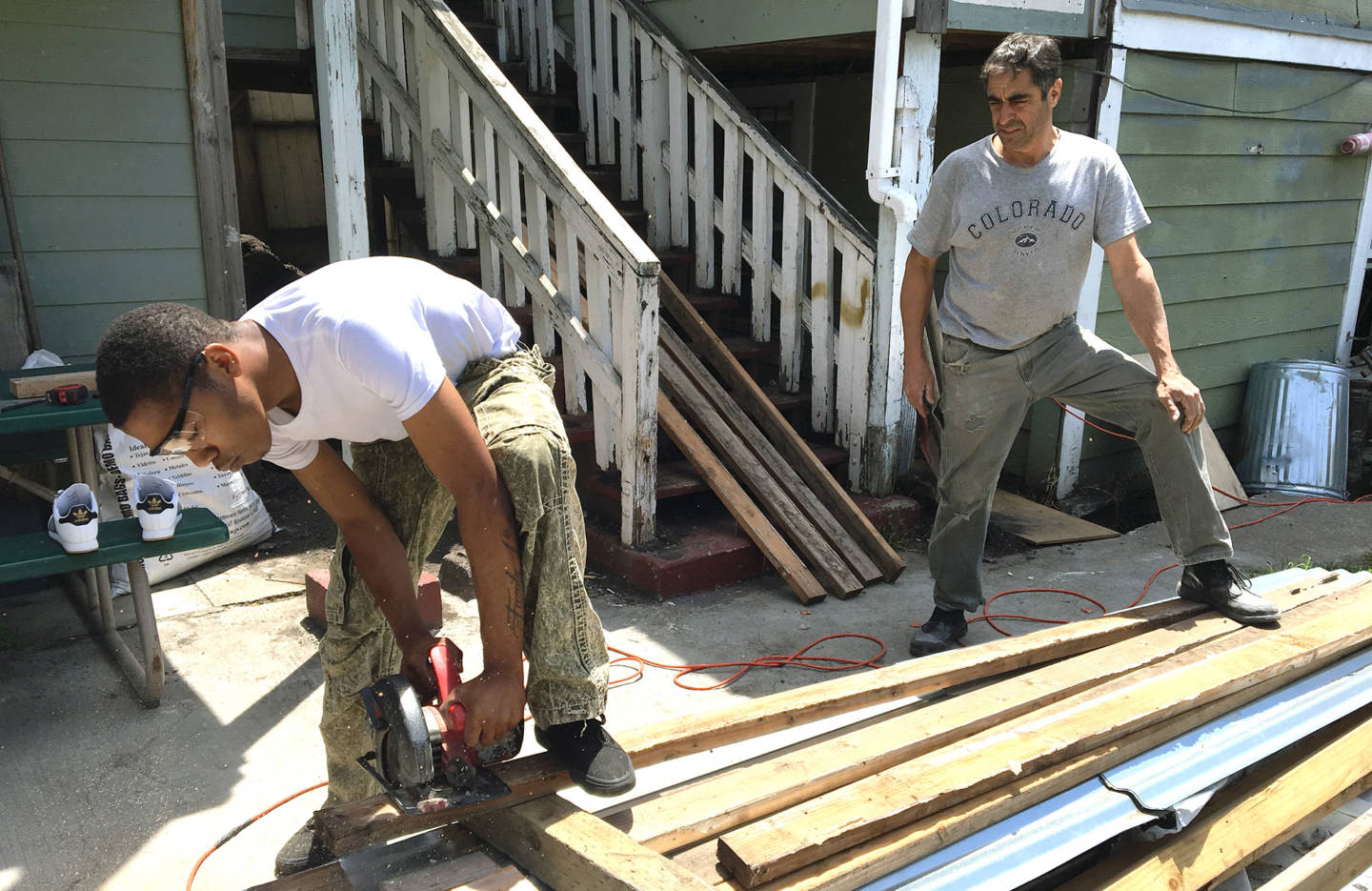
"caption": "Kris McCoy works with his mentor Murray Rubenzahl to cut wood they will use to frame a closet.",
"description": "Kris McCoy works with his mentor Murray Rubenzahl to cut wood they will use to frame a closet.",
"title": "Kris-color-corrected",
"credit": "Katrina Schwartz",
"status": "inherit",
"isLoading": false,
"fetchFailed": false
},
"mindshift_45088": {
"type": "attachments",
"id": "mindshift_45088",
"meta": {
"index": "attachments_1716263798",
"site": "mindshift",
"id": "45088",
"found": true
},
"parent": 45085,
"imgSizes": {
"twentyfourteen-full-width": {
"file": "https://ww2.kqed.org/app/uploads/sites/23/2016/05/Cheating-1038x576.jpg",
"width": 1038,
"mimeType": "image/jpeg",
"height": 576
},
"thumbnail": {
"file": "https://ww2.kqed.org/app/uploads/sites/23/2016/05/Cheating-400x225.jpg",
"width": 400,
"mimeType": "image/jpeg",
"height": 225
},
"fd-sm": {
"file": "https://ww2.kqed.org/app/uploads/sites/23/2016/05/Cheating-960x540.jpg",
"width": 960,
"mimeType": "image/jpeg",
"height": 540
},
"post-thumbnail": {
"file": "https://ww2.kqed.org/app/uploads/sites/23/2016/05/Cheating-672x372.jpg",
"width": 672,
"mimeType": "image/jpeg",
"height": 372
},
"kqedFullSize": {
"file": "https://ww2.kqed.org/app/uploads/sites/23/2016/05/Cheating.jpg",
"width": 1920,
"height": 1080
},
"large": {
"file": "https://ww2.kqed.org/app/uploads/sites/23/2016/05/Cheating-1440x810.jpg",
"width": 1440,
"mimeType": "image/jpeg",
"height": 810
},
"guest-author-96": {
"file": "https://ww2.kqed.org/app/uploads/sites/23/2016/05/Cheating-96x96.jpg",
"width": 96,
"mimeType": "image/jpeg",
"height": 96
},
"medium": {
"file": "https://ww2.kqed.org/app/uploads/sites/23/2016/05/Cheating-800x450.jpg",
"width": 800,
"mimeType": "image/jpeg",
"height": 450
},
"guest-author-64": {
"file": "https://ww2.kqed.org/app/uploads/sites/23/2016/05/Cheating-64x64.jpg",
"width": 64,
"mimeType": "image/jpeg",
"height": 64
},
"guest-author-32": {
"file": "https://ww2.kqed.org/app/uploads/sites/23/2016/05/Cheating-32x32.jpg",
"width": 32,
"mimeType": "image/jpeg",
"height": 32
},
"cat_post_thumb_sizecategory-posts-2": {
"file": "https://ww2.kqed.org/app/uploads/sites/23/2016/05/Cheating-50x50.jpg",
"width": 50,
"mimeType": "image/jpeg",
"height": 50
},
"fd-lrg": {
"file": "https://ww2.kqed.org/app/uploads/sites/23/2016/05/Cheating-1920x1080.jpg",
"width": 1920,
"mimeType": "image/jpeg",
"height": 1080
},
"fd-med": {
"file": "https://ww2.kqed.org/app/uploads/sites/23/2016/05/Cheating-1180x664.jpg",
"width": 1180,
"mimeType": "image/jpeg",
"height": 664
},
"detail": {
"file": "https://ww2.kqed.org/app/uploads/sites/23/2016/05/Cheating-150x150.jpg",
"width": 150,
"mimeType": "image/jpeg",
"height": 150
},
"medium_large": {
"file": "https://ww2.kqed.org/app/uploads/sites/23/2016/05/Cheating-768x432.jpg",
"width": 768,
"mimeType": "image/jpeg",
"height": 432
},
"guest-author-128": {
"file": "https://ww2.kqed.org/app/uploads/sites/23/2016/05/Cheating-128x128.jpg",
"width": 128,
"mimeType": "image/jpeg",
"height": 128
}
},
"publishDate": 1463385499,
"modified": 1463385505,
"caption": null,
"description": null,
"title": "Cheating",
"credit": "iStock",
"status": "inherit",
"isLoading": false,
"fetchFailed": false
},
"mindshift_44878": {
"type": "attachments",
"id": "mindshift_44878",
"meta": {
"index": "attachments_1716263798",
"site": "mindshift",
"id": "44878",
"found": true
},
"parent": 44872,
"imgSizes": {
"twentyfourteen-full-width": {
"file": "https://ww2.kqed.org/app/uploads/sites/23/2016/04/Bullying-1038x576.jpg",
"width": 1038,
"mimeType": "image/jpeg",
"height": 576
},
"thumbnail": {
"file": "https://ww2.kqed.org/app/uploads/sites/23/2016/04/Bullying-400x225.jpg",
"width": 400,
"mimeType": "image/jpeg",
"height": 225
},
"fd-sm": {
"file": "https://ww2.kqed.org/app/uploads/sites/23/2016/04/Bullying-960x540.jpg",
"width": 960,
"mimeType": "image/jpeg",
"height": 540
},
"post-thumbnail": {
"file": "https://ww2.kqed.org/app/uploads/sites/23/2016/04/Bullying-672x372.jpg",
"width": 672,
"mimeType": "image/jpeg",
"height": 372
},
"kqedFullSize": {
"file": "https://ww2.kqed.org/app/uploads/sites/23/2016/04/Bullying.jpg",
"width": 1920,
"height": 1080
},
"large": {
"file": "https://ww2.kqed.org/app/uploads/sites/23/2016/04/Bullying-1440x810.jpg",
"width": 1440,
"mimeType": "image/jpeg",
"height": 810
},
"guest-author-96": {
"file": "https://ww2.kqed.org/app/uploads/sites/23/2016/04/Bullying-96x96.jpg",
"width": 96,
"mimeType": "image/jpeg",
"height": 96
},
"medium": {
"file": "https://ww2.kqed.org/app/uploads/sites/23/2016/04/Bullying-800x450.jpg",
"width": 800,
"mimeType": "image/jpeg",
"height": 450
},
"guest-author-64": {
"file": "https://ww2.kqed.org/app/uploads/sites/23/2016/04/Bullying-64x64.jpg",
"width": 64,
"mimeType": "image/jpeg",
"height": 64
},
"guest-author-32": {
"file": "https://ww2.kqed.org/app/uploads/sites/23/2016/04/Bullying-32x32.jpg",
"width": 32,
"mimeType": "image/jpeg",
"height": 32
},
"cat_post_thumb_sizecategory-posts-2": {
"file": "https://ww2.kqed.org/app/uploads/sites/23/2016/04/Bullying-50x50.jpg",
"width": 50,
"mimeType": "image/jpeg",
"height": 50
},
"fd-lrg": {
"file": "https://ww2.kqed.org/app/uploads/sites/23/2016/04/Bullying-1920x1080.jpg",
"width": 1920,
"mimeType": "image/jpeg",
"height": 1080
},
"fd-med": {
"file": "https://ww2.kqed.org/app/uploads/sites/23/2016/04/Bullying-1180x664.jpg",
"width": 1180,
"mimeType": "image/jpeg",
"height": 664
},
"detail": {
"file": "https://ww2.kqed.org/app/uploads/sites/23/2016/04/Bullying-150x150.jpg",
"width": 150,
"mimeType": "image/jpeg",
"height": 150
},
"medium_large": {
"file": "https://ww2.kqed.org/app/uploads/sites/23/2016/04/Bullying-768x432.jpg",
"width": 768,
"mimeType": "image/jpeg",
"height": 432
},
"guest-author-128": {
"file": "https://ww2.kqed.org/app/uploads/sites/23/2016/04/Bullying-128x128.jpg",
"width": 128,
"mimeType": "image/jpeg",
"height": 128
}
},
"publishDate": 1461912791,
"modified": 1461912799,
"caption": null,
"description": null,
"title": "Bullying",
"credit": "iStock",
"status": "inherit",
"isLoading": false,
"fetchFailed": false
},
"mindshift_44774": {
"type": "attachments",
"id": "mindshift_44774",
"meta": {
"index": "attachments_1716263798",
"site": "mindshift",
"id": "44774",
"found": true
},
"parent": 44772,
"imgSizes": {
"twentyfourteen-full-width": {
"file": "https://ww2.kqed.org/app/uploads/sites/23/2016/04/Serge-Saint-1038x576.jpg",
"width": 1038,
"mimeType": "image/jpeg",
"height": 576
},
"thumbnail": {
"file": "https://ww2.kqed.org/app/uploads/sites/23/2016/04/Serge-Saint-400x267.jpg",
"width": 400,
"mimeType": "image/jpeg",
"height": 267
},
"fd-sm": {
"file": "https://ww2.kqed.org/app/uploads/sites/23/2016/04/Serge-Saint-960x640.jpg",
"width": 960,
"mimeType": "image/jpeg",
"height": 640
},
"post-thumbnail": {
"file": "https://ww2.kqed.org/app/uploads/sites/23/2016/04/Serge-Saint-672x372.jpg",
"width": 672,
"mimeType": "image/jpeg",
"height": 372
},
"kqedFullSize": {
"file": "https://ww2.kqed.org/app/uploads/sites/23/2016/04/Serge-Saint-e1461307568991.jpg",
"width": 1920,
"height": 1280
},
"large": {
"file": "https://ww2.kqed.org/app/uploads/sites/23/2016/04/Serge-Saint-1440x960.jpg",
"width": 1440,
"mimeType": "image/jpeg",
"height": 960
},
"guest-author-96": {
"file": "https://ww2.kqed.org/app/uploads/sites/23/2016/04/Serge-Saint-96x96.jpg",
"width": 96,
"mimeType": "image/jpeg",
"height": 96
},
"medium": {
"file": "https://ww2.kqed.org/app/uploads/sites/23/2016/04/Serge-Saint-800x533.jpg",
"width": 800,
"mimeType": "image/jpeg",
"height": 533
},
"guest-author-64": {
"file": "https://ww2.kqed.org/app/uploads/sites/23/2016/04/Serge-Saint-64x64.jpg",
"width": 64,
"mimeType": "image/jpeg",
"height": 64
},
"guest-author-32": {
"file": "https://ww2.kqed.org/app/uploads/sites/23/2016/04/Serge-Saint-32x32.jpg",
"width": 32,
"mimeType": "image/jpeg",
"height": 32
},
"cat_post_thumb_sizecategory-posts-2": {
"file": "https://ww2.kqed.org/app/uploads/sites/23/2016/04/Serge-Saint-50x50.jpg",
"width": 50,
"mimeType": "image/jpeg",
"height": 50
},
"fd-lrg": {
"file": "https://ww2.kqed.org/app/uploads/sites/23/2016/04/Serge-Saint-1920x1280.jpg",
"width": 1920,
"mimeType": "image/jpeg",
"height": 1280
},
"fd-med": {
"file": "https://ww2.kqed.org/app/uploads/sites/23/2016/04/Serge-Saint-1180x786.jpg",
"width": 1180,
"mimeType": "image/jpeg",
"height": 786
},
"detail": {
"file": "https://ww2.kqed.org/app/uploads/sites/23/2016/04/Serge-Saint-75x75.jpg",
"width": 75,
"mimeType": "image/jpeg",
"height": 75
},
"medium_large": {
"file": "https://ww2.kqed.org/app/uploads/sites/23/2016/04/Serge-Saint-768x512.jpg",
"width": 768,
"mimeType": "image/jpeg",
"height": 512
},
"guest-author-128": {
"file": "https://ww2.kqed.org/app/uploads/sites/23/2016/04/Serge-Saint-128x128.jpg",
"width": 128,
"mimeType": "image/jpeg",
"height": 128
}
},
"publishDate": 1461307552,
"modified": 1461307561,
"caption": null,
"description": null,
"title": "Serge Saint",
"credit": " \u003ca href=\"https://www.flickr.com/photos/sergiosf/7696330570/in/photolist-cJ6GWE-eheQ5W-ehePAo-eheVoJ-8tmmZs-akPoZH-e621uT-e67JKw-e62gdn-bz5ghY-e61H4a-bMZ1aH-e67KrN-bMZ5xc-e623h4-372CTF-bz5cvN-z9bkK7-8zF4fa-e67F5q-eheRS9-e67HAU-bMZ6te-bMZ3ZZ-bF81rm-eheSGd-eheRtb-bz5bM7-5VNsuq-e67xry-e67Agf-e61Y8p-e67wam-e61Rnc-eheXSu-e67Ea9-e67MSw-eh9f9c-eh99De-bRirL-bz5i6h-cj3oZ-eheSeU-e61QSg-e67CwN-8cnyYW-bMZbtM-bz59UW-bz5usW-eheTK5\">Serge Saint/Flickr\u003c/a>",
"status": "inherit",
"isLoading": false,
"fetchFailed": false
},
"mindshift_44683": {
"type": "attachments",
"id": "mindshift_44683",
"meta": {
"index": "attachments_1716263798",
"site": "mindshift",
"id": "44683",
"found": true
},
"parent": 44682,
"imgSizes": {
"twentyfourteen-full-width": {
"file": "https://ww2.kqed.org/app/uploads/sites/23/2016/04/mg_2004toned_slide-22eeb492672862c929de52da0d2928db68a2cbd3-1038x576.jpg",
"width": 1038,
"mimeType": "image/jpeg",
"height": 576
},
"thumbnail": {
"file": "https://ww2.kqed.org/app/uploads/sites/23/2016/04/mg_2004toned_slide-22eeb492672862c929de52da0d2928db68a2cbd3-400x267.jpg",
"width": 400,
"mimeType": "image/jpeg",
"height": 267
},
"fd-sm": {
"file": "https://ww2.kqed.org/app/uploads/sites/23/2016/04/mg_2004toned_slide-22eeb492672862c929de52da0d2928db68a2cbd3-960x640.jpg",
"width": 960,
"mimeType": "image/jpeg",
"height": 640
},
"post-thumbnail": {
"file": "https://ww2.kqed.org/app/uploads/sites/23/2016/04/mg_2004toned_slide-22eeb492672862c929de52da0d2928db68a2cbd3-672x372.jpg",
"width": 672,
"mimeType": "image/jpeg",
"height": 372
},
"kqedFullSize": {
"file": "https://ww2.kqed.org/app/uploads/sites/23/2016/04/mg_2004toned_slide-22eeb492672862c929de52da0d2928db68a2cbd3.jpg",
"width": 2995,
"height": 1996
},
"large": {
"file": "https://ww2.kqed.org/app/uploads/sites/23/2016/04/mg_2004toned_slide-22eeb492672862c929de52da0d2928db68a2cbd3-1440x960.jpg",
"width": 1440,
"mimeType": "image/jpeg",
"height": 960
},
"guest-author-96": {
"file": "https://ww2.kqed.org/app/uploads/sites/23/2016/04/mg_2004toned_slide-22eeb492672862c929de52da0d2928db68a2cbd3-96x96.jpg",
"width": 96,
"mimeType": "image/jpeg",
"height": 96
},
"medium": {
"file": "https://ww2.kqed.org/app/uploads/sites/23/2016/04/mg_2004toned_slide-22eeb492672862c929de52da0d2928db68a2cbd3-800x533.jpg",
"width": 800,
"mimeType": "image/jpeg",
"height": 533
},
"guest-author-64": {
"file": "https://ww2.kqed.org/app/uploads/sites/23/2016/04/mg_2004toned_slide-22eeb492672862c929de52da0d2928db68a2cbd3-64x64.jpg",
"width": 64,
"mimeType": "image/jpeg",
"height": 64
},
"guest-author-32": {
"file": "https://ww2.kqed.org/app/uploads/sites/23/2016/04/mg_2004toned_slide-22eeb492672862c929de52da0d2928db68a2cbd3-32x32.jpg",
"width": 32,
"mimeType": "image/jpeg",
"height": 32
},
"cat_post_thumb_sizecategory-posts-2": {
"file": "https://ww2.kqed.org/app/uploads/sites/23/2016/04/mg_2004toned_slide-22eeb492672862c929de52da0d2928db68a2cbd3-50x50.jpg",
"width": 50,
"mimeType": "image/jpeg",
"height": 50
},
"fd-lrg": {
"file": "https://ww2.kqed.org/app/uploads/sites/23/2016/04/mg_2004toned_slide-22eeb492672862c929de52da0d2928db68a2cbd3-1920x1280.jpg",
"width": 1920,
"mimeType": "image/jpeg",
"height": 1280
},
"fd-med": {
"file": "https://ww2.kqed.org/app/uploads/sites/23/2016/04/mg_2004toned_slide-22eeb492672862c929de52da0d2928db68a2cbd3-1180x786.jpg",
"width": 1180,
"mimeType": "image/jpeg",
"height": 786
},
"detail": {
"file": "https://ww2.kqed.org/app/uploads/sites/23/2016/04/mg_2004toned_slide-22eeb492672862c929de52da0d2928db68a2cbd3-75x75.jpg",
"width": 75,
"mimeType": "image/jpeg",
"height": 75
},
"medium_large": {
"file": "https://ww2.kqed.org/app/uploads/sites/23/2016/04/mg_2004toned_slide-22eeb492672862c929de52da0d2928db68a2cbd3-768x512.jpg",
"width": 768,
"mimeType": "image/jpeg",
"height": 512
},
"guest-author-128": {
"file": "https://ww2.kqed.org/app/uploads/sites/23/2016/04/mg_2004toned_slide-22eeb492672862c929de52da0d2928db68a2cbd3-128x128.jpg",
"width": 128,
"mimeType": "image/jpeg",
"height": 128
}
},
"publishDate": 1460482478,
"modified": 1460482478,
"caption": null,
"description": "Before Alejandra Galindo, 17, was identified as gifted, she was identified as an ELL, or English Language Learner.",
"title": "Before Alejandra Galindo, 17, was identified as gifted, she was identified as an ELL, or English Language Learner.",
"credit": null,
"status": "inherit",
"isLoading": false,
"fetchFailed": false
},
"mindshift_44649": {
"type": "attachments",
"id": "mindshift_44649",
"meta": {
"index": "attachments_1716263798",
"site": "mindshift",
"id": "44649",
"found": true
},
"parent": 44645,
"imgSizes": {
"twentyfourteen-full-width": {
"file": "https://ww2.kqed.org/app/uploads/sites/23/2016/04/emotional-reading-1038x576.jpg",
"width": 1038,
"mimeType": "image/jpeg",
"height": 576
},
"thumbnail": {
"file": "https://ww2.kqed.org/app/uploads/sites/23/2016/04/emotional-reading-400x225.jpg",
"width": 400,
"mimeType": "image/jpeg",
"height": 225
},
"fd-sm": {
"file": "https://ww2.kqed.org/app/uploads/sites/23/2016/04/emotional-reading-960x540.jpg",
"width": 960,
"mimeType": "image/jpeg",
"height": 540
},
"post-thumbnail": {
"file": "https://ww2.kqed.org/app/uploads/sites/23/2016/04/emotional-reading-672x372.jpg",
"width": 672,
"mimeType": "image/jpeg",
"height": 372
},
"kqedFullSize": {
"file": "https://ww2.kqed.org/app/uploads/sites/23/2016/04/emotional-reading.jpg",
"width": 3888,
"height": 2187
},
"large": {
"file": "https://ww2.kqed.org/app/uploads/sites/23/2016/04/emotional-reading-1440x810.jpg",
"width": 1440,
"mimeType": "image/jpeg",
"height": 810
},
"guest-author-96": {
"file": "https://ww2.kqed.org/app/uploads/sites/23/2016/04/emotional-reading-96x96.jpg",
"width": 96,
"mimeType": "image/jpeg",
"height": 96
},
"medium": {
"file": "https://ww2.kqed.org/app/uploads/sites/23/2016/04/emotional-reading-800x450.jpg",
"width": 800,
"mimeType": "image/jpeg",
"height": 450
},
"guest-author-64": {
"file": "https://ww2.kqed.org/app/uploads/sites/23/2016/04/emotional-reading-64x64.jpg",
"width": 64,
"mimeType": "image/jpeg",
"height": 64
},
"guest-author-32": {
"file": "https://ww2.kqed.org/app/uploads/sites/23/2016/04/emotional-reading-32x32.jpg",
"width": 32,
"mimeType": "image/jpeg",
"height": 32
},
"cat_post_thumb_sizecategory-posts-2": {
"file": "https://ww2.kqed.org/app/uploads/sites/23/2016/04/emotional-reading-50x50.jpg",
"width": 50,
"mimeType": "image/jpeg",
"height": 50
},
"fd-lrg": {
"file": "https://ww2.kqed.org/app/uploads/sites/23/2016/04/emotional-reading-1920x1080.jpg",
"width": 1920,
"mimeType": "image/jpeg",
"height": 1080
},
"fd-med": {
"file": "https://ww2.kqed.org/app/uploads/sites/23/2016/04/emotional-reading-1180x664.jpg",
"width": 1180,
"mimeType": "image/jpeg",
"height": 664
},
"detail": {
"file": "https://ww2.kqed.org/app/uploads/sites/23/2016/04/emotional-reading-75x75.jpg",
"width": 75,
"mimeType": "image/jpeg",
"height": 75
},
"medium_large": {
"file": "https://ww2.kqed.org/app/uploads/sites/23/2016/04/emotional-reading-768x432.jpg",
"width": 768,
"mimeType": "image/jpeg",
"height": 432
},
"guest-author-128": {
"file": "https://ww2.kqed.org/app/uploads/sites/23/2016/04/emotional-reading-128x128.jpg",
"width": 128,
"mimeType": "image/jpeg",
"height": 128
}
},
"publishDate": 1459987217,
"modified": 1459987253,
"caption": null,
"description": null,
"title": "emotional-reading",
"credit": "Sam Greenhalgh/\u003ca href=\"https://www.flickr.com/photos/zapthedingbat/3591108120/\"Flickr\u003c/a>",
"status": "inherit",
"isLoading": false,
"fetchFailed": false
}
},
"audioPlayerReducer": {
"postId": "stream_live",
"isPaused": true,
"isPlaying": false,
"pfsActive": false,
"pledgeModalIsOpen": true,
"playerDrawerIsOpen": false,
"liveAudioPlayStartedAt": 0,
"liveAudioPlayContext": ""
},
"authorsReducer": {
"byline_mindshift_46298": {
"type": "authors",
"id": "byline_mindshift_46298",
"meta": {
"override": true
},
"slug": "byline_mindshift_46298",
"name": "Gabrielle Emanuel, \u003ca href=\"http://www.npr.org/sections/ed/2016/09/03/491204888/how-domestic-violence-in-one-home-affects-every-child-in-a-class\">NPR\u003c/a>",
"isLoading": false
},
"byline_mindshift_48506": {
"type": "authors",
"id": "byline_mindshift_48506",
"meta": {
"override": true
},
"slug": "byline_mindshift_48506",
"name": "Hanna Rosin",
"isLoading": false
},
"byline_mindshift_44682": {
"type": "authors",
"id": "byline_mindshift_44682",
"meta": {
"override": true
},
"slug": "byline_mindshift_44682",
"name": "Claudio Sanchez",
"isLoading": false
},
"katrinaschwartz": {
"type": "authors",
"id": "234",
"meta": {
"index": "authors_1716337520",
"id": "234",
"found": true
},
"name": "Katrina Schwartz",
"firstName": "Katrina",
"lastName": "Schwartz",
"slug": "katrinaschwartz",
"email": "kschwartz@kqed.org",
"display_author_email": false,
"staff_mastheads": [
"news"
],
"title": "Producer",
"bio": "Katrina Schwartz is a journalist based in San Francisco. She's worked at KPCC public radio in LA and has reported on air and online for KQED since 2010. She covered how teaching and learning is changing for MindShift between 2012 and 2020. She is the co-host of the MindShift podcast and now produces KQED's Bay Curious podcast.",
"avatar": "https://secure.gravatar.com/avatar/edb4ee79070447a018538c9aae6eeecf28786515b8a0c30e43b6b7dce5aa44c8?s=600&d=blank&r=g",
"twitter": "kschwart",
"bluesky": null,
"facebook": null,
"instagram": null,
"linkedin": null,
"sites": [
{
"site": "",
"roles": [
"editor"
]
},
{
"site": "news",
"roles": [
"editor"
]
},
{
"site": "mindshift",
"roles": [
"administrator"
]
},
{
"site": "stateofhealth",
"roles": [
"author"
]
},
{
"site": "science",
"roles": [
"editor"
]
}
],
"headData": {
"title": "Katrina Schwartz | KQED",
"description": "Producer",
"ogImgSrc": "https://secure.gravatar.com/avatar/edb4ee79070447a018538c9aae6eeecf28786515b8a0c30e43b6b7dce5aa44c8?s=600&d=blank&r=g",
"twImgSrc": "https://secure.gravatar.com/avatar/edb4ee79070447a018538c9aae6eeecf28786515b8a0c30e43b6b7dce5aa44c8?s=600&d=blank&r=g"
},
"isLoading": false,
"link": "/author/katrinaschwartz"
},
"hollykorbey": {
"type": "authors",
"id": "4445",
"meta": {
"index": "authors_1716337520",
"id": "4445",
"found": true
},
"name": "Holly Korbey",
"firstName": "Holly",
"lastName": "Korbey",
"slug": "hollykorbey",
"email": "holly@hollykorbey.com",
"display_author_email": false,
"staff_mastheads": [],
"title": null,
"bio": "Holly Korbey's work on parenting and education has appeared in The New York Times, The Atlantic, Babble, Brain, Child Magazine, and others. She lives in Nashville with her family. Follow her on Twitter: @HKorbey",
"avatar": "https://secure.gravatar.com/avatar/f385f7a3b90e52ecd5e85c24fbd0a363?s=600&d=blank&r=g",
"twitter": null,
"facebook": null,
"instagram": null,
"linkedin": null,
"sites": [
{
"site": "mindshift",
"roles": [
"contributor"
]
}
],
"headData": {
"title": "Holly Korbey | KQED",
"description": null,
"ogImgSrc": "https://secure.gravatar.com/avatar/f385f7a3b90e52ecd5e85c24fbd0a363?s=600&d=blank&r=g",
"twImgSrc": "https://secure.gravatar.com/avatar/f385f7a3b90e52ecd5e85c24fbd0a363?s=600&d=blank&r=g"
},
"isLoading": false,
"link": "/author/hollykorbey"
},
"lindaflan": {
"type": "authors",
"id": "4613",
"meta": {
"index": "authors_1716337520",
"id": "4613",
"found": true
},
"name": "Linda Flanagan",
"firstName": "Linda",
"lastName": "Flanagan",
"slug": "lindaflan",
"email": "lindaflan@comcast.net",
"display_author_email": false,
"staff_mastheads": [],
"title": null,
"bio": "Linda Flanagan is a freelance writer, researcher, and editor. Her work has appeared in The Atlantic, The Wall St. Journal, Newsweek, Running Times, and Mind/Shift, and she blogs regularly for the Huffington Post. Linda writes about education, culture, athletics, youth sports, mental health, politics, college admissions, and other curiosities. She also reviews books and conducts interviews.",
"avatar": "https://secure.gravatar.com/avatar/6bca04c0736bf5eaea80654019de688f?s=600&d=blank&r=g",
"twitter": "LindaFlanagan2",
"facebook": null,
"instagram": null,
"linkedin": null,
"sites": [
{
"site": "mindshift",
"roles": [
"contributor"
]
}
],
"headData": {
"title": "Linda Flanagan | KQED",
"description": null,
"ogImgSrc": "https://secure.gravatar.com/avatar/6bca04c0736bf5eaea80654019de688f?s=600&d=blank&r=g",
"twImgSrc": "https://secure.gravatar.com/avatar/6bca04c0736bf5eaea80654019de688f?s=600&d=blank&r=g"
},
"isLoading": false,
"link": "/author/lindaflan"
}
},
"pagesReducer": {
"mindshift_category_culture": {
"type": "terms",
"id": "mindshift_194",
"meta": {
"index": "terms_1716263798",
"site": "mindshift",
"id": "194",
"score": 12.371043
},
"featImg": null,
"name": "Culture",
"description": "How trends in technology – social networks, Internet privacy, cyberbullying – influence education.",
"taxonomy": "category",
"headData": {
"twImgId": null,
"twTitle": null,
"ogTitle": null,
"ogImgId": null,
"twDescription": null,
"description": "How trends in technology – social networks, Internet privacy, cyberbullying – influence education.",
"title": "Culture Archives | KQED Mindshift",
"ogDescription": null
},
"ttid": 194,
"slug": "culture",
"isLoading": false,
"title": "Culture",
"pageMeta": {
"site": "mindshift",
"WpPageTemplate": "page-topic-editorial",
"currentPage": 12
},
"blocks": [
{
"blockName": "kqed/company-paragraph",
"content": "How trends in technology – social networks, Internet privacy, cyberbullying – influence education."
},
{
"blockName": "kqed/post-list",
"attrs": {
"layout": "cardArticle2",
"query": "posts/mindshift?category=culture",
"seeMore": false,
"paginated": true,
"page": 12
}
},
{
"blockName": "kqed/ad"
}
]
}
},
"pfsSessionReducer": {},
"postsReducer": {
"stream_live": {
"type": "live",
"id": "stream_live",
"audioUrl": "https://streams.kqed.org/kqedradio",
"title": "Live Stream",
"excerpt": "Live Stream information currently unavailable.",
"link": "/radio",
"featImg": "",
"label": {
"name": "KQED Live",
"link": "/"
}
},
"stream_kqedNewscast": {
"type": "posts",
"id": "stream_kqedNewscast",
"audioUrl": "https://www.kqed.org/.stream/anon/radio/RDnews/newscast.mp3?_=1",
"title": "KQED Newscast",
"featImg": "",
"label": {
"name": "88.5 FM",
"link": "/"
}
},
"mindshift_46298": {
"type": "posts",
"id": "mindshift_46298",
"meta": {
"index": "posts_1716263798",
"site": "mindshift",
"id": "46298",
"score": null,
"sort": [
1473360809000
]
},
"parent": 0,
"labelTerm": {
"site": "mindshift"
},
"blocks": [],
"publishDate": 1473360809,
"format": "standard",
"disqusTitle": "How Domestic Violence In One Home Affects Every Child In A Class",
"title": "How Domestic Violence In One Home Affects Every Child In A Class",
"headTitle": "MindShift | KQED News",
"content": "\u003cp>\u003cem>Part of our NPR Ed series on mental health in schools.\u003c/em>\u003c/p>\n\u003cp>Every Monday morning at Harvie Elementary School, in Henrico County, Va., Brett Welch stands outside her office door as kids file in.\u003c/p>\n\u003cp>\"The first thing I'm looking for are the faces,\" says Welch, a school counselor. She's searching for hints of fear, pain or anger.\u003c/p>\n\u003cp>\"Maybe there was a domestic incident at the house that weekend,\" says Welch. \"That's reality for a lot of our kids.\"\u003c/p>\n\u003cp>And a reality for a lot of kids in the U.S. While it's difficult to get an exact number, researchers estimate that between 10 and 20 percent of children are exposed to domestic violence each year.\u003c/p>\n\u003cp>[ad fullwidth]\u003c/p>\n\u003cp>New data quantifies what many teachers and school counselors already know: While such violence often takes place outside of school, its repercussions resonate in the classroom.\u003c/p>\n\u003cp>It hurts not only the kids who witness the violence, but also their classmates. The harm is evident in lower test scores as well as lower rates of college attendance and completion. And the impact extends past graduation — it can be seen in lower earnings later in life.\u003c/p>\n\u003cp>\"It's a sad story,\" says Scott Carrell, economist at the University of California, Davis, who has studied this for over a decade.\u003c/p>\n\u003cp>But, he says, there's one thing he and his colleagues — economists Mark Hoekstra and Elira Kuka — found that can improve the situation \"not only for that family but for all the child's classmates.\" What was it? Reporting domestic violence when it happens.\u003c/p>\n\u003cp>\u003cstrong>Violence at home, disruption at school\u003c/strong>\u003c/p>\n\u003cp>Brett Welch says she's noticed that kids who act out at school often come from tough home situations.\u003c/p>\n\u003cp>\"Instead of asking for help, they'll start being disruptive,\" Welch explains.\u003c/p>\n\u003cp>\"They'll ask to go to the bathroom for the 15th time. And when they can't, they'll raise their voices. It can get to the level of throwing a chair — but that's very rare.\"\u003c/p>\n\u003cp>Kids who witness domestic violence are more likely to get in trouble at school and have behavioral problems, including being aggressive and bullying their classmates.\u003c/p>\n\u003cp>Welch says she understands why: School is \"where they can feel powerful because they are completely powerless at home.\"\u003c/p>\n\u003cp>She often works with those kids one-on-one or in small groups. She wants them to have at least one relationship where \"they feel listened to and they feel respected and they know someone cares. That can change everything for them.\"\u003c/p>\n\u003cp>Around the country there aren't enough counselors like Welch to go around. Not all states require elementary schools to have counselors. And even where they are required, there can be large caseloads. Sometimes one counselor covers multiple schools and oversees more than 1,000 students.\u003c/p>\n\u003cp>Welch is stretched so thin she's only at Harvie Elementary two days a week. But a kid may need Welch's support at any time — and mornings in particular are key.\u003c/p>\n\u003cp>The first 10 minutes after a student arrives at school in the morning is a critical window, Welch says. If she's able to catch them and make them feel heard, \"it can completely change their day\" — and it can change their classmates' days, too.\u003c/p>\n\u003cp>\u003cstrong>Influence on classmates\u003c/strong>\u003c/p>\n\u003cp>If one kid is having a hard day, Brett Welch says, it influences the rest of the children in the classroom.\u003c/p>\n\u003cp>\"It takes the teacher's attention, it interrupts learning and it interrupts the flow of the day.\" She says she can see the impact on classmates' academic work.\u003c/p>\n\u003cp>Scott Carrell's data confirms what Welch has observed.\u003c/p>\n\u003cp>He links lots of academic metrics — like test scores, discipline infractions and college graduation rates — with court records on whether a parent has filed a restraining order.\u003c/p>\n\u003cp>Now, domestic violence and restraining orders happen in all the schools Carrell examined. But they were 10 times more likely to happen in the school serving the poorest population compared with the school serving the wealthiest population. So to make sure he wasn't just seeing the effect of poverty, Carrell came up with a clever solution.\u003c/p>\n\u003cp>He looked at siblings who come from the same family and go to the same school, but one sibling has a classmate who's struggling with domestic violence and the other sibling doesn't.\u003c/p>\n\u003cp>Examining lots of sibling pairs and crunching almost two decades worth of data, Carrell found that your classmates, and whether or not they come from a home with domestic violence, influence how well you do in school and beyond.\u003c/p>\n\u003cp>Measuring harm in dollar figures, Carrell looked at wages when the students grew up. He found that: \"exposure to an additional disruptive peer throughout elementary school leads to a 3 to 4 percent reduction in earnings at age 24 to 28.\"\u003c/p>\n\u003cp>Carrell says that number adds up quickly — because, in a class of 25 kids, that's a 3 or 4 percent drop in wages for each person. Plus, if your classroom has multiple children from troubled homes, the tests scores get lower and lower and the wages drop gets bigger and bigger with each additional disruptive child.\u003c/p>\n\u003cp>Carrell argues this has implications for how to make schools and classrooms fair. He says, ideally, we would avoid concentrating disruptive kids in the same classroom or the same school.\u003c/p>\n\u003cp>And Carrell says his biggest takeaway is that \"society has a vested interest in helping those families that are struggling with domestic violence. The more we can help other households, the better off our children will be.\"\u003c/p>\n\u003cp>\u003cstrong>What can be done to improve things?\u003c/strong>\u003c/p>\n\u003cp>Carrell and his colleagues found one thing that, they say, really helps: parents reporting the domestic violence.\u003c/p>\n\u003cp>After reporting it, \"things get better.\"\u003c/p>\n\u003cp>Carrell says there are three things that might account for this: First, the violence in the homes may have stopped. Second, another adult has decided to make some positive changes in the child's life. Third, people like Brett Welch get involved.\u003c/p>\n\u003cp>Reporting domestic violence forces the school to pay attention, and often that means the school counselors get involved.\u003c/p>\n\u003cp>Welch talks to students about finding safe places in their homes. She works on anger management. She helps kids improve their emotional vocabulary.\u003c/p>\n\u003cp>Vickie Fahed, a kindergarten teacher at Harvie Elementary, says she can see Welch's impact on a child. When Fahed has angry or disruptive children, she sends them down the hallway to see Welch.\u003c/p>\n\u003cp>\"The child comes back so relaxed and so at peace,\" Fahed says.\u003c/p>\n\u003cp>When that child is at ease, the whole class can focus. That translates into higher test scores and better graduation rates for the child and their classmates.\u003c/p>\n\u003cp>All this is great — at least on Mondays and Thursdays, when Welch is here.\u003c/p>\n\u003cp>\"You can tell when she's not here in this building,\" says Fayed. \"It's a big difference. We're like: 'OK, she's not here today? OK, wait till tomorrow.' \"\u003c/p>\n\u003cp>On the days Brett Welch is in the building, she stands by the door as students leave.\u003c/p>\n\u003cp>\"You tell them that you love them because you do,\" Welch says. \"And because maybe that's what they need to be able to get through whatever they need to get through at home.\"\u003c/p>\n\u003cp>[ad floatright]\u003c/p>\n\u003cp>And, both Brett Welch and Scott Carrell say, if the child's home life gets better, things will get better at school — for that child, and for their classmates.\u003c/p>\n\u003cdiv class=\"fullattribution\">Copyright 2016 NPR. To see more, visit http://www.npr.org/.\u003cimg src=\"http://www.google-analytics.com/__utm.gif?utmac=UA-5828686-4&utmdt=How+Domestic+Violence+In+One+Home+Affects+Every+Child+In+A+Class&utme=8(APIKey)9(MDAxOTAwOTE4MDEyMTkxMDAzNjczZDljZA004)\">\u003c/div>\n\n",
"disqusIdentifier": "46298 http://ww2.kqed.org/mindshift/?p=46298",
"disqusUrl": "https://ww2.kqed.org/mindshift/2016/09/08/how-domestic-violence-in-one-home-affects-every-child-in-a-class/",
"stats": {
"hasVideo": false,
"hasChartOrMap": false,
"hasAudio": false,
"hasPolis": false,
"wordCount": 1262,
"hasGoogleForm": false,
"hasGallery": false,
"hasHearkenModule": false,
"iframeSrcs": [],
"paragraphCount": 47
},
"modified": 1473360890,
"excerpt": "New data shows violence in the home hinders the academic performance of their classmates, too. Reporting domestic violence makes a big difference.\u003cem>\u003c/em>",
"headData": {
"twImgId": "",
"twTitle": "",
"ogTitle": "",
"ogImgId": "",
"twDescription": "",
"description": "New data shows violence in the home hinders the academic performance of their classmates, too. Reporting domestic violence makes a big difference.",
"title": "How Domestic Violence In One Home Affects Every Child In A Class | KQED",
"ogDescription": "",
"schema": {
"@context": "https://schema.org",
"@type": "Article",
"headline": "How Domestic Violence In One Home Affects Every Child In A Class",
"datePublished": "2016-09-08T11:53:29-07:00",
"dateModified": "2016-09-08T11:54:50-07:00",
"image": "https://cdn.kqed.org/wp-content/uploads/2020/02/KQED-OG-Image@1x.png"
}
},
"guestAuthors": [],
"slug": "how-domestic-violence-in-one-home-affects-every-child-in-a-class",
"status": "publish",
"nprApiLink": "http://api.npr.org/query?id=491204888&apiKey=MDAxOTAwOTE4MDEyMTkxMDAzNjczZDljZA004",
"nprByline": "Gabrielle Emanuel, \u003ca href=\"http://www.npr.org/sections/ed/2016/09/03/491204888/how-domestic-violence-in-one-home-affects-every-child-in-a-class\">NPR\u003c/a>",
"nprStoryDate": "Sat, 03 Sep 2016 06:00:00 -0400",
"nprLastModifiedDate": "Tue, 06 Sep 2016 16:01:41 -0400",
"nprHtmlLink": "http://www.npr.org/sections/ed/2016/09/03/491204888/how-domestic-violence-in-one-home-affects-every-child-in-a-class?ft=nprml&f=491204888",
"nprImageAgency": "NPR",
"nprImageCredit": "LA Johnson",
"nprStoryId": "491204888",
"nprRetrievedStory": "1",
"nprPubDate": "Tue, 06 Sep 2016 16:01:00 -0400",
"path": "/mindshift/46298/how-domestic-violence-in-one-home-affects-every-child-in-a-class",
"audioTrackLength": null,
"parsedContent": [
{
"type": "contentString",
"content": "\u003cdiv class=\"post-body\">\u003cp>\u003cp>\u003cem>Part of our NPR Ed series on mental health in schools.\u003c/em>\u003c/p>\n\u003cp>Every Monday morning at Harvie Elementary School, in Henrico County, Va., Brett Welch stands outside her office door as kids file in.\u003c/p>\n\u003cp>\"The first thing I'm looking for are the faces,\" says Welch, a school counselor. She's searching for hints of fear, pain or anger.\u003c/p>\n\u003cp>\"Maybe there was a domestic incident at the house that weekend,\" says Welch. \"That's reality for a lot of our kids.\"\u003c/p>\n\u003cp>And a reality for a lot of kids in the U.S. While it's difficult to get an exact number, researchers estimate that between 10 and 20 percent of children are exposed to domestic violence each year.\u003c/p>\n\u003cp>\u003c/p>\u003c/div>",
"attributes": {
"named": {},
"numeric": []
}
},
{
"type": "component",
"content": "",
"name": "ad",
"attributes": {
"named": {
"label": "fullwidth"
},
"numeric": [
"fullwidth"
]
}
},
{
"type": "contentString",
"content": "\u003cdiv class=\"post-body\">\u003cp>\u003c/p>\n\u003cp>New data quantifies what many teachers and school counselors already know: While such violence often takes place outside of school, its repercussions resonate in the classroom.\u003c/p>\n\u003cp>It hurts not only the kids who witness the violence, but also their classmates. The harm is evident in lower test scores as well as lower rates of college attendance and completion. And the impact extends past graduation — it can be seen in lower earnings later in life.\u003c/p>\n\u003cp>\"It's a sad story,\" says Scott Carrell, economist at the University of California, Davis, who has studied this for over a decade.\u003c/p>\n\u003cp>But, he says, there's one thing he and his colleagues — economists Mark Hoekstra and Elira Kuka — found that can improve the situation \"not only for that family but for all the child's classmates.\" What was it? Reporting domestic violence when it happens.\u003c/p>\n\u003cp>\u003cstrong>Violence at home, disruption at school\u003c/strong>\u003c/p>\n\u003cp>Brett Welch says she's noticed that kids who act out at school often come from tough home situations.\u003c/p>\n\u003cp>\"Instead of asking for help, they'll start being disruptive,\" Welch explains.\u003c/p>\n\u003cp>\"They'll ask to go to the bathroom for the 15th time. And when they can't, they'll raise their voices. It can get to the level of throwing a chair — but that's very rare.\"\u003c/p>\n\u003cp>Kids who witness domestic violence are more likely to get in trouble at school and have behavioral problems, including being aggressive and bullying their classmates.\u003c/p>\n\u003cp>Welch says she understands why: School is \"where they can feel powerful because they are completely powerless at home.\"\u003c/p>\n\u003cp>She often works with those kids one-on-one or in small groups. She wants them to have at least one relationship where \"they feel listened to and they feel respected and they know someone cares. That can change everything for them.\"\u003c/p>\n\u003cp>Around the country there aren't enough counselors like Welch to go around. Not all states require elementary schools to have counselors. And even where they are required, there can be large caseloads. Sometimes one counselor covers multiple schools and oversees more than 1,000 students.\u003c/p>\n\u003cp>Welch is stretched so thin she's only at Harvie Elementary two days a week. But a kid may need Welch's support at any time — and mornings in particular are key.\u003c/p>\n\u003cp>The first 10 minutes after a student arrives at school in the morning is a critical window, Welch says. If she's able to catch them and make them feel heard, \"it can completely change their day\" — and it can change their classmates' days, too.\u003c/p>\n\u003cp>\u003cstrong>Influence on classmates\u003c/strong>\u003c/p>\n\u003cp>If one kid is having a hard day, Brett Welch says, it influences the rest of the children in the classroom.\u003c/p>\n\u003cp>\"It takes the teacher's attention, it interrupts learning and it interrupts the flow of the day.\" She says she can see the impact on classmates' academic work.\u003c/p>\n\u003cp>Scott Carrell's data confirms what Welch has observed.\u003c/p>\n\u003cp>He links lots of academic metrics — like test scores, discipline infractions and college graduation rates — with court records on whether a parent has filed a restraining order.\u003c/p>\n\u003cp>Now, domestic violence and restraining orders happen in all the schools Carrell examined. But they were 10 times more likely to happen in the school serving the poorest population compared with the school serving the wealthiest population. So to make sure he wasn't just seeing the effect of poverty, Carrell came up with a clever solution.\u003c/p>\n\u003cp>He looked at siblings who come from the same family and go to the same school, but one sibling has a classmate who's struggling with domestic violence and the other sibling doesn't.\u003c/p>\n\u003cp>Examining lots of sibling pairs and crunching almost two decades worth of data, Carrell found that your classmates, and whether or not they come from a home with domestic violence, influence how well you do in school and beyond.\u003c/p>\n\u003cp>Measuring harm in dollar figures, Carrell looked at wages when the students grew up. He found that: \"exposure to an additional disruptive peer throughout elementary school leads to a 3 to 4 percent reduction in earnings at age 24 to 28.\"\u003c/p>\n\u003cp>Carrell says that number adds up quickly — because, in a class of 25 kids, that's a 3 or 4 percent drop in wages for each person. Plus, if your classroom has multiple children from troubled homes, the tests scores get lower and lower and the wages drop gets bigger and bigger with each additional disruptive child.\u003c/p>\n\u003cp>Carrell argues this has implications for how to make schools and classrooms fair. He says, ideally, we would avoid concentrating disruptive kids in the same classroom or the same school.\u003c/p>\n\u003cp>And Carrell says his biggest takeaway is that \"society has a vested interest in helping those families that are struggling with domestic violence. The more we can help other households, the better off our children will be.\"\u003c/p>\n\u003cp>\u003cstrong>What can be done to improve things?\u003c/strong>\u003c/p>\n\u003cp>Carrell and his colleagues found one thing that, they say, really helps: parents reporting the domestic violence.\u003c/p>\n\u003cp>After reporting it, \"things get better.\"\u003c/p>\n\u003cp>Carrell says there are three things that might account for this: First, the violence in the homes may have stopped. Second, another adult has decided to make some positive changes in the child's life. Third, people like Brett Welch get involved.\u003c/p>\n\u003cp>Reporting domestic violence forces the school to pay attention, and often that means the school counselors get involved.\u003c/p>\n\u003cp>Welch talks to students about finding safe places in their homes. She works on anger management. She helps kids improve their emotional vocabulary.\u003c/p>\n\u003cp>Vickie Fahed, a kindergarten teacher at Harvie Elementary, says she can see Welch's impact on a child. When Fahed has angry or disruptive children, she sends them down the hallway to see Welch.\u003c/p>\n\u003cp>\"The child comes back so relaxed and so at peace,\" Fahed says.\u003c/p>\n\u003cp>When that child is at ease, the whole class can focus. That translates into higher test scores and better graduation rates for the child and their classmates.\u003c/p>\n\u003cp>All this is great — at least on Mondays and Thursdays, when Welch is here.\u003c/p>\n\u003cp>\"You can tell when she's not here in this building,\" says Fayed. \"It's a big difference. We're like: 'OK, she's not here today? OK, wait till tomorrow.' \"\u003c/p>\n\u003cp>On the days Brett Welch is in the building, she stands by the door as students leave.\u003c/p>\n\u003cp>\"You tell them that you love them because you do,\" Welch says. \"And because maybe that's what they need to be able to get through whatever they need to get through at home.\"\u003c/p>\n\u003cp>\u003c/p>\u003c/div>",
"attributes": {
"named": {},
"numeric": []
}
},
{
"type": "component",
"content": "",
"name": "ad",
"attributes": {
"named": {
"label": "floatright"
},
"numeric": [
"floatright"
]
}
},
{
"type": "contentString",
"content": "\u003cdiv class=\"post-body\">\u003cp>\u003c/p>\n\u003cp>And, both Brett Welch and Scott Carrell say, if the child's home life gets better, things will get better at school — for that child, and for their classmates.\u003c/p>\n\u003cdiv class=\"fullattribution\">Copyright 2016 NPR. To see more, visit http://www.npr.org/.\u003cimg src=\"http://www.google-analytics.com/__utm.gif?utmac=UA-5828686-4&utmdt=How+Domestic+Violence+In+One+Home+Affects+Every+Child+In+A+Class&utme=8(APIKey)9(MDAxOTAwOTE4MDEyMTkxMDAzNjczZDljZA004)\">\u003c/div>\n\n\u003c/div>\u003c/p>",
"attributes": {
"named": {},
"numeric": []
}
}
],
"link": "/mindshift/46298/how-domestic-violence-in-one-home-affects-every-child-in-a-class",
"authors": [
"byline_mindshift_46298"
],
"categories": [
"mindshift_194"
],
"tags": [
"mindshift_21031",
"mindshift_20784",
"mindshift_1040",
"mindshift_20865"
],
"featImg": "mindshift_46299",
"label": "mindshift"
},
"mindshift_45524": {
"type": "posts",
"id": "mindshift_45524",
"meta": {
"index": "posts_1716263798",
"site": "mindshift",
"id": "45524",
"score": null,
"sort": [
1468912071000
]
},
"parent": 0,
"labelTerm": {
"site": "mindshift"
},
"blocks": [],
"publishDate": 1468912071,
"format": "standard",
"disqusTitle": "How Teachers Can See Students' Identities As Learning Strengths",
"title": "How Teachers Can See Students' Identities As Learning Strengths",
"headTitle": "MindShift | KQED News",
"content": "\u003cp>Time and again both research and anecdotal stories from impactful teachers show that trust and respect are crucial ingredients to high functioning classrooms. But reaching that level of deep understanding with a diverse group of learners requires more than acting professionally or expertise in academic content. Often the disconnect between a teacher’s culture and his or her students’ culture unintentionally creates a divide.\u003c/p>\n\u003cp>In his new book \u003ca href=\"http://www.beacon.org/For-White-Folks-Who-Teach-in-the-Hoodand-the-Rest-of-Yall-Too-P1187.aspx\">\u003cem>For White Folks Who Teach in the Hood: and the Rest of Y’all Too\u003c/em>\u003c/a>, Dr. Christopher Emdin writes that when teachers adopt \u003ca href=\"http://ww2.kqed.org/mindshift/2016/04/18/what-teachers-can-gain-when-students-design-the-lessons/\" target=\"_blank\" rel=\"noopener noreferrer\">what he calls “reality pedagogy” \u003c/a>they can bridge the gap between themselves and their students and reach deeper levels of content learning. Teaching with reality pedagogy means, in part, opening up space for, and actively valuing, students’ expertise on their own lives, communities and ways of learning.\u003c/p>\n\u003cp>Emdin acknowledges these practices can be difficult for teachers schooled in a more traditional approach to education, but his work as a professor at \u003ca href=\"http://www.tc.columbia.edu/faculty/ce2165/\" target=\"_blank\" rel=\"noopener noreferrer\">Teachers College, Columbia University\u003c/a> has convinced him that teachers from all backgrounds are capable of using this approach effectively. He not only uses the practices with his own graduate students, but he has watched them go out into classrooms around the country and do the same.\u003c/p>\n\u003cp>\u003c!-- iframe plugin v.4.3 wordpress.org/plugins/iframe/ -->\u003cbr>\n\u003ciframe width=\"640\" height=\"360\" src=\"https://www.youtube.com/embed/bIgAEqG_UwY\" frameborder=\"0\" scrolling=\"yes\" class=\"iframe-class\">\u003c/iframe>\u003c/p>\n\u003cp>\u003cstrong>GIVING STUDENTS A MEANINGFUL VOICE\u003c/strong>\u003c/p>\n\u003cp>[ad fullwidth]\u003c/p>\n\u003cp>George Sirrakos’ first teaching experience was in the Bronx, and although he grew up in New York City, he had rarely been to the neighborhoods his students called home. As a white, male teacher, his experience growing up as a New Yorker did not mirror those of his students, and he wanted to try out some of the reality pedagogy techniques he learned in Dr. Emdin’s class.\u003c/p>\n\u003cp>Sirrakos said he first tried a core practice Emdin calls “co-generative dialogue,” where teachers select students who represent a variety of classroom experiences to give feedback on the class. The teacher actively listens and solicits solutions students believe would help them. Sirrakos said when he first tried this, students just complained.\u003c/p>\n\u003cp>“As a new teacher, I was spending a lot of time on my lesson plans, so when you think you’re spinning this brilliance to students and then they spend an hour telling you why this class sucks so much, it’s kind of eye opening,” Sirrakos said. Naturally, he immediately felt defensive, but he worked hard to hold those feelings at bay and focused on listening to what the students were saying.\u003c/p>\n\u003cp>For example, Sirrakos had spent a lot of time and his own money to decorate his science classroom with posters and quotes he hoped would inspire his science students. In a dialogue, one student told him that his class environment was boring. Sirrakos was confused and pointed out all the decorations on the walls meant to liven up the room. His students explained those images represented him, not them. Sirrakos was still confused, but he asked his students to help him fix the problem.\u003c/p>\n\u003cp>Students started bringing in their own posters, including things they made. The one rule was it had to be related to science in some way. Immediately students were more cheerful. “They have to be part of the solution,” Sirrakos said. “That’s where we talk about having these co-generative plans of action.” In this example, the solution didn’t require a big shift, it only required that Sirrakos recognize he wasn’t achieving the result he thought he was, and be open to students’ owning their classroom space.\u003c/p>\n\u003cp>In his first two years of teaching, Sirrakos felt like he was being pulled in two directions. His first year went fairly well, although he realized he was using a hyper-standardized way of teaching with lots of rote memorization. Students took to it well because they were used to that approach. But as he gradually began using more reality pedagogy, he noticed students were more involved in their learning.\u003c/p>\n\u003cp>It was a big shift when he really started to believe that, “whatever the students are telling me does have some value,” Sirrakos said. “I still position myself as the expert when it comes to pedagogy and learning, but I don’t position myself as the sole holder of that knowledge.”\u003c/p>\n\u003cp>Practically, this means Sirrakos continues to do co-generative dialogues to get student input and then acts on the feedback he receives. He lets them choose how they will display their knowledge, not always insisting on a standardized assignment. He encourages student questions, even if they take the conversation beyond the curriculum. And, he admits to students when he’s not an expert.\u003c/p>\n\u003cp>Trained as a biologist, Sirrakos has less depth of knowledge about physics. So, when students asked questions that were beyond his knowledge he told them he didn’t know and encouraged them to try to find the answers on their own and report back. He’d give them extra credit when they did their own research to answer student-posed questions.\u003c/p>\n\u003cp>The core part of this approach has little to do with how teachers invite students to participate in creating the class -- co-generative dialogues are just one way -- but giving students authentic voice matters. When teachers insist that class be structured one way, with a single measure of success, and materials created from one point of view, it doesn’t feel designed for the students themselves. Listening to their input, acting on it, and valuing who they are and what they bring to the classroom without preconceived notions about their identities is a core part of implementing this approach.\u003c/p>\n\u003cp>\u003c!-- iframe plugin v.4.3 wordpress.org/plugins/iframe/ -->\u003cbr>\n\u003ciframe width=\"640\" height=\"360\" src=\"https://www.youtube.com/embed/YQrj4NPefd8\" frameborder=\"0\" scrolling=\"yes\" class=\"iframe-class\">\u003c/iframe>\u003c/p>\n\u003cp>\u003cstrong>\u003cbr>\nLETTING STUDENTS TAKE THE LEAD\u003c/strong>\u003c/p>\n\u003cp>Another core strategy Emdin discusses in his book is co-teaching, in which teachers ask students to master material and teach it to their peers. In his book Emdin writes, “the fundamental principle of co-teaching in reality pedagogy is that the neoindigenous student is the expert on the best way to deliver information to others who are part of their culture.” This is true any time the teacher’s culture is not the same as their students, regardless of race and class.\u003c/p>\n\u003cp>Emdin writes about the disconnect he felt from his mostly white Ivy-league graduate students. They didn’t connect to his style of teaching, but when he let them teach each other parts of the curriculum they responded much better. It’s important to note that when Emdin watched students teach, he felt the pace was too slow and that it wasn’t how he would teach, but that didn’t make it wrong. The other students in the class responded very positively to these experiences because the teaching was of their culture. And Emdin learned some things he could use to reach his students better.\u003c/p>\n\u003cp>Sirrakos has had success using co-teaching methods with both his Bronx students and students an an elite international school in Germany, although he says it requires more time and effort. Students aren’t teachers, even though they often communicate with one another more clearly than their teacher can. When asking students to design and give a lesson, the teacher has to be prepared to give them plenty of time to master the content, and provide support with materials and lesson formats. Sirrakos found it was important to share with students that he wanted to learn from their styles of teaching.\u003c/p>\n\u003cp>“What I learned was having students undergo that iterative process, they were able to function as ambassadors for future students,” Sirrakos said. This was a side benefit because it empowered students to play an even more invested role in the culture and function of the classroom.\u003c/p>\n\u003cp>Sirrakos remembers one student teaching a lesson about the process of photosynthesis, which involves chloroplast and chlorophyll within the plant cell. The student put up a picture of a Twinkie. He asked his classmates what was on the outside of a Twinkie; they answered, a plastic wrapper. Good, he said, so you’re going to remember that chloro-\"plast,” like plastic, is on the outside. Then he asked what was on the inside of a Twinkie; creme filling they answered. So chloro-\"phyll,” like filling, is on the inside. Students immediately got it and when they took exams Sirrakos would sometimes notice students writing those analogies in the margin so they could remember.\u003c/p>\n\u003cp>Sirrakos used the analogy with many future classes, although he discovered it didn’t work with his students in Germany who weren’t familiar with Twinkies because they came from a different culture. Sirrakos also learned from his students that his PowerPoints were boring compared to theirs and that his body language and positioning in the classroom was holding him at a distance. He noticed that when students taught, they moved around, joining their peers in the middle of the room, whereas when he was teaching he would often stay at the front.\u003c/p>\n\u003cp>He began incorporating all these ideas into his own teaching and his students gradually became more engaged with the material and seemed to learn it better too. Interestingly, many of the more progressive teaching practices were already in place at the German international school and Sirrakos unconsciously began teaching more traditionally, perhaps because his students were more affluent and he thought they’d get it on their own.\u003c/p>\n\u003cp>But his students started acting out in class and showing other signs of disengagement. Emdin reminded Sirrakos that he was a foreigner in their culture and needed to use the same reality pedagogy strategies to reach these students as he had with the inner city New York City students who had a different culture. This was an important lesson -- the reality of students each year is going to be different.\u003c/p>\n\u003cp>“The content may not change, but your ability to make the connections between their realities and the content is going to be different,” Sirrakos said.\u003cbr>\n\u003cstrong>\u003cbr>\nHIP HOP AS A TEACHING VEHICLE\u003c/strong>\u003c/p>\n\u003cp>\u003c!-- iframe plugin v.4.3 wordpress.org/plugins/iframe/ -->\u003cbr>\n\u003ciframe width=\"640\" height=\"360\" src=\"https://www.youtube.com/embed/1-5aQQ5SriE\" frameborder=\"0\" scrolling=\"yes\" class=\"iframe-class\">\u003c/iframe>\u003c/p>\n\u003cp>Wauwatosa is a suburban area outside Milwaukee. And in this environment, high school English teacher Jon Balcerak is having a lot of success teaching hip hop.\u003c/p>\n\u003cp>Most teenagers are aware of and often listen to hip hop music. “When I play a song, it’s not like part of the student population gets it and everyone else is wondering what’s this strange music,” Balcerak said. Not only do kids everywhere listen to hip hop, but many are aware of hip hop culture too, including things like ciphers, where lyricists trade off rhyming in a collaborative circle. Balcerak has found there are important lessons about the give and take of ideas, sharing the floor, and listening embedded in a tradition that isn’t part of the culture he grew up in.\u003c/p>\n\u003cp>Balcerak doesn’t infuse hip hop in everything, but he does often hold up a verse or a rhyme as a valuable text to study. For example, when he teaches American literature he inevitably touches on transcendentalism and the writing of white men like Emerson and Thoreau. Alongside those older texts, Balcerak will ask students to examine a hip hop verse to show the ideas are present in pop culture as well.\u003c/p>\n\u003cp>“It’s very much the object of that lesson, it’s not a bridge to some canonical text,” Balcerak said. He’s found that teaching through hip hop is a good way to open up conversations with students about some of the social justice issues relevant to their lives today.\u003c/p>\n\u003cp>“This is culture and music and art that kids are already attuned to,” Balcerak said. “You get to meet them where they are.”\u003c/p>\n\u003cp>More than merely teaching with hip hop, thinking through these ideas has helped Balcerak to open himself up to his students, listen to their suggestions, trust them, and to see respect as a multidimensional gift that goes far beyond mere obedience.\u003c/p>\n\u003cp>“The first thing is about creating a culture of respect,” Balcerak said. “You can do that without any hip hop aspects at all.”\u003c/p>\n\u003cp>In fact, assuming kids like hip hop can actually be the opposite of respectful. George Sirrakos now teaches education at Kutztown University in Pennsylvania and he coaches many teachers. He remembers one well-meaning teacher who assigned students to write a rap about evolution. He was impressed by her alternative assignment and asked her how she had come up with it. She replied that her students were of color so they all liked hip hop music.\u003c/p>\n\u003cp>When Sirrakos asked the class whether they liked hip hop, about three quarters said they listened to it and the rest named a variety of other types of music. But the students assumed the teacher had assigned them raps because of who they were.\u003c/p>\n\u003cp>[ad floatright]\u003c/p>\n\u003cp>“They’re not dumb; they can see through the instructors’ attempts,” Sirrakos said. In this case, the teacher made assumptions about her students using her own cultural lens, rather than getting to know her students well enough to be sure of her conclusion.\u003c/p>\n\n",
"disqusIdentifier": "45524 http://ww2.kqed.org/mindshift/?p=45524",
"disqusUrl": "https://ww2.kqed.org/mindshift/2016/07/19/how-teachers-can-see-students-identities-as-learning-strengths/",
"stats": {
"hasVideo": true,
"hasChartOrMap": false,
"hasAudio": false,
"hasPolis": false,
"wordCount": 2221,
"hasGoogleForm": false,
"hasGallery": false,
"hasHearkenModule": false,
"iframeSrcs": [],
"paragraphCount": 39
},
"modified": 1595852600,
"excerpt": "Teachers develop lessons that are more relevant by asking students for critiques and giving them some teaching responsibilities. ",
"headData": {
"twImgId": "",
"twTitle": "",
"ogTitle": "",
"ogImgId": "",
"twDescription": "",
"description": "Teachers develop lessons that are more relevant by asking students for critiques and giving them some teaching responsibilities. ",
"title": "How Teachers Can See Students' Identities As Learning Strengths - MindShift",
"ogDescription": "",
"schema": {
"@context": "https://schema.org",
"@type": "Article",
"headline": "How Teachers Can See Students' Identities As Learning Strengths",
"datePublished": "2016-07-19T00:07:51-07:00",
"dateModified": "2020-07-27T05:23:20-07:00",
"image": "https://cdn.kqed.org/wp-content/uploads/2020/02/KQED-OG-Image@1x.png"
}
},
"guestAuthors": [],
"slug": "how-teachers-can-see-students-identities-as-learning-strengths",
"status": "publish",
"templateType": "standard",
"featuredImageType": "standard",
"path": "/mindshift/45524/how-teachers-can-see-students-identities-as-learning-strengths",
"audioTrackLength": null,
"parsedContent": [
{
"type": "contentString",
"content": "\u003cdiv class=\"post-body\">\u003cp>\u003cp>Time and again both research and anecdotal stories from impactful teachers show that trust and respect are crucial ingredients to high functioning classrooms. But reaching that level of deep understanding with a diverse group of learners requires more than acting professionally or expertise in academic content. Often the disconnect between a teacher’s culture and his or her students’ culture unintentionally creates a divide.\u003c/p>\n\u003cp>In his new book \u003ca href=\"http://www.beacon.org/For-White-Folks-Who-Teach-in-the-Hoodand-the-Rest-of-Yall-Too-P1187.aspx\">\u003cem>For White Folks Who Teach in the Hood: and the Rest of Y’all Too\u003c/em>\u003c/a>, Dr. Christopher Emdin writes that when teachers adopt \u003ca href=\"http://ww2.kqed.org/mindshift/2016/04/18/what-teachers-can-gain-when-students-design-the-lessons/\" target=\"_blank\" rel=\"noopener noreferrer\">what he calls “reality pedagogy” \u003c/a>they can bridge the gap between themselves and their students and reach deeper levels of content learning. Teaching with reality pedagogy means, in part, opening up space for, and actively valuing, students’ expertise on their own lives, communities and ways of learning.\u003c/p>\n\u003cp>Emdin acknowledges these practices can be difficult for teachers schooled in a more traditional approach to education, but his work as a professor at \u003ca href=\"http://www.tc.columbia.edu/faculty/ce2165/\" target=\"_blank\" rel=\"noopener noreferrer\">Teachers College, Columbia University\u003c/a> has convinced him that teachers from all backgrounds are capable of using this approach effectively. He not only uses the practices with his own graduate students, but he has watched them go out into classrooms around the country and do the same.\u003c/p>\n\u003cp>\u003c!-- iframe plugin v.4.3 wordpress.org/plugins/iframe/ -->\u003cbr>\n\u003ciframe width=\"640\" height=\"360\" src=\"https://www.youtube.com/embed/bIgAEqG_UwY\" frameborder=\"0\" scrolling=\"yes\" class=\"iframe-class\">\u003c/iframe>\u003c/p>\n\u003cp>\u003cstrong>GIVING STUDENTS A MEANINGFUL VOICE\u003c/strong>\u003c/p>\n\u003cp>\u003c/p>\u003c/div>",
"attributes": {
"named": {},
"numeric": []
}
},
{
"type": "component",
"content": "",
"name": "ad",
"attributes": {
"named": {
"label": "fullwidth"
},
"numeric": [
"fullwidth"
]
}
},
{
"type": "contentString",
"content": "\u003cdiv class=\"post-body\">\u003cp>\u003c/p>\n\u003cp>George Sirrakos’ first teaching experience was in the Bronx, and although he grew up in New York City, he had rarely been to the neighborhoods his students called home. As a white, male teacher, his experience growing up as a New Yorker did not mirror those of his students, and he wanted to try out some of the reality pedagogy techniques he learned in Dr. Emdin’s class.\u003c/p>\n\u003cp>Sirrakos said he first tried a core practice Emdin calls “co-generative dialogue,” where teachers select students who represent a variety of classroom experiences to give feedback on the class. The teacher actively listens and solicits solutions students believe would help them. Sirrakos said when he first tried this, students just complained.\u003c/p>\n\u003cp>“As a new teacher, I was spending a lot of time on my lesson plans, so when you think you’re spinning this brilliance to students and then they spend an hour telling you why this class sucks so much, it’s kind of eye opening,” Sirrakos said. Naturally, he immediately felt defensive, but he worked hard to hold those feelings at bay and focused on listening to what the students were saying.\u003c/p>\n\u003cp>For example, Sirrakos had spent a lot of time and his own money to decorate his science classroom with posters and quotes he hoped would inspire his science students. In a dialogue, one student told him that his class environment was boring. Sirrakos was confused and pointed out all the decorations on the walls meant to liven up the room. His students explained those images represented him, not them. Sirrakos was still confused, but he asked his students to help him fix the problem.\u003c/p>\n\u003cp>Students started bringing in their own posters, including things they made. The one rule was it had to be related to science in some way. Immediately students were more cheerful. “They have to be part of the solution,” Sirrakos said. “That’s where we talk about having these co-generative plans of action.” In this example, the solution didn’t require a big shift, it only required that Sirrakos recognize he wasn’t achieving the result he thought he was, and be open to students’ owning their classroom space.\u003c/p>\n\u003cp>In his first two years of teaching, Sirrakos felt like he was being pulled in two directions. His first year went fairly well, although he realized he was using a hyper-standardized way of teaching with lots of rote memorization. Students took to it well because they were used to that approach. But as he gradually began using more reality pedagogy, he noticed students were more involved in their learning.\u003c/p>\n\u003cp>It was a big shift when he really started to believe that, “whatever the students are telling me does have some value,” Sirrakos said. “I still position myself as the expert when it comes to pedagogy and learning, but I don’t position myself as the sole holder of that knowledge.”\u003c/p>\n\u003cp>Practically, this means Sirrakos continues to do co-generative dialogues to get student input and then acts on the feedback he receives. He lets them choose how they will display their knowledge, not always insisting on a standardized assignment. He encourages student questions, even if they take the conversation beyond the curriculum. And, he admits to students when he’s not an expert.\u003c/p>\n\u003cp>Trained as a biologist, Sirrakos has less depth of knowledge about physics. So, when students asked questions that were beyond his knowledge he told them he didn’t know and encouraged them to try to find the answers on their own and report back. He’d give them extra credit when they did their own research to answer student-posed questions.\u003c/p>\n\u003cp>The core part of this approach has little to do with how teachers invite students to participate in creating the class -- co-generative dialogues are just one way -- but giving students authentic voice matters. When teachers insist that class be structured one way, with a single measure of success, and materials created from one point of view, it doesn’t feel designed for the students themselves. Listening to their input, acting on it, and valuing who they are and what they bring to the classroom without preconceived notions about their identities is a core part of implementing this approach.\u003c/p>\n\u003cp>\u003c!-- iframe plugin v.4.3 wordpress.org/plugins/iframe/ -->\u003cbr>\n\u003ciframe width=\"640\" height=\"360\" src=\"https://www.youtube.com/embed/YQrj4NPefd8\" frameborder=\"0\" scrolling=\"yes\" class=\"iframe-class\">\u003c/iframe>\u003c/p>\n\u003cp>\u003cstrong>\u003cbr>\nLETTING STUDENTS TAKE THE LEAD\u003c/strong>\u003c/p>\n\u003cp>Another core strategy Emdin discusses in his book is co-teaching, in which teachers ask students to master material and teach it to their peers. In his book Emdin writes, “the fundamental principle of co-teaching in reality pedagogy is that the neoindigenous student is the expert on the best way to deliver information to others who are part of their culture.” This is true any time the teacher’s culture is not the same as their students, regardless of race and class.\u003c/p>\n\u003cp>Emdin writes about the disconnect he felt from his mostly white Ivy-league graduate students. They didn’t connect to his style of teaching, but when he let them teach each other parts of the curriculum they responded much better. It’s important to note that when Emdin watched students teach, he felt the pace was too slow and that it wasn’t how he would teach, but that didn’t make it wrong. The other students in the class responded very positively to these experiences because the teaching was of their culture. And Emdin learned some things he could use to reach his students better.\u003c/p>\n\u003cp>Sirrakos has had success using co-teaching methods with both his Bronx students and students an an elite international school in Germany, although he says it requires more time and effort. Students aren’t teachers, even though they often communicate with one another more clearly than their teacher can. When asking students to design and give a lesson, the teacher has to be prepared to give them plenty of time to master the content, and provide support with materials and lesson formats. Sirrakos found it was important to share with students that he wanted to learn from their styles of teaching.\u003c/p>\n\u003cp>“What I learned was having students undergo that iterative process, they were able to function as ambassadors for future students,” Sirrakos said. This was a side benefit because it empowered students to play an even more invested role in the culture and function of the classroom.\u003c/p>\n\u003cp>Sirrakos remembers one student teaching a lesson about the process of photosynthesis, which involves chloroplast and chlorophyll within the plant cell. The student put up a picture of a Twinkie. He asked his classmates what was on the outside of a Twinkie; they answered, a plastic wrapper. Good, he said, so you’re going to remember that chloro-\"plast,” like plastic, is on the outside. Then he asked what was on the inside of a Twinkie; creme filling they answered. So chloro-\"phyll,” like filling, is on the inside. Students immediately got it and when they took exams Sirrakos would sometimes notice students writing those analogies in the margin so they could remember.\u003c/p>\n\u003cp>Sirrakos used the analogy with many future classes, although he discovered it didn’t work with his students in Germany who weren’t familiar with Twinkies because they came from a different culture. Sirrakos also learned from his students that his PowerPoints were boring compared to theirs and that his body language and positioning in the classroom was holding him at a distance. He noticed that when students taught, they moved around, joining their peers in the middle of the room, whereas when he was teaching he would often stay at the front.\u003c/p>\n\u003cp>He began incorporating all these ideas into his own teaching and his students gradually became more engaged with the material and seemed to learn it better too. Interestingly, many of the more progressive teaching practices were already in place at the German international school and Sirrakos unconsciously began teaching more traditionally, perhaps because his students were more affluent and he thought they’d get it on their own.\u003c/p>\n\u003cp>But his students started acting out in class and showing other signs of disengagement. Emdin reminded Sirrakos that he was a foreigner in their culture and needed to use the same reality pedagogy strategies to reach these students as he had with the inner city New York City students who had a different culture. This was an important lesson -- the reality of students each year is going to be different.\u003c/p>\n\u003cp>“The content may not change, but your ability to make the connections between their realities and the content is going to be different,” Sirrakos said.\u003cbr>\n\u003cstrong>\u003cbr>\nHIP HOP AS A TEACHING VEHICLE\u003c/strong>\u003c/p>\n\u003cp>\u003c!-- iframe plugin v.4.3 wordpress.org/plugins/iframe/ -->\u003cbr>\n\u003ciframe width=\"640\" height=\"360\" src=\"https://www.youtube.com/embed/1-5aQQ5SriE\" frameborder=\"0\" scrolling=\"yes\" class=\"iframe-class\">\u003c/iframe>\u003c/p>\n\u003cp>Wauwatosa is a suburban area outside Milwaukee. And in this environment, high school English teacher Jon Balcerak is having a lot of success teaching hip hop.\u003c/p>\n\u003cp>Most teenagers are aware of and often listen to hip hop music. “When I play a song, it’s not like part of the student population gets it and everyone else is wondering what’s this strange music,” Balcerak said. Not only do kids everywhere listen to hip hop, but many are aware of hip hop culture too, including things like ciphers, where lyricists trade off rhyming in a collaborative circle. Balcerak has found there are important lessons about the give and take of ideas, sharing the floor, and listening embedded in a tradition that isn’t part of the culture he grew up in.\u003c/p>\n\u003cp>Balcerak doesn’t infuse hip hop in everything, but he does often hold up a verse or a rhyme as a valuable text to study. For example, when he teaches American literature he inevitably touches on transcendentalism and the writing of white men like Emerson and Thoreau. Alongside those older texts, Balcerak will ask students to examine a hip hop verse to show the ideas are present in pop culture as well.\u003c/p>\n\u003cp>“It’s very much the object of that lesson, it’s not a bridge to some canonical text,” Balcerak said. He’s found that teaching through hip hop is a good way to open up conversations with students about some of the social justice issues relevant to their lives today.\u003c/p>\n\u003cp>“This is culture and music and art that kids are already attuned to,” Balcerak said. “You get to meet them where they are.”\u003c/p>\n\u003cp>More than merely teaching with hip hop, thinking through these ideas has helped Balcerak to open himself up to his students, listen to their suggestions, trust them, and to see respect as a multidimensional gift that goes far beyond mere obedience.\u003c/p>\n\u003cp>“The first thing is about creating a culture of respect,” Balcerak said. “You can do that without any hip hop aspects at all.”\u003c/p>\n\u003cp>In fact, assuming kids like hip hop can actually be the opposite of respectful. George Sirrakos now teaches education at Kutztown University in Pennsylvania and he coaches many teachers. He remembers one well-meaning teacher who assigned students to write a rap about evolution. He was impressed by her alternative assignment and asked her how she had come up with it. She replied that her students were of color so they all liked hip hop music.\u003c/p>\n\u003cp>When Sirrakos asked the class whether they liked hip hop, about three quarters said they listened to it and the rest named a variety of other types of music. But the students assumed the teacher had assigned them raps because of who they were.\u003c/p>\n\u003cp>\u003c/p>\u003c/div>",
"attributes": {
"named": {},
"numeric": []
}
},
{
"type": "component",
"content": "",
"name": "ad",
"attributes": {
"named": {
"label": "floatright"
},
"numeric": [
"floatright"
]
}
},
{
"type": "contentString",
"content": "\u003cdiv class=\"post-body\">\u003cp>\u003c/p>\n\u003cp>“They’re not dumb; they can see through the instructors’ attempts,” Sirrakos said. In this case, the teacher made assumptions about her students using her own cultural lens, rather than getting to know her students well enough to be sure of her conclusion.\u003c/p>\n\n\u003c/div>\u003c/p>",
"attributes": {
"named": {},
"numeric": []
}
}
],
"link": "/mindshift/45524/how-teachers-can-see-students-identities-as-learning-strengths",
"authors": [
"234"
],
"categories": [
"mindshift_192",
"mindshift_194"
],
"tags": [
"mindshift_20984",
"mindshift_20784",
"mindshift_1040",
"mindshift_20682",
"mindshift_21015",
"mindshift_20852"
],
"featImg": "mindshift_43471",
"label": "mindshift"
},
"mindshift_45301": {
"type": "posts",
"id": "mindshift_45301",
"meta": {
"index": "posts_1716263798",
"site": "mindshift",
"id": "45301",
"score": null,
"sort": [
1467097500000
]
},
"parent": 0,
"labelTerm": {
"site": "mindshift"
},
"blocks": [],
"publishDate": 1467097500,
"format": "standard",
"disqusTitle": "How Mentors and Scholarships Help Community College Students Succeed",
"title": "How Mentors and Scholarships Help Community College Students Succeed",
"headTitle": "MindShift | KQED News",
"content": "\u003cp>High school senior Sarah Goins of Louisville, Tennessee, drove in her first drag race at age 7 in a smaller version of a drag car called a junior; now, at 18, she just graduated to her own full-size car. Sarah shares her passion for drag racing with her family, particularly her father. Even though she’d been thinking “forever” that she’d eventually graduate high school and become a veterinarian, early in her senior year, when she learned how much veterinary school was going to cost, she began to rethink her options. A close friend was attending the Tennessee College of Applied Technology, or TCAT, for machining -- and Sarah began to think that maybe she could also get a machining certificate, so she could get a good job at the local Alcoa aluminum plant, or even work on car engines.\u003c/p>\n\u003cp class=\"p1\">“To be completely honest, I didn’t even know that I was going to go to college,” she said. “I work two jobs, and I knew that, even with working another job over the summer, I couldn’t afford it [college] myself. And my dad works all the time, too [he is self-employed, and owns his own jet ski repair shop]. I just thought to myself, there’s just no way I can afford it. Maybe I’ll go later on, after I graduate and get some money saved up.”\u003c/p>\n\u003cfigure id=\"attachment_45646\" class=\"wp-caption alignright\" style=\"max-width: 250px\">\u003cimg class=\"size-full wp-image-45646\" src=\"http://ww2.kqed.org/mindshift/wp-content/uploads/sites/23/2016/06/SARA-e1466801134630.jpg\" alt=\"Courtesy of Sara Goins\" width=\"250\" height=\"333\">\u003cfigcaption class=\"wp-caption-text\">Courtesy of Sara Goins\u003c/figcaption>\u003c/figure>\n\u003cp class=\"p1\">Then Goins began paying attention to the continuous announcements coming over the school intercom, telling seniors about the deadline to apply for a program that would allow them to go to college in Tennessee for free. “I was like, OK, I’ll look into it, because I didn’t think it was actually free,” she said. “Whenever people say, ‘free college,’ you go, ‘No way, there ain’t nothing free about that.’ It will come back and get you.”\u003c/p>\n\u003cp class=\"p1\">But when she got home and went to the \u003ca href=\"http://tennesseepromise.gov/index.shtml\">Tennessee Promise\u003c/a> website, she saw that it was true: With a few minimum requirements, she could go to college for free, and it would not come back and get her, or ask her to pay it back.\u003c/p>\n\u003cp class=\"p1\">Tennessee Promise, the \"last-dollar\" scholarship program that promises to cover the entire cost of college to any Tennessee student, filling in any gaps after Pell Grants, the Hope Scholarship and other scholarships, was the brainchild of Knoxville mayors Mike Ragsdale and (now Governor) Bill Haslam, along with local businessman Randal Boyd. Krissy DeAlejandro, who now serves as executive director of \u003ca href=\"https://www.tnachieves.org/\">tnAchieves\u003c/a>, the Tennessee Promise partner organization, was former Mayor Ragsdale’s deputy chief of staff, and said she’s been with the program since it was an “idea on a whiteboard,” when the group was looking for a way to bring a “world-class workforce” to Knoxville.\u003c/p>\n\u003cp>[ad fullwidth]\u003c/p>\n\u003cp class=\"p1\">“We knew that one-third of students were graduating from the Knox County school system and not pursuing any kind of post-secondary education directly following high school,” she said. “The need for a world-class workforce, and knowing that one-third of your graduating population are entering that workforce without any type of credential, was necessary for business and industry.”\u003c/p>\n\u003cp class=\"p1\">She said they took a close look at the students who weren’t pursuing higher education after high school, and found they had three things in common: 1) They tended to be lower- to lower-middle income; 2) They were academically fragile, meaning they weren’t eligible for academic scholarships and would also require remediation, typically math; and 3) No one in their family had ever been to college before.\u003c/p>\n\u003cp class=\"p1\">Together, they built a program called KnoxAchieves, which worked to eliminate what they saw were the barriers for this particular group in entering the higher education pipeline. Using private money raised within the community, KnoxAchieves provided up to the last dollar to ensure that students wouldn’t pay any tuition, and the program would work to bring these high-risk students into community colleges, which proved to be a good fit for students’ needs as well as kept costs low for the private funders. The requirements to qualify were simple: There was no GPA requirement and no income cap; any student could take part if they wanted to; and, in exchange for the tuition money, students were asked to provide eight hours of community service each semester that they attended college.\u003c/p>\n\u003cp class=\"p1\">\u003cstrong>Nurturing Real Connections\u003c/strong>\u003c/p>\n\u003cp class=\"p1\">Perhaps the most important part of the program, however, was not the free tuition, but the mentor assigned to each student -- a volunteer who was just a phone call or text away, ready to answer questions or make sure deadlines were being met.\u003c/p>\n\u003cp class=\"p1\">“In some ways, if no one in your family has ever been to college, you need an encourager, you need a resource, someone who can talk to you about what’s a credit hour, what’s a semester,” DeAlejandro said. “So we developed a volunteer mentoring program. For us, this was about being a conduit between the program and the students, someone who could be, for lack of a better phrase, pulling for the student. Someone in their corner who could be like, ‘Let’s get through it together.’ ”\u003c/p>\n\u003cp class=\"p1\">After KnoxAchieves was launched in 2009, DeAlejandro said they quickly saw that the scholarship/mentor combination was retaining and completing students at levels that were higher than both state and national averages. The program quickly spread to other counties, so by the time Gov. Haslam introduced the program to the whole state earlier this year, the Promise program was already serving 50 percent of Tennessee’s high school seniors.\u003c/p>\n\u003cp class=\"p1\">Goins just met her mentor, retired dietician and hospital administrator Laura Harrill, for the first time recently. Harrill came to a Tennessee Promise meeting at Goins’ high school, just weeks before they were set to graduate in May. Goins said Harrill was funny and likable, and gave the six students in her charge ways to contact her by email, phone or text.\u003c/p>\n\u003cp class=\"p1\">\u003cimg class=\"size-full wp-image-45634 alignright\" src=\"http://ww2.kqed.org/mindshift/wp-content/uploads/sites/23/2016/06/Laura-Harrill-e1466788524364.jpg\" alt=\"Laura-Harrill\" width=\"250\" height=\"350\">Harrill has been volunteering as a Promise mentor since 2008, and has helped 29 students through college, some who have transferred and gone on to four-year institutions. Harrill has a friendly, folksy manner that is simultaneously sweet and no-nonsense, and loves the program so much that she has coaxed her retired friends into volunteering, too. Harrill sees her main duties as keeping students on track, reminding them of deadlines and due dates for important forms, but also being available to answer questions for first-time college students who often don’t understand the nuances of navigating the college system.\u003c/p>\n\u003cp class=\"p1\">“I know one time, a student emailed me, and I could tell that she was just brokenhearted,” Harrill recalled. “She had gotten an email from the college that her classes were going to be canceled because she had not paid her fees. I called tnAchieves, and there had indeed been a glitch in the transfer of funds. They said, ‘Every one of our students is getting that email. Tell her not to worry and to keep going to class, we’re paying the bills.’ But rather than not going to class, the student emailed me [her mentor], and I reached out to find out what was going on. You build a trust with your students so they can reach out when they are worried or scared about something, and they don’t know what to do.”\u003c/p>\n\u003cp class=\"p1\">Harrill swears that the mentor/student relationship works because mentors aren’t parents. “They know I have their best interest at heart. And I know the ropes,” she said. “If I don’t know the answer, I can certainly find out. With their parents, they may not be so honest with them that they got a notice, or feel like they might embarrass their parents because they don’t know [what to do].”\u003c/p>\n\u003cp class=\"p1\">Harrill is planning on keeping in touch with both Goins and her father over the summer, checking in as the day to start college gets closer. Harrill said she can tell that Sara is driven to succeed, and thinks she will be successful. “I tell my students, I am here no matter what. I’m not going to bug you, but I am going to ride herd on you about deadlines, and things that I know are important.” Through experience, Harrill has seen that the extra push of a mentor can help students reach success.\u003c/p>\n\u003cp class=\"p1\">The scholarship/mentor/community service combination of Tennessee Promise has indeed shown great promise: in their state-wide inaugural year, the Promise has seen an uptick of 4.6 percent college-going rate increase overall, and a 10 percent increase in full-time freshman enrollment. The program inspired President Obama’s \u003ca href=\"http://https://www.whitehouse.gov/the-press-office/2015/01/09/fact-sheet-white-house-unveils-america-s-college-promise-proposal-tuitio\">America’s College Promise\u003c/a>, his proposal to bring the Tennessee Promise last-dollar scholarship program to the whole nation.\u003c/p>\n\u003cp>[ad floatright]\u003c/p>\n\u003cp class=\"p1\">“Often, what’s reported in Tennessee is the free college, which is so critical to the conversation,” said DeAlejandro, “but we want everyone to be pulling in the same direction. And again, that’s the holistic approach: We understand that yes, the funding implement is critical, but we also understand that we need to build supports around these students in order for them to be successful.”\u003c/p>\n\n",
"disqusIdentifier": "45301 http://ww2.kqed.org/mindshift/?p=45301",
"disqusUrl": "https://ww2.kqed.org/mindshift/2016/06/28/how-mentors-and-scholarships-help-community-college-students-succeed/",
"stats": {
"hasVideo": false,
"hasChartOrMap": false,
"hasAudio": false,
"hasPolis": false,
"wordCount": 1620,
"hasGoogleForm": false,
"hasGallery": false,
"hasHearkenModule": false,
"iframeSrcs": [],
"paragraphCount": 3
},
"modified": 1467097500,
"excerpt": "Tennessee Promise is demonstrating how community colleges can help students succeed by providing students with mentors and making paying for school less burdensome. ",
"headData": {
"twImgId": "",
"twTitle": "",
"ogTitle": "",
"ogImgId": "",
"twDescription": "",
"description": "Tennessee Promise is demonstrating how community colleges can help students succeed by providing students with mentors and making paying for school less burdensome. ",
"title": "How Mentors and Scholarships Help Community College Students Succeed | KQED",
"ogDescription": "",
"schema": {
"@context": "https://schema.org",
"@type": "Article",
"headline": "How Mentors and Scholarships Help Community College Students Succeed",
"datePublished": "2016-06-28T00:05:00-07:00",
"dateModified": "2016-06-28T00:05:00-07:00",
"image": "https://cdn.kqed.org/wp-content/uploads/2020/02/KQED-OG-Image@1x.png"
}
},
"guestAuthors": [],
"slug": "how-mentors-and-scholarships-help-community-college-students-succeed",
"status": "publish",
"path": "/mindshift/45301/how-mentors-and-scholarships-help-community-college-students-succeed",
"audioTrackLength": null,
"parsedContent": [
{
"type": "contentString",
"content": "\u003cdiv class=\"post-body\">\u003cp>\u003cp>High school senior Sarah Goins of Louisville, Tennessee, drove in her first drag race at age 7 in a smaller version of a drag car called a junior; now, at 18, she just graduated to her own full-size car. Sarah shares her passion for drag racing with her family, particularly her father. Even though she’d been thinking “forever” that she’d eventually graduate high school and become a veterinarian, early in her senior year, when she learned how much veterinary school was going to cost, she began to rethink her options. A close friend was attending the Tennessee College of Applied Technology, or TCAT, for machining -- and Sarah began to think that maybe she could also get a machining certificate, so she could get a good job at the local Alcoa aluminum plant, or even work on car engines.\u003c/p>\n\u003cp class=\"p1\">“To be completely honest, I didn’t even know that I was going to go to college,” she said. “I work two jobs, and I knew that, even with working another job over the summer, I couldn’t afford it [college] myself. And my dad works all the time, too [he is self-employed, and owns his own jet ski repair shop]. I just thought to myself, there’s just no way I can afford it. Maybe I’ll go later on, after I graduate and get some money saved up.”\u003c/p>\n\u003cfigure id=\"attachment_45646\" class=\"wp-caption alignright\" style=\"max-width: 250px\">\u003cimg class=\"size-full wp-image-45646\" src=\"http://ww2.kqed.org/mindshift/wp-content/uploads/sites/23/2016/06/SARA-e1466801134630.jpg\" alt=\"Courtesy of Sara Goins\" width=\"250\" height=\"333\">\u003cfigcaption class=\"wp-caption-text\">Courtesy of Sara Goins\u003c/figcaption>\u003c/figure>\n\u003cp class=\"p1\">Then Goins began paying attention to the continuous announcements coming over the school intercom, telling seniors about the deadline to apply for a program that would allow them to go to college in Tennessee for free. “I was like, OK, I’ll look into it, because I didn’t think it was actually free,” she said. “Whenever people say, ‘free college,’ you go, ‘No way, there ain’t nothing free about that.’ It will come back and get you.”\u003c/p>\n\u003cp class=\"p1\">But when she got home and went to the \u003ca href=\"http://tennesseepromise.gov/index.shtml\">Tennessee Promise\u003c/a> website, she saw that it was true: With a few minimum requirements, she could go to college for free, and it would not come back and get her, or ask her to pay it back.\u003c/p>\n\u003cp class=\"p1\">Tennessee Promise, the \"last-dollar\" scholarship program that promises to cover the entire cost of college to any Tennessee student, filling in any gaps after Pell Grants, the Hope Scholarship and other scholarships, was the brainchild of Knoxville mayors Mike Ragsdale and (now Governor) Bill Haslam, along with local businessman Randal Boyd. Krissy DeAlejandro, who now serves as executive director of \u003ca href=\"https://www.tnachieves.org/\">tnAchieves\u003c/a>, the Tennessee Promise partner organization, was former Mayor Ragsdale’s deputy chief of staff, and said she’s been with the program since it was an “idea on a whiteboard,” when the group was looking for a way to bring a “world-class workforce” to Knoxville.\u003c/p>\n\u003cp>\u003c/p>\u003c/div>",
"attributes": {
"named": {},
"numeric": []
}
},
{
"type": "component",
"content": "",
"name": "ad",
"attributes": {
"named": {
"label": "fullwidth"
},
"numeric": [
"fullwidth"
]
}
},
{
"type": "contentString",
"content": "\u003cdiv class=\"post-body\">\u003cp>\u003c/p>\n\u003cp class=\"p1\">“We knew that one-third of students were graduating from the Knox County school system and not pursuing any kind of post-secondary education directly following high school,” she said. “The need for a world-class workforce, and knowing that one-third of your graduating population are entering that workforce without any type of credential, was necessary for business and industry.”\u003c/p>\n\u003cp class=\"p1\">She said they took a close look at the students who weren’t pursuing higher education after high school, and found they had three things in common: 1) They tended to be lower- to lower-middle income; 2) They were academically fragile, meaning they weren’t eligible for academic scholarships and would also require remediation, typically math; and 3) No one in their family had ever been to college before.\u003c/p>\n\u003cp class=\"p1\">Together, they built a program called KnoxAchieves, which worked to eliminate what they saw were the barriers for this particular group in entering the higher education pipeline. Using private money raised within the community, KnoxAchieves provided up to the last dollar to ensure that students wouldn’t pay any tuition, and the program would work to bring these high-risk students into community colleges, which proved to be a good fit for students’ needs as well as kept costs low for the private funders. The requirements to qualify were simple: There was no GPA requirement and no income cap; any student could take part if they wanted to; and, in exchange for the tuition money, students were asked to provide eight hours of community service each semester that they attended college.\u003c/p>\n\u003cp class=\"p1\">\u003cstrong>Nurturing Real Connections\u003c/strong>\u003c/p>\n\u003cp class=\"p1\">Perhaps the most important part of the program, however, was not the free tuition, but the mentor assigned to each student -- a volunteer who was just a phone call or text away, ready to answer questions or make sure deadlines were being met.\u003c/p>\n\u003cp class=\"p1\">“In some ways, if no one in your family has ever been to college, you need an encourager, you need a resource, someone who can talk to you about what’s a credit hour, what’s a semester,” DeAlejandro said. “So we developed a volunteer mentoring program. For us, this was about being a conduit between the program and the students, someone who could be, for lack of a better phrase, pulling for the student. Someone in their corner who could be like, ‘Let’s get through it together.’ ”\u003c/p>\n\u003cp class=\"p1\">After KnoxAchieves was launched in 2009, DeAlejandro said they quickly saw that the scholarship/mentor combination was retaining and completing students at levels that were higher than both state and national averages. The program quickly spread to other counties, so by the time Gov. Haslam introduced the program to the whole state earlier this year, the Promise program was already serving 50 percent of Tennessee’s high school seniors.\u003c/p>\n\u003cp class=\"p1\">Goins just met her mentor, retired dietician and hospital administrator Laura Harrill, for the first time recently. Harrill came to a Tennessee Promise meeting at Goins’ high school, just weeks before they were set to graduate in May. Goins said Harrill was funny and likable, and gave the six students in her charge ways to contact her by email, phone or text.\u003c/p>\n\u003cp class=\"p1\">\u003cimg class=\"size-full wp-image-45634 alignright\" src=\"http://ww2.kqed.org/mindshift/wp-content/uploads/sites/23/2016/06/Laura-Harrill-e1466788524364.jpg\" alt=\"Laura-Harrill\" width=\"250\" height=\"350\">Harrill has been volunteering as a Promise mentor since 2008, and has helped 29 students through college, some who have transferred and gone on to four-year institutions. Harrill has a friendly, folksy manner that is simultaneously sweet and no-nonsense, and loves the program so much that she has coaxed her retired friends into volunteering, too. Harrill sees her main duties as keeping students on track, reminding them of deadlines and due dates for important forms, but also being available to answer questions for first-time college students who often don’t understand the nuances of navigating the college system.\u003c/p>\n\u003cp class=\"p1\">“I know one time, a student emailed me, and I could tell that she was just brokenhearted,” Harrill recalled. “She had gotten an email from the college that her classes were going to be canceled because she had not paid her fees. I called tnAchieves, and there had indeed been a glitch in the transfer of funds. They said, ‘Every one of our students is getting that email. Tell her not to worry and to keep going to class, we’re paying the bills.’ But rather than not going to class, the student emailed me [her mentor], and I reached out to find out what was going on. You build a trust with your students so they can reach out when they are worried or scared about something, and they don’t know what to do.”\u003c/p>\n\u003cp class=\"p1\">Harrill swears that the mentor/student relationship works because mentors aren’t parents. “They know I have their best interest at heart. And I know the ropes,” she said. “If I don’t know the answer, I can certainly find out. With their parents, they may not be so honest with them that they got a notice, or feel like they might embarrass their parents because they don’t know [what to do].”\u003c/p>\n\u003cp class=\"p1\">Harrill is planning on keeping in touch with both Goins and her father over the summer, checking in as the day to start college gets closer. Harrill said she can tell that Sara is driven to succeed, and thinks she will be successful. “I tell my students, I am here no matter what. I’m not going to bug you, but I am going to ride herd on you about deadlines, and things that I know are important.” Through experience, Harrill has seen that the extra push of a mentor can help students reach success.\u003c/p>\n\u003cp class=\"p1\">The scholarship/mentor/community service combination of Tennessee Promise has indeed shown great promise: in their state-wide inaugural year, the Promise has seen an uptick of 4.6 percent college-going rate increase overall, and a 10 percent increase in full-time freshman enrollment. The program inspired President Obama’s \u003ca href=\"http://https://www.whitehouse.gov/the-press-office/2015/01/09/fact-sheet-white-house-unveils-america-s-college-promise-proposal-tuitio\">America’s College Promise\u003c/a>, his proposal to bring the Tennessee Promise last-dollar scholarship program to the whole nation.\u003c/p>\n\u003cp>\u003c/p>\u003c/div>",
"attributes": {
"named": {},
"numeric": []
}
},
{
"type": "component",
"content": "",
"name": "ad",
"attributes": {
"named": {
"label": "floatright"
},
"numeric": [
"floatright"
]
}
},
{
"type": "contentString",
"content": "\u003cdiv class=\"post-body\">\u003cp>\u003c/p>\n\u003cp class=\"p1\">“Often, what’s reported in Tennessee is the free college, which is so critical to the conversation,” said DeAlejandro, “but we want everyone to be pulling in the same direction. And again, that’s the holistic approach: We understand that yes, the funding implement is critical, but we also understand that we need to build supports around these students in order for them to be successful.”\u003c/p>\n\n\u003c/div>\u003c/p>",
"attributes": {
"named": {},
"numeric": []
}
}
],
"link": "/mindshift/45301/how-mentors-and-scholarships-help-community-college-students-succeed",
"authors": [
"4445"
],
"categories": [
"mindshift_192",
"mindshift_194",
"mindshift_20874"
],
"tags": [
"mindshift_21011",
"mindshift_20966",
"mindshift_20784",
"mindshift_1040",
"mindshift_21009",
"mindshift_21010",
"mindshift_21008"
],
"featImg": "mindshift_45638",
"label": "mindshift"
},
"mindshift_45177": {
"type": "posts",
"id": "mindshift_45177",
"meta": {
"index": "posts_1716263798",
"site": "mindshift",
"id": "45177",
"score": null,
"sort": [
1467010803000
]
},
"parent": 0,
"labelTerm": {
"site": "mindshift"
},
"blocks": [],
"publishDate": 1467010803,
"format": "standard",
"disqusTitle": "Why Community College Completion Is Often a Long and Winding Road",
"title": "Why Community College Completion Is Often a Long and Winding Road",
"headTitle": "MindShift | KQED News",
"content": "\u003cp>Anastasia Gnyp of Hendersonville, Tennessee, graduated from Merrol Hyde Magnet School a semester early in 2009 with big dreams. She had received a Hope Scholarship, which would help pay in-state tuition to the institution of her choice, and was planning on attending the University of Tennessee Chattanooga to major in environmental agriculture. Gnyp said at the time she dreamed of becoming a “political environmentalist.” But then her family hit a rough patch due to her parents’ divorce, and to save money on tuition, she decided to delay entry to UT and first take some pre-req classes at Volunteer State Community College, about 20 minutes from where she was living at home.\u003c/p>\n\u003cp class=\"p1\">“My goal was to start at Vol State, get my prerequisites out of the way,” she said, “and then transfer to the university, in attempts to basically save on tuition with the in-state financial aid.”\u003c/p>\n\u003cp class=\"p1\">But in the middle of her first semester at Vol State, she became ill with what was thought to be manic bipolar disorder and later clarified: Gnyp was diagnosed with schizophrenia.\u003c/p>\n\u003cp class=\"p1\">“I had to leave school entirely, to seek treatment,” she said. “It was a whirlwind: being a teenager, being freshly in college, on the cusp of adulthood, then that [schizophrenia] happening at the same time. I couldn’t handle it all for a little while.”\u003c/p>\n\u003cp class=\"p1\">Gnyp lost her Hope Scholarship for not returning to school within a year. She said that, although Hope does make exceptions for mental illness, she “got caught up in the paperwork of it,” a process she described as “extensive and complicated.” At the time, she wasn’t used to the lengthy process it was going to take to save her scholarship while juggling treatment. She found out, too late, that she had signed the wrong papers and didn’t turn them in on time.\u003c/p>\n\u003cp>[ad fullwidth]\u003c/p>\n\u003cp class=\"p1\">After nearly two years in treatment, now 20, feeling much better and realizing she needed to “do something,” Gnyp decided to start over and re-enroll at Volunteer State part time, where she could stay close to home. She no longer had tuition help from her scholarship, but she’d struck a deal with her dad, an orthopedic sales rep who himself had gotten a bachelor’s degree at Wayne State University in Michigan.\u003c/p>\n\u003cp class=\"p1\">“I had an agreement with my father, that he would help me with my tuition payments if I kept my grades at 3.0 or higher, and I would contribute when I could. I worked different part-time jobs throughout college -- I worked at Lowe’s and as a waitress for a couple of years -- sometimes two at once, while going to school.”\u003c/p>\n\u003cp class=\"p1\">\u003cimg class=\"alignright wp-image-45621\" src=\"http://ww2.kqed.org/mindshift/wp-content/uploads/sites/23/2016/06/Anastasia-Gnyp-1.jpg\" alt=\"Anastasia-Gnyp\" width=\"250\" height=\"374\">Gnyp said she’s grateful to have emerged on the other side with no student loans, even though getting through the two-year associate program took nearly four years, first as a part-time pre-nursing major for two years, then switching to a full-time medical lab technology major, which took a year to complete.\u003c/p>\n\u003cp class=\"p1\">While her particular case may be unique, Gnyp's path to higher education is more typical of an American college student than what is often portrayed in the media: the recent high school graduate showing up on a leafy college campus away from home for a four-year college experience. According to the \u003ca href=\"http://www.aacc.nche.edu/AboutCC/Documents/AACCFactSheetsR2.pdf\">American Association of Community Colleges\u003c/a>, community college students make up 45 percent, or nearly half, of all U.S. undergraduates; 7.3 million students are enrolled in both full- and part-time two-year associate and certificate programs.\u003c/p>\n\u003cp class=\"p1\">Community college students also encompass a more diverse group than four-year institutions: 36 percent of community college students are the first in their families to go to college, and nearly 30 percent are parents themselves; black, Latino and minority students make up half the student population, and nearly all students work at an outside job while attending school.\u003c/p>\n\u003cp class=\"p1\">Yet Gnyp is a financial outlier, since she had financial help from her parents: 60 percent of students receive some kind of financial aid to attend community college, whether through federal loans and grants, help from the school or work study, to help meet the average yearly tuition of $3,400 (as compared to the average four-year college, which is $9,400). Since most community college students come from low-income backgrounds, many struggle to juggle multiple responsibilities, work and stay in school long enough to graduate.\u003c/p>\n\u003cp class=\"p1\">“There’s a high percentage of first-generation college students, a high percentage of folks that are working full time and going to school part time,” said Karin Weaver, executive director of development at Nashville State Community College in Nashville, Tennessee. “And so they are really saying, ‘I’ve got to get my bills paid and my family fed, but at the same time I’m trying to figure out a way to get into a better job.’”\u003c/p>\n\u003cp class=\"p1\">One of Weaver’s main responsibilities at Nashville State is to try to meet the financial gap between grants, loans and scholarships and what students can afford. Unlike many four-year colleges, this work can be difficult. Because many community college graduates don’t make high-level salaries after entering the workforce, many colleges struggle with small endowments, and often rely on the community and local employers for financial gifts. Weaver said that she’s always looking at how to design programs to engage donors that might interest them.\u003c/p>\n\u003cp class=\"p1\">“The fundraising piece is really huge,” she said. “When you think traditional higher ed, you’ve got alumni associations, endowments -- but a lot of our alum are just average folks making average wages. Some of them are coming out and going into high-level positions, but as a whole, the students we serve are low-income folks.\"\u003c/p>\n\u003cp class=\"p1\">Therefore, Weaver said, even with federal aid, it’s critical to keep financial gifts coming in to serve what she sees as community colleges’ vital longtime mission: helping catapult students into the middle class.\u003c/p>\n\u003cp class=\"p1\">\u003cstrong>A Short History of Community Colleges\u003c/strong>\u003c/p>\n\u003cp class=\"p1\">The first “junior college” was founded in 1901 in Joliet, Illinois, as a two-year liberal arts institution for students who wanted to stay close to home and then eventually finish their last two years at a four-year university. It was only after the Great Depression that community colleges began offering more job training and vocational programs similar to those being offered in Europe, especially Germany.\u003c/p>\n\u003cp class=\"p1\">But it was the GI Bill, along with the Truman Commission calling for more Americans to have access to higher education, that changed everything: By the 1960s,\u003cspan class=\"Apple-converted-space\"> \u003c/span>a massive expansion of local colleges spread across the country to serve individual communities’ needs, both to expand who could go to college and to train skilled workers for better jobs. It was during the '60s that nearly 500 of today’s more than 1,100 community colleges were created.\u003c/p>\n\u003cp class=\"p1\">And while vocational education -- like heating and air-conditioning certificates or engine repair -- continues to be the domain of community colleges, American Association of Community Colleges' data show that more 2014 graduates got their associates degrees in liberal arts and sciences (\u003ca href=\"http://www.aacc.nche.edu/Publications/datapoints/Documents/MajoringStudents.pdf\">33\u003c/a> percent) than in any other field, even health care. More \u003ca href=\"http://www.aacc.nche.edu/Publications/datapoints/Documents/CCTransfer_062514.pdf\">data from 2014\u003c/a> show 60 percent of community college graduates went on to earn their bachelor's in four years or less, and 12 percent more were persisting toward graduating after four years.\u003c/p>\n\u003cp class=\"p1\">\u003cstrong>From Access to Completion\u003c/strong>\u003c/p>\n\u003cp class=\"p1\">Tom Bailey, who serves as director of the \u003ca href=\"http://ccrc.tc.columbia.edu/\">Community College Research Center\u003c/a> at Columbia University, said that another shift occurred for community colleges around the 21\u003cspan class=\"s1\">\u003csup>st\u003c/sup>\u003c/span> century mark, when the focus shifted from providing access to helping students achieve completion.\u003c/p>\n\u003cp class=\"p1\">“Where we were thinking of community colleges as access institutions -- which of course, they did a good job, they’re cheap, they’re ubiquitous, you can work, you can go part time,” Bailey said. “But then I would say in the early 2000s, was the beginning of what is now called the ‘completion agenda.’ ”\u003c/p>\n\u003cp class=\"p1\">In the year 2000, the Department of Education began publishing graduation rates for every community college, and even taking into account the very narrow criteria used to gather the numbers (including counting all transfers, even to four-year schools, as a dropout), the numbers were dramatically low, hovering around the 20 percent mark.\u003c/p>\n\u003cp class=\"p1\">“People realized that community colleges had a concentration of the types of students we’re all worked about, right? Low-income students, minority students, first-generation immigrant, all of those. People whose jobs went away because of foreign competition or technological change, and they’re coming back to get retrained, all of those were things for community college. So there was much more attention paid to them.”\u003c/p>\n\u003cp class=\"p1\">Research showed that students who attained any sort of degree would dramatically increase lifetime earnings over a high school diploma, so community colleges began to concentrate on not just getting students to college, but helping them stay until they finished.\u003c/p>\n\u003cp class=\"p1\">The completion agenda has sparked such initiatives as \u003ca href=\"http://ccrc.tc.columbia.edu/publications/what-we-know-about-guided-pathways-packet.html\">guided pathways\u003c/a> and Obama’s \u003ca href=\"http://https://www.whitehouse.gov/the-press-office/2015/01/09/fact-sheet-white-house-unveils-america-s-college-promise-proposal-tuitio\">America’s College Promise\u003c/a>, which is based on the very successful \u003ca href=\"http://tennesseepromise.gov\">Tennessee Promise\u003c/a> program, all in support of a \u003ca href=\"http://www.aacc.nche.edu/AboutCC/Trends/Documents/completion_report_05212015.pdf\">national push\u003c/a> to increase community college completion by 50 percent by the year 2020.\u003c/p>\n\u003cp class=\"p1\">After a long and often winding six-year process in and out of school, Anastasia Gnyp graduated on May 17, 2016, with her associate's degree as a medical lab technician -- a career path she’d heard about from a family friend and found, once she investigated, that she loved. Volunteer State had recently build a new medical division, where she said everything seemed “advanced and high tech.” Vol State offers a bridge program to local Austin Peay State University, After establishing herself in her new career in a couple of years, Gnyp is planning to earn her bachelor’s degree there.\u003c/p>\n\u003cp class=\"p1\">Even though staying in school, working and managing her illness was often tough, Gnyp wanted to share her story to encourage others to keep going.\u003c/p>\n\u003cp>[ad floatright]\u003c/p>\n\u003cp class=\"p1\">“If I had to say I was disappointed about anything -- it would have been nice to go to a four-year university and lived on campus and had no distractions in my education in a matter of four years,” she said, “as opposed to the close to six-year route it’s taken me. At the same time, I wouldn’t trade my life experiences I got from staying here. So overall, I would say that my community college experience has been very positive. And even uplifting.”\u003c/p>\n\n",
"disqusIdentifier": "45177 http://ww2.kqed.org/mindshift/?p=45177",
"disqusUrl": "https://ww2.kqed.org/mindshift/2016/06/27/why-community-college-completion-is-often-a-long-and-winding-road/",
"stats": {
"hasVideo": false,
"hasChartOrMap": false,
"hasAudio": false,
"hasPolis": false,
"wordCount": 1831,
"hasGoogleForm": false,
"hasGallery": false,
"hasHearkenModule": false,
"iframeSrcs": [],
"paragraphCount": 3
},
"modified": 1467010803,
"excerpt": "Between adult responsibilities and the lack of income power, finishing community college can feel like an extraordinary task for students. ",
"headData": {
"twImgId": "",
"twTitle": "",
"ogTitle": "",
"ogImgId": "",
"twDescription": "",
"description": "Between adult responsibilities and the lack of income power, finishing community college can feel like an extraordinary task for students. ",
"title": "Why Community College Completion Is Often a Long and Winding Road | KQED",
"ogDescription": "",
"schema": {
"@context": "https://schema.org",
"@type": "Article",
"headline": "Why Community College Completion Is Often a Long and Winding Road",
"datePublished": "2016-06-27T00:00:03-07:00",
"dateModified": "2016-06-27T00:00:03-07:00",
"image": "https://cdn.kqed.org/wp-content/uploads/2020/02/KQED-OG-Image@1x.png"
}
},
"guestAuthors": [],
"slug": "why-community-college-completion-is-often-a-long-and-winding-road",
"status": "publish",
"path": "/mindshift/45177/why-community-college-completion-is-often-a-long-and-winding-road",
"audioTrackLength": null,
"parsedContent": [
{
"type": "contentString",
"content": "\u003cdiv class=\"post-body\">\u003cp>\u003cp>Anastasia Gnyp of Hendersonville, Tennessee, graduated from Merrol Hyde Magnet School a semester early in 2009 with big dreams. She had received a Hope Scholarship, which would help pay in-state tuition to the institution of her choice, and was planning on attending the University of Tennessee Chattanooga to major in environmental agriculture. Gnyp said at the time she dreamed of becoming a “political environmentalist.” But then her family hit a rough patch due to her parents’ divorce, and to save money on tuition, she decided to delay entry to UT and first take some pre-req classes at Volunteer State Community College, about 20 minutes from where she was living at home.\u003c/p>\n\u003cp class=\"p1\">“My goal was to start at Vol State, get my prerequisites out of the way,” she said, “and then transfer to the university, in attempts to basically save on tuition with the in-state financial aid.”\u003c/p>\n\u003cp class=\"p1\">But in the middle of her first semester at Vol State, she became ill with what was thought to be manic bipolar disorder and later clarified: Gnyp was diagnosed with schizophrenia.\u003c/p>\n\u003cp class=\"p1\">“I had to leave school entirely, to seek treatment,” she said. “It was a whirlwind: being a teenager, being freshly in college, on the cusp of adulthood, then that [schizophrenia] happening at the same time. I couldn’t handle it all for a little while.”\u003c/p>\n\u003cp class=\"p1\">Gnyp lost her Hope Scholarship for not returning to school within a year. She said that, although Hope does make exceptions for mental illness, she “got caught up in the paperwork of it,” a process she described as “extensive and complicated.” At the time, she wasn’t used to the lengthy process it was going to take to save her scholarship while juggling treatment. She found out, too late, that she had signed the wrong papers and didn’t turn them in on time.\u003c/p>\n\u003cp>\u003c/p>\u003c/div>",
"attributes": {
"named": {},
"numeric": []
}
},
{
"type": "component",
"content": "",
"name": "ad",
"attributes": {
"named": {
"label": "fullwidth"
},
"numeric": [
"fullwidth"
]
}
},
{
"type": "contentString",
"content": "\u003cdiv class=\"post-body\">\u003cp>\u003c/p>\n\u003cp class=\"p1\">After nearly two years in treatment, now 20, feeling much better and realizing she needed to “do something,” Gnyp decided to start over and re-enroll at Volunteer State part time, where she could stay close to home. She no longer had tuition help from her scholarship, but she’d struck a deal with her dad, an orthopedic sales rep who himself had gotten a bachelor’s degree at Wayne State University in Michigan.\u003c/p>\n\u003cp class=\"p1\">“I had an agreement with my father, that he would help me with my tuition payments if I kept my grades at 3.0 or higher, and I would contribute when I could. I worked different part-time jobs throughout college -- I worked at Lowe’s and as a waitress for a couple of years -- sometimes two at once, while going to school.”\u003c/p>\n\u003cp class=\"p1\">\u003cimg class=\"alignright wp-image-45621\" src=\"http://ww2.kqed.org/mindshift/wp-content/uploads/sites/23/2016/06/Anastasia-Gnyp-1.jpg\" alt=\"Anastasia-Gnyp\" width=\"250\" height=\"374\">Gnyp said she’s grateful to have emerged on the other side with no student loans, even though getting through the two-year associate program took nearly four years, first as a part-time pre-nursing major for two years, then switching to a full-time medical lab technology major, which took a year to complete.\u003c/p>\n\u003cp class=\"p1\">While her particular case may be unique, Gnyp's path to higher education is more typical of an American college student than what is often portrayed in the media: the recent high school graduate showing up on a leafy college campus away from home for a four-year college experience. According to the \u003ca href=\"http://www.aacc.nche.edu/AboutCC/Documents/AACCFactSheetsR2.pdf\">American Association of Community Colleges\u003c/a>, community college students make up 45 percent, or nearly half, of all U.S. undergraduates; 7.3 million students are enrolled in both full- and part-time two-year associate and certificate programs.\u003c/p>\n\u003cp class=\"p1\">Community college students also encompass a more diverse group than four-year institutions: 36 percent of community college students are the first in their families to go to college, and nearly 30 percent are parents themselves; black, Latino and minority students make up half the student population, and nearly all students work at an outside job while attending school.\u003c/p>\n\u003cp class=\"p1\">Yet Gnyp is a financial outlier, since she had financial help from her parents: 60 percent of students receive some kind of financial aid to attend community college, whether through federal loans and grants, help from the school or work study, to help meet the average yearly tuition of $3,400 (as compared to the average four-year college, which is $9,400). Since most community college students come from low-income backgrounds, many struggle to juggle multiple responsibilities, work and stay in school long enough to graduate.\u003c/p>\n\u003cp class=\"p1\">“There’s a high percentage of first-generation college students, a high percentage of folks that are working full time and going to school part time,” said Karin Weaver, executive director of development at Nashville State Community College in Nashville, Tennessee. “And so they are really saying, ‘I’ve got to get my bills paid and my family fed, but at the same time I’m trying to figure out a way to get into a better job.’”\u003c/p>\n\u003cp class=\"p1\">One of Weaver’s main responsibilities at Nashville State is to try to meet the financial gap between grants, loans and scholarships and what students can afford. Unlike many four-year colleges, this work can be difficult. Because many community college graduates don’t make high-level salaries after entering the workforce, many colleges struggle with small endowments, and often rely on the community and local employers for financial gifts. Weaver said that she’s always looking at how to design programs to engage donors that might interest them.\u003c/p>\n\u003cp class=\"p1\">“The fundraising piece is really huge,” she said. “When you think traditional higher ed, you’ve got alumni associations, endowments -- but a lot of our alum are just average folks making average wages. Some of them are coming out and going into high-level positions, but as a whole, the students we serve are low-income folks.\"\u003c/p>\n\u003cp class=\"p1\">Therefore, Weaver said, even with federal aid, it’s critical to keep financial gifts coming in to serve what she sees as community colleges’ vital longtime mission: helping catapult students into the middle class.\u003c/p>\n\u003cp class=\"p1\">\u003cstrong>A Short History of Community Colleges\u003c/strong>\u003c/p>\n\u003cp class=\"p1\">The first “junior college” was founded in 1901 in Joliet, Illinois, as a two-year liberal arts institution for students who wanted to stay close to home and then eventually finish their last two years at a four-year university. It was only after the Great Depression that community colleges began offering more job training and vocational programs similar to those being offered in Europe, especially Germany.\u003c/p>\n\u003cp class=\"p1\">But it was the GI Bill, along with the Truman Commission calling for more Americans to have access to higher education, that changed everything: By the 1960s,\u003cspan class=\"Apple-converted-space\"> \u003c/span>a massive expansion of local colleges spread across the country to serve individual communities’ needs, both to expand who could go to college and to train skilled workers for better jobs. It was during the '60s that nearly 500 of today’s more than 1,100 community colleges were created.\u003c/p>\n\u003cp class=\"p1\">And while vocational education -- like heating and air-conditioning certificates or engine repair -- continues to be the domain of community colleges, American Association of Community Colleges' data show that more 2014 graduates got their associates degrees in liberal arts and sciences (\u003ca href=\"http://www.aacc.nche.edu/Publications/datapoints/Documents/MajoringStudents.pdf\">33\u003c/a> percent) than in any other field, even health care. More \u003ca href=\"http://www.aacc.nche.edu/Publications/datapoints/Documents/CCTransfer_062514.pdf\">data from 2014\u003c/a> show 60 percent of community college graduates went on to earn their bachelor's in four years or less, and 12 percent more were persisting toward graduating after four years.\u003c/p>\n\u003cp class=\"p1\">\u003cstrong>From Access to Completion\u003c/strong>\u003c/p>\n\u003cp class=\"p1\">Tom Bailey, who serves as director of the \u003ca href=\"http://ccrc.tc.columbia.edu/\">Community College Research Center\u003c/a> at Columbia University, said that another shift occurred for community colleges around the 21\u003cspan class=\"s1\">\u003csup>st\u003c/sup>\u003c/span> century mark, when the focus shifted from providing access to helping students achieve completion.\u003c/p>\n\u003cp class=\"p1\">“Where we were thinking of community colleges as access institutions -- which of course, they did a good job, they’re cheap, they’re ubiquitous, you can work, you can go part time,” Bailey said. “But then I would say in the early 2000s, was the beginning of what is now called the ‘completion agenda.’ ”\u003c/p>\n\u003cp class=\"p1\">In the year 2000, the Department of Education began publishing graduation rates for every community college, and even taking into account the very narrow criteria used to gather the numbers (including counting all transfers, even to four-year schools, as a dropout), the numbers were dramatically low, hovering around the 20 percent mark.\u003c/p>\n\u003cp class=\"p1\">“People realized that community colleges had a concentration of the types of students we’re all worked about, right? Low-income students, minority students, first-generation immigrant, all of those. People whose jobs went away because of foreign competition or technological change, and they’re coming back to get retrained, all of those were things for community college. So there was much more attention paid to them.”\u003c/p>\n\u003cp class=\"p1\">Research showed that students who attained any sort of degree would dramatically increase lifetime earnings over a high school diploma, so community colleges began to concentrate on not just getting students to college, but helping them stay until they finished.\u003c/p>\n\u003cp class=\"p1\">The completion agenda has sparked such initiatives as \u003ca href=\"http://ccrc.tc.columbia.edu/publications/what-we-know-about-guided-pathways-packet.html\">guided pathways\u003c/a> and Obama’s \u003ca href=\"http://https://www.whitehouse.gov/the-press-office/2015/01/09/fact-sheet-white-house-unveils-america-s-college-promise-proposal-tuitio\">America’s College Promise\u003c/a>, which is based on the very successful \u003ca href=\"http://tennesseepromise.gov\">Tennessee Promise\u003c/a> program, all in support of a \u003ca href=\"http://www.aacc.nche.edu/AboutCC/Trends/Documents/completion_report_05212015.pdf\">national push\u003c/a> to increase community college completion by 50 percent by the year 2020.\u003c/p>\n\u003cp class=\"p1\">After a long and often winding six-year process in and out of school, Anastasia Gnyp graduated on May 17, 2016, with her associate's degree as a medical lab technician -- a career path she’d heard about from a family friend and found, once she investigated, that she loved. Volunteer State had recently build a new medical division, where she said everything seemed “advanced and high tech.” Vol State offers a bridge program to local Austin Peay State University, After establishing herself in her new career in a couple of years, Gnyp is planning to earn her bachelor’s degree there.\u003c/p>\n\u003cp class=\"p1\">Even though staying in school, working and managing her illness was often tough, Gnyp wanted to share her story to encourage others to keep going.\u003c/p>\n\u003cp>\u003c/p>\u003c/div>",
"attributes": {
"named": {},
"numeric": []
}
},
{
"type": "component",
"content": "",
"name": "ad",
"attributes": {
"named": {
"label": "floatright"
},
"numeric": [
"floatright"
]
}
},
{
"type": "contentString",
"content": "\u003cdiv class=\"post-body\">\u003cp>\u003c/p>\n\u003cp class=\"p1\">“If I had to say I was disappointed about anything -- it would have been nice to go to a four-year university and lived on campus and had no distractions in my education in a matter of four years,” she said, “as opposed to the close to six-year route it’s taken me. At the same time, I wouldn’t trade my life experiences I got from staying here. So overall, I would say that my community college experience has been very positive. And even uplifting.”\u003c/p>\n\n\u003c/div>\u003c/p>",
"attributes": {
"named": {},
"numeric": []
}
}
],
"link": "/mindshift/45177/why-community-college-completion-is-often-a-long-and-winding-road",
"authors": [
"4445"
],
"categories": [
"mindshift_192",
"mindshift_194"
],
"tags": [
"mindshift_20966",
"mindshift_20784",
"mindshift_1040"
],
"featImg": "mindshift_45618",
"label": "mindshift"
},
"mindshift_45121": {
"type": "posts",
"id": "mindshift_45121",
"meta": {
"index": "posts_1716263798",
"site": "mindshift",
"id": "45121",
"score": null,
"sort": [
1466409971000
]
},
"parent": 0,
"labelTerm": {
"site": "mindshift"
},
"blocks": [],
"publishDate": 1466409971,
"format": "standard",
"disqusTitle": "20 Books Featuring Diverse Characters to Inspire Connection and Empathy",
"title": "20 Books Featuring Diverse Characters to Inspire Connection and Empathy",
"headTitle": "MindShift | KQED News",
"content": "\u003cp>Librarians often talk about stocking the shelves with books that offer both mirrors and windows for children. When one child picks up a book, he might see a character who looks like him and experiences life the way he does, but another child reading the same book could experience the story as a window into a new culture or life experience. The goal is for all children to read books that provide both mirrors and windows so they subconsciously build an image of who and what they could be, while building empathy and understanding for the lives of others.\u003c/p>\n\u003cp>Unfortunately in the children's book world, there are far too few stories \u003ca href=\"http://ww2.kqed.org/mindshift/2014/06/07/25-ideas-to-diversify-reading-lists-this-summer/\" target=\"_blank\">featuring diverse characters\u003c/a>. \"Diverse books are a tiny slice of what's published,\" said Elizabeth Perez, a children's librarian at the San Francisco Public Library. \"They've made some strides, but considering the diversity of the US, it's still very small.\"\u003c/p>\n\u003cp>Perez says many children won't notice the ethnicity of a character, until they do. When books feature children of color and diverse families, \"it's subconsciously broadening their horizons of what they can do and be,\" Perez said. Public librarians understand that many schools have small budgets to buy new titles, so they try to make their public offerings as rich with diverse titles as possible. Some books focus on diversity and culture as central themes, but others merely feature characters of color doing the same exploring, playing and adventuring as any other children's book character.\u003c/p>\n\u003cp>\"We want to make sure all the children and families in our diverse community can see themselves reflected in the books they borrow from the library,\" said Lyn Davidson, program manager for the main San Francisco Public Library's Children's Center. \"We also want to offer everyone in our community the chance to broaden and deepen their ability to empathize and identify with people from backgrounds very different from their own.\"\u003c/p>\n\u003cp>Perez and her colleagues shared their \u003ca href=\"https://sfpl.bibliocommons.com/list/share/381551987_sfpl_mainchildlibrarians/639630117_d\" target=\"_blank\">top 20 children's books published in t\u003c/a>\u003ca href=\"https://sfpl.bibliocommons.com/list/share/381551987_sfpl_mainchildlibrarians/639630117_d\">he last couple of years\u003c/a>.\u003c/p>\n\u003cp>[ad fullwidth]\u003c/p>\n\u003cp>\u003ca href=\"https://sfpl.bibliocommons.com/item/show/3013057093_happy_in_our_skin\">\u003cimg class=\"alignleft wp-image-45122\" src=\"http://ww2.kqed.org/mindshift/wp-content/uploads/sites/23/2016/05/Books-Happy-in-our-skin.png\" alt=\"Books-Happy in our skin\" width=\"200\" height=\"217\">\u003c/a> \u003cstrong>Happy in Our Skin\u003c/strong>, by Fran Manushkin, illustrated by Lauren Tobia\u003cbr>\n\u003cem>Grades: Preschool – K\u003cbr>\nAges: 2-5 years\u003c/em>\u003c/p>\n\u003cp>This picture book for young children shows lots of different types of families hanging out in a park. Young children of different religions and ethnicities are enjoying a day in the park and while they may look different, each child eats, plays, and falls down. “It's a very simple representation of diversity,\" Perez said.\u003c/p>\n\u003cp> \u003c/p>\n\u003cp>\u003ca href=\"https://sfpl.bibliocommons.com/item/show/2988297093_one_family\">\u003cimg class=\"alignleft wp-image-45530\" src=\"http://ww2.kqed.org/mindshift/wp-content/uploads/sites/23/2016/06/One-Family.jpg\" alt=\"One-Family\" width=\"200\" height=\"200\" srcset=\"https://ww2.kqed.org/app/uploads/sites/23/2016/06/One-Family.jpg 1920w, https://ww2.kqed.org/app/uploads/sites/23/2016/06/One-Family-400x400.jpg 400w, https://ww2.kqed.org/app/uploads/sites/23/2016/06/One-Family-800x800.jpg 800w, https://ww2.kqed.org/app/uploads/sites/23/2016/06/One-Family-768x768.jpg 768w, https://ww2.kqed.org/app/uploads/sites/23/2016/06/One-Family-1440x1440.jpg 1440w, https://ww2.kqed.org/app/uploads/sites/23/2016/06/One-Family-1180x1180.jpg 1180w, https://ww2.kqed.org/app/uploads/sites/23/2016/06/One-Family-960x960.jpg 960w, https://ww2.kqed.org/app/uploads/sites/23/2016/06/One-Family-50x50.jpg 50w, https://ww2.kqed.org/app/uploads/sites/23/2016/06/One-Family-32x32.jpg 32w, https://ww2.kqed.org/app/uploads/sites/23/2016/06/One-Family-64x64.jpg 64w, https://ww2.kqed.org/app/uploads/sites/23/2016/06/One-Family-96x96.jpg 96w, https://ww2.kqed.org/app/uploads/sites/23/2016/06/One-Family-128x128.jpg 128w, https://ww2.kqed.org/app/uploads/sites/23/2016/06/One-Family-150x150.jpg 150w\" sizes=\"(max-width: 200px) 100vw, 200px\">\u003c/a>\u003cstrong>One Family\u003c/strong>, by George Shannon, illustrated by Blanca Gomez\u003cbr>\n\u003cem>Grades: Preschool – 2\u003cbr>\nAges: 4 - 8 years\u003c/em>\u003c/p>\n\u003cp>In a riff on the traditional counting book, One Family adds a different family member on each page, showing that families come in many forms and often include far more people than a mother and father. This books is a great way to start talking numbers with young kids, while also reflecting the increasing diversity in family structure kids experience. Perez especially enjoys the illustrations, which she calls \"retro\" and less cartoony than many books for young kids.\u003c/p>\n\u003cp> \u003c/p>\n\u003cp>\u003ca href=\"https://sfpl.bibliocommons.com/item/show/2971432093_junas_jar\">\u003cimg class=\"alignleft wp-image-45531\" src=\"http://ww2.kqed.org/mindshift/wp-content/uploads/sites/23/2016/06/Junas-Jar.jpg\" alt=\"Juna's Jar\" width=\"200\" height=\"177\">\u003c/a>\u003cstrong>Juna's Jar\u003c/strong>, by Jane Bahk, illustrated by Felicia Hoshino\u003cbr>\n\u003cem>Grades: Preschool – 2\u003cbr>\nAges: 5-9 years\u003c/em>\u003c/p>\n\u003cp>Juna's Jar is as story of friendship and fantasy. When Juna's best friend Hector moves away without saying goodbye she is very sad. Her older brother helps her add items to the family's empty kimchi jar every night and when Juna falls asleep, the items she added come to life in her dreams, helping her search for Hector. Perez says the illustrations are endearing and the kimchi jar is a central image. \"It would be normal in a Korean family and it just sort of throws that in there,\" Perez said. \"It’s about dreams and hope and friendship.\"\u003c/p>\n\u003cp> \u003c/p>\n\u003cp>\u003cstrong>\u003ca href=\"https://sfpl.bibliocommons.com/item/show/3109047093_one_word_from_sophia\">\u003cimg class=\"alignleft wp-image-45535\" src=\"http://ww2.kqed.org/mindshift/wp-content/uploads/sites/23/2016/06/One-Word-From-Sophia.jpg\" alt=\"One Word From Sophia\" width=\"200\" height=\"158\" srcset=\"https://ww2.kqed.org/app/uploads/sites/23/2016/06/One-Word-From-Sophia.jpg 1768w, https://ww2.kqed.org/app/uploads/sites/23/2016/06/One-Word-From-Sophia-400x317.jpg 400w, https://ww2.kqed.org/app/uploads/sites/23/2016/06/One-Word-From-Sophia-800x633.jpg 800w, https://ww2.kqed.org/app/uploads/sites/23/2016/06/One-Word-From-Sophia-768x608.jpg 768w, https://ww2.kqed.org/app/uploads/sites/23/2016/06/One-Word-From-Sophia-1440x1140.jpg 1440w, https://ww2.kqed.org/app/uploads/sites/23/2016/06/One-Word-From-Sophia-1180x934.jpg 1180w, https://ww2.kqed.org/app/uploads/sites/23/2016/06/One-Word-From-Sophia-960x760.jpg 960w\" sizes=\"(max-width: 200px) 100vw, 200px\">\u003c/a>One Word From Sophia\u003c/strong>, by Jim Averbeck, illustrated by Yasmeen Ismail\u003cbr>\n\u003cem>Grades: Preschool-3\u003cbr>\nAges: 4-8 years\u003c/em>\u003c/p>\n\u003cp>In this silly picture book about a young girl who wants nothing more than a pet giraffe, the author subtly demonstrates people of color in positive roles. The story is ostensibly about Sophia and the \"magic word\" she needs to use to get her way, but as she travels from one family member to another begging for a giraffe the reader sees an educated family. “It shows positive roles for families,\" Perez said. \"It represents that families can be different and diverse, but cultured and educated, which is lacking in other books.\" She often recommends this book to library patrons with good results.\u003c/p>\n\u003cp> \u003c/p>\n\u003cp>\u003ca href=\"https://sfpl.bibliocommons.com/item/show/2962320093_last_stop_on_market_street\">\u003cimg class=\"alignleft wp-image-45155\" src=\"http://ww2.kqed.org/mindshift/wp-content/uploads/sites/23/2016/05/book-market-street-small.jpg\" alt=\"book-market street small\" width=\"200\" height=\"245\">\u003c/a>\u003cstrong>Last Stop on Market Street\u003c/strong>, by Matt de la Peña, illustrated by Christian Robinson\u003cbr>\n\u003cem>Grades: K-2\u003cbr>\nAges: 3-5 years\u003c/em>\u003c/p>\n\u003cp>This sweet picture book about a boy traveling across a city with his grandmother on a public bus holds many lessons of compassion. As they ride the bus, the grandmother points out different sites to her grandson and demonstrates kindness to everyone. The reader is lulled into making certain assumptions about the pair that are upset by a twist at the end.\u003c/p>\n\u003cp> \u003c/p>\n\u003cp>\u003ca href=\"https://sfpl.bibliocommons.com/item/show/2949955093_emmanuels_dream\">\u003cimg class=\"alignleft wp-image-45534\" src=\"http://ww2.kqed.org/mindshift/wp-content/uploads/sites/23/2016/06/Emmanuels-Dream.jpg\" alt=\"Emmanuel's Dream\" width=\"200\" height=\"250\" srcset=\"https://ww2.kqed.org/app/uploads/sites/23/2016/06/Emmanuels-Dream.jpg 1201w, https://ww2.kqed.org/app/uploads/sites/23/2016/06/Emmanuels-Dream-400x500.jpg 400w, https://ww2.kqed.org/app/uploads/sites/23/2016/06/Emmanuels-Dream-800x999.jpg 800w, https://ww2.kqed.org/app/uploads/sites/23/2016/06/Emmanuels-Dream-768x959.jpg 768w, https://ww2.kqed.org/app/uploads/sites/23/2016/06/Emmanuels-Dream-1180x1474.jpg 1180w, https://ww2.kqed.org/app/uploads/sites/23/2016/06/Emmanuels-Dream-960x1199.jpg 960w\" sizes=\"(max-width: 200px) 100vw, 200px\">\u003c/a>\u003cstrong>Emmanuel's Dream: the True Story of Emmanuel Ofosu Yeboah\u003c/strong>, by Laurie Ann Thompson, illustrated by Sean Qualls\u003cbr>\n\u003cem>Grades: K-2\u003cbr>\nAges: 4-8 years\u003c/em>\u003c/p>\n\u003cp>This biography about a Ghanaian boy born with one leg less developed than the other is a testament to determination. Emmanuel works very hard to overcome people's judgments about him and ends up taking care of his family when his father disappears. He even goes on to become a professional athlete. “It’s very picture story style, but it’s biographical,\" Perez said.\u003c/p>\n\u003cp> \u003c/p>\n\u003cp>\u003ca href=\"https://sfpl.bibliocommons.com/item/show/3013064093_im_new_here\">\u003cimg class=\"alignleft wp-image-45157\" src=\"http://ww2.kqed.org/mindshift/wp-content/uploads/sites/23/2016/05/book-Im-new-here-small.png\" alt=\"book-Im-new-here-small\" width=\"200\" height=\"223\">\u003c/a>\u003cstrong>I'm New Here\u003c/strong>, by Anne Sibley O'Brien\u003cbr>\n\u003cem>Grades: K-3\u003cbr>\nAges: 5-8 years\u003c/em>\u003c/p>\n\u003cp>This is the story of three newcomer students starting school at the same time. One is from Guatemala, another from Somalia and the third from Korea. In the first weeks at their new school they feel very isolated and confused. They knew the language and how everything worked in their home countries, but at the new school everything is different. Slowly, they begin to connect with classmates in nonverbal ways and make their classroom a new home. \"This one could be a perfect window for a child seeing a new student coming in,\" Perez said. It could help children empathize with some of their classmates and understand what they might be feeling.\u003c/p>\n\u003cp> \u003c/p>\n\u003cp>\u003ca href=\"https://sfpl.bibliocommons.com/item/show/3022150093_mango,_abuela,_and_me\">\u003cimg class=\"alignleft wp-image-45152\" src=\"http://ww2.kqed.org/mindshift/wp-content/uploads/sites/23/2016/05/books-mango-abuela.jpg\" alt=\"books-mango abuela\" width=\"200\" height=\"235\">\u003c/a>\u003cstrong>Mango, Abuela, and Me\u003c/strong>, by Meg Medina, illustrated by Angela Dominguez\u003cbr>\n\u003cem>Grades: K-3\u003cbr>\nAges: 5-8 years\u003c/em>\u003c/p>\n\u003cp>This picture book features a Latina girl whose grandmother has just come to live with the family in the United States. The little girl does not speak Spanish and her grandmother doesn't speak English, so they struggle to communicate. The girl wants to help cheer up her grandma, who is having a hard time adjusting, so the family gets a parrot to remind the old woman of her island home. The parrot ends up being the go-between for the little girl and her grandmother.\u003c/p>\n\u003cp> \u003c/p>\n\u003cp>\u003ca href=\"https://sfpl.bibliocommons.com/item/show/3202651093_mamas_nighting\">\u003cimg class=\"alignleft wp-image-45158\" src=\"http://ww2.kqed.org/mindshift/wp-content/uploads/sites/23/2016/05/book-mammas-nightengale-small.png\" alt=\"book-mammas-nightengale-small\" width=\"200\" height=\"200\" srcset=\"https://ww2.kqed.org/app/uploads/sites/23/2016/05/book-mammas-nightengale-small.png 230w, https://ww2.kqed.org/app/uploads/sites/23/2016/05/book-mammas-nightengale-small-32x32.png 32w, https://ww2.kqed.org/app/uploads/sites/23/2016/05/book-mammas-nightengale-small-50x50.png 50w, https://ww2.kqed.org/app/uploads/sites/23/2016/05/book-mammas-nightengale-small-64x64.png 64w, https://ww2.kqed.org/app/uploads/sites/23/2016/05/book-mammas-nightengale-small-96x96.png 96w, https://ww2.kqed.org/app/uploads/sites/23/2016/05/book-mammas-nightengale-small-128x128.png 128w, https://ww2.kqed.org/app/uploads/sites/23/2016/05/book-mammas-nightengale-small-150x150.png 150w\" sizes=\"(max-width: 200px) 100vw, 200px\">\u003c/a>\u003cstrong>Mama's Nightingale : A Story of Immigration and Separation\u003c/strong>, by Edwidge Danticat, illustrations by Leslie Staub\u003cbr>\n\u003cem>Grades 2-5\u003cbr>\nAges: 5-8 years\u003c/em>\u003c/p>\n\u003cp>This children's book by well-known novelist Edwidge Danticat raises some sad and serious issues through story. A little girl is writing letters to her mother who is being held in a detention center. “She uses those letters and notes that she wrote to her mom to convince the judge to let her come home,\" Perez said. And, while the subject matter is serious, Perez says often children are much more capable of understanding and empathizing than adults think. Stories can be a great way to give kids a glimpse at a sad topic, but Perez always recommends parents or guardians read the book themselves first before deciding whether it's right for their child.\u003c/p>\n\u003cp> \u003c/p>\n\u003cp>\u003ca href=\"https://sfpl.bibliocommons.com/item/show/3011898093_funny_bones\">\u003cimg class=\"alignleft wp-image-45131\" src=\"http://ww2.kqed.org/mindshift/wp-content/uploads/sites/23/2016/05/book-funny-bones.png\" alt=\"book-funny bones\" width=\"200\" height=\"243\">\u003c/a>\u003cstrong>Funny Bones: Posada and His Day of the Dead Calaveras\u003c/strong>, by Duncan Tonatiuh, featuring images by José Guadalupe Posada\u003cbr>\n\u003cem>Grades: 1-5\u003cbr>\nAges: 6-10 years\u003c/em>\u003c/p>\n\u003cp>“I love this book because the author has a very particular illustrating style,\" Perez said. \"His images look like ancient Mexican art.\" This non-fiction book for slightly older readers focuses on the life story of José Guadalupe Posada, whose drawings of skeletons have become identified with the Mexican Day of the Dead iconography. The book incorporates both illustration styles for a beautiful result.\u003c/p>\n\u003cp> \u003c/p>\n\u003cp>\u003ca href=\"https://sfpl.bibliocommons.com/item/show/3020538093_the_jumbies\">\u003cimg class=\"alignleft wp-image-45159 size-full\" src=\"http://ww2.kqed.org/mindshift/wp-content/uploads/sites/23/2016/05/book-jumbies-small.png\" alt=\"book-jumbies-small\" width=\"200\" height=\"303\">\u003c/a>\u003cstrong>The Jumbies\u003c/strong>, by Tracey Baptiste\u003cbr>\n\u003cem>Grades: 3-5\u003cbr>\nAges: 9-12 years\u003c/em>\u003c/p>\n\u003cp>This spooky fantasy book rooted in Caribbean folktales features a young girl trying to save her island from ghost-like entities called \"Jumbies.\" Perez says children this age love fantasy and this book is a slightly different take on a familiar genre. \"I love that she’s a great protagonist; a very awesome example of a strong female,” Perez said.\u003c/p>\n\u003cp> \u003c/p>\n\u003cp>\u003ca href=\"https://sfpl.bibliocommons.com/item/show/2976228093_gone_crazy_in_alabama\">\u003cimg class=\"alignleft size-full wp-image-45161\" src=\"http://ww2.kqed.org/mindshift/wp-content/uploads/sites/23/2016/05/book-gone-crazy-small.png\" alt=\"book-gone-crazy-small\" width=\"200\" height=\"305\">\u003c/a>\u003cstrong>Gone Crazy in Alabama\u003c/strong>, by Rita Williams-Garcia\u003cbr>\n\u003cem>Grades: 3-7\u003cbr>\nAges: 8-12 years\u003c/em>\u003c/p>\n\u003cp>This is the third and last book in Rita Williams-Garcia's series about three sisters living in Brooklyn. In the first book the sisters go visit their mother in the summer during the Civil Rights Movement. They learn why their mother left them, meet some famous Black Panthers and generally get a taste of Oakland in the 1960s. The second book focuses on how the sisters deal with the new woman their father marries. And the third book, Gone Crazy in Alabama, features the three girls visiting their grandmother in Alabama during the Civil Rights era. They learn about feuds in the family and just how strong family bonds can be.\u003c/p>\n\u003cp>“I have two sisters so I could relate to it,\" Perez said. \"It’s about how sisters fight and get along in the end.\" She loves the way Williams-Garcia captures characters' voices and layers family dynamics throughout the story.\u003c/p>\n\u003cp> \u003c/p>\n\u003cp>\u003ca href=\"https://sfpl.bibliocommons.com/item/show/3152665093_sitting_bull\">\u003cimg class=\"alignleft wp-image-45162\" src=\"http://ww2.kqed.org/mindshift/wp-content/uploads/sites/23/2016/05/book-sitting-bull-small.png\" alt=\"book-sitting-bull-small\" width=\"200\" height=\"198\" srcset=\"https://ww2.kqed.org/app/uploads/sites/23/2016/05/book-sitting-bull-small.png 230w, https://ww2.kqed.org/app/uploads/sites/23/2016/05/book-sitting-bull-small-32x32.png 32w, https://ww2.kqed.org/app/uploads/sites/23/2016/05/book-sitting-bull-small-50x50.png 50w, https://ww2.kqed.org/app/uploads/sites/23/2016/05/book-sitting-bull-small-64x64.png 64w, https://ww2.kqed.org/app/uploads/sites/23/2016/05/book-sitting-bull-small-96x96.png 96w, https://ww2.kqed.org/app/uploads/sites/23/2016/05/book-sitting-bull-small-128x128.png 128w, https://ww2.kqed.org/app/uploads/sites/23/2016/05/book-sitting-bull-small-150x150.png 150w\" sizes=\"(max-width: 200px) 100vw, 200px\">\u003c/a>\u003cstrong>Sitting Bull : Lakota Warrior and Defender of His People\u003c/strong>, by S. D. Nelson.\u003cbr>\n\u003cem>Grades 3-7\u003cbr>\nAges: 8-12 years\u003c/em>\u003c/p>\n\u003cp>This book about the famous Lakota warrior seems like a perfect book report choice, but Perez says it goes far beyond educational content. The pages inside look like a notebook, as though someone is documenting Sitting Bull's story in real time. Perez says it reminds her of \u003ca href=\"http://collections.si.edu/search/results.htm?q=set_name:%22Hand+colored+photographs+of+drawings+from+Fort+Reno+Scout+ledger+1906%22\" target=\"_blank\">Native ledger art\u003c/a>. \"It’s a mixture of sketching, photographs and text that appeals to lots of different ages,\" Perez said.\u003c/p>\n\u003cp> \u003c/p>\n\u003cp>\u003ca href=\"https://sfpl.bibliocommons.com/item/show/3012914093_george\">\u003cimg class=\"alignleft wp-image-45163 size-full\" src=\"http://ww2.kqed.org/mindshift/wp-content/uploads/sites/23/2016/05/book-george-small.png\" alt=\"book-george-small\" width=\"200\" height=\"301\">\u003c/a>\u003cstrong>George\u003c/strong>, by Alex Gino\u003cbr>\n\u003cem>Grades: 3-7\u003cbr>\nAges: 8-12 years\u003c/em>\u003c/p>\n\u003cp>George is a timely book dealing with a different kind of diversity -- the experience of a transgender student in school. “It’s the perspective of soemone going through something we may not understand,\" Perez said. George identifies as a girl and refers to herself in the story with feminine pronouns, while everyone else refers to her as a boy. The written word is uniquely suited to spotlight the differences in pronouns and George's fight to be recognized for who she is.\u003c/p>\n\u003cp>“It’s just an introduction to compassion and empathy for people who are struggling with internal issues that we may not understand,” Perez said.\u003c/p>\n\u003cp> \u003c/p>\n\u003cp>\u003ca href=\"https://sfpl.bibliocommons.com/item/show/2977908093_the_way_home_looks\">\u003cimg class=\"alignleft size-full wp-image-45164\" src=\"http://ww2.kqed.org/mindshift/wp-content/uploads/sites/23/2016/05/book-the-way-home-looks-small.png\" alt=\"book-the-way-home-looks-small\" width=\"200\" height=\"297\">\u003c/a>\u003cstrong>The Way Home Looks Now\u003c/strong>, by Wendy Wan-Long Shang\u003cbr>\n\u003cem>Grades: 3-7\u003cbr>\nAges: 8-12 years\u003c/em>\u003c/p>\n\u003cp>Peter Lee's family used to be obsessed by baseball before tragedy struck. Now, his mother is depressed and no one seems to pay attention to baseball anymore. In an attempt to heal his family, Peter joins a team and his dad becomes the coach. This Chinese-American family has to navigate dynamics with mostly white players, including a girl disguised as a boy (the story takes place in 1972). While baseball doesn't solve all Peter's family's problems, it does help them see that there's hope after at tragedy. \"Baseball lovers will love it, but it’s not the only thing going on in there,\" Perez said.\u003c/p>\n\u003cp> \u003c/p>\n\u003cp>\u003ca href=\"https://sfpl.bibliocommons.com/item/show/2947275093_listen,_slowly\">\u003cimg class=\"alignleft size-full wp-image-45165\" src=\"http://ww2.kqed.org/mindshift/wp-content/uploads/sites/23/2016/05/book-listen-slowly-small.png\" alt=\"book-listen-slowly-small\" width=\"200\" height=\"268\">\u003c/a>\u003cstrong>Listen, Slowly\u003c/strong>, by Thanhhà Lai\u003cbr>\n\u003cem>Grades: 3-7\u003cbr>\nAges: 8-12 years\u003c/em>\u003c/p>\n\u003cp>A typical, spoiled American girl is forced to visit Vietnam with her father and grandmother over the summer. While she dreams of being on the beach with her friends, her father and grandmother are trying to figure out what happened to her grandfather during the Vietnam War. As she delves into the story of her grandfather she learns to accept the Vietnamese part of her identity alongside her American one. Perez loves this book because it demonstrates the insights teens can come to on their own. While it sounds serious, she says it's actually funny and lighthearted in many ways.\u003c/p>\n\u003cp> \u003c/p>\n\u003cp>\u003ca href=\"https://sfpl.bibliocommons.com/item/show/3026288093_full_cicada_%09moon\">\u003cimg class=\"alignleft wp-image-45533\" src=\"http://ww2.kqed.org/mindshift/wp-content/uploads/sites/23/2016/06/Full-Cicada-Moon.jpg\" alt=\"Full Cicada Moon\" width=\"200\" height=\"303\" srcset=\"https://ww2.kqed.org/app/uploads/sites/23/2016/06/Full-Cicada-Moon.jpg 1638w, https://ww2.kqed.org/app/uploads/sites/23/2016/06/Full-Cicada-Moon-400x607.jpg 400w, https://ww2.kqed.org/app/uploads/sites/23/2016/06/Full-Cicada-Moon-800x1214.jpg 800w, https://ww2.kqed.org/app/uploads/sites/23/2016/06/Full-Cicada-Moon-768x1165.jpg 768w, https://ww2.kqed.org/app/uploads/sites/23/2016/06/Full-Cicada-Moon-1440x2185.jpg 1440w, https://ww2.kqed.org/app/uploads/sites/23/2016/06/Full-Cicada-Moon-1180x1790.jpg 1180w, https://ww2.kqed.org/app/uploads/sites/23/2016/06/Full-Cicada-Moon-960x1456.jpg 960w\" sizes=\"(max-width: 200px) 100vw, 200px\">\u003c/a>\u003cstrong>Full Cicada Moon\u003c/strong>, by Marilyn Hilton\u003cbr>\n\u003cem>Grades: 3-7\u003cbr>\nAges: 8-12 years\u003c/em>\u003c/p>\n\u003cp>Set in Vermont in 1969, 12-year-old Mimi is obsessed with the Apollo 11 mission getting ready to launch. As a half black, half Japanese girl, Mimi identifies with space, often feeling like an alien in her mostly white town. She's also really into science at a time when girls aren't supposed to like science. \"What's really interesting is it’s written in lyrical verse,\" Perez said.\u003c/p>\n\u003cp> \u003c/p>\n\u003cp>\u003ca href=\"https://sfpl.bibliocommons.com/item/show/2945377093_echo\">\u003cimg class=\"alignleft size-full wp-image-45166\" src=\"http://ww2.kqed.org/mindshift/wp-content/uploads/sites/23/2016/05/book-echo-small.png\" alt=\"book-echo-small\" width=\"200\" height=\"298\">\u003c/a>\u003cstrong>Echo\u003c/strong>, by Pam Muñoz Ryan\u003cbr>\n\u003cem>Grades: 5-9\u003cbr>\nAges: 10-14 years\u003c/em>\u003c/p>\n\u003cp>“Echo is one of the craziest books I read this past year,\" Perez said. \"It’s an amazing story that just blows you away.\" Part fairytale, part historical fiction, Echo weaves together four or five different story lines, each connected by a harmonica. The stories are diverse, featuring a family in Nazi Germany during World War II, a Mexican-American family caring for the orchard of a Japanese-American family that has been sent to internment camps and adopted brothers whose fortunes change. The audiobook has also gotten rave reviews for featuring harmonica music throughout.\u003c/p>\n\u003cp>\u003cstrong>\u003cbr>\n\u003ca href=\"https://sfpl.bibliocommons.com/item/show/3104478093_in_the_footsteps_o\">\u003cimg class=\"alignleft wp-image-45532\" src=\"http://ww2.kqed.org/mindshift/wp-content/uploads/sites/23/2016/06/IN-the-Foosteps-of-Carzy-Horse.jpg\" alt=\"IN the Foosteps of Crazy Horse\" width=\"200\" height=\"200\" srcset=\"https://ww2.kqed.org/app/uploads/sites/23/2016/06/IN-the-Foosteps-of-Carzy-Horse.jpg 424w, https://ww2.kqed.org/app/uploads/sites/23/2016/06/IN-the-Foosteps-of-Carzy-Horse-400x400.jpg 400w, https://ww2.kqed.org/app/uploads/sites/23/2016/06/IN-the-Foosteps-of-Carzy-Horse-50x50.jpg 50w, https://ww2.kqed.org/app/uploads/sites/23/2016/06/IN-the-Foosteps-of-Carzy-Horse-32x32.jpg 32w, https://ww2.kqed.org/app/uploads/sites/23/2016/06/IN-the-Foosteps-of-Carzy-Horse-64x64.jpg 64w, https://ww2.kqed.org/app/uploads/sites/23/2016/06/IN-the-Foosteps-of-Carzy-Horse-96x96.jpg 96w, https://ww2.kqed.org/app/uploads/sites/23/2016/06/IN-the-Foosteps-of-Carzy-Horse-128x128.jpg 128w, https://ww2.kqed.org/app/uploads/sites/23/2016/06/IN-the-Foosteps-of-Carzy-Horse-150x150.jpg 150w\" sizes=\"(max-width: 200px) 100vw, 200px\">\u003c/a>In the Footsteps of Crazy Horse\u003c/strong>, by Joseph Marshall III, illustrations by Jim Yellowhawk\u003cbr>\n\u003cem>Grades: 5-9\u003cbr>\nAges: 10-14 years\u003c/em>\u003c/p>\n\u003cp>This is a coming-of-age story about a boy who is half-Lakota, but doesn't look it. He learns about his heritage through his grandfather's tales. This story is written by a member of the Lakota tribe.\u003c/p>\n\u003cp> \u003c/p>\n\u003cp>\u003ca href=\"https://sfpl.bibliocommons.com/item/show/2952138093_x/\">\u003cimg class=\"alignleft wp-image-45529\" src=\"http://ww2.kqed.org/mindshift/wp-content/uploads/sites/23/2016/06/X-A-Novel.jpg\" alt=\"X A Novel\" width=\"200\" height=\"301\" srcset=\"https://ww2.kqed.org/app/uploads/sites/23/2016/06/X-A-Novel.jpg 1695w, https://ww2.kqed.org/app/uploads/sites/23/2016/06/X-A-Novel-400x602.jpg 400w, https://ww2.kqed.org/app/uploads/sites/23/2016/06/X-A-Novel-800x1204.jpg 800w, https://ww2.kqed.org/app/uploads/sites/23/2016/06/X-A-Novel-768x1155.jpg 768w, https://ww2.kqed.org/app/uploads/sites/23/2016/06/X-A-Novel-1440x2166.jpg 1440w, https://ww2.kqed.org/app/uploads/sites/23/2016/06/X-A-Novel-1180x1775.jpg 1180w, https://ww2.kqed.org/app/uploads/sites/23/2016/06/X-A-Novel-960x1444.jpg 960w\" sizes=\"(max-width: 200px) 100vw, 200px\">\u003c/a>\u003cstrong>X: A Novel\u003c/strong>, by Ilyasah Shabazz with Kekla Magoon\u003cbr>\n\u003cem>Grades: 8 and up\u003cbr>\nAges: 13 and up\u003c/em>\u003c/p>\n\u003cp>[ad floatright]\u003c/p>\n\u003cp>When Perez asked teen librarians for their recommendations from this year, X kept coming up. A fictionalized account of the early life of Malcolm Little, who grew up to become Malcolm X, this story is written by Malcolm X's daughter. “It’s been getting a lot of really cool buzz,\" Perez said. She cautions that because it is a book for teens, it has some heavier language and themes.\u003c/p>\n\n",
"disqusIdentifier": "45121 http://ww2.kqed.org/mindshift/?p=45121",
"disqusUrl": "https://ww2.kqed.org/mindshift/2016/06/20/20-books-featuring-diverse-characters-to-inspire-connection-and-empathy/",
"stats": {
"hasVideo": false,
"hasChartOrMap": false,
"hasAudio": false,
"hasPolis": false,
"wordCount": 2468,
"hasGoogleForm": false,
"hasGallery": false,
"hasHearkenModule": false,
"iframeSrcs": [],
"paragraphCount": 49
},
"modified": 1466409971,
"excerpt": "San Francisco Public Library's children's book librarians recommend favorite new titles featuring diverse characters and families.",
"headData": {
"twImgId": "",
"twTitle": "",
"ogTitle": "",
"ogImgId": "",
"twDescription": "",
"description": "San Francisco Public Library's children's book librarians recommend favorite new titles featuring diverse characters and families.",
"title": "20 Books Featuring Diverse Characters to Inspire Connection and Empathy | KQED",
"ogDescription": "",
"schema": {
"@context": "https://schema.org",
"@type": "Article",
"headline": "20 Books Featuring Diverse Characters to Inspire Connection and Empathy",
"datePublished": "2016-06-20T01:06:11-07:00",
"dateModified": "2016-06-20T01:06:11-07:00",
"image": "https://cdn.kqed.org/wp-content/uploads/2020/02/KQED-OG-Image@1x.png"
}
},
"guestAuthors": [],
"slug": "20-books-featuring-diverse-characters-to-inspire-connection-and-empathy",
"status": "publish",
"path": "/mindshift/45121/20-books-featuring-diverse-characters-to-inspire-connection-and-empathy",
"audioTrackLength": null,
"parsedContent": [
{
"type": "contentString",
"content": "\u003cdiv class=\"post-body\">\u003cp>\u003cp>Librarians often talk about stocking the shelves with books that offer both mirrors and windows for children. When one child picks up a book, he might see a character who looks like him and experiences life the way he does, but another child reading the same book could experience the story as a window into a new culture or life experience. The goal is for all children to read books that provide both mirrors and windows so they subconsciously build an image of who and what they could be, while building empathy and understanding for the lives of others.\u003c/p>\n\u003cp>Unfortunately in the children's book world, there are far too few stories \u003ca href=\"http://ww2.kqed.org/mindshift/2014/06/07/25-ideas-to-diversify-reading-lists-this-summer/\" target=\"_blank\">featuring diverse characters\u003c/a>. \"Diverse books are a tiny slice of what's published,\" said Elizabeth Perez, a children's librarian at the San Francisco Public Library. \"They've made some strides, but considering the diversity of the US, it's still very small.\"\u003c/p>\n\u003cp>Perez says many children won't notice the ethnicity of a character, until they do. When books feature children of color and diverse families, \"it's subconsciously broadening their horizons of what they can do and be,\" Perez said. Public librarians understand that many schools have small budgets to buy new titles, so they try to make their public offerings as rich with diverse titles as possible. Some books focus on diversity and culture as central themes, but others merely feature characters of color doing the same exploring, playing and adventuring as any other children's book character.\u003c/p>\n\u003cp>\"We want to make sure all the children and families in our diverse community can see themselves reflected in the books they borrow from the library,\" said Lyn Davidson, program manager for the main San Francisco Public Library's Children's Center. \"We also want to offer everyone in our community the chance to broaden and deepen their ability to empathize and identify with people from backgrounds very different from their own.\"\u003c/p>\n\u003cp>Perez and her colleagues shared their \u003ca href=\"https://sfpl.bibliocommons.com/list/share/381551987_sfpl_mainchildlibrarians/639630117_d\" target=\"_blank\">top 20 children's books published in t\u003c/a>\u003ca href=\"https://sfpl.bibliocommons.com/list/share/381551987_sfpl_mainchildlibrarians/639630117_d\">he last couple of years\u003c/a>.\u003c/p>\n\u003cp>\u003c/p>\u003c/div>",
"attributes": {
"named": {},
"numeric": []
}
},
{
"type": "component",
"content": "",
"name": "ad",
"attributes": {
"named": {
"label": "fullwidth"
},
"numeric": [
"fullwidth"
]
}
},
{
"type": "contentString",
"content": "\u003cdiv class=\"post-body\">\u003cp>\u003c/p>\n\u003cp>\u003ca href=\"https://sfpl.bibliocommons.com/item/show/3013057093_happy_in_our_skin\">\u003cimg class=\"alignleft wp-image-45122\" src=\"http://ww2.kqed.org/mindshift/wp-content/uploads/sites/23/2016/05/Books-Happy-in-our-skin.png\" alt=\"Books-Happy in our skin\" width=\"200\" height=\"217\">\u003c/a> \u003cstrong>Happy in Our Skin\u003c/strong>, by Fran Manushkin, illustrated by Lauren Tobia\u003cbr>\n\u003cem>Grades: Preschool – K\u003cbr>\nAges: 2-5 years\u003c/em>\u003c/p>\n\u003cp>This picture book for young children shows lots of different types of families hanging out in a park. Young children of different religions and ethnicities are enjoying a day in the park and while they may look different, each child eats, plays, and falls down. “It's a very simple representation of diversity,\" Perez said.\u003c/p>\n\u003cp> \u003c/p>\n\u003cp>\u003ca href=\"https://sfpl.bibliocommons.com/item/show/2988297093_one_family\">\u003cimg class=\"alignleft wp-image-45530\" src=\"http://ww2.kqed.org/mindshift/wp-content/uploads/sites/23/2016/06/One-Family.jpg\" alt=\"One-Family\" width=\"200\" height=\"200\" srcset=\"https://ww2.kqed.org/app/uploads/sites/23/2016/06/One-Family.jpg 1920w, https://ww2.kqed.org/app/uploads/sites/23/2016/06/One-Family-400x400.jpg 400w, https://ww2.kqed.org/app/uploads/sites/23/2016/06/One-Family-800x800.jpg 800w, https://ww2.kqed.org/app/uploads/sites/23/2016/06/One-Family-768x768.jpg 768w, https://ww2.kqed.org/app/uploads/sites/23/2016/06/One-Family-1440x1440.jpg 1440w, https://ww2.kqed.org/app/uploads/sites/23/2016/06/One-Family-1180x1180.jpg 1180w, https://ww2.kqed.org/app/uploads/sites/23/2016/06/One-Family-960x960.jpg 960w, https://ww2.kqed.org/app/uploads/sites/23/2016/06/One-Family-50x50.jpg 50w, https://ww2.kqed.org/app/uploads/sites/23/2016/06/One-Family-32x32.jpg 32w, https://ww2.kqed.org/app/uploads/sites/23/2016/06/One-Family-64x64.jpg 64w, https://ww2.kqed.org/app/uploads/sites/23/2016/06/One-Family-96x96.jpg 96w, https://ww2.kqed.org/app/uploads/sites/23/2016/06/One-Family-128x128.jpg 128w, https://ww2.kqed.org/app/uploads/sites/23/2016/06/One-Family-150x150.jpg 150w\" sizes=\"(max-width: 200px) 100vw, 200px\">\u003c/a>\u003cstrong>One Family\u003c/strong>, by George Shannon, illustrated by Blanca Gomez\u003cbr>\n\u003cem>Grades: Preschool – 2\u003cbr>\nAges: 4 - 8 years\u003c/em>\u003c/p>\n\u003cp>In a riff on the traditional counting book, One Family adds a different family member on each page, showing that families come in many forms and often include far more people than a mother and father. This books is a great way to start talking numbers with young kids, while also reflecting the increasing diversity in family structure kids experience. Perez especially enjoys the illustrations, which she calls \"retro\" and less cartoony than many books for young kids.\u003c/p>\n\u003cp> \u003c/p>\n\u003cp>\u003ca href=\"https://sfpl.bibliocommons.com/item/show/2971432093_junas_jar\">\u003cimg class=\"alignleft wp-image-45531\" src=\"http://ww2.kqed.org/mindshift/wp-content/uploads/sites/23/2016/06/Junas-Jar.jpg\" alt=\"Juna's Jar\" width=\"200\" height=\"177\">\u003c/a>\u003cstrong>Juna's Jar\u003c/strong>, by Jane Bahk, illustrated by Felicia Hoshino\u003cbr>\n\u003cem>Grades: Preschool – 2\u003cbr>\nAges: 5-9 years\u003c/em>\u003c/p>\n\u003cp>Juna's Jar is as story of friendship and fantasy. When Juna's best friend Hector moves away without saying goodbye she is very sad. Her older brother helps her add items to the family's empty kimchi jar every night and when Juna falls asleep, the items she added come to life in her dreams, helping her search for Hector. Perez says the illustrations are endearing and the kimchi jar is a central image. \"It would be normal in a Korean family and it just sort of throws that in there,\" Perez said. \"It’s about dreams and hope and friendship.\"\u003c/p>\n\u003cp> \u003c/p>\n\u003cp>\u003cstrong>\u003ca href=\"https://sfpl.bibliocommons.com/item/show/3109047093_one_word_from_sophia\">\u003cimg class=\"alignleft wp-image-45535\" src=\"http://ww2.kqed.org/mindshift/wp-content/uploads/sites/23/2016/06/One-Word-From-Sophia.jpg\" alt=\"One Word From Sophia\" width=\"200\" height=\"158\" srcset=\"https://ww2.kqed.org/app/uploads/sites/23/2016/06/One-Word-From-Sophia.jpg 1768w, https://ww2.kqed.org/app/uploads/sites/23/2016/06/One-Word-From-Sophia-400x317.jpg 400w, https://ww2.kqed.org/app/uploads/sites/23/2016/06/One-Word-From-Sophia-800x633.jpg 800w, https://ww2.kqed.org/app/uploads/sites/23/2016/06/One-Word-From-Sophia-768x608.jpg 768w, https://ww2.kqed.org/app/uploads/sites/23/2016/06/One-Word-From-Sophia-1440x1140.jpg 1440w, https://ww2.kqed.org/app/uploads/sites/23/2016/06/One-Word-From-Sophia-1180x934.jpg 1180w, https://ww2.kqed.org/app/uploads/sites/23/2016/06/One-Word-From-Sophia-960x760.jpg 960w\" sizes=\"(max-width: 200px) 100vw, 200px\">\u003c/a>One Word From Sophia\u003c/strong>, by Jim Averbeck, illustrated by Yasmeen Ismail\u003cbr>\n\u003cem>Grades: Preschool-3\u003cbr>\nAges: 4-8 years\u003c/em>\u003c/p>\n\u003cp>In this silly picture book about a young girl who wants nothing more than a pet giraffe, the author subtly demonstrates people of color in positive roles. The story is ostensibly about Sophia and the \"magic word\" she needs to use to get her way, but as she travels from one family member to another begging for a giraffe the reader sees an educated family. “It shows positive roles for families,\" Perez said. \"It represents that families can be different and diverse, but cultured and educated, which is lacking in other books.\" She often recommends this book to library patrons with good results.\u003c/p>\n\u003cp> \u003c/p>\n\u003cp>\u003ca href=\"https://sfpl.bibliocommons.com/item/show/2962320093_last_stop_on_market_street\">\u003cimg class=\"alignleft wp-image-45155\" src=\"http://ww2.kqed.org/mindshift/wp-content/uploads/sites/23/2016/05/book-market-street-small.jpg\" alt=\"book-market street small\" width=\"200\" height=\"245\">\u003c/a>\u003cstrong>Last Stop on Market Street\u003c/strong>, by Matt de la Peña, illustrated by Christian Robinson\u003cbr>\n\u003cem>Grades: K-2\u003cbr>\nAges: 3-5 years\u003c/em>\u003c/p>\n\u003cp>This sweet picture book about a boy traveling across a city with his grandmother on a public bus holds many lessons of compassion. As they ride the bus, the grandmother points out different sites to her grandson and demonstrates kindness to everyone. The reader is lulled into making certain assumptions about the pair that are upset by a twist at the end.\u003c/p>\n\u003cp> \u003c/p>\n\u003cp>\u003ca href=\"https://sfpl.bibliocommons.com/item/show/2949955093_emmanuels_dream\">\u003cimg class=\"alignleft wp-image-45534\" src=\"http://ww2.kqed.org/mindshift/wp-content/uploads/sites/23/2016/06/Emmanuels-Dream.jpg\" alt=\"Emmanuel's Dream\" width=\"200\" height=\"250\" srcset=\"https://ww2.kqed.org/app/uploads/sites/23/2016/06/Emmanuels-Dream.jpg 1201w, https://ww2.kqed.org/app/uploads/sites/23/2016/06/Emmanuels-Dream-400x500.jpg 400w, https://ww2.kqed.org/app/uploads/sites/23/2016/06/Emmanuels-Dream-800x999.jpg 800w, https://ww2.kqed.org/app/uploads/sites/23/2016/06/Emmanuels-Dream-768x959.jpg 768w, https://ww2.kqed.org/app/uploads/sites/23/2016/06/Emmanuels-Dream-1180x1474.jpg 1180w, https://ww2.kqed.org/app/uploads/sites/23/2016/06/Emmanuels-Dream-960x1199.jpg 960w\" sizes=\"(max-width: 200px) 100vw, 200px\">\u003c/a>\u003cstrong>Emmanuel's Dream: the True Story of Emmanuel Ofosu Yeboah\u003c/strong>, by Laurie Ann Thompson, illustrated by Sean Qualls\u003cbr>\n\u003cem>Grades: K-2\u003cbr>\nAges: 4-8 years\u003c/em>\u003c/p>\n\u003cp>This biography about a Ghanaian boy born with one leg less developed than the other is a testament to determination. Emmanuel works very hard to overcome people's judgments about him and ends up taking care of his family when his father disappears. He even goes on to become a professional athlete. “It’s very picture story style, but it’s biographical,\" Perez said.\u003c/p>\n\u003cp> \u003c/p>\n\u003cp>\u003ca href=\"https://sfpl.bibliocommons.com/item/show/3013064093_im_new_here\">\u003cimg class=\"alignleft wp-image-45157\" src=\"http://ww2.kqed.org/mindshift/wp-content/uploads/sites/23/2016/05/book-Im-new-here-small.png\" alt=\"book-Im-new-here-small\" width=\"200\" height=\"223\">\u003c/a>\u003cstrong>I'm New Here\u003c/strong>, by Anne Sibley O'Brien\u003cbr>\n\u003cem>Grades: K-3\u003cbr>\nAges: 5-8 years\u003c/em>\u003c/p>\n\u003cp>This is the story of three newcomer students starting school at the same time. One is from Guatemala, another from Somalia and the third from Korea. In the first weeks at their new school they feel very isolated and confused. They knew the language and how everything worked in their home countries, but at the new school everything is different. Slowly, they begin to connect with classmates in nonverbal ways and make their classroom a new home. \"This one could be a perfect window for a child seeing a new student coming in,\" Perez said. It could help children empathize with some of their classmates and understand what they might be feeling.\u003c/p>\n\u003cp> \u003c/p>\n\u003cp>\u003ca href=\"https://sfpl.bibliocommons.com/item/show/3022150093_mango,_abuela,_and_me\">\u003cimg class=\"alignleft wp-image-45152\" src=\"http://ww2.kqed.org/mindshift/wp-content/uploads/sites/23/2016/05/books-mango-abuela.jpg\" alt=\"books-mango abuela\" width=\"200\" height=\"235\">\u003c/a>\u003cstrong>Mango, Abuela, and Me\u003c/strong>, by Meg Medina, illustrated by Angela Dominguez\u003cbr>\n\u003cem>Grades: K-3\u003cbr>\nAges: 5-8 years\u003c/em>\u003c/p>\n\u003cp>This picture book features a Latina girl whose grandmother has just come to live with the family in the United States. The little girl does not speak Spanish and her grandmother doesn't speak English, so they struggle to communicate. The girl wants to help cheer up her grandma, who is having a hard time adjusting, so the family gets a parrot to remind the old woman of her island home. The parrot ends up being the go-between for the little girl and her grandmother.\u003c/p>\n\u003cp> \u003c/p>\n\u003cp>\u003ca href=\"https://sfpl.bibliocommons.com/item/show/3202651093_mamas_nighting\">\u003cimg class=\"alignleft wp-image-45158\" src=\"http://ww2.kqed.org/mindshift/wp-content/uploads/sites/23/2016/05/book-mammas-nightengale-small.png\" alt=\"book-mammas-nightengale-small\" width=\"200\" height=\"200\" srcset=\"https://ww2.kqed.org/app/uploads/sites/23/2016/05/book-mammas-nightengale-small.png 230w, https://ww2.kqed.org/app/uploads/sites/23/2016/05/book-mammas-nightengale-small-32x32.png 32w, https://ww2.kqed.org/app/uploads/sites/23/2016/05/book-mammas-nightengale-small-50x50.png 50w, https://ww2.kqed.org/app/uploads/sites/23/2016/05/book-mammas-nightengale-small-64x64.png 64w, https://ww2.kqed.org/app/uploads/sites/23/2016/05/book-mammas-nightengale-small-96x96.png 96w, https://ww2.kqed.org/app/uploads/sites/23/2016/05/book-mammas-nightengale-small-128x128.png 128w, https://ww2.kqed.org/app/uploads/sites/23/2016/05/book-mammas-nightengale-small-150x150.png 150w\" sizes=\"(max-width: 200px) 100vw, 200px\">\u003c/a>\u003cstrong>Mama's Nightingale : A Story of Immigration and Separation\u003c/strong>, by Edwidge Danticat, illustrations by Leslie Staub\u003cbr>\n\u003cem>Grades 2-5\u003cbr>\nAges: 5-8 years\u003c/em>\u003c/p>\n\u003cp>This children's book by well-known novelist Edwidge Danticat raises some sad and serious issues through story. A little girl is writing letters to her mother who is being held in a detention center. “She uses those letters and notes that she wrote to her mom to convince the judge to let her come home,\" Perez said. And, while the subject matter is serious, Perez says often children are much more capable of understanding and empathizing than adults think. Stories can be a great way to give kids a glimpse at a sad topic, but Perez always recommends parents or guardians read the book themselves first before deciding whether it's right for their child.\u003c/p>\n\u003cp> \u003c/p>\n\u003cp>\u003ca href=\"https://sfpl.bibliocommons.com/item/show/3011898093_funny_bones\">\u003cimg class=\"alignleft wp-image-45131\" src=\"http://ww2.kqed.org/mindshift/wp-content/uploads/sites/23/2016/05/book-funny-bones.png\" alt=\"book-funny bones\" width=\"200\" height=\"243\">\u003c/a>\u003cstrong>Funny Bones: Posada and His Day of the Dead Calaveras\u003c/strong>, by Duncan Tonatiuh, featuring images by José Guadalupe Posada\u003cbr>\n\u003cem>Grades: 1-5\u003cbr>\nAges: 6-10 years\u003c/em>\u003c/p>\n\u003cp>“I love this book because the author has a very particular illustrating style,\" Perez said. \"His images look like ancient Mexican art.\" This non-fiction book for slightly older readers focuses on the life story of José Guadalupe Posada, whose drawings of skeletons have become identified with the Mexican Day of the Dead iconography. The book incorporates both illustration styles for a beautiful result.\u003c/p>\n\u003cp> \u003c/p>\n\u003cp>\u003ca href=\"https://sfpl.bibliocommons.com/item/show/3020538093_the_jumbies\">\u003cimg class=\"alignleft wp-image-45159 size-full\" src=\"http://ww2.kqed.org/mindshift/wp-content/uploads/sites/23/2016/05/book-jumbies-small.png\" alt=\"book-jumbies-small\" width=\"200\" height=\"303\">\u003c/a>\u003cstrong>The Jumbies\u003c/strong>, by Tracey Baptiste\u003cbr>\n\u003cem>Grades: 3-5\u003cbr>\nAges: 9-12 years\u003c/em>\u003c/p>\n\u003cp>This spooky fantasy book rooted in Caribbean folktales features a young girl trying to save her island from ghost-like entities called \"Jumbies.\" Perez says children this age love fantasy and this book is a slightly different take on a familiar genre. \"I love that she’s a great protagonist; a very awesome example of a strong female,” Perez said.\u003c/p>\n\u003cp> \u003c/p>\n\u003cp>\u003ca href=\"https://sfpl.bibliocommons.com/item/show/2976228093_gone_crazy_in_alabama\">\u003cimg class=\"alignleft size-full wp-image-45161\" src=\"http://ww2.kqed.org/mindshift/wp-content/uploads/sites/23/2016/05/book-gone-crazy-small.png\" alt=\"book-gone-crazy-small\" width=\"200\" height=\"305\">\u003c/a>\u003cstrong>Gone Crazy in Alabama\u003c/strong>, by Rita Williams-Garcia\u003cbr>\n\u003cem>Grades: 3-7\u003cbr>\nAges: 8-12 years\u003c/em>\u003c/p>\n\u003cp>This is the third and last book in Rita Williams-Garcia's series about three sisters living in Brooklyn. In the first book the sisters go visit their mother in the summer during the Civil Rights Movement. They learn why their mother left them, meet some famous Black Panthers and generally get a taste of Oakland in the 1960s. The second book focuses on how the sisters deal with the new woman their father marries. And the third book, Gone Crazy in Alabama, features the three girls visiting their grandmother in Alabama during the Civil Rights era. They learn about feuds in the family and just how strong family bonds can be.\u003c/p>\n\u003cp>“I have two sisters so I could relate to it,\" Perez said. \"It’s about how sisters fight and get along in the end.\" She loves the way Williams-Garcia captures characters' voices and layers family dynamics throughout the story.\u003c/p>\n\u003cp> \u003c/p>\n\u003cp>\u003ca href=\"https://sfpl.bibliocommons.com/item/show/3152665093_sitting_bull\">\u003cimg class=\"alignleft wp-image-45162\" src=\"http://ww2.kqed.org/mindshift/wp-content/uploads/sites/23/2016/05/book-sitting-bull-small.png\" alt=\"book-sitting-bull-small\" width=\"200\" height=\"198\" srcset=\"https://ww2.kqed.org/app/uploads/sites/23/2016/05/book-sitting-bull-small.png 230w, https://ww2.kqed.org/app/uploads/sites/23/2016/05/book-sitting-bull-small-32x32.png 32w, https://ww2.kqed.org/app/uploads/sites/23/2016/05/book-sitting-bull-small-50x50.png 50w, https://ww2.kqed.org/app/uploads/sites/23/2016/05/book-sitting-bull-small-64x64.png 64w, https://ww2.kqed.org/app/uploads/sites/23/2016/05/book-sitting-bull-small-96x96.png 96w, https://ww2.kqed.org/app/uploads/sites/23/2016/05/book-sitting-bull-small-128x128.png 128w, https://ww2.kqed.org/app/uploads/sites/23/2016/05/book-sitting-bull-small-150x150.png 150w\" sizes=\"(max-width: 200px) 100vw, 200px\">\u003c/a>\u003cstrong>Sitting Bull : Lakota Warrior and Defender of His People\u003c/strong>, by S. D. Nelson.\u003cbr>\n\u003cem>Grades 3-7\u003cbr>\nAges: 8-12 years\u003c/em>\u003c/p>\n\u003cp>This book about the famous Lakota warrior seems like a perfect book report choice, but Perez says it goes far beyond educational content. The pages inside look like a notebook, as though someone is documenting Sitting Bull's story in real time. Perez says it reminds her of \u003ca href=\"http://collections.si.edu/search/results.htm?q=set_name:%22Hand+colored+photographs+of+drawings+from+Fort+Reno+Scout+ledger+1906%22\" target=\"_blank\">Native ledger art\u003c/a>. \"It’s a mixture of sketching, photographs and text that appeals to lots of different ages,\" Perez said.\u003c/p>\n\u003cp> \u003c/p>\n\u003cp>\u003ca href=\"https://sfpl.bibliocommons.com/item/show/3012914093_george\">\u003cimg class=\"alignleft wp-image-45163 size-full\" src=\"http://ww2.kqed.org/mindshift/wp-content/uploads/sites/23/2016/05/book-george-small.png\" alt=\"book-george-small\" width=\"200\" height=\"301\">\u003c/a>\u003cstrong>George\u003c/strong>, by Alex Gino\u003cbr>\n\u003cem>Grades: 3-7\u003cbr>\nAges: 8-12 years\u003c/em>\u003c/p>\n\u003cp>George is a timely book dealing with a different kind of diversity -- the experience of a transgender student in school. “It’s the perspective of soemone going through something we may not understand,\" Perez said. George identifies as a girl and refers to herself in the story with feminine pronouns, while everyone else refers to her as a boy. The written word is uniquely suited to spotlight the differences in pronouns and George's fight to be recognized for who she is.\u003c/p>\n\u003cp>“It’s just an introduction to compassion and empathy for people who are struggling with internal issues that we may not understand,” Perez said.\u003c/p>\n\u003cp> \u003c/p>\n\u003cp>\u003ca href=\"https://sfpl.bibliocommons.com/item/show/2977908093_the_way_home_looks\">\u003cimg class=\"alignleft size-full wp-image-45164\" src=\"http://ww2.kqed.org/mindshift/wp-content/uploads/sites/23/2016/05/book-the-way-home-looks-small.png\" alt=\"book-the-way-home-looks-small\" width=\"200\" height=\"297\">\u003c/a>\u003cstrong>The Way Home Looks Now\u003c/strong>, by Wendy Wan-Long Shang\u003cbr>\n\u003cem>Grades: 3-7\u003cbr>\nAges: 8-12 years\u003c/em>\u003c/p>\n\u003cp>Peter Lee's family used to be obsessed by baseball before tragedy struck. Now, his mother is depressed and no one seems to pay attention to baseball anymore. In an attempt to heal his family, Peter joins a team and his dad becomes the coach. This Chinese-American family has to navigate dynamics with mostly white players, including a girl disguised as a boy (the story takes place in 1972). While baseball doesn't solve all Peter's family's problems, it does help them see that there's hope after at tragedy. \"Baseball lovers will love it, but it’s not the only thing going on in there,\" Perez said.\u003c/p>\n\u003cp> \u003c/p>\n\u003cp>\u003ca href=\"https://sfpl.bibliocommons.com/item/show/2947275093_listen,_slowly\">\u003cimg class=\"alignleft size-full wp-image-45165\" src=\"http://ww2.kqed.org/mindshift/wp-content/uploads/sites/23/2016/05/book-listen-slowly-small.png\" alt=\"book-listen-slowly-small\" width=\"200\" height=\"268\">\u003c/a>\u003cstrong>Listen, Slowly\u003c/strong>, by Thanhhà Lai\u003cbr>\n\u003cem>Grades: 3-7\u003cbr>\nAges: 8-12 years\u003c/em>\u003c/p>\n\u003cp>A typical, spoiled American girl is forced to visit Vietnam with her father and grandmother over the summer. While she dreams of being on the beach with her friends, her father and grandmother are trying to figure out what happened to her grandfather during the Vietnam War. As she delves into the story of her grandfather she learns to accept the Vietnamese part of her identity alongside her American one. Perez loves this book because it demonstrates the insights teens can come to on their own. While it sounds serious, she says it's actually funny and lighthearted in many ways.\u003c/p>\n\u003cp> \u003c/p>\n\u003cp>\u003ca href=\"https://sfpl.bibliocommons.com/item/show/3026288093_full_cicada_%09moon\">\u003cimg class=\"alignleft wp-image-45533\" src=\"http://ww2.kqed.org/mindshift/wp-content/uploads/sites/23/2016/06/Full-Cicada-Moon.jpg\" alt=\"Full Cicada Moon\" width=\"200\" height=\"303\" srcset=\"https://ww2.kqed.org/app/uploads/sites/23/2016/06/Full-Cicada-Moon.jpg 1638w, https://ww2.kqed.org/app/uploads/sites/23/2016/06/Full-Cicada-Moon-400x607.jpg 400w, https://ww2.kqed.org/app/uploads/sites/23/2016/06/Full-Cicada-Moon-800x1214.jpg 800w, https://ww2.kqed.org/app/uploads/sites/23/2016/06/Full-Cicada-Moon-768x1165.jpg 768w, https://ww2.kqed.org/app/uploads/sites/23/2016/06/Full-Cicada-Moon-1440x2185.jpg 1440w, https://ww2.kqed.org/app/uploads/sites/23/2016/06/Full-Cicada-Moon-1180x1790.jpg 1180w, https://ww2.kqed.org/app/uploads/sites/23/2016/06/Full-Cicada-Moon-960x1456.jpg 960w\" sizes=\"(max-width: 200px) 100vw, 200px\">\u003c/a>\u003cstrong>Full Cicada Moon\u003c/strong>, by Marilyn Hilton\u003cbr>\n\u003cem>Grades: 3-7\u003cbr>\nAges: 8-12 years\u003c/em>\u003c/p>\n\u003cp>Set in Vermont in 1969, 12-year-old Mimi is obsessed with the Apollo 11 mission getting ready to launch. As a half black, half Japanese girl, Mimi identifies with space, often feeling like an alien in her mostly white town. She's also really into science at a time when girls aren't supposed to like science. \"What's really interesting is it’s written in lyrical verse,\" Perez said.\u003c/p>\n\u003cp> \u003c/p>\n\u003cp>\u003ca href=\"https://sfpl.bibliocommons.com/item/show/2945377093_echo\">\u003cimg class=\"alignleft size-full wp-image-45166\" src=\"http://ww2.kqed.org/mindshift/wp-content/uploads/sites/23/2016/05/book-echo-small.png\" alt=\"book-echo-small\" width=\"200\" height=\"298\">\u003c/a>\u003cstrong>Echo\u003c/strong>, by Pam Muñoz Ryan\u003cbr>\n\u003cem>Grades: 5-9\u003cbr>\nAges: 10-14 years\u003c/em>\u003c/p>\n\u003cp>“Echo is one of the craziest books I read this past year,\" Perez said. \"It’s an amazing story that just blows you away.\" Part fairytale, part historical fiction, Echo weaves together four or five different story lines, each connected by a harmonica. The stories are diverse, featuring a family in Nazi Germany during World War II, a Mexican-American family caring for the orchard of a Japanese-American family that has been sent to internment camps and adopted brothers whose fortunes change. The audiobook has also gotten rave reviews for featuring harmonica music throughout.\u003c/p>\n\u003cp>\u003cstrong>\u003cbr>\n\u003ca href=\"https://sfpl.bibliocommons.com/item/show/3104478093_in_the_footsteps_o\">\u003cimg class=\"alignleft wp-image-45532\" src=\"http://ww2.kqed.org/mindshift/wp-content/uploads/sites/23/2016/06/IN-the-Foosteps-of-Carzy-Horse.jpg\" alt=\"IN the Foosteps of Crazy Horse\" width=\"200\" height=\"200\" srcset=\"https://ww2.kqed.org/app/uploads/sites/23/2016/06/IN-the-Foosteps-of-Carzy-Horse.jpg 424w, https://ww2.kqed.org/app/uploads/sites/23/2016/06/IN-the-Foosteps-of-Carzy-Horse-400x400.jpg 400w, https://ww2.kqed.org/app/uploads/sites/23/2016/06/IN-the-Foosteps-of-Carzy-Horse-50x50.jpg 50w, https://ww2.kqed.org/app/uploads/sites/23/2016/06/IN-the-Foosteps-of-Carzy-Horse-32x32.jpg 32w, https://ww2.kqed.org/app/uploads/sites/23/2016/06/IN-the-Foosteps-of-Carzy-Horse-64x64.jpg 64w, https://ww2.kqed.org/app/uploads/sites/23/2016/06/IN-the-Foosteps-of-Carzy-Horse-96x96.jpg 96w, https://ww2.kqed.org/app/uploads/sites/23/2016/06/IN-the-Foosteps-of-Carzy-Horse-128x128.jpg 128w, https://ww2.kqed.org/app/uploads/sites/23/2016/06/IN-the-Foosteps-of-Carzy-Horse-150x150.jpg 150w\" sizes=\"(max-width: 200px) 100vw, 200px\">\u003c/a>In the Footsteps of Crazy Horse\u003c/strong>, by Joseph Marshall III, illustrations by Jim Yellowhawk\u003cbr>\n\u003cem>Grades: 5-9\u003cbr>\nAges: 10-14 years\u003c/em>\u003c/p>\n\u003cp>This is a coming-of-age story about a boy who is half-Lakota, but doesn't look it. He learns about his heritage through his grandfather's tales. This story is written by a member of the Lakota tribe.\u003c/p>\n\u003cp> \u003c/p>\n\u003cp>\u003ca href=\"https://sfpl.bibliocommons.com/item/show/2952138093_x/\">\u003cimg class=\"alignleft wp-image-45529\" src=\"http://ww2.kqed.org/mindshift/wp-content/uploads/sites/23/2016/06/X-A-Novel.jpg\" alt=\"X A Novel\" width=\"200\" height=\"301\" srcset=\"https://ww2.kqed.org/app/uploads/sites/23/2016/06/X-A-Novel.jpg 1695w, https://ww2.kqed.org/app/uploads/sites/23/2016/06/X-A-Novel-400x602.jpg 400w, https://ww2.kqed.org/app/uploads/sites/23/2016/06/X-A-Novel-800x1204.jpg 800w, https://ww2.kqed.org/app/uploads/sites/23/2016/06/X-A-Novel-768x1155.jpg 768w, https://ww2.kqed.org/app/uploads/sites/23/2016/06/X-A-Novel-1440x2166.jpg 1440w, https://ww2.kqed.org/app/uploads/sites/23/2016/06/X-A-Novel-1180x1775.jpg 1180w, https://ww2.kqed.org/app/uploads/sites/23/2016/06/X-A-Novel-960x1444.jpg 960w\" sizes=\"(max-width: 200px) 100vw, 200px\">\u003c/a>\u003cstrong>X: A Novel\u003c/strong>, by Ilyasah Shabazz with Kekla Magoon\u003cbr>\n\u003cem>Grades: 8 and up\u003cbr>\nAges: 13 and up\u003c/em>\u003c/p>\n\u003cp>\u003c/p>\u003c/div>",
"attributes": {
"named": {},
"numeric": []
}
},
{
"type": "component",
"content": "",
"name": "ad",
"attributes": {
"named": {
"label": "floatright"
},
"numeric": [
"floatright"
]
}
},
{
"type": "contentString",
"content": "\u003cdiv class=\"post-body\">\u003cp>\u003c/p>\n\u003cp>When Perez asked teen librarians for their recommendations from this year, X kept coming up. A fictionalized account of the early life of Malcolm Little, who grew up to become Malcolm X, this story is written by Malcolm X's daughter. “It’s been getting a lot of really cool buzz,\" Perez said. She cautions that because it is a book for teens, it has some heavier language and themes.\u003c/p>\n\n\u003c/div>\u003c/p>",
"attributes": {
"named": {},
"numeric": []
}
}
],
"link": "/mindshift/45121/20-books-featuring-diverse-characters-to-inspire-connection-and-empathy",
"authors": [
"234"
],
"categories": [
"mindshift_194"
],
"tags": [
"mindshift_20997",
"mindshift_20784",
"mindshift_1040",
"mindshift_895",
"mindshift_550"
],
"featImg": "mindshift_45537",
"label": "mindshift"
},
"mindshift_48506": {
"type": "posts",
"id": "mindshift_48506",
"meta": {
"index": "posts_1716263798",
"site": "mindshift",
"id": "48506",
"score": null,
"sort": [
1466259512000
]
},
"parent": 0,
"labelTerm": {
"site": "mindshift"
},
"blocks": [],
"publishDate": 1466259512,
"format": "standard",
"disqusTitle": "Is It OK For Boys To Cry?",
"title": "Is It OK For Boys To Cry?",
"headTitle": "MindShift | KQED News",
"content": "\u003cp>A few weeks ago at a soccer game I was coaching, my team got trounced. They are 7 and they are not used to losing. As soon as I called the game and they realized what had just happened, two of the boys burst out crying.\u003c/p>\n\u003cp>The first one cried loudly, and desperately. He was upset because he hadn't run hard enough or passed enough or scored enough goals. It was the cry of a battle commander who had let his troops down, and his father hugged him proudly. The second boy cried because of a minor injury and a general sense of exhaustion. His mom gave him a stern face and whisked him away to the car.\u003c/p>\n\u003cp>Do we care if our sons cry? When I asked that question on Twitter, a handful of moms immediately wrote me back to say: Of course! I want my son to cry! But I suspect that only applies to the kind of parents who follow me on Twitter, and even less so for the dads. The most fulsome and possibly honest answer I received (from a dad) was: \"I don't mind at all when my 11-year-old cries when he is overcome with emotion. I do mind when he cries over small injuries.\"\u003c/p>\n\u003cp>My conclusion: I think we care a lot less about boys crying than we used to, but more than we will admit. Or to put it another way: boys can cry, if they do it in just the right way.\u003c/p>\n\u003cp>The academic research about boys and crying – or more accurately, vulnerability – shows that society is right now in a precarious place. One body of research shows that boys will fall further behind in school and in an increasingly complex society if we do not teach them how to be emotionally open and honest, able to recognize and navigate their feelings rather than stuffing them down. But another body of research shows that \u003ca href=\"http://www.nytimes.com/2016/04/10/education/edlife/teaching-men-to-be-emotionally-honest.html\">teaching boys to accept their own vulnerability is harder than we think.\u003c/a> Despite our best intentions, our progressive instincts, and an increasingly gender-fluid society — the mama's boy stigma dies hard.\u003c/p>\n\u003cp>[ad fullwidth]\u003c/p>\n\u003cp>In fact, we have been stuck in this spot for a while. Nearly 20 years ago \u003cem>The Atlantic\u003c/em> ran a cover story about the \u003ca href=\"http://www.theatlantic.com/magazine/archive/2000/05/the-war-against-boys/304659/\">boy crisis in schools\u003c/a>. Boys were falling behind in math and reading scores, in high school and college graduation rates. For working-class men this translated into a very slim chance of an easy middle-class life, as I wrote about in my 2012 book \u003ca href=\"https://www.amazon.com/End-Men-Rise-Women/dp/B00D9TA4VY\">\u003cem>The End of Men\u003c/em>\u003c/a>\u003cem>.\u003c/em> Initially researchers thought that what boys needed was more ... boyishness, more rough and tumble play, more adventure stories!\u003c/p>\n\u003cp>But now it looks like they might need the opposite. In a 2013 \u003ca href=\"http://pages.uoregon.edu/eherman/teaching/texts/DiPrete%20&%20Buchmann,%202013%20Briefing%20The-rise-of-women.pdf\">repor\u003c/a>t, sociologists Thomas Di Prete and Claudia Buchmann wrote that \"boys' underperformance in school has more to do with society's norms about masculinity than with anatomy, hormones or brain structure.\" Boys who do extracurriculars like music, art and drama tend to get higher grades, they found, but those things are often denigrated as \"un-masculine,\" they write. And they found many examples of boys who strive for good grades being called \"pussies\" or \"fags\" by their peers.\u003c/p>\n\u003cp>Why at a time when acceptable behavior for women has expanded, do men remain stuck? After all, studies of infants and young children show that \u003ca href=\"http://psycnet.apa.org/journals/dev/35/1/175/\">babies and very young boys are just as emotive\u003c/a> as little girls. So why do we socialize it out of them? Sociologist Stephanie Coontz calls this the age of the \u003ca href=\"http://www.stephaniecoontz.com/articles/article93.htm\">masculine mystique\u003c/a>. In the 50s and early 60s it was women who were stuck in a box. But now it's men who are trapped in a narrow gender stereotype that \"prevents them from exploring the full range of their individual capabilities,\" she writes.\u003c/p>\n\u003cp>I own a 1958 book called \u003cem>The Decline of the American Male\u003c/em>. It shows a picture of a wickedly indifferent goddess woman pulling the puppet strings of a boy. Chapter One is called \"Why Do Women Dominate Him?\" The fear of female domination runs deep. You can see it in Gamergate, in Donald Trump, in bro culture on campus. In fact, it's a strain of misogyny that runs alongside gender equality. Ask the question: \"Can Boys Cry?\" and you are only likely to inflame it, confirm the fear that boys are being forced to conform to a girls' world.\u003c/p>\n\u003cp>My guess is that there has always been an acceptable category of male vulnerability and that it always looked different from the female kind. You can see it in boys' eternal attraction to superheroes, who are simultaneously invincible and tender. You can see it in boy-men's undying love for Bruce Springsteen. Boys seem magnetized to men who express the full range of emotions. But we have lost that along the way, or at least it's gotten perverted. In her 1999 book \u003cem>Stiffed: The Betrayal of the American Man\u003c/em>, Susan Faludi says that these days boys are modeling themselves on what she calls \"ornamental masculinity\" – the flattened, crude version of macho that dominates TV and music and porn.\u003c/p>\n\u003cp>To me the most promising efforts are the ones that address male vulnerability on its own terms, or at least in gender-neutral terms. As it happens, some of the most exciting trends in education right now are ones boys can get behind. New research on motivation encourages kids to \u003ca href=\"http://mindsetonline.com/abouttheauthor/\">fail\u003c/a>. The newly trendy concept of grit implies a life of endless obstacle courses and toughness, something boys can also own. And my favorite, psychiatrist Jonathan Shay's program to \u003ca href=\"http://www.nytimes.com/2008/01/13/us/excerpt-odysseus.html\">ease combat trauma with Greek classics\u003c/a>. Shay sees that the classics understood something we have forgotten — that men who are coming back from war, or who have just lost a soccer game, or who are just plain tired, would naturally want to cry. But he also sees that the message is easier to take coming from a Greek hero.\u003c/p>\n\u003cp>[ad floatright]\u003c/p>\n\u003cp>\u003cem>Hanna Rosin is a co-host of the \u003ca href=\"http://www.npr.org/programs/invisibilia/\">NPR podcast Invisibilia\u003c/a>. She's written for The Atlantic and Slate, and is the author of The End of Men.\u003c/em>\u003c/p>\n\u003cdiv class=\"fullattribution\">Copyright 2017 NPR. To see more, visit http://www.npr.org/.\u003cimg src=\"https://www.google-analytics.com/__utm.gif?utmac=UA-5828686-4&utmdt=Is+It+OK+For+Boys+To+Cry%3F+&utme=8(APIKey)9(MDAxOTAwOTE4MDEyMTkxMDAzNjczZDljZA004)\">\u003c/div>\n\n",
"disqusIdentifier": "48506 https://ww2.kqed.org/mindshift/?p=48506",
"disqusUrl": "https://ww2.kqed.org/mindshift/2016/06/18/is-it-ok-for-boys-to-cry/",
"stats": {
"hasVideo": false,
"hasChartOrMap": false,
"hasAudio": false,
"hasPolis": false,
"wordCount": 1046,
"hasGoogleForm": false,
"hasGallery": false,
"hasHearkenModule": false,
"iframeSrcs": [],
"paragraphCount": 14
},
"modified": 1498256635,
"excerpt": "We may be more accepting of boys who cry, but only if they cry in the right way, Hanna Rosin suggests. The norm for male behavior may be stuck in a place that isn't doing boys much good.",
"headData": {
"twImgId": "",
"twTitle": "",
"ogTitle": "",
"ogImgId": "",
"twDescription": "",
"description": "We may be more accepting of boys who cry, but only if they cry in the right way, Hanna Rosin suggests. The norm for male behavior may be stuck in a place that isn't doing boys much good.",
"title": "Is It OK For Boys To Cry? | KQED",
"ogDescription": "",
"schema": {
"@context": "https://schema.org",
"@type": "Article",
"headline": "Is It OK For Boys To Cry?",
"datePublished": "2016-06-18T07:18:32-07:00",
"dateModified": "2017-06-23T15:23:55-07:00",
"image": "https://cdn.kqed.org/wp-content/uploads/2020/02/KQED-OG-Image@1x.png"
}
},
"guestAuthors": [],
"slug": "is-it-ok-for-boys-to-cry",
"status": "publish",
"nprApiLink": "http://api.npr.org/query?id=482156268&apiKey=MDAxOTAwOTE4MDEyMTkxMDAzNjczZDljZA004",
"nprByline": "Hanna Rosin",
"nprStoryDate": "Sat, 18 Jun 2016 07:00:00 -0400",
"nprLastModifiedDate": "Mon, 20 Jun 2016 09:40:36 -0400",
"nprHtmlLink": "http://www.npr.org/sections/health-shots/2016/06/18/482156268/is-it-ok-for-boys-to-cry?ft=nprml&f=482156268",
"nprImageAgency": "Keith Negley for NPR",
"nprStoryId": "482156268",
"nprRetrievedStory": "1",
"nprPubDate": "Mon, 20 Jun 2016 09:40:00 -0400",
"path": "/mindshift/48506/is-it-ok-for-boys-to-cry",
"audioTrackLength": null,
"parsedContent": [
{
"type": "contentString",
"content": "\u003cdiv class=\"post-body\">\u003cp>\u003cp>A few weeks ago at a soccer game I was coaching, my team got trounced. They are 7 and they are not used to losing. As soon as I called the game and they realized what had just happened, two of the boys burst out crying.\u003c/p>\n\u003cp>The first one cried loudly, and desperately. He was upset because he hadn't run hard enough or passed enough or scored enough goals. It was the cry of a battle commander who had let his troops down, and his father hugged him proudly. The second boy cried because of a minor injury and a general sense of exhaustion. His mom gave him a stern face and whisked him away to the car.\u003c/p>\n\u003cp>Do we care if our sons cry? When I asked that question on Twitter, a handful of moms immediately wrote me back to say: Of course! I want my son to cry! But I suspect that only applies to the kind of parents who follow me on Twitter, and even less so for the dads. The most fulsome and possibly honest answer I received (from a dad) was: \"I don't mind at all when my 11-year-old cries when he is overcome with emotion. I do mind when he cries over small injuries.\"\u003c/p>\n\u003cp>My conclusion: I think we care a lot less about boys crying than we used to, but more than we will admit. Or to put it another way: boys can cry, if they do it in just the right way.\u003c/p>\n\u003cp>The academic research about boys and crying – or more accurately, vulnerability – shows that society is right now in a precarious place. One body of research shows that boys will fall further behind in school and in an increasingly complex society if we do not teach them how to be emotionally open and honest, able to recognize and navigate their feelings rather than stuffing them down. But another body of research shows that \u003ca href=\"http://www.nytimes.com/2016/04/10/education/edlife/teaching-men-to-be-emotionally-honest.html\">teaching boys to accept their own vulnerability is harder than we think.\u003c/a> Despite our best intentions, our progressive instincts, and an increasingly gender-fluid society — the mama's boy stigma dies hard.\u003c/p>\n\u003cp>\u003c/p>\u003c/div>",
"attributes": {
"named": {},
"numeric": []
}
},
{
"type": "component",
"content": "",
"name": "ad",
"attributes": {
"named": {
"label": "fullwidth"
},
"numeric": [
"fullwidth"
]
}
},
{
"type": "contentString",
"content": "\u003cdiv class=\"post-body\">\u003cp>\u003c/p>\n\u003cp>In fact, we have been stuck in this spot for a while. Nearly 20 years ago \u003cem>The Atlantic\u003c/em> ran a cover story about the \u003ca href=\"http://www.theatlantic.com/magazine/archive/2000/05/the-war-against-boys/304659/\">boy crisis in schools\u003c/a>. Boys were falling behind in math and reading scores, in high school and college graduation rates. For working-class men this translated into a very slim chance of an easy middle-class life, as I wrote about in my 2012 book \u003ca href=\"https://www.amazon.com/End-Men-Rise-Women/dp/B00D9TA4VY\">\u003cem>The End of Men\u003c/em>\u003c/a>\u003cem>.\u003c/em> Initially researchers thought that what boys needed was more ... boyishness, more rough and tumble play, more adventure stories!\u003c/p>\n\u003cp>But now it looks like they might need the opposite. In a 2013 \u003ca href=\"http://pages.uoregon.edu/eherman/teaching/texts/DiPrete%20&%20Buchmann,%202013%20Briefing%20The-rise-of-women.pdf\">repor\u003c/a>t, sociologists Thomas Di Prete and Claudia Buchmann wrote that \"boys' underperformance in school has more to do with society's norms about masculinity than with anatomy, hormones or brain structure.\" Boys who do extracurriculars like music, art and drama tend to get higher grades, they found, but those things are often denigrated as \"un-masculine,\" they write. And they found many examples of boys who strive for good grades being called \"pussies\" or \"fags\" by their peers.\u003c/p>\n\u003cp>Why at a time when acceptable behavior for women has expanded, do men remain stuck? After all, studies of infants and young children show that \u003ca href=\"http://psycnet.apa.org/journals/dev/35/1/175/\">babies and very young boys are just as emotive\u003c/a> as little girls. So why do we socialize it out of them? Sociologist Stephanie Coontz calls this the age of the \u003ca href=\"http://www.stephaniecoontz.com/articles/article93.htm\">masculine mystique\u003c/a>. In the 50s and early 60s it was women who were stuck in a box. But now it's men who are trapped in a narrow gender stereotype that \"prevents them from exploring the full range of their individual capabilities,\" she writes.\u003c/p>\n\u003cp>I own a 1958 book called \u003cem>The Decline of the American Male\u003c/em>. It shows a picture of a wickedly indifferent goddess woman pulling the puppet strings of a boy. Chapter One is called \"Why Do Women Dominate Him?\" The fear of female domination runs deep. You can see it in Gamergate, in Donald Trump, in bro culture on campus. In fact, it's a strain of misogyny that runs alongside gender equality. Ask the question: \"Can Boys Cry?\" and you are only likely to inflame it, confirm the fear that boys are being forced to conform to a girls' world.\u003c/p>\n\u003cp>My guess is that there has always been an acceptable category of male vulnerability and that it always looked different from the female kind. You can see it in boys' eternal attraction to superheroes, who are simultaneously invincible and tender. You can see it in boy-men's undying love for Bruce Springsteen. Boys seem magnetized to men who express the full range of emotions. But we have lost that along the way, or at least it's gotten perverted. In her 1999 book \u003cem>Stiffed: The Betrayal of the American Man\u003c/em>, Susan Faludi says that these days boys are modeling themselves on what she calls \"ornamental masculinity\" – the flattened, crude version of macho that dominates TV and music and porn.\u003c/p>\n\u003cp>To me the most promising efforts are the ones that address male vulnerability on its own terms, or at least in gender-neutral terms. As it happens, some of the most exciting trends in education right now are ones boys can get behind. New research on motivation encourages kids to \u003ca href=\"http://mindsetonline.com/abouttheauthor/\">fail\u003c/a>. The newly trendy concept of grit implies a life of endless obstacle courses and toughness, something boys can also own. And my favorite, psychiatrist Jonathan Shay's program to \u003ca href=\"http://www.nytimes.com/2008/01/13/us/excerpt-odysseus.html\">ease combat trauma with Greek classics\u003c/a>. Shay sees that the classics understood something we have forgotten — that men who are coming back from war, or who have just lost a soccer game, or who are just plain tired, would naturally want to cry. But he also sees that the message is easier to take coming from a Greek hero.\u003c/p>\n\u003cp>\u003c/p>\u003c/div>",
"attributes": {
"named": {},
"numeric": []
}
},
{
"type": "component",
"content": "",
"name": "ad",
"attributes": {
"named": {
"label": "floatright"
},
"numeric": [
"floatright"
]
}
},
{
"type": "contentString",
"content": "\u003cdiv class=\"post-body\">\u003cp>\u003c/p>\n\u003cp>\u003cem>Hanna Rosin is a co-host of the \u003ca href=\"http://www.npr.org/programs/invisibilia/\">NPR podcast Invisibilia\u003c/a>. She's written for The Atlantic and Slate, and is the author of The End of Men.\u003c/em>\u003c/p>\n\u003cdiv class=\"fullattribution\">Copyright 2017 NPR. To see more, visit http://www.npr.org/.\u003cimg src=\"https://www.google-analytics.com/__utm.gif?utmac=UA-5828686-4&utmdt=Is+It+OK+For+Boys+To+Cry%3F+&utme=8(APIKey)9(MDAxOTAwOTE4MDEyMTkxMDAzNjczZDljZA004)\">\u003c/div>\n\n\u003c/div>\u003c/p>",
"attributes": {
"named": {},
"numeric": []
}
}
],
"link": "/mindshift/48506/is-it-ok-for-boys-to-cry",
"authors": [
"byline_mindshift_48506"
],
"categories": [
"mindshift_192",
"mindshift_194"
],
"tags": [
"mindshift_20698",
"mindshift_943"
],
"featImg": "mindshift_48507",
"label": "mindshift"
},
"mindshift_45453": {
"type": "posts",
"id": "mindshift_45453",
"meta": {
"index": "posts_1716263798",
"site": "mindshift",
"id": "45453",
"score": null,
"sort": [
1466062401000
]
},
"parent": 0,
"labelTerm": {
"site": "mindshift"
},
"blocks": [],
"publishDate": 1466062401,
"format": "standard",
"disqusTitle": "Interests-to-Internships: When Students Take the Lead in Learning",
"title": "Interests-to-Internships: When Students Take the Lead in Learning",
"headTitle": "MindShift | KQED News",
"content": "\u003cp>College and career readiness is a ubiquitous education catch-phrase, but in reality many high schools focus primarily on the “college” side of the equation. In part, that’s because \u003ca href=\"http://www.frbsf.org/economic-research/publications/economic-letter/2014/may/is-college-worth-it-education-tuition-wages/\" target=\"_blank\">research has shown\u003c/a> that young adults who graduate with college degrees tend to have better job prospects and earning potential throughout their lives, and educators rightly want to ensure that all students are able to take advantage of those opportunities. But what about the kids who just aren’t interested in college? And, even if kids do want to go to college, what might be lost in the development of a whole person when teenagers are asked to focus solely on traditional academics?\u003c/p>\n\u003cp>\u003ca href=\"http://www.theatlantic.com/business/archive/2015/09/vocational-education-high-school-philadelphia/407212/\" target=\"_blank\">Various school models\u003c/a> have tried to integrate more hands-on learning into the traditional school day, including schools in the \u003ca href=\"http://www.bigpicture.org/apps/pages/index.jsp?uREC_ID=389353&type=d&pREC_ID=902235\" target=\"_blank\">Big Picture Learning\u003c/a> network. One such school in Oakland, \u003ca href=\"http://www.ousd.org/metwest\" target=\"_blank\">MetWest High School\u003c/a>, aims to help high school students explore their passions outside of school and bring that learning and experience back into the academic setting. MetWest focuses on relationships, relevance and rigor, in that order.\u003c/p>\n\u003cp>[soundcloud url=\"https://api.soundcloud.com/tracks/269457498\" params=\"color=ff5500&inverse=false&auto_play=false&show_user=true\" width=\"100%\" height=\"20\" iframe=\"true\" /]\u003c/p>\n\u003cfigure id=\"attachment_45513\" class=\"wp-caption aligncenter\" style=\"max-width: 640px\">\u003cimg class=\"size-large wp-image-45513\" src=\"http://ww2.kqed.org/mindshift/wp-content/uploads/sites/23/2016/06/Kris-portrait-1440x989.jpg\" alt=\"Kris McCoy.\" width=\"640\" height=\"440\" srcset=\"https://ww2.kqed.org/app/uploads/sites/23/2016/06/Kris-portrait-1440x989.jpg 1440w, https://ww2.kqed.org/app/uploads/sites/23/2016/06/Kris-portrait-400x275.jpg 400w, https://ww2.kqed.org/app/uploads/sites/23/2016/06/Kris-portrait-800x550.jpg 800w, https://ww2.kqed.org/app/uploads/sites/23/2016/06/Kris-portrait-768x528.jpg 768w, https://ww2.kqed.org/app/uploads/sites/23/2016/06/Kris-portrait-1180x811.jpg 1180w, https://ww2.kqed.org/app/uploads/sites/23/2016/06/Kris-portrait-960x660.jpg 960w\" sizes=\"(max-width: 640px) 100vw, 640px\">\u003cfigcaption class=\"wp-caption-text\">Kris McCoy. \u003ccite>(Katrina Schwartz)\u003c/cite>\u003c/figcaption>\u003c/figure>\n\u003cp>A cornerstone of \u003ca href=\"http://ww2.kqed.org/mindshift/2015/12/08/is-the-public-system-scared-to-put-students-at-the-center-of-education/\" target=\"_blank\">Big Picture Learning model\u003c/a> is that teenagers need to begin building networks and discovering their passions in the real world, \u003ca href=\"http://ww2.kqed.org/mindshift/2014/03/07/the-value-of-interships-a-dose-of-the-real-world-in-high-school/\" target=\"_blank\">through internships\u003c/a>. Students spend two days each week with a mentor at a business or organization that interests them. During the first several weeks of school, students research opportunities, set up meetings with potential work sites, travel to meet potential mentors, and work to make a good impression. For school leaders, this entire process is valuable for young people who are about to embark into the world and be treated as adults.\u003c/p>\n\u003cp>\"As a young person approaches adulthood they should spend more time out in the real world,” said Greg Cluster, MetWest’s internship coordinator and assistant principal. The MetWest internship model gives students an opportunity to connect with adults outside their families and neighborhoods, building the kind of network that can help them with college recommendations, future jobs, and practical advice.\u003c/p>\n\u003cfigure id=\"attachment_45501\" class=\"wp-caption aligncenter\" style=\"max-width: 640px\">\u003cimg class=\"size-large wp-image-45501\" src=\"http://ww2.kqed.org/mindshift/wp-content/uploads/sites/23/2016/06/kris-in-car-1440x1080.jpg\" alt=\"Kris uses specialized equipment to look at information on a car's computer.\" width=\"640\" height=\"480\" srcset=\"https://ww2.kqed.org/app/uploads/sites/23/2016/06/kris-in-car-1440x1080.jpg 1440w, https://ww2.kqed.org/app/uploads/sites/23/2016/06/kris-in-car-400x300.jpg 400w, https://ww2.kqed.org/app/uploads/sites/23/2016/06/kris-in-car-800x600.jpg 800w, https://ww2.kqed.org/app/uploads/sites/23/2016/06/kris-in-car-768x576.jpg 768w, https://ww2.kqed.org/app/uploads/sites/23/2016/06/kris-in-car-1180x885.jpg 1180w, https://ww2.kqed.org/app/uploads/sites/23/2016/06/kris-in-car-960x720.jpg 960w\" sizes=\"(max-width: 640px) 100vw, 640px\">\u003cfigcaption class=\"wp-caption-text\">Kris uses specialized equipment to look at information on a car's computer. \u003ccite>(Katrina Schwartz)\u003c/cite>\u003c/figcaption>\u003c/figure>\n\u003cp>MetWest's individualized approach has made a huge difference for Kris McCoy. McCoy had struggled in school and was involved in an armed robbery part-way through his eighth grade year. He served time in juvenile hall for that offense. He also got into several fights his first year at MetWest.\u003c/p>\n\u003cp>[ad fullwidth]\u003c/p>\n\u003cp>“He came with an ankle bracelet, and with visits from his parole officer,” said McCoy's teacher, Shannon Carey. “And needing to be the alpha male and needing to show MetWest who he was and that he shouldn’t be messed with. He was way more concerned with that than he was with his academics or his future career.”\u003c/p>\n\u003cp>If the internships are a big draw to this high school, the close-knit relationships are what make the program work. Advisors like Carey each have a cohort of 20 students that they follow throughout four years of high school. Carey gets to know each student and their families well along the way. She also teaches English and social studies to that group, often weaving students’ personal interests into \u003ca href=\"http://ww2.kqed.org/mindshift/2015/11/04/talk-to-teachers-students-share-how-and-why-theyd-change-education/\" target=\"_blank\">the assignments\u003c/a> and offering a lot of choice within the whole group instruction.\u003c/p>\n\u003cp>The school practices a restorative justice approach to discipline, which Carey says she was using a lot that first year. She kept a plant in the middle of the room because she and her students were circling up so often. In those circles they would talk about how to repair the many instances of harm that were happening. “He would have been kicked out of another high school if he had been fighting the way he had been when he first arrived here,” Carey said.\u003c/p>\n\u003cfigure id=\"attachment_45491\" class=\"wp-caption aligncenter\" style=\"max-width: 640px\">\u003cimg class=\"size-large wp-image-45491\" src=\"http://ww2.kqed.org/mindshift/wp-content/uploads/sites/23/2016/06/Kris-work-on-car-1440x1080.jpg\" alt=\"Kris examines a car at L&L Auto Shop.\" width=\"640\" height=\"480\" srcset=\"https://ww2.kqed.org/app/uploads/sites/23/2016/06/Kris-work-on-car-1440x1080.jpg 1440w, https://ww2.kqed.org/app/uploads/sites/23/2016/06/Kris-work-on-car-400x300.jpg 400w, https://ww2.kqed.org/app/uploads/sites/23/2016/06/Kris-work-on-car-800x600.jpg 800w, https://ww2.kqed.org/app/uploads/sites/23/2016/06/Kris-work-on-car-768x576.jpg 768w, https://ww2.kqed.org/app/uploads/sites/23/2016/06/Kris-work-on-car-1180x885.jpg 1180w, https://ww2.kqed.org/app/uploads/sites/23/2016/06/Kris-work-on-car-960x720.jpg 960w\" sizes=\"(max-width: 640px) 100vw, 640px\">\u003cfigcaption class=\"wp-caption-text\">Kris examines a car at L&L Auto Shop. \u003ccite>(Katrina Schwartz)\u003c/cite>\u003c/figcaption>\u003c/figure>\n\u003cp>Instead, McCoy began to trust Carey, something she says is very important for him to learn. He found himself an internship at an auto repair shop. His boss, Edward Lam, gave him a chance when no one else would, and treated him like an employee, while teaching him ever more complicated mechanical skills. In consultation with McCoy’s family, Carey decided to allow him to stay at that internship for several years, a fairly uncommon practice at MetWest.\u003c/p>\n\u003cp>“For students, like Kris, who really struggle with positive adult relationships, I see no reason to interrupt that relationship,” Carey said. “He can go deep in the content and he can go really deep in the really caring, trusting, loving relationship with adult men in his life.”\u003c/p>\n\u003cp>Tragically, Lam died suddenly in December of McCoy’s junior year. McCoy was devastated. “If it wasn’t for that shop I wouldn’t be alive,” McCoy said. “That shop kept me off the streets, it kept me out of jail. It gave me something to do with all my craft and my skills.”\u003c/p>\n\u003cp>McCoy said everything started to go downhill after Lam’s death. He began skipping school and his grades were slipping. He got into an altercation with a neighbor that forced him to move in with his grandparents to get out of the neighborhood.\u003c/p>\n\u003cfigure id=\"attachment_45468\" class=\"wp-caption aligncenter\" style=\"max-width: 640px\">\u003cimg class=\"size-large wp-image-45468\" src=\"http://ww2.kqed.org/mindshift/wp-content/uploads/sites/23/2016/06/Kris-framing-1440x1080.jpg\" alt=\"Rubenzahl helps McCoy put the finishing touches on the framing for a closet they are building.\" width=\"640\" height=\"480\" srcset=\"https://ww2.kqed.org/app/uploads/sites/23/2016/06/Kris-framing-1440x1080.jpg 1440w, https://ww2.kqed.org/app/uploads/sites/23/2016/06/Kris-framing-400x300.jpg 400w, https://ww2.kqed.org/app/uploads/sites/23/2016/06/Kris-framing-800x600.jpg 800w, https://ww2.kqed.org/app/uploads/sites/23/2016/06/Kris-framing-768x576.jpg 768w, https://ww2.kqed.org/app/uploads/sites/23/2016/06/Kris-framing-1180x885.jpg 1180w, https://ww2.kqed.org/app/uploads/sites/23/2016/06/Kris-framing-960x720.jpg 960w\" sizes=\"(max-width: 640px) 100vw, 640px\">\u003cfigcaption class=\"wp-caption-text\">Rubenzahl helps McCoy put the finishing touches on the framing for a closet they are building. \u003ccite>(Katrina Schwartz)\u003c/cite>\u003c/figcaption>\u003c/figure>\n\u003cp>During this rough patch, McCoy started doing odd jobs for money with his neighbor, Murray Rubenzahl, who runs a contracting and rental business. Eventually, Rubenzahl became McCoy’s new mentor. They bond over a shared love of dirt bikes, but Rubenzahl takes his role as mentor seriously. He’s careful to lead by example, and doesn’t miss a chance to help McCoy see how his actions, like being late to work, affect the business.\u003c/p>\n\u003cp>“His presence here did push me to another level, “ Rubenzahl said. He’s excited to share his knowledge and skills with McCoy, and genuinely enjoys his company. “It’s something I’ve always been looking for, but was always too busy to set it up,” he said.\u003c/p>\n\u003cp>Rubenzahl is now part of McCoy’s “village,” the community of people who care deeply about his safety and happiness. Through those rough months after Lam’s death, no one gave up on McCoy, a fact not lost on him.\u003c/p>\n\u003cp>“MetWest has love for me,” he said. “They give me chances because they know I’m worth it. It was a point in my life when I was doubting myself.”\u003c/p>\n\u003cp>His teacher, Shannon Carey, has been patient, but firm with McCoy throughout this period. She reminded him of her expectations, but supported him with extensions on work and access to tutors. She knows how much the men at the auto shop meant to him, but doesn’t regret that the internship ultimately led to more loss in his life. She says it’s better for him to experience that with the support of the school than on his own.\u003c/p>\n\u003cp>“Just because a student appears to be backtracking or has lapses of reason or lapses in their school work that does not mean they aren’t progressing,” Carey said. She described the learning path as one of loop-de-loops, not a straight course. “It’s completely normal and needs to be supported, and attention needs to be brought to it, but there should be no faith lost or anger drummed up. That’s just the way it is for teens.”\u003c/p>\n\u003cp>\u003cstrong>Pursuing Interests\u003c/strong>\u003c/p>\n\u003cp>For some kids, connecting with people for internships is easy because they already have a deep passion for something. MetWest senior Ivan Reyes has loved fashion since he was eight and told his mom to stop dressing him. In his first three years at MetWest, he interned at a screen printing shop to learn how to design and print his own shirts, became proficient in the software Adobe Illustrator, and then worked at a local small business, where he learned the practical side of being an entrepreneur.\u003c/p>\n\u003cp>Reyes has his own clothing line, which he’s been able to display at the shop where he interned. The first time someone bought one of his shirts, he felt extremely motivated to continue improving his design skills so he could make new and better clothes. He likes MetWest because he can pursue his passion as part of school.\u003c/p>\n\u003cp>\u003c!-- iframe plugin v.4.3 wordpress.org/plugins/iframe/ -->\u003cbr>\n\u003ciframe width=\"640\" height=\"360\" src=\"https://www.youtube.com/embed/gfvOOm0e_0Q?rel=0\" frameborder=\"0\" scrolling=\"yes\" class=\"iframe-class\">\u003c/iframe>\u003c/p>\n\u003cp>“It would have been harder for me to get started because I wouldn’t have the school day to learn how to screen print and use Illustrator,” Reyes said. He’s also taking a community college class on apparel design and fashion history, which has helped him broaden his ideas about the kind of clothes he wants to design. And in his history classes at MetWest, his teacher, Shannon Carey is looking for ways to connect American history to the clothes of the time as a way to engage Reyes in the class.\u003c/p>\n\u003cp>Not all kids are as passionate about one thing as Reyes. Interest discovery and support are a big part of the first month of school for exactly that reason. Organizations and businesses visit the school to try and interest students in an internship and advisors work hard to help students figure out what they might like to work on for the year. Sometimes they visit students’ homes and talk with their parents about past interests that might be latent. Other times they help students recognize a passion that arises through class discussion.\u003c/p>\n\u003caside class=\"pullquote alignleft\">'Just because a student appears to be backtracking or has lapses of reason or lapses in their school work that does not mean they aren't progressing.'\u003ccite>Shannon Carey, MetWest teacher\u003c/cite>\u003c/aside>\n\u003cp>“I’m thinking about probably working with kids, or something to do with art, I’m still thinking about it,” said Alpha Cisse at the start of his junior year. Cisse has dabbled in several areas for his internships. He worked at a local TV station, learning the basics of animation and video production. Then he worked at a local screen printing shop. He didn’t have a great experience there, but he learned some valuable lessons he’s applying to his next internship. He’s not going to leave the search to the last minute, and he's learned to ask more specific questions about what will be expected of him so he knows if it’s something he wants to do or not.\u003c/p>\n\u003cp>“Picking something you really enjoy and are passionate about makes the experience much better,” Cisse said. Between his sophomore and junior years Cisse participated in a coding bootcamp called \u003ca href=\"http://www.hackthehood.org/\">Hack The Hood\u003c/a>, where he learned to make websites. He’s now using the network he created through that program to find an internship he’ll be excited to do.\u003c/p>\n\u003cp>“Interests are there, but in order to act on them you have to be able to name them,” Cluster said. Many students end up working on issues that affect their lives or their family personally. Students have worked on education reform, diabetes care, and with social justice organizations. Often times the internship program is the reason students wanted to attend MetWest.\u003c/p>\n\u003cp>\u003cstrong>DRAWBACKS TO THE MODEL\u003c/strong>\u003c/p>\n\u003cp>While MetWest’s small size makes it possible for teachers to have these intense relationships with students, it can also be limiting. The school hasn’t been able to innovate in its science and math programs in the same way that it has for English and social studies. Those classes still look fairly traditional, although the school leadership is willing to be flexible if students can find courses outside of school that could meet a requirement. For advanced classes most students attend Laney College, which is just next door.\u003c/p>\n\u003cp>There’s also the risk that after experiencing such a close-knit, supportive high school community students will feel lost when they graduate. Carey worries about that sometimes, but she’s doing her best to prepare her students by doing deep inquiry about what they want their future lives to look like and how they plan to get there.\u003c/p>\n\u003cp>[ad floatright]\u003c/p>\n\u003cp>“I have come to the belief that having the experience of being in a loving and caring community, while it might be jarring outside of it, really builds you up in a way that will bloom later,” Carey said. When students first leave MetWest, it might feel like jumping into a cold ocean, but Carey hopes while they are at the school they are learning the skills to recreate that type of community wherever they go.\u003c/p>\n\n",
"disqusIdentifier": "45453 http://ww2.kqed.org/mindshift/?p=45453",
"disqusUrl": "https://ww2.kqed.org/mindshift/2016/06/16/interests-to-internships-when-students-take-the-lead-in-learning/",
"stats": {
"hasVideo": true,
"hasChartOrMap": true,
"hasAudio": false,
"hasPolis": false,
"wordCount": 2189,
"hasGoogleForm": false,
"hasGallery": false,
"hasHearkenModule": false,
"iframeSrcs": [
"https://www.youtube.com/embed/gfvOOm0e_0Q"
],
"paragraphCount": 34
},
"modified": 1492623846,
"excerpt": "Internships chosen by students are one way to bring real-world relevance back to the classroom.",
"headData": {
"twImgId": "",
"twTitle": "",
"ogTitle": "",
"ogImgId": "",
"twDescription": "",
"description": "Internships chosen by students are one way to bring real-world relevance back to the classroom.",
"title": "Interests-to-Internships: When Students Take the Lead in Learning | KQED",
"ogDescription": "",
"schema": {
"@context": "https://schema.org",
"@type": "Article",
"headline": "Interests-to-Internships: When Students Take the Lead in Learning",
"datePublished": "2016-06-16T00:33:21-07:00",
"dateModified": "2017-04-19T10:44:06-07:00",
"image": "https://cdn.kqed.org/wp-content/uploads/2020/02/KQED-OG-Image@1x.png"
}
},
"guestAuthors": [],
"slug": "interests-to-internships-when-students-take-the-lead-in-learning",
"status": "publish",
"path": "/mindshift/45453/interests-to-internships-when-students-take-the-lead-in-learning",
"audioTrackLength": null,
"parsedContent": [
{
"type": "contentString",
"content": "\u003cdiv class=\"post-body\">\u003cp>\u003cp>College and career readiness is a ubiquitous education catch-phrase, but in reality many high schools focus primarily on the “college” side of the equation. In part, that’s because \u003ca href=\"http://www.frbsf.org/economic-research/publications/economic-letter/2014/may/is-college-worth-it-education-tuition-wages/\" target=\"_blank\">research has shown\u003c/a> that young adults who graduate with college degrees tend to have better job prospects and earning potential throughout their lives, and educators rightly want to ensure that all students are able to take advantage of those opportunities. But what about the kids who just aren’t interested in college? And, even if kids do want to go to college, what might be lost in the development of a whole person when teenagers are asked to focus solely on traditional academics?\u003c/p>\n\u003cp>\u003ca href=\"http://www.theatlantic.com/business/archive/2015/09/vocational-education-high-school-philadelphia/407212/\" target=\"_blank\">Various school models\u003c/a> have tried to integrate more hands-on learning into the traditional school day, including schools in the \u003ca href=\"http://www.bigpicture.org/apps/pages/index.jsp?uREC_ID=389353&type=d&pREC_ID=902235\" target=\"_blank\">Big Picture Learning\u003c/a> network. One such school in Oakland, \u003ca href=\"http://www.ousd.org/metwest\" target=\"_blank\">MetWest High School\u003c/a>, aims to help high school students explore their passions outside of school and bring that learning and experience back into the academic setting. MetWest focuses on relationships, relevance and rigor, in that order.\u003c/p>\n\u003cp>\u003c/p>\u003cp>\u003cdiv class='utils-parseShortcode-shortcodes-__shortcodes__shortcodeWrapper'>\n \u003ciframe width='100%' height='20'\n scrolling='no' frameborder='no'\n src='https://w.soundcloud.com/player/?url=https://api.soundcloud.com/tracks/269457498&visual=true&color=ff5500&inverse=false&auto_play=false&show_user=true'\n title='https://api.soundcloud.com/tracks/269457498'>\n \u003c/iframe>\n \u003c/div>\u003c/p>\u003cp>\u003c/p>\n\u003cfigure id=\"attachment_45513\" class=\"wp-caption aligncenter\" style=\"max-width: 640px\">\u003cimg class=\"size-large wp-image-45513\" src=\"http://ww2.kqed.org/mindshift/wp-content/uploads/sites/23/2016/06/Kris-portrait-1440x989.jpg\" alt=\"Kris McCoy.\" width=\"640\" height=\"440\" srcset=\"https://ww2.kqed.org/app/uploads/sites/23/2016/06/Kris-portrait-1440x989.jpg 1440w, https://ww2.kqed.org/app/uploads/sites/23/2016/06/Kris-portrait-400x275.jpg 400w, https://ww2.kqed.org/app/uploads/sites/23/2016/06/Kris-portrait-800x550.jpg 800w, https://ww2.kqed.org/app/uploads/sites/23/2016/06/Kris-portrait-768x528.jpg 768w, https://ww2.kqed.org/app/uploads/sites/23/2016/06/Kris-portrait-1180x811.jpg 1180w, https://ww2.kqed.org/app/uploads/sites/23/2016/06/Kris-portrait-960x660.jpg 960w\" sizes=\"(max-width: 640px) 100vw, 640px\">\u003cfigcaption class=\"wp-caption-text\">Kris McCoy. \u003ccite>(Katrina Schwartz)\u003c/cite>\u003c/figcaption>\u003c/figure>\n\u003cp>A cornerstone of \u003ca href=\"http://ww2.kqed.org/mindshift/2015/12/08/is-the-public-system-scared-to-put-students-at-the-center-of-education/\" target=\"_blank\">Big Picture Learning model\u003c/a> is that teenagers need to begin building networks and discovering their passions in the real world, \u003ca href=\"http://ww2.kqed.org/mindshift/2014/03/07/the-value-of-interships-a-dose-of-the-real-world-in-high-school/\" target=\"_blank\">through internships\u003c/a>. Students spend two days each week with a mentor at a business or organization that interests them. During the first several weeks of school, students research opportunities, set up meetings with potential work sites, travel to meet potential mentors, and work to make a good impression. For school leaders, this entire process is valuable for young people who are about to embark into the world and be treated as adults.\u003c/p>\n\u003cp>\"As a young person approaches adulthood they should spend more time out in the real world,” said Greg Cluster, MetWest’s internship coordinator and assistant principal. The MetWest internship model gives students an opportunity to connect with adults outside their families and neighborhoods, building the kind of network that can help them with college recommendations, future jobs, and practical advice.\u003c/p>\n\u003cfigure id=\"attachment_45501\" class=\"wp-caption aligncenter\" style=\"max-width: 640px\">\u003cimg class=\"size-large wp-image-45501\" src=\"http://ww2.kqed.org/mindshift/wp-content/uploads/sites/23/2016/06/kris-in-car-1440x1080.jpg\" alt=\"Kris uses specialized equipment to look at information on a car's computer.\" width=\"640\" height=\"480\" srcset=\"https://ww2.kqed.org/app/uploads/sites/23/2016/06/kris-in-car-1440x1080.jpg 1440w, https://ww2.kqed.org/app/uploads/sites/23/2016/06/kris-in-car-400x300.jpg 400w, https://ww2.kqed.org/app/uploads/sites/23/2016/06/kris-in-car-800x600.jpg 800w, https://ww2.kqed.org/app/uploads/sites/23/2016/06/kris-in-car-768x576.jpg 768w, https://ww2.kqed.org/app/uploads/sites/23/2016/06/kris-in-car-1180x885.jpg 1180w, https://ww2.kqed.org/app/uploads/sites/23/2016/06/kris-in-car-960x720.jpg 960w\" sizes=\"(max-width: 640px) 100vw, 640px\">\u003cfigcaption class=\"wp-caption-text\">Kris uses specialized equipment to look at information on a car's computer. \u003ccite>(Katrina Schwartz)\u003c/cite>\u003c/figcaption>\u003c/figure>\n\u003cp>MetWest's individualized approach has made a huge difference for Kris McCoy. McCoy had struggled in school and was involved in an armed robbery part-way through his eighth grade year. He served time in juvenile hall for that offense. He also got into several fights his first year at MetWest.\u003c/p>\n\u003cp>\u003c/p>\u003c/div>",
"attributes": {
"named": {},
"numeric": []
}
},
{
"type": "component",
"content": "",
"name": "ad",
"attributes": {
"named": {
"label": "fullwidth"
},
"numeric": [
"fullwidth"
]
}
},
{
"type": "contentString",
"content": "\u003cdiv class=\"post-body\">\u003cp>\u003c/p>\n\u003cp>“He came with an ankle bracelet, and with visits from his parole officer,” said McCoy's teacher, Shannon Carey. “And needing to be the alpha male and needing to show MetWest who he was and that he shouldn’t be messed with. He was way more concerned with that than he was with his academics or his future career.”\u003c/p>\n\u003cp>If the internships are a big draw to this high school, the close-knit relationships are what make the program work. Advisors like Carey each have a cohort of 20 students that they follow throughout four years of high school. Carey gets to know each student and their families well along the way. She also teaches English and social studies to that group, often weaving students’ personal interests into \u003ca href=\"http://ww2.kqed.org/mindshift/2015/11/04/talk-to-teachers-students-share-how-and-why-theyd-change-education/\" target=\"_blank\">the assignments\u003c/a> and offering a lot of choice within the whole group instruction.\u003c/p>\n\u003cp>The school practices a restorative justice approach to discipline, which Carey says she was using a lot that first year. She kept a plant in the middle of the room because she and her students were circling up so often. In those circles they would talk about how to repair the many instances of harm that were happening. “He would have been kicked out of another high school if he had been fighting the way he had been when he first arrived here,” Carey said.\u003c/p>\n\u003cfigure id=\"attachment_45491\" class=\"wp-caption aligncenter\" style=\"max-width: 640px\">\u003cimg class=\"size-large wp-image-45491\" src=\"http://ww2.kqed.org/mindshift/wp-content/uploads/sites/23/2016/06/Kris-work-on-car-1440x1080.jpg\" alt=\"Kris examines a car at L&L Auto Shop.\" width=\"640\" height=\"480\" srcset=\"https://ww2.kqed.org/app/uploads/sites/23/2016/06/Kris-work-on-car-1440x1080.jpg 1440w, https://ww2.kqed.org/app/uploads/sites/23/2016/06/Kris-work-on-car-400x300.jpg 400w, https://ww2.kqed.org/app/uploads/sites/23/2016/06/Kris-work-on-car-800x600.jpg 800w, https://ww2.kqed.org/app/uploads/sites/23/2016/06/Kris-work-on-car-768x576.jpg 768w, https://ww2.kqed.org/app/uploads/sites/23/2016/06/Kris-work-on-car-1180x885.jpg 1180w, https://ww2.kqed.org/app/uploads/sites/23/2016/06/Kris-work-on-car-960x720.jpg 960w\" sizes=\"(max-width: 640px) 100vw, 640px\">\u003cfigcaption class=\"wp-caption-text\">Kris examines a car at L&L Auto Shop. \u003ccite>(Katrina Schwartz)\u003c/cite>\u003c/figcaption>\u003c/figure>\n\u003cp>Instead, McCoy began to trust Carey, something she says is very important for him to learn. He found himself an internship at an auto repair shop. His boss, Edward Lam, gave him a chance when no one else would, and treated him like an employee, while teaching him ever more complicated mechanical skills. In consultation with McCoy’s family, Carey decided to allow him to stay at that internship for several years, a fairly uncommon practice at MetWest.\u003c/p>\n\u003cp>“For students, like Kris, who really struggle with positive adult relationships, I see no reason to interrupt that relationship,” Carey said. “He can go deep in the content and he can go really deep in the really caring, trusting, loving relationship with adult men in his life.”\u003c/p>\n\u003cp>Tragically, Lam died suddenly in December of McCoy’s junior year. McCoy was devastated. “If it wasn’t for that shop I wouldn’t be alive,” McCoy said. “That shop kept me off the streets, it kept me out of jail. It gave me something to do with all my craft and my skills.”\u003c/p>\n\u003cp>McCoy said everything started to go downhill after Lam’s death. He began skipping school and his grades were slipping. He got into an altercation with a neighbor that forced him to move in with his grandparents to get out of the neighborhood.\u003c/p>\n\u003cfigure id=\"attachment_45468\" class=\"wp-caption aligncenter\" style=\"max-width: 640px\">\u003cimg class=\"size-large wp-image-45468\" src=\"http://ww2.kqed.org/mindshift/wp-content/uploads/sites/23/2016/06/Kris-framing-1440x1080.jpg\" alt=\"Rubenzahl helps McCoy put the finishing touches on the framing for a closet they are building.\" width=\"640\" height=\"480\" srcset=\"https://ww2.kqed.org/app/uploads/sites/23/2016/06/Kris-framing-1440x1080.jpg 1440w, https://ww2.kqed.org/app/uploads/sites/23/2016/06/Kris-framing-400x300.jpg 400w, https://ww2.kqed.org/app/uploads/sites/23/2016/06/Kris-framing-800x600.jpg 800w, https://ww2.kqed.org/app/uploads/sites/23/2016/06/Kris-framing-768x576.jpg 768w, https://ww2.kqed.org/app/uploads/sites/23/2016/06/Kris-framing-1180x885.jpg 1180w, https://ww2.kqed.org/app/uploads/sites/23/2016/06/Kris-framing-960x720.jpg 960w\" sizes=\"(max-width: 640px) 100vw, 640px\">\u003cfigcaption class=\"wp-caption-text\">Rubenzahl helps McCoy put the finishing touches on the framing for a closet they are building. \u003ccite>(Katrina Schwartz)\u003c/cite>\u003c/figcaption>\u003c/figure>\n\u003cp>During this rough patch, McCoy started doing odd jobs for money with his neighbor, Murray Rubenzahl, who runs a contracting and rental business. Eventually, Rubenzahl became McCoy’s new mentor. They bond over a shared love of dirt bikes, but Rubenzahl takes his role as mentor seriously. He’s careful to lead by example, and doesn’t miss a chance to help McCoy see how his actions, like being late to work, affect the business.\u003c/p>\n\u003cp>“His presence here did push me to another level, “ Rubenzahl said. He’s excited to share his knowledge and skills with McCoy, and genuinely enjoys his company. “It’s something I’ve always been looking for, but was always too busy to set it up,” he said.\u003c/p>\n\u003cp>Rubenzahl is now part of McCoy’s “village,” the community of people who care deeply about his safety and happiness. Through those rough months after Lam’s death, no one gave up on McCoy, a fact not lost on him.\u003c/p>\n\u003cp>“MetWest has love for me,” he said. “They give me chances because they know I’m worth it. It was a point in my life when I was doubting myself.”\u003c/p>\n\u003cp>His teacher, Shannon Carey, has been patient, but firm with McCoy throughout this period. She reminded him of her expectations, but supported him with extensions on work and access to tutors. She knows how much the men at the auto shop meant to him, but doesn’t regret that the internship ultimately led to more loss in his life. She says it’s better for him to experience that with the support of the school than on his own.\u003c/p>\n\u003cp>“Just because a student appears to be backtracking or has lapses of reason or lapses in their school work that does not mean they aren’t progressing,” Carey said. She described the learning path as one of loop-de-loops, not a straight course. “It’s completely normal and needs to be supported, and attention needs to be brought to it, but there should be no faith lost or anger drummed up. That’s just the way it is for teens.”\u003c/p>\n\u003cp>\u003cstrong>Pursuing Interests\u003c/strong>\u003c/p>\n\u003cp>For some kids, connecting with people for internships is easy because they already have a deep passion for something. MetWest senior Ivan Reyes has loved fashion since he was eight and told his mom to stop dressing him. In his first three years at MetWest, he interned at a screen printing shop to learn how to design and print his own shirts, became proficient in the software Adobe Illustrator, and then worked at a local small business, where he learned the practical side of being an entrepreneur.\u003c/p>\n\u003cp>Reyes has his own clothing line, which he’s been able to display at the shop where he interned. The first time someone bought one of his shirts, he felt extremely motivated to continue improving his design skills so he could make new and better clothes. He likes MetWest because he can pursue his passion as part of school.\u003c/p>\n\u003cp>\u003c!-- iframe plugin v.4.3 wordpress.org/plugins/iframe/ -->\u003cbr>\n\u003ciframe width=\"640\" height=\"360\" src=\"https://www.youtube.com/embed/gfvOOm0e_0Q?rel=0\" frameborder=\"0\" scrolling=\"yes\" class=\"iframe-class\">\u003c/iframe>\u003c/p>\n\u003cp>“It would have been harder for me to get started because I wouldn’t have the school day to learn how to screen print and use Illustrator,” Reyes said. He’s also taking a community college class on apparel design and fashion history, which has helped him broaden his ideas about the kind of clothes he wants to design. And in his history classes at MetWest, his teacher, Shannon Carey is looking for ways to connect American history to the clothes of the time as a way to engage Reyes in the class.\u003c/p>\n\u003cp>Not all kids are as passionate about one thing as Reyes. Interest discovery and support are a big part of the first month of school for exactly that reason. Organizations and businesses visit the school to try and interest students in an internship and advisors work hard to help students figure out what they might like to work on for the year. Sometimes they visit students’ homes and talk with their parents about past interests that might be latent. Other times they help students recognize a passion that arises through class discussion.\u003c/p>\n\u003caside class=\"pullquote alignleft\">'Just because a student appears to be backtracking or has lapses of reason or lapses in their school work that does not mean they aren't progressing.'\u003ccite>Shannon Carey, MetWest teacher\u003c/cite>\u003c/aside>\n\u003cp>“I’m thinking about probably working with kids, or something to do with art, I’m still thinking about it,” said Alpha Cisse at the start of his junior year. Cisse has dabbled in several areas for his internships. He worked at a local TV station, learning the basics of animation and video production. Then he worked at a local screen printing shop. He didn’t have a great experience there, but he learned some valuable lessons he’s applying to his next internship. He’s not going to leave the search to the last minute, and he's learned to ask more specific questions about what will be expected of him so he knows if it’s something he wants to do or not.\u003c/p>\n\u003cp>“Picking something you really enjoy and are passionate about makes the experience much better,” Cisse said. Between his sophomore and junior years Cisse participated in a coding bootcamp called \u003ca href=\"http://www.hackthehood.org/\">Hack The Hood\u003c/a>, where he learned to make websites. He’s now using the network he created through that program to find an internship he’ll be excited to do.\u003c/p>\n\u003cp>“Interests are there, but in order to act on them you have to be able to name them,” Cluster said. Many students end up working on issues that affect their lives or their family personally. Students have worked on education reform, diabetes care, and with social justice organizations. Often times the internship program is the reason students wanted to attend MetWest.\u003c/p>\n\u003cp>\u003cstrong>DRAWBACKS TO THE MODEL\u003c/strong>\u003c/p>\n\u003cp>While MetWest’s small size makes it possible for teachers to have these intense relationships with students, it can also be limiting. The school hasn’t been able to innovate in its science and math programs in the same way that it has for English and social studies. Those classes still look fairly traditional, although the school leadership is willing to be flexible if students can find courses outside of school that could meet a requirement. For advanced classes most students attend Laney College, which is just next door.\u003c/p>\n\u003cp>There’s also the risk that after experiencing such a close-knit, supportive high school community students will feel lost when they graduate. Carey worries about that sometimes, but she’s doing her best to prepare her students by doing deep inquiry about what they want their future lives to look like and how they plan to get there.\u003c/p>\n\u003cp>\u003c/p>\u003c/div>",
"attributes": {
"named": {},
"numeric": []
}
},
{
"type": "component",
"content": "",
"name": "ad",
"attributes": {
"named": {
"label": "floatright"
},
"numeric": [
"floatright"
]
}
},
{
"type": "contentString",
"content": "\u003cdiv class=\"post-body\">\u003cp>\u003c/p>\n\u003cp>“I have come to the belief that having the experience of being in a loving and caring community, while it might be jarring outside of it, really builds you up in a way that will bloom later,” Carey said. When students first leave MetWest, it might feel like jumping into a cold ocean, but Carey hopes while they are at the school they are learning the skills to recreate that type of community wherever they go.\u003c/p>\n\n\u003c/div>\u003c/p>",
"attributes": {
"named": {},
"numeric": []
}
}
],
"link": "/mindshift/45453/interests-to-internships-when-students-take-the-lead-in-learning",
"authors": [
"234"
],
"categories": [
"mindshift_194",
"mindshift_193"
],
"tags": [
"mindshift_21089",
"mindshift_20891",
"mindshift_20784",
"mindshift_1040",
"mindshift_20848",
"mindshift_20923"
],
"featImg": "mindshift_45465",
"label": "mindshift"
},
"mindshift_45085": {
"type": "posts",
"id": "mindshift_45085",
"meta": {
"index": "posts_1716263798",
"site": "mindshift",
"id": "45085",
"score": null,
"sort": [
1463386489000
]
},
"parent": 0,
"labelTerm": {
"site": "mindshift"
},
"blocks": [],
"publishDate": 1463386489,
"format": "standard",
"disqusTitle": "How Educating Students About Dishonesty Can Help Curb Cheating",
"title": "How Educating Students About Dishonesty Can Help Curb Cheating",
"headTitle": "MindShift | KQED News",
"content": "\u003cp>Jennifer Tammi teaches U.S. History to tenth graders at the \u003ca href=\"https://www.ecfs.org/\">Ethical Culture Fieldston School\u003c/a> in the Bronx. A few years ago, she took on an additional role, one with a long-lasting, school-wide impact: she led a task force to study academic dishonesty and to come up with a new way of countering it.\u003c/p>\n\u003cp>Fallout from a cheating incident at school set the task force in motion. A student had been reprimanded for plagiarism, and the student's parents had rebelled at the school’s punishment. At the time, Fieldston imposed a tough three-strikes policy: the first offense resulted in an automatic zero on the assignment combined with a letter of reprimand from the dean, with progressive penalties for further offenses, and ending in expulsion. “They thought our policy was horrible,” Tammi recalls, in part because faculty applied the penalties inconsistently. Fieldston’s principal at the time wanted to explore other options for the school, and formed a committee, led by Tammi, to look for new ways to think about and address academic dishonesty.\u003c/p>\n\u003cp>Cheating remains a stubborn problem at many schools. According to \u003ca href=\"http://www.glass-castle.com/clients/www-nocheating-org/adcouncil/research/cheatingfactsheet.html\">the Educational Testing Service and the Ad Council\u003c/a>, who define cheating as “representing someone else’s work as your own,” cheating tends to start in junior high, peak in high school, and occur most often in math and science classes. Men and women cheat in equal measure, both sexes aided by the ubiquity of computers and the internet, and most cheaters aren’t caught. Both high- and low-achieving students find ways to misrepresent their work, explaining away their misconduct with familiar rationalizations: everybody does it, it’s a victimless crime, and getting the grade matters more.\u003c/p>\n\u003cp>\u003ca href=\"https://itunes.apple.com/us/podcast/stories-teachers-share-mindshift/id1078765985\">\u003cimg class=\"alignright size-full wp-image-45053\" src=\"http://ww2.kqed.org/mindshift/wp-content/uploads/sites/23/2016/04/Podcast-Square-e1463002696628.jpg\" alt=\"Podcast-Square\" width=\"250\" height=\"227\">\u003c/a>\u003c/p>\n\u003cp>But academic dishonesty comes in many forms, some more serious than others, a portion of it accidental or driven by systemic pressures. “The mechanisms we’re creating at the societal level create tremendous conflicts of interest, and put people in untenable situations,” said \u003ca href=\"http://danariely.com/\">Dan Ariely\u003c/a>, a Professor of Psychology and Behavioral Economics at Duke and author of several books, including \u003ca href=\"http://danariely.com/books/the-honest-truth-about-dishonesty/\">\u003cem>The (Honest) Truth About Dishonesty: How We Lie to Everyone—Especially Ourselves\u003c/em>\u003c/a>. “Imagine you’re a kid, and you have tremendous pressure from your parents to do well on the exam, and if you do well on the exam, the payoffs are amazing. You might go to a better college. Your parents will be happy for you. And so on. Can you truly overcome the urge to cut some corners?”\u003c/p>\n\u003cp>[ad fullwidth]\u003c/p>\n\u003cp>When Tammi joined the working group on academic dishonesty at Fieldston, she and the other faculty and student volunteers in the group explored similar ambiguities. “Cheating connotes the idea that something is planned, but sometimes students slip up, or they’re confused,” she said. Rules about paraphrasing and footnoting can be perplexing, for example. And what happens at home with homework, especially when tutors and even parents participate in completing it, adds further complexity. The group studied the problem for a year, assessing cheating rates at their school and considering other schools’ policies, before arriving at their solution: Fieldston would adopt a restorative justice model to handle incidents of academic dishonesty, and a new student and faculty board would oversee its execution.\u003c/p>\n\u003cp>The working group wanted students to understand that cheating is an injury to them and to their community. “Cutting corners”—borrowing from a neighbor’s exam, passing off paragraphs from \u003ca href=\"http://www.shmoop.com/\">Shmoop\u003c/a> and \u003ca href=\"http://www.sparknotes.com/\">Sparknotes\u003c/a> as original work—not only deprives students of learning; it also wounds the entire school body by raising teachers’ expectations of what kids understand. “Academic dishonesty doesn’t hurt teachers,” Tammi said. “It hurts students and the community,” she said.\u003c/p>\n\u003cp>Fieldston launched its Academic Integrity Board in the fall of 2015. Consisting of eight students and four adults—two elected kids from each grade, an assistant principal, learning specialist, faculty representative, and a student dean—the board’s first duty is to educate rather than punish. When an incident occurs, the body meets to hear about the case in depth. “They’re looking for intent and knowledge,” Tammi said. “They want to be thoughtful about how they respond,” she added. Depending on the offense, a student might be asked to complete an educational assignment—on the correct way to paraphrase, for example—or he might receive a zero or the board might consider other alternatives.* The names of the students who come before the board remain anonymous, but the board shares its findings with the school community, so that all students are reminded of what constitutes academic dishonesty, and what the repercussions might be.\u003c/p>\n\u003cp>https://www.youtube.com/watch?v=dQMbDMnvxFs\u003c/p>\n\u003cp>When introducing the new board at the start of the school year, the school also held an assembly for all students to talk about academic integrity. A part of that presentation involved viewing clips from a recently completed documentary on the subject\u003cem>, \u003c/em>\u003ca href=\"http://thedishonestyproject.com/\">\u003cem>(Dis)Honesty: The Truth about Lies\u003c/em>\u003c/a>, and a discussion with filmmaker Yael Melamede. Grounded in Ariely’s research, the film is a complement to Fieldston’s restorative justice model and was screened in its entirety with the Fieldston community in November. Social science findings on cheating form the backbone of the film, while personal interviews with individuals who have been caught up in lies illuminate how easy it can be to slip into dishonesty. The film educates viewers about scenarios that invite cheating and those that thwart it—something Ariely believes is part of the solution. “We put an emphasis on punishment rather than education, which is a mistake, and we don’t understand conflicts of interest,” Ariely told me. “If we understood all of those we could not eliminate dishonesty, but we could reduce it substantially,” he added. Learning about the conditions in which we’re apt to deceive ourselves and others, in other words, may be the best defense against dishonesty.\u003c/p>\n\u003cp>Ariely’s social science research involving thousands of individuals revealed that while few cheat a lot—20 of the 40,000 involved in the experiments—many more—about 28,000—cheated a little bit. Most everyone has what he calls a “personal fudge factor” that allows for just a little dishonesty, provided that the conditions are right. For example, if people see others cheating without consequence, they’re more apt to do the same; social norms permit it. If cheating seems to benefit a “good cause,” even more feel comfortable deceiving. The more distant the reward from actual money, the more likely people will cheat. On the other hand, moral reminders shrink the amount of cheating: Study subjects who were asked to recall the Ten Commandments before participating in the “test” cheated less—regardless of their memory of the commandments or religious orientation. And social norms cut both ways. If the school environment promotes honesty, and students see someone from a rival school engage in a con, they will cheat even less.\u003c/p>\n\u003cp>The upshot for schools is clear: honor codes work, Ariely said, provided that students write them out and talk about them. Codes signed at the start of the year and tucked away in an administrator’s office will flop, however; the same holds true for one-off lectures on moral behavior. To reduce cheating, the honor codes need to be woven into the school’s culture, a recurrent nudge that honesty matters.\u003c/p>\n\u003cp>Now closing in on the end of the school year, Tammi is hopeful that students at Fieldston will grow to see the new academic integrity board as educational rather than disciplinary, and will come to welcome the restorative justice philosophy that serves as its foundation. “Being academically honest helps them,” Tammi said. To say nothing of the rest of us. “Every time we cheat, we break a little bit of trust in society,” Ariely said.\u003c/p>\n\u003cp>\u003cem>*An earlier version of this post mistakenly reported that students are expelled after three offenses. We regret this error. \u003c/em>\u003c/p>\n\u003cp>\u003cimg class=\"alignleft\" src=\"http://ww2.kqed.org/mindshift/wp-content/uploads/sites/23/2016/04/Podcast-Square-e1463002696628.jpg\" alt=\"\">\u003c/p>\n\u003ch3>\u003ca href=\"https://itunes.apple.com/us/podcast/id1078765985\">Subscribe in iTunes\u003c/a>\u003c/h3>\n\u003cp>Don't miss an episode of \u003cem>Stories Teachers Share\u003c/em>.\u003c/p>\n\u003cp>[ad floatright]\u003c/p>\n\u003cp>Also available via \u003ca href=\"https://ww2.kqed.org/mindshift/category/stories-teachers-share/feed/\">RSS\u003c/a>.\u003c/p>\n\n",
"disqusIdentifier": "45085 http://ww2.kqed.org/mindshift/?p=45085",
"disqusUrl": "https://ww2.kqed.org/mindshift/2016/05/16/how-educating-students-about-dishonesty-can-help-curb-cheating/",
"stats": {
"hasVideo": true,
"hasChartOrMap": false,
"hasAudio": false,
"hasPolis": false,
"wordCount": 1409,
"hasGoogleForm": false,
"hasGallery": false,
"hasHearkenModule": false,
"iframeSrcs": [],
"paragraphCount": 18
},
"modified": 1463431137,
"excerpt": "In order to prevent cheating, schools are teaching kids why people are dishonest and applying restorative justice models to infractions. ",
"headData": {
"twImgId": "",
"twTitle": "",
"ogTitle": "",
"ogImgId": "",
"twDescription": "",
"description": "In order to prevent cheating, schools are teaching kids why people are dishonest and applying restorative justice models to infractions. ",
"title": "How Educating Students About Dishonesty Can Help Curb Cheating | KQED",
"ogDescription": "",
"schema": {
"@context": "https://schema.org",
"@type": "Article",
"headline": "How Educating Students About Dishonesty Can Help Curb Cheating",
"datePublished": "2016-05-16T01:14:49-07:00",
"dateModified": "2016-05-16T13:38:57-07:00",
"image": "https://cdn.kqed.org/wp-content/uploads/2020/02/KQED-OG-Image@1x.png"
}
},
"guestAuthors": [],
"slug": "how-educating-students-about-dishonesty-can-help-curb-cheating",
"status": "publish",
"path": "/mindshift/45085/how-educating-students-about-dishonesty-can-help-curb-cheating",
"audioTrackLength": null,
"parsedContent": [
{
"type": "contentString",
"content": "\u003cdiv class=\"post-body\">\u003cp>\u003cp>Jennifer Tammi teaches U.S. History to tenth graders at the \u003ca href=\"https://www.ecfs.org/\">Ethical Culture Fieldston School\u003c/a> in the Bronx. A few years ago, she took on an additional role, one with a long-lasting, school-wide impact: she led a task force to study academic dishonesty and to come up with a new way of countering it.\u003c/p>\n\u003cp>Fallout from a cheating incident at school set the task force in motion. A student had been reprimanded for plagiarism, and the student's parents had rebelled at the school’s punishment. At the time, Fieldston imposed a tough three-strikes policy: the first offense resulted in an automatic zero on the assignment combined with a letter of reprimand from the dean, with progressive penalties for further offenses, and ending in expulsion. “They thought our policy was horrible,” Tammi recalls, in part because faculty applied the penalties inconsistently. Fieldston’s principal at the time wanted to explore other options for the school, and formed a committee, led by Tammi, to look for new ways to think about and address academic dishonesty.\u003c/p>\n\u003cp>Cheating remains a stubborn problem at many schools. According to \u003ca href=\"http://www.glass-castle.com/clients/www-nocheating-org/adcouncil/research/cheatingfactsheet.html\">the Educational Testing Service and the Ad Council\u003c/a>, who define cheating as “representing someone else’s work as your own,” cheating tends to start in junior high, peak in high school, and occur most often in math and science classes. Men and women cheat in equal measure, both sexes aided by the ubiquity of computers and the internet, and most cheaters aren’t caught. Both high- and low-achieving students find ways to misrepresent their work, explaining away their misconduct with familiar rationalizations: everybody does it, it’s a victimless crime, and getting the grade matters more.\u003c/p>\n\u003cp>\u003ca href=\"https://itunes.apple.com/us/podcast/stories-teachers-share-mindshift/id1078765985\">\u003cimg class=\"alignright size-full wp-image-45053\" src=\"http://ww2.kqed.org/mindshift/wp-content/uploads/sites/23/2016/04/Podcast-Square-e1463002696628.jpg\" alt=\"Podcast-Square\" width=\"250\" height=\"227\">\u003c/a>\u003c/p>\n\u003cp>But academic dishonesty comes in many forms, some more serious than others, a portion of it accidental or driven by systemic pressures. “The mechanisms we’re creating at the societal level create tremendous conflicts of interest, and put people in untenable situations,” said \u003ca href=\"http://danariely.com/\">Dan Ariely\u003c/a>, a Professor of Psychology and Behavioral Economics at Duke and author of several books, including \u003ca href=\"http://danariely.com/books/the-honest-truth-about-dishonesty/\">\u003cem>The (Honest) Truth About Dishonesty: How We Lie to Everyone—Especially Ourselves\u003c/em>\u003c/a>. “Imagine you’re a kid, and you have tremendous pressure from your parents to do well on the exam, and if you do well on the exam, the payoffs are amazing. You might go to a better college. Your parents will be happy for you. And so on. Can you truly overcome the urge to cut some corners?”\u003c/p>\n\u003cp>\u003c/p>\u003c/div>",
"attributes": {
"named": {},
"numeric": []
}
},
{
"type": "component",
"content": "",
"name": "ad",
"attributes": {
"named": {
"label": "fullwidth"
},
"numeric": [
"fullwidth"
]
}
},
{
"type": "contentString",
"content": "\u003cdiv class=\"post-body\">\u003cp>\u003c/p>\n\u003cp>When Tammi joined the working group on academic dishonesty at Fieldston, she and the other faculty and student volunteers in the group explored similar ambiguities. “Cheating connotes the idea that something is planned, but sometimes students slip up, or they’re confused,” she said. Rules about paraphrasing and footnoting can be perplexing, for example. And what happens at home with homework, especially when tutors and even parents participate in completing it, adds further complexity. The group studied the problem for a year, assessing cheating rates at their school and considering other schools’ policies, before arriving at their solution: Fieldston would adopt a restorative justice model to handle incidents of academic dishonesty, and a new student and faculty board would oversee its execution.\u003c/p>\n\u003cp>The working group wanted students to understand that cheating is an injury to them and to their community. “Cutting corners”—borrowing from a neighbor’s exam, passing off paragraphs from \u003ca href=\"http://www.shmoop.com/\">Shmoop\u003c/a> and \u003ca href=\"http://www.sparknotes.com/\">Sparknotes\u003c/a> as original work—not only deprives students of learning; it also wounds the entire school body by raising teachers’ expectations of what kids understand. “Academic dishonesty doesn’t hurt teachers,” Tammi said. “It hurts students and the community,” she said.\u003c/p>\n\u003cp>Fieldston launched its Academic Integrity Board in the fall of 2015. Consisting of eight students and four adults—two elected kids from each grade, an assistant principal, learning specialist, faculty representative, and a student dean—the board’s first duty is to educate rather than punish. When an incident occurs, the body meets to hear about the case in depth. “They’re looking for intent and knowledge,” Tammi said. “They want to be thoughtful about how they respond,” she added. Depending on the offense, a student might be asked to complete an educational assignment—on the correct way to paraphrase, for example—or he might receive a zero or the board might consider other alternatives.* The names of the students who come before the board remain anonymous, but the board shares its findings with the school community, so that all students are reminded of what constitutes academic dishonesty, and what the repercussions might be.\u003c/p>\u003c/p>\u003cp>\u003cspan class='utils-parseShortcode-shortcodes-__youtubeShortcode__embedYoutube'>\n \u003cspan class='utils-parseShortcode-shortcodes-__youtubeShortcode__embedYoutubeInside'>\n \u003ciframe\n loading='lazy'\n class='utils-parseShortcode-shortcodes-__youtubeShortcode__youtubePlayer'\n type='text/html'\n src='//www.youtube.com/embed/dQMbDMnvxFs'\n title='//www.youtube.com/embed/dQMbDMnvxFs'\n allowfullscreen='true'\n style='border:0;'>\u003c/iframe>\n \u003c/span>\n \u003c/span>\u003c/p>\u003cp>\u003cp>When introducing the new board at the start of the school year, the school also held an assembly for all students to talk about academic integrity. A part of that presentation involved viewing clips from a recently completed documentary on the subject\u003cem>, \u003c/em>\u003ca href=\"http://thedishonestyproject.com/\">\u003cem>(Dis)Honesty: The Truth about Lies\u003c/em>\u003c/a>, and a discussion with filmmaker Yael Melamede. Grounded in Ariely’s research, the film is a complement to Fieldston’s restorative justice model and was screened in its entirety with the Fieldston community in November. Social science findings on cheating form the backbone of the film, while personal interviews with individuals who have been caught up in lies illuminate how easy it can be to slip into dishonesty. The film educates viewers about scenarios that invite cheating and those that thwart it—something Ariely believes is part of the solution. “We put an emphasis on punishment rather than education, which is a mistake, and we don’t understand conflicts of interest,” Ariely told me. “If we understood all of those we could not eliminate dishonesty, but we could reduce it substantially,” he added. Learning about the conditions in which we’re apt to deceive ourselves and others, in other words, may be the best defense against dishonesty.\u003c/p>\n\u003cp>Ariely’s social science research involving thousands of individuals revealed that while few cheat a lot—20 of the 40,000 involved in the experiments—many more—about 28,000—cheated a little bit. Most everyone has what he calls a “personal fudge factor” that allows for just a little dishonesty, provided that the conditions are right. For example, if people see others cheating without consequence, they’re more apt to do the same; social norms permit it. If cheating seems to benefit a “good cause,” even more feel comfortable deceiving. The more distant the reward from actual money, the more likely people will cheat. On the other hand, moral reminders shrink the amount of cheating: Study subjects who were asked to recall the Ten Commandments before participating in the “test” cheated less—regardless of their memory of the commandments or religious orientation. And social norms cut both ways. If the school environment promotes honesty, and students see someone from a rival school engage in a con, they will cheat even less.\u003c/p>\n\u003cp>The upshot for schools is clear: honor codes work, Ariely said, provided that students write them out and talk about them. Codes signed at the start of the year and tucked away in an administrator’s office will flop, however; the same holds true for one-off lectures on moral behavior. To reduce cheating, the honor codes need to be woven into the school’s culture, a recurrent nudge that honesty matters.\u003c/p>\n\u003cp>Now closing in on the end of the school year, Tammi is hopeful that students at Fieldston will grow to see the new academic integrity board as educational rather than disciplinary, and will come to welcome the restorative justice philosophy that serves as its foundation. “Being academically honest helps them,” Tammi said. To say nothing of the rest of us. “Every time we cheat, we break a little bit of trust in society,” Ariely said.\u003c/p>\n\u003cp>\u003cem>*An earlier version of this post mistakenly reported that students are expelled after three offenses. We regret this error. \u003c/em>\u003c/p>\n\u003cp>\u003cimg class=\"alignleft\" src=\"http://ww2.kqed.org/mindshift/wp-content/uploads/sites/23/2016/04/Podcast-Square-e1463002696628.jpg\" alt=\"\">\u003c/p>\n\u003ch3>\u003ca href=\"https://itunes.apple.com/us/podcast/id1078765985\">Subscribe in iTunes\u003c/a>\u003c/h3>\n\u003cp>Don't miss an episode of \u003cem>Stories Teachers Share\u003c/em>.\u003c/p>\n\u003cp>\u003c/p>\u003c/div>",
"attributes": {
"named": {},
"numeric": []
}
},
{
"type": "component",
"content": "",
"name": "ad",
"attributes": {
"named": {
"label": "floatright"
},
"numeric": [
"floatright"
]
}
},
{
"type": "contentString",
"content": "\u003cdiv class=\"post-body\">\u003cp>\u003c/p>\n\u003cp>Also available via \u003ca href=\"https://ww2.kqed.org/mindshift/category/stories-teachers-share/feed/\">RSS\u003c/a>.\u003c/p>\n\n\u003c/div>\u003c/p>",
"attributes": {
"named": {},
"numeric": []
}
}
],
"link": "/mindshift/45085/how-educating-students-about-dishonesty-can-help-curb-cheating",
"authors": [
"4613"
],
"categories": [
"mindshift_192",
"mindshift_194"
],
"tags": [
"mindshift_739",
"mindshift_20996",
"mindshift_20784",
"mindshift_1040",
"mindshift_20793"
],
"featImg": "mindshift_45088",
"label": "mindshift"
},
"mindshift_44872": {
"type": "posts",
"id": "mindshift_44872",
"meta": {
"index": "posts_1716263798",
"site": "mindshift",
"id": "44872",
"score": null,
"sort": [
1461914426000
]
},
"parent": 0,
"labelTerm": {
"site": "mindshift"
},
"blocks": [],
"publishDate": 1461914426,
"format": "standard",
"disqusTitle": "When Kids are Bullied, What Can Parents Do?",
"title": "When Kids are Bullied, What Can Parents Do?",
"headTitle": "MindShift | KQED News",
"content": "\u003cp>It’s no mystery that being bullied hurts. Whatever form the abuse takes—whether it’s being tripped, teased, excluded, mocked, insulted, gossiped about, or ridiculed, in-person or via social media—the target suffers. Beyond the short-term pain, such mistreatment can have lasting mental and physical health effects as well, reports the \u003ca href=\"http://pediatrics.aappublications.org/content/131/1/e288\">\u003cem>American Academy of Pediatrics\u003c/em>\u003c/a>.\u003c/p>\n\u003cp>Parents also struggle. Though desperate to help their ailing child, parents can’t lurk in hallways and lunchrooms waiting to protect their off-spring from social harm.\u003c/p>\n\u003cp>Compounding the difficulty is the child’s own resistance to calling in Mom and Dad for aid. “Kids don’t want to be viewed as rescued by their parents,” said James Dillon, a retired school principal and author of \u003cem>\u003ca href=\"http://www.amazon.com/Reframing-Bullying-Prevention-Stronger-Communities/dp/1483365271\">Reframing Bullying Prevention to Build Stronger School Communities\u003c/a>.\u003c/em> They also recognize that a parent’s anger might make things worse. And when the peer nastiness dwells in the child’s online world, adults are often clueless and shut out of this alternate universe. As one beleaguered middle school principal told me about the social machinations that play out on Facebook, Instagram, and Kik, “it’s like they live under the sea. They are living in a different world than we are, and we don’t know it.”\u003c/p>\n\u003cp>Given these challenges, what can a parent do to help ease a child’s misery brought about by bullying?\u003c/p>\n\u003cp>\u003cstrong>Pre-empt as much as possible.\u003c/strong> Parents need to be proactive in helping prevent bullying incidents. With social media, that means \u003ca href=\"https://www.aacap.org/AACAP/Families_and_Youth/Facts_for_Families/FFF-Guide/Children-and-Social-Networking-100.aspx\">setting limits\u003c/a> on kids’ online use, monitoring it when possible, and being clear about family rules for Facebook, Instagram and the all the rest. What’s most important, says Dr. Debra Koss, a child psychiatrist, is talking to kids about social media, in all its changing forms, and keeping that conversation going. When kids make it home after school, don’t limit the conversation to academics and classmates. “Ask how it’s going on social media, not just ‘how’s school,’” Koss advises. “If parents are proactive, it’s easier to respond when bullying happens,” she added. Pre-emption also means modeling civil behavior and sound relationships, so that kids don’t accept rudeness and aggression as acceptable social conduct.\u003c/p>\n\u003cp>[ad fullwidth]\u003c/p>\n\u003cp>\u003cstrong>Encourage them to talk\u003c/strong>. And listen patiently when they do. Having open exchanges is vital, so that parents can help their children navigate the mysteries of growing up and forming relationships. Young people need guidance, and parents are best suited to offer it, provided they actively encourage conversations. They might also share stories about their own path to adulthood, advises Lauren Pardo, a licensed clinical social worker and psychotherapist. “Telling them about our mistakes, our failures, our embarrassments, our experiences, why there are positives in making yourself vulnerable,” Pardo says, can also dispel the notion that feeling confused and hurt is wrong or weird. What about during the teenage years, when kids separate and close up? “You can still model healthy relationships and healthy social media use,” Koss said.\u003c/p>\n\u003cp>\u003cstrong>Help them build a positive identity.\u003c/strong> “Many kids often think that they might deserve, or must endure, the bullying,” Dillon said. Parents and other adults need to assert unequivocally that no one deserves to be bullied, and that no one need suffer through it. Help the child identify existing strengths and find new ways to express and develop them, including outside the school environment. When kids have activities beyond school in which to spend time and make friends, they have new opportunities to strengthen their shaken identities. Volunteering, taking martial arts classes, pursuing the arts—any healthy activity outside school can be a refuge for kids who suffer in the classroom. “Building competence and confidence outside of school is part of this positive identity,” Dillon said.\u003c/p>\n\u003cp>\u003cstrong>Teach them how to calm themselves and problem-solve. \u003c/strong>Even young children can learn how to quiet themselves and to take problems apart and come up with rational solutions. Nancy Willard, director of Embrace Civility in the Digital Age, suggests that parents help children go through a series of mental exercises as a way to figure out next steps. For example, once calmed, children can be asked to identify their goal, select strategies to get there, evaluate that strategy for likelihood of success and coherence with the child’s values, and then, after trying it out, reassessing the strategy for effectiveness. This \u003ca href=\"http://www.thinkkids.org/learn/our-collaborative-problem-solving-approach/\">collaborative problem solving\u003c/a>, which can be done with a parent or caring teacher, helps children think things through and learn how to self-regulate. Willard provides a free program for schools that teaches kids these and other important skills.\u003c/p>\n\u003cp>\u003cstrong>Foster gratitude.\u003c/strong> Bullied children may not be feeling thankful for the good things in their lives, but their outlooks will brighten if they spend time expressing gratitude. Years of \u003ca href=\"http://www.health.harvard.edu/newsletter_article/in-praise-of-gratitude\">research,\u003c/a> much of it carried out by Martin Seligman at the University of Pennsylvania, have shown that consciously focusing on one’s good fortune can lift mood and improve relationships. Parents can encourage children to demonstrate gratitude in many ways, including writing a thank you letter to a deserving adult and keeping a daily gratitude journal. Behaving generously, even by those most in need of it, builds good feelings within the giver.\u003c/p>\n\u003cp>\u003cstrong>Seek professional counseling if necessary\u003c/strong>. “Some adolescents are going to be more vulnerable to bullying and its impact,” Koss said. Parents need to pay close attention to children who already prone to anxiety, depression and other mental health challenges, as bullying may exacerbate those conditions. Kids who won’t open to their parents about a problem at school might be more willing to talk to a counsellor who is skilled at listening.\u003c/p>\n\u003cp>\u003c/p>\n\u003cp> \u003c/p>\n\n",
"disqusIdentifier": "44872 http://ww2.kqed.org/mindshift/?p=44872",
"disqusUrl": "https://ww2.kqed.org/mindshift/2016/04/29/when-kids-are-bullied-what-can-parents-do/",
"stats": {
"hasVideo": false,
"hasChartOrMap": false,
"hasAudio": false,
"hasPolis": false,
"wordCount": 990,
"hasGoogleForm": false,
"hasGallery": false,
"hasHearkenModule": false,
"iframeSrcs": [],
"paragraphCount": 12
},
"modified": 1461914426,
"excerpt": "Knowing how to help bullied kids can be tough for parents, especially during middle school when kids are developing their identities. ",
"headData": {
"twImgId": "",
"twTitle": "",
"ogTitle": "",
"ogImgId": "",
"twDescription": "",
"description": "Knowing how to help bullied kids can be tough for parents, especially during middle school when kids are developing their identities. ",
"title": "When Kids are Bullied, What Can Parents Do? | KQED",
"ogDescription": "",
"schema": {
"@context": "https://schema.org",
"@type": "Article",
"headline": "When Kids are Bullied, What Can Parents Do?",
"datePublished": "2016-04-29T00:20:26-07:00",
"dateModified": "2016-04-29T00:20:26-07:00",
"image": "https://cdn.kqed.org/wp-content/uploads/2020/02/KQED-OG-Image@1x.png"
}
},
"guestAuthors": [],
"slug": "when-kids-are-bullied-what-can-parents-do",
"status": "publish",
"path": "/mindshift/44872/when-kids-are-bullied-what-can-parents-do",
"audioTrackLength": null,
"parsedContent": [
{
"type": "contentString",
"content": "\u003cdiv class=\"post-body\">\u003cp>\u003cp>It’s no mystery that being bullied hurts. Whatever form the abuse takes—whether it’s being tripped, teased, excluded, mocked, insulted, gossiped about, or ridiculed, in-person or via social media—the target suffers. Beyond the short-term pain, such mistreatment can have lasting mental and physical health effects as well, reports the \u003ca href=\"http://pediatrics.aappublications.org/content/131/1/e288\">\u003cem>American Academy of Pediatrics\u003c/em>\u003c/a>.\u003c/p>\n\u003cp>Parents also struggle. Though desperate to help their ailing child, parents can’t lurk in hallways and lunchrooms waiting to protect their off-spring from social harm.\u003c/p>\n\u003cp>Compounding the difficulty is the child’s own resistance to calling in Mom and Dad for aid. “Kids don’t want to be viewed as rescued by their parents,” said James Dillon, a retired school principal and author of \u003cem>\u003ca href=\"http://www.amazon.com/Reframing-Bullying-Prevention-Stronger-Communities/dp/1483365271\">Reframing Bullying Prevention to Build Stronger School Communities\u003c/a>.\u003c/em> They also recognize that a parent’s anger might make things worse. And when the peer nastiness dwells in the child’s online world, adults are often clueless and shut out of this alternate universe. As one beleaguered middle school principal told me about the social machinations that play out on Facebook, Instagram, and Kik, “it’s like they live under the sea. They are living in a different world than we are, and we don’t know it.”\u003c/p>\n\u003cp>Given these challenges, what can a parent do to help ease a child’s misery brought about by bullying?\u003c/p>\n\u003cp>\u003cstrong>Pre-empt as much as possible.\u003c/strong> Parents need to be proactive in helping prevent bullying incidents. With social media, that means \u003ca href=\"https://www.aacap.org/AACAP/Families_and_Youth/Facts_for_Families/FFF-Guide/Children-and-Social-Networking-100.aspx\">setting limits\u003c/a> on kids’ online use, monitoring it when possible, and being clear about family rules for Facebook, Instagram and the all the rest. What’s most important, says Dr. Debra Koss, a child psychiatrist, is talking to kids about social media, in all its changing forms, and keeping that conversation going. When kids make it home after school, don’t limit the conversation to academics and classmates. “Ask how it’s going on social media, not just ‘how’s school,’” Koss advises. “If parents are proactive, it’s easier to respond when bullying happens,” she added. Pre-emption also means modeling civil behavior and sound relationships, so that kids don’t accept rudeness and aggression as acceptable social conduct.\u003c/p>\n\u003cp>\u003c/p>\u003c/div>",
"attributes": {
"named": {},
"numeric": []
}
},
{
"type": "component",
"content": "",
"name": "ad",
"attributes": {
"named": {
"label": "fullwidth"
},
"numeric": [
"fullwidth"
]
}
},
{
"type": "contentString",
"content": "\u003cdiv class=\"post-body\">\u003cp>\u003c/p>\n\u003cp>\u003cstrong>Encourage them to talk\u003c/strong>. And listen patiently when they do. Having open exchanges is vital, so that parents can help their children navigate the mysteries of growing up and forming relationships. Young people need guidance, and parents are best suited to offer it, provided they actively encourage conversations. They might also share stories about their own path to adulthood, advises Lauren Pardo, a licensed clinical social worker and psychotherapist. “Telling them about our mistakes, our failures, our embarrassments, our experiences, why there are positives in making yourself vulnerable,” Pardo says, can also dispel the notion that feeling confused and hurt is wrong or weird. What about during the teenage years, when kids separate and close up? “You can still model healthy relationships and healthy social media use,” Koss said.\u003c/p>\n\u003cp>\u003cstrong>Help them build a positive identity.\u003c/strong> “Many kids often think that they might deserve, or must endure, the bullying,” Dillon said. Parents and other adults need to assert unequivocally that no one deserves to be bullied, and that no one need suffer through it. Help the child identify existing strengths and find new ways to express and develop them, including outside the school environment. When kids have activities beyond school in which to spend time and make friends, they have new opportunities to strengthen their shaken identities. Volunteering, taking martial arts classes, pursuing the arts—any healthy activity outside school can be a refuge for kids who suffer in the classroom. “Building competence and confidence outside of school is part of this positive identity,” Dillon said.\u003c/p>\n\u003cp>\u003cstrong>Teach them how to calm themselves and problem-solve. \u003c/strong>Even young children can learn how to quiet themselves and to take problems apart and come up with rational solutions. Nancy Willard, director of Embrace Civility in the Digital Age, suggests that parents help children go through a series of mental exercises as a way to figure out next steps. For example, once calmed, children can be asked to identify their goal, select strategies to get there, evaluate that strategy for likelihood of success and coherence with the child’s values, and then, after trying it out, reassessing the strategy for effectiveness. This \u003ca href=\"http://www.thinkkids.org/learn/our-collaborative-problem-solving-approach/\">collaborative problem solving\u003c/a>, which can be done with a parent or caring teacher, helps children think things through and learn how to self-regulate. Willard provides a free program for schools that teaches kids these and other important skills.\u003c/p>\n\u003cp>\u003cstrong>Foster gratitude.\u003c/strong> Bullied children may not be feeling thankful for the good things in their lives, but their outlooks will brighten if they spend time expressing gratitude. Years of \u003ca href=\"http://www.health.harvard.edu/newsletter_article/in-praise-of-gratitude\">research,\u003c/a> much of it carried out by Martin Seligman at the University of Pennsylvania, have shown that consciously focusing on one’s good fortune can lift mood and improve relationships. Parents can encourage children to demonstrate gratitude in many ways, including writing a thank you letter to a deserving adult and keeping a daily gratitude journal. Behaving generously, even by those most in need of it, builds good feelings within the giver.\u003c/p>\n\u003cp>\u003cstrong>Seek professional counseling if necessary\u003c/strong>. “Some adolescents are going to be more vulnerable to bullying and its impact,” Koss said. Parents need to pay close attention to children who already prone to anxiety, depression and other mental health challenges, as bullying may exacerbate those conditions. Kids who won’t open to their parents about a problem at school might be more willing to talk to a counsellor who is skilled at listening.\u003c/p>\n\u003cp>\u003c/p>\n\u003cp> \u003c/p>\n\n\u003c/div>\u003c/p>",
"attributes": {
"named": {},
"numeric": []
}
}
],
"link": "/mindshift/44872/when-kids-are-bullied-what-can-parents-do",
"authors": [
"4613"
],
"categories": [
"mindshift_194"
],
"tags": [
"mindshift_377",
"mindshift_20784",
"mindshift_1040"
],
"featImg": "mindshift_44878",
"label": "mindshift"
},
"mindshift_44772": {
"type": "posts",
"id": "mindshift_44772",
"meta": {
"index": "posts_1716263798",
"site": "mindshift",
"id": "44772",
"score": null,
"sort": [
1461332824000
]
},
"parent": 0,
"labelTerm": {
"site": "mindshift"
},
"blocks": [],
"publishDate": 1461332824,
"format": "standard",
"disqusTitle": "10 Realities About Bullying at School and Online",
"title": "10 Realities About Bullying at School and Online",
"headTitle": "MindShift | KQED News",
"content": "\u003cp>In spite of national campaigns against bullying, including legislation in some states that punishes offenders and imposes strict reporting standards on schools, as many kids as ever report being victimized by their peers. The most recent \u003ca href=\"http://www.cdc.gov/healthyyouth/data/yrbs/pdf/trends/us_violenceschool_trend_yrbs.pdf\">survey\u003c/a> by the Centers for Disease Control and Prevention on youth behavior showed no change in reports of bullying among high school kids, on school property, between 2009 and 2013. According to the US Department of Education, up to \u003ca href=\"https://nces.ed.gov/fastfacts/display.asp?id=719\">22 percent\u003c/a> of 12-18 year olds claim to having been bullied by their peers.\u003c/p>\n\u003cp>A clear understanding of the nature of bullying, including who does it and why, should guide a school’s response. But “most educators aren’t aware of the function bullying serves in school,” said James Dillon, a retired teacher and former principal who directs the \u003ca href=\"http://www.noplaceforbullying.com/#!meetus/c21kz\">Center for Leadership and Bullying Prevention\u003c/a>. Without a better sense of what drives heartless peer-on-peer behavior, Dillon said, schools’ anti-bullying campaigns will continue to wilt. “If you don’t understand it, you can’t treat it,” Dillon added.\u003c/p>\n\u003cp>School leaders who are eager to staunch online and in-person bullying might consider reviewing recent findings from social science as well as the opinions of scholars who study the problem. These findings, in some cases, upend the conventional wisdom about bullying and how to stop it.\u003c/p>\n\u003cp>\u003cstrong>Most kids don’t bully, don’t like bullying, and feel bad for the victims.\u003c/strong> The majority of kids don’t bully other kids and haven’t been victimized, the Olweus Bullying Prevention Program reports. In a 2012-13 survey the organization conducted of 300,000 kids from 1,000 schools, 80 percent of students between third and twelfth grade reported never having been bullied or having targeted another for bullying. The Olweus study also found that most students disapprove of bullying and feel sympathy for the victim. “More than 90 percent of girls and 74 percent of boys across all grade levels feel sorry for bullied students,” the report says.\u003c/p>\n\u003cp>\u003cstrong>Kids bully to achieve dominance and to solidify their social standing. \u003c/strong>Kids pick on others as a way to secure their standing among their peers or to move up a notch. In the words of social scientists Robert Faris and Diane Felmlee, who authored a 2011 \u003ca href=\"http://www.asanet.org/images/journals/docs/pdf/Faris_FelmleeASRFeb11.pdf\">study\u003c/a> on bullying in the context of social networks in schools, “aggression is intrinsic to status and escalates with increases in peer status until the pinnacle of the social hierarchy is attained.” Children from single-parent homes, and those with less educated parents, are no more apt to bully than kids with married and learned parents. African-Americans and other minorities show the same rates of bullying as their white counterparts. In short, Faris and Felmlee write, “the role of personal deficiencies is overstated and…concerns over status drive much aggressive behavior.” The popular notion of bullies as sullen social outcasts who come from broken homes is a myth.\u003c/p>\n\u003cp>[ad fullwidth]\u003c/p>\n\u003cp>\u003cstrong>What adults call bullying kids call drama\u003c/strong>. “I can’t think of a single bully at our school,” a popular high school senior told me about the climate at his medium-sized, and competitive public high school. This magical absence of aggression among his peers may have more to do with terminology than reality. “Students may not view the words and actions they witness as bullying,” Dillon \u003ca href=\"http://www.naesp.org/principal-januaryfebruary-2014-assessments-evaluations-and-data/untying-nots-bullying-prevention\">writes\u003c/a>. What the Olweus survey identifies as the top three types of bullying—verbal abuse, exclusion, and spreading rumors—kids can see as normal and essentially harmless behavior. The more the grown-up world frets about bullies, including adopting “zero-tolerance” policies and legal penalties, the less likely kids will be to see bullying amongst them. The very word bully is associated with “bad” kids committed dramatically aggressive acts, even though much social aggression is subtle and ambiguous—a raised eyebrow, a subtle smirk—and often carried out by successful kids against weaker peers.\u003c/p>\n\u003cp>\u003cstrong>Cyber-bullying is just an extension of what’s happening in the classrooms, halls, and cafeteria\u003c/strong>. Anonymous, online attacks against kids from their peers are just as emotionally devastating as being teased in the hallway or ostracized during gym. But experts believe that online cruelty merely makes visible what kids are doing in person behind the backs of adults. “If this is happening online, it’s absolutely happening in school,” says Nancy Willard, author of \u003cem>Cyberbullying and Cyberthreats: Responding to the Challenge of Online Aggression, Threats, and Distress\u003c/em>. Thus, nasty posts on Yik Yak, Ask.fm, or Instagram, to name a few popular social media sites, are just another way for kids to express hostility towards targets they’ve already gone after—or are in retaliation against those who have attacked them in school. An unintended benefit of attacks on social media is the tangible evidence of bullying is provides.\u003c/p>\n\u003cp>\u003cstrong>Kids don’t intervene because doing so would jeopardize their own standing, they lack the tools to assist, and because they don’t think it will help anyway. \u003c/strong>Adolescents are fixated on their social standing, and anything that jeopardizes their fragile position will be avoided. Defending a relatively powerless kid against a more popular peer threatens that bystander's own position. As well, a witness might prefer the child doing the bullying to the one being targeted; from a social perspective, it would make little sense for the bystander to help the school punish her friend. As well, students receive scant training on how to help in such a way that it won’t backfire. “Asking students to be empowered and responsible bystanders is tantamount to telling them to be good readers or safe drivers without giving them instructions, guidance, and opportunities to practice,” Dillon writes.\u003c/p>\n\u003cp>\u003cstrong>Bullied kids don’t “tell” on their perpetrators because they think it won’t make a difference. \u003c/strong>According to the Olweus foundation study, just ten percent of high school girls and 15 percent of boys who had been bullied reported telling a teacher or other adult at school. This may be explained in part by another finding in the report: slightly more than half of the high school kids surveyed reported that adults in their schools “did little or nothing,” or “fairly little” to cut down on bullying.\u003c/p>\n\u003cp>\u003cstrong>Apocalyptic messaging about an epidemic of bullying is misleading, alienating and potentially dangerous\u003c/strong>. When all students are bombarded with the idea that bullying is a widespread scourge that must be stamped out—even though most kids don’t abuse others—they take in a false message about how pervasive the problem is among their peers. Perversely, learning that bullying is common practice in school makes the behavior more attractive to kids who want most to fit in. When the majority of non-aggressive kids continue to get clobbered with lessons about the ills of bullying, they naturally feel misunderstood and alienated from the adults in charge. “Combined with everything else students are told to do or not do, the issue of bullying can become static or background noise,” Dillon writes. Even worse, says Willard, the message that bullying leads to suicide signals to targeted kids that harming themselves is an acceptable way to respond.\u003c/p>\n\u003cp>\u003cstrong>Harsh disciplinary measures backfire\u003c/strong>. When schools adopt punitive approaches to combat the problem, “they create the very behavior they are trying to control,” Dillon said. Effective anti-bullying strategies depend on student bystanders to help diffuse social aggression. But if the penalty for hostile acts is severe, those student observers will remain quiet when they witness abuse. Even if they want the behavior to stop, witnesses might not report on the abuser because they view the penalty as extreme; they also reason that resentment against the victim will be worse if they notify an adult. “Harsh consequences delivered by controlling adults also deepens the chasm between the adult world and the student world,” Dillon said. And the wider the chasm, the less likely students will be to call out their own tribe against controlling adults who don’t understand their world.\u003c/p>\n\u003cp>\u003cstrong>Kids retreat to social media in part to flee from prying adult eyes. \u003c/strong>Though worrisome to grown-ups, adolescents’ withdrawal into their private social world is developmentally appropriate. Unfortunately, because the part of the brain that governs rational thought isn’t fully developed until age 25, adolescents also are more likely to act impulsively and irrationally when they feel challenged. Much online bullying is done impulsively and in retaliation for perceived slights. Thus, a cruel post on Yik Yak can trigger an equally nasty response, which launches a cycle of hostility.\u003c/p>\n\u003cp>[ad floatright]\u003c/p>\n\u003cp>\u003cstrong>School climate has a lot to do with it\u003c/strong>. Authoritarian and hierarchical school environments where adults are the bosses and the students are expected to behave, no questions asked, make bullying among kids more likely. When grown-ups model this type of authority, they signal to kids that power is what matters rather than character or learning. Further, when schools value grades and individual achievement above all, kids infer that looking out for one another isn’t important. “Kids are much more likely to bully to gain dominance and status in environments that are hierarchical and have staff who mistreat kids while disciplining them,” Dillon said.\u003c/p>\n\n",
"disqusIdentifier": "44772 http://ww2.kqed.org/mindshift/?p=44772",
"disqusUrl": "https://ww2.kqed.org/mindshift/2016/04/22/10-realities-about-bullying-at-school-and-online/",
"stats": {
"hasVideo": false,
"hasChartOrMap": false,
"hasAudio": false,
"hasPolis": false,
"wordCount": 1600,
"hasGoogleForm": false,
"hasGallery": false,
"hasHearkenModule": false,
"iframeSrcs": [],
"paragraphCount": 15
},
"modified": 1461332824,
"excerpt": "By understanding the research behind what causes bullying, schools can develop policies and programs to create a climate for growth. ",
"headData": {
"twImgId": "",
"twTitle": "",
"ogTitle": "",
"ogImgId": "",
"twDescription": "",
"description": "By understanding the research behind what causes bullying, schools can develop policies and programs to create a climate for growth. ",
"title": "10 Realities About Bullying at School and Online | KQED",
"ogDescription": "",
"schema": {
"@context": "https://schema.org",
"@type": "Article",
"headline": "10 Realities About Bullying at School and Online",
"datePublished": "2016-04-22T06:47:04-07:00",
"dateModified": "2016-04-22T06:47:04-07:00",
"image": "https://cdn.kqed.org/wp-content/uploads/2020/02/KQED-OG-Image@1x.png"
}
},
"guestAuthors": [],
"slug": "10-realities-about-bullying-at-school-and-online",
"status": "publish",
"path": "/mindshift/44772/10-realities-about-bullying-at-school-and-online",
"audioTrackLength": null,
"parsedContent": [
{
"type": "contentString",
"content": "\u003cdiv class=\"post-body\">\u003cp>\u003cp>In spite of national campaigns against bullying, including legislation in some states that punishes offenders and imposes strict reporting standards on schools, as many kids as ever report being victimized by their peers. The most recent \u003ca href=\"http://www.cdc.gov/healthyyouth/data/yrbs/pdf/trends/us_violenceschool_trend_yrbs.pdf\">survey\u003c/a> by the Centers for Disease Control and Prevention on youth behavior showed no change in reports of bullying among high school kids, on school property, between 2009 and 2013. According to the US Department of Education, up to \u003ca href=\"https://nces.ed.gov/fastfacts/display.asp?id=719\">22 percent\u003c/a> of 12-18 year olds claim to having been bullied by their peers.\u003c/p>\n\u003cp>A clear understanding of the nature of bullying, including who does it and why, should guide a school’s response. But “most educators aren’t aware of the function bullying serves in school,” said James Dillon, a retired teacher and former principal who directs the \u003ca href=\"http://www.noplaceforbullying.com/#!meetus/c21kz\">Center for Leadership and Bullying Prevention\u003c/a>. Without a better sense of what drives heartless peer-on-peer behavior, Dillon said, schools’ anti-bullying campaigns will continue to wilt. “If you don’t understand it, you can’t treat it,” Dillon added.\u003c/p>\n\u003cp>School leaders who are eager to staunch online and in-person bullying might consider reviewing recent findings from social science as well as the opinions of scholars who study the problem. These findings, in some cases, upend the conventional wisdom about bullying and how to stop it.\u003c/p>\n\u003cp>\u003cstrong>Most kids don’t bully, don’t like bullying, and feel bad for the victims.\u003c/strong> The majority of kids don’t bully other kids and haven’t been victimized, the Olweus Bullying Prevention Program reports. In a 2012-13 survey the organization conducted of 300,000 kids from 1,000 schools, 80 percent of students between third and twelfth grade reported never having been bullied or having targeted another for bullying. The Olweus study also found that most students disapprove of bullying and feel sympathy for the victim. “More than 90 percent of girls and 74 percent of boys across all grade levels feel sorry for bullied students,” the report says.\u003c/p>\n\u003cp>\u003cstrong>Kids bully to achieve dominance and to solidify their social standing. \u003c/strong>Kids pick on others as a way to secure their standing among their peers or to move up a notch. In the words of social scientists Robert Faris and Diane Felmlee, who authored a 2011 \u003ca href=\"http://www.asanet.org/images/journals/docs/pdf/Faris_FelmleeASRFeb11.pdf\">study\u003c/a> on bullying in the context of social networks in schools, “aggression is intrinsic to status and escalates with increases in peer status until the pinnacle of the social hierarchy is attained.” Children from single-parent homes, and those with less educated parents, are no more apt to bully than kids with married and learned parents. African-Americans and other minorities show the same rates of bullying as their white counterparts. In short, Faris and Felmlee write, “the role of personal deficiencies is overstated and…concerns over status drive much aggressive behavior.” The popular notion of bullies as sullen social outcasts who come from broken homes is a myth.\u003c/p>\n\u003cp>\u003c/p>\u003c/div>",
"attributes": {
"named": {},
"numeric": []
}
},
{
"type": "component",
"content": "",
"name": "ad",
"attributes": {
"named": {
"label": "fullwidth"
},
"numeric": [
"fullwidth"
]
}
},
{
"type": "contentString",
"content": "\u003cdiv class=\"post-body\">\u003cp>\u003c/p>\n\u003cp>\u003cstrong>What adults call bullying kids call drama\u003c/strong>. “I can’t think of a single bully at our school,” a popular high school senior told me about the climate at his medium-sized, and competitive public high school. This magical absence of aggression among his peers may have more to do with terminology than reality. “Students may not view the words and actions they witness as bullying,” Dillon \u003ca href=\"http://www.naesp.org/principal-januaryfebruary-2014-assessments-evaluations-and-data/untying-nots-bullying-prevention\">writes\u003c/a>. What the Olweus survey identifies as the top three types of bullying—verbal abuse, exclusion, and spreading rumors—kids can see as normal and essentially harmless behavior. The more the grown-up world frets about bullies, including adopting “zero-tolerance” policies and legal penalties, the less likely kids will be to see bullying amongst them. The very word bully is associated with “bad” kids committed dramatically aggressive acts, even though much social aggression is subtle and ambiguous—a raised eyebrow, a subtle smirk—and often carried out by successful kids against weaker peers.\u003c/p>\n\u003cp>\u003cstrong>Cyber-bullying is just an extension of what’s happening in the classrooms, halls, and cafeteria\u003c/strong>. Anonymous, online attacks against kids from their peers are just as emotionally devastating as being teased in the hallway or ostracized during gym. But experts believe that online cruelty merely makes visible what kids are doing in person behind the backs of adults. “If this is happening online, it’s absolutely happening in school,” says Nancy Willard, author of \u003cem>Cyberbullying and Cyberthreats: Responding to the Challenge of Online Aggression, Threats, and Distress\u003c/em>. Thus, nasty posts on Yik Yak, Ask.fm, or Instagram, to name a few popular social media sites, are just another way for kids to express hostility towards targets they’ve already gone after—or are in retaliation against those who have attacked them in school. An unintended benefit of attacks on social media is the tangible evidence of bullying is provides.\u003c/p>\n\u003cp>\u003cstrong>Kids don’t intervene because doing so would jeopardize their own standing, they lack the tools to assist, and because they don’t think it will help anyway. \u003c/strong>Adolescents are fixated on their social standing, and anything that jeopardizes their fragile position will be avoided. Defending a relatively powerless kid against a more popular peer threatens that bystander's own position. As well, a witness might prefer the child doing the bullying to the one being targeted; from a social perspective, it would make little sense for the bystander to help the school punish her friend. As well, students receive scant training on how to help in such a way that it won’t backfire. “Asking students to be empowered and responsible bystanders is tantamount to telling them to be good readers or safe drivers without giving them instructions, guidance, and opportunities to practice,” Dillon writes.\u003c/p>\n\u003cp>\u003cstrong>Bullied kids don’t “tell” on their perpetrators because they think it won’t make a difference. \u003c/strong>According to the Olweus foundation study, just ten percent of high school girls and 15 percent of boys who had been bullied reported telling a teacher or other adult at school. This may be explained in part by another finding in the report: slightly more than half of the high school kids surveyed reported that adults in their schools “did little or nothing,” or “fairly little” to cut down on bullying.\u003c/p>\n\u003cp>\u003cstrong>Apocalyptic messaging about an epidemic of bullying is misleading, alienating and potentially dangerous\u003c/strong>. When all students are bombarded with the idea that bullying is a widespread scourge that must be stamped out—even though most kids don’t abuse others—they take in a false message about how pervasive the problem is among their peers. Perversely, learning that bullying is common practice in school makes the behavior more attractive to kids who want most to fit in. When the majority of non-aggressive kids continue to get clobbered with lessons about the ills of bullying, they naturally feel misunderstood and alienated from the adults in charge. “Combined with everything else students are told to do or not do, the issue of bullying can become static or background noise,” Dillon writes. Even worse, says Willard, the message that bullying leads to suicide signals to targeted kids that harming themselves is an acceptable way to respond.\u003c/p>\n\u003cp>\u003cstrong>Harsh disciplinary measures backfire\u003c/strong>. When schools adopt punitive approaches to combat the problem, “they create the very behavior they are trying to control,” Dillon said. Effective anti-bullying strategies depend on student bystanders to help diffuse social aggression. But if the penalty for hostile acts is severe, those student observers will remain quiet when they witness abuse. Even if they want the behavior to stop, witnesses might not report on the abuser because they view the penalty as extreme; they also reason that resentment against the victim will be worse if they notify an adult. “Harsh consequences delivered by controlling adults also deepens the chasm between the adult world and the student world,” Dillon said. And the wider the chasm, the less likely students will be to call out their own tribe against controlling adults who don’t understand their world.\u003c/p>\n\u003cp>\u003cstrong>Kids retreat to social media in part to flee from prying adult eyes. \u003c/strong>Though worrisome to grown-ups, adolescents’ withdrawal into their private social world is developmentally appropriate. Unfortunately, because the part of the brain that governs rational thought isn’t fully developed until age 25, adolescents also are more likely to act impulsively and irrationally when they feel challenged. Much online bullying is done impulsively and in retaliation for perceived slights. Thus, a cruel post on Yik Yak can trigger an equally nasty response, which launches a cycle of hostility.\u003c/p>\n\u003cp>\u003c/p>\u003c/div>",
"attributes": {
"named": {},
"numeric": []
}
},
{
"type": "component",
"content": "",
"name": "ad",
"attributes": {
"named": {
"label": "floatright"
},
"numeric": [
"floatright"
]
}
},
{
"type": "contentString",
"content": "\u003cdiv class=\"post-body\">\u003cp>\u003c/p>\n\u003cp>\u003cstrong>School climate has a lot to do with it\u003c/strong>. Authoritarian and hierarchical school environments where adults are the bosses and the students are expected to behave, no questions asked, make bullying among kids more likely. When grown-ups model this type of authority, they signal to kids that power is what matters rather than character or learning. Further, when schools value grades and individual achievement above all, kids infer that looking out for one another isn’t important. “Kids are much more likely to bully to gain dominance and status in environments that are hierarchical and have staff who mistreat kids while disciplining them,” Dillon said.\u003c/p>\n\n\u003c/div>\u003c/p>",
"attributes": {
"named": {},
"numeric": []
}
}
],
"link": "/mindshift/44772/10-realities-about-bullying-at-school-and-online",
"authors": [
"4613"
],
"categories": [
"mindshift_194",
"mindshift_20874"
],
"tags": [
"mindshift_377",
"mindshift_73",
"mindshift_20784",
"mindshift_1040",
"mindshift_1038"
],
"featImg": "mindshift_44774",
"label": "mindshift"
},
"mindshift_44682": {
"type": "posts",
"id": "mindshift_44682",
"meta": {
"index": "posts_1716263798",
"site": "mindshift",
"id": "44682",
"score": null,
"sort": [
1460487232000
]
},
"parent": 0,
"labelTerm": {
"site": "mindshift"
},
"blocks": [],
"publishDate": 1460487232,
"format": "standard",
"disqusTitle": "How Can Schools Better Identify Gifted English Language Learners?",
"title": "How Can Schools Better Identify Gifted English Language Learners?",
"headTitle": "MindShift | KQED News",
"content": "\u003cp>Of the 3 million students identified as gifted in the U.S., English Language Learners are by far the most underrepresented. And nobody knows that better than 17-year-old Alejandra Galindo.\u003c/p>\n\u003cp>\"It's just kind of hard to not see people who look like me in my classes,\" she says. \"I'm a minority in the gifted world.\"\u003c/p>\n\u003cp>Alejandra is a senior at North Canyon High School in Phoenix. Before she was identified as gifted, she was identified as an English Language Learner, or ELL. You know, those kids who are often assigned to separate classrooms while they learn English. That was Alejandra.\u003c/p>\n\u003cp>\"She would cry and not want to go to school,\" says her mom, Norma Galindo. \"She didn't want to be Hispanic. She didn't want to speak our language.\"\u003c/p>\n\u003cp>Norma Galindo is originally from El Salvador. Her husband, Arnulfo, is from Mexico. They've always known their daughter was bright beyond her years.\u003c/p>\n\u003cp>[ad fullwidth]\u003c/p>\n\u003cp>\"I remember Alejandra coming to me and saying, 'Mom, I'm bored at school. Classes are so easy,' \" says Norma Galindo. \"And I said, 'You're not supposed to be bored at school. You need to be challenged.' So I talked to her teacher and asked, 'Can you do something for her?' \"\u003c/p>\n\u003cfigure id=\"attachment_44684\" class=\"wp-caption aligncenter\" style=\"max-width: 640px\">\u003cimg src=\"http://ww2.kqed.org/mindshift/wp-content/uploads/sites/23/2016/04/mg_1833_toned_slide-1ce0c94ee350aeface7b25df1705b1e7eaeeb53a-1440x959.jpg\" alt=\"Alejandra's mom, Norma Galindo, is originally from El Salvador. Her dad, Arnulfo Galindo, is from Mexico. They've always known their daughter was bright beyond her years.\" width=\"640\" height=\"426\" class=\"size-large wp-image-44684\" srcset=\"https://ww2.kqed.org/app/uploads/sites/23/2016/04/mg_1833_toned_slide-1ce0c94ee350aeface7b25df1705b1e7eaeeb53a-1440x959.jpg 1440w, https://ww2.kqed.org/app/uploads/sites/23/2016/04/mg_1833_toned_slide-1ce0c94ee350aeface7b25df1705b1e7eaeeb53a-400x266.jpg 400w, https://ww2.kqed.org/app/uploads/sites/23/2016/04/mg_1833_toned_slide-1ce0c94ee350aeface7b25df1705b1e7eaeeb53a-800x533.jpg 800w, https://ww2.kqed.org/app/uploads/sites/23/2016/04/mg_1833_toned_slide-1ce0c94ee350aeface7b25df1705b1e7eaeeb53a-768x511.jpg 768w, https://ww2.kqed.org/app/uploads/sites/23/2016/04/mg_1833_toned_slide-1ce0c94ee350aeface7b25df1705b1e7eaeeb53a-1180x785.jpg 1180w, https://ww2.kqed.org/app/uploads/sites/23/2016/04/mg_1833_toned_slide-1ce0c94ee350aeface7b25df1705b1e7eaeeb53a-960x639.jpg 960w\" sizes=\"(max-width: 640px) 100vw, 640px\">\u003cfigcaption class=\"wp-caption-text\">Alejandra's mom, Norma Galindo, is originally from El Salvador. Her dad, Arnulfo Galindo, is from Mexico. They've always known their daughter was bright beyond her years. \u003ccite>(Elissa Nadworny/NPR)\u003c/cite>\u003c/figcaption>\u003c/figure>\n\u003cp>Parents are usually the first ones to figure out that their child is gifted, but that message often doesn't get to the educators in schools.\u003c/p>\n\u003cp>Many schools don't even test ELLs for giftedness, and most teachers aren't trained to identify those students.\u003c/p>\n\u003cp>It doesn't have to be that way, says Alejandra.\u003c/p>\n\u003cp>\"I think it's just all about letting those kids know that [they] have just as much potential as any other kid,\" she says, \"regardless of your skin color or where your parents came from or what language you speak.\"\u003c/p>\n\u003cp>Alejandra was lucky. In fourth grade, a teacher singled her out and asked that she be tested. The results showed that her verbal reasoning skills were off the charts, a sign of giftedness not just in English but Spanish as well.\u003c/p>\n\u003cp>\"Now that I'm older,\" says Alejandra, \"I realize that being bilingual is very, very important. That in combination with being gifted, it's like so many doors have opened.\"\u003c/p>\n\u003cp>At North Canyon High, those doors have opened wide. Alejandra has excelled in just about every college-level course she has taken. Her academic success has motivated her to fine-tune her other gift, singing. She's a section leader on the school choir.\u003c/p>\n\u003cfigure id=\"attachment_44685\" class=\"wp-caption aligncenter\" style=\"max-width: 640px\">\u003cimg src=\"http://ww2.kqed.org/mindshift/wp-content/uploads/sites/23/2016/04/mg_1928toned_small_slide-1030890272de80fa6274f6f24eadfc4b708a4d88-1440x960.jpg\" alt=\"Being bilingual and gifted has opened many doors, says Alejandra\" width=\"640\" height=\"427\" class=\"size-large wp-image-44685\" srcset=\"https://ww2.kqed.org/app/uploads/sites/23/2016/04/mg_1928toned_small_slide-1030890272de80fa6274f6f24eadfc4b708a4d88-1440x960.jpg 1440w, https://ww2.kqed.org/app/uploads/sites/23/2016/04/mg_1928toned_small_slide-1030890272de80fa6274f6f24eadfc4b708a4d88-400x267.jpg 400w, https://ww2.kqed.org/app/uploads/sites/23/2016/04/mg_1928toned_small_slide-1030890272de80fa6274f6f24eadfc4b708a4d88-800x533.jpg 800w, https://ww2.kqed.org/app/uploads/sites/23/2016/04/mg_1928toned_small_slide-1030890272de80fa6274f6f24eadfc4b708a4d88-768x512.jpg 768w, https://ww2.kqed.org/app/uploads/sites/23/2016/04/mg_1928toned_small_slide-1030890272de80fa6274f6f24eadfc4b708a4d88-1180x786.jpg 1180w, https://ww2.kqed.org/app/uploads/sites/23/2016/04/mg_1928toned_small_slide-1030890272de80fa6274f6f24eadfc4b708a4d88-960x640.jpg 960w\" sizes=\"(max-width: 640px) 100vw, 640px\">\u003cfigcaption class=\"wp-caption-text\">Being bilingual and gifted has opened many doors, says Alejandra \u003ccite>(Elissa Nadwarny/NPR)\u003c/cite>\u003c/figcaption>\u003c/figure>\n\u003cp>With graduation right around the corner, Alejandra has set her sights on college and a career in international studies, maybe doing humanitarian work.\u003c/p>\n\u003cp>It's not clear how many Alejandras there are out there.\u003c/p>\n\u003cp>Arizona has identified more than 80,000 gifted students statewide, but that number is not broken down by race or ethnicity. It's also impossible to know how many gifted ELLs are never identified and tested.\u003c/p>\n\u003cp>Nationally, 32 states, including Arizona, mandate gifted education, according to the National Association For Gifted Children. Only four fully fund gifted programs, \u003ca href=\"http://www.nagc.org/sites/default/files/key%20reports/2014-2015%20State%20of%20the%20States%20%28final%29.pdf\">the organization says in this report\u003c/a>. Few, if any, require that ELLs be tested.\u003c/p>\n\u003cp>That's a problem says Chester Finn, a former U.S. assistant secretary of education and author of the recent book, \u003cem>Failing Our Brightest Kids\u003c/em>.\u003c/p>\n\u003cp>\"An awful lot of Latino kids are arriving with parents who are undocumented. They really do depend on schools to help them,\" says Finn. \"[But] we're losing talent of kids from poorly educated parents who don't know their way around the American system.\"\u003c/p>\n\u003cp>Finn says schools must do more to reach out to non-English-speaking parents, and to train teachers to be more like talent scouts. Then, he adds, schools must give gifted ELLs as much academic enrichment as they can handle.\u003c/p>\n\u003cp>No argument there, says Peter Laing. He oversees gifted education for Arizona's Department of Public Instruction. Arizona currently does not provide any funding for gifted education. Laing says what little money gifted kids get has to come from local school districts.\u003c/p>\n\u003cp>\u003c/p>\n\u003cp>He says that, with the ELL population growing so fast in Arizona, educators and policymakers need to better serve those students, especially the brightest among them: \"This is a moral, ethical obligation on the part of schools.\" \u003c/p>\n\u003cdiv class=\"fullattribution\">Copyright 2016 NPR. To see more, visit http://www.npr.org/.\u003cimg src=\"http://www.google-analytics.com/__utm.gif?utmac=UA-5828686-4&utmdt=Gifted%2C+But+Still+Learning+English%2C+Many+Bright+Students+Get+Overlooked+&utme=8(APIKey)9(MDAxOTAwOTE4MDEyMTkxMDAzNjczZDljZA004)\">\u003c/div>\n\n",
"disqusIdentifier": "44682 http://ww2.kqed.org/mindshift/?p=44682",
"disqusUrl": "https://ww2.kqed.org/mindshift/2016/04/12/how-can-schools-better-identify-gifted-english-language-learners/",
"stats": {
"hasVideo": false,
"hasChartOrMap": false,
"hasAudio": false,
"hasPolis": false,
"wordCount": 773,
"hasGoogleForm": false,
"hasGallery": false,
"hasHearkenModule": false,
"iframeSrcs": [],
"paragraphCount": 24
},
"modified": 1460487232,
"excerpt": "More than 3 million U.S. schoolchildren are classified as gifted. Thousands of others, however, are never identified as gifted and remain underserved because they start school not speaking English.",
"headData": {
"twImgId": "",
"twTitle": "",
"ogTitle": "",
"ogImgId": "",
"twDescription": "",
"description": "More than 3 million U.S. schoolchildren are classified as gifted. Thousands of others, however, are never identified as gifted and remain underserved because they start school not speaking English.",
"title": "How Can Schools Better Identify Gifted English Language Learners? | KQED",
"ogDescription": "",
"schema": {
"@context": "https://schema.org",
"@type": "Article",
"headline": "How Can Schools Better Identify Gifted English Language Learners?",
"datePublished": "2016-04-12T11:53:52-07:00",
"dateModified": "2016-04-12T11:53:52-07:00",
"image": "https://cdn.kqed.org/wp-content/uploads/2020/02/KQED-OG-Image@1x.png"
}
},
"guestAuthors": [],
"slug": "how-can-schools-better-identify-gifted-english-language-learners",
"status": "publish",
"nprApiLink": "http://api.npr.org/query?id=467653193&apiKey=MDAxOTAwOTE4MDEyMTkxMDAzNjczZDljZA004",
"nprByline": "Claudio Sanchez",
"nprStoryDate": "Mon, 11 Apr 2016 09:54:00 -0400",
"nprLastModifiedDate": "Mon, 11 Apr 2016 12:26:38 -0400",
"nprHtmlLink": "http://www.npr.org/sections/ed/2016/04/11/467653193/gifted-but-still-learning-english-overlooked-underserved?ft=nprml&f=467653193",
"nprImageAgency": "NPR",
"nprImageCredit": "Elissa Nadworny",
"nprStoryId": "467653193",
"nprRetrievedStory": "1",
"nprPubDate": "Mon, 11 Apr 2016 12:26:00 -0400",
"path": "/mindshift/44682/how-can-schools-better-identify-gifted-english-language-learners",
"audioTrackLength": null,
"parsedContent": [
{
"type": "contentString",
"content": "\u003cdiv class=\"post-body\">\u003cp>\u003cp>Of the 3 million students identified as gifted in the U.S., English Language Learners are by far the most underrepresented. And nobody knows that better than 17-year-old Alejandra Galindo.\u003c/p>\n\u003cp>\"It's just kind of hard to not see people who look like me in my classes,\" she says. \"I'm a minority in the gifted world.\"\u003c/p>\n\u003cp>Alejandra is a senior at North Canyon High School in Phoenix. Before she was identified as gifted, she was identified as an English Language Learner, or ELL. You know, those kids who are often assigned to separate classrooms while they learn English. That was Alejandra.\u003c/p>\n\u003cp>\"She would cry and not want to go to school,\" says her mom, Norma Galindo. \"She didn't want to be Hispanic. She didn't want to speak our language.\"\u003c/p>\n\u003cp>Norma Galindo is originally from El Salvador. Her husband, Arnulfo, is from Mexico. They've always known their daughter was bright beyond her years.\u003c/p>\n\u003cp>\u003c/p>\u003c/div>",
"attributes": {
"named": {},
"numeric": []
}
},
{
"type": "component",
"content": "",
"name": "ad",
"attributes": {
"named": {
"label": "fullwidth"
},
"numeric": [
"fullwidth"
]
}
},
{
"type": "contentString",
"content": "\u003cdiv class=\"post-body\">\u003cp>\u003c/p>\n\u003cp>\"I remember Alejandra coming to me and saying, 'Mom, I'm bored at school. Classes are so easy,' \" says Norma Galindo. \"And I said, 'You're not supposed to be bored at school. You need to be challenged.' So I talked to her teacher and asked, 'Can you do something for her?' \"\u003c/p>\n\u003cfigure id=\"attachment_44684\" class=\"wp-caption aligncenter\" style=\"max-width: 640px\">\u003cimg src=\"http://ww2.kqed.org/mindshift/wp-content/uploads/sites/23/2016/04/mg_1833_toned_slide-1ce0c94ee350aeface7b25df1705b1e7eaeeb53a-1440x959.jpg\" alt=\"Alejandra's mom, Norma Galindo, is originally from El Salvador. Her dad, Arnulfo Galindo, is from Mexico. They've always known their daughter was bright beyond her years.\" width=\"640\" height=\"426\" class=\"size-large wp-image-44684\" srcset=\"https://ww2.kqed.org/app/uploads/sites/23/2016/04/mg_1833_toned_slide-1ce0c94ee350aeface7b25df1705b1e7eaeeb53a-1440x959.jpg 1440w, https://ww2.kqed.org/app/uploads/sites/23/2016/04/mg_1833_toned_slide-1ce0c94ee350aeface7b25df1705b1e7eaeeb53a-400x266.jpg 400w, https://ww2.kqed.org/app/uploads/sites/23/2016/04/mg_1833_toned_slide-1ce0c94ee350aeface7b25df1705b1e7eaeeb53a-800x533.jpg 800w, https://ww2.kqed.org/app/uploads/sites/23/2016/04/mg_1833_toned_slide-1ce0c94ee350aeface7b25df1705b1e7eaeeb53a-768x511.jpg 768w, https://ww2.kqed.org/app/uploads/sites/23/2016/04/mg_1833_toned_slide-1ce0c94ee350aeface7b25df1705b1e7eaeeb53a-1180x785.jpg 1180w, https://ww2.kqed.org/app/uploads/sites/23/2016/04/mg_1833_toned_slide-1ce0c94ee350aeface7b25df1705b1e7eaeeb53a-960x639.jpg 960w\" sizes=\"(max-width: 640px) 100vw, 640px\">\u003cfigcaption class=\"wp-caption-text\">Alejandra's mom, Norma Galindo, is originally from El Salvador. Her dad, Arnulfo Galindo, is from Mexico. They've always known their daughter was bright beyond her years. \u003ccite>(Elissa Nadworny/NPR)\u003c/cite>\u003c/figcaption>\u003c/figure>\n\u003cp>Parents are usually the first ones to figure out that their child is gifted, but that message often doesn't get to the educators in schools.\u003c/p>\n\u003cp>Many schools don't even test ELLs for giftedness, and most teachers aren't trained to identify those students.\u003c/p>\n\u003cp>It doesn't have to be that way, says Alejandra.\u003c/p>\n\u003cp>\"I think it's just all about letting those kids know that [they] have just as much potential as any other kid,\" she says, \"regardless of your skin color or where your parents came from or what language you speak.\"\u003c/p>\n\u003cp>Alejandra was lucky. In fourth grade, a teacher singled her out and asked that she be tested. The results showed that her verbal reasoning skills were off the charts, a sign of giftedness not just in English but Spanish as well.\u003c/p>\n\u003cp>\"Now that I'm older,\" says Alejandra, \"I realize that being bilingual is very, very important. That in combination with being gifted, it's like so many doors have opened.\"\u003c/p>\n\u003cp>At North Canyon High, those doors have opened wide. Alejandra has excelled in just about every college-level course she has taken. Her academic success has motivated her to fine-tune her other gift, singing. She's a section leader on the school choir.\u003c/p>\n\u003cfigure id=\"attachment_44685\" class=\"wp-caption aligncenter\" style=\"max-width: 640px\">\u003cimg src=\"http://ww2.kqed.org/mindshift/wp-content/uploads/sites/23/2016/04/mg_1928toned_small_slide-1030890272de80fa6274f6f24eadfc4b708a4d88-1440x960.jpg\" alt=\"Being bilingual and gifted has opened many doors, says Alejandra\" width=\"640\" height=\"427\" class=\"size-large wp-image-44685\" srcset=\"https://ww2.kqed.org/app/uploads/sites/23/2016/04/mg_1928toned_small_slide-1030890272de80fa6274f6f24eadfc4b708a4d88-1440x960.jpg 1440w, https://ww2.kqed.org/app/uploads/sites/23/2016/04/mg_1928toned_small_slide-1030890272de80fa6274f6f24eadfc4b708a4d88-400x267.jpg 400w, https://ww2.kqed.org/app/uploads/sites/23/2016/04/mg_1928toned_small_slide-1030890272de80fa6274f6f24eadfc4b708a4d88-800x533.jpg 800w, https://ww2.kqed.org/app/uploads/sites/23/2016/04/mg_1928toned_small_slide-1030890272de80fa6274f6f24eadfc4b708a4d88-768x512.jpg 768w, https://ww2.kqed.org/app/uploads/sites/23/2016/04/mg_1928toned_small_slide-1030890272de80fa6274f6f24eadfc4b708a4d88-1180x786.jpg 1180w, https://ww2.kqed.org/app/uploads/sites/23/2016/04/mg_1928toned_small_slide-1030890272de80fa6274f6f24eadfc4b708a4d88-960x640.jpg 960w\" sizes=\"(max-width: 640px) 100vw, 640px\">\u003cfigcaption class=\"wp-caption-text\">Being bilingual and gifted has opened many doors, says Alejandra \u003ccite>(Elissa Nadwarny/NPR)\u003c/cite>\u003c/figcaption>\u003c/figure>\n\u003cp>With graduation right around the corner, Alejandra has set her sights on college and a career in international studies, maybe doing humanitarian work.\u003c/p>\n\u003cp>It's not clear how many Alejandras there are out there.\u003c/p>\n\u003cp>Arizona has identified more than 80,000 gifted students statewide, but that number is not broken down by race or ethnicity. It's also impossible to know how many gifted ELLs are never identified and tested.\u003c/p>\n\u003cp>Nationally, 32 states, including Arizona, mandate gifted education, according to the National Association For Gifted Children. Only four fully fund gifted programs, \u003ca href=\"http://www.nagc.org/sites/default/files/key%20reports/2014-2015%20State%20of%20the%20States%20%28final%29.pdf\">the organization says in this report\u003c/a>. Few, if any, require that ELLs be tested.\u003c/p>\n\u003cp>That's a problem says Chester Finn, a former U.S. assistant secretary of education and author of the recent book, \u003cem>Failing Our Brightest Kids\u003c/em>.\u003c/p>\n\u003cp>\"An awful lot of Latino kids are arriving with parents who are undocumented. They really do depend on schools to help them,\" says Finn. \"[But] we're losing talent of kids from poorly educated parents who don't know their way around the American system.\"\u003c/p>\n\u003cp>Finn says schools must do more to reach out to non-English-speaking parents, and to train teachers to be more like talent scouts. Then, he adds, schools must give gifted ELLs as much academic enrichment as they can handle.\u003c/p>\n\u003cp>No argument there, says Peter Laing. He oversees gifted education for Arizona's Department of Public Instruction. Arizona currently does not provide any funding for gifted education. Laing says what little money gifted kids get has to come from local school districts.\u003c/p>\n\u003cp>\u003c/p>\n\u003cp>He says that, with the ELL population growing so fast in Arizona, educators and policymakers need to better serve those students, especially the brightest among them: \"This is a moral, ethical obligation on the part of schools.\" \u003c/p>\n\u003cdiv class=\"fullattribution\">Copyright 2016 NPR. To see more, visit http://www.npr.org/.\u003cimg src=\"http://www.google-analytics.com/__utm.gif?utmac=UA-5828686-4&utmdt=Gifted%2C+But+Still+Learning+English%2C+Many+Bright+Students+Get+Overlooked+&utme=8(APIKey)9(MDAxOTAwOTE4MDEyMTkxMDAzNjczZDljZA004)\">\u003c/div>\n\n\u003c/div>\u003c/p>",
"attributes": {
"named": {},
"numeric": []
}
}
],
"link": "/mindshift/44682/how-can-schools-better-identify-gifted-english-language-learners",
"authors": [
"byline_mindshift_44682"
],
"categories": [
"mindshift_194"
],
"tags": [
"mindshift_20851",
"mindshift_20555"
],
"featImg": "mindshift_44683",
"label": "mindshift"
},
"mindshift_44645": {
"type": "posts",
"id": "mindshift_44645",
"meta": {
"index": "posts_1716263798",
"site": "mindshift",
"id": "44645",
"score": null,
"sort": [
1460146464000
]
},
"parent": 0,
"labelTerm": {
"site": "mindshift"
},
"blocks": [],
"publishDate": 1460146464,
"format": "standard",
"disqusTitle": "Why Teachers Shouldn't Ignore Literature's Emotional Lessons For Students",
"title": "Why Teachers Shouldn't Ignore Literature's Emotional Lessons For Students",
"headTitle": "MindShift | KQED News",
"content": "\u003cp>Sometimes English class can seem like an endless litany of literary devices and structured argumentative essays. But that's not why most English teachers love what they teach -- they love the way art reflects real life in all its confusion, pain and difficulty. In fact, some argue that the emotional side of literature should be explicitly taught as part of the curriculum.\u003c/p>\n\u003cp>English teacher Andrew Simmons describes both the opportunity to connect with teenagers through literary emotion and why many teachers shy away from it in \u003ca href=\"http://www.theatlantic.com/education/archive/2016/04/educating-teenagers-emotions-through-literature/476790/\" target=\"_blank\">his article\u003c/a> for \u003cem>The Atlantic\u003c/em>. He writes:\u003c/p>\n\u003cblockquote>\u003cp>It balloons into a broader discussion about the purpose of an English education. English teachers—at least the ones I know—want to churn out thinkers who wield power through language. We want them to love books, but also to survive. We want them to read a lease in 10 years and know what they’re getting into. We also want to turn out good citizens who practice in the streets and at the office what they identify as moral and good in class, people who do not cheat, manipulate, abuse, and unfairly judge others. English teachers, it seems, are in a unique position to impose some degree of emotional and moral rigor on the curriculum.\u003c/p>\n\u003cp>Yet this program of emotional and moral rigor is informal, if not imaginary, and entirely unstandardized. I don’t know many teachers who prefer not to have control over what and how they teach, but if one recognizes that literature helps people understand one another and can improve our individual and collective health, it’s a bit telling to see this prerogative unmentioned in the standards providing guidance to teachers.\u003c/p>\u003c/blockquote>\n\u003cp>http://www.theatlantic.com/education/archive/2016/04/educating-teenagers-emotions-through-literature/476790/\u003c/p>\n\u003cp>[ad fullwidth]\u003c/p>\u003cp>\u003c/p>\n",
"disqusIdentifier": "44645 http://ww2.kqed.org/mindshift/?p=44645",
"disqusUrl": "https://ww2.kqed.org/mindshift/2016/04/08/why-teachers-shouldnt-ignore-literatures-emotional-lessons-for-students/",
"stats": {
"hasVideo": false,
"hasChartOrMap": false,
"hasAudio": false,
"hasPolis": false,
"wordCount": 300,
"hasGoogleForm": false,
"hasGallery": false,
"hasHearkenModule": false,
"iframeSrcs": [],
"paragraphCount": 6
},
"modified": 1484875006,
"excerpt": "By focusing on analyzing literature and the historical context around it are English teachers missing the most important piece -- emotion?",
"headData": {
"twImgId": "",
"twTitle": "",
"ogTitle": "",
"ogImgId": "",
"twDescription": "",
"description": "By focusing on analyzing literature and the historical context around it are English teachers missing the most important piece -- emotion?",
"title": "Why Teachers Shouldn't Ignore Literature's Emotional Lessons For Students | KQED",
"ogDescription": "",
"schema": {
"@context": "https://schema.org",
"@type": "Article",
"headline": "Why Teachers Shouldn't Ignore Literature's Emotional Lessons For Students",
"datePublished": "2016-04-08T13:14:24-07:00",
"dateModified": "2017-01-19T17:16:46-08:00",
"image": "https://cdn.kqed.org/wp-content/uploads/2020/02/KQED-OG-Image@1x.png"
}
},
"guestAuthors": [],
"slug": "why-teachers-shouldnt-ignore-literatures-emotional-lessons-for-students",
"status": "publish",
"path": "/mindshift/44645/why-teachers-shouldnt-ignore-literatures-emotional-lessons-for-students",
"audioTrackLength": null,
"parsedContent": [
{
"type": "contentString",
"content": "\u003cdiv class=\"post-body\">\u003cp>\u003cp>Sometimes English class can seem like an endless litany of literary devices and structured argumentative essays. But that's not why most English teachers love what they teach -- they love the way art reflects real life in all its confusion, pain and difficulty. In fact, some argue that the emotional side of literature should be explicitly taught as part of the curriculum.\u003c/p>\n\u003cp>English teacher Andrew Simmons describes both the opportunity to connect with teenagers through literary emotion and why many teachers shy away from it in \u003ca href=\"http://www.theatlantic.com/education/archive/2016/04/educating-teenagers-emotions-through-literature/476790/\" target=\"_blank\">his article\u003c/a> for \u003cem>The Atlantic\u003c/em>. He writes:\u003c/p>\n\u003cblockquote>\u003cp>It balloons into a broader discussion about the purpose of an English education. English teachers—at least the ones I know—want to churn out thinkers who wield power through language. We want them to love books, but also to survive. We want them to read a lease in 10 years and know what they’re getting into. We also want to turn out good citizens who practice in the streets and at the office what they identify as moral and good in class, people who do not cheat, manipulate, abuse, and unfairly judge others. English teachers, it seems, are in a unique position to impose some degree of emotional and moral rigor on the curriculum.\u003c/p>\n\u003cp>Yet this program of emotional and moral rigor is informal, if not imaginary, and entirely unstandardized. I don’t know many teachers who prefer not to have control over what and how they teach, but if one recognizes that literature helps people understand one another and can improve our individual and collective health, it’s a bit telling to see this prerogative unmentioned in the standards providing guidance to teachers.\u003c/p>\u003c/blockquote>\n\u003cp>http://www.theatlantic.com/education/archive/2016/04/educating-teenagers-emotions-through-literature/476790/\u003c/p>\n\u003cp>\u003c/p>\u003c/div>",
"attributes": {
"named": {},
"numeric": []
}
},
{
"type": "component",
"content": "",
"name": "ad",
"attributes": {
"named": {
"label": "fullwidth"
},
"numeric": [
"fullwidth"
]
}
},
{
"type": "contentString",
"content": "\u003cdiv class=\"post-body\">\u003cp>\u003c/p>\u003cp>\u003c/p>\n\u003c/div>\u003c/p>",
"attributes": {
"named": {},
"numeric": []
}
}
],
"link": "/mindshift/44645/why-teachers-shouldnt-ignore-literatures-emotional-lessons-for-students",
"authors": [
"4354"
],
"categories": [
"mindshift_194"
],
"tags": [
"mindshift_20649",
"mindshift_20646",
"mindshift_1040",
"mindshift_550"
],
"featImg": "mindshift_44649",
"label": "mindshift"
}
},
"podcastsReducer": {
"isFetching": false,
"fetchFailed": false,
"hasFetched": false,
"podcasts": {}
},
"radioProgramsReducer": {
"isFetching": false,
"fetchFailed": false,
"hasFetched": false,
"radioPrograms": {}
},
"radioSearchSegmentsReducer": {},
"programsReducer": {
"all-things-considered": {
"id": "all-things-considered",
"title": "All Things Considered",
"info": "Every weekday, \u003cem>All Things Considered\u003c/em> hosts Robert Siegel, Audie Cornish, Ari Shapiro, and Kelly McEvers present the program's trademark mix of news, interviews, commentaries, reviews, and offbeat features. Michel Martin hosts on the weekends.",
"airtime": "MON-FRI 1pm-2pm, 4:30pm-6:30pm\u003cbr />SAT-SUN 5pm-6pm",
"imageSrc": "https://cdn.kqed.org/wp-content/uploads/2024/04/All-Things-Considered-Podcast-Tile-360x360-1.jpg",
"officialWebsiteLink": "https://www.npr.org/programs/all-things-considered/",
"meta": {
"site": "news",
"source": "npr"
},
"link": "/radio/program/all-things-considered"
},
"american-suburb-podcast": {
"id": "american-suburb-podcast",
"title": "American Suburb: The Podcast",
"tagline": "The flip side of gentrification, told through one town",
"info": "Gentrification is changing cities across America, forcing people from neighborhoods they have long called home. Call them the displaced. Now those priced out of the Bay Area are looking for a better life in an unlikely place. American Suburb follows this migration to one California town along the Delta, 45 miles from San Francisco. But is this once sleepy suburb ready for them?",
"imageSrc": "https://cdn.kqed.org/wp-content/uploads/2024/04/American-Suburb-Podcast-Tile-703x703-1.jpg",
"officialWebsiteLink": "/news/series/american-suburb-podcast",
"meta": {
"site": "news",
"source": "kqed",
"order": 19
},
"link": "/news/series/american-suburb-podcast/",
"subscribe": {
"npr": "https://rpb3r.app.goo.gl/RBrW",
"apple": "https://itunes.apple.com/WebObjects/MZStore.woa/wa/viewPodcast?mt=2&id=1287748328",
"tuneIn": "https://tunein.com/radio/American-Suburb-p1086805/",
"rss": "https://ww2.kqed.org/news/series/american-suburb-podcast/feed/podcast",
"google": "https://podcasts.google.com/feed/aHR0cHM6Ly9mZWVkcy5tZWdhcGhvbmUuZm0vS1FJTkMzMDExODgxNjA5"
}
},
"baycurious": {
"id": "baycurious",
"title": "Bay Curious",
"tagline": "Exploring the Bay Area, one question at a time",
"info": "KQED’s new podcast, Bay Curious, gets to the bottom of the mysteries — both profound and peculiar — that give the Bay Area its unique identity. And we’ll do it with your help! You ask the questions. You decide what Bay Curious investigates. And you join us on the journey to find the answers.",
"imageSrc": "https://cdn.kqed.org/wp-content/uploads/2024/04/Bay-Curious-Podcast-Tile-703x703-1.jpg",
"imageAlt": "KQED Bay Curious",
"officialWebsiteLink": "/news/series/baycurious",
"meta": {
"site": "news",
"source": "kqed",
"order": 3
},
"link": "/podcasts/baycurious",
"subscribe": {
"apple": "https://podcasts.apple.com/us/podcast/bay-curious/id1172473406",
"npr": "https://www.npr.org/podcasts/500557090/bay-curious",
"rss": "https://ww2.kqed.org/news/category/bay-curious-podcast/feed/podcast",
"amazon": "https://music.amazon.com/podcasts/9a90d476-aa04-455d-9a4c-0871ed6216d4/bay-curious",
"stitcher": "https://www.stitcher.com/podcast/kqed/bay-curious",
"spotify": "https://open.spotify.com/show/6O76IdmhixfijmhTZLIJ8k"
}
},
"bbc-world-service": {
"id": "bbc-world-service",
"title": "BBC World Service",
"info": "The day's top stories from BBC News compiled twice daily in the week, once at weekends.",
"airtime": "MON-FRI 9pm-10pm, TUE-FRI 1am-2am",
"imageSrc": "https://cdn.kqed.org/wp-content/uploads/2024/04/BBC-World-Service-Podcast-Tile-360x360-1.jpg",
"officialWebsiteLink": "https://www.bbc.co.uk/sounds/play/live:bbc_world_service",
"meta": {
"site": "news",
"source": "BBC World Service"
},
"link": "/radio/program/bbc-world-service",
"subscribe": {
"apple": "https://itunes.apple.com/us/podcast/global-news-podcast/id135067274?mt=2",
"tuneIn": "https://tunein.com/radio/BBC-World-Service-p455581/",
"rss": "https://podcasts.files.bbci.co.uk/p02nq0gn.rss"
}
},
"californiareport": {
"id": "californiareport",
"title": "The California Report",
"tagline": "California, day by day",
"info": "KQED’s statewide radio news program providing daily coverage of issues, trends and public policy decisions.",
"imageSrc": "https://cdn.kqed.org/wp-content/uploads/2024/04/The-California-Report-Podcast-Tile-703x703-1.jpg",
"imageAlt": "KQED The California Report",
"officialWebsiteLink": "/californiareport",
"meta": {
"site": "news",
"source": "kqed",
"order": 8
},
"link": "/californiareport",
"subscribe": {
"apple": "https://podcasts.apple.com/us/podcast/kqeds-the-california-report/id79681292",
"amazon": "https://music.amazon.com/podcasts/26099305-72af-4542-9dde-ac1807fe36d5/kqed-s-the-california-report",
"npr": "https://www.npr.org/podcasts/432285393/the-california-report",
"stitcher": "https://www.stitcher.com/podcast/kqedfm-kqeds-the-california-report-podcast-8838",
"rss": "https://ww2.kqed.org/news/tag/tcram/feed/podcast"
}
},
"californiareportmagazine": {
"id": "californiareportmagazine",
"title": "The California Report Magazine",
"tagline": "Your state, your stories",
"info": "Every week, The California Report Magazine takes you on a road trip for the ears: to visit the places and meet the people who make California unique. The in-depth storytelling podcast from the California Report.",
"airtime": "FRI 4:30pm-5pm, 6:30pm-7pm, 11pm-11:30pm",
"imageSrc": "https://cdn.kqed.org/wp-content/uploads/2024/04/The-California-Report-Magazine-Podcast-Tile-703x703-1.jpg",
"imageAlt": "KQED The California Report Magazine",
"officialWebsiteLink": "/californiareportmagazine",
"meta": {
"site": "news",
"source": "kqed",
"order": 10
},
"link": "/californiareportmagazine",
"subscribe": {
"apple": "https://podcasts.apple.com/us/podcast/the-california-report-magazine/id1314750545",
"google": "https://podcasts.google.com/feed/aHR0cHM6Ly9mZWVkcy5tZWdhcGhvbmUuZm0vS1FJTkM3NjkwNjk1OTAz",
"npr": "https://www.npr.org/podcasts/564733126/the-california-report-magazine",
"stitcher": "https://www.stitcher.com/podcast/kqed/the-california-report-magazine",
"rss": "https://ww2.kqed.org/news/tag/tcrmag/feed/podcast"
}
},
"city-arts": {
"id": "city-arts",
"title": "City Arts & Lectures",
"info": "A one-hour radio program to hear celebrated writers, artists and thinkers address contemporary ideas and values, often discussing the creative process. Please note: tapes or transcripts are not available",
"imageSrc": "https://ww2.kqed.org/radio/wp-content/uploads/sites/50/2018/05/cityartsandlecture-300x300.jpg",
"officialWebsiteLink": "https://www.cityarts.net/",
"airtime": "SUN 1pm-2pm, TUE 10pm, WED 1am",
"meta": {
"site": "news",
"source": "City Arts & Lectures"
},
"link": "https://www.cityarts.net",
"subscribe": {
"tuneIn": "https://tunein.com/radio/City-Arts-and-Lectures-p692/",
"rss": "https://www.cityarts.net/feed/"
}
},
"closealltabs": {
"id": "closealltabs",
"title": "Close All Tabs",
"tagline": "Your irreverent guide to the trends redefining our world",
"info": "Close All Tabs breaks down how digital culture shapes our world through thoughtful insights and irreverent humor.",
"imageSrc": "https://cdn.kqed.org/wp-content/uploads/2025/02/CAT_2_Tile-scaled.jpg",
"imageAlt": "KQED Close All Tabs",
"officialWebsiteLink": "/podcasts/closealltabs",
"meta": {
"site": "news",
"source": "kqed",
"order": 1
},
"link": "/podcasts/closealltabs",
"subscribe": {
"apple": "https://podcasts.apple.com/us/podcast/close-all-tabs/id214663465",
"rss": "https://feeds.megaphone.fm/KQINC6993880386",
"amazon": "https://music.amazon.com/podcasts/92d9d4ac-67a3-4eed-b10a-fb45d45b1ef2/close-all-tabs",
"spotify": "https://open.spotify.com/show/6LAJFHnGK1pYXYzv6SIol6?si=deb0cae19813417c"
}
},
"code-switch-life-kit": {
"id": "code-switch-life-kit",
"title": "Code Switch / Life Kit",
"info": "\u003cem>Code Switch\u003c/em>, which listeners will hear in the first part of the hour, has fearless and much-needed conversations about race. Hosted by journalists of color, the show tackles the subject of race head-on, exploring how it impacts every part of society — from politics and pop culture to history, sports and more.\u003cbr />\u003cbr />\u003cem>Life Kit\u003c/em>, which will be in the second part of the hour, guides you through spaces and feelings no one prepares you for — from finances to mental health, from workplace microaggressions to imposter syndrome, from relationships to parenting. The show features experts with real world experience and shares their knowledge. Because everyone needs a little help being human.\u003cbr />\u003cbr />\u003ca href=\"https://www.npr.org/podcasts/510312/codeswitch\">\u003cem>Code Switch\u003c/em> offical site and podcast\u003c/a>\u003cbr />\u003ca href=\"https://www.npr.org/lifekit\">\u003cem>Life Kit\u003c/em> offical site and podcast\u003c/a>\u003cbr />",
"airtime": "SUN 9pm-10pm",
"imageSrc": "https://cdn.kqed.org/wp-content/uploads/2024/04/Code-Switch-Life-Kit-Podcast-Tile-360x360-1.jpg",
"meta": {
"site": "radio",
"source": "npr"
},
"link": "/radio/program/code-switch-life-kit",
"subscribe": {
"apple": "https://podcasts.apple.com/podcast/1112190608?mt=2&at=11l79Y&ct=nprdirectory",
"google": "https://podcasts.google.com/feed/aHR0cHM6Ly93d3cubnByLm9yZy9yc3MvcG9kY2FzdC5waHA_aWQ9NTEwMzEy",
"spotify": "https://open.spotify.com/show/3bExJ9JQpkwNhoHvaIIuyV",
"rss": "https://feeds.npr.org/510312/podcast.xml"
}
},
"commonwealth-club": {
"id": "commonwealth-club",
"title": "Commonwealth Club of California Podcast",
"info": "The Commonwealth Club of California is the nation's oldest and largest public affairs forum. As a non-partisan forum, The Club brings to the public airwaves diverse viewpoints on important topics. The Club's weekly radio broadcast - the oldest in the U.S., dating back to 1924 - is carried across the nation on public radio stations and is now podcasting. Our website archive features audio of our recent programs, as well as selected speeches from our long and distinguished history. This podcast feed is usually updated twice a week and is always un-edited.",
"airtime": "THU 10pm, FRI 1am",
"imageSrc": "https://cdn.kqed.org/wp-content/uploads/2024/04/Commonwealth-Club-Podcast-Tile-360x360-1.jpg",
"officialWebsiteLink": "https://www.commonwealthclub.org/podcasts",
"meta": {
"site": "news",
"source": "Commonwealth Club of California"
},
"link": "/radio/program/commonwealth-club",
"subscribe": {
"apple": "https://itunes.apple.com/us/podcast/commonwealth-club-of-california-podcast/id976334034?mt=2",
"google": "https://podcasts.google.com/feed/aHR0cDovL3d3dy5jb21tb253ZWFsdGhjbHViLm9yZy9hdWRpby9wb2RjYXN0L3dlZWtseS54bWw",
"tuneIn": "https://tunein.com/radio/Commonwealth-Club-of-California-p1060/"
}
},
"forum": {
"id": "forum",
"title": "Forum",
"tagline": "The conversation starts here",
"info": "KQED’s live call-in program discussing local, state, national and international issues, as well as in-depth interviews.",
"airtime": "MON-FRI 9am-11am, 10pm-11pm",
"imageSrc": "https://cdn.kqed.org/wp-content/uploads/2024/04/Forum-Podcast-Tile-703x703-1.jpg",
"imageAlt": "KQED Forum with Mina Kim and Alexis Madrigal",
"officialWebsiteLink": "/forum",
"meta": {
"site": "news",
"source": "kqed",
"order": 9
},
"link": "/forum",
"subscribe": {
"apple": "https://podcasts.apple.com/us/podcast/kqeds-forum/id73329719",
"google": "https://podcasts.google.com/feed/aHR0cHM6Ly9mZWVkcy5tZWdhcGhvbmUuZm0vS1FJTkM5NTU3MzgxNjMz",
"npr": "https://www.npr.org/podcasts/432307980/forum",
"stitcher": "https://www.stitcher.com/podcast/kqedfm-kqeds-forum-podcast",
"rss": "https://feeds.megaphone.fm/KQINC9557381633"
}
},
"freakonomics-radio": {
"id": "freakonomics-radio",
"title": "Freakonomics Radio",
"info": "Freakonomics Radio is a one-hour award-winning podcast and public-radio project hosted by Stephen Dubner, with co-author Steve Levitt as a regular guest. It is produced in partnership with WNYC.",
"imageSrc": "https://ww2.kqed.org/news/wp-content/uploads/sites/10/2018/05/freakonomicsRadio.png",
"officialWebsiteLink": "http://freakonomics.com/",
"airtime": "SUN 1am-2am, SAT 3pm-4pm",
"meta": {
"site": "radio",
"source": "WNYC"
},
"link": "/radio/program/freakonomics-radio",
"subscribe": {
"npr": "https://rpb3r.app.goo.gl/4s8b",
"apple": "https://itunes.apple.com/us/podcast/freakonomics-radio/id354668519",
"tuneIn": "https://tunein.com/podcasts/WNYC-Podcasts/Freakonomics-Radio-p272293/",
"rss": "https://feeds.feedburner.com/freakonomicsradio"
}
},
"fresh-air": {
"id": "fresh-air",
"title": "Fresh Air",
"info": "Hosted by Terry Gross, \u003cem>Fresh Air from WHYY\u003c/em> is the Peabody Award-winning weekday magazine of contemporary arts and issues. One of public radio's most popular programs, Fresh Air features intimate conversations with today's biggest luminaries.",
"airtime": "MON-FRI 7pm-8pm",
"imageSrc": "https://cdn.kqed.org/wp-content/uploads/2024/04/Fresh-Air-Podcast-Tile-360x360-1.jpg",
"officialWebsiteLink": "https://www.npr.org/programs/fresh-air/",
"meta": {
"site": "radio",
"source": "npr"
},
"link": "/radio/program/fresh-air",
"subscribe": {
"npr": "https://rpb3r.app.goo.gl/4s8b",
"apple": "https://itunes.apple.com/WebObjects/MZStore.woa/wa/viewPodcast?s=143441&mt=2&id=214089682&at=11l79Y&ct=nprdirectory",
"tuneIn": "https://tunein.com/radio/Fresh-Air-p17/",
"rss": "https://feeds.npr.org/381444908/podcast.xml"
}
},
"here-and-now": {
"id": "here-and-now",
"title": "Here & Now",
"info": "A live production of NPR and WBUR Boston, in collaboration with stations across the country, Here & Now reflects the fluid world of news as it's happening in the middle of the day, with timely, in-depth news, interviews and conversation. Hosted by Robin Young, Jeremy Hobson and Tonya Mosley.",
"airtime": "MON-THU 11am-12pm",
"imageSrc": "https://cdn.kqed.org/wp-content/uploads/2024/04/Here-And-Now-Podcast-Tile-360x360-1.jpg",
"officialWebsiteLink": "http://www.wbur.org/hereandnow",
"meta": {
"site": "news",
"source": "npr"
},
"link": "/radio/program/here-and-now",
"subsdcribe": {
"apple": "https://itunes.apple.com/WebObjects/MZStore.woa/wa/viewPodcast?mt=2&id=426698661",
"tuneIn": "https://tunein.com/radio/Here--Now-p211/",
"rss": "https://feeds.npr.org/510051/podcast.xml"
}
},
"hidden-brain": {
"id": "hidden-brain",
"title": "Hidden Brain",
"info": "Shankar Vedantam uses science and storytelling to reveal the unconscious patterns that drive human behavior, shape our choices and direct our relationships.",
"imageSrc": "https://ww2.kqed.org/radio/wp-content/uploads/sites/50/2018/05/hiddenbrain.jpg",
"officialWebsiteLink": "https://www.npr.org/series/423302056/hidden-brain",
"airtime": "SUN 7pm-8pm",
"meta": {
"site": "news",
"source": "NPR"
},
"link": "/radio/program/hidden-brain",
"subscribe": {
"apple": "https://itunes.apple.com/us/podcast/hidden-brain/id1028908750?mt=2",
"tuneIn": "https://tunein.com/podcasts/Science-Podcasts/Hidden-Brain-p787503/",
"rss": "https://feeds.npr.org/510308/podcast.xml"
}
},
"how-i-built-this": {
"id": "how-i-built-this",
"title": "How I Built This with Guy Raz",
"info": "Guy Raz dives into the stories behind some of the world's best known companies. How I Built This weaves a narrative journey about innovators, entrepreneurs and idealists—and the movements they built.",
"imageSrc": "https://ww2.kqed.org/news/wp-content/uploads/sites/10/2018/05/howIBuiltThis.png",
"officialWebsiteLink": "https://www.npr.org/podcasts/510313/how-i-built-this",
"airtime": "SUN 7:30pm-8pm",
"meta": {
"site": "news",
"source": "npr"
},
"link": "/radio/program/how-i-built-this",
"subscribe": {
"npr": "https://rpb3r.app.goo.gl/3zxy",
"apple": "https://itunes.apple.com/us/podcast/how-i-built-this-with-guy-raz/id1150510297?mt=2",
"tuneIn": "https://tunein.com/podcasts/Arts--Culture-Podcasts/How-I-Built-This-p910896/",
"rss": "https://feeds.npr.org/510313/podcast.xml"
}
},
"hyphenacion": {
"id": "hyphenacion",
"title": "Hyphenación",
"tagline": "Where conversation and cultura meet",
"info": "What kind of no sabo word is Hyphenación? For us, it’s about living within a hyphenation. Like being a third-gen Mexican-American from the Texas border now living that Bay Area Chicano life. Like Xorje! Each week we bring together a couple of hyphenated Latinos to talk all about personal life choices: family, careers, relationships, belonging … everything is on the table. ",
"imageSrc": "https://cdn.kqed.org/wp-content/uploads/2025/03/Hyphenacion_FinalAssets_PodcastTile.png",
"imageAlt": "KQED Hyphenación",
"officialWebsiteLink": "/podcasts/hyphenacion",
"meta": {
"site": "news",
"source": "kqed",
"order": 15
},
"link": "/podcasts/hyphenacion",
"subscribe": {
"apple": "https://podcasts.apple.com/us/podcast/hyphenaci%C3%B3n/id1191591838",
"spotify": "https://open.spotify.com/show/2p3Fifq96nw9BPcmFdIq0o?si=39209f7b25774f38",
"youtube": "https://www.youtube.com/c/kqedarts",
"amazon": "https://music.amazon.com/podcasts/6c3dd23c-93fb-4aab-97ba-1725fa6315f1/hyphenaci%C3%B3n",
"rss": "https://feeds.megaphone.fm/KQINC2275451163"
}
},
"jerrybrown": {
"id": "jerrybrown",
"title": "The Political Mind of Jerry Brown",
"tagline": "Lessons from a lifetime in politics",
"info": "The Political Mind of Jerry Brown brings listeners the wisdom of the former Governor, Mayor, and presidential candidate. Scott Shafer interviewed Brown for more than 40 hours, covering the former governor's life and half-century in the political game – and Brown has some lessons he'd like to share. ",
"imageSrc": "https://cdn.kqed.org/wp-content/uploads/2024/04/The-Political-Mind-of-Jerry-Brown-Podcast-Tile-703x703-1.jpg",
"imageAlt": "KQED The Political Mind of Jerry Brown",
"officialWebsiteLink": "/podcasts/jerrybrown",
"meta": {
"site": "news",
"source": "kqed",
"order": 18
},
"link": "/podcasts/jerrybrown",
"subscribe": {
"npr": "https://www.npr.org/podcasts/790253322/the-political-mind-of-jerry-brown",
"apple": "https://itunes.apple.com/us/podcast/id1492194549",
"rss": "https://ww2.kqed.org/news/series/jerrybrown/feed/podcast/",
"tuneIn": "http://tun.in/pjGcK",
"stitcher": "https://www.stitcher.com/podcast/kqed/the-political-mind-of-jerry-brown",
"spotify": "https://open.spotify.com/show/54C1dmuyFyKMFttY6X2j6r?si=K8SgRCoISNK6ZbjpXrX5-w",
"amazon": "https://music.amazon.com/podcasts/44420f75-3b0e-4301-ab3b-16da6b09e543/the-political-mind-of-jerry-brown"
}
},
"latino-usa": {
"id": "latino-usa",
"title": "Latino USA",
"airtime": "MON 1am-2am, SUN 6pm-7pm",
"info": "Latino USA, the radio journal of news and culture, is the only national, English-language radio program produced from a Latino perspective.",
"imageSrc": "https://ww2.kqed.org/radio/wp-content/uploads/sites/50/2018/04/latinoUsa.jpg",
"officialWebsiteLink": "http://latinousa.org/",
"meta": {
"site": "news",
"source": "npr"
},
"link": "/radio/program/latino-usa",
"subscribe": {
"npr": "https://rpb3r.app.goo.gl/xtTd",
"apple": "https://itunes.apple.com/WebObjects/MZStore.woa/wa/viewPodcast?s=143441&mt=2&id=79681317&at=11l79Y&ct=nprdirectory",
"tuneIn": "https://tunein.com/radio/Latino-USA-p621/",
"rss": "https://feeds.npr.org/510016/podcast.xml"
}
},
"marketplace": {
"id": "marketplace",
"title": "Marketplace",
"info": "Our flagship program, helmed by Kai Ryssdal, examines what the day in money delivered, through stories, conversations, newsworthy numbers and more. Updated Monday through Friday at about 3:30 p.m. PT.",
"airtime": "MON-FRI 4pm-4:30pm, MON-WED 6:30pm-7pm",
"imageSrc": "https://cdn.kqed.org/wp-content/uploads/2024/04/Marketplace-Podcast-Tile-360x360-1.jpg",
"officialWebsiteLink": "https://www.marketplace.org/",
"meta": {
"site": "news",
"source": "American Public Media"
},
"link": "/radio/program/marketplace",
"subscribe": {
"apple": "https://itunes.apple.com/WebObjects/MZStore.woa/wa/viewPodcast?s=143441&mt=2&id=201853034&at=11l79Y&ct=nprdirectory",
"tuneIn": "https://tunein.com/radio/APM-Marketplace-p88/",
"rss": "https://feeds.publicradio.org/public_feeds/marketplace-pm/rss/rss"
}
},
"masters-of-scale": {
"id": "masters-of-scale",
"title": "Masters of Scale",
"info": "Masters of Scale is an original podcast in which LinkedIn co-founder and Greylock Partner Reid Hoffman sets out to describe and prove theories that explain how great entrepreneurs take their companies from zero to a gazillion in ingenious fashion.",
"airtime": "Every other Wednesday June 12 through October 16 at 8pm (repeats Thursdays at 2am)",
"imageSrc": "https://cdn.kqed.org/wp-content/uploads/2024/04/Masters-of-Scale-Podcast-Tile-360x360-1.jpg",
"officialWebsiteLink": "https://mastersofscale.com/",
"meta": {
"site": "radio",
"source": "WaitWhat"
},
"link": "/radio/program/masters-of-scale",
"subscribe": {
"apple": "http://mastersofscale.app.link/",
"rss": "https://rss.art19.com/masters-of-scale"
}
},
"mindshift": {
"id": "mindshift",
"title": "MindShift",
"tagline": "A podcast about the future of learning and how we raise our kids",
"info": "The MindShift podcast explores the innovations in education that are shaping how kids learn. Hosts Ki Sung and Katrina Schwartz introduce listeners to educators, researchers, parents and students who are developing effective ways to improve how kids learn. We cover topics like how fed-up administrators are developing surprising tactics to deal with classroom disruptions; how listening to podcasts are helping kids develop reading skills; the consequences of overparenting; and why interdisciplinary learning can engage students on all ends of the traditional achievement spectrum. This podcast is part of the MindShift education site, a division of KQED News. KQED is an NPR/PBS member station based in San Francisco. You can also visit the MindShift website for episodes and supplemental blog posts or tweet us \u003ca href=\"https://twitter.com/MindShiftKQED\">@MindShiftKQED\u003c/a> or visit us at \u003ca href=\"/mindshift\">MindShift.KQED.org\u003c/a>",
"imageSrc": "https://cdn.kqed.org/wp-content/uploads/2024/04/Mindshift-Podcast-Tile-703x703-1.jpg",
"imageAlt": "KQED MindShift: How We Will Learn",
"officialWebsiteLink": "/mindshift/",
"meta": {
"site": "news",
"source": "kqed",
"order": 12
},
"link": "/podcasts/mindshift",
"subscribe": {
"apple": "https://podcasts.apple.com/us/podcast/mindshift-podcast/id1078765985",
"google": "https://podcasts.google.com/feed/aHR0cHM6Ly9mZWVkcy5tZWdhcGhvbmUuZm0vS1FJTkM1NzY0NjAwNDI5",
"npr": "https://www.npr.org/podcasts/464615685/mind-shift-podcast",
"stitcher": "https://www.stitcher.com/podcast/kqed/stories-teachers-share",
"spotify": "https://open.spotify.com/show/0MxSpNYZKNprFLCl7eEtyx"
}
},
"morning-edition": {
"id": "morning-edition",
"title": "Morning Edition",
"info": "\u003cem>Morning Edition\u003c/em> takes listeners around the country and the world with multi-faceted stories and commentaries every weekday. Hosts Steve Inskeep, David Greene and Rachel Martin bring you the latest breaking news and features to prepare you for the day.",
"airtime": "MON-FRI 3am-9am",
"imageSrc": "https://cdn.kqed.org/wp-content/uploads/2024/04/Morning-Edition-Podcast-Tile-360x360-1.jpg",
"officialWebsiteLink": "https://www.npr.org/programs/morning-edition/",
"meta": {
"site": "news",
"source": "npr"
},
"link": "/radio/program/morning-edition"
},
"onourwatch": {
"id": "onourwatch",
"title": "On Our Watch",
"tagline": "Deeply-reported investigative journalism",
"info": "For decades, the process for how police police themselves has been inconsistent – if not opaque. In some states, like California, these proceedings were completely hidden. After a new police transparency law unsealed scores of internal affairs files, our reporters set out to examine these cases and the shadow world of police discipline. On Our Watch brings listeners into the rooms where officers are questioned and witnesses are interrogated to find out who this system is really protecting. Is it the officers, or the public they've sworn to serve?",
"imageSrc": "https://cdn.kqed.org/wp-content/uploads/2024/04/On-Our-Watch-Podcast-Tile-703x703-1.jpg",
"imageAlt": "On Our Watch from NPR and KQED",
"officialWebsiteLink": "/podcasts/onourwatch",
"meta": {
"site": "news",
"source": "kqed",
"order": 11
},
"link": "/podcasts/onourwatch",
"subscribe": {
"apple": "https://podcasts.apple.com/podcast/id1567098962",
"google": "https://podcasts.google.com/feed/aHR0cHM6Ly9mZWVkcy5ucHIub3JnLzUxMDM2MC9wb2RjYXN0LnhtbD9zYz1nb29nbGVwb2RjYXN0cw",
"npr": "https://rpb3r.app.goo.gl/onourwatch",
"spotify": "https://open.spotify.com/show/0OLWoyizopu6tY1XiuX70x",
"tuneIn": "https://tunein.com/radio/On-Our-Watch-p1436229/",
"stitcher": "https://www.stitcher.com/show/on-our-watch",
"rss": "https://feeds.npr.org/510360/podcast.xml"
}
},
"on-the-media": {
"id": "on-the-media",
"title": "On The Media",
"info": "Our weekly podcast explores how the media 'sausage' is made, casts an incisive eye on fluctuations in the marketplace of ideas, and examines threats to the freedom of information and expression in America and abroad. For one hour a week, the show tries to lift the veil from the process of \"making media,\" especially news media, because it's through that lens that we see the world and the world sees us",
"airtime": "SUN 2pm-3pm, MON 12am-1am",
"imageSrc": "https://ww2.kqed.org/radio/wp-content/uploads/sites/50/2018/04/onTheMedia.png",
"officialWebsiteLink": "https://www.wnycstudios.org/shows/otm",
"meta": {
"site": "news",
"source": "wnyc"
},
"link": "/radio/program/on-the-media",
"subscribe": {
"apple": "https://itunes.apple.com/us/podcast/on-the-media/id73330715?mt=2",
"tuneIn": "https://tunein.com/radio/On-the-Media-p69/",
"rss": "http://feeds.wnyc.org/onthemedia"
}
},
"pbs-newshour": {
"id": "pbs-newshour",
"title": "PBS NewsHour",
"info": "Analysis, background reports and updates from the PBS NewsHour putting today's news in context.",
"airtime": "MON-FRI 3pm-4pm",
"imageSrc": "https://cdn.kqed.org/wp-content/uploads/2024/04/PBS-News-Hour-Podcast-Tile-360x360-1.jpg",
"officialWebsiteLink": "https://www.pbs.org/newshour/",
"meta": {
"site": "news",
"source": "pbs"
},
"link": "/radio/program/pbs-newshour",
"subscribe": {
"apple": "https://itunes.apple.com/us/podcast/pbs-newshour-full-show/id394432287?mt=2",
"tuneIn": "https://tunein.com/radio/PBS-NewsHour---Full-Show-p425698/",
"rss": "https://www.pbs.org/newshour/feeds/rss/podcasts/show"
}
},
"perspectives": {
"id": "perspectives",
"title": "Perspectives",
"tagline": "KQED's series of daily listener commentaries since 1991",
"info": "KQED's series of daily listener commentaries since 1991.",
"imageSrc": "https://cdn.kqed.org/wp-content/uploads/2025/01/Perspectives_Tile_Final.jpg",
"imageAlt": "KQED Perspectives",
"officialWebsiteLink": "/perspectives/",
"meta": {
"site": "radio",
"source": "kqed",
"order": 14
},
"link": "/perspectives",
"subscribe": {
"apple": "https://podcasts.apple.com/us/podcast/id73801135",
"npr": "https://www.npr.org/podcasts/432309616/perspectives",
"rss": "https://ww2.kqed.org/perspectives/category/perspectives/feed/",
"google": "https://podcasts.google.com/feed/aHR0cHM6Ly93dzIua3FlZC5vcmcvcGVyc3BlY3RpdmVzL2NhdGVnb3J5L3BlcnNwZWN0aXZlcy9mZWVkLw"
}
},
"planet-money": {
"id": "planet-money",
"title": "Planet Money",
"info": "The economy explained. Imagine you could call up a friend and say, Meet me at the bar and tell me what's going on with the economy. Now imagine that's actually a fun evening.",
"airtime": "SUN 3pm-4pm",
"imageSrc": "https://ww2.kqed.org/radio/wp-content/uploads/sites/50/2018/04/planetmoney.jpg",
"officialWebsiteLink": "https://www.npr.org/sections/money/",
"meta": {
"site": "news",
"source": "npr"
},
"link": "/radio/program/planet-money",
"subscribe": {
"npr": "https://rpb3r.app.goo.gl/M4f5",
"apple": "https://itunes.apple.com/us/podcast/planet-money/id290783428?mt=2",
"tuneIn": "https://tunein.com/podcasts/Business--Economics-Podcasts/Planet-Money-p164680/",
"rss": "https://feeds.npr.org/510289/podcast.xml"
}
},
"politicalbreakdown": {
"id": "politicalbreakdown",
"title": "Political Breakdown",
"tagline": "Politics from a personal perspective",
"info": "Political Breakdown is a new series that explores the political intersection of California and the nation. Each week hosts Scott Shafer and Marisa Lagos are joined with a new special guest to unpack politics -- with personality — and offer an insider’s glimpse at how politics happens.",
"airtime": "THU 6:30pm-7pm",
"imageSrc": "https://cdn.kqed.org/wp-content/uploads/2024/04/Political-Breakdown-2024-Podcast-Tile-703x703-1.jpg",
"imageAlt": "KQED Political Breakdown",
"officialWebsiteLink": "/podcasts/politicalbreakdown",
"meta": {
"site": "radio",
"source": "kqed",
"order": 5
},
"link": "/podcasts/politicalbreakdown",
"subscribe": {
"apple": "https://podcasts.apple.com/us/podcast/political-breakdown/id1327641087",
"amazon": "https://music.amazon.com/podcasts/e0c2d153-ad36-4c8d-901d-f1da6a724824/political-breakdown",
"npr": "https://www.npr.org/podcasts/572155894/political-breakdown",
"stitcher": "https://www.stitcher.com/podcast/kqed/political-breakdown",
"spotify": "https://open.spotify.com/show/07RVyIjIdk2WDuVehvBMoN",
"rss": "https://ww2.kqed.org/news/tag/political-breakdown/feed/podcast"
}
},
"possible": {
"id": "possible",
"title": "Possible",
"info": "Possible is hosted by entrepreneur Reid Hoffman and writer Aria Finger. Together in Possible, Hoffman and Finger lead enlightening discussions about building a brighter collective future. The show features interviews with visionary guests like Trevor Noah, Sam Altman and Janette Sadik-Khan. Possible paints an optimistic portrait of the world we can create through science, policy, business, art and our shared humanity. It asks: What if everything goes right for once? How can we get there? Each episode also includes a short fiction story generated by advanced AI GPT-4, serving as a thought-provoking springboard to speculate how humanity could leverage technology for good.",
"airtime": "SUN 2pm",
"imageSrc": "https://cdn.kqed.org/wp-content/uploads/2024/04/Possible-Podcast-Tile-360x360-1.jpg",
"officialWebsiteLink": "https://www.possible.fm/",
"meta": {
"site": "news",
"source": "Possible"
},
"link": "/radio/program/possible",
"subscribe": {
"apple": "https://podcasts.apple.com/us/podcast/possible/id1677184070",
"spotify": "https://open.spotify.com/show/730YpdUSNlMyPQwNnyjp4k"
}
},
"pri-the-world": {
"id": "pri-the-world",
"title": "PRI's The World: Latest Edition",
"info": "Each weekday, host Marco Werman and his team of producers bring you the world's most interesting stories in an hour of radio that reminds us just how small our planet really is.",
"airtime": "MON-FRI 2pm-3pm",
"imageSrc": "https://cdn.kqed.org/wp-content/uploads/2024/04/The-World-Podcast-Tile-360x360-1.jpg",
"officialWebsiteLink": "https://www.pri.org/programs/the-world",
"meta": {
"site": "news",
"source": "PRI"
},
"link": "/radio/program/pri-the-world",
"subscribe": {
"apple": "https://itunes.apple.com/us/podcast/pris-the-world-latest-edition/id278196007?mt=2",
"tuneIn": "https://tunein.com/podcasts/News--Politics-Podcasts/PRIs-The-World-p24/",
"rss": "http://feeds.feedburner.com/pri/theworld"
}
},
"radiolab": {
"id": "radiolab",
"title": "Radiolab",
"info": "A two-time Peabody Award-winner, Radiolab is an investigation told through sounds and stories, and centered around one big idea. In the Radiolab world, information sounds like music and science and culture collide. Hosted by Jad Abumrad and Robert Krulwich, the show is designed for listeners who demand skepticism, but appreciate wonder. WNYC Studios is the producer of other leading podcasts including Freakonomics Radio, Death, Sex & Money, On the Media and many more.",
"airtime": "SUN 12am-1am, SAT 2pm-3pm",
"imageSrc": "https://ww2.kqed.org/radio/wp-content/uploads/sites/50/2018/04/radiolab1400.png",
"officialWebsiteLink": "https://www.wnycstudios.org/shows/radiolab/",
"meta": {
"site": "science",
"source": "WNYC"
},
"link": "/radio/program/radiolab",
"subscribe": {
"apple": "https://itunes.apple.com/us/podcast/radiolab/id152249110?mt=2",
"tuneIn": "https://tunein.com/radio/RadioLab-p68032/",
"rss": "https://feeds.wnyc.org/radiolab"
}
},
"reveal": {
"id": "reveal",
"title": "Reveal",
"info": "Created by The Center for Investigative Reporting and PRX, Reveal is public radios first one-hour weekly radio show and podcast dedicated to investigative reporting. Credible, fact based and without a partisan agenda, Reveal combines the power and artistry of driveway moment storytelling with data-rich reporting on critically important issues. The result is stories that inform and inspire, arming our listeners with information to right injustices, hold the powerful accountable and improve lives.Reveal is hosted by Al Letson and showcases the award-winning work of CIR and newsrooms large and small across the nation. In a radio and podcast market crowded with choices, Reveal focuses on important and often surprising stories that illuminate the world for our listeners.",
"airtime": "SAT 4pm-5pm",
"imageSrc": "https://ww2.kqed.org/radio/wp-content/uploads/sites/50/2018/04/reveal300px.png",
"officialWebsiteLink": "https://www.revealnews.org/episodes/",
"meta": {
"site": "news",
"source": "npr"
},
"link": "/radio/program/reveal",
"subscribe": {
"apple": "https://itunes.apple.com/us/podcast/reveal/id886009669",
"tuneIn": "https://tunein.com/radio/Reveal-p679597/",
"rss": "http://feeds.revealradio.org/revealpodcast"
}
},
"rightnowish": {
"id": "rightnowish",
"title": "Rightnowish",
"tagline": "Art is where you find it",
"info": "Rightnowish digs into life in the Bay Area right now… ish. Journalist Pendarvis Harshaw takes us to galleries painted on the sides of liquor stores in West Oakland. We'll dance in warehouses in the Bayview, make smoothies with kids in South Berkeley, and listen to classical music in a 1984 Cutlass Supreme in Richmond. Every week, Pen talks to movers and shakers about how the Bay Area shapes what they create, and how they shape the place we call home.",
"imageSrc": "https://cdn.kqed.org/wp-content/uploads/2024/04/Rightnowish-Podcast-Tile-500x500-1.jpg",
"imageAlt": "KQED Rightnowish with Pendarvis Harshaw",
"officialWebsiteLink": "/podcasts/rightnowish",
"meta": {
"site": "arts",
"source": "kqed",
"order": 16
},
"link": "/podcasts/rightnowish",
"subscribe": {
"npr": "https://www.npr.org/podcasts/721590300/rightnowish",
"rss": "https://ww2.kqed.org/arts/programs/rightnowish/feed/podcast",
"apple": "https://podcasts.apple.com/us/podcast/rightnowish/id1482187648",
"stitcher": "https://www.stitcher.com/podcast/kqed/rightnowish",
"google": "https://podcasts.google.com/feed/aHR0cHM6Ly9mZWVkcy5tZWdhcGhvbmUuZm0vS1FJTkMxMjU5MTY3NDc4",
"spotify": "https://open.spotify.com/show/7kEJuafTzTVan7B78ttz1I"
}
},
"science-friday": {
"id": "science-friday",
"title": "Science Friday",
"info": "Science Friday is a weekly science talk show, broadcast live over public radio stations nationwide. Each week, the show focuses on science topics that are in the news and tries to bring an educated, balanced discussion to bear on the scientific issues at hand. Panels of expert guests join host Ira Flatow, a veteran science journalist, to discuss science and to take questions from listeners during the call-in portion of the program.",
"airtime": "FRI 11am-1pm",
"imageSrc": "https://cdn.kqed.org/wp-content/uploads/2024/04/Science-Friday-Podcast-Tile-360x360-1.jpg",
"officialWebsiteLink": "https://www.wnycstudios.org/shows/science-friday",
"meta": {
"site": "news",
"source": "npr"
},
"link": "/radio/program/science-friday",
"subscribe": {
"apple": "https://itunes.apple.com/WebObjects/MZStore.woa/wa/viewPodcast?s=143441&mt=2&id=73329284&at=11l79Y&ct=nprdirectory",
"tuneIn": "https://tunein.com/radio/Science-Friday-p394/",
"rss": "http://feeds.wnyc.org/science-friday"
}
},
"snap-judgment": {
"id": "snap-judgment",
"title": "Snap Judgment",
"tagline": "Real stories with killer beats",
"info": "The Snap Judgment radio show and podcast mixes real stories with killer beats to produce cinematic, dramatic radio. Snap's musical brand of storytelling dares listeners to see the world through the eyes of another. This is storytelling... with a BEAT!! Snap first aired on public radio stations nationwide in July 2010. Today, Snap Judgment airs on over 450 public radio stations and is brought to the airwaves by KQED & PRX.",
"airtime": "SAT 1pm-2pm, 9pm-10pm",
"imageSrc": "https://cdn.kqed.org/wp-content/uploads/2024/05/Snap-Judgment-Podcast-Tile-703x703-1.jpg",
"imageAlt": "KQED Snap Judgment",
"officialWebsiteLink": "https://snapjudgment.org",
"meta": {
"site": "arts",
"source": "kqed",
"order": 4
},
"link": "https://snapjudgment.org",
"subscribe": {
"apple": "https://podcasts.apple.com/us/podcast/snap-judgment/id283657561",
"npr": "https://www.npr.org/podcasts/449018144/snap-judgment",
"stitcher": "https://www.pandora.com/podcast/snap-judgment/PC:241?source=stitcher-sunset",
"spotify": "https://open.spotify.com/show/3Cct7ZWmxHNAtLgBTqjC5v",
"rss": "https://snap.feed.snapjudgment.org/"
}
},
"soldout": {
"id": "soldout",
"title": "SOLD OUT: Rethinking Housing in America",
"tagline": "A new future for housing",
"info": "Sold Out: Rethinking Housing in America",
"imageSrc": "https://cdn.kqed.org/wp-content/uploads/2024/04/Sold-Out-Podcast-Tile-703x703-1.jpg",
"imageAlt": "KQED Sold Out: Rethinking Housing in America",
"officialWebsiteLink": "/podcasts/soldout",
"meta": {
"site": "news",
"source": "kqed",
"order": 13
},
"link": "/podcasts/soldout",
"subscribe": {
"npr": "https://www.npr.org/podcasts/911586047/s-o-l-d-o-u-t-a-new-future-for-housing",
"apple": "https://podcasts.apple.com/us/podcast/introducing-sold-out-rethinking-housing-in-america/id1531354937",
"rss": "https://feeds.megaphone.fm/soldout",
"spotify": "https://open.spotify.com/show/38dTBSk2ISFoPiyYNoKn1X",
"stitcher": "https://www.stitcher.com/podcast/kqed/sold-out-rethinking-housing-in-america",
"tunein": "https://tunein.com/radio/SOLD-OUT-Rethinking-Housing-in-America-p1365871/"
}
},
"spooked": {
"id": "spooked",
"title": "Spooked",
"tagline": "True-life supernatural stories",
"info": "",
"imageSrc": "https://cdn.kqed.org/wp-content/uploads/2024/10/Spooked-Podcast-Tile-703x703-1.jpg",
"imageAlt": "KQED Spooked",
"officialWebsiteLink": "https://spookedpodcast.org/",
"meta": {
"site": "news",
"source": "kqed",
"order": 7
},
"link": "https://spookedpodcast.org/",
"subscribe": {
"apple": "https://podcasts.apple.com/us/podcast/spooked/id1279361017",
"npr": "https://www.npr.org/podcasts/549547848/snap-judgment-presents-spooked",
"spotify": "https://open.spotify.com/show/76571Rfl3m7PLJQZKQIGCT",
"rss": "https://feeds.simplecast.com/TBotaapn"
}
},
"tech-nation": {
"id": "tech-nation",
"title": "Tech Nation Radio Podcast",
"info": "Tech Nation is a weekly public radio program, hosted by Dr. Moira Gunn. Founded in 1993, it has grown from a simple interview show to a multi-faceted production, featuring conversations with noted technology and science leaders, and a weekly science and technology-related commentary.",
"airtime": "FRI 10pm",
"imageSrc": "https://cdn.kqed.org/wp-content/uploads/2024/04/Tech-Nation-Radio-Podcast-Tile-360x360-1.jpg",
"officialWebsiteLink": "http://technation.podomatic.com/",
"meta": {
"site": "science",
"source": "Tech Nation Media"
},
"link": "/radio/program/tech-nation",
"subscribe": {
"rss": "https://technation.podomatic.com/rss2.xml"
}
},
"ted-radio-hour": {
"id": "ted-radio-hour",
"title": "TED Radio Hour",
"info": "The TED Radio Hour is a journey through fascinating ideas, astonishing inventions, fresh approaches to old problems, and new ways to think and create.",
"airtime": "SUN 3pm-4pm, SAT 10pm-11pm",
"imageSrc": "https://ww2.kqed.org/radio/wp-content/uploads/sites/50/2018/04/tedRadioHour.jpg",
"officialWebsiteLink": "https://www.npr.org/programs/ted-radio-hour/?showDate=2018-06-22",
"meta": {
"site": "news",
"source": "npr"
},
"link": "/radio/program/ted-radio-hour",
"subscribe": {
"npr": "https://rpb3r.app.goo.gl/8vsS",
"apple": "https://itunes.apple.com/WebObjects/MZStore.woa/wa/viewPodcast?s=143441&mt=2&id=523121474&at=11l79Y&ct=nprdirectory",
"tuneIn": "https://tunein.com/radio/TED-Radio-Hour-p418021/",
"rss": "https://feeds.npr.org/510298/podcast.xml"
}
},
"thebay": {
"id": "thebay",
"title": "The Bay",
"tagline": "Local news to keep you rooted",
"info": "Host Devin Katayama walks you through the biggest story of the day with reporters and newsmakers.",
"imageSrc": "https://cdn.kqed.org/wp-content/uploads/2024/04/The-Bay-Podcast-Tile-703x703-1.jpg",
"imageAlt": "KQED The Bay",
"officialWebsiteLink": "/podcasts/thebay",
"meta": {
"site": "radio",
"source": "kqed",
"order": 2
},
"link": "/podcasts/thebay",
"subscribe": {
"apple": "https://podcasts.apple.com/us/podcast/the-bay/id1350043452",
"amazon": "https://music.amazon.com/podcasts/d800ea4c-7a2c-42f2-b861-edaf78a5db0b/the-bay",
"npr": "https://www.npr.org/podcasts/586725995/the-bay",
"stitcher": "https://www.stitcher.com/podcast/kqed/the-bay",
"spotify": "https://open.spotify.com/show/4BIKBKIujizLHlIlBNaAqQ",
"rss": "https://feeds.megaphone.fm/KQINC8259786327"
}
},
"thelatest": {
"id": "thelatest",
"title": "The Latest",
"tagline": "Trusted local news in real time",
"info": "",
"imageSrc": "https://cdn.kqed.org/wp-content/uploads/2025/05/The-Latest-2025-Podcast-Tile-703x703-1.jpg",
"imageAlt": "KQED The Latest",
"officialWebsiteLink": "/thelatest",
"meta": {
"site": "news",
"source": "kqed",
"order": 6
},
"link": "/thelatest",
"subscribe": {
"apple": "https://podcasts.apple.com/us/podcast/the-latest-from-kqed/id1197721799",
"npr": "https://www.npr.org/podcasts/1257949365/the-latest-from-k-q-e-d",
"spotify": "https://open.spotify.com/show/5KIIXMgM9GTi5AepwOYvIZ?si=bd3053fec7244dba",
"rss": "https://feeds.megaphone.fm/KQINC9137121918"
}
},
"theleap": {
"id": "theleap",
"title": "The Leap",
"tagline": "What if you closed your eyes, and jumped?",
"info": "Stories about people making dramatic, risky changes, told by award-winning public radio reporter Judy Campbell.",
"imageSrc": "https://cdn.kqed.org/wp-content/uploads/2024/04/The-Leap-Podcast-Tile-703x703-1.jpg",
"imageAlt": "KQED The Leap",
"officialWebsiteLink": "/podcasts/theleap",
"meta": {
"site": "news",
"source": "kqed",
"order": 17
},
"link": "/podcasts/theleap",
"subscribe": {
"apple": "https://podcasts.apple.com/us/podcast/the-leap/id1046668171",
"npr": "https://www.npr.org/podcasts/447248267/the-leap",
"stitcher": "https://www.stitcher.com/podcast/kqed/the-leap",
"spotify": "https://open.spotify.com/show/3sSlVHHzU0ytLwuGs1SD1U",
"rss": "https://ww2.kqed.org/news/programs/the-leap/feed/podcast"
}
},
"the-moth-radio-hour": {
"id": "the-moth-radio-hour",
"title": "The Moth Radio Hour",
"info": "Since its launch in 1997, The Moth has presented thousands of true stories, told live and without notes, to standing-room-only crowds worldwide. Moth storytellers stand alone, under a spotlight, with only a microphone and a roomful of strangers. The storyteller and the audience embark on a high-wire act of shared experience which is both terrifying and exhilarating. Since 2008, The Moth podcast has featured many of our favorite stories told live on Moth stages around the country. For information on all of our programs and live events, visit themoth.org.",
"airtime": "SAT 8pm-9pm and SUN 11am-12pm",
"imageSrc": "https://ww2.kqed.org/radio/wp-content/uploads/sites/50/2018/04/theMoth.jpg",
"officialWebsiteLink": "https://themoth.org/",
"meta": {
"site": "arts",
"source": "prx"
},
"link": "/radio/program/the-moth-radio-hour",
"subscribe": {
"apple": "https://itunes.apple.com/us/podcast/the-moth-podcast/id275699983?mt=2",
"tuneIn": "https://tunein.com/radio/The-Moth-p273888/",
"rss": "http://feeds.themoth.org/themothpodcast"
}
},
"the-new-yorker-radio-hour": {
"id": "the-new-yorker-radio-hour",
"title": "The New Yorker Radio Hour",
"info": "The New Yorker Radio Hour is a weekly program presented by the magazine's editor, David Remnick, and produced by WNYC Studios and The New Yorker. Each episode features a diverse mix of interviews, profiles, storytelling, and an occasional burst of humor inspired by the magazine, and shaped by its writers, artists, and editors. This isn't a radio version of a magazine, but something all its own, reflecting the rich possibilities of audio storytelling and conversation. Theme music for the show was composed and performed by Merrill Garbus of tUnE-YArDs.",
"airtime": "SAT 10am-11am",
"imageSrc": "https://cdn.kqed.org/wp-content/uploads/2024/04/The-New-Yorker-Podcast-Tile-360x360-1.jpg",
"officialWebsiteLink": "https://www.wnycstudios.org/shows/tnyradiohour",
"meta": {
"site": "arts",
"source": "WNYC"
},
"link": "/radio/program/the-new-yorker-radio-hour",
"subscribe": {
"apple": "https://itunes.apple.com/us/podcast/id1050430296",
"tuneIn": "https://tunein.com/podcasts/WNYC-Podcasts/New-Yorker-Radio-Hour-p803804/",
"rss": "https://feeds.feedburner.com/newyorkerradiohour"
}
},
"the-sam-sanders-show": {
"id": "the-sam-sanders-show",
"title": "The Sam Sanders Show",
"info": "One of public radio's most dynamic voices, Sam Sanders helped launch The NPR Politics Podcast and hosted NPR's hit show It's Been A Minute. Now, the award-winning host returns with something brand new, The Sam Sanders Show. Every week, Sam Sanders and friends dig into the culture that shapes our lives: what's driving the biggest trends, how artists really think, and even the memes you can't stop scrolling past. Sam is beloved for his way of unpacking the world and bringing you up close to fresh currents and engaging conversations. The Sam Sanders Show is smart, funny and always a good time.",
"airtime": "FRI 12-1pm AND SAT 11am-12pm",
"imageSrc": "https://cdn.kqed.org/wp-content/uploads/2025/11/The-Sam-Sanders-Show-Podcast-Tile-400x400-1.jpg",
"officialWebsiteLink": "https://www.kcrw.com/shows/the-sam-sanders-show/latest",
"meta": {
"site": "arts",
"source": "KCRW"
},
"link": "https://www.kcrw.com/shows/the-sam-sanders-show/latest",
"subscribe": {
"rss": "https://feed.cdnstream1.com/zjb/feed/download/ac/28/59/ac28594c-e1d0-4231-8728-61865cdc80e8.xml"
}
},
"the-splendid-table": {
"id": "the-splendid-table",
"title": "The Splendid Table",
"info": "\u003cem>The Splendid Table\u003c/em> hosts our nation's conversations about cooking, sustainability and food culture.",
"imageSrc": "https://cdn.kqed.org/wp-content/uploads/2024/04/The-Splendid-Table-Podcast-Tile-360x360-1.jpg",
"officialWebsiteLink": "https://www.splendidtable.org/",
"airtime": "SUN 10-11 pm",
"meta": {
"site": "radio",
"source": "npr"
},
"link": "/radio/program/the-splendid-table"
},
"this-american-life": {
"id": "this-american-life",
"title": "This American Life",
"info": "This American Life is a weekly public radio show, heard by 2.2 million people on more than 500 stations. Another 2.5 million people download the weekly podcast. It is hosted by Ira Glass, produced in collaboration with Chicago Public Media, delivered to stations by PRX The Public Radio Exchange, and has won all of the major broadcasting awards.",
"airtime": "SAT 12pm-1pm, 7pm-8pm",
"imageSrc": "https://ww2.kqed.org/radio/wp-content/uploads/sites/50/2018/04/thisAmericanLife.png",
"officialWebsiteLink": "https://www.thisamericanlife.org/",
"meta": {
"site": "news",
"source": "wbez"
},
"link": "/radio/program/this-american-life",
"subscribe": {
"apple": "https://itunes.apple.com/WebObjects/MZStore.woa/wa/viewPodcast?s=143441&mt=2&id=201671138&at=11l79Y&ct=nprdirectory",
"rss": "https://www.thisamericanlife.org/podcast/rss.xml"
}
},
"tinydeskradio": {
"id": "tinydeskradio",
"title": "Tiny Desk Radio",
"info": "We're bringing the best of Tiny Desk to the airwaves, only on public radio.",
"airtime": "SUN 8pm and SAT 9pm",
"imageSrc": "https://cdn.kqed.org/wp-content/uploads/2025/04/300x300-For-Member-Station-Logo-Tiny-Desk-Radio-@2x.png",
"officialWebsiteLink": "https://www.npr.org/series/g-s1-52030/tiny-desk-radio",
"meta": {
"site": "news",
"source": "npr"
},
"link": "/radio/program/tinydeskradio",
"subscribe": {
"rss": "https://feeds.npr.org/g-s1-52030/rss.xml"
}
},
"wait-wait-dont-tell-me": {
"id": "wait-wait-dont-tell-me",
"title": "Wait Wait... Don't Tell Me!",
"info": "Peter Sagal and Bill Kurtis host the weekly NPR News quiz show alongside some of the best and brightest news and entertainment personalities.",
"airtime": "SUN 10am-11am, SAT 11am-12pm, SAT 6pm-7pm",
"imageSrc": "https://cdn.kqed.org/wp-content/uploads/2024/04/Wait-Wait-Podcast-Tile-300x300-1.jpg",
"officialWebsiteLink": "https://www.npr.org/programs/wait-wait-dont-tell-me/",
"meta": {
"site": "news",
"source": "npr"
},
"link": "/radio/program/wait-wait-dont-tell-me",
"subscribe": {
"npr": "https://rpb3r.app.goo.gl/Xogv",
"apple": "https://itunes.apple.com/WebObjects/MZStore.woa/wa/viewPodcast?s=143441&mt=2&id=121493804&at=11l79Y&ct=nprdirectory",
"tuneIn": "https://tunein.com/radio/Wait-Wait-Dont-Tell-Me-p46/",
"rss": "https://feeds.npr.org/344098539/podcast.xml"
}
},
"weekend-edition-saturday": {
"id": "weekend-edition-saturday",
"title": "Weekend Edition Saturday",
"info": "Weekend Edition Saturday wraps up the week's news and offers a mix of analysis and features on a wide range of topics, including arts, sports, entertainment, and human interest stories. The two-hour program is hosted by NPR's Peabody Award-winning Scott Simon.",
"airtime": "SAT 5am-10am",
"imageSrc": "https://cdn.kqed.org/wp-content/uploads/2024/04/Weekend-Edition-Podcast-Tile-360x360-1.jpg",
"officialWebsiteLink": "https://www.npr.org/programs/weekend-edition-saturday/",
"meta": {
"site": "news",
"source": "npr"
},
"link": "/radio/program/weekend-edition-saturday"
},
"weekend-edition-sunday": {
"id": "weekend-edition-sunday",
"title": "Weekend Edition Sunday",
"info": "Weekend Edition Sunday features interviews with newsmakers, artists, scientists, politicians, musicians, writers, theologians and historians. The program has covered news events from Nelson Mandela's 1990 release from a South African prison to the capture of Saddam Hussein.",
"airtime": "SUN 5am-10am",
"imageSrc": "https://cdn.kqed.org/wp-content/uploads/2024/04/Weekend-Edition-Podcast-Tile-360x360-1.jpg",
"officialWebsiteLink": "https://www.npr.org/programs/weekend-edition-sunday/",
"meta": {
"site": "news",
"source": "npr"
},
"link": "/radio/program/weekend-edition-sunday"
}
},
"racesReducer": {},
"racesGenElectionReducer": {},
"racesGenElection2026Reducer": {},
"racesGenElection2026PresidentialReducer": {},
"radioSchedulesReducer": {},
"listsReducer": {
"posts/mindshift?category=culture": {
"isFetching": false,
"latestQuery": {
"from": 132,
"size": 12
},
"vitalsOnly": false,
"totalRequested": 12,
"isLoading": false,
"isLoadingMore": true,
"total": {
"value": 550,
"relation": "eq"
},
"items": [
"mindshift_46298",
"mindshift_45524",
"mindshift_45301",
"mindshift_45177",
"mindshift_45121",
"mindshift_48506",
"mindshift_45453",
"mindshift_45085",
"mindshift_44872",
"mindshift_44772",
"mindshift_44682",
"mindshift_44645"
],
"complete": true
}
},
"recallGuideReducer": {
"intros": {},
"policy": {},
"candidates": {}
},
"savedArticleReducer": {
"articles": [],
"status": {}
},
"newslettersReducer": {
"isFetching": false,
"fetchFailed": false,
"hasFetched": false,
"newsletters": {},
"isSubscribing": false,
"isUnsubscribing": false,
"subscribedNewsletters": {}
},
"termsReducer": {
"about": {
"name": "About",
"type": "terms",
"id": "about",
"slug": "about",
"link": "/about",
"taxonomy": "site"
},
"arts": {
"name": "Arts & Culture",
"grouping": [
"arts",
"pop",
"trulyca"
],
"description": "KQED Arts provides daily in-depth coverage of the Bay Area's music, art, film, performing arts, literature and arts news, as well as cultural commentary and criticism.",
"type": "terms",
"id": "arts",
"slug": "arts",
"link": "/arts",
"taxonomy": "site"
},
"artschool": {
"name": "Art School",
"parent": "arts",
"type": "terms",
"id": "artschool",
"slug": "artschool",
"link": "/artschool",
"taxonomy": "site"
},
"bayareabites": {
"name": "KQED food",
"grouping": [
"food",
"bayareabites",
"checkplease"
],
"parent": "food",
"type": "terms",
"id": "bayareabites",
"slug": "bayareabites",
"link": "/food",
"taxonomy": "site"
},
"bayareahiphop": {
"name": "Bay Area Hiphop",
"type": "terms",
"id": "bayareahiphop",
"slug": "bayareahiphop",
"link": "/bayareahiphop",
"taxonomy": "site"
},
"campaign21": {
"name": "Campaign 21",
"type": "terms",
"id": "campaign21",
"slug": "campaign21",
"link": "/campaign21",
"taxonomy": "site"
},
"careers": {
"name": "Careers",
"type": "terms",
"id": "careers",
"slug": "careers",
"link": "/careers",
"taxonomy": "site"
},
"checkplease": {
"name": "KQED food",
"grouping": [
"food",
"bayareabites",
"checkplease"
],
"parent": "food",
"type": "terms",
"id": "checkplease",
"slug": "checkplease",
"link": "/food",
"taxonomy": "site"
},
"education": {
"name": "Education",
"grouping": [
"education"
],
"type": "terms",
"id": "education",
"slug": "education",
"link": "/education",
"taxonomy": "site"
},
"elections": {
"name": "Elections",
"type": "terms",
"id": "elections",
"slug": "elections",
"link": "/elections",
"taxonomy": "site"
},
"events": {
"name": "Events",
"type": "terms",
"id": "events",
"slug": "events",
"link": "/events",
"taxonomy": "site"
},
"event": {
"name": "Event",
"alias": "events",
"type": "terms",
"id": "event",
"slug": "event",
"link": "/event",
"taxonomy": "site"
},
"filmschoolshorts": {
"name": "Film School Shorts",
"type": "terms",
"id": "filmschoolshorts",
"slug": "filmschoolshorts",
"link": "/filmschoolshorts",
"taxonomy": "site"
},
"food": {
"name": "KQED food",
"grouping": [
"food",
"bayareabites",
"checkplease"
],
"type": "terms",
"id": "food",
"slug": "food",
"link": "/food",
"taxonomy": "site"
},
"forum": {
"name": "Forum",
"relatedContentQuery": "posts/forum?",
"parent": "news",
"type": "terms",
"id": "forum",
"slug": "forum",
"link": "/forum",
"taxonomy": "site"
},
"futureofyou": {
"name": "Future of You",
"grouping": [
"science",
"futureofyou"
],
"parent": "science",
"type": "terms",
"id": "futureofyou",
"slug": "futureofyou",
"link": "/futureofyou",
"taxonomy": "site"
},
"jpepinheart": {
"name": "KQED food",
"relatedContentQuery": "posts/food,bayareabites,checkplease",
"parent": "food",
"type": "terms",
"id": "jpepinheart",
"slug": "jpepinheart",
"link": "/food",
"taxonomy": "site"
},
"liveblog": {
"name": "Live Blog",
"type": "terms",
"id": "liveblog",
"slug": "liveblog",
"link": "/liveblog",
"taxonomy": "site"
},
"livetv": {
"name": "Live TV",
"parent": "tv",
"type": "terms",
"id": "livetv",
"slug": "livetv",
"link": "/livetv",
"taxonomy": "site"
},
"lowdown": {
"name": "The Lowdown",
"relatedContentQuery": "posts/lowdown?",
"parent": "news",
"type": "terms",
"id": "lowdown",
"slug": "lowdown",
"link": "/lowdown",
"taxonomy": "site"
},
"mindshift": {
"name": "Mindshift",
"parent": "news",
"description": "MindShift explores the future of education by highlighting the innovative – and sometimes counterintuitive – ways educators and parents are helping all children succeed.",
"type": "terms",
"id": "mindshift",
"slug": "mindshift",
"link": "/mindshift",
"taxonomy": "site"
},
"news": {
"name": "News",
"grouping": [
"news",
"forum"
],
"type": "terms",
"id": "news",
"slug": "news",
"link": "/news",
"taxonomy": "site"
},
"newsletters": {
"name": "newsletters",
"type": "terms",
"id": "newsletters",
"slug": "newsletters",
"link": "/newsletters",
"taxonomy": "site"
},
"perspectives": {
"name": "Perspectives",
"parent": "radio",
"type": "terms",
"id": "perspectives",
"slug": "perspectives",
"link": "/perspectives",
"taxonomy": "site"
},
"podcasts": {
"name": "Podcasts",
"type": "terms",
"id": "podcasts",
"slug": "podcasts",
"link": "/podcasts",
"taxonomy": "site"
},
"pop": {
"name": "Pop",
"parent": "arts",
"type": "terms",
"id": "pop",
"slug": "pop",
"link": "/pop",
"taxonomy": "site"
},
"pressroom": {
"name": "Pressroom",
"type": "terms",
"id": "pressroom",
"slug": "pressroom",
"link": "/pressroom",
"taxonomy": "site"
},
"quest": {
"name": "Quest",
"parent": "science",
"type": "terms",
"id": "quest",
"slug": "quest",
"link": "/quest",
"taxonomy": "site"
},
"radio": {
"name": "Radio",
"grouping": [
"forum",
"perspectives"
],
"description": "Listen to KQED Public Radio – home of Forum and The California Report – on 88.5 FM in San Francisco, 89.3 FM in Sacramento, 88.3 FM in Santa Rosa and 88.1 FM in Martinez.",
"type": "terms",
"id": "radio",
"slug": "radio",
"link": "/radio",
"taxonomy": "site"
},
"root": {
"name": "KQED",
"image": "https://ww2.kqed.org/app/uploads/2020/02/KQED-OG-Image@1x.png",
"imageWidth": 1200,
"imageHeight": 630,
"headData": {
"title": "KQED | News, Radio, Podcasts, TV | Public Media for Northern California",
"description": "KQED provides public radio, television, and independent reporting on issues that matter to the Bay Area. We’re the NPR and PBS member station for Northern California."
},
"type": "terms",
"id": "root",
"slug": "root",
"link": "/root",
"taxonomy": "site"
},
"science": {
"name": "Science",
"grouping": [
"science",
"futureofyou"
],
"description": "KQED Science brings you award-winning science and environment coverage from the Bay Area and beyond.",
"type": "terms",
"id": "science",
"slug": "science",
"link": "/science",
"taxonomy": "site"
},
"stateofhealth": {
"name": "State of Health",
"parent": "science",
"type": "terms",
"id": "stateofhealth",
"slug": "stateofhealth",
"link": "/stateofhealth",
"taxonomy": "site"
},
"support": {
"name": "Support",
"type": "terms",
"id": "support",
"slug": "support",
"link": "/support",
"taxonomy": "site"
},
"thedolist": {
"name": "The Do List",
"parent": "arts",
"type": "terms",
"id": "thedolist",
"slug": "thedolist",
"link": "/thedolist",
"taxonomy": "site"
},
"trulyca": {
"name": "Truly CA",
"grouping": [
"arts",
"pop",
"trulyca"
],
"parent": "arts",
"type": "terms",
"id": "trulyca",
"slug": "trulyca",
"link": "/trulyca",
"taxonomy": "site"
},
"tv": {
"name": "TV",
"type": "terms",
"id": "tv",
"slug": "tv",
"link": "/tv",
"taxonomy": "site"
},
"voterguide": {
"name": "Voter Guide",
"parent": "elections",
"alias": "elections",
"type": "terms",
"id": "voterguide",
"slug": "voterguide",
"link": "/voterguide",
"taxonomy": "site"
},
"guiaelectoral": {
"name": "Guia Electoral",
"parent": "elections",
"alias": "elections",
"type": "terms",
"id": "guiaelectoral",
"slug": "guiaelectoral",
"link": "/guiaelectoral",
"taxonomy": "site"
},
"mindshift_category_culture": {
"isLoading": true
},
"mindshift_194": {
"type": "terms",
"id": "mindshift_194",
"meta": {
"index": "terms_1716263798",
"site": "mindshift",
"id": "194",
"found": true
},
"relationships": {},
"featImg": null,
"name": "Culture",
"description": "How trends in technology – social networks, Internet privacy, cyberbullying – influence education.",
"taxonomy": "category",
"headData": {
"twImgId": null,
"twTitle": null,
"ogTitle": null,
"ogImgId": null,
"twDescription": null,
"description": "How trends in technology – social networks, Internet privacy, cyberbullying – influence education.",
"title": "Culture Archives | KQED Mindshift",
"ogDescription": null
},
"ttid": 194,
"slug": "culture",
"isLoading": false,
"link": "/mindshift/category/culture"
},
"mindshift_21031": {
"type": "terms",
"id": "mindshift_21031",
"meta": {
"index": "terms_1716263798",
"site": "mindshift",
"id": "21031",
"found": true
},
"relationships": {},
"featImg": null,
"name": "domestic violence",
"description": null,
"taxonomy": "tag",
"headData": {
"twImgId": null,
"twTitle": null,
"ogTitle": null,
"ogImgId": null,
"twDescription": null,
"description": null,
"title": "domestic violence Archives | KQED Mindshift",
"ogDescription": null
},
"ttid": 20303,
"slug": "domestic-violence",
"isLoading": false,
"link": "/mindshift/tag/domestic-violence"
},
"mindshift_20784": {
"type": "terms",
"id": "mindshift_20784",
"meta": {
"index": "terms_1716263798",
"site": "mindshift",
"id": "20784",
"found": true
},
"relationships": {},
"featImg": null,
"name": "featured",
"description": null,
"taxonomy": "tag",
"headData": {
"twImgId": null,
"twTitle": null,
"ogTitle": null,
"ogImgId": null,
"twDescription": null,
"description": null,
"title": "featured Archives | KQED Mindshift",
"ogDescription": null
},
"ttid": 20061,
"slug": "featured",
"isLoading": false,
"link": "/mindshift/tag/featured"
},
"mindshift_1040": {
"type": "terms",
"id": "mindshift_1040",
"meta": {
"index": "terms_1716263798",
"site": "mindshift",
"id": "1040",
"found": true
},
"relationships": {},
"featImg": null,
"name": "full-image",
"description": null,
"taxonomy": "tag",
"headData": {
"twImgId": null,
"twTitle": null,
"ogTitle": null,
"ogImgId": null,
"twDescription": null,
"description": null,
"title": "full-image Archives | KQED Mindshift",
"ogDescription": null
},
"ttid": 1045,
"slug": "full-image",
"isLoading": false,
"link": "/mindshift/tag/full-image"
},
"mindshift_20865": {
"type": "terms",
"id": "mindshift_20865",
"meta": {
"index": "terms_1716263798",
"site": "mindshift",
"id": "20865",
"found": true
},
"relationships": {},
"featImg": null,
"name": "mental health",
"description": null,
"taxonomy": "tag",
"headData": {
"twImgId": null,
"twTitle": null,
"ogTitle": null,
"ogImgId": null,
"twDescription": null,
"description": null,
"title": "mental health Archives - KQED Mindshift",
"ogDescription": null
},
"ttid": 20143,
"slug": "mental-health",
"isLoading": false,
"link": "/mindshift/tag/mental-health"
},
"mindshift_192": {
"type": "terms",
"id": "mindshift_192",
"meta": {
"index": "terms_1716263798",
"site": "mindshift",
"id": "192",
"found": true
},
"relationships": {},
"featImg": null,
"name": "Big Ideas",
"description": "The latest findings from experts in the field related to the future of learning.",
"taxonomy": "category",
"headData": {
"twImgId": null,
"twTitle": null,
"ogTitle": null,
"ogImgId": null,
"twDescription": null,
"description": "The latest findings from experts in the field related to the future of learning.",
"title": "Big Ideas Archives | KQED Mindshift",
"ogDescription": null
},
"ttid": 192,
"slug": "big-ideas",
"isLoading": false,
"link": "/mindshift/category/big-ideas"
},
"mindshift_20984": {
"type": "terms",
"id": "mindshift_20984",
"meta": {
"index": "terms_1716263798",
"site": "mindshift",
"id": "20984",
"found": true
},
"relationships": {},
"featImg": null,
"name": "agency",
"description": null,
"taxonomy": "tag",
"headData": {
"twImgId": null,
"twTitle": null,
"ogTitle": null,
"ogImgId": null,
"twDescription": null,
"description": null,
"title": "agency Archives | KQED Mindshift",
"ogDescription": null
},
"ttid": 20256,
"slug": "agency",
"isLoading": false,
"link": "/mindshift/tag/agency"
},
"mindshift_20682": {
"type": "terms",
"id": "mindshift_20682",
"meta": {
"index": "terms_1716263798",
"site": "mindshift",
"id": "20682",
"found": true
},
"relationships": {},
"featImg": null,
"name": "hip hop",
"description": null,
"taxonomy": "tag",
"headData": {
"twImgId": null,
"twTitle": null,
"ogTitle": null,
"ogImgId": null,
"twDescription": null,
"description": null,
"title": "hip hop Archives | KQED Mindshift",
"ogDescription": null
},
"ttid": 19959,
"slug": "hip-hop",
"isLoading": false,
"link": "/mindshift/tag/hip-hop"
},
"mindshift_21015": {
"type": "terms",
"id": "mindshift_21015",
"meta": {
"index": "terms_1716263798",
"site": "mindshift",
"id": "21015",
"found": true
},
"relationships": {},
"featImg": null,
"name": "identity",
"description": null,
"taxonomy": "tag",
"headData": {
"twImgId": null,
"twTitle": null,
"ogTitle": null,
"ogImgId": null,
"twDescription": null,
"description": null,
"title": "identity Archives | KQED Mindshift",
"ogDescription": null
},
"ttid": 20287,
"slug": "identity",
"isLoading": false,
"link": "/mindshift/tag/identity"
},
"mindshift_20852": {
"type": "terms",
"id": "mindshift_20852",
"meta": {
"index": "terms_1716263798",
"site": "mindshift",
"id": "20852",
"found": true
},
"relationships": {},
"featImg": null,
"name": "student-centered learning",
"description": null,
"taxonomy": "tag",
"headData": {
"twImgId": null,
"twTitle": null,
"ogTitle": null,
"ogImgId": null,
"twDescription": null,
"description": null,
"title": "student-centered learning Archives | KQED Mindshift",
"ogDescription": null
},
"ttid": 20130,
"slug": "student-centered-learning",
"isLoading": false,
"link": "/mindshift/tag/student-centered-learning"
},
"mindshift_20874": {
"type": "terms",
"id": "mindshift_20874",
"meta": {
"index": "terms_1716263798",
"site": "mindshift",
"id": "20874",
"found": true
},
"relationships": {},
"featImg": null,
"name": "Teenage Years",
"description": null,
"taxonomy": "category",
"headData": {
"twImgId": null,
"twTitle": null,
"ogTitle": null,
"ogImgId": null,
"twDescription": null,
"description": null,
"title": "Teenage Years Archives | KQED Mindshift",
"ogDescription": null
},
"ttid": 20152,
"slug": "teenage-years",
"isLoading": false,
"link": "/mindshift/category/teenage-years"
},
"mindshift_21011": {
"type": "terms",
"id": "mindshift_21011",
"meta": {
"index": "terms_1716263798",
"site": "mindshift",
"id": "21011",
"found": true
},
"relationships": {},
"featImg": null,
"name": "America's College Promise",
"description": null,
"taxonomy": "tag",
"headData": {
"twImgId": null,
"twTitle": null,
"ogTitle": null,
"ogImgId": null,
"twDescription": null,
"description": null,
"title": "America's College Promise Archives | KQED Mindshift",
"ogDescription": null
},
"ttid": 20283,
"slug": "americas-college-promise",
"isLoading": false,
"link": "/mindshift/tag/americas-college-promise"
},
"mindshift_20966": {
"type": "terms",
"id": "mindshift_20966",
"meta": {
"index": "terms_1716263798",
"site": "mindshift",
"id": "20966",
"found": true
},
"relationships": {},
"featImg": null,
"name": "community college",
"description": null,
"taxonomy": "tag",
"headData": {
"twImgId": null,
"twTitle": null,
"ogTitle": null,
"ogImgId": null,
"twDescription": null,
"description": null,
"title": "community college Archives | KQED Mindshift",
"ogDescription": null
},
"ttid": 20238,
"slug": "community-college",
"isLoading": false,
"link": "/mindshift/tag/community-college"
},
"mindshift_21009": {
"type": "terms",
"id": "mindshift_21009",
"meta": {
"index": "terms_1716263798",
"site": "mindshift",
"id": "21009",
"found": true
},
"relationships": {},
"featImg": null,
"name": "KnoxAchieves",
"description": null,
"taxonomy": "tag",
"headData": {
"twImgId": null,
"twTitle": null,
"ogTitle": null,
"ogImgId": null,
"twDescription": null,
"description": null,
"title": "KnoxAchieves Archives | KQED Mindshift",
"ogDescription": null
},
"ttid": 20281,
"slug": "knoxachieves",
"isLoading": false,
"link": "/mindshift/tag/knoxachieves"
},
"mindshift_21010": {
"type": "terms",
"id": "mindshift_21010",
"meta": {
"index": "terms_1716263798",
"site": "mindshift",
"id": "21010",
"found": true
},
"relationships": {},
"featImg": null,
"name": "mentorship",
"description": null,
"taxonomy": "tag",
"headData": {
"twImgId": null,
"twTitle": null,
"ogTitle": null,
"ogImgId": null,
"twDescription": null,
"description": null,
"title": "mentorship Archives | KQED Mindshift",
"ogDescription": null
},
"ttid": 20282,
"slug": "mentorship",
"isLoading": false,
"link": "/mindshift/tag/mentorship"
},
"mindshift_21008": {
"type": "terms",
"id": "mindshift_21008",
"meta": {
"index": "terms_1716263798",
"site": "mindshift",
"id": "21008",
"found": true
},
"relationships": {},
"featImg": null,
"name": "Tennessee Promise",
"description": null,
"taxonomy": "tag",
"headData": {
"twImgId": null,
"twTitle": null,
"ogTitle": null,
"ogImgId": null,
"twDescription": null,
"description": null,
"title": "Tennessee Promise Archives | KQED Mindshift",
"ogDescription": null
},
"ttid": 20280,
"slug": "tennessee-promise",
"isLoading": false,
"link": "/mindshift/tag/tennessee-promise"
},
"mindshift_20997": {
"type": "terms",
"id": "mindshift_20997",
"meta": {
"index": "terms_1716263798",
"site": "mindshift",
"id": "20997",
"found": true
},
"relationships": {},
"featImg": null,
"name": "children's books",
"description": null,
"taxonomy": "tag",
"headData": {
"twImgId": null,
"twTitle": null,
"ogTitle": null,
"ogImgId": null,
"twDescription": null,
"description": null,
"title": "children's books Archives | KQED Mindshift",
"ogDescription": null
},
"ttid": 20269,
"slug": "childrens-books",
"isLoading": false,
"link": "/mindshift/tag/childrens-books"
},
"mindshift_895": {
"type": "terms",
"id": "mindshift_895",
"meta": {
"index": "terms_1716263798",
"site": "mindshift",
"id": "895",
"found": true
},
"relationships": {},
"featImg": null,
"name": "libraries",
"description": null,
"taxonomy": "tag",
"headData": {
"twImgId": null,
"twTitle": null,
"ogTitle": null,
"ogImgId": null,
"twDescription": null,
"description": null,
"title": "libraries Archives | KQED Mindshift",
"ogDescription": null
},
"ttid": 899,
"slug": "libraries",
"isLoading": false,
"link": "/mindshift/tag/libraries"
},
"mindshift_550": {
"type": "terms",
"id": "mindshift_550",
"meta": {
"index": "terms_1716263798",
"site": "mindshift",
"id": "550",
"found": true
},
"relationships": {},
"featImg": null,
"name": "Reading",
"description": null,
"taxonomy": "tag",
"headData": {
"twImgId": null,
"twTitle": null,
"ogTitle": null,
"ogImgId": null,
"twDescription": null,
"description": null,
"title": "Reading Archives | KQED Mindshift",
"ogDescription": null
},
"ttid": 553,
"slug": "reading",
"isLoading": false,
"link": "/mindshift/tag/reading"
},
"mindshift_20698": {
"type": "terms",
"id": "mindshift_20698",
"meta": {
"index": "terms_1716263798",
"site": "mindshift",
"id": "20698",
"found": true
},
"relationships": {},
"featImg": null,
"name": "boys",
"description": null,
"taxonomy": "tag",
"headData": {
"twImgId": null,
"twTitle": null,
"ogTitle": null,
"ogImgId": null,
"twDescription": null,
"description": null,
"title": "boys Archives | KQED Mindshift",
"ogDescription": null
},
"ttid": 19975,
"slug": "boys",
"isLoading": false,
"link": "/mindshift/tag/boys"
},
"mindshift_943": {
"type": "terms",
"id": "mindshift_943",
"meta": {
"index": "terms_1716263798",
"site": "mindshift",
"id": "943",
"found": true
},
"relationships": {},
"featImg": null,
"name": "social emotional learning",
"description": null,
"taxonomy": "tag",
"headData": {
"twImgId": null,
"twTitle": null,
"ogTitle": null,
"ogImgId": null,
"twDescription": null,
"description": null,
"title": "social emotional learning Archives - KQED Mindshift",
"ogDescription": null
},
"ttid": 948,
"slug": "social-emotional-learning",
"isLoading": false,
"link": "/mindshift/tag/social-emotional-learning"
},
"mindshift_193": {
"type": "terms",
"id": "mindshift_193",
"meta": {
"index": "terms_1716263798",
"site": "mindshift",
"id": "193",
"found": true
},
"relationships": {},
"featImg": null,
"name": "Teaching Strategies",
"description": "Innovative ideas - projects, processes, curricula, and more - that are transforming how we teach and learn.",
"taxonomy": "category",
"headData": {
"twImgId": null,
"twTitle": null,
"ogTitle": null,
"ogImgId": null,
"twDescription": null,
"description": "Innovative ideas - projects, processes, curricula, and more - that are transforming how we teach and learn.",
"title": "Teaching Strategies Archives | KQED Mindshift",
"ogDescription": null
},
"ttid": 193,
"slug": "teaching-strategies",
"isLoading": false,
"link": "/mindshift/category/teaching-strategies"
},
"mindshift_21089": {
"type": "terms",
"id": "mindshift_21089",
"meta": {
"index": "terms_1716263798",
"site": "mindshift",
"id": "21089",
"found": true
},
"relationships": {},
"featImg": null,
"name": "Bay Area Teachers",
"description": null,
"taxonomy": "tag",
"headData": {
"twImgId": null,
"twTitle": null,
"ogTitle": null,
"ogImgId": null,
"twDescription": null,
"description": null,
"title": "Bay Area Teachers Archives | KQED Mindshift",
"ogDescription": null
},
"ttid": 20361,
"slug": "bay-area-teachers",
"isLoading": false,
"link": "/mindshift/tag/bay-area-teachers"
},
"mindshift_20891": {
"type": "terms",
"id": "mindshift_20891",
"meta": {
"index": "terms_1716263798",
"site": "mindshift",
"id": "20891",
"found": true
},
"relationships": {},
"featImg": null,
"name": "Big Picture Learning",
"description": null,
"taxonomy": "tag",
"headData": {
"twImgId": null,
"twTitle": null,
"ogTitle": null,
"ogImgId": null,
"twDescription": null,
"description": null,
"title": "Big Picture Learning Archives | KQED Mindshift",
"ogDescription": null
},
"ttid": 20169,
"slug": "big-picture-learning",
"isLoading": false,
"link": "/mindshift/tag/big-picture-learning"
},
"mindshift_20848": {
"type": "terms",
"id": "mindshift_20848",
"meta": {
"index": "terms_1716263798",
"site": "mindshift",
"id": "20848",
"found": true
},
"relationships": {},
"featImg": null,
"name": "internship",
"description": null,
"taxonomy": "tag",
"headData": {
"twImgId": null,
"twTitle": null,
"ogTitle": null,
"ogImgId": null,
"twDescription": null,
"description": null,
"title": "internship Archives | KQED Mindshift",
"ogDescription": null
},
"ttid": 20126,
"slug": "internship",
"isLoading": false,
"link": "/mindshift/tag/internship"
},
"mindshift_20923": {
"type": "terms",
"id": "mindshift_20923",
"meta": {
"index": "terms_1716263798",
"site": "mindshift",
"id": "20923",
"found": true
},
"relationships": {},
"featImg": null,
"name": "MetWest",
"description": null,
"taxonomy": "tag",
"headData": {
"twImgId": null,
"twTitle": null,
"ogTitle": null,
"ogImgId": null,
"twDescription": null,
"description": null,
"title": "MetWest Archives | KQED Mindshift",
"ogDescription": null
},
"ttid": 20195,
"slug": "metwest",
"isLoading": false,
"link": "/mindshift/tag/metwest"
},
"mindshift_739": {
"type": "terms",
"id": "mindshift_739",
"meta": {
"index": "terms_1716263798",
"site": "mindshift",
"id": "739",
"found": true
},
"relationships": {},
"featImg": null,
"name": "cheating",
"description": null,
"taxonomy": "tag",
"headData": {
"twImgId": null,
"twTitle": null,
"ogTitle": null,
"ogImgId": null,
"twDescription": null,
"description": null,
"title": "cheating Archives | KQED Mindshift",
"ogDescription": null
},
"ttid": 742,
"slug": "cheating",
"isLoading": false,
"link": "/mindshift/tag/cheating"
},
"mindshift_20996": {
"type": "terms",
"id": "mindshift_20996",
"meta": {
"index": "terms_1716263798",
"site": "mindshift",
"id": "20996",
"found": true
},
"relationships": {},
"featImg": null,
"name": "dishonesty",
"description": null,
"taxonomy": "tag",
"headData": {
"twImgId": null,
"twTitle": null,
"ogTitle": null,
"ogImgId": null,
"twDescription": null,
"description": null,
"title": "dishonesty Archives | KQED Mindshift",
"ogDescription": null
},
"ttid": 20268,
"slug": "dishonesty",
"isLoading": false,
"link": "/mindshift/tag/dishonesty"
},
"mindshift_20793": {
"type": "terms",
"id": "mindshift_20793",
"meta": {
"index": "terms_1716263798",
"site": "mindshift",
"id": "20793",
"found": true
},
"relationships": {},
"featImg": null,
"name": "restorative justice",
"description": null,
"taxonomy": "tag",
"headData": {
"twImgId": null,
"twTitle": null,
"ogTitle": null,
"ogImgId": null,
"twDescription": null,
"description": null,
"title": "restorative justice Archives | KQED Mindshift",
"ogDescription": null
},
"ttid": 20070,
"slug": "restorative-justice",
"isLoading": false,
"link": "/mindshift/tag/restorative-justice"
},
"mindshift_377": {
"type": "terms",
"id": "mindshift_377",
"meta": {
"index": "terms_1716263798",
"site": "mindshift",
"id": "377",
"found": true
},
"relationships": {},
"featImg": null,
"name": "bullying",
"description": null,
"taxonomy": "tag",
"headData": {
"twImgId": null,
"twTitle": null,
"ogTitle": null,
"ogImgId": null,
"twDescription": null,
"description": null,
"title": "bullying Archives | KQED Mindshift",
"ogDescription": null
},
"ttid": 378,
"slug": "bullying",
"isLoading": false,
"link": "/mindshift/tag/bullying"
},
"mindshift_73": {
"type": "terms",
"id": "mindshift_73",
"meta": {
"index": "terms_1716263798",
"site": "mindshift",
"id": "73",
"found": true
},
"relationships": {},
"featImg": null,
"name": "cyberbullying",
"description": null,
"taxonomy": "tag",
"headData": {
"twImgId": null,
"twTitle": null,
"ogTitle": null,
"ogImgId": null,
"twDescription": null,
"description": null,
"title": "cyberbullying Archives | KQED Mindshift",
"ogDescription": null
},
"ttid": 73,
"slug": "cyberbullying",
"isLoading": false,
"link": "/mindshift/tag/cyberbullying"
},
"mindshift_1038": {
"type": "terms",
"id": "mindshift_1038",
"meta": {
"index": "terms_1716263798",
"site": "mindshift",
"id": "1038",
"found": true
},
"relationships": {},
"featImg": null,
"name": "teens",
"description": null,
"taxonomy": "tag",
"headData": {
"twImgId": null,
"twTitle": null,
"ogTitle": null,
"ogImgId": null,
"twDescription": null,
"description": null,
"title": "teens Archives | KQED Mindshift",
"ogDescription": null
},
"ttid": 1043,
"slug": "teens",
"isLoading": false,
"link": "/mindshift/tag/teens"
},
"mindshift_20851": {
"type": "terms",
"id": "mindshift_20851",
"meta": {
"index": "terms_1716263798",
"site": "mindshift",
"id": "20851",
"found": true
},
"relationships": {},
"featImg": null,
"name": "English Language Learners",
"description": null,
"taxonomy": "tag",
"headData": {
"twImgId": null,
"twTitle": null,
"ogTitle": null,
"ogImgId": null,
"twDescription": null,
"description": null,
"title": "English Language Learners Archives | KQED Mindshift",
"ogDescription": null
},
"ttid": 20129,
"slug": "english-language-learners",
"isLoading": false,
"link": "/mindshift/tag/english-language-learners"
},
"mindshift_20555": {
"type": "terms",
"id": "mindshift_20555",
"meta": {
"index": "terms_1716263798",
"site": "mindshift",
"id": "20555",
"found": true
},
"relationships": {},
"featImg": null,
"name": "gifted and talented",
"description": null,
"taxonomy": "tag",
"headData": {
"twImgId": null,
"twTitle": null,
"ogTitle": null,
"ogImgId": null,
"twDescription": null,
"description": null,
"title": "gifted and talented Archives | KQED Mindshift",
"ogDescription": null
},
"ttid": 19832,
"slug": "gifted-and-talented",
"isLoading": false,
"link": "/mindshift/tag/gifted-and-talented"
},
"mindshift_20649": {
"type": "terms",
"id": "mindshift_20649",
"meta": {
"index": "terms_1716263798",
"site": "mindshift",
"id": "20649",
"found": true
},
"relationships": {},
"featImg": null,
"name": "character",
"description": null,
"taxonomy": "tag",
"headData": {
"twImgId": null,
"twTitle": null,
"ogTitle": null,
"ogImgId": null,
"twDescription": null,
"description": null,
"title": "character Archives | KQED Mindshift",
"ogDescription": null
},
"ttid": 19926,
"slug": "character",
"isLoading": false,
"link": "/mindshift/tag/character"
},
"mindshift_20646": {
"type": "terms",
"id": "mindshift_20646",
"meta": {
"index": "terms_1716263798",
"site": "mindshift",
"id": "20646",
"found": true
},
"relationships": {},
"featImg": null,
"name": "English Language Arts",
"description": null,
"taxonomy": "tag",
"headData": {
"twImgId": null,
"twTitle": null,
"ogTitle": null,
"ogImgId": null,
"twDescription": null,
"description": null,
"title": "English Language Arts Archives | KQED Mindshift",
"ogDescription": null
},
"ttid": 19923,
"slug": "english-language-arts",
"isLoading": false,
"link": "/mindshift/tag/english-language-arts"
}
},
"userPermissionsReducer": {
"wpLoggedIn": false
},
"eventsReducer": {},
"fssReducer": {},
"tvDailyScheduleReducer": {},
"tvWeeklyScheduleReducer": {},
"tvPrimetimeScheduleReducer": {},
"tvMonthlyScheduleReducer": {},
"userAccountReducer": {
"user": {
"email": null,
"emailStatus": "EMAIL_UNVALIDATED",
"loggedStatus": "LOGGED_OUT",
"loggingChecked": false,
"articles": [],
"firstName": null,
"lastName": null,
"phoneNumber": null,
"fetchingMembership": false,
"membershipError": false,
"memberships": [
{
"id": null,
"startDate": null,
"firstName": null,
"lastName": null,
"familyNumber": null,
"memberNumber": null,
"memberSince": null,
"expirationDate": null,
"pfsEligible": false,
"isSustaining": false,
"membershipLevel": "Prospect",
"membershipStatus": "Non Member",
"lastGiftDate": null,
"renewalDate": null,
"lastDonationAmount": null
}
]
},
"authModal": {
"isOpen": false,
"view": "LANDING_VIEW"
},
"error": null
},
"youthMediaReducer": {},
"checkPleaseReducer": {
"filterData": {
"region": {
"key": "Restaurant Region",
"filters": [
"Any Region"
]
},
"cuisine": {
"key": "Restaurant Cuisine",
"filters": [
"Any Cuisine"
]
}
},
"restaurantDataById": {},
"restaurantIdsSorted": [],
"error": null
},
"userAgentReducer": {
"userAgent": "Mozilla/5.0 AppleWebKit/537.36 (KHTML, like Gecko; compatible; ClaudeBot/1.0; +claudebot@anthropic.com)",
"isBot": true
},
"requestOutcomesReducer": {
"notFound": []
}
}