window.__IS_SSR__=true
window.__INITIAL_STATE__={
"attachmentsReducer": {
"audio_0": {
"type": "attachments",
"id": "audio_0",
"imgSizes": {
"kqedFullSize": {
"file": "https://ww2.kqed.org/news/wp-content/themes/KQED-unified/img/audio_bgs/background0.jpg"
}
}
},
"audio_1": {
"type": "attachments",
"id": "audio_1",
"imgSizes": {
"kqedFullSize": {
"file": "https://ww2.kqed.org/news/wp-content/themes/KQED-unified/img/audio_bgs/background1.jpg"
}
}
},
"audio_2": {
"type": "attachments",
"id": "audio_2",
"imgSizes": {
"kqedFullSize": {
"file": "https://ww2.kqed.org/news/wp-content/themes/KQED-unified/img/audio_bgs/background2.jpg"
}
}
},
"audio_3": {
"type": "attachments",
"id": "audio_3",
"imgSizes": {
"kqedFullSize": {
"file": "https://ww2.kqed.org/news/wp-content/themes/KQED-unified/img/audio_bgs/background3.jpg"
}
}
},
"audio_4": {
"type": "attachments",
"id": "audio_4",
"imgSizes": {
"kqedFullSize": {
"file": "https://ww2.kqed.org/news/wp-content/themes/KQED-unified/img/audio_bgs/background4.jpg"
}
}
},
"placeholder": {
"type": "attachments",
"id": "placeholder",
"imgSizes": {
"thumbnail": {
"file": "https://cdn.kqed.org/wp-content/uploads/2024/12/KQED-Default-Image-816638274-2000x1333-1-160x107.jpg",
"width": 160,
"height": 107,
"mimeType": "image/jpeg"
},
"medium": {
"file": "https://cdn.kqed.org/wp-content/uploads/2024/12/KQED-Default-Image-816638274-2000x1333-1-800x533.jpg",
"width": 800,
"height": 533,
"mimeType": "image/jpeg"
},
"medium_large": {
"file": "https://cdn.kqed.org/wp-content/uploads/2024/12/KQED-Default-Image-816638274-2000x1333-1-768x512.jpg",
"width": 768,
"height": 512,
"mimeType": "image/jpeg"
},
"large": {
"file": "https://cdn.kqed.org/wp-content/uploads/2024/12/KQED-Default-Image-816638274-2000x1333-1-1020x680.jpg",
"width": 1020,
"height": 680,
"mimeType": "image/jpeg"
},
"1536x1536": {
"file": "https://cdn.kqed.org/wp-content/uploads/2024/12/KQED-Default-Image-816638274-2000x1333-1-1536x1024.jpg",
"width": 1536,
"height": 1024,
"mimeType": "image/jpeg"
},
"fd-lrg": {
"file": "https://cdn.kqed.org/wp-content/uploads/2024/12/KQED-Default-Image-816638274-2000x1333-1-1536x1024.jpg",
"width": 1536,
"height": 1024,
"mimeType": "image/jpeg"
},
"fd-med": {
"file": "https://cdn.kqed.org/wp-content/uploads/2024/12/KQED-Default-Image-816638274-2000x1333-1-1020x680.jpg",
"width": 1020,
"height": 680,
"mimeType": "image/jpeg"
},
"fd-sm": {
"file": "https://cdn.kqed.org/wp-content/uploads/2024/12/KQED-Default-Image-816638274-2000x1333-1-800x533.jpg",
"width": 800,
"height": 533,
"mimeType": "image/jpeg"
},
"post-thumbnail": {
"file": "https://cdn.kqed.org/wp-content/uploads/2024/12/KQED-Default-Image-816638274-2000x1333-1-672x372.jpg",
"width": 672,
"height": 372,
"mimeType": "image/jpeg"
},
"twentyfourteen-full-width": {
"file": "https://cdn.kqed.org/wp-content/uploads/2024/12/KQED-Default-Image-816638274-2000x1333-1-1038x576.jpg",
"width": 1038,
"height": 576,
"mimeType": "image/jpeg"
},
"xxsmall": {
"file": "https://cdn.kqed.org/wp-content/uploads/2024/12/KQED-Default-Image-816638274-2000x1333-1-160x107.jpg",
"width": 160,
"height": 107,
"mimeType": "image/jpeg"
},
"xsmall": {
"file": "https://cdn.kqed.org/wp-content/uploads/2024/12/KQED-Default-Image-816638274-2000x1333-1-672x372.jpg",
"width": 672,
"height": 372,
"mimeType": "image/jpeg"
},
"small": {
"file": "https://cdn.kqed.org/wp-content/uploads/2024/12/KQED-Default-Image-816638274-2000x1333-1-672x372.jpg",
"width": 672,
"height": 372,
"mimeType": "image/jpeg"
},
"xlarge": {
"file": "https://cdn.kqed.org/wp-content/uploads/2024/12/KQED-Default-Image-816638274-2000x1333-1-1020x680.jpg",
"width": 1020,
"height": 680,
"mimeType": "image/jpeg"
},
"full-width": {
"file": "https://cdn.kqed.org/wp-content/uploads/2024/12/KQED-Default-Image-816638274-2000x1333-1-1920x1280.jpg",
"width": 1920,
"height": 1280,
"mimeType": "image/jpeg"
},
"guest-author-32": {
"file": "https://cdn.kqed.org/wp-content/uploads/2025/01/KQED-Default-Image-816638274-1333x1333-1-160x160.jpg",
"width": 32,
"height": 32,
"mimeType": "image/jpeg"
},
"guest-author-50": {
"file": "https://cdn.kqed.org/wp-content/uploads/2025/01/KQED-Default-Image-816638274-1333x1333-1-160x160.jpg",
"width": 50,
"height": 50,
"mimeType": "image/jpeg"
},
"guest-author-64": {
"file": "https://cdn.kqed.org/wp-content/uploads/2025/01/KQED-Default-Image-816638274-1333x1333-1-160x160.jpg",
"width": 64,
"height": 64,
"mimeType": "image/jpeg"
},
"guest-author-96": {
"file": "https://cdn.kqed.org/wp-content/uploads/2025/01/KQED-Default-Image-816638274-1333x1333-1-160x160.jpg",
"width": 96,
"height": 96,
"mimeType": "image/jpeg"
},
"guest-author-128": {
"file": "https://cdn.kqed.org/wp-content/uploads/2025/01/KQED-Default-Image-816638274-1333x1333-1-160x160.jpg",
"width": 128,
"height": 128,
"mimeType": "image/jpeg"
},
"detail": {
"file": "https://cdn.kqed.org/wp-content/uploads/2025/01/KQED-Default-Image-816638274-1333x1333-1-160x160.jpg",
"width": 160,
"height": 160,
"mimeType": "image/jpeg"
},
"kqedFullSize": {
"file": "https://cdn.kqed.org/wp-content/uploads/2024/12/KQED-Default-Image-816638274-2000x1333-1.jpg",
"width": 2000,
"height": 1333
}
}
},
"mindshift_48666": {
"type": "attachments",
"id": "mindshift_48666",
"meta": {
"index": "attachments_1716263798",
"site": "mindshift",
"id": "48666",
"found": true
},
"parent": 48664,
"imgSizes": {
"small": {
"file": "https://ww2.kqed.org/app/uploads/sites/23/2017/07/Jennie-520x265.png",
"width": 520,
"mimeType": "image/png",
"height": 265
},
"thumbnail": {
"file": "https://ww2.kqed.org/app/uploads/sites/23/2017/07/Jennie-160x82.png",
"width": 160,
"mimeType": "image/png",
"height": 82
},
"post-thumbnail": {
"file": "https://ww2.kqed.org/app/uploads/sites/23/2017/07/Jennie-672x372.png",
"width": 672,
"mimeType": "image/png",
"height": 372
},
"xsmall": {
"file": "https://ww2.kqed.org/app/uploads/sites/23/2017/07/Jennie-375x191.png",
"width": 375,
"mimeType": "image/png",
"height": 191
},
"kqedFullSize": {
"file": "https://ww2.kqed.org/app/uploads/sites/23/2017/07/Jennie.png",
"width": 845,
"height": 431
},
"guest-author-50": {
"file": "https://ww2.kqed.org/app/uploads/sites/23/2017/07/Jennie-50x50.png",
"width": 50,
"mimeType": "image/png",
"height": 50
},
"guest-author-96": {
"file": "https://ww2.kqed.org/app/uploads/sites/23/2017/07/Jennie-96x96.png",
"width": 96,
"mimeType": "image/png",
"height": 96
},
"medium": {
"file": "https://ww2.kqed.org/app/uploads/sites/23/2017/07/Jennie-800x408.png",
"width": 800,
"mimeType": "image/png",
"height": 408
},
"guest-author-64": {
"file": "https://ww2.kqed.org/app/uploads/sites/23/2017/07/Jennie-64x64.png",
"width": 64,
"mimeType": "image/png",
"height": 64
},
"guest-author-32": {
"file": "https://ww2.kqed.org/app/uploads/sites/23/2017/07/Jennie-32x32.png",
"width": 32,
"mimeType": "image/png",
"height": 32
},
"detail": {
"file": "https://ww2.kqed.org/app/uploads/sites/23/2017/07/Jennie-150x150.png",
"width": 150,
"mimeType": "image/png",
"height": 150
},
"medium_large": {
"file": "https://ww2.kqed.org/app/uploads/sites/23/2017/07/Jennie-768x392.png",
"width": 768,
"mimeType": "image/png",
"height": 392
},
"guest-author-128": {
"file": "https://ww2.kqed.org/app/uploads/sites/23/2017/07/Jennie-128x128.png",
"width": 128,
"mimeType": "image/png",
"height": 128
},
"xxsmall": {
"file": "https://ww2.kqed.org/app/uploads/sites/23/2017/07/Jennie-240x122.png",
"width": 240,
"mimeType": "image/png",
"height": 122
}
},
"publishDate": 1499730339,
"modified": 1499730427,
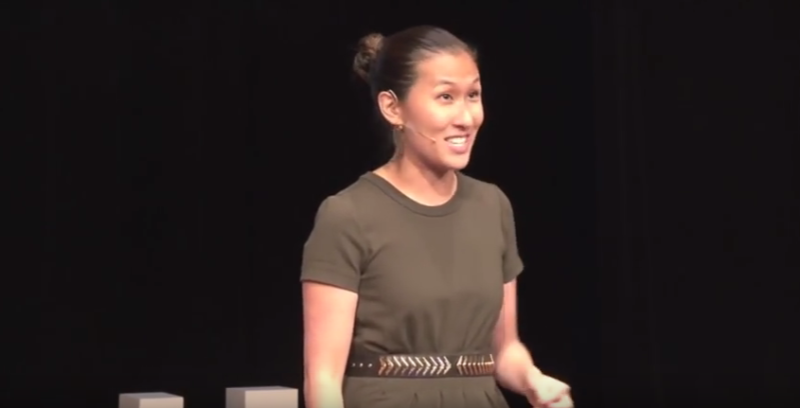
"caption": "Jennie Magiera speaking at TEDxBurnsvilleED",
"description": null,
"title": "Jennie",
"credit": "\u003ca href=\"https://www.youtube.com/watch?v=olOVzE0ujJ8\">TEDx Talks\u003c/a>",
"status": "inherit",
"isLoading": false,
"fetchFailed": false
},
"mindshift_48636": {
"type": "attachments",
"id": "mindshift_48636",
"meta": {
"index": "attachments_1716263798",
"site": "mindshift",
"id": "48636",
"found": true
},
"parent": 48635,
"imgSizes": {
"small": {
"file": "https://ww2.kqed.org/app/uploads/sites/23/2017/07/img_5481-f81cc0b843220cd8463c6bfbe64747dca6fa405f-520x390.jpg",
"width": 520,
"mimeType": "image/jpeg",
"height": 390
},
"twentyfourteen-full-width": {
"file": "https://ww2.kqed.org/app/uploads/sites/23/2017/07/img_5481-f81cc0b843220cd8463c6bfbe64747dca6fa405f-1038x576.jpg",
"width": 1038,
"mimeType": "image/jpeg",
"height": 576
},
"thumbnail": {
"file": "https://ww2.kqed.org/app/uploads/sites/23/2017/07/img_5481-f81cc0b843220cd8463c6bfbe64747dca6fa405f-160x120.jpg",
"width": 160,
"mimeType": "image/jpeg",
"height": 120
},
"fd-sm": {
"file": "https://ww2.kqed.org/app/uploads/sites/23/2017/07/img_5481-f81cc0b843220cd8463c6bfbe64747dca6fa405f-960x720.jpg",
"width": 960,
"mimeType": "image/jpeg",
"height": 720
},
"post-thumbnail": {
"file": "https://ww2.kqed.org/app/uploads/sites/23/2017/07/img_5481-f81cc0b843220cd8463c6bfbe64747dca6fa405f-672x372.jpg",
"width": 672,
"mimeType": "image/jpeg",
"height": 372
},
"xsmall": {
"file": "https://ww2.kqed.org/app/uploads/sites/23/2017/07/img_5481-f81cc0b843220cd8463c6bfbe64747dca6fa405f-375x281.jpg",
"width": 375,
"mimeType": "image/jpeg",
"height": 281
},
"kqedFullSize": {
"file": "https://ww2.kqed.org/app/uploads/sites/23/2017/07/img_5481-f81cc0b843220cd8463c6bfbe64747dca6fa405f.jpg",
"width": 1818,
"height": 1364
},
"large": {
"file": "https://ww2.kqed.org/app/uploads/sites/23/2017/07/img_5481-f81cc0b843220cd8463c6bfbe64747dca6fa405f-1020x765.jpg",
"width": 1020,
"mimeType": "image/jpeg",
"height": 765
},
"xlarge": {
"file": "https://ww2.kqed.org/app/uploads/sites/23/2017/07/img_5481-f81cc0b843220cd8463c6bfbe64747dca6fa405f-1180x885.jpg",
"width": 1180,
"mimeType": "image/jpeg",
"height": 885
},
"guest-author-50": {
"file": "https://ww2.kqed.org/app/uploads/sites/23/2017/07/img_5481-f81cc0b843220cd8463c6bfbe64747dca6fa405f-50x50.jpg",
"width": 50,
"mimeType": "image/jpeg",
"height": 50
},
"guest-author-96": {
"file": "https://ww2.kqed.org/app/uploads/sites/23/2017/07/img_5481-f81cc0b843220cd8463c6bfbe64747dca6fa405f-96x96.jpg",
"width": 96,
"mimeType": "image/jpeg",
"height": 96
},
"medium": {
"file": "https://ww2.kqed.org/app/uploads/sites/23/2017/07/img_5481-f81cc0b843220cd8463c6bfbe64747dca6fa405f-800x600.jpg",
"width": 800,
"mimeType": "image/jpeg",
"height": 600
},
"guest-author-64": {
"file": "https://ww2.kqed.org/app/uploads/sites/23/2017/07/img_5481-f81cc0b843220cd8463c6bfbe64747dca6fa405f-64x64.jpg",
"width": 64,
"mimeType": "image/jpeg",
"height": 64
},
"guest-author-32": {
"file": "https://ww2.kqed.org/app/uploads/sites/23/2017/07/img_5481-f81cc0b843220cd8463c6bfbe64747dca6fa405f-32x32.jpg",
"width": 32,
"mimeType": "image/jpeg",
"height": 32
},
"fd-med": {
"file": "https://ww2.kqed.org/app/uploads/sites/23/2017/07/img_5481-f81cc0b843220cd8463c6bfbe64747dca6fa405f-1180x885.jpg",
"width": 1180,
"mimeType": "image/jpeg",
"height": 885
},
"detail": {
"file": "https://ww2.kqed.org/app/uploads/sites/23/2017/07/img_5481-f81cc0b843220cd8463c6bfbe64747dca6fa405f-150x150.jpg",
"width": 150,
"mimeType": "image/jpeg",
"height": 150
},
"medium_large": {
"file": "https://ww2.kqed.org/app/uploads/sites/23/2017/07/img_5481-f81cc0b843220cd8463c6bfbe64747dca6fa405f-768x576.jpg",
"width": 768,
"mimeType": "image/jpeg",
"height": 576
},
"guest-author-128": {
"file": "https://ww2.kqed.org/app/uploads/sites/23/2017/07/img_5481-f81cc0b843220cd8463c6bfbe64747dca6fa405f-128x128.jpg",
"width": 128,
"mimeType": "image/jpeg",
"height": 128
},
"xxsmall": {
"file": "https://ww2.kqed.org/app/uploads/sites/23/2017/07/img_5481-f81cc0b843220cd8463c6bfbe64747dca6fa405f-240x180.jpg",
"width": 240,
"mimeType": "image/jpeg",
"height": 180
}
},
"publishDate": 1499461535,
"modified": 1499464349,
"caption": null,
"description": "Milo Faust, 1, looks at a book from the \u003cem>Baby University\u003c/em> series",
"title": "Milo Faust, 1, looks at a book from the Baby University series.",
"credit": "Courtesy of Amber Faust",
"status": "inherit",
"isLoading": false,
"fetchFailed": false
},
"mindshift_48230": {
"type": "attachments",
"id": "mindshift_48230",
"meta": {
"index": "attachments_1716263798",
"site": "mindshift",
"id": "48230",
"found": true
},
"parent": 48229,
"imgSizes": {
"small": {
"file": "https://ww2.kqed.org/app/uploads/sites/23/2017/05/peace-now_slide-e3fca1d414079d7c2e2567681918a2da117bac9d-520x347.jpg",
"width": 520,
"mimeType": "image/jpeg",
"height": 347
},
"twentyfourteen-full-width": {
"file": "https://ww2.kqed.org/app/uploads/sites/23/2017/05/peace-now_slide-e3fca1d414079d7c2e2567681918a2da117bac9d-1038x576.jpg",
"width": 1038,
"mimeType": "image/jpeg",
"height": 576
},
"thumbnail": {
"file": "https://ww2.kqed.org/app/uploads/sites/23/2017/05/peace-now_slide-e3fca1d414079d7c2e2567681918a2da117bac9d-160x107.jpg",
"width": 160,
"mimeType": "image/jpeg",
"height": 107
},
"fd-sm": {
"file": "https://ww2.kqed.org/app/uploads/sites/23/2017/05/peace-now_slide-e3fca1d414079d7c2e2567681918a2da117bac9d-960x640.jpg",
"width": 960,
"mimeType": "image/jpeg",
"height": 640
},
"post-thumbnail": {
"file": "https://ww2.kqed.org/app/uploads/sites/23/2017/05/peace-now_slide-e3fca1d414079d7c2e2567681918a2da117bac9d-672x372.jpg",
"width": 672,
"mimeType": "image/jpeg",
"height": 372
},
"xsmall": {
"file": "https://ww2.kqed.org/app/uploads/sites/23/2017/05/peace-now_slide-e3fca1d414079d7c2e2567681918a2da117bac9d-375x250.jpg",
"width": 375,
"mimeType": "image/jpeg",
"height": 250
},
"kqedFullSize": {
"file": "https://ww2.kqed.org/app/uploads/sites/23/2017/05/peace-now_slide-e3fca1d414079d7c2e2567681918a2da117bac9d-e1494506760832.jpg",
"width": 1920,
"height": 1280
},
"large": {
"file": "https://ww2.kqed.org/app/uploads/sites/23/2017/05/peace-now_slide-e3fca1d414079d7c2e2567681918a2da117bac9d-1020x680.jpg",
"width": 1020,
"mimeType": "image/jpeg",
"height": 680
},
"xlarge": {
"file": "https://ww2.kqed.org/app/uploads/sites/23/2017/05/peace-now_slide-e3fca1d414079d7c2e2567681918a2da117bac9d-1180x787.jpg",
"width": 1180,
"mimeType": "image/jpeg",
"height": 787
},
"guest-author-50": {
"file": "https://ww2.kqed.org/app/uploads/sites/23/2017/05/peace-now_slide-e3fca1d414079d7c2e2567681918a2da117bac9d-50x50.jpg",
"width": 50,
"mimeType": "image/jpeg",
"height": 50
},
"guest-author-96": {
"file": "https://ww2.kqed.org/app/uploads/sites/23/2017/05/peace-now_slide-e3fca1d414079d7c2e2567681918a2da117bac9d-96x96.jpg",
"width": 96,
"mimeType": "image/jpeg",
"height": 96
},
"medium": {
"file": "https://ww2.kqed.org/app/uploads/sites/23/2017/05/peace-now_slide-e3fca1d414079d7c2e2567681918a2da117bac9d-800x533.jpg",
"width": 800,
"mimeType": "image/jpeg",
"height": 533
},
"guest-author-64": {
"file": "https://ww2.kqed.org/app/uploads/sites/23/2017/05/peace-now_slide-e3fca1d414079d7c2e2567681918a2da117bac9d-64x64.jpg",
"width": 64,
"mimeType": "image/jpeg",
"height": 64
},
"guest-author-32": {
"file": "https://ww2.kqed.org/app/uploads/sites/23/2017/05/peace-now_slide-e3fca1d414079d7c2e2567681918a2da117bac9d-32x32.jpg",
"width": 32,
"mimeType": "image/jpeg",
"height": 32
},
"fd-lrg": {
"file": "https://ww2.kqed.org/app/uploads/sites/23/2017/05/peace-now_slide-e3fca1d414079d7c2e2567681918a2da117bac9d-1920x1280.jpg",
"width": 1920,
"mimeType": "image/jpeg",
"height": 1280
},
"fd-med": {
"file": "https://ww2.kqed.org/app/uploads/sites/23/2017/05/peace-now_slide-e3fca1d414079d7c2e2567681918a2da117bac9d-1180x787.jpg",
"width": 1180,
"mimeType": "image/jpeg",
"height": 787
},
"full-width": {
"file": "https://ww2.kqed.org/app/uploads/sites/23/2017/05/peace-now_slide-e3fca1d414079d7c2e2567681918a2da117bac9d-1920x1280.jpg",
"width": 1920,
"mimeType": "image/jpeg",
"height": 1280
},
"detail": {
"file": "https://ww2.kqed.org/app/uploads/sites/23/2017/05/peace-now_slide-e3fca1d414079d7c2e2567681918a2da117bac9d-150x150.jpg",
"width": 150,
"mimeType": "image/jpeg",
"height": 150
},
"medium_large": {
"file": "https://ww2.kqed.org/app/uploads/sites/23/2017/05/peace-now_slide-e3fca1d414079d7c2e2567681918a2da117bac9d-768x512.jpg",
"width": 768,
"mimeType": "image/jpeg",
"height": 512
},
"guest-author-128": {
"file": "https://ww2.kqed.org/app/uploads/sites/23/2017/05/peace-now_slide-e3fca1d414079d7c2e2567681918a2da117bac9d-128x128.jpg",
"width": 128,
"mimeType": "image/jpeg",
"height": 128
},
"xxsmall": {
"file": "https://ww2.kqed.org/app/uploads/sites/23/2017/05/peace-now_slide-e3fca1d414079d7c2e2567681918a2da117bac9d-240x160.jpg",
"width": 240,
"mimeType": "image/jpeg",
"height": 160
}
},
"publishDate": 1494506624,
"modified": 1494506776,
"caption": null,
"description": "Dove carrying an olive branch",
"title": "Dove carrying an olive branch",
"credit": "NPR/LA Johnson",
"status": "inherit",
"isLoading": false,
"fetchFailed": false
},
"mindshift_48133": {
"type": "attachments",
"id": "mindshift_48133",
"meta": {
"index": "attachments_1716263798",
"site": "mindshift",
"id": "48133",
"found": true
},
"parent": 48132,
"imgSizes": {
"small": {
"file": "https://ww2.kqed.org/app/uploads/sites/23/2017/04/gettyimages-149326183_slide-7413e218046f22ea9fdb38b3ed0471ccc6da4470-520x347.jpg",
"width": 520,
"mimeType": "image/jpeg",
"height": 347
},
"twentyfourteen-full-width": {
"file": "https://ww2.kqed.org/app/uploads/sites/23/2017/04/gettyimages-149326183_slide-7413e218046f22ea9fdb38b3ed0471ccc6da4470-1038x576.jpg",
"width": 1038,
"mimeType": "image/jpeg",
"height": 576
},
"thumbnail": {
"file": "https://ww2.kqed.org/app/uploads/sites/23/2017/04/gettyimages-149326183_slide-7413e218046f22ea9fdb38b3ed0471ccc6da4470-160x107.jpg",
"width": 160,
"mimeType": "image/jpeg",
"height": 107
},
"fd-sm": {
"file": "https://ww2.kqed.org/app/uploads/sites/23/2017/04/gettyimages-149326183_slide-7413e218046f22ea9fdb38b3ed0471ccc6da4470-960x640.jpg",
"width": 960,
"mimeType": "image/jpeg",
"height": 640
},
"post-thumbnail": {
"file": "https://ww2.kqed.org/app/uploads/sites/23/2017/04/gettyimages-149326183_slide-7413e218046f22ea9fdb38b3ed0471ccc6da4470-672x372.jpg",
"width": 672,
"mimeType": "image/jpeg",
"height": 372
},
"xsmall": {
"file": "https://ww2.kqed.org/app/uploads/sites/23/2017/04/gettyimages-149326183_slide-7413e218046f22ea9fdb38b3ed0471ccc6da4470-375x250.jpg",
"width": 375,
"mimeType": "image/jpeg",
"height": 250
},
"kqedFullSize": {
"file": "https://ww2.kqed.org/app/uploads/sites/23/2017/04/gettyimages-149326183_slide-7413e218046f22ea9fdb38b3ed0471ccc6da4470.jpg",
"width": 3200,
"height": 2133
},
"large": {
"file": "https://ww2.kqed.org/app/uploads/sites/23/2017/04/gettyimages-149326183_slide-7413e218046f22ea9fdb38b3ed0471ccc6da4470-1020x680.jpg",
"width": 1020,
"mimeType": "image/jpeg",
"height": 680
},
"xlarge": {
"file": "https://ww2.kqed.org/app/uploads/sites/23/2017/04/gettyimages-149326183_slide-7413e218046f22ea9fdb38b3ed0471ccc6da4470-1180x787.jpg",
"width": 1180,
"mimeType": "image/jpeg",
"height": 787
},
"guest-author-50": {
"file": "https://ww2.kqed.org/app/uploads/sites/23/2017/04/gettyimages-149326183_slide-7413e218046f22ea9fdb38b3ed0471ccc6da4470-50x50.jpg",
"width": 50,
"mimeType": "image/jpeg",
"height": 50
},
"guest-author-96": {
"file": "https://ww2.kqed.org/app/uploads/sites/23/2017/04/gettyimages-149326183_slide-7413e218046f22ea9fdb38b3ed0471ccc6da4470-96x96.jpg",
"width": 96,
"mimeType": "image/jpeg",
"height": 96
},
"medium": {
"file": "https://ww2.kqed.org/app/uploads/sites/23/2017/04/gettyimages-149326183_slide-7413e218046f22ea9fdb38b3ed0471ccc6da4470-800x533.jpg",
"width": 800,
"mimeType": "image/jpeg",
"height": 533
},
"guest-author-64": {
"file": "https://ww2.kqed.org/app/uploads/sites/23/2017/04/gettyimages-149326183_slide-7413e218046f22ea9fdb38b3ed0471ccc6da4470-64x64.jpg",
"width": 64,
"mimeType": "image/jpeg",
"height": 64
},
"guest-author-32": {
"file": "https://ww2.kqed.org/app/uploads/sites/23/2017/04/gettyimages-149326183_slide-7413e218046f22ea9fdb38b3ed0471ccc6da4470-32x32.jpg",
"width": 32,
"mimeType": "image/jpeg",
"height": 32
},
"fd-lrg": {
"file": "https://ww2.kqed.org/app/uploads/sites/23/2017/04/gettyimages-149326183_slide-7413e218046f22ea9fdb38b3ed0471ccc6da4470-1920x1280.jpg",
"width": 1920,
"mimeType": "image/jpeg",
"height": 1280
},
"fd-med": {
"file": "https://ww2.kqed.org/app/uploads/sites/23/2017/04/gettyimages-149326183_slide-7413e218046f22ea9fdb38b3ed0471ccc6da4470-1180x787.jpg",
"width": 1180,
"mimeType": "image/jpeg",
"height": 787
},
"full-width": {
"file": "https://ww2.kqed.org/app/uploads/sites/23/2017/04/gettyimages-149326183_slide-7413e218046f22ea9fdb38b3ed0471ccc6da4470-1920x1280.jpg",
"width": 1920,
"mimeType": "image/jpeg",
"height": 1280
},
"detail": {
"file": "https://ww2.kqed.org/app/uploads/sites/23/2017/04/gettyimages-149326183_slide-7413e218046f22ea9fdb38b3ed0471ccc6da4470-150x150.jpg",
"width": 150,
"mimeType": "image/jpeg",
"height": 150
},
"medium_large": {
"file": "https://ww2.kqed.org/app/uploads/sites/23/2017/04/gettyimages-149326183_slide-7413e218046f22ea9fdb38b3ed0471ccc6da4470-768x512.jpg",
"width": 768,
"mimeType": "image/jpeg",
"height": 512
},
"guest-author-128": {
"file": "https://ww2.kqed.org/app/uploads/sites/23/2017/04/gettyimages-149326183_slide-7413e218046f22ea9fdb38b3ed0471ccc6da4470-128x128.jpg",
"width": 128,
"mimeType": "image/jpeg",
"height": 128
},
"xxsmall": {
"file": "https://ww2.kqed.org/app/uploads/sites/23/2017/04/gettyimages-149326183_slide-7413e218046f22ea9fdb38b3ed0471ccc6da4470-240x160.jpg",
"width": 240,
"mimeType": "image/jpeg",
"height": 160
}
},
"publishDate": 1493400631,
"modified": 1493401207,
"caption": null,
"description": "A man in a maze",
"title": "A man in a maze",
"credit": "Logan Faerber/Getty Images/Imagezoo RM ",
"status": "inherit",
"isLoading": false,
"fetchFailed": false
},
"mindshift_48122": {
"type": "attachments",
"id": "mindshift_48122",
"meta": {
"index": "attachments_1716263798",
"site": "mindshift",
"id": "48122",
"found": true
},
"parent": 48121,
"imgSizes": {
"small": {
"file": "https://ww2.kqed.org/app/uploads/sites/23/2017/04/kwroten_doublestigma__custom-b94fb9d957672723e9e0f5f8903cfd1ddd94050e-520x341.jpe",
"width": 520,
"mimeType": "image/jpeg",
"height": 341
},
"twentyfourteen-full-width": {
"file": "https://ww2.kqed.org/app/uploads/sites/23/2017/04/kwroten_doublestigma__custom-b94fb9d957672723e9e0f5f8903cfd1ddd94050e-1038x576.jpe",
"width": 1038,
"mimeType": "image/jpeg",
"height": 576
},
"thumbnail": {
"file": "https://ww2.kqed.org/app/uploads/sites/23/2017/04/kwroten_doublestigma__custom-b94fb9d957672723e9e0f5f8903cfd1ddd94050e-160x105.jpe",
"width": 160,
"mimeType": "image/jpeg",
"height": 105
},
"fd-sm": {
"file": "https://ww2.kqed.org/app/uploads/sites/23/2017/04/kwroten_doublestigma__custom-b94fb9d957672723e9e0f5f8903cfd1ddd94050e-960x629.jpe",
"width": 960,
"mimeType": "image/jpeg",
"height": 629
},
"post-thumbnail": {
"file": "https://ww2.kqed.org/app/uploads/sites/23/2017/04/kwroten_doublestigma__custom-b94fb9d957672723e9e0f5f8903cfd1ddd94050e-672x372.jpe",
"width": 672,
"mimeType": "image/jpeg",
"height": 372
},
"xsmall": {
"file": "https://ww2.kqed.org/app/uploads/sites/23/2017/04/kwroten_doublestigma__custom-b94fb9d957672723e9e0f5f8903cfd1ddd94050e-375x246.jpe",
"width": 375,
"mimeType": "image/jpeg",
"height": 246
},
"kqedFullSize": {
"file": "https://ww2.kqed.org/app/uploads/sites/23/2017/04/kwroten_doublestigma__custom-b94fb9d957672723e9e0f5f8903cfd1ddd94050e-e1493124619620.jpe",
"width": 1920,
"height": 1258
},
"large": {
"file": "https://ww2.kqed.org/app/uploads/sites/23/2017/04/kwroten_doublestigma__custom-b94fb9d957672723e9e0f5f8903cfd1ddd94050e-1020x669.jpe",
"width": 1020,
"mimeType": "image/jpeg",
"height": 669
},
"xlarge": {
"file": "https://ww2.kqed.org/app/uploads/sites/23/2017/04/kwroten_doublestigma__custom-b94fb9d957672723e9e0f5f8903cfd1ddd94050e-1180x773.jpe",
"width": 1180,
"mimeType": "image/jpeg",
"height": 773
},
"guest-author-50": {
"file": "https://ww2.kqed.org/app/uploads/sites/23/2017/04/kwroten_doublestigma__custom-b94fb9d957672723e9e0f5f8903cfd1ddd94050e-50x50.jpe",
"width": 50,
"mimeType": "image/jpeg",
"height": 50
},
"guest-author-96": {
"file": "https://ww2.kqed.org/app/uploads/sites/23/2017/04/kwroten_doublestigma__custom-b94fb9d957672723e9e0f5f8903cfd1ddd94050e-96x96.jpe",
"width": 96,
"mimeType": "image/jpeg",
"height": 96
},
"medium": {
"file": "https://ww2.kqed.org/app/uploads/sites/23/2017/04/kwroten_doublestigma__custom-b94fb9d957672723e9e0f5f8903cfd1ddd94050e-800x524.jpe",
"width": 800,
"mimeType": "image/jpeg",
"height": 524
},
"guest-author-64": {
"file": "https://ww2.kqed.org/app/uploads/sites/23/2017/04/kwroten_doublestigma__custom-b94fb9d957672723e9e0f5f8903cfd1ddd94050e-64x64.jpe",
"width": 64,
"mimeType": "image/jpeg",
"height": 64
},
"guest-author-32": {
"file": "https://ww2.kqed.org/app/uploads/sites/23/2017/04/kwroten_doublestigma__custom-b94fb9d957672723e9e0f5f8903cfd1ddd94050e-32x32.jpe",
"width": 32,
"mimeType": "image/jpeg",
"height": 32
},
"fd-lrg": {
"file": "https://ww2.kqed.org/app/uploads/sites/23/2017/04/kwroten_doublestigma__custom-b94fb9d957672723e9e0f5f8903cfd1ddd94050e-1920x1258.jpe",
"width": 1920,
"mimeType": "image/jpeg",
"height": 1258
},
"fd-med": {
"file": "https://ww2.kqed.org/app/uploads/sites/23/2017/04/kwroten_doublestigma__custom-b94fb9d957672723e9e0f5f8903cfd1ddd94050e-1180x773.jpe",
"width": 1180,
"mimeType": "image/jpeg",
"height": 773
},
"full-width": {
"file": "https://ww2.kqed.org/app/uploads/sites/23/2017/04/kwroten_doublestigma__custom-b94fb9d957672723e9e0f5f8903cfd1ddd94050e-1920x1258.jpe",
"width": 1920,
"mimeType": "image/jpeg",
"height": 1258
},
"detail": {
"file": "https://ww2.kqed.org/app/uploads/sites/23/2017/04/kwroten_doublestigma__custom-b94fb9d957672723e9e0f5f8903cfd1ddd94050e-150x150.jpe",
"width": 150,
"mimeType": "image/jpeg",
"height": 150
},
"medium_large": {
"file": "https://ww2.kqed.org/app/uploads/sites/23/2017/04/kwroten_doublestigma__custom-b94fb9d957672723e9e0f5f8903cfd1ddd94050e-768x503.jpe",
"width": 768,
"mimeType": "image/jpeg",
"height": 503
},
"guest-author-128": {
"file": "https://ww2.kqed.org/app/uploads/sites/23/2017/04/kwroten_doublestigma__custom-b94fb9d957672723e9e0f5f8903cfd1ddd94050e-128x128.jpe",
"width": 128,
"mimeType": "image/jpeg",
"height": 128
},
"xxsmall": {
"file": "https://ww2.kqed.org/app/uploads/sites/23/2017/04/kwroten_doublestigma__custom-b94fb9d957672723e9e0f5f8903cfd1ddd94050e-240x157.jpe",
"width": 240,
"mimeType": "image/jpeg",
"height": 157
}
},
"publishDate": 1493124019,
"modified": 1493124638,
"caption": null,
"description": null,
"title": "Double Stigma",
"credit": "NPR/Kelsey Wroten",
"status": "inherit",
"isLoading": false,
"fetchFailed": false
},
"mindshift_47944": {
"type": "attachments",
"id": "mindshift_47944",
"meta": {
"index": "attachments_1716263798",
"site": "mindshift",
"id": "47944",
"found": true
},
"parent": 47924,
"imgSizes": {
"small": {
"file": "https://ww2.kqed.org/app/uploads/sites/23/2017/04/code-camp-520x293.png",
"width": 520,
"mimeType": "image/png",
"height": 293
},
"twentyfourteen-full-width": {
"file": "https://ww2.kqed.org/app/uploads/sites/23/2017/04/code-camp-1038x576.png",
"width": 1038,
"mimeType": "image/png",
"height": 576
},
"thumbnail": {
"file": "https://ww2.kqed.org/app/uploads/sites/23/2017/04/code-camp-160x90.png",
"width": 160,
"mimeType": "image/png",
"height": 90
},
"fd-sm": {
"file": "https://ww2.kqed.org/app/uploads/sites/23/2017/04/code-camp-960x540.png",
"width": 960,
"mimeType": "image/png",
"height": 540
},
"post-thumbnail": {
"file": "https://ww2.kqed.org/app/uploads/sites/23/2017/04/code-camp-672x372.png",
"width": 672,
"mimeType": "image/png",
"height": 372
},
"xsmall": {
"file": "https://ww2.kqed.org/app/uploads/sites/23/2017/04/code-camp-375x211.png",
"width": 375,
"mimeType": "image/png",
"height": 211
},
"kqedFullSize": {
"file": "https://ww2.kqed.org/app/uploads/sites/23/2017/04/code-camp.png",
"width": 2048,
"height": 1152
},
"large": {
"file": "https://ww2.kqed.org/app/uploads/sites/23/2017/04/code-camp-1020x574.png",
"width": 1020,
"mimeType": "image/png",
"height": 574
},
"xlarge": {
"file": "https://ww2.kqed.org/app/uploads/sites/23/2017/04/code-camp-1180x664.png",
"width": 1180,
"mimeType": "image/png",
"height": 664
},
"guest-author-50": {
"file": "https://ww2.kqed.org/app/uploads/sites/23/2017/04/code-camp-50x50.png",
"width": 50,
"mimeType": "image/png",
"height": 50
},
"guest-author-96": {
"file": "https://ww2.kqed.org/app/uploads/sites/23/2017/04/code-camp-96x96.png",
"width": 96,
"mimeType": "image/png",
"height": 96
},
"medium": {
"file": "https://ww2.kqed.org/app/uploads/sites/23/2017/04/code-camp-800x450.png",
"width": 800,
"mimeType": "image/png",
"height": 450
},
"guest-author-64": {
"file": "https://ww2.kqed.org/app/uploads/sites/23/2017/04/code-camp-64x64.png",
"width": 64,
"mimeType": "image/png",
"height": 64
},
"guest-author-32": {
"file": "https://ww2.kqed.org/app/uploads/sites/23/2017/04/code-camp-32x32.png",
"width": 32,
"mimeType": "image/png",
"height": 32
},
"fd-lrg": {
"file": "https://ww2.kqed.org/app/uploads/sites/23/2017/04/code-camp-1920x1080.png",
"width": 1920,
"mimeType": "image/png",
"height": 1080
},
"fd-med": {
"file": "https://ww2.kqed.org/app/uploads/sites/23/2017/04/code-camp-1180x664.png",
"width": 1180,
"mimeType": "image/png",
"height": 664
},
"full-width": {
"file": "https://ww2.kqed.org/app/uploads/sites/23/2017/04/code-camp-1920x1080.png",
"width": 1920,
"mimeType": "image/png",
"height": 1080
},
"detail": {
"file": "https://ww2.kqed.org/app/uploads/sites/23/2017/04/code-camp-150x150.png",
"width": 150,
"mimeType": "image/png",
"height": 150
},
"medium_large": {
"file": "https://ww2.kqed.org/app/uploads/sites/23/2017/04/code-camp-768x432.png",
"width": 768,
"mimeType": "image/png",
"height": 432
},
"guest-author-128": {
"file": "https://ww2.kqed.org/app/uploads/sites/23/2017/04/code-camp-128x128.png",
"width": 128,
"mimeType": "image/png",
"height": 128
},
"xxsmall": {
"file": "https://ww2.kqed.org/app/uploads/sites/23/2017/04/code-camp-240x135.png",
"width": 240,
"mimeType": "image/png",
"height": 135
}
},
"publishDate": 1491428849,
"modified": 1491428920,
"caption": null,
"description": null,
"title": "code-camp",
"credit": "\u003ca href=\"https://www.flickr.com/photos/steveonjava/10163710305/in/photolist-gu8EYz-ihMpir-rA3MAU-dic4xv-jzvihi-fzJyMT-nTamjm-9q8nj-9ztsLP-7K68dC-nT5jE9-cGGUmY-3WiuyC-nV8bYP-nCDTZd-cLdkwb-cLcT2Y-cLcSmd-rJ2NK1-hG9qev-dT9PAw-aUXXN-qdEtDg-8RZ5W-nUDu5e-cLcNnW-7K685w-rPjNN7-4QWvkW-hG98eu-DjM8Pu-dT4dGn-nddEQf-nV3hJy-CUYy4C-nCrTF8-5jAMyk-nCH9at-6kTtuE-nKThKd-nCEPiV-o67vv5-hG992G-jE25N-7K2csZ-dT4ezD-CpzH71-hG8BDu-CUYwLN-hG9oPr\">Silicon Valley Code Camp\u003c/a>",
"status": "inherit",
"isLoading": false,
"fetchFailed": false
},
"mindshift_47815": {
"type": "attachments",
"id": "mindshift_47815",
"meta": {
"index": "attachments_1716263798",
"site": "mindshift",
"id": "47815",
"found": true
},
"parent": 47813,
"imgSizes": {
"small": {
"file": "https://ww2.kqed.org/app/uploads/sites/23/2017/03/2048px-Gall–Peters_projection_SW-520x332.jpg",
"width": 520,
"mimeType": "image/jpeg",
"height": 332
},
"twentyfourteen-full-width": {
"file": "https://ww2.kqed.org/app/uploads/sites/23/2017/03/2048px-Gall–Peters_projection_SW-1038x576.jpg",
"width": 1038,
"mimeType": "image/jpeg",
"height": 576
},
"thumbnail": {
"file": "https://ww2.kqed.org/app/uploads/sites/23/2017/03/2048px-Gall–Peters_projection_SW-160x102.jpg",
"width": 160,
"mimeType": "image/jpeg",
"height": 102
},
"fd-sm": {
"file": "https://ww2.kqed.org/app/uploads/sites/23/2017/03/2048px-Gall–Peters_projection_SW-960x613.jpg",
"width": 960,
"mimeType": "image/jpeg",
"height": 613
},
"post-thumbnail": {
"file": "https://ww2.kqed.org/app/uploads/sites/23/2017/03/2048px-Gall–Peters_projection_SW-672x372.jpg",
"width": 672,
"mimeType": "image/jpeg",
"height": 372
},
"xsmall": {
"file": "https://ww2.kqed.org/app/uploads/sites/23/2017/03/2048px-Gall–Peters_projection_SW-375x240.jpg",
"width": 375,
"mimeType": "image/jpeg",
"height": 240
},
"kqedFullSize": {
"file": "https://ww2.kqed.org/app/uploads/sites/23/2017/03/2048px-Gall–Peters_projection_SW-e1490188819232.jpg",
"width": 1920,
"height": 1226
},
"large": {
"file": "https://ww2.kqed.org/app/uploads/sites/23/2017/03/2048px-Gall–Peters_projection_SW-1020x651.jpg",
"width": 1020,
"mimeType": "image/jpeg",
"height": 651
},
"xlarge": {
"file": "https://ww2.kqed.org/app/uploads/sites/23/2017/03/2048px-Gall–Peters_projection_SW-1180x754.jpg",
"width": 1180,
"mimeType": "image/jpeg",
"height": 754
},
"guest-author-50": {
"file": "https://ww2.kqed.org/app/uploads/sites/23/2017/03/2048px-Gall–Peters_projection_SW-50x50.jpg",
"width": 50,
"mimeType": "image/jpeg",
"height": 50
},
"guest-author-96": {
"file": "https://ww2.kqed.org/app/uploads/sites/23/2017/03/2048px-Gall–Peters_projection_SW-96x96.jpg",
"width": 96,
"mimeType": "image/jpeg",
"height": 96
},
"medium": {
"file": "https://ww2.kqed.org/app/uploads/sites/23/2017/03/2048px-Gall–Peters_projection_SW-800x511.jpg",
"width": 800,
"mimeType": "image/jpeg",
"height": 511
},
"guest-author-64": {
"file": "https://ww2.kqed.org/app/uploads/sites/23/2017/03/2048px-Gall–Peters_projection_SW-64x64.jpg",
"width": 64,
"mimeType": "image/jpeg",
"height": 64
},
"guest-author-32": {
"file": "https://ww2.kqed.org/app/uploads/sites/23/2017/03/2048px-Gall–Peters_projection_SW-32x32.jpg",
"width": 32,
"mimeType": "image/jpeg",
"height": 32
},
"fd-lrg": {
"file": "https://ww2.kqed.org/app/uploads/sites/23/2017/03/2048px-Gall–Peters_projection_SW-1920x1226.jpg",
"width": 1920,
"mimeType": "image/jpeg",
"height": 1226
},
"fd-med": {
"file": "https://ww2.kqed.org/app/uploads/sites/23/2017/03/2048px-Gall–Peters_projection_SW-1180x754.jpg",
"width": 1180,
"mimeType": "image/jpeg",
"height": 754
},
"full-width": {
"file": "https://ww2.kqed.org/app/uploads/sites/23/2017/03/2048px-Gall–Peters_projection_SW-1920x1226.jpg",
"width": 1920,
"mimeType": "image/jpeg",
"height": 1226
},
"detail": {
"file": "https://ww2.kqed.org/app/uploads/sites/23/2017/03/2048px-Gall–Peters_projection_SW-150x150.jpg",
"width": 150,
"mimeType": "image/jpeg",
"height": 150
},
"medium_large": {
"file": "https://ww2.kqed.org/app/uploads/sites/23/2017/03/2048px-Gall–Peters_projection_SW-768x491.jpg",
"width": 768,
"mimeType": "image/jpeg",
"height": 491
},
"guest-author-128": {
"file": "https://ww2.kqed.org/app/uploads/sites/23/2017/03/2048px-Gall–Peters_projection_SW-128x128.jpg",
"width": 128,
"mimeType": "image/jpeg",
"height": 128
},
"xxsmall": {
"file": "https://ww2.kqed.org/app/uploads/sites/23/2017/03/2048px-Gall–Peters_projection_SW-240x153.jpg",
"width": 240,
"mimeType": "image/jpeg",
"height": 153
}
},
"publishDate": 1490188801,
"modified": 1490189380,
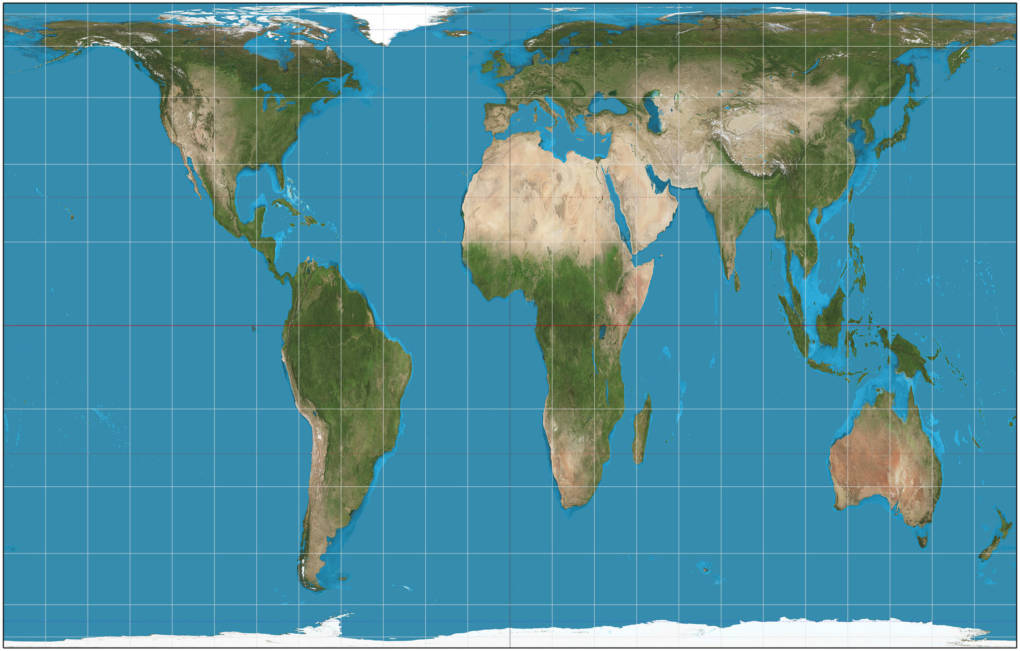
"caption": "The Gall-Peters projection",
"description": null,
"title": "Gall–Peters_projection_SW",
"credit": " \u003ca href=\"https://commons.wikimedia.org/wiki/File:Gall–Peters_projection_SW.jpg\">Creative Commons/Daniel R. Strebe (August 15, 2011)\u003c/a>",
"status": "inherit",
"isLoading": false,
"fetchFailed": false
},
"mindshift_47708": {
"type": "attachments",
"id": "mindshift_47708",
"meta": {
"index": "attachments_1716263798",
"site": "mindshift",
"id": "47708",
"found": true
},
"parent": 47570,
"imgSizes": {
"small": {
"file": "https://ww2.kqed.org/app/uploads/sites/23/2017/03/Direction-520x347.jpg",
"width": 520,
"mimeType": "image/jpeg",
"height": 347
},
"twentyfourteen-full-width": {
"file": "https://ww2.kqed.org/app/uploads/sites/23/2017/03/Direction-1038x576.jpg",
"width": 1038,
"mimeType": "image/jpeg",
"height": 576
},
"thumbnail": {
"file": "https://ww2.kqed.org/app/uploads/sites/23/2017/03/Direction-160x107.jpg",
"width": 160,
"mimeType": "image/jpeg",
"height": 107
},
"fd-sm": {
"file": "https://ww2.kqed.org/app/uploads/sites/23/2017/03/Direction-960x640.jpg",
"width": 960,
"mimeType": "image/jpeg",
"height": 640
},
"post-thumbnail": {
"file": "https://ww2.kqed.org/app/uploads/sites/23/2017/03/Direction-672x372.jpg",
"width": 672,
"mimeType": "image/jpeg",
"height": 372
},
"xsmall": {
"file": "https://ww2.kqed.org/app/uploads/sites/23/2017/03/Direction-375x250.jpg",
"width": 375,
"mimeType": "image/jpeg",
"height": 250
},
"kqedFullSize": {
"file": "https://ww2.kqed.org/app/uploads/sites/23/2017/03/Direction-e1488788189957.jpg",
"width": 1920,
"height": 1280
},
"large": {
"file": "https://ww2.kqed.org/app/uploads/sites/23/2017/03/Direction-1020x680.jpg",
"width": 1020,
"mimeType": "image/jpeg",
"height": 680
},
"xlarge": {
"file": "https://ww2.kqed.org/app/uploads/sites/23/2017/03/Direction-1180x787.jpg",
"width": 1180,
"mimeType": "image/jpeg",
"height": 787
},
"guest-author-50": {
"file": "https://ww2.kqed.org/app/uploads/sites/23/2017/03/Direction-50x50.jpg",
"width": 50,
"mimeType": "image/jpeg",
"height": 50
},
"guest-author-96": {
"file": "https://ww2.kqed.org/app/uploads/sites/23/2017/03/Direction-96x96.jpg",
"width": 96,
"mimeType": "image/jpeg",
"height": 96
},
"medium": {
"file": "https://ww2.kqed.org/app/uploads/sites/23/2017/03/Direction-800x533.jpg",
"width": 800,
"mimeType": "image/jpeg",
"height": 533
},
"guest-author-64": {
"file": "https://ww2.kqed.org/app/uploads/sites/23/2017/03/Direction-64x64.jpg",
"width": 64,
"mimeType": "image/jpeg",
"height": 64
},
"guest-author-32": {
"file": "https://ww2.kqed.org/app/uploads/sites/23/2017/03/Direction-32x32.jpg",
"width": 32,
"mimeType": "image/jpeg",
"height": 32
},
"fd-lrg": {
"file": "https://ww2.kqed.org/app/uploads/sites/23/2017/03/Direction-1920x1280.jpg",
"width": 1920,
"mimeType": "image/jpeg",
"height": 1280
},
"fd-med": {
"file": "https://ww2.kqed.org/app/uploads/sites/23/2017/03/Direction-1180x787.jpg",
"width": 1180,
"mimeType": "image/jpeg",
"height": 787
},
"full-width": {
"file": "https://ww2.kqed.org/app/uploads/sites/23/2017/03/Direction-1920x1280.jpg",
"width": 1920,
"mimeType": "image/jpeg",
"height": 1280
},
"detail": {
"file": "https://ww2.kqed.org/app/uploads/sites/23/2017/03/Direction-150x150.jpg",
"width": 150,
"mimeType": "image/jpeg",
"height": 150
},
"medium_large": {
"file": "https://ww2.kqed.org/app/uploads/sites/23/2017/03/Direction-768x512.jpg",
"width": 768,
"mimeType": "image/jpeg",
"height": 512
},
"guest-author-128": {
"file": "https://ww2.kqed.org/app/uploads/sites/23/2017/03/Direction-128x128.jpg",
"width": 128,
"mimeType": "image/jpeg",
"height": 128
},
"xxsmall": {
"file": "https://ww2.kqed.org/app/uploads/sites/23/2017/03/Direction-240x160.jpg",
"width": 240,
"mimeType": "image/jpeg",
"height": 160
}
},
"publishDate": 1488788156,
"modified": 1488788219,
"caption": null,
"description": null,
"title": "Direction",
"credit": "iStock/BrianAJackson",
"status": "inherit",
"isLoading": false,
"fetchFailed": false
},
"mindshift_47634": {
"type": "attachments",
"id": "mindshift_47634",
"meta": {
"index": "attachments_1716263798",
"site": "mindshift",
"id": "47634",
"found": true
},
"parent": 47596,
"imgSizes": {
"small": {
"file": "https://ww2.kqed.org/app/uploads/sites/23/2017/02/Hands-520x346.jpg",
"width": 520,
"mimeType": "image/jpeg",
"height": 346
},
"twentyfourteen-full-width": {
"file": "https://ww2.kqed.org/app/uploads/sites/23/2017/02/Hands-1038x576.jpg",
"width": 1038,
"mimeType": "image/jpeg",
"height": 576
},
"thumbnail": {
"file": "https://ww2.kqed.org/app/uploads/sites/23/2017/02/Hands-160x106.jpg",
"width": 160,
"mimeType": "image/jpeg",
"height": 106
},
"fd-sm": {
"file": "https://ww2.kqed.org/app/uploads/sites/23/2017/02/Hands-960x638.jpg",
"width": 960,
"mimeType": "image/jpeg",
"height": 638
},
"post-thumbnail": {
"file": "https://ww2.kqed.org/app/uploads/sites/23/2017/02/Hands-672x372.jpg",
"width": 672,
"mimeType": "image/jpeg",
"height": 372
},
"xsmall": {
"file": "https://ww2.kqed.org/app/uploads/sites/23/2017/02/Hands-375x249.jpg",
"width": 375,
"mimeType": "image/jpeg",
"height": 249
},
"kqedFullSize": {
"file": "https://ww2.kqed.org/app/uploads/sites/23/2017/02/Hands-e1487747579451.jpg",
"width": 1920,
"height": 1277
},
"large": {
"file": "https://ww2.kqed.org/app/uploads/sites/23/2017/02/Hands-1020x678.jpg",
"width": 1020,
"mimeType": "image/jpeg",
"height": 678
},
"xlarge": {
"file": "https://ww2.kqed.org/app/uploads/sites/23/2017/02/Hands-1180x785.jpg",
"width": 1180,
"mimeType": "image/jpeg",
"height": 785
},
"guest-author-50": {
"file": "https://ww2.kqed.org/app/uploads/sites/23/2017/02/Hands-50x50.jpg",
"width": 50,
"mimeType": "image/jpeg",
"height": 50
},
"guest-author-96": {
"file": "https://ww2.kqed.org/app/uploads/sites/23/2017/02/Hands-96x96.jpg",
"width": 96,
"mimeType": "image/jpeg",
"height": 96
},
"medium": {
"file": "https://ww2.kqed.org/app/uploads/sites/23/2017/02/Hands-800x532.jpg",
"width": 800,
"mimeType": "image/jpeg",
"height": 532
},
"guest-author-64": {
"file": "https://ww2.kqed.org/app/uploads/sites/23/2017/02/Hands-64x64.jpg",
"width": 64,
"mimeType": "image/jpeg",
"height": 64
},
"guest-author-32": {
"file": "https://ww2.kqed.org/app/uploads/sites/23/2017/02/Hands-32x32.jpg",
"width": 32,
"mimeType": "image/jpeg",
"height": 32
},
"fd-lrg": {
"file": "https://ww2.kqed.org/app/uploads/sites/23/2017/02/Hands-1920x1277.jpg",
"width": 1920,
"mimeType": "image/jpeg",
"height": 1277
},
"fd-med": {
"file": "https://ww2.kqed.org/app/uploads/sites/23/2017/02/Hands-1180x785.jpg",
"width": 1180,
"mimeType": "image/jpeg",
"height": 785
},
"full-width": {
"file": "https://ww2.kqed.org/app/uploads/sites/23/2017/02/Hands-1920x1277.jpg",
"width": 1920,
"mimeType": "image/jpeg",
"height": 1277
},
"detail": {
"file": "https://ww2.kqed.org/app/uploads/sites/23/2017/02/Hands-150x150.jpg",
"width": 150,
"mimeType": "image/jpeg",
"height": 150
},
"medium_large": {
"file": "https://ww2.kqed.org/app/uploads/sites/23/2017/02/Hands-768x511.jpg",
"width": 768,
"mimeType": "image/jpeg",
"height": 511
},
"guest-author-128": {
"file": "https://ww2.kqed.org/app/uploads/sites/23/2017/02/Hands-128x128.jpg",
"width": 128,
"mimeType": "image/jpeg",
"height": 128
},
"xxsmall": {
"file": "https://ww2.kqed.org/app/uploads/sites/23/2017/02/Hands-240x160.jpg",
"width": 240,
"mimeType": "image/jpeg",
"height": 160
}
},
"publishDate": 1487747557,
"modified": 1487747573,
"caption": null,
"description": null,
"title": "hands - handshake",
"credit": "iStock/starfotograf ",
"status": "inherit",
"isLoading": false,
"fetchFailed": false
},
"mindshift_47084": {
"type": "attachments",
"id": "mindshift_47084",
"meta": {
"index": "attachments_1716263798",
"site": "mindshift",
"id": "47084",
"found": true
},
"parent": 47083,
"imgSizes": {
"small": {
"file": "https://ww2.kqed.org/app/uploads/sites/23/2016/12/gen-listen-parents_slide-ecaf29d2fafb79552b3e56da1b0e7322246069a2-520x347.jpg",
"width": 520,
"mimeType": "image/jpeg",
"height": 347
},
"twentyfourteen-full-width": {
"file": "https://ww2.kqed.org/app/uploads/sites/23/2016/12/gen-listen-parents_slide-ecaf29d2fafb79552b3e56da1b0e7322246069a2-1038x576.jpg",
"width": 1038,
"mimeType": "image/jpeg",
"height": 576
},
"thumbnail": {
"file": "https://ww2.kqed.org/app/uploads/sites/23/2016/12/gen-listen-parents_slide-ecaf29d2fafb79552b3e56da1b0e7322246069a2-160x107.jpg",
"width": 160,
"mimeType": "image/jpeg",
"height": 107
},
"fd-sm": {
"file": "https://ww2.kqed.org/app/uploads/sites/23/2016/12/gen-listen-parents_slide-ecaf29d2fafb79552b3e56da1b0e7322246069a2-960x640.jpg",
"width": 960,
"mimeType": "image/jpeg",
"height": 640
},
"post-thumbnail": {
"file": "https://ww2.kqed.org/app/uploads/sites/23/2016/12/gen-listen-parents_slide-ecaf29d2fafb79552b3e56da1b0e7322246069a2-672x372.jpg",
"width": 672,
"mimeType": "image/jpeg",
"height": 372
},
"xsmall": {
"file": "https://ww2.kqed.org/app/uploads/sites/23/2016/12/gen-listen-parents_slide-ecaf29d2fafb79552b3e56da1b0e7322246069a2-375x250.jpg",
"width": 375,
"mimeType": "image/jpeg",
"height": 250
},
"kqedFullSize": {
"file": "https://ww2.kqed.org/app/uploads/sites/23/2016/12/gen-listen-parents_slide-ecaf29d2fafb79552b3e56da1b0e7322246069a2.jpg",
"width": 2801,
"height": 1867
},
"large": {
"file": "https://ww2.kqed.org/app/uploads/sites/23/2016/12/gen-listen-parents_slide-ecaf29d2fafb79552b3e56da1b0e7322246069a2-1020x680.jpg",
"width": 1020,
"mimeType": "image/jpeg",
"height": 680
},
"xlarge": {
"file": "https://ww2.kqed.org/app/uploads/sites/23/2016/12/gen-listen-parents_slide-ecaf29d2fafb79552b3e56da1b0e7322246069a2-1180x787.jpg",
"width": 1180,
"mimeType": "image/jpeg",
"height": 787
},
"guest-author-50": {
"file": "https://ww2.kqed.org/app/uploads/sites/23/2016/12/gen-listen-parents_slide-ecaf29d2fafb79552b3e56da1b0e7322246069a2-50x50.jpg",
"width": 50,
"mimeType": "image/jpeg",
"height": 50
},
"guest-author-96": {
"file": "https://ww2.kqed.org/app/uploads/sites/23/2016/12/gen-listen-parents_slide-ecaf29d2fafb79552b3e56da1b0e7322246069a2-96x96.jpg",
"width": 96,
"mimeType": "image/jpeg",
"height": 96
},
"medium": {
"file": "https://ww2.kqed.org/app/uploads/sites/23/2016/12/gen-listen-parents_slide-ecaf29d2fafb79552b3e56da1b0e7322246069a2-800x533.jpg",
"width": 800,
"mimeType": "image/jpeg",
"height": 533
},
"guest-author-64": {
"file": "https://ww2.kqed.org/app/uploads/sites/23/2016/12/gen-listen-parents_slide-ecaf29d2fafb79552b3e56da1b0e7322246069a2-64x64.jpg",
"width": 64,
"mimeType": "image/jpeg",
"height": 64
},
"guest-author-32": {
"file": "https://ww2.kqed.org/app/uploads/sites/23/2016/12/gen-listen-parents_slide-ecaf29d2fafb79552b3e56da1b0e7322246069a2-32x32.jpg",
"width": 32,
"mimeType": "image/jpeg",
"height": 32
},
"fd-lrg": {
"file": "https://ww2.kqed.org/app/uploads/sites/23/2016/12/gen-listen-parents_slide-ecaf29d2fafb79552b3e56da1b0e7322246069a2-1920x1280.jpg",
"width": 1920,
"mimeType": "image/jpeg",
"height": 1280
},
"fd-med": {
"file": "https://ww2.kqed.org/app/uploads/sites/23/2016/12/gen-listen-parents_slide-ecaf29d2fafb79552b3e56da1b0e7322246069a2-1180x787.jpg",
"width": 1180,
"mimeType": "image/jpeg",
"height": 787
},
"full-width": {
"file": "https://ww2.kqed.org/app/uploads/sites/23/2016/12/gen-listen-parents_slide-ecaf29d2fafb79552b3e56da1b0e7322246069a2-1920x1280.jpg",
"width": 1920,
"mimeType": "image/jpeg",
"height": 1280
},
"detail": {
"file": "https://ww2.kqed.org/app/uploads/sites/23/2016/12/gen-listen-parents_slide-ecaf29d2fafb79552b3e56da1b0e7322246069a2-150x150.jpg",
"width": 150,
"mimeType": "image/jpeg",
"height": 150
},
"medium_large": {
"file": "https://ww2.kqed.org/app/uploads/sites/23/2016/12/gen-listen-parents_slide-ecaf29d2fafb79552b3e56da1b0e7322246069a2-768x512.jpg",
"width": 768,
"mimeType": "image/jpeg",
"height": 512
},
"guest-author-128": {
"file": "https://ww2.kqed.org/app/uploads/sites/23/2016/12/gen-listen-parents_slide-ecaf29d2fafb79552b3e56da1b0e7322246069a2-128x128.jpg",
"width": 128,
"mimeType": "image/jpeg",
"height": 128
},
"xxsmall": {
"file": "https://ww2.kqed.org/app/uploads/sites/23/2016/12/gen-listen-parents_slide-ecaf29d2fafb79552b3e56da1b0e7322246069a2-240x160.jpg",
"width": 240,
"mimeType": "image/jpeg",
"height": 160
}
},
"publishDate": 1481046014,
"modified": 1481046014,
"caption": null,
"description": "NPR Ed convened a group of parents to talk about how they're coping with the information age.",
"title": "NPR Ed convened a group of parents to talk about how they're coping with the information age.",
"credit": null,
"status": "inherit",
"isLoading": false,
"fetchFailed": false
},
"mindshift_47076": {
"type": "attachments",
"id": "mindshift_47076",
"meta": {
"index": "attachments_1716263798",
"site": "mindshift",
"id": "47076",
"found": true
},
"parent": 46905,
"imgSizes": {
"small": {
"file": "https://ww2.kqed.org/app/uploads/sites/23/2016/12/Numbers-520x390.jpg",
"width": 520,
"mimeType": "image/jpeg",
"height": 390
},
"twentyfourteen-full-width": {
"file": "https://ww2.kqed.org/app/uploads/sites/23/2016/12/Numbers-1024x576.jpg",
"width": 1024,
"mimeType": "image/jpeg",
"height": 576
},
"thumbnail": {
"file": "https://ww2.kqed.org/app/uploads/sites/23/2016/12/Numbers-160x120.jpg",
"width": 160,
"mimeType": "image/jpeg",
"height": 120
},
"fd-sm": {
"file": "https://ww2.kqed.org/app/uploads/sites/23/2016/12/Numbers-960x720.jpg",
"width": 960,
"mimeType": "image/jpeg",
"height": 720
},
"post-thumbnail": {
"file": "https://ww2.kqed.org/app/uploads/sites/23/2016/12/Numbers-672x372.jpg",
"width": 672,
"mimeType": "image/jpeg",
"height": 372
},
"xsmall": {
"file": "https://ww2.kqed.org/app/uploads/sites/23/2016/12/Numbers-375x281.jpg",
"width": 375,
"mimeType": "image/jpeg",
"height": 281
},
"kqedFullSize": {
"file": "https://ww2.kqed.org/app/uploads/sites/23/2016/12/Numbers.jpg",
"width": 1024,
"height": 768
},
"large": {
"file": "https://ww2.kqed.org/app/uploads/sites/23/2016/12/Numbers-1020x765.jpg",
"width": 1020,
"mimeType": "image/jpeg",
"height": 765
},
"guest-author-50": {
"file": "https://ww2.kqed.org/app/uploads/sites/23/2016/12/Numbers-50x50.jpg",
"width": 50,
"mimeType": "image/jpeg",
"height": 50
},
"guest-author-96": {
"file": "https://ww2.kqed.org/app/uploads/sites/23/2016/12/Numbers-96x96.jpg",
"width": 96,
"mimeType": "image/jpeg",
"height": 96
},
"medium": {
"file": "https://ww2.kqed.org/app/uploads/sites/23/2016/12/Numbers-800x600.jpg",
"width": 800,
"mimeType": "image/jpeg",
"height": 600
},
"guest-author-64": {
"file": "https://ww2.kqed.org/app/uploads/sites/23/2016/12/Numbers-64x64.jpg",
"width": 64,
"mimeType": "image/jpeg",
"height": 64
},
"guest-author-32": {
"file": "https://ww2.kqed.org/app/uploads/sites/23/2016/12/Numbers-32x32.jpg",
"width": 32,
"mimeType": "image/jpeg",
"height": 32
},
"detail": {
"file": "https://ww2.kqed.org/app/uploads/sites/23/2016/12/Numbers-150x150.jpg",
"width": 150,
"mimeType": "image/jpeg",
"height": 150
},
"medium_large": {
"file": "https://ww2.kqed.org/app/uploads/sites/23/2016/12/Numbers-768x576.jpg",
"width": 768,
"mimeType": "image/jpeg",
"height": 576
},
"guest-author-128": {
"file": "https://ww2.kqed.org/app/uploads/sites/23/2016/12/Numbers-128x128.jpg",
"width": 128,
"mimeType": "image/jpeg",
"height": 128
},
"xxsmall": {
"file": "https://ww2.kqed.org/app/uploads/sites/23/2016/12/Numbers-240x180.jpg",
"width": 240,
"mimeType": "image/jpeg",
"height": 180
}
},
"publishDate": 1480926006,
"modified": 1480926017,
"caption": null,
"description": null,
"title": "numbers",
"credit": "\u003ca href=\"https://www.flickr.com/photos/40351463@N00/533987722/in/photolist-PbPWS-hSwkzi-3atzb-c8d8eC-nCVfyz-5MSPdv-xZsyw-nCCpit-fwc7x-gtPwzV-6PM2A6-q16yHC-2VrWM-f8UpU-kzyri-7c65a8-5QpNev-8zv5vt-9Km3h5-b1Rys-go6CsU-fHyEjj-4mRhXr-fwcah-5a2W1Y-4bwEa8-H7tNE-eXQSwa-7wtTza-4HreAA-4Kf5yJ-5gVVZy-eXuGn-cKBf-nCUMZm-orDSvz-4QKDiw-nmqyqy-nmqTKV-2eNzo-j5m5-2ConUs-4vXWph-65i5Mt-8RAkg-bx4cej-3oN5Sy-8nEKWS-4YQNVt-6GdzPW\">Flickr/paula soler-moya\u003c/a>",
"status": "inherit",
"isLoading": false,
"fetchFailed": false
},
"mindshift_47048": {
"type": "attachments",
"id": "mindshift_47048",
"meta": {
"index": "attachments_1716263798",
"site": "mindshift",
"id": "47048",
"found": true
},
"parent": 46766,
"imgSizes": {
"small": {
"file": "https://ww2.kqed.org/app/uploads/sites/23/2016/11/Light-bulb-520x366.jpg",
"width": 520,
"mimeType": "image/jpeg",
"height": 366
},
"twentyfourteen-full-width": {
"file": "https://ww2.kqed.org/app/uploads/sites/23/2016/11/Light-bulb-1038x576.jpg",
"width": 1038,
"mimeType": "image/jpeg",
"height": 576
},
"thumbnail": {
"file": "https://ww2.kqed.org/app/uploads/sites/23/2016/11/Light-bulb-160x113.jpg",
"width": 160,
"mimeType": "image/jpeg",
"height": 113
},
"fd-sm": {
"file": "https://ww2.kqed.org/app/uploads/sites/23/2016/11/Light-bulb-960x676.jpg",
"width": 960,
"mimeType": "image/jpeg",
"height": 676
},
"post-thumbnail": {
"file": "https://ww2.kqed.org/app/uploads/sites/23/2016/11/Light-bulb-672x372.jpg",
"width": 672,
"mimeType": "image/jpeg",
"height": 372
},
"xsmall": {
"file": "https://ww2.kqed.org/app/uploads/sites/23/2016/11/Light-bulb-375x264.jpg",
"width": 375,
"mimeType": "image/jpeg",
"height": 264
},
"kqedFullSize": {
"file": "https://ww2.kqed.org/app/uploads/sites/23/2016/11/Light-bulb-e1480424959583.jpg",
"width": 1920,
"height": 1353
},
"large": {
"file": "https://ww2.kqed.org/app/uploads/sites/23/2016/11/Light-bulb-1020x719.jpg",
"width": 1020,
"mimeType": "image/jpeg",
"height": 719
},
"xlarge": {
"file": "https://ww2.kqed.org/app/uploads/sites/23/2016/11/Light-bulb-1180x831.jpg",
"width": 1180,
"mimeType": "image/jpeg",
"height": 831
},
"guest-author-50": {
"file": "https://ww2.kqed.org/app/uploads/sites/23/2016/11/Light-bulb-50x50.jpg",
"width": 50,
"mimeType": "image/jpeg",
"height": 50
},
"guest-author-96": {
"file": "https://ww2.kqed.org/app/uploads/sites/23/2016/11/Light-bulb-96x96.jpg",
"width": 96,
"mimeType": "image/jpeg",
"height": 96
},
"medium": {
"file": "https://ww2.kqed.org/app/uploads/sites/23/2016/11/Light-bulb-800x564.jpg",
"width": 800,
"mimeType": "image/jpeg",
"height": 564
},
"guest-author-64": {
"file": "https://ww2.kqed.org/app/uploads/sites/23/2016/11/Light-bulb-64x64.jpg",
"width": 64,
"mimeType": "image/jpeg",
"height": 64
},
"guest-author-32": {
"file": "https://ww2.kqed.org/app/uploads/sites/23/2016/11/Light-bulb-32x32.jpg",
"width": 32,
"mimeType": "image/jpeg",
"height": 32
},
"fd-lrg": {
"file": "https://ww2.kqed.org/app/uploads/sites/23/2016/11/Light-bulb-1920x1353.jpg",
"width": 1920,
"mimeType": "image/jpeg",
"height": 1353
},
"fd-med": {
"file": "https://ww2.kqed.org/app/uploads/sites/23/2016/11/Light-bulb-1180x831.jpg",
"width": 1180,
"mimeType": "image/jpeg",
"height": 831
},
"full-width": {
"file": "https://ww2.kqed.org/app/uploads/sites/23/2016/11/Light-bulb-1920x1353.jpg",
"width": 1920,
"mimeType": "image/jpeg",
"height": 1353
},
"detail": {
"file": "https://ww2.kqed.org/app/uploads/sites/23/2016/11/Light-bulb-150x150.jpg",
"width": 150,
"mimeType": "image/jpeg",
"height": 150
},
"medium_large": {
"file": "https://ww2.kqed.org/app/uploads/sites/23/2016/11/Light-bulb-768x541.jpg",
"width": 768,
"mimeType": "image/jpeg",
"height": 541
},
"guest-author-128": {
"file": "https://ww2.kqed.org/app/uploads/sites/23/2016/11/Light-bulb-128x128.jpg",
"width": 128,
"mimeType": "image/jpeg",
"height": 128
},
"xxsmall": {
"file": "https://ww2.kqed.org/app/uploads/sites/23/2016/11/Light-bulb-240x169.jpg",
"width": 240,
"mimeType": "image/jpeg",
"height": 169
}
},
"publishDate": 1480424932,
"modified": 1480424951,
"caption": null,
"description": null,
"title": "light-bulb",
"credit": "\u003ca href=\"https://www.flickr.com/photos/vathis/15223336584/in/photolist-pcezAq-67obZc-2oQ6zt-h9JGgg-65YARD-cNzfQo-nagmjA-c6o5Mh-9F1WMk-9apPRd-7RhKiv-72YceG-qG9coc-9QDnC9-vvPH-KS4X-cjCjB1-nrNabj-7HQv5e-4LSs4f-2TjRr6-qJtiEJ-rBdZmA-82z5vs-pMykDk-4szdkh-g83ALx-62LTmK-kLcp9a-2nC9gJ-5Q1ebJ-9ivksh-oBbEMy-pPFXyi-8mjvvc-4DVgcn-54aY5e-ddhWw5-nmpYCn-qo1Go9-5Tdx33-fQ2Lwr-mwoyD-pW9FJm-adjBb9-8BYudD-qa9jrK-7eaarC-eSYWX1-rz8CvK\">Flickr/Spiros Vathis\u003c/a>",
"status": "inherit",
"isLoading": false,
"fetchFailed": false
}
},
"audioPlayerReducer": {
"postId": "stream_live",
"isPaused": true,
"isPlaying": false,
"pfsActive": false,
"pledgeModalIsOpen": true,
"playerDrawerIsOpen": false,
"liveAudioPlayStartedAt": 0,
"liveAudioPlayContext": ""
},
"authorsReducer": {
"byline_mindshift_48635": {
"type": "authors",
"id": "byline_mindshift_48635",
"meta": {
"override": true
},
"slug": "byline_mindshift_48635",
"name": "Julie Depenbrock",
"isLoading": false
},
"byline_mindshift_48229": {
"type": "authors",
"id": "byline_mindshift_48229",
"meta": {
"override": true
},
"slug": "byline_mindshift_48229",
"name": "Anya Kamenetz",
"isLoading": false
},
"byline_mindshift_48132": {
"type": "authors",
"id": "byline_mindshift_48132",
"meta": {
"override": true
},
"slug": "byline_mindshift_48132",
"name": "Eric Westervelt",
"isLoading": false
},
"byline_mindshift_48121": {
"type": "authors",
"id": "byline_mindshift_48121",
"meta": {
"override": true
},
"slug": "byline_mindshift_48121",
"name": "Sophia Alvarez Boyd",
"isLoading": false
},
"byline_mindshift_47813": {
"type": "authors",
"id": "byline_mindshift_47813",
"meta": {
"override": true
},
"slug": "byline_mindshift_47813",
"name": "Colin Dwyer",
"isLoading": false
},
"byline_mindshift_47083": {
"type": "authors",
"id": "byline_mindshift_47083",
"meta": {
"override": true
},
"slug": "byline_mindshift_47083",
"name": "Anya Kamenetz and Elissa Nadworny",
"isLoading": false
},
"katrinaschwartz": {
"type": "authors",
"id": "234",
"meta": {
"index": "authors_1716337520",
"id": "234",
"found": true
},
"name": "Katrina Schwartz",
"firstName": "Katrina",
"lastName": "Schwartz",
"slug": "katrinaschwartz",
"email": "kschwartz@kqed.org",
"display_author_email": false,
"staff_mastheads": [
"news"
],
"title": "Producer",
"bio": "Katrina Schwartz is a journalist based in San Francisco. She's worked at KPCC public radio in LA and has reported on air and online for KQED since 2010. She covered how teaching and learning is changing for MindShift between 2012 and 2020. She is the co-host of the MindShift podcast and now produces KQED's Bay Curious podcast.",
"avatar": "https://secure.gravatar.com/avatar/edb4ee79070447a018538c9aae6eeecf28786515b8a0c30e43b6b7dce5aa44c8?s=600&d=blank&r=g",
"twitter": "kschwart",
"bluesky": null,
"facebook": null,
"instagram": null,
"linkedin": null,
"sites": [
{
"site": "",
"roles": [
"editor"
]
},
{
"site": "news",
"roles": [
"editor"
]
},
{
"site": "mindshift",
"roles": [
"administrator"
]
},
{
"site": "stateofhealth",
"roles": [
"author"
]
},
{
"site": "science",
"roles": [
"editor"
]
}
],
"headData": {
"title": "Katrina Schwartz | KQED",
"description": "Producer",
"ogImgSrc": "https://secure.gravatar.com/avatar/edb4ee79070447a018538c9aae6eeecf28786515b8a0c30e43b6b7dce5aa44c8?s=600&d=blank&r=g",
"twImgSrc": "https://secure.gravatar.com/avatar/edb4ee79070447a018538c9aae6eeecf28786515b8a0c30e43b6b7dce5aa44c8?s=600&d=blank&r=g"
},
"isLoading": false,
"link": "/author/katrinaschwartz"
},
"dfkris": {
"type": "authors",
"id": "11087",
"meta": {
"index": "authors_1716337520",
"id": "11087",
"found": true
},
"name": "Deborah Farmer Kris",
"firstName": "Deborah Farmer",
"lastName": "Kris",
"slug": "dfkris",
"email": "dfkris@gmail.com",
"display_author_email": false,
"staff_mastheads": [],
"title": null,
"bio": "\u003cem>\u003ca href=\"https://twitter.com/@dfkris\">Deborah Farmer Kris\u003c/a> has taught elementary, middle and high school and served as a charter school administrator. She spent a decade as an associate at Boston University’s \u003c/em>\u003cem>\u003ca href=\"http://www.bu.edu/ccsr/about-us/\">Center for Character and Social Responsibility\u003c/a>, \u003c/em>\u003cem>researching, writing, and consulting with schools. She is the mother of two young children. You can follower her on Twitter \u003ca href=\"https://twitter.com/@dfkris\">@dfkris\u003c/a>.\u003c/em>",
"avatar": "https://secure.gravatar.com/avatar/48efe6f17031ed31222b74af9605fe5a?s=600&d=blank&r=g",
"twitter": "dfkris",
"facebook": null,
"instagram": null,
"linkedin": null,
"sites": [
{
"site": "mindshift",
"roles": [
"author"
]
}
],
"headData": {
"title": "Deborah Farmer Kris | KQED",
"description": null,
"ogImgSrc": "https://secure.gravatar.com/avatar/48efe6f17031ed31222b74af9605fe5a?s=600&d=blank&r=g",
"twImgSrc": "https://secure.gravatar.com/avatar/48efe6f17031ed31222b74af9605fe5a?s=600&d=blank&r=g"
},
"isLoading": false,
"link": "/author/dfkris"
}
},
"pagesReducer": {
"mindshift_category_culture": {
"type": "terms",
"id": "mindshift_194",
"meta": {
"index": "terms_1716263798",
"site": "mindshift",
"id": "194",
"score": 12.371086
},
"featImg": null,
"name": "Culture",
"description": "How trends in technology – social networks, Internet privacy, cyberbullying – influence education.",
"taxonomy": "category",
"headData": {
"twImgId": null,
"twTitle": null,
"ogTitle": null,
"ogImgId": null,
"twDescription": null,
"description": "How trends in technology – social networks, Internet privacy, cyberbullying – influence education.",
"title": "Culture Archives | KQED Mindshift",
"ogDescription": null
},
"ttid": 194,
"slug": "culture",
"isLoading": false,
"title": "Culture",
"pageMeta": {
"site": "mindshift",
"WpPageTemplate": "page-topic-editorial",
"currentPage": 10
},
"blocks": [
{
"blockName": "kqed/company-paragraph",
"content": "How trends in technology – social networks, Internet privacy, cyberbullying – influence education."
},
{
"blockName": "kqed/post-list",
"attrs": {
"layout": "cardArticle2",
"query": "posts/mindshift?category=culture",
"seeMore": false,
"paginated": true,
"page": 10
}
},
{
"blockName": "kqed/ad"
}
]
}
},
"pfsSessionReducer": {},
"postsReducer": {
"stream_live": {
"type": "live",
"id": "stream_live",
"audioUrl": "https://streams.kqed.org/kqedradio",
"title": "Live Stream",
"excerpt": "Live Stream information currently unavailable.",
"link": "/radio",
"featImg": "",
"label": {
"name": "KQED Live",
"link": "/"
}
},
"stream_kqedNewscast": {
"type": "posts",
"id": "stream_kqedNewscast",
"audioUrl": "https://www.kqed.org/.stream/anon/radio/RDnews/newscast.mp3?_=1",
"title": "KQED Newscast",
"featImg": "",
"label": {
"name": "88.5 FM",
"link": "/"
}
},
"mindshift_48664": {
"type": "posts",
"id": "mindshift_48664",
"meta": {
"index": "posts_1716263798",
"site": "mindshift",
"id": "48664",
"score": null,
"sort": [
1499776387000
]
},
"parent": 0,
"labelTerm": {
"site": "mindshift"
},
"blocks": [],
"publishDate": 1499776387,
"format": "standard",
"disqusTitle": "Why It's Imperative Educators Resist The Lure Of The Single Story",
"title": "Why It's Imperative Educators Resist The Lure Of The Single Story",
"headTitle": "MindShift | KQED News",
"content": "\u003cp>The education world is full of assumptions, many of which aren't helpful to improving the quality of teaching and learning that happens in schools. The narratives from outside the industry can be harmful, but perhaps less obvious are the single stories of students and teachers told within the industry. That was a central message of \u003ca href=\"https://twitter.com/msmagiera?lang=en\" target=\"_blank\" rel=\"noopener noreferrer\">Jennie Magiera's \u003c/a> keynote at the \u003ca href=\"https://conference.iste.org/2017/\" target=\"_blank\" rel=\"noopener noreferrer\">International Society for Technology in Education (ISTE) conference\u003c/a>. Magiera was inspired to talk about untold stories by Chimamanda Ngozi Adichie's TED talk, \"\u003ca href=\"https://www.ted.com/talks/chimamanda_adichie_the_danger_of_a_single_story\" rel=\"noopener\" target=\"_blank\">The Danger of A Single Story\u003c/a>.\"*\u003c/p>\n\u003cp>It's easy to repeat stereotypes about why there aren't enough girls or minorities in science, technology, engineering, and math fields. It can be tempting to point fingers at colleagues who resist change. And, it's all too common to assume a life story about students coming from specific backgrounds. But Magiera says one important role of a teacher is to fight against those single stories because while they are sometimes true, those narratives rarely provide the whole picture.\u003c/p>\n\u003caside class=\"pullquote alignright\">'What I truly believe is technology should enhance our connection to each other.'\u003ccite>Jennie Magiera, Chief Innovation Officer Des Plaines Public Schools\u003c/cite>\u003c/aside>\n\u003cp>“As educators it’s our role to amplify the untold story of limitless potential,\" Magiera said. As the chief innovation officer for Des Plaines Public Schools, Magiera has a lot of experience with colleagues who are resistant to trying new approaches, especially if they involve technology. That used to frustrate her, in part because she had seen her own teaching change for the better when she began to question her assumptions about how to teach. But rather than allowing her frustration about \"resistant colleagues\" to dominate her life, Magiera discovered that these same people were actually \"friendly dragons.\" More often than not, when she stepped back and listened to the problems they were having and helped them to problem solve, they became allies.\u003c/p>\n\u003cp>“As you’re thinking about the people who are at home, remember there might be friendly dragons right around the corner,\" Magiera said. And often the people who are most resistant to change have good reasons for being skeptical. Their experiences as educators have made them \u003ca href=\"https://ww2.kqed.org/mindshift/2014/01/29/why-some-teachers-may-question-new-education-trends/\" target=\"_blank\" rel=\"noopener noreferrer\">distrustful of big new initiatives\u003c/a> and they are fiercely protective of their students, committed to doing what they believe is best. Listening and dialoguing with those who appear resistant can actually be the best way to \u003ca href=\"https://ww2.kqed.org/mindshift/2015/07/09/steps-to-help-schools-transform-to-competency-based-learning/\" target=\"_blank\" rel=\"noopener noreferrer\">thoroughly vet an idea\u003c/a>, think through all the angles, and consider how to support implementation. And it's important for the pioneers to share the good and bad parts of the journey so that trying out new approaches feels less scary for those who fear failure.\u003c/p>\n\u003cp>“What I truly believe is technology should enhance our connection to each other,\" Magiera said. That could mean teachers forming professional learning communities and sharing insights and struggles, but it could also mean letting students tell their own stories. Chicago is often portrayed as a dangerous city, making the news only for the number of shootings each year. A Chicago colleague, \u003ca href=\"https://twitter.com/teachmsrose?lang=en\" target=\"_blank\" rel=\"noopener noreferrer\">Linsey Rose\u003c/a>, used technology to help her students share their version of Chicago. In the process, they reached a much bigger audience with a powerful lesson about what kids hear and feel when the same single story is repeated over and over.\u003c/p>\n\u003cp>[ad fullwidth]\u003c/p>\n\u003cp>Watch Jennie Magiera's TEDx talk to see the video those Chicago students made, and to hear more about the ups and downs of \u003ca href=\"https://us.corwin.com/en-us/nam/courageous-edventures/book247884\" target=\"_blank\" rel=\"noopener noreferrer\">Magiera's journey\u003c/a> to bring more creativity, play and innovation into her inner city Chicago classroom.\u003c/p>\n\u003cp>\u003c!-- iframe plugin v.4.3 wordpress.org/plugins/iframe/ -->\u003cbr>\n\u003ciframe width=\"640\" height=\"360\" src=\"https://www.youtube.com/embed/olOVzE0ujJ8\" frameborder=\"0\" scrolling=\"yes\" class=\"iframe-class\">\u003c/iframe>\u003c/p>\n\u003cp>\u003c/p>\n\u003cp>\u003cem>*This story has been updated to reflect that Jennie Magiera drew inspiration for her talk on untold stories from Chimamanda Ngozi Adichie. We regret the error.\u003c/em>\u003c/p>\n\n",
"disqusIdentifier": "48664 https://ww2.kqed.org/mindshift/?p=48664",
"disqusUrl": "https://ww2.kqed.org/mindshift/2017/07/11/why-its-imperative-educators-resist-the-lure-of-the-single-story/",
"stats": {
"hasVideo": true,
"hasChartOrMap": true,
"hasAudio": false,
"hasPolis": false,
"wordCount": 620,
"hasGoogleForm": false,
"hasGallery": false,
"hasHearkenModule": false,
"iframeSrcs": [
"https://www.youtube.com/embed/olOVzE0ujJ8"
],
"paragraphCount": 10
},
"modified": 1508802026,
"excerpt": "Most people's lives are nuanced and complex, resisting a single narrative. When educators can amplify the stories of \"limitless potential\" they can help break down damaging stereotypes about teachers, communities and students.\r\n",
"headData": {
"twImgId": "",
"twTitle": "",
"ogTitle": "",
"ogImgId": "",
"twDescription": "",
"description": "Most people's lives are nuanced and complex, resisting a single narrative. When educators can amplify the stories of "limitless potential" they can help break down damaging stereotypes about teachers, communities and students.\r\n",
"title": "Why It's Imperative Educators Resist The Lure Of The Single Story | KQED",
"ogDescription": "",
"schema": {
"@context": "https://schema.org",
"@type": "Article",
"headline": "Why It's Imperative Educators Resist The Lure Of The Single Story",
"datePublished": "2017-07-11T05:33:07-07:00",
"dateModified": "2017-10-23T16:40:26-07:00",
"image": "https://cdn.kqed.org/wp-content/uploads/2020/02/KQED-OG-Image@1x.png"
}
},
"guestAuthors": [],
"slug": "why-its-imperative-educators-resist-the-lure-of-the-single-story",
"status": "publish",
"path": "/mindshift/48664/why-its-imperative-educators-resist-the-lure-of-the-single-story",
"audioTrackLength": null,
"parsedContent": [
{
"type": "contentString",
"content": "\u003cdiv class=\"post-body\">\u003cp>\u003cp>The education world is full of assumptions, many of which aren't helpful to improving the quality of teaching and learning that happens in schools. The narratives from outside the industry can be harmful, but perhaps less obvious are the single stories of students and teachers told within the industry. That was a central message of \u003ca href=\"https://twitter.com/msmagiera?lang=en\" target=\"_blank\" rel=\"noopener noreferrer\">Jennie Magiera's \u003c/a> keynote at the \u003ca href=\"https://conference.iste.org/2017/\" target=\"_blank\" rel=\"noopener noreferrer\">International Society for Technology in Education (ISTE) conference\u003c/a>. Magiera was inspired to talk about untold stories by Chimamanda Ngozi Adichie's TED talk, \"\u003ca href=\"https://www.ted.com/talks/chimamanda_adichie_the_danger_of_a_single_story\" rel=\"noopener\" target=\"_blank\">The Danger of A Single Story\u003c/a>.\"*\u003c/p>\n\u003cp>It's easy to repeat stereotypes about why there aren't enough girls or minorities in science, technology, engineering, and math fields. It can be tempting to point fingers at colleagues who resist change. And, it's all too common to assume a life story about students coming from specific backgrounds. But Magiera says one important role of a teacher is to fight against those single stories because while they are sometimes true, those narratives rarely provide the whole picture.\u003c/p>\n\u003caside class=\"pullquote alignright\">'What I truly believe is technology should enhance our connection to each other.'\u003ccite>Jennie Magiera, Chief Innovation Officer Des Plaines Public Schools\u003c/cite>\u003c/aside>\n\u003cp>“As educators it’s our role to amplify the untold story of limitless potential,\" Magiera said. As the chief innovation officer for Des Plaines Public Schools, Magiera has a lot of experience with colleagues who are resistant to trying new approaches, especially if they involve technology. That used to frustrate her, in part because she had seen her own teaching change for the better when she began to question her assumptions about how to teach. But rather than allowing her frustration about \"resistant colleagues\" to dominate her life, Magiera discovered that these same people were actually \"friendly dragons.\" More often than not, when she stepped back and listened to the problems they were having and helped them to problem solve, they became allies.\u003c/p>\n\u003cp>“As you’re thinking about the people who are at home, remember there might be friendly dragons right around the corner,\" Magiera said. And often the people who are most resistant to change have good reasons for being skeptical. Their experiences as educators have made them \u003ca href=\"https://ww2.kqed.org/mindshift/2014/01/29/why-some-teachers-may-question-new-education-trends/\" target=\"_blank\" rel=\"noopener noreferrer\">distrustful of big new initiatives\u003c/a> and they are fiercely protective of their students, committed to doing what they believe is best. Listening and dialoguing with those who appear resistant can actually be the best way to \u003ca href=\"https://ww2.kqed.org/mindshift/2015/07/09/steps-to-help-schools-transform-to-competency-based-learning/\" target=\"_blank\" rel=\"noopener noreferrer\">thoroughly vet an idea\u003c/a>, think through all the angles, and consider how to support implementation. And it's important for the pioneers to share the good and bad parts of the journey so that trying out new approaches feels less scary for those who fear failure.\u003c/p>\n\u003cp>“What I truly believe is technology should enhance our connection to each other,\" Magiera said. That could mean teachers forming professional learning communities and sharing insights and struggles, but it could also mean letting students tell their own stories. Chicago is often portrayed as a dangerous city, making the news only for the number of shootings each year. A Chicago colleague, \u003ca href=\"https://twitter.com/teachmsrose?lang=en\" target=\"_blank\" rel=\"noopener noreferrer\">Linsey Rose\u003c/a>, used technology to help her students share their version of Chicago. In the process, they reached a much bigger audience with a powerful lesson about what kids hear and feel when the same single story is repeated over and over.\u003c/p>\n\u003cp>\u003c/p>\u003c/div>",
"attributes": {
"named": {},
"numeric": []
}
},
{
"type": "component",
"content": "",
"name": "ad",
"attributes": {
"named": {
"label": "fullwidth"
},
"numeric": [
"fullwidth"
]
}
},
{
"type": "contentString",
"content": "\u003cdiv class=\"post-body\">\u003cp>\u003c/p>\n\u003cp>Watch Jennie Magiera's TEDx talk to see the video those Chicago students made, and to hear more about the ups and downs of \u003ca href=\"https://us.corwin.com/en-us/nam/courageous-edventures/book247884\" target=\"_blank\" rel=\"noopener noreferrer\">Magiera's journey\u003c/a> to bring more creativity, play and innovation into her inner city Chicago classroom.\u003c/p>\n\u003cp>\u003c!-- iframe plugin v.4.3 wordpress.org/plugins/iframe/ -->\u003cbr>\n\u003ciframe width=\"640\" height=\"360\" src=\"https://www.youtube.com/embed/olOVzE0ujJ8\" frameborder=\"0\" scrolling=\"yes\" class=\"iframe-class\">\u003c/iframe>\u003c/p>\n\u003cp>\u003c/p>\n\u003cp>\u003cem>*This story has been updated to reflect that Jennie Magiera drew inspiration for her talk on untold stories from Chimamanda Ngozi Adichie. We regret the error.\u003c/em>\u003c/p>\n\n\u003c/div>\u003c/p>",
"attributes": {
"named": {},
"numeric": []
}
}
],
"link": "/mindshift/48664/why-its-imperative-educators-resist-the-lure-of-the-single-story",
"authors": [
"234"
],
"categories": [
"mindshift_194"
],
"tags": [
"mindshift_862",
"mindshift_20784",
"mindshift_1040",
"mindshift_21114"
],
"featImg": "mindshift_48666",
"label": "mindshift"
},
"mindshift_48635": {
"type": "posts",
"id": "mindshift_48635",
"meta": {
"index": "posts_1716263798",
"site": "mindshift",
"id": "48635",
"score": null,
"sort": [
1499465339000
]
},
"parent": 0,
"labelTerm": {
"site": "mindshift"
},
"blocks": [],
"publishDate": 1499465339,
"format": "standard",
"disqusTitle": "Physics for Babies? Books That Expand Science Understanding",
"title": "Physics for Babies? Books That Expand Science Understanding",
"headTitle": "MindShift | KQED News",
"content": "\u003cp>When Kelly Barrales-Saylor was a new mom, she got a lot of children's books as gifts. Most were simple books about shapes, colors and letters. There were none about science — or math.\u003c/p>\n\u003cp>\"My editorial brain lit up and said there must be a need for this,\" says Barrales-Saylor, who works as an editor for a publishing company outside Chicago.\u003c/p>\n\u003cp>Halfway across the world, Chris Ferrie was similarly unsatisfied.\u003c/p>\n\u003cp>When reading to his kids, Ferrie noticed that most books used animals to introduce new words. In today's world, that just didn't make sense to him.\u003c/p>\n\u003cfigure id=\"attachment_48640\" class=\"wp-caption alignright\" style=\"max-width: 400px\">\u003ca href=\"http://www.goodreads.com/book/show/30286939-general-relativity-for-babies\">\u003cimg class=\"size-full wp-image-48640\" src=\"https://ww2.kqed.org/mindshift/wp-content/uploads/sites/23/2017/07/general-relativity.jpg\" alt=\"\" width=\"400\" height=\"399\" srcset=\"https://ww2.kqed.org/app/uploads/sites/23/2017/07/general-relativity.jpg 400w, https://ww2.kqed.org/app/uploads/sites/23/2017/07/general-relativity-160x160.jpg 160w, https://ww2.kqed.org/app/uploads/sites/23/2017/07/general-relativity-240x239.jpg 240w, https://ww2.kqed.org/app/uploads/sites/23/2017/07/general-relativity-375x374.jpg 375w, https://ww2.kqed.org/app/uploads/sites/23/2017/07/general-relativity-32x32.jpg 32w, https://ww2.kqed.org/app/uploads/sites/23/2017/07/general-relativity-50x50.jpg 50w, https://ww2.kqed.org/app/uploads/sites/23/2017/07/general-relativity-64x64.jpg 64w, https://ww2.kqed.org/app/uploads/sites/23/2017/07/general-relativity-96x96.jpg 96w, https://ww2.kqed.org/app/uploads/sites/23/2017/07/general-relativity-128x128.jpg 128w, https://ww2.kqed.org/app/uploads/sites/23/2017/07/general-relativity-150x150.jpg 150w\" sizes=\"(max-width: 400px) 100vw, 400px\">\u003c/a>\u003cfigcaption class=\"wp-caption-text\">General Relativity for Babies by Chris Ferrie\u003c/figcaption>\u003c/figure>\n\u003cp>\"We're not surrounded by animals anymore,\" says Ferrie, a physicist and mathematician at a university in Sydney, Australia. \"We're surrounded by technology.\" So he created some math and science books for his own children and self-published them online.\u003c/p>\n\u003cp>[ad fullwidth]\u003c/p>\n\u003cp>That's where Barrales-Saylor found them. And together, they designed a series of books aimed at toddlers and babies.\u003c/p>\n\u003cp>The books introduce subjects like rocket science, quantum physics and general relativity — with bright colors, simple shapes and thick board pages perfect for teething toddlers. The books make up the \u003cem>Baby University\u003c/em> series — and each one begins with the same sentence and picture — \u003cem>This is a ball — \u003c/em>and then expands on the titular concept.\u003c/p>\n\u003cp>In the case of general relativity: \u003cem>This ball has mass. \u003c/em>\u003c/p>\n\u003cp>But some of the topics Ferrie covers are tough for even grown-ups to comprehend. (I mean, quantum physics? Come on.)\u003c/p>\n\u003cp>A firm grasp of rocket science isn't really the point, Barrales-Saylor says.\u003c/p>\n\u003cp>\"We know toddlers aren't going to pick up the exact high-level concepts we're explaining,\" she says. \"We're trying to introduce the small seeds of information meant for them to remember years later.\"\u003c/p>\n\u003cp>Some parents hope a happy primer to a complex subject will yield results later on. Take Amber Faust, 33, who lives in South Carolina.\u003c/p>\n\u003cp>Physics never came easily to her — she got a \"C\" in her college class — but that hasn't stopped her from introducing the science to her kids.\u003c/p>\n\u003cp>She reads Ferrie's \u003cem>Baby University\u003c/em> series with sons Oliver, 2, and Milo, 1. Then, they \"act it out.\"\u003c/p>\n\u003cp>\"We make funny noises and run through the house,\" Faust says. \"The 2-year-old is a crazy active baby, so anything we read we have to act out.\"\u003c/p>\n\u003cfigure id=\"attachment_48642\" class=\"wp-caption alignright\" style=\"max-width: 400px\">\u003ca href=\"http://www.goodreads.com/book/show/33939770-rocket-science-for-babies?from_search=true\">\u003cimg class=\"size-full wp-image-48642\" src=\"https://ww2.kqed.org/mindshift/wp-content/uploads/sites/23/2017/07/rocket-science.jpg\" alt=\"\" width=\"400\" height=\"400\" srcset=\"https://ww2.kqed.org/app/uploads/sites/23/2017/07/rocket-science.jpg 400w, https://ww2.kqed.org/app/uploads/sites/23/2017/07/rocket-science-160x160.jpg 160w, https://ww2.kqed.org/app/uploads/sites/23/2017/07/rocket-science-240x240.jpg 240w, https://ww2.kqed.org/app/uploads/sites/23/2017/07/rocket-science-375x375.jpg 375w, https://ww2.kqed.org/app/uploads/sites/23/2017/07/rocket-science-32x32.jpg 32w, https://ww2.kqed.org/app/uploads/sites/23/2017/07/rocket-science-50x50.jpg 50w, https://ww2.kqed.org/app/uploads/sites/23/2017/07/rocket-science-64x64.jpg 64w, https://ww2.kqed.org/app/uploads/sites/23/2017/07/rocket-science-96x96.jpg 96w, https://ww2.kqed.org/app/uploads/sites/23/2017/07/rocket-science-128x128.jpg 128w, https://ww2.kqed.org/app/uploads/sites/23/2017/07/rocket-science-150x150.jpg 150w\" sizes=\"(max-width: 400px) 100vw, 400px\">\u003c/a>\u003cfigcaption class=\"wp-caption-text\">Rocket Science for Babies by Chris Ferrie\u003c/figcaption>\u003c/figure>\n\u003cp>Connecting the books to the real world is the best thing parents can do, says Jeff Winokur, an early education and elementary science instructor at Wheelock College in Boston.\u003c/p>\n\u003cp>\"It's important to give kids physical experiences and a chance to talk about them,\" says Winokur, who remembers learning to \u003cem>dislike\u003c/em> science by reading about it.\u003c/p>\n\u003cp>According to Winokur, what kids and parents need is to accompany their reading with an experiment. It could be as simple as asking the question: \"What happens when I roll this ball down a hill?\" he says.\u003c/p>\n\u003cp>Children would do better to engage with physical objects rather than static pictures on a page — that way, they bring the subjects to life.\u003c/p>\n\u003cp>And the idea that physics is incomprehensible to small children? Let's just say, \u003ca href=\"http://www.npr.org/sections/ed/2015/04/02/396812961/why-babies-love-and-learn-from-magic-tricks\">the babies may know more than we think\u003c/a>.\u003c/p>\n\u003cp>\"Infants come into the world equipped with expectations that accord very closely to what we consider Newtonian physics,\" says Kristy vanMarle, who has been researching children's \"intuitive physics\" at the University of Missouri.\u003c/p>\n\u003cp>Children as young as 2 months comprehend that objects unsupported will fall and objects hidden will not cease to be, according to vanMarle's study.\u003c/p>\n\u003cp>\"Of course, they can't talk about it, or explain it, but the knowledge — in the form of expectations — seems to be in place,\" vanMarle says.\u003c/p>\n\u003cp>As the children grow, so does their understanding. They learn the language to describe the phenomena they have experienced all their life.\u003c/p>\n\u003cfigure id=\"attachment_48643\" class=\"wp-caption alignright\" style=\"max-width: 400px\">\u003ca href=\"http://www.goodreads.com/book/show/33939765-newtonian-physics-for-babies?ac=1&from_search=true\">\u003cimg class=\"size-full wp-image-48643\" src=\"https://ww2.kqed.org/mindshift/wp-content/uploads/sites/23/2017/07/newtonian-physics-for-babies.jpg\" alt=\"\" width=\"400\" height=\"400\" srcset=\"https://ww2.kqed.org/app/uploads/sites/23/2017/07/newtonian-physics-for-babies.jpg 400w, https://ww2.kqed.org/app/uploads/sites/23/2017/07/newtonian-physics-for-babies-160x160.jpg 160w, https://ww2.kqed.org/app/uploads/sites/23/2017/07/newtonian-physics-for-babies-240x240.jpg 240w, https://ww2.kqed.org/app/uploads/sites/23/2017/07/newtonian-physics-for-babies-375x375.jpg 375w, https://ww2.kqed.org/app/uploads/sites/23/2017/07/newtonian-physics-for-babies-32x32.jpg 32w, https://ww2.kqed.org/app/uploads/sites/23/2017/07/newtonian-physics-for-babies-50x50.jpg 50w, https://ww2.kqed.org/app/uploads/sites/23/2017/07/newtonian-physics-for-babies-64x64.jpg 64w, https://ww2.kqed.org/app/uploads/sites/23/2017/07/newtonian-physics-for-babies-96x96.jpg 96w, https://ww2.kqed.org/app/uploads/sites/23/2017/07/newtonian-physics-for-babies-128x128.jpg 128w, https://ww2.kqed.org/app/uploads/sites/23/2017/07/newtonian-physics-for-babies-150x150.jpg 150w\" sizes=\"(max-width: 400px) 100vw, 400px\">\u003c/a>\u003cfigcaption class=\"wp-caption-text\">Newtonian Physics For Babies by Chris Ferrie\u003c/figcaption>\u003c/figure>\n\u003cp>In Washington, D.C., Rosie Nathanson is trying to make Ferrie's physics books work for her two younger children.\u003c/p>\n\u003cp>At her home on Capitol Hill, Nathanson sits on the couch with Henry, 6, and Sylvie, 2 1/2, and reads \u003cem>Rocket Science for Babies: \u003c/em>\u003c/p>\n\u003cp>\"This is a ball. This ball is moving.\"\u003c/p>\n\u003cp>Henry has been learning about this concept — flight — in school.\u003c/p>\n\u003cp>Nathanson continues: \"Air can't go through it.\"\u003c/p>\n\u003cp>\"Cause it's aerodynamic,\" Henry responds. He's excited to hear words he understands.\u003c/p>\n\u003cp>But while Henry plunges through the books, his little sister grows restless. \"I need water,\" says Sylvie, who's having a hard time grasping this intro to rocket science.\u003c/p>\n\u003cp>Her mom thinks she might be more interested in the books a year from now. Henry, meanwhile, gives the books a qualified endorsement.\u003c/p>\n\u003cp>\u003c/p>\n\u003cp>\"I like it half and I didn't like it half,\" says Henry. The half he didn't like? It's \"for babies.\"\u003c/p>\n\u003cdiv class=\"fullattribution\">Copyright 2017 NPR. To see more, visit http://www.npr.org/.\u003cimg src=\"https://www.google-analytics.com/__utm.gif?utmac=UA-5828686-4&utmdt=Something+New+For+Baby+To+Chew+On%3A+Rocket+Science+And+Quantum+Physics&utme=8(APIKey)9(MDAxOTAwOTE4MDEyMTkxMDAzNjczZDljZA004)\">\u003c/div>\n\n",
"disqusIdentifier": "48635 https://ww2.kqed.org/mindshift/?p=48635",
"disqusUrl": "https://ww2.kqed.org/mindshift/2017/07/07/physics-for-babies-books-that-expand-science-understanding/",
"stats": {
"hasVideo": false,
"hasChartOrMap": false,
"hasAudio": false,
"hasPolis": false,
"wordCount": 846,
"hasGoogleForm": false,
"hasGallery": false,
"hasHearkenModule": false,
"iframeSrcs": [],
"paragraphCount": 35
},
"modified": 1499898299,
"excerpt": "Chris Ferrie's board books introduce subjects like rocket science, quantum physics and general relativity to toddlers and babies. What can parents do to make the concepts resonate?",
"headData": {
"twImgId": "",
"twTitle": "",
"ogTitle": "",
"ogImgId": "",
"twDescription": "",
"description": "Chris Ferrie's board books introduce subjects like rocket science, quantum physics and general relativity to toddlers and babies. What can parents do to make the concepts resonate?",
"title": "Physics for Babies? Books That Expand Science Understanding | KQED",
"ogDescription": "",
"schema": {
"@context": "https://schema.org",
"@type": "Article",
"headline": "Physics for Babies? Books That Expand Science Understanding",
"datePublished": "2017-07-07T15:08:59-07:00",
"dateModified": "2017-07-12T15:24:59-07:00",
"image": "https://cdn.kqed.org/wp-content/uploads/2020/02/KQED-OG-Image@1x.png"
}
},
"guestAuthors": [],
"slug": "physics-for-babies-books-that-expand-science-understanding",
"status": "publish",
"nprApiLink": "http://api.npr.org/query?id=535732200&apiKey=MDAxOTAwOTE4MDEyMTkxMDAzNjczZDljZA004",
"nprByline": "Julie Depenbrock",
"nprStoryDate": "Thu, 06 Jul 2017 05:01:00 -0400",
"nprLastModifiedDate": "Fri, 07 Jul 2017 15:25:40 -0400",
"nprHtmlLink": "http://www.npr.org/sections/ed/2017/07/06/535732200/something-new-for-baby-to-chew-on-rocket-science-and-quantum-physics?ft=nprml&f=535732200",
"nprAudio": "https://ondemand.npr.org/anon.npr-mp3/npr/me/2017/07/20170706_me_physics_for_toddlers.mp3?orgId=1&topicId=1032&d=228&p=3&story=535732200&t=progseg&e=535732054&seg=20&ft=nprml&f=535732200",
"nprImageAgency": "Courtesy of Amber Faust",
"nprAudioM3u": "http://api.npr.org/m3u/1535732201-51019f.m3u?orgId=1&topicId=1032&d=228&p=3&story=535732200&t=progseg&e=535732054&seg=20&ft=nprml&f=535732200",
"nprStoryId": "535732200",
"nprRetrievedStory": "1",
"nprPubDate": "Fri, 07 Jul 2017 15:25:00 -0400",
"path": "/mindshift/48635/physics-for-babies-books-that-expand-science-understanding",
"audioUrl": "https://ondemand.npr.org/anon.npr-mp3/npr/me/2017/07/20170706_me_physics_for_toddlers.mp3?orgId=1&topicId=1032&d=228&p=3&story=535732200&t=progseg&e=535732054&seg=20&ft=nprml&f=535732200",
"audioTrackLength": null,
"parsedContent": [
{
"type": "contentString",
"content": "\u003cdiv class=\"post-body\">\u003cp>\u003cp>When Kelly Barrales-Saylor was a new mom, she got a lot of children's books as gifts. Most were simple books about shapes, colors and letters. There were none about science — or math.\u003c/p>\n\u003cp>\"My editorial brain lit up and said there must be a need for this,\" says Barrales-Saylor, who works as an editor for a publishing company outside Chicago.\u003c/p>\n\u003cp>Halfway across the world, Chris Ferrie was similarly unsatisfied.\u003c/p>\n\u003cp>When reading to his kids, Ferrie noticed that most books used animals to introduce new words. In today's world, that just didn't make sense to him.\u003c/p>\n\u003cfigure id=\"attachment_48640\" class=\"wp-caption alignright\" style=\"max-width: 400px\">\u003ca href=\"http://www.goodreads.com/book/show/30286939-general-relativity-for-babies\">\u003cimg class=\"size-full wp-image-48640\" src=\"https://ww2.kqed.org/mindshift/wp-content/uploads/sites/23/2017/07/general-relativity.jpg\" alt=\"\" width=\"400\" height=\"399\" srcset=\"https://ww2.kqed.org/app/uploads/sites/23/2017/07/general-relativity.jpg 400w, https://ww2.kqed.org/app/uploads/sites/23/2017/07/general-relativity-160x160.jpg 160w, https://ww2.kqed.org/app/uploads/sites/23/2017/07/general-relativity-240x239.jpg 240w, https://ww2.kqed.org/app/uploads/sites/23/2017/07/general-relativity-375x374.jpg 375w, https://ww2.kqed.org/app/uploads/sites/23/2017/07/general-relativity-32x32.jpg 32w, https://ww2.kqed.org/app/uploads/sites/23/2017/07/general-relativity-50x50.jpg 50w, https://ww2.kqed.org/app/uploads/sites/23/2017/07/general-relativity-64x64.jpg 64w, https://ww2.kqed.org/app/uploads/sites/23/2017/07/general-relativity-96x96.jpg 96w, https://ww2.kqed.org/app/uploads/sites/23/2017/07/general-relativity-128x128.jpg 128w, https://ww2.kqed.org/app/uploads/sites/23/2017/07/general-relativity-150x150.jpg 150w\" sizes=\"(max-width: 400px) 100vw, 400px\">\u003c/a>\u003cfigcaption class=\"wp-caption-text\">General Relativity for Babies by Chris Ferrie\u003c/figcaption>\u003c/figure>\n\u003cp>\"We're not surrounded by animals anymore,\" says Ferrie, a physicist and mathematician at a university in Sydney, Australia. \"We're surrounded by technology.\" So he created some math and science books for his own children and self-published them online.\u003c/p>\n\u003cp>\u003c/p>\u003c/div>",
"attributes": {
"named": {},
"numeric": []
}
},
{
"type": "component",
"content": "",
"name": "ad",
"attributes": {
"named": {
"label": "fullwidth"
},
"numeric": [
"fullwidth"
]
}
},
{
"type": "contentString",
"content": "\u003cdiv class=\"post-body\">\u003cp>\u003c/p>\n\u003cp>That's where Barrales-Saylor found them. And together, they designed a series of books aimed at toddlers and babies.\u003c/p>\n\u003cp>The books introduce subjects like rocket science, quantum physics and general relativity — with bright colors, simple shapes and thick board pages perfect for teething toddlers. The books make up the \u003cem>Baby University\u003c/em> series — and each one begins with the same sentence and picture — \u003cem>This is a ball — \u003c/em>and then expands on the titular concept.\u003c/p>\n\u003cp>In the case of general relativity: \u003cem>This ball has mass. \u003c/em>\u003c/p>\n\u003cp>But some of the topics Ferrie covers are tough for even grown-ups to comprehend. (I mean, quantum physics? Come on.)\u003c/p>\n\u003cp>A firm grasp of rocket science isn't really the point, Barrales-Saylor says.\u003c/p>\n\u003cp>\"We know toddlers aren't going to pick up the exact high-level concepts we're explaining,\" she says. \"We're trying to introduce the small seeds of information meant for them to remember years later.\"\u003c/p>\n\u003cp>Some parents hope a happy primer to a complex subject will yield results later on. Take Amber Faust, 33, who lives in South Carolina.\u003c/p>\n\u003cp>Physics never came easily to her — she got a \"C\" in her college class — but that hasn't stopped her from introducing the science to her kids.\u003c/p>\n\u003cp>She reads Ferrie's \u003cem>Baby University\u003c/em> series with sons Oliver, 2, and Milo, 1. Then, they \"act it out.\"\u003c/p>\n\u003cp>\"We make funny noises and run through the house,\" Faust says. \"The 2-year-old is a crazy active baby, so anything we read we have to act out.\"\u003c/p>\n\u003cfigure id=\"attachment_48642\" class=\"wp-caption alignright\" style=\"max-width: 400px\">\u003ca href=\"http://www.goodreads.com/book/show/33939770-rocket-science-for-babies?from_search=true\">\u003cimg class=\"size-full wp-image-48642\" src=\"https://ww2.kqed.org/mindshift/wp-content/uploads/sites/23/2017/07/rocket-science.jpg\" alt=\"\" width=\"400\" height=\"400\" srcset=\"https://ww2.kqed.org/app/uploads/sites/23/2017/07/rocket-science.jpg 400w, https://ww2.kqed.org/app/uploads/sites/23/2017/07/rocket-science-160x160.jpg 160w, https://ww2.kqed.org/app/uploads/sites/23/2017/07/rocket-science-240x240.jpg 240w, https://ww2.kqed.org/app/uploads/sites/23/2017/07/rocket-science-375x375.jpg 375w, https://ww2.kqed.org/app/uploads/sites/23/2017/07/rocket-science-32x32.jpg 32w, https://ww2.kqed.org/app/uploads/sites/23/2017/07/rocket-science-50x50.jpg 50w, https://ww2.kqed.org/app/uploads/sites/23/2017/07/rocket-science-64x64.jpg 64w, https://ww2.kqed.org/app/uploads/sites/23/2017/07/rocket-science-96x96.jpg 96w, https://ww2.kqed.org/app/uploads/sites/23/2017/07/rocket-science-128x128.jpg 128w, https://ww2.kqed.org/app/uploads/sites/23/2017/07/rocket-science-150x150.jpg 150w\" sizes=\"(max-width: 400px) 100vw, 400px\">\u003c/a>\u003cfigcaption class=\"wp-caption-text\">Rocket Science for Babies by Chris Ferrie\u003c/figcaption>\u003c/figure>\n\u003cp>Connecting the books to the real world is the best thing parents can do, says Jeff Winokur, an early education and elementary science instructor at Wheelock College in Boston.\u003c/p>\n\u003cp>\"It's important to give kids physical experiences and a chance to talk about them,\" says Winokur, who remembers learning to \u003cem>dislike\u003c/em> science by reading about it.\u003c/p>\n\u003cp>According to Winokur, what kids and parents need is to accompany their reading with an experiment. It could be as simple as asking the question: \"What happens when I roll this ball down a hill?\" he says.\u003c/p>\n\u003cp>Children would do better to engage with physical objects rather than static pictures on a page — that way, they bring the subjects to life.\u003c/p>\n\u003cp>And the idea that physics is incomprehensible to small children? Let's just say, \u003ca href=\"http://www.npr.org/sections/ed/2015/04/02/396812961/why-babies-love-and-learn-from-magic-tricks\">the babies may know more than we think\u003c/a>.\u003c/p>\n\u003cp>\"Infants come into the world equipped with expectations that accord very closely to what we consider Newtonian physics,\" says Kristy vanMarle, who has been researching children's \"intuitive physics\" at the University of Missouri.\u003c/p>\n\u003cp>Children as young as 2 months comprehend that objects unsupported will fall and objects hidden will not cease to be, according to vanMarle's study.\u003c/p>\n\u003cp>\"Of course, they can't talk about it, or explain it, but the knowledge — in the form of expectations — seems to be in place,\" vanMarle says.\u003c/p>\n\u003cp>As the children grow, so does their understanding. They learn the language to describe the phenomena they have experienced all their life.\u003c/p>\n\u003cfigure id=\"attachment_48643\" class=\"wp-caption alignright\" style=\"max-width: 400px\">\u003ca href=\"http://www.goodreads.com/book/show/33939765-newtonian-physics-for-babies?ac=1&from_search=true\">\u003cimg class=\"size-full wp-image-48643\" src=\"https://ww2.kqed.org/mindshift/wp-content/uploads/sites/23/2017/07/newtonian-physics-for-babies.jpg\" alt=\"\" width=\"400\" height=\"400\" srcset=\"https://ww2.kqed.org/app/uploads/sites/23/2017/07/newtonian-physics-for-babies.jpg 400w, https://ww2.kqed.org/app/uploads/sites/23/2017/07/newtonian-physics-for-babies-160x160.jpg 160w, https://ww2.kqed.org/app/uploads/sites/23/2017/07/newtonian-physics-for-babies-240x240.jpg 240w, https://ww2.kqed.org/app/uploads/sites/23/2017/07/newtonian-physics-for-babies-375x375.jpg 375w, https://ww2.kqed.org/app/uploads/sites/23/2017/07/newtonian-physics-for-babies-32x32.jpg 32w, https://ww2.kqed.org/app/uploads/sites/23/2017/07/newtonian-physics-for-babies-50x50.jpg 50w, https://ww2.kqed.org/app/uploads/sites/23/2017/07/newtonian-physics-for-babies-64x64.jpg 64w, https://ww2.kqed.org/app/uploads/sites/23/2017/07/newtonian-physics-for-babies-96x96.jpg 96w, https://ww2.kqed.org/app/uploads/sites/23/2017/07/newtonian-physics-for-babies-128x128.jpg 128w, https://ww2.kqed.org/app/uploads/sites/23/2017/07/newtonian-physics-for-babies-150x150.jpg 150w\" sizes=\"(max-width: 400px) 100vw, 400px\">\u003c/a>\u003cfigcaption class=\"wp-caption-text\">Newtonian Physics For Babies by Chris Ferrie\u003c/figcaption>\u003c/figure>\n\u003cp>In Washington, D.C., Rosie Nathanson is trying to make Ferrie's physics books work for her two younger children.\u003c/p>\n\u003cp>At her home on Capitol Hill, Nathanson sits on the couch with Henry, 6, and Sylvie, 2 1/2, and reads \u003cem>Rocket Science for Babies: \u003c/em>\u003c/p>\n\u003cp>\"This is a ball. This ball is moving.\"\u003c/p>\n\u003cp>Henry has been learning about this concept — flight — in school.\u003c/p>\n\u003cp>Nathanson continues: \"Air can't go through it.\"\u003c/p>\n\u003cp>\"Cause it's aerodynamic,\" Henry responds. He's excited to hear words he understands.\u003c/p>\n\u003cp>But while Henry plunges through the books, his little sister grows restless. \"I need water,\" says Sylvie, who's having a hard time grasping this intro to rocket science.\u003c/p>\n\u003cp>Her mom thinks she might be more interested in the books a year from now. Henry, meanwhile, gives the books a qualified endorsement.\u003c/p>\n\u003cp>\u003c/p>\n\u003cp>\"I like it half and I didn't like it half,\" says Henry. The half he didn't like? It's \"for babies.\"\u003c/p>\n\u003cdiv class=\"fullattribution\">Copyright 2017 NPR. To see more, visit http://www.npr.org/.\u003cimg src=\"https://www.google-analytics.com/__utm.gif?utmac=UA-5828686-4&utmdt=Something+New+For+Baby+To+Chew+On%3A+Rocket+Science+And+Quantum+Physics&utme=8(APIKey)9(MDAxOTAwOTE4MDEyMTkxMDAzNjczZDljZA004)\">\u003c/div>\n\n\u003c/div>\u003c/p>",
"attributes": {
"named": {},
"numeric": []
}
}
],
"link": "/mindshift/48635/physics-for-babies-books-that-expand-science-understanding",
"authors": [
"byline_mindshift_48635"
],
"categories": [
"mindshift_194"
],
"tags": [
"mindshift_20720",
"mindshift_20784",
"mindshift_1040",
"mindshift_20568",
"mindshift_551"
],
"featImg": "mindshift_48636",
"label": "mindshift"
},
"mindshift_48229": {
"type": "posts",
"id": "mindshift_48229",
"meta": {
"index": "posts_1716263798",
"site": "mindshift",
"id": "48229",
"score": null,
"sort": [
1494506917000
]
},
"parent": 0,
"labelTerm": {
"site": "mindshift"
},
"blocks": [],
"publishDate": 1494506917,
"format": "standard",
"disqusTitle": "School Bullying Is Down. Why Don't Students Believe It?",
"title": "School Bullying Is Down. Why Don't Students Believe It?",
"headTitle": "MindShift | KQED News",
"content": "\u003cp>Read this article if you're having a rough day. This is a rare story about positive social change.\u003c/p>\n\u003cp>Every \u003ca href=\"https://www.stopbullying.gov/laws/\">state now has laws\u003c/a> against school bullying. In the past decade, many districts have \u003ca href=\"http://www.npr.org/2014/12/17/371483112/restorative-justice-a-new-approach-to-discipline-at-school\">overhauled discipline policies\u003c/a> and created interventions to increase mutual respect at school. \u003ca href=\"http://www.npr.org/sections/ed/2017/05/05/526871398/facts-about-teens-suicide-and-13-reasons-why\">Pop culture\u003c/a> and the \u003ca href=\"http://www.npr.org/sections/ed/2016/10/28/499635141/4-myths-about-school-bullying-and-the-trump-effect\">news media\u003c/a> have focused on the harm that is done when children target each other with cruel treatment. Marginalized groups have found solidarity in social media campaigns such as \u003ca href=\"http://www.npr.org/templates/story/story.php?storyId=130519806\">It Gets Better\u003c/a> and World Autism Awareness Day, underlining the message that everyone is worthy of learning in a safe environment.\u003c/p>\n\u003cp>And, according to a \u003ca href=\"http://pediatrics.aappublications.org/content/early/2017/04/27/peds.2016-2615..info\">big new study\u003c/a> in the journal \u003cem>Pediatrics\u003c/em>, bullying is down. In 2005, 28.5 percent of students surveyed reported experiencing at least one form of bullying. By 2014, that had dropped more than half, to 13.4 percent.\u003c/p>\n\u003cp>\"Occasionally, there is some good news out there,\" says Catherine Bradshaw, a professor and associate dean at the University of Virginia, one of the study authors. \"There are some things that are improving.\"\u003c/p>\n\u003cp>The study scrutinized the responses of nearly 250,000 Maryland students in grades 4 through 12 to an annual school survey. Students were asked if they had directly experienced behaviors such as pushing, slapping, threats, spreading rumors or negative online posts in the previous 30 days. There were significant declines across every category of behavior and in most grades, the researchers found.\u003c/p>\n\u003cp>[ad fullwidth]\u003c/p>\n\u003cp>\"The story isn't that bullying is checked off the list,\" notes Bradshaw. Instead, this paper provides a mark in favor of \"increased awareness,\" and \"evidence-based practices and policies.\"\u003c/p>\n\u003cp>To wit, Bradshaw's previous research supports the potential of \u003ca href=\"http://www.npr.org/sections/ed/2015/10/30/452910812/what-if-every-high-school-had-a-justice-program-instead-of-a-cop\">restorative justice practices\u003c/a> in schools and social-emotional learning curricula to directly improve how students treat each other. This, in turn, has major impacts on students' readiness to learn and succeed by almost any measure.\u003c/p>\n\u003cp>And, Bradshaw noted, much of the improvement coincides with the Obama administration's efforts to fund research and use its, ahem, bully pulpit to improve school climate.\u003c/p>\n\u003cp>Ron Avi Astor at the University of Southern California, who was not involved in this research, points out that while the data come from just one state, these findings are not isolated; they are part of a broader trend. \"There's strong international data showing these reductions not only in schools, but in communities and families,\" Avi Astor says. \"Child abuse, violence, murder rates, they've hit record lows. There's something normative happening in societies, not just schools.\"\u003c/p>\n\u003cp>A clue to exactly how this is working is found in an apparent paradox within the Maryland survey. When asked in 2005 whether bullying was a problem at their school, half said yes. Ten years later, the answer was almost the same: 48 percent. In other words, even though reality got brighter, young people's view of their schools remained partly cloudy.\u003c/p>\n\u003cp>I asked Professor Bradshaw whether this was inevitable. Do we need to keep kids and adults worried about bullying in order for it to keep getting better? Even if those worries become disconnected from reality?\u003c/p>\n\u003cp>\"Our perception of how common something is, is very important,\" she said, but raising awareness about positive social norms can itself be a lever for improvement. She cites related research that showed that binge drinking went down when college students were told that most of their classmates in fact were already drinking moderately.\u003c/p>\n\u003cp>\u003c/p>\n\u003cp>So spread the word: students are treating each other more kindly.\u003c/p>\n\u003cdiv class=\"fullattribution\">Copyright 2017 NPR. To see more, visit http://www.npr.org/.\u003cimg src=\"https://www.google-analytics.com/__utm.gif?utmac=UA-5828686-4&utmdt=School+Bullying+Is+Down.+Why+Don%27t+Students+Believe+It%3F+&utme=8(APIKey)9(MDAxOTAwOTE4MDEyMTkxMDAzNjczZDljZA004)\">\u003c/div>\n\n",
"disqusIdentifier": "48229 https://ww2.kqed.org/mindshift/?p=48229",
"disqusUrl": "https://ww2.kqed.org/mindshift/2017/05/11/school-bullying-is-down-why-dont-students-believe-it/",
"stats": {
"hasVideo": false,
"hasChartOrMap": false,
"hasAudio": false,
"hasPolis": false,
"wordCount": 592,
"hasGoogleForm": false,
"hasGallery": false,
"hasHearkenModule": false,
"iframeSrcs": [],
"paragraphCount": 15
},
"modified": 1494506917,
"excerpt": "A big new study shows half as many student reports of bullying — including physical bullying, threats and cyberbullying — compared with a decade earlier.",
"headData": {
"twImgId": "",
"twTitle": "",
"ogTitle": "",
"ogImgId": "",
"twDescription": "",
"description": "A big new study shows half as many student reports of bullying — including physical bullying, threats and cyberbullying — compared with a decade earlier.",
"title": "School Bullying Is Down. Why Don't Students Believe It? | KQED",
"ogDescription": "",
"schema": {
"@context": "https://schema.org",
"@type": "Article",
"headline": "School Bullying Is Down. Why Don't Students Believe It?",
"datePublished": "2017-05-11T05:48:37-07:00",
"dateModified": "2017-05-11T05:48:37-07:00",
"image": "https://cdn.kqed.org/wp-content/uploads/2020/02/KQED-OG-Image@1x.png"
}
},
"guestAuthors": [],
"slug": "school-bullying-is-down-why-dont-students-believe-it",
"status": "publish",
"nprApiLink": "http://api.npr.org/query?id=527416662&apiKey=MDAxOTAwOTE4MDEyMTkxMDAzNjczZDljZA004",
"nprByline": "Anya Kamenetz",
"nprStoryDate": "Thu, 11 May 2017 06:00:00 -0400",
"nprLastModifiedDate": "Thu, 11 May 2017 08:31:52 -0400",
"nprHtmlLink": "http://www.npr.org/sections/ed/2017/05/11/527416662/school-bullying-is-down-why-dont-students-believe-it?ft=nprml&f=527416662",
"nprImageAgency": "NPR",
"nprImageCredit": "LA Johnson",
"nprStoryId": "527416662",
"nprRetrievedStory": "1",
"nprPubDate": "Thu, 11 May 2017 08:31:00 -0400",
"path": "/mindshift/48229/school-bullying-is-down-why-dont-students-believe-it",
"audioTrackLength": null,
"parsedContent": [
{
"type": "contentString",
"content": "\u003cdiv class=\"post-body\">\u003cp>\u003cp>Read this article if you're having a rough day. This is a rare story about positive social change.\u003c/p>\n\u003cp>Every \u003ca href=\"https://www.stopbullying.gov/laws/\">state now has laws\u003c/a> against school bullying. In the past decade, many districts have \u003ca href=\"http://www.npr.org/2014/12/17/371483112/restorative-justice-a-new-approach-to-discipline-at-school\">overhauled discipline policies\u003c/a> and created interventions to increase mutual respect at school. \u003ca href=\"http://www.npr.org/sections/ed/2017/05/05/526871398/facts-about-teens-suicide-and-13-reasons-why\">Pop culture\u003c/a> and the \u003ca href=\"http://www.npr.org/sections/ed/2016/10/28/499635141/4-myths-about-school-bullying-and-the-trump-effect\">news media\u003c/a> have focused on the harm that is done when children target each other with cruel treatment. Marginalized groups have found solidarity in social media campaigns such as \u003ca href=\"http://www.npr.org/templates/story/story.php?storyId=130519806\">It Gets Better\u003c/a> and World Autism Awareness Day, underlining the message that everyone is worthy of learning in a safe environment.\u003c/p>\n\u003cp>And, according to a \u003ca href=\"http://pediatrics.aappublications.org/content/early/2017/04/27/peds.2016-2615..info\">big new study\u003c/a> in the journal \u003cem>Pediatrics\u003c/em>, bullying is down. In 2005, 28.5 percent of students surveyed reported experiencing at least one form of bullying. By 2014, that had dropped more than half, to 13.4 percent.\u003c/p>\n\u003cp>\"Occasionally, there is some good news out there,\" says Catherine Bradshaw, a professor and associate dean at the University of Virginia, one of the study authors. \"There are some things that are improving.\"\u003c/p>\n\u003cp>The study scrutinized the responses of nearly 250,000 Maryland students in grades 4 through 12 to an annual school survey. Students were asked if they had directly experienced behaviors such as pushing, slapping, threats, spreading rumors or negative online posts in the previous 30 days. There were significant declines across every category of behavior and in most grades, the researchers found.\u003c/p>\n\u003cp>\u003c/p>\u003c/div>",
"attributes": {
"named": {},
"numeric": []
}
},
{
"type": "component",
"content": "",
"name": "ad",
"attributes": {
"named": {
"label": "fullwidth"
},
"numeric": [
"fullwidth"
]
}
},
{
"type": "contentString",
"content": "\u003cdiv class=\"post-body\">\u003cp>\u003c/p>\n\u003cp>\"The story isn't that bullying is checked off the list,\" notes Bradshaw. Instead, this paper provides a mark in favor of \"increased awareness,\" and \"evidence-based practices and policies.\"\u003c/p>\n\u003cp>To wit, Bradshaw's previous research supports the potential of \u003ca href=\"http://www.npr.org/sections/ed/2015/10/30/452910812/what-if-every-high-school-had-a-justice-program-instead-of-a-cop\">restorative justice practices\u003c/a> in schools and social-emotional learning curricula to directly improve how students treat each other. This, in turn, has major impacts on students' readiness to learn and succeed by almost any measure.\u003c/p>\n\u003cp>And, Bradshaw noted, much of the improvement coincides with the Obama administration's efforts to fund research and use its, ahem, bully pulpit to improve school climate.\u003c/p>\n\u003cp>Ron Avi Astor at the University of Southern California, who was not involved in this research, points out that while the data come from just one state, these findings are not isolated; they are part of a broader trend. \"There's strong international data showing these reductions not only in schools, but in communities and families,\" Avi Astor says. \"Child abuse, violence, murder rates, they've hit record lows. There's something normative happening in societies, not just schools.\"\u003c/p>\n\u003cp>A clue to exactly how this is working is found in an apparent paradox within the Maryland survey. When asked in 2005 whether bullying was a problem at their school, half said yes. Ten years later, the answer was almost the same: 48 percent. In other words, even though reality got brighter, young people's view of their schools remained partly cloudy.\u003c/p>\n\u003cp>I asked Professor Bradshaw whether this was inevitable. Do we need to keep kids and adults worried about bullying in order for it to keep getting better? Even if those worries become disconnected from reality?\u003c/p>\n\u003cp>\"Our perception of how common something is, is very important,\" she said, but raising awareness about positive social norms can itself be a lever for improvement. She cites related research that showed that binge drinking went down when college students were told that most of their classmates in fact were already drinking moderately.\u003c/p>\n\u003cp>\u003c/p>\n\u003cp>So spread the word: students are treating each other more kindly.\u003c/p>\n\u003cdiv class=\"fullattribution\">Copyright 2017 NPR. To see more, visit http://www.npr.org/.\u003cimg src=\"https://www.google-analytics.com/__utm.gif?utmac=UA-5828686-4&utmdt=School+Bullying+Is+Down.+Why+Don%27t+Students+Believe+It%3F+&utme=8(APIKey)9(MDAxOTAwOTE4MDEyMTkxMDAzNjczZDljZA004)\">\u003c/div>\n\n\u003c/div>\u003c/p>",
"attributes": {
"named": {},
"numeric": []
}
}
],
"link": "/mindshift/48229/school-bullying-is-down-why-dont-students-believe-it",
"authors": [
"byline_mindshift_48229"
],
"categories": [
"mindshift_192",
"mindshift_194"
],
"tags": [
"mindshift_377",
"mindshift_20784",
"mindshift_1040",
"mindshift_20793",
"mindshift_943"
],
"featImg": "mindshift_48230",
"label": "mindshift"
},
"mindshift_48132": {
"type": "posts",
"id": "mindshift_48132",
"meta": {
"index": "posts_1716263798",
"site": "mindshift",
"id": "48132",
"score": null,
"sort": [
1493400968000
]
},
"parent": 0,
"labelTerm": {
"site": "mindshift"
},
"blocks": [],
"publishDate": 1493400968,
"format": "standard",
"disqusTitle": "Can Quality Pre-K and Career Training For Parents Break Cycle of Poverty?",
"title": "Can Quality Pre-K and Career Training For Parents Break Cycle of Poverty?",
"headTitle": "MindShift | KQED News",
"content": "\u003cp>What makes a high-quality learning program effective not just for the child but the whole family? What else, besides a \u003ca href=\"http://www.npr.org/sections/ed/2016/12/27/504712171/we-learned-a-lot-in-2016-about-how-preschool-can-help-kids\" target=\"_blank\">well-run pre-K\u003c/a>, is essential to help families break out of intergenerational poverty?\u003c/p>\n\u003cp>These are some of the key questions that an approach called \u003ca href=\"http://www.ipr.northwestern.edu/events/briefing/two-generation-solutions-research.html\" target=\"_blank\">\"two-generation\" programs\u003c/a> are working to answer. There are many of these \"two-gen\" programs across the U.S. And while they differ in emphasis and detail, at their core they intentionally focus on ways to help both the child and parent. Usually this happens through targeted education and career training and other vital support such as health services, mentoring, and transportation.\u003c/p>\n\u003cp>NPR Ed has been keeping an eye on one innovative two-gen program in Oklahoma. It's called \u003ca href=\"http://captulsa.org/families/family-advancement/careeradvance/\" target=\"_blank\">Career Advance\u003c/a> and is run by the Community Action Project of Tulsa County (CAP Tulsa). I've reported \u003ca href=\"http://www.npr.org/sections/ed/2014/04/23/303797060/one-approach-to-head-start-to-help-kids-help-their-parents\" target=\"_blank\">on it here \u003c/a>and \u003ca href=\"http://www.npr.org/2014/04/26/307186244/fighting-poverty-by-helping-parents-and-children-at-once-in-okla\" target=\"_blank\">here.\u003c/a> It gives low-income mothers access to high-quality Head Start for their children, alongside free career training in nursing and other in-demand health care fields as well as life coaching and support.\u003c/p>\n\u003cp>A \u003ca href=\"http://ascend.aspeninstitute.org/\" target=\"_blank\">new study on the first year impact\u003c/a> of Tulsa's Career Advance shows that, so far, Career Advance is working well for both parents and their children. In fact, the study says, CAP Tulsa's program is working better than similar combined job training and pre-K programs elsewhere in terms of job certification, employment, income and overall well-being for the parent. And, the report shows, the program has boosted attendance and reduced absenteeism among participating children.\u003c/p>\n\u003cp>I reached out to two of study's co-authors to find out more. \u003ca href=\"http://www.ipr.northwestern.edu/about/people/others/sommer.html\" target=\"_blank\">Teresa Eckrich Sommer\u003c/a> is a research professor at Northwestern University's Institute for Policy Research. \u003ca href=\"https://lbj.utexas.edu/directory/faculty/christopher-king\" target=\"_blank\">Chris King \u003c/a>is a senior research scientist and lecturer at the Lyndon B. Johnson School of Public Affairs at the University of Texas at Austin.\u003c/p>\n\u003cp>[ad fullwidth]\u003c/p>\n\u003cp>\u003cstrong>When I went down to report on the program, no one had studied it in-depth. Is this the first big look at this program and its impact? \u003c/strong>\u003c/p>\n\u003cp>\u003cstrong>Teresa Ekrich Sommer\u003c/strong>: This is the first one. We're [a colleague, Lindsay Chase-Lansdale at Northwestern University, is the first author on this paper] looking at what happens at the end of year one.\u003c/p>\n\u003cp>In terms of their education, we see that participants had much higher rates of certification in the healthcare fields. And then we see that in terms of employment, a greater proportion of the families, at the end of the first year, are employed in the specific career to which they've been trained, as compared to those who weren't in the program. Sixty-one percent compared to 3 percent.\u003c/p>\n\u003cp>\u003cstrong>Chris King\u003c/strong>: I would add to that, Eric, that the kinds of impacts we're seeing, certainly in terms of job certification, the shifts towards healthcare employment are much larger than anything you see in most other similar career pathway programs. I think this speaks to the components of the model: the career coaching, the peer groups and the incentives.\u003c/p>\n\u003cp>[The program offers a $3,000 a year max incentive if certain goals are reached — for example, attendance at monthly partner meetings for skills training — as well as incentives for achieving milestones such as certification.]\u003c/p>\n\u003cp>\u003cstrong>You're saying that there's no secret sauce, that it's the whole package? The financial incentives, the career counseling, the mentoring, etc., all together?\u003c/strong>\u003c/p>\n\u003cp>\u003cstrong>Eckrich Somme\u003c/strong>r: We can't conclusively say what single element matters the most. You know, at the base, just having this high-quality early childhood education is an incredible starting point for them.\u003c/p>\n\u003cp>There's no question that the financial incentives make an enormous difference to them in their lives. Many of them have previous college debt, and are struggling financially. And we have people in the comparison group that are similar in motivation and interest and talk about how big their financial struggles are. So I think that's a significant piece.\u003c/p>\n\u003cp>Also, I wouldn't want to leave out the importance of the fact that these are families doing this together. They're in a small learning group. They go to school together, they have their schedules for school when they start out coordinated with their child's Head Start schedule, so they can both pick up and drop off their kids and still go to school. And many continue to work, usually in off hours.\u003c/p>\n\u003cp>And also this coach is an essential element to helping families break down big goals, set specific markers along the way and be able to achieve them. Such as becoming a certified nurse assistant or becoming a licensed nurse practitioner, and knowing how to make those steps and decide, 'Should I take a full course-load? Can I take a half course-load? How do I do this and manage the work and income I need for my family?' with the education that they're trying to pursue at the same time.\u003c/p>\n\u003cp>\u003cstrong>For the children, I also see that attendance was better and fewer were chronically absent. But the absentee rate is still kinda high. Near 50 percent. Do you think there's more to do to lower that?\u003c/strong>\u003c/p>\n\u003cp>\u003cstrong>Eckrich Sommer:\u003c/strong> I think there is. I know that the eye goes towards the high rate. The bar is pretty low, it's missing 10 percent or more of the school days. It tends to be a few kids who are absent a lot that drive up those numbers.\u003c/p>\n\u003cp>\u003cstrong>Your report argues that Career Advance is doing better than comparable career training programs in other cities in America. In your view, what exactly is Career Advance doing better?\u003c/strong>\u003c/p>\n\u003cp>\u003cstrong>King: \u003c/strong>Career Advance fits within the family of other career pathway sector strategies. Employer-driven strategies based in specific growth sectors of the labor market that offer opportunities for career advancement over time in jobs with good wages and benefits, e.g., health care, advanced manufacturing, transportation and logistics. It may be that they have more of all these elements feeding together to make the success possible. What we really have, I think, blown away is traditional postsecondary workforce and education training which doesn't have persistence completion and employment kinds of effects the same size, at all, to what we're seeing here.\u003c/p>\n\u003cp>\u003cstrong>Eckrich Sommer: \u003c/strong>What's incredibly important is that we're building on what's already a positive platform, which is early childhood education. So we know the kids are getting these huge benefits. And then we're adding to that these incredible benefits to the parents.\u003c/p>\n\u003cp>The question is, what is the overall effect over time? And as we follow the kids we'll know that in a few years.\u003c/p>\n\u003cp>\u003cstrong>There's additional help under the program: gas cards, bus passes, childcare outside of Head Start's normal hours. Overall, it's costly. Can it be scaled or replicated easily?\u003c/strong>\u003c/p>\n\u003cp>\u003cstrong>King:\u003c/strong> Easily, probably not. ... It's admittedly a high-cost intervention. So you're paying for both parents and kids to get leading-edge, high-quality services, very intensive. At the same time, the way the Career Advance model has rolled out, it really hasn't been a model that relied on the other partners involved to ante up.\u003c/p>\n\u003cp>And I think going forward the way to scale this thing up is to go to the workforce system. To go to the community college system. To go to other providers in the community and say 'OK, we're providing the wraparound services, the career coaches, the Head Start services.' You could then begin to share the cost for training those parents going forward and probably cut those costs to some extent.\u003c/p>\n\u003cp>We know that \u003ca href=\"http://www.npr.org/sections/ed/2017/04/25/525594764/the-research-argument-for-nycs-preschool-plan-for-3-year-olds\" target=\"_blank\">the return on investment for early childhood \u003c/a>is what, [between] 7 [and] 13-to-1. I mean, it's high. We see similar returns for adult services in career pathway sector models. So the theory that we're operating under, we don't have the proof yet, is that when you combine them, you should get at least that, if not more.\u003c/p>\n\u003cp>\u003cstrong>If someone from another city said 'We want to replicate this, but it looks expensive.' What do you tell them?\u003c/strong>\u003c/p>\n\u003cp>\u003cstrong>Eckrich Sommer: \u003c/strong>What's really interesting and important to think about is these initial investments, I think, have led to some changes in the way the local educational partners do their business. And that kind of systems change is essential.\u003c/p>\n\u003cp>So, for example, by buying classes at the local community college, and working very closely with the instructors there, they've thought much harder about how do you serve families well? Parents of young children, who in fact, are a large majority of the population at many community colleges nationally.\u003c/p>\n\u003cp>And so if you change the way things are done in a traditional school system, then you're making improvements that you can't even quantify, but you know , are the result of this initial big investment.\u003c/p>\n\u003cp>It's not cheap, but it is less expensive than the initial intensive model.\u003c/p>\n\u003cp>And we will have more results, unfortunately, in about five years.\u003c/p>\n\u003cp>\u003cstrong>What are the takeaways here for cities and states that might not be able to afford this kind of a gold-standard program, but still want to try to replicate some of the achievements CAP Tulsa is seeing?\u003c/strong>\u003c/p>\n\u003cp>\u003cstrong>King:\u003c/strong> [Colleges need to] make it easier for all students, but especially parents, to navigate what the offerings are, and focus those offerings on sectors that are growing, that will lead to families sustaining jobs. \u003ca href=\"http://economicmobilitycorp.org/index.php?page=81&utm_source=QUEST+final&utm_campaign=Project+QUEST+Demonstrates+Large+Earnings+Gains&utm_medium=email\" target=\"_blank\">Project Quest in San Antonio\u003c/a> has done a good job. [Other leading examples include programs with the \u003ca href=\"http://www.wrtp.org/\" target=\"_blank\">Wisconsin Regional Training Partnership\u003c/a>, \u003ca href=\"https://perscholas.org/\" target=\"_blank\">Per Scholas\u003c/a>, and \u003ca href=\"http://www.jvskc.org/\" target=\"_blank\">Jewish Vocational Services\u003c/a>.]\u003c/p>\n\u003cp>Having governors support [two-gen] strategies and having local workforce entities pursue them is now part of the federal legislation and guidance coming out of the U.S. Department of Labor. Under the Workforce Innovation and Opportunity Act, governors must support implementation of career, private sector strategies statewide and are encouraged to embed career pathway approaches as well.\u003c/p>\n\u003cp>\u003cstrong>Eckrich Sommer: \u003c/strong>I think it's about partnership. And I think community colleges and early childhood education programs and anti-poverty programs can work together, and figure out how they can both serve parents and children.\u003c/p>\n\u003cp>And I think they're both invested in that, but they tend to focus on their primary population and if they think about investing in the other, and how it'll improve the gains for each, then everyone's better off.\u003c/p>\n\u003cp>[ad floatright]\u003c/p>\n\u003cp>[The CAP Tulsa study was funded in part by the U.S. Department of Health and Human Services as part of the Affordable Care Act's Health Professions Opportunity Grant]\u003c/p>\n\u003cdiv class=\"fullattribution\">Copyright 2017 NPR. To see more, visit http://www.npr.org/.\u003cimg src=\"https://www.google-analytics.com/__utm.gif?utmac=UA-5828686-4&utmdt=A+Path+Out+Of+Poverty%3A+Career+Training+%2B+Quality+Pre+K+&utme=8(APIKey)9(MDAxOTAwOTE4MDEyMTkxMDAzNjczZDljZA004)\">\u003c/div>\n\n",
"disqusIdentifier": "48132 https://ww2.kqed.org/mindshift/?p=48132",
"disqusUrl": "https://ww2.kqed.org/mindshift/2017/04/28/can-quality-pre-k-and-career-training-for-parents-break-cycle-of-poverty/",
"stats": {
"hasVideo": false,
"hasChartOrMap": false,
"hasAudio": false,
"hasPolis": false,
"wordCount": 1799,
"hasGoogleForm": false,
"hasGallery": false,
"hasHearkenModule": false,
"iframeSrcs": [],
"paragraphCount": 39
},
"modified": 1493401212,
"excerpt": "A program in Tulsa, Okla., links quality Head Start services with job training and parental support. A study of the program shows it's improving the lives of both mothers and their children.",
"headData": {
"twImgId": "",
"twTitle": "",
"ogTitle": "",
"ogImgId": "",
"twDescription": "",
"description": "A program in Tulsa, Okla., links quality Head Start services with job training and parental support. A study of the program shows it's improving the lives of both mothers and their children.",
"title": "Can Quality Pre-K and Career Training For Parents Break Cycle of Poverty? | KQED",
"ogDescription": "",
"schema": {
"@context": "https://schema.org",
"@type": "Article",
"headline": "Can Quality Pre-K and Career Training For Parents Break Cycle of Poverty?",
"datePublished": "2017-04-28T10:36:08-07:00",
"dateModified": "2017-04-28T10:40:12-07:00",
"image": "https://cdn.kqed.org/wp-content/uploads/2020/02/KQED-OG-Image@1x.png"
}
},
"guestAuthors": [],
"slug": "can-quality-pre-k-and-career-training-for-parents-break-cycle-of-poverty",
"status": "publish",
"nprApiLink": "http://api.npr.org/query?id=525733959&apiKey=MDAxOTAwOTE4MDEyMTkxMDAzNjczZDljZA004",
"nprByline": "Eric Westervelt",
"nprStoryDate": "Fri, 28 Apr 2017 06:00:00 -0400",
"nprLastModifiedDate": "Fri, 28 Apr 2017 12:15:04 -0400",
"nprHtmlLink": "http://www.npr.org/sections/ed/2017/04/28/525733959/a-path-out-of-poverty-career-training-quality-pre-k?ft=nprml&f=525733959",
"nprImageAgency": "Getty Images/Imagezoo RM",
"nprImageCredit": "Logan Faerber",
"nprStoryId": "525733959",
"nprRetrievedStory": "1",
"nprPubDate": "Fri, 28 Apr 2017 12:15:00 -0400",
"path": "/mindshift/48132/can-quality-pre-k-and-career-training-for-parents-break-cycle-of-poverty",
"audioTrackLength": null,
"parsedContent": [
{
"type": "contentString",
"content": "\u003cdiv class=\"post-body\">\u003cp>\u003cp>What makes a high-quality learning program effective not just for the child but the whole family? What else, besides a \u003ca href=\"http://www.npr.org/sections/ed/2016/12/27/504712171/we-learned-a-lot-in-2016-about-how-preschool-can-help-kids\" target=\"_blank\">well-run pre-K\u003c/a>, is essential to help families break out of intergenerational poverty?\u003c/p>\n\u003cp>These are some of the key questions that an approach called \u003ca href=\"http://www.ipr.northwestern.edu/events/briefing/two-generation-solutions-research.html\" target=\"_blank\">\"two-generation\" programs\u003c/a> are working to answer. There are many of these \"two-gen\" programs across the U.S. And while they differ in emphasis and detail, at their core they intentionally focus on ways to help both the child and parent. Usually this happens through targeted education and career training and other vital support such as health services, mentoring, and transportation.\u003c/p>\n\u003cp>NPR Ed has been keeping an eye on one innovative two-gen program in Oklahoma. It's called \u003ca href=\"http://captulsa.org/families/family-advancement/careeradvance/\" target=\"_blank\">Career Advance\u003c/a> and is run by the Community Action Project of Tulsa County (CAP Tulsa). I've reported \u003ca href=\"http://www.npr.org/sections/ed/2014/04/23/303797060/one-approach-to-head-start-to-help-kids-help-their-parents\" target=\"_blank\">on it here \u003c/a>and \u003ca href=\"http://www.npr.org/2014/04/26/307186244/fighting-poverty-by-helping-parents-and-children-at-once-in-okla\" target=\"_blank\">here.\u003c/a> It gives low-income mothers access to high-quality Head Start for their children, alongside free career training in nursing and other in-demand health care fields as well as life coaching and support.\u003c/p>\n\u003cp>A \u003ca href=\"http://ascend.aspeninstitute.org/\" target=\"_blank\">new study on the first year impact\u003c/a> of Tulsa's Career Advance shows that, so far, Career Advance is working well for both parents and their children. In fact, the study says, CAP Tulsa's program is working better than similar combined job training and pre-K programs elsewhere in terms of job certification, employment, income and overall well-being for the parent. And, the report shows, the program has boosted attendance and reduced absenteeism among participating children.\u003c/p>\n\u003cp>I reached out to two of study's co-authors to find out more. \u003ca href=\"http://www.ipr.northwestern.edu/about/people/others/sommer.html\" target=\"_blank\">Teresa Eckrich Sommer\u003c/a> is a research professor at Northwestern University's Institute for Policy Research. \u003ca href=\"https://lbj.utexas.edu/directory/faculty/christopher-king\" target=\"_blank\">Chris King \u003c/a>is a senior research scientist and lecturer at the Lyndon B. Johnson School of Public Affairs at the University of Texas at Austin.\u003c/p>\n\u003cp>\u003c/p>\u003c/div>",
"attributes": {
"named": {},
"numeric": []
}
},
{
"type": "component",
"content": "",
"name": "ad",
"attributes": {
"named": {
"label": "fullwidth"
},
"numeric": [
"fullwidth"
]
}
},
{
"type": "contentString",
"content": "\u003cdiv class=\"post-body\">\u003cp>\u003c/p>\n\u003cp>\u003cstrong>When I went down to report on the program, no one had studied it in-depth. Is this the first big look at this program and its impact? \u003c/strong>\u003c/p>\n\u003cp>\u003cstrong>Teresa Ekrich Sommer\u003c/strong>: This is the first one. We're [a colleague, Lindsay Chase-Lansdale at Northwestern University, is the first author on this paper] looking at what happens at the end of year one.\u003c/p>\n\u003cp>In terms of their education, we see that participants had much higher rates of certification in the healthcare fields. And then we see that in terms of employment, a greater proportion of the families, at the end of the first year, are employed in the specific career to which they've been trained, as compared to those who weren't in the program. Sixty-one percent compared to 3 percent.\u003c/p>\n\u003cp>\u003cstrong>Chris King\u003c/strong>: I would add to that, Eric, that the kinds of impacts we're seeing, certainly in terms of job certification, the shifts towards healthcare employment are much larger than anything you see in most other similar career pathway programs. I think this speaks to the components of the model: the career coaching, the peer groups and the incentives.\u003c/p>\n\u003cp>[The program offers a $3,000 a year max incentive if certain goals are reached — for example, attendance at monthly partner meetings for skills training — as well as incentives for achieving milestones such as certification.]\u003c/p>\n\u003cp>\u003cstrong>You're saying that there's no secret sauce, that it's the whole package? The financial incentives, the career counseling, the mentoring, etc., all together?\u003c/strong>\u003c/p>\n\u003cp>\u003cstrong>Eckrich Somme\u003c/strong>r: We can't conclusively say what single element matters the most. You know, at the base, just having this high-quality early childhood education is an incredible starting point for them.\u003c/p>\n\u003cp>There's no question that the financial incentives make an enormous difference to them in their lives. Many of them have previous college debt, and are struggling financially. And we have people in the comparison group that are similar in motivation and interest and talk about how big their financial struggles are. So I think that's a significant piece.\u003c/p>\n\u003cp>Also, I wouldn't want to leave out the importance of the fact that these are families doing this together. They're in a small learning group. They go to school together, they have their schedules for school when they start out coordinated with their child's Head Start schedule, so they can both pick up and drop off their kids and still go to school. And many continue to work, usually in off hours.\u003c/p>\n\u003cp>And also this coach is an essential element to helping families break down big goals, set specific markers along the way and be able to achieve them. Such as becoming a certified nurse assistant or becoming a licensed nurse practitioner, and knowing how to make those steps and decide, 'Should I take a full course-load? Can I take a half course-load? How do I do this and manage the work and income I need for my family?' with the education that they're trying to pursue at the same time.\u003c/p>\n\u003cp>\u003cstrong>For the children, I also see that attendance was better and fewer were chronically absent. But the absentee rate is still kinda high. Near 50 percent. Do you think there's more to do to lower that?\u003c/strong>\u003c/p>\n\u003cp>\u003cstrong>Eckrich Sommer:\u003c/strong> I think there is. I know that the eye goes towards the high rate. The bar is pretty low, it's missing 10 percent or more of the school days. It tends to be a few kids who are absent a lot that drive up those numbers.\u003c/p>\n\u003cp>\u003cstrong>Your report argues that Career Advance is doing better than comparable career training programs in other cities in America. In your view, what exactly is Career Advance doing better?\u003c/strong>\u003c/p>\n\u003cp>\u003cstrong>King: \u003c/strong>Career Advance fits within the family of other career pathway sector strategies. Employer-driven strategies based in specific growth sectors of the labor market that offer opportunities for career advancement over time in jobs with good wages and benefits, e.g., health care, advanced manufacturing, transportation and logistics. It may be that they have more of all these elements feeding together to make the success possible. What we really have, I think, blown away is traditional postsecondary workforce and education training which doesn't have persistence completion and employment kinds of effects the same size, at all, to what we're seeing here.\u003c/p>\n\u003cp>\u003cstrong>Eckrich Sommer: \u003c/strong>What's incredibly important is that we're building on what's already a positive platform, which is early childhood education. So we know the kids are getting these huge benefits. And then we're adding to that these incredible benefits to the parents.\u003c/p>\n\u003cp>The question is, what is the overall effect over time? And as we follow the kids we'll know that in a few years.\u003c/p>\n\u003cp>\u003cstrong>There's additional help under the program: gas cards, bus passes, childcare outside of Head Start's normal hours. Overall, it's costly. Can it be scaled or replicated easily?\u003c/strong>\u003c/p>\n\u003cp>\u003cstrong>King:\u003c/strong> Easily, probably not. ... It's admittedly a high-cost intervention. So you're paying for both parents and kids to get leading-edge, high-quality services, very intensive. At the same time, the way the Career Advance model has rolled out, it really hasn't been a model that relied on the other partners involved to ante up.\u003c/p>\n\u003cp>And I think going forward the way to scale this thing up is to go to the workforce system. To go to the community college system. To go to other providers in the community and say 'OK, we're providing the wraparound services, the career coaches, the Head Start services.' You could then begin to share the cost for training those parents going forward and probably cut those costs to some extent.\u003c/p>\n\u003cp>We know that \u003ca href=\"http://www.npr.org/sections/ed/2017/04/25/525594764/the-research-argument-for-nycs-preschool-plan-for-3-year-olds\" target=\"_blank\">the return on investment for early childhood \u003c/a>is what, [between] 7 [and] 13-to-1. I mean, it's high. We see similar returns for adult services in career pathway sector models. So the theory that we're operating under, we don't have the proof yet, is that when you combine them, you should get at least that, if not more.\u003c/p>\n\u003cp>\u003cstrong>If someone from another city said 'We want to replicate this, but it looks expensive.' What do you tell them?\u003c/strong>\u003c/p>\n\u003cp>\u003cstrong>Eckrich Sommer: \u003c/strong>What's really interesting and important to think about is these initial investments, I think, have led to some changes in the way the local educational partners do their business. And that kind of systems change is essential.\u003c/p>\n\u003cp>So, for example, by buying classes at the local community college, and working very closely with the instructors there, they've thought much harder about how do you serve families well? Parents of young children, who in fact, are a large majority of the population at many community colleges nationally.\u003c/p>\n\u003cp>And so if you change the way things are done in a traditional school system, then you're making improvements that you can't even quantify, but you know , are the result of this initial big investment.\u003c/p>\n\u003cp>It's not cheap, but it is less expensive than the initial intensive model.\u003c/p>\n\u003cp>And we will have more results, unfortunately, in about five years.\u003c/p>\n\u003cp>\u003cstrong>What are the takeaways here for cities and states that might not be able to afford this kind of a gold-standard program, but still want to try to replicate some of the achievements CAP Tulsa is seeing?\u003c/strong>\u003c/p>\n\u003cp>\u003cstrong>King:\u003c/strong> [Colleges need to] make it easier for all students, but especially parents, to navigate what the offerings are, and focus those offerings on sectors that are growing, that will lead to families sustaining jobs. \u003ca href=\"http://economicmobilitycorp.org/index.php?page=81&utm_source=QUEST+final&utm_campaign=Project+QUEST+Demonstrates+Large+Earnings+Gains&utm_medium=email\" target=\"_blank\">Project Quest in San Antonio\u003c/a> has done a good job. [Other leading examples include programs with the \u003ca href=\"http://www.wrtp.org/\" target=\"_blank\">Wisconsin Regional Training Partnership\u003c/a>, \u003ca href=\"https://perscholas.org/\" target=\"_blank\">Per Scholas\u003c/a>, and \u003ca href=\"http://www.jvskc.org/\" target=\"_blank\">Jewish Vocational Services\u003c/a>.]\u003c/p>\n\u003cp>Having governors support [two-gen] strategies and having local workforce entities pursue them is now part of the federal legislation and guidance coming out of the U.S. Department of Labor. Under the Workforce Innovation and Opportunity Act, governors must support implementation of career, private sector strategies statewide and are encouraged to embed career pathway approaches as well.\u003c/p>\n\u003cp>\u003cstrong>Eckrich Sommer: \u003c/strong>I think it's about partnership. And I think community colleges and early childhood education programs and anti-poverty programs can work together, and figure out how they can both serve parents and children.\u003c/p>\n\u003cp>And I think they're both invested in that, but they tend to focus on their primary population and if they think about investing in the other, and how it'll improve the gains for each, then everyone's better off.\u003c/p>\n\u003cp>\u003c/p>\u003c/div>",
"attributes": {
"named": {},
"numeric": []
}
},
{
"type": "component",
"content": "",
"name": "ad",
"attributes": {
"named": {
"label": "floatright"
},
"numeric": [
"floatright"
]
}
},
{
"type": "contentString",
"content": "\u003cdiv class=\"post-body\">\u003cp>\u003c/p>\n\u003cp>[The CAP Tulsa study was funded in part by the U.S. Department of Health and Human Services as part of the Affordable Care Act's Health Professions Opportunity Grant]\u003c/p>\n\u003cdiv class=\"fullattribution\">Copyright 2017 NPR. To see more, visit http://www.npr.org/.\u003cimg src=\"https://www.google-analytics.com/__utm.gif?utmac=UA-5828686-4&utmdt=A+Path+Out+Of+Poverty%3A+Career+Training+%2B+Quality+Pre+K+&utme=8(APIKey)9(MDAxOTAwOTE4MDEyMTkxMDAzNjczZDljZA004)\">\u003c/div>\n\n\u003c/div>\u003c/p>",
"attributes": {
"named": {},
"numeric": []
}
}
],
"link": "/mindshift/48132/can-quality-pre-k-and-career-training-for-parents-break-cycle-of-poverty",
"authors": [
"byline_mindshift_48132"
],
"categories": [
"mindshift_192",
"mindshift_194"
],
"tags": [
"mindshift_165",
"mindshift_20784",
"mindshift_1040",
"mindshift_21091",
"mindshift_164",
"mindshift_152"
],
"featImg": "mindshift_48133",
"label": "mindshift"
},
"mindshift_48121": {
"type": "posts",
"id": "mindshift_48121",
"meta": {
"index": "posts_1716263798",
"site": "mindshift",
"id": "48121",
"score": null,
"sort": [
1493016644000
]
},
"parent": 0,
"labelTerm": {
"site": "mindshift"
},
"blocks": [],
"publishDate": 1493016644,
"format": "standard",
"disqusTitle": "His Teacher Told Him He Wouldn't Go To College, Then He Did",
"title": "His Teacher Told Him He Wouldn't Go To College, Then He Did",
"headTitle": "MindShift | KQED News",
"content": "\u003cp>One day Ronnie Sidney, from Tappahannock, Va., was goofing off with his classmates in math when one of them threw a paper football at the board — and it landed a little too close to the teacher. Sidney says the eighth-grade teacher, visibly frustrated, turned around and said, \"None of you are going to college.\"\u003c/p>\n\u003cp>That was a pivotal moment for Sidney. Not only did he feel \u003ca href=\"http://www.npr.org/sections/ed/2016/03/17/469792061/how-the-language-of-special-education-is-evolving\" target=\"_blank\">stigmatized as a special education student\u003c/a> diagnosed with ADHD; Sidney says he had also felt discriminated against in school as an African-American.\u003c/p>\n\u003cp>By the time of the incident with the football, he had already spent seven years in special education, feeling like he was bad at school. But Sidney says that instead of letting the teacher's outburst get to him personally, it motivated him to graduate from high school, then college and eventually get a master's degree in social work at Virginia Commonwealth University.\u003c/p>\n\u003cp>But the numbers don't bode well for students in similar situations. The \u003ca href=\"http://www.ncld.org/\" target=\"_blank\">National Center for Learning Disabilities\u003c/a> analyzed data from the U.S. Department of Education and found that students with learning disabilities drop out at nearly three times the rate of students overall. And for black students, dropping out is even more likely.\u003c/p>\n\u003cp>Robert Balfanz, a professor at Johns Hopkins' School of Education and director of the \u003ca href=\"http://new.every1graduates.org/\" target=\"_blank\">Everyone Graduates Center\u003c/a>, says the double stigma these students face is a key factor in their graduation rates. It's not only the academic challenges that can affect these students' self-esteem and motivation to learn. For black students, there's also the awareness of racial biases and discrimination.\u003c/p>\n\u003cp>[ad fullwidth]\u003c/p>\n\u003cp>In the 2014-2015 school year, about 37 percent of black students with a disability left high school without a regular diploma, compared with 23 percent of white students with a disability — a 14 percentage-point difference.\u003c/p>\n\u003cp>\"A lot of teachers just don't know,\" Sidney says, referring to that double stigma. \"I had a good relationship with my special education teacher, but when it came to some of my mainstream education teachers, there was a disconnect.\"\u003c/p>\n\u003cp>Sidney says one day in 10th-grade English class, students were reading a book out loud that contained the N-word one too many times for him. When it was his turn to read, he says he tried to be silly by replacing the racial slur with \"neighbor\" and other words starting with N. Even though Sidney says he just wanted to ease the tension, he was reprimanded for not taking the assignment seriously.\u003c/p>\n\u003cp>And across the country, many students \u003ca href=\"http://www.npr.org/sections/ed/2017/04/10/522909090/having-just-one-black-teacher-can-keep-black-kids-in-school\">report feeling that same disconnect\u003c/a>. Nationally, more than 80 percent of teachers are white; at the same time, students of color make up \u003ca href=\"https://nces.ed.gov/programs/coe/indicator_cge.asp\" target=\"_blank\">more than half of public school students\u003c/a>.\u003c/p>\n\u003cp>And often, the demographic disparity between white teachers and their students of color shows up in the data.\u003c/p>\n\u003cp>For example, 1 in 4 black boys with a disability was suspended during the 2013-2014 school year, compared with 1 in 10 white boys with a disability. For black girls, it was 1 in 5, compared with 1 in 20.\u003c/p>\n\u003cp>Balfanz found in \u003ca href=\"http://diplomasnow.org/\" target=\"_blank\">his research at high-needs schools\u003c/a> that behavior problems are one of the early warning signs of a student's probability of dropping out.\u003c/p>\n\u003cp>If teachers aren't aware of the stereotypes minorities and special ed students face, Balfanz says, \"if teachers aren't cued into that, the cycle continues.\"\u003c/p>\n\u003cp>\u003cstrong>Training teachers in cultural differences\u003c/strong>\u003c/p>\n\u003cp>\u003ca href=\"https://www.drdonnayford.com/\" target=\"_blank\">Donna Y. Ford\u003c/a>, a professor of education and human development at Vanderbilt University, says training teachers to be \u003ca href=\"http://www.npr.org/sections/ed/2016/09/28/495488716/bias-isnt-just-a-police-problem-its-a-preschool-problem\">aware of their own biases\u003c/a> — implicit or explicit — needs to start earlier. Soon-to-be teachers should be required to take courses to prepare them for the variety of school environments they may work in outside college.\u003c/p>\n\u003cp>\"A cultural difference is not a deficit,\" Ford says, explaining that also applies to students with disabilities.\u003c/p>\n\u003cp>When teachers understand how a student's background can affect his or her behavior in the classroom, they can build better relationships and diminish the effects that double stigma has on their students.\u003c/p>\n\u003cp>Ford lists five areas where cultural competency can be implemented in schools: teaching philosophy, learning environment, curriculum, instruction and gifted education.\u003c/p>\n\u003cp>That last component is vital, she says. Typically, students of color are overrepresented in special education programs and underrepresented in gifted and honors classes.\u003c/p>\n\u003cp>Sidney says he had to fight for those types of opportunities in high school. He knew those were the kinds of classes that would help him get into college. There, he says, students' behavior \"wasn't an issue.\"\u003c/p>\n\u003cp>\"I had a lot of gifts and talents,\" Sidney says, but it took the right teachers to recognize them.\u003c/p>\n\u003cp>Two years ago, Sidney published a children's book to illustrate his experience in special education, called \"\u003ca href=\"http://www.creative-medicine.com/nelson-beats-the-odds.html\" target=\"_blank\">Nelson Beats the Odds\u003c/a>.\" And he plans to publish more.\u003c/p>\n\u003cp>\u003c/p>\n\u003cp>\"If I was able to overcome and graduate high school,\" Sidney says, \"I felt like I could do anything, and that's the passion and that's the resilience that I take with me.\"\u003c/p>\n\u003cdiv class=\"fullattribution\">Copyright 2017 NPR. To see more, visit http://www.npr.org/.\u003cimg src=\"https://www.google-analytics.com/__utm.gif?utmac=UA-5828686-4&utmdt=His+Teacher+Told+Him+He+Wouldn%27t+Go+To+College%2C+Then+He+Did&utme=8(APIKey)9(MDAxOTAwOTE4MDEyMTkxMDAzNjczZDljZA004)\">\u003c/div>\n\n",
"disqusIdentifier": "48121 https://ww2.kqed.org/mindshift/?p=48121",
"disqusUrl": "https://ww2.kqed.org/mindshift/2017/04/23/his-teacher-told-him-he-wouldnt-go-to-college-then-he-did/",
"stats": {
"hasVideo": false,
"hasChartOrMap": false,
"hasAudio": false,
"hasPolis": false,
"wordCount": 861,
"hasGoogleForm": false,
"hasGallery": false,
"hasHearkenModule": false,
"iframeSrcs": [],
"paragraphCount": 25
},
"modified": 1493126450,
"excerpt": "African-American students with disabilities are disciplined far more and graduate far less than their counterparts, researchers say. What needs to change to help more succeed?",
"headData": {
"twImgId": "",
"twTitle": "",
"ogTitle": "",
"ogImgId": "",
"twDescription": "",
"description": "African-American students with disabilities are disciplined far more and graduate far less than their counterparts, researchers say. What needs to change to help more succeed?",
"title": "His Teacher Told Him He Wouldn't Go To College, Then He Did | KQED",
"ogDescription": "",
"schema": {
"@context": "https://schema.org",
"@type": "Article",
"headline": "His Teacher Told Him He Wouldn't Go To College, Then He Did",
"datePublished": "2017-04-23T23:50:44-07:00",
"dateModified": "2017-04-25T06:20:50-07:00",
"image": "https://cdn.kqed.org/wp-content/uploads/2020/02/KQED-OG-Image@1x.png"
}
},
"guestAuthors": [],
"slug": "his-teacher-told-him-he-wouldnt-go-to-college-then-he-did",
"status": "publish",
"nprApiLink": "http://api.npr.org/query?id=520021794&apiKey=MDAxOTAwOTE4MDEyMTkxMDAzNjczZDljZA004",
"nprByline": "Sophia Alvarez Boyd",
"nprStoryDate": "Sun, 23 Apr 2017 06:04:00 -0400",
"nprLastModifiedDate": "Mon, 24 Apr 2017 17:29:58 -0400",
"nprHtmlLink": "http://www.npr.org/sections/ed/2017/04/23/520021794/his-teacher-told-him-he-wouldnt-go-to-college-then-he-did?ft=nprml&f=520021794",
"nprImageAgency": "Kelsey Wroten for NPR",
"nprStoryId": "520021794",
"nprRetrievedStory": "1",
"nprPubDate": "Mon, 24 Apr 2017 17:29:00 -0400",
"path": "/mindshift/48121/his-teacher-told-him-he-wouldnt-go-to-college-then-he-did",
"audioTrackLength": null,
"parsedContent": [
{
"type": "contentString",
"content": "\u003cdiv class=\"post-body\">\u003cp>\u003cp>One day Ronnie Sidney, from Tappahannock, Va., was goofing off with his classmates in math when one of them threw a paper football at the board — and it landed a little too close to the teacher. Sidney says the eighth-grade teacher, visibly frustrated, turned around and said, \"None of you are going to college.\"\u003c/p>\n\u003cp>That was a pivotal moment for Sidney. Not only did he feel \u003ca href=\"http://www.npr.org/sections/ed/2016/03/17/469792061/how-the-language-of-special-education-is-evolving\" target=\"_blank\">stigmatized as a special education student\u003c/a> diagnosed with ADHD; Sidney says he had also felt discriminated against in school as an African-American.\u003c/p>\n\u003cp>By the time of the incident with the football, he had already spent seven years in special education, feeling like he was bad at school. But Sidney says that instead of letting the teacher's outburst get to him personally, it motivated him to graduate from high school, then college and eventually get a master's degree in social work at Virginia Commonwealth University.\u003c/p>\n\u003cp>But the numbers don't bode well for students in similar situations. The \u003ca href=\"http://www.ncld.org/\" target=\"_blank\">National Center for Learning Disabilities\u003c/a> analyzed data from the U.S. Department of Education and found that students with learning disabilities drop out at nearly three times the rate of students overall. And for black students, dropping out is even more likely.\u003c/p>\n\u003cp>Robert Balfanz, a professor at Johns Hopkins' School of Education and director of the \u003ca href=\"http://new.every1graduates.org/\" target=\"_blank\">Everyone Graduates Center\u003c/a>, says the double stigma these students face is a key factor in their graduation rates. It's not only the academic challenges that can affect these students' self-esteem and motivation to learn. For black students, there's also the awareness of racial biases and discrimination.\u003c/p>\n\u003cp>\u003c/p>\u003c/div>",
"attributes": {
"named": {},
"numeric": []
}
},
{
"type": "component",
"content": "",
"name": "ad",
"attributes": {
"named": {
"label": "fullwidth"
},
"numeric": [
"fullwidth"
]
}
},
{
"type": "contentString",
"content": "\u003cdiv class=\"post-body\">\u003cp>\u003c/p>\n\u003cp>In the 2014-2015 school year, about 37 percent of black students with a disability left high school without a regular diploma, compared with 23 percent of white students with a disability — a 14 percentage-point difference.\u003c/p>\n\u003cp>\"A lot of teachers just don't know,\" Sidney says, referring to that double stigma. \"I had a good relationship with my special education teacher, but when it came to some of my mainstream education teachers, there was a disconnect.\"\u003c/p>\n\u003cp>Sidney says one day in 10th-grade English class, students were reading a book out loud that contained the N-word one too many times for him. When it was his turn to read, he says he tried to be silly by replacing the racial slur with \"neighbor\" and other words starting with N. Even though Sidney says he just wanted to ease the tension, he was reprimanded for not taking the assignment seriously.\u003c/p>\n\u003cp>And across the country, many students \u003ca href=\"http://www.npr.org/sections/ed/2017/04/10/522909090/having-just-one-black-teacher-can-keep-black-kids-in-school\">report feeling that same disconnect\u003c/a>. Nationally, more than 80 percent of teachers are white; at the same time, students of color make up \u003ca href=\"https://nces.ed.gov/programs/coe/indicator_cge.asp\" target=\"_blank\">more than half of public school students\u003c/a>.\u003c/p>\n\u003cp>And often, the demographic disparity between white teachers and their students of color shows up in the data.\u003c/p>\n\u003cp>For example, 1 in 4 black boys with a disability was suspended during the 2013-2014 school year, compared with 1 in 10 white boys with a disability. For black girls, it was 1 in 5, compared with 1 in 20.\u003c/p>\n\u003cp>Balfanz found in \u003ca href=\"http://diplomasnow.org/\" target=\"_blank\">his research at high-needs schools\u003c/a> that behavior problems are one of the early warning signs of a student's probability of dropping out.\u003c/p>\n\u003cp>If teachers aren't aware of the stereotypes minorities and special ed students face, Balfanz says, \"if teachers aren't cued into that, the cycle continues.\"\u003c/p>\n\u003cp>\u003cstrong>Training teachers in cultural differences\u003c/strong>\u003c/p>\n\u003cp>\u003ca href=\"https://www.drdonnayford.com/\" target=\"_blank\">Donna Y. Ford\u003c/a>, a professor of education and human development at Vanderbilt University, says training teachers to be \u003ca href=\"http://www.npr.org/sections/ed/2016/09/28/495488716/bias-isnt-just-a-police-problem-its-a-preschool-problem\">aware of their own biases\u003c/a> — implicit or explicit — needs to start earlier. Soon-to-be teachers should be required to take courses to prepare them for the variety of school environments they may work in outside college.\u003c/p>\n\u003cp>\"A cultural difference is not a deficit,\" Ford says, explaining that also applies to students with disabilities.\u003c/p>\n\u003cp>When teachers understand how a student's background can affect his or her behavior in the classroom, they can build better relationships and diminish the effects that double stigma has on their students.\u003c/p>\n\u003cp>Ford lists five areas where cultural competency can be implemented in schools: teaching philosophy, learning environment, curriculum, instruction and gifted education.\u003c/p>\n\u003cp>That last component is vital, she says. Typically, students of color are overrepresented in special education programs and underrepresented in gifted and honors classes.\u003c/p>\n\u003cp>Sidney says he had to fight for those types of opportunities in high school. He knew those were the kinds of classes that would help him get into college. There, he says, students' behavior \"wasn't an issue.\"\u003c/p>\n\u003cp>\"I had a lot of gifts and talents,\" Sidney says, but it took the right teachers to recognize them.\u003c/p>\n\u003cp>Two years ago, Sidney published a children's book to illustrate his experience in special education, called \"\u003ca href=\"http://www.creative-medicine.com/nelson-beats-the-odds.html\" target=\"_blank\">Nelson Beats the Odds\u003c/a>.\" And he plans to publish more.\u003c/p>\n\u003cp>\u003c/p>\n\u003cp>\"If I was able to overcome and graduate high school,\" Sidney says, \"I felt like I could do anything, and that's the passion and that's the resilience that I take with me.\"\u003c/p>\n\u003cdiv class=\"fullattribution\">Copyright 2017 NPR. To see more, visit http://www.npr.org/.\u003cimg src=\"https://www.google-analytics.com/__utm.gif?utmac=UA-5828686-4&utmdt=His+Teacher+Told+Him+He+Wouldn%27t+Go+To+College%2C+Then+He+Did&utme=8(APIKey)9(MDAxOTAwOTE4MDEyMTkxMDAzNjczZDljZA004)\">\u003c/div>\n\n\u003c/div>\u003c/p>",
"attributes": {
"named": {},
"numeric": []
}
}
],
"link": "/mindshift/48121/his-teacher-told-him-he-wouldnt-go-to-college-then-he-did",
"authors": [
"byline_mindshift_48121"
],
"categories": [
"mindshift_194"
],
"tags": [
"mindshift_20818",
"mindshift_20784",
"mindshift_1040",
"mindshift_20934",
"mindshift_21053"
],
"featImg": "mindshift_48122",
"label": "mindshift"
},
"mindshift_47924": {
"type": "posts",
"id": "mindshift_47924",
"meta": {
"index": "posts_1716263798",
"site": "mindshift",
"id": "47924",
"score": null,
"sort": [
1491570197000
]
},
"parent": 0,
"labelTerm": {
"site": "mindshift"
},
"blocks": [],
"publishDate": 1491570197,
"format": "standard",
"disqusTitle": "All Students Can Find Power in Thinking Like Computer Scientists",
"title": "All Students Can Find Power in Thinking Like Computer Scientists",
"headTitle": "MindShift | KQED News",
"content": "\u003cp>In recent years there's been a lot of emphasis on teaching kids computer science \u003ca href=\"https://ww2.kqed.org/mindshift/2016/09/28/how-to-start-and-build-an-inclusive-computer-science-program/\">both in high school\u003c/a> and at \u003ca href=\"https://ww2.kqed.org/mindshift/2016/10/06/from-dabbling-to-doing-6-tools-that-excite-kids-about-coding/\" target=\"_blank\">much younger ages\u003c/a>. Computers are an integral part of schools and workplaces; many educators and parents believe learning to code is now a skill akin to\u003ca href=\"https://ww2.kqed.org/mindshift/2015/12/15/engage-kids-with-coding-by-letting-them-design-create-and-tell-stories/\"> learning to write\u003c/a>. And as employers recognize that American students \u003ca href=\"https://ww2.kqed.org/mindshift/2014/06/23/employers-challenge-to-educators-make-school-relevant-to-students-lives/\" target=\"_blank\">aren't graduating with the skills they need\u003c/a> at their companies, there has been a push for more science, technology, engineering and math courses. Computer science has sparked a lot of excitement as a field where \u003ca href=\"https://ww2.kqed.org/mindshift/2014/12/22/coding-bootcamps-emerge-as-fast-tracks-to-6-figure-salaries/\" target=\"_blank\">well-paid jobs will exist\u003c/a> in the future.\u003c/p>\n\u003cp>But beyond writing the code itself, many argue that the thinking processes inherent to a computer related problem are important for all people to learn. Advocates say what's known as \"computational thinking\" is useful for anyone trying to break a large problem down into more manageable parts. In her \u003ca href=\"https://www.nytimes.com/2017/04/04/education/edlife/teaching-students-computer-code.html?_r=0\">New York Times article \u003c/a>Laura Pappano writes that \u003ca href=\"https://ww2.kqed.org/mindshift/2015/11/24/what-a-school-district-designed-for-computational-thinking-looks-like/\" target=\"_blank\">computational thinking is another problem solving strategy\u003c/a> that could be applied to the humanities as well as technology. She interviewed Microsoft's Jeannette M. Wing, who is a former professor at Carnegie Mellon and author of an influential paper on computational thinking:\u003c/p>\n\u003cblockquote>\u003cp>\"Computing practices like reformulating tough problems into ones we know how to solve, seeing trade-offs between time and space, and pipelining (allowing the next action in line to begin before the first completes the sequence) have many applications, she said.\u003c/p>\n\u003cp>Consider the buffet line. 'When you go to a lunch buffet, you see the forks and knives are the first station,” she said. “I find that very annoying. They should be last. You shouldn’t have to balance your plate while you have your fork and knife.' Dr. Wing, who equates a child filling her backpack to caching (how computers retrieve and store information needed later), sees the buffet's inefficiency as a failure to apply logical thinking and sequencing.\u003c/p>\n\u003cp>Computational thinking, she said, can aid a basic task like planning a trip — breaking it into booking flights, hotels, car rental — or be used 'for something as complicated as health care or policy decision-making.' Identifying subproblems and describing their relationship to the larger problem allows for targeted work. 'Once you have well-defined interfaces,' she said, 'you can ignore the complexity of the rest of the problem.'\"\u003c/p>\u003c/blockquote>\n\u003cp>Of course not everyone agrees that computational thinking is a crucial skill. Even some within the field acknowledge that the hype around coding has gotten out of hand. Others say that the ability to think critically, break down problems and apply logic are present in many disciplines. Still, the specific step-by-step processes of computer scientists may be an asset for those who tend towards the big picture. A strong strategy to slow down and look at individual pieces of a complex system is never a bad thing.\u003c/p>\n\u003cp>https://www.nytimes.com/2017/04/04/education/edlife/teaching-students-computer-code.html\u003c/p>\n\u003cp>[ad fullwidth]\u003c/p>\u003cp>\u003c/p>\n",
"disqusIdentifier": "47924 https://ww2.kqed.org/mindshift/?p=47924",
"disqusUrl": "https://ww2.kqed.org/mindshift/2017/04/07/all-students-can-find-power-in-thinking-like-computer-scientists/",
"stats": {
"hasVideo": false,
"hasChartOrMap": false,
"hasAudio": false,
"hasPolis": false,
"wordCount": 502,
"hasGoogleForm": false,
"hasGallery": false,
"hasHearkenModule": false,
"iframeSrcs": [],
"paragraphCount": 8
},
"modified": 1491570197,
"excerpt": "As computers become integral parts of most learning and work, many argue programming and the thinking strategies behind well-written code are must-learn skills for all students.",
"headData": {
"twImgId": "",
"twTitle": "",
"ogTitle": "",
"ogImgId": "",
"twDescription": "",
"description": "As computers become integral parts of most learning and work, many argue programming and the thinking strategies behind well-written code are must-learn skills for all students.",
"title": "All Students Can Find Power in Thinking Like Computer Scientists | KQED",
"ogDescription": "",
"schema": {
"@context": "https://schema.org",
"@type": "Article",
"headline": "All Students Can Find Power in Thinking Like Computer Scientists",
"datePublished": "2017-04-07T06:03:17-07:00",
"dateModified": "2017-04-07T06:03:17-07:00",
"image": "https://cdn.kqed.org/wp-content/uploads/2020/02/KQED-OG-Image@1x.png"
}
},
"guestAuthors": [],
"slug": "all-students-can-find-power-in-thinking-like-computer-scientists",
"status": "publish",
"path": "/mindshift/47924/all-students-can-find-power-in-thinking-like-computer-scientists",
"audioTrackLength": null,
"parsedContent": [
{
"type": "contentString",
"content": "\u003cdiv class=\"post-body\">\u003cp>\u003cp>In recent years there's been a lot of emphasis on teaching kids computer science \u003ca href=\"https://ww2.kqed.org/mindshift/2016/09/28/how-to-start-and-build-an-inclusive-computer-science-program/\">both in high school\u003c/a> and at \u003ca href=\"https://ww2.kqed.org/mindshift/2016/10/06/from-dabbling-to-doing-6-tools-that-excite-kids-about-coding/\" target=\"_blank\">much younger ages\u003c/a>. Computers are an integral part of schools and workplaces; many educators and parents believe learning to code is now a skill akin to\u003ca href=\"https://ww2.kqed.org/mindshift/2015/12/15/engage-kids-with-coding-by-letting-them-design-create-and-tell-stories/\"> learning to write\u003c/a>. And as employers recognize that American students \u003ca href=\"https://ww2.kqed.org/mindshift/2014/06/23/employers-challenge-to-educators-make-school-relevant-to-students-lives/\" target=\"_blank\">aren't graduating with the skills they need\u003c/a> at their companies, there has been a push for more science, technology, engineering and math courses. Computer science has sparked a lot of excitement as a field where \u003ca href=\"https://ww2.kqed.org/mindshift/2014/12/22/coding-bootcamps-emerge-as-fast-tracks-to-6-figure-salaries/\" target=\"_blank\">well-paid jobs will exist\u003c/a> in the future.\u003c/p>\n\u003cp>But beyond writing the code itself, many argue that the thinking processes inherent to a computer related problem are important for all people to learn. Advocates say what's known as \"computational thinking\" is useful for anyone trying to break a large problem down into more manageable parts. In her \u003ca href=\"https://www.nytimes.com/2017/04/04/education/edlife/teaching-students-computer-code.html?_r=0\">New York Times article \u003c/a>Laura Pappano writes that \u003ca href=\"https://ww2.kqed.org/mindshift/2015/11/24/what-a-school-district-designed-for-computational-thinking-looks-like/\" target=\"_blank\">computational thinking is another problem solving strategy\u003c/a> that could be applied to the humanities as well as technology. She interviewed Microsoft's Jeannette M. Wing, who is a former professor at Carnegie Mellon and author of an influential paper on computational thinking:\u003c/p>\n\u003cblockquote>\u003cp>\"Computing practices like reformulating tough problems into ones we know how to solve, seeing trade-offs between time and space, and pipelining (allowing the next action in line to begin before the first completes the sequence) have many applications, she said.\u003c/p>\n\u003cp>Consider the buffet line. 'When you go to a lunch buffet, you see the forks and knives are the first station,” she said. “I find that very annoying. They should be last. You shouldn’t have to balance your plate while you have your fork and knife.' Dr. Wing, who equates a child filling her backpack to caching (how computers retrieve and store information needed later), sees the buffet's inefficiency as a failure to apply logical thinking and sequencing.\u003c/p>\n\u003cp>Computational thinking, she said, can aid a basic task like planning a trip — breaking it into booking flights, hotels, car rental — or be used 'for something as complicated as health care or policy decision-making.' Identifying subproblems and describing their relationship to the larger problem allows for targeted work. 'Once you have well-defined interfaces,' she said, 'you can ignore the complexity of the rest of the problem.'\"\u003c/p>\u003c/blockquote>\n\u003cp>Of course not everyone agrees that computational thinking is a crucial skill. Even some within the field acknowledge that the hype around coding has gotten out of hand. Others say that the ability to think critically, break down problems and apply logic are present in many disciplines. Still, the specific step-by-step processes of computer scientists may be an asset for those who tend towards the big picture. A strong strategy to slow down and look at individual pieces of a complex system is never a bad thing.\u003c/p>\n\u003cp>https://www.nytimes.com/2017/04/04/education/edlife/teaching-students-computer-code.html\u003c/p>\n\u003cp>\u003c/p>\u003c/div>",
"attributes": {
"named": {},
"numeric": []
}
},
{
"type": "component",
"content": "",
"name": "ad",
"attributes": {
"named": {
"label": "fullwidth"
},
"numeric": [
"fullwidth"
]
}
},
{
"type": "contentString",
"content": "\u003cdiv class=\"post-body\">\u003cp>\u003c/p>\u003cp>\u003c/p>\n\u003c/div>\u003c/p>",
"attributes": {
"named": {},
"numeric": []
}
}
],
"link": "/mindshift/47924/all-students-can-find-power-in-thinking-like-computer-scientists",
"authors": [
"234"
],
"categories": [
"mindshift_194",
"mindshift_20639"
],
"tags": [
"mindshift_981",
"mindshift_20730",
"mindshift_557",
"mindshift_20784",
"mindshift_1040",
"mindshift_391"
],
"featImg": "mindshift_47944",
"label": "mindshift"
},
"mindshift_47813": {
"type": "posts",
"id": "mindshift_47813",
"meta": {
"index": "posts_1716263798",
"site": "mindshift",
"id": "47813",
"score": null,
"sort": [
1490189344000
]
},
"parent": 0,
"labelTerm": {
"site": "mindshift"
},
"blocks": [],
"publishDate": 1490189344,
"format": "standard",
"disqusTitle": "Students See A New World With More Accurate Maps",
"title": "Students See A New World With More Accurate Maps",
"headTitle": "MindShift | KQED News",
"content": "\u003cp>Students throughout Boston are getting a radically different view of the world, one laminated 24-by-36-inch sheet of paper at a time.\u003c/p>\n\u003cp>Beginning last Thursday, \u003ca href=\"http://www.bostonpublicschools.org/\">Boston Public Schools\u003c/a> administrators have been sending social studies teachers in the second, seventh and 11th grades new maps for their classrooms — depictions that more accurately portray the sizes of Earth's continents.\u003c/p>\n\u003cp>When many people picture a map of the world, what they're probably thinking of is a Mercator projection, a representation that despite its apparent distortions has been around more than 400 years. It's that map that hangs in most classrooms throughout the U.S., including those in Boston.\u003c/p>\n\u003cp>By contrast, the map known as the Peters projection, which city authorities are now meting out to many of the city's classrooms, is a relative fledgling. Introduced at a conference in Germany in 1974, historian Arno Peters' map aims to fix the Mercator's inaccuracies, which vastly exaggerate the size of land masses approaching the north and south poles — and in doing so, help prop up a decidedly eurocentric worldview.\u003c/p>\n\u003cp>Therein lies the rub.\u003c/p>\n\u003cp>[ad fullwidth]\u003c/p>\n\u003cp>\"This is the start of a three-year effort to decolonize the curriculum in our public schools,\" said Colin Rose, assistant superintendent of opportunity and achievement gaps for Boston Public Schools, \u003ca href=\"https://www.theguardian.com/education/2017/mar/19/boston-public-schools-world-map-mercator-peters-projection\">tells The Guardian\u003c/a>.\u003c/p>\n\u003cp>\"Eighty-six percent of our students are students of color,\" Hayden Frederick-Clarke, director of cultural proficiency for BPS, \u003ca href=\"http://www.wbur.org/edify/2017/03/16/world-maps-boston-public-schools\">tells member station WBUR\u003c/a>. \"Maps that they are presented with generally classify the places that they're from as small and insignificant. It only seems right that we would present them with an accurate view of themselves.\"\u003c/p>\n\u003cp>The issue rests partly in the problem of how to transpose the 3-D shape of Earth onto a two-dimensional sheet of paper. For Gerardus Mercator — the Flemish cartographer who in 1569 came up with the map still most commonly used today — the central goal was to support navigation along colonial trade routes. And the central point on the globe for him was, of course, Europe.\u003c/p>\n\u003cfigure id=\"attachment_47816\" class=\"wp-caption alignnone\" style=\"max-width: 640px\">\u003cimg class=\"size-large wp-image-47816\" src=\"https://ww2.kqed.org/mindshift/wp-content/uploads/sites/23/2017/03/Mercator_projection_SW-1020x866.jpg\" alt=\"The Meractor projection\" width=\"640\" height=\"543\">\u003cfigcaption class=\"wp-caption-text\">The Meractor projection \u003ccite>(\u003ca href=\"https://commons.wikimedia.org/wiki/File:Mercator_projection_SW.jpgg\">Creative Commons/Daniel R. Strebe (August 15, 2011)\u003c/a>)\u003c/cite>\u003c/figcaption>\u003c/figure>\n\u003cp>The trouble is that his projection, which places northern Europe at the heart of the world and shrinks Africa and South America, is far from precise. The \u003cem>Guardian\u003c/em> breaks down some of the most notable discrepancies:\u003c/p>\n\u003cblockquote>\u003cp>\"South America is made to look about the same size as Europe, when in fact it is almost twice as large, and Greenland looks roughly the size of Africa when it is actually about 14 times smaller. Alaska looks bigger than Mexico and Germany is in the middle of the picture, not to the north — because Mercator moved the equator.\"\u003c/p>\u003c/blockquote>\n\u003cp>All this adds up to a view of the world that sets one set of cultures center stage, while marginalizing and even radically shrinking others. And that can have a real effect on students of all backgrounds.\u003c/p>\n\u003cp>\"Once students feel like the school isn't being truthful, there's a tendency to shut down and reject information,\" Frederick-Clarke tells WBUR.\u003c/p>\n\u003cp>Enter Peters' projection — which is also known as the Gall-Peters projection, since it's virtually identical to a projection put forward by the Scottish cartographer James Gall in the 19th century. This vision of the world harbors inaccuracies of its own, but generally it comes much closer to depicting the continents as they are.\u003c/p>\n\u003cp>\"The Peters projection has created a lot of controversy over the years because it distorts shapes,\" Bob Abramms, founder of \u003ca href=\"http://odtmaps.com/\">map publisher ODT\u003c/a>, tells the \u003cem>Guardian\u003c/em>, \"but it's enormously visually important in terms of the scale and position of the terrain on the Earth, showing correct size and proportion of the continents.\"\u003c/p>\n\u003cp>\"So this is about maps, but it isn't about maps,\" Rose \u003ca href=\"https://www.bostonglobe.com/metro/2017/03/16/north-america-really-bigger-than-africa-this-map-sets-things-straight/lK52K7aKYFpQ3b8ujJj6LP/story.html\">tells the Boston Globe\u003c/a>. \"It's about a paradigm shift in our district. We've had a very fixed view that is very Eurocentric. How do we talk about other viewpoints? This is a great jump off point.\"\u003c/p>\n\u003cp>Natacha Scott, Boston Public Schools history and social studies director, believes the 125-school district is the first in the U.S. to make the formal shift. And while the Mercator projections are not getting removed, she tells the \u003cem>Guardian\u003c/em> that the influx of Peters projections is already having an effect on the students who encounter them.\u003c/p>\n\u003cp>\u003c/p>\n\u003cp>\"Some of their reactions were quite funny,\" she says, \"but it was also amazingly interesting to see them questioning what they thought they knew.\"\u003c/p>\n\u003cdiv class=\"fullattribution\">Copyright 2017 NPR. To see more, visit http://www.npr.org/.\u003cimg src=\"https://www.google-analytics.com/__utm.gif?utmac=UA-5828686-4&utmdt=Boston+Students+Get+A+Glimpse+Of+A+Whole+New+World%2C+With+Different+Maps&utme=8(APIKey)9(MDAxOTAwOTE4MDEyMTkxMDAzNjczZDljZA004)\">\u003c/div>\n\n",
"disqusIdentifier": "47813 https://ww2.kqed.org/mindshift/?p=47813",
"disqusUrl": "https://ww2.kqed.org/mindshift/2017/03/22/students-see-a-new-world-with-more-accurate-maps/",
"stats": {
"hasVideo": false,
"hasChartOrMap": false,
"hasAudio": false,
"hasPolis": false,
"wordCount": 768,
"hasGoogleForm": false,
"hasGallery": false,
"hasHearkenModule": false,
"iframeSrcs": [],
"paragraphCount": 19
},
"modified": 1490189387,
"excerpt": "In a bid to \"decolonize the curriculum,\" Boston Public Schools has swapped into some classrooms the Peters projection — a map meant to more accurately portray continent sizes.",
"headData": {
"twImgId": "",
"twTitle": "",
"ogTitle": "",
"ogImgId": "",
"twDescription": "",
"description": "In a bid to "decolonize the curriculum," Boston Public Schools has swapped into some classrooms the Peters projection — a map meant to more accurately portray continent sizes.",
"title": "Students See A New World With More Accurate Maps | KQED",
"ogDescription": "",
"schema": {
"@context": "https://schema.org",
"@type": "Article",
"headline": "Students See A New World With More Accurate Maps",
"datePublished": "2017-03-22T06:29:04-07:00",
"dateModified": "2017-03-22T06:29:47-07:00",
"image": "https://cdn.kqed.org/wp-content/uploads/2020/02/KQED-OG-Image@1x.png"
}
},
"guestAuthors": [],
"slug": "students-see-a-new-world-with-more-accurate-maps",
"status": "publish",
"nprApiLink": "http://api.npr.org/query?id=520938221&apiKey=MDAxOTAwOTE4MDEyMTkxMDAzNjczZDljZA004",
"nprByline": "Colin Dwyer",
"nprStoryDate": "Tue, 21 Mar 2017 12:25:00 -0400",
"nprLastModifiedDate": "Tue, 21 Mar 2017 15:35:39 -0400",
"nprHtmlLink": "http://www.npr.org/sections/thetwo-way/2017/03/21/520938221/boston-students-get-a-glimpse-of-a-whole-new-world-with-different-maps?ft=nprml&f=520938221",
"nprStoryId": "520938221",
"nprRetrievedStory": "1",
"nprPubDate": "Tue, 21 Mar 2017 12:23:00 -0400",
"path": "/mindshift/47813/students-see-a-new-world-with-more-accurate-maps",
"audioTrackLength": null,
"parsedContent": [
{
"type": "contentString",
"content": "\u003cdiv class=\"post-body\">\u003cp>\u003cp>Students throughout Boston are getting a radically different view of the world, one laminated 24-by-36-inch sheet of paper at a time.\u003c/p>\n\u003cp>Beginning last Thursday, \u003ca href=\"http://www.bostonpublicschools.org/\">Boston Public Schools\u003c/a> administrators have been sending social studies teachers in the second, seventh and 11th grades new maps for their classrooms — depictions that more accurately portray the sizes of Earth's continents.\u003c/p>\n\u003cp>When many people picture a map of the world, what they're probably thinking of is a Mercator projection, a representation that despite its apparent distortions has been around more than 400 years. It's that map that hangs in most classrooms throughout the U.S., including those in Boston.\u003c/p>\n\u003cp>By contrast, the map known as the Peters projection, which city authorities are now meting out to many of the city's classrooms, is a relative fledgling. Introduced at a conference in Germany in 1974, historian Arno Peters' map aims to fix the Mercator's inaccuracies, which vastly exaggerate the size of land masses approaching the north and south poles — and in doing so, help prop up a decidedly eurocentric worldview.\u003c/p>\n\u003cp>Therein lies the rub.\u003c/p>\n\u003cp>\u003c/p>\u003c/div>",
"attributes": {
"named": {},
"numeric": []
}
},
{
"type": "component",
"content": "",
"name": "ad",
"attributes": {
"named": {
"label": "fullwidth"
},
"numeric": [
"fullwidth"
]
}
},
{
"type": "contentString",
"content": "\u003cdiv class=\"post-body\">\u003cp>\u003c/p>\n\u003cp>\"This is the start of a three-year effort to decolonize the curriculum in our public schools,\" said Colin Rose, assistant superintendent of opportunity and achievement gaps for Boston Public Schools, \u003ca href=\"https://www.theguardian.com/education/2017/mar/19/boston-public-schools-world-map-mercator-peters-projection\">tells The Guardian\u003c/a>.\u003c/p>\n\u003cp>\"Eighty-six percent of our students are students of color,\" Hayden Frederick-Clarke, director of cultural proficiency for BPS, \u003ca href=\"http://www.wbur.org/edify/2017/03/16/world-maps-boston-public-schools\">tells member station WBUR\u003c/a>. \"Maps that they are presented with generally classify the places that they're from as small and insignificant. It only seems right that we would present them with an accurate view of themselves.\"\u003c/p>\n\u003cp>The issue rests partly in the problem of how to transpose the 3-D shape of Earth onto a two-dimensional sheet of paper. For Gerardus Mercator — the Flemish cartographer who in 1569 came up with the map still most commonly used today — the central goal was to support navigation along colonial trade routes. And the central point on the globe for him was, of course, Europe.\u003c/p>\n\u003cfigure id=\"attachment_47816\" class=\"wp-caption alignnone\" style=\"max-width: 640px\">\u003cimg class=\"size-large wp-image-47816\" src=\"https://ww2.kqed.org/mindshift/wp-content/uploads/sites/23/2017/03/Mercator_projection_SW-1020x866.jpg\" alt=\"The Meractor projection\" width=\"640\" height=\"543\">\u003cfigcaption class=\"wp-caption-text\">The Meractor projection \u003ccite>(\u003ca href=\"https://commons.wikimedia.org/wiki/File:Mercator_projection_SW.jpgg\">Creative Commons/Daniel R. Strebe (August 15, 2011)\u003c/a>)\u003c/cite>\u003c/figcaption>\u003c/figure>\n\u003cp>The trouble is that his projection, which places northern Europe at the heart of the world and shrinks Africa and South America, is far from precise. The \u003cem>Guardian\u003c/em> breaks down some of the most notable discrepancies:\u003c/p>\n\u003cblockquote>\u003cp>\"South America is made to look about the same size as Europe, when in fact it is almost twice as large, and Greenland looks roughly the size of Africa when it is actually about 14 times smaller. Alaska looks bigger than Mexico and Germany is in the middle of the picture, not to the north — because Mercator moved the equator.\"\u003c/p>\u003c/blockquote>\n\u003cp>All this adds up to a view of the world that sets one set of cultures center stage, while marginalizing and even radically shrinking others. And that can have a real effect on students of all backgrounds.\u003c/p>\n\u003cp>\"Once students feel like the school isn't being truthful, there's a tendency to shut down and reject information,\" Frederick-Clarke tells WBUR.\u003c/p>\n\u003cp>Enter Peters' projection — which is also known as the Gall-Peters projection, since it's virtually identical to a projection put forward by the Scottish cartographer James Gall in the 19th century. This vision of the world harbors inaccuracies of its own, but generally it comes much closer to depicting the continents as they are.\u003c/p>\n\u003cp>\"The Peters projection has created a lot of controversy over the years because it distorts shapes,\" Bob Abramms, founder of \u003ca href=\"http://odtmaps.com/\">map publisher ODT\u003c/a>, tells the \u003cem>Guardian\u003c/em>, \"but it's enormously visually important in terms of the scale and position of the terrain on the Earth, showing correct size and proportion of the continents.\"\u003c/p>\n\u003cp>\"So this is about maps, but it isn't about maps,\" Rose \u003ca href=\"https://www.bostonglobe.com/metro/2017/03/16/north-america-really-bigger-than-africa-this-map-sets-things-straight/lK52K7aKYFpQ3b8ujJj6LP/story.html\">tells the Boston Globe\u003c/a>. \"It's about a paradigm shift in our district. We've had a very fixed view that is very Eurocentric. How do we talk about other viewpoints? This is a great jump off point.\"\u003c/p>\n\u003cp>Natacha Scott, Boston Public Schools history and social studies director, believes the 125-school district is the first in the U.S. to make the formal shift. And while the Mercator projections are not getting removed, she tells the \u003cem>Guardian\u003c/em> that the influx of Peters projections is already having an effect on the students who encounter them.\u003c/p>\n\u003cp>\u003c/p>\n\u003cp>\"Some of their reactions were quite funny,\" she says, \"but it was also amazingly interesting to see them questioning what they thought they knew.\"\u003c/p>\n\u003cdiv class=\"fullattribution\">Copyright 2017 NPR. To see more, visit http://www.npr.org/.\u003cimg src=\"https://www.google-analytics.com/__utm.gif?utmac=UA-5828686-4&utmdt=Boston+Students+Get+A+Glimpse+Of+A+Whole+New+World%2C+With+Different+Maps&utme=8(APIKey)9(MDAxOTAwOTE4MDEyMTkxMDAzNjczZDljZA004)\">\u003c/div>\n\n\u003c/div>\u003c/p>",
"attributes": {
"named": {},
"numeric": []
}
}
],
"link": "/mindshift/47813/students-see-a-new-world-with-more-accurate-maps",
"authors": [
"byline_mindshift_47813"
],
"categories": [
"mindshift_194"
],
"tags": [
"mindshift_20918",
"mindshift_20784",
"mindshift_1040",
"mindshift_21075"
],
"featImg": "mindshift_47815",
"label": "mindshift"
},
"mindshift_47570": {
"type": "posts",
"id": "mindshift_47570",
"meta": {
"index": "posts_1716263798",
"site": "mindshift",
"id": "47570",
"score": null,
"sort": [
1488788933000
]
},
"parent": 0,
"labelTerm": {
"site": "mindshift"
},
"blocks": [],
"publishDate": 1488788933,
"format": "standard",
"disqusTitle": "How Schools Can Face The 'Bad Habits' That Inhibit Meaningful Changes",
"title": "How Schools Can Face The 'Bad Habits' That Inhibit Meaningful Changes",
"headTitle": "MindShift | KQED News",
"content": "\u003cp>Making lasting change in schools is difficult not only because schools are communities made up of individuals with their own opinions about what’s best for kids, but also because, like most institutions, they are full of “bad habits” that can be tough to break. While habitual behavior can be good -- like when it reinforces a positive culture or set of norms -- it can also be a stubborn obstacle to enacting meaningful change.\u003c/p>\n\u003cp>At the \u003ca href=\"http://2017.educon.org/\">EduCon\u003c/a> conference hosted by Science Leadership Academy in Philadelphia, a room full of educators easily listed common “bad habits” they’ve experienced in their work, such as siloed learning, homework just for the sake of it, spending time planning with no action, keeping the door closed and visitors out, poor communication between administrators and teachers, traditional professional development, fixing problems by mandate rather than by team problem solving and initiative overload.\u003c/p>\n\u003cp>Even when everyone in a school building understands that a set of habitual behaviors are holding back change it can be difficult to shift away from them because of time constraints, history, comfort with something familiar, or control issues. But if school leaders and educators in the building truly want to see changes to teaching and learning, they must name negative habitual behaviors, own them, and intentionally make plans to address them.\u003c/p>\n\u003cp>“This issue of patterned behavior and things that are hard to break is something we keep running into over and over and over,” said Diana Laufenberg, executive director of \u003ca href=\"https://www.inquiryschools.org/\" target=\"_blank\">Inquiry Schools\u003c/a>. Laufenberg has been consulting with schools around the country on school transformation and often finds that \u003ca href=\"https://ww2.kqed.org/mindshift/2016/10/24/why-a-schools-master-schedule-is-a-powerful-enabler-of-change/\" target=\"_blank\">long-held beliefs about things like the schedule\u003c/a> present the most persistent obstacles to helping school leaders achieve their visions. She once worked with a project that had lots of flexibility, no accountability, only 15 students and four teachers, but the first thing the organizers freaked out about was the schedule.\u003c/p>\n\u003cp>When Laufenberg encounters patterned behavior that is challenging the rest of a school’s vision, she not only tries to get leaders and educators to identify and own that habit, but she does so in a way that isn’t judgmental. Teachers get defensive when a new leader -- or worse, a consultant -- comes in and implies everything they’ve done in their careers has been wrong. Instead, Laufenberg says it’s crucial to make a strong case for why change is necessary and then invite people to walk through a new door together. Leaders can frame that change as a positive thing and help individuals to focus on transforming practices within their control.\u003c/p>\n\u003cp>[ad fullwidth]\u003c/p>\n\u003cp>Teachers often complain about “initiative overload” as a bad habit at the system level. It’s a common story: a district superintendent or coordinator attends a conference and comes back with a bunch of new, shiny ideas that she or he wants implemented in classrooms right away. Often new leaders spearhead signature initiatives that then die out when they leave, and classroom teachers are left with the memory of a litany of failed initiatives that were poorly implemented and never given enough time to succeed. It’s no wonder \u003ca href=\"https://ww2.kqed.org/mindshift/2014/01/29/why-some-teachers-may-question-new-education-trends/\" target=\"_blank\">teachers are reluctant to throw themselves into each new idea\u003c/a> that comes along.\u003c/p>\n\u003cp>\u003cstrong>A COMMON UNDERSTANDING\u003c/strong>\u003c/p>\n\u003cp>Mandated initiatives from the top are a reality that teachers in classrooms can do very little to modify, but when discussing the idea, educator Gerald Aungst realized his personal bad habit is a scaled down version of initiative fatigue.\u003c/p>\n\u003cp>“I always notice what I could be doing better and I tend to try to tackle it right away,” Aungst said. He supports gifted children at Cheltenham Elementary near Philadelphia and often finds good ideas he’d like to try with students mid-year. For example, when running literature circles with his students he was dissatisfied with the kind of questions students were bringing to kickoff the discussions. He stumbled upon the \u003ca href=\"http://rightquestion.org/education/\" target=\"_blank\">Question Formulation Technique\u003c/a> and immediately knew it could help his students develop better questions. He put aside what he had been doing with students and dove into the new strategy.\u003c/p>\n\u003cp>He now realizes that approach didn’t give him enough time to think through how he would introduce the technique most effectively. “I had a good idea and I jumped to implementation of that idea too soon,” Aungst said. Interestingly, that’s often what happens at the school and district level as well. A good idea may be poorly implemented because the leader doesn’t take time to explain and build enthusiasm among staff.\u003c/p>\n\u003cp>To address his own bad habit, Aungst is trying to carve out space in his prep time to not just map out lessons for that day, but also to do some longer range planning. And, he’s trying to develop a system for saving ideas as they arise so he can examine them more deeply over the summer and integrate them into his plan for the following year.\u003c/p>\n\u003cp>Aungst has also worked at the district level, so he knows the view from the central office is quite different from the one in the classroom. “When I was a teacher I felt like so many things that came from district offices felt random and arbitrary,” he said. But he also worked as the supervisor of gifted education for several years, where he began to see that there were lots of individual teachers doing amazing work, but they weren’t all headed in the same direction. He began to see the need for consistency and then struggled to balance that against giving teachers autonomy and preserving their excitement.\u003c/p>\n\u003cp>“It’s the teachers who are constantly reflecting on what they can do to be better at their jobs who feel even more overwhelmed because they’re getting input from so many different places,” Aungst said of initiative fatigue. These experiences have led him to believe that teachers and building leaders need to understand the broader district goals, but \u003ca href=\"https://ww2.kqed.org/mindshift/2016/03/16/7-qualities-that-promote-teacher-leadership-in-schools/\" target=\"_blank\">have space to work together on how to get there\u003c/a>. That may not be the most efficient delivery mechanism, but it might end up producing the most positive long term results.\u003c/p>\n\u003cp>Another challenge of habitualized behavior in schools is recognizing that change can’t happen if the structures, schedules, \u003ca href=\"https://ww2.kqed.org/mindshift/2015/09/24/never-too-late-creating-a-climate-for-adults-to-learn-new-skills/\" target=\"_blank\">culture and mindsets\u003c/a> don’t also change. That often means that in order to break out of calcified approaches changemakers need to put every idea on the table and consider each equally.\u003c/p>\n\u003cp>For example, when Laufenberg taught in Flagstaff the district was having a lot of financial trouble. She raised the idea of going to a four-day school week, which would save the district a lot of transportation costs. But the idea was dismissed out of hand as something parents and the school board wouldn’t approve. Predetermining solutions like that limits the levers for change available.\u003cbr>\n\u003cstrong>\u003cbr>\nCHANGE IN A TECHNOLOGY CONTEXT\u003c/strong>\u003c/p>\n\u003cp>Adina Sullivan has been thinking for years about how to help teachers in her district break out of patterned beliefs and fears about using technology in the classroom. As the education technology coordinator for San Marcos Unified in Southern California, she often encounters teachers who say kids can’t use technology either because of age or ability, they themselves aren’t “techy” people so they can’t do it, or fear using a tool that they don’t already know everything about.\u003c/p>\n\u003cp>“It’s the same or similar issues that have always been there, it’s just now applied to using technology with students,” Sullivan said. When pushing teachers to try new approaches Sullivan is careful not to shame them about their current strategies or their fears, but instead try to understand where they are coming from and then help them to have a positive classroom technology experience that will bolster confidence.\u003c/p>\n\u003cp>One high school English teacher was resistant to technology at first. She often missed trainings and generally felt that since she planned to retire soon she didn’t need to learn much about it. But the district is six years into a rollout of classroom devices and the pressure from parents and students to have a more tech-savvy class is mounting. This teacher started with a simple project producing brochures with Google Drawings and then moved on to a \u003ca href=\"http://alicekeeler.com/2016/03/09/google-slides-jigsaw-activity-template/\" target=\"_blank\">jigsaw activity with Google Slides\u003c/a>. Those successes gave her confidence.\u003c/p>\n\u003cp>“Now she has found ways and a reason to integrate technology into her college prep English course, which is a course that a lot of teachers don’t feel they have time to add anything new to,” Sullivan said.\u003c/p>\n\u003cp>The first steps teachers take to integrate technology are usually just a substitution of technology for something that used to be done analog. But Sullivan says it’s important to start somewhere. “Sometimes transformation is just changing someone’s idea of what they can and can’t do, or what is and isn’t possible,” she said. And, she notes, bad habits or deeply held beliefs about the roles of students and teachers in classrooms were developed over a long time, so substituting new belief structures and habits will also take time.\u003c/p>\n\u003cp>[ad floatright]\u003c/p>\n\u003cp>Change often comes with a period of discomfort that can be good, but Laufenberg cautions educators trying to make change in their buildings or districts that when morale goes down and buy-in fades it can be easy to end up with exactly the system that existed before the change process started. That’s why leaders and individuals within the system have to fight hard to recognize and replace their own bad habits.\u003c/p>\n\n",
"disqusIdentifier": "47570 https://ww2.kqed.org/mindshift/?p=47570",
"disqusUrl": "https://ww2.kqed.org/mindshift/2017/03/06/how-schools-can-face-the-bad-habits-that-inhibit-meaningful-changes/",
"stats": {
"hasVideo": false,
"hasChartOrMap": false,
"hasAudio": false,
"hasPolis": false,
"wordCount": 1643,
"hasGoogleForm": false,
"hasGallery": false,
"hasHearkenModule": false,
"iframeSrcs": [],
"paragraphCount": 23
},
"modified": 1499730933,
"excerpt": "Sometimes the obstacle to change in schools isn't teacher motivation or a guiding vision, it's the habitual behaviors that are hard to break and reinforce the status quo.",
"headData": {
"twImgId": "",
"twTitle": "",
"ogTitle": "",
"ogImgId": "",
"twDescription": "",
"description": "Sometimes the obstacle to change in schools isn't teacher motivation or a guiding vision, it's the habitual behaviors that are hard to break and reinforce the status quo.",
"title": "How Schools Can Face The 'Bad Habits' That Inhibit Meaningful Changes | KQED",
"ogDescription": "",
"schema": {
"@context": "https://schema.org",
"@type": "Article",
"headline": "How Schools Can Face The 'Bad Habits' That Inhibit Meaningful Changes",
"datePublished": "2017-03-06T00:28:53-08:00",
"dateModified": "2017-07-10T16:55:33-07:00",
"image": "https://cdn.kqed.org/wp-content/uploads/2020/02/KQED-OG-Image@1x.png"
}
},
"guestAuthors": [],
"slug": "how-schools-can-face-the-bad-habits-that-inhibit-meaningful-changes",
"status": "publish",
"path": "/mindshift/47570/how-schools-can-face-the-bad-habits-that-inhibit-meaningful-changes",
"audioTrackLength": null,
"parsedContent": [
{
"type": "contentString",
"content": "\u003cdiv class=\"post-body\">\u003cp>\u003cp>Making lasting change in schools is difficult not only because schools are communities made up of individuals with their own opinions about what’s best for kids, but also because, like most institutions, they are full of “bad habits” that can be tough to break. While habitual behavior can be good -- like when it reinforces a positive culture or set of norms -- it can also be a stubborn obstacle to enacting meaningful change.\u003c/p>\n\u003cp>At the \u003ca href=\"http://2017.educon.org/\">EduCon\u003c/a> conference hosted by Science Leadership Academy in Philadelphia, a room full of educators easily listed common “bad habits” they’ve experienced in their work, such as siloed learning, homework just for the sake of it, spending time planning with no action, keeping the door closed and visitors out, poor communication between administrators and teachers, traditional professional development, fixing problems by mandate rather than by team problem solving and initiative overload.\u003c/p>\n\u003cp>Even when everyone in a school building understands that a set of habitual behaviors are holding back change it can be difficult to shift away from them because of time constraints, history, comfort with something familiar, or control issues. But if school leaders and educators in the building truly want to see changes to teaching and learning, they must name negative habitual behaviors, own them, and intentionally make plans to address them.\u003c/p>\n\u003cp>“This issue of patterned behavior and things that are hard to break is something we keep running into over and over and over,” said Diana Laufenberg, executive director of \u003ca href=\"https://www.inquiryschools.org/\" target=\"_blank\">Inquiry Schools\u003c/a>. Laufenberg has been consulting with schools around the country on school transformation and often finds that \u003ca href=\"https://ww2.kqed.org/mindshift/2016/10/24/why-a-schools-master-schedule-is-a-powerful-enabler-of-change/\" target=\"_blank\">long-held beliefs about things like the schedule\u003c/a> present the most persistent obstacles to helping school leaders achieve their visions. She once worked with a project that had lots of flexibility, no accountability, only 15 students and four teachers, but the first thing the organizers freaked out about was the schedule.\u003c/p>\n\u003cp>When Laufenberg encounters patterned behavior that is challenging the rest of a school’s vision, she not only tries to get leaders and educators to identify and own that habit, but she does so in a way that isn’t judgmental. Teachers get defensive when a new leader -- or worse, a consultant -- comes in and implies everything they’ve done in their careers has been wrong. Instead, Laufenberg says it’s crucial to make a strong case for why change is necessary and then invite people to walk through a new door together. Leaders can frame that change as a positive thing and help individuals to focus on transforming practices within their control.\u003c/p>\n\u003cp>\u003c/p>\u003c/div>",
"attributes": {
"named": {},
"numeric": []
}
},
{
"type": "component",
"content": "",
"name": "ad",
"attributes": {
"named": {
"label": "fullwidth"
},
"numeric": [
"fullwidth"
]
}
},
{
"type": "contentString",
"content": "\u003cdiv class=\"post-body\">\u003cp>\u003c/p>\n\u003cp>Teachers often complain about “initiative overload” as a bad habit at the system level. It’s a common story: a district superintendent or coordinator attends a conference and comes back with a bunch of new, shiny ideas that she or he wants implemented in classrooms right away. Often new leaders spearhead signature initiatives that then die out when they leave, and classroom teachers are left with the memory of a litany of failed initiatives that were poorly implemented and never given enough time to succeed. It’s no wonder \u003ca href=\"https://ww2.kqed.org/mindshift/2014/01/29/why-some-teachers-may-question-new-education-trends/\" target=\"_blank\">teachers are reluctant to throw themselves into each new idea\u003c/a> that comes along.\u003c/p>\n\u003cp>\u003cstrong>A COMMON UNDERSTANDING\u003c/strong>\u003c/p>\n\u003cp>Mandated initiatives from the top are a reality that teachers in classrooms can do very little to modify, but when discussing the idea, educator Gerald Aungst realized his personal bad habit is a scaled down version of initiative fatigue.\u003c/p>\n\u003cp>“I always notice what I could be doing better and I tend to try to tackle it right away,” Aungst said. He supports gifted children at Cheltenham Elementary near Philadelphia and often finds good ideas he’d like to try with students mid-year. For example, when running literature circles with his students he was dissatisfied with the kind of questions students were bringing to kickoff the discussions. He stumbled upon the \u003ca href=\"http://rightquestion.org/education/\" target=\"_blank\">Question Formulation Technique\u003c/a> and immediately knew it could help his students develop better questions. He put aside what he had been doing with students and dove into the new strategy.\u003c/p>\n\u003cp>He now realizes that approach didn’t give him enough time to think through how he would introduce the technique most effectively. “I had a good idea and I jumped to implementation of that idea too soon,” Aungst said. Interestingly, that’s often what happens at the school and district level as well. A good idea may be poorly implemented because the leader doesn’t take time to explain and build enthusiasm among staff.\u003c/p>\n\u003cp>To address his own bad habit, Aungst is trying to carve out space in his prep time to not just map out lessons for that day, but also to do some longer range planning. And, he’s trying to develop a system for saving ideas as they arise so he can examine them more deeply over the summer and integrate them into his plan for the following year.\u003c/p>\n\u003cp>Aungst has also worked at the district level, so he knows the view from the central office is quite different from the one in the classroom. “When I was a teacher I felt like so many things that came from district offices felt random and arbitrary,” he said. But he also worked as the supervisor of gifted education for several years, where he began to see that there were lots of individual teachers doing amazing work, but they weren’t all headed in the same direction. He began to see the need for consistency and then struggled to balance that against giving teachers autonomy and preserving their excitement.\u003c/p>\n\u003cp>“It’s the teachers who are constantly reflecting on what they can do to be better at their jobs who feel even more overwhelmed because they’re getting input from so many different places,” Aungst said of initiative fatigue. These experiences have led him to believe that teachers and building leaders need to understand the broader district goals, but \u003ca href=\"https://ww2.kqed.org/mindshift/2016/03/16/7-qualities-that-promote-teacher-leadership-in-schools/\" target=\"_blank\">have space to work together on how to get there\u003c/a>. That may not be the most efficient delivery mechanism, but it might end up producing the most positive long term results.\u003c/p>\n\u003cp>Another challenge of habitualized behavior in schools is recognizing that change can’t happen if the structures, schedules, \u003ca href=\"https://ww2.kqed.org/mindshift/2015/09/24/never-too-late-creating-a-climate-for-adults-to-learn-new-skills/\" target=\"_blank\">culture and mindsets\u003c/a> don’t also change. That often means that in order to break out of calcified approaches changemakers need to put every idea on the table and consider each equally.\u003c/p>\n\u003cp>For example, when Laufenberg taught in Flagstaff the district was having a lot of financial trouble. She raised the idea of going to a four-day school week, which would save the district a lot of transportation costs. But the idea was dismissed out of hand as something parents and the school board wouldn’t approve. Predetermining solutions like that limits the levers for change available.\u003cbr>\n\u003cstrong>\u003cbr>\nCHANGE IN A TECHNOLOGY CONTEXT\u003c/strong>\u003c/p>\n\u003cp>Adina Sullivan has been thinking for years about how to help teachers in her district break out of patterned beliefs and fears about using technology in the classroom. As the education technology coordinator for San Marcos Unified in Southern California, she often encounters teachers who say kids can’t use technology either because of age or ability, they themselves aren’t “techy” people so they can’t do it, or fear using a tool that they don’t already know everything about.\u003c/p>\n\u003cp>“It’s the same or similar issues that have always been there, it’s just now applied to using technology with students,” Sullivan said. When pushing teachers to try new approaches Sullivan is careful not to shame them about their current strategies or their fears, but instead try to understand where they are coming from and then help them to have a positive classroom technology experience that will bolster confidence.\u003c/p>\n\u003cp>One high school English teacher was resistant to technology at first. She often missed trainings and generally felt that since she planned to retire soon she didn’t need to learn much about it. But the district is six years into a rollout of classroom devices and the pressure from parents and students to have a more tech-savvy class is mounting. This teacher started with a simple project producing brochures with Google Drawings and then moved on to a \u003ca href=\"http://alicekeeler.com/2016/03/09/google-slides-jigsaw-activity-template/\" target=\"_blank\">jigsaw activity with Google Slides\u003c/a>. Those successes gave her confidence.\u003c/p>\n\u003cp>“Now she has found ways and a reason to integrate technology into her college prep English course, which is a course that a lot of teachers don’t feel they have time to add anything new to,” Sullivan said.\u003c/p>\n\u003cp>The first steps teachers take to integrate technology are usually just a substitution of technology for something that used to be done analog. But Sullivan says it’s important to start somewhere. “Sometimes transformation is just changing someone’s idea of what they can and can’t do, or what is and isn’t possible,” she said. And, she notes, bad habits or deeply held beliefs about the roles of students and teachers in classrooms were developed over a long time, so substituting new belief structures and habits will also take time.\u003c/p>\n\u003cp>\u003c/p>\u003c/div>",
"attributes": {
"named": {},
"numeric": []
}
},
{
"type": "component",
"content": "",
"name": "ad",
"attributes": {
"named": {
"label": "floatright"
},
"numeric": [
"floatright"
]
}
},
{
"type": "contentString",
"content": "\u003cdiv class=\"post-body\">\u003cp>\u003c/p>\n\u003cp>Change often comes with a period of discomfort that can be good, but Laufenberg cautions educators trying to make change in their buildings or districts that when morale goes down and buy-in fades it can be easy to end up with exactly the system that existed before the change process started. That’s why leaders and individuals within the system have to fight hard to recognize and replace their own bad habits.\u003c/p>\n\n\u003c/div>\u003c/p>",
"attributes": {
"named": {},
"numeric": []
}
}
],
"link": "/mindshift/47570/how-schools-can-face-the-bad-habits-that-inhibit-meaningful-changes",
"authors": [
"234"
],
"categories": [
"mindshift_192",
"mindshift_194"
],
"tags": [
"mindshift_20914",
"mindshift_20678",
"mindshift_997",
"mindshift_20784",
"mindshift_1040",
"mindshift_386"
],
"featImg": "mindshift_47708",
"label": "mindshift"
},
"mindshift_47596": {
"type": "posts",
"id": "mindshift_47596",
"meta": {
"index": "posts_1716263798",
"site": "mindshift",
"id": "47596",
"score": null,
"sort": [
1487748212000
]
},
"parent": 0,
"labelTerm": {
"site": "mindshift"
},
"blocks": [],
"publishDate": 1487748212,
"format": "standard",
"disqusTitle": "How Social Bias Can Transfer From One Generation To The Next",
"title": "How Social Bias Can Transfer From One Generation To The Next",
"headTitle": "MindShift | KQED News",
"content": "\u003cp>\u003cspan style=\"font-weight: 400\">From an early age, children are \u003c/span>\u003ca href=\"http://journals.sagepub.com/doi/abs/10.1177/0146167208322769\">\u003cspan style=\"font-weight: 400\">sensitive\u003c/span>\u003c/a>\u003cspan style=\"font-weight: 400\"> to social cues from adults, peers, media and their surrounding environment. A closer look at adults’ nonverbal signals -- including their tone of voice, facial expression and body language -- found that children can “catch bias” simply by observing adult actions, according to\u003c/span>\u003cspan style=\"font-weight: 400\"> a\u003c/span>\u003ca href=\"http://journals.sagepub.com/doi/pdf/10.1177/0956797616678930\">\u003cspan style=\"font-weight: 400\"> new study\u003c/span>\u003c/a>\u003cspan style=\"font-weight: 400\"> out of the University of Washington.\u003c/span>\u003c/p>\n\u003cp>Allison Skinner, the study’s lead author and a postdoctoral researcher at the University of Washington, said adults “exude nonverbal signals that display their biases,” and these signals \u003cspan style=\"font-weight: 400\">create an “infected atmosphere” for children. Kids pick up on our cues like “how much we smile at each other or make eye contact, whether we seem warm and comfortable or cold and standoffish,” according to Skinner. This information is “potentially a way of forming biases.” \u003c/span>\u003c/p>\n\u003cp>\u003cspan style=\"font-weight: 400\">In the experiment, preschool students watched short videos where a female actor interacted with two female “targets” -- one wearing a red shirt and the other wearing a black shirt. The actor used identical language with each target, but she smiled and leaned in toward one, while scowling and leaning away from the other. \u003c/span>\u003c/p>\n\u003cp>\u003cspan style=\"font-weight: 400\">The study found that the children “\u003c/span>\u003cspan style=\"font-weight: 400\">significantly preferred the target of positive nonverbal signals over the target of negative nonverbal signals.” When they were offered the opportunity to give a toy to one of the targets, they were “significantly more likely” to share with the recipient of smiles and warmth.\u003c/span>\u003c/p>\n\u003cp>\u003cspan style=\"font-weight: 400\">Later, the preschool children were introduced to the targets’ “best friends,” who wore the same color shirt as the target. When the children were asked, “Which of the friends do you like the best?” the majority of kids preferred the friend of the target who had received positive nonverbal signals. In other words, they generalized their initial bias to other individuals in the same shirt-color group.\u003c/span>\u003c/p>\n\u003cp>[ad fullwidth]\u003c/p>\n\u003cp>\u003cspan style=\"font-weight: 400\">“We know that kids readily form in-group biases,” said Skinner. For example, if you take a group of kids and put half in the green group and half in the red group, kids will prefer members of their color group “even if it’s an entirely made-up thing in the lab.” \u003c/span>\u003c/p>\n\u003cp>\u003cspan style=\"font-weight: 400\">Knowing this propensity to favor one’s “in-group” -- and knowing that children absorb nonverbal cues from adults as they try to understand other groups they encounter -- the question becomes: What are the messages we are communicating about people from different religious, racial or ethnic backgrounds?\u003c/span>\u003c/p>\n\u003cp>\u003cspan style=\"font-weight: 400\">As the \u003c/span>\u003ca href=\"http://journals.sagepub.com/doi/pdf/10.1177/0956797616678930\">\u003cspan style=\"font-weight: 400\">study\u003c/span>\u003c/a>\u003cspan style=\"font-weight: 400\"> notes, \u003c/span>\u003cspan style=\"font-weight: 400\">many preschoolers in the United States live in fairly homogeneous communities, limiting their exposure to different groups and their “opportunities to observe positive nonverbal signals demonstrated toward such people.” Because of this, even brief exposure to “biased nonverbal signals against one or two out-group members could result in generalized bias against that group.” \u003c/span>\u003c/p>\n\u003cp>\u003cspan style=\"font-weight: 400\">Conversely, adults can draw upon children’s sensitivity to social signals to intentionally mitigate bias. Here are four strategies.\u003c/span>\u003c/p>\n\u003cp>\u003cb>\u003cb>Examine Your Nonverbal Messages\u003cbr>\n\u003c/b>\u003cspan style=\"font-weight: 400\">“We need to be aware of the messages we are giving to kids,” said Skinner. “How did I just interact with that person in the grocery store? If that’s the only person my kid has ever seen wearing a hijab, what did they learn from that interaction?” When children have limited contact with members of different groups, they form understandings based on these small pieces of information. With this in mind, said Skinner, “we can capitalize on using positive nonverbal signals.” Children will watch our body language as we interact with others in the checkout line or at the park -- so warm smiles, eye contact and polite interactions can help children open themselves to diverse groups.\u003c/span>\u003c/b>\u003c/p>\n\u003cp>\u003cb>\u003cb>Examine Your \u003c/b>\u003cb>Verbal Messages\u003cbr>\n\u003c/b>\u003cspan style=\"font-weight: 400\">Adults can pay attention to the language they use to describe groups of people. \u003c/span>\u003ca href=\"http://journals.sagepub.com/doi/abs/10.1177/0146167211426729\">\u003cspan style=\"font-weight: 400\">According to one study,\u003c/span>\u003c/a>\u003cspan style=\"font-weight: 400\"> young children were highly susceptible to explicit messages about groups -- even when that message contradicted their experiences. When kids were told that a particular group would be “mean” to them before they interacted, that message influenced how they perceived the interaction -- even when it was objectively positive. In other words, said Skinner, “The message was more powerful than their experiences.”\u003c/span>\u003c/b>\u003c/p>\n\u003cp>\u003cb>\u003cb>Expand Your Circle of Friendship\u003cbr>\n\u003c/b>\u003cspan style=\"font-weight: 400\">For adults who want to help children minimize bias, “diversifying your friendship network doesn’t hurt and has the potential to help,” said Skinner. One \u003c/span>\u003ca href=\"https://www.ncbi.nlm.nih.gov/pubmed/22537347\">\u003cspan style=\"font-weight: 400\">study\u003c/span>\u003c/a>\u003cspan style=\"font-weight: 400\"> found that mothers’ participation in interracial friendships was predictive of lower racial bias in children. In these friendships, said Skinner, “parents model and reinforce positive nonverbal messages” for young children. These interactions tell them, on a repeated basis, that “people of this group are to be trusted, hugged and smiled at.”\u003c/span>\u003c/b>\u003c/p>\n\u003cp>\u003cb>\u003cb>Use Books and Media To Prompt Conversation\u003cbr>\n\u003c/b>\u003cspan style=\"font-weight: 400\">If children do not directly interact with people from a variety of groups on a regular basis, adults can use books and media to intentionally open up conversation about other religious, ethnic and racial groups, tapping children's empathy and imagination. In \u003c/span>\u003ca href=\"http://pure.qub.ac.uk/portal/files/9746815/Changing_attitudes_with_a_little_imagination.pdf\">\u003cspan style=\"font-weight: 400\">one study\u003c/span>\u003c/a>\u003cspan style=\"font-weight: 400\">, 5- and 6-year-olds who were asked to \u003c/span>\u003ci>\u003cspan style=\"font-weight: 400\">imagine\u003c/span>\u003c/i>\u003cspan style=\"font-weight: 400\"> interacting with a child with a physical disability “showed reduced intergroup bias\" and \"more positive intended friendship behavior towards the disabled.” Another \u003c/span>\u003ca href=\"https://kar.kent.ac.uk/4163/1/CameronetalCD2006.pdf\">\u003cspan style=\"font-weight: 400\">study\u003c/span>\u003c/a>\u003cspan style=\"font-weight: 400\"> out of the United Kingdom found that students who read “friendship stories” featuring English children and refugees had a more positive attitude toward refugees -- particularly when these stories were paired with conversations about how these friends were similar (e.g., attending the same school) and how they were different (e.g., born in different countries).\u003c/span>\u003c/b>\u003c/p>\n\u003cp>\u003c/p>\n\u003cp>\u003cspan style=\"font-weight: 400\">Such efforts, of course, require adults to examine their own biases and to be aware of the overt and subtle cues they are sending to children. \u003c/span>\u003cspan style=\"font-weight: 400\">“If there is a group of people you are uncomfortable around, children will certainly pick up on it,” said Skinner. “And if that is the only piece of information they have about that group, that’s pretty powerful.”\u003c/span>\u003c/p>\n\n",
"disqusIdentifier": "47596 https://ww2.kqed.org/mindshift/?p=47596",
"disqusUrl": "https://ww2.kqed.org/mindshift/2017/02/21/how-social-bias-can-transfer-from-one-generation-to-the-next/",
"stats": {
"hasVideo": false,
"hasChartOrMap": false,
"hasAudio": false,
"hasPolis": false,
"wordCount": 1042,
"hasGoogleForm": false,
"hasGallery": false,
"hasHearkenModule": false,
"iframeSrcs": [],
"paragraphCount": 16
},
"modified": 1487748212,
"excerpt": "When it comes to bias, preschoolers are influenced by nonverbal cues that indicate how adults might feel about one another. Exposure to different kinds of people may help buffer those preconceived notions, especially in homogenous communities. ",
"headData": {
"twImgId": "",
"twTitle": "",
"ogTitle": "",
"ogImgId": "",
"twDescription": "",
"description": "When it comes to bias, preschoolers are influenced by nonverbal cues that indicate how adults might feel about one another. Exposure to different kinds of people may help buffer those preconceived notions, especially in homogenous communities. ",
"title": "How Social Bias Can Transfer From One Generation To The Next | KQED",
"ogDescription": "",
"schema": {
"@context": "https://schema.org",
"@type": "Article",
"headline": "How Social Bias Can Transfer From One Generation To The Next",
"datePublished": "2017-02-21T23:23:32-08:00",
"dateModified": "2017-02-21T23:23:32-08:00",
"image": "https://cdn.kqed.org/wp-content/uploads/2020/02/KQED-OG-Image@1x.png"
}
},
"guestAuthors": [],
"slug": "how-social-bias-can-transfer-from-one-generation-to-the-next",
"status": "publish",
"path": "/mindshift/47596/how-social-bias-can-transfer-from-one-generation-to-the-next",
"audioTrackLength": null,
"parsedContent": [
{
"type": "contentString",
"content": "\u003cdiv class=\"post-body\">\u003cp>\u003cp>\u003cspan style=\"font-weight: 400\">From an early age, children are \u003c/span>\u003ca href=\"http://journals.sagepub.com/doi/abs/10.1177/0146167208322769\">\u003cspan style=\"font-weight: 400\">sensitive\u003c/span>\u003c/a>\u003cspan style=\"font-weight: 400\"> to social cues from adults, peers, media and their surrounding environment. A closer look at adults’ nonverbal signals -- including their tone of voice, facial expression and body language -- found that children can “catch bias” simply by observing adult actions, according to\u003c/span>\u003cspan style=\"font-weight: 400\"> a\u003c/span>\u003ca href=\"http://journals.sagepub.com/doi/pdf/10.1177/0956797616678930\">\u003cspan style=\"font-weight: 400\"> new study\u003c/span>\u003c/a>\u003cspan style=\"font-weight: 400\"> out of the University of Washington.\u003c/span>\u003c/p>\n\u003cp>Allison Skinner, the study’s lead author and a postdoctoral researcher at the University of Washington, said adults “exude nonverbal signals that display their biases,” and these signals \u003cspan style=\"font-weight: 400\">create an “infected atmosphere” for children. Kids pick up on our cues like “how much we smile at each other or make eye contact, whether we seem warm and comfortable or cold and standoffish,” according to Skinner. This information is “potentially a way of forming biases.” \u003c/span>\u003c/p>\n\u003cp>\u003cspan style=\"font-weight: 400\">In the experiment, preschool students watched short videos where a female actor interacted with two female “targets” -- one wearing a red shirt and the other wearing a black shirt. The actor used identical language with each target, but she smiled and leaned in toward one, while scowling and leaning away from the other. \u003c/span>\u003c/p>\n\u003cp>\u003cspan style=\"font-weight: 400\">The study found that the children “\u003c/span>\u003cspan style=\"font-weight: 400\">significantly preferred the target of positive nonverbal signals over the target of negative nonverbal signals.” When they were offered the opportunity to give a toy to one of the targets, they were “significantly more likely” to share with the recipient of smiles and warmth.\u003c/span>\u003c/p>\n\u003cp>\u003cspan style=\"font-weight: 400\">Later, the preschool children were introduced to the targets’ “best friends,” who wore the same color shirt as the target. When the children were asked, “Which of the friends do you like the best?” the majority of kids preferred the friend of the target who had received positive nonverbal signals. In other words, they generalized their initial bias to other individuals in the same shirt-color group.\u003c/span>\u003c/p>\n\u003cp>\u003c/p>\u003c/div>",
"attributes": {
"named": {},
"numeric": []
}
},
{
"type": "component",
"content": "",
"name": "ad",
"attributes": {
"named": {
"label": "fullwidth"
},
"numeric": [
"fullwidth"
]
}
},
{
"type": "contentString",
"content": "\u003cdiv class=\"post-body\">\u003cp>\u003c/p>\n\u003cp>\u003cspan style=\"font-weight: 400\">“We know that kids readily form in-group biases,” said Skinner. For example, if you take a group of kids and put half in the green group and half in the red group, kids will prefer members of their color group “even if it’s an entirely made-up thing in the lab.” \u003c/span>\u003c/p>\n\u003cp>\u003cspan style=\"font-weight: 400\">Knowing this propensity to favor one’s “in-group” -- and knowing that children absorb nonverbal cues from adults as they try to understand other groups they encounter -- the question becomes: What are the messages we are communicating about people from different religious, racial or ethnic backgrounds?\u003c/span>\u003c/p>\n\u003cp>\u003cspan style=\"font-weight: 400\">As the \u003c/span>\u003ca href=\"http://journals.sagepub.com/doi/pdf/10.1177/0956797616678930\">\u003cspan style=\"font-weight: 400\">study\u003c/span>\u003c/a>\u003cspan style=\"font-weight: 400\"> notes, \u003c/span>\u003cspan style=\"font-weight: 400\">many preschoolers in the United States live in fairly homogeneous communities, limiting their exposure to different groups and their “opportunities to observe positive nonverbal signals demonstrated toward such people.” Because of this, even brief exposure to “biased nonverbal signals against one or two out-group members could result in generalized bias against that group.” \u003c/span>\u003c/p>\n\u003cp>\u003cspan style=\"font-weight: 400\">Conversely, adults can draw upon children’s sensitivity to social signals to intentionally mitigate bias. Here are four strategies.\u003c/span>\u003c/p>\n\u003cp>\u003cb>\u003cb>Examine Your Nonverbal Messages\u003cbr>\n\u003c/b>\u003cspan style=\"font-weight: 400\">“We need to be aware of the messages we are giving to kids,” said Skinner. “How did I just interact with that person in the grocery store? If that’s the only person my kid has ever seen wearing a hijab, what did they learn from that interaction?” When children have limited contact with members of different groups, they form understandings based on these small pieces of information. With this in mind, said Skinner, “we can capitalize on using positive nonverbal signals.” Children will watch our body language as we interact with others in the checkout line or at the park -- so warm smiles, eye contact and polite interactions can help children open themselves to diverse groups.\u003c/span>\u003c/b>\u003c/p>\n\u003cp>\u003cb>\u003cb>Examine Your \u003c/b>\u003cb>Verbal Messages\u003cbr>\n\u003c/b>\u003cspan style=\"font-weight: 400\">Adults can pay attention to the language they use to describe groups of people. \u003c/span>\u003ca href=\"http://journals.sagepub.com/doi/abs/10.1177/0146167211426729\">\u003cspan style=\"font-weight: 400\">According to one study,\u003c/span>\u003c/a>\u003cspan style=\"font-weight: 400\"> young children were highly susceptible to explicit messages about groups -- even when that message contradicted their experiences. When kids were told that a particular group would be “mean” to them before they interacted, that message influenced how they perceived the interaction -- even when it was objectively positive. In other words, said Skinner, “The message was more powerful than their experiences.”\u003c/span>\u003c/b>\u003c/p>\n\u003cp>\u003cb>\u003cb>Expand Your Circle of Friendship\u003cbr>\n\u003c/b>\u003cspan style=\"font-weight: 400\">For adults who want to help children minimize bias, “diversifying your friendship network doesn’t hurt and has the potential to help,” said Skinner. One \u003c/span>\u003ca href=\"https://www.ncbi.nlm.nih.gov/pubmed/22537347\">\u003cspan style=\"font-weight: 400\">study\u003c/span>\u003c/a>\u003cspan style=\"font-weight: 400\"> found that mothers’ participation in interracial friendships was predictive of lower racial bias in children. In these friendships, said Skinner, “parents model and reinforce positive nonverbal messages” for young children. These interactions tell them, on a repeated basis, that “people of this group are to be trusted, hugged and smiled at.”\u003c/span>\u003c/b>\u003c/p>\n\u003cp>\u003cb>\u003cb>Use Books and Media To Prompt Conversation\u003cbr>\n\u003c/b>\u003cspan style=\"font-weight: 400\">If children do not directly interact with people from a variety of groups on a regular basis, adults can use books and media to intentionally open up conversation about other religious, ethnic and racial groups, tapping children's empathy and imagination. In \u003c/span>\u003ca href=\"http://pure.qub.ac.uk/portal/files/9746815/Changing_attitudes_with_a_little_imagination.pdf\">\u003cspan style=\"font-weight: 400\">one study\u003c/span>\u003c/a>\u003cspan style=\"font-weight: 400\">, 5- and 6-year-olds who were asked to \u003c/span>\u003ci>\u003cspan style=\"font-weight: 400\">imagine\u003c/span>\u003c/i>\u003cspan style=\"font-weight: 400\"> interacting with a child with a physical disability “showed reduced intergroup bias\" and \"more positive intended friendship behavior towards the disabled.” Another \u003c/span>\u003ca href=\"https://kar.kent.ac.uk/4163/1/CameronetalCD2006.pdf\">\u003cspan style=\"font-weight: 400\">study\u003c/span>\u003c/a>\u003cspan style=\"font-weight: 400\"> out of the United Kingdom found that students who read “friendship stories” featuring English children and refugees had a more positive attitude toward refugees -- particularly when these stories were paired with conversations about how these friends were similar (e.g., attending the same school) and how they were different (e.g., born in different countries).\u003c/span>\u003c/b>\u003c/p>\n\u003cp>\u003c/p>\n\u003cp>\u003cspan style=\"font-weight: 400\">Such efforts, of course, require adults to examine their own biases and to be aware of the overt and subtle cues they are sending to children. \u003c/span>\u003cspan style=\"font-weight: 400\">“If there is a group of people you are uncomfortable around, children will certainly pick up on it,” said Skinner. “And if that is the only piece of information they have about that group, that’s pretty powerful.”\u003c/span>\u003c/p>\n\n\u003c/div>\u003c/p>",
"attributes": {
"named": {},
"numeric": []
}
}
],
"link": "/mindshift/47596/how-social-bias-can-transfer-from-one-generation-to-the-next",
"authors": [
"11087"
],
"categories": [
"mindshift_192",
"mindshift_194"
],
"tags": [
"mindshift_20818",
"mindshift_20610",
"mindshift_20784",
"mindshift_1040"
],
"featImg": "mindshift_47634",
"label": "mindshift"
},
"mindshift_47083": {
"type": "posts",
"id": "mindshift_47083",
"meta": {
"index": "posts_1716263798",
"site": "mindshift",
"id": "47083",
"score": null,
"sort": [
1481047689000
]
},
"parent": 0,
"labelTerm": {
"site": "mindshift"
},
"blocks": [],
"publishDate": 1481047689,
"format": "standard",
"disqusTitle": "How Do Parents Honor the Benefits of Digital Devices While Limiting Kids' Use?",
"title": "How Do Parents Honor the Benefits of Digital Devices While Limiting Kids' Use?",
"headTitle": "MindShift | KQED News",
"content": "\u003cp>We live in a world of screens. And in this digital age — with so many devices and distraction — it's one of the things parents worry about most: How much time should their kids spend staring at their phones and computers? What's the right balance between privacy and self-discovery?\u003c/p>\n\u003cp>Research continues to provide some answers on how parents are navigating this world. Just today, for example, \u003ca href=\"https://www.commonsensemedia.org/research/the-common-sense-census-plugged-in-parents-of-tweens-and-teens-2016\">there's a new study out\u003c/a> that looks at nearly 2,000 parents — who have kids ages 8 to 18. Among the most surprising findings: People with children spend, on average, 9 hours and 22 minutes per day in front of a screen: texting, tweeting, Googling, checking the weather.\u003c/p>\n\u003cp>And despite spending a big chunk of their day with a device, most parents — 78 percent — told the researchers that they are modeling good media habits for their kids.\u003c/p>\n\u003cp>The report's biggest takeaway? Screen time isn't going anywhere. So let's talk about it.\u003c/p>\n\u003cp>\u003ca href=\"https://www.commonsensemedia.org/sites/default/files/uploads/research/common-sense-parent-census_whitepaper_for-web.pdf\">\u003cimg class=\"aligncenter size-medium wp-image-47092\" src=\"http://ww2.kqed.org/mindshift/wp-content/uploads/sites/23/2016/12/NPRed-media-use-800x491.png\" alt=\"npred-media-use\" width=\"800\" height=\"491\" srcset=\"https://ww2.kqed.org/app/uploads/sites/23/2016/12/NPRed-media-use-800x491.png 800w, https://ww2.kqed.org/app/uploads/sites/23/2016/12/NPRed-media-use-160x98.png 160w, https://ww2.kqed.org/app/uploads/sites/23/2016/12/NPRed-media-use-768x471.png 768w, https://ww2.kqed.org/app/uploads/sites/23/2016/12/NPRed-media-use-240x147.png 240w, https://ww2.kqed.org/app/uploads/sites/23/2016/12/NPRed-media-use-375x230.png 375w, https://ww2.kqed.org/app/uploads/sites/23/2016/12/NPRed-media-use-520x319.png 520w, https://ww2.kqed.org/app/uploads/sites/23/2016/12/NPRed-media-use.png 807w\" sizes=\"(max-width: 800px) 100vw, 800px\">\u003c/a>\u003c/p>\n\u003cp>[ad fullwidth]\u003c/p>\n\u003cp>\"Media and technology are essential to family life and to childhood and adolescence, and therefore we have to get more on top of it, \" says Jim Steyer. He's the president and CEO of Common Sense Media, an organization that focuses on kids, media and technology, and the group behind the new research.\u003c/p>\n\u003cp>In this blog's 2 1/2 years running, \u003ca href=\"http://www.npr.org/sections/ed/2016/02/09/465557430/what-kids-need-from-grown-ups-but-arent-getting\">some of\u003c/a> our \u003ca href=\"http://www.npr.org/sections/ed/2016/07/05/481582529/how-to-raise-brilliant-children-according-to-science\">most popular posts\u003c/a> have touched on parenting questions.\u003c/p>\n\u003cp>Recently, we gathered a group of about 20 parents to talk about some of these questions. With help from \u003ca href=\"http://generationlisten.npr.org/\">Generation Listen\u003c/a>, the group at NPR that connects with listeners in person to talk about stories and ideas, we settled in on the couches at the Manhattan headquarters of the nonprofit think tank Data & Society.\u003c/p>\n\u003cp>We started the night with some observations from NPR Ed: We don't think there's ever been a generation of parents that's been so thoughtful about what they're doing, but also sometimes nervous and whipsawed by confusion and by different sources.\u003c/p>\n\u003cp>Some parents offered advice and experience, others just came with questions. And the conversation quickly zeroed in on issues related to screens: both kids with their screens, and parents' own use of online and digital media.\u003c/p>\n\u003cp>Here are some of the highlights:\u003c/p>\n\u003cp>\u003cstrong>What to do at home about screen time\u003c/strong>\u003c/p>\n\u003cp>\u003cstrong>Jessica Millstone \u003c/strong>has an 11-year-old and a 5-year-old and works for an ed-tech company called \u003ca href=\"https://www.brainpop.com/\">Brainpop\u003c/a>:\u003cimg class=\"alignright size-full wp-image-47085\" src=\"http://ww2.kqed.org/mindshift/wp-content/uploads/sites/23/2016/12/jessica_custom-6ea1e7dc92e60d1c6a47fad881a80bc1b72c1853.jpg\" alt=\"Jessica Millstone\" width=\"200\" height=\"400\" srcset=\"https://ww2.kqed.org/app/uploads/sites/23/2016/12/jessica_custom-6ea1e7dc92e60d1c6a47fad881a80bc1b72c1853.jpg 200w, https://ww2.kqed.org/app/uploads/sites/23/2016/12/jessica_custom-6ea1e7dc92e60d1c6a47fad881a80bc1b72c1853-160x320.jpg 160w\" sizes=\"(max-width: 200px) 100vw, 200px\">\u003c/p>\n\u003cp>\"One thing that we kind of started talking a little bit about is that, when you are using your screens, what are you not doing? ... You just don't spend as much time talking to another person. How do we really encourage face-to-face stuff in the adolescent and older teen years as this technology really permeates every aspect of life?\"\u003c/p>\n\u003cp>(\u003ca href=\"http://www.npr.org/sections/health-shots/2016/10/21/498706789/no-snapchat-in-the-bedroom-an-online-tool-to-manage-kids-media-use\">New recommendations from the American Academy of Pediatrics\u003c/a> suggest creating a \"family media plan\" that emphasizes balancing tech with other activities.)\u003c/p>\n\u003cp>Jim Steyer, from Common Sense Media, suggests setting aside certain times where everyone can put down the devices: like at the dinner table, or in bed.\u003c/p>\n\u003cp>\"As a parent, you are your child's most important role model,\" says Steyer. \"How you use media, how you use technology and how much you use it, is critically important.\"\u003c/p>\n\u003cp>\u003cstrong>Amanda Lenhart\u003c/strong> has four daughters ages 4 to 21, and \u003ca href=\"http://amandalenhart.com/\"> researches kids and technology\u003c/a>. She gave an example of when her daughter had to turn in her phone before a camping trip, and how much she wound up enjoying the time unplugged. \"I think some teens and young adults and kids may be longing for time away from the technology as much they long for time on it.\"\u003c/p>\n\u003cp>(Here's\u003ca href=\"http://www.npr.org/sections/ed/2014/09/30/351521488/kids-and-screen-time-cutting-through-the-static\"> a research study that suggests\u003c/a> even a short break from technology can improve teenagers' ability to read others' emotions.)\u003c/p>\n\u003cp>\u003cstrong>Many parents shared that they are seeing their kids being very creative with technology, and they want to encourage that, but they still have mixed feelings.\u003c/strong>\u003c/p>\n\u003cp>\u003cstrong>\u003cimg class=\"alignright size-full wp-image-47086\" src=\"http://ww2.kqed.org/mindshift/wp-content/uploads/sites/23/2016/12/elle_custom-e3200d0a4a24be7a5985eaec589ba60d88fed8ff.jpg\" alt=\"Elle Cole\" width=\"200\" height=\"268\" srcset=\"https://ww2.kqed.org/app/uploads/sites/23/2016/12/elle_custom-e3200d0a4a24be7a5985eaec589ba60d88fed8ff.jpg 200w, https://ww2.kqed.org/app/uploads/sites/23/2016/12/elle_custom-e3200d0a4a24be7a5985eaec589ba60d88fed8ff-160x214.jpg 160w\" sizes=\"(max-width: 200px) 100vw, 200px\">Elle Cole, \u003c/strong>a\u003cstrong> \u003ca href=\"http://cleverlychanging.com/\">blogger \u003c/a>\u003c/strong>and the mother of 7-year-old twins, said that recently, one of her daughters came to her and told her she wanted to start her own YouTube channel, making videos about building with Legos. \"But I'm very protective of her because I also know the dangers. ... When she said that, I was like, 'Oh, no,' because to me, that's a world that's not always real.\"\u003c/p>\n\u003cp>\u003cstrong>What about privacy and safety online?\u003c/strong>\u003c/p>\n\u003cp>\u003cstrong>Amanda\u003c/strong> \u003cstrong>Lenhart \u003c/strong>(speaking from both her personal experience and her research): \"I think that a lot of adolescents are really quite thoughtful about the kinds of information and things that they're sharing online. They're thinking a lot about it, they're curating what they place up in digital space. And a lot of that is partly because they want their peers to see a particular version of themselves, but also that we as parents and teachers and administrators and adults tell them that we're watching.\"\u003c/p>\n\u003cp>(Student privacy concerns \u003ca href=\"http://www.npr.org/sections/alltechconsidered/2014/04/28/305715935/what-parents-need-to-know-about-big-data-and-student-privacy\">continue to grow\u003c/a>. Software \u003ca href=\"http://www.npr.org/sections/ed/2016/03/28/470840270/when-school-installed-software-stops-a-suicide\">installed on school-owned computers \u003c/a>is often designed to track kids even when they're at home, which leads to privacy concerns, our reporting found.)\u003c/p>\n\u003cp>\u003cstrong>Adanna Dill\u003ca href=\"http://rattlesandheels.com/about-2/\"> is a blogger\u003c/a>\u003c/strong> and shares a lot of information about her young children, ages 6 and 3, online.\u003c/p>\n\u003cp>\u003cimg class=\"alignright size-full wp-image-47087\" src=\"http://ww2.kqed.org/mindshift/wp-content/uploads/sites/23/2016/12/adanna-and-claire_custom-72dd3f580c4fd661d89a03b60e2a1b452a60e627.jpg\" alt=\"Adanna Dill and Claire Fontaine\" width=\"200\" height=\"290\" srcset=\"https://ww2.kqed.org/app/uploads/sites/23/2016/12/adanna-and-claire_custom-72dd3f580c4fd661d89a03b60e2a1b452a60e627.jpg 200w, https://ww2.kqed.org/app/uploads/sites/23/2016/12/adanna-and-claire_custom-72dd3f580c4fd661d89a03b60e2a1b452a60e627-160x232.jpg 160w\" sizes=\"(max-width: 200px) 100vw, 200px\">\"I felt like there was a need for diversity in the mom-blogging sphere. So I wanted to share content with people who looked like me and understood what I was going through, but I felt like I had to share a little bit more about myself and my family for them to connect with me. So I started, slowly but surely, sharing my kids, sharing a bit more about my family. And it's good, because now parents email me and they say, 'Oh, my daughter has hair like yours, and I'm learning how to do her hair because of you sharing different things.' But at the same time, sometimes I don't feel very comfortable, because I don't know who these people are. ... I want to grow my community, but at the same time I want to protect my family, and I just really don't know who's out there, so there are periods where I stop posting about my kids for a while.\"\u003c/p>\n\u003cp>\u003cstrong>What are schools doing with all this digital media? Are schools helping get kids engaged in digital creating? \u003c/strong>\u003c/p>\n\u003cp>\u003cstrong>Jessica\u003c/strong> \u003cstrong>Millstone\u003c/strong> told us that, based on her work in schools, \"I've seen a huge shift in teachers. Younger teachers have a more fluent use of technology, but it still really lags from where the kids are.\u003c/p>\n\u003cp>\u003cimg class=\"alignright size-full wp-image-47088\" src=\"http://ww2.kqed.org/mindshift/wp-content/uploads/sites/23/2016/12/claine-and-bryan_custom-7f45b460667b323ad92529a142297b9f29cac3ff.jpg\" alt=\"Claine and Bryan Thomson-DiPalma\" width=\"200\" height=\"193\" srcset=\"https://ww2.kqed.org/app/uploads/sites/23/2016/12/claine-and-bryan_custom-7f45b460667b323ad92529a142297b9f29cac3ff.jpg 200w, https://ww2.kqed.org/app/uploads/sites/23/2016/12/claine-and-bryan_custom-7f45b460667b323ad92529a142297b9f29cac3ff-160x154.jpg 160w, https://ww2.kqed.org/app/uploads/sites/23/2016/12/claine-and-bryan_custom-7f45b460667b323ad92529a142297b9f29cac3ff-32x32.jpg 32w\" sizes=\"(max-width: 200px) 100vw, 200px\">\u003c/p>\n\u003cp>\"I do see that in a lot of the schools that I visit and I work in, where it's really difficult to get something innovative or experimental or just plain fun into the classroom, and teachers need that. They seek that. They need ways to engage kids that are digital natives and who really expect a kind of digital experience.\u003c/p>\n\u003cp>\"There is this atmosphere of kind of lockdown against electronics that comes into play, where there's just a real bias against it from the beginning. I think it's going to have to come from parent demand in some way — like, I need this to be part of what they do, so appropriate use is scaffolded and modeled, so they can build and use all of these tools for their learning, as well as their entertainment and fun.\u003c/p>\n\u003cp>\"At the same time, I think that the motivation for a lot of schools to keep technology out is to provide a space in a world of ubiquitous technology, where for a few hours you are only speaking to people face-to-face and you are interacting in a more non-technologically based, mediated way. And I fully respect that too. I do wish more schools had sort of an intentional balance [around digital media].\"\u003c/p>\n\u003cp>[ad floatright]\u003c/p>\n\u003cp>\u003cimg src=\"http://ww2.kqed.org/mindshift/wp-content/uploads/sites/23/2016/12/anya_custom-2e103935f1d9fe70cfb63fb6121f6c76dfd48e7d-s800-c85-800x563.jpg\" alt=\"anya_custom-2e103935f1d9fe70cfb63fb6121f6c76dfd48e7d-s800-c85\" width=\"800\" height=\"563\" class=\"aligncenter size-medium wp-image-47093\" srcset=\"https://ww2.kqed.org/app/uploads/sites/23/2016/12/anya_custom-2e103935f1d9fe70cfb63fb6121f6c76dfd48e7d-s800-c85.jpg 800w, https://ww2.kqed.org/app/uploads/sites/23/2016/12/anya_custom-2e103935f1d9fe70cfb63fb6121f6c76dfd48e7d-s800-c85-160x113.jpg 160w, https://ww2.kqed.org/app/uploads/sites/23/2016/12/anya_custom-2e103935f1d9fe70cfb63fb6121f6c76dfd48e7d-s800-c85-768x540.jpg 768w, https://ww2.kqed.org/app/uploads/sites/23/2016/12/anya_custom-2e103935f1d9fe70cfb63fb6121f6c76dfd48e7d-s800-c85-240x169.jpg 240w, https://ww2.kqed.org/app/uploads/sites/23/2016/12/anya_custom-2e103935f1d9fe70cfb63fb6121f6c76dfd48e7d-s800-c85-375x264.jpg 375w, https://ww2.kqed.org/app/uploads/sites/23/2016/12/anya_custom-2e103935f1d9fe70cfb63fb6121f6c76dfd48e7d-s800-c85-520x366.jpg 520w\" sizes=\"(max-width: 800px) 100vw, 800px\">\u003c/p>\n\u003cdiv class=\"fullattribution\">Copyright 2016 NPR. To see more, visit http://www.npr.org/.\u003cimg src=\"http://www.google-analytics.com/__utm.gif?utmac=UA-5828686-4&utmdt=Real+Parents%2C+Real+Talk+About+Kids+And+Screens&utme=8(APIKey)9(MDAxOTAwOTE4MDEyMTkxMDAzNjczZDljZA004)\">\u003c/div>\n\n",
"disqusIdentifier": "47083 http://ww2.kqed.org/mindshift/?p=47083",
"disqusUrl": "https://ww2.kqed.org/mindshift/2016/12/06/how-do-parents-honor-the-benefits-of-digital-devices-while-limiting-kids-use/",
"stats": {
"hasVideo": false,
"hasChartOrMap": false,
"hasAudio": false,
"hasPolis": false,
"wordCount": 1341,
"hasGoogleForm": false,
"hasGallery": false,
"hasHearkenModule": false,
"iframeSrcs": [],
"paragraphCount": 35
},
"modified": 1481047689,
"excerpt": "How do you cope with parenting in the digital age? And how do you balance it all? How do you protect your kids, yet give them the freedom to create and explore?",
"headData": {
"twImgId": "",
"twTitle": "",
"ogTitle": "",
"ogImgId": "",
"twDescription": "",
"description": "How do you cope with parenting in the digital age? And how do you balance it all? How do you protect your kids, yet give them the freedom to create and explore?",
"title": "How Do Parents Honor the Benefits of Digital Devices While Limiting Kids' Use? | KQED",
"ogDescription": "",
"schema": {
"@context": "https://schema.org",
"@type": "Article",
"headline": "How Do Parents Honor the Benefits of Digital Devices While Limiting Kids' Use?",
"datePublished": "2016-12-06T10:08:09-08:00",
"dateModified": "2016-12-06T10:08:09-08:00",
"image": "https://cdn.kqed.org/wp-content/uploads/2020/02/KQED-OG-Image@1x.png"
}
},
"guestAuthors": [],
"slug": "how-do-parents-honor-the-benefits-of-digital-devices-while-limiting-kids-use",
"status": "publish",
"nprApiLink": "http://api.npr.org/query?id=496907205&apiKey=MDAxOTAwOTE4MDEyMTkxMDAzNjczZDljZA004",
"nprByline": "Anya Kamenetz and Elissa Nadworny",
"nprStoryDate": "Tue, 06 Dec 2016 03:31:00 -0500",
"nprLastModifiedDate": "Tue, 06 Dec 2016 11:42:48 -0500",
"nprHtmlLink": "http://www.npr.org/sections/ed/2016/12/06/496907205/real-parents-real-talk-about-kids-and-screens?ft=nprml&f=496907205",
"nprAudio": "https://ondemand.npr.org/anon.npr-mp3/npr/me/2016/12/20161206_me_real_parents_real_talk_about_kids_and_screens.mp3?orgId=1&topicId=1013&d=176&p=3&story=496907205&t=progseg&e=504519882&seg=17&ft=nprml&f=496907205",
"nprImageAgency": "NPR",
"nprImageCredit": "LA Johnson",
"nprAudioM3u": "http://api.npr.org/m3u/1504520471-e2aa93.m3u?orgId=1&topicId=1013&d=176&p=3&story=496907205&t=progseg&e=504519882&seg=17&ft=nprml&f=496907205",
"nprStoryId": "496907205",
"nprRetrievedStory": "1",
"nprPubDate": "Tue, 06 Dec 2016 11:42:00 -0500",
"path": "/mindshift/47083/how-do-parents-honor-the-benefits-of-digital-devices-while-limiting-kids-use",
"audioUrl": "https://ondemand.npr.org/anon.npr-mp3/npr/me/2016/12/20161206_me_real_parents_real_talk_about_kids_and_screens.mp3?orgId=1&topicId=1013&d=176&p=3&story=496907205&t=progseg&e=504519882&seg=17&ft=nprml&f=496907205",
"audioTrackLength": null,
"parsedContent": [
{
"type": "contentString",
"content": "\u003cdiv class=\"post-body\">\u003cp>\u003cp>We live in a world of screens. And in this digital age — with so many devices and distraction — it's one of the things parents worry about most: How much time should their kids spend staring at their phones and computers? What's the right balance between privacy and self-discovery?\u003c/p>\n\u003cp>Research continues to provide some answers on how parents are navigating this world. Just today, for example, \u003ca href=\"https://www.commonsensemedia.org/research/the-common-sense-census-plugged-in-parents-of-tweens-and-teens-2016\">there's a new study out\u003c/a> that looks at nearly 2,000 parents — who have kids ages 8 to 18. Among the most surprising findings: People with children spend, on average, 9 hours and 22 minutes per day in front of a screen: texting, tweeting, Googling, checking the weather.\u003c/p>\n\u003cp>And despite spending a big chunk of their day with a device, most parents — 78 percent — told the researchers that they are modeling good media habits for their kids.\u003c/p>\n\u003cp>The report's biggest takeaway? Screen time isn't going anywhere. So let's talk about it.\u003c/p>\n\u003cp>\u003ca href=\"https://www.commonsensemedia.org/sites/default/files/uploads/research/common-sense-parent-census_whitepaper_for-web.pdf\">\u003cimg class=\"aligncenter size-medium wp-image-47092\" src=\"http://ww2.kqed.org/mindshift/wp-content/uploads/sites/23/2016/12/NPRed-media-use-800x491.png\" alt=\"npred-media-use\" width=\"800\" height=\"491\" srcset=\"https://ww2.kqed.org/app/uploads/sites/23/2016/12/NPRed-media-use-800x491.png 800w, https://ww2.kqed.org/app/uploads/sites/23/2016/12/NPRed-media-use-160x98.png 160w, https://ww2.kqed.org/app/uploads/sites/23/2016/12/NPRed-media-use-768x471.png 768w, https://ww2.kqed.org/app/uploads/sites/23/2016/12/NPRed-media-use-240x147.png 240w, https://ww2.kqed.org/app/uploads/sites/23/2016/12/NPRed-media-use-375x230.png 375w, https://ww2.kqed.org/app/uploads/sites/23/2016/12/NPRed-media-use-520x319.png 520w, https://ww2.kqed.org/app/uploads/sites/23/2016/12/NPRed-media-use.png 807w\" sizes=\"(max-width: 800px) 100vw, 800px\">\u003c/a>\u003c/p>\n\u003cp>\u003c/p>\u003c/div>",
"attributes": {
"named": {},
"numeric": []
}
},
{
"type": "component",
"content": "",
"name": "ad",
"attributes": {
"named": {
"label": "fullwidth"
},
"numeric": [
"fullwidth"
]
}
},
{
"type": "contentString",
"content": "\u003cdiv class=\"post-body\">\u003cp>\u003c/p>\n\u003cp>\"Media and technology are essential to family life and to childhood and adolescence, and therefore we have to get more on top of it, \" says Jim Steyer. He's the president and CEO of Common Sense Media, an organization that focuses on kids, media and technology, and the group behind the new research.\u003c/p>\n\u003cp>In this blog's 2 1/2 years running, \u003ca href=\"http://www.npr.org/sections/ed/2016/02/09/465557430/what-kids-need-from-grown-ups-but-arent-getting\">some of\u003c/a> our \u003ca href=\"http://www.npr.org/sections/ed/2016/07/05/481582529/how-to-raise-brilliant-children-according-to-science\">most popular posts\u003c/a> have touched on parenting questions.\u003c/p>\n\u003cp>Recently, we gathered a group of about 20 parents to talk about some of these questions. With help from \u003ca href=\"http://generationlisten.npr.org/\">Generation Listen\u003c/a>, the group at NPR that connects with listeners in person to talk about stories and ideas, we settled in on the couches at the Manhattan headquarters of the nonprofit think tank Data & Society.\u003c/p>\n\u003cp>We started the night with some observations from NPR Ed: We don't think there's ever been a generation of parents that's been so thoughtful about what they're doing, but also sometimes nervous and whipsawed by confusion and by different sources.\u003c/p>\n\u003cp>Some parents offered advice and experience, others just came with questions. And the conversation quickly zeroed in on issues related to screens: both kids with their screens, and parents' own use of online and digital media.\u003c/p>\n\u003cp>Here are some of the highlights:\u003c/p>\n\u003cp>\u003cstrong>What to do at home about screen time\u003c/strong>\u003c/p>\n\u003cp>\u003cstrong>Jessica Millstone \u003c/strong>has an 11-year-old and a 5-year-old and works for an ed-tech company called \u003ca href=\"https://www.brainpop.com/\">Brainpop\u003c/a>:\u003cimg class=\"alignright size-full wp-image-47085\" src=\"http://ww2.kqed.org/mindshift/wp-content/uploads/sites/23/2016/12/jessica_custom-6ea1e7dc92e60d1c6a47fad881a80bc1b72c1853.jpg\" alt=\"Jessica Millstone\" width=\"200\" height=\"400\" srcset=\"https://ww2.kqed.org/app/uploads/sites/23/2016/12/jessica_custom-6ea1e7dc92e60d1c6a47fad881a80bc1b72c1853.jpg 200w, https://ww2.kqed.org/app/uploads/sites/23/2016/12/jessica_custom-6ea1e7dc92e60d1c6a47fad881a80bc1b72c1853-160x320.jpg 160w\" sizes=\"(max-width: 200px) 100vw, 200px\">\u003c/p>\n\u003cp>\"One thing that we kind of started talking a little bit about is that, when you are using your screens, what are you not doing? ... You just don't spend as much time talking to another person. How do we really encourage face-to-face stuff in the adolescent and older teen years as this technology really permeates every aspect of life?\"\u003c/p>\n\u003cp>(\u003ca href=\"http://www.npr.org/sections/health-shots/2016/10/21/498706789/no-snapchat-in-the-bedroom-an-online-tool-to-manage-kids-media-use\">New recommendations from the American Academy of Pediatrics\u003c/a> suggest creating a \"family media plan\" that emphasizes balancing tech with other activities.)\u003c/p>\n\u003cp>Jim Steyer, from Common Sense Media, suggests setting aside certain times where everyone can put down the devices: like at the dinner table, or in bed.\u003c/p>\n\u003cp>\"As a parent, you are your child's most important role model,\" says Steyer. \"How you use media, how you use technology and how much you use it, is critically important.\"\u003c/p>\n\u003cp>\u003cstrong>Amanda Lenhart\u003c/strong> has four daughters ages 4 to 21, and \u003ca href=\"http://amandalenhart.com/\"> researches kids and technology\u003c/a>. She gave an example of when her daughter had to turn in her phone before a camping trip, and how much she wound up enjoying the time unplugged. \"I think some teens and young adults and kids may be longing for time away from the technology as much they long for time on it.\"\u003c/p>\n\u003cp>(Here's\u003ca href=\"http://www.npr.org/sections/ed/2014/09/30/351521488/kids-and-screen-time-cutting-through-the-static\"> a research study that suggests\u003c/a> even a short break from technology can improve teenagers' ability to read others' emotions.)\u003c/p>\n\u003cp>\u003cstrong>Many parents shared that they are seeing their kids being very creative with technology, and they want to encourage that, but they still have mixed feelings.\u003c/strong>\u003c/p>\n\u003cp>\u003cstrong>\u003cimg class=\"alignright size-full wp-image-47086\" src=\"http://ww2.kqed.org/mindshift/wp-content/uploads/sites/23/2016/12/elle_custom-e3200d0a4a24be7a5985eaec589ba60d88fed8ff.jpg\" alt=\"Elle Cole\" width=\"200\" height=\"268\" srcset=\"https://ww2.kqed.org/app/uploads/sites/23/2016/12/elle_custom-e3200d0a4a24be7a5985eaec589ba60d88fed8ff.jpg 200w, https://ww2.kqed.org/app/uploads/sites/23/2016/12/elle_custom-e3200d0a4a24be7a5985eaec589ba60d88fed8ff-160x214.jpg 160w\" sizes=\"(max-width: 200px) 100vw, 200px\">Elle Cole, \u003c/strong>a\u003cstrong> \u003ca href=\"http://cleverlychanging.com/\">blogger \u003c/a>\u003c/strong>and the mother of 7-year-old twins, said that recently, one of her daughters came to her and told her she wanted to start her own YouTube channel, making videos about building with Legos. \"But I'm very protective of her because I also know the dangers. ... When she said that, I was like, 'Oh, no,' because to me, that's a world that's not always real.\"\u003c/p>\n\u003cp>\u003cstrong>What about privacy and safety online?\u003c/strong>\u003c/p>\n\u003cp>\u003cstrong>Amanda\u003c/strong> \u003cstrong>Lenhart \u003c/strong>(speaking from both her personal experience and her research): \"I think that a lot of adolescents are really quite thoughtful about the kinds of information and things that they're sharing online. They're thinking a lot about it, they're curating what they place up in digital space. And a lot of that is partly because they want their peers to see a particular version of themselves, but also that we as parents and teachers and administrators and adults tell them that we're watching.\"\u003c/p>\n\u003cp>(Student privacy concerns \u003ca href=\"http://www.npr.org/sections/alltechconsidered/2014/04/28/305715935/what-parents-need-to-know-about-big-data-and-student-privacy\">continue to grow\u003c/a>. Software \u003ca href=\"http://www.npr.org/sections/ed/2016/03/28/470840270/when-school-installed-software-stops-a-suicide\">installed on school-owned computers \u003c/a>is often designed to track kids even when they're at home, which leads to privacy concerns, our reporting found.)\u003c/p>\n\u003cp>\u003cstrong>Adanna Dill\u003ca href=\"http://rattlesandheels.com/about-2/\"> is a blogger\u003c/a>\u003c/strong> and shares a lot of information about her young children, ages 6 and 3, online.\u003c/p>\n\u003cp>\u003cimg class=\"alignright size-full wp-image-47087\" src=\"http://ww2.kqed.org/mindshift/wp-content/uploads/sites/23/2016/12/adanna-and-claire_custom-72dd3f580c4fd661d89a03b60e2a1b452a60e627.jpg\" alt=\"Adanna Dill and Claire Fontaine\" width=\"200\" height=\"290\" srcset=\"https://ww2.kqed.org/app/uploads/sites/23/2016/12/adanna-and-claire_custom-72dd3f580c4fd661d89a03b60e2a1b452a60e627.jpg 200w, https://ww2.kqed.org/app/uploads/sites/23/2016/12/adanna-and-claire_custom-72dd3f580c4fd661d89a03b60e2a1b452a60e627-160x232.jpg 160w\" sizes=\"(max-width: 200px) 100vw, 200px\">\"I felt like there was a need for diversity in the mom-blogging sphere. So I wanted to share content with people who looked like me and understood what I was going through, but I felt like I had to share a little bit more about myself and my family for them to connect with me. So I started, slowly but surely, sharing my kids, sharing a bit more about my family. And it's good, because now parents email me and they say, 'Oh, my daughter has hair like yours, and I'm learning how to do her hair because of you sharing different things.' But at the same time, sometimes I don't feel very comfortable, because I don't know who these people are. ... I want to grow my community, but at the same time I want to protect my family, and I just really don't know who's out there, so there are periods where I stop posting about my kids for a while.\"\u003c/p>\n\u003cp>\u003cstrong>What are schools doing with all this digital media? Are schools helping get kids engaged in digital creating? \u003c/strong>\u003c/p>\n\u003cp>\u003cstrong>Jessica\u003c/strong> \u003cstrong>Millstone\u003c/strong> told us that, based on her work in schools, \"I've seen a huge shift in teachers. Younger teachers have a more fluent use of technology, but it still really lags from where the kids are.\u003c/p>\n\u003cp>\u003cimg class=\"alignright size-full wp-image-47088\" src=\"http://ww2.kqed.org/mindshift/wp-content/uploads/sites/23/2016/12/claine-and-bryan_custom-7f45b460667b323ad92529a142297b9f29cac3ff.jpg\" alt=\"Claine and Bryan Thomson-DiPalma\" width=\"200\" height=\"193\" srcset=\"https://ww2.kqed.org/app/uploads/sites/23/2016/12/claine-and-bryan_custom-7f45b460667b323ad92529a142297b9f29cac3ff.jpg 200w, https://ww2.kqed.org/app/uploads/sites/23/2016/12/claine-and-bryan_custom-7f45b460667b323ad92529a142297b9f29cac3ff-160x154.jpg 160w, https://ww2.kqed.org/app/uploads/sites/23/2016/12/claine-and-bryan_custom-7f45b460667b323ad92529a142297b9f29cac3ff-32x32.jpg 32w\" sizes=\"(max-width: 200px) 100vw, 200px\">\u003c/p>\n\u003cp>\"I do see that in a lot of the schools that I visit and I work in, where it's really difficult to get something innovative or experimental or just plain fun into the classroom, and teachers need that. They seek that. They need ways to engage kids that are digital natives and who really expect a kind of digital experience.\u003c/p>\n\u003cp>\"There is this atmosphere of kind of lockdown against electronics that comes into play, where there's just a real bias against it from the beginning. I think it's going to have to come from parent demand in some way — like, I need this to be part of what they do, so appropriate use is scaffolded and modeled, so they can build and use all of these tools for their learning, as well as their entertainment and fun.\u003c/p>\n\u003cp>\"At the same time, I think that the motivation for a lot of schools to keep technology out is to provide a space in a world of ubiquitous technology, where for a few hours you are only speaking to people face-to-face and you are interacting in a more non-technologically based, mediated way. And I fully respect that too. I do wish more schools had sort of an intentional balance [around digital media].\"\u003c/p>\n\u003cp>\u003c/p>\u003c/div>",
"attributes": {
"named": {},
"numeric": []
}
},
{
"type": "component",
"content": "",
"name": "ad",
"attributes": {
"named": {
"label": "floatright"
},
"numeric": [
"floatright"
]
}
},
{
"type": "contentString",
"content": "\u003cdiv class=\"post-body\">\u003cp>\u003c/p>\n\u003cp>\u003cimg src=\"http://ww2.kqed.org/mindshift/wp-content/uploads/sites/23/2016/12/anya_custom-2e103935f1d9fe70cfb63fb6121f6c76dfd48e7d-s800-c85-800x563.jpg\" alt=\"anya_custom-2e103935f1d9fe70cfb63fb6121f6c76dfd48e7d-s800-c85\" width=\"800\" height=\"563\" class=\"aligncenter size-medium wp-image-47093\" srcset=\"https://ww2.kqed.org/app/uploads/sites/23/2016/12/anya_custom-2e103935f1d9fe70cfb63fb6121f6c76dfd48e7d-s800-c85.jpg 800w, https://ww2.kqed.org/app/uploads/sites/23/2016/12/anya_custom-2e103935f1d9fe70cfb63fb6121f6c76dfd48e7d-s800-c85-160x113.jpg 160w, https://ww2.kqed.org/app/uploads/sites/23/2016/12/anya_custom-2e103935f1d9fe70cfb63fb6121f6c76dfd48e7d-s800-c85-768x540.jpg 768w, https://ww2.kqed.org/app/uploads/sites/23/2016/12/anya_custom-2e103935f1d9fe70cfb63fb6121f6c76dfd48e7d-s800-c85-240x169.jpg 240w, https://ww2.kqed.org/app/uploads/sites/23/2016/12/anya_custom-2e103935f1d9fe70cfb63fb6121f6c76dfd48e7d-s800-c85-375x264.jpg 375w, https://ww2.kqed.org/app/uploads/sites/23/2016/12/anya_custom-2e103935f1d9fe70cfb63fb6121f6c76dfd48e7d-s800-c85-520x366.jpg 520w\" sizes=\"(max-width: 800px) 100vw, 800px\">\u003c/p>\n\u003cdiv class=\"fullattribution\">Copyright 2016 NPR. To see more, visit http://www.npr.org/.\u003cimg src=\"http://www.google-analytics.com/__utm.gif?utmac=UA-5828686-4&utmdt=Real+Parents%2C+Real+Talk+About+Kids+And+Screens&utme=8(APIKey)9(MDAxOTAwOTE4MDEyMTkxMDAzNjczZDljZA004)\">\u003c/div>\n\n\u003c/div>\u003c/p>",
"attributes": {
"named": {},
"numeric": []
}
}
],
"link": "/mindshift/47083/how-do-parents-honor-the-benefits-of-digital-devices-while-limiting-kids-use",
"authors": [
"byline_mindshift_47083"
],
"categories": [
"mindshift_194"
],
"tags": [
"mindshift_822",
"mindshift_691",
"mindshift_20784",
"mindshift_1040",
"mindshift_20568",
"mindshift_20816"
],
"featImg": "mindshift_47084",
"label": "mindshift"
},
"mindshift_46905": {
"type": "posts",
"id": "mindshift_46905",
"meta": {
"index": "posts_1716263798",
"site": "mindshift",
"id": "46905",
"score": null,
"sort": [
1480926052000
]
},
"parent": 0,
"labelTerm": {
"site": "mindshift"
},
"blocks": [],
"publishDate": 1480926052,
"format": "standard",
"disqusTitle": "How to Integrate Growth Mindset Messages Into Every Part of Math Class",
"title": "How to Integrate Growth Mindset Messages Into Every Part of Math Class",
"headTitle": "MindShift | KQED News",
"content": "\u003cp>Catherine Good has experienced stereotype threat herself, although she didn’t know it at the time. She started her academic career in pure math, expecting to get a Ph.D. But somewhere along the way she started to feel like it just wasn’t for her, even though she was doing well in all her classes. Thinking that she’d just chosen the wrong application for her love of math, Good switched to math education, where she first encountered the idea of stereotype threat from a guest psychology speaker.\u003c/p>\n\u003cp>“As he talked about students feeling that they don’t really belong, I had an epiphany,” Good said. She realized the discomfort she’d felt studying mathematics had nothing to do with her ability or qualifications and everything to do with a vague sense that she didn’t belong in a field dominated by men. \u003ca href=\"http://users.nber.org/~sewp/events/2005.01.14/Bios+Links/Good-rec2-Steele_&_Aronson_95.pdf\" target=\"_blank\">Stereotype threat\u003c/a> is a term coined by psychologists Joshua Aronson and Claude Steele. They found that pervasive cultural stereotypes that marginalize groups, like “girls aren’t good at math,” create a threatening environment and affects academic achievement.\u003c/p>\n\u003cp>Good was so fascinated by how powerful psychological forces can be on learning, including her own, that she switched fields again to study social psychology, and she ended up working closely with Carol Dweck for several years when Dweck’s growth mindset work was in its early stages and not yet well-known among educators. Good now works at a psychology professor at \u003ca href=\"http://www.baruch.cuny.edu/wsas/academics/psychology/cgood.htm\" target=\"_blank\">Baruch College\u003c/a>.* Originally, Dweck and Good hypothesized that believing intelligence is flexible -- what we now call a growth mindset -- could \u003ca href=\"https://www.nsf.gov/awardsearch/showAward?AWD_ID=0813817\" target=\"_blank\">protect students from stereotype threat\u003c/a>, an inherently fixed idea.\u003c/p>\n\u003cp>“If students are first really encouraged and taught to believe in brain plasticity, our hypothesis was that they could be protected,” Good said. While that hypothesis was shown to be true, Dweck and Good also began to uncover forces that seemed to undermine individual mindsets.\u003c/p>\n\u003cp>“What we found was that students’ perception of what’s going on in their learning environments are often more important than their own beliefs,” Good said. In other words, if a classroom climate is one of fixed ability, it will override a student’s own beliefs about his brain plasticity. This effect was even more pronounced when stereotype threat was present. Students were less likely to feel belonging and were less likely to engage with content. That, in turn, led to lower achievement and lower grades.\u003c/p>\n\u003cp>[ad fullwidth]\u003c/p>\n\u003cp>“When you are looking at a long-term trajectory that’s when the culture really becomes much more important,” Good said -- especially in certain fields of study, like math and science, where stereotype threat exists and traditional classroom structures favor a laddered approach to learning that screens out the unworthy and is inherently sending fixed mindset messages.\u003c/p>\n\u003cp>\u003cstrong>APPLYING GROWTH MINDSET\u003cbr>\n\u003c/strong>\u003c/p>\n\u003cp>A recent \u003ca href=\"http://www.edweek.org/media/ewrc_mindsetintheclassroom_sept2016.pdf\" target=\"_blank\">Education Week Research Center survey\u003c/a> of 600 K-12 teachers nationwide found that over three-quarters of respondents felt “familiar” or “very familiar” with growth mindset as a concept, and nearly all reported feeling it had a positive potential for teaching and learning. A large portion of respondents also connected growth mindset with a range of positive outcomes and behaviors, but only 20 percent felt strongly that they themselves were good at cultivating a growth mindset in their students. Still fewer had confidence in their colleagues and administrators.\u003c/p>\n\u003cp>The gap between awareness of growth mindset as a good thing to incorporate into the classroom and the confidence to actually do so, especially in specific courses, may be why \u003ca href=\"http://www.edweek.org/ew/articles/2015/09/23/carol-dweck-revisits-the-growth-mindset.html\" target=\"_blank\">Carol Dweck and others are warning that growth mindset has been misinterpreted\u003c/a>, sometimes to ill effect.\u003c/p>\n\u003cp>“People are much more likely to fall back on negative stereotypes with a naive understanding [of growth mindset],” Good said. She described a study one of her graduate students recently completed that tested teachers' perspectives on student success. The graduate student gave one group of teachers an article to read that could be described as a “pop culture” understanding of growth mindset. The other group read a paper explaining that the most important way to increase student learning is for teachers to be reflective on their own pedagogical practices. Then that group reflected on new approaches they might try to help a struggling student.\u003c/p>\n\u003cp>Teachers who received only a broad brush understanding of growth mindset were less likely to reflect on their practice and more likely to shift blame back onto the struggling student for not having a growth mindset. Author, and critic of many traditional education practices like grades and standardized testing, \u003ca href=\"https://ww2.kqed.org/mindshift/2015/09/06/does-the-focus-on-student-mindsets-let-schools-off-the-hook/\" target=\"_blank\">Alfie Kohn, has also written\u003c/a> about this danger.\u003c/p>\n\u003cp>Often teachers take away two messages from growth mindset articles or trainings: Effort is important and mistakes should be celebrated. But when applied simplistically, both these takeaways can be damaging. For example, for a student who is trying hard, but not achieving success, being told to try harder could be demoralizing. And celebrating mistakes without taking time to reflect on new strategies to try again doesn’t lead to the same learning gains.\u003c/p>\n\u003cp>\u003ca href=\"https://ww2.kqed.org/mindshift/2015/11/16/growth-mindset-clearing-up-some-common-confusions/\" target=\"_blank\">Confusion about growth mindset\u003c/a> and traditional structure of many classrooms are particularly apparent in math class, and to some extent science as well. As a former mathematician turned social psychologist with a deep interest in helping marginalized groups succeed and feel welcome in science, technology, engineering and math fields, Good has some specific ideas about how growth mindset could be incorporated into the fabric of math class.\u003c/p>\n\u003cp>\u003cstrong>CULTURE\u003c/strong>\u003cbr>\nThe first big obstacle is embedded in American culture. Somehow it has become acceptable to brag about not being \u003ca href=\"https://ww2.kqed.org/mindshift/2015/11/30/not-a-math-person-how-to-remove-obstacles-to-learning-math/\" target=\"_blank\">“a math person.”\u003c/a> Good says that has to stop, especially when that type of \u003ca href=\"https://ww2.kqed.org/mindshift/2013/10/21/why-kids-take-on-adults-math-anxiety/\" target=\"_blank\">math anxiety\u003c/a> is coming from teachers and parents. “It’s almost like an infection model where the class fixates on that anxiety and is infected as well,” Good said.\u003c/p>\n\u003cp>\u003cstrong>PROBLEMS WITH ERRORS\u003c/strong>\u003cbr>\nOne concrete mathematical teaching strategy that inherently promotes a growth mindset is to present students with worked-out problems that have errors. Students follow the thinking in the problem, identify the mistakes and rework them. “Embedded in that worked example is a lovely opportunity to talk about growth mindset and mistakes and process,” Good said.\u003cbr>\n\u003cstrong>\u003cbr>\nTHINK LIKE A MATHEMATICIAN \u003c/strong>\u003cbr>\nSchool math has become almost entirely about demonstrating how to solve a problem, rather than actually engaging in \u003ca href=\"https://ww2.kqed.org/mindshift/2016/04/06/could-this-digital-math-tool-change-instruction-for-the-better/\" target=\"_blank\">the kind of problem-solving\u003c/a> that is at the heart of what professional mathematicians do. In other subject areas teachers encourage students to “think like historians” or to become writers. In those disciplines students create their own variations on expert texts and are encouraged to become practitioners. Not so in math. Good said the discussion around math should be about pushing through challenge, the same way real mathematicians do every day.\u003c/p>\n\u003cp>\u003cstrong>RETHINK ASSESSMENTS\u003c/strong>\u003cbr>\nOne of the biggest ways math teachers can embed a growth mindset into the structure and environment of class is to change the role of assessment. Rather than taking tests whose scores accumulate into a final grade, students should get credit for \u003ca href=\"https://ww2.kqed.org/mindshift/2014/12/15/how-deprogramming-kids-from-how-to-do-school-could-improve-learning/\" target=\"_blank\">returning to problems they didn’t get right\u003c/a>, recognizing their mistakes and reworking the problems. Growth over the course of the year should be rewarded. Students shouldn’t be penalized in their final grade for doing poorly at the beginning of the year if they worked hard to learn the material over time. Assessments send very clear mindset messages that are far more powerful than anything a teacher says about growth mindset.\u003c/p>\n\u003cp>“Yes, we have to give assessments,” Good said, “Yes, we have to give grades. But when teachers say this grade doesn’t mark you or indicate what you are capable of in the long term, it shifts the whole meaning of the assessment for students,” Good said.\u003c/p>\n\u003cp>She favors a \u003ca href=\"https://ww2.kqed.org/mindshift/2015/07/09/steps-to-help-schools-transform-to-competency-based-learning/\" target=\"_blank\">mastery approach\u003c/a> that allows students to go back, relearn concepts that they got wrong and earn points for that work, in part because it ensures students actually learn the material before moving on, but also because it is important for teaching a growth mindset. It shows the teacher has high expectations, but believes the students can succeed and will provide support as they work to understand.\u003c/p>\n\u003cp>“This is where assessment can drive learning, but only if you go back and look at what you did and learn from it,” Good said.\u003c/p>\n\u003cp>\u003cstrong>HELPFUL FEEDBACK\u003c/strong>\u003cbr>\nFeedback is one of the most effective ways to help a student grow, but teachers must be mindful that students will always receive critical feedback through the lens of their stereotype threat. Human brains are also wired to \u003ca href=\"https://ww2.kqed.org/mindshift/2016/04/14/how-to-get-past-negativity-bias-and-hardwire-positive-experiences/\" target=\"_blank\">pay more attention to negative inputs \u003c/a>than positive ones. When teachers couch feedback with assurances that they will continue to hold the student to high standards and that they know he can get there, it helps protect him from the stereotype.\u003c/p>\n\u003cp>On the flip side, teachers who have fixed mindsets themselves are more likely to give comforting feedback meant to make the student feel better. Comments like, “It’s OK, let’s look at where you do have strengths,” are meant well, but communicate a fixed mindset to the student. “Things we do for students to boost their self-esteem actually have these ironic effects of making students feel you don’t believe in them,” Good said.\u003cbr>\n\u003cstrong>\u003cbr>\nRETHINK ADVANCEMENT\u003c/strong>\u003cbr>\nGood sees the current practice of looking at math learning as a ladder with progressively more difficult rungs as a detrimental approach. It encourages teachers to \u003ca href=\"https://ww2.kqed.org/mindshift/2014/12/29/intro-college-science-classes-that-enable-instead-of-weed/\" target=\"_blank\">act as gatekeepers to higher- level classes\u003c/a>, funneling the “smart” kids into advanced courses and keeping out those who struggle. That in turn communicates low expectations and a fixed mindset about students’ abilities. Good said there should be multiple entry points, as opposed to a linear progression.\u003c/p>\n\u003cp>\u003cstrong>PREPARE EVERYONE\u003c/strong>\u003cbr>\nGrowth mindsets are often discussed in relationship to kids who struggle, but the concept is just as \u003ca href=\"https://ww2.kqed.org/mindshift/2014/03/17/can-focus-on-grit-work-in-school-cultures-that-reward-grades/\" target=\"_blank\">relevant to kids who breeze through the material\u003c/a>. Telling those kids they are smart is not setting them up for success later when they do struggle. For Good, that struggle didn’t come until graduate school, but she distinctly remembers feeling “not smart anymore” because she was struggling. Math teachers need to give high achievers opportunities to struggle and persevere early and often so the experience is not foreign to them.\u003c/p>\n\u003cp>Embedded in all of this growth mindset work is a general culture shift around how math is taught and who can excel at it. It’s no surprise that teachers are struggling to integrate growth mindset into their teaching practice because every child is different. When it comes to perceptions of intelligence, belonging and whether a teacher cares, many factors come into play. Most teachers were educated in math classrooms with fixed mindset messages, as were\u003ca href=\"https://ww2.kqed.org/mindshift/2016/05/08/talking-about-failure-what-parents-can-do-to-motivate-kids-in-school/\" target=\"_blank\"> most parents\u003c/a>, so \u003ca href=\"https://ww2.kqed.org/mindshift/2015/09/24/never-too-late-creating-a-climate-for-adults-to-learn-new-skills/\" target=\"_blank\">shifting the culture of classrooms and schools \u003c/a>is work that takes time and incremental changes. But when \u003ca href=\"https://ww2.kqed.org/mindshift/2016/11/02/how-one-school-changed-its-math-culture-starting-with-teachers/\" target=\"_blank\">teachers commit to that work\u003c/a>, the shift is possible.\u003c/p>\n\u003cp>[ad floatright]\u003c/p>\n\u003cp>* \u003cem>Catherine Good is currently on leave from Baruch College, serving as \u003ca href=\"http://www.turnaroundusa.org/team/catherine-good/\">Senior Research Scientist\u003c/a> at the organization Turnaround for Children.\u003c/em>\u003c/p>\n\n",
"disqusIdentifier": "46905 http://ww2.kqed.org/mindshift/?p=46905",
"disqusUrl": "https://ww2.kqed.org/mindshift/2016/12/05/how-to-integrate-growth-mindset-messages-into-every-part-of-math-class/",
"stats": {
"hasVideo": false,
"hasChartOrMap": false,
"hasAudio": false,
"hasPolis": false,
"wordCount": 1888,
"hasGoogleForm": false,
"hasGallery": false,
"hasHearkenModule": false,
"iframeSrcs": [],
"paragraphCount": 26
},
"modified": 1480984301,
"excerpt": "Concrete ideas for math teachers looking to incorporate growth mindset into their classrooms.",
"headData": {
"twImgId": "",
"twTitle": "",
"ogTitle": "",
"ogImgId": "",
"twDescription": "",
"description": "Concrete ideas for math teachers looking to incorporate growth mindset into their classrooms.",
"title": "How to Integrate Growth Mindset Messages Into Every Part of Math Class | KQED",
"ogDescription": "",
"schema": {
"@context": "https://schema.org",
"@type": "Article",
"headline": "How to Integrate Growth Mindset Messages Into Every Part of Math Class",
"datePublished": "2016-12-05T00:20:52-08:00",
"dateModified": "2016-12-05T16:31:41-08:00",
"image": "https://cdn.kqed.org/wp-content/uploads/2020/02/KQED-OG-Image@1x.png"
}
},
"guestAuthors": [],
"slug": "how-to-integrate-growth-mindset-messages-into-every-part-of-math-class",
"status": "publish",
"path": "/mindshift/46905/how-to-integrate-growth-mindset-messages-into-every-part-of-math-class",
"audioTrackLength": null,
"parsedContent": [
{
"type": "contentString",
"content": "\u003cdiv class=\"post-body\">\u003cp>\u003cp>Catherine Good has experienced stereotype threat herself, although she didn’t know it at the time. She started her academic career in pure math, expecting to get a Ph.D. But somewhere along the way she started to feel like it just wasn’t for her, even though she was doing well in all her classes. Thinking that she’d just chosen the wrong application for her love of math, Good switched to math education, where she first encountered the idea of stereotype threat from a guest psychology speaker.\u003c/p>\n\u003cp>“As he talked about students feeling that they don’t really belong, I had an epiphany,” Good said. She realized the discomfort she’d felt studying mathematics had nothing to do with her ability or qualifications and everything to do with a vague sense that she didn’t belong in a field dominated by men. \u003ca href=\"http://users.nber.org/~sewp/events/2005.01.14/Bios+Links/Good-rec2-Steele_&_Aronson_95.pdf\" target=\"_blank\">Stereotype threat\u003c/a> is a term coined by psychologists Joshua Aronson and Claude Steele. They found that pervasive cultural stereotypes that marginalize groups, like “girls aren’t good at math,” create a threatening environment and affects academic achievement.\u003c/p>\n\u003cp>Good was so fascinated by how powerful psychological forces can be on learning, including her own, that she switched fields again to study social psychology, and she ended up working closely with Carol Dweck for several years when Dweck’s growth mindset work was in its early stages and not yet well-known among educators. Good now works at a psychology professor at \u003ca href=\"http://www.baruch.cuny.edu/wsas/academics/psychology/cgood.htm\" target=\"_blank\">Baruch College\u003c/a>.* Originally, Dweck and Good hypothesized that believing intelligence is flexible -- what we now call a growth mindset -- could \u003ca href=\"https://www.nsf.gov/awardsearch/showAward?AWD_ID=0813817\" target=\"_blank\">protect students from stereotype threat\u003c/a>, an inherently fixed idea.\u003c/p>\n\u003cp>“If students are first really encouraged and taught to believe in brain plasticity, our hypothesis was that they could be protected,” Good said. While that hypothesis was shown to be true, Dweck and Good also began to uncover forces that seemed to undermine individual mindsets.\u003c/p>\n\u003cp>“What we found was that students’ perception of what’s going on in their learning environments are often more important than their own beliefs,” Good said. In other words, if a classroom climate is one of fixed ability, it will override a student’s own beliefs about his brain plasticity. This effect was even more pronounced when stereotype threat was present. Students were less likely to feel belonging and were less likely to engage with content. That, in turn, led to lower achievement and lower grades.\u003c/p>\n\u003cp>\u003c/p>\u003c/div>",
"attributes": {
"named": {},
"numeric": []
}
},
{
"type": "component",
"content": "",
"name": "ad",
"attributes": {
"named": {
"label": "fullwidth"
},
"numeric": [
"fullwidth"
]
}
},
{
"type": "contentString",
"content": "\u003cdiv class=\"post-body\">\u003cp>\u003c/p>\n\u003cp>“When you are looking at a long-term trajectory that’s when the culture really becomes much more important,” Good said -- especially in certain fields of study, like math and science, where stereotype threat exists and traditional classroom structures favor a laddered approach to learning that screens out the unworthy and is inherently sending fixed mindset messages.\u003c/p>\n\u003cp>\u003cstrong>APPLYING GROWTH MINDSET\u003cbr>\n\u003c/strong>\u003c/p>\n\u003cp>A recent \u003ca href=\"http://www.edweek.org/media/ewrc_mindsetintheclassroom_sept2016.pdf\" target=\"_blank\">Education Week Research Center survey\u003c/a> of 600 K-12 teachers nationwide found that over three-quarters of respondents felt “familiar” or “very familiar” with growth mindset as a concept, and nearly all reported feeling it had a positive potential for teaching and learning. A large portion of respondents also connected growth mindset with a range of positive outcomes and behaviors, but only 20 percent felt strongly that they themselves were good at cultivating a growth mindset in their students. Still fewer had confidence in their colleagues and administrators.\u003c/p>\n\u003cp>The gap between awareness of growth mindset as a good thing to incorporate into the classroom and the confidence to actually do so, especially in specific courses, may be why \u003ca href=\"http://www.edweek.org/ew/articles/2015/09/23/carol-dweck-revisits-the-growth-mindset.html\" target=\"_blank\">Carol Dweck and others are warning that growth mindset has been misinterpreted\u003c/a>, sometimes to ill effect.\u003c/p>\n\u003cp>“People are much more likely to fall back on negative stereotypes with a naive understanding [of growth mindset],” Good said. She described a study one of her graduate students recently completed that tested teachers' perspectives on student success. The graduate student gave one group of teachers an article to read that could be described as a “pop culture” understanding of growth mindset. The other group read a paper explaining that the most important way to increase student learning is for teachers to be reflective on their own pedagogical practices. Then that group reflected on new approaches they might try to help a struggling student.\u003c/p>\n\u003cp>Teachers who received only a broad brush understanding of growth mindset were less likely to reflect on their practice and more likely to shift blame back onto the struggling student for not having a growth mindset. Author, and critic of many traditional education practices like grades and standardized testing, \u003ca href=\"https://ww2.kqed.org/mindshift/2015/09/06/does-the-focus-on-student-mindsets-let-schools-off-the-hook/\" target=\"_blank\">Alfie Kohn, has also written\u003c/a> about this danger.\u003c/p>\n\u003cp>Often teachers take away two messages from growth mindset articles or trainings: Effort is important and mistakes should be celebrated. But when applied simplistically, both these takeaways can be damaging. For example, for a student who is trying hard, but not achieving success, being told to try harder could be demoralizing. And celebrating mistakes without taking time to reflect on new strategies to try again doesn’t lead to the same learning gains.\u003c/p>\n\u003cp>\u003ca href=\"https://ww2.kqed.org/mindshift/2015/11/16/growth-mindset-clearing-up-some-common-confusions/\" target=\"_blank\">Confusion about growth mindset\u003c/a> and traditional structure of many classrooms are particularly apparent in math class, and to some extent science as well. As a former mathematician turned social psychologist with a deep interest in helping marginalized groups succeed and feel welcome in science, technology, engineering and math fields, Good has some specific ideas about how growth mindset could be incorporated into the fabric of math class.\u003c/p>\n\u003cp>\u003cstrong>CULTURE\u003c/strong>\u003cbr>\nThe first big obstacle is embedded in American culture. Somehow it has become acceptable to brag about not being \u003ca href=\"https://ww2.kqed.org/mindshift/2015/11/30/not-a-math-person-how-to-remove-obstacles-to-learning-math/\" target=\"_blank\">“a math person.”\u003c/a> Good says that has to stop, especially when that type of \u003ca href=\"https://ww2.kqed.org/mindshift/2013/10/21/why-kids-take-on-adults-math-anxiety/\" target=\"_blank\">math anxiety\u003c/a> is coming from teachers and parents. “It’s almost like an infection model where the class fixates on that anxiety and is infected as well,” Good said.\u003c/p>\n\u003cp>\u003cstrong>PROBLEMS WITH ERRORS\u003c/strong>\u003cbr>\nOne concrete mathematical teaching strategy that inherently promotes a growth mindset is to present students with worked-out problems that have errors. Students follow the thinking in the problem, identify the mistakes and rework them. “Embedded in that worked example is a lovely opportunity to talk about growth mindset and mistakes and process,” Good said.\u003cbr>\n\u003cstrong>\u003cbr>\nTHINK LIKE A MATHEMATICIAN \u003c/strong>\u003cbr>\nSchool math has become almost entirely about demonstrating how to solve a problem, rather than actually engaging in \u003ca href=\"https://ww2.kqed.org/mindshift/2016/04/06/could-this-digital-math-tool-change-instruction-for-the-better/\" target=\"_blank\">the kind of problem-solving\u003c/a> that is at the heart of what professional mathematicians do. In other subject areas teachers encourage students to “think like historians” or to become writers. In those disciplines students create their own variations on expert texts and are encouraged to become practitioners. Not so in math. Good said the discussion around math should be about pushing through challenge, the same way real mathematicians do every day.\u003c/p>\n\u003cp>\u003cstrong>RETHINK ASSESSMENTS\u003c/strong>\u003cbr>\nOne of the biggest ways math teachers can embed a growth mindset into the structure and environment of class is to change the role of assessment. Rather than taking tests whose scores accumulate into a final grade, students should get credit for \u003ca href=\"https://ww2.kqed.org/mindshift/2014/12/15/how-deprogramming-kids-from-how-to-do-school-could-improve-learning/\" target=\"_blank\">returning to problems they didn’t get right\u003c/a>, recognizing their mistakes and reworking the problems. Growth over the course of the year should be rewarded. Students shouldn’t be penalized in their final grade for doing poorly at the beginning of the year if they worked hard to learn the material over time. Assessments send very clear mindset messages that are far more powerful than anything a teacher says about growth mindset.\u003c/p>\n\u003cp>“Yes, we have to give assessments,” Good said, “Yes, we have to give grades. But when teachers say this grade doesn’t mark you or indicate what you are capable of in the long term, it shifts the whole meaning of the assessment for students,” Good said.\u003c/p>\n\u003cp>She favors a \u003ca href=\"https://ww2.kqed.org/mindshift/2015/07/09/steps-to-help-schools-transform-to-competency-based-learning/\" target=\"_blank\">mastery approach\u003c/a> that allows students to go back, relearn concepts that they got wrong and earn points for that work, in part because it ensures students actually learn the material before moving on, but also because it is important for teaching a growth mindset. It shows the teacher has high expectations, but believes the students can succeed and will provide support as they work to understand.\u003c/p>\n\u003cp>“This is where assessment can drive learning, but only if you go back and look at what you did and learn from it,” Good said.\u003c/p>\n\u003cp>\u003cstrong>HELPFUL FEEDBACK\u003c/strong>\u003cbr>\nFeedback is one of the most effective ways to help a student grow, but teachers must be mindful that students will always receive critical feedback through the lens of their stereotype threat. Human brains are also wired to \u003ca href=\"https://ww2.kqed.org/mindshift/2016/04/14/how-to-get-past-negativity-bias-and-hardwire-positive-experiences/\" target=\"_blank\">pay more attention to negative inputs \u003c/a>than positive ones. When teachers couch feedback with assurances that they will continue to hold the student to high standards and that they know he can get there, it helps protect him from the stereotype.\u003c/p>\n\u003cp>On the flip side, teachers who have fixed mindsets themselves are more likely to give comforting feedback meant to make the student feel better. Comments like, “It’s OK, let’s look at where you do have strengths,” are meant well, but communicate a fixed mindset to the student. “Things we do for students to boost their self-esteem actually have these ironic effects of making students feel you don’t believe in them,” Good said.\u003cbr>\n\u003cstrong>\u003cbr>\nRETHINK ADVANCEMENT\u003c/strong>\u003cbr>\nGood sees the current practice of looking at math learning as a ladder with progressively more difficult rungs as a detrimental approach. It encourages teachers to \u003ca href=\"https://ww2.kqed.org/mindshift/2014/12/29/intro-college-science-classes-that-enable-instead-of-weed/\" target=\"_blank\">act as gatekeepers to higher- level classes\u003c/a>, funneling the “smart” kids into advanced courses and keeping out those who struggle. That in turn communicates low expectations and a fixed mindset about students’ abilities. Good said there should be multiple entry points, as opposed to a linear progression.\u003c/p>\n\u003cp>\u003cstrong>PREPARE EVERYONE\u003c/strong>\u003cbr>\nGrowth mindsets are often discussed in relationship to kids who struggle, but the concept is just as \u003ca href=\"https://ww2.kqed.org/mindshift/2014/03/17/can-focus-on-grit-work-in-school-cultures-that-reward-grades/\" target=\"_blank\">relevant to kids who breeze through the material\u003c/a>. Telling those kids they are smart is not setting them up for success later when they do struggle. For Good, that struggle didn’t come until graduate school, but she distinctly remembers feeling “not smart anymore” because she was struggling. Math teachers need to give high achievers opportunities to struggle and persevere early and often so the experience is not foreign to them.\u003c/p>\n\u003cp>Embedded in all of this growth mindset work is a general culture shift around how math is taught and who can excel at it. It’s no surprise that teachers are struggling to integrate growth mindset into their teaching practice because every child is different. When it comes to perceptions of intelligence, belonging and whether a teacher cares, many factors come into play. Most teachers were educated in math classrooms with fixed mindset messages, as were\u003ca href=\"https://ww2.kqed.org/mindshift/2016/05/08/talking-about-failure-what-parents-can-do-to-motivate-kids-in-school/\" target=\"_blank\"> most parents\u003c/a>, so \u003ca href=\"https://ww2.kqed.org/mindshift/2015/09/24/never-too-late-creating-a-climate-for-adults-to-learn-new-skills/\" target=\"_blank\">shifting the culture of classrooms and schools \u003c/a>is work that takes time and incremental changes. But when \u003ca href=\"https://ww2.kqed.org/mindshift/2016/11/02/how-one-school-changed-its-math-culture-starting-with-teachers/\" target=\"_blank\">teachers commit to that work\u003c/a>, the shift is possible.\u003c/p>\n\u003cp>\u003c/p>\u003c/div>",
"attributes": {
"named": {},
"numeric": []
}
},
{
"type": "component",
"content": "",
"name": "ad",
"attributes": {
"named": {
"label": "floatright"
},
"numeric": [
"floatright"
]
}
},
{
"type": "contentString",
"content": "\u003cdiv class=\"post-body\">\u003cp>\u003c/p>\n\u003cp>* \u003cem>Catherine Good is currently on leave from Baruch College, serving as \u003ca href=\"http://www.turnaroundusa.org/team/catherine-good/\">Senior Research Scientist\u003c/a> at the organization Turnaround for Children.\u003c/em>\u003c/p>\n\n\u003c/div>\u003c/p>",
"attributes": {
"named": {},
"numeric": []
}
}
],
"link": "/mindshift/46905/how-to-integrate-growth-mindset-messages-into-every-part-of-math-class",
"authors": [
"234"
],
"categories": [
"mindshift_194",
"mindshift_193"
],
"tags": [
"mindshift_108",
"mindshift_796",
"mindshift_20784",
"mindshift_1040",
"mindshift_20512",
"mindshift_392",
"mindshift_21053"
],
"featImg": "mindshift_47076",
"label": "mindshift"
},
"mindshift_46766": {
"type": "posts",
"id": "mindshift_46766",
"meta": {
"index": "posts_1716263798",
"site": "mindshift",
"id": "46766",
"score": null,
"sort": [
1480426597000
]
},
"parent": 0,
"labelTerm": {
"site": "mindshift"
},
"blocks": [],
"publishDate": 1480426597,
"format": "standard",
"disqusTitle": "Taking Small Steps Towards Change At A Big, Traditional High School",
"title": "Taking Small Steps Towards Change At A Big, Traditional High School",
"headTitle": "MindShift | KQED News",
"content": "\u003cp>It’s easy to hear or read stories of innovation happening at other schools and write them off -- those schools won a grant to try something new, or work with a less difficult population, or are charter networks, or are smaller, the list goes on. And while these factors matter, innovation is happening in big traditional schools too. How can administrators and teachers working in more traditional settings incorporate interest-driven, student-centered approaches without letting go of the diversity and broad offerings of a comprehensive school? It’s a challenge, but it starts with small steps.\u003c/p>\n\u003cp>Many students thrive in big traditional high schools. For some kids, playing on a sports team is the only thing motivating them to continue working hard at school. And big high schools can offer students many more choices including AP courses, foreign languages, arts and musical opportunities like band, chorus and orchestra. All these activities contribute to a vibrant community with many options for students to find a niche. Teachers and administrators at West Seattle High School are trying to hold onto all these good qualities and make shifts in pedagogy at the same time.\u003c/p>\n\u003cp>“The high school structure doesn’t work for every student,” said West Seattle Principal Ruth Medsker. Often big high schools like West Seattle require students to be compliant in order to fit in and that can lead to disengagement. Medsker is interested in finding models within her large school that offer something different to students who want it.\u003c/p>\n\u003cp>“How do we make the system fit the child instead of trying to make the kid fit the system?” she asked. Teachers at her school are exploring this question in a variety of ways, including through a pilot advisory-type program that began with a cohort of 25 tenth graders.\u003c/p>\n\u003cp>“The idea was these students have promise, they have skills, they have things to offer, but something about our school system wasn’t working for them,” said Matt Kachmarik, who acted as the advisor, social studies and English teacher to this group of students. As much as possible, school staff tried to give these 25 kids schedules that would allow them to take classes together. They also focused on non-cognitive skills using reflection, team-building games and discussion to tease out what was going on outside of school, as well as barriers to learning inside its walls.\u003c/p>\n\u003cp>[ad fullwidth]\u003c/p>\n\u003cp>“I definitely have some students who are among the deepest thinking of anyone in the entire grade,” Kachmarik said. Some of them are under a lot of stress or have experienced trauma or just don’t have strong executive functioning skills, but they’ve found a home in what they call the Focus program.\u003c/p>\n\u003cp>\u003cstrong>FOCUS\u003c/strong>\u003c/p>\n\u003cp>The staff hoped that keeping students together with a fewer number of teachers for most of the year would allow them to develop stronger bonds with adults and peers in the school who they could turn to when they needed help. And, because everyone was getting to know each other well, they could explore more interest-based projects and even give students opportunities to shadow professionals outside of school.\u003cbr>\n“When you start doing these cohorts you’re limiting them to a few classes,” Medsker said. “But you’ve built this capacity for them to advocate and see how their class choices affect where they want to go at the end of the day.”\u003c/p>\n\u003cp>The students who took part in the initial pilot program no longer have all their classes together, nor is the focused support of advisory built into their day now that they are juniors. But at least some of the students have found more success in the wider school after the experience.\u003c/p>\n\u003cp>Terrah was struggling after her freshman year. A few years before she moved to Seattle with her mom and siblings from Ohio and the transition hasn't been easy. She didn’t have a lot of friends in middle school and high school was overwhelming.\u003c/p>\n\u003cp>“A lot of my teachers told me they saw a lot of potential in me, but my transcript didn’t really show it,” Terrah said. Her teachers could tell she was working hard, but she struggled with math and often experienced anxiety that she said feels like something is pressing down on her, pushing her to explode. She still feels that way sometimes, but when it happens, she asks to visit the tutoring center, where one of her mentors from the previous year works. She can work in her own way when she’s there.\u003c/p>\n\u003cp>“I have a different learning style than most,” Terrah said. “I don’t like sitting in classrooms and taking notes.” She appreciated that in her Focus program she got individualized attention and formed tight bonds with the other students. “I made new friends through the program. It was just teachers caring about kids individually instead of putting everyone in a box.”\u003c/p>\n\u003cp>West Seattle has taken many ideas from the Big Picture schools, which focus on relationships, relevance and rigor. A core practice of schools following that model is exhibitions, when students present their work and how it connects to learning goals in front of an authentic audience. Terrah found this assignment scary at first, but also rewarding.\u003c/p>\n\u003cp>“We took things we were really proud of ourselves and put them together into a project and showed them to everyone’s parents including our own,” Terrah said. At first, she was worried that the work she was proud of wouldn’t be impressive to other kids’ parents. But she said parents were blown away. “A lot of parents were really impressed because their kids had never mentioned school things or said ‘Hey, look at my work.’ ”\u003c/p>\n\u003cp>\u003cstrong>RESULTS\u003c/strong>\u003c/p>\n\u003cp>The initial years of this pilot program have seemed to show some good results. Students in the program had fewer absences and passed their core classes at better rates. They’ve learned about themselves as learners, including strategies and habits of mind that will help them be effective in school and they’re trying to use those now that they don’t have as much support.\u003c/p>\n\u003cp>Medsker is also pushing numerous other changes in the school that fit well with the Focus program. She’s asking teachers to do more project-based learning and the whole school is trying to change the grading system. Medsker is pushing for 70-minute periods across the district to facilitate this work and is trying to find ways to let students get credits for internships outside of school.\u003c/p>\n\u003cp>“We’re using [the Focus program] as a lab for our schools,” Medsker said. “We’re putting teachers in there who want to do the work -- teachers who are skilled at relationships and who want to do something different in their classrooms.” The program has helped start some buzz around the school -- uninvolved teachers are taking note. Several came to watch the student exhibitions and were impressed. A teacher who declined participation originally is now interested in making her course part of the cohort.\u003c/p>\n\u003cp>The team is also learning a lot along the way. While the initial exhibitions focused mostly on non-cognitive skills, now teachers are pushing to make them more about academic work. To do that, they are considering a portfolio system to catalogue student work. They’ve already begun to do student-led conferences, but they see portfolios as a step forward to make those conversations more concretely about what the student did. Teachers of the cohort are also thinking through how they might do more interdisciplinary projects.\u003c/p>\n\u003cp>West Seattle High is also trying to implement a similar program with incoming freshmen, guessing at which kids could use a little more support based on factors like attendance in middle school. The hope is that a program like this will help prevent those kids from falling through the cracks of a big high school in the first year.\u003c/p>\n\u003cp>[ad floatright]\u003c/p>\n\u003cp>Ultimately, kids all learn in different ways and one of the strengths of a big school is the diversity it offers. West Seattle’s program is one attempt to provide a different option for kids who aren’t succeeding in traditional classrooms.\u003c/p>\n\n",
"disqusIdentifier": "46766 http://ww2.kqed.org/mindshift/?p=46766",
"disqusUrl": "https://ww2.kqed.org/mindshift/2016/11/29/taking-small-steps-towards-change-at-a-big-traditional-high-school/",
"stats": {
"hasVideo": false,
"hasChartOrMap": false,
"hasAudio": false,
"hasPolis": false,
"wordCount": 1420,
"hasGoogleForm": false,
"hasGallery": false,
"hasHearkenModule": false,
"iframeSrcs": [],
"paragraphCount": 23
},
"modified": 1480440943,
"excerpt": "West Seattle High School is developing a program within the school to help struggling students develop the relationships and skills they need to thrive. The Focus program applied ideas from Big Picture Learning schools. ",
"headData": {
"twImgId": "",
"twTitle": "",
"ogTitle": "",
"ogImgId": "",
"twDescription": "",
"description": "West Seattle High School is developing a program within the school to help struggling students develop the relationships and skills they need to thrive. The Focus program applied ideas from Big Picture Learning schools. ",
"title": "Taking Small Steps Towards Change At A Big, Traditional High School | KQED",
"ogDescription": "",
"schema": {
"@context": "https://schema.org",
"@type": "Article",
"headline": "Taking Small Steps Towards Change At A Big, Traditional High School",
"datePublished": "2016-11-29T05:36:37-08:00",
"dateModified": "2016-11-29T09:35:43-08:00",
"image": "https://cdn.kqed.org/wp-content/uploads/2020/02/KQED-OG-Image@1x.png"
}
},
"guestAuthors": [],
"slug": "taking-small-steps-towards-change-at-a-big-traditional-high-school",
"status": "publish",
"path": "/mindshift/46766/taking-small-steps-towards-change-at-a-big-traditional-high-school",
"audioTrackLength": null,
"parsedContent": [
{
"type": "contentString",
"content": "\u003cdiv class=\"post-body\">\u003cp>\u003cp>It’s easy to hear or read stories of innovation happening at other schools and write them off -- those schools won a grant to try something new, or work with a less difficult population, or are charter networks, or are smaller, the list goes on. And while these factors matter, innovation is happening in big traditional schools too. How can administrators and teachers working in more traditional settings incorporate interest-driven, student-centered approaches without letting go of the diversity and broad offerings of a comprehensive school? It’s a challenge, but it starts with small steps.\u003c/p>\n\u003cp>Many students thrive in big traditional high schools. For some kids, playing on a sports team is the only thing motivating them to continue working hard at school. And big high schools can offer students many more choices including AP courses, foreign languages, arts and musical opportunities like band, chorus and orchestra. All these activities contribute to a vibrant community with many options for students to find a niche. Teachers and administrators at West Seattle High School are trying to hold onto all these good qualities and make shifts in pedagogy at the same time.\u003c/p>\n\u003cp>“The high school structure doesn’t work for every student,” said West Seattle Principal Ruth Medsker. Often big high schools like West Seattle require students to be compliant in order to fit in and that can lead to disengagement. Medsker is interested in finding models within her large school that offer something different to students who want it.\u003c/p>\n\u003cp>“How do we make the system fit the child instead of trying to make the kid fit the system?” she asked. Teachers at her school are exploring this question in a variety of ways, including through a pilot advisory-type program that began with a cohort of 25 tenth graders.\u003c/p>\n\u003cp>“The idea was these students have promise, they have skills, they have things to offer, but something about our school system wasn’t working for them,” said Matt Kachmarik, who acted as the advisor, social studies and English teacher to this group of students. As much as possible, school staff tried to give these 25 kids schedules that would allow them to take classes together. They also focused on non-cognitive skills using reflection, team-building games and discussion to tease out what was going on outside of school, as well as barriers to learning inside its walls.\u003c/p>\n\u003cp>\u003c/p>\u003c/div>",
"attributes": {
"named": {},
"numeric": []
}
},
{
"type": "component",
"content": "",
"name": "ad",
"attributes": {
"named": {
"label": "fullwidth"
},
"numeric": [
"fullwidth"
]
}
},
{
"type": "contentString",
"content": "\u003cdiv class=\"post-body\">\u003cp>\u003c/p>\n\u003cp>“I definitely have some students who are among the deepest thinking of anyone in the entire grade,” Kachmarik said. Some of them are under a lot of stress or have experienced trauma or just don’t have strong executive functioning skills, but they’ve found a home in what they call the Focus program.\u003c/p>\n\u003cp>\u003cstrong>FOCUS\u003c/strong>\u003c/p>\n\u003cp>The staff hoped that keeping students together with a fewer number of teachers for most of the year would allow them to develop stronger bonds with adults and peers in the school who they could turn to when they needed help. And, because everyone was getting to know each other well, they could explore more interest-based projects and even give students opportunities to shadow professionals outside of school.\u003cbr>\n“When you start doing these cohorts you’re limiting them to a few classes,” Medsker said. “But you’ve built this capacity for them to advocate and see how their class choices affect where they want to go at the end of the day.”\u003c/p>\n\u003cp>The students who took part in the initial pilot program no longer have all their classes together, nor is the focused support of advisory built into their day now that they are juniors. But at least some of the students have found more success in the wider school after the experience.\u003c/p>\n\u003cp>Terrah was struggling after her freshman year. A few years before she moved to Seattle with her mom and siblings from Ohio and the transition hasn't been easy. She didn’t have a lot of friends in middle school and high school was overwhelming.\u003c/p>\n\u003cp>“A lot of my teachers told me they saw a lot of potential in me, but my transcript didn’t really show it,” Terrah said. Her teachers could tell she was working hard, but she struggled with math and often experienced anxiety that she said feels like something is pressing down on her, pushing her to explode. She still feels that way sometimes, but when it happens, she asks to visit the tutoring center, where one of her mentors from the previous year works. She can work in her own way when she’s there.\u003c/p>\n\u003cp>“I have a different learning style than most,” Terrah said. “I don’t like sitting in classrooms and taking notes.” She appreciated that in her Focus program she got individualized attention and formed tight bonds with the other students. “I made new friends through the program. It was just teachers caring about kids individually instead of putting everyone in a box.”\u003c/p>\n\u003cp>West Seattle has taken many ideas from the Big Picture schools, which focus on relationships, relevance and rigor. A core practice of schools following that model is exhibitions, when students present their work and how it connects to learning goals in front of an authentic audience. Terrah found this assignment scary at first, but also rewarding.\u003c/p>\n\u003cp>“We took things we were really proud of ourselves and put them together into a project and showed them to everyone’s parents including our own,” Terrah said. At first, she was worried that the work she was proud of wouldn’t be impressive to other kids’ parents. But she said parents were blown away. “A lot of parents were really impressed because their kids had never mentioned school things or said ‘Hey, look at my work.’ ”\u003c/p>\n\u003cp>\u003cstrong>RESULTS\u003c/strong>\u003c/p>\n\u003cp>The initial years of this pilot program have seemed to show some good results. Students in the program had fewer absences and passed their core classes at better rates. They’ve learned about themselves as learners, including strategies and habits of mind that will help them be effective in school and they’re trying to use those now that they don’t have as much support.\u003c/p>\n\u003cp>Medsker is also pushing numerous other changes in the school that fit well with the Focus program. She’s asking teachers to do more project-based learning and the whole school is trying to change the grading system. Medsker is pushing for 70-minute periods across the district to facilitate this work and is trying to find ways to let students get credits for internships outside of school.\u003c/p>\n\u003cp>“We’re using [the Focus program] as a lab for our schools,” Medsker said. “We’re putting teachers in there who want to do the work -- teachers who are skilled at relationships and who want to do something different in their classrooms.” The program has helped start some buzz around the school -- uninvolved teachers are taking note. Several came to watch the student exhibitions and were impressed. A teacher who declined participation originally is now interested in making her course part of the cohort.\u003c/p>\n\u003cp>The team is also learning a lot along the way. While the initial exhibitions focused mostly on non-cognitive skills, now teachers are pushing to make them more about academic work. To do that, they are considering a portfolio system to catalogue student work. They’ve already begun to do student-led conferences, but they see portfolios as a step forward to make those conversations more concretely about what the student did. Teachers of the cohort are also thinking through how they might do more interdisciplinary projects.\u003c/p>\n\u003cp>West Seattle High is also trying to implement a similar program with incoming freshmen, guessing at which kids could use a little more support based on factors like attendance in middle school. The hope is that a program like this will help prevent those kids from falling through the cracks of a big high school in the first year.\u003c/p>\n\u003cp>\u003c/p>\u003c/div>",
"attributes": {
"named": {},
"numeric": []
}
},
{
"type": "component",
"content": "",
"name": "ad",
"attributes": {
"named": {
"label": "floatright"
},
"numeric": [
"floatright"
]
}
},
{
"type": "contentString",
"content": "\u003cdiv class=\"post-body\">\u003cp>\u003c/p>\n\u003cp>Ultimately, kids all learn in different ways and one of the strengths of a big school is the diversity it offers. West Seattle’s program is one attempt to provide a different option for kids who aren’t succeeding in traditional classrooms.\u003c/p>\n\n\u003c/div>\u003c/p>",
"attributes": {
"named": {},
"numeric": []
}
}
],
"link": "/mindshift/46766/taking-small-steps-towards-change-at-a-big-traditional-high-school",
"authors": [
"234"
],
"categories": [
"mindshift_194",
"mindshift_193"
],
"tags": [
"mindshift_20957",
"mindshift_20891",
"mindshift_20784",
"mindshift_1040",
"mindshift_146",
"mindshift_70",
"mindshift_20867"
],
"featImg": "mindshift_47048",
"label": "mindshift"
}
},
"podcastsReducer": {
"isFetching": false,
"fetchFailed": false,
"hasFetched": false,
"podcasts": {}
},
"radioProgramsReducer": {
"isFetching": false,
"fetchFailed": false,
"hasFetched": false,
"radioPrograms": {}
},
"radioSearchSegmentsReducer": {},
"programsReducer": {
"all-things-considered": {
"id": "all-things-considered",
"title": "All Things Considered",
"info": "Every weekday, \u003cem>All Things Considered\u003c/em> hosts Robert Siegel, Audie Cornish, Ari Shapiro, and Kelly McEvers present the program's trademark mix of news, interviews, commentaries, reviews, and offbeat features. Michel Martin hosts on the weekends.",
"airtime": "MON-FRI 1pm-2pm, 4:30pm-6:30pm\u003cbr />SAT-SUN 5pm-6pm",
"imageSrc": "https://cdn.kqed.org/wp-content/uploads/2024/04/All-Things-Considered-Podcast-Tile-360x360-1.jpg",
"officialWebsiteLink": "https://www.npr.org/programs/all-things-considered/",
"meta": {
"site": "news",
"source": "npr"
},
"link": "/radio/program/all-things-considered"
},
"american-suburb-podcast": {
"id": "american-suburb-podcast",
"title": "American Suburb: The Podcast",
"tagline": "The flip side of gentrification, told through one town",
"info": "Gentrification is changing cities across America, forcing people from neighborhoods they have long called home. Call them the displaced. Now those priced out of the Bay Area are looking for a better life in an unlikely place. American Suburb follows this migration to one California town along the Delta, 45 miles from San Francisco. But is this once sleepy suburb ready for them?",
"imageSrc": "https://cdn.kqed.org/wp-content/uploads/2024/04/American-Suburb-Podcast-Tile-703x703-1.jpg",
"officialWebsiteLink": "/news/series/american-suburb-podcast",
"meta": {
"site": "news",
"source": "kqed",
"order": 19
},
"link": "/news/series/american-suburb-podcast/",
"subscribe": {
"npr": "https://rpb3r.app.goo.gl/RBrW",
"apple": "https://itunes.apple.com/WebObjects/MZStore.woa/wa/viewPodcast?mt=2&id=1287748328",
"tuneIn": "https://tunein.com/radio/American-Suburb-p1086805/",
"rss": "https://ww2.kqed.org/news/series/american-suburb-podcast/feed/podcast",
"google": "https://podcasts.google.com/feed/aHR0cHM6Ly9mZWVkcy5tZWdhcGhvbmUuZm0vS1FJTkMzMDExODgxNjA5"
}
},
"baycurious": {
"id": "baycurious",
"title": "Bay Curious",
"tagline": "Exploring the Bay Area, one question at a time",
"info": "KQED’s new podcast, Bay Curious, gets to the bottom of the mysteries — both profound and peculiar — that give the Bay Area its unique identity. And we’ll do it with your help! You ask the questions. You decide what Bay Curious investigates. And you join us on the journey to find the answers.",
"imageSrc": "https://cdn.kqed.org/wp-content/uploads/2024/04/Bay-Curious-Podcast-Tile-703x703-1.jpg",
"imageAlt": "KQED Bay Curious",
"officialWebsiteLink": "/news/series/baycurious",
"meta": {
"site": "news",
"source": "kqed",
"order": 3
},
"link": "/podcasts/baycurious",
"subscribe": {
"apple": "https://podcasts.apple.com/us/podcast/bay-curious/id1172473406",
"npr": "https://www.npr.org/podcasts/500557090/bay-curious",
"rss": "https://ww2.kqed.org/news/category/bay-curious-podcast/feed/podcast",
"amazon": "https://music.amazon.com/podcasts/9a90d476-aa04-455d-9a4c-0871ed6216d4/bay-curious",
"stitcher": "https://www.stitcher.com/podcast/kqed/bay-curious",
"spotify": "https://open.spotify.com/show/6O76IdmhixfijmhTZLIJ8k"
}
},
"bbc-world-service": {
"id": "bbc-world-service",
"title": "BBC World Service",
"info": "The day's top stories from BBC News compiled twice daily in the week, once at weekends.",
"airtime": "MON-FRI 9pm-10pm, TUE-FRI 1am-2am",
"imageSrc": "https://cdn.kqed.org/wp-content/uploads/2024/04/BBC-World-Service-Podcast-Tile-360x360-1.jpg",
"officialWebsiteLink": "https://www.bbc.co.uk/sounds/play/live:bbc_world_service",
"meta": {
"site": "news",
"source": "BBC World Service"
},
"link": "/radio/program/bbc-world-service",
"subscribe": {
"apple": "https://itunes.apple.com/us/podcast/global-news-podcast/id135067274?mt=2",
"tuneIn": "https://tunein.com/radio/BBC-World-Service-p455581/",
"rss": "https://podcasts.files.bbci.co.uk/p02nq0gn.rss"
}
},
"californiareport": {
"id": "californiareport",
"title": "The California Report",
"tagline": "California, day by day",
"info": "KQED’s statewide radio news program providing daily coverage of issues, trends and public policy decisions.",
"imageSrc": "https://cdn.kqed.org/wp-content/uploads/2024/04/The-California-Report-Podcast-Tile-703x703-1.jpg",
"imageAlt": "KQED The California Report",
"officialWebsiteLink": "/californiareport",
"meta": {
"site": "news",
"source": "kqed",
"order": 8
},
"link": "/californiareport",
"subscribe": {
"apple": "https://podcasts.apple.com/us/podcast/kqeds-the-california-report/id79681292",
"amazon": "https://music.amazon.com/podcasts/26099305-72af-4542-9dde-ac1807fe36d5/kqed-s-the-california-report",
"npr": "https://www.npr.org/podcasts/432285393/the-california-report",
"stitcher": "https://www.stitcher.com/podcast/kqedfm-kqeds-the-california-report-podcast-8838",
"rss": "https://ww2.kqed.org/news/tag/tcram/feed/podcast"
}
},
"californiareportmagazine": {
"id": "californiareportmagazine",
"title": "The California Report Magazine",
"tagline": "Your state, your stories",
"info": "Every week, The California Report Magazine takes you on a road trip for the ears: to visit the places and meet the people who make California unique. The in-depth storytelling podcast from the California Report.",
"airtime": "FRI 4:30pm-5pm, 6:30pm-7pm, 11pm-11:30pm",
"imageSrc": "https://cdn.kqed.org/wp-content/uploads/2024/04/The-California-Report-Magazine-Podcast-Tile-703x703-1.jpg",
"imageAlt": "KQED The California Report Magazine",
"officialWebsiteLink": "/californiareportmagazine",
"meta": {
"site": "news",
"source": "kqed",
"order": 10
},
"link": "/californiareportmagazine",
"subscribe": {
"apple": "https://podcasts.apple.com/us/podcast/the-california-report-magazine/id1314750545",
"google": "https://podcasts.google.com/feed/aHR0cHM6Ly9mZWVkcy5tZWdhcGhvbmUuZm0vS1FJTkM3NjkwNjk1OTAz",
"npr": "https://www.npr.org/podcasts/564733126/the-california-report-magazine",
"stitcher": "https://www.stitcher.com/podcast/kqed/the-california-report-magazine",
"rss": "https://ww2.kqed.org/news/tag/tcrmag/feed/podcast"
}
},
"city-arts": {
"id": "city-arts",
"title": "City Arts & Lectures",
"info": "A one-hour radio program to hear celebrated writers, artists and thinkers address contemporary ideas and values, often discussing the creative process. Please note: tapes or transcripts are not available",
"imageSrc": "https://ww2.kqed.org/radio/wp-content/uploads/sites/50/2018/05/cityartsandlecture-300x300.jpg",
"officialWebsiteLink": "https://www.cityarts.net/",
"airtime": "SUN 1pm-2pm, TUE 10pm, WED 1am",
"meta": {
"site": "news",
"source": "City Arts & Lectures"
},
"link": "https://www.cityarts.net",
"subscribe": {
"tuneIn": "https://tunein.com/radio/City-Arts-and-Lectures-p692/",
"rss": "https://www.cityarts.net/feed/"
}
},
"closealltabs": {
"id": "closealltabs",
"title": "Close All Tabs",
"tagline": "Your irreverent guide to the trends redefining our world",
"info": "Close All Tabs breaks down how digital culture shapes our world through thoughtful insights and irreverent humor.",
"imageSrc": "https://cdn.kqed.org/wp-content/uploads/2025/02/CAT_2_Tile-scaled.jpg",
"imageAlt": "KQED Close All Tabs",
"officialWebsiteLink": "/podcasts/closealltabs",
"meta": {
"site": "news",
"source": "kqed",
"order": 1
},
"link": "/podcasts/closealltabs",
"subscribe": {
"apple": "https://podcasts.apple.com/us/podcast/close-all-tabs/id214663465",
"rss": "https://feeds.megaphone.fm/KQINC6993880386",
"amazon": "https://music.amazon.com/podcasts/92d9d4ac-67a3-4eed-b10a-fb45d45b1ef2/close-all-tabs",
"spotify": "https://open.spotify.com/show/6LAJFHnGK1pYXYzv6SIol6?si=deb0cae19813417c"
}
},
"code-switch-life-kit": {
"id": "code-switch-life-kit",
"title": "Code Switch / Life Kit",
"info": "\u003cem>Code Switch\u003c/em>, which listeners will hear in the first part of the hour, has fearless and much-needed conversations about race. Hosted by journalists of color, the show tackles the subject of race head-on, exploring how it impacts every part of society — from politics and pop culture to history, sports and more.\u003cbr />\u003cbr />\u003cem>Life Kit\u003c/em>, which will be in the second part of the hour, guides you through spaces and feelings no one prepares you for — from finances to mental health, from workplace microaggressions to imposter syndrome, from relationships to parenting. The show features experts with real world experience and shares their knowledge. Because everyone needs a little help being human.\u003cbr />\u003cbr />\u003ca href=\"https://www.npr.org/podcasts/510312/codeswitch\">\u003cem>Code Switch\u003c/em> offical site and podcast\u003c/a>\u003cbr />\u003ca href=\"https://www.npr.org/lifekit\">\u003cem>Life Kit\u003c/em> offical site and podcast\u003c/a>\u003cbr />",
"airtime": "SUN 9pm-10pm",
"imageSrc": "https://cdn.kqed.org/wp-content/uploads/2024/04/Code-Switch-Life-Kit-Podcast-Tile-360x360-1.jpg",
"meta": {
"site": "radio",
"source": "npr"
},
"link": "/radio/program/code-switch-life-kit",
"subscribe": {
"apple": "https://podcasts.apple.com/podcast/1112190608?mt=2&at=11l79Y&ct=nprdirectory",
"google": "https://podcasts.google.com/feed/aHR0cHM6Ly93d3cubnByLm9yZy9yc3MvcG9kY2FzdC5waHA_aWQ9NTEwMzEy",
"spotify": "https://open.spotify.com/show/3bExJ9JQpkwNhoHvaIIuyV",
"rss": "https://feeds.npr.org/510312/podcast.xml"
}
},
"commonwealth-club": {
"id": "commonwealth-club",
"title": "Commonwealth Club of California Podcast",
"info": "The Commonwealth Club of California is the nation's oldest and largest public affairs forum. As a non-partisan forum, The Club brings to the public airwaves diverse viewpoints on important topics. The Club's weekly radio broadcast - the oldest in the U.S., dating back to 1924 - is carried across the nation on public radio stations and is now podcasting. Our website archive features audio of our recent programs, as well as selected speeches from our long and distinguished history. This podcast feed is usually updated twice a week and is always un-edited.",
"airtime": "THU 10pm, FRI 1am",
"imageSrc": "https://cdn.kqed.org/wp-content/uploads/2024/04/Commonwealth-Club-Podcast-Tile-360x360-1.jpg",
"officialWebsiteLink": "https://www.commonwealthclub.org/podcasts",
"meta": {
"site": "news",
"source": "Commonwealth Club of California"
},
"link": "/radio/program/commonwealth-club",
"subscribe": {
"apple": "https://itunes.apple.com/us/podcast/commonwealth-club-of-california-podcast/id976334034?mt=2",
"google": "https://podcasts.google.com/feed/aHR0cDovL3d3dy5jb21tb253ZWFsdGhjbHViLm9yZy9hdWRpby9wb2RjYXN0L3dlZWtseS54bWw",
"tuneIn": "https://tunein.com/radio/Commonwealth-Club-of-California-p1060/"
}
},
"forum": {
"id": "forum",
"title": "Forum",
"tagline": "The conversation starts here",
"info": "KQED’s live call-in program discussing local, state, national and international issues, as well as in-depth interviews.",
"airtime": "MON-FRI 9am-11am, 10pm-11pm",
"imageSrc": "https://cdn.kqed.org/wp-content/uploads/2024/04/Forum-Podcast-Tile-703x703-1.jpg",
"imageAlt": "KQED Forum with Mina Kim and Alexis Madrigal",
"officialWebsiteLink": "/forum",
"meta": {
"site": "news",
"source": "kqed",
"order": 9
},
"link": "/forum",
"subscribe": {
"apple": "https://podcasts.apple.com/us/podcast/kqeds-forum/id73329719",
"google": "https://podcasts.google.com/feed/aHR0cHM6Ly9mZWVkcy5tZWdhcGhvbmUuZm0vS1FJTkM5NTU3MzgxNjMz",
"npr": "https://www.npr.org/podcasts/432307980/forum",
"stitcher": "https://www.stitcher.com/podcast/kqedfm-kqeds-forum-podcast",
"rss": "https://feeds.megaphone.fm/KQINC9557381633"
}
},
"freakonomics-radio": {
"id": "freakonomics-radio",
"title": "Freakonomics Radio",
"info": "Freakonomics Radio is a one-hour award-winning podcast and public-radio project hosted by Stephen Dubner, with co-author Steve Levitt as a regular guest. It is produced in partnership with WNYC.",
"imageSrc": "https://ww2.kqed.org/news/wp-content/uploads/sites/10/2018/05/freakonomicsRadio.png",
"officialWebsiteLink": "http://freakonomics.com/",
"airtime": "SUN 1am-2am, SAT 3pm-4pm",
"meta": {
"site": "radio",
"source": "WNYC"
},
"link": "/radio/program/freakonomics-radio",
"subscribe": {
"npr": "https://rpb3r.app.goo.gl/4s8b",
"apple": "https://itunes.apple.com/us/podcast/freakonomics-radio/id354668519",
"tuneIn": "https://tunein.com/podcasts/WNYC-Podcasts/Freakonomics-Radio-p272293/",
"rss": "https://feeds.feedburner.com/freakonomicsradio"
}
},
"fresh-air": {
"id": "fresh-air",
"title": "Fresh Air",
"info": "Hosted by Terry Gross, \u003cem>Fresh Air from WHYY\u003c/em> is the Peabody Award-winning weekday magazine of contemporary arts and issues. One of public radio's most popular programs, Fresh Air features intimate conversations with today's biggest luminaries.",
"airtime": "MON-FRI 7pm-8pm",
"imageSrc": "https://cdn.kqed.org/wp-content/uploads/2024/04/Fresh-Air-Podcast-Tile-360x360-1.jpg",
"officialWebsiteLink": "https://www.npr.org/programs/fresh-air/",
"meta": {
"site": "radio",
"source": "npr"
},
"link": "/radio/program/fresh-air",
"subscribe": {
"npr": "https://rpb3r.app.goo.gl/4s8b",
"apple": "https://itunes.apple.com/WebObjects/MZStore.woa/wa/viewPodcast?s=143441&mt=2&id=214089682&at=11l79Y&ct=nprdirectory",
"tuneIn": "https://tunein.com/radio/Fresh-Air-p17/",
"rss": "https://feeds.npr.org/381444908/podcast.xml"
}
},
"here-and-now": {
"id": "here-and-now",
"title": "Here & Now",
"info": "A live production of NPR and WBUR Boston, in collaboration with stations across the country, Here & Now reflects the fluid world of news as it's happening in the middle of the day, with timely, in-depth news, interviews and conversation. Hosted by Robin Young, Jeremy Hobson and Tonya Mosley.",
"airtime": "MON-THU 11am-12pm",
"imageSrc": "https://cdn.kqed.org/wp-content/uploads/2024/04/Here-And-Now-Podcast-Tile-360x360-1.jpg",
"officialWebsiteLink": "http://www.wbur.org/hereandnow",
"meta": {
"site": "news",
"source": "npr"
},
"link": "/radio/program/here-and-now",
"subsdcribe": {
"apple": "https://itunes.apple.com/WebObjects/MZStore.woa/wa/viewPodcast?mt=2&id=426698661",
"tuneIn": "https://tunein.com/radio/Here--Now-p211/",
"rss": "https://feeds.npr.org/510051/podcast.xml"
}
},
"hidden-brain": {
"id": "hidden-brain",
"title": "Hidden Brain",
"info": "Shankar Vedantam uses science and storytelling to reveal the unconscious patterns that drive human behavior, shape our choices and direct our relationships.",
"imageSrc": "https://ww2.kqed.org/radio/wp-content/uploads/sites/50/2018/05/hiddenbrain.jpg",
"officialWebsiteLink": "https://www.npr.org/series/423302056/hidden-brain",
"airtime": "SUN 7pm-8pm",
"meta": {
"site": "news",
"source": "NPR"
},
"link": "/radio/program/hidden-brain",
"subscribe": {
"apple": "https://itunes.apple.com/us/podcast/hidden-brain/id1028908750?mt=2",
"tuneIn": "https://tunein.com/podcasts/Science-Podcasts/Hidden-Brain-p787503/",
"rss": "https://feeds.npr.org/510308/podcast.xml"
}
},
"how-i-built-this": {
"id": "how-i-built-this",
"title": "How I Built This with Guy Raz",
"info": "Guy Raz dives into the stories behind some of the world's best known companies. How I Built This weaves a narrative journey about innovators, entrepreneurs and idealists—and the movements they built.",
"imageSrc": "https://ww2.kqed.org/news/wp-content/uploads/sites/10/2018/05/howIBuiltThis.png",
"officialWebsiteLink": "https://www.npr.org/podcasts/510313/how-i-built-this",
"airtime": "SUN 7:30pm-8pm",
"meta": {
"site": "news",
"source": "npr"
},
"link": "/radio/program/how-i-built-this",
"subscribe": {
"npr": "https://rpb3r.app.goo.gl/3zxy",
"apple": "https://itunes.apple.com/us/podcast/how-i-built-this-with-guy-raz/id1150510297?mt=2",
"tuneIn": "https://tunein.com/podcasts/Arts--Culture-Podcasts/How-I-Built-This-p910896/",
"rss": "https://feeds.npr.org/510313/podcast.xml"
}
},
"hyphenacion": {
"id": "hyphenacion",
"title": "Hyphenación",
"tagline": "Where conversation and cultura meet",
"info": "What kind of no sabo word is Hyphenación? For us, it’s about living within a hyphenation. Like being a third-gen Mexican-American from the Texas border now living that Bay Area Chicano life. Like Xorje! Each week we bring together a couple of hyphenated Latinos to talk all about personal life choices: family, careers, relationships, belonging … everything is on the table. ",
"imageSrc": "https://cdn.kqed.org/wp-content/uploads/2025/03/Hyphenacion_FinalAssets_PodcastTile.png",
"imageAlt": "KQED Hyphenación",
"officialWebsiteLink": "/podcasts/hyphenacion",
"meta": {
"site": "news",
"source": "kqed",
"order": 15
},
"link": "/podcasts/hyphenacion",
"subscribe": {
"apple": "https://podcasts.apple.com/us/podcast/hyphenaci%C3%B3n/id1191591838",
"spotify": "https://open.spotify.com/show/2p3Fifq96nw9BPcmFdIq0o?si=39209f7b25774f38",
"youtube": "https://www.youtube.com/c/kqedarts",
"amazon": "https://music.amazon.com/podcasts/6c3dd23c-93fb-4aab-97ba-1725fa6315f1/hyphenaci%C3%B3n",
"rss": "https://feeds.megaphone.fm/KQINC2275451163"
}
},
"jerrybrown": {
"id": "jerrybrown",
"title": "The Political Mind of Jerry Brown",
"tagline": "Lessons from a lifetime in politics",
"info": "The Political Mind of Jerry Brown brings listeners the wisdom of the former Governor, Mayor, and presidential candidate. Scott Shafer interviewed Brown for more than 40 hours, covering the former governor's life and half-century in the political game – and Brown has some lessons he'd like to share. ",
"imageSrc": "https://cdn.kqed.org/wp-content/uploads/2024/04/The-Political-Mind-of-Jerry-Brown-Podcast-Tile-703x703-1.jpg",
"imageAlt": "KQED The Political Mind of Jerry Brown",
"officialWebsiteLink": "/podcasts/jerrybrown",
"meta": {
"site": "news",
"source": "kqed",
"order": 18
},
"link": "/podcasts/jerrybrown",
"subscribe": {
"npr": "https://www.npr.org/podcasts/790253322/the-political-mind-of-jerry-brown",
"apple": "https://itunes.apple.com/us/podcast/id1492194549",
"rss": "https://ww2.kqed.org/news/series/jerrybrown/feed/podcast/",
"tuneIn": "http://tun.in/pjGcK",
"stitcher": "https://www.stitcher.com/podcast/kqed/the-political-mind-of-jerry-brown",
"spotify": "https://open.spotify.com/show/54C1dmuyFyKMFttY6X2j6r?si=K8SgRCoISNK6ZbjpXrX5-w",
"amazon": "https://music.amazon.com/podcasts/44420f75-3b0e-4301-ab3b-16da6b09e543/the-political-mind-of-jerry-brown"
}
},
"latino-usa": {
"id": "latino-usa",
"title": "Latino USA",
"airtime": "MON 1am-2am, SUN 6pm-7pm",
"info": "Latino USA, the radio journal of news and culture, is the only national, English-language radio program produced from a Latino perspective.",
"imageSrc": "https://ww2.kqed.org/radio/wp-content/uploads/sites/50/2018/04/latinoUsa.jpg",
"officialWebsiteLink": "http://latinousa.org/",
"meta": {
"site": "news",
"source": "npr"
},
"link": "/radio/program/latino-usa",
"subscribe": {
"npr": "https://rpb3r.app.goo.gl/xtTd",
"apple": "https://itunes.apple.com/WebObjects/MZStore.woa/wa/viewPodcast?s=143441&mt=2&id=79681317&at=11l79Y&ct=nprdirectory",
"tuneIn": "https://tunein.com/radio/Latino-USA-p621/",
"rss": "https://feeds.npr.org/510016/podcast.xml"
}
},
"marketplace": {
"id": "marketplace",
"title": "Marketplace",
"info": "Our flagship program, helmed by Kai Ryssdal, examines what the day in money delivered, through stories, conversations, newsworthy numbers and more. Updated Monday through Friday at about 3:30 p.m. PT.",
"airtime": "MON-FRI 4pm-4:30pm, MON-WED 6:30pm-7pm",
"imageSrc": "https://cdn.kqed.org/wp-content/uploads/2024/04/Marketplace-Podcast-Tile-360x360-1.jpg",
"officialWebsiteLink": "https://www.marketplace.org/",
"meta": {
"site": "news",
"source": "American Public Media"
},
"link": "/radio/program/marketplace",
"subscribe": {
"apple": "https://itunes.apple.com/WebObjects/MZStore.woa/wa/viewPodcast?s=143441&mt=2&id=201853034&at=11l79Y&ct=nprdirectory",
"tuneIn": "https://tunein.com/radio/APM-Marketplace-p88/",
"rss": "https://feeds.publicradio.org/public_feeds/marketplace-pm/rss/rss"
}
},
"masters-of-scale": {
"id": "masters-of-scale",
"title": "Masters of Scale",
"info": "Masters of Scale is an original podcast in which LinkedIn co-founder and Greylock Partner Reid Hoffman sets out to describe and prove theories that explain how great entrepreneurs take their companies from zero to a gazillion in ingenious fashion.",
"airtime": "Every other Wednesday June 12 through October 16 at 8pm (repeats Thursdays at 2am)",
"imageSrc": "https://cdn.kqed.org/wp-content/uploads/2024/04/Masters-of-Scale-Podcast-Tile-360x360-1.jpg",
"officialWebsiteLink": "https://mastersofscale.com/",
"meta": {
"site": "radio",
"source": "WaitWhat"
},
"link": "/radio/program/masters-of-scale",
"subscribe": {
"apple": "http://mastersofscale.app.link/",
"rss": "https://rss.art19.com/masters-of-scale"
}
},
"mindshift": {
"id": "mindshift",
"title": "MindShift",
"tagline": "A podcast about the future of learning and how we raise our kids",
"info": "The MindShift podcast explores the innovations in education that are shaping how kids learn. Hosts Ki Sung and Katrina Schwartz introduce listeners to educators, researchers, parents and students who are developing effective ways to improve how kids learn. We cover topics like how fed-up administrators are developing surprising tactics to deal with classroom disruptions; how listening to podcasts are helping kids develop reading skills; the consequences of overparenting; and why interdisciplinary learning can engage students on all ends of the traditional achievement spectrum. This podcast is part of the MindShift education site, a division of KQED News. KQED is an NPR/PBS member station based in San Francisco. You can also visit the MindShift website for episodes and supplemental blog posts or tweet us \u003ca href=\"https://twitter.com/MindShiftKQED\">@MindShiftKQED\u003c/a> or visit us at \u003ca href=\"/mindshift\">MindShift.KQED.org\u003c/a>",
"imageSrc": "https://cdn.kqed.org/wp-content/uploads/2024/04/Mindshift-Podcast-Tile-703x703-1.jpg",
"imageAlt": "KQED MindShift: How We Will Learn",
"officialWebsiteLink": "/mindshift/",
"meta": {
"site": "news",
"source": "kqed",
"order": 12
},
"link": "/podcasts/mindshift",
"subscribe": {
"apple": "https://podcasts.apple.com/us/podcast/mindshift-podcast/id1078765985",
"google": "https://podcasts.google.com/feed/aHR0cHM6Ly9mZWVkcy5tZWdhcGhvbmUuZm0vS1FJTkM1NzY0NjAwNDI5",
"npr": "https://www.npr.org/podcasts/464615685/mind-shift-podcast",
"stitcher": "https://www.stitcher.com/podcast/kqed/stories-teachers-share",
"spotify": "https://open.spotify.com/show/0MxSpNYZKNprFLCl7eEtyx"
}
},
"morning-edition": {
"id": "morning-edition",
"title": "Morning Edition",
"info": "\u003cem>Morning Edition\u003c/em> takes listeners around the country and the world with multi-faceted stories and commentaries every weekday. Hosts Steve Inskeep, David Greene and Rachel Martin bring you the latest breaking news and features to prepare you for the day.",
"airtime": "MON-FRI 3am-9am",
"imageSrc": "https://cdn.kqed.org/wp-content/uploads/2024/04/Morning-Edition-Podcast-Tile-360x360-1.jpg",
"officialWebsiteLink": "https://www.npr.org/programs/morning-edition/",
"meta": {
"site": "news",
"source": "npr"
},
"link": "/radio/program/morning-edition"
},
"onourwatch": {
"id": "onourwatch",
"title": "On Our Watch",
"tagline": "Deeply-reported investigative journalism",
"info": "For decades, the process for how police police themselves has been inconsistent – if not opaque. In some states, like California, these proceedings were completely hidden. After a new police transparency law unsealed scores of internal affairs files, our reporters set out to examine these cases and the shadow world of police discipline. On Our Watch brings listeners into the rooms where officers are questioned and witnesses are interrogated to find out who this system is really protecting. Is it the officers, or the public they've sworn to serve?",
"imageSrc": "https://cdn.kqed.org/wp-content/uploads/2024/04/On-Our-Watch-Podcast-Tile-703x703-1.jpg",
"imageAlt": "On Our Watch from NPR and KQED",
"officialWebsiteLink": "/podcasts/onourwatch",
"meta": {
"site": "news",
"source": "kqed",
"order": 11
},
"link": "/podcasts/onourwatch",
"subscribe": {
"apple": "https://podcasts.apple.com/podcast/id1567098962",
"google": "https://podcasts.google.com/feed/aHR0cHM6Ly9mZWVkcy5ucHIub3JnLzUxMDM2MC9wb2RjYXN0LnhtbD9zYz1nb29nbGVwb2RjYXN0cw",
"npr": "https://rpb3r.app.goo.gl/onourwatch",
"spotify": "https://open.spotify.com/show/0OLWoyizopu6tY1XiuX70x",
"tuneIn": "https://tunein.com/radio/On-Our-Watch-p1436229/",
"stitcher": "https://www.stitcher.com/show/on-our-watch",
"rss": "https://feeds.npr.org/510360/podcast.xml"
}
},
"on-the-media": {
"id": "on-the-media",
"title": "On The Media",
"info": "Our weekly podcast explores how the media 'sausage' is made, casts an incisive eye on fluctuations in the marketplace of ideas, and examines threats to the freedom of information and expression in America and abroad. For one hour a week, the show tries to lift the veil from the process of \"making media,\" especially news media, because it's through that lens that we see the world and the world sees us",
"airtime": "SUN 2pm-3pm, MON 12am-1am",
"imageSrc": "https://ww2.kqed.org/radio/wp-content/uploads/sites/50/2018/04/onTheMedia.png",
"officialWebsiteLink": "https://www.wnycstudios.org/shows/otm",
"meta": {
"site": "news",
"source": "wnyc"
},
"link": "/radio/program/on-the-media",
"subscribe": {
"apple": "https://itunes.apple.com/us/podcast/on-the-media/id73330715?mt=2",
"tuneIn": "https://tunein.com/radio/On-the-Media-p69/",
"rss": "http://feeds.wnyc.org/onthemedia"
}
},
"pbs-newshour": {
"id": "pbs-newshour",
"title": "PBS NewsHour",
"info": "Analysis, background reports and updates from the PBS NewsHour putting today's news in context.",
"airtime": "MON-FRI 3pm-4pm",
"imageSrc": "https://cdn.kqed.org/wp-content/uploads/2024/04/PBS-News-Hour-Podcast-Tile-360x360-1.jpg",
"officialWebsiteLink": "https://www.pbs.org/newshour/",
"meta": {
"site": "news",
"source": "pbs"
},
"link": "/radio/program/pbs-newshour",
"subscribe": {
"apple": "https://itunes.apple.com/us/podcast/pbs-newshour-full-show/id394432287?mt=2",
"tuneIn": "https://tunein.com/radio/PBS-NewsHour---Full-Show-p425698/",
"rss": "https://www.pbs.org/newshour/feeds/rss/podcasts/show"
}
},
"perspectives": {
"id": "perspectives",
"title": "Perspectives",
"tagline": "KQED's series of daily listener commentaries since 1991",
"info": "KQED's series of daily listener commentaries since 1991.",
"imageSrc": "https://cdn.kqed.org/wp-content/uploads/2025/01/Perspectives_Tile_Final.jpg",
"imageAlt": "KQED Perspectives",
"officialWebsiteLink": "/perspectives/",
"meta": {
"site": "radio",
"source": "kqed",
"order": 14
},
"link": "/perspectives",
"subscribe": {
"apple": "https://podcasts.apple.com/us/podcast/id73801135",
"npr": "https://www.npr.org/podcasts/432309616/perspectives",
"rss": "https://ww2.kqed.org/perspectives/category/perspectives/feed/",
"google": "https://podcasts.google.com/feed/aHR0cHM6Ly93dzIua3FlZC5vcmcvcGVyc3BlY3RpdmVzL2NhdGVnb3J5L3BlcnNwZWN0aXZlcy9mZWVkLw"
}
},
"planet-money": {
"id": "planet-money",
"title": "Planet Money",
"info": "The economy explained. Imagine you could call up a friend and say, Meet me at the bar and tell me what's going on with the economy. Now imagine that's actually a fun evening.",
"airtime": "SUN 3pm-4pm",
"imageSrc": "https://ww2.kqed.org/radio/wp-content/uploads/sites/50/2018/04/planetmoney.jpg",
"officialWebsiteLink": "https://www.npr.org/sections/money/",
"meta": {
"site": "news",
"source": "npr"
},
"link": "/radio/program/planet-money",
"subscribe": {
"npr": "https://rpb3r.app.goo.gl/M4f5",
"apple": "https://itunes.apple.com/us/podcast/planet-money/id290783428?mt=2",
"tuneIn": "https://tunein.com/podcasts/Business--Economics-Podcasts/Planet-Money-p164680/",
"rss": "https://feeds.npr.org/510289/podcast.xml"
}
},
"politicalbreakdown": {
"id": "politicalbreakdown",
"title": "Political Breakdown",
"tagline": "Politics from a personal perspective",
"info": "Political Breakdown is a new series that explores the political intersection of California and the nation. Each week hosts Scott Shafer and Marisa Lagos are joined with a new special guest to unpack politics -- with personality — and offer an insider’s glimpse at how politics happens.",
"airtime": "THU 6:30pm-7pm",
"imageSrc": "https://cdn.kqed.org/wp-content/uploads/2024/04/Political-Breakdown-2024-Podcast-Tile-703x703-1.jpg",
"imageAlt": "KQED Political Breakdown",
"officialWebsiteLink": "/podcasts/politicalbreakdown",
"meta": {
"site": "radio",
"source": "kqed",
"order": 5
},
"link": "/podcasts/politicalbreakdown",
"subscribe": {
"apple": "https://podcasts.apple.com/us/podcast/political-breakdown/id1327641087",
"amazon": "https://music.amazon.com/podcasts/e0c2d153-ad36-4c8d-901d-f1da6a724824/political-breakdown",
"npr": "https://www.npr.org/podcasts/572155894/political-breakdown",
"stitcher": "https://www.stitcher.com/podcast/kqed/political-breakdown",
"spotify": "https://open.spotify.com/show/07RVyIjIdk2WDuVehvBMoN",
"rss": "https://ww2.kqed.org/news/tag/political-breakdown/feed/podcast"
}
},
"possible": {
"id": "possible",
"title": "Possible",
"info": "Possible is hosted by entrepreneur Reid Hoffman and writer Aria Finger. Together in Possible, Hoffman and Finger lead enlightening discussions about building a brighter collective future. The show features interviews with visionary guests like Trevor Noah, Sam Altman and Janette Sadik-Khan. Possible paints an optimistic portrait of the world we can create through science, policy, business, art and our shared humanity. It asks: What if everything goes right for once? How can we get there? Each episode also includes a short fiction story generated by advanced AI GPT-4, serving as a thought-provoking springboard to speculate how humanity could leverage technology for good.",
"airtime": "SUN 2pm",
"imageSrc": "https://cdn.kqed.org/wp-content/uploads/2024/04/Possible-Podcast-Tile-360x360-1.jpg",
"officialWebsiteLink": "https://www.possible.fm/",
"meta": {
"site": "news",
"source": "Possible"
},
"link": "/radio/program/possible",
"subscribe": {
"apple": "https://podcasts.apple.com/us/podcast/possible/id1677184070",
"spotify": "https://open.spotify.com/show/730YpdUSNlMyPQwNnyjp4k"
}
},
"pri-the-world": {
"id": "pri-the-world",
"title": "PRI's The World: Latest Edition",
"info": "Each weekday, host Marco Werman and his team of producers bring you the world's most interesting stories in an hour of radio that reminds us just how small our planet really is.",
"airtime": "MON-FRI 2pm-3pm",
"imageSrc": "https://cdn.kqed.org/wp-content/uploads/2024/04/The-World-Podcast-Tile-360x360-1.jpg",
"officialWebsiteLink": "https://www.pri.org/programs/the-world",
"meta": {
"site": "news",
"source": "PRI"
},
"link": "/radio/program/pri-the-world",
"subscribe": {
"apple": "https://itunes.apple.com/us/podcast/pris-the-world-latest-edition/id278196007?mt=2",
"tuneIn": "https://tunein.com/podcasts/News--Politics-Podcasts/PRIs-The-World-p24/",
"rss": "http://feeds.feedburner.com/pri/theworld"
}
},
"radiolab": {
"id": "radiolab",
"title": "Radiolab",
"info": "A two-time Peabody Award-winner, Radiolab is an investigation told through sounds and stories, and centered around one big idea. In the Radiolab world, information sounds like music and science and culture collide. Hosted by Jad Abumrad and Robert Krulwich, the show is designed for listeners who demand skepticism, but appreciate wonder. WNYC Studios is the producer of other leading podcasts including Freakonomics Radio, Death, Sex & Money, On the Media and many more.",
"airtime": "SUN 12am-1am, SAT 2pm-3pm",
"imageSrc": "https://ww2.kqed.org/radio/wp-content/uploads/sites/50/2018/04/radiolab1400.png",
"officialWebsiteLink": "https://www.wnycstudios.org/shows/radiolab/",
"meta": {
"site": "science",
"source": "WNYC"
},
"link": "/radio/program/radiolab",
"subscribe": {
"apple": "https://itunes.apple.com/us/podcast/radiolab/id152249110?mt=2",
"tuneIn": "https://tunein.com/radio/RadioLab-p68032/",
"rss": "https://feeds.wnyc.org/radiolab"
}
},
"reveal": {
"id": "reveal",
"title": "Reveal",
"info": "Created by The Center for Investigative Reporting and PRX, Reveal is public radios first one-hour weekly radio show and podcast dedicated to investigative reporting. Credible, fact based and without a partisan agenda, Reveal combines the power and artistry of driveway moment storytelling with data-rich reporting on critically important issues. The result is stories that inform and inspire, arming our listeners with information to right injustices, hold the powerful accountable and improve lives.Reveal is hosted by Al Letson and showcases the award-winning work of CIR and newsrooms large and small across the nation. In a radio and podcast market crowded with choices, Reveal focuses on important and often surprising stories that illuminate the world for our listeners.",
"airtime": "SAT 4pm-5pm",
"imageSrc": "https://ww2.kqed.org/radio/wp-content/uploads/sites/50/2018/04/reveal300px.png",
"officialWebsiteLink": "https://www.revealnews.org/episodes/",
"meta": {
"site": "news",
"source": "npr"
},
"link": "/radio/program/reveal",
"subscribe": {
"apple": "https://itunes.apple.com/us/podcast/reveal/id886009669",
"tuneIn": "https://tunein.com/radio/Reveal-p679597/",
"rss": "http://feeds.revealradio.org/revealpodcast"
}
},
"rightnowish": {
"id": "rightnowish",
"title": "Rightnowish",
"tagline": "Art is where you find it",
"info": "Rightnowish digs into life in the Bay Area right now… ish. Journalist Pendarvis Harshaw takes us to galleries painted on the sides of liquor stores in West Oakland. We'll dance in warehouses in the Bayview, make smoothies with kids in South Berkeley, and listen to classical music in a 1984 Cutlass Supreme in Richmond. Every week, Pen talks to movers and shakers about how the Bay Area shapes what they create, and how they shape the place we call home.",
"imageSrc": "https://cdn.kqed.org/wp-content/uploads/2024/04/Rightnowish-Podcast-Tile-500x500-1.jpg",
"imageAlt": "KQED Rightnowish with Pendarvis Harshaw",
"officialWebsiteLink": "/podcasts/rightnowish",
"meta": {
"site": "arts",
"source": "kqed",
"order": 16
},
"link": "/podcasts/rightnowish",
"subscribe": {
"npr": "https://www.npr.org/podcasts/721590300/rightnowish",
"rss": "https://ww2.kqed.org/arts/programs/rightnowish/feed/podcast",
"apple": "https://podcasts.apple.com/us/podcast/rightnowish/id1482187648",
"stitcher": "https://www.stitcher.com/podcast/kqed/rightnowish",
"google": "https://podcasts.google.com/feed/aHR0cHM6Ly9mZWVkcy5tZWdhcGhvbmUuZm0vS1FJTkMxMjU5MTY3NDc4",
"spotify": "https://open.spotify.com/show/7kEJuafTzTVan7B78ttz1I"
}
},
"science-friday": {
"id": "science-friday",
"title": "Science Friday",
"info": "Science Friday is a weekly science talk show, broadcast live over public radio stations nationwide. Each week, the show focuses on science topics that are in the news and tries to bring an educated, balanced discussion to bear on the scientific issues at hand. Panels of expert guests join host Ira Flatow, a veteran science journalist, to discuss science and to take questions from listeners during the call-in portion of the program.",
"airtime": "FRI 11am-1pm",
"imageSrc": "https://cdn.kqed.org/wp-content/uploads/2024/04/Science-Friday-Podcast-Tile-360x360-1.jpg",
"officialWebsiteLink": "https://www.wnycstudios.org/shows/science-friday",
"meta": {
"site": "news",
"source": "npr"
},
"link": "/radio/program/science-friday",
"subscribe": {
"apple": "https://itunes.apple.com/WebObjects/MZStore.woa/wa/viewPodcast?s=143441&mt=2&id=73329284&at=11l79Y&ct=nprdirectory",
"tuneIn": "https://tunein.com/radio/Science-Friday-p394/",
"rss": "http://feeds.wnyc.org/science-friday"
}
},
"snap-judgment": {
"id": "snap-judgment",
"title": "Snap Judgment",
"tagline": "Real stories with killer beats",
"info": "The Snap Judgment radio show and podcast mixes real stories with killer beats to produce cinematic, dramatic radio. Snap's musical brand of storytelling dares listeners to see the world through the eyes of another. This is storytelling... with a BEAT!! Snap first aired on public radio stations nationwide in July 2010. Today, Snap Judgment airs on over 450 public radio stations and is brought to the airwaves by KQED & PRX.",
"airtime": "SAT 1pm-2pm, 9pm-10pm",
"imageSrc": "https://cdn.kqed.org/wp-content/uploads/2024/05/Snap-Judgment-Podcast-Tile-703x703-1.jpg",
"imageAlt": "KQED Snap Judgment",
"officialWebsiteLink": "https://snapjudgment.org",
"meta": {
"site": "arts",
"source": "kqed",
"order": 4
},
"link": "https://snapjudgment.org",
"subscribe": {
"apple": "https://podcasts.apple.com/us/podcast/snap-judgment/id283657561",
"npr": "https://www.npr.org/podcasts/449018144/snap-judgment",
"stitcher": "https://www.pandora.com/podcast/snap-judgment/PC:241?source=stitcher-sunset",
"spotify": "https://open.spotify.com/show/3Cct7ZWmxHNAtLgBTqjC5v",
"rss": "https://snap.feed.snapjudgment.org/"
}
},
"soldout": {
"id": "soldout",
"title": "SOLD OUT: Rethinking Housing in America",
"tagline": "A new future for housing",
"info": "Sold Out: Rethinking Housing in America",
"imageSrc": "https://cdn.kqed.org/wp-content/uploads/2024/04/Sold-Out-Podcast-Tile-703x703-1.jpg",
"imageAlt": "KQED Sold Out: Rethinking Housing in America",
"officialWebsiteLink": "/podcasts/soldout",
"meta": {
"site": "news",
"source": "kqed",
"order": 13
},
"link": "/podcasts/soldout",
"subscribe": {
"npr": "https://www.npr.org/podcasts/911586047/s-o-l-d-o-u-t-a-new-future-for-housing",
"apple": "https://podcasts.apple.com/us/podcast/introducing-sold-out-rethinking-housing-in-america/id1531354937",
"rss": "https://feeds.megaphone.fm/soldout",
"spotify": "https://open.spotify.com/show/38dTBSk2ISFoPiyYNoKn1X",
"stitcher": "https://www.stitcher.com/podcast/kqed/sold-out-rethinking-housing-in-america",
"tunein": "https://tunein.com/radio/SOLD-OUT-Rethinking-Housing-in-America-p1365871/"
}
},
"spooked": {
"id": "spooked",
"title": "Spooked",
"tagline": "True-life supernatural stories",
"info": "",
"imageSrc": "https://cdn.kqed.org/wp-content/uploads/2024/10/Spooked-Podcast-Tile-703x703-1.jpg",
"imageAlt": "KQED Spooked",
"officialWebsiteLink": "https://spookedpodcast.org/",
"meta": {
"site": "news",
"source": "kqed",
"order": 7
},
"link": "https://spookedpodcast.org/",
"subscribe": {
"apple": "https://podcasts.apple.com/us/podcast/spooked/id1279361017",
"npr": "https://www.npr.org/podcasts/549547848/snap-judgment-presents-spooked",
"spotify": "https://open.spotify.com/show/76571Rfl3m7PLJQZKQIGCT",
"rss": "https://feeds.simplecast.com/TBotaapn"
}
},
"tech-nation": {
"id": "tech-nation",
"title": "Tech Nation Radio Podcast",
"info": "Tech Nation is a weekly public radio program, hosted by Dr. Moira Gunn. Founded in 1993, it has grown from a simple interview show to a multi-faceted production, featuring conversations with noted technology and science leaders, and a weekly science and technology-related commentary.",
"airtime": "FRI 10pm",
"imageSrc": "https://cdn.kqed.org/wp-content/uploads/2024/04/Tech-Nation-Radio-Podcast-Tile-360x360-1.jpg",
"officialWebsiteLink": "http://technation.podomatic.com/",
"meta": {
"site": "science",
"source": "Tech Nation Media"
},
"link": "/radio/program/tech-nation",
"subscribe": {
"rss": "https://technation.podomatic.com/rss2.xml"
}
},
"ted-radio-hour": {
"id": "ted-radio-hour",
"title": "TED Radio Hour",
"info": "The TED Radio Hour is a journey through fascinating ideas, astonishing inventions, fresh approaches to old problems, and new ways to think and create.",
"airtime": "SUN 3pm-4pm, SAT 10pm-11pm",
"imageSrc": "https://ww2.kqed.org/radio/wp-content/uploads/sites/50/2018/04/tedRadioHour.jpg",
"officialWebsiteLink": "https://www.npr.org/programs/ted-radio-hour/?showDate=2018-06-22",
"meta": {
"site": "news",
"source": "npr"
},
"link": "/radio/program/ted-radio-hour",
"subscribe": {
"npr": "https://rpb3r.app.goo.gl/8vsS",
"apple": "https://itunes.apple.com/WebObjects/MZStore.woa/wa/viewPodcast?s=143441&mt=2&id=523121474&at=11l79Y&ct=nprdirectory",
"tuneIn": "https://tunein.com/radio/TED-Radio-Hour-p418021/",
"rss": "https://feeds.npr.org/510298/podcast.xml"
}
},
"thebay": {
"id": "thebay",
"title": "The Bay",
"tagline": "Local news to keep you rooted",
"info": "Host Devin Katayama walks you through the biggest story of the day with reporters and newsmakers.",
"imageSrc": "https://cdn.kqed.org/wp-content/uploads/2024/04/The-Bay-Podcast-Tile-703x703-1.jpg",
"imageAlt": "KQED The Bay",
"officialWebsiteLink": "/podcasts/thebay",
"meta": {
"site": "radio",
"source": "kqed",
"order": 2
},
"link": "/podcasts/thebay",
"subscribe": {
"apple": "https://podcasts.apple.com/us/podcast/the-bay/id1350043452",
"amazon": "https://music.amazon.com/podcasts/d800ea4c-7a2c-42f2-b861-edaf78a5db0b/the-bay",
"npr": "https://www.npr.org/podcasts/586725995/the-bay",
"stitcher": "https://www.stitcher.com/podcast/kqed/the-bay",
"spotify": "https://open.spotify.com/show/4BIKBKIujizLHlIlBNaAqQ",
"rss": "https://feeds.megaphone.fm/KQINC8259786327"
}
},
"thelatest": {
"id": "thelatest",
"title": "The Latest",
"tagline": "Trusted local news in real time",
"info": "",
"imageSrc": "https://cdn.kqed.org/wp-content/uploads/2025/05/The-Latest-2025-Podcast-Tile-703x703-1.jpg",
"imageAlt": "KQED The Latest",
"officialWebsiteLink": "/thelatest",
"meta": {
"site": "news",
"source": "kqed",
"order": 6
},
"link": "/thelatest",
"subscribe": {
"apple": "https://podcasts.apple.com/us/podcast/the-latest-from-kqed/id1197721799",
"npr": "https://www.npr.org/podcasts/1257949365/the-latest-from-k-q-e-d",
"spotify": "https://open.spotify.com/show/5KIIXMgM9GTi5AepwOYvIZ?si=bd3053fec7244dba",
"rss": "https://feeds.megaphone.fm/KQINC9137121918"
}
},
"theleap": {
"id": "theleap",
"title": "The Leap",
"tagline": "What if you closed your eyes, and jumped?",
"info": "Stories about people making dramatic, risky changes, told by award-winning public radio reporter Judy Campbell.",
"imageSrc": "https://cdn.kqed.org/wp-content/uploads/2024/04/The-Leap-Podcast-Tile-703x703-1.jpg",
"imageAlt": "KQED The Leap",
"officialWebsiteLink": "/podcasts/theleap",
"meta": {
"site": "news",
"source": "kqed",
"order": 17
},
"link": "/podcasts/theleap",
"subscribe": {
"apple": "https://podcasts.apple.com/us/podcast/the-leap/id1046668171",
"npr": "https://www.npr.org/podcasts/447248267/the-leap",
"stitcher": "https://www.stitcher.com/podcast/kqed/the-leap",
"spotify": "https://open.spotify.com/show/3sSlVHHzU0ytLwuGs1SD1U",
"rss": "https://ww2.kqed.org/news/programs/the-leap/feed/podcast"
}
},
"the-moth-radio-hour": {
"id": "the-moth-radio-hour",
"title": "The Moth Radio Hour",
"info": "Since its launch in 1997, The Moth has presented thousands of true stories, told live and without notes, to standing-room-only crowds worldwide. Moth storytellers stand alone, under a spotlight, with only a microphone and a roomful of strangers. The storyteller and the audience embark on a high-wire act of shared experience which is both terrifying and exhilarating. Since 2008, The Moth podcast has featured many of our favorite stories told live on Moth stages around the country. For information on all of our programs and live events, visit themoth.org.",
"airtime": "SAT 8pm-9pm and SUN 11am-12pm",
"imageSrc": "https://ww2.kqed.org/radio/wp-content/uploads/sites/50/2018/04/theMoth.jpg",
"officialWebsiteLink": "https://themoth.org/",
"meta": {
"site": "arts",
"source": "prx"
},
"link": "/radio/program/the-moth-radio-hour",
"subscribe": {
"apple": "https://itunes.apple.com/us/podcast/the-moth-podcast/id275699983?mt=2",
"tuneIn": "https://tunein.com/radio/The-Moth-p273888/",
"rss": "http://feeds.themoth.org/themothpodcast"
}
},
"the-new-yorker-radio-hour": {
"id": "the-new-yorker-radio-hour",
"title": "The New Yorker Radio Hour",
"info": "The New Yorker Radio Hour is a weekly program presented by the magazine's editor, David Remnick, and produced by WNYC Studios and The New Yorker. Each episode features a diverse mix of interviews, profiles, storytelling, and an occasional burst of humor inspired by the magazine, and shaped by its writers, artists, and editors. This isn't a radio version of a magazine, but something all its own, reflecting the rich possibilities of audio storytelling and conversation. Theme music for the show was composed and performed by Merrill Garbus of tUnE-YArDs.",
"airtime": "SAT 10am-11am",
"imageSrc": "https://cdn.kqed.org/wp-content/uploads/2024/04/The-New-Yorker-Podcast-Tile-360x360-1.jpg",
"officialWebsiteLink": "https://www.wnycstudios.org/shows/tnyradiohour",
"meta": {
"site": "arts",
"source": "WNYC"
},
"link": "/radio/program/the-new-yorker-radio-hour",
"subscribe": {
"apple": "https://itunes.apple.com/us/podcast/id1050430296",
"tuneIn": "https://tunein.com/podcasts/WNYC-Podcasts/New-Yorker-Radio-Hour-p803804/",
"rss": "https://feeds.feedburner.com/newyorkerradiohour"
}
},
"the-sam-sanders-show": {
"id": "the-sam-sanders-show",
"title": "The Sam Sanders Show",
"info": "One of public radio's most dynamic voices, Sam Sanders helped launch The NPR Politics Podcast and hosted NPR's hit show It's Been A Minute. Now, the award-winning host returns with something brand new, The Sam Sanders Show. Every week, Sam Sanders and friends dig into the culture that shapes our lives: what's driving the biggest trends, how artists really think, and even the memes you can't stop scrolling past. Sam is beloved for his way of unpacking the world and bringing you up close to fresh currents and engaging conversations. The Sam Sanders Show is smart, funny and always a good time.",
"airtime": "FRI 12-1pm AND SAT 11am-12pm",
"imageSrc": "https://cdn.kqed.org/wp-content/uploads/2025/11/The-Sam-Sanders-Show-Podcast-Tile-400x400-1.jpg",
"officialWebsiteLink": "https://www.kcrw.com/shows/the-sam-sanders-show/latest",
"meta": {
"site": "arts",
"source": "KCRW"
},
"link": "https://www.kcrw.com/shows/the-sam-sanders-show/latest",
"subscribe": {
"rss": "https://feed.cdnstream1.com/zjb/feed/download/ac/28/59/ac28594c-e1d0-4231-8728-61865cdc80e8.xml"
}
},
"the-splendid-table": {
"id": "the-splendid-table",
"title": "The Splendid Table",
"info": "\u003cem>The Splendid Table\u003c/em> hosts our nation's conversations about cooking, sustainability and food culture.",
"imageSrc": "https://cdn.kqed.org/wp-content/uploads/2024/04/The-Splendid-Table-Podcast-Tile-360x360-1.jpg",
"officialWebsiteLink": "https://www.splendidtable.org/",
"airtime": "SUN 10-11 pm",
"meta": {
"site": "radio",
"source": "npr"
},
"link": "/radio/program/the-splendid-table"
},
"this-american-life": {
"id": "this-american-life",
"title": "This American Life",
"info": "This American Life is a weekly public radio show, heard by 2.2 million people on more than 500 stations. Another 2.5 million people download the weekly podcast. It is hosted by Ira Glass, produced in collaboration with Chicago Public Media, delivered to stations by PRX The Public Radio Exchange, and has won all of the major broadcasting awards.",
"airtime": "SAT 12pm-1pm, 7pm-8pm",
"imageSrc": "https://ww2.kqed.org/radio/wp-content/uploads/sites/50/2018/04/thisAmericanLife.png",
"officialWebsiteLink": "https://www.thisamericanlife.org/",
"meta": {
"site": "news",
"source": "wbez"
},
"link": "/radio/program/this-american-life",
"subscribe": {
"apple": "https://itunes.apple.com/WebObjects/MZStore.woa/wa/viewPodcast?s=143441&mt=2&id=201671138&at=11l79Y&ct=nprdirectory",
"rss": "https://www.thisamericanlife.org/podcast/rss.xml"
}
},
"tinydeskradio": {
"id": "tinydeskradio",
"title": "Tiny Desk Radio",
"info": "We're bringing the best of Tiny Desk to the airwaves, only on public radio.",
"airtime": "SUN 8pm and SAT 9pm",
"imageSrc": "https://cdn.kqed.org/wp-content/uploads/2025/04/300x300-For-Member-Station-Logo-Tiny-Desk-Radio-@2x.png",
"officialWebsiteLink": "https://www.npr.org/series/g-s1-52030/tiny-desk-radio",
"meta": {
"site": "news",
"source": "npr"
},
"link": "/radio/program/tinydeskradio",
"subscribe": {
"rss": "https://feeds.npr.org/g-s1-52030/rss.xml"
}
},
"wait-wait-dont-tell-me": {
"id": "wait-wait-dont-tell-me",
"title": "Wait Wait... Don't Tell Me!",
"info": "Peter Sagal and Bill Kurtis host the weekly NPR News quiz show alongside some of the best and brightest news and entertainment personalities.",
"airtime": "SUN 10am-11am, SAT 11am-12pm, SAT 6pm-7pm",
"imageSrc": "https://cdn.kqed.org/wp-content/uploads/2024/04/Wait-Wait-Podcast-Tile-300x300-1.jpg",
"officialWebsiteLink": "https://www.npr.org/programs/wait-wait-dont-tell-me/",
"meta": {
"site": "news",
"source": "npr"
},
"link": "/radio/program/wait-wait-dont-tell-me",
"subscribe": {
"npr": "https://rpb3r.app.goo.gl/Xogv",
"apple": "https://itunes.apple.com/WebObjects/MZStore.woa/wa/viewPodcast?s=143441&mt=2&id=121493804&at=11l79Y&ct=nprdirectory",
"tuneIn": "https://tunein.com/radio/Wait-Wait-Dont-Tell-Me-p46/",
"rss": "https://feeds.npr.org/344098539/podcast.xml"
}
},
"weekend-edition-saturday": {
"id": "weekend-edition-saturday",
"title": "Weekend Edition Saturday",
"info": "Weekend Edition Saturday wraps up the week's news and offers a mix of analysis and features on a wide range of topics, including arts, sports, entertainment, and human interest stories. The two-hour program is hosted by NPR's Peabody Award-winning Scott Simon.",
"airtime": "SAT 5am-10am",
"imageSrc": "https://cdn.kqed.org/wp-content/uploads/2024/04/Weekend-Edition-Podcast-Tile-360x360-1.jpg",
"officialWebsiteLink": "https://www.npr.org/programs/weekend-edition-saturday/",
"meta": {
"site": "news",
"source": "npr"
},
"link": "/radio/program/weekend-edition-saturday"
},
"weekend-edition-sunday": {
"id": "weekend-edition-sunday",
"title": "Weekend Edition Sunday",
"info": "Weekend Edition Sunday features interviews with newsmakers, artists, scientists, politicians, musicians, writers, theologians and historians. The program has covered news events from Nelson Mandela's 1990 release from a South African prison to the capture of Saddam Hussein.",
"airtime": "SUN 5am-10am",
"imageSrc": "https://cdn.kqed.org/wp-content/uploads/2024/04/Weekend-Edition-Podcast-Tile-360x360-1.jpg",
"officialWebsiteLink": "https://www.npr.org/programs/weekend-edition-sunday/",
"meta": {
"site": "news",
"source": "npr"
},
"link": "/radio/program/weekend-edition-sunday"
}
},
"racesReducer": {},
"racesGenElectionReducer": {},
"racesGenElection2026Reducer": {},
"racesGenElection2026PresidentialReducer": {},
"radioSchedulesReducer": {},
"listsReducer": {
"posts/mindshift?category=culture": {
"isFetching": false,
"latestQuery": {
"from": 108,
"size": 12
},
"vitalsOnly": false,
"totalRequested": 12,
"isLoading": false,
"isLoadingMore": true,
"total": {
"value": 550,
"relation": "eq"
},
"items": [
"mindshift_48664",
"mindshift_48635",
"mindshift_48229",
"mindshift_48132",
"mindshift_48121",
"mindshift_47924",
"mindshift_47813",
"mindshift_47570",
"mindshift_47596",
"mindshift_47083",
"mindshift_46905",
"mindshift_46766"
],
"complete": true
}
},
"recallGuideReducer": {
"intros": {},
"policy": {},
"candidates": {}
},
"savedArticleReducer": {
"articles": [],
"status": {}
},
"newslettersReducer": {
"isFetching": false,
"fetchFailed": false,
"hasFetched": false,
"newsletters": {},
"isSubscribing": false,
"isUnsubscribing": false,
"subscribedNewsletters": {}
},
"termsReducer": {
"about": {
"name": "About",
"type": "terms",
"id": "about",
"slug": "about",
"link": "/about",
"taxonomy": "site"
},
"arts": {
"name": "Arts & Culture",
"grouping": [
"arts",
"pop",
"trulyca"
],
"description": "KQED Arts provides daily in-depth coverage of the Bay Area's music, art, film, performing arts, literature and arts news, as well as cultural commentary and criticism.",
"type": "terms",
"id": "arts",
"slug": "arts",
"link": "/arts",
"taxonomy": "site"
},
"artschool": {
"name": "Art School",
"parent": "arts",
"type": "terms",
"id": "artschool",
"slug": "artschool",
"link": "/artschool",
"taxonomy": "site"
},
"bayareabites": {
"name": "KQED food",
"grouping": [
"food",
"bayareabites",
"checkplease"
],
"parent": "food",
"type": "terms",
"id": "bayareabites",
"slug": "bayareabites",
"link": "/food",
"taxonomy": "site"
},
"bayareahiphop": {
"name": "Bay Area Hiphop",
"type": "terms",
"id": "bayareahiphop",
"slug": "bayareahiphop",
"link": "/bayareahiphop",
"taxonomy": "site"
},
"campaign21": {
"name": "Campaign 21",
"type": "terms",
"id": "campaign21",
"slug": "campaign21",
"link": "/campaign21",
"taxonomy": "site"
},
"careers": {
"name": "Careers",
"type": "terms",
"id": "careers",
"slug": "careers",
"link": "/careers",
"taxonomy": "site"
},
"checkplease": {
"name": "KQED food",
"grouping": [
"food",
"bayareabites",
"checkplease"
],
"parent": "food",
"type": "terms",
"id": "checkplease",
"slug": "checkplease",
"link": "/food",
"taxonomy": "site"
},
"education": {
"name": "Education",
"grouping": [
"education"
],
"type": "terms",
"id": "education",
"slug": "education",
"link": "/education",
"taxonomy": "site"
},
"elections": {
"name": "Elections",
"type": "terms",
"id": "elections",
"slug": "elections",
"link": "/elections",
"taxonomy": "site"
},
"events": {
"name": "Events",
"type": "terms",
"id": "events",
"slug": "events",
"link": "/events",
"taxonomy": "site"
},
"event": {
"name": "Event",
"alias": "events",
"type": "terms",
"id": "event",
"slug": "event",
"link": "/event",
"taxonomy": "site"
},
"filmschoolshorts": {
"name": "Film School Shorts",
"type": "terms",
"id": "filmschoolshorts",
"slug": "filmschoolshorts",
"link": "/filmschoolshorts",
"taxonomy": "site"
},
"food": {
"name": "KQED food",
"grouping": [
"food",
"bayareabites",
"checkplease"
],
"type": "terms",
"id": "food",
"slug": "food",
"link": "/food",
"taxonomy": "site"
},
"forum": {
"name": "Forum",
"relatedContentQuery": "posts/forum?",
"parent": "news",
"type": "terms",
"id": "forum",
"slug": "forum",
"link": "/forum",
"taxonomy": "site"
},
"futureofyou": {
"name": "Future of You",
"grouping": [
"science",
"futureofyou"
],
"parent": "science",
"type": "terms",
"id": "futureofyou",
"slug": "futureofyou",
"link": "/futureofyou",
"taxonomy": "site"
},
"jpepinheart": {
"name": "KQED food",
"relatedContentQuery": "posts/food,bayareabites,checkplease",
"parent": "food",
"type": "terms",
"id": "jpepinheart",
"slug": "jpepinheart",
"link": "/food",
"taxonomy": "site"
},
"liveblog": {
"name": "Live Blog",
"type": "terms",
"id": "liveblog",
"slug": "liveblog",
"link": "/liveblog",
"taxonomy": "site"
},
"livetv": {
"name": "Live TV",
"parent": "tv",
"type": "terms",
"id": "livetv",
"slug": "livetv",
"link": "/livetv",
"taxonomy": "site"
},
"lowdown": {
"name": "The Lowdown",
"relatedContentQuery": "posts/lowdown?",
"parent": "news",
"type": "terms",
"id": "lowdown",
"slug": "lowdown",
"link": "/lowdown",
"taxonomy": "site"
},
"mindshift": {
"name": "Mindshift",
"parent": "news",
"description": "MindShift explores the future of education by highlighting the innovative – and sometimes counterintuitive – ways educators and parents are helping all children succeed.",
"type": "terms",
"id": "mindshift",
"slug": "mindshift",
"link": "/mindshift",
"taxonomy": "site"
},
"news": {
"name": "News",
"grouping": [
"news",
"forum"
],
"type": "terms",
"id": "news",
"slug": "news",
"link": "/news",
"taxonomy": "site"
},
"newsletters": {
"name": "newsletters",
"type": "terms",
"id": "newsletters",
"slug": "newsletters",
"link": "/newsletters",
"taxonomy": "site"
},
"perspectives": {
"name": "Perspectives",
"parent": "radio",
"type": "terms",
"id": "perspectives",
"slug": "perspectives",
"link": "/perspectives",
"taxonomy": "site"
},
"podcasts": {
"name": "Podcasts",
"type": "terms",
"id": "podcasts",
"slug": "podcasts",
"link": "/podcasts",
"taxonomy": "site"
},
"pop": {
"name": "Pop",
"parent": "arts",
"type": "terms",
"id": "pop",
"slug": "pop",
"link": "/pop",
"taxonomy": "site"
},
"pressroom": {
"name": "Pressroom",
"type": "terms",
"id": "pressroom",
"slug": "pressroom",
"link": "/pressroom",
"taxonomy": "site"
},
"quest": {
"name": "Quest",
"parent": "science",
"type": "terms",
"id": "quest",
"slug": "quest",
"link": "/quest",
"taxonomy": "site"
},
"radio": {
"name": "Radio",
"grouping": [
"forum",
"perspectives"
],
"description": "Listen to KQED Public Radio – home of Forum and The California Report – on 88.5 FM in San Francisco, 89.3 FM in Sacramento, 88.3 FM in Santa Rosa and 88.1 FM in Martinez.",
"type": "terms",
"id": "radio",
"slug": "radio",
"link": "/radio",
"taxonomy": "site"
},
"root": {
"name": "KQED",
"image": "https://ww2.kqed.org/app/uploads/2020/02/KQED-OG-Image@1x.png",
"imageWidth": 1200,
"imageHeight": 630,
"headData": {
"title": "KQED | News, Radio, Podcasts, TV | Public Media for Northern California",
"description": "KQED provides public radio, television, and independent reporting on issues that matter to the Bay Area. We’re the NPR and PBS member station for Northern California."
},
"type": "terms",
"id": "root",
"slug": "root",
"link": "/root",
"taxonomy": "site"
},
"science": {
"name": "Science",
"grouping": [
"science",
"futureofyou"
],
"description": "KQED Science brings you award-winning science and environment coverage from the Bay Area and beyond.",
"type": "terms",
"id": "science",
"slug": "science",
"link": "/science",
"taxonomy": "site"
},
"stateofhealth": {
"name": "State of Health",
"parent": "science",
"type": "terms",
"id": "stateofhealth",
"slug": "stateofhealth",
"link": "/stateofhealth",
"taxonomy": "site"
},
"support": {
"name": "Support",
"type": "terms",
"id": "support",
"slug": "support",
"link": "/support",
"taxonomy": "site"
},
"thedolist": {
"name": "The Do List",
"parent": "arts",
"type": "terms",
"id": "thedolist",
"slug": "thedolist",
"link": "/thedolist",
"taxonomy": "site"
},
"trulyca": {
"name": "Truly CA",
"grouping": [
"arts",
"pop",
"trulyca"
],
"parent": "arts",
"type": "terms",
"id": "trulyca",
"slug": "trulyca",
"link": "/trulyca",
"taxonomy": "site"
},
"tv": {
"name": "TV",
"type": "terms",
"id": "tv",
"slug": "tv",
"link": "/tv",
"taxonomy": "site"
},
"voterguide": {
"name": "Voter Guide",
"parent": "elections",
"alias": "elections",
"type": "terms",
"id": "voterguide",
"slug": "voterguide",
"link": "/voterguide",
"taxonomy": "site"
},
"guiaelectoral": {
"name": "Guia Electoral",
"parent": "elections",
"alias": "elections",
"type": "terms",
"id": "guiaelectoral",
"slug": "guiaelectoral",
"link": "/guiaelectoral",
"taxonomy": "site"
},
"mindshift_category_culture": {
"isLoading": true
},
"mindshift_194": {
"type": "terms",
"id": "mindshift_194",
"meta": {
"index": "terms_1716263798",
"site": "mindshift",
"id": "194",
"found": true
},
"relationships": {},
"featImg": null,
"name": "Culture",
"description": "How trends in technology – social networks, Internet privacy, cyberbullying – influence education.",
"taxonomy": "category",
"headData": {
"twImgId": null,
"twTitle": null,
"ogTitle": null,
"ogImgId": null,
"twDescription": null,
"description": "How trends in technology – social networks, Internet privacy, cyberbullying – influence education.",
"title": "Culture Archives | KQED Mindshift",
"ogDescription": null
},
"ttid": 194,
"slug": "culture",
"isLoading": false,
"link": "/mindshift/category/culture"
},
"mindshift_862": {
"type": "terms",
"id": "mindshift_862",
"meta": {
"index": "terms_1716263798",
"site": "mindshift",
"id": "862",
"found": true
},
"relationships": {},
"featImg": null,
"name": "creativity",
"description": null,
"taxonomy": "tag",
"headData": {
"twImgId": null,
"twTitle": null,
"ogTitle": null,
"ogImgId": null,
"twDescription": null,
"description": null,
"title": "creativity Archives | KQED Mindshift",
"ogDescription": null
},
"ttid": 865,
"slug": "creativity",
"isLoading": false,
"link": "/mindshift/tag/creativity"
},
"mindshift_20784": {
"type": "terms",
"id": "mindshift_20784",
"meta": {
"index": "terms_1716263798",
"site": "mindshift",
"id": "20784",
"found": true
},
"relationships": {},
"featImg": null,
"name": "featured",
"description": null,
"taxonomy": "tag",
"headData": {
"twImgId": null,
"twTitle": null,
"ogTitle": null,
"ogImgId": null,
"twDescription": null,
"description": null,
"title": "featured Archives | KQED Mindshift",
"ogDescription": null
},
"ttid": 20061,
"slug": "featured",
"isLoading": false,
"link": "/mindshift/tag/featured"
},
"mindshift_1040": {
"type": "terms",
"id": "mindshift_1040",
"meta": {
"index": "terms_1716263798",
"site": "mindshift",
"id": "1040",
"found": true
},
"relationships": {},
"featImg": null,
"name": "full-image",
"description": null,
"taxonomy": "tag",
"headData": {
"twImgId": null,
"twTitle": null,
"ogTitle": null,
"ogImgId": null,
"twDescription": null,
"description": null,
"title": "full-image Archives | KQED Mindshift",
"ogDescription": null
},
"ttid": 1045,
"slug": "full-image",
"isLoading": false,
"link": "/mindshift/tag/full-image"
},
"mindshift_21114": {
"type": "terms",
"id": "mindshift_21114",
"meta": {
"index": "terms_1716263798",
"site": "mindshift",
"id": "21114",
"found": true
},
"relationships": {},
"featImg": null,
"name": "ISTE 2017",
"description": null,
"taxonomy": "tag",
"headData": {
"twImgId": null,
"twTitle": null,
"ogTitle": null,
"ogImgId": null,
"twDescription": null,
"description": null,
"title": "ISTE 2017 Archives | KQED Mindshift",
"ogDescription": null
},
"ttid": 20386,
"slug": "iste-2017",
"isLoading": false,
"link": "/mindshift/tag/iste-2017"
},
"mindshift_20720": {
"type": "terms",
"id": "mindshift_20720",
"meta": {
"index": "terms_1716263798",
"site": "mindshift",
"id": "20720",
"found": true
},
"relationships": {},
"featImg": null,
"name": "early childhood education",
"description": null,
"taxonomy": "tag",
"headData": {
"twImgId": null,
"twTitle": null,
"ogTitle": null,
"ogImgId": null,
"twDescription": null,
"description": null,
"title": "early childhood education Archives | KQED Mindshift",
"ogDescription": null
},
"ttid": 19997,
"slug": "early-childhood-education",
"isLoading": false,
"link": "/mindshift/tag/early-childhood-education"
},
"mindshift_20568": {
"type": "terms",
"id": "mindshift_20568",
"meta": {
"index": "terms_1716263798",
"site": "mindshift",
"id": "20568",
"found": true
},
"relationships": {},
"featImg": null,
"name": "parenting",
"description": null,
"taxonomy": "tag",
"headData": {
"twImgId": null,
"twTitle": null,
"ogTitle": null,
"ogImgId": null,
"twDescription": null,
"description": null,
"title": "parenting Archives - KQED Mindshift",
"ogDescription": null
},
"ttid": 19845,
"slug": "parenting",
"isLoading": false,
"link": "/mindshift/tag/parenting"
},
"mindshift_551": {
"type": "terms",
"id": "mindshift_551",
"meta": {
"index": "terms_1716263798",
"site": "mindshift",
"id": "551",
"found": true
},
"relationships": {},
"featImg": null,
"name": "science",
"description": null,
"taxonomy": "tag",
"headData": {
"twImgId": null,
"twTitle": null,
"ogTitle": null,
"ogImgId": null,
"twDescription": null,
"description": null,
"title": "science Archives | KQED Mindshift",
"ogDescription": null
},
"ttid": 554,
"slug": "science",
"isLoading": false,
"link": "/mindshift/tag/science"
},
"mindshift_192": {
"type": "terms",
"id": "mindshift_192",
"meta": {
"index": "terms_1716263798",
"site": "mindshift",
"id": "192",
"found": true
},
"relationships": {},
"featImg": null,
"name": "Big Ideas",
"description": "The latest findings from experts in the field related to the future of learning.",
"taxonomy": "category",
"headData": {
"twImgId": null,
"twTitle": null,
"ogTitle": null,
"ogImgId": null,
"twDescription": null,
"description": "The latest findings from experts in the field related to the future of learning.",
"title": "Big Ideas Archives | KQED Mindshift",
"ogDescription": null
},
"ttid": 192,
"slug": "big-ideas",
"isLoading": false,
"link": "/mindshift/category/big-ideas"
},
"mindshift_377": {
"type": "terms",
"id": "mindshift_377",
"meta": {
"index": "terms_1716263798",
"site": "mindshift",
"id": "377",
"found": true
},
"relationships": {},
"featImg": null,
"name": "bullying",
"description": null,
"taxonomy": "tag",
"headData": {
"twImgId": null,
"twTitle": null,
"ogTitle": null,
"ogImgId": null,
"twDescription": null,
"description": null,
"title": "bullying Archives | KQED Mindshift",
"ogDescription": null
},
"ttid": 378,
"slug": "bullying",
"isLoading": false,
"link": "/mindshift/tag/bullying"
},
"mindshift_20793": {
"type": "terms",
"id": "mindshift_20793",
"meta": {
"index": "terms_1716263798",
"site": "mindshift",
"id": "20793",
"found": true
},
"relationships": {},
"featImg": null,
"name": "restorative justice",
"description": null,
"taxonomy": "tag",
"headData": {
"twImgId": null,
"twTitle": null,
"ogTitle": null,
"ogImgId": null,
"twDescription": null,
"description": null,
"title": "restorative justice Archives | KQED Mindshift",
"ogDescription": null
},
"ttid": 20070,
"slug": "restorative-justice",
"isLoading": false,
"link": "/mindshift/tag/restorative-justice"
},
"mindshift_943": {
"type": "terms",
"id": "mindshift_943",
"meta": {
"index": "terms_1716263798",
"site": "mindshift",
"id": "943",
"found": true
},
"relationships": {},
"featImg": null,
"name": "social emotional learning",
"description": null,
"taxonomy": "tag",
"headData": {
"twImgId": null,
"twTitle": null,
"ogTitle": null,
"ogImgId": null,
"twDescription": null,
"description": null,
"title": "social emotional learning Archives - KQED Mindshift",
"ogDescription": null
},
"ttid": 948,
"slug": "social-emotional-learning",
"isLoading": false,
"link": "/mindshift/tag/social-emotional-learning"
},
"mindshift_165": {
"type": "terms",
"id": "mindshift_165",
"meta": {
"index": "terms_1716263798",
"site": "mindshift",
"id": "165",
"found": true
},
"relationships": {},
"featImg": null,
"name": "early-education",
"description": null,
"taxonomy": "tag",
"headData": {
"twImgId": null,
"twTitle": null,
"ogTitle": null,
"ogImgId": null,
"twDescription": null,
"description": null,
"title": "early-education Archives | KQED Mindshift",
"ogDescription": null
},
"ttid": 165,
"slug": "early-education",
"isLoading": false,
"link": "/mindshift/tag/early-education"
},
"mindshift_21091": {
"type": "terms",
"id": "mindshift_21091",
"meta": {
"index": "terms_1716263798",
"site": "mindshift",
"id": "21091",
"found": true
},
"relationships": {},
"featImg": null,
"name": "poverty",
"description": null,
"taxonomy": "tag",
"headData": {
"twImgId": null,
"twTitle": null,
"ogTitle": null,
"ogImgId": null,
"twDescription": null,
"description": null,
"title": "poverty Archives | KQED Mindshift",
"ogDescription": null
},
"ttid": 20363,
"slug": "poverty",
"isLoading": false,
"link": "/mindshift/tag/poverty"
},
"mindshift_164": {
"type": "terms",
"id": "mindshift_164",
"meta": {
"index": "terms_1716263798",
"site": "mindshift",
"id": "164",
"found": true
},
"relationships": {},
"featImg": null,
"name": "prek",
"description": null,
"taxonomy": "tag",
"headData": {
"twImgId": null,
"twTitle": null,
"ogTitle": null,
"ogImgId": null,
"twDescription": null,
"description": null,
"title": "prek Archives | KQED Mindshift",
"ogDescription": null
},
"ttid": 164,
"slug": "prek",
"isLoading": false,
"link": "/mindshift/tag/prek"
},
"mindshift_152": {
"type": "terms",
"id": "mindshift_152",
"meta": {
"index": "terms_1716263798",
"site": "mindshift",
"id": "152",
"found": true
},
"relationships": {},
"featImg": null,
"name": "preschool",
"description": null,
"taxonomy": "tag",
"headData": {
"twImgId": null,
"twTitle": null,
"ogTitle": null,
"ogImgId": null,
"twDescription": null,
"description": null,
"title": "preschool Archives | KQED Mindshift",
"ogDescription": null
},
"ttid": 152,
"slug": "preschool",
"isLoading": false,
"link": "/mindshift/tag/preschool"
},
"mindshift_20818": {
"type": "terms",
"id": "mindshift_20818",
"meta": {
"index": "terms_1716263798",
"site": "mindshift",
"id": "20818",
"found": true
},
"relationships": {},
"featImg": null,
"name": "bias",
"description": null,
"taxonomy": "tag",
"headData": {
"twImgId": null,
"twTitle": null,
"ogTitle": null,
"ogImgId": null,
"twDescription": null,
"description": null,
"title": "bias Archives | KQED Mindshift",
"ogDescription": null
},
"ttid": 20095,
"slug": "bias",
"isLoading": false,
"link": "/mindshift/tag/bias"
},
"mindshift_20934": {
"type": "terms",
"id": "mindshift_20934",
"meta": {
"index": "terms_1716263798",
"site": "mindshift",
"id": "20934",
"found": true
},
"relationships": {},
"featImg": null,
"name": "special education",
"description": null,
"taxonomy": "tag",
"headData": {
"twImgId": null,
"twTitle": null,
"ogTitle": null,
"ogImgId": null,
"twDescription": null,
"description": null,
"title": "special education Archives | KQED Mindshift",
"ogDescription": null
},
"ttid": 20206,
"slug": "special-education",
"isLoading": false,
"link": "/mindshift/tag/special-education"
},
"mindshift_21053": {
"type": "terms",
"id": "mindshift_21053",
"meta": {
"index": "terms_1716263798",
"site": "mindshift",
"id": "21053",
"found": true
},
"relationships": {},
"featImg": null,
"name": "stereotype threat",
"description": null,
"taxonomy": "tag",
"headData": {
"twImgId": null,
"twTitle": null,
"ogTitle": null,
"ogImgId": null,
"twDescription": null,
"description": null,
"title": "stereotype threat Archives | KQED Mindshift",
"ogDescription": null
},
"ttid": 20325,
"slug": "stereotype-threat",
"isLoading": false,
"link": "/mindshift/tag/stereotype-threat"
},
"mindshift_20639": {
"type": "terms",
"id": "mindshift_20639",
"meta": {
"index": "terms_1716263798",
"site": "mindshift",
"id": "20639",
"found": true
},
"relationships": {},
"featImg": null,
"name": "Kids and Coding",
"description": null,
"taxonomy": "category",
"headData": {
"twImgId": null,
"twTitle": null,
"ogTitle": null,
"ogImgId": null,
"twDescription": null,
"description": null,
"title": "Kids and Coding Archives | KQED Mindshift",
"ogDescription": null
},
"ttid": 19916,
"slug": "kids-and-coding",
"isLoading": false,
"link": "/mindshift/category/kids-and-coding"
},
"mindshift_981": {
"type": "terms",
"id": "mindshift_981",
"meta": {
"index": "terms_1716263798",
"site": "mindshift",
"id": "981",
"found": true
},
"relationships": {},
"featImg": null,
"name": "coding",
"description": null,
"taxonomy": "tag",
"headData": {
"twImgId": null,
"twTitle": null,
"ogTitle": null,
"ogImgId": null,
"twDescription": null,
"description": null,
"title": "coding Archives | KQED Mindshift",
"ogDescription": null
},
"ttid": 986,
"slug": "coding",
"isLoading": false,
"link": "/mindshift/tag/coding"
},
"mindshift_20730": {
"type": "terms",
"id": "mindshift_20730",
"meta": {
"index": "terms_1716263798",
"site": "mindshift",
"id": "20730",
"found": true
},
"relationships": {},
"featImg": null,
"name": "computational thinking",
"description": null,
"taxonomy": "tag",
"headData": {
"twImgId": null,
"twTitle": null,
"ogTitle": null,
"ogImgId": null,
"twDescription": null,
"description": null,
"title": "computational thinking Archives | KQED Mindshift",
"ogDescription": null
},
"ttid": 20007,
"slug": "computational-thinking",
"isLoading": false,
"link": "/mindshift/tag/computational-thinking"
},
"mindshift_557": {
"type": "terms",
"id": "mindshift_557",
"meta": {
"index": "terms_1716263798",
"site": "mindshift",
"id": "557",
"found": true
},
"relationships": {},
"featImg": null,
"name": "computer science",
"description": null,
"taxonomy": "tag",
"headData": {
"twImgId": null,
"twTitle": null,
"ogTitle": null,
"ogImgId": null,
"twDescription": null,
"description": null,
"title": "computer science Archives | KQED Mindshift",
"ogDescription": null
},
"ttid": 560,
"slug": "computer-science",
"isLoading": false,
"link": "/mindshift/tag/computer-science"
},
"mindshift_391": {
"type": "terms",
"id": "mindshift_391",
"meta": {
"index": "terms_1716263798",
"site": "mindshift",
"id": "391",
"found": true
},
"relationships": {},
"featImg": null,
"name": "STEM education",
"description": null,
"taxonomy": "tag",
"headData": {
"twImgId": null,
"twTitle": null,
"ogTitle": null,
"ogImgId": null,
"twDescription": null,
"description": null,
"title": "STEM education Archives | KQED Mindshift",
"ogDescription": null
},
"ttid": 392,
"slug": "stem-education",
"isLoading": false,
"link": "/mindshift/tag/stem-education"
},
"mindshift_20918": {
"type": "terms",
"id": "mindshift_20918",
"meta": {
"index": "terms_1716263798",
"site": "mindshift",
"id": "20918",
"found": true
},
"relationships": {},
"featImg": null,
"name": "cultural roots",
"description": null,
"taxonomy": "tag",
"headData": {
"twImgId": null,
"twTitle": null,
"ogTitle": null,
"ogImgId": null,
"twDescription": null,
"description": null,
"title": "cultural roots Archives | KQED Mindshift",
"ogDescription": null
},
"ttid": 20190,
"slug": "cultural-roots",
"isLoading": false,
"link": "/mindshift/tag/cultural-roots"
},
"mindshift_21075": {
"type": "terms",
"id": "mindshift_21075",
"meta": {
"index": "terms_1716263798",
"site": "mindshift",
"id": "21075",
"found": true
},
"relationships": {},
"featImg": null,
"name": "maps",
"description": null,
"taxonomy": "tag",
"headData": {
"twImgId": null,
"twTitle": null,
"ogTitle": null,
"ogImgId": null,
"twDescription": null,
"description": null,
"title": "maps Archives | KQED Mindshift",
"ogDescription": null
},
"ttid": 20347,
"slug": "maps",
"isLoading": false,
"link": "/mindshift/tag/maps"
},
"mindshift_20914": {
"type": "terms",
"id": "mindshift_20914",
"meta": {
"index": "terms_1716263798",
"site": "mindshift",
"id": "20914",
"found": true
},
"relationships": {},
"featImg": null,
"name": "Diana Laufenberg",
"description": null,
"taxonomy": "tag",
"headData": {
"twImgId": null,
"twTitle": null,
"ogTitle": null,
"ogImgId": null,
"twDescription": null,
"description": null,
"title": "Diana Laufenberg Archives | KQED Mindshift",
"ogDescription": null
},
"ttid": 20186,
"slug": "diana-laufenberg",
"isLoading": false,
"link": "/mindshift/tag/diana-laufenberg"
},
"mindshift_20678": {
"type": "terms",
"id": "mindshift_20678",
"meta": {
"index": "terms_1716263798",
"site": "mindshift",
"id": "20678",
"found": true
},
"relationships": {},
"featImg": null,
"name": "education technology",
"description": null,
"taxonomy": "tag",
"headData": {
"twImgId": null,
"twTitle": null,
"ogTitle": null,
"ogImgId": null,
"twDescription": null,
"description": null,
"title": "education technology Archives | KQED Mindshift",
"ogDescription": null
},
"ttid": 19955,
"slug": "education-technology",
"isLoading": false,
"link": "/mindshift/tag/education-technology"
},
"mindshift_997": {
"type": "terms",
"id": "mindshift_997",
"meta": {
"index": "terms_1716263798",
"site": "mindshift",
"id": "997",
"found": true
},
"relationships": {},
"featImg": null,
"name": "Educon",
"description": null,
"taxonomy": "tag",
"headData": {
"twImgId": null,
"twTitle": null,
"ogTitle": null,
"ogImgId": null,
"twDescription": null,
"description": null,
"title": "Educon Archives | KQED Mindshift",
"ogDescription": null
},
"ttid": 1002,
"slug": "educon",
"isLoading": false,
"link": "/mindshift/tag/educon"
},
"mindshift_386": {
"type": "terms",
"id": "mindshift_386",
"meta": {
"index": "terms_1716263798",
"site": "mindshift",
"id": "386",
"found": true
},
"relationships": {},
"featImg": null,
"name": "google apps for education",
"description": null,
"taxonomy": "tag",
"headData": {
"twImgId": null,
"twTitle": null,
"ogTitle": null,
"ogImgId": null,
"twDescription": null,
"description": null,
"title": "google apps for education Archives | KQED Mindshift",
"ogDescription": null
},
"ttid": 387,
"slug": "google-apps-for-education",
"isLoading": false,
"link": "/mindshift/tag/google-apps-for-education"
},
"mindshift_20610": {
"type": "terms",
"id": "mindshift_20610",
"meta": {
"index": "terms_1716263798",
"site": "mindshift",
"id": "20610",
"found": true
},
"relationships": {},
"featImg": null,
"name": "diversity",
"description": null,
"taxonomy": "tag",
"headData": {
"twImgId": null,
"twTitle": null,
"ogTitle": null,
"ogImgId": null,
"twDescription": null,
"description": null,
"title": "diversity Archives | KQED Mindshift",
"ogDescription": null
},
"ttid": 19887,
"slug": "diversity",
"isLoading": false,
"link": "/mindshift/tag/diversity"
},
"mindshift_822": {
"type": "terms",
"id": "mindshift_822",
"meta": {
"index": "terms_1716263798",
"site": "mindshift",
"id": "822",
"found": true
},
"relationships": {},
"featImg": null,
"name": "digital citizenship",
"description": null,
"taxonomy": "tag",
"headData": {
"twImgId": null,
"twTitle": null,
"ogTitle": null,
"ogImgId": null,
"twDescription": null,
"description": null,
"title": "digital citizenship Archives | KQED Mindshift",
"ogDescription": null
},
"ttid": 825,
"slug": "digital-citizenship",
"isLoading": false,
"link": "/mindshift/tag/digital-citizenship"
},
"mindshift_691": {
"type": "terms",
"id": "mindshift_691",
"meta": {
"index": "terms_1716263798",
"site": "mindshift",
"id": "691",
"found": true
},
"relationships": {},
"featImg": null,
"name": "digital footprint",
"description": null,
"taxonomy": "tag",
"headData": {
"twImgId": null,
"twTitle": null,
"ogTitle": null,
"ogImgId": null,
"twDescription": null,
"description": null,
"title": "digital footprint Archives | KQED Mindshift",
"ogDescription": null
},
"ttid": 694,
"slug": "digital-footprint",
"isLoading": false,
"link": "/mindshift/tag/digital-footprint"
},
"mindshift_20816": {
"type": "terms",
"id": "mindshift_20816",
"meta": {
"index": "terms_1716263798",
"site": "mindshift",
"id": "20816",
"found": true
},
"relationships": {},
"featImg": null,
"name": "screen time",
"description": null,
"taxonomy": "tag",
"headData": {
"twImgId": null,
"twTitle": null,
"ogTitle": null,
"ogImgId": null,
"twDescription": null,
"description": null,
"title": "screen time Archives | KQED Mindshift",
"ogDescription": null
},
"ttid": 20093,
"slug": "screen-time",
"isLoading": false,
"link": "/mindshift/tag/screen-time"
},
"mindshift_193": {
"type": "terms",
"id": "mindshift_193",
"meta": {
"index": "terms_1716263798",
"site": "mindshift",
"id": "193",
"found": true
},
"relationships": {},
"featImg": null,
"name": "Teaching Strategies",
"description": "Innovative ideas - projects, processes, curricula, and more - that are transforming how we teach and learn.",
"taxonomy": "category",
"headData": {
"twImgId": null,
"twTitle": null,
"ogTitle": null,
"ogImgId": null,
"twDescription": null,
"description": "Innovative ideas - projects, processes, curricula, and more - that are transforming how we teach and learn.",
"title": "Teaching Strategies Archives | KQED Mindshift",
"ogDescription": null
},
"ttid": 193,
"slug": "teaching-strategies",
"isLoading": false,
"link": "/mindshift/category/teaching-strategies"
},
"mindshift_108": {
"type": "terms",
"id": "mindshift_108",
"meta": {
"index": "terms_1716263798",
"site": "mindshift",
"id": "108",
"found": true
},
"relationships": {},
"featImg": null,
"name": "assessment",
"description": null,
"taxonomy": "tag",
"headData": {
"twImgId": null,
"twTitle": null,
"ogTitle": null,
"ogImgId": null,
"twDescription": null,
"description": null,
"title": "assessment Archives | KQED Mindshift",
"ogDescription": null
},
"ttid": 108,
"slug": "assessments",
"isLoading": false,
"link": "/mindshift/tag/assessments"
},
"mindshift_796": {
"type": "terms",
"id": "mindshift_796",
"meta": {
"index": "terms_1716263798",
"site": "mindshift",
"id": "796",
"found": true
},
"relationships": {},
"featImg": null,
"name": "Carol Dweck",
"description": null,
"taxonomy": "tag",
"headData": {
"twImgId": null,
"twTitle": null,
"ogTitle": null,
"ogImgId": null,
"twDescription": null,
"description": null,
"title": "Carol Dweck Archives | KQED Mindshift",
"ogDescription": null
},
"ttid": 799,
"slug": "carol-dweck",
"isLoading": false,
"link": "/mindshift/tag/carol-dweck"
},
"mindshift_20512": {
"type": "terms",
"id": "mindshift_20512",
"meta": {
"index": "terms_1716263798",
"site": "mindshift",
"id": "20512",
"found": true
},
"relationships": {},
"featImg": null,
"name": "growth mindset",
"description": null,
"taxonomy": "tag",
"headData": {
"twImgId": null,
"twTitle": null,
"ogTitle": null,
"ogImgId": null,
"twDescription": null,
"description": null,
"title": "growth mindset Archives - KQED Mindshift",
"ogDescription": null
},
"ttid": 19789,
"slug": "growth-mindset",
"isLoading": false,
"link": "/mindshift/tag/growth-mindset"
},
"mindshift_392": {
"type": "terms",
"id": "mindshift_392",
"meta": {
"index": "terms_1716263798",
"site": "mindshift",
"id": "392",
"found": true
},
"relationships": {},
"featImg": null,
"name": "math",
"description": null,
"taxonomy": "tag",
"headData": {
"twImgId": null,
"twTitle": null,
"ogTitle": null,
"ogImgId": null,
"twDescription": null,
"description": null,
"title": "math Archives - KQED Mindshift",
"ogDescription": null
},
"ttid": 393,
"slug": "math",
"isLoading": false,
"link": "/mindshift/tag/math"
},
"mindshift_20957": {
"type": "terms",
"id": "mindshift_20957",
"meta": {
"index": "terms_1716263798",
"site": "mindshift",
"id": "20957",
"found": true
},
"relationships": {},
"featImg": null,
"name": "advisory",
"description": null,
"taxonomy": "tag",
"headData": {
"twImgId": null,
"twTitle": null,
"ogTitle": null,
"ogImgId": null,
"twDescription": null,
"description": null,
"title": "advisory Archives | KQED Mindshift",
"ogDescription": null
},
"ttid": 20229,
"slug": "advisory",
"isLoading": false,
"link": "/mindshift/tag/advisory"
},
"mindshift_20891": {
"type": "terms",
"id": "mindshift_20891",
"meta": {
"index": "terms_1716263798",
"site": "mindshift",
"id": "20891",
"found": true
},
"relationships": {},
"featImg": null,
"name": "Big Picture Learning",
"description": null,
"taxonomy": "tag",
"headData": {
"twImgId": null,
"twTitle": null,
"ogTitle": null,
"ogImgId": null,
"twDescription": null,
"description": null,
"title": "Big Picture Learning Archives | KQED Mindshift",
"ogDescription": null
},
"ttid": 20169,
"slug": "big-picture-learning",
"isLoading": false,
"link": "/mindshift/tag/big-picture-learning"
},
"mindshift_146": {
"type": "terms",
"id": "mindshift_146",
"meta": {
"index": "terms_1716263798",
"site": "mindshift",
"id": "146",
"found": true
},
"relationships": {},
"featImg": null,
"name": "High School",
"description": null,
"taxonomy": "tag",
"headData": {
"twImgId": null,
"twTitle": null,
"ogTitle": null,
"ogImgId": null,
"twDescription": null,
"description": null,
"title": "High School Archives | KQED Mindshift",
"ogDescription": null
},
"ttid": 146,
"slug": "high-school",
"isLoading": false,
"link": "/mindshift/tag/high-school"
},
"mindshift_70": {
"type": "terms",
"id": "mindshift_70",
"meta": {
"index": "terms_1716263798",
"site": "mindshift",
"id": "70",
"found": true
},
"relationships": {},
"featImg": null,
"name": "Innovation",
"description": null,
"taxonomy": "tag",
"headData": {
"twImgId": null,
"twTitle": null,
"ogTitle": null,
"ogImgId": null,
"twDescription": null,
"description": null,
"title": "Innovation Archives | KQED Mindshift",
"ogDescription": null
},
"ttid": 70,
"slug": "innovation",
"isLoading": false,
"link": "/mindshift/tag/innovation"
},
"mindshift_20867": {
"type": "terms",
"id": "mindshift_20867",
"meta": {
"index": "terms_1716263798",
"site": "mindshift",
"id": "20867",
"found": true
},
"relationships": {},
"featImg": null,
"name": "non-cognitive skills",
"description": null,
"taxonomy": "tag",
"headData": {
"twImgId": null,
"twTitle": null,
"ogTitle": null,
"ogImgId": null,
"twDescription": null,
"description": null,
"title": "non-cognitive skills Archives | KQED Mindshift",
"ogDescription": null
},
"ttid": 20145,
"slug": "non-cognitive-skills",
"isLoading": false,
"link": "/mindshift/tag/non-cognitive-skills"
}
},
"userPermissionsReducer": {
"wpLoggedIn": false
},
"eventsReducer": {},
"fssReducer": {},
"tvDailyScheduleReducer": {},
"tvWeeklyScheduleReducer": {},
"tvPrimetimeScheduleReducer": {},
"tvMonthlyScheduleReducer": {},
"userAccountReducer": {
"user": {
"email": null,
"emailStatus": "EMAIL_UNVALIDATED",
"loggedStatus": "LOGGED_OUT",
"loggingChecked": false,
"articles": [],
"firstName": null,
"lastName": null,
"phoneNumber": null,
"fetchingMembership": false,
"membershipError": false,
"memberships": [
{
"id": null,
"startDate": null,
"firstName": null,
"lastName": null,
"familyNumber": null,
"memberNumber": null,
"memberSince": null,
"expirationDate": null,
"pfsEligible": false,
"isSustaining": false,
"membershipLevel": "Prospect",
"membershipStatus": "Non Member",
"lastGiftDate": null,
"renewalDate": null,
"lastDonationAmount": null
}
]
},
"authModal": {
"isOpen": false,
"view": "LANDING_VIEW"
},
"error": null
},
"youthMediaReducer": {},
"checkPleaseReducer": {
"filterData": {
"region": {
"key": "Restaurant Region",
"filters": [
"Any Region"
]
},
"cuisine": {
"key": "Restaurant Cuisine",
"filters": [
"Any Cuisine"
]
}
},
"restaurantDataById": {},
"restaurantIdsSorted": [],
"error": null
},
"userAgentReducer": {
"userAgent": "Mozilla/5.0 AppleWebKit/537.36 (KHTML, like Gecko; compatible; ClaudeBot/1.0; +claudebot@anthropic.com)",
"isBot": true
},
"requestOutcomesReducer": {
"notFound": []
}
}