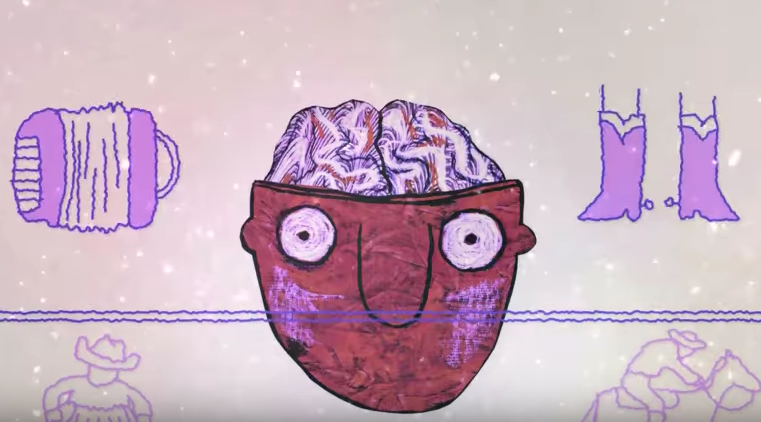
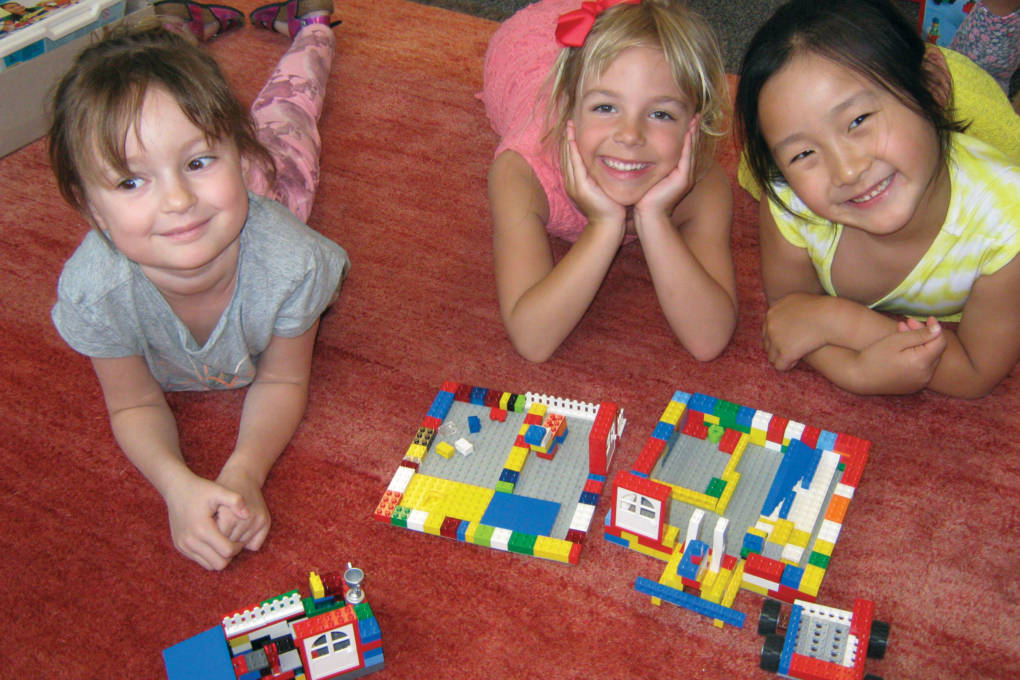
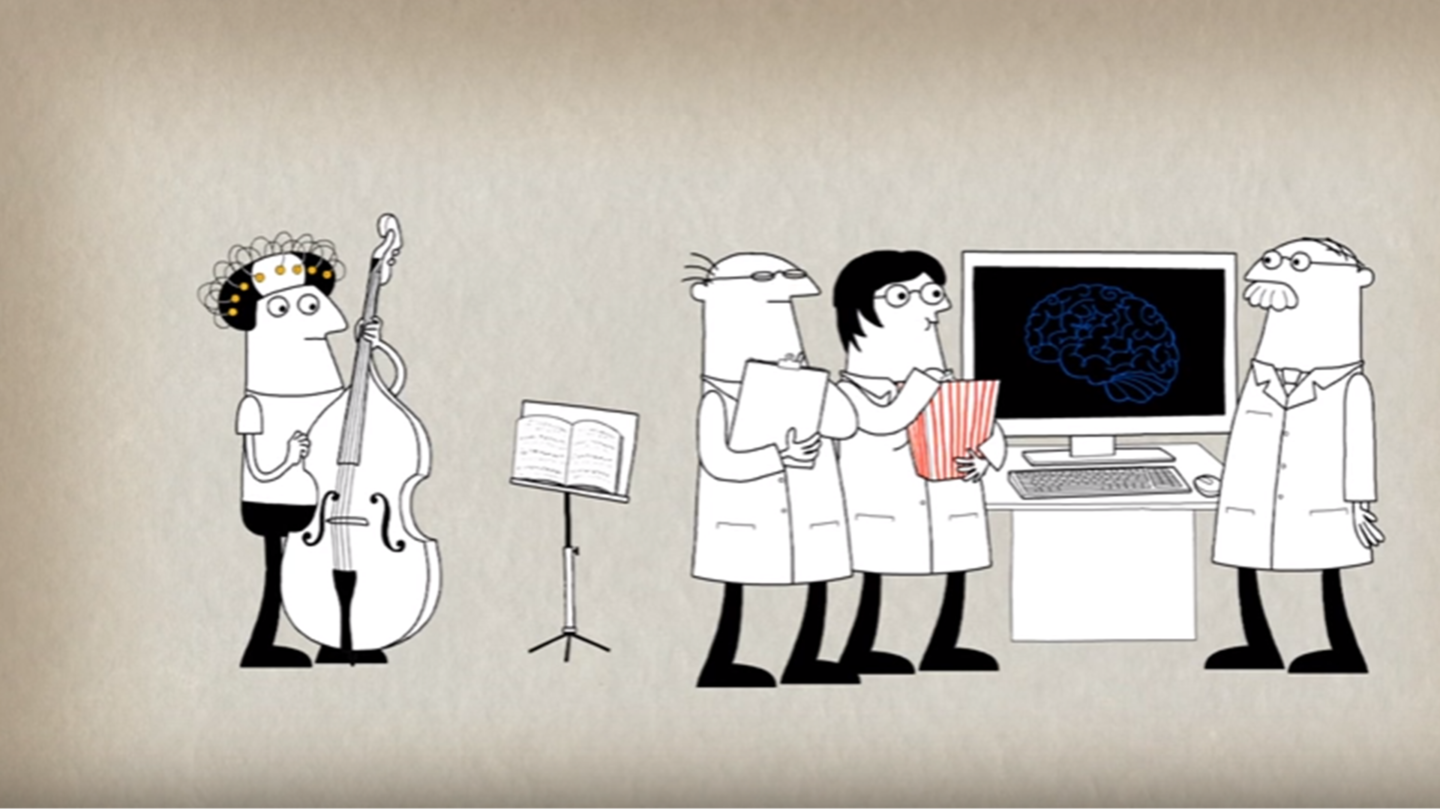
window.__IS_SSR__=true
window.__INITIAL_STATE__={
"attachmentsReducer": {
"audio_0": {
"type": "attachments",
"id": "audio_0",
"imgSizes": {
"kqedFullSize": {
"file": "https://ww2.kqed.org/news/wp-content/themes/KQED-unified/img/audio_bgs/background0.jpg"
}
}
},
"audio_1": {
"type": "attachments",
"id": "audio_1",
"imgSizes": {
"kqedFullSize": {
"file": "https://ww2.kqed.org/news/wp-content/themes/KQED-unified/img/audio_bgs/background1.jpg"
}
}
},
"audio_2": {
"type": "attachments",
"id": "audio_2",
"imgSizes": {
"kqedFullSize": {
"file": "https://ww2.kqed.org/news/wp-content/themes/KQED-unified/img/audio_bgs/background2.jpg"
}
}
},
"audio_3": {
"type": "attachments",
"id": "audio_3",
"imgSizes": {
"kqedFullSize": {
"file": "https://ww2.kqed.org/news/wp-content/themes/KQED-unified/img/audio_bgs/background3.jpg"
}
}
},
"audio_4": {
"type": "attachments",
"id": "audio_4",
"imgSizes": {
"kqedFullSize": {
"file": "https://ww2.kqed.org/news/wp-content/themes/KQED-unified/img/audio_bgs/background4.jpg"
}
}
},
"placeholder": {
"type": "attachments",
"id": "placeholder",
"imgSizes": {
"thumbnail": {
"file": "https://cdn.kqed.org/wp-content/uploads/2024/12/KQED-Default-Image-816638274-2000x1333-1-160x107.jpg",
"width": 160,
"height": 107,
"mimeType": "image/jpeg"
},
"medium": {
"file": "https://cdn.kqed.org/wp-content/uploads/2024/12/KQED-Default-Image-816638274-2000x1333-1-800x533.jpg",
"width": 800,
"height": 533,
"mimeType": "image/jpeg"
},
"medium_large": {
"file": "https://cdn.kqed.org/wp-content/uploads/2024/12/KQED-Default-Image-816638274-2000x1333-1-768x512.jpg",
"width": 768,
"height": 512,
"mimeType": "image/jpeg"
},
"large": {
"file": "https://cdn.kqed.org/wp-content/uploads/2024/12/KQED-Default-Image-816638274-2000x1333-1-1020x680.jpg",
"width": 1020,
"height": 680,
"mimeType": "image/jpeg"
},
"1536x1536": {
"file": "https://cdn.kqed.org/wp-content/uploads/2024/12/KQED-Default-Image-816638274-2000x1333-1-1536x1024.jpg",
"width": 1536,
"height": 1024,
"mimeType": "image/jpeg"
},
"fd-lrg": {
"file": "https://cdn.kqed.org/wp-content/uploads/2024/12/KQED-Default-Image-816638274-2000x1333-1-1536x1024.jpg",
"width": 1536,
"height": 1024,
"mimeType": "image/jpeg"
},
"fd-med": {
"file": "https://cdn.kqed.org/wp-content/uploads/2024/12/KQED-Default-Image-816638274-2000x1333-1-1020x680.jpg",
"width": 1020,
"height": 680,
"mimeType": "image/jpeg"
},
"fd-sm": {
"file": "https://cdn.kqed.org/wp-content/uploads/2024/12/KQED-Default-Image-816638274-2000x1333-1-800x533.jpg",
"width": 800,
"height": 533,
"mimeType": "image/jpeg"
},
"post-thumbnail": {
"file": "https://cdn.kqed.org/wp-content/uploads/2024/12/KQED-Default-Image-816638274-2000x1333-1-672x372.jpg",
"width": 672,
"height": 372,
"mimeType": "image/jpeg"
},
"twentyfourteen-full-width": {
"file": "https://cdn.kqed.org/wp-content/uploads/2024/12/KQED-Default-Image-816638274-2000x1333-1-1038x576.jpg",
"width": 1038,
"height": 576,
"mimeType": "image/jpeg"
},
"xxsmall": {
"file": "https://cdn.kqed.org/wp-content/uploads/2024/12/KQED-Default-Image-816638274-2000x1333-1-160x107.jpg",
"width": 160,
"height": 107,
"mimeType": "image/jpeg"
},
"xsmall": {
"file": "https://cdn.kqed.org/wp-content/uploads/2024/12/KQED-Default-Image-816638274-2000x1333-1-672x372.jpg",
"width": 672,
"height": 372,
"mimeType": "image/jpeg"
},
"small": {
"file": "https://cdn.kqed.org/wp-content/uploads/2024/12/KQED-Default-Image-816638274-2000x1333-1-672x372.jpg",
"width": 672,
"height": 372,
"mimeType": "image/jpeg"
},
"xlarge": {
"file": "https://cdn.kqed.org/wp-content/uploads/2024/12/KQED-Default-Image-816638274-2000x1333-1-1020x680.jpg",
"width": 1020,
"height": 680,
"mimeType": "image/jpeg"
},
"full-width": {
"file": "https://cdn.kqed.org/wp-content/uploads/2024/12/KQED-Default-Image-816638274-2000x1333-1-1920x1280.jpg",
"width": 1920,
"height": 1280,
"mimeType": "image/jpeg"
},
"guest-author-32": {
"file": "https://cdn.kqed.org/wp-content/uploads/2025/01/KQED-Default-Image-816638274-1333x1333-1-160x160.jpg",
"width": 32,
"height": 32,
"mimeType": "image/jpeg"
},
"guest-author-50": {
"file": "https://cdn.kqed.org/wp-content/uploads/2025/01/KQED-Default-Image-816638274-1333x1333-1-160x160.jpg",
"width": 50,
"height": 50,
"mimeType": "image/jpeg"
},
"guest-author-64": {
"file": "https://cdn.kqed.org/wp-content/uploads/2025/01/KQED-Default-Image-816638274-1333x1333-1-160x160.jpg",
"width": 64,
"height": 64,
"mimeType": "image/jpeg"
},
"guest-author-96": {
"file": "https://cdn.kqed.org/wp-content/uploads/2025/01/KQED-Default-Image-816638274-1333x1333-1-160x160.jpg",
"width": 96,
"height": 96,
"mimeType": "image/jpeg"
},
"guest-author-128": {
"file": "https://cdn.kqed.org/wp-content/uploads/2025/01/KQED-Default-Image-816638274-1333x1333-1-160x160.jpg",
"width": 128,
"height": 128,
"mimeType": "image/jpeg"
},
"detail": {
"file": "https://cdn.kqed.org/wp-content/uploads/2025/01/KQED-Default-Image-816638274-1333x1333-1-160x160.jpg",
"width": 160,
"height": 160,
"mimeType": "image/jpeg"
},
"kqedFullSize": {
"file": "https://cdn.kqed.org/wp-content/uploads/2024/12/KQED-Default-Image-816638274-2000x1333-1.jpg",
"width": 2000,
"height": 1333
}
}
},
"mindshift_47230": {
"type": "attachments",
"id": "mindshift_47230",
"meta": {
"index": "attachments_1716263798",
"site": "mindshift",
"id": "47230",
"found": true
},
"parent": 47125,
"imgSizes": {
"small": {
"file": "https://ww2.kqed.org/app/uploads/sites/23/2016/12/Imagination-520x288.png",
"width": 520,
"mimeType": "image/png",
"height": 288
},
"thumbnail": {
"file": "https://ww2.kqed.org/app/uploads/sites/23/2016/12/Imagination-160x89.png",
"width": 160,
"mimeType": "image/png",
"height": 89
},
"post-thumbnail": {
"file": "https://ww2.kqed.org/app/uploads/sites/23/2016/12/Imagination-672x372.png",
"width": 672,
"mimeType": "image/png",
"height": 372
},
"xsmall": {
"file": "https://ww2.kqed.org/app/uploads/sites/23/2016/12/Imagination-375x208.png",
"width": 375,
"mimeType": "image/png",
"height": 208
},
"kqedFullSize": {
"file": "https://ww2.kqed.org/app/uploads/sites/23/2016/12/Imagination.png",
"width": 761,
"height": 422
},
"guest-author-50": {
"file": "https://ww2.kqed.org/app/uploads/sites/23/2016/12/Imagination-50x50.png",
"width": 50,
"mimeType": "image/png",
"height": 50
},
"guest-author-96": {
"file": "https://ww2.kqed.org/app/uploads/sites/23/2016/12/Imagination-96x96.png",
"width": 96,
"mimeType": "image/png",
"height": 96
},
"guest-author-64": {
"file": "https://ww2.kqed.org/app/uploads/sites/23/2016/12/Imagination-64x64.png",
"width": 64,
"mimeType": "image/png",
"height": 64
},
"detail": {
"file": "https://ww2.kqed.org/app/uploads/sites/23/2016/12/Imagination-150x150.png",
"width": 150,
"mimeType": "image/png",
"height": 150
},
"guest-author-32": {
"file": "https://ww2.kqed.org/app/uploads/sites/23/2016/12/Imagination-32x32.png",
"width": 32,
"mimeType": "image/png",
"height": 32
},
"guest-author-128": {
"file": "https://ww2.kqed.org/app/uploads/sites/23/2016/12/Imagination-128x128.png",
"width": 128,
"mimeType": "image/png",
"height": 128
},
"xxsmall": {
"file": "https://ww2.kqed.org/app/uploads/sites/23/2016/12/Imagination-240x133.png",
"width": 240,
"mimeType": "image/png",
"height": 133
}
},
"publishDate": 1483000275,
"modified": 1483000291,
"caption": null,
"description": null,
"title": "imagination",
"credit": "Tomás Pichardo-Espaillat/\u003ca href=\"http://ed.ted.com/lessons/the-neuroscience-of-imagination-andrey-vyshedskiy\">TED-ED\u003c/a>",
"status": "inherit",
"isLoading": false,
"fetchFailed": false
},
"mindshift_46963": {
"type": "attachments",
"id": "mindshift_46963",
"meta": {
"index": "attachments_1716263798",
"site": "mindshift",
"id": "46963",
"found": true
},
"parent": 46938,
"imgSizes": {
"small": {
"file": "https://ww2.kqed.org/app/uploads/sites/23/2016/11/tinker-girls-520x347.jpg",
"width": 520,
"mimeType": "image/jpeg",
"height": 347
},
"twentyfourteen-full-width": {
"file": "https://ww2.kqed.org/app/uploads/sites/23/2016/11/tinker-girls-1038x576.jpg",
"width": 1038,
"mimeType": "image/jpeg",
"height": 576
},
"thumbnail": {
"file": "https://ww2.kqed.org/app/uploads/sites/23/2016/11/tinker-girls-160x107.jpg",
"width": 160,
"mimeType": "image/jpeg",
"height": 107
},
"fd-sm": {
"file": "https://ww2.kqed.org/app/uploads/sites/23/2016/11/tinker-girls-960x640.jpg",
"width": 960,
"mimeType": "image/jpeg",
"height": 640
},
"post-thumbnail": {
"file": "https://ww2.kqed.org/app/uploads/sites/23/2016/11/tinker-girls-672x372.jpg",
"width": 672,
"mimeType": "image/jpeg",
"height": 372
},
"xsmall": {
"file": "https://ww2.kqed.org/app/uploads/sites/23/2016/11/tinker-girls-375x250.jpg",
"width": 375,
"mimeType": "image/jpeg",
"height": 250
},
"kqedFullSize": {
"file": "https://ww2.kqed.org/app/uploads/sites/23/2016/11/tinker-girls.jpg",
"width": 3072,
"height": 2048
},
"large": {
"file": "https://ww2.kqed.org/app/uploads/sites/23/2016/11/tinker-girls-1020x680.jpg",
"width": 1020,
"mimeType": "image/jpeg",
"height": 680
},
"xlarge": {
"file": "https://ww2.kqed.org/app/uploads/sites/23/2016/11/tinker-girls-1180x787.jpg",
"width": 1180,
"mimeType": "image/jpeg",
"height": 787
},
"guest-author-50": {
"file": "https://ww2.kqed.org/app/uploads/sites/23/2016/11/tinker-girls-50x50.jpg",
"width": 50,
"mimeType": "image/jpeg",
"height": 50
},
"guest-author-96": {
"file": "https://ww2.kqed.org/app/uploads/sites/23/2016/11/tinker-girls-96x96.jpg",
"width": 96,
"mimeType": "image/jpeg",
"height": 96
},
"medium": {
"file": "https://ww2.kqed.org/app/uploads/sites/23/2016/11/tinker-girls-800x533.jpg",
"width": 800,
"mimeType": "image/jpeg",
"height": 533
},
"guest-author-64": {
"file": "https://ww2.kqed.org/app/uploads/sites/23/2016/11/tinker-girls-64x64.jpg",
"width": 64,
"mimeType": "image/jpeg",
"height": 64
},
"guest-author-32": {
"file": "https://ww2.kqed.org/app/uploads/sites/23/2016/11/tinker-girls-32x32.jpg",
"width": 32,
"mimeType": "image/jpeg",
"height": 32
},
"fd-lrg": {
"file": "https://ww2.kqed.org/app/uploads/sites/23/2016/11/tinker-girls-1920x1280.jpg",
"width": 1920,
"mimeType": "image/jpeg",
"height": 1280
},
"fd-med": {
"file": "https://ww2.kqed.org/app/uploads/sites/23/2016/11/tinker-girls-1180x787.jpg",
"width": 1180,
"mimeType": "image/jpeg",
"height": 787
},
"full-width": {
"file": "https://ww2.kqed.org/app/uploads/sites/23/2016/11/tinker-girls-1920x1280.jpg",
"width": 1920,
"mimeType": "image/jpeg",
"height": 1280
},
"detail": {
"file": "https://ww2.kqed.org/app/uploads/sites/23/2016/11/tinker-girls-150x150.jpg",
"width": 150,
"mimeType": "image/jpeg",
"height": 150
},
"medium_large": {
"file": "https://ww2.kqed.org/app/uploads/sites/23/2016/11/tinker-girls-768x512.jpg",
"width": 768,
"mimeType": "image/jpeg",
"height": 512
},
"guest-author-128": {
"file": "https://ww2.kqed.org/app/uploads/sites/23/2016/11/tinker-girls-128x128.jpg",
"width": 128,
"mimeType": "image/jpeg",
"height": 128
},
"xxsmall": {
"file": "https://ww2.kqed.org/app/uploads/sites/23/2016/11/tinker-girls-240x160.jpg",
"width": 240,
"mimeType": "image/jpeg",
"height": 160
}
},
"publishDate": 1478812150,
"modified": 1478812206,
"caption": "Baggett's students show off their Lego projects.",
"description": null,
"title": "tinker-girls",
"credit": "Courtesy Alice Baggett/Constructing Modern Knowledge Press",
"status": "inherit",
"isLoading": false,
"fetchFailed": false
},
"mindshift_46194": {
"type": "attachments",
"id": "mindshift_46194",
"meta": {
"index": "attachments_1716263798",
"site": "mindshift",
"id": "46194",
"found": true
},
"parent": 46193,
"imgSizes": {
"twentyfourteen-full-width": {
"file": "https://ww2.kqed.org/app/uploads/sites/23/2016/08/brain-on-musicCROP-1038x576.png",
"width": 1038,
"mimeType": "image/png",
"height": 576
},
"thumbnail": {
"file": "https://ww2.kqed.org/app/uploads/sites/23/2016/08/brain-on-musicCROP-400x225.png",
"width": 400,
"mimeType": "image/png",
"height": 225
},
"fd-sm": {
"file": "https://ww2.kqed.org/app/uploads/sites/23/2016/08/brain-on-musicCROP-960x540.png",
"width": 960,
"mimeType": "image/png",
"height": 540
},
"post-thumbnail": {
"file": "https://ww2.kqed.org/app/uploads/sites/23/2016/08/brain-on-musicCROP-672x372.png",
"width": 672,
"mimeType": "image/png",
"height": 372
},
"kqedFullSize": {
"file": "https://ww2.kqed.org/app/uploads/sites/23/2016/08/brain-on-musicCROP.png",
"width": 1920,
"height": 1080
},
"large": {
"file": "https://ww2.kqed.org/app/uploads/sites/23/2016/08/brain-on-musicCROP-1440x810.png",
"width": 1440,
"mimeType": "image/png",
"height": 810
},
"guest-author-50": {
"file": "https://ww2.kqed.org/app/uploads/sites/23/2016/08/brain-on-musicCROP-50x50.png",
"width": 50,
"mimeType": "image/png",
"height": 50
},
"guest-author-96": {
"file": "https://ww2.kqed.org/app/uploads/sites/23/2016/08/brain-on-musicCROP-96x96.png",
"width": 96,
"mimeType": "image/png",
"height": 96
},
"medium": {
"file": "https://ww2.kqed.org/app/uploads/sites/23/2016/08/brain-on-musicCROP-800x450.png",
"width": 800,
"mimeType": "image/png",
"height": 450
},
"guest-author-64": {
"file": "https://ww2.kqed.org/app/uploads/sites/23/2016/08/brain-on-musicCROP-64x64.png",
"width": 64,
"mimeType": "image/png",
"height": 64
},
"guest-author-32": {
"file": "https://ww2.kqed.org/app/uploads/sites/23/2016/08/brain-on-musicCROP-32x32.png",
"width": 32,
"mimeType": "image/png",
"height": 32
},
"cat_post_thumb_sizecategory-posts-2": {
"file": "https://ww2.kqed.org/app/uploads/sites/23/2016/08/brain-on-musicCROP-50x50.png",
"width": 50,
"mimeType": "image/png",
"height": 50
},
"fd-lrg": {
"file": "https://ww2.kqed.org/app/uploads/sites/23/2016/08/brain-on-musicCROP-1920x1080.png",
"width": 1920,
"mimeType": "image/png",
"height": 1080
},
"fd-med": {
"file": "https://ww2.kqed.org/app/uploads/sites/23/2016/08/brain-on-musicCROP-1180x664.png",
"width": 1180,
"mimeType": "image/png",
"height": 664
},
"detail": {
"file": "https://ww2.kqed.org/app/uploads/sites/23/2016/08/brain-on-musicCROP-150x150.png",
"width": 150,
"mimeType": "image/png",
"height": 150
},
"medium_large": {
"file": "https://ww2.kqed.org/app/uploads/sites/23/2016/08/brain-on-musicCROP-768x432.png",
"width": 768,
"mimeType": "image/png",
"height": 432
},
"guest-author-128": {
"file": "https://ww2.kqed.org/app/uploads/sites/23/2016/08/brain-on-musicCROP-128x128.png",
"width": 128,
"mimeType": "image/png",
"height": 128
}
},
"publishDate": 1472083941,
"modified": 1472084283,
"caption": null,
"description": null,
"title": "brain-on-musicCROP",
"credit": "\u003ca href=\"http://ed.ted.com/lessons/how-playing-an-instrument-benefits-your-brain-anita-collins\">Sharon Colman Graham for TED-Ed\u003c/a>",
"status": "inherit",
"isLoading": false,
"fetchFailed": false
},
"mindshift_46062": {
"type": "attachments",
"id": "mindshift_46062",
"meta": {
"index": "attachments_1716263798",
"site": "mindshift",
"id": "46062",
"found": true
},
"parent": 46055,
"imgSizes": {
"twentyfourteen-full-width": {
"file": "https://ww2.kqed.org/app/uploads/sites/23/2016/08/SirKen-1038x576.png",
"width": 1038,
"mimeType": "image/png",
"height": 576
},
"thumbnail": {
"file": "https://ww2.kqed.org/app/uploads/sites/23/2016/08/SirKen-400x225.png",
"width": 400,
"mimeType": "image/png",
"height": 225
},
"fd-sm": {
"file": "https://ww2.kqed.org/app/uploads/sites/23/2016/08/SirKen-960x540.png",
"width": 960,
"mimeType": "image/png",
"height": 540
},
"post-thumbnail": {
"file": "https://ww2.kqed.org/app/uploads/sites/23/2016/08/SirKen-672x372.png",
"width": 672,
"mimeType": "image/png",
"height": 372
},
"kqedFullSize": {
"file": "https://ww2.kqed.org/app/uploads/sites/23/2016/08/SirKen.png",
"width": 1920,
"height": 1080
},
"large": {
"file": "https://ww2.kqed.org/app/uploads/sites/23/2016/08/SirKen-1440x810.png",
"width": 1440,
"mimeType": "image/png",
"height": 810
},
"guest-author-50": {
"file": "https://ww2.kqed.org/app/uploads/sites/23/2016/08/SirKen-50x50.png",
"width": 50,
"mimeType": "image/png",
"height": 50
},
"guest-author-96": {
"file": "https://ww2.kqed.org/app/uploads/sites/23/2016/08/SirKen-96x96.png",
"width": 96,
"mimeType": "image/png",
"height": 96
},
"medium": {
"file": "https://ww2.kqed.org/app/uploads/sites/23/2016/08/SirKen-800x450.png",
"width": 800,
"mimeType": "image/png",
"height": 450
},
"guest-author-64": {
"file": "https://ww2.kqed.org/app/uploads/sites/23/2016/08/SirKen-64x64.png",
"width": 64,
"mimeType": "image/png",
"height": 64
},
"guest-author-32": {
"file": "https://ww2.kqed.org/app/uploads/sites/23/2016/08/SirKen-32x32.png",
"width": 32,
"mimeType": "image/png",
"height": 32
},
"cat_post_thumb_sizecategory-posts-2": {
"file": "https://ww2.kqed.org/app/uploads/sites/23/2016/08/SirKen-50x50.png",
"width": 50,
"mimeType": "image/png",
"height": 50
},
"fd-lrg": {
"file": "https://ww2.kqed.org/app/uploads/sites/23/2016/08/SirKen-1920x1080.png",
"width": 1920,
"mimeType": "image/png",
"height": 1080
},
"fd-med": {
"file": "https://ww2.kqed.org/app/uploads/sites/23/2016/08/SirKen-1180x664.png",
"width": 1180,
"mimeType": "image/png",
"height": 664
},
"detail": {
"file": "https://ww2.kqed.org/app/uploads/sites/23/2016/08/SirKen-150x150.png",
"width": 150,
"mimeType": "image/png",
"height": 150
},
"medium_large": {
"file": "https://ww2.kqed.org/app/uploads/sites/23/2016/08/SirKen-768x432.png",
"width": 768,
"mimeType": "image/png",
"height": 432
},
"guest-author-128": {
"file": "https://ww2.kqed.org/app/uploads/sites/23/2016/08/SirKen-128x128.png",
"width": 128,
"mimeType": "image/png",
"height": 128
}
},
"publishDate": 1470766108,
"modified": 1470766189,
"caption": "Sir Ken Robinson contends that creativity is essential to human flourishing.",
"description": null,
"title": "SirKen",
"credit": "Sebastiaan ter Burg/\u003ca href=\"https://www.flickr.com/photos/ter-burg/3569206871/\">Flickr\u003c/a>",
"status": "inherit",
"isLoading": false,
"fetchFailed": false
},
"mindshift_45858": {
"type": "attachments",
"id": "mindshift_45858",
"meta": {
"index": "attachments_1716263798",
"site": "mindshift",
"id": "45858",
"found": true
},
"parent": 45856,
"imgSizes": {
"twentyfourteen-full-width": {
"file": "https://ww2.kqed.org/app/uploads/sites/23/2016/07/Photo-15-04-2015-12-02-41-PM-1038x576.jpg",
"width": 1038,
"mimeType": "image/jpeg",
"height": 576
},
"thumbnail": {
"file": "https://ww2.kqed.org/app/uploads/sites/23/2016/07/Photo-15-04-2015-12-02-41-PM-400x249.jpg",
"width": 400,
"mimeType": "image/jpeg",
"height": 249
},
"fd-sm": {
"file": "https://ww2.kqed.org/app/uploads/sites/23/2016/07/Photo-15-04-2015-12-02-41-PM-960x598.jpg",
"width": 960,
"mimeType": "image/jpeg",
"height": 598
},
"post-thumbnail": {
"file": "https://ww2.kqed.org/app/uploads/sites/23/2016/07/Photo-15-04-2015-12-02-41-PM-672x372.jpg",
"width": 672,
"mimeType": "image/jpeg",
"height": 372
},
"kqedFullSize": {
"file": "https://ww2.kqed.org/app/uploads/sites/23/2016/07/Photo-15-04-2015-12-02-41-PM.jpg",
"width": 2464,
"height": 1536
},
"large": {
"file": "https://ww2.kqed.org/app/uploads/sites/23/2016/07/Photo-15-04-2015-12-02-41-PM-1440x898.jpg",
"width": 1440,
"mimeType": "image/jpeg",
"height": 898
},
"guest-author-50": {
"file": "https://ww2.kqed.org/app/uploads/sites/23/2016/07/Photo-15-04-2015-12-02-41-PM-50x50.jpg",
"width": 50,
"mimeType": "image/jpeg",
"height": 50
},
"guest-author-96": {
"file": "https://ww2.kqed.org/app/uploads/sites/23/2016/07/Photo-15-04-2015-12-02-41-PM-96x96.jpg",
"width": 96,
"mimeType": "image/jpeg",
"height": 96
},
"medium": {
"file": "https://ww2.kqed.org/app/uploads/sites/23/2016/07/Photo-15-04-2015-12-02-41-PM-800x499.jpg",
"width": 800,
"mimeType": "image/jpeg",
"height": 499
},
"guest-author-64": {
"file": "https://ww2.kqed.org/app/uploads/sites/23/2016/07/Photo-15-04-2015-12-02-41-PM-64x64.jpg",
"width": 64,
"mimeType": "image/jpeg",
"height": 64
},
"guest-author-32": {
"file": "https://ww2.kqed.org/app/uploads/sites/23/2016/07/Photo-15-04-2015-12-02-41-PM-32x32.jpg",
"width": 32,
"mimeType": "image/jpeg",
"height": 32
},
"cat_post_thumb_sizecategory-posts-2": {
"file": "https://ww2.kqed.org/app/uploads/sites/23/2016/07/Photo-15-04-2015-12-02-41-PM-50x50.jpg",
"width": 50,
"mimeType": "image/jpeg",
"height": 50
},
"fd-lrg": {
"file": "https://ww2.kqed.org/app/uploads/sites/23/2016/07/Photo-15-04-2015-12-02-41-PM-1920x1197.jpg",
"width": 1920,
"mimeType": "image/jpeg",
"height": 1197
},
"fd-med": {
"file": "https://ww2.kqed.org/app/uploads/sites/23/2016/07/Photo-15-04-2015-12-02-41-PM-1180x736.jpg",
"width": 1180,
"mimeType": "image/jpeg",
"height": 736
},
"detail": {
"file": "https://ww2.kqed.org/app/uploads/sites/23/2016/07/Photo-15-04-2015-12-02-41-PM-150x150.jpg",
"width": 150,
"mimeType": "image/jpeg",
"height": 150
},
"medium_large": {
"file": "https://ww2.kqed.org/app/uploads/sites/23/2016/07/Photo-15-04-2015-12-02-41-PM-768x479.jpg",
"width": 768,
"mimeType": "image/jpeg",
"height": 479
},
"guest-author-128": {
"file": "https://ww2.kqed.org/app/uploads/sites/23/2016/07/Photo-15-04-2015-12-02-41-PM-128x128.jpg",
"width": 128,
"mimeType": "image/jpeg",
"height": 128
}
},
"publishDate": 1469132720,
"modified": 1469133673,
"caption": "Students hold \u003ca href=\"http://www.ipadartroom.com/salad-selfies-art-history/\">\"Salad Selfies\"\u003c/a> they made as an exploration of Giuseppe Arcimboldo's portraiture. ",
"description": null,
"title": "Photo 15-04-2015, 12 02 41 PM",
"credit": "Courtesy Cathy Hunt",
"status": "inherit",
"isLoading": false,
"fetchFailed": false
},
"mindshift_45925": {
"type": "attachments",
"id": "mindshift_45925",
"meta": {
"index": "attachments_1716263798",
"site": "mindshift",
"id": "45925",
"found": true
},
"parent": 45900,
"imgSizes": {
"twentyfourteen-full-width": {
"file": "https://ww2.kqed.org/app/uploads/sites/23/2016/07/Posterized-makerspace-1038x576.png",
"width": 1038,
"mimeType": "image/png",
"height": 576
},
"thumbnail": {
"file": "https://ww2.kqed.org/app/uploads/sites/23/2016/07/Posterized-makerspace-400x225.png",
"width": 400,
"mimeType": "image/png",
"height": 225
},
"fd-sm": {
"file": "https://ww2.kqed.org/app/uploads/sites/23/2016/07/Posterized-makerspace-960x540.png",
"width": 960,
"mimeType": "image/png",
"height": 540
},
"post-thumbnail": {
"file": "https://ww2.kqed.org/app/uploads/sites/23/2016/07/Posterized-makerspace-672x372.png",
"width": 672,
"mimeType": "image/png",
"height": 372
},
"kqedFullSize": {
"file": "https://ww2.kqed.org/app/uploads/sites/23/2016/07/Posterized-makerspace.png",
"width": 1920,
"height": 1080
},
"large": {
"file": "https://ww2.kqed.org/app/uploads/sites/23/2016/07/Posterized-makerspace-1440x810.png",
"width": 1440,
"mimeType": "image/png",
"height": 810
},
"guest-author-50": {
"file": "https://ww2.kqed.org/app/uploads/sites/23/2016/07/Posterized-makerspace-50x50.png",
"width": 50,
"mimeType": "image/png",
"height": 50
},
"guest-author-96": {
"file": "https://ww2.kqed.org/app/uploads/sites/23/2016/07/Posterized-makerspace-96x96.png",
"width": 96,
"mimeType": "image/png",
"height": 96
},
"medium": {
"file": "https://ww2.kqed.org/app/uploads/sites/23/2016/07/Posterized-makerspace-800x450.png",
"width": 800,
"mimeType": "image/png",
"height": 450
},
"guest-author-64": {
"file": "https://ww2.kqed.org/app/uploads/sites/23/2016/07/Posterized-makerspace-64x64.png",
"width": 64,
"mimeType": "image/png",
"height": 64
},
"guest-author-32": {
"file": "https://ww2.kqed.org/app/uploads/sites/23/2016/07/Posterized-makerspace-32x32.png",
"width": 32,
"mimeType": "image/png",
"height": 32
},
"cat_post_thumb_sizecategory-posts-2": {
"file": "https://ww2.kqed.org/app/uploads/sites/23/2016/07/Posterized-makerspace-50x50.png",
"width": 50,
"mimeType": "image/png",
"height": 50
},
"fd-lrg": {
"file": "https://ww2.kqed.org/app/uploads/sites/23/2016/07/Posterized-makerspace-1920x1080.png",
"width": 1920,
"mimeType": "image/png",
"height": 1080
},
"fd-med": {
"file": "https://ww2.kqed.org/app/uploads/sites/23/2016/07/Posterized-makerspace-1180x664.png",
"width": 1180,
"mimeType": "image/png",
"height": 664
},
"detail": {
"file": "https://ww2.kqed.org/app/uploads/sites/23/2016/07/Posterized-makerspace-150x150.png",
"width": 150,
"mimeType": "image/png",
"height": 150
},
"medium_large": {
"file": "https://ww2.kqed.org/app/uploads/sites/23/2016/07/Posterized-makerspace-768x432.png",
"width": 768,
"mimeType": "image/png",
"height": 432
},
"guest-author-128": {
"file": "https://ww2.kqed.org/app/uploads/sites/23/2016/07/Posterized-makerspace-128x128.png",
"width": 128,
"mimeType": "image/png",
"height": 128
}
},
"publishDate": 1469471206,
"modified": 1469472208,
"caption": "A \"posterized\" version of New Canaan high school students at work in the makerspace.",
"description": null,
"title": "Posterized-makerspace",
"credit": "Courtesy Michelle Luhtala",
"status": "inherit",
"isLoading": false,
"fetchFailed": false
},
"mindshift_45846": {
"type": "attachments",
"id": "mindshift_45846",
"meta": {
"index": "attachments_1716263798",
"site": "mindshift",
"id": "45846",
"found": true
},
"parent": 45819,
"imgSizes": {
"twentyfourteen-full-width": {
"file": "https://ww2.kqed.org/app/uploads/sites/23/2016/07/poetry-1038x576.png",
"width": 1038,
"mimeType": "image/png",
"height": 576
},
"thumbnail": {
"file": "https://ww2.kqed.org/app/uploads/sites/23/2016/07/poetry-400x225.png",
"width": 400,
"mimeType": "image/png",
"height": 225
},
"fd-sm": {
"file": "https://ww2.kqed.org/app/uploads/sites/23/2016/07/poetry-960x540.png",
"width": 960,
"mimeType": "image/png",
"height": 540
},
"post-thumbnail": {
"file": "https://ww2.kqed.org/app/uploads/sites/23/2016/07/poetry-672x372.png",
"width": 672,
"mimeType": "image/png",
"height": 372
},
"kqedFullSize": {
"file": "https://ww2.kqed.org/app/uploads/sites/23/2016/07/poetry.png",
"width": 1920,
"height": 1080
},
"large": {
"file": "https://ww2.kqed.org/app/uploads/sites/23/2016/07/poetry-1440x810.png",
"width": 1440,
"mimeType": "image/png",
"height": 810
},
"guest-author-50": {
"file": "https://ww2.kqed.org/app/uploads/sites/23/2016/07/poetry-50x50.png",
"width": 50,
"mimeType": "image/png",
"height": 50
},
"guest-author-96": {
"file": "https://ww2.kqed.org/app/uploads/sites/23/2016/07/poetry-96x96.png",
"width": 96,
"mimeType": "image/png",
"height": 96
},
"medium": {
"file": "https://ww2.kqed.org/app/uploads/sites/23/2016/07/poetry-800x450.png",
"width": 800,
"mimeType": "image/png",
"height": 450
},
"guest-author-64": {
"file": "https://ww2.kqed.org/app/uploads/sites/23/2016/07/poetry-64x64.png",
"width": 64,
"mimeType": "image/png",
"height": 64
},
"guest-author-32": {
"file": "https://ww2.kqed.org/app/uploads/sites/23/2016/07/poetry-32x32.png",
"width": 32,
"mimeType": "image/png",
"height": 32
},
"cat_post_thumb_sizecategory-posts-2": {
"file": "https://ww2.kqed.org/app/uploads/sites/23/2016/07/poetry-50x50.png",
"width": 50,
"mimeType": "image/png",
"height": 50
},
"fd-lrg": {
"file": "https://ww2.kqed.org/app/uploads/sites/23/2016/07/poetry-1920x1080.png",
"width": 1920,
"mimeType": "image/png",
"height": 1080
},
"fd-med": {
"file": "https://ww2.kqed.org/app/uploads/sites/23/2016/07/poetry-1180x664.png",
"width": 1180,
"mimeType": "image/png",
"height": 664
},
"detail": {
"file": "https://ww2.kqed.org/app/uploads/sites/23/2016/07/poetry-150x150.png",
"width": 150,
"mimeType": "image/png",
"height": 150
},
"medium_large": {
"file": "https://ww2.kqed.org/app/uploads/sites/23/2016/07/poetry-768x432.png",
"width": 768,
"mimeType": "image/png",
"height": 432
},
"guest-author-128": {
"file": "https://ww2.kqed.org/app/uploads/sites/23/2016/07/poetry-128x128.png",
"width": 128,
"mimeType": "image/png",
"height": 128
}
},
"publishDate": 1468966000,
"modified": 1468966066,
"caption": null,
"description": null,
"title": "poetry",
"credit": "\u003ca href=\"https://www.flickr.com/photos/sarabiljana/8746993901/in/photostream/\">Sara Biljana Gaon (off)\u003c/a>/Flickr",
"status": "inherit",
"isLoading": false,
"fetchFailed": false
},
"mindshift_45717": {
"type": "attachments",
"id": "mindshift_45717",
"meta": {
"index": "attachments_1716263798",
"site": "mindshift",
"id": "45717",
"found": true
},
"parent": 45716,
"imgSizes": {
"twentyfourteen-full-width": {
"file": "https://ww2.kqed.org/app/uploads/sites/23/2016/07/angelkid_slide-218377faade47d1416e79e56d580301984519a40-1038x576.jpg",
"width": 1038,
"mimeType": "image/jpeg",
"height": 576
},
"thumbnail": {
"file": "https://ww2.kqed.org/app/uploads/sites/23/2016/07/angelkid_slide-218377faade47d1416e79e56d580301984519a40-400x267.jpg",
"width": 400,
"mimeType": "image/jpeg",
"height": 267
},
"fd-sm": {
"file": "https://ww2.kqed.org/app/uploads/sites/23/2016/07/angelkid_slide-218377faade47d1416e79e56d580301984519a40-960x640.jpg",
"width": 960,
"mimeType": "image/jpeg",
"height": 640
},
"post-thumbnail": {
"file": "https://ww2.kqed.org/app/uploads/sites/23/2016/07/angelkid_slide-218377faade47d1416e79e56d580301984519a40-672x372.jpg",
"width": 672,
"mimeType": "image/jpeg",
"height": 372
},
"kqedFullSize": {
"file": "https://ww2.kqed.org/app/uploads/sites/23/2016/07/angelkid_slide-218377faade47d1416e79e56d580301984519a40-e1467744826809.jpg",
"width": 1920,
"height": 1280
},
"large": {
"file": "https://ww2.kqed.org/app/uploads/sites/23/2016/07/angelkid_slide-218377faade47d1416e79e56d580301984519a40-1440x960.jpg",
"width": 1440,
"mimeType": "image/jpeg",
"height": 960
},
"guest-author-50": {
"file": "https://ww2.kqed.org/app/uploads/sites/23/2016/07/angelkid_slide-218377faade47d1416e79e56d580301984519a40-50x50.jpg",
"width": 50,
"mimeType": "image/jpeg",
"height": 50
},
"guest-author-96": {
"file": "https://ww2.kqed.org/app/uploads/sites/23/2016/07/angelkid_slide-218377faade47d1416e79e56d580301984519a40-96x96.jpg",
"width": 96,
"mimeType": "image/jpeg",
"height": 96
},
"medium": {
"file": "https://ww2.kqed.org/app/uploads/sites/23/2016/07/angelkid_slide-218377faade47d1416e79e56d580301984519a40-800x533.jpg",
"width": 800,
"mimeType": "image/jpeg",
"height": 533
},
"guest-author-64": {
"file": "https://ww2.kqed.org/app/uploads/sites/23/2016/07/angelkid_slide-218377faade47d1416e79e56d580301984519a40-64x64.jpg",
"width": 64,
"mimeType": "image/jpeg",
"height": 64
},
"guest-author-32": {
"file": "https://ww2.kqed.org/app/uploads/sites/23/2016/07/angelkid_slide-218377faade47d1416e79e56d580301984519a40-32x32.jpg",
"width": 32,
"mimeType": "image/jpeg",
"height": 32
},
"cat_post_thumb_sizecategory-posts-2": {
"file": "https://ww2.kqed.org/app/uploads/sites/23/2016/07/angelkid_slide-218377faade47d1416e79e56d580301984519a40-50x50.jpg",
"width": 50,
"mimeType": "image/jpeg",
"height": 50
},
"fd-lrg": {
"file": "https://ww2.kqed.org/app/uploads/sites/23/2016/07/angelkid_slide-218377faade47d1416e79e56d580301984519a40-1920x1280.jpg",
"width": 1920,
"mimeType": "image/jpeg",
"height": 1280
},
"fd-med": {
"file": "https://ww2.kqed.org/app/uploads/sites/23/2016/07/angelkid_slide-218377faade47d1416e79e56d580301984519a40-1180x787.jpg",
"width": 1180,
"mimeType": "image/jpeg",
"height": 787
},
"detail": {
"file": "https://ww2.kqed.org/app/uploads/sites/23/2016/07/angelkid_slide-218377faade47d1416e79e56d580301984519a40-150x150.jpg",
"width": 150,
"mimeType": "image/jpeg",
"height": 150
},
"medium_large": {
"file": "https://ww2.kqed.org/app/uploads/sites/23/2016/07/angelkid_slide-218377faade47d1416e79e56d580301984519a40-768x512.jpg",
"width": 768,
"mimeType": "image/jpeg",
"height": 512
},
"guest-author-128": {
"file": "https://ww2.kqed.org/app/uploads/sites/23/2016/07/angelkid_slide-218377faade47d1416e79e56d580301984519a40-128x128.jpg",
"width": 128,
"mimeType": "image/jpeg",
"height": 128
}
},
"publishDate": 1467735715,
"modified": 1467744922,
"caption": null,
"description": "The ideal student",
"title": "The ideal student",
"credit": "LA Johnson/NPR",
"status": "inherit",
"isLoading": false,
"fetchFailed": false
},
"mindshift_45361": {
"type": "attachments",
"id": "mindshift_45361",
"meta": {
"index": "attachments_1716263798",
"site": "mindshift",
"id": "45361",
"found": true
},
"parent": 45320,
"imgSizes": {
"twentyfourteen-full-width": {
"file": "https://ww2.kqed.org/app/uploads/sites/23/2016/06/Poe-1038x576.jpg",
"width": 1038,
"mimeType": "image/jpeg",
"height": 576
},
"thumbnail": {
"file": "https://ww2.kqed.org/app/uploads/sites/23/2016/06/Poe-400x225.jpg",
"width": 400,
"mimeType": "image/jpeg",
"height": 225
},
"fd-sm": {
"file": "https://ww2.kqed.org/app/uploads/sites/23/2016/06/Poe-960x540.jpg",
"width": 960,
"mimeType": "image/jpeg",
"height": 540
},
"post-thumbnail": {
"file": "https://ww2.kqed.org/app/uploads/sites/23/2016/06/Poe-672x372.jpg",
"width": 672,
"mimeType": "image/jpeg",
"height": 372
},
"kqedFullSize": {
"file": "https://ww2.kqed.org/app/uploads/sites/23/2016/06/Poe.jpg",
"width": 1920,
"height": 1080
},
"large": {
"file": "https://ww2.kqed.org/app/uploads/sites/23/2016/06/Poe-1440x810.jpg",
"width": 1440,
"mimeType": "image/jpeg",
"height": 810
},
"guest-author-50": {
"file": "https://ww2.kqed.org/app/uploads/sites/23/2016/06/Poe-50x50.jpg",
"width": 50,
"mimeType": "image/jpeg",
"height": 50
},
"guest-author-96": {
"file": "https://ww2.kqed.org/app/uploads/sites/23/2016/06/Poe-96x96.jpg",
"width": 96,
"mimeType": "image/jpeg",
"height": 96
},
"medium": {
"file": "https://ww2.kqed.org/app/uploads/sites/23/2016/06/Poe-800x450.jpg",
"width": 800,
"mimeType": "image/jpeg",
"height": 450
},
"guest-author-64": {
"file": "https://ww2.kqed.org/app/uploads/sites/23/2016/06/Poe-64x64.jpg",
"width": 64,
"mimeType": "image/jpeg",
"height": 64
},
"guest-author-32": {
"file": "https://ww2.kqed.org/app/uploads/sites/23/2016/06/Poe-32x32.jpg",
"width": 32,
"mimeType": "image/jpeg",
"height": 32
},
"cat_post_thumb_sizecategory-posts-2": {
"file": "https://ww2.kqed.org/app/uploads/sites/23/2016/06/Poe-50x50.jpg",
"width": 50,
"mimeType": "image/jpeg",
"height": 50
},
"fd-lrg": {
"file": "https://ww2.kqed.org/app/uploads/sites/23/2016/06/Poe-1920x1080.jpg",
"width": 1920,
"mimeType": "image/jpeg",
"height": 1080
},
"fd-med": {
"file": "https://ww2.kqed.org/app/uploads/sites/23/2016/06/Poe-1180x664.jpg",
"width": 1180,
"mimeType": "image/jpeg",
"height": 664
},
"detail": {
"file": "https://ww2.kqed.org/app/uploads/sites/23/2016/06/Poe-150x150.jpg",
"width": 150,
"mimeType": "image/jpeg",
"height": 150
},
"medium_large": {
"file": "https://ww2.kqed.org/app/uploads/sites/23/2016/06/Poe-768x432.jpg",
"width": 768,
"mimeType": "image/jpeg",
"height": 432
},
"guest-author-128": {
"file": "https://ww2.kqed.org/app/uploads/sites/23/2016/06/Poe-128x128.jpg",
"width": 128,
"mimeType": "image/jpeg",
"height": 128
}
},
"publishDate": 1464939374,
"modified": 1464940692,
"caption": null,
"description": null,
"title": "Poe",
"credit": "Screen grab of \"The Tell-Tale Heart\" by EK Theater. Digital puppeteers sit in front of the screen, performing the story. ",
"status": "inherit",
"isLoading": false,
"fetchFailed": false
},
"mindshift_44581": {
"type": "attachments",
"id": "mindshift_44581",
"meta": {
"index": "attachments_1716263798",
"site": "mindshift",
"id": "44581",
"found": true
},
"parent": 44561,
"imgSizes": {
"twentyfourteen-full-width": {
"file": "https://ww2.kqed.org/app/uploads/sites/23/2016/04/imagination-1038x576.jpg",
"width": 1038,
"mimeType": "image/jpeg",
"height": 576
},
"thumbnail": {
"file": "https://ww2.kqed.org/app/uploads/sites/23/2016/04/imagination-400x225.jpg",
"width": 400,
"mimeType": "image/jpeg",
"height": 225
},
"fd-sm": {
"file": "https://ww2.kqed.org/app/uploads/sites/23/2016/04/imagination-960x540.jpg",
"width": 960,
"mimeType": "image/jpeg",
"height": 540
},
"post-thumbnail": {
"file": "https://ww2.kqed.org/app/uploads/sites/23/2016/04/imagination-672x372.jpg",
"width": 672,
"mimeType": "image/jpeg",
"height": 372
},
"kqedFullSize": {
"file": "https://ww2.kqed.org/app/uploads/sites/23/2016/04/imagination.jpg",
"width": 5760,
"height": 3240
},
"large": {
"file": "https://ww2.kqed.org/app/uploads/sites/23/2016/04/imagination-1440x810.jpg",
"width": 1440,
"mimeType": "image/jpeg",
"height": 810
},
"guest-author-96": {
"file": "https://ww2.kqed.org/app/uploads/sites/23/2016/04/imagination-96x96.jpg",
"width": 96,
"mimeType": "image/jpeg",
"height": 96
},
"medium": {
"file": "https://ww2.kqed.org/app/uploads/sites/23/2016/04/imagination-800x450.jpg",
"width": 800,
"mimeType": "image/jpeg",
"height": 450
},
"guest-author-64": {
"file": "https://ww2.kqed.org/app/uploads/sites/23/2016/04/imagination-64x64.jpg",
"width": 64,
"mimeType": "image/jpeg",
"height": 64
},
"guest-author-32": {
"file": "https://ww2.kqed.org/app/uploads/sites/23/2016/04/imagination-32x32.jpg",
"width": 32,
"mimeType": "image/jpeg",
"height": 32
},
"cat_post_thumb_sizecategory-posts-2": {
"file": "https://ww2.kqed.org/app/uploads/sites/23/2016/04/imagination-50x50.jpg",
"width": 50,
"mimeType": "image/jpeg",
"height": 50
},
"fd-lrg": {
"file": "https://ww2.kqed.org/app/uploads/sites/23/2016/04/imagination-1920x1080.jpg",
"width": 1920,
"mimeType": "image/jpeg",
"height": 1080
},
"fd-med": {
"file": "https://ww2.kqed.org/app/uploads/sites/23/2016/04/imagination-1180x664.jpg",
"width": 1180,
"mimeType": "image/jpeg",
"height": 664
},
"detail": {
"file": "https://ww2.kqed.org/app/uploads/sites/23/2016/04/imagination-75x75.jpg",
"width": 75,
"mimeType": "image/jpeg",
"height": 75
},
"medium_large": {
"file": "https://ww2.kqed.org/app/uploads/sites/23/2016/04/imagination-768x432.jpg",
"width": 768,
"mimeType": "image/jpeg",
"height": 432
},
"guest-author-128": {
"file": "https://ww2.kqed.org/app/uploads/sites/23/2016/04/imagination-128x128.jpg",
"width": 128,
"mimeType": "image/jpeg",
"height": 128
}
},
"publishDate": 1459544180,
"modified": 1459544228,
"caption": null,
"description": null,
"title": "imagination",
"credit": "Thomas Hawk/\u003ca href=\"https://www.flickr.com/photos/thomashawk/16361073088/\">Flickr\u003c/a>",
"status": "inherit",
"isLoading": false,
"fetchFailed": false
},
"mindshift_44281": {
"type": "attachments",
"id": "mindshift_44281",
"meta": {
"index": "attachments_1716263798",
"site": "mindshift",
"id": "44281",
"found": true
},
"parent": 44137,
"imgSizes": {
"twentyfourteen-full-width": {
"file": "https://ww2.kqed.org/app/uploads/sites/23/2016/03/Hamilton0044rR-Daveed-Diggs-Okieriete-Onaodowan-Anthony-Ramos-and-Lin-Manuel-Miranda-in-Hamilton-1038x576.jpg",
"width": 1038,
"mimeType": "image/jpeg",
"height": 576
},
"thumbnail": {
"file": "https://ww2.kqed.org/app/uploads/sites/23/2016/03/Hamilton0044rR-Daveed-Diggs-Okieriete-Onaodowan-Anthony-Ramos-and-Lin-Manuel-Miranda-in-Hamilton-400x225.jpg",
"width": 400,
"mimeType": "image/jpeg",
"height": 225
},
"fd-sm": {
"file": "https://ww2.kqed.org/app/uploads/sites/23/2016/03/Hamilton0044rR-Daveed-Diggs-Okieriete-Onaodowan-Anthony-Ramos-and-Lin-Manuel-Miranda-in-Hamilton-960x539.jpg",
"width": 960,
"mimeType": "image/jpeg",
"height": 539
},
"post-thumbnail": {
"file": "https://ww2.kqed.org/app/uploads/sites/23/2016/03/Hamilton0044rR-Daveed-Diggs-Okieriete-Onaodowan-Anthony-Ramos-and-Lin-Manuel-Miranda-in-Hamilton-672x372.jpg",
"width": 672,
"mimeType": "image/jpeg",
"height": 372
},
"kqedFullSize": {
"file": "https://ww2.kqed.org/app/uploads/sites/23/2016/03/Hamilton0044rR-Daveed-Diggs-Okieriete-Onaodowan-Anthony-Ramos-and-Lin-Manuel-Miranda-in-Hamilton.jpg",
"width": 1920,
"height": 1078
},
"large": {
"file": "https://ww2.kqed.org/app/uploads/sites/23/2016/03/Hamilton0044rR-Daveed-Diggs-Okieriete-Onaodowan-Anthony-Ramos-and-Lin-Manuel-Miranda-in-Hamilton-1440x809.jpg",
"width": 1440,
"mimeType": "image/jpeg",
"height": 809
},
"guest-author-96": {
"file": "https://ww2.kqed.org/app/uploads/sites/23/2016/03/Hamilton0044rR-Daveed-Diggs-Okieriete-Onaodowan-Anthony-Ramos-and-Lin-Manuel-Miranda-in-Hamilton-96x96.jpg",
"width": 96,
"mimeType": "image/jpeg",
"height": 96
},
"medium": {
"file": "https://ww2.kqed.org/app/uploads/sites/23/2016/03/Hamilton0044rR-Daveed-Diggs-Okieriete-Onaodowan-Anthony-Ramos-and-Lin-Manuel-Miranda-in-Hamilton-800x449.jpg",
"width": 800,
"mimeType": "image/jpeg",
"height": 449
},
"guest-author-64": {
"file": "https://ww2.kqed.org/app/uploads/sites/23/2016/03/Hamilton0044rR-Daveed-Diggs-Okieriete-Onaodowan-Anthony-Ramos-and-Lin-Manuel-Miranda-in-Hamilton-64x64.jpg",
"width": 64,
"mimeType": "image/jpeg",
"height": 64
},
"guest-author-32": {
"file": "https://ww2.kqed.org/app/uploads/sites/23/2016/03/Hamilton0044rR-Daveed-Diggs-Okieriete-Onaodowan-Anthony-Ramos-and-Lin-Manuel-Miranda-in-Hamilton-32x32.jpg",
"width": 32,
"mimeType": "image/jpeg",
"height": 32
},
"cat_post_thumb_sizecategory-posts-2": {
"file": "https://ww2.kqed.org/app/uploads/sites/23/2016/03/Hamilton0044rR-Daveed-Diggs-Okieriete-Onaodowan-Anthony-Ramos-and-Lin-Manuel-Miranda-in-Hamilton-50x50.jpg",
"width": 50,
"mimeType": "image/jpeg",
"height": 50
},
"fd-lrg": {
"file": "https://ww2.kqed.org/app/uploads/sites/23/2016/03/Hamilton0044rR-Daveed-Diggs-Okieriete-Onaodowan-Anthony-Ramos-and-Lin-Manuel-Miranda-in-Hamilton-1920x1078.jpg",
"width": 1920,
"mimeType": "image/jpeg",
"height": 1078
},
"fd-med": {
"file": "https://ww2.kqed.org/app/uploads/sites/23/2016/03/Hamilton0044rR-Daveed-Diggs-Okieriete-Onaodowan-Anthony-Ramos-and-Lin-Manuel-Miranda-in-Hamilton-1180x663.jpg",
"width": 1180,
"mimeType": "image/jpeg",
"height": 663
},
"detail": {
"file": "https://ww2.kqed.org/app/uploads/sites/23/2016/03/Hamilton0044rR-Daveed-Diggs-Okieriete-Onaodowan-Anthony-Ramos-and-Lin-Manuel-Miranda-in-Hamilton-75x75.jpg",
"width": 75,
"mimeType": "image/jpeg",
"height": 75
},
"medium_large": {
"file": "https://ww2.kqed.org/app/uploads/sites/23/2016/03/Hamilton0044rR-Daveed-Diggs-Okieriete-Onaodowan-Anthony-Ramos-and-Lin-Manuel-Miranda-in-Hamilton-768x431.jpg",
"width": 768,
"mimeType": "image/jpeg",
"height": 431
},
"guest-author-128": {
"file": "https://ww2.kqed.org/app/uploads/sites/23/2016/03/Hamilton0044rR-Daveed-Diggs-Okieriete-Onaodowan-Anthony-Ramos-and-Lin-Manuel-Miranda-in-Hamilton-128x128.jpg",
"width": 128,
"mimeType": "image/jpeg",
"height": 128
}
},
"publishDate": 1457940810,
"modified": 1457940900,
"caption": "Daveed Diggs, Okieriete Onaodowan, Anthony Ramos and Lin-Manuel Miranda in Hamilton. ",
"description": null,
"title": "Hamilton0044rR-Daveed-Diggs,-Okieriete-Onaodowan,-Anthony-Ramos,-and-Lin-Manuel-Miranda-in-Hamilton",
"credit": "Joan Marcus/Courtesy of Hamilton",
"status": "inherit",
"isLoading": false,
"fetchFailed": false
},
"mindshift_43751": {
"type": "attachments",
"id": "mindshift_43751",
"meta": {
"index": "attachments_1716263798",
"site": "mindshift",
"id": "43751",
"found": true
},
"parent": 0,
"imgSizes": {
"twentyfourteen-full-width": {
"file": "https://ww2.kqed.org/app/uploads/sites/23/2016/02/5885526786_50404ed8b2_o-1038x576.jpg",
"width": 1038,
"mimeType": "image/jpeg",
"height": 576
},
"thumbnail": {
"file": "https://ww2.kqed.org/app/uploads/sites/23/2016/02/5885526786_50404ed8b2_o-400x269.jpg",
"width": 400,
"mimeType": "image/jpeg",
"height": 269
},
"fd-sm": {
"file": "https://ww2.kqed.org/app/uploads/sites/23/2016/02/5885526786_50404ed8b2_o-960x645.jpg",
"width": 960,
"mimeType": "image/jpeg",
"height": 645
},
"post-thumbnail": {
"file": "https://ww2.kqed.org/app/uploads/sites/23/2016/02/5885526786_50404ed8b2_o-672x372.jpg",
"width": 672,
"mimeType": "image/jpeg",
"height": 372
},
"kqedFullSize": {
"file": "https://ww2.kqed.org/app/uploads/sites/23/2016/02/5885526786_50404ed8b2_o-e1455697125961.jpg",
"width": 1920,
"height": 1290
},
"large": {
"file": "https://ww2.kqed.org/app/uploads/sites/23/2016/02/5885526786_50404ed8b2_o-1440x968.jpg",
"width": 1440,
"mimeType": "image/jpeg",
"height": 968
},
"guest-author-96": {
"file": "https://ww2.kqed.org/app/uploads/sites/23/2016/02/5885526786_50404ed8b2_o-96x96.jpg",
"width": 96,
"mimeType": "image/jpeg",
"height": 96
},
"medium": {
"file": "https://ww2.kqed.org/app/uploads/sites/23/2016/02/5885526786_50404ed8b2_o-800x538.jpg",
"width": 800,
"mimeType": "image/jpeg",
"height": 538
},
"guest-author-64": {
"file": "https://ww2.kqed.org/app/uploads/sites/23/2016/02/5885526786_50404ed8b2_o-64x64.jpg",
"width": 64,
"mimeType": "image/jpeg",
"height": 64
},
"guest-author-32": {
"file": "https://ww2.kqed.org/app/uploads/sites/23/2016/02/5885526786_50404ed8b2_o-32x32.jpg",
"width": 32,
"mimeType": "image/jpeg",
"height": 32
},
"cat_post_thumb_sizecategory-posts-2": {
"file": "https://ww2.kqed.org/app/uploads/sites/23/2016/02/5885526786_50404ed8b2_o-50x50.jpg",
"width": 50,
"mimeType": "image/jpeg",
"height": 50
},
"fd-lrg": {
"file": "https://ww2.kqed.org/app/uploads/sites/23/2016/02/5885526786_50404ed8b2_o-1920x1290.jpg",
"width": 1920,
"mimeType": "image/jpeg",
"height": 1290
},
"fd-med": {
"file": "https://ww2.kqed.org/app/uploads/sites/23/2016/02/5885526786_50404ed8b2_o-1180x793.jpg",
"width": 1180,
"mimeType": "image/jpeg",
"height": 793
},
"detail": {
"file": "https://ww2.kqed.org/app/uploads/sites/23/2016/02/5885526786_50404ed8b2_o-75x75.jpg",
"width": 75,
"mimeType": "image/jpeg",
"height": 75
},
"medium_large": {
"file": "https://ww2.kqed.org/app/uploads/sites/23/2016/02/5885526786_50404ed8b2_o-768x516.jpg",
"width": 768,
"mimeType": "image/jpeg",
"height": 516
},
"guest-author-128": {
"file": "https://ww2.kqed.org/app/uploads/sites/23/2016/02/5885526786_50404ed8b2_o-128x128.jpg",
"width": 128,
"mimeType": "image/jpeg",
"height": 128
}
},
"publishDate": 1455697037,
"modified": 1455698588,
"caption": "University of Waterloo Davis Center",
"description": null,
"title": "University of Waterloo",
"credit": "Flickr/Jon",
"status": "inherit",
"isLoading": false,
"fetchFailed": false
}
},
"audioPlayerReducer": {
"postId": "stream_live",
"isPaused": true,
"isPlaying": false,
"pfsActive": false,
"pledgeModalIsOpen": true,
"playerDrawerIsOpen": false,
"liveAudioPlayStartedAt": 0,
"liveAudioPlayContext": ""
},
"authorsReducer": {
"byline_mindshift_45716": {
"type": "authors",
"id": "byline_mindshift_45716",
"meta": {
"override": true
},
"slug": "byline_mindshift_45716",
"name": "Anya Kamenetz",
"isLoading": false
},
"katrinaschwartz": {
"type": "authors",
"id": "234",
"meta": {
"index": "authors_1716337520",
"id": "234",
"found": true
},
"name": "Katrina Schwartz",
"firstName": "Katrina",
"lastName": "Schwartz",
"slug": "katrinaschwartz",
"email": "kschwartz@kqed.org",
"display_author_email": false,
"staff_mastheads": [
"news"
],
"title": "Producer",
"bio": "Katrina Schwartz is a journalist based in San Francisco. She's worked at KPCC public radio in LA and has reported on air and online for KQED since 2010. She covered how teaching and learning is changing for MindShift between 2012 and 2020. She is the co-host of the MindShift podcast and now produces KQED's Bay Curious podcast.",
"avatar": "https://secure.gravatar.com/avatar/edb4ee79070447a018538c9aae6eeecf28786515b8a0c30e43b6b7dce5aa44c8?s=600&d=blank&r=g",
"twitter": "kschwart",
"bluesky": null,
"facebook": null,
"instagram": null,
"linkedin": null,
"sites": [
{
"site": "",
"roles": [
"editor"
]
},
{
"site": "news",
"roles": [
"editor"
]
},
{
"site": "mindshift",
"roles": [
"administrator"
]
},
{
"site": "stateofhealth",
"roles": [
"author"
]
},
{
"site": "science",
"roles": [
"editor"
]
}
],
"headData": {
"title": "Katrina Schwartz | KQED",
"description": "Producer",
"ogImgSrc": "https://secure.gravatar.com/avatar/edb4ee79070447a018538c9aae6eeecf28786515b8a0c30e43b6b7dce5aa44c8?s=600&d=blank&r=g",
"twImgSrc": "https://secure.gravatar.com/avatar/edb4ee79070447a018538c9aae6eeecf28786515b8a0c30e43b6b7dce5aa44c8?s=600&d=blank&r=g"
},
"isLoading": false,
"link": "/author/katrinaschwartz"
},
"lindaflan": {
"type": "authors",
"id": "4613",
"meta": {
"index": "authors_1716337520",
"id": "4613",
"found": true
},
"name": "Linda Flanagan",
"firstName": "Linda",
"lastName": "Flanagan",
"slug": "lindaflan",
"email": "lindaflan@comcast.net",
"display_author_email": false,
"staff_mastheads": [],
"title": null,
"bio": "Linda Flanagan is a freelance writer, researcher, and editor. Her work has appeared in The Atlantic, The Wall St. Journal, Newsweek, Running Times, and Mind/Shift, and she blogs regularly for the Huffington Post. Linda writes about education, culture, athletics, youth sports, mental health, politics, college admissions, and other curiosities. She also reviews books and conducts interviews.",
"avatar": "https://secure.gravatar.com/avatar/6bca04c0736bf5eaea80654019de688f?s=600&d=blank&r=g",
"twitter": "LindaFlanagan2",
"facebook": null,
"instagram": null,
"linkedin": null,
"sites": [
{
"site": "mindshift",
"roles": [
"contributor"
]
}
],
"headData": {
"title": "Linda Flanagan | KQED",
"description": null,
"ogImgSrc": "https://secure.gravatar.com/avatar/6bca04c0736bf5eaea80654019de688f?s=600&d=blank&r=g",
"twImgSrc": "https://secure.gravatar.com/avatar/6bca04c0736bf5eaea80654019de688f?s=600&d=blank&r=g"
},
"isLoading": false,
"link": "/author/lindaflan"
},
"pauldarvasi": {
"type": "authors",
"id": "11107",
"meta": {
"index": "authors_1716337520",
"id": "11107",
"found": true
},
"name": "Paul Darvasi",
"firstName": "Paul",
"lastName": "Darvasi",
"slug": "pauldarvasi",
"email": "pauldarvasi@gmail.com",
"display_author_email": false,
"staff_mastheads": [],
"title": null,
"bio": "Paul Darvasi is an experienced educator whose research, speaking and writing explore the intersections of learning, technology, narrative and games. You can follow him on Twitter:\u003ca href=\"https://twitter.com/PaulDarvasi\"> @pauldarvasi\u003c/a>",
"avatar": "https://secure.gravatar.com/avatar/df387897a1bf0cd4b720b8175112731a?s=600&d=blank&r=g",
"twitter": "pauldarvasi",
"facebook": null,
"instagram": null,
"linkedin": null,
"sites": [
{
"site": "mindshift",
"roles": [
"contributor"
]
}
],
"headData": {
"title": "Paul Darvasi | KQED",
"description": null,
"ogImgSrc": "https://secure.gravatar.com/avatar/df387897a1bf0cd4b720b8175112731a?s=600&d=blank&r=g",
"twImgSrc": "https://secure.gravatar.com/avatar/df387897a1bf0cd4b720b8175112731a?s=600&d=blank&r=g"
},
"isLoading": false,
"link": "/author/pauldarvasi"
}
},
"pagesReducer": {
"mindshift_category_creativity-3": {
"type": "terms",
"id": "mindshift_20579",
"meta": {
"index": "terms_1716263798",
"site": "mindshift",
"id": "20579",
"score": 14.403833
},
"featImg": null,
"name": "Creativity",
"description": null,
"taxonomy": "category",
"headData": {
"twImgId": null,
"twTitle": null,
"ogTitle": null,
"ogImgId": null,
"twDescription": null,
"description": null,
"title": "Creativity Archives | KQED Mindshift",
"ogDescription": null
},
"ttid": 19856,
"slug": "creativity-3",
"isLoading": false,
"title": "Creativity",
"pageMeta": {
"site": "mindshift",
"WpPageTemplate": "page-topic-editorial",
"currentPage": 2
},
"blocks": [
{
"blockName": "kqed/post-list",
"attrs": {
"layout": "cardArticle2",
"query": "posts/mindshift?category=creativity-3",
"seeMore": false,
"paginated": true,
"page": 2
}
},
{
"blockName": "kqed/ad"
}
]
}
},
"pfsSessionReducer": {},
"postsReducer": {
"stream_live": {
"type": "live",
"id": "stream_live",
"audioUrl": "https://hls.kqed.org/hls/kqed_app/playlist.m3u8",
"title": "Live Stream",
"excerpt": "Live Stream information currently unavailable.",
"link": "/radio",
"featImg": "",
"label": {
"name": "KQED Live",
"link": "/"
}
},
"stream_kqedNewscast": {
"type": "posts",
"id": "stream_kqedNewscast",
"audioUrl": "https://www.kqed.org/.stream/anon/radio/RDnews/newscast.mp3?_=1",
"title": "KQED Newscast",
"featImg": "",
"label": {
"name": "88.5 FM",
"link": "/"
}
},
"mindshift_47125": {
"type": "posts",
"id": "mindshift_47125",
"meta": {
"index": "posts_1716263798",
"site": "mindshift",
"id": "47125",
"score": null,
"sort": [
1482999864000
]
},
"parent": 0,
"labelTerm": {
"site": "mindshift"
},
"blocks": [],
"publishDate": 1482999864,
"format": "standard",
"disqusTitle": "What's Happening In The Brain When Your Imagination Is Active?",
"title": "What's Happening In The Brain When Your Imagination Is Active?",
"headTitle": "MindShift | KQED News",
"content": "\u003cp>Imagination is often associated with childhood, but that doesn't mean the process is simple. Conjuring images that one has never seen before is more complex than it seems, requiring the brain to reconfigure images it can readily identify in new ways.\u003c/p>\n\u003cp>In one hypothesis of the imagination network, the prefrontal cortex plays a crucial function as coordinator, signaling different networks of neurons representing images that wouldn't normally be associated together, to fire at the same time. Called \"mental synthesis,\" some researchers now believe the infrastructure for life-long imaginative pursuits may be laid during childhood.\u003c/p>\n\u003cp>This \u003ca href=\"http://ed.ted.com/lessons/the-neuroscience-of-imagination-andrey-vyshedskiy\">TED-Ed video\u003c/a> explains in more detail what scientists think is going on in the brain when our imaginations are at work.\u003c/p>\n\u003cp>https://www.youtube.com/watch?v=e7uXAlXdTe4\u003c/p>\n\u003cp>[ad fullwidth]\u003c/p>\u003cp>\u003c/p>\n",
"disqusIdentifier": "47125 http://ww2.kqed.org/mindshift/?p=47125",
"disqusUrl": "https://ww2.kqed.org/mindshift/2016/12/29/whats-happening-in-the-brain-when-your-imagination-is-active/",
"stats": {
"hasVideo": true,
"hasChartOrMap": false,
"hasAudio": false,
"hasPolis": false,
"wordCount": 133,
"hasGoogleForm": false,
"hasGallery": false,
"hasHearkenModule": false,
"iframeSrcs": [],
"paragraphCount": 5
},
"modified": 1483000300,
"excerpt": "Conjuring images one has never seen before is a complex mental process for which the foundation is likely laid in childhood.",
"headData": {
"twImgId": "",
"twTitle": "",
"ogTitle": "",
"ogImgId": "",
"twDescription": "",
"description": "Conjuring images one has never seen before is a complex mental process for which the foundation is likely laid in childhood.",
"title": "What's Happening In The Brain When Your Imagination Is Active? | KQED",
"ogDescription": "",
"schema": {
"@context": "https://schema.org",
"@type": "Article",
"headline": "What's Happening In The Brain When Your Imagination Is Active?",
"datePublished": "2016-12-29T00:24:24-08:00",
"dateModified": "2016-12-29T00:31:40-08:00",
"image": "https://cdn.kqed.org/wp-content/uploads/2020/02/KQED-OG-Image@1x.png"
}
},
"guestAuthors": [],
"slug": "whats-happening-in-the-brain-when-your-imagination-is-active",
"status": "publish",
"path": "/mindshift/47125/whats-happening-in-the-brain-when-your-imagination-is-active",
"audioTrackLength": null,
"parsedContent": [
{
"type": "contentString",
"content": "\u003cdiv class=\"post-body\">\u003cp>\u003cp>Imagination is often associated with childhood, but that doesn't mean the process is simple. Conjuring images that one has never seen before is more complex than it seems, requiring the brain to reconfigure images it can readily identify in new ways.\u003c/p>\n\u003cp>In one hypothesis of the imagination network, the prefrontal cortex plays a crucial function as coordinator, signaling different networks of neurons representing images that wouldn't normally be associated together, to fire at the same time. Called \"mental synthesis,\" some researchers now believe the infrastructure for life-long imaginative pursuits may be laid during childhood.\u003c/p>\n\u003cp>This \u003ca href=\"http://ed.ted.com/lessons/the-neuroscience-of-imagination-andrey-vyshedskiy\">TED-Ed video\u003c/a> explains in more detail what scientists think is going on in the brain when our imaginations are at work.\u003c/p>\u003c/p>\u003cp>\u003cspan class='utils-parseShortcode-shortcodes-__youtubeShortcode__embedYoutube'>\n \u003cspan class='utils-parseShortcode-shortcodes-__youtubeShortcode__embedYoutubeInside'>\n \u003ciframe\n loading='lazy'\n class='utils-parseShortcode-shortcodes-__youtubeShortcode__youtubePlayer'\n type='text/html'\n src='//www.youtube.com/embed/e7uXAlXdTe4'\n title='//www.youtube.com/embed/e7uXAlXdTe4'\n allowfullscreen='true'\n style='border:0;'>\u003c/iframe>\n \u003c/span>\n \u003c/span>\u003c/p>\u003cp>\u003cp>\u003c/p>\u003c/div>",
"attributes": {
"named": {},
"numeric": []
}
},
{
"type": "component",
"content": "",
"name": "ad",
"attributes": {
"named": {
"label": "fullwidth"
},
"numeric": [
"fullwidth"
]
}
},
{
"type": "contentString",
"content": "\u003cdiv class=\"post-body\">\u003cp>\u003c/p>\u003cp>\u003c/p>\n\u003c/div>\u003c/p>",
"attributes": {
"named": {},
"numeric": []
}
}
],
"link": "/mindshift/47125/whats-happening-in-the-brain-when-your-imagination-is-active",
"authors": [
"4354"
],
"categories": [
"mindshift_192",
"mindshift_20579"
],
"tags": [
"mindshift_862",
"mindshift_20784",
"mindshift_1040",
"mindshift_20983",
"mindshift_875"
],
"featImg": "mindshift_47230",
"label": "mindshift"
},
"mindshift_46938": {
"type": "posts",
"id": "mindshift_46938",
"meta": {
"index": "posts_1716263798",
"site": "mindshift",
"id": "46938",
"score": null,
"sort": [
1479459445000
]
},
"parent": 0,
"labelTerm": {
"site": "mindshift"
},
"blocks": [],
"publishDate": 1479459445,
"format": "standard",
"disqusTitle": "Building A Tinkering Mindset In Young Students Through Making",
"title": "Building A Tinkering Mindset In Young Students Through Making",
"headTitle": "MindShift | KQED News",
"content": "\u003cp>\u003cem>Excerpted from \u003ca href=\"https://www.amazon.com/Invent-Learn-Guide-Making-Classroom/dp/0989151174/ref=as_li_ss_tl?ie=UTF8&qid=1466623666&sr=8-6&keywords=invent+to+learn&linkCode=sl1&tag=resourcesforprog&linkId=6221ca0abbbf6d2d6ea0584008c20199\" target=\"_blank\">The Invent to Learn Guide to Making in the K–3 Classroom: Why, How, and Wow!\u003c/a> by veteran teacher Alice Baggett, published in 2016 by \u003ca href=\"http://cmkpress.com\" target=\"_blank\">Constructing Modern Knowledge Press\u003c/a>. This book is the third of a line of “Invent to Learn Guides,” published as companions to \u003ca href=\"http://inventtolearn.com\" target=\"_blank\">Invent to Learn: Making, Tinkering, and Engineering in the Classroom\u003c/a>.\u003c/em>\u003c/p>\n\u003cp>\u003cstrong>By Alice Baggett\u003c/strong>\u003c/p>\n\u003cp>The most important thing you can do to set up your tinkering space for primary students has nothing to do with the space. Of course you’ll need space for your students to work in, but the physical space for tinkering matters much less than the mental space that you create for young makers.\u003c/p>\n\u003cp>To be effective tinkerers, students need to achieve a state of mind in which they are primed to play and make joyful discoveries.\u003c/p>\n\u003cp>Young kids who are playing don’t worry about making mistakes. They’re just playing, and the idea that they could make a mistake—that there’s a wrong way to play—doesn’t enter into their consciousness. It’s this freedom that enables the creation of elaborate pretend games and castles built from playground bits. Replicating a sense of play in the classroom is vital to creating a tinkering mindset for children.\u003c/p>\n\u003cp>[ad fullwidth]\u003c/p>\n\u003cp>One of the most powerful things you can do to set the philosophical tone in your makerspace is to hammer home the idea that taking risks, trying new things, and making mistakes are not only acceptable actions—they’re desirable actions. That’s what you’re hoping for! But telling a group of little kids that it’s okay to make mistakes is not an effective way to deliver your message. The droning voice of the teachers in the Peanuts cartoons springs to mind! To get kids to internalize your message and truly take it to heart, you have to show them in a wide variety of ways what you really mean.\u003c/p>\n\u003cp>\u003ca href=\"https://www.amazon.com/Invent-Learn-Guide-Making-Classroom/dp/0989151174/ref=as_li_ss_tl?ie=UTF8&qid=1466623666&sr=8-6&keywords=invent+to+learn&linkCode=sl1&tag=resourcesforprog&linkId=6221ca0abbbf6d2d6ea0584008c20199\">\u003cimg class=\"alignright wp-image-46964\" src=\"http://ww2.kqed.org/mindshift/wp-content/uploads/sites/23/2016/11/Making-in-k3-1020x1275.jpg\" alt=\"9780989151177_cov2.indd\" width=\"250\" height=\"313\">\u003c/a>\u003c/p>\n\u003cp>Here are some ideas for getting across the idea that taking risks, trying new things, and making mistakes are desirable outcomes.\u003c/p>\n\u003cp>\u003cstrong>READ STORIES ABOUT MISTAKES\u003c/strong>\u003c/p>\n\u003cp>There are lots of good children’s books about mistake making. My absolute favorite is Barney Saltzberg’s Beautiful Oops. This short book features mistakes repackaged as something awesome! For example, a torn piece of paper becomes the smile on an alligator. Young children respond to the simplicity of the “mistakes” and the delightful revelation of the reworked mistake into something beautiful and surprising. This book is a wonderful jumping-off point for a bigger discussion about how to handle mistakes and how mistakes can lead us in new, inspiring directions.\u003c/p>\n\u003cp>I read this story to each of my classes at the beginning of every year, and kids ask to hear it again and again. A few weeks after I read it to a kindergarten class one year, we were working on a challenge in which students were using graphic design tools to draw on a photograph of their faces. One student carefully tried to trace his eye so he could use the paint bucket to fill the shape. He hadn’t quite managed to draw a closed shape around his eye, though, so the paint spilled all over the photograph completely covering his face. Watching from across the room, I braced myself. Sometimes students are distraught when things like this happen. Would there be tears?\u003c/p>\n\u003cp>This student straightened up in his chair and blurted out, “I made a beautiful oops! I know how to turn my whole page white!” The other kindergartners jumped out of their seats to come have a look at this marvelous discovery. They all wanted to know exactly how he did it so they could go try it out.\u003c/p>\n\u003cp>Of course, students do not always react to their mistakes this way. However, I have found that deliberately creating a climate where risk taking and mistake making are valued makes a notable difference in the way students handle mistakes.\u003c/p>\n\u003cp>Frequently reading stories about risk taking, failure, recovery from failure, and mistake making goes a long way toward assuring students that you actually believe in the learning that comes when students make and recover from errors. Check the list of excellent story ideas in chapter 8 for more suggestions.\u003c/p>\n\u003cp>\u003cstrong>\u003cbr>\nACTUALLY MAKE MISTAKES IN FRONT OF KIDS\u003c/strong>\u003c/p>\n\u003cp>Modeling that it really is okay to make mistakes is vital. Fortunately for most of us working in a budding makerspace with young tinkerers, there are many opportunities to publicly fail in front of students. There is so much to know and things change so quickly. Technology's unpredictability benefits us in this instance! When I’m teaching a lesson and my projector malfunctions, the demonstration program I wrote does not even begin to do what I had hoped it would, or my robot goes backward instead of forward, I take it as an opportunity to model resilience and grit. I let students see me flustered and then (hopefully) recovering. I invite them to help me diagnose what went wrong, which they LOVE.\u003c/p>\n\u003cp>Taking public risks and making public mistakes not only helps normalize mistake making, it inspires enthusiasm for collectively problem-solving and collaborating. All of this is a desirable part of the philosophical underpinnings of a tinkering mindset.\u003c/p>\n\u003cp>If you are the kind of educator who rarely makes a mistake, you can\u003cbr>\nstrategically plan to make errors for students to catch. These preplanned mistakes can still help students see you as a real person who actually makes mistakes and recovers from them.\u003c/p>\n\u003cfigure id=\"attachment_46965\" class=\"wp-caption aligncenter\" style=\"max-width: 640px\">\u003cimg class=\"wp-image-46965 size-large\" src=\"http://ww2.kqed.org/mindshift/wp-content/uploads/sites/23/2016/11/tinkering-process-graphic-1020x900.jpg\" alt=\"A graphic showing how play and purpose lead to outcomes when tinkering in class.\" width=\"640\" height=\"565\" srcset=\"https://ww2.kqed.org/app/uploads/sites/23/2016/11/tinkering-process-graphic-1020x900.jpg 1020w, https://ww2.kqed.org/app/uploads/sites/23/2016/11/tinkering-process-graphic-160x141.jpg 160w, https://ww2.kqed.org/app/uploads/sites/23/2016/11/tinkering-process-graphic-800x706.jpg 800w, https://ww2.kqed.org/app/uploads/sites/23/2016/11/tinkering-process-graphic-768x678.jpg 768w, https://ww2.kqed.org/app/uploads/sites/23/2016/11/tinkering-process-graphic-1180x1041.jpg 1180w, https://ww2.kqed.org/app/uploads/sites/23/2016/11/tinkering-process-graphic-960x847.jpg 960w, https://ww2.kqed.org/app/uploads/sites/23/2016/11/tinkering-process-graphic-240x212.jpg 240w, https://ww2.kqed.org/app/uploads/sites/23/2016/11/tinkering-process-graphic-375x331.jpg 375w, https://ww2.kqed.org/app/uploads/sites/23/2016/11/tinkering-process-graphic-520x459.jpg 520w\" sizes=\"(max-width: 640px) 100vw, 640px\">\u003cfigcaption class=\"wp-caption-text\">A graphic showing how play and purpose lead to outcomes when tinkering in class. \u003ccite>(Courtesy Constructing Modern Knowledge Press)\u003c/cite>\u003c/figcaption>\u003c/figure>\n\u003cp>\u003cstrong>USE VISUAL REMINDERS\u003c/strong>\u003c/p>\n\u003cp>Posting quotations about or pictures of mistakes can go a long way toward reminding kids that you’re serious about the value of mistakes. I have James Joyce’s quote “Mistakes are the portals to discovery” displayed in huge letters on my classroom walls, and at the beginning of each year we have a discussion about exactly what the students think that quote means. At each workstation in my room I have a little sign stating, “Don’t be afraid of making a mistake. Mistakes are normal and we learn from them.”\u003c/p>\n\u003cp>At an art fair, I purchased a colorful print emblazoned with the phrase “Mistakes Make.” It seems like the artist accidentally got the words in the wrong order. Kids think it’s hilarious! I have a picture of my face posted in a prominent place in my classroom encircled by the words, “Ms. Baggett: Proud Mistake Maker Since 1966.” I have a series of posters I made of silhouettes of heads with famous people’s quotes about mistakes. The visual materials in my room affirm that I mean what I say about the value of making mistakes.\u003c/p>\n\u003cp>I start my year by having the kids do a scavenger hunt to become familiar with the room. One of the items they are supposed to search for is something that lets you know it’s okay to make a mistake. One year, as the kids were searching for all the items, I heard one girl say, “There are so many things in this room that let you know it's okay to make a mistake, but I can't find the specific one for the stupid scavenger hunt!”\u003c/p>\n\u003cp>\u003cstrong>HIGHLIGHT BOTH EPIC FAILS AND SPECTACULAR DISCOVERIES\u003c/strong>\u003c/p>\n\u003cp>To further develop the idea that risk taking and mistake making can lead to something positive, I created an Epic Fails and Spectacular Discoveries bulletin board in my room. I wanted to create a place for students to share their highest highs and their lowest lows, the idea being that the more kids talk openly and honestly about their successes and failures, the more normalized the idea that we all have highs and lows when we’re problem-solving becomes.\u003c/p>\n\u003cfigure id=\"attachment_46966\" class=\"wp-caption alignright\" style=\"max-width: 250px\">\u003cimg class=\"wp-image-46966\" src=\"http://ww2.kqed.org/mindshift/wp-content/uploads/sites/23/2016/11/alice-800x800.jpg\" alt=\"Alice Baggett\" width=\"250\" height=\"250\">\u003cfigcaption class=\"wp-caption-text\">Alice Baggett\u003c/figcaption>\u003c/figure>\n\u003cp>Students who want to participate can fill out a slip of paper (or ask me to fill it out if they’re still learning to write) that asks\u003cbr>\nthem what their epic fail or spectacular discovery was, how they happened upon it, and what about it made it an epic fail or spectacular discovery. Then they post their slips on a bulletin board so that other students can read them. Kids love reading what other kids have to say, and I often have to encourage them to go back to working on their projects instead of spending all their time reading the board.\u003c/p>\n\u003cp>One year after I finished introducing this idea to my students for the first time, a little hand shot up with a question. “But Ms. Baggett,” the boy said, puzzled, “how do you tell the difference between an epic fail and a spectacular discovery?\"\u003c/p>\n\u003cp>I adore this question! It gets at the fundamental nature of process -based, inquiry learning. Failure and discovery are so closely linked, so connected and interrelated, that it is very hard to distinguish between them, especially when failure leads directly to discovery and vice versa.\u003cbr>\n\u003cstrong>\u003cbr>\nEMPHASIZE THAT A MISTAKE IS NOT THE END\u003c/strong>\u003c/p>\n\u003cp>I have all sorts of old projects lying around my room. Students love to look at them, but they also find them intimidating because most of the projects are physical objects in a final state. They look perfect and finished. Students have a hard time envisioning the steps that led up to the final object's creation: all they see is the incredibly cool final iteration.\u003c/p>\n\u003cp>To help students understand the messy process of creation, I ask students to track their progress during any project (much more about this in chapter 6). Tracking a project’s progress helps illuminate the many mistakes along the way. Students looking at old projects can look up the reflection and documentation fellow students did on a given challenge to get a fuller picture of what happened along the way. It’s fun to see how many challenges a student has to overcome to complete a project. Students have the chance to internalize the idea that continuing to work even when a seemingly insurmountable obstacle presents itself is vital to learning and growing.\u003c/p>\n\u003cp>\u003cstrong>TALK ABOUT THE PROCESS\u003c/strong>\u003c/p>\n\u003cp>Kids enjoy sharing what is happening with their work on a project, and it’s great for other students to hear their peers talking about all the different challenges and successes they’ve experienced. Peer-to-peer sharing also opens the door for collaboration and collective problem-solving when a student is unsure of how to move past an obstacle.\u003c/p>\n\u003cp>I regularly invite students to teach their classmates. Students address their peers, explaining and demonstrating their mistakes\u003cbr>\nand discoveries. It is not unusual for them to have so much to say that I must gently help them wrap things up. Talking about the messy process of making is thrilling to students, who although they cannot always recognize why this appeals to them, appreciate the focus on their learning process instead of their final product.\u003c/p>\n\u003cp>[ad floatright]\u003c/p>\n\u003cp>\u003cem>\u003ca href=\"http://alicebaggett.wixsite.com/mysite\" target=\"_blank\">Alice Baggett\u003c/a> has been a teacher for over two decades. She holds a BA in archaeology from Oberlin College and an MA in education from Florida International University. This book is aimed at educators of primary school students who want to teach STEM and other subjects in a hands-on, minds-on way that engages and delights.\u003c/em>\u003c/p>\n\n",
"disqusIdentifier": "46938 http://ww2.kqed.org/mindshift/?p=46938",
"disqusUrl": "https://ww2.kqed.org/mindshift/2016/11/18/building-a-tinkering-mindset-in-young-students-through-making/",
"stats": {
"hasVideo": false,
"hasChartOrMap": false,
"hasAudio": false,
"hasPolis": false,
"wordCount": 2076,
"hasGoogleForm": false,
"hasGallery": false,
"hasHearkenModule": false,
"iframeSrcs": [],
"paragraphCount": 35
},
"modified": 1479459445,
"excerpt": "Making with early elementary students is not only possible, but incredibly rewarding. Alice Baggett describes how the maker mindset has helped her students to own a growth mindset while having fun learning.",
"headData": {
"twImgId": "",
"twTitle": "",
"ogTitle": "",
"ogImgId": "",
"twDescription": "",
"description": "Making with early elementary students is not only possible, but incredibly rewarding. Alice Baggett describes how the maker mindset has helped her students to own a growth mindset while having fun learning.",
"title": "Building A Tinkering Mindset In Young Students Through Making | KQED",
"ogDescription": "",
"schema": {
"@context": "https://schema.org",
"@type": "Article",
"headline": "Building A Tinkering Mindset In Young Students Through Making",
"datePublished": "2016-11-18T00:57:25-08:00",
"dateModified": "2016-11-18T00:57:25-08:00",
"image": "https://cdn.kqed.org/wp-content/uploads/2020/02/KQED-OG-Image@1x.png"
}
},
"guestAuthors": [],
"slug": "building-a-tinkering-mindset-in-young-students-through-making",
"status": "publish",
"path": "/mindshift/46938/building-a-tinkering-mindset-in-young-students-through-making",
"audioTrackLength": null,
"parsedContent": [
{
"type": "contentString",
"content": "\u003cdiv class=\"post-body\">\u003cp>\u003cp>\u003cem>Excerpted from \u003ca href=\"https://www.amazon.com/Invent-Learn-Guide-Making-Classroom/dp/0989151174/ref=as_li_ss_tl?ie=UTF8&qid=1466623666&sr=8-6&keywords=invent+to+learn&linkCode=sl1&tag=resourcesforprog&linkId=6221ca0abbbf6d2d6ea0584008c20199\" target=\"_blank\">The Invent to Learn Guide to Making in the K–3 Classroom: Why, How, and Wow!\u003c/a> by veteran teacher Alice Baggett, published in 2016 by \u003ca href=\"http://cmkpress.com\" target=\"_blank\">Constructing Modern Knowledge Press\u003c/a>. This book is the third of a line of “Invent to Learn Guides,” published as companions to \u003ca href=\"http://inventtolearn.com\" target=\"_blank\">Invent to Learn: Making, Tinkering, and Engineering in the Classroom\u003c/a>.\u003c/em>\u003c/p>\n\u003cp>\u003cstrong>By Alice Baggett\u003c/strong>\u003c/p>\n\u003cp>The most important thing you can do to set up your tinkering space for primary students has nothing to do with the space. Of course you’ll need space for your students to work in, but the physical space for tinkering matters much less than the mental space that you create for young makers.\u003c/p>\n\u003cp>To be effective tinkerers, students need to achieve a state of mind in which they are primed to play and make joyful discoveries.\u003c/p>\n\u003cp>Young kids who are playing don’t worry about making mistakes. They’re just playing, and the idea that they could make a mistake—that there’s a wrong way to play—doesn’t enter into their consciousness. It’s this freedom that enables the creation of elaborate pretend games and castles built from playground bits. Replicating a sense of play in the classroom is vital to creating a tinkering mindset for children.\u003c/p>\n\u003cp>\u003c/p>\u003c/div>",
"attributes": {
"named": {},
"numeric": []
}
},
{
"type": "component",
"content": "",
"name": "ad",
"attributes": {
"named": {
"label": "fullwidth"
},
"numeric": [
"fullwidth"
]
}
},
{
"type": "contentString",
"content": "\u003cdiv class=\"post-body\">\u003cp>\u003c/p>\n\u003cp>One of the most powerful things you can do to set the philosophical tone in your makerspace is to hammer home the idea that taking risks, trying new things, and making mistakes are not only acceptable actions—they’re desirable actions. That’s what you’re hoping for! But telling a group of little kids that it’s okay to make mistakes is not an effective way to deliver your message. The droning voice of the teachers in the Peanuts cartoons springs to mind! To get kids to internalize your message and truly take it to heart, you have to show them in a wide variety of ways what you really mean.\u003c/p>\n\u003cp>\u003ca href=\"https://www.amazon.com/Invent-Learn-Guide-Making-Classroom/dp/0989151174/ref=as_li_ss_tl?ie=UTF8&qid=1466623666&sr=8-6&keywords=invent+to+learn&linkCode=sl1&tag=resourcesforprog&linkId=6221ca0abbbf6d2d6ea0584008c20199\">\u003cimg class=\"alignright wp-image-46964\" src=\"http://ww2.kqed.org/mindshift/wp-content/uploads/sites/23/2016/11/Making-in-k3-1020x1275.jpg\" alt=\"9780989151177_cov2.indd\" width=\"250\" height=\"313\">\u003c/a>\u003c/p>\n\u003cp>Here are some ideas for getting across the idea that taking risks, trying new things, and making mistakes are desirable outcomes.\u003c/p>\n\u003cp>\u003cstrong>READ STORIES ABOUT MISTAKES\u003c/strong>\u003c/p>\n\u003cp>There are lots of good children’s books about mistake making. My absolute favorite is Barney Saltzberg’s Beautiful Oops. This short book features mistakes repackaged as something awesome! For example, a torn piece of paper becomes the smile on an alligator. Young children respond to the simplicity of the “mistakes” and the delightful revelation of the reworked mistake into something beautiful and surprising. This book is a wonderful jumping-off point for a bigger discussion about how to handle mistakes and how mistakes can lead us in new, inspiring directions.\u003c/p>\n\u003cp>I read this story to each of my classes at the beginning of every year, and kids ask to hear it again and again. A few weeks after I read it to a kindergarten class one year, we were working on a challenge in which students were using graphic design tools to draw on a photograph of their faces. One student carefully tried to trace his eye so he could use the paint bucket to fill the shape. He hadn’t quite managed to draw a closed shape around his eye, though, so the paint spilled all over the photograph completely covering his face. Watching from across the room, I braced myself. Sometimes students are distraught when things like this happen. Would there be tears?\u003c/p>\n\u003cp>This student straightened up in his chair and blurted out, “I made a beautiful oops! I know how to turn my whole page white!” The other kindergartners jumped out of their seats to come have a look at this marvelous discovery. They all wanted to know exactly how he did it so they could go try it out.\u003c/p>\n\u003cp>Of course, students do not always react to their mistakes this way. However, I have found that deliberately creating a climate where risk taking and mistake making are valued makes a notable difference in the way students handle mistakes.\u003c/p>\n\u003cp>Frequently reading stories about risk taking, failure, recovery from failure, and mistake making goes a long way toward assuring students that you actually believe in the learning that comes when students make and recover from errors. Check the list of excellent story ideas in chapter 8 for more suggestions.\u003c/p>\n\u003cp>\u003cstrong>\u003cbr>\nACTUALLY MAKE MISTAKES IN FRONT OF KIDS\u003c/strong>\u003c/p>\n\u003cp>Modeling that it really is okay to make mistakes is vital. Fortunately for most of us working in a budding makerspace with young tinkerers, there are many opportunities to publicly fail in front of students. There is so much to know and things change so quickly. Technology's unpredictability benefits us in this instance! When I’m teaching a lesson and my projector malfunctions, the demonstration program I wrote does not even begin to do what I had hoped it would, or my robot goes backward instead of forward, I take it as an opportunity to model resilience and grit. I let students see me flustered and then (hopefully) recovering. I invite them to help me diagnose what went wrong, which they LOVE.\u003c/p>\n\u003cp>Taking public risks and making public mistakes not only helps normalize mistake making, it inspires enthusiasm for collectively problem-solving and collaborating. All of this is a desirable part of the philosophical underpinnings of a tinkering mindset.\u003c/p>\n\u003cp>If you are the kind of educator who rarely makes a mistake, you can\u003cbr>\nstrategically plan to make errors for students to catch. These preplanned mistakes can still help students see you as a real person who actually makes mistakes and recovers from them.\u003c/p>\n\u003cfigure id=\"attachment_46965\" class=\"wp-caption aligncenter\" style=\"max-width: 640px\">\u003cimg class=\"wp-image-46965 size-large\" src=\"http://ww2.kqed.org/mindshift/wp-content/uploads/sites/23/2016/11/tinkering-process-graphic-1020x900.jpg\" alt=\"A graphic showing how play and purpose lead to outcomes when tinkering in class.\" width=\"640\" height=\"565\" srcset=\"https://ww2.kqed.org/app/uploads/sites/23/2016/11/tinkering-process-graphic-1020x900.jpg 1020w, https://ww2.kqed.org/app/uploads/sites/23/2016/11/tinkering-process-graphic-160x141.jpg 160w, https://ww2.kqed.org/app/uploads/sites/23/2016/11/tinkering-process-graphic-800x706.jpg 800w, https://ww2.kqed.org/app/uploads/sites/23/2016/11/tinkering-process-graphic-768x678.jpg 768w, https://ww2.kqed.org/app/uploads/sites/23/2016/11/tinkering-process-graphic-1180x1041.jpg 1180w, https://ww2.kqed.org/app/uploads/sites/23/2016/11/tinkering-process-graphic-960x847.jpg 960w, https://ww2.kqed.org/app/uploads/sites/23/2016/11/tinkering-process-graphic-240x212.jpg 240w, https://ww2.kqed.org/app/uploads/sites/23/2016/11/tinkering-process-graphic-375x331.jpg 375w, https://ww2.kqed.org/app/uploads/sites/23/2016/11/tinkering-process-graphic-520x459.jpg 520w\" sizes=\"(max-width: 640px) 100vw, 640px\">\u003cfigcaption class=\"wp-caption-text\">A graphic showing how play and purpose lead to outcomes when tinkering in class. \u003ccite>(Courtesy Constructing Modern Knowledge Press)\u003c/cite>\u003c/figcaption>\u003c/figure>\n\u003cp>\u003cstrong>USE VISUAL REMINDERS\u003c/strong>\u003c/p>\n\u003cp>Posting quotations about or pictures of mistakes can go a long way toward reminding kids that you’re serious about the value of mistakes. I have James Joyce’s quote “Mistakes are the portals to discovery” displayed in huge letters on my classroom walls, and at the beginning of each year we have a discussion about exactly what the students think that quote means. At each workstation in my room I have a little sign stating, “Don’t be afraid of making a mistake. Mistakes are normal and we learn from them.”\u003c/p>\n\u003cp>At an art fair, I purchased a colorful print emblazoned with the phrase “Mistakes Make.” It seems like the artist accidentally got the words in the wrong order. Kids think it’s hilarious! I have a picture of my face posted in a prominent place in my classroom encircled by the words, “Ms. Baggett: Proud Mistake Maker Since 1966.” I have a series of posters I made of silhouettes of heads with famous people’s quotes about mistakes. The visual materials in my room affirm that I mean what I say about the value of making mistakes.\u003c/p>\n\u003cp>I start my year by having the kids do a scavenger hunt to become familiar with the room. One of the items they are supposed to search for is something that lets you know it’s okay to make a mistake. One year, as the kids were searching for all the items, I heard one girl say, “There are so many things in this room that let you know it's okay to make a mistake, but I can't find the specific one for the stupid scavenger hunt!”\u003c/p>\n\u003cp>\u003cstrong>HIGHLIGHT BOTH EPIC FAILS AND SPECTACULAR DISCOVERIES\u003c/strong>\u003c/p>\n\u003cp>To further develop the idea that risk taking and mistake making can lead to something positive, I created an Epic Fails and Spectacular Discoveries bulletin board in my room. I wanted to create a place for students to share their highest highs and their lowest lows, the idea being that the more kids talk openly and honestly about their successes and failures, the more normalized the idea that we all have highs and lows when we’re problem-solving becomes.\u003c/p>\n\u003cfigure id=\"attachment_46966\" class=\"wp-caption alignright\" style=\"max-width: 250px\">\u003cimg class=\"wp-image-46966\" src=\"http://ww2.kqed.org/mindshift/wp-content/uploads/sites/23/2016/11/alice-800x800.jpg\" alt=\"Alice Baggett\" width=\"250\" height=\"250\">\u003cfigcaption class=\"wp-caption-text\">Alice Baggett\u003c/figcaption>\u003c/figure>\n\u003cp>Students who want to participate can fill out a slip of paper (or ask me to fill it out if they’re still learning to write) that asks\u003cbr>\nthem what their epic fail or spectacular discovery was, how they happened upon it, and what about it made it an epic fail or spectacular discovery. Then they post their slips on a bulletin board so that other students can read them. Kids love reading what other kids have to say, and I often have to encourage them to go back to working on their projects instead of spending all their time reading the board.\u003c/p>\n\u003cp>One year after I finished introducing this idea to my students for the first time, a little hand shot up with a question. “But Ms. Baggett,” the boy said, puzzled, “how do you tell the difference between an epic fail and a spectacular discovery?\"\u003c/p>\n\u003cp>I adore this question! It gets at the fundamental nature of process -based, inquiry learning. Failure and discovery are so closely linked, so connected and interrelated, that it is very hard to distinguish between them, especially when failure leads directly to discovery and vice versa.\u003cbr>\n\u003cstrong>\u003cbr>\nEMPHASIZE THAT A MISTAKE IS NOT THE END\u003c/strong>\u003c/p>\n\u003cp>I have all sorts of old projects lying around my room. Students love to look at them, but they also find them intimidating because most of the projects are physical objects in a final state. They look perfect and finished. Students have a hard time envisioning the steps that led up to the final object's creation: all they see is the incredibly cool final iteration.\u003c/p>\n\u003cp>To help students understand the messy process of creation, I ask students to track their progress during any project (much more about this in chapter 6). Tracking a project’s progress helps illuminate the many mistakes along the way. Students looking at old projects can look up the reflection and documentation fellow students did on a given challenge to get a fuller picture of what happened along the way. It’s fun to see how many challenges a student has to overcome to complete a project. Students have the chance to internalize the idea that continuing to work even when a seemingly insurmountable obstacle presents itself is vital to learning and growing.\u003c/p>\n\u003cp>\u003cstrong>TALK ABOUT THE PROCESS\u003c/strong>\u003c/p>\n\u003cp>Kids enjoy sharing what is happening with their work on a project, and it’s great for other students to hear their peers talking about all the different challenges and successes they’ve experienced. Peer-to-peer sharing also opens the door for collaboration and collective problem-solving when a student is unsure of how to move past an obstacle.\u003c/p>\n\u003cp>I regularly invite students to teach their classmates. Students address their peers, explaining and demonstrating their mistakes\u003cbr>\nand discoveries. It is not unusual for them to have so much to say that I must gently help them wrap things up. Talking about the messy process of making is thrilling to students, who although they cannot always recognize why this appeals to them, appreciate the focus on their learning process instead of their final product.\u003c/p>\n\u003cp>\u003c/p>\u003c/div>",
"attributes": {
"named": {},
"numeric": []
}
},
{
"type": "component",
"content": "",
"name": "ad",
"attributes": {
"named": {
"label": "floatright"
},
"numeric": [
"floatright"
]
}
},
{
"type": "contentString",
"content": "\u003cdiv class=\"post-body\">\u003cp>\u003c/p>\n\u003cp>\u003cem>\u003ca href=\"http://alicebaggett.wixsite.com/mysite\" target=\"_blank\">Alice Baggett\u003c/a> has been a teacher for over two decades. She holds a BA in archaeology from Oberlin College and an MA in education from Florida International University. This book is aimed at educators of primary school students who want to teach STEM and other subjects in a hands-on, minds-on way that engages and delights.\u003c/em>\u003c/p>\n\n\u003c/div>\u003c/p>",
"attributes": {
"named": {},
"numeric": []
}
}
],
"link": "/mindshift/46938/building-a-tinkering-mindset-in-young-students-through-making",
"authors": [
"4354"
],
"categories": [
"mindshift_20579",
"mindshift_194",
"mindshift_193"
],
"tags": [
"mindshift_20784",
"mindshift_1040",
"mindshift_790",
"mindshift_20945",
"mindshift_21020",
"mindshift_975"
],
"featImg": "mindshift_46963",
"label": "mindshift"
},
"mindshift_46193": {
"type": "posts",
"id": "mindshift_46193",
"meta": {
"index": "posts_1716263798",
"site": "mindshift",
"id": "46193",
"score": null,
"sort": [
1472217814000
]
},
"parent": 0,
"labelTerm": {
"site": "mindshift"
},
"blocks": [],
"publishDate": 1472217814,
"format": "standard",
"disqusTitle": "What's Going On Inside the Brain When We Play Music?",
"title": "What's Going On Inside the Brain When We Play Music?",
"headTitle": "MindShift | KQED News",
"content": "\u003cp>Humans love music, especially when there's \u003ca href=\"https://ww2.kqed.org/mindshift/2014/09/24/how-repetition-in-music-affects-your-thinking/\" target=\"_blank\">repetition that catches the attention\u003c/a>. And even though many people listen to music to relax, the brain is doing a lot of work to break apart and understand the music before putting it all together again. Brain scans of people listening to music show many different parts of the brain firing at once, but that's nothing compared to what's going on \u003ca href=\"https://ww2.kqed.org/mindshift/2014/07/22/unpacking-the-science-how-playing-music-changes-the-learning-brain/\" target=\"_blank\">inside the brains of musicians\u003c/a> themselves.\u003c/p>\n\u003cp>\"Playing music is the brain's equivalent of a full body workout,\" says educator Anita Collins in a \u003ca href=\"http://ed.ted.com/lessons/how-playing-an-instrument-benefits-your-brain-anita-collins\" target=\"_blank\">TED-Ed video\u003c/a> on how playing music benefits the brain. Playing music requires the visual, auditory, and motor cortices all at once and since fine motor skills require both hemispheres of the brain, the act of playing music may strengthen the bridge between the two sides. In studies comparing playing music to other activities, including other forms of art, playing an instrument is uniquely powerful for the brain.\u003c/p>\n\u003cp>Watch the \u003ca href=\"http://ed.ted.com/lessons/how-playing-an-instrument-benefits-your-brain-anita-collins\" target=\"_blank\">video\u003c/a> to learn all about the benefits of learning to play an instrument.\u003c/p>\n\u003cp>\u003c!-- iframe plugin v.4.3 wordpress.org/plugins/iframe/ -->\u003cbr>\n\u003ciframe width=\"640\" height=\"360\" src=\"https://www.youtube.com/embed/R0JKCYZ8hng?rel=0\" frameborder=\"0\" scrolling=\"yes\" class=\"iframe-class\">\u003c/iframe>\u003c/p>\n\u003cp>[ad fullwidth]\u003c/p>\u003cp>\u003c/p>\n",
"disqusIdentifier": "46193 http://ww2.kqed.org/mindshift/?p=46193",
"disqusUrl": "https://ww2.kqed.org/mindshift/2016/08/26/whats-going-on-inside-the-brain-when-we-play-music/",
"stats": {
"hasVideo": true,
"hasChartOrMap": true,
"hasAudio": false,
"hasPolis": false,
"wordCount": 179,
"hasGoogleForm": false,
"hasGallery": false,
"hasHearkenModule": false,
"iframeSrcs": [
"https://www.youtube.com/embed/R0JKCYZ8hng"
],
"paragraphCount": 6
},
"modified": 1472217814,
"excerpt": "Playing an instrument requires almost every part of the brain at the same time. The diversity of neuro-pathways developed may help musicians solve problems more effectively and creatively.",
"headData": {
"twImgId": "",
"twTitle": "",
"ogTitle": "",
"ogImgId": "",
"twDescription": "",
"description": "Playing an instrument requires almost every part of the brain at the same time. The diversity of neuro-pathways developed may help musicians solve problems more effectively and creatively.",
"title": "What's Going On Inside the Brain When We Play Music? | KQED",
"ogDescription": "",
"schema": {
"@context": "https://schema.org",
"@type": "Article",
"headline": "What's Going On Inside the Brain When We Play Music?",
"datePublished": "2016-08-26T06:23:34-07:00",
"dateModified": "2016-08-26T06:23:34-07:00",
"image": "https://cdn.kqed.org/wp-content/uploads/2020/02/KQED-OG-Image@1x.png"
}
},
"guestAuthors": [],
"slug": "whats-going-on-inside-the-brain-when-we-play-music",
"status": "publish",
"path": "/mindshift/46193/whats-going-on-inside-the-brain-when-we-play-music",
"audioTrackLength": null,
"parsedContent": [
{
"type": "contentString",
"content": "\u003cdiv class=\"post-body\">\u003cp>\u003cp>Humans love music, especially when there's \u003ca href=\"https://ww2.kqed.org/mindshift/2014/09/24/how-repetition-in-music-affects-your-thinking/\" target=\"_blank\">repetition that catches the attention\u003c/a>. And even though many people listen to music to relax, the brain is doing a lot of work to break apart and understand the music before putting it all together again. Brain scans of people listening to music show many different parts of the brain firing at once, but that's nothing compared to what's going on \u003ca href=\"https://ww2.kqed.org/mindshift/2014/07/22/unpacking-the-science-how-playing-music-changes-the-learning-brain/\" target=\"_blank\">inside the brains of musicians\u003c/a> themselves.\u003c/p>\n\u003cp>\"Playing music is the brain's equivalent of a full body workout,\" says educator Anita Collins in a \u003ca href=\"http://ed.ted.com/lessons/how-playing-an-instrument-benefits-your-brain-anita-collins\" target=\"_blank\">TED-Ed video\u003c/a> on how playing music benefits the brain. Playing music requires the visual, auditory, and motor cortices all at once and since fine motor skills require both hemispheres of the brain, the act of playing music may strengthen the bridge between the two sides. In studies comparing playing music to other activities, including other forms of art, playing an instrument is uniquely powerful for the brain.\u003c/p>\n\u003cp>Watch the \u003ca href=\"http://ed.ted.com/lessons/how-playing-an-instrument-benefits-your-brain-anita-collins\" target=\"_blank\">video\u003c/a> to learn all about the benefits of learning to play an instrument.\u003c/p>\n\u003cp>\u003c!-- iframe plugin v.4.3 wordpress.org/plugins/iframe/ -->\u003cbr>\n\u003ciframe width=\"640\" height=\"360\" src=\"https://www.youtube.com/embed/R0JKCYZ8hng?rel=0\" frameborder=\"0\" scrolling=\"yes\" class=\"iframe-class\">\u003c/iframe>\u003c/p>\n\u003cp>\u003c/p>\u003c/div>",
"attributes": {
"named": {},
"numeric": []
}
},
{
"type": "component",
"content": "",
"name": "ad",
"attributes": {
"named": {
"label": "fullwidth"
},
"numeric": [
"fullwidth"
]
}
},
{
"type": "contentString",
"content": "\u003cdiv class=\"post-body\">\u003cp>\u003c/p>\u003cp>\u003c/p>\n\u003c/div>\u003c/p>",
"attributes": {
"named": {},
"numeric": []
}
}
],
"link": "/mindshift/46193/whats-going-on-inside-the-brain-when-we-play-music",
"authors": [
"4354"
],
"categories": [
"mindshift_192",
"mindshift_20579"
],
"tags": [
"mindshift_767",
"mindshift_20784",
"mindshift_1040",
"mindshift_364",
"mindshift_875"
],
"featImg": "mindshift_46194",
"label": "mindshift"
},
"mindshift_46055": {
"type": "posts",
"id": "mindshift_46055",
"meta": {
"index": "posts_1716263798",
"site": "mindshift",
"id": "46055",
"score": null,
"sort": [
1471250434000
]
},
"parent": 0,
"labelTerm": {
"site": "mindshift"
},
"blocks": [],
"publishDate": 1471250434,
"format": "standard",
"disqusTitle": "Sir Ken Robinson: How to Create a Culture For Valuable Learning",
"title": "Sir Ken Robinson: How to Create a Culture For Valuable Learning",
"headTitle": "MindShift | KQED News",
"content": "\u003cp>There are still many disagreements about how to improve the education system so that children graduate with the skills and dispositions they will need to succeed in life. Education reform discussions often center on how to tweak existing mechanisms, but what if \u003ca href=\"https://ww2.kqed.org/mindshift/2013/05/28/sir-ken-robinson-how-to-escape-educations-death-valley/\">the system itself is creating the problems \u003c/a>educators and policymakers are trying to solve? That’s the theory favored by author and \u003ca href=\"https://www.ted.com/talks/ken_robinson_says_schools_kill_creativity?language=en\">TED-talk sensation Sir Ken Robinson\u003c/a>.\u003c/p>\n\u003cp>“If you design a system to do something, don’t be surprised if it does it,” Robinson said at the annual Big Picture Learning conference called \u003ca href=\"http://www.bigpicture.org/apps/pages/index.jsp?uREC_ID=389381&type=d&pREC_ID=882383\">Big Bang\u003c/a>. He went on to describe the two pillars of the current system -- conformity and compliance -- which undermine the sincere efforts of educators and parents to equip children with the confidence to enter the world on their own terms.\u003c/p>\n\u003caside class=\"pullquote alignright\">'If you get preoccupied by a certain type of achievement then you don’t even look for other things people might be good at.'\u003ccite>Sir Ken Robinson\u003c/cite>\u003c/aside>\n\u003cp>Education has become a strategic priority for countries competing for an edge in a globalized economy. Political leaders know future generations need to be ready to take on an ever-evolving economy and that a nation’s prosperity depends on a prepared workforce. These concerns have led to more comparisons across countries and attempts within various countries to standardize the education each child receives.\u003c/p>\n\u003cp>The problem with this conformist approach, Robinson said, is that “human life is like the rest of life on earth; it is characterized by diversity.” Parents with more than one child know all too well that each can be radically different in temperament, personality and in their strengths and weaknesses. The same rules and parenting approach may work with one, but not the others. And yet this fundamental diversity in the human population is not honored within education. Instead, the curriculum has narrowed and now prioritizes a\u003ca href=\"http://ww2.kqed.org/mindshift/2016/04/11/rethinking-intelligence-how-does-imagination-measure-up/\"> type of intelligence\u003c/a> that favors academic work.\u003c/p>\n\u003cp>\"There’s much more to human intelligence than a certain sort of academic work,” Robinson said. And, “if you get preoccupied by a certain type of achievement then you don’t even look for other things people might be good at.” Robinson points out that when the system narrowly defines success, it will exclude a huge portion of students who don’t happen to be good at those few valued skills.\u003c/p>\n\u003cp>[ad fullwidth]\u003c/p>\n\u003cp>\u003c!-- iframe plugin v.4.3 wordpress.org/plugins/iframe/ -->\u003cbr>\n\u003ciframe width=\"640\" height=\"360\" src=\"https://www.youtube.com/embed/zDZFcDGpL4U?rel=0\" frameborder=\"0\" scrolling=\"yes\" class=\"iframe-class\">\u003c/iframe>\u003c/p>\n\u003cp>“We marginalize other forms of intelligence; and it’s a big deal,” Robinson said. But if collectively those involved in the education system changed what it means to achieve in a way that honors the natural diversity of human life, many more people would see themselves as achievers and would push themselves beyond expectations set for them.\u003c/p>\n\u003cp>The other central tenet of today’s education system is compliance, which Robinson sees best reflected in the testing industry, a \u003ca href=\"https://www.washingtonpost.com/news/answer-sheet/wp/2015/03/30/report-big-education-firms-spend-millions-lobbying-for-pro-testing-policies/\">multibillion dollar business\u003c/a>. But tests only measure what test-makers put on them, and how can such a small group of people know what will truly be useful to a student in a quickly-changing future? Robinson is troubled by the trend of adults in the current moment trying to predict the specific-knowledge students will need. The current focus on science, technology, engineering and math (STEM) learning is a good example of adults looking at where jobs are right now and trying to make education fit. But who knows what other skills might be necessary 20 years from now?\u003c/p>\n\u003cp>“The real principle on which human life is based is organic growth and development,” Robinson said. It’s based on the need to invent your own life.” But the education system is not set up to allow for that kind of organic development, although Robinson acknowledges that many educators are doing their best to protect this form of learning. “They’re doing wonderful work because they believe in kids and the work, but they’re doing it against a headwind,” he said.\u003c/p>\n\u003cp>Part of the problem is the multitude of opinions and lack of clarity on exactly what it is an education should do. Debates about how to improve education will continue to rage because at a fundamental level participants don’t agree about why (or if) kids should go to school. Robinson firmly believes that\u003ca href=\"http://ww2.kqed.org/mindshift/2015/04/22/sir-ken-robinson-creativity-is-in-everything-especially-teaching/\"> creativity is a central element \u003c/a>of what sets humans apart from other forms of life on earth and so educators’ mission should be to bring out the unique creative energy within each child.\u003c/p>\n\u003cp>Robinson believes education is “to enable students to understand the world around them, and the talents within them, so that they can become fulfilled individuals and active, compassionate citizens.” He doesn’t deny that learning information about the world is important, but he says it’s equally important for students to understand their own talents, motivations and passions if they are going to lead lives that satisfy them. The current system of conformity and compliance leaves no space for this type of self-exploration.\u003c/p>\n\u003cfigure id=\"attachment_46063\" class=\"wp-caption aligncenter\" style=\"max-width: 640px\">\u003cimg class=\"wp-image-46063 size-large\" src=\"http://ww2.kqed.org/mindshift/wp-content/uploads/sites/23/2016/08/Students-and-SirKen-1440x1045.png\" alt=\"Students from Big Picture Learning schools meet Sir Ken Robinson after his speech.\" width=\"640\" height=\"464\" srcset=\"https://ww2.kqed.org/app/uploads/sites/23/2016/08/Students-and-SirKen-1440x1045.png 1440w, https://ww2.kqed.org/app/uploads/sites/23/2016/08/Students-and-SirKen-400x290.png 400w, https://ww2.kqed.org/app/uploads/sites/23/2016/08/Students-and-SirKen-800x581.png 800w, https://ww2.kqed.org/app/uploads/sites/23/2016/08/Students-and-SirKen-768x558.png 768w, https://ww2.kqed.org/app/uploads/sites/23/2016/08/Students-and-SirKen-1180x857.png 1180w, https://ww2.kqed.org/app/uploads/sites/23/2016/08/Students-and-SirKen-960x697.png 960w, https://ww2.kqed.org/app/uploads/sites/23/2016/08/Students-and-SirKen.png 1500w\" sizes=\"(max-width: 640px) 100vw, 640px\">\u003cfigcaption class=\"wp-caption-text\">Students from Big Picture Learning schools meet Sir Ken Robinson after his speech. \u003ccite>(Courtesy Chris Jackson/Big Picture Learning)\u003c/cite>\u003c/figcaption>\u003c/figure>\n\u003cp>“We spend more time talking about the outside world at school, but not enough time compelling the world within them,” Robinson said. But it’s the individual’s world view that ultimately determines whether that person stays in school, persists through challenges, feels motivated, interested, engaged and dedicated to work. And failing to focus on a sense of individual purpose could even be contributing to\u003ca href=\"http://www.everydayhealth.com/hs/major-depression/depression-statistics/\"> rising levels of depression\u003c/a> seen in the US.\u003c/p>\n\u003cp>Robinson doesn’t deny that education has an economic purpose, and that it’s important for young people to become economically independent and self-sufficient. But to do that, he argues, they shouldn’t all learn the same thing. Instead, they should be learning to be adaptable, to be innovative, to flow with change, to collaborate and other globalized skills that will apply to whatever area of work they are passionate about pursuing. An education can help expose students to different life paths and support them in finding their passions, while giving them the transferable skills to attack any problem.\u003c/p>\n\u003cp>\u003cstrong>CULTIVATING GROWTH\u003c/strong>\u003c/p>\n\u003cp>The education system is commonly compared to mechanization, a “\u003ca href=\"http://ww2.kqed.org/mindshift/2014/05/14/why-the-school-as-factory-metaphor-still-pervades/\">factory-model\u003c/a>,” designed to push cookie-cutter children through in age-based batches. Robinson finds industrialized farming to be a better metaphor because it deals with living organisms. Farmers went from an organic model of farming that prioritized crop diversity, rotation and fertile soil to a system of monocrops that easily fall prey to pests, which in turn are killed with chemicals. The focus is on output and yield, which increased with chemical fertilizers. This system does what it was designed to do -- it produces a lot of food, but at the expense of the environment.\u003c/p>\n\u003cp>Similarly, the education system has focused on increasing the number of high school graduates, the output, with no concern for whether they become happy, fulfilled human beings.\u003c/p>\n\u003cp>“The way you increase the quality of our children’s experience, their life chances, it's not by focusing on yield, but on focusing on the culture of the school,” Robinson said. A healthy mix of mentorship, arts, physical education, academic subjects and more creates the “healthy soil” in this analogy, the environment in which kids can flourish. Author Paul Tough also talked about \u003ca href=\"http://ww2.kqed.org/mindshift/2016/06/09/why-character-cant-be-taught-like-the-pythagorean-theorem/\">strong learning environments\u003c/a> as the key element to success in his book \u003cem>Helping Children Succeed\u003c/em>.\u003c/p>\n\u003cp>Robinson said when schools get the culture part right they become an important asset for the community around them. “Great schools enrich the entire neighborhood, the entire ecosystem,” Robinson said. But “schools that don’t get their role in the community can drain the life force out of the community.” The best schools develop the human resources of the community to further more investment, pride and high expectations.\u003c/p>\n\u003cp>[ad floatright]\u003c/p>\n\u003cp>“We spend so much time containing and constraining our teachers and students who have so much talent,” Robinson said. And while some parts of the conformist and compliance-based system are unavoidable, other parts are perpetuated by well-meaning educators simply because that’s the way things have always been done. Robinson is calling on all educators to look at the available resources differently, \u003ca href=\"http://ww2.kqed.org/mindshift/2015/12/08/is-the-public-system-scared-to-put-students-at-the-center-of-education/\">more creatively\u003c/a>, and to use them to create learning environments that allow individual students to thrive and flourish.\u003c/p>\n\n",
"disqusIdentifier": "46055 http://ww2.kqed.org/mindshift/?p=46055",
"disqusUrl": "https://ww2.kqed.org/mindshift/2016/08/15/sir-ken-robinson-how-to-create-a-culture-for-valuable-learning/",
"stats": {
"hasVideo": true,
"hasChartOrMap": true,
"hasAudio": false,
"hasPolis": false,
"wordCount": 1444,
"hasGoogleForm": false,
"hasGallery": false,
"hasHearkenModule": false,
"iframeSrcs": [
"https://www.youtube.com/embed/zDZFcDGpL4U"
],
"paragraphCount": 21
},
"modified": 1471250434,
"excerpt": "Sir Ken Robinson said the current education system is designed to create conformist and compliant students, but this approach doesn't honor the diversity and creativity inherent in human life.",
"headData": {
"twImgId": "",
"twTitle": "",
"ogTitle": "",
"ogImgId": "",
"twDescription": "",
"description": "Sir Ken Robinson said the current education system is designed to create conformist and compliant students, but this approach doesn't honor the diversity and creativity inherent in human life.",
"title": "Sir Ken Robinson: How to Create a Culture For Valuable Learning | KQED",
"ogDescription": "",
"schema": {
"@context": "https://schema.org",
"@type": "Article",
"headline": "Sir Ken Robinson: How to Create a Culture For Valuable Learning",
"datePublished": "2016-08-15T01:40:34-07:00",
"dateModified": "2016-08-15T01:40:34-07:00",
"image": "https://cdn.kqed.org/wp-content/uploads/2020/02/KQED-OG-Image@1x.png"
}
},
"guestAuthors": [],
"slug": "sir-ken-robinson-how-to-create-a-culture-for-valuable-learning",
"status": "publish",
"path": "/mindshift/46055/sir-ken-robinson-how-to-create-a-culture-for-valuable-learning",
"audioTrackLength": null,
"parsedContent": [
{
"type": "contentString",
"content": "\u003cdiv class=\"post-body\">\u003cp>\u003cp>There are still many disagreements about how to improve the education system so that children graduate with the skills and dispositions they will need to succeed in life. Education reform discussions often center on how to tweak existing mechanisms, but what if \u003ca href=\"https://ww2.kqed.org/mindshift/2013/05/28/sir-ken-robinson-how-to-escape-educations-death-valley/\">the system itself is creating the problems \u003c/a>educators and policymakers are trying to solve? That’s the theory favored by author and \u003ca href=\"https://www.ted.com/talks/ken_robinson_says_schools_kill_creativity?language=en\">TED-talk sensation Sir Ken Robinson\u003c/a>.\u003c/p>\n\u003cp>“If you design a system to do something, don’t be surprised if it does it,” Robinson said at the annual Big Picture Learning conference called \u003ca href=\"http://www.bigpicture.org/apps/pages/index.jsp?uREC_ID=389381&type=d&pREC_ID=882383\">Big Bang\u003c/a>. He went on to describe the two pillars of the current system -- conformity and compliance -- which undermine the sincere efforts of educators and parents to equip children with the confidence to enter the world on their own terms.\u003c/p>\n\u003caside class=\"pullquote alignright\">'If you get preoccupied by a certain type of achievement then you don’t even look for other things people might be good at.'\u003ccite>Sir Ken Robinson\u003c/cite>\u003c/aside>\n\u003cp>Education has become a strategic priority for countries competing for an edge in a globalized economy. Political leaders know future generations need to be ready to take on an ever-evolving economy and that a nation’s prosperity depends on a prepared workforce. These concerns have led to more comparisons across countries and attempts within various countries to standardize the education each child receives.\u003c/p>\n\u003cp>The problem with this conformist approach, Robinson said, is that “human life is like the rest of life on earth; it is characterized by diversity.” Parents with more than one child know all too well that each can be radically different in temperament, personality and in their strengths and weaknesses. The same rules and parenting approach may work with one, but not the others. And yet this fundamental diversity in the human population is not honored within education. Instead, the curriculum has narrowed and now prioritizes a\u003ca href=\"http://ww2.kqed.org/mindshift/2016/04/11/rethinking-intelligence-how-does-imagination-measure-up/\"> type of intelligence\u003c/a> that favors academic work.\u003c/p>\n\u003cp>\"There’s much more to human intelligence than a certain sort of academic work,” Robinson said. And, “if you get preoccupied by a certain type of achievement then you don’t even look for other things people might be good at.” Robinson points out that when the system narrowly defines success, it will exclude a huge portion of students who don’t happen to be good at those few valued skills.\u003c/p>\n\u003cp>\u003c/p>\u003c/div>",
"attributes": {
"named": {},
"numeric": []
}
},
{
"type": "component",
"content": "",
"name": "ad",
"attributes": {
"named": {
"label": "fullwidth"
},
"numeric": [
"fullwidth"
]
}
},
{
"type": "contentString",
"content": "\u003cdiv class=\"post-body\">\u003cp>\u003c/p>\n\u003cp>\u003c!-- iframe plugin v.4.3 wordpress.org/plugins/iframe/ -->\u003cbr>\n\u003ciframe width=\"640\" height=\"360\" src=\"https://www.youtube.com/embed/zDZFcDGpL4U?rel=0\" frameborder=\"0\" scrolling=\"yes\" class=\"iframe-class\">\u003c/iframe>\u003c/p>\n\u003cp>“We marginalize other forms of intelligence; and it’s a big deal,” Robinson said. But if collectively those involved in the education system changed what it means to achieve in a way that honors the natural diversity of human life, many more people would see themselves as achievers and would push themselves beyond expectations set for them.\u003c/p>\n\u003cp>The other central tenet of today’s education system is compliance, which Robinson sees best reflected in the testing industry, a \u003ca href=\"https://www.washingtonpost.com/news/answer-sheet/wp/2015/03/30/report-big-education-firms-spend-millions-lobbying-for-pro-testing-policies/\">multibillion dollar business\u003c/a>. But tests only measure what test-makers put on them, and how can such a small group of people know what will truly be useful to a student in a quickly-changing future? Robinson is troubled by the trend of adults in the current moment trying to predict the specific-knowledge students will need. The current focus on science, technology, engineering and math (STEM) learning is a good example of adults looking at where jobs are right now and trying to make education fit. But who knows what other skills might be necessary 20 years from now?\u003c/p>\n\u003cp>“The real principle on which human life is based is organic growth and development,” Robinson said. It’s based on the need to invent your own life.” But the education system is not set up to allow for that kind of organic development, although Robinson acknowledges that many educators are doing their best to protect this form of learning. “They’re doing wonderful work because they believe in kids and the work, but they’re doing it against a headwind,” he said.\u003c/p>\n\u003cp>Part of the problem is the multitude of opinions and lack of clarity on exactly what it is an education should do. Debates about how to improve education will continue to rage because at a fundamental level participants don’t agree about why (or if) kids should go to school. Robinson firmly believes that\u003ca href=\"http://ww2.kqed.org/mindshift/2015/04/22/sir-ken-robinson-creativity-is-in-everything-especially-teaching/\"> creativity is a central element \u003c/a>of what sets humans apart from other forms of life on earth and so educators’ mission should be to bring out the unique creative energy within each child.\u003c/p>\n\u003cp>Robinson believes education is “to enable students to understand the world around them, and the talents within them, so that they can become fulfilled individuals and active, compassionate citizens.” He doesn’t deny that learning information about the world is important, but he says it’s equally important for students to understand their own talents, motivations and passions if they are going to lead lives that satisfy them. The current system of conformity and compliance leaves no space for this type of self-exploration.\u003c/p>\n\u003cfigure id=\"attachment_46063\" class=\"wp-caption aligncenter\" style=\"max-width: 640px\">\u003cimg class=\"wp-image-46063 size-large\" src=\"http://ww2.kqed.org/mindshift/wp-content/uploads/sites/23/2016/08/Students-and-SirKen-1440x1045.png\" alt=\"Students from Big Picture Learning schools meet Sir Ken Robinson after his speech.\" width=\"640\" height=\"464\" srcset=\"https://ww2.kqed.org/app/uploads/sites/23/2016/08/Students-and-SirKen-1440x1045.png 1440w, https://ww2.kqed.org/app/uploads/sites/23/2016/08/Students-and-SirKen-400x290.png 400w, https://ww2.kqed.org/app/uploads/sites/23/2016/08/Students-and-SirKen-800x581.png 800w, https://ww2.kqed.org/app/uploads/sites/23/2016/08/Students-and-SirKen-768x558.png 768w, https://ww2.kqed.org/app/uploads/sites/23/2016/08/Students-and-SirKen-1180x857.png 1180w, https://ww2.kqed.org/app/uploads/sites/23/2016/08/Students-and-SirKen-960x697.png 960w, https://ww2.kqed.org/app/uploads/sites/23/2016/08/Students-and-SirKen.png 1500w\" sizes=\"(max-width: 640px) 100vw, 640px\">\u003cfigcaption class=\"wp-caption-text\">Students from Big Picture Learning schools meet Sir Ken Robinson after his speech. \u003ccite>(Courtesy Chris Jackson/Big Picture Learning)\u003c/cite>\u003c/figcaption>\u003c/figure>\n\u003cp>“We spend more time talking about the outside world at school, but not enough time compelling the world within them,” Robinson said. But it’s the individual’s world view that ultimately determines whether that person stays in school, persists through challenges, feels motivated, interested, engaged and dedicated to work. And failing to focus on a sense of individual purpose could even be contributing to\u003ca href=\"http://www.everydayhealth.com/hs/major-depression/depression-statistics/\"> rising levels of depression\u003c/a> seen in the US.\u003c/p>\n\u003cp>Robinson doesn’t deny that education has an economic purpose, and that it’s important for young people to become economically independent and self-sufficient. But to do that, he argues, they shouldn’t all learn the same thing. Instead, they should be learning to be adaptable, to be innovative, to flow with change, to collaborate and other globalized skills that will apply to whatever area of work they are passionate about pursuing. An education can help expose students to different life paths and support them in finding their passions, while giving them the transferable skills to attack any problem.\u003c/p>\n\u003cp>\u003cstrong>CULTIVATING GROWTH\u003c/strong>\u003c/p>\n\u003cp>The education system is commonly compared to mechanization, a “\u003ca href=\"http://ww2.kqed.org/mindshift/2014/05/14/why-the-school-as-factory-metaphor-still-pervades/\">factory-model\u003c/a>,” designed to push cookie-cutter children through in age-based batches. Robinson finds industrialized farming to be a better metaphor because it deals with living organisms. Farmers went from an organic model of farming that prioritized crop diversity, rotation and fertile soil to a system of monocrops that easily fall prey to pests, which in turn are killed with chemicals. The focus is on output and yield, which increased with chemical fertilizers. This system does what it was designed to do -- it produces a lot of food, but at the expense of the environment.\u003c/p>\n\u003cp>Similarly, the education system has focused on increasing the number of high school graduates, the output, with no concern for whether they become happy, fulfilled human beings.\u003c/p>\n\u003cp>“The way you increase the quality of our children’s experience, their life chances, it's not by focusing on yield, but on focusing on the culture of the school,” Robinson said. A healthy mix of mentorship, arts, physical education, academic subjects and more creates the “healthy soil” in this analogy, the environment in which kids can flourish. Author Paul Tough also talked about \u003ca href=\"http://ww2.kqed.org/mindshift/2016/06/09/why-character-cant-be-taught-like-the-pythagorean-theorem/\">strong learning environments\u003c/a> as the key element to success in his book \u003cem>Helping Children Succeed\u003c/em>.\u003c/p>\n\u003cp>Robinson said when schools get the culture part right they become an important asset for the community around them. “Great schools enrich the entire neighborhood, the entire ecosystem,” Robinson said. But “schools that don’t get their role in the community can drain the life force out of the community.” The best schools develop the human resources of the community to further more investment, pride and high expectations.\u003c/p>\n\u003cp>\u003c/p>\u003c/div>",
"attributes": {
"named": {},
"numeric": []
}
},
{
"type": "component",
"content": "",
"name": "ad",
"attributes": {
"named": {
"label": "floatright"
},
"numeric": [
"floatright"
]
}
},
{
"type": "contentString",
"content": "\u003cdiv class=\"post-body\">\u003cp>\u003c/p>\n\u003cp>“We spend so much time containing and constraining our teachers and students who have so much talent,” Robinson said. And while some parts of the conformist and compliance-based system are unavoidable, other parts are perpetuated by well-meaning educators simply because that’s the way things have always been done. Robinson is calling on all educators to look at the available resources differently, \u003ca href=\"http://ww2.kqed.org/mindshift/2015/12/08/is-the-public-system-scared-to-put-students-at-the-center-of-education/\">more creatively\u003c/a>, and to use them to create learning environments that allow individual students to thrive and flourish.\u003c/p>\n\n\u003c/div>\u003c/p>",
"attributes": {
"named": {},
"numeric": []
}
}
],
"link": "/mindshift/46055/sir-ken-robinson-how-to-create-a-culture-for-valuable-learning",
"authors": [
"234"
],
"categories": [
"mindshift_192",
"mindshift_20579"
],
"tags": [
"mindshift_20891",
"mindshift_862",
"mindshift_20784",
"mindshift_1040",
"mindshift_238"
],
"featImg": "mindshift_46062",
"label": "mindshift"
},
"mindshift_45856": {
"type": "posts",
"id": "mindshift_45856",
"meta": {
"index": "posts_1716263798",
"site": "mindshift",
"id": "45856",
"score": null,
"sort": [
1470121139000
]
},
"parent": 0,
"labelTerm": {
"site": "mindshift"
},
"blocks": [],
"publishDate": 1470121139,
"format": "standard",
"disqusTitle": "How Integrating Physical Art Into Digital Creations Expands Creativity",
"title": "How Integrating Physical Art Into Digital Creations Expands Creativity",
"headTitle": "MindShift | KQED News",
"content": "\u003cp>Students in \u003ca href=\"http://www.ipadartroom.com/author/cathy/\" target=\"_blank\">Cathy Hunt’s art classes\u003c/a> are constantly blurring the lines between physically created art and digital creations. In one project, students created \u003ca href=\"http://www.ipadartroom.com/year-8-clay-fish/\" target=\"_blank\">fish out of clay\u003c/a> using old pinch-potting techniques. But the project didn’t stop there. They then took photos of their creations and used digital tools to paint on the photos, adding color and design without fear that an unknown glaze would ruin their vision.\u003c/p>\n\u003cp>Once they designed their fish, they developed a storyline featuring their creations for a stop motion animation created by the whole group. When the project was completed students had artfully blended the physical world with the digital one, using the best of both, and creating a finished product that can be put online and shared with the world. The impact of that project goes far beyond a shelf full of clay fish.\u003c/p>\n\u003cfigure id=\"attachment_45859\" class=\"wp-caption aligncenter\" style=\"max-width: 640px\">\u003cimg class=\"size-large wp-image-45859\" src=\"http://ww2.kqed.org/mindshift/wp-content/uploads/sites/23/2016/07/Photo-14-11-2014-10-59-21-AM-1440x1079.jpg\" alt=\"Clay fish!\" width=\"640\" height=\"480\" srcset=\"https://ww2.kqed.org/app/uploads/sites/23/2016/07/Photo-14-11-2014-10-59-21-AM-1440x1079.jpg 1440w, https://ww2.kqed.org/app/uploads/sites/23/2016/07/Photo-14-11-2014-10-59-21-AM-400x300.jpg 400w, https://ww2.kqed.org/app/uploads/sites/23/2016/07/Photo-14-11-2014-10-59-21-AM-800x600.jpg 800w, https://ww2.kqed.org/app/uploads/sites/23/2016/07/Photo-14-11-2014-10-59-21-AM-768x576.jpg 768w, https://ww2.kqed.org/app/uploads/sites/23/2016/07/Photo-14-11-2014-10-59-21-AM-1180x885.jpg 1180w, https://ww2.kqed.org/app/uploads/sites/23/2016/07/Photo-14-11-2014-10-59-21-AM-960x720.jpg 960w\" sizes=\"(max-width: 640px) 100vw, 640px\">\u003cfigcaption class=\"wp-caption-text\">Clay fish! \u003ccite>(Courtesy Cathy Hunt)\u003c/cite>\u003c/figcaption>\u003c/figure>\n\u003cp>“The look on teachers' faces when they see the work of our students is really powerful,” said Hunt, a visual arts teacher at \u003ca href=\"http://www.sthildas.qld.edu.au/\" target=\"_blank\">St. Hilda’s School\u003c/a> in Australia. “And I think it’s because I have this wonderful advantage as a visual arts teacher of being able to share the process and the product in a very visual way.”\u003c/p>\n\u003cp>The fish project exemplifies the way Hunt encourages her students to delve deeply into visual art techniques, while giving them multiple points of entry into creativity. In her classroom, technology doesn’t replace oil paints and clay, but it adds facets of design, trial and error, and exhibition to a broader audience that were harder to access before tablets and smartphones became common in schools.\u003c/p>\n\u003cp>“One of the reasons I’m super interested in the digital space for our students is that they’re so used to using digital tools that allow them to go back all the time,” Hunt said. For many students, putting a mark on a page can feel paralyzing, just as the inability to render from life can convince them they aren’t creative. Hunt sees technology as a low-bar way to get students experimenting with creative expression. They can easily undo moves made digitally and document their process along the way, making it possible to step back to the point where they feel they went wrong and try again.\u003c/p>\n\u003cp>[ad fullwidth]\u003c/p>\n\u003cp>“I’m using the concept almost of \u003ca href=\"http://www.ipadartroom.com/multi-media-workflows/\" target=\"_blank\">workflows\u003c/a>,” Hunt said, “where you connect apps together or program software together to develop complex or original responses. We don’t have to stay digital with that.” The clay fish project demonstrates that idea nicely. Hunt linked a traditional sculpture project to digital painting, storyboarding, animation and storytelling. She doesn’t see boundaries between physical and digital art anymore; rather she sees them as forces that work powerfully together.\u003c/p>\n\u003cp>[gallery link=\"none\" ids=\"45864,45865,45866,45871\"]\u003c/p>\n\u003cp>Hunt became interested in how technology could play a role in her visual arts classroom several years ago when she noticed how other disciplines were incorporating technology into courses. As the conversation in education more broadly began to move toward a discussion of the digital literacies and modern skill sets like problem-solving, communication and collaboration that students will need, Hunt saw visual arts could contribute. Digital consumption of media and marketing has made it even more important for students to interpret, analyze and communicate visually. And, Hunt didn’t want visual arts to be sidelined as irrelevant in an education space increasingly dominated by technology.\u003c/p>\n\u003cp>“When we’re all talking about higher-order thinking and problem-creating and problem-solving, that’s something that quality arts teachers have been dealing with since the dawn of time,” Hunt said. Integrating digital techniques into her classroom has allowed Hunt to demonstrate how a visual arts classroom, led by a specialist teacher, can be the perfect place to hone skills that educators desire for children in every discipline.\u003c/p>\n\u003cp>\u003cimg class=\"alignleft size-thumbnail wp-image-45867\" src=\"http://ww2.kqed.org/mindshift/wp-content/uploads/sites/23/2016/07/Photo-2-02-2016-2-24-22-PM-400x400.jpg\" alt=\"Photo 2-02-2016, 2 24 22 PM\" width=\"400\" height=\"400\" srcset=\"https://ww2.kqed.org/app/uploads/sites/23/2016/07/Photo-2-02-2016-2-24-22-PM-400x400.jpg 400w, https://ww2.kqed.org/app/uploads/sites/23/2016/07/Photo-2-02-2016-2-24-22-PM-800x800.jpg 800w, https://ww2.kqed.org/app/uploads/sites/23/2016/07/Photo-2-02-2016-2-24-22-PM-768x768.jpg 768w, https://ww2.kqed.org/app/uploads/sites/23/2016/07/Photo-2-02-2016-2-24-22-PM-1440x1440.jpg 1440w, https://ww2.kqed.org/app/uploads/sites/23/2016/07/Photo-2-02-2016-2-24-22-PM-1180x1180.jpg 1180w, https://ww2.kqed.org/app/uploads/sites/23/2016/07/Photo-2-02-2016-2-24-22-PM-960x960.jpg 960w, https://ww2.kqed.org/app/uploads/sites/23/2016/07/Photo-2-02-2016-2-24-22-PM-50x50.jpg 50w, https://ww2.kqed.org/app/uploads/sites/23/2016/07/Photo-2-02-2016-2-24-22-PM-32x32.jpg 32w, https://ww2.kqed.org/app/uploads/sites/23/2016/07/Photo-2-02-2016-2-24-22-PM-64x64.jpg 64w, https://ww2.kqed.org/app/uploads/sites/23/2016/07/Photo-2-02-2016-2-24-22-PM-96x96.jpg 96w, https://ww2.kqed.org/app/uploads/sites/23/2016/07/Photo-2-02-2016-2-24-22-PM-128x128.jpg 128w, https://ww2.kqed.org/app/uploads/sites/23/2016/07/Photo-2-02-2016-2-24-22-PM-150x150.jpg 150w\" sizes=\"(max-width: 400px) 100vw, 400px\">“Schools that do not have arts programs are absolutely missing opportunities for student growth,” Hunt said. When she isn’t teaching at St. Hilda’s School, an all-girls independent school, she’s traveling the world presenting to other educators and working in classrooms. Her goal on these trips is to help teachers see creativity is a human quality everyone has, and that quality art instruction woven together with academic disciplines can produce powerful learning.\u003c/p>\n\u003cp>“We’re all collaborating and being responsive to our world, to the tools we have, and the people we’re connecting with,” Hunt said.\u003c/p>\n\u003cp>While she’s excited about \u003ca href=\"http://ww2.kqed.org/mindshift/2015/01/13/how-integrating-arts-into-other-subjects-makes-learning-come-alive/\" target=\"_blank\">arts integration\u003c/a> programs that value the specialist art teacher as an equal partner in designing learning experiences, she’s skeptical of programs that say they are integrating art, but don’t have any expertise on staff to make sure the scope and sequence of the art program is as in-depth and rigorous as that of the math, English or science with which it is integrated. Too often, she says, the art in STEAM (Science, Technology, Engineering, Art, and Math) projects is “undercooked.”\u003cbr>\n\u003cstrong>\u003cbr>\nBUILDING CREATIVE CONFIDENCE\u003c/strong>\u003c/p>\n\u003cp>“Teachers don’t necessarily know how to teach creativity, but I think perhaps if we stop thinking about that as much and start thinking about building creative confidence, then we might be on the right track,” Hunt said. \u003ca href=\"http://ww2.kqed.org/mindshift/2015/04/22/sir-ken-robinson-creativity-is-in-everything-especially-teaching/\" target=\"_blank\">Creativity\u003c/a> is a difficult concept to pin down, and many students get hung up believing they aren’t creative. But \u003ca href=\"http://ww2.kqed.org/mindshift/2013/10/13/the-importance-of-fostering-kids-creative-confidence/\" target=\"_blank\">creative confidence\u003c/a> comes from giving students lots of entry points to a project and focusing on the process instead of the end product.\u003c/p>\n\u003cp>\u003cimg class=\"alignright size-thumbnail wp-image-45875\" src=\"http://ww2.kqed.org/mindshift/wp-content/uploads/sites/23/2016/07/Photo-31-07-2015-10-00-43-AM-400x534.jpg\" alt=\"Photo 31-07-2015, 10 00 43 AM\" width=\"400\" height=\"534\" srcset=\"https://ww2.kqed.org/app/uploads/sites/23/2016/07/Photo-31-07-2015-10-00-43-AM-400x534.jpg 400w, https://ww2.kqed.org/app/uploads/sites/23/2016/07/Photo-31-07-2015-10-00-43-AM-800x1067.jpg 800w, https://ww2.kqed.org/app/uploads/sites/23/2016/07/Photo-31-07-2015-10-00-43-AM-768x1025.jpg 768w, https://ww2.kqed.org/app/uploads/sites/23/2016/07/Photo-31-07-2015-10-00-43-AM-1440x1921.jpg 1440w, https://ww2.kqed.org/app/uploads/sites/23/2016/07/Photo-31-07-2015-10-00-43-AM-1180x1574.jpg 1180w, https://ww2.kqed.org/app/uploads/sites/23/2016/07/Photo-31-07-2015-10-00-43-AM-960x1281.jpg 960w, https://ww2.kqed.org/app/uploads/sites/23/2016/07/Photo-31-07-2015-10-00-43-AM.jpg 1536w\" sizes=\"(max-width: 400px) 100vw, 400px\">Hunt wants her students to feel free to follow a track that turns out to be a dead end because learning will happen along the way. To her, making art is essentially an exercise in building a growth mindset. “If we can find ways for students to interact with purpose and to make mistakes, but rephrase it as just part of the process, an interactive process,” then they can begin to see their work as a ladder, one that they will climb up and down throughout the course of a project.\u003c/p>\n\u003cp>Often art projects start with sketching, but Hunt says that’s only one approach to brainstorming and ordering ideas. She often encourages students to use their cameras, tools they already use to interpret the world and share their experiences. Students may print photos, \u003ca href=\"http://www.ipadartroom.com/picasso-portrait-pieces/\" target=\"_blank\">cut them up\u003c/a> and play with the media in various ways until they have an idea. Hunt also encourages them to document their work along the way so they can go back to an earlier stage and try again or recognize at the end of a project that a real breakthrough happened at step three, even if the final product didn’t turn out as envisioned.\u003c/p>\n\u003cp>One of Hunt’s favorite tools is the kaleidoscope camera, found in a variety of apps. “I’m interested in how a mirroring lens is breaking up an image,” Hunt said. She’s noticed this simple tool can help students see mundane objects like flowers or a stripe on the floor in new ways. “It supercharges the art-making creative process. With a live camera you’ve got this active space, this window into the world.” And, as far as tools go, the kaleidoscope camera only helps students see differently. It doesn’t do the work for them.\u003c/p>\n\u003cfigure id=\"attachment_45861\" class=\"wp-caption aligncenter\" style=\"max-width: 640px\">\u003cimg class=\"size-large wp-image-45861\" src=\"http://ww2.kqed.org/mindshift/wp-content/uploads/sites/23/2016/07/Photo-27-07-2015-8-43-58-AM-1440x1080.jpg\" alt=\"St. Hilda's student with her kaleidoscope camera.\" width=\"640\" height=\"480\" srcset=\"https://ww2.kqed.org/app/uploads/sites/23/2016/07/Photo-27-07-2015-8-43-58-AM-1440x1080.jpg 1440w, https://ww2.kqed.org/app/uploads/sites/23/2016/07/Photo-27-07-2015-8-43-58-AM-400x300.jpg 400w, https://ww2.kqed.org/app/uploads/sites/23/2016/07/Photo-27-07-2015-8-43-58-AM-800x600.jpg 800w, https://ww2.kqed.org/app/uploads/sites/23/2016/07/Photo-27-07-2015-8-43-58-AM-768x576.jpg 768w, https://ww2.kqed.org/app/uploads/sites/23/2016/07/Photo-27-07-2015-8-43-58-AM-1180x885.jpg 1180w, https://ww2.kqed.org/app/uploads/sites/23/2016/07/Photo-27-07-2015-8-43-58-AM-960x720.jpg 960w\" sizes=\"(max-width: 640px) 100vw, 640px\">\u003cfigcaption class=\"wp-caption-text\">St. Hilda's student with her kaleidoscope camera. \u003ccite>(Courtesy Cathy Hunt)\u003c/cite>\u003c/figcaption>\u003c/figure>\n\u003cp>In one project, Hunt’s students took kaleidoscope photos and cut out flower fractals that became part of a huge oil painting with three-dimensional elements. Looking at it, you might never know it had a digital component. And yet, starting from the images of a familiar space made unfamiliar opened up incredible creative avenues for students.\u003c/p>\n\u003cp>\u003cimg class=\"aligncenter size-large wp-image-45862\" src=\"http://ww2.kqed.org/mindshift/wp-content/uploads/sites/23/2016/07/Photo-28-03-2014-12-07-19-PM-1440x1075.jpg\" alt=\"Photo 28-03-2014, 12 07 19 PM\" width=\"640\" height=\"478\" srcset=\"https://ww2.kqed.org/app/uploads/sites/23/2016/07/Photo-28-03-2014-12-07-19-PM-1440x1075.jpg 1440w, https://ww2.kqed.org/app/uploads/sites/23/2016/07/Photo-28-03-2014-12-07-19-PM-400x299.jpg 400w, https://ww2.kqed.org/app/uploads/sites/23/2016/07/Photo-28-03-2014-12-07-19-PM-800x597.jpg 800w, https://ww2.kqed.org/app/uploads/sites/23/2016/07/Photo-28-03-2014-12-07-19-PM-768x573.jpg 768w, https://ww2.kqed.org/app/uploads/sites/23/2016/07/Photo-28-03-2014-12-07-19-PM-1180x881.jpg 1180w, https://ww2.kqed.org/app/uploads/sites/23/2016/07/Photo-28-03-2014-12-07-19-PM-960x717.jpg 960w\" sizes=\"(max-width: 640px) 100vw, 640px\">\u003c/p>\n\u003cp>“Creating the conditions for creativity in and of itself is at times a really powerful experience,” Hunt said. “From there we have the opportunity to build curriculum.” She’s adamant that students need to manipulate materials in an unstructured way to learn their properties and what might come from them. If her students are working on animation, they play with the cameras and test out the green screen before they ever come up with an idea.\u003c/p>\n\u003cp>“We’re playfully exploring things first, becoming connected to the ideas, and developing a problem to solve from there,” Hunt said. And, she says, often the problem-solving is the easiest part, once the conditions for creativity are present.\u003cbr>\n\u003cstrong>\u003cbr>\nHELPING TEACHERS SEE VALUE IN ART\u003c/strong>\u003c/p>\n\u003cp>“If we think about our classrooms as living, breathing organisms, rather than static classrooms, that’s a start,” Hunt said.\u003c/p>\n\u003cp>Her own evolving practice is a strong testament to the idea that change must happen, but that it happens in steps. Hunt had no exposure to digital art in her training; it was only through research, connecting and experimentation that she came to embrace what \u003ca href=\"https://www.pinterest.com/tlcartflip/?redirected=1\">technology could add to her classroom\u003c/a>. She started by asking her students what apps they were using and then recognizing that, even without knowing much about the technology itself, she could add perspective on how they might use it.\u003c/p>\n\u003cp>“All of our students are the same in that they are all completely different,” Hunt said. “In each setting we’ve got teachers working with students who have come to the profession because they want to help kids through their learning journeys.” She bases her support for teachers on the premise that teachers love kids, and often finds that from there most educators want to shift practice in order to offer those kids the best learning experiences possible.\u003c/p>\n\u003cp>[ad floatright]\u003c/p>\n\u003cp>“I think teachers can share their learning journeys, and talk about mistakes, and talk about areas we can grow, and talk about our massive successes, just like students can talk about their creative process,” Hunt said. And like Hunt’s visual arts class, digital spaces can be powerful for connecting with real audiences about learning, growing and struggle.\u003c/p>\n\n",
"disqusIdentifier": "45856 http://ww2.kqed.org/mindshift/?p=45856",
"disqusUrl": "https://ww2.kqed.org/mindshift/2016/08/01/how-integrating-physical-art-into-digital-creations-expands-creativity/",
"stats": {
"hasVideo": false,
"hasChartOrMap": false,
"hasAudio": false,
"hasPolis": false,
"wordCount": 1722,
"hasGoogleForm": false,
"hasGallery": true,
"hasHearkenModule": false,
"iframeSrcs": [],
"paragraphCount": 26
},
"modified": 1470121139,
"excerpt": "Visual art can be an important opportunity for students to experience trial and error, while building a growth mindset and working on important life skills.",
"headData": {
"twImgId": "",
"twTitle": "",
"ogTitle": "",
"ogImgId": "",
"twDescription": "",
"description": "Visual art can be an important opportunity for students to experience trial and error, while building a growth mindset and working on important life skills.",
"title": "How Integrating Physical Art Into Digital Creations Expands Creativity | KQED",
"ogDescription": "",
"schema": {
"@context": "https://schema.org",
"@type": "Article",
"headline": "How Integrating Physical Art Into Digital Creations Expands Creativity",
"datePublished": "2016-08-01T23:58:59-07:00",
"dateModified": "2016-08-01T23:58:59-07:00",
"image": "https://cdn.kqed.org/wp-content/uploads/2020/02/KQED-OG-Image@1x.png"
}
},
"guestAuthors": [],
"slug": "how-integrating-physical-art-into-digital-creations-expands-creativity",
"status": "publish",
"path": "/mindshift/45856/how-integrating-physical-art-into-digital-creations-expands-creativity",
"audioTrackLength": null,
"parsedContent": [
{
"type": "contentString",
"content": "\u003cdiv class=\"post-body\">\u003cp>\u003cp>Students in \u003ca href=\"http://www.ipadartroom.com/author/cathy/\" target=\"_blank\">Cathy Hunt’s art classes\u003c/a> are constantly blurring the lines between physically created art and digital creations. In one project, students created \u003ca href=\"http://www.ipadartroom.com/year-8-clay-fish/\" target=\"_blank\">fish out of clay\u003c/a> using old pinch-potting techniques. But the project didn’t stop there. They then took photos of their creations and used digital tools to paint on the photos, adding color and design without fear that an unknown glaze would ruin their vision.\u003c/p>\n\u003cp>Once they designed their fish, they developed a storyline featuring their creations for a stop motion animation created by the whole group. When the project was completed students had artfully blended the physical world with the digital one, using the best of both, and creating a finished product that can be put online and shared with the world. The impact of that project goes far beyond a shelf full of clay fish.\u003c/p>\n\u003cfigure id=\"attachment_45859\" class=\"wp-caption aligncenter\" style=\"max-width: 640px\">\u003cimg class=\"size-large wp-image-45859\" src=\"http://ww2.kqed.org/mindshift/wp-content/uploads/sites/23/2016/07/Photo-14-11-2014-10-59-21-AM-1440x1079.jpg\" alt=\"Clay fish!\" width=\"640\" height=\"480\" srcset=\"https://ww2.kqed.org/app/uploads/sites/23/2016/07/Photo-14-11-2014-10-59-21-AM-1440x1079.jpg 1440w, https://ww2.kqed.org/app/uploads/sites/23/2016/07/Photo-14-11-2014-10-59-21-AM-400x300.jpg 400w, https://ww2.kqed.org/app/uploads/sites/23/2016/07/Photo-14-11-2014-10-59-21-AM-800x600.jpg 800w, https://ww2.kqed.org/app/uploads/sites/23/2016/07/Photo-14-11-2014-10-59-21-AM-768x576.jpg 768w, https://ww2.kqed.org/app/uploads/sites/23/2016/07/Photo-14-11-2014-10-59-21-AM-1180x885.jpg 1180w, https://ww2.kqed.org/app/uploads/sites/23/2016/07/Photo-14-11-2014-10-59-21-AM-960x720.jpg 960w\" sizes=\"(max-width: 640px) 100vw, 640px\">\u003cfigcaption class=\"wp-caption-text\">Clay fish! \u003ccite>(Courtesy Cathy Hunt)\u003c/cite>\u003c/figcaption>\u003c/figure>\n\u003cp>“The look on teachers' faces when they see the work of our students is really powerful,” said Hunt, a visual arts teacher at \u003ca href=\"http://www.sthildas.qld.edu.au/\" target=\"_blank\">St. Hilda’s School\u003c/a> in Australia. “And I think it’s because I have this wonderful advantage as a visual arts teacher of being able to share the process and the product in a very visual way.”\u003c/p>\n\u003cp>The fish project exemplifies the way Hunt encourages her students to delve deeply into visual art techniques, while giving them multiple points of entry into creativity. In her classroom, technology doesn’t replace oil paints and clay, but it adds facets of design, trial and error, and exhibition to a broader audience that were harder to access before tablets and smartphones became common in schools.\u003c/p>\n\u003cp>“One of the reasons I’m super interested in the digital space for our students is that they’re so used to using digital tools that allow them to go back all the time,” Hunt said. For many students, putting a mark on a page can feel paralyzing, just as the inability to render from life can convince them they aren’t creative. Hunt sees technology as a low-bar way to get students experimenting with creative expression. They can easily undo moves made digitally and document their process along the way, making it possible to step back to the point where they feel they went wrong and try again.\u003c/p>\n\u003cp>\u003c/p>\u003c/div>",
"attributes": {
"named": {},
"numeric": []
}
},
{
"type": "component",
"content": "",
"name": "ad",
"attributes": {
"named": {
"label": "fullwidth"
},
"numeric": [
"fullwidth"
]
}
},
{
"type": "contentString",
"content": "\u003cdiv class=\"post-body\">\u003cp>\u003c/p>\n\u003cp>“I’m using the concept almost of \u003ca href=\"http://www.ipadartroom.com/multi-media-workflows/\" target=\"_blank\">workflows\u003c/a>,” Hunt said, “where you connect apps together or program software together to develop complex or original responses. We don’t have to stay digital with that.” The clay fish project demonstrates that idea nicely. Hunt linked a traditional sculpture project to digital painting, storyboarding, animation and storytelling. She doesn’t see boundaries between physical and digital art anymore; rather she sees them as forces that work powerfully together.\u003c/p>\n\u003cp>\u003c/p>\u003c/div>",
"attributes": {
"named": {},
"numeric": []
}
},
{
"type": "component",
"content": "",
"name": "gallery",
"attributes": {
"named": {
"link": "none",
"ids": "45864,45865,45866,45871",
"label": ""
},
"numeric": []
}
},
{
"type": "contentString",
"content": "\u003cdiv class=\"post-body\">\u003cp>\u003c/p>\n\u003cp>Hunt became interested in how technology could play a role in her visual arts classroom several years ago when she noticed how other disciplines were incorporating technology into courses. As the conversation in education more broadly began to move toward a discussion of the digital literacies and modern skill sets like problem-solving, communication and collaboration that students will need, Hunt saw visual arts could contribute. Digital consumption of media and marketing has made it even more important for students to interpret, analyze and communicate visually. And, Hunt didn’t want visual arts to be sidelined as irrelevant in an education space increasingly dominated by technology.\u003c/p>\n\u003cp>“When we’re all talking about higher-order thinking and problem-creating and problem-solving, that’s something that quality arts teachers have been dealing with since the dawn of time,” Hunt said. Integrating digital techniques into her classroom has allowed Hunt to demonstrate how a visual arts classroom, led by a specialist teacher, can be the perfect place to hone skills that educators desire for children in every discipline.\u003c/p>\n\u003cp>\u003cimg class=\"alignleft size-thumbnail wp-image-45867\" src=\"http://ww2.kqed.org/mindshift/wp-content/uploads/sites/23/2016/07/Photo-2-02-2016-2-24-22-PM-400x400.jpg\" alt=\"Photo 2-02-2016, 2 24 22 PM\" width=\"400\" height=\"400\" srcset=\"https://ww2.kqed.org/app/uploads/sites/23/2016/07/Photo-2-02-2016-2-24-22-PM-400x400.jpg 400w, https://ww2.kqed.org/app/uploads/sites/23/2016/07/Photo-2-02-2016-2-24-22-PM-800x800.jpg 800w, https://ww2.kqed.org/app/uploads/sites/23/2016/07/Photo-2-02-2016-2-24-22-PM-768x768.jpg 768w, https://ww2.kqed.org/app/uploads/sites/23/2016/07/Photo-2-02-2016-2-24-22-PM-1440x1440.jpg 1440w, https://ww2.kqed.org/app/uploads/sites/23/2016/07/Photo-2-02-2016-2-24-22-PM-1180x1180.jpg 1180w, https://ww2.kqed.org/app/uploads/sites/23/2016/07/Photo-2-02-2016-2-24-22-PM-960x960.jpg 960w, https://ww2.kqed.org/app/uploads/sites/23/2016/07/Photo-2-02-2016-2-24-22-PM-50x50.jpg 50w, https://ww2.kqed.org/app/uploads/sites/23/2016/07/Photo-2-02-2016-2-24-22-PM-32x32.jpg 32w, https://ww2.kqed.org/app/uploads/sites/23/2016/07/Photo-2-02-2016-2-24-22-PM-64x64.jpg 64w, https://ww2.kqed.org/app/uploads/sites/23/2016/07/Photo-2-02-2016-2-24-22-PM-96x96.jpg 96w, https://ww2.kqed.org/app/uploads/sites/23/2016/07/Photo-2-02-2016-2-24-22-PM-128x128.jpg 128w, https://ww2.kqed.org/app/uploads/sites/23/2016/07/Photo-2-02-2016-2-24-22-PM-150x150.jpg 150w\" sizes=\"(max-width: 400px) 100vw, 400px\">“Schools that do not have arts programs are absolutely missing opportunities for student growth,” Hunt said. When she isn’t teaching at St. Hilda’s School, an all-girls independent school, she’s traveling the world presenting to other educators and working in classrooms. Her goal on these trips is to help teachers see creativity is a human quality everyone has, and that quality art instruction woven together with academic disciplines can produce powerful learning.\u003c/p>\n\u003cp>“We’re all collaborating and being responsive to our world, to the tools we have, and the people we’re connecting with,” Hunt said.\u003c/p>\n\u003cp>While she’s excited about \u003ca href=\"http://ww2.kqed.org/mindshift/2015/01/13/how-integrating-arts-into-other-subjects-makes-learning-come-alive/\" target=\"_blank\">arts integration\u003c/a> programs that value the specialist art teacher as an equal partner in designing learning experiences, she’s skeptical of programs that say they are integrating art, but don’t have any expertise on staff to make sure the scope and sequence of the art program is as in-depth and rigorous as that of the math, English or science with which it is integrated. Too often, she says, the art in STEAM (Science, Technology, Engineering, Art, and Math) projects is “undercooked.”\u003cbr>\n\u003cstrong>\u003cbr>\nBUILDING CREATIVE CONFIDENCE\u003c/strong>\u003c/p>\n\u003cp>“Teachers don’t necessarily know how to teach creativity, but I think perhaps if we stop thinking about that as much and start thinking about building creative confidence, then we might be on the right track,” Hunt said. \u003ca href=\"http://ww2.kqed.org/mindshift/2015/04/22/sir-ken-robinson-creativity-is-in-everything-especially-teaching/\" target=\"_blank\">Creativity\u003c/a> is a difficult concept to pin down, and many students get hung up believing they aren’t creative. But \u003ca href=\"http://ww2.kqed.org/mindshift/2013/10/13/the-importance-of-fostering-kids-creative-confidence/\" target=\"_blank\">creative confidence\u003c/a> comes from giving students lots of entry points to a project and focusing on the process instead of the end product.\u003c/p>\n\u003cp>\u003cimg class=\"alignright size-thumbnail wp-image-45875\" src=\"http://ww2.kqed.org/mindshift/wp-content/uploads/sites/23/2016/07/Photo-31-07-2015-10-00-43-AM-400x534.jpg\" alt=\"Photo 31-07-2015, 10 00 43 AM\" width=\"400\" height=\"534\" srcset=\"https://ww2.kqed.org/app/uploads/sites/23/2016/07/Photo-31-07-2015-10-00-43-AM-400x534.jpg 400w, https://ww2.kqed.org/app/uploads/sites/23/2016/07/Photo-31-07-2015-10-00-43-AM-800x1067.jpg 800w, https://ww2.kqed.org/app/uploads/sites/23/2016/07/Photo-31-07-2015-10-00-43-AM-768x1025.jpg 768w, https://ww2.kqed.org/app/uploads/sites/23/2016/07/Photo-31-07-2015-10-00-43-AM-1440x1921.jpg 1440w, https://ww2.kqed.org/app/uploads/sites/23/2016/07/Photo-31-07-2015-10-00-43-AM-1180x1574.jpg 1180w, https://ww2.kqed.org/app/uploads/sites/23/2016/07/Photo-31-07-2015-10-00-43-AM-960x1281.jpg 960w, https://ww2.kqed.org/app/uploads/sites/23/2016/07/Photo-31-07-2015-10-00-43-AM.jpg 1536w\" sizes=\"(max-width: 400px) 100vw, 400px\">Hunt wants her students to feel free to follow a track that turns out to be a dead end because learning will happen along the way. To her, making art is essentially an exercise in building a growth mindset. “If we can find ways for students to interact with purpose and to make mistakes, but rephrase it as just part of the process, an interactive process,” then they can begin to see their work as a ladder, one that they will climb up and down throughout the course of a project.\u003c/p>\n\u003cp>Often art projects start with sketching, but Hunt says that’s only one approach to brainstorming and ordering ideas. She often encourages students to use their cameras, tools they already use to interpret the world and share their experiences. Students may print photos, \u003ca href=\"http://www.ipadartroom.com/picasso-portrait-pieces/\" target=\"_blank\">cut them up\u003c/a> and play with the media in various ways until they have an idea. Hunt also encourages them to document their work along the way so they can go back to an earlier stage and try again or recognize at the end of a project that a real breakthrough happened at step three, even if the final product didn’t turn out as envisioned.\u003c/p>\n\u003cp>One of Hunt’s favorite tools is the kaleidoscope camera, found in a variety of apps. “I’m interested in how a mirroring lens is breaking up an image,” Hunt said. She’s noticed this simple tool can help students see mundane objects like flowers or a stripe on the floor in new ways. “It supercharges the art-making creative process. With a live camera you’ve got this active space, this window into the world.” And, as far as tools go, the kaleidoscope camera only helps students see differently. It doesn’t do the work for them.\u003c/p>\n\u003cfigure id=\"attachment_45861\" class=\"wp-caption aligncenter\" style=\"max-width: 640px\">\u003cimg class=\"size-large wp-image-45861\" src=\"http://ww2.kqed.org/mindshift/wp-content/uploads/sites/23/2016/07/Photo-27-07-2015-8-43-58-AM-1440x1080.jpg\" alt=\"St. Hilda's student with her kaleidoscope camera.\" width=\"640\" height=\"480\" srcset=\"https://ww2.kqed.org/app/uploads/sites/23/2016/07/Photo-27-07-2015-8-43-58-AM-1440x1080.jpg 1440w, https://ww2.kqed.org/app/uploads/sites/23/2016/07/Photo-27-07-2015-8-43-58-AM-400x300.jpg 400w, https://ww2.kqed.org/app/uploads/sites/23/2016/07/Photo-27-07-2015-8-43-58-AM-800x600.jpg 800w, https://ww2.kqed.org/app/uploads/sites/23/2016/07/Photo-27-07-2015-8-43-58-AM-768x576.jpg 768w, https://ww2.kqed.org/app/uploads/sites/23/2016/07/Photo-27-07-2015-8-43-58-AM-1180x885.jpg 1180w, https://ww2.kqed.org/app/uploads/sites/23/2016/07/Photo-27-07-2015-8-43-58-AM-960x720.jpg 960w\" sizes=\"(max-width: 640px) 100vw, 640px\">\u003cfigcaption class=\"wp-caption-text\">St. Hilda's student with her kaleidoscope camera. \u003ccite>(Courtesy Cathy Hunt)\u003c/cite>\u003c/figcaption>\u003c/figure>\n\u003cp>In one project, Hunt’s students took kaleidoscope photos and cut out flower fractals that became part of a huge oil painting with three-dimensional elements. Looking at it, you might never know it had a digital component. And yet, starting from the images of a familiar space made unfamiliar opened up incredible creative avenues for students.\u003c/p>\n\u003cp>\u003cimg class=\"aligncenter size-large wp-image-45862\" src=\"http://ww2.kqed.org/mindshift/wp-content/uploads/sites/23/2016/07/Photo-28-03-2014-12-07-19-PM-1440x1075.jpg\" alt=\"Photo 28-03-2014, 12 07 19 PM\" width=\"640\" height=\"478\" srcset=\"https://ww2.kqed.org/app/uploads/sites/23/2016/07/Photo-28-03-2014-12-07-19-PM-1440x1075.jpg 1440w, https://ww2.kqed.org/app/uploads/sites/23/2016/07/Photo-28-03-2014-12-07-19-PM-400x299.jpg 400w, https://ww2.kqed.org/app/uploads/sites/23/2016/07/Photo-28-03-2014-12-07-19-PM-800x597.jpg 800w, https://ww2.kqed.org/app/uploads/sites/23/2016/07/Photo-28-03-2014-12-07-19-PM-768x573.jpg 768w, https://ww2.kqed.org/app/uploads/sites/23/2016/07/Photo-28-03-2014-12-07-19-PM-1180x881.jpg 1180w, https://ww2.kqed.org/app/uploads/sites/23/2016/07/Photo-28-03-2014-12-07-19-PM-960x717.jpg 960w\" sizes=\"(max-width: 640px) 100vw, 640px\">\u003c/p>\n\u003cp>“Creating the conditions for creativity in and of itself is at times a really powerful experience,” Hunt said. “From there we have the opportunity to build curriculum.” She’s adamant that students need to manipulate materials in an unstructured way to learn their properties and what might come from them. If her students are working on animation, they play with the cameras and test out the green screen before they ever come up with an idea.\u003c/p>\n\u003cp>“We’re playfully exploring things first, becoming connected to the ideas, and developing a problem to solve from there,” Hunt said. And, she says, often the problem-solving is the easiest part, once the conditions for creativity are present.\u003cbr>\n\u003cstrong>\u003cbr>\nHELPING TEACHERS SEE VALUE IN ART\u003c/strong>\u003c/p>\n\u003cp>“If we think about our classrooms as living, breathing organisms, rather than static classrooms, that’s a start,” Hunt said.\u003c/p>\n\u003cp>Her own evolving practice is a strong testament to the idea that change must happen, but that it happens in steps. Hunt had no exposure to digital art in her training; it was only through research, connecting and experimentation that she came to embrace what \u003ca href=\"https://www.pinterest.com/tlcartflip/?redirected=1\">technology could add to her classroom\u003c/a>. She started by asking her students what apps they were using and then recognizing that, even without knowing much about the technology itself, she could add perspective on how they might use it.\u003c/p>\n\u003cp>“All of our students are the same in that they are all completely different,” Hunt said. “In each setting we’ve got teachers working with students who have come to the profession because they want to help kids through their learning journeys.” She bases her support for teachers on the premise that teachers love kids, and often finds that from there most educators want to shift practice in order to offer those kids the best learning experiences possible.\u003c/p>\n\u003cp>\u003c/p>\u003c/div>",
"attributes": {
"named": {},
"numeric": []
}
},
{
"type": "component",
"content": "",
"name": "ad",
"attributes": {
"named": {
"label": "floatright"
},
"numeric": [
"floatright"
]
}
},
{
"type": "contentString",
"content": "\u003cdiv class=\"post-body\">\u003cp>\u003c/p>\n\u003cp>“I think teachers can share their learning journeys, and talk about mistakes, and talk about areas we can grow, and talk about our massive successes, just like students can talk about their creative process,” Hunt said. And like Hunt’s visual arts class, digital spaces can be powerful for connecting with real audiences about learning, growing and struggle.\u003c/p>\n\n\u003c/div>\u003c/p>",
"attributes": {
"named": {},
"numeric": []
}
}
],
"link": "/mindshift/45856/how-integrating-physical-art-into-digital-creations-expands-creativity",
"authors": [
"234"
],
"categories": [
"mindshift_20579",
"mindshift_193"
],
"tags": [
"mindshift_20854",
"mindshift_21018",
"mindshift_20567",
"mindshift_862",
"mindshift_20784",
"mindshift_1040"
],
"featImg": "mindshift_45858",
"label": "mindshift"
},
"mindshift_45900": {
"type": "posts",
"id": "mindshift_45900",
"meta": {
"index": "posts_1716263798",
"site": "mindshift",
"id": "45900",
"score": null,
"sort": [
1470027049000
]
},
"parent": 0,
"labelTerm": {
"site": "mindshift"
},
"blocks": [],
"publishDate": 1470027049,
"format": "standard",
"disqusTitle": "Launching a Makerspace: Lessons Learned From a Transformed School Library",
"title": "Launching a Makerspace: Lessons Learned From a Transformed School Library",
"headTitle": "MindShift | KQED News",
"content": "\u003cp>Excitement about \u003ca href=\"http://renovatedlearning.com/2015/04/02/defining-makerspaces-part-1/\" target=\"_blank\">school makerspaces \u003c/a>has been in the air, but many educators eager to create hands-on learning spaces in their schools still aren’t sure how to get started or why it’s worth the effort. New Canaan High School librarian Michelle Luhtala recently jumped headfirst into creating a makerspace in her library and documented what she learned, how her space changed and how it affected students along the way. Her experience was very different from elementary school librarian \u003ca href=\"https://expectmiraculous.com/\" target=\"_blank\">Andy Plemmons\u003c/a>, whose makerspace started with a 3-D printer obtained through a grant and blossomed into a core teaching resource at his school.\u003c/p>\n\u003cp>\u003cstrong>GETTING RID OF BOOKS\u003c/strong>\u003c/p>\n\u003cp>Luhtala is blessed with a big library, but for most of her career it has been dominated by large bookshelves. Over time, Luhtala has pared down her collection as she increased the digital reading material the library offers, but in order to make room for a makerspace she cleared out 7,000 books. She might not have had the courage to make such a drastic change if she hadn’t had the firm support, and indeed push, from her principal to create a makerspace. Luhtala kept most of her fiction and donated a lot of the nonfiction, which kids are now mostly accessing digitally anyway.\u003c/p>\n\u003cp>[gallery type=\"columns\" columns=\"2\" ids=\"45926,45937\"]\u003c/p>\n\u003cp>While Luhtala wanted open space for big making projects, she also made sure her library has comfortable sofas, quiet study carrels and a few collaborative workrooms where students can meet. She also sent a letter to students at the start of the school year explaining the changes in the library and asking them for their help throughout the year to make it the space they wanted.\u003c/p>\n\u003cfigure id=\"attachment_45929\" class=\"wp-caption aligncenter\" style=\"max-width: 640px\">\u003cimg class=\"wp-image-45929 size-large\" src=\"http://ww2.kqed.org/mindshift/wp-content/uploads/sites/23/2016/07/IMG_3141-1440x403.jpg\" alt=\"The New Canaan library tries to create different spaces throughout the library where students can work quietly, in collaboration, or on innovative projects.\" width=\"640\" height=\"179\" srcset=\"https://ww2.kqed.org/app/uploads/sites/23/2016/07/IMG_3141-1440x403.jpg 1440w, https://ww2.kqed.org/app/uploads/sites/23/2016/07/IMG_3141-400x112.jpg 400w, https://ww2.kqed.org/app/uploads/sites/23/2016/07/IMG_3141-800x224.jpg 800w, https://ww2.kqed.org/app/uploads/sites/23/2016/07/IMG_3141-768x215.jpg 768w, https://ww2.kqed.org/app/uploads/sites/23/2016/07/IMG_3141-1180x330.jpg 1180w, https://ww2.kqed.org/app/uploads/sites/23/2016/07/IMG_3141-960x269.jpg 960w\" sizes=\"(max-width: 640px) 100vw, 640px\">\u003cfigcaption class=\"wp-caption-text\">The New Canaan Library tries to create different spaces throughout the library where students can work quietly, in collaboration, or on innovative projects. \u003ccite>(Courtesy Michelle Luhtala)\u003c/cite>\u003c/figcaption>\u003c/figure>\n\u003cp>\u003cstrong>IMPROVISE\u003c/strong>\u003c/p>\n\u003cp>[ad fullwidth]\u003c/p>\n\u003cp>“We had no budget for furniture, zero, none,” Luhtala said in an edWeb webinar. “I had this big empty space, but no furniture.” But, she found some old science tables in the district’s storage area and some unused stools to go with them. That was enough.\u003c/p>\n\u003cp>“Find the storage space for your district and see what’s available because chances are there’s stuff no one wants,” Luhtala said. “Those are conversations worth having. I encourage you to be bold.”\u003c/p>\n\u003cp>Luhtala also didn't want to over-plan what would happen in the makerspace. She wanted it to develop naturally from student interests. So, she didn’t spend much money buying materials at the outset. She picked up a few things like basic craft supplies and Legos that other teachers had recommended, but she took her cues from the students.\u003c/p>\n\u003cp>\u003cimg class=\"aligncenter size-large wp-image-45931\" src=\"http://ww2.kqed.org/mindshift/wp-content/uploads/sites/23/2016/07/20523920853_4e4ead0ae5_k-1440x1080.jpg\" alt=\"20523920853_4e4ead0ae5_k\" width=\"640\" height=\"480\" srcset=\"https://ww2.kqed.org/app/uploads/sites/23/2016/07/20523920853_4e4ead0ae5_k-1440x1080.jpg 1440w, https://ww2.kqed.org/app/uploads/sites/23/2016/07/20523920853_4e4ead0ae5_k-400x300.jpg 400w, https://ww2.kqed.org/app/uploads/sites/23/2016/07/20523920853_4e4ead0ae5_k-800x600.jpg 800w, https://ww2.kqed.org/app/uploads/sites/23/2016/07/20523920853_4e4ead0ae5_k-768x576.jpg 768w, https://ww2.kqed.org/app/uploads/sites/23/2016/07/20523920853_4e4ead0ae5_k-1180x885.jpg 1180w, https://ww2.kqed.org/app/uploads/sites/23/2016/07/20523920853_4e4ead0ae5_k-960x720.jpg 960w\" sizes=\"(max-width: 640px) 100vw, 640px\">\u003c/p>\n\u003cp>“I really didn’t want to go beyond that because I wanted to see what the kids wanted,” Luhtala said.\u003c/p>\n\u003cp>Early in the school year students immediately took over the sofa spaces, but they didn’t really know what to do with the rest of it. One day a student asked Luhtala what she was planning to do with the space. She asked what he wanted. He suggested Legos. She had those, so she brought them out. Another student suggested craft supplies. Luhtala brought those out, too. Pretty soon students were asking for all kinds of things, mostly recyclables, and Luhtala now keeps track of requests on a spreadsheet.\u003c/p>\n\u003cp>\u003cstrong>\u003cbr>\nEVOLUTION OF THE SPACE\u003c/strong>\u003c/p>\n\u003cp>Luhtala soon started covering the tables with butcher paper to hide the old, scratched surfaces. Teachers would often meet in the makerspace and sometimes doodle on the butcher paper. Students recognized their teachers’ artwork and soon students started doodling, too, sometimes adding to each other’s designs, but mostly respecting whatever artwork was already there.\u003c/p>\n\u003cp>\u003cimg class=\"aligncenter size-large wp-image-45932\" src=\"http://ww2.kqed.org/mindshift/wp-content/uploads/sites/23/2016/07/IMG_2831-e1469474562681-1440x908.jpg\" alt=\"IMG_2831\" width=\"640\" height=\"404\">\u003c/p>\n\u003cp>“That students and the teachers started to make those connections in the space was really important,” Luhtala said. The makerspace became a neutral place where students and teachers could create together and interact more casually. New Canaan High School has an open campus, so students come to the makerspace in their free time. Sometimes they use the space to work quietly on a project alone; other times they come in groups.\u003c/p>\n\u003cp>“Sometimes de-stressing alone is really important,” Luhtala said. She’s also found that there’s an ebb and flow to the popularity of the makerspace throughout the week. It’s usually slow on Mondays, but busy on Fridays, which Luhtala believes indicates students are prioritizing their time well. “By Friday they are ready to unwind and they are ready to get more creative,” Luhtala said.\u003c/p>\n\u003cp>\u003cimg class=\"aligncenter size-medium wp-image-45933\" src=\"http://ww2.kqed.org/mindshift/wp-content/uploads/sites/23/2016/07/IMG_0923-800x233.jpg\" alt=\"IMG_0923\" width=\"800\" height=\"233\" srcset=\"https://ww2.kqed.org/app/uploads/sites/23/2016/07/IMG_0923-800x233.jpg 800w, https://ww2.kqed.org/app/uploads/sites/23/2016/07/IMG_0923-400x116.jpg 400w, https://ww2.kqed.org/app/uploads/sites/23/2016/07/IMG_0923-768x223.jpg 768w, https://ww2.kqed.org/app/uploads/sites/23/2016/07/IMG_0923-1440x419.jpg 1440w, https://ww2.kqed.org/app/uploads/sites/23/2016/07/IMG_0923-1180x343.jpg 1180w, https://ww2.kqed.org/app/uploads/sites/23/2016/07/IMG_0923-960x279.jpg 960w\" sizes=\"(max-width: 800px) 100vw, 800px\">\u003c/p>\n\u003cp>Some students work on projects for class in the makerspace, and some teachers assign projects with the knowledge that the makerspace can be a resource for students. For example, students in a ninth-grade class were each assigned a planet and had to create an extraterrestrial who could survive on the conditions of that planet. Another time an English teacher asked students to create something that represented a theme or character from the most recent book they’d read.\u003c/p>\n\u003cfigure id=\"attachment_45934\" class=\"wp-caption aligncenter\" style=\"max-width: 640px\">\u003cimg class=\"size-large wp-image-45934\" src=\"http://ww2.kqed.org/mindshift/wp-content/uploads/sites/23/2016/07/24746560421_9adce84e22_k-1440x1080.jpg\" alt=\"A student creation.\" width=\"640\" height=\"480\" srcset=\"https://ww2.kqed.org/app/uploads/sites/23/2016/07/24746560421_9adce84e22_k-1440x1080.jpg 1440w, https://ww2.kqed.org/app/uploads/sites/23/2016/07/24746560421_9adce84e22_k-400x300.jpg 400w, https://ww2.kqed.org/app/uploads/sites/23/2016/07/24746560421_9adce84e22_k-800x600.jpg 800w, https://ww2.kqed.org/app/uploads/sites/23/2016/07/24746560421_9adce84e22_k-768x576.jpg 768w, https://ww2.kqed.org/app/uploads/sites/23/2016/07/24746560421_9adce84e22_k-1180x885.jpg 1180w, https://ww2.kqed.org/app/uploads/sites/23/2016/07/24746560421_9adce84e22_k-960x720.jpg 960w\" sizes=\"(max-width: 640px) 100vw, 640px\">\u003cfigcaption class=\"wp-caption-text\">A student creation. \u003ccite>(Courtesy Michelle Luhtala)\u003c/cite>\u003c/figcaption>\u003c/figure>\n\u003cp>“They invent their own learning,” Luhtala said of the students. A few students asked for pullback motors to use with the Lego cars they had built. Luhtala immediately saw the motors were well worth the investment because they turn a Lego project into a physics experiment. Students got interested in questions of friction and started researching on their own how speed and weight affected the movement of their cars.\u003c/p>\n\u003cp>By the end of the year, the makerspace was a casual meetup area. Luhtala might be teaching a group of students about citations in the same area as another student working to build a monster truck. And teachers would sometimes hold book discussions in the makerspace, finding that students were more engaged in the conversation when they could doodle on the butcher paper or make a Lego structure at the same time.\u003c/p>\n\u003cp>\u003cstrong>TECHXPERTS\u003c/strong>\u003c/p>\n\u003cp>“\u003ca href=\"http://www.ncps-k12.org/Page/1076\" target=\"_blank\">TechXperts\u003c/a>” are student-experts that help out in the library. With the advent of the makerspace, Luhtala asked this group of students to work on a bigger project to solve a problem around the school. They decided garbage was an issue and programmed a zumba to roam around the school hallways and yell out, “hurray,” whenever someone threw a piece of garbage in the can.\u003c/p>\n\u003cp>The TechXperts have also been a huge help managing the makerspace. Each student naturally gravitated toward certain materials and tools and became the go-to person when anyone had a question about how to use them.\u003c/p>\n\u003cfigure id=\"attachment_45935\" class=\"wp-caption aligncenter\" style=\"max-width: 640px\">\u003cimg class=\"size-large wp-image-45935\" src=\"http://ww2.kqed.org/mindshift/wp-content/uploads/sites/23/2016/07/24472389839_d7e119577a_k-1440x1080.jpg\" alt=\"Luhtala turned her old office into a media production room with a green screen. Students love it.\" width=\"640\" height=\"480\" srcset=\"https://ww2.kqed.org/app/uploads/sites/23/2016/07/24472389839_d7e119577a_k-1440x1080.jpg 1440w, https://ww2.kqed.org/app/uploads/sites/23/2016/07/24472389839_d7e119577a_k-400x300.jpg 400w, https://ww2.kqed.org/app/uploads/sites/23/2016/07/24472389839_d7e119577a_k-800x600.jpg 800w, https://ww2.kqed.org/app/uploads/sites/23/2016/07/24472389839_d7e119577a_k-768x576.jpg 768w, https://ww2.kqed.org/app/uploads/sites/23/2016/07/24472389839_d7e119577a_k-1180x885.jpg 1180w, https://ww2.kqed.org/app/uploads/sites/23/2016/07/24472389839_d7e119577a_k-960x720.jpg 960w\" sizes=\"(max-width: 640px) 100vw, 640px\">\u003cfigcaption class=\"wp-caption-text\">Luhtala turned her old office into a media production room with a green screen. Students love it. \u003ccite>(Courtesy Michelle Luhtala)\u003c/cite>\u003c/figcaption>\u003c/figure>\n\u003cp>Luhtala’s careful way of making sure students direct what happens in the makerspace has paid off in a number of ways. Students feel like the space is their own and work to keep it clean. Luhtala allows food in this part of the library, a move she was worried would lead to the makerspace looking like the pigsty that is the school’s cafeteria. But instead, students are careful with their food and trash. Luhtala found that when she gave students the trust and responsibility to take care of the space, they rose to the challenge.\u003c/p>\n\u003cfigure id=\"attachment_45938\" class=\"wp-caption alignleft\" style=\"max-width: 400px\">\u003cimg class=\"size-thumbnail wp-image-45938\" src=\"http://ww2.kqed.org/mindshift/wp-content/uploads/sites/23/2016/07/maker-major-400x560.png\" alt='Materials Miles put together to promote the \"Maker Major\" he helped design.' width=\"400\" height=\"560\" srcset=\"https://ww2.kqed.org/app/uploads/sites/23/2016/07/maker-major-400x560.png 400w, https://ww2.kqed.org/app/uploads/sites/23/2016/07/maker-major.png 632w\" sizes=\"(max-width: 400px) 100vw, 400px\">\u003cfigcaption class=\"wp-caption-text\">Materials Miles put together to promote the \"Maker Major\" he helped design. \u003ccite>(Courtesy Michelle Luhtala)\u003c/cite>\u003c/figcaption>\u003c/figure>\n\u003cp>One student, Miles, was so excited about the makerspace that he spent an entire semester laying the groundwork for a program that would allow students to get credit for doing a large, long-term project in the makerspace. He wrote a curriculum that would require students to write a paper about their project as well as lead a workshop. He made a wiki, set up a blog, created a Twitter handle and even gathered articles and other ideas for coursework.\u003c/p>\n\u003cp>“He set up the groundwork for us to really make this meaningful so we can carry this forward,” Luhtala said. Miles will be a freshman at Duke next year. When the university accepted him they made specific note of how impressed they were at his involvement in the makerspace.\u003c/p>\n\u003cp>\u003cstrong>LOGISTICS\u003c/strong>\u003c/p>\n\u003cp>Luhtala has found that the space works best when she puts out one project at a time and rotates them frequently. That doesn’t mean students can’t use other tools, but she does try to intentionally offer up a project to spark interest. The materials are stored in labeled bins and Luhtala has put together a photo album with a picture of the item and where it is located.\u003c/p>\n\u003cp>Luhtala didn’t buy a 3-D printer until January. “I would love to say it was transformational, but it wasn’t,” Luhtala said. Students seemed more excited to make things out of recycled materials than they were about the fancier technology. That may not be true in other makerspaces, but Luhtala found that engagement and buy-in throughout the building was very high at relatively small expense in her first year of running a makerspace.\u003c/p>\n\u003cp>\u003cstrong>AN ELEMENTARY SCHOOL MAKERSPACE\u003c/strong>\u003c/p>\n\u003cp>Makerspaces can be a positive experience for kids at all ages, but there are different considerations for different grade levels. In elementary school students all have the same schedule, so a library makerspace may need to be part of the formal library program. And, unlike high school where students can manage the space, little kids need more supervision.\u003c/p>\n\u003cfigure id=\"attachment_45902\" class=\"wp-caption aligncenter\" style=\"max-width: 640px\">\u003cimg class=\"wp-image-45902 size-full\" src=\"http://ww2.kqed.org/mindshift/wp-content/uploads/sites/23/2016/07/plemmons.png\" alt=\"plemmons\" width=\"640\" height=\"480\" srcset=\"https://ww2.kqed.org/app/uploads/sites/23/2016/07/plemmons.png 640w, https://ww2.kqed.org/app/uploads/sites/23/2016/07/plemmons-400x300.png 400w\" sizes=\"(max-width: 640px) 100vw, 640px\">\u003cfigcaption class=\"wp-caption-text\">Courtesy Andy Plemmons \u003ccite>(Courtesy of Andy Plemmons)\u003c/cite>\u003c/figcaption>\u003c/figure>\n\u003cp>“My first big challenge was how to balance matching curriculum and giving students some free opportunity to explore,” said Andy Plemmons, the librarian at David C Barrow Elementary in Athens, Georgia. He has facilitated a makerspace for the past several years. Demand is so high he often must choose between using the space to support teachers in curriculum-based projects and honoring the learning that happens when kids have freedom to tinker and pursue their own projects.\u003c/p>\n\u003cp>“It seems to me that when kids come into the makerspace, they sort of all get put on the same level,” Plemmons said. “Most of the stuff is new to all of them.” He says the makerspace has helped him connect with students who didn’t seem to have any interests or who are seen as behavior problems in class. Anyone can excel at making, and many kids show a different side of themselves when given the chance.\u003c/p>\n\u003cp>“You see kids jump in and start trying things and taking risks that they might not take in other subject areas,” Plemmons said. Students often have perceptions of themselves as certain kinds of learners that the makerspace can disrupt. Plemmons likes to remind students of how they struggled through a making problem when they encountered difficulty in an academic subject.\u003c/p>\n\u003cp>“When you move into an area where a student puts up a wall, you can go back to the makerspace and help them make that connection that it’s really the same type of skill for approaching a problem in another area of life,” Plemmons said.\u003c/p>\n\u003cp>Like most teachers and librarians, Plemmons wears many hats and running the makerspace is just part of his job. He encourages teachers to come to him if they have even the seed of an idea to see how the makerspace might be able to add a quality hands-on element to a unit. And, he has partnered with the University of Georgia school of education to bring in student teachers who help run the makerspace during open tinkering times. Kids come in at recess to tinker, and some teachers will even let students go to open-tinker times while the class is doing something else.\u003c/p>\n\u003cp>[ad floatright]\u003c/p>\n\u003cp>While not every school will have a teaching college right next door, Plemmons encourages anyone planning a makerspace to think broadly about possible community partners. “A lot of times there are people who want to volunteer but don’t know what to do,” Plemmons said. He also hopes people won’t get too hung up on having a separate space. To him, a makerspace is more of an attitude and approach to learning than a physical space.\u003c/p>\n\n",
"disqusIdentifier": "45900 http://ww2.kqed.org/mindshift/?p=45900",
"disqusUrl": "https://ww2.kqed.org/mindshift/2016/07/31/launching-a-makerspace-lessons-learned-from-a-transformed-school-library/",
"stats": {
"hasVideo": false,
"hasChartOrMap": false,
"hasAudio": false,
"hasPolis": false,
"wordCount": 2076,
"hasGoogleForm": false,
"hasGallery": true,
"hasHearkenModule": false,
"iframeSrcs": [],
"paragraphCount": 40
},
"modified": 1470070353,
"excerpt": "Educators share stories of year one with a school makerspace, emphasizing that the spaces thrive when they are flexible enough to meet the needs of students and teachers.",
"headData": {
"twImgId": "",
"twTitle": "",
"ogTitle": "",
"ogImgId": "",
"twDescription": "",
"description": "Educators share stories of year one with a school makerspace, emphasizing that the spaces thrive when they are flexible enough to meet the needs of students and teachers.",
"title": "Launching a Makerspace: Lessons Learned From a Transformed School Library | KQED",
"ogDescription": "",
"schema": {
"@context": "https://schema.org",
"@type": "Article",
"headline": "Launching a Makerspace: Lessons Learned From a Transformed School Library",
"datePublished": "2016-07-31T21:50:49-07:00",
"dateModified": "2016-08-01T09:52:33-07:00",
"image": "https://cdn.kqed.org/wp-content/uploads/2020/02/KQED-OG-Image@1x.png"
}
},
"guestAuthors": [],
"slug": "launching-a-makerspace-lessons-learned-from-a-transformed-school-library",
"status": "publish",
"path": "/mindshift/45900/launching-a-makerspace-lessons-learned-from-a-transformed-school-library",
"audioTrackLength": null,
"parsedContent": [
{
"type": "contentString",
"content": "\u003cdiv class=\"post-body\">\u003cp>\u003cp>Excitement about \u003ca href=\"http://renovatedlearning.com/2015/04/02/defining-makerspaces-part-1/\" target=\"_blank\">school makerspaces \u003c/a>has been in the air, but many educators eager to create hands-on learning spaces in their schools still aren’t sure how to get started or why it’s worth the effort. New Canaan High School librarian Michelle Luhtala recently jumped headfirst into creating a makerspace in her library and documented what she learned, how her space changed and how it affected students along the way. Her experience was very different from elementary school librarian \u003ca href=\"https://expectmiraculous.com/\" target=\"_blank\">Andy Plemmons\u003c/a>, whose makerspace started with a 3-D printer obtained through a grant and blossomed into a core teaching resource at his school.\u003c/p>\n\u003cp>\u003cstrong>GETTING RID OF BOOKS\u003c/strong>\u003c/p>\n\u003cp>Luhtala is blessed with a big library, but for most of her career it has been dominated by large bookshelves. Over time, Luhtala has pared down her collection as she increased the digital reading material the library offers, but in order to make room for a makerspace she cleared out 7,000 books. She might not have had the courage to make such a drastic change if she hadn’t had the firm support, and indeed push, from her principal to create a makerspace. Luhtala kept most of her fiction and donated a lot of the nonfiction, which kids are now mostly accessing digitally anyway.\u003c/p>\n\u003cp>\u003c/p>\u003c/div>",
"attributes": {
"named": {},
"numeric": []
}
},
{
"type": "component",
"content": "",
"name": "gallery",
"attributes": {
"named": {
"type": "columns",
"columns": "2",
"ids": "45926,45937",
"label": ""
},
"numeric": []
}
},
{
"type": "contentString",
"content": "\u003cdiv class=\"post-body\">\u003cp>\u003c/p>\n\u003cp>While Luhtala wanted open space for big making projects, she also made sure her library has comfortable sofas, quiet study carrels and a few collaborative workrooms where students can meet. She also sent a letter to students at the start of the school year explaining the changes in the library and asking them for their help throughout the year to make it the space they wanted.\u003c/p>\n\u003cfigure id=\"attachment_45929\" class=\"wp-caption aligncenter\" style=\"max-width: 640px\">\u003cimg class=\"wp-image-45929 size-large\" src=\"http://ww2.kqed.org/mindshift/wp-content/uploads/sites/23/2016/07/IMG_3141-1440x403.jpg\" alt=\"The New Canaan library tries to create different spaces throughout the library where students can work quietly, in collaboration, or on innovative projects.\" width=\"640\" height=\"179\" srcset=\"https://ww2.kqed.org/app/uploads/sites/23/2016/07/IMG_3141-1440x403.jpg 1440w, https://ww2.kqed.org/app/uploads/sites/23/2016/07/IMG_3141-400x112.jpg 400w, https://ww2.kqed.org/app/uploads/sites/23/2016/07/IMG_3141-800x224.jpg 800w, https://ww2.kqed.org/app/uploads/sites/23/2016/07/IMG_3141-768x215.jpg 768w, https://ww2.kqed.org/app/uploads/sites/23/2016/07/IMG_3141-1180x330.jpg 1180w, https://ww2.kqed.org/app/uploads/sites/23/2016/07/IMG_3141-960x269.jpg 960w\" sizes=\"(max-width: 640px) 100vw, 640px\">\u003cfigcaption class=\"wp-caption-text\">The New Canaan Library tries to create different spaces throughout the library where students can work quietly, in collaboration, or on innovative projects. \u003ccite>(Courtesy Michelle Luhtala)\u003c/cite>\u003c/figcaption>\u003c/figure>\n\u003cp>\u003cstrong>IMPROVISE\u003c/strong>\u003c/p>\n\u003cp>\u003c/p>\u003c/div>",
"attributes": {
"named": {},
"numeric": []
}
},
{
"type": "component",
"content": "",
"name": "ad",
"attributes": {
"named": {
"label": "fullwidth"
},
"numeric": [
"fullwidth"
]
}
},
{
"type": "contentString",
"content": "\u003cdiv class=\"post-body\">\u003cp>\u003c/p>\n\u003cp>“We had no budget for furniture, zero, none,” Luhtala said in an edWeb webinar. “I had this big empty space, but no furniture.” But, she found some old science tables in the district’s storage area and some unused stools to go with them. That was enough.\u003c/p>\n\u003cp>“Find the storage space for your district and see what’s available because chances are there’s stuff no one wants,” Luhtala said. “Those are conversations worth having. I encourage you to be bold.”\u003c/p>\n\u003cp>Luhtala also didn't want to over-plan what would happen in the makerspace. She wanted it to develop naturally from student interests. So, she didn’t spend much money buying materials at the outset. She picked up a few things like basic craft supplies and Legos that other teachers had recommended, but she took her cues from the students.\u003c/p>\n\u003cp>\u003cimg class=\"aligncenter size-large wp-image-45931\" src=\"http://ww2.kqed.org/mindshift/wp-content/uploads/sites/23/2016/07/20523920853_4e4ead0ae5_k-1440x1080.jpg\" alt=\"20523920853_4e4ead0ae5_k\" width=\"640\" height=\"480\" srcset=\"https://ww2.kqed.org/app/uploads/sites/23/2016/07/20523920853_4e4ead0ae5_k-1440x1080.jpg 1440w, https://ww2.kqed.org/app/uploads/sites/23/2016/07/20523920853_4e4ead0ae5_k-400x300.jpg 400w, https://ww2.kqed.org/app/uploads/sites/23/2016/07/20523920853_4e4ead0ae5_k-800x600.jpg 800w, https://ww2.kqed.org/app/uploads/sites/23/2016/07/20523920853_4e4ead0ae5_k-768x576.jpg 768w, https://ww2.kqed.org/app/uploads/sites/23/2016/07/20523920853_4e4ead0ae5_k-1180x885.jpg 1180w, https://ww2.kqed.org/app/uploads/sites/23/2016/07/20523920853_4e4ead0ae5_k-960x720.jpg 960w\" sizes=\"(max-width: 640px) 100vw, 640px\">\u003c/p>\n\u003cp>“I really didn’t want to go beyond that because I wanted to see what the kids wanted,” Luhtala said.\u003c/p>\n\u003cp>Early in the school year students immediately took over the sofa spaces, but they didn’t really know what to do with the rest of it. One day a student asked Luhtala what she was planning to do with the space. She asked what he wanted. He suggested Legos. She had those, so she brought them out. Another student suggested craft supplies. Luhtala brought those out, too. Pretty soon students were asking for all kinds of things, mostly recyclables, and Luhtala now keeps track of requests on a spreadsheet.\u003c/p>\n\u003cp>\u003cstrong>\u003cbr>\nEVOLUTION OF THE SPACE\u003c/strong>\u003c/p>\n\u003cp>Luhtala soon started covering the tables with butcher paper to hide the old, scratched surfaces. Teachers would often meet in the makerspace and sometimes doodle on the butcher paper. Students recognized their teachers’ artwork and soon students started doodling, too, sometimes adding to each other’s designs, but mostly respecting whatever artwork was already there.\u003c/p>\n\u003cp>\u003cimg class=\"aligncenter size-large wp-image-45932\" src=\"http://ww2.kqed.org/mindshift/wp-content/uploads/sites/23/2016/07/IMG_2831-e1469474562681-1440x908.jpg\" alt=\"IMG_2831\" width=\"640\" height=\"404\">\u003c/p>\n\u003cp>“That students and the teachers started to make those connections in the space was really important,” Luhtala said. The makerspace became a neutral place where students and teachers could create together and interact more casually. New Canaan High School has an open campus, so students come to the makerspace in their free time. Sometimes they use the space to work quietly on a project alone; other times they come in groups.\u003c/p>\n\u003cp>“Sometimes de-stressing alone is really important,” Luhtala said. She’s also found that there’s an ebb and flow to the popularity of the makerspace throughout the week. It’s usually slow on Mondays, but busy on Fridays, which Luhtala believes indicates students are prioritizing their time well. “By Friday they are ready to unwind and they are ready to get more creative,” Luhtala said.\u003c/p>\n\u003cp>\u003cimg class=\"aligncenter size-medium wp-image-45933\" src=\"http://ww2.kqed.org/mindshift/wp-content/uploads/sites/23/2016/07/IMG_0923-800x233.jpg\" alt=\"IMG_0923\" width=\"800\" height=\"233\" srcset=\"https://ww2.kqed.org/app/uploads/sites/23/2016/07/IMG_0923-800x233.jpg 800w, https://ww2.kqed.org/app/uploads/sites/23/2016/07/IMG_0923-400x116.jpg 400w, https://ww2.kqed.org/app/uploads/sites/23/2016/07/IMG_0923-768x223.jpg 768w, https://ww2.kqed.org/app/uploads/sites/23/2016/07/IMG_0923-1440x419.jpg 1440w, https://ww2.kqed.org/app/uploads/sites/23/2016/07/IMG_0923-1180x343.jpg 1180w, https://ww2.kqed.org/app/uploads/sites/23/2016/07/IMG_0923-960x279.jpg 960w\" sizes=\"(max-width: 800px) 100vw, 800px\">\u003c/p>\n\u003cp>Some students work on projects for class in the makerspace, and some teachers assign projects with the knowledge that the makerspace can be a resource for students. For example, students in a ninth-grade class were each assigned a planet and had to create an extraterrestrial who could survive on the conditions of that planet. Another time an English teacher asked students to create something that represented a theme or character from the most recent book they’d read.\u003c/p>\n\u003cfigure id=\"attachment_45934\" class=\"wp-caption aligncenter\" style=\"max-width: 640px\">\u003cimg class=\"size-large wp-image-45934\" src=\"http://ww2.kqed.org/mindshift/wp-content/uploads/sites/23/2016/07/24746560421_9adce84e22_k-1440x1080.jpg\" alt=\"A student creation.\" width=\"640\" height=\"480\" srcset=\"https://ww2.kqed.org/app/uploads/sites/23/2016/07/24746560421_9adce84e22_k-1440x1080.jpg 1440w, https://ww2.kqed.org/app/uploads/sites/23/2016/07/24746560421_9adce84e22_k-400x300.jpg 400w, https://ww2.kqed.org/app/uploads/sites/23/2016/07/24746560421_9adce84e22_k-800x600.jpg 800w, https://ww2.kqed.org/app/uploads/sites/23/2016/07/24746560421_9adce84e22_k-768x576.jpg 768w, https://ww2.kqed.org/app/uploads/sites/23/2016/07/24746560421_9adce84e22_k-1180x885.jpg 1180w, https://ww2.kqed.org/app/uploads/sites/23/2016/07/24746560421_9adce84e22_k-960x720.jpg 960w\" sizes=\"(max-width: 640px) 100vw, 640px\">\u003cfigcaption class=\"wp-caption-text\">A student creation. \u003ccite>(Courtesy Michelle Luhtala)\u003c/cite>\u003c/figcaption>\u003c/figure>\n\u003cp>“They invent their own learning,” Luhtala said of the students. A few students asked for pullback motors to use with the Lego cars they had built. Luhtala immediately saw the motors were well worth the investment because they turn a Lego project into a physics experiment. Students got interested in questions of friction and started researching on their own how speed and weight affected the movement of their cars.\u003c/p>\n\u003cp>By the end of the year, the makerspace was a casual meetup area. Luhtala might be teaching a group of students about citations in the same area as another student working to build a monster truck. And teachers would sometimes hold book discussions in the makerspace, finding that students were more engaged in the conversation when they could doodle on the butcher paper or make a Lego structure at the same time.\u003c/p>\n\u003cp>\u003cstrong>TECHXPERTS\u003c/strong>\u003c/p>\n\u003cp>“\u003ca href=\"http://www.ncps-k12.org/Page/1076\" target=\"_blank\">TechXperts\u003c/a>” are student-experts that help out in the library. With the advent of the makerspace, Luhtala asked this group of students to work on a bigger project to solve a problem around the school. They decided garbage was an issue and programmed a zumba to roam around the school hallways and yell out, “hurray,” whenever someone threw a piece of garbage in the can.\u003c/p>\n\u003cp>The TechXperts have also been a huge help managing the makerspace. Each student naturally gravitated toward certain materials and tools and became the go-to person when anyone had a question about how to use them.\u003c/p>\n\u003cfigure id=\"attachment_45935\" class=\"wp-caption aligncenter\" style=\"max-width: 640px\">\u003cimg class=\"size-large wp-image-45935\" src=\"http://ww2.kqed.org/mindshift/wp-content/uploads/sites/23/2016/07/24472389839_d7e119577a_k-1440x1080.jpg\" alt=\"Luhtala turned her old office into a media production room with a green screen. Students love it.\" width=\"640\" height=\"480\" srcset=\"https://ww2.kqed.org/app/uploads/sites/23/2016/07/24472389839_d7e119577a_k-1440x1080.jpg 1440w, https://ww2.kqed.org/app/uploads/sites/23/2016/07/24472389839_d7e119577a_k-400x300.jpg 400w, https://ww2.kqed.org/app/uploads/sites/23/2016/07/24472389839_d7e119577a_k-800x600.jpg 800w, https://ww2.kqed.org/app/uploads/sites/23/2016/07/24472389839_d7e119577a_k-768x576.jpg 768w, https://ww2.kqed.org/app/uploads/sites/23/2016/07/24472389839_d7e119577a_k-1180x885.jpg 1180w, https://ww2.kqed.org/app/uploads/sites/23/2016/07/24472389839_d7e119577a_k-960x720.jpg 960w\" sizes=\"(max-width: 640px) 100vw, 640px\">\u003cfigcaption class=\"wp-caption-text\">Luhtala turned her old office into a media production room with a green screen. Students love it. \u003ccite>(Courtesy Michelle Luhtala)\u003c/cite>\u003c/figcaption>\u003c/figure>\n\u003cp>Luhtala’s careful way of making sure students direct what happens in the makerspace has paid off in a number of ways. Students feel like the space is their own and work to keep it clean. Luhtala allows food in this part of the library, a move she was worried would lead to the makerspace looking like the pigsty that is the school’s cafeteria. But instead, students are careful with their food and trash. Luhtala found that when she gave students the trust and responsibility to take care of the space, they rose to the challenge.\u003c/p>\n\u003cfigure id=\"attachment_45938\" class=\"wp-caption alignleft\" style=\"max-width: 400px\">\u003cimg class=\"size-thumbnail wp-image-45938\" src=\"http://ww2.kqed.org/mindshift/wp-content/uploads/sites/23/2016/07/maker-major-400x560.png\" alt='Materials Miles put together to promote the \"Maker Major\" he helped design.' width=\"400\" height=\"560\" srcset=\"https://ww2.kqed.org/app/uploads/sites/23/2016/07/maker-major-400x560.png 400w, https://ww2.kqed.org/app/uploads/sites/23/2016/07/maker-major.png 632w\" sizes=\"(max-width: 400px) 100vw, 400px\">\u003cfigcaption class=\"wp-caption-text\">Materials Miles put together to promote the \"Maker Major\" he helped design. \u003ccite>(Courtesy Michelle Luhtala)\u003c/cite>\u003c/figcaption>\u003c/figure>\n\u003cp>One student, Miles, was so excited about the makerspace that he spent an entire semester laying the groundwork for a program that would allow students to get credit for doing a large, long-term project in the makerspace. He wrote a curriculum that would require students to write a paper about their project as well as lead a workshop. He made a wiki, set up a blog, created a Twitter handle and even gathered articles and other ideas for coursework.\u003c/p>\n\u003cp>“He set up the groundwork for us to really make this meaningful so we can carry this forward,” Luhtala said. Miles will be a freshman at Duke next year. When the university accepted him they made specific note of how impressed they were at his involvement in the makerspace.\u003c/p>\n\u003cp>\u003cstrong>LOGISTICS\u003c/strong>\u003c/p>\n\u003cp>Luhtala has found that the space works best when she puts out one project at a time and rotates them frequently. That doesn’t mean students can’t use other tools, but she does try to intentionally offer up a project to spark interest. The materials are stored in labeled bins and Luhtala has put together a photo album with a picture of the item and where it is located.\u003c/p>\n\u003cp>Luhtala didn’t buy a 3-D printer until January. “I would love to say it was transformational, but it wasn’t,” Luhtala said. Students seemed more excited to make things out of recycled materials than they were about the fancier technology. That may not be true in other makerspaces, but Luhtala found that engagement and buy-in throughout the building was very high at relatively small expense in her first year of running a makerspace.\u003c/p>\n\u003cp>\u003cstrong>AN ELEMENTARY SCHOOL MAKERSPACE\u003c/strong>\u003c/p>\n\u003cp>Makerspaces can be a positive experience for kids at all ages, but there are different considerations for different grade levels. In elementary school students all have the same schedule, so a library makerspace may need to be part of the formal library program. And, unlike high school where students can manage the space, little kids need more supervision.\u003c/p>\n\u003cfigure id=\"attachment_45902\" class=\"wp-caption aligncenter\" style=\"max-width: 640px\">\u003cimg class=\"wp-image-45902 size-full\" src=\"http://ww2.kqed.org/mindshift/wp-content/uploads/sites/23/2016/07/plemmons.png\" alt=\"plemmons\" width=\"640\" height=\"480\" srcset=\"https://ww2.kqed.org/app/uploads/sites/23/2016/07/plemmons.png 640w, https://ww2.kqed.org/app/uploads/sites/23/2016/07/plemmons-400x300.png 400w\" sizes=\"(max-width: 640px) 100vw, 640px\">\u003cfigcaption class=\"wp-caption-text\">Courtesy Andy Plemmons \u003ccite>(Courtesy of Andy Plemmons)\u003c/cite>\u003c/figcaption>\u003c/figure>\n\u003cp>“My first big challenge was how to balance matching curriculum and giving students some free opportunity to explore,” said Andy Plemmons, the librarian at David C Barrow Elementary in Athens, Georgia. He has facilitated a makerspace for the past several years. Demand is so high he often must choose between using the space to support teachers in curriculum-based projects and honoring the learning that happens when kids have freedom to tinker and pursue their own projects.\u003c/p>\n\u003cp>“It seems to me that when kids come into the makerspace, they sort of all get put on the same level,” Plemmons said. “Most of the stuff is new to all of them.” He says the makerspace has helped him connect with students who didn’t seem to have any interests or who are seen as behavior problems in class. Anyone can excel at making, and many kids show a different side of themselves when given the chance.\u003c/p>\n\u003cp>“You see kids jump in and start trying things and taking risks that they might not take in other subject areas,” Plemmons said. Students often have perceptions of themselves as certain kinds of learners that the makerspace can disrupt. Plemmons likes to remind students of how they struggled through a making problem when they encountered difficulty in an academic subject.\u003c/p>\n\u003cp>“When you move into an area where a student puts up a wall, you can go back to the makerspace and help them make that connection that it’s really the same type of skill for approaching a problem in another area of life,” Plemmons said.\u003c/p>\n\u003cp>Like most teachers and librarians, Plemmons wears many hats and running the makerspace is just part of his job. He encourages teachers to come to him if they have even the seed of an idea to see how the makerspace might be able to add a quality hands-on element to a unit. And, he has partnered with the University of Georgia school of education to bring in student teachers who help run the makerspace during open tinkering times. Kids come in at recess to tinker, and some teachers will even let students go to open-tinker times while the class is doing something else.\u003c/p>\n\u003cp>\u003c/p>\u003c/div>",
"attributes": {
"named": {},
"numeric": []
}
},
{
"type": "component",
"content": "",
"name": "ad",
"attributes": {
"named": {
"label": "floatright"
},
"numeric": [
"floatright"
]
}
},
{
"type": "contentString",
"content": "\u003cdiv class=\"post-body\">\u003cp>\u003c/p>\n\u003cp>While not every school will have a teaching college right next door, Plemmons encourages anyone planning a makerspace to think broadly about possible community partners. “A lot of times there are people who want to volunteer but don’t know what to do,” Plemmons said. He also hopes people won’t get too hung up on having a separate space. To him, a makerspace is more of an attitude and approach to learning than a physical space.\u003c/p>\n\n\u003c/div>\u003c/p>",
"attributes": {
"named": {},
"numeric": []
}
}
],
"link": "/mindshift/45900/launching-a-makerspace-lessons-learned-from-a-transformed-school-library",
"authors": [
"234"
],
"categories": [
"mindshift_20579"
],
"tags": [
"mindshift_20784",
"mindshift_1040",
"mindshift_20797",
"mindshift_470",
"mindshift_20945",
"mindshift_21020",
"mindshift_975"
],
"featImg": "mindshift_45925",
"label": "mindshift"
},
"mindshift_45819": {
"type": "posts",
"id": "mindshift_45819",
"meta": {
"index": "posts_1716263798",
"site": "mindshift",
"id": "45819",
"score": null,
"sort": [
1469601597000
]
},
"parent": 0,
"labelTerm": {
"site": "mindshift"
},
"blocks": [],
"publishDate": 1469601597,
"format": "standard",
"disqusTitle": "Language Unleashed: The Powerful Poetry of Multilingual Students",
"title": "Language Unleashed: The Powerful Poetry of Multilingual Students",
"headTitle": "MindShift | KQED News",
"content": "\u003cp>Knowing what's going on in the life of a quiet student can be a difficult challenge for educators, and getting to know that child can be further complicated by language barriers. If the student came from another country as a refugee, there is the added layer of trauma. These factors may create a challenging academic environment, but for one educator, poetry was a transformative outlet for immigrant kids who are struggling with issues of language, identity and trauma.\u003c/p>\n\u003cp>In \u003ca href=\"https://www.theguardian.com/society/2016/jul/14/very-quiet-foreign-girls-poetry-foyle-young-poets-kate-clanchy\" target=\"_blank\">an article for \u003cem>The Guardian\u003c/em>\u003c/a>, Kate Clanchy chronicles her experience teaching poetry to students who have recently immigrated to England from all over the world. Some of her students' families fled poverty, others war zones, and many still struggled with English. But through poetry her students were able to express themselves in English on deeply personal themes like the scents of home and the struggles of arriving in a new place. Clanchy writes:\u003c/p>\n\u003cblockquote>\u003cp>Miss B had sent me off with a small group to work on Carol Ann Duffy’s poem Originally (“the city, / the street, the house, the vacant rooms / where we didn’t live any more”), and we were remaking and breaking the line-breaks on a computer screen, finding out how they worked. In the cheerful noise, Priya was silent, and it was not till the end of the lesson that I leaned over and saw what she was working on:\u003c/p>\n\u003cp>\u003cem>There is that strange smell again, the tang of\u003cbr>\nthe cars on the road screeching, not like\u003cbr>\nthe laborious rickshaw in Bangladesh\u003c/em>\u003c/p>\n\u003cp>Look ahead, jump, skip and hop. Hide the fact\u003cbr>\nyou are alienated. Chew on the candy floss.\u003cbr>\nIt melts in your mouth. Such foreign stuff!\u003c/p>\n\u003cp>She typed it in front of me, exactly like that, audacious line breaks, eccentric vocabulary, disturbing punctuation – the lot. The echo of Duffy was precise, but the original force of the poem even stronger. Priya was in the lower set because her critical skills were, at best, ragged, yet when it came to poetry it was as if she were listening, with extra ears, as much to the sounds of the words as their sense. I thought it might be to do with the loss of a language: Priya moved from Bangladesh when she was six. If that was the case, there might be more students like her in our school. In fact, we might have a wealth of them. Poets.\u003c/p>\u003c/blockquote>\n\u003cp>Clanchy's article is a meditation on the strengths that can come with being a dual-language speaker and the power a creative outlet like poetry can have on students who have experienced trauma and are trying to find stability.\u003c/p>\n\u003cp>https://www.theguardian.com/society/2016/jul/14/very-quiet-foreign-girls-poetry-foyle-young-poets-kate-clanchy\u003c/p>\n\u003cp>[ad fullwidth]\u003c/p>\u003cp>\u003c/p>\n",
"disqusIdentifier": "45819 http://ww2.kqed.org/mindshift/?p=45819",
"disqusUrl": "https://ww2.kqed.org/mindshift/2016/07/26/language-unleashed-the-powerful-poetry-of-multilingual-students/",
"stats": {
"hasVideo": false,
"hasChartOrMap": false,
"hasAudio": false,
"hasPolis": false,
"wordCount": 473,
"hasGoogleForm": false,
"hasGallery": false,
"hasHearkenModule": false,
"iframeSrcs": [],
"paragraphCount": 9
},
"modified": 1469601597,
"excerpt": "English teachers are required to focus more on non-fiction texts now. But what is lost when students no longer express their voices in poetry?",
"headData": {
"twImgId": "",
"twTitle": "",
"ogTitle": "",
"ogImgId": "",
"twDescription": "",
"description": "English teachers are required to focus more on non-fiction texts now. But what is lost when students no longer express their voices in poetry?",
"title": "Language Unleashed: The Powerful Poetry of Multilingual Students | KQED",
"ogDescription": "",
"schema": {
"@context": "https://schema.org",
"@type": "Article",
"headline": "Language Unleashed: The Powerful Poetry of Multilingual Students",
"datePublished": "2016-07-26T23:39:57-07:00",
"dateModified": "2016-07-26T23:39:57-07:00",
"image": "https://cdn.kqed.org/wp-content/uploads/2020/02/KQED-OG-Image@1x.png"
}
},
"guestAuthors": [],
"slug": "language-unleashed-the-powerful-poetry-of-multilingual-students",
"status": "publish",
"path": "/mindshift/45819/language-unleashed-the-powerful-poetry-of-multilingual-students",
"audioTrackLength": null,
"parsedContent": [
{
"type": "contentString",
"content": "\u003cdiv class=\"post-body\">\u003cp>\u003cp>Knowing what's going on in the life of a quiet student can be a difficult challenge for educators, and getting to know that child can be further complicated by language barriers. If the student came from another country as a refugee, there is the added layer of trauma. These factors may create a challenging academic environment, but for one educator, poetry was a transformative outlet for immigrant kids who are struggling with issues of language, identity and trauma.\u003c/p>\n\u003cp>In \u003ca href=\"https://www.theguardian.com/society/2016/jul/14/very-quiet-foreign-girls-poetry-foyle-young-poets-kate-clanchy\" target=\"_blank\">an article for \u003cem>The Guardian\u003c/em>\u003c/a>, Kate Clanchy chronicles her experience teaching poetry to students who have recently immigrated to England from all over the world. Some of her students' families fled poverty, others war zones, and many still struggled with English. But through poetry her students were able to express themselves in English on deeply personal themes like the scents of home and the struggles of arriving in a new place. Clanchy writes:\u003c/p>\n\u003cblockquote>\u003cp>Miss B had sent me off with a small group to work on Carol Ann Duffy’s poem Originally (“the city, / the street, the house, the vacant rooms / where we didn’t live any more”), and we were remaking and breaking the line-breaks on a computer screen, finding out how they worked. In the cheerful noise, Priya was silent, and it was not till the end of the lesson that I leaned over and saw what she was working on:\u003c/p>\n\u003cp>\u003cem>There is that strange smell again, the tang of\u003cbr>\nthe cars on the road screeching, not like\u003cbr>\nthe laborious rickshaw in Bangladesh\u003c/em>\u003c/p>\n\u003cp>Look ahead, jump, skip and hop. Hide the fact\u003cbr>\nyou are alienated. Chew on the candy floss.\u003cbr>\nIt melts in your mouth. Such foreign stuff!\u003c/p>\n\u003cp>She typed it in front of me, exactly like that, audacious line breaks, eccentric vocabulary, disturbing punctuation – the lot. The echo of Duffy was precise, but the original force of the poem even stronger. Priya was in the lower set because her critical skills were, at best, ragged, yet when it came to poetry it was as if she were listening, with extra ears, as much to the sounds of the words as their sense. I thought it might be to do with the loss of a language: Priya moved from Bangladesh when she was six. If that was the case, there might be more students like her in our school. In fact, we might have a wealth of them. Poets.\u003c/p>\u003c/blockquote>\n\u003cp>Clanchy's article is a meditation on the strengths that can come with being a dual-language speaker and the power a creative outlet like poetry can have on students who have experienced trauma and are trying to find stability.\u003c/p>\n\u003cp>https://www.theguardian.com/society/2016/jul/14/very-quiet-foreign-girls-poetry-foyle-young-poets-kate-clanchy\u003c/p>\n\u003cp>\u003c/p>\u003c/div>",
"attributes": {
"named": {},
"numeric": []
}
},
{
"type": "component",
"content": "",
"name": "ad",
"attributes": {
"named": {
"label": "fullwidth"
},
"numeric": [
"fullwidth"
]
}
},
{
"type": "contentString",
"content": "\u003cdiv class=\"post-body\">\u003cp>\u003c/p>\u003cp>\u003c/p>\n\u003c/div>\u003c/p>",
"attributes": {
"named": {},
"numeric": []
}
}
],
"link": "/mindshift/45819/language-unleashed-the-powerful-poetry-of-multilingual-students",
"authors": [
"4354"
],
"categories": [
"mindshift_20579"
],
"tags": [
"mindshift_862",
"mindshift_20646",
"mindshift_20784",
"mindshift_1040",
"mindshift_21016",
"mindshift_20779",
"mindshift_851"
],
"featImg": "mindshift_45846",
"label": "mindshift"
},
"mindshift_45716": {
"type": "posts",
"id": "mindshift_45716",
"meta": {
"index": "posts_1716263798",
"site": "mindshift",
"id": "45716",
"score": null,
"sort": [
1467808296000
]
},
"parent": 0,
"labelTerm": {
"site": "mindshift"
},
"blocks": [],
"publishDate": 1467808296,
"format": "standard",
"disqusTitle": "How To Raise Brilliant Children, According To Science",
"title": "How To Raise Brilliant Children, According To Science",
"headTitle": "MindShift | KQED News",
"content": "\u003cp>\"Why are traffic lights red, yellow and green?\"\u003c/p>\n\u003cp>When a child asks you a question like this, you have a few options. You can shut her down with a \"Just because.\" You can explain: \"Red is for stop and green is for go.\" Or, you can turn the question back to her and help her figure out the answer with plenty of encouragement.\u003c/p>\n\u003cp>No parent, teacher or caregiver has the time or patience to respond perfectly to all of the many, many, many opportunities like these that come along. But a new book,\u003cem> Becoming Brilliant: What Science Tells Us About Raising Successful Children\u003c/em>, is designed to get us thinking about the magnitude of these moments.\u003c/p>\n\u003cp>Kathy Hirsh-Pasek, the book's co-author, compares the challenge to climate change.\u003c/p>\n\u003cp>\"What we do with little kids today will matter in 20 years,\" she says. \"If you don't get it right, you will have an unlivable environment. That's the crisis I see.\"\u003c/p>\n\u003cp>[ad fullwidth]\u003c/p>\n\u003cp>Hirsh-Pasek, a professor at Temple University and a senior fellow at the Brookings Institution, is a distinguished developmental psychologist with decades of experience, as is her co-author, Roberta Golinkoff at the University of Delaware. And with this book, the two are putting forward a new framework, based on the science of learning and development, to help parents think about cultivating the skills people really need to succeed.\u003c/p>\n\u003cp>What follows is an excerpt from our conversation.\u003c/p>\n\u003cp>\u003cstrong>What led you to write this book now? \u003c/strong>\u003c/p>\n\u003cp>Golinkoff: We live in a crazy time, and parents are very worried about their children's futures. They're getting all kinds of messages about children having to score at the top level on some test. The irony is, kids could score at the top and still not succeed at finding great employment or becoming a great person.\u003c/p>\n\u003cp>Hirsh-Pasek: If Rip Van Winkle came back, there's only one institution he would recognize: \"Oh! That's a school. Kids are still sitting in rows, still listening to the font of wisdom at the front of the classroom.\"\u003c/p>\n\u003cp>We're training kids to do what computers do, which is spit back facts. And computers are always going to be better than human beings at that. But what they're not going to be better at is being social, navigating relationships, being citizens in a community. So we need to change the whole definition of what success in school, and out of school, means.\u003c/p>\n\u003cp>\u003cstrong>You present something you call the 21st-century report card. And it contains six C's, which I've seen \u003ca href=\"http://www.npr.org/sections/ed/2015/05/28/404684712/non-academic-skills-are-key-to-success-but-what-should-we-call-them\">versions of elsewhere\u003c/a>: collaboration, communication, content, critical thinking, creative innovation and confidence. But what's new is the way you relate these skills to each other, and also, you've described what they look like at four levels of development. \u003c/strong>\u003c/p>\n\u003cp>Hirsh-Pasek: The first, basic, most core is collaboration. Collaboration is everything from getting along with others to controlling your impulses so you can get along and not kick someone else off the swing. It's building a community and experiencing diversity and culture. Everything we do, in the classroom or at home, has to be built on that foundation.\u003c/p>\n\u003cp>Communication comes next, because you can't communicate if you have no one to communicate with. This includes speaking, writing, reading and that all-but-lost art of listening.\u003c/p>\n\u003cp>Content is built on communication. You can't learn anything if you haven't learned how to understand language, or to read.\u003c/p>\n\u003cp>Critical thinking relies on content, because you can't navigate masses of information if you have nothing to navigate to.\u003c/p>\n\u003cp>Creative innovation requires knowing something. You can't just be a monkey throwing paint on a canvas. It's the 10,000-hour rule: You need to know something well enough to make something new.\u003c/p>\n\u003cp>And finally, confidence: You have to have the confidence to take safe risks.\u003c/p>\n\u003cp>Golinkoff: There isn't an entrepreneur or a scientific pioneer who hasn't had failures. And if we don't rear children who are comfortable taking risks, we won't have successes.\u003c/p>\n\u003cp>\u003cstrong>OK, and for each of your six C's, you also go into what they look like at four levels of development. Can you give us the deep dive on one of these? \u003c/strong>\u003c/p>\n\u003cp>Golinkoff: So, critical thinking. First you have to have content, right?\u003c/p>\n\u003cp>Most people at their desks at work have papers, books, magazines all over the place. Information is doubling every 2 1/2 years. We have to figure out how to select and synthesize the information we need.\u003c/p>\n\u003cp>So, at Level 1, we call it \"seeing is believing.\" If someone tells you alligators live in sewers in New York City, you buy it.\u003c/p>\n\u003cp>At Level 2, you see that truths differ; there are multiple points of view.\u003c/p>\n\u003cp>You learn Columbus discovered America, then you learn that there are alternative narratives — the Native Americans already lived here. This is kind of when critical thinking starts.\u003c/p>\n\u003cp>At the third level, we have opinions. All of us have used the phrase \"they say.\" That will get you into trouble because it shows little respect for science or evidence.\u003c/p>\n\u003cp>At Level 4, we talk about evidence, mastery, the intricacies of doubt.\u003c/p>\n\u003cp>\u003ca href=\"https://en.wikipedia.org/wiki/E._O._Wilson\">E.O. Wilson\u003c/a>, one of my heroes, the biologist, says we're drowning in information and starved for wisdom. When we're getting to be more at Level 4, we'll see the gaps and the holes in a line of reasoning. Critical thinking is what leads to the next breakthroughs in any area.\u003c/p>\n\u003cp>\u003cstrong>In addition to breaking down the six C's and four levels within each of them, you also cover the opportunities for parents, teachers and grandparents to cultivate those skills. Talk about that. \u003c/strong>\u003c/p>\n\u003cp>Golinkoff: So, if you're going to have a kid who engages in critical thinking, you're not going to shut them down when they ask a question. You're not going to settle for \"because.\" You're going to encourage them to ask more. And you want them to understand how other people think.\u003c/p>\n\u003cp>If you see a homeless person in the street: What do you think that person is thinking? How do you think they feel about not having a home?\u003c/p>\n\u003cp>Get someone else's point of view activated to help them recognize that things are not always what they appear. That's going to help them understand critical thinking.\u003c/p>\n\u003cp>\u003cstrong>OK, so that helps me understand how these skills are all interrelated. Perspective-taking, which I think of as a component of empathy, you're saying is also foundational for critical thinking. \u003c/strong>\u003c/p>\n\u003cp>Hirsh-Pasek: Yes, theory of mind is important to be able to do critical thinking.\u003c/p>\n\u003cp>\u003cstrong>A big part of what you're doing with this book is to try to get parents to supplement what's going on in school. Talk a little more about that.\u003c/strong>\u003c/p>\n\u003cp>Hirsh-Pasek: One of the biggest concepts is breadth. Learning isn't just K-12. It starts prenatally. If you get a bead on what your children are and aren't being exposed to at school, that will suggest the kinds of experiences you want your children to have outside of school.\u003c/p>\n\u003cp>\u003cstrong>And you want people to look at where they themselves fall in the four levels within the 6 C's, right? It's not just for kids.\u003c/strong>\u003c/p>\n\u003cp>Hirsh-Pasek: Yes. I can say as a mom, well, let's think about it — who am I as a collaborator? Am I an on-my-own kind of girl [Level 1] or a side-by-side [Level 2]?\u003c/p>\n\u003cp>When I was rushing my kids to get dressed and out the door, I was an on my own. I wish I weren't!\u003c/p>\n\u003cp>It's not a big deal to let my kid try to pick out his wardrobe. Who cares if it's stripes and plaids? Let's see that back-and-forth collaboration is built into our routines.\u003c/p>\n\u003cp>And then, how much communication is built in? Did we tell a joint story or did I just read the book and get it over with? It's a really good idea to evaluate ourselves according to the grid. We can ask where we want to grow as parents.\u003c/p>\n\u003cp>Then we can ask, with the same grid: What do I want for my child? Where is my child now, and how can I build an environment in my house that will enable the child to grow up with these different skills?\u003c/p>\n\u003cp>\u003cstrong>Wow. OK. So this is really reinforcing the idea of learning as a social, relationship-oriented process. It's not just a grid for sorting and measuring our kids; it's about how we are relating to our kids. \u003c/strong>\u003c/p>\n\u003cp>Golinkoff: The other thing I think is crucial to notice is that we're talking about doing things in the moment with your child. Notice we're talking about buying nothing, signing up for no classes, and no tablets. Not that we're Luddites, but we're talking about how the crucible of social interaction between child and parent really helps set up the child for the development of these skills.\u003c/p>\n\u003cp>We're particularly concerned about confidence. At school, when kids are being encouraged to get the one right answer and fill in that bubble, people can do things that enable their children to solve problems in multiple ways: \"Can you think of different ways to make the bed?\"\u003c/p>\n\u003cp>It costs nothing, and the child is learning, \"I have good ideas, I can be creative, and I can show you that I have confidence.\"\u003c/p>\n\u003cp>\u003cstrong>And the bed gets made.\u003c/strong>\u003c/p>\n\u003cp>[ad floatright]\u003c/p>\n\u003cp>That too!\u003c/p>\n\u003cdiv class=\"fullattribution\">Copyright 2016 NPR. To see more, visit http://www.npr.org/.\u003cimg src=\"http://www.google-analytics.com/__utm.gif?utmac=UA-5828686-4&utmdt=How+To+Raise+Brilliant+Children%2C+According+To+Science&utme=8(APIKey)9(MDAxOTAwOTE4MDEyMTkxMDAzNjczZDljZA004)\">\u003c/div>\n\u003cdiv class=\"fullattribution\">\u003c/div>\n\n",
"disqusIdentifier": "45716 http://ww2.kqed.org/mindshift/?p=45716",
"disqusUrl": "https://ww2.kqed.org/mindshift/2016/07/06/how-to-raise-brilliant-children-according-to-science/",
"stats": {
"hasVideo": false,
"hasChartOrMap": false,
"hasAudio": false,
"hasPolis": false,
"wordCount": 1625,
"hasGoogleForm": false,
"hasGallery": false,
"hasHearkenModule": false,
"iframeSrcs": [],
"paragraphCount": 50
},
"modified": 1467825610,
"excerpt": "Two developmental psychologists break down 21st century skills and give everyday tips for parents on how to instill them.",
"headData": {
"twImgId": "",
"twTitle": "",
"ogTitle": "",
"ogImgId": "",
"twDescription": "",
"description": "Two developmental psychologists break down 21st century skills and give everyday tips for parents on how to instill them.",
"title": "How To Raise Brilliant Children, According To Science | KQED",
"ogDescription": "",
"schema": {
"@context": "https://schema.org",
"@type": "Article",
"headline": "How To Raise Brilliant Children, According To Science",
"datePublished": "2016-07-06T05:31:36-07:00",
"dateModified": "2016-07-06T10:20:10-07:00",
"image": "https://cdn.kqed.org/wp-content/uploads/2020/02/KQED-OG-Image@1x.png"
}
},
"guestAuthors": [],
"slug": "how-to-raise-brilliant-children-according-to-science",
"status": "publish",
"nprApiLink": "http://api.npr.org/query?id=481582529&apiKey=MDAxOTAwOTE4MDEyMTkxMDAzNjczZDljZA004",
"nprByline": "Anya Kamenetz",
"nprStoryDate": "Tue, 05 Jul 2016 06:06:00 -0400",
"nprLastModifiedDate": "Tue, 05 Jul 2016 10:35:36 -0400",
"nprHtmlLink": "http://www.npr.org/sections/ed/2016/07/05/481582529/how-to-raise-brilliant-children-according-to-science?ft=nprml&f=481582529",
"nprImageAgency": "NPR",
"nprImageCredit": "LA Johnson",
"nprStoryId": "481582529",
"nprRetrievedStory": "1",
"nprPubDate": "Tue, 05 Jul 2016 10:35:00 -0400",
"path": "/mindshift/45716/how-to-raise-brilliant-children-according-to-science",
"audioTrackLength": null,
"parsedContent": [
{
"type": "contentString",
"content": "\u003cdiv class=\"post-body\">\u003cp>\u003cp>\"Why are traffic lights red, yellow and green?\"\u003c/p>\n\u003cp>When a child asks you a question like this, you have a few options. You can shut her down with a \"Just because.\" You can explain: \"Red is for stop and green is for go.\" Or, you can turn the question back to her and help her figure out the answer with plenty of encouragement.\u003c/p>\n\u003cp>No parent, teacher or caregiver has the time or patience to respond perfectly to all of the many, many, many opportunities like these that come along. But a new book,\u003cem> Becoming Brilliant: What Science Tells Us About Raising Successful Children\u003c/em>, is designed to get us thinking about the magnitude of these moments.\u003c/p>\n\u003cp>Kathy Hirsh-Pasek, the book's co-author, compares the challenge to climate change.\u003c/p>\n\u003cp>\"What we do with little kids today will matter in 20 years,\" she says. \"If you don't get it right, you will have an unlivable environment. That's the crisis I see.\"\u003c/p>\n\u003cp>\u003c/p>\u003c/div>",
"attributes": {
"named": {},
"numeric": []
}
},
{
"type": "component",
"content": "",
"name": "ad",
"attributes": {
"named": {
"label": "fullwidth"
},
"numeric": [
"fullwidth"
]
}
},
{
"type": "contentString",
"content": "\u003cdiv class=\"post-body\">\u003cp>\u003c/p>\n\u003cp>Hirsh-Pasek, a professor at Temple University and a senior fellow at the Brookings Institution, is a distinguished developmental psychologist with decades of experience, as is her co-author, Roberta Golinkoff at the University of Delaware. And with this book, the two are putting forward a new framework, based on the science of learning and development, to help parents think about cultivating the skills people really need to succeed.\u003c/p>\n\u003cp>What follows is an excerpt from our conversation.\u003c/p>\n\u003cp>\u003cstrong>What led you to write this book now? \u003c/strong>\u003c/p>\n\u003cp>Golinkoff: We live in a crazy time, and parents are very worried about their children's futures. They're getting all kinds of messages about children having to score at the top level on some test. The irony is, kids could score at the top and still not succeed at finding great employment or becoming a great person.\u003c/p>\n\u003cp>Hirsh-Pasek: If Rip Van Winkle came back, there's only one institution he would recognize: \"Oh! That's a school. Kids are still sitting in rows, still listening to the font of wisdom at the front of the classroom.\"\u003c/p>\n\u003cp>We're training kids to do what computers do, which is spit back facts. And computers are always going to be better than human beings at that. But what they're not going to be better at is being social, navigating relationships, being citizens in a community. So we need to change the whole definition of what success in school, and out of school, means.\u003c/p>\n\u003cp>\u003cstrong>You present something you call the 21st-century report card. And it contains six C's, which I've seen \u003ca href=\"http://www.npr.org/sections/ed/2015/05/28/404684712/non-academic-skills-are-key-to-success-but-what-should-we-call-them\">versions of elsewhere\u003c/a>: collaboration, communication, content, critical thinking, creative innovation and confidence. But what's new is the way you relate these skills to each other, and also, you've described what they look like at four levels of development. \u003c/strong>\u003c/p>\n\u003cp>Hirsh-Pasek: The first, basic, most core is collaboration. Collaboration is everything from getting along with others to controlling your impulses so you can get along and not kick someone else off the swing. It's building a community and experiencing diversity and culture. Everything we do, in the classroom or at home, has to be built on that foundation.\u003c/p>\n\u003cp>Communication comes next, because you can't communicate if you have no one to communicate with. This includes speaking, writing, reading and that all-but-lost art of listening.\u003c/p>\n\u003cp>Content is built on communication. You can't learn anything if you haven't learned how to understand language, or to read.\u003c/p>\n\u003cp>Critical thinking relies on content, because you can't navigate masses of information if you have nothing to navigate to.\u003c/p>\n\u003cp>Creative innovation requires knowing something. You can't just be a monkey throwing paint on a canvas. It's the 10,000-hour rule: You need to know something well enough to make something new.\u003c/p>\n\u003cp>And finally, confidence: You have to have the confidence to take safe risks.\u003c/p>\n\u003cp>Golinkoff: There isn't an entrepreneur or a scientific pioneer who hasn't had failures. And if we don't rear children who are comfortable taking risks, we won't have successes.\u003c/p>\n\u003cp>\u003cstrong>OK, and for each of your six C's, you also go into what they look like at four levels of development. Can you give us the deep dive on one of these? \u003c/strong>\u003c/p>\n\u003cp>Golinkoff: So, critical thinking. First you have to have content, right?\u003c/p>\n\u003cp>Most people at their desks at work have papers, books, magazines all over the place. Information is doubling every 2 1/2 years. We have to figure out how to select and synthesize the information we need.\u003c/p>\n\u003cp>So, at Level 1, we call it \"seeing is believing.\" If someone tells you alligators live in sewers in New York City, you buy it.\u003c/p>\n\u003cp>At Level 2, you see that truths differ; there are multiple points of view.\u003c/p>\n\u003cp>You learn Columbus discovered America, then you learn that there are alternative narratives — the Native Americans already lived here. This is kind of when critical thinking starts.\u003c/p>\n\u003cp>At the third level, we have opinions. All of us have used the phrase \"they say.\" That will get you into trouble because it shows little respect for science or evidence.\u003c/p>\n\u003cp>At Level 4, we talk about evidence, mastery, the intricacies of doubt.\u003c/p>\n\u003cp>\u003ca href=\"https://en.wikipedia.org/wiki/E._O._Wilson\">E.O. Wilson\u003c/a>, one of my heroes, the biologist, says we're drowning in information and starved for wisdom. When we're getting to be more at Level 4, we'll see the gaps and the holes in a line of reasoning. Critical thinking is what leads to the next breakthroughs in any area.\u003c/p>\n\u003cp>\u003cstrong>In addition to breaking down the six C's and four levels within each of them, you also cover the opportunities for parents, teachers and grandparents to cultivate those skills. Talk about that. \u003c/strong>\u003c/p>\n\u003cp>Golinkoff: So, if you're going to have a kid who engages in critical thinking, you're not going to shut them down when they ask a question. You're not going to settle for \"because.\" You're going to encourage them to ask more. And you want them to understand how other people think.\u003c/p>\n\u003cp>If you see a homeless person in the street: What do you think that person is thinking? How do you think they feel about not having a home?\u003c/p>\n\u003cp>Get someone else's point of view activated to help them recognize that things are not always what they appear. That's going to help them understand critical thinking.\u003c/p>\n\u003cp>\u003cstrong>OK, so that helps me understand how these skills are all interrelated. Perspective-taking, which I think of as a component of empathy, you're saying is also foundational for critical thinking. \u003c/strong>\u003c/p>\n\u003cp>Hirsh-Pasek: Yes, theory of mind is important to be able to do critical thinking.\u003c/p>\n\u003cp>\u003cstrong>A big part of what you're doing with this book is to try to get parents to supplement what's going on in school. Talk a little more about that.\u003c/strong>\u003c/p>\n\u003cp>Hirsh-Pasek: One of the biggest concepts is breadth. Learning isn't just K-12. It starts prenatally. If you get a bead on what your children are and aren't being exposed to at school, that will suggest the kinds of experiences you want your children to have outside of school.\u003c/p>\n\u003cp>\u003cstrong>And you want people to look at where they themselves fall in the four levels within the 6 C's, right? It's not just for kids.\u003c/strong>\u003c/p>\n\u003cp>Hirsh-Pasek: Yes. I can say as a mom, well, let's think about it — who am I as a collaborator? Am I an on-my-own kind of girl [Level 1] or a side-by-side [Level 2]?\u003c/p>\n\u003cp>When I was rushing my kids to get dressed and out the door, I was an on my own. I wish I weren't!\u003c/p>\n\u003cp>It's not a big deal to let my kid try to pick out his wardrobe. Who cares if it's stripes and plaids? Let's see that back-and-forth collaboration is built into our routines.\u003c/p>\n\u003cp>And then, how much communication is built in? Did we tell a joint story or did I just read the book and get it over with? It's a really good idea to evaluate ourselves according to the grid. We can ask where we want to grow as parents.\u003c/p>\n\u003cp>Then we can ask, with the same grid: What do I want for my child? Where is my child now, and how can I build an environment in my house that will enable the child to grow up with these different skills?\u003c/p>\n\u003cp>\u003cstrong>Wow. OK. So this is really reinforcing the idea of learning as a social, relationship-oriented process. It's not just a grid for sorting and measuring our kids; it's about how we are relating to our kids. \u003c/strong>\u003c/p>\n\u003cp>Golinkoff: The other thing I think is crucial to notice is that we're talking about doing things in the moment with your child. Notice we're talking about buying nothing, signing up for no classes, and no tablets. Not that we're Luddites, but we're talking about how the crucible of social interaction between child and parent really helps set up the child for the development of these skills.\u003c/p>\n\u003cp>We're particularly concerned about confidence. At school, when kids are being encouraged to get the one right answer and fill in that bubble, people can do things that enable their children to solve problems in multiple ways: \"Can you think of different ways to make the bed?\"\u003c/p>\n\u003cp>It costs nothing, and the child is learning, \"I have good ideas, I can be creative, and I can show you that I have confidence.\"\u003c/p>\n\u003cp>\u003cstrong>And the bed gets made.\u003c/strong>\u003c/p>\n\u003cp>\u003c/p>\u003c/div>",
"attributes": {
"named": {},
"numeric": []
}
},
{
"type": "component",
"content": "",
"name": "ad",
"attributes": {
"named": {
"label": "floatright"
},
"numeric": [
"floatright"
]
}
},
{
"type": "contentString",
"content": "\u003cdiv class=\"post-body\">\u003cp>\u003c/p>\n\u003cp>That too!\u003c/p>\n\u003cdiv class=\"fullattribution\">Copyright 2016 NPR. To see more, visit http://www.npr.org/.\u003cimg src=\"http://www.google-analytics.com/__utm.gif?utmac=UA-5828686-4&utmdt=How+To+Raise+Brilliant+Children%2C+According+To+Science&utme=8(APIKey)9(MDAxOTAwOTE4MDEyMTkxMDAzNjczZDljZA004)\">\u003c/div>\n\u003cdiv class=\"fullattribution\">\u003c/div>\n\n\u003c/div>\u003c/p>",
"attributes": {
"named": {},
"numeric": []
}
}
],
"link": "/mindshift/45716/how-to-raise-brilliant-children-according-to-science",
"authors": [
"byline_mindshift_45716"
],
"categories": [
"mindshift_192",
"mindshift_20579"
],
"tags": [
"mindshift_262",
"mindshift_1028",
"mindshift_20567",
"mindshift_843",
"mindshift_20867",
"mindshift_943",
"mindshift_47"
],
"featImg": "mindshift_45717",
"label": "mindshift"
},
"mindshift_45320": {
"type": "posts",
"id": "mindshift_45320",
"meta": {
"index": "posts_1716263798",
"site": "mindshift",
"id": "45320",
"score": null,
"sort": [
1464942768000
]
},
"parent": 0,
"labelTerm": {
"site": "mindshift"
},
"blocks": [],
"publishDate": 1464942768,
"format": "standard",
"disqusTitle": "How Video Game Theatre Sparks New Life into the Classics",
"title": "How Video Game Theatre Sparks New Life into the Classics",
"headTitle": "MindShift | KQED News",
"content": "\u003cp>The classics may seem like an endangered species in K-12 curriculums as they become increasingly incompatible with a wired generation accustomed to novelty, online interaction and instant gratification. Teens who now spend up to \u003ca href=\"https://www.commonsensemedia.org/about-us/news/press-releases/landmark-report-us-teens-use-an-average-of-nine-hours-of-media-per-day\">nine hours a day\u003c/a> consuming digital media prize all things “epic,” except an epic itself.\u003c/p>\n\u003cp>Who has time for Homer and Virgil’s dusty old words when the siren song of notifications beckon? A modern tragedy? Drama teacher and theater director Eddie Kim proves that it doesn’t have to be an either/or proposition. Kim and his students at the Pierrepont School in Connecticut marry the classical past and the digital now with mesmerizing performances that combine traditional literature, experimental theater and video games. Welcome to the world of \u003ca href=\"http://www.ektheater.com/#/grand-theft-ovid-2/\">\u003cem>Grand Theft Ovid\u003c/em>\u003c/a>.\u003c/p>\n\u003cp>Kim knew he was onto something when a noisy and restless high school audience was reduced to rapt silence by his company’s performance of the myth of Niobe from Ovid’s \u003cem>Metamorphoses\u003c/em>. The tragic tale of a mother whose children are murdered by vengeful gods is certainly Netflix-worthy material, but what really struck a chord with the students was that it was staged on \u003cem>Halo: Reach\u003c/em>, part of the blockbuster sci-fi video game franchise.\u003c/p>\n\u003cp>Students narrate dialogue from classic works to scenes of video games as avatars move through the action. The director decides which game scene will project on the main screen.\u003c/p>\n\u003cp>Although the action takes place on a large screen, the flesh and blood performers and technical crew are also part of the show. Digital puppeteers, voice actors and technicians sit below the screen in a highly visible row of glowing computer terminals and game consoles, speaking lines, moving characters and managing the sounds and transitions. Kim’s decision to keep the performers and their computers exposed to the audience is a deliberate nod to traditional Japanese Bunraku puppetry and the writings of Bertolt Brecht.\u003c/p>\n\u003cp>[ad fullwidth]\u003c/p>\n\u003cp>Experiencing a classical myth expressed as a video game resonated with the youthful audience, underscoring the value of articulating the past in a relevant and contemporary format, according to Kim. “[Students] did not seem interested in us, in what we were doing, or in Ovid,\" he said. As the story unfolded, the audience became more interested. \"The mood changed dramatically.”\u003c/p>\n\u003cp>https://www.youtube.com/watch?v=Obh5IMU6euY\u003c/p>\n\u003cp>Kim and his students formed the \u003ca href=\"http://www.ektheater.com/\">EK Theater\u003c/a> company, whose tagline compactly sums their vision: \u003cem>retelling classical stories through video games\u003c/em>. Although based out of a school, EK Theater operates like a professional company. Kim and his students build the productions from the ground up, tour and perform in venues like the \u003ca href=\"http://bricktheater.com/\">Brick Theater\u003c/a> in Brooklyn and Harvard’s \u003ca href=\"http://americanrepertorytheater.org/\">American Repertory Theater (ART)\u003c/a>. The company’s eclectic repertoire includes Poe’s \u003cem>The Tell-Tale Heart\u003c/em>, Shakespeare’s \u003cem>Romeo and Juliet\u003c/em>, an ancient Arabic fairytale and stories from Livy’s \u003cem>Ab Urbe Condita\u003c/em>, which depicts the mythical founding of Rome. Middle and high school students in the company must meet the technical, artistic and logistical demands of a seasoned theater crowd. “My experiences taught me that you actually can take an idea, make it real and see people respond to it, ” said Connor Sedlacek, an alumnus of Kim’s troupe and the Pierrepont School, who now studies Classics at NYU Gallatin School of Individualized Studies and produces his own video game theater productions. He said the production helps underscore the importance of including hands-on, \u003ca href=\"http://ww2.kqed.org/mindshift/2014/03/07/the-value-of-interships-a-dose-of-the-real-world-in-high-school/\">experiential learning opportunities\u003c/a> in schools.\u003c/p>\n\u003cp>The shows are praised for their fidelity to the classical source texts, which is in part a credit to the students who translated many of the works from the original Latin. “For \u003cem>Grand Theft Ovid 2\u003c/em>, some Pierrepont students and I worked as a committee to produce our own Latin-to-English translation of the relevant parts of \u003cem>The Metamorphoses\u003c/em>,” remembers Sedlacek. “Translating by committee is actually a very effective method, but things did get very heated about certain word-choices. Making a translation intended for an audience is very different from making one for your Latin class: you become a lot more invested in your choices, because you really want it to interest people.”\u003c/p>\n\u003cp>“Where adults might see our work as being innovative and technical, kids see it quite differently,” Kim said. “They see it as being an accessible art form. They have their own stories to tell, and they can see themselves doing what we do.”\u003c/p>\n\u003cp>Part theater, part machinima, part puppet show, Kim first conceived the hybrid art form in 2007 for The Tiny Theater Festival, where participants were restricted to perform 10-minute segments in 6-foot cubes. “It was while trying to figure out how I could present a piece in such a small space that the idea of using video games first occurred to me,” says Kim. “By projecting the MMORPG [massive multiplayer online role-playing game], \u003cem>World of Warcraft\u003c/em>, to a screen mounted at the back of the cube, I could present an entire world for the audience.” He enlisted two students to help him and successfully produced W.B. Yeats’ \u003cem>Cathleen ni Houlihan\u003c/em> on the ultra-popular online game. And in that 6-foot cube, a new art form was born.\u003c/p>\n\u003cp>Harvard University comparative literature professor David Damrosch believes that new media, like video games, are the “new material conditions” by which stories are being told, and warrant the same degree of serious critical consideration as their print-based predecessors. “The study of classic literary texts is [not] fated to whither away,” writes Damrosch in \u003cem>Geopoetics: World Literature and the Global Mediascape\u003c/em>. “Literary studies can thrive in the newly expansive media environment, bringing new audiences to our favorite authors.” Rather than resist or compete with new media, Kim’s approach reconciles past and present. It’s worth remembering that many of the stories from antiquity were originally transmitted orally, and were only later committed to the new technology of writing. Similarly, these enduring narratives can now be communicated through video games, a central (perhaps \u003cem>the\u003c/em> central) source of storytelling in contemporary culture.\u003c/p>\n\u003cp>https://www.youtube.com/watch?v=sYmTTOVBWLQ\u003c/p>\n\u003cp>Despite his devotion to the classics, Sedlacek emphasizes the importance in letting them find new forms. “I don’t think it helps to act as if the classics occupy a sacred space isolated from the rest of culture. It’s better to allow these texts to be played with, to put them into conversation with the other media that make up our world.” He describes video game puppetry as a “postmodern mashup of old and new, high and low. Video games lend flair and fun, the stories lend wisdom and gravity. Together, they give the audience a chance to appreciate both for the unique feelings and thoughts they can evoke in us.”\u003c/p>\n\u003cp>But what is lost? Is acting by means of an avatar really acting? Does a repurposed video game lend the same gravity as a traditional stage performance? Sedlacek sees it as a series of trade-offs. “When we do theater in the game, we are acting in the same way that flesh-and-blood thespians do. We gesture, we pause dramatically, we try to elicit a response using our digital bodies. Each game offers its own possibilities for representation, possibilities that are very different from that which reality offers us.”\u003c/p>\n\u003cp>In the epilogue of his bestselling \u003cem>The Game Believes in You\u003c/em>, USA Today reporter Greg Toppo also attests to the power of this type of hybrid performance. He praises \u003cem>The Surface: The World Above\u003c/em>, a Mozart inspired opera produced entirely on \u003cem>Minecraf\u003c/em>t, the popular world building video game. Toppo was moved by the piece and described this fusion of high art and video games as “the most promising application of games and learning that I’ve seen.”\u003c/p>\n\u003cp>Kim’s work is a model of how educators can creatively blend the traditional and progressive, past and future, digital and analog to produce a meaningful and persistent learning experience. Most importantly, this type of synthesis empowers students to articulate their condition by leveraging their passions and interests. As Toppo notes, it is critical for teachers to understand the real world their students live in, and bring that world to the classroom. “This is cutting-edge technology applied to something totally new and strange and beautiful,” writes Toppo. “It offers kids a chance to create something no one has ever seen, something keyed to their passions but with an eye towards broadening them. They start with one foot in a familiar world and end up somewhere new and different.”\u003c/p>\n\u003cp>More on EK Theater by Ars Technica:\u003c/p>\n\u003cp>https://www.youtube.com/watch?v=O-svKi7k0EU\u003c/p>\n\u003cp>[ad floatright]\u003c/p>\n\u003cp> \u003c/p>\n\n",
"disqusIdentifier": "45320 http://ww2.kqed.org/mindshift/?p=45320",
"disqusUrl": "https://ww2.kqed.org/mindshift/2016/06/03/how-video-game-theatre-sparks-new-life-into-the-classics/",
"stats": {
"hasVideo": true,
"hasChartOrMap": false,
"hasAudio": false,
"hasPolis": false,
"wordCount": 1496,
"hasGoogleForm": false,
"hasGallery": false,
"hasHearkenModule": false,
"iframeSrcs": [],
"paragraphCount": 18
},
"modified": 1464942768,
"excerpt": "Teens set classic works to video games to create next-level theater. ",
"headData": {
"twImgId": "",
"twTitle": "",
"ogTitle": "",
"ogImgId": "",
"twDescription": "",
"description": "Teens set classic works to video games to create next-level theater. ",
"title": "How Video Game Theatre Sparks New Life into the Classics | KQED",
"ogDescription": "",
"schema": {
"@context": "https://schema.org",
"@type": "Article",
"headline": "How Video Game Theatre Sparks New Life into the Classics",
"datePublished": "2016-06-03T01:32:48-07:00",
"dateModified": "2016-06-03T01:32:48-07:00",
"image": "https://cdn.kqed.org/wp-content/uploads/2020/02/KQED-OG-Image@1x.png"
}
},
"guestAuthors": [],
"slug": "how-video-game-theatre-sparks-new-life-into-the-classics",
"status": "publish",
"path": "/mindshift/45320/how-video-game-theatre-sparks-new-life-into-the-classics",
"audioTrackLength": null,
"parsedContent": [
{
"type": "contentString",
"content": "\u003cdiv class=\"post-body\">\u003cp>\u003cp>The classics may seem like an endangered species in K-12 curriculums as they become increasingly incompatible with a wired generation accustomed to novelty, online interaction and instant gratification. Teens who now spend up to \u003ca href=\"https://www.commonsensemedia.org/about-us/news/press-releases/landmark-report-us-teens-use-an-average-of-nine-hours-of-media-per-day\">nine hours a day\u003c/a> consuming digital media prize all things “epic,” except an epic itself.\u003c/p>\n\u003cp>Who has time for Homer and Virgil’s dusty old words when the siren song of notifications beckon? A modern tragedy? Drama teacher and theater director Eddie Kim proves that it doesn’t have to be an either/or proposition. Kim and his students at the Pierrepont School in Connecticut marry the classical past and the digital now with mesmerizing performances that combine traditional literature, experimental theater and video games. Welcome to the world of \u003ca href=\"http://www.ektheater.com/#/grand-theft-ovid-2/\">\u003cem>Grand Theft Ovid\u003c/em>\u003c/a>.\u003c/p>\n\u003cp>Kim knew he was onto something when a noisy and restless high school audience was reduced to rapt silence by his company’s performance of the myth of Niobe from Ovid’s \u003cem>Metamorphoses\u003c/em>. The tragic tale of a mother whose children are murdered by vengeful gods is certainly Netflix-worthy material, but what really struck a chord with the students was that it was staged on \u003cem>Halo: Reach\u003c/em>, part of the blockbuster sci-fi video game franchise.\u003c/p>\n\u003cp>Students narrate dialogue from classic works to scenes of video games as avatars move through the action. The director decides which game scene will project on the main screen.\u003c/p>\n\u003cp>Although the action takes place on a large screen, the flesh and blood performers and technical crew are also part of the show. Digital puppeteers, voice actors and technicians sit below the screen in a highly visible row of glowing computer terminals and game consoles, speaking lines, moving characters and managing the sounds and transitions. Kim’s decision to keep the performers and their computers exposed to the audience is a deliberate nod to traditional Japanese Bunraku puppetry and the writings of Bertolt Brecht.\u003c/p>\n\u003cp>\u003c/p>\u003c/div>",
"attributes": {
"named": {},
"numeric": []
}
},
{
"type": "component",
"content": "",
"name": "ad",
"attributes": {
"named": {
"label": "fullwidth"
},
"numeric": [
"fullwidth"
]
}
},
{
"type": "contentString",
"content": "\u003cdiv class=\"post-body\">\u003cp>\u003c/p>\n\u003cp>Experiencing a classical myth expressed as a video game resonated with the youthful audience, underscoring the value of articulating the past in a relevant and contemporary format, according to Kim. “[Students] did not seem interested in us, in what we were doing, or in Ovid,\" he said. As the story unfolded, the audience became more interested. \"The mood changed dramatically.”\u003c/p>\u003c/p>\u003cp>\u003cspan class='utils-parseShortcode-shortcodes-__youtubeShortcode__embedYoutube'>\n \u003cspan class='utils-parseShortcode-shortcodes-__youtubeShortcode__embedYoutubeInside'>\n \u003ciframe\n loading='lazy'\n class='utils-parseShortcode-shortcodes-__youtubeShortcode__youtubePlayer'\n type='text/html'\n src='//www.youtube.com/embed/Obh5IMU6euY'\n title='//www.youtube.com/embed/Obh5IMU6euY'\n allowfullscreen='true'\n style='border:0;'>\u003c/iframe>\n \u003c/span>\n \u003c/span>\u003c/p>\u003cp>\u003cp>Kim and his students formed the \u003ca href=\"http://www.ektheater.com/\">EK Theater\u003c/a> company, whose tagline compactly sums their vision: \u003cem>retelling classical stories through video games\u003c/em>. Although based out of a school, EK Theater operates like a professional company. Kim and his students build the productions from the ground up, tour and perform in venues like the \u003ca href=\"http://bricktheater.com/\">Brick Theater\u003c/a> in Brooklyn and Harvard’s \u003ca href=\"http://americanrepertorytheater.org/\">American Repertory Theater (ART)\u003c/a>. The company’s eclectic repertoire includes Poe’s \u003cem>The Tell-Tale Heart\u003c/em>, Shakespeare’s \u003cem>Romeo and Juliet\u003c/em>, an ancient Arabic fairytale and stories from Livy’s \u003cem>Ab Urbe Condita\u003c/em>, which depicts the mythical founding of Rome. Middle and high school students in the company must meet the technical, artistic and logistical demands of a seasoned theater crowd. “My experiences taught me that you actually can take an idea, make it real and see people respond to it, ” said Connor Sedlacek, an alumnus of Kim’s troupe and the Pierrepont School, who now studies Classics at NYU Gallatin School of Individualized Studies and produces his own video game theater productions. He said the production helps underscore the importance of including hands-on, \u003ca href=\"http://ww2.kqed.org/mindshift/2014/03/07/the-value-of-interships-a-dose-of-the-real-world-in-high-school/\">experiential learning opportunities\u003c/a> in schools.\u003c/p>\n\u003cp>The shows are praised for their fidelity to the classical source texts, which is in part a credit to the students who translated many of the works from the original Latin. “For \u003cem>Grand Theft Ovid 2\u003c/em>, some Pierrepont students and I worked as a committee to produce our own Latin-to-English translation of the relevant parts of \u003cem>The Metamorphoses\u003c/em>,” remembers Sedlacek. “Translating by committee is actually a very effective method, but things did get very heated about certain word-choices. Making a translation intended for an audience is very different from making one for your Latin class: you become a lot more invested in your choices, because you really want it to interest people.”\u003c/p>\n\u003cp>“Where adults might see our work as being innovative and technical, kids see it quite differently,” Kim said. “They see it as being an accessible art form. They have their own stories to tell, and they can see themselves doing what we do.”\u003c/p>\n\u003cp>Part theater, part machinima, part puppet show, Kim first conceived the hybrid art form in 2007 for The Tiny Theater Festival, where participants were restricted to perform 10-minute segments in 6-foot cubes. “It was while trying to figure out how I could present a piece in such a small space that the idea of using video games first occurred to me,” says Kim. “By projecting the MMORPG [massive multiplayer online role-playing game], \u003cem>World of Warcraft\u003c/em>, to a screen mounted at the back of the cube, I could present an entire world for the audience.” He enlisted two students to help him and successfully produced W.B. Yeats’ \u003cem>Cathleen ni Houlihan\u003c/em> on the ultra-popular online game. And in that 6-foot cube, a new art form was born.\u003c/p>\n\u003cp>Harvard University comparative literature professor David Damrosch believes that new media, like video games, are the “new material conditions” by which stories are being told, and warrant the same degree of serious critical consideration as their print-based predecessors. “The study of classic literary texts is [not] fated to whither away,” writes Damrosch in \u003cem>Geopoetics: World Literature and the Global Mediascape\u003c/em>. “Literary studies can thrive in the newly expansive media environment, bringing new audiences to our favorite authors.” Rather than resist or compete with new media, Kim’s approach reconciles past and present. It’s worth remembering that many of the stories from antiquity were originally transmitted orally, and were only later committed to the new technology of writing. Similarly, these enduring narratives can now be communicated through video games, a central (perhaps \u003cem>the\u003c/em> central) source of storytelling in contemporary culture.\u003c/p>\u003c/p>\u003cp>\u003cspan class='utils-parseShortcode-shortcodes-__youtubeShortcode__embedYoutube'>\n \u003cspan class='utils-parseShortcode-shortcodes-__youtubeShortcode__embedYoutubeInside'>\n \u003ciframe\n loading='lazy'\n class='utils-parseShortcode-shortcodes-__youtubeShortcode__youtubePlayer'\n type='text/html'\n src='//www.youtube.com/embed/sYmTTOVBWLQ'\n title='//www.youtube.com/embed/sYmTTOVBWLQ'\n allowfullscreen='true'\n style='border:0;'>\u003c/iframe>\n \u003c/span>\n \u003c/span>\u003c/p>\u003cp>\u003cp>Despite his devotion to the classics, Sedlacek emphasizes the importance in letting them find new forms. “I don’t think it helps to act as if the classics occupy a sacred space isolated from the rest of culture. It’s better to allow these texts to be played with, to put them into conversation with the other media that make up our world.” He describes video game puppetry as a “postmodern mashup of old and new, high and low. Video games lend flair and fun, the stories lend wisdom and gravity. Together, they give the audience a chance to appreciate both for the unique feelings and thoughts they can evoke in us.”\u003c/p>\n\u003cp>But what is lost? Is acting by means of an avatar really acting? Does a repurposed video game lend the same gravity as a traditional stage performance? Sedlacek sees it as a series of trade-offs. “When we do theater in the game, we are acting in the same way that flesh-and-blood thespians do. We gesture, we pause dramatically, we try to elicit a response using our digital bodies. Each game offers its own possibilities for representation, possibilities that are very different from that which reality offers us.”\u003c/p>\n\u003cp>In the epilogue of his bestselling \u003cem>The Game Believes in You\u003c/em>, USA Today reporter Greg Toppo also attests to the power of this type of hybrid performance. He praises \u003cem>The Surface: The World Above\u003c/em>, a Mozart inspired opera produced entirely on \u003cem>Minecraf\u003c/em>t, the popular world building video game. Toppo was moved by the piece and described this fusion of high art and video games as “the most promising application of games and learning that I’ve seen.”\u003c/p>\n\u003cp>Kim’s work is a model of how educators can creatively blend the traditional and progressive, past and future, digital and analog to produce a meaningful and persistent learning experience. Most importantly, this type of synthesis empowers students to articulate their condition by leveraging their passions and interests. As Toppo notes, it is critical for teachers to understand the real world their students live in, and bring that world to the classroom. “This is cutting-edge technology applied to something totally new and strange and beautiful,” writes Toppo. “It offers kids a chance to create something no one has ever seen, something keyed to their passions but with an eye towards broadening them. They start with one foot in a familiar world and end up somewhere new and different.”\u003c/p>\n\u003cp>More on EK Theater by Ars Technica:\u003c/p>\u003c/p>\u003cp>\u003cspan class='utils-parseShortcode-shortcodes-__youtubeShortcode__embedYoutube'>\n \u003cspan class='utils-parseShortcode-shortcodes-__youtubeShortcode__embedYoutubeInside'>\n \u003ciframe\n loading='lazy'\n class='utils-parseShortcode-shortcodes-__youtubeShortcode__youtubePlayer'\n type='text/html'\n src='//www.youtube.com/embed/O-svKi7k0EU'\n title='//www.youtube.com/embed/O-svKi7k0EU'\n allowfullscreen='true'\n style='border:0;'>\u003c/iframe>\n \u003c/span>\n \u003c/span>\u003c/p>\u003cp>\u003cp>\u003c/p>\u003c/div>",
"attributes": {
"named": {},
"numeric": []
}
},
{
"type": "component",
"content": "",
"name": "ad",
"attributes": {
"named": {
"label": "floatright"
},
"numeric": [
"floatright"
]
}
},
{
"type": "contentString",
"content": "\u003cdiv class=\"post-body\">\u003cp>\u003c/p>\n\u003cp> \u003c/p>\n\n\u003c/div>\u003c/p>",
"attributes": {
"named": {},
"numeric": []
}
}
],
"link": "/mindshift/45320/how-video-game-theatre-sparks-new-life-into-the-classics",
"authors": [
"11107"
],
"categories": [
"mindshift_20579",
"mindshift_195"
],
"tags": [
"mindshift_20646",
"mindshift_20784",
"mindshift_1040",
"mindshift_548",
"mindshift_20774",
"mindshift_114"
],
"featImg": "mindshift_45361",
"label": "mindshift"
},
"mindshift_44561": {
"type": "posts",
"id": "mindshift_44561",
"meta": {
"index": "posts_1716263798",
"site": "mindshift",
"id": "44561",
"score": null,
"sort": [
1460440636000
]
},
"parent": 0,
"labelTerm": {
"site": "mindshift"
},
"blocks": [],
"publishDate": 1460440636,
"format": "standard",
"disqusTitle": "Rethinking Intelligence: How Does Imagination Measure Up?",
"title": "Rethinking Intelligence: How Does Imagination Measure Up?",
"headTitle": "MindShift | KQED News",
"content": "\u003cp>Dr. Scott Barry Kaufman’s personal education story may sound familiar to many families struggling against a system that doesn’t tend to value qualities in students that make them different from a predetermined “\u003ca href=\"http://ww2.kqed.org/mindshift/2016/03/28/what-do-we-lose-by-measuring-average-in-education/\" target=\"_blank\">average\u003c/a>” learner. When he was young, Kaufman had \u003ca href=\"http://kidshealth.org/en/parents/central-auditory.html\" target=\"_blank\">central auditory processing disorder\u003c/a>, which made it hard for him to process verbal information in real time. He was asked to repeat third grade because he was considered a “slow” learner. That started him down a path of special education classes until high school.\u003c/p>\n\u003cp>“I felt on the one hand that I was capable of more intellectual challenges,” Kaufman told an audience at the \u003ca href=\"http://www.baykidsmuseum.org/visit-us/programs-and-events/creativity-forum/\" target=\"_blank\">Creativity Forum \u003c/a>hosted by the \u003ca href=\"http://www.baykidsmuseum.org/\">Bay Area Discovery Museum\u003c/a>, “but on the other hand I thought, ‘Who am I to question authority?’ ” So he didn’t, and since school wasn’t challenging him, Kaufman spent a lot of time in his own internal world, \u003ca href=\"http://ww2.kqed.org/mindshift/2012/06/01/why-daydreaming-isnt-a-waste-of-time/\" target=\"_blank\">daydreaming\u003c/a>.\u003c/p>\n\u003cp>“In the school system no one sees your inner stream of consciousness, your imagination. They only see how slow you are,” Kaufman said. That would have been true for Kaufman throughout school, except one perceptive teacher recognized his simmering frustration and was willing to look past his long history in special education classes. She gave him an untimed test, which ultimately showed he was likely capable of participating in general education classes.\u003c/p>\n\u003caside class=\"pullquote alignright\">One of the most powerful wellsprings of creative energy, outstanding accomplishment, and self-fulfillment seems to be falling in love with something — your dream, your image of the future. \u003ccite>\u003ca href=\"http://scottbarrykaufman.com/wp-content/uploads/2014/03/Torrance-falling-in-love-with-something.pdf\">E. Paul Torrance\u003c/a>\u003c/cite>\u003c/aside>\n\u003cp>“No one had ever tried to break out of special ed before at my high school,” Kaufman said. Initially, school administrators clearly didn’t think he could manage the speed of his new courses. Kaufman was allowed to try them on a provisional basis, which he said didn’t inspire much confidence. But he was determined to prove them all wrong and was inspired by his new freedom. He wanted to experience everything school had to offer.\u003c/p>\n\u003cp>“I was curious for the first time in my life to see what I was capable of,” Kaufman said. In his first semester outside special education classes, Kaufman went from a C-average to almost all A's. “I do love learning in general and I’m very curious. I was excited. I felt like a kid in a candy shop. I felt like, wow, for the first time I’m free.”\u003c/p>\n\u003cp>[ad fullwidth]\u003c/p>\n\u003cp>Even though Kaufman proved himself capable of excelling in general education high school classes, when he applied to Carnegie Mellon University -- writing that he wanted to study psychology so he could redefine intelligence -- he was rejected because his SAT scores were too low. The irony of that rejection doesn’t escape Kaufman but he was undaunted, applying to the college’s opera program instead because it didn’t require SATs.* He got in and slowly started taking classes in psychology, eventually changing majors.\u003c/p>\n\u003cp>Kaufman is now a professor of positive psychology at the University of Pennsylvania and the scientific director of its \u003ca href=\"http://imagination-institute.org/\" target=\"_blank\">Imagination Institute\u003c/a>. He got his master's from Cambridge and a doctorate from Yale, where he wrote his dissertation on a \u003ca href=\"http://gradworks.umi.com/33/62/3362196.html\" target=\"_blank\">new theory of intelligence\u003c/a>. Kaufman is clearly capable of deep scholarship when he’s passionate about his work. But where would he be if that teacher hadn't recognized his frustration, or if he’d accepted Carnegie Mellon’s initial rejection?\u003cbr>\n\u003cstrong>\u003cbr>\nREDEFINING INTELLIGENCE\u003c/strong>\u003c/p>\n\u003cp>Kaufman’s own experience and deep curiosity have led him to question the entire premise of the education system, which is based on IQ as the single measure of intelligence and cognitive ability. Kaufman thinks the traditional IQ test does a good job of measuring general cognitive ability, but says it misses all the ways that ability interacts with engagement. An individual’s goals within the learning classroom and excitement about a topic affect how he or she pursues learning, none of which is captured on IQ tests. Worse, those tests are often used to filter people in or out of special programs.\u003c/p>\n\u003cp>Rather than using this singular definition of intelligence, Kaufman’s work focuses on identifying characteristics of highly creative people. The Imagination Institute \u003ca href=\"http://imagination-institute.org/grant-recipients\" target=\"_blank\">funds projects\u003c/a> in a variety of disciplines that examine the role of imagination in different domains. Together these researchers are working to define an “imagination quotient,” which takes into account all the ways imagination functions in people’s work and maps what’s going on in their brains.\u003c/p>\n\u003cp>Kaufman and others working in this area have slowly been mapping out what’s called the \u003ca href=\"http://www.nslc.wustl.edu/courses/bio3411/woolsey/Readings/Lecture11/Buckner%20et%20al%202008.pdf\" target=\"_blank\">default mode network\u003c/a>, or what Kaufman likes to call the “imagination network.” This brain network is largely ignored by cognitive scientists because it is off when a person is being asked to focus externally. When executive functioning is required, the imagination network is largely quiet.\u003c/p>\n\u003cp>But this network is extremely important for internal reflection and the process of \u003ca href=\"http://ww2.kqed.org/mindshift/2013/03/15/how-emotional-connections-can-trigger-creativity-and-learning/\" target=\"_blank\">meaning-making\u003c/a>. It is associated with daydreaming, retrieving deeply personal memories and moderating emotional space. “The second you make a personal connection to anything, this network lights up,” Kaufman said. “When you do the reading comprehension section of the SAT, this network is completely silent,” he added.\u003c/p>\n\u003cp>Most of the time the brain toggles between the default mode network and the more outward-focused attention network. But neuroscientists like Rex Jung and colleagues are beginning to \u003ca href=\"http://journal.frontiersin.org/article/10.3389/fnhum.2013.00330/abstract\" target=\"_blank\">map out\u003c/a> an understanding of creative cognition. They're finding that very creative people actually have stronger connections between the networks.\u003c/p>\n\u003cp>“People who scored really highly on our imaginative test show greater brain connectivity between these brain networks that are talked about a lot in the literature as being at odds,” Kaufman said. He believes this is because imaginative, creative people are good at \u003ca href=\"http://blogs.scientificamerican.com/beautiful-minds/the-real-neuroscience-of-creativity/\" target=\"_blank\">disconnecting the attention network \u003c/a>in order to enter a flow state when they generate ideas, but can then key back into executive functioning in order to focus, sort and make sense of that generative time.\u003c/p>\n\u003cp>“People who are really creative are really good activating and deactivating these neural networks,” Kaufman said. They also tend to be \u003ca href=\"http://scottbarrykaufman.com/wp-content/uploads/2015/01/Kaufman-et-al.-2015.pdf\" target=\"_blank\">open to experiences\u003c/a> and score highly on divergent thinking tests. Since both attention and imagination networks are located in the brain, Kaufman believes it is a misnomer to call the qualities arising from the default mode network \"non-cognitive.”\u003c/p>\n\u003cp>“It’s so important that we appreciate all of the cognitive functions coming from the imaginative brain network,” he said.\u003c/p>\n\u003cp>\u003cstrong>FOUR PRACTICES TO CULTIVATE CHILDREN’S CREATIVITY\u003c/strong>\u003c/p>\n\u003cp>Despite the primacy of the attention network and \u003ca href=\"http://ww2.kqed.org/mindshift/2016/01/11/research-based-strategies-to-help-children-develop-self-control/\" target=\"_blank\">executive functioning in education\u003c/a>, Kaufman says there are several ways parents and educators can nurture creativity in young people and in adults.\u003c/p>\n\u003cp>\u003cstrong>1.\u003c/strong> Kaufman recommends allowing more solitary reflective time in kids’ schedules. Whether it’s the constant demands on attention at school or in after-school activities, there often isn’t enough time in a child’s day when she can switch off the executive functioning network and tap into the imagination network.\u003c/p>\n\u003cp>“I think executive function and self-control alone are nothing,” Kaufman said. “It’s just duty. Executive function for what?” He believes educators need to do more to couple executive function with imagination so learning comes alive with personal meaning. Then when the teacher demands attention, it is worthwhile to the learner.\u003c/p>\n\u003cp>\u003cstrong>2.\u003c/strong> “We support obsessive passion, but not harmonious passion,” Kaufman said. He defines harmonious passion as a core part of people's identity that makes them feel good about themselves. Harmonious passion is characterized by flexible engagement, where a child can abandon the pursuit if it isn’t paying dividends. And the passion often reflects qualities a person likes about himself and is easily integrated with the rest of his identity.\u003c/p>\n\u003cp>This type of passion is correlated with physical health, psychological well-being, work stamina (less burnout), concentration, self-esteem and work satisfaction, among other things. Harmonious passion differs from obsessive passion or motivation because it is a core part of a person.\u003c/p>\n\u003cp>“We need to be on the lookout for the twinkle in the eye and cultivate that harmonious passion,” Kaufman said.\u003c/p>\n\u003cp>\u003cstrong>3.\u003c/strong> Kaufman also says it’s important to give young kids a diverse set of experiences in order to increase the chances of inspiration. “Lots of things add meaning to our lives,” he said.\u003c/p>\n\u003cp>\u003cstrong>4.\u003c/strong> Lastly, Kaufman believes educators, parents, and policymakers need to reset their mindsets around student ability. “Kids who think differently are not appreciated in our school system at all,” Kaufman said. “There is so much we could build on with kids who think differently.” Rather than trying to shoehorn every child into one mold, Kaufman hopes educators from the top of the system down to individual classrooms will someday value the individual qualities that make each child uniquely gifted.\u003c/p>\n\u003cp>“The goal is to really stimulate this field,” Kaufman said. “It’s been dominated by the same tests for 50 years. It’s time to look at things like inspiration and daydreaming or musical skills. We can be more imaginative in how we measure imagination.”\u003c/p>\n\u003cp>Some have wondered if it’s even worth \u003ca href=\"http://ideas.ted.com/can-a-test-measure-your-imagination/\" target=\"_blank\">measuring imagination\u003c/a>, but Kaufman believes that measurement is important so researchers can see how changing behavior affects creative achievement. But he hopes the measurements are never used as another sorting mechanism.\u003c/p>\n\u003cp>“The key here is to assume there are a key set of skills that can be developed in everyone,” he said.\u003c/p>\n\u003cp>[ad floatright]\u003c/p>\n\u003cp>\u003cem>*A previous version of this story indicated Kaufman had no voice training when he applied to the opera program. In fact, he had voice lessons in high school and sang in the choir. We regret the error.\u003c/em>\u003c/p>\n\n",
"disqusIdentifier": "44561 http://ww2.kqed.org/mindshift/?p=44561",
"disqusUrl": "https://ww2.kqed.org/mindshift/2016/04/11/rethinking-intelligence-how-does-imagination-measure-up/",
"stats": {
"hasVideo": false,
"hasChartOrMap": false,
"hasAudio": false,
"hasPolis": false,
"wordCount": 1698,
"hasGoogleForm": false,
"hasGallery": false,
"hasHearkenModule": false,
"iframeSrcs": [],
"paragraphCount": 30
},
"modified": 1460579145,
"excerpt": "Neuroscientists and psychologists are trying to develop a new way of thinking about intelligence, one that includes kids who don't always shine in the traditional system.",
"headData": {
"twImgId": "",
"twTitle": "",
"ogTitle": "",
"ogImgId": "",
"twDescription": "",
"description": "Neuroscientists and psychologists are trying to develop a new way of thinking about intelligence, one that includes kids who don't always shine in the traditional system.",
"title": "Rethinking Intelligence: How Does Imagination Measure Up? | KQED",
"ogDescription": "",
"schema": {
"@context": "https://schema.org",
"@type": "Article",
"headline": "Rethinking Intelligence: How Does Imagination Measure Up?",
"datePublished": "2016-04-11T22:57:16-07:00",
"dateModified": "2016-04-13T13:25:45-07:00",
"image": "https://cdn.kqed.org/wp-content/uploads/2020/02/KQED-OG-Image@1x.png"
}
},
"guestAuthors": [],
"slug": "rethinking-intelligence-how-does-imagination-measure-up",
"status": "publish",
"path": "/mindshift/44561/rethinking-intelligence-how-does-imagination-measure-up",
"audioTrackLength": null,
"parsedContent": [
{
"type": "contentString",
"content": "\u003cdiv class=\"post-body\">\u003cp>\u003cp>Dr. Scott Barry Kaufman’s personal education story may sound familiar to many families struggling against a system that doesn’t tend to value qualities in students that make them different from a predetermined “\u003ca href=\"http://ww2.kqed.org/mindshift/2016/03/28/what-do-we-lose-by-measuring-average-in-education/\" target=\"_blank\">average\u003c/a>” learner. When he was young, Kaufman had \u003ca href=\"http://kidshealth.org/en/parents/central-auditory.html\" target=\"_blank\">central auditory processing disorder\u003c/a>, which made it hard for him to process verbal information in real time. He was asked to repeat third grade because he was considered a “slow” learner. That started him down a path of special education classes until high school.\u003c/p>\n\u003cp>“I felt on the one hand that I was capable of more intellectual challenges,” Kaufman told an audience at the \u003ca href=\"http://www.baykidsmuseum.org/visit-us/programs-and-events/creativity-forum/\" target=\"_blank\">Creativity Forum \u003c/a>hosted by the \u003ca href=\"http://www.baykidsmuseum.org/\">Bay Area Discovery Museum\u003c/a>, “but on the other hand I thought, ‘Who am I to question authority?’ ” So he didn’t, and since school wasn’t challenging him, Kaufman spent a lot of time in his own internal world, \u003ca href=\"http://ww2.kqed.org/mindshift/2012/06/01/why-daydreaming-isnt-a-waste-of-time/\" target=\"_blank\">daydreaming\u003c/a>.\u003c/p>\n\u003cp>“In the school system no one sees your inner stream of consciousness, your imagination. They only see how slow you are,” Kaufman said. That would have been true for Kaufman throughout school, except one perceptive teacher recognized his simmering frustration and was willing to look past his long history in special education classes. She gave him an untimed test, which ultimately showed he was likely capable of participating in general education classes.\u003c/p>\n\u003caside class=\"pullquote alignright\">One of the most powerful wellsprings of creative energy, outstanding accomplishment, and self-fulfillment seems to be falling in love with something — your dream, your image of the future. \u003ccite>\u003ca href=\"http://scottbarrykaufman.com/wp-content/uploads/2014/03/Torrance-falling-in-love-with-something.pdf\">E. Paul Torrance\u003c/a>\u003c/cite>\u003c/aside>\n\u003cp>“No one had ever tried to break out of special ed before at my high school,” Kaufman said. Initially, school administrators clearly didn’t think he could manage the speed of his new courses. Kaufman was allowed to try them on a provisional basis, which he said didn’t inspire much confidence. But he was determined to prove them all wrong and was inspired by his new freedom. He wanted to experience everything school had to offer.\u003c/p>\n\u003cp>“I was curious for the first time in my life to see what I was capable of,” Kaufman said. In his first semester outside special education classes, Kaufman went from a C-average to almost all A's. “I do love learning in general and I’m very curious. I was excited. I felt like a kid in a candy shop. I felt like, wow, for the first time I’m free.”\u003c/p>\n\u003cp>\u003c/p>\u003c/div>",
"attributes": {
"named": {},
"numeric": []
}
},
{
"type": "component",
"content": "",
"name": "ad",
"attributes": {
"named": {
"label": "fullwidth"
},
"numeric": [
"fullwidth"
]
}
},
{
"type": "contentString",
"content": "\u003cdiv class=\"post-body\">\u003cp>\u003c/p>\n\u003cp>Even though Kaufman proved himself capable of excelling in general education high school classes, when he applied to Carnegie Mellon University -- writing that he wanted to study psychology so he could redefine intelligence -- he was rejected because his SAT scores were too low. The irony of that rejection doesn’t escape Kaufman but he was undaunted, applying to the college’s opera program instead because it didn’t require SATs.* He got in and slowly started taking classes in psychology, eventually changing majors.\u003c/p>\n\u003cp>Kaufman is now a professor of positive psychology at the University of Pennsylvania and the scientific director of its \u003ca href=\"http://imagination-institute.org/\" target=\"_blank\">Imagination Institute\u003c/a>. He got his master's from Cambridge and a doctorate from Yale, where he wrote his dissertation on a \u003ca href=\"http://gradworks.umi.com/33/62/3362196.html\" target=\"_blank\">new theory of intelligence\u003c/a>. Kaufman is clearly capable of deep scholarship when he’s passionate about his work. But where would he be if that teacher hadn't recognized his frustration, or if he’d accepted Carnegie Mellon’s initial rejection?\u003cbr>\n\u003cstrong>\u003cbr>\nREDEFINING INTELLIGENCE\u003c/strong>\u003c/p>\n\u003cp>Kaufman’s own experience and deep curiosity have led him to question the entire premise of the education system, which is based on IQ as the single measure of intelligence and cognitive ability. Kaufman thinks the traditional IQ test does a good job of measuring general cognitive ability, but says it misses all the ways that ability interacts with engagement. An individual’s goals within the learning classroom and excitement about a topic affect how he or she pursues learning, none of which is captured on IQ tests. Worse, those tests are often used to filter people in or out of special programs.\u003c/p>\n\u003cp>Rather than using this singular definition of intelligence, Kaufman’s work focuses on identifying characteristics of highly creative people. The Imagination Institute \u003ca href=\"http://imagination-institute.org/grant-recipients\" target=\"_blank\">funds projects\u003c/a> in a variety of disciplines that examine the role of imagination in different domains. Together these researchers are working to define an “imagination quotient,” which takes into account all the ways imagination functions in people’s work and maps what’s going on in their brains.\u003c/p>\n\u003cp>Kaufman and others working in this area have slowly been mapping out what’s called the \u003ca href=\"http://www.nslc.wustl.edu/courses/bio3411/woolsey/Readings/Lecture11/Buckner%20et%20al%202008.pdf\" target=\"_blank\">default mode network\u003c/a>, or what Kaufman likes to call the “imagination network.” This brain network is largely ignored by cognitive scientists because it is off when a person is being asked to focus externally. When executive functioning is required, the imagination network is largely quiet.\u003c/p>\n\u003cp>But this network is extremely important for internal reflection and the process of \u003ca href=\"http://ww2.kqed.org/mindshift/2013/03/15/how-emotional-connections-can-trigger-creativity-and-learning/\" target=\"_blank\">meaning-making\u003c/a>. It is associated with daydreaming, retrieving deeply personal memories and moderating emotional space. “The second you make a personal connection to anything, this network lights up,” Kaufman said. “When you do the reading comprehension section of the SAT, this network is completely silent,” he added.\u003c/p>\n\u003cp>Most of the time the brain toggles between the default mode network and the more outward-focused attention network. But neuroscientists like Rex Jung and colleagues are beginning to \u003ca href=\"http://journal.frontiersin.org/article/10.3389/fnhum.2013.00330/abstract\" target=\"_blank\">map out\u003c/a> an understanding of creative cognition. They're finding that very creative people actually have stronger connections between the networks.\u003c/p>\n\u003cp>“People who scored really highly on our imaginative test show greater brain connectivity between these brain networks that are talked about a lot in the literature as being at odds,” Kaufman said. He believes this is because imaginative, creative people are good at \u003ca href=\"http://blogs.scientificamerican.com/beautiful-minds/the-real-neuroscience-of-creativity/\" target=\"_blank\">disconnecting the attention network \u003c/a>in order to enter a flow state when they generate ideas, but can then key back into executive functioning in order to focus, sort and make sense of that generative time.\u003c/p>\n\u003cp>“People who are really creative are really good activating and deactivating these neural networks,” Kaufman said. They also tend to be \u003ca href=\"http://scottbarrykaufman.com/wp-content/uploads/2015/01/Kaufman-et-al.-2015.pdf\" target=\"_blank\">open to experiences\u003c/a> and score highly on divergent thinking tests. Since both attention and imagination networks are located in the brain, Kaufman believes it is a misnomer to call the qualities arising from the default mode network \"non-cognitive.”\u003c/p>\n\u003cp>“It’s so important that we appreciate all of the cognitive functions coming from the imaginative brain network,” he said.\u003c/p>\n\u003cp>\u003cstrong>FOUR PRACTICES TO CULTIVATE CHILDREN’S CREATIVITY\u003c/strong>\u003c/p>\n\u003cp>Despite the primacy of the attention network and \u003ca href=\"http://ww2.kqed.org/mindshift/2016/01/11/research-based-strategies-to-help-children-develop-self-control/\" target=\"_blank\">executive functioning in education\u003c/a>, Kaufman says there are several ways parents and educators can nurture creativity in young people and in adults.\u003c/p>\n\u003cp>\u003cstrong>1.\u003c/strong> Kaufman recommends allowing more solitary reflective time in kids’ schedules. Whether it’s the constant demands on attention at school or in after-school activities, there often isn’t enough time in a child’s day when she can switch off the executive functioning network and tap into the imagination network.\u003c/p>\n\u003cp>“I think executive function and self-control alone are nothing,” Kaufman said. “It’s just duty. Executive function for what?” He believes educators need to do more to couple executive function with imagination so learning comes alive with personal meaning. Then when the teacher demands attention, it is worthwhile to the learner.\u003c/p>\n\u003cp>\u003cstrong>2.\u003c/strong> “We support obsessive passion, but not harmonious passion,” Kaufman said. He defines harmonious passion as a core part of people's identity that makes them feel good about themselves. Harmonious passion is characterized by flexible engagement, where a child can abandon the pursuit if it isn’t paying dividends. And the passion often reflects qualities a person likes about himself and is easily integrated with the rest of his identity.\u003c/p>\n\u003cp>This type of passion is correlated with physical health, psychological well-being, work stamina (less burnout), concentration, self-esteem and work satisfaction, among other things. Harmonious passion differs from obsessive passion or motivation because it is a core part of a person.\u003c/p>\n\u003cp>“We need to be on the lookout for the twinkle in the eye and cultivate that harmonious passion,” Kaufman said.\u003c/p>\n\u003cp>\u003cstrong>3.\u003c/strong> Kaufman also says it’s important to give young kids a diverse set of experiences in order to increase the chances of inspiration. “Lots of things add meaning to our lives,” he said.\u003c/p>\n\u003cp>\u003cstrong>4.\u003c/strong> Lastly, Kaufman believes educators, parents, and policymakers need to reset their mindsets around student ability. “Kids who think differently are not appreciated in our school system at all,” Kaufman said. “There is so much we could build on with kids who think differently.” Rather than trying to shoehorn every child into one mold, Kaufman hopes educators from the top of the system down to individual classrooms will someday value the individual qualities that make each child uniquely gifted.\u003c/p>\n\u003cp>“The goal is to really stimulate this field,” Kaufman said. “It’s been dominated by the same tests for 50 years. It’s time to look at things like inspiration and daydreaming or musical skills. We can be more imaginative in how we measure imagination.”\u003c/p>\n\u003cp>Some have wondered if it’s even worth \u003ca href=\"http://ideas.ted.com/can-a-test-measure-your-imagination/\" target=\"_blank\">measuring imagination\u003c/a>, but Kaufman believes that measurement is important so researchers can see how changing behavior affects creative achievement. But he hopes the measurements are never used as another sorting mechanism.\u003c/p>\n\u003cp>“The key here is to assume there are a key set of skills that can be developed in everyone,” he said.\u003c/p>\n\u003cp>\u003c/p>\u003c/div>",
"attributes": {
"named": {},
"numeric": []
}
},
{
"type": "component",
"content": "",
"name": "ad",
"attributes": {
"named": {
"label": "floatright"
},
"numeric": [
"floatright"
]
}
},
{
"type": "contentString",
"content": "\u003cdiv class=\"post-body\">\u003cp>\u003c/p>\n\u003cp>\u003cem>*A previous version of this story indicated Kaufman had no voice training when he applied to the opera program. In fact, he had voice lessons in high school and sang in the choir. We regret the error.\u003c/em>\u003c/p>\n\n\u003c/div>\u003c/p>",
"attributes": {
"named": {},
"numeric": []
}
}
],
"link": "/mindshift/44561/rethinking-intelligence-how-does-imagination-measure-up",
"authors": [
"234"
],
"categories": [
"mindshift_20579"
],
"tags": [
"mindshift_862",
"mindshift_20784",
"mindshift_1040",
"mindshift_20983",
"mindshift_46",
"mindshift_20982"
],
"featImg": "mindshift_44581",
"label": "mindshift"
},
"mindshift_44137": {
"type": "posts",
"id": "mindshift_44137",
"meta": {
"index": "posts_1716263798",
"site": "mindshift",
"id": "44137",
"score": null,
"sort": [
1457942898000
]
},
"parent": 0,
"labelTerm": {
"site": "mindshift"
},
"blocks": [],
"publishDate": 1457942898,
"format": "standard",
"disqusTitle": "How Teachers Are Using 'Hamilton' the Musical in the Classroom",
"title": "How Teachers Are Using 'Hamilton' the Musical in the Classroom",
"headTitle": "MindShift | KQED News",
"content": "\u003cp>Eighth-grade history teacher Lois MacMillan makes no secret of her enthusiasm for Alexander Hamilton. She wears a T-shirt that says, “If Hamilton can write 51 essays in six months I can probably make it through the day” — a little-known reference to his prolific \u003cem>Federalist Papers\u003c/em> output. She debates fellow teachers about the relative historical significance of Hamilton versus Thomas Jefferson and John Adams. And when the soundtrack for the hit Broadway musical \u003cem>Hamilton\u003c/em> came out in September, more than a dozen former students made sure she knew, intuiting that MacMillan, who considers Hamilton her “historical boyfriend,” would adore it.\u003c/p>\n\u003cp>And she does: After hearing the \u003ca href=\"http://atlanticrecords.com/HamiltonMusic/\">46-song soundtrack\u003c/a>, she knew instantly that the music needed to find its way into her classroom.\u003c/p>\n\u003cp>MacMillan isn’t the only teacher to feature the soundtrack from \u003cem>Hamilton\u003c/em>, Lin-Manuel Miranda’s mesmerizing hip-hop and rap musical about Alexander Hamilton, in her classroom, though she may be the most decorated and far-flung. An Oregon history teacher of the year in 2006, MacMillan is one of a growing number of intrepid U.S. history teachers, most of whom haven’t set foot in the Richard Rodgers Theatre on 46\u003csup>th\u003c/sup> Street, who are harnessing the \u003cem>Hamilton\u003c/em> phenomenon to inspire their students.\u003c/p>\n\u003cp>“This has just given us a cool factor beyond any means,” said Justin Emrich, an eighth-grade social studies teacher at the Olentangy Berkshire Middle School in Galena, Ohio, who brought \u003cem>Hamilton\u003c/em> to his students after seeing a \u003ca href=\"https://www.google.com/?gws_rd=ssl#q=lin-manuel%20miranda%20at%20white%20hosue%20site%3Ayoutube.com\">clip\u003c/a> of Lin-Manuel Miranda performing at the White House. “They are obsessed with this thing right now,” he said.\u003c/p>\n\u003cp>https://www.youtube.com/watch?v=WNFf7nMIGnE\u003c/p>\n\u003cp>[ad fullwidth]\u003c/p>\n\u003cp>Teachers are using the music in various ways, with multiple educational goals. Andrea Moverman, who teaches U.S. history to 11\u003csup>th \u003c/sup>graders at Millennium Brooklyn High School, used snippets of songs to provoke interest in the Revolutionary War.\u003c/p>\n\u003cp>“I played the beginning of ‘\u003ca href=\"https://www.youtube.com/watch?v=Ovje92D742s\">Guns and Ships,\u003c/a>’ and then asked them, ‘What was our secret weapon?’ ” she said, referring to Hamilton’s friend and ally, Marquis de Lafayette, which the song soon reveals. “The kids wanted more,” she added. “They said, ‘Keep playing it!’ ”\u003c/p>\n\u003cp>To help her students understand the arguments for and against creating a national bank — a subject many kids might find snooze-worthy — Moverman played the song \u003ca href=\"https://www.youtube.com/watch?v=mBmTdJ4XTfs\">Cabinet Battle #1\u003c/a>, which pitted Alexander Hamilton in a rap duel against Thomas Jefferson. Her students’ delight over this exchange prompted Moverman to assign rap battles as projects; she divided kids into competing sides and asked them to craft arguments in rap form. One of her favorite rap battles: two opposing camps debating the legacy of Supreme Court Justice John Marshall, some representing plaintiffs and others defendants, and all relying on major court cases to make their case.\u003c/p>\n\u003cp>“I’ve rethought almost all my projects after this rap battle was so successful,” she said.\u003c/p>\n\u003cp>Lois MacMillan also assigned historical hip-hop raps for her eighth-graders, all of them grounded in historical documents. They performed their rap debates on a variety of issues — the soldiers’ conditions in the American Revolution, the virtues of Henry Knox, the legacy of various British kings — in front of their class.\u003c/p>\n\u003cp>https://www.youtube.com/watch?v=hofnG_2xV1M\u003c/p>\n\u003cp>Teachers insist that the learning goes beyond composing and memorizing catchy lyrics. Using excerpts from biographies, Hamilton’s correspondence, clips from the soundtrack and other primary documents, Emrich’s eighth-graders try to discern if Hamilton’s character caused his death. MacMillan’s main educational goal in focusing on Hamilton is to underscore the primacy of writing. Alexander Hamilton wrote his way out of poverty, she said, and she reminds her students that skilled writing is the clearest sign of scholarship — and the best way to rise up and alter your circumstance.\u003c/p>\n\u003cp>For his part, history teacher Dr. Jim Cullen, who will be offering an elective course for 11\u003csup>th\u003c/sup> and 12\u003csup>th \u003c/sup>graders on the musical \u003cem>Hamilton\u003c/em> at the Ethical Culture Fieldston School in New York, will ask students to delve into three themes: looking at a period of history through one person’s eyes, studying the artistry of the play itself and exploring how non-historians understand the past. Like MacMillan and Emrich, Cullen uses primary sources to ground the course in scholarship. “They are learning at such a deep level,” Emrich said of his students.\u003c/p>\n\u003cp>\u003cem>Hamilton \u003c/em>is especially galvanizing for the student who believes that stories about 18\u003csup>th\u003c/sup> century America are distant and irrelevant. For many history teachers, making “ancient” subjects come alive is their biggest challenge. “As much as we’d like to make it exciting, history is mostly about a bunch of dead guys,” Emrich said.\u003c/p>\n\u003cp>\u003cem>Hamilton\u003c/em> works in the classroom — and the theater — because these founding fathers aren’t bloodless, two-dimensional cutouts who devoted their lives to abstract principles. Rather, they’re husbands, rivals, fathers, friends, lovers — all of them human, and afflicted with vices along with their virtues: pride, arrogance, anger, envy, lust and greed. Emrich’s students are so emotionally involved in the music and the story of Alexander Hamilton that some blew up when they learned about his extramarital affairs. “Some kids were destroyed by his infidelities; that’s how passionate they are,” Emrich said. One hopeful student wrote Miranda and invited him to the school.\u003c/p>\n\u003cp>Eighth-graders in MacMillan’s U.S. history class are equally enthralled with Hamilton, both the man and the music. “I’ve memorized the soundtrack,” said Alexandra Baksay, who added that she’s never felt for a historical figure the way she does about Alexander Hamilton. Her classmates, many of whom have read David MuCullough’s mammoth account of the Revolutionary War, \u003cem>1776\u003c/em>, while preparing their rap battle assignments, nicknamed her “AH” in honor of Hamilton.\u003c/p>\n\u003cp>“He was a super-inspiring person who took advantage of his brilliant mind and changed the world for the better,” said classmate Elie Lindsey. Briony Bowman chimed in: “The musical aspect made it a lot more fun, and easier to learn about Alexander Hamilton.” The complexity of the material she’s encountered while studying Hamilton, adds Jenna Robinson, has improved her understanding of language arts. And the racial diversity of the cast, Alexa said, “is really empowering.”\u003c/p>\n\u003cfigure id=\"attachment_44284\" class=\"wp-caption alignnone\" style=\"max-width: 1920px\">\u003cimg class=\"wp-image-44284 size-full\" src=\"http://ww2.kqed.org/mindshift/wp-content/uploads/sites/23/2016/03/HamiltonBway0341r-Daveed-Diggs-as-Thomas-Jefferson-and-the-ensemble-of-HAMILTON-1.jpg\" alt=\"HamiltonBway0341r-Daveed-Diggs-as-Thomas-Jefferson-and-the-ensemble-of-HAMILTON\" width=\"1920\" height=\"1078\" srcset=\"https://ww2.kqed.org/app/uploads/sites/23/2016/03/HamiltonBway0341r-Daveed-Diggs-as-Thomas-Jefferson-and-the-ensemble-of-HAMILTON-1.jpg 1920w, https://ww2.kqed.org/app/uploads/sites/23/2016/03/HamiltonBway0341r-Daveed-Diggs-as-Thomas-Jefferson-and-the-ensemble-of-HAMILTON-1-400x225.jpg 400w, https://ww2.kqed.org/app/uploads/sites/23/2016/03/HamiltonBway0341r-Daveed-Diggs-as-Thomas-Jefferson-and-the-ensemble-of-HAMILTON-1-800x449.jpg 800w, https://ww2.kqed.org/app/uploads/sites/23/2016/03/HamiltonBway0341r-Daveed-Diggs-as-Thomas-Jefferson-and-the-ensemble-of-HAMILTON-1-768x431.jpg 768w, https://ww2.kqed.org/app/uploads/sites/23/2016/03/HamiltonBway0341r-Daveed-Diggs-as-Thomas-Jefferson-and-the-ensemble-of-HAMILTON-1-1440x809.jpg 1440w, https://ww2.kqed.org/app/uploads/sites/23/2016/03/HamiltonBway0341r-Daveed-Diggs-as-Thomas-Jefferson-and-the-ensemble-of-HAMILTON-1-1180x663.jpg 1180w, https://ww2.kqed.org/app/uploads/sites/23/2016/03/HamiltonBway0341r-Daveed-Diggs-as-Thomas-Jefferson-and-the-ensemble-of-HAMILTON-1-960x539.jpg 960w\" sizes=\"(max-width: 1920px) 100vw, 1920px\">\u003cfigcaption class=\"wp-caption-text\">Daveed Diggs as Thomas Jefferson and the ensemble of Hamilton. (Joan Marcus/Courtesy of Hamilton) \u003ccite>(Joan Marcus/Courtesy of Hamilton)\u003c/cite>\u003c/figcaption>\u003c/figure>\n\u003cp>None of these students in Grants Pass, Oregon, has seen \u003cem>Hamilton\u003c/em> performed in New York. But starting in April, some 20,000 public school students in New York City will be given tickets to the play for a mere $10 each. The \u003ca href=\"https://www.gilderlehrman.org/about\">Gilder Lehrman Institute\u003c/a> of American History, a nonprofit devoted to improving history education, was awarded a substantial gift from the Rockefeller Foundation to make the play accessible for kids who otherwise wouldn’t likely see the show — a deprivation felt by many for the sold-out play. To make the performance more than a fleeting experience for the students, and to help teachers guide discussions, Gilder Lehrman has provided an online reservoir of \u003ca href=\"http://www.gilderlehrman.org/programs-exhibitions/alexander-hamilton-resources-gilder-lehrman-website\">resources\u003c/a> on Alexander Hamilton, including primary sources, videos and essays.\u003c/p>\n\u003cp>Teachers needn’t let geographic or economic obstacles, nor their unfamiliarity with modern music, keep them from introducing \u003cem>Hamilton\u003c/em> to their students.\u003c/p>\n\u003cp>“I had to learn what hip-hop was,” said MacMillan, who tends to prefer jazz. “It just turns on kids,” she added, especially those who find history sedating and lifeless. At least 100 kids at her school have downloaded the soundtrack; they play it nonstop at lunch, and several performed the opening number from the play at the school’s talent show. Andrea Moverman in Brooklyn encourages teachers to try just snippets of songs in the class if the whole soundtrack feels overwhelming; use it as a hook to engage and introduce a subject, she suggested. Justin Emrich, on the other hand, advises teachers to listen to the entire soundtrack.\u003c/p>\n\u003cp>“You will be emotionally connected to Hamilton at the end of the music, and you’ll want to use the soundtrack,” he said. Either way, he added, “You’ve got to use this thing! It’s awesome!”\u003c/p>\n\u003cp>[ad floatright]\u003c/p>\n\u003cp>https://www.youtube.com/watch?v=NEgWUPDrv8g\u003c/p>\n\n",
"disqusIdentifier": "44137 http://ww2.kqed.org/mindshift/?p=44137",
"disqusUrl": "https://ww2.kqed.org/mindshift/2016/03/14/how-teachers-are-using-hamilton-the-musical-in-the-classroom/",
"stats": {
"hasVideo": true,
"hasChartOrMap": false,
"hasAudio": false,
"hasPolis": false,
"wordCount": 1448,
"hasGoogleForm": false,
"hasGallery": false,
"hasHearkenModule": false,
"iframeSrcs": [],
"paragraphCount": 21
},
"modified": 1457942898,
"excerpt": "Hamilton the musical is igniting kids' interest in history and teachers are finding a way to deliver its lessons to students. ",
"headData": {
"twImgId": "",
"twTitle": "",
"ogTitle": "",
"ogImgId": "",
"twDescription": "",
"description": "Hamilton the musical is igniting kids' interest in history and teachers are finding a way to deliver its lessons to students. ",
"title": "How Teachers Are Using 'Hamilton' the Musical in the Classroom | KQED",
"ogDescription": "",
"schema": {
"@context": "https://schema.org",
"@type": "Article",
"headline": "How Teachers Are Using 'Hamilton' the Musical in the Classroom",
"datePublished": "2016-03-14T01:08:18-07:00",
"dateModified": "2016-03-14T01:08:18-07:00",
"image": "https://cdn.kqed.org/wp-content/uploads/2020/02/KQED-OG-Image@1x.png"
}
},
"guestAuthors": [],
"slug": "how-teachers-are-using-hamilton-the-musical-in-the-classroom",
"status": "publish",
"path": "/mindshift/44137/how-teachers-are-using-hamilton-the-musical-in-the-classroom",
"audioTrackLength": null,
"parsedContent": [
{
"type": "contentString",
"content": "\u003cdiv class=\"post-body\">\u003cp>\u003cp>Eighth-grade history teacher Lois MacMillan makes no secret of her enthusiasm for Alexander Hamilton. She wears a T-shirt that says, “If Hamilton can write 51 essays in six months I can probably make it through the day” — a little-known reference to his prolific \u003cem>Federalist Papers\u003c/em> output. She debates fellow teachers about the relative historical significance of Hamilton versus Thomas Jefferson and John Adams. And when the soundtrack for the hit Broadway musical \u003cem>Hamilton\u003c/em> came out in September, more than a dozen former students made sure she knew, intuiting that MacMillan, who considers Hamilton her “historical boyfriend,” would adore it.\u003c/p>\n\u003cp>And she does: After hearing the \u003ca href=\"http://atlanticrecords.com/HamiltonMusic/\">46-song soundtrack\u003c/a>, she knew instantly that the music needed to find its way into her classroom.\u003c/p>\n\u003cp>MacMillan isn’t the only teacher to feature the soundtrack from \u003cem>Hamilton\u003c/em>, Lin-Manuel Miranda’s mesmerizing hip-hop and rap musical about Alexander Hamilton, in her classroom, though she may be the most decorated and far-flung. An Oregon history teacher of the year in 2006, MacMillan is one of a growing number of intrepid U.S. history teachers, most of whom haven’t set foot in the Richard Rodgers Theatre on 46\u003csup>th\u003c/sup> Street, who are harnessing the \u003cem>Hamilton\u003c/em> phenomenon to inspire their students.\u003c/p>\n\u003cp>“This has just given us a cool factor beyond any means,” said Justin Emrich, an eighth-grade social studies teacher at the Olentangy Berkshire Middle School in Galena, Ohio, who brought \u003cem>Hamilton\u003c/em> to his students after seeing a \u003ca href=\"https://www.google.com/?gws_rd=ssl#q=lin-manuel%20miranda%20at%20white%20hosue%20site%3Ayoutube.com\">clip\u003c/a> of Lin-Manuel Miranda performing at the White House. “They are obsessed with this thing right now,” he said.\u003c/p>\u003c/p>\u003cp>\u003cspan class='utils-parseShortcode-shortcodes-__youtubeShortcode__embedYoutube'>\n \u003cspan class='utils-parseShortcode-shortcodes-__youtubeShortcode__embedYoutubeInside'>\n \u003ciframe\n loading='lazy'\n class='utils-parseShortcode-shortcodes-__youtubeShortcode__youtubePlayer'\n type='text/html'\n src='//www.youtube.com/embed/WNFf7nMIGnE'\n title='//www.youtube.com/embed/WNFf7nMIGnE'\n allowfullscreen='true'\n style='border:0;'>\u003c/iframe>\n \u003c/span>\n \u003c/span>\u003c/p>\u003cp>\u003cp>\u003c/p>\u003c/div>",
"attributes": {
"named": {},
"numeric": []
}
},
{
"type": "component",
"content": "",
"name": "ad",
"attributes": {
"named": {
"label": "fullwidth"
},
"numeric": [
"fullwidth"
]
}
},
{
"type": "contentString",
"content": "\u003cdiv class=\"post-body\">\u003cp>\u003c/p>\n\u003cp>Teachers are using the music in various ways, with multiple educational goals. Andrea Moverman, who teaches U.S. history to 11\u003csup>th \u003c/sup>graders at Millennium Brooklyn High School, used snippets of songs to provoke interest in the Revolutionary War.\u003c/p>\n\u003cp>“I played the beginning of ‘\u003ca href=\"https://www.youtube.com/watch?v=Ovje92D742s\">Guns and Ships,\u003c/a>’ and then asked them, ‘What was our secret weapon?’ ” she said, referring to Hamilton’s friend and ally, Marquis de Lafayette, which the song soon reveals. “The kids wanted more,” she added. “They said, ‘Keep playing it!’ ”\u003c/p>\n\u003cp>To help her students understand the arguments for and against creating a national bank — a subject many kids might find snooze-worthy — Moverman played the song \u003ca href=\"https://www.youtube.com/watch?v=mBmTdJ4XTfs\">Cabinet Battle #1\u003c/a>, which pitted Alexander Hamilton in a rap duel against Thomas Jefferson. Her students’ delight over this exchange prompted Moverman to assign rap battles as projects; she divided kids into competing sides and asked them to craft arguments in rap form. One of her favorite rap battles: two opposing camps debating the legacy of Supreme Court Justice John Marshall, some representing plaintiffs and others defendants, and all relying on major court cases to make their case.\u003c/p>\n\u003cp>“I’ve rethought almost all my projects after this rap battle was so successful,” she said.\u003c/p>\n\u003cp>Lois MacMillan also assigned historical hip-hop raps for her eighth-graders, all of them grounded in historical documents. They performed their rap debates on a variety of issues — the soldiers’ conditions in the American Revolution, the virtues of Henry Knox, the legacy of various British kings — in front of their class.\u003c/p>\u003c/p>\u003cp>\u003cspan class='utils-parseShortcode-shortcodes-__youtubeShortcode__embedYoutube'>\n \u003cspan class='utils-parseShortcode-shortcodes-__youtubeShortcode__embedYoutubeInside'>\n \u003ciframe\n loading='lazy'\n class='utils-parseShortcode-shortcodes-__youtubeShortcode__youtubePlayer'\n type='text/html'\n src='//www.youtube.com/embed/hofnG_2xV1M'\n title='//www.youtube.com/embed/hofnG_2xV1M'\n allowfullscreen='true'\n style='border:0;'>\u003c/iframe>\n \u003c/span>\n \u003c/span>\u003c/p>\u003cp>\u003cp>Teachers insist that the learning goes beyond composing and memorizing catchy lyrics. Using excerpts from biographies, Hamilton’s correspondence, clips from the soundtrack and other primary documents, Emrich’s eighth-graders try to discern if Hamilton’s character caused his death. MacMillan’s main educational goal in focusing on Hamilton is to underscore the primacy of writing. Alexander Hamilton wrote his way out of poverty, she said, and she reminds her students that skilled writing is the clearest sign of scholarship — and the best way to rise up and alter your circumstance.\u003c/p>\n\u003cp>For his part, history teacher Dr. Jim Cullen, who will be offering an elective course for 11\u003csup>th\u003c/sup> and 12\u003csup>th \u003c/sup>graders on the musical \u003cem>Hamilton\u003c/em> at the Ethical Culture Fieldston School in New York, will ask students to delve into three themes: looking at a period of history through one person’s eyes, studying the artistry of the play itself and exploring how non-historians understand the past. Like MacMillan and Emrich, Cullen uses primary sources to ground the course in scholarship. “They are learning at such a deep level,” Emrich said of his students.\u003c/p>\n\u003cp>\u003cem>Hamilton \u003c/em>is especially galvanizing for the student who believes that stories about 18\u003csup>th\u003c/sup> century America are distant and irrelevant. For many history teachers, making “ancient” subjects come alive is their biggest challenge. “As much as we’d like to make it exciting, history is mostly about a bunch of dead guys,” Emrich said.\u003c/p>\n\u003cp>\u003cem>Hamilton\u003c/em> works in the classroom — and the theater — because these founding fathers aren’t bloodless, two-dimensional cutouts who devoted their lives to abstract principles. Rather, they’re husbands, rivals, fathers, friends, lovers — all of them human, and afflicted with vices along with their virtues: pride, arrogance, anger, envy, lust and greed. Emrich’s students are so emotionally involved in the music and the story of Alexander Hamilton that some blew up when they learned about his extramarital affairs. “Some kids were destroyed by his infidelities; that’s how passionate they are,” Emrich said. One hopeful student wrote Miranda and invited him to the school.\u003c/p>\n\u003cp>Eighth-graders in MacMillan’s U.S. history class are equally enthralled with Hamilton, both the man and the music. “I’ve memorized the soundtrack,” said Alexandra Baksay, who added that she’s never felt for a historical figure the way she does about Alexander Hamilton. Her classmates, many of whom have read David MuCullough’s mammoth account of the Revolutionary War, \u003cem>1776\u003c/em>, while preparing their rap battle assignments, nicknamed her “AH” in honor of Hamilton.\u003c/p>\n\u003cp>“He was a super-inspiring person who took advantage of his brilliant mind and changed the world for the better,” said classmate Elie Lindsey. Briony Bowman chimed in: “The musical aspect made it a lot more fun, and easier to learn about Alexander Hamilton.” The complexity of the material she’s encountered while studying Hamilton, adds Jenna Robinson, has improved her understanding of language arts. And the racial diversity of the cast, Alexa said, “is really empowering.”\u003c/p>\n\u003cfigure id=\"attachment_44284\" class=\"wp-caption alignnone\" style=\"max-width: 1920px\">\u003cimg class=\"wp-image-44284 size-full\" src=\"http://ww2.kqed.org/mindshift/wp-content/uploads/sites/23/2016/03/HamiltonBway0341r-Daveed-Diggs-as-Thomas-Jefferson-and-the-ensemble-of-HAMILTON-1.jpg\" alt=\"HamiltonBway0341r-Daveed-Diggs-as-Thomas-Jefferson-and-the-ensemble-of-HAMILTON\" width=\"1920\" height=\"1078\" srcset=\"https://ww2.kqed.org/app/uploads/sites/23/2016/03/HamiltonBway0341r-Daveed-Diggs-as-Thomas-Jefferson-and-the-ensemble-of-HAMILTON-1.jpg 1920w, https://ww2.kqed.org/app/uploads/sites/23/2016/03/HamiltonBway0341r-Daveed-Diggs-as-Thomas-Jefferson-and-the-ensemble-of-HAMILTON-1-400x225.jpg 400w, https://ww2.kqed.org/app/uploads/sites/23/2016/03/HamiltonBway0341r-Daveed-Diggs-as-Thomas-Jefferson-and-the-ensemble-of-HAMILTON-1-800x449.jpg 800w, https://ww2.kqed.org/app/uploads/sites/23/2016/03/HamiltonBway0341r-Daveed-Diggs-as-Thomas-Jefferson-and-the-ensemble-of-HAMILTON-1-768x431.jpg 768w, https://ww2.kqed.org/app/uploads/sites/23/2016/03/HamiltonBway0341r-Daveed-Diggs-as-Thomas-Jefferson-and-the-ensemble-of-HAMILTON-1-1440x809.jpg 1440w, https://ww2.kqed.org/app/uploads/sites/23/2016/03/HamiltonBway0341r-Daveed-Diggs-as-Thomas-Jefferson-and-the-ensemble-of-HAMILTON-1-1180x663.jpg 1180w, https://ww2.kqed.org/app/uploads/sites/23/2016/03/HamiltonBway0341r-Daveed-Diggs-as-Thomas-Jefferson-and-the-ensemble-of-HAMILTON-1-960x539.jpg 960w\" sizes=\"(max-width: 1920px) 100vw, 1920px\">\u003cfigcaption class=\"wp-caption-text\">Daveed Diggs as Thomas Jefferson and the ensemble of Hamilton. (Joan Marcus/Courtesy of Hamilton) \u003ccite>(Joan Marcus/Courtesy of Hamilton)\u003c/cite>\u003c/figcaption>\u003c/figure>\n\u003cp>None of these students in Grants Pass, Oregon, has seen \u003cem>Hamilton\u003c/em> performed in New York. But starting in April, some 20,000 public school students in New York City will be given tickets to the play for a mere $10 each. The \u003ca href=\"https://www.gilderlehrman.org/about\">Gilder Lehrman Institute\u003c/a> of American History, a nonprofit devoted to improving history education, was awarded a substantial gift from the Rockefeller Foundation to make the play accessible for kids who otherwise wouldn’t likely see the show — a deprivation felt by many for the sold-out play. To make the performance more than a fleeting experience for the students, and to help teachers guide discussions, Gilder Lehrman has provided an online reservoir of \u003ca href=\"http://www.gilderlehrman.org/programs-exhibitions/alexander-hamilton-resources-gilder-lehrman-website\">resources\u003c/a> on Alexander Hamilton, including primary sources, videos and essays.\u003c/p>\n\u003cp>Teachers needn’t let geographic or economic obstacles, nor their unfamiliarity with modern music, keep them from introducing \u003cem>Hamilton\u003c/em> to their students.\u003c/p>\n\u003cp>“I had to learn what hip-hop was,” said MacMillan, who tends to prefer jazz. “It just turns on kids,” she added, especially those who find history sedating and lifeless. At least 100 kids at her school have downloaded the soundtrack; they play it nonstop at lunch, and several performed the opening number from the play at the school’s talent show. Andrea Moverman in Brooklyn encourages teachers to try just snippets of songs in the class if the whole soundtrack feels overwhelming; use it as a hook to engage and introduce a subject, she suggested. Justin Emrich, on the other hand, advises teachers to listen to the entire soundtrack.\u003c/p>\n\u003cp>“You will be emotionally connected to Hamilton at the end of the music, and you’ll want to use the soundtrack,” he said. Either way, he added, “You’ve got to use this thing! It’s awesome!”\u003c/p>\n\u003cp>\u003c/p>\u003c/div>",
"attributes": {
"named": {},
"numeric": []
}
},
{
"type": "component",
"content": "",
"name": "ad",
"attributes": {
"named": {
"label": "floatright"
},
"numeric": [
"floatright"
]
}
},
{
"type": "contentString",
"content": "\u003cdiv class=\"post-body\">\u003cp>\u003c/p>\u003c/p>\u003cp>\u003cspan class='utils-parseShortcode-shortcodes-__youtubeShortcode__embedYoutube'>\n \u003cspan class='utils-parseShortcode-shortcodes-__youtubeShortcode__embedYoutubeInside'>\n \u003ciframe\n loading='lazy'\n class='utils-parseShortcode-shortcodes-__youtubeShortcode__youtubePlayer'\n type='text/html'\n src='//www.youtube.com/embed/NEgWUPDrv8g'\n title='//www.youtube.com/embed/NEgWUPDrv8g'\n allowfullscreen='true'\n style='border:0;'>\u003c/iframe>\n \u003c/span>\n \u003c/span>\u003c/p>\u003cp>\n\u003c/div>\u003c/p>",
"attributes": {
"named": {},
"numeric": []
}
}
],
"link": "/mindshift/44137/how-teachers-are-using-hamilton-the-musical-in-the-classroom",
"authors": [
"4613"
],
"categories": [
"mindshift_192",
"mindshift_20579"
],
"tags": [
"mindshift_20711",
"mindshift_20784",
"mindshift_1040",
"mindshift_20976",
"mindshift_364"
],
"featImg": "mindshift_44281",
"label": "mindshift"
},
"mindshift_43755": {
"type": "posts",
"id": "mindshift_43755",
"meta": {
"index": "posts_1716263798",
"site": "mindshift",
"id": "43755",
"score": null,
"sort": [
1455698640000
]
},
"parent": 0,
"labelTerm": {
"site": "mindshift"
},
"blocks": [],
"publishDate": 1455698640,
"format": "standard",
"disqusTitle": "Innovative Colleges That Give Students Real-World Experiences",
"title": "Innovative Colleges That Give Students Real-World Experiences",
"headTitle": "MindShift | KQED News",
"content": "\u003cp class=\"p2\">\u003cem>Excerpted from \"\u003ca href=\"http://www.penguinrandomhouse.com/books/249126/schools-on-trial-by-nikhil-goyal/\">Schools on Trial: How Creativity and Freedom Can Fix Our Educational Malpractice\u003c/a>\" by Nikhil Goyal.\u003c/em>\u003c/p>\n\u003cp class=\"p2\">\u003cb>Enrolling in the Real World \u003c/b>\u003c/p>\n\u003cp class=\"p2\">Innovative models of education are not just limited to primary and secondary education, they are also scattered throughout higher education. There are a handful of institutions offering their students transformative, purposeful learning experiences.\u003c/p>\n\u003cp class=\"p2\">For instance, Franklin W. Olin College of Engineering in Needham, Massachusetts, has a unique approach to engineering education. There are no formal academic departments. Classes are taught in a studio setting, and the curriculum is interdisciplinary and grounded in real-world projects, from designing the AutoFrost automatic cake decorator to devising a weather balloon system.\u003c/p>\n\u003cp class=\"p2\">There’s also Goddard College, a small liberal arts college in Vermont that shares much of its philosophy with one of the pioneers of progressive education, John Dewey. I am currently an undergraduate student there. About six hundred students are enrolled in undergraduate and graduate programs in fields like individualized studies, education, creative writing, and fine arts. The cornerstone of the institution is its unique low-residency model, where each semester students participate in an eight-day residency on campus and then spend sixteen weeks off campus working independently on their learning goals with direct communication with faculty members. The learning is based on the student’s individual interests. Evaluations, instead of traditional grades, are given by the faculty. Several other colleges also offer narrative evaluations instead of grades: Evergreen State College in Washington, Hampshire College in Massachusetts, New College of Florida, and Prescott College in Arizona.\u003c/p>\n\u003cp>[ad fullwidth]\u003c/p>\n\u003cp class=\"p2\">\u003cimg class=\"alignleft size-full wp-image-43745\" src=\"http://ww2.kqed.org/mindshift/wp-content/uploads/sites/23/2016/01/Nikhil-Goyal-by-Alberto-Vargas-e1455693420603.jpg\" alt=\"Nikhil Goyal\" width=\"250\" height=\"297\">\u003c/p>\n\u003cp class=\"p2\">There is no college or university that serves many thousands of students and operates as radically on a large scale as these smaller schools do. There are, however, a few colleges that have started fascinating experiments to tinker with new models of learning. One of these experiments was recently launched at Lehigh University. In 2013, Urban Outfitters cofounder and Lehigh alumnus Scott Belair donated $20 million to the school with the condition that the two former Bethlehem Steel research buildings sitting on South Mountain would be renovated into spaces for invention and learning. After a successful pilot run in the summer of 2013, the program, called the Mountaintop experience, returned the following summer—this time with more than a hundred students who were immersed in several hands-on projects. There was no prescribed curriculum, no credits, grades, or tests. Students worked on documentaries about race and diversity and a Nobel Prize–winning poet, conducted science experiments, and designed things like a new food waste disposal system for the campus and a low-cost hand prosthetic.\u003csup>\u003ca id=\"ref1\" href=\"#fn1\">1\u003c/a>\u003c/sup>\u003c/p>\n\u003cp class=\"p2\">According to the 2014 National Survey of Student Engagement, only 57 percent of college seniors have taken part in an internship or field experience, 13 percent have studied abroad, and 28 percent have done research with a faculty member.\u003csup>\u003ca id=\"ref2\" href=\"#fn2\">2\u003c/a>\u003c/sup> Those activities often end up being the most rewarding parts of college. Providing such opportunities could also be a brilliant recruitment strategy that most institutions are failing to pursue. At a time when high school students are being constantly pestered by colleges to apply, what better means of standing out from the pack than if a college tells prospective students that it will give them the freedom, time, funding, faculty support, and outside mentorship for them to be involved in some activity, project, or other pursuit of their choosing.\u003c/p>\n\u003cp class=\"p2\">\u003ca href=\"http://www.penguinrandomhouse.com/books/249126/schools-on-trial-by-nikhil-goyal/\" rel=\"attachment wp-att-43746\">\u003cimg class=\"alignleft size-full wp-image-43746\" src=\"http://ww2.kqed.org/mindshift/wp-content/uploads/sites/23/2016/01/Schools-on-Trial-e1455693514586.jpg\" alt=\"Schools on Trial\" width=\"250\" height=\"375\">\u003c/a>\u003c/p>\n\u003cp class=\"p2\">There are some colleges that give their students a chance to participate in an apprenticeship or cooperative education program. And as we will see shortly, apprenticeships are slowly being rekindled. On its website, the University of Waterloo in Canada claims it has the largest postsecondary co-op program in the world: 19,000 students, more than 60 percent of undergraduate students, are enrolled in a coop over three semesters in 122 programs. Overall, 5,200 employers have hired these students. Students can get up to two full years of work experience while enrolled in college. By the time they graduate, they will have earned on average $37,000 to $78,000.\u003csup>\u003ca id=\"ref3\" href=\"#fn3\">3\u003c/a>\u003c/sup> It’s a win-win for the students and their host companies, who often end up making job offers to the students.\u003c/p>\n\u003cp class=\"p2\">The innovative colleges I’ve mentioned are very similar to one another in that they often have small class sizes, focus on interdisciplinary, seminar, and project-based classes, offer close contact between professors and students, and provide opportunities for students to do apprenticeships, real-world projects, or research for credit.\u003c/p>\n\u003cp class=\"p2\">\u003cem>Nikhil Goyal is a journalist and author of \u003ca href=\"http://www.penguinrandomhouse.com/books/249126/schools-on-trial-by-nikhil-goyal/\">\"Schools on Trial: How Freedom and Creativity Can Fix Our Educational Malpractice\" \u003c/a>(Doubleday, 2016). He was named to the Forbes 30 Under 30 list in 2013. He lives in New York.\u003c/em>\u003c/p>\n\u003cp>\u003c/p>\n\u003cp>\u003csup id=\"fn1\">1. Matt Assad, “Lehigh University Campus to Become ‘Invention Incubator,’ ” The Morning Call, October 16, 2013; Richard PérezPeña, “A Classroom Leaves the Syllabus to the Students,” New York Times, July 18, 2014.\u003c/sup>\u003cbr>\n\u003csup id=\"fn2\">2. National Survey of Student Engagement, “Bringing the Institution into Focus—Annual Results 2014,” Indiana University Center for Postsecondary Research (2014).\u003c/sup>\u003cbr>\n\u003csup id=\"fn3\">3. “About Co-operative Education,” University of Waterloo, https://uwaterloo.ca/co-operative-education/about-co-operative -education.\u003c/sup>\u003c/p>\n\n",
"disqusIdentifier": "43755 http://ww2.kqed.org/mindshift/?p=43755",
"disqusUrl": "https://ww2.kqed.org/mindshift/2016/02/17/innovative-colleges-that-give-students-real-world-experiences-2/",
"stats": {
"hasVideo": false,
"hasChartOrMap": false,
"hasAudio": false,
"hasPolis": false,
"wordCount": 882,
"hasGoogleForm": false,
"hasGallery": false,
"hasHearkenModule": false,
"iframeSrcs": [],
"paragraphCount": 3
},
"modified": 1455722657,
"excerpt": "Colleges are introducing system-wide changes to help prepare students tinker, pursue their own interests and, in some cases, earn salaries as a part of their education.",
"headData": {
"twImgId": "",
"twTitle": "",
"ogTitle": "",
"ogImgId": "",
"twDescription": "",
"description": "Colleges are introducing system-wide changes to help prepare students tinker, pursue their own interests and, in some cases, earn salaries as a part of their education.",
"title": "Innovative Colleges That Give Students Real-World Experiences | KQED",
"ogDescription": "",
"schema": {
"@context": "https://schema.org",
"@type": "Article",
"headline": "Innovative Colleges That Give Students Real-World Experiences",
"datePublished": "2016-02-17T00:44:00-08:00",
"dateModified": "2016-02-17T07:24:17-08:00",
"image": "https://cdn.kqed.org/wp-content/uploads/2020/02/KQED-OG-Image@1x.png"
}
},
"guestAuthors": [],
"slug": "innovative-colleges-that-give-students-real-world-experiences-2",
"status": "publish",
"path": "/mindshift/43755/innovative-colleges-that-give-students-real-world-experiences-2",
"audioTrackLength": null,
"parsedContent": [
{
"type": "contentString",
"content": "\u003cdiv class=\"post-body\">\u003cp>\u003cp class=\"p2\">\u003cem>Excerpted from \"\u003ca href=\"http://www.penguinrandomhouse.com/books/249126/schools-on-trial-by-nikhil-goyal/\">Schools on Trial: How Creativity and Freedom Can Fix Our Educational Malpractice\u003c/a>\" by Nikhil Goyal.\u003c/em>\u003c/p>\n\u003cp class=\"p2\">\u003cb>Enrolling in the Real World \u003c/b>\u003c/p>\n\u003cp class=\"p2\">Innovative models of education are not just limited to primary and secondary education, they are also scattered throughout higher education. There are a handful of institutions offering their students transformative, purposeful learning experiences.\u003c/p>\n\u003cp class=\"p2\">For instance, Franklin W. Olin College of Engineering in Needham, Massachusetts, has a unique approach to engineering education. There are no formal academic departments. Classes are taught in a studio setting, and the curriculum is interdisciplinary and grounded in real-world projects, from designing the AutoFrost automatic cake decorator to devising a weather balloon system.\u003c/p>\n\u003cp class=\"p2\">There’s also Goddard College, a small liberal arts college in Vermont that shares much of its philosophy with one of the pioneers of progressive education, John Dewey. I am currently an undergraduate student there. About six hundred students are enrolled in undergraduate and graduate programs in fields like individualized studies, education, creative writing, and fine arts. The cornerstone of the institution is its unique low-residency model, where each semester students participate in an eight-day residency on campus and then spend sixteen weeks off campus working independently on their learning goals with direct communication with faculty members. The learning is based on the student’s individual interests. Evaluations, instead of traditional grades, are given by the faculty. Several other colleges also offer narrative evaluations instead of grades: Evergreen State College in Washington, Hampshire College in Massachusetts, New College of Florida, and Prescott College in Arizona.\u003c/p>\n\u003cp>\u003c/p>\u003c/div>",
"attributes": {
"named": {},
"numeric": []
}
},
{
"type": "component",
"content": "",
"name": "ad",
"attributes": {
"named": {
"label": "fullwidth"
},
"numeric": [
"fullwidth"
]
}
},
{
"type": "contentString",
"content": "\u003cdiv class=\"post-body\">\u003cp>\u003c/p>\n\u003cp class=\"p2\">\u003cimg class=\"alignleft size-full wp-image-43745\" src=\"http://ww2.kqed.org/mindshift/wp-content/uploads/sites/23/2016/01/Nikhil-Goyal-by-Alberto-Vargas-e1455693420603.jpg\" alt=\"Nikhil Goyal\" width=\"250\" height=\"297\">\u003c/p>\n\u003cp class=\"p2\">There is no college or university that serves many thousands of students and operates as radically on a large scale as these smaller schools do. There are, however, a few colleges that have started fascinating experiments to tinker with new models of learning. One of these experiments was recently launched at Lehigh University. In 2013, Urban Outfitters cofounder and Lehigh alumnus Scott Belair donated $20 million to the school with the condition that the two former Bethlehem Steel research buildings sitting on South Mountain would be renovated into spaces for invention and learning. After a successful pilot run in the summer of 2013, the program, called the Mountaintop experience, returned the following summer—this time with more than a hundred students who were immersed in several hands-on projects. There was no prescribed curriculum, no credits, grades, or tests. Students worked on documentaries about race and diversity and a Nobel Prize–winning poet, conducted science experiments, and designed things like a new food waste disposal system for the campus and a low-cost hand prosthetic.\u003csup>\u003ca id=\"ref1\" href=\"#fn1\">1\u003c/a>\u003c/sup>\u003c/p>\n\u003cp class=\"p2\">According to the 2014 National Survey of Student Engagement, only 57 percent of college seniors have taken part in an internship or field experience, 13 percent have studied abroad, and 28 percent have done research with a faculty member.\u003csup>\u003ca id=\"ref2\" href=\"#fn2\">2\u003c/a>\u003c/sup> Those activities often end up being the most rewarding parts of college. Providing such opportunities could also be a brilliant recruitment strategy that most institutions are failing to pursue. At a time when high school students are being constantly pestered by colleges to apply, what better means of standing out from the pack than if a college tells prospective students that it will give them the freedom, time, funding, faculty support, and outside mentorship for them to be involved in some activity, project, or other pursuit of their choosing.\u003c/p>\n\u003cp class=\"p2\">\u003ca href=\"http://www.penguinrandomhouse.com/books/249126/schools-on-trial-by-nikhil-goyal/\" rel=\"attachment wp-att-43746\">\u003cimg class=\"alignleft size-full wp-image-43746\" src=\"http://ww2.kqed.org/mindshift/wp-content/uploads/sites/23/2016/01/Schools-on-Trial-e1455693514586.jpg\" alt=\"Schools on Trial\" width=\"250\" height=\"375\">\u003c/a>\u003c/p>\n\u003cp class=\"p2\">There are some colleges that give their students a chance to participate in an apprenticeship or cooperative education program. And as we will see shortly, apprenticeships are slowly being rekindled. On its website, the University of Waterloo in Canada claims it has the largest postsecondary co-op program in the world: 19,000 students, more than 60 percent of undergraduate students, are enrolled in a coop over three semesters in 122 programs. Overall, 5,200 employers have hired these students. Students can get up to two full years of work experience while enrolled in college. By the time they graduate, they will have earned on average $37,000 to $78,000.\u003csup>\u003ca id=\"ref3\" href=\"#fn3\">3\u003c/a>\u003c/sup> It’s a win-win for the students and their host companies, who often end up making job offers to the students.\u003c/p>\n\u003cp class=\"p2\">The innovative colleges I’ve mentioned are very similar to one another in that they often have small class sizes, focus on interdisciplinary, seminar, and project-based classes, offer close contact between professors and students, and provide opportunities for students to do apprenticeships, real-world projects, or research for credit.\u003c/p>\n\u003cp class=\"p2\">\u003cem>Nikhil Goyal is a journalist and author of \u003ca href=\"http://www.penguinrandomhouse.com/books/249126/schools-on-trial-by-nikhil-goyal/\">\"Schools on Trial: How Freedom and Creativity Can Fix Our Educational Malpractice\" \u003c/a>(Doubleday, 2016). He was named to the Forbes 30 Under 30 list in 2013. He lives in New York.\u003c/em>\u003c/p>\n\u003cp>\u003c/p>\n\u003cp>\u003csup id=\"fn1\">1. Matt Assad, “Lehigh University Campus to Become ‘Invention Incubator,’ ” The Morning Call, October 16, 2013; Richard PérezPeña, “A Classroom Leaves the Syllabus to the Students,” New York Times, July 18, 2014.\u003c/sup>\u003cbr>\n\u003csup id=\"fn2\">2. National Survey of Student Engagement, “Bringing the Institution into Focus—Annual Results 2014,” Indiana University Center for Postsecondary Research (2014).\u003c/sup>\u003cbr>\n\u003csup id=\"fn3\">3. “About Co-operative Education,” University of Waterloo, https://uwaterloo.ca/co-operative-education/about-co-operative -education.\u003c/sup>\u003c/p>\n\n\u003c/div>\u003c/p>",
"attributes": {
"named": {},
"numeric": []
}
}
],
"link": "/mindshift/43755/innovative-colleges-that-give-students-real-world-experiences-2",
"authors": [
"4354"
],
"categories": [
"mindshift_192",
"mindshift_20579"
],
"tags": [
"mindshift_20784",
"mindshift_1040",
"mindshift_68",
"mindshift_20852"
],
"featImg": "mindshift_43751",
"label": "mindshift"
}
},
"podcastsReducer": {
"isFetching": false,
"fetchFailed": false,
"hasFetched": false,
"podcasts": {}
},
"radioProgramsReducer": {
"isFetching": false,
"fetchFailed": false,
"hasFetched": false,
"radioPrograms": {}
},
"radioSearchSegmentsReducer": {},
"programsReducer": {
"all-things-considered": {
"id": "all-things-considered",
"title": "All Things Considered",
"info": "Every weekday, \u003cem>All Things Considered\u003c/em> hosts Robert Siegel, Audie Cornish, Ari Shapiro, and Kelly McEvers present the program's trademark mix of news, interviews, commentaries, reviews, and offbeat features. Michel Martin hosts on the weekends.",
"airtime": "MON-FRI 1pm-2pm, 4:30pm-6:30pm\u003cbr />SAT-SUN 5pm-6pm",
"imageSrc": "https://cdn.kqed.org/wp-content/uploads/2024/04/All-Things-Considered-Podcast-Tile-360x360-1.jpg",
"officialWebsiteLink": "https://www.npr.org/programs/all-things-considered/",
"meta": {
"site": "news",
"source": "npr"
},
"link": "/radio/program/all-things-considered"
},
"american-suburb-podcast": {
"id": "american-suburb-podcast",
"title": "American Suburb: The Podcast",
"tagline": "The flip side of gentrification, told through one town",
"info": "Gentrification is changing cities across America, forcing people from neighborhoods they have long called home. Call them the displaced. Now those priced out of the Bay Area are looking for a better life in an unlikely place. American Suburb follows this migration to one California town along the Delta, 45 miles from San Francisco. But is this once sleepy suburb ready for them?",
"imageSrc": "https://cdn.kqed.org/wp-content/uploads/2024/04/American-Suburb-Podcast-Tile-703x703-1.jpg",
"officialWebsiteLink": "/news/series/american-suburb-podcast",
"meta": {
"site": "news",
"source": "kqed",
"order": 19
},
"link": "/news/series/american-suburb-podcast/",
"subscribe": {
"npr": "https://rpb3r.app.goo.gl/RBrW",
"apple": "https://itunes.apple.com/WebObjects/MZStore.woa/wa/viewPodcast?mt=2&id=1287748328",
"tuneIn": "https://tunein.com/radio/American-Suburb-p1086805/",
"rss": "https://ww2.kqed.org/news/series/american-suburb-podcast/feed/podcast",
"google": "https://podcasts.google.com/feed/aHR0cHM6Ly9mZWVkcy5tZWdhcGhvbmUuZm0vS1FJTkMzMDExODgxNjA5"
}
},
"baycurious": {
"id": "baycurious",
"title": "Bay Curious",
"tagline": "Exploring the Bay Area, one question at a time",
"info": "KQED’s new podcast, Bay Curious, gets to the bottom of the mysteries — both profound and peculiar — that give the Bay Area its unique identity. And we’ll do it with your help! You ask the questions. You decide what Bay Curious investigates. And you join us on the journey to find the answers.",
"imageSrc": "https://cdn.kqed.org/wp-content/uploads/2024/04/Bay-Curious-Podcast-Tile-703x703-1.jpg",
"imageAlt": "KQED Bay Curious",
"officialWebsiteLink": "/news/series/baycurious",
"meta": {
"site": "news",
"source": "kqed",
"order": 3
},
"link": "/podcasts/baycurious",
"subscribe": {
"apple": "https://podcasts.apple.com/us/podcast/bay-curious/id1172473406",
"npr": "https://www.npr.org/podcasts/500557090/bay-curious",
"rss": "https://ww2.kqed.org/news/category/bay-curious-podcast/feed/podcast",
"amazon": "https://music.amazon.com/podcasts/9a90d476-aa04-455d-9a4c-0871ed6216d4/bay-curious",
"stitcher": "https://www.stitcher.com/podcast/kqed/bay-curious",
"spotify": "https://open.spotify.com/show/6O76IdmhixfijmhTZLIJ8k"
}
},
"bbc-world-service": {
"id": "bbc-world-service",
"title": "BBC World Service",
"info": "The day's top stories from BBC News compiled twice daily in the week, once at weekends.",
"airtime": "MON-FRI 9pm-10pm, TUE-FRI 1am-2am",
"imageSrc": "https://cdn.kqed.org/wp-content/uploads/2024/04/BBC-World-Service-Podcast-Tile-360x360-1.jpg",
"officialWebsiteLink": "https://www.bbc.co.uk/sounds/play/live:bbc_world_service",
"meta": {
"site": "news",
"source": "BBC World Service"
},
"link": "/radio/program/bbc-world-service",
"subscribe": {
"apple": "https://itunes.apple.com/us/podcast/global-news-podcast/id135067274?mt=2",
"tuneIn": "https://tunein.com/radio/BBC-World-Service-p455581/",
"rss": "https://podcasts.files.bbci.co.uk/p02nq0gn.rss"
}
},
"californiareport": {
"id": "californiareport",
"title": "The California Report",
"tagline": "California, day by day",
"info": "KQED’s statewide radio news program providing daily coverage of issues, trends and public policy decisions.",
"imageSrc": "https://cdn.kqed.org/wp-content/uploads/2024/04/The-California-Report-Podcast-Tile-703x703-1.jpg",
"imageAlt": "KQED The California Report",
"officialWebsiteLink": "/californiareport",
"meta": {
"site": "news",
"source": "kqed",
"order": 8
},
"link": "/californiareport",
"subscribe": {
"apple": "https://podcasts.apple.com/us/podcast/kqeds-the-california-report/id79681292",
"amazon": "https://music.amazon.com/podcasts/26099305-72af-4542-9dde-ac1807fe36d5/kqed-s-the-california-report",
"npr": "https://www.npr.org/podcasts/432285393/the-california-report",
"stitcher": "https://www.stitcher.com/podcast/kqedfm-kqeds-the-california-report-podcast-8838",
"rss": "https://ww2.kqed.org/news/tag/tcram/feed/podcast"
}
},
"californiareportmagazine": {
"id": "californiareportmagazine",
"title": "The California Report Magazine",
"tagline": "Your state, your stories",
"info": "Every week, The California Report Magazine takes you on a road trip for the ears: to visit the places and meet the people who make California unique. The in-depth storytelling podcast from the California Report.",
"airtime": "FRI 4:30pm-5pm, 6:30pm-7pm, 11pm-11:30pm",
"imageSrc": "https://cdn.kqed.org/wp-content/uploads/2024/04/The-California-Report-Magazine-Podcast-Tile-703x703-1.jpg",
"imageAlt": "KQED The California Report Magazine",
"officialWebsiteLink": "/californiareportmagazine",
"meta": {
"site": "news",
"source": "kqed",
"order": 10
},
"link": "/californiareportmagazine",
"subscribe": {
"apple": "https://podcasts.apple.com/us/podcast/the-california-report-magazine/id1314750545",
"google": "https://podcasts.google.com/feed/aHR0cHM6Ly9mZWVkcy5tZWdhcGhvbmUuZm0vS1FJTkM3NjkwNjk1OTAz",
"npr": "https://www.npr.org/podcasts/564733126/the-california-report-magazine",
"stitcher": "https://www.stitcher.com/podcast/kqed/the-california-report-magazine",
"rss": "https://ww2.kqed.org/news/tag/tcrmag/feed/podcast"
}
},
"city-arts": {
"id": "city-arts",
"title": "City Arts & Lectures",
"info": "A one-hour radio program to hear celebrated writers, artists and thinkers address contemporary ideas and values, often discussing the creative process. Please note: tapes or transcripts are not available",
"imageSrc": "https://ww2.kqed.org/radio/wp-content/uploads/sites/50/2018/05/cityartsandlecture-300x300.jpg",
"officialWebsiteLink": "https://www.cityarts.net/",
"airtime": "SUN 1pm-2pm, TUE 10pm, WED 1am",
"meta": {
"site": "news",
"source": "City Arts & Lectures"
},
"link": "https://www.cityarts.net",
"subscribe": {
"tuneIn": "https://tunein.com/radio/City-Arts-and-Lectures-p692/",
"rss": "https://www.cityarts.net/feed/"
}
},
"closealltabs": {
"id": "closealltabs",
"title": "Close All Tabs",
"tagline": "Your irreverent guide to the trends redefining our world",
"info": "Close All Tabs breaks down how digital culture shapes our world through thoughtful insights and irreverent humor.",
"imageSrc": "https://cdn.kqed.org/wp-content/uploads/2025/02/CAT_2_Tile-scaled.jpg",
"imageAlt": "KQED Close All Tabs",
"officialWebsiteLink": "/podcasts/closealltabs",
"meta": {
"site": "news",
"source": "kqed",
"order": 1
},
"link": "/podcasts/closealltabs",
"subscribe": {
"apple": "https://podcasts.apple.com/us/podcast/close-all-tabs/id214663465",
"rss": "https://feeds.megaphone.fm/KQINC6993880386",
"amazon": "https://music.amazon.com/podcasts/92d9d4ac-67a3-4eed-b10a-fb45d45b1ef2/close-all-tabs",
"spotify": "https://open.spotify.com/show/6LAJFHnGK1pYXYzv6SIol6?si=deb0cae19813417c"
}
},
"code-switch-life-kit": {
"id": "code-switch-life-kit",
"title": "Code Switch / Life Kit",
"info": "\u003cem>Code Switch\u003c/em>, which listeners will hear in the first part of the hour, has fearless and much-needed conversations about race. Hosted by journalists of color, the show tackles the subject of race head-on, exploring how it impacts every part of society — from politics and pop culture to history, sports and more.\u003cbr />\u003cbr />\u003cem>Life Kit\u003c/em>, which will be in the second part of the hour, guides you through spaces and feelings no one prepares you for — from finances to mental health, from workplace microaggressions to imposter syndrome, from relationships to parenting. The show features experts with real world experience and shares their knowledge. Because everyone needs a little help being human.\u003cbr />\u003cbr />\u003ca href=\"https://www.npr.org/podcasts/510312/codeswitch\">\u003cem>Code Switch\u003c/em> offical site and podcast\u003c/a>\u003cbr />\u003ca href=\"https://www.npr.org/lifekit\">\u003cem>Life Kit\u003c/em> offical site and podcast\u003c/a>\u003cbr />",
"airtime": "SUN 9pm-10pm",
"imageSrc": "https://cdn.kqed.org/wp-content/uploads/2024/04/Code-Switch-Life-Kit-Podcast-Tile-360x360-1.jpg",
"meta": {
"site": "radio",
"source": "npr"
},
"link": "/radio/program/code-switch-life-kit",
"subscribe": {
"apple": "https://podcasts.apple.com/podcast/1112190608?mt=2&at=11l79Y&ct=nprdirectory",
"google": "https://podcasts.google.com/feed/aHR0cHM6Ly93d3cubnByLm9yZy9yc3MvcG9kY2FzdC5waHA_aWQ9NTEwMzEy",
"spotify": "https://open.spotify.com/show/3bExJ9JQpkwNhoHvaIIuyV",
"rss": "https://feeds.npr.org/510312/podcast.xml"
}
},
"commonwealth-club": {
"id": "commonwealth-club",
"title": "Commonwealth Club of California Podcast",
"info": "The Commonwealth Club of California is the nation's oldest and largest public affairs forum. As a non-partisan forum, The Club brings to the public airwaves diverse viewpoints on important topics. The Club's weekly radio broadcast - the oldest in the U.S., dating back to 1924 - is carried across the nation on public radio stations and is now podcasting. Our website archive features audio of our recent programs, as well as selected speeches from our long and distinguished history. This podcast feed is usually updated twice a week and is always un-edited.",
"airtime": "THU 10pm, FRI 1am",
"imageSrc": "https://cdn.kqed.org/wp-content/uploads/2024/04/Commonwealth-Club-Podcast-Tile-360x360-1.jpg",
"officialWebsiteLink": "https://www.commonwealthclub.org/podcasts",
"meta": {
"site": "news",
"source": "Commonwealth Club of California"
},
"link": "/radio/program/commonwealth-club",
"subscribe": {
"apple": "https://itunes.apple.com/us/podcast/commonwealth-club-of-california-podcast/id976334034?mt=2",
"google": "https://podcasts.google.com/feed/aHR0cDovL3d3dy5jb21tb253ZWFsdGhjbHViLm9yZy9hdWRpby9wb2RjYXN0L3dlZWtseS54bWw",
"tuneIn": "https://tunein.com/radio/Commonwealth-Club-of-California-p1060/"
}
},
"forum": {
"id": "forum",
"title": "Forum",
"tagline": "The conversation starts here",
"info": "KQED’s live call-in program discussing local, state, national and international issues, as well as in-depth interviews.",
"airtime": "MON-FRI 9am-11am, 10pm-11pm",
"imageSrc": "https://cdn.kqed.org/wp-content/uploads/2024/04/Forum-Podcast-Tile-703x703-1.jpg",
"imageAlt": "KQED Forum with Mina Kim and Alexis Madrigal",
"officialWebsiteLink": "/forum",
"meta": {
"site": "news",
"source": "kqed",
"order": 9
},
"link": "/forum",
"subscribe": {
"apple": "https://podcasts.apple.com/us/podcast/kqeds-forum/id73329719",
"google": "https://podcasts.google.com/feed/aHR0cHM6Ly9mZWVkcy5tZWdhcGhvbmUuZm0vS1FJTkM5NTU3MzgxNjMz",
"npr": "https://www.npr.org/podcasts/432307980/forum",
"stitcher": "https://www.stitcher.com/podcast/kqedfm-kqeds-forum-podcast",
"rss": "https://feeds.megaphone.fm/KQINC9557381633"
}
},
"freakonomics-radio": {
"id": "freakonomics-radio",
"title": "Freakonomics Radio",
"info": "Freakonomics Radio is a one-hour award-winning podcast and public-radio project hosted by Stephen Dubner, with co-author Steve Levitt as a regular guest. It is produced in partnership with WNYC.",
"imageSrc": "https://ww2.kqed.org/news/wp-content/uploads/sites/10/2018/05/freakonomicsRadio.png",
"officialWebsiteLink": "http://freakonomics.com/",
"airtime": "SUN 1am-2am, SAT 3pm-4pm",
"meta": {
"site": "radio",
"source": "WNYC"
},
"link": "/radio/program/freakonomics-radio",
"subscribe": {
"npr": "https://rpb3r.app.goo.gl/4s8b",
"apple": "https://itunes.apple.com/us/podcast/freakonomics-radio/id354668519",
"tuneIn": "https://tunein.com/podcasts/WNYC-Podcasts/Freakonomics-Radio-p272293/",
"rss": "https://feeds.feedburner.com/freakonomicsradio"
}
},
"fresh-air": {
"id": "fresh-air",
"title": "Fresh Air",
"info": "Hosted by Terry Gross, \u003cem>Fresh Air from WHYY\u003c/em> is the Peabody Award-winning weekday magazine of contemporary arts and issues. One of public radio's most popular programs, Fresh Air features intimate conversations with today's biggest luminaries.",
"airtime": "MON-FRI 7pm-8pm",
"imageSrc": "https://cdn.kqed.org/wp-content/uploads/2024/04/Fresh-Air-Podcast-Tile-360x360-1.jpg",
"officialWebsiteLink": "https://www.npr.org/programs/fresh-air/",
"meta": {
"site": "radio",
"source": "npr"
},
"link": "/radio/program/fresh-air",
"subscribe": {
"npr": "https://rpb3r.app.goo.gl/4s8b",
"apple": "https://itunes.apple.com/WebObjects/MZStore.woa/wa/viewPodcast?s=143441&mt=2&id=214089682&at=11l79Y&ct=nprdirectory",
"tuneIn": "https://tunein.com/radio/Fresh-Air-p17/",
"rss": "https://feeds.npr.org/381444908/podcast.xml"
}
},
"here-and-now": {
"id": "here-and-now",
"title": "Here & Now",
"info": "A live production of NPR and WBUR Boston, in collaboration with stations across the country, Here & Now reflects the fluid world of news as it's happening in the middle of the day, with timely, in-depth news, interviews and conversation. Hosted by Robin Young, Jeremy Hobson and Tonya Mosley.",
"airtime": "MON-THU 11am-12pm",
"imageSrc": "https://cdn.kqed.org/wp-content/uploads/2024/04/Here-And-Now-Podcast-Tile-360x360-1.jpg",
"officialWebsiteLink": "http://www.wbur.org/hereandnow",
"meta": {
"site": "news",
"source": "npr"
},
"link": "/radio/program/here-and-now",
"subsdcribe": {
"apple": "https://itunes.apple.com/WebObjects/MZStore.woa/wa/viewPodcast?mt=2&id=426698661",
"tuneIn": "https://tunein.com/radio/Here--Now-p211/",
"rss": "https://feeds.npr.org/510051/podcast.xml"
}
},
"hidden-brain": {
"id": "hidden-brain",
"title": "Hidden Brain",
"info": "Shankar Vedantam uses science and storytelling to reveal the unconscious patterns that drive human behavior, shape our choices and direct our relationships.",
"imageSrc": "https://ww2.kqed.org/radio/wp-content/uploads/sites/50/2018/05/hiddenbrain.jpg",
"officialWebsiteLink": "https://www.npr.org/series/423302056/hidden-brain",
"airtime": "SUN 7pm-8pm",
"meta": {
"site": "news",
"source": "NPR"
},
"link": "/radio/program/hidden-brain",
"subscribe": {
"apple": "https://itunes.apple.com/us/podcast/hidden-brain/id1028908750?mt=2",
"tuneIn": "https://tunein.com/podcasts/Science-Podcasts/Hidden-Brain-p787503/",
"rss": "https://feeds.npr.org/510308/podcast.xml"
}
},
"how-i-built-this": {
"id": "how-i-built-this",
"title": "How I Built This with Guy Raz",
"info": "Guy Raz dives into the stories behind some of the world's best known companies. How I Built This weaves a narrative journey about innovators, entrepreneurs and idealists—and the movements they built.",
"imageSrc": "https://ww2.kqed.org/news/wp-content/uploads/sites/10/2018/05/howIBuiltThis.png",
"officialWebsiteLink": "https://www.npr.org/podcasts/510313/how-i-built-this",
"airtime": "SUN 7:30pm-8pm",
"meta": {
"site": "news",
"source": "npr"
},
"link": "/radio/program/how-i-built-this",
"subscribe": {
"npr": "https://rpb3r.app.goo.gl/3zxy",
"apple": "https://itunes.apple.com/us/podcast/how-i-built-this-with-guy-raz/id1150510297?mt=2",
"tuneIn": "https://tunein.com/podcasts/Arts--Culture-Podcasts/How-I-Built-This-p910896/",
"rss": "https://feeds.npr.org/510313/podcast.xml"
}
},
"hyphenacion": {
"id": "hyphenacion",
"title": "Hyphenación",
"tagline": "Where conversation and cultura meet",
"info": "What kind of no sabo word is Hyphenación? For us, it’s about living within a hyphenation. Like being a third-gen Mexican-American from the Texas border now living that Bay Area Chicano life. Like Xorje! Each week we bring together a couple of hyphenated Latinos to talk all about personal life choices: family, careers, relationships, belonging … everything is on the table. ",
"imageSrc": "https://cdn.kqed.org/wp-content/uploads/2025/03/Hyphenacion_FinalAssets_PodcastTile.png",
"imageAlt": "KQED Hyphenación",
"officialWebsiteLink": "/podcasts/hyphenacion",
"meta": {
"site": "news",
"source": "kqed",
"order": 15
},
"link": "/podcasts/hyphenacion",
"subscribe": {
"apple": "https://podcasts.apple.com/us/podcast/hyphenaci%C3%B3n/id1191591838",
"spotify": "https://open.spotify.com/show/2p3Fifq96nw9BPcmFdIq0o?si=39209f7b25774f38",
"youtube": "https://www.youtube.com/c/kqedarts",
"amazon": "https://music.amazon.com/podcasts/6c3dd23c-93fb-4aab-97ba-1725fa6315f1/hyphenaci%C3%B3n",
"rss": "https://feeds.megaphone.fm/KQINC2275451163"
}
},
"jerrybrown": {
"id": "jerrybrown",
"title": "The Political Mind of Jerry Brown",
"tagline": "Lessons from a lifetime in politics",
"info": "The Political Mind of Jerry Brown brings listeners the wisdom of the former Governor, Mayor, and presidential candidate. Scott Shafer interviewed Brown for more than 40 hours, covering the former governor's life and half-century in the political game – and Brown has some lessons he'd like to share. ",
"imageSrc": "https://cdn.kqed.org/wp-content/uploads/2024/04/The-Political-Mind-of-Jerry-Brown-Podcast-Tile-703x703-1.jpg",
"imageAlt": "KQED The Political Mind of Jerry Brown",
"officialWebsiteLink": "/podcasts/jerrybrown",
"meta": {
"site": "news",
"source": "kqed",
"order": 18
},
"link": "/podcasts/jerrybrown",
"subscribe": {
"npr": "https://www.npr.org/podcasts/790253322/the-political-mind-of-jerry-brown",
"apple": "https://itunes.apple.com/us/podcast/id1492194549",
"rss": "https://ww2.kqed.org/news/series/jerrybrown/feed/podcast/",
"tuneIn": "http://tun.in/pjGcK",
"stitcher": "https://www.stitcher.com/podcast/kqed/the-political-mind-of-jerry-brown",
"spotify": "https://open.spotify.com/show/54C1dmuyFyKMFttY6X2j6r?si=K8SgRCoISNK6ZbjpXrX5-w",
"amazon": "https://music.amazon.com/podcasts/44420f75-3b0e-4301-ab3b-16da6b09e543/the-political-mind-of-jerry-brown"
}
},
"latino-usa": {
"id": "latino-usa",
"title": "Latino USA",
"airtime": "MON 1am-2am, SUN 6pm-7pm",
"info": "Latino USA, the radio journal of news and culture, is the only national, English-language radio program produced from a Latino perspective.",
"imageSrc": "https://ww2.kqed.org/radio/wp-content/uploads/sites/50/2018/04/latinoUsa.jpg",
"officialWebsiteLink": "http://latinousa.org/",
"meta": {
"site": "news",
"source": "npr"
},
"link": "/radio/program/latino-usa",
"subscribe": {
"npr": "https://rpb3r.app.goo.gl/xtTd",
"apple": "https://itunes.apple.com/WebObjects/MZStore.woa/wa/viewPodcast?s=143441&mt=2&id=79681317&at=11l79Y&ct=nprdirectory",
"tuneIn": "https://tunein.com/radio/Latino-USA-p621/",
"rss": "https://feeds.npr.org/510016/podcast.xml"
}
},
"marketplace": {
"id": "marketplace",
"title": "Marketplace",
"info": "Our flagship program, helmed by Kai Ryssdal, examines what the day in money delivered, through stories, conversations, newsworthy numbers and more. Updated Monday through Friday at about 3:30 p.m. PT.",
"airtime": "MON-FRI 4pm-4:30pm, MON-WED 6:30pm-7pm",
"imageSrc": "https://cdn.kqed.org/wp-content/uploads/2024/04/Marketplace-Podcast-Tile-360x360-1.jpg",
"officialWebsiteLink": "https://www.marketplace.org/",
"meta": {
"site": "news",
"source": "American Public Media"
},
"link": "/radio/program/marketplace",
"subscribe": {
"apple": "https://itunes.apple.com/WebObjects/MZStore.woa/wa/viewPodcast?s=143441&mt=2&id=201853034&at=11l79Y&ct=nprdirectory",
"tuneIn": "https://tunein.com/radio/APM-Marketplace-p88/",
"rss": "https://feeds.publicradio.org/public_feeds/marketplace-pm/rss/rss"
}
},
"masters-of-scale": {
"id": "masters-of-scale",
"title": "Masters of Scale",
"info": "Masters of Scale is an original podcast in which LinkedIn co-founder and Greylock Partner Reid Hoffman sets out to describe and prove theories that explain how great entrepreneurs take their companies from zero to a gazillion in ingenious fashion.",
"airtime": "Every other Wednesday June 12 through October 16 at 8pm (repeats Thursdays at 2am)",
"imageSrc": "https://cdn.kqed.org/wp-content/uploads/2024/04/Masters-of-Scale-Podcast-Tile-360x360-1.jpg",
"officialWebsiteLink": "https://mastersofscale.com/",
"meta": {
"site": "radio",
"source": "WaitWhat"
},
"link": "/radio/program/masters-of-scale",
"subscribe": {
"apple": "http://mastersofscale.app.link/",
"rss": "https://rss.art19.com/masters-of-scale"
}
},
"mindshift": {
"id": "mindshift",
"title": "MindShift",
"tagline": "A podcast about the future of learning and how we raise our kids",
"info": "The MindShift podcast explores the innovations in education that are shaping how kids learn. Hosts Ki Sung and Katrina Schwartz introduce listeners to educators, researchers, parents and students who are developing effective ways to improve how kids learn. We cover topics like how fed-up administrators are developing surprising tactics to deal with classroom disruptions; how listening to podcasts are helping kids develop reading skills; the consequences of overparenting; and why interdisciplinary learning can engage students on all ends of the traditional achievement spectrum. This podcast is part of the MindShift education site, a division of KQED News. KQED is an NPR/PBS member station based in San Francisco. You can also visit the MindShift website for episodes and supplemental blog posts or tweet us \u003ca href=\"https://twitter.com/MindShiftKQED\">@MindShiftKQED\u003c/a> or visit us at \u003ca href=\"/mindshift\">MindShift.KQED.org\u003c/a>",
"imageSrc": "https://cdn.kqed.org/wp-content/uploads/2024/04/Mindshift-Podcast-Tile-703x703-1.jpg",
"imageAlt": "KQED MindShift: How We Will Learn",
"officialWebsiteLink": "/mindshift/",
"meta": {
"site": "news",
"source": "kqed",
"order": 12
},
"link": "/podcasts/mindshift",
"subscribe": {
"apple": "https://podcasts.apple.com/us/podcast/mindshift-podcast/id1078765985",
"google": "https://podcasts.google.com/feed/aHR0cHM6Ly9mZWVkcy5tZWdhcGhvbmUuZm0vS1FJTkM1NzY0NjAwNDI5",
"npr": "https://www.npr.org/podcasts/464615685/mind-shift-podcast",
"stitcher": "https://www.stitcher.com/podcast/kqed/stories-teachers-share",
"spotify": "https://open.spotify.com/show/0MxSpNYZKNprFLCl7eEtyx"
}
},
"morning-edition": {
"id": "morning-edition",
"title": "Morning Edition",
"info": "\u003cem>Morning Edition\u003c/em> takes listeners around the country and the world with multi-faceted stories and commentaries every weekday. Hosts Steve Inskeep, David Greene and Rachel Martin bring you the latest breaking news and features to prepare you for the day.",
"airtime": "MON-FRI 3am-9am",
"imageSrc": "https://cdn.kqed.org/wp-content/uploads/2024/04/Morning-Edition-Podcast-Tile-360x360-1.jpg",
"officialWebsiteLink": "https://www.npr.org/programs/morning-edition/",
"meta": {
"site": "news",
"source": "npr"
},
"link": "/radio/program/morning-edition"
},
"onourwatch": {
"id": "onourwatch",
"title": "On Our Watch",
"tagline": "Deeply-reported investigative journalism",
"info": "For decades, the process for how police police themselves has been inconsistent – if not opaque. In some states, like California, these proceedings were completely hidden. After a new police transparency law unsealed scores of internal affairs files, our reporters set out to examine these cases and the shadow world of police discipline. On Our Watch brings listeners into the rooms where officers are questioned and witnesses are interrogated to find out who this system is really protecting. Is it the officers, or the public they've sworn to serve?",
"imageSrc": "https://cdn.kqed.org/wp-content/uploads/2024/04/On-Our-Watch-Podcast-Tile-703x703-1.jpg",
"imageAlt": "On Our Watch from NPR and KQED",
"officialWebsiteLink": "/podcasts/onourwatch",
"meta": {
"site": "news",
"source": "kqed",
"order": 11
},
"link": "/podcasts/onourwatch",
"subscribe": {
"apple": "https://podcasts.apple.com/podcast/id1567098962",
"google": "https://podcasts.google.com/feed/aHR0cHM6Ly9mZWVkcy5ucHIub3JnLzUxMDM2MC9wb2RjYXN0LnhtbD9zYz1nb29nbGVwb2RjYXN0cw",
"npr": "https://rpb3r.app.goo.gl/onourwatch",
"spotify": "https://open.spotify.com/show/0OLWoyizopu6tY1XiuX70x",
"tuneIn": "https://tunein.com/radio/On-Our-Watch-p1436229/",
"stitcher": "https://www.stitcher.com/show/on-our-watch",
"rss": "https://feeds.npr.org/510360/podcast.xml"
}
},
"on-the-media": {
"id": "on-the-media",
"title": "On The Media",
"info": "Our weekly podcast explores how the media 'sausage' is made, casts an incisive eye on fluctuations in the marketplace of ideas, and examines threats to the freedom of information and expression in America and abroad. For one hour a week, the show tries to lift the veil from the process of \"making media,\" especially news media, because it's through that lens that we see the world and the world sees us",
"airtime": "SUN 2pm-3pm, MON 12am-1am",
"imageSrc": "https://ww2.kqed.org/radio/wp-content/uploads/sites/50/2018/04/onTheMedia.png",
"officialWebsiteLink": "https://www.wnycstudios.org/shows/otm",
"meta": {
"site": "news",
"source": "wnyc"
},
"link": "/radio/program/on-the-media",
"subscribe": {
"apple": "https://itunes.apple.com/us/podcast/on-the-media/id73330715?mt=2",
"tuneIn": "https://tunein.com/radio/On-the-Media-p69/",
"rss": "http://feeds.wnyc.org/onthemedia"
}
},
"pbs-newshour": {
"id": "pbs-newshour",
"title": "PBS NewsHour",
"info": "Analysis, background reports and updates from the PBS NewsHour putting today's news in context.",
"airtime": "MON-FRI 3pm-4pm",
"imageSrc": "https://cdn.kqed.org/wp-content/uploads/2024/04/PBS-News-Hour-Podcast-Tile-360x360-1.jpg",
"officialWebsiteLink": "https://www.pbs.org/newshour/",
"meta": {
"site": "news",
"source": "pbs"
},
"link": "/radio/program/pbs-newshour",
"subscribe": {
"apple": "https://itunes.apple.com/us/podcast/pbs-newshour-full-show/id394432287?mt=2",
"tuneIn": "https://tunein.com/radio/PBS-NewsHour---Full-Show-p425698/",
"rss": "https://www.pbs.org/newshour/feeds/rss/podcasts/show"
}
},
"perspectives": {
"id": "perspectives",
"title": "Perspectives",
"tagline": "KQED's series of daily listener commentaries since 1991",
"info": "KQED's series of daily listener commentaries since 1991.",
"imageSrc": "https://cdn.kqed.org/wp-content/uploads/2025/01/Perspectives_Tile_Final.jpg",
"imageAlt": "KQED Perspectives",
"officialWebsiteLink": "/perspectives/",
"meta": {
"site": "radio",
"source": "kqed",
"order": 14
},
"link": "/perspectives",
"subscribe": {
"apple": "https://podcasts.apple.com/us/podcast/id73801135",
"npr": "https://www.npr.org/podcasts/432309616/perspectives",
"rss": "https://ww2.kqed.org/perspectives/category/perspectives/feed/",
"google": "https://podcasts.google.com/feed/aHR0cHM6Ly93dzIua3FlZC5vcmcvcGVyc3BlY3RpdmVzL2NhdGVnb3J5L3BlcnNwZWN0aXZlcy9mZWVkLw"
}
},
"planet-money": {
"id": "planet-money",
"title": "Planet Money",
"info": "The economy explained. Imagine you could call up a friend and say, Meet me at the bar and tell me what's going on with the economy. Now imagine that's actually a fun evening.",
"airtime": "SUN 3pm-4pm",
"imageSrc": "https://ww2.kqed.org/radio/wp-content/uploads/sites/50/2018/04/planetmoney.jpg",
"officialWebsiteLink": "https://www.npr.org/sections/money/",
"meta": {
"site": "news",
"source": "npr"
},
"link": "/radio/program/planet-money",
"subscribe": {
"npr": "https://rpb3r.app.goo.gl/M4f5",
"apple": "https://itunes.apple.com/us/podcast/planet-money/id290783428?mt=2",
"tuneIn": "https://tunein.com/podcasts/Business--Economics-Podcasts/Planet-Money-p164680/",
"rss": "https://feeds.npr.org/510289/podcast.xml"
}
},
"politicalbreakdown": {
"id": "politicalbreakdown",
"title": "Political Breakdown",
"tagline": "Politics from a personal perspective",
"info": "Political Breakdown is a new series that explores the political intersection of California and the nation. Each week hosts Scott Shafer and Marisa Lagos are joined with a new special guest to unpack politics -- with personality — and offer an insider’s glimpse at how politics happens.",
"airtime": "THU 6:30pm-7pm",
"imageSrc": "https://cdn.kqed.org/wp-content/uploads/2024/04/Political-Breakdown-2024-Podcast-Tile-703x703-1.jpg",
"imageAlt": "KQED Political Breakdown",
"officialWebsiteLink": "/podcasts/politicalbreakdown",
"meta": {
"site": "radio",
"source": "kqed",
"order": 5
},
"link": "/podcasts/politicalbreakdown",
"subscribe": {
"apple": "https://podcasts.apple.com/us/podcast/political-breakdown/id1327641087",
"amazon": "https://music.amazon.com/podcasts/e0c2d153-ad36-4c8d-901d-f1da6a724824/political-breakdown",
"npr": "https://www.npr.org/podcasts/572155894/political-breakdown",
"stitcher": "https://www.stitcher.com/podcast/kqed/political-breakdown",
"spotify": "https://open.spotify.com/show/07RVyIjIdk2WDuVehvBMoN",
"rss": "https://ww2.kqed.org/news/tag/political-breakdown/feed/podcast"
}
},
"possible": {
"id": "possible",
"title": "Possible",
"info": "Possible is hosted by entrepreneur Reid Hoffman and writer Aria Finger. Together in Possible, Hoffman and Finger lead enlightening discussions about building a brighter collective future. The show features interviews with visionary guests like Trevor Noah, Sam Altman and Janette Sadik-Khan. Possible paints an optimistic portrait of the world we can create through science, policy, business, art and our shared humanity. It asks: What if everything goes right for once? How can we get there? Each episode also includes a short fiction story generated by advanced AI GPT-4, serving as a thought-provoking springboard to speculate how humanity could leverage technology for good.",
"airtime": "SUN 2pm",
"imageSrc": "https://cdn.kqed.org/wp-content/uploads/2024/04/Possible-Podcast-Tile-360x360-1.jpg",
"officialWebsiteLink": "https://www.possible.fm/",
"meta": {
"site": "news",
"source": "Possible"
},
"link": "/radio/program/possible",
"subscribe": {
"apple": "https://podcasts.apple.com/us/podcast/possible/id1677184070",
"spotify": "https://open.spotify.com/show/730YpdUSNlMyPQwNnyjp4k"
}
},
"pri-the-world": {
"id": "pri-the-world",
"title": "PRI's The World: Latest Edition",
"info": "Each weekday, host Marco Werman and his team of producers bring you the world's most interesting stories in an hour of radio that reminds us just how small our planet really is.",
"airtime": "MON-FRI 2pm-3pm",
"imageSrc": "https://cdn.kqed.org/wp-content/uploads/2024/04/The-World-Podcast-Tile-360x360-1.jpg",
"officialWebsiteLink": "https://www.pri.org/programs/the-world",
"meta": {
"site": "news",
"source": "PRI"
},
"link": "/radio/program/pri-the-world",
"subscribe": {
"apple": "https://itunes.apple.com/us/podcast/pris-the-world-latest-edition/id278196007?mt=2",
"tuneIn": "https://tunein.com/podcasts/News--Politics-Podcasts/PRIs-The-World-p24/",
"rss": "http://feeds.feedburner.com/pri/theworld"
}
},
"radiolab": {
"id": "radiolab",
"title": "Radiolab",
"info": "A two-time Peabody Award-winner, Radiolab is an investigation told through sounds and stories, and centered around one big idea. In the Radiolab world, information sounds like music and science and culture collide. Hosted by Jad Abumrad and Robert Krulwich, the show is designed for listeners who demand skepticism, but appreciate wonder. WNYC Studios is the producer of other leading podcasts including Freakonomics Radio, Death, Sex & Money, On the Media and many more.",
"airtime": "SUN 12am-1am, SAT 2pm-3pm",
"imageSrc": "https://ww2.kqed.org/radio/wp-content/uploads/sites/50/2018/04/radiolab1400.png",
"officialWebsiteLink": "https://www.wnycstudios.org/shows/radiolab/",
"meta": {
"site": "science",
"source": "WNYC"
},
"link": "/radio/program/radiolab",
"subscribe": {
"apple": "https://itunes.apple.com/us/podcast/radiolab/id152249110?mt=2",
"tuneIn": "https://tunein.com/radio/RadioLab-p68032/",
"rss": "https://feeds.wnyc.org/radiolab"
}
},
"reveal": {
"id": "reveal",
"title": "Reveal",
"info": "Created by The Center for Investigative Reporting and PRX, Reveal is public radios first one-hour weekly radio show and podcast dedicated to investigative reporting. Credible, fact based and without a partisan agenda, Reveal combines the power and artistry of driveway moment storytelling with data-rich reporting on critically important issues. The result is stories that inform and inspire, arming our listeners with information to right injustices, hold the powerful accountable and improve lives.Reveal is hosted by Al Letson and showcases the award-winning work of CIR and newsrooms large and small across the nation. In a radio and podcast market crowded with choices, Reveal focuses on important and often surprising stories that illuminate the world for our listeners.",
"airtime": "SAT 4pm-5pm",
"imageSrc": "https://ww2.kqed.org/radio/wp-content/uploads/sites/50/2018/04/reveal300px.png",
"officialWebsiteLink": "https://www.revealnews.org/episodes/",
"meta": {
"site": "news",
"source": "npr"
},
"link": "/radio/program/reveal",
"subscribe": {
"apple": "https://itunes.apple.com/us/podcast/reveal/id886009669",
"tuneIn": "https://tunein.com/radio/Reveal-p679597/",
"rss": "http://feeds.revealradio.org/revealpodcast"
}
},
"rightnowish": {
"id": "rightnowish",
"title": "Rightnowish",
"tagline": "Art is where you find it",
"info": "Rightnowish digs into life in the Bay Area right now… ish. Journalist Pendarvis Harshaw takes us to galleries painted on the sides of liquor stores in West Oakland. We'll dance in warehouses in the Bayview, make smoothies with kids in South Berkeley, and listen to classical music in a 1984 Cutlass Supreme in Richmond. Every week, Pen talks to movers and shakers about how the Bay Area shapes what they create, and how they shape the place we call home.",
"imageSrc": "https://cdn.kqed.org/wp-content/uploads/2024/04/Rightnowish-Podcast-Tile-500x500-1.jpg",
"imageAlt": "KQED Rightnowish with Pendarvis Harshaw",
"officialWebsiteLink": "/podcasts/rightnowish",
"meta": {
"site": "arts",
"source": "kqed",
"order": 16
},
"link": "/podcasts/rightnowish",
"subscribe": {
"npr": "https://www.npr.org/podcasts/721590300/rightnowish",
"rss": "https://ww2.kqed.org/arts/programs/rightnowish/feed/podcast",
"apple": "https://podcasts.apple.com/us/podcast/rightnowish/id1482187648",
"stitcher": "https://www.stitcher.com/podcast/kqed/rightnowish",
"google": "https://podcasts.google.com/feed/aHR0cHM6Ly9mZWVkcy5tZWdhcGhvbmUuZm0vS1FJTkMxMjU5MTY3NDc4",
"spotify": "https://open.spotify.com/show/7kEJuafTzTVan7B78ttz1I"
}
},
"science-friday": {
"id": "science-friday",
"title": "Science Friday",
"info": "Science Friday is a weekly science talk show, broadcast live over public radio stations nationwide. Each week, the show focuses on science topics that are in the news and tries to bring an educated, balanced discussion to bear on the scientific issues at hand. Panels of expert guests join host Ira Flatow, a veteran science journalist, to discuss science and to take questions from listeners during the call-in portion of the program.",
"airtime": "FRI 11am-1pm",
"imageSrc": "https://cdn.kqed.org/wp-content/uploads/2024/04/Science-Friday-Podcast-Tile-360x360-1.jpg",
"officialWebsiteLink": "https://www.wnycstudios.org/shows/science-friday",
"meta": {
"site": "news",
"source": "npr"
},
"link": "/radio/program/science-friday",
"subscribe": {
"apple": "https://itunes.apple.com/WebObjects/MZStore.woa/wa/viewPodcast?s=143441&mt=2&id=73329284&at=11l79Y&ct=nprdirectory",
"tuneIn": "https://tunein.com/radio/Science-Friday-p394/",
"rss": "http://feeds.wnyc.org/science-friday"
}
},
"snap-judgment": {
"id": "snap-judgment",
"title": "Snap Judgment",
"tagline": "Real stories with killer beats",
"info": "The Snap Judgment radio show and podcast mixes real stories with killer beats to produce cinematic, dramatic radio. Snap's musical brand of storytelling dares listeners to see the world through the eyes of another. This is storytelling... with a BEAT!! Snap first aired on public radio stations nationwide in July 2010. Today, Snap Judgment airs on over 450 public radio stations and is brought to the airwaves by KQED & PRX.",
"airtime": "SAT 1pm-2pm, 9pm-10pm",
"imageSrc": "https://cdn.kqed.org/wp-content/uploads/2024/05/Snap-Judgment-Podcast-Tile-703x703-1.jpg",
"imageAlt": "KQED Snap Judgment",
"officialWebsiteLink": "https://snapjudgment.org",
"meta": {
"site": "arts",
"source": "kqed",
"order": 4
},
"link": "https://snapjudgment.org",
"subscribe": {
"apple": "https://podcasts.apple.com/us/podcast/snap-judgment/id283657561",
"npr": "https://www.npr.org/podcasts/449018144/snap-judgment",
"stitcher": "https://www.pandora.com/podcast/snap-judgment/PC:241?source=stitcher-sunset",
"spotify": "https://open.spotify.com/show/3Cct7ZWmxHNAtLgBTqjC5v",
"rss": "https://snap.feed.snapjudgment.org/"
}
},
"soldout": {
"id": "soldout",
"title": "SOLD OUT: Rethinking Housing in America",
"tagline": "A new future for housing",
"info": "Sold Out: Rethinking Housing in America",
"imageSrc": "https://cdn.kqed.org/wp-content/uploads/2024/04/Sold-Out-Podcast-Tile-703x703-1.jpg",
"imageAlt": "KQED Sold Out: Rethinking Housing in America",
"officialWebsiteLink": "/podcasts/soldout",
"meta": {
"site": "news",
"source": "kqed",
"order": 13
},
"link": "/podcasts/soldout",
"subscribe": {
"npr": "https://www.npr.org/podcasts/911586047/s-o-l-d-o-u-t-a-new-future-for-housing",
"apple": "https://podcasts.apple.com/us/podcast/introducing-sold-out-rethinking-housing-in-america/id1531354937",
"rss": "https://feeds.megaphone.fm/soldout",
"spotify": "https://open.spotify.com/show/38dTBSk2ISFoPiyYNoKn1X",
"stitcher": "https://www.stitcher.com/podcast/kqed/sold-out-rethinking-housing-in-america",
"tunein": "https://tunein.com/radio/SOLD-OUT-Rethinking-Housing-in-America-p1365871/"
}
},
"spooked": {
"id": "spooked",
"title": "Spooked",
"tagline": "True-life supernatural stories",
"info": "",
"imageSrc": "https://cdn.kqed.org/wp-content/uploads/2024/10/Spooked-Podcast-Tile-703x703-1.jpg",
"imageAlt": "KQED Spooked",
"officialWebsiteLink": "https://spookedpodcast.org/",
"meta": {
"site": "news",
"source": "kqed",
"order": 7
},
"link": "https://spookedpodcast.org/",
"subscribe": {
"apple": "https://podcasts.apple.com/us/podcast/spooked/id1279361017",
"npr": "https://www.npr.org/podcasts/549547848/snap-judgment-presents-spooked",
"spotify": "https://open.spotify.com/show/76571Rfl3m7PLJQZKQIGCT",
"rss": "https://feeds.simplecast.com/TBotaapn"
}
},
"tech-nation": {
"id": "tech-nation",
"title": "Tech Nation Radio Podcast",
"info": "Tech Nation is a weekly public radio program, hosted by Dr. Moira Gunn. Founded in 1993, it has grown from a simple interview show to a multi-faceted production, featuring conversations with noted technology and science leaders, and a weekly science and technology-related commentary.",
"airtime": "FRI 10pm",
"imageSrc": "https://cdn.kqed.org/wp-content/uploads/2024/04/Tech-Nation-Radio-Podcast-Tile-360x360-1.jpg",
"officialWebsiteLink": "http://technation.podomatic.com/",
"meta": {
"site": "science",
"source": "Tech Nation Media"
},
"link": "/radio/program/tech-nation",
"subscribe": {
"rss": "https://technation.podomatic.com/rss2.xml"
}
},
"ted-radio-hour": {
"id": "ted-radio-hour",
"title": "TED Radio Hour",
"info": "The TED Radio Hour is a journey through fascinating ideas, astonishing inventions, fresh approaches to old problems, and new ways to think and create.",
"airtime": "SUN 3pm-4pm, SAT 10pm-11pm",
"imageSrc": "https://ww2.kqed.org/radio/wp-content/uploads/sites/50/2018/04/tedRadioHour.jpg",
"officialWebsiteLink": "https://www.npr.org/programs/ted-radio-hour/?showDate=2018-06-22",
"meta": {
"site": "news",
"source": "npr"
},
"link": "/radio/program/ted-radio-hour",
"subscribe": {
"npr": "https://rpb3r.app.goo.gl/8vsS",
"apple": "https://itunes.apple.com/WebObjects/MZStore.woa/wa/viewPodcast?s=143441&mt=2&id=523121474&at=11l79Y&ct=nprdirectory",
"tuneIn": "https://tunein.com/radio/TED-Radio-Hour-p418021/",
"rss": "https://feeds.npr.org/510298/podcast.xml"
}
},
"thebay": {
"id": "thebay",
"title": "The Bay",
"tagline": "Local news to keep you rooted",
"info": "Host Devin Katayama walks you through the biggest story of the day with reporters and newsmakers.",
"imageSrc": "https://cdn.kqed.org/wp-content/uploads/2024/04/The-Bay-Podcast-Tile-703x703-1.jpg",
"imageAlt": "KQED The Bay",
"officialWebsiteLink": "/podcasts/thebay",
"meta": {
"site": "radio",
"source": "kqed",
"order": 2
},
"link": "/podcasts/thebay",
"subscribe": {
"apple": "https://podcasts.apple.com/us/podcast/the-bay/id1350043452",
"amazon": "https://music.amazon.com/podcasts/d800ea4c-7a2c-42f2-b861-edaf78a5db0b/the-bay",
"npr": "https://www.npr.org/podcasts/586725995/the-bay",
"stitcher": "https://www.stitcher.com/podcast/kqed/the-bay",
"spotify": "https://open.spotify.com/show/4BIKBKIujizLHlIlBNaAqQ",
"rss": "https://feeds.megaphone.fm/KQINC8259786327"
}
},
"thelatest": {
"id": "thelatest",
"title": "The Latest",
"tagline": "Trusted local news in real time",
"info": "",
"imageSrc": "https://cdn.kqed.org/wp-content/uploads/2025/05/The-Latest-2025-Podcast-Tile-703x703-1.jpg",
"imageAlt": "KQED The Latest",
"officialWebsiteLink": "/thelatest",
"meta": {
"site": "news",
"source": "kqed",
"order": 6
},
"link": "/thelatest",
"subscribe": {
"apple": "https://podcasts.apple.com/us/podcast/the-latest-from-kqed/id1197721799",
"npr": "https://www.npr.org/podcasts/1257949365/the-latest-from-k-q-e-d",
"spotify": "https://open.spotify.com/show/5KIIXMgM9GTi5AepwOYvIZ?si=bd3053fec7244dba",
"rss": "https://feeds.megaphone.fm/KQINC9137121918"
}
},
"theleap": {
"id": "theleap",
"title": "The Leap",
"tagline": "What if you closed your eyes, and jumped?",
"info": "Stories about people making dramatic, risky changes, told by award-winning public radio reporter Judy Campbell.",
"imageSrc": "https://cdn.kqed.org/wp-content/uploads/2024/04/The-Leap-Podcast-Tile-703x703-1.jpg",
"imageAlt": "KQED The Leap",
"officialWebsiteLink": "/podcasts/theleap",
"meta": {
"site": "news",
"source": "kqed",
"order": 17
},
"link": "/podcasts/theleap",
"subscribe": {
"apple": "https://podcasts.apple.com/us/podcast/the-leap/id1046668171",
"npr": "https://www.npr.org/podcasts/447248267/the-leap",
"stitcher": "https://www.stitcher.com/podcast/kqed/the-leap",
"spotify": "https://open.spotify.com/show/3sSlVHHzU0ytLwuGs1SD1U",
"rss": "https://ww2.kqed.org/news/programs/the-leap/feed/podcast"
}
},
"the-moth-radio-hour": {
"id": "the-moth-radio-hour",
"title": "The Moth Radio Hour",
"info": "Since its launch in 1997, The Moth has presented thousands of true stories, told live and without notes, to standing-room-only crowds worldwide. Moth storytellers stand alone, under a spotlight, with only a microphone and a roomful of strangers. The storyteller and the audience embark on a high-wire act of shared experience which is both terrifying and exhilarating. Since 2008, The Moth podcast has featured many of our favorite stories told live on Moth stages around the country. For information on all of our programs and live events, visit themoth.org.",
"airtime": "SAT 8pm-9pm and SUN 11am-12pm",
"imageSrc": "https://ww2.kqed.org/radio/wp-content/uploads/sites/50/2018/04/theMoth.jpg",
"officialWebsiteLink": "https://themoth.org/",
"meta": {
"site": "arts",
"source": "prx"
},
"link": "/radio/program/the-moth-radio-hour",
"subscribe": {
"apple": "https://itunes.apple.com/us/podcast/the-moth-podcast/id275699983?mt=2",
"tuneIn": "https://tunein.com/radio/The-Moth-p273888/",
"rss": "http://feeds.themoth.org/themothpodcast"
}
},
"the-new-yorker-radio-hour": {
"id": "the-new-yorker-radio-hour",
"title": "The New Yorker Radio Hour",
"info": "The New Yorker Radio Hour is a weekly program presented by the magazine's editor, David Remnick, and produced by WNYC Studios and The New Yorker. Each episode features a diverse mix of interviews, profiles, storytelling, and an occasional burst of humor inspired by the magazine, and shaped by its writers, artists, and editors. This isn't a radio version of a magazine, but something all its own, reflecting the rich possibilities of audio storytelling and conversation. Theme music for the show was composed and performed by Merrill Garbus of tUnE-YArDs.",
"airtime": "SAT 10am-11am",
"imageSrc": "https://cdn.kqed.org/wp-content/uploads/2024/04/The-New-Yorker-Podcast-Tile-360x360-1.jpg",
"officialWebsiteLink": "https://www.wnycstudios.org/shows/tnyradiohour",
"meta": {
"site": "arts",
"source": "WNYC"
},
"link": "/radio/program/the-new-yorker-radio-hour",
"subscribe": {
"apple": "https://itunes.apple.com/us/podcast/id1050430296",
"tuneIn": "https://tunein.com/podcasts/WNYC-Podcasts/New-Yorker-Radio-Hour-p803804/",
"rss": "https://feeds.feedburner.com/newyorkerradiohour"
}
},
"the-sam-sanders-show": {
"id": "the-sam-sanders-show",
"title": "The Sam Sanders Show",
"info": "One of public radio's most dynamic voices, Sam Sanders helped launch The NPR Politics Podcast and hosted NPR's hit show It's Been A Minute. Now, the award-winning host returns with something brand new, The Sam Sanders Show. Every week, Sam Sanders and friends dig into the culture that shapes our lives: what's driving the biggest trends, how artists really think, and even the memes you can't stop scrolling past. Sam is beloved for his way of unpacking the world and bringing you up close to fresh currents and engaging conversations. The Sam Sanders Show is smart, funny and always a good time.",
"airtime": "FRI 12-1pm AND SAT 11am-12pm",
"imageSrc": "https://cdn.kqed.org/wp-content/uploads/2025/11/The-Sam-Sanders-Show-Podcast-Tile-400x400-1.jpg",
"officialWebsiteLink": "https://www.kcrw.com/shows/the-sam-sanders-show/latest",
"meta": {
"site": "arts",
"source": "KCRW"
},
"link": "https://www.kcrw.com/shows/the-sam-sanders-show/latest",
"subscribe": {
"rss": "https://feed.cdnstream1.com/zjb/feed/download/ac/28/59/ac28594c-e1d0-4231-8728-61865cdc80e8.xml"
}
},
"the-splendid-table": {
"id": "the-splendid-table",
"title": "The Splendid Table",
"info": "\u003cem>The Splendid Table\u003c/em> hosts our nation's conversations about cooking, sustainability and food culture.",
"imageSrc": "https://cdn.kqed.org/wp-content/uploads/2024/04/The-Splendid-Table-Podcast-Tile-360x360-1.jpg",
"officialWebsiteLink": "https://www.splendidtable.org/",
"airtime": "SUN 10-11 pm",
"meta": {
"site": "radio",
"source": "npr"
},
"link": "/radio/program/the-splendid-table"
},
"this-american-life": {
"id": "this-american-life",
"title": "This American Life",
"info": "This American Life is a weekly public radio show, heard by 2.2 million people on more than 500 stations. Another 2.5 million people download the weekly podcast. It is hosted by Ira Glass, produced in collaboration with Chicago Public Media, delivered to stations by PRX The Public Radio Exchange, and has won all of the major broadcasting awards.",
"airtime": "SAT 12pm-1pm, 7pm-8pm",
"imageSrc": "https://ww2.kqed.org/radio/wp-content/uploads/sites/50/2018/04/thisAmericanLife.png",
"officialWebsiteLink": "https://www.thisamericanlife.org/",
"meta": {
"site": "news",
"source": "wbez"
},
"link": "/radio/program/this-american-life",
"subscribe": {
"apple": "https://itunes.apple.com/WebObjects/MZStore.woa/wa/viewPodcast?s=143441&mt=2&id=201671138&at=11l79Y&ct=nprdirectory",
"rss": "https://www.thisamericanlife.org/podcast/rss.xml"
}
},
"tinydeskradio": {
"id": "tinydeskradio",
"title": "Tiny Desk Radio",
"info": "We're bringing the best of Tiny Desk to the airwaves, only on public radio.",
"airtime": "SUN 8pm and SAT 9pm",
"imageSrc": "https://cdn.kqed.org/wp-content/uploads/2025/04/300x300-For-Member-Station-Logo-Tiny-Desk-Radio-@2x.png",
"officialWebsiteLink": "https://www.npr.org/series/g-s1-52030/tiny-desk-radio",
"meta": {
"site": "news",
"source": "npr"
},
"link": "/radio/program/tinydeskradio",
"subscribe": {
"rss": "https://feeds.npr.org/g-s1-52030/rss.xml"
}
},
"wait-wait-dont-tell-me": {
"id": "wait-wait-dont-tell-me",
"title": "Wait Wait... Don't Tell Me!",
"info": "Peter Sagal and Bill Kurtis host the weekly NPR News quiz show alongside some of the best and brightest news and entertainment personalities.",
"airtime": "SUN 10am-11am, SAT 11am-12pm, SAT 6pm-7pm",
"imageSrc": "https://cdn.kqed.org/wp-content/uploads/2024/04/Wait-Wait-Podcast-Tile-300x300-1.jpg",
"officialWebsiteLink": "https://www.npr.org/programs/wait-wait-dont-tell-me/",
"meta": {
"site": "news",
"source": "npr"
},
"link": "/radio/program/wait-wait-dont-tell-me",
"subscribe": {
"npr": "https://rpb3r.app.goo.gl/Xogv",
"apple": "https://itunes.apple.com/WebObjects/MZStore.woa/wa/viewPodcast?s=143441&mt=2&id=121493804&at=11l79Y&ct=nprdirectory",
"tuneIn": "https://tunein.com/radio/Wait-Wait-Dont-Tell-Me-p46/",
"rss": "https://feeds.npr.org/344098539/podcast.xml"
}
},
"weekend-edition-saturday": {
"id": "weekend-edition-saturday",
"title": "Weekend Edition Saturday",
"info": "Weekend Edition Saturday wraps up the week's news and offers a mix of analysis and features on a wide range of topics, including arts, sports, entertainment, and human interest stories. The two-hour program is hosted by NPR's Peabody Award-winning Scott Simon.",
"airtime": "SAT 5am-10am",
"imageSrc": "https://cdn.kqed.org/wp-content/uploads/2024/04/Weekend-Edition-Podcast-Tile-360x360-1.jpg",
"officialWebsiteLink": "https://www.npr.org/programs/weekend-edition-saturday/",
"meta": {
"site": "news",
"source": "npr"
},
"link": "/radio/program/weekend-edition-saturday"
},
"weekend-edition-sunday": {
"id": "weekend-edition-sunday",
"title": "Weekend Edition Sunday",
"info": "Weekend Edition Sunday features interviews with newsmakers, artists, scientists, politicians, musicians, writers, theologians and historians. The program has covered news events from Nelson Mandela's 1990 release from a South African prison to the capture of Saddam Hussein.",
"airtime": "SUN 5am-10am",
"imageSrc": "https://cdn.kqed.org/wp-content/uploads/2024/04/Weekend-Edition-Podcast-Tile-360x360-1.jpg",
"officialWebsiteLink": "https://www.npr.org/programs/weekend-edition-sunday/",
"meta": {
"site": "news",
"source": "npr"
},
"link": "/radio/program/weekend-edition-sunday"
}
},
"racesReducer": {},
"racesGenElectionReducer": {},
"racesGenElection2026Reducer": {},
"racesGeneralEl2026Reducer": {},
"radioSchedulesReducer": {},
"listsReducer": {
"posts/mindshift?category=creativity-3": {
"isFetching": false,
"latestQuery": {
"from": 12,
"size": 12
},
"vitalsOnly": false,
"totalRequested": 12,
"isLoading": false,
"isLoadingMore": true,
"total": {
"value": 52,
"relation": "eq"
},
"items": [
"mindshift_47125",
"mindshift_46938",
"mindshift_46193",
"mindshift_46055",
"mindshift_45856",
"mindshift_45900",
"mindshift_45819",
"mindshift_45716",
"mindshift_45320",
"mindshift_44561",
"mindshift_44137",
"mindshift_43755"
],
"complete": true
}
},
"recallGuideReducer": {
"intros": {},
"policy": {},
"candidates": {}
},
"savedArticleReducer": {
"articles": [],
"status": {}
},
"newslettersReducer": {
"isFetching": false,
"fetchFailed": false,
"hasFetched": false,
"newsletters": {},
"isSubscribing": false,
"isUnsubscribing": false,
"subscribedNewsletters": {}
},
"termsReducer": {
"about": {
"name": "About",
"type": "terms",
"id": "about",
"slug": "about",
"link": "/about",
"taxonomy": "site"
},
"arts": {
"name": "Arts & Culture",
"grouping": [
"arts",
"pop",
"trulyca"
],
"description": "KQED Arts provides daily in-depth coverage of the Bay Area's music, art, film, performing arts, literature and arts news, as well as cultural commentary and criticism.",
"type": "terms",
"id": "arts",
"slug": "arts",
"link": "/arts",
"taxonomy": "site"
},
"artschool": {
"name": "Art School",
"parent": "arts",
"type": "terms",
"id": "artschool",
"slug": "artschool",
"link": "/artschool",
"taxonomy": "site"
},
"bayareabites": {
"name": "KQED food",
"grouping": [
"food",
"bayareabites",
"checkplease"
],
"parent": "food",
"type": "terms",
"id": "bayareabites",
"slug": "bayareabites",
"link": "/food",
"taxonomy": "site"
},
"bayareahiphop": {
"name": "Bay Area Hiphop",
"type": "terms",
"id": "bayareahiphop",
"slug": "bayareahiphop",
"link": "/bayareahiphop",
"taxonomy": "site"
},
"campaign21": {
"name": "Campaign 21",
"type": "terms",
"id": "campaign21",
"slug": "campaign21",
"link": "/campaign21",
"taxonomy": "site"
},
"careers": {
"name": "Careers",
"type": "terms",
"id": "careers",
"slug": "careers",
"link": "/careers",
"taxonomy": "site"
},
"checkplease": {
"name": "KQED food",
"grouping": [
"food",
"bayareabites",
"checkplease"
],
"parent": "food",
"type": "terms",
"id": "checkplease",
"slug": "checkplease",
"link": "/food",
"taxonomy": "site"
},
"education": {
"name": "Education",
"grouping": [
"education"
],
"type": "terms",
"id": "education",
"slug": "education",
"link": "/education",
"taxonomy": "site"
},
"elections": {
"name": "Elections",
"type": "terms",
"id": "elections",
"slug": "elections",
"link": "/elections",
"taxonomy": "site"
},
"events": {
"name": "Events",
"type": "terms",
"id": "events",
"slug": "events",
"link": "/events",
"taxonomy": "site"
},
"event": {
"name": "Event",
"alias": "events",
"type": "terms",
"id": "event",
"slug": "event",
"link": "/event",
"taxonomy": "site"
},
"filmschoolshorts": {
"name": "Film School Shorts",
"type": "terms",
"id": "filmschoolshorts",
"slug": "filmschoolshorts",
"link": "/filmschoolshorts",
"taxonomy": "site"
},
"food": {
"name": "KQED food",
"grouping": [
"food",
"bayareabites",
"checkplease"
],
"type": "terms",
"id": "food",
"slug": "food",
"link": "/food",
"taxonomy": "site"
},
"forum": {
"name": "Forum",
"relatedContentQuery": "posts/forum?",
"parent": "news",
"type": "terms",
"id": "forum",
"slug": "forum",
"link": "/forum",
"taxonomy": "site"
},
"futureofyou": {
"name": "Future of You",
"grouping": [
"science",
"futureofyou"
],
"parent": "science",
"type": "terms",
"id": "futureofyou",
"slug": "futureofyou",
"link": "/futureofyou",
"taxonomy": "site"
},
"jpepinheart": {
"name": "KQED food",
"relatedContentQuery": "posts/food,bayareabites,checkplease",
"parent": "food",
"type": "terms",
"id": "jpepinheart",
"slug": "jpepinheart",
"link": "/food",
"taxonomy": "site"
},
"liveblog": {
"name": "Live Blog",
"type": "terms",
"id": "liveblog",
"slug": "liveblog",
"link": "/liveblog",
"taxonomy": "site"
},
"livetv": {
"name": "Live TV",
"parent": "tv",
"type": "terms",
"id": "livetv",
"slug": "livetv",
"link": "/livetv",
"taxonomy": "site"
},
"lowdown": {
"name": "The Lowdown",
"relatedContentQuery": "posts/lowdown?",
"parent": "news",
"type": "terms",
"id": "lowdown",
"slug": "lowdown",
"link": "/lowdown",
"taxonomy": "site"
},
"mindshift": {
"name": "Mindshift",
"parent": "news",
"description": "MindShift explores the future of education by highlighting the innovative – and sometimes counterintuitive – ways educators and parents are helping all children succeed.",
"type": "terms",
"id": "mindshift",
"slug": "mindshift",
"link": "/mindshift",
"taxonomy": "site"
},
"news": {
"name": "News",
"grouping": [
"news",
"forum"
],
"type": "terms",
"id": "news",
"slug": "news",
"link": "/news",
"taxonomy": "site"
},
"newsletters": {
"name": "newsletters",
"type": "terms",
"id": "newsletters",
"slug": "newsletters",
"link": "/newsletters",
"taxonomy": "site"
},
"perspectives": {
"name": "Perspectives",
"parent": "radio",
"type": "terms",
"id": "perspectives",
"slug": "perspectives",
"link": "/perspectives",
"taxonomy": "site"
},
"podcasts": {
"name": "Podcasts",
"type": "terms",
"id": "podcasts",
"slug": "podcasts",
"link": "/podcasts",
"taxonomy": "site"
},
"pop": {
"name": "Pop",
"parent": "arts",
"type": "terms",
"id": "pop",
"slug": "pop",
"link": "/pop",
"taxonomy": "site"
},
"pressroom": {
"name": "Pressroom",
"type": "terms",
"id": "pressroom",
"slug": "pressroom",
"link": "/pressroom",
"taxonomy": "site"
},
"quest": {
"name": "Quest",
"parent": "science",
"type": "terms",
"id": "quest",
"slug": "quest",
"link": "/quest",
"taxonomy": "site"
},
"radio": {
"name": "Radio",
"grouping": [
"forum",
"perspectives"
],
"description": "Listen to KQED Public Radio – home of Forum and The California Report – on 88.5 FM in San Francisco, 89.3 FM in Sacramento, 88.3 FM in Santa Rosa and 88.1 FM in Martinez.",
"type": "terms",
"id": "radio",
"slug": "radio",
"link": "/radio",
"taxonomy": "site"
},
"root": {
"name": "KQED",
"image": "https://ww2.kqed.org/app/uploads/2020/02/KQED-OG-Image@1x.png",
"imageWidth": 1200,
"imageHeight": 630,
"headData": {
"title": "KQED | News, Radio, Podcasts, TV | Public Media for Northern California",
"description": "KQED provides public radio, television, and independent reporting on issues that matter to the Bay Area. We’re the NPR and PBS member station for Northern California."
},
"type": "terms",
"id": "root",
"slug": "root",
"link": "/root",
"taxonomy": "site"
},
"science": {
"name": "Science",
"grouping": [
"science",
"futureofyou"
],
"description": "KQED Science brings you award-winning science and environment coverage from the Bay Area and beyond.",
"type": "terms",
"id": "science",
"slug": "science",
"link": "/science",
"taxonomy": "site"
},
"stateofhealth": {
"name": "State of Health",
"parent": "science",
"type": "terms",
"id": "stateofhealth",
"slug": "stateofhealth",
"link": "/stateofhealth",
"taxonomy": "site"
},
"support": {
"name": "Support",
"type": "terms",
"id": "support",
"slug": "support",
"link": "/support",
"taxonomy": "site"
},
"thedolist": {
"name": "The Do List",
"parent": "arts",
"type": "terms",
"id": "thedolist",
"slug": "thedolist",
"link": "/thedolist",
"taxonomy": "site"
},
"trulyca": {
"name": "Truly CA",
"grouping": [
"arts",
"pop",
"trulyca"
],
"parent": "arts",
"type": "terms",
"id": "trulyca",
"slug": "trulyca",
"link": "/trulyca",
"taxonomy": "site"
},
"tv": {
"name": "TV",
"type": "terms",
"id": "tv",
"slug": "tv",
"link": "/tv",
"taxonomy": "site"
},
"voterguide": {
"name": "Voter Guide",
"parent": "elections",
"alias": "elections",
"type": "terms",
"id": "voterguide",
"slug": "voterguide",
"link": "/voterguide",
"taxonomy": "site"
},
"guiaelectoral": {
"name": "Guia Electoral",
"parent": "elections",
"alias": "elections",
"type": "terms",
"id": "guiaelectoral",
"slug": "guiaelectoral",
"link": "/guiaelectoral",
"taxonomy": "site"
},
"mindshift_category_creativity-3": {
"isLoading": true
},
"mindshift_20579": {
"type": "terms",
"id": "mindshift_20579",
"meta": {
"index": "terms_1716263798",
"site": "mindshift",
"id": "20579",
"found": true
},
"relationships": {},
"featImg": null,
"name": "Creativity",
"description": null,
"taxonomy": "category",
"headData": {
"twImgId": null,
"twTitle": null,
"ogTitle": null,
"ogImgId": null,
"twDescription": null,
"description": null,
"title": "Creativity Archives | KQED Mindshift",
"ogDescription": null
},
"ttid": 19856,
"slug": "creativity-3",
"isLoading": false,
"link": "/mindshift/category/creativity-3"
},
"mindshift_192": {
"type": "terms",
"id": "mindshift_192",
"meta": {
"index": "terms_1716263798",
"site": "mindshift",
"id": "192",
"found": true
},
"relationships": {},
"featImg": null,
"name": "Big Ideas",
"description": "The latest findings from experts in the field related to the future of learning.",
"taxonomy": "category",
"headData": {
"twImgId": null,
"twTitle": null,
"ogTitle": null,
"ogImgId": null,
"twDescription": null,
"description": "The latest findings from experts in the field related to the future of learning.",
"title": "Big Ideas Archives | KQED Mindshift",
"ogDescription": null
},
"ttid": 192,
"slug": "big-ideas",
"isLoading": false,
"link": "/mindshift/category/big-ideas"
},
"mindshift_862": {
"type": "terms",
"id": "mindshift_862",
"meta": {
"index": "terms_1716263798",
"site": "mindshift",
"id": "862",
"found": true
},
"relationships": {},
"featImg": null,
"name": "creativity",
"description": null,
"taxonomy": "tag",
"headData": {
"twImgId": null,
"twTitle": null,
"ogTitle": null,
"ogImgId": null,
"twDescription": null,
"description": null,
"title": "creativity Archives | KQED Mindshift",
"ogDescription": null
},
"ttid": 865,
"slug": "creativity",
"isLoading": false,
"link": "/mindshift/tag/creativity"
},
"mindshift_20784": {
"type": "terms",
"id": "mindshift_20784",
"meta": {
"index": "terms_1716263798",
"site": "mindshift",
"id": "20784",
"found": true
},
"relationships": {},
"featImg": null,
"name": "featured",
"description": null,
"taxonomy": "tag",
"headData": {
"twImgId": null,
"twTitle": null,
"ogTitle": null,
"ogImgId": null,
"twDescription": null,
"description": null,
"title": "featured Archives | KQED Mindshift",
"ogDescription": null
},
"ttid": 20061,
"slug": "featured",
"isLoading": false,
"link": "/mindshift/tag/featured"
},
"mindshift_1040": {
"type": "terms",
"id": "mindshift_1040",
"meta": {
"index": "terms_1716263798",
"site": "mindshift",
"id": "1040",
"found": true
},
"relationships": {},
"featImg": null,
"name": "full-image",
"description": null,
"taxonomy": "tag",
"headData": {
"twImgId": null,
"twTitle": null,
"ogTitle": null,
"ogImgId": null,
"twDescription": null,
"description": null,
"title": "full-image Archives | KQED Mindshift",
"ogDescription": null
},
"ttid": 1045,
"slug": "full-image",
"isLoading": false,
"link": "/mindshift/tag/full-image"
},
"mindshift_20983": {
"type": "terms",
"id": "mindshift_20983",
"meta": {
"index": "terms_1716263798",
"site": "mindshift",
"id": "20983",
"found": true
},
"relationships": {},
"featImg": null,
"name": "imagination",
"description": null,
"taxonomy": "tag",
"headData": {
"twImgId": null,
"twTitle": null,
"ogTitle": null,
"ogImgId": null,
"twDescription": null,
"description": null,
"title": "imagination Archives | KQED Mindshift",
"ogDescription": null
},
"ttid": 20255,
"slug": "imagination",
"isLoading": false,
"link": "/mindshift/tag/imagination"
},
"mindshift_875": {
"type": "terms",
"id": "mindshift_875",
"meta": {
"index": "terms_1716263798",
"site": "mindshift",
"id": "875",
"found": true
},
"relationships": {},
"featImg": null,
"name": "TED-Ed",
"description": null,
"taxonomy": "tag",
"headData": {
"twImgId": null,
"twTitle": null,
"ogTitle": null,
"ogImgId": null,
"twDescription": null,
"description": null,
"title": "TED-Ed Archives | KQED Mindshift",
"ogDescription": null
},
"ttid": 878,
"slug": "ted-ed",
"isLoading": false,
"link": "/mindshift/tag/ted-ed"
},
"mindshift_194": {
"type": "terms",
"id": "mindshift_194",
"meta": {
"index": "terms_1716263798",
"site": "mindshift",
"id": "194",
"found": true
},
"relationships": {},
"featImg": null,
"name": "Culture",
"description": "How trends in technology – social networks, Internet privacy, cyberbullying – influence education.",
"taxonomy": "category",
"headData": {
"twImgId": null,
"twTitle": null,
"ogTitle": null,
"ogImgId": null,
"twDescription": null,
"description": "How trends in technology – social networks, Internet privacy, cyberbullying – influence education.",
"title": "Culture Archives | KQED Mindshift",
"ogDescription": null
},
"ttid": 194,
"slug": "culture",
"isLoading": false,
"link": "/mindshift/category/culture"
},
"mindshift_193": {
"type": "terms",
"id": "mindshift_193",
"meta": {
"index": "terms_1716263798",
"site": "mindshift",
"id": "193",
"found": true
},
"relationships": {},
"featImg": null,
"name": "Teaching Strategies",
"description": "Innovative ideas - projects, processes, curricula, and more - that are transforming how we teach and learn.",
"taxonomy": "category",
"headData": {
"twImgId": null,
"twTitle": null,
"ogTitle": null,
"ogImgId": null,
"twDescription": null,
"description": "Innovative ideas - projects, processes, curricula, and more - that are transforming how we teach and learn.",
"title": "Teaching Strategies Archives | KQED Mindshift",
"ogDescription": null
},
"ttid": 193,
"slug": "teaching-strategies",
"isLoading": false,
"link": "/mindshift/category/teaching-strategies"
},
"mindshift_790": {
"type": "terms",
"id": "mindshift_790",
"meta": {
"index": "terms_1716263798",
"site": "mindshift",
"id": "790",
"found": true
},
"relationships": {},
"featImg": null,
"name": "Kindergarten",
"description": null,
"taxonomy": "tag",
"headData": {
"twImgId": null,
"twTitle": null,
"ogTitle": null,
"ogImgId": null,
"twDescription": null,
"description": null,
"title": "Kindergarten Archives | KQED Mindshift",
"ogDescription": null
},
"ttid": 793,
"slug": "kindergarten",
"isLoading": false,
"link": "/mindshift/tag/kindergarten"
},
"mindshift_20945": {
"type": "terms",
"id": "mindshift_20945",
"meta": {
"index": "terms_1716263798",
"site": "mindshift",
"id": "20945",
"found": true
},
"relationships": {},
"featImg": null,
"name": "maker education",
"description": null,
"taxonomy": "tag",
"headData": {
"twImgId": null,
"twTitle": null,
"ogTitle": null,
"ogImgId": null,
"twDescription": null,
"description": null,
"title": "maker education Archives | KQED Mindshift",
"ogDescription": null
},
"ttid": 20217,
"slug": "maker-education",
"isLoading": false,
"link": "/mindshift/tag/maker-education"
},
"mindshift_21020": {
"type": "terms",
"id": "mindshift_21020",
"meta": {
"index": "terms_1716263798",
"site": "mindshift",
"id": "21020",
"found": true
},
"relationships": {},
"featImg": null,
"name": "makerspace",
"description": null,
"taxonomy": "tag",
"headData": {
"twImgId": null,
"twTitle": null,
"ogTitle": null,
"ogImgId": null,
"twDescription": null,
"description": null,
"title": "makerspace Archives | KQED Mindshift",
"ogDescription": null
},
"ttid": 20292,
"slug": "makerspace",
"isLoading": false,
"link": "/mindshift/tag/makerspace"
},
"mindshift_975": {
"type": "terms",
"id": "mindshift_975",
"meta": {
"index": "terms_1716263798",
"site": "mindshift",
"id": "975",
"found": true
},
"relationships": {},
"featImg": null,
"name": "tinkering",
"description": null,
"taxonomy": "tag",
"headData": {
"twImgId": null,
"twTitle": null,
"ogTitle": null,
"ogImgId": null,
"twDescription": null,
"description": null,
"title": "tinkering Archives | KQED Mindshift",
"ogDescription": null
},
"ttid": 980,
"slug": "tinkering",
"isLoading": false,
"link": "/mindshift/tag/tinkering"
},
"mindshift_767": {
"type": "terms",
"id": "mindshift_767",
"meta": {
"index": "terms_1716263798",
"site": "mindshift",
"id": "767",
"found": true
},
"relationships": {},
"featImg": null,
"name": "brain research",
"description": null,
"taxonomy": "tag",
"headData": {
"twImgId": null,
"twTitle": null,
"ogTitle": null,
"ogImgId": null,
"twDescription": null,
"description": null,
"title": "brain research Archives | KQED Mindshift",
"ogDescription": null
},
"ttid": 770,
"slug": "brain-research",
"isLoading": false,
"link": "/mindshift/tag/brain-research"
},
"mindshift_364": {
"type": "terms",
"id": "mindshift_364",
"meta": {
"index": "terms_1716263798",
"site": "mindshift",
"id": "364",
"found": true
},
"relationships": {},
"featImg": null,
"name": "music",
"description": null,
"taxonomy": "tag",
"headData": {
"twImgId": null,
"twTitle": null,
"ogTitle": null,
"ogImgId": null,
"twDescription": null,
"description": null,
"title": "music Archives | KQED Mindshift",
"ogDescription": null
},
"ttid": 365,
"slug": "music",
"isLoading": false,
"link": "/mindshift/tag/music"
},
"mindshift_20891": {
"type": "terms",
"id": "mindshift_20891",
"meta": {
"index": "terms_1716263798",
"site": "mindshift",
"id": "20891",
"found": true
},
"relationships": {},
"featImg": null,
"name": "Big Picture Learning",
"description": null,
"taxonomy": "tag",
"headData": {
"twImgId": null,
"twTitle": null,
"ogTitle": null,
"ogImgId": null,
"twDescription": null,
"description": null,
"title": "Big Picture Learning Archives | KQED Mindshift",
"ogDescription": null
},
"ttid": 20169,
"slug": "big-picture-learning",
"isLoading": false,
"link": "/mindshift/tag/big-picture-learning"
},
"mindshift_238": {
"type": "terms",
"id": "mindshift_238",
"meta": {
"index": "terms_1716263798",
"site": "mindshift",
"id": "238",
"found": true
},
"relationships": {},
"featImg": null,
"name": "Sir Ken Robinson",
"description": null,
"taxonomy": "tag",
"headData": {
"twImgId": null,
"twTitle": null,
"ogTitle": null,
"ogImgId": null,
"twDescription": null,
"description": null,
"title": "Sir Ken Robinson Archives | KQED Mindshift",
"ogDescription": null
},
"ttid": 238,
"slug": "sir-ken-robinson",
"isLoading": false,
"link": "/mindshift/tag/sir-ken-robinson"
},
"mindshift_20854": {
"type": "terms",
"id": "mindshift_20854",
"meta": {
"index": "terms_1716263798",
"site": "mindshift",
"id": "20854",
"found": true
},
"relationships": {},
"featImg": null,
"name": "art education",
"description": null,
"taxonomy": "tag",
"headData": {
"twImgId": null,
"twTitle": null,
"ogTitle": null,
"ogImgId": null,
"twDescription": null,
"description": null,
"title": "art education Archives | KQED Mindshift",
"ogDescription": null
},
"ttid": 20132,
"slug": "art-education",
"isLoading": false,
"link": "/mindshift/tag/art-education"
},
"mindshift_21018": {
"type": "terms",
"id": "mindshift_21018",
"meta": {
"index": "terms_1716263798",
"site": "mindshift",
"id": "21018",
"found": true
},
"relationships": {},
"featImg": null,
"name": "arts integration",
"description": null,
"taxonomy": "tag",
"headData": {
"twImgId": null,
"twTitle": null,
"ogTitle": null,
"ogImgId": null,
"twDescription": null,
"description": null,
"title": "arts integration Archives | KQED Mindshift",
"ogDescription": null
},
"ttid": 20290,
"slug": "arts-integration",
"isLoading": false,
"link": "/mindshift/tag/arts-integration"
},
"mindshift_20567": {
"type": "terms",
"id": "mindshift_20567",
"meta": {
"index": "terms_1716263798",
"site": "mindshift",
"id": "20567",
"found": true
},
"relationships": {},
"featImg": null,
"name": "creative confidence",
"description": null,
"taxonomy": "tag",
"headData": {
"twImgId": null,
"twTitle": null,
"ogTitle": null,
"ogImgId": null,
"twDescription": null,
"description": null,
"title": "creative confidence Archives | KQED Mindshift",
"ogDescription": null
},
"ttid": 19844,
"slug": "creative-confidence",
"isLoading": false,
"link": "/mindshift/tag/creative-confidence"
},
"mindshift_20797": {
"type": "terms",
"id": "mindshift_20797",
"meta": {
"index": "terms_1716263798",
"site": "mindshift",
"id": "20797",
"found": true
},
"relationships": {},
"featImg": null,
"name": "hands-on learning",
"description": null,
"taxonomy": "tag",
"headData": {
"twImgId": null,
"twTitle": null,
"ogTitle": null,
"ogImgId": null,
"twDescription": null,
"description": null,
"title": "hands-on learning Archives | KQED Mindshift",
"ogDescription": null
},
"ttid": 20074,
"slug": "hands-on-learning",
"isLoading": false,
"link": "/mindshift/tag/hands-on-learning"
},
"mindshift_470": {
"type": "terms",
"id": "mindshift_470",
"meta": {
"index": "terms_1716263798",
"site": "mindshift",
"id": "470",
"found": true
},
"relationships": {},
"featImg": null,
"name": "library",
"description": null,
"taxonomy": "tag",
"headData": {
"twImgId": null,
"twTitle": null,
"ogTitle": null,
"ogImgId": null,
"twDescription": null,
"description": null,
"title": "library Archives | KQED Mindshift",
"ogDescription": null
},
"ttid": 472,
"slug": "library",
"isLoading": false,
"link": "/mindshift/tag/library"
},
"mindshift_20646": {
"type": "terms",
"id": "mindshift_20646",
"meta": {
"index": "terms_1716263798",
"site": "mindshift",
"id": "20646",
"found": true
},
"relationships": {},
"featImg": null,
"name": "English Language Arts",
"description": null,
"taxonomy": "tag",
"headData": {
"twImgId": null,
"twTitle": null,
"ogTitle": null,
"ogImgId": null,
"twDescription": null,
"description": null,
"title": "English Language Arts Archives | KQED Mindshift",
"ogDescription": null
},
"ttid": 19923,
"slug": "english-language-arts",
"isLoading": false,
"link": "/mindshift/tag/english-language-arts"
},
"mindshift_21016": {
"type": "terms",
"id": "mindshift_21016",
"meta": {
"index": "terms_1716263798",
"site": "mindshift",
"id": "21016",
"found": true
},
"relationships": {},
"featImg": null,
"name": "poetry",
"description": null,
"taxonomy": "tag",
"headData": {
"twImgId": null,
"twTitle": null,
"ogTitle": null,
"ogImgId": null,
"twDescription": null,
"description": null,
"title": "poetry Archives | KQED Mindshift",
"ogDescription": null
},
"ttid": 20288,
"slug": "poetry",
"isLoading": false,
"link": "/mindshift/tag/poetry"
},
"mindshift_20779": {
"type": "terms",
"id": "mindshift_20779",
"meta": {
"index": "terms_1716263798",
"site": "mindshift",
"id": "20779",
"found": true
},
"relationships": {},
"featImg": null,
"name": "student voice",
"description": null,
"taxonomy": "tag",
"headData": {
"twImgId": null,
"twTitle": null,
"ogTitle": null,
"ogImgId": null,
"twDescription": null,
"description": null,
"title": "student voice Archives - KQED Mindshift",
"ogDescription": null
},
"ttid": 20056,
"slug": "student-voice",
"isLoading": false,
"link": "/mindshift/tag/student-voice"
},
"mindshift_851": {
"type": "terms",
"id": "mindshift_851",
"meta": {
"index": "terms_1716263798",
"site": "mindshift",
"id": "851",
"found": true
},
"relationships": {},
"featImg": null,
"name": "writing",
"description": null,
"taxonomy": "tag",
"headData": {
"twImgId": null,
"twTitle": null,
"ogTitle": null,
"ogImgId": null,
"twDescription": null,
"description": null,
"title": "writing Archives | KQED Mindshift",
"ogDescription": null
},
"ttid": 854,
"slug": "writing",
"isLoading": false,
"link": "/mindshift/tag/writing"
},
"mindshift_262": {
"type": "terms",
"id": "mindshift_262",
"meta": {
"index": "terms_1716263798",
"site": "mindshift",
"id": "262",
"found": true
},
"relationships": {},
"featImg": null,
"name": "21st-century-skills",
"description": null,
"taxonomy": "tag",
"headData": {
"twImgId": null,
"twTitle": null,
"ogTitle": null,
"ogImgId": null,
"twDescription": null,
"description": null,
"title": "21st-century-skills Archives | KQED Mindshift",
"ogDescription": null
},
"ttid": 262,
"slug": "21st-century-skills",
"isLoading": false,
"link": "/mindshift/tag/21st-century-skills"
},
"mindshift_1028": {
"type": "terms",
"id": "mindshift_1028",
"meta": {
"index": "terms_1716263798",
"site": "mindshift",
"id": "1028",
"found": true
},
"relationships": {},
"featImg": null,
"name": "collaboration",
"description": null,
"taxonomy": "tag",
"headData": {
"twImgId": null,
"twTitle": null,
"ogTitle": null,
"ogImgId": null,
"twDescription": null,
"description": null,
"title": "collaboration Archives | KQED Mindshift",
"ogDescription": null
},
"ttid": 1033,
"slug": "collaboration",
"isLoading": false,
"link": "/mindshift/tag/collaboration"
},
"mindshift_843": {
"type": "terms",
"id": "mindshift_843",
"meta": {
"index": "terms_1716263798",
"site": "mindshift",
"id": "843",
"found": true
},
"relationships": {},
"featImg": null,
"name": "critical thinking",
"description": null,
"taxonomy": "tag",
"headData": {
"twImgId": null,
"twTitle": null,
"ogTitle": null,
"ogImgId": null,
"twDescription": null,
"description": null,
"title": "critical thinking Archives | KQED Mindshift",
"ogDescription": null
},
"ttid": 846,
"slug": "critical-thinking",
"isLoading": false,
"link": "/mindshift/tag/critical-thinking"
},
"mindshift_20867": {
"type": "terms",
"id": "mindshift_20867",
"meta": {
"index": "terms_1716263798",
"site": "mindshift",
"id": "20867",
"found": true
},
"relationships": {},
"featImg": null,
"name": "non-cognitive skills",
"description": null,
"taxonomy": "tag",
"headData": {
"twImgId": null,
"twTitle": null,
"ogTitle": null,
"ogImgId": null,
"twDescription": null,
"description": null,
"title": "non-cognitive skills Archives | KQED Mindshift",
"ogDescription": null
},
"ttid": 20145,
"slug": "non-cognitive-skills",
"isLoading": false,
"link": "/mindshift/tag/non-cognitive-skills"
},
"mindshift_943": {
"type": "terms",
"id": "mindshift_943",
"meta": {
"index": "terms_1716263798",
"site": "mindshift",
"id": "943",
"found": true
},
"relationships": {},
"featImg": null,
"name": "social emotional learning",
"description": null,
"taxonomy": "tag",
"headData": {
"twImgId": null,
"twTitle": null,
"ogTitle": null,
"ogImgId": null,
"twDescription": null,
"description": null,
"title": "social emotional learning Archives - KQED Mindshift",
"ogDescription": null
},
"ttid": 948,
"slug": "social-emotional-learning",
"isLoading": false,
"link": "/mindshift/tag/social-emotional-learning"
},
"mindshift_47": {
"type": "terms",
"id": "mindshift_47",
"meta": {
"index": "terms_1716263798",
"site": "mindshift",
"id": "47",
"found": true
},
"relationships": {},
"featImg": null,
"name": "STEM",
"description": null,
"taxonomy": "tag",
"headData": {
"twImgId": null,
"twTitle": null,
"ogTitle": null,
"ogImgId": null,
"twDescription": null,
"description": null,
"title": "STEM Archives - KQED Mindshift",
"ogDescription": null
},
"ttid": 47,
"slug": "stem",
"isLoading": false,
"link": "/mindshift/tag/stem"
},
"mindshift_195": {
"type": "terms",
"id": "mindshift_195",
"meta": {
"index": "terms_1716263798",
"site": "mindshift",
"id": "195",
"found": true
},
"relationships": {},
"featImg": null,
"name": "Digital Tools",
"description": "How devices, software, and the Internet are changing the classroom dynamic.",
"taxonomy": "category",
"headData": {
"twImgId": null,
"twTitle": null,
"ogTitle": null,
"ogImgId": null,
"twDescription": null,
"description": "How devices, software, and the Internet are changing the classroom dynamic.",
"title": "Digital Tools Archives | KQED Mindshift",
"ogDescription": null
},
"ttid": 195,
"slug": "digital-tools",
"isLoading": false,
"link": "/mindshift/category/digital-tools"
},
"mindshift_548": {
"type": "terms",
"id": "mindshift_548",
"meta": {
"index": "terms_1716263798",
"site": "mindshift",
"id": "548",
"found": true
},
"relationships": {},
"featImg": null,
"name": "game-based learning",
"description": null,
"taxonomy": "tag",
"headData": {
"twImgId": null,
"twTitle": null,
"ogTitle": null,
"ogImgId": null,
"twDescription": null,
"description": null,
"title": "game-based learning Archives | KQED Mindshift",
"ogDescription": null
},
"ttid": 551,
"slug": "game-based-learning",
"isLoading": false,
"link": "/mindshift/tag/game-based-learning"
},
"mindshift_20774": {
"type": "terms",
"id": "mindshift_20774",
"meta": {
"index": "terms_1716263798",
"site": "mindshift",
"id": "20774",
"found": true
},
"relationships": {},
"featImg": null,
"name": "role-playing games",
"description": null,
"taxonomy": "tag",
"headData": {
"twImgId": null,
"twTitle": null,
"ogTitle": null,
"ogImgId": null,
"twDescription": null,
"description": null,
"title": "role-playing games Archives | KQED Mindshift",
"ogDescription": null
},
"ttid": 20051,
"slug": "role-playing-games",
"isLoading": false,
"link": "/mindshift/tag/role-playing-games"
},
"mindshift_114": {
"type": "terms",
"id": "mindshift_114",
"meta": {
"index": "terms_1716263798",
"site": "mindshift",
"id": "114",
"found": true
},
"relationships": {},
"featImg": null,
"name": "video games",
"description": null,
"taxonomy": "tag",
"headData": {
"twImgId": null,
"twTitle": null,
"ogTitle": null,
"ogImgId": null,
"twDescription": null,
"description": null,
"title": "video games Archives | KQED Mindshift",
"ogDescription": null
},
"ttid": 114,
"slug": "video-games",
"isLoading": false,
"link": "/mindshift/tag/video-games"
},
"mindshift_46": {
"type": "terms",
"id": "mindshift_46",
"meta": {
"index": "terms_1716263798",
"site": "mindshift",
"id": "46",
"found": true
},
"relationships": {},
"featImg": null,
"name": "Neuroscience",
"description": null,
"taxonomy": "tag",
"headData": {
"twImgId": null,
"twTitle": null,
"ogTitle": null,
"ogImgId": null,
"twDescription": null,
"description": null,
"title": "Neuroscience Archives | KQED Mindshift",
"ogDescription": null
},
"ttid": 46,
"slug": "neuroscience",
"isLoading": false,
"link": "/mindshift/tag/neuroscience"
},
"mindshift_20982": {
"type": "terms",
"id": "mindshift_20982",
"meta": {
"index": "terms_1716263798",
"site": "mindshift",
"id": "20982",
"found": true
},
"relationships": {},
"featImg": null,
"name": "Scott Barry Kaufman",
"description": null,
"taxonomy": "tag",
"headData": {
"twImgId": null,
"twTitle": null,
"ogTitle": null,
"ogImgId": null,
"twDescription": null,
"description": null,
"title": "Scott Barry Kaufman Archives | KQED Mindshift",
"ogDescription": null
},
"ttid": 20254,
"slug": "scott-barry-kaufman",
"isLoading": false,
"link": "/mindshift/tag/scott-barry-kaufman"
},
"mindshift_20711": {
"type": "terms",
"id": "mindshift_20711",
"meta": {
"index": "terms_1716263798",
"site": "mindshift",
"id": "20711",
"found": true
},
"relationships": {},
"featImg": null,
"name": "embodied learning",
"description": null,
"taxonomy": "tag",
"headData": {
"twImgId": null,
"twTitle": null,
"ogTitle": null,
"ogImgId": null,
"twDescription": null,
"description": null,
"title": "embodied learning Archives | KQED Mindshift",
"ogDescription": null
},
"ttid": 19988,
"slug": "embodied-learning",
"isLoading": false,
"link": "/mindshift/tag/embodied-learning"
},
"mindshift_20976": {
"type": "terms",
"id": "mindshift_20976",
"meta": {
"index": "terms_1716263798",
"site": "mindshift",
"id": "20976",
"found": true
},
"relationships": {},
"featImg": null,
"name": "Hamilton the Musical",
"description": null,
"taxonomy": "tag",
"headData": {
"twImgId": null,
"twTitle": null,
"ogTitle": null,
"ogImgId": null,
"twDescription": null,
"description": null,
"title": "Hamilton the Musical Archives | KQED Mindshift",
"ogDescription": null
},
"ttid": 20248,
"slug": "hamilton-the-musical",
"isLoading": false,
"link": "/mindshift/tag/hamilton-the-musical"
},
"mindshift_68": {
"type": "terms",
"id": "mindshift_68",
"meta": {
"index": "terms_1716263798",
"site": "mindshift",
"id": "68",
"found": true
},
"relationships": {},
"featImg": null,
"name": "Higher Education",
"description": null,
"taxonomy": "tag",
"headData": {
"twImgId": null,
"twTitle": null,
"ogTitle": null,
"ogImgId": null,
"twDescription": null,
"description": null,
"title": "Higher Education Archives - KQED Mindshift",
"ogDescription": null
},
"ttid": 68,
"slug": "higher-education",
"isLoading": false,
"link": "/mindshift/tag/higher-education"
},
"mindshift_20852": {
"type": "terms",
"id": "mindshift_20852",
"meta": {
"index": "terms_1716263798",
"site": "mindshift",
"id": "20852",
"found": true
},
"relationships": {},
"featImg": null,
"name": "student-centered learning",
"description": null,
"taxonomy": "tag",
"headData": {
"twImgId": null,
"twTitle": null,
"ogTitle": null,
"ogImgId": null,
"twDescription": null,
"description": null,
"title": "student-centered learning Archives | KQED Mindshift",
"ogDescription": null
},
"ttid": 20130,
"slug": "student-centered-learning",
"isLoading": false,
"link": "/mindshift/tag/student-centered-learning"
}
},
"userPermissionsReducer": {
"wpLoggedIn": false
},
"eventsReducer": {},
"fssReducer": {},
"tvDailyScheduleReducer": {},
"tvWeeklyScheduleReducer": {},
"tvPrimetimeScheduleReducer": {},
"tvMonthlyScheduleReducer": {},
"userAccountReducer": {
"user": {
"email": null,
"emailStatus": "EMAIL_UNVALIDATED",
"loggedStatus": "LOGGED_OUT",
"loggingChecked": false,
"articles": [],
"firstName": null,
"lastName": null,
"phoneNumber": null,
"fetchingMembership": false,
"membershipError": false,
"memberships": [
{
"id": null,
"startDate": null,
"firstName": null,
"lastName": null,
"familyNumber": null,
"memberNumber": null,
"memberSince": null,
"expirationDate": null,
"pfsEligible": false,
"isSustaining": false,
"membershipLevel": "Prospect",
"membershipStatus": "Non Member",
"lastGiftDate": null,
"renewalDate": null,
"lastDonationAmount": null
}
]
},
"authModal": {
"isOpen": false,
"view": "LANDING_VIEW"
},
"error": null
},
"youthMediaReducer": {},
"checkPleaseReducer": {
"filterData": {
"region": {
"key": "Restaurant Region",
"filters": [
"Any Region"
]
},
"cuisine": {
"key": "Restaurant Cuisine",
"filters": [
"Any Cuisine"
]
}
},
"restaurantDataById": {},
"restaurantIdsSorted": [],
"error": null
},
"userAgentReducer": {
"userAgent": "Mozilla/5.0 AppleWebKit/537.36 (KHTML, like Gecko; compatible; ClaudeBot/1.0; +claudebot@anthropic.com)",
"isBot": true
},
"requestOutcomesReducer": {
"notFound": []
},
"navPromosReducer": {
"isFetching": false,
"fetchFailed": false,
"hasFetched": true,
"promos": {
"news": {},
"podcasts-radio": {},
"video-tv": {},
"events": {},
"support": {
"name": "Shop exclusive Bay Area offers",
"link": "https://shop.kqed.org/",
"imageURL": "https://cdn.kqed.org/wp-content/uploads/2026/11/Nav-Support-KQED-Marketplace@2x-e29b8111.png",
"description": "100% of net proceeds go to support KQED’s mission."
}
}
}
}