window.__IS_SSR__=true
window.__INITIAL_STATE__={
"attachmentsReducer": {
"audio_0": {
"type": "attachments",
"id": "audio_0",
"imgSizes": {
"kqedFullSize": {
"file": "https://ww2.kqed.org/news/wp-content/themes/KQED-unified/img/audio_bgs/background0.jpg"
}
}
},
"audio_1": {
"type": "attachments",
"id": "audio_1",
"imgSizes": {
"kqedFullSize": {
"file": "https://ww2.kqed.org/news/wp-content/themes/KQED-unified/img/audio_bgs/background1.jpg"
}
}
},
"audio_2": {
"type": "attachments",
"id": "audio_2",
"imgSizes": {
"kqedFullSize": {
"file": "https://ww2.kqed.org/news/wp-content/themes/KQED-unified/img/audio_bgs/background2.jpg"
}
}
},
"audio_3": {
"type": "attachments",
"id": "audio_3",
"imgSizes": {
"kqedFullSize": {
"file": "https://ww2.kqed.org/news/wp-content/themes/KQED-unified/img/audio_bgs/background3.jpg"
}
}
},
"audio_4": {
"type": "attachments",
"id": "audio_4",
"imgSizes": {
"kqedFullSize": {
"file": "https://ww2.kqed.org/news/wp-content/themes/KQED-unified/img/audio_bgs/background4.jpg"
}
}
},
"placeholder": {
"type": "attachments",
"id": "placeholder",
"imgSizes": {
"thumbnail": {
"file": "https://cdn.kqed.org/wp-content/uploads/2024/12/KQED-Default-Image-816638274-2000x1333-1-160x107.jpg",
"width": 160,
"height": 107,
"mimeType": "image/jpeg"
},
"medium": {
"file": "https://cdn.kqed.org/wp-content/uploads/2024/12/KQED-Default-Image-816638274-2000x1333-1-800x533.jpg",
"width": 800,
"height": 533,
"mimeType": "image/jpeg"
},
"medium_large": {
"file": "https://cdn.kqed.org/wp-content/uploads/2024/12/KQED-Default-Image-816638274-2000x1333-1-768x512.jpg",
"width": 768,
"height": 512,
"mimeType": "image/jpeg"
},
"large": {
"file": "https://cdn.kqed.org/wp-content/uploads/2024/12/KQED-Default-Image-816638274-2000x1333-1-1020x680.jpg",
"width": 1020,
"height": 680,
"mimeType": "image/jpeg"
},
"1536x1536": {
"file": "https://cdn.kqed.org/wp-content/uploads/2024/12/KQED-Default-Image-816638274-2000x1333-1-1536x1024.jpg",
"width": 1536,
"height": 1024,
"mimeType": "image/jpeg"
},
"fd-lrg": {
"file": "https://cdn.kqed.org/wp-content/uploads/2024/12/KQED-Default-Image-816638274-2000x1333-1-1536x1024.jpg",
"width": 1536,
"height": 1024,
"mimeType": "image/jpeg"
},
"fd-med": {
"file": "https://cdn.kqed.org/wp-content/uploads/2024/12/KQED-Default-Image-816638274-2000x1333-1-1020x680.jpg",
"width": 1020,
"height": 680,
"mimeType": "image/jpeg"
},
"fd-sm": {
"file": "https://cdn.kqed.org/wp-content/uploads/2024/12/KQED-Default-Image-816638274-2000x1333-1-800x533.jpg",
"width": 800,
"height": 533,
"mimeType": "image/jpeg"
},
"post-thumbnail": {
"file": "https://cdn.kqed.org/wp-content/uploads/2024/12/KQED-Default-Image-816638274-2000x1333-1-672x372.jpg",
"width": 672,
"height": 372,
"mimeType": "image/jpeg"
},
"twentyfourteen-full-width": {
"file": "https://cdn.kqed.org/wp-content/uploads/2024/12/KQED-Default-Image-816638274-2000x1333-1-1038x576.jpg",
"width": 1038,
"height": 576,
"mimeType": "image/jpeg"
},
"xxsmall": {
"file": "https://cdn.kqed.org/wp-content/uploads/2024/12/KQED-Default-Image-816638274-2000x1333-1-160x107.jpg",
"width": 160,
"height": 107,
"mimeType": "image/jpeg"
},
"xsmall": {
"file": "https://cdn.kqed.org/wp-content/uploads/2024/12/KQED-Default-Image-816638274-2000x1333-1-672x372.jpg",
"width": 672,
"height": 372,
"mimeType": "image/jpeg"
},
"small": {
"file": "https://cdn.kqed.org/wp-content/uploads/2024/12/KQED-Default-Image-816638274-2000x1333-1-672x372.jpg",
"width": 672,
"height": 372,
"mimeType": "image/jpeg"
},
"xlarge": {
"file": "https://cdn.kqed.org/wp-content/uploads/2024/12/KQED-Default-Image-816638274-2000x1333-1-1020x680.jpg",
"width": 1020,
"height": 680,
"mimeType": "image/jpeg"
},
"full-width": {
"file": "https://cdn.kqed.org/wp-content/uploads/2024/12/KQED-Default-Image-816638274-2000x1333-1-1920x1280.jpg",
"width": 1920,
"height": 1280,
"mimeType": "image/jpeg"
},
"guest-author-32": {
"file": "https://cdn.kqed.org/wp-content/uploads/2025/01/KQED-Default-Image-816638274-1333x1333-1-160x160.jpg",
"width": 32,
"height": 32,
"mimeType": "image/jpeg"
},
"guest-author-50": {
"file": "https://cdn.kqed.org/wp-content/uploads/2025/01/KQED-Default-Image-816638274-1333x1333-1-160x160.jpg",
"width": 50,
"height": 50,
"mimeType": "image/jpeg"
},
"guest-author-64": {
"file": "https://cdn.kqed.org/wp-content/uploads/2025/01/KQED-Default-Image-816638274-1333x1333-1-160x160.jpg",
"width": 64,
"height": 64,
"mimeType": "image/jpeg"
},
"guest-author-96": {
"file": "https://cdn.kqed.org/wp-content/uploads/2025/01/KQED-Default-Image-816638274-1333x1333-1-160x160.jpg",
"width": 96,
"height": 96,
"mimeType": "image/jpeg"
},
"guest-author-128": {
"file": "https://cdn.kqed.org/wp-content/uploads/2025/01/KQED-Default-Image-816638274-1333x1333-1-160x160.jpg",
"width": 128,
"height": 128,
"mimeType": "image/jpeg"
},
"detail": {
"file": "https://cdn.kqed.org/wp-content/uploads/2025/01/KQED-Default-Image-816638274-1333x1333-1-160x160.jpg",
"width": 160,
"height": 160,
"mimeType": "image/jpeg"
},
"kqedFullSize": {
"file": "https://cdn.kqed.org/wp-content/uploads/2024/12/KQED-Default-Image-816638274-2000x1333-1.jpg",
"width": 2000,
"height": 1333
}
}
},
"mindshift_18368": {
"type": "attachments",
"id": "mindshift_18368",
"meta": {
"index": "attachments_1716263798",
"site": "mindshift",
"id": "18368",
"found": true
},
"parent": 18279,
"imgSizes": {
"thumbnail": {
"file": "https://ww2.kqed.org/app/uploads/sites/23/2012/01/6255830416_bfb139bf9e_z1-400x264.jpg",
"width": 400,
"mimeType": "image/jpeg",
"height": 264
},
"fd-sm": {
"file": "https://ww2.kqed.org/app/uploads/sites/23/2012/01/6255830416_bfb139bf9e_z1-320x211.jpg",
"width": 320,
"mimeType": "image/jpeg",
"height": 211
},
"post-thumbnail": {
"file": "https://ww2.kqed.org/app/uploads/sites/23/2012/01/6255830416_bfb139bf9e_z1-612x372.jpg",
"width": 612,
"mimeType": "image/jpeg",
"height": 372
},
"kqedFullSize": {
"file": "https://ww2.kqed.org/app/uploads/sites/23/2012/01/6255830416_bfb139bf9e_z1.jpg",
"width": 612,
"height": 404
},
"guest-author-96": {
"file": "https://ww2.kqed.org/app/uploads/sites/23/2012/01/6255830416_bfb139bf9e_z1-96x96.jpg",
"width": 96,
"mimeType": "image/jpeg",
"height": 96
},
"guest-author-64": {
"file": "https://ww2.kqed.org/app/uploads/sites/23/2012/01/6255830416_bfb139bf9e_z1-64x64.jpg",
"width": 64,
"mimeType": "image/jpeg",
"height": 64
},
"detail": {
"file": "https://ww2.kqed.org/app/uploads/sites/23/2012/01/6255830416_bfb139bf9e_z1-75x75.jpg",
"width": 75,
"mimeType": "image/jpeg",
"height": 75
},
"guest-author-32": {
"file": "https://ww2.kqed.org/app/uploads/sites/23/2012/01/6255830416_bfb139bf9e_z1-32x32.jpg",
"width": 32,
"mimeType": "image/jpeg",
"height": 32
},
"guest-author-128": {
"file": "https://ww2.kqed.org/app/uploads/sites/23/2012/01/6255830416_bfb139bf9e_z1-128x128.jpg",
"width": 128,
"mimeType": "image/jpeg",
"height": 128
}
},
"publishDate": 1327086838,
"modified": 1327086838,
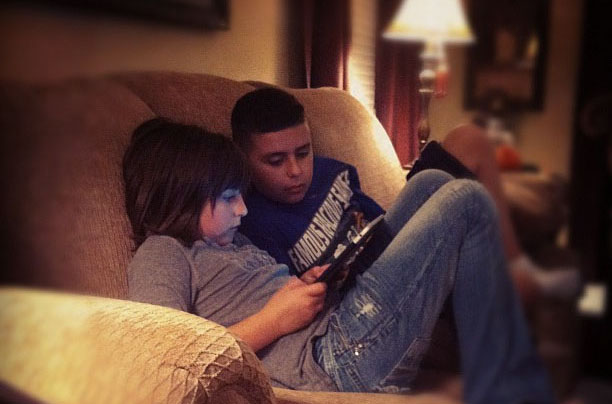
"caption": "Kids learn each other while playing games on the iPad.",
"description": null,
"title": "6255830416_bfb139bf9e_z1",
"credit": null,
"status": "inherit",
"isLoading": false,
"fetchFailed": false
},
"mindshift_18186": {
"type": "attachments",
"id": "mindshift_18186",
"meta": {
"index": "attachments_1716263798",
"site": "mindshift",
"id": "18186",
"found": true
},
"parent": 18144,
"imgSizes": {
"thumbnail": {
"file": "https://ww2.kqed.org/app/uploads/sites/23/2012/01/4601492261_599b55ef54_z1-400x241.jpg",
"width": 400,
"mimeType": "image/jpeg",
"height": 241
},
"fd-sm": {
"file": "https://ww2.kqed.org/app/uploads/sites/23/2012/01/4601492261_599b55ef54_z1-320x193.jpg",
"width": 320,
"mimeType": "image/jpeg",
"height": 193
},
"post-thumbnail": {
"file": "https://ww2.kqed.org/app/uploads/sites/23/2012/01/4601492261_599b55ef54_z1-640x372.jpg",
"width": 640,
"mimeType": "image/jpeg",
"height": 372
},
"kqedFullSize": {
"file": "https://ww2.kqed.org/app/uploads/sites/23/2012/01/4601492261_599b55ef54_z1.jpg",
"width": 640,
"height": 386
},
"guest-author-96": {
"file": "https://ww2.kqed.org/app/uploads/sites/23/2012/01/4601492261_599b55ef54_z1-96x96.jpg",
"width": 96,
"mimeType": "image/jpeg",
"height": 96
},
"guest-author-64": {
"file": "https://ww2.kqed.org/app/uploads/sites/23/2012/01/4601492261_599b55ef54_z1-64x64.jpg",
"width": 64,
"mimeType": "image/jpeg",
"height": 64
},
"detail": {
"file": "https://ww2.kqed.org/app/uploads/sites/23/2012/01/4601492261_599b55ef54_z1-75x75.jpg",
"width": 75,
"mimeType": "image/jpeg",
"height": 75
},
"guest-author-32": {
"file": "https://ww2.kqed.org/app/uploads/sites/23/2012/01/4601492261_599b55ef54_z1-32x32.jpg",
"width": 32,
"mimeType": "image/jpeg",
"height": 32
},
"guest-author-128": {
"file": "https://ww2.kqed.org/app/uploads/sites/23/2012/01/4601492261_599b55ef54_z1-128x128.jpg",
"width": 128,
"mimeType": "image/jpeg",
"height": 128
}
},
"publishDate": 1326486941,
"modified": 1326486941,
"caption": "The world looks to schools like this in Vantaankosken, Finland, as the model of success.",
"description": null,
"title": "4601492261_599b55ef54_z1",
"credit": null,
"status": "inherit",
"isLoading": false,
"fetchFailed": false
},
"mindshift_27099": {
"type": "attachments",
"id": "mindshift_27099",
"meta": {
"index": "attachments_1716263798",
"site": "mindshift",
"id": "27099",
"found": true
},
"parent": 18057,
"imgSizes": {
"thumbnail": {
"file": "https://ww2.kqed.org/app/uploads/sites/23/2012/01/3597217248_993f5a7ef5_z-400x230.jpg",
"width": 400,
"mimeType": "image/jpeg",
"height": 230
},
"fd-sm": {
"file": "https://ww2.kqed.org/app/uploads/sites/23/2012/01/3597217248_993f5a7ef5_z-320x184.jpg",
"width": 320,
"mimeType": "image/jpeg",
"height": 184
},
"kqedFullSize": {
"file": "https://ww2.kqed.org/app/uploads/sites/23/2012/01/3597217248_993f5a7ef5_z.jpg",
"width": 640,
"height": 368
},
"guest-author-96": {
"file": "https://ww2.kqed.org/app/uploads/sites/23/2012/01/3597217248_993f5a7ef5_z-96x96.jpg",
"width": 96,
"mimeType": "image/jpeg",
"height": 96
},
"guest-author-64": {
"file": "https://ww2.kqed.org/app/uploads/sites/23/2012/01/3597217248_993f5a7ef5_z-64x64.jpg",
"width": 64,
"mimeType": "image/jpeg",
"height": 64
},
"detail": {
"file": "https://ww2.kqed.org/app/uploads/sites/23/2012/01/3597217248_993f5a7ef5_z-75x75.jpg",
"width": 75,
"mimeType": "image/jpeg",
"height": 75
},
"guest-author-32": {
"file": "https://ww2.kqed.org/app/uploads/sites/23/2012/01/3597217248_993f5a7ef5_z-32x32.jpg",
"width": 32,
"mimeType": "image/jpeg",
"height": 32
},
"guest-author-128": {
"file": "https://ww2.kqed.org/app/uploads/sites/23/2012/01/3597217248_993f5a7ef5_z-128x128.jpg",
"width": 128,
"mimeType": "image/jpeg",
"height": 128
}
},
"publishDate": 1360728757,
"modified": 1360728757,
"caption": null,
"description": null,
"title": "3597217248_993f5a7ef5_z",
"credit": null,
"status": "inherit",
"isLoading": false,
"fetchFailed": false
},
"mindshift_16523": {
"type": "attachments",
"id": "mindshift_16523",
"meta": {
"index": "attachments_1716263798",
"site": "mindshift",
"id": "16523",
"found": true
},
"parent": 16520,
"imgSizes": {
"thumbnail": {
"file": "https://ww2.kqed.org/app/uploads/sites/23/2011/10/Jac-400x267.jpeg",
"width": 400,
"mimeType": "image/jpeg",
"height": 267
},
"fd-sm": {
"file": "https://ww2.kqed.org/app/uploads/sites/23/2011/10/Jac-320x214.jpeg",
"width": 320,
"mimeType": "image/jpeg",
"height": 214
},
"post-thumbnail": {
"file": "https://ww2.kqed.org/app/uploads/sites/23/2011/10/Jac-640x372.jpeg",
"width": 640,
"mimeType": "image/jpeg",
"height": 372
},
"kqedFullSize": {
"file": "https://ww2.kqed.org/app/uploads/sites/23/2011/10/Jac.jpeg",
"width": 640,
"height": 427
},
"guest-author-96": {
"file": "https://ww2.kqed.org/app/uploads/sites/23/2011/10/Jac-96x96.jpeg",
"width": 96,
"mimeType": "image/jpeg",
"height": 96
},
"guest-author-64": {
"file": "https://ww2.kqed.org/app/uploads/sites/23/2011/10/Jac-64x64.jpeg",
"width": 64,
"mimeType": "image/jpeg",
"height": 64
},
"detail": {
"file": "https://ww2.kqed.org/app/uploads/sites/23/2011/10/Jac-75x75.jpeg",
"width": 75,
"mimeType": "image/jpeg",
"height": 75
},
"guest-author-32": {
"file": "https://ww2.kqed.org/app/uploads/sites/23/2011/10/Jac-32x32.jpeg",
"width": 32,
"mimeType": "image/jpeg",
"height": 32
},
"guest-author-128": {
"file": "https://ww2.kqed.org/app/uploads/sites/23/2011/10/Jac-128x128.jpeg",
"width": 128,
"mimeType": "image/jpeg",
"height": 128
}
},
"publishDate": 1320086307,
"modified": 1320086307,
"caption": null,
"description": null,
"title": "Jac",
"credit": null,
"status": "inherit",
"isLoading": false,
"fetchFailed": false
},
"mindshift_17310": {
"type": "attachments",
"id": "mindshift_17310",
"meta": {
"index": "attachments_1716263798",
"site": "mindshift",
"id": "17310",
"found": true
},
"parent": 17301,
"imgSizes": {
"kqedFullSize": {
"file": "https://ww2.kqed.org/app/uploads/sites/23/2011/12/GoldStarSticker.jpg",
"width": 225,
"height": 230
},
"guest-author-96": {
"file": "https://ww2.kqed.org/app/uploads/sites/23/2011/12/GoldStarSticker-96x96.jpg",
"width": 96,
"mimeType": "image/jpeg",
"height": 96
},
"guest-author-64": {
"file": "https://ww2.kqed.org/app/uploads/sites/23/2011/12/GoldStarSticker-64x64.jpg",
"width": 64,
"mimeType": "image/jpeg",
"height": 64
},
"detail": {
"file": "https://ww2.kqed.org/app/uploads/sites/23/2011/12/GoldStarSticker-75x75.jpg",
"width": 75,
"mimeType": "image/jpeg",
"height": 75
},
"guest-author-32": {
"file": "https://ww2.kqed.org/app/uploads/sites/23/2011/12/GoldStarSticker-32x32.jpg",
"width": 32,
"mimeType": "image/jpeg",
"height": 32
},
"guest-author-128": {
"file": "https://ww2.kqed.org/app/uploads/sites/23/2011/12/GoldStarSticker-128x128.jpg",
"width": 128,
"mimeType": "image/jpeg",
"height": 128
}
},
"publishDate": 1323153291,
"modified": 1323153291,
"caption": null,
"description": null,
"title": "GoldStarSticker",
"credit": null,
"status": "inherit",
"isLoading": false,
"fetchFailed": false
},
"mindshift_16916": {
"type": "attachments",
"id": "mindshift_16916",
"meta": {
"index": "attachments_1716263798",
"site": "mindshift",
"id": "16916",
"found": true
},
"parent": 16902,
"imgSizes": {
"twentyfourteen-full-width": {
"file": "https://ww2.kqed.org/app/uploads/sites/23/2011/11/10_11.15_newtech_0654-1038x576.jpg",
"width": 1038,
"mimeType": "image/jpeg",
"height": 576
},
"thumbnail": {
"file": "https://ww2.kqed.org/app/uploads/sites/23/2011/11/10_11.15_newtech_0654-400x266.jpg",
"width": 400,
"mimeType": "image/jpeg",
"height": 266
},
"fd-sm": {
"file": "https://ww2.kqed.org/app/uploads/sites/23/2011/11/10_11.15_newtech_0654-320x213.jpg",
"width": 320,
"mimeType": "image/jpeg",
"height": 213
},
"post-thumbnail": {
"file": "https://ww2.kqed.org/app/uploads/sites/23/2011/11/10_11.15_newtech_0654-672x372.jpg",
"width": 672,
"mimeType": "image/jpeg",
"height": 372
},
"kqedFullSize": {
"file": "https://ww2.kqed.org/app/uploads/sites/23/2011/11/10_11.15_newtech_0654.jpg",
"width": 1440,
"height": 958
},
"large": {
"file": "https://ww2.kqed.org/app/uploads/sites/23/2011/11/10_11.15_newtech_0654-1440x958.jpg",
"width": 1440,
"mimeType": "image/jpeg",
"height": 958
},
"guest-author-96": {
"file": "https://ww2.kqed.org/app/uploads/sites/23/2011/11/10_11.15_newtech_0654-96x96.jpg",
"width": 96,
"mimeType": "image/jpeg",
"height": 96
},
"medium": {
"file": "https://ww2.kqed.org/app/uploads/sites/23/2011/11/10_11.15_newtech_0654-800x532.jpg",
"width": 800,
"mimeType": "image/jpeg",
"height": 532
},
"guest-author-64": {
"file": "https://ww2.kqed.org/app/uploads/sites/23/2011/11/10_11.15_newtech_0654-64x64.jpg",
"width": 64,
"mimeType": "image/jpeg",
"height": 64
},
"guest-author-32": {
"file": "https://ww2.kqed.org/app/uploads/sites/23/2011/11/10_11.15_newtech_0654-32x32.jpg",
"width": 32,
"mimeType": "image/jpeg",
"height": 32
},
"fd-lrg": {
"file": "https://ww2.kqed.org/app/uploads/sites/23/2011/11/10_11.15_newtech_0654-1180x785.jpg",
"width": 1180,
"mimeType": "image/jpeg",
"height": 785
},
"fd-med": {
"file": "https://ww2.kqed.org/app/uploads/sites/23/2011/11/10_11.15_newtech_0654-768x511.jpg",
"width": 768,
"mimeType": "image/jpeg",
"height": 511
},
"detail": {
"file": "https://ww2.kqed.org/app/uploads/sites/23/2011/11/10_11.15_newtech_0654-75x75.jpg",
"width": 75,
"mimeType": "image/jpeg",
"height": 75
},
"guest-author-128": {
"file": "https://ww2.kqed.org/app/uploads/sites/23/2011/11/10_11.15_newtech_0654-128x128.jpg",
"width": 128,
"mimeType": "image/jpeg",
"height": 128
}
},
"publishDate": 1321473663,
"modified": 1321473663,
"caption": null,
"description": null,
"title": "10_11.15_newtech_0654",
"credit": null,
"status": "inherit",
"isLoading": false,
"fetchFailed": false
},
"mindshift_16770": {
"type": "attachments",
"id": "mindshift_16770",
"meta": {
"index": "attachments_1716263798",
"site": "mindshift",
"id": "16770",
"found": true
},
"parent": 16757,
"imgSizes": {
"thumbnail": {
"file": "https://ww2.kqed.org/app/uploads/sites/23/2011/11/spacepleb-400x267.jpg",
"width": 400,
"mimeType": "image/jpeg",
"height": 267
},
"fd-sm": {
"file": "https://ww2.kqed.org/app/uploads/sites/23/2011/11/spacepleb-320x214.jpg",
"width": 320,
"mimeType": "image/jpeg",
"height": 214
},
"kqedFullSize": {
"file": "https://ww2.kqed.org/app/uploads/sites/23/2011/11/spacepleb.jpg",
"width": 500,
"height": 334
},
"guest-author-96": {
"file": "https://ww2.kqed.org/app/uploads/sites/23/2011/11/spacepleb-96x96.jpg",
"width": 96,
"mimeType": "image/jpeg",
"height": 96
},
"guest-author-64": {
"file": "https://ww2.kqed.org/app/uploads/sites/23/2011/11/spacepleb-64x64.jpg",
"width": 64,
"mimeType": "image/jpeg",
"height": 64
},
"detail": {
"file": "https://ww2.kqed.org/app/uploads/sites/23/2011/11/spacepleb-75x75.jpg",
"width": 75,
"mimeType": "image/jpeg",
"height": 75
},
"guest-author-32": {
"file": "https://ww2.kqed.org/app/uploads/sites/23/2011/11/spacepleb-32x32.jpg",
"width": 32,
"mimeType": "image/jpeg",
"height": 32
},
"guest-author-128": {
"file": "https://ww2.kqed.org/app/uploads/sites/23/2011/11/spacepleb-128x128.jpg",
"width": 128,
"mimeType": "image/jpeg",
"height": 128
}
},
"publishDate": 1320864279,
"modified": 1320864279,
"caption": null,
"description": null,
"title": "spacepleb",
"credit": null,
"status": "inherit",
"isLoading": false,
"fetchFailed": false
},
"mindshift_13509": {
"type": "attachments",
"id": "mindshift_13509",
"meta": {
"index": "attachments_1716263798",
"site": "mindshift",
"id": "13509",
"found": true
},
"parent": 13503,
"imgSizes": {
"kqedFullSize": {
"file": "https://ww2.kqed.org/app/uploads/sites/23/2011/07/textbooks_digital.jpg",
"width": 300,
"height": 199
},
"guest-author-96": {
"file": "https://ww2.kqed.org/app/uploads/sites/23/2011/07/textbooks_digital-96x96.jpg",
"width": 96,
"mimeType": "image/jpeg",
"height": 96
},
"guest-author-64": {
"file": "https://ww2.kqed.org/app/uploads/sites/23/2011/07/textbooks_digital-64x64.jpg",
"width": 64,
"mimeType": "image/jpeg",
"height": 64
},
"detail": {
"file": "https://ww2.kqed.org/app/uploads/sites/23/2011/07/textbooks_digital-75x75.jpg",
"width": 75,
"mimeType": "image/jpeg",
"height": 75
},
"guest-author-32": {
"file": "https://ww2.kqed.org/app/uploads/sites/23/2011/07/textbooks_digital-32x32.jpg",
"width": 32,
"mimeType": "image/jpeg",
"height": 32
},
"guest-author-128": {
"file": "https://ww2.kqed.org/app/uploads/sites/23/2011/07/textbooks_digital-128x128.jpg",
"width": 128,
"mimeType": "image/jpeg",
"height": 128
}
},
"publishDate": 1310062119,
"modified": 1310062119,
"caption": null,
"description": null,
"title": "textbooks_digital",
"credit": null,
"status": "inherit",
"isLoading": false,
"fetchFailed": false
},
"mindshift_16689": {
"type": "attachments",
"id": "mindshift_16689",
"meta": {
"index": "attachments_1716263798",
"site": "mindshift",
"id": "16689",
"found": true
},
"parent": 16647,
"imgSizes": {
"thumbnail": {
"file": "https://ww2.kqed.org/app/uploads/sites/23/2011/11/2461246945_d9ba5b1d04-400x325.jpg",
"width": 400,
"mimeType": "image/jpeg",
"height": 325
},
"fd-sm": {
"file": "https://ww2.kqed.org/app/uploads/sites/23/2011/11/2461246945_d9ba5b1d04-320x260.jpg",
"width": 320,
"mimeType": "image/jpeg",
"height": 260
},
"post-thumbnail": {
"file": "https://ww2.kqed.org/app/uploads/sites/23/2011/11/2461246945_d9ba5b1d04-500x372.jpg",
"width": 500,
"mimeType": "image/jpeg",
"height": 372
},
"kqedFullSize": {
"file": "https://ww2.kqed.org/app/uploads/sites/23/2011/11/2461246945_d9ba5b1d04.jpg",
"width": 500,
"height": 406
},
"guest-author-96": {
"file": "https://ww2.kqed.org/app/uploads/sites/23/2011/11/2461246945_d9ba5b1d04-96x96.jpg",
"width": 96,
"mimeType": "image/jpeg",
"height": 96
},
"guest-author-64": {
"file": "https://ww2.kqed.org/app/uploads/sites/23/2011/11/2461246945_d9ba5b1d04-64x64.jpg",
"width": 64,
"mimeType": "image/jpeg",
"height": 64
},
"detail": {
"file": "https://ww2.kqed.org/app/uploads/sites/23/2011/11/2461246945_d9ba5b1d04-75x75.jpg",
"width": 75,
"mimeType": "image/jpeg",
"height": 75
},
"guest-author-32": {
"file": "https://ww2.kqed.org/app/uploads/sites/23/2011/11/2461246945_d9ba5b1d04-32x32.jpg",
"width": 32,
"mimeType": "image/jpeg",
"height": 32
},
"guest-author-128": {
"file": "https://ww2.kqed.org/app/uploads/sites/23/2011/11/2461246945_d9ba5b1d04-128x128.jpg",
"width": 128,
"mimeType": "image/jpeg",
"height": 128
}
},
"publishDate": 1320431994,
"modified": 1320431994,
"caption": "Recent studies question the theory of native intelligences. If it's difficult for you, does that mean you're not naturally good at it?",
"description": null,
"title": "2461246945_d9ba5b1d04",
"credit": null,
"status": "inherit",
"isLoading": false,
"fetchFailed": false
},
"mindshift_13977": {
"type": "attachments",
"id": "mindshift_13977",
"meta": {
"index": "attachments_1716263798",
"site": "mindshift",
"id": "13977",
"found": true
},
"parent": 13953,
"imgSizes": {
"twentyfourteen-full-width": {
"file": "https://ww2.kqed.org/app/uploads/sites/23/2011/07/Screen-shot-2011-07-22-at-3.36.11-PM-1015x576.png",
"width": 1015,
"mimeType": "image/png",
"height": 576
},
"thumbnail": {
"file": "https://ww2.kqed.org/app/uploads/sites/23/2011/07/Screen-shot-2011-07-22-at-3.36.11-PM-400x269.png",
"width": 400,
"mimeType": "image/png",
"height": 269
},
"fd-sm": {
"file": "https://ww2.kqed.org/app/uploads/sites/23/2011/07/Screen-shot-2011-07-22-at-3.36.11-PM-320x215.png",
"width": 320,
"mimeType": "image/png",
"height": 215
},
"post-thumbnail": {
"file": "https://ww2.kqed.org/app/uploads/sites/23/2011/07/Screen-shot-2011-07-22-at-3.36.11-PM-672x372.png",
"width": 672,
"mimeType": "image/png",
"height": 372
},
"kqedFullSize": {
"file": "https://ww2.kqed.org/app/uploads/sites/23/2011/07/Screen-shot-2011-07-22-at-3.36.11-PM.png",
"width": 1015,
"height": 683
},
"fd-med": {
"file": "https://ww2.kqed.org/app/uploads/sites/23/2011/07/Screen-shot-2011-07-22-at-3.36.11-PM-768x517.png",
"width": 768,
"mimeType": "image/png",
"height": 517
},
"guest-author-96": {
"file": "https://ww2.kqed.org/app/uploads/sites/23/2011/07/Screen-shot-2011-07-22-at-3.36.11-PM-96x96.png",
"width": 96,
"mimeType": "image/png",
"height": 96
},
"medium": {
"file": "https://ww2.kqed.org/app/uploads/sites/23/2011/07/Screen-shot-2011-07-22-at-3.36.11-PM-800x538.png",
"width": 800,
"mimeType": "image/png",
"height": 538
},
"guest-author-64": {
"file": "https://ww2.kqed.org/app/uploads/sites/23/2011/07/Screen-shot-2011-07-22-at-3.36.11-PM-64x64.png",
"width": 64,
"mimeType": "image/png",
"height": 64
},
"detail": {
"file": "https://ww2.kqed.org/app/uploads/sites/23/2011/07/Screen-shot-2011-07-22-at-3.36.11-PM-75x75.png",
"width": 75,
"mimeType": "image/png",
"height": 75
},
"guest-author-32": {
"file": "https://ww2.kqed.org/app/uploads/sites/23/2011/07/Screen-shot-2011-07-22-at-3.36.11-PM-32x32.png",
"width": 32,
"mimeType": "image/png",
"height": 32
},
"guest-author-128": {
"file": "https://ww2.kqed.org/app/uploads/sites/23/2011/07/Screen-shot-2011-07-22-at-3.36.11-PM-128x128.png",
"width": 128,
"mimeType": "image/png",
"height": 128
}
},
"publishDate": 1311374191,
"modified": 1311374191,
"caption": "S. Craig Watkins maintains that teaching students to use digital media is not a luxury, but a necessity.",
"description": null,
"title": "Screen-shot-2011-07-22-at-3.36.11-PM",
"credit": null,
"status": "inherit",
"isLoading": false,
"fetchFailed": false
},
"mindshift_13900": {
"type": "attachments",
"id": "mindshift_13900",
"meta": {
"index": "attachments_1716263798",
"site": "mindshift",
"id": "13900",
"found": true
},
"parent": 13898,
"imgSizes": {
"kqedFullSize": {
"file": "https://ww2.kqed.org/app/uploads/sites/23/2011/07/5099605109_bd04b3c786_m.jpg",
"width": 240,
"height": 160
},
"guest-author-96": {
"file": "https://ww2.kqed.org/app/uploads/sites/23/2011/07/5099605109_bd04b3c786_m-96x96.jpg",
"width": 96,
"mimeType": "image/jpeg",
"height": 96
},
"guest-author-64": {
"file": "https://ww2.kqed.org/app/uploads/sites/23/2011/07/5099605109_bd04b3c786_m-64x64.jpg",
"width": 64,
"mimeType": "image/jpeg",
"height": 64
},
"detail": {
"file": "https://ww2.kqed.org/app/uploads/sites/23/2011/07/5099605109_bd04b3c786_m-75x75.jpg",
"width": 75,
"mimeType": "image/jpeg",
"height": 75
},
"guest-author-32": {
"file": "https://ww2.kqed.org/app/uploads/sites/23/2011/07/5099605109_bd04b3c786_m-32x32.jpg",
"width": 32,
"mimeType": "image/jpeg",
"height": 32
},
"guest-author-128": {
"file": "https://ww2.kqed.org/app/uploads/sites/23/2011/07/5099605109_bd04b3c786_m-128x128.jpg",
"width": 128,
"mimeType": "image/jpeg",
"height": 128
}
},
"publishDate": 1311132002,
"modified": 1311132002,
"caption": null,
"description": null,
"title": "5099605109_bd04b3c786_m",
"credit": null,
"status": "inherit",
"isLoading": false,
"fetchFailed": false
},
"mindshift_13227": {
"type": "attachments",
"id": "mindshift_13227",
"meta": {
"index": "attachments_1716263798",
"site": "mindshift",
"id": "13227",
"found": true
},
"parent": 13136,
"imgSizes": {
"thumbnail": {
"file": "https://ww2.kqed.org/app/uploads/sites/23/2011/06/Shlala-400x266.jpg",
"width": 400,
"mimeType": "image/jpeg",
"height": 266
},
"fd-sm": {
"file": "https://ww2.kqed.org/app/uploads/sites/23/2011/06/Shlala-320x213.jpg",
"width": 320,
"mimeType": "image/jpeg",
"height": 213
},
"kqedFullSize": {
"file": "https://ww2.kqed.org/app/uploads/sites/23/2011/06/Shlala.jpg",
"width": 500,
"height": 333
},
"guest-author-96": {
"file": "https://ww2.kqed.org/app/uploads/sites/23/2011/06/Shlala-96x96.jpg",
"width": 96,
"mimeType": "image/jpeg",
"height": 96
},
"guest-author-64": {
"file": "https://ww2.kqed.org/app/uploads/sites/23/2011/06/Shlala-64x64.jpg",
"width": 64,
"mimeType": "image/jpeg",
"height": 64
},
"detail": {
"file": "https://ww2.kqed.org/app/uploads/sites/23/2011/06/Shlala-75x75.jpg",
"width": 75,
"mimeType": "image/jpeg",
"height": 75
},
"guest-author-32": {
"file": "https://ww2.kqed.org/app/uploads/sites/23/2011/06/Shlala-32x32.jpg",
"width": 32,
"mimeType": "image/jpeg",
"height": 32
},
"guest-author-128": {
"file": "https://ww2.kqed.org/app/uploads/sites/23/2011/06/Shlala-128x128.jpg",
"width": 128,
"mimeType": "image/jpeg",
"height": 128
}
},
"publishDate": 1309208110,
"modified": 1309208110,
"caption": null,
"description": null,
"title": "Shlala",
"credit": null,
"status": "inherit",
"isLoading": false,
"fetchFailed": false
}
},
"audioPlayerReducer": {
"postId": "stream_live",
"isPaused": true,
"isPlaying": false,
"pfsActive": false,
"pledgeModalIsOpen": true,
"playerDrawerIsOpen": false,
"liveAudioPlayStartedAt": 0,
"liveAudioPlayContext": ""
},
"authorsReducer": {
"tbarseghian": {
"type": "authors",
"id": "180",
"meta": {
"index": "authors_1716337520",
"id": "180",
"found": true
},
"name": "Tina Barseghian",
"firstName": "Tina",
"lastName": "Barseghian",
"slug": "tbarseghian",
"email": "tbarseghian@kqed.org",
"display_author_email": false,
"staff_mastheads": [],
"title": null,
"bio": null,
"avatar": "https://secure.gravatar.com/avatar/de7e6ced1239b7018fe4d2b61f723c90?s=600&d=blank&r=g",
"twitter": null,
"facebook": null,
"instagram": null,
"linkedin": null,
"sites": [
{
"site": "styleguide",
"roles": [
"contributor"
]
},
{
"site": "news",
"roles": [
"subscriber"
]
},
{
"site": "mindshift",
"roles": [
"subscriber"
]
},
{
"site": "bayareabites",
"roles": [
"subscriber"
]
}
],
"headData": {
"title": "Tina Barseghian | KQED",
"description": null,
"ogImgSrc": "https://secure.gravatar.com/avatar/de7e6ced1239b7018fe4d2b61f723c90?s=600&d=blank&r=g",
"twImgSrc": "https://secure.gravatar.com/avatar/de7e6ced1239b7018fe4d2b61f723c90?s=600&d=blank&r=g"
},
"isLoading": false,
"link": "/author/tbarseghian"
},
"awatters": {
"type": "authors",
"id": "4352",
"meta": {
"index": "authors_1716337520",
"id": "4352",
"found": true
},
"name": "Audrey Watters",
"firstName": "Audrey",
"lastName": "Watters",
"slug": "awatters",
"email": "awatters@kqed.org",
"display_author_email": false,
"staff_mastheads": [],
"title": null,
"bio": null,
"avatar": "https://secure.gravatar.com/avatar/fb6ac91bb93632725bfa683c1de71bee?s=600&d=blank&r=g",
"twitter": null,
"facebook": null,
"instagram": null,
"linkedin": null,
"sites": [
{
"site": "mindshift",
"roles": [
"subscriber"
]
}
],
"headData": {
"title": "Audrey Watters | KQED",
"description": null,
"ogImgSrc": "https://secure.gravatar.com/avatar/fb6ac91bb93632725bfa683c1de71bee?s=600&d=blank&r=g",
"twImgSrc": "https://secure.gravatar.com/avatar/fb6ac91bb93632725bfa683c1de71bee?s=600&d=blank&r=g"
},
"isLoading": false,
"link": "/author/awatters"
}
},
"pagesReducer": {
"mindshift_category_big-ideas": {
"type": "terms",
"id": "mindshift_192",
"meta": {
"index": "terms_1716263798",
"site": "mindshift",
"id": "192",
"score": 14.406195
},
"featImg": null,
"name": "Big Ideas",
"description": "The latest findings from experts in the field related to the future of learning.",
"taxonomy": "category",
"headData": {
"twImgId": null,
"twTitle": null,
"ogTitle": null,
"ogImgId": null,
"twDescription": null,
"description": "The latest findings from experts in the field related to the future of learning.",
"title": "Big Ideas Archives | KQED Mindshift",
"ogDescription": null
},
"ttid": 192,
"slug": "big-ideas",
"isLoading": false,
"title": "Big Ideas",
"pageMeta": {
"site": "mindshift",
"WpPageTemplate": "page-topic-editorial",
"currentPage": 80
},
"blocks": [
{
"blockName": "kqed/company-paragraph",
"content": "The latest findings from experts in the field related to the future of learning."
},
{
"blockName": "kqed/post-list",
"attrs": {
"layout": "cardArticle2",
"query": "posts/mindshift?category=big-ideas",
"seeMore": false,
"paginated": true,
"page": 80
}
},
{
"blockName": "kqed/ad"
}
]
}
},
"pfsSessionReducer": {},
"postsReducer": {
"stream_live": {
"type": "live",
"id": "stream_live",
"audioUrl": "https://streams.kqed.org/kqedradio",
"title": "Live Stream",
"excerpt": "Live Stream information currently unavailable.",
"link": "/radio",
"featImg": "",
"label": {
"name": "KQED Live",
"link": "/"
}
},
"stream_kqedNewscast": {
"type": "posts",
"id": "stream_kqedNewscast",
"audioUrl": "https://www.kqed.org/.stream/anon/radio/RDnews/newscast.mp3?_=1",
"title": "KQED Newscast",
"featImg": "",
"label": {
"name": "88.5 FM",
"link": "/"
}
},
"mindshift_18279": {
"type": "posts",
"id": "mindshift_18279",
"meta": {
"index": "posts_1716263798",
"site": "mindshift",
"id": "18279",
"score": null,
"sort": [
1327087254000
]
},
"parent": 0,
"labelTerm": {
"site": "mindshift"
},
"blocks": [],
"publishDate": 1327087254,
"format": "aside",
"disqusTitle": "With Media, Parents and Kids Learn More Together",
"title": "With Media, Parents and Kids Learn More Together",
"headTitle": "MindShift | KQED News",
"content": "\u003cfigure id=\"attachment_18368\" class=\"wp-caption center\" style=\"max-width: 612px\">\u003ca href=\"http://www.flickr.com/photos/andrewshell/6255830416/sizes/z/in/photostream/\">\u003cimg class=\"size-full wp-image-18368\" src=\"http://ww2.kqed.org/mindshift/wp-content/uploads/sites/23/2012/01/6255830416_bfb139bf9e_z1.jpg\" alt=\"\" width=\"612\" height=\"404\" srcset=\"https://ww2.kqed.org/app/uploads/sites/23/2012/01/6255830416_bfb139bf9e_z1.jpg 612w, https://ww2.kqed.org/app/uploads/sites/23/2012/01/6255830416_bfb139bf9e_z1-400x264.jpg 400w, https://ww2.kqed.org/app/uploads/sites/23/2012/01/6255830416_bfb139bf9e_z1-320x211.jpg 320w\" sizes=\"(max-width: 612px) 100vw, 612px\">\u003c/a>\u003cfigcaption class=\"wp-caption-text\">Kids learn with each other while playing games on the iPad.\u003c/figcaption>\u003c/figure>\n\u003cp class=\"dropcap-serif\">Most of what we read about \u003ca href=\"http://ww2.kqed.org/mindshift/2011/03/screen-time-for-kids-is-it-learning-or-a-brain-drain/\">kids and screen time\u003c/a> revolves around whether or not it's good for them. But one aspect of media use with kids that's worth examining closer is how co-viewing affects their experience. Whether kids are watching TV, creating digital media, reading, searching, or playing video games with parents, siblings or friends, consuming media becomes a different kind of experience than when it's done alone.\u003c/p>\n\u003cp>Though TV is still the dominant media in most homes, other forms are quickly permeating daily life: video games, apps, and exploring the Internet are woven into most families' activities. The Joan Ganz Cooney Center calls it joint media engagement (JME), and they've just released one of their comprehensive reports, \u003ca href=\"http://www.joanganzcooneycenter.org/Reports-32.html\">The New CoViewing: Designing for Learning Through Joint Media Engagement\u003c/a>, about the phenomenon and its effects. The theory goes that the better we understand how kids use media together, the better designed the media can be, to take the most advantage of how kids work, learn, think, and make things together.\u003c/p>\n\u003cp>\u003cspan style=\"color: #ff6600\">\u003cstrong>HOW PARENTS RELATE\u003c/strong>\u003cstrong>\u003c/strong>\u003cstrong>\u003cbr>\n\u003c/strong>\u003c/span>\u003c/p>\n\u003cp>Perhaps the activity that parents love most to do with their kids -- reading -- has been vastly transformed by digital media. E-books can be read on Web sites, computer software, products like LeapFrog, and of course tablets and e-readers. And depending on whom you ask, e-books (or print books) are the medium of choice for reading together. The typically tech-cautious \u003ca href=\"http://www.nytimes.com/2011/11/21/business/for-their-children-many-e-book-readers-insist-on-paper.html\">New York Times decided that\u003c/a> \"for their children, many e-book fans insist on paper.\"\u003c/p>\n\u003cp>But the Cooney Center's own \"quick study,\" which followed 24 families with kids three- to six-years old reading both print and e-books, showed that most kids preferred reading an e-book to a print book, \u003ca href=\"http://www.digitalbookworld.com/2012/for-reading-and-learning-kids-prefer-e-books-to-print-books/\">according to Digital Book World\u003c/a>. And maybe just as importantly, \"comprehension between the two formats were the same,\" though the enhanced e-readers with all the bells and whistles were distracting to young readers.\u003c/p>\n\u003cp>[ad fullwidth]\u003c/p>\n\u003cp>Still, “If we can encourage kids to engage in books through an iPad, that’s a win already,” \u003ca href=\"http://www.digitalbookworld.com/2012/for-reading-and-learning-kids-prefer-e-books-to-print-books/\">said\u003c/a> the Cooney Center's Carly Shuler.\u003c/p>\n\u003caside class=\"pullquote alignright\">\u003cspan style=\"color: #ff6600\">Raise your hand if you've discreetly texted your friends or shopped on your mobile phone undercover while watching \"Cars 2\" with your kids.\u003c/span>\u003c/aside>\n\u003cp>Plenty of studies have shown that kids learn more when they're consuming media alongside their parents -- parents typically chime in and explain what's going on or answer questions or share their opinions about what they're seeing, hearing, and doing. In turn, parents can have a better understanding of what their kids are doing and learning and what they're involved with during their kids' media use.\u003c/p>\n\u003cp>And for a lot of parents, this kind of interaction is important.\u003ca href=\"http://eprints.lse.ac.uk/25723/\"> A recent national survey showed\u003c/a> that two-thirds of nearly 1,000 parents of 12- to 17-year-olds said they talked regularly with their kids \u003c!--more-->about their Internet use, and almost half of them participated in their kids' use of computers. And those who did, actively set both social rules -- what's appropriate and what's not -- and filtering software that block sites.\u003c/p>\n\u003cfigure id=\"attachment_18363\" class=\"wp-caption left\" style=\"max-width: 313px\">\u003cimg class=\"size-full wp-image-18363\" src=\"http://ww2.kqed.org/mindshift/wp-content/uploads/sites/23/2012/01/Screen-shot-2012-01-20-at-10.55.53-AM.png\" alt=\"\" width=\"313\" height=\"164\">\u003cfigcaption class=\"wp-caption-text\"> \u003c/figcaption>\u003c/figure>\n\u003cp>Lori Takeuchi, who wrote this report for the Cooney Center along with Reed Stevens, said what parents decide to do with their kids is largely based on their own childhood experiences. Those who grew up on the Internet or were young enough when they started using it in their daily lives have less fear about dangers.\u003c/p>\n\u003cp>\"They're comfortable with fewer rules,\" Takeuchi said about the families she studied for the \u003ca href=\"joanganzcooneycenter.org/Reports-29.html\">Families Matter Report\u003c/a> she wrote earlier this year. Older parents, on the other hand, tend to use parental controls more. \"Younger parents are willing to confront media and the unknown with their kids, whereas older parents aren’t.\"\u003c/p>\n\u003cp>The rule of thumb also applies to video games. Parents who grew up playing games themselves tended to play more with their kids than restrict it, \u003ca href=\"http://ejc.sagepub.com/content/22/3/315.abstract\">according to a 2007 study\u003c/a>. And conversely, those who had negative opinions about gaming tended to restrict time spent playing with video games.\u003c/p>\n\u003cp>\u003cspan style=\"color: #ff6600\">\u003cstrong>KIDS USING MEDIA TOGETHER\u003c/strong>\u003c/span>\u003cspan style=\"color: #ff6600\">\u003cstrong>\u003cbr>\n\u003c/strong>\u003c/span>\u003c/p>\n\u003cp>Parents aren't the only big influences in a kid's life when it comes to media. Children watching and playing together also affects the experience. For those families who can afford it, an iPod Touch is now as common place a toy as Monopoly used to be for the previous generation. Though some worry, and rightly so, about kids withdrawing from the social lives around them as they launch birds or slash fruit on their iPod Touches, observing two kids with their own device in the same room reveals something different -- at least in my experience. Kids talk each other through their challenges, helping each other master levels, offering tips, cheering each other on. It's a form of parallel play, in a way.\u003c/p>\n\u003caside class=\"pullquote alignright\">\u003cspan style=\"color: #ff6600\">\"Younger parents are willing to confront media and the unknown with their kids, whereas older parents aren’t.\"\u003c/span>\u003c/aside>\n\u003cp>The same goes for video games. \u003ca href=\"http://ejc.sagepub.com/content/22/3/315.abstract\">A report about parents' interest in video games\u003c/a> shows that kids end up learning a lot from each other and become empowered through sharing. “Collaborative interactions around video game play are good learning environments [in] that ‘in-room’ interaction provides opportunities for sociality, joint projects, and empowerment through sharing one’s knowledge and seeing it used for concrete success by others,” write the authors of the study.\u003c/p>\n\u003cp>And when it comes to TV, kids who watch together respond to prompts (from Elmo or Dora the Explorer, for example), than those watching alone. Kids also imitate each others' responses and coordinate their actions to respond at the same time. They elaborate on each others' responses and talk to each other about what's going on.\u003c/p>\n\u003cp>Another great example of this was found with research from the \u003ca href=\"http://dmlcentral.net/projects/3684\">Digital Youth Project\u003c/a>, where authors of the Macarthur Foundation study found that kids hanging out with each other, watching movies or TV, playing videos together or listening to music, were more actively participating in what they were doing. They talked about what they were watching or playing, they worked together on modifying video games, and creating digital media.\u003c/p>\n\u003cp>\u003cspan style=\"color: #ff6600\">\u003cstrong>CHALLENGES AND POSSIBLE SOLUTIONS\u003c/strong>\u003c/span>\u003c/p>\n\u003cp>Ideally, of course, parents could participate in all their kids' media use. But let's face it, even if they had the time, for the most part, parents and kids don't necessarily enjoy the same media. (Raise your hand if you've discreetly texted your friends or shopped on your mobile phone undercover while watching \"Cars 2\" with your kids.)\u003c/p>\n\u003cp>Other challenges: Parents don't always know what kids need to learn and how to help them find it. And if the TV or computer isn't in a common room, parents don't know what kids are up to.\u003c/p>\n\u003cfigure id=\"attachment_18362\" class=\"wp-caption left\" style=\"max-width: 282px\">\u003ca href=\"http://ww2.kqed.org/mindshift/2012/01/with-media-parents-and-kids-learn-more-together/screen-shot-2012-01-20-at-10-56-04-am/\" rel=\"attachment wp-att-18362\">\u003cimg class=\"size-full wp-image-18362\" src=\"http://ww2.kqed.org/mindshift/wp-content/uploads/sites/23/2012/01/Screen-shot-2012-01-20-at-10.56.04-AM.png\" alt=\"\" width=\"282\" height=\"167\">\u003c/a>\u003cfigcaption class=\"wp-caption-text\"> \u003c/figcaption>\u003c/figure>\n\u003cp>The Cooney Center has an idea to solve this -- at least in the home: Design a product that allows parents to monitor and participate what kids are doing from a remote location so they can still be part of the media experience.\u003cbr>\n\"Wouldn’t it be great if there was a device that recorded what kids are watching on TV?\" Takeuchi said. \"There should be tools that help parents better know, so they can have conversations about what their kids have been up to.\"\u003c/p>\n\u003cp>Parents can also use Web control tools not just to block what they think might be dangerous Web sites, but also to learn what their kids are doing online. \"In a lot of cases, parents don't know what their kids are doing, for better or for worse. These are kids who are doing things behind closed doors that are great,\" Takeuchi said. \"They're learning how to program or build Web sites, and if parents have the control setting, they can find out what their kids are interested in, and can even help them.\"\u003c/p>\n\u003cp>Parents can also acquiesce to letting their kids guide them through the activity they're interested in. The learning relationship between parent and child that goes in both directions can be powerful for both.\u003c/p>\n\u003cp>[ad floatright]\u003c/p>\n\u003cp>There are lots of other great recommendations in \"The New Co-Viewing Report\": Build tools and experiences that revolve around a child’s existing interests, not just prescribed topics; keep everyone engaged by offering content that suitably entertains and sufficiently challenges; provide guidance for the more capable partner in ways that don’t require a lot of prior prep or extra time, actions that can help ensure that the intended benefits of the resource are realized.\u003c/p>\n\u003ch5>\u003cem>UPDATE: The Cooney Center is still in the process of collecting data for the e-book study mentioned in the article. Results reported thus far are preliminary.\u003c/em>\u003c/h5>\n\n",
"disqusIdentifier": "18279 http://blogs.kqed.org/mindshift/?p=18279",
"disqusUrl": "https://ww2.kqed.org/mindshift/2012/01/20/with-media-parents-and-kids-learn-more-together/",
"stats": {
"hasVideo": false,
"hasChartOrMap": false,
"hasAudio": false,
"hasPolis": false,
"wordCount": 1475,
"hasGoogleForm": false,
"hasGallery": false,
"hasHearkenModule": false,
"iframeSrcs": [],
"paragraphCount": 24
},
"modified": 1327258700,
"excerpt": null,
"headData": {
"twImgId": "",
"twTitle": "",
"ogTitle": "",
"ogImgId": "",
"twDescription": "",
"description": "Most of what we read about kids and screen time revolves around whether or not it's good for them. But one aspect of media use with kids that's worth examining closer is how co-viewing affects their experience. Whether kids are watching TV, creating digital media, reading, searching, or playing video games with parents, siblings or",
"title": "With Media, Parents and Kids Learn More Together | KQED",
"ogDescription": "",
"schema": {
"@context": "https://schema.org",
"@type": "Article",
"headline": "With Media, Parents and Kids Learn More Together",
"datePublished": "2012-01-20T11:20:54-08:00",
"dateModified": "2012-01-22T10:58:20-08:00",
"image": "https://cdn.kqed.org/wp-content/uploads/2020/02/KQED-OG-Image@1x.png"
}
},
"guestAuthors": [],
"slug": "with-media-parents-and-kids-learn-more-together",
"status": "publish",
"path": "/mindshift/18279/with-media-parents-and-kids-learn-more-together",
"audioTrackLength": null,
"parsedContent": [
{
"type": "contentString",
"content": "\u003cdiv class=\"post-body\">\u003cp>\u003cfigure id=\"attachment_18368\" class=\"wp-caption center\" style=\"max-width: 612px\">\u003ca href=\"http://www.flickr.com/photos/andrewshell/6255830416/sizes/z/in/photostream/\">\u003cimg class=\"size-full wp-image-18368\" src=\"http://ww2.kqed.org/mindshift/wp-content/uploads/sites/23/2012/01/6255830416_bfb139bf9e_z1.jpg\" alt=\"\" width=\"612\" height=\"404\" srcset=\"https://ww2.kqed.org/app/uploads/sites/23/2012/01/6255830416_bfb139bf9e_z1.jpg 612w, https://ww2.kqed.org/app/uploads/sites/23/2012/01/6255830416_bfb139bf9e_z1-400x264.jpg 400w, https://ww2.kqed.org/app/uploads/sites/23/2012/01/6255830416_bfb139bf9e_z1-320x211.jpg 320w\" sizes=\"(max-width: 612px) 100vw, 612px\">\u003c/a>\u003cfigcaption class=\"wp-caption-text\">Kids learn with each other while playing games on the iPad.\u003c/figcaption>\u003c/figure>\n\u003cp class=\"dropcap-serif\">Most of what we read about \u003ca href=\"http://ww2.kqed.org/mindshift/2011/03/screen-time-for-kids-is-it-learning-or-a-brain-drain/\">kids and screen time\u003c/a> revolves around whether or not it's good for them. But one aspect of media use with kids that's worth examining closer is how co-viewing affects their experience. Whether kids are watching TV, creating digital media, reading, searching, or playing video games with parents, siblings or friends, consuming media becomes a different kind of experience than when it's done alone.\u003c/p>\n\u003cp>Though TV is still the dominant media in most homes, other forms are quickly permeating daily life: video games, apps, and exploring the Internet are woven into most families' activities. The Joan Ganz Cooney Center calls it joint media engagement (JME), and they've just released one of their comprehensive reports, \u003ca href=\"http://www.joanganzcooneycenter.org/Reports-32.html\">The New CoViewing: Designing for Learning Through Joint Media Engagement\u003c/a>, about the phenomenon and its effects. The theory goes that the better we understand how kids use media together, the better designed the media can be, to take the most advantage of how kids work, learn, think, and make things together.\u003c/p>\n\u003cp>\u003cspan style=\"color: #ff6600\">\u003cstrong>HOW PARENTS RELATE\u003c/strong>\u003cstrong>\u003c/strong>\u003cstrong>\u003cbr>\n\u003c/strong>\u003c/span>\u003c/p>\n\u003cp>Perhaps the activity that parents love most to do with their kids -- reading -- has been vastly transformed by digital media. E-books can be read on Web sites, computer software, products like LeapFrog, and of course tablets and e-readers. And depending on whom you ask, e-books (or print books) are the medium of choice for reading together. The typically tech-cautious \u003ca href=\"http://www.nytimes.com/2011/11/21/business/for-their-children-many-e-book-readers-insist-on-paper.html\">New York Times decided that\u003c/a> \"for their children, many e-book fans insist on paper.\"\u003c/p>\n\u003cp>But the Cooney Center's own \"quick study,\" which followed 24 families with kids three- to six-years old reading both print and e-books, showed that most kids preferred reading an e-book to a print book, \u003ca href=\"http://www.digitalbookworld.com/2012/for-reading-and-learning-kids-prefer-e-books-to-print-books/\">according to Digital Book World\u003c/a>. And maybe just as importantly, \"comprehension between the two formats were the same,\" though the enhanced e-readers with all the bells and whistles were distracting to young readers.\u003c/p>\n\u003cp>\u003c/p>\u003c/div>",
"attributes": {
"named": {},
"numeric": []
}
},
{
"type": "component",
"content": "",
"name": "ad",
"attributes": {
"named": {
"label": "fullwidth"
},
"numeric": [
"fullwidth"
]
}
},
{
"type": "contentString",
"content": "\u003cdiv class=\"post-body\">\u003cp>\u003c/p>\n\u003cp>Still, “If we can encourage kids to engage in books through an iPad, that’s a win already,” \u003ca href=\"http://www.digitalbookworld.com/2012/for-reading-and-learning-kids-prefer-e-books-to-print-books/\">said\u003c/a> the Cooney Center's Carly Shuler.\u003c/p>\n\u003caside class=\"pullquote alignright\">\u003cspan style=\"color: #ff6600\">Raise your hand if you've discreetly texted your friends or shopped on your mobile phone undercover while watching \"Cars 2\" with your kids.\u003c/span>\u003c/aside>\n\u003cp>Plenty of studies have shown that kids learn more when they're consuming media alongside their parents -- parents typically chime in and explain what's going on or answer questions or share their opinions about what they're seeing, hearing, and doing. In turn, parents can have a better understanding of what their kids are doing and learning and what they're involved with during their kids' media use.\u003c/p>\n\u003cp>And for a lot of parents, this kind of interaction is important.\u003ca href=\"http://eprints.lse.ac.uk/25723/\"> A recent national survey showed\u003c/a> that two-thirds of nearly 1,000 parents of 12- to 17-year-olds said they talked regularly with their kids \u003c!--more-->about their Internet use, and almost half of them participated in their kids' use of computers. And those who did, actively set both social rules -- what's appropriate and what's not -- and filtering software that block sites.\u003c/p>\n\u003cfigure id=\"attachment_18363\" class=\"wp-caption left\" style=\"max-width: 313px\">\u003cimg class=\"size-full wp-image-18363\" src=\"http://ww2.kqed.org/mindshift/wp-content/uploads/sites/23/2012/01/Screen-shot-2012-01-20-at-10.55.53-AM.png\" alt=\"\" width=\"313\" height=\"164\">\u003cfigcaption class=\"wp-caption-text\"> \u003c/figcaption>\u003c/figure>\n\u003cp>Lori Takeuchi, who wrote this report for the Cooney Center along with Reed Stevens, said what parents decide to do with their kids is largely based on their own childhood experiences. Those who grew up on the Internet or were young enough when they started using it in their daily lives have less fear about dangers.\u003c/p>\n\u003cp>\"They're comfortable with fewer rules,\" Takeuchi said about the families she studied for the \u003ca href=\"joanganzcooneycenter.org/Reports-29.html\">Families Matter Report\u003c/a> she wrote earlier this year. Older parents, on the other hand, tend to use parental controls more. \"Younger parents are willing to confront media and the unknown with their kids, whereas older parents aren’t.\"\u003c/p>\n\u003cp>The rule of thumb also applies to video games. Parents who grew up playing games themselves tended to play more with their kids than restrict it, \u003ca href=\"http://ejc.sagepub.com/content/22/3/315.abstract\">according to a 2007 study\u003c/a>. And conversely, those who had negative opinions about gaming tended to restrict time spent playing with video games.\u003c/p>\n\u003cp>\u003cspan style=\"color: #ff6600\">\u003cstrong>KIDS USING MEDIA TOGETHER\u003c/strong>\u003c/span>\u003cspan style=\"color: #ff6600\">\u003cstrong>\u003cbr>\n\u003c/strong>\u003c/span>\u003c/p>\n\u003cp>Parents aren't the only big influences in a kid's life when it comes to media. Children watching and playing together also affects the experience. For those families who can afford it, an iPod Touch is now as common place a toy as Monopoly used to be for the previous generation. Though some worry, and rightly so, about kids withdrawing from the social lives around them as they launch birds or slash fruit on their iPod Touches, observing two kids with their own device in the same room reveals something different -- at least in my experience. Kids talk each other through their challenges, helping each other master levels, offering tips, cheering each other on. It's a form of parallel play, in a way.\u003c/p>\n\u003caside class=\"pullquote alignright\">\u003cspan style=\"color: #ff6600\">\"Younger parents are willing to confront media and the unknown with their kids, whereas older parents aren’t.\"\u003c/span>\u003c/aside>\n\u003cp>The same goes for video games. \u003ca href=\"http://ejc.sagepub.com/content/22/3/315.abstract\">A report about parents' interest in video games\u003c/a> shows that kids end up learning a lot from each other and become empowered through sharing. “Collaborative interactions around video game play are good learning environments [in] that ‘in-room’ interaction provides opportunities for sociality, joint projects, and empowerment through sharing one’s knowledge and seeing it used for concrete success by others,” write the authors of the study.\u003c/p>\n\u003cp>And when it comes to TV, kids who watch together respond to prompts (from Elmo or Dora the Explorer, for example), than those watching alone. Kids also imitate each others' responses and coordinate their actions to respond at the same time. They elaborate on each others' responses and talk to each other about what's going on.\u003c/p>\n\u003cp>Another great example of this was found with research from the \u003ca href=\"http://dmlcentral.net/projects/3684\">Digital Youth Project\u003c/a>, where authors of the Macarthur Foundation study found that kids hanging out with each other, watching movies or TV, playing videos together or listening to music, were more actively participating in what they were doing. They talked about what they were watching or playing, they worked together on modifying video games, and creating digital media.\u003c/p>\n\u003cp>\u003cspan style=\"color: #ff6600\">\u003cstrong>CHALLENGES AND POSSIBLE SOLUTIONS\u003c/strong>\u003c/span>\u003c/p>\n\u003cp>Ideally, of course, parents could participate in all their kids' media use. But let's face it, even if they had the time, for the most part, parents and kids don't necessarily enjoy the same media. (Raise your hand if you've discreetly texted your friends or shopped on your mobile phone undercover while watching \"Cars 2\" with your kids.)\u003c/p>\n\u003cp>Other challenges: Parents don't always know what kids need to learn and how to help them find it. And if the TV or computer isn't in a common room, parents don't know what kids are up to.\u003c/p>\n\u003cfigure id=\"attachment_18362\" class=\"wp-caption left\" style=\"max-width: 282px\">\u003ca href=\"http://ww2.kqed.org/mindshift/2012/01/with-media-parents-and-kids-learn-more-together/screen-shot-2012-01-20-at-10-56-04-am/\" rel=\"attachment wp-att-18362\">\u003cimg class=\"size-full wp-image-18362\" src=\"http://ww2.kqed.org/mindshift/wp-content/uploads/sites/23/2012/01/Screen-shot-2012-01-20-at-10.56.04-AM.png\" alt=\"\" width=\"282\" height=\"167\">\u003c/a>\u003cfigcaption class=\"wp-caption-text\"> \u003c/figcaption>\u003c/figure>\n\u003cp>The Cooney Center has an idea to solve this -- at least in the home: Design a product that allows parents to monitor and participate what kids are doing from a remote location so they can still be part of the media experience.\u003cbr>\n\"Wouldn’t it be great if there was a device that recorded what kids are watching on TV?\" Takeuchi said. \"There should be tools that help parents better know, so they can have conversations about what their kids have been up to.\"\u003c/p>\n\u003cp>Parents can also use Web control tools not just to block what they think might be dangerous Web sites, but also to learn what their kids are doing online. \"In a lot of cases, parents don't know what their kids are doing, for better or for worse. These are kids who are doing things behind closed doors that are great,\" Takeuchi said. \"They're learning how to program or build Web sites, and if parents have the control setting, they can find out what their kids are interested in, and can even help them.\"\u003c/p>\n\u003cp>Parents can also acquiesce to letting their kids guide them through the activity they're interested in. The learning relationship between parent and child that goes in both directions can be powerful for both.\u003c/p>\n\u003cp>\u003c/p>\u003c/div>",
"attributes": {
"named": {},
"numeric": []
}
},
{
"type": "component",
"content": "",
"name": "ad",
"attributes": {
"named": {
"label": "floatright"
},
"numeric": [
"floatright"
]
}
},
{
"type": "contentString",
"content": "\u003cdiv class=\"post-body\">\u003cp>\u003c/p>\n\u003cp>There are lots of other great recommendations in \"The New Co-Viewing Report\": Build tools and experiences that revolve around a child’s existing interests, not just prescribed topics; keep everyone engaged by offering content that suitably entertains and sufficiently challenges; provide guidance for the more capable partner in ways that don’t require a lot of prior prep or extra time, actions that can help ensure that the intended benefits of the resource are realized.\u003c/p>\n\u003ch5>\u003cem>UPDATE: The Cooney Center is still in the process of collecting data for the e-book study mentioned in the article. Results reported thus far are preliminary.\u003c/em>\u003c/h5>\n\n\u003c/div>\u003c/p>",
"attributes": {
"named": {},
"numeric": []
}
}
],
"link": "/mindshift/18279/with-media-parents-and-kids-learn-more-together",
"authors": [
"180"
],
"categories": [
"mindshift_192",
"mindshift_194",
"mindshift_193"
],
"tags": [
"mindshift_273",
"mindshift_198",
"mindshift_81",
"mindshift_200"
],
"featImg": "mindshift_18368",
"label": "mindshift"
},
"mindshift_18144": {
"type": "posts",
"id": "mindshift_18144",
"meta": {
"index": "posts_1716263798",
"site": "mindshift",
"id": "18144",
"score": null,
"sort": [
1326485868000
]
},
"parent": 0,
"labelTerm": {
"site": "mindshift"
},
"blocks": [],
"publishDate": 1326485868,
"format": "aside",
"disqusTitle": "What's So Great About Schools in Finland?",
"title": "What's So Great About Schools in Finland?",
"headTitle": "MindShift | KQED News",
"content": "\u003cfigure id=\"attachment_18186\" class=\"wp-caption center\" style=\"max-width: 620px\">\u003ca href=\"http://www.flickr.com/photos/uncle-leo/4601492261/sizes/z/in/photostream/\">\u003cimg class=\"size-large wp-image-18186\" src=\"http://ww2.kqed.org/mindshift/wp-content/uploads/sites/23/2012/01/4601492261_599b55ef54_z1-620x373.jpg\" alt=\"\" width=\"620\" height=\"373\">\u003c/a>\u003cfigcaption class=\"wp-caption-text\">The world looks to schools like this in Vantaankosken, Finland, as the model of success.\u003c/figcaption>\u003c/figure>\n\u003cp class=\"dropcap-serif\">Finland has been hailed for exemplifying the ideal model of a thriving, innovative education system that prioritizes the most important stakeholders: students.\u003c/p>\n\u003cp>\u003ca href=\"http://www.guardian.co.uk/world/2010/dec/05/finland-schools-curriculum-teaching\">International\u003c/a> and \u003ca href=\"http://www.nytimes.com/2011/12/13/education/from-finland-an-intriguing-school-reform-model.html?pagewanted=all\">American\u003c/a> \u003ca href=\"http://www.washingtonpost.com/blogs/answer-sheet/post/ravitch-why-finlands-schools-are-great-by-doing-what-we-dont/2011/10/12/gIQAmTyLgL_blog.html\">media\u003c/a> are fascinated by the Scandinavian country's approach to designing the education system. The fact that Finland manages to score among the top three countries on the \u003ca href=\"http://www.pisa.oecd.org/pages/0,2987,en_32252351_32235731_1_1_1_1_1,00.html\">PISA\u003c/a> survey is a tribute to its success, and worth following closely, observers say.\u003c/p>\n\u003cp>So what makes the Finland story so compelling?\u003c/p>\n\u003cul>\n\u003cli>\u003cspan style=\"color: #ff6600\">\u003cstrong>THERE ARE NO PRIVATE SCHOOLS\u003c/strong>.\u003c/span> Technically, there are a few independent schools, but they're financed by the state and don't charge tuition, according to a wildly \u003ca href=\"http://www.theatlantic.com/national/archive/2011/12/what-americans-keep-ignoring-about-finlands-school-success/250564/\">popular article\u003c/a> in the Atlantic about the school system. “The primary aim of education is to serve as an equalizing instrument for society,” said \u003ca href=\"http://www.pasisahlberg.com/index.php?group=2\">Dr. Pasi Sahlberg\u003c/a>, Director General of the Centre for International Mobility and Cooperation in Finland’s \u003ca href=\"http://www.minedu.fi/OPM/?lang=en\">Ministry of Education and Culture\u003c/a> who was visiting New York. \"Here in America, parents can choose to take their kids to private schools. It's the same idea of a marketplace that applies to, say, shops. Schools are a shop and parents can buy what ever they want. In Finland parents can also choose. But the options are all the same.\" The Atlantic article also notes that all Finnish students receive free meals at school, and have \"easy access to health care, psychological counseling, and individualized student guidance.\"\u003c/li>\n\u003cli>\u003cspan style=\"color: #ff6600\">\u003cstrong>ALL ADMINISTRATORS HAVE WORKED AS TEACHERS.\u003c/strong>\u003c/span> \"We have very carefully kept the business of education in the hands of educators. It’s practically impossible to become a superintendent without also being a former teacher,\" Sahlberg told the \u003c!--more-->\u003ca href=\"http://hechingerreport.org/content/what-can-we-learn-from-finland-a-qa-with-dr-pasi-sahlberg_4851/\">Hechinger Report\u003c/a>. \"If you have people [in leadership positions] with no background in teaching, they’ll never have the type of communication they need.\"\u003c/li>\n\u003cli>\u003cspan style=\"color: #ff6600\">\u003cstrong>THEY DON'T FOCUS ON TESTS. \u003c/strong>\u003c/span>\"Finns don’t believe you can reliably measure the essence of learning,\" Sahlberg said to the Hechinger Report. \"You know, one big difference in thinking about education and the whole discourse is that in the U.S. it’s based on a belief in competition. In my country, we are in education because we believe in cooperation and sharing. Cooperation is a core starting point for growth.\" To that end, testing doesn't really begin until students are \"well into their teens,\" \u003ca href=\"http://www.nytimes.com/2011/12/13/education/from-finland-an-intriguing-school-reform-model.html?pagewanted=all\">according to the Times\u003c/a>.\u003c/li>\n\u003cli>\u003cspan style=\"color: #ff6600\">\u003cstrong>TEACHING IS A REVERED PROFESSION.\u003c/strong>\u003c/span> \"The teaching profession is one of the most famous careers in Finland, so young people want to become teachers,\" said Henna Virkkunen, Finland’s Minister of Education to \u003ca href=\"http://hechingerreport.org/content/an-interview-with-henna-virkkunen-finlands-minister-of-education_5458/\">the Hechinger Report\u003c/a>. \"In Finland, we think that teachers are key for the future and it’s a very important profession—and that’s why all of the young, talented people want to become teachers.\" It's compulsory for teachers to have a master's degree, a process that typically takes five years, and requires intensive supervised teacher-training.\u003c/li>\n\u003cli>\u003cstrong>\u003cspan style=\"color: #ff6600\">THEY TRUST TEACHERS.\u003c/span> \"\u003c/strong>Teachers in Finland can choose their own teaching methods and materials. They are experts of their own work, and they test their own pupils,\" Virkkunen said. \"I think this is also one of the reasons why teaching is such an attractive profession in Finland because teachers are working like academic experts with their own pupils in schools.\"\u003c/li>\n\u003cli>\u003cspan style=\"color: #ff6600\">\u003cstrong>THEY INTEGRATE FOREIGN STUDENTS. \u003c/strong>\u003c/span>Though Finland is primarily a homogenous country, there are pockets where immigrant populations are growing, specifically near Helsinki, where 30 percent are immigrants. \"Normally, if children come from a very different schooling system or society, they have one year in a smaller setting where they study Finnish and maybe some other subjects,\" Virkkunen said. \"We try to raise their level before they come to regular classrooms.\" Finnish schools also try to teach immigrant students' native language as much as possible. \"It’s very challenging,\" she said. \"I think in Helsinki, they are teaching 44 different mother tongues. The government pays for two-hour lessons each week for these pupils. We think it is very important to know your own tongue—that you can write and read and think in it. Then it’s easier also to learn other languages like Finnish or English, or other subjects.\"\u003c/li>\n\u003c/ul>\n\u003cp>Clearly, the Finland system can't simply be picked up and dropped into the U.S. -- in fact, Sahlberg himself advised against it: “Don’t try to apply anything,” he said \u003ca href=\"http://www.nytimes.com/2011/12/13/education/from-finland-an-intriguing-school-reform-model.html?pagewanted=all\">in the Times\u003c/a> article. “It won’t work because education is a very complex system.”\u003c/p>\n\u003cp>There are too many divergent factors for that to happen. Finland's population is about 5.3 million, while there are more than 300 million residents in the U.S. But even more importantly, the culture around competition is vastly different. There's a distinct distaste for unabashed competition.\u003c/p>\n\u003cp>[ad fullwidth]\u003c/p>\n\u003cp>\"You know, one big difference in thinking about education and the whole discourse is that in the U.S. it’s based on a belief in competition,\" Sahlberg said. \"In my country, we are in education because we believe in cooperation and sharing. Cooperation is a core starting point for growth.\"\u003c/p>\n\u003cp>\u003c/p>\n\u003cp> \u003c/p>\n\n",
"disqusIdentifier": "18144 http://blogs.kqed.org/mindshift/?p=18144",
"disqusUrl": "https://ww2.kqed.org/mindshift/2012/01/13/whats-so-great-about-schools-in-finland/",
"stats": {
"hasVideo": false,
"hasChartOrMap": false,
"hasAudio": false,
"hasPolis": false,
"wordCount": 871,
"hasGoogleForm": false,
"hasGallery": false,
"hasHearkenModule": false,
"iframeSrcs": [],
"paragraphCount": 7
},
"modified": 1326488144,
"excerpt": null,
"headData": {
"twImgId": "",
"twTitle": "",
"ogTitle": "",
"ogImgId": "",
"twDescription": "",
"description": "Finland has been hailed for exemplifying the ideal model of a thriving, innovative education system that prioritizes the most important stakeholders: students. International and American media are fascinated by the Scandinavian country's approach to designing the education system. The fact that Finland manages to score among the top three countries on the PISA survey is",
"title": "What's So Great About Schools in Finland? | KQED",
"ogDescription": "",
"schema": {
"@context": "https://schema.org",
"@type": "Article",
"headline": "What's So Great About Schools in Finland?",
"datePublished": "2012-01-13T12:17:48-08:00",
"dateModified": "2012-01-13T12:55:44-08:00",
"image": "https://cdn.kqed.org/wp-content/uploads/2020/02/KQED-OG-Image@1x.png"
}
},
"guestAuthors": [],
"slug": "whats-so-great-about-schools-in-finland",
"status": "publish",
"path": "/mindshift/18144/whats-so-great-about-schools-in-finland",
"audioTrackLength": null,
"parsedContent": [
{
"type": "contentString",
"content": "\u003cdiv class=\"post-body\">\u003cp>\u003cfigure id=\"attachment_18186\" class=\"wp-caption center\" style=\"max-width: 620px\">\u003ca href=\"http://www.flickr.com/photos/uncle-leo/4601492261/sizes/z/in/photostream/\">\u003cimg class=\"size-large wp-image-18186\" src=\"http://ww2.kqed.org/mindshift/wp-content/uploads/sites/23/2012/01/4601492261_599b55ef54_z1-620x373.jpg\" alt=\"\" width=\"620\" height=\"373\">\u003c/a>\u003cfigcaption class=\"wp-caption-text\">The world looks to schools like this in Vantaankosken, Finland, as the model of success.\u003c/figcaption>\u003c/figure>\n\u003cp class=\"dropcap-serif\">Finland has been hailed for exemplifying the ideal model of a thriving, innovative education system that prioritizes the most important stakeholders: students.\u003c/p>\n\u003cp>\u003ca href=\"http://www.guardian.co.uk/world/2010/dec/05/finland-schools-curriculum-teaching\">International\u003c/a> and \u003ca href=\"http://www.nytimes.com/2011/12/13/education/from-finland-an-intriguing-school-reform-model.html?pagewanted=all\">American\u003c/a> \u003ca href=\"http://www.washingtonpost.com/blogs/answer-sheet/post/ravitch-why-finlands-schools-are-great-by-doing-what-we-dont/2011/10/12/gIQAmTyLgL_blog.html\">media\u003c/a> are fascinated by the Scandinavian country's approach to designing the education system. The fact that Finland manages to score among the top three countries on the \u003ca href=\"http://www.pisa.oecd.org/pages/0,2987,en_32252351_32235731_1_1_1_1_1,00.html\">PISA\u003c/a> survey is a tribute to its success, and worth following closely, observers say.\u003c/p>\n\u003cp>So what makes the Finland story so compelling?\u003c/p>\n\u003cul>\n\u003cli>\u003cspan style=\"color: #ff6600\">\u003cstrong>THERE ARE NO PRIVATE SCHOOLS\u003c/strong>.\u003c/span> Technically, there are a few independent schools, but they're financed by the state and don't charge tuition, according to a wildly \u003ca href=\"http://www.theatlantic.com/national/archive/2011/12/what-americans-keep-ignoring-about-finlands-school-success/250564/\">popular article\u003c/a> in the Atlantic about the school system. “The primary aim of education is to serve as an equalizing instrument for society,” said \u003ca href=\"http://www.pasisahlberg.com/index.php?group=2\">Dr. Pasi Sahlberg\u003c/a>, Director General of the Centre for International Mobility and Cooperation in Finland’s \u003ca href=\"http://www.minedu.fi/OPM/?lang=en\">Ministry of Education and Culture\u003c/a> who was visiting New York. \"Here in America, parents can choose to take their kids to private schools. It's the same idea of a marketplace that applies to, say, shops. Schools are a shop and parents can buy what ever they want. In Finland parents can also choose. But the options are all the same.\" The Atlantic article also notes that all Finnish students receive free meals at school, and have \"easy access to health care, psychological counseling, and individualized student guidance.\"\u003c/li>\n\u003cli>\u003cspan style=\"color: #ff6600\">\u003cstrong>ALL ADMINISTRATORS HAVE WORKED AS TEACHERS.\u003c/strong>\u003c/span> \"We have very carefully kept the business of education in the hands of educators. It’s practically impossible to become a superintendent without also being a former teacher,\" Sahlberg told the \u003c!--more-->\u003ca href=\"http://hechingerreport.org/content/what-can-we-learn-from-finland-a-qa-with-dr-pasi-sahlberg_4851/\">Hechinger Report\u003c/a>. \"If you have people [in leadership positions] with no background in teaching, they’ll never have the type of communication they need.\"\u003c/li>\n\u003cli>\u003cspan style=\"color: #ff6600\">\u003cstrong>THEY DON'T FOCUS ON TESTS. \u003c/strong>\u003c/span>\"Finns don’t believe you can reliably measure the essence of learning,\" Sahlberg said to the Hechinger Report. \"You know, one big difference in thinking about education and the whole discourse is that in the U.S. it’s based on a belief in competition. In my country, we are in education because we believe in cooperation and sharing. Cooperation is a core starting point for growth.\" To that end, testing doesn't really begin until students are \"well into their teens,\" \u003ca href=\"http://www.nytimes.com/2011/12/13/education/from-finland-an-intriguing-school-reform-model.html?pagewanted=all\">according to the Times\u003c/a>.\u003c/li>\n\u003cli>\u003cspan style=\"color: #ff6600\">\u003cstrong>TEACHING IS A REVERED PROFESSION.\u003c/strong>\u003c/span> \"The teaching profession is one of the most famous careers in Finland, so young people want to become teachers,\" said Henna Virkkunen, Finland’s Minister of Education to \u003ca href=\"http://hechingerreport.org/content/an-interview-with-henna-virkkunen-finlands-minister-of-education_5458/\">the Hechinger Report\u003c/a>. \"In Finland, we think that teachers are key for the future and it’s a very important profession—and that’s why all of the young, talented people want to become teachers.\" It's compulsory for teachers to have a master's degree, a process that typically takes five years, and requires intensive supervised teacher-training.\u003c/li>\n\u003cli>\u003cstrong>\u003cspan style=\"color: #ff6600\">THEY TRUST TEACHERS.\u003c/span> \"\u003c/strong>Teachers in Finland can choose their own teaching methods and materials. They are experts of their own work, and they test their own pupils,\" Virkkunen said. \"I think this is also one of the reasons why teaching is such an attractive profession in Finland because teachers are working like academic experts with their own pupils in schools.\"\u003c/li>\n\u003cli>\u003cspan style=\"color: #ff6600\">\u003cstrong>THEY INTEGRATE FOREIGN STUDENTS. \u003c/strong>\u003c/span>Though Finland is primarily a homogenous country, there are pockets where immigrant populations are growing, specifically near Helsinki, where 30 percent are immigrants. \"Normally, if children come from a very different schooling system or society, they have one year in a smaller setting where they study Finnish and maybe some other subjects,\" Virkkunen said. \"We try to raise their level before they come to regular classrooms.\" Finnish schools also try to teach immigrant students' native language as much as possible. \"It’s very challenging,\" she said. \"I think in Helsinki, they are teaching 44 different mother tongues. The government pays for two-hour lessons each week for these pupils. We think it is very important to know your own tongue—that you can write and read and think in it. Then it’s easier also to learn other languages like Finnish or English, or other subjects.\"\u003c/li>\n\u003c/ul>\n\u003cp>Clearly, the Finland system can't simply be picked up and dropped into the U.S. -- in fact, Sahlberg himself advised against it: “Don’t try to apply anything,” he said \u003ca href=\"http://www.nytimes.com/2011/12/13/education/from-finland-an-intriguing-school-reform-model.html?pagewanted=all\">in the Times\u003c/a> article. “It won’t work because education is a very complex system.”\u003c/p>\n\u003cp>There are too many divergent factors for that to happen. Finland's population is about 5.3 million, while there are more than 300 million residents in the U.S. But even more importantly, the culture around competition is vastly different. There's a distinct distaste for unabashed competition.\u003c/p>\n\u003cp>\u003c/p>\u003c/div>",
"attributes": {
"named": {},
"numeric": []
}
},
{
"type": "component",
"content": "",
"name": "ad",
"attributes": {
"named": {
"label": "fullwidth"
},
"numeric": [
"fullwidth"
]
}
},
{
"type": "contentString",
"content": "\u003cdiv class=\"post-body\">\u003cp>\u003c/p>\n\u003cp>\"You know, one big difference in thinking about education and the whole discourse is that in the U.S. it’s based on a belief in competition,\" Sahlberg said. \"In my country, we are in education because we believe in cooperation and sharing. Cooperation is a core starting point for growth.\"\u003c/p>\n\u003cp>\u003c/p>\n\u003cp> \u003c/p>\n\n\u003c/div>\u003c/p>",
"attributes": {
"named": {},
"numeric": []
}
}
],
"link": "/mindshift/18144/whats-so-great-about-schools-in-finland",
"authors": [
"180"
],
"categories": [
"mindshift_192",
"mindshift_194",
"mindshift_193"
],
"tags": [
"mindshift_108",
"mindshift_799",
"mindshift_205"
],
"featImg": "mindshift_18186",
"label": "mindshift"
},
"mindshift_18057": {
"type": "posts",
"id": "mindshift_18057",
"meta": {
"index": "posts_1716263798",
"site": "mindshift",
"id": "18057",
"score": null,
"sort": [
1326224843000
]
},
"parent": 0,
"labelTerm": {
"site": "mindshift",
"term": 20659
},
"blocks": [],
"publishDate": 1326224843,
"format": "aside",
"disqusTitle": "Girls and Math: Busting the Stereotype",
"title": "Girls and Math: Busting the Stereotype",
"headTitle": "GROWTH MINDSET | MindShift | KQED News",
"content": "\u003cfigure id=\"attachment_27099\" class=\"wp-caption center\" style=\"max-width: 620px\">\u003cimg class=\"size-large wp-image-27099\" title=\"\" src=\"http://ww2.kqed.org/mindshift/wp-content/uploads/sites/23/2012/01/3597217248_993f5a7ef5_z-620x356.jpg\" alt=\"3597217248_993f5a7ef5_z\" width=\"620\" height=\"356\">\u003cfigcaption class=\"wp-caption-text\"> \u003c/figcaption>\u003c/figure>\n\u003cp>\u003cstrong>Do girls need special attention\u003c/strong> when it comes to science, math, and technology topics? In response to \u003ca href=\"http://ww2.kqed.org/mindshift/2012/01/steering-girls-to-science-and-tech-careers\">last week's article\u003c/a> about Techbridge, the after-school science program specifically geared to girls, some readers strongly refuted the notion that girls need the extra nudge.\u003c/p>\n\u003cp>\"'Steering' something suggests directing it in a path it would not normally, of its own inclination, go!\" wrote reader Julian Penrod. \"The very title connotes a program to give an impression of female overall interest in the hard sciences, even though it wouldn't necessarily, on its own, exist. In other words, a fraud.\"\u003c/p>\n\u003cp>The reader raises a subtle but important issue -- but it goes much deeper than that. According to Claude Steele, author of \u003cem>Whistling Vivaldi and Other Clues to How Stereotypes Affect Us, \u003c/em>it's not that girls \u003cem>aren't\u003c/em> necessarily interested in science and math, it's whether they're discouraged from following their interests because of the persistent stereotype that girls aren't good at that sort of thing.\u003c/p>\n\u003caside class=\"pullquote alignleft\">\u003cspan style=\"color: #888888\">\"The idea of the 'gift-that-girls-don’t-have' is likely to be a key part of what’s keeping them from pursuing those careers.\"\u003c/span>\u003c/aside>\n\u003cp>Steele has examined this very phenomenon closely for years and has identified it as a stereotype threat. The issue is much more complex than the very basic tendencies of what naturally interests either gender. Steele pinpoints the problem to what happens \u003cem>after\u003c/em> girls follow their interests in science and math studies, when inevitable obstacles come up.\u003c/p>\n\u003cp>\"When you perform in science and math... in the larger society you're stereotyped as not being good at it,\" Steele says of girls. \"You experience a little frustration, you say, 'Am I confirming that stereotype and am I going to be seen to confirm that stereotype? Am I going to have to live under this pressure for the rest of my life if I choose this as a career?' So there's a pressure coming just from those stereotypes that discourages women from engaging in those fields and, and staying in those fields even when their skills and abilities are A-plus. So that's an extra burden.\"\u003c/p>\n\u003cp>[ad fullwidth]\u003c/p>\n\u003cp>Steele says it's a subtle but crucial mindset that can make the difference between a girl choosing to go into a STEM field -- or trying harder on a math or science test -- and choosing not to.\u003c!--more-->\u003c/p>\n\u003cp>Stanford researcher Carol Dweck, who wrote \u003ca href=\"http://www.google.com/url?sa=t&rct=j&q=&esrc=s&source=web&cd=1&ved=0CCEQFjAA&url=https%3A%2F%2Fwww.stanford.edu%2Fdept%2Fpsychology%2Fcgi-bin%2Fdrupalm%2Fsystem%2Ffiles%2Fcdweckmathgift.pdf&ei=JX4MT-_wCeiWiQLfw5ijBA&usg=AFQjCNGvR9Hdl5DZJbFmB8us0G9Zo2FnnQ&sig2=OO3737IZEYKrXAN6xsL9hg\">\u003cem>Is Math a Gift? Beliefs That Put Females at Risk\u003c/em>\u003c/a>, takes it one step further. Dweck has researched the topic of stereotypes, natural aptitude, and how \u003ca href=\"http://ww2.kqed.org/mindshift/2011/12/can-everyone-be-smart-at-everything-2/\">praising effort or intelligence can be harmful\u003c/a>, and she's come up with a thought-provoking conclusion.\u003c/p>\n\u003caside class=\"pullquote alignright\">\n\u003cp>\u003cspan style=\"color: #ff6600\">\u003cstrong>Read more:\u003c/strong>\u003c/span>\u003c/p>\n\u003cul>\n\u003cli>\u003cspan style=\"color: #888888\">\u003ca href=\"http://ww2.kqed.org/mindshift/2012/01/steering-girls-to-science-and-tech-careers/#comments\">\u003cspan style=\"color: #888888\">Steering Girls to Science and Tech Careers\u003c/span>\u003c/a>\u003c/span>\u003c/li>\n\u003cli>\u003cspan style=\"color: #888888\">\u003ca href=\"http://ww2.kqed.org/mindshift/2011/12/can-everyone-be-smart-at-everything-2/\">\u003cspan style=\"color: #888888\">Can Everyone Be Smart at Everything?\u003c/span>\u003c/a>\u003c/span>\u003c/li>\n\u003cli>\u003cspan style=\"color: #888888\">\u003ca href=\"http://ww2.kqed.org/mindshift/2011/10/ada-lovelace-day-celebrates-women-in-stem/\">\u003cspan style=\"color: #888888\">Ada Lovelave Celebrates Women in STEM\u003c/span>\u003c/a>\u003c/span>\u003c/li>\n\u003c/ul>\n\u003c/aside>\n\u003cp>\"One of the most damaging aspects of the 'gift' mentality is that it makes us think we can know in advance who has the gift. This, I believe, is what makes us try to identify groups who have it and groups who don’t—as in 'boys have it and girls don’t,'\" Dweck writes. \"Can anyone say for sure that there isn’t some gift that makes males better at math and science? What we can say is that many females have all the ability they need for successful careers in math-related and scientific fields and that the idea of the 'gift-that-girls-don’t-have' is likely to be a key part of what’s keeping them from pursuing those careers.\"\u003c/p>\n\u003cp>\u003ca href=\"http://blogs.berkeley.edu/author/rmendoza-denton/\">Rodolfo Mendoza-Denton\u003c/a>, associate professor of psychology at UC Berkeley, has also researched the phenomenon and says these detrimental stereotypes are enmeshed in our culture. “It’s pervasive in our cultural narrative,” he said at the \u003ca href=\"http://www.innovativelearningconference.org/\">Innovative Learning Conference\u003c/a>. “‘I’m not this kind of learner or that kind of learner. I’m good at words, but not math.’... It’s a theory about how the world works.\"\u003c/p>\n\u003cp>Societies without these stereotypes don't impose the same burden, Steele says, and as a result, there are a great deal more women engaging in science and math-based fields. \"Poland, India, parts of Asia, where there are many more women participating in math and STEM fields, the stereotype is much weaker. The girls going into those fields don't experience the same pressure they do in a society like ours where relatively few women participate in these fields. That strengthens the stereotype and the pressure they can feel.\"\u003c/p>\n\u003cp>Where do these stereotypes come from? Cues from the environment that suggest there aren't many women in this field, Steele says. In short, a self-fulfilling prophecy. \"The pictures on the wall don't show many women as famous mathematicians,\" Steele says. \"Examples used in math classes are more boy-oriented than girl-oriented.\"\u003c/p>\n\u003cp>\u003cspan style=\"color: #ff6600\">\u003cstrong>THE FIX\u003c/strong>\u003c/span>\u003c/p>\n\u003cp>It all comes down to our understanding (and thus, kids' understanding) that it's not about a fixed set of abilities, but about what can be learned. Dweck observed in her study that, by the end of eighth grade, \"there is a considerable gap between females and males in their math grades— but only for those students who believed that intellectual skills are a gift. When we look at students who believed that intellectual ability could be expanded, the gap is almost gone.\"\u003c/p>\n\u003cp>If we as a society understand that ability is expandable and incrementable, and subject to deliberate practice, the impact of being stereotyped can be dramatically reduced, Steele adds. Schools should practice this strategy, and parents should create an atmosphere at home that learning math and science can be as challenging for girls as for boys -- and that the fun lives in solving the challenge.\u003c/p>\n\u003cp>At Techbridge, the after-school science and math program for girls, founder Linda Kekellis says the exposure to women role models has gone a long way in making careers in STEM fields a real possibility for students. She says more than 95 percent of girls believe engineering is a good career choice for women.\u003c/p>\n\u003cp>\"We've tracked back to some of our girls who have graduated from Techbridge and have found that a large percentage of them are studying science and engineering in college and are planning to have careers in those fields,\" she says.\u003c/p>\n\u003cp>[ad floatright]\u003c/p>\n\u003cp> \u003c/p>\n\n",
"disqusIdentifier": "18057 http://blogs.kqed.org/mindshift/?p=18057",
"disqusUrl": "https://ww2.kqed.org/mindshift/2012/01/10/girls-and-math-busting-the-stereotype/",
"stats": {
"hasVideo": false,
"hasChartOrMap": false,
"hasAudio": false,
"hasPolis": false,
"wordCount": 1070,
"hasGoogleForm": false,
"hasGallery": false,
"hasHearkenModule": false,
"iframeSrcs": [],
"paragraphCount": 19
},
"modified": 1376090775,
"excerpt": null,
"headData": {
"twImgId": "",
"twTitle": "",
"ogTitle": "",
"ogImgId": "",
"twDescription": "",
"description": "Do girls need special attention when it comes to science, math, and technology topics? In response to last week's article about Techbridge, the after-school science program specifically geared to girls, some readers strongly refuted the notion that girls need the extra nudge. "'Steering' something suggests directing it in a path it would not normally, of",
"title": "Girls and Math: Busting the Stereotype | KQED",
"ogDescription": "",
"schema": {
"@context": "https://schema.org",
"@type": "Article",
"headline": "Girls and Math: Busting the Stereotype",
"datePublished": "2012-01-10T11:47:23-08:00",
"dateModified": "2013-08-09T16:26:15-07:00",
"image": "https://cdn.kqed.org/wp-content/uploads/2020/02/KQED-OG-Image@1x.png"
}
},
"guestAuthors": [],
"slug": "girls-and-math-busting-the-stereotype",
"status": "publish",
"path": "/mindshift/18057/girls-and-math-busting-the-stereotype",
"audioTrackLength": null,
"parsedContent": [
{
"type": "contentString",
"content": "\u003cdiv class=\"post-body\">\u003cp>\u003cfigure id=\"attachment_27099\" class=\"wp-caption center\" style=\"max-width: 620px\">\u003cimg class=\"size-large wp-image-27099\" title=\"\" src=\"http://ww2.kqed.org/mindshift/wp-content/uploads/sites/23/2012/01/3597217248_993f5a7ef5_z-620x356.jpg\" alt=\"3597217248_993f5a7ef5_z\" width=\"620\" height=\"356\">\u003cfigcaption class=\"wp-caption-text\"> \u003c/figcaption>\u003c/figure>\n\u003cp>\u003cstrong>Do girls need special attention\u003c/strong> when it comes to science, math, and technology topics? In response to \u003ca href=\"http://ww2.kqed.org/mindshift/2012/01/steering-girls-to-science-and-tech-careers\">last week's article\u003c/a> about Techbridge, the after-school science program specifically geared to girls, some readers strongly refuted the notion that girls need the extra nudge.\u003c/p>\n\u003cp>\"'Steering' something suggests directing it in a path it would not normally, of its own inclination, go!\" wrote reader Julian Penrod. \"The very title connotes a program to give an impression of female overall interest in the hard sciences, even though it wouldn't necessarily, on its own, exist. In other words, a fraud.\"\u003c/p>\n\u003cp>The reader raises a subtle but important issue -- but it goes much deeper than that. According to Claude Steele, author of \u003cem>Whistling Vivaldi and Other Clues to How Stereotypes Affect Us, \u003c/em>it's not that girls \u003cem>aren't\u003c/em> necessarily interested in science and math, it's whether they're discouraged from following their interests because of the persistent stereotype that girls aren't good at that sort of thing.\u003c/p>\n\u003caside class=\"pullquote alignleft\">\u003cspan style=\"color: #888888\">\"The idea of the 'gift-that-girls-don’t-have' is likely to be a key part of what’s keeping them from pursuing those careers.\"\u003c/span>\u003c/aside>\n\u003cp>Steele has examined this very phenomenon closely for years and has identified it as a stereotype threat. The issue is much more complex than the very basic tendencies of what naturally interests either gender. Steele pinpoints the problem to what happens \u003cem>after\u003c/em> girls follow their interests in science and math studies, when inevitable obstacles come up.\u003c/p>\n\u003cp>\"When you perform in science and math... in the larger society you're stereotyped as not being good at it,\" Steele says of girls. \"You experience a little frustration, you say, 'Am I confirming that stereotype and am I going to be seen to confirm that stereotype? Am I going to have to live under this pressure for the rest of my life if I choose this as a career?' So there's a pressure coming just from those stereotypes that discourages women from engaging in those fields and, and staying in those fields even when their skills and abilities are A-plus. So that's an extra burden.\"\u003c/p>\n\u003cp>\u003c/p>\u003c/div>",
"attributes": {
"named": {},
"numeric": []
}
},
{
"type": "component",
"content": "",
"name": "ad",
"attributes": {
"named": {
"label": "fullwidth"
},
"numeric": [
"fullwidth"
]
}
},
{
"type": "contentString",
"content": "\u003cdiv class=\"post-body\">\u003cp>\u003c/p>\n\u003cp>Steele says it's a subtle but crucial mindset that can make the difference between a girl choosing to go into a STEM field -- or trying harder on a math or science test -- and choosing not to.\u003c!--more-->\u003c/p>\n\u003cp>Stanford researcher Carol Dweck, who wrote \u003ca href=\"http://www.google.com/url?sa=t&rct=j&q=&esrc=s&source=web&cd=1&ved=0CCEQFjAA&url=https%3A%2F%2Fwww.stanford.edu%2Fdept%2Fpsychology%2Fcgi-bin%2Fdrupalm%2Fsystem%2Ffiles%2Fcdweckmathgift.pdf&ei=JX4MT-_wCeiWiQLfw5ijBA&usg=AFQjCNGvR9Hdl5DZJbFmB8us0G9Zo2FnnQ&sig2=OO3737IZEYKrXAN6xsL9hg\">\u003cem>Is Math a Gift? Beliefs That Put Females at Risk\u003c/em>\u003c/a>, takes it one step further. Dweck has researched the topic of stereotypes, natural aptitude, and how \u003ca href=\"http://ww2.kqed.org/mindshift/2011/12/can-everyone-be-smart-at-everything-2/\">praising effort or intelligence can be harmful\u003c/a>, and she's come up with a thought-provoking conclusion.\u003c/p>\n\u003caside class=\"pullquote alignright\">\n\u003cp>\u003cspan style=\"color: #ff6600\">\u003cstrong>Read more:\u003c/strong>\u003c/span>\u003c/p>\n\u003cul>\n\u003cli>\u003cspan style=\"color: #888888\">\u003ca href=\"http://ww2.kqed.org/mindshift/2012/01/steering-girls-to-science-and-tech-careers/#comments\">\u003cspan style=\"color: #888888\">Steering Girls to Science and Tech Careers\u003c/span>\u003c/a>\u003c/span>\u003c/li>\n\u003cli>\u003cspan style=\"color: #888888\">\u003ca href=\"http://ww2.kqed.org/mindshift/2011/12/can-everyone-be-smart-at-everything-2/\">\u003cspan style=\"color: #888888\">Can Everyone Be Smart at Everything?\u003c/span>\u003c/a>\u003c/span>\u003c/li>\n\u003cli>\u003cspan style=\"color: #888888\">\u003ca href=\"http://ww2.kqed.org/mindshift/2011/10/ada-lovelace-day-celebrates-women-in-stem/\">\u003cspan style=\"color: #888888\">Ada Lovelave Celebrates Women in STEM\u003c/span>\u003c/a>\u003c/span>\u003c/li>\n\u003c/ul>\n\u003c/aside>\n\u003cp>\"One of the most damaging aspects of the 'gift' mentality is that it makes us think we can know in advance who has the gift. This, I believe, is what makes us try to identify groups who have it and groups who don’t—as in 'boys have it and girls don’t,'\" Dweck writes. \"Can anyone say for sure that there isn’t some gift that makes males better at math and science? What we can say is that many females have all the ability they need for successful careers in math-related and scientific fields and that the idea of the 'gift-that-girls-don’t-have' is likely to be a key part of what’s keeping them from pursuing those careers.\"\u003c/p>\n\u003cp>\u003ca href=\"http://blogs.berkeley.edu/author/rmendoza-denton/\">Rodolfo Mendoza-Denton\u003c/a>, associate professor of psychology at UC Berkeley, has also researched the phenomenon and says these detrimental stereotypes are enmeshed in our culture. “It’s pervasive in our cultural narrative,” he said at the \u003ca href=\"http://www.innovativelearningconference.org/\">Innovative Learning Conference\u003c/a>. “‘I’m not this kind of learner or that kind of learner. I’m good at words, but not math.’... It’s a theory about how the world works.\"\u003c/p>\n\u003cp>Societies without these stereotypes don't impose the same burden, Steele says, and as a result, there are a great deal more women engaging in science and math-based fields. \"Poland, India, parts of Asia, where there are many more women participating in math and STEM fields, the stereotype is much weaker. The girls going into those fields don't experience the same pressure they do in a society like ours where relatively few women participate in these fields. That strengthens the stereotype and the pressure they can feel.\"\u003c/p>\n\u003cp>Where do these stereotypes come from? Cues from the environment that suggest there aren't many women in this field, Steele says. In short, a self-fulfilling prophecy. \"The pictures on the wall don't show many women as famous mathematicians,\" Steele says. \"Examples used in math classes are more boy-oriented than girl-oriented.\"\u003c/p>\n\u003cp>\u003cspan style=\"color: #ff6600\">\u003cstrong>THE FIX\u003c/strong>\u003c/span>\u003c/p>\n\u003cp>It all comes down to our understanding (and thus, kids' understanding) that it's not about a fixed set of abilities, but about what can be learned. Dweck observed in her study that, by the end of eighth grade, \"there is a considerable gap between females and males in their math grades— but only for those students who believed that intellectual skills are a gift. When we look at students who believed that intellectual ability could be expanded, the gap is almost gone.\"\u003c/p>\n\u003cp>If we as a society understand that ability is expandable and incrementable, and subject to deliberate practice, the impact of being stereotyped can be dramatically reduced, Steele adds. Schools should practice this strategy, and parents should create an atmosphere at home that learning math and science can be as challenging for girls as for boys -- and that the fun lives in solving the challenge.\u003c/p>\n\u003cp>At Techbridge, the after-school science and math program for girls, founder Linda Kekellis says the exposure to women role models has gone a long way in making careers in STEM fields a real possibility for students. She says more than 95 percent of girls believe engineering is a good career choice for women.\u003c/p>\n\u003cp>\"We've tracked back to some of our girls who have graduated from Techbridge and have found that a large percentage of them are studying science and engineering in college and are planning to have careers in those fields,\" she says.\u003c/p>\n\u003cp>\u003c/p>\u003c/div>",
"attributes": {
"named": {},
"numeric": []
}
},
{
"type": "component",
"content": "",
"name": "ad",
"attributes": {
"named": {
"label": "floatright"
},
"numeric": [
"floatright"
]
}
},
{
"type": "contentString",
"content": "\u003cdiv class=\"post-body\">\u003cp>\u003c/p>\n\u003cp> \u003c/p>\n\n\u003c/div>\u003c/p>",
"attributes": {
"named": {},
"numeric": []
}
}
],
"link": "/mindshift/18057/girls-and-math-busting-the-stereotype",
"authors": [
"180"
],
"series": [
"mindshift_20659"
],
"categories": [
"mindshift_192",
"mindshift_194",
"mindshift_193"
],
"tags": [
"mindshift_796",
"mindshift_22",
"mindshift_47",
"mindshift_825"
],
"featImg": "mindshift_27099",
"label": "mindshift_20659"
},
"mindshift_17389": {
"type": "posts",
"id": "mindshift_17389",
"meta": {
"index": "posts_1716263798",
"site": "mindshift",
"id": "17389",
"score": null,
"sort": [
1323462263000
]
},
"parent": 0,
"labelTerm": {
"site": "mindshift"
},
"blocks": [],
"publishDate": 1323462263,
"format": "aside",
"disqusTitle": "Kids Online: the Risks and the Realities",
"title": "Kids Online: the Risks and the Realities",
"headTitle": "MindShift | KQED News",
"content": "\u003cdiv class=\"module image alignright mceTemp\" style=\"width: 300px\">\u003ca href=\"http://ww2.kqed.org/mindshift/2011/10/mixed-perceptions-about-kids-using-digital-media/jac/\" rel=\"attachment wp-att-16523\">\u003cimg class=\"size-medium wp-image-16523\" src=\"http://ww2.kqed.org/mindshift/wp-content/uploads/sites/23/2011/10/Jac-300x200.jpg\" alt=\"\" width=\"300\" height=\"200\">\u003c/a>\n\u003cp class=\"wp-media-credit\">TB\u003c/p>\n\u003c/div>\n\u003cp>The Internet seems like another member of the family sometimes. It lives in our home and follows us wherever we go, it vies for our attention, and it entertains us. The habits we fall into around our online lives has a profound effect on our family relationships, especially when it comes to parents and kids.\u003c/p>\n\u003cp>Earlier this year, the \u003cem>\u003ca href=\"http://www2.lse.ac.uk/home.aspx\">London School of Economics and Political Science\u003c/a>\u003c/em> launched a massive survey of 25,000 children and their parents all across Europe about their practices and perspectives. Sonia Livingstone, social psychology professor and head of the department of media and communications, worked on the \u003ca href=\"http://www2.lse.ac.uk/media@lse/research/EUKidsOnline/EU%20Kids%20II%20%282009-11%29/EUKidsOnlineIIReports/Final%20report.pdf\">detailed report\u003c/a> -- as well as a more \u003cem>\u003ca href=\"http://www2.lse.ac.uk/media@lse/research/EUKidsOnline/EU%20Kids%20II%20%282009-11%29/Press%20releases/Press%20release%20conference.pdf\">synthesized list of myths\u003c/a> \u003c/em> -- and came away with some thought-provoking recommendations for parents.\u003c/p>\n\u003caside class=\"pullquote alignleft\">\"Children are often happy to share with their parents and show them what they know.\"\u003c/aside>\n\u003cp>Livingstone was \u003ca href=\"http://dmlcentral.net/newsletter/12/2011/risks-opportunities-and-realities-childrens-internet-usage-few-moments-sonia\">interviewed by DML Central\u003c/a>, produced by the Digital Media and Learning Research Hub. It's worth reading the entire interview, but here are a few imperatives Livingstone recommends.\u003c/p>\n\u003cp>\u003cstrong>DON'T MAKE ASSUMPTIONS.\u003c/strong> We talk a lot about digital natives, and their aptitude in technical skills. While it's true that a lot of kids are savvy about navigating the Web -- and that they can figure out a lot on their own -- the parents' role is still vital. Livingston says that when she asked some kids to demonstrate setting up their privacy settings, they were at a loss. \"When you check out \u003c!--more-->their skills and their understanding, it’s less than they claim,\" she says \u003ca href=\"http://dmlcentral.net/newsletter/12/2011/risks-opportunities-and-realities-childrens-internet-usage-few-moments-sonia\">in the DML article\u003c/a>. \"They know they are being celebrated for being the digital natives, but there are many participatory skills, safety skills and creative and technical skills that they need input on and help with.\" Younger kids, especially, need support and help in developing digital skills.\u003c/p>\n\u003cp>\u003cstrong>OFFER TO SHARE, NOT SUPERVISE. \u003c/strong>Rather than insisting on being Facebook friends with kids in order to keep tabs, parents will get much further if they ask to become involved with kids' online lives, Livingston says. Of those asked in the survey about parent involvement, most kids said they don't think their parents are asking too many questions or being intrusive. \"I think kids are often quite proud of what they can do online,\" Livingston said. \"If parents feel the need to monitor their child’s online friends, then of course the child will not warm to this. But if a parent says 'I keep hearing about Facebook, and I don't understand it. Please show me how it works,' children are often happy to share with their parents and show them what they know.\u003cstrong>\"\u003c/strong>\u003cstrong>\u003cbr>\n\u003c/strong>\u003c/p>\n\u003cp>[ad fullwidth]\u003c/p>\n\u003cp>\u003cstrong>KNOW THE DIFFERENCE BETWEEN RISK AND HARM. \u003c/strong>It might seem like just a semantic distinction, but recognizing the difference between risk and harm is important. Livingston contends that while the risk is real when it comes to being exposed to inappropriate material online, the probability of harm is low. \"The risk remains but the parents’ task is not to eliminate risk but do everything they can to make sure the low probability harm doesn't happen to their child,\" she says. \"Children have to encounter risks because it’s how they live and learn. It’s how they go out into the world and become resilient.\u003c/p>\n\u003cp>Read the \u003ca href=\"http://dmlcentral.net/newsletter/12/2011/risks-opportunities-and-realities-childrens-internet-usage-few-moments-sonia\">full interview here\u003c/a>.\u003c/p>\n\u003cp>\u003c/p>\n\u003cp> \u003c/p>\n\n",
"disqusIdentifier": "17389 http://blogs.kqed.org/mindshift/?p=17389",
"disqusUrl": "https://ww2.kqed.org/mindshift/2011/12/09/kids-online-the-risks-and-the-realities/",
"stats": {
"hasVideo": false,
"hasChartOrMap": false,
"hasAudio": false,
"hasPolis": false,
"wordCount": 559,
"hasGoogleForm": false,
"hasGallery": false,
"hasHearkenModule": false,
"iframeSrcs": [],
"paragraphCount": 9
},
"modified": 1323462267,
"excerpt": null,
"headData": {
"twImgId": "",
"twTitle": "",
"ogTitle": "",
"ogImgId": "",
"twDescription": "",
"description": "TB The Internet seems like another member of the family sometimes. It lives in our home and follows us wherever we go, it vies for our attention, and it entertains us. The habits we fall into around our online lives has a profound effect on our family relationships, especially when it comes to parents and",
"title": "Kids Online: the Risks and the Realities | KQED",
"ogDescription": "",
"schema": {
"@context": "https://schema.org",
"@type": "Article",
"headline": "Kids Online: the Risks and the Realities",
"datePublished": "2011-12-09T12:24:23-08:00",
"dateModified": "2011-12-09T12:24:27-08:00",
"image": "https://cdn.kqed.org/wp-content/uploads/2020/02/KQED-OG-Image@1x.png"
}
},
"guestAuthors": [],
"slug": "kids-online-the-risks-and-the-realities",
"status": "publish",
"path": "/mindshift/17389/kids-online-the-risks-and-the-realities",
"audioTrackLength": null,
"parsedContent": [
{
"type": "contentString",
"content": "\u003cdiv class=\"post-body\">\u003cp>\u003cdiv class=\"module image alignright mceTemp\" style=\"width: 300px\">\u003ca href=\"http://ww2.kqed.org/mindshift/2011/10/mixed-perceptions-about-kids-using-digital-media/jac/\" rel=\"attachment wp-att-16523\">\u003cimg class=\"size-medium wp-image-16523\" src=\"http://ww2.kqed.org/mindshift/wp-content/uploads/sites/23/2011/10/Jac-300x200.jpg\" alt=\"\" width=\"300\" height=\"200\">\u003c/a>\n\u003cp class=\"wp-media-credit\">TB\u003c/p>\n\u003c/div>\n\u003cp>The Internet seems like another member of the family sometimes. It lives in our home and follows us wherever we go, it vies for our attention, and it entertains us. The habits we fall into around our online lives has a profound effect on our family relationships, especially when it comes to parents and kids.\u003c/p>\n\u003cp>Earlier this year, the \u003cem>\u003ca href=\"http://www2.lse.ac.uk/home.aspx\">London School of Economics and Political Science\u003c/a>\u003c/em> launched a massive survey of 25,000 children and their parents all across Europe about their practices and perspectives. Sonia Livingstone, social psychology professor and head of the department of media and communications, worked on the \u003ca href=\"http://www2.lse.ac.uk/media@lse/research/EUKidsOnline/EU%20Kids%20II%20%282009-11%29/EUKidsOnlineIIReports/Final%20report.pdf\">detailed report\u003c/a> -- as well as a more \u003cem>\u003ca href=\"http://www2.lse.ac.uk/media@lse/research/EUKidsOnline/EU%20Kids%20II%20%282009-11%29/Press%20releases/Press%20release%20conference.pdf\">synthesized list of myths\u003c/a> \u003c/em> -- and came away with some thought-provoking recommendations for parents.\u003c/p>\n\u003caside class=\"pullquote alignleft\">\"Children are often happy to share with their parents and show them what they know.\"\u003c/aside>\n\u003cp>Livingstone was \u003ca href=\"http://dmlcentral.net/newsletter/12/2011/risks-opportunities-and-realities-childrens-internet-usage-few-moments-sonia\">interviewed by DML Central\u003c/a>, produced by the Digital Media and Learning Research Hub. It's worth reading the entire interview, but here are a few imperatives Livingstone recommends.\u003c/p>\n\u003cp>\u003cstrong>DON'T MAKE ASSUMPTIONS.\u003c/strong> We talk a lot about digital natives, and their aptitude in technical skills. While it's true that a lot of kids are savvy about navigating the Web -- and that they can figure out a lot on their own -- the parents' role is still vital. Livingston says that when she asked some kids to demonstrate setting up their privacy settings, they were at a loss. \"When you check out \u003c!--more-->their skills and their understanding, it’s less than they claim,\" she says \u003ca href=\"http://dmlcentral.net/newsletter/12/2011/risks-opportunities-and-realities-childrens-internet-usage-few-moments-sonia\">in the DML article\u003c/a>. \"They know they are being celebrated for being the digital natives, but there are many participatory skills, safety skills and creative and technical skills that they need input on and help with.\" Younger kids, especially, need support and help in developing digital skills.\u003c/p>\n\u003cp>\u003cstrong>OFFER TO SHARE, NOT SUPERVISE. \u003c/strong>Rather than insisting on being Facebook friends with kids in order to keep tabs, parents will get much further if they ask to become involved with kids' online lives, Livingston says. Of those asked in the survey about parent involvement, most kids said they don't think their parents are asking too many questions or being intrusive. \"I think kids are often quite proud of what they can do online,\" Livingston said. \"If parents feel the need to monitor their child’s online friends, then of course the child will not warm to this. But if a parent says 'I keep hearing about Facebook, and I don't understand it. Please show me how it works,' children are often happy to share with their parents and show them what they know.\u003cstrong>\"\u003c/strong>\u003cstrong>\u003cbr>\n\u003c/strong>\u003c/p>\n\u003cp>\u003c/p>\u003c/div>",
"attributes": {
"named": {},
"numeric": []
}
},
{
"type": "component",
"content": "",
"name": "ad",
"attributes": {
"named": {
"label": "fullwidth"
},
"numeric": [
"fullwidth"
]
}
},
{
"type": "contentString",
"content": "\u003cdiv class=\"post-body\">\u003cp>\u003c/p>\n\u003cp>\u003cstrong>KNOW THE DIFFERENCE BETWEEN RISK AND HARM. \u003c/strong>It might seem like just a semantic distinction, but recognizing the difference between risk and harm is important. Livingston contends that while the risk is real when it comes to being exposed to inappropriate material online, the probability of harm is low. \"The risk remains but the parents’ task is not to eliminate risk but do everything they can to make sure the low probability harm doesn't happen to their child,\" she says. \"Children have to encounter risks because it’s how they live and learn. It’s how they go out into the world and become resilient.\u003c/p>\n\u003cp>Read the \u003ca href=\"http://dmlcentral.net/newsletter/12/2011/risks-opportunities-and-realities-childrens-internet-usage-few-moments-sonia\">full interview here\u003c/a>.\u003c/p>\n\u003cp>\u003c/p>\n\u003cp> \u003c/p>\n\n\u003c/div>\u003c/p>",
"attributes": {
"named": {},
"numeric": []
}
}
],
"link": "/mindshift/17389/kids-online-the-risks-and-the-realities",
"authors": [
"180"
],
"categories": [
"mindshift_192",
"mindshift_194"
],
"tags": [
"mindshift_31",
"mindshift_226",
"mindshift_30"
],
"featImg": "mindshift_16523",
"label": "mindshift"
},
"mindshift_17301": {
"type": "posts",
"id": "mindshift_17301",
"meta": {
"index": "posts_1716263798",
"site": "mindshift",
"id": "17301",
"score": null,
"sort": [
1323187236000
]
},
"parent": 0,
"labelTerm": {
"site": "mindshift"
},
"blocks": [],
"publishDate": 1323187236,
"format": "aside",
"disqusTitle": "Educators: Define Achievement!",
"title": "Educators: Define Achievement!",
"headTitle": "MindShift | KQED News",
"content": "\u003cdiv class=\"module image alignleft mceTemp\" style=\"width: 225px\">\n\u003cp>\u003ca href=\"http://www.audiophilage.org/wp-content/uploads/2010/02/GoldStarSticker.jpg\">\u003cimg class=\"size-full wp-image-17310\" src=\"http://ww2.kqed.org/mindshift/wp-content/uploads/sites/23/2011/12/GoldStarSticker.jpg\" alt=\"\" width=\"225\" height=\"230\" srcset=\"https://ww2.kqed.org/app/uploads/sites/23/2011/12/GoldStarSticker.jpg 225w, https://ww2.kqed.org/app/uploads/sites/23/2011/12/GoldStarSticker-32x32.jpg 32w, https://ww2.kqed.org/app/uploads/sites/23/2011/12/GoldStarSticker-64x64.jpg 64w\" sizes=\"(max-width: 225px) 100vw, 225px\">\u003c/a>\u003c/p>\n\u003cp class=\"wp-media-credit\">Audiophilage\u003c/p>\n\u003c/div>\n\u003cp>In the discussion over \u003ca href=\"http://ww2.kqed.org/mindshift/2011/11/can-everyone-be-smart-at-everything/\">learning styles and measuring achievements\u003c/a>, it's important to take into account what educators see first-hand in class. To get a sense of their perspective on the subjects, I asked educators who are part of the \u003ca href=\"http://plpnetwork.com/category/voices/\">Powerful Learning Practice\u003c/a> to weigh in on what they've observed in their classrooms. Here's what they say.\u003c/p>\n\u003cp>\u003cem>\u003cstrong>\u003ca href=\"http://pgrays.edublogs.org/\">PATTI GRAYSON\u003c/a>: Elementary teacher at Virginia's Hampton Roads Academy. \u003c/strong>\u003c/em>\u003c/p>\n\u003cp style=\"text-align: left;padding-left: 30px\">Educators should take note. Making some simple changes in the way we talk to students can have a significant impact. We should never underestimate the potential of a child based on test scores, and should be wary of how grading can impact a child’s image of themselves. We owe it to our students to give every child the encouragement and opportunity to learn.\u003c/p>\n\u003cp style=\"text-align: left;padding-left: 30px\">\n\u003caside class=\"pullquote alignleft\">The word \u003cem>achievement\u003c/em> is often thrown around as the ultimate, if undefined, goal. \u003c/aside>\n\u003c/p>\n\u003cp style=\"text-align: left;padding-left: 30px\">As a 4th grade teacher, I see students making judgments about what they are and aren’t “good at” every day. At 9 and 10 years old, students are very sensitive to this, and one poor grade can convince them that they are not good at a particular skill or subject. This mindset is\u003c!--more--> very difficult to reverse.\u003c/p>\n\u003cp>[ad fullwidth]\u003c/p>\n\u003cp style=\"text-align: left;padding-left: 30px\">Grading has a very strong impact on these perceptions. If they receive A's in Reading, Math, Science, and Social Studies and a B in English, suddenly English becomes that subject they know they are not good at. With this determination comes damaged self-confidence, increased anxiety over assignments and tests, and a lifelong self-fulfilling prophecy.\u003c/p>\n\u003cp style=\"text-align: left;padding-left: 30px\">Bolstering a child’s confidence is key. They need to believe that with hard work and perseverance they CAN learn – and not just in certain ways or in certain areas. Teachers often see students with lower IQs performing above their potential, and even above students with higher aptitude.\u003c/p>\n\u003cp style=\"text-align: left;padding-left: 30px\">The \u003cem>New York Magazine\u003c/em> article \u003ca href=\"http://nymag.com/news/features/27840/\">How Not to Talk to Your Kids: The Inverse Power of Praise\u003c/a> by Po Bronson includes some discussion of the study by psychologist Carol Dweck, where she studied the effect of praise on students in a dozen New York schools. The results of her series of experiments on 400 fifth-graders is astounding. Random groups of children were either praised for their intelligence (“You must be smart at this”) or for their effort (“You must have worked really hard”). The children who believed it was effort, not innate gifts, that made the positive difference in their learning success achieved more and were more willing to take on difficult challenges.\u003c/p>\n\u003cp>\u003cstrong>\u003ca href=\"http://teachnlife.blogspot.com/\">BECKY BAIR\u003c/a>: intermediate grades in Pennsylvania’s Elizabethtown Area School District.\u003cbr>\n\u003c/strong>\u003c/p>\n\u003cp style=\"padding-left: 30px\">The debate surrounding recognition for achievement, identification of learning styles, effort, and multiple intelligences certainly sparks a great deal of interest and discussion. Just like any other topic in education these days you can probably find research that refutes or supports the side that you would like to take.\u003c/p>\n\u003cp style=\"padding-left: 30px\">What worries me is that within all of this conversation, we’re still not talking about the ridiculous amount of time schools spend focusing on student weaknesses. Do we gain anything when we make students feel that they are less smart if they don’t make a certain grade? Or when we set them up for failure in certain classes because we've decided in advance that this child or that child \"doesn't do well\" in math or science or language? Or when we constantly force kids into learning situations that emphasize only what they have done wrong?\u003c/p>\n\u003cp style=\"padding-left: 30px\">Here are some messages I see students getting all the time:\u003c/p>\n\u003cp style=\"padding-left: 30px\">• Didn’t pass the test? Let’s have you do more test prep instead of learning skills that you can actually apply as you get older.\u003c/p>\n\u003cp style=\"padding-left: 30px\">• Can’t read enough words per minute? We’ll pull you out of a less important subject like history or science and give you an additional reading class.\u003c/p>\n\u003cp style=\"padding-left: 30px\">• Not grasping a particular skill in a core subject? Let’s prohibit you from taking electives that might spark your interest. We'll put you in remediation classes instead.\u003c/p>\n\u003cp style=\"padding-left: 30px\">• Not sure how to decode longer words? Let’s put you with a different teacher and you can practice this skill in isolation. We won't worry about connecting it to real content where you might see its value.\u003c/p>\n\u003cp style=\"padding-left: 30px\">Perhaps this discussion needs to be about more than whether we’re doing our students a disservice by patting them on the back or identifying their preferred learning style. Maybe we should really be thinking about how our students’ educational experiences prepare them for real life after school. In real life there are days when we adults feel really great and smart, and there are those days where we feel like we don’t have a clue. What differentiates kids from adults, hopefully, is that adults understand those blue days are not lasting and we have the power to change them.\u003c/p>\n\u003cp style=\"padding-left: 30px\">Maybe this discussion should be more about exposure. Let’s give our kids the chance to try lots of things so they'll discover what they're great at and can start thinking about a career path and how to be a successful adult. And let’s not be afraid to put our kids in situations where they fail and try and maybe fail again, so they can see that failure is not the end of the world but an inevitable and valuable experience -- another opportunity to learn and grow.\u003c/p>\n\u003cp>\u003cstrong>\u003ca href=\"http://imagineteach.org/\">ED ALLEN\u003c/a>: administrator and drama teacher at Cardinal O'Hara High School in Philadelphia.\u003cbr>\n\u003c/strong>\u003c/p>\n\u003cp style=\"padding-left: 30px\">I have had the good fortune during years of teaching the performing arts to watch students learn by experiencing the struggles of putting together a show -- the failures and uncertainties and ultimately the triumphs of a successful performance. There is no tracking, no extrinsic rewards, no talk of learning styles. Just the work and the learning.\u003c/p>\n\u003cp style=\"padding-left: 30px\">In the current educational climate, the word \u003cem>achievement\u003c/em> is often thrown around as the ultimate if undefined goal. We understand, of course, that for those who've positioned themselves to hold educators \"accountable,\" it means success on tests. It is rare that learning is discussed.\u003c/p>\n\u003cp style=\"padding-left: 30px\">When we measure everyone's achievement by high-stakes tests, we are strengthening the fixed mindsets of not just our students, but of everyone who works in education and everyone who discusses or wants to fix education. Society loves small digestible bits of data with which they can pass judgments on students, teachers, parents, and schools.\u003c/p>\n\u003cp style=\"padding-left: 30px\">It is far more challenging to really find ways to assess the journey of learning rather than relying on a summary \"outcome\" or grade. But isn’t it worth it? If we want our students to truly learn, shouldn’t we lead by our willingness to truly learn as well?\u003c/p>\n\u003cp style=\"padding-left: 30px\">As I direct our high school musical show, I'm watching Carol Dweck's concept of \"growth mindset\" in action. Kids were singing and dancing, working on the process. They knew it wouldn’t be easy, and they know they are not receiving a grade. They know that mistakes are welcome and expected.\u003c/p>\n\u003cp>[ad floatright]\u003c/p>\n\u003cp style=\"padding-left: 30px\">Next time you can, stop in to watch a show practice, a choir practice, a band rehearsal, or an art class. Watch what happens. Watch the kids. Then think about how the pedagogy that you witness in these settings might work very well in any discipline. And feel free to sing, dance, play, or paint along!\u003c/p>\n\n",
"disqusIdentifier": "17301 http://blogs.kqed.org/mindshift/?p=17301",
"disqusUrl": "https://ww2.kqed.org/mindshift/2011/12/06/educators-define-achievement/",
"stats": {
"hasVideo": false,
"hasChartOrMap": false,
"hasAudio": false,
"hasPolis": false,
"wordCount": 1275,
"hasGoogleForm": false,
"hasGallery": false,
"hasHearkenModule": false,
"iframeSrcs": [],
"paragraphCount": 7
},
"modified": 1323153785,
"excerpt": null,
"headData": {
"twImgId": "",
"twTitle": "",
"ogTitle": "",
"ogImgId": "",
"twDescription": "",
"description": "Audiophilage In the discussion over learning styles and measuring achievements, it's important to take into account what educators see first-hand in class. To get a sense of their perspective on the subjects, I asked educators who are part of the Powerful Learning Practice to weigh in on what they've observed in their classrooms. Here's what",
"title": "Educators: Define Achievement! | KQED",
"ogDescription": "",
"schema": {
"@context": "https://schema.org",
"@type": "Article",
"headline": "Educators: Define Achievement!",
"datePublished": "2011-12-06T08:00:36-08:00",
"dateModified": "2011-12-05T22:43:05-08:00",
"image": "https://cdn.kqed.org/wp-content/uploads/2020/02/KQED-OG-Image@1x.png"
}
},
"guestAuthors": [],
"slug": "educators-define-achievement",
"status": "publish",
"path": "/mindshift/17301/educators-define-achievement",
"audioTrackLength": null,
"parsedContent": [
{
"type": "contentString",
"content": "\u003cdiv class=\"post-body\">\u003cp>\u003cdiv class=\"module image alignleft mceTemp\" style=\"width: 225px\">\n\u003cp>\u003ca href=\"http://www.audiophilage.org/wp-content/uploads/2010/02/GoldStarSticker.jpg\">\u003cimg class=\"size-full wp-image-17310\" src=\"http://ww2.kqed.org/mindshift/wp-content/uploads/sites/23/2011/12/GoldStarSticker.jpg\" alt=\"\" width=\"225\" height=\"230\" srcset=\"https://ww2.kqed.org/app/uploads/sites/23/2011/12/GoldStarSticker.jpg 225w, https://ww2.kqed.org/app/uploads/sites/23/2011/12/GoldStarSticker-32x32.jpg 32w, https://ww2.kqed.org/app/uploads/sites/23/2011/12/GoldStarSticker-64x64.jpg 64w\" sizes=\"(max-width: 225px) 100vw, 225px\">\u003c/a>\u003c/p>\n\u003cp class=\"wp-media-credit\">Audiophilage\u003c/p>\n\u003c/div>\n\u003cp>In the discussion over \u003ca href=\"http://ww2.kqed.org/mindshift/2011/11/can-everyone-be-smart-at-everything/\">learning styles and measuring achievements\u003c/a>, it's important to take into account what educators see first-hand in class. To get a sense of their perspective on the subjects, I asked educators who are part of the \u003ca href=\"http://plpnetwork.com/category/voices/\">Powerful Learning Practice\u003c/a> to weigh in on what they've observed in their classrooms. Here's what they say.\u003c/p>\n\u003cp>\u003cem>\u003cstrong>\u003ca href=\"http://pgrays.edublogs.org/\">PATTI GRAYSON\u003c/a>: Elementary teacher at Virginia's Hampton Roads Academy. \u003c/strong>\u003c/em>\u003c/p>\n\u003cp style=\"text-align: left;padding-left: 30px\">Educators should take note. Making some simple changes in the way we talk to students can have a significant impact. We should never underestimate the potential of a child based on test scores, and should be wary of how grading can impact a child’s image of themselves. We owe it to our students to give every child the encouragement and opportunity to learn.\u003c/p>\n\u003cp style=\"text-align: left;padding-left: 30px\">\n\u003caside class=\"pullquote alignleft\">The word \u003cem>achievement\u003c/em> is often thrown around as the ultimate, if undefined, goal. \u003c/aside>\n\u003c/p>\n\u003cp style=\"text-align: left;padding-left: 30px\">As a 4th grade teacher, I see students making judgments about what they are and aren’t “good at” every day. At 9 and 10 years old, students are very sensitive to this, and one poor grade can convince them that they are not good at a particular skill or subject. This mindset is\u003c!--more--> very difficult to reverse.\u003c/p>\n\u003cp>\u003c/p>\u003c/div>",
"attributes": {
"named": {},
"numeric": []
}
},
{
"type": "component",
"content": "",
"name": "ad",
"attributes": {
"named": {
"label": "fullwidth"
},
"numeric": [
"fullwidth"
]
}
},
{
"type": "contentString",
"content": "\u003cdiv class=\"post-body\">\u003cp>\u003c/p>\n\u003cp style=\"text-align: left;padding-left: 30px\">Grading has a very strong impact on these perceptions. If they receive A's in Reading, Math, Science, and Social Studies and a B in English, suddenly English becomes that subject they know they are not good at. With this determination comes damaged self-confidence, increased anxiety over assignments and tests, and a lifelong self-fulfilling prophecy.\u003c/p>\n\u003cp style=\"text-align: left;padding-left: 30px\">Bolstering a child’s confidence is key. They need to believe that with hard work and perseverance they CAN learn – and not just in certain ways or in certain areas. Teachers often see students with lower IQs performing above their potential, and even above students with higher aptitude.\u003c/p>\n\u003cp style=\"text-align: left;padding-left: 30px\">The \u003cem>New York Magazine\u003c/em> article \u003ca href=\"http://nymag.com/news/features/27840/\">How Not to Talk to Your Kids: The Inverse Power of Praise\u003c/a> by Po Bronson includes some discussion of the study by psychologist Carol Dweck, where she studied the effect of praise on students in a dozen New York schools. The results of her series of experiments on 400 fifth-graders is astounding. Random groups of children were either praised for their intelligence (“You must be smart at this”) or for their effort (“You must have worked really hard”). The children who believed it was effort, not innate gifts, that made the positive difference in their learning success achieved more and were more willing to take on difficult challenges.\u003c/p>\n\u003cp>\u003cstrong>\u003ca href=\"http://teachnlife.blogspot.com/\">BECKY BAIR\u003c/a>: intermediate grades in Pennsylvania’s Elizabethtown Area School District.\u003cbr>\n\u003c/strong>\u003c/p>\n\u003cp style=\"padding-left: 30px\">The debate surrounding recognition for achievement, identification of learning styles, effort, and multiple intelligences certainly sparks a great deal of interest and discussion. Just like any other topic in education these days you can probably find research that refutes or supports the side that you would like to take.\u003c/p>\n\u003cp style=\"padding-left: 30px\">What worries me is that within all of this conversation, we’re still not talking about the ridiculous amount of time schools spend focusing on student weaknesses. Do we gain anything when we make students feel that they are less smart if they don’t make a certain grade? Or when we set them up for failure in certain classes because we've decided in advance that this child or that child \"doesn't do well\" in math or science or language? Or when we constantly force kids into learning situations that emphasize only what they have done wrong?\u003c/p>\n\u003cp style=\"padding-left: 30px\">Here are some messages I see students getting all the time:\u003c/p>\n\u003cp style=\"padding-left: 30px\">• Didn’t pass the test? Let’s have you do more test prep instead of learning skills that you can actually apply as you get older.\u003c/p>\n\u003cp style=\"padding-left: 30px\">• Can’t read enough words per minute? We’ll pull you out of a less important subject like history or science and give you an additional reading class.\u003c/p>\n\u003cp style=\"padding-left: 30px\">• Not grasping a particular skill in a core subject? Let’s prohibit you from taking electives that might spark your interest. We'll put you in remediation classes instead.\u003c/p>\n\u003cp style=\"padding-left: 30px\">• Not sure how to decode longer words? Let’s put you with a different teacher and you can practice this skill in isolation. We won't worry about connecting it to real content where you might see its value.\u003c/p>\n\u003cp style=\"padding-left: 30px\">Perhaps this discussion needs to be about more than whether we’re doing our students a disservice by patting them on the back or identifying their preferred learning style. Maybe we should really be thinking about how our students’ educational experiences prepare them for real life after school. In real life there are days when we adults feel really great and smart, and there are those days where we feel like we don’t have a clue. What differentiates kids from adults, hopefully, is that adults understand those blue days are not lasting and we have the power to change them.\u003c/p>\n\u003cp style=\"padding-left: 30px\">Maybe this discussion should be more about exposure. Let’s give our kids the chance to try lots of things so they'll discover what they're great at and can start thinking about a career path and how to be a successful adult. And let’s not be afraid to put our kids in situations where they fail and try and maybe fail again, so they can see that failure is not the end of the world but an inevitable and valuable experience -- another opportunity to learn and grow.\u003c/p>\n\u003cp>\u003cstrong>\u003ca href=\"http://imagineteach.org/\">ED ALLEN\u003c/a>: administrator and drama teacher at Cardinal O'Hara High School in Philadelphia.\u003cbr>\n\u003c/strong>\u003c/p>\n\u003cp style=\"padding-left: 30px\">I have had the good fortune during years of teaching the performing arts to watch students learn by experiencing the struggles of putting together a show -- the failures and uncertainties and ultimately the triumphs of a successful performance. There is no tracking, no extrinsic rewards, no talk of learning styles. Just the work and the learning.\u003c/p>\n\u003cp style=\"padding-left: 30px\">In the current educational climate, the word \u003cem>achievement\u003c/em> is often thrown around as the ultimate if undefined goal. We understand, of course, that for those who've positioned themselves to hold educators \"accountable,\" it means success on tests. It is rare that learning is discussed.\u003c/p>\n\u003cp style=\"padding-left: 30px\">When we measure everyone's achievement by high-stakes tests, we are strengthening the fixed mindsets of not just our students, but of everyone who works in education and everyone who discusses or wants to fix education. Society loves small digestible bits of data with which they can pass judgments on students, teachers, parents, and schools.\u003c/p>\n\u003cp style=\"padding-left: 30px\">It is far more challenging to really find ways to assess the journey of learning rather than relying on a summary \"outcome\" or grade. But isn’t it worth it? If we want our students to truly learn, shouldn’t we lead by our willingness to truly learn as well?\u003c/p>\n\u003cp style=\"padding-left: 30px\">As I direct our high school musical show, I'm watching Carol Dweck's concept of \"growth mindset\" in action. Kids were singing and dancing, working on the process. They knew it wouldn’t be easy, and they know they are not receiving a grade. They know that mistakes are welcome and expected.\u003c/p>\n\u003cp>\u003c/p>\u003c/div>",
"attributes": {
"named": {},
"numeric": []
}
},
{
"type": "component",
"content": "",
"name": "ad",
"attributes": {
"named": {
"label": "floatright"
},
"numeric": [
"floatright"
]
}
},
{
"type": "contentString",
"content": "\u003cdiv class=\"post-body\">\u003cp>\u003c/p>\n\u003cp style=\"padding-left: 30px\">Next time you can, stop in to watch a show practice, a choir practice, a band rehearsal, or an art class. Watch what happens. Watch the kids. Then think about how the pedagogy that you witness in these settings might work very well in any discipline. And feel free to sing, dance, play, or paint along!\u003c/p>\n\n\u003c/div>\u003c/p>",
"attributes": {
"named": {},
"numeric": []
}
}
],
"link": "/mindshift/17301/educators-define-achievement",
"authors": [
"180"
],
"categories": [
"mindshift_192",
"mindshift_193"
],
"featImg": "mindshift_17310",
"label": "mindshift"
},
"mindshift_16902": {
"type": "posts",
"id": "mindshift_16902",
"meta": {
"index": "posts_1716263798",
"site": "mindshift",
"id": "16902",
"score": null,
"sort": [
1321473773000
]
},
"parent": 0,
"labelTerm": {
"site": "mindshift"
},
"blocks": [],
"publishDate": 1321473773,
"format": "aside",
"disqusTitle": "Scratching that (Incessant) Technology Itch",
"title": "Scratching that (Incessant) Technology Itch",
"headTitle": "MindShift | KQED News",
"content": "\u003cdiv class=\"module image alignright mceTemp\" style=\"width: 300px\">\u003cimg class=\"size-medium wp-image-16916\" src=\"http://ww2.kqed.org/mindshift/wp-content/uploads/sites/23/2011/11/10_11.15_newtech_0654-300x199.jpg\" alt=\"\" width=\"300\" height=\"199\">\n\u003cp class=\"wp-media-credit\">Lenny Gonzales\u003c/p>\n\u003c/div>\n\u003cp>Our love-hate relationship with technology is the subject of research psychologist Dr. Larry D. Rosen's new book \u003cem>iDisorder\u003c/em>. From his perspective, \"tech gadgets and applications are turning us into basket-cases suffering from versions of obsessive-compulsive disorder and attention-deficit syndrome,\" according to a recent \u003ca href=\"http://hechingered.org/content/how-a-tech-break-can-help-students-refocus_4556/\">HechingerEd blog\u003c/a>.\u003c/p>\n\u003cp>Rosen also spoke at last year's \u003ca href=\"http://www.learningandthebrain.com/\">Learning & the Brain Conference,\u003c/a> along with Dr. Gary Small, author of the book \u003cem>\u003ca href=\"http://www.amazon.com/iBrain-Surviving-Technological-Alteration-Modern/dp/0061340332\">iBrain\u003c/a>\u003c/em>:\u003ca href=\"http://www.amazon.com/iBrain-Surviving-Technological-Alteration-Modern/dp/0061340332\"> \u003cem>Surviving the Technological Alteration of the Modern Mind.\u003c/em>\u003c/a> (Yes, the similarity of the titles are noted.)\u003c/p>\n\u003cp>The two authors bring their own experiences and perspectives to the table, some on opposite spectrums, but some quite similar. \u003ca href=\"http://ww2.kqed.org/mindshift/2011/02/how-technology-wires-the-learning-brain/\">This MindShift article, How Technology Wires the Learning Brain\u003c/a> describes Small's point of view about one specific tactic he agrees with Rosen: scratch the technology itch in intervals, then set it aside.\u003c/p>\n\u003cp>Here's that original post:\u003c/p>\n\u003cp>Kids between the ages of 8 and 18 spend 11.5 hours a day using technology -- whether that’s computers, television, mobile phones, or video games – and usually more than one at a time. That’s a big chunk of their 15 or 16 waking hours.\u003c/p>\n\u003caside class=\"pullquote alignleft\">“The technology train has left. You have to deal with it, understand it, and get some perspective.”\u003c/aside>\n\u003cp>But does that spell doom for the next generation? Not necessarily, according to \u003ca href=\"http://drgarysmall.com/\">Dr. Gary Small,\u003c/a> a neuroscientist and professor at UCLA, who spoke at the \u003ca href=\"http://www.learningandthebrain.com/\">Learning & the Brain Conference\u003c/a>.\u003c/p>\n\u003cp>[ad fullwidth]\u003c/p>\n\u003cp>“Young people are born into technology, and they’re used to using it 24/7,” Small said. “Their brains are wired to use it elegantly.”\u003c!--more-->\u003c/p>\n\u003cp>The downside of such immersion in technological devices, he said, is that they’re not having conversations, looking people in the eye, or noticing verbal cues. “These are important 'technologies,' so to speak, that have evolved over centuries and are tremendously powerful.”\u003c/p>\n\u003cp>But that’s not the headline here. Small’s main point was this: “The technology train has left. You have to deal with it, understand it, and get some perspective.”\u003c/p>\n\u003cp>Video games, for example, aren’t just about repetitive tasks – many of them have built-in social components that allow kids to communicate. Texting isn’t about using a gadget -- it’s about connecting with someone else.\u003c/p>\n\u003cp>“Texting is an expression of what it means to be human,” Small said. “We love being connected to other people. It’s a very compelling emotional urge, and it’s hard to give up moment to moment.”\u003c/p>\n\u003cp>\u003cstrong>That’s why one well-liked teacher Small knows gives her students a five-minute texting break in the middle of class. Educators also use \u003ca href=\"http://www.abcactionnews.com/dpp/news/region_pasco/wesley_chapel/teacher-welcomes-texting-in-class\">texting in class \u003c/a>as a means to gauge understanding of the subject and take instant polls, for example.\u003c/strong>\u003c/p>\n\u003cp>It might seem odd, but Small suggests also carving out time for face-to-face emotional exercises and in-person conversations to counterbalance all the inevitable gadget-communication.\u003c/p>\n\u003cp>“We \u003cem>can\u003c/em> train empathic behavior,” he said.\u003c/p>\n\u003ch5>\u003cstrong>TECH AND CREATIVITY\u003c/strong>\u003c/h5>\n\u003cp>Is technology making us less creative? Parents and educators have been worried about this issue, wondering whether hours of playing video games will zap their inclination to write or paint or sing.\u003c/p>\n\u003cp>Small said the Internet trains our minds to have a “staccato” train of thought, jumping from idea to idea, like we do from Web site to Web site. But is that the most creative way to think? Do we have time to sit back and be thoughtful?\u003c/p>\n\u003caside class=\"pullquote alignleft\">There is an undeniable Pavlovian response to certain stimulus – and the Internet happens to be the medium for gratifying the urge.\u003c/aside>\n\u003cp>On one hand, we’re trained not to think deeply about subjects when we text quick snippets, Tweet short thoughts, or click on a simple thumbs up or thumbs down on a link. We experience information overload and have no time for reflection or problem solving.\u003c/p>\n\u003cp>On the other hand, technology trains the brain to be nimble and to process new ideas quickly. We become more open to new ideas, and communicate more freely and frequently.\u003c/p>\n\u003cp>“The brain is complex,” he said. “The answers are not straightforward.”\u003c/p>\n\u003ch5>\u003cstrong>IS THE INTERNET MAKING US SMARTER?\u003c/strong>\u003c/h5>\n\u003cp>In a study called \u003ca href=\"http://journals.lww.com/ajgponline/Abstract/2009/02000/Your_Brain_on_Google__Patterns_of_Cerebral.4.aspx\">“Your Brain on Google,”\u003c/a> Small and his peers tested the brain activity of two groups -- “Internet-naïve” (mostly 65 and older who had very little experience online) and “Internet smart”-- while reading a book versus conducting a Google search.\u003c/p>\n\u003cp>In the “Internet savvy” group, there was twice as much brain activity in all parts of the brain while they were conducting a Google search than while they were reading a book. And in the “Internet-naïve” group, after a week of Googling subjects online, there was a significant burst in frontal lobe activity, which controls short-term memory and decision-making.\u003c/p>\n\u003cp>Small’s conclusion? “Google is making us smart,” he said. “Searching online is brain exercise.”\u003c/p>\n\u003cp>Technology can train our brains in positive ways, he added. Surgeons who play video games, for example, make fewer surgical errors. Those who play video games have improved reaction time, better peripheral vision.\u003c/p>\n\u003cp>[ad floatright]\u003c/p>\n\u003cp>“It’s a matter of finding balance,” he said. “Upgrade the technology skills of older ‘digital immigrants,’ and help young kids improve social skills.”\u003c/p>\n\u003ch5>Other interesting nuggets from Small’s talk:\u003c/h5>\n\u003cul>\n\u003cli>Is technology addictive? Another complex question. Small said the American Psychiatric Group doesn’t think so. But there is an undeniable Pavlovian response to certain stimulus – and the Internet happens to be the medium for gratifying the urge. For example, if you’re addicted to shopping, is e-Bay to blame? When triggered, dopamine creates powerful urges to keep it flowing. “The consequence of a certain behavior reinforces a behavior,” Small said.\u003c/li>\n\u003cli>Brains are malleable, much like computers. If we spend a lot of time engaged in a repeated mental task, the neural circuits will strengthen. Conversely, if we neglect those tasks, the neural circuits will weaken.\u003c/li>\n\u003cli>The “thinking brain” – seeing the big picture – is not fully developed in children. Empathy and the ability to perceive and understand emotional point of view and communicate that understanding has not kicked in.\u003c/li>\n\u003cli>The term “use it or lose it” applies to brain functions: 60% of synaptic connections are pruned away when not used.\u003c/li>\n\u003cli>What will happen to brain development as result of the evolution of the handheld tool? Genetic variants that adapt best to environment are most likely to survive.\u003c/li>\n\u003c/ul>\n\n",
"disqusIdentifier": "16902 http://blogs.kqed.org/mindshift/?p=16902",
"disqusUrl": "https://ww2.kqed.org/mindshift/2011/11/16/scratching-that-incessant-technology-itch/",
"stats": {
"hasVideo": false,
"hasChartOrMap": false,
"hasAudio": false,
"hasPolis": false,
"wordCount": 1139,
"hasGoogleForm": false,
"hasGallery": false,
"hasHearkenModule": false,
"iframeSrcs": [],
"paragraphCount": 26
},
"modified": 1321473773,
"excerpt": null,
"headData": {
"twImgId": "",
"twTitle": "",
"ogTitle": "",
"ogImgId": "",
"twDescription": "",
"description": "Lenny Gonzales Our love-hate relationship with technology is the subject of research psychologist Dr. Larry D. Rosen's new book iDisorder. From his perspective, "tech gadgets and applications are turning us into basket-cases suffering from versions of obsessive-compulsive disorder and attention-deficit syndrome," according to a recent HechingerEd blog. Rosen also spoke at last year's Learning &",
"title": "Scratching that (Incessant) Technology Itch | KQED",
"ogDescription": "",
"schema": {
"@context": "https://schema.org",
"@type": "Article",
"headline": "Scratching that (Incessant) Technology Itch",
"datePublished": "2011-11-16T12:02:53-08:00",
"dateModified": "2011-11-16T12:02:53-08:00",
"image": "https://cdn.kqed.org/wp-content/uploads/2020/02/KQED-OG-Image@1x.png"
}
},
"guestAuthors": [],
"slug": "scratching-that-incessant-technology-itch",
"status": "publish",
"path": "/mindshift/16902/scratching-that-incessant-technology-itch",
"audioTrackLength": null,
"parsedContent": [
{
"type": "contentString",
"content": "\u003cdiv class=\"post-body\">\u003cp>\u003cdiv class=\"module image alignright mceTemp\" style=\"width: 300px\">\u003cimg class=\"size-medium wp-image-16916\" src=\"http://ww2.kqed.org/mindshift/wp-content/uploads/sites/23/2011/11/10_11.15_newtech_0654-300x199.jpg\" alt=\"\" width=\"300\" height=\"199\">\n\u003cp class=\"wp-media-credit\">Lenny Gonzales\u003c/p>\n\u003c/div>\n\u003cp>Our love-hate relationship with technology is the subject of research psychologist Dr. Larry D. Rosen's new book \u003cem>iDisorder\u003c/em>. From his perspective, \"tech gadgets and applications are turning us into basket-cases suffering from versions of obsessive-compulsive disorder and attention-deficit syndrome,\" according to a recent \u003ca href=\"http://hechingered.org/content/how-a-tech-break-can-help-students-refocus_4556/\">HechingerEd blog\u003c/a>.\u003c/p>\n\u003cp>Rosen also spoke at last year's \u003ca href=\"http://www.learningandthebrain.com/\">Learning & the Brain Conference,\u003c/a> along with Dr. Gary Small, author of the book \u003cem>\u003ca href=\"http://www.amazon.com/iBrain-Surviving-Technological-Alteration-Modern/dp/0061340332\">iBrain\u003c/a>\u003c/em>:\u003ca href=\"http://www.amazon.com/iBrain-Surviving-Technological-Alteration-Modern/dp/0061340332\"> \u003cem>Surviving the Technological Alteration of the Modern Mind.\u003c/em>\u003c/a> (Yes, the similarity of the titles are noted.)\u003c/p>\n\u003cp>The two authors bring their own experiences and perspectives to the table, some on opposite spectrums, but some quite similar. \u003ca href=\"http://ww2.kqed.org/mindshift/2011/02/how-technology-wires-the-learning-brain/\">This MindShift article, How Technology Wires the Learning Brain\u003c/a> describes Small's point of view about one specific tactic he agrees with Rosen: scratch the technology itch in intervals, then set it aside.\u003c/p>\n\u003cp>Here's that original post:\u003c/p>\n\u003cp>Kids between the ages of 8 and 18 spend 11.5 hours a day using technology -- whether that’s computers, television, mobile phones, or video games – and usually more than one at a time. That’s a big chunk of their 15 or 16 waking hours.\u003c/p>\n\u003caside class=\"pullquote alignleft\">“The technology train has left. You have to deal with it, understand it, and get some perspective.”\u003c/aside>\n\u003cp>But does that spell doom for the next generation? Not necessarily, according to \u003ca href=\"http://drgarysmall.com/\">Dr. Gary Small,\u003c/a> a neuroscientist and professor at UCLA, who spoke at the \u003ca href=\"http://www.learningandthebrain.com/\">Learning & the Brain Conference\u003c/a>.\u003c/p>\n\u003cp>\u003c/p>\u003c/div>",
"attributes": {
"named": {},
"numeric": []
}
},
{
"type": "component",
"content": "",
"name": "ad",
"attributes": {
"named": {
"label": "fullwidth"
},
"numeric": [
"fullwidth"
]
}
},
{
"type": "contentString",
"content": "\u003cdiv class=\"post-body\">\u003cp>\u003c/p>\n\u003cp>“Young people are born into technology, and they’re used to using it 24/7,” Small said. “Their brains are wired to use it elegantly.”\u003c!--more-->\u003c/p>\n\u003cp>The downside of such immersion in technological devices, he said, is that they’re not having conversations, looking people in the eye, or noticing verbal cues. “These are important 'technologies,' so to speak, that have evolved over centuries and are tremendously powerful.”\u003c/p>\n\u003cp>But that’s not the headline here. Small’s main point was this: “The technology train has left. You have to deal with it, understand it, and get some perspective.”\u003c/p>\n\u003cp>Video games, for example, aren’t just about repetitive tasks – many of them have built-in social components that allow kids to communicate. Texting isn’t about using a gadget -- it’s about connecting with someone else.\u003c/p>\n\u003cp>“Texting is an expression of what it means to be human,” Small said. “We love being connected to other people. It’s a very compelling emotional urge, and it’s hard to give up moment to moment.”\u003c/p>\n\u003cp>\u003cstrong>That’s why one well-liked teacher Small knows gives her students a five-minute texting break in the middle of class. Educators also use \u003ca href=\"http://www.abcactionnews.com/dpp/news/region_pasco/wesley_chapel/teacher-welcomes-texting-in-class\">texting in class \u003c/a>as a means to gauge understanding of the subject and take instant polls, for example.\u003c/strong>\u003c/p>\n\u003cp>It might seem odd, but Small suggests also carving out time for face-to-face emotional exercises and in-person conversations to counterbalance all the inevitable gadget-communication.\u003c/p>\n\u003cp>“We \u003cem>can\u003c/em> train empathic behavior,” he said.\u003c/p>\n\u003ch5>\u003cstrong>TECH AND CREATIVITY\u003c/strong>\u003c/h5>\n\u003cp>Is technology making us less creative? Parents and educators have been worried about this issue, wondering whether hours of playing video games will zap their inclination to write or paint or sing.\u003c/p>\n\u003cp>Small said the Internet trains our minds to have a “staccato” train of thought, jumping from idea to idea, like we do from Web site to Web site. But is that the most creative way to think? Do we have time to sit back and be thoughtful?\u003c/p>\n\u003caside class=\"pullquote alignleft\">There is an undeniable Pavlovian response to certain stimulus – and the Internet happens to be the medium for gratifying the urge.\u003c/aside>\n\u003cp>On one hand, we’re trained not to think deeply about subjects when we text quick snippets, Tweet short thoughts, or click on a simple thumbs up or thumbs down on a link. We experience information overload and have no time for reflection or problem solving.\u003c/p>\n\u003cp>On the other hand, technology trains the brain to be nimble and to process new ideas quickly. We become more open to new ideas, and communicate more freely and frequently.\u003c/p>\n\u003cp>“The brain is complex,” he said. “The answers are not straightforward.”\u003c/p>\n\u003ch5>\u003cstrong>IS THE INTERNET MAKING US SMARTER?\u003c/strong>\u003c/h5>\n\u003cp>In a study called \u003ca href=\"http://journals.lww.com/ajgponline/Abstract/2009/02000/Your_Brain_on_Google__Patterns_of_Cerebral.4.aspx\">“Your Brain on Google,”\u003c/a> Small and his peers tested the brain activity of two groups -- “Internet-naïve” (mostly 65 and older who had very little experience online) and “Internet smart”-- while reading a book versus conducting a Google search.\u003c/p>\n\u003cp>In the “Internet savvy” group, there was twice as much brain activity in all parts of the brain while they were conducting a Google search than while they were reading a book. And in the “Internet-naïve” group, after a week of Googling subjects online, there was a significant burst in frontal lobe activity, which controls short-term memory and decision-making.\u003c/p>\n\u003cp>Small’s conclusion? “Google is making us smart,” he said. “Searching online is brain exercise.”\u003c/p>\n\u003cp>Technology can train our brains in positive ways, he added. Surgeons who play video games, for example, make fewer surgical errors. Those who play video games have improved reaction time, better peripheral vision.\u003c/p>\n\u003cp>\u003c/p>\u003c/div>",
"attributes": {
"named": {},
"numeric": []
}
},
{
"type": "component",
"content": "",
"name": "ad",
"attributes": {
"named": {
"label": "floatright"
},
"numeric": [
"floatright"
]
}
},
{
"type": "contentString",
"content": "\u003cdiv class=\"post-body\">\u003cp>\u003c/p>\n\u003cp>“It’s a matter of finding balance,” he said. “Upgrade the technology skills of older ‘digital immigrants,’ and help young kids improve social skills.”\u003c/p>\n\u003ch5>Other interesting nuggets from Small’s talk:\u003c/h5>\n\u003cul>\n\u003cli>Is technology addictive? Another complex question. Small said the American Psychiatric Group doesn’t think so. But there is an undeniable Pavlovian response to certain stimulus – and the Internet happens to be the medium for gratifying the urge. For example, if you’re addicted to shopping, is e-Bay to blame? When triggered, dopamine creates powerful urges to keep it flowing. “The consequence of a certain behavior reinforces a behavior,” Small said.\u003c/li>\n\u003cli>Brains are malleable, much like computers. If we spend a lot of time engaged in a repeated mental task, the neural circuits will strengthen. Conversely, if we neglect those tasks, the neural circuits will weaken.\u003c/li>\n\u003cli>The “thinking brain” – seeing the big picture – is not fully developed in children. Empathy and the ability to perceive and understand emotional point of view and communicate that understanding has not kicked in.\u003c/li>\n\u003cli>The term “use it or lose it” applies to brain functions: 60% of synaptic connections are pruned away when not used.\u003c/li>\n\u003cli>What will happen to brain development as result of the evolution of the handheld tool? Genetic variants that adapt best to environment are most likely to survive.\u003c/li>\n\u003c/ul>\n\n\u003c/div>\u003c/p>",
"attributes": {
"named": {},
"numeric": []
}
}
],
"link": "/mindshift/16902/scratching-that-incessant-technology-itch",
"authors": [
"180"
],
"categories": [
"mindshift_192",
"mindshift_194",
"mindshift_195",
"mindshift_193"
],
"tags": [
"mindshift_767",
"mindshift_46",
"mindshift_345"
],
"featImg": "mindshift_16916",
"label": "mindshift"
},
"mindshift_16757": {
"type": "posts",
"id": "mindshift_16757",
"meta": {
"index": "posts_1716263798",
"site": "mindshift",
"id": "16757",
"score": null,
"sort": [
1320864387000
]
},
"parent": 0,
"labelTerm": {
"site": "mindshift"
},
"blocks": [],
"publishDate": 1320864387,
"format": "aside",
"disqusTitle": "Three Goals to Spark Innovation and Collaboration",
"title": "Three Goals to Spark Innovation and Collaboration",
"headTitle": "MindShift | KQED News",
"content": "\u003cdiv class=\"module image alignleft mceTemp\" style=\"width: 300px\">\u003cimg class=\"size-medium wp-image-16770\" src=\"http://ww2.kqed.org/mindshift/wp-content/uploads/sites/23/2011/11/spacepleb-300x200.jpg\" alt=\"\" width=\"300\" height=\"200\">\n\u003cp class=\"wp-media-credit\">Flickr: Spacepleb\u003c/p>\n\u003c/div>\n\u003cp>It's been roughly two months since the launch of the Department of Education's \u003ca href=\"http://www.digitalpromise.org/\">Digital Promise\u003c/a>, and though it's still very early in the process, a few pointed goals are emerging.\u003c/p>\n\u003cp>The main premise behind Digital Promise is to serve as a national center for research to spur innovation that will improve learning through technology, said Karen Cator, Department of Education's Director of Technology.\u003c/p>\n\u003cp>At this point, the center has three goals:\u003c/p>\n\u003cp>\u003cstrong>1. \u003c/strong> To bring smart ideas based on sound research to those who can bring it to life. More specifically giving entrepreneurs, investors, and innovators who create new learning products a central place to access the vast amount of research that's already been conducted about how we learn and ways to improve learning.\u003c/p>\n\u003cp>\u003cstrong>2.\u003c/strong> To offer challenges and prizes as an incentive to those who can find ways to vastly improve opportunities to learn.\u003c/p>\n\u003cp>[ad fullwidth]\u003c/p>\n\u003cp>\u003cstrong>3.\u003c/strong> To create an organization where schools and leaders can work together on problems with using technology to improve learning. This group is called the \u003cstrong>League of Innovative Schools\u003c/strong>, and at this very early stage, it's a loosely knit collaboration of people who've expressed interest in becoming involved.\u003c/p>\n\u003cp>Within this group, there are three specific goals.\u003c/p>\n\u003cul>\n\u003cli>Making sure that schools and districts are informed and supportive of innovation when investing in new technologies -- it's what Cator refers to as \"smart demand.\"\u003c/li>\n\u003cli>Gathering evidence and learning more about what's already happening in schools and districts with respect to using technology. Harvard professor and Macarthur Fellow \u003ca href=\"http://www.economics.harvard.edu/faculty/fryer\">Roland \u003c!--more-->Fryer\u003c/a> is heading up the effort of figuring out how to gather new and different kinds of evidence, Cator said.\u003c/li>\n\u003c/ul>\n\u003cul>\n\u003cli>Finding ways to learn from each other through collaboration.\u003c/li>\n\u003c/ul>\n\u003cp>For the most part, this is being headed up by Mark Edwards, superintendent of Moorseville Graded School District in North Carolina. Edwards is organizing\u003ca href=\"http://www2.mooresvilletribune.com/news/2011/oct/31/schools-digital-league-launch-mooresville-ar-1557397/\"> the first meeting\u003c/a> for the League of Innovative Schools on Nov. 28-29, with superintendents from around the country, as well as education consultants and service providers. (See more about Edwards' views on learning technologies in this \u003ca href=\"http://www.pbs.org/newshour/bb/education/jan-june11/technology_04-08.html\">PBS Newshour video\u003c/a>.)\u003c/p>\n\u003cp>At the moment, the Digital Promise Web site is very much a work in progress -- a repository of comments and input from educators and school officials. Under the \u003ca href=\"http://www.digitalpromise.org/grand-challenges\">Grand Challenges\u003c/a> tab, the site asks: What challenges in teaching and learning can technology help us solve? Comments include things like quality professional development for all, how to use video games for learning, how to best support innovators, how to implement flipped teaching in class, and using technology for performance assessment.\u003c/p>\n\u003cp>Under the \u003ca href=\"http://digitalpromise.ideascale.com/\">League\u003c/a> tab, the site asks: \"How are you using technology to advance teaching and learning in innovative ways?\" People have offered up things like offline and online mobile learning, software that tests and trains reading, and online assessments. Some of the ideas here seem to be written by those who have created educational products, but there's also feedback from those who want to share their own experience and ideas.\u003c/p>\n\u003cp>Other recent initiatives from the DOE:\u003c/p>\n\u003cul>\n\u003cli>\u003ca href=\"http://www.learningregistry.org/\">The Learning Registry\u003c/a>, a central repository of online education portals where those who create education content can collaborate and share resources. What does this mean for educators? They can find a list of resources like \u003ca href=\"http://www.pbslearningmedia.org/\">PBS Learning Media\u003c/a>, a trove of \u003ca href=\"http://ww2.kqed.org/mindshift/2011/06/pbs-learningmedia-14000-pieces-of-great-digital-content/\">16,000-plus educational digital assets\u003c/a> and resources organized by grade and subject area, and \u003ca href=\"http://smithsonianeducation.org/\">Smithsonian Education\u003c/a>, which provides free access to almost everything under the Smithsonian umbrella.\u003c/li>\n\u003cli>Microsoft will take over the DOE's TEACH campaign, the online advocacy and recruitment program, which includes the \u003ca href=\"http://teach.gov/\">Teach.gov\u003c/a> site. As Edweek's Ian Quillen \u003ca href=\"http://blogs.edweek.org/edweek/DigitalEducation/2011/11/national_learning_registry_off.html\">points out\u003c/a>, Microsoft has \u003ca href=\"http://www.edweek.org/ew/articles/2011/10/26/09fcc.h31.html\">been involved\u003c/a> with the Federal Communications Commission's \u003ca href=\"http://connect2compete.org/\">\"Connect to Compete\"\u003c/a> program to bring broadband to low-income communities, \"as well as launching programs to offer discounted hardware and software to educators and digital literacy training to the public.\"\u003c/li>\n\u003c/ul>\n\u003cp>Read more about the \u003ca href=\"http://ww2.kqed.org/mindshift/2011/06/four-new-initiatives-from-the-department-of-education/\">DOE's plans here\u003c/a>.\u003c/p>\n\u003cp>\u003cem>This post was updated to clarify the number of digital assets on PBS Learning Media.\u003c/em>\u003c/p>\n\u003cp> \u003c/p>\n\u003cp>\u003c/p>\n\u003cp> \u003c/p>\n\n",
"disqusIdentifier": "16757 http://blogs.kqed.org/mindshift/?p=16757",
"disqusUrl": "https://ww2.kqed.org/mindshift/2011/11/09/three-goals-to-spur-innovation-and-collaboration/",
"stats": {
"hasVideo": false,
"hasChartOrMap": false,
"hasAudio": false,
"hasPolis": false,
"wordCount": 679,
"hasGoogleForm": false,
"hasGallery": false,
"hasHearkenModule": false,
"iframeSrcs": [],
"paragraphCount": 15
},
"modified": 1320868397,
"excerpt": null,
"headData": {
"twImgId": "",
"twTitle": "",
"ogTitle": "",
"ogImgId": "",
"twDescription": "",
"description": "Flickr: Spacepleb It's been roughly two months since the launch of the Department of Education's Digital Promise, and though it's still very early in the process, a few pointed goals are emerging. The main premise behind Digital Promise is to serve as a national center for research to spur innovation that will improve learning through",
"title": "Three Goals to Spark Innovation and Collaboration | KQED",
"ogDescription": "",
"schema": {
"@context": "https://schema.org",
"@type": "Article",
"headline": "Three Goals to Spark Innovation and Collaboration",
"datePublished": "2011-11-09T10:46:27-08:00",
"dateModified": "2011-11-09T11:53:17-08:00",
"image": "https://cdn.kqed.org/wp-content/uploads/2020/02/KQED-OG-Image@1x.png"
}
},
"guestAuthors": [],
"slug": "three-goals-to-spur-innovation-and-collaboration",
"status": "publish",
"path": "/mindshift/16757/three-goals-to-spur-innovation-and-collaboration",
"audioTrackLength": null,
"parsedContent": [
{
"type": "contentString",
"content": "\u003cdiv class=\"post-body\">\u003cp>\u003cdiv class=\"module image alignleft mceTemp\" style=\"width: 300px\">\u003cimg class=\"size-medium wp-image-16770\" src=\"http://ww2.kqed.org/mindshift/wp-content/uploads/sites/23/2011/11/spacepleb-300x200.jpg\" alt=\"\" width=\"300\" height=\"200\">\n\u003cp class=\"wp-media-credit\">Flickr: Spacepleb\u003c/p>\n\u003c/div>\n\u003cp>It's been roughly two months since the launch of the Department of Education's \u003ca href=\"http://www.digitalpromise.org/\">Digital Promise\u003c/a>, and though it's still very early in the process, a few pointed goals are emerging.\u003c/p>\n\u003cp>The main premise behind Digital Promise is to serve as a national center for research to spur innovation that will improve learning through technology, said Karen Cator, Department of Education's Director of Technology.\u003c/p>\n\u003cp>At this point, the center has three goals:\u003c/p>\n\u003cp>\u003cstrong>1. \u003c/strong> To bring smart ideas based on sound research to those who can bring it to life. More specifically giving entrepreneurs, investors, and innovators who create new learning products a central place to access the vast amount of research that's already been conducted about how we learn and ways to improve learning.\u003c/p>\n\u003cp>\u003cstrong>2.\u003c/strong> To offer challenges and prizes as an incentive to those who can find ways to vastly improve opportunities to learn.\u003c/p>\n\u003cp>\u003c/p>\u003c/div>",
"attributes": {
"named": {},
"numeric": []
}
},
{
"type": "component",
"content": "",
"name": "ad",
"attributes": {
"named": {
"label": "fullwidth"
},
"numeric": [
"fullwidth"
]
}
},
{
"type": "contentString",
"content": "\u003cdiv class=\"post-body\">\u003cp>\u003c/p>\n\u003cp>\u003cstrong>3.\u003c/strong> To create an organization where schools and leaders can work together on problems with using technology to improve learning. This group is called the \u003cstrong>League of Innovative Schools\u003c/strong>, and at this very early stage, it's a loosely knit collaboration of people who've expressed interest in becoming involved.\u003c/p>\n\u003cp>Within this group, there are three specific goals.\u003c/p>\n\u003cul>\n\u003cli>Making sure that schools and districts are informed and supportive of innovation when investing in new technologies -- it's what Cator refers to as \"smart demand.\"\u003c/li>\n\u003cli>Gathering evidence and learning more about what's already happening in schools and districts with respect to using technology. Harvard professor and Macarthur Fellow \u003ca href=\"http://www.economics.harvard.edu/faculty/fryer\">Roland \u003c!--more-->Fryer\u003c/a> is heading up the effort of figuring out how to gather new and different kinds of evidence, Cator said.\u003c/li>\n\u003c/ul>\n\u003cul>\n\u003cli>Finding ways to learn from each other through collaboration.\u003c/li>\n\u003c/ul>\n\u003cp>For the most part, this is being headed up by Mark Edwards, superintendent of Moorseville Graded School District in North Carolina. Edwards is organizing\u003ca href=\"http://www2.mooresvilletribune.com/news/2011/oct/31/schools-digital-league-launch-mooresville-ar-1557397/\"> the first meeting\u003c/a> for the League of Innovative Schools on Nov. 28-29, with superintendents from around the country, as well as education consultants and service providers. (See more about Edwards' views on learning technologies in this \u003ca href=\"http://www.pbs.org/newshour/bb/education/jan-june11/technology_04-08.html\">PBS Newshour video\u003c/a>.)\u003c/p>\n\u003cp>At the moment, the Digital Promise Web site is very much a work in progress -- a repository of comments and input from educators and school officials. Under the \u003ca href=\"http://www.digitalpromise.org/grand-challenges\">Grand Challenges\u003c/a> tab, the site asks: What challenges in teaching and learning can technology help us solve? Comments include things like quality professional development for all, how to use video games for learning, how to best support innovators, how to implement flipped teaching in class, and using technology for performance assessment.\u003c/p>\n\u003cp>Under the \u003ca href=\"http://digitalpromise.ideascale.com/\">League\u003c/a> tab, the site asks: \"How are you using technology to advance teaching and learning in innovative ways?\" People have offered up things like offline and online mobile learning, software that tests and trains reading, and online assessments. Some of the ideas here seem to be written by those who have created educational products, but there's also feedback from those who want to share their own experience and ideas.\u003c/p>\n\u003cp>Other recent initiatives from the DOE:\u003c/p>\n\u003cul>\n\u003cli>\u003ca href=\"http://www.learningregistry.org/\">The Learning Registry\u003c/a>, a central repository of online education portals where those who create education content can collaborate and share resources. What does this mean for educators? They can find a list of resources like \u003ca href=\"http://www.pbslearningmedia.org/\">PBS Learning Media\u003c/a>, a trove of \u003ca href=\"http://ww2.kqed.org/mindshift/2011/06/pbs-learningmedia-14000-pieces-of-great-digital-content/\">16,000-plus educational digital assets\u003c/a> and resources organized by grade and subject area, and \u003ca href=\"http://smithsonianeducation.org/\">Smithsonian Education\u003c/a>, which provides free access to almost everything under the Smithsonian umbrella.\u003c/li>\n\u003cli>Microsoft will take over the DOE's TEACH campaign, the online advocacy and recruitment program, which includes the \u003ca href=\"http://teach.gov/\">Teach.gov\u003c/a> site. As Edweek's Ian Quillen \u003ca href=\"http://blogs.edweek.org/edweek/DigitalEducation/2011/11/national_learning_registry_off.html\">points out\u003c/a>, Microsoft has \u003ca href=\"http://www.edweek.org/ew/articles/2011/10/26/09fcc.h31.html\">been involved\u003c/a> with the Federal Communications Commission's \u003ca href=\"http://connect2compete.org/\">\"Connect to Compete\"\u003c/a> program to bring broadband to low-income communities, \"as well as launching programs to offer discounted hardware and software to educators and digital literacy training to the public.\"\u003c/li>\n\u003c/ul>\n\u003cp>Read more about the \u003ca href=\"http://ww2.kqed.org/mindshift/2011/06/four-new-initiatives-from-the-department-of-education/\">DOE's plans here\u003c/a>.\u003c/p>\n\u003cp>\u003cem>This post was updated to clarify the number of digital assets on PBS Learning Media.\u003c/em>\u003c/p>\n\u003cp> \u003c/p>\n\u003cp>\u003c/p>\n\u003cp> \u003c/p>\n\n\u003c/div>\u003c/p>",
"attributes": {
"named": {},
"numeric": []
}
}
],
"link": "/mindshift/16757/three-goals-to-spur-innovation-and-collaboration",
"authors": [
"180"
],
"categories": [
"mindshift_192",
"mindshift_195",
"mindshift_193"
],
"tags": [
"mindshift_29",
"mindshift_721",
"mindshift_221",
"mindshift_765",
"mindshift_149"
],
"featImg": "mindshift_16770",
"label": "mindshift"
},
"mindshift_16710": {
"type": "posts",
"id": "mindshift_16710",
"meta": {
"index": "posts_1716263798",
"site": "mindshift",
"id": "16710",
"score": null,
"sort": [
1320698628000
]
},
"parent": 0,
"labelTerm": {
"site": "mindshift"
},
"blocks": [],
"publishDate": 1320698628,
"format": "aside",
"disqusTitle": "Why Aren't Students Using E-Books?",
"title": "Why Aren't Students Using E-Books?",
"headTitle": "MindShift | KQED News",
"content": "\u003cdiv class=\"module image alignleft mceTemp\" style=\"width: 300px\">\u003ca href=\"http://ww2.kqed.org/mindshift/2011/07/south-korean-schools-go-paperless-can-others-follow/textbooks_digital/\" rel=\"attachment wp-att-13509\">\u003cimg class=\"size-full wp-image-13509\" src=\"http://ww2.kqed.org/mindshift/wp-content/uploads/sites/23/2011/07/textbooks_digital.jpg\" alt=\"\" width=\"300\" height=\"199\">\u003c/a>\n\u003cp class=\"wp-media-credit\">Kathryn\u003c/p>\n\u003c/div>\n\u003cp>Though we keep hearing about a huge increase in sales of e-books, a recent survey shows that, for students, that needle has not really moved much.\u003c/p>\n\u003cp>The library e-book provider \u003ca href=\"http://ebrary.com\">eBrary\u003c/a> released some of the preliminary results from its 2011 Global Student E-Book Survey last week. Among its findings: that students' e-book usage has not increased significantly in the past 3 years.\u003c/p>\n\u003cp>That's contrary to other reports about consumers using e-books. Back in May, Amazon said that it was \u003ca href=\"http://www.nytimes.com/2011/05/20/technology/20amazon.html\">selling more e-books than print\u003c/a>, ad the \u003ca href=\"http://www.pcworld.com/article/243129/ebooks_vs_print_books.html\">Association of American Publishers\u003c/a> says that for the first half of the year, e-book sales are up 160% while hardcover and paperback sales were both down nearly 20%.\u003c/p>\n\u003cp>So why are students' buying habits different? Why aren't they buying more e-books?\u003c/p>\n\u003caside class=\"pullquote alignleft\">\"The vast majority of students would choose electronic over print if it were available and if better tools along with fewer restrictions were offered.\"\u003c/aside>\n\u003cp>Part of the answer lies in the fact that the books they need -- textbooks at least -- are not always available in digital format. Even if some titles are available, many students opt to buy all their books at the same time from the same location (whether that retailer is online or a traditional brick-and-mortar bookstore or a textbook rental company). As different e-readers and e-reader apps \u003c!--more-->have access to different catalogs, there isn't really a seamless shopping experience for digital textbooks.\u003c/p>\n\u003cp>[ad fullwidth]\u003c/p>\n\u003cp>It's not as though students aren't interested in e-books. According to the eBrary survey, \"the vast majority of students would choose electronic over print if it were available and if better tools along with fewer restrictions were offered.\" Those latter points are key: better tools and fewer restrictions. Despite some of the improvements to note-taking in textbook apps like \u003ca href=\"http://inkling.com\">Inkling\u003c/a> and \u003ca href=\"http://kno.com\">Kno\u003c/a>, it's still not quite as easy to mark up a digital text as it is a printed one. And oftentimes the content in these books is \"locked down,\" so students can't share their notes or share their books with another.\u003c/p>\n\u003cp>That sharing aspect is important. Students want to be able to utilize social media as they do their reading and research, and according to those surveyed by eBrary, they want their textbooks integrated with social tools. Again, many apps are recognizing the importance of \u003ca href=\"http://ww2.kqed.org/mindshift/2011/08/how-social-networks-might-change-the-way-we-read-books/\">social reading\u003c/a>, whether it's shared highlighting via the Kindle or a dedicated e-reader or via a Web-based tool like \u003ca href=\"http://highlighter.com\">Highlighter\u003c/a>.\u003c/p>\n\u003cp>But students also share their textbooks because they are so incredibly expensive. And as the digital rights management (DRM) restrictions on e-books makes lending someone your copy difficult if not impossible, students are likely steering away from e-books because they simply don't work for them -- practically or economically. After all, there is little savings to be found in many digital textbooks. They cost roughly the same as print, but come without the ability to sell back a used copy at the end of the semester.\u003c/p>\n\u003cp>The slow adoption of digital textbooks by students doesn't necessarily mean that textbooks will be the last bastion of print. But it does highlight the ways in which students' needs aren't being met yet by digital content providers. That means there's still a huge opportunity here to reshape what the textbooks of the future look like. Openly licensed content, for example, could address students' concerns about sharing. Better social tools could help meet their needs for social reading and learning. Open educational resources could provide free content, while an iTunes model of sorts -- one that sold the \"song\" (or rather the chapter) rather than the \"album\" (the whole book) could save students money.\u003c/p>\n\u003cp>\u003c/p>\n\u003cp>Students' reluctance to move to digital textbooks should also be an indication that we have to make sure we're building learning tools that meet the needs of learners. Despite all the promises about lighter backpacks, students' purchasing habits here indicate that they're making decisions about what works best for how they study.\u003c/p>\n\n",
"disqusIdentifier": "16710 http://blogs.kqed.org/mindshift/?p=16710",
"disqusUrl": "https://ww2.kqed.org/mindshift/2011/11/07/why-arent-students-using-e-books/",
"stats": {
"hasVideo": false,
"hasChartOrMap": false,
"hasAudio": false,
"hasPolis": false,
"wordCount": 683,
"hasGoogleForm": false,
"hasGallery": false,
"hasHearkenModule": false,
"iframeSrcs": [],
"paragraphCount": 12
},
"modified": 1320698630,
"excerpt": null,
"headData": {
"twImgId": "",
"twTitle": "",
"ogTitle": "",
"ogImgId": "",
"twDescription": "",
"description": "Kathryn Though we keep hearing about a huge increase in sales of e-books, a recent survey shows that, for students, that needle has not really moved much. The library e-book provider eBrary released some of the preliminary results from its 2011 Global Student E-Book Survey last week. Among its findings: that students' e-book usage has",
"title": "Why Aren't Students Using E-Books? | KQED",
"ogDescription": "",
"schema": {
"@context": "https://schema.org",
"@type": "Article",
"headline": "Why Aren't Students Using E-Books?",
"datePublished": "2011-11-07T12:43:48-08:00",
"dateModified": "2011-11-07T12:43:50-08:00",
"image": "https://cdn.kqed.org/wp-content/uploads/2020/02/KQED-OG-Image@1x.png"
}
},
"guestAuthors": [],
"slug": "why-arent-students-using-e-books",
"status": "publish",
"path": "/mindshift/16710/why-arent-students-using-e-books",
"audioTrackLength": null,
"parsedContent": [
{
"type": "contentString",
"content": "\u003cdiv class=\"post-body\">\u003cp>\u003cdiv class=\"module image alignleft mceTemp\" style=\"width: 300px\">\u003ca href=\"http://ww2.kqed.org/mindshift/2011/07/south-korean-schools-go-paperless-can-others-follow/textbooks_digital/\" rel=\"attachment wp-att-13509\">\u003cimg class=\"size-full wp-image-13509\" src=\"http://ww2.kqed.org/mindshift/wp-content/uploads/sites/23/2011/07/textbooks_digital.jpg\" alt=\"\" width=\"300\" height=\"199\">\u003c/a>\n\u003cp class=\"wp-media-credit\">Kathryn\u003c/p>\n\u003c/div>\n\u003cp>Though we keep hearing about a huge increase in sales of e-books, a recent survey shows that, for students, that needle has not really moved much.\u003c/p>\n\u003cp>The library e-book provider \u003ca href=\"http://ebrary.com\">eBrary\u003c/a> released some of the preliminary results from its 2011 Global Student E-Book Survey last week. Among its findings: that students' e-book usage has not increased significantly in the past 3 years.\u003c/p>\n\u003cp>That's contrary to other reports about consumers using e-books. Back in May, Amazon said that it was \u003ca href=\"http://www.nytimes.com/2011/05/20/technology/20amazon.html\">selling more e-books than print\u003c/a>, ad the \u003ca href=\"http://www.pcworld.com/article/243129/ebooks_vs_print_books.html\">Association of American Publishers\u003c/a> says that for the first half of the year, e-book sales are up 160% while hardcover and paperback sales were both down nearly 20%.\u003c/p>\n\u003cp>So why are students' buying habits different? Why aren't they buying more e-books?\u003c/p>\n\u003caside class=\"pullquote alignleft\">\"The vast majority of students would choose electronic over print if it were available and if better tools along with fewer restrictions were offered.\"\u003c/aside>\n\u003cp>Part of the answer lies in the fact that the books they need -- textbooks at least -- are not always available in digital format. Even if some titles are available, many students opt to buy all their books at the same time from the same location (whether that retailer is online or a traditional brick-and-mortar bookstore or a textbook rental company). As different e-readers and e-reader apps \u003c!--more-->have access to different catalogs, there isn't really a seamless shopping experience for digital textbooks.\u003c/p>\n\u003cp>\u003c/p>\u003c/div>",
"attributes": {
"named": {},
"numeric": []
}
},
{
"type": "component",
"content": "",
"name": "ad",
"attributes": {
"named": {
"label": "fullwidth"
},
"numeric": [
"fullwidth"
]
}
},
{
"type": "contentString",
"content": "\u003cdiv class=\"post-body\">\u003cp>\u003c/p>\n\u003cp>It's not as though students aren't interested in e-books. According to the eBrary survey, \"the vast majority of students would choose electronic over print if it were available and if better tools along with fewer restrictions were offered.\" Those latter points are key: better tools and fewer restrictions. Despite some of the improvements to note-taking in textbook apps like \u003ca href=\"http://inkling.com\">Inkling\u003c/a> and \u003ca href=\"http://kno.com\">Kno\u003c/a>, it's still not quite as easy to mark up a digital text as it is a printed one. And oftentimes the content in these books is \"locked down,\" so students can't share their notes or share their books with another.\u003c/p>\n\u003cp>That sharing aspect is important. Students want to be able to utilize social media as they do their reading and research, and according to those surveyed by eBrary, they want their textbooks integrated with social tools. Again, many apps are recognizing the importance of \u003ca href=\"http://ww2.kqed.org/mindshift/2011/08/how-social-networks-might-change-the-way-we-read-books/\">social reading\u003c/a>, whether it's shared highlighting via the Kindle or a dedicated e-reader or via a Web-based tool like \u003ca href=\"http://highlighter.com\">Highlighter\u003c/a>.\u003c/p>\n\u003cp>But students also share their textbooks because they are so incredibly expensive. And as the digital rights management (DRM) restrictions on e-books makes lending someone your copy difficult if not impossible, students are likely steering away from e-books because they simply don't work for them -- practically or economically. After all, there is little savings to be found in many digital textbooks. They cost roughly the same as print, but come without the ability to sell back a used copy at the end of the semester.\u003c/p>\n\u003cp>The slow adoption of digital textbooks by students doesn't necessarily mean that textbooks will be the last bastion of print. But it does highlight the ways in which students' needs aren't being met yet by digital content providers. That means there's still a huge opportunity here to reshape what the textbooks of the future look like. Openly licensed content, for example, could address students' concerns about sharing. Better social tools could help meet their needs for social reading and learning. Open educational resources could provide free content, while an iTunes model of sorts -- one that sold the \"song\" (or rather the chapter) rather than the \"album\" (the whole book) could save students money.\u003c/p>\n\u003cp>\u003c/p>\n\u003cp>Students' reluctance to move to digital textbooks should also be an indication that we have to make sure we're building learning tools that meet the needs of learners. Despite all the promises about lighter backpacks, students' purchasing habits here indicate that they're making decisions about what works best for how they study.\u003c/p>\n\n\u003c/div>\u003c/p>",
"attributes": {
"named": {},
"numeric": []
}
}
],
"link": "/mindshift/16710/why-arent-students-using-e-books",
"authors": [
"4352"
],
"categories": [
"mindshift_192",
"mindshift_194",
"mindshift_195",
"mindshift_193"
],
"tags": [
"mindshift_360",
"mindshift_762"
],
"featImg": "mindshift_13509",
"label": "mindshift"
},
"mindshift_16647": {
"type": "posts",
"id": "mindshift_16647",
"meta": {
"index": "posts_1716263798",
"site": "mindshift",
"id": "16647",
"score": null,
"sort": [
1320432689000
]
},
"parent": 0,
"labelTerm": {
"site": "mindshift"
},
"blocks": [],
"publishDate": 1320432689,
"format": "aside",
"disqusTitle": "Can Everyone Be Smart at Everything?",
"title": "Can Everyone Be Smart at Everything?",
"headTitle": "MindShift | KQED News",
"content": "\u003cfigure id=\"attachment_16689\" class=\"wp-caption left\" style=\"max-width: 300px\">\u003ca href=\"http://www.flickr.com/photos/saxtouri/2461246945/sizes/m/in/photostream/\">\u003cimg class=\"size-medium wp-image-16689\" src=\"http://ww2.kqed.org/mindshift/wp-content/uploads/sites/23/2011/11/2461246945_d9ba5b1d04-300x243.jpg\" alt=\"\" width=\"300\" height=\"243\">\u003c/a>\u003cfigcaption class=\"wp-caption-text\">Recent studies question the theory of native intelligences. If they have to work hard, does that mean they're not smart?\u003c/figcaption>\u003c/figure>\n\u003cp>When a student gets a good grade, wins an award, or proudly holds up a painting, we all know by now that we're not supposed to say, \"Good job!\" Praising the achievement rather than the effort will backfire.\u003c/p>\n\u003cp>To a kid, \"Good job\" means \"You're smart\" or \"You're talented\" -- the praise goes to inherent, natural-born abilities or intelligence. But that immediate spark of self-pride will turn into deep self-doubt when the child invariably comes across a bigger challenge and doesn't immediately succeed.\u003c/p>\n\u003cp>Kids who are praised for their intelligence end up caring more about grades, trophies, and awards than those who are praised for their effort, according to the famous 1998 Stanford report \"Effects of Intelligence and Effort Praise\" by Claudia Mueller and Carol Dweck. The study showed that \"after failure, [kids] also displayed less task persistence, less task enjoyment, more low-ability attributions, and worse task performance than children praised for effort.\"\u003c/p>\n\u003caside class=\"pullquote alignleft\">Kids might think that if they have to work hard at something, that must mean they're not smart. \"It’s a theory about how the world works.\"\u003c/aside>\n\u003cp>But there's another byproduct: children praised for intelligence \"described it as a \u003cem>fixed trait\u003c/em> more than children praised for hard work, who believed it to be subject to improvement.\"\u003c/p>\n\u003cp>Why is that such a bad thing? Because telling kids they're smart when they get good grades encourages them to continue focusing on the grade rather than the learning process. They just want to keep being smart.\u003c/p>\n\u003cp>[ad fullwidth]\u003c/p>\n\u003cp>\u003cstrong>BEYOND SMARTS\u003c/strong>\u003c/p>\n\u003cp>In more recent years, research on \u003cem>how \u003c/em>the brain learns is building on those studies. \"How we learn shapes what we know and what we can do,\" writes author Annie Murphy Paul \u003ca href=\"http://ideas.time.com/2011/10/12/the-science-of-how-we-learn/#ixzz1cl1QGIPI\">in a recent \u003cem>Time \u003c/em>column\u003c/a>. \"Our knowledge and our abilities are largely determined not by our IQ or some other fixed \u003c!--more-->measure of intelligence, but by the effectiveness of our learning process: call it our learning quotient.\"\u003c/p>\n\u003cp>The idea that anyone can learn, regardless of their inherent IQ -- with emphasis on the process, the work, the effort -- is at the heart of the work of \u003ca href=\"http://blogs.berkeley.edu/author/rmendoza-denton/\">Rodolfo Mendoza-Denton\u003c/a>, associate professor of psychology at UC Berkeley.\u003c/p>\n\u003cp>Mendoza-Denton extends the idea that what's harmful about emphasis on achievement and intelligence can also be applied to emphasis on learning styles (audio, visual) or \"\u003ca href=\"http://pzweb.harvard.edu/pis/hg_mi_after_20_years.pdf\">multiple intelligences\u003c/a>,\" a theory by Harvard professor \u003ca href=\"http://www.howardgardner.com/http://www.howardgardner.com/\">Howard Gardner\u003c/a> who distinguishes between different kinds of learners: spatial, linguistic, logical-mathematical, and so on.\u003c/p>\n\u003cp>Mendoza-Denton believes that emphasizing \"native intelligences\" reinforces the belief that kids are good at some things and, conversely, bad at others.\u003c/p>\n\u003cp>\"It’s pervasive in our cultural narrative,\" Mendoza-Denton said at the recent \u003ca href=\"http://www.innovativelearningconference.org/\">Innovative Learning Conference\u003c/a>. \"'I'm not this kind of learner or that kind of learner. I'm good at words, but not math.'\"\u003c/p>\n\u003cp>Taking that idea one step further, kids might think that if they have to work hard at something, that must mean they're not smart. \"It’s a theory about how the world works,\" he said.\u003c/p>\n\u003cp>A \u003ca href=\"http://www.npr.org/blogs/health/2011/08/29/139973743/think-youre-an-auditory-or-visual-learner-scientists-say-its-unlikely\">recent story on NPR\u003c/a> somewhat backs up Mendoza-Denton's theories. Although \"an entire industry has sprouted based on learning styles,\" a review of learning style studies led psychologist Doug Rohrer to believe that there is \"no scientific evidence backing up the idea.\"\u003c/p>\n\u003cp>\"We have not found evidence from a randomized control trial supporting any of these, and until such evidence exists, we don't recommend that they be used,\" he \u003ca href=\"http://www.npr.org/blogs/health/2011/08/29/139973743/think-youre-an-auditory-or-visual-learner-scientists-say-its-unlikely\">told NPR\u003c/a>.\u003c/p>\n\u003cp>Another researcher added more nuance. In a \u003ca href=\"http://californiawatch.org/dailyreport/researchers-question-learning-styles-theory-12734\">recent story by California Watch\u003c/a>, a researcher questions the effects of calling out native abilities. “Clearly, people have distinctive abilities and aptitudes. Some people have higher visual ability, and some have higher auditory ability,” said UCSD professor Hal Pashler, lead author on the report. “But the question is whether that predicts anything about the most effective way to teach them. … There is a complete lack of evidence of the sort.”\u003c/p>\n\u003cp>This has caused a \u003ca href=\"http://fwd.pearson.com/blog/2011/09/01/npr-says-learning-styles-are-a-myth/\">big debate\u003c/a> in education circles by those who question the motivation of those debunking learning styles. But Mendoza-Denton maintains that reinforcing the idea that effort and elbow grease are as important or more than innate smarts will place kids on the best path of learning.\u003c/p>\n\u003cp>\"Instead of saying, 'I’m not good at math, why bother trying,' she'll say, 'I didn’t study enough, so I should try harder,'\" Mendoza-Denton said. \"The meaning of difficulty changes. Difficulty means trying harder, trying a different strategy. They understand that change is possible, and progress occurs over time.\"\u003c/p>\n\u003caside class=\"pullquote alignright\">\"The meaning of difficulty changes. Difficulty means trying harder, trying a different strategy. They understand that change is possible, and progress occurs over time.\"\u003c/aside>\n\u003cp>And just as importantly, that mistakes are \u003cem>part\u003c/em> of good learning. As a \u003ca href=\"http://www.wired.com/wiredscience/2011/10/why-do-some-people-learn-faster-2/\">Wired article\u003c/a> recently reported about why some are more effective at learning from mistakes, \"the important part is what happens next.\" People with a \"growth mindset\" -- those who \"believe that we can get better at almost anything, provided we invest the necessary time and energy\" -- were significantly better at learning from their mistakes.\u003c/p>\n\u003cp>This also touches on social justice issues, of course, that bring up stereotype beliefs about gender and race -- Asians are better at math, girls are worse at math, African Americans don't do well on tests like the SAT. Mendoza-Denton cited a number of studies that showed students live up (or down) to the expectations set for them. It's a self-fulfilling prophecy.\u003c/p>\n\u003cp>All of this is not to say that people don't have specific talents, he said. \"People have aptitudes that are undeniable,\" he said. \"We can’t all be geniuses, but we can all access learning.\"\u003c/p>\n\u003cp>[ad floatright]\u003c/p>\n\u003cp>So what should parents and teachers take away from this? What we might consider ancillary to learning -- things like bonding with the teacher or mentor, words of praise about working hard over good grades -- are actually crucial to achievement. \"Simple things can affect achievement in a deep way,\" he said.\u003c/p>\n\u003cdiv>All of this raises further questions. What values about learning do we want for our kids? Is it important for them to be naturally smart to be ultimately successful? What does this say about our school assessments? How do we measure and define \"achievement\" without grades? More food for thought.\u003c/div>\n\n",
"disqusIdentifier": "16647 http://blogs.kqed.org/mindshift/?p=16647",
"disqusUrl": "https://ww2.kqed.org/mindshift/2011/11/04/can-everyone-be-smart-at-everything/",
"stats": {
"hasVideo": false,
"hasChartOrMap": false,
"hasAudio": false,
"hasPolis": false,
"wordCount": 1089,
"hasGoogleForm": false,
"hasGallery": false,
"hasHearkenModule": false,
"iframeSrcs": [],
"paragraphCount": 23
},
"modified": 1359583257,
"excerpt": null,
"headData": {
"twImgId": "",
"twTitle": "",
"ogTitle": "",
"ogImgId": "",
"twDescription": "",
"description": "When a student gets a good grade, wins an award, or proudly holds up a painting, we all know by now that we're not supposed to say, "Good job!" Praising the achievement rather than the effort will backfire. To a kid, "Good job" means "You're smart" or "You're talented" -- the praise goes to inherent,",
"title": "Can Everyone Be Smart at Everything? | KQED",
"ogDescription": "",
"schema": {
"@context": "https://schema.org",
"@type": "Article",
"headline": "Can Everyone Be Smart at Everything?",
"datePublished": "2011-11-04T11:51:29-07:00",
"dateModified": "2013-01-30T14:00:57-08:00",
"image": "https://cdn.kqed.org/wp-content/uploads/2020/02/KQED-OG-Image@1x.png"
}
},
"guestAuthors": [],
"slug": "can-everyone-be-smart-at-everything",
"status": "publish",
"path": "/mindshift/16647/can-everyone-be-smart-at-everything",
"audioTrackLength": null,
"parsedContent": [
{
"type": "contentString",
"content": "\u003cdiv class=\"post-body\">\u003cp>\u003cfigure id=\"attachment_16689\" class=\"wp-caption left\" style=\"max-width: 300px\">\u003ca href=\"http://www.flickr.com/photos/saxtouri/2461246945/sizes/m/in/photostream/\">\u003cimg class=\"size-medium wp-image-16689\" src=\"http://ww2.kqed.org/mindshift/wp-content/uploads/sites/23/2011/11/2461246945_d9ba5b1d04-300x243.jpg\" alt=\"\" width=\"300\" height=\"243\">\u003c/a>\u003cfigcaption class=\"wp-caption-text\">Recent studies question the theory of native intelligences. If they have to work hard, does that mean they're not smart?\u003c/figcaption>\u003c/figure>\n\u003cp>When a student gets a good grade, wins an award, or proudly holds up a painting, we all know by now that we're not supposed to say, \"Good job!\" Praising the achievement rather than the effort will backfire.\u003c/p>\n\u003cp>To a kid, \"Good job\" means \"You're smart\" or \"You're talented\" -- the praise goes to inherent, natural-born abilities or intelligence. But that immediate spark of self-pride will turn into deep self-doubt when the child invariably comes across a bigger challenge and doesn't immediately succeed.\u003c/p>\n\u003cp>Kids who are praised for their intelligence end up caring more about grades, trophies, and awards than those who are praised for their effort, according to the famous 1998 Stanford report \"Effects of Intelligence and Effort Praise\" by Claudia Mueller and Carol Dweck. The study showed that \"after failure, [kids] also displayed less task persistence, less task enjoyment, more low-ability attributions, and worse task performance than children praised for effort.\"\u003c/p>\n\u003caside class=\"pullquote alignleft\">Kids might think that if they have to work hard at something, that must mean they're not smart. \"It’s a theory about how the world works.\"\u003c/aside>\n\u003cp>But there's another byproduct: children praised for intelligence \"described it as a \u003cem>fixed trait\u003c/em> more than children praised for hard work, who believed it to be subject to improvement.\"\u003c/p>\n\u003cp>Why is that such a bad thing? Because telling kids they're smart when they get good grades encourages them to continue focusing on the grade rather than the learning process. They just want to keep being smart.\u003c/p>\n\u003cp>\u003c/p>\u003c/div>",
"attributes": {
"named": {},
"numeric": []
}
},
{
"type": "component",
"content": "",
"name": "ad",
"attributes": {
"named": {
"label": "fullwidth"
},
"numeric": [
"fullwidth"
]
}
},
{
"type": "contentString",
"content": "\u003cdiv class=\"post-body\">\u003cp>\u003c/p>\n\u003cp>\u003cstrong>BEYOND SMARTS\u003c/strong>\u003c/p>\n\u003cp>In more recent years, research on \u003cem>how \u003c/em>the brain learns is building on those studies. \"How we learn shapes what we know and what we can do,\" writes author Annie Murphy Paul \u003ca href=\"http://ideas.time.com/2011/10/12/the-science-of-how-we-learn/#ixzz1cl1QGIPI\">in a recent \u003cem>Time \u003c/em>column\u003c/a>. \"Our knowledge and our abilities are largely determined not by our IQ or some other fixed \u003c!--more-->measure of intelligence, but by the effectiveness of our learning process: call it our learning quotient.\"\u003c/p>\n\u003cp>The idea that anyone can learn, regardless of their inherent IQ -- with emphasis on the process, the work, the effort -- is at the heart of the work of \u003ca href=\"http://blogs.berkeley.edu/author/rmendoza-denton/\">Rodolfo Mendoza-Denton\u003c/a>, associate professor of psychology at UC Berkeley.\u003c/p>\n\u003cp>Mendoza-Denton extends the idea that what's harmful about emphasis on achievement and intelligence can also be applied to emphasis on learning styles (audio, visual) or \"\u003ca href=\"http://pzweb.harvard.edu/pis/hg_mi_after_20_years.pdf\">multiple intelligences\u003c/a>,\" a theory by Harvard professor \u003ca href=\"http://www.howardgardner.com/http://www.howardgardner.com/\">Howard Gardner\u003c/a> who distinguishes between different kinds of learners: spatial, linguistic, logical-mathematical, and so on.\u003c/p>\n\u003cp>Mendoza-Denton believes that emphasizing \"native intelligences\" reinforces the belief that kids are good at some things and, conversely, bad at others.\u003c/p>\n\u003cp>\"It’s pervasive in our cultural narrative,\" Mendoza-Denton said at the recent \u003ca href=\"http://www.innovativelearningconference.org/\">Innovative Learning Conference\u003c/a>. \"'I'm not this kind of learner or that kind of learner. I'm good at words, but not math.'\"\u003c/p>\n\u003cp>Taking that idea one step further, kids might think that if they have to work hard at something, that must mean they're not smart. \"It’s a theory about how the world works,\" he said.\u003c/p>\n\u003cp>A \u003ca href=\"http://www.npr.org/blogs/health/2011/08/29/139973743/think-youre-an-auditory-or-visual-learner-scientists-say-its-unlikely\">recent story on NPR\u003c/a> somewhat backs up Mendoza-Denton's theories. Although \"an entire industry has sprouted based on learning styles,\" a review of learning style studies led psychologist Doug Rohrer to believe that there is \"no scientific evidence backing up the idea.\"\u003c/p>\n\u003cp>\"We have not found evidence from a randomized control trial supporting any of these, and until such evidence exists, we don't recommend that they be used,\" he \u003ca href=\"http://www.npr.org/blogs/health/2011/08/29/139973743/think-youre-an-auditory-or-visual-learner-scientists-say-its-unlikely\">told NPR\u003c/a>.\u003c/p>\n\u003cp>Another researcher added more nuance. In a \u003ca href=\"http://californiawatch.org/dailyreport/researchers-question-learning-styles-theory-12734\">recent story by California Watch\u003c/a>, a researcher questions the effects of calling out native abilities. “Clearly, people have distinctive abilities and aptitudes. Some people have higher visual ability, and some have higher auditory ability,” said UCSD professor Hal Pashler, lead author on the report. “But the question is whether that predicts anything about the most effective way to teach them. … There is a complete lack of evidence of the sort.”\u003c/p>\n\u003cp>This has caused a \u003ca href=\"http://fwd.pearson.com/blog/2011/09/01/npr-says-learning-styles-are-a-myth/\">big debate\u003c/a> in education circles by those who question the motivation of those debunking learning styles. But Mendoza-Denton maintains that reinforcing the idea that effort and elbow grease are as important or more than innate smarts will place kids on the best path of learning.\u003c/p>\n\u003cp>\"Instead of saying, 'I’m not good at math, why bother trying,' she'll say, 'I didn’t study enough, so I should try harder,'\" Mendoza-Denton said. \"The meaning of difficulty changes. Difficulty means trying harder, trying a different strategy. They understand that change is possible, and progress occurs over time.\"\u003c/p>\n\u003caside class=\"pullquote alignright\">\"The meaning of difficulty changes. Difficulty means trying harder, trying a different strategy. They understand that change is possible, and progress occurs over time.\"\u003c/aside>\n\u003cp>And just as importantly, that mistakes are \u003cem>part\u003c/em> of good learning. As a \u003ca href=\"http://www.wired.com/wiredscience/2011/10/why-do-some-people-learn-faster-2/\">Wired article\u003c/a> recently reported about why some are more effective at learning from mistakes, \"the important part is what happens next.\" People with a \"growth mindset\" -- those who \"believe that we can get better at almost anything, provided we invest the necessary time and energy\" -- were significantly better at learning from their mistakes.\u003c/p>\n\u003cp>This also touches on social justice issues, of course, that bring up stereotype beliefs about gender and race -- Asians are better at math, girls are worse at math, African Americans don't do well on tests like the SAT. Mendoza-Denton cited a number of studies that showed students live up (or down) to the expectations set for them. It's a self-fulfilling prophecy.\u003c/p>\n\u003cp>All of this is not to say that people don't have specific talents, he said. \"People have aptitudes that are undeniable,\" he said. \"We can’t all be geniuses, but we can all access learning.\"\u003c/p>\n\u003cp>\u003c/p>\u003c/div>",
"attributes": {
"named": {},
"numeric": []
}
},
{
"type": "component",
"content": "",
"name": "ad",
"attributes": {
"named": {
"label": "floatright"
},
"numeric": [
"floatright"
]
}
},
{
"type": "contentString",
"content": "\u003cdiv class=\"post-body\">\u003cp>\u003c/p>\n\u003cp>So what should parents and teachers take away from this? What we might consider ancillary to learning -- things like bonding with the teacher or mentor, words of praise about working hard over good grades -- are actually crucial to achievement. \"Simple things can affect achievement in a deep way,\" he said.\u003c/p>\n\u003cdiv>All of this raises further questions. What values about learning do we want for our kids? Is it important for them to be naturally smart to be ultimately successful? What does this say about our school assessments? How do we measure and define \"achievement\" without grades? More food for thought.\u003c/div>\n\n\u003c/div>\u003c/p>",
"attributes": {
"named": {},
"numeric": []
}
}
],
"link": "/mindshift/16647/can-everyone-be-smart-at-everything",
"authors": [
"180"
],
"categories": [
"mindshift_192",
"mindshift_194",
"mindshift_193"
],
"featImg": "mindshift_16689",
"label": "mindshift"
},
"mindshift_13953": {
"type": "posts",
"id": "mindshift_13953",
"meta": {
"index": "posts_1716263798",
"site": "mindshift",
"id": "13953",
"score": null,
"sort": [
1311369625000
]
},
"parent": 0,
"labelTerm": {
"site": "mindshift"
},
"blocks": [],
"publishDate": 1311369625,
"format": "aside",
"disqusTitle": "For At-Risk Youth, is Learning Digital Media a Luxury? ",
"title": "For At-Risk Youth, is Learning Digital Media a Luxury? ",
"headTitle": "MindShift | KQED News",
"content": "\u003cfigure id=\"attachment_13977\" class=\"wp-caption left\" style=\"max-width: 300px\">\u003cimg class=\"size-medium wp-image-13977\" src=\"http://ww2.kqed.org/mindshift/wp-content/uploads/sites/23/2011/07/Screen-shot-2011-07-22-at-3.36.11-PM-300x201.png\" alt=\"\" width=\"300\" height=\"201\">\u003cfigcaption class=\"wp-caption-text\">S. Craig Watkins maintains that teaching students to use digital media is not a luxury, but a necessity.\u003c/figcaption>\u003c/figure>\n\u003cp>For schools in low-income communities, the idea of investing money, time, and energy into a digital media program or mobile-learning program might seem superfluous. Administrators and teachers already have so much to contend with -- safety issues in high-crime communities, chronic student truancies, debilitating health issues due to poverty, families in constant state of flux, not to mention blocked access to wide swaths of the Internet.\u003c/p>\n\u003cp>In those cases, the idea of investing precious dollars or the attention of already overtaxed administrators seems unlikely.\u003c/p>\n\u003cp>But what if some of these very issues could be solved by creative ways of using digital technology in schools? That's the argument coming from S. Craig Watkins, author of \u003cem>\u003ca href=\"http://www.amazon.com/Young-Digital-Migration-Network-Anywhere/dp/080706193X/ref=ntt_at_ep_dpt_3\">The Young and the Digital: What the Migration to Social Network Sites, Games, and Anytime, Anywhere Media Means for Our Future\u003c/a>\u003c/em>, and a professor of sociology, African American studies and radio-television-film at The University of Texas at Austin.\u003c/p>\n\u003caside class=\"pullquote alignleft\">\"We need to build a more compelling narrative that digital literacy is no longer a luxury but a necessity.\"\u003c/aside>\n\u003cp>\"My concern is that as schools are now struggling with budget cuts, digital media and digital literacy is looked as a luxury as opposed to a necessity,\" Watkins says. \"I understand the enormous pressure that teachers and administrators are under, especially in the public school system. But we need to build a more compelling narrative that digital literacy is no longer a luxury but a necessity.\"\u003c/p>\n\u003cp>Watkins points to research from the recent \u003ca href=\"http://www.nmc.org/pdf/2011-Horizon-Report-K12.pdf\">Horizon Report\u003c/a>, as well as the pilot study with \u003ca href=\"http://ww2.kqed.org/mindshift/2011/07/mobile-learning-proves-to-benefit-at-risk-students/\">Project K-Nect, \u003c/a>which clearly show the benefits of engaging students (even those considered \"at-risk\") through mobile phone programs and curriculum.\u003c/p>\n\u003cp>[ad fullwidth]\u003c/p>\n\u003cp>\"They’re already seeing the potential of mobile devices in science, art, and math classes,\" Watkins says. \"So it's no longer a theoretical conversation -- it’s already happening, but only in 'islands of innovation.' The real challenge is, are those opportunities to encounter those types of learning being evenly distributed?\"\u003c/p>\n\u003cp>Probably not, he says. So even though studies have shown that kids in communities that are considered marginalized are actively online with their mobile phones, and we're seeing plenty of evidence showing the benefits of mobile technologies in learning, the discussion around the achievement gap gets pulled back into the \"no money\" conversation.\u003c/p>\n\u003cp>\u003cstrong>BEYOND TEXTING AND FACEBOOK\u003c/strong>\u003c/p>\n\u003cp>Beyond just allowing kids to use their mobile phones in schools rather than telling them to shut it off -- which is already a blasphemous idea in most schools -- Watkins argues in \u003ca href=\"http://ww2.kqed.org/mindshift/2011/07/ignore-the-potential-of-mobile-learning-risk-widening-the-digital-divide/\">a recent article \u003c/a>on his blog that at-risk students need to be taught how to use these important tech tools beyond just texting and posting updates on Facebook.\u003c!--more-->\u003c/p>\n\u003cp>\"The educational environments that will thrive, the ones that will be the most innovative, and the ones that have most impact will be the ones that create opportunities for kids to create digital media literacies that we all recognize as important and that have social implications, educational implications and civic implications, as well,\" he says. \"So we have to equip kids with skills that help them not just to consume, but to become architects of their information environment and that requires different skills in using mobile devices and using the Internet.\"\u003c/p>\n\u003cp>Watkins witnessed the powerful impact of helping low-income kids use technology to create digital tools that are directly relevant to them: A group of high school students who were charged with designing a playable game about green technology and green architecture.\u003c/p>\n\u003cp>\"Every single day during one of the hottest summers on record, they showed up enthusiastic, and with very little involvement from teachers, created this game,\" he said. \"The whole project was student-centered, totally collaborative, and it was pretty incredible to see.\"\u003c/p>\n\u003cp>But could a short-term, summertime project result in any kind of lasting impact on these kids' lives after the project is over?\u003c/p>\n\u003cfigure id=\"attachment_13966\" class=\"wp-caption alignright\" style=\"max-width: 140px\">\u003ca href=\"http://rtf.utexas.edu/faculty/media-studies/s-craig-watkins\">\u003cimg class=\"size-thumbnail wp-image-13966\" title=\"s-craig-watkins\" src=\"http://ww2.kqed.org/mindshift/wp-content/uploads/sites/23/2011/07/s-craig-watkins-140x140.jpg\" alt=\"\" width=\"140\" height=\"140\">\u003c/a>\u003cfigcaption class=\"wp-caption-text\">S. Craig Watkins\u003c/figcaption>\u003c/figure>\n\u003cp>\"For some, it will ignite passion for learning that will translate to the formal learning space,\" he says. \"They felt like it was a powerful experience and one they could take with them into other endeavors. It gave them confidence, self-efficacy as learner. They felt like they’d developed a new skill, but more broadly, it influenced their disposition towards learning and as learners.\"\u003c/p>\n\u003cp>All of which points to the importance of teaching students how to create content -- not just consume, play with, or pass along to friends.\u003c/p>\n\u003cp>In continuing his work in this realm, Watkins is working on a number of initiatives.\u003c/p>\n\u003cul>\n\u003cli>Knowing the depth of impact of digital literacy on low-income kids, Watkins is now focusing his efforts on figuring out how to connect these skills to what he calls \"civic outcomes\" -- issues that have a direct bearing on disenfranchised communities. \"To teach them how to become community activists, and showing them how technology can be a powerful tool in problem-solving,\" he says, such as conducting original research about health challenges in their communities, such as H.I.V., diabetes, asthma -- \"problems they face in real and tangible ways.\"\u003c/li>\n\u003c/ul>\n\u003cul>\n\u003cli>With support from the MacArthur Foundation, Watkins and \u003ca href=\"http://ww2.kqed.org/mindshift/2011/06/what-exactly-can-you-learn-on-a-mobile-phone/\">Mimi Ito\u003c/a>, among others will be embarking on a three-year study that examines how kids from low-income communities are \"craftily navigating the digital world.\" \"What are the learning outcomes, what are the learning potentials, what are the obstacles?\" he asks. In addition to a national survey of up to 1,000 people, there will be three case studies involving 100 to 150 students in four areas: Austin, Boulder, Southern California, and London.\u003c/li>\n\u003c/ul>\n\u003cp>\u003c/p>\n\u003cp> \u003c/p>\n\n",
"disqusIdentifier": "13953 http://blogs.kqed.org/mindshift/?p=13953",
"disqusUrl": "https://ww2.kqed.org/mindshift/2011/07/22/beyond-facebook-teaching-at-risk-youth-to-create-digital-media/",
"stats": {
"hasVideo": false,
"hasChartOrMap": false,
"hasAudio": false,
"hasPolis": false,
"wordCount": 950,
"hasGoogleForm": false,
"hasGallery": false,
"hasHearkenModule": false,
"iframeSrcs": [],
"paragraphCount": 18
},
"modified": 1311792017,
"excerpt": null,
"headData": {
"twImgId": "",
"twTitle": "",
"ogTitle": "",
"ogImgId": "",
"twDescription": "",
"description": "For schools in low-income communities, the idea of investing money, time, and energy into a digital media program or mobile-learning program might seem superfluous. Administrators and teachers already have so much to contend with -- safety issues in high-crime communities, chronic student truancies, debilitating health issues due to poverty, families in constant state of flux,",
"title": "For At-Risk Youth, is Learning Digital Media a Luxury? | KQED",
"ogDescription": "",
"schema": {
"@context": "https://schema.org",
"@type": "Article",
"headline": "For At-Risk Youth, is Learning Digital Media a Luxury? ",
"datePublished": "2011-07-22T14:20:25-07:00",
"dateModified": "2011-07-27T11:40:17-07:00",
"image": "https://cdn.kqed.org/wp-content/uploads/2020/02/KQED-OG-Image@1x.png"
}
},
"guestAuthors": [],
"slug": "beyond-facebook-teaching-at-risk-youth-to-create-digital-media",
"status": "publish",
"path": "/mindshift/13953/beyond-facebook-teaching-at-risk-youth-to-create-digital-media",
"audioTrackLength": null,
"parsedContent": [
{
"type": "contentString",
"content": "\u003cdiv class=\"post-body\">\u003cp>\u003cfigure id=\"attachment_13977\" class=\"wp-caption left\" style=\"max-width: 300px\">\u003cimg class=\"size-medium wp-image-13977\" src=\"http://ww2.kqed.org/mindshift/wp-content/uploads/sites/23/2011/07/Screen-shot-2011-07-22-at-3.36.11-PM-300x201.png\" alt=\"\" width=\"300\" height=\"201\">\u003cfigcaption class=\"wp-caption-text\">S. Craig Watkins maintains that teaching students to use digital media is not a luxury, but a necessity.\u003c/figcaption>\u003c/figure>\n\u003cp>For schools in low-income communities, the idea of investing money, time, and energy into a digital media program or mobile-learning program might seem superfluous. Administrators and teachers already have so much to contend with -- safety issues in high-crime communities, chronic student truancies, debilitating health issues due to poverty, families in constant state of flux, not to mention blocked access to wide swaths of the Internet.\u003c/p>\n\u003cp>In those cases, the idea of investing precious dollars or the attention of already overtaxed administrators seems unlikely.\u003c/p>\n\u003cp>But what if some of these very issues could be solved by creative ways of using digital technology in schools? That's the argument coming from S. Craig Watkins, author of \u003cem>\u003ca href=\"http://www.amazon.com/Young-Digital-Migration-Network-Anywhere/dp/080706193X/ref=ntt_at_ep_dpt_3\">The Young and the Digital: What the Migration to Social Network Sites, Games, and Anytime, Anywhere Media Means for Our Future\u003c/a>\u003c/em>, and a professor of sociology, African American studies and radio-television-film at The University of Texas at Austin.\u003c/p>\n\u003caside class=\"pullquote alignleft\">\"We need to build a more compelling narrative that digital literacy is no longer a luxury but a necessity.\"\u003c/aside>\n\u003cp>\"My concern is that as schools are now struggling with budget cuts, digital media and digital literacy is looked as a luxury as opposed to a necessity,\" Watkins says. \"I understand the enormous pressure that teachers and administrators are under, especially in the public school system. But we need to build a more compelling narrative that digital literacy is no longer a luxury but a necessity.\"\u003c/p>\n\u003cp>Watkins points to research from the recent \u003ca href=\"http://www.nmc.org/pdf/2011-Horizon-Report-K12.pdf\">Horizon Report\u003c/a>, as well as the pilot study with \u003ca href=\"http://ww2.kqed.org/mindshift/2011/07/mobile-learning-proves-to-benefit-at-risk-students/\">Project K-Nect, \u003c/a>which clearly show the benefits of engaging students (even those considered \"at-risk\") through mobile phone programs and curriculum.\u003c/p>\n\u003cp>\u003c/p>\u003c/div>",
"attributes": {
"named": {},
"numeric": []
}
},
{
"type": "component",
"content": "",
"name": "ad",
"attributes": {
"named": {
"label": "fullwidth"
},
"numeric": [
"fullwidth"
]
}
},
{
"type": "contentString",
"content": "\u003cdiv class=\"post-body\">\u003cp>\u003c/p>\n\u003cp>\"They’re already seeing the potential of mobile devices in science, art, and math classes,\" Watkins says. \"So it's no longer a theoretical conversation -- it’s already happening, but only in 'islands of innovation.' The real challenge is, are those opportunities to encounter those types of learning being evenly distributed?\"\u003c/p>\n\u003cp>Probably not, he says. So even though studies have shown that kids in communities that are considered marginalized are actively online with their mobile phones, and we're seeing plenty of evidence showing the benefits of mobile technologies in learning, the discussion around the achievement gap gets pulled back into the \"no money\" conversation.\u003c/p>\n\u003cp>\u003cstrong>BEYOND TEXTING AND FACEBOOK\u003c/strong>\u003c/p>\n\u003cp>Beyond just allowing kids to use their mobile phones in schools rather than telling them to shut it off -- which is already a blasphemous idea in most schools -- Watkins argues in \u003ca href=\"http://ww2.kqed.org/mindshift/2011/07/ignore-the-potential-of-mobile-learning-risk-widening-the-digital-divide/\">a recent article \u003c/a>on his blog that at-risk students need to be taught how to use these important tech tools beyond just texting and posting updates on Facebook.\u003c!--more-->\u003c/p>\n\u003cp>\"The educational environments that will thrive, the ones that will be the most innovative, and the ones that have most impact will be the ones that create opportunities for kids to create digital media literacies that we all recognize as important and that have social implications, educational implications and civic implications, as well,\" he says. \"So we have to equip kids with skills that help them not just to consume, but to become architects of their information environment and that requires different skills in using mobile devices and using the Internet.\"\u003c/p>\n\u003cp>Watkins witnessed the powerful impact of helping low-income kids use technology to create digital tools that are directly relevant to them: A group of high school students who were charged with designing a playable game about green technology and green architecture.\u003c/p>\n\u003cp>\"Every single day during one of the hottest summers on record, they showed up enthusiastic, and with very little involvement from teachers, created this game,\" he said. \"The whole project was student-centered, totally collaborative, and it was pretty incredible to see.\"\u003c/p>\n\u003cp>But could a short-term, summertime project result in any kind of lasting impact on these kids' lives after the project is over?\u003c/p>\n\u003cfigure id=\"attachment_13966\" class=\"wp-caption alignright\" style=\"max-width: 140px\">\u003ca href=\"http://rtf.utexas.edu/faculty/media-studies/s-craig-watkins\">\u003cimg class=\"size-thumbnail wp-image-13966\" title=\"s-craig-watkins\" src=\"http://ww2.kqed.org/mindshift/wp-content/uploads/sites/23/2011/07/s-craig-watkins-140x140.jpg\" alt=\"\" width=\"140\" height=\"140\">\u003c/a>\u003cfigcaption class=\"wp-caption-text\">S. Craig Watkins\u003c/figcaption>\u003c/figure>\n\u003cp>\"For some, it will ignite passion for learning that will translate to the formal learning space,\" he says. \"They felt like it was a powerful experience and one they could take with them into other endeavors. It gave them confidence, self-efficacy as learner. They felt like they’d developed a new skill, but more broadly, it influenced their disposition towards learning and as learners.\"\u003c/p>\n\u003cp>All of which points to the importance of teaching students how to create content -- not just consume, play with, or pass along to friends.\u003c/p>\n\u003cp>In continuing his work in this realm, Watkins is working on a number of initiatives.\u003c/p>\n\u003cul>\n\u003cli>Knowing the depth of impact of digital literacy on low-income kids, Watkins is now focusing his efforts on figuring out how to connect these skills to what he calls \"civic outcomes\" -- issues that have a direct bearing on disenfranchised communities. \"To teach them how to become community activists, and showing them how technology can be a powerful tool in problem-solving,\" he says, such as conducting original research about health challenges in their communities, such as H.I.V., diabetes, asthma -- \"problems they face in real and tangible ways.\"\u003c/li>\n\u003c/ul>\n\u003cul>\n\u003cli>With support from the MacArthur Foundation, Watkins and \u003ca href=\"http://ww2.kqed.org/mindshift/2011/06/what-exactly-can-you-learn-on-a-mobile-phone/\">Mimi Ito\u003c/a>, among others will be embarking on a three-year study that examines how kids from low-income communities are \"craftily navigating the digital world.\" \"What are the learning outcomes, what are the learning potentials, what are the obstacles?\" he asks. In addition to a national survey of up to 1,000 people, there will be three case studies involving 100 to 150 students in four areas: Austin, Boulder, Southern California, and London.\u003c/li>\n\u003c/ul>\n\u003cp>\u003c/p>\n\u003cp> \u003c/p>\n\n\u003c/div>\u003c/p>",
"attributes": {
"named": {},
"numeric": []
}
}
],
"link": "/mindshift/13953/beyond-facebook-teaching-at-risk-youth-to-create-digital-media",
"authors": [
"180"
],
"categories": [
"mindshift_192",
"mindshift_194",
"mindshift_195",
"mindshift_193"
],
"tags": [
"mindshift_273",
"mindshift_187"
],
"featImg": "mindshift_13977",
"label": "mindshift"
},
"mindshift_13898": {
"type": "posts",
"id": "mindshift_13898",
"meta": {
"index": "posts_1716263798",
"site": "mindshift",
"id": "13898",
"score": null,
"sort": [
1311244179000
]
},
"parent": 0,
"labelTerm": {
"site": "mindshift"
},
"blocks": [],
"publishDate": 1311244179,
"format": "aside",
"disqusTitle": "Standardizing Student Data: How to Make it Relevant",
"title": "Standardizing Student Data: How to Make it Relevant",
"headTitle": "MindShift | KQED News",
"content": "\u003cp>\u003ca href=\"http://www.learningdslrvideo.com/\">\u003cimg class=\"size-full wp-image-13900\" src=\"http://ww2.kqed.org/mindshift/wp-content/uploads/sites/23/2011/07/5099605109_bd04b3c786_m.jpg\" alt=\"\" width=\"240\" height=\"160\">\u003c/a>\u003c/p>\n\u003cp>Schools have long dealt with data, tracking students' personal information, grades, courses, attendance and the like. But for the most part, these records have been scattered across filing systems -- electronic and otherwise. Although most states have implemented some sort of system by which to collect and monitor students' data, these often remain disconnected. Many databases are not online, and when they are, data often isn't transmissible because of different databases and file systems.\u003c/p>\n\u003cp>Efforts are underway to help standardize student data, and this week, two new developments occurred in this vein.\u003c/p>\n\u003cp>As \u003ca href=\"http://blogs.edweek.org/edweek/inside-school-research/2011/07/common_data_initiative_propose.html\">EdWeek's Sarah Sparks\u003c/a> reports, the Common Education Data Standards Initiative released the \u003ca href=\"http://nces.ed.gov/programs/ceds/version2/data_elements.asp\">first draft\u003c/a> of the second stage of its core data definitions.\u003c/p>\n\u003cp>The initiative has been working on these standards for \u003ca href=\"http://blogs.edweek.org/edweek/inside-school-research/2010/09/hot_tip_for_data_watchers.html\">almost a year\u003c/a> now, trying to devise standards so that a student's school-related information can move with him. As it stands, even within districts, it's been difficult to transfer students' data throughout their academic career. This new development makes it easier to track the data, whether it's a matter of moving from grade school through high school or from high school to college, or moving from one school to another, in the same or different city or district.\u003c/p>\n\u003cp>[ad fullwidth]\u003c/p>\n\u003cp>It will be done by creating a common framework for the fields of information schools track. Some are obvious: name, address, city, zip. But they get increasingly complex: teacher base salary, student race/ethnicity, grade level (\"junior\" versus \"grade 11\" for example), course name, \u003ca href=\"http://www.corestandards.org/\">Common Core Standard\u003c/a> alignment, to name just a few examples. \u003c!--more-->\u003c/p>\n\u003cp>\"We're very interested in expanding the common language for states to be able to talk to each other and do research together on how to improve student performance, program effectiveness and things like that,\" says Gary West, the strategic initiatives director for information systems at the Council of Chief State School Officers in the EdWeek article. The group is one of the partners in the data initiative. West reports that, so far, 30 states have started to include these standardized definitions as part of their own student data systems.\u003c/p>\n\u003cp>And that's actually what qualifies it as a \"standard\" -- how widespread the adoption is. Even if one group or another proposes a standard, if it isn't implemented widely, then it's not as relevant. And interestingly, the same week that the Common Education Data Standards Initiative released its proposals, another group has thrown its version into the ring. It's the Michael and Susan Dell Foundation, which is proposing an \u003ca href=\"http://www.ed-fi.org/\">Ed-Fi data standard\u003c/a>. It too seeks to make the transfer of information between systems possible. What sets it apart from other standards, according to \u003ca href=\"http://blogs.edweek.org/edweek/inside-school-research/2011/07/dell_foundation_launches_tool.html\">EdWeek\u003c/a> is that it is the \"only free large-scale data standard.\"\u003c/p>\n\u003cp>\u003c/p>\n\u003cp>Both of these initiatives are asking for public input and have comment periods that run through the end of next month. While the question of \"what is standard\" still remains unanswered, students and schools need better data portability and standardization so that what we do know about students, teachers, and schools isn't trapped in one particular database or system and so that students can carry their data, much like their portfolio of work, throughout their academic careers and into their professional ones.\u003c/p>\n\n",
"disqusIdentifier": "13898 http://blogs.kqed.org/mindshift/?p=13898",
"disqusUrl": "https://ww2.kqed.org/mindshift/2011/07/21/standardizing-student-data-how-to-make-it-relevant/",
"stats": {
"hasVideo": false,
"hasChartOrMap": false,
"hasAudio": false,
"hasPolis": false,
"wordCount": 547,
"hasGoogleForm": false,
"hasGallery": false,
"hasHearkenModule": false,
"iframeSrcs": [],
"paragraphCount": 11
},
"modified": 1312218392,
"excerpt": null,
"headData": {
"twImgId": "",
"twTitle": "",
"ogTitle": "",
"ogImgId": "",
"twDescription": "",
"description": "Schools have long dealt with data, tracking students' personal information, grades, courses, attendance and the like. But for the most part, these records have been scattered across filing systems -- electronic and otherwise. Although most states have implemented some sort of system by which to collect and monitor students' data, these often remain disconnected. Many",
"title": "Standardizing Student Data: How to Make it Relevant | KQED",
"ogDescription": "",
"schema": {
"@context": "https://schema.org",
"@type": "Article",
"headline": "Standardizing Student Data: How to Make it Relevant",
"datePublished": "2011-07-21T03:29:39-07:00",
"dateModified": "2011-08-01T10:06:32-07:00",
"image": "https://cdn.kqed.org/wp-content/uploads/2020/02/KQED-OG-Image@1x.png"
}
},
"guestAuthors": [],
"slug": "standardizing-student-data-how-to-make-it-relevant",
"status": "publish",
"path": "/mindshift/13898/standardizing-student-data-how-to-make-it-relevant",
"audioTrackLength": null,
"parsedContent": [
{
"type": "contentString",
"content": "\u003cdiv class=\"post-body\">\u003cp>\u003cp>\u003ca href=\"http://www.learningdslrvideo.com/\">\u003cimg class=\"size-full wp-image-13900\" src=\"http://ww2.kqed.org/mindshift/wp-content/uploads/sites/23/2011/07/5099605109_bd04b3c786_m.jpg\" alt=\"\" width=\"240\" height=\"160\">\u003c/a>\u003c/p>\n\u003cp>Schools have long dealt with data, tracking students' personal information, grades, courses, attendance and the like. But for the most part, these records have been scattered across filing systems -- electronic and otherwise. Although most states have implemented some sort of system by which to collect and monitor students' data, these often remain disconnected. Many databases are not online, and when they are, data often isn't transmissible because of different databases and file systems.\u003c/p>\n\u003cp>Efforts are underway to help standardize student data, and this week, two new developments occurred in this vein.\u003c/p>\n\u003cp>As \u003ca href=\"http://blogs.edweek.org/edweek/inside-school-research/2011/07/common_data_initiative_propose.html\">EdWeek's Sarah Sparks\u003c/a> reports, the Common Education Data Standards Initiative released the \u003ca href=\"http://nces.ed.gov/programs/ceds/version2/data_elements.asp\">first draft\u003c/a> of the second stage of its core data definitions.\u003c/p>\n\u003cp>The initiative has been working on these standards for \u003ca href=\"http://blogs.edweek.org/edweek/inside-school-research/2010/09/hot_tip_for_data_watchers.html\">almost a year\u003c/a> now, trying to devise standards so that a student's school-related information can move with him. As it stands, even within districts, it's been difficult to transfer students' data throughout their academic career. This new development makes it easier to track the data, whether it's a matter of moving from grade school through high school or from high school to college, or moving from one school to another, in the same or different city or district.\u003c/p>\n\u003cp>\u003c/p>\u003c/div>",
"attributes": {
"named": {},
"numeric": []
}
},
{
"type": "component",
"content": "",
"name": "ad",
"attributes": {
"named": {
"label": "fullwidth"
},
"numeric": [
"fullwidth"
]
}
},
{
"type": "contentString",
"content": "\u003cdiv class=\"post-body\">\u003cp>\u003c/p>\n\u003cp>It will be done by creating a common framework for the fields of information schools track. Some are obvious: name, address, city, zip. But they get increasingly complex: teacher base salary, student race/ethnicity, grade level (\"junior\" versus \"grade 11\" for example), course name, \u003ca href=\"http://www.corestandards.org/\">Common Core Standard\u003c/a> alignment, to name just a few examples. \u003c!--more-->\u003c/p>\n\u003cp>\"We're very interested in expanding the common language for states to be able to talk to each other and do research together on how to improve student performance, program effectiveness and things like that,\" says Gary West, the strategic initiatives director for information systems at the Council of Chief State School Officers in the EdWeek article. The group is one of the partners in the data initiative. West reports that, so far, 30 states have started to include these standardized definitions as part of their own student data systems.\u003c/p>\n\u003cp>And that's actually what qualifies it as a \"standard\" -- how widespread the adoption is. Even if one group or another proposes a standard, if it isn't implemented widely, then it's not as relevant. And interestingly, the same week that the Common Education Data Standards Initiative released its proposals, another group has thrown its version into the ring. It's the Michael and Susan Dell Foundation, which is proposing an \u003ca href=\"http://www.ed-fi.org/\">Ed-Fi data standard\u003c/a>. It too seeks to make the transfer of information between systems possible. What sets it apart from other standards, according to \u003ca href=\"http://blogs.edweek.org/edweek/inside-school-research/2011/07/dell_foundation_launches_tool.html\">EdWeek\u003c/a> is that it is the \"only free large-scale data standard.\"\u003c/p>\n\u003cp>\u003c/p>\n\u003cp>Both of these initiatives are asking for public input and have comment periods that run through the end of next month. While the question of \"what is standard\" still remains unanswered, students and schools need better data portability and standardization so that what we do know about students, teachers, and schools isn't trapped in one particular database or system and so that students can carry their data, much like their portfolio of work, throughout their academic careers and into their professional ones.\u003c/p>\n\n\u003c/div>\u003c/p>",
"attributes": {
"named": {},
"numeric": []
}
}
],
"link": "/mindshift/13898/standardizing-student-data-how-to-make-it-relevant",
"authors": [
"4352"
],
"categories": [
"mindshift_192"
],
"tags": [
"mindshift_631",
"mindshift_632"
],
"featImg": "mindshift_13900",
"label": "mindshift"
},
"mindshift_13136": {
"type": "posts",
"id": "mindshift_13136",
"meta": {
"index": "posts_1716263798",
"site": "mindshift",
"id": "13136",
"score": null,
"sort": [
1309014039000
]
},
"parent": 0,
"labelTerm": {
"site": "mindshift"
},
"blocks": [],
"publishDate": 1309014039,
"format": "aside",
"disqusTitle": "What Exactly Can You Learn on a Mobile Phone? Part II",
"title": "What Exactly Can You Learn on a Mobile Phone? Part II",
"headTitle": "MindShift | KQED News",
"content": "\u003cfigure id=\"attachment_13227\" class=\"wp-caption left\" style=\"max-width: 300px\">\u003ca rel=\"attachment wp-att-13227\" href=\"http://ww2.kqed.org/mindshift/2011/06/what-exactly-can-you-learn-on-a-mobile-phone-part-ii/shlala-3/\">\u003cimg class=\"size-medium wp-image-13227\" title=\"Shlala\" src=\"http://ww2.kqed.org/mindshift/wp-content/uploads/sites/23/2011/06/Shlala-300x199.jpg\" alt=\"\" width=\"300\" height=\"199\">\u003c/a>\u003cfigcaption class=\"wp-caption-text\"> \u003c/figcaption>\u003c/figure>\n\u003cp>Here's the second part of \u003ca href=\"http://ww2.kqed.org/mindshift/2011/06/what-exactly-can-you-learn-on-a-mobile-phone/\">my original interview\u003c/a> with \u003ca href=\"http://www.itofisher.com/mito/\">Mimi Ito\u003c/a>, a cultural anthropologist who studies new media use in young people. Ito is co-author of \u003ca href=\"http://www.amazon.com/Hanging-Out-Messing-Around-Geeking/dp/0262013363\">\u003cem>Hanging Out, Messing Around, and Geeking Out: Kids Living and Learning with New Media\u003c/em>\u003c/a>, and has been studying the subject of how kids interact with mobile devices.\u003c/p>\n\u003cp>Ito talks about whether intervention programs and educational outreach make formal schooling more interesting or relevant.\u003c/p>\n\u003cp>\"A lot of kids were doing amazing things around their interest, but very few of those kids were able to pursue that and translate that into context of adult world,\" she says regarding case studies she observed.\u003c/p>\n\u003cp>Ito also addresses the difference between letting kids experiment and figure out what they want to learn on their own versus setting them on a specific course.\u003c/p>\n\u003cp>\u003cstrong>Q. Is there any research that shows mobile phones are raising literacy or reading skills? Does it matter?\u003c/strong>\u003c/p>\n\u003cp>[ad fullwidth]\u003c/p>\n\u003cp>A. I see opportunities that digital mobile devices can provide for learning in three ways: information access; social connection and peer learning; and expression and creative production.\u003c/p>\n\u003caside class=\"pullquote alignleft\">\"[A mobile phone] is much more of a connector and enabler that can bring knowledge to more settings in daily lives, but not the platform you want to rely on exclusively.\"\u003c/aside>\n\u003cp>A mobile phone does really well and delivers better in the first two than the PC does, because it’s ubiquitous and demand-driven. When we’re out somewhere with family, we have a question, whatever it might be, there’s instant ability to access information. The ability to access information within a social face-to-face context is actually a powerful enabler of learning. You don’t have to be locked into a screen in solitary mode to access this big ecosystem of information. You feel a pervasive connection to that. These devices become a way of connecting, ideally providing a social support.\u003c/p>\n\u003cp>What it doesn’t deliver as well on is the actual production of knowledge and culture and things like that. It’s not a platform that’s optimized for that. Most activated learning is making use of multiple platforms and learning opportunities in multiple settings. And the mobile phone is a device that could potentially knit together those multiple contexts. Whether it’s an iPad or a phone, it’s a stable platform that kids can carry from home to school or after school programs to cobble together resources and social networks.\u003c!--more-->\u003c/p>\n\u003cp>But they do have to have those more intensive computing kinds of spaces to do more sophisticated forms of writing and production and self expression, and that’s the problem with relying exclusively on a mobile platform. It’s much more of a connector and enabler that can bring knowledge to more settings in daily lives, but not the platform you want to rely on exclusively.\u003c/p>\n\u003cp>\u003cstrong>Q. How do you think programs like \u003ca href=\"http://www.digitalyouthnetwork.org/team_members/2-nichole-pinkard\">the Digital Youth Network\u003c/a> are making an impact on giving a leg up to low-income kids?\u003cbr>\n\u003c/strong>\u003c/p>\n\u003cp>\u003cstrong> \u003c/strong>\u003c/p>\n\u003cp>A. The results are still coming in intervention, but I can speak about what we observed in our digital youth study, and the differences these programs, certain forms of access, and new media opportunities have made.\u003c/p>\n\u003cp>What I saw that was interesting is that class and privilege are incredibly important.\u003c/p>\n\u003cp>We found that middle class kids had a wealth of opportunities, but had little space for autonomy and exploration, because their lives were over-scheduled. They were on a track to do a certain thing, and were parented in the context of risk and fear about what they should and shouldn’t be doing that worked against a certain kind agency and exploration and certain kind of learning because they knew what they were supposed to learn.\u003c/p>\n\u003cp>We found that when less privileged kids were given access to the tools and trust and space to mess around with technology, and it was often incredibly transformative for them. They would do incredibly creative things, and it wasn’t necessarily getting them to fast-track to something, they were just messing around and enjoying their sense of agency.\u003c/p>\n\u003cp>\u003cstrong>Q. What do you mean by their \"sense of agency?\"\u003c/strong>\u003c/p>\n\u003cp>A. So for example, we were looking at a high school that had an open-minded computer lab teacher and a local computer kids' club. They’d get together and play network games, set up businesses on their own to refurbish computers and sell on eBay and take proceeds and do organizing and activating on multi-user games. They were doing creative and innovative and entrepreneurial activities, using new media. It was really interesting. It was a space where they could exercise a new kind of agency. And we saw quite a few of case studies.\u003c/p>\n\u003cp>\u003cstrong>Q. How is that kind of agency helpful in their lives?\u003c/strong>\u003c/p>\n\u003cp>A. It has the potential to ignite a transformative identity shift if it’s not in a context where kids are given a lot of agency in what they explore.\u003c/p>\n\u003cfigure id=\"attachment_13171\" class=\"wp-caption alignright\" style=\"max-width: 140px\">\u003ca rel=\"attachment wp-att-13171\" href=\"http://ww2.kqed.org/mindshift/2011/06/what-exactly-can-you-learn-on-a-mobile-phone-part-ii/mimi-ito-2/\">\u003cimg class=\"size-thumbnail wp-image-13171\" title=\"mimi ito\" src=\"http://ww2.kqed.org/mindshift/wp-content/uploads/sites/23/2011/06/mimi-ito-140x140.jpg\" alt=\"\" width=\"140\" height=\"140\">\u003c/a>\u003cfigcaption class=\"wp-caption-text\">Mimi Ito\u003c/figcaption>\u003c/figure>\n\u003cp>For kids who are alienated from mainstream structures of schooling, they don’t feel like they have choices in their own identity and trajectory, so for them to be trusted to choose and have an interest is important. This is the foundation of the model of interest-driven learning -- the voluntary nature and the fact that kids have chosen what they want to specialize in and pursue has been incredibly important in fostering an authentic learning identity for kids.\u003c/p>\n\u003cp>A lot of kids in schools that aren’t structured around this more progressive philosophy of learning are not often given opportunities to allow their own voice and choice in learning. They’re either in environments that may be specialized already that kids have chosen, or they’re in environments like a computer lab where the teacher opens doors to kid and sets baseline rule for behavior, but allows them to do what they wanted.\u003c/p>\n\u003cp>\u003cstrong>Q. Do you have any sense whether these opportunities have a lasting effect? \u003c/strong>\u003c/p>\n\u003cp>A. You have to follow kids over a longer haul. In our case studies, we had a lot of kids who were young adults telling us their retrospectives.\u003c/p>\n\u003caside class=\"pullquote alignleft\">\"Often a lot of kids will have the experience of empowered learner in an area of interest, but they won’t have the support to translate that into domains that are more formal or recognized by the adult world.\"\u003c/aside>\n\u003cp>A lot of kids point to some early experiences they have in connecting with other people who they respected who share those interests, and be able to choose the interests they have and mobilize their learning, instead of what they were told to learn. Somehow that set of factors was transformative in producing an identity in them that they were able to have a sense of efficacy that’s tied to their engagement in area of interest. They could mobilize learning and knowledge acquisition that set them on a different track in terms of how they approached learning.\u003c/p>\n\u003cp>Often a lot of kids will have the experience of empowered learner in an area of interest, but they won’t have the support to translate that into domains that are more formal or recognized by the adult world.\u003c/p>\n\u003cp>That’s where we feel like there’s a gap and our educational outreach approach and ecology and meeting kids where they are, but also making those things relevant to things like formal schooling and accreditation and career relevance trajectory.\u003c/p>\n\u003cp>\u003cstrong>Q. So does their interest-driven path lead to what we define as success in adulthood?\u003c/strong>\u003c/p>\n\u003cp>A. That's the big question I’d have: a lot of kids are doing amazing things around their interest, but very few of those kids were able to pursue that and translate that into context of adult world. So that’s the question. It’s the kids who can make that translation who can become incredibly successful.\u003c/p>\n\u003cp>A lot of it is how we think of relation between play and work. I’ve also talked to passionate hobbyists who see work as something separate and want to keep it separate. It’s the characteristic of a particular cut of middle class who want to see their passions aligned with their work in a particular way.\u003c/p>\n\u003cp>[ad floatright]\u003c/p>\n\u003cp>At the level of childhood experience, the more even within the context of K-12 trajectory, if we can use these interest-driven contexts in a way to reduce alienation with formal schooling, even putting aside work issues, that would be a huge plus for the kids.\u003c/p>\n\n",
"disqusIdentifier": "13136 http://blogs.kqed.org/mindshift/?p=13136",
"disqusUrl": "https://ww2.kqed.org/mindshift/2011/06/25/what-exactly-can-you-learn-on-a-mobile-phone-part-ii/",
"stats": {
"hasVideo": false,
"hasChartOrMap": false,
"hasAudio": false,
"hasPolis": false,
"wordCount": 1456,
"hasGoogleForm": false,
"hasGallery": false,
"hasHearkenModule": false,
"iframeSrcs": [],
"paragraphCount": 32
},
"modified": 1309208186,
"excerpt": null,
"headData": {
"twImgId": "",
"twTitle": "",
"ogTitle": "",
"ogImgId": "",
"twDescription": "",
"description": "Here's the second part of my original interview with Mimi Ito, a cultural anthropologist who studies new media use in young people. Ito is co-author of Hanging Out, Messing Around, and Geeking Out: Kids Living and Learning with New Media, and has been studying the subject of how kids interact with mobile devices. Ito talks",
"title": "What Exactly Can You Learn on a Mobile Phone? Part II | KQED",
"ogDescription": "",
"schema": {
"@context": "https://schema.org",
"@type": "Article",
"headline": "What Exactly Can You Learn on a Mobile Phone? Part II",
"datePublished": "2011-06-25T08:00:39-07:00",
"dateModified": "2011-06-27T13:56:26-07:00",
"image": "https://cdn.kqed.org/wp-content/uploads/2020/02/KQED-OG-Image@1x.png"
}
},
"guestAuthors": [],
"slug": "what-exactly-can-you-learn-on-a-mobile-phone-part-ii",
"status": "publish",
"path": "/mindshift/13136/what-exactly-can-you-learn-on-a-mobile-phone-part-ii",
"audioTrackLength": null,
"parsedContent": [
{
"type": "contentString",
"content": "\u003cdiv class=\"post-body\">\u003cp>\u003cfigure id=\"attachment_13227\" class=\"wp-caption left\" style=\"max-width: 300px\">\u003ca rel=\"attachment wp-att-13227\" href=\"http://ww2.kqed.org/mindshift/2011/06/what-exactly-can-you-learn-on-a-mobile-phone-part-ii/shlala-3/\">\u003cimg class=\"size-medium wp-image-13227\" title=\"Shlala\" src=\"http://ww2.kqed.org/mindshift/wp-content/uploads/sites/23/2011/06/Shlala-300x199.jpg\" alt=\"\" width=\"300\" height=\"199\">\u003c/a>\u003cfigcaption class=\"wp-caption-text\"> \u003c/figcaption>\u003c/figure>\n\u003cp>Here's the second part of \u003ca href=\"http://ww2.kqed.org/mindshift/2011/06/what-exactly-can-you-learn-on-a-mobile-phone/\">my original interview\u003c/a> with \u003ca href=\"http://www.itofisher.com/mito/\">Mimi Ito\u003c/a>, a cultural anthropologist who studies new media use in young people. Ito is co-author of \u003ca href=\"http://www.amazon.com/Hanging-Out-Messing-Around-Geeking/dp/0262013363\">\u003cem>Hanging Out, Messing Around, and Geeking Out: Kids Living and Learning with New Media\u003c/em>\u003c/a>, and has been studying the subject of how kids interact with mobile devices.\u003c/p>\n\u003cp>Ito talks about whether intervention programs and educational outreach make formal schooling more interesting or relevant.\u003c/p>\n\u003cp>\"A lot of kids were doing amazing things around their interest, but very few of those kids were able to pursue that and translate that into context of adult world,\" she says regarding case studies she observed.\u003c/p>\n\u003cp>Ito also addresses the difference between letting kids experiment and figure out what they want to learn on their own versus setting them on a specific course.\u003c/p>\n\u003cp>\u003cstrong>Q. Is there any research that shows mobile phones are raising literacy or reading skills? Does it matter?\u003c/strong>\u003c/p>\n\u003cp>\u003c/p>\u003c/div>",
"attributes": {
"named": {},
"numeric": []
}
},
{
"type": "component",
"content": "",
"name": "ad",
"attributes": {
"named": {
"label": "fullwidth"
},
"numeric": [
"fullwidth"
]
}
},
{
"type": "contentString",
"content": "\u003cdiv class=\"post-body\">\u003cp>\u003c/p>\n\u003cp>A. I see opportunities that digital mobile devices can provide for learning in three ways: information access; social connection and peer learning; and expression and creative production.\u003c/p>\n\u003caside class=\"pullquote alignleft\">\"[A mobile phone] is much more of a connector and enabler that can bring knowledge to more settings in daily lives, but not the platform you want to rely on exclusively.\"\u003c/aside>\n\u003cp>A mobile phone does really well and delivers better in the first two than the PC does, because it’s ubiquitous and demand-driven. When we’re out somewhere with family, we have a question, whatever it might be, there’s instant ability to access information. The ability to access information within a social face-to-face context is actually a powerful enabler of learning. You don’t have to be locked into a screen in solitary mode to access this big ecosystem of information. You feel a pervasive connection to that. These devices become a way of connecting, ideally providing a social support.\u003c/p>\n\u003cp>What it doesn’t deliver as well on is the actual production of knowledge and culture and things like that. It’s not a platform that’s optimized for that. Most activated learning is making use of multiple platforms and learning opportunities in multiple settings. And the mobile phone is a device that could potentially knit together those multiple contexts. Whether it’s an iPad or a phone, it’s a stable platform that kids can carry from home to school or after school programs to cobble together resources and social networks.\u003c!--more-->\u003c/p>\n\u003cp>But they do have to have those more intensive computing kinds of spaces to do more sophisticated forms of writing and production and self expression, and that’s the problem with relying exclusively on a mobile platform. It’s much more of a connector and enabler that can bring knowledge to more settings in daily lives, but not the platform you want to rely on exclusively.\u003c/p>\n\u003cp>\u003cstrong>Q. How do you think programs like \u003ca href=\"http://www.digitalyouthnetwork.org/team_members/2-nichole-pinkard\">the Digital Youth Network\u003c/a> are making an impact on giving a leg up to low-income kids?\u003cbr>\n\u003c/strong>\u003c/p>\n\u003cp>\u003cstrong> \u003c/strong>\u003c/p>\n\u003cp>A. The results are still coming in intervention, but I can speak about what we observed in our digital youth study, and the differences these programs, certain forms of access, and new media opportunities have made.\u003c/p>\n\u003cp>What I saw that was interesting is that class and privilege are incredibly important.\u003c/p>\n\u003cp>We found that middle class kids had a wealth of opportunities, but had little space for autonomy and exploration, because their lives were over-scheduled. They were on a track to do a certain thing, and were parented in the context of risk and fear about what they should and shouldn’t be doing that worked against a certain kind agency and exploration and certain kind of learning because they knew what they were supposed to learn.\u003c/p>\n\u003cp>We found that when less privileged kids were given access to the tools and trust and space to mess around with technology, and it was often incredibly transformative for them. They would do incredibly creative things, and it wasn’t necessarily getting them to fast-track to something, they were just messing around and enjoying their sense of agency.\u003c/p>\n\u003cp>\u003cstrong>Q. What do you mean by their \"sense of agency?\"\u003c/strong>\u003c/p>\n\u003cp>A. So for example, we were looking at a high school that had an open-minded computer lab teacher and a local computer kids' club. They’d get together and play network games, set up businesses on their own to refurbish computers and sell on eBay and take proceeds and do organizing and activating on multi-user games. They were doing creative and innovative and entrepreneurial activities, using new media. It was really interesting. It was a space where they could exercise a new kind of agency. And we saw quite a few of case studies.\u003c/p>\n\u003cp>\u003cstrong>Q. How is that kind of agency helpful in their lives?\u003c/strong>\u003c/p>\n\u003cp>A. It has the potential to ignite a transformative identity shift if it’s not in a context where kids are given a lot of agency in what they explore.\u003c/p>\n\u003cfigure id=\"attachment_13171\" class=\"wp-caption alignright\" style=\"max-width: 140px\">\u003ca rel=\"attachment wp-att-13171\" href=\"http://ww2.kqed.org/mindshift/2011/06/what-exactly-can-you-learn-on-a-mobile-phone-part-ii/mimi-ito-2/\">\u003cimg class=\"size-thumbnail wp-image-13171\" title=\"mimi ito\" src=\"http://ww2.kqed.org/mindshift/wp-content/uploads/sites/23/2011/06/mimi-ito-140x140.jpg\" alt=\"\" width=\"140\" height=\"140\">\u003c/a>\u003cfigcaption class=\"wp-caption-text\">Mimi Ito\u003c/figcaption>\u003c/figure>\n\u003cp>For kids who are alienated from mainstream structures of schooling, they don’t feel like they have choices in their own identity and trajectory, so for them to be trusted to choose and have an interest is important. This is the foundation of the model of interest-driven learning -- the voluntary nature and the fact that kids have chosen what they want to specialize in and pursue has been incredibly important in fostering an authentic learning identity for kids.\u003c/p>\n\u003cp>A lot of kids in schools that aren’t structured around this more progressive philosophy of learning are not often given opportunities to allow their own voice and choice in learning. They’re either in environments that may be specialized already that kids have chosen, or they’re in environments like a computer lab where the teacher opens doors to kid and sets baseline rule for behavior, but allows them to do what they wanted.\u003c/p>\n\u003cp>\u003cstrong>Q. Do you have any sense whether these opportunities have a lasting effect? \u003c/strong>\u003c/p>\n\u003cp>A. You have to follow kids over a longer haul. In our case studies, we had a lot of kids who were young adults telling us their retrospectives.\u003c/p>\n\u003caside class=\"pullquote alignleft\">\"Often a lot of kids will have the experience of empowered learner in an area of interest, but they won’t have the support to translate that into domains that are more formal or recognized by the adult world.\"\u003c/aside>\n\u003cp>A lot of kids point to some early experiences they have in connecting with other people who they respected who share those interests, and be able to choose the interests they have and mobilize their learning, instead of what they were told to learn. Somehow that set of factors was transformative in producing an identity in them that they were able to have a sense of efficacy that’s tied to their engagement in area of interest. They could mobilize learning and knowledge acquisition that set them on a different track in terms of how they approached learning.\u003c/p>\n\u003cp>Often a lot of kids will have the experience of empowered learner in an area of interest, but they won’t have the support to translate that into domains that are more formal or recognized by the adult world.\u003c/p>\n\u003cp>That’s where we feel like there’s a gap and our educational outreach approach and ecology and meeting kids where they are, but also making those things relevant to things like formal schooling and accreditation and career relevance trajectory.\u003c/p>\n\u003cp>\u003cstrong>Q. So does their interest-driven path lead to what we define as success in adulthood?\u003c/strong>\u003c/p>\n\u003cp>A. That's the big question I’d have: a lot of kids are doing amazing things around their interest, but very few of those kids were able to pursue that and translate that into context of adult world. So that’s the question. It’s the kids who can make that translation who can become incredibly successful.\u003c/p>\n\u003cp>A lot of it is how we think of relation between play and work. I’ve also talked to passionate hobbyists who see work as something separate and want to keep it separate. It’s the characteristic of a particular cut of middle class who want to see their passions aligned with their work in a particular way.\u003c/p>\n\u003cp>\u003c/p>\u003c/div>",
"attributes": {
"named": {},
"numeric": []
}
},
{
"type": "component",
"content": "",
"name": "ad",
"attributes": {
"named": {
"label": "floatright"
},
"numeric": [
"floatright"
]
}
},
{
"type": "contentString",
"content": "\u003cdiv class=\"post-body\">\u003cp>\u003c/p>\n\u003cp>At the level of childhood experience, the more even within the context of K-12 trajectory, if we can use these interest-driven contexts in a way to reduce alienation with formal schooling, even putting aside work issues, that would be a huge plus for the kids.\u003c/p>\n\n\u003c/div>\u003c/p>",
"attributes": {
"named": {},
"numeric": []
}
}
],
"link": "/mindshift/13136/what-exactly-can-you-learn-on-a-mobile-phone-part-ii",
"authors": [
"180"
],
"categories": [
"mindshift_192",
"mindshift_194",
"mindshift_195"
],
"tags": [
"mindshift_252",
"mindshift_594",
"mindshift_251",
"mindshift_187"
],
"featImg": "mindshift_13227",
"label": "mindshift"
}
},
"podcastsReducer": {
"isFetching": false,
"fetchFailed": false,
"hasFetched": false,
"podcasts": {}
},
"radioProgramsReducer": {
"isFetching": false,
"fetchFailed": false,
"hasFetched": false,
"radioPrograms": {}
},
"radioSearchSegmentsReducer": {},
"programsReducer": {
"all-things-considered": {
"id": "all-things-considered",
"title": "All Things Considered",
"info": "Every weekday, \u003cem>All Things Considered\u003c/em> hosts Robert Siegel, Audie Cornish, Ari Shapiro, and Kelly McEvers present the program's trademark mix of news, interviews, commentaries, reviews, and offbeat features. Michel Martin hosts on the weekends.",
"airtime": "MON-FRI 1pm-2pm, 4:30pm-6:30pm\u003cbr />SAT-SUN 5pm-6pm",
"imageSrc": "https://cdn.kqed.org/wp-content/uploads/2024/04/All-Things-Considered-Podcast-Tile-360x360-1.jpg",
"officialWebsiteLink": "https://www.npr.org/programs/all-things-considered/",
"meta": {
"site": "news",
"source": "npr"
},
"link": "/radio/program/all-things-considered"
},
"american-suburb-podcast": {
"id": "american-suburb-podcast",
"title": "American Suburb: The Podcast",
"tagline": "The flip side of gentrification, told through one town",
"info": "Gentrification is changing cities across America, forcing people from neighborhoods they have long called home. Call them the displaced. Now those priced out of the Bay Area are looking for a better life in an unlikely place. American Suburb follows this migration to one California town along the Delta, 45 miles from San Francisco. But is this once sleepy suburb ready for them?",
"imageSrc": "https://cdn.kqed.org/wp-content/uploads/2024/04/American-Suburb-Podcast-Tile-703x703-1.jpg",
"officialWebsiteLink": "/news/series/american-suburb-podcast",
"meta": {
"site": "news",
"source": "kqed",
"order": 19
},
"link": "/news/series/american-suburb-podcast/",
"subscribe": {
"npr": "https://rpb3r.app.goo.gl/RBrW",
"apple": "https://itunes.apple.com/WebObjects/MZStore.woa/wa/viewPodcast?mt=2&id=1287748328",
"tuneIn": "https://tunein.com/radio/American-Suburb-p1086805/",
"rss": "https://ww2.kqed.org/news/series/american-suburb-podcast/feed/podcast",
"google": "https://podcasts.google.com/feed/aHR0cHM6Ly9mZWVkcy5tZWdhcGhvbmUuZm0vS1FJTkMzMDExODgxNjA5"
}
},
"baycurious": {
"id": "baycurious",
"title": "Bay Curious",
"tagline": "Exploring the Bay Area, one question at a time",
"info": "KQED’s new podcast, Bay Curious, gets to the bottom of the mysteries — both profound and peculiar — that give the Bay Area its unique identity. And we’ll do it with your help! You ask the questions. You decide what Bay Curious investigates. And you join us on the journey to find the answers.",
"imageSrc": "https://cdn.kqed.org/wp-content/uploads/2024/04/Bay-Curious-Podcast-Tile-703x703-1.jpg",
"imageAlt": "KQED Bay Curious",
"officialWebsiteLink": "/news/series/baycurious",
"meta": {
"site": "news",
"source": "kqed",
"order": 3
},
"link": "/podcasts/baycurious",
"subscribe": {
"apple": "https://podcasts.apple.com/us/podcast/bay-curious/id1172473406",
"npr": "https://www.npr.org/podcasts/500557090/bay-curious",
"rss": "https://ww2.kqed.org/news/category/bay-curious-podcast/feed/podcast",
"amazon": "https://music.amazon.com/podcasts/9a90d476-aa04-455d-9a4c-0871ed6216d4/bay-curious",
"stitcher": "https://www.stitcher.com/podcast/kqed/bay-curious",
"spotify": "https://open.spotify.com/show/6O76IdmhixfijmhTZLIJ8k"
}
},
"bbc-world-service": {
"id": "bbc-world-service",
"title": "BBC World Service",
"info": "The day's top stories from BBC News compiled twice daily in the week, once at weekends.",
"airtime": "MON-FRI 9pm-10pm, TUE-FRI 1am-2am",
"imageSrc": "https://cdn.kqed.org/wp-content/uploads/2024/04/BBC-World-Service-Podcast-Tile-360x360-1.jpg",
"officialWebsiteLink": "https://www.bbc.co.uk/sounds/play/live:bbc_world_service",
"meta": {
"site": "news",
"source": "BBC World Service"
},
"link": "/radio/program/bbc-world-service",
"subscribe": {
"apple": "https://itunes.apple.com/us/podcast/global-news-podcast/id135067274?mt=2",
"tuneIn": "https://tunein.com/radio/BBC-World-Service-p455581/",
"rss": "https://podcasts.files.bbci.co.uk/p02nq0gn.rss"
}
},
"californiareport": {
"id": "californiareport",
"title": "The California Report",
"tagline": "California, day by day",
"info": "KQED’s statewide radio news program providing daily coverage of issues, trends and public policy decisions.",
"imageSrc": "https://cdn.kqed.org/wp-content/uploads/2024/04/The-California-Report-Podcast-Tile-703x703-1.jpg",
"imageAlt": "KQED The California Report",
"officialWebsiteLink": "/californiareport",
"meta": {
"site": "news",
"source": "kqed",
"order": 8
},
"link": "/californiareport",
"subscribe": {
"apple": "https://podcasts.apple.com/us/podcast/kqeds-the-california-report/id79681292",
"amazon": "https://music.amazon.com/podcasts/26099305-72af-4542-9dde-ac1807fe36d5/kqed-s-the-california-report",
"npr": "https://www.npr.org/podcasts/432285393/the-california-report",
"stitcher": "https://www.stitcher.com/podcast/kqedfm-kqeds-the-california-report-podcast-8838",
"rss": "https://ww2.kqed.org/news/tag/tcram/feed/podcast"
}
},
"californiareportmagazine": {
"id": "californiareportmagazine",
"title": "The California Report Magazine",
"tagline": "Your state, your stories",
"info": "Every week, The California Report Magazine takes you on a road trip for the ears: to visit the places and meet the people who make California unique. The in-depth storytelling podcast from the California Report.",
"airtime": "FRI 4:30pm-5pm, 6:30pm-7pm, 11pm-11:30pm",
"imageSrc": "https://cdn.kqed.org/wp-content/uploads/2024/04/The-California-Report-Magazine-Podcast-Tile-703x703-1.jpg",
"imageAlt": "KQED The California Report Magazine",
"officialWebsiteLink": "/californiareportmagazine",
"meta": {
"site": "news",
"source": "kqed",
"order": 10
},
"link": "/californiareportmagazine",
"subscribe": {
"apple": "https://podcasts.apple.com/us/podcast/the-california-report-magazine/id1314750545",
"google": "https://podcasts.google.com/feed/aHR0cHM6Ly9mZWVkcy5tZWdhcGhvbmUuZm0vS1FJTkM3NjkwNjk1OTAz",
"npr": "https://www.npr.org/podcasts/564733126/the-california-report-magazine",
"stitcher": "https://www.stitcher.com/podcast/kqed/the-california-report-magazine",
"rss": "https://ww2.kqed.org/news/tag/tcrmag/feed/podcast"
}
},
"city-arts": {
"id": "city-arts",
"title": "City Arts & Lectures",
"info": "A one-hour radio program to hear celebrated writers, artists and thinkers address contemporary ideas and values, often discussing the creative process. Please note: tapes or transcripts are not available",
"imageSrc": "https://ww2.kqed.org/radio/wp-content/uploads/sites/50/2018/05/cityartsandlecture-300x300.jpg",
"officialWebsiteLink": "https://www.cityarts.net/",
"airtime": "SUN 1pm-2pm, TUE 10pm, WED 1am",
"meta": {
"site": "news",
"source": "City Arts & Lectures"
},
"link": "https://www.cityarts.net",
"subscribe": {
"tuneIn": "https://tunein.com/radio/City-Arts-and-Lectures-p692/",
"rss": "https://www.cityarts.net/feed/"
}
},
"closealltabs": {
"id": "closealltabs",
"title": "Close All Tabs",
"tagline": "Your irreverent guide to the trends redefining our world",
"info": "Close All Tabs breaks down how digital culture shapes our world through thoughtful insights and irreverent humor.",
"imageSrc": "https://cdn.kqed.org/wp-content/uploads/2025/02/CAT_2_Tile-scaled.jpg",
"imageAlt": "KQED Close All Tabs",
"officialWebsiteLink": "/podcasts/closealltabs",
"meta": {
"site": "news",
"source": "kqed",
"order": 1
},
"link": "/podcasts/closealltabs",
"subscribe": {
"apple": "https://podcasts.apple.com/us/podcast/close-all-tabs/id214663465",
"rss": "https://feeds.megaphone.fm/KQINC6993880386",
"amazon": "https://music.amazon.com/podcasts/92d9d4ac-67a3-4eed-b10a-fb45d45b1ef2/close-all-tabs",
"spotify": "https://open.spotify.com/show/6LAJFHnGK1pYXYzv6SIol6?si=deb0cae19813417c"
}
},
"code-switch-life-kit": {
"id": "code-switch-life-kit",
"title": "Code Switch / Life Kit",
"info": "\u003cem>Code Switch\u003c/em>, which listeners will hear in the first part of the hour, has fearless and much-needed conversations about race. Hosted by journalists of color, the show tackles the subject of race head-on, exploring how it impacts every part of society — from politics and pop culture to history, sports and more.\u003cbr />\u003cbr />\u003cem>Life Kit\u003c/em>, which will be in the second part of the hour, guides you through spaces and feelings no one prepares you for — from finances to mental health, from workplace microaggressions to imposter syndrome, from relationships to parenting. The show features experts with real world experience and shares their knowledge. Because everyone needs a little help being human.\u003cbr />\u003cbr />\u003ca href=\"https://www.npr.org/podcasts/510312/codeswitch\">\u003cem>Code Switch\u003c/em> offical site and podcast\u003c/a>\u003cbr />\u003ca href=\"https://www.npr.org/lifekit\">\u003cem>Life Kit\u003c/em> offical site and podcast\u003c/a>\u003cbr />",
"airtime": "SUN 9pm-10pm",
"imageSrc": "https://cdn.kqed.org/wp-content/uploads/2024/04/Code-Switch-Life-Kit-Podcast-Tile-360x360-1.jpg",
"meta": {
"site": "radio",
"source": "npr"
},
"link": "/radio/program/code-switch-life-kit",
"subscribe": {
"apple": "https://podcasts.apple.com/podcast/1112190608?mt=2&at=11l79Y&ct=nprdirectory",
"google": "https://podcasts.google.com/feed/aHR0cHM6Ly93d3cubnByLm9yZy9yc3MvcG9kY2FzdC5waHA_aWQ9NTEwMzEy",
"spotify": "https://open.spotify.com/show/3bExJ9JQpkwNhoHvaIIuyV",
"rss": "https://feeds.npr.org/510312/podcast.xml"
}
},
"commonwealth-club": {
"id": "commonwealth-club",
"title": "Commonwealth Club of California Podcast",
"info": "The Commonwealth Club of California is the nation's oldest and largest public affairs forum. As a non-partisan forum, The Club brings to the public airwaves diverse viewpoints on important topics. The Club's weekly radio broadcast - the oldest in the U.S., dating back to 1924 - is carried across the nation on public radio stations and is now podcasting. Our website archive features audio of our recent programs, as well as selected speeches from our long and distinguished history. This podcast feed is usually updated twice a week and is always un-edited.",
"airtime": "THU 10pm, FRI 1am",
"imageSrc": "https://cdn.kqed.org/wp-content/uploads/2024/04/Commonwealth-Club-Podcast-Tile-360x360-1.jpg",
"officialWebsiteLink": "https://www.commonwealthclub.org/podcasts",
"meta": {
"site": "news",
"source": "Commonwealth Club of California"
},
"link": "/radio/program/commonwealth-club",
"subscribe": {
"apple": "https://itunes.apple.com/us/podcast/commonwealth-club-of-california-podcast/id976334034?mt=2",
"google": "https://podcasts.google.com/feed/aHR0cDovL3d3dy5jb21tb253ZWFsdGhjbHViLm9yZy9hdWRpby9wb2RjYXN0L3dlZWtseS54bWw",
"tuneIn": "https://tunein.com/radio/Commonwealth-Club-of-California-p1060/"
}
},
"forum": {
"id": "forum",
"title": "Forum",
"tagline": "The conversation starts here",
"info": "KQED’s live call-in program discussing local, state, national and international issues, as well as in-depth interviews.",
"airtime": "MON-FRI 9am-11am, 10pm-11pm",
"imageSrc": "https://cdn.kqed.org/wp-content/uploads/2024/04/Forum-Podcast-Tile-703x703-1.jpg",
"imageAlt": "KQED Forum with Mina Kim and Alexis Madrigal",
"officialWebsiteLink": "/forum",
"meta": {
"site": "news",
"source": "kqed",
"order": 9
},
"link": "/forum",
"subscribe": {
"apple": "https://podcasts.apple.com/us/podcast/kqeds-forum/id73329719",
"google": "https://podcasts.google.com/feed/aHR0cHM6Ly9mZWVkcy5tZWdhcGhvbmUuZm0vS1FJTkM5NTU3MzgxNjMz",
"npr": "https://www.npr.org/podcasts/432307980/forum",
"stitcher": "https://www.stitcher.com/podcast/kqedfm-kqeds-forum-podcast",
"rss": "https://feeds.megaphone.fm/KQINC9557381633"
}
},
"freakonomics-radio": {
"id": "freakonomics-radio",
"title": "Freakonomics Radio",
"info": "Freakonomics Radio is a one-hour award-winning podcast and public-radio project hosted by Stephen Dubner, with co-author Steve Levitt as a regular guest. It is produced in partnership with WNYC.",
"imageSrc": "https://ww2.kqed.org/news/wp-content/uploads/sites/10/2018/05/freakonomicsRadio.png",
"officialWebsiteLink": "http://freakonomics.com/",
"airtime": "SUN 1am-2am, SAT 3pm-4pm",
"meta": {
"site": "radio",
"source": "WNYC"
},
"link": "/radio/program/freakonomics-radio",
"subscribe": {
"npr": "https://rpb3r.app.goo.gl/4s8b",
"apple": "https://itunes.apple.com/us/podcast/freakonomics-radio/id354668519",
"tuneIn": "https://tunein.com/podcasts/WNYC-Podcasts/Freakonomics-Radio-p272293/",
"rss": "https://feeds.feedburner.com/freakonomicsradio"
}
},
"fresh-air": {
"id": "fresh-air",
"title": "Fresh Air",
"info": "Hosted by Terry Gross, \u003cem>Fresh Air from WHYY\u003c/em> is the Peabody Award-winning weekday magazine of contemporary arts and issues. One of public radio's most popular programs, Fresh Air features intimate conversations with today's biggest luminaries.",
"airtime": "MON-FRI 7pm-8pm",
"imageSrc": "https://cdn.kqed.org/wp-content/uploads/2024/04/Fresh-Air-Podcast-Tile-360x360-1.jpg",
"officialWebsiteLink": "https://www.npr.org/programs/fresh-air/",
"meta": {
"site": "radio",
"source": "npr"
},
"link": "/radio/program/fresh-air",
"subscribe": {
"npr": "https://rpb3r.app.goo.gl/4s8b",
"apple": "https://itunes.apple.com/WebObjects/MZStore.woa/wa/viewPodcast?s=143441&mt=2&id=214089682&at=11l79Y&ct=nprdirectory",
"tuneIn": "https://tunein.com/radio/Fresh-Air-p17/",
"rss": "https://feeds.npr.org/381444908/podcast.xml"
}
},
"here-and-now": {
"id": "here-and-now",
"title": "Here & Now",
"info": "A live production of NPR and WBUR Boston, in collaboration with stations across the country, Here & Now reflects the fluid world of news as it's happening in the middle of the day, with timely, in-depth news, interviews and conversation. Hosted by Robin Young, Jeremy Hobson and Tonya Mosley.",
"airtime": "MON-THU 11am-12pm",
"imageSrc": "https://cdn.kqed.org/wp-content/uploads/2024/04/Here-And-Now-Podcast-Tile-360x360-1.jpg",
"officialWebsiteLink": "http://www.wbur.org/hereandnow",
"meta": {
"site": "news",
"source": "npr"
},
"link": "/radio/program/here-and-now",
"subsdcribe": {
"apple": "https://itunes.apple.com/WebObjects/MZStore.woa/wa/viewPodcast?mt=2&id=426698661",
"tuneIn": "https://tunein.com/radio/Here--Now-p211/",
"rss": "https://feeds.npr.org/510051/podcast.xml"
}
},
"hidden-brain": {
"id": "hidden-brain",
"title": "Hidden Brain",
"info": "Shankar Vedantam uses science and storytelling to reveal the unconscious patterns that drive human behavior, shape our choices and direct our relationships.",
"imageSrc": "https://ww2.kqed.org/radio/wp-content/uploads/sites/50/2018/05/hiddenbrain.jpg",
"officialWebsiteLink": "https://www.npr.org/series/423302056/hidden-brain",
"airtime": "SUN 7pm-8pm",
"meta": {
"site": "news",
"source": "NPR"
},
"link": "/radio/program/hidden-brain",
"subscribe": {
"apple": "https://itunes.apple.com/us/podcast/hidden-brain/id1028908750?mt=2",
"tuneIn": "https://tunein.com/podcasts/Science-Podcasts/Hidden-Brain-p787503/",
"rss": "https://feeds.npr.org/510308/podcast.xml"
}
},
"how-i-built-this": {
"id": "how-i-built-this",
"title": "How I Built This with Guy Raz",
"info": "Guy Raz dives into the stories behind some of the world's best known companies. How I Built This weaves a narrative journey about innovators, entrepreneurs and idealists—and the movements they built.",
"imageSrc": "https://ww2.kqed.org/news/wp-content/uploads/sites/10/2018/05/howIBuiltThis.png",
"officialWebsiteLink": "https://www.npr.org/podcasts/510313/how-i-built-this",
"airtime": "SUN 7:30pm-8pm",
"meta": {
"site": "news",
"source": "npr"
},
"link": "/radio/program/how-i-built-this",
"subscribe": {
"npr": "https://rpb3r.app.goo.gl/3zxy",
"apple": "https://itunes.apple.com/us/podcast/how-i-built-this-with-guy-raz/id1150510297?mt=2",
"tuneIn": "https://tunein.com/podcasts/Arts--Culture-Podcasts/How-I-Built-This-p910896/",
"rss": "https://feeds.npr.org/510313/podcast.xml"
}
},
"hyphenacion": {
"id": "hyphenacion",
"title": "Hyphenación",
"tagline": "Where conversation and cultura meet",
"info": "What kind of no sabo word is Hyphenación? For us, it’s about living within a hyphenation. Like being a third-gen Mexican-American from the Texas border now living that Bay Area Chicano life. Like Xorje! Each week we bring together a couple of hyphenated Latinos to talk all about personal life choices: family, careers, relationships, belonging … everything is on the table. ",
"imageSrc": "https://cdn.kqed.org/wp-content/uploads/2025/03/Hyphenacion_FinalAssets_PodcastTile.png",
"imageAlt": "KQED Hyphenación",
"officialWebsiteLink": "/podcasts/hyphenacion",
"meta": {
"site": "news",
"source": "kqed",
"order": 15
},
"link": "/podcasts/hyphenacion",
"subscribe": {
"apple": "https://podcasts.apple.com/us/podcast/hyphenaci%C3%B3n/id1191591838",
"spotify": "https://open.spotify.com/show/2p3Fifq96nw9BPcmFdIq0o?si=39209f7b25774f38",
"youtube": "https://www.youtube.com/c/kqedarts",
"amazon": "https://music.amazon.com/podcasts/6c3dd23c-93fb-4aab-97ba-1725fa6315f1/hyphenaci%C3%B3n",
"rss": "https://feeds.megaphone.fm/KQINC2275451163"
}
},
"jerrybrown": {
"id": "jerrybrown",
"title": "The Political Mind of Jerry Brown",
"tagline": "Lessons from a lifetime in politics",
"info": "The Political Mind of Jerry Brown brings listeners the wisdom of the former Governor, Mayor, and presidential candidate. Scott Shafer interviewed Brown for more than 40 hours, covering the former governor's life and half-century in the political game – and Brown has some lessons he'd like to share. ",
"imageSrc": "https://cdn.kqed.org/wp-content/uploads/2024/04/The-Political-Mind-of-Jerry-Brown-Podcast-Tile-703x703-1.jpg",
"imageAlt": "KQED The Political Mind of Jerry Brown",
"officialWebsiteLink": "/podcasts/jerrybrown",
"meta": {
"site": "news",
"source": "kqed",
"order": 18
},
"link": "/podcasts/jerrybrown",
"subscribe": {
"npr": "https://www.npr.org/podcasts/790253322/the-political-mind-of-jerry-brown",
"apple": "https://itunes.apple.com/us/podcast/id1492194549",
"rss": "https://ww2.kqed.org/news/series/jerrybrown/feed/podcast/",
"tuneIn": "http://tun.in/pjGcK",
"stitcher": "https://www.stitcher.com/podcast/kqed/the-political-mind-of-jerry-brown",
"spotify": "https://open.spotify.com/show/54C1dmuyFyKMFttY6X2j6r?si=K8SgRCoISNK6ZbjpXrX5-w",
"amazon": "https://music.amazon.com/podcasts/44420f75-3b0e-4301-ab3b-16da6b09e543/the-political-mind-of-jerry-brown"
}
},
"latino-usa": {
"id": "latino-usa",
"title": "Latino USA",
"airtime": "MON 1am-2am, SUN 6pm-7pm",
"info": "Latino USA, the radio journal of news and culture, is the only national, English-language radio program produced from a Latino perspective.",
"imageSrc": "https://ww2.kqed.org/radio/wp-content/uploads/sites/50/2018/04/latinoUsa.jpg",
"officialWebsiteLink": "http://latinousa.org/",
"meta": {
"site": "news",
"source": "npr"
},
"link": "/radio/program/latino-usa",
"subscribe": {
"npr": "https://rpb3r.app.goo.gl/xtTd",
"apple": "https://itunes.apple.com/WebObjects/MZStore.woa/wa/viewPodcast?s=143441&mt=2&id=79681317&at=11l79Y&ct=nprdirectory",
"tuneIn": "https://tunein.com/radio/Latino-USA-p621/",
"rss": "https://feeds.npr.org/510016/podcast.xml"
}
},
"marketplace": {
"id": "marketplace",
"title": "Marketplace",
"info": "Our flagship program, helmed by Kai Ryssdal, examines what the day in money delivered, through stories, conversations, newsworthy numbers and more. Updated Monday through Friday at about 3:30 p.m. PT.",
"airtime": "MON-FRI 4pm-4:30pm, MON-WED 6:30pm-7pm",
"imageSrc": "https://cdn.kqed.org/wp-content/uploads/2024/04/Marketplace-Podcast-Tile-360x360-1.jpg",
"officialWebsiteLink": "https://www.marketplace.org/",
"meta": {
"site": "news",
"source": "American Public Media"
},
"link": "/radio/program/marketplace",
"subscribe": {
"apple": "https://itunes.apple.com/WebObjects/MZStore.woa/wa/viewPodcast?s=143441&mt=2&id=201853034&at=11l79Y&ct=nprdirectory",
"tuneIn": "https://tunein.com/radio/APM-Marketplace-p88/",
"rss": "https://feeds.publicradio.org/public_feeds/marketplace-pm/rss/rss"
}
},
"masters-of-scale": {
"id": "masters-of-scale",
"title": "Masters of Scale",
"info": "Masters of Scale is an original podcast in which LinkedIn co-founder and Greylock Partner Reid Hoffman sets out to describe and prove theories that explain how great entrepreneurs take their companies from zero to a gazillion in ingenious fashion.",
"airtime": "Every other Wednesday June 12 through October 16 at 8pm (repeats Thursdays at 2am)",
"imageSrc": "https://cdn.kqed.org/wp-content/uploads/2024/04/Masters-of-Scale-Podcast-Tile-360x360-1.jpg",
"officialWebsiteLink": "https://mastersofscale.com/",
"meta": {
"site": "radio",
"source": "WaitWhat"
},
"link": "/radio/program/masters-of-scale",
"subscribe": {
"apple": "http://mastersofscale.app.link/",
"rss": "https://rss.art19.com/masters-of-scale"
}
},
"mindshift": {
"id": "mindshift",
"title": "MindShift",
"tagline": "A podcast about the future of learning and how we raise our kids",
"info": "The MindShift podcast explores the innovations in education that are shaping how kids learn. Hosts Ki Sung and Katrina Schwartz introduce listeners to educators, researchers, parents and students who are developing effective ways to improve how kids learn. We cover topics like how fed-up administrators are developing surprising tactics to deal with classroom disruptions; how listening to podcasts are helping kids develop reading skills; the consequences of overparenting; and why interdisciplinary learning can engage students on all ends of the traditional achievement spectrum. This podcast is part of the MindShift education site, a division of KQED News. KQED is an NPR/PBS member station based in San Francisco. You can also visit the MindShift website for episodes and supplemental blog posts or tweet us \u003ca href=\"https://twitter.com/MindShiftKQED\">@MindShiftKQED\u003c/a> or visit us at \u003ca href=\"/mindshift\">MindShift.KQED.org\u003c/a>",
"imageSrc": "https://cdn.kqed.org/wp-content/uploads/2024/04/Mindshift-Podcast-Tile-703x703-1.jpg",
"imageAlt": "KQED MindShift: How We Will Learn",
"officialWebsiteLink": "/mindshift/",
"meta": {
"site": "news",
"source": "kqed",
"order": 12
},
"link": "/podcasts/mindshift",
"subscribe": {
"apple": "https://podcasts.apple.com/us/podcast/mindshift-podcast/id1078765985",
"google": "https://podcasts.google.com/feed/aHR0cHM6Ly9mZWVkcy5tZWdhcGhvbmUuZm0vS1FJTkM1NzY0NjAwNDI5",
"npr": "https://www.npr.org/podcasts/464615685/mind-shift-podcast",
"stitcher": "https://www.stitcher.com/podcast/kqed/stories-teachers-share",
"spotify": "https://open.spotify.com/show/0MxSpNYZKNprFLCl7eEtyx"
}
},
"morning-edition": {
"id": "morning-edition",
"title": "Morning Edition",
"info": "\u003cem>Morning Edition\u003c/em> takes listeners around the country and the world with multi-faceted stories and commentaries every weekday. Hosts Steve Inskeep, David Greene and Rachel Martin bring you the latest breaking news and features to prepare you for the day.",
"airtime": "MON-FRI 3am-9am",
"imageSrc": "https://cdn.kqed.org/wp-content/uploads/2024/04/Morning-Edition-Podcast-Tile-360x360-1.jpg",
"officialWebsiteLink": "https://www.npr.org/programs/morning-edition/",
"meta": {
"site": "news",
"source": "npr"
},
"link": "/radio/program/morning-edition"
},
"onourwatch": {
"id": "onourwatch",
"title": "On Our Watch",
"tagline": "Deeply-reported investigative journalism",
"info": "For decades, the process for how police police themselves has been inconsistent – if not opaque. In some states, like California, these proceedings were completely hidden. After a new police transparency law unsealed scores of internal affairs files, our reporters set out to examine these cases and the shadow world of police discipline. On Our Watch brings listeners into the rooms where officers are questioned and witnesses are interrogated to find out who this system is really protecting. Is it the officers, or the public they've sworn to serve?",
"imageSrc": "https://cdn.kqed.org/wp-content/uploads/2024/04/On-Our-Watch-Podcast-Tile-703x703-1.jpg",
"imageAlt": "On Our Watch from NPR and KQED",
"officialWebsiteLink": "/podcasts/onourwatch",
"meta": {
"site": "news",
"source": "kqed",
"order": 11
},
"link": "/podcasts/onourwatch",
"subscribe": {
"apple": "https://podcasts.apple.com/podcast/id1567098962",
"google": "https://podcasts.google.com/feed/aHR0cHM6Ly9mZWVkcy5ucHIub3JnLzUxMDM2MC9wb2RjYXN0LnhtbD9zYz1nb29nbGVwb2RjYXN0cw",
"npr": "https://rpb3r.app.goo.gl/onourwatch",
"spotify": "https://open.spotify.com/show/0OLWoyizopu6tY1XiuX70x",
"tuneIn": "https://tunein.com/radio/On-Our-Watch-p1436229/",
"stitcher": "https://www.stitcher.com/show/on-our-watch",
"rss": "https://feeds.npr.org/510360/podcast.xml"
}
},
"on-the-media": {
"id": "on-the-media",
"title": "On The Media",
"info": "Our weekly podcast explores how the media 'sausage' is made, casts an incisive eye on fluctuations in the marketplace of ideas, and examines threats to the freedom of information and expression in America and abroad. For one hour a week, the show tries to lift the veil from the process of \"making media,\" especially news media, because it's through that lens that we see the world and the world sees us",
"airtime": "SUN 2pm-3pm, MON 12am-1am",
"imageSrc": "https://ww2.kqed.org/radio/wp-content/uploads/sites/50/2018/04/onTheMedia.png",
"officialWebsiteLink": "https://www.wnycstudios.org/shows/otm",
"meta": {
"site": "news",
"source": "wnyc"
},
"link": "/radio/program/on-the-media",
"subscribe": {
"apple": "https://itunes.apple.com/us/podcast/on-the-media/id73330715?mt=2",
"tuneIn": "https://tunein.com/radio/On-the-Media-p69/",
"rss": "http://feeds.wnyc.org/onthemedia"
}
},
"pbs-newshour": {
"id": "pbs-newshour",
"title": "PBS NewsHour",
"info": "Analysis, background reports and updates from the PBS NewsHour putting today's news in context.",
"airtime": "MON-FRI 3pm-4pm",
"imageSrc": "https://cdn.kqed.org/wp-content/uploads/2024/04/PBS-News-Hour-Podcast-Tile-360x360-1.jpg",
"officialWebsiteLink": "https://www.pbs.org/newshour/",
"meta": {
"site": "news",
"source": "pbs"
},
"link": "/radio/program/pbs-newshour",
"subscribe": {
"apple": "https://itunes.apple.com/us/podcast/pbs-newshour-full-show/id394432287?mt=2",
"tuneIn": "https://tunein.com/radio/PBS-NewsHour---Full-Show-p425698/",
"rss": "https://www.pbs.org/newshour/feeds/rss/podcasts/show"
}
},
"perspectives": {
"id": "perspectives",
"title": "Perspectives",
"tagline": "KQED's series of daily listener commentaries since 1991",
"info": "KQED's series of daily listener commentaries since 1991.",
"imageSrc": "https://cdn.kqed.org/wp-content/uploads/2025/01/Perspectives_Tile_Final.jpg",
"imageAlt": "KQED Perspectives",
"officialWebsiteLink": "/perspectives/",
"meta": {
"site": "radio",
"source": "kqed",
"order": 14
},
"link": "/perspectives",
"subscribe": {
"apple": "https://podcasts.apple.com/us/podcast/id73801135",
"npr": "https://www.npr.org/podcasts/432309616/perspectives",
"rss": "https://ww2.kqed.org/perspectives/category/perspectives/feed/",
"google": "https://podcasts.google.com/feed/aHR0cHM6Ly93dzIua3FlZC5vcmcvcGVyc3BlY3RpdmVzL2NhdGVnb3J5L3BlcnNwZWN0aXZlcy9mZWVkLw"
}
},
"planet-money": {
"id": "planet-money",
"title": "Planet Money",
"info": "The economy explained. Imagine you could call up a friend and say, Meet me at the bar and tell me what's going on with the economy. Now imagine that's actually a fun evening.",
"airtime": "SUN 3pm-4pm",
"imageSrc": "https://ww2.kqed.org/radio/wp-content/uploads/sites/50/2018/04/planetmoney.jpg",
"officialWebsiteLink": "https://www.npr.org/sections/money/",
"meta": {
"site": "news",
"source": "npr"
},
"link": "/radio/program/planet-money",
"subscribe": {
"npr": "https://rpb3r.app.goo.gl/M4f5",
"apple": "https://itunes.apple.com/us/podcast/planet-money/id290783428?mt=2",
"tuneIn": "https://tunein.com/podcasts/Business--Economics-Podcasts/Planet-Money-p164680/",
"rss": "https://feeds.npr.org/510289/podcast.xml"
}
},
"politicalbreakdown": {
"id": "politicalbreakdown",
"title": "Political Breakdown",
"tagline": "Politics from a personal perspective",
"info": "Political Breakdown is a new series that explores the political intersection of California and the nation. Each week hosts Scott Shafer and Marisa Lagos are joined with a new special guest to unpack politics -- with personality — and offer an insider’s glimpse at how politics happens.",
"airtime": "THU 6:30pm-7pm",
"imageSrc": "https://cdn.kqed.org/wp-content/uploads/2024/04/Political-Breakdown-2024-Podcast-Tile-703x703-1.jpg",
"imageAlt": "KQED Political Breakdown",
"officialWebsiteLink": "/podcasts/politicalbreakdown",
"meta": {
"site": "radio",
"source": "kqed",
"order": 5
},
"link": "/podcasts/politicalbreakdown",
"subscribe": {
"apple": "https://podcasts.apple.com/us/podcast/political-breakdown/id1327641087",
"amazon": "https://music.amazon.com/podcasts/e0c2d153-ad36-4c8d-901d-f1da6a724824/political-breakdown",
"npr": "https://www.npr.org/podcasts/572155894/political-breakdown",
"stitcher": "https://www.stitcher.com/podcast/kqed/political-breakdown",
"spotify": "https://open.spotify.com/show/07RVyIjIdk2WDuVehvBMoN",
"rss": "https://ww2.kqed.org/news/tag/political-breakdown/feed/podcast"
}
},
"possible": {
"id": "possible",
"title": "Possible",
"info": "Possible is hosted by entrepreneur Reid Hoffman and writer Aria Finger. Together in Possible, Hoffman and Finger lead enlightening discussions about building a brighter collective future. The show features interviews with visionary guests like Trevor Noah, Sam Altman and Janette Sadik-Khan. Possible paints an optimistic portrait of the world we can create through science, policy, business, art and our shared humanity. It asks: What if everything goes right for once? How can we get there? Each episode also includes a short fiction story generated by advanced AI GPT-4, serving as a thought-provoking springboard to speculate how humanity could leverage technology for good.",
"airtime": "SUN 2pm",
"imageSrc": "https://cdn.kqed.org/wp-content/uploads/2024/04/Possible-Podcast-Tile-360x360-1.jpg",
"officialWebsiteLink": "https://www.possible.fm/",
"meta": {
"site": "news",
"source": "Possible"
},
"link": "/radio/program/possible",
"subscribe": {
"apple": "https://podcasts.apple.com/us/podcast/possible/id1677184070",
"spotify": "https://open.spotify.com/show/730YpdUSNlMyPQwNnyjp4k"
}
},
"pri-the-world": {
"id": "pri-the-world",
"title": "PRI's The World: Latest Edition",
"info": "Each weekday, host Marco Werman and his team of producers bring you the world's most interesting stories in an hour of radio that reminds us just how small our planet really is.",
"airtime": "MON-FRI 2pm-3pm",
"imageSrc": "https://cdn.kqed.org/wp-content/uploads/2024/04/The-World-Podcast-Tile-360x360-1.jpg",
"officialWebsiteLink": "https://www.pri.org/programs/the-world",
"meta": {
"site": "news",
"source": "PRI"
},
"link": "/radio/program/pri-the-world",
"subscribe": {
"apple": "https://itunes.apple.com/us/podcast/pris-the-world-latest-edition/id278196007?mt=2",
"tuneIn": "https://tunein.com/podcasts/News--Politics-Podcasts/PRIs-The-World-p24/",
"rss": "http://feeds.feedburner.com/pri/theworld"
}
},
"radiolab": {
"id": "radiolab",
"title": "Radiolab",
"info": "A two-time Peabody Award-winner, Radiolab is an investigation told through sounds and stories, and centered around one big idea. In the Radiolab world, information sounds like music and science and culture collide. Hosted by Jad Abumrad and Robert Krulwich, the show is designed for listeners who demand skepticism, but appreciate wonder. WNYC Studios is the producer of other leading podcasts including Freakonomics Radio, Death, Sex & Money, On the Media and many more.",
"airtime": "SUN 12am-1am, SAT 2pm-3pm",
"imageSrc": "https://ww2.kqed.org/radio/wp-content/uploads/sites/50/2018/04/radiolab1400.png",
"officialWebsiteLink": "https://www.wnycstudios.org/shows/radiolab/",
"meta": {
"site": "science",
"source": "WNYC"
},
"link": "/radio/program/radiolab",
"subscribe": {
"apple": "https://itunes.apple.com/us/podcast/radiolab/id152249110?mt=2",
"tuneIn": "https://tunein.com/radio/RadioLab-p68032/",
"rss": "https://feeds.wnyc.org/radiolab"
}
},
"reveal": {
"id": "reveal",
"title": "Reveal",
"info": "Created by The Center for Investigative Reporting and PRX, Reveal is public radios first one-hour weekly radio show and podcast dedicated to investigative reporting. Credible, fact based and without a partisan agenda, Reveal combines the power and artistry of driveway moment storytelling with data-rich reporting on critically important issues. The result is stories that inform and inspire, arming our listeners with information to right injustices, hold the powerful accountable and improve lives.Reveal is hosted by Al Letson and showcases the award-winning work of CIR and newsrooms large and small across the nation. In a radio and podcast market crowded with choices, Reveal focuses on important and often surprising stories that illuminate the world for our listeners.",
"airtime": "SAT 4pm-5pm",
"imageSrc": "https://ww2.kqed.org/radio/wp-content/uploads/sites/50/2018/04/reveal300px.png",
"officialWebsiteLink": "https://www.revealnews.org/episodes/",
"meta": {
"site": "news",
"source": "npr"
},
"link": "/radio/program/reveal",
"subscribe": {
"apple": "https://itunes.apple.com/us/podcast/reveal/id886009669",
"tuneIn": "https://tunein.com/radio/Reveal-p679597/",
"rss": "http://feeds.revealradio.org/revealpodcast"
}
},
"rightnowish": {
"id": "rightnowish",
"title": "Rightnowish",
"tagline": "Art is where you find it",
"info": "Rightnowish digs into life in the Bay Area right now… ish. Journalist Pendarvis Harshaw takes us to galleries painted on the sides of liquor stores in West Oakland. We'll dance in warehouses in the Bayview, make smoothies with kids in South Berkeley, and listen to classical music in a 1984 Cutlass Supreme in Richmond. Every week, Pen talks to movers and shakers about how the Bay Area shapes what they create, and how they shape the place we call home.",
"imageSrc": "https://cdn.kqed.org/wp-content/uploads/2024/04/Rightnowish-Podcast-Tile-500x500-1.jpg",
"imageAlt": "KQED Rightnowish with Pendarvis Harshaw",
"officialWebsiteLink": "/podcasts/rightnowish",
"meta": {
"site": "arts",
"source": "kqed",
"order": 16
},
"link": "/podcasts/rightnowish",
"subscribe": {
"npr": "https://www.npr.org/podcasts/721590300/rightnowish",
"rss": "https://ww2.kqed.org/arts/programs/rightnowish/feed/podcast",
"apple": "https://podcasts.apple.com/us/podcast/rightnowish/id1482187648",
"stitcher": "https://www.stitcher.com/podcast/kqed/rightnowish",
"google": "https://podcasts.google.com/feed/aHR0cHM6Ly9mZWVkcy5tZWdhcGhvbmUuZm0vS1FJTkMxMjU5MTY3NDc4",
"spotify": "https://open.spotify.com/show/7kEJuafTzTVan7B78ttz1I"
}
},
"science-friday": {
"id": "science-friday",
"title": "Science Friday",
"info": "Science Friday is a weekly science talk show, broadcast live over public radio stations nationwide. Each week, the show focuses on science topics that are in the news and tries to bring an educated, balanced discussion to bear on the scientific issues at hand. Panels of expert guests join host Ira Flatow, a veteran science journalist, to discuss science and to take questions from listeners during the call-in portion of the program.",
"airtime": "FRI 11am-1pm",
"imageSrc": "https://cdn.kqed.org/wp-content/uploads/2024/04/Science-Friday-Podcast-Tile-360x360-1.jpg",
"officialWebsiteLink": "https://www.wnycstudios.org/shows/science-friday",
"meta": {
"site": "news",
"source": "npr"
},
"link": "/radio/program/science-friday",
"subscribe": {
"apple": "https://itunes.apple.com/WebObjects/MZStore.woa/wa/viewPodcast?s=143441&mt=2&id=73329284&at=11l79Y&ct=nprdirectory",
"tuneIn": "https://tunein.com/radio/Science-Friday-p394/",
"rss": "http://feeds.wnyc.org/science-friday"
}
},
"snap-judgment": {
"id": "snap-judgment",
"title": "Snap Judgment",
"tagline": "Real stories with killer beats",
"info": "The Snap Judgment radio show and podcast mixes real stories with killer beats to produce cinematic, dramatic radio. Snap's musical brand of storytelling dares listeners to see the world through the eyes of another. This is storytelling... with a BEAT!! Snap first aired on public radio stations nationwide in July 2010. Today, Snap Judgment airs on over 450 public radio stations and is brought to the airwaves by KQED & PRX.",
"airtime": "SAT 1pm-2pm, 9pm-10pm",
"imageSrc": "https://cdn.kqed.org/wp-content/uploads/2024/05/Snap-Judgment-Podcast-Tile-703x703-1.jpg",
"imageAlt": "KQED Snap Judgment",
"officialWebsiteLink": "https://snapjudgment.org",
"meta": {
"site": "arts",
"source": "kqed",
"order": 4
},
"link": "https://snapjudgment.org",
"subscribe": {
"apple": "https://podcasts.apple.com/us/podcast/snap-judgment/id283657561",
"npr": "https://www.npr.org/podcasts/449018144/snap-judgment",
"stitcher": "https://www.pandora.com/podcast/snap-judgment/PC:241?source=stitcher-sunset",
"spotify": "https://open.spotify.com/show/3Cct7ZWmxHNAtLgBTqjC5v",
"rss": "https://snap.feed.snapjudgment.org/"
}
},
"soldout": {
"id": "soldout",
"title": "SOLD OUT: Rethinking Housing in America",
"tagline": "A new future for housing",
"info": "Sold Out: Rethinking Housing in America",
"imageSrc": "https://cdn.kqed.org/wp-content/uploads/2024/04/Sold-Out-Podcast-Tile-703x703-1.jpg",
"imageAlt": "KQED Sold Out: Rethinking Housing in America",
"officialWebsiteLink": "/podcasts/soldout",
"meta": {
"site": "news",
"source": "kqed",
"order": 13
},
"link": "/podcasts/soldout",
"subscribe": {
"npr": "https://www.npr.org/podcasts/911586047/s-o-l-d-o-u-t-a-new-future-for-housing",
"apple": "https://podcasts.apple.com/us/podcast/introducing-sold-out-rethinking-housing-in-america/id1531354937",
"rss": "https://feeds.megaphone.fm/soldout",
"spotify": "https://open.spotify.com/show/38dTBSk2ISFoPiyYNoKn1X",
"stitcher": "https://www.stitcher.com/podcast/kqed/sold-out-rethinking-housing-in-america",
"tunein": "https://tunein.com/radio/SOLD-OUT-Rethinking-Housing-in-America-p1365871/"
}
},
"spooked": {
"id": "spooked",
"title": "Spooked",
"tagline": "True-life supernatural stories",
"info": "",
"imageSrc": "https://cdn.kqed.org/wp-content/uploads/2024/10/Spooked-Podcast-Tile-703x703-1.jpg",
"imageAlt": "KQED Spooked",
"officialWebsiteLink": "https://spookedpodcast.org/",
"meta": {
"site": "news",
"source": "kqed",
"order": 7
},
"link": "https://spookedpodcast.org/",
"subscribe": {
"apple": "https://podcasts.apple.com/us/podcast/spooked/id1279361017",
"npr": "https://www.npr.org/podcasts/549547848/snap-judgment-presents-spooked",
"spotify": "https://open.spotify.com/show/76571Rfl3m7PLJQZKQIGCT",
"rss": "https://feeds.simplecast.com/TBotaapn"
}
},
"tech-nation": {
"id": "tech-nation",
"title": "Tech Nation Radio Podcast",
"info": "Tech Nation is a weekly public radio program, hosted by Dr. Moira Gunn. Founded in 1993, it has grown from a simple interview show to a multi-faceted production, featuring conversations with noted technology and science leaders, and a weekly science and technology-related commentary.",
"airtime": "FRI 10pm",
"imageSrc": "https://cdn.kqed.org/wp-content/uploads/2024/04/Tech-Nation-Radio-Podcast-Tile-360x360-1.jpg",
"officialWebsiteLink": "http://technation.podomatic.com/",
"meta": {
"site": "science",
"source": "Tech Nation Media"
},
"link": "/radio/program/tech-nation",
"subscribe": {
"rss": "https://technation.podomatic.com/rss2.xml"
}
},
"ted-radio-hour": {
"id": "ted-radio-hour",
"title": "TED Radio Hour",
"info": "The TED Radio Hour is a journey through fascinating ideas, astonishing inventions, fresh approaches to old problems, and new ways to think and create.",
"airtime": "SUN 3pm-4pm, SAT 10pm-11pm",
"imageSrc": "https://ww2.kqed.org/radio/wp-content/uploads/sites/50/2018/04/tedRadioHour.jpg",
"officialWebsiteLink": "https://www.npr.org/programs/ted-radio-hour/?showDate=2018-06-22",
"meta": {
"site": "news",
"source": "npr"
},
"link": "/radio/program/ted-radio-hour",
"subscribe": {
"npr": "https://rpb3r.app.goo.gl/8vsS",
"apple": "https://itunes.apple.com/WebObjects/MZStore.woa/wa/viewPodcast?s=143441&mt=2&id=523121474&at=11l79Y&ct=nprdirectory",
"tuneIn": "https://tunein.com/radio/TED-Radio-Hour-p418021/",
"rss": "https://feeds.npr.org/510298/podcast.xml"
}
},
"thebay": {
"id": "thebay",
"title": "The Bay",
"tagline": "Local news to keep you rooted",
"info": "Host Devin Katayama walks you through the biggest story of the day with reporters and newsmakers.",
"imageSrc": "https://cdn.kqed.org/wp-content/uploads/2024/04/The-Bay-Podcast-Tile-703x703-1.jpg",
"imageAlt": "KQED The Bay",
"officialWebsiteLink": "/podcasts/thebay",
"meta": {
"site": "radio",
"source": "kqed",
"order": 2
},
"link": "/podcasts/thebay",
"subscribe": {
"apple": "https://podcasts.apple.com/us/podcast/the-bay/id1350043452",
"amazon": "https://music.amazon.com/podcasts/d800ea4c-7a2c-42f2-b861-edaf78a5db0b/the-bay",
"npr": "https://www.npr.org/podcasts/586725995/the-bay",
"stitcher": "https://www.stitcher.com/podcast/kqed/the-bay",
"spotify": "https://open.spotify.com/show/4BIKBKIujizLHlIlBNaAqQ",
"rss": "https://feeds.megaphone.fm/KQINC8259786327"
}
},
"thelatest": {
"id": "thelatest",
"title": "The Latest",
"tagline": "Trusted local news in real time",
"info": "",
"imageSrc": "https://cdn.kqed.org/wp-content/uploads/2025/05/The-Latest-2025-Podcast-Tile-703x703-1.jpg",
"imageAlt": "KQED The Latest",
"officialWebsiteLink": "/thelatest",
"meta": {
"site": "news",
"source": "kqed",
"order": 6
},
"link": "/thelatest",
"subscribe": {
"apple": "https://podcasts.apple.com/us/podcast/the-latest-from-kqed/id1197721799",
"npr": "https://www.npr.org/podcasts/1257949365/the-latest-from-k-q-e-d",
"spotify": "https://open.spotify.com/show/5KIIXMgM9GTi5AepwOYvIZ?si=bd3053fec7244dba",
"rss": "https://feeds.megaphone.fm/KQINC9137121918"
}
},
"theleap": {
"id": "theleap",
"title": "The Leap",
"tagline": "What if you closed your eyes, and jumped?",
"info": "Stories about people making dramatic, risky changes, told by award-winning public radio reporter Judy Campbell.",
"imageSrc": "https://cdn.kqed.org/wp-content/uploads/2024/04/The-Leap-Podcast-Tile-703x703-1.jpg",
"imageAlt": "KQED The Leap",
"officialWebsiteLink": "/podcasts/theleap",
"meta": {
"site": "news",
"source": "kqed",
"order": 17
},
"link": "/podcasts/theleap",
"subscribe": {
"apple": "https://podcasts.apple.com/us/podcast/the-leap/id1046668171",
"npr": "https://www.npr.org/podcasts/447248267/the-leap",
"stitcher": "https://www.stitcher.com/podcast/kqed/the-leap",
"spotify": "https://open.spotify.com/show/3sSlVHHzU0ytLwuGs1SD1U",
"rss": "https://ww2.kqed.org/news/programs/the-leap/feed/podcast"
}
},
"the-moth-radio-hour": {
"id": "the-moth-radio-hour",
"title": "The Moth Radio Hour",
"info": "Since its launch in 1997, The Moth has presented thousands of true stories, told live and without notes, to standing-room-only crowds worldwide. Moth storytellers stand alone, under a spotlight, with only a microphone and a roomful of strangers. The storyteller and the audience embark on a high-wire act of shared experience which is both terrifying and exhilarating. Since 2008, The Moth podcast has featured many of our favorite stories told live on Moth stages around the country. For information on all of our programs and live events, visit themoth.org.",
"airtime": "SAT 8pm-9pm and SUN 11am-12pm",
"imageSrc": "https://ww2.kqed.org/radio/wp-content/uploads/sites/50/2018/04/theMoth.jpg",
"officialWebsiteLink": "https://themoth.org/",
"meta": {
"site": "arts",
"source": "prx"
},
"link": "/radio/program/the-moth-radio-hour",
"subscribe": {
"apple": "https://itunes.apple.com/us/podcast/the-moth-podcast/id275699983?mt=2",
"tuneIn": "https://tunein.com/radio/The-Moth-p273888/",
"rss": "http://feeds.themoth.org/themothpodcast"
}
},
"the-new-yorker-radio-hour": {
"id": "the-new-yorker-radio-hour",
"title": "The New Yorker Radio Hour",
"info": "The New Yorker Radio Hour is a weekly program presented by the magazine's editor, David Remnick, and produced by WNYC Studios and The New Yorker. Each episode features a diverse mix of interviews, profiles, storytelling, and an occasional burst of humor inspired by the magazine, and shaped by its writers, artists, and editors. This isn't a radio version of a magazine, but something all its own, reflecting the rich possibilities of audio storytelling and conversation. Theme music for the show was composed and performed by Merrill Garbus of tUnE-YArDs.",
"airtime": "SAT 10am-11am",
"imageSrc": "https://cdn.kqed.org/wp-content/uploads/2024/04/The-New-Yorker-Podcast-Tile-360x360-1.jpg",
"officialWebsiteLink": "https://www.wnycstudios.org/shows/tnyradiohour",
"meta": {
"site": "arts",
"source": "WNYC"
},
"link": "/radio/program/the-new-yorker-radio-hour",
"subscribe": {
"apple": "https://itunes.apple.com/us/podcast/id1050430296",
"tuneIn": "https://tunein.com/podcasts/WNYC-Podcasts/New-Yorker-Radio-Hour-p803804/",
"rss": "https://feeds.feedburner.com/newyorkerradiohour"
}
},
"the-sam-sanders-show": {
"id": "the-sam-sanders-show",
"title": "The Sam Sanders Show",
"info": "One of public radio's most dynamic voices, Sam Sanders helped launch The NPR Politics Podcast and hosted NPR's hit show It's Been A Minute. Now, the award-winning host returns with something brand new, The Sam Sanders Show. Every week, Sam Sanders and friends dig into the culture that shapes our lives: what's driving the biggest trends, how artists really think, and even the memes you can't stop scrolling past. Sam is beloved for his way of unpacking the world and bringing you up close to fresh currents and engaging conversations. The Sam Sanders Show is smart, funny and always a good time.",
"airtime": "FRI 12-1pm AND SAT 11am-12pm",
"imageSrc": "https://cdn.kqed.org/wp-content/uploads/2025/11/The-Sam-Sanders-Show-Podcast-Tile-400x400-1.jpg",
"officialWebsiteLink": "https://www.kcrw.com/shows/the-sam-sanders-show/latest",
"meta": {
"site": "arts",
"source": "KCRW"
},
"link": "https://www.kcrw.com/shows/the-sam-sanders-show/latest",
"subscribe": {
"rss": "https://feed.cdnstream1.com/zjb/feed/download/ac/28/59/ac28594c-e1d0-4231-8728-61865cdc80e8.xml"
}
},
"the-splendid-table": {
"id": "the-splendid-table",
"title": "The Splendid Table",
"info": "\u003cem>The Splendid Table\u003c/em> hosts our nation's conversations about cooking, sustainability and food culture.",
"imageSrc": "https://cdn.kqed.org/wp-content/uploads/2024/04/The-Splendid-Table-Podcast-Tile-360x360-1.jpg",
"officialWebsiteLink": "https://www.splendidtable.org/",
"airtime": "SUN 10-11 pm",
"meta": {
"site": "radio",
"source": "npr"
},
"link": "/radio/program/the-splendid-table"
},
"this-american-life": {
"id": "this-american-life",
"title": "This American Life",
"info": "This American Life is a weekly public radio show, heard by 2.2 million people on more than 500 stations. Another 2.5 million people download the weekly podcast. It is hosted by Ira Glass, produced in collaboration with Chicago Public Media, delivered to stations by PRX The Public Radio Exchange, and has won all of the major broadcasting awards.",
"airtime": "SAT 12pm-1pm, 7pm-8pm",
"imageSrc": "https://ww2.kqed.org/radio/wp-content/uploads/sites/50/2018/04/thisAmericanLife.png",
"officialWebsiteLink": "https://www.thisamericanlife.org/",
"meta": {
"site": "news",
"source": "wbez"
},
"link": "/radio/program/this-american-life",
"subscribe": {
"apple": "https://itunes.apple.com/WebObjects/MZStore.woa/wa/viewPodcast?s=143441&mt=2&id=201671138&at=11l79Y&ct=nprdirectory",
"rss": "https://www.thisamericanlife.org/podcast/rss.xml"
}
},
"tinydeskradio": {
"id": "tinydeskradio",
"title": "Tiny Desk Radio",
"info": "We're bringing the best of Tiny Desk to the airwaves, only on public radio.",
"airtime": "SUN 8pm and SAT 9pm",
"imageSrc": "https://cdn.kqed.org/wp-content/uploads/2025/04/300x300-For-Member-Station-Logo-Tiny-Desk-Radio-@2x.png",
"officialWebsiteLink": "https://www.npr.org/series/g-s1-52030/tiny-desk-radio",
"meta": {
"site": "news",
"source": "npr"
},
"link": "/radio/program/tinydeskradio",
"subscribe": {
"rss": "https://feeds.npr.org/g-s1-52030/rss.xml"
}
},
"wait-wait-dont-tell-me": {
"id": "wait-wait-dont-tell-me",
"title": "Wait Wait... Don't Tell Me!",
"info": "Peter Sagal and Bill Kurtis host the weekly NPR News quiz show alongside some of the best and brightest news and entertainment personalities.",
"airtime": "SUN 10am-11am, SAT 11am-12pm, SAT 6pm-7pm",
"imageSrc": "https://cdn.kqed.org/wp-content/uploads/2024/04/Wait-Wait-Podcast-Tile-300x300-1.jpg",
"officialWebsiteLink": "https://www.npr.org/programs/wait-wait-dont-tell-me/",
"meta": {
"site": "news",
"source": "npr"
},
"link": "/radio/program/wait-wait-dont-tell-me",
"subscribe": {
"npr": "https://rpb3r.app.goo.gl/Xogv",
"apple": "https://itunes.apple.com/WebObjects/MZStore.woa/wa/viewPodcast?s=143441&mt=2&id=121493804&at=11l79Y&ct=nprdirectory",
"tuneIn": "https://tunein.com/radio/Wait-Wait-Dont-Tell-Me-p46/",
"rss": "https://feeds.npr.org/344098539/podcast.xml"
}
},
"weekend-edition-saturday": {
"id": "weekend-edition-saturday",
"title": "Weekend Edition Saturday",
"info": "Weekend Edition Saturday wraps up the week's news and offers a mix of analysis and features on a wide range of topics, including arts, sports, entertainment, and human interest stories. The two-hour program is hosted by NPR's Peabody Award-winning Scott Simon.",
"airtime": "SAT 5am-10am",
"imageSrc": "https://cdn.kqed.org/wp-content/uploads/2024/04/Weekend-Edition-Podcast-Tile-360x360-1.jpg",
"officialWebsiteLink": "https://www.npr.org/programs/weekend-edition-saturday/",
"meta": {
"site": "news",
"source": "npr"
},
"link": "/radio/program/weekend-edition-saturday"
},
"weekend-edition-sunday": {
"id": "weekend-edition-sunday",
"title": "Weekend Edition Sunday",
"info": "Weekend Edition Sunday features interviews with newsmakers, artists, scientists, politicians, musicians, writers, theologians and historians. The program has covered news events from Nelson Mandela's 1990 release from a South African prison to the capture of Saddam Hussein.",
"airtime": "SUN 5am-10am",
"imageSrc": "https://cdn.kqed.org/wp-content/uploads/2024/04/Weekend-Edition-Podcast-Tile-360x360-1.jpg",
"officialWebsiteLink": "https://www.npr.org/programs/weekend-edition-sunday/",
"meta": {
"site": "news",
"source": "npr"
},
"link": "/radio/program/weekend-edition-sunday"
}
},
"racesReducer": {},
"racesGenElectionReducer": {},
"racesGenElection2026Reducer": {},
"racesGenElection2026PresidentialReducer": {},
"radioSchedulesReducer": {},
"listsReducer": {
"posts/mindshift?category=big-ideas": {
"isFetching": false,
"latestQuery": {
"from": 948,
"size": 12
},
"vitalsOnly": false,
"totalRequested": 12,
"isLoading": false,
"isLoadingMore": true,
"total": {
"value": 993,
"relation": "eq"
},
"items": [
"mindshift_18279",
"mindshift_18144",
"mindshift_18057",
"mindshift_17389",
"mindshift_17301",
"mindshift_16902",
"mindshift_16757",
"mindshift_16710",
"mindshift_16647",
"mindshift_13953",
"mindshift_13898",
"mindshift_13136"
],
"complete": true
}
},
"recallGuideReducer": {
"intros": {},
"policy": {},
"candidates": {}
},
"savedArticleReducer": {
"articles": [],
"status": {}
},
"newslettersReducer": {
"isFetching": false,
"fetchFailed": false,
"hasFetched": false,
"newsletters": {},
"isSubscribing": false,
"isUnsubscribing": false,
"subscribedNewsletters": {}
},
"termsReducer": {
"about": {
"name": "About",
"type": "terms",
"id": "about",
"slug": "about",
"link": "/about",
"taxonomy": "site"
},
"arts": {
"name": "Arts & Culture",
"grouping": [
"arts",
"pop",
"trulyca"
],
"description": "KQED Arts provides daily in-depth coverage of the Bay Area's music, art, film, performing arts, literature and arts news, as well as cultural commentary and criticism.",
"type": "terms",
"id": "arts",
"slug": "arts",
"link": "/arts",
"taxonomy": "site"
},
"artschool": {
"name": "Art School",
"parent": "arts",
"type": "terms",
"id": "artschool",
"slug": "artschool",
"link": "/artschool",
"taxonomy": "site"
},
"bayareabites": {
"name": "KQED food",
"grouping": [
"food",
"bayareabites",
"checkplease"
],
"parent": "food",
"type": "terms",
"id": "bayareabites",
"slug": "bayareabites",
"link": "/food",
"taxonomy": "site"
},
"bayareahiphop": {
"name": "Bay Area Hiphop",
"type": "terms",
"id": "bayareahiphop",
"slug": "bayareahiphop",
"link": "/bayareahiphop",
"taxonomy": "site"
},
"campaign21": {
"name": "Campaign 21",
"type": "terms",
"id": "campaign21",
"slug": "campaign21",
"link": "/campaign21",
"taxonomy": "site"
},
"careers": {
"name": "Careers",
"type": "terms",
"id": "careers",
"slug": "careers",
"link": "/careers",
"taxonomy": "site"
},
"checkplease": {
"name": "KQED food",
"grouping": [
"food",
"bayareabites",
"checkplease"
],
"parent": "food",
"type": "terms",
"id": "checkplease",
"slug": "checkplease",
"link": "/food",
"taxonomy": "site"
},
"education": {
"name": "Education",
"grouping": [
"education"
],
"type": "terms",
"id": "education",
"slug": "education",
"link": "/education",
"taxonomy": "site"
},
"elections": {
"name": "Elections",
"type": "terms",
"id": "elections",
"slug": "elections",
"link": "/elections",
"taxonomy": "site"
},
"events": {
"name": "Events",
"type": "terms",
"id": "events",
"slug": "events",
"link": "/events",
"taxonomy": "site"
},
"event": {
"name": "Event",
"alias": "events",
"type": "terms",
"id": "event",
"slug": "event",
"link": "/event",
"taxonomy": "site"
},
"filmschoolshorts": {
"name": "Film School Shorts",
"type": "terms",
"id": "filmschoolshorts",
"slug": "filmschoolshorts",
"link": "/filmschoolshorts",
"taxonomy": "site"
},
"food": {
"name": "KQED food",
"grouping": [
"food",
"bayareabites",
"checkplease"
],
"type": "terms",
"id": "food",
"slug": "food",
"link": "/food",
"taxonomy": "site"
},
"forum": {
"name": "Forum",
"relatedContentQuery": "posts/forum?",
"parent": "news",
"type": "terms",
"id": "forum",
"slug": "forum",
"link": "/forum",
"taxonomy": "site"
},
"futureofyou": {
"name": "Future of You",
"grouping": [
"science",
"futureofyou"
],
"parent": "science",
"type": "terms",
"id": "futureofyou",
"slug": "futureofyou",
"link": "/futureofyou",
"taxonomy": "site"
},
"jpepinheart": {
"name": "KQED food",
"relatedContentQuery": "posts/food,bayareabites,checkplease",
"parent": "food",
"type": "terms",
"id": "jpepinheart",
"slug": "jpepinheart",
"link": "/food",
"taxonomy": "site"
},
"liveblog": {
"name": "Live Blog",
"type": "terms",
"id": "liveblog",
"slug": "liveblog",
"link": "/liveblog",
"taxonomy": "site"
},
"livetv": {
"name": "Live TV",
"parent": "tv",
"type": "terms",
"id": "livetv",
"slug": "livetv",
"link": "/livetv",
"taxonomy": "site"
},
"lowdown": {
"name": "The Lowdown",
"relatedContentQuery": "posts/lowdown?",
"parent": "news",
"type": "terms",
"id": "lowdown",
"slug": "lowdown",
"link": "/lowdown",
"taxonomy": "site"
},
"mindshift": {
"name": "Mindshift",
"parent": "news",
"description": "MindShift explores the future of education by highlighting the innovative – and sometimes counterintuitive – ways educators and parents are helping all children succeed.",
"type": "terms",
"id": "mindshift",
"slug": "mindshift",
"link": "/mindshift",
"taxonomy": "site"
},
"news": {
"name": "News",
"grouping": [
"news",
"forum"
],
"type": "terms",
"id": "news",
"slug": "news",
"link": "/news",
"taxonomy": "site"
},
"newsletters": {
"name": "newsletters",
"type": "terms",
"id": "newsletters",
"slug": "newsletters",
"link": "/newsletters",
"taxonomy": "site"
},
"perspectives": {
"name": "Perspectives",
"parent": "radio",
"type": "terms",
"id": "perspectives",
"slug": "perspectives",
"link": "/perspectives",
"taxonomy": "site"
},
"podcasts": {
"name": "Podcasts",
"type": "terms",
"id": "podcasts",
"slug": "podcasts",
"link": "/podcasts",
"taxonomy": "site"
},
"pop": {
"name": "Pop",
"parent": "arts",
"type": "terms",
"id": "pop",
"slug": "pop",
"link": "/pop",
"taxonomy": "site"
},
"pressroom": {
"name": "Pressroom",
"type": "terms",
"id": "pressroom",
"slug": "pressroom",
"link": "/pressroom",
"taxonomy": "site"
},
"quest": {
"name": "Quest",
"parent": "science",
"type": "terms",
"id": "quest",
"slug": "quest",
"link": "/quest",
"taxonomy": "site"
},
"radio": {
"name": "Radio",
"grouping": [
"forum",
"perspectives"
],
"description": "Listen to KQED Public Radio – home of Forum and The California Report – on 88.5 FM in San Francisco, 89.3 FM in Sacramento, 88.3 FM in Santa Rosa and 88.1 FM in Martinez.",
"type": "terms",
"id": "radio",
"slug": "radio",
"link": "/radio",
"taxonomy": "site"
},
"root": {
"name": "KQED",
"image": "https://ww2.kqed.org/app/uploads/2020/02/KQED-OG-Image@1x.png",
"imageWidth": 1200,
"imageHeight": 630,
"headData": {
"title": "KQED | News, Radio, Podcasts, TV | Public Media for Northern California",
"description": "KQED provides public radio, television, and independent reporting on issues that matter to the Bay Area. We’re the NPR and PBS member station for Northern California."
},
"type": "terms",
"id": "root",
"slug": "root",
"link": "/root",
"taxonomy": "site"
},
"science": {
"name": "Science",
"grouping": [
"science",
"futureofyou"
],
"description": "KQED Science brings you award-winning science and environment coverage from the Bay Area and beyond.",
"type": "terms",
"id": "science",
"slug": "science",
"link": "/science",
"taxonomy": "site"
},
"stateofhealth": {
"name": "State of Health",
"parent": "science",
"type": "terms",
"id": "stateofhealth",
"slug": "stateofhealth",
"link": "/stateofhealth",
"taxonomy": "site"
},
"support": {
"name": "Support",
"type": "terms",
"id": "support",
"slug": "support",
"link": "/support",
"taxonomy": "site"
},
"thedolist": {
"name": "The Do List",
"parent": "arts",
"type": "terms",
"id": "thedolist",
"slug": "thedolist",
"link": "/thedolist",
"taxonomy": "site"
},
"trulyca": {
"name": "Truly CA",
"grouping": [
"arts",
"pop",
"trulyca"
],
"parent": "arts",
"type": "terms",
"id": "trulyca",
"slug": "trulyca",
"link": "/trulyca",
"taxonomy": "site"
},
"tv": {
"name": "TV",
"type": "terms",
"id": "tv",
"slug": "tv",
"link": "/tv",
"taxonomy": "site"
},
"voterguide": {
"name": "Voter Guide",
"parent": "elections",
"alias": "elections",
"type": "terms",
"id": "voterguide",
"slug": "voterguide",
"link": "/voterguide",
"taxonomy": "site"
},
"guiaelectoral": {
"name": "Guia Electoral",
"parent": "elections",
"alias": "elections",
"type": "terms",
"id": "guiaelectoral",
"slug": "guiaelectoral",
"link": "/guiaelectoral",
"taxonomy": "site"
},
"mindshift_category_big-ideas": {
"isLoading": true
},
"mindshift_192": {
"type": "terms",
"id": "mindshift_192",
"meta": {
"index": "terms_1716263798",
"site": "mindshift",
"id": "192",
"found": true
},
"relationships": {},
"featImg": null,
"name": "Big Ideas",
"description": "The latest findings from experts in the field related to the future of learning.",
"taxonomy": "category",
"headData": {
"twImgId": null,
"twTitle": null,
"ogTitle": null,
"ogImgId": null,
"twDescription": null,
"description": "The latest findings from experts in the field related to the future of learning.",
"title": "Big Ideas Archives | KQED Mindshift",
"ogDescription": null
},
"ttid": 192,
"slug": "big-ideas",
"isLoading": false,
"link": "/mindshift/category/big-ideas"
},
"mindshift_194": {
"type": "terms",
"id": "mindshift_194",
"meta": {
"index": "terms_1716263798",
"site": "mindshift",
"id": "194",
"found": true
},
"relationships": {},
"featImg": null,
"name": "Culture",
"description": "How trends in technology – social networks, Internet privacy, cyberbullying – influence education.",
"taxonomy": "category",
"headData": {
"twImgId": null,
"twTitle": null,
"ogTitle": null,
"ogImgId": null,
"twDescription": null,
"description": "How trends in technology – social networks, Internet privacy, cyberbullying – influence education.",
"title": "Culture Archives | KQED Mindshift",
"ogDescription": null
},
"ttid": 194,
"slug": "culture",
"isLoading": false,
"link": "/mindshift/category/culture"
},
"mindshift_193": {
"type": "terms",
"id": "mindshift_193",
"meta": {
"index": "terms_1716263798",
"site": "mindshift",
"id": "193",
"found": true
},
"relationships": {},
"featImg": null,
"name": "Teaching Strategies",
"description": "Innovative ideas - projects, processes, curricula, and more - that are transforming how we teach and learn.",
"taxonomy": "category",
"headData": {
"twImgId": null,
"twTitle": null,
"ogTitle": null,
"ogImgId": null,
"twDescription": null,
"description": "Innovative ideas - projects, processes, curricula, and more - that are transforming how we teach and learn.",
"title": "Teaching Strategies Archives | KQED Mindshift",
"ogDescription": null
},
"ttid": 193,
"slug": "teaching-strategies",
"isLoading": false,
"link": "/mindshift/category/teaching-strategies"
},
"mindshift_273": {
"type": "terms",
"id": "mindshift_273",
"meta": {
"index": "terms_1716263798",
"site": "mindshift",
"id": "273",
"found": true
},
"relationships": {},
"featImg": null,
"name": "digital media",
"description": null,
"taxonomy": "tag",
"headData": {
"twImgId": null,
"twTitle": null,
"ogTitle": null,
"ogImgId": null,
"twDescription": null,
"description": null,
"title": "digital media Archives | KQED Mindshift",
"ogDescription": null
},
"ttid": 274,
"slug": "digital-media",
"isLoading": false,
"link": "/mindshift/tag/digital-media"
},
"mindshift_198": {
"type": "terms",
"id": "mindshift_198",
"meta": {
"index": "terms_1716263798",
"site": "mindshift",
"id": "198",
"found": true
},
"relationships": {},
"featImg": null,
"name": "e-readers",
"description": null,
"taxonomy": "tag",
"headData": {
"twImgId": null,
"twTitle": null,
"ogTitle": null,
"ogImgId": null,
"twDescription": null,
"description": null,
"title": "e-readers Archives | KQED Mindshift",
"ogDescription": null
},
"ttid": 198,
"slug": "e-readers",
"isLoading": false,
"link": "/mindshift/tag/e-readers"
},
"mindshift_81": {
"type": "terms",
"id": "mindshift_81",
"meta": {
"index": "terms_1716263798",
"site": "mindshift",
"id": "81",
"found": true
},
"relationships": {},
"featImg": null,
"name": "iPad",
"description": null,
"taxonomy": "tag",
"headData": {
"twImgId": null,
"twTitle": null,
"ogTitle": null,
"ogImgId": null,
"twDescription": null,
"description": null,
"title": "iPad Archives | KQED Mindshift",
"ogDescription": null
},
"ttid": 81,
"slug": "ipad",
"isLoading": false,
"link": "/mindshift/tag/ipad"
},
"mindshift_200": {
"type": "terms",
"id": "mindshift_200",
"meta": {
"index": "terms_1716263798",
"site": "mindshift",
"id": "200",
"found": true
},
"relationships": {},
"featImg": null,
"name": "Joan Ganz Cooney Center",
"description": null,
"taxonomy": "tag",
"headData": {
"twImgId": null,
"twTitle": null,
"ogTitle": null,
"ogImgId": null,
"twDescription": null,
"description": null,
"title": "Joan Ganz Cooney Center Archives | KQED Mindshift",
"ogDescription": null
},
"ttid": 200,
"slug": "joan-ganz-cooney-center",
"isLoading": false,
"link": "/mindshift/tag/joan-ganz-cooney-center"
},
"mindshift_108": {
"type": "terms",
"id": "mindshift_108",
"meta": {
"index": "terms_1716263798",
"site": "mindshift",
"id": "108",
"found": true
},
"relationships": {},
"featImg": null,
"name": "assessment",
"description": null,
"taxonomy": "tag",
"headData": {
"twImgId": null,
"twTitle": null,
"ogTitle": null,
"ogImgId": null,
"twDescription": null,
"description": null,
"title": "assessment Archives | KQED Mindshift",
"ogDescription": null
},
"ttid": 108,
"slug": "assessments",
"isLoading": false,
"link": "/mindshift/tag/assessments"
},
"mindshift_799": {
"type": "terms",
"id": "mindshift_799",
"meta": {
"index": "terms_1716263798",
"site": "mindshift",
"id": "799",
"found": true
},
"relationships": {},
"featImg": null,
"name": "Finland",
"description": null,
"taxonomy": "tag",
"headData": {
"twImgId": null,
"twTitle": null,
"ogTitle": null,
"ogImgId": null,
"twDescription": null,
"description": null,
"title": "Finland Archives | KQED Mindshift",
"ogDescription": null
},
"ttid": 802,
"slug": "finland",
"isLoading": false,
"link": "/mindshift/tag/finland"
},
"mindshift_205": {
"type": "terms",
"id": "mindshift_205",
"meta": {
"index": "terms_1716263798",
"site": "mindshift",
"id": "205",
"found": true
},
"relationships": {},
"featImg": null,
"name": "PISA",
"description": null,
"taxonomy": "tag",
"headData": {
"twImgId": null,
"twTitle": null,
"ogTitle": null,
"ogImgId": null,
"twDescription": null,
"description": null,
"title": "PISA Archives | KQED Mindshift",
"ogDescription": null
},
"ttid": 205,
"slug": "pisa",
"isLoading": false,
"link": "/mindshift/tag/pisa"
},
"mindshift_20659": {
"type": "terms",
"id": "mindshift_20659",
"meta": {
"index": "terms_1716263798",
"site": "mindshift",
"id": "20659",
"found": true
},
"relationships": {},
"featImg": null,
"name": "GROWTH MINDSET",
"description": "Stanford psychologist Carol Dweck coined the term \u003ci>growth mindset\u003c/i> to describe student \u003ca href=\"http://blogs.kqed.org/mindshift/2014/03/whats-your-learning-disposition-how-to-foster-students-mindsets/\">belief that intelligence and ability can grow with effort\u003c/a>. If students believe the brain is a muscle that must be exercised, they’re more likely to interpret setbacks as opportunities to learn and improve. Conversely, students with a fixed mindset believe their ability is limited and show less motivation to take on new challenges.\r\n\r\nFostering a growth mindset has become increasingly central to many school cultures, especially for female students. Girls are more likely to believe that their ability is fixed, \u003ca href=\"http://blogs.kqed.org/mindshift/2012/01/girls-and-math-busting-the-stereotype/\">especially in math\u003c/a>. Helping them to develop a growth mindset can give girls the \u003ca href=\"http://blogs.kqed.org/mindshift/2013/04/giving-good-praise-to-girls-what-messages-stick/\">motivation to persevere in areas of study they find challenging\u003c/a> because they understand through hard work they can improve and succeed.\r\n\r\nThe notion of \u003ca href=\"http://blogs.kqed.org/mindshift/2012/11/struggle-means-learning-difference-in-eastern-and-western-cultures/\">struggle as it pertains to learning\u003c/a> is also a big component of the growth mindset idea: in many cultures, the point of struggle is when learning happens, and studies have shown that students have \u003ca href=\"http://blogs.kqed.org/mindshift/2014/02/bigger-gains-for-students-who-dont-have-help-solving-problems-struggle-to-learn/\">bigger gains in learning and understanding\u003c/a> if they’re left to figure it out on their own without teachers’ help.\r\n\r\nTake a look at the posts below, which include ideas for fostering growth mindsets, an \u003ca href=\"http://blogs.kqed.org/mindshift/2013/02/how-to-foster-grit-tenacity-and-perseverance-an-educators-guide/\">educators guide to fostering perseverance\u003c/a> and a discussion of why \u003ca href=\"http://blogs.kqed.org/mindshift/2012/11/beyond-talent-and-smarts-why-even-geniuses-struggle/\">even geniuses struggle\u003c/a>.\r\n\r\n\u003cstrong>DIG INTO GROWTH MINDSET\u003c/strong>\r\n\r\n1. \u003ca href=\"http://blogs.kqed.org/mindshift/2014/03/whats-your-learning-disposition-how-to-foster-students-mindsets/\">What’s Your Learning Disposition? How to Foster Students’ Mindsets\u003c/a>\r\n\r\n2. \u003ca href=\"http://blogs.kqed.org/mindshift/2012/11/beyond-talent-and-smarts-why-even-geniuses-struggle/\">Beyond Talent And Smarts: Why Even Geniuses Struggle\u003c/a>\r\n\r\n3. \u003ca href=\"http://blogs.kqed.org/mindshift/2012/11/struggle-means-learning-difference-in-eastern-and-western-cultures/\">Struggle Means Learning: Difference in Eastern and Western Cultures\u003c/a>\r\n\r\n4. \u003ca href=\"http://blogs.kqed.org/mindshift/2014/03/the-science-of-character-developing-positive-learning-traits/\">The Science of Character: Developing Positive Learning Traits\u003c/a>\r\n\r\n5. \u003ca href=\"http://blogs.kqed.org/mindshift/2013/04/giving-good-praise-to-girls-what-messages-stick/\">Giving Good Praise to Girls: What Messages Stick\u003c/a>\r\n\r\n6. \u003ca href=\"http://blogs.kqed.org/mindshift/2012/11/beyond-talent-and-smarts-why-even-geniuses-struggle/\">Beyond Talent and Smarts: Why Even Geniuses Struggle\u003c/a>\r\n\r\n7. \u003ca>Girls and Math: Busting the Stereotype\u003c/a>\r\n\r\n8. \u003ca href=\"http://blogs.kqed.org/mindshift/2013/06/eight-ways-of-looking-at-intelligence/\">Eight Ways of Looking at Intelligence\u003c/a>\r\n\r\n9. \u003ca href=\"http://blogs.kqed.org/mindshift/2011/11/can-everyone-be-smart-at-everything/\">Can Everyone Be Smart At Everything?\u003c/a>",
"taxonomy": "series",
"headData": {
"twImgId": null,
"twTitle": null,
"ogTitle": null,
"ogImgId": null,
"twDescription": null,
"description": "Learn from Carol Dweck, the world-renowned psychologist who coined the term \"growth mindset,\" about how to help your child develop a love of learning and a belief that they can succeed.",
"title": "Growth Mindset: A New Way to Think About Learning | KQED",
"ogDescription": null
},
"ttid": 19936,
"slug": "growth-academic-mindset-carol-dweck",
"isLoading": false,
"link": "/mindshift/series/growth-academic-mindset-carol-dweck"
},
"mindshift_796": {
"type": "terms",
"id": "mindshift_796",
"meta": {
"index": "terms_1716263798",
"site": "mindshift",
"id": "796",
"found": true
},
"relationships": {},
"featImg": null,
"name": "Carol Dweck",
"description": null,
"taxonomy": "tag",
"headData": {
"twImgId": null,
"twTitle": null,
"ogTitle": null,
"ogImgId": null,
"twDescription": null,
"description": null,
"title": "Carol Dweck Archives | KQED Mindshift",
"ogDescription": null
},
"ttid": 799,
"slug": "carol-dweck",
"isLoading": false,
"link": "/mindshift/tag/carol-dweck"
},
"mindshift_22": {
"type": "terms",
"id": "mindshift_22",
"meta": {
"index": "terms_1716263798",
"site": "mindshift",
"id": "22",
"found": true
},
"relationships": {},
"featImg": null,
"name": "differentiated learning",
"description": null,
"taxonomy": "tag",
"headData": {
"twImgId": null,
"twTitle": null,
"ogTitle": null,
"ogImgId": null,
"twDescription": null,
"description": null,
"title": "differentiated learning Archives | KQED Mindshift",
"ogDescription": null
},
"ttid": 22,
"slug": "differentiated-learning",
"isLoading": false,
"link": "/mindshift/tag/differentiated-learning"
},
"mindshift_47": {
"type": "terms",
"id": "mindshift_47",
"meta": {
"index": "terms_1716263798",
"site": "mindshift",
"id": "47",
"found": true
},
"relationships": {},
"featImg": null,
"name": "STEM",
"description": null,
"taxonomy": "tag",
"headData": {
"twImgId": null,
"twTitle": null,
"ogTitle": null,
"ogImgId": null,
"twDescription": null,
"description": null,
"title": "STEM Archives - KQED Mindshift",
"ogDescription": null
},
"ttid": 47,
"slug": "stem",
"isLoading": false,
"link": "/mindshift/tag/stem"
},
"mindshift_825": {
"type": "terms",
"id": "mindshift_825",
"meta": {
"index": "terms_1716263798",
"site": "mindshift",
"id": "825",
"found": true
},
"relationships": {},
"featImg": null,
"name": "stereotypes",
"description": null,
"taxonomy": "tag",
"headData": {
"twImgId": null,
"twTitle": null,
"ogTitle": null,
"ogImgId": null,
"twDescription": null,
"description": null,
"title": "stereotypes Archives | KQED Mindshift",
"ogDescription": null
},
"ttid": 828,
"slug": "stereotypes",
"isLoading": false,
"link": "/mindshift/tag/stereotypes"
},
"mindshift_31": {
"type": "terms",
"id": "mindshift_31",
"meta": {
"index": "terms_1716263798",
"site": "mindshift",
"id": "31",
"found": true
},
"relationships": {},
"featImg": null,
"name": "Facebook",
"description": null,
"taxonomy": "tag",
"headData": {
"twImgId": null,
"twTitle": null,
"ogTitle": null,
"ogImgId": null,
"twDescription": null,
"description": null,
"title": "Facebook Archives | KQED Mindshift",
"ogDescription": null
},
"ttid": 31,
"slug": "facebook",
"isLoading": false,
"link": "/mindshift/tag/facebook"
},
"mindshift_226": {
"type": "terms",
"id": "mindshift_226",
"meta": {
"index": "terms_1716263798",
"site": "mindshift",
"id": "226",
"found": true
},
"relationships": {},
"featImg": null,
"name": "Internet safety",
"description": null,
"taxonomy": "tag",
"headData": {
"twImgId": null,
"twTitle": null,
"ogTitle": null,
"ogImgId": null,
"twDescription": null,
"description": null,
"title": "Internet safety Archives | KQED Mindshift",
"ogDescription": null
},
"ttid": 226,
"slug": "internet-safety",
"isLoading": false,
"link": "/mindshift/tag/internet-safety"
},
"mindshift_30": {
"type": "terms",
"id": "mindshift_30",
"meta": {
"index": "terms_1716263798",
"site": "mindshift",
"id": "30",
"found": true
},
"relationships": {},
"featImg": null,
"name": "Social Media",
"description": null,
"taxonomy": "tag",
"headData": {
"twImgId": null,
"twTitle": null,
"ogTitle": null,
"ogImgId": null,
"twDescription": null,
"description": null,
"title": "Social Media Archives | KQED Mindshift",
"ogDescription": null
},
"ttid": 30,
"slug": "social-media",
"isLoading": false,
"link": "/mindshift/tag/social-media"
},
"mindshift_195": {
"type": "terms",
"id": "mindshift_195",
"meta": {
"index": "terms_1716263798",
"site": "mindshift",
"id": "195",
"found": true
},
"relationships": {},
"featImg": null,
"name": "Digital Tools",
"description": "How devices, software, and the Internet are changing the classroom dynamic.",
"taxonomy": "category",
"headData": {
"twImgId": null,
"twTitle": null,
"ogTitle": null,
"ogImgId": null,
"twDescription": null,
"description": "How devices, software, and the Internet are changing the classroom dynamic.",
"title": "Digital Tools Archives | KQED Mindshift",
"ogDescription": null
},
"ttid": 195,
"slug": "digital-tools",
"isLoading": false,
"link": "/mindshift/category/digital-tools"
},
"mindshift_767": {
"type": "terms",
"id": "mindshift_767",
"meta": {
"index": "terms_1716263798",
"site": "mindshift",
"id": "767",
"found": true
},
"relationships": {},
"featImg": null,
"name": "brain research",
"description": null,
"taxonomy": "tag",
"headData": {
"twImgId": null,
"twTitle": null,
"ogTitle": null,
"ogImgId": null,
"twDescription": null,
"description": null,
"title": "brain research Archives | KQED Mindshift",
"ogDescription": null
},
"ttid": 770,
"slug": "brain-research",
"isLoading": false,
"link": "/mindshift/tag/brain-research"
},
"mindshift_46": {
"type": "terms",
"id": "mindshift_46",
"meta": {
"index": "terms_1716263798",
"site": "mindshift",
"id": "46",
"found": true
},
"relationships": {},
"featImg": null,
"name": "Neuroscience",
"description": null,
"taxonomy": "tag",
"headData": {
"twImgId": null,
"twTitle": null,
"ogTitle": null,
"ogImgId": null,
"twDescription": null,
"description": null,
"title": "Neuroscience Archives | KQED Mindshift",
"ogDescription": null
},
"ttid": 46,
"slug": "neuroscience",
"isLoading": false,
"link": "/mindshift/tag/neuroscience"
},
"mindshift_345": {
"type": "terms",
"id": "mindshift_345",
"meta": {
"index": "terms_1716263798",
"site": "mindshift",
"id": "345",
"found": true
},
"relationships": {},
"featImg": null,
"name": "text",
"description": null,
"taxonomy": "tag",
"headData": {
"twImgId": null,
"twTitle": null,
"ogTitle": null,
"ogImgId": null,
"twDescription": null,
"description": null,
"title": "text Archives | KQED Mindshift",
"ogDescription": null
},
"ttid": 346,
"slug": "text",
"isLoading": false,
"link": "/mindshift/tag/text"
},
"mindshift_29": {
"type": "terms",
"id": "mindshift_29",
"meta": {
"index": "terms_1716263798",
"site": "mindshift",
"id": "29",
"found": true
},
"relationships": {},
"featImg": null,
"name": "Department of Education",
"description": null,
"taxonomy": "tag",
"headData": {
"twImgId": null,
"twTitle": null,
"ogTitle": null,
"ogImgId": null,
"twDescription": null,
"description": null,
"title": "Department of Education Archives | KQED Mindshift",
"ogDescription": null
},
"ttid": 29,
"slug": "department-of-education",
"isLoading": false,
"link": "/mindshift/tag/department-of-education"
},
"mindshift_721": {
"type": "terms",
"id": "mindshift_721",
"meta": {
"index": "terms_1716263798",
"site": "mindshift",
"id": "721",
"found": true
},
"relationships": {},
"featImg": null,
"name": "Digital Promise",
"description": null,
"taxonomy": "tag",
"headData": {
"twImgId": null,
"twTitle": null,
"ogTitle": null,
"ogImgId": null,
"twDescription": null,
"description": null,
"title": "Digital Promise Archives | KQED Mindshift",
"ogDescription": null
},
"ttid": 724,
"slug": "digital-promise",
"isLoading": false,
"link": "/mindshift/tag/digital-promise"
},
"mindshift_221": {
"type": "terms",
"id": "mindshift_221",
"meta": {
"index": "terms_1716263798",
"site": "mindshift",
"id": "221",
"found": true
},
"relationships": {},
"featImg": null,
"name": "Karen-Cator",
"description": null,
"taxonomy": "tag",
"headData": {
"twImgId": null,
"twTitle": null,
"ogTitle": null,
"ogImgId": null,
"twDescription": null,
"description": null,
"title": "Karen-Cator Archives | KQED Mindshift",
"ogDescription": null
},
"ttid": 221,
"slug": "karen-cator",
"isLoading": false,
"link": "/mindshift/tag/karen-cator"
},
"mindshift_765": {
"type": "terms",
"id": "mindshift_765",
"meta": {
"index": "terms_1716263798",
"site": "mindshift",
"id": "765",
"found": true
},
"relationships": {},
"featImg": null,
"name": "League of Innovative Schools",
"description": null,
"taxonomy": "tag",
"headData": {
"twImgId": null,
"twTitle": null,
"ogTitle": null,
"ogImgId": null,
"twDescription": null,
"description": null,
"title": "League of Innovative Schools Archives | KQED Mindshift",
"ogDescription": null
},
"ttid": 768,
"slug": "league-of-innovative-schools",
"isLoading": false,
"link": "/mindshift/tag/league-of-innovative-schools"
},
"mindshift_149": {
"type": "terms",
"id": "mindshift_149",
"meta": {
"index": "terms_1716263798",
"site": "mindshift",
"id": "149",
"found": true
},
"relationships": {},
"featImg": null,
"name": "Microsoft",
"description": null,
"taxonomy": "tag",
"headData": {
"twImgId": null,
"twTitle": null,
"ogTitle": null,
"ogImgId": null,
"twDescription": null,
"description": null,
"title": "Microsoft Archives | KQED Mindshift",
"ogDescription": null
},
"ttid": 149,
"slug": "microsoft",
"isLoading": false,
"link": "/mindshift/tag/microsoft"
},
"mindshift_360": {
"type": "terms",
"id": "mindshift_360",
"meta": {
"index": "terms_1716263798",
"site": "mindshift",
"id": "360",
"found": true
},
"relationships": {},
"featImg": null,
"name": "e-books",
"description": null,
"taxonomy": "tag",
"headData": {
"twImgId": null,
"twTitle": null,
"ogTitle": null,
"ogImgId": null,
"twDescription": null,
"description": null,
"title": "e-books Archives | KQED Mindshift",
"ogDescription": null
},
"ttid": 361,
"slug": "e-books",
"isLoading": false,
"link": "/mindshift/tag/e-books"
},
"mindshift_762": {
"type": "terms",
"id": "mindshift_762",
"meta": {
"index": "terms_1716263798",
"site": "mindshift",
"id": "762",
"found": true
},
"relationships": {},
"featImg": null,
"name": "e-Brary",
"description": null,
"taxonomy": "tag",
"headData": {
"twImgId": null,
"twTitle": null,
"ogTitle": null,
"ogImgId": null,
"twDescription": null,
"description": null,
"title": "e-Brary Archives | KQED Mindshift",
"ogDescription": null
},
"ttid": 765,
"slug": "e-brary",
"isLoading": false,
"link": "/mindshift/tag/e-brary"
},
"mindshift_187": {
"type": "terms",
"id": "mindshift_187",
"meta": {
"index": "terms_1716263798",
"site": "mindshift",
"id": "187",
"found": true
},
"relationships": {},
"featImg": null,
"name": "Mobile Learning",
"description": null,
"taxonomy": "tag",
"headData": {
"twImgId": null,
"twTitle": null,
"ogTitle": null,
"ogImgId": null,
"twDescription": null,
"description": null,
"title": "Mobile Learning Archives | KQED Mindshift",
"ogDescription": null
},
"ttid": 187,
"slug": "mobile-learning",
"isLoading": false,
"link": "/mindshift/tag/mobile-learning"
},
"mindshift_631": {
"type": "terms",
"id": "mindshift_631",
"meta": {
"index": "terms_1716263798",
"site": "mindshift",
"id": "631",
"found": true
},
"relationships": {},
"featImg": null,
"name": "data",
"description": null,
"taxonomy": "tag",
"headData": {
"twImgId": null,
"twTitle": null,
"ogTitle": null,
"ogImgId": null,
"twDescription": null,
"description": null,
"title": "data Archives | KQED Mindshift",
"ogDescription": null
},
"ttid": 634,
"slug": "data",
"isLoading": false,
"link": "/mindshift/tag/data"
},
"mindshift_632": {
"type": "terms",
"id": "mindshift_632",
"meta": {
"index": "terms_1716263798",
"site": "mindshift",
"id": "632",
"found": true
},
"relationships": {},
"featImg": null,
"name": "student data systems",
"description": null,
"taxonomy": "tag",
"headData": {
"twImgId": null,
"twTitle": null,
"ogTitle": null,
"ogImgId": null,
"twDescription": null,
"description": null,
"title": "student data systems Archives | KQED Mindshift",
"ogDescription": null
},
"ttid": 635,
"slug": "student-data-systems",
"isLoading": false,
"link": "/mindshift/tag/student-data-systems"
},
"mindshift_252": {
"type": "terms",
"id": "mindshift_252",
"meta": {
"index": "terms_1716263798",
"site": "mindshift",
"id": "252",
"found": true
},
"relationships": {},
"featImg": null,
"name": "digital-divide",
"description": null,
"taxonomy": "tag",
"headData": {
"twImgId": null,
"twTitle": null,
"ogTitle": null,
"ogImgId": null,
"twDescription": null,
"description": null,
"title": "digital-divide Archives | KQED Mindshift",
"ogDescription": null
},
"ttid": 252,
"slug": "digital-divide",
"isLoading": false,
"link": "/mindshift/tag/digital-divide"
},
"mindshift_594": {
"type": "terms",
"id": "mindshift_594",
"meta": {
"index": "terms_1716263798",
"site": "mindshift",
"id": "594",
"found": true
},
"relationships": {},
"featImg": null,
"name": "Mimi Ito",
"description": null,
"taxonomy": "tag",
"headData": {
"twImgId": null,
"twTitle": null,
"ogTitle": null,
"ogImgId": null,
"twDescription": null,
"description": null,
"title": "Mimi Ito Archives | KQED Mindshift",
"ogDescription": null
},
"ttid": 597,
"slug": "mimi-ito",
"isLoading": false,
"link": "/mindshift/tag/mimi-ito"
},
"mindshift_251": {
"type": "terms",
"id": "mindshift_251",
"meta": {
"index": "terms_1716263798",
"site": "mindshift",
"id": "251",
"found": true
},
"relationships": {},
"featImg": null,
"name": "mobile",
"description": null,
"taxonomy": "tag",
"headData": {
"twImgId": null,
"twTitle": null,
"ogTitle": null,
"ogImgId": null,
"twDescription": null,
"description": null,
"title": "mobile Archives | KQED Mindshift",
"ogDescription": null
},
"ttid": 251,
"slug": "mobile",
"isLoading": false,
"link": "/mindshift/tag/mobile"
}
},
"userPermissionsReducer": {
"wpLoggedIn": false
},
"eventsReducer": {},
"fssReducer": {},
"tvDailyScheduleReducer": {},
"tvWeeklyScheduleReducer": {},
"tvPrimetimeScheduleReducer": {},
"tvMonthlyScheduleReducer": {},
"userAccountReducer": {
"user": {
"email": null,
"emailStatus": "EMAIL_UNVALIDATED",
"loggedStatus": "LOGGED_OUT",
"loggingChecked": false,
"articles": [],
"firstName": null,
"lastName": null,
"phoneNumber": null,
"fetchingMembership": false,
"membershipError": false,
"memberships": [
{
"id": null,
"startDate": null,
"firstName": null,
"lastName": null,
"familyNumber": null,
"memberNumber": null,
"memberSince": null,
"expirationDate": null,
"pfsEligible": false,
"isSustaining": false,
"membershipLevel": "Prospect",
"membershipStatus": "Non Member",
"lastGiftDate": null,
"renewalDate": null,
"lastDonationAmount": null
}
]
},
"authModal": {
"isOpen": false,
"view": "LANDING_VIEW"
},
"error": null
},
"youthMediaReducer": {},
"checkPleaseReducer": {
"filterData": {
"region": {
"key": "Restaurant Region",
"filters": [
"Any Region"
]
},
"cuisine": {
"key": "Restaurant Cuisine",
"filters": [
"Any Cuisine"
]
}
},
"restaurantDataById": {},
"restaurantIdsSorted": [],
"error": null
},
"userAgentReducer": {
"userAgent": "Mozilla/5.0 AppleWebKit/537.36 (KHTML, like Gecko; compatible; ClaudeBot/1.0; +claudebot@anthropic.com)",
"isBot": true
},
"requestOutcomesReducer": {
"notFound": []
}
}