window.__IS_SSR__=true
window.__INITIAL_STATE__={
"attachmentsReducer": {
"audio_0": {
"type": "attachments",
"id": "audio_0",
"imgSizes": {
"kqedFullSize": {
"file": "https://ww2.kqed.org/news/wp-content/themes/KQED-unified/img/audio_bgs/background0.jpg"
}
}
},
"audio_1": {
"type": "attachments",
"id": "audio_1",
"imgSizes": {
"kqedFullSize": {
"file": "https://ww2.kqed.org/news/wp-content/themes/KQED-unified/img/audio_bgs/background1.jpg"
}
}
},
"audio_2": {
"type": "attachments",
"id": "audio_2",
"imgSizes": {
"kqedFullSize": {
"file": "https://ww2.kqed.org/news/wp-content/themes/KQED-unified/img/audio_bgs/background2.jpg"
}
}
},
"audio_3": {
"type": "attachments",
"id": "audio_3",
"imgSizes": {
"kqedFullSize": {
"file": "https://ww2.kqed.org/news/wp-content/themes/KQED-unified/img/audio_bgs/background3.jpg"
}
}
},
"audio_4": {
"type": "attachments",
"id": "audio_4",
"imgSizes": {
"kqedFullSize": {
"file": "https://ww2.kqed.org/news/wp-content/themes/KQED-unified/img/audio_bgs/background4.jpg"
}
}
},
"placeholder": {
"type": "attachments",
"id": "placeholder",
"imgSizes": {
"thumbnail": {
"file": "https://cdn.kqed.org/wp-content/uploads/2024/12/KQED-Default-Image-816638274-2000x1333-1-160x107.jpg",
"width": 160,
"height": 107,
"mimeType": "image/jpeg"
},
"medium": {
"file": "https://cdn.kqed.org/wp-content/uploads/2024/12/KQED-Default-Image-816638274-2000x1333-1-800x533.jpg",
"width": 800,
"height": 533,
"mimeType": "image/jpeg"
},
"medium_large": {
"file": "https://cdn.kqed.org/wp-content/uploads/2024/12/KQED-Default-Image-816638274-2000x1333-1-768x512.jpg",
"width": 768,
"height": 512,
"mimeType": "image/jpeg"
},
"large": {
"file": "https://cdn.kqed.org/wp-content/uploads/2024/12/KQED-Default-Image-816638274-2000x1333-1-1020x680.jpg",
"width": 1020,
"height": 680,
"mimeType": "image/jpeg"
},
"1536x1536": {
"file": "https://cdn.kqed.org/wp-content/uploads/2024/12/KQED-Default-Image-816638274-2000x1333-1-1536x1024.jpg",
"width": 1536,
"height": 1024,
"mimeType": "image/jpeg"
},
"fd-lrg": {
"file": "https://cdn.kqed.org/wp-content/uploads/2024/12/KQED-Default-Image-816638274-2000x1333-1-1536x1024.jpg",
"width": 1536,
"height": 1024,
"mimeType": "image/jpeg"
},
"fd-med": {
"file": "https://cdn.kqed.org/wp-content/uploads/2024/12/KQED-Default-Image-816638274-2000x1333-1-1020x680.jpg",
"width": 1020,
"height": 680,
"mimeType": "image/jpeg"
},
"fd-sm": {
"file": "https://cdn.kqed.org/wp-content/uploads/2024/12/KQED-Default-Image-816638274-2000x1333-1-800x533.jpg",
"width": 800,
"height": 533,
"mimeType": "image/jpeg"
},
"post-thumbnail": {
"file": "https://cdn.kqed.org/wp-content/uploads/2024/12/KQED-Default-Image-816638274-2000x1333-1-672x372.jpg",
"width": 672,
"height": 372,
"mimeType": "image/jpeg"
},
"twentyfourteen-full-width": {
"file": "https://cdn.kqed.org/wp-content/uploads/2024/12/KQED-Default-Image-816638274-2000x1333-1-1038x576.jpg",
"width": 1038,
"height": 576,
"mimeType": "image/jpeg"
},
"xxsmall": {
"file": "https://cdn.kqed.org/wp-content/uploads/2024/12/KQED-Default-Image-816638274-2000x1333-1-160x107.jpg",
"width": 160,
"height": 107,
"mimeType": "image/jpeg"
},
"xsmall": {
"file": "https://cdn.kqed.org/wp-content/uploads/2024/12/KQED-Default-Image-816638274-2000x1333-1-672x372.jpg",
"width": 672,
"height": 372,
"mimeType": "image/jpeg"
},
"small": {
"file": "https://cdn.kqed.org/wp-content/uploads/2024/12/KQED-Default-Image-816638274-2000x1333-1-672x372.jpg",
"width": 672,
"height": 372,
"mimeType": "image/jpeg"
},
"xlarge": {
"file": "https://cdn.kqed.org/wp-content/uploads/2024/12/KQED-Default-Image-816638274-2000x1333-1-1020x680.jpg",
"width": 1020,
"height": 680,
"mimeType": "image/jpeg"
},
"full-width": {
"file": "https://cdn.kqed.org/wp-content/uploads/2024/12/KQED-Default-Image-816638274-2000x1333-1-1920x1280.jpg",
"width": 1920,
"height": 1280,
"mimeType": "image/jpeg"
},
"guest-author-32": {
"file": "https://cdn.kqed.org/wp-content/uploads/2025/01/KQED-Default-Image-816638274-1333x1333-1-160x160.jpg",
"width": 32,
"height": 32,
"mimeType": "image/jpeg"
},
"guest-author-50": {
"file": "https://cdn.kqed.org/wp-content/uploads/2025/01/KQED-Default-Image-816638274-1333x1333-1-160x160.jpg",
"width": 50,
"height": 50,
"mimeType": "image/jpeg"
},
"guest-author-64": {
"file": "https://cdn.kqed.org/wp-content/uploads/2025/01/KQED-Default-Image-816638274-1333x1333-1-160x160.jpg",
"width": 64,
"height": 64,
"mimeType": "image/jpeg"
},
"guest-author-96": {
"file": "https://cdn.kqed.org/wp-content/uploads/2025/01/KQED-Default-Image-816638274-1333x1333-1-160x160.jpg",
"width": 96,
"height": 96,
"mimeType": "image/jpeg"
},
"guest-author-128": {
"file": "https://cdn.kqed.org/wp-content/uploads/2025/01/KQED-Default-Image-816638274-1333x1333-1-160x160.jpg",
"width": 128,
"height": 128,
"mimeType": "image/jpeg"
},
"detail": {
"file": "https://cdn.kqed.org/wp-content/uploads/2025/01/KQED-Default-Image-816638274-1333x1333-1-160x160.jpg",
"width": 160,
"height": 160,
"mimeType": "image/jpeg"
},
"kqedFullSize": {
"file": "https://cdn.kqed.org/wp-content/uploads/2024/12/KQED-Default-Image-816638274-2000x1333-1.jpg",
"width": 2000,
"height": 1333
}
}
},
"mindshift_59806": {
"type": "attachments",
"id": "mindshift_59806",
"meta": {
"index": "attachments_1716263798",
"site": "mindshift",
"id": "59806",
"found": true
},
"parent": 59801,
"imgSizes": {
"twentyfourteen-full-width": {
"file": "https://ww2.kqed.org/app/uploads/sites/23/2022/08/School-Bus-Rory-Doyle-for-The-Hechinger-Report-copy-977x576.jpg",
"width": 977,
"mimeType": "image/jpeg",
"height": 576
},
"thumbnail": {
"file": "https://ww2.kqed.org/app/uploads/sites/23/2022/08/School-Bus-Rory-Doyle-for-The-Hechinger-Report-copy-160x106.jpg",
"width": 160,
"mimeType": "image/jpeg",
"height": 106
},
"post-thumbnail": {
"file": "https://ww2.kqed.org/app/uploads/sites/23/2022/08/School-Bus-Rory-Doyle-for-The-Hechinger-Report-copy-672x372.jpg",
"width": 672,
"mimeType": "image/jpeg",
"height": 372
},
"kqedFullSize": {
"file": "https://ww2.kqed.org/app/uploads/sites/23/2022/08/School-Bus-Rory-Doyle-for-The-Hechinger-Report-copy.jpg",
"width": 977,
"height": 650
},
"medium": {
"file": "https://ww2.kqed.org/app/uploads/sites/23/2022/08/School-Bus-Rory-Doyle-for-The-Hechinger-Report-copy-800x532.jpg",
"width": 800,
"mimeType": "image/jpeg",
"height": 532
},
"medium_large": {
"file": "https://ww2.kqed.org/app/uploads/sites/23/2022/08/School-Bus-Rory-Doyle-for-The-Hechinger-Report-copy-768x511.jpg",
"width": 768,
"mimeType": "image/jpeg",
"height": 511
}
},
"publishDate": 1661757055,
"modified": 1661757094,
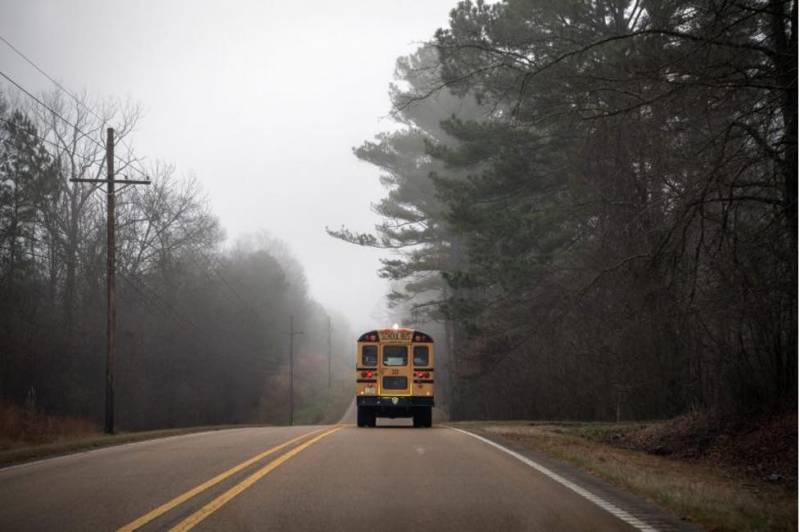
"caption": "Rural schools accounted for 70 percent of the 1,600 schools that had adopted a four-day schedule by the spring of 2019. More schools switched to a four-day schedule during the pandemic. ",
"description": null,
"title": "School Bus Rory Doyle for The Hechinger Report copy",
"credit": "Rory Doyle / The Hechinger Report",
"status": "inherit",
"altTag": "School bus going down a rural road on a foggy day.",
"isLoading": false,
"fetchFailed": false
},
"mindshift_59707": {
"type": "attachments",
"id": "mindshift_59707",
"meta": {
"index": "attachments_1716263798",
"site": "mindshift",
"id": "59707",
"found": true
},
"parent": 59706,
"imgSizes": {
"twentyfourteen-full-width": {
"file": "https://ww2.kqed.org/app/uploads/sites/23/2022/08/GettyImages-586104230-1024x576.jpg",
"width": 1024,
"mimeType": "image/jpeg",
"height": 576
},
"thumbnail": {
"file": "https://ww2.kqed.org/app/uploads/sites/23/2022/08/GettyImages-586104230-160x121.jpg",
"width": 160,
"mimeType": "image/jpeg",
"height": 121
},
"post-thumbnail": {
"file": "https://ww2.kqed.org/app/uploads/sites/23/2022/08/GettyImages-586104230-672x372.jpg",
"width": 672,
"mimeType": "image/jpeg",
"height": 372
},
"kqedFullSize": {
"file": "https://ww2.kqed.org/app/uploads/sites/23/2022/08/GettyImages-586104230.jpg",
"width": 1024,
"height": 775
},
"large": {
"file": "https://ww2.kqed.org/app/uploads/sites/23/2022/08/GettyImages-586104230-1020x772.jpg",
"width": 1020,
"mimeType": "image/jpeg",
"height": 772
},
"medium": {
"file": "https://ww2.kqed.org/app/uploads/sites/23/2022/08/GettyImages-586104230-800x605.jpg",
"width": 800,
"mimeType": "image/jpeg",
"height": 605
},
"medium_large": {
"file": "https://ww2.kqed.org/app/uploads/sites/23/2022/08/GettyImages-586104230-768x581.jpg",
"width": 768,
"mimeType": "image/jpeg",
"height": 581
}
},
"publishDate": 1660492088,
"modified": 1660492132,
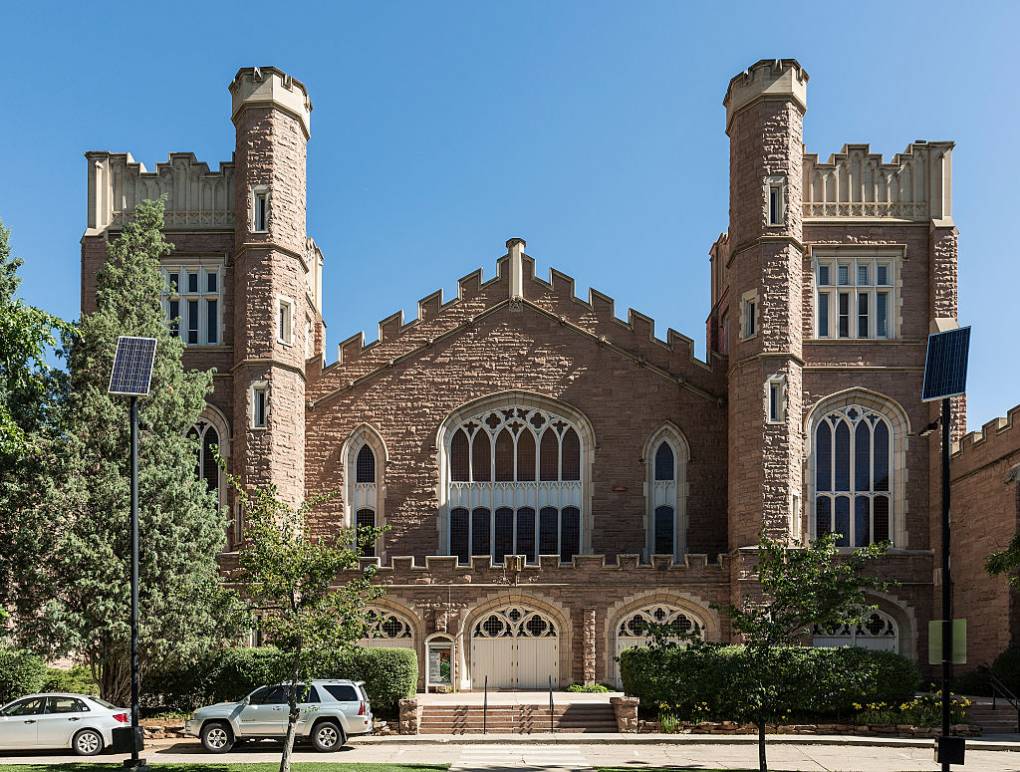
"caption": "Macky Auditorium, University of Colorado Boulder. ",
"description": null,
"title": "Macky Auditorium, University of Colorado Boulder",
"credit": "Photo by John Greim/LightRocket via Getty Images",
"status": "inherit",
"altTag": "Macky Auditorium, University of Colorado Boulder",
"isLoading": false,
"fetchFailed": false
},
"mindshift_59680": {
"type": "attachments",
"id": "mindshift_59680",
"meta": {
"index": "attachments_1716263798",
"site": "mindshift",
"id": "59680",
"found": true
},
"parent": 59679,
"imgSizes": {
"twentyfourteen-full-width": {
"file": "https://ww2.kqed.org/app/uploads/sites/23/2022/08/disability-pride-2_custom-c2ba90379c64a946d08432fa5a4604c4f5849662-1038x576.jpg",
"width": 1038,
"mimeType": "image/jpeg",
"height": 576
},
"thumbnail": {
"file": "https://ww2.kqed.org/app/uploads/sites/23/2022/08/disability-pride-2_custom-c2ba90379c64a946d08432fa5a4604c4f5849662-160x107.jpg",
"width": 160,
"mimeType": "image/jpeg",
"height": 107
},
"post-thumbnail": {
"file": "https://ww2.kqed.org/app/uploads/sites/23/2022/08/disability-pride-2_custom-c2ba90379c64a946d08432fa5a4604c4f5849662-672x372.jpg",
"width": 672,
"mimeType": "image/jpeg",
"height": 372
},
"kqedFullSize": {
"file": "https://ww2.kqed.org/app/uploads/sites/23/2022/08/disability-pride-2_custom-c2ba90379c64a946d08432fa5a4604c4f5849662-scaled-e1660225626179.jpg",
"width": 1920,
"height": 1283
},
"2048x2048": {
"file": "https://ww2.kqed.org/app/uploads/sites/23/2022/08/disability-pride-2_custom-c2ba90379c64a946d08432fa5a4604c4f5849662-2048x1368.jpg",
"width": 2048,
"mimeType": "image/jpeg",
"height": 1368
},
"large": {
"file": "https://ww2.kqed.org/app/uploads/sites/23/2022/08/disability-pride-2_custom-c2ba90379c64a946d08432fa5a4604c4f5849662-1020x681.jpg",
"width": 1020,
"mimeType": "image/jpeg",
"height": 681
},
"1536x1536": {
"file": "https://ww2.kqed.org/app/uploads/sites/23/2022/08/disability-pride-2_custom-c2ba90379c64a946d08432fa5a4604c4f5849662-1536x1026.jpg",
"width": 1536,
"mimeType": "image/jpeg",
"height": 1026
},
"full-width": {
"file": "https://ww2.kqed.org/app/uploads/sites/23/2022/08/disability-pride-2_custom-c2ba90379c64a946d08432fa5a4604c4f5849662-1920x1282.jpg",
"width": 1920,
"mimeType": "image/jpeg",
"height": 1282
},
"medium": {
"file": "https://ww2.kqed.org/app/uploads/sites/23/2022/08/disability-pride-2_custom-c2ba90379c64a946d08432fa5a4604c4f5849662-800x534.jpg",
"width": 800,
"mimeType": "image/jpeg",
"height": 534
},
"medium_large": {
"file": "https://ww2.kqed.org/app/uploads/sites/23/2022/08/disability-pride-2_custom-c2ba90379c64a946d08432fa5a4604c4f5849662-768x513.jpg",
"width": 768,
"mimeType": "image/jpeg",
"height": 513
}
},
"publishDate": 1660225239,
"modified": 1660225681,
"caption": "People take part in a disability pride parade on July 14, 2019, in central Rome.\n",
"description": "A wheelchair-bound woman smiles as she takes part in a 'Disability Pride Parade' by people from Italian disability organisations, in front of the Altare della Patria, the Monument of the unknown soldier, on July 14, 2019 in central Rome. - July is designated as \"Disability Pride Month\" in honor of the 29th anniversary of the Americans with Disabilities Act, that aims to guarantee equal opportunities and rights for people with disabilities. (Photo by Andreas SOLARO / AFP) (Photo credit should read ANDREAS SOLARO/AFP via Getty Images)",
"title": "People take part in a disability pride parade on July 14, 2019, in central Rome.",
"credit": "Andreas Solaro/AFP via Getty Images",
"status": "inherit",
"altTag": "Woman in a wheelchair taking part in a disability pride parade",
"isLoading": false,
"fetchFailed": false
},
"mindshift_59599": {
"type": "attachments",
"id": "mindshift_59599",
"meta": {
"index": "attachments_1716263798",
"site": "mindshift",
"id": "59599",
"found": true
},
"parent": 59598,
"imgSizes": {
"thumbnail": {
"file": "https://ww2.kqed.org/app/uploads/sites/23/2022/07/la2017-37a30802d42bbd5d133c2b64e041ac3c87139266-160x120.jpg",
"width": 160,
"mimeType": "image/jpeg",
"height": 120
},
"post-thumbnail": {
"file": "https://ww2.kqed.org/app/uploads/sites/23/2022/07/la2017-37a30802d42bbd5d133c2b64e041ac3c87139266-664x372.jpg",
"width": 664,
"mimeType": "image/jpeg",
"height": 372
},
"kqedFullSize": {
"file": "https://ww2.kqed.org/app/uploads/sites/23/2022/07/la2017-37a30802d42bbd5d133c2b64e041ac3c87139266.jpg",
"width": 664,
"height": 498
}
},
"publishDate": 1658473830,
"modified": 1658474276,
"caption": null,
"description": "Drowning in student loans.",
"title": "Drowning in student loans.",
"credit": "LA Johnson/NPR",
"status": "inherit",
"altTag": "Illustration of a graduate floating in water",
"isLoading": false,
"fetchFailed": false
},
"mindshift_59593": {
"type": "attachments",
"id": "mindshift_59593",
"meta": {
"index": "attachments_1716263798",
"site": "mindshift",
"id": "59593",
"found": true
},
"parent": 59591,
"imgSizes": {
"twentyfourteen-full-width": {
"file": "https://ww2.kqed.org/app/uploads/sites/23/2022/07/iStock-1359353663-1038x576.jpg",
"width": 1038,
"mimeType": "image/jpeg",
"height": 576
},
"thumbnail": {
"file": "https://ww2.kqed.org/app/uploads/sites/23/2022/07/iStock-1359353663-160x107.jpg",
"width": 160,
"mimeType": "image/jpeg",
"height": 107
},
"post-thumbnail": {
"file": "https://ww2.kqed.org/app/uploads/sites/23/2022/07/iStock-1359353663-672x372.jpg",
"width": 672,
"mimeType": "image/jpeg",
"height": 372
},
"kqedFullSize": {
"file": "https://ww2.kqed.org/app/uploads/sites/23/2022/07/iStock-1359353663.jpg",
"width": 2121,
"height": 1414
},
"2048x2048": {
"file": "https://ww2.kqed.org/app/uploads/sites/23/2022/07/iStock-1359353663-2048x1365.jpg",
"width": 2048,
"mimeType": "image/jpeg",
"height": 1365
},
"large": {
"file": "https://ww2.kqed.org/app/uploads/sites/23/2022/07/iStock-1359353663-1020x680.jpg",
"width": 1020,
"mimeType": "image/jpeg",
"height": 680
},
"1536x1536": {
"file": "https://ww2.kqed.org/app/uploads/sites/23/2022/07/iStock-1359353663-1536x1024.jpg",
"width": 1536,
"mimeType": "image/jpeg",
"height": 1024
},
"full-width": {
"file": "https://ww2.kqed.org/app/uploads/sites/23/2022/07/iStock-1359353663-1920x1280.jpg",
"width": 1920,
"mimeType": "image/jpeg",
"height": 1280
},
"medium": {
"file": "https://ww2.kqed.org/app/uploads/sites/23/2022/07/iStock-1359353663-800x533.jpg",
"width": 800,
"mimeType": "image/jpeg",
"height": 533
},
"medium_large": {
"file": "https://ww2.kqed.org/app/uploads/sites/23/2022/07/iStock-1359353663-768x512.jpg",
"width": 768,
"mimeType": "image/jpeg",
"height": 512
}
},
"publishDate": 1658389204,
"modified": 1658389226,
"caption": null,
"description": null,
"title": "iStock-1359353663",
"credit": "amoklv/iStock",
"status": "inherit",
"altTag": "Four light bulbs",
"isLoading": false,
"fetchFailed": false
},
"mindshift_59539": {
"type": "attachments",
"id": "mindshift_59539",
"meta": {
"index": "attachments_1716263798",
"site": "mindshift",
"id": "59539",
"found": true
},
"parent": 59535,
"imgSizes": {
"twentyfourteen-full-width": {
"file": "https://ww2.kqed.org/app/uploads/sites/23/2022/07/iStock-671254402-1038x576.jpg",
"width": 1038,
"mimeType": "image/jpeg",
"height": 576
},
"thumbnail": {
"file": "https://ww2.kqed.org/app/uploads/sites/23/2022/07/iStock-671254402-160x116.jpg",
"width": 160,
"mimeType": "image/jpeg",
"height": 116
},
"post-thumbnail": {
"file": "https://ww2.kqed.org/app/uploads/sites/23/2022/07/iStock-671254402-672x372.jpg",
"width": 672,
"mimeType": "image/jpeg",
"height": 372
},
"kqedFullSize": {
"file": "https://ww2.kqed.org/app/uploads/sites/23/2022/07/iStock-671254402-e1656996016391.jpg",
"width": 1920,
"height": 1396
},
"large": {
"file": "https://ww2.kqed.org/app/uploads/sites/23/2022/07/iStock-671254402-1020x742.jpg",
"width": 1020,
"mimeType": "image/jpeg",
"height": 742
},
"1536x1536": {
"file": "https://ww2.kqed.org/app/uploads/sites/23/2022/07/iStock-671254402-1536x1117.jpg",
"width": 1536,
"mimeType": "image/jpeg",
"height": 1117
},
"full-width": {
"file": "https://ww2.kqed.org/app/uploads/sites/23/2022/07/iStock-671254402-1920x1396.jpg",
"width": 1920,
"mimeType": "image/jpeg",
"height": 1396
},
"medium": {
"file": "https://ww2.kqed.org/app/uploads/sites/23/2022/07/iStock-671254402-800x582.jpg",
"width": 800,
"mimeType": "image/jpeg",
"height": 582
},
"medium_large": {
"file": "https://ww2.kqed.org/app/uploads/sites/23/2022/07/iStock-671254402-768x558.jpg",
"width": 768,
"mimeType": "image/jpeg",
"height": 558
}
},
"publishDate": 1656995996,
"modified": 1656996037,
"caption": null,
"description": null,
"title": "iStock-671254402",
"credit": "Rawpixel/iStock",
"status": "inherit",
"altTag": "Kids holding hands",
"isLoading": false,
"fetchFailed": false
},
"mindshift_59505": {
"type": "attachments",
"id": "mindshift_59505",
"meta": {
"index": "attachments_1716263798",
"site": "mindshift",
"id": "59505",
"found": true
},
"parent": 59503,
"imgSizes": {
"twentyfourteen-full-width": {
"file": "https://ww2.kqed.org/app/uploads/sites/23/2022/06/villareal-corona-dual-5-1038x576.jpeg",
"width": 1038,
"mimeType": "image/jpeg",
"height": 576
},
"thumbnail": {
"file": "https://ww2.kqed.org/app/uploads/sites/23/2022/06/villareal-corona-dual-5-160x107.jpeg",
"width": 160,
"mimeType": "image/jpeg",
"height": 107
},
"post-thumbnail": {
"file": "https://ww2.kqed.org/app/uploads/sites/23/2022/06/villareal-corona-dual-5-672x372.jpeg",
"width": 672,
"mimeType": "image/jpeg",
"height": 372
},
"kqedFullSize": {
"file": "https://ww2.kqed.org/app/uploads/sites/23/2022/06/villareal-corona-dual-5-e1655797699767.jpeg",
"width": 1920,
"height": 1280
},
"large": {
"file": "https://ww2.kqed.org/app/uploads/sites/23/2022/06/villareal-corona-dual-5-1020x680.jpeg",
"width": 1020,
"mimeType": "image/jpeg",
"height": 680
},
"1536x1536": {
"file": "https://ww2.kqed.org/app/uploads/sites/23/2022/06/villareal-corona-dual-5-1536x1024.jpeg",
"width": 1536,
"mimeType": "image/jpeg",
"height": 1024
},
"full-width": {
"file": "https://ww2.kqed.org/app/uploads/sites/23/2022/06/villareal-corona-dual-5-1920x1280.jpeg",
"width": 1920,
"mimeType": "image/jpeg",
"height": 1280
},
"medium": {
"file": "https://ww2.kqed.org/app/uploads/sites/23/2022/06/villareal-corona-dual-5-800x533.jpeg",
"width": 800,
"mimeType": "image/jpeg",
"height": 533
},
"medium_large": {
"file": "https://ww2.kqed.org/app/uploads/sites/23/2022/06/villareal-corona-dual-5-768x512.jpeg",
"width": 768,
"mimeType": "image/jpeg",
"height": 512
}
},
"publishDate": 1655797674,
"modified": 1655797702,
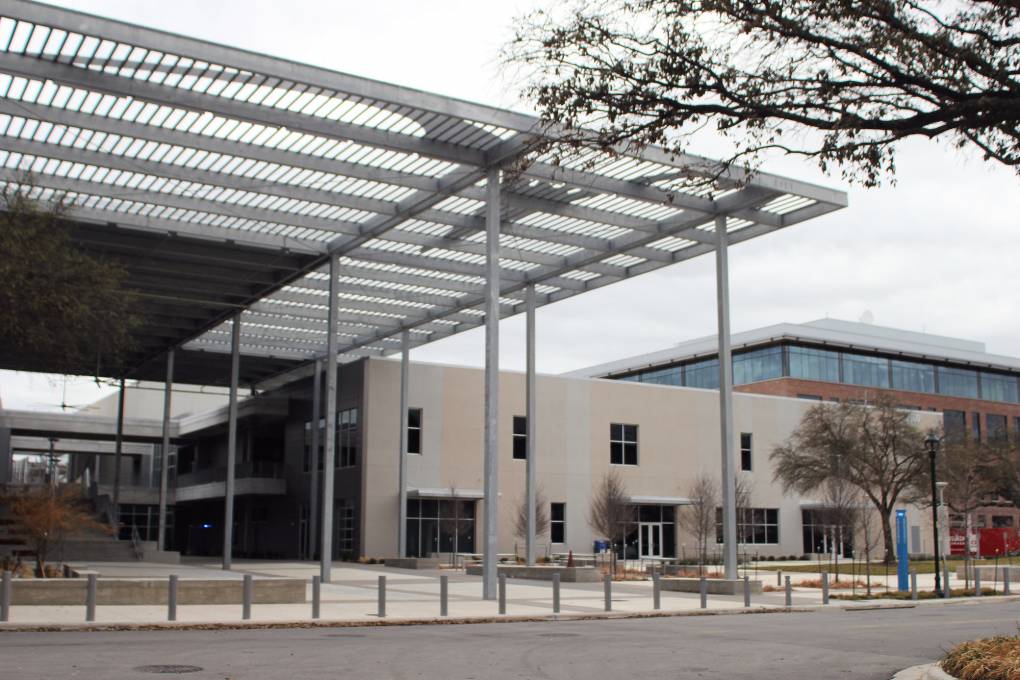
"caption": "Austin Community College in Texas is emblematic of two-year community colleges around the nation that have benefited from higher state appropriations and property tax collections. ",
"description": null,
"title": "villareal-corona-dual-5",
"credit": "Jackie Mader/The Hechinger Report",
"status": "inherit",
"altTag": null,
"isLoading": false,
"fetchFailed": false
},
"mindshift_59475": {
"type": "attachments",
"id": "mindshift_59475",
"meta": {
"index": "attachments_1716263798",
"site": "mindshift",
"id": "59475",
"found": true
},
"parent": 59473,
"imgSizes": {
"twentyfourteen-full-width": {
"file": "https://ww2.kqed.org/app/uploads/sites/23/2022/06/iStock-1253907290-1038x576.jpg",
"width": 1038,
"mimeType": "image/jpeg",
"height": 576
},
"thumbnail": {
"file": "https://ww2.kqed.org/app/uploads/sites/23/2022/06/iStock-1253907290-160x107.jpg",
"width": 160,
"mimeType": "image/jpeg",
"height": 107
},
"post-thumbnail": {
"file": "https://ww2.kqed.org/app/uploads/sites/23/2022/06/iStock-1253907290-672x372.jpg",
"width": 672,
"mimeType": "image/jpeg",
"height": 372
},
"kqedFullSize": {
"file": "https://ww2.kqed.org/app/uploads/sites/23/2022/06/iStock-1253907290-e1655107539501.jpg",
"width": 1920,
"height": 1280
},
"2048x2048": {
"file": "https://ww2.kqed.org/app/uploads/sites/23/2022/06/iStock-1253907290-2048x1365.jpg",
"width": 2048,
"mimeType": "image/jpeg",
"height": 1365
},
"large": {
"file": "https://ww2.kqed.org/app/uploads/sites/23/2022/06/iStock-1253907290-1020x680.jpg",
"width": 1020,
"mimeType": "image/jpeg",
"height": 680
},
"1536x1536": {
"file": "https://ww2.kqed.org/app/uploads/sites/23/2022/06/iStock-1253907290-1536x1024.jpg",
"width": 1536,
"mimeType": "image/jpeg",
"height": 1024
},
"full-width": {
"file": "https://ww2.kqed.org/app/uploads/sites/23/2022/06/iStock-1253907290-1920x1280.jpg",
"width": 1920,
"mimeType": "image/jpeg",
"height": 1280
},
"medium": {
"file": "https://ww2.kqed.org/app/uploads/sites/23/2022/06/iStock-1253907290-800x533.jpg",
"width": 800,
"mimeType": "image/jpeg",
"height": 533
},
"medium_large": {
"file": "https://ww2.kqed.org/app/uploads/sites/23/2022/06/iStock-1253907290-768x512.jpg",
"width": 768,
"mimeType": "image/jpeg",
"height": 512
}
},
"publishDate": 1655107522,
"modified": 1655107583,
"caption": null,
"description": null,
"title": null,
"credit": "Andrii Shyp/iStock",
"status": "inherit",
"altTag": "Illustration of multi-hued faces",
"isLoading": false,
"fetchFailed": false
},
"mindshift_59465": {
"type": "attachments",
"id": "mindshift_59465",
"meta": {
"index": "attachments_1716263798",
"site": "mindshift",
"id": "59465",
"found": true
},
"parent": 59459,
"imgSizes": {
"twentyfourteen-full-width": {
"file": "https://ww2.kqed.org/app/uploads/sites/23/2022/06/iStock-826043598-1038x576.jpg",
"width": 1038,
"mimeType": "image/jpeg",
"height": 576
},
"thumbnail": {
"file": "https://ww2.kqed.org/app/uploads/sites/23/2022/06/iStock-826043598-160x107.jpg",
"width": 160,
"mimeType": "image/jpeg",
"height": 107
},
"post-thumbnail": {
"file": "https://ww2.kqed.org/app/uploads/sites/23/2022/06/iStock-826043598-672x372.jpg",
"width": 672,
"mimeType": "image/jpeg",
"height": 372
},
"kqedFullSize": {
"file": "https://ww2.kqed.org/app/uploads/sites/23/2022/06/iStock-826043598-e1654848661823.jpg",
"width": 1920,
"height": 1280
},
"2048x2048": {
"file": "https://ww2.kqed.org/app/uploads/sites/23/2022/06/iStock-826043598-2048x1365.jpg",
"width": 2048,
"mimeType": "image/jpeg",
"height": 1365
},
"large": {
"file": "https://ww2.kqed.org/app/uploads/sites/23/2022/06/iStock-826043598-1020x680.jpg",
"width": 1020,
"mimeType": "image/jpeg",
"height": 680
},
"1536x1536": {
"file": "https://ww2.kqed.org/app/uploads/sites/23/2022/06/iStock-826043598-1536x1024.jpg",
"width": 1536,
"mimeType": "image/jpeg",
"height": 1024
},
"full-width": {
"file": "https://ww2.kqed.org/app/uploads/sites/23/2022/06/iStock-826043598-1920x1280.jpg",
"width": 1920,
"mimeType": "image/jpeg",
"height": 1280
},
"medium": {
"file": "https://ww2.kqed.org/app/uploads/sites/23/2022/06/iStock-826043598-800x533.jpg",
"width": 800,
"mimeType": "image/jpeg",
"height": 533
},
"medium_large": {
"file": "https://ww2.kqed.org/app/uploads/sites/23/2022/06/iStock-826043598-768x512.jpg",
"width": 768,
"mimeType": "image/jpeg",
"height": 512
}
},
"publishDate": 1654848613,
"modified": 1654848678,
"caption": null,
"description": null,
"title": "iStock-826043598",
"credit": "splendens/iStock",
"status": "inherit",
"altTag": null,
"isLoading": false,
"fetchFailed": false
},
"mindshift_59448": {
"type": "attachments",
"id": "mindshift_59448",
"meta": {
"index": "attachments_1716263798",
"site": "mindshift",
"id": "59448",
"found": true
},
"parent": 59447,
"imgSizes": {
"twentyfourteen-full-width": {
"file": "https://ww2.kqed.org/app/uploads/sites/23/2022/05/ap21064769783246-d8d43a23e99b06d834c2790729c1bd08feed1a55-1038x576.jpg",
"width": 1038,
"mimeType": "image/jpeg",
"height": 576
},
"thumbnail": {
"file": "https://ww2.kqed.org/app/uploads/sites/23/2022/05/ap21064769783246-d8d43a23e99b06d834c2790729c1bd08feed1a55-160x120.jpg",
"width": 160,
"mimeType": "image/jpeg",
"height": 120
},
"post-thumbnail": {
"file": "https://ww2.kqed.org/app/uploads/sites/23/2022/05/ap21064769783246-d8d43a23e99b06d834c2790729c1bd08feed1a55-672x372.jpg",
"width": 672,
"mimeType": "image/jpeg",
"height": 372
},
"kqedFullSize": {
"file": "https://ww2.kqed.org/app/uploads/sites/23/2022/05/ap21064769783246-d8d43a23e99b06d834c2790729c1bd08feed1a55-scaled-e1654068948661.jpg",
"width": 1920,
"height": 1440
},
"2048x2048": {
"file": "https://ww2.kqed.org/app/uploads/sites/23/2022/05/ap21064769783246-d8d43a23e99b06d834c2790729c1bd08feed1a55-2048x1536.jpg",
"width": 2048,
"mimeType": "image/jpeg",
"height": 1536
},
"large": {
"file": "https://ww2.kqed.org/app/uploads/sites/23/2022/05/ap21064769783246-d8d43a23e99b06d834c2790729c1bd08feed1a55-1020x765.jpg",
"width": 1020,
"mimeType": "image/jpeg",
"height": 765
},
"1536x1536": {
"file": "https://ww2.kqed.org/app/uploads/sites/23/2022/05/ap21064769783246-d8d43a23e99b06d834c2790729c1bd08feed1a55-1536x1152.jpg",
"width": 1536,
"mimeType": "image/jpeg",
"height": 1152
},
"full-width": {
"file": "https://ww2.kqed.org/app/uploads/sites/23/2022/05/ap21064769783246-d8d43a23e99b06d834c2790729c1bd08feed1a55-1920x1440.jpg",
"width": 1920,
"mimeType": "image/jpeg",
"height": 1440
},
"medium": {
"file": "https://ww2.kqed.org/app/uploads/sites/23/2022/05/ap21064769783246-d8d43a23e99b06d834c2790729c1bd08feed1a55-800x600.jpg",
"width": 800,
"mimeType": "image/jpeg",
"height": 600
},
"medium_large": {
"file": "https://ww2.kqed.org/app/uploads/sites/23/2022/05/ap21064769783246-d8d43a23e99b06d834c2790729c1bd08feed1a55-768x576.jpg",
"width": 768,
"mimeType": "image/jpeg",
"height": 576
}
},
"publishDate": 1654068181,
"modified": 1654068970,
"caption": "A teacher cleans a desk in a classroom during a media tour at Dorothy Eisenberg Elementary School in Las Vegas.\n",
"description": "FILE - In this Feb. 25, 2021 file photo Tia Baker cleans a desk in a classroom during a media tour at Dorothy Eisenberg Elementary School, in Las Vegas. A new report commissioned by the Legislature finds Nevada public schools have too many students per classroom and too few teachers and support staff. The study released Friday, March 5, 2021, to the Nevada Commission on School Funding projects the added cost of simply meeting the U.S. national student-to-teacher ratio average at about $800 million. (AP Photo/John Locher,File)",
"title": "A teacher cleans a desk in a classroom during a media tour at Dorothy Eisenberg Elementary School in Las Vegas.",
"credit": "John Locher/AP",
"status": "inherit",
"altTag": "A teacher cleans a desk",
"isLoading": false,
"fetchFailed": false
},
"mindshift_59329": {
"type": "attachments",
"id": "mindshift_59329",
"meta": {
"index": "attachments_1716263798",
"site": "mindshift",
"id": "59329",
"found": true
},
"parent": 59328,
"imgSizes": {
"twentyfourteen-full-width": {
"file": "https://ww2.kqed.org/app/uploads/sites/23/2022/04/npr-ramadan-usc-suhoor-13_slide-e1ec6a1548142406871067f71b4cd5cc87996ddf-1038x576.jpg",
"width": 1038,
"mimeType": "image/jpeg",
"height": 576
},
"thumbnail": {
"file": "https://ww2.kqed.org/app/uploads/sites/23/2022/04/npr-ramadan-usc-suhoor-13_slide-e1ec6a1548142406871067f71b4cd5cc87996ddf-160x107.jpg",
"width": 160,
"mimeType": "image/jpeg",
"height": 107
},
"post-thumbnail": {
"file": "https://ww2.kqed.org/app/uploads/sites/23/2022/04/npr-ramadan-usc-suhoor-13_slide-e1ec6a1548142406871067f71b4cd5cc87996ddf-672x372.jpg",
"width": 672,
"mimeType": "image/jpeg",
"height": 372
},
"kqedFullSize": {
"file": "https://ww2.kqed.org/app/uploads/sites/23/2022/04/npr-ramadan-usc-suhoor-13_slide-e1ec6a1548142406871067f71b4cd5cc87996ddf-scaled-e1651128786770.jpg",
"width": 1920,
"height": 1280
},
"2048x2048": {
"file": "https://ww2.kqed.org/app/uploads/sites/23/2022/04/npr-ramadan-usc-suhoor-13_slide-e1ec6a1548142406871067f71b4cd5cc87996ddf-2048x1365.jpg",
"width": 2048,
"mimeType": "image/jpeg",
"height": 1365
},
"large": {
"file": "https://ww2.kqed.org/app/uploads/sites/23/2022/04/npr-ramadan-usc-suhoor-13_slide-e1ec6a1548142406871067f71b4cd5cc87996ddf-1020x680.jpg",
"width": 1020,
"mimeType": "image/jpeg",
"height": 680
},
"1536x1536": {
"file": "https://ww2.kqed.org/app/uploads/sites/23/2022/04/npr-ramadan-usc-suhoor-13_slide-e1ec6a1548142406871067f71b4cd5cc87996ddf-1536x1024.jpg",
"width": 1536,
"mimeType": "image/jpeg",
"height": 1024
},
"full-width": {
"file": "https://ww2.kqed.org/app/uploads/sites/23/2022/04/npr-ramadan-usc-suhoor-13_slide-e1ec6a1548142406871067f71b4cd5cc87996ddf-1920x1280.jpg",
"width": 1920,
"mimeType": "image/jpeg",
"height": 1280
},
"medium": {
"file": "https://ww2.kqed.org/app/uploads/sites/23/2022/04/npr-ramadan-usc-suhoor-13_slide-e1ec6a1548142406871067f71b4cd5cc87996ddf-800x533.jpg",
"width": 800,
"mimeType": "image/jpeg",
"height": 533
},
"medium_large": {
"file": "https://ww2.kqed.org/app/uploads/sites/23/2022/04/npr-ramadan-usc-suhoor-13_slide-e1ec6a1548142406871067f71b4cd5cc87996ddf-768x512.jpg",
"width": 768,
"mimeType": "image/jpeg",
"height": 512
}
},
"publishDate": 1651128575,
"modified": 1651128824,
"caption": "Talha Rafique picks up his to-go suhoor box from a campus dining hall at the University of Southern California. \"My friends and I actually look forward to Ramadan,\" he says.\n",
"description": null,
"title": "Talha Rafique picks up his to-go suhoor box from a campus dining hall at the University of Southern California. \"My friends and I actually look forward to Ramadan,\" he says.",
"credit": "Roxanne Turpen for NPR",
"status": "inherit",
"altTag": "College student holding a suhoor box for Ramdan.",
"isLoading": false,
"fetchFailed": false
},
"mindshift_59320": {
"type": "attachments",
"id": "mindshift_59320",
"meta": {
"index": "attachments_1716263798",
"site": "mindshift",
"id": "59320",
"found": true
},
"parent": 59319,
"imgSizes": {
"twentyfourteen-full-width": {
"file": "https://ww2.kqed.org/app/uploads/sites/23/2022/04/restraint-seclusion-version1_wide-a452e422fe30b4bfbfbd2fc3b01d62ba3b52c29b-1038x576.jpg",
"width": 1038,
"mimeType": "image/jpeg",
"height": 576
},
"thumbnail": {
"file": "https://ww2.kqed.org/app/uploads/sites/23/2022/04/restraint-seclusion-version1_wide-a452e422fe30b4bfbfbd2fc3b01d62ba3b52c29b-160x90.jpg",
"width": 160,
"mimeType": "image/jpeg",
"height": 90
},
"post-thumbnail": {
"file": "https://ww2.kqed.org/app/uploads/sites/23/2022/04/restraint-seclusion-version1_wide-a452e422fe30b4bfbfbd2fc3b01d62ba3b52c29b-672x372.jpg",
"width": 672,
"mimeType": "image/jpeg",
"height": 372
},
"kqedFullSize": {
"file": "https://ww2.kqed.org/app/uploads/sites/23/2022/04/restraint-seclusion-version1_wide-a452e422fe30b4bfbfbd2fc3b01d62ba3b52c29b-scaled-e1650522140908.jpg",
"width": 1920,
"height": 1080
},
"2048x2048": {
"file": "https://ww2.kqed.org/app/uploads/sites/23/2022/04/restraint-seclusion-version1_wide-a452e422fe30b4bfbfbd2fc3b01d62ba3b52c29b-2048x1152.jpg",
"width": 2048,
"mimeType": "image/jpeg",
"height": 1152
},
"large": {
"file": "https://ww2.kqed.org/app/uploads/sites/23/2022/04/restraint-seclusion-version1_wide-a452e422fe30b4bfbfbd2fc3b01d62ba3b52c29b-1020x574.jpg",
"width": 1020,
"mimeType": "image/jpeg",
"height": 574
},
"1536x1536": {
"file": "https://ww2.kqed.org/app/uploads/sites/23/2022/04/restraint-seclusion-version1_wide-a452e422fe30b4bfbfbd2fc3b01d62ba3b52c29b-1536x864.jpg",
"width": 1536,
"mimeType": "image/jpeg",
"height": 864
},
"full-width": {
"file": "https://ww2.kqed.org/app/uploads/sites/23/2022/04/restraint-seclusion-version1_wide-a452e422fe30b4bfbfbd2fc3b01d62ba3b52c29b-1920x1080.jpg",
"width": 1920,
"mimeType": "image/jpeg",
"height": 1080
},
"medium": {
"file": "https://ww2.kqed.org/app/uploads/sites/23/2022/04/restraint-seclusion-version1_wide-a452e422fe30b4bfbfbd2fc3b01d62ba3b52c29b-800x450.jpg",
"width": 800,
"mimeType": "image/jpeg",
"height": 450
},
"medium_large": {
"file": "https://ww2.kqed.org/app/uploads/sites/23/2022/04/restraint-seclusion-version1_wide-a452e422fe30b4bfbfbd2fc3b01d62ba3b52c29b-768x432.jpg",
"width": 768,
"mimeType": "image/jpeg",
"height": 432
}
},
"publishDate": 1650522111,
"modified": 1650522165,
"caption": null,
"description": "Teachers on restraint and seclusion",
"title": "Special education teachers are hard to find",
"credit": "Delphine Lee/NPR",
"status": "inherit",
"altTag": null,
"isLoading": false,
"fetchFailed": false
}
},
"audioPlayerReducer": {
"postId": "stream_live",
"isPaused": true,
"isPlaying": false,
"pfsActive": false,
"pledgeModalIsOpen": true,
"playerDrawerIsOpen": false,
"liveAudioPlayStartedAt": 0,
"liveAudioPlayContext": ""
},
"authorsReducer": {
"byline_mindshift_59801": {
"type": "authors",
"id": "byline_mindshift_59801",
"meta": {
"override": true
},
"slug": "byline_mindshift_59801",
"name": "Jill Barshay, \u003ca href=\"https://hechingerreport.org/\">The Hechinger Report\u003c/a>",
"isLoading": false
},
"byline_mindshift_59706": {
"type": "authors",
"id": "byline_mindshift_59706",
"meta": {
"override": true
},
"slug": "byline_mindshift_59706",
"name": "Jill Barshay, \u003ca href=\"https://hechingerreport.org/\">The Hechinger Report\u003c/a>",
"isLoading": false
},
"byline_mindshift_59679": {
"type": "authors",
"id": "byline_mindshift_59679",
"meta": {
"override": true
},
"slug": "byline_mindshift_59679",
"name": "Shruti Rajkumar",
"isLoading": false
},
"byline_mindshift_59598": {
"type": "authors",
"id": "byline_mindshift_59598",
"meta": {
"override": true
},
"slug": "byline_mindshift_59598",
"name": "Cory Turner, Sequoia Carrillo and Pooja Salhotra",
"isLoading": false
},
"byline_mindshift_59535": {
"type": "authors",
"id": "byline_mindshift_59535",
"meta": {
"override": true
},
"slug": "byline_mindshift_59535",
"name": "Jill Barshay, \u003ca href=\"https://hechingerreport.org/\">The Hechinger Report\u003c/a>",
"isLoading": false
},
"byline_mindshift_59503": {
"type": "authors",
"id": "byline_mindshift_59503",
"meta": {
"override": true
},
"slug": "byline_mindshift_59503",
"name": "Jill Barshay, \u003ca href=\"https://hechingerreport.org/\">The Hechinger Report\u003c/a>",
"isLoading": false
},
"byline_mindshift_59473": {
"type": "authors",
"id": "byline_mindshift_59473",
"meta": {
"override": true
},
"slug": "byline_mindshift_59473",
"name": "Jill Barshay, \u003ca href=\"https://hechingerreport.org/\">The Hechinger Report\u003c/a>",
"isLoading": false
},
"byline_mindshift_59447": {
"type": "authors",
"id": "byline_mindshift_59447",
"meta": {
"override": true
},
"slug": "byline_mindshift_59447",
"name": "Rachel Martin",
"isLoading": false
},
"byline_mindshift_59328": {
"type": "authors",
"id": "byline_mindshift_59328",
"meta": {
"override": true
},
"slug": "byline_mindshift_59328",
"name": "Yusra Farzan",
"isLoading": false
},
"byline_mindshift_59319": {
"type": "authors",
"id": "byline_mindshift_59319",
"meta": {
"override": true
},
"slug": "byline_mindshift_59319",
"name": "Lee V. Gaines",
"isLoading": false
},
"pauldarvasi": {
"type": "authors",
"id": "11107",
"meta": {
"index": "authors_1716337520",
"id": "11107",
"found": true
},
"name": "Paul Darvasi",
"firstName": "Paul",
"lastName": "Darvasi",
"slug": "pauldarvasi",
"email": "pauldarvasi@gmail.com",
"display_author_email": false,
"staff_mastheads": [],
"title": null,
"bio": "Paul Darvasi is an experienced educator whose research, speaking and writing explore the intersections of learning, technology, narrative and games. You can follow him on Twitter:\u003ca href=\"https://twitter.com/PaulDarvasi\"> @pauldarvasi\u003c/a>",
"avatar": "https://secure.gravatar.com/avatar/df387897a1bf0cd4b720b8175112731a?s=600&d=blank&r=g",
"twitter": "pauldarvasi",
"facebook": null,
"instagram": null,
"linkedin": null,
"sites": [
{
"site": "mindshift",
"roles": [
"contributor"
]
}
],
"headData": {
"title": "Paul Darvasi | KQED",
"description": null,
"ogImgSrc": "https://secure.gravatar.com/avatar/df387897a1bf0cd4b720b8175112731a?s=600&d=blank&r=g",
"twImgSrc": "https://secure.gravatar.com/avatar/df387897a1bf0cd4b720b8175112731a?s=600&d=blank&r=g"
},
"isLoading": false,
"link": "/author/pauldarvasi"
},
"kdnewhouse": {
"type": "authors",
"id": "11487",
"meta": {
"index": "authors_1716337520",
"id": "11487",
"found": true
},
"name": "Kara Newhouse",
"firstName": "Kara",
"lastName": "Newhouse",
"slug": "kdnewhouse",
"email": "knewhouse@kqed.org",
"display_author_email": false,
"staff_mastheads": [],
"title": "MindShift Editor",
"bio": null,
"avatar": "https://secure.gravatar.com/avatar/3dceed6fb271527113abfa9a8e9df34e?s=600&d=blank&r=g",
"twitter": null,
"facebook": null,
"instagram": null,
"linkedin": null,
"sites": [
{
"site": "",
"roles": [
"editor"
]
},
{
"site": "mindshift",
"roles": []
}
],
"headData": {
"title": "Kara Newhouse | KQED",
"description": "MindShift Editor",
"ogImgSrc": "https://secure.gravatar.com/avatar/3dceed6fb271527113abfa9a8e9df34e?s=600&d=blank&r=g",
"twImgSrc": "https://secure.gravatar.com/avatar/3dceed6fb271527113abfa9a8e9df34e?s=600&d=blank&r=g"
},
"isLoading": false,
"link": "/author/kdnewhouse"
}
},
"pagesReducer": {
"mindshift_category_big-ideas": {
"type": "terms",
"id": "mindshift_192",
"meta": {
"index": "terms_1716263798",
"site": "mindshift",
"id": "192",
"score": 14.40649
},
"featImg": null,
"name": "Big Ideas",
"description": "The latest findings from experts in the field related to the future of learning.",
"taxonomy": "category",
"headData": {
"twImgId": null,
"twTitle": null,
"ogTitle": null,
"ogImgId": null,
"twDescription": null,
"description": "The latest findings from experts in the field related to the future of learning.",
"title": "Big Ideas Archives | KQED Mindshift",
"ogDescription": null
},
"ttid": 192,
"slug": "big-ideas",
"isLoading": false,
"title": "Big Ideas",
"pageMeta": {
"site": "mindshift",
"WpPageTemplate": "page-topic-editorial",
"currentPage": 5
},
"blocks": [
{
"blockName": "kqed/company-paragraph",
"content": "The latest findings from experts in the field related to the future of learning."
},
{
"blockName": "kqed/post-list",
"attrs": {
"layout": "cardArticle2",
"query": "posts/mindshift?category=big-ideas",
"seeMore": false,
"paginated": true,
"page": 5
}
},
{
"blockName": "kqed/ad"
}
]
}
},
"pfsSessionReducer": {},
"postsReducer": {
"stream_live": {
"type": "live",
"id": "stream_live",
"audioUrl": "https://streams.kqed.org/kqedradio",
"title": "Live Stream",
"excerpt": "Live Stream information currently unavailable.",
"link": "/radio",
"featImg": "",
"label": {
"name": "KQED Live",
"link": "/"
}
},
"stream_kqedNewscast": {
"type": "posts",
"id": "stream_kqedNewscast",
"audioUrl": "https://www.kqed.org/.stream/anon/radio/RDnews/newscast.mp3?_=1",
"title": "KQED Newscast",
"featImg": "",
"label": {
"name": "88.5 FM",
"link": "/"
}
},
"mindshift_59801": {
"type": "posts",
"id": "mindshift_59801",
"meta": {
"index": "posts_1716263798",
"site": "mindshift",
"id": "59801",
"score": null,
"sort": [
1661757387000
]
},
"parent": 0,
"labelTerm": {
"site": "mindshift"
},
"blocks": [],
"publishDate": 1661757387,
"format": "standard",
"disqusTitle": "What the research says about 4-day school weeks",
"title": "What the research says about 4-day school weeks",
"headTitle": "MindShift | KQED News",
"content": "\u003cp>Is a four-day school week a bad idea?\u003c/p>\n\u003cp>The answer matters because hundreds of thousands of students at more than 1,600 schools across 24 states were heading to school only four times a week by the spring of 2019, according to \u003ca href=\"https://direct.mit.edu/edfp/article-abstract/16/4/558/97130/Are-All-Four-Day-School-Weeks-Created-Equal-A?redirectedFrom=fulltext\">one estimate\u003c/a>. The number of four-day schools had exploded by more than 600 percent from 20 years earlier in 1999, when only about 250 schools had four-day weeks. That tally could be even larger today because more schools switched to a four-day schedule during the pandemic.\u003c/p>\n\u003cp>Although the switch was initially seen as a cost-saving measure, educators have quickly learned that longer weekends are immensely popular with families, especially in rural communities where the truncated school week is most common.\u003c/p>\n\u003cp>“We know that kids love it and so do parents and teachers,” said Emily Morton, a researcher at NWEA, a nonprofit assessment company, who has studied four-day school weeks around the country. “There are crazy high approval ratings for this policy.” Eighty-five percent of parents and, perhaps unsurprisingly, 95 percent of kids said they would choose to stay on a four-day school week, according to a \u003ca href=\"https://www.rand.org/pubs/research_reports/RRA373-1.html\">RAND survey published in 2021\u003c/a>.\u003c/p>\n\u003cp>But over the course of a typical 36-week school year, a four-day week means 36 fewer days of school. Many policymakers lament the downsizing of education, worried that students may learn less. Legislators in \u003ca href=\"https://fastdemocracy.com/bill-search/nm/2022/bills/NMB00008575/\">New Mexico\u003c/a> are debating whether to crackdown on the schedule switch. Oklahoma passed a \u003ca href=\"https://stateimpact.npr.org/oklahoma/2022/03/30/rural-school-districts-get-creative-to-maintain-spirit-of-popular-four-day-schedule/#:~:text=A%202019%20law%20was%20designed,their%20four%2Dday%20calendars%20alive.\">law to restrain the move to four-day weeks\u003c/a> but delayed putting it into effect. Today, when many education advocates want to expand learning time to help kids recover academically from the pandemic, the four-day week would seem to be a move in the wrong direction.\u003c/p>\n\u003cp>[ad fullwidth]\u003c/p>\n\u003cp>The research evidence isn’t clear. The first empirical study, published in 2015, found that \u003ca href=\"https://direct.mit.edu/edfp/article/10/3/314/10233/Does-Shortening-the-School-Week-Impact-Student\">Colorado students in four-day schools did a lot better\u003c/a>. The number of fifth grade students who were proficient in math rose by more than 7 percentage points. The number of fourth grade students who were proficient in reading rose by nearly 4 percentage points. Those results seemed to defy logic.\u003c/p>\n\u003cp>But now seven newer studies generally find negative results – some tiny and some more substantial. One \u003ca href=\"https://www.sciencedirect.com/science/article/abs/pii/S0047272720301729\">2021 study in Oregon\u003c/a>, for example, calculated that the four-day week shaved off one-sixth of the usual gains that a fifth grader makes in math, equal to about five to six weeks of school. Over many years, those losses can add up for students.\u003c/p>\n\u003cp>The most recent of the seven studies, a \u003ca href=\"https://www.edworkingpapers.com/sites/default/files/ai22-630.pdf\">preliminary paper posted on the website\u003c/a> of the Annenberg Institute at Brown University in August 2022, is a large multi-state analysis and it found four-day weeks harmed some students more than others.\u003c/p>\n\u003cp>Researchers at NWEA, led by Morton, and at Oregon State University began by analyzing the test scores of 12,000 students at 35 schools that had adopted four-day weeks in six states: Colorado, Iowa, Kansas, Montana, North Dakota, and Wyoming. Like the more recent crop of studies, they found that four-day weeks weren’t great for academic achievement \u003cem>on average\u003c/em>. The test scores of four-day students in grades three through eight grew slightly less during the school year compared to hundreds of thousands of students in those six states who continued to go to school five days a week. (City students were excluded from the analysis because no city schools had adopted four-day weeks. Only rural, small town and suburban students were included.)\u003c/p>\n\u003cp>The switch seemed to hurt reading achievement more than math achievement. That was surprising. Reading is easier to do at home while math is a subject that students primarily learn and practice in school. During pandemic school closures and remote learning, for example, math achievement generally suffered more than reading.\u003c/p>\n\u003cp>The researchers focused on rural students. Rural schools accounted for seven out of 10 schools on the four-day schedule in this study. The types of students in rural communities were also different. They tended to be poorer than in small towns and suburbs and the rural students’ test scores were lower. In the six midwestern and western states in this study, the share of Native American and Hispanic students was higher in rural areas than in small towns and suburbs.\u003c/p>\n\u003cp>When researchers compared rural students who attended four-day schools with rural students who attended traditional five-day schools, ignoring small town and suburban students altogether, the results suddenly changed. Rural four-day students generally learned as much as rural five-day day students. Statistically, both groups’ test scores rose by about the same amount every year.\u003c/p>\n\u003cp>By contrast, small town and suburban students who switched to four-day weeks were far worse off than other students in the state. Though it’s less common for small town and suburban schools to switch to four-days – they constitute only 30 percent of the four-day schools – their students really seemed to be harmed. For example, a quarter of the usual achievement gains that fifth graders typically make in a year disappeared.\u003c/p>\n\u003cp>The distinctions that the U.S. Census Bureau makes between a \u003ca href=\"https://nces.ed.gov/pubs2007/ruraled/exhibit_c.asp\">rural area and a small town\u003c/a> are quite technical. I think of a small town as far from a metropolitan area, but with a bit of commerce and more people than a rural area would have.\u003c/p>\n\u003cp>This quantitative study of test scores does not explain why students at rural schools are faring better with only four days than students in small towns. NWEA’s Morton, the lead author, has long been studying four-day school weeks and conducted an \u003ca href=\"https://journals.sagepub.com/doi/full/10.3102/01623737221097420\">earlier 2022 study in rural Oklahoma\u003c/a>, where she found no academic penalty for the shorter week.\u003c/p>\n\u003cp>One possible explanation, Morton says, is sports. Many rural athletes and young student fans leave school early on Fridays or skip school altogether because of the great distances to travel to away games. In effect, many five-day students are only getting four-days of instruction in rural America.\u003c/p>\n\u003cp>“One district we talked to, half the kids would be out on Friday for football,” said Morton. “They would not really have math on Friday, because how can you teach with only half the classroom? So it’s affecting everyone.”\u003c/p>\n\u003cp>Absences for football games, considered to be part of school, are often “excused.” Official records don’t reveal that attendance rates are any better at four-day schools because many of the Friday classes that five-day students skip aren’t documented in the attendance data.\u003c/p>\n\u003cp>Another possible explanation is teaching. The four-day work week is an \u003ca href=\"https://www.houstonchronicle.com/news/houston-texas/education/article/rural-texas-4-day-school-week-16938723.php\">attractive work perk\u003c/a> in rural America that may lure better teachers.\u003c/p>\n\u003cp>“It is harder for rural districts to get teachers that are highly qualified or honestly, sometimes to get teachers period, into their buildings and to retain them than it is for town or suburban districts,” said Morton. “All of this is anecdotal, but they’re saying in interviews that teachers are happier. They like spending more time with their own children. It gives them time to do things that they wouldn’t otherwise be able to do.”\u003c/p>\n\u003cp>By this theory, four-day schools may make it easier to hire better teachers, who could accomplish in four days what a less skilled teacher accomplishes in five days.\u003c/p>\n\u003cp>Four-day weeks are not necessarily better, but five-day weeks have their own drawbacks in rural America: hidden absences, skipped lessons and lower quality teachers.\u003c/p>\n\u003cp>So what to make of it all? Morton says there are reasons to think that four-day weeks are working better in rural America than elsewhere, but she wouldn’t wholeheartedly recommend it. Hispanic students, who accounted for one out of every six rural students in this study, suffered much more from four-day weeks than white students did. (Native American students, who made up one of every 10 rural students, did relatively better with the four-day week.)\u003c/p>\n\u003cp>Morton is also worried that rural students may be ultimately harmed academically from the shorter week. In her calculations, she detected hints that even four-day students in rural schools might be learning slightly less than five-day students, but the difference was not statistically significant. A downside to a four-day education could be detected in a larger study with more students.\u003c/p>\n\u003cp>“We don’t want to say ‘it doesn’t hurt kids’ when it might actually be hurting kids a little bit,” said Morton. “Another thing that could be happening is it could hurt kids more over time. It could be that we haven’t observed it for long enough.”\u003c/p>\n\u003cp>For schools that are considering a four-day week, the schedule matters. Some schools have been better at preserving instructional time, reallocating the hours across four longer days, Morton told me. Others have struggled to protect every minute of math and reading instruction. Longer hours can also tax young children’s attention spans. It’s a tradeoff.\u003c/p>\n\u003cp>Historically, schools have shortened school weeks for cost savings. That’s been especially needed in rural communities, which were not only hit with declining tax revenues after the 2008 recession, but continued to suffer education budget cuts because of depopulation and declining student enrollment.\u003c/p>\n\u003cp>However, the biggest surprise to me in this review of the research is how \u003ca href=\"https://www.journals.uchicago.edu/doi/abs/10.1086/712916\">tiny the cost savings\u003c/a> are: \u003ca href=\"https://www.edworkingpapers.com/sites/default/files/ai22-630.pdf\">1 to 2 percent\u003c/a>. It does save some money not to run the heat or buses one day a week, but the largest expenses, teacher salaries, stay the same.\u003c/p>\n\u003cp>The four-day week may ultimately be a popular policy, but not one that’s particularly great for public coffers or learning.\u003c/p>\n\u003cp>[ad floatright]\u003c/p>\n\u003cp>\u003cem>This story about a \u003c/em>\u003ca href=\"https://hechingerreport.org/proof-points-seven-new-studies-on-the-impact-of-a-four-day-school-week/\">\u003cem>four-day school week\u003c/em>\u003c/a>\u003cem> was written by Jill Barshay and produced by \u003c/em>The Hechinger Report\u003cem>, a nonprofit, independent news organization focused on inequality and innovation in education. Sign up for the \u003c/em>\u003ca href=\"http://hechingerreport.us2.list-manage1.com/subscribe?u=66c306eebb323868c3ce353c1&id=d3ee4c3e04\">\u003cem>Hechinger newsletter\u003c/em>\u003c/a>.\u003c/p>\n\n",
"disqusIdentifier": "59801 https://ww2.kqed.org/mindshift/?p=59801",
"disqusUrl": "https://ww2.kqed.org/mindshift/2022/08/29/what-the-research-says-about-4-day-school-weeks/",
"stats": {
"hasVideo": false,
"hasChartOrMap": false,
"hasAudio": false,
"hasPolis": false,
"wordCount": 1703,
"hasGoogleForm": false,
"hasGallery": false,
"hasHearkenModule": false,
"iframeSrcs": [],
"paragraphCount": 32
},
"modified": 1661757387,
"excerpt": "Families with students who attend school four days a week instead of five overwhelmingly prefer it. How a shortened school week affects academics is mixed. ",
"headData": {
"twImgId": "",
"twTitle": "",
"ogTitle": "",
"ogImgId": "",
"twDescription": "",
"description": "Families with students who attend school four days a week instead of five overwhelmingly prefer it. How a shortened school week affects academics is mixed.",
"title": "What the research says about 4-day school weeks - MindShift",
"ogDescription": "",
"schema": {
"@context": "https://schema.org",
"@type": "Article",
"headline": "What the research says about 4-day school weeks",
"datePublished": "2022-08-29T00:16:27-07:00",
"dateModified": "2022-08-29T00:16:27-07:00",
"image": "https://cdn.kqed.org/wp-content/uploads/2020/02/KQED-OG-Image@1x.png"
}
},
"guestAuthors": [],
"slug": "what-the-research-says-about-4-day-school-weeks",
"status": "publish",
"nprByline": "Jill Barshay, \u003ca href=\"https://hechingerreport.org/\">The Hechinger Report\u003c/a>",
"excludeFromSiteSearch": "Include",
"showOnAuthorArchivePages": "No",
"path": "/mindshift/59801/what-the-research-says-about-4-day-school-weeks",
"audioTrackLength": null,
"parsedContent": [
{
"type": "contentString",
"content": "\u003cdiv class=\"post-body\">\u003cp>\u003cp>Is a four-day school week a bad idea?\u003c/p>\n\u003cp>The answer matters because hundreds of thousands of students at more than 1,600 schools across 24 states were heading to school only four times a week by the spring of 2019, according to \u003ca href=\"https://direct.mit.edu/edfp/article-abstract/16/4/558/97130/Are-All-Four-Day-School-Weeks-Created-Equal-A?redirectedFrom=fulltext\">one estimate\u003c/a>. The number of four-day schools had exploded by more than 600 percent from 20 years earlier in 1999, when only about 250 schools had four-day weeks. That tally could be even larger today because more schools switched to a four-day schedule during the pandemic.\u003c/p>\n\u003cp>Although the switch was initially seen as a cost-saving measure, educators have quickly learned that longer weekends are immensely popular with families, especially in rural communities where the truncated school week is most common.\u003c/p>\n\u003cp>“We know that kids love it and so do parents and teachers,” said Emily Morton, a researcher at NWEA, a nonprofit assessment company, who has studied four-day school weeks around the country. “There are crazy high approval ratings for this policy.” Eighty-five percent of parents and, perhaps unsurprisingly, 95 percent of kids said they would choose to stay on a four-day school week, according to a \u003ca href=\"https://www.rand.org/pubs/research_reports/RRA373-1.html\">RAND survey published in 2021\u003c/a>.\u003c/p>\n\u003cp>But over the course of a typical 36-week school year, a four-day week means 36 fewer days of school. Many policymakers lament the downsizing of education, worried that students may learn less. Legislators in \u003ca href=\"https://fastdemocracy.com/bill-search/nm/2022/bills/NMB00008575/\">New Mexico\u003c/a> are debating whether to crackdown on the schedule switch. Oklahoma passed a \u003ca href=\"https://stateimpact.npr.org/oklahoma/2022/03/30/rural-school-districts-get-creative-to-maintain-spirit-of-popular-four-day-schedule/#:~:text=A%202019%20law%20was%20designed,their%20four%2Dday%20calendars%20alive.\">law to restrain the move to four-day weeks\u003c/a> but delayed putting it into effect. Today, when many education advocates want to expand learning time to help kids recover academically from the pandemic, the four-day week would seem to be a move in the wrong direction.\u003c/p>\n\u003cp>\u003c/p>\u003c/div>",
"attributes": {
"named": {},
"numeric": []
}
},
{
"type": "component",
"content": "",
"name": "ad",
"attributes": {
"named": {
"label": "fullwidth"
},
"numeric": [
"fullwidth"
]
}
},
{
"type": "contentString",
"content": "\u003cdiv class=\"post-body\">\u003cp>\u003c/p>\n\u003cp>The research evidence isn’t clear. The first empirical study, published in 2015, found that \u003ca href=\"https://direct.mit.edu/edfp/article/10/3/314/10233/Does-Shortening-the-School-Week-Impact-Student\">Colorado students in four-day schools did a lot better\u003c/a>. The number of fifth grade students who were proficient in math rose by more than 7 percentage points. The number of fourth grade students who were proficient in reading rose by nearly 4 percentage points. Those results seemed to defy logic.\u003c/p>\n\u003cp>But now seven newer studies generally find negative results – some tiny and some more substantial. One \u003ca href=\"https://www.sciencedirect.com/science/article/abs/pii/S0047272720301729\">2021 study in Oregon\u003c/a>, for example, calculated that the four-day week shaved off one-sixth of the usual gains that a fifth grader makes in math, equal to about five to six weeks of school. Over many years, those losses can add up for students.\u003c/p>\n\u003cp>The most recent of the seven studies, a \u003ca href=\"https://www.edworkingpapers.com/sites/default/files/ai22-630.pdf\">preliminary paper posted on the website\u003c/a> of the Annenberg Institute at Brown University in August 2022, is a large multi-state analysis and it found four-day weeks harmed some students more than others.\u003c/p>\n\u003cp>Researchers at NWEA, led by Morton, and at Oregon State University began by analyzing the test scores of 12,000 students at 35 schools that had adopted four-day weeks in six states: Colorado, Iowa, Kansas, Montana, North Dakota, and Wyoming. Like the more recent crop of studies, they found that four-day weeks weren’t great for academic achievement \u003cem>on average\u003c/em>. The test scores of four-day students in grades three through eight grew slightly less during the school year compared to hundreds of thousands of students in those six states who continued to go to school five days a week. (City students were excluded from the analysis because no city schools had adopted four-day weeks. Only rural, small town and suburban students were included.)\u003c/p>\n\u003cp>The switch seemed to hurt reading achievement more than math achievement. That was surprising. Reading is easier to do at home while math is a subject that students primarily learn and practice in school. During pandemic school closures and remote learning, for example, math achievement generally suffered more than reading.\u003c/p>\n\u003cp>The researchers focused on rural students. Rural schools accounted for seven out of 10 schools on the four-day schedule in this study. The types of students in rural communities were also different. They tended to be poorer than in small towns and suburbs and the rural students’ test scores were lower. In the six midwestern and western states in this study, the share of Native American and Hispanic students was higher in rural areas than in small towns and suburbs.\u003c/p>\n\u003cp>When researchers compared rural students who attended four-day schools with rural students who attended traditional five-day schools, ignoring small town and suburban students altogether, the results suddenly changed. Rural four-day students generally learned as much as rural five-day day students. Statistically, both groups’ test scores rose by about the same amount every year.\u003c/p>\n\u003cp>By contrast, small town and suburban students who switched to four-day weeks were far worse off than other students in the state. Though it’s less common for small town and suburban schools to switch to four-days – they constitute only 30 percent of the four-day schools – their students really seemed to be harmed. For example, a quarter of the usual achievement gains that fifth graders typically make in a year disappeared.\u003c/p>\n\u003cp>The distinctions that the U.S. Census Bureau makes between a \u003ca href=\"https://nces.ed.gov/pubs2007/ruraled/exhibit_c.asp\">rural area and a small town\u003c/a> are quite technical. I think of a small town as far from a metropolitan area, but with a bit of commerce and more people than a rural area would have.\u003c/p>\n\u003cp>This quantitative study of test scores does not explain why students at rural schools are faring better with only four days than students in small towns. NWEA’s Morton, the lead author, has long been studying four-day school weeks and conducted an \u003ca href=\"https://journals.sagepub.com/doi/full/10.3102/01623737221097420\">earlier 2022 study in rural Oklahoma\u003c/a>, where she found no academic penalty for the shorter week.\u003c/p>\n\u003cp>One possible explanation, Morton says, is sports. Many rural athletes and young student fans leave school early on Fridays or skip school altogether because of the great distances to travel to away games. In effect, many five-day students are only getting four-days of instruction in rural America.\u003c/p>\n\u003cp>“One district we talked to, half the kids would be out on Friday for football,” said Morton. “They would not really have math on Friday, because how can you teach with only half the classroom? So it’s affecting everyone.”\u003c/p>\n\u003cp>Absences for football games, considered to be part of school, are often “excused.” Official records don’t reveal that attendance rates are any better at four-day schools because many of the Friday classes that five-day students skip aren’t documented in the attendance data.\u003c/p>\n\u003cp>Another possible explanation is teaching. The four-day work week is an \u003ca href=\"https://www.houstonchronicle.com/news/houston-texas/education/article/rural-texas-4-day-school-week-16938723.php\">attractive work perk\u003c/a> in rural America that may lure better teachers.\u003c/p>\n\u003cp>“It is harder for rural districts to get teachers that are highly qualified or honestly, sometimes to get teachers period, into their buildings and to retain them than it is for town or suburban districts,” said Morton. “All of this is anecdotal, but they’re saying in interviews that teachers are happier. They like spending more time with their own children. It gives them time to do things that they wouldn’t otherwise be able to do.”\u003c/p>\n\u003cp>By this theory, four-day schools may make it easier to hire better teachers, who could accomplish in four days what a less skilled teacher accomplishes in five days.\u003c/p>\n\u003cp>Four-day weeks are not necessarily better, but five-day weeks have their own drawbacks in rural America: hidden absences, skipped lessons and lower quality teachers.\u003c/p>\n\u003cp>So what to make of it all? Morton says there are reasons to think that four-day weeks are working better in rural America than elsewhere, but she wouldn’t wholeheartedly recommend it. Hispanic students, who accounted for one out of every six rural students in this study, suffered much more from four-day weeks than white students did. (Native American students, who made up one of every 10 rural students, did relatively better with the four-day week.)\u003c/p>\n\u003cp>Morton is also worried that rural students may be ultimately harmed academically from the shorter week. In her calculations, she detected hints that even four-day students in rural schools might be learning slightly less than five-day students, but the difference was not statistically significant. A downside to a four-day education could be detected in a larger study with more students.\u003c/p>\n\u003cp>“We don’t want to say ‘it doesn’t hurt kids’ when it might actually be hurting kids a little bit,” said Morton. “Another thing that could be happening is it could hurt kids more over time. It could be that we haven’t observed it for long enough.”\u003c/p>\n\u003cp>For schools that are considering a four-day week, the schedule matters. Some schools have been better at preserving instructional time, reallocating the hours across four longer days, Morton told me. Others have struggled to protect every minute of math and reading instruction. Longer hours can also tax young children’s attention spans. It’s a tradeoff.\u003c/p>\n\u003cp>Historically, schools have shortened school weeks for cost savings. That’s been especially needed in rural communities, which were not only hit with declining tax revenues after the 2008 recession, but continued to suffer education budget cuts because of depopulation and declining student enrollment.\u003c/p>\n\u003cp>However, the biggest surprise to me in this review of the research is how \u003ca href=\"https://www.journals.uchicago.edu/doi/abs/10.1086/712916\">tiny the cost savings\u003c/a> are: \u003ca href=\"https://www.edworkingpapers.com/sites/default/files/ai22-630.pdf\">1 to 2 percent\u003c/a>. It does save some money not to run the heat or buses one day a week, but the largest expenses, teacher salaries, stay the same.\u003c/p>\n\u003cp>The four-day week may ultimately be a popular policy, but not one that’s particularly great for public coffers or learning.\u003c/p>\n\u003cp>\u003c/p>\u003c/div>",
"attributes": {
"named": {},
"numeric": []
}
},
{
"type": "component",
"content": "",
"name": "ad",
"attributes": {
"named": {
"label": "floatright"
},
"numeric": [
"floatright"
]
}
},
{
"type": "contentString",
"content": "\u003cdiv class=\"post-body\">\u003cp>\u003c/p>\n\u003cp>\u003cem>This story about a \u003c/em>\u003ca href=\"https://hechingerreport.org/proof-points-seven-new-studies-on-the-impact-of-a-four-day-school-week/\">\u003cem>four-day school week\u003c/em>\u003c/a>\u003cem> was written by Jill Barshay and produced by \u003c/em>The Hechinger Report\u003cem>, a nonprofit, independent news organization focused on inequality and innovation in education. Sign up for the \u003c/em>\u003ca href=\"http://hechingerreport.us2.list-manage1.com/subscribe?u=66c306eebb323868c3ce353c1&id=d3ee4c3e04\">\u003cem>Hechinger newsletter\u003c/em>\u003c/a>.\u003c/p>\n\n\u003c/div>\u003c/p>",
"attributes": {
"named": {},
"numeric": []
}
}
],
"link": "/mindshift/59801/what-the-research-says-about-4-day-school-weeks",
"authors": [
"byline_mindshift_59801"
],
"categories": [
"mindshift_192"
],
"tags": [
"mindshift_21476"
],
"featImg": "mindshift_59806",
"label": "mindshift"
},
"mindshift_59706": {
"type": "posts",
"id": "mindshift_59706",
"meta": {
"index": "posts_1716263798",
"site": "mindshift",
"id": "59706",
"score": null,
"sort": [
1660557589000
]
},
"parent": 0,
"labelTerm": {
"site": "mindshift"
},
"blocks": [],
"publishDate": 1660557589,
"format": "standard",
"disqusTitle": "Payoff for state flagships is 10 percent larger than published data indicate",
"title": "Payoff for state flagships is 10 percent larger than published data indicate",
"headTitle": "MindShift | KQED News",
"content": "\u003cp>How much is a college degree worth? Georgetown University’s Center on Education and the Workforce calculates that a bachelor’s degree will confer an average lifetime earnings of \u003ca href=\"https://cew.georgetown.edu/cew-reports/collegepayoff2021/#data\">$2.8 million\u003c/a>. Not too shabby, but we’ve all heard tales of college graduates mired in student debt, living at home and unable to rise beyond a barista. Employment prospects depend greatly upon which college you attend and what you study.\u003c/p>\n\u003cp>Some states, from \u003ca href=\"https://www.fldoe.org/accountability/fl-edu-training-placement-info-program/initial-quarterly-earnings.stml\">Florida\u003c/a> to \u003ca href=\"https://erdc.wa.gov/data-dashboards/earnings-for-graduates\">Washington\u003c/a>, have built college websites for high school students and their parents to show what recent graduates actually make in the working world. It can help families decide among institutions and even compare the financial payoff between studying business versus journalism (heaven forbid!).\u003c/p>\n\u003cp>But a new study finds that these salary figures, designed to motivate students to go to college and major in lucrative fields, are off – sometimes significantly so. A \u003ca href=\"https://www.nber.org/system/files/working_papers/w30232/w30232.pdf\">July 2022 analysis\u003c/a> from economists at the U.S. Census Bureau and the University of Michigan found that the financial payoff for attending the most prestigious public universities in each state, known as flagships, was actually 10 percent higher than the salary figures that states publish.\u003c/p>\n\u003cp>States have access to wage data from their unemployment insurance programs, which only cover workers who remain in the state. Individual states have no way of tracking earnings of graduates who move out of state. That means a University of Iowa engineering graduate who flocks to Silicon Valley and earns an impressive starting salary of $150,000 isn’t factored into Iowa’s data of how much a bachelor’s or an engineering degree will get you in the labor market.\u003c/p>\n\u003cp>“The graduates that leave tend to be higher earning,” said Kevin Stange, an associate professor of public policy at the University of Michigan. “And so that’s why you’re going to misstate the earnings of people if you just look at those who stay.”\u003c/p>\n\u003cp>[ad fullwidth]\u003c/p>\n\u003cp>Stange’s co-author, economist Andrew Foote of the U.S. Census Bureau, had access to earnings records in all states and the two researchers were able to link them to students’ education records in five states: New York, Pennsylvania, Texas, Ohio and Colorado. The paper, “\u003ca href=\"https://www.nber.org/papers/w30232\">Attrition From Administrative Data: Problems And Solutions With An Application To Postsecondary Education\u003c/a>,” is an early draft, circulated in July 2022 by the National Bureau of Economic Research, and has not been peer-reviewed.\u003c/p>\n\u003cp>Understating the payoff for elite institutions could make a difference in students’ choices. One study found that many \u003ca href=\"https://hechingerreport.org/texas-top-10-policy-didnt-expand-number-of-high-schools-feeding-students-to-top-universities/\">low-income students didn’t attend Texas’s flagships\u003c/a> even when they were guaranteed admission. The idea behind the college websites was that parents and students would make better decisions that could lift families out of poverty if they had access to salary information. But this study suggests that the salary information that states are publishing may be too incomplete to influence families to act in the way that policymakers hoped.\u003c/p>\n\u003cp>The University of Colorado Boulder is a good case in point. The \u003ca href=\"https://cdhe.colorado.gov/postsecondary-degree-earnings-outcomes-tools\">state reports\u003c/a> that its bachelor’s degree students typically earn almost $55,000 a year five years after graduation, compared with about $51,000 a year at one of the state’s less prestigious four-year institutions. A prospective student might reasonably conclude that the $4,000 in extra future pay a year isn’t worth the extra student loan debt and distance from home.\u003c/p>\n\u003cp>But the actual payoff for going to the University of Colorado Boulder is actually almost $8,000 more a year and an average salary of nearly $59,000, according to Stange. That’s because 45 percent of all \u003ca href=\"https://lehd.ces.census.gov/applications/pseo/?type=flows&specificity=2&state=08&institution=00137000°reelevel=05&gradcohort=0000-3&filter=5&display=share&destination=geography&program=52\">University of Colorado, Boulder, students leave the state\u003c/a> within five years of graduation, with many jumping to the West Coast and earning more than those who remain in Colorado.\u003c/p>\n\u003cp>The extra payoff for going to \u003ca href=\"https://lehd.ces.census.gov/applications/pseo/?type=flows&specificity=2&state=42&institution=00332900°reelevel=05&gradcohort=0000-3&filter=5&destination=geography&display=share&program=00\">Pennsylvania State University\u003c/a> may be even greater. Stange said that fewer than half the bachelor’s degree graduates of its state flagship remain in state.\u003c/p>\n\u003cp>College graduates of state flagships had the largest discrepancies between published and actual salaries. But the researchers also noted two other areas where state data understates college payoffs:\u003c/p>\n\u003cul>\n\u003cli>Communications and engineering majors at four-year institutions.\u003c/li>\n\u003cli>Two-year community college students who earn associate degrees in career and technical fields, such as computer science, health and business. They actually earn 19 percent more than high school graduates, not 18 percent. Most of these graduates remain in state but a few relocate for higher paying jobs elsewhere.\u003c/li>\n\u003c/ul>\n\u003cp>Another website, \u003ca href=\"https://collegescorecard.ed.gov/\">College Scorecard\u003c/a>, which was created by the federal government, avoids the in-state data problem. It links wages that are reported to the IRS across the country. But it only tracks the wages of students who received federal financial aid or loans. At many state flagships, the majority of students don’t receive federal aid or take out loans; their future earnings aren’t in the Scorecard data at all.\u003c/p>\n\u003cp>Consider the University of Colorado Boulder again. The College Scorecard says that its graduates earn $60,740 after 10 years. But that refers only to the 29 percent of students who took out student loans. Even \u003ca href=\"https://cdhe.colorado.gov/postsecondary-degree-earnings-outcomes-tools\">Colorado’s understated data\u003c/a> puts the 10-year salary figure at $70,850.\u003c/p>\n\u003cp>These online tools are helpful but should only be a rough guide the connection between college choice, fields of study and future salaries. A good rule of thumb: the more prestigious the college and sought after the major, the more understated the dollars.\u003c/p>\n\u003cp>\u003c/p>\n\u003cp>\u003cem>This story about\u003c/em> \u003ca href=\"https://hechingerreport.org/proof-points-payoff-for-state-flagships-is-10-percent-larger-than-published-data-indicate/\">\u003cem>state flagships\u003c/em>\u003c/a> \u003cem>was written by Jill Barshay and produced by The Hechinger Report, a nonprofit, independent news organization focused on inequality and innovation in education. Sign up for the \u003c/em>\u003ca href=\"http://hechingerreport.us2.list-manage1.com/subscribe?u=66c306eebb323868c3ce353c1&id=d3ee4c3e04\">\u003cem>Hechinger newsletter.\u003c/em>\u003c/a>\u003c/p>\n\n",
"disqusIdentifier": "59706 https://ww2.kqed.org/mindshift/?p=59706",
"disqusUrl": "https://ww2.kqed.org/mindshift/2022/08/15/payoff-for-state-flagships-is-10-percent-larger-than-published-data-indicate/",
"stats": {
"hasVideo": false,
"hasChartOrMap": false,
"hasAudio": false,
"hasPolis": false,
"wordCount": 977,
"hasGoogleForm": false,
"hasGallery": false,
"hasHearkenModule": false,
"iframeSrcs": [],
"paragraphCount": 17
},
"modified": 1660492300,
"excerpt": "Out-of-state jobs lure graduates and understate value of elite institutions.",
"headData": {
"twImgId": "",
"twTitle": "",
"ogTitle": "",
"ogImgId": "",
"twDescription": "",
"description": "Out-of-state jobs lure graduates and understate value of elite institutions.",
"title": "Payoff for state flagships is 10 percent larger than published data indicate - MindShift",
"ogDescription": "",
"schema": {
"@context": "https://schema.org",
"@type": "Article",
"headline": "Payoff for state flagships is 10 percent larger than published data indicate",
"datePublished": "2022-08-15T02:59:49-07:00",
"dateModified": "2022-08-14T08:51:40-07:00",
"image": "https://cdn.kqed.org/wp-content/uploads/2020/02/KQED-OG-Image@1x.png"
}
},
"guestAuthors": [],
"slug": "payoff-for-state-flagships-is-10-percent-larger-than-published-data-indicate",
"status": "publish",
"nprByline": "Jill Barshay, \u003ca href=\"https://hechingerreport.org/\">The Hechinger Report\u003c/a>",
"excludeFromSiteSearch": "Include",
"showOnAuthorArchivePages": "No",
"path": "/mindshift/59706/payoff-for-state-flagships-is-10-percent-larger-than-published-data-indicate",
"audioTrackLength": null,
"parsedContent": [
{
"type": "contentString",
"content": "\u003cdiv class=\"post-body\">\u003cp>\u003cp>How much is a college degree worth? Georgetown University’s Center on Education and the Workforce calculates that a bachelor’s degree will confer an average lifetime earnings of \u003ca href=\"https://cew.georgetown.edu/cew-reports/collegepayoff2021/#data\">$2.8 million\u003c/a>. Not too shabby, but we’ve all heard tales of college graduates mired in student debt, living at home and unable to rise beyond a barista. Employment prospects depend greatly upon which college you attend and what you study.\u003c/p>\n\u003cp>Some states, from \u003ca href=\"https://www.fldoe.org/accountability/fl-edu-training-placement-info-program/initial-quarterly-earnings.stml\">Florida\u003c/a> to \u003ca href=\"https://erdc.wa.gov/data-dashboards/earnings-for-graduates\">Washington\u003c/a>, have built college websites for high school students and their parents to show what recent graduates actually make in the working world. It can help families decide among institutions and even compare the financial payoff between studying business versus journalism (heaven forbid!).\u003c/p>\n\u003cp>But a new study finds that these salary figures, designed to motivate students to go to college and major in lucrative fields, are off – sometimes significantly so. A \u003ca href=\"https://www.nber.org/system/files/working_papers/w30232/w30232.pdf\">July 2022 analysis\u003c/a> from economists at the U.S. Census Bureau and the University of Michigan found that the financial payoff for attending the most prestigious public universities in each state, known as flagships, was actually 10 percent higher than the salary figures that states publish.\u003c/p>\n\u003cp>States have access to wage data from their unemployment insurance programs, which only cover workers who remain in the state. Individual states have no way of tracking earnings of graduates who move out of state. That means a University of Iowa engineering graduate who flocks to Silicon Valley and earns an impressive starting salary of $150,000 isn’t factored into Iowa’s data of how much a bachelor’s or an engineering degree will get you in the labor market.\u003c/p>\n\u003cp>“The graduates that leave tend to be higher earning,” said Kevin Stange, an associate professor of public policy at the University of Michigan. “And so that’s why you’re going to misstate the earnings of people if you just look at those who stay.”\u003c/p>\n\u003cp>\u003c/p>\u003c/div>",
"attributes": {
"named": {},
"numeric": []
}
},
{
"type": "component",
"content": "",
"name": "ad",
"attributes": {
"named": {
"label": "fullwidth"
},
"numeric": [
"fullwidth"
]
}
},
{
"type": "contentString",
"content": "\u003cdiv class=\"post-body\">\u003cp>\u003c/p>\n\u003cp>Stange’s co-author, economist Andrew Foote of the U.S. Census Bureau, had access to earnings records in all states and the two researchers were able to link them to students’ education records in five states: New York, Pennsylvania, Texas, Ohio and Colorado. The paper, “\u003ca href=\"https://www.nber.org/papers/w30232\">Attrition From Administrative Data: Problems And Solutions With An Application To Postsecondary Education\u003c/a>,” is an early draft, circulated in July 2022 by the National Bureau of Economic Research, and has not been peer-reviewed.\u003c/p>\n\u003cp>Understating the payoff for elite institutions could make a difference in students’ choices. One study found that many \u003ca href=\"https://hechingerreport.org/texas-top-10-policy-didnt-expand-number-of-high-schools-feeding-students-to-top-universities/\">low-income students didn’t attend Texas’s flagships\u003c/a> even when they were guaranteed admission. The idea behind the college websites was that parents and students would make better decisions that could lift families out of poverty if they had access to salary information. But this study suggests that the salary information that states are publishing may be too incomplete to influence families to act in the way that policymakers hoped.\u003c/p>\n\u003cp>The University of Colorado Boulder is a good case in point. The \u003ca href=\"https://cdhe.colorado.gov/postsecondary-degree-earnings-outcomes-tools\">state reports\u003c/a> that its bachelor’s degree students typically earn almost $55,000 a year five years after graduation, compared with about $51,000 a year at one of the state’s less prestigious four-year institutions. A prospective student might reasonably conclude that the $4,000 in extra future pay a year isn’t worth the extra student loan debt and distance from home.\u003c/p>\n\u003cp>But the actual payoff for going to the University of Colorado Boulder is actually almost $8,000 more a year and an average salary of nearly $59,000, according to Stange. That’s because 45 percent of all \u003ca href=\"https://lehd.ces.census.gov/applications/pseo/?type=flows&specificity=2&state=08&institution=00137000°reelevel=05&gradcohort=0000-3&filter=5&display=share&destination=geography&program=52\">University of Colorado, Boulder, students leave the state\u003c/a> within five years of graduation, with many jumping to the West Coast and earning more than those who remain in Colorado.\u003c/p>\n\u003cp>The extra payoff for going to \u003ca href=\"https://lehd.ces.census.gov/applications/pseo/?type=flows&specificity=2&state=42&institution=00332900°reelevel=05&gradcohort=0000-3&filter=5&destination=geography&display=share&program=00\">Pennsylvania State University\u003c/a> may be even greater. Stange said that fewer than half the bachelor’s degree graduates of its state flagship remain in state.\u003c/p>\n\u003cp>College graduates of state flagships had the largest discrepancies between published and actual salaries. But the researchers also noted two other areas where state data understates college payoffs:\u003c/p>\n\u003cul>\n\u003cli>Communications and engineering majors at four-year institutions.\u003c/li>\n\u003cli>Two-year community college students who earn associate degrees in career and technical fields, such as computer science, health and business. They actually earn 19 percent more than high school graduates, not 18 percent. Most of these graduates remain in state but a few relocate for higher paying jobs elsewhere.\u003c/li>\n\u003c/ul>\n\u003cp>Another website, \u003ca href=\"https://collegescorecard.ed.gov/\">College Scorecard\u003c/a>, which was created by the federal government, avoids the in-state data problem. It links wages that are reported to the IRS across the country. But it only tracks the wages of students who received federal financial aid or loans. At many state flagships, the majority of students don’t receive federal aid or take out loans; their future earnings aren’t in the Scorecard data at all.\u003c/p>\n\u003cp>Consider the University of Colorado Boulder again. The College Scorecard says that its graduates earn $60,740 after 10 years. But that refers only to the 29 percent of students who took out student loans. Even \u003ca href=\"https://cdhe.colorado.gov/postsecondary-degree-earnings-outcomes-tools\">Colorado’s understated data\u003c/a> puts the 10-year salary figure at $70,850.\u003c/p>\n\u003cp>These online tools are helpful but should only be a rough guide the connection between college choice, fields of study and future salaries. A good rule of thumb: the more prestigious the college and sought after the major, the more understated the dollars.\u003c/p>\n\u003cp>\u003c/p>\n\u003cp>\u003cem>This story about\u003c/em> \u003ca href=\"https://hechingerreport.org/proof-points-payoff-for-state-flagships-is-10-percent-larger-than-published-data-indicate/\">\u003cem>state flagships\u003c/em>\u003c/a> \u003cem>was written by Jill Barshay and produced by The Hechinger Report, a nonprofit, independent news organization focused on inequality and innovation in education. Sign up for the \u003c/em>\u003ca href=\"http://hechingerreport.us2.list-manage1.com/subscribe?u=66c306eebb323868c3ce353c1&id=d3ee4c3e04\">\u003cem>Hechinger newsletter.\u003c/em>\u003c/a>\u003c/p>\n\n\u003c/div>\u003c/p>",
"attributes": {
"named": {},
"numeric": []
}
}
],
"link": "/mindshift/59706/payoff-for-state-flagships-is-10-percent-larger-than-published-data-indicate",
"authors": [
"byline_mindshift_59706"
],
"categories": [
"mindshift_192"
],
"tags": [
"mindshift_21189"
],
"featImg": "mindshift_59707",
"label": "mindshift"
},
"mindshift_59679": {
"type": "posts",
"id": "mindshift_59679",
"meta": {
"index": "posts_1716263798",
"site": "mindshift",
"id": "59679",
"score": null,
"sort": [
1660226007000
]
},
"parent": 0,
"labelTerm": {
"site": "mindshift"
},
"blocks": [],
"publishDate": 1660226007,
"format": "standard",
"disqusTitle": "How to talk about disability sensitively and avoid ableist tropes",
"title": "How to talk about disability sensitively and avoid ableist tropes",
"headTitle": "MindShift | KQED News",
"content": "\u003cp>Disability can be difficult to talk about sensitively because of how embedded ableism is in our language, biases and perceptions of disability.\u003c/p>\n\u003cp>Conversations about disability are slowly increasing, especially when it comes to ableist language and how disabled people are represented in the media.\u003c/p>\n\u003cp>Disability advocate Talila A. Lewis' \u003ca href=\"https://www.talilalewis.com/blog/longmore-lecture-context-clarity-grounding\">working definition\u003c/a> of ableism is a \"system that places value on people's bodies and minds based on societally constructed ideas of normalcy, intelligence and excellence.\"\u003c/p>\n\u003cp>NPR spoke to Cara Reedy, the director and founder of the Disabled Journalists Association, and Rosemary McDonnell-Horita of LaVant Consulting, a disability-focused communications firm, about common ableist tropes, the importance of avoiding them and how to talk sensitively about disability.\u003c/p>\n\u003ch3>Common tropes to avoid\u003c/h3>\n\u003cp>\u003cstrong>Avoid inspirational narratives \u003c/strong>\u003c/p>\n\u003cp>[ad fullwidth]\u003c/p>\n\u003cp>Inspirational narratives of disability are directly tied to a term called \"inspiration porn.\" Coined by \u003ca href=\"https://www.ted.com/talks/stella_young_i_m_not_your_inspiration_thank_you_very_much/transcript?language=en\">activist Stella Young\u003c/a>, inspiration porn is defined as \"objectifying disabled people for the benefit of nondisabled people.\"\u003c/p>\n\u003cp>McDonnell-Horita said an example of inspiration porn is the viral videos that get spread around prom season of a high school football player asking a girl with Down syndrome to prom. Being asked to prom is something that almost everyone wants, she said. But videos of disabled people getting asked to prom get amplified because society perceives disabled people as pitiable and \"unlovable.\" This is just one example of how inspiration porn degrades, exploits and others disabled people.\u003c/p>\n\u003cp>\"It's really dangerous to have that be the trope because then it really limits and continues to infantilize disabled people and their potential,\" McDonnell-Horita said. \"It's very patronizing, and it only continues to other disabled people, as if they don't deserve to have access to regular life milestones that other young people have.\"\u003c/p>\n\u003cfigure class=\"wp-caption alignnone\" style=\"max-width: 1100px\">\u003cimg src=\"https://media.npr.org/assets/img/2022/08/04/disability-pride-1_custom-0aec900b4c7557a8ac08157d5829b25390b39023-s1100-c50.jpg\" alt=\"Participants in a Disability Pride Parade\" width=\"1100\" height=\"734\">\u003cfigcaption class=\"wp-caption-text\">People participate in the first annual Disability Pride Parade, in July 2015, in New York City. The parade calls attention to the rights of people with disabilities and coincides with the anniversary of the Americans With Disabilities Act. (Stephanie Keith/Getty Images)\u003c/figcaption>\u003c/figure>\n\u003cp>Another example of inspiration porn is videos of disabled people standing up out of their wheelchair at a wedding. This directly ties into the \"overcoming disability\" narrative. Reedy points out that these tropes come back to disabilities being seen as a deficiency and that they serve to dehumanize disabled people.\u003c/p>\n\u003cp>\"If the stakes are lower and the assumption is that you can't do anything, that you're not that smart and that you aren't supposed to achieve anything, [then] any time you achieve something, it becomes like a party. But what that does is it erases all of the disabled person's effort, all of the barriers they've had to overcome,\" Reedy said.\u003c/p>\n\u003cp>These tropes frame disabled people as being held back by their disability and imply that it's something that they have to overcome. McDonnell-Horita said that her disability identity isn't something she has had to overcome. Instead, she has had to overcome the shame she was taught to feel about herself as a disabled person, ignorant questions that people ask her and the systemic ableism that keeps disabled people out of certain spaces.\u003c/p>\n\u003cp>\"It's not really necessarily my disability that I've had to overcome. It's the negative attitudes and stereotypes that come with being a disabled person. That is more exhausting,\" said McDonnell-Horita.\u003c/p>\n\u003cp>Reedy said that most of the time, it isn't a person's disability holding them back, but rather barriers such as inaccessibility and lack of accommodations. Reedy doesn't fault the general public for paying so much attention to these inspirational narratives, because they're constantly being perpetuated by films and TV and in journalism. But storytelling is a powerful tool in changing the narrative.\u003c/p>\n\u003cp>\"If you're still writing stories about inspirational people and disability and not really digging into the barriers, then you're creating — and this is going to sound extreme, but — you're creating violence. You are perpetuating violence among a group of people, which, by the way, is a quarter of the American population,\" Reedy said.\u003c/p>\n\u003cp>\u003cstrong>Disability is not a monolith and shouldn't be treated as such\u003c/strong>\u003c/p>\n\u003cp>Within the disability community, there are several subcommunities that have a wide range of experiences and subcultures. Disability isn't a monolith, and it's important to acknowledge that not everyone has the same experiences.\u003c/p>\n\u003cp>\"If you have interviewed and spoken to one disabled person, that's only one perspective in the whole community. So trying to even diversify the voices who are speaking about the disability community, I think, is really important,\" McDonnell-Horita said.\u003c/p>\n\u003cp>For example, McDonnell-Horita emphasized how person-first (\"a woman with autism\") versus identity-first (\"an autistic woman\") language preferences vary within subcultures and even from person to person. She points out how important it is to ask the person what their preferences are and to not make assumptions if you're ever unsure.\u003c/p>\n\u003cp>Aside from language preferences, disability identity is a journey that is very individualized. It's important to show the disabled experience from all sides.\u003c/p>\n\u003cp>For instance, many individuals within the disability community emphasize the harm in writing stories about disabled people that frame them as being pitiable, unhappy or bitter all the time due to their disability. The same is true, however, for stories that center disabled people as being saint-like and positive all the time.\u003c/p>\n\u003cfigure class=\"wp-caption alignnone\" style=\"max-width: 1100px\">\u003cimg src=\"https://media.npr.org/assets/img/2022/08/04/disability-pride-3_custom-5806e346c0d7bef069cba0416935d6f164f9a2a8-s1100-c50.jpg\" alt=\"Disability Pride parade in Rome\" width=\"1100\" height=\"725\">\u003cfigcaption class=\"wp-caption-text\">People from Italian disability organizations hold a banner reading \"For a new way of experiencing disability\" as they participate in a disability pride parade in central Rome on July 14, 2019. (Andreas Solaro/AFP via Getty Images)\u003c/figcaption>\u003c/figure>\n\u003cp>McDonnell-Horita pointed out that as a disabled person, there are days when she is frustrated when her body doesn't cooperate with her. Similarly, she noted that many disabled people are also exhausted from experiencing two pandemics: living under a government and society that doesn't care whether disabled people live or die, as well as constantly fighting against their rights being taken away.\u003c/p>\n\u003cp>Framing disabled people as being one or other — either happy all the time or bitter all the time — only further perpetuates the idea that the community is a monolith. \"It's not always pride,\" said McDonnell-Horita. \"I think that there is this new wave of young people, and newly disabled people because of COVID, who are really trying to embrace all of the sides and the human aspect of being disabled.\"\u003c/p>\n\u003cp>\u003cstrong>The destructive nature of infantilization\u003c/strong>\u003c/p>\n\u003cp>McDonnell-Horita defines infantilization as a nondisabled person having more power than a disabled person and using that power against them to invalidate their thoughts, opinions or experiences. This can show up in numerous ways, such as indirectly speaking to a disabled person or assuming that the individual can't advocate or speak for themselves.\u003c/p>\n\u003cp>Reedy said that infantilization once again goes back to the constant perception that disabled people are less than. For example, Reedy said that as a dwarf, she has experienced situations in which people would raise their voice or speak to her as though she were a baby.\u003c/p>\n\u003cp>The infantilization in such language is harmful, as it leads to people not being able to make choices in their lives and the assumption that they shouldn't. For example, 1.3 million disabled adults are in conservatorships in the United States, according to the \u003ca href=\"https://ncd.gov/sites/default/files/NCD_Guardianship_Report_Accessible.pdf\">National Council on Disability\u003c/a>. Additionally, 31 states plus Washington, D.C., have laws that allow the \u003ca href=\"https://nwlc.org/resource/forced-sterilization-of-disabled-people-in-the-united-states/\">forced sterilization of disabled people\u003c/a>.\u003c/p>\n\u003cp>\"There's language that infantilizes, but there's also actions. The actions are the insidious part that the language is sort of covering for,\" said Reedy.\u003c/p>\n\u003ch3>Best practices when talking about disability\u003c/h3>\n\u003cp>\u003cstrong>Center disabled voices\u003c/strong>\u003c/p>\n\u003cp>Centering disabled voices is one of the best ways to avoid infantilization. Similar to how disabled people are spoken to indirectly in interpersonal settings because of infantilization, their voices are often excluded from articles and stories about disability issues.\u003c/p>\n\u003cp>Reedy said she has seen journalists interview the parents of disabled people, or nondisabled people in organizations, over actual disabled people. Nondisabled people have no lived experience of disability and don't understand it the way disabled people do. And often, with parents of disabled people, unless they're disabled themselves, their first encounter with disability is when they have a disabled child. Reedy isn't saying that parents of disabled people shouldn't have input, but that it is infantilizing to step over an entire community of disabled people and go to them first.\u003c/p>\n\u003cp>\"They have no lived experience — they don't understand. And quite frankly, there is no way for you to completely understand how it is to live as a disabled person until you become disabled yourself. Because seeing it is very, very different from living it,\" Reedy said.\u003c/p>\n\u003cp>\u003cstrong>Recognize that disability is a culture and identity, not a problem\u003c/strong>\u003c/p>\n\u003cp>Disability is a cultural and social identity and should be recognized as such. But historically, disability has been seen through a medicalized lens.\u003c/p>\n\u003cp>The medical model is a biomedical perception of disability that supposes that disability may reduce one's quality of life and that aims to correct or diminish it through medical intervention.\u003c/p>\n\u003cp>\"The medical model says that disabled people have to be fixed, or there's inherently something wrong with us, and there should be science and we should all aim to have a cure or live more 'normal,'\" said McDonnell-Horita.\u003c/p>\n\u003cp>While some aspects of the medical model are relevant and important to some disabled people's lives, many critique the medical model as rooted in eugenics and anti-Blackness. It places expectations on what a perfect body looks like and emphasizes it as something that we should all be striving for.\u003c/p>\n\u003cfigure class=\"wp-caption alignnone\" style=\"max-width: 1100px\">\u003cimg src=\"https://media.npr.org/assets/img/2022/08/04/dp3_custom-40b4a65724d6c81713c8949e7986794367397d75-s1100-c50.jpg\" alt=\"\" width=\"1100\" height=\"734\">\u003cfigcaption class=\"wp-caption-text\">People take part in the first annual Disability Pride Parade in New York City on July 12, 2015. (Stephanie Keith/Getty Images)\u003c/figcaption>\u003c/figure>\n\u003cp>Many disabled people subscribe to the social model of disability, which sees disability as the result of the interaction between people living with disabilities and an environment filled with physical, attitudinal, communication and social barriers. While it doesn't deny the reality that comes with living with a disability or the impact it has on an individual, it emphasizes the need for social change in order to accommodate disabled people.\u003c/p>\n\u003cp>\"The social model says that a disability is not my inherent problem and that something isn't inherently wrong with me as a person. I think it's more of the community aspect and how you can have diversity in your culture, versus the medical [model] of, like, you have to be fixed, you have to blend in with the norm and this is how we're going to do that to fix you,\" said McDonnell-Horita.\u003c/p>\n\u003cp>The disability pride movement stemmed from the social model of disability, as it frames disability as a cultural identity and a natural part of human diversity. Disabled people have used pride to affirm the self-worth and agency of disabled individuals and as a tool for combating systemic ableism.\u003c/p>\n\u003cp>\u003cstrong>Do research beforehand\u003c/strong>\u003c/p>\n\u003cp>Awareness around ableist language has been shifting over the years. Reedy noted that the \u003ca href=\"https://autisticadvocacy.org/2012/10/calling-people-the-r-word/\">R-word\u003c/a> isn't used as much as it was in the past, but that other words with ableist and eugenic origins, such as \"moron\" and \"idiot,\" are embedded in our vocabulary and need to be omitted.\u003c/p>\n\u003cp>\"Ableist language is so intertwined with our culture we don't even realize we're using it. Most people understand that if you're working on something, you're going to make mistakes, but you have to start. The refusal to even address it — that is the most harmful thing,\" said Reedy.\u003c/p>\n\u003cp>McDonnell-Horita said that unlearning ableism and omitting harmful words that are embedded in our language take practice and commitment; it's important for nondisabled people to be involved in this work. Resources such as the National Center on Disability and Journalism's \u003ca href=\"https://ncdj.org/style-guide/\">Disability Language Style Guide\u003c/a> and activist Lydia X. Z. Brown's \u003ca href=\"https://www.autistichoya.com/p/ableist-words-and-terms-to-avoid.html\">glossary of ableist language\u003c/a> are easily accessible online to help people in the learning and unlearning process.\u003c/p>\n\u003cp>\"It takes the weight and the burden off of disabled people to have to do the work every day if we can have more people who understand why the language can be harmful and more people interrupting ableist conversations or even ableist thinking,\" said McDonnell-Horita.\u003c/p>\n\u003cp>\u003cstrong>Recognize intersectionality\u003c/strong>\u003c/p>\n\u003cp>Disability crosses every other community and marginalized identity group. According to the Centers for Disease Control and Prevention, 1 in 4 Black people in the United States has a disability, while 1 in 10 Asian Americans has a disability.\u003c/p>\n\u003cp>Yet within disability rights spaces, the voices of white men with physical disabilities have been centered and uplifted the most historically. McDonnell-Horita said that this isn't representative of the diverse experiences within the community.\u003c/p>\n\u003cp>\"When we talk about disability, it's important to not just think about those that are visible, but also nonvisible disabilities and those communities who have historically been marginalized and left out,\" said McDonnell-Horita.\u003c/p>\n\u003cp>It's important to recognize intersectionality, a term coined by Kimberlé Crenshaw, which is an analytical framework for understanding how aspects of a person's social and political identities combine to create different modes of discrimination and privilege.\u003c/p>\n\u003cp>For example, Reedy said that she experiences the world as a Black dwarf woman and can't separate those identities when speaking about disability. In storytelling, she emphasizes how you can't talk about poverty without discussing how that impacts disabled people, especially communities with high disability rates such as Black, Indigenous, LGBTQ and transgender communities.\u003c/p>\n\u003cp>\"When you're not talking about poverty and race and disability together, you're not telling the story, you're not digging in. Journalism in particular, we're supposed to be holding power to account. But if you're not checking all those boxes and figuring out how to tell all those stories mixed together, I don't know what you're doing,\" Reedy said.\u003c/p>\n\u003cp>\u003cstrong>Additional resources\u003c/strong>\u003c/p>\n\u003cp>\u003cstrong>Books\u003c/strong>\u003c/p>\n\u003cp>\u003ca href=\"https://disabilityvisibilityproject.com/book/dv/\">\u003cem>Disability Visibility\u003c/em> anthology\u003c/a>\u003c/p>\n\u003cp>\u003ca href=\"https://emilyladau.com/book/\">\u003cem>Demystifying Disability: What to Know, What to Say, and How to Be an Ally\u003c/em>, by Emily Ladau\u003c/a>\u003c/p>\n\u003cp>\u003ca href=\"https://books.google.com/books/about/The_Pretty_One.html?id=rH6hDwAAQBAJ&source=kp_book_description\">\u003cem>The Pretty One\u003c/em>, by Keah Brown\u003c/a>\u003c/p>\n\u003cp>\u003cstrong>Videos\u003c/strong>\u003c/p>\n\u003cp>\u003ca href=\"https://www.ted.com/talks/stella_young_i_m_not_your_inspiration_thank_you_very_much?language=en\">Stella Young: \"I'm not your inspiration, thank you very much\" \u003c/a>\u003c/p>\n\u003cp>\u003ca href=\"https://www.youtube.com/watch?v=IaH0Ws8RtSc\">\"War on the Weak: Eugenics in America\"\u003c/a>\u003c/p>\n\u003cp>\u003ca href=\"https://cripcamp.com/\">\u003cem>Crip Camp\u003c/em>\u003c/a>\u003c/p>\n\u003cp>\u003ca href=\"https://awnnetwork.org/webinars/disability-justice-access-centered-pedagogy-in-the-pandemic/\">\"Disability Justice & Access-Centered Pedagogy in the Pandemic\"\u003c/a>\u003c/p>\n\u003cp>\u003cstrong>Podcasts\u003c/strong>\u003c/p>\n\u003cp>\u003ca href=\"https://judithheumann.com/heumann-perspective/\">\u003cem>The Heumann Perspective \u003c/em>\u003c/a>\u003c/p>\n\u003cp>\u003ca href=\"https://www.theaccessiblestall.com/\">\u003cem>The Accessible Stall\u003c/em>\u003c/a>\u003c/p>\n\u003cp>\u003ca href=\"https://www.iheart.com/podcast/stuff-you-missed-in-history-cl-21124503/episode/ed-roberts-and-the-independent-living-30207727/\">\"Ed Roberts and the Independent Living Movement,\" from \u003cem>Stuff You Missed in History Class \u003c/em>\u003c/a>\u003c/p>\n\u003cp>\u003ca href=\"https://podcasts.apple.com/us/podcast/the-disabled-standard/id1625680798\">\u003cem>The Disabled Standard\u003c/em>\u003c/a> (produced by former NPR intern Shruti Rajkumar)\u003c/p>\n\u003cp>\u003cstrong>Resource guides\u003c/strong>\u003c/p>\n\u003cp>\u003ca href=\"https://static1.squarespace.com/static/60cfe519bb807927ef5c9cd0/t/61e05e61718a1e76a5b848b2/1642094184561/AADI%2B2022%2BResource%2BGuide-011222.pdf\">The Asian Americans With Disabilities Initiative's Resource Guide\u003c/a>\u003c/p>\n\u003cp>\u003ca href=\"https://docs.google.com/document/u/1/d/1RHySHjHN7AdgqhCYLHu1ezI04rrnSU0himzvpOHZ7-I/mobilebasic\">Disability Masterdoc \u003c/a>\u003c/p>\n\u003cp>\u003cstrong>Hashtags\u003c/strong>\u003c/p>\n\u003cp>#DisabilityTooWhite\u003c/p>\n\u003cp>#DisabilityTwitter\u003c/p>\n\u003cp>[ad floatright]\u003c/p>\n\u003cp>#CripTheVote\u003c/p>\n\u003cdiv class=\"fullattribution\">Copyright 2022 NPR. To see more, visit https://www.npr.org.\u003cimg src=\"https://www.google-analytics.com/__utm.gif?utmac=UA-5828686-4&utmdt=How+to+talk+about+disability+sensitively+and+avoid+ableist+tropes&utme=8(APIKey)9(MDAxOTAwOTE4MDEyMTkxMDAzNjczZDljZA004)\">\u003c/div>\n\n",
"disqusIdentifier": "59679 https://ww2.kqed.org/mindshift/?p=59679",
"disqusUrl": "https://ww2.kqed.org/mindshift/2022/08/11/how-to-talk-about-disability-sensitively-and-avoid-ableist-tropes/",
"stats": {
"hasVideo": false,
"hasChartOrMap": false,
"hasAudio": false,
"hasPolis": false,
"wordCount": 2460,
"hasGoogleForm": false,
"hasGallery": false,
"hasHearkenModule": false,
"iframeSrcs": [],
"paragraphCount": 75
},
"modified": 1660226007,
"excerpt": "When it comes to disability, a lot of ableist language and tropes are perpetuated by the media. Here's what experts have to say about how to talk about disability.",
"headData": {
"twImgId": "",
"twTitle": "",
"ogTitle": "",
"ogImgId": "",
"twDescription": "",
"description": "When it comes to disability, a lot of ableist language and tropes are perpetuated by the media. Here's what experts have to say about how to talk about disability.",
"title": "How to talk about disability sensitively and avoid ableist tropes - MindShift",
"ogDescription": "",
"schema": {
"@context": "https://schema.org",
"@type": "Article",
"headline": "How to talk about disability sensitively and avoid ableist tropes",
"datePublished": "2022-08-11T06:53:27-07:00",
"dateModified": "2022-08-11T06:53:27-07:00",
"image": "https://cdn.kqed.org/wp-content/uploads/2020/02/KQED-OG-Image@1x.png"
}
},
"guestAuthors": [],
"slug": "how-to-talk-about-disability-sensitively-and-avoid-ableist-tropes",
"status": "publish",
"nprApiLink": "http://api.npr.org/query?id=1115682836&apiKey=MDAxOTAwOTE4MDEyMTkxMDAzNjczZDljZA004",
"nprByline": "Shruti Rajkumar",
"nprStoryDate": "Mon, 08 Aug 2022 06:00:41 -0400",
"excludeFromSiteSearch": "Include",
"nprLastModifiedDate": "Mon, 08 Aug 2022 20:50:47 -0400",
"nprHtmlLink": "https://www.npr.org/2022/08/08/1115682836/how-to-talk-about-disability-sensitively-and-avoid-ableist-tropes?ft=nprml&f=1115682836",
"nprImageAgency": "AFP via Getty Images",
"nprImageCredit": "Andreas Solaro",
"showOnAuthorArchivePages": "No",
"nprStoryId": "1115682836",
"nprRetrievedStory": "1",
"nprPubDate": "Mon, 08 Aug 2022 20:50:00 -0400",
"path": "/mindshift/59679/how-to-talk-about-disability-sensitively-and-avoid-ableist-tropes",
"audioTrackLength": null,
"parsedContent": [
{
"type": "contentString",
"content": "\u003cdiv class=\"post-body\">\u003cp>\u003cp>Disability can be difficult to talk about sensitively because of how embedded ableism is in our language, biases and perceptions of disability.\u003c/p>\n\u003cp>Conversations about disability are slowly increasing, especially when it comes to ableist language and how disabled people are represented in the media.\u003c/p>\n\u003cp>Disability advocate Talila A. Lewis' \u003ca href=\"https://www.talilalewis.com/blog/longmore-lecture-context-clarity-grounding\">working definition\u003c/a> of ableism is a \"system that places value on people's bodies and minds based on societally constructed ideas of normalcy, intelligence and excellence.\"\u003c/p>\n\u003cp>NPR spoke to Cara Reedy, the director and founder of the Disabled Journalists Association, and Rosemary McDonnell-Horita of LaVant Consulting, a disability-focused communications firm, about common ableist tropes, the importance of avoiding them and how to talk sensitively about disability.\u003c/p>\n\u003ch3>Common tropes to avoid\u003c/h3>\n\u003cp>\u003cstrong>Avoid inspirational narratives \u003c/strong>\u003c/p>\n\u003cp>\u003c/p>\u003c/div>",
"attributes": {
"named": {},
"numeric": []
}
},
{
"type": "component",
"content": "",
"name": "ad",
"attributes": {
"named": {
"label": "fullwidth"
},
"numeric": [
"fullwidth"
]
}
},
{
"type": "contentString",
"content": "\u003cdiv class=\"post-body\">\u003cp>\u003c/p>\n\u003cp>Inspirational narratives of disability are directly tied to a term called \"inspiration porn.\" Coined by \u003ca href=\"https://www.ted.com/talks/stella_young_i_m_not_your_inspiration_thank_you_very_much/transcript?language=en\">activist Stella Young\u003c/a>, inspiration porn is defined as \"objectifying disabled people for the benefit of nondisabled people.\"\u003c/p>\n\u003cp>McDonnell-Horita said an example of inspiration porn is the viral videos that get spread around prom season of a high school football player asking a girl with Down syndrome to prom. Being asked to prom is something that almost everyone wants, she said. But videos of disabled people getting asked to prom get amplified because society perceives disabled people as pitiable and \"unlovable.\" This is just one example of how inspiration porn degrades, exploits and others disabled people.\u003c/p>\n\u003cp>\"It's really dangerous to have that be the trope because then it really limits and continues to infantilize disabled people and their potential,\" McDonnell-Horita said. \"It's very patronizing, and it only continues to other disabled people, as if they don't deserve to have access to regular life milestones that other young people have.\"\u003c/p>\n\u003cfigure class=\"wp-caption alignnone\" style=\"max-width: 1100px\">\u003cimg src=\"https://media.npr.org/assets/img/2022/08/04/disability-pride-1_custom-0aec900b4c7557a8ac08157d5829b25390b39023-s1100-c50.jpg\" alt=\"Participants in a Disability Pride Parade\" width=\"1100\" height=\"734\">\u003cfigcaption class=\"wp-caption-text\">People participate in the first annual Disability Pride Parade, in July 2015, in New York City. The parade calls attention to the rights of people with disabilities and coincides with the anniversary of the Americans With Disabilities Act. (Stephanie Keith/Getty Images)\u003c/figcaption>\u003c/figure>\n\u003cp>Another example of inspiration porn is videos of disabled people standing up out of their wheelchair at a wedding. This directly ties into the \"overcoming disability\" narrative. Reedy points out that these tropes come back to disabilities being seen as a deficiency and that they serve to dehumanize disabled people.\u003c/p>\n\u003cp>\"If the stakes are lower and the assumption is that you can't do anything, that you're not that smart and that you aren't supposed to achieve anything, [then] any time you achieve something, it becomes like a party. But what that does is it erases all of the disabled person's effort, all of the barriers they've had to overcome,\" Reedy said.\u003c/p>\n\u003cp>These tropes frame disabled people as being held back by their disability and imply that it's something that they have to overcome. McDonnell-Horita said that her disability identity isn't something she has had to overcome. Instead, she has had to overcome the shame she was taught to feel about herself as a disabled person, ignorant questions that people ask her and the systemic ableism that keeps disabled people out of certain spaces.\u003c/p>\n\u003cp>\"It's not really necessarily my disability that I've had to overcome. It's the negative attitudes and stereotypes that come with being a disabled person. That is more exhausting,\" said McDonnell-Horita.\u003c/p>\n\u003cp>Reedy said that most of the time, it isn't a person's disability holding them back, but rather barriers such as inaccessibility and lack of accommodations. Reedy doesn't fault the general public for paying so much attention to these inspirational narratives, because they're constantly being perpetuated by films and TV and in journalism. But storytelling is a powerful tool in changing the narrative.\u003c/p>\n\u003cp>\"If you're still writing stories about inspirational people and disability and not really digging into the barriers, then you're creating — and this is going to sound extreme, but — you're creating violence. You are perpetuating violence among a group of people, which, by the way, is a quarter of the American population,\" Reedy said.\u003c/p>\n\u003cp>\u003cstrong>Disability is not a monolith and shouldn't be treated as such\u003c/strong>\u003c/p>\n\u003cp>Within the disability community, there are several subcommunities that have a wide range of experiences and subcultures. Disability isn't a monolith, and it's important to acknowledge that not everyone has the same experiences.\u003c/p>\n\u003cp>\"If you have interviewed and spoken to one disabled person, that's only one perspective in the whole community. So trying to even diversify the voices who are speaking about the disability community, I think, is really important,\" McDonnell-Horita said.\u003c/p>\n\u003cp>For example, McDonnell-Horita emphasized how person-first (\"a woman with autism\") versus identity-first (\"an autistic woman\") language preferences vary within subcultures and even from person to person. She points out how important it is to ask the person what their preferences are and to not make assumptions if you're ever unsure.\u003c/p>\n\u003cp>Aside from language preferences, disability identity is a journey that is very individualized. It's important to show the disabled experience from all sides.\u003c/p>\n\u003cp>For instance, many individuals within the disability community emphasize the harm in writing stories about disabled people that frame them as being pitiable, unhappy or bitter all the time due to their disability. The same is true, however, for stories that center disabled people as being saint-like and positive all the time.\u003c/p>\n\u003cfigure class=\"wp-caption alignnone\" style=\"max-width: 1100px\">\u003cimg src=\"https://media.npr.org/assets/img/2022/08/04/disability-pride-3_custom-5806e346c0d7bef069cba0416935d6f164f9a2a8-s1100-c50.jpg\" alt=\"Disability Pride parade in Rome\" width=\"1100\" height=\"725\">\u003cfigcaption class=\"wp-caption-text\">People from Italian disability organizations hold a banner reading \"For a new way of experiencing disability\" as they participate in a disability pride parade in central Rome on July 14, 2019. (Andreas Solaro/AFP via Getty Images)\u003c/figcaption>\u003c/figure>\n\u003cp>McDonnell-Horita pointed out that as a disabled person, there are days when she is frustrated when her body doesn't cooperate with her. Similarly, she noted that many disabled people are also exhausted from experiencing two pandemics: living under a government and society that doesn't care whether disabled people live or die, as well as constantly fighting against their rights being taken away.\u003c/p>\n\u003cp>Framing disabled people as being one or other — either happy all the time or bitter all the time — only further perpetuates the idea that the community is a monolith. \"It's not always pride,\" said McDonnell-Horita. \"I think that there is this new wave of young people, and newly disabled people because of COVID, who are really trying to embrace all of the sides and the human aspect of being disabled.\"\u003c/p>\n\u003cp>\u003cstrong>The destructive nature of infantilization\u003c/strong>\u003c/p>\n\u003cp>McDonnell-Horita defines infantilization as a nondisabled person having more power than a disabled person and using that power against them to invalidate their thoughts, opinions or experiences. This can show up in numerous ways, such as indirectly speaking to a disabled person or assuming that the individual can't advocate or speak for themselves.\u003c/p>\n\u003cp>Reedy said that infantilization once again goes back to the constant perception that disabled people are less than. For example, Reedy said that as a dwarf, she has experienced situations in which people would raise their voice or speak to her as though she were a baby.\u003c/p>\n\u003cp>The infantilization in such language is harmful, as it leads to people not being able to make choices in their lives and the assumption that they shouldn't. For example, 1.3 million disabled adults are in conservatorships in the United States, according to the \u003ca href=\"https://ncd.gov/sites/default/files/NCD_Guardianship_Report_Accessible.pdf\">National Council on Disability\u003c/a>. Additionally, 31 states plus Washington, D.C., have laws that allow the \u003ca href=\"https://nwlc.org/resource/forced-sterilization-of-disabled-people-in-the-united-states/\">forced sterilization of disabled people\u003c/a>.\u003c/p>\n\u003cp>\"There's language that infantilizes, but there's also actions. The actions are the insidious part that the language is sort of covering for,\" said Reedy.\u003c/p>\n\u003ch3>Best practices when talking about disability\u003c/h3>\n\u003cp>\u003cstrong>Center disabled voices\u003c/strong>\u003c/p>\n\u003cp>Centering disabled voices is one of the best ways to avoid infantilization. Similar to how disabled people are spoken to indirectly in interpersonal settings because of infantilization, their voices are often excluded from articles and stories about disability issues.\u003c/p>\n\u003cp>Reedy said she has seen journalists interview the parents of disabled people, or nondisabled people in organizations, over actual disabled people. Nondisabled people have no lived experience of disability and don't understand it the way disabled people do. And often, with parents of disabled people, unless they're disabled themselves, their first encounter with disability is when they have a disabled child. Reedy isn't saying that parents of disabled people shouldn't have input, but that it is infantilizing to step over an entire community of disabled people and go to them first.\u003c/p>\n\u003cp>\"They have no lived experience — they don't understand. And quite frankly, there is no way for you to completely understand how it is to live as a disabled person until you become disabled yourself. Because seeing it is very, very different from living it,\" Reedy said.\u003c/p>\n\u003cp>\u003cstrong>Recognize that disability is a culture and identity, not a problem\u003c/strong>\u003c/p>\n\u003cp>Disability is a cultural and social identity and should be recognized as such. But historically, disability has been seen through a medicalized lens.\u003c/p>\n\u003cp>The medical model is a biomedical perception of disability that supposes that disability may reduce one's quality of life and that aims to correct or diminish it through medical intervention.\u003c/p>\n\u003cp>\"The medical model says that disabled people have to be fixed, or there's inherently something wrong with us, and there should be science and we should all aim to have a cure or live more 'normal,'\" said McDonnell-Horita.\u003c/p>\n\u003cp>While some aspects of the medical model are relevant and important to some disabled people's lives, many critique the medical model as rooted in eugenics and anti-Blackness. It places expectations on what a perfect body looks like and emphasizes it as something that we should all be striving for.\u003c/p>\n\u003cfigure class=\"wp-caption alignnone\" style=\"max-width: 1100px\">\u003cimg src=\"https://media.npr.org/assets/img/2022/08/04/dp3_custom-40b4a65724d6c81713c8949e7986794367397d75-s1100-c50.jpg\" alt=\"\" width=\"1100\" height=\"734\">\u003cfigcaption class=\"wp-caption-text\">People take part in the first annual Disability Pride Parade in New York City on July 12, 2015. (Stephanie Keith/Getty Images)\u003c/figcaption>\u003c/figure>\n\u003cp>Many disabled people subscribe to the social model of disability, which sees disability as the result of the interaction between people living with disabilities and an environment filled with physical, attitudinal, communication and social barriers. While it doesn't deny the reality that comes with living with a disability or the impact it has on an individual, it emphasizes the need for social change in order to accommodate disabled people.\u003c/p>\n\u003cp>\"The social model says that a disability is not my inherent problem and that something isn't inherently wrong with me as a person. I think it's more of the community aspect and how you can have diversity in your culture, versus the medical [model] of, like, you have to be fixed, you have to blend in with the norm and this is how we're going to do that to fix you,\" said McDonnell-Horita.\u003c/p>\n\u003cp>The disability pride movement stemmed from the social model of disability, as it frames disability as a cultural identity and a natural part of human diversity. Disabled people have used pride to affirm the self-worth and agency of disabled individuals and as a tool for combating systemic ableism.\u003c/p>\n\u003cp>\u003cstrong>Do research beforehand\u003c/strong>\u003c/p>\n\u003cp>Awareness around ableist language has been shifting over the years. Reedy noted that the \u003ca href=\"https://autisticadvocacy.org/2012/10/calling-people-the-r-word/\">R-word\u003c/a> isn't used as much as it was in the past, but that other words with ableist and eugenic origins, such as \"moron\" and \"idiot,\" are embedded in our vocabulary and need to be omitted.\u003c/p>\n\u003cp>\"Ableist language is so intertwined with our culture we don't even realize we're using it. Most people understand that if you're working on something, you're going to make mistakes, but you have to start. The refusal to even address it — that is the most harmful thing,\" said Reedy.\u003c/p>\n\u003cp>McDonnell-Horita said that unlearning ableism and omitting harmful words that are embedded in our language take practice and commitment; it's important for nondisabled people to be involved in this work. Resources such as the National Center on Disability and Journalism's \u003ca href=\"https://ncdj.org/style-guide/\">Disability Language Style Guide\u003c/a> and activist Lydia X. Z. Brown's \u003ca href=\"https://www.autistichoya.com/p/ableist-words-and-terms-to-avoid.html\">glossary of ableist language\u003c/a> are easily accessible online to help people in the learning and unlearning process.\u003c/p>\n\u003cp>\"It takes the weight and the burden off of disabled people to have to do the work every day if we can have more people who understand why the language can be harmful and more people interrupting ableist conversations or even ableist thinking,\" said McDonnell-Horita.\u003c/p>\n\u003cp>\u003cstrong>Recognize intersectionality\u003c/strong>\u003c/p>\n\u003cp>Disability crosses every other community and marginalized identity group. According to the Centers for Disease Control and Prevention, 1 in 4 Black people in the United States has a disability, while 1 in 10 Asian Americans has a disability.\u003c/p>\n\u003cp>Yet within disability rights spaces, the voices of white men with physical disabilities have been centered and uplifted the most historically. McDonnell-Horita said that this isn't representative of the diverse experiences within the community.\u003c/p>\n\u003cp>\"When we talk about disability, it's important to not just think about those that are visible, but also nonvisible disabilities and those communities who have historically been marginalized and left out,\" said McDonnell-Horita.\u003c/p>\n\u003cp>It's important to recognize intersectionality, a term coined by Kimberlé Crenshaw, which is an analytical framework for understanding how aspects of a person's social and political identities combine to create different modes of discrimination and privilege.\u003c/p>\n\u003cp>For example, Reedy said that she experiences the world as a Black dwarf woman and can't separate those identities when speaking about disability. In storytelling, she emphasizes how you can't talk about poverty without discussing how that impacts disabled people, especially communities with high disability rates such as Black, Indigenous, LGBTQ and transgender communities.\u003c/p>\n\u003cp>\"When you're not talking about poverty and race and disability together, you're not telling the story, you're not digging in. Journalism in particular, we're supposed to be holding power to account. But if you're not checking all those boxes and figuring out how to tell all those stories mixed together, I don't know what you're doing,\" Reedy said.\u003c/p>\n\u003cp>\u003cstrong>Additional resources\u003c/strong>\u003c/p>\n\u003cp>\u003cstrong>Books\u003c/strong>\u003c/p>\n\u003cp>\u003ca href=\"https://disabilityvisibilityproject.com/book/dv/\">\u003cem>Disability Visibility\u003c/em> anthology\u003c/a>\u003c/p>\n\u003cp>\u003ca href=\"https://emilyladau.com/book/\">\u003cem>Demystifying Disability: What to Know, What to Say, and How to Be an Ally\u003c/em>, by Emily Ladau\u003c/a>\u003c/p>\n\u003cp>\u003ca href=\"https://books.google.com/books/about/The_Pretty_One.html?id=rH6hDwAAQBAJ&source=kp_book_description\">\u003cem>The Pretty One\u003c/em>, by Keah Brown\u003c/a>\u003c/p>\n\u003cp>\u003cstrong>Videos\u003c/strong>\u003c/p>\n\u003cp>\u003ca href=\"https://www.ted.com/talks/stella_young_i_m_not_your_inspiration_thank_you_very_much?language=en\">Stella Young: \"I'm not your inspiration, thank you very much\" \u003c/a>\u003c/p>\n\u003cp>\u003ca href=\"https://www.youtube.com/watch?v=IaH0Ws8RtSc\">\"War on the Weak: Eugenics in America\"\u003c/a>\u003c/p>\n\u003cp>\u003ca href=\"https://cripcamp.com/\">\u003cem>Crip Camp\u003c/em>\u003c/a>\u003c/p>\n\u003cp>\u003ca href=\"https://awnnetwork.org/webinars/disability-justice-access-centered-pedagogy-in-the-pandemic/\">\"Disability Justice & Access-Centered Pedagogy in the Pandemic\"\u003c/a>\u003c/p>\n\u003cp>\u003cstrong>Podcasts\u003c/strong>\u003c/p>\n\u003cp>\u003ca href=\"https://judithheumann.com/heumann-perspective/\">\u003cem>The Heumann Perspective \u003c/em>\u003c/a>\u003c/p>\n\u003cp>\u003ca href=\"https://www.theaccessiblestall.com/\">\u003cem>The Accessible Stall\u003c/em>\u003c/a>\u003c/p>\n\u003cp>\u003ca href=\"https://www.iheart.com/podcast/stuff-you-missed-in-history-cl-21124503/episode/ed-roberts-and-the-independent-living-30207727/\">\"Ed Roberts and the Independent Living Movement,\" from \u003cem>Stuff You Missed in History Class \u003c/em>\u003c/a>\u003c/p>\n\u003cp>\u003ca href=\"https://podcasts.apple.com/us/podcast/the-disabled-standard/id1625680798\">\u003cem>The Disabled Standard\u003c/em>\u003c/a> (produced by former NPR intern Shruti Rajkumar)\u003c/p>\n\u003cp>\u003cstrong>Resource guides\u003c/strong>\u003c/p>\n\u003cp>\u003ca href=\"https://static1.squarespace.com/static/60cfe519bb807927ef5c9cd0/t/61e05e61718a1e76a5b848b2/1642094184561/AADI%2B2022%2BResource%2BGuide-011222.pdf\">The Asian Americans With Disabilities Initiative's Resource Guide\u003c/a>\u003c/p>\n\u003cp>\u003ca href=\"https://docs.google.com/document/u/1/d/1RHySHjHN7AdgqhCYLHu1ezI04rrnSU0himzvpOHZ7-I/mobilebasic\">Disability Masterdoc \u003c/a>\u003c/p>\n\u003cp>\u003cstrong>Hashtags\u003c/strong>\u003c/p>\n\u003cp>#DisabilityTooWhite\u003c/p>\n\u003cp>#DisabilityTwitter\u003c/p>\n\u003cp>\u003c/p>\u003c/div>",
"attributes": {
"named": {},
"numeric": []
}
},
{
"type": "component",
"content": "",
"name": "ad",
"attributes": {
"named": {
"label": "floatright"
},
"numeric": [
"floatright"
]
}
},
{
"type": "contentString",
"content": "\u003cdiv class=\"post-body\">\u003cp>\u003c/p>\n\u003cp>#CripTheVote\u003c/p>\n\u003cdiv class=\"fullattribution\">Copyright 2022 NPR. To see more, visit https://www.npr.org.\u003cimg src=\"https://www.google-analytics.com/__utm.gif?utmac=UA-5828686-4&utmdt=How+to+talk+about+disability+sensitively+and+avoid+ableist+tropes&utme=8(APIKey)9(MDAxOTAwOTE4MDEyMTkxMDAzNjczZDljZA004)\">\u003c/div>\n\n\u003c/div>\u003c/p>",
"attributes": {
"named": {},
"numeric": []
}
}
],
"link": "/mindshift/59679/how-to-talk-about-disability-sensitively-and-avoid-ableist-tropes",
"authors": [
"byline_mindshift_59679"
],
"categories": [
"mindshift_192"
],
"tags": [
"mindshift_21472",
"mindshift_21471",
"mindshift_21223"
],
"featImg": "mindshift_59680",
"label": "mindshift"
},
"mindshift_59598": {
"type": "posts",
"id": "mindshift_59598",
"meta": {
"index": "posts_1716263798",
"site": "mindshift",
"id": "59598",
"score": null,
"sort": [
1658404800000
]
},
"parent": 0,
"labelTerm": {
"site": "mindshift"
},
"blocks": [],
"publishDate": 1658404800,
"format": "standard",
"disqusTitle": "200k student borrowers are closer to getting their loans erased after judge's ruling",
"title": "200k student borrowers are closer to getting their loans erased after judge's ruling",
"headTitle": "MindShift | KQED News",
"content": "\u003cdiv class=\"storyMajorUpdateDate\">\u003cstrong>Updated August 5, 2022 at 3:23 PM ET\u003c/strong>\u003c/div>\n\u003cp>\u003cstrong>Update: \u003c/strong>On Thursday, a federal judge in San Francisco granted preliminary approval of a \u003ca href=\"https://predatorystudentlending.org/wp-content/uploads/2022/06/Sweet-Settlement-Agreement.pdf\">settlement\u003c/a> that would cancel the loans of more than 200,000 student borrowers who say they were defrauded by their colleges. It's the latest development in the years-long \u003cem>Sweet v. Cardona\u003c/em>, formerly \u003cem>Sweet v. DeVos\u003c/em>, lawsuit against the U.S. Department of Education.\u003c/p>\n\u003cp>The settlement \u003ca href=\"https://predatorystudentlending.org/wp-content/uploads/2022/06/PPSL-Sweet-Flowchart-7.pdf\">names 153 mostly for-profit colleges\u003c/a>, and stipulates that students who attended these schools are entitled to full and automatic relief from their federal student loans. But the Education Department has investigated very few of these schools for wrongdoing. Thursday's ruling allows these schools to take action against the settlement.\u003c/p>\n\u003cp>\"The Department is pleased with the court's preliminary approval of the proposed settlement agreement, which we believe will resolve the litigation in a manner that is fair and equitable for all parties,\" an Education Department spokesperson tells NPR in an email.\u003c/p>\n\u003cp>Eileen Connor, director of the Project on Predatory Student Lending and co-counsel for the plaintiffs, said \u003ca href=\"https://www.ppsl.org/news/judge-grants-preliminary-approval-of-borrower-defense-settlement-in-sweet-v-cardona\">in a statement\u003c/a>, \"Preliminary approval is an important milestone for this settlement and for our clients, bringing us one step closer to finally delivering certainty to borrowers who have fought long and hard for a fair resolution of their borrower defense claims.\"\u003c/p>\n\u003cp>Jason Altmire, the president and CEO of Career Education Colleges and Universities (CECU), a group that represents many of the schools on the list, said, \"We are pleased that ... Judge Alsup tentatively ruled that he will allow schools to intervene in Sweet v. Cardona to protect their interests. The parties' proposed settlement has unfairly impugned the reputations of more than 150 schools, all without the basic procedural fairness to which these schools are entitled under the [Education] Department's own regulations.\"\u003c/p>\n\u003cp>[ad fullwidth]\u003c/p>\n\u003cp>The settlement is set to be finalized in a hearing scheduled for Nov. 3.\u003c/p>\n\u003chr>\n\u003cp>\u003cstrong>Original report: \u003c/strong>A fight over when and how the U.S. Department of Education can cancel some federal student loans will soon play out in a federal courthouse on Golden Gate Avenue in San Francisco.\u003c/p>\n\u003cp>On Aug. 4, a federal judge will decide whether to preliminarily approve \u003ca href=\"https://predatorystudentlending.org/wp-content/uploads/2022/06/Sweet-Settlement-Agreement.pdf\">a settlement\u003c/a> that would erase the debts of 200,000 borrowers who say they were defrauded by their colleges.\u003c/p>\n\u003cp>The lawsuit, \u003cem>Sweet v. Cardona\u003c/em>, centers on a federal rule, known as \u003ca href=\"https://www.npr.org/2019/11/15/777262292/betsy-devos-and-the-high-stakes-standoff-over-student-loan-forgiveness\">borrower defense\u003c/a>, that allows borrowers to ask the department to erase their student debts if a school has lied to them – about their job prospects, their credits' transferability or their likely salary after graduation.\u003c/p>\n\u003cp>Tens of thousands of borrowers who say they were ripped off, largely by for-profit colleges, have been in limbo, waiting years to have their claims reviewed. During the Trump administration, borrower advocates sued the department, arguing it deliberately and illegally stopped processing claims and wrongfully denied others without considering the merits of their cases.\u003c/p>\n\u003cp>If the settlement is approved, those 200,000 borrowers will have more than $6 billion in debts erased, and another 64,000 will have their fraud claims reconsidered on the merits.\u003c/p>\n\u003cp>\"This momentous proposed settlement will deliver answers and certainty to borrowers who have fought long and hard for a fair resolution of their borrower defense claims after being cheated by their schools and ignored or even rejected by their government,\" says Eileen Connor, director of the Project on Predatory Student Lending and co-counsel for the plaintiffs.\u003c/p>\n\u003cp>The settlement also has its critics, who argue it's a brazen attack on dozens of largely for-profit colleges and could be used, by the department, to erase the debts of many more borrowers beyond the lawsuit.\u003c/p>\n\u003ch3>The settlement names schools that have allegedly done wrong, but haven't been investigated\u003c/h3>\n\u003cp>The settlement has stirred the fury of for-profit college leaders and advocates. The source of that anger is \u003ca href=\"https://predatorystudentlending.org/wp-content/uploads/2022/06/PPSL-Sweet-Flowchart-7.pdf\">this list of 153 mostly for-profit colleges\u003c/a>.\u003c/p>\n\u003cp>Borrowers who are part of the class action suit and who attended any of those 153 schools are entitled, the settlement says, to full and automatic relief from their federal student loans.\u003c/p>\n\u003cp>The settlement says these schools were included because of strong signs they had committed \"substantial misconduct ... whether credibly alleged or in some instances proven.\"\u003c/p>\n\u003cp>That doesn't sit well with some higher education experts.\u003c/p>\n\u003cp>\"Just because somebody accuses a school of fraud doesn't necessarily mean that it happened,\" says Carlo Salerno, senior economist at Ellucian and a longtime industry observer. \"[A school] could, for example, inadvertently list a graduation rate that was wrong. Maybe it wasn't wrong because they were trying to be deceptive as much as maybe there was a data error or a clerical error.\"\u003c/p>\n\u003cp>The settlement's critics also point out that the Education Department has investigated very few of these schools – let alone confirmed wrongdoing.\u003c/p>\n\u003cp>In a legal memo protesting the settlement, attorneys for Everglades College, Inc., whose schools are listed among the 153, complain that, \"in most instances, all the Department has before it are unproven and yet-to-be-adjudicated allegations, but the agency is nonetheless deeming schools guilty without further process or explanation.\"\u003c/p>\n\u003cp>\"This is a farce,\" the memo says.\u003c/p>\n\u003cp>In another legal protest of the proposed settlement, The Chicago School of Professional Psychology (TCSPP) \"vigorously denies these accusations and is eager to submit contrary evidence and argument to this Court that the Parties plainly will not.\"\u003c/p>\n\u003cp>Many of the schools on the list have been the target of federal or state-level consumer protection inquiries, though not all. Some have settled without acknowledging wrongdoing. Most have never been the subject of enforcement by the department, or lost access to federal student loans.\u003c/p>\n\u003cp>\"We have many concerns,\" says Jason Altmire, the president and CEO of Career Education Colleges and Universities (CECU), a group that represents many of the schools on the list.\u003c/p>\n\u003cp>\"It does not appear that the department has done an individual review of each of these claims. In fact, they have themselves said that they did not do that,\" Altmire says.\u003c/p>\n\u003cp>One reason is practical: The department has an enormous backlog of complaints to process. The whole point of the lawsuit and settlement is to finally and efficiently do that.\u003c/p>\n\u003cp>In a statement, Education Secretary Miguel Cardona said the department was \"pleased\" to have reached an agreement \"that will deliver billions of dollars of automatic relief to approximately 200,000 borrowers and that we believe will resolve plaintiffs' claims in a manner that is fair and equitable for all parties.\"\u003c/p>\n\u003cp>And there's no doubt, Altmire says, many of these borrowers deserve help.\u003c/p>\n\u003cp>\"Any student who has been part of a school that has intentionally misrepresented information to that student, and the student has been harmed by that, without question, that student should be first in line to have their claims heard,\" says Altmire. But, \"without any kind of individual review, we wonder how you can make a determination whether or not a student has been harmed.\"\u003c/p>\n\u003cp>Altmire says some of the schools on the list had no idea they were included – or that borrower defense complaints had even been filed against them.\u003c/p>\n\u003cp>\"We see that as a problem,\" Altmire says, because it's causing schools \"reputational damage.\"\u003c/p>\n\u003ch3>Some of the schools on the list are still enrolling students\u003c/h3>\n\u003cp>Among the still-open schools on the settlement's \"substantial misconduct\" list is the popular University of Phoenix, which \u003ca href=\"https://www.phoenix.edu/content/dam/altcloud/doc/about_uopx/Academic-Annual-Report-Digital-2020.pdf\">listed its degreed enrollment\u003c/a> in 2020 at nearly 84,000 students.\u003c/p>\n\u003cp>In 2019, Phoenix \u003ca href=\"https://www.ftc.gov/legal-library/browse/cases-proceedings/152-3231-university-phoenix-inc\">agreed to cancel\u003c/a> $141 million in debts owed to the school and pay $50 million back to students after the Federal Trade Commission alleged the school had used deceptive advertising.\u003c/p>\n\u003cp>But, by settling, the university avoided litigation. \u003ca href=\"https://www.phoenix.edu/news.html\">In a statement after the settlement\u003c/a>, it said it \"continues to believe it has acted appropriately and has admitted no wrongdoing.\"\u003c/p>\n\u003cp>Its inclusion in the \u003cem>Sweet\u003c/em> settlement, along with other open schools, feels to Altmire like the department is using borrower defense \"to weaponize against the [for-profit college] sector.\"\u003c/p>\n\u003cp>University of Phoenix did not respond to multiple NPR requests for comment.\u003c/p>\n\u003cp>Everglades and Keiser Universities – both part of Everglades College, Inc. – are also open. In the Everglades legal memo protesting the settlement, the organization says it didn't know students had filed claims against its schools.\u003c/p>\n\u003cp>\"The Department's inclusion of [Everglades and Keiser] is already causing reputational harm, as third parties are treating it like a neutral finding of wrongdoing by the schools, rather than a litigation concession cooked up in a secret deal with the schools' accusers,\" the memo says.\u003c/p>\n\u003cp>Salerno, too, worries about the message this sends.\u003c/p>\n\u003cp>\"While I'm sympathetic to the department trying to clear the decks ... there is a lot of inadvertent harm that comes from telling current students ... that, you know, your degree may be a sham\u003cem>, \u003c/em>even before you've received one or tried to get employed with it.\"\u003c/p>\n\u003ch3>What it looks like when a college defrauds its students\u003c/h3>\n\u003cp>Borrower Alicia Davis wants to be clear: Her educational experience \u003cem>was\u003c/em> a sham.\u003c/p>\n\u003cp>She remembers the Florida Metropolitan University salesperson who assured her, back in 2006, that the school was a great fit.\u003c/p>\n\u003cp>\"She hustled me good,\" Davis recalls. \" 'You're guaranteed to get a job!' \"\u003c/p>\n\u003cp>But after enrolling, Davis quickly realized the school had little to offer her. And when she transferred, she was surprised to hear her credits were worthless.\u003c/p>\n\u003cp>\"That's when I realized, I was like, 'OK, there's something really wrong with this.\u003cem>' \"\u003c/em>\u003c/p>\n\u003cp>Davis was furious and refused to pay back the federal student loans she had taken out.\u003c/p>\n\u003cp>\"I was like, 'Take me to court, I'm not paying you a penny.' \"\u003c/p>\n\u003cp>Ultimately, it was Davis who took the Education Department to court – as one of seven named plaintiffs in \u003cem>Sweet v. DeVos\u003c/em>, now \u003cem>Sweet v. Cardona\u003c/em>.\u003c/p>\n\u003cp>Unrelated to the case, the Biden administration finally processed and approved Davis' borrower defense claim earlier this year. In February her Florida Metropolitan debts were erased.\u003c/p>\n\u003cp>\"I cried at the restaurant we were at with all these tourists,\" Davis remembers, \"and they were looking at me like I was crazy. But, you know, at that moment, I realized that all my hard work and everything – I was finally free of this debt that has been haunting me for 15 years.\u003cem>\"\u003c/em>\u003c/p>\n\u003cp>Davis says she hopes the \u003cem>Sweet\u003c/em> settlement will be approved so the other borrowers in the lawsuit can experience the same joy, the same freedom.\u003c/p>\n\u003ch3>The settlement may include a backdoor to broader student loan cancellation\u003c/h3>\n\u003cp>Because this suit was triggered by the department's refusal to review claims, the settlement offers a timed guarantee to any borrower who files a claim between when the settlement was announced on June 22, 2022, and when it's finalized (if it is).\u003c/p>\n\u003cp>Eileen Connor, co-counsel for the plaintiffs, says these borrowers \"will have a deadline\" – a three-year review period. \"And if the department isn't able to resolve their borrower defense applications within that time frame, their loans will be canceled.\"\u003c/p>\n\u003cp>It doesn't matter where these borrowers went to school or if they can prove they were defrauded. If the department takes more than three years to review their cases, their loans will be erased.\u003c/p>\n\u003cp>There's no reason to believe the department won't meet this timeline – as part of the settlement, it has committed to processing claims more efficiently. But, in its legal memo, Everglades College, Inc., suggests the department could choose to drag its feet to achieve broader loan cancellation.\u003c/p>\n\u003cp>\"If the Department of Education encourages every loan holder in America to submit a borrower-defense application prior to this Court's final approval of the Proposed Settlement, within three years the Department of Education can unilaterally cancel ALL federal student loan debt – and refund prior payments on student debt – by simply not acting,\" the memo warns.\u003c/p>\n\u003cp>But Connor says \"the suggestion that this settlement is a disguised debt-cancellation pact ... is either a deliberate misrepresentation or an embarrassing misunderstanding of basic facts.\"\u003c/p>\n\u003cp>According to a department spokesperson, as of early July, the Department had already received more than 60,000 borrower defense applications since the parties agreed to the proposed settlement.\u003c/p>\n\u003ch3>Borrower advocates say there's still one thing missing: accountability\u003c/h3>\n\u003cp>The Biden administration \u003ca href=\"https://studentaid.gov/announcements-events/borrower-defense-update\">appears much more inclined\u003c/a> than the Trump administration to cancel the debts of students who say they were defrauded.\u003c/p>\n\u003cp>Earlier this month, the Education Department \u003ca href=\"https://www.ed.gov/news/press-releases/education-department-releases-proposed-regulations-expand-and-improve-targeted-relief-programs\">unveiled a rewrite\u003c/a> of the borrower defense rule – to streamline it and, in many ways, lower the burden of proof for borrowers.\u003c/p>\n\u003cp>What's less clear is the department's willingness to investigate bad actors and hold them accountable.\u003c/p>\n\u003cp>\"The fact that this settlement is necessary represents a failure by the government to have actively policed these institutions better in the first place,\" says Dan Zibel, chief counsel and co-founder of the borrower advocacy group Student Defense.\u003c/p>\n\u003cp>\"We're not necessarily addressing the root of the problem,\" says Dominique Baker, a professor of education policy at Southern Methodist University\u003cem>. \"\u003c/em>If you know that an institution has done enough wrong that, if someone applies to get their student loans waived and you're going to automatically approve it, a real question is: Why would you ever allow someone to take another student loan from them?\"\u003c/p>\n\u003cp>What's more, Connor says, there's nothing in the settlement that commits the Education Department to investigate any of the schools on its misconduct list.\u003c/p>\n\u003cp>Real accountability would require that the department officially investigate a school, gather evidence and make its case while also allowing the school to defend itself – a kind of due process that some for-profit college advocates and experts welcome.\u003c/p>\n\u003cp>\"Schools deserve their day in court,\" Salerno says.\u003c/p>\n\u003cp>In response to questions from NPR about its enforcement efforts, the department, through a spokesperson, says it cannot comment on institutional oversight activities, program reviews, or investigations but that it reestablished the Federal Student Aid Office of Enforcement last fall and has filled key positions in the areas of borrower defense, strategy, and investigations.\u003c/p>\n\u003cp>\"Our actions to date demonstrate our renewed focus on holding schools accountable for putting students' interest first,\" the department spokesperson tells NPR.\u003c/p>\n\u003cp>For proven bad actors, the department could \u003ca href=\"https://www.npr.org/2022/03/01/1062679587/for-profit-colleges-student-loan-borrowers-fraud\">hold executives personally liable\u003c/a> for the costs of their fraud. It could also cut schools off from the federal student loan program – a likely death sentence for any school. Otherwise, what's to prevent more students from being defrauded?\u003c/p>\n\u003cp>[ad floatright]\u003c/p>\n\u003cp>Think of it this way, Zibel says: The Department of Education is standing at the edge of a hole, helping defrauded borrowers climb out by canceling their student debts. Meanwhile, on the other side, stand a host of potentially fraudulent schools, continuing to push more borrowers in.\u003c/p>\n\u003cdiv class=\"fullattribution\">Copyright 2022 NPR. To see more, visit https://www.npr.org.\u003cimg src=\"https://www.google-analytics.com/__utm.gif?utmac=UA-5828686-4&utmdt=200k+student+borrowers+are+closer+to+getting+their+loans+erased+after+judge%27s+ruling&utme=8(APIKey)9(MDAxOTAwOTE4MDEyMTkxMDAzNjczZDljZA004)\">\u003c/div>\n\n",
"disqusIdentifier": "59598 https://ww2.kqed.org/mindshift/?p=59598",
"disqusUrl": "https://ww2.kqed.org/mindshift/2022/07/21/200000-student-borrowers-who-say-they-were-ripped-off-may-get-their-loans-erased/",
"stats": {
"hasVideo": false,
"hasChartOrMap": false,
"hasAudio": false,
"hasPolis": false,
"wordCount": 2484,
"hasGoogleForm": false,
"hasGallery": false,
"hasHearkenModule": false,
"iframeSrcs": [],
"paragraphCount": 72
},
"modified": 1659745477,
"excerpt": "A federal judge granted preliminary approval of a settlement that would cancel the loans of more than 200,000 student borrowers who say they were defrauded by their colleges. ",
"headData": {
"twImgId": "",
"twTitle": "",
"ogTitle": "",
"ogImgId": "",
"twDescription": "",
"description": "A federal judge granted preliminary approval of a settlement that would cancel the loans of more than 200,000 student borrowers who say they were defrauded by their colleges.",
"title": "200k student borrowers are closer to getting their loans erased after judge's ruling - MindShift",
"ogDescription": "",
"schema": {
"@context": "https://schema.org",
"@type": "Article",
"headline": "200k student borrowers are closer to getting their loans erased after judge's ruling",
"datePublished": "2022-07-21T05:00:00-07:00",
"dateModified": "2022-08-05T17:24:37-07:00",
"image": "https://cdn.kqed.org/wp-content/uploads/2020/02/KQED-OG-Image@1x.png"
}
},
"guestAuthors": [],
"slug": "200000-student-borrowers-who-say-they-were-ripped-off-may-get-their-loans-erased",
"status": "publish",
"nprApiLink": "http://api.npr.org/query?id=1112554478&apiKey=MDAxOTAwOTE4MDEyMTkxMDAzNjczZDljZA004",
"nprStoryDate": "Thu, 21 Jul 2022 05:00:00 -0400",
"excludeFromSiteSearch": "Include",
"nprLastModifiedDate": "Fri, 05 Aug 2022 15:22:51 -0400",
"nprHtmlLink": "https://www.npr.org/2022/07/21/1112554478/student-loan-forgiveness-borrower-defense?ft=nprml&f=1112554478",
"nprAudio": "https://ondemand.npr.org/anon.npr-mp3/npr/me/2022/07/20220721_me_200000_student_borrowers_who_say_they_were_ripped_off_may_get_their_loans_erased.mp3?orgId=1&topicId=1013&d=228&p=3&story=1112554478&ft=nprml&f=1112554478",
"nprImageAgency": "NPR",
"nprAudioM3u": "http://api.npr.org/m3u/11112663062-334266.m3u?orgId=1&topicId=1013&d=228&p=3&story=1112554478&ft=nprml&f=1112554478",
"nprStoryId": "1112554478",
"nprByline": "Cory Turner, Sequoia Carrillo and Pooja Salhotra",
"nprImageCredit": "LA Johnson",
"showOnAuthorArchivePages": "No",
"nprRetrievedStory": "1",
"nprPubDate": "Fri, 05 Aug 2022 15:22:00 -0400",
"path": "/mindshift/59598/200000-student-borrowers-who-say-they-were-ripped-off-may-get-their-loans-erased",
"audioUrl": "https://ondemand.npr.org/anon.npr-mp3/npr/me/2022/07/20220721_me_200000_student_borrowers_who_say_they_were_ripped_off_may_get_their_loans_erased.mp3?orgId=1&topicId=1013&d=228&p=3&story=1112554478&ft=nprml&f=1112554478",
"audioTrackLength": null,
"parsedContent": [
{
"type": "contentString",
"content": "\u003cdiv class=\"post-body\">\u003cp>\u003cdiv class=\"storyMajorUpdateDate\">\u003cstrong>Updated August 5, 2022 at 3:23 PM ET\u003c/strong>\u003c/div>\n\u003cp>\u003cstrong>Update: \u003c/strong>On Thursday, a federal judge in San Francisco granted preliminary approval of a \u003ca href=\"https://predatorystudentlending.org/wp-content/uploads/2022/06/Sweet-Settlement-Agreement.pdf\">settlement\u003c/a> that would cancel the loans of more than 200,000 student borrowers who say they were defrauded by their colleges. It's the latest development in the years-long \u003cem>Sweet v. Cardona\u003c/em>, formerly \u003cem>Sweet v. DeVos\u003c/em>, lawsuit against the U.S. Department of Education.\u003c/p>\n\u003cp>The settlement \u003ca href=\"https://predatorystudentlending.org/wp-content/uploads/2022/06/PPSL-Sweet-Flowchart-7.pdf\">names 153 mostly for-profit colleges\u003c/a>, and stipulates that students who attended these schools are entitled to full and automatic relief from their federal student loans. But the Education Department has investigated very few of these schools for wrongdoing. Thursday's ruling allows these schools to take action against the settlement.\u003c/p>\n\u003cp>\"The Department is pleased with the court's preliminary approval of the proposed settlement agreement, which we believe will resolve the litigation in a manner that is fair and equitable for all parties,\" an Education Department spokesperson tells NPR in an email.\u003c/p>\n\u003cp>Eileen Connor, director of the Project on Predatory Student Lending and co-counsel for the plaintiffs, said \u003ca href=\"https://www.ppsl.org/news/judge-grants-preliminary-approval-of-borrower-defense-settlement-in-sweet-v-cardona\">in a statement\u003c/a>, \"Preliminary approval is an important milestone for this settlement and for our clients, bringing us one step closer to finally delivering certainty to borrowers who have fought long and hard for a fair resolution of their borrower defense claims.\"\u003c/p>\n\u003cp>Jason Altmire, the president and CEO of Career Education Colleges and Universities (CECU), a group that represents many of the schools on the list, said, \"We are pleased that ... Judge Alsup tentatively ruled that he will allow schools to intervene in Sweet v. Cardona to protect their interests. The parties' proposed settlement has unfairly impugned the reputations of more than 150 schools, all without the basic procedural fairness to which these schools are entitled under the [Education] Department's own regulations.\"\u003c/p>\n\u003cp>\u003c/p>\u003c/div>",
"attributes": {
"named": {},
"numeric": []
}
},
{
"type": "component",
"content": "",
"name": "ad",
"attributes": {
"named": {
"label": "fullwidth"
},
"numeric": [
"fullwidth"
]
}
},
{
"type": "contentString",
"content": "\u003cdiv class=\"post-body\">\u003cp>\u003c/p>\n\u003cp>The settlement is set to be finalized in a hearing scheduled for Nov. 3.\u003c/p>\n\u003chr>\n\u003cp>\u003cstrong>Original report: \u003c/strong>A fight over when and how the U.S. Department of Education can cancel some federal student loans will soon play out in a federal courthouse on Golden Gate Avenue in San Francisco.\u003c/p>\n\u003cp>On Aug. 4, a federal judge will decide whether to preliminarily approve \u003ca href=\"https://predatorystudentlending.org/wp-content/uploads/2022/06/Sweet-Settlement-Agreement.pdf\">a settlement\u003c/a> that would erase the debts of 200,000 borrowers who say they were defrauded by their colleges.\u003c/p>\n\u003cp>The lawsuit, \u003cem>Sweet v. Cardona\u003c/em>, centers on a federal rule, known as \u003ca href=\"https://www.npr.org/2019/11/15/777262292/betsy-devos-and-the-high-stakes-standoff-over-student-loan-forgiveness\">borrower defense\u003c/a>, that allows borrowers to ask the department to erase their student debts if a school has lied to them – about their job prospects, their credits' transferability or their likely salary after graduation.\u003c/p>\n\u003cp>Tens of thousands of borrowers who say they were ripped off, largely by for-profit colleges, have been in limbo, waiting years to have their claims reviewed. During the Trump administration, borrower advocates sued the department, arguing it deliberately and illegally stopped processing claims and wrongfully denied others without considering the merits of their cases.\u003c/p>\n\u003cp>If the settlement is approved, those 200,000 borrowers will have more than $6 billion in debts erased, and another 64,000 will have their fraud claims reconsidered on the merits.\u003c/p>\n\u003cp>\"This momentous proposed settlement will deliver answers and certainty to borrowers who have fought long and hard for a fair resolution of their borrower defense claims after being cheated by their schools and ignored or even rejected by their government,\" says Eileen Connor, director of the Project on Predatory Student Lending and co-counsel for the plaintiffs.\u003c/p>\n\u003cp>The settlement also has its critics, who argue it's a brazen attack on dozens of largely for-profit colleges and could be used, by the department, to erase the debts of many more borrowers beyond the lawsuit.\u003c/p>\n\u003ch3>The settlement names schools that have allegedly done wrong, but haven't been investigated\u003c/h3>\n\u003cp>The settlement has stirred the fury of for-profit college leaders and advocates. The source of that anger is \u003ca href=\"https://predatorystudentlending.org/wp-content/uploads/2022/06/PPSL-Sweet-Flowchart-7.pdf\">this list of 153 mostly for-profit colleges\u003c/a>.\u003c/p>\n\u003cp>Borrowers who are part of the class action suit and who attended any of those 153 schools are entitled, the settlement says, to full and automatic relief from their federal student loans.\u003c/p>\n\u003cp>The settlement says these schools were included because of strong signs they had committed \"substantial misconduct ... whether credibly alleged or in some instances proven.\"\u003c/p>\n\u003cp>That doesn't sit well with some higher education experts.\u003c/p>\n\u003cp>\"Just because somebody accuses a school of fraud doesn't necessarily mean that it happened,\" says Carlo Salerno, senior economist at Ellucian and a longtime industry observer. \"[A school] could, for example, inadvertently list a graduation rate that was wrong. Maybe it wasn't wrong because they were trying to be deceptive as much as maybe there was a data error or a clerical error.\"\u003c/p>\n\u003cp>The settlement's critics also point out that the Education Department has investigated very few of these schools – let alone confirmed wrongdoing.\u003c/p>\n\u003cp>In a legal memo protesting the settlement, attorneys for Everglades College, Inc., whose schools are listed among the 153, complain that, \"in most instances, all the Department has before it are unproven and yet-to-be-adjudicated allegations, but the agency is nonetheless deeming schools guilty without further process or explanation.\"\u003c/p>\n\u003cp>\"This is a farce,\" the memo says.\u003c/p>\n\u003cp>In another legal protest of the proposed settlement, The Chicago School of Professional Psychology (TCSPP) \"vigorously denies these accusations and is eager to submit contrary evidence and argument to this Court that the Parties plainly will not.\"\u003c/p>\n\u003cp>Many of the schools on the list have been the target of federal or state-level consumer protection inquiries, though not all. Some have settled without acknowledging wrongdoing. Most have never been the subject of enforcement by the department, or lost access to federal student loans.\u003c/p>\n\u003cp>\"We have many concerns,\" says Jason Altmire, the president and CEO of Career Education Colleges and Universities (CECU), a group that represents many of the schools on the list.\u003c/p>\n\u003cp>\"It does not appear that the department has done an individual review of each of these claims. In fact, they have themselves said that they did not do that,\" Altmire says.\u003c/p>\n\u003cp>One reason is practical: The department has an enormous backlog of complaints to process. The whole point of the lawsuit and settlement is to finally and efficiently do that.\u003c/p>\n\u003cp>In a statement, Education Secretary Miguel Cardona said the department was \"pleased\" to have reached an agreement \"that will deliver billions of dollars of automatic relief to approximately 200,000 borrowers and that we believe will resolve plaintiffs' claims in a manner that is fair and equitable for all parties.\"\u003c/p>\n\u003cp>And there's no doubt, Altmire says, many of these borrowers deserve help.\u003c/p>\n\u003cp>\"Any student who has been part of a school that has intentionally misrepresented information to that student, and the student has been harmed by that, without question, that student should be first in line to have their claims heard,\" says Altmire. But, \"without any kind of individual review, we wonder how you can make a determination whether or not a student has been harmed.\"\u003c/p>\n\u003cp>Altmire says some of the schools on the list had no idea they were included – or that borrower defense complaints had even been filed against them.\u003c/p>\n\u003cp>\"We see that as a problem,\" Altmire says, because it's causing schools \"reputational damage.\"\u003c/p>\n\u003ch3>Some of the schools on the list are still enrolling students\u003c/h3>\n\u003cp>Among the still-open schools on the settlement's \"substantial misconduct\" list is the popular University of Phoenix, which \u003ca href=\"https://www.phoenix.edu/content/dam/altcloud/doc/about_uopx/Academic-Annual-Report-Digital-2020.pdf\">listed its degreed enrollment\u003c/a> in 2020 at nearly 84,000 students.\u003c/p>\n\u003cp>In 2019, Phoenix \u003ca href=\"https://www.ftc.gov/legal-library/browse/cases-proceedings/152-3231-university-phoenix-inc\">agreed to cancel\u003c/a> $141 million in debts owed to the school and pay $50 million back to students after the Federal Trade Commission alleged the school had used deceptive advertising.\u003c/p>\n\u003cp>But, by settling, the university avoided litigation. \u003ca href=\"https://www.phoenix.edu/news.html\">In a statement after the settlement\u003c/a>, it said it \"continues to believe it has acted appropriately and has admitted no wrongdoing.\"\u003c/p>\n\u003cp>Its inclusion in the \u003cem>Sweet\u003c/em> settlement, along with other open schools, feels to Altmire like the department is using borrower defense \"to weaponize against the [for-profit college] sector.\"\u003c/p>\n\u003cp>University of Phoenix did not respond to multiple NPR requests for comment.\u003c/p>\n\u003cp>Everglades and Keiser Universities – both part of Everglades College, Inc. – are also open. In the Everglades legal memo protesting the settlement, the organization says it didn't know students had filed claims against its schools.\u003c/p>\n\u003cp>\"The Department's inclusion of [Everglades and Keiser] is already causing reputational harm, as third parties are treating it like a neutral finding of wrongdoing by the schools, rather than a litigation concession cooked up in a secret deal with the schools' accusers,\" the memo says.\u003c/p>\n\u003cp>Salerno, too, worries about the message this sends.\u003c/p>\n\u003cp>\"While I'm sympathetic to the department trying to clear the decks ... there is a lot of inadvertent harm that comes from telling current students ... that, you know, your degree may be a sham\u003cem>, \u003c/em>even before you've received one or tried to get employed with it.\"\u003c/p>\n\u003ch3>What it looks like when a college defrauds its students\u003c/h3>\n\u003cp>Borrower Alicia Davis wants to be clear: Her educational experience \u003cem>was\u003c/em> a sham.\u003c/p>\n\u003cp>She remembers the Florida Metropolitan University salesperson who assured her, back in 2006, that the school was a great fit.\u003c/p>\n\u003cp>\"She hustled me good,\" Davis recalls. \" 'You're guaranteed to get a job!' \"\u003c/p>\n\u003cp>But after enrolling, Davis quickly realized the school had little to offer her. And when she transferred, she was surprised to hear her credits were worthless.\u003c/p>\n\u003cp>\"That's when I realized, I was like, 'OK, there's something really wrong with this.\u003cem>' \"\u003c/em>\u003c/p>\n\u003cp>Davis was furious and refused to pay back the federal student loans she had taken out.\u003c/p>\n\u003cp>\"I was like, 'Take me to court, I'm not paying you a penny.' \"\u003c/p>\n\u003cp>Ultimately, it was Davis who took the Education Department to court – as one of seven named plaintiffs in \u003cem>Sweet v. DeVos\u003c/em>, now \u003cem>Sweet v. Cardona\u003c/em>.\u003c/p>\n\u003cp>Unrelated to the case, the Biden administration finally processed and approved Davis' borrower defense claim earlier this year. In February her Florida Metropolitan debts were erased.\u003c/p>\n\u003cp>\"I cried at the restaurant we were at with all these tourists,\" Davis remembers, \"and they were looking at me like I was crazy. But, you know, at that moment, I realized that all my hard work and everything – I was finally free of this debt that has been haunting me for 15 years.\u003cem>\"\u003c/em>\u003c/p>\n\u003cp>Davis says she hopes the \u003cem>Sweet\u003c/em> settlement will be approved so the other borrowers in the lawsuit can experience the same joy, the same freedom.\u003c/p>\n\u003ch3>The settlement may include a backdoor to broader student loan cancellation\u003c/h3>\n\u003cp>Because this suit was triggered by the department's refusal to review claims, the settlement offers a timed guarantee to any borrower who files a claim between when the settlement was announced on June 22, 2022, and when it's finalized (if it is).\u003c/p>\n\u003cp>Eileen Connor, co-counsel for the plaintiffs, says these borrowers \"will have a deadline\" – a three-year review period. \"And if the department isn't able to resolve their borrower defense applications within that time frame, their loans will be canceled.\"\u003c/p>\n\u003cp>It doesn't matter where these borrowers went to school or if they can prove they were defrauded. If the department takes more than three years to review their cases, their loans will be erased.\u003c/p>\n\u003cp>There's no reason to believe the department won't meet this timeline – as part of the settlement, it has committed to processing claims more efficiently. But, in its legal memo, Everglades College, Inc., suggests the department could choose to drag its feet to achieve broader loan cancellation.\u003c/p>\n\u003cp>\"If the Department of Education encourages every loan holder in America to submit a borrower-defense application prior to this Court's final approval of the Proposed Settlement, within three years the Department of Education can unilaterally cancel ALL federal student loan debt – and refund prior payments on student debt – by simply not acting,\" the memo warns.\u003c/p>\n\u003cp>But Connor says \"the suggestion that this settlement is a disguised debt-cancellation pact ... is either a deliberate misrepresentation or an embarrassing misunderstanding of basic facts.\"\u003c/p>\n\u003cp>According to a department spokesperson, as of early July, the Department had already received more than 60,000 borrower defense applications since the parties agreed to the proposed settlement.\u003c/p>\n\u003ch3>Borrower advocates say there's still one thing missing: accountability\u003c/h3>\n\u003cp>The Biden administration \u003ca href=\"https://studentaid.gov/announcements-events/borrower-defense-update\">appears much more inclined\u003c/a> than the Trump administration to cancel the debts of students who say they were defrauded.\u003c/p>\n\u003cp>Earlier this month, the Education Department \u003ca href=\"https://www.ed.gov/news/press-releases/education-department-releases-proposed-regulations-expand-and-improve-targeted-relief-programs\">unveiled a rewrite\u003c/a> of the borrower defense rule – to streamline it and, in many ways, lower the burden of proof for borrowers.\u003c/p>\n\u003cp>What's less clear is the department's willingness to investigate bad actors and hold them accountable.\u003c/p>\n\u003cp>\"The fact that this settlement is necessary represents a failure by the government to have actively policed these institutions better in the first place,\" says Dan Zibel, chief counsel and co-founder of the borrower advocacy group Student Defense.\u003c/p>\n\u003cp>\"We're not necessarily addressing the root of the problem,\" says Dominique Baker, a professor of education policy at Southern Methodist University\u003cem>. \"\u003c/em>If you know that an institution has done enough wrong that, if someone applies to get their student loans waived and you're going to automatically approve it, a real question is: Why would you ever allow someone to take another student loan from them?\"\u003c/p>\n\u003cp>What's more, Connor says, there's nothing in the settlement that commits the Education Department to investigate any of the schools on its misconduct list.\u003c/p>\n\u003cp>Real accountability would require that the department officially investigate a school, gather evidence and make its case while also allowing the school to defend itself – a kind of due process that some for-profit college advocates and experts welcome.\u003c/p>\n\u003cp>\"Schools deserve their day in court,\" Salerno says.\u003c/p>\n\u003cp>In response to questions from NPR about its enforcement efforts, the department, through a spokesperson, says it cannot comment on institutional oversight activities, program reviews, or investigations but that it reestablished the Federal Student Aid Office of Enforcement last fall and has filled key positions in the areas of borrower defense, strategy, and investigations.\u003c/p>\n\u003cp>\"Our actions to date demonstrate our renewed focus on holding schools accountable for putting students' interest first,\" the department spokesperson tells NPR.\u003c/p>\n\u003cp>For proven bad actors, the department could \u003ca href=\"https://www.npr.org/2022/03/01/1062679587/for-profit-colleges-student-loan-borrowers-fraud\">hold executives personally liable\u003c/a> for the costs of their fraud. It could also cut schools off from the federal student loan program – a likely death sentence for any school. Otherwise, what's to prevent more students from being defrauded?\u003c/p>\n\u003cp>\u003c/p>\u003c/div>",
"attributes": {
"named": {},
"numeric": []
}
},
{
"type": "component",
"content": "",
"name": "ad",
"attributes": {
"named": {
"label": "floatright"
},
"numeric": [
"floatright"
]
}
},
{
"type": "contentString",
"content": "\u003cdiv class=\"post-body\">\u003cp>\u003c/p>\n\u003cp>Think of it this way, Zibel says: The Department of Education is standing at the edge of a hole, helping defrauded borrowers climb out by canceling their student debts. Meanwhile, on the other side, stand a host of potentially fraudulent schools, continuing to push more borrowers in.\u003c/p>\n\u003cdiv class=\"fullattribution\">Copyright 2022 NPR. To see more, visit https://www.npr.org.\u003cimg src=\"https://www.google-analytics.com/__utm.gif?utmac=UA-5828686-4&utmdt=200k+student+borrowers+are+closer+to+getting+their+loans+erased+after+judge%27s+ruling&utme=8(APIKey)9(MDAxOTAwOTE4MDEyMTkxMDAzNjczZDljZA004)\">\u003c/div>\n\n\u003c/div>\u003c/p>",
"attributes": {
"named": {},
"numeric": []
}
}
],
"link": "/mindshift/59598/200000-student-borrowers-who-say-they-were-ripped-off-may-get-their-loans-erased",
"authors": [
"byline_mindshift_59598"
],
"categories": [
"mindshift_192"
],
"tags": [
"mindshift_21305",
"mindshift_21408"
],
"featImg": "mindshift_59599",
"label": "mindshift"
},
"mindshift_59591": {
"type": "posts",
"id": "mindshift_59591",
"meta": {
"index": "posts_1716263798",
"site": "mindshift",
"id": "59591",
"score": null,
"sort": [
1658389791000
]
},
"parent": 0,
"labelTerm": {
"site": "mindshift"
},
"blocks": [],
"publishDate": 1658389791,
"format": "standard",
"disqusTitle": "Four computational thinking strategies for building problem-solving skills across the curriculum",
"title": "Four computational thinking strategies for building problem-solving skills across the curriculum",
"headTitle": "MindShift | KQED News",
"content": "\u003cp>\u003cspan style=\"font-weight: 400;\">Two decades into the 21st century, educators are still tackling the question of how to help young people \u003c/span>\u003ca href=\"https://hechingerreport.org/blurring-the-lines-between-education-and-workforce/\">\u003cspan style=\"font-weight: 400;\">prepare for a rapidly evolving work landscape\u003c/span>\u003c/a>\u003cspan style=\"font-weight: 400;\">. Industry leaders have long called for more emphasis on skills such as \u003c/span>\u003ca href=\"https://www.kqed.org/mindshift/tag/critical-thinking\">\u003cspan style=\"font-weight: 400;\">critical thinking\u003c/span>\u003c/a>\u003cspan style=\"font-weight: 400;\">, communication and \u003c/span>\u003ca href=\"https://www.kqed.org/mindshift/tag/problem-solving\">\u003cspan style=\"font-weight: 400;\">problem-solving\u003c/span>\u003c/a>\u003cspan style=\"font-weight: 400;\">, though the definitions and methods for teaching all of these can vary widely. At the International Society for Technology in Education conference in July, a number of education leaders and teachers discussed a framework that can help build students’ problem-solving skills in any subject: computational thinking.\u003c/span>\u003c/p>\n\u003cp>\u003cspan style=\"font-weight: 400;\">Much of the research and discussion on computational thinking in the last twenty years has focused on \u003c/span>\u003ca href=\"https://www.kqed.org/mindshift/42886/what-a-school-district-designed-for-computational-thinking-looks-like\">\u003cspan style=\"font-weight: 400;\">computer science contexts\u003c/span>\u003c/a>\u003cspan style=\"font-weight: 400;\">. Harvard’s \u003c/span>\u003ca href=\"https://scholar.harvard.edu/kbrennan/home\">\u003cspan style=\"font-weight: 400;\">Karen Brennan\u003c/span>\u003c/a>\u003cspan style=\"font-weight: 400;\">, for example, has led studies and developed resources on \u003c/span>\u003ca href=\"https://www.kqed.org/mindshift/55081/when-teachers-make-room-for-their-own-curiosity-they-defend-it-for-children\">\u003cspan style=\"font-weight: 400;\">computational thinking with Scratch\u003c/span>\u003c/a>\u003cspan style=\"font-weight: 400;\">. \u003c/span>\u003cspan style=\"font-weight: 400;\">But several advocates argued that these skills are not just applicable to coding and should be integrated across the curriculum. They outlined four \u003c/span>\u003cspan style=\"font-weight: 400;\">strategies that make up the computational thinking process:\u003c/span>\u003c/p>\n\u003cp>\u003cb>Decomposition\u003c/b>\u003cspan style=\"font-weight: 400;\"> - breaking a complex problem into smaller parts or questions\u003c/span>\u003c/p>\n\u003cp>\u003cb>Pattern recognition\u003c/b>\u003cspan style=\"font-weight: 400;\"> - identifying trends, differences or similarities in data\u003c/span>\u003c/p>\n\u003cp>\u003cb>Abstraction\u003c/b>\u003cspan style=\"font-weight: 400;\"> - removing unnecessary elements or data to focus on what’s useful in solving a problem\u003c/span>\u003c/p>\n\u003cp>[ad fullwidth]\u003c/p>\n\u003cp>\u003cb>Algorithmic design\u003c/b>\u003cspan style=\"font-weight: 400;\"> - making steps and rules to solve problems\u003c/span>\u003c/p>\n\u003cp>\u003cspan style=\"font-weight: 400;\">Most problems will require students to employ multiple strategies. \u003c/span>\u003ca href=\"https://twitter.com/JulieEvans_PT\">\u003cspan style=\"font-weight: 400;\">Julie Evans\u003c/span>\u003c/a>\u003cspan style=\"font-weight: 400;\">, CEO of the education nonprofit Project Tomorrow, illustrated that point by asking attendees at one session to draw a cat in less than 30 seconds. No drawing looked exactly the same, but the participating educators had to quickly break their mental image of a cat into important parts, such as a tail and whiskers (decomposition). They discarded unnecessary data; for instance, a cat can be conveyed by drawing its head and body or just its face (abstraction). And they envisioned and executed steps to get from a blank page to a completed drawing (algorithmic design).\u003c/span>\u003c/p>\n\u003cp>\u003cspan style=\"font-weight: 400;\">Bryan Cox, who works in the Georgia Department of Education to broaden computer science education, offered practical and pedagogical reasons for integration. Not all schools offer computer science and even at schools that do, \u003c/span>\u003ca href=\"https://www.k12dive.com/news/report-more-high-schools-offer-computer-science-courses-but-enrollment-di/609890/\">\u003cspan style=\"font-weight: 400;\">not all students take those classes\u003c/span>\u003c/a>\u003cspan style=\"font-weight: 400;\">. For elementary school teachers, stand-alone computer science lessons can feel like one more thing to add to an already packed curriculum. “Integration is less disruptive,” Cox said. He also said integration mirrors how computational thinking occurs in the real world in fields like medicine, automotives, law and sports.\u003c/span>\u003c/p>\n\u003cp>\u003cspan style=\"font-weight: 400;\">Over the past two years, Project Tomorrow trained 120 teachers in New York City elementary schools to integrate computational thinking into their classrooms. In one example from a second and third grade writing unit, students wrote a realistic fiction story and created a movie to bring the story to life. That may sound like a pretty typical language arts project, but the difference was in the approach, according to Project Tomorrow instructional coach David Gomez. Rather than being told how to write a realistic fiction story, students developed an algorithm for the process, with steps such as making up a pretend character, giving the character a name, imagining the setting and so on. In this example and others, Gomez said that algorithms help students acknowledge the steps they are following during a task and increase their awareness of their work processes.\u003c/span>\u003c/p>\n\u003cp>\u003cspan style=\"font-weight: 400;\">Gomez works with teachers to help students recognize when they’re using other computational thinking strategies, too. One second grade teacher, for example, used a poster with sticky notes for students to \u003c/span>\u003ca href=\"https://www.kqed.org/mindshift/46316/dont-leave-learning-up-to-chance-framing-and-reflection\">\u003cspan style=\"font-weight: 400;\">reflect\u003c/span>\u003c/a>\u003cspan style=\"font-weight: 400;\"> on which strategies they’d used in different subjects throughout the day.\u003c/span>\u003c/p>\n\u003cp>\u003cspan style=\"font-weight: 400;\">Evans said she loves hearing kids identify the strategies in discussions with each other. She’s heard questions like “Did you try abstraction?” and “Why didn’t you do \u003c/span>\u003ca href=\"https://www.kqed.org/mindshift/56566/what-it-looks-like-when-students-share-and-revise-rough-drafts-in-math-class\">\u003cspan style=\"font-weight: 400;\">pattern recognition\u003c/span>\u003c/a>\u003cspan style=\"font-weight: 400;\">?” from students chatting with classmates. “Those little tykes in second grade are already developing their problem-solving muscles, and they’ve got the vocabulary to have that be a sustainable skill for the future,” she said.\u003c/span>\u003c/p>\n\u003ch2>\u003cb>Crafting computational problems\u003c/b>\u003c/h2>\n\u003cp>\u003cspan style=\"font-weight: 400;\">Not every question or problem is a computational one. Carolyn Sykora, senior director of the \u003ca href=\"https://www.iste.org/standards/iste-standards-for-computational-thinking\">ISTE Standards\u003c/a> programs, shared three characteristics that teachers can use to identify a computational problem:\u003c/span>\u003c/p>\n\u003cul>\n\u003cli aria-level=\"1\">\u003cb>It’s open-ended with multiple potential solutions. \u003cspan style=\"font-weight: 400;\">“How can we design a car to get from point A to point B?” is an example that meets this criteria, whereas “How does a self-driving car work?” is a knowledge-based question.\u003c/span>\u003c/b>\u003c/li>\n\u003cli aria-level=\"1\">\u003cb>It requires using or collecting data.\u003c/b>\u003cspan style=\"font-weight: 400;\"> Data doesn’t just mean numbers. It could, for example, be the lines in a poem or the notes in a musical composition.\u003c/span>\u003c/li>\n\u003cli aria-level=\"1\">\u003cb>It includes an opportunity to create a procedure or algorithm. \u003c/b>\u003cspan style=\"font-weight: 400;\">In some cases, such as an engineering challenge, it’s easy to identify where this opportunity will arise. But often that’s not so clear. “Sometimes you don’t understand where the algorithm design comes into play until you do your problem decomposition,” Sykora said.\u003c/span>\u003c/li>\n\u003c/ul>\n\u003cp>\u003c/p>\n\u003cp>\u003cspan style=\"font-weight: 400;\">Using these characteristics can help teachers rethink curriculum, rather than trying to add something new. “We have our tried and true lessons and the things that we want our kids to learn,” Sykora said. The next step is to look at those lessons and ask, “How can we take something that’s knowledge-based and turn it into a computational problem?”\u003c/span>\u003c/p>\n\n",
"disqusIdentifier": "59591 https://ww2.kqed.org/mindshift/?p=59591",
"disqusUrl": "https://ww2.kqed.org/mindshift/2022/07/21/four-computational-thinking-strategies-for-building-problem-solving-skills-across-the-curriculum/",
"stats": {
"hasVideo": false,
"hasChartOrMap": false,
"hasAudio": false,
"hasPolis": false,
"wordCount": 904,
"hasGoogleForm": false,
"hasGallery": false,
"hasHearkenModule": false,
"iframeSrcs": [],
"paragraphCount": 15
},
"modified": 1658389791,
"excerpt": "Computational thinking has largely been associated with computer science, but some educators see how this way of thinking can apply across the curriculum. ",
"headData": {
"twImgId": "",
"twTitle": "",
"ogTitle": "",
"ogImgId": "",
"twDescription": "",
"description": "Computational thinking has largely been associated with computer science, but some educators see how this way of thinking can apply across the curriculum.",
"title": "Four computational thinking strategies for building problem-solving skills across the curriculum - MindShift",
"ogDescription": "",
"schema": {
"@context": "https://schema.org",
"@type": "Article",
"headline": "Four computational thinking strategies for building problem-solving skills across the curriculum",
"datePublished": "2022-07-21T00:49:51-07:00",
"dateModified": "2022-07-21T00:49:51-07:00",
"image": "https://cdn.kqed.org/wp-content/uploads/2020/02/KQED-OG-Image@1x.png"
}
},
"guestAuthors": [],
"slug": "four-computational-thinking-strategies-for-building-problem-solving-skills-across-the-curriculum",
"status": "publish",
"excludeFromSiteSearch": "Include",
"path": "/mindshift/59591/four-computational-thinking-strategies-for-building-problem-solving-skills-across-the-curriculum",
"audioTrackLength": null,
"parsedContent": [
{
"type": "contentString",
"content": "\u003cdiv class=\"post-body\">\u003cp>\u003cp>\u003cspan style=\"font-weight: 400;\">Two decades into the 21st century, educators are still tackling the question of how to help young people \u003c/span>\u003ca href=\"https://hechingerreport.org/blurring-the-lines-between-education-and-workforce/\">\u003cspan style=\"font-weight: 400;\">prepare for a rapidly evolving work landscape\u003c/span>\u003c/a>\u003cspan style=\"font-weight: 400;\">. Industry leaders have long called for more emphasis on skills such as \u003c/span>\u003ca href=\"https://www.kqed.org/mindshift/tag/critical-thinking\">\u003cspan style=\"font-weight: 400;\">critical thinking\u003c/span>\u003c/a>\u003cspan style=\"font-weight: 400;\">, communication and \u003c/span>\u003ca href=\"https://www.kqed.org/mindshift/tag/problem-solving\">\u003cspan style=\"font-weight: 400;\">problem-solving\u003c/span>\u003c/a>\u003cspan style=\"font-weight: 400;\">, though the definitions and methods for teaching all of these can vary widely. At the International Society for Technology in Education conference in July, a number of education leaders and teachers discussed a framework that can help build students’ problem-solving skills in any subject: computational thinking.\u003c/span>\u003c/p>\n\u003cp>\u003cspan style=\"font-weight: 400;\">Much of the research and discussion on computational thinking in the last twenty years has focused on \u003c/span>\u003ca href=\"https://www.kqed.org/mindshift/42886/what-a-school-district-designed-for-computational-thinking-looks-like\">\u003cspan style=\"font-weight: 400;\">computer science contexts\u003c/span>\u003c/a>\u003cspan style=\"font-weight: 400;\">. Harvard’s \u003c/span>\u003ca href=\"https://scholar.harvard.edu/kbrennan/home\">\u003cspan style=\"font-weight: 400;\">Karen Brennan\u003c/span>\u003c/a>\u003cspan style=\"font-weight: 400;\">, for example, has led studies and developed resources on \u003c/span>\u003ca href=\"https://www.kqed.org/mindshift/55081/when-teachers-make-room-for-their-own-curiosity-they-defend-it-for-children\">\u003cspan style=\"font-weight: 400;\">computational thinking with Scratch\u003c/span>\u003c/a>\u003cspan style=\"font-weight: 400;\">. \u003c/span>\u003cspan style=\"font-weight: 400;\">But several advocates argued that these skills are not just applicable to coding and should be integrated across the curriculum. They outlined four \u003c/span>\u003cspan style=\"font-weight: 400;\">strategies that make up the computational thinking process:\u003c/span>\u003c/p>\n\u003cp>\u003cb>Decomposition\u003c/b>\u003cspan style=\"font-weight: 400;\"> - breaking a complex problem into smaller parts or questions\u003c/span>\u003c/p>\n\u003cp>\u003cb>Pattern recognition\u003c/b>\u003cspan style=\"font-weight: 400;\"> - identifying trends, differences or similarities in data\u003c/span>\u003c/p>\n\u003cp>\u003cb>Abstraction\u003c/b>\u003cspan style=\"font-weight: 400;\"> - removing unnecessary elements or data to focus on what’s useful in solving a problem\u003c/span>\u003c/p>\n\u003cp>\u003c/p>\u003c/div>",
"attributes": {
"named": {},
"numeric": []
}
},
{
"type": "component",
"content": "",
"name": "ad",
"attributes": {
"named": {
"label": "fullwidth"
},
"numeric": [
"fullwidth"
]
}
},
{
"type": "contentString",
"content": "\u003cdiv class=\"post-body\">\u003cp>\u003c/p>\n\u003cp>\u003cb>Algorithmic design\u003c/b>\u003cspan style=\"font-weight: 400;\"> - making steps and rules to solve problems\u003c/span>\u003c/p>\n\u003cp>\u003cspan style=\"font-weight: 400;\">Most problems will require students to employ multiple strategies. \u003c/span>\u003ca href=\"https://twitter.com/JulieEvans_PT\">\u003cspan style=\"font-weight: 400;\">Julie Evans\u003c/span>\u003c/a>\u003cspan style=\"font-weight: 400;\">, CEO of the education nonprofit Project Tomorrow, illustrated that point by asking attendees at one session to draw a cat in less than 30 seconds. No drawing looked exactly the same, but the participating educators had to quickly break their mental image of a cat into important parts, such as a tail and whiskers (decomposition). They discarded unnecessary data; for instance, a cat can be conveyed by drawing its head and body or just its face (abstraction). And they envisioned and executed steps to get from a blank page to a completed drawing (algorithmic design).\u003c/span>\u003c/p>\n\u003cp>\u003cspan style=\"font-weight: 400;\">Bryan Cox, who works in the Georgia Department of Education to broaden computer science education, offered practical and pedagogical reasons for integration. Not all schools offer computer science and even at schools that do, \u003c/span>\u003ca href=\"https://www.k12dive.com/news/report-more-high-schools-offer-computer-science-courses-but-enrollment-di/609890/\">\u003cspan style=\"font-weight: 400;\">not all students take those classes\u003c/span>\u003c/a>\u003cspan style=\"font-weight: 400;\">. For elementary school teachers, stand-alone computer science lessons can feel like one more thing to add to an already packed curriculum. “Integration is less disruptive,” Cox said. He also said integration mirrors how computational thinking occurs in the real world in fields like medicine, automotives, law and sports.\u003c/span>\u003c/p>\n\u003cp>\u003cspan style=\"font-weight: 400;\">Over the past two years, Project Tomorrow trained 120 teachers in New York City elementary schools to integrate computational thinking into their classrooms. In one example from a second and third grade writing unit, students wrote a realistic fiction story and created a movie to bring the story to life. That may sound like a pretty typical language arts project, but the difference was in the approach, according to Project Tomorrow instructional coach David Gomez. Rather than being told how to write a realistic fiction story, students developed an algorithm for the process, with steps such as making up a pretend character, giving the character a name, imagining the setting and so on. In this example and others, Gomez said that algorithms help students acknowledge the steps they are following during a task and increase their awareness of their work processes.\u003c/span>\u003c/p>\n\u003cp>\u003cspan style=\"font-weight: 400;\">Gomez works with teachers to help students recognize when they’re using other computational thinking strategies, too. One second grade teacher, for example, used a poster with sticky notes for students to \u003c/span>\u003ca href=\"https://www.kqed.org/mindshift/46316/dont-leave-learning-up-to-chance-framing-and-reflection\">\u003cspan style=\"font-weight: 400;\">reflect\u003c/span>\u003c/a>\u003cspan style=\"font-weight: 400;\"> on which strategies they’d used in different subjects throughout the day.\u003c/span>\u003c/p>\n\u003cp>\u003cspan style=\"font-weight: 400;\">Evans said she loves hearing kids identify the strategies in discussions with each other. She’s heard questions like “Did you try abstraction?” and “Why didn’t you do \u003c/span>\u003ca href=\"https://www.kqed.org/mindshift/56566/what-it-looks-like-when-students-share-and-revise-rough-drafts-in-math-class\">\u003cspan style=\"font-weight: 400;\">pattern recognition\u003c/span>\u003c/a>\u003cspan style=\"font-weight: 400;\">?” from students chatting with classmates. “Those little tykes in second grade are already developing their problem-solving muscles, and they’ve got the vocabulary to have that be a sustainable skill for the future,” she said.\u003c/span>\u003c/p>\n\u003ch2>\u003cb>Crafting computational problems\u003c/b>\u003c/h2>\n\u003cp>\u003cspan style=\"font-weight: 400;\">Not every question or problem is a computational one. Carolyn Sykora, senior director of the \u003ca href=\"https://www.iste.org/standards/iste-standards-for-computational-thinking\">ISTE Standards\u003c/a> programs, shared three characteristics that teachers can use to identify a computational problem:\u003c/span>\u003c/p>\n\u003cul>\n\u003cli aria-level=\"1\">\u003cb>It’s open-ended with multiple potential solutions. \u003cspan style=\"font-weight: 400;\">“How can we design a car to get from point A to point B?” is an example that meets this criteria, whereas “How does a self-driving car work?” is a knowledge-based question.\u003c/span>\u003c/b>\u003c/li>\n\u003cli aria-level=\"1\">\u003cb>It requires using or collecting data.\u003c/b>\u003cspan style=\"font-weight: 400;\"> Data doesn’t just mean numbers. It could, for example, be the lines in a poem or the notes in a musical composition.\u003c/span>\u003c/li>\n\u003cli aria-level=\"1\">\u003cb>It includes an opportunity to create a procedure or algorithm. \u003c/b>\u003cspan style=\"font-weight: 400;\">In some cases, such as an engineering challenge, it’s easy to identify where this opportunity will arise. But often that’s not so clear. “Sometimes you don’t understand where the algorithm design comes into play until you do your problem decomposition,” Sykora said.\u003c/span>\u003c/li>\n\u003c/ul>\n\u003cp>\u003c/p>\n\u003cp>\u003cspan style=\"font-weight: 400;\">Using these characteristics can help teachers rethink curriculum, rather than trying to add something new. “We have our tried and true lessons and the things that we want our kids to learn,” Sykora said. The next step is to look at those lessons and ask, “How can we take something that’s knowledge-based and turn it into a computational problem?”\u003c/span>\u003c/p>\n\n\u003c/div>\u003c/p>",
"attributes": {
"named": {},
"numeric": []
}
}
],
"link": "/mindshift/59591/four-computational-thinking-strategies-for-building-problem-solving-skills-across-the-curriculum",
"authors": [
"11487"
],
"categories": [
"mindshift_192"
],
"tags": [
"mindshift_20730",
"mindshift_546"
],
"featImg": "mindshift_59593",
"label": "mindshift"
},
"mindshift_59535": {
"type": "posts",
"id": "mindshift_59535",
"meta": {
"index": "posts_1716263798",
"site": "mindshift",
"id": "59535",
"score": null,
"sort": [
1657015403000
]
},
"parent": 0,
"labelTerm": {
"site": "mindshift"
},
"blocks": [],
"publishDate": 1657015403,
"format": "standard",
"disqusTitle": "Computer scientists create tool that can desegregate schools – and shorten bus routes",
"title": "Computer scientists create tool that can desegregate schools – and shorten bus routes",
"headTitle": "MindShift | KQED News",
"content": "\u003cp>One out of every six white school children in the United States – nearly four million white students – attend schools that are \u003ca href=\"https://nces.ed.gov/programs/digest/d21/tables/dt21_216.55.asp\">90 percent or more white\u003c/a>, according to the most recent federal data from 2019. A similar share of Hispanic children, totaling two million students, attend schools that are all or nearly all Hispanic. This degree of racial isolation is slightly less common among Black children. One out of eight Black children or almost one million attend schools that are 90 percent or more Black.\u003c/p>\n\u003cp>More common are schools filled with both Black and Hispanic children learning together but with almost no white students among them. Two out of every five Black and Hispanic students – almost \u003ca href=\"https://nces.ed.gov/programs/digest/d21/tables/dt21_216.50.asp\">nine million children\u003c/a> – attend schools where fewer than 10 percent of the students are white. One out of five Asian American students – roughly 500,000 – attend schools like this with very few or no white students.\u003c/p>\n\u003cp>These data outline the extremes of racial segregation in American schools. The reason that so many children learn separately is that their families reside in different school zones. In many cases, such as in Providence, R.I., where \u003ca href=\"https://hechingerreport.org/the-school-segregation-debate-evenness-v-isolation/\">fewer than 10 percent of public school students are white\u003c/a>, there aren’t enough white children to spread around the city to create more racial balance in classrooms. Meanwhile, the predominantly white suburb of East Greenwich, R.I., has its own school district – beyond the control of Providence school officials.\u003c/p>\n\u003cp>Still, it turns out that there is much room for improvement that is within the control of local leaders. A team of six computer scientists and designers from the Massachusetts Institute of Technology (MIT) and the Georgia Institute of Technology proved this by building \u003ca href=\"https://drive.google.com/file/d/1iK6kS7YnxBKNqIHwNP7sqTVh1lbqmiAM/view\">a tool to optimize school zoning maps\u003c/a> for racial integration. It uses the same sort of spatial \u003ca href=\"https://developers.google.com/optimization/cp/cp_solver\">algorithms\u003c/a> that private companies, such as Amazon, use for figuring out the best shipping routes. In a simulation exercise across nearly 100 large school districts, the academics were able to redraw elementary school boundaries to reduce racial segregation by 12 percent while cutting almost one minute off of students’ average commuting time.\u003c/p>\n\u003cp>“You can reduce segregation while also slightly reducing travel times for families,” said Nabeel Gillani, who led the team that built the tool as a postdoctoral associate at MIT. “This was surprising. People worry that we’re going to have to do a bunch of busing to accomplish desegregation.” Gillani is slated to join Northeastern University in Boston this fall as an assistant professor of design and data analysis.\u003c/p>\n\u003cp>[ad fullwidth]\u003c/p>\n\u003cp>In some districts, Gillani said, existing school boundaries are so gerrymandered that they “exacerbate” segregation, forcing students to travel farther in order to attend schools with children of their own race. Those instances made it easy for a computer to draw a more efficient and integrated map.\u003c/p>\n\u003cp>To be sure, much longer bus routes would be required for a more dramatic reduction in segregation because students would have to travel deeper into white, Black or Hispanic enclaves. But in an effort to appeal to families, Gillani and his colleagues constrained student travel times from lengthening by more than 50 percent, say, from 10 to 15 minutes. This travel constraint meant that in Atlanta, for example, a city that is divided between white residents in the north and Black residents in the south, racial integration would improve more in the middle of the city and less at its northern and southern areas.\u003c/p>\n\u003cfigure id=\"attachment_59536\" class=\"wp-caption alignnone\" style=\"max-width: 977px\">\u003cimg class=\"size-full wp-image-59536\" src=\"https://ww2.kqed.org/app/uploads/sites/23/2022/07/Nabeel-Gillani.png\" alt=\"\" width=\"977\" height=\"400\" srcset=\"https://ww2.kqed.org/app/uploads/sites/23/2022/07/Nabeel-Gillani.png 977w, https://ww2.kqed.org/app/uploads/sites/23/2022/07/Nabeel-Gillani-800x328.png 800w, https://ww2.kqed.org/app/uploads/sites/23/2022/07/Nabeel-Gillani-160x66.png 160w, https://ww2.kqed.org/app/uploads/sites/23/2022/07/Nabeel-Gillani-768x314.png 768w\" sizes=\"(max-width: 977px) 100vw, 977px\">\u003cfigcaption class=\"wp-caption-text\">On the left are current elementary school boundaries in Atlanta, Georgia, a city where there is a high degree of residential segregation between white and Black residents. On the right is how a computer would redraw boundaries to maximize integration while limiting how much more students would have to travel. Source: Figure 4 in a June 2022 draft version of “Redrawing attendance boundaries to promote racial and ethnic diversity in elementary schools” by Nabeel Gillani et al.\u003c/figcaption>\u003c/figure>\n\u003cp>To measure how well their redrawn maps desegregated schools, Gillani’s team calculated how 98 school districts fared on a dissimilarity index, a 0-to-1 scale of how evenly white students are distributed among schools. Zero (0) means no segregation; all students go to a school that exactly mirrors the composition of the district. One (1) means complete segregation. Imagine a town that’s half white and half Black with only two schools. If one school is all white and the other is all Black, that’s a 1. The 12 percent reduction in segregation that the computer scientists achieved in the simulation meant that 98 school districts, on average, improved from 0.39 to 0.33 on this index. However, this is an average and some districts remained quite close to 1, severely segregated.\u003c/p>\n\u003cp>“It’s not a huge change, but it’s still a movement towards something that's more integrated,” said Gillani. To accomplish this relatively modest degree of desegregation, roughly 20 percent of the three million elementary school students in these 98 districts would need to switch schools.\u003c/p>\n\u003cp>Gillani’s tool directly redraws school boundaries based on children’s races. But a 2007 Supreme Court decision, Parents Involved in Community Schools v. Seattle School District No. 1, limited the ability of districts to consider race when they are voluntarily integrating schools. (By contrast, race can and must be considered when complying with desegregation court orders.) Today many districts that seek to desegregate have switched to using socio-economic proxies for race, such as family income. Gillani said he could adjust the map-drawing tool to optimize for socio-economic diversity instead.\u003c/p>\n\u003cp>As part of this work, Gillani and his colleagues created the website \u003ca href=\"http://www.schooldiversity.org\">www.schooldiversity.org\u003c/a> where anyone can see how elementary school boundaries could improve in 4,000 districts. That’s nearly every district in the nation that has more than one elementary school. At the moment, the publicly visible tool is limited to seeing current boundaries and how they could change under one set of conditions: maximizing racial integration while limiting travel time increases to 50 percent and school size increases to 15 percent.\u003c/p>\n\u003cp>When I looked up my childhood school district of Simsbury, Connecticut, it was interesting to see the proposed changes. One school with a higher percentage of Black and Hispanic children was literally halved in size in order to spread those students around to the predominantly white schools. It would become a tiny school of fewer than 150 students – not economically practical.\u003c/p>\n\u003cp>Gillani said he intends to release his code and datasets, allowing other researchers and school districts to explore other parameters and make their own tradeoffs. That is expected to happen later in 2022, when his paper, “\u003ca href=\"https://drive.google.com/file/d/1iK6kS7YnxBKNqIHwNP7sqTVh1lbqmiAM/view\">Redrawing attendance boundaries to promote racial and ethnic diversity in elementary schools\u003c/a>,” currently under peer review at an academic journal, is published.\u003c/p>\n\u003cp>Akeshia Craven-Howell told me she wishes her community could have had access to a tool like this when she was an associate superintendent in \u003ca href=\"https://protect-us.mimecast.com/s/6gOuC73Al2SENxPNs8C2l2?domain=cms.k12.nc.us\" target=\"_blank\" rel=\"noopener noreferrer\">Charlotte-Mecklenburg Schools\u003c/a> in North Carolina, where she was involved in redrawing school boundaries, before she left in April 2022 and joined Bellwether Education Partners, a consulting firm.\u003c/p>\n\u003cp>“What we lacked was a transparent way for the community to see how boundaries could change under different scenarios,” said Craven-Howell.\u003c/p>\n\u003cp>“I think it can be helpful to show what’s possible,\" Craven-Howell said. \"It’s a powerful tool for community engagement. But a lot of messaging and communications work has to happen alongside it. We need to be giving families the confidence that their children will benefit, not just in social ways, but also in academic ways.”\u003c/p>\n\u003cp>Ultimately, segregation is a knotty political, cultural and social problem. Gillani and his co-authors recognize their technocratic approach isn’t “sufficient” to drive policy change in the face of parents who oppose integration. But, they wrote, “it may help illuminate possible paths to integration ‘within reach’ that both districts and families may not have previously explored.”\u003c/p>\n\u003cp>[ad floatright]\u003c/p>\n\u003cp>\u003cem>This story about \u003c/em>\u003ca href=\"https://hechingerreport.org/proof-points-computer-scientists-create-tool-that-can-desegregate-schools-and-shorten-bus-routes/\">\u003cem>school boundaries\u003c/em>\u003c/a>\u003cem> was written by Jill Barshay and produced by The Hechinger Report, a nonprofit, independent news organization focused on inequality and innovation in education. Sign up for the \u003c/em>\u003ca href=\"http://hechingerreport.us2.list-manage1.com/subscribe?u=66c306eebb323868c3ce353c1&id=d3ee4c3e04\">\u003cem>Hechinger newsletter.\u003c/em>\u003c/a>\u003c/p>\n\n",
"disqusIdentifier": "59535 https://ww2.kqed.org/mindshift/?p=59535",
"disqusUrl": "https://ww2.kqed.org/mindshift/2022/07/05/computer-scientists-create-tool-that-can-desegregate-schools-and-shorten-bus-routes/",
"stats": {
"hasVideo": false,
"hasChartOrMap": false,
"hasAudio": false,
"hasPolis": false,
"wordCount": 1402,
"hasGoogleForm": false,
"hasGallery": false,
"hasHearkenModule": false,
"iframeSrcs": [],
"paragraphCount": 20
},
"modified": 1657002626,
"excerpt": "See how school boundaries would change in 4,000 districts across the U.S.",
"headData": {
"twImgId": "",
"twTitle": "",
"ogTitle": "",
"ogImgId": "",
"twDescription": "",
"description": "See how school boundaries would change in 4,000 districts across the U.S.",
"title": "Computer scientists create tool that can desegregate schools – and shorten bus routes - MindShift",
"ogDescription": "",
"schema": {
"@context": "https://schema.org",
"@type": "Article",
"headline": "Computer scientists create tool that can desegregate schools – and shorten bus routes",
"datePublished": "2022-07-05T03:03:23-07:00",
"dateModified": "2022-07-04T23:30:26-07:00",
"image": "https://cdn.kqed.org/wp-content/uploads/2020/02/KQED-OG-Image@1x.png"
}
},
"guestAuthors": [],
"slug": "computer-scientists-create-tool-that-can-desegregate-schools-and-shorten-bus-routes",
"status": "publish",
"nprByline": "Jill Barshay, \u003ca href=\"https://hechingerreport.org/\">The Hechinger Report\u003c/a>",
"excludeFromSiteSearch": "Include",
"showOnAuthorArchivePages": "No",
"path": "/mindshift/59535/computer-scientists-create-tool-that-can-desegregate-schools-and-shorten-bus-routes",
"audioTrackLength": null,
"parsedContent": [
{
"type": "contentString",
"content": "\u003cdiv class=\"post-body\">\u003cp>\u003cp>One out of every six white school children in the United States – nearly four million white students – attend schools that are \u003ca href=\"https://nces.ed.gov/programs/digest/d21/tables/dt21_216.55.asp\">90 percent or more white\u003c/a>, according to the most recent federal data from 2019. A similar share of Hispanic children, totaling two million students, attend schools that are all or nearly all Hispanic. This degree of racial isolation is slightly less common among Black children. One out of eight Black children or almost one million attend schools that are 90 percent or more Black.\u003c/p>\n\u003cp>More common are schools filled with both Black and Hispanic children learning together but with almost no white students among them. Two out of every five Black and Hispanic students – almost \u003ca href=\"https://nces.ed.gov/programs/digest/d21/tables/dt21_216.50.asp\">nine million children\u003c/a> – attend schools where fewer than 10 percent of the students are white. One out of five Asian American students – roughly 500,000 – attend schools like this with very few or no white students.\u003c/p>\n\u003cp>These data outline the extremes of racial segregation in American schools. The reason that so many children learn separately is that their families reside in different school zones. In many cases, such as in Providence, R.I., where \u003ca href=\"https://hechingerreport.org/the-school-segregation-debate-evenness-v-isolation/\">fewer than 10 percent of public school students are white\u003c/a>, there aren’t enough white children to spread around the city to create more racial balance in classrooms. Meanwhile, the predominantly white suburb of East Greenwich, R.I., has its own school district – beyond the control of Providence school officials.\u003c/p>\n\u003cp>Still, it turns out that there is much room for improvement that is within the control of local leaders. A team of six computer scientists and designers from the Massachusetts Institute of Technology (MIT) and the Georgia Institute of Technology proved this by building \u003ca href=\"https://drive.google.com/file/d/1iK6kS7YnxBKNqIHwNP7sqTVh1lbqmiAM/view\">a tool to optimize school zoning maps\u003c/a> for racial integration. It uses the same sort of spatial \u003ca href=\"https://developers.google.com/optimization/cp/cp_solver\">algorithms\u003c/a> that private companies, such as Amazon, use for figuring out the best shipping routes. In a simulation exercise across nearly 100 large school districts, the academics were able to redraw elementary school boundaries to reduce racial segregation by 12 percent while cutting almost one minute off of students’ average commuting time.\u003c/p>\n\u003cp>“You can reduce segregation while also slightly reducing travel times for families,” said Nabeel Gillani, who led the team that built the tool as a postdoctoral associate at MIT. “This was surprising. People worry that we’re going to have to do a bunch of busing to accomplish desegregation.” Gillani is slated to join Northeastern University in Boston this fall as an assistant professor of design and data analysis.\u003c/p>\n\u003cp>\u003c/p>\u003c/div>",
"attributes": {
"named": {},
"numeric": []
}
},
{
"type": "component",
"content": "",
"name": "ad",
"attributes": {
"named": {
"label": "fullwidth"
},
"numeric": [
"fullwidth"
]
}
},
{
"type": "contentString",
"content": "\u003cdiv class=\"post-body\">\u003cp>\u003c/p>\n\u003cp>In some districts, Gillani said, existing school boundaries are so gerrymandered that they “exacerbate” segregation, forcing students to travel farther in order to attend schools with children of their own race. Those instances made it easy for a computer to draw a more efficient and integrated map.\u003c/p>\n\u003cp>To be sure, much longer bus routes would be required for a more dramatic reduction in segregation because students would have to travel deeper into white, Black or Hispanic enclaves. But in an effort to appeal to families, Gillani and his colleagues constrained student travel times from lengthening by more than 50 percent, say, from 10 to 15 minutes. This travel constraint meant that in Atlanta, for example, a city that is divided between white residents in the north and Black residents in the south, racial integration would improve more in the middle of the city and less at its northern and southern areas.\u003c/p>\n\u003cfigure id=\"attachment_59536\" class=\"wp-caption alignnone\" style=\"max-width: 977px\">\u003cimg class=\"size-full wp-image-59536\" src=\"https://ww2.kqed.org/app/uploads/sites/23/2022/07/Nabeel-Gillani.png\" alt=\"\" width=\"977\" height=\"400\" srcset=\"https://ww2.kqed.org/app/uploads/sites/23/2022/07/Nabeel-Gillani.png 977w, https://ww2.kqed.org/app/uploads/sites/23/2022/07/Nabeel-Gillani-800x328.png 800w, https://ww2.kqed.org/app/uploads/sites/23/2022/07/Nabeel-Gillani-160x66.png 160w, https://ww2.kqed.org/app/uploads/sites/23/2022/07/Nabeel-Gillani-768x314.png 768w\" sizes=\"(max-width: 977px) 100vw, 977px\">\u003cfigcaption class=\"wp-caption-text\">On the left are current elementary school boundaries in Atlanta, Georgia, a city where there is a high degree of residential segregation between white and Black residents. On the right is how a computer would redraw boundaries to maximize integration while limiting how much more students would have to travel. Source: Figure 4 in a June 2022 draft version of “Redrawing attendance boundaries to promote racial and ethnic diversity in elementary schools” by Nabeel Gillani et al.\u003c/figcaption>\u003c/figure>\n\u003cp>To measure how well their redrawn maps desegregated schools, Gillani’s team calculated how 98 school districts fared on a dissimilarity index, a 0-to-1 scale of how evenly white students are distributed among schools. Zero (0) means no segregation; all students go to a school that exactly mirrors the composition of the district. One (1) means complete segregation. Imagine a town that’s half white and half Black with only two schools. If one school is all white and the other is all Black, that’s a 1. The 12 percent reduction in segregation that the computer scientists achieved in the simulation meant that 98 school districts, on average, improved from 0.39 to 0.33 on this index. However, this is an average and some districts remained quite close to 1, severely segregated.\u003c/p>\n\u003cp>“It’s not a huge change, but it’s still a movement towards something that's more integrated,” said Gillani. To accomplish this relatively modest degree of desegregation, roughly 20 percent of the three million elementary school students in these 98 districts would need to switch schools.\u003c/p>\n\u003cp>Gillani’s tool directly redraws school boundaries based on children’s races. But a 2007 Supreme Court decision, Parents Involved in Community Schools v. Seattle School District No. 1, limited the ability of districts to consider race when they are voluntarily integrating schools. (By contrast, race can and must be considered when complying with desegregation court orders.) Today many districts that seek to desegregate have switched to using socio-economic proxies for race, such as family income. Gillani said he could adjust the map-drawing tool to optimize for socio-economic diversity instead.\u003c/p>\n\u003cp>As part of this work, Gillani and his colleagues created the website \u003ca href=\"http://www.schooldiversity.org\">www.schooldiversity.org\u003c/a> where anyone can see how elementary school boundaries could improve in 4,000 districts. That’s nearly every district in the nation that has more than one elementary school. At the moment, the publicly visible tool is limited to seeing current boundaries and how they could change under one set of conditions: maximizing racial integration while limiting travel time increases to 50 percent and school size increases to 15 percent.\u003c/p>\n\u003cp>When I looked up my childhood school district of Simsbury, Connecticut, it was interesting to see the proposed changes. One school with a higher percentage of Black and Hispanic children was literally halved in size in order to spread those students around to the predominantly white schools. It would become a tiny school of fewer than 150 students – not economically practical.\u003c/p>\n\u003cp>Gillani said he intends to release his code and datasets, allowing other researchers and school districts to explore other parameters and make their own tradeoffs. That is expected to happen later in 2022, when his paper, “\u003ca href=\"https://drive.google.com/file/d/1iK6kS7YnxBKNqIHwNP7sqTVh1lbqmiAM/view\">Redrawing attendance boundaries to promote racial and ethnic diversity in elementary schools\u003c/a>,” currently under peer review at an academic journal, is published.\u003c/p>\n\u003cp>Akeshia Craven-Howell told me she wishes her community could have had access to a tool like this when she was an associate superintendent in \u003ca href=\"https://protect-us.mimecast.com/s/6gOuC73Al2SENxPNs8C2l2?domain=cms.k12.nc.us\" target=\"_blank\" rel=\"noopener noreferrer\">Charlotte-Mecklenburg Schools\u003c/a> in North Carolina, where she was involved in redrawing school boundaries, before she left in April 2022 and joined Bellwether Education Partners, a consulting firm.\u003c/p>\n\u003cp>“What we lacked was a transparent way for the community to see how boundaries could change under different scenarios,” said Craven-Howell.\u003c/p>\n\u003cp>“I think it can be helpful to show what’s possible,\" Craven-Howell said. \"It’s a powerful tool for community engagement. But a lot of messaging and communications work has to happen alongside it. We need to be giving families the confidence that their children will benefit, not just in social ways, but also in academic ways.”\u003c/p>\n\u003cp>Ultimately, segregation is a knotty political, cultural and social problem. Gillani and his co-authors recognize their technocratic approach isn’t “sufficient” to drive policy change in the face of parents who oppose integration. But, they wrote, “it may help illuminate possible paths to integration ‘within reach’ that both districts and families may not have previously explored.”\u003c/p>\n\u003cp>\u003c/p>\u003c/div>",
"attributes": {
"named": {},
"numeric": []
}
},
{
"type": "component",
"content": "",
"name": "ad",
"attributes": {
"named": {
"label": "floatright"
},
"numeric": [
"floatright"
]
}
},
{
"type": "contentString",
"content": "\u003cdiv class=\"post-body\">\u003cp>\u003c/p>\n\u003cp>\u003cem>This story about \u003c/em>\u003ca href=\"https://hechingerreport.org/proof-points-computer-scientists-create-tool-that-can-desegregate-schools-and-shorten-bus-routes/\">\u003cem>school boundaries\u003c/em>\u003c/a>\u003cem> was written by Jill Barshay and produced by The Hechinger Report, a nonprofit, independent news organization focused on inequality and innovation in education. Sign up for the \u003c/em>\u003ca href=\"http://hechingerreport.us2.list-manage1.com/subscribe?u=66c306eebb323868c3ce353c1&id=d3ee4c3e04\">\u003cem>Hechinger newsletter.\u003c/em>\u003c/a>\u003c/p>\n\n\u003c/div>\u003c/p>",
"attributes": {
"named": {},
"numeric": []
}
}
],
"link": "/mindshift/59535/computer-scientists-create-tool-that-can-desegregate-schools-and-shorten-bus-routes",
"authors": [
"byline_mindshift_59535"
],
"categories": [
"mindshift_192"
],
"tags": [
"mindshift_21281"
],
"featImg": "mindshift_59539",
"label": "mindshift"
},
"mindshift_59503": {
"type": "posts",
"id": "mindshift_59503",
"meta": {
"index": "posts_1716263798",
"site": "mindshift",
"id": "59503",
"score": null,
"sort": [
1655719435000
]
},
"parent": 0,
"labelTerm": {
"site": "mindshift"
},
"blocks": [],
"publishDate": 1655719435,
"format": "standard",
"disqusTitle": "States and localities pump more money into community colleges than four-year campuses",
"title": "States and localities pump more money into community colleges than four-year campuses",
"headTitle": "MindShift | KQED News",
"content": "\u003cp>State and county officials used to think bachelor’s and graduate degree students deserved more money than those pursuing two-year associate degrees, but during the pandemic they changed their minds.\u003c/p>\n\u003cp>Public two-year community colleges achieved a new budgetary milestone in fiscal year 2021 as they reaped 6 percent more money per student from state and local governments than public four-year institutions did for their regular operating expenses: $9,347 versus $8,859 for each student. That’s a reversal from 2019 when two-year students received 5 percent less than four-year students.\u003c/p>\n\u003cp>These numbers were supplied by an association of officials who oversee public colleges and universities in their states, called the State Higher Education Executive Officers Association (SHEEO), which released a \u003ca href=\"https://shef.sheeo.org/\">higher education finance report in June 2022\u003c/a>. The funding figures exclude additional state and federal money for university research, agricultural projects, medical schools and hospitals in order to put a spotlight on funds that are available for students’ educations. Community colleges don’t receive these sorts of funds.\u003c/p>\n\u003cp>“All public institutions need more funding for operations, but community colleges are particularly reliant on state and local funding,” said Sophia Laderman, who leads research and policy analysis at the association. “Community college students are more likely to be low-income and students of color and this can help close equity gaps.”\u003c/p>\n\u003cp>Even with increased state and local funding, much less is spent on community college students in total. The difference is tuition. Tuition collected from community college students adds up to only about 20 percent of what community colleges spend on their educational operations. Almost 80 percent of community college revenues come from state and local funds.\u003c/p>\n\u003cp>[ad fullwidth]\u003c/p>\n\u003cp>Public four-year colleges, by contrast, charge far higher tuition and ultimately spend more than double their state and local funds on their students. Flagship universities attract big donors and can dip into their endowments. “They can still provide a much better education,” said Laderman.\u003c/p>\n\u003cp>\u003ciframe src=\"https://docs.google.com/spreadsheets/d/e/2PACX-1vSL364yPSmDeYNB7POfU1HmaJ-G2j8pylO7-xUia3ZkAdp-GKr2uQ96kAOA8xnSilnQ0BjV7-p_4elH/pubchart?oid=1311450222&format=interactive\" width=\"600\" height=\"371\" frameborder=\"0\" scrolling=\"no\" seamless=\"\">\u003c/iframe>\u003c/p>\n\u003cp>As an aside, I was struck by how much less we as a nation spend on public higher education than we do public school for younger students. Per pupil funding of kindergarten through high school students \u003ca href=\"https://nces.ed.gov/pubs2022/2022301.pdf\">averaged $15,711 during the 2019-20 school year\u003c/a>, according to the most recent data from the Department of Education. Then again, it makes sense for the government to spend more on children’s education which is mandated by the state. College is optional.\u003c/p>\n\u003cp>Lawmakers have historically funded public four-year institutions that confer bachelor's and graduate degrees, such as the University of Texas, more generously than two-year colleges, such as Austin Community College, which award associate degrees and educate \u003ca href=\"https://ccrc.tc.columbia.edu/community-college-faqs.html\">more than a third of undergraduate student\u003c/a>s across the country. When the 2008 recession hit, both community colleges and four-year universities alike were hit with big budget cuts.\u003c/p>\n\u003cp>As the economy recovered, however, state lawmakers restored funding to community colleges, which positioned themselves as places for \u003ca href=\"https://lao.ca.gov/Education/EdBudget/Details/61\">blue-collar workforce training\u003c/a>. In addition to appropriating more money directly to two-year colleges, lawmakers created many \u003ca href=\"https://hechingerreport.org/popular-free-college-programs-yield-mixed-results/\">new free community college programs\u003c/a> and scholarships, which now operate in hundreds of cities and counties and statewide in \u003ca href=\"https://www.cnbc.com/2022/04/08/free-college-is-now-a-reality-in-nearly-30-states.html\">almost 30 states\u003c/a>. By contrast, \u003ca href=\"https://www.idahopress.com/eyeonboise/the-social-justice-debate-in-higher-ed-from-equity-to-cannibalism/article_727a169b-26ea-5b5e-9ce7-a752db6f1f71.html\">a conservative backlash against “liberal”\u003c/a> academics tamped enthusiasm for funding increases at more elite four-year universities.\u003c/p>\n\u003cp>Community colleges also gained from regional real estate booms, which \u003ca href=\"https://www.highereddive.com/news/property-taxes-lift-community-college-revenue-as-enrollment-ebbs/564319/\">increased property taxes\u003c/a> that flow to two-year colleges.\u003c/p>\n\u003cp>Funding for community colleges, already on the upswing, then surpassed that of four-year universities during the pandemic. State lawmakers had discretion over how to spend a portion of their federal stimulus money and steered a big chunk to community colleges. Some states dug even deeper into their own pockets. Washington, for example, increased its funding of community colleges by 27 percent in 2021, as it introduced a free community college program. By comparison, the state boosted funding of its four-year colleges by 6.5 percent that year.\u003c/p>\n\u003cfigure id=\"attachment_59504\" class=\"wp-caption alignnone\" style=\"max-width: 977px\">\u003cimg class=\"size-full wp-image-59504\" src=\"https://ww2.kqed.org/app/uploads/sites/23/2022/06/State-and-local-funding-for-community-college.png\" alt=\"\" width=\"977\" height=\"616\" srcset=\"https://ww2.kqed.org/app/uploads/sites/23/2022/06/State-and-local-funding-for-community-college.png 977w, https://ww2.kqed.org/app/uploads/sites/23/2022/06/State-and-local-funding-for-community-college-800x504.png 800w, https://ww2.kqed.org/app/uploads/sites/23/2022/06/State-and-local-funding-for-community-college-160x101.png 160w, https://ww2.kqed.org/app/uploads/sites/23/2022/06/State-and-local-funding-for-community-college-768x484.png 768w\" sizes=\"(max-width: 977px) 100vw, 977px\">\u003cfigcaption class=\"wp-caption-text\">State and local funding for community college students, depicted by the green line, steadily rose since the 2008 recession while funding for students at public universities didn’t rise as much. Funding per FTE or full-time equivalent means the amount of funds available for each full-time student or its equivalent number of part-time students. The majority of community college students attend part-time and, for example, two half-time students would equal one full-time equivalent student. Source: Investigating The Impacts Of State Higher Education Appropriations And Financial Aid, SHEEO, May 2021.\u003c/figcaption>\u003c/figure>\n\u003cp>Ironically, some of the increase in per-student funding was also driven by misfortune. Community colleges hemorrhaged \u003ca href=\"https://nscresearchcenter.org/current-term-enrollment-estimates/\">827,000 students\u003c/a> during the pandemic as young adults chose work over school. Some government funding is tied to the numbers of enrolled students but some isn’t. With fewer students, there was more of that untied funding to spread among remaining students.\u003c/p>\n\u003cp>Laderman cautioned, however, that this aspect of the increase was not a boon for community colleges. They still had to cover many of the same bills as they had before the students left, from faculty salaries to custodians and electricity. Many are struggling financially.\u003c/p>\n\u003cp>Per student funding would have gone up even without the decline in student enrollment at community colleges. Laderman calculated that state and local education appropriations per community college student would have increased by half as much, or 7 percent, if enrollment hadn’t declined.\u003c/p>\n\u003cp>It’s unclear how higher education finance will fare going forward. If a recession hits and unemployed adults return to school, that could increase funds for community colleges. But lawmakers may also be pressured once again to cut funding if tax collections run dry.\u003c/p>\n\u003cp>\u003c/p>\n\u003cp>\u003cem>This story about \u003c/em>\u003ca href=\"https://hechingerreport.org/proof-points-states-and-localities-pump-more-money-into-community-colleges-than-four-year-campuses/\">\u003cem>community college funding\u003c/em>\u003c/a> \u003cem>was written by Jill Barshay and produced by The Hechinger Report, a nonprofit, independent news organization focused on inequality and innovation in education. Sign up for the \u003c/em>\u003ca href=\"http://hechingerreport.us2.list-manage1.com/subscribe?u=66c306eebb323868c3ce353c1&id=d3ee4c3e04\">\u003cem>Hechinger newsletter.\u003c/em>\u003c/a>\u003c/p>\n\n",
"disqusIdentifier": "59503 https://ww2.kqed.org/mindshift/?p=59503",
"disqusUrl": "https://ww2.kqed.org/mindshift/2022/06/20/states-and-localities-pump-more-money-into-community-colleges-than-four-year-campuses/",
"stats": {
"hasVideo": false,
"hasChartOrMap": true,
"hasAudio": false,
"hasPolis": false,
"wordCount": 1000,
"hasGoogleForm": false,
"hasGallery": false,
"hasHearkenModule": false,
"iframeSrcs": [
"https://docs.google.com/spreadsheets/d/e/2PACX-1vSL364yPSmDeYNB7POfU1HmaJ-G2j8pylO7-xUia3ZkAdp-GKr2uQ96kAOA8xnSilnQ0BjV7-p_4elH/pubchart"
],
"paragraphCount": 19
},
"modified": 1655797879,
"excerpt": "Politicians restore funding for institutions that conduct workforce training and favor free community college programs. ",
"headData": {
"twImgId": "",
"twTitle": "",
"ogTitle": "",
"ogImgId": "",
"twDescription": "",
"description": "Politicians restore funding for institutions that conduct workforce training and favor free community college programs. ",
"title": "States and localities pump more money into community colleges than four-year campuses - MindShift",
"ogDescription": "",
"schema": {
"@context": "https://schema.org",
"@type": "Article",
"headline": "States and localities pump more money into community colleges than four-year campuses",
"datePublished": "2022-06-20T03:03:55-07:00",
"dateModified": "2022-06-21T00:51:19-07:00",
"image": "https://cdn.kqed.org/wp-content/uploads/2020/02/KQED-OG-Image@1x.png"
}
},
"guestAuthors": [],
"slug": "states-and-localities-pump-more-money-into-community-colleges-than-four-year-campuses",
"status": "publish",
"nprByline": "Jill Barshay, \u003ca href=\"https://hechingerreport.org/\">The Hechinger Report\u003c/a>",
"excludeFromSiteSearch": "Include",
"showOnAuthorArchivePages": "No",
"path": "/mindshift/59503/states-and-localities-pump-more-money-into-community-colleges-than-four-year-campuses",
"audioTrackLength": null,
"parsedContent": [
{
"type": "contentString",
"content": "\u003cdiv class=\"post-body\">\u003cp>\u003cp>State and county officials used to think bachelor’s and graduate degree students deserved more money than those pursuing two-year associate degrees, but during the pandemic they changed their minds.\u003c/p>\n\u003cp>Public two-year community colleges achieved a new budgetary milestone in fiscal year 2021 as they reaped 6 percent more money per student from state and local governments than public four-year institutions did for their regular operating expenses: $9,347 versus $8,859 for each student. That’s a reversal from 2019 when two-year students received 5 percent less than four-year students.\u003c/p>\n\u003cp>These numbers were supplied by an association of officials who oversee public colleges and universities in their states, called the State Higher Education Executive Officers Association (SHEEO), which released a \u003ca href=\"https://shef.sheeo.org/\">higher education finance report in June 2022\u003c/a>. The funding figures exclude additional state and federal money for university research, agricultural projects, medical schools and hospitals in order to put a spotlight on funds that are available for students’ educations. Community colleges don’t receive these sorts of funds.\u003c/p>\n\u003cp>“All public institutions need more funding for operations, but community colleges are particularly reliant on state and local funding,” said Sophia Laderman, who leads research and policy analysis at the association. “Community college students are more likely to be low-income and students of color and this can help close equity gaps.”\u003c/p>\n\u003cp>Even with increased state and local funding, much less is spent on community college students in total. The difference is tuition. Tuition collected from community college students adds up to only about 20 percent of what community colleges spend on their educational operations. Almost 80 percent of community college revenues come from state and local funds.\u003c/p>\n\u003cp>\u003c/p>\u003c/div>",
"attributes": {
"named": {},
"numeric": []
}
},
{
"type": "component",
"content": "",
"name": "ad",
"attributes": {
"named": {
"label": "fullwidth"
},
"numeric": [
"fullwidth"
]
}
},
{
"type": "contentString",
"content": "\u003cdiv class=\"post-body\">\u003cp>\u003c/p>\n\u003cp>Public four-year colleges, by contrast, charge far higher tuition and ultimately spend more than double their state and local funds on their students. Flagship universities attract big donors and can dip into their endowments. “They can still provide a much better education,” said Laderman.\u003c/p>\n\u003cp>\u003ciframe src=\"https://docs.google.com/spreadsheets/d/e/2PACX-1vSL364yPSmDeYNB7POfU1HmaJ-G2j8pylO7-xUia3ZkAdp-GKr2uQ96kAOA8xnSilnQ0BjV7-p_4elH/pubchart?oid=1311450222&format=interactive\" width=\"600\" height=\"371\" frameborder=\"0\" scrolling=\"no\" seamless=\"\">\u003c/iframe>\u003c/p>\n\u003cp>As an aside, I was struck by how much less we as a nation spend on public higher education than we do public school for younger students. Per pupil funding of kindergarten through high school students \u003ca href=\"https://nces.ed.gov/pubs2022/2022301.pdf\">averaged $15,711 during the 2019-20 school year\u003c/a>, according to the most recent data from the Department of Education. Then again, it makes sense for the government to spend more on children’s education which is mandated by the state. College is optional.\u003c/p>\n\u003cp>Lawmakers have historically funded public four-year institutions that confer bachelor's and graduate degrees, such as the University of Texas, more generously than two-year colleges, such as Austin Community College, which award associate degrees and educate \u003ca href=\"https://ccrc.tc.columbia.edu/community-college-faqs.html\">more than a third of undergraduate student\u003c/a>s across the country. When the 2008 recession hit, both community colleges and four-year universities alike were hit with big budget cuts.\u003c/p>\n\u003cp>As the economy recovered, however, state lawmakers restored funding to community colleges, which positioned themselves as places for \u003ca href=\"https://lao.ca.gov/Education/EdBudget/Details/61\">blue-collar workforce training\u003c/a>. In addition to appropriating more money directly to two-year colleges, lawmakers created many \u003ca href=\"https://hechingerreport.org/popular-free-college-programs-yield-mixed-results/\">new free community college programs\u003c/a> and scholarships, which now operate in hundreds of cities and counties and statewide in \u003ca href=\"https://www.cnbc.com/2022/04/08/free-college-is-now-a-reality-in-nearly-30-states.html\">almost 30 states\u003c/a>. By contrast, \u003ca href=\"https://www.idahopress.com/eyeonboise/the-social-justice-debate-in-higher-ed-from-equity-to-cannibalism/article_727a169b-26ea-5b5e-9ce7-a752db6f1f71.html\">a conservative backlash against “liberal”\u003c/a> academics tamped enthusiasm for funding increases at more elite four-year universities.\u003c/p>\n\u003cp>Community colleges also gained from regional real estate booms, which \u003ca href=\"https://www.highereddive.com/news/property-taxes-lift-community-college-revenue-as-enrollment-ebbs/564319/\">increased property taxes\u003c/a> that flow to two-year colleges.\u003c/p>\n\u003cp>Funding for community colleges, already on the upswing, then surpassed that of four-year universities during the pandemic. State lawmakers had discretion over how to spend a portion of their federal stimulus money and steered a big chunk to community colleges. Some states dug even deeper into their own pockets. Washington, for example, increased its funding of community colleges by 27 percent in 2021, as it introduced a free community college program. By comparison, the state boosted funding of its four-year colleges by 6.5 percent that year.\u003c/p>\n\u003cfigure id=\"attachment_59504\" class=\"wp-caption alignnone\" style=\"max-width: 977px\">\u003cimg class=\"size-full wp-image-59504\" src=\"https://ww2.kqed.org/app/uploads/sites/23/2022/06/State-and-local-funding-for-community-college.png\" alt=\"\" width=\"977\" height=\"616\" srcset=\"https://ww2.kqed.org/app/uploads/sites/23/2022/06/State-and-local-funding-for-community-college.png 977w, https://ww2.kqed.org/app/uploads/sites/23/2022/06/State-and-local-funding-for-community-college-800x504.png 800w, https://ww2.kqed.org/app/uploads/sites/23/2022/06/State-and-local-funding-for-community-college-160x101.png 160w, https://ww2.kqed.org/app/uploads/sites/23/2022/06/State-and-local-funding-for-community-college-768x484.png 768w\" sizes=\"(max-width: 977px) 100vw, 977px\">\u003cfigcaption class=\"wp-caption-text\">State and local funding for community college students, depicted by the green line, steadily rose since the 2008 recession while funding for students at public universities didn’t rise as much. Funding per FTE or full-time equivalent means the amount of funds available for each full-time student or its equivalent number of part-time students. The majority of community college students attend part-time and, for example, two half-time students would equal one full-time equivalent student. Source: Investigating The Impacts Of State Higher Education Appropriations And Financial Aid, SHEEO, May 2021.\u003c/figcaption>\u003c/figure>\n\u003cp>Ironically, some of the increase in per-student funding was also driven by misfortune. Community colleges hemorrhaged \u003ca href=\"https://nscresearchcenter.org/current-term-enrollment-estimates/\">827,000 students\u003c/a> during the pandemic as young adults chose work over school. Some government funding is tied to the numbers of enrolled students but some isn’t. With fewer students, there was more of that untied funding to spread among remaining students.\u003c/p>\n\u003cp>Laderman cautioned, however, that this aspect of the increase was not a boon for community colleges. They still had to cover many of the same bills as they had before the students left, from faculty salaries to custodians and electricity. Many are struggling financially.\u003c/p>\n\u003cp>Per student funding would have gone up even without the decline in student enrollment at community colleges. Laderman calculated that state and local education appropriations per community college student would have increased by half as much, or 7 percent, if enrollment hadn’t declined.\u003c/p>\n\u003cp>It’s unclear how higher education finance will fare going forward. If a recession hits and unemployed adults return to school, that could increase funds for community colleges. But lawmakers may also be pressured once again to cut funding if tax collections run dry.\u003c/p>\n\u003cp>\u003c/p>\n\u003cp>\u003cem>This story about \u003c/em>\u003ca href=\"https://hechingerreport.org/proof-points-states-and-localities-pump-more-money-into-community-colleges-than-four-year-campuses/\">\u003cem>community college funding\u003c/em>\u003c/a> \u003cem>was written by Jill Barshay and produced by The Hechinger Report, a nonprofit, independent news organization focused on inequality and innovation in education. Sign up for the \u003c/em>\u003ca href=\"http://hechingerreport.us2.list-manage1.com/subscribe?u=66c306eebb323868c3ce353c1&id=d3ee4c3e04\">\u003cem>Hechinger newsletter.\u003c/em>\u003c/a>\u003c/p>\n\n\u003c/div>\u003c/p>",
"attributes": {
"named": {},
"numeric": []
}
}
],
"link": "/mindshift/59503/states-and-localities-pump-more-money-into-community-colleges-than-four-year-campuses",
"authors": [
"byline_mindshift_59503"
],
"categories": [
"mindshift_192"
],
"tags": [
"mindshift_20966"
],
"featImg": "mindshift_59505",
"label": "mindshift"
},
"mindshift_59473": {
"type": "posts",
"id": "mindshift_59473",
"meta": {
"index": "posts_1716263798",
"site": "mindshift",
"id": "59473",
"score": null,
"sort": [
1655114582000
]
},
"parent": 0,
"labelTerm": {
"site": "mindshift"
},
"blocks": [],
"publishDate": 1655114582,
"format": "standard",
"disqusTitle": "Rethinking claims of racial bias in special education",
"title": "Rethinking claims of racial bias in special education",
"headTitle": "MindShift | KQED News",
"content": "\u003cp>Across the nation, \u003ca href=\"https://sites.ed.gov/idea/files/43rd-arc-for-idea.pdf\">13 percent of Black\u003c/a> students were diagnosed with disabilities at school, far higher than the 9 percent disability rate among white children, according to the most recent tally of the U.S. Department of Education. The disabilities range from dyslexia and speech impairments to emotional and psychological disorders that include hyperactivity and aggression. Many civil rights advocates argue that hundreds of thousands of Black students who don’t have disabilities are misdiagnosed with them, separated from their peers and funneled into low-level classrooms. The federal government monitors this removal and calculated that in 2019, 22 percent of Black students with disabilities were\u003ca href=\"https://sites.ed.gov/idea/files/43rd-arc-for-idea.pdf\"> learning outside of a regular classroom\u003c/a> 60 percent or more of the time. Only 16 percent of white children with disabilities were separated from their peers to this extent.\u003c/p>\n\u003cp>But a team of scholars from Pennsylvania State University and the University of California, Irvine, believe that these raw disability numbers are misleading. They argue that the incidence of more severe disabilities is much higher in impoverished populations. Black children are more likely to live in poor communities where premature births, poor nutrition and healthcare, drug addiction, stress and high levels of lead can lead to higher rates of disabilities, and more severe ones. There may genuinely be more need among Black children for intensive services and a different pacing of instruction.\u003c/p>\n\u003cp>“We're not finding evidence that special ed placement is being used as an alternative method of racially segregating students of color,” said Paul Morgan, lead author of the study and a professor of education at Penn State. “The federal regulations don't take into account anything like we were doing here, like are there differences in impairment? Are there differences in the potential need for more intensive services?”\u003c/p>\n\u003cp>Morgan’s views are controversial, and they are at odds with the Department of Education’s directive to make sure that rates of removing children from general education classrooms don't diverge too much by race and ethnicity. Schools that fail are required to fix their inequities by spending a big chunk – 15 percent – of their federal funds designated for helping students with disabilities. This penalty has, in turn, made some schools with high numbers of Black children in special education reluctant to diagnose additional Black children and assign them to special education classes – regardless of a child’s needs, some researchers say.\u003c/p>\n\u003cp>In the study, “\u003ca href=\"https://journals.sagepub.com/doi/10.1177/00222194221094019\">Which Students With Disabilities are Placed Primarily Outside of U.S. Elementary School General Education Classrooms?\u003c/a>,” published in the Journal of Learning Disabilities in May 2022, researchers analyzed a nationally representative survey of students who began kindergarten in 1998 and another survey of students who began kindergarten in 2011. Roughly a thousand children in each survey had a disability diagnosis. Their teachers noted whether the student primarily learned in a regular classroom with their peers, or if they were pulled out for special services most of the time and primarily learned in a separate classroom or a separate school for students with special needs.\u003c/p>\n\u003cp>[ad fullwidth]\u003c/p>\n\u003cp>Morgan and his colleagues found that Black and white children who had been diagnosed with a disability and posted the same low test scores were equally likely to be removed from a general education classroom and placed in a separate special ed classroom. The main reason that Black children are more likely to be funneled into separate classrooms is because more of them were struggling with reading and math and were among the lowest 10 percent in achievement.\u003c/p>\n\u003cp>Morgan checked the figures for different entry points into special education, at first, third and fifth grades. He found that Black children with disabilities were just as likely as similar white children to be placed outside of general education in almost all cases. The exception was among students in first grade in 2012, where he found that Black children were more likely to be separated from their peers than similar white children. However, this gap in special education placement disappeared as the children aged and was no longer detected at third grade.\u003c/p>\n\u003cp>Daniel Losen, director of the Center for Civil Rights Remedies, an initiative at the Civil Rights Project at the University of California, Los Angeles, is critical of Morgan’s analysis. Losen argues that it’s faulty logic to compare children with the same academic achievement. He points out that children in poverty, regardless of disability status, tend to score lower on tests – in part because per pupil expenditures are lower, their teachers are less experienced and teacher turnover is high. Losen argues that we should fix the underlying reasons why children in poverty score lower and improve schools for low-income Black children rather than put thousands of Black children with low test scores in separate special education classrooms. Another solution, he argues, is to give more support to Black students with disabilities within general education classrooms.\u003c/p>\n\u003cp>Prior research has often found that students with disabilities who remain in their regular grade-level classrooms \u003ca href=\"https://nasenjournals.onlinelibrary.wiley.com/doi/10.1111/j.1471-3802.2012.01270.x\">outperformed students who are placed in separate special education classes\u003c/a>. But students who are removed tend to have more severe disabilities and it’s hard to know if they would have done better had they remained with their classmates. One well-designed 2020 study in Indiana found that \u003ca href=\"https://journals.sagepub.com/doi/10.1177/0022466920925033\">inclusion was better\u003c/a> for children with \u003ca href=\"https://iidc.indiana.edu/cell/what-we-do/pdf/Inclusion-Study-Phase2.pdf\">mild disabilities\u003c/a>, but there have also been randomized controlled trials finding that students with disabilities learn a particular topic, such as \u003ca href=\"https://files.eric.ed.gov/fulltext/ED552925.pdf\">fractions, better when they learn it separately\u003c/a>.\u003c/p>\n\u003cp>I talked with other special education experts, several of whom asked not to speak on the record because the combination of race and disabilities has become so controversial. Jeannette Mancilla-Martinez, an associate professor of special education at the Peabody College of Education at Vanderbilt University, agreed to talk on the record and said adjusting the raw data in various ways, as Morgan has done, is an important step in understanding what is going on in special education. Mancilla-Martinez is concerned that in many low-income communities, there is a “wait and see” approach when children are struggling with reading instead of intervening early, when it is most effective. But she also acknowledged that some schools are over-identifying children who don’t really need special education services and stigmatizing them. “That may not be at all what they need, they just may need better opportunities to learn,” said Mancilla-Martinez. She wants researchers to look at what is happening in a more granular way, community by community, instead of just crunching national data.\u003c/p>\n\u003cp>Some academics are questioning whether schools should be focusing so much on the numbers and whether too many or too few students are being identified and where they are being placed.\u003c/p>\n\u003cp>“We need to move beyond this civil rights debate of under-representation and over-representation,” said Catherine Kramarczuk Voulgarides, an assistant professor of special education at the City University of New York —Hunter College. “We know that there's a problem with special education and we need to just think of new ways to address it.”\u003c/p>\n\u003cp>Kramarczuk Voulgarides is organizing a \u003ca href=\"https://education.hunter.cuny.edu/news/spencer-foundation-conference-grant-awarded-to-catherine-voulgarides/\">conference for December 2022\u003c/a> with younger scholars to chart a new way forward in special education. (\u003cem>The Spencer Foundation, which is among the many funders of The Hechinger Report, is funding this conference.\u003c/em>)\u003c/p>\n\u003cp>It’s an issue I’ll be following.\u003c/p>\n\u003cp>[ad floatright]\u003c/p>\n\u003cp>\u003cem>This story about \u003c/em>\u003ca href=\"https://hechingerreport.org/proof-points-rethinking-claims-of-racial-bias-in-special-education/\">\u003cem>racial bias in special education\u003c/em>\u003c/a> \u003cem>was written by Jill Barshay and produced by The Hechinger Report, a nonprofit, independent news organization focused on inequality and innovation in education. Sign up for the \u003c/em>\u003ca href=\"http://hechingerreport.us2.list-manage1.com/subscribe?u=66c306eebb323868c3ce353c1&id=d3ee4c3e04\">\u003cem>Hechinger newsletter.\u003c/em>\u003c/a>\u003c/p>\n\n",
"disqusIdentifier": "59473 https://ww2.kqed.org/mindshift/?p=59473",
"disqusUrl": "https://ww2.kqed.org/mindshift/2022/06/13/rethinking-claims-of-racial-bias-in-special-education/",
"stats": {
"hasVideo": false,
"hasChartOrMap": false,
"hasAudio": false,
"hasPolis": false,
"wordCount": 1290,
"hasGoogleForm": false,
"hasGallery": false,
"hasHearkenModule": false,
"iframeSrcs": [],
"paragraphCount": 17
},
"modified": 1655488219,
"excerpt": "National study finds Black and white children with the same test scores are equally likely to be removed from regular classrooms.",
"headData": {
"twImgId": "",
"twTitle": "",
"ogTitle": "",
"ogImgId": "",
"twDescription": "",
"description": "National study finds Black and white children with the same test scores are equally likely to be removed from regular classrooms.",
"title": "Rethinking claims of racial bias in special education - MindShift",
"ogDescription": "",
"schema": {
"@context": "https://schema.org",
"@type": "Article",
"headline": "Rethinking claims of racial bias in special education",
"datePublished": "2022-06-13T03:03:02-07:00",
"dateModified": "2022-06-17T10:50:19-07:00",
"image": "https://cdn.kqed.org/wp-content/uploads/2020/02/KQED-OG-Image@1x.png"
}
},
"guestAuthors": [],
"slug": "rethinking-claims-of-racial-bias-in-special-education",
"status": "publish",
"nprByline": "Jill Barshay, \u003ca href=\"https://hechingerreport.org/\">The Hechinger Report\u003c/a>",
"excludeFromSiteSearch": "Include",
"showOnAuthorArchivePages": "No",
"path": "/mindshift/59473/rethinking-claims-of-racial-bias-in-special-education",
"audioTrackLength": null,
"parsedContent": [
{
"type": "contentString",
"content": "\u003cdiv class=\"post-body\">\u003cp>\u003cp>Across the nation, \u003ca href=\"https://sites.ed.gov/idea/files/43rd-arc-for-idea.pdf\">13 percent of Black\u003c/a> students were diagnosed with disabilities at school, far higher than the 9 percent disability rate among white children, according to the most recent tally of the U.S. Department of Education. The disabilities range from dyslexia and speech impairments to emotional and psychological disorders that include hyperactivity and aggression. Many civil rights advocates argue that hundreds of thousands of Black students who don’t have disabilities are misdiagnosed with them, separated from their peers and funneled into low-level classrooms. The federal government monitors this removal and calculated that in 2019, 22 percent of Black students with disabilities were\u003ca href=\"https://sites.ed.gov/idea/files/43rd-arc-for-idea.pdf\"> learning outside of a regular classroom\u003c/a> 60 percent or more of the time. Only 16 percent of white children with disabilities were separated from their peers to this extent.\u003c/p>\n\u003cp>But a team of scholars from Pennsylvania State University and the University of California, Irvine, believe that these raw disability numbers are misleading. They argue that the incidence of more severe disabilities is much higher in impoverished populations. Black children are more likely to live in poor communities where premature births, poor nutrition and healthcare, drug addiction, stress and high levels of lead can lead to higher rates of disabilities, and more severe ones. There may genuinely be more need among Black children for intensive services and a different pacing of instruction.\u003c/p>\n\u003cp>“We're not finding evidence that special ed placement is being used as an alternative method of racially segregating students of color,” said Paul Morgan, lead author of the study and a professor of education at Penn State. “The federal regulations don't take into account anything like we were doing here, like are there differences in impairment? Are there differences in the potential need for more intensive services?”\u003c/p>\n\u003cp>Morgan’s views are controversial, and they are at odds with the Department of Education’s directive to make sure that rates of removing children from general education classrooms don't diverge too much by race and ethnicity. Schools that fail are required to fix their inequities by spending a big chunk – 15 percent – of their federal funds designated for helping students with disabilities. This penalty has, in turn, made some schools with high numbers of Black children in special education reluctant to diagnose additional Black children and assign them to special education classes – regardless of a child’s needs, some researchers say.\u003c/p>\n\u003cp>In the study, “\u003ca href=\"https://journals.sagepub.com/doi/10.1177/00222194221094019\">Which Students With Disabilities are Placed Primarily Outside of U.S. Elementary School General Education Classrooms?\u003c/a>,” published in the Journal of Learning Disabilities in May 2022, researchers analyzed a nationally representative survey of students who began kindergarten in 1998 and another survey of students who began kindergarten in 2011. Roughly a thousand children in each survey had a disability diagnosis. Their teachers noted whether the student primarily learned in a regular classroom with their peers, or if they were pulled out for special services most of the time and primarily learned in a separate classroom or a separate school for students with special needs.\u003c/p>\n\u003cp>\u003c/p>\u003c/div>",
"attributes": {
"named": {},
"numeric": []
}
},
{
"type": "component",
"content": "",
"name": "ad",
"attributes": {
"named": {
"label": "fullwidth"
},
"numeric": [
"fullwidth"
]
}
},
{
"type": "contentString",
"content": "\u003cdiv class=\"post-body\">\u003cp>\u003c/p>\n\u003cp>Morgan and his colleagues found that Black and white children who had been diagnosed with a disability and posted the same low test scores were equally likely to be removed from a general education classroom and placed in a separate special ed classroom. The main reason that Black children are more likely to be funneled into separate classrooms is because more of them were struggling with reading and math and were among the lowest 10 percent in achievement.\u003c/p>\n\u003cp>Morgan checked the figures for different entry points into special education, at first, third and fifth grades. He found that Black children with disabilities were just as likely as similar white children to be placed outside of general education in almost all cases. The exception was among students in first grade in 2012, where he found that Black children were more likely to be separated from their peers than similar white children. However, this gap in special education placement disappeared as the children aged and was no longer detected at third grade.\u003c/p>\n\u003cp>Daniel Losen, director of the Center for Civil Rights Remedies, an initiative at the Civil Rights Project at the University of California, Los Angeles, is critical of Morgan’s analysis. Losen argues that it’s faulty logic to compare children with the same academic achievement. He points out that children in poverty, regardless of disability status, tend to score lower on tests – in part because per pupil expenditures are lower, their teachers are less experienced and teacher turnover is high. Losen argues that we should fix the underlying reasons why children in poverty score lower and improve schools for low-income Black children rather than put thousands of Black children with low test scores in separate special education classrooms. Another solution, he argues, is to give more support to Black students with disabilities within general education classrooms.\u003c/p>\n\u003cp>Prior research has often found that students with disabilities who remain in their regular grade-level classrooms \u003ca href=\"https://nasenjournals.onlinelibrary.wiley.com/doi/10.1111/j.1471-3802.2012.01270.x\">outperformed students who are placed in separate special education classes\u003c/a>. But students who are removed tend to have more severe disabilities and it’s hard to know if they would have done better had they remained with their classmates. One well-designed 2020 study in Indiana found that \u003ca href=\"https://journals.sagepub.com/doi/10.1177/0022466920925033\">inclusion was better\u003c/a> for children with \u003ca href=\"https://iidc.indiana.edu/cell/what-we-do/pdf/Inclusion-Study-Phase2.pdf\">mild disabilities\u003c/a>, but there have also been randomized controlled trials finding that students with disabilities learn a particular topic, such as \u003ca href=\"https://files.eric.ed.gov/fulltext/ED552925.pdf\">fractions, better when they learn it separately\u003c/a>.\u003c/p>\n\u003cp>I talked with other special education experts, several of whom asked not to speak on the record because the combination of race and disabilities has become so controversial. Jeannette Mancilla-Martinez, an associate professor of special education at the Peabody College of Education at Vanderbilt University, agreed to talk on the record and said adjusting the raw data in various ways, as Morgan has done, is an important step in understanding what is going on in special education. Mancilla-Martinez is concerned that in many low-income communities, there is a “wait and see” approach when children are struggling with reading instead of intervening early, when it is most effective. But she also acknowledged that some schools are over-identifying children who don’t really need special education services and stigmatizing them. “That may not be at all what they need, they just may need better opportunities to learn,” said Mancilla-Martinez. She wants researchers to look at what is happening in a more granular way, community by community, instead of just crunching national data.\u003c/p>\n\u003cp>Some academics are questioning whether schools should be focusing so much on the numbers and whether too many or too few students are being identified and where they are being placed.\u003c/p>\n\u003cp>“We need to move beyond this civil rights debate of under-representation and over-representation,” said Catherine Kramarczuk Voulgarides, an assistant professor of special education at the City University of New York —Hunter College. “We know that there's a problem with special education and we need to just think of new ways to address it.”\u003c/p>\n\u003cp>Kramarczuk Voulgarides is organizing a \u003ca href=\"https://education.hunter.cuny.edu/news/spencer-foundation-conference-grant-awarded-to-catherine-voulgarides/\">conference for December 2022\u003c/a> with younger scholars to chart a new way forward in special education. (\u003cem>The Spencer Foundation, which is among the many funders of The Hechinger Report, is funding this conference.\u003c/em>)\u003c/p>\n\u003cp>It’s an issue I’ll be following.\u003c/p>\n\u003cp>\u003c/p>\u003c/div>",
"attributes": {
"named": {},
"numeric": []
}
},
{
"type": "component",
"content": "",
"name": "ad",
"attributes": {
"named": {
"label": "floatright"
},
"numeric": [
"floatright"
]
}
},
{
"type": "contentString",
"content": "\u003cdiv class=\"post-body\">\u003cp>\u003c/p>\n\u003cp>\u003cem>This story about \u003c/em>\u003ca href=\"https://hechingerreport.org/proof-points-rethinking-claims-of-racial-bias-in-special-education/\">\u003cem>racial bias in special education\u003c/em>\u003c/a> \u003cem>was written by Jill Barshay and produced by The Hechinger Report, a nonprofit, independent news organization focused on inequality and innovation in education. Sign up for the \u003c/em>\u003ca href=\"http://hechingerreport.us2.list-manage1.com/subscribe?u=66c306eebb323868c3ce353c1&id=d3ee4c3e04\">\u003cem>Hechinger newsletter.\u003c/em>\u003c/a>\u003c/p>\n\n\u003c/div>\u003c/p>",
"attributes": {
"named": {},
"numeric": []
}
}
],
"link": "/mindshift/59473/rethinking-claims-of-racial-bias-in-special-education",
"authors": [
"byline_mindshift_59473"
],
"categories": [
"mindshift_192"
],
"tags": [
"mindshift_20934"
],
"featImg": "mindshift_59475",
"label": "mindshift"
},
"mindshift_59459": {
"type": "posts",
"id": "mindshift_59459",
"meta": {
"index": "posts_1716263798",
"site": "mindshift",
"id": "59459",
"score": null,
"sort": [
1654848829000
]
},
"guestAuthors": [],
"slug": "harnessing-the-power-of-future-forecasting-to-help-invent-a-better-world",
"title": "Harnessing the Power of Future-forecasting to Help Invent a Better World",
"publishDate": 1654848829,
"format": "standard",
"headTitle": "Harnessing the Power of Future-forecasting to Help Invent a Better World | KQED",
"labelTerm": {
"site": "mindshift"
},
"content": "\u003cp>\u003cspan style=\"font-weight: 400;\">Jane McGonigal is a game designer, future-forecaster, popular TED speaker, and the bestselling author of \u003c/span>\u003ca href=\"http://www.amazon.com/Reality-Broken-Games-Better-Change/dp/1594202850/?tag=offsitoftimfe-20\">\u003ci>\u003cspan style=\"font-weight: 400;\">Reality Is Broken\u003c/span>\u003c/i>\u003c/a>\u003cspan style=\"font-weight: 400;\"> and\u003c/span>\u003ca href=\"https://www.amazon.com/SuperBetter-Living-Gamefully-Jane-McGonigal/dp/0143109774/?tag=offsitoftimfe-20\"> \u003ci>\u003cspan style=\"font-weight: 400;\">SuperBetter\u003c/span>\u003c/i>\u003c/a>\u003cspan style=\"font-weight: 400;\">. Her new book, \u003c/span>\u003ca href=\"https://www.amazon.com/Imaginable-Future-Coming-Anything-Even-Impossible-ebook/dp/B099ZQXPGP/?tag=offsitoftimfe-20\">\u003ci>\u003cspan style=\"font-weight: 400;\">Imaginable: How to See the Future Coming and Feel Ready for Anything—Even Things That Seem Impossible Today\u003c/span>\u003c/i>\u003c/a>\u003cspan style=\"font-weight: 400;\">, is a practical call to action that encourages readers to envision and shape a better future. \u003c/span>\u003ci>\u003cspan style=\"font-weight: 400;\">Imaginable\u003c/span>\u003c/i>\u003cspan style=\"font-weight: 400;\"> offers a potent antidote to the sense of helplessness felt by so many as we face a growing climate crisis, global conflicts, runaway technology, and political divisiveness. \u003c/span>\u003c/p>\n\u003cp>\u003cspan style=\"font-weight: 400;\">Drawing from her work as the Director of Games Research & Development at the \u003c/span>\u003ca href=\"https://www.iftf.org/home/\">\u003cspan style=\"font-weight: 400;\">Institute for the Future\u003c/span>\u003c/a>\u003cspan style=\"font-weight: 400;\">, McGonigal synthesizes cutting-edge research, playful future-thinking simulations, and an array of futurist methods to chart an actionable path forward. In our conversation, she shares how parents, teachers, community groups, and youth can mine futurist techniques to undertake powerful acts of imagination and confront an uncertain future with resilience and hope.\u003c/span>\u003c/p>\n\u003cp>\u003cb>When I think of a futurist, I imagine a 21st century oracle who parts the veils of time and glimpses into the future. So, what exactly is a futurist? What do they do?\u003c/b>\u003c/p>\n\u003cp>\u003cspan style=\"font-weight: 400;\">McGonigal: The type of futurist that I am tries to inspire others to think about how the future could be different in two ways. First, how might the future include new crises or risks or disruptions that we’ve never lived through before? The more deeply we can intellectually and emotionally place ourselves there, the better we can prepare. Secondly, futurists think about how the future can be shaped in ways that we want it to be different. Futurists try to help people imagine extreme versions of better futures so that we can find the motivation to take action today. The computer scientist Alan Kay said that the best way to predict the future is to invent it. \u003c/span>\u003c/p>\n\u003cp>\u003cb>What inspired you to write \u003c/b>\u003cb>\u003ci>Imaginable\u003c/i>\u003c/b>\u003cb>?\u003c/b>\u003c/p>\n\u003cp>[ad fullwidth]\u003c/p>\n\u003cp>\u003cspan style=\"font-weight: 400;\"> \u003c/span>\u003cspan style=\"font-weight: 400;\">McGonigal: I hit my limit of reading headlines and news stories that described world events like the pandemic and extreme weather as “unimaginable”. In recent years, we’ve had so many shocking political events in the United States, and extremism and new kinds of protests and social movements, and this word just kept showing up. It was exasperating because we’d predicted so much of this for a long time. It wasn’t that they were “unimaginable” or “unthinkable,” we just didn’t want to think about them because it’s stressful and it makes us feel anxious. Or, we didn’t have the tools or information to vividly imagine what living through a pandemic would be like or how social media might fuel extremism. I wanted to write a book to help people confidently see that no future is unthinkable because we refuse to think about it, or no future is unimaginable because we don’t believe that transformative change is possible. \u003c/span>\u003c/p>\n\u003cp>\u003cb>One of the book’s driving ideas is \u003c/b>\u003cb>\u003ci>urgent optimism\u003c/i>\u003c/b>\u003cb>. What is urgent optimism and why should we strive for it?\u003c/b>\u003c/p>\n\u003cp>\u003cspan style=\"font-weight: 400;\">McGonigal: Urgent optimism means we definitely need to act and not sit around and wait for the future to happen. We \u003c/span>\u003ci>\u003cspan style=\"font-weight: 400;\">will\u003c/span>\u003c/i>\u003cspan style=\"font-weight: 400;\"> take action to shape how the future turns out. The optimism comes from a sense of agency or self-efficacy where the future is shaped by actions that we take today to prepare, plan and change the way the world works. To stay engaged with the future we have to fuel the fires of hope and creativity. We have to feel that the future can be better due to our own actions. At the end of the day, urgent optimism allows for the mental flexibility to internalize a realistic sense of hope that is grounded in an awareness of risks and threats, but engages with new technologies, solutions, and movements that will make things better. \u003c/span>\u003c/p>\n\u003cp>\u003cb>What are some accessible futurist techniques that might translate well to schools or other youth-oriented environments? \u003c/b>\u003c/p>\n\u003cp>\u003cspan style=\"font-weight: 400;\">\u003ca href=\"https://janemcgonigal.com/2021/12/17/imaginable-how-to-see-the-future-coming-and-feel-ready-for-anything-even-things-that-seem-impossible-today/\">\u003cimg loading=\"lazy\" decoding=\"async\" class=\"alignright wp-image-59463\" src=\"https://ww2.kqed.org/app/uploads/sites/23/2022/06/Imaginable-160x214.png\" alt=\"\" width=\"250\" height=\"335\" srcset=\"https://cdn.kqed.org/wp-content/uploads/sites/23/2022/06/Imaginable-160x214.png 160w, https://cdn.kqed.org/wp-content/uploads/sites/23/2022/06/Imaginable-800x1071.png 800w, https://cdn.kqed.org/wp-content/uploads/sites/23/2022/06/Imaginable-768x1028.png 768w, https://cdn.kqed.org/wp-content/uploads/sites/23/2022/06/Imaginable.png 822w\" sizes=\"auto, (max-width: 250px) 100vw, 250px\">\u003c/a>McGonigal: There’s a simple habit of collecting and sharing what we call signals of change. Anybody can gather signals, and they would definitely work for teachers who want to bring future-thinking into their classrooms. A signal of change could be a news story, a surprising social media post, or something from the world around you. It’s something you’ve never seen before that represents a new way of doing things or a new way of being in reality. You can take a picture of it or take notes about it. It’s not a hypothetical idea or fiction: it’s a real change happening somewhere.\u003c/span>\u003c/p>\n\u003cp>\u003cspan style=\"font-weight: 400;\">Every art form has its medium, and signals of change are the raw material of the futurist. Writers use words, computer programmers use code, musicians use musical notes, and artists use paint or clay. We create ideas about the future out of these signals of change. Examples might include a “No Drone Zone” sign in a park, a pay-what-you-can restaurant in Berkeley that had no prices on the menu, or a story about the new virtual real estate market unfolding in the metaverse. These concrete examples make you stop in your tracks and say, “Wow! I guess things can be different.” These, to me, are signals of change. \u003c/span>\u003c/p>\n\u003cp>\u003cspan style=\"font-weight: 400;\">Schools and teachers can create a culture of investigating signals, sharing signals, responding to them, and reflecting on them. Students might discuss whether the signal makes them feel more hopeful or more worried. Does it make them feel powerful? Are they curious to learn how to engage with it? Where will it lead? You can even organize signal scavenger hunts.\u003c/span>\u003c/p>\n\u003cp>\u003cspan style=\"font-weight: 400;\">Every subject benefits from future-thinking, and it makes learning more relevant because it’s about things happening in the world that are cool, interesting, weird, and surprising. My background is in gaming, so I’m always looking for opportunities to generate the positive emotions that we easily get from games, but maybe not from our everyday lives. The surprise, the delight, the curiosity inspired by signals of change are great ways to bring those positive emotions into the classroom.\u003c/span>\u003c/p>\n\u003cp>\u003cb>What are some exciting futures for schools that have emerged from your work?\u003c/b>\u003c/p>\n\u003cp>\u003cspan style=\"font-weight: 400;\">McGonigal: One of the biggest ideas for driving change in schools that I’m excited to see is the concept of a \u003c/span>\u003ci>\u003cspan style=\"font-weight: 400;\">grand challenge\u003c/span>\u003c/i>\u003cspan style=\"font-weight: 400;\">. Instead of traditional subjects or declaring a major in university, students might undertake a challenge to solve a global issue like climate action, ending poverty, gender equality, or zero hunger. I’m excited to see how people use the idea of connecting learning at all levels and across disciplines to global grand challenges to create more meaningful learning experiences.\u003c/span>\u003c/p>\n\u003cp>\u003cb>In the book you describe a future-thinking technique where you immerse groups in large-scale scenarios and social simulations, usually set 10 years in the future. How can schools, parents, youth, or community groups run or participate in these scenarios?\u003c/b>\u003c/p>\n\u003cp>\u003cspan style=\"font-weight: 400;\">McGonigal: The most practical thing to do is take scenarios from the book, \u003c/span>\u003ca href=\"https://www.iftf.org/our-work/featured-projects/\">\u003cspan style=\"font-weight: 400;\">those we share\u003c/span>\u003c/a>\u003cspan style=\"font-weight: 400;\"> publicly at the Institute of the Future, or visit the \u003c/span>\u003ca href=\"https://urgentoptimists.org/\">\u003cspan style=\"font-weight: 400;\">Urgent Optimists website\u003c/span>\u003c/a>\u003cspan style=\"font-weight: 400;\">, which has a club you can join with new scenarios every month. Teachers, parents, community groups, or anybody can adapt scenarios to local lived experience. You play with it, see how people react and what emerges. It could be like a school newspaper or a school play, where kids are eager to roll up their sleeves and be a part of creating something together. It could be a simulation club, a scenario club, or a signals club, but they can be integrated in classrooms as well.\u003c/span>\u003c/p>\n\u003cp>\u003cb>Can you share a powerful or memorable experience that emerged from your work with youth?\u003c/b>\u003c/p>\n\u003cp>\u003cspan style=\"font-weight: 400;\">McGonigal: We invited teens to a 10-year forecast conference and asked them to imagine a future rite of passage. A lot of teenagers don’t get driver’s licenses anymore, and it was such a rite of passage for decades. It meant freedom and independence and growing up. Today, teens are less interested in driving for sustainability reasons, economic reasons, or mental health reasons. We asked them “what do you think teenagers are going to do as rites of passage in the future?” The rite of passage that they came-up with that they all agreed sounded the most plausible was the first time that they would personally experience a climate catastrophe or terrible extreme weather. That was in 2018, before Greta Thunberg came on the scene and really channeled this righteous anger of young people. It was definitely a clue to us that this generation was already experiencing a pre-traumatic experience of climate change. They knew it was something that they would personally live through. The old teenage ritual was about freedom and independence, and this new rite of passage was going to be about coming to terms with loss and trauma. When young people imagine their future, we should believe them. What they’re saying is that they feel like there’s a lot of trauma and suffering coming, and they need ways to imagine better worlds.\u003c/span>\u003c/p>\n\u003cp>\u003cb>Running a scenario seems to be as much about personal growth and building resilience as it is about predicting the future. What are the benefits of running a scenario or a simulation, even if they might not accurately predict the future?\u003c/b>\u003c/p>\n\u003cp>\u003cspan style=\"font-weight: 400;\">McGonigal: Future scenarios and simulations are all about how things could be different, so that fundamental creative skill of thinking differently is at the heart of it. It also is a big driver of hope, particularly for young people. Often, it’s less about preparing for the challenges of the future and more about imagining the world we want to wake up in. It’s about being the authors of our own worlds; to use the power of the future as a place where nobody has said no yet. \u003c/span>\u003c/p>\n\u003cp>\u003cspan style=\"font-weight: 400;\">Learning how to visualize the future more specifically can help people experience less depression and less anxiety. When we’re anxious, we tend to fixate on vivid mental images of things that scare us, but we can imagine a future where we deal with things effectively. We can imagine ourselves taking actions that are within our power in order to deal with situations. Or, we can just redirect our imagination towards something that is a better representation of our hopes and values so that we don’t get stuck. \u003c/span>\u003c/p>\n\u003cp>\u003cb>In the book you also discuss cultivating empathy for our future selves. Can you tell me more about that?\u003c/b>\u003c/p>\n\u003cp>\u003cspan style=\"font-weight: 400;\">McGonigal: It stems from research done at UCLA that used neuroimaging to study how we think about our future selves or our far-future selves. Our brain reacts to our future self as if they were a stranger. This explains why we often have a hard time taking action today that benefits our future selves, whether it’s saving money for a long term goal, exercising, sustainability choices, or even voting. It even leads to procrastination. We avoid doing tasks and hand them over to our future selves. Future me will be fine writing this paper! But, you’re still going to be you when you get there.\u003c/span>\u003c/p>\n\u003cp>\u003cspan style=\"font-weight: 400;\">We can build a relationship with our future self by vividly imagining future-thinking scenarios and what our life in the future might look like. It’s kind of like neurological cross training because it helps us develop what is called hard empathy for our future self, which then can translate into empathy for other strangers or other people we perceive as different from ourselves. Our empathy grows by thinking about differences: how the future could be different, how our future selves could be different, and how other people’s experiences of a crisis or change is different. Some people are very motivated by helping others and not helping themselves.\u003c/span>\u003c/p>\n\u003cp>\u003cb>And, finally, this is a nice segway into the empowering concept of \u003c/b>\u003cb>\u003ci>learned helpfulness\u003c/i>\u003c/b>\u003cb>.\u003c/b>\u003c/p>\n\u003cp>\u003cspan style=\"font-weight: 400;\">McGonigal: By imagining what we might do in a possible future, we can learn our own helpfulness. It is so powerful to imagine how our own unique skills and abilities and strengths, no matter how small, might be of service to others. We often give ourselves more creative latitude when we imagine our future selves. We think, “future me can be really powerful and capable and amazing and accomplished.” We set higher goals for our future self, and we can more easily see ourselves take action in the future because we’re not there yet and our imagination has room to play. We feel the power of our agency when we imagine ourselves doing things that tend to be more ambitious, more audacious. When we envision what we might do to help others in the future, we are empowered to realize we could take that action today and change the future accordingly.\u003c/span>\u003c/p>\n\u003cp>[ad floatright]\u003c/p>\n\u003cp>\u003cem>Jane McGonigal is the author of “\u003ca href=\"https://www.amazon.com/Imaginable-Future-Coming-Anything-Even-Impossible-ebook/dp/B099ZQXPGP/?tag=offsitoftimfe-20\">Imaginable: How to See the Future Coming and Feel Ready for Anything—Even Things That Seem Impossible Today\u003c/a>.” You can follower her on Twitter at \u003ca href=\"https://twitter.com/avantgame\">@avantegame.\u003c/a>\u003c/em>\u003c/p>\n\n",
"blocks": [],
"excerpt": "Students can practice future forecasting skills to learn how to envision and create a better world and prepare for imaginable disasters. ",
"status": "publish",
"parent": 0,
"modified": 1733505265,
"stats": {
"hasAudio": false,
"hasVideo": false,
"hasChartOrMap": false,
"iframeSrcs": [],
"hasGoogleForm": false,
"hasGallery": false,
"hasHearkenModule": false,
"hasPolis": false,
"paragraphCount": 29,
"wordCount": 2225
},
"headData": {
"title": "Harnessing the Power of Future-forecasting to Help Invent a Better World | KQED",
"description": "Students can practice future forecasting skills to learn how to envision and create a better world and prepare for imaginable disasters.",
"ogTitle": "",
"ogDescription": "",
"ogImgId": "",
"twTitle": "",
"twDescription": "",
"twImgId": "",
"socialDescription": "Students can practice future forecasting skills to learn how to envision and create a better world and prepare for imaginable disasters.",
"schema": {
"@context": "https://schema.org",
"@type": "Article",
"headline": "Harnessing the Power of Future-forecasting to Help Invent a Better World",
"datePublished": "2022-06-10T01:13:49-07:00",
"dateModified": "2024-12-06T09:14:25-08:00",
"image": "https://cdn.kqed.org/wp-content/uploads/2020/02/KQED-OG-Image@1x.png"
}
},
"sticky": false,
"excludeFromSiteSearch": "Include",
"articleAge": "0",
"path": "/mindshift/59459/harnessing-the-power-of-future-forecasting-to-help-invent-a-better-world",
"audioTrackLength": null,
"parsedContent": [
{
"type": "contentString",
"content": "\u003cdiv class=\"post-body\">\u003cp>\u003cp>\u003cspan style=\"font-weight: 400;\">Jane McGonigal is a game designer, future-forecaster, popular TED speaker, and the bestselling author of \u003c/span>\u003ca href=\"http://www.amazon.com/Reality-Broken-Games-Better-Change/dp/1594202850/?tag=offsitoftimfe-20\">\u003ci>\u003cspan style=\"font-weight: 400;\">Reality Is Broken\u003c/span>\u003c/i>\u003c/a>\u003cspan style=\"font-weight: 400;\"> and\u003c/span>\u003ca href=\"https://www.amazon.com/SuperBetter-Living-Gamefully-Jane-McGonigal/dp/0143109774/?tag=offsitoftimfe-20\"> \u003ci>\u003cspan style=\"font-weight: 400;\">SuperBetter\u003c/span>\u003c/i>\u003c/a>\u003cspan style=\"font-weight: 400;\">. Her new book, \u003c/span>\u003ca href=\"https://www.amazon.com/Imaginable-Future-Coming-Anything-Even-Impossible-ebook/dp/B099ZQXPGP/?tag=offsitoftimfe-20\">\u003ci>\u003cspan style=\"font-weight: 400;\">Imaginable: How to See the Future Coming and Feel Ready for Anything—Even Things That Seem Impossible Today\u003c/span>\u003c/i>\u003c/a>\u003cspan style=\"font-weight: 400;\">, is a practical call to action that encourages readers to envision and shape a better future. \u003c/span>\u003ci>\u003cspan style=\"font-weight: 400;\">Imaginable\u003c/span>\u003c/i>\u003cspan style=\"font-weight: 400;\"> offers a potent antidote to the sense of helplessness felt by so many as we face a growing climate crisis, global conflicts, runaway technology, and political divisiveness. \u003c/span>\u003c/p>\n\u003cp>\u003cspan style=\"font-weight: 400;\">Drawing from her work as the Director of Games Research & Development at the \u003c/span>\u003ca href=\"https://www.iftf.org/home/\">\u003cspan style=\"font-weight: 400;\">Institute for the Future\u003c/span>\u003c/a>\u003cspan style=\"font-weight: 400;\">, McGonigal synthesizes cutting-edge research, playful future-thinking simulations, and an array of futurist methods to chart an actionable path forward. In our conversation, she shares how parents, teachers, community groups, and youth can mine futurist techniques to undertake powerful acts of imagination and confront an uncertain future with resilience and hope.\u003c/span>\u003c/p>\n\u003cp>\u003cb>When I think of a futurist, I imagine a 21st century oracle who parts the veils of time and glimpses into the future. So, what exactly is a futurist? What do they do?\u003c/b>\u003c/p>\n\u003cp>\u003cspan style=\"font-weight: 400;\">McGonigal: The type of futurist that I am tries to inspire others to think about how the future could be different in two ways. First, how might the future include new crises or risks or disruptions that we’ve never lived through before? The more deeply we can intellectually and emotionally place ourselves there, the better we can prepare. Secondly, futurists think about how the future can be shaped in ways that we want it to be different. Futurists try to help people imagine extreme versions of better futures so that we can find the motivation to take action today. The computer scientist Alan Kay said that the best way to predict the future is to invent it. \u003c/span>\u003c/p>\n\u003cp>\u003cb>What inspired you to write \u003c/b>\u003cb>\u003ci>Imaginable\u003c/i>\u003c/b>\u003cb>?\u003c/b>\u003c/p>\n\u003cp>\u003c/p>\u003c/div>",
"attributes": {
"named": {},
"numeric": []
}
},
{
"type": "component",
"content": "",
"name": "ad",
"attributes": {
"named": {
"label": "fullwidth"
},
"numeric": [
"fullwidth"
]
}
},
{
"type": "contentString",
"content": "\u003cdiv class=\"post-body\">\u003cp>\u003c/p>\n\u003cp>\u003cspan style=\"font-weight: 400;\"> \u003c/span>\u003cspan style=\"font-weight: 400;\">McGonigal: I hit my limit of reading headlines and news stories that described world events like the pandemic and extreme weather as “unimaginable”. In recent years, we’ve had so many shocking political events in the United States, and extremism and new kinds of protests and social movements, and this word just kept showing up. It was exasperating because we’d predicted so much of this for a long time. It wasn’t that they were “unimaginable” or “unthinkable,” we just didn’t want to think about them because it’s stressful and it makes us feel anxious. Or, we didn’t have the tools or information to vividly imagine what living through a pandemic would be like or how social media might fuel extremism. I wanted to write a book to help people confidently see that no future is unthinkable because we refuse to think about it, or no future is unimaginable because we don’t believe that transformative change is possible. \u003c/span>\u003c/p>\n\u003cp>\u003cb>One of the book’s driving ideas is \u003c/b>\u003cb>\u003ci>urgent optimism\u003c/i>\u003c/b>\u003cb>. What is urgent optimism and why should we strive for it?\u003c/b>\u003c/p>\n\u003cp>\u003cspan style=\"font-weight: 400;\">McGonigal: Urgent optimism means we definitely need to act and not sit around and wait for the future to happen. We \u003c/span>\u003ci>\u003cspan style=\"font-weight: 400;\">will\u003c/span>\u003c/i>\u003cspan style=\"font-weight: 400;\"> take action to shape how the future turns out. The optimism comes from a sense of agency or self-efficacy where the future is shaped by actions that we take today to prepare, plan and change the way the world works. To stay engaged with the future we have to fuel the fires of hope and creativity. We have to feel that the future can be better due to our own actions. At the end of the day, urgent optimism allows for the mental flexibility to internalize a realistic sense of hope that is grounded in an awareness of risks and threats, but engages with new technologies, solutions, and movements that will make things better. \u003c/span>\u003c/p>\n\u003cp>\u003cb>What are some accessible futurist techniques that might translate well to schools or other youth-oriented environments? \u003c/b>\u003c/p>\n\u003cp>\u003cspan style=\"font-weight: 400;\">\u003ca href=\"https://janemcgonigal.com/2021/12/17/imaginable-how-to-see-the-future-coming-and-feel-ready-for-anything-even-things-that-seem-impossible-today/\">\u003cimg loading=\"lazy\" decoding=\"async\" class=\"alignright wp-image-59463\" src=\"https://ww2.kqed.org/app/uploads/sites/23/2022/06/Imaginable-160x214.png\" alt=\"\" width=\"250\" height=\"335\" srcset=\"https://cdn.kqed.org/wp-content/uploads/sites/23/2022/06/Imaginable-160x214.png 160w, https://cdn.kqed.org/wp-content/uploads/sites/23/2022/06/Imaginable-800x1071.png 800w, https://cdn.kqed.org/wp-content/uploads/sites/23/2022/06/Imaginable-768x1028.png 768w, https://cdn.kqed.org/wp-content/uploads/sites/23/2022/06/Imaginable.png 822w\" sizes=\"auto, (max-width: 250px) 100vw, 250px\">\u003c/a>McGonigal: There’s a simple habit of collecting and sharing what we call signals of change. Anybody can gather signals, and they would definitely work for teachers who want to bring future-thinking into their classrooms. A signal of change could be a news story, a surprising social media post, or something from the world around you. It’s something you’ve never seen before that represents a new way of doing things or a new way of being in reality. You can take a picture of it or take notes about it. It’s not a hypothetical idea or fiction: it’s a real change happening somewhere.\u003c/span>\u003c/p>\n\u003cp>\u003cspan style=\"font-weight: 400;\">Every art form has its medium, and signals of change are the raw material of the futurist. Writers use words, computer programmers use code, musicians use musical notes, and artists use paint or clay. We create ideas about the future out of these signals of change. Examples might include a “No Drone Zone” sign in a park, a pay-what-you-can restaurant in Berkeley that had no prices on the menu, or a story about the new virtual real estate market unfolding in the metaverse. These concrete examples make you stop in your tracks and say, “Wow! I guess things can be different.” These, to me, are signals of change. \u003c/span>\u003c/p>\n\u003cp>\u003cspan style=\"font-weight: 400;\">Schools and teachers can create a culture of investigating signals, sharing signals, responding to them, and reflecting on them. Students might discuss whether the signal makes them feel more hopeful or more worried. Does it make them feel powerful? Are they curious to learn how to engage with it? Where will it lead? You can even organize signal scavenger hunts.\u003c/span>\u003c/p>\n\u003cp>\u003cspan style=\"font-weight: 400;\">Every subject benefits from future-thinking, and it makes learning more relevant because it’s about things happening in the world that are cool, interesting, weird, and surprising. My background is in gaming, so I’m always looking for opportunities to generate the positive emotions that we easily get from games, but maybe not from our everyday lives. The surprise, the delight, the curiosity inspired by signals of change are great ways to bring those positive emotions into the classroom.\u003c/span>\u003c/p>\n\u003cp>\u003cb>What are some exciting futures for schools that have emerged from your work?\u003c/b>\u003c/p>\n\u003cp>\u003cspan style=\"font-weight: 400;\">McGonigal: One of the biggest ideas for driving change in schools that I’m excited to see is the concept of a \u003c/span>\u003ci>\u003cspan style=\"font-weight: 400;\">grand challenge\u003c/span>\u003c/i>\u003cspan style=\"font-weight: 400;\">. Instead of traditional subjects or declaring a major in university, students might undertake a challenge to solve a global issue like climate action, ending poverty, gender equality, or zero hunger. I’m excited to see how people use the idea of connecting learning at all levels and across disciplines to global grand challenges to create more meaningful learning experiences.\u003c/span>\u003c/p>\n\u003cp>\u003cb>In the book you describe a future-thinking technique where you immerse groups in large-scale scenarios and social simulations, usually set 10 years in the future. How can schools, parents, youth, or community groups run or participate in these scenarios?\u003c/b>\u003c/p>\n\u003cp>\u003cspan style=\"font-weight: 400;\">McGonigal: The most practical thing to do is take scenarios from the book, \u003c/span>\u003ca href=\"https://www.iftf.org/our-work/featured-projects/\">\u003cspan style=\"font-weight: 400;\">those we share\u003c/span>\u003c/a>\u003cspan style=\"font-weight: 400;\"> publicly at the Institute of the Future, or visit the \u003c/span>\u003ca href=\"https://urgentoptimists.org/\">\u003cspan style=\"font-weight: 400;\">Urgent Optimists website\u003c/span>\u003c/a>\u003cspan style=\"font-weight: 400;\">, which has a club you can join with new scenarios every month. Teachers, parents, community groups, or anybody can adapt scenarios to local lived experience. You play with it, see how people react and what emerges. It could be like a school newspaper or a school play, where kids are eager to roll up their sleeves and be a part of creating something together. It could be a simulation club, a scenario club, or a signals club, but they can be integrated in classrooms as well.\u003c/span>\u003c/p>\n\u003cp>\u003cb>Can you share a powerful or memorable experience that emerged from your work with youth?\u003c/b>\u003c/p>\n\u003cp>\u003cspan style=\"font-weight: 400;\">McGonigal: We invited teens to a 10-year forecast conference and asked them to imagine a future rite of passage. A lot of teenagers don’t get driver’s licenses anymore, and it was such a rite of passage for decades. It meant freedom and independence and growing up. Today, teens are less interested in driving for sustainability reasons, economic reasons, or mental health reasons. We asked them “what do you think teenagers are going to do as rites of passage in the future?” The rite of passage that they came-up with that they all agreed sounded the most plausible was the first time that they would personally experience a climate catastrophe or terrible extreme weather. That was in 2018, before Greta Thunberg came on the scene and really channeled this righteous anger of young people. It was definitely a clue to us that this generation was already experiencing a pre-traumatic experience of climate change. They knew it was something that they would personally live through. The old teenage ritual was about freedom and independence, and this new rite of passage was going to be about coming to terms with loss and trauma. When young people imagine their future, we should believe them. What they’re saying is that they feel like there’s a lot of trauma and suffering coming, and they need ways to imagine better worlds.\u003c/span>\u003c/p>\n\u003cp>\u003cb>Running a scenario seems to be as much about personal growth and building resilience as it is about predicting the future. What are the benefits of running a scenario or a simulation, even if they might not accurately predict the future?\u003c/b>\u003c/p>\n\u003cp>\u003cspan style=\"font-weight: 400;\">McGonigal: Future scenarios and simulations are all about how things could be different, so that fundamental creative skill of thinking differently is at the heart of it. It also is a big driver of hope, particularly for young people. Often, it’s less about preparing for the challenges of the future and more about imagining the world we want to wake up in. It’s about being the authors of our own worlds; to use the power of the future as a place where nobody has said no yet. \u003c/span>\u003c/p>\n\u003cp>\u003cspan style=\"font-weight: 400;\">Learning how to visualize the future more specifically can help people experience less depression and less anxiety. When we’re anxious, we tend to fixate on vivid mental images of things that scare us, but we can imagine a future where we deal with things effectively. We can imagine ourselves taking actions that are within our power in order to deal with situations. Or, we can just redirect our imagination towards something that is a better representation of our hopes and values so that we don’t get stuck. \u003c/span>\u003c/p>\n\u003cp>\u003cb>In the book you also discuss cultivating empathy for our future selves. Can you tell me more about that?\u003c/b>\u003c/p>\n\u003cp>\u003cspan style=\"font-weight: 400;\">McGonigal: It stems from research done at UCLA that used neuroimaging to study how we think about our future selves or our far-future selves. Our brain reacts to our future self as if they were a stranger. This explains why we often have a hard time taking action today that benefits our future selves, whether it’s saving money for a long term goal, exercising, sustainability choices, or even voting. It even leads to procrastination. We avoid doing tasks and hand them over to our future selves. Future me will be fine writing this paper! But, you’re still going to be you when you get there.\u003c/span>\u003c/p>\n\u003cp>\u003cspan style=\"font-weight: 400;\">We can build a relationship with our future self by vividly imagining future-thinking scenarios and what our life in the future might look like. It’s kind of like neurological cross training because it helps us develop what is called hard empathy for our future self, which then can translate into empathy for other strangers or other people we perceive as different from ourselves. Our empathy grows by thinking about differences: how the future could be different, how our future selves could be different, and how other people’s experiences of a crisis or change is different. Some people are very motivated by helping others and not helping themselves.\u003c/span>\u003c/p>\n\u003cp>\u003cb>And, finally, this is a nice segway into the empowering concept of \u003c/b>\u003cb>\u003ci>learned helpfulness\u003c/i>\u003c/b>\u003cb>.\u003c/b>\u003c/p>\n\u003cp>\u003cspan style=\"font-weight: 400;\">McGonigal: By imagining what we might do in a possible future, we can learn our own helpfulness. It is so powerful to imagine how our own unique skills and abilities and strengths, no matter how small, might be of service to others. We often give ourselves more creative latitude when we imagine our future selves. We think, “future me can be really powerful and capable and amazing and accomplished.” We set higher goals for our future self, and we can more easily see ourselves take action in the future because we’re not there yet and our imagination has room to play. We feel the power of our agency when we imagine ourselves doing things that tend to be more ambitious, more audacious. When we envision what we might do to help others in the future, we are empowered to realize we could take that action today and change the future accordingly.\u003c/span>\u003c/p>\n\u003cp>\u003c/p>\u003c/div>",
"attributes": {
"named": {},
"numeric": []
}
},
{
"type": "component",
"content": "",
"name": "ad",
"attributes": {
"named": {
"label": "floatright"
},
"numeric": [
"floatright"
]
}
},
{
"type": "contentString",
"content": "\u003cdiv class=\"post-body\">\u003cp>\u003c/p>\n\u003cp>\u003cem>Jane McGonigal is the author of “\u003ca href=\"https://www.amazon.com/Imaginable-Future-Coming-Anything-Even-Impossible-ebook/dp/B099ZQXPGP/?tag=offsitoftimfe-20\">Imaginable: How to See the Future Coming and Feel Ready for Anything—Even Things That Seem Impossible Today\u003c/a>.” You can follower her on Twitter at \u003ca href=\"https://twitter.com/avantgame\">@avantegame.\u003c/a>\u003c/em>\u003c/p>\n\n\u003c/div>\u003c/p>",
"attributes": {
"named": {},
"numeric": []
}
}
],
"link": "/mindshift/59459/harnessing-the-power-of-future-forecasting-to-help-invent-a-better-world",
"authors": [
"11107"
],
"categories": [
"mindshift_192",
"mindshift_21848"
],
"tags": [
"mindshift_20604",
"mindshift_548"
],
"featImg": "mindshift_59465",
"label": "mindshift"
},
"mindshift_59447": {
"type": "posts",
"id": "mindshift_59447",
"meta": {
"index": "posts_1716263798",
"site": "mindshift",
"id": "59447",
"score": null,
"sort": [
1654064600000
]
},
"parent": 0,
"labelTerm": {
"site": "mindshift"
},
"blocks": [],
"publishDate": 1654064600,
"format": "standard",
"title": "'Who Will Clean Out The Desks' — A Crowdsourced Poem in Praise of Teachers",
"headTitle": "‘Who Will Clean Out The Desks’ — A Crowdsourced Poem in Praise of Teachers | KQED",
"content": "\u003cp>As part of teacher appreciation month, \u003cem>Morning Edition \u003c/em>\u003ca href=\"https://www.npr.org/2022/05/17/1098747603/in-appreciation-of-teachers-share-a-poem\">asked NPR’s audience\u003c/a> to write a poem about teachers who have had an impact on their lives.\u003c/p>\n\u003cp>We put out this call a week before the mass shooting in Uvalde, Texas, so the majority of contributors are not reflecting on that horrific day but a late addition did reflect that loss.\u003c/p>\n\u003cp>We received over 300 responses, and NPR’s poet in residence Kwame Alexander took lines from submissions to create a community poem.\u003c/p>\n\u003cp>This poem is dedicated to all teachers, but especially to Irma Garcia and Eva Mireles, fourth grade teachers who lost their lives at Robb Elementary School in Uvalde.\u003c/p>\n\u003cp>\u003cstrong>Who Will Clean Out The Desks\u003c/strong>\u003c/p>\n\u003cp>[ad fullwidth]\u003c/p>\n\u003cp>Teachers make a dent.\u003c/p>\n\u003cp>A soft curve in the gray matter\u003c/p>\n\u003cp>A crevice where light shines in\u003c/p>\n\u003cp>a seed to germinate.\u003c/p>\n\u003cp>They open eyes\u003c/p>\n\u003cp>kick open Imagination\u003c/p>\n\u003cp>Make us see\u003c/p>\n\u003cp>encourage change of mind\u003c/p>\n\u003cp>and change of heart\u003c/p>\n\u003cp>NOT to force the walking of a single path\u003c/p>\n\u003cp>But the revelation of many.\u003c/p>\n\u003cp>Teachers make and shape\u003c/p>\n\u003cp>They weave through the constraints on their vision\u003c/p>\n\u003cp>creating and molding the students.\u003c/p>\n\u003cp>Teachers celebrate\u003c/p>\n\u003cp>Teachers conquer hate and foster expectation\u003c/p>\n\u003cp>teachers make light go\u003c/p>\n\u003cp>where darkness has resided\u003c/p>\n\u003cp>make chrysanthemums of wildflower seeds,\u003c/p>\n\u003cp>tall stems and fragile blossoms exploding in their reach.\u003c/p>\n\u003cp>They make statements that linger long after the lessons have been absorbed. Like Mrs. Tucker who wrote, “Amy is like a ray of sunshine on a cloudy day” on my first-grade report card,\u003c/p>\n\u003cp>Teachers bring forth dreamers and thinkers.\u003c/p>\n\u003cp>They make us Stretch\u003c/p>\n\u003cp>make us Wake up\u003c/p>\n\u003cp>Make us Realize compassion\u003c/p>\n\u003cp>Make us feel\u003c/p>\n\u003cp>Make us Cry\u003c/p>\n\u003cp>Make us Laugh\u003c/p>\n\u003cp>make us understand our Connection\u003c/p>\n\u003cp>make us grateful.\u003c/p>\n\u003cp>This is for Mr. Wilke\u003c/p>\n\u003cp>who taught Vocational Electronics\u003c/p>\n\u003cp>at Romeo High School in Michigan.\u003c/p>\n\u003cp>He helped make a creative mind\u003c/p>\n\u003cp>Crafted, molded and helped find\u003c/p>\n\u003cp>New interests and ideas, refined\u003c/p>\n\u003cp>To create new words, undefined.\u003c/p>\n\u003cp>Trips like Sisyphus each year,\u003c/p>\n\u003cp>Another journey up the hill,\u003c/p>\n\u003cp>Another class to teach,\u003c/p>\n\u003cp>Another state test to endure and stress over,\u003c/p>\n\u003cp>Another prom, graduation, homecoming,\u003c/p>\n\u003cp>Another break to look forward to.\u003c/p>\n\u003cp>Teachers are there despite it all\u003c/p>\n\u003cp>Even when the world makes you feel small.\u003c/p>\n\u003cp>Mrs. Hunney didn’t do it for the money.\u003c/p>\n\u003cp>She saw I had potential,\u003c/p>\n\u003cp>even with dyslexia I could be Presidential.\u003c/p>\n\u003cp>You see, Teachers make bad days into good\u003c/p>\n\u003cp>Make the journey as meaningful as the destination\u003c/p>\n\u003cp>Make reading rewarding\u003c/p>\n\u003cp>make good trouble.\u003c/p>\n\u003cp>Teachers make decisions.\u003c/p>\n\u003cp>Around 1,500 per day.\u003c/p>\n\u003cp>What to say, how to say it, and when\u003c/p>\n\u003cp>Teachers make love\u003c/p>\n\u003cp>out of everything.\u003c/p>\n\u003cp>Teachers make me feel like I am special\u003c/p>\n\u003cp>like I am safe\u003c/p>\n\u003cp>Teachers make Sense\u003c/p>\n\u003cp>Of a jumble of eighth notes and\u003c/p>\n\u003cp>Then quarter notes\u003c/p>\n\u003cp>And a smear of dark chords\u003c/p>\n\u003cp>They make music.\u003c/p>\n\u003cp>On the day that he died, not just me but the whole school cried, ” he’s the reason I graduated” ” he’s the reason I ate lunch” “When my own dad ran out, he helped me so much” They’d honk as they passed by our house day and night , a constant reminder of his touch on their life\u003c/p>\n\u003cp>A teacher is nothing without a student\u003c/p>\n\u003cp>As is a farmer without a field\u003c/p>\n\u003cp>A mind rich with knowledge\u003c/p>\n\u003cp>A teacher is nothing when stripped of their power\u003c/p>\n\u003cp>As is a train when emptied of fuel\u003c/p>\n\u003cp>Censored and idle\u003c/p>\n\u003cp>We are here because teachers make students\u003c/p>\n\u003cp>From saplings to majestic Trees of potential.\u003c/p>\n\u003cp>They make us whole.\u003c/p>\n\u003cp>They make impressions\u003c/p>\n\u003cp>subtle hands that make themselves available\u003c/p>\n\u003cp>to guide us on this trail of woe\u003c/p>\n\u003cp>and wonder\u003c/p>\n\u003cp>Teachers leave the door open for us to walk through\u003c/p>\n\u003cp>but when the last bell rings\u003c/p>\n\u003cp>when the classroom is locked down\u003c/p>\n\u003cp>who will clean out all the desks?\u003c/p>\n\u003cp>The math worksheets\u003c/p>\n\u003cp>The missing LEGO,\u003c/p>\n\u003cp>the one goldfish cracker\u003c/p>\n\u003cp>the paper clips and crumpled post-its that say “I love you!”\u003c/p>\n\u003cp>the Pencil boxes and old erasers,\u003c/p>\n\u003cp>the one Pokemon card (Cramorant)\u003c/p>\n\u003cp>the empty glue stick,\u003c/p>\n\u003cp>the dusty Harry Potter mask.\u003c/p>\n\u003cp>the dirt-smudged backpacks?\u003c/p>\n\u003cp>At the end of the day\u003c/p>\n\u003cp>Who will help the teachers prepare for the next\u003c/p>\n\u003cp>Who will make a home for the heavy hearts,\u003c/p>\n\u003cp>for The sacred ones who can’t stop thinking about those 19 desks,\u003c/p>\n\u003cp>those 19 backpacks\u003c/p>\n\u003cp>those 19 summer vacations,\u003c/p>\n\u003cp>those 19 new pairs of sandals.\u003c/p>\n\u003cp>those 19 next school years and school years after that\u003c/p>\n\u003cp>and after that and after that.\u003c/p>\n\u003cp>Teachers don’t let us give up on the words\u003c/p>\n\u003cp>They help us find them\u003c/p>\n\u003cp>They help us find ourselves\u003c/p>\n\u003cp>Just breathe and keep being kind to children\u003c/p>\n\u003cp>is their mantra –\u003c/p>\n\u003cp>Who will hold them in kind and caring arms\u003c/p>\n\u003cp>when the world is not so beautiful\u003c/p>\n\u003cp>when the summer burns red\u003c/p>\n\u003cp>when there are no more children\u003c/p>\n\u003cp>to be kind to.\u003c/p>\n\u003cp>I say, Let it be us.\u003c/p>\n\u003cp>Because teachers matter.\u003c/p>\n\u003cp>\u003cstrong>This community poem was created using submissions by:\u003c/strong>\u003c/p>\n\u003cp>Meg Frost, Mapleton, UT\u003c/p>\n\u003cp>Patricia Stevenson, Shaker Heights, OH\u003c/p>\n\u003cp>Matthew Monte, Houghton, MI\u003c/p>\n\u003cp>James From, Dunwoody, GA\u003c/p>\n\u003cp>Amy Walter-Peterson, Victor, NY\u003c/p>\n\u003cp>Ben Ark, Louisville, KY\u003c/p>\n\u003cp>Alexander Simanovsky, Charleston, SC\u003c/p>\n\u003cp>Lacey Reach, Macon, GA\u003c/p>\n\u003cp>Sarah Colerick, Seattle, WA\u003c/p>\n\u003cp>Carol Sadewasser, Parma, OH\u003c/p>\n\u003cp>John Douglas, Saint Louis, MO\u003c/p>\n\u003cp>Eileen Hennessy, Joelton, TN\u003c/p>\n\u003cp>Aaron Bowen, Morristown, TN\u003c/p>\n\u003cp>Shelley Sollars, Bloomfield, MI\u003c/p>\n\u003cp>Ron Meyers, New York, NY\u003c/p>\n\u003cp>Bhavya Reddy, Green Brook NJ\u003c/p>\n\u003cp>Maddie Radcliff, Omaha, NE\u003c/p>\n\u003cp>John Linder, Jr, Brooklyn, NY\u003c/p>\n\u003cp>Tim Josephs, Greensboro, NC\u003c/p>\n\u003cp>Karen Sherlock, Boulder, CO\u003c/p>\n\u003cp>Jeet Chadha, Saint Louis, MO\u003c/p>\n\u003cp>Beverly Peterson, Williamsburg, VA\u003c/p>\n\u003cp>Robert Warden, Bryan, TX\u003c/p>\n\u003cp>Chelsea Quam, Sonora, CA\u003c/p>\n\u003cp>Matthew Friday, Bend, OR\u003c/p>\n\u003cp>Marina Roytman, Fresno, CA\u003c/p>\n\u003cp>Morgan Deane, Outer Banks NC\u003c/p>\n\u003cp>George Asdel, Atascadero, CA\u003c/p>\n\u003cp>Sonya Jaworski, St Paul, MN\u003c/p>\n\u003cp>Cheryl WhiteDear, Peabody, MA\u003c/p>\n\u003cp>Sarah Kirn, Cumberland, ME\u003c/p>\n\u003cp>Richard Taylor-Kenny, Sherwood, OR\u003c/p>\n\u003cp>Jen Nails, Las Vegas, NV\u003c/p>\n\u003cp>\u003c/p>\n\u003cp>\u003cem>Jeevika Verma and Reena Advani produced and edited the audio story. Reena Advani and Rina Torchinsky adapted it for the web.\u003c/em>\u003c/p>\n\u003cdiv class=\"fullattribution\">Copyright 2022 NPR. To see more, visit https://www.npr.org.\u003cimg decoding=\"async\" src=\"https://www.google-analytics.com/__utm.gif?utmac=UA-5828686-4&utmdt=%27Who+Will+Clean+Out+The+Desks%27+%E2%80%94+A+crowdsourced+poem+in+praise+of+teachers&utme=8(APIKey)9(MDAxOTAwOTE4MDEyMTkxMDAzNjczZDljZA004)\">\u003c/div>\n\n",
"stats": {
"hasVideo": false,
"hasChartOrMap": false,
"hasAudio": false,
"hasPolis": false,
"wordCount": 1017,
"hasGoogleForm": false,
"hasGallery": false,
"hasHearkenModule": false,
"iframeSrcs": [],
"paragraphCount": 154
},
"modified": 1713448134,
"excerpt": "As part of teacher appreciation month\u003cstrong>, \u003c/strong>\u003cem>Morning Edition\u003c/em> asked NPR's audience to write a poem about teachers who have had an impact on their lives.",
"headData": {
"twImgId": "",
"twTitle": "",
"ogTitle": "",
"ogImgId": "",
"twDescription": "",
"description": "As part of teacher appreciation month, Morning Edition asked NPR's audience to write a poem about teachers who have had an impact on their lives.",
"title": "'Who Will Clean Out The Desks' — A Crowdsourced Poem in Praise of Teachers | KQED",
"ogDescription": "",
"schema": {
"@context": "https://schema.org",
"@type": "Article",
"headline": "'Who Will Clean Out The Desks' — A Crowdsourced Poem in Praise of Teachers",
"datePublished": "2022-05-31T23:23:20-07:00",
"dateModified": "2024-04-18T06:48:54-07:00",
"image": "https://cdn.kqed.org/wp-content/uploads/2020/02/KQED-OG-Image@1x.png"
}
},
"guestAuthors": [],
"slug": "who-will-clean-out-the-desks-a-crowdsourced-poem-in-praise-of-teachers",
"status": "publish",
"nprApiLink": "http://api.npr.org/query?id=1102065218&apiKey=MDAxOTAwOTE4MDEyMTkxMDAzNjczZDljZA004",
"nprStoryDate": "Tue, 31 May 2022 05:50:56 -0400",
"excludeFromSiteSearch": "Include",
"nprLastModifiedDate": "Tue, 31 May 2022 05:50:56 -0400",
"nprHtmlLink": "https://www.npr.org/2022/05/31/1102065218/crowdsourced-poem-teachers-kwame-alexander?ft=nprml&f=1102065218",
"nprAudio": "https://ondemand.npr.org/anon.npr-mp3/npr/me/2022/05/20220531_me_who_will_clean_out_the_desks_a_crowdsourced_poem_in_praise_of_teachers.mp3?orgId=1&topicId=1008&d=435&p=3&story=1102065218&ft=nprml&f=1102065218",
"nprImageAgency": "AP",
"nprAudioM3u": "http://api.npr.org/m3u/11102097147-9168e0.m3u?orgId=1&topicId=1008&d=435&p=3&story=1102065218&ft=nprml&f=1102065218",
"nprStoryId": "1102065218",
"nprByline": "Rachel Martin",
"sticky": false,
"nprImageCredit": "John Locher",
"showOnAuthorArchivePages": "No",
"articleAge": "0",
"nprRetrievedStory": "1",
"nprPubDate": "Tue, 31 May 2022 11:37:00 -0400",
"path": "/mindshift/59447/who-will-clean-out-the-desks-a-crowdsourced-poem-in-praise-of-teachers",
"audioUrl": "https://ondemand.npr.org/anon.npr-mp3/npr/me/2022/05/20220531_me_who_will_clean_out_the_desks_a_crowdsourced_poem_in_praise_of_teachers.mp3?orgId=1&topicId=1008&d=435&p=3&story=1102065218&ft=nprml&f=1102065218",
"audioTrackLength": null,
"parsedContent": [
{
"type": "contentString",
"content": "\u003cdiv class=\"post-body\">\u003cp>\u003cp>As part of teacher appreciation month, \u003cem>Morning Edition \u003c/em>\u003ca href=\"https://www.npr.org/2022/05/17/1098747603/in-appreciation-of-teachers-share-a-poem\">asked NPR’s audience\u003c/a> to write a poem about teachers who have had an impact on their lives.\u003c/p>\n\u003cp>We put out this call a week before the mass shooting in Uvalde, Texas, so the majority of contributors are not reflecting on that horrific day but a late addition did reflect that loss.\u003c/p>\n\u003cp>We received over 300 responses, and NPR’s poet in residence Kwame Alexander took lines from submissions to create a community poem.\u003c/p>\n\u003cp>This poem is dedicated to all teachers, but especially to Irma Garcia and Eva Mireles, fourth grade teachers who lost their lives at Robb Elementary School in Uvalde.\u003c/p>\n\u003cp>\u003cstrong>Who Will Clean Out The Desks\u003c/strong>\u003c/p>\n\u003cp>\u003c/p>\u003c/div>",
"attributes": {
"named": {},
"numeric": []
}
},
{
"type": "component",
"content": "",
"name": "ad",
"attributes": {
"named": {
"label": "fullwidth"
},
"numeric": [
"fullwidth"
]
}
},
{
"type": "contentString",
"content": "\u003cdiv class=\"post-body\">\u003cp>\u003c/p>\n\u003cp>Teachers make a dent.\u003c/p>\n\u003cp>A soft curve in the gray matter\u003c/p>\n\u003cp>A crevice where light shines in\u003c/p>\n\u003cp>a seed to germinate.\u003c/p>\n\u003cp>They open eyes\u003c/p>\n\u003cp>kick open Imagination\u003c/p>\n\u003cp>Make us see\u003c/p>\n\u003cp>encourage change of mind\u003c/p>\n\u003cp>and change of heart\u003c/p>\n\u003cp>NOT to force the walking of a single path\u003c/p>\n\u003cp>But the revelation of many.\u003c/p>\n\u003cp>Teachers make and shape\u003c/p>\n\u003cp>They weave through the constraints on their vision\u003c/p>\n\u003cp>creating and molding the students.\u003c/p>\n\u003cp>Teachers celebrate\u003c/p>\n\u003cp>Teachers conquer hate and foster expectation\u003c/p>\n\u003cp>teachers make light go\u003c/p>\n\u003cp>where darkness has resided\u003c/p>\n\u003cp>make chrysanthemums of wildflower seeds,\u003c/p>\n\u003cp>tall stems and fragile blossoms exploding in their reach.\u003c/p>\n\u003cp>They make statements that linger long after the lessons have been absorbed. Like Mrs. Tucker who wrote, “Amy is like a ray of sunshine on a cloudy day” on my first-grade report card,\u003c/p>\n\u003cp>Teachers bring forth dreamers and thinkers.\u003c/p>\n\u003cp>They make us Stretch\u003c/p>\n\u003cp>make us Wake up\u003c/p>\n\u003cp>Make us Realize compassion\u003c/p>\n\u003cp>Make us feel\u003c/p>\n\u003cp>Make us Cry\u003c/p>\n\u003cp>Make us Laugh\u003c/p>\n\u003cp>make us understand our Connection\u003c/p>\n\u003cp>make us grateful.\u003c/p>\n\u003cp>This is for Mr. Wilke\u003c/p>\n\u003cp>who taught Vocational Electronics\u003c/p>\n\u003cp>at Romeo High School in Michigan.\u003c/p>\n\u003cp>He helped make a creative mind\u003c/p>\n\u003cp>Crafted, molded and helped find\u003c/p>\n\u003cp>New interests and ideas, refined\u003c/p>\n\u003cp>To create new words, undefined.\u003c/p>\n\u003cp>Trips like Sisyphus each year,\u003c/p>\n\u003cp>Another journey up the hill,\u003c/p>\n\u003cp>Another class to teach,\u003c/p>\n\u003cp>Another state test to endure and stress over,\u003c/p>\n\u003cp>Another prom, graduation, homecoming,\u003c/p>\n\u003cp>Another break to look forward to.\u003c/p>\n\u003cp>Teachers are there despite it all\u003c/p>\n\u003cp>Even when the world makes you feel small.\u003c/p>\n\u003cp>Mrs. Hunney didn’t do it for the money.\u003c/p>\n\u003cp>She saw I had potential,\u003c/p>\n\u003cp>even with dyslexia I could be Presidential.\u003c/p>\n\u003cp>You see, Teachers make bad days into good\u003c/p>\n\u003cp>Make the journey as meaningful as the destination\u003c/p>\n\u003cp>Make reading rewarding\u003c/p>\n\u003cp>make good trouble.\u003c/p>\n\u003cp>Teachers make decisions.\u003c/p>\n\u003cp>Around 1,500 per day.\u003c/p>\n\u003cp>What to say, how to say it, and when\u003c/p>\n\u003cp>Teachers make love\u003c/p>\n\u003cp>out of everything.\u003c/p>\n\u003cp>Teachers make me feel like I am special\u003c/p>\n\u003cp>like I am safe\u003c/p>\n\u003cp>Teachers make Sense\u003c/p>\n\u003cp>Of a jumble of eighth notes and\u003c/p>\n\u003cp>Then quarter notes\u003c/p>\n\u003cp>And a smear of dark chords\u003c/p>\n\u003cp>They make music.\u003c/p>\n\u003cp>On the day that he died, not just me but the whole school cried, ” he’s the reason I graduated” ” he’s the reason I ate lunch” “When my own dad ran out, he helped me so much” They’d honk as they passed by our house day and night , a constant reminder of his touch on their life\u003c/p>\n\u003cp>A teacher is nothing without a student\u003c/p>\n\u003cp>As is a farmer without a field\u003c/p>\n\u003cp>A mind rich with knowledge\u003c/p>\n\u003cp>A teacher is nothing when stripped of their power\u003c/p>\n\u003cp>As is a train when emptied of fuel\u003c/p>\n\u003cp>Censored and idle\u003c/p>\n\u003cp>We are here because teachers make students\u003c/p>\n\u003cp>From saplings to majestic Trees of potential.\u003c/p>\n\u003cp>They make us whole.\u003c/p>\n\u003cp>They make impressions\u003c/p>\n\u003cp>subtle hands that make themselves available\u003c/p>\n\u003cp>to guide us on this trail of woe\u003c/p>\n\u003cp>and wonder\u003c/p>\n\u003cp>Teachers leave the door open for us to walk through\u003c/p>\n\u003cp>but when the last bell rings\u003c/p>\n\u003cp>when the classroom is locked down\u003c/p>\n\u003cp>who will clean out all the desks?\u003c/p>\n\u003cp>The math worksheets\u003c/p>\n\u003cp>The missing LEGO,\u003c/p>\n\u003cp>the one goldfish cracker\u003c/p>\n\u003cp>the paper clips and crumpled post-its that say “I love you!”\u003c/p>\n\u003cp>the Pencil boxes and old erasers,\u003c/p>\n\u003cp>the one Pokemon card (Cramorant)\u003c/p>\n\u003cp>the empty glue stick,\u003c/p>\n\u003cp>the dusty Harry Potter mask.\u003c/p>\n\u003cp>the dirt-smudged backpacks?\u003c/p>\n\u003cp>At the end of the day\u003c/p>\n\u003cp>Who will help the teachers prepare for the next\u003c/p>\n\u003cp>Who will make a home for the heavy hearts,\u003c/p>\n\u003cp>for The sacred ones who can’t stop thinking about those 19 desks,\u003c/p>\n\u003cp>those 19 backpacks\u003c/p>\n\u003cp>those 19 summer vacations,\u003c/p>\n\u003cp>those 19 new pairs of sandals.\u003c/p>\n\u003cp>those 19 next school years and school years after that\u003c/p>\n\u003cp>and after that and after that.\u003c/p>\n\u003cp>Teachers don’t let us give up on the words\u003c/p>\n\u003cp>They help us find them\u003c/p>\n\u003cp>They help us find ourselves\u003c/p>\n\u003cp>Just breathe and keep being kind to children\u003c/p>\n\u003cp>is their mantra –\u003c/p>\n\u003cp>Who will hold them in kind and caring arms\u003c/p>\n\u003cp>when the world is not so beautiful\u003c/p>\n\u003cp>when the summer burns red\u003c/p>\n\u003cp>when there are no more children\u003c/p>\n\u003cp>to be kind to.\u003c/p>\n\u003cp>I say, Let it be us.\u003c/p>\n\u003cp>Because teachers matter.\u003c/p>\n\u003cp>\u003cstrong>This community poem was created using submissions by:\u003c/strong>\u003c/p>\n\u003cp>Meg Frost, Mapleton, UT\u003c/p>\n\u003cp>Patricia Stevenson, Shaker Heights, OH\u003c/p>\n\u003cp>Matthew Monte, Houghton, MI\u003c/p>\n\u003cp>James From, Dunwoody, GA\u003c/p>\n\u003cp>Amy Walter-Peterson, Victor, NY\u003c/p>\n\u003cp>Ben Ark, Louisville, KY\u003c/p>\n\u003cp>Alexander Simanovsky, Charleston, SC\u003c/p>\n\u003cp>Lacey Reach, Macon, GA\u003c/p>\n\u003cp>Sarah Colerick, Seattle, WA\u003c/p>\n\u003cp>Carol Sadewasser, Parma, OH\u003c/p>\n\u003cp>John Douglas, Saint Louis, MO\u003c/p>\n\u003cp>Eileen Hennessy, Joelton, TN\u003c/p>\n\u003cp>Aaron Bowen, Morristown, TN\u003c/p>\n\u003cp>Shelley Sollars, Bloomfield, MI\u003c/p>\n\u003cp>Ron Meyers, New York, NY\u003c/p>\n\u003cp>Bhavya Reddy, Green Brook NJ\u003c/p>\n\u003cp>Maddie Radcliff, Omaha, NE\u003c/p>\n\u003cp>John Linder, Jr, Brooklyn, NY\u003c/p>\n\u003cp>Tim Josephs, Greensboro, NC\u003c/p>\n\u003cp>Karen Sherlock, Boulder, CO\u003c/p>\n\u003cp>Jeet Chadha, Saint Louis, MO\u003c/p>\n\u003cp>Beverly Peterson, Williamsburg, VA\u003c/p>\n\u003cp>Robert Warden, Bryan, TX\u003c/p>\n\u003cp>Chelsea Quam, Sonora, CA\u003c/p>\n\u003cp>Matthew Friday, Bend, OR\u003c/p>\n\u003cp>Marina Roytman, Fresno, CA\u003c/p>\n\u003cp>Morgan Deane, Outer Banks NC\u003c/p>\n\u003cp>George Asdel, Atascadero, CA\u003c/p>\n\u003cp>Sonya Jaworski, St Paul, MN\u003c/p>\n\u003cp>Cheryl WhiteDear, Peabody, MA\u003c/p>\n\u003cp>Sarah Kirn, Cumberland, ME\u003c/p>\n\u003cp>Richard Taylor-Kenny, Sherwood, OR\u003c/p>\n\u003cp>Jen Nails, Las Vegas, NV\u003c/p>\n\u003cp>\u003c/p>\n\u003cp>\u003cem>Jeevika Verma and Reena Advani produced and edited the audio story. Reena Advani and Rina Torchinsky adapted it for the web.\u003c/em>\u003c/p>\n\u003cdiv class=\"fullattribution\">Copyright 2022 NPR. To see more, visit https://www.npr.org.\u003cimg decoding=\"async\" src=\"https://www.google-analytics.com/__utm.gif?utmac=UA-5828686-4&utmdt=%27Who+Will+Clean+Out+The+Desks%27+%E2%80%94+A+crowdsourced+poem+in+praise+of+teachers&utme=8(APIKey)9(MDAxOTAwOTE4MDEyMTkxMDAzNjczZDljZA004)\">\u003c/div>\n\n\u003c/div>\u003c/p>",
"attributes": {
"named": {},
"numeric": []
}
}
],
"link": "/mindshift/59447/who-will-clean-out-the-desks-a-crowdsourced-poem-in-praise-of-teachers",
"authors": [
"byline_mindshift_59447"
],
"categories": [
"mindshift_192"
],
"tags": [
"mindshift_21016",
"mindshift_21239"
],
"featImg": "mindshift_59448",
"label": "mindshift"
},
"mindshift_59328": {
"type": "posts",
"id": "mindshift_59328",
"meta": {
"index": "posts_1716263798",
"site": "mindshift",
"id": "59328",
"score": null,
"sort": [
1650783039000
]
},
"parent": 0,
"labelTerm": {
"site": "mindshift"
},
"blocks": [],
"publishDate": 1650783039,
"format": "standard",
"disqusTitle": "College life isn't always Ramadan-friendly. Some schools want to change that",
"title": "College life isn't always Ramadan-friendly. Some schools want to change that",
"headTitle": "MindShift | KQED News",
"content": "\u003cp>This Ramadan is Talha Rafique's first away from home. He says one of the things he misses most is his mother's food for suhoor, the sunrise meal that begins each day's fast.\u003c/p>\n\u003cp>\"I was pretty much going to have eggs every single morning,\" says the University of Southern California sophomore. Then USC \u003ca href=\"https://www.instagram.com/p/CaA75OYPZTI/\">announced a new Ramadan initiative\u003c/a>: Students can now pick up to-go boxes from a dining hall for the morning meal.\u003c/p>\n\u003cp>\"That's super useful, especially for students on the meal plan, because we're already paying regardless,\" Rafique says.\u003c/p>\n\u003cp>As Muslim students across the country began fasting for Ramadan, colleges have stepped up efforts to make them feel more included. USC, \u003ca href=\"https://loyolaphoenix.com/2022/03/chaplain-mozaffar-works-with-aramark-to-provide-accommodations-to-muslim-students-during-ramadan/\">Loyola University Chicago\u003c/a>, \u003ca href=\"https://www.usu.edu/today/story/usu-supporting-community-with-ramadan-initiatives\">Utah State University\u003c/a>, \u003ca href=\"https://news.northeastern.edu/2022/03/31/ramadan-holy-month/\">Northeastern University\u003c/a> and \u003ca href=\"https://today.emerson.edu/2022/04/01/preparing-for-ramadan-with-the-emerson-community/\">Emerson College\u003c/a> are among the schools that have launched new initiatives this year.\u003c/p>\n\u003cp>Shafiqa Ahmadi at USC's Center for Education, Identity and Social Justice studies students' sense of belonging on college campuses and teaches workshops on how colleges can be more inclusive.\u003c/p>\n\u003cp>[ad fullwidth]\u003c/p>\n\u003cp>\"We do have administrators and faculty and staff who are listening now,\" she says. \"Obviously, there's a push for DEI [diversity, equity and inclusion] and belonging and mattering.\"\u003c/p>\n\u003cp>This year also marks the \u003ca href=\"https://www.infoplease.com/calendars/holidays/islamic-holidays\">first time in over a decade\u003c/a> that Ramadan has fallen squarely during the traditional school year, and that school year hasn't been disrupted by the pandemic.\u003c/p>\n\u003ch3>Schools are taking it upon themselves to make Ramadan changes\u003c/h3>\n\u003cp>In previous years, USC students were able to bring extra food from their evening meal home to eat for suhoor.\u003c/p>\n\u003cp>This year, with increased demand, the university began offering suhoor to-go boxes packed with a breakfast entree, fruit, yogurt and juice, instead of last night's dinner.\u003c/p>\n\u003cp>\"Honestly, there was never really a debate as to whether we should or shouldn't offer something,\" says Lindsey Pine, a dietitian for USC's dining halls. \"We just knew that that was something that needed to be done.\"\u003c/p>\n\u003cfigure id=\"attachment_59330\" class=\"wp-caption alignnone\" style=\"max-width: 1920px\">\u003cimg class=\"size-full wp-image-59330\" src=\"https://ww2.kqed.org/app/uploads/sites/23/2022/04/npr-ramadan-usc-suhoor-25_slide-8a445cebb74e45a701bd8bcc413fc60bbe343d87-scaled-e1651128864150.jpg\" alt=\"Student holds contents of suhoor box for Ramadan.\" width=\"1920\" height=\"1280\">\u003cfigcaption class=\"wp-caption-text\">\"I think if you look at it like this is going to be really hard to not eat or drink all day, then it will be,\" Rafique says of fasting for Ramadan. \"But if you look at it like it's an opportunity to practice control and self-discipline, then you're going to be OK.\" This Ramada, he's been enjoying USC's suhoor to-go boxes packed with a breakfast entree, fruit, yogurt and juice. \u003ccite>(Roxanne Turpen for NPR)\u003c/cite>\u003c/figcaption>\u003c/figure>\n\u003cp>She says USC plans to continue offering annual Ramadan accommodations as long as the dining halls are open and Muslim students are on the school's meal plan.\u003c/p>\n\u003cp>Northeastern University is also offering Ramadan breakfast boxes, as well as a shuttle service to a nearby mosque for evening prayers, and iftar, or fast-breaking, meals twice weekly. And Utah State University is offering hot, halal evening meals twice a week for free, in addition to the to-go boxes they've offered in previous years. At Emerson College, a dining hall has a halal station offering food for iftar as well as takeaway bags for suhoor. This year also marks the first time the school has a Muslim chaplain on staff.\u003c/p>\n\u003cp>Omer Mozaffar, the Muslim chaplain at Loyola University Chicago, a Jesuit Catholic school, has been working with the university to make dining arrangements for students in residence halls, and to facilitate iftars, some of which would be sponsored by the school.\u003c/p>\n\u003cp>\"We actually started doing preparation two years ago,\" says Mozaffar. \"Then COVID hit.\"\u003c/p>\n\u003cp>This year marks the first time Loyola students will be fasting on campus since the pandemic began. Boxes of dates, typically eaten to break the fast, are stacked high in Mozaffar's office. He says they are a gift from the university for him to hand out to Muslim students.\u003c/p>\n\u003cfigure id=\"attachment_59331\" class=\"wp-caption alignnone\" style=\"max-width: 1920px\">\u003cimg class=\"size-full wp-image-59331\" src=\"https://ww2.kqed.org/app/uploads/sites/23/2022/04/oobineme_npr_loyolaramadan22_-photo3-edit_slide-12c574c91c14cfbc4c3ea0553df5c4bfeeed2ae8-scaled-e1651128934219.jpg\" alt=\"University Muslim chaplain holds a box of dates\" width=\"1920\" height=\"1280\">\u003cfigcaption class=\"wp-caption-text\">Omer Mozaffar, Loyola University Chicago's Muslim chaplain, holds boxes of dates in his office. Dates are typically eaten to break the fast during Ramadan. \u003ccite>(Olivia Obineme for NPR)\u003c/cite>\u003c/figcaption>\u003c/figure>\n\u003cp>\"The university historically has been very open and welcoming on matters related to Islam,\" he explains. \"The dean of students is ready to send out a note to the faculty to let them know that fasting will be taking place and Eid prayers [marking the end of Ramadan] will be taking place afterward.\"\u003c/p>\n\u003ch3>HBCUs have been doing this for years\u003c/h3>\n\u003cp>Muslim inclusion efforts aren't completely new to American college campuses – especially not at HBCUs.\u003c/p>\n\u003cp>\"Many of the Muslim students who attend historically Black colleges and universities tend to feel better supported and more engaged than their counterparts at predominately white institutions,\" says Darnell Cole of USC's Center for Education, Identity and Social Justice.\u003c/p>\n\u003cp>Cole studies race and how it impacts college students' experiences, including the experiences of Muslim students at HBCUs – students who, Cole says, aren't always Black.\u003c/p>\n\u003cp>Sanaa Haamen leads the Muslim Students' Association at Howard University, which has offered suhoor and iftar dining hall meals since 2017. She has observed a trend among Palestinian and Bengali students who have transferred to Howard from predominantly white institutions: They've told her they feel more included at Howard.\u003c/p>\n\u003cp>\"They came to Howard, and they're like, 'Oh, everybody's just so welcoming. They want to be your friend, they want to network, they want to just get out and do stuff,' \" she says.\u003c/p>\n\u003ch3>At other schools, students are leading the charge\u003c/h3>\n\u003cp>For years, Muslim student associations have been working toward better inclusion on campus.\u003c/p>\n\u003cp>\"MSAs are built to support Muslim students in terms of their practice on college campuses. And Ramadan is, I think, a central part of that,\" says Bushra Bangee of Muslim Students Association West, which oversees MSAs on the West Coast.\u003c/p>\n\u003cp>More recently, these efforts have been expanding into Greek life. Zara Khan is chapter vice president of the Muslim sorority Mu Delta Alpha at the University of Texas at Austin.\u003c/p>\n\u003cp>Her sorority has been hosting spirituality nights during Ramadan, a practice they started virtually in 2021 to help foster a communal spirit around the holy month.\u003c/p>\n\u003cfigure id=\"attachment_59332\" class=\"wp-caption alignnone\" style=\"max-width: 1920px\">\u003cimg class=\"size-full wp-image-59332\" src=\"https://ww2.kqed.org/app/uploads/sites/23/2022/04/npr-ramadan-usc-suhoor-53_slide-2a7ff9e7b5fa82dc4759b08397ca67f200d8c9c4-scaled-e1651129009827.jpg\" alt=\"\" width=\"1920\" height=\"1280\">\u003cfigcaption class=\"wp-caption-text\">Rafique usually takes suhoor, the sunrise meal that begins each day's fast, around 4:50 a.m. \"We literally eat when it's dark. We have to stop when we see the first light come up,\" he says. \u003ccite>(Roxanne Turpen for NPR)\u003c/cite>\u003c/figcaption>\u003c/figure>\n\u003cp>\"We would get together and discuss a relevant topic related to Ramadan, something about fasting or charity work or core components of things you're supposed to be improving upon during Ramadan,\" she explains.\u003c/p>\n\u003cp>Khan's sorority is also partnering with the nation's first Muslim fraternity, Alpha Lambda Mu, to host an iftar at UT Austin's student-run mosque.\u003c/p>\n\u003ch3>Why colleges are starting to do this now\u003c/h3>\n\u003cp>Bangee attributes the surge of campus inclusion efforts to the events of the past two years, including the response to George Floyd's murder and the national conversation around racial justice.\u003c/p>\n\u003cp>\"When it comes to administration supporting students, you know, with the past year around BLM, I think that has really opened the door around conversations around DEI in general,\" she says.\u003c/p>\n\u003cp>Sociologist Eman Abdelhadi studies the Muslim-American experience at the University of Chicago. She attributes the uptick in Muslim inclusion efforts to multiple factors, including Muslim advocacy organizations that formed after 9/11 and what she calls the \"Trump Effect.\"\u003c/p>\n\u003cp>\"He made targeting Muslims such an important part of his campaign,\" she explains. \"And it in some ways elevated their position within a liberal coalition of anti-Trumpers.\"\u003c/p>\n\u003cfigure id=\"attachment_59333\" class=\"wp-caption alignnone\" style=\"max-width: 1920px\">\u003cimg class=\"size-full wp-image-59333\" src=\"https://ww2.kqed.org/app/uploads/sites/23/2022/04/oobineme_npr_loyolaramadan22_7_slide-7fe3249842e0894c92462310e976dd61c8bd03ad-scaled-e1651129046147.jpg\" alt=\"\" width=\"1920\" height=\"1280\">\u003cfigcaption class=\"wp-caption-text\">Omer Mozaffar addresses students at Loyola University Chicago's campus mosque. \u003ccite>(Olivia Obineme for NPR)\u003c/cite>\u003c/figcaption>\u003c/figure>\n\u003cp>Shafiqa Ahmadi at USC credits Muslim women who wear headscarves with championing change on college campuses.\u003c/p>\n\u003cp>\"It's a symbol that automatically identifies them as Muslim, and they're often confronted with bias and hate,\" she explains.\u003c/p>\n\u003cp>Ahmadi says these women have taken up the mantle to push for belonging on college campuses, and it's made a difference.\u003c/p>\n\u003ch3>Something different for every suhoor\u003c/h3>\n\u003cp>Back at USC, Talha Rafique has gone through several suhoor boxes since Ramadan began. The to-go box menu has included frittatas, bagels and cream cheese, and French toast.\u003c/p>\n\u003cp>\"I get a little bit of a diversity with what I'm eating,\" he says.\u003c/p>\n\u003cp>It's not quite the same as his mother's home cooking, but it's better than the daily eggs he had been planning for.\u003c/p>\n\u003cp>[ad floatright]\u003c/p>\n\u003cp>\u003ca href=\"https://mobile.twitter.com/byyusra\">\u003cem>Yusra Farzan\u003c/em>\u003c/a>\u003cem> is a multimedia journalist, whose work has appeared in Teen Vogue, KCET and Gulf News. She is also a graduate student at the University of Southern California, where she serves as the managing editor at Annenberg Media and culture editor at Ampersand LA. \u003c/em>\u003c/p>\n\u003cdiv class=\"fullattribution\">Copyright 2022 NPR. To see more, visit https://www.npr.org.\u003cimg src=\"https://www.google-analytics.com/__utm.gif?utmac=UA-5828686-4&utmdt=College+life+isn%27t+always+Ramadan-friendly.+Some+schools+want+to+change+that&utme=8(APIKey)9(MDAxOTAwOTE4MDEyMTkxMDAzNjczZDljZA004)\">\u003c/div>\n\n",
"disqusIdentifier": "59328 https://ww2.kqed.org/mindshift/?p=59328",
"disqusUrl": "https://ww2.kqed.org/mindshift/2022/04/23/college-life-isnt-always-ramadan-friendly-some-schools-want-to-change-that/",
"stats": {
"hasVideo": false,
"hasChartOrMap": false,
"hasAudio": false,
"hasPolis": false,
"wordCount": 1457,
"hasGoogleForm": false,
"hasGallery": false,
"hasHearkenModule": false,
"iframeSrcs": [],
"paragraphCount": 40
},
"modified": 1651129178,
"excerpt": "As Muslim students across the country began fasting for Ramadan, colleges have stepped up efforts to make them feel more included on campus. ",
"headData": {
"twImgId": "",
"twTitle": "",
"ogTitle": "",
"ogImgId": "",
"twDescription": "",
"description": "As Muslim students across the country began fasting for Ramadan, colleges have stepped up efforts to make them feel more included on campus. ",
"title": "College life isn't always Ramadan-friendly. Some schools want to change that - MindShift",
"ogDescription": "",
"schema": {
"@context": "https://schema.org",
"@type": "Article",
"headline": "College life isn't always Ramadan-friendly. Some schools want to change that",
"datePublished": "2022-04-23T23:50:39-07:00",
"dateModified": "2022-04-27T23:59:38-07:00",
"image": "https://cdn.kqed.org/wp-content/uploads/2020/02/KQED-OG-Image@1x.png"
}
},
"guestAuthors": [],
"slug": "college-life-isnt-always-ramadan-friendly-some-schools-want-to-change-that",
"status": "publish",
"nprApiLink": "http://api.npr.org/query?id=1093720451&apiKey=MDAxOTAwOTE4MDEyMTkxMDAzNjczZDljZA004",
"nprByline": "Yusra Farzan",
"nprStoryDate": "Sat, 23 Apr 2022 05:01:18 -0400",
"excludeFromSiteSearch": "Include",
"nprLastModifiedDate": "Sat, 23 Apr 2022 05:01:18 -0400",
"nprHtmlLink": "https://www.npr.org/2022/04/23/1093720451/college-ramadan-muslim-inclusion?ft=nprml&f=1093720451",
"nprImageAgency": "Roxanne Turpen for NPR",
"showOnAuthorArchivePages": "No",
"nprStoryId": "1093720451",
"nprRetrievedStory": "1",
"nprPubDate": "Sat, 23 Apr 2022 05:01:00 -0400",
"path": "/mindshift/59328/college-life-isnt-always-ramadan-friendly-some-schools-want-to-change-that",
"audioTrackLength": null,
"parsedContent": [
{
"type": "contentString",
"content": "\u003cdiv class=\"post-body\">\u003cp>\u003cp>This Ramadan is Talha Rafique's first away from home. He says one of the things he misses most is his mother's food for suhoor, the sunrise meal that begins each day's fast.\u003c/p>\n\u003cp>\"I was pretty much going to have eggs every single morning,\" says the University of Southern California sophomore. Then USC \u003ca href=\"https://www.instagram.com/p/CaA75OYPZTI/\">announced a new Ramadan initiative\u003c/a>: Students can now pick up to-go boxes from a dining hall for the morning meal.\u003c/p>\n\u003cp>\"That's super useful, especially for students on the meal plan, because we're already paying regardless,\" Rafique says.\u003c/p>\n\u003cp>As Muslim students across the country began fasting for Ramadan, colleges have stepped up efforts to make them feel more included. USC, \u003ca href=\"https://loyolaphoenix.com/2022/03/chaplain-mozaffar-works-with-aramark-to-provide-accommodations-to-muslim-students-during-ramadan/\">Loyola University Chicago\u003c/a>, \u003ca href=\"https://www.usu.edu/today/story/usu-supporting-community-with-ramadan-initiatives\">Utah State University\u003c/a>, \u003ca href=\"https://news.northeastern.edu/2022/03/31/ramadan-holy-month/\">Northeastern University\u003c/a> and \u003ca href=\"https://today.emerson.edu/2022/04/01/preparing-for-ramadan-with-the-emerson-community/\">Emerson College\u003c/a> are among the schools that have launched new initiatives this year.\u003c/p>\n\u003cp>Shafiqa Ahmadi at USC's Center for Education, Identity and Social Justice studies students' sense of belonging on college campuses and teaches workshops on how colleges can be more inclusive.\u003c/p>\n\u003cp>\u003c/p>\u003c/div>",
"attributes": {
"named": {},
"numeric": []
}
},
{
"type": "component",
"content": "",
"name": "ad",
"attributes": {
"named": {
"label": "fullwidth"
},
"numeric": [
"fullwidth"
]
}
},
{
"type": "contentString",
"content": "\u003cdiv class=\"post-body\">\u003cp>\u003c/p>\n\u003cp>\"We do have administrators and faculty and staff who are listening now,\" she says. \"Obviously, there's a push for DEI [diversity, equity and inclusion] and belonging and mattering.\"\u003c/p>\n\u003cp>This year also marks the \u003ca href=\"https://www.infoplease.com/calendars/holidays/islamic-holidays\">first time in over a decade\u003c/a> that Ramadan has fallen squarely during the traditional school year, and that school year hasn't been disrupted by the pandemic.\u003c/p>\n\u003ch3>Schools are taking it upon themselves to make Ramadan changes\u003c/h3>\n\u003cp>In previous years, USC students were able to bring extra food from their evening meal home to eat for suhoor.\u003c/p>\n\u003cp>This year, with increased demand, the university began offering suhoor to-go boxes packed with a breakfast entree, fruit, yogurt and juice, instead of last night's dinner.\u003c/p>\n\u003cp>\"Honestly, there was never really a debate as to whether we should or shouldn't offer something,\" says Lindsey Pine, a dietitian for USC's dining halls. \"We just knew that that was something that needed to be done.\"\u003c/p>\n\u003cfigure id=\"attachment_59330\" class=\"wp-caption alignnone\" style=\"max-width: 1920px\">\u003cimg class=\"size-full wp-image-59330\" src=\"https://ww2.kqed.org/app/uploads/sites/23/2022/04/npr-ramadan-usc-suhoor-25_slide-8a445cebb74e45a701bd8bcc413fc60bbe343d87-scaled-e1651128864150.jpg\" alt=\"Student holds contents of suhoor box for Ramadan.\" width=\"1920\" height=\"1280\">\u003cfigcaption class=\"wp-caption-text\">\"I think if you look at it like this is going to be really hard to not eat or drink all day, then it will be,\" Rafique says of fasting for Ramadan. \"But if you look at it like it's an opportunity to practice control and self-discipline, then you're going to be OK.\" This Ramada, he's been enjoying USC's suhoor to-go boxes packed with a breakfast entree, fruit, yogurt and juice. \u003ccite>(Roxanne Turpen for NPR)\u003c/cite>\u003c/figcaption>\u003c/figure>\n\u003cp>She says USC plans to continue offering annual Ramadan accommodations as long as the dining halls are open and Muslim students are on the school's meal plan.\u003c/p>\n\u003cp>Northeastern University is also offering Ramadan breakfast boxes, as well as a shuttle service to a nearby mosque for evening prayers, and iftar, or fast-breaking, meals twice weekly. And Utah State University is offering hot, halal evening meals twice a week for free, in addition to the to-go boxes they've offered in previous years. At Emerson College, a dining hall has a halal station offering food for iftar as well as takeaway bags for suhoor. This year also marks the first time the school has a Muslim chaplain on staff.\u003c/p>\n\u003cp>Omer Mozaffar, the Muslim chaplain at Loyola University Chicago, a Jesuit Catholic school, has been working with the university to make dining arrangements for students in residence halls, and to facilitate iftars, some of which would be sponsored by the school.\u003c/p>\n\u003cp>\"We actually started doing preparation two years ago,\" says Mozaffar. \"Then COVID hit.\"\u003c/p>\n\u003cp>This year marks the first time Loyola students will be fasting on campus since the pandemic began. Boxes of dates, typically eaten to break the fast, are stacked high in Mozaffar's office. He says they are a gift from the university for him to hand out to Muslim students.\u003c/p>\n\u003cfigure id=\"attachment_59331\" class=\"wp-caption alignnone\" style=\"max-width: 1920px\">\u003cimg class=\"size-full wp-image-59331\" src=\"https://ww2.kqed.org/app/uploads/sites/23/2022/04/oobineme_npr_loyolaramadan22_-photo3-edit_slide-12c574c91c14cfbc4c3ea0553df5c4bfeeed2ae8-scaled-e1651128934219.jpg\" alt=\"University Muslim chaplain holds a box of dates\" width=\"1920\" height=\"1280\">\u003cfigcaption class=\"wp-caption-text\">Omer Mozaffar, Loyola University Chicago's Muslim chaplain, holds boxes of dates in his office. Dates are typically eaten to break the fast during Ramadan. \u003ccite>(Olivia Obineme for NPR)\u003c/cite>\u003c/figcaption>\u003c/figure>\n\u003cp>\"The university historically has been very open and welcoming on matters related to Islam,\" he explains. \"The dean of students is ready to send out a note to the faculty to let them know that fasting will be taking place and Eid prayers [marking the end of Ramadan] will be taking place afterward.\"\u003c/p>\n\u003ch3>HBCUs have been doing this for years\u003c/h3>\n\u003cp>Muslim inclusion efforts aren't completely new to American college campuses – especially not at HBCUs.\u003c/p>\n\u003cp>\"Many of the Muslim students who attend historically Black colleges and universities tend to feel better supported and more engaged than their counterparts at predominately white institutions,\" says Darnell Cole of USC's Center for Education, Identity and Social Justice.\u003c/p>\n\u003cp>Cole studies race and how it impacts college students' experiences, including the experiences of Muslim students at HBCUs – students who, Cole says, aren't always Black.\u003c/p>\n\u003cp>Sanaa Haamen leads the Muslim Students' Association at Howard University, which has offered suhoor and iftar dining hall meals since 2017. She has observed a trend among Palestinian and Bengali students who have transferred to Howard from predominantly white institutions: They've told her they feel more included at Howard.\u003c/p>\n\u003cp>\"They came to Howard, and they're like, 'Oh, everybody's just so welcoming. They want to be your friend, they want to network, they want to just get out and do stuff,' \" she says.\u003c/p>\n\u003ch3>At other schools, students are leading the charge\u003c/h3>\n\u003cp>For years, Muslim student associations have been working toward better inclusion on campus.\u003c/p>\n\u003cp>\"MSAs are built to support Muslim students in terms of their practice on college campuses. And Ramadan is, I think, a central part of that,\" says Bushra Bangee of Muslim Students Association West, which oversees MSAs on the West Coast.\u003c/p>\n\u003cp>More recently, these efforts have been expanding into Greek life. Zara Khan is chapter vice president of the Muslim sorority Mu Delta Alpha at the University of Texas at Austin.\u003c/p>\n\u003cp>Her sorority has been hosting spirituality nights during Ramadan, a practice they started virtually in 2021 to help foster a communal spirit around the holy month.\u003c/p>\n\u003cfigure id=\"attachment_59332\" class=\"wp-caption alignnone\" style=\"max-width: 1920px\">\u003cimg class=\"size-full wp-image-59332\" src=\"https://ww2.kqed.org/app/uploads/sites/23/2022/04/npr-ramadan-usc-suhoor-53_slide-2a7ff9e7b5fa82dc4759b08397ca67f200d8c9c4-scaled-e1651129009827.jpg\" alt=\"\" width=\"1920\" height=\"1280\">\u003cfigcaption class=\"wp-caption-text\">Rafique usually takes suhoor, the sunrise meal that begins each day's fast, around 4:50 a.m. \"We literally eat when it's dark. We have to stop when we see the first light come up,\" he says. \u003ccite>(Roxanne Turpen for NPR)\u003c/cite>\u003c/figcaption>\u003c/figure>\n\u003cp>\"We would get together and discuss a relevant topic related to Ramadan, something about fasting or charity work or core components of things you're supposed to be improving upon during Ramadan,\" she explains.\u003c/p>\n\u003cp>Khan's sorority is also partnering with the nation's first Muslim fraternity, Alpha Lambda Mu, to host an iftar at UT Austin's student-run mosque.\u003c/p>\n\u003ch3>Why colleges are starting to do this now\u003c/h3>\n\u003cp>Bangee attributes the surge of campus inclusion efforts to the events of the past two years, including the response to George Floyd's murder and the national conversation around racial justice.\u003c/p>\n\u003cp>\"When it comes to administration supporting students, you know, with the past year around BLM, I think that has really opened the door around conversations around DEI in general,\" she says.\u003c/p>\n\u003cp>Sociologist Eman Abdelhadi studies the Muslim-American experience at the University of Chicago. She attributes the uptick in Muslim inclusion efforts to multiple factors, including Muslim advocacy organizations that formed after 9/11 and what she calls the \"Trump Effect.\"\u003c/p>\n\u003cp>\"He made targeting Muslims such an important part of his campaign,\" she explains. \"And it in some ways elevated their position within a liberal coalition of anti-Trumpers.\"\u003c/p>\n\u003cfigure id=\"attachment_59333\" class=\"wp-caption alignnone\" style=\"max-width: 1920px\">\u003cimg class=\"size-full wp-image-59333\" src=\"https://ww2.kqed.org/app/uploads/sites/23/2022/04/oobineme_npr_loyolaramadan22_7_slide-7fe3249842e0894c92462310e976dd61c8bd03ad-scaled-e1651129046147.jpg\" alt=\"\" width=\"1920\" height=\"1280\">\u003cfigcaption class=\"wp-caption-text\">Omer Mozaffar addresses students at Loyola University Chicago's campus mosque. \u003ccite>(Olivia Obineme for NPR)\u003c/cite>\u003c/figcaption>\u003c/figure>\n\u003cp>Shafiqa Ahmadi at USC credits Muslim women who wear headscarves with championing change on college campuses.\u003c/p>\n\u003cp>\"It's a symbol that automatically identifies them as Muslim, and they're often confronted with bias and hate,\" she explains.\u003c/p>\n\u003cp>Ahmadi says these women have taken up the mantle to push for belonging on college campuses, and it's made a difference.\u003c/p>\n\u003ch3>Something different for every suhoor\u003c/h3>\n\u003cp>Back at USC, Talha Rafique has gone through several suhoor boxes since Ramadan began. The to-go box menu has included frittatas, bagels and cream cheese, and French toast.\u003c/p>\n\u003cp>\"I get a little bit of a diversity with what I'm eating,\" he says.\u003c/p>\n\u003cp>It's not quite the same as his mother's home cooking, but it's better than the daily eggs he had been planning for.\u003c/p>\n\u003cp>\u003c/p>\u003c/div>",
"attributes": {
"named": {},
"numeric": []
}
},
{
"type": "component",
"content": "",
"name": "ad",
"attributes": {
"named": {
"label": "floatright"
},
"numeric": [
"floatright"
]
}
},
{
"type": "contentString",
"content": "\u003cdiv class=\"post-body\">\u003cp>\u003c/p>\n\u003cp>\u003ca href=\"https://mobile.twitter.com/byyusra\">\u003cem>Yusra Farzan\u003c/em>\u003c/a>\u003cem> is a multimedia journalist, whose work has appeared in Teen Vogue, KCET and Gulf News. She is also a graduate student at the University of Southern California, where she serves as the managing editor at Annenberg Media and culture editor at Ampersand LA. \u003c/em>\u003c/p>\n\u003cdiv class=\"fullattribution\">Copyright 2022 NPR. To see more, visit https://www.npr.org.\u003cimg src=\"https://www.google-analytics.com/__utm.gif?utmac=UA-5828686-4&utmdt=College+life+isn%27t+always+Ramadan-friendly.+Some+schools+want+to+change+that&utme=8(APIKey)9(MDAxOTAwOTE4MDEyMTkxMDAzNjczZDljZA004)\">\u003c/div>\n\n\u003c/div>\u003c/p>",
"attributes": {
"named": {},
"numeric": []
}
}
],
"link": "/mindshift/59328/college-life-isnt-always-ramadan-friendly-some-schools-want-to-change-that",
"authors": [
"byline_mindshift_59328"
],
"categories": [
"mindshift_192"
],
"tags": [
"mindshift_21261"
],
"featImg": "mindshift_59329",
"label": "mindshift"
},
"mindshift_59319": {
"type": "posts",
"id": "mindshift_59319",
"meta": {
"index": "posts_1716263798",
"site": "mindshift",
"id": "59319",
"score": null,
"sort": [
1650522369000
]
},
"parent": 0,
"labelTerm": {
"site": "mindshift"
},
"blocks": [],
"publishDate": 1650522369,
"format": "standard",
"disqusTitle": "Students with disabilities have a right to qualified teachers — but there's a shortage",
"title": "Students with disabilities have a right to qualified teachers — but there's a shortage",
"headTitle": "MindShift | KQED News",
"content": "\u003cp>At the beginning of the school year, when Becky Ashcraft attended an open house at her 12-year-old daughter's school, she was surprised to find there was no teacher in her daughter's classroom – just a teacher's aid.\u003c/p>\n\u003cp>\"They're like, 'Oh, well, she doesn't have a teacher right now. But, you know, hopefully, we'll get one soon,' \" Ashcraft recalls.\u003c/p>\n\u003cp>Ashcraft's daughter attends a public school in northwest Indiana that exclusively serves students with disabilities. She is on the autism spectrum and doesn't speak. Without an assigned teacher, it was difficult for Ashcraft to know what her daughter did everyday.\u003c/p>\n\u003cp>\"I wonder what actually kind of education she was receiving,\" Ashcraft says.\u003c/p>\n\u003cp>Ashcraft's daughter spent the entire fall semester without an assigned teacher. One other parent at the school told NPR they were in the same position. Ashcraft says the principal told her they were trying to hire someone, but it was difficult to find qualified candidates.\u003c/p>\n\u003cp>[ad fullwidth]\u003c/p>\n\u003cp>The school would not confirm to NPR that Ashcraft's daughter had no teacher, but a spokesperson did say the school has used substitutes to provide special education services amid the shortage of qualified educators.\u003c/p>\n\u003cp>The federal Individuals with Disabilities Education Act guarantees students with disabilities access to fully licensed special educators. But as Ashcraft learned, those teachers can be hard to find. In 2019, 44 states reported special education teacher shortages to the federal government. This school year, that number jumped to 48.\u003c/p>\n\u003cp>When schools can't find qualified teachers, federal law allows them to hire people who aren't fully qualified so long as they're actively pursuing their special education certification. Indiana, California, Virginia and Maryland are among the states that offer provisional licenses to help staff special education classrooms.\u003c/p>\n\u003cp>It's a practice that concerns some special education experts. They worry placing people who aren't fully trained for the job in charge of classrooms could harm some of the most vulnerable students.\u003c/p>\n\u003cp>But given the lack of qualified special education teachers, Ashcraft says she wouldn't mind if her daughter's teacher wasn't fully trained yet.\u003c/p>\n\u003cp>\"Let them work towards that [license], that's wonderful,\" she says. \"But, you know, I guess at this point, you know, we're happy to take anybody.\"\u003c/p>\n\u003ch3>The case against provisional special education licenses\u003c/h3>\n\u003cp>Jacqueline Rodriguez, with the American Association of Colleges for Teacher Education, is alarmed at the number of provisional licenses issued to unqualified special education teachers in recent years — even if those teachers are actively working toward full licensure.\u003c/p>\n\u003cp>\"The band aid has been, let's put somebody who's breathing in front of kids, and hope that everybody survives,\" she says. Her organization focuses on teacher preparation, and has partnered with higher education institutions to improve recruitment of special educators.\u003c/p>\n\u003cp>She worries placing untrained people at the helm of a classroom, and in charge of Individualized Education Programs, is harmful for students.\u003c/p>\n\u003cp>\"This to me is like telling somebody there's a dearth of doctors in neurosurgery, so we would love for you to transition into the field by giving you the opportunity to operate on people while you're taking coursework at night,\" Rodriguez says.\u003c/p>\n\u003cp>She admits it's a provocative analogy, but says teaching is a profession that requires intensive coursework, evaluation and practice. \"And unless you can demonstrate competency, you have no business being a teacher.\"\u003c/p>\n\u003ch3>One district is building a special education teacher pipeline\u003c/h3>\n\u003cp>Shaleta West had zero teaching experience when she was hired as a special educator by Elkhart Community Schools, a district in northern Indiana.\u003c/p>\n\u003cp>She says her first couple weeks in the classroom were overwhelming.\u003c/p>\n\u003cp>\"It was very scary because, you know, I know kids, yes. But when you're trying to teach kids it's a whole other ball game. You can't just play around with them and talk to them and chit chat. You have to teach.\"\u003c/p>\n\u003cp>Her district is helping her work toward her certification at nearby Indiana University South Bend. Elkhart Community Schools pays West's tuition and, in exchange, West has agreed to work for the district for five years.\u003c/p>\n\u003cp>The district also provides West with a mentor — a seasoned special educator who answers questions, offers tips and looks over the complicated paperwork that's legally required for students with disabilities.\u003c/p>\n\u003cp>West says she would have been lost without the mentorship and the university classes.\u003c/p>\n\u003cp>\"To be honest, I don't even know if I would have stayed,\" she explains.\u003c/p>\n\u003cp>\"I knew nothing. I came in without any prior knowledge to what I needed to do on a daily basis.\"\u003c/p>\n\u003cp>Administrator Lindsey Brander oversees the Elkhart schools program that supports West. She says the program has produced about 30 fully qualified special educators over the past four years. This year, it's serving about 10 special educators, all on provisional licenses.\u003c/p>\n\u003cp>\"We are able to recruit our own teachers and train them specifically for our students. So the system is working,\" Brander explains. The challenge, she says, is that it's become increasingly difficult for the district to find people to participate in the program.\u003c/p>\n\u003cp>And even with a new teacher pipeline in place, the district still has 24 special education vacancies.\u003c/p>\n\u003cp>Brander would prefer if all the district's special education teachers were fully qualified the first day they set foot in a classroom.\u003c/p>\n\u003cp>\"But that's not reality. That's not going to happen. Until we fix some of the structural challenges that we have in education, this is how business is done now. This is life in education,\" she says.\u003c/p>\n\u003ch3>How high teacher turnover impacts students\u003c/h3>\n\u003cp>The structural issues contributing to the special educator shortage include heavy workloads and relatively low pay. At Elkhart schools, for example, new special education teachers with bachelor's degrees receive a minimum salary of $41,000, according to district officials.\u003c/p>\n\u003cp>Desiree Carver-Thomas, a researcher with the Learning Policy Institute, says low compensation and long workdays can lead to high turnover, especially in schools that serve students of color and children from low-income households. And when special education teachers leave the profession, the cycle continues.\u003c/p>\n\u003cp>\"Because when turnover rates are so high, schools and districts they're just trying to fill those positions with whomever they can find, often teachers who are not fully prepared,\" Carver-Thomas says.\u003c/p>\n\u003cp>Hiring unprepared teachers can also contribute to high turnover rates, according to \u003ca href=\"https://learningpolicyinstitute.org/product/pace-california-special-education-teacher-shortage-brief\">Carver-Thomas' research\u003c/a>. And it can impact student outcomes.\u003c/p>\n\u003cp>As \u003ca href=\"https://www.npr.org/sections/ed/2018/04/04/590887226/persistent-disparities-in-school-discipline-says-government-watchdog\">NPR has reported\u003c/a>, Black students and students with disabilities are disciplined and referred to law enforcement at higher rates than students without disabilities. Black students \u003cem>with \u003c/em>disabilities are especially vulnerable; federal data shows they have the \u003ca href=\"https://www.newamerica.org/education-policy/edcentral/disabling-inequity-a-look-at-school-discipline-findings-for-students-with-disabilities/\">highest risk for suspension\u003c/a> among all students with disabilities.\u003c/p>\n\u003cp>\"That may be more common when teachers don't have the tools and the experience and the training to respond appropriately,\" Carver-Thomas says.\u003c/p>\n\u003ch3>Schools and families have to make do\u003c/h3>\n\u003cp>The solution to the special educator shortage isn't simple. Carver-Thomas says it will require schools, colleges and governments to work together to boost teacher salaries and improve recruitment, preparation, working conditions and on-the-job support.\u003c/p>\n\u003cp>In the meantime, schools and families will have to make do.\u003c/p>\n\u003cp>In January, Becky Ashcraft learned her northwest Indiana school had found a teacher for her daughter's classroom.\u003c/p>\n\u003cp>She says she's grateful to finally have a fully licensed teacher to tell her about her daughter's school day. And she wishes the special educators that families like hers rely on were valued more.\u003c/p>\n\u003cp>\"We've got to be thankful for the people that do this work,\" she says.\u003c/p>\n\u003cp>[ad floatright]\u003c/p>\n\u003cp>\u003ca href=\"https://www.npr.org/people/348780034/nicole-cohen\">\u003cem>Nicole Cohen\u003c/em>\u003c/a>\u003cem> edited this story for broadcast and for the web.\u003c/em>\u003c/p>\n\u003cdiv class=\"fullattribution\">Copyright 2022 NPR. To see more, visit https://www.npr.org.\u003cimg src=\"https://www.google-analytics.com/__utm.gif?utmac=UA-5828686-4&utmdt=Students+with+disabilities+have+a+right+to+qualified+teachers+%E2%80%94+but+there%27s+a+shortage&utme=8(APIKey)9(MDAxOTAwOTE4MDEyMTkxMDAzNjczZDljZA004)\">\u003c/div>\n\n",
"disqusIdentifier": "59319 https://ww2.kqed.org/mindshift/?p=59319",
"disqusUrl": "https://ww2.kqed.org/mindshift/2022/04/20/students-with-disabilities-have-a-right-to-qualified-teachers-but-theres-a-shortage/",
"stats": {
"hasVideo": false,
"hasChartOrMap": false,
"hasAudio": false,
"hasPolis": false,
"wordCount": 1307,
"hasGoogleForm": false,
"hasGallery": false,
"hasHearkenModule": false,
"iframeSrcs": [],
"paragraphCount": 43
},
"modified": 1650522370,
"excerpt": "When schools can't find a licensed special education teacher, they hire people who are willing to do the job, but lack the training. It's a practice that concerns some special education experts. ",
"headData": {
"twImgId": "",
"twTitle": "",
"ogTitle": "",
"ogImgId": "",
"twDescription": "",
"description": "When schools can't find a licensed special education teacher, they hire people who are willing to do the job, but lack the training. It's a practice that concerns some special education experts. ",
"title": "Students with disabilities have a right to qualified teachers — but there's a shortage - MindShift",
"ogDescription": "",
"schema": {
"@context": "https://schema.org",
"@type": "Article",
"headline": "Students with disabilities have a right to qualified teachers — but there's a shortage",
"datePublished": "2022-04-20T23:26:09-07:00",
"dateModified": "2022-04-20T23:26:10-07:00",
"image": "https://cdn.kqed.org/wp-content/uploads/2020/02/KQED-OG-Image@1x.png"
}
},
"guestAuthors": [],
"slug": "students-with-disabilities-have-a-right-to-qualified-teachers-but-theres-a-shortage",
"status": "publish",
"nprApiLink": "http://api.npr.org/query?id=1092337446&apiKey=MDAxOTAwOTE4MDEyMTkxMDAzNjczZDljZA004",
"nprStoryDate": "Wed, 20 Apr 2022 05:01:16 -0400",
"excludeFromSiteSearch": "Include",
"nprLastModifiedDate": "Wed, 20 Apr 2022 12:03:33 -0400",
"nprHtmlLink": "https://www.npr.org/2022/04/20/1092337446/special-education-teacher-shortage?ft=nprml&f=1092337446",
"nprAudio": "https://ondemand.npr.org/anon.npr-mp3/npr/atc/2022/04/20220420_atc_students_with_disabilities_have_a_right_to_qualified_teachers_but_theres_a_shortage.mp3?orgId=1&topicId=1013&d=474&p=2&story=1092337446&ft=nprml&f=1092337446",
"nprImageAgency": "NPR",
"nprAudioM3u": "http://api.npr.org/m3u/11093846933-456bdd.m3u?orgId=1&topicId=1013&d=474&p=2&story=1092337446&ft=nprml&f=1092337446",
"nprStoryId": "1092337446",
"nprByline": "Lee V. Gaines",
"nprImageCredit": "Delphine Lee",
"showOnAuthorArchivePages": "No",
"nprRetrievedStory": "1",
"nprPubDate": "Wed, 20 Apr 2022 16:59:00 -0400",
"path": "/mindshift/59319/students-with-disabilities-have-a-right-to-qualified-teachers-but-theres-a-shortage",
"audioUrl": "https://ondemand.npr.org/anon.npr-mp3/npr/atc/2022/04/20220420_atc_students_with_disabilities_have_a_right_to_qualified_teachers_but_theres_a_shortage.mp3?orgId=1&topicId=1013&d=474&p=2&story=1092337446&ft=nprml&f=1092337446",
"audioTrackLength": null,
"parsedContent": [
{
"type": "contentString",
"content": "\u003cdiv class=\"post-body\">\u003cp>\u003cp>At the beginning of the school year, when Becky Ashcraft attended an open house at her 12-year-old daughter's school, she was surprised to find there was no teacher in her daughter's classroom – just a teacher's aid.\u003c/p>\n\u003cp>\"They're like, 'Oh, well, she doesn't have a teacher right now. But, you know, hopefully, we'll get one soon,' \" Ashcraft recalls.\u003c/p>\n\u003cp>Ashcraft's daughter attends a public school in northwest Indiana that exclusively serves students with disabilities. She is on the autism spectrum and doesn't speak. Without an assigned teacher, it was difficult for Ashcraft to know what her daughter did everyday.\u003c/p>\n\u003cp>\"I wonder what actually kind of education she was receiving,\" Ashcraft says.\u003c/p>\n\u003cp>Ashcraft's daughter spent the entire fall semester without an assigned teacher. One other parent at the school told NPR they were in the same position. Ashcraft says the principal told her they were trying to hire someone, but it was difficult to find qualified candidates.\u003c/p>\n\u003cp>\u003c/p>\u003c/div>",
"attributes": {
"named": {},
"numeric": []
}
},
{
"type": "component",
"content": "",
"name": "ad",
"attributes": {
"named": {
"label": "fullwidth"
},
"numeric": [
"fullwidth"
]
}
},
{
"type": "contentString",
"content": "\u003cdiv class=\"post-body\">\u003cp>\u003c/p>\n\u003cp>The school would not confirm to NPR that Ashcraft's daughter had no teacher, but a spokesperson did say the school has used substitutes to provide special education services amid the shortage of qualified educators.\u003c/p>\n\u003cp>The federal Individuals with Disabilities Education Act guarantees students with disabilities access to fully licensed special educators. But as Ashcraft learned, those teachers can be hard to find. In 2019, 44 states reported special education teacher shortages to the federal government. This school year, that number jumped to 48.\u003c/p>\n\u003cp>When schools can't find qualified teachers, federal law allows them to hire people who aren't fully qualified so long as they're actively pursuing their special education certification. Indiana, California, Virginia and Maryland are among the states that offer provisional licenses to help staff special education classrooms.\u003c/p>\n\u003cp>It's a practice that concerns some special education experts. They worry placing people who aren't fully trained for the job in charge of classrooms could harm some of the most vulnerable students.\u003c/p>\n\u003cp>But given the lack of qualified special education teachers, Ashcraft says she wouldn't mind if her daughter's teacher wasn't fully trained yet.\u003c/p>\n\u003cp>\"Let them work towards that [license], that's wonderful,\" she says. \"But, you know, I guess at this point, you know, we're happy to take anybody.\"\u003c/p>\n\u003ch3>The case against provisional special education licenses\u003c/h3>\n\u003cp>Jacqueline Rodriguez, with the American Association of Colleges for Teacher Education, is alarmed at the number of provisional licenses issued to unqualified special education teachers in recent years — even if those teachers are actively working toward full licensure.\u003c/p>\n\u003cp>\"The band aid has been, let's put somebody who's breathing in front of kids, and hope that everybody survives,\" she says. Her organization focuses on teacher preparation, and has partnered with higher education institutions to improve recruitment of special educators.\u003c/p>\n\u003cp>She worries placing untrained people at the helm of a classroom, and in charge of Individualized Education Programs, is harmful for students.\u003c/p>\n\u003cp>\"This to me is like telling somebody there's a dearth of doctors in neurosurgery, so we would love for you to transition into the field by giving you the opportunity to operate on people while you're taking coursework at night,\" Rodriguez says.\u003c/p>\n\u003cp>She admits it's a provocative analogy, but says teaching is a profession that requires intensive coursework, evaluation and practice. \"And unless you can demonstrate competency, you have no business being a teacher.\"\u003c/p>\n\u003ch3>One district is building a special education teacher pipeline\u003c/h3>\n\u003cp>Shaleta West had zero teaching experience when she was hired as a special educator by Elkhart Community Schools, a district in northern Indiana.\u003c/p>\n\u003cp>She says her first couple weeks in the classroom were overwhelming.\u003c/p>\n\u003cp>\"It was very scary because, you know, I know kids, yes. But when you're trying to teach kids it's a whole other ball game. You can't just play around with them and talk to them and chit chat. You have to teach.\"\u003c/p>\n\u003cp>Her district is helping her work toward her certification at nearby Indiana University South Bend. Elkhart Community Schools pays West's tuition and, in exchange, West has agreed to work for the district for five years.\u003c/p>\n\u003cp>The district also provides West with a mentor — a seasoned special educator who answers questions, offers tips and looks over the complicated paperwork that's legally required for students with disabilities.\u003c/p>\n\u003cp>West says she would have been lost without the mentorship and the university classes.\u003c/p>\n\u003cp>\"To be honest, I don't even know if I would have stayed,\" she explains.\u003c/p>\n\u003cp>\"I knew nothing. I came in without any prior knowledge to what I needed to do on a daily basis.\"\u003c/p>\n\u003cp>Administrator Lindsey Brander oversees the Elkhart schools program that supports West. She says the program has produced about 30 fully qualified special educators over the past four years. This year, it's serving about 10 special educators, all on provisional licenses.\u003c/p>\n\u003cp>\"We are able to recruit our own teachers and train them specifically for our students. So the system is working,\" Brander explains. The challenge, she says, is that it's become increasingly difficult for the district to find people to participate in the program.\u003c/p>\n\u003cp>And even with a new teacher pipeline in place, the district still has 24 special education vacancies.\u003c/p>\n\u003cp>Brander would prefer if all the district's special education teachers were fully qualified the first day they set foot in a classroom.\u003c/p>\n\u003cp>\"But that's not reality. That's not going to happen. Until we fix some of the structural challenges that we have in education, this is how business is done now. This is life in education,\" she says.\u003c/p>\n\u003ch3>How high teacher turnover impacts students\u003c/h3>\n\u003cp>The structural issues contributing to the special educator shortage include heavy workloads and relatively low pay. At Elkhart schools, for example, new special education teachers with bachelor's degrees receive a minimum salary of $41,000, according to district officials.\u003c/p>\n\u003cp>Desiree Carver-Thomas, a researcher with the Learning Policy Institute, says low compensation and long workdays can lead to high turnover, especially in schools that serve students of color and children from low-income households. And when special education teachers leave the profession, the cycle continues.\u003c/p>\n\u003cp>\"Because when turnover rates are so high, schools and districts they're just trying to fill those positions with whomever they can find, often teachers who are not fully prepared,\" Carver-Thomas says.\u003c/p>\n\u003cp>Hiring unprepared teachers can also contribute to high turnover rates, according to \u003ca href=\"https://learningpolicyinstitute.org/product/pace-california-special-education-teacher-shortage-brief\">Carver-Thomas' research\u003c/a>. And it can impact student outcomes.\u003c/p>\n\u003cp>As \u003ca href=\"https://www.npr.org/sections/ed/2018/04/04/590887226/persistent-disparities-in-school-discipline-says-government-watchdog\">NPR has reported\u003c/a>, Black students and students with disabilities are disciplined and referred to law enforcement at higher rates than students without disabilities. Black students \u003cem>with \u003c/em>disabilities are especially vulnerable; federal data shows they have the \u003ca href=\"https://www.newamerica.org/education-policy/edcentral/disabling-inequity-a-look-at-school-discipline-findings-for-students-with-disabilities/\">highest risk for suspension\u003c/a> among all students with disabilities.\u003c/p>\n\u003cp>\"That may be more common when teachers don't have the tools and the experience and the training to respond appropriately,\" Carver-Thomas says.\u003c/p>\n\u003ch3>Schools and families have to make do\u003c/h3>\n\u003cp>The solution to the special educator shortage isn't simple. Carver-Thomas says it will require schools, colleges and governments to work together to boost teacher salaries and improve recruitment, preparation, working conditions and on-the-job support.\u003c/p>\n\u003cp>In the meantime, schools and families will have to make do.\u003c/p>\n\u003cp>In January, Becky Ashcraft learned her northwest Indiana school had found a teacher for her daughter's classroom.\u003c/p>\n\u003cp>She says she's grateful to finally have a fully licensed teacher to tell her about her daughter's school day. And she wishes the special educators that families like hers rely on were valued more.\u003c/p>\n\u003cp>\"We've got to be thankful for the people that do this work,\" she says.\u003c/p>\n\u003cp>\u003c/p>\u003c/div>",
"attributes": {
"named": {},
"numeric": []
}
},
{
"type": "component",
"content": "",
"name": "ad",
"attributes": {
"named": {
"label": "floatright"
},
"numeric": [
"floatright"
]
}
},
{
"type": "contentString",
"content": "\u003cdiv class=\"post-body\">\u003cp>\u003c/p>\n\u003cp>\u003ca href=\"https://www.npr.org/people/348780034/nicole-cohen\">\u003cem>Nicole Cohen\u003c/em>\u003c/a>\u003cem> edited this story for broadcast and for the web.\u003c/em>\u003c/p>\n\u003cdiv class=\"fullattribution\">Copyright 2022 NPR. To see more, visit https://www.npr.org.\u003cimg src=\"https://www.google-analytics.com/__utm.gif?utmac=UA-5828686-4&utmdt=Students+with+disabilities+have+a+right+to+qualified+teachers+%E2%80%94+but+there%27s+a+shortage&utme=8(APIKey)9(MDAxOTAwOTE4MDEyMTkxMDAzNjczZDljZA004)\">\u003c/div>\n\n\u003c/div>\u003c/p>",
"attributes": {
"named": {},
"numeric": []
}
}
],
"link": "/mindshift/59319/students-with-disabilities-have-a-right-to-qualified-teachers-but-theres-a-shortage",
"authors": [
"byline_mindshift_59319"
],
"categories": [
"mindshift_192"
],
"tags": [
"mindshift_20934"
],
"featImg": "mindshift_59320",
"label": "mindshift"
}
},
"podcastsReducer": {
"isFetching": false,
"fetchFailed": false,
"hasFetched": false,
"podcasts": {}
},
"radioProgramsReducer": {
"isFetching": false,
"fetchFailed": false,
"hasFetched": false,
"radioPrograms": {}
},
"radioSearchSegmentsReducer": {},
"programsReducer": {
"all-things-considered": {
"id": "all-things-considered",
"title": "All Things Considered",
"info": "Every weekday, \u003cem>All Things Considered\u003c/em> hosts Robert Siegel, Audie Cornish, Ari Shapiro, and Kelly McEvers present the program's trademark mix of news, interviews, commentaries, reviews, and offbeat features. Michel Martin hosts on the weekends.",
"airtime": "MON-FRI 1pm-2pm, 4:30pm-6:30pm\u003cbr />SAT-SUN 5pm-6pm",
"imageSrc": "https://cdn.kqed.org/wp-content/uploads/2024/04/All-Things-Considered-Podcast-Tile-360x360-1.jpg",
"officialWebsiteLink": "https://www.npr.org/programs/all-things-considered/",
"meta": {
"site": "news",
"source": "npr"
},
"link": "/radio/program/all-things-considered"
},
"american-suburb-podcast": {
"id": "american-suburb-podcast",
"title": "American Suburb: The Podcast",
"tagline": "The flip side of gentrification, told through one town",
"info": "Gentrification is changing cities across America, forcing people from neighborhoods they have long called home. Call them the displaced. Now those priced out of the Bay Area are looking for a better life in an unlikely place. American Suburb follows this migration to one California town along the Delta, 45 miles from San Francisco. But is this once sleepy suburb ready for them?",
"imageSrc": "https://cdn.kqed.org/wp-content/uploads/2024/04/American-Suburb-Podcast-Tile-703x703-1.jpg",
"officialWebsiteLink": "/news/series/american-suburb-podcast",
"meta": {
"site": "news",
"source": "kqed",
"order": 19
},
"link": "/news/series/american-suburb-podcast/",
"subscribe": {
"npr": "https://rpb3r.app.goo.gl/RBrW",
"apple": "https://itunes.apple.com/WebObjects/MZStore.woa/wa/viewPodcast?mt=2&id=1287748328",
"tuneIn": "https://tunein.com/radio/American-Suburb-p1086805/",
"rss": "https://ww2.kqed.org/news/series/american-suburb-podcast/feed/podcast",
"google": "https://podcasts.google.com/feed/aHR0cHM6Ly9mZWVkcy5tZWdhcGhvbmUuZm0vS1FJTkMzMDExODgxNjA5"
}
},
"baycurious": {
"id": "baycurious",
"title": "Bay Curious",
"tagline": "Exploring the Bay Area, one question at a time",
"info": "KQED’s new podcast, Bay Curious, gets to the bottom of the mysteries — both profound and peculiar — that give the Bay Area its unique identity. And we’ll do it with your help! You ask the questions. You decide what Bay Curious investigates. And you join us on the journey to find the answers.",
"imageSrc": "https://cdn.kqed.org/wp-content/uploads/2024/04/Bay-Curious-Podcast-Tile-703x703-1.jpg",
"imageAlt": "KQED Bay Curious",
"officialWebsiteLink": "/news/series/baycurious",
"meta": {
"site": "news",
"source": "kqed",
"order": 3
},
"link": "/podcasts/baycurious",
"subscribe": {
"apple": "https://podcasts.apple.com/us/podcast/bay-curious/id1172473406",
"npr": "https://www.npr.org/podcasts/500557090/bay-curious",
"rss": "https://ww2.kqed.org/news/category/bay-curious-podcast/feed/podcast",
"amazon": "https://music.amazon.com/podcasts/9a90d476-aa04-455d-9a4c-0871ed6216d4/bay-curious",
"stitcher": "https://www.stitcher.com/podcast/kqed/bay-curious",
"spotify": "https://open.spotify.com/show/6O76IdmhixfijmhTZLIJ8k"
}
},
"bbc-world-service": {
"id": "bbc-world-service",
"title": "BBC World Service",
"info": "The day's top stories from BBC News compiled twice daily in the week, once at weekends.",
"airtime": "MON-FRI 9pm-10pm, TUE-FRI 1am-2am",
"imageSrc": "https://cdn.kqed.org/wp-content/uploads/2024/04/BBC-World-Service-Podcast-Tile-360x360-1.jpg",
"officialWebsiteLink": "https://www.bbc.co.uk/sounds/play/live:bbc_world_service",
"meta": {
"site": "news",
"source": "BBC World Service"
},
"link": "/radio/program/bbc-world-service",
"subscribe": {
"apple": "https://itunes.apple.com/us/podcast/global-news-podcast/id135067274?mt=2",
"tuneIn": "https://tunein.com/radio/BBC-World-Service-p455581/",
"rss": "https://podcasts.files.bbci.co.uk/p02nq0gn.rss"
}
},
"californiareport": {
"id": "californiareport",
"title": "The California Report",
"tagline": "California, day by day",
"info": "KQED’s statewide radio news program providing daily coverage of issues, trends and public policy decisions.",
"imageSrc": "https://cdn.kqed.org/wp-content/uploads/2024/04/The-California-Report-Podcast-Tile-703x703-1.jpg",
"imageAlt": "KQED The California Report",
"officialWebsiteLink": "/californiareport",
"meta": {
"site": "news",
"source": "kqed",
"order": 8
},
"link": "/californiareport",
"subscribe": {
"apple": "https://podcasts.apple.com/us/podcast/kqeds-the-california-report/id79681292",
"amazon": "https://music.amazon.com/podcasts/26099305-72af-4542-9dde-ac1807fe36d5/kqed-s-the-california-report",
"npr": "https://www.npr.org/podcasts/432285393/the-california-report",
"stitcher": "https://www.stitcher.com/podcast/kqedfm-kqeds-the-california-report-podcast-8838",
"rss": "https://ww2.kqed.org/news/tag/tcram/feed/podcast"
}
},
"californiareportmagazine": {
"id": "californiareportmagazine",
"title": "The California Report Magazine",
"tagline": "Your state, your stories",
"info": "Every week, The California Report Magazine takes you on a road trip for the ears: to visit the places and meet the people who make California unique. The in-depth storytelling podcast from the California Report.",
"airtime": "FRI 4:30pm-5pm, 6:30pm-7pm, 11pm-11:30pm",
"imageSrc": "https://cdn.kqed.org/wp-content/uploads/2024/04/The-California-Report-Magazine-Podcast-Tile-703x703-1.jpg",
"imageAlt": "KQED The California Report Magazine",
"officialWebsiteLink": "/californiareportmagazine",
"meta": {
"site": "news",
"source": "kqed",
"order": 10
},
"link": "/californiareportmagazine",
"subscribe": {
"apple": "https://podcasts.apple.com/us/podcast/the-california-report-magazine/id1314750545",
"google": "https://podcasts.google.com/feed/aHR0cHM6Ly9mZWVkcy5tZWdhcGhvbmUuZm0vS1FJTkM3NjkwNjk1OTAz",
"npr": "https://www.npr.org/podcasts/564733126/the-california-report-magazine",
"stitcher": "https://www.stitcher.com/podcast/kqed/the-california-report-magazine",
"rss": "https://ww2.kqed.org/news/tag/tcrmag/feed/podcast"
}
},
"city-arts": {
"id": "city-arts",
"title": "City Arts & Lectures",
"info": "A one-hour radio program to hear celebrated writers, artists and thinkers address contemporary ideas and values, often discussing the creative process. Please note: tapes or transcripts are not available",
"imageSrc": "https://ww2.kqed.org/radio/wp-content/uploads/sites/50/2018/05/cityartsandlecture-300x300.jpg",
"officialWebsiteLink": "https://www.cityarts.net/",
"airtime": "SUN 1pm-2pm, TUE 10pm, WED 1am",
"meta": {
"site": "news",
"source": "City Arts & Lectures"
},
"link": "https://www.cityarts.net",
"subscribe": {
"tuneIn": "https://tunein.com/radio/City-Arts-and-Lectures-p692/",
"rss": "https://www.cityarts.net/feed/"
}
},
"closealltabs": {
"id": "closealltabs",
"title": "Close All Tabs",
"tagline": "Your irreverent guide to the trends redefining our world",
"info": "Close All Tabs breaks down how digital culture shapes our world through thoughtful insights and irreverent humor.",
"imageSrc": "https://cdn.kqed.org/wp-content/uploads/2025/02/CAT_2_Tile-scaled.jpg",
"imageAlt": "KQED Close All Tabs",
"officialWebsiteLink": "/podcasts/closealltabs",
"meta": {
"site": "news",
"source": "kqed",
"order": 1
},
"link": "/podcasts/closealltabs",
"subscribe": {
"apple": "https://podcasts.apple.com/us/podcast/close-all-tabs/id214663465",
"rss": "https://feeds.megaphone.fm/KQINC6993880386",
"amazon": "https://music.amazon.com/podcasts/92d9d4ac-67a3-4eed-b10a-fb45d45b1ef2/close-all-tabs",
"spotify": "https://open.spotify.com/show/6LAJFHnGK1pYXYzv6SIol6?si=deb0cae19813417c"
}
},
"code-switch-life-kit": {
"id": "code-switch-life-kit",
"title": "Code Switch / Life Kit",
"info": "\u003cem>Code Switch\u003c/em>, which listeners will hear in the first part of the hour, has fearless and much-needed conversations about race. Hosted by journalists of color, the show tackles the subject of race head-on, exploring how it impacts every part of society — from politics and pop culture to history, sports and more.\u003cbr />\u003cbr />\u003cem>Life Kit\u003c/em>, which will be in the second part of the hour, guides you through spaces and feelings no one prepares you for — from finances to mental health, from workplace microaggressions to imposter syndrome, from relationships to parenting. The show features experts with real world experience and shares their knowledge. Because everyone needs a little help being human.\u003cbr />\u003cbr />\u003ca href=\"https://www.npr.org/podcasts/510312/codeswitch\">\u003cem>Code Switch\u003c/em> offical site and podcast\u003c/a>\u003cbr />\u003ca href=\"https://www.npr.org/lifekit\">\u003cem>Life Kit\u003c/em> offical site and podcast\u003c/a>\u003cbr />",
"airtime": "SUN 9pm-10pm",
"imageSrc": "https://cdn.kqed.org/wp-content/uploads/2024/04/Code-Switch-Life-Kit-Podcast-Tile-360x360-1.jpg",
"meta": {
"site": "radio",
"source": "npr"
},
"link": "/radio/program/code-switch-life-kit",
"subscribe": {
"apple": "https://podcasts.apple.com/podcast/1112190608?mt=2&at=11l79Y&ct=nprdirectory",
"google": "https://podcasts.google.com/feed/aHR0cHM6Ly93d3cubnByLm9yZy9yc3MvcG9kY2FzdC5waHA_aWQ9NTEwMzEy",
"spotify": "https://open.spotify.com/show/3bExJ9JQpkwNhoHvaIIuyV",
"rss": "https://feeds.npr.org/510312/podcast.xml"
}
},
"commonwealth-club": {
"id": "commonwealth-club",
"title": "Commonwealth Club of California Podcast",
"info": "The Commonwealth Club of California is the nation's oldest and largest public affairs forum. As a non-partisan forum, The Club brings to the public airwaves diverse viewpoints on important topics. The Club's weekly radio broadcast - the oldest in the U.S., dating back to 1924 - is carried across the nation on public radio stations and is now podcasting. Our website archive features audio of our recent programs, as well as selected speeches from our long and distinguished history. This podcast feed is usually updated twice a week and is always un-edited.",
"airtime": "THU 10pm, FRI 1am",
"imageSrc": "https://cdn.kqed.org/wp-content/uploads/2024/04/Commonwealth-Club-Podcast-Tile-360x360-1.jpg",
"officialWebsiteLink": "https://www.commonwealthclub.org/podcasts",
"meta": {
"site": "news",
"source": "Commonwealth Club of California"
},
"link": "/radio/program/commonwealth-club",
"subscribe": {
"apple": "https://itunes.apple.com/us/podcast/commonwealth-club-of-california-podcast/id976334034?mt=2",
"google": "https://podcasts.google.com/feed/aHR0cDovL3d3dy5jb21tb253ZWFsdGhjbHViLm9yZy9hdWRpby9wb2RjYXN0L3dlZWtseS54bWw",
"tuneIn": "https://tunein.com/radio/Commonwealth-Club-of-California-p1060/"
}
},
"forum": {
"id": "forum",
"title": "Forum",
"tagline": "The conversation starts here",
"info": "KQED’s live call-in program discussing local, state, national and international issues, as well as in-depth interviews.",
"airtime": "MON-FRI 9am-11am, 10pm-11pm",
"imageSrc": "https://cdn.kqed.org/wp-content/uploads/2024/04/Forum-Podcast-Tile-703x703-1.jpg",
"imageAlt": "KQED Forum with Mina Kim and Alexis Madrigal",
"officialWebsiteLink": "/forum",
"meta": {
"site": "news",
"source": "kqed",
"order": 9
},
"link": "/forum",
"subscribe": {
"apple": "https://podcasts.apple.com/us/podcast/kqeds-forum/id73329719",
"google": "https://podcasts.google.com/feed/aHR0cHM6Ly9mZWVkcy5tZWdhcGhvbmUuZm0vS1FJTkM5NTU3MzgxNjMz",
"npr": "https://www.npr.org/podcasts/432307980/forum",
"stitcher": "https://www.stitcher.com/podcast/kqedfm-kqeds-forum-podcast",
"rss": "https://feeds.megaphone.fm/KQINC9557381633"
}
},
"freakonomics-radio": {
"id": "freakonomics-radio",
"title": "Freakonomics Radio",
"info": "Freakonomics Radio is a one-hour award-winning podcast and public-radio project hosted by Stephen Dubner, with co-author Steve Levitt as a regular guest. It is produced in partnership with WNYC.",
"imageSrc": "https://ww2.kqed.org/news/wp-content/uploads/sites/10/2018/05/freakonomicsRadio.png",
"officialWebsiteLink": "http://freakonomics.com/",
"airtime": "SUN 1am-2am, SAT 3pm-4pm",
"meta": {
"site": "radio",
"source": "WNYC"
},
"link": "/radio/program/freakonomics-radio",
"subscribe": {
"npr": "https://rpb3r.app.goo.gl/4s8b",
"apple": "https://itunes.apple.com/us/podcast/freakonomics-radio/id354668519",
"tuneIn": "https://tunein.com/podcasts/WNYC-Podcasts/Freakonomics-Radio-p272293/",
"rss": "https://feeds.feedburner.com/freakonomicsradio"
}
},
"fresh-air": {
"id": "fresh-air",
"title": "Fresh Air",
"info": "Hosted by Terry Gross, \u003cem>Fresh Air from WHYY\u003c/em> is the Peabody Award-winning weekday magazine of contemporary arts and issues. One of public radio's most popular programs, Fresh Air features intimate conversations with today's biggest luminaries.",
"airtime": "MON-FRI 7pm-8pm",
"imageSrc": "https://cdn.kqed.org/wp-content/uploads/2024/04/Fresh-Air-Podcast-Tile-360x360-1.jpg",
"officialWebsiteLink": "https://www.npr.org/programs/fresh-air/",
"meta": {
"site": "radio",
"source": "npr"
},
"link": "/radio/program/fresh-air",
"subscribe": {
"npr": "https://rpb3r.app.goo.gl/4s8b",
"apple": "https://itunes.apple.com/WebObjects/MZStore.woa/wa/viewPodcast?s=143441&mt=2&id=214089682&at=11l79Y&ct=nprdirectory",
"tuneIn": "https://tunein.com/radio/Fresh-Air-p17/",
"rss": "https://feeds.npr.org/381444908/podcast.xml"
}
},
"here-and-now": {
"id": "here-and-now",
"title": "Here & Now",
"info": "A live production of NPR and WBUR Boston, in collaboration with stations across the country, Here & Now reflects the fluid world of news as it's happening in the middle of the day, with timely, in-depth news, interviews and conversation. Hosted by Robin Young, Jeremy Hobson and Tonya Mosley.",
"airtime": "MON-THU 11am-12pm",
"imageSrc": "https://cdn.kqed.org/wp-content/uploads/2024/04/Here-And-Now-Podcast-Tile-360x360-1.jpg",
"officialWebsiteLink": "http://www.wbur.org/hereandnow",
"meta": {
"site": "news",
"source": "npr"
},
"link": "/radio/program/here-and-now",
"subsdcribe": {
"apple": "https://itunes.apple.com/WebObjects/MZStore.woa/wa/viewPodcast?mt=2&id=426698661",
"tuneIn": "https://tunein.com/radio/Here--Now-p211/",
"rss": "https://feeds.npr.org/510051/podcast.xml"
}
},
"hidden-brain": {
"id": "hidden-brain",
"title": "Hidden Brain",
"info": "Shankar Vedantam uses science and storytelling to reveal the unconscious patterns that drive human behavior, shape our choices and direct our relationships.",
"imageSrc": "https://ww2.kqed.org/radio/wp-content/uploads/sites/50/2018/05/hiddenbrain.jpg",
"officialWebsiteLink": "https://www.npr.org/series/423302056/hidden-brain",
"airtime": "SUN 7pm-8pm",
"meta": {
"site": "news",
"source": "NPR"
},
"link": "/radio/program/hidden-brain",
"subscribe": {
"apple": "https://itunes.apple.com/us/podcast/hidden-brain/id1028908750?mt=2",
"tuneIn": "https://tunein.com/podcasts/Science-Podcasts/Hidden-Brain-p787503/",
"rss": "https://feeds.npr.org/510308/podcast.xml"
}
},
"how-i-built-this": {
"id": "how-i-built-this",
"title": "How I Built This with Guy Raz",
"info": "Guy Raz dives into the stories behind some of the world's best known companies. How I Built This weaves a narrative journey about innovators, entrepreneurs and idealists—and the movements they built.",
"imageSrc": "https://ww2.kqed.org/news/wp-content/uploads/sites/10/2018/05/howIBuiltThis.png",
"officialWebsiteLink": "https://www.npr.org/podcasts/510313/how-i-built-this",
"airtime": "SUN 7:30pm-8pm",
"meta": {
"site": "news",
"source": "npr"
},
"link": "/radio/program/how-i-built-this",
"subscribe": {
"npr": "https://rpb3r.app.goo.gl/3zxy",
"apple": "https://itunes.apple.com/us/podcast/how-i-built-this-with-guy-raz/id1150510297?mt=2",
"tuneIn": "https://tunein.com/podcasts/Arts--Culture-Podcasts/How-I-Built-This-p910896/",
"rss": "https://feeds.npr.org/510313/podcast.xml"
}
},
"hyphenacion": {
"id": "hyphenacion",
"title": "Hyphenación",
"tagline": "Where conversation and cultura meet",
"info": "What kind of no sabo word is Hyphenación? For us, it’s about living within a hyphenation. Like being a third-gen Mexican-American from the Texas border now living that Bay Area Chicano life. Like Xorje! Each week we bring together a couple of hyphenated Latinos to talk all about personal life choices: family, careers, relationships, belonging … everything is on the table. ",
"imageSrc": "https://cdn.kqed.org/wp-content/uploads/2025/03/Hyphenacion_FinalAssets_PodcastTile.png",
"imageAlt": "KQED Hyphenación",
"officialWebsiteLink": "/podcasts/hyphenacion",
"meta": {
"site": "news",
"source": "kqed",
"order": 15
},
"link": "/podcasts/hyphenacion",
"subscribe": {
"apple": "https://podcasts.apple.com/us/podcast/hyphenaci%C3%B3n/id1191591838",
"spotify": "https://open.spotify.com/show/2p3Fifq96nw9BPcmFdIq0o?si=39209f7b25774f38",
"youtube": "https://www.youtube.com/c/kqedarts",
"amazon": "https://music.amazon.com/podcasts/6c3dd23c-93fb-4aab-97ba-1725fa6315f1/hyphenaci%C3%B3n",
"rss": "https://feeds.megaphone.fm/KQINC2275451163"
}
},
"jerrybrown": {
"id": "jerrybrown",
"title": "The Political Mind of Jerry Brown",
"tagline": "Lessons from a lifetime in politics",
"info": "The Political Mind of Jerry Brown brings listeners the wisdom of the former Governor, Mayor, and presidential candidate. Scott Shafer interviewed Brown for more than 40 hours, covering the former governor's life and half-century in the political game – and Brown has some lessons he'd like to share. ",
"imageSrc": "https://cdn.kqed.org/wp-content/uploads/2024/04/The-Political-Mind-of-Jerry-Brown-Podcast-Tile-703x703-1.jpg",
"imageAlt": "KQED The Political Mind of Jerry Brown",
"officialWebsiteLink": "/podcasts/jerrybrown",
"meta": {
"site": "news",
"source": "kqed",
"order": 18
},
"link": "/podcasts/jerrybrown",
"subscribe": {
"npr": "https://www.npr.org/podcasts/790253322/the-political-mind-of-jerry-brown",
"apple": "https://itunes.apple.com/us/podcast/id1492194549",
"rss": "https://ww2.kqed.org/news/series/jerrybrown/feed/podcast/",
"tuneIn": "http://tun.in/pjGcK",
"stitcher": "https://www.stitcher.com/podcast/kqed/the-political-mind-of-jerry-brown",
"spotify": "https://open.spotify.com/show/54C1dmuyFyKMFttY6X2j6r?si=K8SgRCoISNK6ZbjpXrX5-w",
"amazon": "https://music.amazon.com/podcasts/44420f75-3b0e-4301-ab3b-16da6b09e543/the-political-mind-of-jerry-brown"
}
},
"latino-usa": {
"id": "latino-usa",
"title": "Latino USA",
"airtime": "MON 1am-2am, SUN 6pm-7pm",
"info": "Latino USA, the radio journal of news and culture, is the only national, English-language radio program produced from a Latino perspective.",
"imageSrc": "https://ww2.kqed.org/radio/wp-content/uploads/sites/50/2018/04/latinoUsa.jpg",
"officialWebsiteLink": "http://latinousa.org/",
"meta": {
"site": "news",
"source": "npr"
},
"link": "/radio/program/latino-usa",
"subscribe": {
"npr": "https://rpb3r.app.goo.gl/xtTd",
"apple": "https://itunes.apple.com/WebObjects/MZStore.woa/wa/viewPodcast?s=143441&mt=2&id=79681317&at=11l79Y&ct=nprdirectory",
"tuneIn": "https://tunein.com/radio/Latino-USA-p621/",
"rss": "https://feeds.npr.org/510016/podcast.xml"
}
},
"marketplace": {
"id": "marketplace",
"title": "Marketplace",
"info": "Our flagship program, helmed by Kai Ryssdal, examines what the day in money delivered, through stories, conversations, newsworthy numbers and more. Updated Monday through Friday at about 3:30 p.m. PT.",
"airtime": "MON-FRI 4pm-4:30pm, MON-WED 6:30pm-7pm",
"imageSrc": "https://cdn.kqed.org/wp-content/uploads/2024/04/Marketplace-Podcast-Tile-360x360-1.jpg",
"officialWebsiteLink": "https://www.marketplace.org/",
"meta": {
"site": "news",
"source": "American Public Media"
},
"link": "/radio/program/marketplace",
"subscribe": {
"apple": "https://itunes.apple.com/WebObjects/MZStore.woa/wa/viewPodcast?s=143441&mt=2&id=201853034&at=11l79Y&ct=nprdirectory",
"tuneIn": "https://tunein.com/radio/APM-Marketplace-p88/",
"rss": "https://feeds.publicradio.org/public_feeds/marketplace-pm/rss/rss"
}
},
"masters-of-scale": {
"id": "masters-of-scale",
"title": "Masters of Scale",
"info": "Masters of Scale is an original podcast in which LinkedIn co-founder and Greylock Partner Reid Hoffman sets out to describe and prove theories that explain how great entrepreneurs take their companies from zero to a gazillion in ingenious fashion.",
"airtime": "Every other Wednesday June 12 through October 16 at 8pm (repeats Thursdays at 2am)",
"imageSrc": "https://cdn.kqed.org/wp-content/uploads/2024/04/Masters-of-Scale-Podcast-Tile-360x360-1.jpg",
"officialWebsiteLink": "https://mastersofscale.com/",
"meta": {
"site": "radio",
"source": "WaitWhat"
},
"link": "/radio/program/masters-of-scale",
"subscribe": {
"apple": "http://mastersofscale.app.link/",
"rss": "https://rss.art19.com/masters-of-scale"
}
},
"mindshift": {
"id": "mindshift",
"title": "MindShift",
"tagline": "A podcast about the future of learning and how we raise our kids",
"info": "The MindShift podcast explores the innovations in education that are shaping how kids learn. Hosts Ki Sung and Katrina Schwartz introduce listeners to educators, researchers, parents and students who are developing effective ways to improve how kids learn. We cover topics like how fed-up administrators are developing surprising tactics to deal with classroom disruptions; how listening to podcasts are helping kids develop reading skills; the consequences of overparenting; and why interdisciplinary learning can engage students on all ends of the traditional achievement spectrum. This podcast is part of the MindShift education site, a division of KQED News. KQED is an NPR/PBS member station based in San Francisco. You can also visit the MindShift website for episodes and supplemental blog posts or tweet us \u003ca href=\"https://twitter.com/MindShiftKQED\">@MindShiftKQED\u003c/a> or visit us at \u003ca href=\"/mindshift\">MindShift.KQED.org\u003c/a>",
"imageSrc": "https://cdn.kqed.org/wp-content/uploads/2024/04/Mindshift-Podcast-Tile-703x703-1.jpg",
"imageAlt": "KQED MindShift: How We Will Learn",
"officialWebsiteLink": "/mindshift/",
"meta": {
"site": "news",
"source": "kqed",
"order": 12
},
"link": "/podcasts/mindshift",
"subscribe": {
"apple": "https://podcasts.apple.com/us/podcast/mindshift-podcast/id1078765985",
"google": "https://podcasts.google.com/feed/aHR0cHM6Ly9mZWVkcy5tZWdhcGhvbmUuZm0vS1FJTkM1NzY0NjAwNDI5",
"npr": "https://www.npr.org/podcasts/464615685/mind-shift-podcast",
"stitcher": "https://www.stitcher.com/podcast/kqed/stories-teachers-share",
"spotify": "https://open.spotify.com/show/0MxSpNYZKNprFLCl7eEtyx"
}
},
"morning-edition": {
"id": "morning-edition",
"title": "Morning Edition",
"info": "\u003cem>Morning Edition\u003c/em> takes listeners around the country and the world with multi-faceted stories and commentaries every weekday. Hosts Steve Inskeep, David Greene and Rachel Martin bring you the latest breaking news and features to prepare you for the day.",
"airtime": "MON-FRI 3am-9am",
"imageSrc": "https://cdn.kqed.org/wp-content/uploads/2024/04/Morning-Edition-Podcast-Tile-360x360-1.jpg",
"officialWebsiteLink": "https://www.npr.org/programs/morning-edition/",
"meta": {
"site": "news",
"source": "npr"
},
"link": "/radio/program/morning-edition"
},
"onourwatch": {
"id": "onourwatch",
"title": "On Our Watch",
"tagline": "Deeply-reported investigative journalism",
"info": "For decades, the process for how police police themselves has been inconsistent – if not opaque. In some states, like California, these proceedings were completely hidden. After a new police transparency law unsealed scores of internal affairs files, our reporters set out to examine these cases and the shadow world of police discipline. On Our Watch brings listeners into the rooms where officers are questioned and witnesses are interrogated to find out who this system is really protecting. Is it the officers, or the public they've sworn to serve?",
"imageSrc": "https://cdn.kqed.org/wp-content/uploads/2024/04/On-Our-Watch-Podcast-Tile-703x703-1.jpg",
"imageAlt": "On Our Watch from NPR and KQED",
"officialWebsiteLink": "/podcasts/onourwatch",
"meta": {
"site": "news",
"source": "kqed",
"order": 11
},
"link": "/podcasts/onourwatch",
"subscribe": {
"apple": "https://podcasts.apple.com/podcast/id1567098962",
"google": "https://podcasts.google.com/feed/aHR0cHM6Ly9mZWVkcy5ucHIub3JnLzUxMDM2MC9wb2RjYXN0LnhtbD9zYz1nb29nbGVwb2RjYXN0cw",
"npr": "https://rpb3r.app.goo.gl/onourwatch",
"spotify": "https://open.spotify.com/show/0OLWoyizopu6tY1XiuX70x",
"tuneIn": "https://tunein.com/radio/On-Our-Watch-p1436229/",
"stitcher": "https://www.stitcher.com/show/on-our-watch",
"rss": "https://feeds.npr.org/510360/podcast.xml"
}
},
"on-the-media": {
"id": "on-the-media",
"title": "On The Media",
"info": "Our weekly podcast explores how the media 'sausage' is made, casts an incisive eye on fluctuations in the marketplace of ideas, and examines threats to the freedom of information and expression in America and abroad. For one hour a week, the show tries to lift the veil from the process of \"making media,\" especially news media, because it's through that lens that we see the world and the world sees us",
"airtime": "SUN 2pm-3pm, MON 12am-1am",
"imageSrc": "https://ww2.kqed.org/radio/wp-content/uploads/sites/50/2018/04/onTheMedia.png",
"officialWebsiteLink": "https://www.wnycstudios.org/shows/otm",
"meta": {
"site": "news",
"source": "wnyc"
},
"link": "/radio/program/on-the-media",
"subscribe": {
"apple": "https://itunes.apple.com/us/podcast/on-the-media/id73330715?mt=2",
"tuneIn": "https://tunein.com/radio/On-the-Media-p69/",
"rss": "http://feeds.wnyc.org/onthemedia"
}
},
"pbs-newshour": {
"id": "pbs-newshour",
"title": "PBS NewsHour",
"info": "Analysis, background reports and updates from the PBS NewsHour putting today's news in context.",
"airtime": "MON-FRI 3pm-4pm",
"imageSrc": "https://cdn.kqed.org/wp-content/uploads/2024/04/PBS-News-Hour-Podcast-Tile-360x360-1.jpg",
"officialWebsiteLink": "https://www.pbs.org/newshour/",
"meta": {
"site": "news",
"source": "pbs"
},
"link": "/radio/program/pbs-newshour",
"subscribe": {
"apple": "https://itunes.apple.com/us/podcast/pbs-newshour-full-show/id394432287?mt=2",
"tuneIn": "https://tunein.com/radio/PBS-NewsHour---Full-Show-p425698/",
"rss": "https://www.pbs.org/newshour/feeds/rss/podcasts/show"
}
},
"perspectives": {
"id": "perspectives",
"title": "Perspectives",
"tagline": "KQED's series of daily listener commentaries since 1991",
"info": "KQED's series of daily listener commentaries since 1991.",
"imageSrc": "https://cdn.kqed.org/wp-content/uploads/2025/01/Perspectives_Tile_Final.jpg",
"imageAlt": "KQED Perspectives",
"officialWebsiteLink": "/perspectives/",
"meta": {
"site": "radio",
"source": "kqed",
"order": 14
},
"link": "/perspectives",
"subscribe": {
"apple": "https://podcasts.apple.com/us/podcast/id73801135",
"npr": "https://www.npr.org/podcasts/432309616/perspectives",
"rss": "https://ww2.kqed.org/perspectives/category/perspectives/feed/",
"google": "https://podcasts.google.com/feed/aHR0cHM6Ly93dzIua3FlZC5vcmcvcGVyc3BlY3RpdmVzL2NhdGVnb3J5L3BlcnNwZWN0aXZlcy9mZWVkLw"
}
},
"planet-money": {
"id": "planet-money",
"title": "Planet Money",
"info": "The economy explained. Imagine you could call up a friend and say, Meet me at the bar and tell me what's going on with the economy. Now imagine that's actually a fun evening.",
"airtime": "SUN 3pm-4pm",
"imageSrc": "https://ww2.kqed.org/radio/wp-content/uploads/sites/50/2018/04/planetmoney.jpg",
"officialWebsiteLink": "https://www.npr.org/sections/money/",
"meta": {
"site": "news",
"source": "npr"
},
"link": "/radio/program/planet-money",
"subscribe": {
"npr": "https://rpb3r.app.goo.gl/M4f5",
"apple": "https://itunes.apple.com/us/podcast/planet-money/id290783428?mt=2",
"tuneIn": "https://tunein.com/podcasts/Business--Economics-Podcasts/Planet-Money-p164680/",
"rss": "https://feeds.npr.org/510289/podcast.xml"
}
},
"politicalbreakdown": {
"id": "politicalbreakdown",
"title": "Political Breakdown",
"tagline": "Politics from a personal perspective",
"info": "Political Breakdown is a new series that explores the political intersection of California and the nation. Each week hosts Scott Shafer and Marisa Lagos are joined with a new special guest to unpack politics -- with personality — and offer an insider’s glimpse at how politics happens.",
"airtime": "THU 6:30pm-7pm",
"imageSrc": "https://cdn.kqed.org/wp-content/uploads/2024/04/Political-Breakdown-2024-Podcast-Tile-703x703-1.jpg",
"imageAlt": "KQED Political Breakdown",
"officialWebsiteLink": "/podcasts/politicalbreakdown",
"meta": {
"site": "radio",
"source": "kqed",
"order": 5
},
"link": "/podcasts/politicalbreakdown",
"subscribe": {
"apple": "https://podcasts.apple.com/us/podcast/political-breakdown/id1327641087",
"amazon": "https://music.amazon.com/podcasts/e0c2d153-ad36-4c8d-901d-f1da6a724824/political-breakdown",
"npr": "https://www.npr.org/podcasts/572155894/political-breakdown",
"stitcher": "https://www.stitcher.com/podcast/kqed/political-breakdown",
"spotify": "https://open.spotify.com/show/07RVyIjIdk2WDuVehvBMoN",
"rss": "https://ww2.kqed.org/news/tag/political-breakdown/feed/podcast"
}
},
"possible": {
"id": "possible",
"title": "Possible",
"info": "Possible is hosted by entrepreneur Reid Hoffman and writer Aria Finger. Together in Possible, Hoffman and Finger lead enlightening discussions about building a brighter collective future. The show features interviews with visionary guests like Trevor Noah, Sam Altman and Janette Sadik-Khan. Possible paints an optimistic portrait of the world we can create through science, policy, business, art and our shared humanity. It asks: What if everything goes right for once? How can we get there? Each episode also includes a short fiction story generated by advanced AI GPT-4, serving as a thought-provoking springboard to speculate how humanity could leverage technology for good.",
"airtime": "SUN 2pm",
"imageSrc": "https://cdn.kqed.org/wp-content/uploads/2024/04/Possible-Podcast-Tile-360x360-1.jpg",
"officialWebsiteLink": "https://www.possible.fm/",
"meta": {
"site": "news",
"source": "Possible"
},
"link": "/radio/program/possible",
"subscribe": {
"apple": "https://podcasts.apple.com/us/podcast/possible/id1677184070",
"spotify": "https://open.spotify.com/show/730YpdUSNlMyPQwNnyjp4k"
}
},
"pri-the-world": {
"id": "pri-the-world",
"title": "PRI's The World: Latest Edition",
"info": "Each weekday, host Marco Werman and his team of producers bring you the world's most interesting stories in an hour of radio that reminds us just how small our planet really is.",
"airtime": "MON-FRI 2pm-3pm",
"imageSrc": "https://cdn.kqed.org/wp-content/uploads/2024/04/The-World-Podcast-Tile-360x360-1.jpg",
"officialWebsiteLink": "https://www.pri.org/programs/the-world",
"meta": {
"site": "news",
"source": "PRI"
},
"link": "/radio/program/pri-the-world",
"subscribe": {
"apple": "https://itunes.apple.com/us/podcast/pris-the-world-latest-edition/id278196007?mt=2",
"tuneIn": "https://tunein.com/podcasts/News--Politics-Podcasts/PRIs-The-World-p24/",
"rss": "http://feeds.feedburner.com/pri/theworld"
}
},
"radiolab": {
"id": "radiolab",
"title": "Radiolab",
"info": "A two-time Peabody Award-winner, Radiolab is an investigation told through sounds and stories, and centered around one big idea. In the Radiolab world, information sounds like music and science and culture collide. Hosted by Jad Abumrad and Robert Krulwich, the show is designed for listeners who demand skepticism, but appreciate wonder. WNYC Studios is the producer of other leading podcasts including Freakonomics Radio, Death, Sex & Money, On the Media and many more.",
"airtime": "SUN 12am-1am, SAT 2pm-3pm",
"imageSrc": "https://ww2.kqed.org/radio/wp-content/uploads/sites/50/2018/04/radiolab1400.png",
"officialWebsiteLink": "https://www.wnycstudios.org/shows/radiolab/",
"meta": {
"site": "science",
"source": "WNYC"
},
"link": "/radio/program/radiolab",
"subscribe": {
"apple": "https://itunes.apple.com/us/podcast/radiolab/id152249110?mt=2",
"tuneIn": "https://tunein.com/radio/RadioLab-p68032/",
"rss": "https://feeds.wnyc.org/radiolab"
}
},
"reveal": {
"id": "reveal",
"title": "Reveal",
"info": "Created by The Center for Investigative Reporting and PRX, Reveal is public radios first one-hour weekly radio show and podcast dedicated to investigative reporting. Credible, fact based and without a partisan agenda, Reveal combines the power and artistry of driveway moment storytelling with data-rich reporting on critically important issues. The result is stories that inform and inspire, arming our listeners with information to right injustices, hold the powerful accountable and improve lives.Reveal is hosted by Al Letson and showcases the award-winning work of CIR and newsrooms large and small across the nation. In a radio and podcast market crowded with choices, Reveal focuses on important and often surprising stories that illuminate the world for our listeners.",
"airtime": "SAT 4pm-5pm",
"imageSrc": "https://ww2.kqed.org/radio/wp-content/uploads/sites/50/2018/04/reveal300px.png",
"officialWebsiteLink": "https://www.revealnews.org/episodes/",
"meta": {
"site": "news",
"source": "npr"
},
"link": "/radio/program/reveal",
"subscribe": {
"apple": "https://itunes.apple.com/us/podcast/reveal/id886009669",
"tuneIn": "https://tunein.com/radio/Reveal-p679597/",
"rss": "http://feeds.revealradio.org/revealpodcast"
}
},
"rightnowish": {
"id": "rightnowish",
"title": "Rightnowish",
"tagline": "Art is where you find it",
"info": "Rightnowish digs into life in the Bay Area right now… ish. Journalist Pendarvis Harshaw takes us to galleries painted on the sides of liquor stores in West Oakland. We'll dance in warehouses in the Bayview, make smoothies with kids in South Berkeley, and listen to classical music in a 1984 Cutlass Supreme in Richmond. Every week, Pen talks to movers and shakers about how the Bay Area shapes what they create, and how they shape the place we call home.",
"imageSrc": "https://cdn.kqed.org/wp-content/uploads/2024/04/Rightnowish-Podcast-Tile-500x500-1.jpg",
"imageAlt": "KQED Rightnowish with Pendarvis Harshaw",
"officialWebsiteLink": "/podcasts/rightnowish",
"meta": {
"site": "arts",
"source": "kqed",
"order": 16
},
"link": "/podcasts/rightnowish",
"subscribe": {
"npr": "https://www.npr.org/podcasts/721590300/rightnowish",
"rss": "https://ww2.kqed.org/arts/programs/rightnowish/feed/podcast",
"apple": "https://podcasts.apple.com/us/podcast/rightnowish/id1482187648",
"stitcher": "https://www.stitcher.com/podcast/kqed/rightnowish",
"google": "https://podcasts.google.com/feed/aHR0cHM6Ly9mZWVkcy5tZWdhcGhvbmUuZm0vS1FJTkMxMjU5MTY3NDc4",
"spotify": "https://open.spotify.com/show/7kEJuafTzTVan7B78ttz1I"
}
},
"science-friday": {
"id": "science-friday",
"title": "Science Friday",
"info": "Science Friday is a weekly science talk show, broadcast live over public radio stations nationwide. Each week, the show focuses on science topics that are in the news and tries to bring an educated, balanced discussion to bear on the scientific issues at hand. Panels of expert guests join host Ira Flatow, a veteran science journalist, to discuss science and to take questions from listeners during the call-in portion of the program.",
"airtime": "FRI 11am-1pm",
"imageSrc": "https://cdn.kqed.org/wp-content/uploads/2024/04/Science-Friday-Podcast-Tile-360x360-1.jpg",
"officialWebsiteLink": "https://www.wnycstudios.org/shows/science-friday",
"meta": {
"site": "news",
"source": "npr"
},
"link": "/radio/program/science-friday",
"subscribe": {
"apple": "https://itunes.apple.com/WebObjects/MZStore.woa/wa/viewPodcast?s=143441&mt=2&id=73329284&at=11l79Y&ct=nprdirectory",
"tuneIn": "https://tunein.com/radio/Science-Friday-p394/",
"rss": "http://feeds.wnyc.org/science-friday"
}
},
"snap-judgment": {
"id": "snap-judgment",
"title": "Snap Judgment",
"tagline": "Real stories with killer beats",
"info": "The Snap Judgment radio show and podcast mixes real stories with killer beats to produce cinematic, dramatic radio. Snap's musical brand of storytelling dares listeners to see the world through the eyes of another. This is storytelling... with a BEAT!! Snap first aired on public radio stations nationwide in July 2010. Today, Snap Judgment airs on over 450 public radio stations and is brought to the airwaves by KQED & PRX.",
"airtime": "SAT 1pm-2pm, 9pm-10pm",
"imageSrc": "https://cdn.kqed.org/wp-content/uploads/2024/05/Snap-Judgment-Podcast-Tile-703x703-1.jpg",
"imageAlt": "KQED Snap Judgment",
"officialWebsiteLink": "https://snapjudgment.org",
"meta": {
"site": "arts",
"source": "kqed",
"order": 4
},
"link": "https://snapjudgment.org",
"subscribe": {
"apple": "https://podcasts.apple.com/us/podcast/snap-judgment/id283657561",
"npr": "https://www.npr.org/podcasts/449018144/snap-judgment",
"stitcher": "https://www.pandora.com/podcast/snap-judgment/PC:241?source=stitcher-sunset",
"spotify": "https://open.spotify.com/show/3Cct7ZWmxHNAtLgBTqjC5v",
"rss": "https://snap.feed.snapjudgment.org/"
}
},
"soldout": {
"id": "soldout",
"title": "SOLD OUT: Rethinking Housing in America",
"tagline": "A new future for housing",
"info": "Sold Out: Rethinking Housing in America",
"imageSrc": "https://cdn.kqed.org/wp-content/uploads/2024/04/Sold-Out-Podcast-Tile-703x703-1.jpg",
"imageAlt": "KQED Sold Out: Rethinking Housing in America",
"officialWebsiteLink": "/podcasts/soldout",
"meta": {
"site": "news",
"source": "kqed",
"order": 13
},
"link": "/podcasts/soldout",
"subscribe": {
"npr": "https://www.npr.org/podcasts/911586047/s-o-l-d-o-u-t-a-new-future-for-housing",
"apple": "https://podcasts.apple.com/us/podcast/introducing-sold-out-rethinking-housing-in-america/id1531354937",
"rss": "https://feeds.megaphone.fm/soldout",
"spotify": "https://open.spotify.com/show/38dTBSk2ISFoPiyYNoKn1X",
"stitcher": "https://www.stitcher.com/podcast/kqed/sold-out-rethinking-housing-in-america",
"tunein": "https://tunein.com/radio/SOLD-OUT-Rethinking-Housing-in-America-p1365871/"
}
},
"spooked": {
"id": "spooked",
"title": "Spooked",
"tagline": "True-life supernatural stories",
"info": "",
"imageSrc": "https://cdn.kqed.org/wp-content/uploads/2024/10/Spooked-Podcast-Tile-703x703-1.jpg",
"imageAlt": "KQED Spooked",
"officialWebsiteLink": "https://spookedpodcast.org/",
"meta": {
"site": "news",
"source": "kqed",
"order": 7
},
"link": "https://spookedpodcast.org/",
"subscribe": {
"apple": "https://podcasts.apple.com/us/podcast/spooked/id1279361017",
"npr": "https://www.npr.org/podcasts/549547848/snap-judgment-presents-spooked",
"spotify": "https://open.spotify.com/show/76571Rfl3m7PLJQZKQIGCT",
"rss": "https://feeds.simplecast.com/TBotaapn"
}
},
"tech-nation": {
"id": "tech-nation",
"title": "Tech Nation Radio Podcast",
"info": "Tech Nation is a weekly public radio program, hosted by Dr. Moira Gunn. Founded in 1993, it has grown from a simple interview show to a multi-faceted production, featuring conversations with noted technology and science leaders, and a weekly science and technology-related commentary.",
"airtime": "FRI 10pm",
"imageSrc": "https://cdn.kqed.org/wp-content/uploads/2024/04/Tech-Nation-Radio-Podcast-Tile-360x360-1.jpg",
"officialWebsiteLink": "http://technation.podomatic.com/",
"meta": {
"site": "science",
"source": "Tech Nation Media"
},
"link": "/radio/program/tech-nation",
"subscribe": {
"rss": "https://technation.podomatic.com/rss2.xml"
}
},
"ted-radio-hour": {
"id": "ted-radio-hour",
"title": "TED Radio Hour",
"info": "The TED Radio Hour is a journey through fascinating ideas, astonishing inventions, fresh approaches to old problems, and new ways to think and create.",
"airtime": "SUN 3pm-4pm, SAT 10pm-11pm",
"imageSrc": "https://ww2.kqed.org/radio/wp-content/uploads/sites/50/2018/04/tedRadioHour.jpg",
"officialWebsiteLink": "https://www.npr.org/programs/ted-radio-hour/?showDate=2018-06-22",
"meta": {
"site": "news",
"source": "npr"
},
"link": "/radio/program/ted-radio-hour",
"subscribe": {
"npr": "https://rpb3r.app.goo.gl/8vsS",
"apple": "https://itunes.apple.com/WebObjects/MZStore.woa/wa/viewPodcast?s=143441&mt=2&id=523121474&at=11l79Y&ct=nprdirectory",
"tuneIn": "https://tunein.com/radio/TED-Radio-Hour-p418021/",
"rss": "https://feeds.npr.org/510298/podcast.xml"
}
},
"thebay": {
"id": "thebay",
"title": "The Bay",
"tagline": "Local news to keep you rooted",
"info": "Host Devin Katayama walks you through the biggest story of the day with reporters and newsmakers.",
"imageSrc": "https://cdn.kqed.org/wp-content/uploads/2024/04/The-Bay-Podcast-Tile-703x703-1.jpg",
"imageAlt": "KQED The Bay",
"officialWebsiteLink": "/podcasts/thebay",
"meta": {
"site": "radio",
"source": "kqed",
"order": 2
},
"link": "/podcasts/thebay",
"subscribe": {
"apple": "https://podcasts.apple.com/us/podcast/the-bay/id1350043452",
"amazon": "https://music.amazon.com/podcasts/d800ea4c-7a2c-42f2-b861-edaf78a5db0b/the-bay",
"npr": "https://www.npr.org/podcasts/586725995/the-bay",
"stitcher": "https://www.stitcher.com/podcast/kqed/the-bay",
"spotify": "https://open.spotify.com/show/4BIKBKIujizLHlIlBNaAqQ",
"rss": "https://feeds.megaphone.fm/KQINC8259786327"
}
},
"thelatest": {
"id": "thelatest",
"title": "The Latest",
"tagline": "Trusted local news in real time",
"info": "",
"imageSrc": "https://cdn.kqed.org/wp-content/uploads/2025/05/The-Latest-2025-Podcast-Tile-703x703-1.jpg",
"imageAlt": "KQED The Latest",
"officialWebsiteLink": "/thelatest",
"meta": {
"site": "news",
"source": "kqed",
"order": 6
},
"link": "/thelatest",
"subscribe": {
"apple": "https://podcasts.apple.com/us/podcast/the-latest-from-kqed/id1197721799",
"npr": "https://www.npr.org/podcasts/1257949365/the-latest-from-k-q-e-d",
"spotify": "https://open.spotify.com/show/5KIIXMgM9GTi5AepwOYvIZ?si=bd3053fec7244dba",
"rss": "https://feeds.megaphone.fm/KQINC9137121918"
}
},
"theleap": {
"id": "theleap",
"title": "The Leap",
"tagline": "What if you closed your eyes, and jumped?",
"info": "Stories about people making dramatic, risky changes, told by award-winning public radio reporter Judy Campbell.",
"imageSrc": "https://cdn.kqed.org/wp-content/uploads/2024/04/The-Leap-Podcast-Tile-703x703-1.jpg",
"imageAlt": "KQED The Leap",
"officialWebsiteLink": "/podcasts/theleap",
"meta": {
"site": "news",
"source": "kqed",
"order": 17
},
"link": "/podcasts/theleap",
"subscribe": {
"apple": "https://podcasts.apple.com/us/podcast/the-leap/id1046668171",
"npr": "https://www.npr.org/podcasts/447248267/the-leap",
"stitcher": "https://www.stitcher.com/podcast/kqed/the-leap",
"spotify": "https://open.spotify.com/show/3sSlVHHzU0ytLwuGs1SD1U",
"rss": "https://ww2.kqed.org/news/programs/the-leap/feed/podcast"
}
},
"the-moth-radio-hour": {
"id": "the-moth-radio-hour",
"title": "The Moth Radio Hour",
"info": "Since its launch in 1997, The Moth has presented thousands of true stories, told live and without notes, to standing-room-only crowds worldwide. Moth storytellers stand alone, under a spotlight, with only a microphone and a roomful of strangers. The storyteller and the audience embark on a high-wire act of shared experience which is both terrifying and exhilarating. Since 2008, The Moth podcast has featured many of our favorite stories told live on Moth stages around the country. For information on all of our programs and live events, visit themoth.org.",
"airtime": "SAT 8pm-9pm and SUN 11am-12pm",
"imageSrc": "https://ww2.kqed.org/radio/wp-content/uploads/sites/50/2018/04/theMoth.jpg",
"officialWebsiteLink": "https://themoth.org/",
"meta": {
"site": "arts",
"source": "prx"
},
"link": "/radio/program/the-moth-radio-hour",
"subscribe": {
"apple": "https://itunes.apple.com/us/podcast/the-moth-podcast/id275699983?mt=2",
"tuneIn": "https://tunein.com/radio/The-Moth-p273888/",
"rss": "http://feeds.themoth.org/themothpodcast"
}
},
"the-new-yorker-radio-hour": {
"id": "the-new-yorker-radio-hour",
"title": "The New Yorker Radio Hour",
"info": "The New Yorker Radio Hour is a weekly program presented by the magazine's editor, David Remnick, and produced by WNYC Studios and The New Yorker. Each episode features a diverse mix of interviews, profiles, storytelling, and an occasional burst of humor inspired by the magazine, and shaped by its writers, artists, and editors. This isn't a radio version of a magazine, but something all its own, reflecting the rich possibilities of audio storytelling and conversation. Theme music for the show was composed and performed by Merrill Garbus of tUnE-YArDs.",
"airtime": "SAT 10am-11am",
"imageSrc": "https://cdn.kqed.org/wp-content/uploads/2024/04/The-New-Yorker-Podcast-Tile-360x360-1.jpg",
"officialWebsiteLink": "https://www.wnycstudios.org/shows/tnyradiohour",
"meta": {
"site": "arts",
"source": "WNYC"
},
"link": "/radio/program/the-new-yorker-radio-hour",
"subscribe": {
"apple": "https://itunes.apple.com/us/podcast/id1050430296",
"tuneIn": "https://tunein.com/podcasts/WNYC-Podcasts/New-Yorker-Radio-Hour-p803804/",
"rss": "https://feeds.feedburner.com/newyorkerradiohour"
}
},
"the-sam-sanders-show": {
"id": "the-sam-sanders-show",
"title": "The Sam Sanders Show",
"info": "One of public radio's most dynamic voices, Sam Sanders helped launch The NPR Politics Podcast and hosted NPR's hit show It's Been A Minute. Now, the award-winning host returns with something brand new, The Sam Sanders Show. Every week, Sam Sanders and friends dig into the culture that shapes our lives: what's driving the biggest trends, how artists really think, and even the memes you can't stop scrolling past. Sam is beloved for his way of unpacking the world and bringing you up close to fresh currents and engaging conversations. The Sam Sanders Show is smart, funny and always a good time.",
"airtime": "FRI 12-1pm AND SAT 11am-12pm",
"imageSrc": "https://cdn.kqed.org/wp-content/uploads/2025/11/The-Sam-Sanders-Show-Podcast-Tile-400x400-1.jpg",
"officialWebsiteLink": "https://www.kcrw.com/shows/the-sam-sanders-show/latest",
"meta": {
"site": "arts",
"source": "KCRW"
},
"link": "https://www.kcrw.com/shows/the-sam-sanders-show/latest",
"subscribe": {
"rss": "https://feed.cdnstream1.com/zjb/feed/download/ac/28/59/ac28594c-e1d0-4231-8728-61865cdc80e8.xml"
}
},
"the-splendid-table": {
"id": "the-splendid-table",
"title": "The Splendid Table",
"info": "\u003cem>The Splendid Table\u003c/em> hosts our nation's conversations about cooking, sustainability and food culture.",
"imageSrc": "https://cdn.kqed.org/wp-content/uploads/2024/04/The-Splendid-Table-Podcast-Tile-360x360-1.jpg",
"officialWebsiteLink": "https://www.splendidtable.org/",
"airtime": "SUN 10-11 pm",
"meta": {
"site": "radio",
"source": "npr"
},
"link": "/radio/program/the-splendid-table"
},
"this-american-life": {
"id": "this-american-life",
"title": "This American Life",
"info": "This American Life is a weekly public radio show, heard by 2.2 million people on more than 500 stations. Another 2.5 million people download the weekly podcast. It is hosted by Ira Glass, produced in collaboration with Chicago Public Media, delivered to stations by PRX The Public Radio Exchange, and has won all of the major broadcasting awards.",
"airtime": "SAT 12pm-1pm, 7pm-8pm",
"imageSrc": "https://ww2.kqed.org/radio/wp-content/uploads/sites/50/2018/04/thisAmericanLife.png",
"officialWebsiteLink": "https://www.thisamericanlife.org/",
"meta": {
"site": "news",
"source": "wbez"
},
"link": "/radio/program/this-american-life",
"subscribe": {
"apple": "https://itunes.apple.com/WebObjects/MZStore.woa/wa/viewPodcast?s=143441&mt=2&id=201671138&at=11l79Y&ct=nprdirectory",
"rss": "https://www.thisamericanlife.org/podcast/rss.xml"
}
},
"tinydeskradio": {
"id": "tinydeskradio",
"title": "Tiny Desk Radio",
"info": "We're bringing the best of Tiny Desk to the airwaves, only on public radio.",
"airtime": "SUN 8pm and SAT 9pm",
"imageSrc": "https://cdn.kqed.org/wp-content/uploads/2025/04/300x300-For-Member-Station-Logo-Tiny-Desk-Radio-@2x.png",
"officialWebsiteLink": "https://www.npr.org/series/g-s1-52030/tiny-desk-radio",
"meta": {
"site": "news",
"source": "npr"
},
"link": "/radio/program/tinydeskradio",
"subscribe": {
"rss": "https://feeds.npr.org/g-s1-52030/rss.xml"
}
},
"wait-wait-dont-tell-me": {
"id": "wait-wait-dont-tell-me",
"title": "Wait Wait... Don't Tell Me!",
"info": "Peter Sagal and Bill Kurtis host the weekly NPR News quiz show alongside some of the best and brightest news and entertainment personalities.",
"airtime": "SUN 10am-11am, SAT 11am-12pm, SAT 6pm-7pm",
"imageSrc": "https://cdn.kqed.org/wp-content/uploads/2024/04/Wait-Wait-Podcast-Tile-300x300-1.jpg",
"officialWebsiteLink": "https://www.npr.org/programs/wait-wait-dont-tell-me/",
"meta": {
"site": "news",
"source": "npr"
},
"link": "/radio/program/wait-wait-dont-tell-me",
"subscribe": {
"npr": "https://rpb3r.app.goo.gl/Xogv",
"apple": "https://itunes.apple.com/WebObjects/MZStore.woa/wa/viewPodcast?s=143441&mt=2&id=121493804&at=11l79Y&ct=nprdirectory",
"tuneIn": "https://tunein.com/radio/Wait-Wait-Dont-Tell-Me-p46/",
"rss": "https://feeds.npr.org/344098539/podcast.xml"
}
},
"weekend-edition-saturday": {
"id": "weekend-edition-saturday",
"title": "Weekend Edition Saturday",
"info": "Weekend Edition Saturday wraps up the week's news and offers a mix of analysis and features on a wide range of topics, including arts, sports, entertainment, and human interest stories. The two-hour program is hosted by NPR's Peabody Award-winning Scott Simon.",
"airtime": "SAT 5am-10am",
"imageSrc": "https://cdn.kqed.org/wp-content/uploads/2024/04/Weekend-Edition-Podcast-Tile-360x360-1.jpg",
"officialWebsiteLink": "https://www.npr.org/programs/weekend-edition-saturday/",
"meta": {
"site": "news",
"source": "npr"
},
"link": "/radio/program/weekend-edition-saturday"
},
"weekend-edition-sunday": {
"id": "weekend-edition-sunday",
"title": "Weekend Edition Sunday",
"info": "Weekend Edition Sunday features interviews with newsmakers, artists, scientists, politicians, musicians, writers, theologians and historians. The program has covered news events from Nelson Mandela's 1990 release from a South African prison to the capture of Saddam Hussein.",
"airtime": "SUN 5am-10am",
"imageSrc": "https://cdn.kqed.org/wp-content/uploads/2024/04/Weekend-Edition-Podcast-Tile-360x360-1.jpg",
"officialWebsiteLink": "https://www.npr.org/programs/weekend-edition-sunday/",
"meta": {
"site": "news",
"source": "npr"
},
"link": "/radio/program/weekend-edition-sunday"
}
},
"racesReducer": {},
"racesGenElectionReducer": {},
"racesGenElection2026Reducer": {},
"racesGenElection2026PresidentialReducer": {},
"radioSchedulesReducer": {},
"listsReducer": {
"posts/mindshift?category=big-ideas": {
"isFetching": false,
"latestQuery": {
"from": 48,
"size": 12
},
"vitalsOnly": false,
"totalRequested": 12,
"isLoading": false,
"isLoadingMore": true,
"total": {
"value": 993,
"relation": "eq"
},
"items": [
"mindshift_59801",
"mindshift_59706",
"mindshift_59679",
"mindshift_59598",
"mindshift_59591",
"mindshift_59535",
"mindshift_59503",
"mindshift_59473",
"mindshift_59459",
"mindshift_59447",
"mindshift_59328",
"mindshift_59319"
],
"complete": true
}
},
"recallGuideReducer": {
"intros": {},
"policy": {},
"candidates": {}
},
"savedArticleReducer": {
"articles": [],
"status": {}
},
"newslettersReducer": {
"isFetching": false,
"fetchFailed": false,
"hasFetched": false,
"newsletters": {},
"isSubscribing": false,
"isUnsubscribing": false,
"subscribedNewsletters": {}
},
"termsReducer": {
"about": {
"name": "About",
"type": "terms",
"id": "about",
"slug": "about",
"link": "/about",
"taxonomy": "site"
},
"arts": {
"name": "Arts & Culture",
"grouping": [
"arts",
"pop",
"trulyca"
],
"description": "KQED Arts provides daily in-depth coverage of the Bay Area's music, art, film, performing arts, literature and arts news, as well as cultural commentary and criticism.",
"type": "terms",
"id": "arts",
"slug": "arts",
"link": "/arts",
"taxonomy": "site"
},
"artschool": {
"name": "Art School",
"parent": "arts",
"type": "terms",
"id": "artschool",
"slug": "artschool",
"link": "/artschool",
"taxonomy": "site"
},
"bayareabites": {
"name": "KQED food",
"grouping": [
"food",
"bayareabites",
"checkplease"
],
"parent": "food",
"type": "terms",
"id": "bayareabites",
"slug": "bayareabites",
"link": "/food",
"taxonomy": "site"
},
"bayareahiphop": {
"name": "Bay Area Hiphop",
"type": "terms",
"id": "bayareahiphop",
"slug": "bayareahiphop",
"link": "/bayareahiphop",
"taxonomy": "site"
},
"campaign21": {
"name": "Campaign 21",
"type": "terms",
"id": "campaign21",
"slug": "campaign21",
"link": "/campaign21",
"taxonomy": "site"
},
"careers": {
"name": "Careers",
"type": "terms",
"id": "careers",
"slug": "careers",
"link": "/careers",
"taxonomy": "site"
},
"checkplease": {
"name": "KQED food",
"grouping": [
"food",
"bayareabites",
"checkplease"
],
"parent": "food",
"type": "terms",
"id": "checkplease",
"slug": "checkplease",
"link": "/food",
"taxonomy": "site"
},
"education": {
"name": "Education",
"grouping": [
"education"
],
"type": "terms",
"id": "education",
"slug": "education",
"link": "/education",
"taxonomy": "site"
},
"elections": {
"name": "Elections",
"type": "terms",
"id": "elections",
"slug": "elections",
"link": "/elections",
"taxonomy": "site"
},
"events": {
"name": "Events",
"type": "terms",
"id": "events",
"slug": "events",
"link": "/events",
"taxonomy": "site"
},
"event": {
"name": "Event",
"alias": "events",
"type": "terms",
"id": "event",
"slug": "event",
"link": "/event",
"taxonomy": "site"
},
"filmschoolshorts": {
"name": "Film School Shorts",
"type": "terms",
"id": "filmschoolshorts",
"slug": "filmschoolshorts",
"link": "/filmschoolshorts",
"taxonomy": "site"
},
"food": {
"name": "KQED food",
"grouping": [
"food",
"bayareabites",
"checkplease"
],
"type": "terms",
"id": "food",
"slug": "food",
"link": "/food",
"taxonomy": "site"
},
"forum": {
"name": "Forum",
"relatedContentQuery": "posts/forum?",
"parent": "news",
"type": "terms",
"id": "forum",
"slug": "forum",
"link": "/forum",
"taxonomy": "site"
},
"futureofyou": {
"name": "Future of You",
"grouping": [
"science",
"futureofyou"
],
"parent": "science",
"type": "terms",
"id": "futureofyou",
"slug": "futureofyou",
"link": "/futureofyou",
"taxonomy": "site"
},
"jpepinheart": {
"name": "KQED food",
"relatedContentQuery": "posts/food,bayareabites,checkplease",
"parent": "food",
"type": "terms",
"id": "jpepinheart",
"slug": "jpepinheart",
"link": "/food",
"taxonomy": "site"
},
"liveblog": {
"name": "Live Blog",
"type": "terms",
"id": "liveblog",
"slug": "liveblog",
"link": "/liveblog",
"taxonomy": "site"
},
"livetv": {
"name": "Live TV",
"parent": "tv",
"type": "terms",
"id": "livetv",
"slug": "livetv",
"link": "/livetv",
"taxonomy": "site"
},
"lowdown": {
"name": "The Lowdown",
"relatedContentQuery": "posts/lowdown?",
"parent": "news",
"type": "terms",
"id": "lowdown",
"slug": "lowdown",
"link": "/lowdown",
"taxonomy": "site"
},
"mindshift": {
"name": "Mindshift",
"parent": "news",
"description": "MindShift explores the future of education by highlighting the innovative – and sometimes counterintuitive – ways educators and parents are helping all children succeed.",
"type": "terms",
"id": "mindshift",
"slug": "mindshift",
"link": "/mindshift",
"taxonomy": "site"
},
"news": {
"name": "News",
"grouping": [
"news",
"forum"
],
"type": "terms",
"id": "news",
"slug": "news",
"link": "/news",
"taxonomy": "site"
},
"newsletters": {
"name": "newsletters",
"type": "terms",
"id": "newsletters",
"slug": "newsletters",
"link": "/newsletters",
"taxonomy": "site"
},
"perspectives": {
"name": "Perspectives",
"parent": "radio",
"type": "terms",
"id": "perspectives",
"slug": "perspectives",
"link": "/perspectives",
"taxonomy": "site"
},
"podcasts": {
"name": "Podcasts",
"type": "terms",
"id": "podcasts",
"slug": "podcasts",
"link": "/podcasts",
"taxonomy": "site"
},
"pop": {
"name": "Pop",
"parent": "arts",
"type": "terms",
"id": "pop",
"slug": "pop",
"link": "/pop",
"taxonomy": "site"
},
"pressroom": {
"name": "Pressroom",
"type": "terms",
"id": "pressroom",
"slug": "pressroom",
"link": "/pressroom",
"taxonomy": "site"
},
"quest": {
"name": "Quest",
"parent": "science",
"type": "terms",
"id": "quest",
"slug": "quest",
"link": "/quest",
"taxonomy": "site"
},
"radio": {
"name": "Radio",
"grouping": [
"forum",
"perspectives"
],
"description": "Listen to KQED Public Radio – home of Forum and The California Report – on 88.5 FM in San Francisco, 89.3 FM in Sacramento, 88.3 FM in Santa Rosa and 88.1 FM in Martinez.",
"type": "terms",
"id": "radio",
"slug": "radio",
"link": "/radio",
"taxonomy": "site"
},
"root": {
"name": "KQED",
"image": "https://ww2.kqed.org/app/uploads/2020/02/KQED-OG-Image@1x.png",
"imageWidth": 1200,
"imageHeight": 630,
"headData": {
"title": "KQED | News, Radio, Podcasts, TV | Public Media for Northern California",
"description": "KQED provides public radio, television, and independent reporting on issues that matter to the Bay Area. We’re the NPR and PBS member station for Northern California."
},
"type": "terms",
"id": "root",
"slug": "root",
"link": "/root",
"taxonomy": "site"
},
"science": {
"name": "Science",
"grouping": [
"science",
"futureofyou"
],
"description": "KQED Science brings you award-winning science and environment coverage from the Bay Area and beyond.",
"type": "terms",
"id": "science",
"slug": "science",
"link": "/science",
"taxonomy": "site"
},
"stateofhealth": {
"name": "State of Health",
"parent": "science",
"type": "terms",
"id": "stateofhealth",
"slug": "stateofhealth",
"link": "/stateofhealth",
"taxonomy": "site"
},
"support": {
"name": "Support",
"type": "terms",
"id": "support",
"slug": "support",
"link": "/support",
"taxonomy": "site"
},
"thedolist": {
"name": "The Do List",
"parent": "arts",
"type": "terms",
"id": "thedolist",
"slug": "thedolist",
"link": "/thedolist",
"taxonomy": "site"
},
"trulyca": {
"name": "Truly CA",
"grouping": [
"arts",
"pop",
"trulyca"
],
"parent": "arts",
"type": "terms",
"id": "trulyca",
"slug": "trulyca",
"link": "/trulyca",
"taxonomy": "site"
},
"tv": {
"name": "TV",
"type": "terms",
"id": "tv",
"slug": "tv",
"link": "/tv",
"taxonomy": "site"
},
"voterguide": {
"name": "Voter Guide",
"parent": "elections",
"alias": "elections",
"type": "terms",
"id": "voterguide",
"slug": "voterguide",
"link": "/voterguide",
"taxonomy": "site"
},
"guiaelectoral": {
"name": "Guia Electoral",
"parent": "elections",
"alias": "elections",
"type": "terms",
"id": "guiaelectoral",
"slug": "guiaelectoral",
"link": "/guiaelectoral",
"taxonomy": "site"
},
"mindshift_category_big-ideas": {
"isLoading": true
},
"mindshift_192": {
"type": "terms",
"id": "mindshift_192",
"meta": {
"index": "terms_1716263798",
"site": "mindshift",
"id": "192",
"found": true
},
"relationships": {},
"featImg": null,
"name": "Big Ideas",
"description": "The latest findings from experts in the field related to the future of learning.",
"taxonomy": "category",
"headData": {
"twImgId": null,
"twTitle": null,
"ogTitle": null,
"ogImgId": null,
"twDescription": null,
"description": "The latest findings from experts in the field related to the future of learning.",
"title": "Big Ideas Archives | KQED Mindshift",
"ogDescription": null
},
"ttid": 192,
"slug": "big-ideas",
"isLoading": false,
"link": "/mindshift/category/big-ideas"
},
"mindshift_21476": {
"type": "terms",
"id": "mindshift_21476",
"meta": {
"index": "terms_1716263798",
"site": "mindshift",
"id": "21476",
"found": true
},
"relationships": {},
"featImg": null,
"name": "4-day school week",
"description": null,
"taxonomy": "tag",
"headData": {
"twImgId": null,
"twTitle": null,
"ogTitle": null,
"ogImgId": null,
"twDescription": null,
"description": null,
"title": "4-day school week Archives | KQED Mindshift",
"ogDescription": null
},
"ttid": 20748,
"slug": "4-day-school-week",
"isLoading": false,
"link": "/mindshift/tag/4-day-school-week"
},
"mindshift_21189": {
"type": "terms",
"id": "mindshift_21189",
"meta": {
"index": "terms_1716263798",
"site": "mindshift",
"id": "21189",
"found": true
},
"relationships": {},
"featImg": null,
"name": "college admissions",
"description": null,
"taxonomy": "tag",
"headData": {
"twImgId": null,
"twTitle": null,
"ogTitle": null,
"ogImgId": null,
"twDescription": null,
"description": null,
"title": "college admissions Archives | KQED Mindshift",
"ogDescription": null
},
"ttid": 20461,
"slug": "college-admissions",
"isLoading": false,
"link": "/mindshift/tag/college-admissions"
},
"mindshift_21472": {
"type": "terms",
"id": "mindshift_21472",
"meta": {
"index": "terms_1716263798",
"site": "mindshift",
"id": "21472",
"found": true
},
"relationships": {},
"featImg": null,
"name": "ableism",
"description": null,
"taxonomy": "tag",
"headData": {
"twImgId": null,
"twTitle": null,
"ogTitle": null,
"ogImgId": null,
"twDescription": null,
"description": null,
"title": "ableism Archives | KQED Mindshift",
"ogDescription": null
},
"ttid": 20744,
"slug": "ableism",
"isLoading": false,
"link": "/mindshift/tag/ableism"
},
"mindshift_21471": {
"type": "terms",
"id": "mindshift_21471",
"meta": {
"index": "terms_1716263798",
"site": "mindshift",
"id": "21471",
"found": true
},
"relationships": {},
"featImg": null,
"name": "disabilities",
"description": null,
"taxonomy": "tag",
"headData": {
"twImgId": null,
"twTitle": null,
"ogTitle": null,
"ogImgId": null,
"twDescription": null,
"description": null,
"title": "disabilities Archives | KQED Mindshift",
"ogDescription": null
},
"ttid": 20743,
"slug": "disabilities",
"isLoading": false,
"link": "/mindshift/tag/disabilities"
},
"mindshift_21223": {
"type": "terms",
"id": "mindshift_21223",
"meta": {
"index": "terms_1716263798",
"site": "mindshift",
"id": "21223",
"found": true
},
"relationships": {},
"featImg": null,
"name": "inclusion",
"description": null,
"taxonomy": "tag",
"headData": {
"twImgId": null,
"twTitle": null,
"ogTitle": null,
"ogImgId": null,
"twDescription": null,
"description": null,
"title": "inclusion Archives | KQED Mindshift",
"ogDescription": null
},
"ttid": 20495,
"slug": "inclusion",
"isLoading": false,
"link": "/mindshift/tag/inclusion"
},
"mindshift_21305": {
"type": "terms",
"id": "mindshift_21305",
"meta": {
"index": "terms_1716263798",
"site": "mindshift",
"id": "21305",
"found": true
},
"relationships": {},
"featImg": null,
"name": "college affordability",
"description": null,
"taxonomy": "tag",
"headData": {
"twImgId": null,
"twTitle": null,
"ogTitle": null,
"ogImgId": null,
"twDescription": null,
"description": null,
"title": "college affordability Archives | KQED Mindshift",
"ogDescription": null
},
"ttid": 20577,
"slug": "college-affordability",
"isLoading": false,
"link": "/mindshift/tag/college-affordability"
},
"mindshift_21408": {
"type": "terms",
"id": "mindshift_21408",
"meta": {
"index": "terms_1716263798",
"site": "mindshift",
"id": "21408",
"found": true
},
"relationships": {},
"featImg": null,
"name": "student loans",
"description": null,
"taxonomy": "tag",
"headData": {
"twImgId": null,
"twTitle": null,
"ogTitle": null,
"ogImgId": null,
"twDescription": null,
"description": null,
"title": "student loans Archives | KQED Mindshift",
"ogDescription": null
},
"ttid": 20680,
"slug": "student-loans",
"isLoading": false,
"link": "/mindshift/tag/student-loans"
},
"mindshift_20730": {
"type": "terms",
"id": "mindshift_20730",
"meta": {
"index": "terms_1716263798",
"site": "mindshift",
"id": "20730",
"found": true
},
"relationships": {},
"featImg": null,
"name": "computational thinking",
"description": null,
"taxonomy": "tag",
"headData": {
"twImgId": null,
"twTitle": null,
"ogTitle": null,
"ogImgId": null,
"twDescription": null,
"description": null,
"title": "computational thinking Archives | KQED Mindshift",
"ogDescription": null
},
"ttid": 20007,
"slug": "computational-thinking",
"isLoading": false,
"link": "/mindshift/tag/computational-thinking"
},
"mindshift_546": {
"type": "terms",
"id": "mindshift_546",
"meta": {
"index": "terms_1716263798",
"site": "mindshift",
"id": "546",
"found": true
},
"relationships": {},
"featImg": null,
"name": "ISTE",
"description": null,
"taxonomy": "tag",
"headData": {
"twImgId": null,
"twTitle": null,
"ogTitle": null,
"ogImgId": null,
"twDescription": null,
"description": null,
"title": "ISTE Archives | KQED Mindshift",
"ogDescription": null
},
"ttid": 549,
"slug": "iste",
"isLoading": false,
"link": "/mindshift/tag/iste"
},
"mindshift_21281": {
"type": "terms",
"id": "mindshift_21281",
"meta": {
"index": "terms_1716263798",
"site": "mindshift",
"id": "21281",
"found": true
},
"relationships": {},
"featImg": null,
"name": "school segregation",
"description": null,
"taxonomy": "tag",
"headData": {
"twImgId": null,
"twTitle": null,
"ogTitle": null,
"ogImgId": null,
"twDescription": null,
"description": null,
"title": "school segregation Archives | KQED Mindshift",
"ogDescription": null
},
"ttid": 20553,
"slug": "school-segregation",
"isLoading": false,
"link": "/mindshift/tag/school-segregation"
},
"mindshift_20966": {
"type": "terms",
"id": "mindshift_20966",
"meta": {
"index": "terms_1716263798",
"site": "mindshift",
"id": "20966",
"found": true
},
"relationships": {},
"featImg": null,
"name": "community college",
"description": null,
"taxonomy": "tag",
"headData": {
"twImgId": null,
"twTitle": null,
"ogTitle": null,
"ogImgId": null,
"twDescription": null,
"description": null,
"title": "community college Archives | KQED Mindshift",
"ogDescription": null
},
"ttid": 20238,
"slug": "community-college",
"isLoading": false,
"link": "/mindshift/tag/community-college"
},
"mindshift_20934": {
"type": "terms",
"id": "mindshift_20934",
"meta": {
"index": "terms_1716263798",
"site": "mindshift",
"id": "20934",
"found": true
},
"relationships": {},
"featImg": null,
"name": "special education",
"description": null,
"taxonomy": "tag",
"headData": {
"twImgId": null,
"twTitle": null,
"ogTitle": null,
"ogImgId": null,
"twDescription": null,
"description": null,
"title": "special education Archives | KQED Mindshift",
"ogDescription": null
},
"ttid": 20206,
"slug": "special-education",
"isLoading": false,
"link": "/mindshift/tag/special-education"
},
"mindshift_21848": {
"type": "terms",
"id": "mindshift_21848",
"meta": {
"index": "terms_1716263798",
"site": "mindshift",
"id": "21848",
"found": true
},
"relationships": {},
"featImg": null,
"name": "Podcast",
"description": null,
"taxonomy": "category",
"headData": {
"twImgId": null,
"twTitle": null,
"ogTitle": null,
"ogImgId": null,
"twDescription": null,
"description": null,
"title": "Podcast Archives - KQED Mindshift",
"ogDescription": null
},
"ttid": 21120,
"slug": "podcast",
"isLoading": false,
"link": "/mindshift/category/podcast"
},
"mindshift_20604": {
"type": "terms",
"id": "mindshift_20604",
"meta": {
"index": "terms_1716263798",
"site": "mindshift",
"id": "20604",
"found": true
},
"relationships": {},
"featImg": null,
"name": "future of learning",
"description": null,
"taxonomy": "tag",
"headData": {
"twImgId": null,
"twTitle": null,
"ogTitle": null,
"ogImgId": null,
"twDescription": null,
"description": null,
"title": "future of learning Archives | KQED Mindshift",
"ogDescription": null
},
"ttid": 19881,
"slug": "future-of-learning",
"isLoading": false,
"link": "/mindshift/tag/future-of-learning"
},
"mindshift_548": {
"type": "terms",
"id": "mindshift_548",
"meta": {
"index": "terms_1716263798",
"site": "mindshift",
"id": "548",
"found": true
},
"relationships": {},
"featImg": null,
"name": "game-based learning",
"description": null,
"taxonomy": "tag",
"headData": {
"twImgId": null,
"twTitle": null,
"ogTitle": null,
"ogImgId": null,
"twDescription": null,
"description": null,
"title": "game-based learning Archives | KQED Mindshift",
"ogDescription": null
},
"ttid": 551,
"slug": "game-based-learning",
"isLoading": false,
"link": "/mindshift/tag/game-based-learning"
},
"mindshift_21016": {
"type": "terms",
"id": "mindshift_21016",
"meta": {
"index": "terms_1716263798",
"site": "mindshift",
"id": "21016",
"found": true
},
"relationships": {},
"featImg": null,
"name": "poetry",
"description": null,
"taxonomy": "tag",
"headData": {
"twImgId": null,
"twTitle": null,
"ogTitle": null,
"ogImgId": null,
"twDescription": null,
"description": null,
"title": "poetry Archives | KQED Mindshift",
"ogDescription": null
},
"ttid": 20288,
"slug": "poetry",
"isLoading": false,
"link": "/mindshift/tag/poetry"
},
"mindshift_21239": {
"type": "terms",
"id": "mindshift_21239",
"meta": {
"index": "terms_1716263798",
"site": "mindshift",
"id": "21239",
"found": true
},
"relationships": {},
"featImg": null,
"name": "teacher appreciation",
"description": null,
"taxonomy": "tag",
"headData": {
"twImgId": null,
"twTitle": null,
"ogTitle": null,
"ogImgId": null,
"twDescription": null,
"description": null,
"title": "teacher appreciation Archives | KQED Mindshift",
"ogDescription": null
},
"ttid": 20511,
"slug": "teacher-appreciation",
"isLoading": false,
"link": "/mindshift/tag/teacher-appreciation"
},
"mindshift_21261": {
"type": "terms",
"id": "mindshift_21261",
"meta": {
"index": "terms_1716263798",
"site": "mindshift",
"id": "21261",
"found": true
},
"relationships": {},
"featImg": null,
"name": "college",
"description": null,
"taxonomy": "tag",
"headData": {
"twImgId": null,
"twTitle": null,
"ogTitle": null,
"ogImgId": null,
"twDescription": null,
"description": null,
"title": "college Archives | KQED Mindshift",
"ogDescription": null
},
"ttid": 20533,
"slug": "college",
"isLoading": false,
"link": "/mindshift/tag/college"
}
},
"userPermissionsReducer": {
"wpLoggedIn": false
},
"eventsReducer": {},
"fssReducer": {},
"tvDailyScheduleReducer": {},
"tvWeeklyScheduleReducer": {},
"tvPrimetimeScheduleReducer": {},
"tvMonthlyScheduleReducer": {},
"userAccountReducer": {
"user": {
"email": null,
"emailStatus": "EMAIL_UNVALIDATED",
"loggedStatus": "LOGGED_OUT",
"loggingChecked": false,
"articles": [],
"firstName": null,
"lastName": null,
"phoneNumber": null,
"fetchingMembership": false,
"membershipError": false,
"memberships": [
{
"id": null,
"startDate": null,
"firstName": null,
"lastName": null,
"familyNumber": null,
"memberNumber": null,
"memberSince": null,
"expirationDate": null,
"pfsEligible": false,
"isSustaining": false,
"membershipLevel": "Prospect",
"membershipStatus": "Non Member",
"lastGiftDate": null,
"renewalDate": null,
"lastDonationAmount": null
}
]
},
"authModal": {
"isOpen": false,
"view": "LANDING_VIEW"
},
"error": null
},
"youthMediaReducer": {},
"checkPleaseReducer": {
"filterData": {
"region": {
"key": "Restaurant Region",
"filters": [
"Any Region"
]
},
"cuisine": {
"key": "Restaurant Cuisine",
"filters": [
"Any Cuisine"
]
}
},
"restaurantDataById": {},
"restaurantIdsSorted": [],
"error": null
},
"userAgentReducer": {
"userAgent": "Mozilla/5.0 AppleWebKit/537.36 (KHTML, like Gecko; compatible; ClaudeBot/1.0; +claudebot@anthropic.com)",
"isBot": true
},
"requestOutcomesReducer": {
"notFound": []
}
}