window.__IS_SSR__=true
window.__INITIAL_STATE__={
"attachmentsReducer": {
"audio_0": {
"type": "attachments",
"id": "audio_0",
"imgSizes": {
"kqedFullSize": {
"file": "https://ww2.kqed.org/news/wp-content/themes/KQED-unified/img/audio_bgs/background0.jpg"
}
}
},
"audio_1": {
"type": "attachments",
"id": "audio_1",
"imgSizes": {
"kqedFullSize": {
"file": "https://ww2.kqed.org/news/wp-content/themes/KQED-unified/img/audio_bgs/background1.jpg"
}
}
},
"audio_2": {
"type": "attachments",
"id": "audio_2",
"imgSizes": {
"kqedFullSize": {
"file": "https://ww2.kqed.org/news/wp-content/themes/KQED-unified/img/audio_bgs/background2.jpg"
}
}
},
"audio_3": {
"type": "attachments",
"id": "audio_3",
"imgSizes": {
"kqedFullSize": {
"file": "https://ww2.kqed.org/news/wp-content/themes/KQED-unified/img/audio_bgs/background3.jpg"
}
}
},
"audio_4": {
"type": "attachments",
"id": "audio_4",
"imgSizes": {
"kqedFullSize": {
"file": "https://ww2.kqed.org/news/wp-content/themes/KQED-unified/img/audio_bgs/background4.jpg"
}
}
},
"placeholder": {
"type": "attachments",
"id": "placeholder",
"imgSizes": {
"thumbnail": {
"file": "https://cdn.kqed.org/wp-content/uploads/2024/12/KQED-Default-Image-816638274-2000x1333-1-160x107.jpg",
"width": 160,
"height": 107,
"mimeType": "image/jpeg"
},
"medium": {
"file": "https://cdn.kqed.org/wp-content/uploads/2024/12/KQED-Default-Image-816638274-2000x1333-1-800x533.jpg",
"width": 800,
"height": 533,
"mimeType": "image/jpeg"
},
"medium_large": {
"file": "https://cdn.kqed.org/wp-content/uploads/2024/12/KQED-Default-Image-816638274-2000x1333-1-768x512.jpg",
"width": 768,
"height": 512,
"mimeType": "image/jpeg"
},
"large": {
"file": "https://cdn.kqed.org/wp-content/uploads/2024/12/KQED-Default-Image-816638274-2000x1333-1-1020x680.jpg",
"width": 1020,
"height": 680,
"mimeType": "image/jpeg"
},
"1536x1536": {
"file": "https://cdn.kqed.org/wp-content/uploads/2024/12/KQED-Default-Image-816638274-2000x1333-1-1536x1024.jpg",
"width": 1536,
"height": 1024,
"mimeType": "image/jpeg"
},
"fd-lrg": {
"file": "https://cdn.kqed.org/wp-content/uploads/2024/12/KQED-Default-Image-816638274-2000x1333-1-1536x1024.jpg",
"width": 1536,
"height": 1024,
"mimeType": "image/jpeg"
},
"fd-med": {
"file": "https://cdn.kqed.org/wp-content/uploads/2024/12/KQED-Default-Image-816638274-2000x1333-1-1020x680.jpg",
"width": 1020,
"height": 680,
"mimeType": "image/jpeg"
},
"fd-sm": {
"file": "https://cdn.kqed.org/wp-content/uploads/2024/12/KQED-Default-Image-816638274-2000x1333-1-800x533.jpg",
"width": 800,
"height": 533,
"mimeType": "image/jpeg"
},
"post-thumbnail": {
"file": "https://cdn.kqed.org/wp-content/uploads/2024/12/KQED-Default-Image-816638274-2000x1333-1-672x372.jpg",
"width": 672,
"height": 372,
"mimeType": "image/jpeg"
},
"twentyfourteen-full-width": {
"file": "https://cdn.kqed.org/wp-content/uploads/2024/12/KQED-Default-Image-816638274-2000x1333-1-1038x576.jpg",
"width": 1038,
"height": 576,
"mimeType": "image/jpeg"
},
"xxsmall": {
"file": "https://cdn.kqed.org/wp-content/uploads/2024/12/KQED-Default-Image-816638274-2000x1333-1-160x107.jpg",
"width": 160,
"height": 107,
"mimeType": "image/jpeg"
},
"xsmall": {
"file": "https://cdn.kqed.org/wp-content/uploads/2024/12/KQED-Default-Image-816638274-2000x1333-1-672x372.jpg",
"width": 672,
"height": 372,
"mimeType": "image/jpeg"
},
"small": {
"file": "https://cdn.kqed.org/wp-content/uploads/2024/12/KQED-Default-Image-816638274-2000x1333-1-672x372.jpg",
"width": 672,
"height": 372,
"mimeType": "image/jpeg"
},
"xlarge": {
"file": "https://cdn.kqed.org/wp-content/uploads/2024/12/KQED-Default-Image-816638274-2000x1333-1-1020x680.jpg",
"width": 1020,
"height": 680,
"mimeType": "image/jpeg"
},
"full-width": {
"file": "https://cdn.kqed.org/wp-content/uploads/2024/12/KQED-Default-Image-816638274-2000x1333-1-1920x1280.jpg",
"width": 1920,
"height": 1280,
"mimeType": "image/jpeg"
},
"guest-author-32": {
"file": "https://cdn.kqed.org/wp-content/uploads/2025/01/KQED-Default-Image-816638274-1333x1333-1-160x160.jpg",
"width": 32,
"height": 32,
"mimeType": "image/jpeg"
},
"guest-author-50": {
"file": "https://cdn.kqed.org/wp-content/uploads/2025/01/KQED-Default-Image-816638274-1333x1333-1-160x160.jpg",
"width": 50,
"height": 50,
"mimeType": "image/jpeg"
},
"guest-author-64": {
"file": "https://cdn.kqed.org/wp-content/uploads/2025/01/KQED-Default-Image-816638274-1333x1333-1-160x160.jpg",
"width": 64,
"height": 64,
"mimeType": "image/jpeg"
},
"guest-author-96": {
"file": "https://cdn.kqed.org/wp-content/uploads/2025/01/KQED-Default-Image-816638274-1333x1333-1-160x160.jpg",
"width": 96,
"height": 96,
"mimeType": "image/jpeg"
},
"guest-author-128": {
"file": "https://cdn.kqed.org/wp-content/uploads/2025/01/KQED-Default-Image-816638274-1333x1333-1-160x160.jpg",
"width": 128,
"height": 128,
"mimeType": "image/jpeg"
},
"detail": {
"file": "https://cdn.kqed.org/wp-content/uploads/2025/01/KQED-Default-Image-816638274-1333x1333-1-160x160.jpg",
"width": 160,
"height": 160,
"mimeType": "image/jpeg"
},
"kqedFullSize": {
"file": "https://cdn.kqed.org/wp-content/uploads/2024/12/KQED-Default-Image-816638274-2000x1333-1.jpg",
"width": 2000,
"height": 1333
}
}
},
"mindshift_53987": {
"type": "attachments",
"id": "mindshift_53987",
"meta": {
"index": "attachments_1716263798",
"site": "mindshift",
"id": "53987",
"found": true
},
"parent": 53986,
"imgSizes": {
"twentyfourteen-full-width": {
"file": "https://ww2.kqed.org/app/uploads/sites/23/2019/07/molly_approved_custom-4fd4462a2c5abefc308739f14d767a277e2b1d4c-1038x576.png",
"width": 1038,
"mimeType": "image/png",
"height": 576
},
"thumbnail": {
"file": "https://ww2.kqed.org/app/uploads/sites/23/2019/07/molly_approved_custom-4fd4462a2c5abefc308739f14d767a277e2b1d4c-160x76.png",
"width": 160,
"mimeType": "image/png",
"height": 76
},
"post-thumbnail": {
"file": "https://ww2.kqed.org/app/uploads/sites/23/2019/07/molly_approved_custom-4fd4462a2c5abefc308739f14d767a277e2b1d4c-672x372.png",
"width": 672,
"mimeType": "image/png",
"height": 372
},
"kqedFullSize": {
"file": "https://ww2.kqed.org/app/uploads/sites/23/2019/07/molly_approved_custom-4fd4462a2c5abefc308739f14d767a277e2b1d4c-e1563519419119.png",
"width": 1920,
"height": 914
},
"large": {
"file": "https://ww2.kqed.org/app/uploads/sites/23/2019/07/molly_approved_custom-4fd4462a2c5abefc308739f14d767a277e2b1d4c-1020x486.png",
"width": 1020,
"mimeType": "image/png",
"height": 486
},
"complete_open_graph": {
"file": "https://ww2.kqed.org/app/uploads/sites/23/2019/07/molly_approved_custom-4fd4462a2c5abefc308739f14d767a277e2b1d4c-1200x571.png",
"width": 1200,
"mimeType": "image/png",
"height": 571
},
"full-width": {
"file": "https://ww2.kqed.org/app/uploads/sites/23/2019/07/molly_approved_custom-4fd4462a2c5abefc308739f14d767a277e2b1d4c-1920x914.png",
"width": 1920,
"mimeType": "image/png",
"height": 914
},
"medium": {
"file": "https://ww2.kqed.org/app/uploads/sites/23/2019/07/molly_approved_custom-4fd4462a2c5abefc308739f14d767a277e2b1d4c-800x381.png",
"width": 800,
"mimeType": "image/png",
"height": 381
},
"medium_large": {
"file": "https://ww2.kqed.org/app/uploads/sites/23/2019/07/molly_approved_custom-4fd4462a2c5abefc308739f14d767a277e2b1d4c-768x366.png",
"width": 768,
"mimeType": "image/png",
"height": 366
}
},
"publishDate": 1563519359,
"modified": 1563519459,
"caption": "In the PBS program Molly of Denali, Alaska Native Molly Mabray helps her mom run a trading post in an Alaskan village.",
"description": null,
"title": "In the PBS program Molly of Denali, Alaska Native Molly Mabray helps her mom run a trading post in an Alaskan village.",
"credit": "WGBH Educational Foundation",
"status": "inherit",
"isLoading": false,
"fetchFailed": false
},
"mindshift_53979": {
"type": "attachments",
"id": "mindshift_53979",
"meta": {
"index": "attachments_1716263798",
"site": "mindshift",
"id": "53979",
"found": true
},
"parent": 53978,
"imgSizes": {
"twentyfourteen-full-width": {
"file": "https://ww2.kqed.org/app/uploads/sites/23/2019/07/steel-city-academy-podcast-club-06-bill-healy-44c6676695069bc443e1b090cd4f1164287eaf9b-1038x576.jpg",
"width": 1038,
"mimeType": "image/jpeg",
"height": 576
},
"thumbnail": {
"file": "https://ww2.kqed.org/app/uploads/sites/23/2019/07/steel-city-academy-podcast-club-06-bill-healy-44c6676695069bc443e1b090cd4f1164287eaf9b-160x120.jpg",
"width": 160,
"mimeType": "image/jpeg",
"height": 120
},
"post-thumbnail": {
"file": "https://ww2.kqed.org/app/uploads/sites/23/2019/07/steel-city-academy-podcast-club-06-bill-healy-44c6676695069bc443e1b090cd4f1164287eaf9b-672x372.jpg",
"width": 672,
"mimeType": "image/jpeg",
"height": 372
},
"kqedFullSize": {
"file": "https://ww2.kqed.org/app/uploads/sites/23/2019/07/steel-city-academy-podcast-club-06-bill-healy-44c6676695069bc443e1b090cd4f1164287eaf9b-e1563374693386.jpg",
"width": 1920,
"height": 1439
},
"large": {
"file": "https://ww2.kqed.org/app/uploads/sites/23/2019/07/steel-city-academy-podcast-club-06-bill-healy-44c6676695069bc443e1b090cd4f1164287eaf9b-1020x764.jpg",
"width": 1020,
"mimeType": "image/jpeg",
"height": 764
},
"complete_open_graph": {
"file": "https://ww2.kqed.org/app/uploads/sites/23/2019/07/steel-city-academy-podcast-club-06-bill-healy-44c6676695069bc443e1b090cd4f1164287eaf9b-1200x899.jpg",
"width": 1200,
"mimeType": "image/jpeg",
"height": 899
},
"full-width": {
"file": "https://ww2.kqed.org/app/uploads/sites/23/2019/07/steel-city-academy-podcast-club-06-bill-healy-44c6676695069bc443e1b090cd4f1164287eaf9b-1920x1439.jpg",
"width": 1920,
"mimeType": "image/jpeg",
"height": 1439
},
"medium": {
"file": "https://ww2.kqed.org/app/uploads/sites/23/2019/07/steel-city-academy-podcast-club-06-bill-healy-44c6676695069bc443e1b090cd4f1164287eaf9b-800x599.jpg",
"width": 800,
"mimeType": "image/jpeg",
"height": 599
},
"medium_large": {
"file": "https://ww2.kqed.org/app/uploads/sites/23/2019/07/steel-city-academy-podcast-club-06-bill-healy-44c6676695069bc443e1b090cd4f1164287eaf9b-768x575.jpg",
"width": 768,
"mimeType": "image/jpeg",
"height": 575
}
},
"publishDate": 1563374545,
"modified": 1563374716,
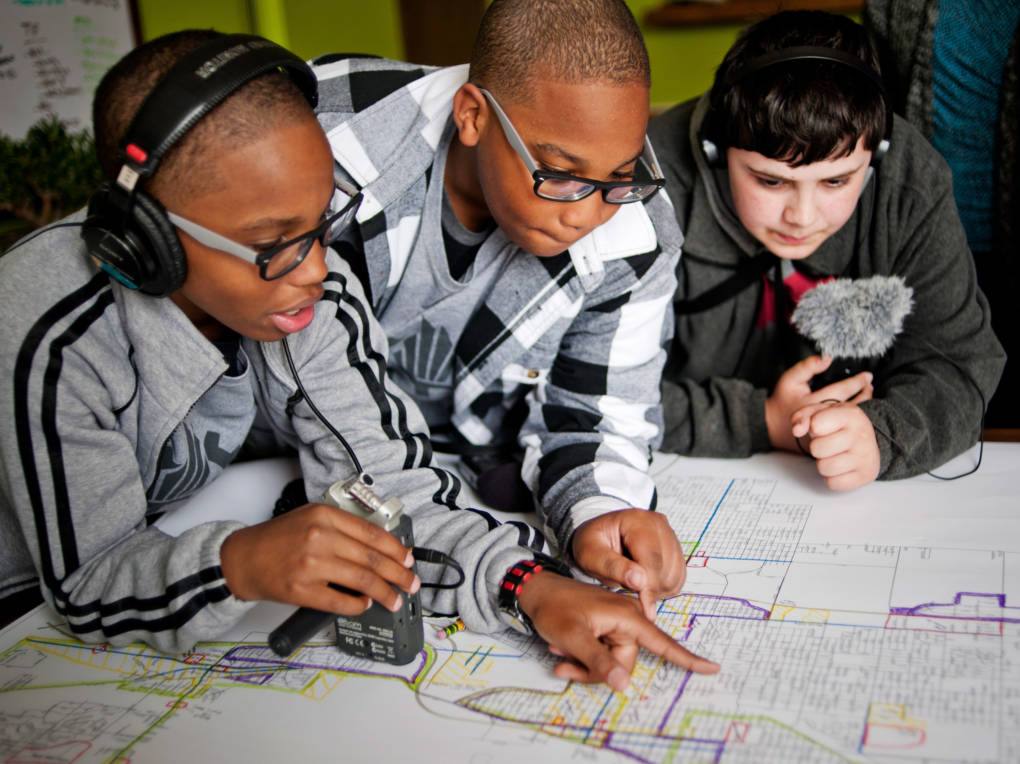
"caption": "Students podcasts from the Steel City Academy in Gary, Indiana, Erin Addison (left), Evan Addison, and Andrew Arevalo (right), look over a planning map of the City of Gary.",
"description": "Students podcasts from the Steel City Academy in Gary, Indiana, Erin Addison (left), Evan Addison, and Andrew Arevalo (right), look over a planning map of the City of Gary.",
"title": "Students podcasts from the Steel City Academy in Gary, Indiana, Erin Addison (left), Evan Addison, and Andrew Arevalo (right), look over a planning map of the City of Gary.",
"credit": "Courtesy of Bill Healy",
"status": "inherit",
"isLoading": false,
"fetchFailed": false
},
"mindshift_53975": {
"type": "attachments",
"id": "mindshift_53975",
"meta": {
"index": "attachments_1716263798",
"site": "mindshift",
"id": "53975",
"found": true
},
"parent": 53974,
"imgSizes": {
"twentyfourteen-full-width": {
"file": "https://ww2.kqed.org/app/uploads/sites/23/2019/07/19-0710-nprcribver01_custom-b92f4e76881086abee62144f66723c6c96471452-1038x576.jpg",
"width": 1038,
"mimeType": "image/jpeg",
"height": 576
},
"thumbnail": {
"file": "https://ww2.kqed.org/app/uploads/sites/23/2019/07/19-0710-nprcribver01_custom-b92f4e76881086abee62144f66723c6c96471452-160x92.jpg",
"width": 160,
"mimeType": "image/jpeg",
"height": 92
},
"post-thumbnail": {
"file": "https://ww2.kqed.org/app/uploads/sites/23/2019/07/19-0710-nprcribver01_custom-b92f4e76881086abee62144f66723c6c96471452-672x372.jpg",
"width": 672,
"mimeType": "image/jpeg",
"height": 372
},
"kqedFullSize": {
"file": "https://ww2.kqed.org/app/uploads/sites/23/2019/07/19-0710-nprcribver01_custom-b92f4e76881086abee62144f66723c6c96471452-e1563260014479.jpg",
"width": 1920,
"height": 1098
},
"large": {
"file": "https://ww2.kqed.org/app/uploads/sites/23/2019/07/19-0710-nprcribver01_custom-b92f4e76881086abee62144f66723c6c96471452-1020x583.jpg",
"width": 1020,
"mimeType": "image/jpeg",
"height": 583
},
"complete_open_graph": {
"file": "https://ww2.kqed.org/app/uploads/sites/23/2019/07/19-0710-nprcribver01_custom-b92f4e76881086abee62144f66723c6c96471452-1200x686.jpg",
"width": 1200,
"mimeType": "image/jpeg",
"height": 686
},
"full-width": {
"file": "https://ww2.kqed.org/app/uploads/sites/23/2019/07/19-0710-nprcribver01_custom-b92f4e76881086abee62144f66723c6c96471452-1920x1098.jpg",
"width": 1920,
"mimeType": "image/jpeg",
"height": 1098
},
"medium": {
"file": "https://ww2.kqed.org/app/uploads/sites/23/2019/07/19-0710-nprcribver01_custom-b92f4e76881086abee62144f66723c6c96471452-800x458.jpg",
"width": 800,
"mimeType": "image/jpeg",
"height": 458
},
"medium_large": {
"file": "https://ww2.kqed.org/app/uploads/sites/23/2019/07/19-0710-nprcribver01_custom-b92f4e76881086abee62144f66723c6c96471452-768x439.jpg",
"width": 768,
"mimeType": "image/jpeg",
"height": 439
}
},
"publishDate": 1563259959,
"modified": 1563260039,
"caption": null,
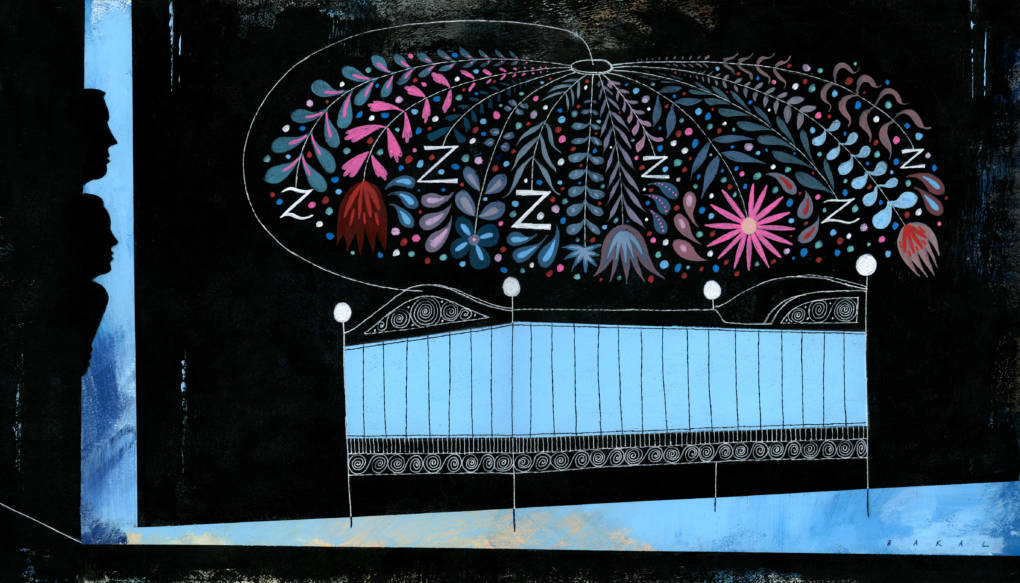
"description": "Taking care of a newborn can be relentless and at some point, many parents need the baby to sleep — alone and quietly — for a few hours. So what does science say about the controversial practice of sleep train",
"title": "Taking care of a newborn can be relentless and at some point, many parents need the baby to sleep — alone and quietly — for a few hours. So what does science say about the controversial practice of sleep training?",
"credit": "Scott Bakal for NPR",
"status": "inherit",
"isLoading": false,
"fetchFailed": false
},
"mindshift_53941": {
"type": "attachments",
"id": "mindshift_53941",
"meta": {
"index": "attachments_1716263798",
"site": "mindshift",
"id": "53941",
"found": true
},
"parent": 53940,
"imgSizes": {
"twentyfourteen-full-width": {
"file": "https://ww2.kqed.org/app/uploads/sites/23/2019/07/photo-jun-18-5-04-18-pm_custom-fe633f738cbdcdf87fe72425b22b53bb1824819b-1038x576.jpg",
"width": 1038,
"mimeType": "image/jpeg",
"height": 576
},
"thumbnail": {
"file": "https://ww2.kqed.org/app/uploads/sites/23/2019/07/photo-jun-18-5-04-18-pm_custom-fe633f738cbdcdf87fe72425b22b53bb1824819b-160x119.jpg",
"width": 160,
"mimeType": "image/jpeg",
"height": 119
},
"post-thumbnail": {
"file": "https://ww2.kqed.org/app/uploads/sites/23/2019/07/photo-jun-18-5-04-18-pm_custom-fe633f738cbdcdf87fe72425b22b53bb1824819b-672x372.jpg",
"width": 672,
"mimeType": "image/jpeg",
"height": 372
},
"kqedFullSize": {
"file": "https://ww2.kqed.org/app/uploads/sites/23/2019/07/photo-jun-18-5-04-18-pm_custom-fe633f738cbdcdf87fe72425b22b53bb1824819b-e1562743344415.jpg",
"width": 1920,
"height": 1432
},
"large": {
"file": "https://ww2.kqed.org/app/uploads/sites/23/2019/07/photo-jun-18-5-04-18-pm_custom-fe633f738cbdcdf87fe72425b22b53bb1824819b-1020x761.jpg",
"width": 1020,
"mimeType": "image/jpeg",
"height": 761
},
"complete_open_graph": {
"file": "https://ww2.kqed.org/app/uploads/sites/23/2019/07/photo-jun-18-5-04-18-pm_custom-fe633f738cbdcdf87fe72425b22b53bb1824819b-1200x895.jpg",
"width": 1200,
"mimeType": "image/jpeg",
"height": 895
},
"full-width": {
"file": "https://ww2.kqed.org/app/uploads/sites/23/2019/07/photo-jun-18-5-04-18-pm_custom-fe633f738cbdcdf87fe72425b22b53bb1824819b-1920x1432.jpg",
"width": 1920,
"mimeType": "image/jpeg",
"height": 1432
},
"medium": {
"file": "https://ww2.kqed.org/app/uploads/sites/23/2019/07/photo-jun-18-5-04-18-pm_custom-fe633f738cbdcdf87fe72425b22b53bb1824819b-800x597.jpg",
"width": 800,
"mimeType": "image/jpeg",
"height": 597
},
"medium_large": {
"file": "https://ww2.kqed.org/app/uploads/sites/23/2019/07/photo-jun-18-5-04-18-pm_custom-fe633f738cbdcdf87fe72425b22b53bb1824819b-768x573.jpg",
"width": 768,
"mimeType": "image/jpeg",
"height": 573
}
},
"publishDate": 1562743003,
"modified": 1562743003,
"caption": null,
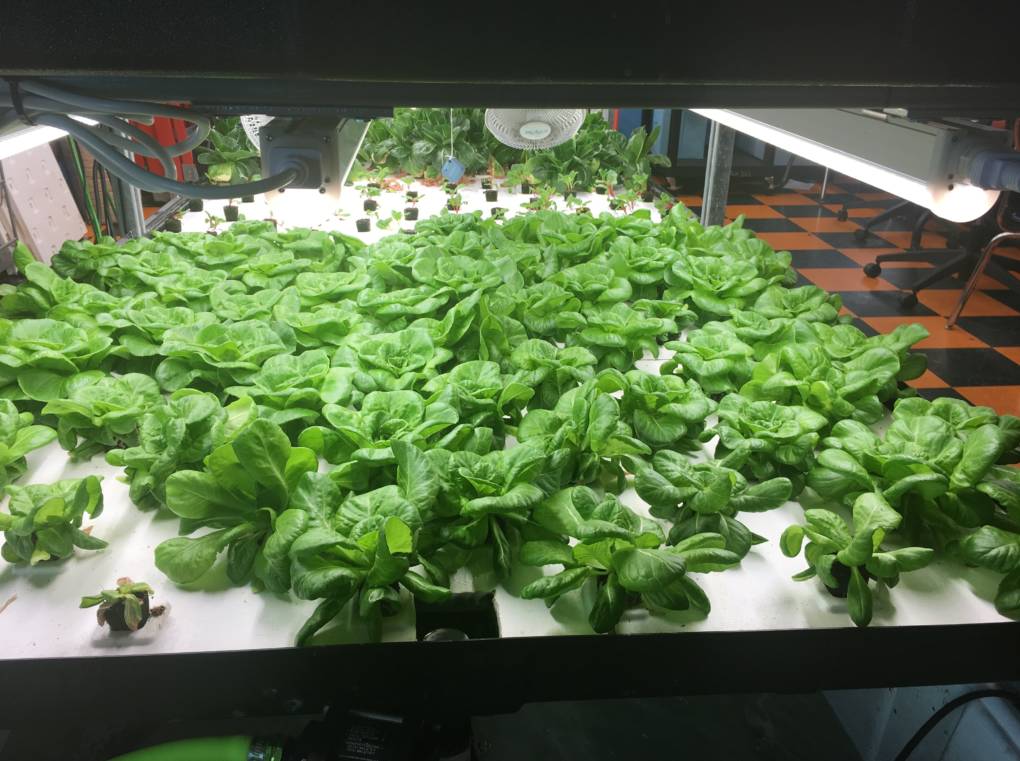
"description": "These greens are among the hydroponic crops grown by students at Brownsville Collaborative Middle School, in Brooklyn, N.Y. In June, the students started to sell discounted boxes of the fresh produce to community members.",
"title": "These greens are among the hydroponic crops grown by students at Brownsville Collaborative Middle School, in Brooklyn, N.Y. In June, the students started to sell discounted boxes of the fresh produce to community members.",
"credit": null,
"status": "inherit",
"isLoading": false,
"fetchFailed": false
},
"mindshift_53923": {
"type": "attachments",
"id": "mindshift_53923",
"meta": {
"index": "attachments_1716263798",
"site": "mindshift",
"id": "53923",
"found": true
},
"parent": 53920,
"imgSizes": {
"twentyfourteen-full-width": {
"file": "https://ww2.kqed.org/app/uploads/sites/23/2019/07/IMG-3275-e1562566273117-1038x576.jpg",
"width": 1038,
"mimeType": "image/jpeg",
"height": 576
},
"thumbnail": {
"file": "https://ww2.kqed.org/app/uploads/sites/23/2019/07/IMG-3275-e1562566273117-160x120.jpg",
"width": 160,
"mimeType": "image/jpeg",
"height": 120
},
"post-thumbnail": {
"file": "https://ww2.kqed.org/app/uploads/sites/23/2019/07/IMG-3275-e1562566273117-672x372.jpg",
"width": 672,
"mimeType": "image/jpeg",
"height": 372
},
"kqedFullSize": {
"file": "https://ww2.kqed.org/app/uploads/sites/23/2019/07/IMG-3275-e1562566299568.jpg",
"width": 1920,
"height": 1440
},
"large": {
"file": "https://ww2.kqed.org/app/uploads/sites/23/2019/07/IMG-3275-e1562566273117-1020x765.jpg",
"width": 1020,
"mimeType": "image/jpeg",
"height": 765
},
"complete_open_graph": {
"file": "https://ww2.kqed.org/app/uploads/sites/23/2019/07/IMG-3275-e1562566273117-1200x900.jpg",
"width": 1200,
"mimeType": "image/jpeg",
"height": 900
},
"full-width": {
"file": "https://ww2.kqed.org/app/uploads/sites/23/2019/07/IMG-3275-e1562566273117-1920x1440.jpg",
"width": 1920,
"mimeType": "image/jpeg",
"height": 1440
},
"medium": {
"file": "https://ww2.kqed.org/app/uploads/sites/23/2019/07/IMG-3275-e1562566273117-800x600.jpg",
"width": 800,
"mimeType": "image/jpeg",
"height": 600
},
"medium_large": {
"file": "https://ww2.kqed.org/app/uploads/sites/23/2019/07/IMG-3275-e1562566273117-768x576.jpg",
"width": 768,
"mimeType": "image/jpeg",
"height": 576
}
},
"publishDate": 1562566043,
"modified": 1562566322,
"caption": "Alyssa Camacho, left, a rising ninth grader, and Juliet Basinger, a rising seventh grader, with part of a robotic dog Juliet is building. Juliet hopes the robotic dog will help people who are afraid of dogs overcome their fears. ",
"description": null,
"title": "IMG-3275",
"credit": "Stephanie Strom for The Hechinger Report",
"status": "inherit",
"isLoading": false,
"fetchFailed": false
},
"mindshift_53918": {
"type": "attachments",
"id": "mindshift_53918",
"meta": {
"index": "attachments_1716263798",
"site": "mindshift",
"id": "53918",
"found": true
},
"parent": 53917,
"imgSizes": {
"twentyfourteen-full-width": {
"file": "https://ww2.kqed.org/app/uploads/sites/23/2019/07/l-hyrbyk-kindness_slide-50ee50769e6a728aca4a74361e084c09fefe4d0c-1038x576.jpg",
"width": 1038,
"mimeType": "image/jpeg",
"height": 576
},
"thumbnail": {
"file": "https://ww2.kqed.org/app/uploads/sites/23/2019/07/l-hyrbyk-kindness_slide-50ee50769e6a728aca4a74361e084c09fefe4d0c-160x107.jpg",
"width": 160,
"mimeType": "image/jpeg",
"height": 107
},
"post-thumbnail": {
"file": "https://ww2.kqed.org/app/uploads/sites/23/2019/07/l-hyrbyk-kindness_slide-50ee50769e6a728aca4a74361e084c09fefe4d0c-672x372.jpg",
"width": 672,
"mimeType": "image/jpeg",
"height": 372
},
"kqedFullSize": {
"file": "https://ww2.kqed.org/app/uploads/sites/23/2019/07/l-hyrbyk-kindness_slide-50ee50769e6a728aca4a74361e084c09fefe4d0c-e1562566536141.jpg",
"width": 1920,
"height": 1280
},
"large": {
"file": "https://ww2.kqed.org/app/uploads/sites/23/2019/07/l-hyrbyk-kindness_slide-50ee50769e6a728aca4a74361e084c09fefe4d0c-1020x680.jpg",
"width": 1020,
"mimeType": "image/jpeg",
"height": 680
},
"complete_open_graph": {
"file": "https://ww2.kqed.org/app/uploads/sites/23/2019/07/l-hyrbyk-kindness_slide-50ee50769e6a728aca4a74361e084c09fefe4d0c-1200x800.jpg",
"width": 1200,
"mimeType": "image/jpeg",
"height": 800
},
"full-width": {
"file": "https://ww2.kqed.org/app/uploads/sites/23/2019/07/l-hyrbyk-kindness_slide-50ee50769e6a728aca4a74361e084c09fefe4d0c-1920x1280.jpg",
"width": 1920,
"mimeType": "image/jpeg",
"height": 1280
},
"medium": {
"file": "https://ww2.kqed.org/app/uploads/sites/23/2019/07/l-hyrbyk-kindness_slide-50ee50769e6a728aca4a74361e084c09fefe4d0c-800x533.jpg",
"width": 800,
"mimeType": "image/jpeg",
"height": 533
},
"medium_large": {
"file": "https://ww2.kqed.org/app/uploads/sites/23/2019/07/l-hyrbyk-kindness_slide-50ee50769e6a728aca4a74361e084c09fefe4d0c-768x512.jpg",
"width": 768,
"mimeType": "image/jpeg",
"height": 512
}
},
"publishDate": 1562565583,
"modified": 1562566552,
"caption": null,
"description": "The science of kindness.",
"title": "The science of kindness.",
"credit": "Laurent Hyrbyk for NPR",
"status": "inherit",
"isLoading": false,
"fetchFailed": false
},
"mindshift_53907": {
"type": "attachments",
"id": "mindshift_53907",
"meta": {
"index": "attachments_1716263798",
"site": "mindshift",
"id": "53907",
"found": true
},
"parent": 53905,
"imgSizes": {
"twentyfourteen-full-width": {
"file": "https://ww2.kqed.org/app/uploads/sites/23/2019/06/iStock-973280276-1038x576.jpg",
"width": 1038,
"mimeType": "image/jpeg",
"height": 576
},
"thumbnail": {
"file": "https://ww2.kqed.org/app/uploads/sites/23/2019/06/iStock-973280276-160x90.jpg",
"width": 160,
"mimeType": "image/jpeg",
"height": 90
},
"post-thumbnail": {
"file": "https://ww2.kqed.org/app/uploads/sites/23/2019/06/iStock-973280276-672x372.jpg",
"width": 672,
"mimeType": "image/jpeg",
"height": 372
},
"kqedFullSize": {
"file": "https://ww2.kqed.org/app/uploads/sites/23/2019/06/iStock-973280276.jpg",
"width": 4207,
"height": 2366
},
"large": {
"file": "https://ww2.kqed.org/app/uploads/sites/23/2019/06/iStock-973280276-1020x574.jpg",
"width": 1020,
"mimeType": "image/jpeg",
"height": 574
},
"complete_open_graph": {
"file": "https://ww2.kqed.org/app/uploads/sites/23/2019/06/iStock-973280276-1200x675.jpg",
"width": 1200,
"mimeType": "image/jpeg",
"height": 675
},
"full-width": {
"file": "https://ww2.kqed.org/app/uploads/sites/23/2019/06/iStock-973280276-1920x1080.jpg",
"width": 1920,
"mimeType": "image/jpeg",
"height": 1080
},
"medium": {
"file": "https://ww2.kqed.org/app/uploads/sites/23/2019/06/iStock-973280276-800x450.jpg",
"width": 800,
"mimeType": "image/jpeg",
"height": 450
},
"medium_large": {
"file": "https://ww2.kqed.org/app/uploads/sites/23/2019/06/iStock-973280276-768x432.jpg",
"width": 768,
"mimeType": "image/jpeg",
"height": 432
}
},
"publishDate": 1561765209,
"modified": 1561765301,
"caption": "Phone are everywhere on school campuses, but not for much longer at some who have decided to ban phones during the school day.",
"description": "Phone are everywhere on school campuses, but not for much longer at some who have decided to ban phones during the school day.",
"title": "Students on steps of college campus",
"credit": "iStock/jacoblund",
"status": "inherit",
"isLoading": false,
"fetchFailed": false
},
"mindshift_53911": {
"type": "attachments",
"id": "mindshift_53911",
"meta": {
"index": "attachments_1716263798",
"site": "mindshift",
"id": "53911",
"found": true
},
"parent": 53910,
"imgSizes": {
"twentyfourteen-full-width": {
"file": "https://ww2.kqed.org/app/uploads/sites/23/2019/06/knock-knock_wide-089dc6c922bce59329f0fb4c99509e986f08f36c-1038x576.jpg",
"width": 1038,
"mimeType": "image/jpeg",
"height": 576
},
"thumbnail": {
"file": "https://ww2.kqed.org/app/uploads/sites/23/2019/06/knock-knock_wide-089dc6c922bce59329f0fb4c99509e986f08f36c-160x90.jpg",
"width": 160,
"mimeType": "image/jpeg",
"height": 90
},
"post-thumbnail": {
"file": "https://ww2.kqed.org/app/uploads/sites/23/2019/06/knock-knock_wide-089dc6c922bce59329f0fb4c99509e986f08f36c-672x372.jpg",
"width": 672,
"mimeType": "image/jpeg",
"height": 372
},
"kqedFullSize": {
"file": "https://ww2.kqed.org/app/uploads/sites/23/2019/06/knock-knock_wide-089dc6c922bce59329f0fb4c99509e986f08f36c.jpg",
"width": 2490,
"height": 1401
},
"large": {
"file": "https://ww2.kqed.org/app/uploads/sites/23/2019/06/knock-knock_wide-089dc6c922bce59329f0fb4c99509e986f08f36c-1020x574.jpg",
"width": 1020,
"mimeType": "image/jpeg",
"height": 574
},
"complete_open_graph": {
"file": "https://ww2.kqed.org/app/uploads/sites/23/2019/06/knock-knock_wide-089dc6c922bce59329f0fb4c99509e986f08f36c-1200x675.jpg",
"width": 1200,
"mimeType": "image/jpeg",
"height": 675
},
"full-width": {
"file": "https://ww2.kqed.org/app/uploads/sites/23/2019/06/knock-knock_wide-089dc6c922bce59329f0fb4c99509e986f08f36c-1920x1080.jpg",
"width": 1920,
"mimeType": "image/jpeg",
"height": 1080
},
"medium": {
"file": "https://ww2.kqed.org/app/uploads/sites/23/2019/06/knock-knock_wide-089dc6c922bce59329f0fb4c99509e986f08f36c-800x450.jpg",
"width": 800,
"mimeType": "image/jpeg",
"height": 450
},
"medium_large": {
"file": "https://ww2.kqed.org/app/uploads/sites/23/2019/06/knock-knock_wide-089dc6c922bce59329f0fb4c99509e986f08f36c-768x432.jpg",
"width": 768,
"mimeType": "image/jpeg",
"height": 432
}
},
"publishDate": 1561961943,
"modified": 1561961943,
"caption": null,
"description": "Knock-knock! Who's there?",
"title": "Knock-knock! Who's there?",
"credit": null,
"status": "inherit",
"isLoading": false,
"fetchFailed": false
},
"mindshift_53896": {
"type": "attachments",
"id": "mindshift_53896",
"meta": {
"index": "attachments_1716263798",
"site": "mindshift",
"id": "53896",
"found": true
},
"parent": 53892,
"imgSizes": {
"twentyfourteen-full-width": {
"file": "https://ww2.kqed.org/app/uploads/sites/23/2019/06/Emily-Kaplan-01FCC615-65DF-4A72-BE57-4EF8B71A843E-1038x576.jpeg",
"width": 1038,
"mimeType": "image/jpeg",
"height": 576
},
"thumbnail": {
"file": "https://ww2.kqed.org/app/uploads/sites/23/2019/06/Emily-Kaplan-01FCC615-65DF-4A72-BE57-4EF8B71A843E-160x130.jpeg",
"width": 160,
"mimeType": "image/jpeg",
"height": 130
},
"post-thumbnail": {
"file": "https://ww2.kqed.org/app/uploads/sites/23/2019/06/Emily-Kaplan-01FCC615-65DF-4A72-BE57-4EF8B71A843E-672x372.jpeg",
"width": 672,
"mimeType": "image/jpeg",
"height": 372
},
"kqedFullSize": {
"file": "https://ww2.kqed.org/app/uploads/sites/23/2019/06/Emily-Kaplan-01FCC615-65DF-4A72-BE57-4EF8B71A843E-e1561704430791.jpeg",
"width": 1920,
"height": 1555
},
"large": {
"file": "https://ww2.kqed.org/app/uploads/sites/23/2019/06/Emily-Kaplan-01FCC615-65DF-4A72-BE57-4EF8B71A843E-1020x826.jpeg",
"width": 1020,
"mimeType": "image/jpeg",
"height": 826
},
"complete_open_graph": {
"file": "https://ww2.kqed.org/app/uploads/sites/23/2019/06/Emily-Kaplan-01FCC615-65DF-4A72-BE57-4EF8B71A843E-1200x972.jpeg",
"width": 1200,
"mimeType": "image/jpeg",
"height": 972
},
"full-width": {
"file": "https://ww2.kqed.org/app/uploads/sites/23/2019/06/Emily-Kaplan-01FCC615-65DF-4A72-BE57-4EF8B71A843E-1920x1555.jpeg",
"width": 1920,
"mimeType": "image/jpeg",
"height": 1555
},
"medium": {
"file": "https://ww2.kqed.org/app/uploads/sites/23/2019/06/Emily-Kaplan-01FCC615-65DF-4A72-BE57-4EF8B71A843E-800x648.jpeg",
"width": 800,
"mimeType": "image/jpeg",
"height": 648
},
"medium_large": {
"file": "https://ww2.kqed.org/app/uploads/sites/23/2019/06/Emily-Kaplan-01FCC615-65DF-4A72-BE57-4EF8B71A843E-768x622.jpeg",
"width": 768,
"mimeType": "image/jpeg",
"height": 622
}
},
"publishDate": 1561689656,
"modified": 1561704448,
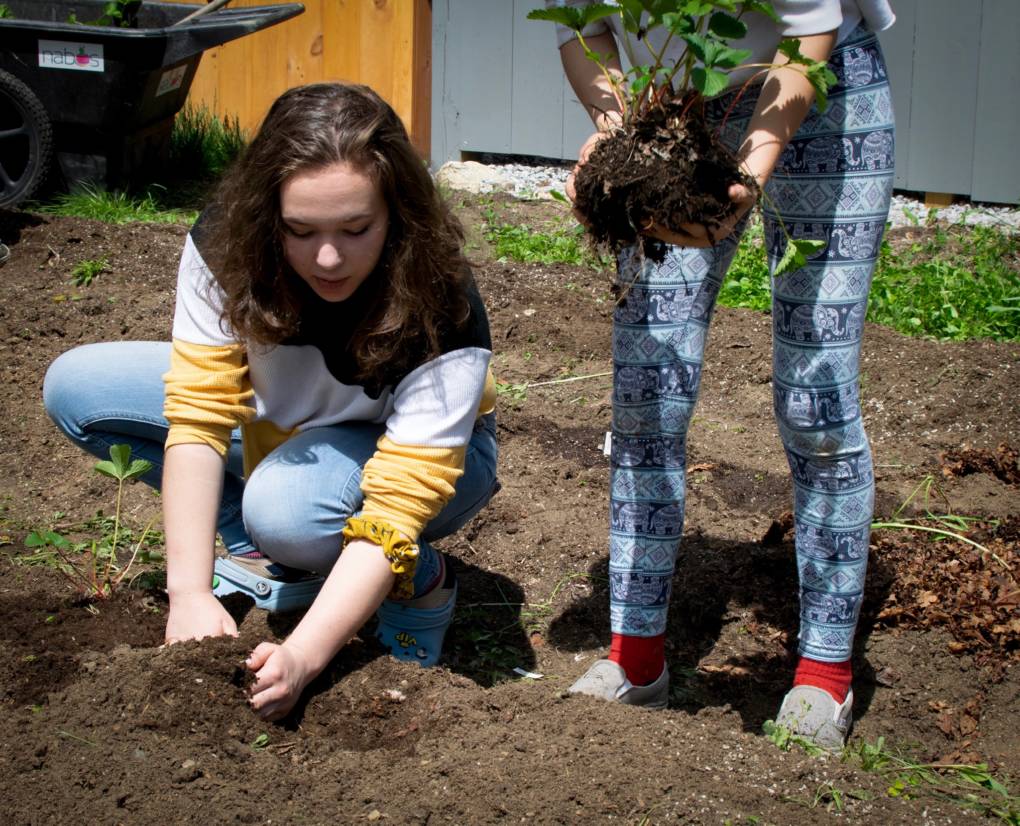
"caption": "At the Telstar Freshman Academy in Maine, service learning is included as part of the curriculum. Bailey Fraser, 15 (left), and her stepsister Leah Kimball, 15, volunteer with Edible Bethel during their service learning block. ",
"description": null,
"title": "Emily Kaplan - 01FCC615-65DF-4A72-BE57-4EF8B71A843E",
"credit": "Emily Kaplan for The Hechinger Report ",
"status": "inherit",
"isLoading": false,
"fetchFailed": false
},
"mindshift_53879": {
"type": "attachments",
"id": "mindshift_53879",
"meta": {
"index": "attachments_1716263798",
"site": "mindshift",
"id": "53879",
"found": true
},
"parent": 53875,
"imgSizes": {
"twentyfourteen-full-width": {
"file": "https://ww2.kqed.org/app/uploads/sites/23/2019/06/angei2-e1561567624725-900x0-c-default-900x576.jpg",
"width": 900,
"mimeType": "image/jpeg",
"height": 576
},
"thumbnail": {
"file": "https://ww2.kqed.org/app/uploads/sites/23/2019/06/angei2-e1561567624725-900x0-c-default-160x107.jpg",
"width": 160,
"mimeType": "image/jpeg",
"height": 107
},
"post-thumbnail": {
"file": "https://ww2.kqed.org/app/uploads/sites/23/2019/06/angei2-e1561567624725-900x0-c-default-672x372.jpg",
"width": 672,
"mimeType": "image/jpeg",
"height": 372
},
"kqedFullSize": {
"file": "https://ww2.kqed.org/app/uploads/sites/23/2019/06/angei2-e1561567624725-900x0-c-default.jpg",
"width": 900,
"height": 600
},
"medium": {
"file": "https://ww2.kqed.org/app/uploads/sites/23/2019/06/angei2-e1561567624725-900x0-c-default-800x533.jpg",
"width": 800,
"mimeType": "image/jpeg",
"height": 533
},
"medium_large": {
"file": "https://ww2.kqed.org/app/uploads/sites/23/2019/06/angei2-e1561567624725-900x0-c-default-768x512.jpg",
"width": 768,
"mimeType": "image/jpeg",
"height": 512
}
},
"publishDate": 1561588697,
"modified": 1561588719,
"caption": "Angela Prater, an assistant teacher at the Starfish Family Services Center on Hiveley Street in Inkster, said reflective supervision sessions “makes us better teachers because we’re not carrying it inside” Teachers, she said, are “able to release it.”\n",
"description": null,
"title": "angei2-e1561567624725-900x0-c-default",
"credit": "Erin Einhorn/Chalkbeat",
"status": "inherit",
"isLoading": false,
"fetchFailed": false
},
"mindshift_53865": {
"type": "attachments",
"id": "mindshift_53865",
"meta": {
"index": "attachments_1716263798",
"site": "mindshift",
"id": "53865",
"found": true
},
"parent": 53864,
"imgSizes": {
"twentyfourteen-full-width": {
"file": "https://ww2.kqed.org/app/uploads/sites/23/2019/06/cfoc-25under-5up_custom-04115bc5750ab76b37fac09fc93fbced8de1b7df-1038x576.jpg",
"width": 1038,
"mimeType": "image/jpeg",
"height": 576
},
"thumbnail": {
"file": "https://ww2.kqed.org/app/uploads/sites/23/2019/06/cfoc-25under-5up_custom-04115bc5750ab76b37fac09fc93fbced8de1b7df-160x100.jpg",
"width": 160,
"mimeType": "image/jpeg",
"height": 100
},
"post-thumbnail": {
"file": "https://ww2.kqed.org/app/uploads/sites/23/2019/06/cfoc-25under-5up_custom-04115bc5750ab76b37fac09fc93fbced8de1b7df-672x372.jpg",
"width": 672,
"mimeType": "image/jpeg",
"height": 372
},
"kqedFullSize": {
"file": "https://ww2.kqed.org/app/uploads/sites/23/2019/06/cfoc-25under-5up_custom-04115bc5750ab76b37fac09fc93fbced8de1b7df-e1561564546818.jpg",
"width": 1920,
"height": 1198
},
"large": {
"file": "https://ww2.kqed.org/app/uploads/sites/23/2019/06/cfoc-25under-5up_custom-04115bc5750ab76b37fac09fc93fbced8de1b7df-1020x637.jpg",
"width": 1020,
"mimeType": "image/jpeg",
"height": 637
},
"complete_open_graph": {
"file": "https://ww2.kqed.org/app/uploads/sites/23/2019/06/cfoc-25under-5up_custom-04115bc5750ab76b37fac09fc93fbced8de1b7df-1200x749.jpg",
"width": 1200,
"mimeType": "image/jpeg",
"height": 749
},
"full-width": {
"file": "https://ww2.kqed.org/app/uploads/sites/23/2019/06/cfoc-25under-5up_custom-04115bc5750ab76b37fac09fc93fbced8de1b7df-1920x1198.jpg",
"width": 1920,
"mimeType": "image/jpeg",
"height": 1198
},
"medium": {
"file": "https://ww2.kqed.org/app/uploads/sites/23/2019/06/cfoc-25under-5up_custom-04115bc5750ab76b37fac09fc93fbced8de1b7df-800x499.jpg",
"width": 800,
"mimeType": "image/jpeg",
"height": 499
},
"medium_large": {
"file": "https://ww2.kqed.org/app/uploads/sites/23/2019/06/cfoc-25under-5up_custom-04115bc5750ab76b37fac09fc93fbced8de1b7df-768x479.jpg",
"width": 768,
"mimeType": "image/jpeg",
"height": 479
}
},
"publishDate": 1561564409,
"modified": 1561564539,
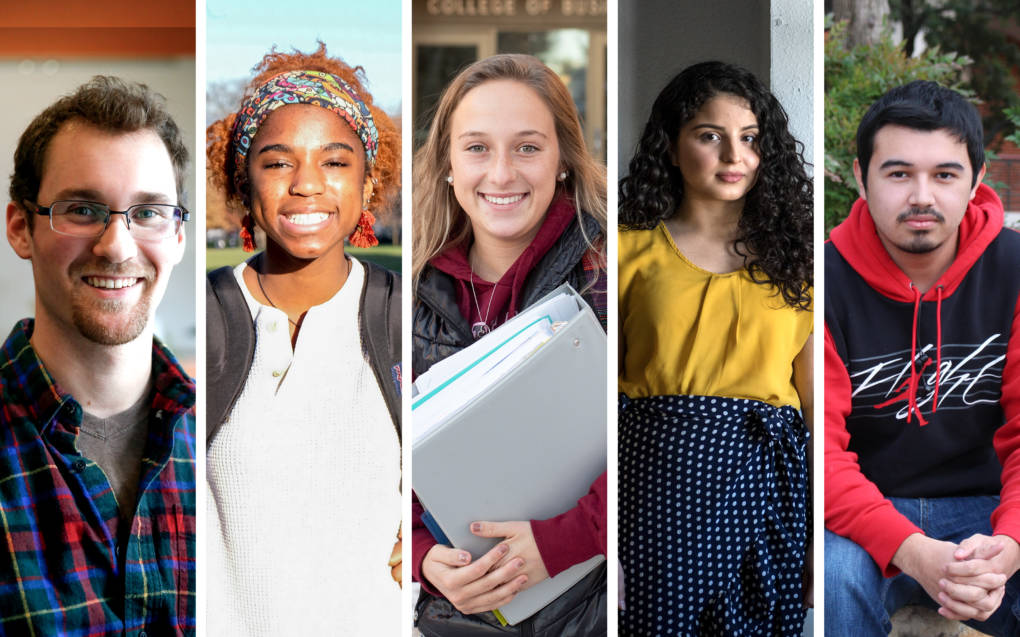
"caption": "Meet the \"nontraditional\" college students of today. From left: Evan Spencer, Kim Embe, Bailey Nowak, Diana Platas and Eric Ramos.",
"description": "Meet the \"nontraditional\" college students of today. From left: Evan Spencer, Kim Embe, Bailey Nowak, Diana Platas and Eric Ramos.",
"title": "Meet the \"nontraditional\" college students of today. From left: Evan Spencer, Kim Embe, Bailey Nowak, Diana Platas and Eric Ramos.",
"credit": "NPR",
"status": "inherit",
"isLoading": false,
"fetchFailed": false
},
"mindshift_53802": {
"type": "attachments",
"id": "mindshift_53802",
"meta": {
"index": "attachments_1716263798",
"site": "mindshift",
"id": "53802",
"found": true
},
"parent": 53767,
"imgSizes": {
"twentyfourteen-full-width": {
"file": "https://ww2.kqed.org/app/uploads/sites/23/2019/06/20190504_152912-e1560230380949-1038x576.jpg",
"width": 1038,
"mimeType": "image/jpeg",
"height": 576
},
"thumbnail": {
"file": "https://ww2.kqed.org/app/uploads/sites/23/2019/06/20190504_152912-e1560230380949-160x100.jpg",
"width": 160,
"mimeType": "image/jpeg",
"height": 100
},
"post-thumbnail": {
"file": "https://ww2.kqed.org/app/uploads/sites/23/2019/06/20190504_152912-e1560230380949-672x372.jpg",
"width": 672,
"mimeType": "image/jpeg",
"height": 372
},
"kqedFullSize": {
"file": "https://ww2.kqed.org/app/uploads/sites/23/2019/06/20190504_152912-e1560230406639.jpg",
"width": 1920,
"height": 1204
},
"large": {
"file": "https://ww2.kqed.org/app/uploads/sites/23/2019/06/20190504_152912-e1560230380949-1020x640.jpg",
"width": 1020,
"mimeType": "image/jpeg",
"height": 640
},
"complete_open_graph": {
"file": "https://ww2.kqed.org/app/uploads/sites/23/2019/06/20190504_152912-e1560230380949-1200x753.jpg",
"width": 1200,
"mimeType": "image/jpeg",
"height": 753
},
"full-width": {
"file": "https://ww2.kqed.org/app/uploads/sites/23/2019/06/20190504_152912-e1560230380949-1920x1204.jpg",
"width": 1920,
"mimeType": "image/jpeg",
"height": 1204
},
"medium": {
"file": "https://ww2.kqed.org/app/uploads/sites/23/2019/06/20190504_152912-e1560230380949-800x502.jpg",
"width": 800,
"mimeType": "image/jpeg",
"height": 502
},
"medium_large": {
"file": "https://ww2.kqed.org/app/uploads/sites/23/2019/06/20190504_152912-e1560230380949-768x482.jpg",
"width": 768,
"mimeType": "image/jpeg",
"height": 482
}
},
"publishDate": 1560229928,
"modified": 1560270880,
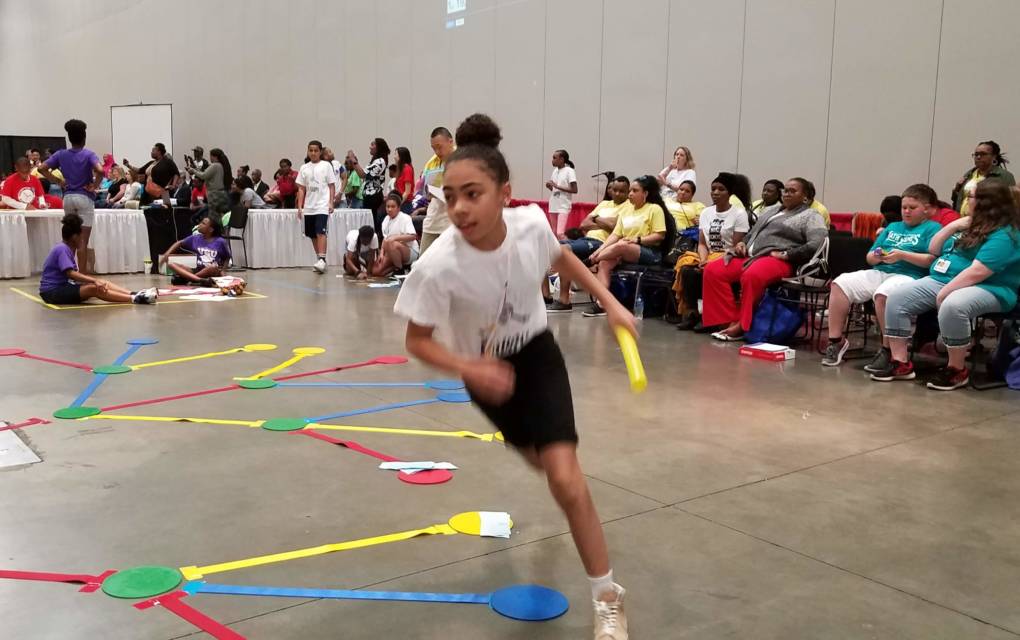
"caption": "A student competes in the 2019 National Flagway Tournament in Washington, DC.",
"description": null,
"title": "20190504_152912",
"credit": "Kara Newhouse for MindShift",
"status": "inherit",
"isLoading": false,
"fetchFailed": false
}
},
"audioPlayerReducer": {
"postId": "stream_live",
"isPaused": true,
"isPlaying": false,
"pfsActive": false,
"pledgeModalIsOpen": true,
"playerDrawerIsOpen": false,
"liveAudioPlayStartedAt": 0,
"liveAudioPlayContext": ""
},
"authorsReducer": {
"byline_mindshift_53986": {
"type": "authors",
"id": "byline_mindshift_53986",
"meta": {
"override": true
},
"slug": "byline_mindshift_53986",
"name": "Mandalit del Barco",
"isLoading": false
},
"byline_mindshift_53978": {
"type": "authors",
"id": "byline_mindshift_53978",
"meta": {
"override": true
},
"slug": "byline_mindshift_53978",
"name": "Matt Ozug",
"isLoading": false
},
"byline_mindshift_53974": {
"type": "authors",
"id": "byline_mindshift_53974",
"meta": {
"override": true
},
"slug": "byline_mindshift_53974",
"name": "Michaeleen Doucleff",
"isLoading": false
},
"byline_mindshift_53940": {
"type": "authors",
"id": "byline_mindshift_53940",
"meta": {
"override": true
},
"slug": "byline_mindshift_53940",
"name": "Robin Lloyd",
"isLoading": false
},
"byline_mindshift_53920": {
"type": "authors",
"id": "byline_mindshift_53920",
"meta": {
"override": true
},
"slug": "byline_mindshift_53920",
"name": "\u003ca href=\"https://hechingerreport.org/\">Stephanie Strom, The Hechinger Report\u003c/a>",
"isLoading": false
},
"byline_mindshift_53917": {
"type": "authors",
"id": "byline_mindshift_53917",
"meta": {
"override": true
},
"slug": "byline_mindshift_53917",
"name": "Cory Turner and Anya Kamenetz",
"isLoading": false
},
"byline_mindshift_53910": {
"type": "authors",
"id": "byline_mindshift_53910",
"meta": {
"override": true
},
"slug": "byline_mindshift_53910",
"name": "Anya Kamenetz and Chloee Weiner",
"isLoading": false
},
"byline_mindshift_53892": {
"type": "authors",
"id": "byline_mindshift_53892",
"meta": {
"override": true
},
"slug": "byline_mindshift_53892",
"name": "\u003ca href=\"https://hechingerreport.org/\">Emily Kaplan, The Hechinger Report\u003c/a>",
"isLoading": false
},
"byline_mindshift_53875": {
"type": "authors",
"id": "byline_mindshift_53875",
"meta": {
"override": true
},
"slug": "byline_mindshift_53875",
"name": "\u003ca href=\"https://www.chalkbeat.org/author/eeinhorn/\" title=\"Posts by Erin Einhorn\" class=\"author url fn\" rel=\"author\">Erin Einhorn\u003c/a>, Chalkbeat",
"isLoading": false
},
"byline_mindshift_53864": {
"type": "authors",
"id": "byline_mindshift_53864",
"meta": {
"override": true
},
"slug": "byline_mindshift_53864",
"name": "Elissa Nadworny, Tennessee Jane Watson, Laura Isensee, Camille Phillips, Megan Pauly",
"isLoading": false
},
"katrinaschwartz": {
"type": "authors",
"id": "234",
"meta": {
"index": "authors_1716337520",
"id": "234",
"found": true
},
"name": "Katrina Schwartz",
"firstName": "Katrina",
"lastName": "Schwartz",
"slug": "katrinaschwartz",
"email": "kschwartz@kqed.org",
"display_author_email": false,
"staff_mastheads": [
"news"
],
"title": "Producer",
"bio": "Katrina Schwartz is a journalist based in San Francisco. She's worked at KPCC public radio in LA and has reported on air and online for KQED since 2010. She covered how teaching and learning is changing for MindShift between 2012 and 2020. She is the co-host of the MindShift podcast and now produces KQED's Bay Curious podcast.",
"avatar": "https://secure.gravatar.com/avatar/edb4ee79070447a018538c9aae6eeecf28786515b8a0c30e43b6b7dce5aa44c8?s=600&d=blank&r=g",
"twitter": "kschwart",
"bluesky": null,
"facebook": null,
"instagram": null,
"linkedin": null,
"sites": [
{
"site": "",
"roles": [
"editor"
]
},
{
"site": "news",
"roles": [
"editor"
]
},
{
"site": "mindshift",
"roles": [
"administrator"
]
},
{
"site": "stateofhealth",
"roles": [
"author"
]
},
{
"site": "science",
"roles": [
"editor"
]
}
],
"headData": {
"title": "Katrina Schwartz | KQED",
"description": "Producer",
"ogImgSrc": "https://secure.gravatar.com/avatar/edb4ee79070447a018538c9aae6eeecf28786515b8a0c30e43b6b7dce5aa44c8?s=600&d=blank&r=g",
"twImgSrc": "https://secure.gravatar.com/avatar/edb4ee79070447a018538c9aae6eeecf28786515b8a0c30e43b6b7dce5aa44c8?s=600&d=blank&r=g"
},
"isLoading": false,
"link": "/author/katrinaschwartz"
},
"kdnewhouse": {
"type": "authors",
"id": "11487",
"meta": {
"index": "authors_1716337520",
"id": "11487",
"found": true
},
"name": "Kara Newhouse",
"firstName": "Kara",
"lastName": "Newhouse",
"slug": "kdnewhouse",
"email": "knewhouse@kqed.org",
"display_author_email": false,
"staff_mastheads": [],
"title": "MindShift Editor",
"bio": null,
"avatar": "https://secure.gravatar.com/avatar/3dceed6fb271527113abfa9a8e9df34e?s=600&d=blank&r=g",
"twitter": null,
"facebook": null,
"instagram": null,
"linkedin": null,
"sites": [
{
"site": "",
"roles": [
"editor"
]
},
{
"site": "mindshift",
"roles": []
}
],
"headData": {
"title": "Kara Newhouse | KQED",
"description": "MindShift Editor",
"ogImgSrc": "https://secure.gravatar.com/avatar/3dceed6fb271527113abfa9a8e9df34e?s=600&d=blank&r=g",
"twImgSrc": "https://secure.gravatar.com/avatar/3dceed6fb271527113abfa9a8e9df34e?s=600&d=blank&r=g"
},
"isLoading": false,
"link": "/author/kdnewhouse"
}
},
"pagesReducer": {
"mindshift_category_big-ideas": {
"type": "terms",
"id": "mindshift_192",
"meta": {
"index": "terms_1716263798",
"site": "mindshift",
"id": "192",
"score": 14.406702
},
"featImg": null,
"name": "Big Ideas",
"description": "The latest findings from experts in the field related to the future of learning.",
"taxonomy": "category",
"headData": {
"twImgId": null,
"twTitle": null,
"ogTitle": null,
"ogImgId": null,
"twDescription": null,
"description": "The latest findings from experts in the field related to the future of learning.",
"title": "Big Ideas Archives | KQED Mindshift",
"ogDescription": null
},
"ttid": 192,
"slug": "big-ideas",
"isLoading": false,
"title": "Big Ideas",
"pageMeta": {
"site": "mindshift",
"WpPageTemplate": "page-topic-editorial",
"currentPage": 15
},
"blocks": [
{
"blockName": "kqed/company-paragraph",
"content": "The latest findings from experts in the field related to the future of learning."
},
{
"blockName": "kqed/post-list",
"attrs": {
"layout": "cardArticle2",
"query": "posts/mindshift?category=big-ideas",
"seeMore": false,
"paginated": true,
"page": 15
}
},
{
"blockName": "kqed/ad"
}
]
}
},
"pfsSessionReducer": {},
"postsReducer": {
"stream_live": {
"type": "live",
"id": "stream_live",
"audioUrl": "https://streams.kqed.org/kqedradio",
"title": "Live Stream",
"excerpt": "Live Stream information currently unavailable.",
"link": "/radio",
"featImg": "",
"label": {
"name": "KQED Live",
"link": "/"
}
},
"stream_kqedNewscast": {
"type": "posts",
"id": "stream_kqedNewscast",
"audioUrl": "https://www.kqed.org/.stream/anon/radio/RDnews/newscast.mp3?_=1",
"title": "KQED Newscast",
"featImg": "",
"label": {
"name": "88.5 FM",
"link": "/"
}
},
"mindshift_53986": {
"type": "posts",
"id": "mindshift_53986",
"meta": {
"index": "posts_1716263798",
"site": "mindshift",
"id": "53986",
"score": null,
"sort": [
1563519605000
]
},
"parent": 0,
"labelTerm": {
"site": "mindshift"
},
"blocks": [],
"publishDate": 1563519605,
"format": "standard",
"disqusTitle": "Now Starring In Children's Cartoons: Authentic Indigenous Characters",
"title": "Now Starring In Children's Cartoons: Authentic Indigenous Characters",
"headTitle": "MindShift | KQED News",
"content": "\u003cp>For decades, animated children's stories included negative stereotypes of Indigenous people.\u003c/p>\n\u003cp>There was Disney's \u003cem>Pocahontas\u003c/em>, which presented the daughter of a Powhatan chief in a romantic love story with Captain John Smith. Crystal Echo Hawk, CEO of the media watchdog group IllumiNative, says it was a false narrative about a girl who in reality was \"taken by force and sexually assaulted.\"\u003c/p>\n\u003cp>There was Tiger Lily in the classic film \u003cem>Peter Pan\u003c/em>, the princess of the \"Piccaninny\" tribe who smoked a peace pipe and spoke in one-syllable gibberish. The same went for the various \"injuns\" in old Bugs Bunny cartoons.\u003c/p>\n\u003cp>More recently, Disney and Pixar got kudos for more authentic representations of Native people in the films \u003ca href=\"https://www.npr.org/2016/11/23/503066811/moana-actress-grew-up-with-the-polynesian-myth-that-inspired-the-movie\">\u003cem>Moana\u003c/em>\u003c/a> and \u003ca href=\"https://www.npr.org/2017/11/20/564385036/mexico-music-and-family-take-center-stage-in-coco\">\u003cem>Coco\u003c/em>\u003c/a>. Now, TV networks and streaming services are reaching children with realistic portrayals on the small screen — where they consume most of their media.\u003c/p>\n\u003cp>The new PBS show \u003cem>Molly of Denali\u003c/em> is the first nationally distributed children's series to feature an Alaska Native lead character. She's 10 years old; her heritage is Gwich'in, Koyukon and Dena'ina Athabascan. She lives in the fictional village of Qyah, population 94. She goes fishing and hunting, and also looks up information on the Internet and on her smartphone.\u003c/p>\n\u003cp>[ad fullwidth]\u003c/p>\n\u003cp>\"Molly is computer-savvy,\" says the show's creative producer, Princess Daazhraii Johnson. \"I think it's really important for us to show that, because we are modern, living people that are not relegated to the past. That stereotype, that romanticized notion of who we are as Native people, is rampant.\"\u003c/p>\n\u003cp>Johnson says when she travels, she still meets people who assume all Alaskans live in igloos and are Eskimos — \"which isn't a term that people really even use anymore up here,\" she says. \"We have 229 federally recognized tribes in Alaska; we have 20 officially recognized Alaska Native languages here. We are so diverse and dynamic. And that's something else that we're going to be able to share out to the world.\"\u003c/p>\n\u003cp>In one episode, Molly learns that her grandfather stopped drumming and singing as a child when he was taken away to a Bureau of Indian Affairs boarding school. \"At the school we weren't allowed to sing the songs from our people,\" an elder tells her. \"We were made to feel bad about who we were.\"\u003c/p>\n\u003cp>Johnson says this storyline really happened to one of the elders on the show's advisory board. It's a kid's show, so it has a happy ending: Molly and her grandfather sing together.\u003c/p>\n\u003cp>\"We're just over the moon about \u003cem>Molly of Denali\u003c/em>, because this is exactly the type of thing that can really began to shift perceptions in this country,\" Echo Hawk says.\u003c/p>\n\u003cfigure id=\"attachment_53988\" class=\"wp-caption alignnone\" style=\"max-width: 1920px\">\u003cimg class=\"size-full wp-image-53988\" src=\"https://ww2.kqed.org/mindshift/wp-content/uploads/sites/23/2019/07/pachamama.23_wide-3a5bb4ddd45e54ea7090e0b7f02f69126549522c-e1563519484190.jpg\" alt=\"\" width=\"1920\" height=\"1080\">\u003cfigcaption class=\"wp-caption-text\">In the Netflix film Pachamama, set in the Andes during the time of Spanish conquest, 10-year-old Tepulpai and his friend Naira go on a journey to retrieve their village's treasured statue. \u003ccite>(Netflix)\u003c/cite>\u003c/figcaption>\u003c/figure>\n\u003cp>Echo Hawk says that for years, Hollywood didn't produce stories about or by Native people because it didn't think a market existed for them. But that, she says, was shortsighted. Her organization polled more than 13,000 Americans, and found that nearly 80% of them said they want to learn more about Native peoples.\u003c/p>\n\u003cp>\"Media makers have always used the excuse 'the Native population in the United States is statistically insignificant ... there's not a demand because you guys are so small,'\" she says. \"But what this new research shows is that there is demand well beyond the Native population in this country.\"\u003c/p>\n\u003cp>For several decades, the Australian and Canadian Broadcasting Corporations have spotlighted shows by and about their indigenous populations. Now, Netflix is \u003ca href=\"https://globalnews.ca/news/5379809/netflix-partners-indigenous-groups/\">partnering with three Indigenous cultural organizations\u003c/a> to develop the next generation of First Nation creators across Canada.\u003c/p>\n\u003cp>And in the U.S. and in Latin America, Netflix is running the animated film \u003cem>Pachamama\u003c/em>. The story centers on a 10-year-old boy in an Andean village who dreams of becoming a shaman. His people suffer under both the Spanish conquest and the Incan Empire.\u003c/p>\n\u003cp>\"It's told from the point of view of the Indigenous people,\" says Juan Antin, who wrote and directed the film. He says he wanted to give a realistic view of domination in the region.\u003c/p>\n\u003cp>Antin, who is from Argentina, says he was inspired by his travels with his anthropologist wife in Bolivia and Peru. \"There, I fell in love with the culture of Pachamama, which is how the indigenous people call Mother Earth, having respect, love to the Earth,\" he says.\u003c/p>\n\u003cp>The Cartoon Network series \u003cem>Victor and Valentino\u003c/em> features two half-brothers in a fictitious Mesoamerican village, exploring myths that come to life. For example, they follow the dog Achi into the land of the dead, where they encounter a \u003cem>chupacabra \u003c/em>and other legends.\u003c/p>\n\u003cp>Animator Diego Molano, whose heritage is Mexican, Colombian and Cuban, began drawing his characters in college before writing for cartoons like \u003cem>The Powerpuff Girls\u003c/em>. He says with his new series, he wanted to share the folk tales his grandfather used to tell him.\u003c/p>\n\u003cp>\"I love the myths, but sometimes the myths are not kid-friendly,\" Molano says. \"So I kind of use what I like about them and kind of make a story that is relatable.\"\u003c/p>\n\u003cp>Molano says it's about time networks began showing cartoons with Indigenous characters and themes. He just hopes it's not just a fad.\u003c/p>\n\u003cp>\u003c/p>\n\u003cp>\u003cem>Ted Robbins edited this story for broadcast.\u003c/em>\u003c/p>\n\u003cdiv class=\"fullattribution\">Copyright 2019 NPR. To see more, visit https://www.npr.org.\u003cimg src=\"https://www.google-analytics.com/__utm.gif?utmac=UA-5828686-4&utmdt=Now+Starring+In+Children%27s+Cartoons%3A+Authentic+Indigenous+Characters&utme=8(APIKey)9(MDAxOTAwOTE4MDEyMTkxMDAzNjczZDljZA004)\">\u003c/div>\n\n",
"disqusIdentifier": "53986 https://ww2.kqed.org/mindshift/?p=53986",
"disqusUrl": "https://ww2.kqed.org/mindshift/2019/07/19/now-starring-in-childrens-cartoons-authentic-indigenous-characters/",
"stats": {
"hasVideo": false,
"hasChartOrMap": false,
"hasAudio": false,
"hasPolis": false,
"wordCount": 929,
"hasGoogleForm": false,
"hasGallery": false,
"hasHearkenModule": false,
"iframeSrcs": [],
"paragraphCount": 23
},
"modified": 1563519605,
"excerpt": "An Alaska Native girl (\u003cem>Molly of Denali\u003c/em>), an Andean boy (\u003cem>Pachamama\u003c/em>), two half-brothers in Mesoamerica (\u003cem>Victor and Valentino\u003c/em>): Three new animations feature Native people without bygone-era baggage.",
"headData": {
"twImgId": "",
"twTitle": "",
"ogTitle": "",
"ogImgId": "",
"twDescription": "",
"description": "An Alaska Native girl (Molly of Denali), an Andean boy (Pachamama), two half-brothers in Mesoamerica (Victor and Valentino): Three new animations feature Native people without bygone-era baggage.",
"title": "Now Starring In Children's Cartoons: Authentic Indigenous Characters | KQED",
"ogDescription": "",
"schema": {
"@context": "https://schema.org",
"@type": "Article",
"headline": "Now Starring In Children's Cartoons: Authentic Indigenous Characters",
"datePublished": "2019-07-19T00:00:05-07:00",
"dateModified": "2019-07-19T00:00:05-07:00",
"image": "https://cdn.kqed.org/wp-content/uploads/2020/02/KQED-OG-Image@1x.png"
}
},
"guestAuthors": [],
"slug": "now-starring-in-childrens-cartoons-authentic-indigenous-characters",
"status": "publish",
"nprApiLink": "http://api.npr.org/query?id=740804272&apiKey=MDAxOTAwOTE4MDEyMTkxMDAzNjczZDljZA004",
"nprByline": "Mandalit del Barco",
"nprStoryDate": "Wed, 17 Jul 2019 12:01:20 -0400",
"nprLastModifiedDate": "Wed, 17 Jul 2019 12:01:20 -0400",
"nprHtmlLink": "https://www.npr.org/2019/07/17/740804272/now-starring-in-childrens-cartoons-authentic-indigenous-characters?ft=nprml&f=740804272",
"nprImageAgency": "WGBH Educational Foundation",
"nprStoryId": "740804272",
"nprRetrievedStory": "1",
"nprPubDate": "Wed, 17 Jul 2019 12:01:00 -0400",
"path": "/mindshift/53986/now-starring-in-childrens-cartoons-authentic-indigenous-characters",
"audioTrackLength": null,
"parsedContent": [
{
"type": "contentString",
"content": "\u003cdiv class=\"post-body\">\u003cp>\u003cp>For decades, animated children's stories included negative stereotypes of Indigenous people.\u003c/p>\n\u003cp>There was Disney's \u003cem>Pocahontas\u003c/em>, which presented the daughter of a Powhatan chief in a romantic love story with Captain John Smith. Crystal Echo Hawk, CEO of the media watchdog group IllumiNative, says it was a false narrative about a girl who in reality was \"taken by force and sexually assaulted.\"\u003c/p>\n\u003cp>There was Tiger Lily in the classic film \u003cem>Peter Pan\u003c/em>, the princess of the \"Piccaninny\" tribe who smoked a peace pipe and spoke in one-syllable gibberish. The same went for the various \"injuns\" in old Bugs Bunny cartoons.\u003c/p>\n\u003cp>More recently, Disney and Pixar got kudos for more authentic representations of Native people in the films \u003ca href=\"https://www.npr.org/2016/11/23/503066811/moana-actress-grew-up-with-the-polynesian-myth-that-inspired-the-movie\">\u003cem>Moana\u003c/em>\u003c/a> and \u003ca href=\"https://www.npr.org/2017/11/20/564385036/mexico-music-and-family-take-center-stage-in-coco\">\u003cem>Coco\u003c/em>\u003c/a>. Now, TV networks and streaming services are reaching children with realistic portrayals on the small screen — where they consume most of their media.\u003c/p>\n\u003cp>The new PBS show \u003cem>Molly of Denali\u003c/em> is the first nationally distributed children's series to feature an Alaska Native lead character. She's 10 years old; her heritage is Gwich'in, Koyukon and Dena'ina Athabascan. She lives in the fictional village of Qyah, population 94. She goes fishing and hunting, and also looks up information on the Internet and on her smartphone.\u003c/p>\n\u003cp>\u003c/p>\u003c/div>",
"attributes": {
"named": {},
"numeric": []
}
},
{
"type": "component",
"content": "",
"name": "ad",
"attributes": {
"named": {
"label": "fullwidth"
},
"numeric": [
"fullwidth"
]
}
},
{
"type": "contentString",
"content": "\u003cdiv class=\"post-body\">\u003cp>\u003c/p>\n\u003cp>\"Molly is computer-savvy,\" says the show's creative producer, Princess Daazhraii Johnson. \"I think it's really important for us to show that, because we are modern, living people that are not relegated to the past. That stereotype, that romanticized notion of who we are as Native people, is rampant.\"\u003c/p>\n\u003cp>Johnson says when she travels, she still meets people who assume all Alaskans live in igloos and are Eskimos — \"which isn't a term that people really even use anymore up here,\" she says. \"We have 229 federally recognized tribes in Alaska; we have 20 officially recognized Alaska Native languages here. We are so diverse and dynamic. And that's something else that we're going to be able to share out to the world.\"\u003c/p>\n\u003cp>In one episode, Molly learns that her grandfather stopped drumming and singing as a child when he was taken away to a Bureau of Indian Affairs boarding school. \"At the school we weren't allowed to sing the songs from our people,\" an elder tells her. \"We were made to feel bad about who we were.\"\u003c/p>\n\u003cp>Johnson says this storyline really happened to one of the elders on the show's advisory board. It's a kid's show, so it has a happy ending: Molly and her grandfather sing together.\u003c/p>\n\u003cp>\"We're just over the moon about \u003cem>Molly of Denali\u003c/em>, because this is exactly the type of thing that can really began to shift perceptions in this country,\" Echo Hawk says.\u003c/p>\n\u003cfigure id=\"attachment_53988\" class=\"wp-caption alignnone\" style=\"max-width: 1920px\">\u003cimg class=\"size-full wp-image-53988\" src=\"https://ww2.kqed.org/mindshift/wp-content/uploads/sites/23/2019/07/pachamama.23_wide-3a5bb4ddd45e54ea7090e0b7f02f69126549522c-e1563519484190.jpg\" alt=\"\" width=\"1920\" height=\"1080\">\u003cfigcaption class=\"wp-caption-text\">In the Netflix film Pachamama, set in the Andes during the time of Spanish conquest, 10-year-old Tepulpai and his friend Naira go on a journey to retrieve their village's treasured statue. \u003ccite>(Netflix)\u003c/cite>\u003c/figcaption>\u003c/figure>\n\u003cp>Echo Hawk says that for years, Hollywood didn't produce stories about or by Native people because it didn't think a market existed for them. But that, she says, was shortsighted. Her organization polled more than 13,000 Americans, and found that nearly 80% of them said they want to learn more about Native peoples.\u003c/p>\n\u003cp>\"Media makers have always used the excuse 'the Native population in the United States is statistically insignificant ... there's not a demand because you guys are so small,'\" she says. \"But what this new research shows is that there is demand well beyond the Native population in this country.\"\u003c/p>\n\u003cp>For several decades, the Australian and Canadian Broadcasting Corporations have spotlighted shows by and about their indigenous populations. Now, Netflix is \u003ca href=\"https://globalnews.ca/news/5379809/netflix-partners-indigenous-groups/\">partnering with three Indigenous cultural organizations\u003c/a> to develop the next generation of First Nation creators across Canada.\u003c/p>\n\u003cp>And in the U.S. and in Latin America, Netflix is running the animated film \u003cem>Pachamama\u003c/em>. The story centers on a 10-year-old boy in an Andean village who dreams of becoming a shaman. His people suffer under both the Spanish conquest and the Incan Empire.\u003c/p>\n\u003cp>\"It's told from the point of view of the Indigenous people,\" says Juan Antin, who wrote and directed the film. He says he wanted to give a realistic view of domination in the region.\u003c/p>\n\u003cp>Antin, who is from Argentina, says he was inspired by his travels with his anthropologist wife in Bolivia and Peru. \"There, I fell in love with the culture of Pachamama, which is how the indigenous people call Mother Earth, having respect, love to the Earth,\" he says.\u003c/p>\n\u003cp>The Cartoon Network series \u003cem>Victor and Valentino\u003c/em> features two half-brothers in a fictitious Mesoamerican village, exploring myths that come to life. For example, they follow the dog Achi into the land of the dead, where they encounter a \u003cem>chupacabra \u003c/em>and other legends.\u003c/p>\n\u003cp>Animator Diego Molano, whose heritage is Mexican, Colombian and Cuban, began drawing his characters in college before writing for cartoons like \u003cem>The Powerpuff Girls\u003c/em>. He says with his new series, he wanted to share the folk tales his grandfather used to tell him.\u003c/p>\n\u003cp>\"I love the myths, but sometimes the myths are not kid-friendly,\" Molano says. \"So I kind of use what I like about them and kind of make a story that is relatable.\"\u003c/p>\n\u003cp>Molano says it's about time networks began showing cartoons with Indigenous characters and themes. He just hopes it's not just a fad.\u003c/p>\n\u003cp>\u003c/p>\n\u003cp>\u003cem>Ted Robbins edited this story for broadcast.\u003c/em>\u003c/p>\n\u003cdiv class=\"fullattribution\">Copyright 2019 NPR. To see more, visit https://www.npr.org.\u003cimg src=\"https://www.google-analytics.com/__utm.gif?utmac=UA-5828686-4&utmdt=Now+Starring+In+Children%27s+Cartoons%3A+Authentic+Indigenous+Characters&utme=8(APIKey)9(MDAxOTAwOTE4MDEyMTkxMDAzNjczZDljZA004)\">\u003c/div>\n\n\u003c/div>\u003c/p>",
"attributes": {
"named": {},
"numeric": []
}
}
],
"link": "/mindshift/53986/now-starring-in-childrens-cartoons-authentic-indigenous-characters",
"authors": [
"byline_mindshift_53986"
],
"categories": [
"mindshift_192"
],
"tags": [
"mindshift_273",
"mindshift_20784",
"mindshift_1040",
"mindshift_21026",
"mindshift_21067",
"mindshift_21025",
"mindshift_150"
],
"featImg": "mindshift_53987",
"label": "mindshift"
},
"mindshift_53978": {
"type": "posts",
"id": "mindshift_53978",
"meta": {
"index": "posts_1716263798",
"site": "mindshift",
"id": "53978",
"score": null,
"sort": [
1563374885000
]
},
"parent": 0,
"labelTerm": {
"site": "mindshift"
},
"blocks": [],
"publishDate": 1563374885,
"format": "standard",
"disqusTitle": "These Teens Started Podcasting As A Hobby, Then It Turned Into Serious Journalism",
"title": "These Teens Started Podcasting As A Hobby, Then It Turned Into Serious Journalism",
"headTitle": "MindShift | KQED News",
"content": "\u003cp>Twin brothers Erin and Evan Addison had never heard a podcast before joining the podcasting club at their school. And they managed to convince their best friend, Andrew Arevalo, to join as well.\u003c/p>\n\u003cp>\"We were just looking for a hobby and Erin was like 'hey, you know we could do podcasting — it will be fun,' \" says Arevalo.\u003c/p>\n\u003cp>That was two years ago, when the three boys were in seventh grade at Steel City Academy, a charter school in Gary, Ind. In March of 2018, however, their reporting took a serious turn. Students learned about a proposal to build a waste management facility next to their school — and they weren't happy about it.\u003c/p>\n\u003cp>[mindshift-podcast]\u003c/p>\n\u003cp>They started interviewing classmates and teachers. They learned how to submit a Freedom of Information Act (FOIA) request. They also attended informational meetings and peppered representatives from Maya Energy, the company behind the plant, with questions — their recorders rolling, of course.\u003c/p>\n\u003cp>[ad fullwidth]\u003c/p>\n\u003cp>At one protest outside a Gary City Council meeting, about 150 students showed up to demand that the council reject the proposal. Student Malik Hubbard told Erin, \"I really want Steel City to stay here. And that dump gotta go somewhere else.\"\u003c/p>\n\u003cp>Maya Energy disputes the use of the term \"dump\" to describe the facility, and claims that the project will create as many as 124 full time jobs. In a statement to NPR, Maya Energy also writes: \"The Maya Facility will recycle about 90% of the incoming waste and will divert the waste from it going to landfill, resulting in a positive environmental impact: reduction in greenhouse gas!\"\u003c/p>\n\u003cfigure id=\"attachment_53982\" class=\"wp-caption alignnone\" style=\"max-width: 800px\">\u003cimg class=\"size-full wp-image-53982\" src=\"https://ww2.kqed.org/mindshift/wp-content/uploads/sites/23/2019/07/2019-07-03-studentpodcast-shuang-01_custom-cacccb9c4026d8c65e83d16fd6c46041c4ccd732-s800-c85.jpg\" alt=\"Evan Addison (left) and Erin Addison, students of the Steel City Academy in Gary, Indiana, pose for portraits.\" width=\"800\" height=\"260\" srcset=\"https://ww2.kqed.org/app/uploads/sites/23/2019/07/2019-07-03-studentpodcast-shuang-01_custom-cacccb9c4026d8c65e83d16fd6c46041c4ccd732-s800-c85.jpg 800w, https://ww2.kqed.org/app/uploads/sites/23/2019/07/2019-07-03-studentpodcast-shuang-01_custom-cacccb9c4026d8c65e83d16fd6c46041c4ccd732-s800-c85-160x52.jpg 160w, https://ww2.kqed.org/app/uploads/sites/23/2019/07/2019-07-03-studentpodcast-shuang-01_custom-cacccb9c4026d8c65e83d16fd6c46041c4ccd732-s800-c85-768x250.jpg 768w\" sizes=\"(max-width: 800px) 100vw, 800px\">\u003cfigcaption class=\"wp-caption-text\">Evan Addison (left) and Erin Addison, students of the Steel City Academy in Gary, Indiana, pose for portraits. \u003ccite>(Shuran Huang/NPR)\u003c/cite>\u003c/figcaption>\u003c/figure>\n\u003cp>But school administrators, teachers and other students were not convinced by Maya Energy's statements. In interviews the boys conducted, many people were worried about noise and air quality. The company says it won't burn anything at the facility, but hundreds of trucks a day could be needed to bring all the waste in to the facility.\u003c/p>\n\u003cp>\"It's exhibit A for environmental injustice,\" says Kim Ferraro, senior staff attorney at the Hoosier Environmental Council, a non-profit environmental group in Indiana which has opposed the facility. \"You have well-resourced industries that have political connections and the ability to run roughshod over existing communities that don't have the resources to fight back.\" ( More than a third of residents live below the poverty line in Gary.)\u003c/p>\n\u003cp>Initially all of the student activism seemed to have an impact. In October of last year, citing the concerns of Steel City Academy students, the Gary City Council voted 8-0 to reverse their earlier zoning approval for the Maya Energy project. Steel City Academy students were elated. One student activist, Danielle Sipp, told the Steel City Podcast, \"People say young people can't accomplish but yeah we can do these things if we put our minds together and act as a unit.\"\u003c/p>\n\u003cp>But Maya sued the council in February and Gary City Council reversed \u003cem>back\u003c/em>, clearing the way for Maya to build the plant. In March, the state's Department of Environmental Management awarded Maya its solid waste permit.\u003c/p>\n\u003cp>Still, podcaster Erin Addison told NPR's Audie Cornish the experience hasn't diminished his pride in his city. \"I've seen Gary for all of what it is. With the good and bad you take it all together and you'd get so much more good than you get bad. And I just love Gary, honestly.\"\u003c/p>\n\u003cp>The boys all say the reporting has also increased their pride in themselves and shown them how much power they have. \"I was always told to stay in a child's place,\" Evan says. \"But now I know there are times where you have to tell people that they're wrong.\"\u003c/p>\n\u003cp>\"We are definitely going to keep on the story,\" adds Erin Addison. Evan and Andrew agree: The reporting will continue.\u003c/p>\n\u003cp>\u003c/p>\n\u003cp>\u003cem>Producer Bill Healy leads the podcasting club at Steel City Academy and helped produce this story. \u003c/em>\u003c/p>\n\u003cdiv class=\"fullattribution\">Copyright 2019 NPR. To see more, visit https://www.npr.org.\u003cimg src=\"https://www.google-analytics.com/__utm.gif?utmac=UA-5828686-4&utmdt=These+Teens+Started+Podcasting+As+A+Hobby%2C+Then+It+Turned+Into+Serious+Journalism+&utme=8(APIKey)9(MDAxOTAwOTE4MDEyMTkxMDAzNjczZDljZA004)\">\u003c/div>\n\n",
"disqusIdentifier": "53978 https://ww2.kqed.org/mindshift/?p=53978",
"disqusUrl": "https://ww2.kqed.org/mindshift/2019/07/17/these-teens-started-podcasting-as-a-hobby-then-it-turned-into-serious-journalism/",
"stats": {
"hasVideo": false,
"hasChartOrMap": false,
"hasAudio": false,
"hasPolis": false,
"wordCount": 694,
"hasGoogleForm": false,
"hasGallery": false,
"hasHearkenModule": false,
"iframeSrcs": [],
"paragraphCount": 17
},
"modified": 1566331652,
"excerpt": "An energy company announced a proposal to build a waste management facility next to a school. So these three students turned to podcasting to get to the bottom of what has happening.",
"headData": {
"twImgId": "",
"twTitle": "",
"ogTitle": "",
"ogImgId": "",
"twDescription": "",
"description": "An energy company announced a proposal to build a waste management facility next to a school. So these three students turned to podcasting to get to the bottom of what has happening.",
"title": "These Teens Started Podcasting As A Hobby, Then It Turned Into Serious Journalism | KQED",
"ogDescription": "",
"schema": {
"@context": "https://schema.org",
"@type": "Article",
"headline": "These Teens Started Podcasting As A Hobby, Then It Turned Into Serious Journalism",
"datePublished": "2019-07-17T07:48:05-07:00",
"dateModified": "2019-08-20T13:07:32-07:00",
"image": "https://cdn.kqed.org/wp-content/uploads/2020/02/KQED-OG-Image@1x.png"
}
},
"guestAuthors": [],
"slug": "these-teens-started-podcasting-as-a-hobby-then-it-turned-into-serious-journalism",
"status": "publish",
"nprApiLink": "http://api.npr.org/query?id=738429366&apiKey=MDAxOTAwOTE4MDEyMTkxMDAzNjczZDljZA004",
"templateType": "standard",
"nprStoryDate": "Wed, 17 Jul 2019 09:29:20 -0400",
"nprLastModifiedDate": "Wed, 17 Jul 2019 09:30:27 -0400",
"featuredImageType": "standard",
"nprHtmlLink": "https://www.npr.org/2019/07/17/738429366/these-teens-started-podcasting-as-a-hobby-then-it-turned-into-serious-journalism?ft=nprml&f=738429366",
"nprAudio": "https://ondemand.npr.org/anon.npr-mp3/npr/atc/2019/07/20190705_atc_steel_city_podcast.mp3?orgId=1&topicId=1013&d=490&story=738429366&ft=nprml&f=738429366",
"nprImageAgency": "Courtesy of Bill Healy",
"nprAudioM3u": "http://api.npr.org/m3u/1742606968-e48bcc.m3u?orgId=1&topicId=1013&d=490&story=738429366&ft=nprml&f=738429366",
"nprStoryId": "738429366",
"nprByline": "Matt Ozug",
"audioTrackLength": 490,
"nprRetrievedStory": "1",
"nprPubDate": "Wed, 17 Jul 2019 09:30:00 -0400",
"path": "/mindshift/53978/these-teens-started-podcasting-as-a-hobby-then-it-turned-into-serious-journalism",
"audioUrl": "https://ondemand.npr.org/anon.npr-mp3/npr/atc/2019/07/20190705_atc_steel_city_podcast.mp3?orgId=1&topicId=1013&d=490&story=738429366&ft=nprml&f=738429366",
"parsedContent": [
{
"type": "contentString",
"content": "\u003cdiv class=\"post-body\">\u003cp>\u003cp>Twin brothers Erin and Evan Addison had never heard a podcast before joining the podcasting club at their school. And they managed to convince their best friend, Andrew Arevalo, to join as well.\u003c/p>\n\u003cp>\"We were just looking for a hobby and Erin was like 'hey, you know we could do podcasting — it will be fun,' \" says Arevalo.\u003c/p>\n\u003cp>That was two years ago, when the three boys were in seventh grade at Steel City Academy, a charter school in Gary, Ind. In March of 2018, however, their reporting took a serious turn. Students learned about a proposal to build a waste management facility next to their school — and they weren't happy about it.\u003c/p>\n\u003cp>\u003c/p>\u003cp>\u003caside class=\"alignleft utils-parseShortcode-shortcodes-__mindshiftPodcastShortcode__mindshift\">\u003cimg src=https://cdn.kqed.org/wp-content/uploads/2023/02/mindshiftLogo.png alt=\"Bay Curious Podcast\" loading=\"lazy\" />\n \u003ca href=\"/mindshift/category/mindshiftpodcast\">MindShift\u003c/a> has a podcast! Listen on Apple Podcasts, Google Podcasts, NPR One or your favorite podcast app.\n Subscribe on \u003ca href=\"https://podcasts.apple.com/us/podcast/stories-teachers-share-mindshift/id1078765985\" target=\"_blank\" rel=\"noopener noreferrer\">Apple Podcasts\u003c/a>,\n \u003ca href=\"https://play.google.com/music/listen?u=0#/ps/I4hhfs3azg3avjzbuowzeal5sze\" target=\"_blank\" rel=\"noopener noreferrer\">Google Podcasts\u003c/a>,\n \u003ca href=\"https://one.npr.org/?sharedMediaId=669511148:669511150\" target=\"_blank\" rel=\"noopener noreferrer\">NPR One\u003c/a>,\n \u003ca href=\"https://www.stitcher.com/podcast/kqed/stories-teachers-share\" target=\"_blank\" rel=\"noopener noreferrer\">Stitcher\u003c/a>,\n \u003ca href=\"https://open.spotify.com/show/0MxSpNYZKNprFLCl7eEtyx\" target=\"_blank\" rel=\"noopener noreferrer\">Spotify\u003c/a> or your favorite podcast platform.\u003c/aside>\u003c/p>\u003cp>\u003c/p>\n\u003cp>They started interviewing classmates and teachers. They learned how to submit a Freedom of Information Act (FOIA) request. They also attended informational meetings and peppered representatives from Maya Energy, the company behind the plant, with questions — their recorders rolling, of course.\u003c/p>\n\u003cp>\u003c/p>\u003c/div>",
"attributes": {
"named": {},
"numeric": []
}
},
{
"type": "component",
"content": "",
"name": "ad",
"attributes": {
"named": {
"label": "fullwidth"
},
"numeric": [
"fullwidth"
]
}
},
{
"type": "contentString",
"content": "\u003cdiv class=\"post-body\">\u003cp>\u003c/p>\n\u003cp>At one protest outside a Gary City Council meeting, about 150 students showed up to demand that the council reject the proposal. Student Malik Hubbard told Erin, \"I really want Steel City to stay here. And that dump gotta go somewhere else.\"\u003c/p>\n\u003cp>Maya Energy disputes the use of the term \"dump\" to describe the facility, and claims that the project will create as many as 124 full time jobs. In a statement to NPR, Maya Energy also writes: \"The Maya Facility will recycle about 90% of the incoming waste and will divert the waste from it going to landfill, resulting in a positive environmental impact: reduction in greenhouse gas!\"\u003c/p>\n\u003cfigure id=\"attachment_53982\" class=\"wp-caption alignnone\" style=\"max-width: 800px\">\u003cimg class=\"size-full wp-image-53982\" src=\"https://ww2.kqed.org/mindshift/wp-content/uploads/sites/23/2019/07/2019-07-03-studentpodcast-shuang-01_custom-cacccb9c4026d8c65e83d16fd6c46041c4ccd732-s800-c85.jpg\" alt=\"Evan Addison (left) and Erin Addison, students of the Steel City Academy in Gary, Indiana, pose for portraits.\" width=\"800\" height=\"260\" srcset=\"https://ww2.kqed.org/app/uploads/sites/23/2019/07/2019-07-03-studentpodcast-shuang-01_custom-cacccb9c4026d8c65e83d16fd6c46041c4ccd732-s800-c85.jpg 800w, https://ww2.kqed.org/app/uploads/sites/23/2019/07/2019-07-03-studentpodcast-shuang-01_custom-cacccb9c4026d8c65e83d16fd6c46041c4ccd732-s800-c85-160x52.jpg 160w, https://ww2.kqed.org/app/uploads/sites/23/2019/07/2019-07-03-studentpodcast-shuang-01_custom-cacccb9c4026d8c65e83d16fd6c46041c4ccd732-s800-c85-768x250.jpg 768w\" sizes=\"(max-width: 800px) 100vw, 800px\">\u003cfigcaption class=\"wp-caption-text\">Evan Addison (left) and Erin Addison, students of the Steel City Academy in Gary, Indiana, pose for portraits. \u003ccite>(Shuran Huang/NPR)\u003c/cite>\u003c/figcaption>\u003c/figure>\n\u003cp>But school administrators, teachers and other students were not convinced by Maya Energy's statements. In interviews the boys conducted, many people were worried about noise and air quality. The company says it won't burn anything at the facility, but hundreds of trucks a day could be needed to bring all the waste in to the facility.\u003c/p>\n\u003cp>\"It's exhibit A for environmental injustice,\" says Kim Ferraro, senior staff attorney at the Hoosier Environmental Council, a non-profit environmental group in Indiana which has opposed the facility. \"You have well-resourced industries that have political connections and the ability to run roughshod over existing communities that don't have the resources to fight back.\" ( More than a third of residents live below the poverty line in Gary.)\u003c/p>\n\u003cp>Initially all of the student activism seemed to have an impact. In October of last year, citing the concerns of Steel City Academy students, the Gary City Council voted 8-0 to reverse their earlier zoning approval for the Maya Energy project. Steel City Academy students were elated. One student activist, Danielle Sipp, told the Steel City Podcast, \"People say young people can't accomplish but yeah we can do these things if we put our minds together and act as a unit.\"\u003c/p>\n\u003cp>But Maya sued the council in February and Gary City Council reversed \u003cem>back\u003c/em>, clearing the way for Maya to build the plant. In March, the state's Department of Environmental Management awarded Maya its solid waste permit.\u003c/p>\n\u003cp>Still, podcaster Erin Addison told NPR's Audie Cornish the experience hasn't diminished his pride in his city. \"I've seen Gary for all of what it is. With the good and bad you take it all together and you'd get so much more good than you get bad. And I just love Gary, honestly.\"\u003c/p>\n\u003cp>The boys all say the reporting has also increased their pride in themselves and shown them how much power they have. \"I was always told to stay in a child's place,\" Evan says. \"But now I know there are times where you have to tell people that they're wrong.\"\u003c/p>\n\u003cp>\"We are definitely going to keep on the story,\" adds Erin Addison. Evan and Andrew agree: The reporting will continue.\u003c/p>\n\u003cp>\u003c/p>\n\u003cp>\u003cem>Producer Bill Healy leads the podcasting club at Steel City Academy and helped produce this story. \u003c/em>\u003c/p>\n\u003cdiv class=\"fullattribution\">Copyright 2019 NPR. To see more, visit https://www.npr.org.\u003cimg src=\"https://www.google-analytics.com/__utm.gif?utmac=UA-5828686-4&utmdt=These+Teens+Started+Podcasting+As+A+Hobby%2C+Then+It+Turned+Into+Serious+Journalism+&utme=8(APIKey)9(MDAxOTAwOTE4MDEyMTkxMDAzNjczZDljZA004)\">\u003c/div>\n\n\u003c/div>\u003c/p>",
"attributes": {
"named": {},
"numeric": []
}
}
],
"link": "/mindshift/53978/these-teens-started-podcasting-as-a-hobby-then-it-turned-into-serious-journalism",
"authors": [
"byline_mindshift_53978"
],
"categories": [
"mindshift_192"
],
"tags": [
"mindshift_20784",
"mindshift_1040",
"mindshift_21067",
"mindshift_74",
"mindshift_391",
"mindshift_21278"
],
"featImg": "mindshift_53979",
"label": "mindshift"
},
"mindshift_53974": {
"type": "posts",
"id": "mindshift_53974",
"meta": {
"index": "posts_1716263798",
"site": "mindshift",
"id": "53974",
"score": null,
"sort": [
1563260313000
]
},
"parent": 0,
"labelTerm": {
"site": "mindshift"
},
"blocks": [],
"publishDate": 1563260313,
"format": "standard",
"disqusTitle": "Sleep Training Truths: What Science Can (And Can't) Tell Us About Crying It Out",
"title": "Sleep Training Truths: What Science Can (And Can't) Tell Us About Crying It Out",
"headTitle": "MindShift | KQED News",
"content": "\u003cp>Welcome to parenthood! For many of us, parenthood is like being air-dropped into a foreign land, where protohumans rule and communication is performed through cryptic screams and colorful fluids. And to top it off, in this new world, sleep is like gold: precious and rare. (Oh, so precious.)\u003c/p>\n\u003cp>Throughout human history, children were typically raised in large, extended families filled with aunts, uncles, grannies, grandpas and siblings. Adding another baby to the mix didn't really make a big dent.\u003c/p>\n\u003cp>Nowadays, though, many moms and dads are going about it alone. As a result, taking care of a newborn can be relentless. There are too few arms for rocking, too few chests for sleeping and too few hours in the day to stream \u003cem>The Great British Bake Off\u003c/em>. At some point, many parents need the baby to sleep — alone and quietly — for a few hours.\u003c/p>\n\u003cp>And so, out of self-preservation, many of us turn to the common, albeit controversial, practice of sleep training, in hopes of coaxing the baby to sleep by herself. Some parents swear by it. They say it's the only way they and their babies got any sleep. Others parents say letting a baby cry is harmful.\u003c/p>\n\u003cp>What does the science say? Here we try to separate fiction from fact and offer a few reassuring tips for wary parents. Let's start with the basics.\u003c/p>\n\u003cp>[ad fullwidth]\u003c/p>\n\u003cp>\u003cstrong>Myth: Sleep training is synonymous with the \"cry-it-out\" method.\u003c/strong>\u003c/p>\n\u003cp>\u003cstrong>Fact: Researchers today are investigating a wide range of gentler sleep training approaches that can help.\u003c/strong>\u003c/p>\n\u003cp>The mommy blogs and parenting books often mix up sleep training with \"cry it out,\" says \u003ca href=\"https://www.chop.edu/doctors/mindell-jodi-a\">Jodi Mindell\u003c/a>, a psychologist at Children's Hospital of Philadelphia who has helped thousands of babies and parents get more sleep over the past 20 years. In fact, most of the time, it's \u003cem>not \u003c/em>that.\u003c/p>\n\u003cp>\"I think unfortunately sleep training has gotten a really bad rap because it's been equated with this moniker called 'cry it out,' \" Mindell says.\u003c/p>\n\u003cp>Indeed, the cry-it-out approach does sound cruel to many parents. \"You put your baby into their crib or their room, you close the door and you don't come back till the next day,\" Mindell says. \"But that's not the reality of what we recommend or what parents typically do.\"\u003c/p>\n\u003cp>And it's not what scientists have been studying over the past 20 years. Cry-it-out is an old way of thinking, says Mindell, author of one of the most frequently cited \u003ca href=\"https://www.ncbi.nlm.nih.gov/pubmed/17068979\">studies\u003c/a> on sleep training (and the \u003ca href=\"https://www.amazon.com/Sleeping-Through-Night-Revised-Toddlers/dp/0060742569\">popular book\u003c/a> \u003cem>Sleeping Through The Night\u003c/em>).\u003c/p>\n\u003cp>In today's scientific literature, the term \"sleep training\" is an umbrella term that refers to a spectrum of approaches to help babies learn to fall asleep by themselves. It includes much gentler methods than cry-it-out or the so-called \u003ca href=\"https://www.npr.org/templates/story/story.php?storyId=5439359\">Ferber method\u003c/a>. For example, some sleep training starts off by having the parent sleep next to the baby's crib (a method called camping out) or simply involves educating parents about baby sleep.\u003c/p>\n\u003cp>\"All these methods are lumped together in the scientific literature as 'sleep training,' \" Mindell says.\u003c/p>\n\u003cp>In several studies, parents are taught a very gentle approach to sleep training. They are told to place the baby in the crib and then soothe him — by patting or rubbing his back — until he stops crying. The parent then leaves the room. If the baby begins crying, the parent is supposed to check in after waiting some amount of time. In one \u003ca href=\"https://www.ncbi.nlm.nih.gov/pmc/articles/PMC2083609/\">study\u003c/a>, these types of gentle interventions reduced the percentage of parents reporting sleep problems five months later by about 30%.\u003c/p>\n\u003cp>\u003cstrong>Myth: There's a \"right\" amount of time to let your baby cry when you're trying to sleep train.\u003c/strong>\u003c/p>\n\u003cp>\u003cstrong>Fact: There's not a strict formula that works for every parent (or baby).\u003c/strong>\u003c/p>\n\u003cp>There isn't a magic number of minutes that works best for checking on a baby after you've put her down, Mindell says. It really depends on what parents feel comfortable with.\u003c/p>\n\u003cp>\"Doesn't matter if you come back and check on the baby every 30 seconds or whether you come back every five minutes,\" she says. \"If it's your first child you're going in every 20 seconds.\" But by the third, she jokes, 10 minutes of crying may not seem like a lot.\u003c/p>\n\u003cp>There is no scientific data showing that checking every three minutes or every 10 minutes is going to work faster or better than checking more often. There are about a dozen or so high-quality studies on sleep training. Each study tests a slightly different approach. And none really compares different methods. In many studies, multiple methods are combined. For example, parents are taught both how to sleep train and how to set up a good bedtime routine. So it's impossible to say one approach works better than the other, especially for every baby, Mindell says.\u003c/p>\n\u003cp>Instead of looking for a strict formula — such as checking every five minutes — parents should focus on finding what Mindell calls \"the magic moment\" — that is, the moment when the child can fall asleep independently without the parent in the room. For some children, more soothing or more check-ins may help bring forth the magic, and for other babies, less soothing, fewer check-ins may work better.\u003c/p>\n\u003cp>With my daughter, I finally figured out that one type of crying meant she needed some TLC, but another meant she wanted to be left alone.\u003c/p>\n\u003cp>Even having a good bedtime routine can make a difference. \"I think education is key,\" Mindell says. \"One study I just reviewed found that when new parents learn about how babies sleep, their newborns are more likely to be better sleepers at 3 and 6 months.\"\u003c/p>\n\u003cp>\"So you just have figure out what works best for you, your family and the baby's temperament,\" she says.\u003c/p>\n\u003cp>\u003cstrong>Myth: It's not real sleep training if you don't hear tons of crying.\u003c/strong>\u003c/p>\n\u003cp>\u003cstrong>Fact: Gentler approaches work, too. And sometimes nothing works.\u003c/strong>\u003c/p>\n\u003cp>You don't have to hear tons of crying if you don't want, Mindell says.\u003c/p>\n\u003cp>The scientific literature suggests all the gentler approaches — such as camping out and parental education — can help most babies and parents get more sleep, at least for a few months. In 2006, Mindell reviewed 52 studies on various sleep training methods. And in 49 of the studies, sleep training decreased resistance to sleep at bedtime and night wakings, as reported by the parents.\u003c/p>\n\u003cp>There's a popular belief that \"cry it out\" is the fastest way to teach babies to sleep independently. But there's no evidence that's true, Mindell says.\u003c/p>\n\u003cp>\"Parents are looking for like what's the most effective method,\" Mindell says. \"But what that is depends on the parents and the baby. It's a personalized formula. There's no question about it.\"\u003c/p>\n\u003cp>And if nothing seems to work, don't push too hard. For about 20% of babies, sleep training just doesn't work, Mindell says.\u003c/p>\n\u003cp>\"Your child may not be ready for sleep training, for whatever reason,\" she says. \"Maybe they're too young, or they're going through separation anxiety, or there may be an underlying medical issue, such as reflux.\"\u003c/p>\n\u003cp>\u003cstrong>Myth: Once I sleep train my baby, I can expect her to sleep through the night, every night.\u003c/strong>\u003c/p>\n\u003cp>\u003cstrong>Fact: Most sleep training techniques help some parents, for some time, but they don't always stick.\u003c/strong>\u003c/p>\n\u003cp>Don't expect a miracle from any sleep training method, especially when it comes to long-term results.\u003c/p>\n\u003cp>None of the sleep training studies are large enough — or quantitative enough — to tell parents how much better a baby will sleep or how much less often that baby will wake up after trying a method, or how long the changes will last.\u003c/p>\n\u003cp>\"I think that idea is a made-up fantasy,\" Mindell says. \"It would be great if we could say exactly how much improvement you're going to see in your child, but any improvement is good. \"\u003c/p>\n\u003cp>Even the old studies on cry-it-out warned readers that breakthrough crying sometimes occurred at night and that retraining was likely needed after a few months.\u003c/p>\n\u003cp>The vast majority of sleep training studies don't actually measure how much a baby sleeps or wakes up. But instead, they rely on parent reports to measure sleep improvements, which can be biased. For example, one of the high-quality \u003ca href=\"https://www.ncbi.nlm.nih.gov/pmc/articles/PMC2083609/\">studies\u003c/a> found that a gentle sleep training method reduced the probability of parents reporting sleep problems by about 30% in their 1-year-old. But by the time those kids were 2 years old, the effect \u003ca href=\"https://pediatrics.aappublications.org/content/122/3/e621?sso_redirect_count=2\">disappeared\u003c/a>.\u003c/p>\n\u003cp>Another recent \u003ca href=\"https://www.ncbi.nlm.nih.gov/pubmed/27221288\">study \u003c/a>found two kinds of sleep training helped babies sleep better — for a few months. It tried to compare two sleep training approaches: one where the parent gradually allows the baby to cry for longer periods of time and one where the parent shifts the baby's bedtime to a later time (the time he naturally falls asleep), and then the parent slowly moves the time up to the desired bedtime. The data suggest that both methods reduced the time it takes for a baby to fall asleep at night and the number of times the baby wakes up at night.\u003c/p>\n\u003cp>But the study was quite small, just 43 infants. And the size of the effects varied greatly among the babies. So it's hard to say how much improvement is expected. After both methods, babies were still waking up, on average, one to two times a night, three months later.\u003c/p>\n\u003cp>Bottom line, don't expect a miracle, especially when it comes to long-term results. Even if the training has worked for your baby, the effect will likely wear off, you might be back to square one, and some parents choose to redo the training.\u003c/p>\n\u003cp>\u003cstrong>Myth: Sleep training (or NOT sleep training) my children could harm them in the long term. \u003c/strong>\u003c/p>\n\u003cp>\u003cstrong>Fact: There's no data to show either choice hurts your child in the long-run. \u003c/strong>\u003c/p>\n\u003cp>Some parents worry sleep training could be harmful long-term. Or that not doing it could set up their kids for problems later on.\u003c/p>\n\u003cp>The science doesn't support either of these fears, says Dr. \u003ca href=\"https://www.rch.org.au/ccch/about/people/Professor_Harriet_Hiscock/\">Harriet Hiscock\u003c/a>, a pediatrician at the Royal Children's Hospital in Melbourne, Australia, who has authored some of the best studies on the topic.\u003c/p>\n\u003cp>In particular, Hiscock led one of the few long-term studies on the topic. It's a randomized controlled trial — the gold standard in medical science — with more than 200 families. Blogs and parenting books often cite the study as \"proof\" that the cry-it-out method doesn't harm children. But if you look closely, you quickly see that the study doesn't actually test \"cry it out.\" Instead, it tests two other gentler methods, including the camping out method.\u003c/p>\n\u003cp>\"It's not shut the door on the child and leave,\" Hiscock says.\u003c/p>\n\u003cp>In the \u003ca href=\"https://pediatrics.aappublications.org/content/130/4/643\">study\u003c/a>, families were either taught a gentle sleep training method or given regular pediatric care. Then Hiscock and colleagues checked up on the families five years later to see if the sleep training had any detrimental effects on the children's emotional health or their relationship with their parents. The researchers also measured the children's stress levels and accessed their sleep habits.\u003c/p>\n\u003cp>In the end, Hiscock and her colleagues couldn't find any long-term difference between the children who had been sleep trained as babies and those who hadn't. \"We concluded that there were no harmful effects on children's behavior, sleep, or the parent-child relationship,\" Hiscock says.\u003c/p>\n\u003cp>In other words, the gentle sleep training didn't make a lick of difference — bad or good — by the time kids reached about age 6. For this reason, Hiscock says parents shouldn't feel pressure to sleep train, or \u003cem>not\u003c/em> to sleep train a baby.\u003c/p>\n\u003cp>[ad floatright]\u003c/p>\n\u003cp>\"I just think it's really important to not make parents feel guilty about their choice [on sleep training],\" Hiscock says. \"We need to show them scientific evidence, and then let them make up their own minds.\"\u003c/p>\n\u003cdiv class=\"fullattribution\">Copyright 2019 NPR. To see more, visit https://www.npr.org.\u003cimg src=\"https://www.google-analytics.com/__utm.gif?utmac=UA-5828686-4&utmdt=Sleep+Training+Truths%3A+What+Science+Can+%28And+Can%27t%29+Tell+Us+About+Crying+It+Out&utme=8(APIKey)9(MDAxOTAwOTE4MDEyMTkxMDAzNjczZDljZA004)\">\u003c/div>\n\n",
"disqusIdentifier": "53974 https://ww2.kqed.org/mindshift/?p=53974",
"disqusUrl": "https://ww2.kqed.org/mindshift/2019/07/15/sleep-training-truths-what-science-can-and-cant-tell-us-about-crying-it-out/",
"stats": {
"hasVideo": false,
"hasChartOrMap": false,
"hasAudio": false,
"hasPolis": false,
"wordCount": 2059,
"hasGoogleForm": false,
"hasGallery": false,
"hasHearkenModule": false,
"iframeSrcs": [],
"paragraphCount": 53
},
"modified": 1563260313,
"excerpt": "Some parents swear by it. They say it's the only way they and their babies get any sleep. Others parents say it's harmful. So what does the science say? Here we separate fiction from fact.",
"headData": {
"twImgId": "",
"twTitle": "",
"ogTitle": "",
"ogImgId": "",
"twDescription": "",
"description": "Some parents swear by it. They say it's the only way they and their babies get any sleep. Others parents say it's harmful. So what does the science say? Here we separate fiction from fact.",
"title": "Sleep Training Truths: What Science Can (And Can't) Tell Us About Crying It Out | KQED",
"ogDescription": "",
"schema": {
"@context": "https://schema.org",
"@type": "Article",
"headline": "Sleep Training Truths: What Science Can (And Can't) Tell Us About Crying It Out",
"datePublished": "2019-07-15T23:58:33-07:00",
"dateModified": "2019-07-15T23:58:33-07:00",
"image": "https://cdn.kqed.org/wp-content/uploads/2020/02/KQED-OG-Image@1x.png"
}
},
"guestAuthors": [],
"slug": "sleep-training-truths-what-science-can-and-cant-tell-us-about-crying-it-out",
"status": "publish",
"nprApiLink": "http://api.npr.org/query?id=730339536&apiKey=MDAxOTAwOTE4MDEyMTkxMDAzNjczZDljZA004",
"nprByline": "Michaeleen Doucleff",
"nprStoryDate": "Mon, 15 Jul 2019 05:01:00 -0400",
"nprLastModifiedDate": "Mon, 15 Jul 2019 09:07:08 -0400",
"nprHtmlLink": "https://www.npr.org/sections/health-shots/2019/07/15/730339536/sleep-training-truths-what-science-can-and-cant-tell-us-about-crying-it-out?ft=nprml&f=730339536",
"nprAudio": "https://ondemand.npr.org/anon.npr-mp3/npr/me/2019/07/20190715_me_sleep_training_truths_what_science_can_and_cant_tell_us_about_crying_it_out.mp3?orgId=1&topicId=1128&d=263&p=3&story=730339536&ft=nprml&f=730339536",
"audioTrackLength": 264,
"nprImageAgency": "Scott Bakal for NPR",
"nprAudioM3u": "http://api.npr.org/m3u/1741721748-4fa8f9.m3u?orgId=1&topicId=1128&d=263&p=3&story=730339536&ft=nprml&f=730339536",
"nprStoryId": "730339536",
"nprRetrievedStory": "1",
"nprPubDate": "Mon, 15 Jul 2019 11:54:00 -0400",
"path": "/mindshift/53974/sleep-training-truths-what-science-can-and-cant-tell-us-about-crying-it-out",
"audioUrl": "https://ondemand.npr.org/anon.npr-mp3/npr/me/2019/07/20190715_me_sleep_training_truths_what_science_can_and_cant_tell_us_about_crying_it_out.mp3?orgId=1&topicId=1128&d=263&p=3&story=730339536&ft=nprml&f=730339536",
"parsedContent": [
{
"type": "contentString",
"content": "\u003cdiv class=\"post-body\">\u003cp>\u003cp>Welcome to parenthood! For many of us, parenthood is like being air-dropped into a foreign land, where protohumans rule and communication is performed through cryptic screams and colorful fluids. And to top it off, in this new world, sleep is like gold: precious and rare. (Oh, so precious.)\u003c/p>\n\u003cp>Throughout human history, children were typically raised in large, extended families filled with aunts, uncles, grannies, grandpas and siblings. Adding another baby to the mix didn't really make a big dent.\u003c/p>\n\u003cp>Nowadays, though, many moms and dads are going about it alone. As a result, taking care of a newborn can be relentless. There are too few arms for rocking, too few chests for sleeping and too few hours in the day to stream \u003cem>The Great British Bake Off\u003c/em>. At some point, many parents need the baby to sleep — alone and quietly — for a few hours.\u003c/p>\n\u003cp>And so, out of self-preservation, many of us turn to the common, albeit controversial, practice of sleep training, in hopes of coaxing the baby to sleep by herself. Some parents swear by it. They say it's the only way they and their babies got any sleep. Others parents say letting a baby cry is harmful.\u003c/p>\n\u003cp>What does the science say? Here we try to separate fiction from fact and offer a few reassuring tips for wary parents. Let's start with the basics.\u003c/p>\n\u003cp>\u003c/p>\u003c/div>",
"attributes": {
"named": {},
"numeric": []
}
},
{
"type": "component",
"content": "",
"name": "ad",
"attributes": {
"named": {
"label": "fullwidth"
},
"numeric": [
"fullwidth"
]
}
},
{
"type": "contentString",
"content": "\u003cdiv class=\"post-body\">\u003cp>\u003c/p>\n\u003cp>\u003cstrong>Myth: Sleep training is synonymous with the \"cry-it-out\" method.\u003c/strong>\u003c/p>\n\u003cp>\u003cstrong>Fact: Researchers today are investigating a wide range of gentler sleep training approaches that can help.\u003c/strong>\u003c/p>\n\u003cp>The mommy blogs and parenting books often mix up sleep training with \"cry it out,\" says \u003ca href=\"https://www.chop.edu/doctors/mindell-jodi-a\">Jodi Mindell\u003c/a>, a psychologist at Children's Hospital of Philadelphia who has helped thousands of babies and parents get more sleep over the past 20 years. In fact, most of the time, it's \u003cem>not \u003c/em>that.\u003c/p>\n\u003cp>\"I think unfortunately sleep training has gotten a really bad rap because it's been equated with this moniker called 'cry it out,' \" Mindell says.\u003c/p>\n\u003cp>Indeed, the cry-it-out approach does sound cruel to many parents. \"You put your baby into their crib or their room, you close the door and you don't come back till the next day,\" Mindell says. \"But that's not the reality of what we recommend or what parents typically do.\"\u003c/p>\n\u003cp>And it's not what scientists have been studying over the past 20 years. Cry-it-out is an old way of thinking, says Mindell, author of one of the most frequently cited \u003ca href=\"https://www.ncbi.nlm.nih.gov/pubmed/17068979\">studies\u003c/a> on sleep training (and the \u003ca href=\"https://www.amazon.com/Sleeping-Through-Night-Revised-Toddlers/dp/0060742569\">popular book\u003c/a> \u003cem>Sleeping Through The Night\u003c/em>).\u003c/p>\n\u003cp>In today's scientific literature, the term \"sleep training\" is an umbrella term that refers to a spectrum of approaches to help babies learn to fall asleep by themselves. It includes much gentler methods than cry-it-out or the so-called \u003ca href=\"https://www.npr.org/templates/story/story.php?storyId=5439359\">Ferber method\u003c/a>. For example, some sleep training starts off by having the parent sleep next to the baby's crib (a method called camping out) or simply involves educating parents about baby sleep.\u003c/p>\n\u003cp>\"All these methods are lumped together in the scientific literature as 'sleep training,' \" Mindell says.\u003c/p>\n\u003cp>In several studies, parents are taught a very gentle approach to sleep training. They are told to place the baby in the crib and then soothe him — by patting or rubbing his back — until he stops crying. The parent then leaves the room. If the baby begins crying, the parent is supposed to check in after waiting some amount of time. In one \u003ca href=\"https://www.ncbi.nlm.nih.gov/pmc/articles/PMC2083609/\">study\u003c/a>, these types of gentle interventions reduced the percentage of parents reporting sleep problems five months later by about 30%.\u003c/p>\n\u003cp>\u003cstrong>Myth: There's a \"right\" amount of time to let your baby cry when you're trying to sleep train.\u003c/strong>\u003c/p>\n\u003cp>\u003cstrong>Fact: There's not a strict formula that works for every parent (or baby).\u003c/strong>\u003c/p>\n\u003cp>There isn't a magic number of minutes that works best for checking on a baby after you've put her down, Mindell says. It really depends on what parents feel comfortable with.\u003c/p>\n\u003cp>\"Doesn't matter if you come back and check on the baby every 30 seconds or whether you come back every five minutes,\" she says. \"If it's your first child you're going in every 20 seconds.\" But by the third, she jokes, 10 minutes of crying may not seem like a lot.\u003c/p>\n\u003cp>There is no scientific data showing that checking every three minutes or every 10 minutes is going to work faster or better than checking more often. There are about a dozen or so high-quality studies on sleep training. Each study tests a slightly different approach. And none really compares different methods. In many studies, multiple methods are combined. For example, parents are taught both how to sleep train and how to set up a good bedtime routine. So it's impossible to say one approach works better than the other, especially for every baby, Mindell says.\u003c/p>\n\u003cp>Instead of looking for a strict formula — such as checking every five minutes — parents should focus on finding what Mindell calls \"the magic moment\" — that is, the moment when the child can fall asleep independently without the parent in the room. For some children, more soothing or more check-ins may help bring forth the magic, and for other babies, less soothing, fewer check-ins may work better.\u003c/p>\n\u003cp>With my daughter, I finally figured out that one type of crying meant she needed some TLC, but another meant she wanted to be left alone.\u003c/p>\n\u003cp>Even having a good bedtime routine can make a difference. \"I think education is key,\" Mindell says. \"One study I just reviewed found that when new parents learn about how babies sleep, their newborns are more likely to be better sleepers at 3 and 6 months.\"\u003c/p>\n\u003cp>\"So you just have figure out what works best for you, your family and the baby's temperament,\" she says.\u003c/p>\n\u003cp>\u003cstrong>Myth: It's not real sleep training if you don't hear tons of crying.\u003c/strong>\u003c/p>\n\u003cp>\u003cstrong>Fact: Gentler approaches work, too. And sometimes nothing works.\u003c/strong>\u003c/p>\n\u003cp>You don't have to hear tons of crying if you don't want, Mindell says.\u003c/p>\n\u003cp>The scientific literature suggests all the gentler approaches — such as camping out and parental education — can help most babies and parents get more sleep, at least for a few months. In 2006, Mindell reviewed 52 studies on various sleep training methods. And in 49 of the studies, sleep training decreased resistance to sleep at bedtime and night wakings, as reported by the parents.\u003c/p>\n\u003cp>There's a popular belief that \"cry it out\" is the fastest way to teach babies to sleep independently. But there's no evidence that's true, Mindell says.\u003c/p>\n\u003cp>\"Parents are looking for like what's the most effective method,\" Mindell says. \"But what that is depends on the parents and the baby. It's a personalized formula. There's no question about it.\"\u003c/p>\n\u003cp>And if nothing seems to work, don't push too hard. For about 20% of babies, sleep training just doesn't work, Mindell says.\u003c/p>\n\u003cp>\"Your child may not be ready for sleep training, for whatever reason,\" she says. \"Maybe they're too young, or they're going through separation anxiety, or there may be an underlying medical issue, such as reflux.\"\u003c/p>\n\u003cp>\u003cstrong>Myth: Once I sleep train my baby, I can expect her to sleep through the night, every night.\u003c/strong>\u003c/p>\n\u003cp>\u003cstrong>Fact: Most sleep training techniques help some parents, for some time, but they don't always stick.\u003c/strong>\u003c/p>\n\u003cp>Don't expect a miracle from any sleep training method, especially when it comes to long-term results.\u003c/p>\n\u003cp>None of the sleep training studies are large enough — or quantitative enough — to tell parents how much better a baby will sleep or how much less often that baby will wake up after trying a method, or how long the changes will last.\u003c/p>\n\u003cp>\"I think that idea is a made-up fantasy,\" Mindell says. \"It would be great if we could say exactly how much improvement you're going to see in your child, but any improvement is good. \"\u003c/p>\n\u003cp>Even the old studies on cry-it-out warned readers that breakthrough crying sometimes occurred at night and that retraining was likely needed after a few months.\u003c/p>\n\u003cp>The vast majority of sleep training studies don't actually measure how much a baby sleeps or wakes up. But instead, they rely on parent reports to measure sleep improvements, which can be biased. For example, one of the high-quality \u003ca href=\"https://www.ncbi.nlm.nih.gov/pmc/articles/PMC2083609/\">studies\u003c/a> found that a gentle sleep training method reduced the probability of parents reporting sleep problems by about 30% in their 1-year-old. But by the time those kids were 2 years old, the effect \u003ca href=\"https://pediatrics.aappublications.org/content/122/3/e621?sso_redirect_count=2\">disappeared\u003c/a>.\u003c/p>\n\u003cp>Another recent \u003ca href=\"https://www.ncbi.nlm.nih.gov/pubmed/27221288\">study \u003c/a>found two kinds of sleep training helped babies sleep better — for a few months. It tried to compare two sleep training approaches: one where the parent gradually allows the baby to cry for longer periods of time and one where the parent shifts the baby's bedtime to a later time (the time he naturally falls asleep), and then the parent slowly moves the time up to the desired bedtime. The data suggest that both methods reduced the time it takes for a baby to fall asleep at night and the number of times the baby wakes up at night.\u003c/p>\n\u003cp>But the study was quite small, just 43 infants. And the size of the effects varied greatly among the babies. So it's hard to say how much improvement is expected. After both methods, babies were still waking up, on average, one to two times a night, three months later.\u003c/p>\n\u003cp>Bottom line, don't expect a miracle, especially when it comes to long-term results. Even if the training has worked for your baby, the effect will likely wear off, you might be back to square one, and some parents choose to redo the training.\u003c/p>\n\u003cp>\u003cstrong>Myth: Sleep training (or NOT sleep training) my children could harm them in the long term. \u003c/strong>\u003c/p>\n\u003cp>\u003cstrong>Fact: There's no data to show either choice hurts your child in the long-run. \u003c/strong>\u003c/p>\n\u003cp>Some parents worry sleep training could be harmful long-term. Or that not doing it could set up their kids for problems later on.\u003c/p>\n\u003cp>The science doesn't support either of these fears, says Dr. \u003ca href=\"https://www.rch.org.au/ccch/about/people/Professor_Harriet_Hiscock/\">Harriet Hiscock\u003c/a>, a pediatrician at the Royal Children's Hospital in Melbourne, Australia, who has authored some of the best studies on the topic.\u003c/p>\n\u003cp>In particular, Hiscock led one of the few long-term studies on the topic. It's a randomized controlled trial — the gold standard in medical science — with more than 200 families. Blogs and parenting books often cite the study as \"proof\" that the cry-it-out method doesn't harm children. But if you look closely, you quickly see that the study doesn't actually test \"cry it out.\" Instead, it tests two other gentler methods, including the camping out method.\u003c/p>\n\u003cp>\"It's not shut the door on the child and leave,\" Hiscock says.\u003c/p>\n\u003cp>In the \u003ca href=\"https://pediatrics.aappublications.org/content/130/4/643\">study\u003c/a>, families were either taught a gentle sleep training method or given regular pediatric care. Then Hiscock and colleagues checked up on the families five years later to see if the sleep training had any detrimental effects on the children's emotional health or their relationship with their parents. The researchers also measured the children's stress levels and accessed their sleep habits.\u003c/p>\n\u003cp>In the end, Hiscock and her colleagues couldn't find any long-term difference between the children who had been sleep trained as babies and those who hadn't. \"We concluded that there were no harmful effects on children's behavior, sleep, or the parent-child relationship,\" Hiscock says.\u003c/p>\n\u003cp>In other words, the gentle sleep training didn't make a lick of difference — bad or good — by the time kids reached about age 6. For this reason, Hiscock says parents shouldn't feel pressure to sleep train, or \u003cem>not\u003c/em> to sleep train a baby.\u003c/p>\n\u003cp>\u003c/p>\u003c/div>",
"attributes": {
"named": {},
"numeric": []
}
},
{
"type": "component",
"content": "",
"name": "ad",
"attributes": {
"named": {
"label": "floatright"
},
"numeric": [
"floatright"
]
}
},
{
"type": "contentString",
"content": "\u003cdiv class=\"post-body\">\u003cp>\u003c/p>\n\u003cp>\"I just think it's really important to not make parents feel guilty about their choice [on sleep training],\" Hiscock says. \"We need to show them scientific evidence, and then let them make up their own minds.\"\u003c/p>\n\u003cdiv class=\"fullattribution\">Copyright 2019 NPR. To see more, visit https://www.npr.org.\u003cimg src=\"https://www.google-analytics.com/__utm.gif?utmac=UA-5828686-4&utmdt=Sleep+Training+Truths%3A+What+Science+Can+%28And+Can%27t%29+Tell+Us+About+Crying+It+Out&utme=8(APIKey)9(MDAxOTAwOTE4MDEyMTkxMDAzNjczZDljZA004)\">\u003c/div>\n\n\u003c/div>\u003c/p>",
"attributes": {
"named": {},
"numeric": []
}
}
],
"link": "/mindshift/53974/sleep-training-truths-what-science-can-and-cant-tell-us-about-crying-it-out",
"authors": [
"byline_mindshift_53974"
],
"categories": [
"mindshift_192"
],
"tags": [
"mindshift_325",
"mindshift_20784",
"mindshift_1040",
"mindshift_20568"
],
"featImg": "mindshift_53975",
"label": "mindshift"
},
"mindshift_53940": {
"type": "posts",
"id": "mindshift_53940",
"meta": {
"index": "posts_1716263798",
"site": "mindshift",
"id": "53940",
"score": null,
"sort": [
1562584618000
]
},
"parent": 0,
"labelTerm": {
"site": "mindshift"
},
"blocks": [],
"publishDate": 1562584618,
"format": "standard",
"disqusTitle": "How Hydroponic School Gardens Can Cultivate Food Justice, Year-Round",
"title": "How Hydroponic School Gardens Can Cultivate Food Justice, Year-Round",
"headTitle": "MindShift | KQED News",
"content": "\u003cp>After a full day of school a few weeks ago, 12-year-old Rose Quigley donned gloves and quickly picked bunches of fresh lettuce, Swiss chard, kale, mint and oregano. But she didn't have to leave her school in Brooklyn, N.Y., or even go outdoors to do it.\u003c/p>\n\u003cp>Quigley is one of dozens of students at Brownsville Collaborative Middle School who in the past year built a high-tech, high-yield farm inside a third-floor classroom. They decided what to grow, then planted seeds and harvested dozens of pounds of produce weekly.\u003c/p>\n\u003cp>The vegetables never stop coming because the crops are grown hydroponically — indoors, on floor-to-ceiling shelves that hold seedlings and plants sprouting from fiber plugs stuck in trays, each fed by nutrient-enriched water and lit by LED lamps. The students provide weekly produce for their cafeteria's salad bar and other dishes.\u003c/p>\n\u003cp>Later that same day, for the first time, Quigley and several of her schoolmates also sold some of their harvest — at a discount from market rates — to community members. It's part of a new weekly \"food box\" service set up in the school's foyer. Each of 34 customers receive an allotment of fresh produce intended to feed two people for a week. Three students, paid as interns, used digital tablets to process orders, while peers handed out free samples of a pasta salad featuring produce from the farm.\u003c/p>\n\u003cp>Quigley's passion for farming stems from \u003ca href=\"http://www.teensforfoodjustice.org/\">Teens for Food Justice\u003c/a>, a 6-year-old nonprofit organization that has worked with community partners to train students at Brownsville Collaborative and two other schools in low-income neighborhoods in New York City to become savvy urban farmers and consumers.\u003c/p>\n\u003cp>[ad fullwidth]\u003c/p>\n\u003cp>Quigley calls the farm experience fun. But she also credits it with teaching her the term \"food desert,\" improving her community's health — and giving her the opportunity to discover her love of kale. \"We could have been stuck eating chicken nuggets every day,\" she says. Now, thanks to the onsite farm, students have daily access to salad greens, cooking greens, and other fruits and vegetables such as cucumbers.\u003c/p>\n\u003cp>Her principal, Gregory Jackson, Jr., in announcing the food box service at a news conference, said that he recently counted more than 20 fast-food restaurants within a few hundred yards of the school. A typical student might eat three fast-food meals daily, he said.\u003c/p>\n\u003cp>\"That's why I have so many students now who are pre-diabetic already. If you don't have any healthy food options, then how can you blame them?\" he added.\u003c/p>\n\u003cp>The pattern repeats in communities nationwide: Grocery stores move to wealthier areas and corner fruit stands close under competition with big box grocery stores. As\u003ca href=\"https://horticulture.umn.edu/people/faculty/maryrogers\"> Mary Rogers\u003c/a>, a horticultural science researcher at the University of Minnesota, puts it, \"Food goes where the money is.\"\u003c/p>\n\u003cfigure id=\"attachment_53944\" class=\"wp-caption alignnone\" style=\"max-width: 800px\">\u003cimg class=\"size-full wp-image-53944\" src=\"https://ww2.kqed.org/mindshift/wp-content/uploads/sites/23/2019/07/photo-jun-18-5-13-03-pm_custom-b3ee7f9709442fa554b508a34d1e5761c8619580-s800-c85.jpg\" alt=\"\" width=\"800\" height=\"599\" srcset=\"https://ww2.kqed.org/app/uploads/sites/23/2019/07/photo-jun-18-5-13-03-pm_custom-b3ee7f9709442fa554b508a34d1e5761c8619580-s800-c85.jpg 800w, https://ww2.kqed.org/app/uploads/sites/23/2019/07/photo-jun-18-5-13-03-pm_custom-b3ee7f9709442fa554b508a34d1e5761c8619580-s800-c85-160x120.jpg 160w, https://ww2.kqed.org/app/uploads/sites/23/2019/07/photo-jun-18-5-13-03-pm_custom-b3ee7f9709442fa554b508a34d1e5761c8619580-s800-c85-768x575.jpg 768w\" sizes=\"(max-width: 800px) 100vw, 800px\">\u003cfigcaption class=\"wp-caption-text\">In June, youths at Brownsville Collaborative Middle School, in Brooklyn, started to provide discounted boxes of fresh produce, grown in a student-built hydroponic farm in a classroom, to community members. \u003ccite>(Robin Lloyd/for NPR)\u003c/cite>\u003c/figcaption>\u003c/figure>\n\u003cp>Programs such as the hydroponic farm and food box service at Brownsville aim to help close that healthy food gap. Of course, urban community farms, including those at schools, cannot single-handedly fix the nation's food system — a system characterized by diets that are low in fruits and vegetables and high in sugar and other simple carbs. A shortage of healthy, affordable, accessible and reliable food options particularly affects urban residents who live below or close to the federal poverty line. And decades of discriminatory pay rates, banking practices and real-estate policies, among other factors, have prevented many black and Latino Americans from accumulating wealth, which fuels a correlation between race and income — and thus, food injustice.\u003c/p>\n\u003cp>But local networks of small urban farms, grassroots community organizations and partnerships with nonprofits and for-profit businesses nationwide are growing stronger. That's changing how people in underserved neighborhoods think about their food choices and consolidating their voices and power as they demand better.\u003c/p>\n\u003cp>Progress surrounding urban food justice has been incremental. \"This hasn't been an overnight sensation,\" says Dr.\u003ca href=\"https://www.linkedin.com/in/k-torian-easterling-48104221/\"> K. Torian Easterling\u003c/a>, an assistant commissioner at the New York City Department of Health. Easterling serves on a food advisory council that works on food and nutrition-related issues in Brownsville and East New York, another community in Brooklyn. \"There's been a lot of organizing and community building that's been happening. In particular, a lot of the community garden farmers and urban agriculturists have been doing a lot of great work,\" he says.\u003c/p>\n\u003cp>School-based urban farms are one part of the food justice solution, Easterling says. A 2015\u003ca href=\"https://farmtoschoolcensus.fns.usda.gov/\"> U.S. Department of Agriculture census\u003c/a> of about 18,000 public, private and charter school districts found 7,101 gardens based in schools. The survey did not ask if gardens were traditional or hydroponic. However, close to half of all the surveyed districts reported participating in some kind of agronomic activities, such as tending campus gardens, promoting locally grown products in schools or taking field trips to local farms. Teachers participate by integrating plant biology, nutrition, cooking and business marketing into the curriculum.\u003c/p>\n\u003cp>Schools can then serve as hubs in community efforts to surmount some of the systemic barriers to eating healthy, such as absent or unaffordable produce in neighborhoods, a lack of reliable transportation, and cramped or non-existent kitchens in small apartments. It's a little early for significant impact data from the Brownsville farm, but it has already so transformed the school's culture and conversations surrounding healthy food access that it recently changed its name to the Brownsville Collaborative Middle School of Agriculture and Technology.\u003c/p>\n\u003cp>Dozens of studies\u003ca href=\"http://www.farmtoschool.org/Resources/BenefitsFactSheet.pdf\"> cited by the National Farm to School Network\u003c/a>, established in 2007 to support such efforts, reveal the public health and educational benefits of exposing children to healthy, appealing food. For instance, in one \u003ca href=\"https://www.pewtrusts.org/-/media/assets/2016/12/school_meal_programs_innovate_to_improve_student_nutrition.pdf\">nationally representative survey\u003c/a>, 42 percent of school nutrition directors reported that students ate more fruits and vegetables after the school added a garden. Similarly, a \u003ca href=\"https://urldefense.proofpoint.com/v2/url?u=https-3A__foodcorps.org_cms_assets_uploads_2016_06_FoodCorps-2DCreating-2DHealthy-2DSchool-2DEnvironments-2DTeachers-2DCollege.pdf&d=DwMFaQ&c=E2nBno7hEddFhl23N5nD1Q&r=csy4yufLKIminpmXiymfLw&m=PqCcYtNDhTBiQ4T-_96MIDaeCn9N2UrYfGB8Gcet0gc&s=AgbQQySXcUEaGbruBHuUVr4Hj-paWed5QRmnB6fLgb8&e=\">2017 evaluation of 24 schools\u003c/a> reported that students in schools with more hands-on learning, including cooking and gardening activities, ate triple the amount of fruits and vegetables as students did in schools with less of this kind of learning.\u003c/p>\n\u003cp>Communities seem to benefit, too. For example, a \u003ca href=\"https://www.uvm.edu/crs/reports/2006/BSFP_Execsumm06.pdf\">2006 study\u003c/a> of efforts to address food insecurity in Burlington, Vt., and integrate more local foods into school meals found that many schools started gardens to help accomplish this goal. Community awareness of food and nutrition issues also increased, the study found: The city school board passed a school food action plan, and the state legislature passed a wellness and nutrition policy.\u003c/p>\n\u003cp>Hydroponic and aquaponic systems (which receive nutrients derived from the waste of fish living in the water that feeds plants) have cropped up at hundreds of schools in New York City and beyond. \u003ca href=\"https://nysunworks.org/\">NY Sun Works\u003c/a>, a nonprofit that was involved in building Teens for Food Justice's first farm in the Big Apple, has built \u003ca href=\"https://nysunworks.org/\">a total of 96 hydroponic greenhouses\u003c/a> that serve as sustainability science labs for students at schools in New York and New Jersey. And \u003ca href=\"https://urldefense.proofpoint.com/v2/url?u=https-3A__www.spark-2Dy.org_about-2Dsparky&d=DwMFaQ&c=E2nBno7hEddFhl23N5nD1Q&r=csy4yufLKIminpmXiymfLw&m=C0qVQordORV5uEL4gozBAZIxaOZKLHBPPBnRN1VCC5E&s=n1X9OY4R5Dvh-Ns3D4wcfXvxcw6vtKqfu3QplBInQCc&e=\">Spark-Y\u003c/a> — a Minneapolis-based nonprofit focused on sustainability and youth entrepreneurship — has built about 30 large-scale aquaponic systems, as well as 100 smaller such systems, in Twin City schools.\u003c/p>\n\u003cp>Hydroponic farms come with added benefits. For starters, yields can be 10 times as much as those of a traditional farm, according to\u003ca href=\"https://www.mdpi.com/1660-4601/12/6/6879\"> a 2015 study\u003c/a>. That study also found that hydroponic greenhouse farms use 10 times less water than conventional ones, but the greenhouses do require significantly more energy.\u003c/p>\n\u003cp>However, startup costs for hydroponic farms can be high — especially for school districts. But companies that make and sell equipment for hydroponic farms, such as lighting companies, as well as medical and wellness centers, often help by donating funds or equipment to programs or systems in schools, says\u003ca href=\"https://sha.cornell.edu/faculty-research/faculty/haf3/\"> Heather Kolakowski\u003c/a>. She teaches a food justice and nonprofit social enterprise course at the Hotel School at the Cornell SC Johnson College of Business.\u003c/p>\n\u003cp>And unlike most traditional farms, which yield little to nothing during the months that school typically is in session, hydroponic farms can operate year-round, giving school kids continuous access to produce. \"Hydroponic farms in schools help to increase children's willingness to try fresh fruits and vegetables because they are learning about it and involved in growing it,\" Kolakowski says. \"It has a more positive impact than saying, 'Here, try this salad.'\"\u003c/p>\n\u003cp>School is now out in Brownsville and throughout New York City's public schools, but the farm — and the new weekly food box service — will keep running through the summer, manned by a farm manager, four paid student interns and five student volunteers.\u003c/p>\n\u003cp>Rose Quigley, the kid who now loves kale, will be one of the summer volunteers. And the big picture of the impact of her school's hydroponic farm and produce is not lost on her. \"We actually like it to get to take it home,\" she says, \"and maybe even parents get to take it to their friends and spread the word.\"\u003c/p>\n\u003cp>[ad floatright]\u003c/p>\n\u003cp>\u003cem>Robin Lloyd is a freelance reporter and editor, and a faculty member at New York University's Science, Health and Environmental Reporting Program. \u003c/em>\u003c/p>\n\u003cdiv class=\"fullattribution\">Copyright 2019 NPR. To see more, visit https://www.npr.org.\u003cimg src=\"https://www.google-analytics.com/__utm.gif?utmac=UA-5828686-4&utmdt=How+Hydroponic+School+Gardens+Can+Cultivate+Food+Justice%2C+Year-Round+&utme=8(APIKey)9(MDAxOTAwOTE4MDEyMTkxMDAzNjczZDljZA004)\">\u003c/div>\n\n",
"disqusIdentifier": "53940 https://ww2.kqed.org/mindshift/?p=53940",
"disqusUrl": "https://ww2.kqed.org/mindshift/2019/07/08/how-hydroponic-school-gardens-can-cultivate-food-justice-year-round/",
"stats": {
"hasVideo": false,
"hasChartOrMap": false,
"hasAudio": false,
"hasPolis": false,
"wordCount": 1583,
"hasGoogleForm": false,
"hasGallery": false,
"hasHearkenModule": false,
"iframeSrcs": [],
"paragraphCount": 25
},
"modified": 1596148883,
"excerpt": "In neighborhoods with limited access to healthy foods, school gardens can help close the gap — for students and the wider community. Some schools are now expanding the season by growing indoors. ",
"headData": {
"twImgId": "",
"twTitle": "",
"ogTitle": "",
"ogImgId": "",
"twDescription": "",
"description": "In neighborhoods with limited access to healthy foods, school gardens can help close the gap — for students and the wider community. Some schools are now expanding the season by growing indoors. ",
"title": "How Hydroponic School Gardens Can Cultivate Food Justice, Year-Round - MindShift",
"ogDescription": "",
"schema": {
"@context": "https://schema.org",
"@type": "Article",
"headline": "How Hydroponic School Gardens Can Cultivate Food Justice, Year-Round",
"datePublished": "2019-07-08T04:16:58-07:00",
"dateModified": "2020-07-30T15:41:23-07:00",
"image": "https://cdn.kqed.org/wp-content/uploads/2020/02/KQED-OG-Image@1x.png"
}
},
"guestAuthors": [],
"slug": "how-hydroponic-school-gardens-can-cultivate-food-justice-year-round",
"status": "publish",
"nprApiLink": "http://api.npr.org/query?id=737789983&apiKey=MDAxOTAwOTE4MDEyMTkxMDAzNjczZDljZA004",
"nprByline": "Robin Lloyd",
"nprStoryDate": "Sun, 07 Jul 2019 07:00:52 -0400",
"nprLastModifiedDate": "Sun, 07 Jul 2019 07:00:52 -0400",
"nprHtmlLink": "https://www.npr.org/sections/thesalt/2019/07/07/737789983/how-hydroponic-school-gardens-can-cultivate-food-justice-year-round?ft=nprml&f=737789983",
"nprImageAgency": "for NPR",
"nprImageCredit": "Robin Lloyd",
"nprStoryId": "737789983",
"nprRetrievedStory": "1",
"nprPubDate": "Sun, 07 Jul 2019 07:00:00 -0400",
"path": "/mindshift/53940/how-hydroponic-school-gardens-can-cultivate-food-justice-year-round",
"audioTrackLength": null,
"parsedContent": [
{
"type": "contentString",
"content": "\u003cdiv class=\"post-body\">\u003cp>\u003cp>After a full day of school a few weeks ago, 12-year-old Rose Quigley donned gloves and quickly picked bunches of fresh lettuce, Swiss chard, kale, mint and oregano. But she didn't have to leave her school in Brooklyn, N.Y., or even go outdoors to do it.\u003c/p>\n\u003cp>Quigley is one of dozens of students at Brownsville Collaborative Middle School who in the past year built a high-tech, high-yield farm inside a third-floor classroom. They decided what to grow, then planted seeds and harvested dozens of pounds of produce weekly.\u003c/p>\n\u003cp>The vegetables never stop coming because the crops are grown hydroponically — indoors, on floor-to-ceiling shelves that hold seedlings and plants sprouting from fiber plugs stuck in trays, each fed by nutrient-enriched water and lit by LED lamps. The students provide weekly produce for their cafeteria's salad bar and other dishes.\u003c/p>\n\u003cp>Later that same day, for the first time, Quigley and several of her schoolmates also sold some of their harvest — at a discount from market rates — to community members. It's part of a new weekly \"food box\" service set up in the school's foyer. Each of 34 customers receive an allotment of fresh produce intended to feed two people for a week. Three students, paid as interns, used digital tablets to process orders, while peers handed out free samples of a pasta salad featuring produce from the farm.\u003c/p>\n\u003cp>Quigley's passion for farming stems from \u003ca href=\"http://www.teensforfoodjustice.org/\">Teens for Food Justice\u003c/a>, a 6-year-old nonprofit organization that has worked with community partners to train students at Brownsville Collaborative and two other schools in low-income neighborhoods in New York City to become savvy urban farmers and consumers.\u003c/p>\n\u003cp>\u003c/p>\u003c/div>",
"attributes": {
"named": {},
"numeric": []
}
},
{
"type": "component",
"content": "",
"name": "ad",
"attributes": {
"named": {
"label": "fullwidth"
},
"numeric": [
"fullwidth"
]
}
},
{
"type": "contentString",
"content": "\u003cdiv class=\"post-body\">\u003cp>\u003c/p>\n\u003cp>Quigley calls the farm experience fun. But she also credits it with teaching her the term \"food desert,\" improving her community's health — and giving her the opportunity to discover her love of kale. \"We could have been stuck eating chicken nuggets every day,\" she says. Now, thanks to the onsite farm, students have daily access to salad greens, cooking greens, and other fruits and vegetables such as cucumbers.\u003c/p>\n\u003cp>Her principal, Gregory Jackson, Jr., in announcing the food box service at a news conference, said that he recently counted more than 20 fast-food restaurants within a few hundred yards of the school. A typical student might eat three fast-food meals daily, he said.\u003c/p>\n\u003cp>\"That's why I have so many students now who are pre-diabetic already. If you don't have any healthy food options, then how can you blame them?\" he added.\u003c/p>\n\u003cp>The pattern repeats in communities nationwide: Grocery stores move to wealthier areas and corner fruit stands close under competition with big box grocery stores. As\u003ca href=\"https://horticulture.umn.edu/people/faculty/maryrogers\"> Mary Rogers\u003c/a>, a horticultural science researcher at the University of Minnesota, puts it, \"Food goes where the money is.\"\u003c/p>\n\u003cfigure id=\"attachment_53944\" class=\"wp-caption alignnone\" style=\"max-width: 800px\">\u003cimg class=\"size-full wp-image-53944\" src=\"https://ww2.kqed.org/mindshift/wp-content/uploads/sites/23/2019/07/photo-jun-18-5-13-03-pm_custom-b3ee7f9709442fa554b508a34d1e5761c8619580-s800-c85.jpg\" alt=\"\" width=\"800\" height=\"599\" srcset=\"https://ww2.kqed.org/app/uploads/sites/23/2019/07/photo-jun-18-5-13-03-pm_custom-b3ee7f9709442fa554b508a34d1e5761c8619580-s800-c85.jpg 800w, https://ww2.kqed.org/app/uploads/sites/23/2019/07/photo-jun-18-5-13-03-pm_custom-b3ee7f9709442fa554b508a34d1e5761c8619580-s800-c85-160x120.jpg 160w, https://ww2.kqed.org/app/uploads/sites/23/2019/07/photo-jun-18-5-13-03-pm_custom-b3ee7f9709442fa554b508a34d1e5761c8619580-s800-c85-768x575.jpg 768w\" sizes=\"(max-width: 800px) 100vw, 800px\">\u003cfigcaption class=\"wp-caption-text\">In June, youths at Brownsville Collaborative Middle School, in Brooklyn, started to provide discounted boxes of fresh produce, grown in a student-built hydroponic farm in a classroom, to community members. \u003ccite>(Robin Lloyd/for NPR)\u003c/cite>\u003c/figcaption>\u003c/figure>\n\u003cp>Programs such as the hydroponic farm and food box service at Brownsville aim to help close that healthy food gap. Of course, urban community farms, including those at schools, cannot single-handedly fix the nation's food system — a system characterized by diets that are low in fruits and vegetables and high in sugar and other simple carbs. A shortage of healthy, affordable, accessible and reliable food options particularly affects urban residents who live below or close to the federal poverty line. And decades of discriminatory pay rates, banking practices and real-estate policies, among other factors, have prevented many black and Latino Americans from accumulating wealth, which fuels a correlation between race and income — and thus, food injustice.\u003c/p>\n\u003cp>But local networks of small urban farms, grassroots community organizations and partnerships with nonprofits and for-profit businesses nationwide are growing stronger. That's changing how people in underserved neighborhoods think about their food choices and consolidating their voices and power as they demand better.\u003c/p>\n\u003cp>Progress surrounding urban food justice has been incremental. \"This hasn't been an overnight sensation,\" says Dr.\u003ca href=\"https://www.linkedin.com/in/k-torian-easterling-48104221/\"> K. Torian Easterling\u003c/a>, an assistant commissioner at the New York City Department of Health. Easterling serves on a food advisory council that works on food and nutrition-related issues in Brownsville and East New York, another community in Brooklyn. \"There's been a lot of organizing and community building that's been happening. In particular, a lot of the community garden farmers and urban agriculturists have been doing a lot of great work,\" he says.\u003c/p>\n\u003cp>School-based urban farms are one part of the food justice solution, Easterling says. A 2015\u003ca href=\"https://farmtoschoolcensus.fns.usda.gov/\"> U.S. Department of Agriculture census\u003c/a> of about 18,000 public, private and charter school districts found 7,101 gardens based in schools. The survey did not ask if gardens were traditional or hydroponic. However, close to half of all the surveyed districts reported participating in some kind of agronomic activities, such as tending campus gardens, promoting locally grown products in schools or taking field trips to local farms. Teachers participate by integrating plant biology, nutrition, cooking and business marketing into the curriculum.\u003c/p>\n\u003cp>Schools can then serve as hubs in community efforts to surmount some of the systemic barriers to eating healthy, such as absent or unaffordable produce in neighborhoods, a lack of reliable transportation, and cramped or non-existent kitchens in small apartments. It's a little early for significant impact data from the Brownsville farm, but it has already so transformed the school's culture and conversations surrounding healthy food access that it recently changed its name to the Brownsville Collaborative Middle School of Agriculture and Technology.\u003c/p>\n\u003cp>Dozens of studies\u003ca href=\"http://www.farmtoschool.org/Resources/BenefitsFactSheet.pdf\"> cited by the National Farm to School Network\u003c/a>, established in 2007 to support such efforts, reveal the public health and educational benefits of exposing children to healthy, appealing food. For instance, in one \u003ca href=\"https://www.pewtrusts.org/-/media/assets/2016/12/school_meal_programs_innovate_to_improve_student_nutrition.pdf\">nationally representative survey\u003c/a>, 42 percent of school nutrition directors reported that students ate more fruits and vegetables after the school added a garden. Similarly, a \u003ca href=\"https://urldefense.proofpoint.com/v2/url?u=https-3A__foodcorps.org_cms_assets_uploads_2016_06_FoodCorps-2DCreating-2DHealthy-2DSchool-2DEnvironments-2DTeachers-2DCollege.pdf&d=DwMFaQ&c=E2nBno7hEddFhl23N5nD1Q&r=csy4yufLKIminpmXiymfLw&m=PqCcYtNDhTBiQ4T-_96MIDaeCn9N2UrYfGB8Gcet0gc&s=AgbQQySXcUEaGbruBHuUVr4Hj-paWed5QRmnB6fLgb8&e=\">2017 evaluation of 24 schools\u003c/a> reported that students in schools with more hands-on learning, including cooking and gardening activities, ate triple the amount of fruits and vegetables as students did in schools with less of this kind of learning.\u003c/p>\n\u003cp>Communities seem to benefit, too. For example, a \u003ca href=\"https://www.uvm.edu/crs/reports/2006/BSFP_Execsumm06.pdf\">2006 study\u003c/a> of efforts to address food insecurity in Burlington, Vt., and integrate more local foods into school meals found that many schools started gardens to help accomplish this goal. Community awareness of food and nutrition issues also increased, the study found: The city school board passed a school food action plan, and the state legislature passed a wellness and nutrition policy.\u003c/p>\n\u003cp>Hydroponic and aquaponic systems (which receive nutrients derived from the waste of fish living in the water that feeds plants) have cropped up at hundreds of schools in New York City and beyond. \u003ca href=\"https://nysunworks.org/\">NY Sun Works\u003c/a>, a nonprofit that was involved in building Teens for Food Justice's first farm in the Big Apple, has built \u003ca href=\"https://nysunworks.org/\">a total of 96 hydroponic greenhouses\u003c/a> that serve as sustainability science labs for students at schools in New York and New Jersey. And \u003ca href=\"https://urldefense.proofpoint.com/v2/url?u=https-3A__www.spark-2Dy.org_about-2Dsparky&d=DwMFaQ&c=E2nBno7hEddFhl23N5nD1Q&r=csy4yufLKIminpmXiymfLw&m=C0qVQordORV5uEL4gozBAZIxaOZKLHBPPBnRN1VCC5E&s=n1X9OY4R5Dvh-Ns3D4wcfXvxcw6vtKqfu3QplBInQCc&e=\">Spark-Y\u003c/a> — a Minneapolis-based nonprofit focused on sustainability and youth entrepreneurship — has built about 30 large-scale aquaponic systems, as well as 100 smaller such systems, in Twin City schools.\u003c/p>\n\u003cp>Hydroponic farms come with added benefits. For starters, yields can be 10 times as much as those of a traditional farm, according to\u003ca href=\"https://www.mdpi.com/1660-4601/12/6/6879\"> a 2015 study\u003c/a>. That study also found that hydroponic greenhouse farms use 10 times less water than conventional ones, but the greenhouses do require significantly more energy.\u003c/p>\n\u003cp>However, startup costs for hydroponic farms can be high — especially for school districts. But companies that make and sell equipment for hydroponic farms, such as lighting companies, as well as medical and wellness centers, often help by donating funds or equipment to programs or systems in schools, says\u003ca href=\"https://sha.cornell.edu/faculty-research/faculty/haf3/\"> Heather Kolakowski\u003c/a>. She teaches a food justice and nonprofit social enterprise course at the Hotel School at the Cornell SC Johnson College of Business.\u003c/p>\n\u003cp>And unlike most traditional farms, which yield little to nothing during the months that school typically is in session, hydroponic farms can operate year-round, giving school kids continuous access to produce. \"Hydroponic farms in schools help to increase children's willingness to try fresh fruits and vegetables because they are learning about it and involved in growing it,\" Kolakowski says. \"It has a more positive impact than saying, 'Here, try this salad.'\"\u003c/p>\n\u003cp>School is now out in Brownsville and throughout New York City's public schools, but the farm — and the new weekly food box service — will keep running through the summer, manned by a farm manager, four paid student interns and five student volunteers.\u003c/p>\n\u003cp>Rose Quigley, the kid who now loves kale, will be one of the summer volunteers. And the big picture of the impact of her school's hydroponic farm and produce is not lost on her. \"We actually like it to get to take it home,\" she says, \"and maybe even parents get to take it to their friends and spread the word.\"\u003c/p>\n\u003cp>\u003c/p>\u003c/div>",
"attributes": {
"named": {},
"numeric": []
}
},
{
"type": "component",
"content": "",
"name": "ad",
"attributes": {
"named": {
"label": "floatright"
},
"numeric": [
"floatright"
]
}
},
{
"type": "contentString",
"content": "\u003cdiv class=\"post-body\">\u003cp>\u003c/p>\n\u003cp>\u003cem>Robin Lloyd is a freelance reporter and editor, and a faculty member at New York University's Science, Health and Environmental Reporting Program. \u003c/em>\u003c/p>\n\u003cdiv class=\"fullattribution\">Copyright 2019 NPR. To see more, visit https://www.npr.org.\u003cimg src=\"https://www.google-analytics.com/__utm.gif?utmac=UA-5828686-4&utmdt=How+Hydroponic+School+Gardens+Can+Cultivate+Food+Justice%2C+Year-Round+&utme=8(APIKey)9(MDAxOTAwOTE4MDEyMTkxMDAzNjczZDljZA004)\">\u003c/div>\n\n\u003c/div>\u003c/p>",
"attributes": {
"named": {},
"numeric": []
}
}
],
"link": "/mindshift/53940/how-hydroponic-school-gardens-can-cultivate-food-justice-year-round",
"authors": [
"byline_mindshift_53940"
],
"categories": [
"mindshift_192"
],
"tags": [
"mindshift_20784",
"mindshift_21206",
"mindshift_21077",
"mindshift_1040",
"mindshift_21277",
"mindshift_21276",
"mindshift_20839",
"mindshift_21034"
],
"featImg": "mindshift_53941",
"label": "mindshift"
},
"mindshift_53920": {
"type": "posts",
"id": "mindshift_53920",
"meta": {
"index": "posts_1716263798",
"site": "mindshift",
"id": "53920",
"score": null,
"sort": [
1562568374000
]
},
"parent": 0,
"labelTerm": {
"site": "mindshift"
},
"blocks": [],
"publishDate": 1562568374,
"format": "standard",
"disqusTitle": "What Does ‘Career Readiness’ Look Like in Middle School?",
"title": "What Does ‘Career Readiness’ Look Like in Middle School?",
"headTitle": "MindShift | KQED News",
"content": "\u003cp>\u003cem>This story about \u003c/em>\u003cem>career readiness\u003c/em>\u003cem> was produced by \u003c/em>The Hechinger Report\u003cem>, a nonprofit, independent news organization focused on inequality and innovation in education. Sign up for the \u003c/em>Hechinger newsletter.\u003c/p>\n\u003cp>MT. PLEASANT, S.C. — Juliet Basinger pressed a button on a remote control, and the drone she built did a somersault, first in one direction, then in another, before taking off around the room, cheekily snapping photos of the adults looking on. Juliet won’t finish high school before 2025, but the 11-year-old already has big plans: She wants to be a mechanical engineer.\u003c/p>\n\u003cp>This year alone, Juliet has used 3D printers, servo motors and microcontrollers to build the parts needed to construct a therapeutic robotic dog that she hopes will help those afraid of canines overcome their fears, a project she did as part of a lesson in her English class. She has learned to use technology-enabled woodcutting tools and is at work creating a virtual tour of her school, Laing Middle School in Charleston County, using another drone she built in the school’s Fab Lab.\u003c/p>\n\u003cp>A narrow room crammed with high-tech equipment including 3D printers and an electrophoresis chamber to separate molecules and study chromosomes, the Fab Lab gives students at Laing a chance to get hands-on experience with the sorts of tools they might find in the workplace. “I really have fun doing these things,” says the rising seventh grader, “but I also like that it’s preparing me to be an engineer.”\u003c/p>\n\u003cfigure id=\"attachment_53922\" class=\"wp-caption alignnone\" style=\"max-width: 750px\">\u003cimg class=\"size-full wp-image-53922\" src=\"https://ww2.kqed.org/mindshift/wp-content/uploads/sites/23/2019/07/Shell-CE-Williams.jpg\" alt=\"\" width=\"750\" height=\"631\" srcset=\"https://ww2.kqed.org/app/uploads/sites/23/2019/07/Shell-CE-Williams.jpg 750w, https://ww2.kqed.org/app/uploads/sites/23/2019/07/Shell-CE-Williams-160x135.jpg 160w\" sizes=\"(max-width: 750px) 100vw, 750px\">\u003cfigcaption class=\"wp-caption-text\">J. Patrick Shell, a teacher at C.E. Williams Middle School in Charleston, South Carolina, demonstrates soldering used to build a SeaPerch, an underwater remotely controlled vehicle, to students in a summer camp program aimed at piquing their interest in the school’s STEM programs. \u003ccite>(Charleston County School District)\u003c/cite>\u003c/figcaption>\u003c/figure>\n\u003cp>The Fab Lab is one way the Charleston County School District is trying to build career planning into curricula for children at earlier and earlier ages, a trend unfolding in school districts around the country. Having long focused on readying students for college, school systems are \u003ca href=\"https://hechingerreport.org/test-prep-to-get-into-vocational-education-yup-its-a-thing/\">beefing up their career-and-technical programs\u003c/a> amid a growing push to more closely align the skills students accumulate in school with workforce needs. Now, some school districts are pushing this job exploration into middle and even elementary school, convinced that helping students connect what they are learning to careers will not only deepen their engagement but also help them make more informed decisions about their educational paths.\u003c/p>\n\u003cp>[ad fullwidth]\u003c/p>\n\u003cp>“In the older days, we told students whether they were college material or not — that’s not appropriate today,” said Tobie Baker Wright, who until May worked as senior program manager at JFF (formerly Jobs for the Future), one of many nonprofits developing classroom plans, tools and strategies to help school districts implement and incorporate career training for younger children. “Good career exploration today is working to develop things in young people — the ability to work as part of a team, the ability to communicate effectively, personal responsibility — that help them have agency in making decisions about careers.”\u003c/p>\n\u003cp>Baker Wright said this is particularly important for students from lower-income backgrounds, who are less likely to have exposure to well-paying careers or to networks that could provide that exposure. Early training can also have direct financial benefits: If students get on track to earn a certificate or industry-recognized credential before graduating from high school, they may more easily find work to help them pay for college should they choose to attend.\u003c/p>\n\u003cp>But these nascent efforts to expose younger learners to professional paths face a number of challenges, including getting buy-in from school administrators, competing demands for student and teacher time, and a \u003ca href=\"https://hechingerreport.org/special-reports/guidance-gap/\">nationwide shortage of school counselors\u003c/a> who might oversee some of this work. There are also concerns that if done poorly, efforts to encourage younger kids to gather work-related skills could exacerbate, rather than ease, racial and socioeconomic inequities and turn schools into vehicles for job readiness instead of runways to a college education, which remains the \u003ca href=\"https://cew.georgetown.edu/cew-reports/3pathways/\">best pathway to higher pay and a better lifestyle\u003c/a>.\u003c/p>\n\u003cp>In 2018, Congress passed a \u003ca href=\"https://blog.ed.gov/2018/08/strengthening-career-technical-education-21st-century-act-signed-law/\">revamped version\u003c/a> of the Carl D. Perkins Career and Technical Education Improvement Ac, which allows school districts to spend the federal money made available under the act to implement career education and training programs at the middle school level.\u003c/p>\n\u003cp>At the state level, Maine \u003ca href=\"https://mainedoenews.net/2018/12/20/middle-school-career-and-technical-education-cte-is-gearing-up-across-maine/\">passed a law\u003c/a> two years ago to expand career-and-technical education to middle schools. And Indiana is \u003ca href=\"https://content.govdelivery.com/accounts/INDWD/bulletins/1fa1cc7\">piloting\u003c/a> an online career exploration tool that it plans to require, eventually, as part of its eighth-grade curriculum statewide. Elsewhere, school districts have forged alliances with community colleges to bring in younger students to explore the credentials needed for various jobs; cultivated ties to local business communities which can provide job shadowing and apprenticeships suitable for middle schoolers and worked to revamp instruction to integrate more career training and exposure.\u003c/p>\n\u003cfigure id=\"attachment_53925\" class=\"wp-caption alignnone\" style=\"max-width: 1920px\">\u003cimg class=\"size-full wp-image-53925\" src=\"https://ww2.kqed.org/mindshift/wp-content/uploads/sites/23/2019/07/IMG-3261-e1562566156440.jpg\" alt=\"\" width=\"1920\" height=\"2560\">\u003cfigcaption class=\"wp-caption-text\">Juliet Basinger, a rising seventh grader at Laing Middle School in Mount Pleasant, South Carolina, demonstrates the capabilities of a drone she built in the school’s Fab Lab. \u003ccite>(Stephanie Strom for The Hechinger Report)\u003c/cite>\u003c/figcaption>\u003c/figure>\n\u003cp>South Carolina’s Charleston County School District is among the many school districts around the country now working to modify and extend those programs to its middle and elementary schools. “It’s harder to do in middle school because of the academic requirements they have,” said Richard Gordon, executive director of the Charleston school district’s career and technical education program. “But we’re working on it.”\u003c/p>\n\u003cp>In 2020, the C.E. Williams Middle School, for instance, will move to the campus of West Ashley High School, where the district is building a $50 million Center for Advanced Studies that will open the following year, according to Chadwick Vail, the Work-based Learning Partnerships Coordinator for the Charleston County district. These centers house impressive work spaces — one at Wando High School in Mount Pleasant contains a fully equipped beauty salon that takes appointments, studios for producing radio and T.V. programs and labs to support students interested in engineering — and Gordon plans to maximize their impact by giving middle school students the opportunity to use them. (A third career center will open on the North Charleston campus next year.)\u003c/p>\n\u003cp>Currently, Williams students have the option of participating in two career preparation programs — robotics, and computing and coding — based on curricula designed by Project Lead the Way. The nonprofit provides STEM-focused career education, research and programming to school districts around the country.\u003c/p>\n\u003cp>On a recent weekday, J. Patrick Shell, a teacher at Williams, was laying out rubber wheels, wires, motors, sensors and other equipment sixth graders in his next class would use to build simple robots. The class combines mathematics and engineering with lessons in automation, design and modeling. Shell weaves in discussions of history, ethics and ecology. To encourage writing, students must keep an engineering journal where they document their ideas and keep track of their progress.\u003c/p>\n\u003cp>“We’ve talked about the history of the Mars Rover and space exploration and debated how much freedom a robot should have,” Shell said. “And of course, I get into whether the robot in the end is effective and multi-functional or just something cool but with little utility.”\u003c/p>\n\u003cfigure id=\"attachment_53924\" class=\"wp-caption alignnone\" style=\"max-width: 1920px\">\u003cimg class=\"size-full wp-image-53924\" src=\"https://ww2.kqed.org/mindshift/wp-content/uploads/sites/23/2019/07/IMG-3267-e1562566216539.jpg\" alt=\"\" width=\"1920\" height=\"2560\">\u003cfigcaption class=\"wp-caption-text\">Mel Goodwin, the STEM coach at Laing Middle School in Mount Pleasant, South Carolina, and Alyssa Camacho, a rising ninth grader, examine a sign made by sixth graders using light-emitting diodes and a microcontroller. \u003ccite>(Stephanie Strom for The Hechinger Report)\u003c/cite>\u003c/figcaption>\u003c/figure>\n\u003cp>About 250 of the 625 students at Williams take his robotics class each year, and another 250 opt for Gateway classes in computing and coding. (Some students may take both classes.) “I do believe these classes give them a broader idea of what’s possible as an adult,” Shell said. “So many kids are just not aware of all the options available to them or what’s needed to take advantage of those opportunities.”\u003c/p>\n\u003cp>Middle schoolers in the Charleston school system use Naviance, software designed to help students, counselors and parents align young people’s plans for college and careers with their strengths and interests. The district’s 10 “career specialists” work with school administrators, teachers and students from elementary, middle and high schools, helping them integrate career and technical education into their studies and introduce students to the skills, certifications and diplomas they will need for various jobs in each of the \u003ca href=\"https://charlestonempowered.com/cteforms/clusters/\">15 career clusters the district offers\u003c/a>.\u003c/p>\n\u003cp>The idea is that by eighth grade, when they have the option of selecting a career cluster in which to specialize, students will be more informed about the paths ahead. For instance, eighth graders who took the health science technology program will know, among other things, that to become an emergency medical technician, which pays an average of $32,670 a year in the Charleston region, they need to graduate with a high school diploma and minimum literacy score of 1250, according to district information. If they wish to be a dental assistant, they need an associate’s degree and a literacy level of 1420.\u003c/p>\n\u003cp>Any discussion of channeling students into career paths tends to raise concerns about tracking, the \u003ca href=\"https://www.future-ed.org/work/overcoming-the-stigma-of-yesterdays-voc-ed-in-todays-cte/\">now-discredited system\u003c/a> of \u003ca href=\"http://www.americanradioworks.org/segments/the-troubled-history-of-vocational-education/\">assigning students, especially those who were poor and non-white\u003c/a> to \u003ca href=\"https://www.insidehighered.com/views/2019/05/01/father-explains-why-he-supports-his-daughters-participation-career-and-technical\">vocational education\u003c/a> that frequently led to dead-end jobs. But Gordon said that students and their families in Charleston County choose which career pathways to pursue, and that supplying them more information at earlier ages will only help them to make smarter decisions. “All we do is provide information to help them make the best decision,” he said.\u003c/p>\n\u003cp>He and other career planning educators stress that four-year college isn’t the best fit for every student, especially at a time when \u003ca href=\"https://hechingerreport.org/high-paying-jobs-go-begging-while-high-school-grads-line-up-for-bachelors-degrees/\">well-paying jobs in the skilled trades are going begging\u003c/a>. By carefully planning their education, students can finish high school with a certificate or even an associate’s degree that will make them immediately employable, Gordon said.\u003c/p>\n\u003cp>That perspective bothers Kellie O’Quinn, director of the Center for Social Measurement and Research at Children at Risk, a children’s advocacy organization in Houston. “I know college isn’t for everyone, but I think in reality that statement has biased undertones,” O’Quinn said. “Even when we’re trying to do the opposite of tracking, we have to be cautious about implementation and practice.”\u003c/p>\n\u003cp>O’Quinn said she understands the rationale for introducing career and technical education at younger ages. Her concern is that neither state education departments nor individual school districts are collecting the data needed to determine whether such programs are tracking students at younger and younger ages. Charleston, for example, does not have data that would show, say, whether more African American students opt to study culinary arts or nail tech than white students. “It’s great that we’re trying to get younger children to think about what they might like to do when they grow up,” she said. “But are we also discouraging them from doing the work needed to get into college, which also has to start at an early age.”\u003c/p>\n\u003cp>Meanwhile, many supporters of career education emphasize that their goal is to expand, rather than limit, students’ options, and that career- and college-readiness often go hand in hand. Having experience with engineering in high school, for example, prepares students for the rigors of a college engineering program. Given how quickly technology is changing the job market, and the likelihood that \u003ca href=\"https://www.mckinsey.com/featured-insights/future-of-work/jobs-lost-jobs-gained-what-the-future-of-work-will-mean-for-jobs-skills-and-wages\">automation will eliminate some jobs and change the tasks involved in others\u003c/a>, they say that students also need to focus on gathering skills that will translate across professions, such as working in teams and solving problems.\u003c/p>\n\u003cp>“Not only are the jobs changing, but the very landscape they will have to navigate will be changing rapidly,” said Baker Wright, the former JFF program manager. “That’s what career training is about today, giving students skills that will make them more flexible and resilient as workers.”\u003c/p>\n\u003cp>In Charleston, said Mel Goodwin, a former consultant with the National Oceanic and Atmospheric Administration who is now a STEM coach and Fab Lab guru at Laing, “the issue isn’t so much specific training as it is providing exposure to potential career interests before students decide they aren’t interested or commit to something else.”\u003c/p>\n\u003cp>“It’s unlikely that specific training now will be relevant when our kids graduate, but if we can teach them how to learn technologies and build confidence in their abilities to use them, they will be much better prepared for the workplaces of tomorrow,” Goodwin added.\u003c/p>\n\u003cp>Other school districts say they present all possibilities to all children. Arizona began a pilot in eight schools this year to introduce middle schoolers and some ninth graders to various career possibilities, according to Cindy Erwin, director for College & Career Pathways at the Center for the Future of Arizona, which is involved in the effort to introduce career training at younger ages. She described a healthcare curriculum for eighth graders, for instance, leads students through each step of what happens after someone is injured and taken to a hospital. Students get hands-on exposure to what it’s like to work in medical jobs including nurse, doctor, emergency medical technician and hospital administrator. They learn to suture using bananas, and navy and lima beans are used to teach the components of blood.\u003c/p>\n\u003cp>“The kids experience eight to 10 healthcare careers through the duration of the class, taking on the role of young professionals and learning how science, math and other academic classes are used in those jobs,” Erwin said.\u003c/p>\n\u003cp>Based on the success of the pilot programs, 19 more schools in the state are adopting some or all of the components of the Implementing Possible Futures curriculum in the coming school year, according to Erwin. The curriculum comes to the state through its participation in the \u003ca href=\"https://ptopnetwork.jff.org/about-us\">Pathways to Prosperity Network\u003c/a>, a collaboration of JFF, the Harvard Graduate School of Education and member states and regions.\u003c/p>\n\u003cp>A few school districts are even testing career-readiness programs at the elementary level. But so far there’s little research on what approaches are most effective for young students.\u003c/p>\n\u003cp>When Kathleen Koerner, a counselor at A. J. Lindeman Elementary School in Erlanger, Kentucky, was applying for a grant, she was asked to describe the school’s career and technical education program — but it didn’t have one.\u003c/p>\n\u003cp>So she and a colleague designed a set of lessons called Operation Opportunity, aimed at helping fourth and fifth graders learn what skills and education are needed for various jobs, as well as what it takes to find a job and earn a raise.\u003c/p>\n\u003cp>At the lessons’ conclusion, Koerner assigned a job with a certain salary to each student, based on the interests they had expressed. She then sent them off to the “Reality Store,” where they used the “money” they had earning in their “job” to pay for a house or rent an apartment, and pay for transportation and other necessities.\u003c/p>\n\u003cp>During their visit to the store, students encountered various hurdles. Perhaps a student who opted not to buy health insurance would be stricken by the flu. Or a student who chose to buy a car instead of relying on public transportation would get a flat tire. “It’s basically designed to get them to thinking about how an income is used as they go through the store,” Koerner said. “We’re trying to put it into perspective, and it does help them understand why their parents might have said no to buying them a cell phone or something like that.”\u003c/p>\n\u003cp>At a career fair that capped the week of career exploration, local business executives made presentations about their jobs, and fourth and fifth graders participated in a scavenger hunt to identify 25 skill sets needed for various careers.\u003c/p>\n\u003cp>An \u003ca href=\"https://www.schoolcounselor.org/asca/media/asca/ASCAU/ASCA-U-Operation-Occupation.pdf\">evaluation of the program\u003c/a> after the first year found that 100 percent of students said they wanted to go to college after participating in Operation Occupation, compared with 72 percent before. Students said the Reality Store helped them understand the importance of making good financial choices.\u003c/p>\n\u003cp>“Introducing these concepts in elementary school is critical, in my perspective,” Koerner said. “Kids don’t really understand the underlying trajectories for careers, and that needs to be taught to them in a way they understand.”\u003c/p>\n\u003cp>But Operation Opportunity is in place at just one of the four elementary schools in the Erlanger/Elsmere School District. Koerner said she was unsure whether other schools, facing time constraints on counselors, would adopt it.\u003c/p>\n\u003cp>Back at Laing Middle School in South Carolina, Juliet Basinger wished that all students took advantage the opportunity to explore, imagine, experiment and tinker that she has had in the Fab Lab. “I try to tell everyone how interesting and fun it is and how helpful it will be in the future,” Juliet said. “Many people, though, just want to play ball in the gym or hang out outside in their free time.”\u003c/p>\n\u003cp>\u003cem>This story about \u003c/em>\u003ca href=\"https://hechingerreport.org/rural-students-often-go-unnoticed-by-colleges-can-virtual-counseling-put-them-on-the-map/\">\u003cem>middle school career education\u003c/em>\u003c/a>\u003cem> was produced by \u003c/em>\u003ca href=\"http://hechingerreport.org/\">The Hechinger Report\u003c/a>\u003cem>, a nonprofit, independent news organization focused on inequality and innovation in education. Sign up for the \u003c/em>\u003ca href=\"http://hechingerreport.us2.list-manage1.com/subscribe?u=66c306eebb323868c3ce353c1&id=d3ee4c3e04\">Hechinger newsletter\u003c/a>.\u003c/p>\n\u003cp>[ad floatright]\u003c/p>\n\u003cp> \u003c/p>\n\n",
"disqusIdentifier": "53920 https://ww2.kqed.org/mindshift/?p=53920",
"disqusUrl": "https://ww2.kqed.org/mindshift/2019/07/07/what-does-career-readiness-look-like-in-middle-school/",
"stats": {
"hasVideo": false,
"hasChartOrMap": false,
"hasAudio": false,
"hasPolis": false,
"wordCount": 2990,
"hasGoogleForm": false,
"hasGallery": false,
"hasHearkenModule": false,
"iframeSrcs": [],
"paragraphCount": 42
},
"modified": 1562882230,
"excerpt": "School districts are pushing career exploration into middle and lower grades, convinced the preparation necessary for tomorrow’s jobs needs to begin earlier. Helping students connect what they are learning to careers will not only deepen their engagement, say educators, but also help them make more informed decisions about their educational paths.\r\n\r\n",
"headData": {
"twImgId": "",
"twTitle": "",
"ogTitle": "",
"ogImgId": "",
"twDescription": "",
"description": "School districts are pushing career exploration into middle and lower grades, convinced the preparation necessary for tomorrow’s jobs needs to begin earlier. Helping students connect what they are learning to careers will not only deepen their engagement, say educators, but also help them make more informed decisions about their educational paths.\r\n\r\n",
"title": "What Does ‘Career Readiness’ Look Like in Middle School? | KQED",
"ogDescription": "",
"schema": {
"@context": "https://schema.org",
"@type": "Article",
"headline": "What Does ‘Career Readiness’ Look Like in Middle School?",
"datePublished": "2019-07-07T23:46:14-07:00",
"dateModified": "2019-07-11T14:57:10-07:00",
"image": "https://cdn.kqed.org/wp-content/uploads/2020/02/KQED-OG-Image@1x.png"
}
},
"guestAuthors": [],
"slug": "what-does-career-readiness-look-like-in-middle-school",
"status": "publish",
"nprByline": "\u003ca href=\"https://hechingerreport.org/\">Stephanie Strom, The Hechinger Report\u003c/a>",
"path": "/mindshift/53920/what-does-career-readiness-look-like-in-middle-school",
"audioTrackLength": null,
"parsedContent": [
{
"type": "contentString",
"content": "\u003cdiv class=\"post-body\">\u003cp>\u003cp>\u003cem>This story about \u003c/em>\u003cem>career readiness\u003c/em>\u003cem> was produced by \u003c/em>The Hechinger Report\u003cem>, a nonprofit, independent news organization focused on inequality and innovation in education. Sign up for the \u003c/em>Hechinger newsletter.\u003c/p>\n\u003cp>MT. PLEASANT, S.C. — Juliet Basinger pressed a button on a remote control, and the drone she built did a somersault, first in one direction, then in another, before taking off around the room, cheekily snapping photos of the adults looking on. Juliet won’t finish high school before 2025, but the 11-year-old already has big plans: She wants to be a mechanical engineer.\u003c/p>\n\u003cp>This year alone, Juliet has used 3D printers, servo motors and microcontrollers to build the parts needed to construct a therapeutic robotic dog that she hopes will help those afraid of canines overcome their fears, a project she did as part of a lesson in her English class. She has learned to use technology-enabled woodcutting tools and is at work creating a virtual tour of her school, Laing Middle School in Charleston County, using another drone she built in the school’s Fab Lab.\u003c/p>\n\u003cp>A narrow room crammed with high-tech equipment including 3D printers and an electrophoresis chamber to separate molecules and study chromosomes, the Fab Lab gives students at Laing a chance to get hands-on experience with the sorts of tools they might find in the workplace. “I really have fun doing these things,” says the rising seventh grader, “but I also like that it’s preparing me to be an engineer.”\u003c/p>\n\u003cfigure id=\"attachment_53922\" class=\"wp-caption alignnone\" style=\"max-width: 750px\">\u003cimg class=\"size-full wp-image-53922\" src=\"https://ww2.kqed.org/mindshift/wp-content/uploads/sites/23/2019/07/Shell-CE-Williams.jpg\" alt=\"\" width=\"750\" height=\"631\" srcset=\"https://ww2.kqed.org/app/uploads/sites/23/2019/07/Shell-CE-Williams.jpg 750w, https://ww2.kqed.org/app/uploads/sites/23/2019/07/Shell-CE-Williams-160x135.jpg 160w\" sizes=\"(max-width: 750px) 100vw, 750px\">\u003cfigcaption class=\"wp-caption-text\">J. Patrick Shell, a teacher at C.E. Williams Middle School in Charleston, South Carolina, demonstrates soldering used to build a SeaPerch, an underwater remotely controlled vehicle, to students in a summer camp program aimed at piquing their interest in the school’s STEM programs. \u003ccite>(Charleston County School District)\u003c/cite>\u003c/figcaption>\u003c/figure>\n\u003cp>The Fab Lab is one way the Charleston County School District is trying to build career planning into curricula for children at earlier and earlier ages, a trend unfolding in school districts around the country. Having long focused on readying students for college, school systems are \u003ca href=\"https://hechingerreport.org/test-prep-to-get-into-vocational-education-yup-its-a-thing/\">beefing up their career-and-technical programs\u003c/a> amid a growing push to more closely align the skills students accumulate in school with workforce needs. Now, some school districts are pushing this job exploration into middle and even elementary school, convinced that helping students connect what they are learning to careers will not only deepen their engagement but also help them make more informed decisions about their educational paths.\u003c/p>\n\u003cp>\u003c/p>\u003c/div>",
"attributes": {
"named": {},
"numeric": []
}
},
{
"type": "component",
"content": "",
"name": "ad",
"attributes": {
"named": {
"label": "fullwidth"
},
"numeric": [
"fullwidth"
]
}
},
{
"type": "contentString",
"content": "\u003cdiv class=\"post-body\">\u003cp>\u003c/p>\n\u003cp>“In the older days, we told students whether they were college material or not — that’s not appropriate today,” said Tobie Baker Wright, who until May worked as senior program manager at JFF (formerly Jobs for the Future), one of many nonprofits developing classroom plans, tools and strategies to help school districts implement and incorporate career training for younger children. “Good career exploration today is working to develop things in young people — the ability to work as part of a team, the ability to communicate effectively, personal responsibility — that help them have agency in making decisions about careers.”\u003c/p>\n\u003cp>Baker Wright said this is particularly important for students from lower-income backgrounds, who are less likely to have exposure to well-paying careers or to networks that could provide that exposure. Early training can also have direct financial benefits: If students get on track to earn a certificate or industry-recognized credential before graduating from high school, they may more easily find work to help them pay for college should they choose to attend.\u003c/p>\n\u003cp>But these nascent efforts to expose younger learners to professional paths face a number of challenges, including getting buy-in from school administrators, competing demands for student and teacher time, and a \u003ca href=\"https://hechingerreport.org/special-reports/guidance-gap/\">nationwide shortage of school counselors\u003c/a> who might oversee some of this work. There are also concerns that if done poorly, efforts to encourage younger kids to gather work-related skills could exacerbate, rather than ease, racial and socioeconomic inequities and turn schools into vehicles for job readiness instead of runways to a college education, which remains the \u003ca href=\"https://cew.georgetown.edu/cew-reports/3pathways/\">best pathway to higher pay and a better lifestyle\u003c/a>.\u003c/p>\n\u003cp>In 2018, Congress passed a \u003ca href=\"https://blog.ed.gov/2018/08/strengthening-career-technical-education-21st-century-act-signed-law/\">revamped version\u003c/a> of the Carl D. Perkins Career and Technical Education Improvement Ac, which allows school districts to spend the federal money made available under the act to implement career education and training programs at the middle school level.\u003c/p>\n\u003cp>At the state level, Maine \u003ca href=\"https://mainedoenews.net/2018/12/20/middle-school-career-and-technical-education-cte-is-gearing-up-across-maine/\">passed a law\u003c/a> two years ago to expand career-and-technical education to middle schools. And Indiana is \u003ca href=\"https://content.govdelivery.com/accounts/INDWD/bulletins/1fa1cc7\">piloting\u003c/a> an online career exploration tool that it plans to require, eventually, as part of its eighth-grade curriculum statewide. Elsewhere, school districts have forged alliances with community colleges to bring in younger students to explore the credentials needed for various jobs; cultivated ties to local business communities which can provide job shadowing and apprenticeships suitable for middle schoolers and worked to revamp instruction to integrate more career training and exposure.\u003c/p>\n\u003cfigure id=\"attachment_53925\" class=\"wp-caption alignnone\" style=\"max-width: 1920px\">\u003cimg class=\"size-full wp-image-53925\" src=\"https://ww2.kqed.org/mindshift/wp-content/uploads/sites/23/2019/07/IMG-3261-e1562566156440.jpg\" alt=\"\" width=\"1920\" height=\"2560\">\u003cfigcaption class=\"wp-caption-text\">Juliet Basinger, a rising seventh grader at Laing Middle School in Mount Pleasant, South Carolina, demonstrates the capabilities of a drone she built in the school’s Fab Lab. \u003ccite>(Stephanie Strom for The Hechinger Report)\u003c/cite>\u003c/figcaption>\u003c/figure>\n\u003cp>South Carolina’s Charleston County School District is among the many school districts around the country now working to modify and extend those programs to its middle and elementary schools. “It’s harder to do in middle school because of the academic requirements they have,” said Richard Gordon, executive director of the Charleston school district’s career and technical education program. “But we’re working on it.”\u003c/p>\n\u003cp>In 2020, the C.E. Williams Middle School, for instance, will move to the campus of West Ashley High School, where the district is building a $50 million Center for Advanced Studies that will open the following year, according to Chadwick Vail, the Work-based Learning Partnerships Coordinator for the Charleston County district. These centers house impressive work spaces — one at Wando High School in Mount Pleasant contains a fully equipped beauty salon that takes appointments, studios for producing radio and T.V. programs and labs to support students interested in engineering — and Gordon plans to maximize their impact by giving middle school students the opportunity to use them. (A third career center will open on the North Charleston campus next year.)\u003c/p>\n\u003cp>Currently, Williams students have the option of participating in two career preparation programs — robotics, and computing and coding — based on curricula designed by Project Lead the Way. The nonprofit provides STEM-focused career education, research and programming to school districts around the country.\u003c/p>\n\u003cp>On a recent weekday, J. Patrick Shell, a teacher at Williams, was laying out rubber wheels, wires, motors, sensors and other equipment sixth graders in his next class would use to build simple robots. The class combines mathematics and engineering with lessons in automation, design and modeling. Shell weaves in discussions of history, ethics and ecology. To encourage writing, students must keep an engineering journal where they document their ideas and keep track of their progress.\u003c/p>\n\u003cp>“We’ve talked about the history of the Mars Rover and space exploration and debated how much freedom a robot should have,” Shell said. “And of course, I get into whether the robot in the end is effective and multi-functional or just something cool but with little utility.”\u003c/p>\n\u003cfigure id=\"attachment_53924\" class=\"wp-caption alignnone\" style=\"max-width: 1920px\">\u003cimg class=\"size-full wp-image-53924\" src=\"https://ww2.kqed.org/mindshift/wp-content/uploads/sites/23/2019/07/IMG-3267-e1562566216539.jpg\" alt=\"\" width=\"1920\" height=\"2560\">\u003cfigcaption class=\"wp-caption-text\">Mel Goodwin, the STEM coach at Laing Middle School in Mount Pleasant, South Carolina, and Alyssa Camacho, a rising ninth grader, examine a sign made by sixth graders using light-emitting diodes and a microcontroller. \u003ccite>(Stephanie Strom for The Hechinger Report)\u003c/cite>\u003c/figcaption>\u003c/figure>\n\u003cp>About 250 of the 625 students at Williams take his robotics class each year, and another 250 opt for Gateway classes in computing and coding. (Some students may take both classes.) “I do believe these classes give them a broader idea of what’s possible as an adult,” Shell said. “So many kids are just not aware of all the options available to them or what’s needed to take advantage of those opportunities.”\u003c/p>\n\u003cp>Middle schoolers in the Charleston school system use Naviance, software designed to help students, counselors and parents align young people’s plans for college and careers with their strengths and interests. The district’s 10 “career specialists” work with school administrators, teachers and students from elementary, middle and high schools, helping them integrate career and technical education into their studies and introduce students to the skills, certifications and diplomas they will need for various jobs in each of the \u003ca href=\"https://charlestonempowered.com/cteforms/clusters/\">15 career clusters the district offers\u003c/a>.\u003c/p>\n\u003cp>The idea is that by eighth grade, when they have the option of selecting a career cluster in which to specialize, students will be more informed about the paths ahead. For instance, eighth graders who took the health science technology program will know, among other things, that to become an emergency medical technician, which pays an average of $32,670 a year in the Charleston region, they need to graduate with a high school diploma and minimum literacy score of 1250, according to district information. If they wish to be a dental assistant, they need an associate’s degree and a literacy level of 1420.\u003c/p>\n\u003cp>Any discussion of channeling students into career paths tends to raise concerns about tracking, the \u003ca href=\"https://www.future-ed.org/work/overcoming-the-stigma-of-yesterdays-voc-ed-in-todays-cte/\">now-discredited system\u003c/a> of \u003ca href=\"http://www.americanradioworks.org/segments/the-troubled-history-of-vocational-education/\">assigning students, especially those who were poor and non-white\u003c/a> to \u003ca href=\"https://www.insidehighered.com/views/2019/05/01/father-explains-why-he-supports-his-daughters-participation-career-and-technical\">vocational education\u003c/a> that frequently led to dead-end jobs. But Gordon said that students and their families in Charleston County choose which career pathways to pursue, and that supplying them more information at earlier ages will only help them to make smarter decisions. “All we do is provide information to help them make the best decision,” he said.\u003c/p>\n\u003cp>He and other career planning educators stress that four-year college isn’t the best fit for every student, especially at a time when \u003ca href=\"https://hechingerreport.org/high-paying-jobs-go-begging-while-high-school-grads-line-up-for-bachelors-degrees/\">well-paying jobs in the skilled trades are going begging\u003c/a>. By carefully planning their education, students can finish high school with a certificate or even an associate’s degree that will make them immediately employable, Gordon said.\u003c/p>\n\u003cp>That perspective bothers Kellie O’Quinn, director of the Center for Social Measurement and Research at Children at Risk, a children’s advocacy organization in Houston. “I know college isn’t for everyone, but I think in reality that statement has biased undertones,” O’Quinn said. “Even when we’re trying to do the opposite of tracking, we have to be cautious about implementation and practice.”\u003c/p>\n\u003cp>O’Quinn said she understands the rationale for introducing career and technical education at younger ages. Her concern is that neither state education departments nor individual school districts are collecting the data needed to determine whether such programs are tracking students at younger and younger ages. Charleston, for example, does not have data that would show, say, whether more African American students opt to study culinary arts or nail tech than white students. “It’s great that we’re trying to get younger children to think about what they might like to do when they grow up,” she said. “But are we also discouraging them from doing the work needed to get into college, which also has to start at an early age.”\u003c/p>\n\u003cp>Meanwhile, many supporters of career education emphasize that their goal is to expand, rather than limit, students’ options, and that career- and college-readiness often go hand in hand. Having experience with engineering in high school, for example, prepares students for the rigors of a college engineering program. Given how quickly technology is changing the job market, and the likelihood that \u003ca href=\"https://www.mckinsey.com/featured-insights/future-of-work/jobs-lost-jobs-gained-what-the-future-of-work-will-mean-for-jobs-skills-and-wages\">automation will eliminate some jobs and change the tasks involved in others\u003c/a>, they say that students also need to focus on gathering skills that will translate across professions, such as working in teams and solving problems.\u003c/p>\n\u003cp>“Not only are the jobs changing, but the very landscape they will have to navigate will be changing rapidly,” said Baker Wright, the former JFF program manager. “That’s what career training is about today, giving students skills that will make them more flexible and resilient as workers.”\u003c/p>\n\u003cp>In Charleston, said Mel Goodwin, a former consultant with the National Oceanic and Atmospheric Administration who is now a STEM coach and Fab Lab guru at Laing, “the issue isn’t so much specific training as it is providing exposure to potential career interests before students decide they aren’t interested or commit to something else.”\u003c/p>\n\u003cp>“It’s unlikely that specific training now will be relevant when our kids graduate, but if we can teach them how to learn technologies and build confidence in their abilities to use them, they will be much better prepared for the workplaces of tomorrow,” Goodwin added.\u003c/p>\n\u003cp>Other school districts say they present all possibilities to all children. Arizona began a pilot in eight schools this year to introduce middle schoolers and some ninth graders to various career possibilities, according to Cindy Erwin, director for College & Career Pathways at the Center for the Future of Arizona, which is involved in the effort to introduce career training at younger ages. She described a healthcare curriculum for eighth graders, for instance, leads students through each step of what happens after someone is injured and taken to a hospital. Students get hands-on exposure to what it’s like to work in medical jobs including nurse, doctor, emergency medical technician and hospital administrator. They learn to suture using bananas, and navy and lima beans are used to teach the components of blood.\u003c/p>\n\u003cp>“The kids experience eight to 10 healthcare careers through the duration of the class, taking on the role of young professionals and learning how science, math and other academic classes are used in those jobs,” Erwin said.\u003c/p>\n\u003cp>Based on the success of the pilot programs, 19 more schools in the state are adopting some or all of the components of the Implementing Possible Futures curriculum in the coming school year, according to Erwin. The curriculum comes to the state through its participation in the \u003ca href=\"https://ptopnetwork.jff.org/about-us\">Pathways to Prosperity Network\u003c/a>, a collaboration of JFF, the Harvard Graduate School of Education and member states and regions.\u003c/p>\n\u003cp>A few school districts are even testing career-readiness programs at the elementary level. But so far there’s little research on what approaches are most effective for young students.\u003c/p>\n\u003cp>When Kathleen Koerner, a counselor at A. J. Lindeman Elementary School in Erlanger, Kentucky, was applying for a grant, she was asked to describe the school’s career and technical education program — but it didn’t have one.\u003c/p>\n\u003cp>So she and a colleague designed a set of lessons called Operation Opportunity, aimed at helping fourth and fifth graders learn what skills and education are needed for various jobs, as well as what it takes to find a job and earn a raise.\u003c/p>\n\u003cp>At the lessons’ conclusion, Koerner assigned a job with a certain salary to each student, based on the interests they had expressed. She then sent them off to the “Reality Store,” where they used the “money” they had earning in their “job” to pay for a house or rent an apartment, and pay for transportation and other necessities.\u003c/p>\n\u003cp>During their visit to the store, students encountered various hurdles. Perhaps a student who opted not to buy health insurance would be stricken by the flu. Or a student who chose to buy a car instead of relying on public transportation would get a flat tire. “It’s basically designed to get them to thinking about how an income is used as they go through the store,” Koerner said. “We’re trying to put it into perspective, and it does help them understand why their parents might have said no to buying them a cell phone or something like that.”\u003c/p>\n\u003cp>At a career fair that capped the week of career exploration, local business executives made presentations about their jobs, and fourth and fifth graders participated in a scavenger hunt to identify 25 skill sets needed for various careers.\u003c/p>\n\u003cp>An \u003ca href=\"https://www.schoolcounselor.org/asca/media/asca/ASCAU/ASCA-U-Operation-Occupation.pdf\">evaluation of the program\u003c/a> after the first year found that 100 percent of students said they wanted to go to college after participating in Operation Occupation, compared with 72 percent before. Students said the Reality Store helped them understand the importance of making good financial choices.\u003c/p>\n\u003cp>“Introducing these concepts in elementary school is critical, in my perspective,” Koerner said. “Kids don’t really understand the underlying trajectories for careers, and that needs to be taught to them in a way they understand.”\u003c/p>\n\u003cp>But Operation Opportunity is in place at just one of the four elementary schools in the Erlanger/Elsmere School District. Koerner said she was unsure whether other schools, facing time constraints on counselors, would adopt it.\u003c/p>\n\u003cp>Back at Laing Middle School in South Carolina, Juliet Basinger wished that all students took advantage the opportunity to explore, imagine, experiment and tinker that she has had in the Fab Lab. “I try to tell everyone how interesting and fun it is and how helpful it will be in the future,” Juliet said. “Many people, though, just want to play ball in the gym or hang out outside in their free time.”\u003c/p>\n\u003cp>\u003cem>This story about \u003c/em>\u003ca href=\"https://hechingerreport.org/rural-students-often-go-unnoticed-by-colleges-can-virtual-counseling-put-them-on-the-map/\">\u003cem>middle school career education\u003c/em>\u003c/a>\u003cem> was produced by \u003c/em>\u003ca href=\"http://hechingerreport.org/\">The Hechinger Report\u003c/a>\u003cem>, a nonprofit, independent news organization focused on inequality and innovation in education. Sign up for the \u003c/em>\u003ca href=\"http://hechingerreport.us2.list-manage1.com/subscribe?u=66c306eebb323868c3ce353c1&id=d3ee4c3e04\">Hechinger newsletter\u003c/a>.\u003c/p>\n\u003cp>\u003c/p>\u003c/div>",
"attributes": {
"named": {},
"numeric": []
}
},
{
"type": "component",
"content": "",
"name": "ad",
"attributes": {
"named": {
"label": "floatright"
},
"numeric": [
"floatright"
]
}
},
{
"type": "contentString",
"content": "\u003cdiv class=\"post-body\">\u003cp>\u003c/p>\n\u003cp> \u003c/p>\n\n\u003c/div>\u003c/p>",
"attributes": {
"named": {},
"numeric": []
}
}
],
"link": "/mindshift/53920/what-does-career-readiness-look-like-in-middle-school",
"authors": [
"byline_mindshift_53920"
],
"categories": [
"mindshift_192"
],
"tags": [
"mindshift_21188",
"mindshift_21177",
"mindshift_20784",
"mindshift_1040",
"mindshift_145",
"mindshift_47"
],
"featImg": "mindshift_53923",
"label": "mindshift"
},
"mindshift_53917": {
"type": "posts",
"id": "mindshift_53917",
"meta": {
"index": "posts_1716263798",
"site": "mindshift",
"id": "53917",
"score": null,
"sort": [
1562392796000
]
},
"parent": 0,
"labelTerm": {
"site": "mindshift"
},
"blocks": [],
"publishDate": 1562392796,
"format": "standard",
"disqusTitle": "Kindness Vs. Cruelty: Helping Kids Hear The Better Angels Of Their Nature",
"title": "Kindness Vs. Cruelty: Helping Kids Hear The Better Angels Of Their Nature",
"headTitle": "MindShift | KQED News",
"content": "\u003cp>\u003cstrong>\u003cem>This story was adapted from an episode from a Life Kit podcast,\u003c/em>\u003c/strong> \u003ca href=\"https://www.npr.org/podcasts/510344/raising-awesome-kids\">\u003cstrong>Parenting: Raising Awesome Kids\u003c/strong>\u003c/a>\u003cstrong>. \u003c/strong>\u003c/p>\n\u003cp>Are humans born kind?\u003c/p>\n\u003cp>We both assumed, as parents of young children, that kindness is just something our kids would pick up by osmosis, because we love them. It's a common assumption.\u003c/p>\n\u003cp>\"We often just expect people to be kind without talking about it,\" says Jennifer Kotler, vice president of research and evaluation at Sesame Workshop. \"We think, 'Oh, you're a good kid. You're gonna be kind.' \"\u003c/p>\n\u003cp>Now, that's not entirely wrong. Humans are certainly born with a capacity to be kind — even \u003cem>leaning\u003c/em> toward kindness in many situations.\u003c/p>\n\u003cp>[ad fullwidth]\u003c/p>\n\u003cp>We have neurons in our brains, called mirror neurons, and they respond in the same way when we experience pain, say by being pricked with a needle, as they do when we see someone else experience the same thing.\u003c/p>\n\u003cp>We also see signs of what is called empathic distress even in babies, says Thomas Lickona, a psychologist and author of \u003cem>How to Raise Kind Kids\u003c/em>.\u003c/p>\n\u003cp>\"Soon after birth, children will be more likely to cry as a result of hearing another child cry than in response to any other sort of noise,\" says Lickona.\u003c/p>\n\u003cp>But kindness is about more than sensing someone else's pain. It's also about wanting to do something about it — and then actually being helpful. Lickona says kids show an early preference for helping, too.\u003c/p>\n\u003cp>In \u003ca href=\"https://science.sciencemag.org/content/311/5765/1301.full\">one study\u003c/a>, when toddlers observed an adult appear to accidentally drop something, nearly every one of them responded by helping, usually within seconds, Lickona says. \"And they did this without any request from the adult and without even being thanked by the adult. And it didn't matter whether or not the parent was in the room.\"\u003c/p>\n\u003cp>In fact, this preference for helping shows up even earlier. Kiley Hamlin is an associate professor of psychology at the University of British Columbia, and she has used puppets to \u003ca href=\"https://www.nature.com/articles/nature06288#article-info\">test this preference\u003c/a> in babies.\u003c/p>\n\u003cp>Hamlin had infants watch as a puppet looked longingly up a hill it wanted to climb. When the puppet tried, though, one of two things happened: Either a helper puppet gave the climber a boost up the hill or, once at the top, the climber puppet got bumped back down by a hinderer puppet. Hamlin then put the helper and hinderer in front of the babies and waited to see which one they preferred.\u003c/p>\n\u003cp>\"The surprising thing was the sheer number of babies who were showing this preference for the helper,\" says Hamlin.\u003c/p>\n\u003cfigure id=\"attachment_53928\" class=\"wp-caption alignnone\" style=\"max-width: 500px\">\u003cimg class=\"wp-image-53928\" src=\"https://ww2.kqed.org/mindshift/wp-content/uploads/sites/23/2019/07/nature06288-s1-helper.gif\" alt=\"\" width=\"500\" height=\"376\">\u003cfigcaption class=\"wp-caption-text\">The Climber (red circle) fails to get up the hill on its own and is boosted to the top by the Helper (yellow triangle). \u003ccite>(Courtesy of Nature)\u003c/cite>\u003c/figcaption>\u003c/figure>\n\u003cp> \u003c/p>\n\u003cfigure id=\"attachment_53931\" class=\"wp-caption alignnone\" style=\"max-width: 500px\">\u003cimg class=\"wp-image-53931\" src=\"https://ww2.kqed.org/mindshift/wp-content/uploads/sites/23/2019/07/nature06288-s6-hinderer-1.gif\" alt=\"\" width=\"500\" height=\"375\">\u003cfigcaption class=\"wp-caption-text\">The red circle rests at the top of the hill before being pushed down to the bottom by the yellow triangle. \u003ccite>(Courtesy of Nature)\u003c/cite>\u003c/figcaption>\u003c/figure>\n\u003cp>\u003ca href=\"https://apps.npr.org/dailygraphics/graphics/kindness-20190611?mode=childlink&utm_source=nprnews&utm_medium=app&utm_campaign=storyredirect\">\u003cem>\u003cstrong>Don't see the graphic above? Click here.\u003c/strong>\u003c/em>\u003c/a>\u003c/p>\n\u003cp>Between 75% and 100% of babies in these studies tend to reach for, or look longer at, the helper puppet rather than the meanie, Hamlin says. This suggests that even babies are picking up on \"who has goals that need help, who did what to whom, who's a good guy, who's a bad guy, and that they're using this understanding in order to structure sort of their own social preferences.\"\u003c/p>\n\u003cp>As we said, in some ways, kids are born kind.\u003c/p>\n\u003cp>But there are also big barriers to kindness. For example, in one \u003ca href=\"https://www.jstor.org/stable/1129406?read-now=1&seq=7#page_scan_tab_contents\">small study\u003c/a>, children who were roughly 2 years old witnessed other kids in distress. Perhaps a fellow child fell on the playground, though not necessarily someone they knew. In only a third of these situations did the bystander children respond with altruism — going over to the child, offering a hug, or calling for an adult.\u003c/p>\n\u003cp>What gets in the way of kindness? Lots of things. For one, young kids are naturally self-centered. The ability to take others' perspective is something they have to develop through experience.\u003c/p>\n\u003cp>There's also temperament. Some kids really can't handle other kids' pain. Or maybe they're shy, or not sure what to do, and they wait for someone else to step up.\u003c/p>\n\u003cp>But there's another, more disturbing barrier to kindness: Tribalism. Not just a preference for those who look and act like us but even a desire to see those not like us treated badly.\u003c/p>\n\u003cp>In a \u003ca href=\"https://www.utoronto.ca/news/racial-bias-may-begin-babies-six-months-u-t-research-reveals\">University of Toronto study\u003c/a>, infants as young as six months old showed a preference for members of their own race and against members of different races. And this us vs. them mentality extends beyond physical differences.\u003c/p>\n\u003cp>Hamlin, at the University of British Columbia, introduced a new variable to her puppet shows. When the puppet and baby liked different snacks, the baby wasn't just less kind. She often wanted the puppet that did not share her snack preference \u003cem>punished\u003c/em>.\u003c/p>\n\u003cp>\"Babies did seem to care more about who was like them than they cared about niceness and meanness,\" says Hamlin.\u003c/p>\n\u003cp>\"So here's a real forerunner, evident as early as six months of age, of what becomes ugly prejudice, discrimination and so on later on,\" says Tom Lickona.\u003c/p>\n\u003cp>No surprise, much of the hard work of cultivating a more consistent kindness in children — especially toward people who aren't like them — falls to parents, teachers, and the rest of us grown-ups.\u003c/p>\n\u003cp>Remember that study of the kids who observed fellow children in distress? The ones who were most likely to help had mothers who were warm and nurturing but also gave direct and firm moral instruction. (The study only examined mothers). These mothers took it very seriously when their child harmed another child. Lickona says they gave clear correction, and did so with feeling. For example, \"You \u003cem>hurt\u003c/em> Amy. Pulling hair hurts. \u003cem>Never \u003c/em>pull hair\u003cem>.\" \u003c/em>\u003c/p>\n\u003cp>The message? Hurting is a big deal.\u003c/p>\n\u003cp>\"As a result, the child was more likely to take it seriously later on and respond compassionately when she saw another child crying on the playground,\" Lickona says.\u003c/p>\n\u003cp>[ad floatright]\u003c/p>\n\u003cp>Turns out, kindness is complicated. We're born with the wiring for both kindness and cruelty, so altruism is not inevitable. It's a skill and a habit that we have the power — and responsibility — to foster, one good deed at a time.\u003c/p>\n\u003cdiv class=\"fullattribution\">Copyright 2019 NPR. To see more, visit https://www.npr.org.\u003cimg src=\"https://www.google-analytics.com/__utm.gif?utmac=UA-5828686-4&utmdt=Kindness+Vs.+Cruelty%3A+Helping+Kids+Hear+The+Better+Angels+Of+Their+Nature&utme=8(APIKey)9(MDAxOTAwOTE4MDEyMTkxMDAzNjczZDljZA004)\">\u003c/div>\n\n",
"disqusIdentifier": "53917 https://ww2.kqed.org/mindshift/?p=53917",
"disqusUrl": "https://ww2.kqed.org/mindshift/2019/07/05/kindness-vs-cruelty-helping-kids-hear-the-better-angels-of-their-nature/",
"stats": {
"hasVideo": false,
"hasChartOrMap": false,
"hasAudio": false,
"hasPolis": false,
"wordCount": 1071,
"hasGoogleForm": false,
"hasGallery": false,
"hasHearkenModule": false,
"iframeSrcs": [],
"paragraphCount": 31
},
"modified": 1562567865,
"excerpt": "A hardwired, us-vs.-them mentality can easily pull kids away from kindness, toward cruelty. Here's what parents can do about it. ",
"headData": {
"twImgId": "",
"twTitle": "",
"ogTitle": "",
"ogImgId": "",
"twDescription": "",
"description": "A hardwired, us-vs.-them mentality can easily pull kids away from kindness, toward cruelty. Here's what parents can do about it. ",
"title": "Kindness Vs. Cruelty: Helping Kids Hear The Better Angels Of Their Nature | KQED",
"ogDescription": "",
"schema": {
"@context": "https://schema.org",
"@type": "Article",
"headline": "Kindness Vs. Cruelty: Helping Kids Hear The Better Angels Of Their Nature",
"datePublished": "2019-07-05T22:59:56-07:00",
"dateModified": "2019-07-07T23:37:45-07:00",
"image": "https://cdn.kqed.org/wp-content/uploads/2020/02/KQED-OG-Image@1x.png"
}
},
"guestAuthors": [],
"slug": "kindness-vs-cruelty-helping-kids-hear-the-better-angels-of-their-nature",
"status": "publish",
"nprApiLink": "http://api.npr.org/query?id=731346268&apiKey=MDAxOTAwOTE4MDEyMTkxMDAzNjczZDljZA004",
"nprByline": "Cory Turner and Anya Kamenetz",
"nprStoryDate": "Fri, 05 Jul 2019 11:10:03 -0400",
"nprLastModifiedDate": "Fri, 05 Jul 2019 15:40:51 -0400",
"nprHtmlLink": "https://www.npr.org/2019/07/05/731346268/kindness-vs-cruelty-helping-kids-hear-the-better-angels-of-their-nature?ft=nprml&f=731346268",
"nprImageAgency": "Laurent Hyrbyk for NPR",
"nprStoryId": "731346268",
"nprRetrievedStory": "1",
"nprPubDate": "Fri, 05 Jul 2019 15:40:00 -0400",
"path": "/mindshift/53917/kindness-vs-cruelty-helping-kids-hear-the-better-angels-of-their-nature",
"audioTrackLength": null,
"parsedContent": [
{
"type": "contentString",
"content": "\u003cdiv class=\"post-body\">\u003cp>\u003cp>\u003cstrong>\u003cem>This story was adapted from an episode from a Life Kit podcast,\u003c/em>\u003c/strong> \u003ca href=\"https://www.npr.org/podcasts/510344/raising-awesome-kids\">\u003cstrong>Parenting: Raising Awesome Kids\u003c/strong>\u003c/a>\u003cstrong>. \u003c/strong>\u003c/p>\n\u003cp>Are humans born kind?\u003c/p>\n\u003cp>We both assumed, as parents of young children, that kindness is just something our kids would pick up by osmosis, because we love them. It's a common assumption.\u003c/p>\n\u003cp>\"We often just expect people to be kind without talking about it,\" says Jennifer Kotler, vice president of research and evaluation at Sesame Workshop. \"We think, 'Oh, you're a good kid. You're gonna be kind.' \"\u003c/p>\n\u003cp>Now, that's not entirely wrong. Humans are certainly born with a capacity to be kind — even \u003cem>leaning\u003c/em> toward kindness in many situations.\u003c/p>\n\u003cp>\u003c/p>\u003c/div>",
"attributes": {
"named": {},
"numeric": []
}
},
{
"type": "component",
"content": "",
"name": "ad",
"attributes": {
"named": {
"label": "fullwidth"
},
"numeric": [
"fullwidth"
]
}
},
{
"type": "contentString",
"content": "\u003cdiv class=\"post-body\">\u003cp>\u003c/p>\n\u003cp>We have neurons in our brains, called mirror neurons, and they respond in the same way when we experience pain, say by being pricked with a needle, as they do when we see someone else experience the same thing.\u003c/p>\n\u003cp>We also see signs of what is called empathic distress even in babies, says Thomas Lickona, a psychologist and author of \u003cem>How to Raise Kind Kids\u003c/em>.\u003c/p>\n\u003cp>\"Soon after birth, children will be more likely to cry as a result of hearing another child cry than in response to any other sort of noise,\" says Lickona.\u003c/p>\n\u003cp>But kindness is about more than sensing someone else's pain. It's also about wanting to do something about it — and then actually being helpful. Lickona says kids show an early preference for helping, too.\u003c/p>\n\u003cp>In \u003ca href=\"https://science.sciencemag.org/content/311/5765/1301.full\">one study\u003c/a>, when toddlers observed an adult appear to accidentally drop something, nearly every one of them responded by helping, usually within seconds, Lickona says. \"And they did this without any request from the adult and without even being thanked by the adult. And it didn't matter whether or not the parent was in the room.\"\u003c/p>\n\u003cp>In fact, this preference for helping shows up even earlier. Kiley Hamlin is an associate professor of psychology at the University of British Columbia, and she has used puppets to \u003ca href=\"https://www.nature.com/articles/nature06288#article-info\">test this preference\u003c/a> in babies.\u003c/p>\n\u003cp>Hamlin had infants watch as a puppet looked longingly up a hill it wanted to climb. When the puppet tried, though, one of two things happened: Either a helper puppet gave the climber a boost up the hill or, once at the top, the climber puppet got bumped back down by a hinderer puppet. Hamlin then put the helper and hinderer in front of the babies and waited to see which one they preferred.\u003c/p>\n\u003cp>\"The surprising thing was the sheer number of babies who were showing this preference for the helper,\" says Hamlin.\u003c/p>\n\u003cfigure id=\"attachment_53928\" class=\"wp-caption alignnone\" style=\"max-width: 500px\">\u003cimg class=\"wp-image-53928\" src=\"https://ww2.kqed.org/mindshift/wp-content/uploads/sites/23/2019/07/nature06288-s1-helper.gif\" alt=\"\" width=\"500\" height=\"376\">\u003cfigcaption class=\"wp-caption-text\">The Climber (red circle) fails to get up the hill on its own and is boosted to the top by the Helper (yellow triangle). \u003ccite>(Courtesy of Nature)\u003c/cite>\u003c/figcaption>\u003c/figure>\n\u003cp> \u003c/p>\n\u003cfigure id=\"attachment_53931\" class=\"wp-caption alignnone\" style=\"max-width: 500px\">\u003cimg class=\"wp-image-53931\" src=\"https://ww2.kqed.org/mindshift/wp-content/uploads/sites/23/2019/07/nature06288-s6-hinderer-1.gif\" alt=\"\" width=\"500\" height=\"375\">\u003cfigcaption class=\"wp-caption-text\">The red circle rests at the top of the hill before being pushed down to the bottom by the yellow triangle. \u003ccite>(Courtesy of Nature)\u003c/cite>\u003c/figcaption>\u003c/figure>\n\u003cp>\u003ca href=\"https://apps.npr.org/dailygraphics/graphics/kindness-20190611?mode=childlink&utm_source=nprnews&utm_medium=app&utm_campaign=storyredirect\">\u003cem>\u003cstrong>Don't see the graphic above? Click here.\u003c/strong>\u003c/em>\u003c/a>\u003c/p>\n\u003cp>Between 75% and 100% of babies in these studies tend to reach for, or look longer at, the helper puppet rather than the meanie, Hamlin says. This suggests that even babies are picking up on \"who has goals that need help, who did what to whom, who's a good guy, who's a bad guy, and that they're using this understanding in order to structure sort of their own social preferences.\"\u003c/p>\n\u003cp>As we said, in some ways, kids are born kind.\u003c/p>\n\u003cp>But there are also big barriers to kindness. For example, in one \u003ca href=\"https://www.jstor.org/stable/1129406?read-now=1&seq=7#page_scan_tab_contents\">small study\u003c/a>, children who were roughly 2 years old witnessed other kids in distress. Perhaps a fellow child fell on the playground, though not necessarily someone they knew. In only a third of these situations did the bystander children respond with altruism — going over to the child, offering a hug, or calling for an adult.\u003c/p>\n\u003cp>What gets in the way of kindness? Lots of things. For one, young kids are naturally self-centered. The ability to take others' perspective is something they have to develop through experience.\u003c/p>\n\u003cp>There's also temperament. Some kids really can't handle other kids' pain. Or maybe they're shy, or not sure what to do, and they wait for someone else to step up.\u003c/p>\n\u003cp>But there's another, more disturbing barrier to kindness: Tribalism. Not just a preference for those who look and act like us but even a desire to see those not like us treated badly.\u003c/p>\n\u003cp>In a \u003ca href=\"https://www.utoronto.ca/news/racial-bias-may-begin-babies-six-months-u-t-research-reveals\">University of Toronto study\u003c/a>, infants as young as six months old showed a preference for members of their own race and against members of different races. And this us vs. them mentality extends beyond physical differences.\u003c/p>\n\u003cp>Hamlin, at the University of British Columbia, introduced a new variable to her puppet shows. When the puppet and baby liked different snacks, the baby wasn't just less kind. She often wanted the puppet that did not share her snack preference \u003cem>punished\u003c/em>.\u003c/p>\n\u003cp>\"Babies did seem to care more about who was like them than they cared about niceness and meanness,\" says Hamlin.\u003c/p>\n\u003cp>\"So here's a real forerunner, evident as early as six months of age, of what becomes ugly prejudice, discrimination and so on later on,\" says Tom Lickona.\u003c/p>\n\u003cp>No surprise, much of the hard work of cultivating a more consistent kindness in children — especially toward people who aren't like them — falls to parents, teachers, and the rest of us grown-ups.\u003c/p>\n\u003cp>Remember that study of the kids who observed fellow children in distress? The ones who were most likely to help had mothers who were warm and nurturing but also gave direct and firm moral instruction. (The study only examined mothers). These mothers took it very seriously when their child harmed another child. Lickona says they gave clear correction, and did so with feeling. For example, \"You \u003cem>hurt\u003c/em> Amy. Pulling hair hurts. \u003cem>Never \u003c/em>pull hair\u003cem>.\" \u003c/em>\u003c/p>\n\u003cp>The message? Hurting is a big deal.\u003c/p>\n\u003cp>\"As a result, the child was more likely to take it seriously later on and respond compassionately when she saw another child crying on the playground,\" Lickona says.\u003c/p>\n\u003cp>\u003c/p>\u003c/div>",
"attributes": {
"named": {},
"numeric": []
}
},
{
"type": "component",
"content": "",
"name": "ad",
"attributes": {
"named": {
"label": "floatright"
},
"numeric": [
"floatright"
]
}
},
{
"type": "contentString",
"content": "\u003cdiv class=\"post-body\">\u003cp>\u003c/p>\n\u003cp>Turns out, kindness is complicated. We're born with the wiring for both kindness and cruelty, so altruism is not inevitable. It's a skill and a habit that we have the power — and responsibility — to foster, one good deed at a time.\u003c/p>\n\u003cdiv class=\"fullattribution\">Copyright 2019 NPR. To see more, visit https://www.npr.org.\u003cimg src=\"https://www.google-analytics.com/__utm.gif?utmac=UA-5828686-4&utmdt=Kindness+Vs.+Cruelty%3A+Helping+Kids+Hear+The+Better+Angels+Of+Their+Nature&utme=8(APIKey)9(MDAxOTAwOTE4MDEyMTkxMDAzNjczZDljZA004)\">\u003c/div>\n\n\u003c/div>\u003c/p>",
"attributes": {
"named": {},
"numeric": []
}
}
],
"link": "/mindshift/53917/kindness-vs-cruelty-helping-kids-hear-the-better-angels-of-their-nature",
"authors": [
"byline_mindshift_53917"
],
"categories": [
"mindshift_192"
],
"tags": [
"mindshift_20720",
"mindshift_20955",
"mindshift_21106",
"mindshift_943"
],
"featImg": "mindshift_53918",
"label": "mindshift"
},
"mindshift_53905": {
"type": "posts",
"id": "mindshift_53905",
"meta": {
"index": "posts_1716263798",
"site": "mindshift",
"id": "53905",
"score": null,
"sort": [
1562133456000
]
},
"parent": 0,
"labelTerm": {
"site": "mindshift"
},
"blocks": [],
"publishDate": 1562133456,
"format": "standard",
"disqusTitle": "Frustrated With The Distractions Phones Cause, Some Schools Ban Them",
"title": "Frustrated With The Distractions Phones Cause, Some Schools Ban Them",
"headTitle": "MindShift | KQED News",
"content": "\u003cp>Ask almost any teacher about their daily frustrations in the classroom and it won’t be long until you hear about students and their phones. Not only do teachers worry that their students aren’t learning because they’re distracted, but many also complain that constantly policing phone use damages their relationships with students. The issue has gotten to a point where some schools are banning phones during the school day, forcing kids to lock them up in little pouches every morning and unlocking them when the day is over.\u003c/p>\n\u003cp>San Mateo High School plans to use a company called \u003ca href=\"https://www.overyondr.com/howitworks\" target=\"_blank\" rel=\"noopener noreferrer\">Yondr\u003c/a>, which makes an opaque pouch for phones that is locked and unlocked with a magnet. The school piloted Yondr two ways, trying both an all day version with a group of students, as well as class specific pilots.\u003c/p>\n\u003cp>“I was their testing subject,” said Edward Huang, a sophomore at San Mateo High on \u003ca href=\"https://www.kqed.org/forum/2010101870858/high-school-locks-up-cell-phones-hoping-for-more-attentive-less-isolated-students\" target=\"_blank\" rel=\"noopener noreferrer\">KQED's Forum program\u003c/a>. He would come to school early, put his phone in a Yondr pouch, go through the school day, and then return to the office to get his phone back at the end of the day. He also attended staff meetings where teachers and students gave feedback on the pilots.\u003c/p>\n\u003cp>“A lot of students never noticed the difference,” Huang said.\"They actually noticed a lot of benefits. They were more engaged in class and socially.” For himself, Huang found it stressful that he couldn’t access his phone during the day because he needed to communicate with his baseball coach. He discovered that he could open the pouch on his own if he brought a strong magnet. There's even a \u003ca href=\"https://www.reddit.com/r/teenagers/comments/972r7v/yondr_pouches_anyway_to_get_around_them/\" target=\"_blank\" rel=\"noopener noreferrer\">Reddit thread\u003c/a> about how to circumvent the system.\u003c/p>\n\u003cp>Before running the pilot, San Mateo High assistant principal Adam Gelb visited nearby San Lorenzo High School where cellphones have been off limits for three years already. He was impressed by what he saw there.\u003c/p>\n\u003cp>[ad fullwidth]\u003c/p>\n\u003cp>“It was a different sound on campus; it sounded alive,” Gelb said. “There were students interacting with one another. There were students playing cards, engaged in rap battles, dance battles.”\u003c/p>\n\u003cp>Some students at San Mateo High understand why the Yondr pouches might be helpful to maintain focus during class, but are opposed to losing phone access during lunch and other breaks.\u003c/p>\n\u003cp>“Adults think it’s taking us away from the physical world, which is our human connection,” said sophomore Michiaki Sato. “I think the truth is that the technology is making us a new reality. We have a life on earth and we have a life on our phones.”\u003c/p>\n\u003cp>Arienne Adamcikova teaches Spanish at San Mateo High. She piloted the Yondr pouch in her classroom and recommended that the whole school adopt its usage after experiencing how it changed the dynamic. She says taking phones out of the equation improved her relationship with students.\u003c/p>\n\u003cp>“It was immediately beneficial,” Adamcikova said. “I no longer had to be this warden going around saying you need to turn that in either to my desk or the office.”\u003c/p>\n\u003cp>But students say they do homework on their phones and access digital assignments during lunch. And while they agree that they and their peers are on their phones a lot at lunch, they don’t see anything wrong with that, pointing out that sometimes they need a break from interacting with people.\u003c/p>\n\u003cp>“I feel like students should have the freedom to choose if they want to be on their phone or they don’t,\" said sophomore Clarissa Chen. “There are some people who don’t want to talk to people and they don't want to just sit there and not have anything to do.”\u003c/p>\n\u003cp>Students also talked about the anxiety they feel when they can’t check their phones. They know their friends are posting things and texting them and they’re worried they’ll be left out of the conversation. Their teachers understand that to a certain extent, but they’re hopeful that after a short adjustment period this new policy will lead to a better learning environment where students interact with one another more directly.\u003c/p>\n\u003cp>“I think culturally we’re all going through this connective need to constantly click and check social media and what’s going on online,” Adamcikova said. “I think that we’re trying to push back as a whole school and create a new culture. A culture where if everybody is in it together, then we’re all engaged together.”\u003c/p>\n\u003cp>Still, whenever adults ban something kids find a way around the rule. Just look at the \u003ca href=\"https://www.kqed.org/mindshift/31705/why-l-a-students-hacked-into-ipads-district-is-locking-us-out\" target=\"_blank\" rel=\"noopener noreferrer\">iPad rollout in Los Angeles\u003c/a> and how easily kids circumvented the pre-installed internet filters. San Mateo High kids admitted as much. They’re already scheming ways to get around the new system.\u003c/p>\n\u003cp>“The idea of having Yondr is supposed to have a connection between teachers and students,” Sato said, “but now that students are going to be sneaky, it’s actually going to open up a bigger gap between administration and students.”\u003c/p>\n\u003cp>He says some students are already planning to bring “dummy” phones to put in the Yondr pouches, and everyone already knows the magnet trick, a flaw that Yondr says it has fixed in their newest version. Some parents are also concerned that if students don’t have access to their phones during the day it will be difficult to contact them in an emergency. Assistant Principal Adam Gelb says the school is putting in place new procedures to train parents to call the office in an emergency, instead of directly contacting their child in class.\u003c/p>\n\u003cp>\u003c/p>\n\u003cp>\"I feel like we could do a lot better things with our funding,\" maintained sophomore Clarissa Chen. She feels the whole student body is being punished because a few kids don't have self control around phone use.\u003c/p>\n\n",
"disqusIdentifier": "53905 https://ww2.kqed.org/mindshift/?p=53905",
"disqusUrl": "https://ww2.kqed.org/mindshift/2019/07/02/frustrated-with-the-distractions-phones-cause-some-schools-ban-them/",
"stats": {
"hasVideo": false,
"hasChartOrMap": false,
"hasAudio": false,
"hasPolis": false,
"wordCount": 1015,
"hasGoogleForm": false,
"hasGallery": false,
"hasHearkenModule": false,
"iframeSrcs": [],
"paragraphCount": 20
},
"modified": 1576870610,
"excerpt": "Phones are potent learning tools, but they've also become big distractions in many classrooms. Now, some schools are taking steps to reduce their temptation by banning their use during the entire school day.",
"headData": {
"twImgId": "",
"twTitle": "",
"ogTitle": "",
"ogImgId": "",
"twDescription": "",
"description": "Phones are potent learning tools, but they've also become big distractions in many classrooms. Now, some schools are taking steps to reduce their temptation by banning their use during the entire school day.",
"title": "Frustrated With The Distractions Phones Cause, Some Schools Ban Them | KQED",
"ogDescription": "",
"schema": {
"@context": "https://schema.org",
"@type": "Article",
"headline": "Frustrated With The Distractions Phones Cause, Some Schools Ban Them",
"datePublished": "2019-07-02T22:57:36-07:00",
"dateModified": "2019-12-20T11:36:50-08:00",
"image": "https://cdn.kqed.org/wp-content/uploads/2020/02/KQED-OG-Image@1x.png"
}
},
"guestAuthors": [],
"slug": "frustrated-with-the-distractions-phones-cause-some-schools-ban-them",
"status": "publish",
"path": "/mindshift/53905/frustrated-with-the-distractions-phones-cause-some-schools-ban-them",
"audioTrackLength": null,
"parsedContent": [
{
"type": "contentString",
"content": "\u003cdiv class=\"post-body\">\u003cp>\u003cp>Ask almost any teacher about their daily frustrations in the classroom and it won’t be long until you hear about students and their phones. Not only do teachers worry that their students aren’t learning because they’re distracted, but many also complain that constantly policing phone use damages their relationships with students. The issue has gotten to a point where some schools are banning phones during the school day, forcing kids to lock them up in little pouches every morning and unlocking them when the day is over.\u003c/p>\n\u003cp>San Mateo High School plans to use a company called \u003ca href=\"https://www.overyondr.com/howitworks\" target=\"_blank\" rel=\"noopener noreferrer\">Yondr\u003c/a>, which makes an opaque pouch for phones that is locked and unlocked with a magnet. The school piloted Yondr two ways, trying both an all day version with a group of students, as well as class specific pilots.\u003c/p>\n\u003cp>“I was their testing subject,” said Edward Huang, a sophomore at San Mateo High on \u003ca href=\"https://www.kqed.org/forum/2010101870858/high-school-locks-up-cell-phones-hoping-for-more-attentive-less-isolated-students\" target=\"_blank\" rel=\"noopener noreferrer\">KQED's Forum program\u003c/a>. He would come to school early, put his phone in a Yondr pouch, go through the school day, and then return to the office to get his phone back at the end of the day. He also attended staff meetings where teachers and students gave feedback on the pilots.\u003c/p>\n\u003cp>“A lot of students never noticed the difference,” Huang said.\"They actually noticed a lot of benefits. They were more engaged in class and socially.” For himself, Huang found it stressful that he couldn’t access his phone during the day because he needed to communicate with his baseball coach. He discovered that he could open the pouch on his own if he brought a strong magnet. There's even a \u003ca href=\"https://www.reddit.com/r/teenagers/comments/972r7v/yondr_pouches_anyway_to_get_around_them/\" target=\"_blank\" rel=\"noopener noreferrer\">Reddit thread\u003c/a> about how to circumvent the system.\u003c/p>\n\u003cp>Before running the pilot, San Mateo High assistant principal Adam Gelb visited nearby San Lorenzo High School where cellphones have been off limits for three years already. He was impressed by what he saw there.\u003c/p>\n\u003cp>\u003c/p>\u003c/div>",
"attributes": {
"named": {},
"numeric": []
}
},
{
"type": "component",
"content": "",
"name": "ad",
"attributes": {
"named": {
"label": "fullwidth"
},
"numeric": [
"fullwidth"
]
}
},
{
"type": "contentString",
"content": "\u003cdiv class=\"post-body\">\u003cp>\u003c/p>\n\u003cp>“It was a different sound on campus; it sounded alive,” Gelb said. “There were students interacting with one another. There were students playing cards, engaged in rap battles, dance battles.”\u003c/p>\n\u003cp>Some students at San Mateo High understand why the Yondr pouches might be helpful to maintain focus during class, but are opposed to losing phone access during lunch and other breaks.\u003c/p>\n\u003cp>“Adults think it’s taking us away from the physical world, which is our human connection,” said sophomore Michiaki Sato. “I think the truth is that the technology is making us a new reality. We have a life on earth and we have a life on our phones.”\u003c/p>\n\u003cp>Arienne Adamcikova teaches Spanish at San Mateo High. She piloted the Yondr pouch in her classroom and recommended that the whole school adopt its usage after experiencing how it changed the dynamic. She says taking phones out of the equation improved her relationship with students.\u003c/p>\n\u003cp>“It was immediately beneficial,” Adamcikova said. “I no longer had to be this warden going around saying you need to turn that in either to my desk or the office.”\u003c/p>\n\u003cp>But students say they do homework on their phones and access digital assignments during lunch. And while they agree that they and their peers are on their phones a lot at lunch, they don’t see anything wrong with that, pointing out that sometimes they need a break from interacting with people.\u003c/p>\n\u003cp>“I feel like students should have the freedom to choose if they want to be on their phone or they don’t,\" said sophomore Clarissa Chen. “There are some people who don’t want to talk to people and they don't want to just sit there and not have anything to do.”\u003c/p>\n\u003cp>Students also talked about the anxiety they feel when they can’t check their phones. They know their friends are posting things and texting them and they’re worried they’ll be left out of the conversation. Their teachers understand that to a certain extent, but they’re hopeful that after a short adjustment period this new policy will lead to a better learning environment where students interact with one another more directly.\u003c/p>\n\u003cp>“I think culturally we’re all going through this connective need to constantly click and check social media and what’s going on online,” Adamcikova said. “I think that we’re trying to push back as a whole school and create a new culture. A culture where if everybody is in it together, then we’re all engaged together.”\u003c/p>\n\u003cp>Still, whenever adults ban something kids find a way around the rule. Just look at the \u003ca href=\"https://www.kqed.org/mindshift/31705/why-l-a-students-hacked-into-ipads-district-is-locking-us-out\" target=\"_blank\" rel=\"noopener noreferrer\">iPad rollout in Los Angeles\u003c/a> and how easily kids circumvented the pre-installed internet filters. San Mateo High kids admitted as much. They’re already scheming ways to get around the new system.\u003c/p>\n\u003cp>“The idea of having Yondr is supposed to have a connection between teachers and students,” Sato said, “but now that students are going to be sneaky, it’s actually going to open up a bigger gap between administration and students.”\u003c/p>\n\u003cp>He says some students are already planning to bring “dummy” phones to put in the Yondr pouches, and everyone already knows the magnet trick, a flaw that Yondr says it has fixed in their newest version. Some parents are also concerned that if students don’t have access to their phones during the day it will be difficult to contact them in an emergency. Assistant Principal Adam Gelb says the school is putting in place new procedures to train parents to call the office in an emergency, instead of directly contacting their child in class.\u003c/p>\n\u003cp>\u003c/p>\n\u003cp>\"I feel like we could do a lot better things with our funding,\" maintained sophomore Clarissa Chen. She feels the whole student body is being punished because a few kids don't have self control around phone use.\u003c/p>\n\n\u003c/div>\u003c/p>",
"attributes": {
"named": {},
"numeric": []
}
}
],
"link": "/mindshift/53905/frustrated-with-the-distractions-phones-cause-some-schools-ban-them",
"authors": [
"234"
],
"categories": [
"mindshift_192"
],
"tags": [
"mindshift_685",
"mindshift_20784",
"mindshift_1040",
"mindshift_21116",
"mindshift_21275"
],
"featImg": "mindshift_53907",
"label": "mindshift"
},
"mindshift_53910": {
"type": "posts",
"id": "mindshift_53910",
"meta": {
"index": "posts_1716263798",
"site": "mindshift",
"id": "53910",
"score": null,
"sort": [
1561962106000
]
},
"parent": 0,
"labelTerm": {
"site": "mindshift"
},
"blocks": [],
"publishDate": 1561962106,
"format": "standard",
"disqusTitle": "At Your Wits' End With A Screen-Obsessed Kid? Read This",
"title": "At Your Wits' End With A Screen-Obsessed Kid? Read This",
"headTitle": "MindShift | KQED News",
"content": "\u003cp>\u003cstrong>\u003cem>This story is based on an episode of NPR's \u003c/em>\u003c/strong>\u003ca href=\"https://www.npr.org/lifekit\">\u003cstrong>\u003cem>Life Kit\u003c/em>\u003c/strong>\u003c/a>\u003cstrong>\u003cem>.\u003c/em>\u003c/strong>\u003c/p>\n\u003cp>Geoff and Ellie live in a suburban Chicago neighborhood that looks familiar from movies like \u003cem>Pretty in Pink\u003c/em> and \u003cem>Ferris Bueller's Day Off\u003c/em> — both filmed in the area.\u003c/p>\n\u003cp>They have three kids — Nathan, 5, Benji, 11, and Abby, 14 — and they're worried that all three are too into their screens.\u003c/p>\n\u003cp>\u003cstrong>An all-too-common experienc\u003c/strong>e\u003c/p>\n\u003cp>Ninety-eight percent of families with children now have smartphones. Young children Nathan's age consume over two hours of media per day on average, tweens take in about six hours, and teens use their devices for nine hours a day, according to the nonprofit Common Sense Media.\u003c/p>\n\u003cp>[ad fullwidth]\u003c/p>\n\u003cp>Technology overuse ranked as the No. 1 fear of parents of teenagers in a national survey last year.\u003c/p>\n\u003cp>As we sit in the family room, Ellie tell us how it feels to have a houseful of tiny electronic devices that travel with her kids into their bedrooms, to the table, in the car — everywhere.\u003c/p>\n\u003cp>\"We're the first generation of parents that has to do this monitoring,\" Ellie says.\u003c/p>\n\u003cp>Case in point: Nathan, her 5-year-old, is tugging at her sleeve:\u003c/p>\n\u003cp>\"Mommy, Mommy. MOMMY, CAN I PLAY ON YOUR IPAD? CAN I NOW?! PLEASE! PLEASE! \u003cem>PLEASE!\u003c/em>\"\u003c/p>\n\u003cp>\u003cstrong>The problem with time-based rules\u003c/strong>\u003c/p>\n\u003cp>How did Geoff and Ellie get here? They are not hands-off parents, nor are they lacking in rules. In the kitchen, Ellie has posted color-coded schedules for all three kids, which show when each child is allowed to use screens.\u003c/p>\n\u003cp>But the kids don't listen. They fight back and complain. And sometimes, with dad working full time, mom part time, and three kids with three different schools and three different schedules, the rules fall through the cracks. \"Give them an inch, and they'll take a mile and you're in trouble,\" Ellie says. \"It's exhausting.\"\u003c/p>\n\u003cp>At one point, all three kids are sitting in separate corners on the sectional couch in the family room, each on his or her own device. Nathan, the little one, is playing on his iPad, totally hidden under a blanket — head and all. As I talk with Abby, Benji looks up and comments, \"This is the most I've heard my sister say in a while.\"\u003c/p>\n\u003cp>Ellie puts it this way: \"I lost my daughter when I gave her the cell phone.\"\u003c/p>\n\u003cp>I've brought an expert to observe and to give Geoff and Ellie some tips. Devorah Heitner has a Ph.D. in media, technology and society from Northwestern University and is author of the book \u003cem>Screenwise\u003c/em>.\u003c/p>\n\u003cp>Heitner says she hears this kind of thing all the time. \"I think all parents are like, 'Can you just tell me how many minutes?' Or I'll go speak at schools, and people will say, 'Can you just tell me the device I can use to fix the problem?' \"\u003c/p>\n\u003cp>This misconception comes in part from the media, she says, and from companies — Apple, Google, Amazon — that advertise parental controls and settings as a magic solution.\u003c/p>\n\u003cp>Heitner and other experts do say to draw a bright line — and be a little authoritarian if you have to — over two times of day: bedtime and mealtime. Research says that more than two hours a day of screen time for young children doubles the risk of childhood obesity. Staring at screens can interfere with sleep, not only because of blue light but because of the emotional excitement of media content and the feeling of urgency about responding to messages.\u003c/p>\n\u003cp>But in general, Heitner advises that families like this one need to switch from monitoring to mentoring. Policing their kids' device use isn't working. They need to understand why their kids are using devices and what their kids get out of those devices so they can help the kids shift their habits.\u003c/p>\n\u003cp>\u003cstrong>The relationship between teens, screens and mental health is complex and multidirectional\u003c/strong>\u003c/p>\n\u003cp>The real lightning bolt of wisdom on this comes from the oldest child, Abby.\u003c/p>\n\u003cp>Abby, who has braces and a short crop of curly hair, is snuggled in a hoodie. She starts our conversation speaking softly, but when asked what she wishes grown-ups knew about the phone, she speaks right up.\u003c/p>\n\u003cp>\"Taking it away won't eliminate problems, 'cause it's not the sole reason that they existed in the first place.\"\u003c/p>\n\u003cp>Abby's mom has sent her articles about research linking teen depression and suicide to screen use. A 2017 article in \u003cem>The Atlantic \u003c/em>magazine — \"\u003ca href=\"https://www.theatlantic.com/magazine/archive/2017/09/has-the-smartphone-destroyed-a-generation/534198/\">Have Smartphones Destroyed a Generation?\u003c/a>\" — drew a link between negative trends in teens' mental health and the rise of smartphones and social media.\u003c/p>\n\u003cp>But Abby has a point: The relationship between screens and kids' mental and emotional health may not be so simple.\u003c/p>\n\u003cp>\"[People always say] the iPhones are the only reason kids are depressed and can't sleep and have all of these problems — not stress from school, from other people, from other things happening,\" Abby says. \"It's never the only reason.\"\u003c/p>\n\u003cp>More recently, a paper from Oxford University analyzed the same data featured in that \u003cem>Atlantic\u003c/em> article — more than 350,000 participants in three huge surveys — and arrived at a different conclusion.\u003c/p>\n\u003cp>The negative relationship between teens' mental health and technology use is real — but tiny, the researchers found.\u003c/p>\n\u003cp>\"It is extremely, extremely small,\" says Amy Orben, the lead author of that paper and two other related studies. \"A teenager's technology use can only predict less than 1% of variation in well-being. It's so small that it's surpassed by whether a teenager wears glasses to school.\"\u003c/p>\n\u003cp>In Orben's view, Abby is dead-on. As Heitner says, \"If you hand a happy kid a phone, they're not going to turn into an unhappy, miserable kid.\"\u003c/p>\n\u003cp>Heitner does caution, however, that devices can \"turn up the volume\" on existing issues. Children who have special needs or mental health challenges are also more likely to have problems with screens.\u003c/p>\n\u003cp>This goes for Benji, the middle child. He has anxiety, ADHD and emotional disabilities, and he is prone to meltdowns. Heitner says, in cases like his, parents should consult a professional who knows the child, be it a psychiatrist or occupational therapist.\u003c/p>\n\u003cp>But there's another side to that dynamic as well. Some children and teenagers who struggle with mental or emotional health may find that zoning out and playing a game helps them regulate their emotions and avoid meltdowns. For this family, for example, letting Benji bring his iPad allowed him to sit through his big sister's eighth-grade graduation, and that's a trade-off the family is willing to make.\u003c/p>\n\u003cp>And kids can use smartphones to connect with others and therefore feel better too.\u003c/p>\n\u003cp>In a national study of teens and young adults, Vicky Rideout, a longtime media-effects researcher, found no significant relationship between the young people's self-reported mental health and how often they used social media.\u003c/p>\n\u003cp>The young people in the study who \u003cem>were \u003c/em>depressed didn't use social media more often — but they did use it differently, sometimes to feel better. \"One of the things that teens are doing online is searching for information and tools to help promote their well-being,\" Rideout says.\u003c/p>\n\u003cp>This has been Abby's experience. \"When you're really upset, you can use your phone to distract yourself, or contact a friend who can help you, or use it to get your mind off the bad thoughts.\"\u003c/p>\n\u003cp>\u003cstrong>How to strike a balance? To start, try mentoring, not monitoring\u003c/strong>\u003c/p>\n\u003cp>Heitner's work emphasizes a concept that's also put forth by the American Academy of Pediatrics in its \u003ca href=\"https://www.aap.org/en-us/about-the-aap/aap-press-room/Pages/American-Academy-of-Pediatrics-Announces-New-Recommendations-for-Childrens-Media-Use.aspx\">guidelines for parents\u003c/a>: media mentoring.\u003c/p>\n\u003cp>As opposed to monitoring — with charts, schedules and parental controls — mentoring means understanding the media that kids use.\u003c/p>\n\u003cp>\"Mentoring is knowing the difference between Minecraft and Fortnite. Mentoring is looking at the emotional effects of playing in a competitive mode versus a collaborative mode,\" Heitner says.\u003c/p>\n\u003cp>\"It's understanding that ... what your kids are doing is part of their identity, whether it's through the kinds of people they follow on Tumblr or the kinds of things they share.\"\u003c/p>\n\u003cp>Abby, for example, follows YouTubers who talk about important issues — emotions, mental health, body image, self-esteem. It's important that her parents understand what she is looking at so they can talk to her about it, share their own values and offer support if needed.\u003c/p>\n\u003cp>This goes double if your kids encounter stuff that is more questionable — porn, video bloggers with hateful messages or bullying or drama with peers online. Parents can't step in and solve social problems, but they can be sounding boards for advice.\u003c/p>\n\u003cp>\u003cstrong>Look for the good in your kids' media interests\u003c/strong>\u003c/p>\n\u003cp>For Benji, Minecraft is a social space where he plays with other kids and pulls pranks. He says he wishes his parents understood more about his screen use — \"why it's entertaining and why we want to do it. And also, for YouTube, why I watch other people playing games. When you watch sports, you're watching another person playing a game! Why is it so different when you're watching a person play a video game?\"\u003c/p>\n\u003cp>Abby points out that as kids get older, having their own private worlds online is kind of the point. \"There's a language that teenagers have formed though memes — it would be hard to explain\" to adults, she says. But Geoff, her dad, jokes with her about it: \"There are things that I understand, even though I'm super old.\"\u003c/p>\n\u003cp>Heitner reminds Geoff and Ellie that the distance they feel from their oldest is also a normal part of growing up. Ellie responds, \"That's a really important fact. I didn't think of it that way. I just thought of it as it's the phone's fault.\"\u003c/p>\n\u003cp>\u003cstrong>Work together as a family to make changes.\u003c/strong>\u003c/p>\n\u003cp>A few days later, Heitner gets on the phone with Geoff and Ellie.\u003c/p>\n\u003cp>She tells them to get the devices out of sight and out of mind more often. This goes for mom and dad too, she says. Her advice:\u003c/p>\n\u003cul>\n\u003cli>Ban devices at mealtime.\u003c/li>\n\u003c/ul>\n\u003cul>\n\u003cli>Take Abby's phone away at night.\u003c/li>\n\u003c/ul>\n\u003cul>\n\u003cli>Impose more chores. Even the 5-year-old can put away his own toys, Heitner says. The older kids can do their own laundry and load and unload the dishwasher. Send the 14-year-old into the grocery store with a list. \"It's a source of self-esteem to get things done for the family and to be valued in the family.\"\u003c/li>\n\u003c/ul>\n\u003cul>\n\u003cli>Introduce new interests. For Benji, Heitner says, set a goal this summer to try to reduce screen time and add something else in.\u003c/li>\n\u003c/ul>\n\u003cul>\n\u003cli>Try more screen-free whole-family activities like board games, a trip to the water park, or just a walk after dinner to get ice cream.\u003c/li>\n\u003c/ul>\n\u003cul>\n\u003cli>Ask Benji to monitor his own mood after he plays video games, say, on a color chart. Heitner says this can help him develop self-regulation skills. Instead of just fighting against the limits his parents set, \"it would be good for him to start to see, OK, an hour is good, but two hours starts to make me a little crazy.\"\u003c/li>\n\u003c/ul>\n\u003cp>\u003cstrong>Little changes, big differences\u003c/strong>\u003c/p>\n\u003cp>Two weeks later, we checked back in with Geoff and Ellie to see how things were going.\u003c/p>\n\u003cp>They said that they sat down with all three kids with \"a bribe\" — their favorite Ben & Jerry's ice cream — to talk about making some changes to the screen-time rules.\u003c/p>\n\u003cp>Nathan, the little one, was pretty easy — he's playing more with his toys now and reading books during snack time.\u003c/p>\n\u003cp>Benji has made the most progress. He tells us he has been reading a lot more. He found a book series he loves, Wings of Fire, about dragons.\u003c/p>\n\u003cp>He has advice for parents who want to help their kids cut back on screen time. \"If you have kids who are interested in fantasy games, maybe they'll like fantasy books, or if they're interested in sports games or animals, maybe they'll like realistic fiction.\"\u003c/p>\n\u003cp>His parents say his mood is much better. They're amazed.\u003c/p>\n\u003cp>Abby, the oldest, has been the toughest nut to crack. But she has been helping out more around the house and doing more projects like cooking.\u003c/p>\n\u003cp>[ad floatright]\u003c/p>\n\u003cp>She made edible cookie dough from a recipe she found online, and the whole family ate it together while watching \u003cem>Ferris Bueller's Day Off\u003c/em> — a bit of sanctioned screen time, because it counts as a whole-family activity.\u003c/p>\n\u003cdiv class=\"fullattribution\">Copyright 2019 NPR. To see more, visit https://www.npr.org.\u003cimg src=\"https://www.google-analytics.com/__utm.gif?utmac=UA-5828686-4&utmdt=At+Your+Wits%27+End+With+A+Screen-Obsessed+Kid%3F+Read+This&utme=8(APIKey)9(MDAxOTAwOTE4MDEyMTkxMDAzNjczZDljZA004)\">\u003c/div>\n\n",
"disqusIdentifier": "53910 https://ww2.kqed.org/mindshift/?p=53910",
"disqusUrl": "https://ww2.kqed.org/mindshift/2019/06/30/at-your-wits-end-with-a-screen-obsessed-kid-read-this/",
"stats": {
"hasVideo": false,
"hasChartOrMap": false,
"hasAudio": false,
"hasPolis": false,
"wordCount": 2149,
"hasGoogleForm": false,
"hasGallery": false,
"hasHearkenModule": false,
"iframeSrcs": [],
"paragraphCount": 63
},
"modified": 1561962168,
"excerpt": "NPR's Life Kit sent a parenting expert to help a family cope with its kids' device fixation. The family learned that setting media boundaries means more than limiting the time kids spend on screens.",
"headData": {
"twImgId": "",
"twTitle": "",
"ogTitle": "",
"ogImgId": "",
"twDescription": "",
"description": "NPR's Life Kit sent a parenting expert to help a family cope with its kids' device fixation. The family learned that setting media boundaries means more than limiting the time kids spend on screens.",
"title": "At Your Wits' End With A Screen-Obsessed Kid? Read This | KQED",
"ogDescription": "",
"schema": {
"@context": "https://schema.org",
"@type": "Article",
"headline": "At Your Wits' End With A Screen-Obsessed Kid? Read This",
"datePublished": "2019-06-30T23:21:46-07:00",
"dateModified": "2019-06-30T23:22:48-07:00",
"image": "https://cdn.kqed.org/wp-content/uploads/2020/02/KQED-OG-Image@1x.png"
}
},
"guestAuthors": [],
"slug": "at-your-wits-end-with-a-screen-obsessed-kid-read-this",
"status": "publish",
"nprApiLink": "http://api.npr.org/query?id=736214974&apiKey=MDAxOTAwOTE4MDEyMTkxMDAzNjczZDljZA004",
"nprByline": "Anya Kamenetz and Chloee Weiner",
"nprStoryDate": "Sun, 30 Jun 2019 08:00:00 -0400",
"nprLastModifiedDate": "Sun, 30 Jun 2019 13:21:27 -0400",
"nprHtmlLink": "https://www.npr.org/2019/06/30/736214974/at-your-wits-end-with-a-screen-obsessed-kid-read-this?ft=nprml&f=736214974",
"nprImageAgency": "LA Johnson/NPR",
"nprStoryId": "736214974",
"nprRetrievedStory": "1",
"nprPubDate": "Sun, 30 Jun 2019 13:21:00 -0400",
"path": "/mindshift/53910/at-your-wits-end-with-a-screen-obsessed-kid-read-this",
"audioTrackLength": null,
"parsedContent": [
{
"type": "contentString",
"content": "\u003cdiv class=\"post-body\">\u003cp>\u003cp>\u003cstrong>\u003cem>This story is based on an episode of NPR's \u003c/em>\u003c/strong>\u003ca href=\"https://www.npr.org/lifekit\">\u003cstrong>\u003cem>Life Kit\u003c/em>\u003c/strong>\u003c/a>\u003cstrong>\u003cem>.\u003c/em>\u003c/strong>\u003c/p>\n\u003cp>Geoff and Ellie live in a suburban Chicago neighborhood that looks familiar from movies like \u003cem>Pretty in Pink\u003c/em> and \u003cem>Ferris Bueller's Day Off\u003c/em> — both filmed in the area.\u003c/p>\n\u003cp>They have three kids — Nathan, 5, Benji, 11, and Abby, 14 — and they're worried that all three are too into their screens.\u003c/p>\n\u003cp>\u003cstrong>An all-too-common experienc\u003c/strong>e\u003c/p>\n\u003cp>Ninety-eight percent of families with children now have smartphones. Young children Nathan's age consume over two hours of media per day on average, tweens take in about six hours, and teens use their devices for nine hours a day, according to the nonprofit Common Sense Media.\u003c/p>\n\u003cp>\u003c/p>\u003c/div>",
"attributes": {
"named": {},
"numeric": []
}
},
{
"type": "component",
"content": "",
"name": "ad",
"attributes": {
"named": {
"label": "fullwidth"
},
"numeric": [
"fullwidth"
]
}
},
{
"type": "contentString",
"content": "\u003cdiv class=\"post-body\">\u003cp>\u003c/p>\n\u003cp>Technology overuse ranked as the No. 1 fear of parents of teenagers in a national survey last year.\u003c/p>\n\u003cp>As we sit in the family room, Ellie tell us how it feels to have a houseful of tiny electronic devices that travel with her kids into their bedrooms, to the table, in the car — everywhere.\u003c/p>\n\u003cp>\"We're the first generation of parents that has to do this monitoring,\" Ellie says.\u003c/p>\n\u003cp>Case in point: Nathan, her 5-year-old, is tugging at her sleeve:\u003c/p>\n\u003cp>\"Mommy, Mommy. MOMMY, CAN I PLAY ON YOUR IPAD? CAN I NOW?! PLEASE! PLEASE! \u003cem>PLEASE!\u003c/em>\"\u003c/p>\n\u003cp>\u003cstrong>The problem with time-based rules\u003c/strong>\u003c/p>\n\u003cp>How did Geoff and Ellie get here? They are not hands-off parents, nor are they lacking in rules. In the kitchen, Ellie has posted color-coded schedules for all three kids, which show when each child is allowed to use screens.\u003c/p>\n\u003cp>But the kids don't listen. They fight back and complain. And sometimes, with dad working full time, mom part time, and three kids with three different schools and three different schedules, the rules fall through the cracks. \"Give them an inch, and they'll take a mile and you're in trouble,\" Ellie says. \"It's exhausting.\"\u003c/p>\n\u003cp>At one point, all three kids are sitting in separate corners on the sectional couch in the family room, each on his or her own device. Nathan, the little one, is playing on his iPad, totally hidden under a blanket — head and all. As I talk with Abby, Benji looks up and comments, \"This is the most I've heard my sister say in a while.\"\u003c/p>\n\u003cp>Ellie puts it this way: \"I lost my daughter when I gave her the cell phone.\"\u003c/p>\n\u003cp>I've brought an expert to observe and to give Geoff and Ellie some tips. Devorah Heitner has a Ph.D. in media, technology and society from Northwestern University and is author of the book \u003cem>Screenwise\u003c/em>.\u003c/p>\n\u003cp>Heitner says she hears this kind of thing all the time. \"I think all parents are like, 'Can you just tell me how many minutes?' Or I'll go speak at schools, and people will say, 'Can you just tell me the device I can use to fix the problem?' \"\u003c/p>\n\u003cp>This misconception comes in part from the media, she says, and from companies — Apple, Google, Amazon — that advertise parental controls and settings as a magic solution.\u003c/p>\n\u003cp>Heitner and other experts do say to draw a bright line — and be a little authoritarian if you have to — over two times of day: bedtime and mealtime. Research says that more than two hours a day of screen time for young children doubles the risk of childhood obesity. Staring at screens can interfere with sleep, not only because of blue light but because of the emotional excitement of media content and the feeling of urgency about responding to messages.\u003c/p>\n\u003cp>But in general, Heitner advises that families like this one need to switch from monitoring to mentoring. Policing their kids' device use isn't working. They need to understand why their kids are using devices and what their kids get out of those devices so they can help the kids shift their habits.\u003c/p>\n\u003cp>\u003cstrong>The relationship between teens, screens and mental health is complex and multidirectional\u003c/strong>\u003c/p>\n\u003cp>The real lightning bolt of wisdom on this comes from the oldest child, Abby.\u003c/p>\n\u003cp>Abby, who has braces and a short crop of curly hair, is snuggled in a hoodie. She starts our conversation speaking softly, but when asked what she wishes grown-ups knew about the phone, she speaks right up.\u003c/p>\n\u003cp>\"Taking it away won't eliminate problems, 'cause it's not the sole reason that they existed in the first place.\"\u003c/p>\n\u003cp>Abby's mom has sent her articles about research linking teen depression and suicide to screen use. A 2017 article in \u003cem>The Atlantic \u003c/em>magazine — \"\u003ca href=\"https://www.theatlantic.com/magazine/archive/2017/09/has-the-smartphone-destroyed-a-generation/534198/\">Have Smartphones Destroyed a Generation?\u003c/a>\" — drew a link between negative trends in teens' mental health and the rise of smartphones and social media.\u003c/p>\n\u003cp>But Abby has a point: The relationship between screens and kids' mental and emotional health may not be so simple.\u003c/p>\n\u003cp>\"[People always say] the iPhones are the only reason kids are depressed and can't sleep and have all of these problems — not stress from school, from other people, from other things happening,\" Abby says. \"It's never the only reason.\"\u003c/p>\n\u003cp>More recently, a paper from Oxford University analyzed the same data featured in that \u003cem>Atlantic\u003c/em> article — more than 350,000 participants in three huge surveys — and arrived at a different conclusion.\u003c/p>\n\u003cp>The negative relationship between teens' mental health and technology use is real — but tiny, the researchers found.\u003c/p>\n\u003cp>\"It is extremely, extremely small,\" says Amy Orben, the lead author of that paper and two other related studies. \"A teenager's technology use can only predict less than 1% of variation in well-being. It's so small that it's surpassed by whether a teenager wears glasses to school.\"\u003c/p>\n\u003cp>In Orben's view, Abby is dead-on. As Heitner says, \"If you hand a happy kid a phone, they're not going to turn into an unhappy, miserable kid.\"\u003c/p>\n\u003cp>Heitner does caution, however, that devices can \"turn up the volume\" on existing issues. Children who have special needs or mental health challenges are also more likely to have problems with screens.\u003c/p>\n\u003cp>This goes for Benji, the middle child. He has anxiety, ADHD and emotional disabilities, and he is prone to meltdowns. Heitner says, in cases like his, parents should consult a professional who knows the child, be it a psychiatrist or occupational therapist.\u003c/p>\n\u003cp>But there's another side to that dynamic as well. Some children and teenagers who struggle with mental or emotional health may find that zoning out and playing a game helps them regulate their emotions and avoid meltdowns. For this family, for example, letting Benji bring his iPad allowed him to sit through his big sister's eighth-grade graduation, and that's a trade-off the family is willing to make.\u003c/p>\n\u003cp>And kids can use smartphones to connect with others and therefore feel better too.\u003c/p>\n\u003cp>In a national study of teens and young adults, Vicky Rideout, a longtime media-effects researcher, found no significant relationship between the young people's self-reported mental health and how often they used social media.\u003c/p>\n\u003cp>The young people in the study who \u003cem>were \u003c/em>depressed didn't use social media more often — but they did use it differently, sometimes to feel better. \"One of the things that teens are doing online is searching for information and tools to help promote their well-being,\" Rideout says.\u003c/p>\n\u003cp>This has been Abby's experience. \"When you're really upset, you can use your phone to distract yourself, or contact a friend who can help you, or use it to get your mind off the bad thoughts.\"\u003c/p>\n\u003cp>\u003cstrong>How to strike a balance? To start, try mentoring, not monitoring\u003c/strong>\u003c/p>\n\u003cp>Heitner's work emphasizes a concept that's also put forth by the American Academy of Pediatrics in its \u003ca href=\"https://www.aap.org/en-us/about-the-aap/aap-press-room/Pages/American-Academy-of-Pediatrics-Announces-New-Recommendations-for-Childrens-Media-Use.aspx\">guidelines for parents\u003c/a>: media mentoring.\u003c/p>\n\u003cp>As opposed to monitoring — with charts, schedules and parental controls — mentoring means understanding the media that kids use.\u003c/p>\n\u003cp>\"Mentoring is knowing the difference between Minecraft and Fortnite. Mentoring is looking at the emotional effects of playing in a competitive mode versus a collaborative mode,\" Heitner says.\u003c/p>\n\u003cp>\"It's understanding that ... what your kids are doing is part of their identity, whether it's through the kinds of people they follow on Tumblr or the kinds of things they share.\"\u003c/p>\n\u003cp>Abby, for example, follows YouTubers who talk about important issues — emotions, mental health, body image, self-esteem. It's important that her parents understand what she is looking at so they can talk to her about it, share their own values and offer support if needed.\u003c/p>\n\u003cp>This goes double if your kids encounter stuff that is more questionable — porn, video bloggers with hateful messages or bullying or drama with peers online. Parents can't step in and solve social problems, but they can be sounding boards for advice.\u003c/p>\n\u003cp>\u003cstrong>Look for the good in your kids' media interests\u003c/strong>\u003c/p>\n\u003cp>For Benji, Minecraft is a social space where he plays with other kids and pulls pranks. He says he wishes his parents understood more about his screen use — \"why it's entertaining and why we want to do it. And also, for YouTube, why I watch other people playing games. When you watch sports, you're watching another person playing a game! Why is it so different when you're watching a person play a video game?\"\u003c/p>\n\u003cp>Abby points out that as kids get older, having their own private worlds online is kind of the point. \"There's a language that teenagers have formed though memes — it would be hard to explain\" to adults, she says. But Geoff, her dad, jokes with her about it: \"There are things that I understand, even though I'm super old.\"\u003c/p>\n\u003cp>Heitner reminds Geoff and Ellie that the distance they feel from their oldest is also a normal part of growing up. Ellie responds, \"That's a really important fact. I didn't think of it that way. I just thought of it as it's the phone's fault.\"\u003c/p>\n\u003cp>\u003cstrong>Work together as a family to make changes.\u003c/strong>\u003c/p>\n\u003cp>A few days later, Heitner gets on the phone with Geoff and Ellie.\u003c/p>\n\u003cp>She tells them to get the devices out of sight and out of mind more often. This goes for mom and dad too, she says. Her advice:\u003c/p>\n\u003cul>\n\u003cli>Ban devices at mealtime.\u003c/li>\n\u003c/ul>\n\u003cul>\n\u003cli>Take Abby's phone away at night.\u003c/li>\n\u003c/ul>\n\u003cul>\n\u003cli>Impose more chores. Even the 5-year-old can put away his own toys, Heitner says. The older kids can do their own laundry and load and unload the dishwasher. Send the 14-year-old into the grocery store with a list. \"It's a source of self-esteem to get things done for the family and to be valued in the family.\"\u003c/li>\n\u003c/ul>\n\u003cul>\n\u003cli>Introduce new interests. For Benji, Heitner says, set a goal this summer to try to reduce screen time and add something else in.\u003c/li>\n\u003c/ul>\n\u003cul>\n\u003cli>Try more screen-free whole-family activities like board games, a trip to the water park, or just a walk after dinner to get ice cream.\u003c/li>\n\u003c/ul>\n\u003cul>\n\u003cli>Ask Benji to monitor his own mood after he plays video games, say, on a color chart. Heitner says this can help him develop self-regulation skills. Instead of just fighting against the limits his parents set, \"it would be good for him to start to see, OK, an hour is good, but two hours starts to make me a little crazy.\"\u003c/li>\n\u003c/ul>\n\u003cp>\u003cstrong>Little changes, big differences\u003c/strong>\u003c/p>\n\u003cp>Two weeks later, we checked back in with Geoff and Ellie to see how things were going.\u003c/p>\n\u003cp>They said that they sat down with all three kids with \"a bribe\" — their favorite Ben & Jerry's ice cream — to talk about making some changes to the screen-time rules.\u003c/p>\n\u003cp>Nathan, the little one, was pretty easy — he's playing more with his toys now and reading books during snack time.\u003c/p>\n\u003cp>Benji has made the most progress. He tells us he has been reading a lot more. He found a book series he loves, Wings of Fire, about dragons.\u003c/p>\n\u003cp>He has advice for parents who want to help their kids cut back on screen time. \"If you have kids who are interested in fantasy games, maybe they'll like fantasy books, or if they're interested in sports games or animals, maybe they'll like realistic fiction.\"\u003c/p>\n\u003cp>His parents say his mood is much better. They're amazed.\u003c/p>\n\u003cp>Abby, the oldest, has been the toughest nut to crack. But she has been helping out more around the house and doing more projects like cooking.\u003c/p>\n\u003cp>\u003c/p>\u003c/div>",
"attributes": {
"named": {},
"numeric": []
}
},
{
"type": "component",
"content": "",
"name": "ad",
"attributes": {
"named": {
"label": "floatright"
},
"numeric": [
"floatright"
]
}
},
{
"type": "contentString",
"content": "\u003cdiv class=\"post-body\">\u003cp>\u003c/p>\n\u003cp>She made edible cookie dough from a recipe she found online, and the whole family ate it together while watching \u003cem>Ferris Bueller's Day Off\u003c/em> — a bit of sanctioned screen time, because it counts as a whole-family activity.\u003c/p>\n\u003cdiv class=\"fullattribution\">Copyright 2019 NPR. To see more, visit https://www.npr.org.\u003cimg src=\"https://www.google-analytics.com/__utm.gif?utmac=UA-5828686-4&utmdt=At+Your+Wits%27+End+With+A+Screen-Obsessed+Kid%3F+Read+This&utme=8(APIKey)9(MDAxOTAwOTE4MDEyMTkxMDAzNjczZDljZA004)\">\u003c/div>\n\n\u003c/div>\u003c/p>",
"attributes": {
"named": {},
"numeric": []
}
}
],
"link": "/mindshift/53910/at-your-wits-end-with-a-screen-obsessed-kid-read-this",
"authors": [
"byline_mindshift_53910"
],
"categories": [
"mindshift_192"
],
"tags": [
"mindshift_685",
"mindshift_20784",
"mindshift_1040",
"mindshift_20865",
"mindshift_20568",
"mindshift_21116",
"mindshift_20816",
"mindshift_21159"
],
"featImg": "mindshift_53911",
"label": "mindshift"
},
"mindshift_53892": {
"type": "posts",
"id": "mindshift_53892",
"meta": {
"index": "posts_1716263798",
"site": "mindshift",
"id": "53892",
"score": null,
"sort": [
1561705138000
]
},
"parent": 0,
"labelTerm": {
"site": "mindshift"
},
"blocks": [],
"publishDate": 1561705138,
"format": "standard",
"disqusTitle": "How Daily Farm Work and Outdoor Projects Make Learning in High School Better for Teens",
"title": "How Daily Farm Work and Outdoor Projects Make Learning in High School Better for Teens",
"headTitle": "MindShift | KQED News",
"content": "\u003cp>BRYANT POND, Maine\u003cem> — \u003c/em>EB Hoff, 14, was running for class treasurer of the Class of 2022.\u003c/p>\n\u003cp>She announced her candidacy at her school’s wooden lectern, decorated with a drawing of a howling wolf. It was early June, and EB’s no-nonsense attire — a pale yellow sweater and black, ironed shorts — made her stand out from the slouching, jean-clad candidates lined up beside her.\u003c/p>\n\u003cp>She read confidently from her prepared statement. “Every fundraiser we did this year, every school event, every time one of my commitments needed something, I was there.”\u003c/p>\n\u003cp>Speaking at length of her vision and qualifications — at one point she reminded her 47 classmates that she had faithfully executed officer duties “since I was elected in fourth grade” — EB looked up every so often at her peers, sprawled on the grass in front of her. A few boys were laughing and poking each other with sticks, but most of the students seemed to listen with genuine interest. All clapped respectfully when she finished.\u003c/p>\n\u003cfigure id=\"attachment_53894\" class=\"wp-caption alignnone\" style=\"max-width: 1920px\">\u003cimg class=\"size-full wp-image-53894\" src=\"https://ww2.kqed.org/mindshift/wp-content/uploads/sites/23/2019/06/Emily-Kaplan-DCD8DC49-B9F9-4B88-9F67-E8DC63089BA0-e1561704541585.jpeg\" alt=\"\" width=\"1920\" height=\"1260\">\u003cfigcaption class=\"wp-caption-text\">Demonstrating confidence and speaking about the responsibilities she has fulfilled, EB Hoff, 14, announces her candidacy for class treasurer at the Telstar Freshman Academy’s 4-H center campus in rural Maine. \u003ccite>(Emily Kaplan for The Hechinger Report)\u003c/cite>\u003c/figcaption>\u003c/figure>\n\u003cp>The kind of leadership and responsibility that shone through EB’s speech is actively encouraged at this unusual program in rural Maine. Called the Telstar Freshman Academy, or TFA, it involves all its district’s ninth graders in a hands-on learning method that uses outdoor-based projects and community-building activities as ways to teach across several disciplines.\u003c/p>\n\u003cp>[ad fullwidth]\u003c/p>\n\u003cp>The program is aimed at helping students feel connected to each other and their community in a place where — as in so many rural areas hit hard by the opioid epidemic and the 2008 recession — connectedness and a shared sense of purpose have been in short supply.\u003c/p>\n\u003cp>Kelly Dole, the school’s science teacher, says that when she first started teaching at Telstar High School, in 1998, students were often unprepared for life after high school. Coming from rural townships in western Maine, half of them qualified for free or reduced-price lunch, and many were part of families experiencing unemployment, domestic violence or substance abuse. In her decades at the traditional high school, she saw her students becoming increasingly aimless and disengaged.\u003c/p>\n\u003cfigure id=\"attachment_53901\" class=\"wp-caption alignnone\" style=\"max-width: 2286px\">\u003cimg class=\"size-full wp-image-53901\" src=\"https://ww2.kqed.org/mindshift/wp-content/uploads/sites/23/2019/06/Telstar.jpeg\" alt=\"\" width=\"2286\" height=\"1883\" srcset=\"https://ww2.kqed.org/app/uploads/sites/23/2019/06/Telstar.jpeg 2286w, https://ww2.kqed.org/app/uploads/sites/23/2019/06/Telstar-160x132.jpeg 160w, https://ww2.kqed.org/app/uploads/sites/23/2019/06/Telstar-800x659.jpeg 800w, https://ww2.kqed.org/app/uploads/sites/23/2019/06/Telstar-768x633.jpeg 768w, https://ww2.kqed.org/app/uploads/sites/23/2019/06/Telstar-1020x840.jpeg 1020w, https://ww2.kqed.org/app/uploads/sites/23/2019/06/Telstar-1200x988.jpeg 1200w\" sizes=\"(max-width: 2286px) 100vw, 2286px\">\u003cfigcaption class=\"wp-caption-text\">Kelly Dole, who has taught science to freshmen in her Maine school district since 1998, says the recent shift to outdoor project-based learning in the Telstar Freshman Academy “has been a real positive in kids’ lives.” \u003ccite>(Emily Kaplan for The Hechinger Report )\u003c/cite>\u003c/figcaption>\u003c/figure>\n\u003cp>But since 2014, she says, when the district introduced this new outdoor project-based approach, students’ ambition and sense of identity have dramatically improved. Instead of going to a traditional high school, all freshmen in MSAD 44 — a western Maine district including the rural towns of Bethel, Newry, Woodstock and Greenwood — spend every morning at the Bryant Pond 4-H center (which also serves as a summer camp), and return to the main high school to have lunch and take math and elective classes. As part of the program, the freshmen engage in intensive community-building exercises, including tending to animals, learning to rock climb, running a restaurant — and coaching each other as they run for student government.\u003c/p>\n\u003cp>“This style of learning, this family atmosphere that we have here, it’s a real positive in kids’ lives,” Dole said. “The kids just have opportunities through this program that are really quite astonishing.”\u003c/p>\n\u003cp>David Murphy, who has served as the district’s superintendent since 2002 (and has worked in the district since 1984), explained that the approach was born of necessity. “High school is not really working for most kids,” he said. “And it’s certainly not working for small schools with rural kids.”\u003c/p>\n\u003cp>Prior to 2014, students were distracted and disengaged, often doing the bare minimum to graduate from high school (if they did at all). To change these attitudes toward school, Murphy reasoned that the district needed to reimagine students’ first, pivotal year in high school, after they move from eighth to ninth grade. “If that transition feels scary or intimidating for kids, or if they don’t feel supported, or if they just feel overwhelmed, it’s hard to get that time back,” he said.\u003c/p>\n\u003cp>Working with Ryder Scott, the statewide director of the University of Maine 4-H Camp and Learning Center, Murphy created a program that merged outdoor and farm-based education with academic instruction, ultimately creating a faculty of five: a humanities teacher, a science teacher, an outdoor education teacher and two 4-H professionals. Together, they created a curriculum that incorporates state academic standards into personalized learning projects that reflect students’ particular needs and interests, such as caring for the campus goats and planting a self-sustaining classroom garden.\u003c/p>\n\u003cfigure id=\"attachment_53900\" class=\"wp-caption alignnone\" style=\"max-width: 1920px\">\u003cimg class=\"size-full wp-image-53900\" src=\"https://ww2.kqed.org/mindshift/wp-content/uploads/sites/23/2019/06/Telstar-2-e1561704488910.jpeg\" alt=\"\" width=\"1920\" height=\"1258\">\u003cfigcaption class=\"wp-caption-text\">Tara Pocock, an educator and 4-H professional, fixes the rain gutter on the campus barn. \u003ccite>(Emily Kaplan for The Hechinger Report )\u003c/cite>\u003c/figcaption>\u003c/figure>\n\u003cp>Additionally, they take advantage of private grants to support, among other experiences, a class trip to Washington, D.C. — which is particularly meaningful for the many students who have never traveled outside western Maine — and a mentorship program for students who have experienced trauma.\u003c/p>\n\u003cp>Dole said that this holistic, student-centered paradigm has changed her approach to teaching — for the better. Now, she said, as she approaches her lesson planning and her teaching, she asks herself questions she never asked before: “Do I need every kid to really deeply understand plate tectonics? versus, as a 14-year-old, What does it mean to be a student? What does it mean to work in a group or get along with others? Or to communicate in an effective manner? Or to be a positive force in your community?”\u003c/p>\n\u003cp>Though the program is still relatively new, schools leaders say students’ academic growth (as measured by standardized tests) has improved, and an external report by the Maine Mathematics and Science Alliance found that students themselves reported an increase in their sense that they can make a difference in their communities and that they are learning skills that will help them in the future. However, according to faculty and students alike, the benefits of TFA’s approach are difficult to quantify.\u003c/p>\n\u003cp>EB Hoff, the candidate for treasurer, put it succinctly. At the end of her speech, she smiled at her classmates and spoke of their next chapter, 10th grade: “I can’t wait to start making a difference.”\u003c/p>\n\u003cp>[ad floatright]\u003c/p>\n\u003cp>\u003cem>This story about outdoor project-based learning for ninth-graders was produced by\u003c/em> \u003ca href=\"https://hechingerreport.org/\">\u003cem>The Hechinger Report\u003c/em>\u003c/a>\u003cem>, a nonprofit, independent news organization focused on inequality and innovation in education. Sign up for the\u003c/em> \u003ca href=\"https://us2.list-manage.com/subscribe?u=66c306eebb323868c3ce353c1&id=d3ee4c3e04\">\u003cem>Hechinger newsletter\u003c/em>\u003c/a>\u003cem>. \u003c/em>\u003c/p>\n\n",
"disqusIdentifier": "53892 https://ww2.kqed.org/mindshift/?p=53892",
"disqusUrl": "https://ww2.kqed.org/mindshift/2019/06/27/how-daily-farm-work-and-outdoor-projects-make-learning-in-high-school-better-for-teens/",
"stats": {
"hasVideo": false,
"hasChartOrMap": false,
"hasAudio": false,
"hasPolis": false,
"wordCount": 1171,
"hasGoogleForm": false,
"hasGallery": false,
"hasHearkenModule": false,
"iframeSrcs": [],
"paragraphCount": 19
},
"modified": 1561705138,
"excerpt": "Daily outdoor activities and farm projects helped make the pivotal transition into high school smoother for ninth grade students in rural Maine. They were able to develop relationships and meaningful experiences with their peers. ",
"headData": {
"twImgId": "",
"twTitle": "",
"ogTitle": "",
"ogImgId": "",
"twDescription": "",
"description": "Daily outdoor activities and farm projects helped make the pivotal transition into high school smoother for ninth grade students in rural Maine. They were able to develop relationships and meaningful experiences with their peers. ",
"title": "How Daily Farm Work and Outdoor Projects Make Learning in High School Better for Teens | KQED",
"ogDescription": "",
"schema": {
"@context": "https://schema.org",
"@type": "Article",
"headline": "How Daily Farm Work and Outdoor Projects Make Learning in High School Better for Teens",
"datePublished": "2019-06-27T23:58:58-07:00",
"dateModified": "2019-06-27T23:58:58-07:00",
"image": "https://cdn.kqed.org/wp-content/uploads/2020/02/KQED-OG-Image@1x.png"
}
},
"guestAuthors": [],
"slug": "how-daily-farm-work-and-outdoor-projects-make-learning-in-high-school-better-for-teens",
"status": "publish",
"nprByline": "\u003ca href=\"https://hechingerreport.org/\">Emily Kaplan, The Hechinger Report\u003c/a>",
"path": "/mindshift/53892/how-daily-farm-work-and-outdoor-projects-make-learning-in-high-school-better-for-teens",
"audioTrackLength": null,
"parsedContent": [
{
"type": "contentString",
"content": "\u003cdiv class=\"post-body\">\u003cp>\u003cp>BRYANT POND, Maine\u003cem> — \u003c/em>EB Hoff, 14, was running for class treasurer of the Class of 2022.\u003c/p>\n\u003cp>She announced her candidacy at her school’s wooden lectern, decorated with a drawing of a howling wolf. It was early June, and EB’s no-nonsense attire — a pale yellow sweater and black, ironed shorts — made her stand out from the slouching, jean-clad candidates lined up beside her.\u003c/p>\n\u003cp>She read confidently from her prepared statement. “Every fundraiser we did this year, every school event, every time one of my commitments needed something, I was there.”\u003c/p>\n\u003cp>Speaking at length of her vision and qualifications — at one point she reminded her 47 classmates that she had faithfully executed officer duties “since I was elected in fourth grade” — EB looked up every so often at her peers, sprawled on the grass in front of her. A few boys were laughing and poking each other with sticks, but most of the students seemed to listen with genuine interest. All clapped respectfully when she finished.\u003c/p>\n\u003cfigure id=\"attachment_53894\" class=\"wp-caption alignnone\" style=\"max-width: 1920px\">\u003cimg class=\"size-full wp-image-53894\" src=\"https://ww2.kqed.org/mindshift/wp-content/uploads/sites/23/2019/06/Emily-Kaplan-DCD8DC49-B9F9-4B88-9F67-E8DC63089BA0-e1561704541585.jpeg\" alt=\"\" width=\"1920\" height=\"1260\">\u003cfigcaption class=\"wp-caption-text\">Demonstrating confidence and speaking about the responsibilities she has fulfilled, EB Hoff, 14, announces her candidacy for class treasurer at the Telstar Freshman Academy’s 4-H center campus in rural Maine. \u003ccite>(Emily Kaplan for The Hechinger Report)\u003c/cite>\u003c/figcaption>\u003c/figure>\n\u003cp>The kind of leadership and responsibility that shone through EB’s speech is actively encouraged at this unusual program in rural Maine. Called the Telstar Freshman Academy, or TFA, it involves all its district’s ninth graders in a hands-on learning method that uses outdoor-based projects and community-building activities as ways to teach across several disciplines.\u003c/p>\n\u003cp>\u003c/p>\u003c/div>",
"attributes": {
"named": {},
"numeric": []
}
},
{
"type": "component",
"content": "",
"name": "ad",
"attributes": {
"named": {
"label": "fullwidth"
},
"numeric": [
"fullwidth"
]
}
},
{
"type": "contentString",
"content": "\u003cdiv class=\"post-body\">\u003cp>\u003c/p>\n\u003cp>The program is aimed at helping students feel connected to each other and their community in a place where — as in so many rural areas hit hard by the opioid epidemic and the 2008 recession — connectedness and a shared sense of purpose have been in short supply.\u003c/p>\n\u003cp>Kelly Dole, the school’s science teacher, says that when she first started teaching at Telstar High School, in 1998, students were often unprepared for life after high school. Coming from rural townships in western Maine, half of them qualified for free or reduced-price lunch, and many were part of families experiencing unemployment, domestic violence or substance abuse. In her decades at the traditional high school, she saw her students becoming increasingly aimless and disengaged.\u003c/p>\n\u003cfigure id=\"attachment_53901\" class=\"wp-caption alignnone\" style=\"max-width: 2286px\">\u003cimg class=\"size-full wp-image-53901\" src=\"https://ww2.kqed.org/mindshift/wp-content/uploads/sites/23/2019/06/Telstar.jpeg\" alt=\"\" width=\"2286\" height=\"1883\" srcset=\"https://ww2.kqed.org/app/uploads/sites/23/2019/06/Telstar.jpeg 2286w, https://ww2.kqed.org/app/uploads/sites/23/2019/06/Telstar-160x132.jpeg 160w, https://ww2.kqed.org/app/uploads/sites/23/2019/06/Telstar-800x659.jpeg 800w, https://ww2.kqed.org/app/uploads/sites/23/2019/06/Telstar-768x633.jpeg 768w, https://ww2.kqed.org/app/uploads/sites/23/2019/06/Telstar-1020x840.jpeg 1020w, https://ww2.kqed.org/app/uploads/sites/23/2019/06/Telstar-1200x988.jpeg 1200w\" sizes=\"(max-width: 2286px) 100vw, 2286px\">\u003cfigcaption class=\"wp-caption-text\">Kelly Dole, who has taught science to freshmen in her Maine school district since 1998, says the recent shift to outdoor project-based learning in the Telstar Freshman Academy “has been a real positive in kids’ lives.” \u003ccite>(Emily Kaplan for The Hechinger Report )\u003c/cite>\u003c/figcaption>\u003c/figure>\n\u003cp>But since 2014, she says, when the district introduced this new outdoor project-based approach, students’ ambition and sense of identity have dramatically improved. Instead of going to a traditional high school, all freshmen in MSAD 44 — a western Maine district including the rural towns of Bethel, Newry, Woodstock and Greenwood — spend every morning at the Bryant Pond 4-H center (which also serves as a summer camp), and return to the main high school to have lunch and take math and elective classes. As part of the program, the freshmen engage in intensive community-building exercises, including tending to animals, learning to rock climb, running a restaurant — and coaching each other as they run for student government.\u003c/p>\n\u003cp>“This style of learning, this family atmosphere that we have here, it’s a real positive in kids’ lives,” Dole said. “The kids just have opportunities through this program that are really quite astonishing.”\u003c/p>\n\u003cp>David Murphy, who has served as the district’s superintendent since 2002 (and has worked in the district since 1984), explained that the approach was born of necessity. “High school is not really working for most kids,” he said. “And it’s certainly not working for small schools with rural kids.”\u003c/p>\n\u003cp>Prior to 2014, students were distracted and disengaged, often doing the bare minimum to graduate from high school (if they did at all). To change these attitudes toward school, Murphy reasoned that the district needed to reimagine students’ first, pivotal year in high school, after they move from eighth to ninth grade. “If that transition feels scary or intimidating for kids, or if they don’t feel supported, or if they just feel overwhelmed, it’s hard to get that time back,” he said.\u003c/p>\n\u003cp>Working with Ryder Scott, the statewide director of the University of Maine 4-H Camp and Learning Center, Murphy created a program that merged outdoor and farm-based education with academic instruction, ultimately creating a faculty of five: a humanities teacher, a science teacher, an outdoor education teacher and two 4-H professionals. Together, they created a curriculum that incorporates state academic standards into personalized learning projects that reflect students’ particular needs and interests, such as caring for the campus goats and planting a self-sustaining classroom garden.\u003c/p>\n\u003cfigure id=\"attachment_53900\" class=\"wp-caption alignnone\" style=\"max-width: 1920px\">\u003cimg class=\"size-full wp-image-53900\" src=\"https://ww2.kqed.org/mindshift/wp-content/uploads/sites/23/2019/06/Telstar-2-e1561704488910.jpeg\" alt=\"\" width=\"1920\" height=\"1258\">\u003cfigcaption class=\"wp-caption-text\">Tara Pocock, an educator and 4-H professional, fixes the rain gutter on the campus barn. \u003ccite>(Emily Kaplan for The Hechinger Report )\u003c/cite>\u003c/figcaption>\u003c/figure>\n\u003cp>Additionally, they take advantage of private grants to support, among other experiences, a class trip to Washington, D.C. — which is particularly meaningful for the many students who have never traveled outside western Maine — and a mentorship program for students who have experienced trauma.\u003c/p>\n\u003cp>Dole said that this holistic, student-centered paradigm has changed her approach to teaching — for the better. Now, she said, as she approaches her lesson planning and her teaching, she asks herself questions she never asked before: “Do I need every kid to really deeply understand plate tectonics? versus, as a 14-year-old, What does it mean to be a student? What does it mean to work in a group or get along with others? Or to communicate in an effective manner? Or to be a positive force in your community?”\u003c/p>\n\u003cp>Though the program is still relatively new, schools leaders say students’ academic growth (as measured by standardized tests) has improved, and an external report by the Maine Mathematics and Science Alliance found that students themselves reported an increase in their sense that they can make a difference in their communities and that they are learning skills that will help them in the future. However, according to faculty and students alike, the benefits of TFA’s approach are difficult to quantify.\u003c/p>\n\u003cp>EB Hoff, the candidate for treasurer, put it succinctly. At the end of her speech, she smiled at her classmates and spoke of their next chapter, 10th grade: “I can’t wait to start making a difference.”\u003c/p>\n\u003cp>\u003c/p>\u003c/div>",
"attributes": {
"named": {},
"numeric": []
}
},
{
"type": "component",
"content": "",
"name": "ad",
"attributes": {
"named": {
"label": "floatright"
},
"numeric": [
"floatright"
]
}
},
{
"type": "contentString",
"content": "\u003cdiv class=\"post-body\">\u003cp>\u003c/p>\n\u003cp>\u003cem>This story about outdoor project-based learning for ninth-graders was produced by\u003c/em> \u003ca href=\"https://hechingerreport.org/\">\u003cem>The Hechinger Report\u003c/em>\u003c/a>\u003cem>, a nonprofit, independent news organization focused on inequality and innovation in education. Sign up for the\u003c/em> \u003ca href=\"https://us2.list-manage.com/subscribe?u=66c306eebb323868c3ce353c1&id=d3ee4c3e04\">\u003cem>Hechinger newsletter\u003c/em>\u003c/a>\u003cem>. \u003c/em>\u003c/p>\n\n\u003c/div>\u003c/p>",
"attributes": {
"named": {},
"numeric": []
}
}
],
"link": "/mindshift/53892/how-daily-farm-work-and-outdoor-projects-make-learning-in-high-school-better-for-teens",
"authors": [
"byline_mindshift_53892"
],
"categories": [
"mindshift_192",
"mindshift_193"
],
"tags": [
"mindshift_20784",
"mindshift_1040",
"mindshift_20877",
"mindshift_21117"
],
"featImg": "mindshift_53896",
"label": "mindshift"
},
"mindshift_53875": {
"type": "posts",
"id": "mindshift_53875",
"meta": {
"index": "posts_1716263798",
"site": "mindshift",
"id": "53875",
"score": null,
"sort": [
1561618764000
]
},
"parent": 0,
"labelTerm": {
"site": "mindshift"
},
"blocks": [],
"publishDate": 1561618764,
"format": "standard",
"disqusTitle": "How Reflective Supervision Sessions Help Teachers Cope with the Stress of the Job",
"title": "How Reflective Supervision Sessions Help Teachers Cope with the Stress of the Job",
"headTitle": "MindShift | KQED News",
"content": "\u003cp>\u003cem>Originally posted on \u003ca href=\"https://www.chalkbeat.org/posts/detroit/2019/06/26/it-makes-us-better-teachers-because-were-not-carrying-it-inside-how-a-network-of-detroit-preschools-helps-educators-cope-with-the-stress-of-the-job/?utm_source=republish&utm_medium=web&utm_campaign=republish\">Chalkbeat\u003c/a> by \u003ca class=\"author url fn\" title=\"Posts by Erin Einhorn\" href=\"https://www.chalkbeat.org/author/eeinhorn/\" rel=\"author\">Erin Einhorn\u003c/a> on June 26, 2019\u003c/em>\u003c/p>\n\u003cp>\u003cspan style=\"font-weight: 400\">It was a Friday morning in early May, just before Mother’s Day, when a group of preschool teachers settled onto oversized pillows and colorful beanbags for a conversation that would lead to tears, frustration and — eventually — a sense of clarity on a delicate matter involving a child. \u003c/span>\u003c/p>\n\u003cp>\u003cspan style=\"font-weight: 400\">Karen Massingille, a preschool behavioral health therapist, sat on a tiny child’s chair, looking at the nine women seated around her in a cozy, carpeted corner of the sunlit room.\u003c/span>\u003c/p>\n\u003cp>\u003cspan style=\"font-weight: 400\">She took a few deliberate breaths, then started to speak.\u003c/span>\u003c/p>\n\u003cp>\u003cspan style=\"font-weight: 400\">“It’s Mother’s Day,” she said. “Anybody have any plans?”\u003c/span>\u003c/p>\n\u003cp>[ad fullwidth]\u003c/p>\n\u003cp>\u003cspan style=\"font-weight: 400\">Her question seemed like a lighthearted inquiry and, indeed, it led at first to answers about planned barbecues and family gatherings. But Massingille’s goal was not lighthearted conversation. She wanted these teachers to talk about mothers — the ones in their own lives, and the ones in the lives of their students. She wanted to know their frustrations and their fears. And she wanted them to discuss them here, in this room, so they wouldn’t come out later in the classroom. \u003c/span>\u003c/p>\n\u003cp>\u003cspan style=\"font-weight: 400\">The women around the circle work with young children at the Starfish Family Services Center on Hiveley Street in the inner-ring Detroit suburb of Inkster, where a \u003c/span>\u003ca href=\"https://datausa.io/profile/geo/inkster-mi/\">\u003cspan style=\"font-weight: 400\">third of residents \u003c/span>\u003c/a>\u003cspan style=\"font-weight: 400\">live in poverty. The federally funded Head Start preschool program where they teach serves some of the city’s neediest families, including children who face hunger, violence, or fear at home.\u003c/span>\u003c/p>\n\u003cp>\u003cspan style=\"font-weight: 400\">These teachers see the impact of those challenges on their students every day — in the loud, disruptive behaviors they see in some children, or the quiet sadness they see in others. They fret about some of their students, bringing that worry home at the end of the day. For some, that can trigger difficult memories from their own childhoods. For others, it can affect their interactions with their own families. \u003c/span>\u003c/p>\n\u003cp>\u003cspan style=\"font-weight: 400\">“It’s not every child you take home with you,” said teacher Melanie Swingle, who has worked at the Hiveley Street center for a year. “But some of our children, you think about them … You’re washing your hair and you’re like ‘I wonder if she’s going to get a shower today.’”\u003c/span>\u003c/p>\n\u003cp>\u003cspan style=\"font-weight: 400\">The weight of that worry is why the Hiveley center began holding regular monthly meetings like the one Massingille led before Mother’s Day. \u003c/span>\u003c/p>\n\u003cp>\u003cspan style=\"font-weight: 400\">The sessions use an approach called reflective supervision that has long been used in the mental health field to help therapists and clinicians work with their supervisors to process their feelings about the difficult situations they see in their work. \u003c/span>\u003c/p>\n\u003cp>\u003cspan style=\"font-weight: 400\">Reflective supervision is not used as often in education as it is in mental health. But Starfish Family Services, which runs the Hiveley center and 10 other Head Start centers in and around Detroit, started requiring all of its teachers to participate in group sessions like these four years ago as a way to help them cope with the stress of the job. \u003c/span>\u003c/p>\n\u003cp>\u003cspan style=\"font-weight: 400\">The approach is part of a growing effort across the country to recognize and address the impact on educators of what’s known as “secondary trauma,” the distress that comes from learning about difficult things that have happened to others. \u003c/span>\u003c/p>\n\u003cp>\u003cspan style=\"font-weight: 400\">As educational research increasingly highlights the role that trauma plays in causing challenging student behaviors and in influencing teachers’ responses to them, more schools are adopting what’s known as trauma-informed practices to help teachers better respond to their students’ needs. \u003c/span>\u003c/p>\n\u003cp>\u003cspan style=\"font-weight: 400\">Kathleeen Mulrooney, a program director for infant and early childhood mental health for Zero to Three, an organization that promotes early childhood wellbeing across the country, said that work is especially important for teachers who work in early childhood education. \u003c/span>\u003c/p>\n\u003cp>\u003cspan style=\"font-weight: 400\">“Babies and young children stir up very strong feelings in the adults that are a part of their caregiving network,” Mulrooney said. “And because brain development is happening so quickly [at that age] … being able to shape that social emotional development in positive ways is of critical importance.”\u003c/span>\u003c/p>\n\u003cp>\u003cspan style=\"font-weight: 400\">Although early childhood educators don’t necessarily have higher rates of depression or anxiety than the general population, research has shown that an early childhood workforce that’s mentally healthy can provide \u003c/span>\u003ca href=\"https://www.acf.hhs.gov/opre/resource/supporting-psychological-well-being-early-care-education-workforce-findings-national-survey-early-care-education\">\u003cspan style=\"font-weight: 400\">higher-quality care \u003c/span>\u003c/a>\u003cspan style=\"font-weight: 400\">to children, and that programs that build teamwork, respect, and stability at work can improve teachers’ mental health. \u003c/span>\u003c/p>\n\u003cp>\u003cspan style=\"font-weight: 400\">That’s the motivation behind a number of steps that Starfish has taken to support teachers, said \u003c/span>\u003cspan style=\"font-weight: 400\">Brianne Twombly\u003c/span>\u003cspan style=\"font-weight: 400\">, who is the organization’s manager of trauma-informed care. \u003c/span>\u003c/p>\n\u003cp>\u003cspan style=\"font-weight: 400\">Teachers at the Hiveley center are encouraged to share how they’re feeling every day on a board in the school’s office so staff know who might need extra help each day. If teachers need a break, they can go to a lounge that has snacks, drinks, and a massage chair. \u003c/span>\u003c/p>\n\u003cp>\u003cspan style=\"font-weight: 400\">And once a month, they gather with their peers and their supervisor for hourlong reflective supervision sessions where teachers can talk through the things that are bothering them. \u003c/span>\u003c/p>\n\u003cp>\u003cspan style=\"font-weight: 400\">Teachers say it’s made a difference. \u003c/span>\u003c/p>\n\u003cp>\u003cspan style=\"font-weight: 400\">“It makes us better teachers because we’re not carrying it inside,” said Angela Prater, an assistant teacher who has worked at Hiveley for 16 years. “We’re able to release it.”\u003c/span>\u003c/p>\n\u003cdiv id=\"attachment_218805\" class=\"article-img aligncenter\" style=\"width: 1024px\">\n\u003cdiv class=\"img-wrapper\">\n\u003cfigure id=\"attachment_218805\" class=\"wp-caption alignnone\" style=\"max-width: 1024px\">\u003cimg class=\"wp-image-218805 size-large\" src=\"https://chalkbeat.org/wp-content/uploads/2019/06/IMG_4371-1024x683.jpg\" alt=\"\" width=\"1024\" height=\"683\">\u003cfigcaption class=\"wp-caption-text\">“It’s not every child you take home with you,” said teacher Melanie Swingle. “But some of our children, you think about them … You’re washing your hair and you’re like ‘I wonder if she’s going to get a shower today.’” Photo by Erin Einhorn/Chalkbeat\u003c/figcaption>\u003c/figure>\n\u003c/div>\n\u003c/div>\n\u003cp>\u003cspan style=\"font-weight: 400\">When she gathered the teachers of the Hiveley center for their reflective supervision session in May, Massingile touched only briefly on the subject of Mother’s Day before turning to the real purpose of the discussion. \u003c/span>\u003c/p>\n\u003cp>\u003cspan style=\"font-weight: 400\">“Speaking of mothers,” she said. “What I wanted you guys to think about today was the mother or father in your classroom that you greet every day and you take home in the evenings. This is the mother that you hold. This is the mother that you hate to see coming. … This is the mother that you look at and smile.\u003c/span>\u003c/p>\n\u003cp>\u003cspan style=\"font-weight: 400\">“Who is that mother?” she asked. “You don’t have to say her name, but just talk about that mother.” \u003c/span>\u003c/p>\n\u003cp>\u003cspan style=\"font-weight: 400\">She stopped and waited as the room went silent. Some of the women gazed at the floor or looked out the window until, eventually, one teacher decided to speak. She invoked a young child in her class. \u003c/span>\u003c/p>\n\u003cp>\u003cspan style=\"font-weight: 400\">“I worry about the whole family,” she said. “There’s a lot of anger at home right now.”\u003c/span>\u003c/p>\n\u003cp>\u003cspan style=\"font-weight: 400\">A colleague of hers responded. \u003c/span>\u003c/p>\n\u003cp>\u003cspan style=\"font-weight: 400\">“I know who you’re talking about because I think about them too, actually,” she said, as her voice began to shake and she started to cry. “I’m afraid it might turn violent. From what I’m hearing now, it’s just verbal abuse, but I’m afraid it’s going to change. Or it’s been in my head, I wonder: Has it changed and you don’t know about it?”\u003c/span>\u003c/p>\n\u003cp>\u003cspan style=\"font-weight: 400\">The child these women were worried about has a parent they fear is being mistreated by someone at home. They’ve gotten unsettling reports of the family that have trickled into the school from friends and neighbors. But they’ve been hesitant to approach the parent, worried they could say something that would result in the child being pulled from school. For some of their students, school is the safest place they can go. \u003c/span>\u003c/p>\n\u003cp>\u003cspan style=\"font-weight: 400\">“It’s heartbreaking,” one teacher said. “We’re the outsiders looking in. We can see through the glass but can’t say anything.”\u003c/span>\u003c/p>\n\u003cp>\u003cspan style=\"font-weight: 400\">The hourlong conversation, which a Chalkbeat reporter observed on the condition that no teachers or children would be identified because of the sensitive nature of the discussion, covered a number of subjects, including the promising breakthrough one teacher felt she’d had with a difficult student.\u003c/span>\u003c/p>\n\u003cp>\u003cspan style=\"font-weight: 400\">As they talked, some women sipped on coffee. Others nibbled on snacks. \u003c/span>\u003c/p>\n\u003cp>\u003cspan style=\"font-weight: 400\">But when the conversation drifted toward possible solutions, such as the family therapist the teachers thought could intervene with the parent they had concerns about, Massingile gently steered the conversation back to the women in the room. \u003c/span>\u003c/p>\n\u003cp>\u003cspan style=\"font-weight: 400\">“This isn’t the place to fix it,” she told the circle, noting that Head Start social workers were already working with the family. “Part of taking care of yourself is … finding somewhere to put it and believing that what you did was good enough.”\u003c/span>\u003c/p>\n\u003cdiv id=\"attachment_218807\" class=\"article-img aligncenter\" style=\"width: 1024px\">\n\u003cdiv class=\"img-wrapper\">\n\u003cfigure id=\"attachment_218807\" class=\"wp-caption alignnone\" style=\"max-width: 1024px\">\u003cimg class=\"wp-image-218807 size-large\" src=\"https://chalkbeat.org/wp-content/uploads/2019/06/IMG_4334-1024x683.jpg\" alt=\"\" width=\"1024\" height=\"683\">\u003cfigcaption class=\"wp-caption-text\">“I hold back a lot of emotions to just stay strong for that child so it helps to be able to let loose with my peers and see that we’re all in the same situation,” said Shantell Buck, a lead teacher at the Hiveley Head Start center in Inkster, Michigan. Photo by Erin Einhorn/Chalkbeat\u003c/figcaption>\u003c/figure>\n\u003c/div>\n\u003c/div>\n\u003cp>\u003cspan style=\"font-weight: 400\">It’s difficult to know how many schools across the country are taking steps to address secondary trauma or to actively support the mental health of educators. \u003c/span>\u003c/p>\n\u003cp>\u003cspan style=\"font-weight: 400\">Though the federal Office of Head Start requires substantive supervision in Head Start centers and offers online \u003c/span>\u003ca href=\"https://eclkc.ohs.acf.hhs.gov/family-engagement/developing-relationships-families/reflective-supervision\">\u003cspan style=\"font-weight: 400\">resources\u003c/span>\u003c/a>\u003cspan style=\"font-weight: 400\"> to providers that want to use reflective supervision, it does not collect data on how many centers use these kinds of tools. \u003c/span>\u003c/p>\n\u003cp>\u003cspan style=\"font-weight: 400\">Sarah Neil, the manager of effective practice for the National Head Start Association, which advocates on behalf of the federal program, said she’s seeing more Head Start programs taking active steps to support the emotional wellbeing of staff members. \u003c/span>\u003c/p>\n\u003cp>\u003cspan style=\"font-weight: 400\">For now, she said, that’s mostly the larger Head Start providers that have more resources. But in the coming years, as more educators work to address the role trauma plays in students’ and teachers’ lives, she predicted more will sign on. \u003c/span>\u003cspan style=\"font-weight: 400\">“You’ll see that growing dramatically across the field,” she said. \u003c/span>\u003c/p>\n\u003cp>\u003cspan style=\"font-weight: 400\">At the Hiveley center, site leader \u003c/span>\u003cspan style=\"font-weight: 400\">Krystle Dionise \u003c/span>\u003cspan style=\"font-weight: 400\">said she’s seen major changes in her school since the reflective supervision sessions with teachers began. \u003c/span>\u003c/p>\n\u003cp>\u003cspan style=\"font-weight: 400\">She credits the program with the drop in teacher turnover she’s seen at the center. Last year was the first time that all of the teachers she expected to return for the new school year in fact returned. She’s also seen changes in her staff, she said. \u003c/span>\u003c/p>\n\u003cp>\u003cspan style=\"font-weight: 400\">“I’ve noticed that my staff are more empathetic to each other,” she said. “If they see a staff member in the hallway, struggling with a child, having a difficult time, they’re more willing and receptive to jump right in and help. There’s more of a family we’ve created.”\u003c/span>\u003c/p>\n\u003cp>\u003cspan style=\"font-weight: 400\">Twombly\u003c/span>\u003cspan style=\"font-weight: 400\">, the Starfish manager of trauma-informed care, said those changes are also playing out in the classroom. \u003c/span>\u003c/p>\n\u003cp>\u003cspan style=\"font-weight: 400\">“The classrooms look different,” she said. “They have more joy in them. The teachers are feeling more confident. More competent. More calm when they’re in there.” \u003c/span>\u003c/p>\n\u003cp>\u003cspan style=\"font-weight: 400\">Before, teachers would respond to tantrums or behaviors such as hitting or toy-throwing with judgment, “saying ‘that kid is doing that on purpose. That kid is bad,’” \u003c/span>\u003cspan style=\"font-weight: 400\">Twombly\u003c/span>\u003cspan style=\"font-weight: 400\"> said. \u003c/span>\u003c/p>\n\u003cp>\u003cspan style=\"font-weight: 400\">Some teachers blamed themselves, thinking they weren’t doing their jobs effectively.\u003c/span>\u003c/p>\n\u003cp>\u003cspan style=\"font-weight: 400\">Now, she said, reflective supervision and other trauma-informed practices have helped reframe the problem for teachers.\u003c/span>\u003c/p>\n\u003cp>\u003cspan style=\"font-weight: 400\">“When they’re able to process what’s happening to them and understand why the child is engaging in that behavior, then they’re able to … look at it in a different way,” she said.\u003c/span>\u003c/p>\n\u003cp>\u003cspan style=\"font-weight: 400\">Shantell Buck, a lead teacher who started at Hiveley last year, said she often brings home some of the sadness that comes to school with her students.\u003c/span>\u003c/p>\n\u003cp>\u003cspan style=\"font-weight: 400\">“There are killings and shootings and things like that,” she said. “There’s a lot of community violence and there are a lot of kids who are very traumatized by the things they see in their home environments.”\u003c/span>\u003c/p>\n\u003cp>\u003cspan style=\"font-weight: 400\">Having a place to discuss all of that makes it easier for her to respond effectively to big behaviors she sees in the classroom, she said. \u003c/span>\u003c/p>\n\u003cp>\u003cspan style=\"font-weight: 400\">“I hold back a lot of emotions to just stay strong for that child so it helps to be able to let loose with my peers and see that we’re all in the same situation.” \u003c/span>\u003c/p>\n\u003cp>\u003cspan style=\"font-weight: 400\">Swingle, another lead teacher at the school, said she finds the sessions “comforting.”\u003c/span>\u003c/p>\n\u003cp>\u003cspan style=\"font-weight: 400\">“It feels good just to be able to say how your classroom’s been going without any judgement,” she said. “It gets a lot of frustration out.” \u003c/span>\u003c/p>\n\u003cp>\u003cspan style=\"font-weight: 400\">Swingle talked to a reporter about reflective supervision one morning in June as her young charges ran around on the playground. Afterward, she returned to her classroom where, as she was sitting down to teach a phonics lesson, she found she needed some of the tools she gets from the sessions. \u003c/span>\u003c/p>\n\u003cp>\u003cspan style=\"font-weight: 400\">Two children had been squabbling over a toy hammer when one of them picked it up and used it to hit his friend. Swingle rushed over to seize the hammer from the little boy, prompting him to scream. \u003c/span>\u003c/p>\n\u003cp>\u003cspan style=\"font-weight: 400\">“I want the hammer!” he shrieked. \u003c/span>\u003c/p>\n\u003cp>\u003cspan style=\"font-weight: 400\">She tried to calm him down, holding him and asking him to make a different plan, but he grabbed a fistful of her long hair and pulled as hard as he could.\u003c/span>\u003c/p>\n\u003cp>\u003cspan style=\"font-weight: 400\">She glanced around the room. Her assistant teacher had briefly left with another child and she needed backup immediately. She picked up the boy, who was screaming even louder than before and still pulling her hair, and carried him across the room. She picked up the phone, called the office and urgently asked for help. \u003c/span>\u003c/p>\n\u003cp>\u003cspan style=\"font-weight: 400\">It wasn’t until the assistant teacher rushed back into the classroom and took the agitated boy out to the hall that peace returned to Swingle’s classroom. \u003c/span>\u003c/p>\n\u003cp>\u003cspan style=\"font-weight: 400\">She then took a deep breath and composed herself. \u003c/span>\u003c/p>\n\u003cp>\u003cspan style=\"font-weight: 400\">“You want to know why I need reflective supervision?” she said. \u003c/span>\u003c/p>\n\u003cp>\u003cspan style=\"font-weight: 400\">She looked toward the door through which the screaming child had just been escorted, a nod to the difficult challenges she faces every day, and the compassion she needs to respond with patience and affection.\u003c/span>\u003c/p>\n\u003cp>\u003cspan style=\"font-weight: 400\">She had remained calm throughout the whole interaction and now the boy was out of her room in a safe space with another adult. \u003c/span>\u003c/p>\n\u003cp>\u003cspan style=\"font-weight: 400\">“That is why I need reflective supervision,” she said. \u003c/span>\u003c/p>\n\u003cp>\u003cspan style=\"font-weight: 400\">Then she went back to her phonics lesson. \u003c/span>\u003c/p>\n\u003cp>[ad floatright]\u003c/p>\n\u003cp>\u003cem>\u003ca href=\"https://www.chalkbeat.org\">Chalkbeat\u003c/a> is a nonprofit news site covering educational change in public schools.\u003c/em>\u003c/p>\n\n",
"disqusIdentifier": "53875 https://ww2.kqed.org/mindshift/?p=53875",
"disqusUrl": "https://ww2.kqed.org/mindshift/2019/06/26/how-reflective-supervision-sessions-help-teachers-cope-with-the-stress-of-the-job/",
"stats": {
"hasVideo": false,
"hasChartOrMap": false,
"hasAudio": false,
"hasPolis": false,
"wordCount": 2597,
"hasGoogleForm": false,
"hasGallery": false,
"hasHearkenModule": false,
"iframeSrcs": [],
"paragraphCount": 69
},
"modified": 1561618764,
"excerpt": "The trauma students experience can affect teachers too, physically and emotionally. So schools in Detroit are helping teachers process their interactions with students and better understand their own trauma using reflective supervision.",
"headData": {
"twImgId": "",
"twTitle": "",
"ogTitle": "",
"ogImgId": "",
"twDescription": "",
"description": "The trauma students experience can affect teachers too, physically and emotionally. So schools in Detroit are helping teachers process their interactions with students and better understand their own trauma using reflective supervision.",
"title": "How Reflective Supervision Sessions Help Teachers Cope with the Stress of the Job | KQED",
"ogDescription": "",
"schema": {
"@context": "https://schema.org",
"@type": "Article",
"headline": "How Reflective Supervision Sessions Help Teachers Cope with the Stress of the Job",
"datePublished": "2019-06-26T23:59:24-07:00",
"dateModified": "2019-06-26T23:59:24-07:00",
"image": "https://cdn.kqed.org/wp-content/uploads/2020/02/KQED-OG-Image@1x.png"
}
},
"guestAuthors": [],
"slug": "how-reflective-supervision-sessions-help-teachers-cope-with-the-stress-of-the-job",
"status": "publish",
"nprByline": "\u003ca href=\"https://www.chalkbeat.org/author/eeinhorn/\" title=\"Posts by Erin Einhorn\" class=\"author url fn\" rel=\"author\">Erin Einhorn\u003c/a>, Chalkbeat",
"path": "/mindshift/53875/how-reflective-supervision-sessions-help-teachers-cope-with-the-stress-of-the-job",
"audioTrackLength": null,
"parsedContent": [
{
"type": "contentString",
"content": "\u003cdiv class=\"post-body\">\u003cp>\u003cp>\u003cem>Originally posted on \u003ca href=\"https://www.chalkbeat.org/posts/detroit/2019/06/26/it-makes-us-better-teachers-because-were-not-carrying-it-inside-how-a-network-of-detroit-preschools-helps-educators-cope-with-the-stress-of-the-job/?utm_source=republish&utm_medium=web&utm_campaign=republish\">Chalkbeat\u003c/a> by \u003ca class=\"author url fn\" title=\"Posts by Erin Einhorn\" href=\"https://www.chalkbeat.org/author/eeinhorn/\" rel=\"author\">Erin Einhorn\u003c/a> on June 26, 2019\u003c/em>\u003c/p>\n\u003cp>\u003cspan style=\"font-weight: 400\">It was a Friday morning in early May, just before Mother’s Day, when a group of preschool teachers settled onto oversized pillows and colorful beanbags for a conversation that would lead to tears, frustration and — eventually — a sense of clarity on a delicate matter involving a child. \u003c/span>\u003c/p>\n\u003cp>\u003cspan style=\"font-weight: 400\">Karen Massingille, a preschool behavioral health therapist, sat on a tiny child’s chair, looking at the nine women seated around her in a cozy, carpeted corner of the sunlit room.\u003c/span>\u003c/p>\n\u003cp>\u003cspan style=\"font-weight: 400\">She took a few deliberate breaths, then started to speak.\u003c/span>\u003c/p>\n\u003cp>\u003cspan style=\"font-weight: 400\">“It’s Mother’s Day,” she said. “Anybody have any plans?”\u003c/span>\u003c/p>\n\u003cp>\u003c/p>\u003c/div>",
"attributes": {
"named": {},
"numeric": []
}
},
{
"type": "component",
"content": "",
"name": "ad",
"attributes": {
"named": {
"label": "fullwidth"
},
"numeric": [
"fullwidth"
]
}
},
{
"type": "contentString",
"content": "\u003cdiv class=\"post-body\">\u003cp>\u003c/p>\n\u003cp>\u003cspan style=\"font-weight: 400\">Her question seemed like a lighthearted inquiry and, indeed, it led at first to answers about planned barbecues and family gatherings. But Massingille’s goal was not lighthearted conversation. She wanted these teachers to talk about mothers — the ones in their own lives, and the ones in the lives of their students. She wanted to know their frustrations and their fears. And she wanted them to discuss them here, in this room, so they wouldn’t come out later in the classroom. \u003c/span>\u003c/p>\n\u003cp>\u003cspan style=\"font-weight: 400\">The women around the circle work with young children at the Starfish Family Services Center on Hiveley Street in the inner-ring Detroit suburb of Inkster, where a \u003c/span>\u003ca href=\"https://datausa.io/profile/geo/inkster-mi/\">\u003cspan style=\"font-weight: 400\">third of residents \u003c/span>\u003c/a>\u003cspan style=\"font-weight: 400\">live in poverty. The federally funded Head Start preschool program where they teach serves some of the city’s neediest families, including children who face hunger, violence, or fear at home.\u003c/span>\u003c/p>\n\u003cp>\u003cspan style=\"font-weight: 400\">These teachers see the impact of those challenges on their students every day — in the loud, disruptive behaviors they see in some children, or the quiet sadness they see in others. They fret about some of their students, bringing that worry home at the end of the day. For some, that can trigger difficult memories from their own childhoods. For others, it can affect their interactions with their own families. \u003c/span>\u003c/p>\n\u003cp>\u003cspan style=\"font-weight: 400\">“It’s not every child you take home with you,” said teacher Melanie Swingle, who has worked at the Hiveley Street center for a year. “But some of our children, you think about them … You’re washing your hair and you’re like ‘I wonder if she’s going to get a shower today.’”\u003c/span>\u003c/p>\n\u003cp>\u003cspan style=\"font-weight: 400\">The weight of that worry is why the Hiveley center began holding regular monthly meetings like the one Massingille led before Mother’s Day. \u003c/span>\u003c/p>\n\u003cp>\u003cspan style=\"font-weight: 400\">The sessions use an approach called reflective supervision that has long been used in the mental health field to help therapists and clinicians work with their supervisors to process their feelings about the difficult situations they see in their work. \u003c/span>\u003c/p>\n\u003cp>\u003cspan style=\"font-weight: 400\">Reflective supervision is not used as often in education as it is in mental health. But Starfish Family Services, which runs the Hiveley center and 10 other Head Start centers in and around Detroit, started requiring all of its teachers to participate in group sessions like these four years ago as a way to help them cope with the stress of the job. \u003c/span>\u003c/p>\n\u003cp>\u003cspan style=\"font-weight: 400\">The approach is part of a growing effort across the country to recognize and address the impact on educators of what’s known as “secondary trauma,” the distress that comes from learning about difficult things that have happened to others. \u003c/span>\u003c/p>\n\u003cp>\u003cspan style=\"font-weight: 400\">As educational research increasingly highlights the role that trauma plays in causing challenging student behaviors and in influencing teachers’ responses to them, more schools are adopting what’s known as trauma-informed practices to help teachers better respond to their students’ needs. \u003c/span>\u003c/p>\n\u003cp>\u003cspan style=\"font-weight: 400\">Kathleeen Mulrooney, a program director for infant and early childhood mental health for Zero to Three, an organization that promotes early childhood wellbeing across the country, said that work is especially important for teachers who work in early childhood education. \u003c/span>\u003c/p>\n\u003cp>\u003cspan style=\"font-weight: 400\">“Babies and young children stir up very strong feelings in the adults that are a part of their caregiving network,” Mulrooney said. “And because brain development is happening so quickly [at that age] … being able to shape that social emotional development in positive ways is of critical importance.”\u003c/span>\u003c/p>\n\u003cp>\u003cspan style=\"font-weight: 400\">Although early childhood educators don’t necessarily have higher rates of depression or anxiety than the general population, research has shown that an early childhood workforce that’s mentally healthy can provide \u003c/span>\u003ca href=\"https://www.acf.hhs.gov/opre/resource/supporting-psychological-well-being-early-care-education-workforce-findings-national-survey-early-care-education\">\u003cspan style=\"font-weight: 400\">higher-quality care \u003c/span>\u003c/a>\u003cspan style=\"font-weight: 400\">to children, and that programs that build teamwork, respect, and stability at work can improve teachers’ mental health. \u003c/span>\u003c/p>\n\u003cp>\u003cspan style=\"font-weight: 400\">That’s the motivation behind a number of steps that Starfish has taken to support teachers, said \u003c/span>\u003cspan style=\"font-weight: 400\">Brianne Twombly\u003c/span>\u003cspan style=\"font-weight: 400\">, who is the organization’s manager of trauma-informed care. \u003c/span>\u003c/p>\n\u003cp>\u003cspan style=\"font-weight: 400\">Teachers at the Hiveley center are encouraged to share how they’re feeling every day on a board in the school’s office so staff know who might need extra help each day. If teachers need a break, they can go to a lounge that has snacks, drinks, and a massage chair. \u003c/span>\u003c/p>\n\u003cp>\u003cspan style=\"font-weight: 400\">And once a month, they gather with their peers and their supervisor for hourlong reflective supervision sessions where teachers can talk through the things that are bothering them. \u003c/span>\u003c/p>\n\u003cp>\u003cspan style=\"font-weight: 400\">Teachers say it’s made a difference. \u003c/span>\u003c/p>\n\u003cp>\u003cspan style=\"font-weight: 400\">“It makes us better teachers because we’re not carrying it inside,” said Angela Prater, an assistant teacher who has worked at Hiveley for 16 years. “We’re able to release it.”\u003c/span>\u003c/p>\n\u003cdiv id=\"attachment_218805\" class=\"article-img aligncenter\" style=\"width: 1024px\">\n\u003cdiv class=\"img-wrapper\">\n\u003cfigure id=\"attachment_218805\" class=\"wp-caption alignnone\" style=\"max-width: 1024px\">\u003cimg class=\"wp-image-218805 size-large\" src=\"https://chalkbeat.org/wp-content/uploads/2019/06/IMG_4371-1024x683.jpg\" alt=\"\" width=\"1024\" height=\"683\">\u003cfigcaption class=\"wp-caption-text\">“It’s not every child you take home with you,” said teacher Melanie Swingle. “But some of our children, you think about them … You’re washing your hair and you’re like ‘I wonder if she’s going to get a shower today.’” Photo by Erin Einhorn/Chalkbeat\u003c/figcaption>\u003c/figure>\n\u003c/div>\n\u003c/div>\n\u003cp>\u003cspan style=\"font-weight: 400\">When she gathered the teachers of the Hiveley center for their reflective supervision session in May, Massingile touched only briefly on the subject of Mother’s Day before turning to the real purpose of the discussion. \u003c/span>\u003c/p>\n\u003cp>\u003cspan style=\"font-weight: 400\">“Speaking of mothers,” she said. “What I wanted you guys to think about today was the mother or father in your classroom that you greet every day and you take home in the evenings. This is the mother that you hold. This is the mother that you hate to see coming. … This is the mother that you look at and smile.\u003c/span>\u003c/p>\n\u003cp>\u003cspan style=\"font-weight: 400\">“Who is that mother?” she asked. “You don’t have to say her name, but just talk about that mother.” \u003c/span>\u003c/p>\n\u003cp>\u003cspan style=\"font-weight: 400\">She stopped and waited as the room went silent. Some of the women gazed at the floor or looked out the window until, eventually, one teacher decided to speak. She invoked a young child in her class. \u003c/span>\u003c/p>\n\u003cp>\u003cspan style=\"font-weight: 400\">“I worry about the whole family,” she said. “There’s a lot of anger at home right now.”\u003c/span>\u003c/p>\n\u003cp>\u003cspan style=\"font-weight: 400\">A colleague of hers responded. \u003c/span>\u003c/p>\n\u003cp>\u003cspan style=\"font-weight: 400\">“I know who you’re talking about because I think about them too, actually,” she said, as her voice began to shake and she started to cry. “I’m afraid it might turn violent. From what I’m hearing now, it’s just verbal abuse, but I’m afraid it’s going to change. Or it’s been in my head, I wonder: Has it changed and you don’t know about it?”\u003c/span>\u003c/p>\n\u003cp>\u003cspan style=\"font-weight: 400\">The child these women were worried about has a parent they fear is being mistreated by someone at home. They’ve gotten unsettling reports of the family that have trickled into the school from friends and neighbors. But they’ve been hesitant to approach the parent, worried they could say something that would result in the child being pulled from school. For some of their students, school is the safest place they can go. \u003c/span>\u003c/p>\n\u003cp>\u003cspan style=\"font-weight: 400\">“It’s heartbreaking,” one teacher said. “We’re the outsiders looking in. We can see through the glass but can’t say anything.”\u003c/span>\u003c/p>\n\u003cp>\u003cspan style=\"font-weight: 400\">The hourlong conversation, which a Chalkbeat reporter observed on the condition that no teachers or children would be identified because of the sensitive nature of the discussion, covered a number of subjects, including the promising breakthrough one teacher felt she’d had with a difficult student.\u003c/span>\u003c/p>\n\u003cp>\u003cspan style=\"font-weight: 400\">As they talked, some women sipped on coffee. Others nibbled on snacks. \u003c/span>\u003c/p>\n\u003cp>\u003cspan style=\"font-weight: 400\">But when the conversation drifted toward possible solutions, such as the family therapist the teachers thought could intervene with the parent they had concerns about, Massingile gently steered the conversation back to the women in the room. \u003c/span>\u003c/p>\n\u003cp>\u003cspan style=\"font-weight: 400\">“This isn’t the place to fix it,” she told the circle, noting that Head Start social workers were already working with the family. “Part of taking care of yourself is … finding somewhere to put it and believing that what you did was good enough.”\u003c/span>\u003c/p>\n\u003cdiv id=\"attachment_218807\" class=\"article-img aligncenter\" style=\"width: 1024px\">\n\u003cdiv class=\"img-wrapper\">\n\u003cfigure id=\"attachment_218807\" class=\"wp-caption alignnone\" style=\"max-width: 1024px\">\u003cimg class=\"wp-image-218807 size-large\" src=\"https://chalkbeat.org/wp-content/uploads/2019/06/IMG_4334-1024x683.jpg\" alt=\"\" width=\"1024\" height=\"683\">\u003cfigcaption class=\"wp-caption-text\">“I hold back a lot of emotions to just stay strong for that child so it helps to be able to let loose with my peers and see that we’re all in the same situation,” said Shantell Buck, a lead teacher at the Hiveley Head Start center in Inkster, Michigan. Photo by Erin Einhorn/Chalkbeat\u003c/figcaption>\u003c/figure>\n\u003c/div>\n\u003c/div>\n\u003cp>\u003cspan style=\"font-weight: 400\">It’s difficult to know how many schools across the country are taking steps to address secondary trauma or to actively support the mental health of educators. \u003c/span>\u003c/p>\n\u003cp>\u003cspan style=\"font-weight: 400\">Though the federal Office of Head Start requires substantive supervision in Head Start centers and offers online \u003c/span>\u003ca href=\"https://eclkc.ohs.acf.hhs.gov/family-engagement/developing-relationships-families/reflective-supervision\">\u003cspan style=\"font-weight: 400\">resources\u003c/span>\u003c/a>\u003cspan style=\"font-weight: 400\"> to providers that want to use reflective supervision, it does not collect data on how many centers use these kinds of tools. \u003c/span>\u003c/p>\n\u003cp>\u003cspan style=\"font-weight: 400\">Sarah Neil, the manager of effective practice for the National Head Start Association, which advocates on behalf of the federal program, said she’s seeing more Head Start programs taking active steps to support the emotional wellbeing of staff members. \u003c/span>\u003c/p>\n\u003cp>\u003cspan style=\"font-weight: 400\">For now, she said, that’s mostly the larger Head Start providers that have more resources. But in the coming years, as more educators work to address the role trauma plays in students’ and teachers’ lives, she predicted more will sign on. \u003c/span>\u003cspan style=\"font-weight: 400\">“You’ll see that growing dramatically across the field,” she said. \u003c/span>\u003c/p>\n\u003cp>\u003cspan style=\"font-weight: 400\">At the Hiveley center, site leader \u003c/span>\u003cspan style=\"font-weight: 400\">Krystle Dionise \u003c/span>\u003cspan style=\"font-weight: 400\">said she’s seen major changes in her school since the reflective supervision sessions with teachers began. \u003c/span>\u003c/p>\n\u003cp>\u003cspan style=\"font-weight: 400\">She credits the program with the drop in teacher turnover she’s seen at the center. Last year was the first time that all of the teachers she expected to return for the new school year in fact returned. She’s also seen changes in her staff, she said. \u003c/span>\u003c/p>\n\u003cp>\u003cspan style=\"font-weight: 400\">“I’ve noticed that my staff are more empathetic to each other,” she said. “If they see a staff member in the hallway, struggling with a child, having a difficult time, they’re more willing and receptive to jump right in and help. There’s more of a family we’ve created.”\u003c/span>\u003c/p>\n\u003cp>\u003cspan style=\"font-weight: 400\">Twombly\u003c/span>\u003cspan style=\"font-weight: 400\">, the Starfish manager of trauma-informed care, said those changes are also playing out in the classroom. \u003c/span>\u003c/p>\n\u003cp>\u003cspan style=\"font-weight: 400\">“The classrooms look different,” she said. “They have more joy in them. The teachers are feeling more confident. More competent. More calm when they’re in there.” \u003c/span>\u003c/p>\n\u003cp>\u003cspan style=\"font-weight: 400\">Before, teachers would respond to tantrums or behaviors such as hitting or toy-throwing with judgment, “saying ‘that kid is doing that on purpose. That kid is bad,’” \u003c/span>\u003cspan style=\"font-weight: 400\">Twombly\u003c/span>\u003cspan style=\"font-weight: 400\"> said. \u003c/span>\u003c/p>\n\u003cp>\u003cspan style=\"font-weight: 400\">Some teachers blamed themselves, thinking they weren’t doing their jobs effectively.\u003c/span>\u003c/p>\n\u003cp>\u003cspan style=\"font-weight: 400\">Now, she said, reflective supervision and other trauma-informed practices have helped reframe the problem for teachers.\u003c/span>\u003c/p>\n\u003cp>\u003cspan style=\"font-weight: 400\">“When they’re able to process what’s happening to them and understand why the child is engaging in that behavior, then they’re able to … look at it in a different way,” she said.\u003c/span>\u003c/p>\n\u003cp>\u003cspan style=\"font-weight: 400\">Shantell Buck, a lead teacher who started at Hiveley last year, said she often brings home some of the sadness that comes to school with her students.\u003c/span>\u003c/p>\n\u003cp>\u003cspan style=\"font-weight: 400\">“There are killings and shootings and things like that,” she said. “There’s a lot of community violence and there are a lot of kids who are very traumatized by the things they see in their home environments.”\u003c/span>\u003c/p>\n\u003cp>\u003cspan style=\"font-weight: 400\">Having a place to discuss all of that makes it easier for her to respond effectively to big behaviors she sees in the classroom, she said. \u003c/span>\u003c/p>\n\u003cp>\u003cspan style=\"font-weight: 400\">“I hold back a lot of emotions to just stay strong for that child so it helps to be able to let loose with my peers and see that we’re all in the same situation.” \u003c/span>\u003c/p>\n\u003cp>\u003cspan style=\"font-weight: 400\">Swingle, another lead teacher at the school, said she finds the sessions “comforting.”\u003c/span>\u003c/p>\n\u003cp>\u003cspan style=\"font-weight: 400\">“It feels good just to be able to say how your classroom’s been going without any judgement,” she said. “It gets a lot of frustration out.” \u003c/span>\u003c/p>\n\u003cp>\u003cspan style=\"font-weight: 400\">Swingle talked to a reporter about reflective supervision one morning in June as her young charges ran around on the playground. Afterward, she returned to her classroom where, as she was sitting down to teach a phonics lesson, she found she needed some of the tools she gets from the sessions. \u003c/span>\u003c/p>\n\u003cp>\u003cspan style=\"font-weight: 400\">Two children had been squabbling over a toy hammer when one of them picked it up and used it to hit his friend. Swingle rushed over to seize the hammer from the little boy, prompting him to scream. \u003c/span>\u003c/p>\n\u003cp>\u003cspan style=\"font-weight: 400\">“I want the hammer!” he shrieked. \u003c/span>\u003c/p>\n\u003cp>\u003cspan style=\"font-weight: 400\">She tried to calm him down, holding him and asking him to make a different plan, but he grabbed a fistful of her long hair and pulled as hard as he could.\u003c/span>\u003c/p>\n\u003cp>\u003cspan style=\"font-weight: 400\">She glanced around the room. Her assistant teacher had briefly left with another child and she needed backup immediately. She picked up the boy, who was screaming even louder than before and still pulling her hair, and carried him across the room. She picked up the phone, called the office and urgently asked for help. \u003c/span>\u003c/p>\n\u003cp>\u003cspan style=\"font-weight: 400\">It wasn’t until the assistant teacher rushed back into the classroom and took the agitated boy out to the hall that peace returned to Swingle’s classroom. \u003c/span>\u003c/p>\n\u003cp>\u003cspan style=\"font-weight: 400\">She then took a deep breath and composed herself. \u003c/span>\u003c/p>\n\u003cp>\u003cspan style=\"font-weight: 400\">“You want to know why I need reflective supervision?” she said. \u003c/span>\u003c/p>\n\u003cp>\u003cspan style=\"font-weight: 400\">She looked toward the door through which the screaming child had just been escorted, a nod to the difficult challenges she faces every day, and the compassion she needs to respond with patience and affection.\u003c/span>\u003c/p>\n\u003cp>\u003cspan style=\"font-weight: 400\">She had remained calm throughout the whole interaction and now the boy was out of her room in a safe space with another adult. \u003c/span>\u003c/p>\n\u003cp>\u003cspan style=\"font-weight: 400\">“That is why I need reflective supervision,” she said. \u003c/span>\u003c/p>\n\u003cp>\u003cspan style=\"font-weight: 400\">Then she went back to her phonics lesson. \u003c/span>\u003c/p>\n\u003cp>\u003c/p>\u003c/div>",
"attributes": {
"named": {},
"numeric": []
}
},
{
"type": "component",
"content": "",
"name": "ad",
"attributes": {
"named": {
"label": "floatright"
},
"numeric": [
"floatright"
]
}
},
{
"type": "contentString",
"content": "\u003cdiv class=\"post-body\">\u003cp>\u003c/p>\n\u003cp>\u003cem>\u003ca href=\"https://www.chalkbeat.org\">Chalkbeat\u003c/a> is a nonprofit news site covering educational change in public schools.\u003c/em>\u003c/p>\n\n\u003c/div>\u003c/p>",
"attributes": {
"named": {},
"numeric": []
}
}
],
"link": "/mindshift/53875/how-reflective-supervision-sessions-help-teachers-cope-with-the-stress-of-the-job",
"authors": [
"byline_mindshift_53875"
],
"categories": [
"mindshift_192"
],
"tags": [
"mindshift_20784",
"mindshift_1040",
"mindshift_20865",
"mindshift_21274",
"mindshift_20999"
],
"featImg": "mindshift_53879",
"label": "mindshift"
},
"mindshift_53864": {
"type": "posts",
"id": "mindshift_53864",
"meta": {
"index": "posts_1716263798",
"site": "mindshift",
"id": "53864",
"score": null,
"sort": [
1561521287000
]
},
"parent": 0,
"labelTerm": {
"site": "mindshift"
},
"blocks": [],
"publishDate": 1561521287,
"format": "standard",
"disqusTitle": "For These Young, Nontraditional College Students, Adulting Is A Requirement",
"title": "For These Young, Nontraditional College Students, Adulting Is A Requirement",
"headTitle": "MindShift | KQED News",
"content": "\u003cp>They are early risers and hard workers. They have a \"talent for struggling through\" and the determination that follows. Some are the first in their family to go to college — or even graduate from high school — and many are financially independent from their parents. They're often struggling to pay for rent, groceries and transportation while taking classes. And that means working while in school — in retail, on campus or even with a lawn care business.\u003c/p>\n\u003cp>Meet the \"\u003ca href=\"https://www.npr.org/sections/ed/2018/09/04/638561407/todays-college-students-arent-who-you-think-they-are\">nontraditional\u003c/a>\" college students of today. Though they are among the estimated \u003ca href=\"https://nces.ed.gov/fastfacts/display.asp?id=372\">12.3 million students\u003c/a> who are under 25 years old, their lives look very different from the \"typical\" student we see in movies and TV.\u003c/p>\n\u003cp>The stories below offer a glimpse into their lives and the challenges they face.\u003c/p>\n\u003cp>—\u003ca href=\"https://www.npr.org/people/378865949/elissa-nadworny\">Elissa Nadworny\u003c/a>, NPR\u003c/p>\n\u003chr>\n\u003cfigure id=\"attachment_53866\" class=\"wp-caption alignright\" style=\"max-width: 300px\">\u003cimg class=\"wp-image-53866\" src=\"https://ww2.kqed.org/mindshift/wp-content/uploads/sites/23/2019/06/eric-ramos_0127_vert-322bf85d774d17811c3e3b557fe55ed1465e3b46.jpg\" alt=\"\" width=\"300\" height=\"400\" srcset=\"https://ww2.kqed.org/app/uploads/sites/23/2019/06/eric-ramos_0127_vert-322bf85d774d17811c3e3b557fe55ed1465e3b46.jpg 919w, https://ww2.kqed.org/app/uploads/sites/23/2019/06/eric-ramos_0127_vert-322bf85d774d17811c3e3b557fe55ed1465e3b46-160x213.jpg 160w, https://ww2.kqed.org/app/uploads/sites/23/2019/06/eric-ramos_0127_vert-322bf85d774d17811c3e3b557fe55ed1465e3b46-800x1067.jpg 800w, https://ww2.kqed.org/app/uploads/sites/23/2019/06/eric-ramos_0127_vert-322bf85d774d17811c3e3b557fe55ed1465e3b46-768x1025.jpg 768w, https://ww2.kqed.org/app/uploads/sites/23/2019/06/eric-ramos_0127_vert-322bf85d774d17811c3e3b557fe55ed1465e3b46-900x1200.jpg 900w\" sizes=\"(max-width: 300px) 100vw, 300px\">\u003cfigcaption class=\"wp-caption-text\">Eric Ramos says he still isn't sure if he likes college, but he sees it as the best way to help his family financially. \u003ccite>(Camille Phillips/Texas Public Radio)\u003c/cite>\u003c/figcaption>\u003c/figure>\n\u003cp>\u003cstrong>Eric Ramos, 19, San Antonio\u003c/strong>\u003c/p>\n\u003cp>[ad fullwidth]\u003c/p>\n\u003cp>Eric Ramos says he's been poor all his life. His mom always told him, \"Go to school. You'll be better off,\" and he says that's what he's doing. But it hasn't been easy.\u003c/p>\n\u003cp>Ramos is the youngest of three brothers and is the first in his family to graduate from high school. He lives in San Antonio with his mom and one of his brothers, and he also helps support them.\u003c/p>\n\u003cp>\"I'm paying the light bill,\" Ramos says. \"I pay half the rent bill; some grocery bills. I have to give money to my mom because she needs it. I have to pay for my car.\"\u003c/p>\n\u003cp>In the fall, when he first enrolled in San Antonio College, he thought he'd be able to handle three classes and a full-time job at a sporting goods store.\u003c/p>\n\u003cp>But in the first few weeks of class, Ramos, 19, fell behind. He got sick and missed a couple days — the same days his instructors talked about online assignments. He says he didn't learn about those assignments until a month into the semester. When he finally logged into the online portal, he had several zeros in the grade book.\u003c/p>\n\u003cp>\"I was really failing the class with like a 30[%],\" Ramos says, sitting on a bench outside the campus library. \"I was kind of frustrated because I wasn't told. But that's my fault because I missed two days of school. That's kind of a lot for college.\"\u003c/p>\n\u003cp>He says if he'd known how important those first few weeks were, he would have gone to class even though he was sick.\u003c/p>\n\u003cp>After that, Ramos says he reduced his hours at work and managed to raise his grades enough to pass.\u003c/p>\n\u003cp>He plans to get a certificate in information technology and find a higher-paying job in tech support, then keep working and going to school until he has an associate's degree in cybersecurity.\u003c/p>\n\u003cp>Ramos says he still isn't sure if he likes college, but he sees it as the best way to help his family financially.\u003c/p>\n\u003cp>\"I want more because I've lived through it: I know what it's like to be homeless and not have any money at all and nothing to eat for about two days.\"\u003c/p>\n\u003cp>He also wants to fulfill his family's hopes for him.\u003c/p>\n\u003cp>\"The pressure's on me,\" he says. \"They think I'm going to be the one who makes it out.\"\u003c/p>\n\u003cp>—\u003ca href=\"http://www.tpr.org/people/camille-phillips\">Camille Phillips\u003c/a>, Texas Public Radio\u003c/p>\n\u003chr>\n\u003cfigure id=\"attachment_53867\" class=\"wp-caption alignright\" style=\"max-width: 300px\">\u003cimg class=\"wp-image-53867\" src=\"https://ww2.kqed.org/mindshift/wp-content/uploads/sites/23/2019/06/bailey-069_vert-1b9d51578e90f1c90d55e922e539f4a09f1221b8.jpg\" alt=\"\" width=\"300\" height=\"400\" srcset=\"https://ww2.kqed.org/app/uploads/sites/23/2019/06/bailey-069_vert-1b9d51578e90f1c90d55e922e539f4a09f1221b8.jpg 2408w, https://ww2.kqed.org/app/uploads/sites/23/2019/06/bailey-069_vert-1b9d51578e90f1c90d55e922e539f4a09f1221b8-160x213.jpg 160w, https://ww2.kqed.org/app/uploads/sites/23/2019/06/bailey-069_vert-1b9d51578e90f1c90d55e922e539f4a09f1221b8-800x1067.jpg 800w, https://ww2.kqed.org/app/uploads/sites/23/2019/06/bailey-069_vert-1b9d51578e90f1c90d55e922e539f4a09f1221b8-768x1024.jpg 768w, https://ww2.kqed.org/app/uploads/sites/23/2019/06/bailey-069_vert-1b9d51578e90f1c90d55e922e539f4a09f1221b8-1020x1360.jpg 1020w, https://ww2.kqed.org/app/uploads/sites/23/2019/06/bailey-069_vert-1b9d51578e90f1c90d55e922e539f4a09f1221b8-900x1200.jpg 900w\" sizes=\"(max-width: 300px) 100vw, 300px\">\u003cfigcaption class=\"wp-caption-text\">Bailey Nowak says she believes being a first-generation college student put her at a disadvantage. \u003ccite>(K. Provenz/Wyoming Public Radio)\u003c/cite>\u003c/figcaption>\u003c/figure>\n\u003cp>\u003cstrong>Bailey Nowak, 21, Laramie, Wyo.\u003c/strong>\u003c/p>\n\u003cp>Bailey Nowak has been running her own lawn care business since she was 12 years old. The income from that job put Nowak, 21, through two years at a community college in her hometown of Cheyenne, Wyo.\u003c/p>\n\u003cp>But in the fall, when she transferred to the University of Wyoming for a bachelor's in business and marketing, she discovered her seasonal earnings wouldn't go as far.\u003c/p>\n\u003cp>In Cheyenne, tuition was low and Nowak lived with her parents. In Laramie, tuition went up and there was rent to pay. She had to take a second job on campus, helping other students write resumes and prepare for job interviews.\u003c/p>\n\u003cp>Neither of Nowak's parents went to college. She says they backed her decision to go but couldn't support her financially, so she's been paying for it on her own. She's proud of her ability to take care of herself, but she knows she's missing out. She sees how easy it is for friends who don't work to get involved with student clubs and networking opportunities — things she struggles to find the time for.\u003c/p>\n\u003cp>If she didn't have to work, she says, \"I'd be able to have a college experience like other students.\"\u003c/p>\n\u003cp>That might have been possible with more help from a state-funded scholarship. To qualify, high schoolers have to meet certain ACT and GPA requirements. Nowak believes she missed out on thousands of dollars because she didn't study for the ACT. She says, at the time, she just didn't know what was at stake.\u003c/p>\n\u003cp>She remembers hearing about the scholarship in eighth grade, but it didn't come up again until she was applying to community college. And that was too late to bring her ACT score up by the two points she needed to get the most out of the scholarship.\u003c/p>\n\u003cp>\"[They] should have told the juniors ... higher ACT scores meant higher scholarship money,\" Nowak says, with a hint of frustration. \"That would have helped me out.\"\u003c/p>\n\u003cp>Looking back, she says being a first-generation college student put her at a disadvantage. She thinks about a friend whose parents \u003cem>had \u003c/em>gone to college. \"They prepped her so hard for the ACT,\" Nowak says. \"She did nightly study; she had to go to teachers.\"\u003c/p>\n\u003cp>Despite all the challenges, Nowak says, \"I'm right where I need to be.\" She still received the scholarship, but a lesser amount. She's on track to graduate in Spring 2020, and she's eyeing internships in real estate back in Cheyenne for when she's done. Eventually, she'd like to use her degree to expand her lawn care business.\u003c/p>\n\u003cp>—\u003ca href=\"https://www.wyomingpublicmedia.org/people/tennessee-watson#stream/0\">Tennessee Watson\u003c/a>, Wyoming Public Media\u003c/p>\n\u003chr>\n\u003cfigure id=\"attachment_53868\" class=\"wp-caption alignright\" style=\"max-width: 300px\">\u003cimg class=\"wp-image-53868\" src=\"https://ww2.kqed.org/mindshift/wp-content/uploads/sites/23/2019/06/diana_108_vert-df47b407846d2d5154e64fced2c7fe6abea0960b.jpg\" alt=\"\" width=\"300\" height=\"401\" srcset=\"https://ww2.kqed.org/app/uploads/sites/23/2019/06/diana_108_vert-df47b407846d2d5154e64fced2c7fe6abea0960b.jpg 2333w, https://ww2.kqed.org/app/uploads/sites/23/2019/06/diana_108_vert-df47b407846d2d5154e64fced2c7fe6abea0960b-160x214.jpg 160w, https://ww2.kqed.org/app/uploads/sites/23/2019/06/diana_108_vert-df47b407846d2d5154e64fced2c7fe6abea0960b-800x1068.jpg 800w, https://ww2.kqed.org/app/uploads/sites/23/2019/06/diana_108_vert-df47b407846d2d5154e64fced2c7fe6abea0960b-768x1025.jpg 768w, https://ww2.kqed.org/app/uploads/sites/23/2019/06/diana_108_vert-df47b407846d2d5154e64fced2c7fe6abea0960b-1020x1362.jpg 1020w, https://ww2.kqed.org/app/uploads/sites/23/2019/06/diana_108_vert-df47b407846d2d5154e64fced2c7fe6abea0960b-899x1200.jpg 899w\" sizes=\"(max-width: 300px) 100vw, 300px\">\u003cfigcaption class=\"wp-caption-text\">While she was studying, Diana Platas lived at home with her family and worked a part-time job. \u003ccite>(Loren Elliott for NPR)\u003c/cite>\u003c/figcaption>\u003c/figure>\n\u003cp>\u003cstrong>Diana Platas, 21, Houston\u003c/strong>\u003c/p>\n\u003cp>Since as far back as she can remember, Diana Platas has wanted to be an immigration attorney. She says she was inspired by something she saw on Univision: a lawyer who helped undocumented immigrant families in the U.S. Those families looked a lot like her own.\u003c/p>\n\u003cp>Platas, 21, is a DREAMer — her parents emigrated from Monterrey, Mexico, to Houston when she was 2. She was the first in her family to finish high school — neither of her parents made it past middle school — and in December, she became the first to earn a college degree after finishing her bachelor's in political science a year and a half early.\u003c/p>\n\u003cp>But getting that college degree wasn't easy.\u003c/p>\n\u003cp>\"Being first-gen, just getting to college itself is a challenge because you don't know how to prepare for it,\" Platas says. And as she was learning the process, she also had to explain it to her parents.\u003c/p>\n\u003cp>Then there was the money. Her parents have blue-collar jobs and as a DREAMer, she couldn't apply for federal financial aid, just state aid. That's why, in high school, her parents sat her down at the kitchen table and asked her to drop her plans for college.\u003c/p>\n\u003cp>\"They couldn't afford it and didn't want me to get excited about it,\" Platas remembers.\u003c/p>\n\u003cp>She was crushed — until a cousin told her about a more affordable option: the University of Houston-Downtown, a public university with no dorms that primarily enrolls students of color. She applied and received a full-ride merit scholarship for students who start as freshmen.\u003c/p>\n\u003cp>Platas had taken community college classes in high school, but she says navigating the university campus, registering for classes, applying for state financial aid — it was all new and overwhelming.\u003c/p>\n\u003cp>\"I was afraid, scared. It was a different experience. But I felt welcomed here, and the faculty I met within the first few weeks of orientation made me feel more prepared.\"\u003c/p>\n\u003cp>Platas studied full time. Like many of her classmates, she lived at home with her family and had a part-time job.\u003c/p>\n\u003cp>In 2017, after Hurricane Harvey, her home flooded and she had to rely on friends and family for a place to stay. All the moving around made it hard to focus on schoolwork, and Platas sometimes slept on the sofa in the student government office so she could get things done.\u003c/p>\n\u003cp>Now that she's graduated, Platas hopes to start law school in the fall. She says one thing she learned while getting her degree was to just start doing it, and not think too much about the limitations.\u003c/p>\n\u003cp>\"Sometimes we're scared because of being first-gen or our legal status or economic status,\" she says. \"It's important to take that first step.\"\u003c/p>\n\u003cp>—\u003ca href=\"https://www.houstonpublicmedia.org/staff/laura-isensee/\">Laura Isensee\u003c/a>, Houston Public Media\u003c/p>\n\u003chr>\n\u003cfigure id=\"attachment_53869\" class=\"wp-caption alignright\" style=\"max-width: 300px\">\u003cimg class=\"wp-image-53869\" src=\"https://ww2.kqed.org/mindshift/wp-content/uploads/sites/23/2019/06/mpauly-kimembe4_vert-4115e812606c91f114ff540c229613cb11827f5d.jpg\" alt=\"\" width=\"300\" height=\"400\" srcset=\"https://ww2.kqed.org/app/uploads/sites/23/2019/06/mpauly-kimembe4_vert-4115e812606c91f114ff540c229613cb11827f5d.jpg 2340w, https://ww2.kqed.org/app/uploads/sites/23/2019/06/mpauly-kimembe4_vert-4115e812606c91f114ff540c229613cb11827f5d-160x213.jpg 160w, https://ww2.kqed.org/app/uploads/sites/23/2019/06/mpauly-kimembe4_vert-4115e812606c91f114ff540c229613cb11827f5d-800x1066.jpg 800w, https://ww2.kqed.org/app/uploads/sites/23/2019/06/mpauly-kimembe4_vert-4115e812606c91f114ff540c229613cb11827f5d-768x1024.jpg 768w, https://ww2.kqed.org/app/uploads/sites/23/2019/06/mpauly-kimembe4_vert-4115e812606c91f114ff540c229613cb11827f5d-1020x1360.jpg 1020w, https://ww2.kqed.org/app/uploads/sites/23/2019/06/mpauly-kimembe4_vert-4115e812606c91f114ff540c229613cb11827f5d-900x1200.jpg 900w\" sizes=\"(max-width: 300px) 100vw, 300px\">\u003cfigcaption class=\"wp-caption-text\">In her job, Kim Embe answers parent and student questions about how to finance an education. Meanwhile, she tries not to stress out about her own finances. \u003ccite>(M. Pauly/Idea Station)\u003c/cite>\u003c/figcaption>\u003c/figure>\n\u003cp>\u003cstrong>Kim Embe, 19, Harrisonburg, Va.\u003c/strong>\u003c/p>\n\u003cp>Most mornings, James Madison University freshman Kim Embe wakes up before the sun and goes to the gym or runs outside.\u003c/p>\n\u003cp>\"It actually makes me feel really productive starting off the day,\" Embe says. \"When I don't do it I get really anxious.\"\u003c/p>\n\u003cp>In her first class of the day, her hand shoots up to answer just about every question, and she takes meticulous, handwritten notes, alternating between pencil and colored pens. (She has a system.)\u003c/p>\n\u003cp>Embe, 19, is also the president of her dorm, a member of the campus vegan club and volunteers in her community. She plans on interning at a women's shelter and currently works part time as a peer counselor for the university's financial aid department. In that job, Embe answers parent and student questions about how to finance an education.\u003c/p>\n\u003cp>Meanwhile, she tries not to stress out about her own finances.\u003c/p>\n\u003cp>Embe became homeless in her senior year of high school, when things got tough at home. She started living with friends and eventually got connected with a support system and a school social worker. That social worker helped her apply to college as an independent. Thanks to a combination of scholarships and financial aid, Embe has a full ride at James Madison.\u003c/p>\n\u003cp>But she's pretty much on her own when it comes to expenses outside of school. Embe worked a couple of jobs before starting college, and she saved up to pay her phone bill and car insurance.\u003c/p>\n\u003cp>\"It's a little hard because I don't have extra spending money just laying around,\" she says.\u003c/p>\n\u003cp>But she believes that independence has given her a leg up over other freshmen.\u003c/p>\n\u003cp>\"A lot of people didn't know how to do stuff by themselves. A surprising number of people couldn't do laundry by themselves or they didn't know what it was like to have to get a job.\"\u003c/p>\n\u003cp>Making friends has been another matter. Embe broke up with her boyfriend the day before moving into her dorm, and it was hard to get close to people after that.\u003c/p>\n\u003cp>\"I wouldn't talk to anyone. ... I was like, I'm never going to get better, I'm never going to open up to anyone.\"\u003c/p>\n\u003cp>And the popularity of Greek life at James Madison didn't make things any easier. Embe is African American at a school where \u003ca href=\"https://www.jmu.edu/admissions/fastfacts.shtml\">22% are students of color\u003c/a>, and she says it was hard to relate to many of her peers. But she hit it off with two students she met through a university roommate search. Both of those students want to become teachers, and Embe says they connected because of their shared goal of helping kids. They plan to live together off-campus this fall.\u003c/p>\n\u003cp>In the meantime, Embe is working toward a degree in social work and hopes to go to grad school. Once she graduates, she says she'd like to join the Peace Corps and wants to find a way to help kids in difficult situations — kids like her.\u003c/p>\n\u003cp>—\u003ca href=\"https://ideastations.org/people/megan-pauly\">Megan Pauly\u003c/a>, WCVE\u003c/p>\n\u003chr>\n\u003cfigure id=\"attachment_53870\" class=\"wp-caption alignright\" style=\"max-width: 300px\">\u003cimg class=\"wp-image-53870\" src=\"https://ww2.kqed.org/mindshift/wp-content/uploads/sites/23/2019/06/evan-spencer-2-enadworny_vert-f895213b8323a73ab6ee7f6807af8fcdacd3780a.jpg\" alt=\"\" width=\"300\" height=\"401\" srcset=\"https://ww2.kqed.org/app/uploads/sites/23/2019/06/evan-spencer-2-enadworny_vert-f895213b8323a73ab6ee7f6807af8fcdacd3780a.jpg 3553w, https://ww2.kqed.org/app/uploads/sites/23/2019/06/evan-spencer-2-enadworny_vert-f895213b8323a73ab6ee7f6807af8fcdacd3780a-160x214.jpg 160w, https://ww2.kqed.org/app/uploads/sites/23/2019/06/evan-spencer-2-enadworny_vert-f895213b8323a73ab6ee7f6807af8fcdacd3780a-800x1069.jpg 800w, https://ww2.kqed.org/app/uploads/sites/23/2019/06/evan-spencer-2-enadworny_vert-f895213b8323a73ab6ee7f6807af8fcdacd3780a-768x1026.jpg 768w, https://ww2.kqed.org/app/uploads/sites/23/2019/06/evan-spencer-2-enadworny_vert-f895213b8323a73ab6ee7f6807af8fcdacd3780a-1020x1363.jpg 1020w, https://ww2.kqed.org/app/uploads/sites/23/2019/06/evan-spencer-2-enadworny_vert-f895213b8323a73ab6ee7f6807af8fcdacd3780a-898x1200.jpg 898w\" sizes=\"(max-width: 300px) 100vw, 300px\">\u003cfigcaption class=\"wp-caption-text\">Evan Spencer paid for classes from the money he had earned working after high school. \u003ccite>(Elissa Nadworny/NPR)\u003c/cite>\u003c/figcaption>\u003c/figure>\n\u003cp>\u003cstrong>Evan Spencer, 25, Montpelier, Vt. \u003c/strong>\u003c/p>\n\u003cp>When Evan Spencer was in high school, there were really only two options for post-graduation life: \"You were either going to college or vocational school, or ... I don't know what.\"\u003c/p>\n\u003cp>That social pressure to sign up for more schooling — Spencer rebuffed it. After graduation, he started working at a local Italian restaurant, bussing tables at first and eventually becoming a server. But after a few years, he couldn't see a future — what was around him felt permanent in a way it hadn't before.\u003c/p>\n\u003cp>\"I think to get out of those loops, you have to get an education,\" he says. So he signed up for classes at his local branch of the Community College of Vermont. He lived at home — just a short drive away — and took classes full-time. He was only in his early twenties, but very aware that he hadn't come straight from high school. \"It can be a painful process to grow and to learn,\" he says, \"when you're in class with an 18-year-old ... you can see the person you used to be.\"\u003c/p>\n\u003cp>He paid for classes from the money he had earned working after high school — and he got involved in campus clubs, extracurriculars and internships. He hadn't been as enthused in high school, but college felt different.\u003c/p>\n\u003cp>\"It teaches you about yourself,\" Spencer says. \"When you're going to school, you're learning so much more than just schoolwork. You're learning life skills, you're learning how to connect to people, you're learning what other people think of the world around you.\"\u003c/p>\n\u003cp>This month, Spencer graduated with his associate degree. He's planning on attending Paul Smith's College in the fall to get his bachelor's degree in fisheries and wildlife management.\u003c/p>\n\u003cp>Graduation, he says, was a real sense of accomplishment, strangely mixed with this apprehension of what's to come. It's as if he's, \"coming to the edge of a new jump,\" he says. \"It's like an odd checkpoint of, 'Nice job. Keep going!' \"\u003c/p>\n\u003cp>[ad floatright]\u003c/p>\n\u003cp>—\u003ca href=\"https://www.npr.org/people/378865949/elissa-nadworny\">Elissa Nadworny\u003c/a>, NPR\u003c/p>\n\u003cdiv class=\"fullattribution\">Copyright 2019 NPR. To see more, visit https://www.npr.org.\u003cimg src=\"https://www.google-analytics.com/__utm.gif?utmac=UA-5828686-4&utmdt=For+These+Young%2C+Nontraditional+College+Students%2C+Adulting+Is+A+Requirement&utme=8(APIKey)9(MDAxOTAwOTE4MDEyMTkxMDAzNjczZDljZA004)\">\u003c/div>\n\n",
"disqusIdentifier": "53864 https://ww2.kqed.org/mindshift/?p=53864",
"disqusUrl": "https://ww2.kqed.org/mindshift/2019/06/25/for-these-young-nontraditional-college-students-adulting-is-a-requirement/",
"stats": {
"hasVideo": false,
"hasChartOrMap": false,
"hasAudio": false,
"hasPolis": false,
"wordCount": 2518,
"hasGoogleForm": false,
"hasGallery": false,
"hasHearkenModule": false,
"iframeSrcs": [],
"paragraphCount": 73
},
"modified": 1561565023,
"excerpt": "They are early risers and hard workers. Some are the first in their family to go to college. Many are financially independent from their parents. Meet the \"nontraditional\" college students of today.",
"headData": {
"twImgId": "",
"twTitle": "",
"ogTitle": "",
"ogImgId": "",
"twDescription": "",
"description": "They are early risers and hard workers. Some are the first in their family to go to college. Many are financially independent from their parents. Meet the "nontraditional" college students of today.",
"title": "For These Young, Nontraditional College Students, Adulting Is A Requirement | KQED",
"ogDescription": "",
"schema": {
"@context": "https://schema.org",
"@type": "Article",
"headline": "For These Young, Nontraditional College Students, Adulting Is A Requirement",
"datePublished": "2019-06-25T20:54:47-07:00",
"dateModified": "2019-06-26T09:03:43-07:00",
"image": "https://cdn.kqed.org/wp-content/uploads/2020/02/KQED-OG-Image@1x.png"
}
},
"guestAuthors": [],
"slug": "for-these-young-nontraditional-college-students-adulting-is-a-requirement",
"status": "publish",
"nprApiLink": "http://api.npr.org/query?id=700704487&apiKey=MDAxOTAwOTE4MDEyMTkxMDAzNjczZDljZA004",
"nprByline": "Elissa Nadworny, Tennessee Jane Watson, Laura Isensee, Camille Phillips, Megan Pauly",
"nprStoryDate": "Tue, 25 Jun 2019 11:21:08 -0400",
"nprLastModifiedDate": "Tue, 25 Jun 2019 17:47:49 -0400",
"nprHtmlLink": "https://www.npr.org/2019/06/25/700704487/for-these-young-nontraditional-college-students-adulting-is-a-requirement?ft=nprml&f=700704487",
"nprImageAgency": "NPR",
"nprStoryId": "700704487",
"nprRetrievedStory": "1",
"nprPubDate": "Tue, 25 Jun 2019 17:47:00 -0400",
"path": "/mindshift/53864/for-these-young-nontraditional-college-students-adulting-is-a-requirement",
"audioTrackLength": null,
"parsedContent": [
{
"type": "contentString",
"content": "\u003cdiv class=\"post-body\">\u003cp>\u003cp>They are early risers and hard workers. They have a \"talent for struggling through\" and the determination that follows. Some are the first in their family to go to college — or even graduate from high school — and many are financially independent from their parents. They're often struggling to pay for rent, groceries and transportation while taking classes. And that means working while in school — in retail, on campus or even with a lawn care business.\u003c/p>\n\u003cp>Meet the \"\u003ca href=\"https://www.npr.org/sections/ed/2018/09/04/638561407/todays-college-students-arent-who-you-think-they-are\">nontraditional\u003c/a>\" college students of today. Though they are among the estimated \u003ca href=\"https://nces.ed.gov/fastfacts/display.asp?id=372\">12.3 million students\u003c/a> who are under 25 years old, their lives look very different from the \"typical\" student we see in movies and TV.\u003c/p>\n\u003cp>The stories below offer a glimpse into their lives and the challenges they face.\u003c/p>\n\u003cp>—\u003ca href=\"https://www.npr.org/people/378865949/elissa-nadworny\">Elissa Nadworny\u003c/a>, NPR\u003c/p>\n\u003chr>\n\u003cfigure id=\"attachment_53866\" class=\"wp-caption alignright\" style=\"max-width: 300px\">\u003cimg class=\"wp-image-53866\" src=\"https://ww2.kqed.org/mindshift/wp-content/uploads/sites/23/2019/06/eric-ramos_0127_vert-322bf85d774d17811c3e3b557fe55ed1465e3b46.jpg\" alt=\"\" width=\"300\" height=\"400\" srcset=\"https://ww2.kqed.org/app/uploads/sites/23/2019/06/eric-ramos_0127_vert-322bf85d774d17811c3e3b557fe55ed1465e3b46.jpg 919w, https://ww2.kqed.org/app/uploads/sites/23/2019/06/eric-ramos_0127_vert-322bf85d774d17811c3e3b557fe55ed1465e3b46-160x213.jpg 160w, https://ww2.kqed.org/app/uploads/sites/23/2019/06/eric-ramos_0127_vert-322bf85d774d17811c3e3b557fe55ed1465e3b46-800x1067.jpg 800w, https://ww2.kqed.org/app/uploads/sites/23/2019/06/eric-ramos_0127_vert-322bf85d774d17811c3e3b557fe55ed1465e3b46-768x1025.jpg 768w, https://ww2.kqed.org/app/uploads/sites/23/2019/06/eric-ramos_0127_vert-322bf85d774d17811c3e3b557fe55ed1465e3b46-900x1200.jpg 900w\" sizes=\"(max-width: 300px) 100vw, 300px\">\u003cfigcaption class=\"wp-caption-text\">Eric Ramos says he still isn't sure if he likes college, but he sees it as the best way to help his family financially. \u003ccite>(Camille Phillips/Texas Public Radio)\u003c/cite>\u003c/figcaption>\u003c/figure>\n\u003cp>\u003cstrong>Eric Ramos, 19, San Antonio\u003c/strong>\u003c/p>\n\u003cp>\u003c/p>\u003c/div>",
"attributes": {
"named": {},
"numeric": []
}
},
{
"type": "component",
"content": "",
"name": "ad",
"attributes": {
"named": {
"label": "fullwidth"
},
"numeric": [
"fullwidth"
]
}
},
{
"type": "contentString",
"content": "\u003cdiv class=\"post-body\">\u003cp>\u003c/p>\n\u003cp>Eric Ramos says he's been poor all his life. His mom always told him, \"Go to school. You'll be better off,\" and he says that's what he's doing. But it hasn't been easy.\u003c/p>\n\u003cp>Ramos is the youngest of three brothers and is the first in his family to graduate from high school. He lives in San Antonio with his mom and one of his brothers, and he also helps support them.\u003c/p>\n\u003cp>\"I'm paying the light bill,\" Ramos says. \"I pay half the rent bill; some grocery bills. I have to give money to my mom because she needs it. I have to pay for my car.\"\u003c/p>\n\u003cp>In the fall, when he first enrolled in San Antonio College, he thought he'd be able to handle three classes and a full-time job at a sporting goods store.\u003c/p>\n\u003cp>But in the first few weeks of class, Ramos, 19, fell behind. He got sick and missed a couple days — the same days his instructors talked about online assignments. He says he didn't learn about those assignments until a month into the semester. When he finally logged into the online portal, he had several zeros in the grade book.\u003c/p>\n\u003cp>\"I was really failing the class with like a 30[%],\" Ramos says, sitting on a bench outside the campus library. \"I was kind of frustrated because I wasn't told. But that's my fault because I missed two days of school. That's kind of a lot for college.\"\u003c/p>\n\u003cp>He says if he'd known how important those first few weeks were, he would have gone to class even though he was sick.\u003c/p>\n\u003cp>After that, Ramos says he reduced his hours at work and managed to raise his grades enough to pass.\u003c/p>\n\u003cp>He plans to get a certificate in information technology and find a higher-paying job in tech support, then keep working and going to school until he has an associate's degree in cybersecurity.\u003c/p>\n\u003cp>Ramos says he still isn't sure if he likes college, but he sees it as the best way to help his family financially.\u003c/p>\n\u003cp>\"I want more because I've lived through it: I know what it's like to be homeless and not have any money at all and nothing to eat for about two days.\"\u003c/p>\n\u003cp>He also wants to fulfill his family's hopes for him.\u003c/p>\n\u003cp>\"The pressure's on me,\" he says. \"They think I'm going to be the one who makes it out.\"\u003c/p>\n\u003cp>—\u003ca href=\"http://www.tpr.org/people/camille-phillips\">Camille Phillips\u003c/a>, Texas Public Radio\u003c/p>\n\u003chr>\n\u003cfigure id=\"attachment_53867\" class=\"wp-caption alignright\" style=\"max-width: 300px\">\u003cimg class=\"wp-image-53867\" src=\"https://ww2.kqed.org/mindshift/wp-content/uploads/sites/23/2019/06/bailey-069_vert-1b9d51578e90f1c90d55e922e539f4a09f1221b8.jpg\" alt=\"\" width=\"300\" height=\"400\" srcset=\"https://ww2.kqed.org/app/uploads/sites/23/2019/06/bailey-069_vert-1b9d51578e90f1c90d55e922e539f4a09f1221b8.jpg 2408w, https://ww2.kqed.org/app/uploads/sites/23/2019/06/bailey-069_vert-1b9d51578e90f1c90d55e922e539f4a09f1221b8-160x213.jpg 160w, https://ww2.kqed.org/app/uploads/sites/23/2019/06/bailey-069_vert-1b9d51578e90f1c90d55e922e539f4a09f1221b8-800x1067.jpg 800w, https://ww2.kqed.org/app/uploads/sites/23/2019/06/bailey-069_vert-1b9d51578e90f1c90d55e922e539f4a09f1221b8-768x1024.jpg 768w, https://ww2.kqed.org/app/uploads/sites/23/2019/06/bailey-069_vert-1b9d51578e90f1c90d55e922e539f4a09f1221b8-1020x1360.jpg 1020w, https://ww2.kqed.org/app/uploads/sites/23/2019/06/bailey-069_vert-1b9d51578e90f1c90d55e922e539f4a09f1221b8-900x1200.jpg 900w\" sizes=\"(max-width: 300px) 100vw, 300px\">\u003cfigcaption class=\"wp-caption-text\">Bailey Nowak says she believes being a first-generation college student put her at a disadvantage. \u003ccite>(K. Provenz/Wyoming Public Radio)\u003c/cite>\u003c/figcaption>\u003c/figure>\n\u003cp>\u003cstrong>Bailey Nowak, 21, Laramie, Wyo.\u003c/strong>\u003c/p>\n\u003cp>Bailey Nowak has been running her own lawn care business since she was 12 years old. The income from that job put Nowak, 21, through two years at a community college in her hometown of Cheyenne, Wyo.\u003c/p>\n\u003cp>But in the fall, when she transferred to the University of Wyoming for a bachelor's in business and marketing, she discovered her seasonal earnings wouldn't go as far.\u003c/p>\n\u003cp>In Cheyenne, tuition was low and Nowak lived with her parents. In Laramie, tuition went up and there was rent to pay. She had to take a second job on campus, helping other students write resumes and prepare for job interviews.\u003c/p>\n\u003cp>Neither of Nowak's parents went to college. She says they backed her decision to go but couldn't support her financially, so she's been paying for it on her own. She's proud of her ability to take care of herself, but she knows she's missing out. She sees how easy it is for friends who don't work to get involved with student clubs and networking opportunities — things she struggles to find the time for.\u003c/p>\n\u003cp>If she didn't have to work, she says, \"I'd be able to have a college experience like other students.\"\u003c/p>\n\u003cp>That might have been possible with more help from a state-funded scholarship. To qualify, high schoolers have to meet certain ACT and GPA requirements. Nowak believes she missed out on thousands of dollars because she didn't study for the ACT. She says, at the time, she just didn't know what was at stake.\u003c/p>\n\u003cp>She remembers hearing about the scholarship in eighth grade, but it didn't come up again until she was applying to community college. And that was too late to bring her ACT score up by the two points she needed to get the most out of the scholarship.\u003c/p>\n\u003cp>\"[They] should have told the juniors ... higher ACT scores meant higher scholarship money,\" Nowak says, with a hint of frustration. \"That would have helped me out.\"\u003c/p>\n\u003cp>Looking back, she says being a first-generation college student put her at a disadvantage. She thinks about a friend whose parents \u003cem>had \u003c/em>gone to college. \"They prepped her so hard for the ACT,\" Nowak says. \"She did nightly study; she had to go to teachers.\"\u003c/p>\n\u003cp>Despite all the challenges, Nowak says, \"I'm right where I need to be.\" She still received the scholarship, but a lesser amount. She's on track to graduate in Spring 2020, and she's eyeing internships in real estate back in Cheyenne for when she's done. Eventually, she'd like to use her degree to expand her lawn care business.\u003c/p>\n\u003cp>—\u003ca href=\"https://www.wyomingpublicmedia.org/people/tennessee-watson#stream/0\">Tennessee Watson\u003c/a>, Wyoming Public Media\u003c/p>\n\u003chr>\n\u003cfigure id=\"attachment_53868\" class=\"wp-caption alignright\" style=\"max-width: 300px\">\u003cimg class=\"wp-image-53868\" src=\"https://ww2.kqed.org/mindshift/wp-content/uploads/sites/23/2019/06/diana_108_vert-df47b407846d2d5154e64fced2c7fe6abea0960b.jpg\" alt=\"\" width=\"300\" height=\"401\" srcset=\"https://ww2.kqed.org/app/uploads/sites/23/2019/06/diana_108_vert-df47b407846d2d5154e64fced2c7fe6abea0960b.jpg 2333w, https://ww2.kqed.org/app/uploads/sites/23/2019/06/diana_108_vert-df47b407846d2d5154e64fced2c7fe6abea0960b-160x214.jpg 160w, https://ww2.kqed.org/app/uploads/sites/23/2019/06/diana_108_vert-df47b407846d2d5154e64fced2c7fe6abea0960b-800x1068.jpg 800w, https://ww2.kqed.org/app/uploads/sites/23/2019/06/diana_108_vert-df47b407846d2d5154e64fced2c7fe6abea0960b-768x1025.jpg 768w, https://ww2.kqed.org/app/uploads/sites/23/2019/06/diana_108_vert-df47b407846d2d5154e64fced2c7fe6abea0960b-1020x1362.jpg 1020w, https://ww2.kqed.org/app/uploads/sites/23/2019/06/diana_108_vert-df47b407846d2d5154e64fced2c7fe6abea0960b-899x1200.jpg 899w\" sizes=\"(max-width: 300px) 100vw, 300px\">\u003cfigcaption class=\"wp-caption-text\">While she was studying, Diana Platas lived at home with her family and worked a part-time job. \u003ccite>(Loren Elliott for NPR)\u003c/cite>\u003c/figcaption>\u003c/figure>\n\u003cp>\u003cstrong>Diana Platas, 21, Houston\u003c/strong>\u003c/p>\n\u003cp>Since as far back as she can remember, Diana Platas has wanted to be an immigration attorney. She says she was inspired by something she saw on Univision: a lawyer who helped undocumented immigrant families in the U.S. Those families looked a lot like her own.\u003c/p>\n\u003cp>Platas, 21, is a DREAMer — her parents emigrated from Monterrey, Mexico, to Houston when she was 2. She was the first in her family to finish high school — neither of her parents made it past middle school — and in December, she became the first to earn a college degree after finishing her bachelor's in political science a year and a half early.\u003c/p>\n\u003cp>But getting that college degree wasn't easy.\u003c/p>\n\u003cp>\"Being first-gen, just getting to college itself is a challenge because you don't know how to prepare for it,\" Platas says. And as she was learning the process, she also had to explain it to her parents.\u003c/p>\n\u003cp>Then there was the money. Her parents have blue-collar jobs and as a DREAMer, she couldn't apply for federal financial aid, just state aid. That's why, in high school, her parents sat her down at the kitchen table and asked her to drop her plans for college.\u003c/p>\n\u003cp>\"They couldn't afford it and didn't want me to get excited about it,\" Platas remembers.\u003c/p>\n\u003cp>She was crushed — until a cousin told her about a more affordable option: the University of Houston-Downtown, a public university with no dorms that primarily enrolls students of color. She applied and received a full-ride merit scholarship for students who start as freshmen.\u003c/p>\n\u003cp>Platas had taken community college classes in high school, but she says navigating the university campus, registering for classes, applying for state financial aid — it was all new and overwhelming.\u003c/p>\n\u003cp>\"I was afraid, scared. It was a different experience. But I felt welcomed here, and the faculty I met within the first few weeks of orientation made me feel more prepared.\"\u003c/p>\n\u003cp>Platas studied full time. Like many of her classmates, she lived at home with her family and had a part-time job.\u003c/p>\n\u003cp>In 2017, after Hurricane Harvey, her home flooded and she had to rely on friends and family for a place to stay. All the moving around made it hard to focus on schoolwork, and Platas sometimes slept on the sofa in the student government office so she could get things done.\u003c/p>\n\u003cp>Now that she's graduated, Platas hopes to start law school in the fall. She says one thing she learned while getting her degree was to just start doing it, and not think too much about the limitations.\u003c/p>\n\u003cp>\"Sometimes we're scared because of being first-gen or our legal status or economic status,\" she says. \"It's important to take that first step.\"\u003c/p>\n\u003cp>—\u003ca href=\"https://www.houstonpublicmedia.org/staff/laura-isensee/\">Laura Isensee\u003c/a>, Houston Public Media\u003c/p>\n\u003chr>\n\u003cfigure id=\"attachment_53869\" class=\"wp-caption alignright\" style=\"max-width: 300px\">\u003cimg class=\"wp-image-53869\" src=\"https://ww2.kqed.org/mindshift/wp-content/uploads/sites/23/2019/06/mpauly-kimembe4_vert-4115e812606c91f114ff540c229613cb11827f5d.jpg\" alt=\"\" width=\"300\" height=\"400\" srcset=\"https://ww2.kqed.org/app/uploads/sites/23/2019/06/mpauly-kimembe4_vert-4115e812606c91f114ff540c229613cb11827f5d.jpg 2340w, https://ww2.kqed.org/app/uploads/sites/23/2019/06/mpauly-kimembe4_vert-4115e812606c91f114ff540c229613cb11827f5d-160x213.jpg 160w, https://ww2.kqed.org/app/uploads/sites/23/2019/06/mpauly-kimembe4_vert-4115e812606c91f114ff540c229613cb11827f5d-800x1066.jpg 800w, https://ww2.kqed.org/app/uploads/sites/23/2019/06/mpauly-kimembe4_vert-4115e812606c91f114ff540c229613cb11827f5d-768x1024.jpg 768w, https://ww2.kqed.org/app/uploads/sites/23/2019/06/mpauly-kimembe4_vert-4115e812606c91f114ff540c229613cb11827f5d-1020x1360.jpg 1020w, https://ww2.kqed.org/app/uploads/sites/23/2019/06/mpauly-kimembe4_vert-4115e812606c91f114ff540c229613cb11827f5d-900x1200.jpg 900w\" sizes=\"(max-width: 300px) 100vw, 300px\">\u003cfigcaption class=\"wp-caption-text\">In her job, Kim Embe answers parent and student questions about how to finance an education. Meanwhile, she tries not to stress out about her own finances. \u003ccite>(M. Pauly/Idea Station)\u003c/cite>\u003c/figcaption>\u003c/figure>\n\u003cp>\u003cstrong>Kim Embe, 19, Harrisonburg, Va.\u003c/strong>\u003c/p>\n\u003cp>Most mornings, James Madison University freshman Kim Embe wakes up before the sun and goes to the gym or runs outside.\u003c/p>\n\u003cp>\"It actually makes me feel really productive starting off the day,\" Embe says. \"When I don't do it I get really anxious.\"\u003c/p>\n\u003cp>In her first class of the day, her hand shoots up to answer just about every question, and she takes meticulous, handwritten notes, alternating between pencil and colored pens. (She has a system.)\u003c/p>\n\u003cp>Embe, 19, is also the president of her dorm, a member of the campus vegan club and volunteers in her community. She plans on interning at a women's shelter and currently works part time as a peer counselor for the university's financial aid department. In that job, Embe answers parent and student questions about how to finance an education.\u003c/p>\n\u003cp>Meanwhile, she tries not to stress out about her own finances.\u003c/p>\n\u003cp>Embe became homeless in her senior year of high school, when things got tough at home. She started living with friends and eventually got connected with a support system and a school social worker. That social worker helped her apply to college as an independent. Thanks to a combination of scholarships and financial aid, Embe has a full ride at James Madison.\u003c/p>\n\u003cp>But she's pretty much on her own when it comes to expenses outside of school. Embe worked a couple of jobs before starting college, and she saved up to pay her phone bill and car insurance.\u003c/p>\n\u003cp>\"It's a little hard because I don't have extra spending money just laying around,\" she says.\u003c/p>\n\u003cp>But she believes that independence has given her a leg up over other freshmen.\u003c/p>\n\u003cp>\"A lot of people didn't know how to do stuff by themselves. A surprising number of people couldn't do laundry by themselves or they didn't know what it was like to have to get a job.\"\u003c/p>\n\u003cp>Making friends has been another matter. Embe broke up with her boyfriend the day before moving into her dorm, and it was hard to get close to people after that.\u003c/p>\n\u003cp>\"I wouldn't talk to anyone. ... I was like, I'm never going to get better, I'm never going to open up to anyone.\"\u003c/p>\n\u003cp>And the popularity of Greek life at James Madison didn't make things any easier. Embe is African American at a school where \u003ca href=\"https://www.jmu.edu/admissions/fastfacts.shtml\">22% are students of color\u003c/a>, and she says it was hard to relate to many of her peers. But she hit it off with two students she met through a university roommate search. Both of those students want to become teachers, and Embe says they connected because of their shared goal of helping kids. They plan to live together off-campus this fall.\u003c/p>\n\u003cp>In the meantime, Embe is working toward a degree in social work and hopes to go to grad school. Once she graduates, she says she'd like to join the Peace Corps and wants to find a way to help kids in difficult situations — kids like her.\u003c/p>\n\u003cp>—\u003ca href=\"https://ideastations.org/people/megan-pauly\">Megan Pauly\u003c/a>, WCVE\u003c/p>\n\u003chr>\n\u003cfigure id=\"attachment_53870\" class=\"wp-caption alignright\" style=\"max-width: 300px\">\u003cimg class=\"wp-image-53870\" src=\"https://ww2.kqed.org/mindshift/wp-content/uploads/sites/23/2019/06/evan-spencer-2-enadworny_vert-f895213b8323a73ab6ee7f6807af8fcdacd3780a.jpg\" alt=\"\" width=\"300\" height=\"401\" srcset=\"https://ww2.kqed.org/app/uploads/sites/23/2019/06/evan-spencer-2-enadworny_vert-f895213b8323a73ab6ee7f6807af8fcdacd3780a.jpg 3553w, https://ww2.kqed.org/app/uploads/sites/23/2019/06/evan-spencer-2-enadworny_vert-f895213b8323a73ab6ee7f6807af8fcdacd3780a-160x214.jpg 160w, https://ww2.kqed.org/app/uploads/sites/23/2019/06/evan-spencer-2-enadworny_vert-f895213b8323a73ab6ee7f6807af8fcdacd3780a-800x1069.jpg 800w, https://ww2.kqed.org/app/uploads/sites/23/2019/06/evan-spencer-2-enadworny_vert-f895213b8323a73ab6ee7f6807af8fcdacd3780a-768x1026.jpg 768w, https://ww2.kqed.org/app/uploads/sites/23/2019/06/evan-spencer-2-enadworny_vert-f895213b8323a73ab6ee7f6807af8fcdacd3780a-1020x1363.jpg 1020w, https://ww2.kqed.org/app/uploads/sites/23/2019/06/evan-spencer-2-enadworny_vert-f895213b8323a73ab6ee7f6807af8fcdacd3780a-898x1200.jpg 898w\" sizes=\"(max-width: 300px) 100vw, 300px\">\u003cfigcaption class=\"wp-caption-text\">Evan Spencer paid for classes from the money he had earned working after high school. \u003ccite>(Elissa Nadworny/NPR)\u003c/cite>\u003c/figcaption>\u003c/figure>\n\u003cp>\u003cstrong>Evan Spencer, 25, Montpelier, Vt. \u003c/strong>\u003c/p>\n\u003cp>When Evan Spencer was in high school, there were really only two options for post-graduation life: \"You were either going to college or vocational school, or ... I don't know what.\"\u003c/p>\n\u003cp>That social pressure to sign up for more schooling — Spencer rebuffed it. After graduation, he started working at a local Italian restaurant, bussing tables at first and eventually becoming a server. But after a few years, he couldn't see a future — what was around him felt permanent in a way it hadn't before.\u003c/p>\n\u003cp>\"I think to get out of those loops, you have to get an education,\" he says. So he signed up for classes at his local branch of the Community College of Vermont. He lived at home — just a short drive away — and took classes full-time. He was only in his early twenties, but very aware that he hadn't come straight from high school. \"It can be a painful process to grow and to learn,\" he says, \"when you're in class with an 18-year-old ... you can see the person you used to be.\"\u003c/p>\n\u003cp>He paid for classes from the money he had earned working after high school — and he got involved in campus clubs, extracurriculars and internships. He hadn't been as enthused in high school, but college felt different.\u003c/p>\n\u003cp>\"It teaches you about yourself,\" Spencer says. \"When you're going to school, you're learning so much more than just schoolwork. You're learning life skills, you're learning how to connect to people, you're learning what other people think of the world around you.\"\u003c/p>\n\u003cp>This month, Spencer graduated with his associate degree. He's planning on attending Paul Smith's College in the fall to get his bachelor's degree in fisheries and wildlife management.\u003c/p>\n\u003cp>Graduation, he says, was a real sense of accomplishment, strangely mixed with this apprehension of what's to come. It's as if he's, \"coming to the edge of a new jump,\" he says. \"It's like an odd checkpoint of, 'Nice job. Keep going!' \"\u003c/p>\n\u003cp>\u003c/p>\u003c/div>",
"attributes": {
"named": {},
"numeric": []
}
},
{
"type": "component",
"content": "",
"name": "ad",
"attributes": {
"named": {
"label": "floatright"
},
"numeric": [
"floatright"
]
}
},
{
"type": "contentString",
"content": "\u003cdiv class=\"post-body\">\u003cp>\u003c/p>\n\u003cp>—\u003ca href=\"https://www.npr.org/people/378865949/elissa-nadworny\">Elissa Nadworny\u003c/a>, NPR\u003c/p>\n\u003cdiv class=\"fullattribution\">Copyright 2019 NPR. To see more, visit https://www.npr.org.\u003cimg src=\"https://www.google-analytics.com/__utm.gif?utmac=UA-5828686-4&utmdt=For+These+Young%2C+Nontraditional+College+Students%2C+Adulting+Is+A+Requirement&utme=8(APIKey)9(MDAxOTAwOTE4MDEyMTkxMDAzNjczZDljZA004)\">\u003c/div>\n\n\u003c/div>\u003c/p>",
"attributes": {
"named": {},
"numeric": []
}
}
],
"link": "/mindshift/53864/for-these-young-nontraditional-college-students-adulting-is-a-requirement",
"authors": [
"byline_mindshift_53864"
],
"categories": [
"mindshift_192"
],
"tags": [
"mindshift_21109",
"mindshift_20966",
"mindshift_20784",
"mindshift_1040"
],
"featImg": "mindshift_53865",
"label": "mindshift"
},
"mindshift_53767": {
"type": "posts",
"id": "mindshift_53767",
"meta": {
"index": "posts_1716263798",
"site": "mindshift",
"id": "53767",
"score": null,
"sort": [
1560234308000
]
},
"parent": 0,
"labelTerm": {
"site": "mindshift"
},
"blocks": [],
"publishDate": 1560234308,
"format": "standard",
"disqusTitle": "Getting Physical: How the Flagway Game Sparks Learning and Love of Math",
"title": "Getting Physical: How the Flagway Game Sparks Learning and Love of Math",
"headTitle": "MindShift | KQED News",
"content": "\u003cp>\u003cspan style=\"font-weight: 400\">Seventh-grader Ellie Snyder always hated math. Nevertheless, when she heard about a game that combined math and athletics, she thought, “Why not? I’ll try it.” Her best friend, Olyvia Marshall, already loved math. Both girls signed up for the new \u003c/span>\u003ca href=\"http://www.typp.org/flagway\">\u003cspan style=\"font-weight: 400\">Flagway\u003c/span>\u003c/a>\u003cspan style=\"font-weight: 400\"> team at Mansfield City Schools in Ohio.\u003c/span>\u003c/p>\n\u003cp>\u003cspan style=\"font-weight: 400\">“We were totally unprepared,” Ellie said of their first practice. “We wore jeans and hoodies.”\u003c/span>\u003c/p>\n\u003cp>\u003cspan style=\"font-weight: 400\">Flagway is a game that involves factoring numbers and categorizing them based on the \u003c/span>\u003ca href=\"https://www.encyclopediaofmath.org/index.php/M%C3%B6bius_function\">\u003cspan style=\"font-weight: 400\">Möbius function\u003c/span>\u003c/a>\u003cspan style=\"font-weight: 400\">. Players use their solutions to navigate a color-coded course and place flags on the correct spot. Teams try to solve as many problems as possible in each round to score the most points.\u003c/span>\u003c/p>\n\u003cp>\u003cspan style=\"font-weight: 400\">Last month Ellie and Olyvia’s team competed in the National Flagway Tournament as part of the National Math Festival in Washington, D.C. This time the girls wore sneakers and gym clothes, making it easier to crouch on the floor to solve problems and then jump up to race through the course of radial paths.\u003c/span>\u003c/p>\n\u003cfigure id=\"attachment_53800\" class=\"wp-caption alignnone\" style=\"max-width: 1920px\">\u003cimg class=\"wp-image-53800 size-full\" src=\"https://ww2.kqed.org/mindshift/wp-content/uploads/sites/23/2019/06/20190504_152817-e1560229964647.jpg\" alt=\"2019 National Flagway Tournament in Washington, DC\" width=\"1920\" height=\"1080\">\u003cfigcaption class=\"wp-caption-text\">Flagway course at the 2019 National Flagway Tournament in Washington, DC. \u003ccite>(Kara Newhouse for MindShift)\u003c/cite>\u003c/figcaption>\u003c/figure>\n\u003cp>\u003cspan style=\"font-weight: 400\">Flagway was created by Bob Moses, a 1960s civil rights organizer who has devoted several decades to \u003c/span>\u003ca href=\"https://www.npr.org/sections/codeswitch/2013/08/02/206813091/to-60s-civil-rights-hero-math-is-kids-formula-for-success\">\u003cspan style=\"font-weight: 400\">increasing math literacy among low-income students and students of color\u003c/span>\u003c/a>\u003cspan style=\"font-weight: 400\">. Since the 1990s, children and teens have played Flagway in after-school programs started by Moses and his colleagues. In the past three years, however, \u003c/span>\u003ca href=\"http://www.typp.org/history\">\u003cspan style=\"font-weight: 400\">The Young People’s Project\u003c/span>\u003c/a>\u003cspan style=\"font-weight: 400\"> (YPP) has encouraged the development of more formal teams and leagues across seven cities. According to the p\u003c/span>\u003cspan style=\"font-weight: 400\">layers, coaches and parents in those leagues, the game has improved students’ math literacy, engagement and teamwork.\u003c/span>\u003c/p>\n\u003cp>[ad fullwidth]\u003c/p>\n\u003cp>\u003cb>Comprehension and engagement\u003c/b>\u003c/p>\n\u003cp>\u003cspan style=\"font-weight: 400\">“Seven! Six! Five!”\u003c/span>\u003c/p>\n\u003cp>\u003cspan style=\"font-weight: 400\">An announcer counted down the final seconds of the latest round of the National Flagway Tournament. Parents in Hall D of the Washington Convention Center hollered and cheered from the sidelines. At the center of a Flagway course, a girl with a messy bun checked the numbers on her paper, then stutter-stepped from red to blue to yellow paths and dropped the flag on a circle. Close behind her, a boy in gym shorts took single-stride hops along a yellow-yellow-blue path. \u003c/span>\u003c/p>\n\u003cp>\u003cspan style=\"font-weight: 400\">Both players dashed around the perimeter of the course and returned to their teams just as the timer buzzed. Officials collected the flags, and teams and spectators crowded together to await updated scores and rankings.\u003c/span>\u003c/p>\n\u003cfigure id=\"attachment_53804\" class=\"wp-caption alignnone\" style=\"max-width: 1920px\">\u003cimg class=\"size-full wp-image-53804\" src=\"https://ww2.kqed.org/mindshift/wp-content/uploads/sites/23/2019/06/20190504_143406.png\" alt=\"\" width=\"1920\" height=\"1080\" srcset=\"https://ww2.kqed.org/app/uploads/sites/23/2019/06/20190504_143406.png 1920w, https://ww2.kqed.org/app/uploads/sites/23/2019/06/20190504_143406-160x90.png 160w, https://ww2.kqed.org/app/uploads/sites/23/2019/06/20190504_143406-800x450.png 800w, https://ww2.kqed.org/app/uploads/sites/23/2019/06/20190504_143406-768x432.png 768w, https://ww2.kqed.org/app/uploads/sites/23/2019/06/20190504_143406-1020x574.png 1020w, https://ww2.kqed.org/app/uploads/sites/23/2019/06/20190504_143406-1200x675.png 1200w\" sizes=\"(max-width: 1920px) 100vw, 1920px\">\u003cfigcaption class=\"wp-caption-text\">Olyvia Marshall and two teammates from Mansfield, Ohio factoring numbers during a round of Flagway. \u003ccite>(Kara Newhouse for MindShift)\u003c/cite>\u003c/figcaption>\u003c/figure>\n\u003cp>\u003cspan style=\"font-weight: 400\">In Flagway, teams of four students categorize numbers based on whether they have an even number of distinct prime factors, an odd number of distinct prime factors or prime factors that repeat. Each category corresponds to a color, and those colors tell the running player which path to follow. Here’s what would happen, for example, if a team got the numbers 30, 4 and 10:\u003c/span>\u003c/p>\n\u003cp>\u003cspan style=\"font-weight: 400\">-30 has an odd number of prime factors (2x3x5). Odd matches red, so the player starts with a red path.\u003c/span>\u003c/p>\n\u003cp>\u003cspan style=\"font-weight: 400\">-The number 4 has repeating prime factors (2x2), so the player follows a yellow path next.\u003c/span>\u003c/p>\n\u003cp>\u003cspan style=\"font-weight: 400\">-Finally, the player follows a blue path, because 10 has an even number of prime factors (2x5).\u003c/span>\u003c/p>\n\u003cp>\u003cspan style=\"font-weight: 400\">Players take turns as the runner, and their teammates must write accurate factorization and express the problem in algebraic form on the flags.\u003c/span>\u003c/p>\n\u003cp>\u003cspan style=\"font-weight: 400\">“Not only do they have to have all the math correct, they have to get the running correct. It’s a lot of work,” said Courtney Vahle, a graduate student in math education and athletic director for a Flagway league in Alton, Illinois.\u003c/span>\u003c/p>\n\u003cp>\u003cspan style=\"font-weight: 400\">Vahle’s program brought two teams to the national tournament, and one of those teams won. Teams from Alton won in the previous two years, making them the undefeated champions for the tournament’s three-year history. That’s not because their teams are stacked with math prodigies, though.\u003c/span>\u003c/p>\n\u003cp>\u003cspan style=\"font-weight: 400\">“A lot of these kids were chosen because they expressed, on a survey we did, math anxiety,” said math professor \u003c/span>\u003ca href=\"https://www.siue.edu/artsandsciences/about/index.shtml\">\u003cspan style=\"font-weight: 400\">Greg Budzban\u003c/span>\u003c/a>\u003cspan style=\"font-weight: 400\">, who started the Alton league. The survey included questions like: \u003c/span>\u003c/p>\n\u003cul>\n\u003cli style=\"font-weight: 400\">If you can't solve a math problem quickly, do you give up?\u003c/li>\n\u003cli style=\"font-weight: 400\">Do you enjoy playing games where you can be active (tag, basketball, etc.)?\u003c/li>\n\u003cli style=\"font-weight: 400\">Would you be interested in trying something other than a traditional math class?\u003c/li>\n\u003c/ul>\n\u003cp>\u003cspan style=\"font-weight: 400\">“We’re looking for students that the physical engagement piece is something that attracted them,” said \u003c/span>\u003cspan style=\"font-weight: 400\">Budzban, who is dean of the College of Arts and Sciences at Southern Illinois University Edwardsville. All of the students who applied were accepted. \u003c/span>\u003cspan style=\"font-weight: 400\">He said that on pre-tests, almost none of the Alton students knew the math skills involved in Flagway, such as finding least common multiples or greatest common factors. On post-tests three months later, many students earned perfect scores.\u003c/span>\u003c/p>\n\u003cp>\u003cspan style=\"font-weight: 400\">In \u003c/span>\u003ca href=\"https://getd.libs.uga.edu/pdfs/brewley-corbin_denise_n_200912_phd.pdf\">\u003cspan style=\"font-weight: 400\">a 2009 case study in Chicago\u003c/span>\u003c/a>\u003cspan style=\"font-weight: 400\">, the high school and college students who served as Flagway coaches also reported having increased flexibility with numbers as a result of the game. In Alton, a semester-long training for those coaches plays a role in the younger students’ success, according to Budzban. But he also attributes the positive effects of Flagway to the game itself. \u003c/span>\u003c/p>\n\u003cp>\u003cspan style=\"font-weight: 400\">“Translating the abstract mathematics into competition and movement helps (students) sort of embody the learning,” he said. “You’ve got more neural pathways that are involved.”\u003c/span>\u003c/p>\n\u003cp>\u003cspan style=\"font-weight: 400\">Indeed, researchers studying “embodied cognition” have found that when \u003ca href=\"https://www.kqed.org/mindshift/39684/why-kids-need-to-move-touch-and-experience-to-learn\">physical movement\u003c/a> is incorporated into the learning process, it can have \u003c/span>\u003ca href=\"https://www.kqed.org/mindshift/49541/how-seeing-and-using-gestures-make-ideas-more-memorable\">\u003cspan style=\"font-weight: 400\">positive effects on math and reading comprehension\u003c/span>\u003c/a>\u003cspan style=\"font-weight: 400\">. In the case of Flagway, those effects may come not only from physiology, but also the excitement of the competition. \u003c/span>\u003c/p>\n\u003cp>\u003cspan style=\"font-weight: 400\">“If I had a bunch of kids sitting after school, and I gave them worksheets of prime factoring integers for two hours, they would check out in the first five minutes,” said Budzban. “There would be literally zero engagement in that activity. But these kids have been doing this for months. That kind of ability to keep them engaged, to keep them motivated, and actually doing mathematics — there’s nothing quite like that.”\u003c/span>\u003c/p>\n\u003cfigure id=\"attachment_53803\" class=\"wp-caption alignnone\" style=\"max-width: 1920px\">\u003cimg class=\"wp-image-53803 size-full\" src=\"https://ww2.kqed.org/mindshift/wp-content/uploads/sites/23/2019/06/20190504_152549-e1560230872379.jpg\" alt=\"2019 National Flagway Tournament in Washington, DC\" width=\"1920\" height=\"1080\">\u003cfigcaption class=\"wp-caption-text\">Students in a team solve math problems during the tournament. \u003ccite>(Kara Newhouse for MindShift)\u003c/cite>\u003c/figcaption>\u003c/figure>\n\u003cp>\u003cb>Teamwork\u003c/b>\u003c/p>\n\u003cp>\u003cspan style=\"font-weight: 400\">Parents at the national tournament echoed Budzban’s words about Flagway.\u003c/span>\u003c/p>\n\u003cp>\u003cspan style=\"font-weight: 400\">“It gets our kids (looking) forward to doing math problems,” said Jillian Hughes, whose daughter, Jenayah Rose, competed with a team from the Mandela Residents Cooperative Association Youth Center in Boston.\u003c/span>\u003c/p>\n\u003cp>\u003cspan style=\"font-weight: 400\">Hughes said that playing Flagway also reduced the amount of arguing that happens among kids at the youth center. According to Maisha Moses, executive director for the Young People’s Project, teamwork is a critical component of Flagway. While activities like math olympiads offer high-performing math students the chance to compete in teams, such opportunities are rare for students who struggle with math.\u003c/span>\u003c/p>\n\u003cp>\u003cspan style=\"font-weight: 400\">“The typical remediation model is you work one-on-one with a tutor, you’re off by yourself,” said Moses. “Through Flagway, you can come together and build community and build a team around doing math together.”\u003c/span>\u003c/p>\n\u003cp>\u003cspan style=\"font-weight: 400\">Christian Greene, one of Ellie Snyder’s teammates from Mansfield, put it this way when describing Flagway: “It’s a family thing.”\u003c/span>\u003c/p>\n\u003cp>\u003cspan style=\"font-weight: 400\">And how does Ellie feel about math just four months after joining the Flagway team?\u003c/span>\u003c/p>\n\u003cp>\u003cspan style=\"font-weight: 400\">“It’s my favorite subject,” she said.\u003c/span>\u003c/p>\n\u003cp>[ad floatright]\u003c/p>\n\u003cp>https://www.youtube.com/watch?v=IFVIU0tuFqk\u003c/p>\n\n",
"disqusIdentifier": "53767 https://ww2.kqed.org/mindshift/?p=53767",
"disqusUrl": "https://ww2.kqed.org/mindshift/2019/06/10/getting-physical-how-the-flagway-game-sparks-learning-and-love-of-math/",
"stats": {
"hasVideo": true,
"hasChartOrMap": false,
"hasAudio": false,
"hasPolis": false,
"wordCount": 1291,
"hasGoogleForm": false,
"hasGallery": false,
"hasHearkenModule": false,
"iframeSrcs": [],
"paragraphCount": 32
},
"modified": 1560529918,
"excerpt": "Flagway is a game designed for kids who have self-doubt about their math skills, enjoy being physical and are in need of something way different than worksheets. ",
"headData": {
"twImgId": "",
"twTitle": "",
"ogTitle": "",
"ogImgId": "",
"twDescription": "",
"description": "Flagway is a game designed for kids who have self-doubt about their math skills, enjoy being physical and are in need of something way different than worksheets. ",
"title": "Getting Physical: How the Flagway Game Sparks Learning and Love of Math | KQED",
"ogDescription": "",
"schema": {
"@context": "https://schema.org",
"@type": "Article",
"headline": "Getting Physical: How the Flagway Game Sparks Learning and Love of Math",
"datePublished": "2019-06-10T23:25:08-07:00",
"dateModified": "2019-06-14T09:31:58-07:00",
"image": "https://cdn.kqed.org/wp-content/uploads/2020/02/KQED-OG-Image@1x.png"
}
},
"guestAuthors": [],
"slug": "getting-physical-how-the-flagway-game-sparks-learning-and-love-of-math",
"status": "publish",
"path": "/mindshift/53767/getting-physical-how-the-flagway-game-sparks-learning-and-love-of-math",
"audioTrackLength": null,
"parsedContent": [
{
"type": "contentString",
"content": "\u003cdiv class=\"post-body\">\u003cp>\u003cp>\u003cspan style=\"font-weight: 400\">Seventh-grader Ellie Snyder always hated math. Nevertheless, when she heard about a game that combined math and athletics, she thought, “Why not? I’ll try it.” Her best friend, Olyvia Marshall, already loved math. Both girls signed up for the new \u003c/span>\u003ca href=\"http://www.typp.org/flagway\">\u003cspan style=\"font-weight: 400\">Flagway\u003c/span>\u003c/a>\u003cspan style=\"font-weight: 400\"> team at Mansfield City Schools in Ohio.\u003c/span>\u003c/p>\n\u003cp>\u003cspan style=\"font-weight: 400\">“We were totally unprepared,” Ellie said of their first practice. “We wore jeans and hoodies.”\u003c/span>\u003c/p>\n\u003cp>\u003cspan style=\"font-weight: 400\">Flagway is a game that involves factoring numbers and categorizing them based on the \u003c/span>\u003ca href=\"https://www.encyclopediaofmath.org/index.php/M%C3%B6bius_function\">\u003cspan style=\"font-weight: 400\">Möbius function\u003c/span>\u003c/a>\u003cspan style=\"font-weight: 400\">. Players use their solutions to navigate a color-coded course and place flags on the correct spot. Teams try to solve as many problems as possible in each round to score the most points.\u003c/span>\u003c/p>\n\u003cp>\u003cspan style=\"font-weight: 400\">Last month Ellie and Olyvia’s team competed in the National Flagway Tournament as part of the National Math Festival in Washington, D.C. This time the girls wore sneakers and gym clothes, making it easier to crouch on the floor to solve problems and then jump up to race through the course of radial paths.\u003c/span>\u003c/p>\n\u003cfigure id=\"attachment_53800\" class=\"wp-caption alignnone\" style=\"max-width: 1920px\">\u003cimg class=\"wp-image-53800 size-full\" src=\"https://ww2.kqed.org/mindshift/wp-content/uploads/sites/23/2019/06/20190504_152817-e1560229964647.jpg\" alt=\"2019 National Flagway Tournament in Washington, DC\" width=\"1920\" height=\"1080\">\u003cfigcaption class=\"wp-caption-text\">Flagway course at the 2019 National Flagway Tournament in Washington, DC. \u003ccite>(Kara Newhouse for MindShift)\u003c/cite>\u003c/figcaption>\u003c/figure>\n\u003cp>\u003cspan style=\"font-weight: 400\">Flagway was created by Bob Moses, a 1960s civil rights organizer who has devoted several decades to \u003c/span>\u003ca href=\"https://www.npr.org/sections/codeswitch/2013/08/02/206813091/to-60s-civil-rights-hero-math-is-kids-formula-for-success\">\u003cspan style=\"font-weight: 400\">increasing math literacy among low-income students and students of color\u003c/span>\u003c/a>\u003cspan style=\"font-weight: 400\">. Since the 1990s, children and teens have played Flagway in after-school programs started by Moses and his colleagues. In the past three years, however, \u003c/span>\u003ca href=\"http://www.typp.org/history\">\u003cspan style=\"font-weight: 400\">The Young People’s Project\u003c/span>\u003c/a>\u003cspan style=\"font-weight: 400\"> (YPP) has encouraged the development of more formal teams and leagues across seven cities. According to the p\u003c/span>\u003cspan style=\"font-weight: 400\">layers, coaches and parents in those leagues, the game has improved students’ math literacy, engagement and teamwork.\u003c/span>\u003c/p>\n\u003cp>\u003c/p>\u003c/div>",
"attributes": {
"named": {},
"numeric": []
}
},
{
"type": "component",
"content": "",
"name": "ad",
"attributes": {
"named": {
"label": "fullwidth"
},
"numeric": [
"fullwidth"
]
}
},
{
"type": "contentString",
"content": "\u003cdiv class=\"post-body\">\u003cp>\u003c/p>\n\u003cp>\u003cb>Comprehension and engagement\u003c/b>\u003c/p>\n\u003cp>\u003cspan style=\"font-weight: 400\">“Seven! Six! Five!”\u003c/span>\u003c/p>\n\u003cp>\u003cspan style=\"font-weight: 400\">An announcer counted down the final seconds of the latest round of the National Flagway Tournament. Parents in Hall D of the Washington Convention Center hollered and cheered from the sidelines. At the center of a Flagway course, a girl with a messy bun checked the numbers on her paper, then stutter-stepped from red to blue to yellow paths and dropped the flag on a circle. Close behind her, a boy in gym shorts took single-stride hops along a yellow-yellow-blue path. \u003c/span>\u003c/p>\n\u003cp>\u003cspan style=\"font-weight: 400\">Both players dashed around the perimeter of the course and returned to their teams just as the timer buzzed. Officials collected the flags, and teams and spectators crowded together to await updated scores and rankings.\u003c/span>\u003c/p>\n\u003cfigure id=\"attachment_53804\" class=\"wp-caption alignnone\" style=\"max-width: 1920px\">\u003cimg class=\"size-full wp-image-53804\" src=\"https://ww2.kqed.org/mindshift/wp-content/uploads/sites/23/2019/06/20190504_143406.png\" alt=\"\" width=\"1920\" height=\"1080\" srcset=\"https://ww2.kqed.org/app/uploads/sites/23/2019/06/20190504_143406.png 1920w, https://ww2.kqed.org/app/uploads/sites/23/2019/06/20190504_143406-160x90.png 160w, https://ww2.kqed.org/app/uploads/sites/23/2019/06/20190504_143406-800x450.png 800w, https://ww2.kqed.org/app/uploads/sites/23/2019/06/20190504_143406-768x432.png 768w, https://ww2.kqed.org/app/uploads/sites/23/2019/06/20190504_143406-1020x574.png 1020w, https://ww2.kqed.org/app/uploads/sites/23/2019/06/20190504_143406-1200x675.png 1200w\" sizes=\"(max-width: 1920px) 100vw, 1920px\">\u003cfigcaption class=\"wp-caption-text\">Olyvia Marshall and two teammates from Mansfield, Ohio factoring numbers during a round of Flagway. \u003ccite>(Kara Newhouse for MindShift)\u003c/cite>\u003c/figcaption>\u003c/figure>\n\u003cp>\u003cspan style=\"font-weight: 400\">In Flagway, teams of four students categorize numbers based on whether they have an even number of distinct prime factors, an odd number of distinct prime factors or prime factors that repeat. Each category corresponds to a color, and those colors tell the running player which path to follow. Here’s what would happen, for example, if a team got the numbers 30, 4 and 10:\u003c/span>\u003c/p>\n\u003cp>\u003cspan style=\"font-weight: 400\">-30 has an odd number of prime factors (2x3x5). Odd matches red, so the player starts with a red path.\u003c/span>\u003c/p>\n\u003cp>\u003cspan style=\"font-weight: 400\">-The number 4 has repeating prime factors (2x2), so the player follows a yellow path next.\u003c/span>\u003c/p>\n\u003cp>\u003cspan style=\"font-weight: 400\">-Finally, the player follows a blue path, because 10 has an even number of prime factors (2x5).\u003c/span>\u003c/p>\n\u003cp>\u003cspan style=\"font-weight: 400\">Players take turns as the runner, and their teammates must write accurate factorization and express the problem in algebraic form on the flags.\u003c/span>\u003c/p>\n\u003cp>\u003cspan style=\"font-weight: 400\">“Not only do they have to have all the math correct, they have to get the running correct. It’s a lot of work,” said Courtney Vahle, a graduate student in math education and athletic director for a Flagway league in Alton, Illinois.\u003c/span>\u003c/p>\n\u003cp>\u003cspan style=\"font-weight: 400\">Vahle’s program brought two teams to the national tournament, and one of those teams won. Teams from Alton won in the previous two years, making them the undefeated champions for the tournament’s three-year history. That’s not because their teams are stacked with math prodigies, though.\u003c/span>\u003c/p>\n\u003cp>\u003cspan style=\"font-weight: 400\">“A lot of these kids were chosen because they expressed, on a survey we did, math anxiety,” said math professor \u003c/span>\u003ca href=\"https://www.siue.edu/artsandsciences/about/index.shtml\">\u003cspan style=\"font-weight: 400\">Greg Budzban\u003c/span>\u003c/a>\u003cspan style=\"font-weight: 400\">, who started the Alton league. The survey included questions like: \u003c/span>\u003c/p>\n\u003cul>\n\u003cli style=\"font-weight: 400\">If you can't solve a math problem quickly, do you give up?\u003c/li>\n\u003cli style=\"font-weight: 400\">Do you enjoy playing games where you can be active (tag, basketball, etc.)?\u003c/li>\n\u003cli style=\"font-weight: 400\">Would you be interested in trying something other than a traditional math class?\u003c/li>\n\u003c/ul>\n\u003cp>\u003cspan style=\"font-weight: 400\">“We’re looking for students that the physical engagement piece is something that attracted them,” said \u003c/span>\u003cspan style=\"font-weight: 400\">Budzban, who is dean of the College of Arts and Sciences at Southern Illinois University Edwardsville. All of the students who applied were accepted. \u003c/span>\u003cspan style=\"font-weight: 400\">He said that on pre-tests, almost none of the Alton students knew the math skills involved in Flagway, such as finding least common multiples or greatest common factors. On post-tests three months later, many students earned perfect scores.\u003c/span>\u003c/p>\n\u003cp>\u003cspan style=\"font-weight: 400\">In \u003c/span>\u003ca href=\"https://getd.libs.uga.edu/pdfs/brewley-corbin_denise_n_200912_phd.pdf\">\u003cspan style=\"font-weight: 400\">a 2009 case study in Chicago\u003c/span>\u003c/a>\u003cspan style=\"font-weight: 400\">, the high school and college students who served as Flagway coaches also reported having increased flexibility with numbers as a result of the game. In Alton, a semester-long training for those coaches plays a role in the younger students’ success, according to Budzban. But he also attributes the positive effects of Flagway to the game itself. \u003c/span>\u003c/p>\n\u003cp>\u003cspan style=\"font-weight: 400\">“Translating the abstract mathematics into competition and movement helps (students) sort of embody the learning,” he said. “You’ve got more neural pathways that are involved.”\u003c/span>\u003c/p>\n\u003cp>\u003cspan style=\"font-weight: 400\">Indeed, researchers studying “embodied cognition” have found that when \u003ca href=\"https://www.kqed.org/mindshift/39684/why-kids-need-to-move-touch-and-experience-to-learn\">physical movement\u003c/a> is incorporated into the learning process, it can have \u003c/span>\u003ca href=\"https://www.kqed.org/mindshift/49541/how-seeing-and-using-gestures-make-ideas-more-memorable\">\u003cspan style=\"font-weight: 400\">positive effects on math and reading comprehension\u003c/span>\u003c/a>\u003cspan style=\"font-weight: 400\">. In the case of Flagway, those effects may come not only from physiology, but also the excitement of the competition. \u003c/span>\u003c/p>\n\u003cp>\u003cspan style=\"font-weight: 400\">“If I had a bunch of kids sitting after school, and I gave them worksheets of prime factoring integers for two hours, they would check out in the first five minutes,” said Budzban. “There would be literally zero engagement in that activity. But these kids have been doing this for months. That kind of ability to keep them engaged, to keep them motivated, and actually doing mathematics — there’s nothing quite like that.”\u003c/span>\u003c/p>\n\u003cfigure id=\"attachment_53803\" class=\"wp-caption alignnone\" style=\"max-width: 1920px\">\u003cimg class=\"wp-image-53803 size-full\" src=\"https://ww2.kqed.org/mindshift/wp-content/uploads/sites/23/2019/06/20190504_152549-e1560230872379.jpg\" alt=\"2019 National Flagway Tournament in Washington, DC\" width=\"1920\" height=\"1080\">\u003cfigcaption class=\"wp-caption-text\">Students in a team solve math problems during the tournament. \u003ccite>(Kara Newhouse for MindShift)\u003c/cite>\u003c/figcaption>\u003c/figure>\n\u003cp>\u003cb>Teamwork\u003c/b>\u003c/p>\n\u003cp>\u003cspan style=\"font-weight: 400\">Parents at the national tournament echoed Budzban’s words about Flagway.\u003c/span>\u003c/p>\n\u003cp>\u003cspan style=\"font-weight: 400\">“It gets our kids (looking) forward to doing math problems,” said Jillian Hughes, whose daughter, Jenayah Rose, competed with a team from the Mandela Residents Cooperative Association Youth Center in Boston.\u003c/span>\u003c/p>\n\u003cp>\u003cspan style=\"font-weight: 400\">Hughes said that playing Flagway also reduced the amount of arguing that happens among kids at the youth center. According to Maisha Moses, executive director for the Young People’s Project, teamwork is a critical component of Flagway. While activities like math olympiads offer high-performing math students the chance to compete in teams, such opportunities are rare for students who struggle with math.\u003c/span>\u003c/p>\n\u003cp>\u003cspan style=\"font-weight: 400\">“The typical remediation model is you work one-on-one with a tutor, you’re off by yourself,” said Moses. “Through Flagway, you can come together and build community and build a team around doing math together.”\u003c/span>\u003c/p>\n\u003cp>\u003cspan style=\"font-weight: 400\">Christian Greene, one of Ellie Snyder’s teammates from Mansfield, put it this way when describing Flagway: “It’s a family thing.”\u003c/span>\u003c/p>\n\u003cp>\u003cspan style=\"font-weight: 400\">And how does Ellie feel about math just four months after joining the Flagway team?\u003c/span>\u003c/p>\n\u003cp>\u003cspan style=\"font-weight: 400\">“It’s my favorite subject,” she said.\u003c/span>\u003c/p>\n\u003cp>\u003c/p>\u003c/div>",
"attributes": {
"named": {},
"numeric": []
}
},
{
"type": "component",
"content": "",
"name": "ad",
"attributes": {
"named": {
"label": "floatright"
},
"numeric": [
"floatright"
]
}
},
{
"type": "contentString",
"content": "\u003cdiv class=\"post-body\">\u003cp>\u003c/p>\u003c/p>\u003cp>\u003cspan class='utils-parseShortcode-shortcodes-__youtubeShortcode__embedYoutube'>\n \u003cspan class='utils-parseShortcode-shortcodes-__youtubeShortcode__embedYoutubeInside'>\n \u003ciframe\n loading='lazy'\n class='utils-parseShortcode-shortcodes-__youtubeShortcode__youtubePlayer'\n type='text/html'\n src='//www.youtube.com/embed/IFVIU0tuFqk'\n title='//www.youtube.com/embed/IFVIU0tuFqk'\n allowfullscreen='true'\n style='border:0;'>\u003c/iframe>\n \u003c/span>\n \u003c/span>\u003c/p>\u003cp>\n\u003c/div>\u003c/p>",
"attributes": {
"named": {},
"numeric": []
}
}
],
"link": "/mindshift/53767/getting-physical-how-the-flagway-game-sparks-learning-and-love-of-math",
"authors": [
"11487"
],
"categories": [
"mindshift_192"
],
"tags": [
"mindshift_276",
"mindshift_20784",
"mindshift_21273",
"mindshift_1040",
"mindshift_20893",
"mindshift_21173"
],
"featImg": "mindshift_53802",
"label": "mindshift"
}
},
"podcastsReducer": {
"isFetching": false,
"fetchFailed": false,
"hasFetched": false,
"podcasts": {}
},
"radioProgramsReducer": {
"isFetching": false,
"fetchFailed": false,
"hasFetched": false,
"radioPrograms": {}
},
"radioSearchSegmentsReducer": {},
"programsReducer": {
"all-things-considered": {
"id": "all-things-considered",
"title": "All Things Considered",
"info": "Every weekday, \u003cem>All Things Considered\u003c/em> hosts Robert Siegel, Audie Cornish, Ari Shapiro, and Kelly McEvers present the program's trademark mix of news, interviews, commentaries, reviews, and offbeat features. Michel Martin hosts on the weekends.",
"airtime": "MON-FRI 1pm-2pm, 4:30pm-6:30pm\u003cbr />SAT-SUN 5pm-6pm",
"imageSrc": "https://cdn.kqed.org/wp-content/uploads/2024/04/All-Things-Considered-Podcast-Tile-360x360-1.jpg",
"officialWebsiteLink": "https://www.npr.org/programs/all-things-considered/",
"meta": {
"site": "news",
"source": "npr"
},
"link": "/radio/program/all-things-considered"
},
"american-suburb-podcast": {
"id": "american-suburb-podcast",
"title": "American Suburb: The Podcast",
"tagline": "The flip side of gentrification, told through one town",
"info": "Gentrification is changing cities across America, forcing people from neighborhoods they have long called home. Call them the displaced. Now those priced out of the Bay Area are looking for a better life in an unlikely place. American Suburb follows this migration to one California town along the Delta, 45 miles from San Francisco. But is this once sleepy suburb ready for them?",
"imageSrc": "https://cdn.kqed.org/wp-content/uploads/2024/04/American-Suburb-Podcast-Tile-703x703-1.jpg",
"officialWebsiteLink": "/news/series/american-suburb-podcast",
"meta": {
"site": "news",
"source": "kqed",
"order": 19
},
"link": "/news/series/american-suburb-podcast/",
"subscribe": {
"npr": "https://rpb3r.app.goo.gl/RBrW",
"apple": "https://itunes.apple.com/WebObjects/MZStore.woa/wa/viewPodcast?mt=2&id=1287748328",
"tuneIn": "https://tunein.com/radio/American-Suburb-p1086805/",
"rss": "https://ww2.kqed.org/news/series/american-suburb-podcast/feed/podcast",
"google": "https://podcasts.google.com/feed/aHR0cHM6Ly9mZWVkcy5tZWdhcGhvbmUuZm0vS1FJTkMzMDExODgxNjA5"
}
},
"baycurious": {
"id": "baycurious",
"title": "Bay Curious",
"tagline": "Exploring the Bay Area, one question at a time",
"info": "KQED’s new podcast, Bay Curious, gets to the bottom of the mysteries — both profound and peculiar — that give the Bay Area its unique identity. And we’ll do it with your help! You ask the questions. You decide what Bay Curious investigates. And you join us on the journey to find the answers.",
"imageSrc": "https://cdn.kqed.org/wp-content/uploads/2024/04/Bay-Curious-Podcast-Tile-703x703-1.jpg",
"imageAlt": "KQED Bay Curious",
"officialWebsiteLink": "/news/series/baycurious",
"meta": {
"site": "news",
"source": "kqed",
"order": 3
},
"link": "/podcasts/baycurious",
"subscribe": {
"apple": "https://podcasts.apple.com/us/podcast/bay-curious/id1172473406",
"npr": "https://www.npr.org/podcasts/500557090/bay-curious",
"rss": "https://ww2.kqed.org/news/category/bay-curious-podcast/feed/podcast",
"amazon": "https://music.amazon.com/podcasts/9a90d476-aa04-455d-9a4c-0871ed6216d4/bay-curious",
"stitcher": "https://www.stitcher.com/podcast/kqed/bay-curious",
"spotify": "https://open.spotify.com/show/6O76IdmhixfijmhTZLIJ8k"
}
},
"bbc-world-service": {
"id": "bbc-world-service",
"title": "BBC World Service",
"info": "The day's top stories from BBC News compiled twice daily in the week, once at weekends.",
"airtime": "MON-FRI 9pm-10pm, TUE-FRI 1am-2am",
"imageSrc": "https://cdn.kqed.org/wp-content/uploads/2024/04/BBC-World-Service-Podcast-Tile-360x360-1.jpg",
"officialWebsiteLink": "https://www.bbc.co.uk/sounds/play/live:bbc_world_service",
"meta": {
"site": "news",
"source": "BBC World Service"
},
"link": "/radio/program/bbc-world-service",
"subscribe": {
"apple": "https://itunes.apple.com/us/podcast/global-news-podcast/id135067274?mt=2",
"tuneIn": "https://tunein.com/radio/BBC-World-Service-p455581/",
"rss": "https://podcasts.files.bbci.co.uk/p02nq0gn.rss"
}
},
"californiareport": {
"id": "californiareport",
"title": "The California Report",
"tagline": "California, day by day",
"info": "KQED’s statewide radio news program providing daily coverage of issues, trends and public policy decisions.",
"imageSrc": "https://cdn.kqed.org/wp-content/uploads/2024/04/The-California-Report-Podcast-Tile-703x703-1.jpg",
"imageAlt": "KQED The California Report",
"officialWebsiteLink": "/californiareport",
"meta": {
"site": "news",
"source": "kqed",
"order": 8
},
"link": "/californiareport",
"subscribe": {
"apple": "https://podcasts.apple.com/us/podcast/kqeds-the-california-report/id79681292",
"amazon": "https://music.amazon.com/podcasts/26099305-72af-4542-9dde-ac1807fe36d5/kqed-s-the-california-report",
"npr": "https://www.npr.org/podcasts/432285393/the-california-report",
"stitcher": "https://www.stitcher.com/podcast/kqedfm-kqeds-the-california-report-podcast-8838",
"rss": "https://ww2.kqed.org/news/tag/tcram/feed/podcast"
}
},
"californiareportmagazine": {
"id": "californiareportmagazine",
"title": "The California Report Magazine",
"tagline": "Your state, your stories",
"info": "Every week, The California Report Magazine takes you on a road trip for the ears: to visit the places and meet the people who make California unique. The in-depth storytelling podcast from the California Report.",
"airtime": "FRI 4:30pm-5pm, 6:30pm-7pm, 11pm-11:30pm",
"imageSrc": "https://cdn.kqed.org/wp-content/uploads/2024/04/The-California-Report-Magazine-Podcast-Tile-703x703-1.jpg",
"imageAlt": "KQED The California Report Magazine",
"officialWebsiteLink": "/californiareportmagazine",
"meta": {
"site": "news",
"source": "kqed",
"order": 10
},
"link": "/californiareportmagazine",
"subscribe": {
"apple": "https://podcasts.apple.com/us/podcast/the-california-report-magazine/id1314750545",
"google": "https://podcasts.google.com/feed/aHR0cHM6Ly9mZWVkcy5tZWdhcGhvbmUuZm0vS1FJTkM3NjkwNjk1OTAz",
"npr": "https://www.npr.org/podcasts/564733126/the-california-report-magazine",
"stitcher": "https://www.stitcher.com/podcast/kqed/the-california-report-magazine",
"rss": "https://ww2.kqed.org/news/tag/tcrmag/feed/podcast"
}
},
"city-arts": {
"id": "city-arts",
"title": "City Arts & Lectures",
"info": "A one-hour radio program to hear celebrated writers, artists and thinkers address contemporary ideas and values, often discussing the creative process. Please note: tapes or transcripts are not available",
"imageSrc": "https://ww2.kqed.org/radio/wp-content/uploads/sites/50/2018/05/cityartsandlecture-300x300.jpg",
"officialWebsiteLink": "https://www.cityarts.net/",
"airtime": "SUN 1pm-2pm, TUE 10pm, WED 1am",
"meta": {
"site": "news",
"source": "City Arts & Lectures"
},
"link": "https://www.cityarts.net",
"subscribe": {
"tuneIn": "https://tunein.com/radio/City-Arts-and-Lectures-p692/",
"rss": "https://www.cityarts.net/feed/"
}
},
"closealltabs": {
"id": "closealltabs",
"title": "Close All Tabs",
"tagline": "Your irreverent guide to the trends redefining our world",
"info": "Close All Tabs breaks down how digital culture shapes our world through thoughtful insights and irreverent humor.",
"imageSrc": "https://cdn.kqed.org/wp-content/uploads/2025/02/CAT_2_Tile-scaled.jpg",
"imageAlt": "KQED Close All Tabs",
"officialWebsiteLink": "/podcasts/closealltabs",
"meta": {
"site": "news",
"source": "kqed",
"order": 1
},
"link": "/podcasts/closealltabs",
"subscribe": {
"apple": "https://podcasts.apple.com/us/podcast/close-all-tabs/id214663465",
"rss": "https://feeds.megaphone.fm/KQINC6993880386",
"amazon": "https://music.amazon.com/podcasts/92d9d4ac-67a3-4eed-b10a-fb45d45b1ef2/close-all-tabs",
"spotify": "https://open.spotify.com/show/6LAJFHnGK1pYXYzv6SIol6?si=deb0cae19813417c"
}
},
"code-switch-life-kit": {
"id": "code-switch-life-kit",
"title": "Code Switch / Life Kit",
"info": "\u003cem>Code Switch\u003c/em>, which listeners will hear in the first part of the hour, has fearless and much-needed conversations about race. Hosted by journalists of color, the show tackles the subject of race head-on, exploring how it impacts every part of society — from politics and pop culture to history, sports and more.\u003cbr />\u003cbr />\u003cem>Life Kit\u003c/em>, which will be in the second part of the hour, guides you through spaces and feelings no one prepares you for — from finances to mental health, from workplace microaggressions to imposter syndrome, from relationships to parenting. The show features experts with real world experience and shares their knowledge. Because everyone needs a little help being human.\u003cbr />\u003cbr />\u003ca href=\"https://www.npr.org/podcasts/510312/codeswitch\">\u003cem>Code Switch\u003c/em> offical site and podcast\u003c/a>\u003cbr />\u003ca href=\"https://www.npr.org/lifekit\">\u003cem>Life Kit\u003c/em> offical site and podcast\u003c/a>\u003cbr />",
"airtime": "SUN 9pm-10pm",
"imageSrc": "https://cdn.kqed.org/wp-content/uploads/2024/04/Code-Switch-Life-Kit-Podcast-Tile-360x360-1.jpg",
"meta": {
"site": "radio",
"source": "npr"
},
"link": "/radio/program/code-switch-life-kit",
"subscribe": {
"apple": "https://podcasts.apple.com/podcast/1112190608?mt=2&at=11l79Y&ct=nprdirectory",
"google": "https://podcasts.google.com/feed/aHR0cHM6Ly93d3cubnByLm9yZy9yc3MvcG9kY2FzdC5waHA_aWQ9NTEwMzEy",
"spotify": "https://open.spotify.com/show/3bExJ9JQpkwNhoHvaIIuyV",
"rss": "https://feeds.npr.org/510312/podcast.xml"
}
},
"commonwealth-club": {
"id": "commonwealth-club",
"title": "Commonwealth Club of California Podcast",
"info": "The Commonwealth Club of California is the nation's oldest and largest public affairs forum. As a non-partisan forum, The Club brings to the public airwaves diverse viewpoints on important topics. The Club's weekly radio broadcast - the oldest in the U.S., dating back to 1924 - is carried across the nation on public radio stations and is now podcasting. Our website archive features audio of our recent programs, as well as selected speeches from our long and distinguished history. This podcast feed is usually updated twice a week and is always un-edited.",
"airtime": "THU 10pm, FRI 1am",
"imageSrc": "https://cdn.kqed.org/wp-content/uploads/2024/04/Commonwealth-Club-Podcast-Tile-360x360-1.jpg",
"officialWebsiteLink": "https://www.commonwealthclub.org/podcasts",
"meta": {
"site": "news",
"source": "Commonwealth Club of California"
},
"link": "/radio/program/commonwealth-club",
"subscribe": {
"apple": "https://itunes.apple.com/us/podcast/commonwealth-club-of-california-podcast/id976334034?mt=2",
"google": "https://podcasts.google.com/feed/aHR0cDovL3d3dy5jb21tb253ZWFsdGhjbHViLm9yZy9hdWRpby9wb2RjYXN0L3dlZWtseS54bWw",
"tuneIn": "https://tunein.com/radio/Commonwealth-Club-of-California-p1060/"
}
},
"forum": {
"id": "forum",
"title": "Forum",
"tagline": "The conversation starts here",
"info": "KQED’s live call-in program discussing local, state, national and international issues, as well as in-depth interviews.",
"airtime": "MON-FRI 9am-11am, 10pm-11pm",
"imageSrc": "https://cdn.kqed.org/wp-content/uploads/2024/04/Forum-Podcast-Tile-703x703-1.jpg",
"imageAlt": "KQED Forum with Mina Kim and Alexis Madrigal",
"officialWebsiteLink": "/forum",
"meta": {
"site": "news",
"source": "kqed",
"order": 9
},
"link": "/forum",
"subscribe": {
"apple": "https://podcasts.apple.com/us/podcast/kqeds-forum/id73329719",
"google": "https://podcasts.google.com/feed/aHR0cHM6Ly9mZWVkcy5tZWdhcGhvbmUuZm0vS1FJTkM5NTU3MzgxNjMz",
"npr": "https://www.npr.org/podcasts/432307980/forum",
"stitcher": "https://www.stitcher.com/podcast/kqedfm-kqeds-forum-podcast",
"rss": "https://feeds.megaphone.fm/KQINC9557381633"
}
},
"freakonomics-radio": {
"id": "freakonomics-radio",
"title": "Freakonomics Radio",
"info": "Freakonomics Radio is a one-hour award-winning podcast and public-radio project hosted by Stephen Dubner, with co-author Steve Levitt as a regular guest. It is produced in partnership with WNYC.",
"imageSrc": "https://ww2.kqed.org/news/wp-content/uploads/sites/10/2018/05/freakonomicsRadio.png",
"officialWebsiteLink": "http://freakonomics.com/",
"airtime": "SUN 1am-2am, SAT 3pm-4pm",
"meta": {
"site": "radio",
"source": "WNYC"
},
"link": "/radio/program/freakonomics-radio",
"subscribe": {
"npr": "https://rpb3r.app.goo.gl/4s8b",
"apple": "https://itunes.apple.com/us/podcast/freakonomics-radio/id354668519",
"tuneIn": "https://tunein.com/podcasts/WNYC-Podcasts/Freakonomics-Radio-p272293/",
"rss": "https://feeds.feedburner.com/freakonomicsradio"
}
},
"fresh-air": {
"id": "fresh-air",
"title": "Fresh Air",
"info": "Hosted by Terry Gross, \u003cem>Fresh Air from WHYY\u003c/em> is the Peabody Award-winning weekday magazine of contemporary arts and issues. One of public radio's most popular programs, Fresh Air features intimate conversations with today's biggest luminaries.",
"airtime": "MON-FRI 7pm-8pm",
"imageSrc": "https://cdn.kqed.org/wp-content/uploads/2024/04/Fresh-Air-Podcast-Tile-360x360-1.jpg",
"officialWebsiteLink": "https://www.npr.org/programs/fresh-air/",
"meta": {
"site": "radio",
"source": "npr"
},
"link": "/radio/program/fresh-air",
"subscribe": {
"npr": "https://rpb3r.app.goo.gl/4s8b",
"apple": "https://itunes.apple.com/WebObjects/MZStore.woa/wa/viewPodcast?s=143441&mt=2&id=214089682&at=11l79Y&ct=nprdirectory",
"tuneIn": "https://tunein.com/radio/Fresh-Air-p17/",
"rss": "https://feeds.npr.org/381444908/podcast.xml"
}
},
"here-and-now": {
"id": "here-and-now",
"title": "Here & Now",
"info": "A live production of NPR and WBUR Boston, in collaboration with stations across the country, Here & Now reflects the fluid world of news as it's happening in the middle of the day, with timely, in-depth news, interviews and conversation. Hosted by Robin Young, Jeremy Hobson and Tonya Mosley.",
"airtime": "MON-THU 11am-12pm",
"imageSrc": "https://cdn.kqed.org/wp-content/uploads/2024/04/Here-And-Now-Podcast-Tile-360x360-1.jpg",
"officialWebsiteLink": "http://www.wbur.org/hereandnow",
"meta": {
"site": "news",
"source": "npr"
},
"link": "/radio/program/here-and-now",
"subsdcribe": {
"apple": "https://itunes.apple.com/WebObjects/MZStore.woa/wa/viewPodcast?mt=2&id=426698661",
"tuneIn": "https://tunein.com/radio/Here--Now-p211/",
"rss": "https://feeds.npr.org/510051/podcast.xml"
}
},
"hidden-brain": {
"id": "hidden-brain",
"title": "Hidden Brain",
"info": "Shankar Vedantam uses science and storytelling to reveal the unconscious patterns that drive human behavior, shape our choices and direct our relationships.",
"imageSrc": "https://ww2.kqed.org/radio/wp-content/uploads/sites/50/2018/05/hiddenbrain.jpg",
"officialWebsiteLink": "https://www.npr.org/series/423302056/hidden-brain",
"airtime": "SUN 7pm-8pm",
"meta": {
"site": "news",
"source": "NPR"
},
"link": "/radio/program/hidden-brain",
"subscribe": {
"apple": "https://itunes.apple.com/us/podcast/hidden-brain/id1028908750?mt=2",
"tuneIn": "https://tunein.com/podcasts/Science-Podcasts/Hidden-Brain-p787503/",
"rss": "https://feeds.npr.org/510308/podcast.xml"
}
},
"how-i-built-this": {
"id": "how-i-built-this",
"title": "How I Built This with Guy Raz",
"info": "Guy Raz dives into the stories behind some of the world's best known companies. How I Built This weaves a narrative journey about innovators, entrepreneurs and idealists—and the movements they built.",
"imageSrc": "https://ww2.kqed.org/news/wp-content/uploads/sites/10/2018/05/howIBuiltThis.png",
"officialWebsiteLink": "https://www.npr.org/podcasts/510313/how-i-built-this",
"airtime": "SUN 7:30pm-8pm",
"meta": {
"site": "news",
"source": "npr"
},
"link": "/radio/program/how-i-built-this",
"subscribe": {
"npr": "https://rpb3r.app.goo.gl/3zxy",
"apple": "https://itunes.apple.com/us/podcast/how-i-built-this-with-guy-raz/id1150510297?mt=2",
"tuneIn": "https://tunein.com/podcasts/Arts--Culture-Podcasts/How-I-Built-This-p910896/",
"rss": "https://feeds.npr.org/510313/podcast.xml"
}
},
"hyphenacion": {
"id": "hyphenacion",
"title": "Hyphenación",
"tagline": "Where conversation and cultura meet",
"info": "What kind of no sabo word is Hyphenación? For us, it’s about living within a hyphenation. Like being a third-gen Mexican-American from the Texas border now living that Bay Area Chicano life. Like Xorje! Each week we bring together a couple of hyphenated Latinos to talk all about personal life choices: family, careers, relationships, belonging … everything is on the table. ",
"imageSrc": "https://cdn.kqed.org/wp-content/uploads/2025/03/Hyphenacion_FinalAssets_PodcastTile.png",
"imageAlt": "KQED Hyphenación",
"officialWebsiteLink": "/podcasts/hyphenacion",
"meta": {
"site": "news",
"source": "kqed",
"order": 15
},
"link": "/podcasts/hyphenacion",
"subscribe": {
"apple": "https://podcasts.apple.com/us/podcast/hyphenaci%C3%B3n/id1191591838",
"spotify": "https://open.spotify.com/show/2p3Fifq96nw9BPcmFdIq0o?si=39209f7b25774f38",
"youtube": "https://www.youtube.com/c/kqedarts",
"amazon": "https://music.amazon.com/podcasts/6c3dd23c-93fb-4aab-97ba-1725fa6315f1/hyphenaci%C3%B3n",
"rss": "https://feeds.megaphone.fm/KQINC2275451163"
}
},
"jerrybrown": {
"id": "jerrybrown",
"title": "The Political Mind of Jerry Brown",
"tagline": "Lessons from a lifetime in politics",
"info": "The Political Mind of Jerry Brown brings listeners the wisdom of the former Governor, Mayor, and presidential candidate. Scott Shafer interviewed Brown for more than 40 hours, covering the former governor's life and half-century in the political game – and Brown has some lessons he'd like to share. ",
"imageSrc": "https://cdn.kqed.org/wp-content/uploads/2024/04/The-Political-Mind-of-Jerry-Brown-Podcast-Tile-703x703-1.jpg",
"imageAlt": "KQED The Political Mind of Jerry Brown",
"officialWebsiteLink": "/podcasts/jerrybrown",
"meta": {
"site": "news",
"source": "kqed",
"order": 18
},
"link": "/podcasts/jerrybrown",
"subscribe": {
"npr": "https://www.npr.org/podcasts/790253322/the-political-mind-of-jerry-brown",
"apple": "https://itunes.apple.com/us/podcast/id1492194549",
"rss": "https://ww2.kqed.org/news/series/jerrybrown/feed/podcast/",
"tuneIn": "http://tun.in/pjGcK",
"stitcher": "https://www.stitcher.com/podcast/kqed/the-political-mind-of-jerry-brown",
"spotify": "https://open.spotify.com/show/54C1dmuyFyKMFttY6X2j6r?si=K8SgRCoISNK6ZbjpXrX5-w",
"amazon": "https://music.amazon.com/podcasts/44420f75-3b0e-4301-ab3b-16da6b09e543/the-political-mind-of-jerry-brown"
}
},
"latino-usa": {
"id": "latino-usa",
"title": "Latino USA",
"airtime": "MON 1am-2am, SUN 6pm-7pm",
"info": "Latino USA, the radio journal of news and culture, is the only national, English-language radio program produced from a Latino perspective.",
"imageSrc": "https://ww2.kqed.org/radio/wp-content/uploads/sites/50/2018/04/latinoUsa.jpg",
"officialWebsiteLink": "http://latinousa.org/",
"meta": {
"site": "news",
"source": "npr"
},
"link": "/radio/program/latino-usa",
"subscribe": {
"npr": "https://rpb3r.app.goo.gl/xtTd",
"apple": "https://itunes.apple.com/WebObjects/MZStore.woa/wa/viewPodcast?s=143441&mt=2&id=79681317&at=11l79Y&ct=nprdirectory",
"tuneIn": "https://tunein.com/radio/Latino-USA-p621/",
"rss": "https://feeds.npr.org/510016/podcast.xml"
}
},
"marketplace": {
"id": "marketplace",
"title": "Marketplace",
"info": "Our flagship program, helmed by Kai Ryssdal, examines what the day in money delivered, through stories, conversations, newsworthy numbers and more. Updated Monday through Friday at about 3:30 p.m. PT.",
"airtime": "MON-FRI 4pm-4:30pm, MON-WED 6:30pm-7pm",
"imageSrc": "https://cdn.kqed.org/wp-content/uploads/2024/04/Marketplace-Podcast-Tile-360x360-1.jpg",
"officialWebsiteLink": "https://www.marketplace.org/",
"meta": {
"site": "news",
"source": "American Public Media"
},
"link": "/radio/program/marketplace",
"subscribe": {
"apple": "https://itunes.apple.com/WebObjects/MZStore.woa/wa/viewPodcast?s=143441&mt=2&id=201853034&at=11l79Y&ct=nprdirectory",
"tuneIn": "https://tunein.com/radio/APM-Marketplace-p88/",
"rss": "https://feeds.publicradio.org/public_feeds/marketplace-pm/rss/rss"
}
},
"masters-of-scale": {
"id": "masters-of-scale",
"title": "Masters of Scale",
"info": "Masters of Scale is an original podcast in which LinkedIn co-founder and Greylock Partner Reid Hoffman sets out to describe and prove theories that explain how great entrepreneurs take their companies from zero to a gazillion in ingenious fashion.",
"airtime": "Every other Wednesday June 12 through October 16 at 8pm (repeats Thursdays at 2am)",
"imageSrc": "https://cdn.kqed.org/wp-content/uploads/2024/04/Masters-of-Scale-Podcast-Tile-360x360-1.jpg",
"officialWebsiteLink": "https://mastersofscale.com/",
"meta": {
"site": "radio",
"source": "WaitWhat"
},
"link": "/radio/program/masters-of-scale",
"subscribe": {
"apple": "http://mastersofscale.app.link/",
"rss": "https://rss.art19.com/masters-of-scale"
}
},
"mindshift": {
"id": "mindshift",
"title": "MindShift",
"tagline": "A podcast about the future of learning and how we raise our kids",
"info": "The MindShift podcast explores the innovations in education that are shaping how kids learn. Hosts Ki Sung and Katrina Schwartz introduce listeners to educators, researchers, parents and students who are developing effective ways to improve how kids learn. We cover topics like how fed-up administrators are developing surprising tactics to deal with classroom disruptions; how listening to podcasts are helping kids develop reading skills; the consequences of overparenting; and why interdisciplinary learning can engage students on all ends of the traditional achievement spectrum. This podcast is part of the MindShift education site, a division of KQED News. KQED is an NPR/PBS member station based in San Francisco. You can also visit the MindShift website for episodes and supplemental blog posts or tweet us \u003ca href=\"https://twitter.com/MindShiftKQED\">@MindShiftKQED\u003c/a> or visit us at \u003ca href=\"/mindshift\">MindShift.KQED.org\u003c/a>",
"imageSrc": "https://cdn.kqed.org/wp-content/uploads/2024/04/Mindshift-Podcast-Tile-703x703-1.jpg",
"imageAlt": "KQED MindShift: How We Will Learn",
"officialWebsiteLink": "/mindshift/",
"meta": {
"site": "news",
"source": "kqed",
"order": 12
},
"link": "/podcasts/mindshift",
"subscribe": {
"apple": "https://podcasts.apple.com/us/podcast/mindshift-podcast/id1078765985",
"google": "https://podcasts.google.com/feed/aHR0cHM6Ly9mZWVkcy5tZWdhcGhvbmUuZm0vS1FJTkM1NzY0NjAwNDI5",
"npr": "https://www.npr.org/podcasts/464615685/mind-shift-podcast",
"stitcher": "https://www.stitcher.com/podcast/kqed/stories-teachers-share",
"spotify": "https://open.spotify.com/show/0MxSpNYZKNprFLCl7eEtyx"
}
},
"morning-edition": {
"id": "morning-edition",
"title": "Morning Edition",
"info": "\u003cem>Morning Edition\u003c/em> takes listeners around the country and the world with multi-faceted stories and commentaries every weekday. Hosts Steve Inskeep, David Greene and Rachel Martin bring you the latest breaking news and features to prepare you for the day.",
"airtime": "MON-FRI 3am-9am",
"imageSrc": "https://cdn.kqed.org/wp-content/uploads/2024/04/Morning-Edition-Podcast-Tile-360x360-1.jpg",
"officialWebsiteLink": "https://www.npr.org/programs/morning-edition/",
"meta": {
"site": "news",
"source": "npr"
},
"link": "/radio/program/morning-edition"
},
"onourwatch": {
"id": "onourwatch",
"title": "On Our Watch",
"tagline": "Deeply-reported investigative journalism",
"info": "For decades, the process for how police police themselves has been inconsistent – if not opaque. In some states, like California, these proceedings were completely hidden. After a new police transparency law unsealed scores of internal affairs files, our reporters set out to examine these cases and the shadow world of police discipline. On Our Watch brings listeners into the rooms where officers are questioned and witnesses are interrogated to find out who this system is really protecting. Is it the officers, or the public they've sworn to serve?",
"imageSrc": "https://cdn.kqed.org/wp-content/uploads/2024/04/On-Our-Watch-Podcast-Tile-703x703-1.jpg",
"imageAlt": "On Our Watch from NPR and KQED",
"officialWebsiteLink": "/podcasts/onourwatch",
"meta": {
"site": "news",
"source": "kqed",
"order": 11
},
"link": "/podcasts/onourwatch",
"subscribe": {
"apple": "https://podcasts.apple.com/podcast/id1567098962",
"google": "https://podcasts.google.com/feed/aHR0cHM6Ly9mZWVkcy5ucHIub3JnLzUxMDM2MC9wb2RjYXN0LnhtbD9zYz1nb29nbGVwb2RjYXN0cw",
"npr": "https://rpb3r.app.goo.gl/onourwatch",
"spotify": "https://open.spotify.com/show/0OLWoyizopu6tY1XiuX70x",
"tuneIn": "https://tunein.com/radio/On-Our-Watch-p1436229/",
"stitcher": "https://www.stitcher.com/show/on-our-watch",
"rss": "https://feeds.npr.org/510360/podcast.xml"
}
},
"on-the-media": {
"id": "on-the-media",
"title": "On The Media",
"info": "Our weekly podcast explores how the media 'sausage' is made, casts an incisive eye on fluctuations in the marketplace of ideas, and examines threats to the freedom of information and expression in America and abroad. For one hour a week, the show tries to lift the veil from the process of \"making media,\" especially news media, because it's through that lens that we see the world and the world sees us",
"airtime": "SUN 2pm-3pm, MON 12am-1am",
"imageSrc": "https://ww2.kqed.org/radio/wp-content/uploads/sites/50/2018/04/onTheMedia.png",
"officialWebsiteLink": "https://www.wnycstudios.org/shows/otm",
"meta": {
"site": "news",
"source": "wnyc"
},
"link": "/radio/program/on-the-media",
"subscribe": {
"apple": "https://itunes.apple.com/us/podcast/on-the-media/id73330715?mt=2",
"tuneIn": "https://tunein.com/radio/On-the-Media-p69/",
"rss": "http://feeds.wnyc.org/onthemedia"
}
},
"pbs-newshour": {
"id": "pbs-newshour",
"title": "PBS NewsHour",
"info": "Analysis, background reports and updates from the PBS NewsHour putting today's news in context.",
"airtime": "MON-FRI 3pm-4pm",
"imageSrc": "https://cdn.kqed.org/wp-content/uploads/2024/04/PBS-News-Hour-Podcast-Tile-360x360-1.jpg",
"officialWebsiteLink": "https://www.pbs.org/newshour/",
"meta": {
"site": "news",
"source": "pbs"
},
"link": "/radio/program/pbs-newshour",
"subscribe": {
"apple": "https://itunes.apple.com/us/podcast/pbs-newshour-full-show/id394432287?mt=2",
"tuneIn": "https://tunein.com/radio/PBS-NewsHour---Full-Show-p425698/",
"rss": "https://www.pbs.org/newshour/feeds/rss/podcasts/show"
}
},
"perspectives": {
"id": "perspectives",
"title": "Perspectives",
"tagline": "KQED's series of daily listener commentaries since 1991",
"info": "KQED's series of daily listener commentaries since 1991.",
"imageSrc": "https://cdn.kqed.org/wp-content/uploads/2025/01/Perspectives_Tile_Final.jpg",
"imageAlt": "KQED Perspectives",
"officialWebsiteLink": "/perspectives/",
"meta": {
"site": "radio",
"source": "kqed",
"order": 14
},
"link": "/perspectives",
"subscribe": {
"apple": "https://podcasts.apple.com/us/podcast/id73801135",
"npr": "https://www.npr.org/podcasts/432309616/perspectives",
"rss": "https://ww2.kqed.org/perspectives/category/perspectives/feed/",
"google": "https://podcasts.google.com/feed/aHR0cHM6Ly93dzIua3FlZC5vcmcvcGVyc3BlY3RpdmVzL2NhdGVnb3J5L3BlcnNwZWN0aXZlcy9mZWVkLw"
}
},
"planet-money": {
"id": "planet-money",
"title": "Planet Money",
"info": "The economy explained. Imagine you could call up a friend and say, Meet me at the bar and tell me what's going on with the economy. Now imagine that's actually a fun evening.",
"airtime": "SUN 3pm-4pm",
"imageSrc": "https://ww2.kqed.org/radio/wp-content/uploads/sites/50/2018/04/planetmoney.jpg",
"officialWebsiteLink": "https://www.npr.org/sections/money/",
"meta": {
"site": "news",
"source": "npr"
},
"link": "/radio/program/planet-money",
"subscribe": {
"npr": "https://rpb3r.app.goo.gl/M4f5",
"apple": "https://itunes.apple.com/us/podcast/planet-money/id290783428?mt=2",
"tuneIn": "https://tunein.com/podcasts/Business--Economics-Podcasts/Planet-Money-p164680/",
"rss": "https://feeds.npr.org/510289/podcast.xml"
}
},
"politicalbreakdown": {
"id": "politicalbreakdown",
"title": "Political Breakdown",
"tagline": "Politics from a personal perspective",
"info": "Political Breakdown is a new series that explores the political intersection of California and the nation. Each week hosts Scott Shafer and Marisa Lagos are joined with a new special guest to unpack politics -- with personality — and offer an insider’s glimpse at how politics happens.",
"airtime": "THU 6:30pm-7pm",
"imageSrc": "https://cdn.kqed.org/wp-content/uploads/2024/04/Political-Breakdown-2024-Podcast-Tile-703x703-1.jpg",
"imageAlt": "KQED Political Breakdown",
"officialWebsiteLink": "/podcasts/politicalbreakdown",
"meta": {
"site": "radio",
"source": "kqed",
"order": 5
},
"link": "/podcasts/politicalbreakdown",
"subscribe": {
"apple": "https://podcasts.apple.com/us/podcast/political-breakdown/id1327641087",
"amazon": "https://music.amazon.com/podcasts/e0c2d153-ad36-4c8d-901d-f1da6a724824/political-breakdown",
"npr": "https://www.npr.org/podcasts/572155894/political-breakdown",
"stitcher": "https://www.stitcher.com/podcast/kqed/political-breakdown",
"spotify": "https://open.spotify.com/show/07RVyIjIdk2WDuVehvBMoN",
"rss": "https://ww2.kqed.org/news/tag/political-breakdown/feed/podcast"
}
},
"possible": {
"id": "possible",
"title": "Possible",
"info": "Possible is hosted by entrepreneur Reid Hoffman and writer Aria Finger. Together in Possible, Hoffman and Finger lead enlightening discussions about building a brighter collective future. The show features interviews with visionary guests like Trevor Noah, Sam Altman and Janette Sadik-Khan. Possible paints an optimistic portrait of the world we can create through science, policy, business, art and our shared humanity. It asks: What if everything goes right for once? How can we get there? Each episode also includes a short fiction story generated by advanced AI GPT-4, serving as a thought-provoking springboard to speculate how humanity could leverage technology for good.",
"airtime": "SUN 2pm",
"imageSrc": "https://cdn.kqed.org/wp-content/uploads/2024/04/Possible-Podcast-Tile-360x360-1.jpg",
"officialWebsiteLink": "https://www.possible.fm/",
"meta": {
"site": "news",
"source": "Possible"
},
"link": "/radio/program/possible",
"subscribe": {
"apple": "https://podcasts.apple.com/us/podcast/possible/id1677184070",
"spotify": "https://open.spotify.com/show/730YpdUSNlMyPQwNnyjp4k"
}
},
"pri-the-world": {
"id": "pri-the-world",
"title": "PRI's The World: Latest Edition",
"info": "Each weekday, host Marco Werman and his team of producers bring you the world's most interesting stories in an hour of radio that reminds us just how small our planet really is.",
"airtime": "MON-FRI 2pm-3pm",
"imageSrc": "https://cdn.kqed.org/wp-content/uploads/2024/04/The-World-Podcast-Tile-360x360-1.jpg",
"officialWebsiteLink": "https://www.pri.org/programs/the-world",
"meta": {
"site": "news",
"source": "PRI"
},
"link": "/radio/program/pri-the-world",
"subscribe": {
"apple": "https://itunes.apple.com/us/podcast/pris-the-world-latest-edition/id278196007?mt=2",
"tuneIn": "https://tunein.com/podcasts/News--Politics-Podcasts/PRIs-The-World-p24/",
"rss": "http://feeds.feedburner.com/pri/theworld"
}
},
"radiolab": {
"id": "radiolab",
"title": "Radiolab",
"info": "A two-time Peabody Award-winner, Radiolab is an investigation told through sounds and stories, and centered around one big idea. In the Radiolab world, information sounds like music and science and culture collide. Hosted by Jad Abumrad and Robert Krulwich, the show is designed for listeners who demand skepticism, but appreciate wonder. WNYC Studios is the producer of other leading podcasts including Freakonomics Radio, Death, Sex & Money, On the Media and many more.",
"airtime": "SUN 12am-1am, SAT 2pm-3pm",
"imageSrc": "https://ww2.kqed.org/radio/wp-content/uploads/sites/50/2018/04/radiolab1400.png",
"officialWebsiteLink": "https://www.wnycstudios.org/shows/radiolab/",
"meta": {
"site": "science",
"source": "WNYC"
},
"link": "/radio/program/radiolab",
"subscribe": {
"apple": "https://itunes.apple.com/us/podcast/radiolab/id152249110?mt=2",
"tuneIn": "https://tunein.com/radio/RadioLab-p68032/",
"rss": "https://feeds.wnyc.org/radiolab"
}
},
"reveal": {
"id": "reveal",
"title": "Reveal",
"info": "Created by The Center for Investigative Reporting and PRX, Reveal is public radios first one-hour weekly radio show and podcast dedicated to investigative reporting. Credible, fact based and without a partisan agenda, Reveal combines the power and artistry of driveway moment storytelling with data-rich reporting on critically important issues. The result is stories that inform and inspire, arming our listeners with information to right injustices, hold the powerful accountable and improve lives.Reveal is hosted by Al Letson and showcases the award-winning work of CIR and newsrooms large and small across the nation. In a radio and podcast market crowded with choices, Reveal focuses on important and often surprising stories that illuminate the world for our listeners.",
"airtime": "SAT 4pm-5pm",
"imageSrc": "https://ww2.kqed.org/radio/wp-content/uploads/sites/50/2018/04/reveal300px.png",
"officialWebsiteLink": "https://www.revealnews.org/episodes/",
"meta": {
"site": "news",
"source": "npr"
},
"link": "/radio/program/reveal",
"subscribe": {
"apple": "https://itunes.apple.com/us/podcast/reveal/id886009669",
"tuneIn": "https://tunein.com/radio/Reveal-p679597/",
"rss": "http://feeds.revealradio.org/revealpodcast"
}
},
"rightnowish": {
"id": "rightnowish",
"title": "Rightnowish",
"tagline": "Art is where you find it",
"info": "Rightnowish digs into life in the Bay Area right now… ish. Journalist Pendarvis Harshaw takes us to galleries painted on the sides of liquor stores in West Oakland. We'll dance in warehouses in the Bayview, make smoothies with kids in South Berkeley, and listen to classical music in a 1984 Cutlass Supreme in Richmond. Every week, Pen talks to movers and shakers about how the Bay Area shapes what they create, and how they shape the place we call home.",
"imageSrc": "https://cdn.kqed.org/wp-content/uploads/2024/04/Rightnowish-Podcast-Tile-500x500-1.jpg",
"imageAlt": "KQED Rightnowish with Pendarvis Harshaw",
"officialWebsiteLink": "/podcasts/rightnowish",
"meta": {
"site": "arts",
"source": "kqed",
"order": 16
},
"link": "/podcasts/rightnowish",
"subscribe": {
"npr": "https://www.npr.org/podcasts/721590300/rightnowish",
"rss": "https://ww2.kqed.org/arts/programs/rightnowish/feed/podcast",
"apple": "https://podcasts.apple.com/us/podcast/rightnowish/id1482187648",
"stitcher": "https://www.stitcher.com/podcast/kqed/rightnowish",
"google": "https://podcasts.google.com/feed/aHR0cHM6Ly9mZWVkcy5tZWdhcGhvbmUuZm0vS1FJTkMxMjU5MTY3NDc4",
"spotify": "https://open.spotify.com/show/7kEJuafTzTVan7B78ttz1I"
}
},
"science-friday": {
"id": "science-friday",
"title": "Science Friday",
"info": "Science Friday is a weekly science talk show, broadcast live over public radio stations nationwide. Each week, the show focuses on science topics that are in the news and tries to bring an educated, balanced discussion to bear on the scientific issues at hand. Panels of expert guests join host Ira Flatow, a veteran science journalist, to discuss science and to take questions from listeners during the call-in portion of the program.",
"airtime": "FRI 11am-1pm",
"imageSrc": "https://cdn.kqed.org/wp-content/uploads/2024/04/Science-Friday-Podcast-Tile-360x360-1.jpg",
"officialWebsiteLink": "https://www.wnycstudios.org/shows/science-friday",
"meta": {
"site": "news",
"source": "npr"
},
"link": "/radio/program/science-friday",
"subscribe": {
"apple": "https://itunes.apple.com/WebObjects/MZStore.woa/wa/viewPodcast?s=143441&mt=2&id=73329284&at=11l79Y&ct=nprdirectory",
"tuneIn": "https://tunein.com/radio/Science-Friday-p394/",
"rss": "http://feeds.wnyc.org/science-friday"
}
},
"snap-judgment": {
"id": "snap-judgment",
"title": "Snap Judgment",
"tagline": "Real stories with killer beats",
"info": "The Snap Judgment radio show and podcast mixes real stories with killer beats to produce cinematic, dramatic radio. Snap's musical brand of storytelling dares listeners to see the world through the eyes of another. This is storytelling... with a BEAT!! Snap first aired on public radio stations nationwide in July 2010. Today, Snap Judgment airs on over 450 public radio stations and is brought to the airwaves by KQED & PRX.",
"airtime": "SAT 1pm-2pm, 9pm-10pm",
"imageSrc": "https://cdn.kqed.org/wp-content/uploads/2024/05/Snap-Judgment-Podcast-Tile-703x703-1.jpg",
"imageAlt": "KQED Snap Judgment",
"officialWebsiteLink": "https://snapjudgment.org",
"meta": {
"site": "arts",
"source": "kqed",
"order": 4
},
"link": "https://snapjudgment.org",
"subscribe": {
"apple": "https://podcasts.apple.com/us/podcast/snap-judgment/id283657561",
"npr": "https://www.npr.org/podcasts/449018144/snap-judgment",
"stitcher": "https://www.pandora.com/podcast/snap-judgment/PC:241?source=stitcher-sunset",
"spotify": "https://open.spotify.com/show/3Cct7ZWmxHNAtLgBTqjC5v",
"rss": "https://snap.feed.snapjudgment.org/"
}
},
"soldout": {
"id": "soldout",
"title": "SOLD OUT: Rethinking Housing in America",
"tagline": "A new future for housing",
"info": "Sold Out: Rethinking Housing in America",
"imageSrc": "https://cdn.kqed.org/wp-content/uploads/2024/04/Sold-Out-Podcast-Tile-703x703-1.jpg",
"imageAlt": "KQED Sold Out: Rethinking Housing in America",
"officialWebsiteLink": "/podcasts/soldout",
"meta": {
"site": "news",
"source": "kqed",
"order": 13
},
"link": "/podcasts/soldout",
"subscribe": {
"npr": "https://www.npr.org/podcasts/911586047/s-o-l-d-o-u-t-a-new-future-for-housing",
"apple": "https://podcasts.apple.com/us/podcast/introducing-sold-out-rethinking-housing-in-america/id1531354937",
"rss": "https://feeds.megaphone.fm/soldout",
"spotify": "https://open.spotify.com/show/38dTBSk2ISFoPiyYNoKn1X",
"stitcher": "https://www.stitcher.com/podcast/kqed/sold-out-rethinking-housing-in-america",
"tunein": "https://tunein.com/radio/SOLD-OUT-Rethinking-Housing-in-America-p1365871/"
}
},
"spooked": {
"id": "spooked",
"title": "Spooked",
"tagline": "True-life supernatural stories",
"info": "",
"imageSrc": "https://cdn.kqed.org/wp-content/uploads/2024/10/Spooked-Podcast-Tile-703x703-1.jpg",
"imageAlt": "KQED Spooked",
"officialWebsiteLink": "https://spookedpodcast.org/",
"meta": {
"site": "news",
"source": "kqed",
"order": 7
},
"link": "https://spookedpodcast.org/",
"subscribe": {
"apple": "https://podcasts.apple.com/us/podcast/spooked/id1279361017",
"npr": "https://www.npr.org/podcasts/549547848/snap-judgment-presents-spooked",
"spotify": "https://open.spotify.com/show/76571Rfl3m7PLJQZKQIGCT",
"rss": "https://feeds.simplecast.com/TBotaapn"
}
},
"tech-nation": {
"id": "tech-nation",
"title": "Tech Nation Radio Podcast",
"info": "Tech Nation is a weekly public radio program, hosted by Dr. Moira Gunn. Founded in 1993, it has grown from a simple interview show to a multi-faceted production, featuring conversations with noted technology and science leaders, and a weekly science and technology-related commentary.",
"airtime": "FRI 10pm",
"imageSrc": "https://cdn.kqed.org/wp-content/uploads/2024/04/Tech-Nation-Radio-Podcast-Tile-360x360-1.jpg",
"officialWebsiteLink": "http://technation.podomatic.com/",
"meta": {
"site": "science",
"source": "Tech Nation Media"
},
"link": "/radio/program/tech-nation",
"subscribe": {
"rss": "https://technation.podomatic.com/rss2.xml"
}
},
"ted-radio-hour": {
"id": "ted-radio-hour",
"title": "TED Radio Hour",
"info": "The TED Radio Hour is a journey through fascinating ideas, astonishing inventions, fresh approaches to old problems, and new ways to think and create.",
"airtime": "SUN 3pm-4pm, SAT 10pm-11pm",
"imageSrc": "https://ww2.kqed.org/radio/wp-content/uploads/sites/50/2018/04/tedRadioHour.jpg",
"officialWebsiteLink": "https://www.npr.org/programs/ted-radio-hour/?showDate=2018-06-22",
"meta": {
"site": "news",
"source": "npr"
},
"link": "/radio/program/ted-radio-hour",
"subscribe": {
"npr": "https://rpb3r.app.goo.gl/8vsS",
"apple": "https://itunes.apple.com/WebObjects/MZStore.woa/wa/viewPodcast?s=143441&mt=2&id=523121474&at=11l79Y&ct=nprdirectory",
"tuneIn": "https://tunein.com/radio/TED-Radio-Hour-p418021/",
"rss": "https://feeds.npr.org/510298/podcast.xml"
}
},
"thebay": {
"id": "thebay",
"title": "The Bay",
"tagline": "Local news to keep you rooted",
"info": "Host Devin Katayama walks you through the biggest story of the day with reporters and newsmakers.",
"imageSrc": "https://cdn.kqed.org/wp-content/uploads/2024/04/The-Bay-Podcast-Tile-703x703-1.jpg",
"imageAlt": "KQED The Bay",
"officialWebsiteLink": "/podcasts/thebay",
"meta": {
"site": "radio",
"source": "kqed",
"order": 2
},
"link": "/podcasts/thebay",
"subscribe": {
"apple": "https://podcasts.apple.com/us/podcast/the-bay/id1350043452",
"amazon": "https://music.amazon.com/podcasts/d800ea4c-7a2c-42f2-b861-edaf78a5db0b/the-bay",
"npr": "https://www.npr.org/podcasts/586725995/the-bay",
"stitcher": "https://www.stitcher.com/podcast/kqed/the-bay",
"spotify": "https://open.spotify.com/show/4BIKBKIujizLHlIlBNaAqQ",
"rss": "https://feeds.megaphone.fm/KQINC8259786327"
}
},
"thelatest": {
"id": "thelatest",
"title": "The Latest",
"tagline": "Trusted local news in real time",
"info": "",
"imageSrc": "https://cdn.kqed.org/wp-content/uploads/2025/05/The-Latest-2025-Podcast-Tile-703x703-1.jpg",
"imageAlt": "KQED The Latest",
"officialWebsiteLink": "/thelatest",
"meta": {
"site": "news",
"source": "kqed",
"order": 6
},
"link": "/thelatest",
"subscribe": {
"apple": "https://podcasts.apple.com/us/podcast/the-latest-from-kqed/id1197721799",
"npr": "https://www.npr.org/podcasts/1257949365/the-latest-from-k-q-e-d",
"spotify": "https://open.spotify.com/show/5KIIXMgM9GTi5AepwOYvIZ?si=bd3053fec7244dba",
"rss": "https://feeds.megaphone.fm/KQINC9137121918"
}
},
"theleap": {
"id": "theleap",
"title": "The Leap",
"tagline": "What if you closed your eyes, and jumped?",
"info": "Stories about people making dramatic, risky changes, told by award-winning public radio reporter Judy Campbell.",
"imageSrc": "https://cdn.kqed.org/wp-content/uploads/2024/04/The-Leap-Podcast-Tile-703x703-1.jpg",
"imageAlt": "KQED The Leap",
"officialWebsiteLink": "/podcasts/theleap",
"meta": {
"site": "news",
"source": "kqed",
"order": 17
},
"link": "/podcasts/theleap",
"subscribe": {
"apple": "https://podcasts.apple.com/us/podcast/the-leap/id1046668171",
"npr": "https://www.npr.org/podcasts/447248267/the-leap",
"stitcher": "https://www.stitcher.com/podcast/kqed/the-leap",
"spotify": "https://open.spotify.com/show/3sSlVHHzU0ytLwuGs1SD1U",
"rss": "https://ww2.kqed.org/news/programs/the-leap/feed/podcast"
}
},
"the-moth-radio-hour": {
"id": "the-moth-radio-hour",
"title": "The Moth Radio Hour",
"info": "Since its launch in 1997, The Moth has presented thousands of true stories, told live and without notes, to standing-room-only crowds worldwide. Moth storytellers stand alone, under a spotlight, with only a microphone and a roomful of strangers. The storyteller and the audience embark on a high-wire act of shared experience which is both terrifying and exhilarating. Since 2008, The Moth podcast has featured many of our favorite stories told live on Moth stages around the country. For information on all of our programs and live events, visit themoth.org.",
"airtime": "SAT 8pm-9pm and SUN 11am-12pm",
"imageSrc": "https://ww2.kqed.org/radio/wp-content/uploads/sites/50/2018/04/theMoth.jpg",
"officialWebsiteLink": "https://themoth.org/",
"meta": {
"site": "arts",
"source": "prx"
},
"link": "/radio/program/the-moth-radio-hour",
"subscribe": {
"apple": "https://itunes.apple.com/us/podcast/the-moth-podcast/id275699983?mt=2",
"tuneIn": "https://tunein.com/radio/The-Moth-p273888/",
"rss": "http://feeds.themoth.org/themothpodcast"
}
},
"the-new-yorker-radio-hour": {
"id": "the-new-yorker-radio-hour",
"title": "The New Yorker Radio Hour",
"info": "The New Yorker Radio Hour is a weekly program presented by the magazine's editor, David Remnick, and produced by WNYC Studios and The New Yorker. Each episode features a diverse mix of interviews, profiles, storytelling, and an occasional burst of humor inspired by the magazine, and shaped by its writers, artists, and editors. This isn't a radio version of a magazine, but something all its own, reflecting the rich possibilities of audio storytelling and conversation. Theme music for the show was composed and performed by Merrill Garbus of tUnE-YArDs.",
"airtime": "SAT 10am-11am",
"imageSrc": "https://cdn.kqed.org/wp-content/uploads/2024/04/The-New-Yorker-Podcast-Tile-360x360-1.jpg",
"officialWebsiteLink": "https://www.wnycstudios.org/shows/tnyradiohour",
"meta": {
"site": "arts",
"source": "WNYC"
},
"link": "/radio/program/the-new-yorker-radio-hour",
"subscribe": {
"apple": "https://itunes.apple.com/us/podcast/id1050430296",
"tuneIn": "https://tunein.com/podcasts/WNYC-Podcasts/New-Yorker-Radio-Hour-p803804/",
"rss": "https://feeds.feedburner.com/newyorkerradiohour"
}
},
"the-sam-sanders-show": {
"id": "the-sam-sanders-show",
"title": "The Sam Sanders Show",
"info": "One of public radio's most dynamic voices, Sam Sanders helped launch The NPR Politics Podcast and hosted NPR's hit show It's Been A Minute. Now, the award-winning host returns with something brand new, The Sam Sanders Show. Every week, Sam Sanders and friends dig into the culture that shapes our lives: what's driving the biggest trends, how artists really think, and even the memes you can't stop scrolling past. Sam is beloved for his way of unpacking the world and bringing you up close to fresh currents and engaging conversations. The Sam Sanders Show is smart, funny and always a good time.",
"airtime": "FRI 12-1pm AND SAT 11am-12pm",
"imageSrc": "https://cdn.kqed.org/wp-content/uploads/2025/11/The-Sam-Sanders-Show-Podcast-Tile-400x400-1.jpg",
"officialWebsiteLink": "https://www.kcrw.com/shows/the-sam-sanders-show/latest",
"meta": {
"site": "arts",
"source": "KCRW"
},
"link": "https://www.kcrw.com/shows/the-sam-sanders-show/latest",
"subscribe": {
"rss": "https://feed.cdnstream1.com/zjb/feed/download/ac/28/59/ac28594c-e1d0-4231-8728-61865cdc80e8.xml"
}
},
"the-splendid-table": {
"id": "the-splendid-table",
"title": "The Splendid Table",
"info": "\u003cem>The Splendid Table\u003c/em> hosts our nation's conversations about cooking, sustainability and food culture.",
"imageSrc": "https://cdn.kqed.org/wp-content/uploads/2024/04/The-Splendid-Table-Podcast-Tile-360x360-1.jpg",
"officialWebsiteLink": "https://www.splendidtable.org/",
"airtime": "SUN 10-11 pm",
"meta": {
"site": "radio",
"source": "npr"
},
"link": "/radio/program/the-splendid-table"
},
"this-american-life": {
"id": "this-american-life",
"title": "This American Life",
"info": "This American Life is a weekly public radio show, heard by 2.2 million people on more than 500 stations. Another 2.5 million people download the weekly podcast. It is hosted by Ira Glass, produced in collaboration with Chicago Public Media, delivered to stations by PRX The Public Radio Exchange, and has won all of the major broadcasting awards.",
"airtime": "SAT 12pm-1pm, 7pm-8pm",
"imageSrc": "https://ww2.kqed.org/radio/wp-content/uploads/sites/50/2018/04/thisAmericanLife.png",
"officialWebsiteLink": "https://www.thisamericanlife.org/",
"meta": {
"site": "news",
"source": "wbez"
},
"link": "/radio/program/this-american-life",
"subscribe": {
"apple": "https://itunes.apple.com/WebObjects/MZStore.woa/wa/viewPodcast?s=143441&mt=2&id=201671138&at=11l79Y&ct=nprdirectory",
"rss": "https://www.thisamericanlife.org/podcast/rss.xml"
}
},
"tinydeskradio": {
"id": "tinydeskradio",
"title": "Tiny Desk Radio",
"info": "We're bringing the best of Tiny Desk to the airwaves, only on public radio.",
"airtime": "SUN 8pm and SAT 9pm",
"imageSrc": "https://cdn.kqed.org/wp-content/uploads/2025/04/300x300-For-Member-Station-Logo-Tiny-Desk-Radio-@2x.png",
"officialWebsiteLink": "https://www.npr.org/series/g-s1-52030/tiny-desk-radio",
"meta": {
"site": "news",
"source": "npr"
},
"link": "/radio/program/tinydeskradio",
"subscribe": {
"rss": "https://feeds.npr.org/g-s1-52030/rss.xml"
}
},
"wait-wait-dont-tell-me": {
"id": "wait-wait-dont-tell-me",
"title": "Wait Wait... Don't Tell Me!",
"info": "Peter Sagal and Bill Kurtis host the weekly NPR News quiz show alongside some of the best and brightest news and entertainment personalities.",
"airtime": "SUN 10am-11am, SAT 11am-12pm, SAT 6pm-7pm",
"imageSrc": "https://cdn.kqed.org/wp-content/uploads/2024/04/Wait-Wait-Podcast-Tile-300x300-1.jpg",
"officialWebsiteLink": "https://www.npr.org/programs/wait-wait-dont-tell-me/",
"meta": {
"site": "news",
"source": "npr"
},
"link": "/radio/program/wait-wait-dont-tell-me",
"subscribe": {
"npr": "https://rpb3r.app.goo.gl/Xogv",
"apple": "https://itunes.apple.com/WebObjects/MZStore.woa/wa/viewPodcast?s=143441&mt=2&id=121493804&at=11l79Y&ct=nprdirectory",
"tuneIn": "https://tunein.com/radio/Wait-Wait-Dont-Tell-Me-p46/",
"rss": "https://feeds.npr.org/344098539/podcast.xml"
}
},
"weekend-edition-saturday": {
"id": "weekend-edition-saturday",
"title": "Weekend Edition Saturday",
"info": "Weekend Edition Saturday wraps up the week's news and offers a mix of analysis and features on a wide range of topics, including arts, sports, entertainment, and human interest stories. The two-hour program is hosted by NPR's Peabody Award-winning Scott Simon.",
"airtime": "SAT 5am-10am",
"imageSrc": "https://cdn.kqed.org/wp-content/uploads/2024/04/Weekend-Edition-Podcast-Tile-360x360-1.jpg",
"officialWebsiteLink": "https://www.npr.org/programs/weekend-edition-saturday/",
"meta": {
"site": "news",
"source": "npr"
},
"link": "/radio/program/weekend-edition-saturday"
},
"weekend-edition-sunday": {
"id": "weekend-edition-sunday",
"title": "Weekend Edition Sunday",
"info": "Weekend Edition Sunday features interviews with newsmakers, artists, scientists, politicians, musicians, writers, theologians and historians. The program has covered news events from Nelson Mandela's 1990 release from a South African prison to the capture of Saddam Hussein.",
"airtime": "SUN 5am-10am",
"imageSrc": "https://cdn.kqed.org/wp-content/uploads/2024/04/Weekend-Edition-Podcast-Tile-360x360-1.jpg",
"officialWebsiteLink": "https://www.npr.org/programs/weekend-edition-sunday/",
"meta": {
"site": "news",
"source": "npr"
},
"link": "/radio/program/weekend-edition-sunday"
}
},
"racesReducer": {},
"racesGenElectionReducer": {},
"racesGenElection2026Reducer": {},
"racesGenElection2026PresidentialReducer": {},
"radioSchedulesReducer": {},
"listsReducer": {
"posts/mindshift?category=big-ideas": {
"isFetching": false,
"latestQuery": {
"from": 168,
"size": 12
},
"vitalsOnly": false,
"totalRequested": 12,
"isLoading": false,
"isLoadingMore": true,
"total": {
"value": 993,
"relation": "eq"
},
"items": [
"mindshift_53986",
"mindshift_53978",
"mindshift_53974",
"mindshift_53940",
"mindshift_53920",
"mindshift_53917",
"mindshift_53905",
"mindshift_53910",
"mindshift_53892",
"mindshift_53875",
"mindshift_53864",
"mindshift_53767"
],
"complete": true
}
},
"recallGuideReducer": {
"intros": {},
"policy": {},
"candidates": {}
},
"savedArticleReducer": {
"articles": [],
"status": {}
},
"newslettersReducer": {
"isFetching": false,
"fetchFailed": false,
"hasFetched": false,
"newsletters": {},
"isSubscribing": false,
"isUnsubscribing": false,
"subscribedNewsletters": {}
},
"termsReducer": {
"about": {
"name": "About",
"type": "terms",
"id": "about",
"slug": "about",
"link": "/about",
"taxonomy": "site"
},
"arts": {
"name": "Arts & Culture",
"grouping": [
"arts",
"pop",
"trulyca"
],
"description": "KQED Arts provides daily in-depth coverage of the Bay Area's music, art, film, performing arts, literature and arts news, as well as cultural commentary and criticism.",
"type": "terms",
"id": "arts",
"slug": "arts",
"link": "/arts",
"taxonomy": "site"
},
"artschool": {
"name": "Art School",
"parent": "arts",
"type": "terms",
"id": "artschool",
"slug": "artschool",
"link": "/artschool",
"taxonomy": "site"
},
"bayareabites": {
"name": "KQED food",
"grouping": [
"food",
"bayareabites",
"checkplease"
],
"parent": "food",
"type": "terms",
"id": "bayareabites",
"slug": "bayareabites",
"link": "/food",
"taxonomy": "site"
},
"bayareahiphop": {
"name": "Bay Area Hiphop",
"type": "terms",
"id": "bayareahiphop",
"slug": "bayareahiphop",
"link": "/bayareahiphop",
"taxonomy": "site"
},
"campaign21": {
"name": "Campaign 21",
"type": "terms",
"id": "campaign21",
"slug": "campaign21",
"link": "/campaign21",
"taxonomy": "site"
},
"careers": {
"name": "Careers",
"type": "terms",
"id": "careers",
"slug": "careers",
"link": "/careers",
"taxonomy": "site"
},
"checkplease": {
"name": "KQED food",
"grouping": [
"food",
"bayareabites",
"checkplease"
],
"parent": "food",
"type": "terms",
"id": "checkplease",
"slug": "checkplease",
"link": "/food",
"taxonomy": "site"
},
"education": {
"name": "Education",
"grouping": [
"education"
],
"type": "terms",
"id": "education",
"slug": "education",
"link": "/education",
"taxonomy": "site"
},
"elections": {
"name": "Elections",
"type": "terms",
"id": "elections",
"slug": "elections",
"link": "/elections",
"taxonomy": "site"
},
"events": {
"name": "Events",
"type": "terms",
"id": "events",
"slug": "events",
"link": "/events",
"taxonomy": "site"
},
"event": {
"name": "Event",
"alias": "events",
"type": "terms",
"id": "event",
"slug": "event",
"link": "/event",
"taxonomy": "site"
},
"filmschoolshorts": {
"name": "Film School Shorts",
"type": "terms",
"id": "filmschoolshorts",
"slug": "filmschoolshorts",
"link": "/filmschoolshorts",
"taxonomy": "site"
},
"food": {
"name": "KQED food",
"grouping": [
"food",
"bayareabites",
"checkplease"
],
"type": "terms",
"id": "food",
"slug": "food",
"link": "/food",
"taxonomy": "site"
},
"forum": {
"name": "Forum",
"relatedContentQuery": "posts/forum?",
"parent": "news",
"type": "terms",
"id": "forum",
"slug": "forum",
"link": "/forum",
"taxonomy": "site"
},
"futureofyou": {
"name": "Future of You",
"grouping": [
"science",
"futureofyou"
],
"parent": "science",
"type": "terms",
"id": "futureofyou",
"slug": "futureofyou",
"link": "/futureofyou",
"taxonomy": "site"
},
"jpepinheart": {
"name": "KQED food",
"relatedContentQuery": "posts/food,bayareabites,checkplease",
"parent": "food",
"type": "terms",
"id": "jpepinheart",
"slug": "jpepinheart",
"link": "/food",
"taxonomy": "site"
},
"liveblog": {
"name": "Live Blog",
"type": "terms",
"id": "liveblog",
"slug": "liveblog",
"link": "/liveblog",
"taxonomy": "site"
},
"livetv": {
"name": "Live TV",
"parent": "tv",
"type": "terms",
"id": "livetv",
"slug": "livetv",
"link": "/livetv",
"taxonomy": "site"
},
"lowdown": {
"name": "The Lowdown",
"relatedContentQuery": "posts/lowdown?",
"parent": "news",
"type": "terms",
"id": "lowdown",
"slug": "lowdown",
"link": "/lowdown",
"taxonomy": "site"
},
"mindshift": {
"name": "Mindshift",
"parent": "news",
"description": "MindShift explores the future of education by highlighting the innovative – and sometimes counterintuitive – ways educators and parents are helping all children succeed.",
"type": "terms",
"id": "mindshift",
"slug": "mindshift",
"link": "/mindshift",
"taxonomy": "site"
},
"news": {
"name": "News",
"grouping": [
"news",
"forum"
],
"type": "terms",
"id": "news",
"slug": "news",
"link": "/news",
"taxonomy": "site"
},
"newsletters": {
"name": "newsletters",
"type": "terms",
"id": "newsletters",
"slug": "newsletters",
"link": "/newsletters",
"taxonomy": "site"
},
"perspectives": {
"name": "Perspectives",
"parent": "radio",
"type": "terms",
"id": "perspectives",
"slug": "perspectives",
"link": "/perspectives",
"taxonomy": "site"
},
"podcasts": {
"name": "Podcasts",
"type": "terms",
"id": "podcasts",
"slug": "podcasts",
"link": "/podcasts",
"taxonomy": "site"
},
"pop": {
"name": "Pop",
"parent": "arts",
"type": "terms",
"id": "pop",
"slug": "pop",
"link": "/pop",
"taxonomy": "site"
},
"pressroom": {
"name": "Pressroom",
"type": "terms",
"id": "pressroom",
"slug": "pressroom",
"link": "/pressroom",
"taxonomy": "site"
},
"quest": {
"name": "Quest",
"parent": "science",
"type": "terms",
"id": "quest",
"slug": "quest",
"link": "/quest",
"taxonomy": "site"
},
"radio": {
"name": "Radio",
"grouping": [
"forum",
"perspectives"
],
"description": "Listen to KQED Public Radio – home of Forum and The California Report – on 88.5 FM in San Francisco, 89.3 FM in Sacramento, 88.3 FM in Santa Rosa and 88.1 FM in Martinez.",
"type": "terms",
"id": "radio",
"slug": "radio",
"link": "/radio",
"taxonomy": "site"
},
"root": {
"name": "KQED",
"image": "https://ww2.kqed.org/app/uploads/2020/02/KQED-OG-Image@1x.png",
"imageWidth": 1200,
"imageHeight": 630,
"headData": {
"title": "KQED | News, Radio, Podcasts, TV | Public Media for Northern California",
"description": "KQED provides public radio, television, and independent reporting on issues that matter to the Bay Area. We’re the NPR and PBS member station for Northern California."
},
"type": "terms",
"id": "root",
"slug": "root",
"link": "/root",
"taxonomy": "site"
},
"science": {
"name": "Science",
"grouping": [
"science",
"futureofyou"
],
"description": "KQED Science brings you award-winning science and environment coverage from the Bay Area and beyond.",
"type": "terms",
"id": "science",
"slug": "science",
"link": "/science",
"taxonomy": "site"
},
"stateofhealth": {
"name": "State of Health",
"parent": "science",
"type": "terms",
"id": "stateofhealth",
"slug": "stateofhealth",
"link": "/stateofhealth",
"taxonomy": "site"
},
"support": {
"name": "Support",
"type": "terms",
"id": "support",
"slug": "support",
"link": "/support",
"taxonomy": "site"
},
"thedolist": {
"name": "The Do List",
"parent": "arts",
"type": "terms",
"id": "thedolist",
"slug": "thedolist",
"link": "/thedolist",
"taxonomy": "site"
},
"trulyca": {
"name": "Truly CA",
"grouping": [
"arts",
"pop",
"trulyca"
],
"parent": "arts",
"type": "terms",
"id": "trulyca",
"slug": "trulyca",
"link": "/trulyca",
"taxonomy": "site"
},
"tv": {
"name": "TV",
"type": "terms",
"id": "tv",
"slug": "tv",
"link": "/tv",
"taxonomy": "site"
},
"voterguide": {
"name": "Voter Guide",
"parent": "elections",
"alias": "elections",
"type": "terms",
"id": "voterguide",
"slug": "voterguide",
"link": "/voterguide",
"taxonomy": "site"
},
"guiaelectoral": {
"name": "Guia Electoral",
"parent": "elections",
"alias": "elections",
"type": "terms",
"id": "guiaelectoral",
"slug": "guiaelectoral",
"link": "/guiaelectoral",
"taxonomy": "site"
},
"mindshift_category_big-ideas": {
"isLoading": true
},
"mindshift_192": {
"type": "terms",
"id": "mindshift_192",
"meta": {
"index": "terms_1716263798",
"site": "mindshift",
"id": "192",
"found": true
},
"relationships": {},
"featImg": null,
"name": "Big Ideas",
"description": "The latest findings from experts in the field related to the future of learning.",
"taxonomy": "category",
"headData": {
"twImgId": null,
"twTitle": null,
"ogTitle": null,
"ogImgId": null,
"twDescription": null,
"description": "The latest findings from experts in the field related to the future of learning.",
"title": "Big Ideas Archives | KQED Mindshift",
"ogDescription": null
},
"ttid": 192,
"slug": "big-ideas",
"isLoading": false,
"link": "/mindshift/category/big-ideas"
},
"mindshift_273": {
"type": "terms",
"id": "mindshift_273",
"meta": {
"index": "terms_1716263798",
"site": "mindshift",
"id": "273",
"found": true
},
"relationships": {},
"featImg": null,
"name": "digital media",
"description": null,
"taxonomy": "tag",
"headData": {
"twImgId": null,
"twTitle": null,
"ogTitle": null,
"ogImgId": null,
"twDescription": null,
"description": null,
"title": "digital media Archives | KQED Mindshift",
"ogDescription": null
},
"ttid": 274,
"slug": "digital-media",
"isLoading": false,
"link": "/mindshift/tag/digital-media"
},
"mindshift_20784": {
"type": "terms",
"id": "mindshift_20784",
"meta": {
"index": "terms_1716263798",
"site": "mindshift",
"id": "20784",
"found": true
},
"relationships": {},
"featImg": null,
"name": "featured",
"description": null,
"taxonomy": "tag",
"headData": {
"twImgId": null,
"twTitle": null,
"ogTitle": null,
"ogImgId": null,
"twDescription": null,
"description": null,
"title": "featured Archives | KQED Mindshift",
"ogDescription": null
},
"ttid": 20061,
"slug": "featured",
"isLoading": false,
"link": "/mindshift/tag/featured"
},
"mindshift_1040": {
"type": "terms",
"id": "mindshift_1040",
"meta": {
"index": "terms_1716263798",
"site": "mindshift",
"id": "1040",
"found": true
},
"relationships": {},
"featImg": null,
"name": "full-image",
"description": null,
"taxonomy": "tag",
"headData": {
"twImgId": null,
"twTitle": null,
"ogTitle": null,
"ogImgId": null,
"twDescription": null,
"description": null,
"title": "full-image Archives | KQED Mindshift",
"ogDescription": null
},
"ttid": 1045,
"slug": "full-image",
"isLoading": false,
"link": "/mindshift/tag/full-image"
},
"mindshift_21026": {
"type": "terms",
"id": "mindshift_21026",
"meta": {
"index": "terms_1716263798",
"site": "mindshift",
"id": "21026",
"found": true
},
"relationships": {},
"featImg": null,
"name": "Indian education",
"description": null,
"taxonomy": "tag",
"headData": {
"twImgId": null,
"twTitle": null,
"ogTitle": null,
"ogImgId": null,
"twDescription": null,
"description": null,
"title": "Indian education Archives | KQED Mindshift",
"ogDescription": null
},
"ttid": 20298,
"slug": "indian-education",
"isLoading": false,
"link": "/mindshift/tag/indian-education"
},
"mindshift_21067": {
"type": "terms",
"id": "mindshift_21067",
"meta": {
"index": "terms_1716263798",
"site": "mindshift",
"id": "21067",
"found": true
},
"relationships": {},
"featImg": null,
"name": "media literacy",
"description": null,
"taxonomy": "tag",
"headData": {
"twImgId": null,
"twTitle": null,
"ogTitle": null,
"ogImgId": null,
"twDescription": null,
"description": null,
"title": "media literacy Archives | KQED Mindshift",
"ogDescription": null
},
"ttid": 20339,
"slug": "media-literacy",
"isLoading": false,
"link": "/mindshift/tag/media-literacy"
},
"mindshift_21025": {
"type": "terms",
"id": "mindshift_21025",
"meta": {
"index": "terms_1716263798",
"site": "mindshift",
"id": "21025",
"found": true
},
"relationships": {},
"featImg": null,
"name": "Native American",
"description": null,
"taxonomy": "tag",
"headData": {
"twImgId": null,
"twTitle": null,
"ogTitle": null,
"ogImgId": null,
"twDescription": null,
"description": null,
"title": "Native American Archives | KQED Mindshift",
"ogDescription": null
},
"ttid": 20297,
"slug": "native-american",
"isLoading": false,
"link": "/mindshift/tag/native-american"
},
"mindshift_150": {
"type": "terms",
"id": "mindshift_150",
"meta": {
"index": "terms_1716263798",
"site": "mindshift",
"id": "150",
"found": true
},
"relationships": {},
"featImg": null,
"name": "PBS",
"description": null,
"taxonomy": "tag",
"headData": {
"twImgId": null,
"twTitle": null,
"ogTitle": null,
"ogImgId": null,
"twDescription": null,
"description": null,
"title": "PBS Archives | KQED Mindshift",
"ogDescription": null
},
"ttid": 150,
"slug": "pbs",
"isLoading": false,
"link": "/mindshift/tag/pbs"
},
"mindshift_74": {
"type": "terms",
"id": "mindshift_74",
"meta": {
"index": "terms_1716263798",
"site": "mindshift",
"id": "74",
"found": true
},
"relationships": {},
"featImg": null,
"name": "Podcasts",
"description": null,
"taxonomy": "tag",
"headData": {
"twImgId": null,
"twTitle": null,
"ogTitle": null,
"ogImgId": null,
"twDescription": null,
"description": null,
"title": "Podcasts Archives | KQED Mindshift",
"ogDescription": null
},
"ttid": 74,
"slug": "podcasts",
"isLoading": false,
"link": "/mindshift/tag/podcasts"
},
"mindshift_391": {
"type": "terms",
"id": "mindshift_391",
"meta": {
"index": "terms_1716263798",
"site": "mindshift",
"id": "391",
"found": true
},
"relationships": {},
"featImg": null,
"name": "STEM education",
"description": null,
"taxonomy": "tag",
"headData": {
"twImgId": null,
"twTitle": null,
"ogTitle": null,
"ogImgId": null,
"twDescription": null,
"description": null,
"title": "STEM education Archives | KQED Mindshift",
"ogDescription": null
},
"ttid": 392,
"slug": "stem-education",
"isLoading": false,
"link": "/mindshift/tag/stem-education"
},
"mindshift_21278": {
"type": "terms",
"id": "mindshift_21278",
"meta": {
"index": "terms_1716263798",
"site": "mindshift",
"id": "21278",
"found": true
},
"relationships": {},
"featImg": null,
"name": "student activism",
"description": null,
"taxonomy": "tag",
"headData": {
"twImgId": null,
"twTitle": null,
"ogTitle": null,
"ogImgId": null,
"twDescription": null,
"description": null,
"title": "student activism Archives | KQED Mindshift",
"ogDescription": null
},
"ttid": 20550,
"slug": "student-activism",
"isLoading": false,
"link": "/mindshift/tag/student-activism"
},
"mindshift_325": {
"type": "terms",
"id": "mindshift_325",
"meta": {
"index": "terms_1716263798",
"site": "mindshift",
"id": "325",
"found": true
},
"relationships": {},
"featImg": null,
"name": "21st Century Schools Initiative",
"description": null,
"taxonomy": "tag",
"headData": {
"twImgId": null,
"twTitle": null,
"ogTitle": null,
"ogImgId": null,
"twDescription": null,
"description": null,
"title": "21st Century Schools Initiative Archives | KQED Mindshift",
"ogDescription": null
},
"ttid": 326,
"slug": "21st-century-schools-initiative",
"isLoading": false,
"link": "/mindshift/tag/21st-century-schools-initiative"
},
"mindshift_20568": {
"type": "terms",
"id": "mindshift_20568",
"meta": {
"index": "terms_1716263798",
"site": "mindshift",
"id": "20568",
"found": true
},
"relationships": {},
"featImg": null,
"name": "parenting",
"description": null,
"taxonomy": "tag",
"headData": {
"twImgId": null,
"twTitle": null,
"ogTitle": null,
"ogImgId": null,
"twDescription": null,
"description": null,
"title": "parenting Archives - KQED Mindshift",
"ogDescription": null
},
"ttid": 19845,
"slug": "parenting",
"isLoading": false,
"link": "/mindshift/tag/parenting"
},
"mindshift_21206": {
"type": "terms",
"id": "mindshift_21206",
"meta": {
"index": "terms_1716263798",
"site": "mindshift",
"id": "21206",
"found": true
},
"relationships": {},
"featImg": null,
"name": "food education",
"description": null,
"taxonomy": "tag",
"headData": {
"twImgId": null,
"twTitle": null,
"ogTitle": null,
"ogImgId": null,
"twDescription": null,
"description": null,
"title": "food education Archives | KQED Mindshift",
"ogDescription": null
},
"ttid": 20478,
"slug": "food-education",
"isLoading": false,
"link": "/mindshift/tag/food-education"
},
"mindshift_21077": {
"type": "terms",
"id": "mindshift_21077",
"meta": {
"index": "terms_1716263798",
"site": "mindshift",
"id": "21077",
"found": true
},
"relationships": {},
"featImg": null,
"name": "food insecurity",
"description": null,
"taxonomy": "tag",
"headData": {
"twImgId": null,
"twTitle": null,
"ogTitle": null,
"ogImgId": null,
"twDescription": null,
"description": null,
"title": "food insecurity Archives | KQED Mindshift",
"ogDescription": null
},
"ttid": 20349,
"slug": "food-insecurity",
"isLoading": false,
"link": "/mindshift/tag/food-insecurity"
},
"mindshift_21277": {
"type": "terms",
"id": "mindshift_21277",
"meta": {
"index": "terms_1716263798",
"site": "mindshift",
"id": "21277",
"found": true
},
"relationships": {},
"featImg": null,
"name": "nutrition",
"description": null,
"taxonomy": "tag",
"headData": {
"twImgId": null,
"twTitle": null,
"ogTitle": null,
"ogImgId": null,
"twDescription": null,
"description": null,
"title": "nutrition Archives | KQED Mindshift",
"ogDescription": null
},
"ttid": 20549,
"slug": "nutrition",
"isLoading": false,
"link": "/mindshift/tag/nutrition"
},
"mindshift_21276": {
"type": "terms",
"id": "mindshift_21276",
"meta": {
"index": "terms_1716263798",
"site": "mindshift",
"id": "21276",
"found": true
},
"relationships": {},
"featImg": null,
"name": "school garden",
"description": null,
"taxonomy": "tag",
"headData": {
"twImgId": null,
"twTitle": null,
"ogTitle": null,
"ogImgId": null,
"twDescription": null,
"description": null,
"title": "school garden Archives | KQED Mindshift",
"ogDescription": null
},
"ttid": 20548,
"slug": "school-garden",
"isLoading": false,
"link": "/mindshift/tag/school-garden"
},
"mindshift_20839": {
"type": "terms",
"id": "mindshift_20839",
"meta": {
"index": "terms_1716263798",
"site": "mindshift",
"id": "20839",
"found": true
},
"relationships": {},
"featImg": null,
"name": "social justice",
"description": null,
"taxonomy": "tag",
"headData": {
"twImgId": null,
"twTitle": null,
"ogTitle": null,
"ogImgId": null,
"twDescription": null,
"description": null,
"title": "social justice Archives | KQED Mindshift",
"ogDescription": null
},
"ttid": 20117,
"slug": "social-justice",
"isLoading": false,
"link": "/mindshift/tag/social-justice"
},
"mindshift_21034": {
"type": "terms",
"id": "mindshift_21034",
"meta": {
"index": "terms_1716263798",
"site": "mindshift",
"id": "21034",
"found": true
},
"relationships": {},
"featImg": null,
"name": "urban farming",
"description": null,
"taxonomy": "tag",
"headData": {
"twImgId": null,
"twTitle": null,
"ogTitle": null,
"ogImgId": null,
"twDescription": null,
"description": null,
"title": "urban farming Archives | KQED Mindshift",
"ogDescription": null
},
"ttid": 20306,
"slug": "urban-farming",
"isLoading": false,
"link": "/mindshift/tag/urban-farming"
},
"mindshift_21188": {
"type": "terms",
"id": "mindshift_21188",
"meta": {
"index": "terms_1716263798",
"site": "mindshift",
"id": "21188",
"found": true
},
"relationships": {},
"featImg": null,
"name": "Career and Technical Education",
"description": null,
"taxonomy": "tag",
"headData": {
"twImgId": null,
"twTitle": null,
"ogTitle": null,
"ogImgId": null,
"twDescription": null,
"description": null,
"title": "Career and Technical Education Archives | KQED Mindshift",
"ogDescription": null
},
"ttid": 20460,
"slug": "career-and-technical-education",
"isLoading": false,
"link": "/mindshift/tag/career-and-technical-education"
},
"mindshift_21177": {
"type": "terms",
"id": "mindshift_21177",
"meta": {
"index": "terms_1716263798",
"site": "mindshift",
"id": "21177",
"found": true
},
"relationships": {},
"featImg": null,
"name": "college-ready",
"description": null,
"taxonomy": "tag",
"headData": {
"twImgId": null,
"twTitle": null,
"ogTitle": null,
"ogImgId": null,
"twDescription": null,
"description": null,
"title": "college-ready Archives | KQED Mindshift",
"ogDescription": null
},
"ttid": 20449,
"slug": "college-ready",
"isLoading": false,
"link": "/mindshift/tag/college-ready"
},
"mindshift_145": {
"type": "terms",
"id": "mindshift_145",
"meta": {
"index": "terms_1716263798",
"site": "mindshift",
"id": "145",
"found": true
},
"relationships": {},
"featImg": null,
"name": "Middle School",
"description": null,
"taxonomy": "tag",
"headData": {
"twImgId": null,
"twTitle": null,
"ogTitle": null,
"ogImgId": null,
"twDescription": null,
"description": null,
"title": "Middle School Archives | KQED Mindshift",
"ogDescription": null
},
"ttid": 145,
"slug": "middle-school",
"isLoading": false,
"link": "/mindshift/tag/middle-school"
},
"mindshift_47": {
"type": "terms",
"id": "mindshift_47",
"meta": {
"index": "terms_1716263798",
"site": "mindshift",
"id": "47",
"found": true
},
"relationships": {},
"featImg": null,
"name": "STEM",
"description": null,
"taxonomy": "tag",
"headData": {
"twImgId": null,
"twTitle": null,
"ogTitle": null,
"ogImgId": null,
"twDescription": null,
"description": null,
"title": "STEM Archives - KQED Mindshift",
"ogDescription": null
},
"ttid": 47,
"slug": "stem",
"isLoading": false,
"link": "/mindshift/tag/stem"
},
"mindshift_20720": {
"type": "terms",
"id": "mindshift_20720",
"meta": {
"index": "terms_1716263798",
"site": "mindshift",
"id": "20720",
"found": true
},
"relationships": {},
"featImg": null,
"name": "early childhood education",
"description": null,
"taxonomy": "tag",
"headData": {
"twImgId": null,
"twTitle": null,
"ogTitle": null,
"ogImgId": null,
"twDescription": null,
"description": null,
"title": "early childhood education Archives | KQED Mindshift",
"ogDescription": null
},
"ttid": 19997,
"slug": "early-childhood-education",
"isLoading": false,
"link": "/mindshift/tag/early-childhood-education"
},
"mindshift_20955": {
"type": "terms",
"id": "mindshift_20955",
"meta": {
"index": "terms_1716263798",
"site": "mindshift",
"id": "20955",
"found": true
},
"relationships": {},
"featImg": null,
"name": "executive function",
"description": null,
"taxonomy": "tag",
"headData": {
"twImgId": null,
"twTitle": null,
"ogTitle": null,
"ogImgId": null,
"twDescription": null,
"description": null,
"title": "executive function Archives | KQED Mindshift",
"ogDescription": null
},
"ttid": 20227,
"slug": "executive-function",
"isLoading": false,
"link": "/mindshift/tag/executive-function"
},
"mindshift_21106": {
"type": "terms",
"id": "mindshift_21106",
"meta": {
"index": "terms_1716263798",
"site": "mindshift",
"id": "21106",
"found": true
},
"relationships": {},
"featImg": null,
"name": "kindness",
"description": null,
"taxonomy": "tag",
"headData": {
"twImgId": null,
"twTitle": null,
"ogTitle": null,
"ogImgId": null,
"twDescription": null,
"description": null,
"title": "kindness Archives | KQED Mindshift",
"ogDescription": null
},
"ttid": 20378,
"slug": "kindness",
"isLoading": false,
"link": "/mindshift/tag/kindness"
},
"mindshift_943": {
"type": "terms",
"id": "mindshift_943",
"meta": {
"index": "terms_1716263798",
"site": "mindshift",
"id": "943",
"found": true
},
"relationships": {},
"featImg": null,
"name": "social emotional learning",
"description": null,
"taxonomy": "tag",
"headData": {
"twImgId": null,
"twTitle": null,
"ogTitle": null,
"ogImgId": null,
"twDescription": null,
"description": null,
"title": "social emotional learning Archives - KQED Mindshift",
"ogDescription": null
},
"ttid": 948,
"slug": "social-emotional-learning",
"isLoading": false,
"link": "/mindshift/tag/social-emotional-learning"
},
"mindshift_685": {
"type": "terms",
"id": "mindshift_685",
"meta": {
"index": "terms_1716263798",
"site": "mindshift",
"id": "685",
"found": true
},
"relationships": {},
"featImg": null,
"name": "cell phone policy",
"description": null,
"taxonomy": "tag",
"headData": {
"twImgId": null,
"twTitle": null,
"ogTitle": null,
"ogImgId": null,
"twDescription": null,
"description": null,
"title": "cell phone policy Archives | KQED Mindshift",
"ogDescription": null
},
"ttid": 688,
"slug": "cell-phone-policy",
"isLoading": false,
"link": "/mindshift/tag/cell-phone-policy"
},
"mindshift_21116": {
"type": "terms",
"id": "mindshift_21116",
"meta": {
"index": "terms_1716263798",
"site": "mindshift",
"id": "21116",
"found": true
},
"relationships": {},
"featImg": null,
"name": "phone addiction",
"description": null,
"taxonomy": "tag",
"headData": {
"twImgId": null,
"twTitle": null,
"ogTitle": null,
"ogImgId": null,
"twDescription": null,
"description": null,
"title": "phone addiction Archives | KQED Mindshift",
"ogDescription": null
},
"ttid": 20388,
"slug": "phone-addiction",
"isLoading": false,
"link": "/mindshift/tag/phone-addiction"
},
"mindshift_21275": {
"type": "terms",
"id": "mindshift_21275",
"meta": {
"index": "terms_1716263798",
"site": "mindshift",
"id": "21275",
"found": true
},
"relationships": {},
"featImg": null,
"name": "Yondr",
"description": null,
"taxonomy": "tag",
"headData": {
"twImgId": null,
"twTitle": null,
"ogTitle": null,
"ogImgId": null,
"twDescription": null,
"description": null,
"title": "Yondr Archives | KQED Mindshift",
"ogDescription": null
},
"ttid": 20547,
"slug": "yondr",
"isLoading": false,
"link": "/mindshift/tag/yondr"
},
"mindshift_20865": {
"type": "terms",
"id": "mindshift_20865",
"meta": {
"index": "terms_1716263798",
"site": "mindshift",
"id": "20865",
"found": true
},
"relationships": {},
"featImg": null,
"name": "mental health",
"description": null,
"taxonomy": "tag",
"headData": {
"twImgId": null,
"twTitle": null,
"ogTitle": null,
"ogImgId": null,
"twDescription": null,
"description": null,
"title": "mental health Archives - KQED Mindshift",
"ogDescription": null
},
"ttid": 20143,
"slug": "mental-health",
"isLoading": false,
"link": "/mindshift/tag/mental-health"
},
"mindshift_20816": {
"type": "terms",
"id": "mindshift_20816",
"meta": {
"index": "terms_1716263798",
"site": "mindshift",
"id": "20816",
"found": true
},
"relationships": {},
"featImg": null,
"name": "screen time",
"description": null,
"taxonomy": "tag",
"headData": {
"twImgId": null,
"twTitle": null,
"ogTitle": null,
"ogImgId": null,
"twDescription": null,
"description": null,
"title": "screen time Archives | KQED Mindshift",
"ogDescription": null
},
"ttid": 20093,
"slug": "screen-time",
"isLoading": false,
"link": "/mindshift/tag/screen-time"
},
"mindshift_21159": {
"type": "terms",
"id": "mindshift_21159",
"meta": {
"index": "terms_1716263798",
"site": "mindshift",
"id": "21159",
"found": true
},
"relationships": {},
"featImg": null,
"name": "teenage brain",
"description": null,
"taxonomy": "tag",
"headData": {
"twImgId": null,
"twTitle": null,
"ogTitle": null,
"ogImgId": null,
"twDescription": null,
"description": null,
"title": "teenage brain Archives | KQED Mindshift",
"ogDescription": null
},
"ttid": 20431,
"slug": "teenage-brain",
"isLoading": false,
"link": "/mindshift/tag/teenage-brain"
},
"mindshift_193": {
"type": "terms",
"id": "mindshift_193",
"meta": {
"index": "terms_1716263798",
"site": "mindshift",
"id": "193",
"found": true
},
"relationships": {},
"featImg": null,
"name": "Teaching Strategies",
"description": "Innovative ideas - projects, processes, curricula, and more - that are transforming how we teach and learn.",
"taxonomy": "category",
"headData": {
"twImgId": null,
"twTitle": null,
"ogTitle": null,
"ogImgId": null,
"twDescription": null,
"description": "Innovative ideas - projects, processes, curricula, and more - that are transforming how we teach and learn.",
"title": "Teaching Strategies Archives | KQED Mindshift",
"ogDescription": null
},
"ttid": 193,
"slug": "teaching-strategies",
"isLoading": false,
"link": "/mindshift/category/teaching-strategies"
},
"mindshift_20877": {
"type": "terms",
"id": "mindshift_20877",
"meta": {
"index": "terms_1716263798",
"site": "mindshift",
"id": "20877",
"found": true
},
"relationships": {},
"featImg": null,
"name": "Ninth Grade",
"description": null,
"taxonomy": "tag",
"headData": {
"twImgId": null,
"twTitle": null,
"ogTitle": null,
"ogImgId": null,
"twDescription": null,
"description": null,
"title": "Ninth Grade Archives | KQED Mindshift",
"ogDescription": null
},
"ttid": 20155,
"slug": "ninth-grade",
"isLoading": false,
"link": "/mindshift/tag/ninth-grade"
},
"mindshift_21117": {
"type": "terms",
"id": "mindshift_21117",
"meta": {
"index": "terms_1716263798",
"site": "mindshift",
"id": "21117",
"found": true
},
"relationships": {},
"featImg": null,
"name": "outdoor education",
"description": null,
"taxonomy": "tag",
"headData": {
"twImgId": null,
"twTitle": null,
"ogTitle": null,
"ogImgId": null,
"twDescription": null,
"description": null,
"title": "outdoor education Archives | KQED Mindshift",
"ogDescription": null
},
"ttid": 20389,
"slug": "outdoor-education",
"isLoading": false,
"link": "/mindshift/tag/outdoor-education"
},
"mindshift_21274": {
"type": "terms",
"id": "mindshift_21274",
"meta": {
"index": "terms_1716263798",
"site": "mindshift",
"id": "21274",
"found": true
},
"relationships": {},
"featImg": null,
"name": "secondary traumatic stress",
"description": null,
"taxonomy": "tag",
"headData": {
"twImgId": null,
"twTitle": null,
"ogTitle": null,
"ogImgId": null,
"twDescription": null,
"description": null,
"title": "secondary traumatic stress Archives | KQED Mindshift",
"ogDescription": null
},
"ttid": 20546,
"slug": "secondary-traumatic-stress",
"isLoading": false,
"link": "/mindshift/tag/secondary-traumatic-stress"
},
"mindshift_20999": {
"type": "terms",
"id": "mindshift_20999",
"meta": {
"index": "terms_1716263798",
"site": "mindshift",
"id": "20999",
"found": true
},
"relationships": {},
"featImg": null,
"name": "trauma-informed teaching",
"description": null,
"taxonomy": "tag",
"headData": {
"twImgId": null,
"twTitle": null,
"ogTitle": null,
"ogImgId": null,
"twDescription": null,
"description": null,
"title": "trauma-informed teaching Archives | KQED Mindshift",
"ogDescription": null
},
"ttid": 20271,
"slug": "trauma-informed-teaching",
"isLoading": false,
"link": "/mindshift/tag/trauma-informed-teaching"
},
"mindshift_21109": {
"type": "terms",
"id": "mindshift_21109",
"meta": {
"index": "terms_1716263798",
"site": "mindshift",
"id": "21109",
"found": true
},
"relationships": {},
"featImg": null,
"name": "college persistence",
"description": null,
"taxonomy": "tag",
"headData": {
"twImgId": null,
"twTitle": null,
"ogTitle": null,
"ogImgId": null,
"twDescription": null,
"description": null,
"title": "college persistence Archives | KQED Mindshift",
"ogDescription": null
},
"ttid": 20381,
"slug": "college-persistence",
"isLoading": false,
"link": "/mindshift/tag/college-persistence"
},
"mindshift_20966": {
"type": "terms",
"id": "mindshift_20966",
"meta": {
"index": "terms_1716263798",
"site": "mindshift",
"id": "20966",
"found": true
},
"relationships": {},
"featImg": null,
"name": "community college",
"description": null,
"taxonomy": "tag",
"headData": {
"twImgId": null,
"twTitle": null,
"ogTitle": null,
"ogImgId": null,
"twDescription": null,
"description": null,
"title": "community college Archives | KQED Mindshift",
"ogDescription": null
},
"ttid": 20238,
"slug": "community-college",
"isLoading": false,
"link": "/mindshift/tag/community-college"
},
"mindshift_276": {
"type": "terms",
"id": "mindshift_276",
"meta": {
"index": "terms_1716263798",
"site": "mindshift",
"id": "276",
"found": true
},
"relationships": {},
"featImg": null,
"name": "algebra",
"description": null,
"taxonomy": "tag",
"headData": {
"twImgId": null,
"twTitle": null,
"ogTitle": null,
"ogImgId": null,
"twDescription": null,
"description": null,
"title": "algebra Archives | KQED Mindshift",
"ogDescription": null
},
"ttid": 277,
"slug": "algebra",
"isLoading": false,
"link": "/mindshift/tag/algebra"
},
"mindshift_21273": {
"type": "terms",
"id": "mindshift_21273",
"meta": {
"index": "terms_1716263798",
"site": "mindshift",
"id": "21273",
"found": true
},
"relationships": {},
"featImg": null,
"name": "Flagway",
"description": null,
"taxonomy": "tag",
"headData": {
"twImgId": null,
"twTitle": null,
"ogTitle": null,
"ogImgId": null,
"twDescription": null,
"description": null,
"title": "Flagway Archives | KQED Mindshift",
"ogDescription": null
},
"ttid": 20545,
"slug": "flagway",
"isLoading": false,
"link": "/mindshift/tag/flagway"
},
"mindshift_20893": {
"type": "terms",
"id": "mindshift_20893",
"meta": {
"index": "terms_1716263798",
"site": "mindshift",
"id": "20893",
"found": true
},
"relationships": {},
"featImg": null,
"name": "math anxiety",
"description": null,
"taxonomy": "tag",
"headData": {
"twImgId": null,
"twTitle": null,
"ogTitle": null,
"ogImgId": null,
"twDescription": null,
"description": null,
"title": "math anxiety Archives | KQED Mindshift",
"ogDescription": null
},
"ttid": 20171,
"slug": "math-anxiety",
"isLoading": false,
"link": "/mindshift/tag/math-anxiety"
},
"mindshift_21173": {
"type": "terms",
"id": "mindshift_21173",
"meta": {
"index": "terms_1716263798",
"site": "mindshift",
"id": "21173",
"found": true
},
"relationships": {},
"featImg": null,
"name": "Mathematical Sciences Research Institute",
"description": null,
"taxonomy": "tag",
"headData": {
"twImgId": null,
"twTitle": null,
"ogTitle": null,
"ogImgId": null,
"twDescription": null,
"description": null,
"title": "Mathematical Sciences Research Institute Archives | KQED Mindshift",
"ogDescription": null
},
"ttid": 20445,
"slug": "mathematical-sciences-research-institute",
"isLoading": false,
"link": "/mindshift/tag/mathematical-sciences-research-institute"
}
},
"userPermissionsReducer": {
"wpLoggedIn": false
},
"eventsReducer": {},
"fssReducer": {},
"tvDailyScheduleReducer": {},
"tvWeeklyScheduleReducer": {},
"tvPrimetimeScheduleReducer": {},
"tvMonthlyScheduleReducer": {},
"userAccountReducer": {
"user": {
"email": null,
"emailStatus": "EMAIL_UNVALIDATED",
"loggedStatus": "LOGGED_OUT",
"loggingChecked": false,
"articles": [],
"firstName": null,
"lastName": null,
"phoneNumber": null,
"fetchingMembership": false,
"membershipError": false,
"memberships": [
{
"id": null,
"startDate": null,
"firstName": null,
"lastName": null,
"familyNumber": null,
"memberNumber": null,
"memberSince": null,
"expirationDate": null,
"pfsEligible": false,
"isSustaining": false,
"membershipLevel": "Prospect",
"membershipStatus": "Non Member",
"lastGiftDate": null,
"renewalDate": null,
"lastDonationAmount": null
}
]
},
"authModal": {
"isOpen": false,
"view": "LANDING_VIEW"
},
"error": null
},
"youthMediaReducer": {},
"checkPleaseReducer": {
"filterData": {
"region": {
"key": "Restaurant Region",
"filters": [
"Any Region"
]
},
"cuisine": {
"key": "Restaurant Cuisine",
"filters": [
"Any Cuisine"
]
}
},
"restaurantDataById": {},
"restaurantIdsSorted": [],
"error": null
},
"userAgentReducer": {
"userAgent": "Mozilla/5.0 AppleWebKit/537.36 (KHTML, like Gecko; compatible; ClaudeBot/1.0; +claudebot@anthropic.com)",
"isBot": true
},
"requestOutcomesReducer": {
"notFound": []
}
}