window.__IS_SSR__=true
window.__INITIAL_STATE__={
"attachmentsReducer": {
"audio_0": {
"type": "attachments",
"id": "audio_0",
"imgSizes": {
"kqedFullSize": {
"file": "https://ww2.kqed.org/news/wp-content/themes/KQED-unified/img/audio_bgs/background0.jpg"
}
}
},
"audio_1": {
"type": "attachments",
"id": "audio_1",
"imgSizes": {
"kqedFullSize": {
"file": "https://ww2.kqed.org/news/wp-content/themes/KQED-unified/img/audio_bgs/background1.jpg"
}
}
},
"audio_2": {
"type": "attachments",
"id": "audio_2",
"imgSizes": {
"kqedFullSize": {
"file": "https://ww2.kqed.org/news/wp-content/themes/KQED-unified/img/audio_bgs/background2.jpg"
}
}
},
"audio_3": {
"type": "attachments",
"id": "audio_3",
"imgSizes": {
"kqedFullSize": {
"file": "https://ww2.kqed.org/news/wp-content/themes/KQED-unified/img/audio_bgs/background3.jpg"
}
}
},
"audio_4": {
"type": "attachments",
"id": "audio_4",
"imgSizes": {
"kqedFullSize": {
"file": "https://ww2.kqed.org/news/wp-content/themes/KQED-unified/img/audio_bgs/background4.jpg"
}
}
},
"placeholder": {
"type": "attachments",
"id": "placeholder",
"imgSizes": {
"thumbnail": {
"file": "https://cdn.kqed.org/wp-content/uploads/2024/12/KQED-Default-Image-816638274-2000x1333-1-160x107.jpg",
"width": 160,
"height": 107,
"mimeType": "image/jpeg"
},
"medium": {
"file": "https://cdn.kqed.org/wp-content/uploads/2024/12/KQED-Default-Image-816638274-2000x1333-1-800x533.jpg",
"width": 800,
"height": 533,
"mimeType": "image/jpeg"
},
"medium_large": {
"file": "https://cdn.kqed.org/wp-content/uploads/2024/12/KQED-Default-Image-816638274-2000x1333-1-768x512.jpg",
"width": 768,
"height": 512,
"mimeType": "image/jpeg"
},
"large": {
"file": "https://cdn.kqed.org/wp-content/uploads/2024/12/KQED-Default-Image-816638274-2000x1333-1-1020x680.jpg",
"width": 1020,
"height": 680,
"mimeType": "image/jpeg"
},
"1536x1536": {
"file": "https://cdn.kqed.org/wp-content/uploads/2024/12/KQED-Default-Image-816638274-2000x1333-1-1536x1024.jpg",
"width": 1536,
"height": 1024,
"mimeType": "image/jpeg"
},
"fd-lrg": {
"file": "https://cdn.kqed.org/wp-content/uploads/2024/12/KQED-Default-Image-816638274-2000x1333-1-1536x1024.jpg",
"width": 1536,
"height": 1024,
"mimeType": "image/jpeg"
},
"fd-med": {
"file": "https://cdn.kqed.org/wp-content/uploads/2024/12/KQED-Default-Image-816638274-2000x1333-1-1020x680.jpg",
"width": 1020,
"height": 680,
"mimeType": "image/jpeg"
},
"fd-sm": {
"file": "https://cdn.kqed.org/wp-content/uploads/2024/12/KQED-Default-Image-816638274-2000x1333-1-800x533.jpg",
"width": 800,
"height": 533,
"mimeType": "image/jpeg"
},
"post-thumbnail": {
"file": "https://cdn.kqed.org/wp-content/uploads/2024/12/KQED-Default-Image-816638274-2000x1333-1-672x372.jpg",
"width": 672,
"height": 372,
"mimeType": "image/jpeg"
},
"twentyfourteen-full-width": {
"file": "https://cdn.kqed.org/wp-content/uploads/2024/12/KQED-Default-Image-816638274-2000x1333-1-1038x576.jpg",
"width": 1038,
"height": 576,
"mimeType": "image/jpeg"
},
"xxsmall": {
"file": "https://cdn.kqed.org/wp-content/uploads/2024/12/KQED-Default-Image-816638274-2000x1333-1-160x107.jpg",
"width": 160,
"height": 107,
"mimeType": "image/jpeg"
},
"xsmall": {
"file": "https://cdn.kqed.org/wp-content/uploads/2024/12/KQED-Default-Image-816638274-2000x1333-1-672x372.jpg",
"width": 672,
"height": 372,
"mimeType": "image/jpeg"
},
"small": {
"file": "https://cdn.kqed.org/wp-content/uploads/2024/12/KQED-Default-Image-816638274-2000x1333-1-672x372.jpg",
"width": 672,
"height": 372,
"mimeType": "image/jpeg"
},
"xlarge": {
"file": "https://cdn.kqed.org/wp-content/uploads/2024/12/KQED-Default-Image-816638274-2000x1333-1-1020x680.jpg",
"width": 1020,
"height": 680,
"mimeType": "image/jpeg"
},
"full-width": {
"file": "https://cdn.kqed.org/wp-content/uploads/2024/12/KQED-Default-Image-816638274-2000x1333-1-1920x1280.jpg",
"width": 1920,
"height": 1280,
"mimeType": "image/jpeg"
},
"guest-author-32": {
"file": "https://cdn.kqed.org/wp-content/uploads/2025/01/KQED-Default-Image-816638274-1333x1333-1-160x160.jpg",
"width": 32,
"height": 32,
"mimeType": "image/jpeg"
},
"guest-author-50": {
"file": "https://cdn.kqed.org/wp-content/uploads/2025/01/KQED-Default-Image-816638274-1333x1333-1-160x160.jpg",
"width": 50,
"height": 50,
"mimeType": "image/jpeg"
},
"guest-author-64": {
"file": "https://cdn.kqed.org/wp-content/uploads/2025/01/KQED-Default-Image-816638274-1333x1333-1-160x160.jpg",
"width": 64,
"height": 64,
"mimeType": "image/jpeg"
},
"guest-author-96": {
"file": "https://cdn.kqed.org/wp-content/uploads/2025/01/KQED-Default-Image-816638274-1333x1333-1-160x160.jpg",
"width": 96,
"height": 96,
"mimeType": "image/jpeg"
},
"guest-author-128": {
"file": "https://cdn.kqed.org/wp-content/uploads/2025/01/KQED-Default-Image-816638274-1333x1333-1-160x160.jpg",
"width": 128,
"height": 128,
"mimeType": "image/jpeg"
},
"detail": {
"file": "https://cdn.kqed.org/wp-content/uploads/2025/01/KQED-Default-Image-816638274-1333x1333-1-160x160.jpg",
"width": 160,
"height": 160,
"mimeType": "image/jpeg"
},
"kqedFullSize": {
"file": "https://cdn.kqed.org/wp-content/uploads/2024/12/KQED-Default-Image-816638274-2000x1333-1.jpg",
"width": 2000,
"height": 1333
}
}
},
"mindshift_58803": {
"type": "attachments",
"id": "mindshift_58803",
"meta": {
"index": "attachments_1716263798",
"site": "mindshift",
"id": "58803",
"found": true
},
"parent": 58802,
"imgSizes": {
"twentyfourteen-full-width": {
"file": "https://ww2.kqed.org/app/uploads/sites/23/2021/12/ljohnson-periods-and-potties-v1_slide-01eaba571d9419031bb50eb1b8bba4c81fb4c42f-1038x576.jpg",
"width": 1038,
"mimeType": "image/jpeg",
"height": 576
},
"thumbnail": {
"file": "https://ww2.kqed.org/app/uploads/sites/23/2021/12/ljohnson-periods-and-potties-v1_slide-01eaba571d9419031bb50eb1b8bba4c81fb4c42f-160x107.jpg",
"width": 160,
"mimeType": "image/jpeg",
"height": 107
},
"post-thumbnail": {
"file": "https://ww2.kqed.org/app/uploads/sites/23/2021/12/ljohnson-periods-and-potties-v1_slide-01eaba571d9419031bb50eb1b8bba4c81fb4c42f-672x372.jpg",
"width": 672,
"mimeType": "image/jpeg",
"height": 372
},
"kqedFullSize": {
"file": "https://ww2.kqed.org/app/uploads/sites/23/2021/12/ljohnson-periods-and-potties-v1_slide-01eaba571d9419031bb50eb1b8bba4c81fb4c42f-scaled-e1638518039810.jpg",
"width": 1920,
"height": 1280
},
"2048x2048": {
"file": "https://ww2.kqed.org/app/uploads/sites/23/2021/12/ljohnson-periods-and-potties-v1_slide-01eaba571d9419031bb50eb1b8bba4c81fb4c42f-2048x1365.jpg",
"width": 2048,
"mimeType": "image/jpeg",
"height": 1365
},
"large": {
"file": "https://ww2.kqed.org/app/uploads/sites/23/2021/12/ljohnson-periods-and-potties-v1_slide-01eaba571d9419031bb50eb1b8bba4c81fb4c42f-1020x680.jpg",
"width": 1020,
"mimeType": "image/jpeg",
"height": 680
},
"1536x1536": {
"file": "https://ww2.kqed.org/app/uploads/sites/23/2021/12/ljohnson-periods-and-potties-v1_slide-01eaba571d9419031bb50eb1b8bba4c81fb4c42f-1536x1024.jpg",
"width": 1536,
"mimeType": "image/jpeg",
"height": 1024
},
"full-width": {
"file": "https://ww2.kqed.org/app/uploads/sites/23/2021/12/ljohnson-periods-and-potties-v1_slide-01eaba571d9419031bb50eb1b8bba4c81fb4c42f-1920x1280.jpg",
"width": 1920,
"mimeType": "image/jpeg",
"height": 1280
},
"medium": {
"file": "https://ww2.kqed.org/app/uploads/sites/23/2021/12/ljohnson-periods-and-potties-v1_slide-01eaba571d9419031bb50eb1b8bba4c81fb4c42f-800x533.jpg",
"width": 800,
"mimeType": "image/jpeg",
"height": 533
},
"medium_large": {
"file": "https://ww2.kqed.org/app/uploads/sites/23/2021/12/ljohnson-periods-and-potties-v1_slide-01eaba571d9419031bb50eb1b8bba4c81fb4c42f-768x512.jpg",
"width": 768,
"mimeType": "image/jpeg",
"height": 512
}
},
"publishDate": 1638517563,
"modified": 1638518066,
"caption": null,
"description": null,
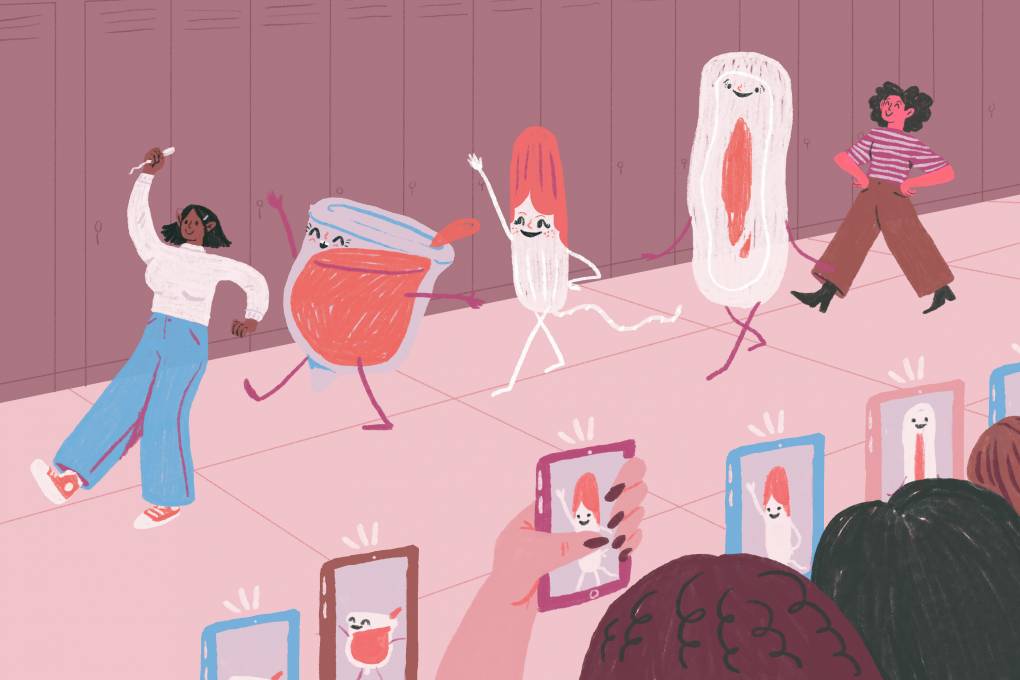
"title": "Girls march down the school hall with their period products on display.",
"credit": "LA Johnson/NPR",
"status": "inherit",
"altTag": null,
"isLoading": false,
"fetchFailed": false
},
"mindshift_58639": {
"type": "attachments",
"id": "mindshift_58639",
"meta": {
"index": "attachments_1716263798",
"site": "mindshift",
"id": "58639",
"found": true
},
"parent": 58638,
"imgSizes": {
"twentyfourteen-full-width": {
"file": "https://ww2.kqed.org/app/uploads/sites/23/2021/10/This-is-Ear-Hustle-banner-photo-1038x576.jpg",
"width": 1038,
"mimeType": "image/jpeg",
"height": 576
},
"thumbnail": {
"file": "https://ww2.kqed.org/app/uploads/sites/23/2021/10/This-is-Ear-Hustle-banner-photo-160x67.jpg",
"width": 160,
"mimeType": "image/jpeg",
"height": 67
},
"post-thumbnail": {
"file": "https://ww2.kqed.org/app/uploads/sites/23/2021/10/This-is-Ear-Hustle-banner-photo-672x372.jpg",
"width": 672,
"mimeType": "image/jpeg",
"height": 372
},
"kqedFullSize": {
"file": "https://ww2.kqed.org/app/uploads/sites/23/2021/10/This-is-Ear-Hustle-banner-photo.jpg",
"width": 1920,
"height": 800
},
"large": {
"file": "https://ww2.kqed.org/app/uploads/sites/23/2021/10/This-is-Ear-Hustle-banner-photo-1020x425.jpg",
"width": 1020,
"mimeType": "image/jpeg",
"height": 425
},
"1536x1536": {
"file": "https://ww2.kqed.org/app/uploads/sites/23/2021/10/This-is-Ear-Hustle-banner-photo-1536x640.jpg",
"width": 1536,
"mimeType": "image/jpeg",
"height": 640
},
"medium": {
"file": "https://ww2.kqed.org/app/uploads/sites/23/2021/10/This-is-Ear-Hustle-banner-photo-800x333.jpg",
"width": 800,
"mimeType": "image/jpeg",
"height": 333
},
"medium_large": {
"file": "https://ww2.kqed.org/app/uploads/sites/23/2021/10/This-is-Ear-Hustle-banner-photo-768x320.jpg",
"width": 768,
"mimeType": "image/jpeg",
"height": 320
}
},
"publishDate": 1634597570,
"modified": 1634597677,
"caption": null,
"description": null,
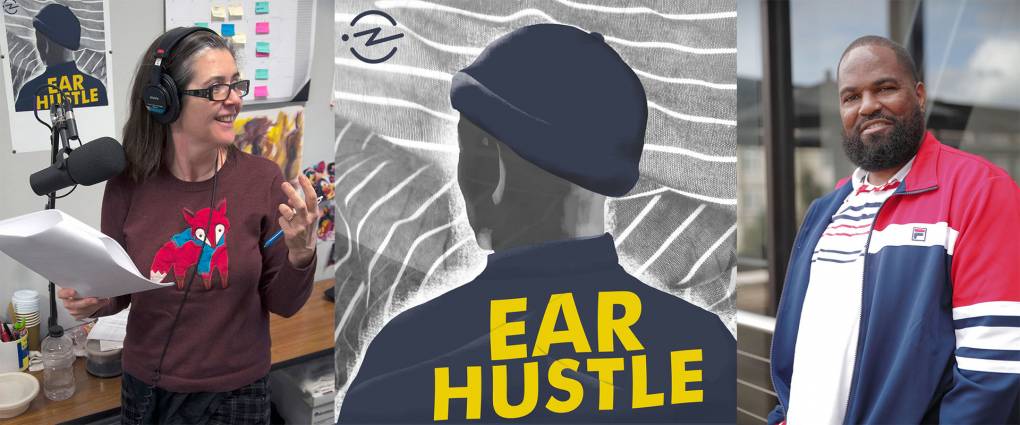
"title": "This is Ear Hustle banner photo",
"credit": "Radiotopia, from PRX",
"status": "inherit",
"altTag": null,
"isLoading": false,
"fetchFailed": false
},
"mindshift_58582": {
"type": "attachments",
"id": "mindshift_58582",
"meta": {
"index": "attachments_1716263798",
"site": "mindshift",
"id": "58582",
"found": true
},
"parent": 58577,
"imgSizes": {
"twentyfourteen-full-width": {
"file": "https://ww2.kqed.org/app/uploads/sites/23/2021/10/Reniqua-Allen-Lamphere-Allen-Becoming3-credit-tbd-1038x576.jpg",
"width": 1038,
"mimeType": "image/jpeg",
"height": 576
},
"thumbnail": {
"file": "https://ww2.kqed.org/app/uploads/sites/23/2021/10/Reniqua-Allen-Lamphere-Allen-Becoming3-credit-tbd-160x107.jpg",
"width": 160,
"mimeType": "image/jpeg",
"height": 107
},
"post-thumbnail": {
"file": "https://ww2.kqed.org/app/uploads/sites/23/2021/10/Reniqua-Allen-Lamphere-Allen-Becoming3-credit-tbd-672x372.jpg",
"width": 672,
"mimeType": "image/jpeg",
"height": 372
},
"kqedFullSize": {
"file": "https://ww2.kqed.org/app/uploads/sites/23/2021/10/Reniqua-Allen-Lamphere-Allen-Becoming3-credit-tbd.jpg",
"width": 1600,
"height": 1067
},
"large": {
"file": "https://ww2.kqed.org/app/uploads/sites/23/2021/10/Reniqua-Allen-Lamphere-Allen-Becoming3-credit-tbd-1020x680.jpg",
"width": 1020,
"mimeType": "image/jpeg",
"height": 680
},
"1536x1536": {
"file": "https://ww2.kqed.org/app/uploads/sites/23/2021/10/Reniqua-Allen-Lamphere-Allen-Becoming3-credit-tbd-1536x1024.jpg",
"width": 1536,
"mimeType": "image/jpeg",
"height": 1024
},
"medium": {
"file": "https://ww2.kqed.org/app/uploads/sites/23/2021/10/Reniqua-Allen-Lamphere-Allen-Becoming3-credit-tbd-800x534.jpg",
"width": 800,
"mimeType": "image/jpeg",
"height": 534
},
"medium_large": {
"file": "https://ww2.kqed.org/app/uploads/sites/23/2021/10/Reniqua-Allen-Lamphere-Allen-Becoming3-credit-tbd-768x512.jpg",
"width": 768,
"mimeType": "image/jpeg",
"height": 512
}
},
"publishDate": 1633109563,
"modified": 1633331494,
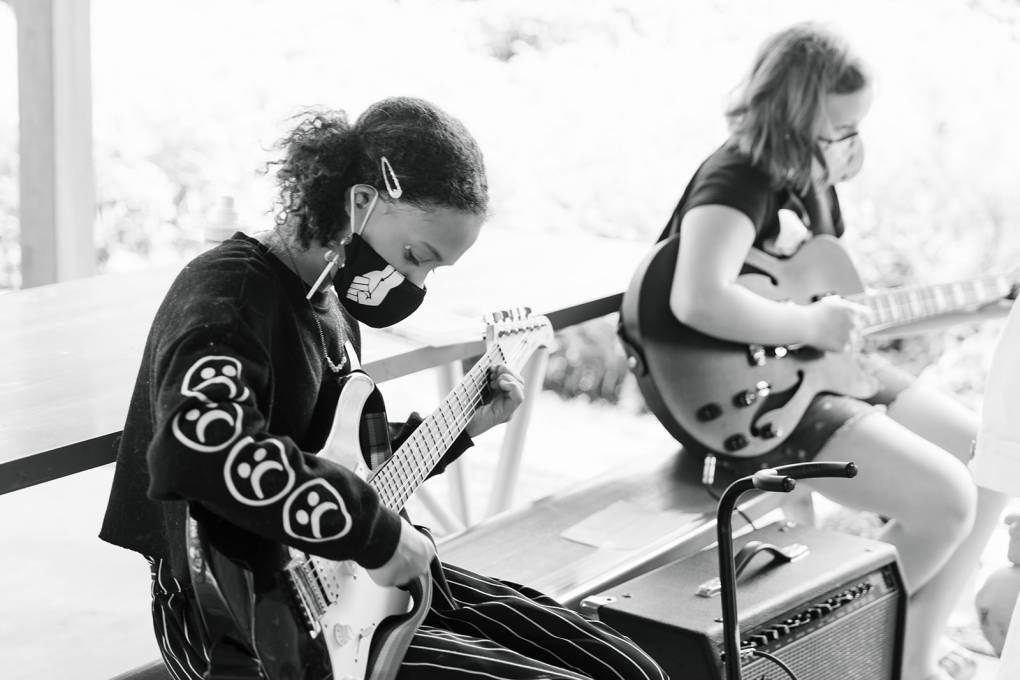
"caption": "Fadzai Gides attends camp at Girls Rock Bloomington in Indiana. \n",
"description": null,
"title": "2021 Girls Rock Bloomington",
"credit": "Courtesy of Anna Powell Denton ",
"status": "inherit",
"altTag": null,
"isLoading": false,
"fetchFailed": false
},
"mindshift_58312": {
"type": "attachments",
"id": "mindshift_58312",
"meta": {
"index": "attachments_1716263798",
"site": "mindshift",
"id": "58312",
"found": true
},
"parent": 58310,
"imgSizes": {
"twentyfourteen-full-width": {
"file": "https://ww2.kqed.org/app/uploads/sites/23/2021/08/Kelly-Green-RansonCafeteria-scaled-e1629101518842-1038x576.jpg",
"width": 1038,
"mimeType": "image/jpeg",
"height": 576
},
"thumbnail": {
"file": "https://ww2.kqed.org/app/uploads/sites/23/2021/08/Kelly-Green-RansonCafeteria-scaled-e1629101518842-160x129.jpg",
"width": 160,
"mimeType": "image/jpeg",
"height": 129
},
"post-thumbnail": {
"file": "https://ww2.kqed.org/app/uploads/sites/23/2021/08/Kelly-Green-RansonCafeteria-scaled-e1629101518842-672x372.jpg",
"width": 672,
"mimeType": "image/jpeg",
"height": 372
},
"kqedFullSize": {
"file": "https://ww2.kqed.org/app/uploads/sites/23/2021/08/Kelly-Green-RansonCafeteria-scaled-e1629101518842.jpg",
"width": 1920,
"height": 1548
},
"2048x2048": {
"file": "https://ww2.kqed.org/app/uploads/sites/23/2021/08/Kelly-Green-RansonCafeteria-1536x2048.jpg",
"width": 1536,
"mimeType": "image/jpeg",
"height": 2048
},
"large": {
"file": "https://ww2.kqed.org/app/uploads/sites/23/2021/08/Kelly-Green-RansonCafeteria-scaled-e1629101518842-1020x822.jpg",
"width": 1020,
"mimeType": "image/jpeg",
"height": 822
},
"1536x1536": {
"file": "https://ww2.kqed.org/app/uploads/sites/23/2021/08/Kelly-Green-RansonCafeteria-scaled-e1629101518842-1536x1238.jpg",
"width": 1536,
"mimeType": "image/jpeg",
"height": 1238
},
"full-width": {
"file": "https://ww2.kqed.org/app/uploads/sites/23/2021/08/Kelly-Green-RansonCafeteria-1920x2560.jpg",
"width": 1920,
"mimeType": "image/jpeg",
"height": 2560
},
"medium": {
"file": "https://ww2.kqed.org/app/uploads/sites/23/2021/08/Kelly-Green-RansonCafeteria-scaled-e1629101518842-800x645.jpg",
"width": 800,
"mimeType": "image/jpeg",
"height": 645
},
"medium_large": {
"file": "https://ww2.kqed.org/app/uploads/sites/23/2021/08/Kelly-Green-RansonCafeteria-scaled-e1629101518842-768x619.jpg",
"width": 768,
"mimeType": "image/jpeg",
"height": 619
}
},
"publishDate": 1629098040,
"modified": 1629101578,
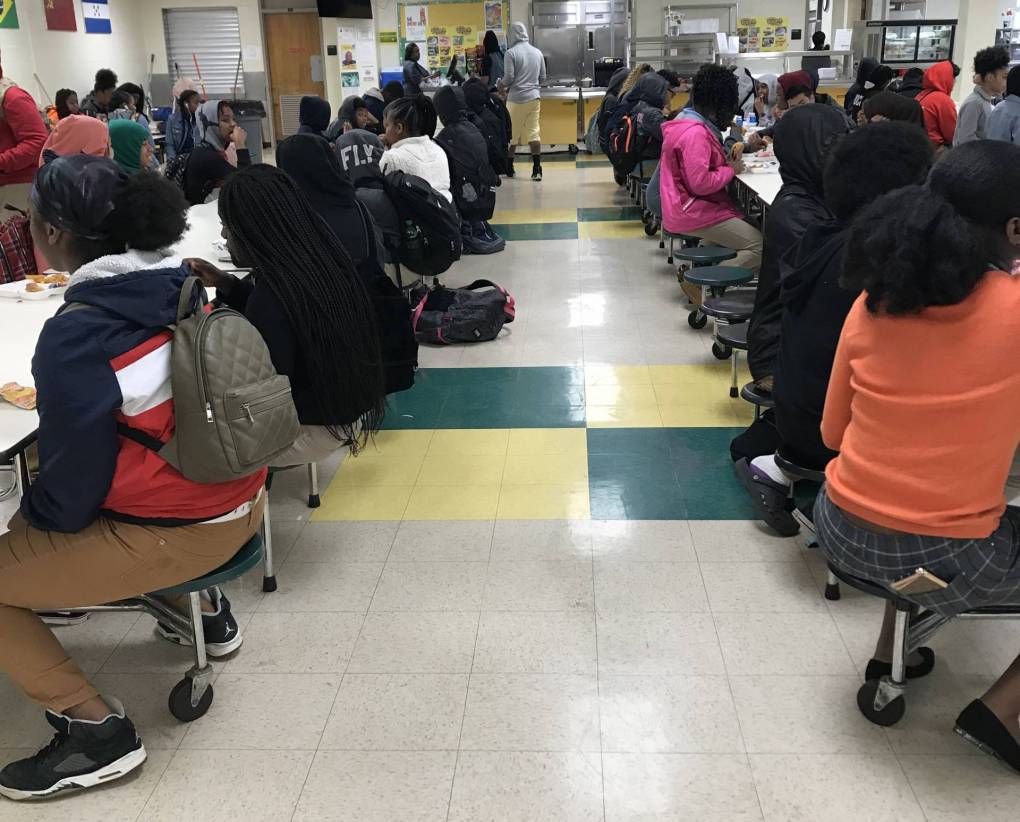
"caption": "Students sit in the cafeteria at Ranson Middle School in Charlotte. ",
"description": null,
"title": "Kelly Green - RansonCafeteria",
"credit": "Kelly Field for The Hechinger Report",
"status": "inherit",
"altTag": "Middle school students in a cafeteria during lunch",
"isLoading": false,
"fetchFailed": false
}
},
"audioPlayerReducer": {
"postId": "stream_live",
"isPaused": true,
"isPlaying": false,
"pfsActive": false,
"pledgeModalIsOpen": true,
"playerDrawerIsOpen": false,
"liveAudioPlayStartedAt": 0,
"liveAudioPlayContext": ""
},
"authorsReducer": {
"byline_mindshift_58802": {
"type": "authors",
"id": "byline_mindshift_58802",
"meta": {
"override": true
},
"slug": "byline_mindshift_58802",
"name": "Mansee Khurana",
"isLoading": false
},
"byline_mindshift_58577": {
"type": "authors",
"id": "byline_mindshift_58577",
"meta": {
"override": true
},
"slug": "byline_mindshift_58577",
"name": "Reniqua Allen-Lamphere, \u003ca href=\"https://hechingerreport.org/\">The Hechinger Report\u003c/a>",
"isLoading": false
},
"byline_mindshift_58310": {
"type": "authors",
"id": "byline_mindshift_58310",
"meta": {
"override": true
},
"slug": "byline_mindshift_58310",
"name": "Kelly Field, \u003ca href=\"https://hechingerreport.org/\">The Hechinger Report\u003c/a>",
"isLoading": false
},
"ngobir": {
"type": "authors",
"id": "11721",
"meta": {
"index": "authors_1716337520",
"id": "11721",
"found": true
},
"name": "Nimah Gobir",
"firstName": "Nimah",
"lastName": "Gobir",
"slug": "ngobir",
"email": "ngobir@kqed.org",
"display_author_email": false,
"staff_mastheads": [],
"title": "KQED Contributor",
"bio": null,
"avatar": "https://secure.gravatar.com/avatar/837f5df7045c59f3ec097cdf7ac391373ab75d5ec936dd7099b8cb6f0af1b0e9?s=600&d=blank&r=g",
"twitter": null,
"bluesky": null,
"facebook": null,
"instagram": null,
"linkedin": null,
"sites": [
{
"site": "mindshift",
"roles": [
"editor"
]
}
],
"headData": {
"title": "Nimah Gobir | KQED",
"description": "KQED Contributor",
"ogImgSrc": "https://secure.gravatar.com/avatar/837f5df7045c59f3ec097cdf7ac391373ab75d5ec936dd7099b8cb6f0af1b0e9?s=600&d=blank&r=g",
"twImgSrc": "https://secure.gravatar.com/avatar/837f5df7045c59f3ec097cdf7ac391373ab75d5ec936dd7099b8cb6f0af1b0e9?s=600&d=blank&r=g"
},
"isLoading": false,
"link": "/author/ngobir"
}
},
"pagesReducer": {
"mindshift_category_adolescence": {
"type": "terms",
"id": "mindshift_21445",
"meta": {
"index": "terms_1716263798",
"site": "mindshift",
"id": "21445",
"score": 13.5576725
},
"featImg": null,
"name": "Adolescence",
"description": null,
"taxonomy": "category",
"headData": {
"twImgId": null,
"twTitle": null,
"ogTitle": null,
"ogImgId": null,
"twDescription": null,
"description": null,
"title": "Adolescence Archives | KQED Mindshift",
"ogDescription": null
},
"ttid": 20717,
"slug": "adolescence",
"isLoading": false,
"title": "Adolescence",
"pageMeta": {
"site": "mindshift",
"WpPageTemplate": "page-topic-editorial",
"currentPage": 6
},
"blocks": [
{
"blockName": "kqed/post-list",
"attrs": {
"layout": "cardArticle2",
"query": "posts/mindshift?category=adolescence",
"seeMore": false,
"paginated": true,
"page": 6
}
},
{
"blockName": "kqed/ad"
}
]
}
},
"pfsSessionReducer": {},
"postsReducer": {
"stream_live": {
"type": "live",
"id": "stream_live",
"audioUrl": "https://streams.kqed.org/kqedradio",
"title": "Live Stream",
"excerpt": "Live Stream information currently unavailable.",
"link": "/radio",
"featImg": "",
"label": {
"name": "KQED Live",
"link": "/"
}
},
"stream_kqedNewscast": {
"type": "posts",
"id": "stream_kqedNewscast",
"audioUrl": "https://www.kqed.org/.stream/anon/radio/RDnews/newscast.mp3?_=1",
"title": "KQED Newscast",
"featImg": "",
"label": {
"name": "88.5 FM",
"link": "/"
}
},
"mindshift_58802": {
"type": "posts",
"id": "mindshift_58802",
"meta": {
"index": "posts_1716263798",
"site": "mindshift",
"id": "58802",
"score": null,
"sort": [
1638518206000
]
},
"parent": 0,
"labelTerm": {
"site": "mindshift"
},
"blocks": [],
"publishDate": 1638518206,
"format": "standard",
"disqusTitle": "The case for free tampons and pads in schools",
"title": "The case for free tampons and pads in schools",
"headTitle": "MindShift | KQED News",
"content": "\u003cp>At age 9, Mahoro Amani got their period for the first time. At home, their mother talked openly about everything they needed to know. But, their mom told them, never mention this at school.\u003c/p>\n\u003cp>\"I was told to basically keep it a secret,\" says Amani, who's now 15 and a 10th grader at Miami Arts Charter High School, in Florida. The school, they say, doesn't teach students about periods or supply menstrual products to students in restrooms.\u003c/p>\n\u003cp>\"It was really concerning to me how many kids have had panic attacks or cried in the bathroom because they don't have pads and none of their friends have pads on them,\" Amani said.\u003c/p>\n\u003cp>Amani is the president of the school's student council, and they're working with others on the council to get free menstrual products in the school's restrooms. However, administrators have told them there are no plans to use school funds to do so.\u003c/p>\n\u003cp>Florida is one of many states that do not require schools to provide menstrual products, and a growing number of organizations, activists and students like Amani are trying to change that.\u003c/p>\n\u003ch3>\u003cimg class=\"alignright size-thumbnail wp-image-58804\" src=\"https://ww2.kqed.org/app/uploads/sites/23/2021/12/period-products-ljohnson-v2artboard-3_sq-2f231006b23880c50e624fbed26902eed7df8038-160x160.jpg\" alt=\"\" width=\"160\" height=\"160\" srcset=\"https://ww2.kqed.org/app/uploads/sites/23/2021/12/period-products-ljohnson-v2artboard-3_sq-2f231006b23880c50e624fbed26902eed7df8038-160x160.jpg 160w, https://ww2.kqed.org/app/uploads/sites/23/2021/12/period-products-ljohnson-v2artboard-3_sq-2f231006b23880c50e624fbed26902eed7df8038.jpg 200w\" sizes=\"(max-width: 160px) 100vw, 160px\">Dozens of states are considering laws related to period equity\u003c/h3>\n\u003cp>This year, bills related to period equity have \u003ca href=\"https://www.womensvoices.org/2021/01/11/period-health-policies-is-your-state-working-to-make-menstrual-equity-a-priority/\">been introduced in 37 states\u003c/a>, according to Women's Voices For The Earth, a nonprofit advocacy group. But as of this fall, only five states require schools to provide menstrual products. Last month, California \u003ca href=\"https://www.npr.org/2021/10/09/1044720102/california-free-tampons-schools\">became the latest to do so\u003c/a>, mandating that public schools and colleges stock free pads, tampons and other products in their restrooms.\u003c/p>\n\u003cp>[ad fullwidth]\u003c/p>\n\u003cp>In Michigan, the city of Ann Arbor recently passed a law to\u003ca href=\"https://www.npr.org/2021/11/18/1056964746/ann-arbor-michigan-tampons-menstrual-products\"> stock all public toilets \u003c/a>with menstrual products.\u003c/p>\n\u003cp>In Florida, legislation that would require free products in school restrooms \u003ca href=\"https://www.myfloridahouse.gov/Sections/Bills/billsdetail.aspx?BillId=70008\">has been introduced twice\u003c/a>, but has yet to pass.\u003c/p>\n\u003cp>Recent studies have shown that \u003ca href=\"https://www.forbes.com/sites/alicebroster/2021/05/20/almost-a-quarter-of-students-struggle-to-access-period-products-new-study-finds/?sh=2ce490a749de\">about a quarter of menstruating students\u003c/a> struggle with access to period products, and that many teens still feel a stigma around menstruation.\u003c/p>\n\u003cp>\"This country already expects schools to provide toilet paper and soap,\" says Damaris Pereda, the national programs director of PERIOD, a nonprofit advocacy group. Why, she asks, shouldn't students who menstruate have the same access to basic supplies? \"So that if something happens, they just go to the restroom and get their things and continue to live their lives.\"\u003c/p>\n\u003ch3>Access to period products has an impact on learning loss\u003c/h3>\n\u003cp>Currently, many schools keep menstrual products in the school nurse's office.\u003c/p>\n\u003cp>\u003cimg class=\"alignright size-thumbnail wp-image-58805\" src=\"https://ww2.kqed.org/app/uploads/sites/23/2021/12/period-products-ljohnson-v2artboard-2_sq-a9c9a5fbea9629d6bb77ea639e5eb19fb46a8a55-160x160.jpg\" alt=\"\" width=\"160\" height=\"160\" srcset=\"https://ww2.kqed.org/app/uploads/sites/23/2021/12/period-products-ljohnson-v2artboard-2_sq-a9c9a5fbea9629d6bb77ea639e5eb19fb46a8a55-160x160.jpg 160w, https://ww2.kqed.org/app/uploads/sites/23/2021/12/period-products-ljohnson-v2artboard-2_sq-a9c9a5fbea9629d6bb77ea639e5eb19fb46a8a55.jpg 200w\" sizes=\"(max-width: 160px) 100vw, 160px\">At those schools, \"while you can get a period product, you often have to walk across the campus while you're still bleeding through,\" Pereda says. \"What happens in that case is that a lot of students feel ashamed and like they've lost some of their dignity.\"\u003c/p>\n\u003cp>Right now, there is little national data about teenagers' access to menstrual products. But what little information there is suggests the lack of access is worse for poor students. The only \u003ca href=\"https://period.org/uploads/State-of-the-Period-2021.pdf\">publicly available study\u003c/a> tracking the impact of period poverty among U.S. teenage students, which was funded by PERIOD, found that 23 percent of students have struggled to afford period products.\u003c/p>\n\u003cp>California addressed this lack of access in\u003ca href=\"https://leginfo.legislature.ca.gov/faces/billTextClient.xhtml?bill_id=201720180AB10\"> 2017 by requiring schools\u003c/a> in low-income districts to provide free period products in schools. The legislation passed in October expanded that access to all schools and requires products to be in half of a school's bathrooms.\u003c/p>\n\u003cp>\"It becomes a barrier to education,\" says Christina Garcia, the Democratic state assemblywoman who introduced the legislation, which was signed by Gov. Gavin Newsom (D) in October. \"These are our most vulnerable kids, who already have a lot of barriers. This should not be one of them.\"\u003c/p>\n\u003cp>Nicky Dawkins, who runs PERIOD's Miami chapter, is hoping the recent legislative win in California will help mobilize educators, students and health professionals across Florida.\u003c/p>\n\u003cp>\"We don't want to continue to Band-Aid this problem,\" Dawkins says. \"We want to solve the issue, which is done through passing bills.\"\u003c/p>\n\u003cp>The study also found that 70% of students felt that their school environment made them feel self-conscious about their period.\u003c/p>\n\u003cp>At Miami Arts, Amani feels like the \u003ca href=\"https://www.npr.org/2018/03/20/594966524/talking-about-periods-in-public\">stigma\u003c/a> can be seen everywhere. They told NPR that there isn't a nurse that students can go to when they need period products or have questions about their period.\u003c/p>\n\u003cp>\"There are people who think they're dying because they started bleeding,\" Amani said. \"They freak out and don't know what to do, and if schools were more open about menstruation, we could lessen the stigma.\"\u003c/p>\n\u003cp>Alfredo de la Rosa, the founder and principal of Miami Arts Charter, told NPR that while the school does not employ a nurse, students can go to an administrator's office if they need menstrual products. \"A female assistant principal (or delegate if she is absent) is assigned to provide menstrual products to any young lady who requests them,\" he said in an email.\u003c/p>\n\u003ch3>Activists see period products as a medical necessity\u003c/h3>\n\u003cp>Advocates say the issue goes beyond stigma, to affect the quality of education as well. The study found that 4 in 5 menstruating teens said they \u003ca href=\"https://cdn.shopify.com/s/files/1/0795/1599/files/State-of-the-Period-white-paper_Thinx_PERIOD.pdf\">have either missed class time\u003c/a>, or know someone who missed class time, because they did not have access to period products.\u003c/p>\n\u003cp>Pereda says this learning loss often happens when students need to go home because they are unable to find products they need: \"Then, they don't want to come back to school, or if they do, they've already lost that time, all because they didn't have access period products at school.\"\u003c/p>\n\u003cp>Like Amani, Margaret Schedler approached her school about stocking the bathrooms with period products. She's a junior at The Altamont School, a private college prep school in Birmingham, Ala. Schedler says the administration was receptive to the idea, and agreed to her plan to have her school club raise money for the project. The school provides, and pays for, menstrual products to students in the front office and nurse's office.\u003c/p>\n\u003cp>\u003cimg class=\"alignright size-thumbnail wp-image-58806\" src=\"https://ww2.kqed.org/app/uploads/sites/23/2021/12/period-products-ljohnson-v2artboard-1_sq-fa6fed506d1c8463b8edafd3d3c438774bd03a24-160x160.jpg\" alt=\"\" width=\"160\" height=\"160\" srcset=\"https://ww2.kqed.org/app/uploads/sites/23/2021/12/period-products-ljohnson-v2artboard-1_sq-fa6fed506d1c8463b8edafd3d3c438774bd03a24-160x160.jpg 160w, https://ww2.kqed.org/app/uploads/sites/23/2021/12/period-products-ljohnson-v2artboard-1_sq-fa6fed506d1c8463b8edafd3d3c438774bd03a24.jpg 200w\" sizes=\"(max-width: 160px) 100vw, 160px\">Now, Schedler's club, Ladies of Lavender, relies on student donations to provide menstrual products in Altamont's restrooms. Even though the club receives a lot of donations, Schedler says it still feels unfair that the students bear this responsibility, especially because they have to hold donation drives every month, and students often complain that they've already donated supplies in the past.\u003c/p>\n\u003cp>\"Schools should realize that [menstruation] isn't a choice,\" Schedler argues. \"And if they want to support menstruating citizens, they should do the bare minimum and make sure that public- and state-funded places have period products that people can use.\"\u003c/p>\n\u003cp>Cost is often cited as a factor when considering whether to provide widespread access to these products. \u003ca href=\"https://www.freethetampons.org/\">Free the Tampon\u003c/a>, an advocacy group focused on getting period products in state budgets, estimates that it costs\u003ca href=\"https://www.freethetampons.org/uploads/1/1/9/6/119665890/kit_for_schools.pdf\"> $5-7 per year per student \u003c/a>to supply period products. Advocates working with the Office of Legislative Services in New Jersey are estimating the cost of the recent law requiring schools to provide period products to students in public schools at about $750,000 per year.\u003c/p>\n\u003cp>Advocates say the costs bring benefits for students. A pilot program in New York City\u003ca href=\"https://www.today.com/health/free-tampons-some-nyc-public-schools-will-provide-feminine-hygiene-t80766\"> found that attendance increased by 2.4%\u003c/a> among girls at a city high school after making tampons and pads available in its restrooms.\u003c/p>\n\u003cp>Others argue that the question of cost sidesteps a larger point.\u003c/p>\n\u003cp>[ad floatright]\u003c/p>\n\u003cp>\"Menstrual products should be treated in the same way you treat restocking toilet paper,\" says Michele Anzabi, one of the presidents of the PERIOD chapter at the University of Pennsylvania. \"It's a medical necessity and therefore, it shouldn't be hindered by conversations about cost, but treated as something that needs to be addressed.\"\u003c/p>\n\u003cdiv class=\"fullattribution\">Copyright 2021 NPR. To see more, visit https://www.npr.org.\u003cimg src=\"https://www.google-analytics.com/__utm.gif?utmac=UA-5828686-4&utmdt=The+case+for+free+tampons+and+pads+in+schools&utme=8(APIKey)9(MDAxOTAwOTE4MDEyMTkxMDAzNjczZDljZA004)\">\u003c/div>\n\n",
"disqusIdentifier": "58802 https://ww2.kqed.org/mindshift/?p=58802",
"disqusUrl": "https://ww2.kqed.org/mindshift/2021/12/02/the-case-for-free-tampons-and-pads-in-schools/",
"stats": {
"hasVideo": false,
"hasChartOrMap": false,
"hasAudio": false,
"hasPolis": false,
"wordCount": 1308,
"hasGoogleForm": false,
"hasGallery": false,
"hasHearkenModule": false,
"iframeSrcs": [],
"paragraphCount": 32
},
"modified": 1638518206,
"excerpt": "Activists say menstrual products are a basic necessity that shouldn't require a long walk to the school nurse's office, and that providing them is key to removing the stigma of periods.",
"headData": {
"twImgId": "",
"twTitle": "",
"ogTitle": "",
"ogImgId": "",
"twDescription": "",
"description": "Activists say menstrual products are a basic necessity that shouldn't require a long walk to the school nurse's office, and that providing them is key to removing the stigma of periods.",
"title": "The case for free tampons and pads in schools - MindShift",
"ogDescription": "",
"schema": {
"@context": "https://schema.org",
"@type": "Article",
"headline": "The case for free tampons and pads in schools",
"datePublished": "2021-12-02T23:56:46-08:00",
"dateModified": "2021-12-02T23:56:46-08:00",
"image": "https://cdn.kqed.org/wp-content/uploads/2020/02/KQED-OG-Image@1x.png"
}
},
"guestAuthors": [],
"slug": "the-case-for-free-tampons-and-pads-in-schools",
"status": "publish",
"nprApiLink": "http://api.npr.org/query?id=1056830306&apiKey=MDAxOTAwOTE4MDEyMTkxMDAzNjczZDljZA004",
"nprByline": "Mansee Khurana",
"nprStoryDate": "Thu, 02 Dec 2021 09:21:25 -0500",
"excludeFromSiteSearch": "Include",
"nprLastModifiedDate": "Thu, 02 Dec 2021 09:50:45 -0500",
"nprHtmlLink": "https://www.npr.org/2021/12/02/1056830306/free-tampons-public-schools?ft=nprml&f=1056830306",
"nprImageAgency": "NPR",
"nprImageCredit": "LA Johnson",
"showOnAuthorArchivePages": "No",
"nprStoryId": "1056830306",
"nprRetrievedStory": "1",
"nprPubDate": "Thu, 02 Dec 2021 09:50:00 -0500",
"path": "/mindshift/58802/the-case-for-free-tampons-and-pads-in-schools",
"audioTrackLength": null,
"parsedContent": [
{
"type": "contentString",
"content": "\u003cdiv class=\"post-body\">\u003cp>\u003cp>At age 9, Mahoro Amani got their period for the first time. At home, their mother talked openly about everything they needed to know. But, their mom told them, never mention this at school.\u003c/p>\n\u003cp>\"I was told to basically keep it a secret,\" says Amani, who's now 15 and a 10th grader at Miami Arts Charter High School, in Florida. The school, they say, doesn't teach students about periods or supply menstrual products to students in restrooms.\u003c/p>\n\u003cp>\"It was really concerning to me how many kids have had panic attacks or cried in the bathroom because they don't have pads and none of their friends have pads on them,\" Amani said.\u003c/p>\n\u003cp>Amani is the president of the school's student council, and they're working with others on the council to get free menstrual products in the school's restrooms. However, administrators have told them there are no plans to use school funds to do so.\u003c/p>\n\u003cp>Florida is one of many states that do not require schools to provide menstrual products, and a growing number of organizations, activists and students like Amani are trying to change that.\u003c/p>\n\u003ch3>\u003cimg class=\"alignright size-thumbnail wp-image-58804\" src=\"https://ww2.kqed.org/app/uploads/sites/23/2021/12/period-products-ljohnson-v2artboard-3_sq-2f231006b23880c50e624fbed26902eed7df8038-160x160.jpg\" alt=\"\" width=\"160\" height=\"160\" srcset=\"https://ww2.kqed.org/app/uploads/sites/23/2021/12/period-products-ljohnson-v2artboard-3_sq-2f231006b23880c50e624fbed26902eed7df8038-160x160.jpg 160w, https://ww2.kqed.org/app/uploads/sites/23/2021/12/period-products-ljohnson-v2artboard-3_sq-2f231006b23880c50e624fbed26902eed7df8038.jpg 200w\" sizes=\"(max-width: 160px) 100vw, 160px\">Dozens of states are considering laws related to period equity\u003c/h3>\n\u003cp>This year, bills related to period equity have \u003ca href=\"https://www.womensvoices.org/2021/01/11/period-health-policies-is-your-state-working-to-make-menstrual-equity-a-priority/\">been introduced in 37 states\u003c/a>, according to Women's Voices For The Earth, a nonprofit advocacy group. But as of this fall, only five states require schools to provide menstrual products. Last month, California \u003ca href=\"https://www.npr.org/2021/10/09/1044720102/california-free-tampons-schools\">became the latest to do so\u003c/a>, mandating that public schools and colleges stock free pads, tampons and other products in their restrooms.\u003c/p>\n\u003cp>\u003c/p>\u003c/div>",
"attributes": {
"named": {},
"numeric": []
}
},
{
"type": "component",
"content": "",
"name": "ad",
"attributes": {
"named": {
"label": "fullwidth"
},
"numeric": [
"fullwidth"
]
}
},
{
"type": "contentString",
"content": "\u003cdiv class=\"post-body\">\u003cp>\u003c/p>\n\u003cp>In Michigan, the city of Ann Arbor recently passed a law to\u003ca href=\"https://www.npr.org/2021/11/18/1056964746/ann-arbor-michigan-tampons-menstrual-products\"> stock all public toilets \u003c/a>with menstrual products.\u003c/p>\n\u003cp>In Florida, legislation that would require free products in school restrooms \u003ca href=\"https://www.myfloridahouse.gov/Sections/Bills/billsdetail.aspx?BillId=70008\">has been introduced twice\u003c/a>, but has yet to pass.\u003c/p>\n\u003cp>Recent studies have shown that \u003ca href=\"https://www.forbes.com/sites/alicebroster/2021/05/20/almost-a-quarter-of-students-struggle-to-access-period-products-new-study-finds/?sh=2ce490a749de\">about a quarter of menstruating students\u003c/a> struggle with access to period products, and that many teens still feel a stigma around menstruation.\u003c/p>\n\u003cp>\"This country already expects schools to provide toilet paper and soap,\" says Damaris Pereda, the national programs director of PERIOD, a nonprofit advocacy group. Why, she asks, shouldn't students who menstruate have the same access to basic supplies? \"So that if something happens, they just go to the restroom and get their things and continue to live their lives.\"\u003c/p>\n\u003ch3>Access to period products has an impact on learning loss\u003c/h3>\n\u003cp>Currently, many schools keep menstrual products in the school nurse's office.\u003c/p>\n\u003cp>\u003cimg class=\"alignright size-thumbnail wp-image-58805\" src=\"https://ww2.kqed.org/app/uploads/sites/23/2021/12/period-products-ljohnson-v2artboard-2_sq-a9c9a5fbea9629d6bb77ea639e5eb19fb46a8a55-160x160.jpg\" alt=\"\" width=\"160\" height=\"160\" srcset=\"https://ww2.kqed.org/app/uploads/sites/23/2021/12/period-products-ljohnson-v2artboard-2_sq-a9c9a5fbea9629d6bb77ea639e5eb19fb46a8a55-160x160.jpg 160w, https://ww2.kqed.org/app/uploads/sites/23/2021/12/period-products-ljohnson-v2artboard-2_sq-a9c9a5fbea9629d6bb77ea639e5eb19fb46a8a55.jpg 200w\" sizes=\"(max-width: 160px) 100vw, 160px\">At those schools, \"while you can get a period product, you often have to walk across the campus while you're still bleeding through,\" Pereda says. \"What happens in that case is that a lot of students feel ashamed and like they've lost some of their dignity.\"\u003c/p>\n\u003cp>Right now, there is little national data about teenagers' access to menstrual products. But what little information there is suggests the lack of access is worse for poor students. The only \u003ca href=\"https://period.org/uploads/State-of-the-Period-2021.pdf\">publicly available study\u003c/a> tracking the impact of period poverty among U.S. teenage students, which was funded by PERIOD, found that 23 percent of students have struggled to afford period products.\u003c/p>\n\u003cp>California addressed this lack of access in\u003ca href=\"https://leginfo.legislature.ca.gov/faces/billTextClient.xhtml?bill_id=201720180AB10\"> 2017 by requiring schools\u003c/a> in low-income districts to provide free period products in schools. The legislation passed in October expanded that access to all schools and requires products to be in half of a school's bathrooms.\u003c/p>\n\u003cp>\"It becomes a barrier to education,\" says Christina Garcia, the Democratic state assemblywoman who introduced the legislation, which was signed by Gov. Gavin Newsom (D) in October. \"These are our most vulnerable kids, who already have a lot of barriers. This should not be one of them.\"\u003c/p>\n\u003cp>Nicky Dawkins, who runs PERIOD's Miami chapter, is hoping the recent legislative win in California will help mobilize educators, students and health professionals across Florida.\u003c/p>\n\u003cp>\"We don't want to continue to Band-Aid this problem,\" Dawkins says. \"We want to solve the issue, which is done through passing bills.\"\u003c/p>\n\u003cp>The study also found that 70% of students felt that their school environment made them feel self-conscious about their period.\u003c/p>\n\u003cp>At Miami Arts, Amani feels like the \u003ca href=\"https://www.npr.org/2018/03/20/594966524/talking-about-periods-in-public\">stigma\u003c/a> can be seen everywhere. They told NPR that there isn't a nurse that students can go to when they need period products or have questions about their period.\u003c/p>\n\u003cp>\"There are people who think they're dying because they started bleeding,\" Amani said. \"They freak out and don't know what to do, and if schools were more open about menstruation, we could lessen the stigma.\"\u003c/p>\n\u003cp>Alfredo de la Rosa, the founder and principal of Miami Arts Charter, told NPR that while the school does not employ a nurse, students can go to an administrator's office if they need menstrual products. \"A female assistant principal (or delegate if she is absent) is assigned to provide menstrual products to any young lady who requests them,\" he said in an email.\u003c/p>\n\u003ch3>Activists see period products as a medical necessity\u003c/h3>\n\u003cp>Advocates say the issue goes beyond stigma, to affect the quality of education as well. The study found that 4 in 5 menstruating teens said they \u003ca href=\"https://cdn.shopify.com/s/files/1/0795/1599/files/State-of-the-Period-white-paper_Thinx_PERIOD.pdf\">have either missed class time\u003c/a>, or know someone who missed class time, because they did not have access to period products.\u003c/p>\n\u003cp>Pereda says this learning loss often happens when students need to go home because they are unable to find products they need: \"Then, they don't want to come back to school, or if they do, they've already lost that time, all because they didn't have access period products at school.\"\u003c/p>\n\u003cp>Like Amani, Margaret Schedler approached her school about stocking the bathrooms with period products. She's a junior at The Altamont School, a private college prep school in Birmingham, Ala. Schedler says the administration was receptive to the idea, and agreed to her plan to have her school club raise money for the project. The school provides, and pays for, menstrual products to students in the front office and nurse's office.\u003c/p>\n\u003cp>\u003cimg class=\"alignright size-thumbnail wp-image-58806\" src=\"https://ww2.kqed.org/app/uploads/sites/23/2021/12/period-products-ljohnson-v2artboard-1_sq-fa6fed506d1c8463b8edafd3d3c438774bd03a24-160x160.jpg\" alt=\"\" width=\"160\" height=\"160\" srcset=\"https://ww2.kqed.org/app/uploads/sites/23/2021/12/period-products-ljohnson-v2artboard-1_sq-fa6fed506d1c8463b8edafd3d3c438774bd03a24-160x160.jpg 160w, https://ww2.kqed.org/app/uploads/sites/23/2021/12/period-products-ljohnson-v2artboard-1_sq-fa6fed506d1c8463b8edafd3d3c438774bd03a24.jpg 200w\" sizes=\"(max-width: 160px) 100vw, 160px\">Now, Schedler's club, Ladies of Lavender, relies on student donations to provide menstrual products in Altamont's restrooms. Even though the club receives a lot of donations, Schedler says it still feels unfair that the students bear this responsibility, especially because they have to hold donation drives every month, and students often complain that they've already donated supplies in the past.\u003c/p>\n\u003cp>\"Schools should realize that [menstruation] isn't a choice,\" Schedler argues. \"And if they want to support menstruating citizens, they should do the bare minimum and make sure that public- and state-funded places have period products that people can use.\"\u003c/p>\n\u003cp>Cost is often cited as a factor when considering whether to provide widespread access to these products. \u003ca href=\"https://www.freethetampons.org/\">Free the Tampon\u003c/a>, an advocacy group focused on getting period products in state budgets, estimates that it costs\u003ca href=\"https://www.freethetampons.org/uploads/1/1/9/6/119665890/kit_for_schools.pdf\"> $5-7 per year per student \u003c/a>to supply period products. Advocates working with the Office of Legislative Services in New Jersey are estimating the cost of the recent law requiring schools to provide period products to students in public schools at about $750,000 per year.\u003c/p>\n\u003cp>Advocates say the costs bring benefits for students. A pilot program in New York City\u003ca href=\"https://www.today.com/health/free-tampons-some-nyc-public-schools-will-provide-feminine-hygiene-t80766\"> found that attendance increased by 2.4%\u003c/a> among girls at a city high school after making tampons and pads available in its restrooms.\u003c/p>\n\u003cp>Others argue that the question of cost sidesteps a larger point.\u003c/p>\n\u003cp>\u003c/p>\u003c/div>",
"attributes": {
"named": {},
"numeric": []
}
},
{
"type": "component",
"content": "",
"name": "ad",
"attributes": {
"named": {
"label": "floatright"
},
"numeric": [
"floatright"
]
}
},
{
"type": "contentString",
"content": "\u003cdiv class=\"post-body\">\u003cp>\u003c/p>\n\u003cp>\"Menstrual products should be treated in the same way you treat restocking toilet paper,\" says Michele Anzabi, one of the presidents of the PERIOD chapter at the University of Pennsylvania. \"It's a medical necessity and therefore, it shouldn't be hindered by conversations about cost, but treated as something that needs to be addressed.\"\u003c/p>\n\u003cdiv class=\"fullattribution\">Copyright 2021 NPR. To see more, visit https://www.npr.org.\u003cimg src=\"https://www.google-analytics.com/__utm.gif?utmac=UA-5828686-4&utmdt=The+case+for+free+tampons+and+pads+in+schools&utme=8(APIKey)9(MDAxOTAwOTE4MDEyMTkxMDAzNjczZDljZA004)\">\u003c/div>\n\n\u003c/div>\u003c/p>",
"attributes": {
"named": {},
"numeric": []
}
}
],
"link": "/mindshift/58802/the-case-for-free-tampons-and-pads-in-schools",
"authors": [
"byline_mindshift_58802"
],
"categories": [
"mindshift_21445"
],
"tags": [
"mindshift_21093",
"mindshift_21160",
"mindshift_1038"
],
"featImg": "mindshift_58803",
"label": "mindshift"
},
"mindshift_58638": {
"type": "posts",
"id": "mindshift_58638",
"meta": {
"index": "posts_1716263798",
"site": "mindshift",
"id": "58638",
"score": null,
"sort": [
1635227031000
]
},
"parent": 0,
"labelTerm": {
"site": "mindshift"
},
"blocks": [],
"publishDate": 1635227031,
"format": "standard",
"title": "Listening to learn: Why ‘Ear Hustle’ stories about prison life are so engaging to students",
"headTitle": "Listening to learn: Why ‘Ear Hustle’ stories about prison life are so engaging to students | KQED",
"content": "\u003cp>\u003cspan style=\"font-weight: 400;\">When the podcast Ear Hustle first launched in 2017, Nigel Poor and Earlonne Woods explored the largely invisible stories inside San Quentin State Prison. While the word “prison” might make one think of felonies, violence and hardened criminals, any listener could clearly hear that the heart of the podcast is about humanity, early life choices and confronting mistakes. \u003c/span>\u003c/p>\n\u003cp>\u003cspan style=\"font-weight: 400;\">For example, \u003c/span>\u003ca href=\"https://www.earhustlesq.com/episodes/2017/6/14/cellies\">\u003cspan style=\"font-weight: 400;\">their first episode “Cellies”\u003c/span>\u003c/a>\u003cspan style=\"font-weight: 400;\"> is about seeking a person to safely share one’s limited space. Other episodes cover topics like parents working through challenging conditions to be \u003ca href=\"https://www.earhustlesq.com/episodes/2018/4/25/thick-glass\">present in their children’s lives\u003c/a> and\u003c/span>\u003cspan style=\"font-weight: 400;\"> nurturers who care for \u003ca href=\"https://www.earhustlesq.com/episodes/2017/7/12/looking-out\">unusual pets in a medium security facility\u003c/a>\u003c/span>\u003cspan style=\"font-weight: 400;\">. \u003c/span>\u003c/p>\n\u003cp>\u003cspan style=\"font-weight: 400;\">Podcast fans also got to hear incarcerated people reflect on what their lives were like growing up long before they ended up in San Quentin, including stories about their relationships with family and community members. Listeners, including teachers, heard this connection and reached out to Ear Hustle’s creators to share. \u003c/span>\u003c/p>\n\u003cp>\u003cspan style=\"font-weight: 400;\">“We got a lot of letters from teachers and their students talking about what they learned from the episode,” said Woods. He met Poor, a visual artist and educator, while serving a 31-years-to-life sentence at San Quentin. He served \u003c/span>\u003ca href=\"https://www.npr.org/2018/11/22/670313799/earlonne-woods-co-host-of-ear-hustle-podcast-gets-prison-sentence-commuted\">\u003cspan style=\"font-weight: 400;\">21 years before having his sentence commuted\u003c/span>\u003c/a>\u003cspan style=\"font-weight: 400;\"> by the governor in 2018. Educators were drawn to using Ear Hustle episodes as springboards for multimodal activities in their classrooms. \u003c/span>\u003c/p>\n\u003cp>\u003cspan style=\"font-weight: 400;\">And now there is\u003c/span>\u003ca href=\"https://sites.prh.com/thisisearhustle\">\u003cspan style=\"font-weight: 400;\"> “This is Ear Hustle: Unflinching Stories of Everyday Prison Life,”\u003c/span>\u003c/a>\u003cspan style=\"font-weight: 400;\"> their new book about uncovering and amplifying stories about prison life and how they came together to co-host the first ever podcast produced within a prison. They also write about their experiences in school, how it shaped their lives and how it informs what they do today. \u003c/span>\u003c/p>\n\u003cp>[ad fullwidth]\u003c/p>\n\u003cp>\u003cspan style=\"font-weight: 400;\">“I was one of [those] kids that learned to read way later,” said Woods. “I was the class clown to avoid being in the situations of reading, being in the situations of math, so I would just act out.” \u003c/span>\u003c/p>\n\u003cp>\u003cspan style=\"font-weight: 400;\">Similarly, Poor writes about how she had dyslexia and undiagnosed learning disabilities that made school difficult even though she was naturally curious. “I’ve carried that with me. That idea of being told that I wasn’t smart, that I couldn’t do things, that I was bothersome because teachers had to explain things to me over and over again,” she said. \u003c/span>\u003c/p>\n\u003cp>\u003cspan style=\"font-weight: 400;\">With a podcast that is already rich with activities for young learners, “This is Ear Hustle” provides more accounts from incarcerated and formerly incarcerated people that students can explore in the classroom.\u003c/span>\u003c/p>\n\u003ch2>\u003cb>How podcasts build writing skills\u003c/b>\u003c/h2>\n\u003cp>\u003cspan style=\"font-weight: 400;\">Benjamin Bush, a Kentucky-based high school English teacher, started using Ear Hustle in his class because he was looking for a new way to engage his students. “The biggest problem that I think that it addresses is apathy. Getting someone to just start working on something is the hardest,” said Bush. \u003c/span>\u003c/p>\n\u003cp>\u003cspan style=\"font-weight: 400;\">Ear Hustle drew in his learners because it allowed them to listen to voices other than his. They could hear from a wide range of people featured on the podcast and relate to their experiences. “We got to know the backgrounds of their lives and the things that they had struggled with through poverty and trauma, which affects a lot of our kids,” he said. \u003c/span>\u003c/p>\n\u003cp>\u003cspan style=\"font-weight: 400;\">After each episode, Bush’s students did a related writing assignment. “It allowed me to reimagine what a text is in a classroom and how multimedia exists in a classroom in the same way that a novel or a play would.” For example,\u003c/span>\u003ca href=\"https://www.earhustlesq.com/episodes/2017/6/14/cellies\">\u003cspan style=\"font-weight: 400;\"> “Cellies”\u003c/span>\u003c/a>\u003cspan style=\"font-weight: 400;\"> examines the size of a typical prison cell (Woods’ was five feet by ten feet at San Quentin) and how to negotiate the space with a cellmate. “We all have roommates at some point in our lives,” writes Woods in his book. “We also wanted the subject to be something that everybody could relate to—whether they were in prison or in society.” In class, Bush and his students used rulers to measure out the size of a cell and did creative writing about what it would feel like to inhabit the limited space with another person. \u003c/span>\u003c/p>\n\u003cp>\u003cspan style=\"font-weight: 400;\">For another assignment, Bush brought in additional articles about solitary confinement, sentencing guidelines and parole rules for students to fuel their classroom conversations about prison systems. Later, students could choose to write a persuasive argument piece about one of the issues they talked about. \u003c/span>\u003c/p>\n\u003cp>\u003cspan style=\"font-weight: 400;\">After listening to\u003c/span>\u003ca href=\"https://www.earhustlesq.com/episodes/2017/8/09/catch-a-kite\">\u003cspan style=\"font-weight: 400;\"> “Catch a Kite,”\u003c/span>\u003c/a>\u003cspan style=\"font-weight: 400;\"> an episode about receiving letters, students had the opportunity to write a letter to someone in the podcast. In one letter, a student talks about how he identifies with how his letter recipient needed to commit crimes to support his family. Another student wrote about how \u003c/span>\u003ca href=\"https://www.earhustlesq.com/episodes/2018/4/25/thick-glass\">\u003cspan style=\"font-weight: 400;\">“Thick Glass,” Ear Hustle’s episode about parenting\u003c/span>\u003c/a>\u003cspan style=\"font-weight: 400;\">, helped her understand dynamics within her own family. “Her father had been in and out of prison,” Bush said. “She wrote in her letter that Ear Hustle allowed her to envision her father as a good father. She was able to see him as redeemable in a way that maybe she hadn’t before.”\u003c/span>\u003c/p>\n\u003cblockquote class=\"twitter-tweet\" data-width=\"550\" data-dnt=\"true\">\n\u003cp lang=\"en\" dir=\"ltr\">Little Jaylen's beautiful letter. Hear his letter at the end of our most recent episode \"Thick Glass\": \u003ca href=\"https://t.co/uecEBskphM\">https://t.co/uecEBskphM\u003c/a> \u003ca href=\"https://t.co/IZVr1rPSS7\">pic.twitter.com/IZVr1rPSS7\u003c/a>\u003c/p>\n\u003cp>— Ear Hustle Podcast (@earhustlesq) \u003ca href=\"https://twitter.com/earhustlesq/status/991359292174413824?ref_src=twsrc%5Etfw\">May 1, 2018\u003c/a>\u003c/p>\u003c/blockquote>\n\u003cp>\u003cscript async src=\"https://platform.twitter.com/widgets.js\" charset=\"utf-8\">\u003c/script>\u003c/p>\n\u003cp>\u003cspan style=\"font-weight: 400;\">Connection and a sense of not being alone in hard situations are key feelings that Woods hopes to leave with young people who listen to Ear Hustle’s stories. \u003c/span>\u003cspan style=\"font-weight: 400;\">He also thinks these connections help young people become better learners.\u003c/span>\u003cspan style=\"font-weight: 400;\"> “You can benefit from someone’s story,” he said. “You can have a different insight on something that will help you navigate through your life.” \u003c/span>\u003c/p>\n\u003ch2>\u003cb>Kinetic learning and listening\u003c/b>\u003c/h2>\n\u003cp>\u003cspan style=\"font-weight: 400;\">Ear Hustle co-host Nigel Poor has brought the podcast into her photography classes at California State University, Sacramento, saying its focus on storytelling primes students to slow down and build important skills in observing. “I use it to talk about storytelling and compassionate listening and building empathy, which I think are tools anybody needs no matter what they’re studying.”\u003c/span>\u003c/p>\n\u003cp>https://www.youtube.com/watch?v=By0d5G4yRzM\u003c/p>\n\u003cp>\u003cspan style=\"font-weight: 400;\">For her class, Ear Hustle is the basis of a kinetic learning experience to help students pay attention to other invisible stories. She’ll tell students to go for a walk outside and find something discarded on the ground that draws their attention. Picking up abandoned bits and pieces is part of Poor’s art practice, and when she first started volunteering at San Quentin, she would collect things from the prison’s parking lot. In the book, she describes the lot as her “hunting ground.”\u003c/span>\u003c/p>\n\u003cp>\u003cspan style=\"font-weight: 400;\">In class, she’ll invite students to bring back their found object and share a story they’ve created about it. “It sounds weird at first, but it gets people to connect with their creativity and the associations that they make with objects and experiences. And that’s, to me, where stories start.” She’ll then move into playing clips from Ear Hustle and discussing what people hear in them and how she and Earlonne put episodes together.\u003c/span>\u003c/p>\n\u003cp>\u003cspan style=\"font-weight: 400;\">“There’s so much [emphasis] put on the end result,” said Poor about education. “Listening and thinking is actually a valid activity. So I like to talk about that, and I like to talk about ways to pull stories out of people and give people the confidence to talk about themselves.”\u003c/span>\u003c/p>\n\u003ch2>\u003cb>Using hands-on learning to understand systems\u003c/b>\u003c/h2>\n\u003cp>\u003cspan style=\"font-weight: 400;\">Danielle Devencenzi, assistant principal at St. Ignatius College Prep high school in San Francisco, begins her criminal justice class by looking at major legislation that shaped the U.S. justice system such as California’s Three Strikes Sentencing Law, the 1994 Crime Bill and landmark US Supreme Court cases. “Twelve years ago, I started to take my students to San Quentin to really understand the social justice issues facing our prison system in California, specifically mass incarceration,” she said.\u003c/span>\u003c/p>\n\u003cp>https://twitter.com/MsDevencenzi/status/961419775250350080\u003c/p>\n\u003cp>\u003cspan style=\"font-weight: 400;\">Hearing firsthand from incarcerated people and seeing the environment adds more depth to the books and articles they discuss as part of the class, according to Devencenzi. “I’m a firm believer that if you don’t really see what’s happening and really talk to the people who are impacted by our systems, then you can’t really be an informed agent of change.”\u003c/span>\u003c/p>\n\u003cp>\u003cspan style=\"font-weight: 400;\">Devencenzi gives each of her students a notebook that they’ll use to write down their reactions, observations and notes from conversations with the people they meet on their tour of the prison. In a debrief, after visiting the prison, Devencenzi has students circle up their desks to share one thing from their notebook while she takes notes that she’ll later send to San Quentin. “They always talk about the humanity of the guys and how brave they are to tell their story in front of a bunch of complete strangers,” she said. \u003c/span>\u003c/p>\n\u003cp>\u003cspan style=\"font-weight: 400;\">When Ear Hustle first came out, her class was able to see the recording studio and meet some of the people featured in the episodes during their visits to San Quentin. “The podcast just became humanized when they met Curtis,” said Devencenzi about connecting with Curtis Roberts, who shared his story in “\u003ca href=\"https://www.earhustlesq.com/episodes/2017/9/27/left-behind\">Left Behind\u003c/a>.” Like Woods, Roberts had his sentence commuted in 2018. “It was just a month later when Curtis actually came to my classroom and visited my students again after they had met him in the prison yard,” said Devencenzi. \u003c/span>\u003c/p>\n\u003cblockquote class=\"twitter-tweet\" data-width=\"550\" data-dnt=\"true\">\n\u003cp lang=\"en\" dir=\"ltr\">Curtis Roberts who served a 29 year prison sentence comes to \u003ca href=\"https://twitter.com/StIgnatius?ref_src=twsrc%5Etfw\">@StIgnatius\u003c/a> to speak with criminal justice students who just visited San Quentin. Check out his \u003ca href=\"https://twitter.com/earhustlesq?ref_src=twsrc%5Etfw\">@earhustlesq\u003c/a> episode called Left Behind \u003ca href=\"https://t.co/MkNenCgs0Z\">pic.twitter.com/MkNenCgs0Z\u003c/a>\u003c/p>\n\u003cp>— Danielle Devencenzi (@MsDevencenzi) \u003ca href=\"https://twitter.com/MsDevencenzi/status/1201586814026428418?ref_src=twsrc%5Etfw\">December 2, 2019\u003c/a>\u003c/p>\u003c/blockquote>\n\u003cp>\u003cscript async src=\"https://platform.twitter.com/widgets.js\" charset=\"utf-8\">\u003c/script>\u003c/p>\n\u003cp>\u003cspan style=\"font-weight: 400;\">As a culminating project, students in Devencenzi’s criminal justice class create a podcast based on in-depth interviews. Students explore their communities looking for trends and topics that – like their favorite episodes of Ear Hustle – require a little digging to uncover. \u003c/span>\u003c/p>\n\u003cp>\u003cspan style=\"font-weight: 400;\">Woods and Poor have dreams of creating an entire Ear Hustle curriculum that includes the expanded stories and deeper dives from “This is Ear Hustle.” At Woods’ request, Poor stands up to show that she’s wearing a black one-piece jumpsuit as part of her work for an episode \u003c/span>\u003ca href=\"https://www.earhustlesq.com/challenge\">\u003cspan style=\"font-weight: 400;\">about a 30-day Ear Hustle challenge. \u003c/span>\u003c/a>\u003cspan style=\"font-weight: 400;\">“We’re asking listeners to come on this journey with us where we are eating the food that’s eaten in prison during the same time and wearing three select outfits,” said Poor. “Not because we think we can replicate life in prison, but as a way to just build awareness and empathy about some of the things you give up when you go to prison.”\u003c/span>\u003c/p>\n\u003cp>\u003cspan style=\"font-weight: 400;\">They think the Ear Hustle challenge, which draws on themes surfaced in the “Prison 101” chapter from “This is Ear Hustle” and an episode from season two called “The Workaround,” would be a worthwhile activity for high school students.\u003c/span>\u003c/p>\n\u003cp>\u003cspan style=\"font-weight: 400;\">While stories from behind prison walls may seem to be an unlikely place to find education materials, Ear Hustle shows that there are several entry points into learning where storytelling is concerned. “There’s learning through reading. There’s learning through experiencing. People who don’t necessarily think they’re educators actually can be educators,” said Poor. “I would love for that to be a lesson of ‘This is Ear Hustle’: that voices really matter and that there’s surprising stories everywhere that are worthy of being heard.”\u003c/span>\u003c/p>\n\u003cp>[ad floatright]\u003c/p>\n\u003cp>\u003cem>MindShift is part of KQED, a non-profit NPR and PBS member station in San Francisco, CA. The text of this specific article is available to republish for noncommercial purposes under a Creative Commons \u003ca href=\"https://creativecommons.org/licenses/by-nc-nd/4.0/\">CC BY-NC-ND 4.0\u003c/a> license, thanks to support from the William and Flora Hewlett Foundation.\u003c/em>\u003c/p>\n\n",
"stats": {
"hasVideo": true,
"hasChartOrMap": false,
"hasAudio": false,
"hasPolis": false,
"wordCount": 2100,
"hasGoogleForm": false,
"hasGallery": false,
"hasHearkenModule": false,
"iframeSrcs": [],
"paragraphCount": 33
},
"modified": 1713642488,
"excerpt": "Many rich multimodal learning activities have come from using Ear Hustle, a podcast created by Earlonne Woods and Nigel Poor, in the classroom. Now, teachers can use their new book This is Ear Hustle to further unlock the power of storytelling.",
"headData": {
"twImgId": "",
"twTitle": "",
"ogTitle": "",
"ogImgId": "",
"twDescription": "",
"description": "Many rich multimodal learning activities have come from using Ear Hustle, a podcast created by Earlonne Woods and Nigel Poor, in the classroom. Now, teachers can use their new book This is Ear Hustle to further unlock the power of storytelling.",
"socialDescription": "Many rich multimodal learning activities have come from using Ear Hustle, a podcast created by Earlonne Woods and Nigel Poor, in the classroom. Now, teachers can use their new book This is Ear Hustle to further unlock the power of storytelling.",
"title": "Listening to learn: Why ‘Ear Hustle’ stories about prison life are so engaging to students | KQED",
"ogDescription": "",
"schema": {
"@context": "https://schema.org",
"@type": "Article",
"headline": "Listening to learn: Why ‘Ear Hustle’ stories about prison life are so engaging to students",
"datePublished": "2021-10-25T22:43:51-07:00",
"dateModified": "2024-04-20T12:48:08-07:00",
"image": "https://cdn.kqed.org/wp-content/uploads/2020/02/KQED-OG-Image@1x.png"
}
},
"guestAuthors": [],
"slug": "listening-to-learn-why-ear-hustle-stories-about-prison-life-is-so-engaging-to-students",
"status": "publish",
"excludeFromSiteSearch": "Include",
"sticky": false,
"articleAge": "0",
"path": "/mindshift/58638/listening-to-learn-why-ear-hustle-stories-about-prison-life-is-so-engaging-to-students",
"audioTrackLength": null,
"parsedContent": [
{
"type": "contentString",
"content": "\u003cdiv class=\"post-body\">\u003cp>\u003cp>\u003cspan style=\"font-weight: 400;\">When the podcast Ear Hustle first launched in 2017, Nigel Poor and Earlonne Woods explored the largely invisible stories inside San Quentin State Prison. While the word “prison” might make one think of felonies, violence and hardened criminals, any listener could clearly hear that the heart of the podcast is about humanity, early life choices and confronting mistakes. \u003c/span>\u003c/p>\n\u003cp>\u003cspan style=\"font-weight: 400;\">For example, \u003c/span>\u003ca href=\"https://www.earhustlesq.com/episodes/2017/6/14/cellies\">\u003cspan style=\"font-weight: 400;\">their first episode “Cellies”\u003c/span>\u003c/a>\u003cspan style=\"font-weight: 400;\"> is about seeking a person to safely share one’s limited space. Other episodes cover topics like parents working through challenging conditions to be \u003ca href=\"https://www.earhustlesq.com/episodes/2018/4/25/thick-glass\">present in their children’s lives\u003c/a> and\u003c/span>\u003cspan style=\"font-weight: 400;\"> nurturers who care for \u003ca href=\"https://www.earhustlesq.com/episodes/2017/7/12/looking-out\">unusual pets in a medium security facility\u003c/a>\u003c/span>\u003cspan style=\"font-weight: 400;\">. \u003c/span>\u003c/p>\n\u003cp>\u003cspan style=\"font-weight: 400;\">Podcast fans also got to hear incarcerated people reflect on what their lives were like growing up long before they ended up in San Quentin, including stories about their relationships with family and community members. Listeners, including teachers, heard this connection and reached out to Ear Hustle’s creators to share. \u003c/span>\u003c/p>\n\u003cp>\u003cspan style=\"font-weight: 400;\">“We got a lot of letters from teachers and their students talking about what they learned from the episode,” said Woods. He met Poor, a visual artist and educator, while serving a 31-years-to-life sentence at San Quentin. He served \u003c/span>\u003ca href=\"https://www.npr.org/2018/11/22/670313799/earlonne-woods-co-host-of-ear-hustle-podcast-gets-prison-sentence-commuted\">\u003cspan style=\"font-weight: 400;\">21 years before having his sentence commuted\u003c/span>\u003c/a>\u003cspan style=\"font-weight: 400;\"> by the governor in 2018. Educators were drawn to using Ear Hustle episodes as springboards for multimodal activities in their classrooms. \u003c/span>\u003c/p>\n\u003cp>\u003cspan style=\"font-weight: 400;\">And now there is\u003c/span>\u003ca href=\"https://sites.prh.com/thisisearhustle\">\u003cspan style=\"font-weight: 400;\"> “This is Ear Hustle: Unflinching Stories of Everyday Prison Life,”\u003c/span>\u003c/a>\u003cspan style=\"font-weight: 400;\"> their new book about uncovering and amplifying stories about prison life and how they came together to co-host the first ever podcast produced within a prison. They also write about their experiences in school, how it shaped their lives and how it informs what they do today. \u003c/span>\u003c/p>\n\u003cp>\u003c/p>\u003c/div>",
"attributes": {
"named": {},
"numeric": []
}
},
{
"type": "component",
"content": "",
"name": "ad",
"attributes": {
"named": {
"label": "fullwidth"
},
"numeric": [
"fullwidth"
]
}
},
{
"type": "contentString",
"content": "\u003cdiv class=\"post-body\">\u003cp>\u003c/p>\n\u003cp>\u003cspan style=\"font-weight: 400;\">“I was one of [those] kids that learned to read way later,” said Woods. “I was the class clown to avoid being in the situations of reading, being in the situations of math, so I would just act out.” \u003c/span>\u003c/p>\n\u003cp>\u003cspan style=\"font-weight: 400;\">Similarly, Poor writes about how she had dyslexia and undiagnosed learning disabilities that made school difficult even though she was naturally curious. “I’ve carried that with me. That idea of being told that I wasn’t smart, that I couldn’t do things, that I was bothersome because teachers had to explain things to me over and over again,” she said. \u003c/span>\u003c/p>\n\u003cp>\u003cspan style=\"font-weight: 400;\">With a podcast that is already rich with activities for young learners, “This is Ear Hustle” provides more accounts from incarcerated and formerly incarcerated people that students can explore in the classroom.\u003c/span>\u003c/p>\n\u003ch2>\u003cb>How podcasts build writing skills\u003c/b>\u003c/h2>\n\u003cp>\u003cspan style=\"font-weight: 400;\">Benjamin Bush, a Kentucky-based high school English teacher, started using Ear Hustle in his class because he was looking for a new way to engage his students. “The biggest problem that I think that it addresses is apathy. Getting someone to just start working on something is the hardest,” said Bush. \u003c/span>\u003c/p>\n\u003cp>\u003cspan style=\"font-weight: 400;\">Ear Hustle drew in his learners because it allowed them to listen to voices other than his. They could hear from a wide range of people featured on the podcast and relate to their experiences. “We got to know the backgrounds of their lives and the things that they had struggled with through poverty and trauma, which affects a lot of our kids,” he said. \u003c/span>\u003c/p>\n\u003cp>\u003cspan style=\"font-weight: 400;\">After each episode, Bush’s students did a related writing assignment. “It allowed me to reimagine what a text is in a classroom and how multimedia exists in a classroom in the same way that a novel or a play would.” For example,\u003c/span>\u003ca href=\"https://www.earhustlesq.com/episodes/2017/6/14/cellies\">\u003cspan style=\"font-weight: 400;\"> “Cellies”\u003c/span>\u003c/a>\u003cspan style=\"font-weight: 400;\"> examines the size of a typical prison cell (Woods’ was five feet by ten feet at San Quentin) and how to negotiate the space with a cellmate. “We all have roommates at some point in our lives,” writes Woods in his book. “We also wanted the subject to be something that everybody could relate to—whether they were in prison or in society.” In class, Bush and his students used rulers to measure out the size of a cell and did creative writing about what it would feel like to inhabit the limited space with another person. \u003c/span>\u003c/p>\n\u003cp>\u003cspan style=\"font-weight: 400;\">For another assignment, Bush brought in additional articles about solitary confinement, sentencing guidelines and parole rules for students to fuel their classroom conversations about prison systems. Later, students could choose to write a persuasive argument piece about one of the issues they talked about. \u003c/span>\u003c/p>\n\u003cp>\u003cspan style=\"font-weight: 400;\">After listening to\u003c/span>\u003ca href=\"https://www.earhustlesq.com/episodes/2017/8/09/catch-a-kite\">\u003cspan style=\"font-weight: 400;\"> “Catch a Kite,”\u003c/span>\u003c/a>\u003cspan style=\"font-weight: 400;\"> an episode about receiving letters, students had the opportunity to write a letter to someone in the podcast. In one letter, a student talks about how he identifies with how his letter recipient needed to commit crimes to support his family. Another student wrote about how \u003c/span>\u003ca href=\"https://www.earhustlesq.com/episodes/2018/4/25/thick-glass\">\u003cspan style=\"font-weight: 400;\">“Thick Glass,” Ear Hustle’s episode about parenting\u003c/span>\u003c/a>\u003cspan style=\"font-weight: 400;\">, helped her understand dynamics within her own family. “Her father had been in and out of prison,” Bush said. “She wrote in her letter that Ear Hustle allowed her to envision her father as a good father. She was able to see him as redeemable in a way that maybe she hadn’t before.”\u003c/span>\u003c/p>\n\u003cblockquote class=\"twitter-tweet\" data-width=\"550\" data-dnt=\"true\">\n\u003cp lang=\"en\" dir=\"ltr\">Little Jaylen's beautiful letter. Hear his letter at the end of our most recent episode \"Thick Glass\": \u003ca href=\"https://t.co/uecEBskphM\">https://t.co/uecEBskphM\u003c/a> \u003ca href=\"https://t.co/IZVr1rPSS7\">pic.twitter.com/IZVr1rPSS7\u003c/a>\u003c/p>\n\u003cp>— Ear Hustle Podcast (@earhustlesq) \u003ca href=\"https://twitter.com/earhustlesq/status/991359292174413824?ref_src=twsrc%5Etfw\">May 1, 2018\u003c/a>\u003c/p>\u003c/blockquote>\n\u003cp>\u003cscript async src=\"https://platform.twitter.com/widgets.js\" charset=\"utf-8\">\u003c/script>\u003c/p>\n\u003cp>\u003cspan style=\"font-weight: 400;\">Connection and a sense of not being alone in hard situations are key feelings that Woods hopes to leave with young people who listen to Ear Hustle’s stories. \u003c/span>\u003cspan style=\"font-weight: 400;\">He also thinks these connections help young people become better learners.\u003c/span>\u003cspan style=\"font-weight: 400;\"> “You can benefit from someone’s story,” he said. “You can have a different insight on something that will help you navigate through your life.” \u003c/span>\u003c/p>\n\u003ch2>\u003cb>Kinetic learning and listening\u003c/b>\u003c/h2>\n\u003cp>\u003cspan style=\"font-weight: 400;\">Ear Hustle co-host Nigel Poor has brought the podcast into her photography classes at California State University, Sacramento, saying its focus on storytelling primes students to slow down and build important skills in observing. “I use it to talk about storytelling and compassionate listening and building empathy, which I think are tools anybody needs no matter what they’re studying.”\u003c/span>\u003c/p>\u003c/p>\u003cp>\u003cspan class='utils-parseShortcode-shortcodes-__youtubeShortcode__embedYoutube'>\n \u003cspan class='utils-parseShortcode-shortcodes-__youtubeShortcode__embedYoutubeInside'>\n \u003ciframe\n loading='lazy'\n class='utils-parseShortcode-shortcodes-__youtubeShortcode__youtubePlayer'\n type='text/html'\n src='//www.youtube.com/embed/By0d5G4yRzM'\n title='//www.youtube.com/embed/By0d5G4yRzM'\n allowfullscreen='true'\n style='border:0;'>\u003c/iframe>\n \u003c/span>\n \u003c/span>\u003c/p>\u003cp>\u003cp>\u003cspan style=\"font-weight: 400;\">For her class, Ear Hustle is the basis of a kinetic learning experience to help students pay attention to other invisible stories. She’ll tell students to go for a walk outside and find something discarded on the ground that draws their attention. Picking up abandoned bits and pieces is part of Poor’s art practice, and when she first started volunteering at San Quentin, she would collect things from the prison’s parking lot. In the book, she describes the lot as her “hunting ground.”\u003c/span>\u003c/p>\n\u003cp>\u003cspan style=\"font-weight: 400;\">In class, she’ll invite students to bring back their found object and share a story they’ve created about it. “It sounds weird at first, but it gets people to connect with their creativity and the associations that they make with objects and experiences. And that’s, to me, where stories start.” She’ll then move into playing clips from Ear Hustle and discussing what people hear in them and how she and Earlonne put episodes together.\u003c/span>\u003c/p>\n\u003cp>\u003cspan style=\"font-weight: 400;\">“There’s so much [emphasis] put on the end result,” said Poor about education. “Listening and thinking is actually a valid activity. So I like to talk about that, and I like to talk about ways to pull stories out of people and give people the confidence to talk about themselves.”\u003c/span>\u003c/p>\n\u003ch2>\u003cb>Using hands-on learning to understand systems\u003c/b>\u003c/h2>\n\u003cp>\u003cspan style=\"font-weight: 400;\">Danielle Devencenzi, assistant principal at St. Ignatius College Prep high school in San Francisco, begins her criminal justice class by looking at major legislation that shaped the U.S. justice system such as California’s Three Strikes Sentencing Law, the 1994 Crime Bill and landmark US Supreme Court cases. “Twelve years ago, I started to take my students to San Quentin to really understand the social justice issues facing our prison system in California, specifically mass incarceration,” she said.\u003c/span>\u003c/p>\u003c/p>\u003c/div>",
"attributes": {
"named": {},
"numeric": []
}
},
{
"type": "component",
"content": "",
"name": "singleTwitterStatus",
"attributes": {
"named": {
"id": "961419775250350080"
},
"numeric": []
}
},
{
"type": "contentString",
"content": "\u003cdiv class=\"post-body\">\u003cp>\n\u003cp>\u003cspan style=\"font-weight: 400;\">Hearing firsthand from incarcerated people and seeing the environment adds more depth to the books and articles they discuss as part of the class, according to Devencenzi. “I’m a firm believer that if you don’t really see what’s happening and really talk to the people who are impacted by our systems, then you can’t really be an informed agent of change.”\u003c/span>\u003c/p>\n\u003cp>\u003cspan style=\"font-weight: 400;\">Devencenzi gives each of her students a notebook that they’ll use to write down their reactions, observations and notes from conversations with the people they meet on their tour of the prison. In a debrief, after visiting the prison, Devencenzi has students circle up their desks to share one thing from their notebook while she takes notes that she’ll later send to San Quentin. “They always talk about the humanity of the guys and how brave they are to tell their story in front of a bunch of complete strangers,” she said. \u003c/span>\u003c/p>\n\u003cp>\u003cspan style=\"font-weight: 400;\">When Ear Hustle first came out, her class was able to see the recording studio and meet some of the people featured in the episodes during their visits to San Quentin. “The podcast just became humanized when they met Curtis,” said Devencenzi about connecting with Curtis Roberts, who shared his story in “\u003ca href=\"https://www.earhustlesq.com/episodes/2017/9/27/left-behind\">Left Behind\u003c/a>.” Like Woods, Roberts had his sentence commuted in 2018. “It was just a month later when Curtis actually came to my classroom and visited my students again after they had met him in the prison yard,” said Devencenzi. \u003c/span>\u003c/p>\n\u003cblockquote class=\"twitter-tweet\" data-width=\"550\" data-dnt=\"true\">\n\u003cp lang=\"en\" dir=\"ltr\">Curtis Roberts who served a 29 year prison sentence comes to \u003ca href=\"https://twitter.com/StIgnatius?ref_src=twsrc%5Etfw\">@StIgnatius\u003c/a> to speak with criminal justice students who just visited San Quentin. Check out his \u003ca href=\"https://twitter.com/earhustlesq?ref_src=twsrc%5Etfw\">@earhustlesq\u003c/a> episode called Left Behind \u003ca href=\"https://t.co/MkNenCgs0Z\">pic.twitter.com/MkNenCgs0Z\u003c/a>\u003c/p>\n\u003cp>— Danielle Devencenzi (@MsDevencenzi) \u003ca href=\"https://twitter.com/MsDevencenzi/status/1201586814026428418?ref_src=twsrc%5Etfw\">December 2, 2019\u003c/a>\u003c/p>\u003c/blockquote>\n\u003cp>\u003cscript async src=\"https://platform.twitter.com/widgets.js\" charset=\"utf-8\">\u003c/script>\u003c/p>\n\u003cp>\u003cspan style=\"font-weight: 400;\">As a culminating project, students in Devencenzi’s criminal justice class create a podcast based on in-depth interviews. Students explore their communities looking for trends and topics that – like their favorite episodes of Ear Hustle – require a little digging to uncover. \u003c/span>\u003c/p>\n\u003cp>\u003cspan style=\"font-weight: 400;\">Woods and Poor have dreams of creating an entire Ear Hustle curriculum that includes the expanded stories and deeper dives from “This is Ear Hustle.” At Woods’ request, Poor stands up to show that she’s wearing a black one-piece jumpsuit as part of her work for an episode \u003c/span>\u003ca href=\"https://www.earhustlesq.com/challenge\">\u003cspan style=\"font-weight: 400;\">about a 30-day Ear Hustle challenge. \u003c/span>\u003c/a>\u003cspan style=\"font-weight: 400;\">“We’re asking listeners to come on this journey with us where we are eating the food that’s eaten in prison during the same time and wearing three select outfits,” said Poor. “Not because we think we can replicate life in prison, but as a way to just build awareness and empathy about some of the things you give up when you go to prison.”\u003c/span>\u003c/p>\n\u003cp>\u003cspan style=\"font-weight: 400;\">They think the Ear Hustle challenge, which draws on themes surfaced in the “Prison 101” chapter from “This is Ear Hustle” and an episode from season two called “The Workaround,” would be a worthwhile activity for high school students.\u003c/span>\u003c/p>\n\u003cp>\u003cspan style=\"font-weight: 400;\">While stories from behind prison walls may seem to be an unlikely place to find education materials, Ear Hustle shows that there are several entry points into learning where storytelling is concerned. “There’s learning through reading. There’s learning through experiencing. People who don’t necessarily think they’re educators actually can be educators,” said Poor. “I would love for that to be a lesson of ‘This is Ear Hustle’: that voices really matter and that there’s surprising stories everywhere that are worthy of being heard.”\u003c/span>\u003c/p>\n\u003cp>\u003c/p>\u003c/div>",
"attributes": {
"named": {},
"numeric": []
}
},
{
"type": "component",
"content": "",
"name": "ad",
"attributes": {
"named": {
"label": "floatright"
},
"numeric": [
"floatright"
]
}
},
{
"type": "contentString",
"content": "\u003cdiv class=\"post-body\">\u003cp>\u003c/p>\n\u003cp>\u003cem>MindShift is part of KQED, a non-profit NPR and PBS member station in San Francisco, CA. The text of this specific article is available to republish for noncommercial purposes under a Creative Commons \u003ca href=\"https://creativecommons.org/licenses/by-nc-nd/4.0/\">CC BY-NC-ND 4.0\u003c/a> license, thanks to support from the William and Flora Hewlett Foundation.\u003c/em>\u003c/p>\n\n\u003c/div>\u003c/p>",
"attributes": {
"named": {},
"numeric": []
}
}
],
"link": "/mindshift/58638/listening-to-learn-why-ear-hustle-stories-about-prison-life-is-so-engaging-to-students",
"authors": [
"11721"
],
"categories": [
"mindshift_21445"
],
"tags": [
"mindshift_20699",
"mindshift_20821",
"mindshift_243",
"mindshift_74",
"mindshift_21906",
"mindshift_20839",
"mindshift_21166",
"mindshift_851"
],
"featImg": "mindshift_58639",
"label": "mindshift"
},
"mindshift_58577": {
"type": "posts",
"id": "mindshift_58577",
"meta": {
"index": "posts_1716263798",
"site": "mindshift",
"id": "58577",
"score": null,
"sort": [
1633333888000
]
},
"parent": 0,
"labelTerm": {
"site": "mindshift"
},
"blocks": [],
"publishDate": 1633333888,
"format": "standard",
"disqusTitle": "Making sense of the pandemic's effects on adolescents' minds",
"title": "Making sense of the pandemic's effects on adolescents' minds",
"headTitle": "MindShift | KQED News",
"content": "\u003cp>Isabella Juma turned 13 on February 19, 2020, just weeks before Covid-19 changed the world forever. The first year of teenagerhood would have been a milestone any year, but for Isabella and her peers, a global pandemic, a contentious election and racial conflict forced them out of childhood abruptly.\u003c/p>\n\u003cp>Gone were the days when she could be just “happy” and “jolly,” she said. She matured, became cautious and started worrying about the years ahead.\u003c/p>\n\u003cfigure id=\"attachment_58585\" class=\"wp-caption alignright\" style=\"max-width: 200px\">\u003cimg class=\"wp-image-58585\" src=\"https://ww2.kqed.org/app/uploads/sites/23/2021/10/Reniqua-Allen-Lamphere-Allen-Becoming-credit-Andrea-Juma-scaled-e1633333168248.jpeg\" alt=\"\" width=\"200\" height=\"277\" srcset=\"https://ww2.kqed.org/app/uploads/sites/23/2021/10/Reniqua-Allen-Lamphere-Allen-Becoming-credit-Andrea-Juma-scaled-e1633333168248.jpeg 1612w, https://ww2.kqed.org/app/uploads/sites/23/2021/10/Reniqua-Allen-Lamphere-Allen-Becoming-credit-Andrea-Juma-scaled-e1633333168248-800x1108.jpeg 800w, https://ww2.kqed.org/app/uploads/sites/23/2021/10/Reniqua-Allen-Lamphere-Allen-Becoming-credit-Andrea-Juma-scaled-e1633333168248-1020x1413.jpeg 1020w, https://ww2.kqed.org/app/uploads/sites/23/2021/10/Reniqua-Allen-Lamphere-Allen-Becoming-credit-Andrea-Juma-scaled-e1633333168248-160x222.jpeg 160w, https://ww2.kqed.org/app/uploads/sites/23/2021/10/Reniqua-Allen-Lamphere-Allen-Becoming-credit-Andrea-Juma-scaled-e1633333168248-768x1064.jpeg 768w, https://ww2.kqed.org/app/uploads/sites/23/2021/10/Reniqua-Allen-Lamphere-Allen-Becoming-credit-Andrea-Juma-scaled-e1633333168248-1109x1536.jpeg 1109w, https://ww2.kqed.org/app/uploads/sites/23/2021/10/Reniqua-Allen-Lamphere-Allen-Becoming-credit-Andrea-Juma-scaled-e1633333168248-1478x2048.jpeg 1478w\" sizes=\"(max-width: 200px) 100vw, 200px\">\u003cfigcaption class=\"wp-caption-text\">Isabella Juma and her peers are trying to make sense of the events of the last two years while navigating one of the most complex and frustrating times in anyone’s life: middle school. \u003ccite>(Courtesy of Andrea Juma )\u003c/cite>\u003c/figcaption>\u003c/figure>\n\u003cp>“For my friends and me, I feel like it will just change the future. It will just change, really, our perspectives about life. We can’t always really be so carefree,” said Isabella, who attended a public middle school in Brooklyn last spring. “We really have to enjoy every second we have, because one day can be easily taken away by something small, like an illness, or something big, like a gunshot.”\u003c/p>\n\u003cp>Young people like Isabella, who headed to high school this fall, have had to try to make sense of the events of the last two years while navigating one of the most complex and frustrating times in anyone’s life — middle school.\u003c/p>\n\u003cp>Middle school is one of the most formative and sometimes chaotic periods of development, when adolescents begin to grapple seriously with who they are and their place in the world, all while dealing with hormonal and physical changes. Multiple crises that have left the nation reflecting on its own identity — as conversations around race, freedom, health, wokeness and death flood the news — have deepened the usual challenges for a generation of 10-to-14-year-olds.\u003c/p>\n\u003cp>[ad fullwidth]\u003c/p>\n\u003cp>Teenagers like Isabella feel not only more frustrated, depressed and hopeless than teenagers in past years, but also energized and optimistic about the future (according to a new \u003ca href=\"https://www.washingtonpost.com/dc-md-va/interactive/2021/teen-poll-racism-covid-politics/\">Washington Post\u003c/a> poll). No one has a crystal ball about how this generation of young people will be affected by these last two years — and race, class and other factors ensure that all tweens and teens have experienced the last few months differently.\u003c/p>\n\u003cp>\u003ca href=\"https://hechingerreport.org/middle-school-is-often-difficult-try-experiencing-it-under-quarantine/\">Studies\u003c/a> have found that young teens are being challenged with mental health issues, social isolation and slipping grades now more than ever. They’ve also been exposed to more debates about diversity, racism and sexuality, while sickness and death surrounds them. Can history, science, and stories from young adolescents themselves give us insight about how all this might add up to shape this impressionable population?\u003c/p>\n\u003cp>Steven Mintz, a historian at the University of Texas at Austin and author of “Huck’s Raft: A History of American Childhood,” says that big traumatic events like the Great Depression leave “invisible scars” that can shape the character of a generation, even if individuals have different life circumstances. For example, the children that lived through the Great Depression worried about money as adults, he said. And before that, after World War I and the 1918 pandemic, there was a “revolution in morals and manners,” he said, in which many young women in particular defied their elders by bobbing their hair, wearing short skirts, taking up smoking and playing tennis as ways to assert their independence.\u003c/p>\n\u003cp>“That was really a reaction to this traumatic set of experiences of the ‘war to end all wars’ [and] this terrible pandemic that they went through,” he said.\u003c/p>\n\u003cp>“I think there’s a real possibility that young people might, I can’t predict, but they might be more hedonistic and more risk-taking and more rebellious in a hundred different ways because they’ve had enough of this lockdown,” said Mintz. “It wouldn’t surprise me if they’re a little like the kids of the 1920s who, you know, they just, they want to be wild and rebellious ’cause they’ve had enough of this and their adults let them down.”\u003c/p>\n\u003cp>Judith Warner, author of “And Then They Stopped Talking to Me: Making Sense of Middle School,” says the huge upheaval that typically marks middle school was exacerbated by the health and racial crises over the last few years, and likely traumatized and toughened kids. “It’s a moment when we are separating ourselves from our families of origin. We are becoming more independent at that point. That’s a very insecure moment of trying to figure out who you are and where you fit,” she said. “There was just a hardening, you know, on every level that we saw that was playing out with kids that age too.”\u003c/p>\n\u003cp>At the same time, loss and isolation “pulled them out of what has to be most important to people at that age, which is their social lives and their social world,” Warner said. “All of that was stunted.”\u003c/p>\n\u003cfigure id=\"attachment_58578\" class=\"wp-caption alignright\" style=\"max-width: 200px\">\u003cimg class=\"wp-image-58578\" src=\"https://ww2.kqed.org/app/uploads/sites/23/2021/10/Reniqua-Allen-Lamphere-Allen-Becoming1-credit-David-Thrasher-scaled-e1633332919216.jpg\" alt=\"\" width=\"200\" height=\"358\" srcset=\"https://ww2.kqed.org/app/uploads/sites/23/2021/10/Reniqua-Allen-Lamphere-Allen-Becoming1-credit-David-Thrasher-scaled-e1633332919216.jpg 1164w, https://ww2.kqed.org/app/uploads/sites/23/2021/10/Reniqua-Allen-Lamphere-Allen-Becoming1-credit-David-Thrasher-scaled-e1633332919216-800x1434.jpg 800w, https://ww2.kqed.org/app/uploads/sites/23/2021/10/Reniqua-Allen-Lamphere-Allen-Becoming1-credit-David-Thrasher-scaled-e1633332919216-1020x1828.jpg 1020w, https://ww2.kqed.org/app/uploads/sites/23/2021/10/Reniqua-Allen-Lamphere-Allen-Becoming1-credit-David-Thrasher-scaled-e1633332919216-160x287.jpg 160w, https://ww2.kqed.org/app/uploads/sites/23/2021/10/Reniqua-Allen-Lamphere-Allen-Becoming1-credit-David-Thrasher-scaled-e1633332919216-768x1376.jpg 768w, https://ww2.kqed.org/app/uploads/sites/23/2021/10/Reniqua-Allen-Lamphere-Allen-Becoming1-credit-David-Thrasher-scaled-e1633332919216-857x1536.jpg 857w, https://ww2.kqed.org/app/uploads/sites/23/2021/10/Reniqua-Allen-Lamphere-Allen-Becoming1-credit-David-Thrasher-scaled-e1633332919216-1143x2048.jpg 1143w\" sizes=\"(max-width: 200px) 100vw, 200px\">\u003cfigcaption class=\"wp-caption-text\">The crises over the last two years have made Myra Thrasher feel scared. \u003ccite>(Courtesy of David Thrasher )\u003c/cite>\u003c/figcaption>\u003c/figure>\n\u003cp>Amy Oelsner, who runs Girls Rock Bloomington, a music camp for girls and gender nonconforming preteens in Indiana, says she’s seen negative and positives among kids who attend her camp. “It just felt like they weren’t, you know, as carefree kids as much, which was kind of sad,” she said. “But at the same time, I felt that they were very resilient and very adaptable.”\u003c/p>\n\u003cp>Of course, the very notion of a “carefree” childhood reflects a more Westernized attitude, which doesn’t acknowledge the fact that young people often “grow up with heavy stuff that does not fit within the notion of childhood as being a ‘carefree’ existence,” said Kate Cairns, a childhood studies expert at Rutgers University-Camden. She cautions against making too many comparisons to past generations or predictions about what might become of this one.\u003c/p>\n\u003cp>If anything, she said, the experience of the last two years shows how systematic inequality impacts young people differently.\u003c/p>\n\u003cp>Warner, however, believes that it’s safe to predict that this group of middle schoolers will become more committed to social issues. “I feel like there’s the potential for this generation as a result of everything that they witnessed to become much more compassionate and socially engaged and empathetic,” she said.\u003c/p>\n\u003cp>The experiences of several young people reflected this sentiment.\u003c/p>\n\u003cp>“My dad watches a lot of CNN, so I see a lot of what’s happening, and it makes me really sad. Even though my skin is really white, I still felt really scared,” said 12-year-old Myra Thrasher who attended Girls Rock Bloomington. “I considered myself to be kind of like, at least a little empathetic, but also I was scared. I’m not really sure why\u003cem>, \u003c/em>but I kind of was. I didn’t really know what to expect because no one has ever been in anything like this. The whole world was basically chaos the entire time.”\u003c/p>\n\u003cp>Fadzai Gides, 11, lives in Bloomington and attends the same camp. The last year was hard, she said. She struggled to stay motivated in remote school and missed her friends. She began to become more cautious about people hugging her. George Floyd’s death and the flood of news showing people of color brutalized by police shook her, especially, as a person that identifies as biracial. “I was just really nervous. Even to, maybe, like go outside, to go to the pool,” said Gides. “I was like, I could, I could be like a victim of police brutality and that’s really scary.”\u003c/p>\n\u003cp>Isabella found herself exploring new career paths. Before, she said, “I just didn’t really know what career path I was going to choose. Now I want to go into the medical field, because I know that sometimes during protests there could be a couple of violent shootings. People do get hurt, and I do want to help those people,” she said.\u003c/p>\n\u003cp>“Last year I probably would have done something with the arts, like something to do with animation or drawing,” she added. “But now that I really kind of know more a bit about myself and about the world, I changed my mindset about that.”\u003c/p>\n\u003cfigure id=\"attachment_58581\" class=\"wp-caption alignright\" style=\"max-width: 200px\">\u003cimg class=\"wp-image-58581\" src=\"https://ww2.kqed.org/app/uploads/sites/23/2021/10/Reniqua-Allen-Lamphere-Allen-Becoming2-credit-tbd-e1633332794626-160x253.jpg\" alt=\"\" width=\"200\" height=\"316\" srcset=\"https://ww2.kqed.org/app/uploads/sites/23/2021/10/Reniqua-Allen-Lamphere-Allen-Becoming2-credit-tbd-e1633332794626-160x253.jpg 160w, https://ww2.kqed.org/app/uploads/sites/23/2021/10/Reniqua-Allen-Lamphere-Allen-Becoming2-credit-tbd-e1633332794626.jpg 676w\" sizes=\"(max-width: 200px) 100vw, 200px\">\u003cfigcaption class=\"wp-caption-text\">George Floyd’s death and the flood of news showing people of color brutalized by police have shaken Fadzai Gides, 11. \u003ccite>(Courtesy of Anna Powell Denton)\u003c/cite>\u003c/figcaption>\u003c/figure>\n\u003cp>Fadzai said that she too has begun to change her approach to life. “Before this, the world just seemed a lot smaller,” she said.\u003c/p>\n\u003cp>Fadzai said she confronts things that previously would have made her uncomfortable. “Now, I just like, instead of just like standing back, and not trying, not like taking a stand and trying to help a community ... I just want to jump into action and try to help people more.” This year, for example, she started a group with her friends that challenged her school’s curriculum around the teaching of sexual abuse because she did not believe that students were getting adequate information about the topic and how to report it. She believes she made a difference: Other young people got involved, and school administrators listened to their complaints and committed to making a change in the way the issue is taught.\u003c/p>\n\u003cp>Isabella also decided to become an activist for the first time after being frustrated by the presidential election. She said she became the youngest member of Teens Take Charge, a group that advocates for more educational equity in New York City. It helped give her a way to voice her frustrations. She understands that she can’t “just force the world to change automatically,” but learned that even incremental change is progress.\u003c/p>\n\u003cp>Both Isabella and Fadzai said that the pandemic taught them that they had to learn how to pay more attention to their mental health, something that remains important to them since the adults in their lives have sometimes checked out. “We really had to learn how to be there for each other when adults aren’t,” Fadzai said.\u003c/p>\n\u003cp>In April, Warner wrote an \u003ca href=\"https://www.nytimes.com/2021/04/11/health/pandemic-middle-school-mental-health.html\">article\u003c/a> arguing that middle schoolers will essentially be okay, and that the trials they’ve faced should be kept in perspective. In an interview, she argued that students who were home with their parents and were online with their friends and teachers were not suffering like those who are in solitary confinement or jail. She admits that, with learning at home, things were not the same for these kids in the last two years — “it’s not as good, it’s just not — [but] that’s not a comparable level of deprivation that would cause neural pathways not to be built,” she said.\u003c/p>\n\u003cp>Resilience is likely to be a shared characteristic of kids going through middle school now, said Mitchell Prinstein, chief scientist for the American Medical Association. “Middle school is a time when kids are trying on these new adult brains and learning how to use them,” he said. Middle schoolers don’t need our worry, he suggests, in fact, they might teach us all something about dealing with stress.\u003c/p>\n\u003cp>“They didn’t lose a year, they just lived a year in a world unlike most kids have to live in,” he said. “That could be good as well.”\u003c/p>\n\u003cp>Fadzai thinks this last year will have a “mixed impact” on her future. She discovered new passions like baking and playing the ukulele and guitar, but also had to worry about how things were impacting her friends and family — some of whom had never dealt with this kind of trauma.\u003c/p>\n\u003cp>“A lot of things that make me happy happened because of the pandemic, but also bad things,” she said. “So it’s also kind of made me a stronger person, although it’s brought a lot of bad things.”\u003c/p>\n\u003cp>In the end, Myra said, she is not worried about what kind of adults she and her friends may become. Instead, she is focused on the present. “I don’t know if anyone understood what was going on,” she said. “Most of us are still alive. I think that’s kind of what matters.”\u003c/p>\n\u003cp>[ad floatright]\u003c/p>\n\u003cp>\u003cem>This story about \u003c/em>\u003ca href=\"https://hechingerreport.org/middle-school-minds-figuring-out-who-you-are-in-the-midst-of-global-turmoil/\">\u003cem>middle schoolers\u003c/em>\u003c/a>\u003cem> was produced by \u003c/em>\u003ca href=\"http://hechingerreport.org/\">\u003cem>The Hechinger Report\u003c/em>\u003c/a>\u003cem>, a nonprofit, independent news organization focused on inequality and innovation in education. Sign up for \u003c/em>\u003ca href=\"http://eepurl.com/c36ixT\">\u003cem>Hechinger’s newsletter\u003c/em>\u003c/a>\u003cem>.\u003c/em>\u003c/p>\n\n",
"disqusIdentifier": "58577 https://ww2.kqed.org/mindshift/?p=58577",
"disqusUrl": "https://ww2.kqed.org/mindshift/2021/10/04/making-sense-of-the-pandemics-effects-on-adolescents-minds/",
"stats": {
"hasVideo": false,
"hasChartOrMap": false,
"hasAudio": false,
"hasPolis": false,
"wordCount": 2174,
"hasGoogleForm": false,
"hasGallery": false,
"hasHearkenModule": false,
"iframeSrcs": [],
"paragraphCount": 34
},
"modified": 1633333888,
"excerpt": "Middle schoolers are trying to make sense of the events of the last two years while navigating one of the most complex and frustrating times in anyone’s life.",
"headData": {
"twImgId": "",
"twTitle": "",
"ogTitle": "",
"ogImgId": "",
"twDescription": "",
"description": "Middle schoolers are trying to make sense of the events of the last two years while navigating one of the most complex and frustrating times in anyone’s life.",
"title": "Making sense of the pandemic's effects on adolescents' minds - MindShift",
"ogDescription": "",
"schema": {
"@context": "https://schema.org",
"@type": "Article",
"headline": "Making sense of the pandemic's effects on adolescents' minds",
"datePublished": "2021-10-04T00:51:28-07:00",
"dateModified": "2021-10-04T00:51:28-07:00",
"image": "https://cdn.kqed.org/wp-content/uploads/2020/02/KQED-OG-Image@1x.png"
}
},
"guestAuthors": [],
"slug": "making-sense-of-the-pandemics-effects-on-adolescents-minds",
"status": "publish",
"nprByline": "Reniqua Allen-Lamphere, \u003ca href=\"https://hechingerreport.org/\">The Hechinger Report\u003c/a>",
"path": "/mindshift/58577/making-sense-of-the-pandemics-effects-on-adolescents-minds",
"audioTrackLength": null,
"parsedContent": [
{
"type": "contentString",
"content": "\u003cdiv class=\"post-body\">\u003cp>\u003cp>Isabella Juma turned 13 on February 19, 2020, just weeks before Covid-19 changed the world forever. The first year of teenagerhood would have been a milestone any year, but for Isabella and her peers, a global pandemic, a contentious election and racial conflict forced them out of childhood abruptly.\u003c/p>\n\u003cp>Gone were the days when she could be just “happy” and “jolly,” she said. She matured, became cautious and started worrying about the years ahead.\u003c/p>\n\u003cfigure id=\"attachment_58585\" class=\"wp-caption alignright\" style=\"max-width: 200px\">\u003cimg class=\"wp-image-58585\" src=\"https://ww2.kqed.org/app/uploads/sites/23/2021/10/Reniqua-Allen-Lamphere-Allen-Becoming-credit-Andrea-Juma-scaled-e1633333168248.jpeg\" alt=\"\" width=\"200\" height=\"277\" srcset=\"https://ww2.kqed.org/app/uploads/sites/23/2021/10/Reniqua-Allen-Lamphere-Allen-Becoming-credit-Andrea-Juma-scaled-e1633333168248.jpeg 1612w, https://ww2.kqed.org/app/uploads/sites/23/2021/10/Reniqua-Allen-Lamphere-Allen-Becoming-credit-Andrea-Juma-scaled-e1633333168248-800x1108.jpeg 800w, https://ww2.kqed.org/app/uploads/sites/23/2021/10/Reniqua-Allen-Lamphere-Allen-Becoming-credit-Andrea-Juma-scaled-e1633333168248-1020x1413.jpeg 1020w, https://ww2.kqed.org/app/uploads/sites/23/2021/10/Reniqua-Allen-Lamphere-Allen-Becoming-credit-Andrea-Juma-scaled-e1633333168248-160x222.jpeg 160w, https://ww2.kqed.org/app/uploads/sites/23/2021/10/Reniqua-Allen-Lamphere-Allen-Becoming-credit-Andrea-Juma-scaled-e1633333168248-768x1064.jpeg 768w, https://ww2.kqed.org/app/uploads/sites/23/2021/10/Reniqua-Allen-Lamphere-Allen-Becoming-credit-Andrea-Juma-scaled-e1633333168248-1109x1536.jpeg 1109w, https://ww2.kqed.org/app/uploads/sites/23/2021/10/Reniqua-Allen-Lamphere-Allen-Becoming-credit-Andrea-Juma-scaled-e1633333168248-1478x2048.jpeg 1478w\" sizes=\"(max-width: 200px) 100vw, 200px\">\u003cfigcaption class=\"wp-caption-text\">Isabella Juma and her peers are trying to make sense of the events of the last two years while navigating one of the most complex and frustrating times in anyone’s life: middle school. \u003ccite>(Courtesy of Andrea Juma )\u003c/cite>\u003c/figcaption>\u003c/figure>\n\u003cp>“For my friends and me, I feel like it will just change the future. It will just change, really, our perspectives about life. We can’t always really be so carefree,” said Isabella, who attended a public middle school in Brooklyn last spring. “We really have to enjoy every second we have, because one day can be easily taken away by something small, like an illness, or something big, like a gunshot.”\u003c/p>\n\u003cp>Young people like Isabella, who headed to high school this fall, have had to try to make sense of the events of the last two years while navigating one of the most complex and frustrating times in anyone’s life — middle school.\u003c/p>\n\u003cp>Middle school is one of the most formative and sometimes chaotic periods of development, when adolescents begin to grapple seriously with who they are and their place in the world, all while dealing with hormonal and physical changes. Multiple crises that have left the nation reflecting on its own identity — as conversations around race, freedom, health, wokeness and death flood the news — have deepened the usual challenges for a generation of 10-to-14-year-olds.\u003c/p>\n\u003cp>\u003c/p>\u003c/div>",
"attributes": {
"named": {},
"numeric": []
}
},
{
"type": "component",
"content": "",
"name": "ad",
"attributes": {
"named": {
"label": "fullwidth"
},
"numeric": [
"fullwidth"
]
}
},
{
"type": "contentString",
"content": "\u003cdiv class=\"post-body\">\u003cp>\u003c/p>\n\u003cp>Teenagers like Isabella feel not only more frustrated, depressed and hopeless than teenagers in past years, but also energized and optimistic about the future (according to a new \u003ca href=\"https://www.washingtonpost.com/dc-md-va/interactive/2021/teen-poll-racism-covid-politics/\">Washington Post\u003c/a> poll). No one has a crystal ball about how this generation of young people will be affected by these last two years — and race, class and other factors ensure that all tweens and teens have experienced the last few months differently.\u003c/p>\n\u003cp>\u003ca href=\"https://hechingerreport.org/middle-school-is-often-difficult-try-experiencing-it-under-quarantine/\">Studies\u003c/a> have found that young teens are being challenged with mental health issues, social isolation and slipping grades now more than ever. They’ve also been exposed to more debates about diversity, racism and sexuality, while sickness and death surrounds them. Can history, science, and stories from young adolescents themselves give us insight about how all this might add up to shape this impressionable population?\u003c/p>\n\u003cp>Steven Mintz, a historian at the University of Texas at Austin and author of “Huck’s Raft: A History of American Childhood,” says that big traumatic events like the Great Depression leave “invisible scars” that can shape the character of a generation, even if individuals have different life circumstances. For example, the children that lived through the Great Depression worried about money as adults, he said. And before that, after World War I and the 1918 pandemic, there was a “revolution in morals and manners,” he said, in which many young women in particular defied their elders by bobbing their hair, wearing short skirts, taking up smoking and playing tennis as ways to assert their independence.\u003c/p>\n\u003cp>“That was really a reaction to this traumatic set of experiences of the ‘war to end all wars’ [and] this terrible pandemic that they went through,” he said.\u003c/p>\n\u003cp>“I think there’s a real possibility that young people might, I can’t predict, but they might be more hedonistic and more risk-taking and more rebellious in a hundred different ways because they’ve had enough of this lockdown,” said Mintz. “It wouldn’t surprise me if they’re a little like the kids of the 1920s who, you know, they just, they want to be wild and rebellious ’cause they’ve had enough of this and their adults let them down.”\u003c/p>\n\u003cp>Judith Warner, author of “And Then They Stopped Talking to Me: Making Sense of Middle School,” says the huge upheaval that typically marks middle school was exacerbated by the health and racial crises over the last few years, and likely traumatized and toughened kids. “It’s a moment when we are separating ourselves from our families of origin. We are becoming more independent at that point. That’s a very insecure moment of trying to figure out who you are and where you fit,” she said. “There was just a hardening, you know, on every level that we saw that was playing out with kids that age too.”\u003c/p>\n\u003cp>At the same time, loss and isolation “pulled them out of what has to be most important to people at that age, which is their social lives and their social world,” Warner said. “All of that was stunted.”\u003c/p>\n\u003cfigure id=\"attachment_58578\" class=\"wp-caption alignright\" style=\"max-width: 200px\">\u003cimg class=\"wp-image-58578\" src=\"https://ww2.kqed.org/app/uploads/sites/23/2021/10/Reniqua-Allen-Lamphere-Allen-Becoming1-credit-David-Thrasher-scaled-e1633332919216.jpg\" alt=\"\" width=\"200\" height=\"358\" srcset=\"https://ww2.kqed.org/app/uploads/sites/23/2021/10/Reniqua-Allen-Lamphere-Allen-Becoming1-credit-David-Thrasher-scaled-e1633332919216.jpg 1164w, https://ww2.kqed.org/app/uploads/sites/23/2021/10/Reniqua-Allen-Lamphere-Allen-Becoming1-credit-David-Thrasher-scaled-e1633332919216-800x1434.jpg 800w, https://ww2.kqed.org/app/uploads/sites/23/2021/10/Reniqua-Allen-Lamphere-Allen-Becoming1-credit-David-Thrasher-scaled-e1633332919216-1020x1828.jpg 1020w, https://ww2.kqed.org/app/uploads/sites/23/2021/10/Reniqua-Allen-Lamphere-Allen-Becoming1-credit-David-Thrasher-scaled-e1633332919216-160x287.jpg 160w, https://ww2.kqed.org/app/uploads/sites/23/2021/10/Reniqua-Allen-Lamphere-Allen-Becoming1-credit-David-Thrasher-scaled-e1633332919216-768x1376.jpg 768w, https://ww2.kqed.org/app/uploads/sites/23/2021/10/Reniqua-Allen-Lamphere-Allen-Becoming1-credit-David-Thrasher-scaled-e1633332919216-857x1536.jpg 857w, https://ww2.kqed.org/app/uploads/sites/23/2021/10/Reniqua-Allen-Lamphere-Allen-Becoming1-credit-David-Thrasher-scaled-e1633332919216-1143x2048.jpg 1143w\" sizes=\"(max-width: 200px) 100vw, 200px\">\u003cfigcaption class=\"wp-caption-text\">The crises over the last two years have made Myra Thrasher feel scared. \u003ccite>(Courtesy of David Thrasher )\u003c/cite>\u003c/figcaption>\u003c/figure>\n\u003cp>Amy Oelsner, who runs Girls Rock Bloomington, a music camp for girls and gender nonconforming preteens in Indiana, says she’s seen negative and positives among kids who attend her camp. “It just felt like they weren’t, you know, as carefree kids as much, which was kind of sad,” she said. “But at the same time, I felt that they were very resilient and very adaptable.”\u003c/p>\n\u003cp>Of course, the very notion of a “carefree” childhood reflects a more Westernized attitude, which doesn’t acknowledge the fact that young people often “grow up with heavy stuff that does not fit within the notion of childhood as being a ‘carefree’ existence,” said Kate Cairns, a childhood studies expert at Rutgers University-Camden. She cautions against making too many comparisons to past generations or predictions about what might become of this one.\u003c/p>\n\u003cp>If anything, she said, the experience of the last two years shows how systematic inequality impacts young people differently.\u003c/p>\n\u003cp>Warner, however, believes that it’s safe to predict that this group of middle schoolers will become more committed to social issues. “I feel like there’s the potential for this generation as a result of everything that they witnessed to become much more compassionate and socially engaged and empathetic,” she said.\u003c/p>\n\u003cp>The experiences of several young people reflected this sentiment.\u003c/p>\n\u003cp>“My dad watches a lot of CNN, so I see a lot of what’s happening, and it makes me really sad. Even though my skin is really white, I still felt really scared,” said 12-year-old Myra Thrasher who attended Girls Rock Bloomington. “I considered myself to be kind of like, at least a little empathetic, but also I was scared. I’m not really sure why\u003cem>, \u003c/em>but I kind of was. I didn’t really know what to expect because no one has ever been in anything like this. The whole world was basically chaos the entire time.”\u003c/p>\n\u003cp>Fadzai Gides, 11, lives in Bloomington and attends the same camp. The last year was hard, she said. She struggled to stay motivated in remote school and missed her friends. She began to become more cautious about people hugging her. George Floyd’s death and the flood of news showing people of color brutalized by police shook her, especially, as a person that identifies as biracial. “I was just really nervous. Even to, maybe, like go outside, to go to the pool,” said Gides. “I was like, I could, I could be like a victim of police brutality and that’s really scary.”\u003c/p>\n\u003cp>Isabella found herself exploring new career paths. Before, she said, “I just didn’t really know what career path I was going to choose. Now I want to go into the medical field, because I know that sometimes during protests there could be a couple of violent shootings. People do get hurt, and I do want to help those people,” she said.\u003c/p>\n\u003cp>“Last year I probably would have done something with the arts, like something to do with animation or drawing,” she added. “But now that I really kind of know more a bit about myself and about the world, I changed my mindset about that.”\u003c/p>\n\u003cfigure id=\"attachment_58581\" class=\"wp-caption alignright\" style=\"max-width: 200px\">\u003cimg class=\"wp-image-58581\" src=\"https://ww2.kqed.org/app/uploads/sites/23/2021/10/Reniqua-Allen-Lamphere-Allen-Becoming2-credit-tbd-e1633332794626-160x253.jpg\" alt=\"\" width=\"200\" height=\"316\" srcset=\"https://ww2.kqed.org/app/uploads/sites/23/2021/10/Reniqua-Allen-Lamphere-Allen-Becoming2-credit-tbd-e1633332794626-160x253.jpg 160w, https://ww2.kqed.org/app/uploads/sites/23/2021/10/Reniqua-Allen-Lamphere-Allen-Becoming2-credit-tbd-e1633332794626.jpg 676w\" sizes=\"(max-width: 200px) 100vw, 200px\">\u003cfigcaption class=\"wp-caption-text\">George Floyd’s death and the flood of news showing people of color brutalized by police have shaken Fadzai Gides, 11. \u003ccite>(Courtesy of Anna Powell Denton)\u003c/cite>\u003c/figcaption>\u003c/figure>\n\u003cp>Fadzai said that she too has begun to change her approach to life. “Before this, the world just seemed a lot smaller,” she said.\u003c/p>\n\u003cp>Fadzai said she confronts things that previously would have made her uncomfortable. “Now, I just like, instead of just like standing back, and not trying, not like taking a stand and trying to help a community ... I just want to jump into action and try to help people more.” This year, for example, she started a group with her friends that challenged her school’s curriculum around the teaching of sexual abuse because she did not believe that students were getting adequate information about the topic and how to report it. She believes she made a difference: Other young people got involved, and school administrators listened to their complaints and committed to making a change in the way the issue is taught.\u003c/p>\n\u003cp>Isabella also decided to become an activist for the first time after being frustrated by the presidential election. She said she became the youngest member of Teens Take Charge, a group that advocates for more educational equity in New York City. It helped give her a way to voice her frustrations. She understands that she can’t “just force the world to change automatically,” but learned that even incremental change is progress.\u003c/p>\n\u003cp>Both Isabella and Fadzai said that the pandemic taught them that they had to learn how to pay more attention to their mental health, something that remains important to them since the adults in their lives have sometimes checked out. “We really had to learn how to be there for each other when adults aren’t,” Fadzai said.\u003c/p>\n\u003cp>In April, Warner wrote an \u003ca href=\"https://www.nytimes.com/2021/04/11/health/pandemic-middle-school-mental-health.html\">article\u003c/a> arguing that middle schoolers will essentially be okay, and that the trials they’ve faced should be kept in perspective. In an interview, she argued that students who were home with their parents and were online with their friends and teachers were not suffering like those who are in solitary confinement or jail. She admits that, with learning at home, things were not the same for these kids in the last two years — “it’s not as good, it’s just not — [but] that’s not a comparable level of deprivation that would cause neural pathways not to be built,” she said.\u003c/p>\n\u003cp>Resilience is likely to be a shared characteristic of kids going through middle school now, said Mitchell Prinstein, chief scientist for the American Medical Association. “Middle school is a time when kids are trying on these new adult brains and learning how to use them,” he said. Middle schoolers don’t need our worry, he suggests, in fact, they might teach us all something about dealing with stress.\u003c/p>\n\u003cp>“They didn’t lose a year, they just lived a year in a world unlike most kids have to live in,” he said. “That could be good as well.”\u003c/p>\n\u003cp>Fadzai thinks this last year will have a “mixed impact” on her future. She discovered new passions like baking and playing the ukulele and guitar, but also had to worry about how things were impacting her friends and family — some of whom had never dealt with this kind of trauma.\u003c/p>\n\u003cp>“A lot of things that make me happy happened because of the pandemic, but also bad things,” she said. “So it’s also kind of made me a stronger person, although it’s brought a lot of bad things.”\u003c/p>\n\u003cp>In the end, Myra said, she is not worried about what kind of adults she and her friends may become. Instead, she is focused on the present. “I don’t know if anyone understood what was going on,” she said. “Most of us are still alive. I think that’s kind of what matters.”\u003c/p>\n\u003cp>\u003c/p>\u003c/div>",
"attributes": {
"named": {},
"numeric": []
}
},
{
"type": "component",
"content": "",
"name": "ad",
"attributes": {
"named": {
"label": "floatright"
},
"numeric": [
"floatright"
]
}
},
{
"type": "contentString",
"content": "\u003cdiv class=\"post-body\">\u003cp>\u003c/p>\n\u003cp>\u003cem>This story about \u003c/em>\u003ca href=\"https://hechingerreport.org/middle-school-minds-figuring-out-who-you-are-in-the-midst-of-global-turmoil/\">\u003cem>middle schoolers\u003c/em>\u003c/a>\u003cem> was produced by \u003c/em>\u003ca href=\"http://hechingerreport.org/\">\u003cem>The Hechinger Report\u003c/em>\u003c/a>\u003cem>, a nonprofit, independent news organization focused on inequality and innovation in education. Sign up for \u003c/em>\u003ca href=\"http://eepurl.com/c36ixT\">\u003cem>Hechinger’s newsletter\u003c/em>\u003c/a>\u003cem>.\u003c/em>\u003c/p>\n\n\u003c/div>\u003c/p>",
"attributes": {
"named": {},
"numeric": []
}
}
],
"link": "/mindshift/58577/making-sense-of-the-pandemics-effects-on-adolescents-minds",
"authors": [
"byline_mindshift_58577"
],
"categories": [
"mindshift_21445"
],
"tags": [
"mindshift_21093",
"mindshift_20811",
"mindshift_767",
"mindshift_20865",
"mindshift_145"
],
"featImg": "mindshift_58582",
"label": "mindshift"
},
"mindshift_58310": {
"type": "posts",
"id": "mindshift_58310",
"meta": {
"index": "posts_1716263798",
"site": "mindshift",
"id": "58310",
"score": null,
"sort": [
1629102240000
]
},
"parent": 0,
"labelTerm": {
"site": "mindshift"
},
"blocks": [],
"publishDate": 1629102240,
"format": "standard",
"disqusTitle": "K-8 or Middle School: What Works for Early Adolescents Depends on Many Factors",
"title": "K-8 or Middle School: What Works for Early Adolescents Depends on Many Factors",
"headTitle": "MindShift | KQED News",
"content": "\u003cp>CHARLOTTE, N.C. — It was the end of the school day at Ashley Park PreK-8, in Charlotte, North Carolina, and the yellow buses were just pulling up in front of the red brick building. The kindergartners, with their cartoon backpacks and cornrows, filed out first, followed by the first through fifth graders.\u003c/p>\n\u003cp>Then, from the side of the school, the “big kids” came running, spilling from their modular middle school in headphones and hoodies to line up behind the younger children.\u003c/p>\n\u003cp>When Ashley Park was converted from an elementary school to a K-8 a decade ago, over the objections of the community, it was the bus ride, with its noisy, chaotic comingling of kids, that many parents feared the most. They worried that their younger children might be corrupted, bullied or worse.\u003c/p>\n\u003cp>But now the bus ritual has become routine, and many families here have come to embrace the K-8 model, with its smaller cohorts and sense of community. Four years ago, when district leaders asked Ashley Park parents and teachers if they wanted to go back to being an elementary school, their answer was an emphatic no.\u003c/p>\n\u003cp>“They said, ‘don’t do this to us again. Let us stay a family,’ ” said Meaghan Loftus, the principal at the time. “ ’Listen to us this time.’ ”\u003c/p>\n\u003cp>[ad fullwidth]\u003c/p>\n\u003cp>Ashley Park’s experience is not unusual. Over the past two decades, several urban school districts, including Baltimore, Cincinnati, Cleveland, Milwaukee, New Orleans, New York City and Philadelphia, have shuttered some middle schools and converted elementary schools into K-8s.\u003c/p>\n\u003cp>Proponents of K-8 schools, or “\u003ca href=\"https://eric.ed.gov/?id=EJ711030\">elemiddles\u003c/a>” as they’re sometimes called, say they promote strong relationships between not only teachers and students but also teachers and parents and offer stability to young teens during a tumultuous time in their lives. They argue that early adolescence — a period marked by more rapid physical and cognitive development than any stage other than the first two years of life — is a terrible time to transition to a new school.\u003c/p>\n\u003cp>The recent conversions represent a return to old ways of educating early adolescents. Up until about 1900, the American education system operated on a two-tier structure, with eight years of primary school followed by four years of secondary school. More than a century of experimentation with the middle grades hasn’t provided much clarity about which configuration works best.\u003c/p>\n\u003cp>The research comparing outcomes of students at K-8 and middle schools remains inconclusive. While \u003ca href=\"https://www.educationnext.org/stuck-in-the-middle/\">some studies\u003c/a> have shown that students who move to a middle school experience steeper declines in academic achievement than those who stay put, other research has found \u003ca href=\"https://www.journals.uchicago.edu/doi/10.1086/498996\">few difference\u003c/a>s between the groups.\u003c/p>\n\u003cp>For many districts — Charlotte included — the decision to merge elementary and middle schools has been more expedient than philosophical, driven by space constraints and budget shortfalls rather than what’s best for students.\u003c/p>\n\u003cp>“The pendulum swings,” said David Rosenberg, a partner with Education Resource Strategies, a nonprofit that advises school leaders on resource use, the “research goes back and forth, and the districts go back and forth, but they’re not always thinking about how to create the conditions for success.”\u003c/p>\n\u003cfigure id=\"attachment_58316\" class=\"wp-caption alignnone\" style=\"max-width: 1920px\">\u003cimg class=\"size-full wp-image-58316\" src=\"https://ww2.kqed.org/app/uploads/sites/23/2021/08/Kelly-Green-AshleyParkMiddleSchoolers-scaled-e1629101625520.jpg\" alt=\"\" width=\"1920\" height=\"1638\" srcset=\"https://ww2.kqed.org/app/uploads/sites/23/2021/08/Kelly-Green-AshleyParkMiddleSchoolers-scaled-e1629101625520.jpg 1920w, https://ww2.kqed.org/app/uploads/sites/23/2021/08/Kelly-Green-AshleyParkMiddleSchoolers-scaled-e1629101625520-800x683.jpg 800w, https://ww2.kqed.org/app/uploads/sites/23/2021/08/Kelly-Green-AshleyParkMiddleSchoolers-scaled-e1629101625520-1020x870.jpg 1020w, https://ww2.kqed.org/app/uploads/sites/23/2021/08/Kelly-Green-AshleyParkMiddleSchoolers-scaled-e1629101625520-160x137.jpg 160w, https://ww2.kqed.org/app/uploads/sites/23/2021/08/Kelly-Green-AshleyParkMiddleSchoolers-scaled-e1629101625520-768x655.jpg 768w, https://ww2.kqed.org/app/uploads/sites/23/2021/08/Kelly-Green-AshleyParkMiddleSchoolers-scaled-e1629101625520-1536x1310.jpg 1536w\" sizes=\"(max-width: 1920px) 100vw, 1920px\">\u003cfigcaption class=\"wp-caption-text\">A class of middle schoolers at Ashley Park PreK-8, in Charlotte. \u003ccite>(Kelly Field for The Hechinger Report)\u003c/cite>\u003c/figcaption>\u003c/figure>\n\u003cp>Arguments over how to create the best learning environment for young adolescents go back decades. One pair of researchers called it “\u003ca href=\"https://www.journals.uchicago.edu/doi/abs/10.1086/461738\">the longest-running debate in middle level educational research\u003c/a>” — and that was nearly thirty years ago.\u003c/p>\n\u003cp>Around the turn of the century, educators and psychologists started advocating for a reorganization away from the old primary school system. College presidents complained that the later years of primary school were wasted, and the National Educational Association published a report that called for college prep to start in the seventh grade.\u003c/p>\n\u003cp>The NEA argued that the seventh grade was a more natural turning point in a child's life, according to a 2004 book by The RAND Corporation, “Focus on the Wonder Years,” and that moving students more gradually from a single teacher to a system of special teachers would help prevent “the violent shock now commonly felt on entering the high school.”\u003c/p>\n\u003cp>About the same time, the prominent psychologist Stanley Hall was arguing that puberty was a distinct developmental phase that demanded new educational approaches. “The pupil in the age of spontaneous variation … suffers from mental ennui and dyspepsia, and this is why so many and an increasing number refuse some of the best prepared courses,” he wrote.\u003c/p>\n\u003cp>These concerns, \u003ca href=\"https://www.tojned.net/journals/tojned/articles/v04i01/v04i01-01.pdf\">coupled with crowding\u003c/a> in primary schools — the result of an influx of new immigrants — led to the creation, starting around 1910, of standalone “junior high schools” for seventh through ninth graders.\u003c/p>\n\u003cp>But it quickly became clear that the junior highs weren’t living up to their promise. Instead of serving as a bridge to high school, they were operating as mini-high schools, with little attention paid to adolescents’ unique needs. Dissatisfaction with junior highs peaked in the 1960s, when William Alexander, chairman of the department of education at George Peabody College, proposed the creation of schools that would specifically cater to adolescents.\u003c/p>\n\u003cp>Meanwhile, secondary school enrollment numbers were shrinking, while elementary enrollments were exploding, due to the postwar baby boom. The resulting shortage of space in elementary schools led to sixth grade being pushed up into what would become known as “middle schools.” The new schools multiplied rapidly, displacing junior high schools. Between 1970 and 1980, the number of middle schools \u003ca href=\"https://nces.ed.gov/programs/digest/d18/tables/dt18_216.10.asp?current=yes\">tripled\u003c/a>, while the number of junior highs shrank by a quarter.\u003c/p>\n\u003cp>Yet, because many of the new middle schools had been built for pragmatic reasons, rather than ideological ones, they tended to resemble the junior highs they’d replaced. They were “middle schools in name only,” said Mary Beth Schaefer, an associate professor of adolescent education at St. John’s University.\u003c/p>\n\u003cp>By the 1980s, however, the middle school movement that Alexander started had solidified, coalescing around a set of practices, said Schaefer, who has \u003ca href=\"https://www.tandfonline.com/doi/pdf/10.1080/19404476.2016.1165036\">studied\u003c/a> the movement. These included interdisciplinary team teaching, flexible scheduling and the provision of regular academic and social-emotional advising to groups of students. Proponents argued that freestanding middle schools were the ideal setting for implementing such practices.\u003c/p>\n\u003cp>Then, in the 1990s, standardized testing revealed that most eighth graders weren’t proficient in math and reading and were falling behind their peers in other countries. Whether due to teacher resistance, or a lack of institutional support, middle schools had adopted the adolescent-focused reforms “at only superficial levels,” according to the RAND \u003ca href=\"https://www.rand.org/pubs/monographs/MG139.html\">book\u003c/a>. Critics once again declared middle school “a floundering ground,” “the wasteland of our primary and secondary landscape” and “holding pens for preadolescent children.”\u003c/p>\n\u003cfigure id=\"attachment_58311\" class=\"wp-caption alignnone\" style=\"max-width: 1920px\">\u003cimg class=\"size-full wp-image-58311\" src=\"https://ww2.kqed.org/app/uploads/sites/23/2021/08/Kelly-Green-AshleyParkcolor-scaled-e1629101722668.jpg\" alt=\"\" width=\"1920\" height=\"1261\">\u003cfigcaption class=\"wp-caption-text\">At Ashley Park PreK-8, students are grouped into four houses, to “create a sense of community and family,” principal Joline Adams says. \u003ccite>(Kelly Field for The Hechinger Report)\u003c/cite>\u003c/figcaption>\u003c/figure>\n\u003cp>If middle school is a time of tremendous turmoil, it’s also a time of tremendous opportunity. Phyllis Fagell, a school counselor and the author of “\u003ca href=\"https://phyllisfagell.com/middle-school-matters/\">Middle School Matters\u003c/a>,” calls it “the last best chance” to transform the trajectory of students.\u003c/p>\n\u003cp>“This is the age when they are the most malleable,” said Neodria Brown, the principal of Ranson Middle School, in West Charlotte, which serves grades 6-8. “This is the age when you can help them chart their course.”\u003c/p>\n\u003cp>While the transition to middle school can be tough on kids — “you’re not the head honcho anymore,” Brown explained — she doesn’t see much of a difference in the way adolescents are educated in a K-8 versus a standalone 6-8 school.\u003c/p>\n\u003cp>“There’s more opportunity to interact with younger children in K-8,” she said. “But middle school is middle school.”\u003c/p>\n\u003cp>Brown, who came home to Charlotte in 2018 after leading a school in Hilton Head, belies the idea that large middle schools must be more impersonal than smaller K-8s. Though her demeanor is no-nonsense and reserved, there’s a warmth underneath. The tattoo on her arm reads “Warrior,” but the notebook that she scribbles in has a kitten on the cover. In one corner of her office, there’s a decorated cart that she used to deliver donuts to her students on Valentine’s Day, with a sign reading “love train” affixed to it.\u003c/p>\n\u003cp>Walking the halls of her school, she stopped a pair of boys who were swearing. “Uh-uh, not today, not using profanity,’” she admonished them.\u003c/p>\n\u003cp>A few steps later, she stopped a girl to ask her if her mother was going to call.\u003c/p>\n\u003cp>She turned a corner and bent to collect a candy wrapper, handing it to another student to throw out.\u003c/p>\n\u003cp>A few more steps, and she picked up a pencil, asking a passing girl if she needed one. The girl took it.\u003c/p>\n\u003cp>Outside, some boys were goofing off. Brown got on her walkie talkie: “10-4, they should be in class. And can we get a sweep in the hallway?” The students had eaten lunch in class, and there were crunchy bits of Cheetos on the floor.\u003c/p>\n\u003cp>In the cafeteria, she talked to a girl who wanted to switch classes. At a table nearby, a girl with dreadlocks and a pink “Save Animal” sweatshirt sat alone, looking sad.\u003c/p>\n\u003cp>“Are you having a better day?” Brown asked.\u003c/p>\n\u003cp>“No,” the girl told her.\u003c/p>\n\u003cp>“Why?” asked Brown.\u003c/p>\n\u003cp>“People,” the girl responded.\u003c/p>\n\u003cp>“Some days are like that,” Brown said.\u003c/p>\n\u003cp>The girl came over to the principal, rested her head on her shoulder, and whispered in her ear.\u003c/p>\n\u003cp>Even with the recent resurgence of K-8s, middle schools outnumber “elemiddles” in the United States 2:1, federal data shows. Ten times as many eighth graders attend a middle school as attend a K-8.\u003c/p>\n\u003cp>In Charlotte, middle schools remain the most common configuration after a decade of experimentation. A decade ago, the school board decided to \u003ca href=\"https://www.cms.k12.nc.us/boe/ComprehensiveReview/Final%20changes/Summary%20of%20School%20Changes.pdf\">close\u003c/a> three struggling middle schools in predominantly black West Charlotte and send their students to eight new K-8s. In an effort to sell the plan, supporters pointed to research on the benefits of the K-8 configuration. The new model, they argued, could raise achievement at the poorly performing West Charlotte schools.\u003c/p>\n\u003cp>But in reality, the decision was driven by financial considerations, not research on adolescent learning and development. The superintendent and his supporters on the school board said the move was necessary to save teacher jobs in the face of massive budget cuts.\u003c/p>\n\u003cp>“We were in the depths of a recession,” recalled Eric Davis, then the chairman of the board. “We were trying to do everything we could to avoid laying off hundreds of teachers.”\u003c/p>\n\u003cp>But not everyone on the board was convinced that the change would benefit the schools.\u003c/p>\n\u003cp>“If it was good for the one part of town, why wouldn’t it be good for the others?,” wondered \u003ca href=\"https://www.ncleg.gov/Members/Biography/S/393\">Joyce Waddell\u003c/a>, one of four members of the nine-member board who voted \u003ca href=\"http://www2.cms.k12.nc.us/boe/Board%20Meeting%20Docs/Minutes-11-09-2010.pdf\">to block the closures\u003c/a>. “It seemed a bit discriminatory. Why was this happening only to these inner-city schools?”\u003c/p>\n\u003cp>Denise Watts, who was a top administrator for the district at the time and now works for the University of Virginia advising districts on school reform, believes the board picked the West Charlotte schools over others on \u003ca href=\"https://www.cms.k12.nc.us/boe/ComprehensiveReview/Media%20Releases/Guiding%20principles%20applied%20in%20preliminary%20list%20of%20schools.pdf\">its initial list\u003c/a> because “it didn’t want to risk social capital” closing schools in more affluent communities. The parents whose schools were closed reacted in fury, crying racism. They demanded to know why their schools were targeted, while undersubscribed and aging facilities in wealthier and whiter parts of the city were spared.\u003c/p>\n\u003cp>“It was very racialized,” said Watts. “It was the district doing unto the communities.”\u003c/p>\n\u003cp>To understand the uproar that surrounded the school board’s decision to close the West Charlotte middle schools, it helps to know a little bit about the district’s history.\u003c/p>\n\u003cp>In the mid-1960s, less than five percent of black children in Charlotte attended integrated schools. Then, a 1971 Supreme Court decision in \u003ca href=\"https://www.britannica.com/event/Swann-v-Charlotte-Mecklenburg-Board-of-Education\">Swann v. Charlotte-Mecklenburg Board of Education\u003c/a> led to a citywide busing plan that became a model for districts nationwide. By 1980, the district’s schools were mostly integrated, and Charlotte was being called “the city that made desegregation work.”\u003c/p>\n\u003cp>But the plan didn’t hold. In the late 1990s, a white parent sued the district because he believed his daughter was rejected from a local magnet school because of her race. The district ended up adopting a “Family Choice” plan that was heavily based on neighborhood schools. Because most neighborhoods in Charlotte are segregated — the result of decades of housing discrimination — the schools resegregated.\u003c/p>\n\u003cp>When the district redrew its student assignment boundaries in 2017, the new superintendent proposed a do-over, asking the eight West Charlotte elementary schools that had been converted into K-8s to decide their futures. Three schools went back to being K-5, while five remained K-8.\u003c/p>\n\u003cfigure id=\"attachment_58313\" class=\"wp-caption alignnone\" style=\"max-width: 1920px\">\u003cimg class=\"size-full wp-image-58313\" src=\"https://ww2.kqed.org/app/uploads/sites/23/2021/08/Kelly-Green-AshleyParkprincipal-scaled.jpg\" alt=\"\" width=\"1920\" height=\"2560\" srcset=\"https://ww2.kqed.org/app/uploads/sites/23/2021/08/Kelly-Green-AshleyParkprincipal-scaled.jpg 1920w, https://ww2.kqed.org/app/uploads/sites/23/2021/08/Kelly-Green-AshleyParkprincipal-800x1067.jpg 800w, https://ww2.kqed.org/app/uploads/sites/23/2021/08/Kelly-Green-AshleyParkprincipal-1020x1360.jpg 1020w, https://ww2.kqed.org/app/uploads/sites/23/2021/08/Kelly-Green-AshleyParkprincipal-160x213.jpg 160w, https://ww2.kqed.org/app/uploads/sites/23/2021/08/Kelly-Green-AshleyParkprincipal-768x1024.jpg 768w, https://ww2.kqed.org/app/uploads/sites/23/2021/08/Kelly-Green-AshleyParkprincipal-1152x1536.jpg 1152w, https://ww2.kqed.org/app/uploads/sites/23/2021/08/Kelly-Green-AshleyParkprincipal-1536x2048.jpg 1536w\" sizes=\"(max-width: 1920px) 100vw, 1920px\">\u003cfigcaption class=\"wp-caption-text\">Ashley Park PreK-8 principal Joline Adams shows some student work. \u003ccite>(Kelly Field for The Hechinger Report)\u003c/cite>\u003c/figcaption>\u003c/figure>\n\u003cp>But in Charlotte, at least, the switch to K-8 — and back, in those few cases — has had little impact on student achievement. Ashley Park and the other affected elementary and middle schools had low test scores and poor attendance rates before the 2010 decision, and they still do today. All but one is rated either “D” or “F” by the state.\u003c/p>\n\u003cp>\u003ca href=\"https://sociology.uncc.edu/directory/roslyn-mickelson\">Roslyn Mickelson\u003c/a>, a researcher who has studied the impact of desegregation and resegregation on Charlotte’s schools, believes those outcomes say more about the demographics of the schools than the merits of either model. Even as they toggled between grade-span configurations, the West Charlotte schools remained segregated by race and income, populated almost exclusively by students who were Black and low income.\u003c/p>\n\u003cp>“The reason none of these reforms is effective is because they don’t address the underlying causes of low performance, and that is concentrated poverty,” she said.\u003c/p>\n\u003cp>Today, Black and Hispanic students in Charlotte are \u003ca href=\"https://www.ncforum.org/wp-content/uploads/2019/12/Sound-Basic-Education-for-All-An-Action-Plan-for-North-Carolina.pdf\">half as likely\u003c/a> as white students to earn a college degree or credential within six years of enrolling, according to a recent report by WestEd. But the most discouraging statistic is this: Charlotte has the worst “intergenerational,” or socioeconomic, mobility of America’s 50 largest cities, according to \u003ca href=\"https://www.nber.org/papers/w19843\">an influential analysis\u003c/a> by researchers at Harvard and Berkeley. Compared to children in other cities, kids born poor in Charlotte have the lowest odds of reaching the top quintile of earners in their lifetimes.\u003c/p>\n\u003cp>Educators on both sides of the K-8 vs. middle school debate agree that the sixth through eighth grades are a pivotal time for kids, a phase in their education when self-concepts are formed and habits are established that can set students up for either success or failure in high school and beyond.\u003c/p>\n\u003cp>Yet for many students, they’re a time of growing alienation from school, of disengagement and declining achievement.\u003c/p>\n\u003cp>While there are probably many reasons for this drop, one prominent theory holds that it is due to a \u003ca href=\"https://books.google.com/books?id=nt-NAgAAQBAJ&pg=PA203&lpg=PA203&dq=Eccles+and+mismatch+theory&source=bl&ots=umm8iqb7_V&sig=ACfU3U2iO1EUV9LrqMSQhJ6jyTiUsBYSKw&hl=en&sa=X&ved=2ahUKEwixy9Dpx-joAhXrhHIEHYHxDlwQ6AEwCnoECAwQAQ#v=onepage&q=Eccles%20and%20mismatch%20theory&f=false\">mismatch\u003c/a> between the social and emotional needs of 11- to-14-year-olds and the structure of their schools. Young adolescents crave connection and autonomy. Yet when they enter the middle grades, they are suddenly held to a rigid schedule, rotating among a cast of teachers unfamiliar with their backgrounds and learning styles. Recess is taken from them, leaving students with little unstructured time to work on their social skills.\u003c/p>\n\u003cp>“We micromanage them,” said Fagell, the author of “Middle School Matters.” “They are like salmon swimming upstream in the hallways, with maybe two minutes to go to the bathroom.”\u003c/p>\n\u003cp>Porscher Enoch, the former head of the parent teacher association at Ranson Middle School, in Charlotte, believes many students aren’t ready for the newfound responsibilities. “They go from being coddled to being thrown out there,” she said.\u003c/p>\n\u003cp>Switching schools before the sixth or seventh grade can compound the challenges students face in the middle grades, leaving them feeling “untethered from everything they know,” said Fagel, who is a counselor in a private school in Washington, D.C.\u003c/p>\n\u003cp>Yet staying put in a K-8 doesn’t eliminate the drama and angst of the middle grades. Just ask the high schoolers on the \u003ca href=\"https://www.cltmeckyouth.org/\">Charlotte-Mecklenburg Youth Council\u003c/a>.\u003c/p>\n\u003cp>Calvin Duong, a tenth grader who attended a K-8 STEM-oriented school, said there were drawbacks to being with the same small group of peers all the time. “Sometimes, it’s like a dysfunctional family,” he said at a pre-pandemic meeting of the group.\u003c/p>\n\u003cp>Juliette Palacios Perez, an 11th grader who attended Waddell Language Academy through eighth grade, said she could have benefited from a fresh start in middle school. “I was bullied a lot in elementary school,” she said. “Sometimes I wish I could have gone to another school to start over.”\u003c/p>\n\u003cp>Students on the youth council who attended middle schools said the transition to a new school was rough – but ultimately worth it. “Sixth grade was like shock therapy,” said Gabe Schuhl, an 11th grader who attended Community House Middle School. “But by seventh grade, I made some of my best friends.”\u003c/p>\n\u003cp>Jean Rivera, a 12th grader who attended Mint Hill Middle, said advancing to a larger, more diverse school in sixth grade “was intimidating at first,” but taught him “how to get along with different types of people, to make new connections.”\u003c/p>\n\u003cp>He added, “If you never move, you won’t learn how to do that.”\u003c/p>\n\u003cp>Those who argue for a return to K-8 schools often point to the studies showing that students who attend such schools have higher test scores, better attendance rates and more self-esteem and \u003ca href=\"https://nyuscholars.nyu.edu/en/publications/a-national-sample-of-eighth-grade-students-the-impact-of-middle-g\">feelings of competence\u003c/a> than their middle school peers.\u003c/p>\n\u003cp>Researchers have attributed those findings, in large part, to the fact that students in K-8s aren’t asked to change schools when they’re at their most vulnerable. They can stick to a comfortable, familiar environment, remain “\u003ca href=\"https://www.aera.net/Newsroom/News-Releases-and-Statements/Middle-School-Structure-Affects-Learning-Environment-Student-Achievement\">top dog\u003c/a>” for longer, and continue relationships with teachers from the lower grades.\u003c/p>\n\u003cp>But many of the studies supporting K-8 schools have failed to control for student variables that could impact student achievement, such as poverty, or for families’ self-selection into certain types of schools. Other research has found that the achievement dips some students experience when they transition to middle school are temporary, and that attending a K-8 can have \u003ca href=\"https://peabody.vanderbilt.edu/docs/pdf/faculty/zimmer-Grade_Configuration_Paper_AEJ_Policy_Submission_version.pdf\">negative effects\u003c/a> on elementary-aged students.\u003c/p>\n\u003cp>“We don’t have enough research yet to say everyone should go to one model,” said Jonah Rockoff, a professor of finance and economics at Columbia University whose own research has found that transitioning to middle school puts students on a downward path. “Neither is perfect. The jury is still out.”\u003c/p>\n\u003cp>Now, even the staunchest supporters of middle schools say that the movement’s best practices can work in any configuration. That acknowledgement led the National Middle School Association to change its name, in 2011, to the Association for Middle Level Education, Schaefer said.\u003c/p>\n\u003cp>“It’s not at all about what grades are in the school building,” said April Tibbles, the association’s chief communications officer. “It’s about making sure the programs and practices are developmentally responsive to the needs of the young adolescent students.”\u003c/p>\n\u003cp>Surveys of parents find that a majority favor K-8 schools, believing they foster stronger bonds. They like that they’re located close to home and allow families with multiple children to remain in the same school for longer.\u003c/p>\n\u003cp>Yet principals prefer separate middle schools, seeing them as better suited to address the physical, intellectual and social needs of adolescents, \u003ca href=\"https://eric.ed.gov/?id=EJ752846\">a national survey found\u003c/a>.\u003c/p>\n\u003cp>When Charlotte was debating the switch to K-8, in 2010, district leaders circulated a \u003ca href=\"http://web.jhu.edu/CSOS/images/TDMG/ComparingAchievement_btwK_8.pdf\">study\u003c/a> that showed that students who attended Philadelphia’s established K-8 schools outperformed students at the city’s middle schools.\u003c/p>\n\u003cp>But that study contained a caveat: The established K-8s had fewer low-income and minority students and more experienced teachers than the middle schools. Students who attended the city’s newer K-8s, which were more similar demographically to the city’s middle schools, performed about the same as their middle school peers on math, and only slightly better on reading. The researchers concluded that “much of the old K-8 advantage clearly resides in the different student populations that are served by the old K-8 schools and middle schools,” and warned that “a district is not likely to replicate the K–8 advantage based upon size and school transition alone if its student population remains unchanged.”\u003c/p>\n\u003cp>That summed up the situation in Charlotte in 2010, where the schools that merged in 2011 were comprised almost entirely of low-income Black students.\u003c/p>\n\u003cp>“You’re putting low-performing schools together,” warned Waddell, who is now a state senator, at a 2010 school board meeting.\u003c/p>\n\u003cp>When the board reviewed outcomes at the eight merged schools in 2017, it found that the \u003ca href=\"http://www2.cms.k12.nc.us/sites/agenda/Lists/Agenda%20Items/Attachments/4362/Pre-K-8%20Non-Magnet%20Schools%203.14.17.pdf\">results were uneven\u003c/a>. While some schools had seen proficiency gains in some subjects and grade spans, others had slipped in some areas, and all continued to perform well below the district average. The buildings, which were well below capacity in 2010, were now almost all overcrowded, with utilization rates ranging from 99 to 175 percent.\u003c/p>\n\u003cp>That troubled board member Ericka Ellis-Stewart, who urged the board to “look at this through the lens of a parent. Is this good enough for your child?”\u003c/p>\n\u003cp>She said, “If these schools were not full of children of color, our community would never stand for this, not in a million years.”\u003c/p>\n\u003cp>Davis, the board chair, agreed that the results were unacceptable, but said he wasn’t sure that changing the configuration of the schools would make a difference. “I think we all know the effect of poverty on our children’s education,” he said. “How do we know if we change the grade-level configuration, we’ll get different results?”\u003c/p>\n\u003cp>When then-Superintendent Ann Clark asked the eight K-8 schools whether they wanted to go back to a K-5 configuration, their answers — and the board’s response — differed. At Bruns Academy, located in a gentrifying neighborhood, a small but vocal coalition of newcomers argued that restoring the school to an elementary would encourage more affluent families to send their kids to the school.\u003c/p>\n\u003cp>The board agreed, and Bruns became an elementary school again last year. But when a similarly small and vocal group of parents — predominantly Black, in this case — \u003ca href=\"https://www.wfae.org/post/parents-push-back-proposed-changes-some-prek-8-schools#stream/0\">fought\u003c/a> to keep Reid Park Academy K-8, the board split the school anyway.\u003c/p>\n\u003cp>At Ashley Park, where parents pushed for the school to remain K-8, the transition in 2011 from an elementary school had been rough. The first day of school, one middle schooler got off the bus with “RIP Spaugh,” scrawled on his arm in marker, a tribute to his shuttered school, Loftus recalled. There was no gym for the middle schoolers, and few sports teams and extracurriculars. Spanish and other electives were limited, due to the small size of the middle school classes.\u003c/p>\n\u003cp>But by the time the board revisited its decision, six years later, things were looking up. The district had created some composite sports teams by combining interested students from separate schools, and voters had approved a bond for a middle school gym. Students were traveling to the high school to participate in band, and the school was sharing a middle school Spanish teacher with another K-8.\u003c/p>\n\u003cp>So when the board asked parents and teachers at Ashley Park for their preferences, they said they didn’t want another change.\u003c/p>\n\u003cp>Still, Ashley Park, like many K-8 schools, tries to keep the “little kids” and “big kids” as separate as possible. Middle schoolers aren’t allowed in the hallways dedicated to the lower grades, and they are never in the section of the school reserved for “specials” like health and music at the same time as the younger kids. For most of the day, they’re confined to the modular structures on the side of the school.\u003c/p>\n\u003cp>On a Wednesday in early March 2019, before the schools closed due to the coronavirus, a class of kindergartners practiced phonics inside the main building. “Say hop,” the teacher told the class gathered on a blue rug with lighter blue dots. “Hop,” the students dutifully repeated back.\u003c/p>\n\u003cp>“Now chop it, said the teacher, making a chopping motion with her hand. “huh-op.”\u003c/p>\n\u003cp>“Huh-op,” the kids echoed, mimicking the movement.\u003c/p>\n\u003cp>Meanwhile, in the middle school modular building, a class of seventh graders sat in clusters of four desks, studying geometry. “What did we find yesterday?” the teacher asked. “The diameter,” said one student.\u003c/p>\n\u003cp>“And that’s the distance from…?” the teacher prompted.\u003c/p>\n\u003cp>“Side to side,” replied another student.\u003c/p>\n\u003cp>Today, only five of the eight middle schools that the district opened in 2011 remain. But former top administrator Denise Watts doesn’t think that Charlotte — or any other city for that matter — is done experimenting with grade-span configurations. “One of the things I’ve learned is that change is the only constant,” she said. “I don’t know if we’ll ever reach a place of stability.”\u003c/p>\n\u003cp>Brown, the middle school principal, said she doesn’t believe there is a right or wrong configuration for kids. “It’s about the adults in the building,” she said.\u003c/p>\n\u003cp>“Kids do better with adults who care about them,” she said. “It doesn’t really matter what setting they’re in.”\u003c/p>\n\u003cp>[ad floatright]\u003c/p>\n\u003cp>\u003cem>This story about \u003c/em>\u003ca href=\"https://hechingerreport.org/can-you-fix-middle-school-by-getting-rid-of-it/\">\u003cem>middle school\u003c/em>\u003c/a>\u003cem> was produced by \u003c/em>\u003ca href=\"http://hechingerreport.org/\">\u003cem>The Hechinger Report\u003c/em>\u003c/a>\u003cem>, a nonprofit, independent news organization focused on inequality and innovation in education. Sign up for \u003c/em>\u003ca href=\"http://eepurl.com/c36ixT\">\u003cem>Hechinger’s newsletter\u003c/em>\u003c/a>\u003cem>.\u003c/em>\u003c/p>\n\n",
"disqusIdentifier": "58310 https://ww2.kqed.org/mindshift/?p=58310",
"disqusUrl": "https://ww2.kqed.org/mindshift/2021/08/16/k-8-or-middle-school-what-works-for-early-adolescents-depends-on-many-factors/",
"stats": {
"hasVideo": false,
"hasChartOrMap": false,
"hasAudio": false,
"hasPolis": false,
"wordCount": 4548,
"hasGoogleForm": false,
"hasGallery": false,
"hasHearkenModule": false,
"iframeSrcs": [],
"paragraphCount": 100
},
"modified": 1629102240,
"excerpt": "The research comparing outcomes of students at K-8 and middle schools remains inconclusive. While some studies have shown that students who move to a middle school experience steeper declines in academic achievement than those who stay put, other research has found few differences between the groups. ",
"headData": {
"twImgId": "",
"twTitle": "",
"ogTitle": "",
"ogImgId": "",
"twDescription": "",
"description": "The research comparing outcomes of students at K-8 and middle schools remains inconclusive. While some studies have shown that students who move to a middle school experience steeper declines in academic achievement than those who stay put, other research has found few differences between the groups.",
"title": "K-8 or Middle School: What Works for Early Adolescents Depends on Many Factors - MindShift",
"ogDescription": "",
"schema": {
"@context": "https://schema.org",
"@type": "Article",
"headline": "K-8 or Middle School: What Works for Early Adolescents Depends on Many Factors",
"datePublished": "2021-08-16T01:24:00-07:00",
"dateModified": "2021-08-16T01:24:00-07:00",
"image": "https://cdn.kqed.org/wp-content/uploads/2020/02/KQED-OG-Image@1x.png"
}
},
"guestAuthors": [],
"slug": "k-8-or-middle-school-what-works-for-early-adolescents-depends-on-many-factors",
"status": "publish",
"nprByline": "Kelly Field, \u003ca href=\"https://hechingerreport.org/\">The Hechinger Report\u003c/a>",
"path": "/mindshift/58310/k-8-or-middle-school-what-works-for-early-adolescents-depends-on-many-factors",
"audioTrackLength": null,
"parsedContent": [
{
"type": "contentString",
"content": "\u003cdiv class=\"post-body\">\u003cp>\u003cp>CHARLOTTE, N.C. — It was the end of the school day at Ashley Park PreK-8, in Charlotte, North Carolina, and the yellow buses were just pulling up in front of the red brick building. The kindergartners, with their cartoon backpacks and cornrows, filed out first, followed by the first through fifth graders.\u003c/p>\n\u003cp>Then, from the side of the school, the “big kids” came running, spilling from their modular middle school in headphones and hoodies to line up behind the younger children.\u003c/p>\n\u003cp>When Ashley Park was converted from an elementary school to a K-8 a decade ago, over the objections of the community, it was the bus ride, with its noisy, chaotic comingling of kids, that many parents feared the most. They worried that their younger children might be corrupted, bullied or worse.\u003c/p>\n\u003cp>But now the bus ritual has become routine, and many families here have come to embrace the K-8 model, with its smaller cohorts and sense of community. Four years ago, when district leaders asked Ashley Park parents and teachers if they wanted to go back to being an elementary school, their answer was an emphatic no.\u003c/p>\n\u003cp>“They said, ‘don’t do this to us again. Let us stay a family,’ ” said Meaghan Loftus, the principal at the time. “ ’Listen to us this time.’ ”\u003c/p>\n\u003cp>\u003c/p>\u003c/div>",
"attributes": {
"named": {},
"numeric": []
}
},
{
"type": "component",
"content": "",
"name": "ad",
"attributes": {
"named": {
"label": "fullwidth"
},
"numeric": [
"fullwidth"
]
}
},
{
"type": "contentString",
"content": "\u003cdiv class=\"post-body\">\u003cp>\u003c/p>\n\u003cp>Ashley Park’s experience is not unusual. Over the past two decades, several urban school districts, including Baltimore, Cincinnati, Cleveland, Milwaukee, New Orleans, New York City and Philadelphia, have shuttered some middle schools and converted elementary schools into K-8s.\u003c/p>\n\u003cp>Proponents of K-8 schools, or “\u003ca href=\"https://eric.ed.gov/?id=EJ711030\">elemiddles\u003c/a>” as they’re sometimes called, say they promote strong relationships between not only teachers and students but also teachers and parents and offer stability to young teens during a tumultuous time in their lives. They argue that early adolescence — a period marked by more rapid physical and cognitive development than any stage other than the first two years of life — is a terrible time to transition to a new school.\u003c/p>\n\u003cp>The recent conversions represent a return to old ways of educating early adolescents. Up until about 1900, the American education system operated on a two-tier structure, with eight years of primary school followed by four years of secondary school. More than a century of experimentation with the middle grades hasn’t provided much clarity about which configuration works best.\u003c/p>\n\u003cp>The research comparing outcomes of students at K-8 and middle schools remains inconclusive. While \u003ca href=\"https://www.educationnext.org/stuck-in-the-middle/\">some studies\u003c/a> have shown that students who move to a middle school experience steeper declines in academic achievement than those who stay put, other research has found \u003ca href=\"https://www.journals.uchicago.edu/doi/10.1086/498996\">few difference\u003c/a>s between the groups.\u003c/p>\n\u003cp>For many districts — Charlotte included — the decision to merge elementary and middle schools has been more expedient than philosophical, driven by space constraints and budget shortfalls rather than what’s best for students.\u003c/p>\n\u003cp>“The pendulum swings,” said David Rosenberg, a partner with Education Resource Strategies, a nonprofit that advises school leaders on resource use, the “research goes back and forth, and the districts go back and forth, but they’re not always thinking about how to create the conditions for success.”\u003c/p>\n\u003cfigure id=\"attachment_58316\" class=\"wp-caption alignnone\" style=\"max-width: 1920px\">\u003cimg class=\"size-full wp-image-58316\" src=\"https://ww2.kqed.org/app/uploads/sites/23/2021/08/Kelly-Green-AshleyParkMiddleSchoolers-scaled-e1629101625520.jpg\" alt=\"\" width=\"1920\" height=\"1638\" srcset=\"https://ww2.kqed.org/app/uploads/sites/23/2021/08/Kelly-Green-AshleyParkMiddleSchoolers-scaled-e1629101625520.jpg 1920w, https://ww2.kqed.org/app/uploads/sites/23/2021/08/Kelly-Green-AshleyParkMiddleSchoolers-scaled-e1629101625520-800x683.jpg 800w, https://ww2.kqed.org/app/uploads/sites/23/2021/08/Kelly-Green-AshleyParkMiddleSchoolers-scaled-e1629101625520-1020x870.jpg 1020w, https://ww2.kqed.org/app/uploads/sites/23/2021/08/Kelly-Green-AshleyParkMiddleSchoolers-scaled-e1629101625520-160x137.jpg 160w, https://ww2.kqed.org/app/uploads/sites/23/2021/08/Kelly-Green-AshleyParkMiddleSchoolers-scaled-e1629101625520-768x655.jpg 768w, https://ww2.kqed.org/app/uploads/sites/23/2021/08/Kelly-Green-AshleyParkMiddleSchoolers-scaled-e1629101625520-1536x1310.jpg 1536w\" sizes=\"(max-width: 1920px) 100vw, 1920px\">\u003cfigcaption class=\"wp-caption-text\">A class of middle schoolers at Ashley Park PreK-8, in Charlotte. \u003ccite>(Kelly Field for The Hechinger Report)\u003c/cite>\u003c/figcaption>\u003c/figure>\n\u003cp>Arguments over how to create the best learning environment for young adolescents go back decades. One pair of researchers called it “\u003ca href=\"https://www.journals.uchicago.edu/doi/abs/10.1086/461738\">the longest-running debate in middle level educational research\u003c/a>” — and that was nearly thirty years ago.\u003c/p>\n\u003cp>Around the turn of the century, educators and psychologists started advocating for a reorganization away from the old primary school system. College presidents complained that the later years of primary school were wasted, and the National Educational Association published a report that called for college prep to start in the seventh grade.\u003c/p>\n\u003cp>The NEA argued that the seventh grade was a more natural turning point in a child's life, according to a 2004 book by The RAND Corporation, “Focus on the Wonder Years,” and that moving students more gradually from a single teacher to a system of special teachers would help prevent “the violent shock now commonly felt on entering the high school.”\u003c/p>\n\u003cp>About the same time, the prominent psychologist Stanley Hall was arguing that puberty was a distinct developmental phase that demanded new educational approaches. “The pupil in the age of spontaneous variation … suffers from mental ennui and dyspepsia, and this is why so many and an increasing number refuse some of the best prepared courses,” he wrote.\u003c/p>\n\u003cp>These concerns, \u003ca href=\"https://www.tojned.net/journals/tojned/articles/v04i01/v04i01-01.pdf\">coupled with crowding\u003c/a> in primary schools — the result of an influx of new immigrants — led to the creation, starting around 1910, of standalone “junior high schools” for seventh through ninth graders.\u003c/p>\n\u003cp>But it quickly became clear that the junior highs weren’t living up to their promise. Instead of serving as a bridge to high school, they were operating as mini-high schools, with little attention paid to adolescents’ unique needs. Dissatisfaction with junior highs peaked in the 1960s, when William Alexander, chairman of the department of education at George Peabody College, proposed the creation of schools that would specifically cater to adolescents.\u003c/p>\n\u003cp>Meanwhile, secondary school enrollment numbers were shrinking, while elementary enrollments were exploding, due to the postwar baby boom. The resulting shortage of space in elementary schools led to sixth grade being pushed up into what would become known as “middle schools.” The new schools multiplied rapidly, displacing junior high schools. Between 1970 and 1980, the number of middle schools \u003ca href=\"https://nces.ed.gov/programs/digest/d18/tables/dt18_216.10.asp?current=yes\">tripled\u003c/a>, while the number of junior highs shrank by a quarter.\u003c/p>\n\u003cp>Yet, because many of the new middle schools had been built for pragmatic reasons, rather than ideological ones, they tended to resemble the junior highs they’d replaced. They were “middle schools in name only,” said Mary Beth Schaefer, an associate professor of adolescent education at St. John’s University.\u003c/p>\n\u003cp>By the 1980s, however, the middle school movement that Alexander started had solidified, coalescing around a set of practices, said Schaefer, who has \u003ca href=\"https://www.tandfonline.com/doi/pdf/10.1080/19404476.2016.1165036\">studied\u003c/a> the movement. These included interdisciplinary team teaching, flexible scheduling and the provision of regular academic and social-emotional advising to groups of students. Proponents argued that freestanding middle schools were the ideal setting for implementing such practices.\u003c/p>\n\u003cp>Then, in the 1990s, standardized testing revealed that most eighth graders weren’t proficient in math and reading and were falling behind their peers in other countries. Whether due to teacher resistance, or a lack of institutional support, middle schools had adopted the adolescent-focused reforms “at only superficial levels,” according to the RAND \u003ca href=\"https://www.rand.org/pubs/monographs/MG139.html\">book\u003c/a>. Critics once again declared middle school “a floundering ground,” “the wasteland of our primary and secondary landscape” and “holding pens for preadolescent children.”\u003c/p>\n\u003cfigure id=\"attachment_58311\" class=\"wp-caption alignnone\" style=\"max-width: 1920px\">\u003cimg class=\"size-full wp-image-58311\" src=\"https://ww2.kqed.org/app/uploads/sites/23/2021/08/Kelly-Green-AshleyParkcolor-scaled-e1629101722668.jpg\" alt=\"\" width=\"1920\" height=\"1261\">\u003cfigcaption class=\"wp-caption-text\">At Ashley Park PreK-8, students are grouped into four houses, to “create a sense of community and family,” principal Joline Adams says. \u003ccite>(Kelly Field for The Hechinger Report)\u003c/cite>\u003c/figcaption>\u003c/figure>\n\u003cp>If middle school is a time of tremendous turmoil, it’s also a time of tremendous opportunity. Phyllis Fagell, a school counselor and the author of “\u003ca href=\"https://phyllisfagell.com/middle-school-matters/\">Middle School Matters\u003c/a>,” calls it “the last best chance” to transform the trajectory of students.\u003c/p>\n\u003cp>“This is the age when they are the most malleable,” said Neodria Brown, the principal of Ranson Middle School, in West Charlotte, which serves grades 6-8. “This is the age when you can help them chart their course.”\u003c/p>\n\u003cp>While the transition to middle school can be tough on kids — “you’re not the head honcho anymore,” Brown explained — she doesn’t see much of a difference in the way adolescents are educated in a K-8 versus a standalone 6-8 school.\u003c/p>\n\u003cp>“There’s more opportunity to interact with younger children in K-8,” she said. “But middle school is middle school.”\u003c/p>\n\u003cp>Brown, who came home to Charlotte in 2018 after leading a school in Hilton Head, belies the idea that large middle schools must be more impersonal than smaller K-8s. Though her demeanor is no-nonsense and reserved, there’s a warmth underneath. The tattoo on her arm reads “Warrior,” but the notebook that she scribbles in has a kitten on the cover. In one corner of her office, there’s a decorated cart that she used to deliver donuts to her students on Valentine’s Day, with a sign reading “love train” affixed to it.\u003c/p>\n\u003cp>Walking the halls of her school, she stopped a pair of boys who were swearing. “Uh-uh, not today, not using profanity,’” she admonished them.\u003c/p>\n\u003cp>A few steps later, she stopped a girl to ask her if her mother was going to call.\u003c/p>\n\u003cp>She turned a corner and bent to collect a candy wrapper, handing it to another student to throw out.\u003c/p>\n\u003cp>A few more steps, and she picked up a pencil, asking a passing girl if she needed one. The girl took it.\u003c/p>\n\u003cp>Outside, some boys were goofing off. Brown got on her walkie talkie: “10-4, they should be in class. And can we get a sweep in the hallway?” The students had eaten lunch in class, and there were crunchy bits of Cheetos on the floor.\u003c/p>\n\u003cp>In the cafeteria, she talked to a girl who wanted to switch classes. At a table nearby, a girl with dreadlocks and a pink “Save Animal” sweatshirt sat alone, looking sad.\u003c/p>\n\u003cp>“Are you having a better day?” Brown asked.\u003c/p>\n\u003cp>“No,” the girl told her.\u003c/p>\n\u003cp>“Why?” asked Brown.\u003c/p>\n\u003cp>“People,” the girl responded.\u003c/p>\n\u003cp>“Some days are like that,” Brown said.\u003c/p>\n\u003cp>The girl came over to the principal, rested her head on her shoulder, and whispered in her ear.\u003c/p>\n\u003cp>Even with the recent resurgence of K-8s, middle schools outnumber “elemiddles” in the United States 2:1, federal data shows. Ten times as many eighth graders attend a middle school as attend a K-8.\u003c/p>\n\u003cp>In Charlotte, middle schools remain the most common configuration after a decade of experimentation. A decade ago, the school board decided to \u003ca href=\"https://www.cms.k12.nc.us/boe/ComprehensiveReview/Final%20changes/Summary%20of%20School%20Changes.pdf\">close\u003c/a> three struggling middle schools in predominantly black West Charlotte and send their students to eight new K-8s. In an effort to sell the plan, supporters pointed to research on the benefits of the K-8 configuration. The new model, they argued, could raise achievement at the poorly performing West Charlotte schools.\u003c/p>\n\u003cp>But in reality, the decision was driven by financial considerations, not research on adolescent learning and development. The superintendent and his supporters on the school board said the move was necessary to save teacher jobs in the face of massive budget cuts.\u003c/p>\n\u003cp>“We were in the depths of a recession,” recalled Eric Davis, then the chairman of the board. “We were trying to do everything we could to avoid laying off hundreds of teachers.”\u003c/p>\n\u003cp>But not everyone on the board was convinced that the change would benefit the schools.\u003c/p>\n\u003cp>“If it was good for the one part of town, why wouldn’t it be good for the others?,” wondered \u003ca href=\"https://www.ncleg.gov/Members/Biography/S/393\">Joyce Waddell\u003c/a>, one of four members of the nine-member board who voted \u003ca href=\"http://www2.cms.k12.nc.us/boe/Board%20Meeting%20Docs/Minutes-11-09-2010.pdf\">to block the closures\u003c/a>. “It seemed a bit discriminatory. Why was this happening only to these inner-city schools?”\u003c/p>\n\u003cp>Denise Watts, who was a top administrator for the district at the time and now works for the University of Virginia advising districts on school reform, believes the board picked the West Charlotte schools over others on \u003ca href=\"https://www.cms.k12.nc.us/boe/ComprehensiveReview/Media%20Releases/Guiding%20principles%20applied%20in%20preliminary%20list%20of%20schools.pdf\">its initial list\u003c/a> because “it didn’t want to risk social capital” closing schools in more affluent communities. The parents whose schools were closed reacted in fury, crying racism. They demanded to know why their schools were targeted, while undersubscribed and aging facilities in wealthier and whiter parts of the city were spared.\u003c/p>\n\u003cp>“It was very racialized,” said Watts. “It was the district doing unto the communities.”\u003c/p>\n\u003cp>To understand the uproar that surrounded the school board’s decision to close the West Charlotte middle schools, it helps to know a little bit about the district’s history.\u003c/p>\n\u003cp>In the mid-1960s, less than five percent of black children in Charlotte attended integrated schools. Then, a 1971 Supreme Court decision in \u003ca href=\"https://www.britannica.com/event/Swann-v-Charlotte-Mecklenburg-Board-of-Education\">Swann v. Charlotte-Mecklenburg Board of Education\u003c/a> led to a citywide busing plan that became a model for districts nationwide. By 1980, the district’s schools were mostly integrated, and Charlotte was being called “the city that made desegregation work.”\u003c/p>\n\u003cp>But the plan didn’t hold. In the late 1990s, a white parent sued the district because he believed his daughter was rejected from a local magnet school because of her race. The district ended up adopting a “Family Choice” plan that was heavily based on neighborhood schools. Because most neighborhoods in Charlotte are segregated — the result of decades of housing discrimination — the schools resegregated.\u003c/p>\n\u003cp>When the district redrew its student assignment boundaries in 2017, the new superintendent proposed a do-over, asking the eight West Charlotte elementary schools that had been converted into K-8s to decide their futures. Three schools went back to being K-5, while five remained K-8.\u003c/p>\n\u003cfigure id=\"attachment_58313\" class=\"wp-caption alignnone\" style=\"max-width: 1920px\">\u003cimg class=\"size-full wp-image-58313\" src=\"https://ww2.kqed.org/app/uploads/sites/23/2021/08/Kelly-Green-AshleyParkprincipal-scaled.jpg\" alt=\"\" width=\"1920\" height=\"2560\" srcset=\"https://ww2.kqed.org/app/uploads/sites/23/2021/08/Kelly-Green-AshleyParkprincipal-scaled.jpg 1920w, https://ww2.kqed.org/app/uploads/sites/23/2021/08/Kelly-Green-AshleyParkprincipal-800x1067.jpg 800w, https://ww2.kqed.org/app/uploads/sites/23/2021/08/Kelly-Green-AshleyParkprincipal-1020x1360.jpg 1020w, https://ww2.kqed.org/app/uploads/sites/23/2021/08/Kelly-Green-AshleyParkprincipal-160x213.jpg 160w, https://ww2.kqed.org/app/uploads/sites/23/2021/08/Kelly-Green-AshleyParkprincipal-768x1024.jpg 768w, https://ww2.kqed.org/app/uploads/sites/23/2021/08/Kelly-Green-AshleyParkprincipal-1152x1536.jpg 1152w, https://ww2.kqed.org/app/uploads/sites/23/2021/08/Kelly-Green-AshleyParkprincipal-1536x2048.jpg 1536w\" sizes=\"(max-width: 1920px) 100vw, 1920px\">\u003cfigcaption class=\"wp-caption-text\">Ashley Park PreK-8 principal Joline Adams shows some student work. \u003ccite>(Kelly Field for The Hechinger Report)\u003c/cite>\u003c/figcaption>\u003c/figure>\n\u003cp>But in Charlotte, at least, the switch to K-8 — and back, in those few cases — has had little impact on student achievement. Ashley Park and the other affected elementary and middle schools had low test scores and poor attendance rates before the 2010 decision, and they still do today. All but one is rated either “D” or “F” by the state.\u003c/p>\n\u003cp>\u003ca href=\"https://sociology.uncc.edu/directory/roslyn-mickelson\">Roslyn Mickelson\u003c/a>, a researcher who has studied the impact of desegregation and resegregation on Charlotte’s schools, believes those outcomes say more about the demographics of the schools than the merits of either model. Even as they toggled between grade-span configurations, the West Charlotte schools remained segregated by race and income, populated almost exclusively by students who were Black and low income.\u003c/p>\n\u003cp>“The reason none of these reforms is effective is because they don’t address the underlying causes of low performance, and that is concentrated poverty,” she said.\u003c/p>\n\u003cp>Today, Black and Hispanic students in Charlotte are \u003ca href=\"https://www.ncforum.org/wp-content/uploads/2019/12/Sound-Basic-Education-for-All-An-Action-Plan-for-North-Carolina.pdf\">half as likely\u003c/a> as white students to earn a college degree or credential within six years of enrolling, according to a recent report by WestEd. But the most discouraging statistic is this: Charlotte has the worst “intergenerational,” or socioeconomic, mobility of America’s 50 largest cities, according to \u003ca href=\"https://www.nber.org/papers/w19843\">an influential analysis\u003c/a> by researchers at Harvard and Berkeley. Compared to children in other cities, kids born poor in Charlotte have the lowest odds of reaching the top quintile of earners in their lifetimes.\u003c/p>\n\u003cp>Educators on both sides of the K-8 vs. middle school debate agree that the sixth through eighth grades are a pivotal time for kids, a phase in their education when self-concepts are formed and habits are established that can set students up for either success or failure in high school and beyond.\u003c/p>\n\u003cp>Yet for many students, they’re a time of growing alienation from school, of disengagement and declining achievement.\u003c/p>\n\u003cp>While there are probably many reasons for this drop, one prominent theory holds that it is due to a \u003ca href=\"https://books.google.com/books?id=nt-NAgAAQBAJ&pg=PA203&lpg=PA203&dq=Eccles+and+mismatch+theory&source=bl&ots=umm8iqb7_V&sig=ACfU3U2iO1EUV9LrqMSQhJ6jyTiUsBYSKw&hl=en&sa=X&ved=2ahUKEwixy9Dpx-joAhXrhHIEHYHxDlwQ6AEwCnoECAwQAQ#v=onepage&q=Eccles%20and%20mismatch%20theory&f=false\">mismatch\u003c/a> between the social and emotional needs of 11- to-14-year-olds and the structure of their schools. Young adolescents crave connection and autonomy. Yet when they enter the middle grades, they are suddenly held to a rigid schedule, rotating among a cast of teachers unfamiliar with their backgrounds and learning styles. Recess is taken from them, leaving students with little unstructured time to work on their social skills.\u003c/p>\n\u003cp>“We micromanage them,” said Fagell, the author of “Middle School Matters.” “They are like salmon swimming upstream in the hallways, with maybe two minutes to go to the bathroom.”\u003c/p>\n\u003cp>Porscher Enoch, the former head of the parent teacher association at Ranson Middle School, in Charlotte, believes many students aren’t ready for the newfound responsibilities. “They go from being coddled to being thrown out there,” she said.\u003c/p>\n\u003cp>Switching schools before the sixth or seventh grade can compound the challenges students face in the middle grades, leaving them feeling “untethered from everything they know,” said Fagel, who is a counselor in a private school in Washington, D.C.\u003c/p>\n\u003cp>Yet staying put in a K-8 doesn’t eliminate the drama and angst of the middle grades. Just ask the high schoolers on the \u003ca href=\"https://www.cltmeckyouth.org/\">Charlotte-Mecklenburg Youth Council\u003c/a>.\u003c/p>\n\u003cp>Calvin Duong, a tenth grader who attended a K-8 STEM-oriented school, said there were drawbacks to being with the same small group of peers all the time. “Sometimes, it’s like a dysfunctional family,” he said at a pre-pandemic meeting of the group.\u003c/p>\n\u003cp>Juliette Palacios Perez, an 11th grader who attended Waddell Language Academy through eighth grade, said she could have benefited from a fresh start in middle school. “I was bullied a lot in elementary school,” she said. “Sometimes I wish I could have gone to another school to start over.”\u003c/p>\n\u003cp>Students on the youth council who attended middle schools said the transition to a new school was rough – but ultimately worth it. “Sixth grade was like shock therapy,” said Gabe Schuhl, an 11th grader who attended Community House Middle School. “But by seventh grade, I made some of my best friends.”\u003c/p>\n\u003cp>Jean Rivera, a 12th grader who attended Mint Hill Middle, said advancing to a larger, more diverse school in sixth grade “was intimidating at first,” but taught him “how to get along with different types of people, to make new connections.”\u003c/p>\n\u003cp>He added, “If you never move, you won’t learn how to do that.”\u003c/p>\n\u003cp>Those who argue for a return to K-8 schools often point to the studies showing that students who attend such schools have higher test scores, better attendance rates and more self-esteem and \u003ca href=\"https://nyuscholars.nyu.edu/en/publications/a-national-sample-of-eighth-grade-students-the-impact-of-middle-g\">feelings of competence\u003c/a> than their middle school peers.\u003c/p>\n\u003cp>Researchers have attributed those findings, in large part, to the fact that students in K-8s aren’t asked to change schools when they’re at their most vulnerable. They can stick to a comfortable, familiar environment, remain “\u003ca href=\"https://www.aera.net/Newsroom/News-Releases-and-Statements/Middle-School-Structure-Affects-Learning-Environment-Student-Achievement\">top dog\u003c/a>” for longer, and continue relationships with teachers from the lower grades.\u003c/p>\n\u003cp>But many of the studies supporting K-8 schools have failed to control for student variables that could impact student achievement, such as poverty, or for families’ self-selection into certain types of schools. Other research has found that the achievement dips some students experience when they transition to middle school are temporary, and that attending a K-8 can have \u003ca href=\"https://peabody.vanderbilt.edu/docs/pdf/faculty/zimmer-Grade_Configuration_Paper_AEJ_Policy_Submission_version.pdf\">negative effects\u003c/a> on elementary-aged students.\u003c/p>\n\u003cp>“We don’t have enough research yet to say everyone should go to one model,” said Jonah Rockoff, a professor of finance and economics at Columbia University whose own research has found that transitioning to middle school puts students on a downward path. “Neither is perfect. The jury is still out.”\u003c/p>\n\u003cp>Now, even the staunchest supporters of middle schools say that the movement’s best practices can work in any configuration. That acknowledgement led the National Middle School Association to change its name, in 2011, to the Association for Middle Level Education, Schaefer said.\u003c/p>\n\u003cp>“It’s not at all about what grades are in the school building,” said April Tibbles, the association’s chief communications officer. “It’s about making sure the programs and practices are developmentally responsive to the needs of the young adolescent students.”\u003c/p>\n\u003cp>Surveys of parents find that a majority favor K-8 schools, believing they foster stronger bonds. They like that they’re located close to home and allow families with multiple children to remain in the same school for longer.\u003c/p>\n\u003cp>Yet principals prefer separate middle schools, seeing them as better suited to address the physical, intellectual and social needs of adolescents, \u003ca href=\"https://eric.ed.gov/?id=EJ752846\">a national survey found\u003c/a>.\u003c/p>\n\u003cp>When Charlotte was debating the switch to K-8, in 2010, district leaders circulated a \u003ca href=\"http://web.jhu.edu/CSOS/images/TDMG/ComparingAchievement_btwK_8.pdf\">study\u003c/a> that showed that students who attended Philadelphia’s established K-8 schools outperformed students at the city’s middle schools.\u003c/p>\n\u003cp>But that study contained a caveat: The established K-8s had fewer low-income and minority students and more experienced teachers than the middle schools. Students who attended the city’s newer K-8s, which were more similar demographically to the city’s middle schools, performed about the same as their middle school peers on math, and only slightly better on reading. The researchers concluded that “much of the old K-8 advantage clearly resides in the different student populations that are served by the old K-8 schools and middle schools,” and warned that “a district is not likely to replicate the K–8 advantage based upon size and school transition alone if its student population remains unchanged.”\u003c/p>\n\u003cp>That summed up the situation in Charlotte in 2010, where the schools that merged in 2011 were comprised almost entirely of low-income Black students.\u003c/p>\n\u003cp>“You’re putting low-performing schools together,” warned Waddell, who is now a state senator, at a 2010 school board meeting.\u003c/p>\n\u003cp>When the board reviewed outcomes at the eight merged schools in 2017, it found that the \u003ca href=\"http://www2.cms.k12.nc.us/sites/agenda/Lists/Agenda%20Items/Attachments/4362/Pre-K-8%20Non-Magnet%20Schools%203.14.17.pdf\">results were uneven\u003c/a>. While some schools had seen proficiency gains in some subjects and grade spans, others had slipped in some areas, and all continued to perform well below the district average. The buildings, which were well below capacity in 2010, were now almost all overcrowded, with utilization rates ranging from 99 to 175 percent.\u003c/p>\n\u003cp>That troubled board member Ericka Ellis-Stewart, who urged the board to “look at this through the lens of a parent. Is this good enough for your child?”\u003c/p>\n\u003cp>She said, “If these schools were not full of children of color, our community would never stand for this, not in a million years.”\u003c/p>\n\u003cp>Davis, the board chair, agreed that the results were unacceptable, but said he wasn’t sure that changing the configuration of the schools would make a difference. “I think we all know the effect of poverty on our children’s education,” he said. “How do we know if we change the grade-level configuration, we’ll get different results?”\u003c/p>\n\u003cp>When then-Superintendent Ann Clark asked the eight K-8 schools whether they wanted to go back to a K-5 configuration, their answers — and the board’s response — differed. At Bruns Academy, located in a gentrifying neighborhood, a small but vocal coalition of newcomers argued that restoring the school to an elementary would encourage more affluent families to send their kids to the school.\u003c/p>\n\u003cp>The board agreed, and Bruns became an elementary school again last year. But when a similarly small and vocal group of parents — predominantly Black, in this case — \u003ca href=\"https://www.wfae.org/post/parents-push-back-proposed-changes-some-prek-8-schools#stream/0\">fought\u003c/a> to keep Reid Park Academy K-8, the board split the school anyway.\u003c/p>\n\u003cp>At Ashley Park, where parents pushed for the school to remain K-8, the transition in 2011 from an elementary school had been rough. The first day of school, one middle schooler got off the bus with “RIP Spaugh,” scrawled on his arm in marker, a tribute to his shuttered school, Loftus recalled. There was no gym for the middle schoolers, and few sports teams and extracurriculars. Spanish and other electives were limited, due to the small size of the middle school classes.\u003c/p>\n\u003cp>But by the time the board revisited its decision, six years later, things were looking up. The district had created some composite sports teams by combining interested students from separate schools, and voters had approved a bond for a middle school gym. Students were traveling to the high school to participate in band, and the school was sharing a middle school Spanish teacher with another K-8.\u003c/p>\n\u003cp>So when the board asked parents and teachers at Ashley Park for their preferences, they said they didn’t want another change.\u003c/p>\n\u003cp>Still, Ashley Park, like many K-8 schools, tries to keep the “little kids” and “big kids” as separate as possible. Middle schoolers aren’t allowed in the hallways dedicated to the lower grades, and they are never in the section of the school reserved for “specials” like health and music at the same time as the younger kids. For most of the day, they’re confined to the modular structures on the side of the school.\u003c/p>\n\u003cp>On a Wednesday in early March 2019, before the schools closed due to the coronavirus, a class of kindergartners practiced phonics inside the main building. “Say hop,” the teacher told the class gathered on a blue rug with lighter blue dots. “Hop,” the students dutifully repeated back.\u003c/p>\n\u003cp>“Now chop it, said the teacher, making a chopping motion with her hand. “huh-op.”\u003c/p>\n\u003cp>“Huh-op,” the kids echoed, mimicking the movement.\u003c/p>\n\u003cp>Meanwhile, in the middle school modular building, a class of seventh graders sat in clusters of four desks, studying geometry. “What did we find yesterday?” the teacher asked. “The diameter,” said one student.\u003c/p>\n\u003cp>“And that’s the distance from…?” the teacher prompted.\u003c/p>\n\u003cp>“Side to side,” replied another student.\u003c/p>\n\u003cp>Today, only five of the eight middle schools that the district opened in 2011 remain. But former top administrator Denise Watts doesn’t think that Charlotte — or any other city for that matter — is done experimenting with grade-span configurations. “One of the things I’ve learned is that change is the only constant,” she said. “I don’t know if we’ll ever reach a place of stability.”\u003c/p>\n\u003cp>Brown, the middle school principal, said she doesn’t believe there is a right or wrong configuration for kids. “It’s about the adults in the building,” she said.\u003c/p>\n\u003cp>“Kids do better with adults who care about them,” she said. “It doesn’t really matter what setting they’re in.”\u003c/p>\n\u003cp>\u003c/p>\u003c/div>",
"attributes": {
"named": {},
"numeric": []
}
},
{
"type": "component",
"content": "",
"name": "ad",
"attributes": {
"named": {
"label": "floatright"
},
"numeric": [
"floatright"
]
}
},
{
"type": "contentString",
"content": "\u003cdiv class=\"post-body\">\u003cp>\u003c/p>\n\u003cp>\u003cem>This story about \u003c/em>\u003ca href=\"https://hechingerreport.org/can-you-fix-middle-school-by-getting-rid-of-it/\">\u003cem>middle school\u003c/em>\u003c/a>\u003cem> was produced by \u003c/em>\u003ca href=\"http://hechingerreport.org/\">\u003cem>The Hechinger Report\u003c/em>\u003c/a>\u003cem>, a nonprofit, independent news organization focused on inequality and innovation in education. Sign up for \u003c/em>\u003ca href=\"http://eepurl.com/c36ixT\">\u003cem>Hechinger’s newsletter\u003c/em>\u003c/a>\u003cem>.\u003c/em>\u003c/p>\n\n\u003c/div>\u003c/p>",
"attributes": {
"named": {},
"numeric": []
}
}
],
"link": "/mindshift/58310/k-8-or-middle-school-what-works-for-early-adolescents-depends-on-many-factors",
"authors": [
"byline_mindshift_58310"
],
"categories": [
"mindshift_21445"
],
"tags": [
"mindshift_21093",
"mindshift_145",
"mindshift_21159"
],
"featImg": "mindshift_58312",
"label": "mindshift"
}
},
"podcastsReducer": {
"isFetching": false,
"fetchFailed": false,
"hasFetched": false,
"podcasts": {}
},
"radioProgramsReducer": {
"isFetching": false,
"fetchFailed": false,
"hasFetched": false,
"radioPrograms": {}
},
"radioSearchSegmentsReducer": {},
"programsReducer": {
"all-things-considered": {
"id": "all-things-considered",
"title": "All Things Considered",
"info": "Every weekday, \u003cem>All Things Considered\u003c/em> hosts Robert Siegel, Audie Cornish, Ari Shapiro, and Kelly McEvers present the program's trademark mix of news, interviews, commentaries, reviews, and offbeat features. Michel Martin hosts on the weekends.",
"airtime": "MON-FRI 1pm-2pm, 4:30pm-6:30pm\u003cbr />SAT-SUN 5pm-6pm",
"imageSrc": "https://cdn.kqed.org/wp-content/uploads/2024/04/All-Things-Considered-Podcast-Tile-360x360-1.jpg",
"officialWebsiteLink": "https://www.npr.org/programs/all-things-considered/",
"meta": {
"site": "news",
"source": "npr"
},
"link": "/radio/program/all-things-considered"
},
"american-suburb-podcast": {
"id": "american-suburb-podcast",
"title": "American Suburb: The Podcast",
"tagline": "The flip side of gentrification, told through one town",
"info": "Gentrification is changing cities across America, forcing people from neighborhoods they have long called home. Call them the displaced. Now those priced out of the Bay Area are looking for a better life in an unlikely place. American Suburb follows this migration to one California town along the Delta, 45 miles from San Francisco. But is this once sleepy suburb ready for them?",
"imageSrc": "https://cdn.kqed.org/wp-content/uploads/2024/04/American-Suburb-Podcast-Tile-703x703-1.jpg",
"officialWebsiteLink": "/news/series/american-suburb-podcast",
"meta": {
"site": "news",
"source": "kqed",
"order": 19
},
"link": "/news/series/american-suburb-podcast/",
"subscribe": {
"npr": "https://rpb3r.app.goo.gl/RBrW",
"apple": "https://itunes.apple.com/WebObjects/MZStore.woa/wa/viewPodcast?mt=2&id=1287748328",
"tuneIn": "https://tunein.com/radio/American-Suburb-p1086805/",
"rss": "https://ww2.kqed.org/news/series/american-suburb-podcast/feed/podcast",
"google": "https://podcasts.google.com/feed/aHR0cHM6Ly9mZWVkcy5tZWdhcGhvbmUuZm0vS1FJTkMzMDExODgxNjA5"
}
},
"baycurious": {
"id": "baycurious",
"title": "Bay Curious",
"tagline": "Exploring the Bay Area, one question at a time",
"info": "KQED’s new podcast, Bay Curious, gets to the bottom of the mysteries — both profound and peculiar — that give the Bay Area its unique identity. And we’ll do it with your help! You ask the questions. You decide what Bay Curious investigates. And you join us on the journey to find the answers.",
"imageSrc": "https://cdn.kqed.org/wp-content/uploads/2024/04/Bay-Curious-Podcast-Tile-703x703-1.jpg",
"imageAlt": "KQED Bay Curious",
"officialWebsiteLink": "/news/series/baycurious",
"meta": {
"site": "news",
"source": "kqed",
"order": 3
},
"link": "/podcasts/baycurious",
"subscribe": {
"apple": "https://podcasts.apple.com/us/podcast/bay-curious/id1172473406",
"npr": "https://www.npr.org/podcasts/500557090/bay-curious",
"rss": "https://ww2.kqed.org/news/category/bay-curious-podcast/feed/podcast",
"amazon": "https://music.amazon.com/podcasts/9a90d476-aa04-455d-9a4c-0871ed6216d4/bay-curious",
"stitcher": "https://www.stitcher.com/podcast/kqed/bay-curious",
"spotify": "https://open.spotify.com/show/6O76IdmhixfijmhTZLIJ8k"
}
},
"bbc-world-service": {
"id": "bbc-world-service",
"title": "BBC World Service",
"info": "The day's top stories from BBC News compiled twice daily in the week, once at weekends.",
"airtime": "MON-FRI 9pm-10pm, TUE-FRI 1am-2am",
"imageSrc": "https://cdn.kqed.org/wp-content/uploads/2024/04/BBC-World-Service-Podcast-Tile-360x360-1.jpg",
"officialWebsiteLink": "https://www.bbc.co.uk/sounds/play/live:bbc_world_service",
"meta": {
"site": "news",
"source": "BBC World Service"
},
"link": "/radio/program/bbc-world-service",
"subscribe": {
"apple": "https://itunes.apple.com/us/podcast/global-news-podcast/id135067274?mt=2",
"tuneIn": "https://tunein.com/radio/BBC-World-Service-p455581/",
"rss": "https://podcasts.files.bbci.co.uk/p02nq0gn.rss"
}
},
"californiareport": {
"id": "californiareport",
"title": "The California Report",
"tagline": "California, day by day",
"info": "KQED’s statewide radio news program providing daily coverage of issues, trends and public policy decisions.",
"imageSrc": "https://cdn.kqed.org/wp-content/uploads/2024/04/The-California-Report-Podcast-Tile-703x703-1.jpg",
"imageAlt": "KQED The California Report",
"officialWebsiteLink": "/californiareport",
"meta": {
"site": "news",
"source": "kqed",
"order": 8
},
"link": "/californiareport",
"subscribe": {
"apple": "https://podcasts.apple.com/us/podcast/kqeds-the-california-report/id79681292",
"amazon": "https://music.amazon.com/podcasts/26099305-72af-4542-9dde-ac1807fe36d5/kqed-s-the-california-report",
"npr": "https://www.npr.org/podcasts/432285393/the-california-report",
"stitcher": "https://www.stitcher.com/podcast/kqedfm-kqeds-the-california-report-podcast-8838",
"rss": "https://ww2.kqed.org/news/tag/tcram/feed/podcast"
}
},
"californiareportmagazine": {
"id": "californiareportmagazine",
"title": "The California Report Magazine",
"tagline": "Your state, your stories",
"info": "Every week, The California Report Magazine takes you on a road trip for the ears: to visit the places and meet the people who make California unique. The in-depth storytelling podcast from the California Report.",
"airtime": "FRI 4:30pm-5pm, 6:30pm-7pm, 11pm-11:30pm",
"imageSrc": "https://cdn.kqed.org/wp-content/uploads/2024/04/The-California-Report-Magazine-Podcast-Tile-703x703-1.jpg",
"imageAlt": "KQED The California Report Magazine",
"officialWebsiteLink": "/californiareportmagazine",
"meta": {
"site": "news",
"source": "kqed",
"order": 10
},
"link": "/californiareportmagazine",
"subscribe": {
"apple": "https://podcasts.apple.com/us/podcast/the-california-report-magazine/id1314750545",
"google": "https://podcasts.google.com/feed/aHR0cHM6Ly9mZWVkcy5tZWdhcGhvbmUuZm0vS1FJTkM3NjkwNjk1OTAz",
"npr": "https://www.npr.org/podcasts/564733126/the-california-report-magazine",
"stitcher": "https://www.stitcher.com/podcast/kqed/the-california-report-magazine",
"rss": "https://ww2.kqed.org/news/tag/tcrmag/feed/podcast"
}
},
"city-arts": {
"id": "city-arts",
"title": "City Arts & Lectures",
"info": "A one-hour radio program to hear celebrated writers, artists and thinkers address contemporary ideas and values, often discussing the creative process. Please note: tapes or transcripts are not available",
"imageSrc": "https://ww2.kqed.org/radio/wp-content/uploads/sites/50/2018/05/cityartsandlecture-300x300.jpg",
"officialWebsiteLink": "https://www.cityarts.net/",
"airtime": "SUN 1pm-2pm, TUE 10pm, WED 1am",
"meta": {
"site": "news",
"source": "City Arts & Lectures"
},
"link": "https://www.cityarts.net",
"subscribe": {
"tuneIn": "https://tunein.com/radio/City-Arts-and-Lectures-p692/",
"rss": "https://www.cityarts.net/feed/"
}
},
"closealltabs": {
"id": "closealltabs",
"title": "Close All Tabs",
"tagline": "Your irreverent guide to the trends redefining our world",
"info": "Close All Tabs breaks down how digital culture shapes our world through thoughtful insights and irreverent humor.",
"imageSrc": "https://cdn.kqed.org/wp-content/uploads/2025/02/CAT_2_Tile-scaled.jpg",
"imageAlt": "KQED Close All Tabs",
"officialWebsiteLink": "/podcasts/closealltabs",
"meta": {
"site": "news",
"source": "kqed",
"order": 1
},
"link": "/podcasts/closealltabs",
"subscribe": {
"apple": "https://podcasts.apple.com/us/podcast/close-all-tabs/id214663465",
"rss": "https://feeds.megaphone.fm/KQINC6993880386",
"amazon": "https://music.amazon.com/podcasts/92d9d4ac-67a3-4eed-b10a-fb45d45b1ef2/close-all-tabs",
"spotify": "https://open.spotify.com/show/6LAJFHnGK1pYXYzv6SIol6?si=deb0cae19813417c"
}
},
"code-switch-life-kit": {
"id": "code-switch-life-kit",
"title": "Code Switch / Life Kit",
"info": "\u003cem>Code Switch\u003c/em>, which listeners will hear in the first part of the hour, has fearless and much-needed conversations about race. Hosted by journalists of color, the show tackles the subject of race head-on, exploring how it impacts every part of society — from politics and pop culture to history, sports and more.\u003cbr />\u003cbr />\u003cem>Life Kit\u003c/em>, which will be in the second part of the hour, guides you through spaces and feelings no one prepares you for — from finances to mental health, from workplace microaggressions to imposter syndrome, from relationships to parenting. The show features experts with real world experience and shares their knowledge. Because everyone needs a little help being human.\u003cbr />\u003cbr />\u003ca href=\"https://www.npr.org/podcasts/510312/codeswitch\">\u003cem>Code Switch\u003c/em> offical site and podcast\u003c/a>\u003cbr />\u003ca href=\"https://www.npr.org/lifekit\">\u003cem>Life Kit\u003c/em> offical site and podcast\u003c/a>\u003cbr />",
"airtime": "SUN 9pm-10pm",
"imageSrc": "https://cdn.kqed.org/wp-content/uploads/2024/04/Code-Switch-Life-Kit-Podcast-Tile-360x360-1.jpg",
"meta": {
"site": "radio",
"source": "npr"
},
"link": "/radio/program/code-switch-life-kit",
"subscribe": {
"apple": "https://podcasts.apple.com/podcast/1112190608?mt=2&at=11l79Y&ct=nprdirectory",
"google": "https://podcasts.google.com/feed/aHR0cHM6Ly93d3cubnByLm9yZy9yc3MvcG9kY2FzdC5waHA_aWQ9NTEwMzEy",
"spotify": "https://open.spotify.com/show/3bExJ9JQpkwNhoHvaIIuyV",
"rss": "https://feeds.npr.org/510312/podcast.xml"
}
},
"commonwealth-club": {
"id": "commonwealth-club",
"title": "Commonwealth Club of California Podcast",
"info": "The Commonwealth Club of California is the nation's oldest and largest public affairs forum. As a non-partisan forum, The Club brings to the public airwaves diverse viewpoints on important topics. The Club's weekly radio broadcast - the oldest in the U.S., dating back to 1924 - is carried across the nation on public radio stations and is now podcasting. Our website archive features audio of our recent programs, as well as selected speeches from our long and distinguished history. This podcast feed is usually updated twice a week and is always un-edited.",
"airtime": "THU 10pm, FRI 1am",
"imageSrc": "https://cdn.kqed.org/wp-content/uploads/2024/04/Commonwealth-Club-Podcast-Tile-360x360-1.jpg",
"officialWebsiteLink": "https://www.commonwealthclub.org/podcasts",
"meta": {
"site": "news",
"source": "Commonwealth Club of California"
},
"link": "/radio/program/commonwealth-club",
"subscribe": {
"apple": "https://itunes.apple.com/us/podcast/commonwealth-club-of-california-podcast/id976334034?mt=2",
"google": "https://podcasts.google.com/feed/aHR0cDovL3d3dy5jb21tb253ZWFsdGhjbHViLm9yZy9hdWRpby9wb2RjYXN0L3dlZWtseS54bWw",
"tuneIn": "https://tunein.com/radio/Commonwealth-Club-of-California-p1060/"
}
},
"forum": {
"id": "forum",
"title": "Forum",
"tagline": "The conversation starts here",
"info": "KQED’s live call-in program discussing local, state, national and international issues, as well as in-depth interviews.",
"airtime": "MON-FRI 9am-11am, 10pm-11pm",
"imageSrc": "https://cdn.kqed.org/wp-content/uploads/2024/04/Forum-Podcast-Tile-703x703-1.jpg",
"imageAlt": "KQED Forum with Mina Kim and Alexis Madrigal",
"officialWebsiteLink": "/forum",
"meta": {
"site": "news",
"source": "kqed",
"order": 9
},
"link": "/forum",
"subscribe": {
"apple": "https://podcasts.apple.com/us/podcast/kqeds-forum/id73329719",
"google": "https://podcasts.google.com/feed/aHR0cHM6Ly9mZWVkcy5tZWdhcGhvbmUuZm0vS1FJTkM5NTU3MzgxNjMz",
"npr": "https://www.npr.org/podcasts/432307980/forum",
"stitcher": "https://www.stitcher.com/podcast/kqedfm-kqeds-forum-podcast",
"rss": "https://feeds.megaphone.fm/KQINC9557381633"
}
},
"freakonomics-radio": {
"id": "freakonomics-radio",
"title": "Freakonomics Radio",
"info": "Freakonomics Radio is a one-hour award-winning podcast and public-radio project hosted by Stephen Dubner, with co-author Steve Levitt as a regular guest. It is produced in partnership with WNYC.",
"imageSrc": "https://ww2.kqed.org/news/wp-content/uploads/sites/10/2018/05/freakonomicsRadio.png",
"officialWebsiteLink": "http://freakonomics.com/",
"airtime": "SUN 1am-2am, SAT 3pm-4pm",
"meta": {
"site": "radio",
"source": "WNYC"
},
"link": "/radio/program/freakonomics-radio",
"subscribe": {
"npr": "https://rpb3r.app.goo.gl/4s8b",
"apple": "https://itunes.apple.com/us/podcast/freakonomics-radio/id354668519",
"tuneIn": "https://tunein.com/podcasts/WNYC-Podcasts/Freakonomics-Radio-p272293/",
"rss": "https://feeds.feedburner.com/freakonomicsradio"
}
},
"fresh-air": {
"id": "fresh-air",
"title": "Fresh Air",
"info": "Hosted by Terry Gross, \u003cem>Fresh Air from WHYY\u003c/em> is the Peabody Award-winning weekday magazine of contemporary arts and issues. One of public radio's most popular programs, Fresh Air features intimate conversations with today's biggest luminaries.",
"airtime": "MON-FRI 7pm-8pm",
"imageSrc": "https://cdn.kqed.org/wp-content/uploads/2024/04/Fresh-Air-Podcast-Tile-360x360-1.jpg",
"officialWebsiteLink": "https://www.npr.org/programs/fresh-air/",
"meta": {
"site": "radio",
"source": "npr"
},
"link": "/radio/program/fresh-air",
"subscribe": {
"npr": "https://rpb3r.app.goo.gl/4s8b",
"apple": "https://itunes.apple.com/WebObjects/MZStore.woa/wa/viewPodcast?s=143441&mt=2&id=214089682&at=11l79Y&ct=nprdirectory",
"tuneIn": "https://tunein.com/radio/Fresh-Air-p17/",
"rss": "https://feeds.npr.org/381444908/podcast.xml"
}
},
"here-and-now": {
"id": "here-and-now",
"title": "Here & Now",
"info": "A live production of NPR and WBUR Boston, in collaboration with stations across the country, Here & Now reflects the fluid world of news as it's happening in the middle of the day, with timely, in-depth news, interviews and conversation. Hosted by Robin Young, Jeremy Hobson and Tonya Mosley.",
"airtime": "MON-THU 11am-12pm",
"imageSrc": "https://cdn.kqed.org/wp-content/uploads/2024/04/Here-And-Now-Podcast-Tile-360x360-1.jpg",
"officialWebsiteLink": "http://www.wbur.org/hereandnow",
"meta": {
"site": "news",
"source": "npr"
},
"link": "/radio/program/here-and-now",
"subsdcribe": {
"apple": "https://itunes.apple.com/WebObjects/MZStore.woa/wa/viewPodcast?mt=2&id=426698661",
"tuneIn": "https://tunein.com/radio/Here--Now-p211/",
"rss": "https://feeds.npr.org/510051/podcast.xml"
}
},
"hidden-brain": {
"id": "hidden-brain",
"title": "Hidden Brain",
"info": "Shankar Vedantam uses science and storytelling to reveal the unconscious patterns that drive human behavior, shape our choices and direct our relationships.",
"imageSrc": "https://ww2.kqed.org/radio/wp-content/uploads/sites/50/2018/05/hiddenbrain.jpg",
"officialWebsiteLink": "https://www.npr.org/series/423302056/hidden-brain",
"airtime": "SUN 7pm-8pm",
"meta": {
"site": "news",
"source": "NPR"
},
"link": "/radio/program/hidden-brain",
"subscribe": {
"apple": "https://itunes.apple.com/us/podcast/hidden-brain/id1028908750?mt=2",
"tuneIn": "https://tunein.com/podcasts/Science-Podcasts/Hidden-Brain-p787503/",
"rss": "https://feeds.npr.org/510308/podcast.xml"
}
},
"how-i-built-this": {
"id": "how-i-built-this",
"title": "How I Built This with Guy Raz",
"info": "Guy Raz dives into the stories behind some of the world's best known companies. How I Built This weaves a narrative journey about innovators, entrepreneurs and idealists—and the movements they built.",
"imageSrc": "https://ww2.kqed.org/news/wp-content/uploads/sites/10/2018/05/howIBuiltThis.png",
"officialWebsiteLink": "https://www.npr.org/podcasts/510313/how-i-built-this",
"airtime": "SUN 7:30pm-8pm",
"meta": {
"site": "news",
"source": "npr"
},
"link": "/radio/program/how-i-built-this",
"subscribe": {
"npr": "https://rpb3r.app.goo.gl/3zxy",
"apple": "https://itunes.apple.com/us/podcast/how-i-built-this-with-guy-raz/id1150510297?mt=2",
"tuneIn": "https://tunein.com/podcasts/Arts--Culture-Podcasts/How-I-Built-This-p910896/",
"rss": "https://feeds.npr.org/510313/podcast.xml"
}
},
"hyphenacion": {
"id": "hyphenacion",
"title": "Hyphenación",
"tagline": "Where conversation and cultura meet",
"info": "What kind of no sabo word is Hyphenación? For us, it’s about living within a hyphenation. Like being a third-gen Mexican-American from the Texas border now living that Bay Area Chicano life. Like Xorje! Each week we bring together a couple of hyphenated Latinos to talk all about personal life choices: family, careers, relationships, belonging … everything is on the table. ",
"imageSrc": "https://cdn.kqed.org/wp-content/uploads/2025/03/Hyphenacion_FinalAssets_PodcastTile.png",
"imageAlt": "KQED Hyphenación",
"officialWebsiteLink": "/podcasts/hyphenacion",
"meta": {
"site": "news",
"source": "kqed",
"order": 15
},
"link": "/podcasts/hyphenacion",
"subscribe": {
"apple": "https://podcasts.apple.com/us/podcast/hyphenaci%C3%B3n/id1191591838",
"spotify": "https://open.spotify.com/show/2p3Fifq96nw9BPcmFdIq0o?si=39209f7b25774f38",
"youtube": "https://www.youtube.com/c/kqedarts",
"amazon": "https://music.amazon.com/podcasts/6c3dd23c-93fb-4aab-97ba-1725fa6315f1/hyphenaci%C3%B3n",
"rss": "https://feeds.megaphone.fm/KQINC2275451163"
}
},
"jerrybrown": {
"id": "jerrybrown",
"title": "The Political Mind of Jerry Brown",
"tagline": "Lessons from a lifetime in politics",
"info": "The Political Mind of Jerry Brown brings listeners the wisdom of the former Governor, Mayor, and presidential candidate. Scott Shafer interviewed Brown for more than 40 hours, covering the former governor's life and half-century in the political game – and Brown has some lessons he'd like to share. ",
"imageSrc": "https://cdn.kqed.org/wp-content/uploads/2024/04/The-Political-Mind-of-Jerry-Brown-Podcast-Tile-703x703-1.jpg",
"imageAlt": "KQED The Political Mind of Jerry Brown",
"officialWebsiteLink": "/podcasts/jerrybrown",
"meta": {
"site": "news",
"source": "kqed",
"order": 18
},
"link": "/podcasts/jerrybrown",
"subscribe": {
"npr": "https://www.npr.org/podcasts/790253322/the-political-mind-of-jerry-brown",
"apple": "https://itunes.apple.com/us/podcast/id1492194549",
"rss": "https://ww2.kqed.org/news/series/jerrybrown/feed/podcast/",
"tuneIn": "http://tun.in/pjGcK",
"stitcher": "https://www.stitcher.com/podcast/kqed/the-political-mind-of-jerry-brown",
"spotify": "https://open.spotify.com/show/54C1dmuyFyKMFttY6X2j6r?si=K8SgRCoISNK6ZbjpXrX5-w",
"amazon": "https://music.amazon.com/podcasts/44420f75-3b0e-4301-ab3b-16da6b09e543/the-political-mind-of-jerry-brown"
}
},
"latino-usa": {
"id": "latino-usa",
"title": "Latino USA",
"airtime": "MON 1am-2am, SUN 6pm-7pm",
"info": "Latino USA, the radio journal of news and culture, is the only national, English-language radio program produced from a Latino perspective.",
"imageSrc": "https://ww2.kqed.org/radio/wp-content/uploads/sites/50/2018/04/latinoUsa.jpg",
"officialWebsiteLink": "http://latinousa.org/",
"meta": {
"site": "news",
"source": "npr"
},
"link": "/radio/program/latino-usa",
"subscribe": {
"npr": "https://rpb3r.app.goo.gl/xtTd",
"apple": "https://itunes.apple.com/WebObjects/MZStore.woa/wa/viewPodcast?s=143441&mt=2&id=79681317&at=11l79Y&ct=nprdirectory",
"tuneIn": "https://tunein.com/radio/Latino-USA-p621/",
"rss": "https://feeds.npr.org/510016/podcast.xml"
}
},
"marketplace": {
"id": "marketplace",
"title": "Marketplace",
"info": "Our flagship program, helmed by Kai Ryssdal, examines what the day in money delivered, through stories, conversations, newsworthy numbers and more. Updated Monday through Friday at about 3:30 p.m. PT.",
"airtime": "MON-FRI 4pm-4:30pm, MON-WED 6:30pm-7pm",
"imageSrc": "https://cdn.kqed.org/wp-content/uploads/2024/04/Marketplace-Podcast-Tile-360x360-1.jpg",
"officialWebsiteLink": "https://www.marketplace.org/",
"meta": {
"site": "news",
"source": "American Public Media"
},
"link": "/radio/program/marketplace",
"subscribe": {
"apple": "https://itunes.apple.com/WebObjects/MZStore.woa/wa/viewPodcast?s=143441&mt=2&id=201853034&at=11l79Y&ct=nprdirectory",
"tuneIn": "https://tunein.com/radio/APM-Marketplace-p88/",
"rss": "https://feeds.publicradio.org/public_feeds/marketplace-pm/rss/rss"
}
},
"masters-of-scale": {
"id": "masters-of-scale",
"title": "Masters of Scale",
"info": "Masters of Scale is an original podcast in which LinkedIn co-founder and Greylock Partner Reid Hoffman sets out to describe and prove theories that explain how great entrepreneurs take their companies from zero to a gazillion in ingenious fashion.",
"airtime": "Every other Wednesday June 12 through October 16 at 8pm (repeats Thursdays at 2am)",
"imageSrc": "https://cdn.kqed.org/wp-content/uploads/2024/04/Masters-of-Scale-Podcast-Tile-360x360-1.jpg",
"officialWebsiteLink": "https://mastersofscale.com/",
"meta": {
"site": "radio",
"source": "WaitWhat"
},
"link": "/radio/program/masters-of-scale",
"subscribe": {
"apple": "http://mastersofscale.app.link/",
"rss": "https://rss.art19.com/masters-of-scale"
}
},
"mindshift": {
"id": "mindshift",
"title": "MindShift",
"tagline": "A podcast about the future of learning and how we raise our kids",
"info": "The MindShift podcast explores the innovations in education that are shaping how kids learn. Hosts Ki Sung and Katrina Schwartz introduce listeners to educators, researchers, parents and students who are developing effective ways to improve how kids learn. We cover topics like how fed-up administrators are developing surprising tactics to deal with classroom disruptions; how listening to podcasts are helping kids develop reading skills; the consequences of overparenting; and why interdisciplinary learning can engage students on all ends of the traditional achievement spectrum. This podcast is part of the MindShift education site, a division of KQED News. KQED is an NPR/PBS member station based in San Francisco. You can also visit the MindShift website for episodes and supplemental blog posts or tweet us \u003ca href=\"https://twitter.com/MindShiftKQED\">@MindShiftKQED\u003c/a> or visit us at \u003ca href=\"/mindshift\">MindShift.KQED.org\u003c/a>",
"imageSrc": "https://cdn.kqed.org/wp-content/uploads/2024/04/Mindshift-Podcast-Tile-703x703-1.jpg",
"imageAlt": "KQED MindShift: How We Will Learn",
"officialWebsiteLink": "/mindshift/",
"meta": {
"site": "news",
"source": "kqed",
"order": 12
},
"link": "/podcasts/mindshift",
"subscribe": {
"apple": "https://podcasts.apple.com/us/podcast/mindshift-podcast/id1078765985",
"google": "https://podcasts.google.com/feed/aHR0cHM6Ly9mZWVkcy5tZWdhcGhvbmUuZm0vS1FJTkM1NzY0NjAwNDI5",
"npr": "https://www.npr.org/podcasts/464615685/mind-shift-podcast",
"stitcher": "https://www.stitcher.com/podcast/kqed/stories-teachers-share",
"spotify": "https://open.spotify.com/show/0MxSpNYZKNprFLCl7eEtyx"
}
},
"morning-edition": {
"id": "morning-edition",
"title": "Morning Edition",
"info": "\u003cem>Morning Edition\u003c/em> takes listeners around the country and the world with multi-faceted stories and commentaries every weekday. Hosts Steve Inskeep, David Greene and Rachel Martin bring you the latest breaking news and features to prepare you for the day.",
"airtime": "MON-FRI 3am-9am",
"imageSrc": "https://cdn.kqed.org/wp-content/uploads/2024/04/Morning-Edition-Podcast-Tile-360x360-1.jpg",
"officialWebsiteLink": "https://www.npr.org/programs/morning-edition/",
"meta": {
"site": "news",
"source": "npr"
},
"link": "/radio/program/morning-edition"
},
"onourwatch": {
"id": "onourwatch",
"title": "On Our Watch",
"tagline": "Deeply-reported investigative journalism",
"info": "For decades, the process for how police police themselves has been inconsistent – if not opaque. In some states, like California, these proceedings were completely hidden. After a new police transparency law unsealed scores of internal affairs files, our reporters set out to examine these cases and the shadow world of police discipline. On Our Watch brings listeners into the rooms where officers are questioned and witnesses are interrogated to find out who this system is really protecting. Is it the officers, or the public they've sworn to serve?",
"imageSrc": "https://cdn.kqed.org/wp-content/uploads/2024/04/On-Our-Watch-Podcast-Tile-703x703-1.jpg",
"imageAlt": "On Our Watch from NPR and KQED",
"officialWebsiteLink": "/podcasts/onourwatch",
"meta": {
"site": "news",
"source": "kqed",
"order": 11
},
"link": "/podcasts/onourwatch",
"subscribe": {
"apple": "https://podcasts.apple.com/podcast/id1567098962",
"google": "https://podcasts.google.com/feed/aHR0cHM6Ly9mZWVkcy5ucHIub3JnLzUxMDM2MC9wb2RjYXN0LnhtbD9zYz1nb29nbGVwb2RjYXN0cw",
"npr": "https://rpb3r.app.goo.gl/onourwatch",
"spotify": "https://open.spotify.com/show/0OLWoyizopu6tY1XiuX70x",
"tuneIn": "https://tunein.com/radio/On-Our-Watch-p1436229/",
"stitcher": "https://www.stitcher.com/show/on-our-watch",
"rss": "https://feeds.npr.org/510360/podcast.xml"
}
},
"on-the-media": {
"id": "on-the-media",
"title": "On The Media",
"info": "Our weekly podcast explores how the media 'sausage' is made, casts an incisive eye on fluctuations in the marketplace of ideas, and examines threats to the freedom of information and expression in America and abroad. For one hour a week, the show tries to lift the veil from the process of \"making media,\" especially news media, because it's through that lens that we see the world and the world sees us",
"airtime": "SUN 2pm-3pm, MON 12am-1am",
"imageSrc": "https://ww2.kqed.org/radio/wp-content/uploads/sites/50/2018/04/onTheMedia.png",
"officialWebsiteLink": "https://www.wnycstudios.org/shows/otm",
"meta": {
"site": "news",
"source": "wnyc"
},
"link": "/radio/program/on-the-media",
"subscribe": {
"apple": "https://itunes.apple.com/us/podcast/on-the-media/id73330715?mt=2",
"tuneIn": "https://tunein.com/radio/On-the-Media-p69/",
"rss": "http://feeds.wnyc.org/onthemedia"
}
},
"pbs-newshour": {
"id": "pbs-newshour",
"title": "PBS NewsHour",
"info": "Analysis, background reports and updates from the PBS NewsHour putting today's news in context.",
"airtime": "MON-FRI 3pm-4pm",
"imageSrc": "https://cdn.kqed.org/wp-content/uploads/2024/04/PBS-News-Hour-Podcast-Tile-360x360-1.jpg",
"officialWebsiteLink": "https://www.pbs.org/newshour/",
"meta": {
"site": "news",
"source": "pbs"
},
"link": "/radio/program/pbs-newshour",
"subscribe": {
"apple": "https://itunes.apple.com/us/podcast/pbs-newshour-full-show/id394432287?mt=2",
"tuneIn": "https://tunein.com/radio/PBS-NewsHour---Full-Show-p425698/",
"rss": "https://www.pbs.org/newshour/feeds/rss/podcasts/show"
}
},
"perspectives": {
"id": "perspectives",
"title": "Perspectives",
"tagline": "KQED's series of daily listener commentaries since 1991",
"info": "KQED's series of daily listener commentaries since 1991.",
"imageSrc": "https://cdn.kqed.org/wp-content/uploads/2025/01/Perspectives_Tile_Final.jpg",
"imageAlt": "KQED Perspectives",
"officialWebsiteLink": "/perspectives/",
"meta": {
"site": "radio",
"source": "kqed",
"order": 14
},
"link": "/perspectives",
"subscribe": {
"apple": "https://podcasts.apple.com/us/podcast/id73801135",
"npr": "https://www.npr.org/podcasts/432309616/perspectives",
"rss": "https://ww2.kqed.org/perspectives/category/perspectives/feed/",
"google": "https://podcasts.google.com/feed/aHR0cHM6Ly93dzIua3FlZC5vcmcvcGVyc3BlY3RpdmVzL2NhdGVnb3J5L3BlcnNwZWN0aXZlcy9mZWVkLw"
}
},
"planet-money": {
"id": "planet-money",
"title": "Planet Money",
"info": "The economy explained. Imagine you could call up a friend and say, Meet me at the bar and tell me what's going on with the economy. Now imagine that's actually a fun evening.",
"airtime": "SUN 3pm-4pm",
"imageSrc": "https://ww2.kqed.org/radio/wp-content/uploads/sites/50/2018/04/planetmoney.jpg",
"officialWebsiteLink": "https://www.npr.org/sections/money/",
"meta": {
"site": "news",
"source": "npr"
},
"link": "/radio/program/planet-money",
"subscribe": {
"npr": "https://rpb3r.app.goo.gl/M4f5",
"apple": "https://itunes.apple.com/us/podcast/planet-money/id290783428?mt=2",
"tuneIn": "https://tunein.com/podcasts/Business--Economics-Podcasts/Planet-Money-p164680/",
"rss": "https://feeds.npr.org/510289/podcast.xml"
}
},
"politicalbreakdown": {
"id": "politicalbreakdown",
"title": "Political Breakdown",
"tagline": "Politics from a personal perspective",
"info": "Political Breakdown is a new series that explores the political intersection of California and the nation. Each week hosts Scott Shafer and Marisa Lagos are joined with a new special guest to unpack politics -- with personality — and offer an insider’s glimpse at how politics happens.",
"airtime": "THU 6:30pm-7pm",
"imageSrc": "https://cdn.kqed.org/wp-content/uploads/2024/04/Political-Breakdown-2024-Podcast-Tile-703x703-1.jpg",
"imageAlt": "KQED Political Breakdown",
"officialWebsiteLink": "/podcasts/politicalbreakdown",
"meta": {
"site": "radio",
"source": "kqed",
"order": 5
},
"link": "/podcasts/politicalbreakdown",
"subscribe": {
"apple": "https://podcasts.apple.com/us/podcast/political-breakdown/id1327641087",
"amazon": "https://music.amazon.com/podcasts/e0c2d153-ad36-4c8d-901d-f1da6a724824/political-breakdown",
"npr": "https://www.npr.org/podcasts/572155894/political-breakdown",
"stitcher": "https://www.stitcher.com/podcast/kqed/political-breakdown",
"spotify": "https://open.spotify.com/show/07RVyIjIdk2WDuVehvBMoN",
"rss": "https://ww2.kqed.org/news/tag/political-breakdown/feed/podcast"
}
},
"possible": {
"id": "possible",
"title": "Possible",
"info": "Possible is hosted by entrepreneur Reid Hoffman and writer Aria Finger. Together in Possible, Hoffman and Finger lead enlightening discussions about building a brighter collective future. The show features interviews with visionary guests like Trevor Noah, Sam Altman and Janette Sadik-Khan. Possible paints an optimistic portrait of the world we can create through science, policy, business, art and our shared humanity. It asks: What if everything goes right for once? How can we get there? Each episode also includes a short fiction story generated by advanced AI GPT-4, serving as a thought-provoking springboard to speculate how humanity could leverage technology for good.",
"airtime": "SUN 2pm",
"imageSrc": "https://cdn.kqed.org/wp-content/uploads/2024/04/Possible-Podcast-Tile-360x360-1.jpg",
"officialWebsiteLink": "https://www.possible.fm/",
"meta": {
"site": "news",
"source": "Possible"
},
"link": "/radio/program/possible",
"subscribe": {
"apple": "https://podcasts.apple.com/us/podcast/possible/id1677184070",
"spotify": "https://open.spotify.com/show/730YpdUSNlMyPQwNnyjp4k"
}
},
"pri-the-world": {
"id": "pri-the-world",
"title": "PRI's The World: Latest Edition",
"info": "Each weekday, host Marco Werman and his team of producers bring you the world's most interesting stories in an hour of radio that reminds us just how small our planet really is.",
"airtime": "MON-FRI 2pm-3pm",
"imageSrc": "https://cdn.kqed.org/wp-content/uploads/2024/04/The-World-Podcast-Tile-360x360-1.jpg",
"officialWebsiteLink": "https://www.pri.org/programs/the-world",
"meta": {
"site": "news",
"source": "PRI"
},
"link": "/radio/program/pri-the-world",
"subscribe": {
"apple": "https://itunes.apple.com/us/podcast/pris-the-world-latest-edition/id278196007?mt=2",
"tuneIn": "https://tunein.com/podcasts/News--Politics-Podcasts/PRIs-The-World-p24/",
"rss": "http://feeds.feedburner.com/pri/theworld"
}
},
"radiolab": {
"id": "radiolab",
"title": "Radiolab",
"info": "A two-time Peabody Award-winner, Radiolab is an investigation told through sounds and stories, and centered around one big idea. In the Radiolab world, information sounds like music and science and culture collide. Hosted by Jad Abumrad and Robert Krulwich, the show is designed for listeners who demand skepticism, but appreciate wonder. WNYC Studios is the producer of other leading podcasts including Freakonomics Radio, Death, Sex & Money, On the Media and many more.",
"airtime": "SUN 12am-1am, SAT 2pm-3pm",
"imageSrc": "https://ww2.kqed.org/radio/wp-content/uploads/sites/50/2018/04/radiolab1400.png",
"officialWebsiteLink": "https://www.wnycstudios.org/shows/radiolab/",
"meta": {
"site": "science",
"source": "WNYC"
},
"link": "/radio/program/radiolab",
"subscribe": {
"apple": "https://itunes.apple.com/us/podcast/radiolab/id152249110?mt=2",
"tuneIn": "https://tunein.com/radio/RadioLab-p68032/",
"rss": "https://feeds.wnyc.org/radiolab"
}
},
"reveal": {
"id": "reveal",
"title": "Reveal",
"info": "Created by The Center for Investigative Reporting and PRX, Reveal is public radios first one-hour weekly radio show and podcast dedicated to investigative reporting. Credible, fact based and without a partisan agenda, Reveal combines the power and artistry of driveway moment storytelling with data-rich reporting on critically important issues. The result is stories that inform and inspire, arming our listeners with information to right injustices, hold the powerful accountable and improve lives.Reveal is hosted by Al Letson and showcases the award-winning work of CIR and newsrooms large and small across the nation. In a radio and podcast market crowded with choices, Reveal focuses on important and often surprising stories that illuminate the world for our listeners.",
"airtime": "SAT 4pm-5pm",
"imageSrc": "https://ww2.kqed.org/radio/wp-content/uploads/sites/50/2018/04/reveal300px.png",
"officialWebsiteLink": "https://www.revealnews.org/episodes/",
"meta": {
"site": "news",
"source": "npr"
},
"link": "/radio/program/reveal",
"subscribe": {
"apple": "https://itunes.apple.com/us/podcast/reveal/id886009669",
"tuneIn": "https://tunein.com/radio/Reveal-p679597/",
"rss": "http://feeds.revealradio.org/revealpodcast"
}
},
"rightnowish": {
"id": "rightnowish",
"title": "Rightnowish",
"tagline": "Art is where you find it",
"info": "Rightnowish digs into life in the Bay Area right now… ish. Journalist Pendarvis Harshaw takes us to galleries painted on the sides of liquor stores in West Oakland. We'll dance in warehouses in the Bayview, make smoothies with kids in South Berkeley, and listen to classical music in a 1984 Cutlass Supreme in Richmond. Every week, Pen talks to movers and shakers about how the Bay Area shapes what they create, and how they shape the place we call home.",
"imageSrc": "https://cdn.kqed.org/wp-content/uploads/2024/04/Rightnowish-Podcast-Tile-500x500-1.jpg",
"imageAlt": "KQED Rightnowish with Pendarvis Harshaw",
"officialWebsiteLink": "/podcasts/rightnowish",
"meta": {
"site": "arts",
"source": "kqed",
"order": 16
},
"link": "/podcasts/rightnowish",
"subscribe": {
"npr": "https://www.npr.org/podcasts/721590300/rightnowish",
"rss": "https://ww2.kqed.org/arts/programs/rightnowish/feed/podcast",
"apple": "https://podcasts.apple.com/us/podcast/rightnowish/id1482187648",
"stitcher": "https://www.stitcher.com/podcast/kqed/rightnowish",
"google": "https://podcasts.google.com/feed/aHR0cHM6Ly9mZWVkcy5tZWdhcGhvbmUuZm0vS1FJTkMxMjU5MTY3NDc4",
"spotify": "https://open.spotify.com/show/7kEJuafTzTVan7B78ttz1I"
}
},
"science-friday": {
"id": "science-friday",
"title": "Science Friday",
"info": "Science Friday is a weekly science talk show, broadcast live over public radio stations nationwide. Each week, the show focuses on science topics that are in the news and tries to bring an educated, balanced discussion to bear on the scientific issues at hand. Panels of expert guests join host Ira Flatow, a veteran science journalist, to discuss science and to take questions from listeners during the call-in portion of the program.",
"airtime": "FRI 11am-1pm",
"imageSrc": "https://cdn.kqed.org/wp-content/uploads/2024/04/Science-Friday-Podcast-Tile-360x360-1.jpg",
"officialWebsiteLink": "https://www.wnycstudios.org/shows/science-friday",
"meta": {
"site": "news",
"source": "npr"
},
"link": "/radio/program/science-friday",
"subscribe": {
"apple": "https://itunes.apple.com/WebObjects/MZStore.woa/wa/viewPodcast?s=143441&mt=2&id=73329284&at=11l79Y&ct=nprdirectory",
"tuneIn": "https://tunein.com/radio/Science-Friday-p394/",
"rss": "http://feeds.wnyc.org/science-friday"
}
},
"snap-judgment": {
"id": "snap-judgment",
"title": "Snap Judgment",
"tagline": "Real stories with killer beats",
"info": "The Snap Judgment radio show and podcast mixes real stories with killer beats to produce cinematic, dramatic radio. Snap's musical brand of storytelling dares listeners to see the world through the eyes of another. This is storytelling... with a BEAT!! Snap first aired on public radio stations nationwide in July 2010. Today, Snap Judgment airs on over 450 public radio stations and is brought to the airwaves by KQED & PRX.",
"airtime": "SAT 1pm-2pm, 9pm-10pm",
"imageSrc": "https://cdn.kqed.org/wp-content/uploads/2024/05/Snap-Judgment-Podcast-Tile-703x703-1.jpg",
"imageAlt": "KQED Snap Judgment",
"officialWebsiteLink": "https://snapjudgment.org",
"meta": {
"site": "arts",
"source": "kqed",
"order": 4
},
"link": "https://snapjudgment.org",
"subscribe": {
"apple": "https://podcasts.apple.com/us/podcast/snap-judgment/id283657561",
"npr": "https://www.npr.org/podcasts/449018144/snap-judgment",
"stitcher": "https://www.pandora.com/podcast/snap-judgment/PC:241?source=stitcher-sunset",
"spotify": "https://open.spotify.com/show/3Cct7ZWmxHNAtLgBTqjC5v",
"rss": "https://snap.feed.snapjudgment.org/"
}
},
"soldout": {
"id": "soldout",
"title": "SOLD OUT: Rethinking Housing in America",
"tagline": "A new future for housing",
"info": "Sold Out: Rethinking Housing in America",
"imageSrc": "https://cdn.kqed.org/wp-content/uploads/2024/04/Sold-Out-Podcast-Tile-703x703-1.jpg",
"imageAlt": "KQED Sold Out: Rethinking Housing in America",
"officialWebsiteLink": "/podcasts/soldout",
"meta": {
"site": "news",
"source": "kqed",
"order": 13
},
"link": "/podcasts/soldout",
"subscribe": {
"npr": "https://www.npr.org/podcasts/911586047/s-o-l-d-o-u-t-a-new-future-for-housing",
"apple": "https://podcasts.apple.com/us/podcast/introducing-sold-out-rethinking-housing-in-america/id1531354937",
"rss": "https://feeds.megaphone.fm/soldout",
"spotify": "https://open.spotify.com/show/38dTBSk2ISFoPiyYNoKn1X",
"stitcher": "https://www.stitcher.com/podcast/kqed/sold-out-rethinking-housing-in-america",
"tunein": "https://tunein.com/radio/SOLD-OUT-Rethinking-Housing-in-America-p1365871/"
}
},
"spooked": {
"id": "spooked",
"title": "Spooked",
"tagline": "True-life supernatural stories",
"info": "",
"imageSrc": "https://cdn.kqed.org/wp-content/uploads/2024/10/Spooked-Podcast-Tile-703x703-1.jpg",
"imageAlt": "KQED Spooked",
"officialWebsiteLink": "https://spookedpodcast.org/",
"meta": {
"site": "news",
"source": "kqed",
"order": 7
},
"link": "https://spookedpodcast.org/",
"subscribe": {
"apple": "https://podcasts.apple.com/us/podcast/spooked/id1279361017",
"npr": "https://www.npr.org/podcasts/549547848/snap-judgment-presents-spooked",
"spotify": "https://open.spotify.com/show/76571Rfl3m7PLJQZKQIGCT",
"rss": "https://feeds.simplecast.com/TBotaapn"
}
},
"tech-nation": {
"id": "tech-nation",
"title": "Tech Nation Radio Podcast",
"info": "Tech Nation is a weekly public radio program, hosted by Dr. Moira Gunn. Founded in 1993, it has grown from a simple interview show to a multi-faceted production, featuring conversations with noted technology and science leaders, and a weekly science and technology-related commentary.",
"airtime": "FRI 10pm",
"imageSrc": "https://cdn.kqed.org/wp-content/uploads/2024/04/Tech-Nation-Radio-Podcast-Tile-360x360-1.jpg",
"officialWebsiteLink": "http://technation.podomatic.com/",
"meta": {
"site": "science",
"source": "Tech Nation Media"
},
"link": "/radio/program/tech-nation",
"subscribe": {
"rss": "https://technation.podomatic.com/rss2.xml"
}
},
"ted-radio-hour": {
"id": "ted-radio-hour",
"title": "TED Radio Hour",
"info": "The TED Radio Hour is a journey through fascinating ideas, astonishing inventions, fresh approaches to old problems, and new ways to think and create.",
"airtime": "SUN 3pm-4pm, SAT 10pm-11pm",
"imageSrc": "https://ww2.kqed.org/radio/wp-content/uploads/sites/50/2018/04/tedRadioHour.jpg",
"officialWebsiteLink": "https://www.npr.org/programs/ted-radio-hour/?showDate=2018-06-22",
"meta": {
"site": "news",
"source": "npr"
},
"link": "/radio/program/ted-radio-hour",
"subscribe": {
"npr": "https://rpb3r.app.goo.gl/8vsS",
"apple": "https://itunes.apple.com/WebObjects/MZStore.woa/wa/viewPodcast?s=143441&mt=2&id=523121474&at=11l79Y&ct=nprdirectory",
"tuneIn": "https://tunein.com/radio/TED-Radio-Hour-p418021/",
"rss": "https://feeds.npr.org/510298/podcast.xml"
}
},
"thebay": {
"id": "thebay",
"title": "The Bay",
"tagline": "Local news to keep you rooted",
"info": "Host Devin Katayama walks you through the biggest story of the day with reporters and newsmakers.",
"imageSrc": "https://cdn.kqed.org/wp-content/uploads/2024/04/The-Bay-Podcast-Tile-703x703-1.jpg",
"imageAlt": "KQED The Bay",
"officialWebsiteLink": "/podcasts/thebay",
"meta": {
"site": "radio",
"source": "kqed",
"order": 2
},
"link": "/podcasts/thebay",
"subscribe": {
"apple": "https://podcasts.apple.com/us/podcast/the-bay/id1350043452",
"amazon": "https://music.amazon.com/podcasts/d800ea4c-7a2c-42f2-b861-edaf78a5db0b/the-bay",
"npr": "https://www.npr.org/podcasts/586725995/the-bay",
"stitcher": "https://www.stitcher.com/podcast/kqed/the-bay",
"spotify": "https://open.spotify.com/show/4BIKBKIujizLHlIlBNaAqQ",
"rss": "https://feeds.megaphone.fm/KQINC8259786327"
}
},
"thelatest": {
"id": "thelatest",
"title": "The Latest",
"tagline": "Trusted local news in real time",
"info": "",
"imageSrc": "https://cdn.kqed.org/wp-content/uploads/2025/05/The-Latest-2025-Podcast-Tile-703x703-1.jpg",
"imageAlt": "KQED The Latest",
"officialWebsiteLink": "/thelatest",
"meta": {
"site": "news",
"source": "kqed",
"order": 6
},
"link": "/thelatest",
"subscribe": {
"apple": "https://podcasts.apple.com/us/podcast/the-latest-from-kqed/id1197721799",
"npr": "https://www.npr.org/podcasts/1257949365/the-latest-from-k-q-e-d",
"spotify": "https://open.spotify.com/show/5KIIXMgM9GTi5AepwOYvIZ?si=bd3053fec7244dba",
"rss": "https://feeds.megaphone.fm/KQINC9137121918"
}
},
"theleap": {
"id": "theleap",
"title": "The Leap",
"tagline": "What if you closed your eyes, and jumped?",
"info": "Stories about people making dramatic, risky changes, told by award-winning public radio reporter Judy Campbell.",
"imageSrc": "https://cdn.kqed.org/wp-content/uploads/2024/04/The-Leap-Podcast-Tile-703x703-1.jpg",
"imageAlt": "KQED The Leap",
"officialWebsiteLink": "/podcasts/theleap",
"meta": {
"site": "news",
"source": "kqed",
"order": 17
},
"link": "/podcasts/theleap",
"subscribe": {
"apple": "https://podcasts.apple.com/us/podcast/the-leap/id1046668171",
"npr": "https://www.npr.org/podcasts/447248267/the-leap",
"stitcher": "https://www.stitcher.com/podcast/kqed/the-leap",
"spotify": "https://open.spotify.com/show/3sSlVHHzU0ytLwuGs1SD1U",
"rss": "https://ww2.kqed.org/news/programs/the-leap/feed/podcast"
}
},
"the-moth-radio-hour": {
"id": "the-moth-radio-hour",
"title": "The Moth Radio Hour",
"info": "Since its launch in 1997, The Moth has presented thousands of true stories, told live and without notes, to standing-room-only crowds worldwide. Moth storytellers stand alone, under a spotlight, with only a microphone and a roomful of strangers. The storyteller and the audience embark on a high-wire act of shared experience which is both terrifying and exhilarating. Since 2008, The Moth podcast has featured many of our favorite stories told live on Moth stages around the country. For information on all of our programs and live events, visit themoth.org.",
"airtime": "SAT 8pm-9pm and SUN 11am-12pm",
"imageSrc": "https://ww2.kqed.org/radio/wp-content/uploads/sites/50/2018/04/theMoth.jpg",
"officialWebsiteLink": "https://themoth.org/",
"meta": {
"site": "arts",
"source": "prx"
},
"link": "/radio/program/the-moth-radio-hour",
"subscribe": {
"apple": "https://itunes.apple.com/us/podcast/the-moth-podcast/id275699983?mt=2",
"tuneIn": "https://tunein.com/radio/The-Moth-p273888/",
"rss": "http://feeds.themoth.org/themothpodcast"
}
},
"the-new-yorker-radio-hour": {
"id": "the-new-yorker-radio-hour",
"title": "The New Yorker Radio Hour",
"info": "The New Yorker Radio Hour is a weekly program presented by the magazine's editor, David Remnick, and produced by WNYC Studios and The New Yorker. Each episode features a diverse mix of interviews, profiles, storytelling, and an occasional burst of humor inspired by the magazine, and shaped by its writers, artists, and editors. This isn't a radio version of a magazine, but something all its own, reflecting the rich possibilities of audio storytelling and conversation. Theme music for the show was composed and performed by Merrill Garbus of tUnE-YArDs.",
"airtime": "SAT 10am-11am",
"imageSrc": "https://cdn.kqed.org/wp-content/uploads/2024/04/The-New-Yorker-Podcast-Tile-360x360-1.jpg",
"officialWebsiteLink": "https://www.wnycstudios.org/shows/tnyradiohour",
"meta": {
"site": "arts",
"source": "WNYC"
},
"link": "/radio/program/the-new-yorker-radio-hour",
"subscribe": {
"apple": "https://itunes.apple.com/us/podcast/id1050430296",
"tuneIn": "https://tunein.com/podcasts/WNYC-Podcasts/New-Yorker-Radio-Hour-p803804/",
"rss": "https://feeds.feedburner.com/newyorkerradiohour"
}
},
"the-sam-sanders-show": {
"id": "the-sam-sanders-show",
"title": "The Sam Sanders Show",
"info": "One of public radio's most dynamic voices, Sam Sanders helped launch The NPR Politics Podcast and hosted NPR's hit show It's Been A Minute. Now, the award-winning host returns with something brand new, The Sam Sanders Show. Every week, Sam Sanders and friends dig into the culture that shapes our lives: what's driving the biggest trends, how artists really think, and even the memes you can't stop scrolling past. Sam is beloved for his way of unpacking the world and bringing you up close to fresh currents and engaging conversations. The Sam Sanders Show is smart, funny and always a good time.",
"airtime": "FRI 12-1pm AND SAT 11am-12pm",
"imageSrc": "https://cdn.kqed.org/wp-content/uploads/2025/11/The-Sam-Sanders-Show-Podcast-Tile-400x400-1.jpg",
"officialWebsiteLink": "https://www.kcrw.com/shows/the-sam-sanders-show/latest",
"meta": {
"site": "arts",
"source": "KCRW"
},
"link": "https://www.kcrw.com/shows/the-sam-sanders-show/latest",
"subscribe": {
"rss": "https://feed.cdnstream1.com/zjb/feed/download/ac/28/59/ac28594c-e1d0-4231-8728-61865cdc80e8.xml"
}
},
"the-splendid-table": {
"id": "the-splendid-table",
"title": "The Splendid Table",
"info": "\u003cem>The Splendid Table\u003c/em> hosts our nation's conversations about cooking, sustainability and food culture.",
"imageSrc": "https://cdn.kqed.org/wp-content/uploads/2024/04/The-Splendid-Table-Podcast-Tile-360x360-1.jpg",
"officialWebsiteLink": "https://www.splendidtable.org/",
"airtime": "SUN 10-11 pm",
"meta": {
"site": "radio",
"source": "npr"
},
"link": "/radio/program/the-splendid-table"
},
"this-american-life": {
"id": "this-american-life",
"title": "This American Life",
"info": "This American Life is a weekly public radio show, heard by 2.2 million people on more than 500 stations. Another 2.5 million people download the weekly podcast. It is hosted by Ira Glass, produced in collaboration with Chicago Public Media, delivered to stations by PRX The Public Radio Exchange, and has won all of the major broadcasting awards.",
"airtime": "SAT 12pm-1pm, 7pm-8pm",
"imageSrc": "https://ww2.kqed.org/radio/wp-content/uploads/sites/50/2018/04/thisAmericanLife.png",
"officialWebsiteLink": "https://www.thisamericanlife.org/",
"meta": {
"site": "news",
"source": "wbez"
},
"link": "/radio/program/this-american-life",
"subscribe": {
"apple": "https://itunes.apple.com/WebObjects/MZStore.woa/wa/viewPodcast?s=143441&mt=2&id=201671138&at=11l79Y&ct=nprdirectory",
"rss": "https://www.thisamericanlife.org/podcast/rss.xml"
}
},
"tinydeskradio": {
"id": "tinydeskradio",
"title": "Tiny Desk Radio",
"info": "We're bringing the best of Tiny Desk to the airwaves, only on public radio.",
"airtime": "SUN 8pm and SAT 9pm",
"imageSrc": "https://cdn.kqed.org/wp-content/uploads/2025/04/300x300-For-Member-Station-Logo-Tiny-Desk-Radio-@2x.png",
"officialWebsiteLink": "https://www.npr.org/series/g-s1-52030/tiny-desk-radio",
"meta": {
"site": "news",
"source": "npr"
},
"link": "/radio/program/tinydeskradio",
"subscribe": {
"rss": "https://feeds.npr.org/g-s1-52030/rss.xml"
}
},
"wait-wait-dont-tell-me": {
"id": "wait-wait-dont-tell-me",
"title": "Wait Wait... Don't Tell Me!",
"info": "Peter Sagal and Bill Kurtis host the weekly NPR News quiz show alongside some of the best and brightest news and entertainment personalities.",
"airtime": "SUN 10am-11am, SAT 11am-12pm, SAT 6pm-7pm",
"imageSrc": "https://cdn.kqed.org/wp-content/uploads/2024/04/Wait-Wait-Podcast-Tile-300x300-1.jpg",
"officialWebsiteLink": "https://www.npr.org/programs/wait-wait-dont-tell-me/",
"meta": {
"site": "news",
"source": "npr"
},
"link": "/radio/program/wait-wait-dont-tell-me",
"subscribe": {
"npr": "https://rpb3r.app.goo.gl/Xogv",
"apple": "https://itunes.apple.com/WebObjects/MZStore.woa/wa/viewPodcast?s=143441&mt=2&id=121493804&at=11l79Y&ct=nprdirectory",
"tuneIn": "https://tunein.com/radio/Wait-Wait-Dont-Tell-Me-p46/",
"rss": "https://feeds.npr.org/344098539/podcast.xml"
}
},
"weekend-edition-saturday": {
"id": "weekend-edition-saturday",
"title": "Weekend Edition Saturday",
"info": "Weekend Edition Saturday wraps up the week's news and offers a mix of analysis and features on a wide range of topics, including arts, sports, entertainment, and human interest stories. The two-hour program is hosted by NPR's Peabody Award-winning Scott Simon.",
"airtime": "SAT 5am-10am",
"imageSrc": "https://cdn.kqed.org/wp-content/uploads/2024/04/Weekend-Edition-Podcast-Tile-360x360-1.jpg",
"officialWebsiteLink": "https://www.npr.org/programs/weekend-edition-saturday/",
"meta": {
"site": "news",
"source": "npr"
},
"link": "/radio/program/weekend-edition-saturday"
},
"weekend-edition-sunday": {
"id": "weekend-edition-sunday",
"title": "Weekend Edition Sunday",
"info": "Weekend Edition Sunday features interviews with newsmakers, artists, scientists, politicians, musicians, writers, theologians and historians. The program has covered news events from Nelson Mandela's 1990 release from a South African prison to the capture of Saddam Hussein.",
"airtime": "SUN 5am-10am",
"imageSrc": "https://cdn.kqed.org/wp-content/uploads/2024/04/Weekend-Edition-Podcast-Tile-360x360-1.jpg",
"officialWebsiteLink": "https://www.npr.org/programs/weekend-edition-sunday/",
"meta": {
"site": "news",
"source": "npr"
},
"link": "/radio/program/weekend-edition-sunday"
}
},
"racesReducer": {},
"racesGenElectionReducer": {},
"racesGenElection2026Reducer": {},
"radioSchedulesReducer": {},
"listsReducer": {
"posts/mindshift?category=adolescence": {
"isFetching": false,
"latestQuery": {
"from": 60,
"size": 12
},
"vitalsOnly": false,
"totalRequested": 4,
"isLoading": false,
"isLoadingMore": true,
"total": {
"value": 64,
"relation": "eq"
},
"items": [
"mindshift_58802",
"mindshift_58638",
"mindshift_58577",
"mindshift_58310"
],
"complete": true
}
},
"recallGuideReducer": {
"intros": {},
"policy": {},
"candidates": {}
},
"savedArticleReducer": {
"articles": [],
"status": {}
},
"newslettersReducer": {
"isFetching": false,
"fetchFailed": false,
"hasFetched": false,
"newsletters": {},
"isSubscribing": false,
"isUnsubscribing": false,
"subscribedNewsletters": {}
},
"termsReducer": {
"about": {
"name": "About",
"type": "terms",
"id": "about",
"slug": "about",
"link": "/about",
"taxonomy": "site"
},
"arts": {
"name": "Arts & Culture",
"grouping": [
"arts",
"pop",
"trulyca"
],
"description": "KQED Arts provides daily in-depth coverage of the Bay Area's music, art, film, performing arts, literature and arts news, as well as cultural commentary and criticism.",
"type": "terms",
"id": "arts",
"slug": "arts",
"link": "/arts",
"taxonomy": "site"
},
"artschool": {
"name": "Art School",
"parent": "arts",
"type": "terms",
"id": "artschool",
"slug": "artschool",
"link": "/artschool",
"taxonomy": "site"
},
"bayareabites": {
"name": "KQED food",
"grouping": [
"food",
"bayareabites",
"checkplease"
],
"parent": "food",
"type": "terms",
"id": "bayareabites",
"slug": "bayareabites",
"link": "/food",
"taxonomy": "site"
},
"bayareahiphop": {
"name": "Bay Area Hiphop",
"type": "terms",
"id": "bayareahiphop",
"slug": "bayareahiphop",
"link": "/bayareahiphop",
"taxonomy": "site"
},
"campaign21": {
"name": "Campaign 21",
"type": "terms",
"id": "campaign21",
"slug": "campaign21",
"link": "/campaign21",
"taxonomy": "site"
},
"careers": {
"name": "Careers",
"type": "terms",
"id": "careers",
"slug": "careers",
"link": "/careers",
"taxonomy": "site"
},
"checkplease": {
"name": "KQED food",
"grouping": [
"food",
"bayareabites",
"checkplease"
],
"parent": "food",
"type": "terms",
"id": "checkplease",
"slug": "checkplease",
"link": "/food",
"taxonomy": "site"
},
"education": {
"name": "Education",
"grouping": [
"education"
],
"type": "terms",
"id": "education",
"slug": "education",
"link": "/education",
"taxonomy": "site"
},
"elections": {
"name": "Elections",
"type": "terms",
"id": "elections",
"slug": "elections",
"link": "/elections",
"taxonomy": "site"
},
"events": {
"name": "Events",
"type": "terms",
"id": "events",
"slug": "events",
"link": "/events",
"taxonomy": "site"
},
"event": {
"name": "Event",
"alias": "events",
"type": "terms",
"id": "event",
"slug": "event",
"link": "/event",
"taxonomy": "site"
},
"filmschoolshorts": {
"name": "Film School Shorts",
"type": "terms",
"id": "filmschoolshorts",
"slug": "filmschoolshorts",
"link": "/filmschoolshorts",
"taxonomy": "site"
},
"food": {
"name": "KQED food",
"grouping": [
"food",
"bayareabites",
"checkplease"
],
"type": "terms",
"id": "food",
"slug": "food",
"link": "/food",
"taxonomy": "site"
},
"forum": {
"name": "Forum",
"relatedContentQuery": "posts/forum?",
"parent": "news",
"type": "terms",
"id": "forum",
"slug": "forum",
"link": "/forum",
"taxonomy": "site"
},
"futureofyou": {
"name": "Future of You",
"grouping": [
"science",
"futureofyou"
],
"parent": "science",
"type": "terms",
"id": "futureofyou",
"slug": "futureofyou",
"link": "/futureofyou",
"taxonomy": "site"
},
"jpepinheart": {
"name": "KQED food",
"relatedContentQuery": "posts/food,bayareabites,checkplease",
"parent": "food",
"type": "terms",
"id": "jpepinheart",
"slug": "jpepinheart",
"link": "/food",
"taxonomy": "site"
},
"liveblog": {
"name": "Live Blog",
"type": "terms",
"id": "liveblog",
"slug": "liveblog",
"link": "/liveblog",
"taxonomy": "site"
},
"livetv": {
"name": "Live TV",
"parent": "tv",
"type": "terms",
"id": "livetv",
"slug": "livetv",
"link": "/livetv",
"taxonomy": "site"
},
"lowdown": {
"name": "The Lowdown",
"relatedContentQuery": "posts/lowdown?",
"parent": "news",
"type": "terms",
"id": "lowdown",
"slug": "lowdown",
"link": "/lowdown",
"taxonomy": "site"
},
"mindshift": {
"name": "Mindshift",
"parent": "news",
"description": "MindShift explores the future of education by highlighting the innovative – and sometimes counterintuitive – ways educators and parents are helping all children succeed.",
"type": "terms",
"id": "mindshift",
"slug": "mindshift",
"link": "/mindshift",
"taxonomy": "site"
},
"news": {
"name": "News",
"grouping": [
"news",
"forum"
],
"type": "terms",
"id": "news",
"slug": "news",
"link": "/news",
"taxonomy": "site"
},
"newsletters": {
"name": "newsletters",
"type": "terms",
"id": "newsletters",
"slug": "newsletters",
"link": "/newsletters",
"taxonomy": "site"
},
"perspectives": {
"name": "Perspectives",
"parent": "radio",
"type": "terms",
"id": "perspectives",
"slug": "perspectives",
"link": "/perspectives",
"taxonomy": "site"
},
"podcasts": {
"name": "Podcasts",
"type": "terms",
"id": "podcasts",
"slug": "podcasts",
"link": "/podcasts",
"taxonomy": "site"
},
"pop": {
"name": "Pop",
"parent": "arts",
"type": "terms",
"id": "pop",
"slug": "pop",
"link": "/pop",
"taxonomy": "site"
},
"pressroom": {
"name": "Pressroom",
"type": "terms",
"id": "pressroom",
"slug": "pressroom",
"link": "/pressroom",
"taxonomy": "site"
},
"quest": {
"name": "Quest",
"parent": "science",
"type": "terms",
"id": "quest",
"slug": "quest",
"link": "/quest",
"taxonomy": "site"
},
"radio": {
"name": "Radio",
"grouping": [
"forum",
"perspectives"
],
"description": "Listen to KQED Public Radio – home of Forum and The California Report – on 88.5 FM in San Francisco, 89.3 FM in Sacramento, 88.3 FM in Santa Rosa and 88.1 FM in Martinez.",
"type": "terms",
"id": "radio",
"slug": "radio",
"link": "/radio",
"taxonomy": "site"
},
"root": {
"name": "KQED",
"image": "https://ww2.kqed.org/app/uploads/2020/02/KQED-OG-Image@1x.png",
"imageWidth": 1200,
"imageHeight": 630,
"headData": {
"title": "KQED | News, Radio, Podcasts, TV | Public Media for Northern California",
"description": "KQED provides public radio, television, and independent reporting on issues that matter to the Bay Area. We’re the NPR and PBS member station for Northern California."
},
"type": "terms",
"id": "root",
"slug": "root",
"link": "/root",
"taxonomy": "site"
},
"science": {
"name": "Science",
"grouping": [
"science",
"futureofyou"
],
"description": "KQED Science brings you award-winning science and environment coverage from the Bay Area and beyond.",
"type": "terms",
"id": "science",
"slug": "science",
"link": "/science",
"taxonomy": "site"
},
"stateofhealth": {
"name": "State of Health",
"parent": "science",
"type": "terms",
"id": "stateofhealth",
"slug": "stateofhealth",
"link": "/stateofhealth",
"taxonomy": "site"
},
"support": {
"name": "Support",
"type": "terms",
"id": "support",
"slug": "support",
"link": "/support",
"taxonomy": "site"
},
"thedolist": {
"name": "The Do List",
"parent": "arts",
"type": "terms",
"id": "thedolist",
"slug": "thedolist",
"link": "/thedolist",
"taxonomy": "site"
},
"trulyca": {
"name": "Truly CA",
"grouping": [
"arts",
"pop",
"trulyca"
],
"parent": "arts",
"type": "terms",
"id": "trulyca",
"slug": "trulyca",
"link": "/trulyca",
"taxonomy": "site"
},
"tv": {
"name": "TV",
"type": "terms",
"id": "tv",
"slug": "tv",
"link": "/tv",
"taxonomy": "site"
},
"voterguide": {
"name": "Voter Guide",
"parent": "elections",
"alias": "elections",
"type": "terms",
"id": "voterguide",
"slug": "voterguide",
"link": "/voterguide",
"taxonomy": "site"
},
"guiaelectoral": {
"name": "Guia Electoral",
"parent": "elections",
"alias": "elections",
"type": "terms",
"id": "guiaelectoral",
"slug": "guiaelectoral",
"link": "/guiaelectoral",
"taxonomy": "site"
},
"mindshift_category_adolescence": {
"isLoading": true
},
"mindshift_21445": {
"type": "terms",
"id": "mindshift_21445",
"meta": {
"index": "terms_1716263798",
"site": "mindshift",
"id": "21445",
"found": true
},
"relationships": {},
"featImg": null,
"name": "Adolescence",
"description": null,
"taxonomy": "category",
"headData": {
"twImgId": null,
"twTitle": null,
"ogTitle": null,
"ogImgId": null,
"twDescription": null,
"description": null,
"title": "Adolescence Archives | KQED Mindshift",
"ogDescription": null
},
"ttid": 20717,
"slug": "adolescence",
"isLoading": false,
"link": "/mindshift/category/adolescence"
},
"mindshift_21093": {
"type": "terms",
"id": "mindshift_21093",
"meta": {
"index": "terms_1716263798",
"site": "mindshift",
"id": "21093",
"found": true
},
"relationships": {},
"featImg": null,
"name": "adolescence",
"description": null,
"taxonomy": "tag",
"headData": {
"twImgId": null,
"twTitle": null,
"ogTitle": null,
"ogImgId": null,
"twDescription": null,
"description": null,
"title": "adolescence Archives | KQED Mindshift",
"ogDescription": null
},
"ttid": 20365,
"slug": "adolescence",
"isLoading": false,
"link": "/mindshift/tag/adolescence"
},
"mindshift_21160": {
"type": "terms",
"id": "mindshift_21160",
"meta": {
"index": "terms_1716263798",
"site": "mindshift",
"id": "21160",
"found": true
},
"relationships": {},
"featImg": null,
"name": "health information",
"description": null,
"taxonomy": "tag",
"headData": {
"twImgId": null,
"twTitle": null,
"ogTitle": null,
"ogImgId": null,
"twDescription": null,
"description": null,
"title": "health information Archives | KQED Mindshift",
"ogDescription": null
},
"ttid": 20432,
"slug": "health-information",
"isLoading": false,
"link": "/mindshift/tag/health-information"
},
"mindshift_1038": {
"type": "terms",
"id": "mindshift_1038",
"meta": {
"index": "terms_1716263798",
"site": "mindshift",
"id": "1038",
"found": true
},
"relationships": {},
"featImg": null,
"name": "teens",
"description": null,
"taxonomy": "tag",
"headData": {
"twImgId": null,
"twTitle": null,
"ogTitle": null,
"ogImgId": null,
"twDescription": null,
"description": null,
"title": "teens Archives | KQED Mindshift",
"ogDescription": null
},
"ttid": 1043,
"slug": "teens",
"isLoading": false,
"link": "/mindshift/tag/teens"
},
"mindshift_20699": {
"type": "terms",
"id": "mindshift_20699",
"meta": {
"index": "terms_1716263798",
"site": "mindshift",
"id": "20699",
"found": true
},
"relationships": {},
"featImg": null,
"name": "empathy",
"description": null,
"taxonomy": "tag",
"headData": {
"twImgId": null,
"twTitle": null,
"ogTitle": null,
"ogImgId": null,
"twDescription": null,
"description": null,
"title": "empathy Archives | KQED Mindshift",
"ogDescription": null
},
"ttid": 19976,
"slug": "empathy",
"isLoading": false,
"link": "/mindshift/tag/empathy"
},
"mindshift_20821": {
"type": "terms",
"id": "mindshift_20821",
"meta": {
"index": "terms_1716263798",
"site": "mindshift",
"id": "20821",
"found": true
},
"relationships": {},
"featImg": null,
"name": "listening and learning",
"description": null,
"taxonomy": "tag",
"headData": {
"twImgId": null,
"twTitle": null,
"ogTitle": null,
"ogImgId": null,
"twDescription": null,
"description": null,
"title": "listening and learning Archives | KQED Mindshift",
"ogDescription": null
},
"ttid": 20098,
"slug": "listening-and-learning",
"isLoading": false,
"link": "/mindshift/tag/listening-and-learning"
},
"mindshift_243": {
"type": "terms",
"id": "mindshift_243",
"meta": {
"index": "terms_1716263798",
"site": "mindshift",
"id": "243",
"found": true
},
"relationships": {},
"featImg": null,
"name": "multimedia",
"description": null,
"taxonomy": "tag",
"headData": {
"twImgId": null,
"twTitle": null,
"ogTitle": null,
"ogImgId": null,
"twDescription": null,
"description": null,
"title": "multimedia Archives | KQED Mindshift",
"ogDescription": null
},
"ttid": 243,
"slug": "multimedia",
"isLoading": false,
"link": "/mindshift/tag/multimedia"
},
"mindshift_74": {
"type": "terms",
"id": "mindshift_74",
"meta": {
"index": "terms_1716263798",
"site": "mindshift",
"id": "74",
"found": true
},
"relationships": {},
"featImg": null,
"name": "Podcasts",
"description": null,
"taxonomy": "tag",
"headData": {
"twImgId": null,
"twTitle": null,
"ogTitle": null,
"ogImgId": null,
"twDescription": null,
"description": null,
"title": "Podcasts Archives | KQED Mindshift",
"ogDescription": null
},
"ttid": 74,
"slug": "podcasts",
"isLoading": false,
"link": "/mindshift/tag/podcasts"
},
"mindshift_21906": {
"type": "terms",
"id": "mindshift_21906",
"meta": {
"index": "terms_1716263798",
"site": "mindshift",
"id": "21906",
"found": true
},
"relationships": {},
"featImg": null,
"name": "Republish",
"description": "MindShift is part of KQED, a non-profit NPR and PBS member station in San Francisco, CA. Some articles are specifically indicated for republishing under a \u003ca href=\"https://creativecommons.org/licenses/by-nc-nd/4.0/\">Creative Commons\u003c/a> CC BY-NC-ND 4.0 license, thanks to support from the William and Flora Hewlett Foundation. If an article is available to republish, the Creative Commons information will be clearly noted at the bottom.",
"taxonomy": "tag",
"headData": {
"twImgId": null,
"twTitle": null,
"ogTitle": null,
"ogImgId": null,
"twDescription": null,
"description": "MindShift is part of KQED, a non-profit NPR and PBS member station in San Francisco, CA. Some articles are specifically indicated for republishing under a Creative Commons CC BY-NC-ND 4.0 license, thanks to support from the William and Flora Hewlett Foundation. If an article is available to republish, the Creative Commons information will be clearly noted at the bottom.",
"title": "Republish Archives - KQED Mindshift",
"ogDescription": null
},
"ttid": 21178,
"slug": "republish",
"isLoading": false,
"link": "/mindshift/tag/republish"
},
"mindshift_20839": {
"type": "terms",
"id": "mindshift_20839",
"meta": {
"index": "terms_1716263798",
"site": "mindshift",
"id": "20839",
"found": true
},
"relationships": {},
"featImg": null,
"name": "social justice",
"description": null,
"taxonomy": "tag",
"headData": {
"twImgId": null,
"twTitle": null,
"ogTitle": null,
"ogImgId": null,
"twDescription": null,
"description": null,
"title": "social justice Archives | KQED Mindshift",
"ogDescription": null
},
"ttid": 20117,
"slug": "social-justice",
"isLoading": false,
"link": "/mindshift/tag/social-justice"
},
"mindshift_21166": {
"type": "terms",
"id": "mindshift_21166",
"meta": {
"index": "terms_1716263798",
"site": "mindshift",
"id": "21166",
"found": true
},
"relationships": {},
"featImg": null,
"name": "storytelling",
"description": null,
"taxonomy": "tag",
"headData": {
"twImgId": null,
"twTitle": null,
"ogTitle": null,
"ogImgId": null,
"twDescription": null,
"description": null,
"title": "storytelling Archives | KQED Mindshift",
"ogDescription": null
},
"ttid": 20438,
"slug": "storytelling",
"isLoading": false,
"link": "/mindshift/tag/storytelling"
},
"mindshift_851": {
"type": "terms",
"id": "mindshift_851",
"meta": {
"index": "terms_1716263798",
"site": "mindshift",
"id": "851",
"found": true
},
"relationships": {},
"featImg": null,
"name": "writing",
"description": null,
"taxonomy": "tag",
"headData": {
"twImgId": null,
"twTitle": null,
"ogTitle": null,
"ogImgId": null,
"twDescription": null,
"description": null,
"title": "writing Archives | KQED Mindshift",
"ogDescription": null
},
"ttid": 854,
"slug": "writing",
"isLoading": false,
"link": "/mindshift/tag/writing"
},
"mindshift_20811": {
"type": "terms",
"id": "mindshift_20811",
"meta": {
"index": "terms_1716263798",
"site": "mindshift",
"id": "20811",
"found": true
},
"relationships": {},
"featImg": null,
"name": "adolescents",
"description": null,
"taxonomy": "tag",
"headData": {
"twImgId": null,
"twTitle": null,
"ogTitle": null,
"ogImgId": null,
"twDescription": null,
"description": null,
"title": "adolescents Archives | KQED Mindshift",
"ogDescription": null
},
"ttid": 20088,
"slug": "adolescents",
"isLoading": false,
"link": "/mindshift/tag/adolescents"
},
"mindshift_767": {
"type": "terms",
"id": "mindshift_767",
"meta": {
"index": "terms_1716263798",
"site": "mindshift",
"id": "767",
"found": true
},
"relationships": {},
"featImg": null,
"name": "brain research",
"description": null,
"taxonomy": "tag",
"headData": {
"twImgId": null,
"twTitle": null,
"ogTitle": null,
"ogImgId": null,
"twDescription": null,
"description": null,
"title": "brain research Archives | KQED Mindshift",
"ogDescription": null
},
"ttid": 770,
"slug": "brain-research",
"isLoading": false,
"link": "/mindshift/tag/brain-research"
},
"mindshift_20865": {
"type": "terms",
"id": "mindshift_20865",
"meta": {
"index": "terms_1716263798",
"site": "mindshift",
"id": "20865",
"found": true
},
"relationships": {},
"featImg": null,
"name": "mental health",
"description": null,
"taxonomy": "tag",
"headData": {
"twImgId": null,
"twTitle": null,
"ogTitle": null,
"ogImgId": null,
"twDescription": null,
"description": null,
"title": "mental health Archives - KQED Mindshift",
"ogDescription": null
},
"ttid": 20143,
"slug": "mental-health",
"isLoading": false,
"link": "/mindshift/tag/mental-health"
},
"mindshift_145": {
"type": "terms",
"id": "mindshift_145",
"meta": {
"index": "terms_1716263798",
"site": "mindshift",
"id": "145",
"found": true
},
"relationships": {},
"featImg": null,
"name": "Middle School",
"description": null,
"taxonomy": "tag",
"headData": {
"twImgId": null,
"twTitle": null,
"ogTitle": null,
"ogImgId": null,
"twDescription": null,
"description": null,
"title": "Middle School Archives | KQED Mindshift",
"ogDescription": null
},
"ttid": 145,
"slug": "middle-school",
"isLoading": false,
"link": "/mindshift/tag/middle-school"
},
"mindshift_21159": {
"type": "terms",
"id": "mindshift_21159",
"meta": {
"index": "terms_1716263798",
"site": "mindshift",
"id": "21159",
"found": true
},
"relationships": {},
"featImg": null,
"name": "teenage brain",
"description": null,
"taxonomy": "tag",
"headData": {
"twImgId": null,
"twTitle": null,
"ogTitle": null,
"ogImgId": null,
"twDescription": null,
"description": null,
"title": "teenage brain Archives | KQED Mindshift",
"ogDescription": null
},
"ttid": 20431,
"slug": "teenage-brain",
"isLoading": false,
"link": "/mindshift/tag/teenage-brain"
}
},
"userPermissionsReducer": {
"wpLoggedIn": false
},
"eventsReducer": {},
"fssReducer": {},
"tvDailyScheduleReducer": {},
"tvWeeklyScheduleReducer": {},
"tvPrimetimeScheduleReducer": {},
"tvMonthlyScheduleReducer": {},
"userAccountReducer": {
"user": {
"email": null,
"emailStatus": "EMAIL_UNVALIDATED",
"loggedStatus": "LOGGED_OUT",
"loggingChecked": false,
"articles": [],
"firstName": null,
"lastName": null,
"phoneNumber": null,
"fetchingMembership": false,
"membershipError": false,
"memberships": [
{
"id": null,
"startDate": null,
"firstName": null,
"lastName": null,
"familyNumber": null,
"memberNumber": null,
"memberSince": null,
"expirationDate": null,
"pfsEligible": false,
"isSustaining": false,
"membershipLevel": "Prospect",
"membershipStatus": "Non Member",
"lastGiftDate": null,
"renewalDate": null,
"lastDonationAmount": null
}
]
},
"authModal": {
"isOpen": false,
"view": "LANDING_VIEW"
},
"error": null
},
"youthMediaReducer": {},
"checkPleaseReducer": {
"filterData": {
"region": {
"key": "Restaurant Region",
"filters": [
"Any Region"
]
},
"cuisine": {
"key": "Restaurant Cuisine",
"filters": [
"Any Cuisine"
]
}
},
"restaurantDataById": {},
"restaurantIdsSorted": [],
"error": null
},
"userAgentReducer": {
"userAgent": "Mozilla/5.0 AppleWebKit/537.36 (KHTML, like Gecko; compatible; ClaudeBot/1.0; +claudebot@anthropic.com)",
"isBot": true
},
"requestOutcomesReducer": {
"notFound": []
}
}