window.__IS_SSR__=true
window.__INITIAL_STATE__={
"attachmentsReducer": {
"audio_0": {
"type": "attachments",
"id": "audio_0",
"imgSizes": {
"kqedFullSize": {
"file": "https://ww2.kqed.org/news/wp-content/themes/KQED-unified/img/audio_bgs/background0.jpg"
}
}
},
"audio_1": {
"type": "attachments",
"id": "audio_1",
"imgSizes": {
"kqedFullSize": {
"file": "https://ww2.kqed.org/news/wp-content/themes/KQED-unified/img/audio_bgs/background1.jpg"
}
}
},
"audio_2": {
"type": "attachments",
"id": "audio_2",
"imgSizes": {
"kqedFullSize": {
"file": "https://ww2.kqed.org/news/wp-content/themes/KQED-unified/img/audio_bgs/background2.jpg"
}
}
},
"audio_3": {
"type": "attachments",
"id": "audio_3",
"imgSizes": {
"kqedFullSize": {
"file": "https://ww2.kqed.org/news/wp-content/themes/KQED-unified/img/audio_bgs/background3.jpg"
}
}
},
"audio_4": {
"type": "attachments",
"id": "audio_4",
"imgSizes": {
"kqedFullSize": {
"file": "https://ww2.kqed.org/news/wp-content/themes/KQED-unified/img/audio_bgs/background4.jpg"
}
}
},
"placeholder": {
"type": "attachments",
"id": "placeholder",
"imgSizes": {
"thumbnail": {
"file": "https://cdn.kqed.org/wp-content/uploads/2024/12/KQED-Default-Image-816638274-2000x1333-1-160x107.jpg",
"width": 160,
"height": 107,
"mimeType": "image/jpeg"
},
"medium": {
"file": "https://cdn.kqed.org/wp-content/uploads/2024/12/KQED-Default-Image-816638274-2000x1333-1-800x533.jpg",
"width": 800,
"height": 533,
"mimeType": "image/jpeg"
},
"medium_large": {
"file": "https://cdn.kqed.org/wp-content/uploads/2024/12/KQED-Default-Image-816638274-2000x1333-1-768x512.jpg",
"width": 768,
"height": 512,
"mimeType": "image/jpeg"
},
"large": {
"file": "https://cdn.kqed.org/wp-content/uploads/2024/12/KQED-Default-Image-816638274-2000x1333-1-1020x680.jpg",
"width": 1020,
"height": 680,
"mimeType": "image/jpeg"
},
"1536x1536": {
"file": "https://cdn.kqed.org/wp-content/uploads/2024/12/KQED-Default-Image-816638274-2000x1333-1-1536x1024.jpg",
"width": 1536,
"height": 1024,
"mimeType": "image/jpeg"
},
"fd-lrg": {
"file": "https://cdn.kqed.org/wp-content/uploads/2024/12/KQED-Default-Image-816638274-2000x1333-1-1536x1024.jpg",
"width": 1536,
"height": 1024,
"mimeType": "image/jpeg"
},
"fd-med": {
"file": "https://cdn.kqed.org/wp-content/uploads/2024/12/KQED-Default-Image-816638274-2000x1333-1-1020x680.jpg",
"width": 1020,
"height": 680,
"mimeType": "image/jpeg"
},
"fd-sm": {
"file": "https://cdn.kqed.org/wp-content/uploads/2024/12/KQED-Default-Image-816638274-2000x1333-1-800x533.jpg",
"width": 800,
"height": 533,
"mimeType": "image/jpeg"
},
"post-thumbnail": {
"file": "https://cdn.kqed.org/wp-content/uploads/2024/12/KQED-Default-Image-816638274-2000x1333-1-672x372.jpg",
"width": 672,
"height": 372,
"mimeType": "image/jpeg"
},
"twentyfourteen-full-width": {
"file": "https://cdn.kqed.org/wp-content/uploads/2024/12/KQED-Default-Image-816638274-2000x1333-1-1038x576.jpg",
"width": 1038,
"height": 576,
"mimeType": "image/jpeg"
},
"xxsmall": {
"file": "https://cdn.kqed.org/wp-content/uploads/2024/12/KQED-Default-Image-816638274-2000x1333-1-160x107.jpg",
"width": 160,
"height": 107,
"mimeType": "image/jpeg"
},
"xsmall": {
"file": "https://cdn.kqed.org/wp-content/uploads/2024/12/KQED-Default-Image-816638274-2000x1333-1-672x372.jpg",
"width": 672,
"height": 372,
"mimeType": "image/jpeg"
},
"small": {
"file": "https://cdn.kqed.org/wp-content/uploads/2024/12/KQED-Default-Image-816638274-2000x1333-1-672x372.jpg",
"width": 672,
"height": 372,
"mimeType": "image/jpeg"
},
"xlarge": {
"file": "https://cdn.kqed.org/wp-content/uploads/2024/12/KQED-Default-Image-816638274-2000x1333-1-1020x680.jpg",
"width": 1020,
"height": 680,
"mimeType": "image/jpeg"
},
"full-width": {
"file": "https://cdn.kqed.org/wp-content/uploads/2024/12/KQED-Default-Image-816638274-2000x1333-1-1920x1280.jpg",
"width": 1920,
"height": 1280,
"mimeType": "image/jpeg"
},
"guest-author-32": {
"file": "https://cdn.kqed.org/wp-content/uploads/2025/01/KQED-Default-Image-816638274-1333x1333-1-160x160.jpg",
"width": 32,
"height": 32,
"mimeType": "image/jpeg"
},
"guest-author-50": {
"file": "https://cdn.kqed.org/wp-content/uploads/2025/01/KQED-Default-Image-816638274-1333x1333-1-160x160.jpg",
"width": 50,
"height": 50,
"mimeType": "image/jpeg"
},
"guest-author-64": {
"file": "https://cdn.kqed.org/wp-content/uploads/2025/01/KQED-Default-Image-816638274-1333x1333-1-160x160.jpg",
"width": 64,
"height": 64,
"mimeType": "image/jpeg"
},
"guest-author-96": {
"file": "https://cdn.kqed.org/wp-content/uploads/2025/01/KQED-Default-Image-816638274-1333x1333-1-160x160.jpg",
"width": 96,
"height": 96,
"mimeType": "image/jpeg"
},
"guest-author-128": {
"file": "https://cdn.kqed.org/wp-content/uploads/2025/01/KQED-Default-Image-816638274-1333x1333-1-160x160.jpg",
"width": 128,
"height": 128,
"mimeType": "image/jpeg"
},
"detail": {
"file": "https://cdn.kqed.org/wp-content/uploads/2025/01/KQED-Default-Image-816638274-1333x1333-1-160x160.jpg",
"width": 160,
"height": 160,
"mimeType": "image/jpeg"
},
"kqedFullSize": {
"file": "https://cdn.kqed.org/wp-content/uploads/2024/12/KQED-Default-Image-816638274-2000x1333-1.jpg",
"width": 2000,
"height": 1333
}
}
},
"futureofyou_126160": {
"type": "attachments",
"id": "futureofyou_126160",
"meta": {
"index": "attachments_1716263798",
"site": "futureofyou",
"id": "126160",
"found": true
},
"parent": 125049,
"imgSizes": {
"twentyfourteen-full-width": {
"file": "https://ww2.kqed.org/app/uploads/sites/13/2016/03/iStock_000085938859_Double-1038x576.jpg",
"width": 1038,
"mimeType": "image/jpeg",
"height": 576
},
"thumbnail": {
"file": "https://ww2.kqed.org/app/uploads/sites/13/2016/03/iStock_000085938859_Double-400x267.jpg",
"width": 400,
"mimeType": "image/jpeg",
"height": 267
},
"fd-sm": {
"file": "https://ww2.kqed.org/app/uploads/sites/13/2016/03/iStock_000085938859_Double-960x640.jpg",
"width": 960,
"mimeType": "image/jpeg",
"height": 640
},
"post-thumbnail": {
"file": "https://ww2.kqed.org/app/uploads/sites/13/2016/03/iStock_000085938859_Double-672x372.jpg",
"width": 672,
"mimeType": "image/jpeg",
"height": 372
},
"kqedFullSize": {
"file": "https://ww2.kqed.org/app/uploads/sites/13/2016/03/iStock_000085938859_Double-e1457657635774.jpg",
"width": 1920,
"height": 1280
},
"large": {
"file": "https://ww2.kqed.org/app/uploads/sites/13/2016/03/iStock_000085938859_Double-1180x787.jpg",
"width": 1180,
"mimeType": "image/jpeg",
"height": 787
},
"guest-author-96": {
"file": "https://ww2.kqed.org/app/uploads/sites/13/2016/03/iStock_000085938859_Double-96x96.jpg",
"width": 96,
"mimeType": "image/jpeg",
"height": 96
},
"medium": {
"file": "https://ww2.kqed.org/app/uploads/sites/13/2016/03/iStock_000085938859_Double-800x533.jpg",
"width": 800,
"mimeType": "image/jpeg",
"height": 533
},
"guest-author-64": {
"file": "https://ww2.kqed.org/app/uploads/sites/13/2016/03/iStock_000085938859_Double-64x64.jpg",
"width": 64,
"mimeType": "image/jpeg",
"height": 64
},
"guest-author-32": {
"file": "https://ww2.kqed.org/app/uploads/sites/13/2016/03/iStock_000085938859_Double-32x32.jpg",
"width": 32,
"mimeType": "image/jpeg",
"height": 32
},
"fd-lrg": {
"file": "https://ww2.kqed.org/app/uploads/sites/13/2016/03/iStock_000085938859_Double-1920x1280.jpg",
"width": 1920,
"mimeType": "image/jpeg",
"height": 1280
},
"fd-med": {
"file": "https://ww2.kqed.org/app/uploads/sites/13/2016/03/iStock_000085938859_Double-1180x787.jpg",
"width": 1180,
"mimeType": "image/jpeg",
"height": 787
},
"detail": {
"file": "https://ww2.kqed.org/app/uploads/sites/13/2016/03/iStock_000085938859_Double-75x75.jpg",
"width": 75,
"mimeType": "image/jpeg",
"height": 75
},
"medium_large": {
"file": "https://ww2.kqed.org/app/uploads/sites/13/2016/03/iStock_000085938859_Double-768x512.jpg",
"width": 768,
"mimeType": "image/jpeg",
"height": 512
},
"guest-author-128": {
"file": "https://ww2.kqed.org/app/uploads/sites/13/2016/03/iStock_000085938859_Double-128x128.jpg",
"width": 128,
"mimeType": "image/jpeg",
"height": 128
}
},
"publishDate": 1457657621,
"modified": 1457657652,
"caption": "health data",
"description": null,
"title": "health data",
"credit": "Image from iStock",
"status": "inherit",
"isLoading": false,
"fetchFailed": false
},
"futureofyou_124409": {
"type": "attachments",
"id": "futureofyou_124409",
"meta": {
"index": "attachments_1716263798",
"site": "futureofyou",
"id": "124409",
"found": true
},
"parent": 124363,
"imgSizes": {
"thumbnail": {
"file": "https://ww2.kqed.org/app/uploads/sites/13/2016/03/uterustransplant-400x226.jpg",
"width": 400,
"mimeType": "image/jpeg",
"height": 226
},
"post-thumbnail": {
"file": "https://ww2.kqed.org/app/uploads/sites/13/2016/03/uterustransplant-672x372.jpg",
"width": 672,
"mimeType": "image/jpeg",
"height": 372
},
"kqedFullSize": {
"file": "https://ww2.kqed.org/app/uploads/sites/13/2016/03/uterustransplant.jpg",
"width": 734,
"height": 415
},
"guest-author-96": {
"file": "https://ww2.kqed.org/app/uploads/sites/13/2016/03/uterustransplant-96x96.jpg",
"width": 96,
"mimeType": "image/jpeg",
"height": 96
},
"guest-author-64": {
"file": "https://ww2.kqed.org/app/uploads/sites/13/2016/03/uterustransplant-64x64.jpg",
"width": 64,
"mimeType": "image/jpeg",
"height": 64
},
"detail": {
"file": "https://ww2.kqed.org/app/uploads/sites/13/2016/03/uterustransplant-75x75.jpg",
"width": 75,
"mimeType": "image/jpeg",
"height": 75
},
"guest-author-32": {
"file": "https://ww2.kqed.org/app/uploads/sites/13/2016/03/uterustransplant-32x32.jpg",
"width": 32,
"mimeType": "image/jpeg",
"height": 32
},
"guest-author-128": {
"file": "https://ww2.kqed.org/app/uploads/sites/13/2016/03/uterustransplant-128x128.jpg",
"width": 128,
"mimeType": "image/jpeg",
"height": 128
}
},
"publishDate": 1457379911,
"modified": 1457379961,
"caption": "The recipient of the nation's first uterus transplant speaking Monday at the Cleveland Clinic.",
"description": null,
"title": "uterustransplant",
"credit": "Cleveland Clinic/Periscope",
"status": "inherit",
"isLoading": false,
"fetchFailed": false
},
"futureofyou_125362": {
"type": "attachments",
"id": "futureofyou_125362",
"meta": {
"index": "attachments_1716263798",
"site": "futureofyou",
"id": "125362",
"found": true
},
"parent": 124434,
"imgSizes": {
"twentyfourteen-full-width": {
"file": "https://ww2.kqed.org/app/uploads/sites/13/2016/03/AnxiousAboutTest-1038x576.jpg",
"width": 1038,
"mimeType": "image/jpeg",
"height": 576
},
"thumbnail": {
"file": "https://ww2.kqed.org/app/uploads/sites/13/2016/03/AnxiousAboutTest-400x248.jpg",
"width": 400,
"mimeType": "image/jpeg",
"height": 248
},
"fd-sm": {
"file": "https://ww2.kqed.org/app/uploads/sites/13/2016/03/AnxiousAboutTest-960x596.jpg",
"width": 960,
"mimeType": "image/jpeg",
"height": 596
},
"post-thumbnail": {
"file": "https://ww2.kqed.org/app/uploads/sites/13/2016/03/AnxiousAboutTest-672x372.jpg",
"width": 672,
"mimeType": "image/jpeg",
"height": 372
},
"kqedFullSize": {
"file": "https://ww2.kqed.org/app/uploads/sites/13/2016/03/AnxiousAboutTest.jpg",
"width": 1920,
"height": 1192
},
"large": {
"file": "https://ww2.kqed.org/app/uploads/sites/13/2016/03/AnxiousAboutTest-1180x733.jpg",
"width": 1180,
"mimeType": "image/jpeg",
"height": 733
},
"guest-author-96": {
"file": "https://ww2.kqed.org/app/uploads/sites/13/2016/03/AnxiousAboutTest-96x96.jpg",
"width": 96,
"mimeType": "image/jpeg",
"height": 96
},
"medium": {
"file": "https://ww2.kqed.org/app/uploads/sites/13/2016/03/AnxiousAboutTest-800x497.jpg",
"width": 800,
"mimeType": "image/jpeg",
"height": 497
},
"guest-author-64": {
"file": "https://ww2.kqed.org/app/uploads/sites/13/2016/03/AnxiousAboutTest-64x64.jpg",
"width": 64,
"mimeType": "image/jpeg",
"height": 64
},
"guest-author-32": {
"file": "https://ww2.kqed.org/app/uploads/sites/13/2016/03/AnxiousAboutTest-32x32.jpg",
"width": 32,
"mimeType": "image/jpeg",
"height": 32
},
"fd-lrg": {
"file": "https://ww2.kqed.org/app/uploads/sites/13/2016/03/AnxiousAboutTest-1920x1192.jpg",
"width": 1920,
"mimeType": "image/jpeg",
"height": 1192
},
"fd-med": {
"file": "https://ww2.kqed.org/app/uploads/sites/13/2016/03/AnxiousAboutTest-1180x733.jpg",
"width": 1180,
"mimeType": "image/jpeg",
"height": 733
},
"detail": {
"file": "https://ww2.kqed.org/app/uploads/sites/13/2016/03/AnxiousAboutTest-75x75.jpg",
"width": 75,
"mimeType": "image/jpeg",
"height": 75
},
"medium_large": {
"file": "https://ww2.kqed.org/app/uploads/sites/13/2016/03/AnxiousAboutTest-768x477.jpg",
"width": 768,
"mimeType": "image/jpeg",
"height": 477
},
"guest-author-128": {
"file": "https://ww2.kqed.org/app/uploads/sites/13/2016/03/AnxiousAboutTest-128x128.jpg",
"width": 128,
"mimeType": "image/jpeg",
"height": 128
}
},
"publishDate": 1457535050,
"modified": 1457535100,
"caption": "If handled badly, knowing what's in your DNA can make you anxious. ",
"description": null,
"title": "AnxiousAboutTest",
"credit": "Wikimedia Commons",
"status": "inherit",
"isLoading": false,
"fetchFailed": false
},
"futureofyou_108315": {
"type": "attachments",
"id": "futureofyou_108315",
"meta": {
"index": "attachments_1716263798",
"site": "futureofyou",
"id": "108315",
"found": true
},
"parent": 107964,
"imgSizes": {
"kqedFullSize": {
"file": "https://ww2.kqed.org/app/uploads/sites/13/2017/02/CDC_mosquito-e1454690999485.jpg",
"width": 1920,
"height": 1080
}
},
"publishDate": 1454690484,
"modified": 1454690622,
"caption": "The Aedes aegypti mosquito is one of two species that can transmit the Zika virus. \n ",
"description": null,
"title": "Original Title: Aa_FC3_10a.jpg",
"credit": "James Gathany, Centers for Disease Control ",
"status": "inherit",
"isLoading": false,
"fetchFailed": false
},
"futureofyou_123032": {
"type": "attachments",
"id": "futureofyou_123032",
"meta": {
"index": "attachments_1716263798",
"site": "futureofyou",
"id": "123032",
"found": true
},
"parent": 122997,
"imgSizes": {
"twentyfourteen-full-width": {
"file": "https://ww2.kqed.org/app/uploads/sites/13/2016/03/Cardiomyocytes-2-1038x576.jpg",
"width": 1038,
"mimeType": "image/jpeg",
"height": 576
},
"thumbnail": {
"file": "https://ww2.kqed.org/app/uploads/sites/13/2016/03/Cardiomyocytes-2-400x225.jpg",
"width": 400,
"mimeType": "image/jpeg",
"height": 225
},
"fd-sm": {
"file": "https://ww2.kqed.org/app/uploads/sites/13/2016/03/Cardiomyocytes-2-960x540.jpg",
"width": 960,
"mimeType": "image/jpeg",
"height": 540
},
"post-thumbnail": {
"file": "https://ww2.kqed.org/app/uploads/sites/13/2016/03/Cardiomyocytes-2-672x372.jpg",
"width": 672,
"mimeType": "image/jpeg",
"height": 372
},
"kqedFullSize": {
"file": "https://ww2.kqed.org/app/uploads/sites/13/2016/03/Cardiomyocytes-2.jpg",
"width": 1355,
"height": 762
},
"large": {
"file": "https://ww2.kqed.org/app/uploads/sites/13/2016/03/Cardiomyocytes-2-1180x664.jpg",
"width": 1180,
"mimeType": "image/jpeg",
"height": 664
},
"guest-author-96": {
"file": "https://ww2.kqed.org/app/uploads/sites/13/2016/03/Cardiomyocytes-2-96x96.jpg",
"width": 96,
"mimeType": "image/jpeg",
"height": 96
},
"medium": {
"file": "https://ww2.kqed.org/app/uploads/sites/13/2016/03/Cardiomyocytes-2-800x450.jpg",
"width": 800,
"mimeType": "image/jpeg",
"height": 450
},
"guest-author-64": {
"file": "https://ww2.kqed.org/app/uploads/sites/13/2016/03/Cardiomyocytes-2-64x64.jpg",
"width": 64,
"mimeType": "image/jpeg",
"height": 64
},
"guest-author-32": {
"file": "https://ww2.kqed.org/app/uploads/sites/13/2016/03/Cardiomyocytes-2-32x32.jpg",
"width": 32,
"mimeType": "image/jpeg",
"height": 32
},
"fd-med": {
"file": "https://ww2.kqed.org/app/uploads/sites/13/2016/03/Cardiomyocytes-2-1180x664.jpg",
"width": 1180,
"mimeType": "image/jpeg",
"height": 664
},
"detail": {
"file": "https://ww2.kqed.org/app/uploads/sites/13/2016/03/Cardiomyocytes-2-75x75.jpg",
"width": 75,
"mimeType": "image/jpeg",
"height": 75
},
"medium_large": {
"file": "https://ww2.kqed.org/app/uploads/sites/13/2016/03/Cardiomyocytes-2-768x432.jpg",
"width": 768,
"mimeType": "image/jpeg",
"height": 432
},
"guest-author-128": {
"file": "https://ww2.kqed.org/app/uploads/sites/13/2016/03/Cardiomyocytes-2-128x128.jpg",
"width": 128,
"mimeType": "image/jpeg",
"height": 128
}
},
"publishDate": 1457141934,
"modified": 1457142119,
"caption": "Heart muscle cells created from a new type of cell engineered at the Gladstone Institutes.",
"description": null,
"title": "heart",
"credit": "Yu Zhang/Gladstone Institutes",
"status": "inherit",
"isLoading": false,
"fetchFailed": false
},
"futureofyou_103649": {
"type": "attachments",
"id": "futureofyou_103649",
"meta": {
"index": "attachments_1716263798",
"site": "futureofyou",
"id": "103649",
"found": true
},
"parent": 103581,
"imgSizes": {
"twentyfourteen-full-width": {
"file": "https://ww2.kqed.org/app/uploads/sites/13/2016/01/Theranos-1038x576.jpg",
"width": 1038,
"mimeType": "image/jpeg",
"height": 576
},
"thumbnail": {
"file": "https://ww2.kqed.org/app/uploads/sites/13/2016/01/Theranos-400x266.jpg",
"width": 400,
"mimeType": "image/jpeg",
"height": 266
},
"fd-sm": {
"file": "https://ww2.kqed.org/app/uploads/sites/13/2016/01/Theranos-960x638.jpg",
"width": 960,
"mimeType": "image/jpeg",
"height": 638
},
"post-thumbnail": {
"file": "https://ww2.kqed.org/app/uploads/sites/13/2016/01/Theranos-672x372.jpg",
"width": 672,
"mimeType": "image/jpeg",
"height": 372
},
"kqedFullSize": {
"file": "https://ww2.kqed.org/app/uploads/sites/13/2016/01/Theranos-e1453851409558.jpg",
"width": 1920,
"height": 1275
},
"large": {
"file": "https://ww2.kqed.org/app/uploads/sites/13/2016/01/Theranos-1180x784.jpg",
"width": 1180,
"mimeType": "image/jpeg",
"height": 784
},
"guest-author-96": {
"file": "https://ww2.kqed.org/app/uploads/sites/13/2016/01/Theranos-96x96.jpg",
"width": 96,
"mimeType": "image/jpeg",
"height": 96
},
"medium": {
"file": "https://ww2.kqed.org/app/uploads/sites/13/2016/01/Theranos-800x531.jpg",
"width": 800,
"mimeType": "image/jpeg",
"height": 531
},
"guest-author-64": {
"file": "https://ww2.kqed.org/app/uploads/sites/13/2016/01/Theranos-64x64.jpg",
"width": 64,
"mimeType": "image/jpeg",
"height": 64
},
"guest-author-32": {
"file": "https://ww2.kqed.org/app/uploads/sites/13/2016/01/Theranos-32x32.jpg",
"width": 32,
"mimeType": "image/jpeg",
"height": 32
},
"fd-lrg": {
"file": "https://ww2.kqed.org/app/uploads/sites/13/2016/01/Theranos-1920x1275.jpg",
"width": 1920,
"mimeType": "image/jpeg",
"height": 1275
},
"fd-med": {
"file": "https://ww2.kqed.org/app/uploads/sites/13/2016/01/Theranos-1180x784.jpg",
"width": 1180,
"mimeType": "image/jpeg",
"height": 784
},
"detail": {
"file": "https://ww2.kqed.org/app/uploads/sites/13/2016/01/Theranos-75x75.jpg",
"width": 75,
"mimeType": "image/jpeg",
"height": 75
},
"medium_large": {
"file": "https://ww2.kqed.org/app/uploads/sites/13/2016/01/Theranos-768x510.jpg",
"width": 768,
"mimeType": "image/jpeg",
"height": 510
},
"guest-author-128": {
"file": "https://ww2.kqed.org/app/uploads/sites/13/2016/01/Theranos-128x128.jpg",
"width": 128,
"mimeType": "image/jpeg",
"height": 128
}
},
"publishDate": 1453851359,
"modified": 1453851403,
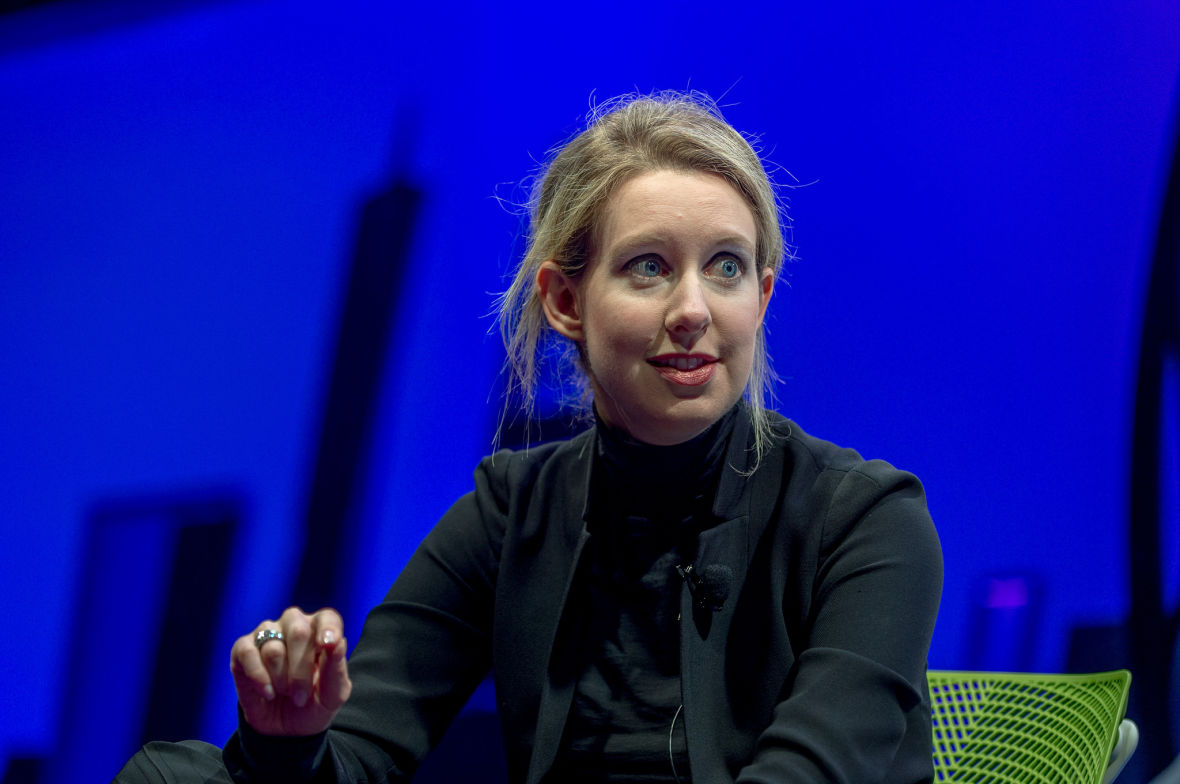
"caption": "Theranos founder and CEO Elizabeth Holmes at the Fortune Global Forum, November 2015.",
"description": null,
"title": "Theranos",
"credit": " Stuart Isett/Fortune Global Forum",
"status": "inherit",
"isLoading": false,
"fetchFailed": false
},
"futureofyou_1013": {
"type": "attachments",
"id": "futureofyou_1013",
"meta": {
"index": "attachments_1716263798",
"site": "futureofyou",
"id": "1013",
"found": true
},
"parent": 769,
"imgSizes": {
"twentyfourteen-full-width": {
"file": "https://ww2.kqed.org/app/uploads/sites/13/2015/03/EBOLA-1038x576.jpg",
"width": 1038,
"mimeType": "image/jpeg",
"height": 576
},
"thumbnail": {
"file": "https://ww2.kqed.org/app/uploads/sites/13/2015/03/EBOLA-400x300.jpg",
"width": 400,
"mimeType": "image/jpeg",
"height": 300
},
"fd-sm": {
"file": "https://ww2.kqed.org/app/uploads/sites/13/2015/03/EBOLA-320x240.jpg",
"width": 320,
"mimeType": "image/jpeg",
"height": 240
},
"post-thumbnail": {
"file": "https://ww2.kqed.org/app/uploads/sites/13/2015/03/EBOLA-672x372.jpg",
"width": 672,
"mimeType": "image/jpeg",
"height": 372
},
"kqedFullSize": {
"file": "https://ww2.kqed.org/app/uploads/sites/13/2015/03/EBOLA.jpg",
"width": 2048,
"height": 1536
},
"large": {
"file": "https://ww2.kqed.org/app/uploads/sites/13/2015/03/EBOLA-1180x885.jpg",
"width": 1180,
"mimeType": "image/jpeg",
"height": 885
},
"guest-author-96": {
"file": "https://ww2.kqed.org/app/uploads/sites/13/2015/03/EBOLA-96x96.jpg",
"width": 96,
"mimeType": "image/jpeg",
"height": 96
},
"medium": {
"file": "https://ww2.kqed.org/app/uploads/sites/13/2015/03/EBOLA-800x600.jpg",
"width": 800,
"mimeType": "image/jpeg",
"height": 600
},
"guest-author-64": {
"file": "https://ww2.kqed.org/app/uploads/sites/13/2015/03/EBOLA-64x64.jpg",
"width": 64,
"mimeType": "image/jpeg",
"height": 64
},
"guest-author-32": {
"file": "https://ww2.kqed.org/app/uploads/sites/13/2015/03/EBOLA-32x32.jpg",
"width": 32,
"mimeType": "image/jpeg",
"height": 32
},
"fd-lrg": {
"file": "https://ww2.kqed.org/app/uploads/sites/13/2015/03/EBOLA-1180x885.jpg",
"width": 1180,
"mimeType": "image/jpeg",
"height": 885
},
"fd-med": {
"file": "https://ww2.kqed.org/app/uploads/sites/13/2015/03/EBOLA-768x576.jpg",
"width": 768,
"mimeType": "image/jpeg",
"height": 576
},
"detail": {
"file": "https://ww2.kqed.org/app/uploads/sites/13/2015/03/EBOLA-75x75.jpg",
"width": 75,
"mimeType": "image/jpeg",
"height": 75
},
"guest-author-128": {
"file": "https://ww2.kqed.org/app/uploads/sites/13/2015/03/EBOLA-128x128.jpg",
"width": 128,
"mimeType": "image/jpeg",
"height": 128
}
},
"publishDate": 1427741295,
"modified": 1457395269,
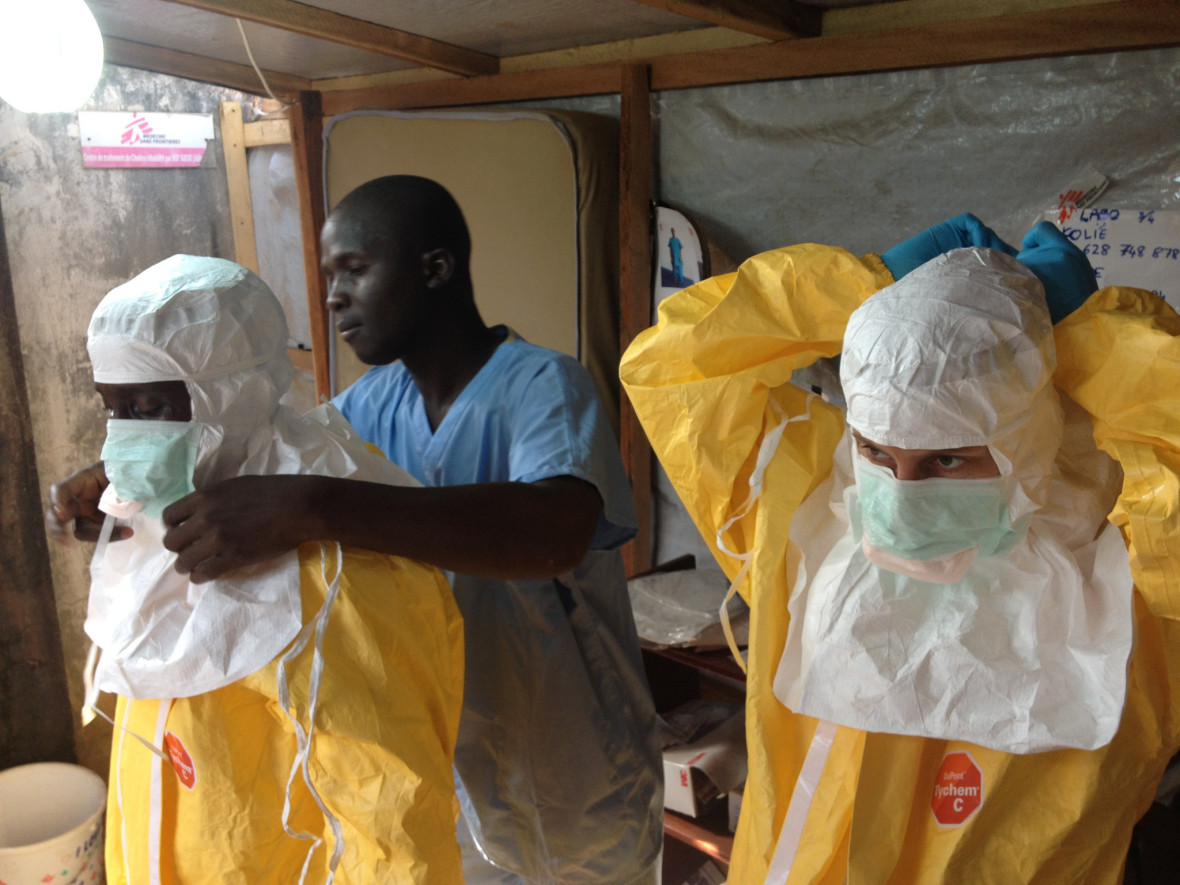
"caption": "Aid workers wearing protective suits in West Africa in August 2013.",
"description": null,
"title": "EBOLA",
"credit": "European Commission DG ECHO ",
"status": "inherit",
"isLoading": false,
"fetchFailed": false
},
"futureofyou_124355": {
"type": "attachments",
"id": "futureofyou_124355",
"meta": {
"index": "attachments_1716263798",
"site": "futureofyou",
"id": "124355",
"found": true
},
"parent": 124329,
"imgSizes": {
"twentyfourteen-full-width": {
"file": "https://ww2.kqed.org/app/uploads/sites/13/2016/03/zikainsect-1038x576.jpg",
"width": 1038,
"mimeType": "image/jpeg",
"height": 576
},
"thumbnail": {
"file": "https://ww2.kqed.org/app/uploads/sites/13/2016/03/zikainsect-400x267.jpg",
"width": 400,
"mimeType": "image/jpeg",
"height": 267
},
"fd-sm": {
"file": "https://ww2.kqed.org/app/uploads/sites/13/2016/03/zikainsect-960x640.jpg",
"width": 960,
"mimeType": "image/jpeg",
"height": 640
},
"post-thumbnail": {
"file": "https://ww2.kqed.org/app/uploads/sites/13/2016/03/zikainsect-672x372.jpg",
"width": 672,
"mimeType": "image/jpeg",
"height": 372
},
"kqedFullSize": {
"file": "https://ww2.kqed.org/app/uploads/sites/13/2016/03/zikainsect.jpg",
"width": 1838,
"height": 1226
},
"large": {
"file": "https://ww2.kqed.org/app/uploads/sites/13/2016/03/zikainsect-1180x787.jpg",
"width": 1180,
"mimeType": "image/jpeg",
"height": 787
},
"guest-author-96": {
"file": "https://ww2.kqed.org/app/uploads/sites/13/2016/03/zikainsect-96x96.jpg",
"width": 96,
"mimeType": "image/jpeg",
"height": 96
},
"medium": {
"file": "https://ww2.kqed.org/app/uploads/sites/13/2016/03/zikainsect-800x534.jpg",
"width": 800,
"mimeType": "image/jpeg",
"height": 534
},
"guest-author-64": {
"file": "https://ww2.kqed.org/app/uploads/sites/13/2016/03/zikainsect-64x64.jpg",
"width": 64,
"mimeType": "image/jpeg",
"height": 64
},
"guest-author-32": {
"file": "https://ww2.kqed.org/app/uploads/sites/13/2016/03/zikainsect-32x32.jpg",
"width": 32,
"mimeType": "image/jpeg",
"height": 32
},
"fd-med": {
"file": "https://ww2.kqed.org/app/uploads/sites/13/2016/03/zikainsect-1180x787.jpg",
"width": 1180,
"mimeType": "image/jpeg",
"height": 787
},
"detail": {
"file": "https://ww2.kqed.org/app/uploads/sites/13/2016/03/zikainsect-75x75.jpg",
"width": 75,
"mimeType": "image/jpeg",
"height": 75
},
"medium_large": {
"file": "https://ww2.kqed.org/app/uploads/sites/13/2016/03/zikainsect-768x512.jpg",
"width": 768,
"mimeType": "image/jpeg",
"height": 512
},
"guest-author-128": {
"file": "https://ww2.kqed.org/app/uploads/sites/13/2016/03/zikainsect-128x128.jpg",
"width": 128,
"mimeType": "image/jpeg",
"height": 128
}
},
"publishDate": 1457371610,
"modified": 1470675920,
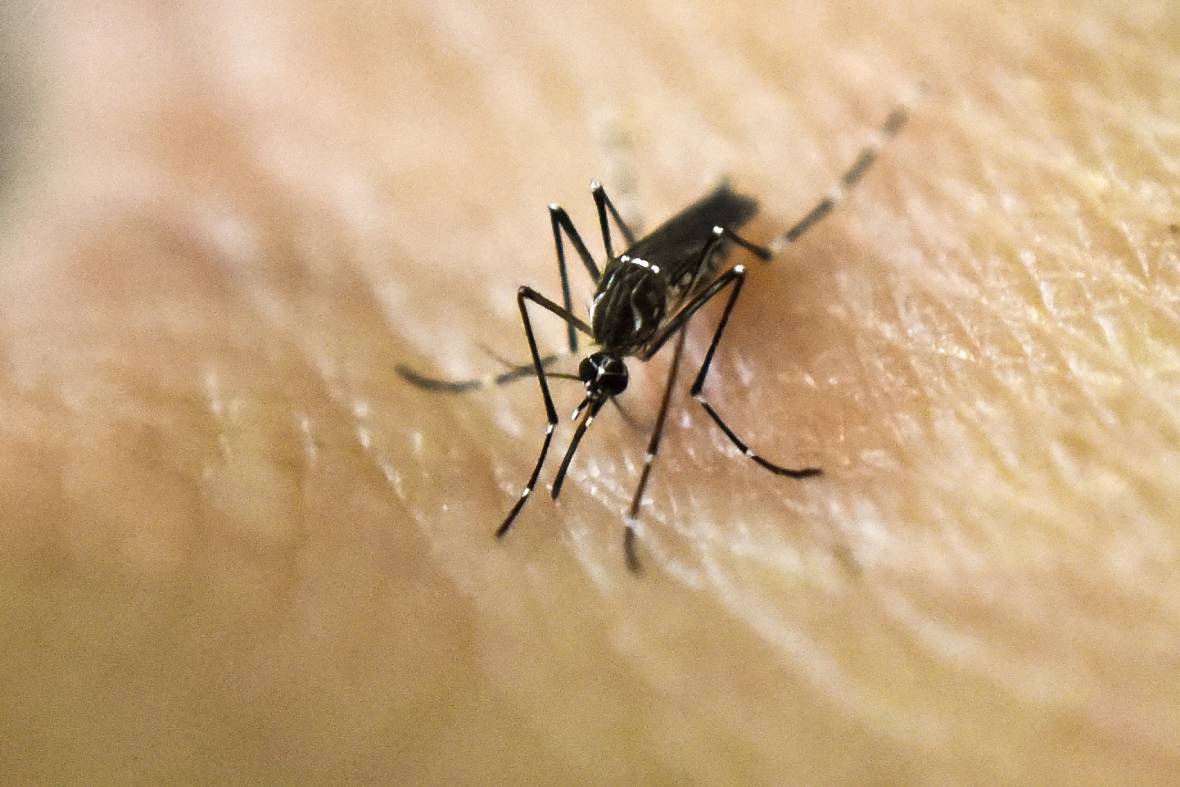
"caption": "An Aedes Aegypti mosquito, which carries the Zika virus, is photographed on human skin in a lab of the International Training and Medical Research Training Center (CIDEIM) on Jan. 25, 2016, in Cali, Colombia.",
"description": null,
"title": "COLOMBIA-SCIENCE-HEALTH-ZIKA-VIRUS",
"credit": "Luis Robayo/AFP/Getty Images",
"status": "inherit",
"isLoading": false,
"fetchFailed": false
},
"futureofyou_122928": {
"type": "attachments",
"id": "futureofyou_122928",
"meta": {
"index": "attachments_1716263798",
"site": "futureofyou",
"id": "122928",
"found": true
},
"parent": 122903,
"imgSizes": {
"twentyfourteen-full-width": {
"file": "https://ww2.kqed.org/app/uploads/sites/13/2016/03/running-1038x576.jpg",
"width": 1038,
"mimeType": "image/jpeg",
"height": 576
},
"thumbnail": {
"file": "https://ww2.kqed.org/app/uploads/sites/13/2016/03/running-400x266.jpg",
"width": 400,
"mimeType": "image/jpeg",
"height": 266
},
"fd-sm": {
"file": "https://ww2.kqed.org/app/uploads/sites/13/2016/03/running-960x639.jpg",
"width": 960,
"mimeType": "image/jpeg",
"height": 639
},
"post-thumbnail": {
"file": "https://ww2.kqed.org/app/uploads/sites/13/2016/03/running-672x372.jpg",
"width": 672,
"mimeType": "image/jpeg",
"height": 372
},
"kqedFullSize": {
"file": "https://ww2.kqed.org/app/uploads/sites/13/2016/03/running-e1457126383892.jpg",
"width": 1920,
"height": 1278
},
"large": {
"file": "https://ww2.kqed.org/app/uploads/sites/13/2016/03/running-1180x785.jpg",
"width": 1180,
"mimeType": "image/jpeg",
"height": 785
},
"guest-author-96": {
"file": "https://ww2.kqed.org/app/uploads/sites/13/2016/03/running-96x96.jpg",
"width": 96,
"mimeType": "image/jpeg",
"height": 96
},
"medium": {
"file": "https://ww2.kqed.org/app/uploads/sites/13/2016/03/running-800x532.jpg",
"width": 800,
"mimeType": "image/jpeg",
"height": 532
},
"guest-author-64": {
"file": "https://ww2.kqed.org/app/uploads/sites/13/2016/03/running-64x64.jpg",
"width": 64,
"mimeType": "image/jpeg",
"height": 64
},
"guest-author-32": {
"file": "https://ww2.kqed.org/app/uploads/sites/13/2016/03/running-32x32.jpg",
"width": 32,
"mimeType": "image/jpeg",
"height": 32
},
"fd-lrg": {
"file": "https://ww2.kqed.org/app/uploads/sites/13/2016/03/running-1920x1278.jpg",
"width": 1920,
"mimeType": "image/jpeg",
"height": 1278
},
"fd-med": {
"file": "https://ww2.kqed.org/app/uploads/sites/13/2016/03/running-1180x785.jpg",
"width": 1180,
"mimeType": "image/jpeg",
"height": 785
},
"detail": {
"file": "https://ww2.kqed.org/app/uploads/sites/13/2016/03/running-75x75.jpg",
"width": 75,
"mimeType": "image/jpeg",
"height": 75
},
"medium_large": {
"file": "https://ww2.kqed.org/app/uploads/sites/13/2016/03/running-768x511.jpg",
"width": 768,
"mimeType": "image/jpeg",
"height": 511
},
"guest-author-128": {
"file": "https://ww2.kqed.org/app/uploads/sites/13/2016/03/running-128x128.jpg",
"width": 128,
"mimeType": "image/jpeg",
"height": 128
}
},
"publishDate": 1457126352,
"modified": 1457126391,
"caption": null,
"description": null,
"title": "running",
"credit": "Photo by Getty Images",
"status": "inherit",
"isLoading": false,
"fetchFailed": false
},
"futureofyou_122826": {
"type": "attachments",
"id": "futureofyou_122826",
"meta": {
"index": "attachments_1716263798",
"site": "futureofyou",
"id": "122826",
"found": true
},
"parent": 122381,
"imgSizes": {
"twentyfourteen-full-width": {
"file": "https://ww2.kqed.org/app/uploads/sites/13/2016/03/baby-pic-1038x576.jpg",
"width": 1038,
"mimeType": "image/jpeg",
"height": 576
},
"thumbnail": {
"file": "https://ww2.kqed.org/app/uploads/sites/13/2016/03/baby-pic-400x282.jpg",
"width": 400,
"mimeType": "image/jpeg",
"height": 282
},
"fd-sm": {
"file": "https://ww2.kqed.org/app/uploads/sites/13/2016/03/baby-pic-960x677.jpg",
"width": 960,
"mimeType": "image/jpeg",
"height": 677
},
"post-thumbnail": {
"file": "https://ww2.kqed.org/app/uploads/sites/13/2016/03/baby-pic-672x372.jpg",
"width": 672,
"mimeType": "image/jpeg",
"height": 372
},
"kqedFullSize": {
"file": "https://ww2.kqed.org/app/uploads/sites/13/2016/03/baby-pic.jpg",
"width": 2640,
"height": 1862
},
"large": {
"file": "https://ww2.kqed.org/app/uploads/sites/13/2016/03/baby-pic-1180x832.jpg",
"width": 1180,
"mimeType": "image/jpeg",
"height": 832
},
"guest-author-96": {
"file": "https://ww2.kqed.org/app/uploads/sites/13/2016/03/baby-pic-96x96.jpg",
"width": 96,
"mimeType": "image/jpeg",
"height": 96
},
"medium": {
"file": "https://ww2.kqed.org/app/uploads/sites/13/2016/03/baby-pic-800x564.jpg",
"width": 800,
"mimeType": "image/jpeg",
"height": 564
},
"guest-author-64": {
"file": "https://ww2.kqed.org/app/uploads/sites/13/2016/03/baby-pic-64x64.jpg",
"width": 64,
"mimeType": "image/jpeg",
"height": 64
},
"guest-author-32": {
"file": "https://ww2.kqed.org/app/uploads/sites/13/2016/03/baby-pic-32x32.jpg",
"width": 32,
"mimeType": "image/jpeg",
"height": 32
},
"fd-lrg": {
"file": "https://ww2.kqed.org/app/uploads/sites/13/2016/03/baby-pic-1920x1354.jpg",
"width": 1920,
"mimeType": "image/jpeg",
"height": 1354
},
"fd-med": {
"file": "https://ww2.kqed.org/app/uploads/sites/13/2016/03/baby-pic-1180x832.jpg",
"width": 1180,
"mimeType": "image/jpeg",
"height": 832
},
"detail": {
"file": "https://ww2.kqed.org/app/uploads/sites/13/2016/03/baby-pic-75x75.jpg",
"width": 75,
"mimeType": "image/jpeg",
"height": 75
},
"medium_large": {
"file": "https://ww2.kqed.org/app/uploads/sites/13/2016/03/baby-pic-768x542.jpg",
"width": 768,
"mimeType": "image/jpeg",
"height": 542
},
"guest-author-128": {
"file": "https://ww2.kqed.org/app/uploads/sites/13/2016/03/baby-pic-128x128.jpg",
"width": 128,
"mimeType": "image/jpeg",
"height": 128
}
},
"publishDate": 1457114249,
"modified": 1457114265,
"caption": "Multiple factors influence childhood obesity and a new algorithm can predict a kid's chance of being overweight.",
"description": "Multiple factors influence childhood obesity and a new algorithm can predict a kid's chance of being overweight.",
"title": "Mom with baby on the beach",
"credit": "iStock",
"status": "inherit",
"isLoading": false,
"fetchFailed": false
},
"futureofyou_122353": {
"type": "attachments",
"id": "futureofyou_122353",
"meta": {
"index": "attachments_1716263798",
"site": "futureofyou",
"id": "122353",
"found": true
},
"parent": 122326,
"imgSizes": {
"twentyfourteen-full-width": {
"file": "https://ww2.kqed.org/app/uploads/sites/13/2016/03/BloodPressure-1038x576.jpg",
"width": 1038,
"mimeType": "image/jpeg",
"height": 576
},
"thumbnail": {
"file": "https://ww2.kqed.org/app/uploads/sites/13/2016/03/BloodPressure-400x267.jpg",
"width": 400,
"mimeType": "image/jpeg",
"height": 267
},
"fd-sm": {
"file": "https://ww2.kqed.org/app/uploads/sites/13/2016/03/BloodPressure-960x640.jpg",
"width": 960,
"mimeType": "image/jpeg",
"height": 640
},
"post-thumbnail": {
"file": "https://ww2.kqed.org/app/uploads/sites/13/2016/03/BloodPressure-672x372.jpg",
"width": 672,
"mimeType": "image/jpeg",
"height": 372
},
"kqedFullSize": {
"file": "https://ww2.kqed.org/app/uploads/sites/13/2016/03/BloodPressure.jpg",
"width": 3000,
"height": 2000
},
"large": {
"file": "https://ww2.kqed.org/app/uploads/sites/13/2016/03/BloodPressure-1180x787.jpg",
"width": 1180,
"mimeType": "image/jpeg",
"height": 787
},
"guest-author-96": {
"file": "https://ww2.kqed.org/app/uploads/sites/13/2016/03/BloodPressure-96x96.jpg",
"width": 96,
"mimeType": "image/jpeg",
"height": 96
},
"medium": {
"file": "https://ww2.kqed.org/app/uploads/sites/13/2016/03/BloodPressure-800x533.jpg",
"width": 800,
"mimeType": "image/jpeg",
"height": 533
},
"guest-author-64": {
"file": "https://ww2.kqed.org/app/uploads/sites/13/2016/03/BloodPressure-64x64.jpg",
"width": 64,
"mimeType": "image/jpeg",
"height": 64
},
"guest-author-32": {
"file": "https://ww2.kqed.org/app/uploads/sites/13/2016/03/BloodPressure-32x32.jpg",
"width": 32,
"mimeType": "image/jpeg",
"height": 32
},
"fd-lrg": {
"file": "https://ww2.kqed.org/app/uploads/sites/13/2016/03/BloodPressure-1920x1280.jpg",
"width": 1920,
"mimeType": "image/jpeg",
"height": 1280
},
"fd-med": {
"file": "https://ww2.kqed.org/app/uploads/sites/13/2016/03/BloodPressure-1180x787.jpg",
"width": 1180,
"mimeType": "image/jpeg",
"height": 787
},
"detail": {
"file": "https://ww2.kqed.org/app/uploads/sites/13/2016/03/BloodPressure-75x75.jpg",
"width": 75,
"mimeType": "image/jpeg",
"height": 75
},
"medium_large": {
"file": "https://ww2.kqed.org/app/uploads/sites/13/2016/03/BloodPressure-768x512.jpg",
"width": 768,
"mimeType": "image/jpeg",
"height": 512
},
"guest-author-128": {
"file": "https://ww2.kqed.org/app/uploads/sites/13/2016/03/BloodPressure-128x128.jpg",
"width": 128,
"mimeType": "image/jpeg",
"height": 128
}
},
"publishDate": 1457040446,
"modified": 1457040485,
"caption": null,
"description": null,
"title": "Health Care Activists Offer Free Health Screenings In Los Angeles",
"credit": "Photo by David McNew/Getty Images",
"status": "inherit",
"isLoading": false,
"fetchFailed": false
},
"futureofyou_122292": {
"type": "attachments",
"id": "futureofyou_122292",
"meta": {
"index": "attachments_1716263798",
"site": "futureofyou",
"id": "122292",
"found": true
},
"parent": 122266,
"imgSizes": {
"twentyfourteen-full-width": {
"file": "https://ww2.kqed.org/app/uploads/sites/13/2016/03/computer-1038x576.jpg",
"width": 1038,
"mimeType": "image/jpeg",
"height": 576
},
"thumbnail": {
"file": "https://ww2.kqed.org/app/uploads/sites/13/2016/03/computer-400x252.jpg",
"width": 400,
"mimeType": "image/jpeg",
"height": 252
},
"fd-sm": {
"file": "https://ww2.kqed.org/app/uploads/sites/13/2016/03/computer-960x604.jpg",
"width": 960,
"mimeType": "image/jpeg",
"height": 604
},
"post-thumbnail": {
"file": "https://ww2.kqed.org/app/uploads/sites/13/2016/03/computer-672x372.jpg",
"width": 672,
"mimeType": "image/jpeg",
"height": 372
},
"kqedFullSize": {
"file": "https://ww2.kqed.org/app/uploads/sites/13/2016/03/computer-e1457032780408.jpg",
"width": 1920,
"height": 1209
},
"large": {
"file": "https://ww2.kqed.org/app/uploads/sites/13/2016/03/computer-1180x743.jpg",
"width": 1180,
"mimeType": "image/jpeg",
"height": 743
},
"guest-author-96": {
"file": "https://ww2.kqed.org/app/uploads/sites/13/2016/03/computer-96x96.jpg",
"width": 96,
"mimeType": "image/jpeg",
"height": 96
},
"medium": {
"file": "https://ww2.kqed.org/app/uploads/sites/13/2016/03/computer-800x504.jpg",
"width": 800,
"mimeType": "image/jpeg",
"height": 504
},
"guest-author-64": {
"file": "https://ww2.kqed.org/app/uploads/sites/13/2016/03/computer-64x64.jpg",
"width": 64,
"mimeType": "image/jpeg",
"height": 64
},
"guest-author-32": {
"file": "https://ww2.kqed.org/app/uploads/sites/13/2016/03/computer-32x32.jpg",
"width": 32,
"mimeType": "image/jpeg",
"height": 32
},
"fd-lrg": {
"file": "https://ww2.kqed.org/app/uploads/sites/13/2016/03/computer-1920x1209.jpg",
"width": 1920,
"mimeType": "image/jpeg",
"height": 1209
},
"fd-med": {
"file": "https://ww2.kqed.org/app/uploads/sites/13/2016/03/computer-1180x743.jpg",
"width": 1180,
"mimeType": "image/jpeg",
"height": 743
},
"detail": {
"file": "https://ww2.kqed.org/app/uploads/sites/13/2016/03/computer-75x75.jpg",
"width": 75,
"mimeType": "image/jpeg",
"height": 75
},
"medium_large": {
"file": "https://ww2.kqed.org/app/uploads/sites/13/2016/03/computer-768x484.jpg",
"width": 768,
"mimeType": "image/jpeg",
"height": 484
},
"guest-author-128": {
"file": "https://ww2.kqed.org/app/uploads/sites/13/2016/03/computer-128x128.jpg",
"width": 128,
"mimeType": "image/jpeg",
"height": 128
}
},
"publishDate": 1457032762,
"modified": 1457032817,
"caption": null,
"description": null,
"title": "IFA 2012 Consumer Electronics Trade Fair",
"credit": " Photo by Adam Berry/Getty Images",
"status": "inherit",
"isLoading": false,
"fetchFailed": false
}
},
"audioPlayerReducer": {
"postId": "stream_live",
"isPaused": true,
"isPlaying": false,
"pfsActive": false,
"pledgeModalIsOpen": true,
"playerDrawerIsOpen": false,
"liveAudioPlayStartedAt": 0,
"liveAudioPlayContext": ""
},
"authorsReducer": {
"byline_futureofyou_122997": {
"type": "authors",
"id": "byline_futureofyou_122997",
"meta": {
"override": true
},
"slug": "byline_futureofyou_122997",
"name": "Lesley McClurg",
"isLoading": false
},
"byline_futureofyou_124506": {
"type": "authors",
"id": "byline_futureofyou_124506",
"meta": {
"override": true
},
"slug": "byline_futureofyou_124506",
"name": "Raphael Satter and Maria Cheng\u003cbr /> Associated Press",
"isLoading": false
},
"byline_futureofyou_122903": {
"type": "authors",
"id": "byline_futureofyou_122903",
"meta": {
"override": true
},
"slug": "byline_futureofyou_122903",
"name": "Anick Jesdanun\u003cbr />Associated Press",
"isLoading": false
},
"byline_futureofyou_122326": {
"type": "authors",
"id": "byline_futureofyou_122326",
"meta": {
"override": true
},
"slug": "byline_futureofyou_122326",
"name": "Rebecca Plevin\u003cbr />KPCC",
"isLoading": false
},
"byline_futureofyou_122266": {
"type": "authors",
"id": "byline_futureofyou_122266",
"meta": {
"override": true
},
"slug": "byline_futureofyou_122266",
"name": "Shefali Luthra \u003c/br />\u003ca href=\"http://khn.org/\">Kaiser Health News\u003c/a>",
"isLoading": false
},
"jbrooks": {
"type": "authors",
"id": "80",
"meta": {
"index": "authors_1716337520",
"id": "80",
"found": true
},
"name": "Jon Brooks",
"firstName": "Jon",
"lastName": "Brooks",
"slug": "jbrooks",
"email": "jbrooks@kqed.org",
"display_author_email": true,
"staff_mastheads": [
"science"
],
"title": "Digital Editor",
"bio": "Jon Brooks is a former Digital Editor for KQED Science. He is the former editor of KQED’s daily news blog, News Fix. In 2014, he won a California Journalism Award for his coverage of ride services like Uber and Lyft and the taxi industry. A veteran blogger, he previously worked for Yahoo! in various news writing and editing roles. Jon is also a playwright whose work has been produced in San Francisco, New York, Italy, and around the U.S. He has written about film for his own blog and studied film at Boston University.",
"avatar": "https://secure.gravatar.com/avatar/98887f7ed1c876ed414d4c915e969584?s=600&d=blank&r=g",
"twitter": "jbrooksfoy",
"facebook": null,
"instagram": null,
"linkedin": null,
"sites": [
{
"site": "arts",
"roles": [
"Contributor",
"editor"
]
},
{
"site": "news",
"roles": [
"author"
]
},
{
"site": "futureofyou",
"roles": [
"administrator"
]
},
{
"site": "mindshift",
"roles": [
"editor"
]
},
{
"site": "stateofhealth",
"roles": [
"editor"
]
},
{
"site": "science",
"roles": [
"administrator"
]
},
{
"site": "quest",
"roles": [
"editor"
]
}
],
"headData": {
"title": "Jon Brooks | KQED",
"description": "Digital Editor",
"ogImgSrc": "https://secure.gravatar.com/avatar/98887f7ed1c876ed414d4c915e969584?s=600&d=blank&r=g",
"twImgSrc": "https://secure.gravatar.com/avatar/98887f7ed1c876ed414d4c915e969584?s=600&d=blank&r=g"
},
"isLoading": false,
"link": "/author/jbrooks"
},
"lindseyhoshaw": {
"type": "authors",
"id": "5432",
"meta": {
"index": "authors_1716337520",
"id": "5432",
"found": true
},
"name": "Lindsey Hoshaw",
"firstName": "Lindsey",
"lastName": "Hoshaw",
"slug": "lindseyhoshaw",
"email": "lhoshaw@kqed.org",
"display_author_email": false,
"staff_mastheads": [],
"title": "KQED Contributor",
"bio": "Lindsey Hoshaw is a former interactive producer for KQED Science. Before joining KQED, Lindsey was a science correspondent for The New York Times, The Boston Globe, Forbes and Scientific American. On Twitter @lindseyhoshaw",
"avatar": "https://secure.gravatar.com/avatar/274b07694c998eaa8f26cfabaa941186?s=600&d=mm&r=g",
"twitter": "lindseyhoshaw",
"facebook": "lindsey.hoshaw.9",
"instagram": null,
"linkedin": null,
"sites": [
{
"site": "arts",
"roles": [
"author"
]
},
{
"site": "news",
"roles": [
"subscriber"
]
},
{
"site": "futureofyou",
"roles": [
"editor"
]
},
{
"site": "bayareabites",
"roles": [
"contributor"
]
},
{
"site": "stateofhealth",
"roles": [
"author"
]
},
{
"site": "science",
"roles": [
"edit_theme_options",
"subscriber"
]
},
{
"site": "quest",
"roles": [
"edit_post_subscriptions",
"edit_usergroups",
"unfiltered_html",
"unfiltered_upload",
"leadcoordinator",
"editor"
]
},
{
"site": "food",
"roles": []
}
],
"headData": {
"title": "Lindsey Hoshaw | KQED",
"description": "KQED Contributor",
"ogImgSrc": "https://secure.gravatar.com/avatar/274b07694c998eaa8f26cfabaa941186?s=600&d=mm&r=g",
"twImgSrc": "https://secure.gravatar.com/avatar/274b07694c998eaa8f26cfabaa941186?s=600&d=mm&r=g"
},
"isLoading": false,
"link": "/author/lindseyhoshaw"
},
"sheraz-sadiq": {
"type": "authors",
"id": "6176",
"meta": {
"index": "authors_1716337520",
"id": "6176",
"found": true
},
"name": "Sheraz Sadiq",
"firstName": "Sheraz",
"lastName": "Sadiq",
"slug": "sheraz-sadiq",
"email": "ssadiq@kqed.org",
"display_author_email": false,
"staff_mastheads": [],
"title": "KQED Contributor",
"bio": "Sheraz Sadiq is an Emmy Award-winning producer at San Francisco PBS affiliate KQED. In 2012, he received the AAAS Kavli Science Journalism award for a story he produced about the seismic retrofit of the Hetch Hetchy water delivery system which serves the San Francisco Bay Area. In addition to producing television content for KQED Science, he has also created online features and written news articles on scientific subjects ranging from astronomy to synthetic biology.",
"avatar": "https://secure.gravatar.com/avatar/d88c61c214e477c4c6f0ebaed4f581bf7c9b1dafd94cd4361285d427107adb8d?s=600&d=blank&r=g",
"twitter": null,
"bluesky": null,
"facebook": null,
"instagram": null,
"linkedin": null,
"sites": [
{
"site": "arts",
"roles": [
"subscriber"
]
},
{
"site": "news",
"roles": [
"subscriber"
]
},
{
"site": "futureofyou",
"roles": [
"subscriber"
]
},
{
"site": "science",
"roles": [
"subscriber"
]
},
{
"site": "quest",
"roles": [
"leadcoordinator",
"subscriber"
]
}
],
"headData": {
"title": "Sheraz Sadiq | KQED",
"description": "KQED Contributor",
"ogImgSrc": "https://secure.gravatar.com/avatar/d88c61c214e477c4c6f0ebaed4f581bf7c9b1dafd94cd4361285d427107adb8d?s=600&d=blank&r=g",
"twImgSrc": "https://secure.gravatar.com/avatar/d88c61c214e477c4c6f0ebaed4f581bf7c9b1dafd94cd4361285d427107adb8d?s=600&d=blank&r=g"
},
"isLoading": false,
"link": "/author/sheraz-sadiq"
},
"dr-barry-starr": {
"type": "authors",
"id": "6177",
"meta": {
"index": "authors_1716337520",
"id": "6177",
"found": true
},
"name": "Dr. Barry Starr",
"firstName": "Dr. Barry",
"lastName": "Starr",
"slug": "dr-barry-starr",
"email": "bstarr@thetech.org",
"display_author_email": false,
"staff_mastheads": [],
"title": "KQED Contributor",
"bio": "Dr. Barry Starr (\u003ca href=\"https://twitter.com/geneticsboy\">@geneticsboy\u003c/a>) is a Geneticist-in-Residence at The Tech Museum of Innovation in San Jose, CA and runs their Stanford at The Tech program. The program is part of an ongoing collaboration between the \u003ca href=\"http://genetics.stanford.edu/\">Stanford Department of Genetics\u003c/a> and \u003ca href=\"http://www.thetech.org/\">The Tech Museum of Innovation\u003c/a>. Together these two partners created the \u003ca href=\"http://www.thetech.org/exhibits/permanent/index.php?sGalKey=gtwt&galKey=lt\">Genetics: Technology with a Twist\u003c/a> exhibition.\r\n\r\nYou can also see \u003ca href=\"https://ww2.kqed.org/science/author/dr-barry-starr/\">additional posts by Barry at KQED Science\u003c/a>, and read his \u003ca href=\"http://science.kqed.org/quest/author/dr-barry-starr/\">previous contributions\u003c/a> to \u003ca href=\"http://science.kqed.org/quest/\">QUEST\u003c/a>, a project dedicated to exploring the Science of Sustainability.",
"avatar": "https://secure.gravatar.com/avatar/4a5680e4c642ea0f0f3041af16018969?s=600&d=blank&r=g",
"twitter": "geneticsboy",
"facebook": null,
"instagram": null,
"linkedin": null,
"sites": [
{
"site": "futureofyou",
"roles": []
},
{
"site": "science",
"roles": [
"author"
]
},
{
"site": "quest",
"roles": [
"subscriber"
]
}
],
"headData": {
"title": "Dr. Barry Starr | KQED",
"description": "KQED Contributor",
"ogImgSrc": "https://secure.gravatar.com/avatar/4a5680e4c642ea0f0f3041af16018969?s=600&d=blank&r=g",
"twImgSrc": "https://secure.gravatar.com/avatar/4a5680e4c642ea0f0f3041af16018969?s=600&d=blank&r=g"
},
"isLoading": false,
"link": "/author/dr-barry-starr"
}
},
"pagesReducer": {
"futureofyou_program_future-of-you": {
"type": "terms",
"id": "futureofyou_54",
"meta": {
"index": "terms_1716263798",
"site": "futureofyou",
"id": "54",
"score": 14.775631
},
"featImg": null,
"name": "Future of You",
"description": null,
"taxonomy": "program",
"headData": {
"twImgId": null,
"twTitle": null,
"ogTitle": null,
"ogImgId": null,
"twDescription": null,
"description": null,
"title": "Future of You Archives | KQED Arts",
"ogDescription": null
},
"ttid": 54,
"slug": "future-of-you",
"isLoading": false,
"title": "Future of You",
"pageMeta": {
"site": "futureofyou",
"WpPageTemplate": "page-topic-editorial",
"currentPage": 6
},
"blocks": [
{
"blockName": "kqed/post-list",
"attrs": {
"layout": "cardArticle2",
"query": "posts/futureofyou?program=future-of-you",
"seeMore": false,
"paginated": true,
"page": 6
}
},
{
"blockName": "kqed/ad"
}
]
}
},
"pfsSessionReducer": {},
"postsReducer": {
"stream_live": {
"type": "live",
"id": "stream_live",
"audioUrl": "https://streams.kqed.org/kqedradio",
"title": "Live Stream",
"excerpt": "Live Stream information currently unavailable.",
"link": "/radio",
"featImg": "",
"label": {
"name": "KQED Live",
"link": "/"
}
},
"stream_kqedNewscast": {
"type": "posts",
"id": "stream_kqedNewscast",
"audioUrl": "https://www.kqed.org/.stream/anon/radio/RDnews/newscast.mp3?_=1",
"title": "KQED Newscast",
"featImg": "",
"label": {
"name": "88.5 FM",
"link": "/"
}
},
"futureofyou_125049": {
"type": "posts",
"id": "futureofyou_125049",
"meta": {
"index": "posts_1716263798",
"site": "futureofyou",
"id": "125049",
"score": null,
"sort": [
1457682010000
]
},
"parent": 0,
"labelTerm": {
"site": "futureofyou",
"term": 54
},
"blocks": [],
"publishDate": 1457682010,
"format": "standard",
"disqusTitle": "What Are the Coming Disruptive Trends in Health Care?",
"title": "What Are the Coming Disruptive Trends in Health Care?",
"headTitle": "Future of You | KQED Future of You | KQED Science",
"content": "\u003cp>Over at the first annual Social Entrepreneurship & Innovation Conference, put on by the University of San Francisco last week, the mice were a'clickin,' the tweets were a'tweetin' and the entrepreneurs were a'pitchin.'\u003c/p>\n\u003cp>I stopped by the panel devoted to recent advances in medical technology, where one of the questions was: What trends in health care are truly going to be disruptive?\u003c/p>\n\u003cp>Here are some of the panelists' \u003cspan style=\"line-height: 1.5\">answers, which have been edited.\u003c/span>\u003c/p>\n\u003cp style=\"text-align: left\">\"Price transparency is going to be huge over the next decade. More people will want to understand why a hip replacement at one institution costs $25,000 versus $5,000 someplace else. The price convergence of health care and mobile is also going to be powerful -- 95 percent of health care that exists in a facility right now can be delivered at the patient's home, at their workplace, while they're commuting.\"\u003cbr>\n\u003cem> -Connor Landgraf, cofounder \u003ca href=\"https://ekodevices.com/\" target=\"_blank\">EKO Devices\u003c/a>, a digital stethoscope maker\u003c/em>\u003c/p>\n\u003cp>\"We're going to see a lot more data collection and a lot more people getting involved in the medical process, and it won't matter if you have a background in medicine or not. That allows us to tap the wisdom of patients who have gone through these issues themselves, and they are far more expert in their condition than the doctors who originally diagnosed them.\"\u003cbr>\n\u003cem> -Jessica Greenwalt, cofounder \u003ca href=\"https://www.crowdmed.com/\" target=\"_blank\">CrowdMed\u003c/a>, a diagnosis-crowdsourcing site\u003c/em>\u003c/p>\n\u003cp>[ad fullwidth]\u003c/p>\n\u003cp>\"I see a trend in health-tech startups moving toward basing products on actual clinical evidence, which was not the case for a long time. We don't have to reinvent the wheel or create something brand new and crazy and innovative -- you don't need to have an Oculus Rift to do medical care. Sometimes you just take something we know works in the real world and put it online. You find a way to use technology to scale it.\"\u003cbr>\n\u003cem> -Amanda Angelotti, clinical systems designer, \u003ca href=\"http://www.onemedical.com/\" target=\"_blank\">One Medical Group\u003c/a>, membership-based health care\u003c/em>\u003c/p>\n\u003cp>\u003c/p>\n\u003cp>\"The biggest trend in digital health is the collection of data by passive devices, plus genomics. These are two areas that are coming together. Clinicians and medical specialists will massage the data to enable precision medicine for the patient. Mixed up in that is social data: What are you drinking? What are you eating? All that's coming together to be personalized.\"\u003cbr>\n\u003cem> -Pronoy Saha, founder, \u003ca href=\"http://healthtechnologyforum.com/\" target=\"_blank\">Health Technology Forum\u003c/a>, promoting the intersection of health care and technology\u003c/em>\u003c/p>\n\n",
"disqusIdentifier": "125049 http://ww2.kqed.org/futureofyou/?p=125049",
"disqusUrl": "https://ww2.kqed.org/futureofyou/2016/03/10/techmed-entrepreneurs-on-the-coming-disruptive-trends-in-health-care/",
"stats": {
"hasVideo": false,
"hasChartOrMap": false,
"hasAudio": false,
"hasPolis": false,
"wordCount": 439,
"hasGoogleForm": false,
"hasGallery": false,
"hasHearkenModule": false,
"iframeSrcs": [],
"paragraphCount": 8
},
"modified": 1457735869,
"excerpt": "From price transparency to crowdsourcing medical opinions, TechMed entrepreneurs talk trends.",
"headData": {
"twImgId": "",
"twTitle": "",
"ogTitle": "",
"ogImgId": "",
"twDescription": "",
"description": "From price transparency to crowdsourcing medical opinions, TechMed entrepreneurs talk trends.",
"title": "What Are the Coming Disruptive Trends in Health Care? | KQED",
"ogDescription": "",
"schema": {
"@context": "https://schema.org",
"@type": "Article",
"headline": "What Are the Coming Disruptive Trends in Health Care?",
"datePublished": "2016-03-10T23:40:10-08:00",
"dateModified": "2016-03-11T14:37:49-08:00",
"image": "https://cdn.kqed.org/wp-content/uploads/2020/02/KQED-OG-Image@1x.png"
}
},
"guestAuthors": [],
"slug": "techmed-entrepreneurs-on-the-coming-disruptive-trends-in-health-care",
"status": "publish",
"path": "/futureofyou/125049/techmed-entrepreneurs-on-the-coming-disruptive-trends-in-health-care",
"audioTrackLength": null,
"parsedContent": [
{
"type": "contentString",
"content": "\u003cdiv class=\"post-body\">\u003cp>\u003cp>Over at the first annual Social Entrepreneurship & Innovation Conference, put on by the University of San Francisco last week, the mice were a'clickin,' the tweets were a'tweetin' and the entrepreneurs were a'pitchin.'\u003c/p>\n\u003cp>I stopped by the panel devoted to recent advances in medical technology, where one of the questions was: What trends in health care are truly going to be disruptive?\u003c/p>\n\u003cp>Here are some of the panelists' \u003cspan style=\"line-height: 1.5\">answers, which have been edited.\u003c/span>\u003c/p>\n\u003cp style=\"text-align: left\">\"Price transparency is going to be huge over the next decade. More people will want to understand why a hip replacement at one institution costs $25,000 versus $5,000 someplace else. The price convergence of health care and mobile is also going to be powerful -- 95 percent of health care that exists in a facility right now can be delivered at the patient's home, at their workplace, while they're commuting.\"\u003cbr>\n\u003cem> -Connor Landgraf, cofounder \u003ca href=\"https://ekodevices.com/\" target=\"_blank\">EKO Devices\u003c/a>, a digital stethoscope maker\u003c/em>\u003c/p>\n\u003cp>\"We're going to see a lot more data collection and a lot more people getting involved in the medical process, and it won't matter if you have a background in medicine or not. That allows us to tap the wisdom of patients who have gone through these issues themselves, and they are far more expert in their condition than the doctors who originally diagnosed them.\"\u003cbr>\n\u003cem> -Jessica Greenwalt, cofounder \u003ca href=\"https://www.crowdmed.com/\" target=\"_blank\">CrowdMed\u003c/a>, a diagnosis-crowdsourcing site\u003c/em>\u003c/p>\n\u003cp>\u003c/p>\u003c/div>",
"attributes": {
"named": {},
"numeric": []
}
},
{
"type": "component",
"content": "",
"name": "ad",
"attributes": {
"named": {
"label": "fullwidth"
},
"numeric": [
"fullwidth"
]
}
},
{
"type": "contentString",
"content": "\u003cdiv class=\"post-body\">\u003cp>\u003c/p>\n\u003cp>\"I see a trend in health-tech startups moving toward basing products on actual clinical evidence, which was not the case for a long time. We don't have to reinvent the wheel or create something brand new and crazy and innovative -- you don't need to have an Oculus Rift to do medical care. Sometimes you just take something we know works in the real world and put it online. You find a way to use technology to scale it.\"\u003cbr>\n\u003cem> -Amanda Angelotti, clinical systems designer, \u003ca href=\"http://www.onemedical.com/\" target=\"_blank\">One Medical Group\u003c/a>, membership-based health care\u003c/em>\u003c/p>\n\u003cp>\u003c/p>\n\u003cp>\"The biggest trend in digital health is the collection of data by passive devices, plus genomics. These are two areas that are coming together. Clinicians and medical specialists will massage the data to enable precision medicine for the patient. Mixed up in that is social data: What are you drinking? What are you eating? All that's coming together to be personalized.\"\u003cbr>\n\u003cem> -Pronoy Saha, founder, \u003ca href=\"http://healthtechnologyforum.com/\" target=\"_blank\">Health Technology Forum\u003c/a>, promoting the intersection of health care and technology\u003c/em>\u003c/p>\n\n\u003c/div>\u003c/p>",
"attributes": {
"named": {},
"numeric": []
}
}
],
"link": "/futureofyou/125049/techmed-entrepreneurs-on-the-coming-disruptive-trends-in-health-care",
"authors": [
"80"
],
"programs": [
"futureofyou_54"
],
"categories": [
"futureofyou_1",
"futureofyou_73"
],
"tags": [
"futureofyou_80"
],
"featImg": "futureofyou_126160",
"label": "futureofyou_54"
},
"futureofyou_124363": {
"type": "posts",
"id": "futureofyou_124363",
"meta": {
"index": "posts_1716263798",
"site": "futureofyou",
"id": "124363",
"score": null,
"sort": [
1457558238000
]
},
"parent": 0,
"labelTerm": {
"site": "futureofyou",
"term": 54
},
"blocks": [],
"publishDate": 1457558238,
"format": "standard",
"disqusTitle": "First Transplanted Uterus in U.S. Removed After Complications",
"title": "First Transplanted Uterus in U.S. Removed After Complications",
"headTitle": "Future of You | KQED Future of You | KQED Science",
"content": "\u003cp>\u003cstrong>Update Wednesday March 9\u003c/strong>: The feel-good story of the 26-year-old infertile woman who was the recipient of the first transplanted uterus in the U.S has taken a sad turn.\u003c/p>\n\u003cp>The Cleveland Clinic, where the operation was performed on Feb. 24, announced today that the uterus had to be removed after the patient, who has only been identified as Lindsey, developed complications.\u003c/p>\n\u003cp>On Monday, in a triumphant press conference that included the transplant medical team, a wheelchair-bound Lindsey read a statement explaining that she was told of her inability to bear children when she was 16.\u003c/p>\n\u003cp>\"From that moment on, I have prayed that God would allow me the opportunity to experience pregnancy, and here we are today at the beginning of that journey, \" she said.\u003c/p>\n\u003cp>\u003c!-- iframe plugin v.4.3 wordpress.org/plugins/iframe/ -->\u003cbr>\n\u003ciframe width=\"480\" height=\"290\" scrolling=\"no\" src=\"//www.washingtonpost.com/video/c/embed/1ca0e51c-e48e-11e5-a9ce-681055c7a05f\" frameborder=\"0\" class=\"iframe-class\">\u003c/iframe>\u003c/p>\n\u003cp>[ad fullwidth]\u003c/p>\n\u003cp>In the clinic's press release today, she was gracious in commenting on the collapse of that dream.\u003c/p>\n\u003cp>“I just wanted to take a moment to express my gratitude towards all of my doctors,\" she said. \"They acted very quickly to ensure my health and safety. Unfortunately I did lose the uterus to complications. However, I am doing okay and appreciate all of your prayers and good thoughts.”\u003c/p>\n\u003cp>The operation was the first in a clinical trial that will include nine more uterine transplants.\u003c/p>\n\u003cp>The \u003ca href=\"http://www.telegraph.co.uk/news/worldnews/europe/sweden/11824261/Swedish-woman-who-gave-birth-after-womb-transplant-from-own-mother-speaks-of-joy.html\" target=\"_blank\">first successful uterine transplants\u003c/a> -- those that eventually produced babies -- were done in Sweden in 2014.\u003c/p>\n\u003cp>The \u003ca href=\"https://www.washingtonpost.com/news/to-your-health/wp/2016/03/09/first-u-s-uterus-transplant-removed-after-complication/\" target=\"_blank\">Washington Post\u003c/a> is reporting on the unique nature of the U.S. transplant:\u003c/p>\n\u003cblockquote>\u003cp>The major difference between the U.S. and Swedish approaches is the use here of a deceased donor. In Lindsey's case, the donor was a woman in her 30s who had previously given birth and consented in advance to donate her organs, the doctors said. Ruth M. Farrell, an obstetrician and gynecologist who was part of the Cleveland Clinic team, said at Monday's news conference that there have been \"some complications\" for live uterus donors.\u003c/p>\u003c/blockquote>\n\u003cp>Lindsey, like other uterus recipients, was born without a womb. From \u003ca href=\"http://www.nytimes.com/2016/03/08/health/uterus-transplant-cleveland-clinic.html\" target=\"_blank\">The New York Times\u003c/a>:\u003c/p>\n\u003cp>\u003cem>Uterus transplant surgery, still experimental, is meant to help women who want to become pregnant but cannot because they were born without a uterus, suffered damage to it or had to have it removed. Between 3 percent and 5 percent of women of childbearing age worldwide are estimated to be infertile for these reasons, and about 50,000 women in the United States are thought to be potential transplant candidates.\u003c/em>\u003c/p>\n\u003cp>Here's today's full press release from the Cleveland Clinic:\u003c/p>\n\u003cblockquote>\u003cp>We are saddened to share that our patient, Lindsey, recently experienced a sudden complication that led to the removal of her transplanted uterus.\u003c/p>\n\u003cp>On February 25, Cleveland Clinic announced the first uterus transplant as part of a clinical study for women who suffer from uterine factor infertility. At this time, the circumstance of the complication is under review and more information will be shared as it becomes available.\u003c/p>\n\u003cp>There is a known risk in solid organ transplantation that the transplanted organ may have to be removed should a complication arise. The medical team took all necessary precautions and measures to ensure the safety of our patient.\u003c/p>\n\u003cp>While this has been difficult for both the patient and the medical team, Lindsey is doing well and recovering.\u003c/p>\n\u003cp>The study, which has been planned to include 10 women, is still ongoing with a commitment to the advancement of medical research to provide an additional option for women and their families.”\u003c/p>\n\u003cp>Statement from Lindsey and Blake:\u003c/p>\n\u003cp>“I just wanted to take a moment to express my gratitude towards all of my doctors. They acted very quickly to ensure my health and safety. Unfortunately I did lose the uterus to complications. However, I am doing okay and appreciate all of your prayers and good thoughts.”- Lindsey\u003c/p>\u003c/blockquote>\n\u003cp>\u003cstrong>Original post\u003c/strong>\u003cbr>\nYou can \u003cstrong>\u003ca href=\"https://www.periscope.tv/ClevelandClinic/1mnGeZPDbVqJX\" target=\"_blank\">watch the post-operation press conference\u003c/a>\u003c/strong> from the Cleveland Clinic until Tuesday morning, on Periscope. The recipient of the transplant, described only as 26-year-old Lindsey, starts speaking around 18:50 of the video.\u003c/p>\n\u003cp>Sitting in a wheelchair and reading from notes, with her husband standing behind her, she said she was immensely grateful to the family of the deceased donor. \"They have provided me with a gift that I will never be able to repay,\" she said.\u003c/p>\n\u003cp>She said she was told at age 16 that she would never have children. \"From that moment on, I have prayed that God would allow me the opportunity to experience pregnancy, and here we are today at the beginning of that journey. \"\u003c/p>\n\u003cp>She also revealed she and her husband are parents to three adopted boys.\u003c/p>\n\u003cp>Here's the Associated Press write-up:\u003c/p>\n\u003cp>\u003cem>The recipient of the \u003ca href=\"http://ww2.kqed.org/futureofyou/2016/02/26/cleveland-clinic-performs-first-successful-uterus-transplant-in-the-u-s/\" target=\"_blank\">nation's first uterus transplant\u003c/a> says she prayed for years to be able to bear a child, and is grateful to the deceased donor and surgeons who've given her a chance.\u003c/em>\u003c/p>\n\u003cp>\u003cem>Surgeons at the Cleveland Clinic said Monday that the 26-year-old woman is recovering well after receiving the uterus late last month. The experimental surgery is part of a new frontier in transplantation that, if it works, might be an alternative for some of the thousands of women unable to have children because they were born without a uterus or lost it to disease.\u003c/em>\u003c/p>\n\u003cp>\u003cem>The woman, identified only as Lindsey, told reporters she already is a mother to three \"beautiful little boys\" adopted through foster care.\u003c/em>\u003c/p>\n\u003cp>\u003cem>But since being told at age 16 that she would never have children, she said \"from that moment on I have prayed that God would allow me the opportunity to experience pregnancy.\"\u003c/em>\u003c/p>\n\u003cp>\u003cem>She will have to wait a year, undergoing regular doctor checks, to ensure the new uterus is healthy enough to try, using in vitro fertilization.\u003c/em>\u003c/p>\n\u003cp>\u003cem>\"We must remember a uterine transplant is not just about a surgery and about moving a uterus from here to there. It's about having a healthy baby,\" said Cleveland Clinic surgeon Dr. Rebecca Flyckt.\u003c/em>\u003c/p>\n\u003cp>\u003cem>The hospital has screened more than 250 women to identify 10 who qualify for the clinical trial, those who lack a uterus but have healthy ovaries that produce eggs. Using those eggs, doctors freeze six to 10 embryos before the woman undergoes the transplant.\u003c/em>\u003c/p>\n\u003cp>[ad floatright]\u003c/p>\n\u003cp>\u003cem>Other countries have tried womb transplants. Sweden reported the first successful birth in 2014, with a total of five healthy babies from nine transplants so far. The Cleveland Clinic team trained with the Swedish surgeons.\u003c/em>\u003c/p>\n\n",
"disqusIdentifier": "124363 http://ww2.kqed.org/futureofyou/?p=124363",
"disqusUrl": "https://ww2.kqed.org/futureofyou/2016/03/09/recipient-of-first-uterus-transplant-in-u-s-is-recovering/",
"stats": {
"hasVideo": false,
"hasChartOrMap": false,
"hasAudio": false,
"hasPolis": false,
"wordCount": 1088,
"hasGoogleForm": false,
"hasGallery": false,
"hasHearkenModule": false,
"iframeSrcs": [],
"paragraphCount": 36
},
"modified": 1457563077,
"excerpt": "The transplant was done Feb. 24 at the Cleveland Clinic.",
"headData": {
"twImgId": "",
"twTitle": "",
"ogTitle": "",
"ogImgId": "",
"twDescription": "",
"description": "The transplant was done Feb. 24 at the Cleveland Clinic.",
"title": "First Transplanted Uterus in U.S. Removed After Complications | KQED",
"ogDescription": "",
"schema": {
"@context": "https://schema.org",
"@type": "Article",
"headline": "First Transplanted Uterus in U.S. Removed After Complications",
"datePublished": "2016-03-09T13:17:18-08:00",
"dateModified": "2016-03-09T14:37:57-08:00",
"image": "https://cdn.kqed.org/wp-content/uploads/2020/02/KQED-OG-Image@1x.png"
}
},
"guestAuthors": [],
"slug": "recipient-of-first-uterus-transplant-in-u-s-is-recovering",
"status": "publish",
"customPermalink": "2016/03/07/recipient-of-first-uterus-transplant-in-u-s-is-recovering/",
"path": "/futureofyou/124363/recipient-of-first-uterus-transplant-in-u-s-is-recovering",
"audioTrackLength": null,
"parsedContent": [
{
"type": "contentString",
"content": "\u003cdiv class=\"post-body\">\u003cp>\u003cp>\u003cstrong>Update Wednesday March 9\u003c/strong>: The feel-good story of the 26-year-old infertile woman who was the recipient of the first transplanted uterus in the U.S has taken a sad turn.\u003c/p>\n\u003cp>The Cleveland Clinic, where the operation was performed on Feb. 24, announced today that the uterus had to be removed after the patient, who has only been identified as Lindsey, developed complications.\u003c/p>\n\u003cp>On Monday, in a triumphant press conference that included the transplant medical team, a wheelchair-bound Lindsey read a statement explaining that she was told of her inability to bear children when she was 16.\u003c/p>\n\u003cp>\"From that moment on, I have prayed that God would allow me the opportunity to experience pregnancy, and here we are today at the beginning of that journey, \" she said.\u003c/p>\n\u003cp>\u003c!-- iframe plugin v.4.3 wordpress.org/plugins/iframe/ -->\u003cbr>\n\u003ciframe width=\"480\" height=\"290\" scrolling=\"no\" src=\"//www.washingtonpost.com/video/c/embed/1ca0e51c-e48e-11e5-a9ce-681055c7a05f\" frameborder=\"0\" class=\"iframe-class\">\u003c/iframe>\u003c/p>\n\u003cp>\u003c/p>\u003c/div>",
"attributes": {
"named": {},
"numeric": []
}
},
{
"type": "component",
"content": "",
"name": "ad",
"attributes": {
"named": {
"label": "fullwidth"
},
"numeric": [
"fullwidth"
]
}
},
{
"type": "contentString",
"content": "\u003cdiv class=\"post-body\">\u003cp>\u003c/p>\n\u003cp>In the clinic's press release today, she was gracious in commenting on the collapse of that dream.\u003c/p>\n\u003cp>“I just wanted to take a moment to express my gratitude towards all of my doctors,\" she said. \"They acted very quickly to ensure my health and safety. Unfortunately I did lose the uterus to complications. However, I am doing okay and appreciate all of your prayers and good thoughts.”\u003c/p>\n\u003cp>The operation was the first in a clinical trial that will include nine more uterine transplants.\u003c/p>\n\u003cp>The \u003ca href=\"http://www.telegraph.co.uk/news/worldnews/europe/sweden/11824261/Swedish-woman-who-gave-birth-after-womb-transplant-from-own-mother-speaks-of-joy.html\" target=\"_blank\">first successful uterine transplants\u003c/a> -- those that eventually produced babies -- were done in Sweden in 2014.\u003c/p>\n\u003cp>The \u003ca href=\"https://www.washingtonpost.com/news/to-your-health/wp/2016/03/09/first-u-s-uterus-transplant-removed-after-complication/\" target=\"_blank\">Washington Post\u003c/a> is reporting on the unique nature of the U.S. transplant:\u003c/p>\n\u003cblockquote>\u003cp>The major difference between the U.S. and Swedish approaches is the use here of a deceased donor. In Lindsey's case, the donor was a woman in her 30s who had previously given birth and consented in advance to donate her organs, the doctors said. Ruth M. Farrell, an obstetrician and gynecologist who was part of the Cleveland Clinic team, said at Monday's news conference that there have been \"some complications\" for live uterus donors.\u003c/p>\u003c/blockquote>\n\u003cp>Lindsey, like other uterus recipients, was born without a womb. From \u003ca href=\"http://www.nytimes.com/2016/03/08/health/uterus-transplant-cleveland-clinic.html\" target=\"_blank\">The New York Times\u003c/a>:\u003c/p>\n\u003cp>\u003cem>Uterus transplant surgery, still experimental, is meant to help women who want to become pregnant but cannot because they were born without a uterus, suffered damage to it or had to have it removed. Between 3 percent and 5 percent of women of childbearing age worldwide are estimated to be infertile for these reasons, and about 50,000 women in the United States are thought to be potential transplant candidates.\u003c/em>\u003c/p>\n\u003cp>Here's today's full press release from the Cleveland Clinic:\u003c/p>\n\u003cblockquote>\u003cp>We are saddened to share that our patient, Lindsey, recently experienced a sudden complication that led to the removal of her transplanted uterus.\u003c/p>\n\u003cp>On February 25, Cleveland Clinic announced the first uterus transplant as part of a clinical study for women who suffer from uterine factor infertility. At this time, the circumstance of the complication is under review and more information will be shared as it becomes available.\u003c/p>\n\u003cp>There is a known risk in solid organ transplantation that the transplanted organ may have to be removed should a complication arise. The medical team took all necessary precautions and measures to ensure the safety of our patient.\u003c/p>\n\u003cp>While this has been difficult for both the patient and the medical team, Lindsey is doing well and recovering.\u003c/p>\n\u003cp>The study, which has been planned to include 10 women, is still ongoing with a commitment to the advancement of medical research to provide an additional option for women and their families.”\u003c/p>\n\u003cp>Statement from Lindsey and Blake:\u003c/p>\n\u003cp>“I just wanted to take a moment to express my gratitude towards all of my doctors. They acted very quickly to ensure my health and safety. Unfortunately I did lose the uterus to complications. However, I am doing okay and appreciate all of your prayers and good thoughts.”- Lindsey\u003c/p>\u003c/blockquote>\n\u003cp>\u003cstrong>Original post\u003c/strong>\u003cbr>\nYou can \u003cstrong>\u003ca href=\"https://www.periscope.tv/ClevelandClinic/1mnGeZPDbVqJX\" target=\"_blank\">watch the post-operation press conference\u003c/a>\u003c/strong> from the Cleveland Clinic until Tuesday morning, on Periscope. The recipient of the transplant, described only as 26-year-old Lindsey, starts speaking around 18:50 of the video.\u003c/p>\n\u003cp>Sitting in a wheelchair and reading from notes, with her husband standing behind her, she said she was immensely grateful to the family of the deceased donor. \"They have provided me with a gift that I will never be able to repay,\" she said.\u003c/p>\n\u003cp>She said she was told at age 16 that she would never have children. \"From that moment on, I have prayed that God would allow me the opportunity to experience pregnancy, and here we are today at the beginning of that journey. \"\u003c/p>\n\u003cp>She also revealed she and her husband are parents to three adopted boys.\u003c/p>\n\u003cp>Here's the Associated Press write-up:\u003c/p>\n\u003cp>\u003cem>The recipient of the \u003ca href=\"http://ww2.kqed.org/futureofyou/2016/02/26/cleveland-clinic-performs-first-successful-uterus-transplant-in-the-u-s/\" target=\"_blank\">nation's first uterus transplant\u003c/a> says she prayed for years to be able to bear a child, and is grateful to the deceased donor and surgeons who've given her a chance.\u003c/em>\u003c/p>\n\u003cp>\u003cem>Surgeons at the Cleveland Clinic said Monday that the 26-year-old woman is recovering well after receiving the uterus late last month. The experimental surgery is part of a new frontier in transplantation that, if it works, might be an alternative for some of the thousands of women unable to have children because they were born without a uterus or lost it to disease.\u003c/em>\u003c/p>\n\u003cp>\u003cem>The woman, identified only as Lindsey, told reporters she already is a mother to three \"beautiful little boys\" adopted through foster care.\u003c/em>\u003c/p>\n\u003cp>\u003cem>But since being told at age 16 that she would never have children, she said \"from that moment on I have prayed that God would allow me the opportunity to experience pregnancy.\"\u003c/em>\u003c/p>\n\u003cp>\u003cem>She will have to wait a year, undergoing regular doctor checks, to ensure the new uterus is healthy enough to try, using in vitro fertilization.\u003c/em>\u003c/p>\n\u003cp>\u003cem>\"We must remember a uterine transplant is not just about a surgery and about moving a uterus from here to there. It's about having a healthy baby,\" said Cleveland Clinic surgeon Dr. Rebecca Flyckt.\u003c/em>\u003c/p>\n\u003cp>\u003cem>The hospital has screened more than 250 women to identify 10 who qualify for the clinical trial, those who lack a uterus but have healthy ovaries that produce eggs. Using those eggs, doctors freeze six to 10 embryos before the woman undergoes the transplant.\u003c/em>\u003c/p>\n\u003cp>\u003c/p>\u003c/div>",
"attributes": {
"named": {},
"numeric": []
}
},
{
"type": "component",
"content": "",
"name": "ad",
"attributes": {
"named": {
"label": "floatright"
},
"numeric": [
"floatright"
]
}
},
{
"type": "contentString",
"content": "\u003cdiv class=\"post-body\">\u003cp>\u003c/p>\n\u003cp>\u003cem>Other countries have tried womb transplants. Sweden reported the first successful birth in 2014, with a total of five healthy babies from nine transplants so far. The Cleveland Clinic team trained with the Swedish surgeons.\u003c/em>\u003c/p>\n\n\u003c/div>\u003c/p>",
"attributes": {
"named": {},
"numeric": []
}
}
],
"link": "/futureofyou/124363/recipient-of-first-uterus-transplant-in-u-s-is-recovering",
"authors": [
"80"
],
"programs": [
"futureofyou_54"
],
"categories": [
"futureofyou_452",
"futureofyou_1"
],
"tags": [
"futureofyou_795"
],
"featImg": "futureofyou_124409",
"label": "futureofyou_54"
},
"futureofyou_124434": {
"type": "posts",
"id": "futureofyou_124434",
"meta": {
"index": "posts_1716263798",
"site": "futureofyou",
"id": "124434",
"score": null,
"sort": [
1457553658000
]
},
"parent": 0,
"labelTerm": {
"site": "futureofyou",
"term": 54
},
"blocks": [],
"publishDate": 1457553658,
"format": "standard",
"disqusTitle": "What Your Whole Genome Can and Can't Tell You",
"title": "What Your Whole Genome Can and Can't Tell You",
"headTitle": "Future of You | KQED Future of You | KQED Science",
"content": "\u003cp>Last Thursday, Veritas Genetics \u003ca href=\"http://www.prnewswire.com/news-releases/veritas-genetics-launches-999-whole-genome-and-sets-new-standard-for-genetic-testing-300230258.html\" target=\"_blank\">announced\u003c/a> it will make available your entire genetic sequence for just $999. That's all of your body's instructions for making and running the machine known as you for roughly the price of a big-screen TV.\u003c/p>\n\u003caside class=\"pullquote alignright\">If you buy your whole genome, make sure it's been read a minimum of 30 times to ensure accuracy.\u003c/aside>\n\u003cp>The sequencing, which will be available for order on March 30, needs to be requested through a physician. Veritas said you will also receive interpretation and on-demand genetic counseling -- just as important as the sequence itself. After all, without this analysis, you'd be staring at your specific combination of 6 billion or so\u003ca href=\"http://www.nature.com/scitable/content/the-four-bases-atcg-6491969\" target=\"_blank\"> As, Gs, Cs and Ts\u003c/a> with no way to decode it.\u003c/p>\n\u003cp>While Veritas isn't the first company to provide you with access to your DNA, it's the first to offer your whole genome for that low a price. A company called Sure Genomics, for example, launched a \u003ca href=\"http://www.businesswire.com/news/home/20160209005530/en/Genomics-Introduces-Full-DNA-Sequence-Consumers-Delivered\" target=\"_blank\">whole genome service\u003c/a> last month, costing $2,500 plus $150 annually for biannual updated analyses that will take into account newly found genetic markers.\u003c/p>\n\u003cp>Given the complexity of the possible results, it will be interesting to see what you get for such a low price.\u003c/p>\n\u003cp>\u003cstrong>With Genetic Sequencing, Is Less More?\u003c/strong>\u003c/p>\n\u003cp>[ad fullwidth]\u003c/p>\n\u003cp>Whole genome sequencing is different than what the company 23andMe offers, for as little as $199. Rather than looking at your entire genome, 23andMe searches for already known genetic variations, like those for cystic fibrosis, sickle cell anemia, and other diseases and traits.\u003c/p>\n\u003cp>Because 23andMe only looks for the parts of your DNA known to be associated with certain traits or diseases, it can’t report on variations that are present but have yet to be determined as significant. Or on rare variants that they know what effect they have but do not test for.\u003c/p>\n\u003cfigure id=\"attachment_125387\" class=\"wp-caption aligncenter\" style=\"max-width: 700px\">\u003cimg class=\"size-full wp-image-125387\" src=\"http://ww2.kqed.org/futureofyou/wp-content/uploads/sites/13/2016/03/MotherBaby.jpg\" alt=\"You are special and so is your DNA. (Pixabay)\" width=\"700\" height=\"466\" srcset=\"https://ww2.kqed.org/app/uploads/sites/13/2016/03/MotherBaby.jpg 700w, https://ww2.kqed.org/app/uploads/sites/13/2016/03/MotherBaby-400x266.jpg 400w\" sizes=\"(max-width: 700px) 100vw, 700px\">\u003cfigcaption class=\"wp-caption-text\">You are special and so is your DNA. (\u003ca href=\"https://pixabay.com/en/baby-care-caucasian-cheek-child-17327/\">Pixabay\u003c/a>) \u003ccite>(Pixabay)\u003c/cite>\u003c/figcaption>\u003c/figure>\n\u003cp>Remember how your mom told you you're \"special.\" Well, that's technically true, because everyone’s DNA is unique.\u003c/p>\n\u003cp>But it also means scientists trying to interpret vast stretches of your genetic code is like Egyptologists staring at hieroglyphics without the benefit of the Rosetta Stone. So even though your entire genome has the potential to one day tell you a whole lot about yourself, currently it's not saying much. And anyone looking at it won't know how or whether the majority of combinations in your genetic code determine your health and other traits.\u003c/p>\n\u003cp>For example, if a unique sequence falls within a gene implicated in a disease, then you may or may not be at a higher risk for that disease. Sometimes scientists can make a reasonable prediction, but often they can’t. Now imagine these types of unknowns strewn throughout your genome.\u003c/p>\n\u003cp>But this will not always be the case. As scientists learn more and more about what different parts of the human genome can tell us, your own sequence will become more and more communicative, so to speak. Meaning one day, that information could be found to impact your health.\u003c/p>\n\u003cp>\u003cstrong>You Need Coverage\u003c/strong>\u003c/p>\n\u003cp>If you do choose to spend more money to explore the unknown reaches of your genome, you want to make sure that data is high quality. Good quality genomes don’t contain a lot of mistakes, and they aren’t missing big sections.\u003c/p>\n\u003cp>The key thing to look for is something called \"coverage.\"\u003c/p>\n\u003cp>Basically, coverage is how many times on average your genome has been read. One rule of thumb: If a whole genome sequence (WGS) is going to be used to predict individual characteristics, it should be read a \u003ca href=\"http://www.ccmb.med.umich.edu/node/1186\">bare minimum of 30 times\u003c/a>.\u003c/p>\n\u003cp>Dr. Michael Snyder, chair of the Department of Genetics at Stanford University, says even more is better. \"I would do at least 60X and even that will not give adequate coverage in a lot of regions.\"\u003c/p>\n\u003cp>Why do scientists need to read the same DNA over and over again? Mainly because while new technologies have made sequencing much cheaper, they have also made it vulnerable to a greater number of mistakes. Scientists now need a lot of reads to ensure the sequence is correct.\u003c/p>\n\u003cp>Another reason so many reads are required is that some parts of the genome just don’t sequence very well. You need to do a lot of sequencing to get these regions to appear in the data.\u003c/p>\n\u003cp>\u003cstrong>More than DNA\u003c/strong>\u003c/p>\n\u003cp>Of course with Veritas and other services that provide you with your entire genome, you are paying for more than your genetic code. You are also paying for the interpretation and the counseling that comes with your results.\u003c/p>\n\u003cp>How valuable that is to you will depend on which results the company interprets, how much counseling it will offer, and, finally, how you will respond to the data. Handled right, information about your genetic predispositions can be extremely helpful. But handled poorly, it can be confusing, worrying, and perhaps lead to \u003ca href=\"http://ww2.kqed.org/futureofyou/2016/02/08/student-was-asked-to-leave-school-because-of-his-dna/\" target=\"_blank\">unintended consequences\u003c/a>.\u003c/p>\n\u003cp>\u003c/p>\n\u003cp>They say a little information can be dangerous. But too much can be overwhelming.\u003c/p>\n\n",
"disqusIdentifier": "124434 http://ww2.kqed.org/futureofyou/?p=124434",
"disqusUrl": "https://ww2.kqed.org/futureofyou/2016/03/09/you-entire-genetic-sequence-now-costs-just-1000-do-you-need-it/",
"stats": {
"hasVideo": false,
"hasChartOrMap": false,
"hasAudio": false,
"hasPolis": false,
"wordCount": 908,
"hasGoogleForm": false,
"hasGallery": false,
"hasHearkenModule": false,
"iframeSrcs": [],
"paragraphCount": 24
},
"modified": 1476934885,
"excerpt": "Veritas Genetics will do whole genome sequencing for just $999. Here's what that can and can't tell you.",
"headData": {
"twImgId": "",
"twTitle": "",
"ogTitle": "",
"ogImgId": "",
"twDescription": "",
"description": "Veritas Genetics will do whole genome sequencing for just $999. Here's what that can and can't tell you.",
"title": "What Your Whole Genome Can and Can't Tell You | KQED",
"ogDescription": "",
"schema": {
"@context": "https://schema.org",
"@type": "Article",
"headline": "What Your Whole Genome Can and Can't Tell You",
"datePublished": "2016-03-09T12:00:58-08:00",
"dateModified": "2016-10-19T20:41:25-07:00",
"image": "https://cdn.kqed.org/wp-content/uploads/2020/02/KQED-OG-Image@1x.png"
}
},
"guestAuthors": [],
"slug": "you-entire-genetic-sequence-now-costs-just-1000-do-you-need-it",
"status": "publish",
"path": "/futureofyou/124434/you-entire-genetic-sequence-now-costs-just-1000-do-you-need-it",
"audioTrackLength": null,
"parsedContent": [
{
"type": "contentString",
"content": "\u003cdiv class=\"post-body\">\u003cp>\u003cp>Last Thursday, Veritas Genetics \u003ca href=\"http://www.prnewswire.com/news-releases/veritas-genetics-launches-999-whole-genome-and-sets-new-standard-for-genetic-testing-300230258.html\" target=\"_blank\">announced\u003c/a> it will make available your entire genetic sequence for just $999. That's all of your body's instructions for making and running the machine known as you for roughly the price of a big-screen TV.\u003c/p>\n\u003caside class=\"pullquote alignright\">If you buy your whole genome, make sure it's been read a minimum of 30 times to ensure accuracy.\u003c/aside>\n\u003cp>The sequencing, which will be available for order on March 30, needs to be requested through a physician. Veritas said you will also receive interpretation and on-demand genetic counseling -- just as important as the sequence itself. After all, without this analysis, you'd be staring at your specific combination of 6 billion or so\u003ca href=\"http://www.nature.com/scitable/content/the-four-bases-atcg-6491969\" target=\"_blank\"> As, Gs, Cs and Ts\u003c/a> with no way to decode it.\u003c/p>\n\u003cp>While Veritas isn't the first company to provide you with access to your DNA, it's the first to offer your whole genome for that low a price. A company called Sure Genomics, for example, launched a \u003ca href=\"http://www.businesswire.com/news/home/20160209005530/en/Genomics-Introduces-Full-DNA-Sequence-Consumers-Delivered\" target=\"_blank\">whole genome service\u003c/a> last month, costing $2,500 plus $150 annually for biannual updated analyses that will take into account newly found genetic markers.\u003c/p>\n\u003cp>Given the complexity of the possible results, it will be interesting to see what you get for such a low price.\u003c/p>\n\u003cp>\u003cstrong>With Genetic Sequencing, Is Less More?\u003c/strong>\u003c/p>\n\u003cp>\u003c/p>\u003c/div>",
"attributes": {
"named": {},
"numeric": []
}
},
{
"type": "component",
"content": "",
"name": "ad",
"attributes": {
"named": {
"label": "fullwidth"
},
"numeric": [
"fullwidth"
]
}
},
{
"type": "contentString",
"content": "\u003cdiv class=\"post-body\">\u003cp>\u003c/p>\n\u003cp>Whole genome sequencing is different than what the company 23andMe offers, for as little as $199. Rather than looking at your entire genome, 23andMe searches for already known genetic variations, like those for cystic fibrosis, sickle cell anemia, and other diseases and traits.\u003c/p>\n\u003cp>Because 23andMe only looks for the parts of your DNA known to be associated with certain traits or diseases, it can’t report on variations that are present but have yet to be determined as significant. Or on rare variants that they know what effect they have but do not test for.\u003c/p>\n\u003cfigure id=\"attachment_125387\" class=\"wp-caption aligncenter\" style=\"max-width: 700px\">\u003cimg class=\"size-full wp-image-125387\" src=\"http://ww2.kqed.org/futureofyou/wp-content/uploads/sites/13/2016/03/MotherBaby.jpg\" alt=\"You are special and so is your DNA. (Pixabay)\" width=\"700\" height=\"466\" srcset=\"https://ww2.kqed.org/app/uploads/sites/13/2016/03/MotherBaby.jpg 700w, https://ww2.kqed.org/app/uploads/sites/13/2016/03/MotherBaby-400x266.jpg 400w\" sizes=\"(max-width: 700px) 100vw, 700px\">\u003cfigcaption class=\"wp-caption-text\">You are special and so is your DNA. (\u003ca href=\"https://pixabay.com/en/baby-care-caucasian-cheek-child-17327/\">Pixabay\u003c/a>) \u003ccite>(Pixabay)\u003c/cite>\u003c/figcaption>\u003c/figure>\n\u003cp>Remember how your mom told you you're \"special.\" Well, that's technically true, because everyone’s DNA is unique.\u003c/p>\n\u003cp>But it also means scientists trying to interpret vast stretches of your genetic code is like Egyptologists staring at hieroglyphics without the benefit of the Rosetta Stone. So even though your entire genome has the potential to one day tell you a whole lot about yourself, currently it's not saying much. And anyone looking at it won't know how or whether the majority of combinations in your genetic code determine your health and other traits.\u003c/p>\n\u003cp>For example, if a unique sequence falls within a gene implicated in a disease, then you may or may not be at a higher risk for that disease. Sometimes scientists can make a reasonable prediction, but often they can’t. Now imagine these types of unknowns strewn throughout your genome.\u003c/p>\n\u003cp>But this will not always be the case. As scientists learn more and more about what different parts of the human genome can tell us, your own sequence will become more and more communicative, so to speak. Meaning one day, that information could be found to impact your health.\u003c/p>\n\u003cp>\u003cstrong>You Need Coverage\u003c/strong>\u003c/p>\n\u003cp>If you do choose to spend more money to explore the unknown reaches of your genome, you want to make sure that data is high quality. Good quality genomes don’t contain a lot of mistakes, and they aren’t missing big sections.\u003c/p>\n\u003cp>The key thing to look for is something called \"coverage.\"\u003c/p>\n\u003cp>Basically, coverage is how many times on average your genome has been read. One rule of thumb: If a whole genome sequence (WGS) is going to be used to predict individual characteristics, it should be read a \u003ca href=\"http://www.ccmb.med.umich.edu/node/1186\">bare minimum of 30 times\u003c/a>.\u003c/p>\n\u003cp>Dr. Michael Snyder, chair of the Department of Genetics at Stanford University, says even more is better. \"I would do at least 60X and even that will not give adequate coverage in a lot of regions.\"\u003c/p>\n\u003cp>Why do scientists need to read the same DNA over and over again? Mainly because while new technologies have made sequencing much cheaper, they have also made it vulnerable to a greater number of mistakes. Scientists now need a lot of reads to ensure the sequence is correct.\u003c/p>\n\u003cp>Another reason so many reads are required is that some parts of the genome just don’t sequence very well. You need to do a lot of sequencing to get these regions to appear in the data.\u003c/p>\n\u003cp>\u003cstrong>More than DNA\u003c/strong>\u003c/p>\n\u003cp>Of course with Veritas and other services that provide you with your entire genome, you are paying for more than your genetic code. You are also paying for the interpretation and the counseling that comes with your results.\u003c/p>\n\u003cp>How valuable that is to you will depend on which results the company interprets, how much counseling it will offer, and, finally, how you will respond to the data. Handled right, information about your genetic predispositions can be extremely helpful. But handled poorly, it can be confusing, worrying, and perhaps lead to \u003ca href=\"http://ww2.kqed.org/futureofyou/2016/02/08/student-was-asked-to-leave-school-because-of-his-dna/\" target=\"_blank\">unintended consequences\u003c/a>.\u003c/p>\n\u003cp>\u003c/p>\n\u003cp>They say a little information can be dangerous. But too much can be overwhelming.\u003c/p>\n\n\u003c/div>\u003c/p>",
"attributes": {
"named": {},
"numeric": []
}
}
],
"link": "/futureofyou/124434/you-entire-genetic-sequence-now-costs-just-1000-do-you-need-it",
"authors": [
"6177"
],
"programs": [
"futureofyou_54"
],
"categories": [
"futureofyou_1064"
],
"tags": [
"futureofyou_15",
"futureofyou_20",
"futureofyou_797",
"futureofyou_44"
],
"featImg": "futureofyou_125362",
"label": "futureofyou_54"
},
"futureofyou_107964": {
"type": "posts",
"id": "futureofyou_107964",
"meta": {
"index": "posts_1716263798",
"site": "futureofyou",
"id": "107964",
"score": null,
"sort": [
1457478030000
]
},
"guestAuthors": [],
"slug": "new-6-hour-zika-test-could-be-ready-soon",
"title": "New, Rapid Zika Test Has Been Working, UCSF Researcher Says",
"publishDate": 1457478030,
"format": "standard",
"headTitle": "New, Rapid Zika Test Has Been Working, UCSF Researcher Says | KQED",
"labelTerm": {
"term": 54,
"site": "futureofyou"
},
"content": "\u003cp>\u003cstrong>Update March 8, 2016:\u003c/strong> As you can read in our original post below, we reported in February that Dr. Charles Chiu, a specialist in infectious disease at the University of California, San Francisco, has been testing a new genetic device that he hoped would diagnose the Zika virus in under six hours.\u003c/p>\n\u003cp>That would be significant because a faster diagnosis could help health officials better contain the spread of the virus, aid in identifying infection hot spots, and allow doctors to quickly inform pregnant women they’ve been exposed.\u003c/p>\n\u003cp>On Monday, Chiu gave us an update on the test’s progress. Speaking with KQED’s Lesley McClurg at the University of California, San Francisco symposium on preparing for Zika, Chiu said he’s been using the test on samples from patients in South America and the Caribbean who were suspected of having the virus.\u003c/p>\n\u003cp>Chiu said the test, which uses a technique called nanopore sequencing, has been working well to not only identify Zika, but also co-infections, found in those who have, for example, both the Chikungunya and Zika viruses. Currently, there are separate tests for infectious agents like the malaria or chikungunya viruses.\u003c/p>\n\u003cp>Chiu’s hope is the diagnostic test will be deployed in Barbados in the next month or two. A clinical microbiologist from Barbados will be coming to UCSF in the next two weeks to be trained on using the test, he said.\u003c/p>\n\u003cp>[ad fullwidth]\u003c/p>\n\u003cp>\u003cem>Original post\u003c/em>\u003c/p>\n\u003cp>Nearly 30 countries have reported outbreaks of the Zika virus, and the World Health Organization estimates that 3 to 4 million people may be infected by year’s end. Transmitted by mosquito bites and — in at least one case — sexually, the virus has been associated with fetal microcephaly, a condition in which babies are born with abnormally small heads and brain damage.\u003c/p>\n\u003caside class=\"“pullquote alignright\">“In a few months, we could use the device in the Zika-infected countries, although I’m hoping it’s in a few weeks.”\u003cbr>\n—\u003ccite>Dr. Charles Chiu\u003c/cite>\u003c/aside>\n\u003cp>No commercially available test for Zika virus exists. In the U.S., blood samples must be sent to the Centers for Disease Control, and it can take up to three weeks from the onset of infection for the test results to arrive.\u003c/p>\n\u003cp>A faster tool for diagnosis would help public health officials better contain the disease’s spread, identify hot spots for infection, and allow doctors to quickly inform pregnant women if they’ve been exposed to the virus.\u003c/p>\n\u003cp>\u003ca href=\"http://profiles.ucsf.edu/charles.chiu\">Dr. Charles Chiu\u003c/a>, a specialist in infectious diseases at UC San Francisco, is testing a new genetic device that he hopes will diagnose Zika, and other mosquito-borne infections like dengue, in under six hours. If the technique proves successful, he hopes to send it to Brazil, ground zero for the virus, by the end of the month.\u003c/p>\n\u003cp>I interviewed Dr. Chiu on Wednesday.\u003c/p>\n\u003cp>\u003cem>This transcript has been edited for length and clarity\u003c/em>.\u003c/p>\n\u003cp>\u003cstrong>Sheraz Sadiq\u003c/strong>: Can you describe this new technology that you’re testing in your lab to see if it can quickly detect the Zika virus?\u003c/p>\n\u003cp>\u003cstrong>Dr. Charles Chiu\u003c/strong>: It’s a technique called nanopore sequencing. \u003ca href=\"https://www.nanoporetech.com/\">Oxford Nanopore\u003c/a>, a biotech company from the UK, is the only company that provides it as a commercial product. It’s a portable sequencer a bit larger than a USB stick, which can be powered by a USB connection on a laptop and can perform rapid sequencing.\u003c/p>\n\u003cfigure id=\"attachment_108058\" class=\"wp-caption alignright\" style=\"max-width: 800px\">\u003cimg loading=\"lazy\" decoding=\"async\" class=\"size-full wp-image-108058\" src=\"http://ww2.kqed.org/futureofyou/wp-content/uploads/sites/13/2017/02/OxfordNanoporeTechnologies_MinION-hand-e1454691575840.jpg\" alt=\"This small portable device may help rapidly diagnose Zika virus infections.\" width=\"800\" height=\"534\">\u003cfigcaption class=\"wp-caption-text\">This small portable device may help rapidly diagnose Zika virus infections. \u003ccite>(Oxford Nanopore Technologies)\u003c/cite>\u003c/figcaption>\u003c/figure>\n\u003cp>Right now, we have one specific test for every infectious agent. So there’s now a test for Zika, for malaria, and for dengue. But this new technique allows us to use a single test to detect any bacteria, virus or parasite.\u003c/p>\n\u003cp>We’re planning on testing Zika virus-positive and Zika virus-negative blood samples in my lab next week. If the tests are promising, we will then deploy the technology to affected countries for use in local clinics and hospitals.\u003c/p>\n\u003cp>With our tool, the turnaround time for test results can be under six hours.\u003c/p>\n\u003cp>\u003cstrong>Sadiq\u003c/strong>: Did you create this USB-sized sequencing device?\u003c/p>\n\u003cp>\u003cstrong>Chiu\u003c/strong>: No, but we are implementing and validating the technology for use with clinical specimens, and we are hoping to develop it into a clinical assay, so that you could also do the analysis in the cloud or on your laptop, to rapidly analyze hundreds of thousands of DNA sequences and give you an answer within minutes.\u003c/p>\n\u003cp>We recently published \u003ca href=\"https://www.ucsf.edu/news/2015/09/131806/portable-rapid-dna-test-can-detect-ebola-and-other-pathogens\">a study\u003c/a> showing that we can identify Ebola or Chikungunya virus infection within 10 minutes.\u003c/p>\n\u003cp>The goal is to rapidly test and deploy this in other countries. In a few months, we could be using the device in the Zika-infected countries, although I’m hoping it’s more like a few weeks.\u003c/p>\n\u003cfigure id=\"attachment_108366\" class=\"wp-caption alignright\" style=\"max-width: 800px\">\u003cimg loading=\"lazy\" decoding=\"async\" class=\"wp-image-108366 size-medium\" src=\"http://ww2.kqed.org/futureofyou/wp-content/uploads/sites/13/2016/02/UCSF_20151210_Chui_0075-800x451.jpg\" alt=\"Dr. Charles Chiu, M.D./Ph.D..Associate Professor, Laboratory Medicine and Medicine / Infectious Diseases at UCSF School of Medicine. \" width=\"800\" height=\"451\" srcset=\"https://cdn.kqed.org/wp-content/uploads/sites/13/2016/02/UCSF_20151210_Chui_0075-800x451.jpg 800w, https://cdn.kqed.org/wp-content/uploads/sites/13/2016/02/UCSF_20151210_Chui_0075-400x225.jpg 400w, https://cdn.kqed.org/wp-content/uploads/sites/13/2016/02/UCSF_20151210_Chui_0075-768x433.jpg 768w, https://cdn.kqed.org/wp-content/uploads/sites/13/2016/02/UCSF_20151210_Chui_0075-1180x665.jpg 1180w, https://cdn.kqed.org/wp-content/uploads/sites/13/2016/02/UCSF_20151210_Chui_0075-1920x1082.jpg 1920w, https://cdn.kqed.org/wp-content/uploads/sites/13/2016/02/UCSF_20151210_Chui_0075-960x541.jpg 960w\" sizes=\"(max-width: 800px) 100vw, 800px\">\u003cfigcaption class=\"wp-caption-text\">Charles Chiu, M.D./Ph.D., is a professor at UCSF School of Medicine. \u003ccite>(UCSF)\u003c/cite>\u003c/figcaption>\u003c/figure>\n\u003cp>\u003cstrong>Sadiq\u003c/strong>: How long do you think it will take before a vaccine could be developed for the virus?\u003c/p>\n\u003cp>\u003cstrong>Chiu\u003c/strong>: I think typically the turnaround time for a vaccine is 10 years. Fortunately, we have a vaccine for one member of the mosquito-borne viruses – the yellow fever virus. And there’s discussion about how to modify this into a vaccine for Zika virus, and also test novel vaccine candidates for Zika.\u003c/p>\n\u003cp>With Ebola, there had been candidate vaccines available at various stages of development at the beginning of the outbreak, but with Zika there has been no development to date. So I think with Zika, it will probably be at least three to five years.\u003c/p>\n\u003cp>\u003cem>In the San Francisco Bay Area, for a full report on the Zika virus, watch Newsroom on Friday, Feb. 5, 8 p.m. on KQED Public Television 9, listen on Sundays at 6 p.m. on KQED Public Radio 88.5 FM. \u003ca href=\"http://www.kqed.org/tv/programs/index.jsp?pgmid=21782\">\u003cstrong>Repeat television broadcasts\u003c/strong>\u003c/a> can be seen on KQED’s digital channels.\u003c/em>\u003c/p>\n\u003cp>\u003cem>Or — from anywhere — you can \u003ca href=\"http://www.kqed.org/tv/programs/newsroom/\" target=\"_blank\" rel=\"noopener\">watch on demand\u003c/a>.\u003c/em>\u003c/p>\n\u003cp>\u003c/p>\n\u003cp> \u003c/p>\n\n",
"blocks": [],
"excerpt": "Dr. Charles Chiu, a specialist in infectious diseases at UC San Francisco, is testing a new genetic device that could rapidly diagnose the Zika virus.",
"status": "publish",
"parent": 0,
"modified": 1720819471,
"stats": {
"hasAudio": false,
"hasVideo": false,
"hasChartOrMap": false,
"iframeSrcs": [],
"hasGoogleForm": false,
"hasGallery": false,
"hasHearkenModule": false,
"hasPolis": false,
"paragraphCount": 28,
"wordCount": 1071
},
"headData": {
"title": "New, Rapid Zika Test Has Been Working, UCSF Researcher Says",
"description": "Dr. Charles Chiu, a specialist in infectious diseases at UC San Francisco, is testing a new genetic device that could rapidly diagnose the Zika virus.",
"ogTitle": "",
"ogDescription": "",
"ogImgId": "",
"twTitle": "",
"twDescription": "",
"twImgId": "",
"schema": {
"@context": "https://schema.org",
"@type": "Article",
"headline": "New, Rapid Zika Test Has Been Working, UCSF Researcher Says",
"datePublished": "2016-03-08T15:00:30-08:00",
"dateModified": "2024-07-12T14:24:31-07:00",
"image": "https://cdn.kqed.org/wp-content/uploads/2020/02/KQED-OG-Image@1x.png"
}
},
"sticky": false,
"customPermalink": "2016/02/04/new-6-hour-zika-test-could-be-ready-soon/",
"path": "/futureofyou/107964/new-6-hour-zika-test-could-be-ready-soon",
"audioTrackLength": null,
"parsedContent": [
{
"type": "contentString",
"content": "\u003cdiv class=\"post-body\">\u003cp>\u003cp>\u003cstrong>Update March 8, 2016:\u003c/strong> As you can read in our original post below, we reported in February that Dr. Charles Chiu, a specialist in infectious disease at the University of California, San Francisco, has been testing a new genetic device that he hoped would diagnose the Zika virus in under six hours.\u003c/p>\n\u003cp>That would be significant because a faster diagnosis could help health officials better contain the spread of the virus, aid in identifying infection hot spots, and allow doctors to quickly inform pregnant women they’ve been exposed.\u003c/p>\n\u003cp>On Monday, Chiu gave us an update on the test’s progress. Speaking with KQED’s Lesley McClurg at the University of California, San Francisco symposium on preparing for Zika, Chiu said he’s been using the test on samples from patients in South America and the Caribbean who were suspected of having the virus.\u003c/p>\n\u003cp>Chiu said the test, which uses a technique called nanopore sequencing, has been working well to not only identify Zika, but also co-infections, found in those who have, for example, both the Chikungunya and Zika viruses. Currently, there are separate tests for infectious agents like the malaria or chikungunya viruses.\u003c/p>\n\u003cp>Chiu’s hope is the diagnostic test will be deployed in Barbados in the next month or two. A clinical microbiologist from Barbados will be coming to UCSF in the next two weeks to be trained on using the test, he said.\u003c/p>\n\u003cp>\u003c/p>\u003c/div>",
"attributes": {
"named": {},
"numeric": []
}
},
{
"type": "component",
"content": "",
"name": "ad",
"attributes": {
"named": {
"label": "fullwidth"
},
"numeric": [
"fullwidth"
]
}
},
{
"type": "contentString",
"content": "\u003cdiv class=\"post-body\">\u003cp>\u003c/p>\n\u003cp>\u003cem>Original post\u003c/em>\u003c/p>\n\u003cp>Nearly 30 countries have reported outbreaks of the Zika virus, and the World Health Organization estimates that 3 to 4 million people may be infected by year’s end. Transmitted by mosquito bites and — in at least one case — sexually, the virus has been associated with fetal microcephaly, a condition in which babies are born with abnormally small heads and brain damage.\u003c/p>\n\u003caside class=\"“pullquote alignright\">“In a few months, we could use the device in the Zika-infected countries, although I’m hoping it’s in a few weeks.”\u003cbr>\n—\u003ccite>Dr. Charles Chiu\u003c/cite>\u003c/aside>\n\u003cp>No commercially available test for Zika virus exists. In the U.S., blood samples must be sent to the Centers for Disease Control, and it can take up to three weeks from the onset of infection for the test results to arrive.\u003c/p>\n\u003cp>A faster tool for diagnosis would help public health officials better contain the disease’s spread, identify hot spots for infection, and allow doctors to quickly inform pregnant women if they’ve been exposed to the virus.\u003c/p>\n\u003cp>\u003ca href=\"http://profiles.ucsf.edu/charles.chiu\">Dr. Charles Chiu\u003c/a>, a specialist in infectious diseases at UC San Francisco, is testing a new genetic device that he hopes will diagnose Zika, and other mosquito-borne infections like dengue, in under six hours. If the technique proves successful, he hopes to send it to Brazil, ground zero for the virus, by the end of the month.\u003c/p>\n\u003cp>I interviewed Dr. Chiu on Wednesday.\u003c/p>\n\u003cp>\u003cem>This transcript has been edited for length and clarity\u003c/em>.\u003c/p>\n\u003cp>\u003cstrong>Sheraz Sadiq\u003c/strong>: Can you describe this new technology that you’re testing in your lab to see if it can quickly detect the Zika virus?\u003c/p>\n\u003cp>\u003cstrong>Dr. Charles Chiu\u003c/strong>: It’s a technique called nanopore sequencing. \u003ca href=\"https://www.nanoporetech.com/\">Oxford Nanopore\u003c/a>, a biotech company from the UK, is the only company that provides it as a commercial product. It’s a portable sequencer a bit larger than a USB stick, which can be powered by a USB connection on a laptop and can perform rapid sequencing.\u003c/p>\n\u003cfigure id=\"attachment_108058\" class=\"wp-caption alignright\" style=\"max-width: 800px\">\u003cimg loading=\"lazy\" decoding=\"async\" class=\"size-full wp-image-108058\" src=\"http://ww2.kqed.org/futureofyou/wp-content/uploads/sites/13/2017/02/OxfordNanoporeTechnologies_MinION-hand-e1454691575840.jpg\" alt=\"This small portable device may help rapidly diagnose Zika virus infections.\" width=\"800\" height=\"534\">\u003cfigcaption class=\"wp-caption-text\">This small portable device may help rapidly diagnose Zika virus infections. \u003ccite>(Oxford Nanopore Technologies)\u003c/cite>\u003c/figcaption>\u003c/figure>\n\u003cp>Right now, we have one specific test for every infectious agent. So there’s now a test for Zika, for malaria, and for dengue. But this new technique allows us to use a single test to detect any bacteria, virus or parasite.\u003c/p>\n\u003cp>We’re planning on testing Zika virus-positive and Zika virus-negative blood samples in my lab next week. If the tests are promising, we will then deploy the technology to affected countries for use in local clinics and hospitals.\u003c/p>\n\u003cp>With our tool, the turnaround time for test results can be under six hours.\u003c/p>\n\u003cp>\u003cstrong>Sadiq\u003c/strong>: Did you create this USB-sized sequencing device?\u003c/p>\n\u003cp>\u003cstrong>Chiu\u003c/strong>: No, but we are implementing and validating the technology for use with clinical specimens, and we are hoping to develop it into a clinical assay, so that you could also do the analysis in the cloud or on your laptop, to rapidly analyze hundreds of thousands of DNA sequences and give you an answer within minutes.\u003c/p>\n\u003cp>We recently published \u003ca href=\"https://www.ucsf.edu/news/2015/09/131806/portable-rapid-dna-test-can-detect-ebola-and-other-pathogens\">a study\u003c/a> showing that we can identify Ebola or Chikungunya virus infection within 10 minutes.\u003c/p>\n\u003cp>The goal is to rapidly test and deploy this in other countries. In a few months, we could be using the device in the Zika-infected countries, although I’m hoping it’s more like a few weeks.\u003c/p>\n\u003cfigure id=\"attachment_108366\" class=\"wp-caption alignright\" style=\"max-width: 800px\">\u003cimg loading=\"lazy\" decoding=\"async\" class=\"wp-image-108366 size-medium\" src=\"http://ww2.kqed.org/futureofyou/wp-content/uploads/sites/13/2016/02/UCSF_20151210_Chui_0075-800x451.jpg\" alt=\"Dr. Charles Chiu, M.D./Ph.D..Associate Professor, Laboratory Medicine and Medicine / Infectious Diseases at UCSF School of Medicine. \" width=\"800\" height=\"451\" srcset=\"https://cdn.kqed.org/wp-content/uploads/sites/13/2016/02/UCSF_20151210_Chui_0075-800x451.jpg 800w, https://cdn.kqed.org/wp-content/uploads/sites/13/2016/02/UCSF_20151210_Chui_0075-400x225.jpg 400w, https://cdn.kqed.org/wp-content/uploads/sites/13/2016/02/UCSF_20151210_Chui_0075-768x433.jpg 768w, https://cdn.kqed.org/wp-content/uploads/sites/13/2016/02/UCSF_20151210_Chui_0075-1180x665.jpg 1180w, https://cdn.kqed.org/wp-content/uploads/sites/13/2016/02/UCSF_20151210_Chui_0075-1920x1082.jpg 1920w, https://cdn.kqed.org/wp-content/uploads/sites/13/2016/02/UCSF_20151210_Chui_0075-960x541.jpg 960w\" sizes=\"(max-width: 800px) 100vw, 800px\">\u003cfigcaption class=\"wp-caption-text\">Charles Chiu, M.D./Ph.D., is a professor at UCSF School of Medicine. \u003ccite>(UCSF)\u003c/cite>\u003c/figcaption>\u003c/figure>\n\u003cp>\u003cstrong>Sadiq\u003c/strong>: How long do you think it will take before a vaccine could be developed for the virus?\u003c/p>\n\u003cp>\u003cstrong>Chiu\u003c/strong>: I think typically the turnaround time for a vaccine is 10 years. Fortunately, we have a vaccine for one member of the mosquito-borne viruses – the yellow fever virus. And there’s discussion about how to modify this into a vaccine for Zika virus, and also test novel vaccine candidates for Zika.\u003c/p>\n\u003cp>With Ebola, there had been candidate vaccines available at various stages of development at the beginning of the outbreak, but with Zika there has been no development to date. So I think with Zika, it will probably be at least three to five years.\u003c/p>\n\u003cp>\u003cem>In the San Francisco Bay Area, for a full report on the Zika virus, watch Newsroom on Friday, Feb. 5, 8 p.m. on KQED Public Television 9, listen on Sundays at 6 p.m. on KQED Public Radio 88.5 FM. \u003ca href=\"http://www.kqed.org/tv/programs/index.jsp?pgmid=21782\">\u003cstrong>Repeat television broadcasts\u003c/strong>\u003c/a> can be seen on KQED’s digital channels.\u003c/em>\u003c/p>\n\u003cp>\u003cem>Or — from anywhere — you can \u003ca href=\"http://www.kqed.org/tv/programs/newsroom/\" target=\"_blank\" rel=\"noopener\">watch on demand\u003c/a>.\u003c/em>\u003c/p>\n\u003cp>\u003c/p>\n\u003cp> \u003c/p>\n\n\u003c/div>\u003c/p>",
"attributes": {
"named": {},
"numeric": []
}
}
],
"link": "/futureofyou/107964/new-6-hour-zika-test-could-be-ready-soon",
"authors": [
"6176",
"80"
],
"programs": [
"futureofyou_54"
],
"categories": [
"futureofyou_452",
"futureofyou_1",
"futureofyou_73"
],
"tags": [
"futureofyou_755",
"futureofyou_80",
"futureofyou_754",
"futureofyou_753"
],
"featImg": "futureofyou_108315",
"label": "futureofyou_54"
},
"futureofyou_122997": {
"type": "posts",
"id": "futureofyou_122997",
"meta": {
"index": "posts_1716263798",
"site": "futureofyou",
"id": "122997",
"score": null,
"sort": [
1457472351000
]
},
"parent": 0,
"labelTerm": {
"site": "futureofyou",
"term": 54
},
"blocks": [],
"publishDate": 1457472351,
"format": "standard",
"disqusTitle": "New Stem Cell Technique Could Be Game Changer for Heart Disease",
"title": "New Stem Cell Technique Could Be Game Changer for Heart Disease",
"headTitle": "Future of You | KQED Future of You | KQED Science",
"content": "\u003cp>San Francisco scientists have discovered a new technique that offers hope for treating heart disease.\u003c/p>\n\u003cp>When a person has a heart attack, billions of heart cells can die. Replacing or regenerating those lost cells has stumped doctors for years.\u003c/p>\n\u003cp>“Scientists have tried for decades to treat heart failure by transplanting adult heart cells, but these cells cannot reproduce themselves, and so they do not survive in the damaged heart,\" explained biologist Yu Zhang, lead author on a new \u003ca href=\"http://www.cell.com/cell-reports/abstract/S2211-1247%2814%2900072-2\" target=\"_blank\">study\u003c/a>, published in the journal \u003ca href=\"http://www.cell.com/cell-stem-cell/home\" target=\"_blank\">Cell Stem Cell\u003c/a>.\u003c/p>\n\u003cp>Zhang is part of a team of researchers at the \u003ca href=\"https://gladstone.org/\" target=\"_blank\">Gladstone Institutes \u003c/a>who manufactured a new type of stem cell that is in between an embryonic stem cell and an adult heart cell.\u003c/p>\n\u003cp>The scientists created a pharmaceutical cocktail of various drugs. They used the recipe to reprogram a type of skin cell to return it to an earlier state. In other words, the special brew reversed the cells' development and stopped them from growing up, essentially creating teenage cells (technically \u003cem>induced expandable cardiovascular progenitor cells\u003c/em> (ieCPCs) that are suspended in adolescence. (Wouldn't \u003cem>that\u003c/em> be a parental nightmare.)\u003c/p>\n\u003cp>[ad fullwidth]\u003c/p>\n\u003cp>When these teenage cells were injected into a mouse heart, after a heart attack, 90 percent of them transformed successfully into functioning heart cells. That means they started beating in the same rhythm with existing cells and created new blood vessels. The damaged heart improved and became stronger. The benefits to the mice lasted for at least three months.\u003c/p>\n\u003cp>“Cardiac progenitor cells could be ideal for heart regeneration,” said senior author Sheng Ding, a chemist and senior investigator at Gladstone. “They are the closest precursor to functional heart cells, and, in a single step, they can rapidly and efficiently become heart cells, both in a dish and in a live heart. With our new technology, we can quickly create billions of these cells in a dish and then transplant them into damaged hearts to treat heart failure.”\u003c/p>\n\u003cp>The question is whether these progenitor cells will work in humans as well as in mice. Ding says his team has already started experiments on human cells, and the preliminary results are promising.\u003c/p>\n\u003cp>Phillip Yang, associate professor of cardiology at Stanford University, shares Ding’s enthusiasm, but offers a slight caution.\u003c/p>\n\u003cp>“The study is a tremendous step in the field, but more definitive studies are needed to check the robustness of the method.”\u003c/p>\n\u003cp>Dr. Sean Wu, clinical cardiologist at Stanford University, agrees that more research is needed. “As a part of the scientific process, it would be important to have these reported findings be replicated and even better, further extended by an independent lab.”\u003c/p>\n\u003cp>Yang and Wu say the ultimate question is clinical effectiveness. \u003c/p>\n\u003cp>\u003c/p>\n\u003cp>Gladstone researchers estimate human clinical trials are at least three to five years away. Wu estimates that'll be closer to 10 to 20 years.\u003c/p>\n\n",
"disqusIdentifier": "122997 http://ww2.kqed.org/futureofyou/?p=122997",
"disqusUrl": "https://ww2.kqed.org/futureofyou/2016/03/08/new-cells-provide-hope-for-treating-heart-disease/",
"stats": {
"hasVideo": false,
"hasChartOrMap": false,
"hasAudio": false,
"hasPolis": false,
"wordCount": 483,
"hasGoogleForm": false,
"hasGallery": false,
"hasHearkenModule": false,
"iframeSrcs": [],
"paragraphCount": 15
},
"modified": 1457543034,
"excerpt": "Researchers may have found a way to regrow cells in a diseased heart.",
"headData": {
"twImgId": "",
"twTitle": "",
"ogTitle": "",
"ogImgId": "",
"twDescription": "",
"description": "Researchers may have found a way to regrow cells in a diseased heart.",
"title": "New Stem Cell Technique Could Be Game Changer for Heart Disease | KQED",
"ogDescription": "",
"schema": {
"@context": "https://schema.org",
"@type": "Article",
"headline": "New Stem Cell Technique Could Be Game Changer for Heart Disease",
"datePublished": "2016-03-08T13:25:51-08:00",
"dateModified": "2016-03-09T09:03:54-08:00",
"image": "https://cdn.kqed.org/wp-content/uploads/2020/02/KQED-OG-Image@1x.png"
}
},
"guestAuthors": [],
"slug": "new-cells-provide-hope-for-treating-heart-disease",
"status": "publish",
"nprByline": "Lesley McClurg",
"path": "/futureofyou/122997/new-cells-provide-hope-for-treating-heart-disease",
"audioTrackLength": null,
"parsedContent": [
{
"type": "contentString",
"content": "\u003cdiv class=\"post-body\">\u003cp>\u003cp>San Francisco scientists have discovered a new technique that offers hope for treating heart disease.\u003c/p>\n\u003cp>When a person has a heart attack, billions of heart cells can die. Replacing or regenerating those lost cells has stumped doctors for years.\u003c/p>\n\u003cp>“Scientists have tried for decades to treat heart failure by transplanting adult heart cells, but these cells cannot reproduce themselves, and so they do not survive in the damaged heart,\" explained biologist Yu Zhang, lead author on a new \u003ca href=\"http://www.cell.com/cell-reports/abstract/S2211-1247%2814%2900072-2\" target=\"_blank\">study\u003c/a>, published in the journal \u003ca href=\"http://www.cell.com/cell-stem-cell/home\" target=\"_blank\">Cell Stem Cell\u003c/a>.\u003c/p>\n\u003cp>Zhang is part of a team of researchers at the \u003ca href=\"https://gladstone.org/\" target=\"_blank\">Gladstone Institutes \u003c/a>who manufactured a new type of stem cell that is in between an embryonic stem cell and an adult heart cell.\u003c/p>\n\u003cp>The scientists created a pharmaceutical cocktail of various drugs. They used the recipe to reprogram a type of skin cell to return it to an earlier state. In other words, the special brew reversed the cells' development and stopped them from growing up, essentially creating teenage cells (technically \u003cem>induced expandable cardiovascular progenitor cells\u003c/em> (ieCPCs) that are suspended in adolescence. (Wouldn't \u003cem>that\u003c/em> be a parental nightmare.)\u003c/p>\n\u003cp>\u003c/p>\u003c/div>",
"attributes": {
"named": {},
"numeric": []
}
},
{
"type": "component",
"content": "",
"name": "ad",
"attributes": {
"named": {
"label": "fullwidth"
},
"numeric": [
"fullwidth"
]
}
},
{
"type": "contentString",
"content": "\u003cdiv class=\"post-body\">\u003cp>\u003c/p>\n\u003cp>When these teenage cells were injected into a mouse heart, after a heart attack, 90 percent of them transformed successfully into functioning heart cells. That means they started beating in the same rhythm with existing cells and created new blood vessels. The damaged heart improved and became stronger. The benefits to the mice lasted for at least three months.\u003c/p>\n\u003cp>“Cardiac progenitor cells could be ideal for heart regeneration,” said senior author Sheng Ding, a chemist and senior investigator at Gladstone. “They are the closest precursor to functional heart cells, and, in a single step, they can rapidly and efficiently become heart cells, both in a dish and in a live heart. With our new technology, we can quickly create billions of these cells in a dish and then transplant them into damaged hearts to treat heart failure.”\u003c/p>\n\u003cp>The question is whether these progenitor cells will work in humans as well as in mice. Ding says his team has already started experiments on human cells, and the preliminary results are promising.\u003c/p>\n\u003cp>Phillip Yang, associate professor of cardiology at Stanford University, shares Ding’s enthusiasm, but offers a slight caution.\u003c/p>\n\u003cp>“The study is a tremendous step in the field, but more definitive studies are needed to check the robustness of the method.”\u003c/p>\n\u003cp>Dr. Sean Wu, clinical cardiologist at Stanford University, agrees that more research is needed. “As a part of the scientific process, it would be important to have these reported findings be replicated and even better, further extended by an independent lab.”\u003c/p>\n\u003cp>Yang and Wu say the ultimate question is clinical effectiveness. \u003c/p>\n\u003cp>\u003c/p>\n\u003cp>Gladstone researchers estimate human clinical trials are at least three to five years away. Wu estimates that'll be closer to 10 to 20 years.\u003c/p>\n\n\u003c/div>\u003c/p>",
"attributes": {
"named": {},
"numeric": []
}
}
],
"link": "/futureofyou/122997/new-cells-provide-hope-for-treating-heart-disease",
"authors": [
"byline_futureofyou_122997"
],
"programs": [
"futureofyou_54"
],
"categories": [
"futureofyou_452",
"futureofyou_1",
"futureofyou_73"
],
"tags": [
"futureofyou_66",
"futureofyou_279",
"futureofyou_680"
],
"featImg": "futureofyou_123032",
"label": "futureofyou_54"
},
"futureofyou_124849": {
"type": "posts",
"id": "futureofyou_124849",
"meta": {
"index": "posts_1716263798",
"site": "futureofyou",
"id": "124849",
"score": null,
"sort": [
1457460056000
]
},
"parent": 0,
"labelTerm": {
"site": "futureofyou",
"term": 54
},
"blocks": [],
"publishDate": 1457460056,
"format": "standard",
"disqusTitle": "WSJ: How Theranos Put Patients in 'Immediate Jeopardy'",
"title": "WSJ: How Theranos Put Patients in 'Immediate Jeopardy'",
"headTitle": "Future of You | KQED Future of You | KQED Science",
"content": "\u003cp>On Jan. 25, the Centers for Medicare & Medicaid \u003ca href=\"http://ww2.kqed.org/futureofyou/2016/01/27/government-says-theranos-lab-problems-pose-immediate-jeopardy-to-patients/\" target=\"_blank\">released a letter\u003c/a> it sent to the blood-test startup Theranos, informing the company an inspection of its Newark, California lab had found it to be deficient in five areas. CMS said deficiencies in one of those areas -- hematology -- put patients in \"immediate jeopardy,\" which is defined by the agency as a situation likely to cause \"serious injury or harm, or death\" to patients.\u003c/p>\n\u003caside class=\"“pullquote alignright\">Theranos ran a blood-clotting test on 81 patients \"despite erratic results from quality-control checks,\"\u003ca href=\"http://www.wsj.com/articles/theranos-ran-tests-despite-quality-problems-1457399479\" target=\"_blank\"> The Wall Street Journal reports\u003c/a>.\u003c/aside>\n\u003cp>Sounded serious, to say the least. But what CMS did not release are the actual \u003cem>problems\u003c/em> it found in the lab that caused it to reach such a dire conclusion. Those were detailed on \u003ca href=\"https://www.cms.gov/Medicare/CMS-Forms/CMS-Forms/downloads/cms2567.pdf\" target=\"_blank\">Form CMS-2567\u003c/a>, called a Statement of Deficiencies. When we asked CMS for \u003cem>that\u003c/em>, a spokesperson would only say the form would become \"releasable\" after Theranos' plan of correction was approved.\u003c/p>\n\u003cp>Well, The Wall Street Journal, which has just about \u003ca href=\"https://www.google.com/search?q=wall+street+journal+theranos\" target=\"_blank\">single-handedly extinguished the hype\u003c/a> around Theranos as a \"disruptor\" of the blood-test industry, has \u003ca href=\"http://www.wsj.com/articles/theranos-ran-tests-despite-quality-problems-1457399479\" target=\"_blank\">talked\u003c/a> to \"people familiar with the report.\"\u003c/p>\n\u003cp>Those sources said CMS found that Theranos \"ran an important blood test on 81 patients in a six-month period despite erratic results from quality-control checks meant to ensure the test’s accuracy,\" the Journal said.\u003c/p>\n\u003cp>The test, called the \u003ca href=\"http://www.healthline.com/health/prothrombin-time-pt#WhyIt'sDone2\" target=\"_blank\">prothrombin time test\u003c/a>, measures how long it takes blood to clot. Inaccurate results \"can be especially serious for patients taking blood thinners such as warfarin\" (better known as Coumadin), the paper said.\u003c/p>\n\u003cp>[ad fullwidth]\u003c/p>\n\u003cp>Any doctors who received results from tests conducted between April 23 and Sept. 15, 2015, when the quality control problems emerged, should have patients retested as soon as possible,\" one academic in laboratory medicine told the Journal. “Those results are not worth anything,” said Timothy Hamill, professor emeritus at the University of California, San Francisco.\u003c/p>\n\u003cp>In response to the Journal report, Theranos released a \u003ca href=\"https://www.theranos.com/news/posts/statement-regarding-newark-california-lab-survey\" target=\"_blank\">statement\u003c/a> in which it said it had contacted \"any potentially affected patients.\" Dr. Kingshuk Das, the new director of the lab, said: \"We have conducted assessments to identify any patients affected or having the potential to be affected by the issues identified by CMS, and we have no reason to believe that these issues have affected patients’ health.”\u003c/p>\n\u003cp>\u003cstrong>Report Held\u003c/strong>\u003c/p>\n\u003cp>News of these details raise the question of why CMS didn't release them in the first place?\u003c/p>\n\u003cp>\"The company has asked CMS not to publicly release the inspection report on the grounds that doing so would compromise Theranos trade secrets, according to people familiar with the company's position,\" wrote the Journal.\u003c/p>\n\u003cp>Meanwhile, Theranos watchers are waiting for the other shoe to drop regarding its partnership with Walgreen's. Last week, The Financial Times \u003ca href=\"http://www.ft.com/cms/s/0/09b69eb8-de5f-11e5-b072-006d8d362ba3.html#axzz42KmjmbLJ\" target=\"_blank\">reported\u003c/a> the drug store chain is looking for a legal way out of its contract with Theranos.\u003c/p>\n\u003cp>Also last week: 32-year-old Theranos founder Elizabeth Holmes \u003ca href=\"http://sdnews.com/view/full_story/27111919/article-Elizabeth-Holmes-backs-out-of-genomic-medicine-parley?instance=update1\" target=\"_blank\">backed out of speaking\u003c/a> at a conference on the future of genomic medicine. Why, we don't know.\u003c/p>\n\u003cp>You can read the entire Wall Street Journal report below. And if you want to see Wall Street Journal reporter John Carreyrou give the inside story of his Theranos reporting, \u003ca href=\"http://ww2.kqed.org/futureofyou/2016/02/04/wall-street-journal-reporter-discusses-theranos-investigation-video/\" target=\"_blank\">here he is in an extensive, wide-ranging interview\u003c/a> on Feb. 4.\u003c/p>\n\u003cp>\u003c/p>\n\u003cp>http://www.wsj.com/articles/theranos-ran-tests-despite-quality-problems-1457399479\u003c/p>\n\n",
"disqusIdentifier": "124849 http://ww2.kqed.org/futureofyou/?p=124849",
"disqusUrl": "https://ww2.kqed.org/futureofyou/2016/03/08/wsj-how-theranos-put-patients-in-immediate-jeopardy/",
"stats": {
"hasVideo": false,
"hasChartOrMap": false,
"hasAudio": false,
"hasPolis": false,
"wordCount": 586,
"hasGoogleForm": false,
"hasGallery": false,
"hasHearkenModule": false,
"iframeSrcs": [],
"paragraphCount": 15
},
"modified": 1457475574,
"excerpt": "The paper spoke to people familiar with an unreleased government report detailing problems at Theranos' lab.",
"headData": {
"twImgId": "",
"twTitle": "",
"ogTitle": "",
"ogImgId": "",
"twDescription": "",
"description": "The paper spoke to people familiar with an unreleased government report detailing problems at Theranos' lab.",
"title": "WSJ: How Theranos Put Patients in 'Immediate Jeopardy' | KQED",
"ogDescription": "",
"schema": {
"@context": "https://schema.org",
"@type": "Article",
"headline": "WSJ: How Theranos Put Patients in 'Immediate Jeopardy'",
"datePublished": "2016-03-08T10:00:56-08:00",
"dateModified": "2016-03-08T14:19:34-08:00",
"image": "https://cdn.kqed.org/wp-content/uploads/2020/02/KQED-OG-Image@1x.png"
}
},
"guestAuthors": [],
"slug": "wsj-how-theranos-put-patients-in-immediate-jeopardy",
"status": "publish",
"path": "/futureofyou/124849/wsj-how-theranos-put-patients-in-immediate-jeopardy",
"audioTrackLength": null,
"parsedContent": [
{
"type": "contentString",
"content": "\u003cdiv class=\"post-body\">\u003cp>\u003cp>On Jan. 25, the Centers for Medicare & Medicaid \u003ca href=\"http://ww2.kqed.org/futureofyou/2016/01/27/government-says-theranos-lab-problems-pose-immediate-jeopardy-to-patients/\" target=\"_blank\">released a letter\u003c/a> it sent to the blood-test startup Theranos, informing the company an inspection of its Newark, California lab had found it to be deficient in five areas. CMS said deficiencies in one of those areas -- hematology -- put patients in \"immediate jeopardy,\" which is defined by the agency as a situation likely to cause \"serious injury or harm, or death\" to patients.\u003c/p>\n\u003caside class=\"“pullquote alignright\">Theranos ran a blood-clotting test on 81 patients \"despite erratic results from quality-control checks,\"\u003ca href=\"http://www.wsj.com/articles/theranos-ran-tests-despite-quality-problems-1457399479\" target=\"_blank\"> The Wall Street Journal reports\u003c/a>.\u003c/aside>\n\u003cp>Sounded serious, to say the least. But what CMS did not release are the actual \u003cem>problems\u003c/em> it found in the lab that caused it to reach such a dire conclusion. Those were detailed on \u003ca href=\"https://www.cms.gov/Medicare/CMS-Forms/CMS-Forms/downloads/cms2567.pdf\" target=\"_blank\">Form CMS-2567\u003c/a>, called a Statement of Deficiencies. When we asked CMS for \u003cem>that\u003c/em>, a spokesperson would only say the form would become \"releasable\" after Theranos' plan of correction was approved.\u003c/p>\n\u003cp>Well, The Wall Street Journal, which has just about \u003ca href=\"https://www.google.com/search?q=wall+street+journal+theranos\" target=\"_blank\">single-handedly extinguished the hype\u003c/a> around Theranos as a \"disruptor\" of the blood-test industry, has \u003ca href=\"http://www.wsj.com/articles/theranos-ran-tests-despite-quality-problems-1457399479\" target=\"_blank\">talked\u003c/a> to \"people familiar with the report.\"\u003c/p>\n\u003cp>Those sources said CMS found that Theranos \"ran an important blood test on 81 patients in a six-month period despite erratic results from quality-control checks meant to ensure the test’s accuracy,\" the Journal said.\u003c/p>\n\u003cp>The test, called the \u003ca href=\"http://www.healthline.com/health/prothrombin-time-pt#WhyIt'sDone2\" target=\"_blank\">prothrombin time test\u003c/a>, measures how long it takes blood to clot. Inaccurate results \"can be especially serious for patients taking blood thinners such as warfarin\" (better known as Coumadin), the paper said.\u003c/p>\n\u003cp>\u003c/p>\u003c/div>",
"attributes": {
"named": {},
"numeric": []
}
},
{
"type": "component",
"content": "",
"name": "ad",
"attributes": {
"named": {
"label": "fullwidth"
},
"numeric": [
"fullwidth"
]
}
},
{
"type": "contentString",
"content": "\u003cdiv class=\"post-body\">\u003cp>\u003c/p>\n\u003cp>Any doctors who received results from tests conducted between April 23 and Sept. 15, 2015, when the quality control problems emerged, should have patients retested as soon as possible,\" one academic in laboratory medicine told the Journal. “Those results are not worth anything,” said Timothy Hamill, professor emeritus at the University of California, San Francisco.\u003c/p>\n\u003cp>In response to the Journal report, Theranos released a \u003ca href=\"https://www.theranos.com/news/posts/statement-regarding-newark-california-lab-survey\" target=\"_blank\">statement\u003c/a> in which it said it had contacted \"any potentially affected patients.\" Dr. Kingshuk Das, the new director of the lab, said: \"We have conducted assessments to identify any patients affected or having the potential to be affected by the issues identified by CMS, and we have no reason to believe that these issues have affected patients’ health.”\u003c/p>\n\u003cp>\u003cstrong>Report Held\u003c/strong>\u003c/p>\n\u003cp>News of these details raise the question of why CMS didn't release them in the first place?\u003c/p>\n\u003cp>\"The company has asked CMS not to publicly release the inspection report on the grounds that doing so would compromise Theranos trade secrets, according to people familiar with the company's position,\" wrote the Journal.\u003c/p>\n\u003cp>Meanwhile, Theranos watchers are waiting for the other shoe to drop regarding its partnership with Walgreen's. Last week, The Financial Times \u003ca href=\"http://www.ft.com/cms/s/0/09b69eb8-de5f-11e5-b072-006d8d362ba3.html#axzz42KmjmbLJ\" target=\"_blank\">reported\u003c/a> the drug store chain is looking for a legal way out of its contract with Theranos.\u003c/p>\n\u003cp>Also last week: 32-year-old Theranos founder Elizabeth Holmes \u003ca href=\"http://sdnews.com/view/full_story/27111919/article-Elizabeth-Holmes-backs-out-of-genomic-medicine-parley?instance=update1\" target=\"_blank\">backed out of speaking\u003c/a> at a conference on the future of genomic medicine. Why, we don't know.\u003c/p>\n\u003cp>You can read the entire Wall Street Journal report below. And if you want to see Wall Street Journal reporter John Carreyrou give the inside story of his Theranos reporting, \u003ca href=\"http://ww2.kqed.org/futureofyou/2016/02/04/wall-street-journal-reporter-discusses-theranos-investigation-video/\" target=\"_blank\">here he is in an extensive, wide-ranging interview\u003c/a> on Feb. 4.\u003c/p>\n\u003cp>\u003c/p>\n\u003cp>http://www.wsj.com/articles/theranos-ran-tests-despite-quality-problems-1457399479\u003c/p>\n\n\u003c/div>\u003c/p>",
"attributes": {
"named": {},
"numeric": []
}
}
],
"link": "/futureofyou/124849/wsj-how-theranos-put-patients-in-immediate-jeopardy",
"authors": [
"80"
],
"programs": [
"futureofyou_54"
],
"categories": [
"futureofyou_452",
"futureofyou_1",
"futureofyou_73"
],
"tags": [
"futureofyou_107",
"futureofyou_617"
],
"featImg": "futureofyou_103649",
"label": "futureofyou_54"
},
"futureofyou_124506": {
"type": "posts",
"id": "futureofyou_124506",
"meta": {
"index": "posts_1716263798",
"site": "futureofyou",
"id": "124506",
"score": null,
"sort": [
1457395327000
]
},
"parent": 0,
"labelTerm": {
"site": "futureofyou",
"term": 54
},
"blocks": [],
"publishDate": 1457395327,
"format": "standard",
"disqusTitle": "San Francisco-Based Metabiota Bungled Ebola Response, AP Finds",
"title": "San Francisco-Based Metabiota Bungled Ebola Response, AP Finds",
"headTitle": "Future of You | KQED Future of You | KQED Science",
"content": "\u003cp>A U.S. company assigned a crucial role in the efforts to battle Ebola in Sierra Leone made a series of costly mistakes during the 2014 outbreak, an Associated Press investigation has found.\u003c/p>\n\u003cp>Staffers with the San Francisco-based company Metabiota Inc. not only misread the epidemic, they contributed to botched lab results, undermined partners and put people at risk of the terrifying virus, according to leaked documents and interviews with international health responders.\u003c/p>\n\u003cp>The company had been tapped by the World Health Organization and the Sierra Leonean government to help fight Ebola. But internal emails from WHO and other international health agencies obtained by AP show that senior scientists were alarmed at a spate of problems in a lab shared by Metabiota and Tulane University.\u003c/p>\n\u003cp>\"This is a situation that WHO can no longer endorse,\" WHO outbreak expert Dr. Eric Bertherat wrote in a July 17, 2014, email to colleagues.\u003c/p>\n\u003cp>Bertherat relayed reports of \"total confusion\" in the government lab split between Metabiota and Tulane at the Kenema hospital in Sierra Leone, noting there was \"no tracking of the samples\" and \"absolutely no control on what is being done.\" He said the flubbed results were particularly dangerous given suspicion among the local population that international workers were spreading Ebola deliberately.\u003c/p>\n\u003cp>[ad fullwidth]\u003c/p>\n\u003cp>Lawrence Gostin, director of WHO's Collaborating Center on Public Health Law and Human Rights at Georgetown University, said it was inexcusable that a company without the required expertise to respond to an outbreak was given such fundamental responsibilities.\u003c/p>\n\u003cp>\"It was a comedy of errors,\" he said, adding that WHO was ultimately to blame for allowing the situation to unravel.\u003c/p>\n\u003cp>\"WHO knew that this company was bungling the response and they did nothing,\" Gostin said. \"In any other context, that would be called a cover-up.\"\u003c/p>\n\u003cp>WHO officials did not return messages seeking comment on the AP story.\u003c/p>\n\u003cp>Metabiota's chief executive officer and founder, Nathan Wolfe, said there was no evidence that his company was responsible for the lab blunders.\u003c/p>\n\u003cp>He added that the reported squabbles were overblown and that any predictions made by his employees who were on loan to the Sierra Leonean government didn't reflect the company's position. Metabiota doesn't specialize in outbreak response, he said, but volunteered its staff and resources to Sierra Leone at a cost to his company of about $500,000.\u003c/p>\n\u003cp>\"We are incredibly proud about everything they did,\" he said at an interview in his office Thursday. \"These are individuals who took substantial personal risk and worked incredibly long hours.\"\u003c/p>\n\u003cp>Metabiota bills itself as a pioneer in tracking emerging viral threats and says it works to \"improve the world's resilience to epidemics.\" The firm and its nonprofit sister company, Global Viral, have received millions from the U.S. Department of Defense, USAID, Google and the California-based Skoll Foundation.\u003c/p>\n\u003cp>In the early months of the 2014 Ebola outbreak, with WHO and partners thin on the ground, authorities in Sierra Leone turned to Metabiota to help respond to the epidemic in Kenema. The company had been in the country since 2009 and supported the government on issues including outbreak investigation and laboratory work.\u003c/p>\n\u003cp>At first, Metabiota appeared to be doing well. According to an account on its website, company staffers helped to train hundreds of health workers under the guidance of WHO.\u003c/p>\n\u003cp>But within weeks, the virus spread across the country and, as the death toll mounted, experts began questioning the work being done at the lab in Kenema shared by Metabiota and Tulane, which had its own longstanding project researching Lassa fever and other diseases.\u003c/p>\n\u003cp>When Gary Kobinger, head of special pathogens at the Public Health Agency of Canada, double-checked some of the facility's work in mid-July, he found worrying discrepancies in four of eight tests and identified as many as five people wrongly diagnosed with Ebola, according to emails obtained by AP.\u003c/p>\n\u003cp>\"If you detect two, three, four, five, how many are out there?\" Kobinger said in an interview.\u003c/p>\n\u003cp>The mistakes sparked concern about bigger problems in the lab — worries relayed all the way up to WHO Director-General Dr. Margaret Chan. When U. S. health official Austin Demby inspected the facility, he found a mess.\u003c/p>\n\u003cp>\"The cross contamination potential is huge and quite frankly unacceptable,\" he wrote in late July.\u003c/p>\n\u003cp>Metabiota founder Wolfe said \"we did wonderful lab work as far as I'm concerned.\" He said errors in the shared facility stopped once \"other groups\" were pulled from Ebola testing.\u003c/p>\n\u003cp>Documents show that Metabiota and Tulane blamed each other for the mistakes.\u003c/p>\n\u003cp>But Metabiota was criticized elsewhere too. The firm's employees were \"systematically obstructing any attempt to improve the existing surveillance system,\" WHO Ebola coordinator Philippe Barboza said in an August 8, 2014, email. Another WHO employee, Mikiko Senga, photographed a Metabiota presentation that described the outbreak in Kenema as \"stabilizing.\"\u003c/p>\n\u003cp>\"They are sending wrong messages,\" she said. \"The outbreak is clearly not stabilizing.\"\u003c/p>\n\u003cp>Metabiota's problems mirror the wider mismanagement that hamstrung the world's response to Ebola, which has killed more than 11,000 people. Previous AP reporting has shown that WHO resisted sounding the alarm over Ebola for two months on political, religious and economic grounds and failed to put together a decisive response even after the alert was issued.\u003c/p>\n\u003cp>WHO since has promised reforms.\u003c/p>\n\u003cp>\u003c/p>\n\u003cp>As for Metabiota, Wolfe's firm has largely been congratulated on its work in West Africa. Last year, the company raised some $30 million in investment intended to support their epidemic projects.\u003c/p>\n\n",
"disqusIdentifier": "124506 http://ww2.kqed.org/futureofyou/?p=124506",
"disqusUrl": "https://ww2.kqed.org/futureofyou/2016/03/07/san-francisco-based-metabiota-bungled-ebola-response-ap-finds/",
"stats": {
"hasVideo": false,
"hasChartOrMap": false,
"hasAudio": false,
"hasPolis": false,
"wordCount": 923,
"hasGoogleForm": false,
"hasGallery": false,
"hasHearkenModule": false,
"iframeSrcs": [],
"paragraphCount": 29
},
"modified": 1457395327,
"excerpt": "The company made a series of costly mistakes in battling the Ebola virus during the 2014 Sierra Leone outbreak, according to Associated Press.",
"headData": {
"twImgId": "",
"twTitle": "",
"ogTitle": "",
"ogImgId": "",
"twDescription": "",
"description": "The company made a series of costly mistakes in battling the Ebola virus during the 2014 Sierra Leone outbreak, according to Associated Press.",
"title": "San Francisco-Based Metabiota Bungled Ebola Response, AP Finds | KQED",
"ogDescription": "",
"schema": {
"@context": "https://schema.org",
"@type": "Article",
"headline": "San Francisco-Based Metabiota Bungled Ebola Response, AP Finds",
"datePublished": "2016-03-07T16:02:07-08:00",
"dateModified": "2016-03-07T16:02:07-08:00",
"image": "https://cdn.kqed.org/wp-content/uploads/2020/02/KQED-OG-Image@1x.png"
}
},
"guestAuthors": [],
"slug": "san-francisco-based-metabiota-bungled-ebola-response-ap-finds",
"status": "publish",
"nprByline": "Raphael Satter and Maria Cheng\u003cbr /> Associated Press",
"path": "/futureofyou/124506/san-francisco-based-metabiota-bungled-ebola-response-ap-finds",
"audioTrackLength": null,
"parsedContent": [
{
"type": "contentString",
"content": "\u003cdiv class=\"post-body\">\u003cp>\u003cp>A U.S. company assigned a crucial role in the efforts to battle Ebola in Sierra Leone made a series of costly mistakes during the 2014 outbreak, an Associated Press investigation has found.\u003c/p>\n\u003cp>Staffers with the San Francisco-based company Metabiota Inc. not only misread the epidemic, they contributed to botched lab results, undermined partners and put people at risk of the terrifying virus, according to leaked documents and interviews with international health responders.\u003c/p>\n\u003cp>The company had been tapped by the World Health Organization and the Sierra Leonean government to help fight Ebola. But internal emails from WHO and other international health agencies obtained by AP show that senior scientists were alarmed at a spate of problems in a lab shared by Metabiota and Tulane University.\u003c/p>\n\u003cp>\"This is a situation that WHO can no longer endorse,\" WHO outbreak expert Dr. Eric Bertherat wrote in a July 17, 2014, email to colleagues.\u003c/p>\n\u003cp>Bertherat relayed reports of \"total confusion\" in the government lab split between Metabiota and Tulane at the Kenema hospital in Sierra Leone, noting there was \"no tracking of the samples\" and \"absolutely no control on what is being done.\" He said the flubbed results were particularly dangerous given suspicion among the local population that international workers were spreading Ebola deliberately.\u003c/p>\n\u003cp>\u003c/p>\u003c/div>",
"attributes": {
"named": {},
"numeric": []
}
},
{
"type": "component",
"content": "",
"name": "ad",
"attributes": {
"named": {
"label": "fullwidth"
},
"numeric": [
"fullwidth"
]
}
},
{
"type": "contentString",
"content": "\u003cdiv class=\"post-body\">\u003cp>\u003c/p>\n\u003cp>Lawrence Gostin, director of WHO's Collaborating Center on Public Health Law and Human Rights at Georgetown University, said it was inexcusable that a company without the required expertise to respond to an outbreak was given such fundamental responsibilities.\u003c/p>\n\u003cp>\"It was a comedy of errors,\" he said, adding that WHO was ultimately to blame for allowing the situation to unravel.\u003c/p>\n\u003cp>\"WHO knew that this company was bungling the response and they did nothing,\" Gostin said. \"In any other context, that would be called a cover-up.\"\u003c/p>\n\u003cp>WHO officials did not return messages seeking comment on the AP story.\u003c/p>\n\u003cp>Metabiota's chief executive officer and founder, Nathan Wolfe, said there was no evidence that his company was responsible for the lab blunders.\u003c/p>\n\u003cp>He added that the reported squabbles were overblown and that any predictions made by his employees who were on loan to the Sierra Leonean government didn't reflect the company's position. Metabiota doesn't specialize in outbreak response, he said, but volunteered its staff and resources to Sierra Leone at a cost to his company of about $500,000.\u003c/p>\n\u003cp>\"We are incredibly proud about everything they did,\" he said at an interview in his office Thursday. \"These are individuals who took substantial personal risk and worked incredibly long hours.\"\u003c/p>\n\u003cp>Metabiota bills itself as a pioneer in tracking emerging viral threats and says it works to \"improve the world's resilience to epidemics.\" The firm and its nonprofit sister company, Global Viral, have received millions from the U.S. Department of Defense, USAID, Google and the California-based Skoll Foundation.\u003c/p>\n\u003cp>In the early months of the 2014 Ebola outbreak, with WHO and partners thin on the ground, authorities in Sierra Leone turned to Metabiota to help respond to the epidemic in Kenema. The company had been in the country since 2009 and supported the government on issues including outbreak investigation and laboratory work.\u003c/p>\n\u003cp>At first, Metabiota appeared to be doing well. According to an account on its website, company staffers helped to train hundreds of health workers under the guidance of WHO.\u003c/p>\n\u003cp>But within weeks, the virus spread across the country and, as the death toll mounted, experts began questioning the work being done at the lab in Kenema shared by Metabiota and Tulane, which had its own longstanding project researching Lassa fever and other diseases.\u003c/p>\n\u003cp>When Gary Kobinger, head of special pathogens at the Public Health Agency of Canada, double-checked some of the facility's work in mid-July, he found worrying discrepancies in four of eight tests and identified as many as five people wrongly diagnosed with Ebola, according to emails obtained by AP.\u003c/p>\n\u003cp>\"If you detect two, three, four, five, how many are out there?\" Kobinger said in an interview.\u003c/p>\n\u003cp>The mistakes sparked concern about bigger problems in the lab — worries relayed all the way up to WHO Director-General Dr. Margaret Chan. When U. S. health official Austin Demby inspected the facility, he found a mess.\u003c/p>\n\u003cp>\"The cross contamination potential is huge and quite frankly unacceptable,\" he wrote in late July.\u003c/p>\n\u003cp>Metabiota founder Wolfe said \"we did wonderful lab work as far as I'm concerned.\" He said errors in the shared facility stopped once \"other groups\" were pulled from Ebola testing.\u003c/p>\n\u003cp>Documents show that Metabiota and Tulane blamed each other for the mistakes.\u003c/p>\n\u003cp>But Metabiota was criticized elsewhere too. The firm's employees were \"systematically obstructing any attempt to improve the existing surveillance system,\" WHO Ebola coordinator Philippe Barboza said in an August 8, 2014, email. Another WHO employee, Mikiko Senga, photographed a Metabiota presentation that described the outbreak in Kenema as \"stabilizing.\"\u003c/p>\n\u003cp>\"They are sending wrong messages,\" she said. \"The outbreak is clearly not stabilizing.\"\u003c/p>\n\u003cp>Metabiota's problems mirror the wider mismanagement that hamstrung the world's response to Ebola, which has killed more than 11,000 people. Previous AP reporting has shown that WHO resisted sounding the alarm over Ebola for two months on political, religious and economic grounds and failed to put together a decisive response even after the alert was issued.\u003c/p>\n\u003cp>WHO since has promised reforms.\u003c/p>\n\u003cp>\u003c/p>\n\u003cp>As for Metabiota, Wolfe's firm has largely been congratulated on its work in West Africa. Last year, the company raised some $30 million in investment intended to support their epidemic projects.\u003c/p>\n\n\u003c/div>\u003c/p>",
"attributes": {
"named": {},
"numeric": []
}
}
],
"link": "/futureofyou/124506/san-francisco-based-metabiota-bungled-ebola-response-ap-finds",
"authors": [
"byline_futureofyou_124506"
],
"programs": [
"futureofyou_54"
],
"categories": [
"futureofyou_452",
"futureofyou_73"
],
"tags": [
"futureofyou_122",
"futureofyou_796"
],
"featImg": "futureofyou_1013",
"label": "futureofyou_54"
},
"futureofyou_124329": {
"type": "posts",
"id": "futureofyou_124329",
"meta": {
"index": "posts_1716263798",
"site": "futureofyou",
"id": "124329",
"score": null,
"sort": [
1457373347000
]
},
"parent": 0,
"labelTerm": {
"site": "futureofyou",
"term": 54
},
"blocks": [],
"publishDate": 1457373347,
"format": "standard",
"disqusTitle": "Watch Live: Conference on Preparing for the Zika Virus",
"title": "Watch Live: Conference on Preparing for the Zika Virus",
"headTitle": "Future of You | KQED Future of You | KQED Science",
"content": "\u003cp>The University of California, San Francisco is holding a symposium today on preparing for the Zika virus. The school says topics will include epidemiology and prevention, vector biology and control, clinical management and policy, and the basic science of the virus.\u003c/p>\n\u003cp>Of especial interest for those following progress on the diagnostic front, Dr. Charles Chiu is scheduled to speak at the 1:00 p.m. (PT) session. Chiu told KQED's Sheraz Sadiq last month he was \u003ca href=\"http://ww2.kqed.org/futureofyou/2016/02/04/new-6-hour-zika-test-could-be-ready-soon/\" target=\"_blank\">working on a new test to diagnose Zika in under six hours\u003c/a>. Since then, Chiu said that although he'd completed testing of the technique on blood samples, he couldn't comment on its effectiveness while the results were being peer reviewed for publication in a scientific journal.\u003c/p>\n\u003cp>\u003cem>Watch live 10 a.m. to 3:30 p.m.\u003c/em>\u003c/p>\n\u003cp>[youtube https://www.youtube.com/watch?v=ueBGveH8ct8&w=560&h=315]\u003c/p>\n\u003cp>A rapid test for Zika would be important because currently in the U.S. it can take up to three weeks from the onset of infection for test results to arrive. A faster tool for diagnosis would help public health officials to identify Zika hot spots, allow doctors to quickly inform pregnant women if they’ve been exposed, and aid in better containing the disease’s spread.\u003c/p>\n\u003cp>[ad fullwidth]\u003c/p>\n\u003cp>\u003c/p>\n\u003cp>Here is the symposium's \u003ca href=\"https://www.ucsf.edu/sites/default/files/Program-for-Zika-Symposium-2016.pdf\" target=\"_blank\">full schedule\u003c/a>. UCSF is promoting the hashtag \u003ca href=\"https://twitter.com/hashtag/UCSFZika?src=hash\" target=\"_blank\">#UCSFZika\u003c/a> on Twitter.\u003ca href=\"https://www.youtube.com/UCSF/live\" target=\"_blank\"> Watch the webcast\u003c/a>, from 10 a.m. to 3:30 p.m., above.\u003c/p>\n\n",
"disqusIdentifier": "124329 http://ww2.kqed.org/futureofyou/?p=124329",
"disqusUrl": "https://ww2.kqed.org/futureofyou/2016/03/07/watch-live-ucsf-symposium-on-preparing-for-the-zika-virus/",
"stats": {
"hasVideo": true,
"hasChartOrMap": false,
"hasAudio": false,
"hasPolis": false,
"wordCount": 266,
"hasGoogleForm": false,
"hasGallery": false,
"hasHearkenModule": false,
"iframeSrcs": [],
"paragraphCount": 8
},
"modified": 1457374044,
"excerpt": "University of California and Stanford researchers discuss epidemiology, prevention, vector biology and control, clinical management and other topics.",
"headData": {
"twImgId": "",
"twTitle": "",
"ogTitle": "",
"ogImgId": "",
"twDescription": "",
"description": "University of California and Stanford researchers discuss epidemiology, prevention, vector biology and control, clinical management and other topics.",
"title": "Watch Live: Conference on Preparing for the Zika Virus | KQED",
"ogDescription": "",
"schema": {
"@context": "https://schema.org",
"@type": "Article",
"headline": "Watch Live: Conference on Preparing for the Zika Virus",
"datePublished": "2016-03-07T09:55:47-08:00",
"dateModified": "2016-03-07T10:07:24-08:00",
"image": "https://cdn.kqed.org/wp-content/uploads/2020/02/KQED-OG-Image@1x.png"
}
},
"guestAuthors": [],
"slug": "watch-live-ucsf-symposium-on-preparing-for-the-zika-virus",
"status": "publish",
"path": "/futureofyou/124329/watch-live-ucsf-symposium-on-preparing-for-the-zika-virus",
"audioTrackLength": null,
"parsedContent": [
{
"type": "contentString",
"content": "\u003cdiv class=\"post-body\">\u003cp>\u003cp>The University of California, San Francisco is holding a symposium today on preparing for the Zika virus. The school says topics will include epidemiology and prevention, vector biology and control, clinical management and policy, and the basic science of the virus.\u003c/p>\n\u003cp>Of especial interest for those following progress on the diagnostic front, Dr. Charles Chiu is scheduled to speak at the 1:00 p.m. (PT) session. Chiu told KQED's Sheraz Sadiq last month he was \u003ca href=\"http://ww2.kqed.org/futureofyou/2016/02/04/new-6-hour-zika-test-could-be-ready-soon/\" target=\"_blank\">working on a new test to diagnose Zika in under six hours\u003c/a>. Since then, Chiu said that although he'd completed testing of the technique on blood samples, he couldn't comment on its effectiveness while the results were being peer reviewed for publication in a scientific journal.\u003c/p>\n\u003cp>\u003cem>Watch live 10 a.m. to 3:30 p.m.\u003c/em>\u003c/p>\n\u003cp>\u003c/p>\u003cp>\u003cspan class='utils-parseShortcode-shortcodes-__youtubeShortcode__embedYoutube'>\n \u003cspan class='utils-parseShortcode-shortcodes-__youtubeShortcode__embedYoutubeInside'>\n \u003ciframe\n loading='lazy'\n class='utils-parseShortcode-shortcodes-__youtubeShortcode__youtubePlayer'\n type='text/html'\n src='//www.youtube.com/embed/ueBGveH8ct8'\n title='//www.youtube.com/embed/ueBGveH8ct8'\n allowfullscreen='true'\n style='border:0;'>\u003c/iframe>\n \u003c/span>\n \u003c/span>\u003c/p>\u003cp>\u003c/p>\n\u003cp>A rapid test for Zika would be important because currently in the U.S. it can take up to three weeks from the onset of infection for test results to arrive. A faster tool for diagnosis would help public health officials to identify Zika hot spots, allow doctors to quickly inform pregnant women if they’ve been exposed, and aid in better containing the disease’s spread.\u003c/p>\n\u003cp>\u003c/p>\u003c/div>",
"attributes": {
"named": {},
"numeric": []
}
},
{
"type": "component",
"content": "",
"name": "ad",
"attributes": {
"named": {
"label": "fullwidth"
},
"numeric": [
"fullwidth"
]
}
},
{
"type": "contentString",
"content": "\u003cdiv class=\"post-body\">\u003cp>\u003c/p>\n\u003cp>\u003c/p>\n\u003cp>Here is the symposium's \u003ca href=\"https://www.ucsf.edu/sites/default/files/Program-for-Zika-Symposium-2016.pdf\" target=\"_blank\">full schedule\u003c/a>. UCSF is promoting the hashtag \u003ca href=\"https://twitter.com/hashtag/UCSFZika?src=hash\" target=\"_blank\">#UCSFZika\u003c/a> on Twitter.\u003ca href=\"https://www.youtube.com/UCSF/live\" target=\"_blank\"> Watch the webcast\u003c/a>, from 10 a.m. to 3:30 p.m., above.\u003c/p>\n\n\u003c/div>\u003c/p>",
"attributes": {
"named": {},
"numeric": []
}
}
],
"link": "/futureofyou/124329/watch-live-ucsf-symposium-on-preparing-for-the-zika-virus",
"authors": [
"80"
],
"programs": [
"futureofyou_54"
],
"categories": [
"futureofyou_1",
"futureofyou_73"
],
"tags": [
"futureofyou_80",
"futureofyou_753"
],
"featImg": "futureofyou_124355",
"label": "futureofyou_54"
},
"futureofyou_122903": {
"type": "posts",
"id": "futureofyou_122903",
"meta": {
"index": "posts_1716263798",
"site": "futureofyou",
"id": "122903",
"score": null,
"sort": [
1457126852000
]
},
"parent": 0,
"labelTerm": {
"site": "futureofyou",
"term": 54
},
"blocks": [],
"publishDate": 1457126852,
"format": "standard",
"disqusTitle": "Employers Enticing Workers to Have Fitness Monitored",
"title": "Employers Enticing Workers to Have Fitness Monitored",
"headTitle": "Future of You | KQED Future of You | KQED Science",
"content": "\u003cp>You know you need to exercise more, but there's always next week, or the week after. To entice you to stop procrastinating, your company or insurer might soon reward you for wearing a fitness device to track your steps, heart rate and more.\u003c/p>\n\u003cp>For instance, in one program announced Wednesday, some workers can buy a $350 Apple Watch for just $25 by meeting exercise goals for two years. Miss goals, and see your discount shrink. Vitality, a provider of disease-prevention and lifestyle programs, is initially bringing the offer to U.S. employees at three companies, along with John Hancock life-insurance customers. It has been testing the program in South Africa since December.\u003c/p>\n\u003cp>Other programs let you redeem points from fitness activities for gift cards and other rewards. Submit to biometric screenings and nutrition classes, and in some cases you can earn insurance discounts.\u003c/p>\n\u003cp>\"We all live busy lives, but the truth is, if doctors could write one prescription for the world, it would be activity,\" says Jeff Williams, Apple's chief operating officer.\u003c/p>\n\u003cp>Adrian Gore, CEO and founder of Vitality parent company Discovery Group, says that for many people, the benefits from exercise might not be apparent for a few decades. Reward programs make the payoff more immediate.\u003c/p>\n\u003cp>[ad fullwidth]\u003c/p>\n\u003cp>Programs like these are still new, but appear to be expanding as part of broader changes in the health care marketplace.\u003c/p>\n\u003cp>On Tuesday, health insurer UnitedHealthcare started offering up to $1,460 a year in credits toward deductibles for meeting daily goals while wearing a custom tracker. Oscar, which sells health insurance directly to consumers, has been giving out free Misfit trackers for opportunities to earn up to $100 a year in Amazon gift cards. Fitbit works with employers such as Indiana University Health and Emory University in Atlanta to subsidize fitness trackers for their staff.\u003c/p>\n\u003cp>\"I love playing sports, but doing cardio stuff isn't my favorite,\" says Brett Broviak, 43, an IU Health employee in Noblesville, Indiana.\u003c/p>\n\u003cp>He says getting a discounted Fitbit pushed him to walk 1 million steps a month.\u003c/p>\n\u003cp>These programs are typically voluntary, but you must be willing to share data to earn the most rewards and insurance discounts.\u003c/p>\n\u003cp>Sound creepy? Program officials say that data from fitness trackers typically go to outside administrators, such as Fitbit or Vitality. Employers and insurers get only broad totals to verify eligibility and not details on heart rate and sleep. But participants need to trust that these systems won't get hacked.\u003c/p>\n\u003cp>Mike Doughty, president and general manager of John Hancock Insurance, says premiums won't rise if a screening uncovers higher blood pressure or other risks. Rather, he says, wellness incentives are about promoting longer lives — and collecting life-insurance premiums longer.\u003c/p>\n\u003cp>There's no proof that providing fitness trackers directly lowers health care costs, but there's plenty of evidence that exercise leads to better health, which in turn can improve productivity and reduce absences. Michael Staufacker, Emory's director of health management, describes the thinking as a \"value of investment and not a hard-dollar return on investment as it relates to medical or pharmacy costs.\"\u003c/p>\n\u003cp>More importantly, reaching daily exercise goals is just the beginning of getting people to think more about their health.\u003c/p>\n\u003cp>\"If I exercise regularly, then junk food just doesn't appeal to me,\" says Mark Holloway, 55, of Clemmons, North Carolina, who participates in Vitality's wellness program through his employer, Lockton. \"French fries and hamburgers? No, thanks. It's like putting sand in your gas tank.\"\u003c/p>\n\u003cp>Programs from Vitality and others typically won't let you earn insurance discounts simply by exercising. You'll need to earn additional points by completing questionnaires and getting flu shots. You sometimes get bonus points simply by staying within recommended limits for cholesterol, blood pressure and other measures. Smokers can also get points for joining programs to help them quit.\u003c/p>\n\u003cp>\"You change one thing about your behavior, and you can be more motivated to work on these other aspects,\" says Tammy Smith, who manages the employee wellness program at IU Health.\u003c/p>\n\u003cp>DaVita HealthCare Partners says health care spending by its employees slowed significantly after it offered tracker-based incentives through Vitality. But DaVita also increased the deductible on claims and started such initiatives as Fresh Fruit Wednesday. That makes the effect of the fitness program difficult to isolate.\u003c/p>\n\u003cp>With the Apple Watch program, you must pay back Vitality each month you miss your fitness goals, which typically call for four substantial workouts a week. The goals are meant to be achievable, but tough enough to change habits. You can get more expensive Apple Watch models by paying the difference.\u003c/p>\n\u003cp>\u003c/p>\n\u003cp>An iPhone is required; Vitality has no current plans to offer anything similar for Android. Neither Apple nor Vitality would provide financial details on the arrangement.\u003c/p>\n\n",
"disqusIdentifier": "122903 http://ww2.kqed.org/futureofyou/?p=122903",
"disqusUrl": "https://ww2.kqed.org/futureofyou/2016/03/04/employers-enticing-workers-to-submit-to-fitness-monitoring/",
"stats": {
"hasVideo": false,
"hasChartOrMap": false,
"hasAudio": false,
"hasPolis": false,
"wordCount": 807,
"hasGoogleForm": false,
"hasGallery": false,
"hasHearkenModule": false,
"iframeSrcs": [],
"paragraphCount": 22
},
"modified": 1476935032,
"excerpt": "Companies are starting to reward employees for wearing a fitness device to track steps, heart rate and more.",
"headData": {
"twImgId": "",
"twTitle": "",
"ogTitle": "",
"ogImgId": "",
"twDescription": "",
"description": "Companies are starting to reward employees for wearing a fitness device to track steps, heart rate and more.",
"title": "Employers Enticing Workers to Have Fitness Monitored | KQED",
"ogDescription": "",
"schema": {
"@context": "https://schema.org",
"@type": "Article",
"headline": "Employers Enticing Workers to Have Fitness Monitored",
"datePublished": "2016-03-04T13:27:32-08:00",
"dateModified": "2016-10-19T20:43:52-07:00",
"image": "https://cdn.kqed.org/wp-content/uploads/2020/02/KQED-OG-Image@1x.png"
}
},
"guestAuthors": [],
"slug": "employers-enticing-workers-to-submit-to-fitness-monitoring",
"status": "publish",
"nprByline": "Anick Jesdanun\u003cbr />Associated Press",
"path": "/futureofyou/122903/employers-enticing-workers-to-submit-to-fitness-monitoring",
"audioTrackLength": null,
"parsedContent": [
{
"type": "contentString",
"content": "\u003cdiv class=\"post-body\">\u003cp>\u003cp>You know you need to exercise more, but there's always next week, or the week after. To entice you to stop procrastinating, your company or insurer might soon reward you for wearing a fitness device to track your steps, heart rate and more.\u003c/p>\n\u003cp>For instance, in one program announced Wednesday, some workers can buy a $350 Apple Watch for just $25 by meeting exercise goals for two years. Miss goals, and see your discount shrink. Vitality, a provider of disease-prevention and lifestyle programs, is initially bringing the offer to U.S. employees at three companies, along with John Hancock life-insurance customers. It has been testing the program in South Africa since December.\u003c/p>\n\u003cp>Other programs let you redeem points from fitness activities for gift cards and other rewards. Submit to biometric screenings and nutrition classes, and in some cases you can earn insurance discounts.\u003c/p>\n\u003cp>\"We all live busy lives, but the truth is, if doctors could write one prescription for the world, it would be activity,\" says Jeff Williams, Apple's chief operating officer.\u003c/p>\n\u003cp>Adrian Gore, CEO and founder of Vitality parent company Discovery Group, says that for many people, the benefits from exercise might not be apparent for a few decades. Reward programs make the payoff more immediate.\u003c/p>\n\u003cp>\u003c/p>\u003c/div>",
"attributes": {
"named": {},
"numeric": []
}
},
{
"type": "component",
"content": "",
"name": "ad",
"attributes": {
"named": {
"label": "fullwidth"
},
"numeric": [
"fullwidth"
]
}
},
{
"type": "contentString",
"content": "\u003cdiv class=\"post-body\">\u003cp>\u003c/p>\n\u003cp>Programs like these are still new, but appear to be expanding as part of broader changes in the health care marketplace.\u003c/p>\n\u003cp>On Tuesday, health insurer UnitedHealthcare started offering up to $1,460 a year in credits toward deductibles for meeting daily goals while wearing a custom tracker. Oscar, which sells health insurance directly to consumers, has been giving out free Misfit trackers for opportunities to earn up to $100 a year in Amazon gift cards. Fitbit works with employers such as Indiana University Health and Emory University in Atlanta to subsidize fitness trackers for their staff.\u003c/p>\n\u003cp>\"I love playing sports, but doing cardio stuff isn't my favorite,\" says Brett Broviak, 43, an IU Health employee in Noblesville, Indiana.\u003c/p>\n\u003cp>He says getting a discounted Fitbit pushed him to walk 1 million steps a month.\u003c/p>\n\u003cp>These programs are typically voluntary, but you must be willing to share data to earn the most rewards and insurance discounts.\u003c/p>\n\u003cp>Sound creepy? Program officials say that data from fitness trackers typically go to outside administrators, such as Fitbit or Vitality. Employers and insurers get only broad totals to verify eligibility and not details on heart rate and sleep. But participants need to trust that these systems won't get hacked.\u003c/p>\n\u003cp>Mike Doughty, president and general manager of John Hancock Insurance, says premiums won't rise if a screening uncovers higher blood pressure or other risks. Rather, he says, wellness incentives are about promoting longer lives — and collecting life-insurance premiums longer.\u003c/p>\n\u003cp>There's no proof that providing fitness trackers directly lowers health care costs, but there's plenty of evidence that exercise leads to better health, which in turn can improve productivity and reduce absences. Michael Staufacker, Emory's director of health management, describes the thinking as a \"value of investment and not a hard-dollar return on investment as it relates to medical or pharmacy costs.\"\u003c/p>\n\u003cp>More importantly, reaching daily exercise goals is just the beginning of getting people to think more about their health.\u003c/p>\n\u003cp>\"If I exercise regularly, then junk food just doesn't appeal to me,\" says Mark Holloway, 55, of Clemmons, North Carolina, who participates in Vitality's wellness program through his employer, Lockton. \"French fries and hamburgers? No, thanks. It's like putting sand in your gas tank.\"\u003c/p>\n\u003cp>Programs from Vitality and others typically won't let you earn insurance discounts simply by exercising. You'll need to earn additional points by completing questionnaires and getting flu shots. You sometimes get bonus points simply by staying within recommended limits for cholesterol, blood pressure and other measures. Smokers can also get points for joining programs to help them quit.\u003c/p>\n\u003cp>\"You change one thing about your behavior, and you can be more motivated to work on these other aspects,\" says Tammy Smith, who manages the employee wellness program at IU Health.\u003c/p>\n\u003cp>DaVita HealthCare Partners says health care spending by its employees slowed significantly after it offered tracker-based incentives through Vitality. But DaVita also increased the deductible on claims and started such initiatives as Fresh Fruit Wednesday. That makes the effect of the fitness program difficult to isolate.\u003c/p>\n\u003cp>With the Apple Watch program, you must pay back Vitality each month you miss your fitness goals, which typically call for four substantial workouts a week. The goals are meant to be achievable, but tough enough to change habits. You can get more expensive Apple Watch models by paying the difference.\u003c/p>\n\u003cp>\u003c/p>\n\u003cp>An iPhone is required; Vitality has no current plans to offer anything similar for Android. Neither Apple nor Vitality would provide financial details on the arrangement.\u003c/p>\n\n\u003c/div>\u003c/p>",
"attributes": {
"named": {},
"numeric": []
}
}
],
"link": "/futureofyou/122903/employers-enticing-workers-to-submit-to-fitness-monitoring",
"authors": [
"byline_futureofyou_122903"
],
"programs": [
"futureofyou_54"
],
"categories": [
"futureofyou_1060"
],
"tags": [
"futureofyou_677"
],
"featImg": "futureofyou_122928",
"label": "futureofyou_54"
},
"futureofyou_122381": {
"type": "posts",
"id": "futureofyou_122381",
"meta": {
"index": "posts_1716263798",
"site": "futureofyou",
"id": "122381",
"score": null,
"sort": [
1457115508000
]
},
"parent": 0,
"labelTerm": {
"site": "futureofyou",
"term": 54
},
"blocks": [],
"publishDate": 1457115508,
"format": "standard",
"disqusTitle": "Is Your Baby at Risk for Childhood Obesity? New Tool Predicts Likelihood",
"title": "Is Your Baby at Risk for Childhood Obesity? New Tool Predicts Likelihood",
"headTitle": "Future of You | KQED Future of You | KQED Science",
"content": "\u003cp>What if you could predict whether you'd be overweight five years from now?\u003c/p>\n\u003caside class=\"“pullquote alignright\">Two factors played the biggest role in predicting childhood obesity: higher-than-average birth weight and the amount a baby had gained at six months.\u003c/aside>\n\u003cp>Adults face varying degrees of difficulty in avoiding a beer belly. But once a child becomes obese, he or she is likely to stay that way into adulthood, with an increased risk for hypertension, diabetes and metabolic disease.\u003c/p>\n\u003cp>That's why UCSF has developed an algorithm it says can predict the likelihood a baby will be obese by age five.\u003c/p>\n\u003cp>Pediatrician \u003ca href=\"http://healthcare.utah.edu/fad/mddetail.php?physicianID=u6001564\" target=\"_blank\">Jacob Robson\u003c/a>, lead author of a \u003ca href=\"http://www.jpeds.com/pb/assets/raw/Health%20Advance/journals/ympd/8123_Robson.pdf\" target=\"_blank\">study on the algorithm\u003c/a> published in The Journal of Pediatrics Friday, \u003cspan style=\"font-size: 10.5pt;font-family: 'Arial','sans-serif'\">\u003cspan style=\"font-family: 'Arial','sans-serif'\">said \u003c/span>\u003c/span>age five was the focus of the research because that's the age children enter school and become more susceptible to making poor food choices, and because that was the data that was available.\u003c/p>\n\u003cp>Robson and UCSF epidemiologist \u003ca href=\"https://pediatrics.ucsf.edu/faculty/janet-wojcicki-phd-mph\" target=\"_blank\">Janet Wojcicki\u003c/a> recruited a high-risk demographic—pregnant Latina women and their children—and tracked them over five years.\u003c/p>\n\u003cp>[ad fullwidth]\u003c/p>\n\u003cp>Of the 166 children they followed, almost one-third were obese by age 5.\u003c/p>\n\u003cp>\u003cspan style=\"font-weight: 400\">\"Low-income minority groups are disproportionately impacted by obesity,\" says Wojcicki. \u003c/span>\u003cspan style=\"font-weight: 400\">\"Disadvantaged groups have less access to care, and they’re often living in food deserts and may not have a great-built environment where they have opportunities for physical exercise.\"\u003c/span>\u003c/p>\n\u003cp>But Wojcicki added that a\u003cspan style=\"font-weight: 400\">ll groups in the U.S. are at risk for obesity. \u003c/span>\u003c/p>\n\u003cp>\u003cspan style=\"font-weight: 400\">Approximately \u003ca href=\"http://www.cdc.gov/obesity/data/childhood.html\" target=\"_blank\">12.7 million children and adolescents are obese\u003c/a> in the U.S., according to the Centers for Disease Control and Prevention. The CDC \u003ca href=\"http://www.cdc.gov/obesity/childhood/defining.html\" target=\"_blank\">defines obesity\u003c/a> in children and teens as a body mass index, or BMI, at or above the 95th percentile for their peers of the same age and sex.\u003c/span>\u003c/p>\n\u003cp>But now, Wojcicki and Robson say, their predictive model can lead to early intervention.\u003c/p>\n\u003cp>The team's algorithm scans electronic health records and analyzes 10 data points, like a mom's weight before pregnancy, a baby's birth weight and whether she's being breastfed—all information that is routinely collected.\u003c/p>\n\u003cp>Based on this data, the algorithm states the percentage that a child will likely be obese by age 5.\u003c/p>\n\u003cp class=\"p1\">\u003cspan class=\"s1\">Using the algorithm, researchers found that 94 percent of infants whose risk was ranked below the 25th percentile landed in the normal weight range by age five. In contrast, \u003cspan class=\"s1\">61 percent of those whose risk level was scored above the 75th\u003c/span>\u003cspan class=\"s1\"> percentile were obese by age five.\u003c/span>\u003c/span>\u003c/p>\n\u003cp class=\"p1\">Wojcicki and her team found two factors played the biggest role in predicting childhood obesity: higher-than-average birth weight and the amount a baby had gained six months after birth.\u003c/p>\n\u003cp>\"Any super-accelerated weight gain is concerning,\" says Wojcick\u003cstrong>i.\u003c/strong>\u003c/p>\n\u003cp>Wojcicki and Robson envision a system where doctors receive alerts on their phones if the algorithm detects an at-risk patient. Then they could inform the mother before her child reaches kindergarten.\u003c/p>\n\u003cp>The key is to start early.\u003c/p>\n\u003cp>\"A lot of the apps people are working on in Silicon Valley are for targeting kids that are already overweight,\" says Wojcicki. She says by that time it may be too late.\u003c/p>\n\u003cp>\u003cspan style=\"font-weight: 400\">\"Most prevention efforts are not harmful,\" jokes Robson. \"Decreasing screen time, getting more exercise, eating healthy and targeting kids early could play big role.\"\u003c/span>\u003c/p>\n\u003cp>\u003c/p>\n\u003cp>The researchers' next step is to test more mothers and their children to confirm the study's findings.\u003c/p>\n\n",
"disqusIdentifier": "122381 http://ww2.kqed.org/futureofyou/?p=122381",
"disqusUrl": "https://ww2.kqed.org/futureofyou/2016/03/04/is-your-baby-at-risk-for-obesity-new-tool-predicts-likelihood/",
"stats": {
"hasVideo": false,
"hasChartOrMap": false,
"hasAudio": false,
"hasPolis": false,
"wordCount": 617,
"hasGoogleForm": false,
"hasGallery": false,
"hasHearkenModule": false,
"iframeSrcs": [],
"paragraphCount": 20
},
"modified": 1514571496,
"excerpt": "UCSF researchers create an algorithm they say can predict the likelihood an infant will be obese by the time he or she is five years old.",
"headData": {
"twImgId": "",
"twTitle": "",
"ogTitle": "",
"ogImgId": "",
"twDescription": "",
"description": "UCSF researchers create an algorithm they say can predict the likelihood an infant will be obese by the time he or she is five years old.",
"title": "Is Your Baby at Risk for Childhood Obesity? New Tool Predicts Likelihood | KQED",
"ogDescription": "",
"schema": {
"@context": "https://schema.org",
"@type": "Article",
"headline": "Is Your Baby at Risk for Childhood Obesity? New Tool Predicts Likelihood",
"datePublished": "2016-03-04T10:18:28-08:00",
"dateModified": "2017-12-29T10:18:16-08:00",
"image": "https://cdn.kqed.org/wp-content/uploads/2020/02/KQED-OG-Image@1x.png"
}
},
"guestAuthors": [],
"slug": "is-your-baby-at-risk-for-obesity-new-tool-predicts-likelihood",
"status": "publish",
"path": "/futureofyou/122381/is-your-baby-at-risk-for-obesity-new-tool-predicts-likelihood",
"audioTrackLength": null,
"parsedContent": [
{
"type": "contentString",
"content": "\u003cdiv class=\"post-body\">\u003cp>\u003cp>What if you could predict whether you'd be overweight five years from now?\u003c/p>\n\u003caside class=\"“pullquote alignright\">Two factors played the biggest role in predicting childhood obesity: higher-than-average birth weight and the amount a baby had gained at six months.\u003c/aside>\n\u003cp>Adults face varying degrees of difficulty in avoiding a beer belly. But once a child becomes obese, he or she is likely to stay that way into adulthood, with an increased risk for hypertension, diabetes and metabolic disease.\u003c/p>\n\u003cp>That's why UCSF has developed an algorithm it says can predict the likelihood a baby will be obese by age five.\u003c/p>\n\u003cp>Pediatrician \u003ca href=\"http://healthcare.utah.edu/fad/mddetail.php?physicianID=u6001564\" target=\"_blank\">Jacob Robson\u003c/a>, lead author of a \u003ca href=\"http://www.jpeds.com/pb/assets/raw/Health%20Advance/journals/ympd/8123_Robson.pdf\" target=\"_blank\">study on the algorithm\u003c/a> published in The Journal of Pediatrics Friday, \u003cspan style=\"font-size: 10.5pt;font-family: 'Arial','sans-serif'\">\u003cspan style=\"font-family: 'Arial','sans-serif'\">said \u003c/span>\u003c/span>age five was the focus of the research because that's the age children enter school and become more susceptible to making poor food choices, and because that was the data that was available.\u003c/p>\n\u003cp>Robson and UCSF epidemiologist \u003ca href=\"https://pediatrics.ucsf.edu/faculty/janet-wojcicki-phd-mph\" target=\"_blank\">Janet Wojcicki\u003c/a> recruited a high-risk demographic—pregnant Latina women and their children—and tracked them over five years.\u003c/p>\n\u003cp>\u003c/p>\u003c/div>",
"attributes": {
"named": {},
"numeric": []
}
},
{
"type": "component",
"content": "",
"name": "ad",
"attributes": {
"named": {
"label": "fullwidth"
},
"numeric": [
"fullwidth"
]
}
},
{
"type": "contentString",
"content": "\u003cdiv class=\"post-body\">\u003cp>\u003c/p>\n\u003cp>Of the 166 children they followed, almost one-third were obese by age 5.\u003c/p>\n\u003cp>\u003cspan style=\"font-weight: 400\">\"Low-income minority groups are disproportionately impacted by obesity,\" says Wojcicki. \u003c/span>\u003cspan style=\"font-weight: 400\">\"Disadvantaged groups have less access to care, and they’re often living in food deserts and may not have a great-built environment where they have opportunities for physical exercise.\"\u003c/span>\u003c/p>\n\u003cp>But Wojcicki added that a\u003cspan style=\"font-weight: 400\">ll groups in the U.S. are at risk for obesity. \u003c/span>\u003c/p>\n\u003cp>\u003cspan style=\"font-weight: 400\">Approximately \u003ca href=\"http://www.cdc.gov/obesity/data/childhood.html\" target=\"_blank\">12.7 million children and adolescents are obese\u003c/a> in the U.S., according to the Centers for Disease Control and Prevention. The CDC \u003ca href=\"http://www.cdc.gov/obesity/childhood/defining.html\" target=\"_blank\">defines obesity\u003c/a> in children and teens as a body mass index, or BMI, at or above the 95th percentile for their peers of the same age and sex.\u003c/span>\u003c/p>\n\u003cp>But now, Wojcicki and Robson say, their predictive model can lead to early intervention.\u003c/p>\n\u003cp>The team's algorithm scans electronic health records and analyzes 10 data points, like a mom's weight before pregnancy, a baby's birth weight and whether she's being breastfed—all information that is routinely collected.\u003c/p>\n\u003cp>Based on this data, the algorithm states the percentage that a child will likely be obese by age 5.\u003c/p>\n\u003cp class=\"p1\">\u003cspan class=\"s1\">Using the algorithm, researchers found that 94 percent of infants whose risk was ranked below the 25th percentile landed in the normal weight range by age five. In contrast, \u003cspan class=\"s1\">61 percent of those whose risk level was scored above the 75th\u003c/span>\u003cspan class=\"s1\"> percentile were obese by age five.\u003c/span>\u003c/span>\u003c/p>\n\u003cp class=\"p1\">Wojcicki and her team found two factors played the biggest role in predicting childhood obesity: higher-than-average birth weight and the amount a baby had gained six months after birth.\u003c/p>\n\u003cp>\"Any super-accelerated weight gain is concerning,\" says Wojcick\u003cstrong>i.\u003c/strong>\u003c/p>\n\u003cp>Wojcicki and Robson envision a system where doctors receive alerts on their phones if the algorithm detects an at-risk patient. Then they could inform the mother before her child reaches kindergarten.\u003c/p>\n\u003cp>The key is to start early.\u003c/p>\n\u003cp>\"A lot of the apps people are working on in Silicon Valley are for targeting kids that are already overweight,\" says Wojcicki. She says by that time it may be too late.\u003c/p>\n\u003cp>\u003cspan style=\"font-weight: 400\">\"Most prevention efforts are not harmful,\" jokes Robson. \"Decreasing screen time, getting more exercise, eating healthy and targeting kids early could play big role.\"\u003c/span>\u003c/p>\n\u003cp>\u003c/p>\n\u003cp>The researchers' next step is to test more mothers and their children to confirm the study's findings.\u003c/p>\n\n\u003c/div>\u003c/p>",
"attributes": {
"named": {},
"numeric": []
}
}
],
"link": "/futureofyou/122381/is-your-baby-at-risk-for-obesity-new-tool-predicts-likelihood",
"authors": [
"5432"
],
"programs": [
"futureofyou_54"
],
"categories": [
"futureofyou_452",
"futureofyou_73"
],
"tags": [
"futureofyou_618",
"futureofyou_107",
"futureofyou_562",
"futureofyou_113"
],
"featImg": "futureofyou_122826",
"label": "futureofyou_54"
},
"futureofyou_122326": {
"type": "posts",
"id": "futureofyou_122326",
"meta": {
"index": "posts_1716263798",
"site": "futureofyou",
"id": "122326",
"score": null,
"sort": [
1457052049000
]
},
"parent": 0,
"labelTerm": {
"site": "futureofyou",
"term": 54
},
"blocks": [],
"publishDate": 1457052049,
"format": "standard",
"disqusTitle": "CEO Cries 'Scientific Misconduct' After Researchers Slam Accuracy of Blood Pressure App",
"title": "CEO Cries 'Scientific Misconduct' After Researchers Slam Accuracy of Blood Pressure App",
"headTitle": "Future of You | KQED Future of You | KQED Science",
"content": "\u003cp>An app that measures your blood pressure through your smartphone is \"highly inaccurate,\" according to a research letter published Wednesday in JAMA Internal Medicine. The app, Instant Blood Pressure, missed high blood pressure levels in nearly four out of five people, the researchers found.\u003c/p>\n\u003cp>The app's manufacturer fired back on Wednesday, arguing that the study was based on faulty methodology and thus invalid. The lead researcher defended the findings.\u003c/p>\n\u003cp>\"This isn't something I want my patients using,\" says Dr. Tim Plante, a general internal medicine fellow at Johns Hopkins University and lead author of the letter.\u003c/p>\n\u003cp>The app is no longer available for sale, but it was popular between 2014 and 2015, with people buying 148,000 units, according to Plante and his colleagues. He's concerned that those who bought it will keep using it.\u003c/p>\n\u003cp>\"If you have people who are using an inaccurate device like Instant Blood Pressure at home, and telling their doctor, 'my blood pressure is OK,' you could miss a risky high reading and develop complications from that down the road,\" Plante says.\u003c/p>\n\u003cp>[ad fullwidth]\u003c/p>\n\u003cp>\u003c/p>\n\u003cp>\u003ca href=\"http://www.scpr.org/blogs/health/2016/03/02/18121/researchers-find-blood-pressure-app-highly-inaccur/\" target=\"_blank\">Read the full story on KPCC\u003c/a>\u003c/p>\n\n",
"disqusIdentifier": "122326 http://ww2.kqed.org/futureofyou/?p=122326",
"disqusUrl": "https://ww2.kqed.org/futureofyou/2016/03/03/researchers-find-blood-pressure-app-highly-inaccurate-ceo-cries-scientific-misconduct/",
"stats": {
"hasVideo": false,
"hasChartOrMap": false,
"hasAudio": false,
"hasPolis": false,
"wordCount": 188,
"hasGoogleForm": false,
"hasGallery": false,
"hasHearkenModule": false,
"iframeSrcs": [],
"paragraphCount": 8
},
"modified": 1476935105,
"excerpt": "'Instant Blood Pressure' is no longer for sale, but researchers worry patients may still be using it.",
"headData": {
"twImgId": "",
"twTitle": "",
"ogTitle": "",
"ogImgId": "",
"twDescription": "",
"description": "'Instant Blood Pressure' is no longer for sale, but researchers worry patients may still be using it.",
"title": "CEO Cries 'Scientific Misconduct' After Researchers Slam Accuracy of Blood Pressure App | KQED",
"ogDescription": "",
"schema": {
"@context": "https://schema.org",
"@type": "Article",
"headline": "CEO Cries 'Scientific Misconduct' After Researchers Slam Accuracy of Blood Pressure App",
"datePublished": "2016-03-03T16:40:49-08:00",
"dateModified": "2016-10-19T20:45:05-07:00",
"image": "https://cdn.kqed.org/wp-content/uploads/2020/02/KQED-OG-Image@1x.png"
}
},
"guestAuthors": [],
"slug": "researchers-find-blood-pressure-app-highly-inaccurate-ceo-cries-scientific-misconduct",
"status": "publish",
"nprByline": "Rebecca Plevin\u003cbr />KPCC",
"path": "/futureofyou/122326/researchers-find-blood-pressure-app-highly-inaccurate-ceo-cries-scientific-misconduct",
"audioTrackLength": null,
"parsedContent": [
{
"type": "contentString",
"content": "\u003cdiv class=\"post-body\">\u003cp>\u003cp>An app that measures your blood pressure through your smartphone is \"highly inaccurate,\" according to a research letter published Wednesday in JAMA Internal Medicine. The app, Instant Blood Pressure, missed high blood pressure levels in nearly four out of five people, the researchers found.\u003c/p>\n\u003cp>The app's manufacturer fired back on Wednesday, arguing that the study was based on faulty methodology and thus invalid. The lead researcher defended the findings.\u003c/p>\n\u003cp>\"This isn't something I want my patients using,\" says Dr. Tim Plante, a general internal medicine fellow at Johns Hopkins University and lead author of the letter.\u003c/p>\n\u003cp>The app is no longer available for sale, but it was popular between 2014 and 2015, with people buying 148,000 units, according to Plante and his colleagues. He's concerned that those who bought it will keep using it.\u003c/p>\n\u003cp>\"If you have people who are using an inaccurate device like Instant Blood Pressure at home, and telling their doctor, 'my blood pressure is OK,' you could miss a risky high reading and develop complications from that down the road,\" Plante says.\u003c/p>\n\u003cp>\u003c/p>\u003c/div>",
"attributes": {
"named": {},
"numeric": []
}
},
{
"type": "component",
"content": "",
"name": "ad",
"attributes": {
"named": {
"label": "fullwidth"
},
"numeric": [
"fullwidth"
]
}
},
{
"type": "contentString",
"content": "\u003cdiv class=\"post-body\">\u003cp>\u003c/p>\n\u003cp>\u003c/p>\n\u003cp>\u003ca href=\"http://www.scpr.org/blogs/health/2016/03/02/18121/researchers-find-blood-pressure-app-highly-inaccur/\" target=\"_blank\">Read the full story on KPCC\u003c/a>\u003c/p>\n\n\u003c/div>\u003c/p>",
"attributes": {
"named": {},
"numeric": []
}
}
],
"link": "/futureofyou/122326/researchers-find-blood-pressure-app-highly-inaccurate-ceo-cries-scientific-misconduct",
"authors": [
"byline_futureofyou_122326"
],
"programs": [
"futureofyou_54"
],
"categories": [
"futureofyou_1060"
],
"featImg": "futureofyou_122353",
"label": "futureofyou_54"
},
"futureofyou_122266": {
"type": "posts",
"id": "futureofyou_122266",
"meta": {
"index": "posts_1716263798",
"site": "futureofyou",
"id": "122266",
"score": null,
"sort": [
1457041501000
]
},
"parent": 0,
"labelTerm": {
"site": "futureofyou",
"term": 54
},
"blocks": [],
"publishDate": 1457041501,
"format": "standard",
"disqusTitle": "Electronic Health Records in ERs Causing Medical Errors",
"title": "Electronic Health Records in ERs Causing Medical Errors",
"headTitle": "Future of You | KQED Future of You | KQED Science",
"content": "\u003cp>The mouse slips, and the emergency room doctor clicks on the wrong number, ordering a medication dosage that’s far too large. Elsewhere, in another ER’s electronic health record, a patient’s name isn’t clearly displayed, so the nurse misses it and enters symptoms in the wrong person’s file.\u003c/p>\n\u003caside class=\"pullquote alignright\">The ER’s culture and pace can amplify the risks of human error. Stories of serious near misses are now common lore.\u003c/aside>\n\u003cp>These are easy mistakes to make. As ER doctors and nurses grapple with the transition to digitized record systems, they seem to happen more frequently.\u003c/p>\n\u003cp>“There are new categories of patient safety errors” in emergency rooms that didn’t exist before the push to use electronic record systems, said Raj Ratwani, who researches health care safety and is the scientific director for MedStar Health’s National Center for Human Factors in Healthcare in Washington, D.C.\u003c/p>\n\u003cp>Spurred by the 2009 stimulus package and the 2010 health reform law, the federal government has offered hospitals financial incentives to adopt electronic health records that, among other things, will add efficiency and reduce errors by linking physicians’ patient records, and coordinating and tracking how care is delivered across the health system. Hospitals that don’t meet those standards are hit with penalties.\u003c/p>\n\u003cp>But in ERs, where things often happen fast, this push is sometimes setting up a technology mismatch that creates challenges that aren’t necessarily as evident in other parts of the hospital.\u003c/p>\n\u003cp>[ad fullwidth]\u003c/p>\n\u003cp>Sneaker-clad doctors and nurses rush between patients, often juggling multiple cases. Verbal communication is key. Patients, even after being wheeled in by paramedics, can wait in a triage room for extended periods until a free nurse or physician comes to find out what’s wrong. It’s a different style of medicine, and one that’s often resulted in a distinct workflow.\u003c/p>\n\u003cp>As a result, the electronic record programs in many ERs evolved independently of hospital-wide systems. Since those homegrown, emergency department record systems often aren’t compatible with the newer, comprehensive ones hospitals are buying, they’re being phased out. The new EHR models are in many ways more efficient, but they may require adjustments.\u003c/p>\n\u003cp>The way the systems are set up, it can actually predispose to higher error rates,” said Jesse Pines, who directs the Office for Clinical Practice Innovation at the George Washington University School of Medicine in Washington, D.C.\u003c/p>\n\u003cp>In 2013, Pines, with other members of the American College of Emergency Physicians, wrote a report finding mistakes in the ER — like ordering the wrong medications or, because of confusing computer displays, more easily missing key patient information — were common after the switch to these digital systems.\u003c/p>\n\u003cp>“A growing body of evidence suggests that many errors may be the result of poor design rather than user errors,” the report states. That “can have a profound influence” on patients.\u003c/p>\n\u003cp>“It’s certainly a patient safety concern,” said Jason Shapiro, an associate professor of emergency medicine at Mount Sinai, who chairs ACEP’s informatics committee and co-authored the report.\u003c/p>\n\u003cp>There’s no research measuring how often these errors — like entering care instructions in the wrong patient file or missing instructions altogether — cause actual harm.\u003c/p>\n\u003cp>“We’ve got to figure out how we’re working with our electronic records, to make it part of the workflow,” said Nathan Spell, chief quality officer at Emory Hospital in Atlanta. Even when doctors have learned to use the record systems, missteps still occur.\u003c/p>\n\u003cp>The ER’s culture and pace, for instance, can amplify the risks of human error that stem from an already less user-friendly system. Think of the emergency physician who, reaching the end of a hectic 12-hour shift, looks for the record of a patient he just examined. He types in the man’s last name, clicks and writes medical instructions — not realizing that he’d accidentally pulled up the file of another patient with the same last name and similar age, who was admitted five minutes before.\u003c/p>\n\u003cp>While misidentifying patients in this way was hardly an issue before EHRs, it’s “becoming quite prevalent,” in this more digital era, Ratwani said.\u003c/p>\n\u003cp>Many systems, meanwhile, allow doctors to edit the record for only one patient at a time, said Zach Hettinger, who practices emergency medicine at MedStar Union Memorial Hospital in Baltimore. That makes it harder to keep track of things, he said.\u003c/p>\n\u003cp>“You’re stuck with, ‘Do I cancel what I’m in the middle of and not complete that task? Or do I deal with the new task? Do I make a note somewhere — take scrap paper — or just remember it?’” said Hettinger, who’s also the medical director for the National Center for Human Factors in Healthcare and has researched how electronic records work in the ER.\u003c/p>\n\u003cp>How does that scenario play out? A triage nurse who is attending to multiple patients at once might scribble each individual’s details on the back of a piece of paper — ducking away later to enter the information into the computer system. That can make it easier to confuse things, and leave the emergency room short a nurse.\u003c/p>\n\u003cp>Computer systems need to better account for that potential human error, said Shawna Perry, an associate professor of emergency medicine at the University of Florida College of Medicine-Jacksonville, who has worked in multiple hospitals.\u003c/p>\n\u003cp>Stories of such near misses in the ER are now common lore, she added. In one episode, an electronic record system’s poor design, which made the appropriate medication dosage difficult to read, led to an instruction for a nurse to give a child a sedative 10 times the correct amount. The patient was fine, Perry said, but the incident demonstrates how a clunky or counterintuitive record can be dangerous.\u003c/p>\n\u003cp>“It was a simple slip of a cursor,” she said, questioning why the system even allowed the drug to be available in that strength for a 44-pound child. “How did this software fail its users?”\u003c/p>\n\u003cp>“That’s not an unusual event,” Perry added. “I know of many other situations. All of us do, by word of mouth.”\u003c/p>\n\u003cp>In fairness, electronic records have resolved many safety concerns, Pines said. They’ve rendered obsolete issues like misreading doctors’ handwriting. Accessing records is easier and faster, noted Dan Hampton, an emergency physician who works at Epic Systems, a major electronic health record vendor.\u003c/p>\n\u003cp>But because doctors don’t decide what a hospital buys, designs often emphasize what administrators or technology officials want, Pines said. To understand ERs, designers must spend time in them, Perry said.\u003c/p>\n\u003cp>“It’s one thing to have a computer, and informaticists on your staff, or have a doctor come in and look at this [particular design feature],” said Robert Wachter, a patient safety expert and interim chair of the department of medicine at the University of California, San Francisco. “It doesn’t get into this issue of what does it look like to be using this system at 4 in the morning, when you have nine other patients and a trauma patient running into the ER, and your beeper’s going.”\u003c/p>\n\u003cp>Manufacturers said doctor feedback is important and something they prioritize in their designs.\u003c/p>\n\u003cp>For instance, Epic, based outside of Madison, Wisconsin, sends developers to hospitals to study their needs, Hampton said. “Making our software easy to use is one of our top priorities, along with quality of care and patient safety.”\u003c/p>\n\u003cp>At Cerner, another vendor from Kansas City, Misouri, doctors on advisory councils give feedback on the ER-specific system. Representatives visit emergency rooms to hear from physicians, said Leslie Lindsey, Cerner’s senior manager of emergency medicine.\u003c/p>\n\u003cp>But there’s room to improve, Lindsey added. To address oral communication, Cerner sells supplements, like a phone-like device meant to fix communication gaps with emergency medicine. But hospitals may not want to buy add-ons when they’ve already paid tens or even hundreds of millions of dollars for a record system.\u003c/p>\n\u003cp>Despite these concerns, Pines said, it’s early. With time, companies will address kinks, so that patient safety issues diminish.\u003c/p>\n\u003cp>[ad floatright]\u003c/p>\n\u003cp>“Think about where we were even 30 years ago with cars. Cars are rapidly innovating to become safer and more efficient — and I think we can expect to see the same transformation in the electronic health record space,” Pines said. “Things are improving. And things will continue to improve.”\u003c/p>\n\n",
"disqusIdentifier": "122266 http://ww2.kqed.org/futureofyou/?p=122266",
"disqusUrl": "https://ww2.kqed.org/futureofyou/2016/03/03/electronic-health-records-in-ers-causing-medical-errors/",
"stats": {
"hasVideo": false,
"hasChartOrMap": false,
"hasAudio": false,
"hasPolis": false,
"wordCount": 1486,
"hasGoogleForm": false,
"hasGallery": false,
"hasHearkenModule": false,
"iframeSrcs": [],
"paragraphCount": 33
},
"modified": 1457051036,
"excerpt": "In fast-paced emergency rooms, the implementation of EHRs is setting up a workflow mismatch and causing mistakes.",
"headData": {
"twImgId": "",
"twTitle": "",
"ogTitle": "",
"ogImgId": "",
"twDescription": "",
"description": "In fast-paced emergency rooms, the implementation of EHRs is setting up a workflow mismatch and causing mistakes.",
"title": "Electronic Health Records in ERs Causing Medical Errors | KQED",
"ogDescription": "",
"schema": {
"@context": "https://schema.org",
"@type": "Article",
"headline": "Electronic Health Records in ERs Causing Medical Errors",
"datePublished": "2016-03-03T13:45:01-08:00",
"dateModified": "2016-03-03T16:23:56-08:00",
"image": "https://cdn.kqed.org/wp-content/uploads/2020/02/KQED-OG-Image@1x.png"
}
},
"guestAuthors": [],
"slug": "electronic-health-records-in-ers-causing-medical-errors",
"status": "publish",
"nprByline": "Shefali Luthra \u003c/br />\u003ca href=\"http://khn.org/\">Kaiser Health News\u003c/a>",
"path": "/futureofyou/122266/electronic-health-records-in-ers-causing-medical-errors",
"audioTrackLength": null,
"parsedContent": [
{
"type": "contentString",
"content": "\u003cdiv class=\"post-body\">\u003cp>\u003cp>The mouse slips, and the emergency room doctor clicks on the wrong number, ordering a medication dosage that’s far too large. Elsewhere, in another ER’s electronic health record, a patient’s name isn’t clearly displayed, so the nurse misses it and enters symptoms in the wrong person’s file.\u003c/p>\n\u003caside class=\"pullquote alignright\">The ER’s culture and pace can amplify the risks of human error. Stories of serious near misses are now common lore.\u003c/aside>\n\u003cp>These are easy mistakes to make. As ER doctors and nurses grapple with the transition to digitized record systems, they seem to happen more frequently.\u003c/p>\n\u003cp>“There are new categories of patient safety errors” in emergency rooms that didn’t exist before the push to use electronic record systems, said Raj Ratwani, who researches health care safety and is the scientific director for MedStar Health’s National Center for Human Factors in Healthcare in Washington, D.C.\u003c/p>\n\u003cp>Spurred by the 2009 stimulus package and the 2010 health reform law, the federal government has offered hospitals financial incentives to adopt electronic health records that, among other things, will add efficiency and reduce errors by linking physicians’ patient records, and coordinating and tracking how care is delivered across the health system. Hospitals that don’t meet those standards are hit with penalties.\u003c/p>\n\u003cp>But in ERs, where things often happen fast, this push is sometimes setting up a technology mismatch that creates challenges that aren’t necessarily as evident in other parts of the hospital.\u003c/p>\n\u003cp>\u003c/p>\u003c/div>",
"attributes": {
"named": {},
"numeric": []
}
},
{
"type": "component",
"content": "",
"name": "ad",
"attributes": {
"named": {
"label": "fullwidth"
},
"numeric": [
"fullwidth"
]
}
},
{
"type": "contentString",
"content": "\u003cdiv class=\"post-body\">\u003cp>\u003c/p>\n\u003cp>Sneaker-clad doctors and nurses rush between patients, often juggling multiple cases. Verbal communication is key. Patients, even after being wheeled in by paramedics, can wait in a triage room for extended periods until a free nurse or physician comes to find out what’s wrong. It’s a different style of medicine, and one that’s often resulted in a distinct workflow.\u003c/p>\n\u003cp>As a result, the electronic record programs in many ERs evolved independently of hospital-wide systems. Since those homegrown, emergency department record systems often aren’t compatible with the newer, comprehensive ones hospitals are buying, they’re being phased out. The new EHR models are in many ways more efficient, but they may require adjustments.\u003c/p>\n\u003cp>The way the systems are set up, it can actually predispose to higher error rates,” said Jesse Pines, who directs the Office for Clinical Practice Innovation at the George Washington University School of Medicine in Washington, D.C.\u003c/p>\n\u003cp>In 2013, Pines, with other members of the American College of Emergency Physicians, wrote a report finding mistakes in the ER — like ordering the wrong medications or, because of confusing computer displays, more easily missing key patient information — were common after the switch to these digital systems.\u003c/p>\n\u003cp>“A growing body of evidence suggests that many errors may be the result of poor design rather than user errors,” the report states. That “can have a profound influence” on patients.\u003c/p>\n\u003cp>“It’s certainly a patient safety concern,” said Jason Shapiro, an associate professor of emergency medicine at Mount Sinai, who chairs ACEP’s informatics committee and co-authored the report.\u003c/p>\n\u003cp>There’s no research measuring how often these errors — like entering care instructions in the wrong patient file or missing instructions altogether — cause actual harm.\u003c/p>\n\u003cp>“We’ve got to figure out how we’re working with our electronic records, to make it part of the workflow,” said Nathan Spell, chief quality officer at Emory Hospital in Atlanta. Even when doctors have learned to use the record systems, missteps still occur.\u003c/p>\n\u003cp>The ER’s culture and pace, for instance, can amplify the risks of human error that stem from an already less user-friendly system. Think of the emergency physician who, reaching the end of a hectic 12-hour shift, looks for the record of a patient he just examined. He types in the man’s last name, clicks and writes medical instructions — not realizing that he’d accidentally pulled up the file of another patient with the same last name and similar age, who was admitted five minutes before.\u003c/p>\n\u003cp>While misidentifying patients in this way was hardly an issue before EHRs, it’s “becoming quite prevalent,” in this more digital era, Ratwani said.\u003c/p>\n\u003cp>Many systems, meanwhile, allow doctors to edit the record for only one patient at a time, said Zach Hettinger, who practices emergency medicine at MedStar Union Memorial Hospital in Baltimore. That makes it harder to keep track of things, he said.\u003c/p>\n\u003cp>“You’re stuck with, ‘Do I cancel what I’m in the middle of and not complete that task? Or do I deal with the new task? Do I make a note somewhere — take scrap paper — or just remember it?’” said Hettinger, who’s also the medical director for the National Center for Human Factors in Healthcare and has researched how electronic records work in the ER.\u003c/p>\n\u003cp>How does that scenario play out? A triage nurse who is attending to multiple patients at once might scribble each individual’s details on the back of a piece of paper — ducking away later to enter the information into the computer system. That can make it easier to confuse things, and leave the emergency room short a nurse.\u003c/p>\n\u003cp>Computer systems need to better account for that potential human error, said Shawna Perry, an associate professor of emergency medicine at the University of Florida College of Medicine-Jacksonville, who has worked in multiple hospitals.\u003c/p>\n\u003cp>Stories of such near misses in the ER are now common lore, she added. In one episode, an electronic record system’s poor design, which made the appropriate medication dosage difficult to read, led to an instruction for a nurse to give a child a sedative 10 times the correct amount. The patient was fine, Perry said, but the incident demonstrates how a clunky or counterintuitive record can be dangerous.\u003c/p>\n\u003cp>“It was a simple slip of a cursor,” she said, questioning why the system even allowed the drug to be available in that strength for a 44-pound child. “How did this software fail its users?”\u003c/p>\n\u003cp>“That’s not an unusual event,” Perry added. “I know of many other situations. All of us do, by word of mouth.”\u003c/p>\n\u003cp>In fairness, electronic records have resolved many safety concerns, Pines said. They’ve rendered obsolete issues like misreading doctors’ handwriting. Accessing records is easier and faster, noted Dan Hampton, an emergency physician who works at Epic Systems, a major electronic health record vendor.\u003c/p>\n\u003cp>But because doctors don’t decide what a hospital buys, designs often emphasize what administrators or technology officials want, Pines said. To understand ERs, designers must spend time in them, Perry said.\u003c/p>\n\u003cp>“It’s one thing to have a computer, and informaticists on your staff, or have a doctor come in and look at this [particular design feature],” said Robert Wachter, a patient safety expert and interim chair of the department of medicine at the University of California, San Francisco. “It doesn’t get into this issue of what does it look like to be using this system at 4 in the morning, when you have nine other patients and a trauma patient running into the ER, and your beeper’s going.”\u003c/p>\n\u003cp>Manufacturers said doctor feedback is important and something they prioritize in their designs.\u003c/p>\n\u003cp>For instance, Epic, based outside of Madison, Wisconsin, sends developers to hospitals to study their needs, Hampton said. “Making our software easy to use is one of our top priorities, along with quality of care and patient safety.”\u003c/p>\n\u003cp>At Cerner, another vendor from Kansas City, Misouri, doctors on advisory councils give feedback on the ER-specific system. Representatives visit emergency rooms to hear from physicians, said Leslie Lindsey, Cerner’s senior manager of emergency medicine.\u003c/p>\n\u003cp>But there’s room to improve, Lindsey added. To address oral communication, Cerner sells supplements, like a phone-like device meant to fix communication gaps with emergency medicine. But hospitals may not want to buy add-ons when they’ve already paid tens or even hundreds of millions of dollars for a record system.\u003c/p>\n\u003cp>Despite these concerns, Pines said, it’s early. With time, companies will address kinks, so that patient safety issues diminish.\u003c/p>\n\u003cp>\u003c/p>\u003c/div>",
"attributes": {
"named": {},
"numeric": []
}
},
{
"type": "component",
"content": "",
"name": "ad",
"attributes": {
"named": {
"label": "floatright"
},
"numeric": [
"floatright"
]
}
},
{
"type": "contentString",
"content": "\u003cdiv class=\"post-body\">\u003cp>\u003c/p>\n\u003cp>“Think about where we were even 30 years ago with cars. Cars are rapidly innovating to become safer and more efficient — and I think we can expect to see the same transformation in the electronic health record space,” Pines said. “Things are improving. And things will continue to improve.”\u003c/p>\n\n\u003c/div>\u003c/p>",
"attributes": {
"named": {},
"numeric": []
}
}
],
"link": "/futureofyou/122266/electronic-health-records-in-ers-causing-medical-errors",
"authors": [
"byline_futureofyou_122266"
],
"programs": [
"futureofyou_54"
],
"categories": [
"futureofyou_452",
"futureofyou_1"
],
"tags": [
"futureofyou_794"
],
"featImg": "futureofyou_122292",
"label": "futureofyou_54"
}
},
"podcastsReducer": {
"isFetching": false,
"fetchFailed": false,
"hasFetched": false,
"podcasts": {}
},
"radioProgramsReducer": {
"isFetching": false,
"fetchFailed": false,
"hasFetched": false,
"radioPrograms": {}
},
"radioSearchSegmentsReducer": {},
"programsReducer": {
"all-things-considered": {
"id": "all-things-considered",
"title": "All Things Considered",
"info": "Every weekday, \u003cem>All Things Considered\u003c/em> hosts Robert Siegel, Audie Cornish, Ari Shapiro, and Kelly McEvers present the program's trademark mix of news, interviews, commentaries, reviews, and offbeat features. Michel Martin hosts on the weekends.",
"airtime": "MON-FRI 1pm-2pm, 4:30pm-6:30pm\u003cbr />SAT-SUN 5pm-6pm",
"imageSrc": "https://cdn.kqed.org/wp-content/uploads/2024/04/All-Things-Considered-Podcast-Tile-360x360-1.jpg",
"officialWebsiteLink": "https://www.npr.org/programs/all-things-considered/",
"meta": {
"site": "news",
"source": "npr"
},
"link": "/radio/program/all-things-considered"
},
"american-suburb-podcast": {
"id": "american-suburb-podcast",
"title": "American Suburb: The Podcast",
"tagline": "The flip side of gentrification, told through one town",
"info": "Gentrification is changing cities across America, forcing people from neighborhoods they have long called home. Call them the displaced. Now those priced out of the Bay Area are looking for a better life in an unlikely place. American Suburb follows this migration to one California town along the Delta, 45 miles from San Francisco. But is this once sleepy suburb ready for them?",
"imageSrc": "https://cdn.kqed.org/wp-content/uploads/2024/04/American-Suburb-Podcast-Tile-703x703-1.jpg",
"officialWebsiteLink": "/news/series/american-suburb-podcast",
"meta": {
"site": "news",
"source": "kqed",
"order": 19
},
"link": "/news/series/american-suburb-podcast/",
"subscribe": {
"npr": "https://rpb3r.app.goo.gl/RBrW",
"apple": "https://itunes.apple.com/WebObjects/MZStore.woa/wa/viewPodcast?mt=2&id=1287748328",
"tuneIn": "https://tunein.com/radio/American-Suburb-p1086805/",
"rss": "https://ww2.kqed.org/news/series/american-suburb-podcast/feed/podcast",
"google": "https://podcasts.google.com/feed/aHR0cHM6Ly9mZWVkcy5tZWdhcGhvbmUuZm0vS1FJTkMzMDExODgxNjA5"
}
},
"baycurious": {
"id": "baycurious",
"title": "Bay Curious",
"tagline": "Exploring the Bay Area, one question at a time",
"info": "KQED’s new podcast, Bay Curious, gets to the bottom of the mysteries — both profound and peculiar — that give the Bay Area its unique identity. And we’ll do it with your help! You ask the questions. You decide what Bay Curious investigates. And you join us on the journey to find the answers.",
"imageSrc": "https://cdn.kqed.org/wp-content/uploads/2024/04/Bay-Curious-Podcast-Tile-703x703-1.jpg",
"imageAlt": "KQED Bay Curious",
"officialWebsiteLink": "/news/series/baycurious",
"meta": {
"site": "news",
"source": "kqed",
"order": 3
},
"link": "/podcasts/baycurious",
"subscribe": {
"apple": "https://podcasts.apple.com/us/podcast/bay-curious/id1172473406",
"npr": "https://www.npr.org/podcasts/500557090/bay-curious",
"rss": "https://ww2.kqed.org/news/category/bay-curious-podcast/feed/podcast",
"amazon": "https://music.amazon.com/podcasts/9a90d476-aa04-455d-9a4c-0871ed6216d4/bay-curious",
"stitcher": "https://www.stitcher.com/podcast/kqed/bay-curious",
"spotify": "https://open.spotify.com/show/6O76IdmhixfijmhTZLIJ8k"
}
},
"bbc-world-service": {
"id": "bbc-world-service",
"title": "BBC World Service",
"info": "The day's top stories from BBC News compiled twice daily in the week, once at weekends.",
"airtime": "MON-FRI 9pm-10pm, TUE-FRI 1am-2am",
"imageSrc": "https://cdn.kqed.org/wp-content/uploads/2024/04/BBC-World-Service-Podcast-Tile-360x360-1.jpg",
"officialWebsiteLink": "https://www.bbc.co.uk/sounds/play/live:bbc_world_service",
"meta": {
"site": "news",
"source": "BBC World Service"
},
"link": "/radio/program/bbc-world-service",
"subscribe": {
"apple": "https://itunes.apple.com/us/podcast/global-news-podcast/id135067274?mt=2",
"tuneIn": "https://tunein.com/radio/BBC-World-Service-p455581/",
"rss": "https://podcasts.files.bbci.co.uk/p02nq0gn.rss"
}
},
"californiareport": {
"id": "californiareport",
"title": "The California Report",
"tagline": "California, day by day",
"info": "KQED’s statewide radio news program providing daily coverage of issues, trends and public policy decisions.",
"imageSrc": "https://cdn.kqed.org/wp-content/uploads/2024/04/The-California-Report-Podcast-Tile-703x703-1.jpg",
"imageAlt": "KQED The California Report",
"officialWebsiteLink": "/californiareport",
"meta": {
"site": "news",
"source": "kqed",
"order": 8
},
"link": "/californiareport",
"subscribe": {
"apple": "https://podcasts.apple.com/us/podcast/kqeds-the-california-report/id79681292",
"amazon": "https://music.amazon.com/podcasts/26099305-72af-4542-9dde-ac1807fe36d5/kqed-s-the-california-report",
"npr": "https://www.npr.org/podcasts/432285393/the-california-report",
"stitcher": "https://www.stitcher.com/podcast/kqedfm-kqeds-the-california-report-podcast-8838",
"rss": "https://ww2.kqed.org/news/tag/tcram/feed/podcast"
}
},
"californiareportmagazine": {
"id": "californiareportmagazine",
"title": "The California Report Magazine",
"tagline": "Your state, your stories",
"info": "Every week, The California Report Magazine takes you on a road trip for the ears: to visit the places and meet the people who make California unique. The in-depth storytelling podcast from the California Report.",
"airtime": "FRI 4:30pm-5pm, 6:30pm-7pm, 11pm-11:30pm",
"imageSrc": "https://cdn.kqed.org/wp-content/uploads/2024/04/The-California-Report-Magazine-Podcast-Tile-703x703-1.jpg",
"imageAlt": "KQED The California Report Magazine",
"officialWebsiteLink": "/californiareportmagazine",
"meta": {
"site": "news",
"source": "kqed",
"order": 10
},
"link": "/californiareportmagazine",
"subscribe": {
"apple": "https://podcasts.apple.com/us/podcast/the-california-report-magazine/id1314750545",
"google": "https://podcasts.google.com/feed/aHR0cHM6Ly9mZWVkcy5tZWdhcGhvbmUuZm0vS1FJTkM3NjkwNjk1OTAz",
"npr": "https://www.npr.org/podcasts/564733126/the-california-report-magazine",
"stitcher": "https://www.stitcher.com/podcast/kqed/the-california-report-magazine",
"rss": "https://ww2.kqed.org/news/tag/tcrmag/feed/podcast"
}
},
"city-arts": {
"id": "city-arts",
"title": "City Arts & Lectures",
"info": "A one-hour radio program to hear celebrated writers, artists and thinkers address contemporary ideas and values, often discussing the creative process. Please note: tapes or transcripts are not available",
"imageSrc": "https://ww2.kqed.org/radio/wp-content/uploads/sites/50/2018/05/cityartsandlecture-300x300.jpg",
"officialWebsiteLink": "https://www.cityarts.net/",
"airtime": "SUN 1pm-2pm, TUE 10pm, WED 1am",
"meta": {
"site": "news",
"source": "City Arts & Lectures"
},
"link": "https://www.cityarts.net",
"subscribe": {
"tuneIn": "https://tunein.com/radio/City-Arts-and-Lectures-p692/",
"rss": "https://www.cityarts.net/feed/"
}
},
"closealltabs": {
"id": "closealltabs",
"title": "Close All Tabs",
"tagline": "Your irreverent guide to the trends redefining our world",
"info": "Close All Tabs breaks down how digital culture shapes our world through thoughtful insights and irreverent humor.",
"imageSrc": "https://cdn.kqed.org/wp-content/uploads/2025/02/CAT_2_Tile-scaled.jpg",
"imageAlt": "KQED Close All Tabs",
"officialWebsiteLink": "/podcasts/closealltabs",
"meta": {
"site": "news",
"source": "kqed",
"order": 1
},
"link": "/podcasts/closealltabs",
"subscribe": {
"apple": "https://podcasts.apple.com/us/podcast/close-all-tabs/id214663465",
"rss": "https://feeds.megaphone.fm/KQINC6993880386",
"amazon": "https://music.amazon.com/podcasts/92d9d4ac-67a3-4eed-b10a-fb45d45b1ef2/close-all-tabs",
"spotify": "https://open.spotify.com/show/6LAJFHnGK1pYXYzv6SIol6?si=deb0cae19813417c"
}
},
"code-switch-life-kit": {
"id": "code-switch-life-kit",
"title": "Code Switch / Life Kit",
"info": "\u003cem>Code Switch\u003c/em>, which listeners will hear in the first part of the hour, has fearless and much-needed conversations about race. Hosted by journalists of color, the show tackles the subject of race head-on, exploring how it impacts every part of society — from politics and pop culture to history, sports and more.\u003cbr />\u003cbr />\u003cem>Life Kit\u003c/em>, which will be in the second part of the hour, guides you through spaces and feelings no one prepares you for — from finances to mental health, from workplace microaggressions to imposter syndrome, from relationships to parenting. The show features experts with real world experience and shares their knowledge. Because everyone needs a little help being human.\u003cbr />\u003cbr />\u003ca href=\"https://www.npr.org/podcasts/510312/codeswitch\">\u003cem>Code Switch\u003c/em> offical site and podcast\u003c/a>\u003cbr />\u003ca href=\"https://www.npr.org/lifekit\">\u003cem>Life Kit\u003c/em> offical site and podcast\u003c/a>\u003cbr />",
"airtime": "SUN 9pm-10pm",
"imageSrc": "https://cdn.kqed.org/wp-content/uploads/2024/04/Code-Switch-Life-Kit-Podcast-Tile-360x360-1.jpg",
"meta": {
"site": "radio",
"source": "npr"
},
"link": "/radio/program/code-switch-life-kit",
"subscribe": {
"apple": "https://podcasts.apple.com/podcast/1112190608?mt=2&at=11l79Y&ct=nprdirectory",
"google": "https://podcasts.google.com/feed/aHR0cHM6Ly93d3cubnByLm9yZy9yc3MvcG9kY2FzdC5waHA_aWQ9NTEwMzEy",
"spotify": "https://open.spotify.com/show/3bExJ9JQpkwNhoHvaIIuyV",
"rss": "https://feeds.npr.org/510312/podcast.xml"
}
},
"commonwealth-club": {
"id": "commonwealth-club",
"title": "Commonwealth Club of California Podcast",
"info": "The Commonwealth Club of California is the nation's oldest and largest public affairs forum. As a non-partisan forum, The Club brings to the public airwaves diverse viewpoints on important topics. The Club's weekly radio broadcast - the oldest in the U.S., dating back to 1924 - is carried across the nation on public radio stations and is now podcasting. Our website archive features audio of our recent programs, as well as selected speeches from our long and distinguished history. This podcast feed is usually updated twice a week and is always un-edited.",
"airtime": "THU 10pm, FRI 1am",
"imageSrc": "https://cdn.kqed.org/wp-content/uploads/2024/04/Commonwealth-Club-Podcast-Tile-360x360-1.jpg",
"officialWebsiteLink": "https://www.commonwealthclub.org/podcasts",
"meta": {
"site": "news",
"source": "Commonwealth Club of California"
},
"link": "/radio/program/commonwealth-club",
"subscribe": {
"apple": "https://itunes.apple.com/us/podcast/commonwealth-club-of-california-podcast/id976334034?mt=2",
"google": "https://podcasts.google.com/feed/aHR0cDovL3d3dy5jb21tb253ZWFsdGhjbHViLm9yZy9hdWRpby9wb2RjYXN0L3dlZWtseS54bWw",
"tuneIn": "https://tunein.com/radio/Commonwealth-Club-of-California-p1060/"
}
},
"forum": {
"id": "forum",
"title": "Forum",
"tagline": "The conversation starts here",
"info": "KQED’s live call-in program discussing local, state, national and international issues, as well as in-depth interviews.",
"airtime": "MON-FRI 9am-11am, 10pm-11pm",
"imageSrc": "https://cdn.kqed.org/wp-content/uploads/2024/04/Forum-Podcast-Tile-703x703-1.jpg",
"imageAlt": "KQED Forum with Mina Kim and Alexis Madrigal",
"officialWebsiteLink": "/forum",
"meta": {
"site": "news",
"source": "kqed",
"order": 9
},
"link": "/forum",
"subscribe": {
"apple": "https://podcasts.apple.com/us/podcast/kqeds-forum/id73329719",
"google": "https://podcasts.google.com/feed/aHR0cHM6Ly9mZWVkcy5tZWdhcGhvbmUuZm0vS1FJTkM5NTU3MzgxNjMz",
"npr": "https://www.npr.org/podcasts/432307980/forum",
"stitcher": "https://www.stitcher.com/podcast/kqedfm-kqeds-forum-podcast",
"rss": "https://feeds.megaphone.fm/KQINC9557381633"
}
},
"freakonomics-radio": {
"id": "freakonomics-radio",
"title": "Freakonomics Radio",
"info": "Freakonomics Radio is a one-hour award-winning podcast and public-radio project hosted by Stephen Dubner, with co-author Steve Levitt as a regular guest. It is produced in partnership with WNYC.",
"imageSrc": "https://ww2.kqed.org/news/wp-content/uploads/sites/10/2018/05/freakonomicsRadio.png",
"officialWebsiteLink": "http://freakonomics.com/",
"airtime": "SUN 1am-2am, SAT 3pm-4pm",
"meta": {
"site": "radio",
"source": "WNYC"
},
"link": "/radio/program/freakonomics-radio",
"subscribe": {
"npr": "https://rpb3r.app.goo.gl/4s8b",
"apple": "https://itunes.apple.com/us/podcast/freakonomics-radio/id354668519",
"tuneIn": "https://tunein.com/podcasts/WNYC-Podcasts/Freakonomics-Radio-p272293/",
"rss": "https://feeds.feedburner.com/freakonomicsradio"
}
},
"fresh-air": {
"id": "fresh-air",
"title": "Fresh Air",
"info": "Hosted by Terry Gross, \u003cem>Fresh Air from WHYY\u003c/em> is the Peabody Award-winning weekday magazine of contemporary arts and issues. One of public radio's most popular programs, Fresh Air features intimate conversations with today's biggest luminaries.",
"airtime": "MON-FRI 7pm-8pm",
"imageSrc": "https://cdn.kqed.org/wp-content/uploads/2024/04/Fresh-Air-Podcast-Tile-360x360-1.jpg",
"officialWebsiteLink": "https://www.npr.org/programs/fresh-air/",
"meta": {
"site": "radio",
"source": "npr"
},
"link": "/radio/program/fresh-air",
"subscribe": {
"npr": "https://rpb3r.app.goo.gl/4s8b",
"apple": "https://itunes.apple.com/WebObjects/MZStore.woa/wa/viewPodcast?s=143441&mt=2&id=214089682&at=11l79Y&ct=nprdirectory",
"tuneIn": "https://tunein.com/radio/Fresh-Air-p17/",
"rss": "https://feeds.npr.org/381444908/podcast.xml"
}
},
"here-and-now": {
"id": "here-and-now",
"title": "Here & Now",
"info": "A live production of NPR and WBUR Boston, in collaboration with stations across the country, Here & Now reflects the fluid world of news as it's happening in the middle of the day, with timely, in-depth news, interviews and conversation. Hosted by Robin Young, Jeremy Hobson and Tonya Mosley.",
"airtime": "MON-THU 11am-12pm",
"imageSrc": "https://cdn.kqed.org/wp-content/uploads/2024/04/Here-And-Now-Podcast-Tile-360x360-1.jpg",
"officialWebsiteLink": "http://www.wbur.org/hereandnow",
"meta": {
"site": "news",
"source": "npr"
},
"link": "/radio/program/here-and-now",
"subsdcribe": {
"apple": "https://itunes.apple.com/WebObjects/MZStore.woa/wa/viewPodcast?mt=2&id=426698661",
"tuneIn": "https://tunein.com/radio/Here--Now-p211/",
"rss": "https://feeds.npr.org/510051/podcast.xml"
}
},
"hidden-brain": {
"id": "hidden-brain",
"title": "Hidden Brain",
"info": "Shankar Vedantam uses science and storytelling to reveal the unconscious patterns that drive human behavior, shape our choices and direct our relationships.",
"imageSrc": "https://ww2.kqed.org/radio/wp-content/uploads/sites/50/2018/05/hiddenbrain.jpg",
"officialWebsiteLink": "https://www.npr.org/series/423302056/hidden-brain",
"airtime": "SUN 7pm-8pm",
"meta": {
"site": "news",
"source": "NPR"
},
"link": "/radio/program/hidden-brain",
"subscribe": {
"apple": "https://itunes.apple.com/us/podcast/hidden-brain/id1028908750?mt=2",
"tuneIn": "https://tunein.com/podcasts/Science-Podcasts/Hidden-Brain-p787503/",
"rss": "https://feeds.npr.org/510308/podcast.xml"
}
},
"how-i-built-this": {
"id": "how-i-built-this",
"title": "How I Built This with Guy Raz",
"info": "Guy Raz dives into the stories behind some of the world's best known companies. How I Built This weaves a narrative journey about innovators, entrepreneurs and idealists—and the movements they built.",
"imageSrc": "https://ww2.kqed.org/news/wp-content/uploads/sites/10/2018/05/howIBuiltThis.png",
"officialWebsiteLink": "https://www.npr.org/podcasts/510313/how-i-built-this",
"airtime": "SUN 7:30pm-8pm",
"meta": {
"site": "news",
"source": "npr"
},
"link": "/radio/program/how-i-built-this",
"subscribe": {
"npr": "https://rpb3r.app.goo.gl/3zxy",
"apple": "https://itunes.apple.com/us/podcast/how-i-built-this-with-guy-raz/id1150510297?mt=2",
"tuneIn": "https://tunein.com/podcasts/Arts--Culture-Podcasts/How-I-Built-This-p910896/",
"rss": "https://feeds.npr.org/510313/podcast.xml"
}
},
"hyphenacion": {
"id": "hyphenacion",
"title": "Hyphenación",
"tagline": "Where conversation and cultura meet",
"info": "What kind of no sabo word is Hyphenación? For us, it’s about living within a hyphenation. Like being a third-gen Mexican-American from the Texas border now living that Bay Area Chicano life. Like Xorje! Each week we bring together a couple of hyphenated Latinos to talk all about personal life choices: family, careers, relationships, belonging … everything is on the table. ",
"imageSrc": "https://cdn.kqed.org/wp-content/uploads/2025/03/Hyphenacion_FinalAssets_PodcastTile.png",
"imageAlt": "KQED Hyphenación",
"officialWebsiteLink": "/podcasts/hyphenacion",
"meta": {
"site": "news",
"source": "kqed",
"order": 15
},
"link": "/podcasts/hyphenacion",
"subscribe": {
"apple": "https://podcasts.apple.com/us/podcast/hyphenaci%C3%B3n/id1191591838",
"spotify": "https://open.spotify.com/show/2p3Fifq96nw9BPcmFdIq0o?si=39209f7b25774f38",
"youtube": "https://www.youtube.com/c/kqedarts",
"amazon": "https://music.amazon.com/podcasts/6c3dd23c-93fb-4aab-97ba-1725fa6315f1/hyphenaci%C3%B3n",
"rss": "https://feeds.megaphone.fm/KQINC2275451163"
}
},
"jerrybrown": {
"id": "jerrybrown",
"title": "The Political Mind of Jerry Brown",
"tagline": "Lessons from a lifetime in politics",
"info": "The Political Mind of Jerry Brown brings listeners the wisdom of the former Governor, Mayor, and presidential candidate. Scott Shafer interviewed Brown for more than 40 hours, covering the former governor's life and half-century in the political game – and Brown has some lessons he'd like to share. ",
"imageSrc": "https://cdn.kqed.org/wp-content/uploads/2024/04/The-Political-Mind-of-Jerry-Brown-Podcast-Tile-703x703-1.jpg",
"imageAlt": "KQED The Political Mind of Jerry Brown",
"officialWebsiteLink": "/podcasts/jerrybrown",
"meta": {
"site": "news",
"source": "kqed",
"order": 18
},
"link": "/podcasts/jerrybrown",
"subscribe": {
"npr": "https://www.npr.org/podcasts/790253322/the-political-mind-of-jerry-brown",
"apple": "https://itunes.apple.com/us/podcast/id1492194549",
"rss": "https://ww2.kqed.org/news/series/jerrybrown/feed/podcast/",
"tuneIn": "http://tun.in/pjGcK",
"stitcher": "https://www.stitcher.com/podcast/kqed/the-political-mind-of-jerry-brown",
"spotify": "https://open.spotify.com/show/54C1dmuyFyKMFttY6X2j6r?si=K8SgRCoISNK6ZbjpXrX5-w",
"amazon": "https://music.amazon.com/podcasts/44420f75-3b0e-4301-ab3b-16da6b09e543/the-political-mind-of-jerry-brown"
}
},
"latino-usa": {
"id": "latino-usa",
"title": "Latino USA",
"airtime": "MON 1am-2am, SUN 6pm-7pm",
"info": "Latino USA, the radio journal of news and culture, is the only national, English-language radio program produced from a Latino perspective.",
"imageSrc": "https://ww2.kqed.org/radio/wp-content/uploads/sites/50/2018/04/latinoUsa.jpg",
"officialWebsiteLink": "http://latinousa.org/",
"meta": {
"site": "news",
"source": "npr"
},
"link": "/radio/program/latino-usa",
"subscribe": {
"npr": "https://rpb3r.app.goo.gl/xtTd",
"apple": "https://itunes.apple.com/WebObjects/MZStore.woa/wa/viewPodcast?s=143441&mt=2&id=79681317&at=11l79Y&ct=nprdirectory",
"tuneIn": "https://tunein.com/radio/Latino-USA-p621/",
"rss": "https://feeds.npr.org/510016/podcast.xml"
}
},
"marketplace": {
"id": "marketplace",
"title": "Marketplace",
"info": "Our flagship program, helmed by Kai Ryssdal, examines what the day in money delivered, through stories, conversations, newsworthy numbers and more. Updated Monday through Friday at about 3:30 p.m. PT.",
"airtime": "MON-FRI 4pm-4:30pm, MON-WED 6:30pm-7pm",
"imageSrc": "https://cdn.kqed.org/wp-content/uploads/2024/04/Marketplace-Podcast-Tile-360x360-1.jpg",
"officialWebsiteLink": "https://www.marketplace.org/",
"meta": {
"site": "news",
"source": "American Public Media"
},
"link": "/radio/program/marketplace",
"subscribe": {
"apple": "https://itunes.apple.com/WebObjects/MZStore.woa/wa/viewPodcast?s=143441&mt=2&id=201853034&at=11l79Y&ct=nprdirectory",
"tuneIn": "https://tunein.com/radio/APM-Marketplace-p88/",
"rss": "https://feeds.publicradio.org/public_feeds/marketplace-pm/rss/rss"
}
},
"masters-of-scale": {
"id": "masters-of-scale",
"title": "Masters of Scale",
"info": "Masters of Scale is an original podcast in which LinkedIn co-founder and Greylock Partner Reid Hoffman sets out to describe and prove theories that explain how great entrepreneurs take their companies from zero to a gazillion in ingenious fashion.",
"airtime": "Every other Wednesday June 12 through October 16 at 8pm (repeats Thursdays at 2am)",
"imageSrc": "https://cdn.kqed.org/wp-content/uploads/2024/04/Masters-of-Scale-Podcast-Tile-360x360-1.jpg",
"officialWebsiteLink": "https://mastersofscale.com/",
"meta": {
"site": "radio",
"source": "WaitWhat"
},
"link": "/radio/program/masters-of-scale",
"subscribe": {
"apple": "http://mastersofscale.app.link/",
"rss": "https://rss.art19.com/masters-of-scale"
}
},
"mindshift": {
"id": "mindshift",
"title": "MindShift",
"tagline": "A podcast about the future of learning and how we raise our kids",
"info": "The MindShift podcast explores the innovations in education that are shaping how kids learn. Hosts Ki Sung and Katrina Schwartz introduce listeners to educators, researchers, parents and students who are developing effective ways to improve how kids learn. We cover topics like how fed-up administrators are developing surprising tactics to deal with classroom disruptions; how listening to podcasts are helping kids develop reading skills; the consequences of overparenting; and why interdisciplinary learning can engage students on all ends of the traditional achievement spectrum. This podcast is part of the MindShift education site, a division of KQED News. KQED is an NPR/PBS member station based in San Francisco. You can also visit the MindShift website for episodes and supplemental blog posts or tweet us \u003ca href=\"https://twitter.com/MindShiftKQED\">@MindShiftKQED\u003c/a> or visit us at \u003ca href=\"/mindshift\">MindShift.KQED.org\u003c/a>",
"imageSrc": "https://cdn.kqed.org/wp-content/uploads/2024/04/Mindshift-Podcast-Tile-703x703-1.jpg",
"imageAlt": "KQED MindShift: How We Will Learn",
"officialWebsiteLink": "/mindshift/",
"meta": {
"site": "news",
"source": "kqed",
"order": 12
},
"link": "/podcasts/mindshift",
"subscribe": {
"apple": "https://podcasts.apple.com/us/podcast/mindshift-podcast/id1078765985",
"google": "https://podcasts.google.com/feed/aHR0cHM6Ly9mZWVkcy5tZWdhcGhvbmUuZm0vS1FJTkM1NzY0NjAwNDI5",
"npr": "https://www.npr.org/podcasts/464615685/mind-shift-podcast",
"stitcher": "https://www.stitcher.com/podcast/kqed/stories-teachers-share",
"spotify": "https://open.spotify.com/show/0MxSpNYZKNprFLCl7eEtyx"
}
},
"morning-edition": {
"id": "morning-edition",
"title": "Morning Edition",
"info": "\u003cem>Morning Edition\u003c/em> takes listeners around the country and the world with multi-faceted stories and commentaries every weekday. Hosts Steve Inskeep, David Greene and Rachel Martin bring you the latest breaking news and features to prepare you for the day.",
"airtime": "MON-FRI 3am-9am",
"imageSrc": "https://cdn.kqed.org/wp-content/uploads/2024/04/Morning-Edition-Podcast-Tile-360x360-1.jpg",
"officialWebsiteLink": "https://www.npr.org/programs/morning-edition/",
"meta": {
"site": "news",
"source": "npr"
},
"link": "/radio/program/morning-edition"
},
"onourwatch": {
"id": "onourwatch",
"title": "On Our Watch",
"tagline": "Deeply-reported investigative journalism",
"info": "For decades, the process for how police police themselves has been inconsistent – if not opaque. In some states, like California, these proceedings were completely hidden. After a new police transparency law unsealed scores of internal affairs files, our reporters set out to examine these cases and the shadow world of police discipline. On Our Watch brings listeners into the rooms where officers are questioned and witnesses are interrogated to find out who this system is really protecting. Is it the officers, or the public they've sworn to serve?",
"imageSrc": "https://cdn.kqed.org/wp-content/uploads/2024/04/On-Our-Watch-Podcast-Tile-703x703-1.jpg",
"imageAlt": "On Our Watch from NPR and KQED",
"officialWebsiteLink": "/podcasts/onourwatch",
"meta": {
"site": "news",
"source": "kqed",
"order": 11
},
"link": "/podcasts/onourwatch",
"subscribe": {
"apple": "https://podcasts.apple.com/podcast/id1567098962",
"google": "https://podcasts.google.com/feed/aHR0cHM6Ly9mZWVkcy5ucHIub3JnLzUxMDM2MC9wb2RjYXN0LnhtbD9zYz1nb29nbGVwb2RjYXN0cw",
"npr": "https://rpb3r.app.goo.gl/onourwatch",
"spotify": "https://open.spotify.com/show/0OLWoyizopu6tY1XiuX70x",
"tuneIn": "https://tunein.com/radio/On-Our-Watch-p1436229/",
"stitcher": "https://www.stitcher.com/show/on-our-watch",
"rss": "https://feeds.npr.org/510360/podcast.xml"
}
},
"on-the-media": {
"id": "on-the-media",
"title": "On The Media",
"info": "Our weekly podcast explores how the media 'sausage' is made, casts an incisive eye on fluctuations in the marketplace of ideas, and examines threats to the freedom of information and expression in America and abroad. For one hour a week, the show tries to lift the veil from the process of \"making media,\" especially news media, because it's through that lens that we see the world and the world sees us",
"airtime": "SUN 2pm-3pm, MON 12am-1am",
"imageSrc": "https://ww2.kqed.org/radio/wp-content/uploads/sites/50/2018/04/onTheMedia.png",
"officialWebsiteLink": "https://www.wnycstudios.org/shows/otm",
"meta": {
"site": "news",
"source": "wnyc"
},
"link": "/radio/program/on-the-media",
"subscribe": {
"apple": "https://itunes.apple.com/us/podcast/on-the-media/id73330715?mt=2",
"tuneIn": "https://tunein.com/radio/On-the-Media-p69/",
"rss": "http://feeds.wnyc.org/onthemedia"
}
},
"pbs-newshour": {
"id": "pbs-newshour",
"title": "PBS NewsHour",
"info": "Analysis, background reports and updates from the PBS NewsHour putting today's news in context.",
"airtime": "MON-FRI 3pm-4pm",
"imageSrc": "https://cdn.kqed.org/wp-content/uploads/2024/04/PBS-News-Hour-Podcast-Tile-360x360-1.jpg",
"officialWebsiteLink": "https://www.pbs.org/newshour/",
"meta": {
"site": "news",
"source": "pbs"
},
"link": "/radio/program/pbs-newshour",
"subscribe": {
"apple": "https://itunes.apple.com/us/podcast/pbs-newshour-full-show/id394432287?mt=2",
"tuneIn": "https://tunein.com/radio/PBS-NewsHour---Full-Show-p425698/",
"rss": "https://www.pbs.org/newshour/feeds/rss/podcasts/show"
}
},
"perspectives": {
"id": "perspectives",
"title": "Perspectives",
"tagline": "KQED's series of daily listener commentaries since 1991",
"info": "KQED's series of daily listener commentaries since 1991.",
"imageSrc": "https://cdn.kqed.org/wp-content/uploads/2025/01/Perspectives_Tile_Final.jpg",
"imageAlt": "KQED Perspectives",
"officialWebsiteLink": "/perspectives/",
"meta": {
"site": "radio",
"source": "kqed",
"order": 14
},
"link": "/perspectives",
"subscribe": {
"apple": "https://podcasts.apple.com/us/podcast/id73801135",
"npr": "https://www.npr.org/podcasts/432309616/perspectives",
"rss": "https://ww2.kqed.org/perspectives/category/perspectives/feed/",
"google": "https://podcasts.google.com/feed/aHR0cHM6Ly93dzIua3FlZC5vcmcvcGVyc3BlY3RpdmVzL2NhdGVnb3J5L3BlcnNwZWN0aXZlcy9mZWVkLw"
}
},
"planet-money": {
"id": "planet-money",
"title": "Planet Money",
"info": "The economy explained. Imagine you could call up a friend and say, Meet me at the bar and tell me what's going on with the economy. Now imagine that's actually a fun evening.",
"airtime": "SUN 3pm-4pm",
"imageSrc": "https://ww2.kqed.org/radio/wp-content/uploads/sites/50/2018/04/planetmoney.jpg",
"officialWebsiteLink": "https://www.npr.org/sections/money/",
"meta": {
"site": "news",
"source": "npr"
},
"link": "/radio/program/planet-money",
"subscribe": {
"npr": "https://rpb3r.app.goo.gl/M4f5",
"apple": "https://itunes.apple.com/us/podcast/planet-money/id290783428?mt=2",
"tuneIn": "https://tunein.com/podcasts/Business--Economics-Podcasts/Planet-Money-p164680/",
"rss": "https://feeds.npr.org/510289/podcast.xml"
}
},
"politicalbreakdown": {
"id": "politicalbreakdown",
"title": "Political Breakdown",
"tagline": "Politics from a personal perspective",
"info": "Political Breakdown is a new series that explores the political intersection of California and the nation. Each week hosts Scott Shafer and Marisa Lagos are joined with a new special guest to unpack politics -- with personality — and offer an insider’s glimpse at how politics happens.",
"airtime": "THU 6:30pm-7pm",
"imageSrc": "https://cdn.kqed.org/wp-content/uploads/2024/04/Political-Breakdown-2024-Podcast-Tile-703x703-1.jpg",
"imageAlt": "KQED Political Breakdown",
"officialWebsiteLink": "/podcasts/politicalbreakdown",
"meta": {
"site": "radio",
"source": "kqed",
"order": 5
},
"link": "/podcasts/politicalbreakdown",
"subscribe": {
"apple": "https://podcasts.apple.com/us/podcast/political-breakdown/id1327641087",
"amazon": "https://music.amazon.com/podcasts/e0c2d153-ad36-4c8d-901d-f1da6a724824/political-breakdown",
"npr": "https://www.npr.org/podcasts/572155894/political-breakdown",
"stitcher": "https://www.stitcher.com/podcast/kqed/political-breakdown",
"spotify": "https://open.spotify.com/show/07RVyIjIdk2WDuVehvBMoN",
"rss": "https://ww2.kqed.org/news/tag/political-breakdown/feed/podcast"
}
},
"possible": {
"id": "possible",
"title": "Possible",
"info": "Possible is hosted by entrepreneur Reid Hoffman and writer Aria Finger. Together in Possible, Hoffman and Finger lead enlightening discussions about building a brighter collective future. The show features interviews with visionary guests like Trevor Noah, Sam Altman and Janette Sadik-Khan. Possible paints an optimistic portrait of the world we can create through science, policy, business, art and our shared humanity. It asks: What if everything goes right for once? How can we get there? Each episode also includes a short fiction story generated by advanced AI GPT-4, serving as a thought-provoking springboard to speculate how humanity could leverage technology for good.",
"airtime": "SUN 2pm",
"imageSrc": "https://cdn.kqed.org/wp-content/uploads/2024/04/Possible-Podcast-Tile-360x360-1.jpg",
"officialWebsiteLink": "https://www.possible.fm/",
"meta": {
"site": "news",
"source": "Possible"
},
"link": "/radio/program/possible",
"subscribe": {
"apple": "https://podcasts.apple.com/us/podcast/possible/id1677184070",
"spotify": "https://open.spotify.com/show/730YpdUSNlMyPQwNnyjp4k"
}
},
"pri-the-world": {
"id": "pri-the-world",
"title": "PRI's The World: Latest Edition",
"info": "Each weekday, host Marco Werman and his team of producers bring you the world's most interesting stories in an hour of radio that reminds us just how small our planet really is.",
"airtime": "MON-FRI 2pm-3pm",
"imageSrc": "https://cdn.kqed.org/wp-content/uploads/2024/04/The-World-Podcast-Tile-360x360-1.jpg",
"officialWebsiteLink": "https://www.pri.org/programs/the-world",
"meta": {
"site": "news",
"source": "PRI"
},
"link": "/radio/program/pri-the-world",
"subscribe": {
"apple": "https://itunes.apple.com/us/podcast/pris-the-world-latest-edition/id278196007?mt=2",
"tuneIn": "https://tunein.com/podcasts/News--Politics-Podcasts/PRIs-The-World-p24/",
"rss": "http://feeds.feedburner.com/pri/theworld"
}
},
"radiolab": {
"id": "radiolab",
"title": "Radiolab",
"info": "A two-time Peabody Award-winner, Radiolab is an investigation told through sounds and stories, and centered around one big idea. In the Radiolab world, information sounds like music and science and culture collide. Hosted by Jad Abumrad and Robert Krulwich, the show is designed for listeners who demand skepticism, but appreciate wonder. WNYC Studios is the producer of other leading podcasts including Freakonomics Radio, Death, Sex & Money, On the Media and many more.",
"airtime": "SUN 12am-1am, SAT 2pm-3pm",
"imageSrc": "https://ww2.kqed.org/radio/wp-content/uploads/sites/50/2018/04/radiolab1400.png",
"officialWebsiteLink": "https://www.wnycstudios.org/shows/radiolab/",
"meta": {
"site": "science",
"source": "WNYC"
},
"link": "/radio/program/radiolab",
"subscribe": {
"apple": "https://itunes.apple.com/us/podcast/radiolab/id152249110?mt=2",
"tuneIn": "https://tunein.com/radio/RadioLab-p68032/",
"rss": "https://feeds.wnyc.org/radiolab"
}
},
"reveal": {
"id": "reveal",
"title": "Reveal",
"info": "Created by The Center for Investigative Reporting and PRX, Reveal is public radios first one-hour weekly radio show and podcast dedicated to investigative reporting. Credible, fact based and without a partisan agenda, Reveal combines the power and artistry of driveway moment storytelling with data-rich reporting on critically important issues. The result is stories that inform and inspire, arming our listeners with information to right injustices, hold the powerful accountable and improve lives.Reveal is hosted by Al Letson and showcases the award-winning work of CIR and newsrooms large and small across the nation. In a radio and podcast market crowded with choices, Reveal focuses on important and often surprising stories that illuminate the world for our listeners.",
"airtime": "SAT 4pm-5pm",
"imageSrc": "https://ww2.kqed.org/radio/wp-content/uploads/sites/50/2018/04/reveal300px.png",
"officialWebsiteLink": "https://www.revealnews.org/episodes/",
"meta": {
"site": "news",
"source": "npr"
},
"link": "/radio/program/reveal",
"subscribe": {
"apple": "https://itunes.apple.com/us/podcast/reveal/id886009669",
"tuneIn": "https://tunein.com/radio/Reveal-p679597/",
"rss": "http://feeds.revealradio.org/revealpodcast"
}
},
"rightnowish": {
"id": "rightnowish",
"title": "Rightnowish",
"tagline": "Art is where you find it",
"info": "Rightnowish digs into life in the Bay Area right now… ish. Journalist Pendarvis Harshaw takes us to galleries painted on the sides of liquor stores in West Oakland. We'll dance in warehouses in the Bayview, make smoothies with kids in South Berkeley, and listen to classical music in a 1984 Cutlass Supreme in Richmond. Every week, Pen talks to movers and shakers about how the Bay Area shapes what they create, and how they shape the place we call home.",
"imageSrc": "https://cdn.kqed.org/wp-content/uploads/2024/04/Rightnowish-Podcast-Tile-500x500-1.jpg",
"imageAlt": "KQED Rightnowish with Pendarvis Harshaw",
"officialWebsiteLink": "/podcasts/rightnowish",
"meta": {
"site": "arts",
"source": "kqed",
"order": 16
},
"link": "/podcasts/rightnowish",
"subscribe": {
"npr": "https://www.npr.org/podcasts/721590300/rightnowish",
"rss": "https://ww2.kqed.org/arts/programs/rightnowish/feed/podcast",
"apple": "https://podcasts.apple.com/us/podcast/rightnowish/id1482187648",
"stitcher": "https://www.stitcher.com/podcast/kqed/rightnowish",
"google": "https://podcasts.google.com/feed/aHR0cHM6Ly9mZWVkcy5tZWdhcGhvbmUuZm0vS1FJTkMxMjU5MTY3NDc4",
"spotify": "https://open.spotify.com/show/7kEJuafTzTVan7B78ttz1I"
}
},
"science-friday": {
"id": "science-friday",
"title": "Science Friday",
"info": "Science Friday is a weekly science talk show, broadcast live over public radio stations nationwide. Each week, the show focuses on science topics that are in the news and tries to bring an educated, balanced discussion to bear on the scientific issues at hand. Panels of expert guests join host Ira Flatow, a veteran science journalist, to discuss science and to take questions from listeners during the call-in portion of the program.",
"airtime": "FRI 11am-1pm",
"imageSrc": "https://cdn.kqed.org/wp-content/uploads/2024/04/Science-Friday-Podcast-Tile-360x360-1.jpg",
"officialWebsiteLink": "https://www.wnycstudios.org/shows/science-friday",
"meta": {
"site": "news",
"source": "npr"
},
"link": "/radio/program/science-friday",
"subscribe": {
"apple": "https://itunes.apple.com/WebObjects/MZStore.woa/wa/viewPodcast?s=143441&mt=2&id=73329284&at=11l79Y&ct=nprdirectory",
"tuneIn": "https://tunein.com/radio/Science-Friday-p394/",
"rss": "http://feeds.wnyc.org/science-friday"
}
},
"snap-judgment": {
"id": "snap-judgment",
"title": "Snap Judgment",
"tagline": "Real stories with killer beats",
"info": "The Snap Judgment radio show and podcast mixes real stories with killer beats to produce cinematic, dramatic radio. Snap's musical brand of storytelling dares listeners to see the world through the eyes of another. This is storytelling... with a BEAT!! Snap first aired on public radio stations nationwide in July 2010. Today, Snap Judgment airs on over 450 public radio stations and is brought to the airwaves by KQED & PRX.",
"airtime": "SAT 1pm-2pm, 9pm-10pm",
"imageSrc": "https://cdn.kqed.org/wp-content/uploads/2024/05/Snap-Judgment-Podcast-Tile-703x703-1.jpg",
"imageAlt": "KQED Snap Judgment",
"officialWebsiteLink": "https://snapjudgment.org",
"meta": {
"site": "arts",
"source": "kqed",
"order": 4
},
"link": "https://snapjudgment.org",
"subscribe": {
"apple": "https://podcasts.apple.com/us/podcast/snap-judgment/id283657561",
"npr": "https://www.npr.org/podcasts/449018144/snap-judgment",
"stitcher": "https://www.pandora.com/podcast/snap-judgment/PC:241?source=stitcher-sunset",
"spotify": "https://open.spotify.com/show/3Cct7ZWmxHNAtLgBTqjC5v",
"rss": "https://snap.feed.snapjudgment.org/"
}
},
"soldout": {
"id": "soldout",
"title": "SOLD OUT: Rethinking Housing in America",
"tagline": "A new future for housing",
"info": "Sold Out: Rethinking Housing in America",
"imageSrc": "https://cdn.kqed.org/wp-content/uploads/2024/04/Sold-Out-Podcast-Tile-703x703-1.jpg",
"imageAlt": "KQED Sold Out: Rethinking Housing in America",
"officialWebsiteLink": "/podcasts/soldout",
"meta": {
"site": "news",
"source": "kqed",
"order": 13
},
"link": "/podcasts/soldout",
"subscribe": {
"npr": "https://www.npr.org/podcasts/911586047/s-o-l-d-o-u-t-a-new-future-for-housing",
"apple": "https://podcasts.apple.com/us/podcast/introducing-sold-out-rethinking-housing-in-america/id1531354937",
"rss": "https://feeds.megaphone.fm/soldout",
"spotify": "https://open.spotify.com/show/38dTBSk2ISFoPiyYNoKn1X",
"stitcher": "https://www.stitcher.com/podcast/kqed/sold-out-rethinking-housing-in-america",
"tunein": "https://tunein.com/radio/SOLD-OUT-Rethinking-Housing-in-America-p1365871/"
}
},
"spooked": {
"id": "spooked",
"title": "Spooked",
"tagline": "True-life supernatural stories",
"info": "",
"imageSrc": "https://cdn.kqed.org/wp-content/uploads/2024/10/Spooked-Podcast-Tile-703x703-1.jpg",
"imageAlt": "KQED Spooked",
"officialWebsiteLink": "https://spookedpodcast.org/",
"meta": {
"site": "news",
"source": "kqed",
"order": 7
},
"link": "https://spookedpodcast.org/",
"subscribe": {
"apple": "https://podcasts.apple.com/us/podcast/spooked/id1279361017",
"npr": "https://www.npr.org/podcasts/549547848/snap-judgment-presents-spooked",
"spotify": "https://open.spotify.com/show/76571Rfl3m7PLJQZKQIGCT",
"rss": "https://feeds.simplecast.com/TBotaapn"
}
},
"tech-nation": {
"id": "tech-nation",
"title": "Tech Nation Radio Podcast",
"info": "Tech Nation is a weekly public radio program, hosted by Dr. Moira Gunn. Founded in 1993, it has grown from a simple interview show to a multi-faceted production, featuring conversations with noted technology and science leaders, and a weekly science and technology-related commentary.",
"airtime": "FRI 10pm",
"imageSrc": "https://cdn.kqed.org/wp-content/uploads/2024/04/Tech-Nation-Radio-Podcast-Tile-360x360-1.jpg",
"officialWebsiteLink": "http://technation.podomatic.com/",
"meta": {
"site": "science",
"source": "Tech Nation Media"
},
"link": "/radio/program/tech-nation",
"subscribe": {
"rss": "https://technation.podomatic.com/rss2.xml"
}
},
"ted-radio-hour": {
"id": "ted-radio-hour",
"title": "TED Radio Hour",
"info": "The TED Radio Hour is a journey through fascinating ideas, astonishing inventions, fresh approaches to old problems, and new ways to think and create.",
"airtime": "SUN 3pm-4pm, SAT 10pm-11pm",
"imageSrc": "https://ww2.kqed.org/radio/wp-content/uploads/sites/50/2018/04/tedRadioHour.jpg",
"officialWebsiteLink": "https://www.npr.org/programs/ted-radio-hour/?showDate=2018-06-22",
"meta": {
"site": "news",
"source": "npr"
},
"link": "/radio/program/ted-radio-hour",
"subscribe": {
"npr": "https://rpb3r.app.goo.gl/8vsS",
"apple": "https://itunes.apple.com/WebObjects/MZStore.woa/wa/viewPodcast?s=143441&mt=2&id=523121474&at=11l79Y&ct=nprdirectory",
"tuneIn": "https://tunein.com/radio/TED-Radio-Hour-p418021/",
"rss": "https://feeds.npr.org/510298/podcast.xml"
}
},
"thebay": {
"id": "thebay",
"title": "The Bay",
"tagline": "Local news to keep you rooted",
"info": "Host Devin Katayama walks you through the biggest story of the day with reporters and newsmakers.",
"imageSrc": "https://cdn.kqed.org/wp-content/uploads/2024/04/The-Bay-Podcast-Tile-703x703-1.jpg",
"imageAlt": "KQED The Bay",
"officialWebsiteLink": "/podcasts/thebay",
"meta": {
"site": "radio",
"source": "kqed",
"order": 2
},
"link": "/podcasts/thebay",
"subscribe": {
"apple": "https://podcasts.apple.com/us/podcast/the-bay/id1350043452",
"amazon": "https://music.amazon.com/podcasts/d800ea4c-7a2c-42f2-b861-edaf78a5db0b/the-bay",
"npr": "https://www.npr.org/podcasts/586725995/the-bay",
"stitcher": "https://www.stitcher.com/podcast/kqed/the-bay",
"spotify": "https://open.spotify.com/show/4BIKBKIujizLHlIlBNaAqQ",
"rss": "https://feeds.megaphone.fm/KQINC8259786327"
}
},
"thelatest": {
"id": "thelatest",
"title": "The Latest",
"tagline": "Trusted local news in real time",
"info": "",
"imageSrc": "https://cdn.kqed.org/wp-content/uploads/2025/05/The-Latest-2025-Podcast-Tile-703x703-1.jpg",
"imageAlt": "KQED The Latest",
"officialWebsiteLink": "/thelatest",
"meta": {
"site": "news",
"source": "kqed",
"order": 6
},
"link": "/thelatest",
"subscribe": {
"apple": "https://podcasts.apple.com/us/podcast/the-latest-from-kqed/id1197721799",
"npr": "https://www.npr.org/podcasts/1257949365/the-latest-from-k-q-e-d",
"spotify": "https://open.spotify.com/show/5KIIXMgM9GTi5AepwOYvIZ?si=bd3053fec7244dba",
"rss": "https://feeds.megaphone.fm/KQINC9137121918"
}
},
"theleap": {
"id": "theleap",
"title": "The Leap",
"tagline": "What if you closed your eyes, and jumped?",
"info": "Stories about people making dramatic, risky changes, told by award-winning public radio reporter Judy Campbell.",
"imageSrc": "https://cdn.kqed.org/wp-content/uploads/2024/04/The-Leap-Podcast-Tile-703x703-1.jpg",
"imageAlt": "KQED The Leap",
"officialWebsiteLink": "/podcasts/theleap",
"meta": {
"site": "news",
"source": "kqed",
"order": 17
},
"link": "/podcasts/theleap",
"subscribe": {
"apple": "https://podcasts.apple.com/us/podcast/the-leap/id1046668171",
"npr": "https://www.npr.org/podcasts/447248267/the-leap",
"stitcher": "https://www.stitcher.com/podcast/kqed/the-leap",
"spotify": "https://open.spotify.com/show/3sSlVHHzU0ytLwuGs1SD1U",
"rss": "https://ww2.kqed.org/news/programs/the-leap/feed/podcast"
}
},
"the-moth-radio-hour": {
"id": "the-moth-radio-hour",
"title": "The Moth Radio Hour",
"info": "Since its launch in 1997, The Moth has presented thousands of true stories, told live and without notes, to standing-room-only crowds worldwide. Moth storytellers stand alone, under a spotlight, with only a microphone and a roomful of strangers. The storyteller and the audience embark on a high-wire act of shared experience which is both terrifying and exhilarating. Since 2008, The Moth podcast has featured many of our favorite stories told live on Moth stages around the country. For information on all of our programs and live events, visit themoth.org.",
"airtime": "SAT 8pm-9pm and SUN 11am-12pm",
"imageSrc": "https://ww2.kqed.org/radio/wp-content/uploads/sites/50/2018/04/theMoth.jpg",
"officialWebsiteLink": "https://themoth.org/",
"meta": {
"site": "arts",
"source": "prx"
},
"link": "/radio/program/the-moth-radio-hour",
"subscribe": {
"apple": "https://itunes.apple.com/us/podcast/the-moth-podcast/id275699983?mt=2",
"tuneIn": "https://tunein.com/radio/The-Moth-p273888/",
"rss": "http://feeds.themoth.org/themothpodcast"
}
},
"the-new-yorker-radio-hour": {
"id": "the-new-yorker-radio-hour",
"title": "The New Yorker Radio Hour",
"info": "The New Yorker Radio Hour is a weekly program presented by the magazine's editor, David Remnick, and produced by WNYC Studios and The New Yorker. Each episode features a diverse mix of interviews, profiles, storytelling, and an occasional burst of humor inspired by the magazine, and shaped by its writers, artists, and editors. This isn't a radio version of a magazine, but something all its own, reflecting the rich possibilities of audio storytelling and conversation. Theme music for the show was composed and performed by Merrill Garbus of tUnE-YArDs.",
"airtime": "SAT 10am-11am",
"imageSrc": "https://cdn.kqed.org/wp-content/uploads/2024/04/The-New-Yorker-Podcast-Tile-360x360-1.jpg",
"officialWebsiteLink": "https://www.wnycstudios.org/shows/tnyradiohour",
"meta": {
"site": "arts",
"source": "WNYC"
},
"link": "/radio/program/the-new-yorker-radio-hour",
"subscribe": {
"apple": "https://itunes.apple.com/us/podcast/id1050430296",
"tuneIn": "https://tunein.com/podcasts/WNYC-Podcasts/New-Yorker-Radio-Hour-p803804/",
"rss": "https://feeds.feedburner.com/newyorkerradiohour"
}
},
"the-sam-sanders-show": {
"id": "the-sam-sanders-show",
"title": "The Sam Sanders Show",
"info": "One of public radio's most dynamic voices, Sam Sanders helped launch The NPR Politics Podcast and hosted NPR's hit show It's Been A Minute. Now, the award-winning host returns with something brand new, The Sam Sanders Show. Every week, Sam Sanders and friends dig into the culture that shapes our lives: what's driving the biggest trends, how artists really think, and even the memes you can't stop scrolling past. Sam is beloved for his way of unpacking the world and bringing you up close to fresh currents and engaging conversations. The Sam Sanders Show is smart, funny and always a good time.",
"airtime": "FRI 12-1pm AND SAT 11am-12pm",
"imageSrc": "https://cdn.kqed.org/wp-content/uploads/2025/11/The-Sam-Sanders-Show-Podcast-Tile-400x400-1.jpg",
"officialWebsiteLink": "https://www.kcrw.com/shows/the-sam-sanders-show/latest",
"meta": {
"site": "arts",
"source": "KCRW"
},
"link": "https://www.kcrw.com/shows/the-sam-sanders-show/latest",
"subscribe": {
"rss": "https://feed.cdnstream1.com/zjb/feed/download/ac/28/59/ac28594c-e1d0-4231-8728-61865cdc80e8.xml"
}
},
"the-splendid-table": {
"id": "the-splendid-table",
"title": "The Splendid Table",
"info": "\u003cem>The Splendid Table\u003c/em> hosts our nation's conversations about cooking, sustainability and food culture.",
"imageSrc": "https://cdn.kqed.org/wp-content/uploads/2024/04/The-Splendid-Table-Podcast-Tile-360x360-1.jpg",
"officialWebsiteLink": "https://www.splendidtable.org/",
"airtime": "SUN 10-11 pm",
"meta": {
"site": "radio",
"source": "npr"
},
"link": "/radio/program/the-splendid-table"
},
"this-american-life": {
"id": "this-american-life",
"title": "This American Life",
"info": "This American Life is a weekly public radio show, heard by 2.2 million people on more than 500 stations. Another 2.5 million people download the weekly podcast. It is hosted by Ira Glass, produced in collaboration with Chicago Public Media, delivered to stations by PRX The Public Radio Exchange, and has won all of the major broadcasting awards.",
"airtime": "SAT 12pm-1pm, 7pm-8pm",
"imageSrc": "https://ww2.kqed.org/radio/wp-content/uploads/sites/50/2018/04/thisAmericanLife.png",
"officialWebsiteLink": "https://www.thisamericanlife.org/",
"meta": {
"site": "news",
"source": "wbez"
},
"link": "/radio/program/this-american-life",
"subscribe": {
"apple": "https://itunes.apple.com/WebObjects/MZStore.woa/wa/viewPodcast?s=143441&mt=2&id=201671138&at=11l79Y&ct=nprdirectory",
"rss": "https://www.thisamericanlife.org/podcast/rss.xml"
}
},
"tinydeskradio": {
"id": "tinydeskradio",
"title": "Tiny Desk Radio",
"info": "We're bringing the best of Tiny Desk to the airwaves, only on public radio.",
"airtime": "SUN 8pm and SAT 9pm",
"imageSrc": "https://cdn.kqed.org/wp-content/uploads/2025/04/300x300-For-Member-Station-Logo-Tiny-Desk-Radio-@2x.png",
"officialWebsiteLink": "https://www.npr.org/series/g-s1-52030/tiny-desk-radio",
"meta": {
"site": "news",
"source": "npr"
},
"link": "/radio/program/tinydeskradio",
"subscribe": {
"rss": "https://feeds.npr.org/g-s1-52030/rss.xml"
}
},
"wait-wait-dont-tell-me": {
"id": "wait-wait-dont-tell-me",
"title": "Wait Wait... Don't Tell Me!",
"info": "Peter Sagal and Bill Kurtis host the weekly NPR News quiz show alongside some of the best and brightest news and entertainment personalities.",
"airtime": "SUN 10am-11am, SAT 11am-12pm, SAT 6pm-7pm",
"imageSrc": "https://cdn.kqed.org/wp-content/uploads/2024/04/Wait-Wait-Podcast-Tile-300x300-1.jpg",
"officialWebsiteLink": "https://www.npr.org/programs/wait-wait-dont-tell-me/",
"meta": {
"site": "news",
"source": "npr"
},
"link": "/radio/program/wait-wait-dont-tell-me",
"subscribe": {
"npr": "https://rpb3r.app.goo.gl/Xogv",
"apple": "https://itunes.apple.com/WebObjects/MZStore.woa/wa/viewPodcast?s=143441&mt=2&id=121493804&at=11l79Y&ct=nprdirectory",
"tuneIn": "https://tunein.com/radio/Wait-Wait-Dont-Tell-Me-p46/",
"rss": "https://feeds.npr.org/344098539/podcast.xml"
}
},
"weekend-edition-saturday": {
"id": "weekend-edition-saturday",
"title": "Weekend Edition Saturday",
"info": "Weekend Edition Saturday wraps up the week's news and offers a mix of analysis and features on a wide range of topics, including arts, sports, entertainment, and human interest stories. The two-hour program is hosted by NPR's Peabody Award-winning Scott Simon.",
"airtime": "SAT 5am-10am",
"imageSrc": "https://cdn.kqed.org/wp-content/uploads/2024/04/Weekend-Edition-Podcast-Tile-360x360-1.jpg",
"officialWebsiteLink": "https://www.npr.org/programs/weekend-edition-saturday/",
"meta": {
"site": "news",
"source": "npr"
},
"link": "/radio/program/weekend-edition-saturday"
},
"weekend-edition-sunday": {
"id": "weekend-edition-sunday",
"title": "Weekend Edition Sunday",
"info": "Weekend Edition Sunday features interviews with newsmakers, artists, scientists, politicians, musicians, writers, theologians and historians. The program has covered news events from Nelson Mandela's 1990 release from a South African prison to the capture of Saddam Hussein.",
"airtime": "SUN 5am-10am",
"imageSrc": "https://cdn.kqed.org/wp-content/uploads/2024/04/Weekend-Edition-Podcast-Tile-360x360-1.jpg",
"officialWebsiteLink": "https://www.npr.org/programs/weekend-edition-sunday/",
"meta": {
"site": "news",
"source": "npr"
},
"link": "/radio/program/weekend-edition-sunday"
}
},
"racesReducer": {},
"racesGenElectionReducer": {},
"racesGenElection2026Reducer": {},
"radioSchedulesReducer": {},
"listsReducer": {
"posts/futureofyou?program=future-of-you": {
"isFetching": false,
"latestQuery": {
"from": 60,
"size": 12
},
"vitalsOnly": false,
"totalRequested": 12,
"isLoading": false,
"isLoadingMore": true,
"total": {
"value": 168,
"relation": "eq"
},
"items": [
"futureofyou_125049",
"futureofyou_124363",
"futureofyou_124434",
"futureofyou_107964",
"futureofyou_122997",
"futureofyou_124849",
"futureofyou_124506",
"futureofyou_124329",
"futureofyou_122903",
"futureofyou_122381",
"futureofyou_122326",
"futureofyou_122266"
],
"complete": true
}
},
"recallGuideReducer": {
"intros": {},
"policy": {},
"candidates": {}
},
"savedArticleReducer": {
"articles": [],
"status": {}
},
"newslettersReducer": {
"isFetching": false,
"fetchFailed": false,
"hasFetched": false,
"newsletters": {},
"isSubscribing": false,
"isUnsubscribing": false,
"subscribedNewsletters": {}
},
"termsReducer": {
"about": {
"name": "About",
"type": "terms",
"id": "about",
"slug": "about",
"link": "/about",
"taxonomy": "site"
},
"arts": {
"name": "Arts & Culture",
"grouping": [
"arts",
"pop",
"trulyca"
],
"description": "KQED Arts provides daily in-depth coverage of the Bay Area's music, art, film, performing arts, literature and arts news, as well as cultural commentary and criticism.",
"type": "terms",
"id": "arts",
"slug": "arts",
"link": "/arts",
"taxonomy": "site"
},
"artschool": {
"name": "Art School",
"parent": "arts",
"type": "terms",
"id": "artschool",
"slug": "artschool",
"link": "/artschool",
"taxonomy": "site"
},
"bayareabites": {
"name": "KQED food",
"grouping": [
"food",
"bayareabites",
"checkplease"
],
"parent": "food",
"type": "terms",
"id": "bayareabites",
"slug": "bayareabites",
"link": "/food",
"taxonomy": "site"
},
"bayareahiphop": {
"name": "Bay Area Hiphop",
"type": "terms",
"id": "bayareahiphop",
"slug": "bayareahiphop",
"link": "/bayareahiphop",
"taxonomy": "site"
},
"campaign21": {
"name": "Campaign 21",
"type": "terms",
"id": "campaign21",
"slug": "campaign21",
"link": "/campaign21",
"taxonomy": "site"
},
"careers": {
"name": "Careers",
"type": "terms",
"id": "careers",
"slug": "careers",
"link": "/careers",
"taxonomy": "site"
},
"checkplease": {
"name": "KQED food",
"grouping": [
"food",
"bayareabites",
"checkplease"
],
"parent": "food",
"type": "terms",
"id": "checkplease",
"slug": "checkplease",
"link": "/food",
"taxonomy": "site"
},
"education": {
"name": "Education",
"grouping": [
"education"
],
"type": "terms",
"id": "education",
"slug": "education",
"link": "/education",
"taxonomy": "site"
},
"elections": {
"name": "Elections",
"type": "terms",
"id": "elections",
"slug": "elections",
"link": "/elections",
"taxonomy": "site"
},
"events": {
"name": "Events",
"type": "terms",
"id": "events",
"slug": "events",
"link": "/events",
"taxonomy": "site"
},
"event": {
"name": "Event",
"alias": "events",
"type": "terms",
"id": "event",
"slug": "event",
"link": "/event",
"taxonomy": "site"
},
"filmschoolshorts": {
"name": "Film School Shorts",
"type": "terms",
"id": "filmschoolshorts",
"slug": "filmschoolshorts",
"link": "/filmschoolshorts",
"taxonomy": "site"
},
"food": {
"name": "KQED food",
"grouping": [
"food",
"bayareabites",
"checkplease"
],
"type": "terms",
"id": "food",
"slug": "food",
"link": "/food",
"taxonomy": "site"
},
"forum": {
"name": "Forum",
"relatedContentQuery": "posts/forum?",
"parent": "news",
"type": "terms",
"id": "forum",
"slug": "forum",
"link": "/forum",
"taxonomy": "site"
},
"futureofyou": {
"name": "Future of You",
"grouping": [
"science",
"futureofyou"
],
"parent": "science",
"type": "terms",
"id": "futureofyou",
"slug": "futureofyou",
"link": "/futureofyou",
"taxonomy": "site"
},
"jpepinheart": {
"name": "KQED food",
"relatedContentQuery": "posts/food,bayareabites,checkplease",
"parent": "food",
"type": "terms",
"id": "jpepinheart",
"slug": "jpepinheart",
"link": "/food",
"taxonomy": "site"
},
"liveblog": {
"name": "Live Blog",
"type": "terms",
"id": "liveblog",
"slug": "liveblog",
"link": "/liveblog",
"taxonomy": "site"
},
"livetv": {
"name": "Live TV",
"parent": "tv",
"type": "terms",
"id": "livetv",
"slug": "livetv",
"link": "/livetv",
"taxonomy": "site"
},
"lowdown": {
"name": "The Lowdown",
"relatedContentQuery": "posts/lowdown?",
"parent": "news",
"type": "terms",
"id": "lowdown",
"slug": "lowdown",
"link": "/lowdown",
"taxonomy": "site"
},
"mindshift": {
"name": "Mindshift",
"parent": "news",
"description": "MindShift explores the future of education by highlighting the innovative – and sometimes counterintuitive – ways educators and parents are helping all children succeed.",
"type": "terms",
"id": "mindshift",
"slug": "mindshift",
"link": "/mindshift",
"taxonomy": "site"
},
"news": {
"name": "News",
"grouping": [
"news",
"forum"
],
"type": "terms",
"id": "news",
"slug": "news",
"link": "/news",
"taxonomy": "site"
},
"newsletters": {
"name": "newsletters",
"type": "terms",
"id": "newsletters",
"slug": "newsletters",
"link": "/newsletters",
"taxonomy": "site"
},
"perspectives": {
"name": "Perspectives",
"parent": "radio",
"type": "terms",
"id": "perspectives",
"slug": "perspectives",
"link": "/perspectives",
"taxonomy": "site"
},
"podcasts": {
"name": "Podcasts",
"type": "terms",
"id": "podcasts",
"slug": "podcasts",
"link": "/podcasts",
"taxonomy": "site"
},
"pop": {
"name": "Pop",
"parent": "arts",
"type": "terms",
"id": "pop",
"slug": "pop",
"link": "/pop",
"taxonomy": "site"
},
"pressroom": {
"name": "Pressroom",
"type": "terms",
"id": "pressroom",
"slug": "pressroom",
"link": "/pressroom",
"taxonomy": "site"
},
"quest": {
"name": "Quest",
"parent": "science",
"type": "terms",
"id": "quest",
"slug": "quest",
"link": "/quest",
"taxonomy": "site"
},
"radio": {
"name": "Radio",
"grouping": [
"forum",
"perspectives"
],
"description": "Listen to KQED Public Radio – home of Forum and The California Report – on 88.5 FM in San Francisco, 89.3 FM in Sacramento, 88.3 FM in Santa Rosa and 88.1 FM in Martinez.",
"type": "terms",
"id": "radio",
"slug": "radio",
"link": "/radio",
"taxonomy": "site"
},
"root": {
"name": "KQED",
"image": "https://ww2.kqed.org/app/uploads/2020/02/KQED-OG-Image@1x.png",
"imageWidth": 1200,
"imageHeight": 630,
"headData": {
"title": "KQED | News, Radio, Podcasts, TV | Public Media for Northern California",
"description": "KQED provides public radio, television, and independent reporting on issues that matter to the Bay Area. We’re the NPR and PBS member station for Northern California."
},
"type": "terms",
"id": "root",
"slug": "root",
"link": "/root",
"taxonomy": "site"
},
"science": {
"name": "Science",
"grouping": [
"science",
"futureofyou"
],
"description": "KQED Science brings you award-winning science and environment coverage from the Bay Area and beyond.",
"type": "terms",
"id": "science",
"slug": "science",
"link": "/science",
"taxonomy": "site"
},
"stateofhealth": {
"name": "State of Health",
"parent": "science",
"type": "terms",
"id": "stateofhealth",
"slug": "stateofhealth",
"link": "/stateofhealth",
"taxonomy": "site"
},
"support": {
"name": "Support",
"type": "terms",
"id": "support",
"slug": "support",
"link": "/support",
"taxonomy": "site"
},
"thedolist": {
"name": "The Do List",
"parent": "arts",
"type": "terms",
"id": "thedolist",
"slug": "thedolist",
"link": "/thedolist",
"taxonomy": "site"
},
"trulyca": {
"name": "Truly CA",
"grouping": [
"arts",
"pop",
"trulyca"
],
"parent": "arts",
"type": "terms",
"id": "trulyca",
"slug": "trulyca",
"link": "/trulyca",
"taxonomy": "site"
},
"tv": {
"name": "TV",
"type": "terms",
"id": "tv",
"slug": "tv",
"link": "/tv",
"taxonomy": "site"
},
"voterguide": {
"name": "Voter Guide",
"parent": "elections",
"alias": "elections",
"type": "terms",
"id": "voterguide",
"slug": "voterguide",
"link": "/voterguide",
"taxonomy": "site"
},
"guiaelectoral": {
"name": "Guia Electoral",
"parent": "elections",
"alias": "elections",
"type": "terms",
"id": "guiaelectoral",
"slug": "guiaelectoral",
"link": "/guiaelectoral",
"taxonomy": "site"
},
"futureofyou_program_future-of-you": {
"isLoading": true
},
"futureofyou_54": {
"type": "terms",
"id": "futureofyou_54",
"meta": {
"index": "terms_1716263798",
"site": "futureofyou",
"id": "54",
"found": true
},
"relationships": {},
"featImg": null,
"name": "Future of You",
"description": null,
"taxonomy": "program",
"headData": {
"twImgId": null,
"twTitle": null,
"ogTitle": null,
"ogImgId": null,
"twDescription": null,
"description": null,
"title": "Future of You Archives | KQED Arts",
"ogDescription": null
},
"ttid": 54,
"slug": "future-of-you",
"isLoading": false,
"link": "/futureofyou/program/future-of-you"
},
"futureofyou_1": {
"type": "terms",
"id": "futureofyou_1",
"meta": {
"index": "terms_1716263798",
"site": "futureofyou",
"id": "1",
"found": true
},
"relationships": {},
"featImg": null,
"name": "KQED Future Of You",
"description": null,
"taxonomy": "category",
"headData": {
"twImgId": null,
"twTitle": null,
"ogTitle": null,
"ogImgId": null,
"twDescription": null,
"description": null,
"title": "KQED Future Of You Archives | KQED Arts",
"ogDescription": null
},
"ttid": 1,
"slug": "future-of-you",
"isLoading": false,
"link": "/futureofyou/category/future-of-you"
},
"futureofyou_73": {
"type": "terms",
"id": "futureofyou_73",
"meta": {
"index": "terms_1716263798",
"site": "futureofyou",
"id": "73",
"found": true
},
"relationships": {},
"featImg": null,
"name": "KQED News",
"description": null,
"taxonomy": "category",
"headData": {
"twImgId": null,
"twTitle": null,
"ogTitle": null,
"ogImgId": null,
"twDescription": null,
"description": null,
"title": "KQED News Archives | KQED Arts",
"ogDescription": null
},
"ttid": 73,
"slug": "kqed-news",
"isLoading": false,
"link": "/futureofyou/category/kqed-news"
},
"futureofyou_80": {
"type": "terms",
"id": "futureofyou_80",
"meta": {
"index": "terms_1716263798",
"site": "futureofyou",
"id": "80",
"found": true
},
"relationships": {},
"featImg": null,
"name": "kqedscience",
"description": null,
"taxonomy": "tag",
"headData": {
"twImgId": null,
"twTitle": null,
"ogTitle": null,
"ogImgId": null,
"twDescription": null,
"description": null,
"title": "kqedscience Archives | KQED Arts",
"ogDescription": null
},
"ttid": 80,
"slug": "kqedscience",
"isLoading": false,
"link": "/futureofyou/tag/kqedscience"
},
"futureofyou_452": {
"type": "terms",
"id": "futureofyou_452",
"meta": {
"index": "terms_1716263798",
"site": "futureofyou",
"id": "452",
"found": true
},
"relationships": {},
"featImg": null,
"name": "Health Policy",
"description": null,
"taxonomy": "category",
"headData": {
"twImgId": null,
"twTitle": null,
"ogTitle": null,
"ogImgId": null,
"twDescription": null,
"description": null,
"title": "Health Policy Archives | KQED Arts",
"ogDescription": null
},
"ttid": 452,
"slug": "health-policy",
"isLoading": false,
"link": "/futureofyou/category/health-policy"
},
"futureofyou_795": {
"type": "terms",
"id": "futureofyou_795",
"meta": {
"index": "terms_1716263798",
"site": "futureofyou",
"id": "795",
"found": true
},
"relationships": {},
"featImg": null,
"name": "uterus",
"description": null,
"taxonomy": "tag",
"headData": {
"twImgId": null,
"twTitle": null,
"ogTitle": null,
"ogImgId": null,
"twDescription": null,
"description": null,
"title": "uterus Archives | KQED Arts",
"ogDescription": null
},
"ttid": 795,
"slug": "uterus",
"isLoading": false,
"link": "/futureofyou/tag/uterus"
},
"futureofyou_1064": {
"type": "terms",
"id": "futureofyou_1064",
"meta": {
"index": "terms_1716263798",
"site": "futureofyou",
"id": "1064",
"found": true
},
"relationships": {},
"featImg": null,
"name": "Your Genes",
"description": null,
"taxonomy": "category",
"headData": {
"twImgId": null,
"twTitle": null,
"ogTitle": null,
"ogImgId": null,
"twDescription": null,
"description": null,
"title": "Your Genes Archives | KQED Arts",
"ogDescription": null
},
"ttid": 1064,
"slug": "your-genes",
"isLoading": false,
"link": "/futureofyou/category/your-genes"
},
"futureofyou_15": {
"type": "terms",
"id": "futureofyou_15",
"meta": {
"index": "terms_1716263798",
"site": "futureofyou",
"id": "15",
"found": true
},
"relationships": {},
"featImg": null,
"name": "23andMe",
"description": null,
"taxonomy": "tag",
"headData": {
"twImgId": null,
"twTitle": null,
"ogTitle": null,
"ogImgId": null,
"twDescription": null,
"description": null,
"title": "23andMe Archives | KQED Arts",
"ogDescription": null
},
"ttid": 15,
"slug": "23andme",
"isLoading": false,
"link": "/futureofyou/tag/23andme"
},
"futureofyou_20": {
"type": "terms",
"id": "futureofyou_20",
"meta": {
"index": "terms_1716263798",
"site": "futureofyou",
"id": "20",
"found": true
},
"relationships": {},
"featImg": null,
"name": "genetic tests",
"description": null,
"taxonomy": "tag",
"headData": {
"twImgId": null,
"twTitle": null,
"ogTitle": null,
"ogImgId": null,
"twDescription": null,
"description": null,
"title": "genetic tests Archives | KQED Arts",
"ogDescription": null
},
"ttid": 20,
"slug": "genetic-tests",
"isLoading": false,
"link": "/futureofyou/tag/genetic-tests"
},
"futureofyou_797": {
"type": "terms",
"id": "futureofyou_797",
"meta": {
"index": "terms_1716263798",
"site": "futureofyou",
"id": "797",
"found": true
},
"relationships": {},
"featImg": null,
"name": "Veritas",
"description": null,
"taxonomy": "tag",
"headData": {
"twImgId": null,
"twTitle": null,
"ogTitle": null,
"ogImgId": null,
"twDescription": null,
"description": null,
"title": "Veritas Archives | KQED Arts",
"ogDescription": null
},
"ttid": 797,
"slug": "veritas",
"isLoading": false,
"link": "/futureofyou/tag/veritas"
},
"futureofyou_44": {
"type": "terms",
"id": "futureofyou_44",
"meta": {
"index": "terms_1716263798",
"site": "futureofyou",
"id": "44",
"found": true
},
"relationships": {},
"featImg": null,
"name": "whole genome sequencing",
"description": null,
"taxonomy": "tag",
"headData": {
"twImgId": null,
"twTitle": null,
"ogTitle": null,
"ogImgId": null,
"twDescription": null,
"description": null,
"title": "whole genome sequencing Archives | KQED Arts",
"ogDescription": null
},
"ttid": 44,
"slug": "whole-genome-sequencing",
"isLoading": false,
"link": "/futureofyou/tag/whole-genome-sequencing"
},
"futureofyou_755": {
"type": "terms",
"id": "futureofyou_755",
"meta": {
"index": "terms_1716263798",
"site": "futureofyou",
"id": "755",
"found": true
},
"relationships": {},
"featImg": null,
"name": "Charles Chiu",
"description": null,
"taxonomy": "tag",
"headData": {
"twImgId": null,
"twTitle": null,
"ogTitle": null,
"ogImgId": null,
"twDescription": null,
"description": null,
"title": "Charles Chiu Archives | KQED Arts",
"ogDescription": null
},
"ttid": 755,
"slug": "charles-chiu",
"isLoading": false,
"link": "/futureofyou/tag/charles-chiu"
},
"futureofyou_754": {
"type": "terms",
"id": "futureofyou_754",
"meta": {
"index": "terms_1716263798",
"site": "futureofyou",
"id": "754",
"found": true
},
"relationships": {},
"featImg": null,
"name": "nanopore sequencing",
"description": null,
"taxonomy": "tag",
"headData": {
"twImgId": null,
"twTitle": null,
"ogTitle": null,
"ogImgId": null,
"twDescription": null,
"description": null,
"title": "nanopore sequencing Archives | KQED Arts",
"ogDescription": null
},
"ttid": 754,
"slug": "nanopore-sequencing",
"isLoading": false,
"link": "/futureofyou/tag/nanopore-sequencing"
},
"futureofyou_753": {
"type": "terms",
"id": "futureofyou_753",
"meta": {
"index": "terms_1716263798",
"site": "futureofyou",
"id": "753",
"found": true
},
"relationships": {},
"featImg": null,
"name": "Zika virus",
"description": null,
"taxonomy": "tag",
"headData": {
"twImgId": null,
"twTitle": null,
"ogTitle": null,
"ogImgId": null,
"twDescription": null,
"description": null,
"title": "Zika virus Archives | KQED Arts",
"ogDescription": null
},
"ttid": 753,
"slug": "zika-virus",
"isLoading": false,
"link": "/futureofyou/tag/zika-virus"
},
"futureofyou_66": {
"type": "terms",
"id": "futureofyou_66",
"meta": {
"index": "terms_1716263798",
"site": "futureofyou",
"id": "66",
"found": true
},
"relationships": {},
"featImg": null,
"name": "Gladstone",
"description": null,
"taxonomy": "tag",
"headData": {
"twImgId": null,
"twTitle": null,
"ogTitle": null,
"ogImgId": null,
"twDescription": null,
"description": null,
"title": "Gladstone Archives | KQED Arts",
"ogDescription": null
},
"ttid": 66,
"slug": "gladstone",
"isLoading": false,
"link": "/futureofyou/tag/gladstone"
},
"futureofyou_279": {
"type": "terms",
"id": "futureofyou_279",
"meta": {
"index": "terms_1716263798",
"site": "futureofyou",
"id": "279",
"found": true
},
"relationships": {},
"featImg": null,
"name": "heart",
"description": null,
"taxonomy": "tag",
"headData": {
"twImgId": null,
"twTitle": null,
"ogTitle": null,
"ogImgId": null,
"twDescription": null,
"description": null,
"title": "heart Archives | KQED Arts",
"ogDescription": null
},
"ttid": 279,
"slug": "heart",
"isLoading": false,
"link": "/futureofyou/tag/heart"
},
"futureofyou_680": {
"type": "terms",
"id": "futureofyou_680",
"meta": {
"index": "terms_1716263798",
"site": "futureofyou",
"id": "680",
"found": true
},
"relationships": {},
"featImg": null,
"name": "stem cells",
"description": null,
"taxonomy": "tag",
"headData": {
"twImgId": null,
"twTitle": null,
"ogTitle": null,
"ogImgId": null,
"twDescription": null,
"description": null,
"title": "stem cells Archives | KQED Arts",
"ogDescription": null
},
"ttid": 680,
"slug": "stem-cells",
"isLoading": false,
"link": "/futureofyou/tag/stem-cells"
},
"futureofyou_107": {
"type": "terms",
"id": "futureofyou_107",
"meta": {
"index": "terms_1716263798",
"site": "futureofyou",
"id": "107",
"found": true
},
"relationships": {},
"featImg": null,
"name": "kqedescience",
"description": null,
"taxonomy": "tag",
"headData": {
"twImgId": null,
"twTitle": null,
"ogTitle": null,
"ogImgId": null,
"twDescription": null,
"description": null,
"title": "kqedescience Archives | KQED Arts",
"ogDescription": null
},
"ttid": 107,
"slug": "kqedescience",
"isLoading": false,
"link": "/futureofyou/tag/kqedescience"
},
"futureofyou_617": {
"type": "terms",
"id": "futureofyou_617",
"meta": {
"index": "terms_1716263798",
"site": "futureofyou",
"id": "617",
"found": true
},
"relationships": {},
"featImg": null,
"name": "theranos",
"description": null,
"taxonomy": "tag",
"headData": {
"twImgId": null,
"twTitle": null,
"ogTitle": null,
"ogImgId": null,
"twDescription": null,
"description": null,
"title": "theranos Archives | KQED Arts",
"ogDescription": null
},
"ttid": 617,
"slug": "theranos",
"isLoading": false,
"link": "/futureofyou/tag/theranos"
},
"futureofyou_122": {
"type": "terms",
"id": "futureofyou_122",
"meta": {
"index": "terms_1716263798",
"site": "futureofyou",
"id": "122",
"found": true
},
"relationships": {},
"featImg": null,
"name": "Ebola",
"description": null,
"taxonomy": "tag",
"headData": {
"twImgId": null,
"twTitle": null,
"ogTitle": null,
"ogImgId": null,
"twDescription": null,
"description": null,
"title": "Ebola Archives | KQED Arts",
"ogDescription": null
},
"ttid": 122,
"slug": "ebola",
"isLoading": false,
"link": "/futureofyou/tag/ebola"
},
"futureofyou_796": {
"type": "terms",
"id": "futureofyou_796",
"meta": {
"index": "terms_1716263798",
"site": "futureofyou",
"id": "796",
"found": true
},
"relationships": {},
"featImg": null,
"name": "metabiota",
"description": null,
"taxonomy": "tag",
"headData": {
"twImgId": null,
"twTitle": null,
"ogTitle": null,
"ogImgId": null,
"twDescription": null,
"description": null,
"title": "metabiota Archives | KQED Arts",
"ogDescription": null
},
"ttid": 796,
"slug": "metabiota",
"isLoading": false,
"link": "/futureofyou/tag/metabiota"
},
"futureofyou_1060": {
"type": "terms",
"id": "futureofyou_1060",
"meta": {
"index": "terms_1716263798",
"site": "futureofyou",
"id": "1060",
"found": true
},
"relationships": {},
"featImg": null,
"name": "DIY Health",
"description": null,
"taxonomy": "category",
"headData": {
"twImgId": null,
"twTitle": null,
"ogTitle": null,
"ogImgId": null,
"twDescription": null,
"description": null,
"title": "DIY Health Archives | KQED Arts",
"ogDescription": null
},
"ttid": 1060,
"slug": "diy-health",
"isLoading": false,
"link": "/futureofyou/category/diy-health"
},
"futureofyou_677": {
"type": "terms",
"id": "futureofyou_677",
"meta": {
"index": "terms_1716263798",
"site": "futureofyou",
"id": "677",
"found": true
},
"relationships": {},
"featImg": null,
"name": "fitness tracker",
"description": null,
"taxonomy": "tag",
"headData": {
"twImgId": null,
"twTitle": null,
"ogTitle": null,
"ogImgId": null,
"twDescription": null,
"description": null,
"title": "fitness tracker Archives | KQED Arts",
"ogDescription": null
},
"ttid": 677,
"slug": "fitness-tracker",
"isLoading": false,
"link": "/futureofyou/tag/fitness-tracker"
},
"futureofyou_618": {
"type": "terms",
"id": "futureofyou_618",
"meta": {
"index": "terms_1716263798",
"site": "futureofyou",
"id": "618",
"found": true
},
"relationships": {},
"featImg": null,
"name": "childhood obesity",
"description": null,
"taxonomy": "tag",
"headData": {
"twImgId": null,
"twTitle": null,
"ogTitle": null,
"ogImgId": null,
"twDescription": null,
"description": null,
"title": "childhood obesity Archives | KQED Arts",
"ogDescription": null
},
"ttid": 618,
"slug": "childhood-obesity",
"isLoading": false,
"link": "/futureofyou/tag/childhood-obesity"
},
"futureofyou_562": {
"type": "terms",
"id": "futureofyou_562",
"meta": {
"index": "terms_1716263798",
"site": "futureofyou",
"id": "562",
"found": true
},
"relationships": {},
"featImg": null,
"name": "obesity",
"description": null,
"taxonomy": "tag",
"headData": {
"twImgId": null,
"twTitle": null,
"ogTitle": null,
"ogImgId": null,
"twDescription": null,
"description": null,
"title": "obesity Archives | KQED Arts",
"ogDescription": null
},
"ttid": 562,
"slug": "obesity",
"isLoading": false,
"link": "/futureofyou/tag/obesity"
},
"futureofyou_113": {
"type": "terms",
"id": "futureofyou_113",
"meta": {
"index": "terms_1716263798",
"site": "futureofyou",
"id": "113",
"found": true
},
"relationships": {},
"featImg": null,
"name": "ucsf",
"description": null,
"taxonomy": "tag",
"headData": {
"twImgId": null,
"twTitle": null,
"ogTitle": null,
"ogImgId": null,
"twDescription": null,
"description": null,
"title": "ucsf Archives | KQED Arts",
"ogDescription": null
},
"ttid": 113,
"slug": "ucsf",
"isLoading": false,
"link": "/futureofyou/tag/ucsf"
},
"futureofyou_794": {
"type": "terms",
"id": "futureofyou_794",
"meta": {
"index": "terms_1716263798",
"site": "futureofyou",
"id": "794",
"found": true
},
"relationships": {},
"featImg": null,
"name": "electronic health records",
"description": null,
"taxonomy": "tag",
"headData": {
"twImgId": null,
"twTitle": null,
"ogTitle": null,
"ogImgId": null,
"twDescription": null,
"description": null,
"title": "electronic health records Archives | KQED Arts",
"ogDescription": null
},
"ttid": 794,
"slug": "electronic-health-records",
"isLoading": false,
"link": "/futureofyou/tag/electronic-health-records"
}
},
"userPermissionsReducer": {
"wpLoggedIn": false
},
"eventsReducer": {},
"fssReducer": {},
"tvDailyScheduleReducer": {},
"tvWeeklyScheduleReducer": {},
"tvPrimetimeScheduleReducer": {},
"tvMonthlyScheduleReducer": {},
"userAccountReducer": {
"user": {
"email": null,
"emailStatus": "EMAIL_UNVALIDATED",
"loggedStatus": "LOGGED_OUT",
"loggingChecked": false,
"articles": [],
"firstName": null,
"lastName": null,
"phoneNumber": null,
"fetchingMembership": false,
"membershipError": false,
"memberships": [
{
"id": null,
"startDate": null,
"firstName": null,
"lastName": null,
"familyNumber": null,
"memberNumber": null,
"memberSince": null,
"expirationDate": null,
"pfsEligible": false,
"isSustaining": false,
"membershipLevel": "Prospect",
"membershipStatus": "Non Member",
"lastGiftDate": null,
"renewalDate": null,
"lastDonationAmount": null
}
]
},
"authModal": {
"isOpen": false,
"view": "LANDING_VIEW"
},
"error": null
},
"youthMediaReducer": {},
"checkPleaseReducer": {
"filterData": {
"region": {
"key": "Restaurant Region",
"filters": [
"Any Region"
]
},
"cuisine": {
"key": "Restaurant Cuisine",
"filters": [
"Any Cuisine"
]
}
},
"restaurantDataById": {},
"restaurantIdsSorted": [],
"error": null
},
"userAgentReducer": {
"userAgent": "Mozilla/5.0 AppleWebKit/537.36 (KHTML, like Gecko; compatible; ClaudeBot/1.0; +claudebot@anthropic.com)",
"isBot": true
},
"requestOutcomesReducer": {
"notFound": []
}
}