window.__IS_SSR__=true
window.__INITIAL_STATE__={
"attachmentsReducer": {
"audio_0": {
"type": "attachments",
"id": "audio_0",
"imgSizes": {
"kqedFullSize": {
"file": "https://ww2.kqed.org/news/wp-content/themes/KQED-unified/img/audio_bgs/background0.jpg"
}
}
},
"audio_1": {
"type": "attachments",
"id": "audio_1",
"imgSizes": {
"kqedFullSize": {
"file": "https://ww2.kqed.org/news/wp-content/themes/KQED-unified/img/audio_bgs/background1.jpg"
}
}
},
"audio_2": {
"type": "attachments",
"id": "audio_2",
"imgSizes": {
"kqedFullSize": {
"file": "https://ww2.kqed.org/news/wp-content/themes/KQED-unified/img/audio_bgs/background2.jpg"
}
}
},
"audio_3": {
"type": "attachments",
"id": "audio_3",
"imgSizes": {
"kqedFullSize": {
"file": "https://ww2.kqed.org/news/wp-content/themes/KQED-unified/img/audio_bgs/background3.jpg"
}
}
},
"audio_4": {
"type": "attachments",
"id": "audio_4",
"imgSizes": {
"kqedFullSize": {
"file": "https://ww2.kqed.org/news/wp-content/themes/KQED-unified/img/audio_bgs/background4.jpg"
}
}
},
"placeholder": {
"type": "attachments",
"id": "placeholder",
"imgSizes": {
"thumbnail": {
"file": "https://cdn.kqed.org/wp-content/uploads/2024/12/KQED-Default-Image-816638274-2000x1333-1-160x107.jpg",
"width": 160,
"height": 107,
"mimeType": "image/jpeg"
},
"medium": {
"file": "https://cdn.kqed.org/wp-content/uploads/2024/12/KQED-Default-Image-816638274-2000x1333-1-800x533.jpg",
"width": 800,
"height": 533,
"mimeType": "image/jpeg"
},
"medium_large": {
"file": "https://cdn.kqed.org/wp-content/uploads/2024/12/KQED-Default-Image-816638274-2000x1333-1-768x512.jpg",
"width": 768,
"height": 512,
"mimeType": "image/jpeg"
},
"large": {
"file": "https://cdn.kqed.org/wp-content/uploads/2024/12/KQED-Default-Image-816638274-2000x1333-1-1020x680.jpg",
"width": 1020,
"height": 680,
"mimeType": "image/jpeg"
},
"1536x1536": {
"file": "https://cdn.kqed.org/wp-content/uploads/2024/12/KQED-Default-Image-816638274-2000x1333-1-1536x1024.jpg",
"width": 1536,
"height": 1024,
"mimeType": "image/jpeg"
},
"fd-lrg": {
"file": "https://cdn.kqed.org/wp-content/uploads/2024/12/KQED-Default-Image-816638274-2000x1333-1-1536x1024.jpg",
"width": 1536,
"height": 1024,
"mimeType": "image/jpeg"
},
"fd-med": {
"file": "https://cdn.kqed.org/wp-content/uploads/2024/12/KQED-Default-Image-816638274-2000x1333-1-1020x680.jpg",
"width": 1020,
"height": 680,
"mimeType": "image/jpeg"
},
"fd-sm": {
"file": "https://cdn.kqed.org/wp-content/uploads/2024/12/KQED-Default-Image-816638274-2000x1333-1-800x533.jpg",
"width": 800,
"height": 533,
"mimeType": "image/jpeg"
},
"post-thumbnail": {
"file": "https://cdn.kqed.org/wp-content/uploads/2024/12/KQED-Default-Image-816638274-2000x1333-1-672x372.jpg",
"width": 672,
"height": 372,
"mimeType": "image/jpeg"
},
"twentyfourteen-full-width": {
"file": "https://cdn.kqed.org/wp-content/uploads/2024/12/KQED-Default-Image-816638274-2000x1333-1-1038x576.jpg",
"width": 1038,
"height": 576,
"mimeType": "image/jpeg"
},
"xxsmall": {
"file": "https://cdn.kqed.org/wp-content/uploads/2024/12/KQED-Default-Image-816638274-2000x1333-1-160x107.jpg",
"width": 160,
"height": 107,
"mimeType": "image/jpeg"
},
"xsmall": {
"file": "https://cdn.kqed.org/wp-content/uploads/2024/12/KQED-Default-Image-816638274-2000x1333-1-672x372.jpg",
"width": 672,
"height": 372,
"mimeType": "image/jpeg"
},
"small": {
"file": "https://cdn.kqed.org/wp-content/uploads/2024/12/KQED-Default-Image-816638274-2000x1333-1-672x372.jpg",
"width": 672,
"height": 372,
"mimeType": "image/jpeg"
},
"xlarge": {
"file": "https://cdn.kqed.org/wp-content/uploads/2024/12/KQED-Default-Image-816638274-2000x1333-1-1020x680.jpg",
"width": 1020,
"height": 680,
"mimeType": "image/jpeg"
},
"full-width": {
"file": "https://cdn.kqed.org/wp-content/uploads/2024/12/KQED-Default-Image-816638274-2000x1333-1-1920x1280.jpg",
"width": 1920,
"height": 1280,
"mimeType": "image/jpeg"
},
"guest-author-32": {
"file": "https://cdn.kqed.org/wp-content/uploads/2025/01/KQED-Default-Image-816638274-1333x1333-1-160x160.jpg",
"width": 32,
"height": 32,
"mimeType": "image/jpeg"
},
"guest-author-50": {
"file": "https://cdn.kqed.org/wp-content/uploads/2025/01/KQED-Default-Image-816638274-1333x1333-1-160x160.jpg",
"width": 50,
"height": 50,
"mimeType": "image/jpeg"
},
"guest-author-64": {
"file": "https://cdn.kqed.org/wp-content/uploads/2025/01/KQED-Default-Image-816638274-1333x1333-1-160x160.jpg",
"width": 64,
"height": 64,
"mimeType": "image/jpeg"
},
"guest-author-96": {
"file": "https://cdn.kqed.org/wp-content/uploads/2025/01/KQED-Default-Image-816638274-1333x1333-1-160x160.jpg",
"width": 96,
"height": 96,
"mimeType": "image/jpeg"
},
"guest-author-128": {
"file": "https://cdn.kqed.org/wp-content/uploads/2025/01/KQED-Default-Image-816638274-1333x1333-1-160x160.jpg",
"width": 128,
"height": 128,
"mimeType": "image/jpeg"
},
"detail": {
"file": "https://cdn.kqed.org/wp-content/uploads/2025/01/KQED-Default-Image-816638274-1333x1333-1-160x160.jpg",
"width": 160,
"height": 160,
"mimeType": "image/jpeg"
},
"kqedFullSize": {
"file": "https://cdn.kqed.org/wp-content/uploads/2024/12/KQED-Default-Image-816638274-2000x1333-1.jpg",
"width": 2000,
"height": 1333
}
}
},
"futureofyou_435346": {
"type": "attachments",
"id": "futureofyou_435346",
"meta": {
"index": "attachments_1716263798",
"site": "futureofyou",
"id": "435346",
"found": true
},
"parent": 435338,
"imgSizes": {
"small": {
"file": "https://ww2.kqed.org/app/uploads/sites/13/2017/09/hydroperox-520x390.jpg",
"width": 520,
"mimeType": "image/jpeg",
"height": 390
},
"twentyfourteen-full-width": {
"file": "https://ww2.kqed.org/app/uploads/sites/13/2017/09/hydroperox-1024x576.jpg",
"width": 1024,
"mimeType": "image/jpeg",
"height": 576
},
"thumbnail": {
"file": "https://ww2.kqed.org/app/uploads/sites/13/2017/09/hydroperox-160x120.jpg",
"width": 160,
"mimeType": "image/jpeg",
"height": 120
},
"fd-sm": {
"file": "https://ww2.kqed.org/app/uploads/sites/13/2017/09/hydroperox-960x720.jpg",
"width": 960,
"mimeType": "image/jpeg",
"height": 720
},
"post-thumbnail": {
"file": "https://ww2.kqed.org/app/uploads/sites/13/2017/09/hydroperox-672x372.jpg",
"width": 672,
"mimeType": "image/jpeg",
"height": 372
},
"xsmall": {
"file": "https://ww2.kqed.org/app/uploads/sites/13/2017/09/hydroperox-375x281.jpg",
"width": 375,
"mimeType": "image/jpeg",
"height": 281
},
"kqedFullSize": {
"file": "https://ww2.kqed.org/app/uploads/sites/13/2017/09/hydroperox.jpg",
"width": 1024,
"height": 768
},
"large": {
"file": "https://ww2.kqed.org/app/uploads/sites/13/2017/09/hydroperox-1020x765.jpg",
"width": 1020,
"mimeType": "image/jpeg",
"height": 765
},
"guest-author-50": {
"file": "https://ww2.kqed.org/app/uploads/sites/13/2017/09/hydroperox-50x50.jpg",
"width": 50,
"mimeType": "image/jpeg",
"height": 50
},
"guest-author-96": {
"file": "https://ww2.kqed.org/app/uploads/sites/13/2017/09/hydroperox-96x96.jpg",
"width": 96,
"mimeType": "image/jpeg",
"height": 96
},
"medium": {
"file": "https://ww2.kqed.org/app/uploads/sites/13/2017/09/hydroperox-800x600.jpg",
"width": 800,
"mimeType": "image/jpeg",
"height": 600
},
"guest-author-64": {
"file": "https://ww2.kqed.org/app/uploads/sites/13/2017/09/hydroperox-64x64.jpg",
"width": 64,
"mimeType": "image/jpeg",
"height": 64
},
"guest-author-32": {
"file": "https://ww2.kqed.org/app/uploads/sites/13/2017/09/hydroperox-32x32.jpg",
"width": 32,
"mimeType": "image/jpeg",
"height": 32
},
"detail": {
"file": "https://ww2.kqed.org/app/uploads/sites/13/2017/09/hydroperox-150x150.jpg",
"width": 150,
"mimeType": "image/jpeg",
"height": 150
},
"medium_large": {
"file": "https://ww2.kqed.org/app/uploads/sites/13/2017/09/hydroperox-768x576.jpg",
"width": 768,
"mimeType": "image/jpeg",
"height": 576
},
"guest-author-128": {
"file": "https://ww2.kqed.org/app/uploads/sites/13/2017/09/hydroperox-128x128.jpg",
"width": 128,
"mimeType": "image/jpeg",
"height": 128
},
"xxsmall": {
"file": "https://ww2.kqed.org/app/uploads/sites/13/2017/09/hydroperox-240x180.jpg",
"width": 240,
"mimeType": "image/jpeg",
"height": 180
}
},
"publishDate": 1504825132,
"modified": 1504825171,
"caption": "At Dr. Yoshi Rahm's office in Montrose, people relax in comfortable chairs as a solution of saline and 3 percent hydrogen peroxide is infused into their bloodstream through an IV. ",
"description": null,
"title": "hydroperox",
"credit": "Rebecca Plevin/KPCC",
"status": "inherit",
"isLoading": false,
"fetchFailed": false
},
"futureofyou_435325": {
"type": "attachments",
"id": "futureofyou_435325",
"meta": {
"index": "attachments_1716263798",
"site": "futureofyou",
"id": "435325",
"found": true
},
"parent": 435315,
"imgSizes": {
"small": {
"file": "https://ww2.kqed.org/app/uploads/sites/13/2017/09/iStock-629782518-520x345.jpg",
"width": 520,
"mimeType": "image/jpeg",
"height": 345
},
"twentyfourteen-full-width": {
"file": "https://ww2.kqed.org/app/uploads/sites/13/2017/09/iStock-629782518-1038x576.jpg",
"width": 1038,
"mimeType": "image/jpeg",
"height": 576
},
"thumbnail": {
"file": "https://ww2.kqed.org/app/uploads/sites/13/2017/09/iStock-629782518-160x106.jpg",
"width": 160,
"mimeType": "image/jpeg",
"height": 106
},
"fd-sm": {
"file": "https://ww2.kqed.org/app/uploads/sites/13/2017/09/iStock-629782518-960x636.jpg",
"width": 960,
"mimeType": "image/jpeg",
"height": 636
},
"post-thumbnail": {
"file": "https://ww2.kqed.org/app/uploads/sites/13/2017/09/iStock-629782518-672x372.jpg",
"width": 672,
"mimeType": "image/jpeg",
"height": 372
},
"xsmall": {
"file": "https://ww2.kqed.org/app/uploads/sites/13/2017/09/iStock-629782518-375x249.jpg",
"width": 375,
"mimeType": "image/jpeg",
"height": 249
},
"kqedFullSize": {
"file": "https://ww2.kqed.org/app/uploads/sites/13/2017/09/iStock-629782518.jpg",
"width": 3875,
"height": 2569
},
"large": {
"file": "https://ww2.kqed.org/app/uploads/sites/13/2017/09/iStock-629782518-1020x676.jpg",
"width": 1020,
"mimeType": "image/jpeg",
"height": 676
},
"xlarge": {
"file": "https://ww2.kqed.org/app/uploads/sites/13/2017/09/iStock-629782518-1180x782.jpg",
"width": 1180,
"mimeType": "image/jpeg",
"height": 782
},
"guest-author-50": {
"file": "https://ww2.kqed.org/app/uploads/sites/13/2017/09/iStock-629782518-50x50.jpg",
"width": 50,
"mimeType": "image/jpeg",
"height": 50
},
"guest-author-96": {
"file": "https://ww2.kqed.org/app/uploads/sites/13/2017/09/iStock-629782518-96x96.jpg",
"width": 96,
"mimeType": "image/jpeg",
"height": 96
},
"medium": {
"file": "https://ww2.kqed.org/app/uploads/sites/13/2017/09/iStock-629782518-800x530.jpg",
"width": 800,
"mimeType": "image/jpeg",
"height": 530
},
"guest-author-64": {
"file": "https://ww2.kqed.org/app/uploads/sites/13/2017/09/iStock-629782518-64x64.jpg",
"width": 64,
"mimeType": "image/jpeg",
"height": 64
},
"guest-author-32": {
"file": "https://ww2.kqed.org/app/uploads/sites/13/2017/09/iStock-629782518-32x32.jpg",
"width": 32,
"mimeType": "image/jpeg",
"height": 32
},
"fd-lrg": {
"file": "https://ww2.kqed.org/app/uploads/sites/13/2017/09/iStock-629782518-1920x1273.jpg",
"width": 1920,
"mimeType": "image/jpeg",
"height": 1273
},
"fd-med": {
"file": "https://ww2.kqed.org/app/uploads/sites/13/2017/09/iStock-629782518-1180x782.jpg",
"width": 1180,
"mimeType": "image/jpeg",
"height": 782
},
"full-width": {
"file": "https://ww2.kqed.org/app/uploads/sites/13/2017/09/iStock-629782518-1920x1273.jpg",
"width": 1920,
"mimeType": "image/jpeg",
"height": 1273
},
"detail": {
"file": "https://ww2.kqed.org/app/uploads/sites/13/2017/09/iStock-629782518-150x150.jpg",
"width": 150,
"mimeType": "image/jpeg",
"height": 150
},
"medium_large": {
"file": "https://ww2.kqed.org/app/uploads/sites/13/2017/09/iStock-629782518-768x509.jpg",
"width": 768,
"mimeType": "image/jpeg",
"height": 509
},
"guest-author-128": {
"file": "https://ww2.kqed.org/app/uploads/sites/13/2017/09/iStock-629782518-128x128.jpg",
"width": 128,
"mimeType": "image/jpeg",
"height": 128
},
"xxsmall": {
"file": "https://ww2.kqed.org/app/uploads/sites/13/2017/09/iStock-629782518-240x159.jpg",
"width": 240,
"mimeType": "image/jpeg",
"height": 159
}
},
"publishDate": 1504720725,
"modified": 1539024578,
"caption": "USC scientists have created the most detailed atlas yet of the brain's memory bank.",
"description": null,
"title": "abstract blue technological background",
"credit": "nevarpp/iStockphoto",
"status": "inherit",
"isLoading": false,
"fetchFailed": false
},
"futureofyou_435136": {
"type": "attachments",
"id": "futureofyou_435136",
"meta": {
"index": "attachments_1716263798",
"site": "futureofyou",
"id": "435136",
"found": true
},
"parent": 435135,
"imgSizes": {
"small": {
"file": "https://ww2.kqed.org/app/uploads/sites/13/2017/08/70c1652b761f5fbe439448bc8f41-520x411.jpg",
"width": 520,
"mimeType": "image/jpeg",
"height": 411
},
"twentyfourteen-full-width": {
"file": "https://ww2.kqed.org/app/uploads/sites/13/2017/08/70c1652b761f5fbe439448bc8f41-728x576.jpg",
"width": 728,
"mimeType": "image/jpeg",
"height": 576
},
"thumbnail": {
"file": "https://ww2.kqed.org/app/uploads/sites/13/2017/08/70c1652b761f5fbe439448bc8f41-160x127.jpg",
"width": 160,
"mimeType": "image/jpeg",
"height": 127
},
"post-thumbnail": {
"file": "https://ww2.kqed.org/app/uploads/sites/13/2017/08/70c1652b761f5fbe439448bc8f41-672x372.jpg",
"width": 672,
"mimeType": "image/jpeg",
"height": 372
},
"xsmall": {
"file": "https://ww2.kqed.org/app/uploads/sites/13/2017/08/70c1652b761f5fbe439448bc8f41-375x297.jpg",
"width": 375,
"mimeType": "image/jpeg",
"height": 297
},
"kqedFullSize": {
"file": "https://ww2.kqed.org/app/uploads/sites/13/2017/08/70c1652b761f5fbe439448bc8f41.jpg",
"width": 728,
"height": 576
},
"guest-author-50": {
"file": "https://ww2.kqed.org/app/uploads/sites/13/2017/08/70c1652b761f5fbe439448bc8f41-50x50.jpg",
"width": 50,
"mimeType": "image/jpeg",
"height": 50
},
"guest-author-96": {
"file": "https://ww2.kqed.org/app/uploads/sites/13/2017/08/70c1652b761f5fbe439448bc8f41-96x96.jpg",
"width": 96,
"mimeType": "image/jpeg",
"height": 96
},
"guest-author-64": {
"file": "https://ww2.kqed.org/app/uploads/sites/13/2017/08/70c1652b761f5fbe439448bc8f41-64x64.jpg",
"width": 64,
"mimeType": "image/jpeg",
"height": 64
},
"guest-author-32": {
"file": "https://ww2.kqed.org/app/uploads/sites/13/2017/08/70c1652b761f5fbe439448bc8f41-32x32.jpg",
"width": 32,
"mimeType": "image/jpeg",
"height": 32
},
"detail": {
"file": "https://ww2.kqed.org/app/uploads/sites/13/2017/08/70c1652b761f5fbe439448bc8f41-150x150.jpg",
"width": 150,
"mimeType": "image/jpeg",
"height": 150
},
"guest-author-128": {
"file": "https://ww2.kqed.org/app/uploads/sites/13/2017/08/70c1652b761f5fbe439448bc8f41-128x128.jpg",
"width": 128,
"mimeType": "image/jpeg",
"height": 128
},
"xxsmall": {
"file": "https://ww2.kqed.org/app/uploads/sites/13/2017/08/70c1652b761f5fbe439448bc8f41-240x190.jpg",
"width": 240,
"mimeType": "image/jpeg",
"height": 190
}
},
"publishDate": 1504135362,
"modified": 1504135428,
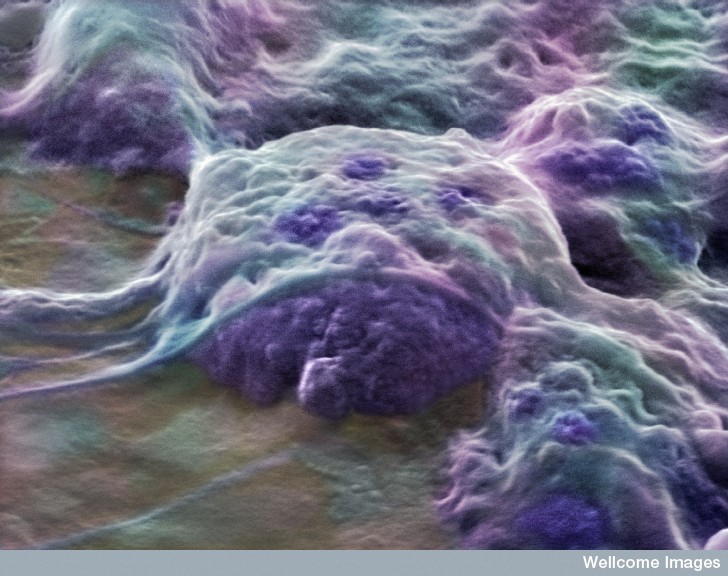
"caption": "Stem cells injected into the brain could reverse some symptoms of Parkinson's. Here, human embryonic stem cells grow in culture.",
"description": null,
"title": "B0006251 Human embryonic stem cells",
"credit": "Annie Cavanagh, Wellcome Images",
"status": "inherit",
"isLoading": false,
"fetchFailed": false
},
"futureofyou_435099": {
"type": "attachments",
"id": "futureofyou_435099",
"meta": {
"index": "attachments_1716263798",
"site": "futureofyou",
"id": "435099",
"found": true
},
"parent": 435096,
"imgSizes": {
"small": {
"file": "https://ww2.kqed.org/app/uploads/sites/13/2017/08/iStock-501652356-520x346.jpg",
"width": 520,
"mimeType": "image/jpeg",
"height": 346
},
"twentyfourteen-full-width": {
"file": "https://ww2.kqed.org/app/uploads/sites/13/2017/08/iStock-501652356-1038x576.jpg",
"width": 1038,
"mimeType": "image/jpeg",
"height": 576
},
"thumbnail": {
"file": "https://ww2.kqed.org/app/uploads/sites/13/2017/08/iStock-501652356-160x106.jpg",
"width": 160,
"mimeType": "image/jpeg",
"height": 106
},
"fd-sm": {
"file": "https://ww2.kqed.org/app/uploads/sites/13/2017/08/iStock-501652356-960x639.jpg",
"width": 960,
"mimeType": "image/jpeg",
"height": 639
},
"post-thumbnail": {
"file": "https://ww2.kqed.org/app/uploads/sites/13/2017/08/iStock-501652356-672x372.jpg",
"width": 672,
"mimeType": "image/jpeg",
"height": 372
},
"xsmall": {
"file": "https://ww2.kqed.org/app/uploads/sites/13/2017/08/iStock-501652356-375x250.jpg",
"width": 375,
"mimeType": "image/jpeg",
"height": 250
},
"kqedFullSize": {
"file": "https://ww2.kqed.org/app/uploads/sites/13/2017/08/iStock-501652356.jpg",
"width": 2416,
"height": 1608
},
"large": {
"file": "https://ww2.kqed.org/app/uploads/sites/13/2017/08/iStock-501652356-1020x679.jpg",
"width": 1020,
"mimeType": "image/jpeg",
"height": 679
},
"xlarge": {
"file": "https://ww2.kqed.org/app/uploads/sites/13/2017/08/iStock-501652356-1180x785.jpg",
"width": 1180,
"mimeType": "image/jpeg",
"height": 785
},
"guest-author-50": {
"file": "https://ww2.kqed.org/app/uploads/sites/13/2017/08/iStock-501652356-50x50.jpg",
"width": 50,
"mimeType": "image/jpeg",
"height": 50
},
"guest-author-96": {
"file": "https://ww2.kqed.org/app/uploads/sites/13/2017/08/iStock-501652356-96x96.jpg",
"width": 96,
"mimeType": "image/jpeg",
"height": 96
},
"medium": {
"file": "https://ww2.kqed.org/app/uploads/sites/13/2017/08/iStock-501652356-800x532.jpg",
"width": 800,
"mimeType": "image/jpeg",
"height": 532
},
"guest-author-64": {
"file": "https://ww2.kqed.org/app/uploads/sites/13/2017/08/iStock-501652356-64x64.jpg",
"width": 64,
"mimeType": "image/jpeg",
"height": 64
},
"guest-author-32": {
"file": "https://ww2.kqed.org/app/uploads/sites/13/2017/08/iStock-501652356-32x32.jpg",
"width": 32,
"mimeType": "image/jpeg",
"height": 32
},
"fd-lrg": {
"file": "https://ww2.kqed.org/app/uploads/sites/13/2017/08/iStock-501652356-1920x1278.jpg",
"width": 1920,
"mimeType": "image/jpeg",
"height": 1278
},
"fd-med": {
"file": "https://ww2.kqed.org/app/uploads/sites/13/2017/08/iStock-501652356-1180x785.jpg",
"width": 1180,
"mimeType": "image/jpeg",
"height": 785
},
"full-width": {
"file": "https://ww2.kqed.org/app/uploads/sites/13/2017/08/iStock-501652356-1920x1278.jpg",
"width": 1920,
"mimeType": "image/jpeg",
"height": 1278
},
"detail": {
"file": "https://ww2.kqed.org/app/uploads/sites/13/2017/08/iStock-501652356-150x150.jpg",
"width": 150,
"mimeType": "image/jpeg",
"height": 150
},
"medium_large": {
"file": "https://ww2.kqed.org/app/uploads/sites/13/2017/08/iStock-501652356-768x511.jpg",
"width": 768,
"mimeType": "image/jpeg",
"height": 511
},
"guest-author-128": {
"file": "https://ww2.kqed.org/app/uploads/sites/13/2017/08/iStock-501652356-128x128.jpg",
"width": 128,
"mimeType": "image/jpeg",
"height": 128
},
"xxsmall": {
"file": "https://ww2.kqed.org/app/uploads/sites/13/2017/08/iStock-501652356-240x160.jpg",
"width": 240,
"mimeType": "image/jpeg",
"height": 160
}
},
"publishDate": 1504052725,
"modified": 1504052750,
"caption": "Products and therapies using CRISPR gene editing are inching closer to us every day. Now is the time, scientists say, for the public to draw ethical lines. ",
"description": null,
"title": "iStock-501652356",
"credit": "iStockphoto",
"status": "inherit",
"isLoading": false,
"fetchFailed": false
},
"futureofyou_435120": {
"type": "attachments",
"id": "futureofyou_435120",
"meta": {
"index": "attachments_1716263798",
"site": "futureofyou",
"id": "435120",
"found": true
},
"parent": 435119,
"imgSizes": {
"small": {
"file": "https://ww2.kqed.org/app/uploads/sites/13/2017/08/28128037754_343e1ca25d_o-2048x1152-520x293.jpg",
"width": 520,
"mimeType": "image/jpeg",
"height": 293
},
"twentyfourteen-full-width": {
"file": "https://ww2.kqed.org/app/uploads/sites/13/2017/08/28128037754_343e1ca25d_o-2048x1152-1038x576.jpg",
"width": 1038,
"mimeType": "image/jpeg",
"height": 576
},
"thumbnail": {
"file": "https://ww2.kqed.org/app/uploads/sites/13/2017/08/28128037754_343e1ca25d_o-2048x1152-160x90.jpg",
"width": 160,
"mimeType": "image/jpeg",
"height": 90
},
"fd-sm": {
"file": "https://ww2.kqed.org/app/uploads/sites/13/2017/08/28128037754_343e1ca25d_o-2048x1152-960x540.jpg",
"width": 960,
"mimeType": "image/jpeg",
"height": 540
},
"post-thumbnail": {
"file": "https://ww2.kqed.org/app/uploads/sites/13/2017/08/28128037754_343e1ca25d_o-2048x1152-672x372.jpg",
"width": 672,
"mimeType": "image/jpeg",
"height": 372
},
"xsmall": {
"file": "https://ww2.kqed.org/app/uploads/sites/13/2017/08/28128037754_343e1ca25d_o-2048x1152-375x211.jpg",
"width": 375,
"mimeType": "image/jpeg",
"height": 211
},
"kqedFullSize": {
"file": "https://ww2.kqed.org/app/uploads/sites/13/2017/08/28128037754_343e1ca25d_o-2048x1152.jpg",
"width": 2048,
"height": 1152
},
"large": {
"file": "https://ww2.kqed.org/app/uploads/sites/13/2017/08/28128037754_343e1ca25d_o-2048x1152-1020x574.jpg",
"width": 1020,
"mimeType": "image/jpeg",
"height": 574
},
"xlarge": {
"file": "https://ww2.kqed.org/app/uploads/sites/13/2017/08/28128037754_343e1ca25d_o-2048x1152-1180x664.jpg",
"width": 1180,
"mimeType": "image/jpeg",
"height": 664
},
"guest-author-50": {
"file": "https://ww2.kqed.org/app/uploads/sites/13/2017/08/28128037754_343e1ca25d_o-2048x1152-50x50.jpg",
"width": 50,
"mimeType": "image/jpeg",
"height": 50
},
"guest-author-96": {
"file": "https://ww2.kqed.org/app/uploads/sites/13/2017/08/28128037754_343e1ca25d_o-2048x1152-96x96.jpg",
"width": 96,
"mimeType": "image/jpeg",
"height": 96
},
"medium": {
"file": "https://ww2.kqed.org/app/uploads/sites/13/2017/08/28128037754_343e1ca25d_o-2048x1152-800x450.jpg",
"width": 800,
"mimeType": "image/jpeg",
"height": 450
},
"guest-author-64": {
"file": "https://ww2.kqed.org/app/uploads/sites/13/2017/08/28128037754_343e1ca25d_o-2048x1152-64x64.jpg",
"width": 64,
"mimeType": "image/jpeg",
"height": 64
},
"guest-author-32": {
"file": "https://ww2.kqed.org/app/uploads/sites/13/2017/08/28128037754_343e1ca25d_o-2048x1152-32x32.jpg",
"width": 32,
"mimeType": "image/jpeg",
"height": 32
},
"fd-lrg": {
"file": "https://ww2.kqed.org/app/uploads/sites/13/2017/08/28128037754_343e1ca25d_o-2048x1152-1920x1080.jpg",
"width": 1920,
"mimeType": "image/jpeg",
"height": 1080
},
"fd-med": {
"file": "https://ww2.kqed.org/app/uploads/sites/13/2017/08/28128037754_343e1ca25d_o-2048x1152-1180x664.jpg",
"width": 1180,
"mimeType": "image/jpeg",
"height": 664
},
"full-width": {
"file": "https://ww2.kqed.org/app/uploads/sites/13/2017/08/28128037754_343e1ca25d_o-2048x1152-1920x1080.jpg",
"width": 1920,
"mimeType": "image/jpeg",
"height": 1080
},
"detail": {
"file": "https://ww2.kqed.org/app/uploads/sites/13/2017/08/28128037754_343e1ca25d_o-2048x1152-150x150.jpg",
"width": 150,
"mimeType": "image/jpeg",
"height": 150
},
"medium_large": {
"file": "https://ww2.kqed.org/app/uploads/sites/13/2017/08/28128037754_343e1ca25d_o-2048x1152-768x432.jpg",
"width": 768,
"mimeType": "image/jpeg",
"height": 432
},
"guest-author-128": {
"file": "https://ww2.kqed.org/app/uploads/sites/13/2017/08/28128037754_343e1ca25d_o-2048x1152-128x128.jpg",
"width": 128,
"mimeType": "image/jpeg",
"height": 128
},
"xxsmall": {
"file": "https://ww2.kqed.org/app/uploads/sites/13/2017/08/28128037754_343e1ca25d_o-2048x1152-240x135.jpg",
"width": 240,
"mimeType": "image/jpeg",
"height": 135
}
},
"publishDate": 1504131514,
"modified": 1504131582,
"caption": null,
"description": null,
"title": "28128037754_343e1ca25d_o-2048x1152",
"credit": "Victor Segura Ibarra and Rita Serda, NCI, NIH",
"status": "inherit",
"isLoading": false,
"fetchFailed": false
},
"futureofyou_435072": {
"type": "attachments",
"id": "futureofyou_435072",
"meta": {
"index": "attachments_1716263798",
"site": "futureofyou",
"id": "435072",
"found": true
},
"parent": 435066,
"imgSizes": {
"small": {
"file": "https://ww2.kqed.org/app/uploads/sites/13/2017/08/stemcells-520x347.jpg",
"width": 520,
"mimeType": "image/jpeg",
"height": 347
},
"twentyfourteen-full-width": {
"file": "https://ww2.kqed.org/app/uploads/sites/13/2017/08/stemcells-1038x576.jpg",
"width": 1038,
"mimeType": "image/jpeg",
"height": 576
},
"thumbnail": {
"file": "https://ww2.kqed.org/app/uploads/sites/13/2017/08/stemcells-160x107.jpg",
"width": 160,
"mimeType": "image/jpeg",
"height": 107
},
"fd-sm": {
"file": "https://ww2.kqed.org/app/uploads/sites/13/2017/08/stemcells-960x640.jpg",
"width": 960,
"mimeType": "image/jpeg",
"height": 640
},
"post-thumbnail": {
"file": "https://ww2.kqed.org/app/uploads/sites/13/2017/08/stemcells-672x372.jpg",
"width": 672,
"mimeType": "image/jpeg",
"height": 372
},
"xsmall": {
"file": "https://ww2.kqed.org/app/uploads/sites/13/2017/08/stemcells-375x250.jpg",
"width": 375,
"mimeType": "image/jpeg",
"height": 250
},
"kqedFullSize": {
"file": "https://ww2.kqed.org/app/uploads/sites/13/2017/08/stemcells-e1503945453170.jpg",
"width": 1920,
"height": 1280
},
"large": {
"file": "https://ww2.kqed.org/app/uploads/sites/13/2017/08/stemcells-1020x680.jpg",
"width": 1020,
"mimeType": "image/jpeg",
"height": 680
},
"xlarge": {
"file": "https://ww2.kqed.org/app/uploads/sites/13/2017/08/stemcells-1180x787.jpg",
"width": 1180,
"mimeType": "image/jpeg",
"height": 787
},
"guest-author-50": {
"file": "https://ww2.kqed.org/app/uploads/sites/13/2017/08/stemcells-50x50.jpg",
"width": 50,
"mimeType": "image/jpeg",
"height": 50
},
"guest-author-96": {
"file": "https://ww2.kqed.org/app/uploads/sites/13/2017/08/stemcells-96x96.jpg",
"width": 96,
"mimeType": "image/jpeg",
"height": 96
},
"medium": {
"file": "https://ww2.kqed.org/app/uploads/sites/13/2017/08/stemcells-800x533.jpg",
"width": 800,
"mimeType": "image/jpeg",
"height": 533
},
"guest-author-64": {
"file": "https://ww2.kqed.org/app/uploads/sites/13/2017/08/stemcells-64x64.jpg",
"width": 64,
"mimeType": "image/jpeg",
"height": 64
},
"guest-author-32": {
"file": "https://ww2.kqed.org/app/uploads/sites/13/2017/08/stemcells-32x32.jpg",
"width": 32,
"mimeType": "image/jpeg",
"height": 32
},
"fd-lrg": {
"file": "https://ww2.kqed.org/app/uploads/sites/13/2017/08/stemcells-1920x1280.jpg",
"width": 1920,
"mimeType": "image/jpeg",
"height": 1280
},
"fd-med": {
"file": "https://ww2.kqed.org/app/uploads/sites/13/2017/08/stemcells-1180x787.jpg",
"width": 1180,
"mimeType": "image/jpeg",
"height": 787
},
"full-width": {
"file": "https://ww2.kqed.org/app/uploads/sites/13/2017/08/stemcells-1920x1280.jpg",
"width": 1920,
"mimeType": "image/jpeg",
"height": 1280
},
"detail": {
"file": "https://ww2.kqed.org/app/uploads/sites/13/2017/08/stemcells-150x150.jpg",
"width": 150,
"mimeType": "image/jpeg",
"height": 150
},
"medium_large": {
"file": "https://ww2.kqed.org/app/uploads/sites/13/2017/08/stemcells-768x512.jpg",
"width": 768,
"mimeType": "image/jpeg",
"height": 512
},
"guest-author-128": {
"file": "https://ww2.kqed.org/app/uploads/sites/13/2017/08/stemcells-128x128.jpg",
"width": 128,
"mimeType": "image/jpeg",
"height": 128
},
"xxsmall": {
"file": "https://ww2.kqed.org/app/uploads/sites/13/2017/08/stemcells-240x160.jpg",
"width": 240,
"mimeType": "image/jpeg",
"height": 160
}
},
"publishDate": 1503945422,
"modified": 1503945483,
"caption": null,
"description": null,
"title": "syringe with vial",
"credit": "Image by andrewsafonov/iStock",
"status": "inherit",
"isLoading": false,
"fetchFailed": false
},
"futureofyou_434994": {
"type": "attachments",
"id": "futureofyou_434994",
"meta": {
"index": "attachments_1716263798",
"site": "futureofyou",
"id": "434994",
"found": true
},
"parent": 434938,
"imgSizes": {
"small": {
"file": "https://ww2.kqed.org/app/uploads/sites/13/2017/08/melanoma-520x347.jpg",
"width": 520,
"mimeType": "image/jpeg",
"height": 347
},
"twentyfourteen-full-width": {
"file": "https://ww2.kqed.org/app/uploads/sites/13/2017/08/melanoma-1038x576.jpg",
"width": 1038,
"mimeType": "image/jpeg",
"height": 576
},
"thumbnail": {
"file": "https://ww2.kqed.org/app/uploads/sites/13/2017/08/melanoma-160x107.jpg",
"width": 160,
"mimeType": "image/jpeg",
"height": 107
},
"fd-sm": {
"file": "https://ww2.kqed.org/app/uploads/sites/13/2017/08/melanoma-960x640.jpg",
"width": 960,
"mimeType": "image/jpeg",
"height": 640
},
"post-thumbnail": {
"file": "https://ww2.kqed.org/app/uploads/sites/13/2017/08/melanoma-672x372.jpg",
"width": 672,
"mimeType": "image/jpeg",
"height": 372
},
"xsmall": {
"file": "https://ww2.kqed.org/app/uploads/sites/13/2017/08/melanoma-375x250.jpg",
"width": 375,
"mimeType": "image/jpeg",
"height": 250
},
"kqedFullSize": {
"file": "https://ww2.kqed.org/app/uploads/sites/13/2017/08/melanoma.jpg",
"width": 1350,
"height": 900
},
"large": {
"file": "https://ww2.kqed.org/app/uploads/sites/13/2017/08/melanoma-1020x680.jpg",
"width": 1020,
"mimeType": "image/jpeg",
"height": 680
},
"xlarge": {
"file": "https://ww2.kqed.org/app/uploads/sites/13/2017/08/melanoma-1180x787.jpg",
"width": 1180,
"mimeType": "image/jpeg",
"height": 787
},
"guest-author-50": {
"file": "https://ww2.kqed.org/app/uploads/sites/13/2017/08/melanoma-50x50.jpg",
"width": 50,
"mimeType": "image/jpeg",
"height": 50
},
"guest-author-96": {
"file": "https://ww2.kqed.org/app/uploads/sites/13/2017/08/melanoma-96x96.jpg",
"width": 96,
"mimeType": "image/jpeg",
"height": 96
},
"medium": {
"file": "https://ww2.kqed.org/app/uploads/sites/13/2017/08/melanoma-800x533.jpg",
"width": 800,
"mimeType": "image/jpeg",
"height": 533
},
"guest-author-64": {
"file": "https://ww2.kqed.org/app/uploads/sites/13/2017/08/melanoma-64x64.jpg",
"width": 64,
"mimeType": "image/jpeg",
"height": 64
},
"guest-author-32": {
"file": "https://ww2.kqed.org/app/uploads/sites/13/2017/08/melanoma-32x32.jpg",
"width": 32,
"mimeType": "image/jpeg",
"height": 32
},
"fd-med": {
"file": "https://ww2.kqed.org/app/uploads/sites/13/2017/08/melanoma-1180x787.jpg",
"width": 1180,
"mimeType": "image/jpeg",
"height": 787
},
"detail": {
"file": "https://ww2.kqed.org/app/uploads/sites/13/2017/08/melanoma-150x150.jpg",
"width": 150,
"mimeType": "image/jpeg",
"height": 150
},
"medium_large": {
"file": "https://ww2.kqed.org/app/uploads/sites/13/2017/08/melanoma-768x512.jpg",
"width": 768,
"mimeType": "image/jpeg",
"height": 512
},
"guest-author-128": {
"file": "https://ww2.kqed.org/app/uploads/sites/13/2017/08/melanoma-128x128.jpg",
"width": 128,
"mimeType": "image/jpeg",
"height": 128
},
"xxsmall": {
"file": "https://ww2.kqed.org/app/uploads/sites/13/2017/08/melanoma-240x160.jpg",
"width": 240,
"mimeType": "image/jpeg",
"height": 160
}
},
"publishDate": 1503442354,
"modified": 1503442460,
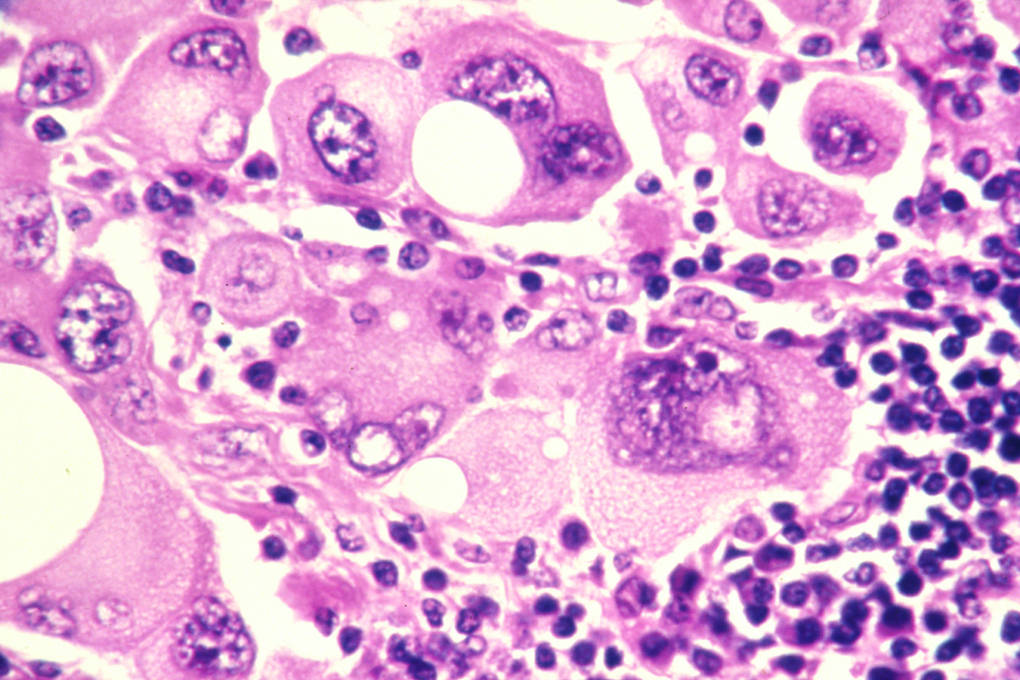
"caption": "Human metastatic melanoma cells, stained and magnified to 320 times.",
"description": null,
"title": "melanoma",
"credit": "Dr. Lance Liotta Laboratory/NCI",
"status": "inherit",
"isLoading": false,
"fetchFailed": false
},
"futureofyou_434987": {
"type": "attachments",
"id": "futureofyou_434987",
"meta": {
"index": "attachments_1716263798",
"site": "futureofyou",
"id": "434987",
"found": true
},
"parent": 434787,
"imgSizes": {
"small": {
"file": "https://ww2.kqed.org/app/uploads/sites/13/2017/08/ChanGlass-520x347.jpg",
"width": 520,
"mimeType": "image/jpeg",
"height": 347
},
"twentyfourteen-full-width": {
"file": "https://ww2.kqed.org/app/uploads/sites/13/2017/08/ChanGlass-1038x576.jpg",
"width": 1038,
"mimeType": "image/jpeg",
"height": 576
},
"thumbnail": {
"file": "https://ww2.kqed.org/app/uploads/sites/13/2017/08/ChanGlass-160x107.jpg",
"width": 160,
"mimeType": "image/jpeg",
"height": 107
},
"fd-sm": {
"file": "https://ww2.kqed.org/app/uploads/sites/13/2017/08/ChanGlass-960x640.jpg",
"width": 960,
"mimeType": "image/jpeg",
"height": 640
},
"post-thumbnail": {
"file": "https://ww2.kqed.org/app/uploads/sites/13/2017/08/ChanGlass-672x372.jpg",
"width": 672,
"mimeType": "image/jpeg",
"height": 372
},
"xsmall": {
"file": "https://ww2.kqed.org/app/uploads/sites/13/2017/08/ChanGlass-375x250.jpg",
"width": 375,
"mimeType": "image/jpeg",
"height": 250
},
"kqedFullSize": {
"file": "https://ww2.kqed.org/app/uploads/sites/13/2017/08/ChanGlass-e1503428570417.jpg",
"width": 1920,
"height": 1280
},
"large": {
"file": "https://ww2.kqed.org/app/uploads/sites/13/2017/08/ChanGlass-1020x680.jpg",
"width": 1020,
"mimeType": "image/jpeg",
"height": 680
},
"xlarge": {
"file": "https://ww2.kqed.org/app/uploads/sites/13/2017/08/ChanGlass-1180x787.jpg",
"width": 1180,
"mimeType": "image/jpeg",
"height": 787
},
"guest-author-50": {
"file": "https://ww2.kqed.org/app/uploads/sites/13/2017/08/ChanGlass-50x50.jpg",
"width": 50,
"mimeType": "image/jpeg",
"height": 50
},
"guest-author-96": {
"file": "https://ww2.kqed.org/app/uploads/sites/13/2017/08/ChanGlass-96x96.jpg",
"width": 96,
"mimeType": "image/jpeg",
"height": 96
},
"medium": {
"file": "https://ww2.kqed.org/app/uploads/sites/13/2017/08/ChanGlass-800x533.jpg",
"width": 800,
"mimeType": "image/jpeg",
"height": 533
},
"guest-author-64": {
"file": "https://ww2.kqed.org/app/uploads/sites/13/2017/08/ChanGlass-64x64.jpg",
"width": 64,
"mimeType": "image/jpeg",
"height": 64
},
"guest-author-32": {
"file": "https://ww2.kqed.org/app/uploads/sites/13/2017/08/ChanGlass-32x32.jpg",
"width": 32,
"mimeType": "image/jpeg",
"height": 32
},
"fd-lrg": {
"file": "https://ww2.kqed.org/app/uploads/sites/13/2017/08/ChanGlass-1920x1280.jpg",
"width": 1920,
"mimeType": "image/jpeg",
"height": 1280
},
"fd-med": {
"file": "https://ww2.kqed.org/app/uploads/sites/13/2017/08/ChanGlass-1180x787.jpg",
"width": 1180,
"mimeType": "image/jpeg",
"height": 787
},
"full-width": {
"file": "https://ww2.kqed.org/app/uploads/sites/13/2017/08/ChanGlass-1920x1280.jpg",
"width": 1920,
"mimeType": "image/jpeg",
"height": 1280
},
"detail": {
"file": "https://ww2.kqed.org/app/uploads/sites/13/2017/08/ChanGlass-150x150.jpg",
"width": 150,
"mimeType": "image/jpeg",
"height": 150
},
"medium_large": {
"file": "https://ww2.kqed.org/app/uploads/sites/13/2017/08/ChanGlass-768x512.jpg",
"width": 768,
"mimeType": "image/jpeg",
"height": 512
},
"guest-author-128": {
"file": "https://ww2.kqed.org/app/uploads/sites/13/2017/08/ChanGlass-128x128.jpg",
"width": 128,
"mimeType": "image/jpeg",
"height": 128
},
"xxsmall": {
"file": "https://ww2.kqed.org/app/uploads/sites/13/2017/08/ChanGlass-240x160.jpg",
"width": 240,
"mimeType": "image/jpeg",
"height": 160
}
},
"publishDate": 1503428519,
"modified": 1503428560,
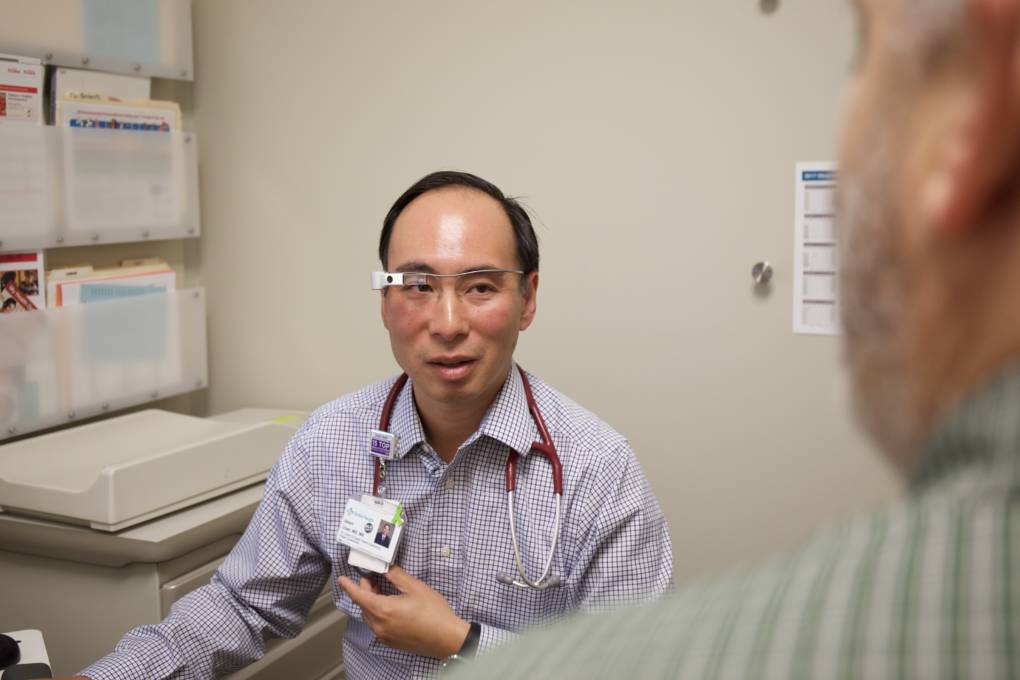
"caption": "During patient exams, Dr. Albert Chan wears Google Glass, which transmits a video feed to a note-taking, offsite medical scribe so Chan can better focus on the patient.",
"description": null,
"title": "ChanGlass",
"credit": "Serginho Roosblad/KQED",
"status": "inherit",
"isLoading": false,
"fetchFailed": false
},
"futureofyou_434952": {
"type": "attachments",
"id": "futureofyou_434952",
"meta": {
"index": "attachments_1716263798",
"site": "futureofyou",
"id": "434952",
"found": true
},
"parent": 429409,
"imgSizes": {
"small": {
"file": "https://ww2.kqed.org/app/uploads/sites/13/2017/08/smart-glove-1500_t800-520x390.jpg",
"width": 520,
"mimeType": "image/jpeg",
"height": 390
},
"twentyfourteen-full-width": {
"file": "https://ww2.kqed.org/app/uploads/sites/13/2017/08/smart-glove-1500_t800-800x576.jpg",
"width": 800,
"mimeType": "image/jpeg",
"height": 576
},
"thumbnail": {
"file": "https://ww2.kqed.org/app/uploads/sites/13/2017/08/smart-glove-1500_t800-160x120.jpg",
"width": 160,
"mimeType": "image/jpeg",
"height": 120
},
"post-thumbnail": {
"file": "https://ww2.kqed.org/app/uploads/sites/13/2017/08/smart-glove-1500_t800-672x372.jpg",
"width": 672,
"mimeType": "image/jpeg",
"height": 372
},
"xsmall": {
"file": "https://ww2.kqed.org/app/uploads/sites/13/2017/08/smart-glove-1500_t800-375x281.jpg",
"width": 375,
"mimeType": "image/jpeg",
"height": 281
},
"kqedFullSize": {
"file": "https://ww2.kqed.org/app/uploads/sites/13/2017/08/smart-glove-1500_t800.jpg",
"width": 800,
"height": 600
},
"guest-author-50": {
"file": "https://ww2.kqed.org/app/uploads/sites/13/2017/08/smart-glove-1500_t800-50x50.jpg",
"width": 50,
"mimeType": "image/jpeg",
"height": 50
},
"guest-author-96": {
"file": "https://ww2.kqed.org/app/uploads/sites/13/2017/08/smart-glove-1500_t800-96x96.jpg",
"width": 96,
"mimeType": "image/jpeg",
"height": 96
},
"medium": {
"file": "https://ww2.kqed.org/app/uploads/sites/13/2017/08/smart-glove-1500_t800-800x600.jpg",
"width": 800,
"mimeType": "image/jpeg",
"height": 600
},
"guest-author-64": {
"file": "https://ww2.kqed.org/app/uploads/sites/13/2017/08/smart-glove-1500_t800-64x64.jpg",
"width": 64,
"mimeType": "image/jpeg",
"height": 64
},
"guest-author-32": {
"file": "https://ww2.kqed.org/app/uploads/sites/13/2017/08/smart-glove-1500_t800-32x32.jpg",
"width": 32,
"mimeType": "image/jpeg",
"height": 32
},
"detail": {
"file": "https://ww2.kqed.org/app/uploads/sites/13/2017/08/smart-glove-1500_t800-150x150.jpg",
"width": 150,
"mimeType": "image/jpeg",
"height": 150
},
"medium_large": {
"file": "https://ww2.kqed.org/app/uploads/sites/13/2017/08/smart-glove-1500_t800-768x576.jpg",
"width": 768,
"mimeType": "image/jpeg",
"height": 576
},
"guest-author-128": {
"file": "https://ww2.kqed.org/app/uploads/sites/13/2017/08/smart-glove-1500_t800-128x128.jpg",
"width": 128,
"mimeType": "image/jpeg",
"height": 128
},
"xxsmall": {
"file": "https://ww2.kqed.org/app/uploads/sites/13/2017/08/smart-glove-1500_t800-240x180.jpg",
"width": 240,
"mimeType": "image/jpeg",
"height": 180
}
},
"publishDate": 1503081422,
"modified": 1503081498,
"caption": "A \"smart glove\" prototype developed by a team of UC San Diego engineers is seen in this undated photo.",
"description": null,
"title": "smart-glove-1500_t800",
"credit": "Timothy O'Connor/UC San Diego Jacobs School of Engineering",
"status": "inherit",
"isLoading": false,
"fetchFailed": false
},
"futureofyou_434828": {
"type": "attachments",
"id": "futureofyou_434828",
"meta": {
"index": "attachments_1716263798",
"site": "futureofyou",
"id": "434828",
"found": true
},
"parent": 434812,
"imgSizes": {
"small": {
"file": "https://ww2.kqed.org/app/uploads/sites/13/2017/08/Screen-Shot-2017-08-11-at-4.53.32-PM-520x317.png",
"width": 520,
"mimeType": "image/png",
"height": 317
},
"twentyfourteen-full-width": {
"file": "https://ww2.kqed.org/app/uploads/sites/13/2017/08/Screen-Shot-2017-08-11-at-4.53.32-PM-1038x576.png",
"width": 1038,
"mimeType": "image/png",
"height": 576
},
"thumbnail": {
"file": "https://ww2.kqed.org/app/uploads/sites/13/2017/08/Screen-Shot-2017-08-11-at-4.53.32-PM-160x98.png",
"width": 160,
"mimeType": "image/png",
"height": 98
},
"fd-sm": {
"file": "https://ww2.kqed.org/app/uploads/sites/13/2017/08/Screen-Shot-2017-08-11-at-4.53.32-PM-960x586.png",
"width": 960,
"mimeType": "image/png",
"height": 586
},
"post-thumbnail": {
"file": "https://ww2.kqed.org/app/uploads/sites/13/2017/08/Screen-Shot-2017-08-11-at-4.53.32-PM-672x372.png",
"width": 672,
"mimeType": "image/png",
"height": 372
},
"xsmall": {
"file": "https://ww2.kqed.org/app/uploads/sites/13/2017/08/Screen-Shot-2017-08-11-at-4.53.32-PM-375x229.png",
"width": 375,
"mimeType": "image/png",
"height": 229
},
"kqedFullSize": {
"file": "https://ww2.kqed.org/app/uploads/sites/13/2017/08/Screen-Shot-2017-08-11-at-4.53.32-PM.png",
"width": 1258,
"height": 768
},
"large": {
"file": "https://ww2.kqed.org/app/uploads/sites/13/2017/08/Screen-Shot-2017-08-11-at-4.53.32-PM-1020x623.png",
"width": 1020,
"mimeType": "image/png",
"height": 623
},
"xlarge": {
"file": "https://ww2.kqed.org/app/uploads/sites/13/2017/08/Screen-Shot-2017-08-11-at-4.53.32-PM-1180x720.png",
"width": 1180,
"mimeType": "image/png",
"height": 720
},
"guest-author-50": {
"file": "https://ww2.kqed.org/app/uploads/sites/13/2017/08/Screen-Shot-2017-08-11-at-4.53.32-PM-50x50.png",
"width": 50,
"mimeType": "image/png",
"height": 50
},
"guest-author-96": {
"file": "https://ww2.kqed.org/app/uploads/sites/13/2017/08/Screen-Shot-2017-08-11-at-4.53.32-PM-96x96.png",
"width": 96,
"mimeType": "image/png",
"height": 96
},
"medium": {
"file": "https://ww2.kqed.org/app/uploads/sites/13/2017/08/Screen-Shot-2017-08-11-at-4.53.32-PM-800x488.png",
"width": 800,
"mimeType": "image/png",
"height": 488
},
"guest-author-64": {
"file": "https://ww2.kqed.org/app/uploads/sites/13/2017/08/Screen-Shot-2017-08-11-at-4.53.32-PM-64x64.png",
"width": 64,
"mimeType": "image/png",
"height": 64
},
"guest-author-32": {
"file": "https://ww2.kqed.org/app/uploads/sites/13/2017/08/Screen-Shot-2017-08-11-at-4.53.32-PM-32x32.png",
"width": 32,
"mimeType": "image/png",
"height": 32
},
"fd-med": {
"file": "https://ww2.kqed.org/app/uploads/sites/13/2017/08/Screen-Shot-2017-08-11-at-4.53.32-PM-1180x720.png",
"width": 1180,
"mimeType": "image/png",
"height": 720
},
"detail": {
"file": "https://ww2.kqed.org/app/uploads/sites/13/2017/08/Screen-Shot-2017-08-11-at-4.53.32-PM-150x150.png",
"width": 150,
"mimeType": "image/png",
"height": 150
},
"medium_large": {
"file": "https://ww2.kqed.org/app/uploads/sites/13/2017/08/Screen-Shot-2017-08-11-at-4.53.32-PM-768x469.png",
"width": 768,
"mimeType": "image/png",
"height": 469
},
"guest-author-128": {
"file": "https://ww2.kqed.org/app/uploads/sites/13/2017/08/Screen-Shot-2017-08-11-at-4.53.32-PM-128x128.png",
"width": 128,
"mimeType": "image/png",
"height": 128
},
"xxsmall": {
"file": "https://ww2.kqed.org/app/uploads/sites/13/2017/08/Screen-Shot-2017-08-11-at-4.53.32-PM-240x147.png",
"width": 240,
"mimeType": "image/png",
"height": 147
}
},
"publishDate": 1502495635,
"modified": 1502495694,
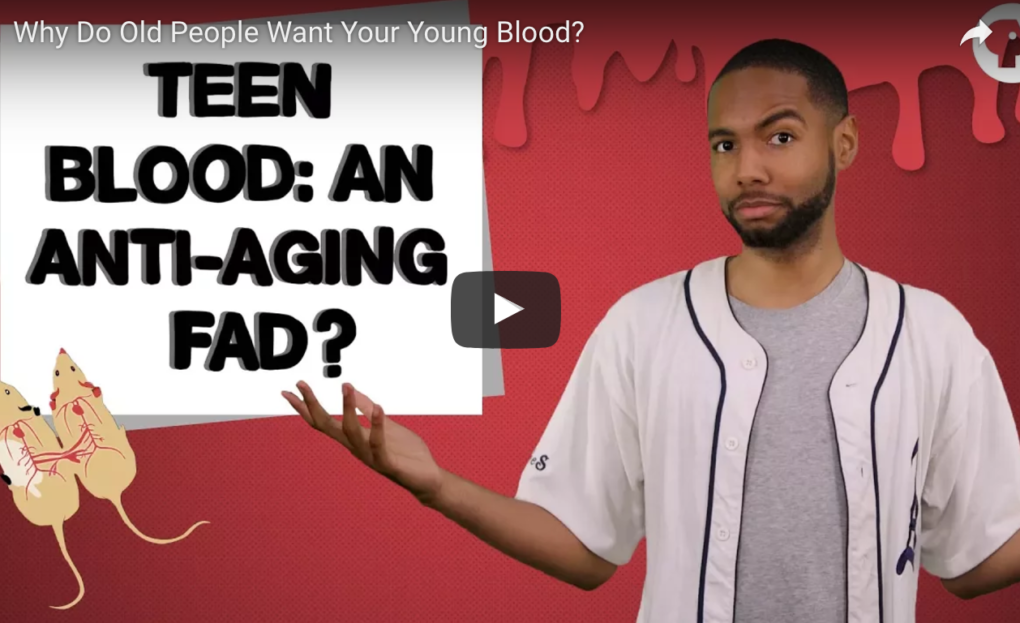
"caption": "Above The Noise examines the trend of infusing young blood into old people to reverse aging. ",
"description": null,
"title": "Screen Shot 2017-08-11 at 4.53.32 PM",
"credit": "Above the Noise/KQED",
"status": "inherit",
"isLoading": false,
"fetchFailed": false
},
"futureofyou_401496": {
"type": "attachments",
"id": "futureofyou_401496",
"meta": {
"index": "attachments_1716263798",
"site": "futureofyou",
"id": "401496",
"found": true
},
"parent": 400966,
"imgSizes": {
"small": {
"file": "https://ww2.kqed.org/app/uploads/sites/13/2017/06/MelissaJosephBellyak2-1-520x428.jpg",
"width": 520,
"mimeType": "image/jpeg",
"height": 428
},
"twentyfourteen-full-width": {
"file": "https://ww2.kqed.org/app/uploads/sites/13/2017/06/MelissaJosephBellyak2-1-1038x576.jpg",
"width": 1038,
"mimeType": "image/jpeg",
"height": 576
},
"thumbnail": {
"file": "https://ww2.kqed.org/app/uploads/sites/13/2017/06/MelissaJosephBellyak2-1-160x132.jpg",
"width": 160,
"mimeType": "image/jpeg",
"height": 132
},
"fd-sm": {
"file": "https://ww2.kqed.org/app/uploads/sites/13/2017/06/MelissaJosephBellyak2-1-960x791.jpg",
"width": 960,
"mimeType": "image/jpeg",
"height": 791
},
"post-thumbnail": {
"file": "https://ww2.kqed.org/app/uploads/sites/13/2017/06/MelissaJosephBellyak2-1-672x372.jpg",
"width": 672,
"mimeType": "image/jpeg",
"height": 372
},
"xsmall": {
"file": "https://ww2.kqed.org/app/uploads/sites/13/2017/06/MelissaJosephBellyak2-1-375x309.jpg",
"width": 375,
"mimeType": "image/jpeg",
"height": 309
},
"kqedFullSize": {
"file": "https://ww2.kqed.org/app/uploads/sites/13/2017/06/MelissaJosephBellyak2-1-e1496335182413.jpg",
"width": 1920,
"height": 1581
},
"large": {
"file": "https://ww2.kqed.org/app/uploads/sites/13/2017/06/MelissaJosephBellyak2-1-1020x840.jpg",
"width": 1020,
"mimeType": "image/jpeg",
"height": 840
},
"xlarge": {
"file": "https://ww2.kqed.org/app/uploads/sites/13/2017/06/MelissaJosephBellyak2-1-1180x972.jpg",
"width": 1180,
"mimeType": "image/jpeg",
"height": 972
},
"guest-author-50": {
"file": "https://ww2.kqed.org/app/uploads/sites/13/2017/06/MelissaJosephBellyak2-1-50x50.jpg",
"width": 50,
"mimeType": "image/jpeg",
"height": 50
},
"guest-author-96": {
"file": "https://ww2.kqed.org/app/uploads/sites/13/2017/06/MelissaJosephBellyak2-1-96x96.jpg",
"width": 96,
"mimeType": "image/jpeg",
"height": 96
},
"medium": {
"file": "https://ww2.kqed.org/app/uploads/sites/13/2017/06/MelissaJosephBellyak2-1-800x659.jpg",
"width": 800,
"mimeType": "image/jpeg",
"height": 659
},
"guest-author-64": {
"file": "https://ww2.kqed.org/app/uploads/sites/13/2017/06/MelissaJosephBellyak2-1-64x64.jpg",
"width": 64,
"mimeType": "image/jpeg",
"height": 64
},
"guest-author-32": {
"file": "https://ww2.kqed.org/app/uploads/sites/13/2017/06/MelissaJosephBellyak2-1-32x32.jpg",
"width": 32,
"mimeType": "image/jpeg",
"height": 32
},
"fd-lrg": {
"file": "https://ww2.kqed.org/app/uploads/sites/13/2017/06/MelissaJosephBellyak2-1-1920x1581.jpg",
"width": 1920,
"mimeType": "image/jpeg",
"height": 1581
},
"fd-med": {
"file": "https://ww2.kqed.org/app/uploads/sites/13/2017/06/MelissaJosephBellyak2-1-1180x972.jpg",
"width": 1180,
"mimeType": "image/jpeg",
"height": 972
},
"full-width": {
"file": "https://ww2.kqed.org/app/uploads/sites/13/2017/06/MelissaJosephBellyak2-1-1920x1581.jpg",
"width": 1920,
"mimeType": "image/jpeg",
"height": 1581
},
"detail": {
"file": "https://ww2.kqed.org/app/uploads/sites/13/2017/06/MelissaJosephBellyak2-1-150x150.jpg",
"width": 150,
"mimeType": "image/jpeg",
"height": 150
},
"medium_large": {
"file": "https://ww2.kqed.org/app/uploads/sites/13/2017/06/MelissaJosephBellyak2-1-768x632.jpg",
"width": 768,
"mimeType": "image/jpeg",
"height": 632
},
"guest-author-128": {
"file": "https://ww2.kqed.org/app/uploads/sites/13/2017/06/MelissaJosephBellyak2-1-128x128.jpg",
"width": 128,
"mimeType": "image/jpeg",
"height": 128
},
"xxsmall": {
"file": "https://ww2.kqed.org/app/uploads/sites/13/2017/06/MelissaJosephBellyak2-1-240x198.jpg",
"width": 240,
"mimeType": "image/jpeg",
"height": 198
}
},
"publishDate": 1496335132,
"modified": 1496335315,
"caption": "Joseph Hart and Melissa Allen on a 'bellyaking' run.",
"description": null,
"title": "MelissaJosephBellyak2",
"credit": "Courtesy Joseph Hart and Melissa Allen",
"status": "inherit",
"isLoading": false,
"fetchFailed": false
},
"futureofyou_434620": {
"type": "attachments",
"id": "futureofyou_434620",
"meta": {
"index": "attachments_1716263798",
"site": "futureofyou",
"id": "434620",
"found": true
},
"parent": 434619,
"imgSizes": {
"small": {
"file": "https://ww2.kqed.org/app/uploads/sites/13/2017/08/spinraza-1_enl-1713fc546d46690f0adcae7b1e290eec0c879dae-520x346.jpg",
"width": 520,
"mimeType": "image/jpeg",
"height": 346
},
"twentyfourteen-full-width": {
"file": "https://ww2.kqed.org/app/uploads/sites/13/2017/08/spinraza-1_enl-1713fc546d46690f0adcae7b1e290eec0c879dae-1038x576.jpg",
"width": 1038,
"mimeType": "image/jpeg",
"height": 576
},
"thumbnail": {
"file": "https://ww2.kqed.org/app/uploads/sites/13/2017/08/spinraza-1_enl-1713fc546d46690f0adcae7b1e290eec0c879dae-160x107.jpg",
"width": 160,
"mimeType": "image/jpeg",
"height": 107
},
"fd-sm": {
"file": "https://ww2.kqed.org/app/uploads/sites/13/2017/08/spinraza-1_enl-1713fc546d46690f0adcae7b1e290eec0c879dae-960x639.jpg",
"width": 960,
"mimeType": "image/jpeg",
"height": 639
},
"post-thumbnail": {
"file": "https://ww2.kqed.org/app/uploads/sites/13/2017/08/spinraza-1_enl-1713fc546d46690f0adcae7b1e290eec0c879dae-672x372.jpg",
"width": 672,
"mimeType": "image/jpeg",
"height": 372
},
"xsmall": {
"file": "https://ww2.kqed.org/app/uploads/sites/13/2017/08/spinraza-1_enl-1713fc546d46690f0adcae7b1e290eec0c879dae-375x250.jpg",
"width": 375,
"mimeType": "image/jpeg",
"height": 250
},
"kqedFullSize": {
"file": "https://ww2.kqed.org/app/uploads/sites/13/2017/08/spinraza-1_enl-1713fc546d46690f0adcae7b1e290eec0c879dae.jpg",
"width": 2000,
"height": 1332
},
"large": {
"file": "https://ww2.kqed.org/app/uploads/sites/13/2017/08/spinraza-1_enl-1713fc546d46690f0adcae7b1e290eec0c879dae-1020x679.jpg",
"width": 1020,
"mimeType": "image/jpeg",
"height": 679
},
"xlarge": {
"file": "https://ww2.kqed.org/app/uploads/sites/13/2017/08/spinraza-1_enl-1713fc546d46690f0adcae7b1e290eec0c879dae-1180x786.jpg",
"width": 1180,
"mimeType": "image/jpeg",
"height": 786
},
"guest-author-50": {
"file": "https://ww2.kqed.org/app/uploads/sites/13/2017/08/spinraza-1_enl-1713fc546d46690f0adcae7b1e290eec0c879dae-50x50.jpg",
"width": 50,
"mimeType": "image/jpeg",
"height": 50
},
"guest-author-96": {
"file": "https://ww2.kqed.org/app/uploads/sites/13/2017/08/spinraza-1_enl-1713fc546d46690f0adcae7b1e290eec0c879dae-96x96.jpg",
"width": 96,
"mimeType": "image/jpeg",
"height": 96
},
"medium": {
"file": "https://ww2.kqed.org/app/uploads/sites/13/2017/08/spinraza-1_enl-1713fc546d46690f0adcae7b1e290eec0c879dae-800x533.jpg",
"width": 800,
"mimeType": "image/jpeg",
"height": 533
},
"guest-author-64": {
"file": "https://ww2.kqed.org/app/uploads/sites/13/2017/08/spinraza-1_enl-1713fc546d46690f0adcae7b1e290eec0c879dae-64x64.jpg",
"width": 64,
"mimeType": "image/jpeg",
"height": 64
},
"guest-author-32": {
"file": "https://ww2.kqed.org/app/uploads/sites/13/2017/08/spinraza-1_enl-1713fc546d46690f0adcae7b1e290eec0c879dae-32x32.jpg",
"width": 32,
"mimeType": "image/jpeg",
"height": 32
},
"fd-lrg": {
"file": "https://ww2.kqed.org/app/uploads/sites/13/2017/08/spinraza-1_enl-1713fc546d46690f0adcae7b1e290eec0c879dae-1920x1279.jpg",
"width": 1920,
"mimeType": "image/jpeg",
"height": 1279
},
"fd-med": {
"file": "https://ww2.kqed.org/app/uploads/sites/13/2017/08/spinraza-1_enl-1713fc546d46690f0adcae7b1e290eec0c879dae-1180x786.jpg",
"width": 1180,
"mimeType": "image/jpeg",
"height": 786
},
"full-width": {
"file": "https://ww2.kqed.org/app/uploads/sites/13/2017/08/spinraza-1_enl-1713fc546d46690f0adcae7b1e290eec0c879dae-1920x1279.jpg",
"width": 1920,
"mimeType": "image/jpeg",
"height": 1279
},
"detail": {
"file": "https://ww2.kqed.org/app/uploads/sites/13/2017/08/spinraza-1_enl-1713fc546d46690f0adcae7b1e290eec0c879dae-150x150.jpg",
"width": 150,
"mimeType": "image/jpeg",
"height": 150
},
"medium_large": {
"file": "https://ww2.kqed.org/app/uploads/sites/13/2017/08/spinraza-1_enl-1713fc546d46690f0adcae7b1e290eec0c879dae-768x511.jpg",
"width": 768,
"mimeType": "image/jpeg",
"height": 511
},
"guest-author-128": {
"file": "https://ww2.kqed.org/app/uploads/sites/13/2017/08/spinraza-1_enl-1713fc546d46690f0adcae7b1e290eec0c879dae-128x128.jpg",
"width": 128,
"mimeType": "image/jpeg",
"height": 128
},
"xxsmall": {
"file": "https://ww2.kqed.org/app/uploads/sites/13/2017/08/spinraza-1_enl-1713fc546d46690f0adcae7b1e290eec0c879dae-240x160.jpg",
"width": 240,
"mimeType": "image/jpeg",
"height": 160
}
},
"publishDate": 1501779493,
"modified": 1501779493,
"caption": null,
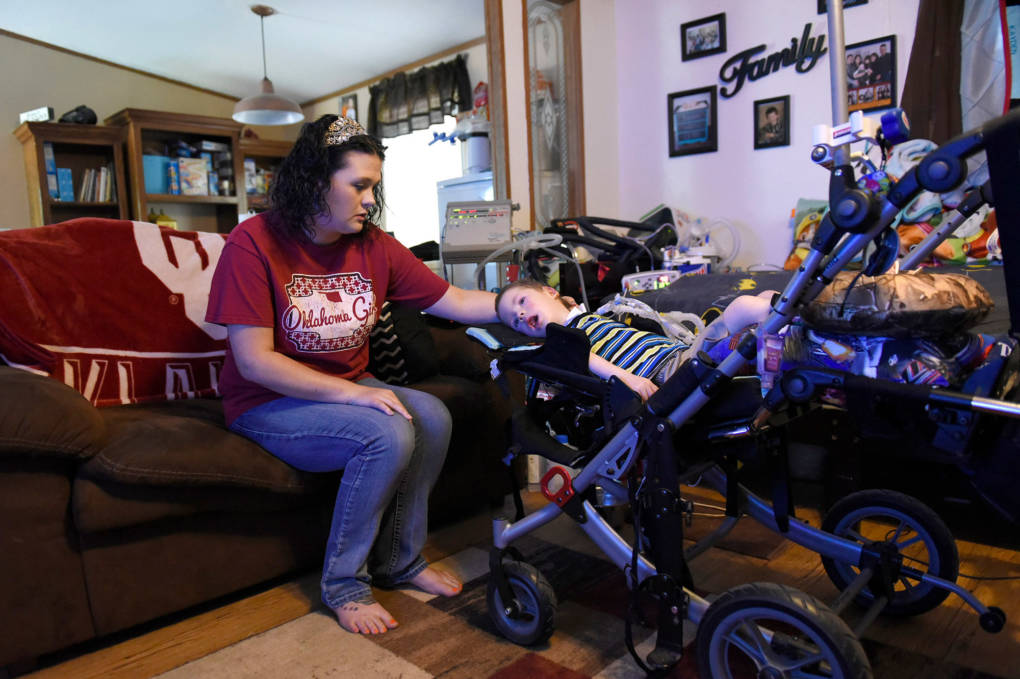
"description": "Amanda Chaffin comforts son Kayden, 4, who has a genetic condition called spinal muscular atrophy, or SMA, and depends on a ventilator to breathe. Chaffin is worried about the high costs of Kayden's care.",
"title": "Amanda Chaffin comforts son Kayden, 4, who has a genetic condition called spinal muscular atrophy, or SMA, and depends on a ventilator to breathe. Chaffin is worried about the high costs of Kayden's care.",
"credit": null,
"status": "inherit",
"isLoading": false,
"fetchFailed": false
}
},
"audioPlayerReducer": {
"postId": "stream_live",
"isPaused": true,
"isPlaying": false,
"pfsActive": false,
"pledgeModalIsOpen": true,
"playerDrawerIsOpen": false,
"liveAudioPlayStartedAt": 0,
"liveAudioPlayContext": ""
},
"authorsReducer": {
"byline_futureofyou_435338": {
"type": "authors",
"id": "byline_futureofyou_435338",
"meta": {
"override": true
},
"slug": "byline_futureofyou_435338",
"name": "Rebecca Plevin\u003cbr/>KPCC",
"isLoading": false
},
"byline_futureofyou_435315": {
"type": "authors",
"id": "byline_futureofyou_435315",
"meta": {
"override": true
},
"slug": "byline_futureofyou_435315",
"name": "Casey Ross and Ike Swetlitz\u003c/br>\u003ca href=\"https://www.statnews.com/2017/09/05/watson-ibm-cancer/\">STAT\u003c/a>",
"isLoading": false
},
"byline_futureofyou_435135": {
"type": "authors",
"id": "byline_futureofyou_435135",
"meta": {
"override": true
},
"slug": "byline_futureofyou_435135",
"name": "Kate Sheridan\u003c/br>\u003ca href=\"https://www.statnews.com/2017/08/30/neural-stem-cells-parkinsons/\">STAT\u003c/a>",
"isLoading": false
},
"byline_futureofyou_435119": {
"type": "authors",
"id": "byline_futureofyou_435119",
"meta": {
"override": true
},
"slug": "byline_futureofyou_435119",
"name": "Damian Garde\u003c/br>\u003ca href=\"https://www.statnews.com/2017/08/30/novartis-car-t-cancer-approved/\">STAT\u003c/a>",
"isLoading": false
},
"byline_futureofyou_435066": {
"type": "authors",
"id": "byline_futureofyou_435066",
"meta": {
"override": true
},
"slug": "byline_futureofyou_435066",
"name": "Andrew Joseph \u003cbr/>\u003ca href=\"https://www.statnews.com/\">STAT\u003c/a>",
"isLoading": false
},
"byline_futureofyou_434938": {
"type": "authors",
"id": "byline_futureofyou_434938",
"meta": {
"override": true
},
"slug": "byline_futureofyou_434938",
"name": "Barry Starr",
"isLoading": false
},
"byline_futureofyou_429409": {
"type": "authors",
"id": "byline_futureofyou_429409",
"meta": {
"override": true
},
"slug": "byline_futureofyou_429409",
"name": "David Wagner\u003cbr />\u003ca href=\"http://www.kpbs.org/\">KPBS\u003c/a>",
"isLoading": false
},
"byline_futureofyou_434812": {
"type": "authors",
"id": "byline_futureofyou_434812",
"meta": {
"override": true
},
"slug": "byline_futureofyou_434812",
"name": "Above the Noise",
"isLoading": false
},
"byline_futureofyou_400966": {
"type": "authors",
"id": "byline_futureofyou_400966",
"meta": {
"override": true
},
"slug": "byline_futureofyou_400966",
"name": "Lisa Cantrell",
"isLoading": false
},
"byline_futureofyou_434619": {
"type": "authors",
"id": "byline_futureofyou_434619",
"meta": {
"override": true
},
"slug": "byline_futureofyou_434619",
"name": "Julie Appleby\u003c/br>Kaiser Health News",
"isLoading": false
},
"jbrooks": {
"type": "authors",
"id": "80",
"meta": {
"index": "authors_1716337520",
"id": "80",
"found": true
},
"name": "Jon Brooks",
"firstName": "Jon",
"lastName": "Brooks",
"slug": "jbrooks",
"email": "jbrooks@kqed.org",
"display_author_email": true,
"staff_mastheads": [
"science"
],
"title": "Digital Editor",
"bio": "Jon Brooks is a former Digital Editor for KQED Science. He is the former editor of KQED’s daily news blog, News Fix. In 2014, he won a California Journalism Award for his coverage of ride services like Uber and Lyft and the taxi industry. A veteran blogger, he previously worked for Yahoo! in various news writing and editing roles. Jon is also a playwright whose work has been produced in San Francisco, New York, Italy, and around the U.S. He has written about film for his own blog and studied film at Boston University.",
"avatar": "https://secure.gravatar.com/avatar/98887f7ed1c876ed414d4c915e969584?s=600&d=blank&r=g",
"twitter": "jbrooksfoy",
"facebook": null,
"instagram": null,
"linkedin": null,
"sites": [
{
"site": "arts",
"roles": [
"Contributor",
"editor"
]
},
{
"site": "news",
"roles": [
"author"
]
},
{
"site": "futureofyou",
"roles": [
"administrator"
]
},
{
"site": "mindshift",
"roles": [
"editor"
]
},
{
"site": "stateofhealth",
"roles": [
"editor"
]
},
{
"site": "science",
"roles": [
"administrator"
]
},
{
"site": "quest",
"roles": [
"editor"
]
}
],
"headData": {
"title": "Jon Brooks | KQED",
"description": "Digital Editor",
"ogImgSrc": "https://secure.gravatar.com/avatar/98887f7ed1c876ed414d4c915e969584?s=600&d=blank&r=g",
"twImgSrc": "https://secure.gravatar.com/avatar/98887f7ed1c876ed414d4c915e969584?s=600&d=blank&r=g"
},
"isLoading": false,
"link": "/author/jbrooks"
},
"dgorn": {
"type": "authors",
"id": "8656",
"meta": {
"index": "authors_1716337520",
"id": "8656",
"found": true
},
"name": "David Gorn",
"firstName": "David",
"lastName": "Gorn",
"slug": "dgorn",
"email": "dgorn+donotmail@sbcglobal.net",
"display_author_email": false,
"staff_mastheads": [],
"title": "KQED Contributor",
"bio": "David Gorn is the former Deputy News Director of KQED Radio. His public radio pieces have appeared on NPR, the World, Marketplace and the California Report.",
"avatar": "https://secure.gravatar.com/avatar/a6ad3e1eec1712e19b986b9395614010?s=600&d=blank&r=g",
"twitter": null,
"facebook": null,
"instagram": null,
"linkedin": null,
"sites": [
{
"site": "news",
"roles": [
"subscriber"
]
},
{
"site": "futureofyou",
"roles": [
"author"
]
},
{
"site": "science",
"roles": [
"author"
]
},
{
"site": "quest",
"roles": [
"editor"
]
}
],
"headData": {
"title": "David Gorn | KQED",
"description": "KQED Contributor",
"ogImgSrc": "https://secure.gravatar.com/avatar/a6ad3e1eec1712e19b986b9395614010?s=600&d=blank&r=g",
"twImgSrc": "https://secure.gravatar.com/avatar/a6ad3e1eec1712e19b986b9395614010?s=600&d=blank&r=g"
},
"isLoading": false,
"link": "/author/dgorn"
},
"dventon": {
"type": "authors",
"id": "11088",
"meta": {
"index": "authors_1716337520",
"id": "11088",
"found": true
},
"name": "Danielle Venton",
"firstName": "Danielle",
"lastName": "Venton",
"slug": "dventon",
"email": "dventon@kqed.org",
"display_author_email": true,
"staff_mastheads": [
"science"
],
"title": "Science reporter",
"bio": "Danielle Venton is a reporter for KQED Science. She covers wildfires, space and oceans (though she is prone to sea sickness).\r\n\r\nBefore joining KQED in 2015, Danielle was a staff reporter at KRCB in Sonoma County and a freelancer. She studied science communication at UC Santa Cruz and formerly worked at CERN in Geneva, Switzerland where she wrote about computing. She lives in Sonoma County and enjoys backpacking.",
"avatar": "https://secure.gravatar.com/avatar/37b292b5c40c8d93959c4f48d73b5286f41b7abd8588277e941905a3ed4c801c?s=600&d=blank&r=g",
"twitter": "DanielleVenton",
"bluesky": null,
"facebook": null,
"instagram": null,
"linkedin": null,
"sites": [
{
"site": "arts",
"roles": [
"contributor"
]
},
{
"site": "news",
"roles": [
"editor"
]
},
{
"site": "futureofyou",
"roles": [
"editor"
]
},
{
"site": "science",
"roles": [
"editor"
]
},
{
"site": "liveblog",
"roles": [
"contributor"
]
}
],
"headData": {
"title": "Danielle Venton | KQED",
"description": "Science reporter",
"ogImgSrc": "https://secure.gravatar.com/avatar/37b292b5c40c8d93959c4f48d73b5286f41b7abd8588277e941905a3ed4c801c?s=600&d=blank&r=g",
"twImgSrc": "https://secure.gravatar.com/avatar/37b292b5c40c8d93959c4f48d73b5286f41b7abd8588277e941905a3ed4c801c?s=600&d=blank&r=g"
},
"isLoading": false,
"link": "/author/dventon"
}
},
"pagesReducer": {
"futureofyou_category_hopehype": {
"type": "terms",
"id": "futureofyou_1062",
"meta": {
"index": "terms_1716263798",
"site": "futureofyou",
"id": "1062",
"score": 13.896381
},
"featImg": null,
"name": "Hope/Hype",
"description": null,
"taxonomy": "category",
"headData": {
"twImgId": null,
"twTitle": null,
"ogTitle": null,
"ogImgId": null,
"twDescription": null,
"description": null,
"title": "Hope/Hype Archives | KQED Arts",
"ogDescription": null
},
"ttid": 1062,
"slug": "hopehype",
"isLoading": false,
"title": "Hope/Hype",
"pageMeta": {
"site": "futureofyou",
"WpPageTemplate": "page-topic-editorial",
"currentPage": 9
},
"blocks": [
{
"blockName": "kqed/post-list",
"attrs": {
"layout": "cardArticle2",
"query": "posts/futureofyou?category=hopehype",
"seeMore": false,
"paginated": true,
"page": 9
}
},
{
"blockName": "kqed/ad"
}
]
}
},
"pfsSessionReducer": {},
"postsReducer": {
"stream_live": {
"type": "live",
"id": "stream_live",
"audioUrl": "https://streams.kqed.org/kqedradio",
"title": "Live Stream",
"excerpt": "Live Stream information currently unavailable.",
"link": "/radio",
"featImg": "",
"label": {
"name": "KQED Live",
"link": "/"
}
},
"stream_kqedNewscast": {
"type": "posts",
"id": "stream_kqedNewscast",
"audioUrl": "https://www.kqed.org/.stream/anon/radio/RDnews/newscast.mp3?_=1",
"title": "KQED Newscast",
"featImg": "",
"label": {
"name": "88.5 FM",
"link": "/"
}
},
"futureofyou_435338": {
"type": "posts",
"id": "futureofyou_435338",
"meta": {
"index": "posts_1716263798",
"site": "futureofyou",
"id": "435338",
"score": null,
"sort": [
1504877416000
]
},
"parent": 0,
"labelTerm": {},
"blocks": [],
"publishDate": 1504877416,
"format": "standard",
"disqusTitle": "Intravenous Hydrogen Peroxide: Unproven Treatment Offered by Naturopaths",
"title": "Intravenous Hydrogen Peroxide: Unproven Treatment Offered by Naturopaths",
"headTitle": "KQED Future of You | KQED Science",
"content": "\u003cp>Many a parent has applied hydrogen peroxide to a child's cut or scrape to prevent infections. But a number of Southern California naturopathic doctors are using the mild antiseptic in an unconventional way: They intravenously infuse a saline solution with 3 percent hydrogen peroxide straight into a patient's bloodstream.\u003c/p>\n\u003caside class=\"pullquote alignright\">'When you have something that has never been shown to be of value and has the potential to do a lot of harm, it shouldn’t be used.'\u003ccite>Dr. Paul Offit, University of Pennsylvania medical school\u003c/cite>\u003c/aside>\n\u003cp>Montrose osteopath Dr. Yoshi Rahm says this treatment, called IV hydrogen peroxide, does the same thing inside your body as it does on the outside. It's \"killing things,\" such as \"the infection that you currently have, or those unhealthy cancer cells you currently have,\" he says.There's no proof this treatment works. On top of that, IV hydrogen peroxide can be expensive and potentially dangerous. Yet it's not hard to find naturopaths in Southern California who offer it.\u003c/p>\n\u003cp>Some naturopaths promote it online. In this YouTube video, a doctor in Georgia says there are \"30 to 50 maladies\" that IV hydrogen peroxide can help fight, including colds, flus and bacterial and viral infections.\u003c/p>\n\u003cp>\"When you have one compound that someone's telling you can treat a wide variety of unrelated conditions, that's a red flag,\" says Dr. David Gorski, a professor at Wayne State University's medical school and editor of the website Science-Based Medicine.\u003c/p>\n\u003cp>\u003cstrong>Unproven and Untracked\u003c/strong>\u003c/p>\n\u003cfigure id=\"attachment_435349\" class=\"wp-caption aligncenter\" style=\"max-width: 640px\">\u003ca href=\"https://ww2.kqed.org/futureofyou/wp-content/uploads/sites/13/2017/09/hydrogperoxdoc.jpg\">\u003cimg class=\"size-large wp-image-435349\" src=\"https://ww2.kqed.org/futureofyou/wp-content/uploads/sites/13/2017/09/hydrogperoxdoc-1020x851.jpg\" alt=\"\" width=\"640\" height=\"534\" srcset=\"https://ww2.kqed.org/app/uploads/sites/13/2017/09/hydrogperoxdoc-1020x851.jpg 1020w, https://ww2.kqed.org/app/uploads/sites/13/2017/09/hydrogperoxdoc-160x133.jpg 160w, https://ww2.kqed.org/app/uploads/sites/13/2017/09/hydrogperoxdoc-800x667.jpg 800w, https://ww2.kqed.org/app/uploads/sites/13/2017/09/hydrogperoxdoc-768x641.jpg 768w, https://ww2.kqed.org/app/uploads/sites/13/2017/09/hydrogperoxdoc-960x801.jpg 960w, https://ww2.kqed.org/app/uploads/sites/13/2017/09/hydrogperoxdoc-240x200.jpg 240w, https://ww2.kqed.org/app/uploads/sites/13/2017/09/hydrogperoxdoc-375x313.jpg 375w, https://ww2.kqed.org/app/uploads/sites/13/2017/09/hydrogperoxdoc-520x434.jpg 520w, https://ww2.kqed.org/app/uploads/sites/13/2017/09/hydrogperoxdoc.jpg 1024w\" sizes=\"(max-width: 640px) 100vw, 640px\">\u003c/a>\u003cfigcaption class=\"wp-caption-text\">Dr. Yoshi Rahm estimates he's provided about 100 IV hydrogen peroxide treatments over the past four years. He acknowledges there's no scientific proof that it works. \u003ccite>(Rebecca Plevin/KPCC)\u003c/cite>\u003c/figcaption>\u003c/figure>\n\u003cp>IV hydrogen peroxide has never been studied in a clinical trial, and the U.S. Food and Drug Administration hasn't approved any IV drugs that contain hydrogen peroxide as an active ingredient.\u003c/p>\n\u003cp>[ad fullwidth]\u003c/p>\n\u003cp>\"When you have something that has never been shown to be of value and has the potential to do a lot of harm, it shouldn't be used,\" says Dr. Paul Offit, a professor at the University of Pennsylvania medical school and author of a book about alternative medicine.\u003c/p>\n\u003cp>The U.S. Centers for Disease Control and Prevention doesn't track adverse events from IV hydrogen peroxide. But according to news reports, one woman died in South Carolina in 2004 after a doctor administered it as a treatment for multiple sclerosis.\u003c/p>\n\u003cp>The coroner concluded the hydrogen peroxide produced bubbles in the woman's blood, which led to multiple organ failure and cardiac arrest.\u003c/p>\n\u003cp>IV hydrogen peroxide has a lot of risk and no proven benefits, Offit says.\u003c/p>\n\u003cp>\"If you're going to do placebo medicine, which is what I think this is, then use a placebo, because hydrogen peroxide can kill you,\" he says.\u003c/p>\n\u003cp>It's also expensive: In Southern California, treatments often cost more than a $100 per session.\u003c/p>\n\u003cp>\u003cstrong>No 'Solid Medical Evidence'\u003c/strong>\u003c/p>\n\u003cp>The California Naturopathic Doctors Association says it doesn't track how many people have gotten IV hydrogen peroxide or how many providers offer it, but the group referred KPCC to a naturopath in Grass Valley who says she's trained thousands on how to administer the treatment.\u003c/p>\n\u003cp>Dr. Rahm estimates he's provided about 100 treatments of IV hydrogen peroxide over the past four years. He says he's mainly used it on sinus infections and on cancer, as long as patients are also getting standard treatments like chemotherapy.\u003c/p>\n\u003cp>Rahm acknowledges there's no scientific proof that it works.\u003c/p>\n\u003cp>\"Honestly, I would say no, there's not like solid medical evidence behind it,\" Rahm says. \"Those studies haven't been done.\"\u003c/p>\n\u003cp>He defends the treatment by pointing to one patient's story as proof that it works.\u003c/p>\n\u003cp>Mercedes Curran, a 28-year-old from Beverly Glen Canyon, has MS, an unpredictable, degenerative disease of the central nervous system.\u003c/p>\n\u003cp>At one point, she couldn't control the right side of her body.\u003c/p>\n\u003cp>\"It felt like the right side of my body had 30 extra pounds on all of it,\" Curran recalls. \"Essentially, it would feel like that part of my body was dead.\"\u003c/p>\n\u003cp>Her neurologist recommended five rounds of steroids and physical therapy. Alongside that treatment, Rahm recommended 10 IV hydrogen peroxide sessions over two weeks.\u003c/p>\n\u003cp>Curran says she was skeptical, but willing to try it.\u003c/p>\n\u003cp>\"I wouldn't say I was desperate, but at the same time, of course I wanted to walk without having to drag my leg and I love to travel and all those other things,\" she says.\u003c/p>\n\u003cp>Dr. Offit says he has \"enormous sympathy\" for Curran's situation. He says she, like many others, turned to alternative medicine after coming up against the limits of Western medicine.\u003c/p>\n\u003cp>Still, \"there's just no reason to put people at this kind of risk,\" he says. \"I think these are very vulnerable people and it's just disheartening to see that there are clinicians who are willing to step into the breach and take advantage of these patients.\"\u003c/p>\n\u003cp>Curran estimates she’s spent about $2,000 altogether on her treatments. Each time, she would relax in a lounge chair in Rahm's office, as a saline solution with 3 percent hydrogen peroxide was infused into her bloodstream.\u003c/p>\n\u003cp>\"I felt better after the first session,\" Curran recalls. \"I just felt like I had more energy and my body wasn't as heavy. It could've been even after two or three sessions was the first time I could flex my foot.\"\u003c/p>\n\u003cp>\u003cstrong>Anecdotes Not Scientific Evidence\u003c/strong>\u003c/p>\n\u003cp>Experts say it's impossible to know why Curran started feeling better.\u003c/p>\n\u003cp>MS symptoms sometimes improve on their own. It could've been the steroids Curran's neurologist prescribed, which can take a few weeks to kick in. Or it could've been the placebo effect.\u003c/p>\n\u003cp>\"With one single case, we should be very careful and definitely not jump to the conclusions, especially when it comes to intravenous administration of a substance that can be toxic,\" says Dr. Regina Berkovich, a neurologist who specializes in MS at USC.\u003c/p>\n\u003cp>If naturopathic doctors like Rahm think IV hydrogen peroxide can help treat MS and other conditions, they should prove it, says Dr. Robert Califf, who served as FDA commissioner until January.\u003c/p>\n\u003cp>\"If the treatment works, he would be doing the world a favor to show it using good scientific principles,\" he says, while predicting that it wouldn't be proven to work.\u003c/p>\n\u003cp>[ad floatright]\u003c/p>\n\u003cp>\"Even in the mainstream drug industry, over 90 percent of drugs that get into human clinical trials end up not being safe and effective,\" says Califf.\u003c/p>\n\n",
"disqusIdentifier": "435338 https://ww2.kqed.org/futureofyou/?p=435338",
"disqusUrl": "https://ww2.kqed.org/futureofyou/2017/09/08/unproven-intravenous-hydrogen-peroxide-treatment-offered-by-naturopaths/",
"stats": {
"hasVideo": false,
"hasChartOrMap": false,
"hasAudio": false,
"hasPolis": false,
"wordCount": 1105,
"hasGoogleForm": false,
"hasGallery": false,
"hasHearkenModule": false,
"iframeSrcs": [],
"paragraphCount": 37
},
"modified": 1504883621,
"excerpt": "Naturopaths in Southern California are treating patients intravenously with the antiseptic hydrogen peroxide. But this treatment can be expensive and possibly dangerous, and there's no evidence that it actually works.",
"headData": {
"twImgId": "",
"twTitle": "",
"ogTitle": "",
"ogImgId": "",
"twDescription": "",
"description": "Naturopaths in Southern California are treating patients intravenously with the antiseptic hydrogen peroxide. But this treatment can be expensive and possibly dangerous, and there's no evidence that it actually works.",
"title": "Intravenous Hydrogen Peroxide: Unproven Treatment Offered by Naturopaths | KQED",
"ogDescription": "",
"schema": {
"@context": "https://schema.org",
"@type": "Article",
"headline": "Intravenous Hydrogen Peroxide: Unproven Treatment Offered by Naturopaths",
"datePublished": "2017-09-08T06:30:16-07:00",
"dateModified": "2017-09-08T08:13:41-07:00",
"image": "https://cdn.kqed.org/wp-content/uploads/2020/02/KQED-OG-Image@1x.png"
}
},
"guestAuthors": [],
"slug": "unproven-intravenous-hydrogen-peroxide-treatment-offered-by-naturopaths",
"status": "publish",
"nprByline": "Rebecca Plevin\u003cbr/>KPCC",
"source": "Future of You",
"path": "/futureofyou/435338/unproven-intravenous-hydrogen-peroxide-treatment-offered-by-naturopaths",
"audioTrackLength": null,
"parsedContent": [
{
"type": "contentString",
"content": "\u003cdiv class=\"post-body\">\u003cp>\u003cp>Many a parent has applied hydrogen peroxide to a child's cut or scrape to prevent infections. But a number of Southern California naturopathic doctors are using the mild antiseptic in an unconventional way: They intravenously infuse a saline solution with 3 percent hydrogen peroxide straight into a patient's bloodstream.\u003c/p>\n\u003caside class=\"pullquote alignright\">'When you have something that has never been shown to be of value and has the potential to do a lot of harm, it shouldn’t be used.'\u003ccite>Dr. Paul Offit, University of Pennsylvania medical school\u003c/cite>\u003c/aside>\n\u003cp>Montrose osteopath Dr. Yoshi Rahm says this treatment, called IV hydrogen peroxide, does the same thing inside your body as it does on the outside. It's \"killing things,\" such as \"the infection that you currently have, or those unhealthy cancer cells you currently have,\" he says.There's no proof this treatment works. On top of that, IV hydrogen peroxide can be expensive and potentially dangerous. Yet it's not hard to find naturopaths in Southern California who offer it.\u003c/p>\n\u003cp>Some naturopaths promote it online. In this YouTube video, a doctor in Georgia says there are \"30 to 50 maladies\" that IV hydrogen peroxide can help fight, including colds, flus and bacterial and viral infections.\u003c/p>\n\u003cp>\"When you have one compound that someone's telling you can treat a wide variety of unrelated conditions, that's a red flag,\" says Dr. David Gorski, a professor at Wayne State University's medical school and editor of the website Science-Based Medicine.\u003c/p>\n\u003cp>\u003cstrong>Unproven and Untracked\u003c/strong>\u003c/p>\n\u003cfigure id=\"attachment_435349\" class=\"wp-caption aligncenter\" style=\"max-width: 640px\">\u003ca href=\"https://ww2.kqed.org/futureofyou/wp-content/uploads/sites/13/2017/09/hydrogperoxdoc.jpg\">\u003cimg class=\"size-large wp-image-435349\" src=\"https://ww2.kqed.org/futureofyou/wp-content/uploads/sites/13/2017/09/hydrogperoxdoc-1020x851.jpg\" alt=\"\" width=\"640\" height=\"534\" srcset=\"https://ww2.kqed.org/app/uploads/sites/13/2017/09/hydrogperoxdoc-1020x851.jpg 1020w, https://ww2.kqed.org/app/uploads/sites/13/2017/09/hydrogperoxdoc-160x133.jpg 160w, https://ww2.kqed.org/app/uploads/sites/13/2017/09/hydrogperoxdoc-800x667.jpg 800w, https://ww2.kqed.org/app/uploads/sites/13/2017/09/hydrogperoxdoc-768x641.jpg 768w, https://ww2.kqed.org/app/uploads/sites/13/2017/09/hydrogperoxdoc-960x801.jpg 960w, https://ww2.kqed.org/app/uploads/sites/13/2017/09/hydrogperoxdoc-240x200.jpg 240w, https://ww2.kqed.org/app/uploads/sites/13/2017/09/hydrogperoxdoc-375x313.jpg 375w, https://ww2.kqed.org/app/uploads/sites/13/2017/09/hydrogperoxdoc-520x434.jpg 520w, https://ww2.kqed.org/app/uploads/sites/13/2017/09/hydrogperoxdoc.jpg 1024w\" sizes=\"(max-width: 640px) 100vw, 640px\">\u003c/a>\u003cfigcaption class=\"wp-caption-text\">Dr. Yoshi Rahm estimates he's provided about 100 IV hydrogen peroxide treatments over the past four years. He acknowledges there's no scientific proof that it works. \u003ccite>(Rebecca Plevin/KPCC)\u003c/cite>\u003c/figcaption>\u003c/figure>\n\u003cp>IV hydrogen peroxide has never been studied in a clinical trial, and the U.S. Food and Drug Administration hasn't approved any IV drugs that contain hydrogen peroxide as an active ingredient.\u003c/p>\n\u003cp>\u003c/p>\u003c/div>",
"attributes": {
"named": {},
"numeric": []
}
},
{
"type": "component",
"content": "",
"name": "ad",
"attributes": {
"named": {
"label": "fullwidth"
},
"numeric": [
"fullwidth"
]
}
},
{
"type": "contentString",
"content": "\u003cdiv class=\"post-body\">\u003cp>\u003c/p>\n\u003cp>\"When you have something that has never been shown to be of value and has the potential to do a lot of harm, it shouldn't be used,\" says Dr. Paul Offit, a professor at the University of Pennsylvania medical school and author of a book about alternative medicine.\u003c/p>\n\u003cp>The U.S. Centers for Disease Control and Prevention doesn't track adverse events from IV hydrogen peroxide. But according to news reports, one woman died in South Carolina in 2004 after a doctor administered it as a treatment for multiple sclerosis.\u003c/p>\n\u003cp>The coroner concluded the hydrogen peroxide produced bubbles in the woman's blood, which led to multiple organ failure and cardiac arrest.\u003c/p>\n\u003cp>IV hydrogen peroxide has a lot of risk and no proven benefits, Offit says.\u003c/p>\n\u003cp>\"If you're going to do placebo medicine, which is what I think this is, then use a placebo, because hydrogen peroxide can kill you,\" he says.\u003c/p>\n\u003cp>It's also expensive: In Southern California, treatments often cost more than a $100 per session.\u003c/p>\n\u003cp>\u003cstrong>No 'Solid Medical Evidence'\u003c/strong>\u003c/p>\n\u003cp>The California Naturopathic Doctors Association says it doesn't track how many people have gotten IV hydrogen peroxide or how many providers offer it, but the group referred KPCC to a naturopath in Grass Valley who says she's trained thousands on how to administer the treatment.\u003c/p>\n\u003cp>Dr. Rahm estimates he's provided about 100 treatments of IV hydrogen peroxide over the past four years. He says he's mainly used it on sinus infections and on cancer, as long as patients are also getting standard treatments like chemotherapy.\u003c/p>\n\u003cp>Rahm acknowledges there's no scientific proof that it works.\u003c/p>\n\u003cp>\"Honestly, I would say no, there's not like solid medical evidence behind it,\" Rahm says. \"Those studies haven't been done.\"\u003c/p>\n\u003cp>He defends the treatment by pointing to one patient's story as proof that it works.\u003c/p>\n\u003cp>Mercedes Curran, a 28-year-old from Beverly Glen Canyon, has MS, an unpredictable, degenerative disease of the central nervous system.\u003c/p>\n\u003cp>At one point, she couldn't control the right side of her body.\u003c/p>\n\u003cp>\"It felt like the right side of my body had 30 extra pounds on all of it,\" Curran recalls. \"Essentially, it would feel like that part of my body was dead.\"\u003c/p>\n\u003cp>Her neurologist recommended five rounds of steroids and physical therapy. Alongside that treatment, Rahm recommended 10 IV hydrogen peroxide sessions over two weeks.\u003c/p>\n\u003cp>Curran says she was skeptical, but willing to try it.\u003c/p>\n\u003cp>\"I wouldn't say I was desperate, but at the same time, of course I wanted to walk without having to drag my leg and I love to travel and all those other things,\" she says.\u003c/p>\n\u003cp>Dr. Offit says he has \"enormous sympathy\" for Curran's situation. He says she, like many others, turned to alternative medicine after coming up against the limits of Western medicine.\u003c/p>\n\u003cp>Still, \"there's just no reason to put people at this kind of risk,\" he says. \"I think these are very vulnerable people and it's just disheartening to see that there are clinicians who are willing to step into the breach and take advantage of these patients.\"\u003c/p>\n\u003cp>Curran estimates she’s spent about $2,000 altogether on her treatments. Each time, she would relax in a lounge chair in Rahm's office, as a saline solution with 3 percent hydrogen peroxide was infused into her bloodstream.\u003c/p>\n\u003cp>\"I felt better after the first session,\" Curran recalls. \"I just felt like I had more energy and my body wasn't as heavy. It could've been even after two or three sessions was the first time I could flex my foot.\"\u003c/p>\n\u003cp>\u003cstrong>Anecdotes Not Scientific Evidence\u003c/strong>\u003c/p>\n\u003cp>Experts say it's impossible to know why Curran started feeling better.\u003c/p>\n\u003cp>MS symptoms sometimes improve on their own. It could've been the steroids Curran's neurologist prescribed, which can take a few weeks to kick in. Or it could've been the placebo effect.\u003c/p>\n\u003cp>\"With one single case, we should be very careful and definitely not jump to the conclusions, especially when it comes to intravenous administration of a substance that can be toxic,\" says Dr. Regina Berkovich, a neurologist who specializes in MS at USC.\u003c/p>\n\u003cp>If naturopathic doctors like Rahm think IV hydrogen peroxide can help treat MS and other conditions, they should prove it, says Dr. Robert Califf, who served as FDA commissioner until January.\u003c/p>\n\u003cp>\"If the treatment works, he would be doing the world a favor to show it using good scientific principles,\" he says, while predicting that it wouldn't be proven to work.\u003c/p>\n\u003cp>\u003c/p>\u003c/div>",
"attributes": {
"named": {},
"numeric": []
}
},
{
"type": "component",
"content": "",
"name": "ad",
"attributes": {
"named": {
"label": "floatright"
},
"numeric": [
"floatright"
]
}
},
{
"type": "contentString",
"content": "\u003cdiv class=\"post-body\">\u003cp>\u003c/p>\n\u003cp>\"Even in the mainstream drug industry, over 90 percent of drugs that get into human clinical trials end up not being safe and effective,\" says Califf.\u003c/p>\n\n\u003c/div>\u003c/p>",
"attributes": {
"named": {},
"numeric": []
}
}
],
"link": "/futureofyou/435338/unproven-intravenous-hydrogen-peroxide-treatment-offered-by-naturopaths",
"authors": [
"byline_futureofyou_435338"
],
"categories": [
"futureofyou_452",
"futureofyou_1062",
"futureofyou_1",
"futureofyou_73"
],
"tags": [
"futureofyou_972",
"futureofyou_1352"
],
"featImg": "futureofyou_435346",
"label": "source_futureofyou_435338"
},
"futureofyou_435315": {
"type": "posts",
"id": "futureofyou_435315",
"meta": {
"index": "posts_1716263798",
"site": "futureofyou",
"id": "435315",
"score": null,
"sort": [
1504722796000
]
},
"parent": 0,
"labelTerm": {
"site": "futureofyou",
"term": 1097
},
"blocks": [],
"publishDate": 1504722796,
"format": "standard",
"disqusTitle": "IBM Pitched Its Watson Supercomputer as a Revolution in Cancer Care. It’s Nowhere Close",
"title": "IBM Pitched Its Watson Supercomputer as a Revolution in Cancer Care. It’s Nowhere Close",
"headTitle": "KQED Future of You | KQED Science",
"content": "\u003cp>It was an audacious undertaking, even for one of the most storied American companies: With a single machine, IBM would tackle humanity’s most vexing diseases and revolutionize medicine.\u003c/p>\n\u003cp>Breathlessly promoting its signature brand — Watson — IBM sought to capture the world’s imagination, and it quickly zeroed in on a high-profile target: cancer.\u003c/p>\n\u003cp>But three years after IBM began selling Watson to recommend the best cancer treatments to doctors around the world, a STAT investigation has found that the supercomputer isn’t living up to the lofty expectations IBM created for it. It is still struggling with the basic step of learning about different forms of cancer. Only a few dozen hospitals have adopted the system, which is a long way from IBM’s goal of establishing dominance in a multibillion-dollar market. And at foreign hospitals, physicians complained its advice is biased toward American patients and methods of care.\u003c/p>\n\u003caside class=\"pullquote alignright\">IBM has not exposed the product to critical review by outside scientists or conducted clinical trials to assess its effectiveness.\u003c/aside>\n\u003cp>STAT examined Watson for Oncology’s use, marketing, and performance in hospitals across the world, from South Korea to Slovakia to South Florida. Reporters interviewed dozens of doctors, IBM executives, artificial intelligence experts, and others familiar with the system’s underlying technology and rollout.\u003c/p>\n\u003cp>The interviews suggest that IBM, in its rush to bolster flagging revenue, unleashed a product without fully assessing the challenges of deploying it in hospitals globally. While it has \u003ca href=\"https://www.youtube.com/watch?v=au4kzyJUlrA\" target=\"_blank\" rel=\"noopener noreferrer\">emphatically marketed\u003c/a> Watson for cancer care, IBM hasn’t published any scientific papers demonstrating how the technology affects physicians and patients. As a result, its flaws are getting exposed on the front lines of care by doctors and researchers who say that the system, while promising in some respects, remains undeveloped.\u003c/p>\n\u003cp>[ad fullwidth]\u003c/p>\n\u003cp>“Watson for Oncology is in their toddler stage, and we have to wait and actively engage, hopefully to help them grow healthy,” said Dr. Taewoo Kang, a South Korean cancer specialist who has used the product.\u003c/p>\n\u003cp>At its heart, Watson for Oncology uses the cloud-based supercomputer to digest massive amounts of data — from doctor’s notes to medical studies to clinical guidelines. But its treatment recommendations are not based on its own insights from these data. Instead, they are based exclusively on training by human overseers, who laboriously feed Watson information about how patients with specific characteristics should be treated.\u003c/p>\n\u003cp>IBM executives acknowledged \u003ca href=\"https://www.ibm.com/watson/health/oncology-and-genomics/oncology/\" target=\"_blank\" rel=\"noopener noreferrer\">Watson for Oncology\u003c/a>, which has been in development for nearly six years, is in its infancy. But they said it is improving rapidly, noting that by year’s end, the system will offer guidance about treatment for 12 cancers that account for 80 percent of the world’s cases. They said it’s saving doctors time and ensuring that patients get top-quality care.\u003c/p>\n\u003cp>“We’re seeing stories come in where patients are saying, ‘It gave me peace of mind,’” Watson Health general manager Deborah DiSanzo said. “That makes us feel extraordinarily good that what we’re doing is going to make a difference for patients and their physicians.”\u003c/p>\n\u003cp>But contrary to IBM’s depiction of Watson as a digital prodigy, the supercomputer’s abilities are limited.\u003c/p>\n\u003cp>Perhaps the most stunning overreach is in the company’s claim that Watson for Oncology, through artificial intelligence, can sift through reams of data to generate new insights and identify, as an IBM sales rep put it, “even new approaches” to cancer care. STAT found that the system doesn’t create new knowledge and is artificially intelligent only in the most rudimentary sense of the term.\u003c/p>\n\u003cp>While Watson became a household name by winning the TV game show “Jeopardy!”, its programming is akin to a different game-playing machine: the Mechanical Turk, a chess-playing robot of the 1700s, which dazzled audiences but hid a secret — a human operator shielded inside.\u003c/p>\n\u003cp>In the case of Watson for Oncology, those human operators are a couple dozen physicians at a single, though highly respected, U.S. hospital: Memorial Sloan Kettering Cancer Center in New York. Doctors there are empowered to input their own recommendations into Watson, even when the evidence supporting those recommendations is thin.\u003c/p>\n\u003cp>The actual capabilities of Watson for Oncology are not well-understood by the public, and even by some of the hospitals that use it. It’s taken nearly six years of painstaking work by data engineers and doctors to train Watson in just seven types of cancer, and keep the system updated with the latest knowledge.\u003c/p>\n\u003cp>“It’s been a struggle to update, I’ll be honest,” said Dr. Mark Kris, Memorial Sloan Kettering’s lead Watson trainer. He noted that treatment guidelines for every metastatic lung cancer patient worldwide recently changed in the course of one week after a research presentation at a cancer conference. “Changing the system of cognitive computing doesn’t turn around on a dime like that,” he said. “You have to put in the literature, you have to put in cases.”\u003c/p>\n\u003cp>Watson grew out of an effort to transform IBM from an old-guard hardware company to one that operates in the cloud and along the cutting edge of artificial intelligence. Despite its use in an array of industries — from banking to manufacturing — it has failed to end a streak of 21 consecutive quarters of declining revenue at IBM. In the most recent quarter, revenue even slid from the same period last year in IBM’s cognitive solutions division — which is built around Watson and is supposed to be the future of its business.\u003c/p>\n\u003cp>[contextly_sidebar id=\"Z4v10mXX1qddzeH6LkJrk48aWafwbS4D\"]In response to STAT’s questions, IBM said Watson, in health care and otherwise, remains on an upward trajectory and “is already an important part” of its $20 billion analytics business. Health care is a crucial part of the Watson enterprise. IBM employs 7,000 people in its Watson health division and sees the industry as a \u003ca href=\"https://www.ibm.com/investor/att/pdf/2017_Investor_Briefing_Financial_Discussion_charts.pdf\" target=\"_blank\" rel=\"noopener noreferrer\">$200 billion market\u003c/a> over the next several years. Only financial services, at $300 billion, is considered a bigger opportunity by the company.\u003c/p>\n\u003cp>At stake in the supercomputer’s performance is not just the fortunes of a famed global company. In the world of medicine, Watson is also something of a digital canary — the most visible attempt to use artificial intelligence to identify the best ways to prevent and treat disease. The system’s larger goal, IBM executives say, is to democratize medical knowledge so that every patient, no matter the person’s geography or income level, will be able to access the best care.\u003c/p>\n\u003cp>But in cancer treatment, the pursuit of that utopian ideal has faltered.\u003c/p>\n\u003cp>STAT’s investigation focused on Watson for Oncology because that product is the furthest along in clinical care, though Watson sells separate packages to analyze genomic information and match patients to clinical trials. It’s also applying Watson to other tasks, including honing \u003ca href=\"https://www.ibm.com/watson/health/value-based-care/population-health-management/\" target=\"_blank\" rel=\"noopener noreferrer\">preventive medicine practices\u003c/a> and reading \u003ca href=\"https://www.ibm.com/watson/health/imaging/\" target=\"_blank\" rel=\"noopener noreferrer\">medical images\u003c/a>.\u003c/p>\n\u003cp>Doctors’ reliance on Watson for Oncology varies among hospitals. While institutions with fewer specialists lean more heavily on its recommendations, others relegate the system to a background role, like a paralegal whose main skill is researching existing knowledge.\u003c/p>\n\u003cp>[contextly_sidebar id=\"AqsguTTnUCDkh8FM62DUnHUeMNt65aa2\"]Hospitals pay a per-patient fee for Watson for Oncology and other products enabled by the supercomputer. The amount depends on the number of products a hospital buys, and ranges between $200 and $1,000 per patient, according to DiSanzo. The system sometimes comes with consulting costs and is expensive to link with electronic medical records. At hospitals that don’t link it with their medical records, more time must be spent typing in patient information.\u003c/p>\n\u003cp>At Jupiter Medical Center in Florida, that task falls to nurse Jean Thompson, who spends about 90 minutes a week feeding data into the machine. Once she has completed that work, she clicks the “Ask Watson” button to get the supercomputer’s advice for treating patients.\u003c/p>\n\u003cp>On a recent morning, the results for a 73-year-old lung cancer patient were underwhelming: Watson recommended a chemotherapy regimen the oncologists had already flagged.\u003c/p>\n\u003cp>“It’s fine,” Dr. Sujal Shah, a medical oncologist, said of Watson’s treatment suggestion while discussing the case with colleagues.\u003c/p>\n\u003cp>He said later that the background information Watson provided, including medical journal articles, was helpful, giving him more confidence that using a specific chemotherapy was a sound idea. But the system did not directly help him make that decision, nor did it tell him anything he didn’t already know.\u003c/p>\n\u003cp>Jupiter is one of two U.S. hospitals that have adopted Watson for Oncology. The system has generated more business in India and Southeast Asia. Many doctors in those countries said Watson is saving time and helping more patients get quality care. But they also said its accuracy and overall value is limited by differing medical practices and economic circumstances.\u003c/p>\n\u003cp>Despite IBM’s marketing blitz, with years of high-profile Watson commercials featuring celebrities from Serena Williams to Bob Dylan to Jon Hamm, the company’s executives are not always gushing. In interviews with STAT, they acknowledged the system faces challenges and needs better integration with electronic medical records and more data on real patients to find patterns and suggest cutting-edge treatments.\u003c/p>\n\u003cp>“The goal as Watson gets smarter is for it to make some of those recommendations in a more automated way, to sort of suggest now may be the time and let us flip the switch” when a promising treatment option emerges, said Dr. Andrew Norden, a former IBM deputy health chief who left the company in early August. “As I describe it, you’re probably getting a sense it’s really hard and nuanced.”\u003c/p>\n\u003cp>Such nuance is absent from the careful narrative IBM has constructed to sell Watson.\u003c/p>\n\u003cp>https://www.youtube.com/watch?v=UpFHNGF4F8o\u003c/p>\n\u003cp>It is by design that there is not one independent, third-party study that examines whether Watson for Oncology can deliver. IBM has not exposed the product to critical review by outside scientists or conducted clinical trials to assess its effectiveness.\u003c/p>\n\u003cp>While it’s not unheard of for companies to avoid external vetting early on, IBM’s circumstances are unusual because Watson for Oncology is not in development — it has already been deployed around the world.\u003c/p>\n\u003cp>Yoon Sup Choi, a South Korean venture capitalist and researcher who wrote a book about artificial intelligence in health care, said IBM isn’t required by regulatory agencies to do a clinical trial in South Korea or America before selling the system to hospitals. And given that hospitals are already using the system, a clinical trial would be unlikely to improve business prospects.\u003c/p>\n\u003cp>“It’s too risky, right?” Choi said. “If the result of the clinical trial is not very good — [if] there’s a marginal clinical benefit from Watson — it’s really bad news to the whole IBM.”\u003c/p>\n\u003cp>Pilar Ossorio, a professor of law and bioethics at University of Wisconsin Law School, said Watson should be subject to tighter regulation because of its role in treating patients. “As an ethical matter, and as a scientific matter, you should have to prove that there’s safety and efficacy before you can just go do this,” she said.\u003c/p>\n\u003caside class=\"pullquote alignright\">'Artificial intelligence will be adopted in all medical fields in the future. If that trend, that change is inevitable, then why don’t we just start early?'\u003ccite> Dr. Uhn Lee, Watson program, Gachon University Gil Medical Center, South Korea\u003c/cite>\u003c/aside>\n\u003cp>Norden dismissed the suggestion IBM should have been required to conduct a clinical trial before commercializing Watson, noting that many practices in medicine are widely accepted even though they aren’t supported by a randomized controlled trial.\u003c/p>\n\u003cp>“Has there ever been a randomized trial of parachutes for paratroopers?” Norden asked. “And the answer is, of course not, because there is a very strong intuitive value proposition. … So I believe that bringing the best information to bear on medical decision making is a no-brainer.”\u003c/p>\n\u003cp>IBM said in its statement that it has collaborated with the research community and presented data on Watson at industry gatherings and in peer-reviewed journals. Some doctors said they didn’t need to see more research to know that the system is valuable. “Artificial intelligence will be adopted in all medical fields in the future,” said Dr. Uhn Lee, who runs the Watson program at Gachon University Gil Medical Center in South Korea. “If that trend, that change is inevitable, then why don’t we just start early?”\u003c/p>\n\u003cp>So far, the only studies about Watson for Oncology are conference abstracts. The full results haven’t been published in peer-reviewed journals — and every study, save one, was either conducted by a paying customer or included IBM staff on the author list, or both. Most trumpet positive results, showing that Watson saves doctors time and has a high concordance rate with their treatment recommendations.\u003c/p>\n\u003cp>The “concordance” studies comprise the vast majority of the public research on Watson for Oncology. Doctors will ask Watson for its advice for treating a slew of patients, and then compare its recommendations to those of oncologists. In an unpublished study from Denmark, the rate of agreement was about 33 percent — so the hospital decided not to buy the system. In other countries, the rate can be as high as \u003ca href=\"http://meetinglibrary.asco.org/record/145389/abstract\" target=\"_blank\" rel=\"noopener noreferrer\">96 percent\u003c/a> for some cancers. But showing that Watson agrees with the doctors proves only that it is competent in applying existing methods of care, not that it can improve them.\u003c/p>\n\u003cp>IBM executives said they are pursuing studies to examine the impact on doctors and patients, although none has been completed to date.\u003c/p>\n\u003cp>Questions about Watson have begun spilling into public view, including in a \u003ca href=\"http://gizmodo.com/why-everyone-is-hating-on-watson-including-the-people-w-1797510888\" target=\"_blank\" rel=\"noopener noreferrer\">recent Gizmodo story\u003c/a> headlined “Why Everyone is Hating on IBM Watson — Including the People Who Helped Make It.” The most prominent failure occurred last February when MD Anderson Cancer Center, part of the University of Texas, cancelled its partnership with Watson.\u003c/p>\n\u003cp>The MD Anderson alliance was essentially the \u003ca href=\"http://www.washingtonpost.com/sf/national/2015/06/27/watsons-next-feat-taking-on-cancer/?utm_term=.ada22b3eefb7\" target=\"_blank\" rel=\"noopener noreferrer\">early face\u003c/a> of Watson in health care. The Houston hospital was among IBM’s first partners, and it was using the system to create its own expert oncology adviser, similar to the one IBM was developing with Memorial Sloan Kettering. But the project disintegrated amid internal allegations of overspending, delays, and mismanagement. In all, MD Anderson spent more than three years and $60 million — much of it on outside consultants — before shelving the effort.\u003c/p>\n\u003cp>The hospital declined to answer questions. But the project leader, Dr. Lynda Chin, in her first media interview on the subject, told STAT about the challenges she faced. Chin left MD Anderson before the project collapsed; a subsequent audit flagged several violations of procurement rules under her leadership.\u003c/p>\n\u003caside class=\"pullquote alignright\">How do we ensure the most important tenet in medicine: Do no harm?\u003c/aside>\n\u003cp>Chin said that Watson is a powerful technology, but that it is exceedingly difficult to make functional in health care. She and her team encountered numerous roadblocks, some of which still have not been fully addressed by IBM — at MD Anderson or elsewhere.\u003c/p>\n\u003cp>The cancer hospital’s first major challenge involved getting the machine to deal with the idiosyncrasies of medical records: the acronyms, human errors, shorthand phrases, and different styles of writing. “Teaching a machine to read a record is a lot harder than anyone thought,” she said. Her team spent countless hours on that problem, trying to get Watson to extract valuable information from medical records so that it could apply them to its recommendations.\u003c/p>\n\u003cp>Chin said her team also wrestled with deploying the system in clinical practice. Watson, even if guided by doctors, is as close as medicine has ever gotten to allowing a machine to help decide the treatments delivered to human beings. That carries with it thorny questions, such as how to test the safety of a digital treatment adviser, how to ensure its compliance with regulations, and how to incorporate it into the daily work of doctors and nurses.\u003c/p>\n\u003cp>“Importantly,” Chin said. “How do we create an environment that can ensure the most important tenet in medicine: Do no harm?”\u003c/p>\n\u003cp>Finally, the project ran into a bigger obstacle: Even if you can get Watson to understand patient variables and make competent treatment recommendations, how do you get it access to enough patient data, from enough different sources, to derive insights that could significantly advance the standard of care?\u003c/p>\n\u003cp>Chin said that was a showstopper. Watson did not have a connected network of institutions feeding data about specific cohorts of patients. “You may have 10,000 patients for lung cancer. That is still not a very big number when you think about it,” she said.\u003c/p>\n\u003cp>With data from many more patients, Chin said, you could see patterns — “subsets [of patients] that respond a certain way, subsets that don’t, subsets that have a certain toxicity. That pattern would help with better personalized and precision medicine. But we can’t get there without the ability to actually have a way of aggregating them.”\u003c/p>\n\u003cp>IBM told STAT that Chin’s work was separate from the effort to create Watson for Oncology, which was validated by cancer specialists at Memorial Sloan Kettering prior to its deployment. The company said that Watson for Oncology can extract and summarize substantial text from patient records, though the information must be verified by a clinician, and that it has made significant progress in obtaining more data to improve Watson’s performance. It pointed to partnerships with the health care publisher Elsevier and the analytics firm \u003ca href=\"https://www-03.ibm.com/press/us/en/pressrelease/47031.wss\" target=\"_blank\" rel=\"noopener noreferrer\">Doctor Evidence\u003c/a>.\u003c/p>\n\u003cp>To date, more than 50 hospitals on five continents have agreements with IBM, or intermediary technology companies, to use Watson for Oncology to treat patients, and others are using the genomics and clinical trials products.\u003c/p>\n\u003cp>But the partnership with Memorial Sloan Kettering, and the product that grew out of it, resulted in complications that IBM has papered over with carefully parsed statements and misleading marketing.\u003c/p>\n\u003cp>In its press releases, IBM celebrates \u003ca href=\"https://www.mskcc.org/about/innovative-collaborations/watson-oncology\" target=\"_blank\" rel=\"noopener noreferrer\">Memorial Sloan Kettering’s role\u003c/a> as the only trainer of Watson. After all, who better to educate the system than doctors at one of the world’s most renowned cancer hospitals?\u003c/p>\n\u003cp>But several doctors said Memorial Sloan Kettering’s training injects bias into the system, because the treatment recommendations it puts into Watson don’t always comport with the practices of doctors elsewhere in the world.\u003c/p>\n\u003cp>Given the same clinical scenario, doctors can — and often do — disagree about the best course of action, whether to recommend surgery or chemotherapy, or another treatment. Those discrepancies are especially wide for second- and third-line treatments given after an initial therapy fails, where evidence of benefits is slimmer and consensus more elusive.\u003c/p>\n\u003cp>Rather than acknowledge this dilemma, IBM executives, in marketing materials and interviews, have sought to downplay it. In an interview with STAT, DiSanzo, the head of Watson Health, rejected the idea that Memorial Sloan Kettering’s involvement creates any bias at all.\u003c/p>\n\u003cp>“The bias is taken out by the sheer amount of data we have,” she said, referring to patient cases and millions of articles and studies fed into Watson.\u003c/p>\n\u003cp>But that mischaracterizes how Watson for Oncology works. (IBM later claimed that DiSanzo was referring to Watson in general.)\u003c/p>\n\u003cp>The system is essentially Memorial Sloan Kettering in a portable box. Its treatment recommendations are based entirely on the training provided by doctors, who determine what information Watson needs to devise its guidance as well as what those recommendations should be.\u003c/p>\n\u003cp>When users ask Watson for advice, the system also searches published literature — some of which is curated by Memorial Sloan Kettering — to provide relevant studies and background information to support its recommendation. But the recommendation itself is derived from the training provided by the hospital’s doctors, not the outside literature.\u003c/p>\n\u003cp>Doctors at Memorial Sloan Kettering acknowledged their influence on Watson. “We are not at all hesitant about inserting our bias, because I think our bias is based on the next best thing to prospective randomized trials, which is having a vast amount of experience,” said Dr. Andrew Seidman, one of the hospital’s lead trainers of Watson. “So it’s a very unapologetic bias.”\u003c/p>\n\u003cp>Seidman said the hospital is careful to keep its training grounded in clinical evidence when the evidence exists, but it is not shy about giving its recommendations when it doesn’t. “We want cancer care to be democratized,” he said. “We don’t want doctors who don’t have the thousands and thousands of patients’ experience on a more rare cancer to be handicapped. We want to share that knowledge base.”\u003c/p>\n\u003cp>At a recent training session of Watson on Manhattan’s Upper East Side, the tensions involved in programming the system were on full display. STAT sat in as Memorial Sloan Kettering doctors, led by Seidman, gathered with IBM engineers to train Watson to treat bladder cancer. Five IBM engineers sat on one side of the table. Across from them were three oncologists — one specializing in surgery, another in radiation, and a third in chemotherapy and targeted medicines.\u003c/p>\n\u003cp>Several minutes into the discussion, the question arose of which treatment to recommend for patients whose cancers persisted through six rounds of chemotherapy. The options in such cases tend to be as slim as the evidence supporting them. Should Watson recommend a radical surgery to remove the bladder? Dr. Tim Donahue, the surgical oncologist, noted that such surgery seldom cures patients and is not associated with improved survival in his experience.\u003c/p>\n\u003cp>Then what about another course of chemotherapy combined with radiation?\u003c/p>\n\u003cp>When Watson gives its recommendations, it puts the top recommendation in green, alternative options in orange, and not recommended options in red.\u003c/p>\n\u003cp>But in some clinical scenarios, it’s difficult to tell the colors apart.\u003c/p>\n\u003cp>“This is the hard part of this whole game,” Dr. Marisa Kollmeier, the radiation oncologist, said during the training. “There’s a lack of evidence. And you don’t know if something should be in green without evidence. We don’t have a randomized trial to support every decision.”\u003c/p>\n\u003cp>But the task in front of them required the doctors to press ahead. And they did, rifling through an array of clinical scenarios. In some cases, a large body of evidence backed up their answers. But many others fell into a gray area or were clouded by the inevitable uncertainty of patient preferences.\u003c/p>\n\u003cp>The meeting was one of many in a months-long process to bring Watson up to speed in bladder cancer. Subsequent sessions would involve feeding it data on real patient cases at Memorial Sloan Kettering, so doctors could reinforce Watson’s training with repetition.\u003c/p>\n\u003cp>That training does not teach Watson to base its recommendations on the outcomes of these patients, whether they lived, or died or survived longer than similar patients. Rather, Watson makes its recommendations based on the treatment preferences of Memorial Sloan Kettering physicians.\u003c/p>\n\u003cp>At some institutions using Watson, IBM’s lack of clarity on the cancer center’s role causes confusion. Some seem to think they are getting advice from doctors around the world.\u003c/p>\n\u003cp>“As we tell the patients, it’s like another consultation, but it’s a worldwide consultation,” said Dr. K. Adam Lee, medical director of thoracic oncology at Jupiter Medical Center, when STAT visited in June.\u003c/p>\n\u003caside class=\"pullquote alignright\">Oncologists at one hospital said they have dropped the project altogether after finding that local doctors agreed with Watson in only about 33 percent of cases.\u003c/aside>\n\u003cp>“Really worldwide,” added Kerri Ward, an oncology nurse at the hospital. “It pulls from 300 journals, just for oncology, the clinical database, so the national clinical database, journals, textbooks, and then Sloan Kettering is the one that’s feeding in the clinical [information] currently.”\u003c/p>\n\u003cp>Robert Garrett, the CEO of Hackensack Meridian Health, a group in New Jersey that is using a version of Watson for Oncology, said the information in Watson is “global.”\u003c/p>\n\u003cp>“If you’re a patient that has colon cancer, they have in their database, as I understand it, how colon cancer is treated around the world, by different clinicians, what’s been the most effective treatment for different phases of colon cancer,” Garrett said. “That’s what IBM Watson brings to the table.”\u003c/p>\n\u003cp>None of that accurately depicts how Watson for Oncology works.\u003c/p>\n\u003cp>Several doctors who have examined Watson in other countries told STAT that Memorial Sloan Kettering’s role has given them pause. Researchers in Denmark and the Netherlands said hospitals in their countries have not signed on with Watson because it is too focused on the preferences of a few American doctors.\u003c/p>\n\u003cp>Martijn van Oijen, an epidemiologist and associate professor at Academic Medical Center in the Netherlands, said Memorial Sloan Kettering is packed with top specialists but doesn’t have a monopoly on cancer expertise. “The bad thing is, it’s a U.S.-based hospital with a different approach than some other hospitals in the world,” said van Oijen, who’s involved in a national initiative to evaluate technologies like Watson and is a strong believer in using artificial intelligence to help cancer doctors.\u003c/p>\n\u003cp>In Denmark, oncologists at one hospital said they have dropped the project altogether after finding that local doctors agreed with Watson in only about 33 percent of cases.\u003c/p>\n\u003cp>“We had a discussion with [IBM] that they had a very limited view on the international literature, basically, putting too much stress on American studies, and too little stress on big, international, European, and other-part-of-the-world studies,” said Dr. Leif Jensen, who directs the center at Rigshospitalet in Copenhagen that contains the oncology department.\u003c/p>\n\u003cp>In countries where doctors were trained in the United States, or they use similar treatment guidelines as the Memorial Sloan Kettering doctors, Watson for Oncology can be helpful. Taiwan uses the same guidelines as Americans, so Watson’s advice will be useful there, said Dr. Jeng-Fong Chiou, vice superintendent of the Taipei Cancer Center at Taipei Medical University, which started using Watson for Oncology with patients in July.\u003c/p>\n\u003cp>But he also said there are differences between American and Taiwanese patients — his patients often receive lower doses of drugs to minimize side effects — and that his oncologists will have to make adjustments from Watson’s recommendations.\u003c/p>\n\u003cp>The generally affluent population treated at Memorial Sloan Kettering doesn’t reflect the diversity of people around the world. The cases used to train Watson therefore don’t take into account the economic and social issues faced by patients in poorer countries, noted Ossorio, the University of Wisconsin law professor.\u003c/p>\n\u003cp>“What it’s going to be learning is race, gender, and class bias,” she said. “We’re baking those social stratifications in, and we’re making the biases even less apparent and even less easy for people to recognize.”\u003c/p>\n\u003cp>Sometimes, the recommendations Watson gives diverge sharply from what doctors would say for reasons that have nothing to do with science, such as medical insurance. In a poster presented at the Global Breast Cancer Conference 2017 in South Korea, researchers reported that the treatment Watson most often recommended for breast cancer patients simply wasn’t covered by the national insurance system.\u003c/p>\n\u003cp>IBM said it has convened an international group of advisers to gather input on Watson’s performance. It also said that the system can be customized to reflect variations in treatment practices, differences in drug availability and financial considerations, and that the company recently introduced tools reduce the time and cost of adapting Watson.\u003c/p>\n\u003cp>In a response to STAT’s questions, Memorial Sloan Kettering said international journals are part of the literature it provides to Watson, including the Lancet, the European Journal of Cancer, Annals of Oncology, and the BMJ. “As we do in all areas of cancer research, we will continue to observe and study how Watson for Oncology impacts care internationally, follow the evidence, and work with IBM to optimize the system,” the hospital said.\u003c/p>\n\u003cp>Some hospitals abroad are customizing the system for their patients, adding information about local treatments. Nan Chen, who manages the Watson for Oncology program at Bumrungrad International Hospital in Thailand, said his oncologists use Japanese guidelines, not American guidelines, for treating gastric cancer.\u003c/p>\n\u003cp>But he said doctors can find this localization redundant or unnecessary: They are not that interested in being told the same guidance they just taught Watson.\u003c/p>\n\u003cp>“Our doctors say, this treatment is our own treatment, we know that,” Chen said. “You don’t need to turn around and put those treatments in Watson, and let Watson tell us what kind of treatment that we are using here in the hospital.”\u003c/p>\n\u003cp>Chen said this modified system is incredibly beneficial, however — to a hospital in the capital of Mongolia that employs zero oncology specialists.\u003c/p>\n\u003cp>At UB Songdo Hospital, of which Chen’s company is a majority owner, doctors are following Watson’s suggestions nearly 100 percent of the time. Patients who otherwise would have been treated by generalists with little, if any, cancer training are now benefiting from top-level expertise.\u003c/p>\n\u003cp>“That is the kind of thing that IBM is dreaming about,” Chen said.\u003c/p>\n\u003cp>In South Korea, Dr. Taewoo Kang, a surgical oncologist at Pusan National University Hospital who specializes in breast cancer, pointed to another important problem that Watson needs to solve. Right now, it provides supporting evidence for the recommendations it makes, but doesn’t actually explain how it came to recommend that particular treatment for that particular patient.\u003c/p>\n\u003cp>Kang said that, sometimes, he will ask Watson for advice on a patient whose cancer has not spread to the lymph nodes, and Watson will recommend a type of chemotherapy drug called a taxane. But, he said, that therapy is normally used only if the cancer has spread to the lymph nodes. And, to support the recommendation, Watson will show a study demonstrating the effectiveness of the taxane for patients whose cancer did spread to their lymph nodes.\u003c/p>\n\u003cp>Kang is left confused as to why Watson recommended a drug that he does not normally use for patients like the one in front of him. And Watson can’t tell him why.\u003c/p>\n\u003cp>For all the concerns, some doctors around the world who use Watson insist that artificial intelligence will one day revolutionize health care. They say that clinicians are realizing concrete benefits — saving doctors valuable time searching for studies, better educating patients, and undercutting hierarchies in the clinic that might interfere with evidence-based treatment.\u003c/p>\n\u003cp>In Taiwan, Chiou said Watson immediately provides the “best data” from the literature about a treatment — survival rates, for example — relieving doctors of the task of searching the literature to compare each possible treatment.\u003c/p>\n\u003cp>Watson’s information also empowers patients, said Lee, the doctor who runs the Watson program at \u003ca href=\"http://www.koreatimes.co.kr/www/news/tech/2017/02/129_216534.html\" target=\"_blank\" rel=\"noopener noreferrer\">Gil Medical Center\u003c/a> in South Korea. Previously, doctors verbally explained different treatment options to patients. Now, physicians can give patients a comprehensive packet prepared by Watson, which includes potential treatment plans along with relevant scientific articles. Patients can do their own research about these treatments, and maybe even disagree with the doctor about the right course of action.\u003c/p>\n\u003cp>“This is one of the most important and significant changes,” Lee said.\u003c/p>\n\u003cp>Watson also holds senior doctors accountable to the data. At Gil Medical Center, patients sit in a room with five doctors and Watson itself, the interface displayed on a flat-screen television in the so-called “Watson center.” Lee said that Watson’s presence has a huge influence on the doctors’ decision-making process, leveling the hierarchy that traditionally prioritized the opinion of the senior doctor over junior colleagues.\u003c/p>\n\u003cp>[contextly_sidebar id=\"N3UBaH9vbepyeyhmYce1xcyzU851QDHX\"]Watson gives the junior physicians quick and easy access to data that might prove their elders wrong, displaying on the screen information such as the survival rate right alongside a recommended treatment. It would be humiliating for senior doctors to continue to push for a different treatment in light of this evidence, Lee said.\u003c/p>\n\u003cp>At Manipal Hospitals in India, Dr. S.P. Somashekhar said that while there are some regional disparities in Watson’s recommendations for patients with rectal and breast cancer, those cases are outliers: For the vast majority of patients, the program matched the recommendations given to patients by the hospital’s tumor board — a group of 20 physicians that typically study their cases for a week and spend an hour discussing them.\u003c/p>\n\u003cp>That means that in a handful of seconds, Watson did what it takes 20 doctors over a week to accomplish. “That is so precious and very highly valuable,” Somashekhar said. “Our physicians cannot discuss every case. For every case we discuss in the tumor board, there are five cases which we cannot discuss.”\u003c/p>\n\u003cp>While those benefits are significant, they fall short of breakthrough discoveries that could predict or eradicate disease.\u003c/p>\n\u003cp>IBM executives said that doesn’t mean Watson can’t accomplish those feats. Norden, the former deputy health officer for Watson for Oncology and Genomics, said the goal is to ultimately bring together streams of clinical trial data and real-world patient data, so that Watson could begin to pinpoint the best treatments on its own.\u003c/p>\n\u003cp>“My own belief is that over time we will be better at measuring and reporting outcomes, and that data will be increasingly influential,” he said. “Where cancer care is today, I don’t think that any computing system is ready to be let out into the world without a measure of expert human oversight.”\u003c/p>\n\u003cp>The bigger question for IBM is not whether health care will see a revolution in artificial intelligence but who will drive it.\u003c/p>\n\u003cp>One former IBM employee says the company could become a victim of its own marketing success — the unrealistic expectations it set are obscuring real accomplishments.\u003c/p>\n\u003cp>“IBM ought to quit trying to cure cancer,” said Peter Greulich, a former IBM brand manager who has written several books about IBM’s history and modern challenges. “They turned the marketing engine loose without controlling how to build and construct a product.”\u003c/p>\n\u003caside class=\"pullquote alignright\">'All they want to hear is that Watson is the answer. And it always has the right answer, and you get it right away, and it will be cheaper. But like anything else, it’s kind of human.'\u003ccite>Dr. Mark Kris, Memorial Sloan Kettering’s lead Watson trainer\u003c/cite>\u003c/aside>\n\u003cp>Greulich said IBM needs to invest more money in Watson and hire more people to make it successful. In the 1960s, he said, IBM spent about 11.5 times its annual earnings to develop its mainframe computer, a line of business that still accounts for much of its profitability today.\u003c/p>\n\u003cp>If it were to make an equivalent investment in Watson, it would need to spend $137 billion. “The only thing it’s spent that much money on is stock buybacks,” Greulich said.\u003c/p>\n\u003cp>IBM said it created the market for artificial intelligence and is pleased with the pace of Watson’s growth, noting that it and other new business units grew by more than $20 billion in the past three years. “It took Facebook and Amazon more than 13 years to grow $20 billion,” the company said in a statement.\u003c/p>\n\u003cp>Since Watson’s “Jeopardy!” demonstration in 2011, hundreds of companies have begun developing health care products using artificial intelligence. These include countless startups, but IBM also faces stiff competition from industry titans such as Amazon, Microsoft, Google, and the Optum division of UnitedHealth Group.\u003c/p>\n\u003cp>Google’s DeepMind, for example, recently displayed its own game-playing prowess, using its AlphaGo program to defeat a world champion in Go, a 3,000-year-old Chinese board game.\u003c/p>\n\u003cp>DeepMind is working with hospitals in London, where it is learning to detect eye disease and speed up the process of targeting treatments for head and neck cancers, although it has run into \u003ca href=\"http://www.wired.co.uk/article/ai-healthcare-gp-deepmind-privacy-problems\" target=\"_blank\" rel=\"noopener noreferrer\">privacy concerns\u003c/a>.\u003c/p>\n\u003cp>Meanwhile, Amazon has launched a health care lab, where it is exploring opportunities to mine data from electronic health records and potentially build a virtual doctor’s assistant.\u003c/p>\n\u003cp>A recent \u003ca href=\"https://javatar.bluematrix.com/pdf/fO5xcWjc\" target=\"_blank\" rel=\"noopener noreferrer\">report \u003c/a>by the financial firm Jefferies said IBM is quickly losing ground to competitors. “IBM appears outgunned in the war for AI talent and will likely see increasing competition,” the firm concluded.\u003c/p>\n\u003cp>While not specific to Watson’s health care products, the report said potential clients are backing away from the system because of significant consulting costs associated with its implementation. It also noted that Amazon has 10 times the job listings of IBM, which recently didn’t renew a small number of contractors that worked for the company following its acquisition of Truven, a company it bought for $2.6 billion last year to gain access to 100 million patient records.\u003c/p>\n\u003cp>In its statement, IBM said that the workers’ contracts ended and that it is continuing to hire aggressively in the Cambridge, Mass.-based Watson Health and other units, with more than 5,000 positions open in the U.S.\u003c/p>\n\u003cp>But the outlook for Watson for Oncology is challenging, say those who have worked closest with it. Kris, the lead trainer at Memorial Sloan Kettering, said the system has the potential to improve care and ensure more patients get expert treatment. But like a medical student, Watson is just learning to perform in the real world.\u003c/p>\n\u003cp>“Nobody wants to hear this,” Kris said. “All they want to hear is that Watson is the answer. And it always has the right answer, and you get it right away, and it will be cheaper. But like anything else, it’s kind of human.”\u003c/p>\n\u003cp>[ad floatright]\u003c/p>\n\u003cp>\u003ci>\u003cspan style=\"font-weight: 400\">This \u003ca href=\"https://www.statnews.com/2017/09/05/watson-ibm-cancer/\" target=\"_blank\" rel=\"noopener noreferrer\">story \u003c/a>was originally published by STAT, an online publication of Boston Globe Media that covers health, medicine, and scientific discovery.\u003c/span>\u003c/i>\u003c/p>\n\n",
"disqusIdentifier": "435315 https://ww2.kqed.org/futureofyou/?p=435315",
"disqusUrl": "https://ww2.kqed.org/futureofyou/2017/09/06/ibm-pitched-its-watson-supercomputer-as-a-revolution-in-cancer-care-its-nowhere-close/",
"stats": {
"hasVideo": true,
"hasChartOrMap": false,
"hasAudio": false,
"hasPolis": false,
"wordCount": 6511,
"hasGoogleForm": false,
"hasGallery": false,
"hasHearkenModule": false,
"iframeSrcs": [],
"paragraphCount": 128
},
"modified": 1504727318,
"excerpt": "Three years after IBM began selling 'Watson for Oncology' to recommend cancer treatments, it's falling short of the lofty expectations IBM created for it.",
"headData": {
"twImgId": "",
"twTitle": "",
"ogTitle": "",
"ogImgId": "",
"twDescription": "",
"description": "Three years after IBM began selling 'Watson for Oncology' to recommend cancer treatments, it's falling short of the lofty expectations IBM created for it.",
"title": "IBM Pitched Its Watson Supercomputer as a Revolution in Cancer Care. It’s Nowhere Close | KQED",
"ogDescription": "",
"schema": {
"@context": "https://schema.org",
"@type": "Article",
"headline": "IBM Pitched Its Watson Supercomputer as a Revolution in Cancer Care. It’s Nowhere Close",
"datePublished": "2017-09-06T11:33:16-07:00",
"dateModified": "2017-09-06T12:48:38-07:00",
"image": "https://cdn.kqed.org/wp-content/uploads/2020/02/KQED-OG-Image@1x.png"
}
},
"guestAuthors": [],
"slug": "ibm-pitched-its-watson-supercomputer-as-a-revolution-in-cancer-care-its-nowhere-close",
"status": "publish",
"nprByline": "Casey Ross and Ike Swetlitz\u003c/br>\u003ca href=\"https://www.statnews.com/2017/09/05/watson-ibm-cancer/\">STAT\u003c/a>",
"path": "/futureofyou/435315/ibm-pitched-its-watson-supercomputer-as-a-revolution-in-cancer-care-its-nowhere-close",
"audioTrackLength": null,
"parsedContent": [
{
"type": "contentString",
"content": "\u003cdiv class=\"post-body\">\u003cp>\u003cp>It was an audacious undertaking, even for one of the most storied American companies: With a single machine, IBM would tackle humanity’s most vexing diseases and revolutionize medicine.\u003c/p>\n\u003cp>Breathlessly promoting its signature brand — Watson — IBM sought to capture the world’s imagination, and it quickly zeroed in on a high-profile target: cancer.\u003c/p>\n\u003cp>But three years after IBM began selling Watson to recommend the best cancer treatments to doctors around the world, a STAT investigation has found that the supercomputer isn’t living up to the lofty expectations IBM created for it. It is still struggling with the basic step of learning about different forms of cancer. Only a few dozen hospitals have adopted the system, which is a long way from IBM’s goal of establishing dominance in a multibillion-dollar market. And at foreign hospitals, physicians complained its advice is biased toward American patients and methods of care.\u003c/p>\n\u003caside class=\"pullquote alignright\">IBM has not exposed the product to critical review by outside scientists or conducted clinical trials to assess its effectiveness.\u003c/aside>\n\u003cp>STAT examined Watson for Oncology’s use, marketing, and performance in hospitals across the world, from South Korea to Slovakia to South Florida. Reporters interviewed dozens of doctors, IBM executives, artificial intelligence experts, and others familiar with the system’s underlying technology and rollout.\u003c/p>\n\u003cp>The interviews suggest that IBM, in its rush to bolster flagging revenue, unleashed a product without fully assessing the challenges of deploying it in hospitals globally. While it has \u003ca href=\"https://www.youtube.com/watch?v=au4kzyJUlrA\" target=\"_blank\" rel=\"noopener noreferrer\">emphatically marketed\u003c/a> Watson for cancer care, IBM hasn’t published any scientific papers demonstrating how the technology affects physicians and patients. As a result, its flaws are getting exposed on the front lines of care by doctors and researchers who say that the system, while promising in some respects, remains undeveloped.\u003c/p>\n\u003cp>\u003c/p>\u003c/div>",
"attributes": {
"named": {},
"numeric": []
}
},
{
"type": "component",
"content": "",
"name": "ad",
"attributes": {
"named": {
"label": "fullwidth"
},
"numeric": [
"fullwidth"
]
}
},
{
"type": "contentString",
"content": "\u003cdiv class=\"post-body\">\u003cp>\u003c/p>\n\u003cp>“Watson for Oncology is in their toddler stage, and we have to wait and actively engage, hopefully to help them grow healthy,” said Dr. Taewoo Kang, a South Korean cancer specialist who has used the product.\u003c/p>\n\u003cp>At its heart, Watson for Oncology uses the cloud-based supercomputer to digest massive amounts of data — from doctor’s notes to medical studies to clinical guidelines. But its treatment recommendations are not based on its own insights from these data. Instead, they are based exclusively on training by human overseers, who laboriously feed Watson information about how patients with specific characteristics should be treated.\u003c/p>\n\u003cp>IBM executives acknowledged \u003ca href=\"https://www.ibm.com/watson/health/oncology-and-genomics/oncology/\" target=\"_blank\" rel=\"noopener noreferrer\">Watson for Oncology\u003c/a>, which has been in development for nearly six years, is in its infancy. But they said it is improving rapidly, noting that by year’s end, the system will offer guidance about treatment for 12 cancers that account for 80 percent of the world’s cases. They said it’s saving doctors time and ensuring that patients get top-quality care.\u003c/p>\n\u003cp>“We’re seeing stories come in where patients are saying, ‘It gave me peace of mind,’” Watson Health general manager Deborah DiSanzo said. “That makes us feel extraordinarily good that what we’re doing is going to make a difference for patients and their physicians.”\u003c/p>\n\u003cp>But contrary to IBM’s depiction of Watson as a digital prodigy, the supercomputer’s abilities are limited.\u003c/p>\n\u003cp>Perhaps the most stunning overreach is in the company’s claim that Watson for Oncology, through artificial intelligence, can sift through reams of data to generate new insights and identify, as an IBM sales rep put it, “even new approaches” to cancer care. STAT found that the system doesn’t create new knowledge and is artificially intelligent only in the most rudimentary sense of the term.\u003c/p>\n\u003cp>While Watson became a household name by winning the TV game show “Jeopardy!”, its programming is akin to a different game-playing machine: the Mechanical Turk, a chess-playing robot of the 1700s, which dazzled audiences but hid a secret — a human operator shielded inside.\u003c/p>\n\u003cp>In the case of Watson for Oncology, those human operators are a couple dozen physicians at a single, though highly respected, U.S. hospital: Memorial Sloan Kettering Cancer Center in New York. Doctors there are empowered to input their own recommendations into Watson, even when the evidence supporting those recommendations is thin.\u003c/p>\n\u003cp>The actual capabilities of Watson for Oncology are not well-understood by the public, and even by some of the hospitals that use it. It’s taken nearly six years of painstaking work by data engineers and doctors to train Watson in just seven types of cancer, and keep the system updated with the latest knowledge.\u003c/p>\n\u003cp>“It’s been a struggle to update, I’ll be honest,” said Dr. Mark Kris, Memorial Sloan Kettering’s lead Watson trainer. He noted that treatment guidelines for every metastatic lung cancer patient worldwide recently changed in the course of one week after a research presentation at a cancer conference. “Changing the system of cognitive computing doesn’t turn around on a dime like that,” he said. “You have to put in the literature, you have to put in cases.”\u003c/p>\n\u003cp>Watson grew out of an effort to transform IBM from an old-guard hardware company to one that operates in the cloud and along the cutting edge of artificial intelligence. Despite its use in an array of industries — from banking to manufacturing — it has failed to end a streak of 21 consecutive quarters of declining revenue at IBM. In the most recent quarter, revenue even slid from the same period last year in IBM’s cognitive solutions division — which is built around Watson and is supposed to be the future of its business.\u003c/p>\n\u003cp>\u003c/p>\u003cp>\u003c/p>\u003cp>In response to STAT’s questions, IBM said Watson, in health care and otherwise, remains on an upward trajectory and “is already an important part” of its $20 billion analytics business. Health care is a crucial part of the Watson enterprise. IBM employs 7,000 people in its Watson health division and sees the industry as a \u003ca href=\"https://www.ibm.com/investor/att/pdf/2017_Investor_Briefing_Financial_Discussion_charts.pdf\" target=\"_blank\" rel=\"noopener noreferrer\">$200 billion market\u003c/a> over the next several years. Only financial services, at $300 billion, is considered a bigger opportunity by the company.\u003c/p>\n\u003cp>At stake in the supercomputer’s performance is not just the fortunes of a famed global company. In the world of medicine, Watson is also something of a digital canary — the most visible attempt to use artificial intelligence to identify the best ways to prevent and treat disease. The system’s larger goal, IBM executives say, is to democratize medical knowledge so that every patient, no matter the person’s geography or income level, will be able to access the best care.\u003c/p>\n\u003cp>But in cancer treatment, the pursuit of that utopian ideal has faltered.\u003c/p>\n\u003cp>STAT’s investigation focused on Watson for Oncology because that product is the furthest along in clinical care, though Watson sells separate packages to analyze genomic information and match patients to clinical trials. It’s also applying Watson to other tasks, including honing \u003ca href=\"https://www.ibm.com/watson/health/value-based-care/population-health-management/\" target=\"_blank\" rel=\"noopener noreferrer\">preventive medicine practices\u003c/a> and reading \u003ca href=\"https://www.ibm.com/watson/health/imaging/\" target=\"_blank\" rel=\"noopener noreferrer\">medical images\u003c/a>.\u003c/p>\n\u003cp>Doctors’ reliance on Watson for Oncology varies among hospitals. While institutions with fewer specialists lean more heavily on its recommendations, others relegate the system to a background role, like a paralegal whose main skill is researching existing knowledge.\u003c/p>\n\u003cp>\u003c/p>\u003cp>\u003c/p>\u003cp>Hospitals pay a per-patient fee for Watson for Oncology and other products enabled by the supercomputer. The amount depends on the number of products a hospital buys, and ranges between $200 and $1,000 per patient, according to DiSanzo. The system sometimes comes with consulting costs and is expensive to link with electronic medical records. At hospitals that don’t link it with their medical records, more time must be spent typing in patient information.\u003c/p>\n\u003cp>At Jupiter Medical Center in Florida, that task falls to nurse Jean Thompson, who spends about 90 minutes a week feeding data into the machine. Once she has completed that work, she clicks the “Ask Watson” button to get the supercomputer’s advice for treating patients.\u003c/p>\n\u003cp>On a recent morning, the results for a 73-year-old lung cancer patient were underwhelming: Watson recommended a chemotherapy regimen the oncologists had already flagged.\u003c/p>\n\u003cp>“It’s fine,” Dr. Sujal Shah, a medical oncologist, said of Watson’s treatment suggestion while discussing the case with colleagues.\u003c/p>\n\u003cp>He said later that the background information Watson provided, including medical journal articles, was helpful, giving him more confidence that using a specific chemotherapy was a sound idea. But the system did not directly help him make that decision, nor did it tell him anything he didn’t already know.\u003c/p>\n\u003cp>Jupiter is one of two U.S. hospitals that have adopted Watson for Oncology. The system has generated more business in India and Southeast Asia. Many doctors in those countries said Watson is saving time and helping more patients get quality care. But they also said its accuracy and overall value is limited by differing medical practices and economic circumstances.\u003c/p>\n\u003cp>Despite IBM’s marketing blitz, with years of high-profile Watson commercials featuring celebrities from Serena Williams to Bob Dylan to Jon Hamm, the company’s executives are not always gushing. In interviews with STAT, they acknowledged the system faces challenges and needs better integration with electronic medical records and more data on real patients to find patterns and suggest cutting-edge treatments.\u003c/p>\n\u003cp>“The goal as Watson gets smarter is for it to make some of those recommendations in a more automated way, to sort of suggest now may be the time and let us flip the switch” when a promising treatment option emerges, said Dr. Andrew Norden, a former IBM deputy health chief who left the company in early August. “As I describe it, you’re probably getting a sense it’s really hard and nuanced.”\u003c/p>\n\u003cp>Such nuance is absent from the careful narrative IBM has constructed to sell Watson.\u003c/p>\u003c/p>\u003cp>\u003cspan class='utils-parseShortcode-shortcodes-__youtubeShortcode__embedYoutube'>\n \u003cspan class='utils-parseShortcode-shortcodes-__youtubeShortcode__embedYoutubeInside'>\n \u003ciframe\n loading='lazy'\n class='utils-parseShortcode-shortcodes-__youtubeShortcode__youtubePlayer'\n type='text/html'\n src='//www.youtube.com/embed/UpFHNGF4F8o'\n title='//www.youtube.com/embed/UpFHNGF4F8o'\n allowfullscreen='true'\n style='border:0;'>\u003c/iframe>\n \u003c/span>\n \u003c/span>\u003c/p>\u003cp>\u003cp>It is by design that there is not one independent, third-party study that examines whether Watson for Oncology can deliver. IBM has not exposed the product to critical review by outside scientists or conducted clinical trials to assess its effectiveness.\u003c/p>\n\u003cp>While it’s not unheard of for companies to avoid external vetting early on, IBM’s circumstances are unusual because Watson for Oncology is not in development — it has already been deployed around the world.\u003c/p>\n\u003cp>Yoon Sup Choi, a South Korean venture capitalist and researcher who wrote a book about artificial intelligence in health care, said IBM isn’t required by regulatory agencies to do a clinical trial in South Korea or America before selling the system to hospitals. And given that hospitals are already using the system, a clinical trial would be unlikely to improve business prospects.\u003c/p>\n\u003cp>“It’s too risky, right?” Choi said. “If the result of the clinical trial is not very good — [if] there’s a marginal clinical benefit from Watson — it’s really bad news to the whole IBM.”\u003c/p>\n\u003cp>Pilar Ossorio, a professor of law and bioethics at University of Wisconsin Law School, said Watson should be subject to tighter regulation because of its role in treating patients. “As an ethical matter, and as a scientific matter, you should have to prove that there’s safety and efficacy before you can just go do this,” she said.\u003c/p>\n\u003caside class=\"pullquote alignright\">'Artificial intelligence will be adopted in all medical fields in the future. If that trend, that change is inevitable, then why don’t we just start early?'\u003ccite> Dr. Uhn Lee, Watson program, Gachon University Gil Medical Center, South Korea\u003c/cite>\u003c/aside>\n\u003cp>Norden dismissed the suggestion IBM should have been required to conduct a clinical trial before commercializing Watson, noting that many practices in medicine are widely accepted even though they aren’t supported by a randomized controlled trial.\u003c/p>\n\u003cp>“Has there ever been a randomized trial of parachutes for paratroopers?” Norden asked. “And the answer is, of course not, because there is a very strong intuitive value proposition. … So I believe that bringing the best information to bear on medical decision making is a no-brainer.”\u003c/p>\n\u003cp>IBM said in its statement that it has collaborated with the research community and presented data on Watson at industry gatherings and in peer-reviewed journals. Some doctors said they didn’t need to see more research to know that the system is valuable. “Artificial intelligence will be adopted in all medical fields in the future,” said Dr. Uhn Lee, who runs the Watson program at Gachon University Gil Medical Center in South Korea. “If that trend, that change is inevitable, then why don’t we just start early?”\u003c/p>\n\u003cp>So far, the only studies about Watson for Oncology are conference abstracts. The full results haven’t been published in peer-reviewed journals — and every study, save one, was either conducted by a paying customer or included IBM staff on the author list, or both. Most trumpet positive results, showing that Watson saves doctors time and has a high concordance rate with their treatment recommendations.\u003c/p>\n\u003cp>The “concordance” studies comprise the vast majority of the public research on Watson for Oncology. Doctors will ask Watson for its advice for treating a slew of patients, and then compare its recommendations to those of oncologists. In an unpublished study from Denmark, the rate of agreement was about 33 percent — so the hospital decided not to buy the system. In other countries, the rate can be as high as \u003ca href=\"http://meetinglibrary.asco.org/record/145389/abstract\" target=\"_blank\" rel=\"noopener noreferrer\">96 percent\u003c/a> for some cancers. But showing that Watson agrees with the doctors proves only that it is competent in applying existing methods of care, not that it can improve them.\u003c/p>\n\u003cp>IBM executives said they are pursuing studies to examine the impact on doctors and patients, although none has been completed to date.\u003c/p>\n\u003cp>Questions about Watson have begun spilling into public view, including in a \u003ca href=\"http://gizmodo.com/why-everyone-is-hating-on-watson-including-the-people-w-1797510888\" target=\"_blank\" rel=\"noopener noreferrer\">recent Gizmodo story\u003c/a> headlined “Why Everyone is Hating on IBM Watson — Including the People Who Helped Make It.” The most prominent failure occurred last February when MD Anderson Cancer Center, part of the University of Texas, cancelled its partnership with Watson.\u003c/p>\n\u003cp>The MD Anderson alliance was essentially the \u003ca href=\"http://www.washingtonpost.com/sf/national/2015/06/27/watsons-next-feat-taking-on-cancer/?utm_term=.ada22b3eefb7\" target=\"_blank\" rel=\"noopener noreferrer\">early face\u003c/a> of Watson in health care. The Houston hospital was among IBM’s first partners, and it was using the system to create its own expert oncology adviser, similar to the one IBM was developing with Memorial Sloan Kettering. But the project disintegrated amid internal allegations of overspending, delays, and mismanagement. In all, MD Anderson spent more than three years and $60 million — much of it on outside consultants — before shelving the effort.\u003c/p>\n\u003cp>The hospital declined to answer questions. But the project leader, Dr. Lynda Chin, in her first media interview on the subject, told STAT about the challenges she faced. Chin left MD Anderson before the project collapsed; a subsequent audit flagged several violations of procurement rules under her leadership.\u003c/p>\n\u003caside class=\"pullquote alignright\">How do we ensure the most important tenet in medicine: Do no harm?\u003c/aside>\n\u003cp>Chin said that Watson is a powerful technology, but that it is exceedingly difficult to make functional in health care. She and her team encountered numerous roadblocks, some of which still have not been fully addressed by IBM — at MD Anderson or elsewhere.\u003c/p>\n\u003cp>The cancer hospital’s first major challenge involved getting the machine to deal with the idiosyncrasies of medical records: the acronyms, human errors, shorthand phrases, and different styles of writing. “Teaching a machine to read a record is a lot harder than anyone thought,” she said. Her team spent countless hours on that problem, trying to get Watson to extract valuable information from medical records so that it could apply them to its recommendations.\u003c/p>\n\u003cp>Chin said her team also wrestled with deploying the system in clinical practice. Watson, even if guided by doctors, is as close as medicine has ever gotten to allowing a machine to help decide the treatments delivered to human beings. That carries with it thorny questions, such as how to test the safety of a digital treatment adviser, how to ensure its compliance with regulations, and how to incorporate it into the daily work of doctors and nurses.\u003c/p>\n\u003cp>“Importantly,” Chin said. “How do we create an environment that can ensure the most important tenet in medicine: Do no harm?”\u003c/p>\n\u003cp>Finally, the project ran into a bigger obstacle: Even if you can get Watson to understand patient variables and make competent treatment recommendations, how do you get it access to enough patient data, from enough different sources, to derive insights that could significantly advance the standard of care?\u003c/p>\n\u003cp>Chin said that was a showstopper. Watson did not have a connected network of institutions feeding data about specific cohorts of patients. “You may have 10,000 patients for lung cancer. That is still not a very big number when you think about it,” she said.\u003c/p>\n\u003cp>With data from many more patients, Chin said, you could see patterns — “subsets [of patients] that respond a certain way, subsets that don’t, subsets that have a certain toxicity. That pattern would help with better personalized and precision medicine. But we can’t get there without the ability to actually have a way of aggregating them.”\u003c/p>\n\u003cp>IBM told STAT that Chin’s work was separate from the effort to create Watson for Oncology, which was validated by cancer specialists at Memorial Sloan Kettering prior to its deployment. The company said that Watson for Oncology can extract and summarize substantial text from patient records, though the information must be verified by a clinician, and that it has made significant progress in obtaining more data to improve Watson’s performance. It pointed to partnerships with the health care publisher Elsevier and the analytics firm \u003ca href=\"https://www-03.ibm.com/press/us/en/pressrelease/47031.wss\" target=\"_blank\" rel=\"noopener noreferrer\">Doctor Evidence\u003c/a>.\u003c/p>\n\u003cp>To date, more than 50 hospitals on five continents have agreements with IBM, or intermediary technology companies, to use Watson for Oncology to treat patients, and others are using the genomics and clinical trials products.\u003c/p>\n\u003cp>But the partnership with Memorial Sloan Kettering, and the product that grew out of it, resulted in complications that IBM has papered over with carefully parsed statements and misleading marketing.\u003c/p>\n\u003cp>In its press releases, IBM celebrates \u003ca href=\"https://www.mskcc.org/about/innovative-collaborations/watson-oncology\" target=\"_blank\" rel=\"noopener noreferrer\">Memorial Sloan Kettering’s role\u003c/a> as the only trainer of Watson. After all, who better to educate the system than doctors at one of the world’s most renowned cancer hospitals?\u003c/p>\n\u003cp>But several doctors said Memorial Sloan Kettering’s training injects bias into the system, because the treatment recommendations it puts into Watson don’t always comport with the practices of doctors elsewhere in the world.\u003c/p>\n\u003cp>Given the same clinical scenario, doctors can — and often do — disagree about the best course of action, whether to recommend surgery or chemotherapy, or another treatment. Those discrepancies are especially wide for second- and third-line treatments given after an initial therapy fails, where evidence of benefits is slimmer and consensus more elusive.\u003c/p>\n\u003cp>Rather than acknowledge this dilemma, IBM executives, in marketing materials and interviews, have sought to downplay it. In an interview with STAT, DiSanzo, the head of Watson Health, rejected the idea that Memorial Sloan Kettering’s involvement creates any bias at all.\u003c/p>\n\u003cp>“The bias is taken out by the sheer amount of data we have,” she said, referring to patient cases and millions of articles and studies fed into Watson.\u003c/p>\n\u003cp>But that mischaracterizes how Watson for Oncology works. (IBM later claimed that DiSanzo was referring to Watson in general.)\u003c/p>\n\u003cp>The system is essentially Memorial Sloan Kettering in a portable box. Its treatment recommendations are based entirely on the training provided by doctors, who determine what information Watson needs to devise its guidance as well as what those recommendations should be.\u003c/p>\n\u003cp>When users ask Watson for advice, the system also searches published literature — some of which is curated by Memorial Sloan Kettering — to provide relevant studies and background information to support its recommendation. But the recommendation itself is derived from the training provided by the hospital’s doctors, not the outside literature.\u003c/p>\n\u003cp>Doctors at Memorial Sloan Kettering acknowledged their influence on Watson. “We are not at all hesitant about inserting our bias, because I think our bias is based on the next best thing to prospective randomized trials, which is having a vast amount of experience,” said Dr. Andrew Seidman, one of the hospital’s lead trainers of Watson. “So it’s a very unapologetic bias.”\u003c/p>\n\u003cp>Seidman said the hospital is careful to keep its training grounded in clinical evidence when the evidence exists, but it is not shy about giving its recommendations when it doesn’t. “We want cancer care to be democratized,” he said. “We don’t want doctors who don’t have the thousands and thousands of patients’ experience on a more rare cancer to be handicapped. We want to share that knowledge base.”\u003c/p>\n\u003cp>At a recent training session of Watson on Manhattan’s Upper East Side, the tensions involved in programming the system were on full display. STAT sat in as Memorial Sloan Kettering doctors, led by Seidman, gathered with IBM engineers to train Watson to treat bladder cancer. Five IBM engineers sat on one side of the table. Across from them were three oncologists — one specializing in surgery, another in radiation, and a third in chemotherapy and targeted medicines.\u003c/p>\n\u003cp>Several minutes into the discussion, the question arose of which treatment to recommend for patients whose cancers persisted through six rounds of chemotherapy. The options in such cases tend to be as slim as the evidence supporting them. Should Watson recommend a radical surgery to remove the bladder? Dr. Tim Donahue, the surgical oncologist, noted that such surgery seldom cures patients and is not associated with improved survival in his experience.\u003c/p>\n\u003cp>Then what about another course of chemotherapy combined with radiation?\u003c/p>\n\u003cp>When Watson gives its recommendations, it puts the top recommendation in green, alternative options in orange, and not recommended options in red.\u003c/p>\n\u003cp>But in some clinical scenarios, it’s difficult to tell the colors apart.\u003c/p>\n\u003cp>“This is the hard part of this whole game,” Dr. Marisa Kollmeier, the radiation oncologist, said during the training. “There’s a lack of evidence. And you don’t know if something should be in green without evidence. We don’t have a randomized trial to support every decision.”\u003c/p>\n\u003cp>But the task in front of them required the doctors to press ahead. And they did, rifling through an array of clinical scenarios. In some cases, a large body of evidence backed up their answers. But many others fell into a gray area or were clouded by the inevitable uncertainty of patient preferences.\u003c/p>\n\u003cp>The meeting was one of many in a months-long process to bring Watson up to speed in bladder cancer. Subsequent sessions would involve feeding it data on real patient cases at Memorial Sloan Kettering, so doctors could reinforce Watson’s training with repetition.\u003c/p>\n\u003cp>That training does not teach Watson to base its recommendations on the outcomes of these patients, whether they lived, or died or survived longer than similar patients. Rather, Watson makes its recommendations based on the treatment preferences of Memorial Sloan Kettering physicians.\u003c/p>\n\u003cp>At some institutions using Watson, IBM’s lack of clarity on the cancer center’s role causes confusion. Some seem to think they are getting advice from doctors around the world.\u003c/p>\n\u003cp>“As we tell the patients, it’s like another consultation, but it’s a worldwide consultation,” said Dr. K. Adam Lee, medical director of thoracic oncology at Jupiter Medical Center, when STAT visited in June.\u003c/p>\n\u003caside class=\"pullquote alignright\">Oncologists at one hospital said they have dropped the project altogether after finding that local doctors agreed with Watson in only about 33 percent of cases.\u003c/aside>\n\u003cp>“Really worldwide,” added Kerri Ward, an oncology nurse at the hospital. “It pulls from 300 journals, just for oncology, the clinical database, so the national clinical database, journals, textbooks, and then Sloan Kettering is the one that’s feeding in the clinical [information] currently.”\u003c/p>\n\u003cp>Robert Garrett, the CEO of Hackensack Meridian Health, a group in New Jersey that is using a version of Watson for Oncology, said the information in Watson is “global.”\u003c/p>\n\u003cp>“If you’re a patient that has colon cancer, they have in their database, as I understand it, how colon cancer is treated around the world, by different clinicians, what’s been the most effective treatment for different phases of colon cancer,” Garrett said. “That’s what IBM Watson brings to the table.”\u003c/p>\n\u003cp>None of that accurately depicts how Watson for Oncology works.\u003c/p>\n\u003cp>Several doctors who have examined Watson in other countries told STAT that Memorial Sloan Kettering’s role has given them pause. Researchers in Denmark and the Netherlands said hospitals in their countries have not signed on with Watson because it is too focused on the preferences of a few American doctors.\u003c/p>\n\u003cp>Martijn van Oijen, an epidemiologist and associate professor at Academic Medical Center in the Netherlands, said Memorial Sloan Kettering is packed with top specialists but doesn’t have a monopoly on cancer expertise. “The bad thing is, it’s a U.S.-based hospital with a different approach than some other hospitals in the world,” said van Oijen, who’s involved in a national initiative to evaluate technologies like Watson and is a strong believer in using artificial intelligence to help cancer doctors.\u003c/p>\n\u003cp>In Denmark, oncologists at one hospital said they have dropped the project altogether after finding that local doctors agreed with Watson in only about 33 percent of cases.\u003c/p>\n\u003cp>“We had a discussion with [IBM] that they had a very limited view on the international literature, basically, putting too much stress on American studies, and too little stress on big, international, European, and other-part-of-the-world studies,” said Dr. Leif Jensen, who directs the center at Rigshospitalet in Copenhagen that contains the oncology department.\u003c/p>\n\u003cp>In countries where doctors were trained in the United States, or they use similar treatment guidelines as the Memorial Sloan Kettering doctors, Watson for Oncology can be helpful. Taiwan uses the same guidelines as Americans, so Watson’s advice will be useful there, said Dr. Jeng-Fong Chiou, vice superintendent of the Taipei Cancer Center at Taipei Medical University, which started using Watson for Oncology with patients in July.\u003c/p>\n\u003cp>But he also said there are differences between American and Taiwanese patients — his patients often receive lower doses of drugs to minimize side effects — and that his oncologists will have to make adjustments from Watson’s recommendations.\u003c/p>\n\u003cp>The generally affluent population treated at Memorial Sloan Kettering doesn’t reflect the diversity of people around the world. The cases used to train Watson therefore don’t take into account the economic and social issues faced by patients in poorer countries, noted Ossorio, the University of Wisconsin law professor.\u003c/p>\n\u003cp>“What it’s going to be learning is race, gender, and class bias,” she said. “We’re baking those social stratifications in, and we’re making the biases even less apparent and even less easy for people to recognize.”\u003c/p>\n\u003cp>Sometimes, the recommendations Watson gives diverge sharply from what doctors would say for reasons that have nothing to do with science, such as medical insurance. In a poster presented at the Global Breast Cancer Conference 2017 in South Korea, researchers reported that the treatment Watson most often recommended for breast cancer patients simply wasn’t covered by the national insurance system.\u003c/p>\n\u003cp>IBM said it has convened an international group of advisers to gather input on Watson’s performance. It also said that the system can be customized to reflect variations in treatment practices, differences in drug availability and financial considerations, and that the company recently introduced tools reduce the time and cost of adapting Watson.\u003c/p>\n\u003cp>In a response to STAT’s questions, Memorial Sloan Kettering said international journals are part of the literature it provides to Watson, including the Lancet, the European Journal of Cancer, Annals of Oncology, and the BMJ. “As we do in all areas of cancer research, we will continue to observe and study how Watson for Oncology impacts care internationally, follow the evidence, and work with IBM to optimize the system,” the hospital said.\u003c/p>\n\u003cp>Some hospitals abroad are customizing the system for their patients, adding information about local treatments. Nan Chen, who manages the Watson for Oncology program at Bumrungrad International Hospital in Thailand, said his oncologists use Japanese guidelines, not American guidelines, for treating gastric cancer.\u003c/p>\n\u003cp>But he said doctors can find this localization redundant or unnecessary: They are not that interested in being told the same guidance they just taught Watson.\u003c/p>\n\u003cp>“Our doctors say, this treatment is our own treatment, we know that,” Chen said. “You don’t need to turn around and put those treatments in Watson, and let Watson tell us what kind of treatment that we are using here in the hospital.”\u003c/p>\n\u003cp>Chen said this modified system is incredibly beneficial, however — to a hospital in the capital of Mongolia that employs zero oncology specialists.\u003c/p>\n\u003cp>At UB Songdo Hospital, of which Chen’s company is a majority owner, doctors are following Watson’s suggestions nearly 100 percent of the time. Patients who otherwise would have been treated by generalists with little, if any, cancer training are now benefiting from top-level expertise.\u003c/p>\n\u003cp>“That is the kind of thing that IBM is dreaming about,” Chen said.\u003c/p>\n\u003cp>In South Korea, Dr. Taewoo Kang, a surgical oncologist at Pusan National University Hospital who specializes in breast cancer, pointed to another important problem that Watson needs to solve. Right now, it provides supporting evidence for the recommendations it makes, but doesn’t actually explain how it came to recommend that particular treatment for that particular patient.\u003c/p>\n\u003cp>Kang said that, sometimes, he will ask Watson for advice on a patient whose cancer has not spread to the lymph nodes, and Watson will recommend a type of chemotherapy drug called a taxane. But, he said, that therapy is normally used only if the cancer has spread to the lymph nodes. And, to support the recommendation, Watson will show a study demonstrating the effectiveness of the taxane for patients whose cancer did spread to their lymph nodes.\u003c/p>\n\u003cp>Kang is left confused as to why Watson recommended a drug that he does not normally use for patients like the one in front of him. And Watson can’t tell him why.\u003c/p>\n\u003cp>For all the concerns, some doctors around the world who use Watson insist that artificial intelligence will one day revolutionize health care. They say that clinicians are realizing concrete benefits — saving doctors valuable time searching for studies, better educating patients, and undercutting hierarchies in the clinic that might interfere with evidence-based treatment.\u003c/p>\n\u003cp>In Taiwan, Chiou said Watson immediately provides the “best data” from the literature about a treatment — survival rates, for example — relieving doctors of the task of searching the literature to compare each possible treatment.\u003c/p>\n\u003cp>Watson’s information also empowers patients, said Lee, the doctor who runs the Watson program at \u003ca href=\"http://www.koreatimes.co.kr/www/news/tech/2017/02/129_216534.html\" target=\"_blank\" rel=\"noopener noreferrer\">Gil Medical Center\u003c/a> in South Korea. Previously, doctors verbally explained different treatment options to patients. Now, physicians can give patients a comprehensive packet prepared by Watson, which includes potential treatment plans along with relevant scientific articles. Patients can do their own research about these treatments, and maybe even disagree with the doctor about the right course of action.\u003c/p>\n\u003cp>“This is one of the most important and significant changes,” Lee said.\u003c/p>\n\u003cp>Watson also holds senior doctors accountable to the data. At Gil Medical Center, patients sit in a room with five doctors and Watson itself, the interface displayed on a flat-screen television in the so-called “Watson center.” Lee said that Watson’s presence has a huge influence on the doctors’ decision-making process, leveling the hierarchy that traditionally prioritized the opinion of the senior doctor over junior colleagues.\u003c/p>\n\u003cp>\u003c/p>\u003cp>\u003c/p>\u003cp>Watson gives the junior physicians quick and easy access to data that might prove their elders wrong, displaying on the screen information such as the survival rate right alongside a recommended treatment. It would be humiliating for senior doctors to continue to push for a different treatment in light of this evidence, Lee said.\u003c/p>\n\u003cp>At Manipal Hospitals in India, Dr. S.P. Somashekhar said that while there are some regional disparities in Watson’s recommendations for patients with rectal and breast cancer, those cases are outliers: For the vast majority of patients, the program matched the recommendations given to patients by the hospital’s tumor board — a group of 20 physicians that typically study their cases for a week and spend an hour discussing them.\u003c/p>\n\u003cp>That means that in a handful of seconds, Watson did what it takes 20 doctors over a week to accomplish. “That is so precious and very highly valuable,” Somashekhar said. “Our physicians cannot discuss every case. For every case we discuss in the tumor board, there are five cases which we cannot discuss.”\u003c/p>\n\u003cp>While those benefits are significant, they fall short of breakthrough discoveries that could predict or eradicate disease.\u003c/p>\n\u003cp>IBM executives said that doesn’t mean Watson can’t accomplish those feats. Norden, the former deputy health officer for Watson for Oncology and Genomics, said the goal is to ultimately bring together streams of clinical trial data and real-world patient data, so that Watson could begin to pinpoint the best treatments on its own.\u003c/p>\n\u003cp>“My own belief is that over time we will be better at measuring and reporting outcomes, and that data will be increasingly influential,” he said. “Where cancer care is today, I don’t think that any computing system is ready to be let out into the world without a measure of expert human oversight.”\u003c/p>\n\u003cp>The bigger question for IBM is not whether health care will see a revolution in artificial intelligence but who will drive it.\u003c/p>\n\u003cp>One former IBM employee says the company could become a victim of its own marketing success — the unrealistic expectations it set are obscuring real accomplishments.\u003c/p>\n\u003cp>“IBM ought to quit trying to cure cancer,” said Peter Greulich, a former IBM brand manager who has written several books about IBM’s history and modern challenges. “They turned the marketing engine loose without controlling how to build and construct a product.”\u003c/p>\n\u003caside class=\"pullquote alignright\">'All they want to hear is that Watson is the answer. And it always has the right answer, and you get it right away, and it will be cheaper. But like anything else, it’s kind of human.'\u003ccite>Dr. Mark Kris, Memorial Sloan Kettering’s lead Watson trainer\u003c/cite>\u003c/aside>\n\u003cp>Greulich said IBM needs to invest more money in Watson and hire more people to make it successful. In the 1960s, he said, IBM spent about 11.5 times its annual earnings to develop its mainframe computer, a line of business that still accounts for much of its profitability today.\u003c/p>\n\u003cp>If it were to make an equivalent investment in Watson, it would need to spend $137 billion. “The only thing it’s spent that much money on is stock buybacks,” Greulich said.\u003c/p>\n\u003cp>IBM said it created the market for artificial intelligence and is pleased with the pace of Watson’s growth, noting that it and other new business units grew by more than $20 billion in the past three years. “It took Facebook and Amazon more than 13 years to grow $20 billion,” the company said in a statement.\u003c/p>\n\u003cp>Since Watson’s “Jeopardy!” demonstration in 2011, hundreds of companies have begun developing health care products using artificial intelligence. These include countless startups, but IBM also faces stiff competition from industry titans such as Amazon, Microsoft, Google, and the Optum division of UnitedHealth Group.\u003c/p>\n\u003cp>Google’s DeepMind, for example, recently displayed its own game-playing prowess, using its AlphaGo program to defeat a world champion in Go, a 3,000-year-old Chinese board game.\u003c/p>\n\u003cp>DeepMind is working with hospitals in London, where it is learning to detect eye disease and speed up the process of targeting treatments for head and neck cancers, although it has run into \u003ca href=\"http://www.wired.co.uk/article/ai-healthcare-gp-deepmind-privacy-problems\" target=\"_blank\" rel=\"noopener noreferrer\">privacy concerns\u003c/a>.\u003c/p>\n\u003cp>Meanwhile, Amazon has launched a health care lab, where it is exploring opportunities to mine data from electronic health records and potentially build a virtual doctor’s assistant.\u003c/p>\n\u003cp>A recent \u003ca href=\"https://javatar.bluematrix.com/pdf/fO5xcWjc\" target=\"_blank\" rel=\"noopener noreferrer\">report \u003c/a>by the financial firm Jefferies said IBM is quickly losing ground to competitors. “IBM appears outgunned in the war for AI talent and will likely see increasing competition,” the firm concluded.\u003c/p>\n\u003cp>While not specific to Watson’s health care products, the report said potential clients are backing away from the system because of significant consulting costs associated with its implementation. It also noted that Amazon has 10 times the job listings of IBM, which recently didn’t renew a small number of contractors that worked for the company following its acquisition of Truven, a company it bought for $2.6 billion last year to gain access to 100 million patient records.\u003c/p>\n\u003cp>In its statement, IBM said that the workers’ contracts ended and that it is continuing to hire aggressively in the Cambridge, Mass.-based Watson Health and other units, with more than 5,000 positions open in the U.S.\u003c/p>\n\u003cp>But the outlook for Watson for Oncology is challenging, say those who have worked closest with it. Kris, the lead trainer at Memorial Sloan Kettering, said the system has the potential to improve care and ensure more patients get expert treatment. But like a medical student, Watson is just learning to perform in the real world.\u003c/p>\n\u003cp>“Nobody wants to hear this,” Kris said. “All they want to hear is that Watson is the answer. And it always has the right answer, and you get it right away, and it will be cheaper. But like anything else, it’s kind of human.”\u003c/p>\n\u003cp>\u003c/p>\u003c/div>",
"attributes": {
"named": {},
"numeric": []
}
},
{
"type": "component",
"content": "",
"name": "ad",
"attributes": {
"named": {
"label": "floatright"
},
"numeric": [
"floatright"
]
}
},
{
"type": "contentString",
"content": "\u003cdiv class=\"post-body\">\u003cp>\u003c/p>\n\u003cp>\u003ci>\u003cspan style=\"font-weight: 400\">This \u003ca href=\"https://www.statnews.com/2017/09/05/watson-ibm-cancer/\" target=\"_blank\" rel=\"noopener noreferrer\">story \u003c/a>was originally published by STAT, an online publication of Boston Globe Media that covers health, medicine, and scientific discovery.\u003c/span>\u003c/i>\u003c/p>\n\n\u003c/div>\u003c/p>",
"attributes": {
"named": {},
"numeric": []
}
}
],
"link": "/futureofyou/435315/ibm-pitched-its-watson-supercomputer-as-a-revolution-in-cancer-care-its-nowhere-close",
"authors": [
"byline_futureofyou_435315"
],
"categories": [
"futureofyou_1062"
],
"tags": [
"futureofyou_849",
"futureofyou_103",
"futureofyou_1275",
"futureofyou_177",
"futureofyou_1014"
],
"collections": [
"futureofyou_1097"
],
"featImg": "futureofyou_435325",
"label": "futureofyou_1097"
},
"futureofyou_435135": {
"type": "posts",
"id": "futureofyou_435135",
"meta": {
"index": "posts_1716263798",
"site": "futureofyou",
"id": "435135",
"score": null,
"sort": [
1504594861000
]
},
"parent": 0,
"labelTerm": {
"site": "futureofyou"
},
"blocks": [],
"publishDate": 1504594861,
"format": "standard",
"disqusTitle": "Injecting Stem Cells Into the Brain Reverses Parkinson's Symptoms in Monkeys",
"title": "Injecting Stem Cells Into the Brain Reverses Parkinson's Symptoms in Monkeys",
"headTitle": "KQED Future of You | KQED Science",
"content": "\u003cp>Injecting neurons created from stem cells into the brain may relieve \u003ca href=\"https://www.statnews.com/2017/04/10/parkinsons-disease-stem-cells/\">Parkinson’s\u003c/a> symptoms, according to a new study in monkeys.\u003c/p>\n\u003cp>\u003cstrong>Why it matters:\u003c/strong>\u003cbr>\nParkinson’s disease can happen when some of a person’s dopamine-producing brain cells die, so replacing those neurons could be an effective treatment. Administering dopamine is part of currently accepted treatment, but over time the treatment has less effect as neurons die off and the side effects become difficult to manage. So scientists have begun studying approaches using stem cells, primarily in rodents. A clinical trial is also underway at the Royal Melbourne Hospital to inject neural stem cells into the brains of people with Parkinson’s as part of a Phase I clinical trial. Results are expected in 2019, and \u003ca href=\"http://www.neurology.org/content/88/16_Supplement/S4.004\" target=\"_blank\" rel=\"noopener noreferrer\">preliminary results\u003c/a> were presented at the American Academy of Neurology meeting this year.\u003c/p>\n\u003cp>\u003cstrong>The nitty-gritty:\u003c/strong>\u003c/p>\n\u003caside class=\"pullquote alignright\">A promising, but limited, study explores the effectiveness of reprogramming cells to treat Parkinson’s disease in monkeys.\u003c/aside>\n\u003cp>Researchers collected skin or blood cells from seven humans, some who had Parkinson’s disease and some who did not. (The people with Parkinson’s did not have any of the genes thought to be associated with the disease.) Next, using sets of proteins, they “reprogrammed” some of those cells and encouraged them to grow up as neurons — specifically, neurons that could produce dopamine. Finally, they injected the stem cells into the brains of monkeys that were treated with a neurotoxin, which made them act like they had the condition.\u003c/p>\n\u003cp>Researchers found that the symptoms of the monkeys treated with stem cells from either group improved more over the course of a year than monkeys treated with a placebo injection. To determine if the monkey’s symptoms had improved, the team evaluated their tremors, movements, and posture, among other things. The team published its results in \u003cem>Nature\u003c/em> on Wednesday.\u003c/p>\n\u003cp>[ad fullwidth]\u003c/p>\n\u003cp>“I think that a stem cell-based therapy will bring more benefits than conventional treatments can do now,” said Dr. Jun Takahashi, a professor at Kyoto University and one of the authors of the paper.\u003c/p>\n\u003cp>[contextly_sidebar id=\"ex7AnVDkQO8jZL68Sjrm8akZZfHqgkNW\"]\u003cstrong>You should know:\u003c/strong>\u003cbr>\nAmong conventional treatments for Parkinson’s is a medication called L-DOPA, which ultimately helps patients replace some of the dopamine they can no longer produce. Another accepted procedure is deep brain stimulation, which sparked Takahashi’s interest in this project, he said.\u003c/p>\n\u003cp>Takahashi and his team did not run tests comparing their results to those seen after deep-brain stimulation and L-DOPA treatment, but they did compare their findings to published statistics. They concluded that the transplants “should exert [similar] effects.”\u003c/p>\n\u003cp>\u003cstrong>What they’re saying:\u003c/strong>\u003cbr>\nDr. Lorenz Studer, director of the center for stem cell biology at Memorial Sloan Kettering Cancer Center, said Takahashi’s work was “a very impressive study,” especially given the number of animals, the length of time they were followed, and the similarity of the protocols used to those that might be used in human trials. “In this regard, it was a really interesting test run,” he said.\u003c/p>\n\u003cp>“It is probably the best study to date using the induced pluripotent stem cells,” said Studer, who was not involved in the research.\u003c/p>\n\u003cp>\u003cstrong>But keep in mind:\u003c/strong>\u003cbr>\nThe study isn’t without limitations. Studer noted that the volume of neurons that survived varied widely between monkeys, with no clear behavioral impact. Additional, he said that this paper didn’t particularly characterize cells that were not dopamine-producing. “Whatever they are, they didn’t really cause any problems,” he said. “In the clinic, that’s kind of important to know.”\u003c/p>\n\u003cp>And more research should also be done to figure out how to identify cell lines that would work best in this kind of treatment, the paper noted.\u003c/p>\n\u003cp>Takahashi said he plans to start clinical trials in 2018.\u003c/p>\n\u003cp>\u003cstrong>The bottom line:\u003c/strong>\u003cbr>\nThis study adds more convincing animal evidence of the promise of stem cells in treating Parkinson’s disease, and human trials may soon give an even clearer picture.\u003c/p>\n\u003cp>\u003c/p>\n\u003cp>\u003ci>\u003cspan style=\"font-weight: 400\">This \u003ca href=\"https://www.statnews.com/2017/08/30/neural-stem-cells-parkinsons/\" target=\"_blank\" rel=\"noopener noreferrer\">story \u003c/a>was originally published by STAT, an online publication of Boston Globe Media that covers health, medicine, and scientific discovery.\u003c/span>\u003c/i>\u003c/p>\n\n",
"disqusIdentifier": "435135 https://ww2.kqed.org/futureofyou/?p=435135",
"disqusUrl": "https://ww2.kqed.org/futureofyou/2017/09/05/injecting-stem-cells-into-the-brain-reverses-parkinsons-symptoms-in-monkeys/",
"stats": {
"hasVideo": false,
"hasChartOrMap": false,
"hasAudio": false,
"hasPolis": false,
"wordCount": 726,
"hasGoogleForm": false,
"hasGallery": false,
"hasHearkenModule": false,
"iframeSrcs": [],
"paragraphCount": 17
},
"modified": 1504729673,
"excerpt": "Parkinson's disease can happen when some of a person's dopamine-producing brain cells die, so replacing those neurons could be an effective treatment.",
"headData": {
"twImgId": "",
"twTitle": "",
"ogTitle": "",
"ogImgId": "",
"twDescription": "",
"description": "Parkinson's disease can happen when some of a person's dopamine-producing brain cells die, so replacing those neurons could be an effective treatment.",
"title": "Injecting Stem Cells Into the Brain Reverses Parkinson's Symptoms in Monkeys | KQED",
"ogDescription": "",
"schema": {
"@context": "https://schema.org",
"@type": "Article",
"headline": "Injecting Stem Cells Into the Brain Reverses Parkinson's Symptoms in Monkeys",
"datePublished": "2017-09-05T00:01:01-07:00",
"dateModified": "2017-09-06T13:27:53-07:00",
"image": "https://cdn.kqed.org/wp-content/uploads/2020/02/KQED-OG-Image@1x.png"
}
},
"guestAuthors": [],
"slug": "injecting-stem-cells-into-the-brain-reverses-parkinsons-symptoms-in-monkeys",
"status": "publish",
"nprByline": "Kate Sheridan\u003c/br>\u003ca href=\"https://www.statnews.com/2017/08/30/neural-stem-cells-parkinsons/\">STAT\u003c/a>",
"path": "/futureofyou/435135/injecting-stem-cells-into-the-brain-reverses-parkinsons-symptoms-in-monkeys",
"audioTrackLength": null,
"parsedContent": [
{
"type": "contentString",
"content": "\u003cdiv class=\"post-body\">\u003cp>\u003cp>Injecting neurons created from stem cells into the brain may relieve \u003ca href=\"https://www.statnews.com/2017/04/10/parkinsons-disease-stem-cells/\">Parkinson’s\u003c/a> symptoms, according to a new study in monkeys.\u003c/p>\n\u003cp>\u003cstrong>Why it matters:\u003c/strong>\u003cbr>\nParkinson’s disease can happen when some of a person’s dopamine-producing brain cells die, so replacing those neurons could be an effective treatment. Administering dopamine is part of currently accepted treatment, but over time the treatment has less effect as neurons die off and the side effects become difficult to manage. So scientists have begun studying approaches using stem cells, primarily in rodents. A clinical trial is also underway at the Royal Melbourne Hospital to inject neural stem cells into the brains of people with Parkinson’s as part of a Phase I clinical trial. Results are expected in 2019, and \u003ca href=\"http://www.neurology.org/content/88/16_Supplement/S4.004\" target=\"_blank\" rel=\"noopener noreferrer\">preliminary results\u003c/a> were presented at the American Academy of Neurology meeting this year.\u003c/p>\n\u003cp>\u003cstrong>The nitty-gritty:\u003c/strong>\u003c/p>\n\u003caside class=\"pullquote alignright\">A promising, but limited, study explores the effectiveness of reprogramming cells to treat Parkinson’s disease in monkeys.\u003c/aside>\n\u003cp>Researchers collected skin or blood cells from seven humans, some who had Parkinson’s disease and some who did not. (The people with Parkinson’s did not have any of the genes thought to be associated with the disease.) Next, using sets of proteins, they “reprogrammed” some of those cells and encouraged them to grow up as neurons — specifically, neurons that could produce dopamine. Finally, they injected the stem cells into the brains of monkeys that were treated with a neurotoxin, which made them act like they had the condition.\u003c/p>\n\u003cp>Researchers found that the symptoms of the monkeys treated with stem cells from either group improved more over the course of a year than monkeys treated with a placebo injection. To determine if the monkey’s symptoms had improved, the team evaluated their tremors, movements, and posture, among other things. The team published its results in \u003cem>Nature\u003c/em> on Wednesday.\u003c/p>\n\u003cp>\u003c/p>\u003c/div>",
"attributes": {
"named": {},
"numeric": []
}
},
{
"type": "component",
"content": "",
"name": "ad",
"attributes": {
"named": {
"label": "fullwidth"
},
"numeric": [
"fullwidth"
]
}
},
{
"type": "contentString",
"content": "\u003cdiv class=\"post-body\">\u003cp>\u003c/p>\n\u003cp>“I think that a stem cell-based therapy will bring more benefits than conventional treatments can do now,” said Dr. Jun Takahashi, a professor at Kyoto University and one of the authors of the paper.\u003c/p>\n\u003cp>\u003c/p>\u003cp>\u003c/p>\u003cp>\u003cstrong>You should know:\u003c/strong>\u003cbr>\nAmong conventional treatments for Parkinson’s is a medication called L-DOPA, which ultimately helps patients replace some of the dopamine they can no longer produce. Another accepted procedure is deep brain stimulation, which sparked Takahashi’s interest in this project, he said.\u003c/p>\n\u003cp>Takahashi and his team did not run tests comparing their results to those seen after deep-brain stimulation and L-DOPA treatment, but they did compare their findings to published statistics. They concluded that the transplants “should exert [similar] effects.”\u003c/p>\n\u003cp>\u003cstrong>What they’re saying:\u003c/strong>\u003cbr>\nDr. Lorenz Studer, director of the center for stem cell biology at Memorial Sloan Kettering Cancer Center, said Takahashi’s work was “a very impressive study,” especially given the number of animals, the length of time they were followed, and the similarity of the protocols used to those that might be used in human trials. “In this regard, it was a really interesting test run,” he said.\u003c/p>\n\u003cp>“It is probably the best study to date using the induced pluripotent stem cells,” said Studer, who was not involved in the research.\u003c/p>\n\u003cp>\u003cstrong>But keep in mind:\u003c/strong>\u003cbr>\nThe study isn’t without limitations. Studer noted that the volume of neurons that survived varied widely between monkeys, with no clear behavioral impact. Additional, he said that this paper didn’t particularly characterize cells that were not dopamine-producing. “Whatever they are, they didn’t really cause any problems,” he said. “In the clinic, that’s kind of important to know.”\u003c/p>\n\u003cp>And more research should also be done to figure out how to identify cell lines that would work best in this kind of treatment, the paper noted.\u003c/p>\n\u003cp>Takahashi said he plans to start clinical trials in 2018.\u003c/p>\n\u003cp>\u003cstrong>The bottom line:\u003c/strong>\u003cbr>\nThis study adds more convincing animal evidence of the promise of stem cells in treating Parkinson’s disease, and human trials may soon give an even clearer picture.\u003c/p>\n\u003cp>\u003c/p>\n\u003cp>\u003ci>\u003cspan style=\"font-weight: 400\">This \u003ca href=\"https://www.statnews.com/2017/08/30/neural-stem-cells-parkinsons/\" target=\"_blank\" rel=\"noopener noreferrer\">story \u003c/a>was originally published by STAT, an online publication of Boston Globe Media that covers health, medicine, and scientific discovery.\u003c/span>\u003c/i>\u003c/p>\n\n\u003c/div>\u003c/p>",
"attributes": {
"named": {},
"numeric": []
}
}
],
"link": "/futureofyou/435135/injecting-stem-cells-into-the-brain-reverses-parkinsons-symptoms-in-monkeys",
"authors": [
"byline_futureofyou_435135"
],
"categories": [
"futureofyou_1062"
],
"tags": [
"futureofyou_1242",
"futureofyou_680"
],
"featImg": "futureofyou_435136",
"label": "futureofyou"
},
"futureofyou_435096": {
"type": "posts",
"id": "futureofyou_435096",
"meta": {
"index": "posts_1716263798",
"site": "futureofyou",
"id": "435096",
"score": null,
"sort": [
1504197017000
]
},
"guestAuthors": [],
"slug": "as-human-gene-editing-advances-doudna-says-ethical-discussions-cant-wait",
"title": "As Human Gene-Editing Advances, Doudna Says Ethical Discussions Can't Wait",
"publishDate": 1504197017,
"format": "standard",
"headTitle": "As Human Gene-Editing Advances, Doudna Says Ethical Discussions Can’t Wait | KQED",
"labelTerm": {},
"content": "\u003cp>If you want to have a role in shaping the near and coming future of biotechnology, the time is now. A science degree is not required, but a sense of urgency is.\u003c/p>\n\u003cp>This was the primary takeaway from Jennifer Doudna’s recent public remarks at\u003ca href=\"http://crisprcon.org/\" target=\"_blank\" rel=\"noopener noreferrer\"> CRISPRcon\u003c/a>, a two day event at UC Berkeley, intended to get nonspecialists talking about the promise and potential peril of the fast-moving biotech landscape.\u003c/p>\n\u003cp>“Decisions about gene editing have an impact on all of us,” said Michael Krasney, host of KQED’s “Forum” radio program and the CRISPRcon emcee. “That’s why there are no outsiders in discussing this topic.” (For a primer on how CRISPR gene editing works, check out our story “\u003ca href=\"https://ww2.kqed.org/futureofyou/2015/12/30/a-crispr-solution-to-bubble-boy-disease/\" target=\"_blank\" rel=\"noopener noreferrer\">CRISPR: What You Need to Know About the Medical Science ‘Breakthrough of the Year\u003c/a>.”)\u003c/p>\n\u003caside class=\"pullquote alignright\">“We can no longer say, well there’s a lot of technology development to be done before we have to worry about that application, it’s now a question of ‘We know this can work, are we willing to go there or not?'” \u003ccite>Jennifer Doudna, one of the inventors of CRISPR/Cas9 gene-editing technology\u003c/cite>\u003c/aside>\n\u003cp>The National Academies of Sciences, Engineering and Medicine wants public input, as well. The rationale is, if it affects the public, the public should have a say.\u003c/p>\n\u003cp>\u003cstrong>What’s at Stake\u003c/strong>\u003c/p>\n\u003cp>[ad fullwidth]\u003c/p>\n\u003cp>In her new book, “\u003ca href=\"http://www.acrackincreation.com/\" target=\"_blank\" rel=\"noopener noreferrer\">A Crack in Creation: Gene Editing and the Unthinkable Power to Control Evolution\u003c/a>,” Doudna (who co-authored the book with former student Samuel Sternberg) writes humans are “on the cusp of a new age in genetic engineering and biological mastery.”\u003c/p>\n\u003cp>“It won’t be long before CRISPR allows us to bend nature to our will.”\u003c/p>\n\u003cp>CRISPR applications could bring us \u003ca href=\"https://www.sciencedaily.com/releases/2017/05/170518140335.htm\" target=\"_blank\" rel=\"noopener noreferrer\">higher tomato yields\u003c/a> or cattle \u003ca href=\"https://geneticliteracyproject.org/2016/05/11/gene-edited-hornless-cow-improve-animal-welfare-regulatory-fate-unclear/\" target=\"_blank\" rel=\"noopener noreferrer\">born without horns\u003c/a> (allowing livestock to avoid the potentially painful procedure of having them removed). Ongoing medical research using CRISPR includes \u003ca href=\"https://www.nature.com/news/first-crispr-clinical-trial-gets-green-light-from-us-panel-1.20137\" target=\"_blank\" rel=\"noopener noreferrer\">gene editing to target immune response\u003c/a> in cancer patients and to \u003ca href=\"https://www.nature.com/news/crispr-deployed-to-combat-sickle-cell-anaemia-1.20782\" target=\"_blank\" rel=\"noopener noreferrer\">correct sickle-cell anemia\u003c/a>, a painful blood disorder.\u003c/p>\n\u003cp>But the $10 million question at CRISPRcon loomed large:\u003c/p>\n\u003cp>“How do you decide which genes are appropriate for germline editing?” asked a woman in the audience, during a question and answer session with Doudna. Germline editing means that the changes made affect sperm or egg cells, and therefore can be inherited.\u003c/p>\n\u003cp>[contextly_sidebar id=”HfCYio1aAJwJdg2Ip7LwMBF1sWeN5NFY”]”That’s a question that could be debated and discussed for the entire time of the conference,” said Doudna. But her short answer, referencing a \u003ca href=\"http://www.nationalacademies.org/gene-editing/consensus-study/index.htm\" target=\"_blank\" rel=\"noopener noreferrer\">recent report with recommendations\u003c/a> from the National Academies, was, “We look for situations where there would be no other reasonable way to deal with a genetic disease other than gene editing. And when you think about it that way, those situations are rather rare.”\u003c/p>\n\u003cp>Preimplantation genetic diagnosis (for parents using in vitro fertilization) and genetic counseling can offer routes to avoid serious genetic mutations without gene editing. This latter technique would, however, require parents to decide if they are willing to terminate a pregnancy.\u003c/p>\n\u003cp>Doudna believes that in most cases genetic counseling and preimplantation genetic diagnosis are sufficient to deal with disorders caused by a single gene. But some couples might not have any other option to conceive a healthy embryo outside of editing their genes. For example, if both parents both have the same disease-causing gene, “That’s an issue where gene editing could be relevant in the future.”\u003c/p>\n\u003cp>For any parents who want to select for green-eyed, athletic geniuses, their best bet is still a random roll of the dice, not gene-editing, if the National Academies has anything to do with it. “Do not proceed at this time with human genome editing for purposes other than treatment or prevention of disease and disability,” the study recommends.\u003c/p>\n\u003cp>But the question of whether embryos should be edited to avoid disease and disability has reached new urgency, says Doudna, with the publication several weeks ago of the first \u003ca href=\"https://ww2.kqed.org/futureofyou/2017/07/27/scientists-in-us-edit-human-embryos-with-crispr-for-first-time-reports-suggest/\" target=\"_blank\" rel=\"noopener noreferrer\">paper\u003c/a> that lays out a good protocol (a written procedure) for targeting a gene linked to disease. It has the potential of being useful in clinical applications.\u003c/p>\n\u003cp>“What they showed, importantly,” said Doudna, “was that there was very few off-target effects [unintended changes] and also they could avoid something called ‘mosaicism’. ” That arises when the desired edit occurs in only some of the cells in the developing embryo. Both edited and non-editing cells replicate, resulting in an organism with a genetic patchwork, which may or may not be harmful.\u003c/p>\n\u003cp>“We now understand that, when applied in certain ways this technology can be very robust, in viable human embryos. We can no longer say, ‘Well, there’s a lot of technology development to be done before we have to worry about that application.’ It’s now a question of, ‘We know this can work, are we willing to go there or not?’ ”\u003c/p>\n\u003cp>Since CRISPRcon, the paper in question has come in for some \u003ca href=\"https://ipscell.com/2017/08/doubts-raised-on-key-points-of-nature-paper-on-crispr-gene-editing-of-human-embryos/\" target=\"_blank\" rel=\"noopener noreferrer\">recent criticism from scientists\u003c/a> not involved in the research. They call into question the main conclusions of the paper and say more definitive studies are needed. That said, most scientists believe precise editing in embryos will be possible someday, and likely someday soon.\u003c/p>\n\u003cp>\u003c/p>\n\u003cp>For members of the public eager to be part of the debate, events like CRISPRcon provide a rare forum with scientists like Doudna who have \u003ca href=\"https://ipscell.com/2015/06/doudnacongress/\" target=\"_blank\" rel=\"noopener noreferrer\">testified before Congress\u003c/a> regarding the science and ethics of gene editing. But for the average person on the street, the most direct route to voicing opinions and concerns may be \u003ca href=\"http://www.nationalacademies.org/gene-editing/consensus-study/index.htm\" target=\"_blank\" rel=\"noopener noreferrer\">submitting comments\u003c/a> on the homepage of the National Academies’ Human Gene-Editing Initiative. Of course, there is also the tried and true method of \u003ca href=\"https://callyourrep.co/\" target=\"_blank\" rel=\"noopener noreferrer\">calling your representatives\u003c/a>.\u003c/p>\n\n",
"blocks": [],
"excerpt": "Will debating the ethics of gene editing lead to more agreement? Some scientists and policy makers are hoping so. \r\n",
"status": "publish",
"parent": 0,
"modified": 1721105724,
"stats": {
"hasAudio": false,
"hasVideo": false,
"hasChartOrMap": false,
"iframeSrcs": [],
"hasGoogleForm": false,
"hasGallery": false,
"hasHearkenModule": false,
"hasPolis": false,
"paragraphCount": 21,
"wordCount": 1010
},
"headData": {
"title": "As Human Gene-Editing Advances, Doudna Says Ethical Discussions Can’t Wait",
"description": "Will debating the ethics of gene editing lead to more agreement? Some scientists and policy makers are hoping so. \r\n",
"ogTitle": "",
"ogDescription": "",
"ogImgId": "",
"twTitle": "",
"twDescription": "",
"twImgId": "",
"schema": {
"@context": "https://schema.org",
"@type": "Article",
"headline": "As Human Gene-Editing Advances, Doudna Says Ethical Discussions Can't Wait",
"datePublished": "2017-08-31T09:30:17-07:00",
"dateModified": "2024-07-15T21:55:24-07:00",
"image": "https://cdn.kqed.org/wp-content/uploads/2020/02/KQED-OG-Image@1x.png"
}
},
"source": "Future of You",
"sticky": false,
"path": "/futureofyou/435096/as-human-gene-editing-advances-doudna-says-ethical-discussions-cant-wait",
"audioTrackLength": null,
"parsedContent": [
{
"type": "contentString",
"content": "\u003cdiv class=\"post-body\">\u003cp>\u003cp>If you want to have a role in shaping the near and coming future of biotechnology, the time is now. A science degree is not required, but a sense of urgency is.\u003c/p>\n\u003cp>This was the primary takeaway from Jennifer Doudna’s recent public remarks at\u003ca href=\"http://crisprcon.org/\" target=\"_blank\" rel=\"noopener noreferrer\"> CRISPRcon\u003c/a>, a two day event at UC Berkeley, intended to get nonspecialists talking about the promise and potential peril of the fast-moving biotech landscape.\u003c/p>\n\u003cp>“Decisions about gene editing have an impact on all of us,” said Michael Krasney, host of KQED’s “Forum” radio program and the CRISPRcon emcee. “That’s why there are no outsiders in discussing this topic.” (For a primer on how CRISPR gene editing works, check out our story “\u003ca href=\"https://ww2.kqed.org/futureofyou/2015/12/30/a-crispr-solution-to-bubble-boy-disease/\" target=\"_blank\" rel=\"noopener noreferrer\">CRISPR: What You Need to Know About the Medical Science ‘Breakthrough of the Year\u003c/a>.”)\u003c/p>\n\u003caside class=\"pullquote alignright\">“We can no longer say, well there’s a lot of technology development to be done before we have to worry about that application, it’s now a question of ‘We know this can work, are we willing to go there or not?'” \u003ccite>Jennifer Doudna, one of the inventors of CRISPR/Cas9 gene-editing technology\u003c/cite>\u003c/aside>\n\u003cp>The National Academies of Sciences, Engineering and Medicine wants public input, as well. The rationale is, if it affects the public, the public should have a say.\u003c/p>\n\u003cp>\u003cstrong>What’s at Stake\u003c/strong>\u003c/p>\n\u003cp>\u003c/p>\u003c/div>",
"attributes": {
"named": {},
"numeric": []
}
},
{
"type": "component",
"content": "",
"name": "ad",
"attributes": {
"named": {
"label": "fullwidth"
},
"numeric": [
"fullwidth"
]
}
},
{
"type": "contentString",
"content": "\u003cdiv class=\"post-body\">\u003cp>\u003c/p>\n\u003cp>In her new book, “\u003ca href=\"http://www.acrackincreation.com/\" target=\"_blank\" rel=\"noopener noreferrer\">A Crack in Creation: Gene Editing and the Unthinkable Power to Control Evolution\u003c/a>,” Doudna (who co-authored the book with former student Samuel Sternberg) writes humans are “on the cusp of a new age in genetic engineering and biological mastery.”\u003c/p>\n\u003cp>“It won’t be long before CRISPR allows us to bend nature to our will.”\u003c/p>\n\u003cp>CRISPR applications could bring us \u003ca href=\"https://www.sciencedaily.com/releases/2017/05/170518140335.htm\" target=\"_blank\" rel=\"noopener noreferrer\">higher tomato yields\u003c/a> or cattle \u003ca href=\"https://geneticliteracyproject.org/2016/05/11/gene-edited-hornless-cow-improve-animal-welfare-regulatory-fate-unclear/\" target=\"_blank\" rel=\"noopener noreferrer\">born without horns\u003c/a> (allowing livestock to avoid the potentially painful procedure of having them removed). Ongoing medical research using CRISPR includes \u003ca href=\"https://www.nature.com/news/first-crispr-clinical-trial-gets-green-light-from-us-panel-1.20137\" target=\"_blank\" rel=\"noopener noreferrer\">gene editing to target immune response\u003c/a> in cancer patients and to \u003ca href=\"https://www.nature.com/news/crispr-deployed-to-combat-sickle-cell-anaemia-1.20782\" target=\"_blank\" rel=\"noopener noreferrer\">correct sickle-cell anemia\u003c/a>, a painful blood disorder.\u003c/p>\n\u003cp>But the $10 million question at CRISPRcon loomed large:\u003c/p>\n\u003cp>“How do you decide which genes are appropriate for germline editing?” asked a woman in the audience, during a question and answer session with Doudna. Germline editing means that the changes made affect sperm or egg cells, and therefore can be inherited.\u003c/p>\n\u003cp>\u003c/p>\u003cp>\u003c/p>\u003cp>”That’s a question that could be debated and discussed for the entire time of the conference,” said Doudna. But her short answer, referencing a \u003ca href=\"http://www.nationalacademies.org/gene-editing/consensus-study/index.htm\" target=\"_blank\" rel=\"noopener noreferrer\">recent report with recommendations\u003c/a> from the National Academies, was, “We look for situations where there would be no other reasonable way to deal with a genetic disease other than gene editing. And when you think about it that way, those situations are rather rare.”\u003c/p>\n\u003cp>Preimplantation genetic diagnosis (for parents using in vitro fertilization) and genetic counseling can offer routes to avoid serious genetic mutations without gene editing. This latter technique would, however, require parents to decide if they are willing to terminate a pregnancy.\u003c/p>\n\u003cp>Doudna believes that in most cases genetic counseling and preimplantation genetic diagnosis are sufficient to deal with disorders caused by a single gene. But some couples might not have any other option to conceive a healthy embryo outside of editing their genes. For example, if both parents both have the same disease-causing gene, “That’s an issue where gene editing could be relevant in the future.”\u003c/p>\n\u003cp>For any parents who want to select for green-eyed, athletic geniuses, their best bet is still a random roll of the dice, not gene-editing, if the National Academies has anything to do with it. “Do not proceed at this time with human genome editing for purposes other than treatment or prevention of disease and disability,” the study recommends.\u003c/p>\n\u003cp>But the question of whether embryos should be edited to avoid disease and disability has reached new urgency, says Doudna, with the publication several weeks ago of the first \u003ca href=\"https://ww2.kqed.org/futureofyou/2017/07/27/scientists-in-us-edit-human-embryos-with-crispr-for-first-time-reports-suggest/\" target=\"_blank\" rel=\"noopener noreferrer\">paper\u003c/a> that lays out a good protocol (a written procedure) for targeting a gene linked to disease. It has the potential of being useful in clinical applications.\u003c/p>\n\u003cp>“What they showed, importantly,” said Doudna, “was that there was very few off-target effects [unintended changes] and also they could avoid something called ‘mosaicism’. ” That arises when the desired edit occurs in only some of the cells in the developing embryo. Both edited and non-editing cells replicate, resulting in an organism with a genetic patchwork, which may or may not be harmful.\u003c/p>\n\u003cp>“We now understand that, when applied in certain ways this technology can be very robust, in viable human embryos. We can no longer say, ‘Well, there’s a lot of technology development to be done before we have to worry about that application.’ It’s now a question of, ‘We know this can work, are we willing to go there or not?’ ”\u003c/p>\n\u003cp>Since CRISPRcon, the paper in question has come in for some \u003ca href=\"https://ipscell.com/2017/08/doubts-raised-on-key-points-of-nature-paper-on-crispr-gene-editing-of-human-embryos/\" target=\"_blank\" rel=\"noopener noreferrer\">recent criticism from scientists\u003c/a> not involved in the research. They call into question the main conclusions of the paper and say more definitive studies are needed. That said, most scientists believe precise editing in embryos will be possible someday, and likely someday soon.\u003c/p>\n\u003cp>\u003c/p>\n\u003cp>For members of the public eager to be part of the debate, events like CRISPRcon provide a rare forum with scientists like Doudna who have \u003ca href=\"https://ipscell.com/2015/06/doudnacongress/\" target=\"_blank\" rel=\"noopener noreferrer\">testified before Congress\u003c/a> regarding the science and ethics of gene editing. But for the average person on the street, the most direct route to voicing opinions and concerns may be \u003ca href=\"http://www.nationalacademies.org/gene-editing/consensus-study/index.htm\" target=\"_blank\" rel=\"noopener noreferrer\">submitting comments\u003c/a> on the homepage of the National Academies’ Human Gene-Editing Initiative. Of course, there is also the tried and true method of \u003ca href=\"https://callyourrep.co/\" target=\"_blank\" rel=\"noopener noreferrer\">calling your representatives\u003c/a>.\u003c/p>\n\n\u003c/div>\u003c/p>",
"attributes": {
"named": {},
"numeric": []
}
}
],
"link": "/futureofyou/435096/as-human-gene-editing-advances-doudna-says-ethical-discussions-cant-wait",
"authors": [
"11088"
],
"categories": [
"futureofyou_452",
"futureofyou_1062",
"futureofyou_1",
"futureofyou_73"
],
"tags": [
"futureofyou_1308",
"futureofyou_94",
"futureofyou_295",
"futureofyou_953"
],
"featImg": "futureofyou_435099",
"label": "source_futureofyou_435096"
},
"futureofyou_435119": {
"type": "posts",
"id": "futureofyou_435119",
"meta": {
"index": "posts_1716263798",
"site": "futureofyou",
"id": "435119",
"score": null,
"sort": [
1504162872000
]
},
"parent": 0,
"labelTerm": {
"site": "futureofyou"
},
"blocks": [],
"publishDate": 1504162872,
"format": "standard",
"disqusTitle": "Pioneering Cancer Drug to Cost $475,000 — and Analysts Say It's a Bargain",
"title": "Pioneering Cancer Drug to Cost $475,000 — and Analysts Say It's a Bargain",
"headTitle": "KQED Future of You | KQED Science",
"content": "\u003cp>The Food and Drug Administration on Wednesday approved a futuristic new approach to treating cancer, clearing a Novartis therapy that has produced unprecedented results in patients with a rare and deadly cancer. The price tag: $475,000 for a course of treatment.\u003c/p>\n\u003cp>That sounds staggering to many patients — but it’s far less than analysts expected.\u003c/p>\n\u003cp>The therapy, called a CAR-T, is made by harvesting patients’ white blood cells and rewiring them to home in on tumors. Novartis’s product is the first CAR-T therapy to come before the FDA, leading a pack of novel treatments that promise to change the standard of care for certain aggressive blood cancers.\u003c/p>\n\u003caside class=\"pullquote alignright\">'I think this is most exciting thing I’ve seen in my lifetime.’\u003ccite>Tim Cripe, oncologist with Nationwide Children’s Hospital at an FDA meeting on Kymriah in July\u003c/cite>\u003c/aside>\n\u003cp>Novartis’s therapy is approved to treat children and young adults with relapsed acute lymphoblastic leukemia. It will be marketed as Kymriah.\u003c/p>\n\u003cp>The treatment’s approval has looked a foregone conclusion for months, but its potential price has been the subject of speculation and debate. Novartis picked the $475,000 price tag in an effort to balance patient access to Kymriah while giving the company a return on its investment, said Bruno Strigini, Novartis’s head of oncology, in a conference call Wednesday. The cost is below Wall Street analyst expectations, which reached as high as $750,000 for a dose. And it’s considerably cheaper than the roughly $700,000 price tag that U.K. regulators said would be fair considering Kymriah’s potential benefits.\u003c/p>\n\u003cp>[ad fullwidth]\u003c/p>\n\u003cp>[contextly_sidebar id=\"QG4PnjDFa7wR6mRKag9nuRtDY12MT3jG\"]Novartis also said it is working with Medicare on a system in which the government would only pay for CAR-T treatment if patients respond within a month.\u003c/p>\n\u003cp>In a clinical trial, a single dose of Kymriah left 83 percent of participants cancer-free after three months, \u003ca href=\"https://www.statnews.com/2017/07/12/novartis-car-t-fda-approval/\">results oncologists have hailed as a major advance\u003c/a> for patients with few other options. The most frequent side effect was an inflammatory storm called cytokine release syndrome, a reaction to CAR-T that can prove fatal in some patients but is commonly controlled with immunosuppressant drugs.\u003c/p>\n\u003cp>“I think this is most exciting thing I’ve seen in my lifetime,” said Dr. Tim Cripe, an oncologist with Nationwide Children’s Hospital, at an FDA meeting on Kymriah in July.\u003c/p>\n\u003cp>Unlike well-understood pills and commonly injected biotech drugs, CAR-T presents a radical new paradigm for doctors, regulators, and payers. Each dose is custom-tailored for an individual patient, requiring a complex process in which human cells must be safely ferried across the country, reliably re-engineered, and soundly returned.\u003c/p>\n\u003cp>That creates logistical issues unseen with previous drugs. To get Kymriah, patients will have to travel to one of just 32 sites around the country. From there, doctors harvest patients’ white blood cells and ship them off to a Novartis facility in New Jersey where they can be edited and mailed back. The entire process takes about 22 days, the company said. And the $450,000 price tag covers only Novartis’s role, not the costs of travel, hospitalization, or any drugs needed to tamp down Kymriah’s side effects.\u003c/p>\n\u003cp>And it remains unclear just how lucrative a business opportunity Kymriah presents. There are about 3,100 new cases of ALL each year, but roughly 70 percent can be pushed into remission by standard therapy. That could leave just a few hundred patients who might be eligible for Novartis’s therapy, casting doubt on whether the company can get an outsize return on what will be a substantial manufacturing investment.\u003c/p>\n\u003cp>But CAR-T’s potential goes far beyond Wednesday’s approval.\u003c/p>\n\u003cp>Novartis is developing Kymriah for use in lymphoma, and its pipeline includes other CAR-T therapies targeting an array of blood cancers. Kite Pharma, soon to be \u003ca href=\"https://www.statnews.com/2017/08/28/gilead-kite-car-t-cancer/\">acquired by Gilead Sciences\u003c/a>, is awaiting FDA approval for a lymphoma therapy and is, like Novartis, developing a bevy of cell therapies it hopes can treat tumors liquid and solid. Juno Therapeutics, which slipped into a third place after its \u003ca href=\"https://www.statnews.com/2017/03/01/juno-cancer-treatment/\">lead CAR-T ran into safety problems\u003c/a>, has a similar focus.\u003c/p>\n\u003cp>\u003cem>\u003cspan style=\"font-weight: 400\">This \u003ca href=\"https://www.statnews.com/2017/08/30/novartis-car-t-cancer-approved/\" target=\"_blank\" rel=\"noopener noreferrer\">story\u003c/a> was originally published by STAT, an online publication of Boston Globe Media that covers health, medicine, and scientific discovery. \u003c/span>\u003c/em>\u003c/p>\n\u003cp>\u003c/p>\n\u003cp> \u003c/p>\n\n",
"disqusIdentifier": "435119 https://ww2.kqed.org/futureofyou/?p=435119",
"disqusUrl": "https://ww2.kqed.org/futureofyou/2017/08/31/pioneering-cancer-drug-just-approved-to-cost-475000-and-analysts-say-its-a-bargain/",
"stats": {
"hasVideo": false,
"hasChartOrMap": false,
"hasAudio": false,
"hasPolis": false,
"wordCount": 750,
"hasGoogleForm": false,
"hasGallery": false,
"hasHearkenModule": false,
"iframeSrcs": [],
"paragraphCount": 16
},
"modified": 1504194097,
"excerpt": "The FDA on Wednesday approved a futuristic new cancer treatment, and Novartis said it would charge $475,000 for it. Analysts had expected a higher price.",
"headData": {
"twImgId": "",
"twTitle": "",
"ogTitle": "",
"ogImgId": "",
"twDescription": "",
"description": "The FDA on Wednesday approved a futuristic new cancer treatment, and Novartis said it would charge $475,000 for it. Analysts had expected a higher price.",
"title": "Pioneering Cancer Drug to Cost $475,000 — and Analysts Say It's a Bargain | KQED",
"ogDescription": "",
"schema": {
"@context": "https://schema.org",
"@type": "Article",
"headline": "Pioneering Cancer Drug to Cost $475,000 — and Analysts Say It's a Bargain",
"datePublished": "2017-08-31T00:01:12-07:00",
"dateModified": "2017-08-31T08:41:37-07:00",
"image": "https://cdn.kqed.org/wp-content/uploads/2020/02/KQED-OG-Image@1x.png"
}
},
"guestAuthors": [],
"slug": "pioneering-cancer-drug-just-approved-to-cost-475000-and-analysts-say-its-a-bargain",
"status": "publish",
"nprByline": "Damian Garde\u003c/br>\u003ca href=\"https://www.statnews.com/2017/08/30/novartis-car-t-cancer-approved/\">STAT\u003c/a>",
"path": "/futureofyou/435119/pioneering-cancer-drug-just-approved-to-cost-475000-and-analysts-say-its-a-bargain",
"audioTrackLength": null,
"parsedContent": [
{
"type": "contentString",
"content": "\u003cdiv class=\"post-body\">\u003cp>\u003cp>The Food and Drug Administration on Wednesday approved a futuristic new approach to treating cancer, clearing a Novartis therapy that has produced unprecedented results in patients with a rare and deadly cancer. The price tag: $475,000 for a course of treatment.\u003c/p>\n\u003cp>That sounds staggering to many patients — but it’s far less than analysts expected.\u003c/p>\n\u003cp>The therapy, called a CAR-T, is made by harvesting patients’ white blood cells and rewiring them to home in on tumors. Novartis’s product is the first CAR-T therapy to come before the FDA, leading a pack of novel treatments that promise to change the standard of care for certain aggressive blood cancers.\u003c/p>\n\u003caside class=\"pullquote alignright\">'I think this is most exciting thing I’ve seen in my lifetime.’\u003ccite>Tim Cripe, oncologist with Nationwide Children’s Hospital at an FDA meeting on Kymriah in July\u003c/cite>\u003c/aside>\n\u003cp>Novartis’s therapy is approved to treat children and young adults with relapsed acute lymphoblastic leukemia. It will be marketed as Kymriah.\u003c/p>\n\u003cp>The treatment’s approval has looked a foregone conclusion for months, but its potential price has been the subject of speculation and debate. Novartis picked the $475,000 price tag in an effort to balance patient access to Kymriah while giving the company a return on its investment, said Bruno Strigini, Novartis’s head of oncology, in a conference call Wednesday. The cost is below Wall Street analyst expectations, which reached as high as $750,000 for a dose. And it’s considerably cheaper than the roughly $700,000 price tag that U.K. regulators said would be fair considering Kymriah’s potential benefits.\u003c/p>\n\u003cp>\u003c/p>\u003c/div>",
"attributes": {
"named": {},
"numeric": []
}
},
{
"type": "component",
"content": "",
"name": "ad",
"attributes": {
"named": {
"label": "fullwidth"
},
"numeric": [
"fullwidth"
]
}
},
{
"type": "contentString",
"content": "\u003cdiv class=\"post-body\">\u003cp>\u003c/p>\n\u003cp>\u003c/p>\u003cp>\u003c/p>\u003cp>Novartis also said it is working with Medicare on a system in which the government would only pay for CAR-T treatment if patients respond within a month.\u003c/p>\n\u003cp>In a clinical trial, a single dose of Kymriah left 83 percent of participants cancer-free after three months, \u003ca href=\"https://www.statnews.com/2017/07/12/novartis-car-t-fda-approval/\">results oncologists have hailed as a major advance\u003c/a> for patients with few other options. The most frequent side effect was an inflammatory storm called cytokine release syndrome, a reaction to CAR-T that can prove fatal in some patients but is commonly controlled with immunosuppressant drugs.\u003c/p>\n\u003cp>“I think this is most exciting thing I’ve seen in my lifetime,” said Dr. Tim Cripe, an oncologist with Nationwide Children’s Hospital, at an FDA meeting on Kymriah in July.\u003c/p>\n\u003cp>Unlike well-understood pills and commonly injected biotech drugs, CAR-T presents a radical new paradigm for doctors, regulators, and payers. Each dose is custom-tailored for an individual patient, requiring a complex process in which human cells must be safely ferried across the country, reliably re-engineered, and soundly returned.\u003c/p>\n\u003cp>That creates logistical issues unseen with previous drugs. To get Kymriah, patients will have to travel to one of just 32 sites around the country. From there, doctors harvest patients’ white blood cells and ship them off to a Novartis facility in New Jersey where they can be edited and mailed back. The entire process takes about 22 days, the company said. And the $450,000 price tag covers only Novartis’s role, not the costs of travel, hospitalization, or any drugs needed to tamp down Kymriah’s side effects.\u003c/p>\n\u003cp>And it remains unclear just how lucrative a business opportunity Kymriah presents. There are about 3,100 new cases of ALL each year, but roughly 70 percent can be pushed into remission by standard therapy. That could leave just a few hundred patients who might be eligible for Novartis’s therapy, casting doubt on whether the company can get an outsize return on what will be a substantial manufacturing investment.\u003c/p>\n\u003cp>But CAR-T’s potential goes far beyond Wednesday’s approval.\u003c/p>\n\u003cp>Novartis is developing Kymriah for use in lymphoma, and its pipeline includes other CAR-T therapies targeting an array of blood cancers. Kite Pharma, soon to be \u003ca href=\"https://www.statnews.com/2017/08/28/gilead-kite-car-t-cancer/\">acquired by Gilead Sciences\u003c/a>, is awaiting FDA approval for a lymphoma therapy and is, like Novartis, developing a bevy of cell therapies it hopes can treat tumors liquid and solid. Juno Therapeutics, which slipped into a third place after its \u003ca href=\"https://www.statnews.com/2017/03/01/juno-cancer-treatment/\">lead CAR-T ran into safety problems\u003c/a>, has a similar focus.\u003c/p>\n\u003cp>\u003cem>\u003cspan style=\"font-weight: 400\">This \u003ca href=\"https://www.statnews.com/2017/08/30/novartis-car-t-cancer-approved/\" target=\"_blank\" rel=\"noopener noreferrer\">story\u003c/a> was originally published by STAT, an online publication of Boston Globe Media that covers health, medicine, and scientific discovery. \u003c/span>\u003c/em>\u003c/p>\n\u003cp>\u003c/p>\n\u003cp> \u003c/p>\n\n\u003c/div>\u003c/p>",
"attributes": {
"named": {},
"numeric": []
}
}
],
"link": "/futureofyou/435119/pioneering-cancer-drug-just-approved-to-cost-475000-and-analysts-say-its-a-bargain",
"authors": [
"byline_futureofyou_435119"
],
"categories": [
"futureofyou_1062",
"futureofyou_1",
"futureofyou_1064"
],
"tags": [
"futureofyou_103",
"futureofyou_1275",
"futureofyou_1209",
"futureofyou_112"
],
"featImg": "futureofyou_435120",
"label": "futureofyou"
},
"futureofyou_435066": {
"type": "posts",
"id": "futureofyou_435066",
"meta": {
"index": "posts_1716263798",
"site": "futureofyou",
"id": "435066",
"score": null,
"sort": [
1503945965000
]
},
"parent": 0,
"labelTerm": {},
"blocks": [],
"publishDate": 1503945965,
"format": "standard",
"disqusTitle": "Feds Seize Smallpox Vaccine as FDA Targets 'Deceitful' Stem Cell Clinics",
"title": "Feds Seize Smallpox Vaccine as FDA Targets 'Deceitful' Stem Cell Clinics",
"headTitle": "KQED Future of You | KQED Science",
"content": "\u003cp>Federal authorities raided a California stem cell clinic and seized a smallpox vaccine that is reserved only for the military and high-risk populations, as the Food and Drug Administration expressed “serious concerns” about how the clinic obtained access to the vaccine at all.\u003c/p>\n\u003cp class=\"danger-zone\">The U.S. Marshals Service seized five vials of the smallpox vaccine, which is not commercially available, the FDA \u003ca href=\"https://www.fda.gov/NewsEvents/Newsroom/PressAnnouncements/ucm573427.htm\" target=\"_blank\" rel=\"noopener noreferrer\">announced\u003c/a> Monday. Four of the vials — which each hold 100 vaccine doses — were unused, but a portion of the fifth vial had been used.\u003c/p>\n\u003caside class=\"pullquote alignright\">'I especially won’t allow cases such as this one to go unchallenged, where we have good medical reasons to believe these purported treatments can actually harm patients and make their conditions worse.'\u003ccite> FDA Commissioner Scott Gottlieb\u003c/cite>\u003c/aside>\n\u003cp>The treatment mixed some of the vaccine with stem cells taken from a patient to create an injectable — and unproven and unregulated — cancer treatment that was targeted directly at the patient’s tumors, the FDA said. The FDA, which learned of the treatment after inspections, said the injection could have caused inflammation and swelling of the heart.\u003c/p>\n\u003cp>The treatment belonged to San Diego-based company StemImmune Inc., and was given at California Stem Cell Treatment Centers in Rancho Mirage and Beverly Hills. U.S. marshals seized the product on Friday.\u003c/p>\n\u003cp>“The FDA will not allow deceitful actors to take advantage of vulnerable patients by purporting to have treatments or cures for serious diseases without any proof that they actually work,” FDA Commissioner Scott Gottlieb said in a statement. “I especially won’t allow cases such as this one to go unchallenged, where we have good medical reasons to believe these purported treatments can actually harm patients and make their conditions worse.”\u003c/p>\n\u003cp>[ad fullwidth]\u003c/p>\n\u003cp>A complaint filed in federal court indicates the vials were shipped from outside California but does not provide more detail on the origin. StemImmune also filed \u003ca href=\"http://appft.uspto.gov/netacgi/nph-Parser?Sect1=PTO2&Sect2=HITOFF&u=%2Fnetahtml%2FPTO%2Fsearch-adv.html&r=2&p=1&f=G&l=50&d=PG01&S1=Stemimmune.AANM.&OS=AANM/Stemimmune&RS=AANM/Stemimmune\" target=\"_blank\" rel=\"noopener noreferrer\">a patent application\u003c/a> in February describing “the use of smallpox vaccine to induce an effective anti-tumor immune response.”\u003c/p>\n\u003cp>The type of vaccine that was seized \u003ca href=\"https://www.cdc.gov/smallpox/vaccine-basics/index.html\" target=\"_blank\" rel=\"noopener noreferrer\">is made \u003c/a>from a virus similar to smallpox, but it does not contain smallpox virus and cannot give anyone smallpox, according to the Centers for Disease Control and Prevention.\u003c/p>\n\u003cp>Also Monday, the FDA announced it had sent \u003ca href=\"https://www.fda.gov/ICECI/EnforcementActions/WarningLetters/2017/ucm573187.htm\" target=\"_blank\" rel=\"noopener noreferrer\">a warning letter\u003c/a> to a Florida stem cell clinic where a 2015 procedure led three women to go legally blind, according \u003ca href=\"https://www.statnews.com/2017/03/15/stem-cell-patients-blind-macular-degeneration/\">to a March study\u003c/a> in the New England Journal of Medicine. The letter to U.S. Stem Cell Clinic said that the company was offering unapproved stem cell treatments and that an agency inspection uncovered violations of manufacturing standards, including potential sterility issues. The company also tried to stop FDA inspectors from talking with employees, the letter says.\u003c/p>\n\u003cp>“You should take prompt action to correct these deviations,” says the letter, which was sent Thursday. “Failure to promptly correct these deviations may result in regulatory action without further notice. Such actions include seizure and/or injunction.”\u003c/p>\n\u003cp>StemImmune did not respond immediately to a request for comment. In a statement, U.S. Stem Cell Clinic said it had given the FDA “unrestricted access” since 2014 and that it followed the agency’s rules. But it also suggested that regulations could prevent patients from getting treatments.\u003c/p>\n\u003cp>“The safety and health of our patients are our number one priority and the strict standards that we have in place follow the laws of the [FDA],” it said, adding: “We have helped thousands of patients harness their own healing potential. It would be a mistake to limit these therapies from patients who need them when we are adhering to top industry standards.”\u003c/p>\n\u003cp>The actions announced Monday are the latest salvo in a back-and-forth between regulators and the clinics that claim to be able to treat everything from paralysis to neurodegenerative diseases to erectile dysfunction. The clinics, \u003ca href=\"https://www.statnews.com/2016/06/30/stem-cell-clinics-proliferate/\">which have proliferated\u003c/a> around the country in recent years, have largely evaded regulation enforcement because they typically take a person’s own stem cells and inject them back into the same person, meaning the cells are considered “minimally manipulated.”\u003c/p>\n\u003cp>The \u003ca href=\"https://www.statnews.com/2016/02/08/fda-crackdown-stem-cell-clinics/\">FDA has tried\u003c/a> at various times to regulate clinics offering unproven stem cell treatments more tightly and close down clinics that put patients at risk, but overall, their efforts have not amounted to much.\u003c/p>\n\u003cp>The \u003ca href=\"https://www.statnews.com/2016/09/09/stem-cell-fda-hearing/\">FDA has held meetings\u003c/a> about possibly regulating the therapies more like drugs, a move that has been backed by many academic stem cell experts who say that stem cell therapies, while holding great potential, are not ready to be used widely or outside regulated clinical trials. But clinic owners warn that the FDA could stamp out progress in the field and keep desperate patients from getting treatments.\u003c/p>\n\u003cp>“The government should not regulate our bodies. … I will always stand up for patient rights,” Kristin Comella, U.S. Stem Cell’s chief scientific officer, said at an FDA hearing months ago. (The FDA’s warning letter this month was addressed to Comella.)\u003c/p>\n\u003cp>Some experts have wondered whether the regulation-averse Trump administration would take further action against stem cell clinics. But in a statement Monday, Gottlieb said the FDA would be bolstering its enforcement as a way of “separating the promise from the unscrupulous hype” and that the agency would roll out a new “comprehensive policy framework” this fall to delineate the rules for stem cell treatments.\u003c/p>\n\u003cp>“There are a small number of unscrupulous actors who have seized on the clinical promise of regenerative medicine, while exploiting the uncertainty, in order to make deceptive, and sometimes corrupt, assurances to patients based on unproven and, in some cases, dangerously dubious products,” Gottlieb said. “These dishonest actors exploit the sincere reports of the significant clinical potential of properly developed products as a way of deceiving patients and preying on the optimism of patients facing bad illnesses. This put the entire field at risk.”\u003c/p>\n\u003cp>Experts who study stem cell clinics and the regulatory landscape generally praised the FDA’s moves, but said that it was unclear what the enforcement actions and \u003ca href=\"https://www.fda.gov/NewsEvents/Newsroom/PressAnnouncements/ucm573443.htm\" target=\"_blank\" rel=\"noopener noreferrer\">Gottlieb’s statement\u003c/a> meant for the field going forward.\u003c/p>\n\u003cp>“The most important thing is that the FDA is now publicly making a commitment to discipline what has become an out-of-control area of fraudulent medicine,” said R. Alta Charo, a bioethicist at the University of Wisconsin Law School.\u003c/p>\n\u003cp>One part of Gottlieb’s statement that stuck out to Charo, she said, was when he signaled some flexibility in terms of the areas that are subject to FDA regulation, with the commissioner writing that “the FDA must advance an efficient and least burdensome framework” and establish “a regulatory structure that does not become a barrier to beneficial new innovation.”\u003c/p>\n\u003cp>“It’s about a tone being set,” Charo said.\u003c/p>\n\u003cp>Leigh Turner, a University of Minnesota bioethicist, said that from one standpoint, the FDA’s enforcement actions targeted the low-hanging fruit of the bad actors in the industry. Presumably any administration would want to seize unauthorized smallpox vaccine supplies, and the Florida clinic was the subject of lawsuits and media coverage in addition to the high-profile academic paper.\u003c/p>\n\u003cp>“The larger question is going to be, what about the stem cell clinics … that are out there marketing therapies and charging people but don’t have a New England Journal of Medicine piece or lawsuits?” Turner asked. “Is it just going to be that after harm occurs that the FDA is going to do something? Or are we going to see a more systemic approach to this marketplace?”\u003c/p>\n\u003cp>The action against the California clinics was solely based on the vaccine, noted Turner, who \u003ca href=\"http://www.cell.com/cell-stem-cell/abstract/S1934-5909(16)30157-6\" target=\"_blank\" rel=\"noopener noreferrer\">has tracked\u003c/a> the growth of clinics around the country. It did not mention all the other diseases and conditions that the clinics have been marketing their unapproved stem cell therapies for.\u003c/p>\n\u003cp>[ad floatright]\u003c/p>\n\u003cp>\u003cem>\u003cspan style=\"font-weight: 400\">This \u003ca href=\"https://www.statnews.com/2017/08/28/smallpox-stem-cell-clinic/\" target=\"_blank\" rel=\"noopener noreferrer\">story\u003c/a> was originally published by STAT, an online publication of Boston Globe Media that covers health, medicine, and scientific discovery. \u003c/span>\u003c/em>\u003c/p>\n\n",
"disqusIdentifier": "435066 https://ww2.kqed.org/futureofyou/?p=435066",
"disqusUrl": "https://ww2.kqed.org/futureofyou/2017/08/28/feds-seize-smallpox-vaccine-as-fda-targets-deceitful-stem-cell-clinics/",
"stats": {
"hasVideo": false,
"hasChartOrMap": false,
"hasAudio": false,
"hasPolis": false,
"wordCount": 1398,
"hasGoogleForm": false,
"hasGallery": false,
"hasHearkenModule": false,
"iframeSrcs": [],
"paragraphCount": 26
},
"modified": 1504028625,
"excerpt": "Federal authorities raided a California stem cell clinic and seized a smallpox vaccine that is reserved only for the military and high-risk populations.",
"headData": {
"twImgId": "",
"twTitle": "",
"ogTitle": "",
"ogImgId": "",
"twDescription": "",
"description": "Federal authorities raided a California stem cell clinic and seized a smallpox vaccine that is reserved only for the military and high-risk populations.",
"title": "Feds Seize Smallpox Vaccine as FDA Targets 'Deceitful' Stem Cell Clinics | KQED",
"ogDescription": "",
"schema": {
"@context": "https://schema.org",
"@type": "Article",
"headline": "Feds Seize Smallpox Vaccine as FDA Targets 'Deceitful' Stem Cell Clinics",
"datePublished": "2017-08-28T11:46:05-07:00",
"dateModified": "2017-08-29T10:43:45-07:00",
"image": "https://cdn.kqed.org/wp-content/uploads/2020/02/KQED-OG-Image@1x.png"
}
},
"guestAuthors": [],
"slug": "feds-seize-smallpox-vaccine-as-fda-targets-deceitful-stem-cell-clinics",
"status": "publish",
"nprByline": "Andrew Joseph \u003cbr/>\u003ca href=\"https://www.statnews.com/\">STAT\u003c/a>",
"source": "STAT",
"path": "/futureofyou/435066/feds-seize-smallpox-vaccine-as-fda-targets-deceitful-stem-cell-clinics",
"audioTrackLength": null,
"parsedContent": [
{
"type": "contentString",
"content": "\u003cdiv class=\"post-body\">\u003cp>\u003cp>Federal authorities raided a California stem cell clinic and seized a smallpox vaccine that is reserved only for the military and high-risk populations, as the Food and Drug Administration expressed “serious concerns” about how the clinic obtained access to the vaccine at all.\u003c/p>\n\u003cp class=\"danger-zone\">The U.S. Marshals Service seized five vials of the smallpox vaccine, which is not commercially available, the FDA \u003ca href=\"https://www.fda.gov/NewsEvents/Newsroom/PressAnnouncements/ucm573427.htm\" target=\"_blank\" rel=\"noopener noreferrer\">announced\u003c/a> Monday. Four of the vials — which each hold 100 vaccine doses — were unused, but a portion of the fifth vial had been used.\u003c/p>\n\u003caside class=\"pullquote alignright\">'I especially won’t allow cases such as this one to go unchallenged, where we have good medical reasons to believe these purported treatments can actually harm patients and make their conditions worse.'\u003ccite> FDA Commissioner Scott Gottlieb\u003c/cite>\u003c/aside>\n\u003cp>The treatment mixed some of the vaccine with stem cells taken from a patient to create an injectable — and unproven and unregulated — cancer treatment that was targeted directly at the patient’s tumors, the FDA said. The FDA, which learned of the treatment after inspections, said the injection could have caused inflammation and swelling of the heart.\u003c/p>\n\u003cp>The treatment belonged to San Diego-based company StemImmune Inc., and was given at California Stem Cell Treatment Centers in Rancho Mirage and Beverly Hills. U.S. marshals seized the product on Friday.\u003c/p>\n\u003cp>“The FDA will not allow deceitful actors to take advantage of vulnerable patients by purporting to have treatments or cures for serious diseases without any proof that they actually work,” FDA Commissioner Scott Gottlieb said in a statement. “I especially won’t allow cases such as this one to go unchallenged, where we have good medical reasons to believe these purported treatments can actually harm patients and make their conditions worse.”\u003c/p>\n\u003cp>\u003c/p>\u003c/div>",
"attributes": {
"named": {},
"numeric": []
}
},
{
"type": "component",
"content": "",
"name": "ad",
"attributes": {
"named": {
"label": "fullwidth"
},
"numeric": [
"fullwidth"
]
}
},
{
"type": "contentString",
"content": "\u003cdiv class=\"post-body\">\u003cp>\u003c/p>\n\u003cp>A complaint filed in federal court indicates the vials were shipped from outside California but does not provide more detail on the origin. StemImmune also filed \u003ca href=\"http://appft.uspto.gov/netacgi/nph-Parser?Sect1=PTO2&Sect2=HITOFF&u=%2Fnetahtml%2FPTO%2Fsearch-adv.html&r=2&p=1&f=G&l=50&d=PG01&S1=Stemimmune.AANM.&OS=AANM/Stemimmune&RS=AANM/Stemimmune\" target=\"_blank\" rel=\"noopener noreferrer\">a patent application\u003c/a> in February describing “the use of smallpox vaccine to induce an effective anti-tumor immune response.”\u003c/p>\n\u003cp>The type of vaccine that was seized \u003ca href=\"https://www.cdc.gov/smallpox/vaccine-basics/index.html\" target=\"_blank\" rel=\"noopener noreferrer\">is made \u003c/a>from a virus similar to smallpox, but it does not contain smallpox virus and cannot give anyone smallpox, according to the Centers for Disease Control and Prevention.\u003c/p>\n\u003cp>Also Monday, the FDA announced it had sent \u003ca href=\"https://www.fda.gov/ICECI/EnforcementActions/WarningLetters/2017/ucm573187.htm\" target=\"_blank\" rel=\"noopener noreferrer\">a warning letter\u003c/a> to a Florida stem cell clinic where a 2015 procedure led three women to go legally blind, according \u003ca href=\"https://www.statnews.com/2017/03/15/stem-cell-patients-blind-macular-degeneration/\">to a March study\u003c/a> in the New England Journal of Medicine. The letter to U.S. Stem Cell Clinic said that the company was offering unapproved stem cell treatments and that an agency inspection uncovered violations of manufacturing standards, including potential sterility issues. The company also tried to stop FDA inspectors from talking with employees, the letter says.\u003c/p>\n\u003cp>“You should take prompt action to correct these deviations,” says the letter, which was sent Thursday. “Failure to promptly correct these deviations may result in regulatory action without further notice. Such actions include seizure and/or injunction.”\u003c/p>\n\u003cp>StemImmune did not respond immediately to a request for comment. In a statement, U.S. Stem Cell Clinic said it had given the FDA “unrestricted access” since 2014 and that it followed the agency’s rules. But it also suggested that regulations could prevent patients from getting treatments.\u003c/p>\n\u003cp>“The safety and health of our patients are our number one priority and the strict standards that we have in place follow the laws of the [FDA],” it said, adding: “We have helped thousands of patients harness their own healing potential. It would be a mistake to limit these therapies from patients who need them when we are adhering to top industry standards.”\u003c/p>\n\u003cp>The actions announced Monday are the latest salvo in a back-and-forth between regulators and the clinics that claim to be able to treat everything from paralysis to neurodegenerative diseases to erectile dysfunction. The clinics, \u003ca href=\"https://www.statnews.com/2016/06/30/stem-cell-clinics-proliferate/\">which have proliferated\u003c/a> around the country in recent years, have largely evaded regulation enforcement because they typically take a person’s own stem cells and inject them back into the same person, meaning the cells are considered “minimally manipulated.”\u003c/p>\n\u003cp>The \u003ca href=\"https://www.statnews.com/2016/02/08/fda-crackdown-stem-cell-clinics/\">FDA has tried\u003c/a> at various times to regulate clinics offering unproven stem cell treatments more tightly and close down clinics that put patients at risk, but overall, their efforts have not amounted to much.\u003c/p>\n\u003cp>The \u003ca href=\"https://www.statnews.com/2016/09/09/stem-cell-fda-hearing/\">FDA has held meetings\u003c/a> about possibly regulating the therapies more like drugs, a move that has been backed by many academic stem cell experts who say that stem cell therapies, while holding great potential, are not ready to be used widely or outside regulated clinical trials. But clinic owners warn that the FDA could stamp out progress in the field and keep desperate patients from getting treatments.\u003c/p>\n\u003cp>“The government should not regulate our bodies. … I will always stand up for patient rights,” Kristin Comella, U.S. Stem Cell’s chief scientific officer, said at an FDA hearing months ago. (The FDA’s warning letter this month was addressed to Comella.)\u003c/p>\n\u003cp>Some experts have wondered whether the regulation-averse Trump administration would take further action against stem cell clinics. But in a statement Monday, Gottlieb said the FDA would be bolstering its enforcement as a way of “separating the promise from the unscrupulous hype” and that the agency would roll out a new “comprehensive policy framework” this fall to delineate the rules for stem cell treatments.\u003c/p>\n\u003cp>“There are a small number of unscrupulous actors who have seized on the clinical promise of regenerative medicine, while exploiting the uncertainty, in order to make deceptive, and sometimes corrupt, assurances to patients based on unproven and, in some cases, dangerously dubious products,” Gottlieb said. “These dishonest actors exploit the sincere reports of the significant clinical potential of properly developed products as a way of deceiving patients and preying on the optimism of patients facing bad illnesses. This put the entire field at risk.”\u003c/p>\n\u003cp>Experts who study stem cell clinics and the regulatory landscape generally praised the FDA’s moves, but said that it was unclear what the enforcement actions and \u003ca href=\"https://www.fda.gov/NewsEvents/Newsroom/PressAnnouncements/ucm573443.htm\" target=\"_blank\" rel=\"noopener noreferrer\">Gottlieb’s statement\u003c/a> meant for the field going forward.\u003c/p>\n\u003cp>“The most important thing is that the FDA is now publicly making a commitment to discipline what has become an out-of-control area of fraudulent medicine,” said R. Alta Charo, a bioethicist at the University of Wisconsin Law School.\u003c/p>\n\u003cp>One part of Gottlieb’s statement that stuck out to Charo, she said, was when he signaled some flexibility in terms of the areas that are subject to FDA regulation, with the commissioner writing that “the FDA must advance an efficient and least burdensome framework” and establish “a regulatory structure that does not become a barrier to beneficial new innovation.”\u003c/p>\n\u003cp>“It’s about a tone being set,” Charo said.\u003c/p>\n\u003cp>Leigh Turner, a University of Minnesota bioethicist, said that from one standpoint, the FDA’s enforcement actions targeted the low-hanging fruit of the bad actors in the industry. Presumably any administration would want to seize unauthorized smallpox vaccine supplies, and the Florida clinic was the subject of lawsuits and media coverage in addition to the high-profile academic paper.\u003c/p>\n\u003cp>“The larger question is going to be, what about the stem cell clinics … that are out there marketing therapies and charging people but don’t have a New England Journal of Medicine piece or lawsuits?” Turner asked. “Is it just going to be that after harm occurs that the FDA is going to do something? Or are we going to see a more systemic approach to this marketplace?”\u003c/p>\n\u003cp>The action against the California clinics was solely based on the vaccine, noted Turner, who \u003ca href=\"http://www.cell.com/cell-stem-cell/abstract/S1934-5909(16)30157-6\" target=\"_blank\" rel=\"noopener noreferrer\">has tracked\u003c/a> the growth of clinics around the country. It did not mention all the other diseases and conditions that the clinics have been marketing their unapproved stem cell therapies for.\u003c/p>\n\u003cp>\u003c/p>\u003c/div>",
"attributes": {
"named": {},
"numeric": []
}
},
{
"type": "component",
"content": "",
"name": "ad",
"attributes": {
"named": {
"label": "floatright"
},
"numeric": [
"floatright"
]
}
},
{
"type": "contentString",
"content": "\u003cdiv class=\"post-body\">\u003cp>\u003c/p>\n\u003cp>\u003cem>\u003cspan style=\"font-weight: 400\">This \u003ca href=\"https://www.statnews.com/2017/08/28/smallpox-stem-cell-clinic/\" target=\"_blank\" rel=\"noopener noreferrer\">story\u003c/a> was originally published by STAT, an online publication of Boston Globe Media that covers health, medicine, and scientific discovery. \u003c/span>\u003c/em>\u003c/p>\n\n\u003c/div>\u003c/p>",
"attributes": {
"named": {},
"numeric": []
}
}
],
"link": "/futureofyou/435066/feds-seize-smallpox-vaccine-as-fda-targets-deceitful-stem-cell-clinics",
"authors": [
"byline_futureofyou_435066"
],
"categories": [
"futureofyou_452",
"futureofyou_1062",
"futureofyou_1",
"futureofyou_73"
],
"tags": [
"futureofyou_38",
"futureofyou_1275",
"futureofyou_1345",
"futureofyou_680",
"futureofyou_1346"
],
"featImg": "futureofyou_435072",
"label": "source_futureofyou_435066"
},
"futureofyou_434938": {
"type": "posts",
"id": "futureofyou_434938",
"meta": {
"index": "posts_1716263798",
"site": "futureofyou",
"id": "434938",
"score": null,
"sort": [
1503514774000
]
},
"parent": 0,
"labelTerm": {
"site": "futureofyou"
},
"blocks": [],
"publishDate": 1503514774,
"format": "standard",
"disqusTitle": "CRISPR-Cas9 Used to Uncover Immunotherapy-Resistant Genes",
"title": "CRISPR-Cas9 Used to Uncover Immunotherapy-Resistant Genes",
"headTitle": "KQED Future of You | KQED Science",
"content": "\u003cp>\u003cspan style=\"font-weight: 400\">Immunotherapy -- using a patient’s immune system to recognize and destroy cancer cells -- has been one of the more exciting developments in cancer treatment. Where once there was little hope for some patients, now they can be treated, and with a lot fewer side effects than conventional treatments like chemotherapy and radiation. \u003c/span>\u003c/p>\n\u003caside class=\"pullquote alignright\">Trying to find the genetic culprits that make so many patients resistant to immunotherapy treatment.\u003c/aside>\n\u003cp>But \u003ca href=\"https://ww2.kqed.org/futureofyou/2017/03/17/hype-exceeds-evidence-on-cancer-immunotherapy-commentary/\" target=\"_blank\" rel=\"noopener noreferrer\">not every patient responds\u003c/a> to immunotherapy. For example, the drug Keytruda, used to treat advanced melanoma, does not work in around 60 percent of patients.\u003c/p>\n\u003cp>In a new \u003ca href=\"https://www.nature.com/articles/nature23477.epdf?referrer_access_token=mKoxGWPHyj4t-ukC4sL_U9RgN0jAjWel9jnR3ZoTv0Okbs8jg0lEwUt3XKoawrVg16iZejXcB6lspWAJGFczH8lpUo6hOfGtyRCcmSjWq4g33HqoXWUscKhNXztdf2eBKUYufopzHZZqaSaWT7n6CI8U7FW--zdqjX720jFKI3KCxYG6HzNyDxbEWPBSela-j6r8_wLXlDaPHtPIwCNWC_g6yJkizH863SYaFBbHedzKz_aqbEUuzpFHVih_KU0EpIDA7Ek7FvQ62RvtpKXRpCqNSVhV60SGzlJRca9pndg%3D&tracking_referrer=www.the-scientist.com%3Chttps://protect-us.mimecast.com/s/6ROrB0CgO9YuJ?domain=nature.com\" target=\"_blank\" rel=\"noopener noreferrer\">study\u003c/a>, published this month in \u003ci>\u003cspan style=\"font-weight: 400\">Nature\u003c/span>\u003c/i>\u003cspan style=\"font-weight: 400\">, a group of \u003c/span>scientists from the National Cancer Institute\u003cb> \u003c/b>\u003cspan style=\"font-weight: 400\">set out to find why immunotherapy fails in so many people. The researchers used the gene‐editing tool CRISPR‐Cas9 to uncover \u003c/span>554 \u003cspan style=\"font-weight: 400\">genes that may, when mutated, cause advanced melanoma tumors to be resistant to the treatment\u003c/span>\u003cspan style=\"font-weight: 400\">. If scientists can find which of these genes are the culprits, drugs could potentially be created to correct them, making the cancers responsive to immunotherapy.\u003c/span>\u003c/p>\n\u003cp>\u003cstrong>A Gene Implicated\u003c/strong>\u003c/p>\n\u003cp>Finding these 554 genes was like finding a needle in a haystack. The researchers started out with a cancer cell that responds to immunotherapy. They then disabled, one at a time in the cell, almost all of the known 19,050 human genes, cutting each in different spots. After incapacitating an additional 3,000 parts of the DNA that don't fit the classical definition of a gene, the scientists ended up generating 100,000 different cancer cells, each varying by only a single DNA change. Of these 100,000 cells, 554 showed resistance to immunotherapy.\u003c/p>\n\u003cp>[ad fullwidth]\u003c/p>\n\u003cp>The researchers then showed mutation of one those genes, called APLNR, was most likely responsible for immunotherapy resistance in some cancer patients.\u003c/p>\n\u003cp>When the scientists disabled APLNR in a cancer cell, the cell became resistant. The scientists then added a working copy of APLNR, and the cell's resistance disappeared.\u003c/p>\n\u003cp>Next the researchers searched through databases with the DNA sequences of patients' immunotherapy-resistant tumors. The scientists discovered that some did have mutations in the APLNR gene.\u003c/p>\n\u003cp>Doing the experiment in petri dishes is only the first step. Unlike in this process, real-world cancers can’t be made sensitive to immunotherapy by adding back a working gene, because too few cells would adopt it. Instead, a drug would have to be developed. Researchers will also need to experiment with the other 553 genes to see which behave like APLNR.\u003c/p>\n\u003cp>\u003cstrong>CRISPR-Cas9 -- A Killer App\u003c/strong>\u003c/p>\n\u003cp>This gargantuan effort would have been much more difficult even a few years ago. It's only with the advent of the CRISPR‐Cas9 gene‐editing system that it could be done so efficiently.\u003c/p>\n\u003cp>The big advantage of the enzyme Cas9, the workhorse of the CRISPR‐Cas9 system, is how easily it can be programmed to precisely cut the right spot in the over six feet of DNA each of us has packed into every cell. It's that ease of use that allowed these scientists to program Cas9 to specifically travel to more than 100,000 different spots in the cancer cell’s DNA.\u003c/p>\n\u003cp>This is a really exciting use for CRISPR‐Cas9 that a lot of people have not heard of. While most news stories focus on using the system to directly cure a disease or even to make designer babies, this gene- editing tool is revolutionizing the kind of fundamental research that could help us discover new drugs.\u003c/p>\n\u003cp>To say nothing of what it is teaching us about basic biology.\u003c/p>\n\u003cp>\u003c/p>\n\u003cp>Dr. Barry Starr is a scientist in Stanford University's \u003ca href=\"https://med.stanford.edu/genetics.html\" target=\"_blank\" rel=\"noopener noreferrer\">Department of Genetics\u003c/a>. He runs both the \u003ca href=\"https://med.stanford.edu/genetics/tech.html\" target=\"_blank\" rel=\"noopener noreferrer\">Stanford at The Tech\u003c/a> program and the \u003ca href=\"http://genetics.thetech.org/\" target=\"_blank\" rel=\"noopener noreferrer\">Understanding Genetics\u003c/a> website with \u003ca href=\"https://www.thetech.org/\" target=\"_blank\" rel=\"noopener noreferrer\">The Tech Museum of Innovation\u003c/a> in San Jose, California. He earlier worked as a research scientist in the biotechnology field.\u003c/p>\n\n",
"disqusIdentifier": "434938 https://ww2.kqed.org/futureofyou/?p=434938",
"disqusUrl": "https://ww2.kqed.org/futureofyou/2017/08/23/crispr-cas9-used-to-uncover-immunotherapy-resistant-genes/",
"stats": {
"hasVideo": false,
"hasChartOrMap": false,
"hasAudio": false,
"hasPolis": false,
"wordCount": 666,
"hasGoogleForm": false,
"hasGallery": false,
"hasHearkenModule": false,
"iframeSrcs": [],
"paragraphCount": 17
},
"modified": 1503941266,
"excerpt": "Scientists used the CRISPR‐Cas9 gene-editing tool to uncover 554 genes that may have mutated in ways that make advanced melanoma tumors resistant to immunotherapy.",
"headData": {
"twImgId": "",
"twTitle": "",
"ogTitle": "",
"ogImgId": "",
"twDescription": "",
"description": "Scientists used the CRISPR‐Cas9 gene-editing tool to uncover 554 genes that may have mutated in ways that make advanced melanoma tumors resistant to immunotherapy.",
"title": "CRISPR-Cas9 Used to Uncover Immunotherapy-Resistant Genes | KQED",
"ogDescription": "",
"schema": {
"@context": "https://schema.org",
"@type": "Article",
"headline": "CRISPR-Cas9 Used to Uncover Immunotherapy-Resistant Genes",
"datePublished": "2017-08-23T11:59:34-07:00",
"dateModified": "2017-08-28T10:27:46-07:00",
"image": "https://cdn.kqed.org/wp-content/uploads/2020/02/KQED-OG-Image@1x.png"
}
},
"guestAuthors": [],
"slug": "crispr-cas9-used-to-uncover-immunotherapy-resistant-genes",
"status": "publish",
"nprByline": "Barry Starr",
"path": "/futureofyou/434938/crispr-cas9-used-to-uncover-immunotherapy-resistant-genes",
"audioTrackLength": null,
"parsedContent": [
{
"type": "contentString",
"content": "\u003cdiv class=\"post-body\">\u003cp>\u003cp>\u003cspan style=\"font-weight: 400\">Immunotherapy -- using a patient’s immune system to recognize and destroy cancer cells -- has been one of the more exciting developments in cancer treatment. Where once there was little hope for some patients, now they can be treated, and with a lot fewer side effects than conventional treatments like chemotherapy and radiation. \u003c/span>\u003c/p>\n\u003caside class=\"pullquote alignright\">Trying to find the genetic culprits that make so many patients resistant to immunotherapy treatment.\u003c/aside>\n\u003cp>But \u003ca href=\"https://ww2.kqed.org/futureofyou/2017/03/17/hype-exceeds-evidence-on-cancer-immunotherapy-commentary/\" target=\"_blank\" rel=\"noopener noreferrer\">not every patient responds\u003c/a> to immunotherapy. For example, the drug Keytruda, used to treat advanced melanoma, does not work in around 60 percent of patients.\u003c/p>\n\u003cp>In a new \u003ca href=\"https://www.nature.com/articles/nature23477.epdf?referrer_access_token=mKoxGWPHyj4t-ukC4sL_U9RgN0jAjWel9jnR3ZoTv0Okbs8jg0lEwUt3XKoawrVg16iZejXcB6lspWAJGFczH8lpUo6hOfGtyRCcmSjWq4g33HqoXWUscKhNXztdf2eBKUYufopzHZZqaSaWT7n6CI8U7FW--zdqjX720jFKI3KCxYG6HzNyDxbEWPBSela-j6r8_wLXlDaPHtPIwCNWC_g6yJkizH863SYaFBbHedzKz_aqbEUuzpFHVih_KU0EpIDA7Ek7FvQ62RvtpKXRpCqNSVhV60SGzlJRca9pndg%3D&tracking_referrer=www.the-scientist.com%3Chttps://protect-us.mimecast.com/s/6ROrB0CgO9YuJ?domain=nature.com\" target=\"_blank\" rel=\"noopener noreferrer\">study\u003c/a>, published this month in \u003ci>\u003cspan style=\"font-weight: 400\">Nature\u003c/span>\u003c/i>\u003cspan style=\"font-weight: 400\">, a group of \u003c/span>scientists from the National Cancer Institute\u003cb> \u003c/b>\u003cspan style=\"font-weight: 400\">set out to find why immunotherapy fails in so many people. The researchers used the gene‐editing tool CRISPR‐Cas9 to uncover \u003c/span>554 \u003cspan style=\"font-weight: 400\">genes that may, when mutated, cause advanced melanoma tumors to be resistant to the treatment\u003c/span>\u003cspan style=\"font-weight: 400\">. If scientists can find which of these genes are the culprits, drugs could potentially be created to correct them, making the cancers responsive to immunotherapy.\u003c/span>\u003c/p>\n\u003cp>\u003cstrong>A Gene Implicated\u003c/strong>\u003c/p>\n\u003cp>Finding these 554 genes was like finding a needle in a haystack. The researchers started out with a cancer cell that responds to immunotherapy. They then disabled, one at a time in the cell, almost all of the known 19,050 human genes, cutting each in different spots. After incapacitating an additional 3,000 parts of the DNA that don't fit the classical definition of a gene, the scientists ended up generating 100,000 different cancer cells, each varying by only a single DNA change. Of these 100,000 cells, 554 showed resistance to immunotherapy.\u003c/p>\n\u003cp>\u003c/p>\u003c/div>",
"attributes": {
"named": {},
"numeric": []
}
},
{
"type": "component",
"content": "",
"name": "ad",
"attributes": {
"named": {
"label": "fullwidth"
},
"numeric": [
"fullwidth"
]
}
},
{
"type": "contentString",
"content": "\u003cdiv class=\"post-body\">\u003cp>\u003c/p>\n\u003cp>The researchers then showed mutation of one those genes, called APLNR, was most likely responsible for immunotherapy resistance in some cancer patients.\u003c/p>\n\u003cp>When the scientists disabled APLNR in a cancer cell, the cell became resistant. The scientists then added a working copy of APLNR, and the cell's resistance disappeared.\u003c/p>\n\u003cp>Next the researchers searched through databases with the DNA sequences of patients' immunotherapy-resistant tumors. The scientists discovered that some did have mutations in the APLNR gene.\u003c/p>\n\u003cp>Doing the experiment in petri dishes is only the first step. Unlike in this process, real-world cancers can’t be made sensitive to immunotherapy by adding back a working gene, because too few cells would adopt it. Instead, a drug would have to be developed. Researchers will also need to experiment with the other 553 genes to see which behave like APLNR.\u003c/p>\n\u003cp>\u003cstrong>CRISPR-Cas9 -- A Killer App\u003c/strong>\u003c/p>\n\u003cp>This gargantuan effort would have been much more difficult even a few years ago. It's only with the advent of the CRISPR‐Cas9 gene‐editing system that it could be done so efficiently.\u003c/p>\n\u003cp>The big advantage of the enzyme Cas9, the workhorse of the CRISPR‐Cas9 system, is how easily it can be programmed to precisely cut the right spot in the over six feet of DNA each of us has packed into every cell. It's that ease of use that allowed these scientists to program Cas9 to specifically travel to more than 100,000 different spots in the cancer cell’s DNA.\u003c/p>\n\u003cp>This is a really exciting use for CRISPR‐Cas9 that a lot of people have not heard of. While most news stories focus on using the system to directly cure a disease or even to make designer babies, this gene- editing tool is revolutionizing the kind of fundamental research that could help us discover new drugs.\u003c/p>\n\u003cp>To say nothing of what it is teaching us about basic biology.\u003c/p>\n\u003cp>\u003c/p>\n\u003cp>Dr. Barry Starr is a scientist in Stanford University's \u003ca href=\"https://med.stanford.edu/genetics.html\" target=\"_blank\" rel=\"noopener noreferrer\">Department of Genetics\u003c/a>. He runs both the \u003ca href=\"https://med.stanford.edu/genetics/tech.html\" target=\"_blank\" rel=\"noopener noreferrer\">Stanford at The Tech\u003c/a> program and the \u003ca href=\"http://genetics.thetech.org/\" target=\"_blank\" rel=\"noopener noreferrer\">Understanding Genetics\u003c/a> website with \u003ca href=\"https://www.thetech.org/\" target=\"_blank\" rel=\"noopener noreferrer\">The Tech Museum of Innovation\u003c/a> in San Jose, California. He earlier worked as a research scientist in the biotechnology field.\u003c/p>\n\n\u003c/div>\u003c/p>",
"attributes": {
"named": {},
"numeric": []
}
}
],
"link": "/futureofyou/434938/crispr-cas9-used-to-uncover-immunotherapy-resistant-genes",
"authors": [
"byline_futureofyou_434938"
],
"categories": [
"futureofyou_1062",
"futureofyou_1",
"futureofyou_1064"
],
"tags": [
"futureofyou_94",
"futureofyou_1275",
"futureofyou_686"
],
"featImg": "futureofyou_434994",
"label": "futureofyou"
},
"futureofyou_434787": {
"type": "posts",
"id": "futureofyou_434787",
"meta": {
"index": "posts_1716263798",
"site": "futureofyou",
"id": "434787",
"score": null,
"sort": [
1503412259000
]
},
"parent": 0,
"labelTerm": {},
"blocks": [],
"publishDate": 1503412259,
"format": "standard",
"disqusTitle": "To Lift EHR Burden, Doctors Live-Stream Patient Exams to Remote Scribes",
"title": "To Lift EHR Burden, Doctors Live-Stream Patient Exams to Remote Scribes",
"headTitle": "KQED Future of You | KQED Science",
"content": "\u003cp>The familiar phrase, “The doctor will see you now,” is not what it used to be.\u003c/p>\n\u003cp>That's because during most exams, physicians are spending a good chunk of time not looking at the patient, but at the patient's electronic health record on a computer screen.\u003c/p>\n\u003caside class=\"pullquote alignright\">'We have invested a lot of time to train physicians, so why not have them use their expertise in the most efficient way possible?'\u003c/aside>\n\u003cp>A 2016 \u003ca href=\"http://annals.org/aim/article/2546704/allocation-physician-time-ambulatory-practice-time-motion-study-4-specialties\" target=\"_blank\" rel=\"noopener noreferrer\"> study\u003c/a> in the \u003cem>Annals of Internal Medicine\u003c/em> found that physicians spent 37 percent of their time on\u003cstrong> \u003c/strong>a computer during exams.\u003c/p>\n\u003cp>The situation can be frustrating for patients, who don't think they are getting the doctor's full attention.\u003c/p>\n\u003cp>\"That most fundamental aspect of human communication, which is eye contact, now is being robbed from the medical encounter because of the electronic health record,\" says Dr. Lloyd Minor, dean of Stanford's medical school.\u003c/p>\n\u003cp>[ad fullwidth]\u003c/p>\n\u003cp>While acknowledging the benefits of EHRs, which are meant to improve patient care by providing an easily accessible health history, physicians have also railed against the heavy amount of data entry they require. Physicians spend an estimated one to two hours after work completing EHRs and other \"desktop medicine\" requirements, according to the study in \u003cem>Annals of Internal Medicine.\u003c/em>\u003c/p>\n\u003cp>But now Dr. Albert Chan, the chief of digital patient experience for the Sutter Health Network, thinks he has a solution for the burden of EHRs. Chan uses \u003ca href=\"https://www.x.company/glass/\" target=\"_blank\" rel=\"noopener noreferrer\">Google Glass\u003c/a>, with its tiny camera mounted on a device worn like eyeglasses, to stream audio and video of the patient to an offsite medical scribe. The scribe sees and hears what the doctor does, writing the notes that go into the electronic health record. This frees up the physician to give the patient her full attention. Doctors can communicate with their note-takers through a headset, asking them to retrieve test results and other data. The scribe responds via text message, which the physician sees in the Glass lens.\u003c/p>\n\u003caside class=\"pullquote alignright\">'You’re just adding more layers of cost and people to assist in the exam room.'\u003c/aside>\n\u003cp>“For patients, it’s better care because the doctors focus on them, and the doctors spend more time with them,\" Chan says. He says that because the doctor’s attention is not divided between the computer and the patient, records of the visit are more accurate.\u003c/p>\n\u003cp>The system is provided by a company called Augmedix, of which Sutter Health is an investor.\u003c/p>\n\u003cp>Currently about 100 Sutter doctors are using the system. After first deploying it among physicians in internal medicine, Sutter is now expanding it for use by specialists like dermatologists, podiatrists and orthopedists across its Northern California network.\u003c/p>\n\u003cp>“I mean, we have invested a lot of time to train physicians, so why not have them use their expertise in the most efficient way possible?” says Chan.\u003c/p>\n\u003cp>\u003cstrong>Encounter at Dolores Park\u003c/strong>\u003c/p>\n\u003cp>Augmedix was founded in 2012, by Ian Shakil and Pelu Tran. Shakil, who is the CEO, says he got the idea after a chance encounter at San Francisco's Dolores Park with some Google employees who were working on Glass. \"They had Glass in their backpacks. And they let us try it on,\" he says.\u003c/p>\n\u003cp>[contextly_sidebar id=\"TXibesbDeLMGc9JYIC8IybWNpNcdvmaW\"]After the Google crew explained the product was intended for consumers, \"I got into a big argument with the group that this was really meant for doctors.\" (Glass was a notorious bust with the public, but is \u003ca href=\"https://www.wired.com/story/google-glass-2-is-here/\" target=\"_blank\" rel=\"noopener noreferrer\">now hitting its stride as a workplace tool.\u003c/a>)\u003c/p>\n\u003cp>Shakil, who knew from media reports and his own encounters with physicians that they were beleaguered with documentation requirements, says he became obsessed with the idea of using Glass as a solution. \"I couldn't sleep; I couldn't stop talking about it. I literally quit my job.\"\u003c/p>\n\u003cp>He then reeled in his friend Tran, who dropped out of his fourth year at medical school, and the two formed the company. Shakil says more than 1,000 doctors are currently using Augmedix across the U.S. , with the largest deployment by Sutter.\u003c/p>\n\u003cp>Besides Sutter, investors include health services company McKesson and Dignity Health network.\u003c/p>\n\u003cp>Sutter's Dr. Chan says the scribes provide a number of benefits, including reminding physicians to address issues they might otherwise miss.\u003c/p>\n\u003cp>“If you have shoulder pain and chest pain, for instance, well, if I forget to address the shoulder pain during the exam, I can get a subtle hint from the transcriptionist -- ‘Hey, you may want to address the shoulder pain, too.’ ”\u003c/p>\n\u003cp>Because doctors use shorthand when entering information in an EHR, Chan says, they often have to go back hours later and fill in the gaps; that isn't necessary when a third party is taking the notes in real-time.\u003c/p>\n\u003cp>\u003cstrong>'Oh, I Can See My Kid's Soccer Game'\u003c/strong>\u003c/p>\n\u003cp>About two-thirds of Augmedix's note-takers are located overseas, in India, the Dominican Republic and Sri Lanka, says CEO Shakil. But Adeeba Hasan, a full-time scribe for the company, works out of headquarters in San Francisco. Hasan says she's able to take 80 percent of the EHR workload off a doctor's hands. \"My doctors are able to leave and get home about two or three hours early,\" Hasan says. \"They definitely thank for me for little things like, 'Oh, I can see my kids' soccer game.' \"\u003c/p>\n\u003cp>She has scribed for 20 doctors, whose predominant perspective, she says, is that while EHRs are important, they don't require a medical degree to complete. She herself is applying to medical school and finds the experience valuable. \"I'm learning all about different medications and illnesses and how you talk to patients,\" she says.\u003c/p>\n\u003cp>\u003cstrong>A Doubter\u003c/strong>\u003c/p>\n\u003cp>So is this the future of medicine as we know it?\u003c/p>\n\u003cp>“Oh my God, I hope not,” says David Lansky, executive director of the Pacific Business Group on Health, a nonprofit consortium of private companies and public agencies working toward greater health care affordability and quality.\u003c/p>\n\u003cp>The Augmedix service generally ranges from $1,500 to $3,500 per physician, per month, according to Shakil. Lansky says fixing the dysfunctional health care system requires putting the brakes on runaway costs, and using expensive scribes does just the opposite.\u003c/p>\n\u003cp>“You’re just adding more layers of cost and people to assist in the exam room,” Lansky says.\u003c/p>\n\u003cp>He thinks the solution to the burden of EHRs is to lessen reporting requirements, from quality measures to insurance coding to language intended to fend off lawsuits\u003cb>.\u003c/b>\u003c/p>\n\u003cp>“The real problem is that administrative requirements are uncoordinated and useless,\" Lansky says. \"I mean, no one’s even looking at the quality measures physicians are required to key in.\"\u003c/p>\n\u003cp>“The two paths we want to pursue are to reduce reporting and improve EHR function. If everything’s in front of you, you can use your face time [with the patient] to really \u003cem>do\u003c/em> face time.”\u003c/p>\n\u003cp>\u003cstrong>What About the Creepiness Factor?\u003c/strong>\u003c/p>\n\u003cp>Might some patients, especially women, not take too kindly to having something as intimate as a medical exam observed by someone they don't know and can't see?\u003c/p>\n\u003cp>\"To be honest\u003cstrong>, \u003c/strong>\u003cspan class=\"s1\">when we first founded the business, we had no idea if this issue was going to be a show-stopper or not a big deal,\" says Shakil. \"We’ve since grown and we’ve learned that it’ s not actually a big deal.\" \u003c/span>\u003c/p>\n\u003cp>He says only 2 percent of patients have opted out so far, a rate that remains steady across all demographics, including sex.\u003c/p>\n\u003cp>Shakil says the audio-video stream is encrypted, so hacking is not an issue. \"We've penetration-tested it, and it's Fort Knox, basically.\" The scribes sit in what he calls an \"ultra-secure environment,\" with nothing in their pockets, video monitoring, and computers that can only run the company's application.\u003c/p>\n\u003cp>The doctor can also temporarily switch off the Glass feed by swiping or verbal command if there's something occurring the patient doesn't want transmitted. The light on the device changes color to indicate its no longer active, which the patient can see.\u003c/p>\n\u003cp>Interestingly enough, there is one small sub-group of patients who are opting out at a slightly greater rate.\u003c/p>\n\u003cp>\"It's a little bit higher around the Google campus than anywhere in the country,\" Shakil says.\u003c/p>\n\u003cp>[ad floatright]\u003c/p>\n\u003cp>Make of that what you will.\u003c/p>\n\n",
"disqusIdentifier": "434787 https://ww2.kqed.org/futureofyou/?p=434787",
"disqusUrl": "https://ww2.kqed.org/futureofyou/2017/08/22/why-someone-thousands-of-miles-away-might-watch-your-medical-exam-with-google-glass/",
"stats": {
"hasVideo": false,
"hasChartOrMap": false,
"hasAudio": false,
"hasPolis": false,
"wordCount": 1436,
"hasGoogleForm": false,
"hasGallery": false,
"hasHearkenModule": false,
"iframeSrcs": [],
"paragraphCount": 42
},
"modified": 1503508393,
"excerpt": "Some physicians are now using Google Glass to allow offsite scribes to see and listen in on patient exams in order to take notes required for electronic health records, freeing doctors up to focus on patients.",
"headData": {
"twImgId": "",
"twTitle": "",
"ogTitle": "",
"ogImgId": "",
"twDescription": "",
"description": "Some physicians are now using Google Glass to allow offsite scribes to see and listen in on patient exams in order to take notes required for electronic health records, freeing doctors up to focus on patients.",
"title": "To Lift EHR Burden, Doctors Live-Stream Patient Exams to Remote Scribes | KQED",
"ogDescription": "",
"schema": {
"@context": "https://schema.org",
"@type": "Article",
"headline": "To Lift EHR Burden, Doctors Live-Stream Patient Exams to Remote Scribes",
"datePublished": "2017-08-22T07:30:59-07:00",
"dateModified": "2017-08-23T10:13:13-07:00",
"image": "https://cdn.kqed.org/wp-content/uploads/2020/02/KQED-OG-Image@1x.png"
}
},
"guestAuthors": [],
"slug": "why-someone-thousands-of-miles-away-might-watch-your-medical-exam-with-google-glass",
"status": "publish",
"source": "Future of You",
"path": "/futureofyou/434787/why-someone-thousands-of-miles-away-might-watch-your-medical-exam-with-google-glass",
"audioTrackLength": null,
"parsedContent": [
{
"type": "contentString",
"content": "\u003cdiv class=\"post-body\">\u003cp>\u003cp>The familiar phrase, “The doctor will see you now,” is not what it used to be.\u003c/p>\n\u003cp>That's because during most exams, physicians are spending a good chunk of time not looking at the patient, but at the patient's electronic health record on a computer screen.\u003c/p>\n\u003caside class=\"pullquote alignright\">'We have invested a lot of time to train physicians, so why not have them use their expertise in the most efficient way possible?'\u003c/aside>\n\u003cp>A 2016 \u003ca href=\"http://annals.org/aim/article/2546704/allocation-physician-time-ambulatory-practice-time-motion-study-4-specialties\" target=\"_blank\" rel=\"noopener noreferrer\"> study\u003c/a> in the \u003cem>Annals of Internal Medicine\u003c/em> found that physicians spent 37 percent of their time on\u003cstrong> \u003c/strong>a computer during exams.\u003c/p>\n\u003cp>The situation can be frustrating for patients, who don't think they are getting the doctor's full attention.\u003c/p>\n\u003cp>\"That most fundamental aspect of human communication, which is eye contact, now is being robbed from the medical encounter because of the electronic health record,\" says Dr. Lloyd Minor, dean of Stanford's medical school.\u003c/p>\n\u003cp>\u003c/p>\u003c/div>",
"attributes": {
"named": {},
"numeric": []
}
},
{
"type": "component",
"content": "",
"name": "ad",
"attributes": {
"named": {
"label": "fullwidth"
},
"numeric": [
"fullwidth"
]
}
},
{
"type": "contentString",
"content": "\u003cdiv class=\"post-body\">\u003cp>\u003c/p>\n\u003cp>While acknowledging the benefits of EHRs, which are meant to improve patient care by providing an easily accessible health history, physicians have also railed against the heavy amount of data entry they require. Physicians spend an estimated one to two hours after work completing EHRs and other \"desktop medicine\" requirements, according to the study in \u003cem>Annals of Internal Medicine.\u003c/em>\u003c/p>\n\u003cp>But now Dr. Albert Chan, the chief of digital patient experience for the Sutter Health Network, thinks he has a solution for the burden of EHRs. Chan uses \u003ca href=\"https://www.x.company/glass/\" target=\"_blank\" rel=\"noopener noreferrer\">Google Glass\u003c/a>, with its tiny camera mounted on a device worn like eyeglasses, to stream audio and video of the patient to an offsite medical scribe. The scribe sees and hears what the doctor does, writing the notes that go into the electronic health record. This frees up the physician to give the patient her full attention. Doctors can communicate with their note-takers through a headset, asking them to retrieve test results and other data. The scribe responds via text message, which the physician sees in the Glass lens.\u003c/p>\n\u003caside class=\"pullquote alignright\">'You’re just adding more layers of cost and people to assist in the exam room.'\u003c/aside>\n\u003cp>“For patients, it’s better care because the doctors focus on them, and the doctors spend more time with them,\" Chan says. He says that because the doctor’s attention is not divided between the computer and the patient, records of the visit are more accurate.\u003c/p>\n\u003cp>The system is provided by a company called Augmedix, of which Sutter Health is an investor.\u003c/p>\n\u003cp>Currently about 100 Sutter doctors are using the system. After first deploying it among physicians in internal medicine, Sutter is now expanding it for use by specialists like dermatologists, podiatrists and orthopedists across its Northern California network.\u003c/p>\n\u003cp>“I mean, we have invested a lot of time to train physicians, so why not have them use their expertise in the most efficient way possible?” says Chan.\u003c/p>\n\u003cp>\u003cstrong>Encounter at Dolores Park\u003c/strong>\u003c/p>\n\u003cp>Augmedix was founded in 2012, by Ian Shakil and Pelu Tran. Shakil, who is the CEO, says he got the idea after a chance encounter at San Francisco's Dolores Park with some Google employees who were working on Glass. \"They had Glass in their backpacks. And they let us try it on,\" he says.\u003c/p>\n\u003cp>\u003c/p>\u003cp>\u003c/p>\u003cp>After the Google crew explained the product was intended for consumers, \"I got into a big argument with the group that this was really meant for doctors.\" (Glass was a notorious bust with the public, but is \u003ca href=\"https://www.wired.com/story/google-glass-2-is-here/\" target=\"_blank\" rel=\"noopener noreferrer\">now hitting its stride as a workplace tool.\u003c/a>)\u003c/p>\n\u003cp>Shakil, who knew from media reports and his own encounters with physicians that they were beleaguered with documentation requirements, says he became obsessed with the idea of using Glass as a solution. \"I couldn't sleep; I couldn't stop talking about it. I literally quit my job.\"\u003c/p>\n\u003cp>He then reeled in his friend Tran, who dropped out of his fourth year at medical school, and the two formed the company. Shakil says more than 1,000 doctors are currently using Augmedix across the U.S. , with the largest deployment by Sutter.\u003c/p>\n\u003cp>Besides Sutter, investors include health services company McKesson and Dignity Health network.\u003c/p>\n\u003cp>Sutter's Dr. Chan says the scribes provide a number of benefits, including reminding physicians to address issues they might otherwise miss.\u003c/p>\n\u003cp>“If you have shoulder pain and chest pain, for instance, well, if I forget to address the shoulder pain during the exam, I can get a subtle hint from the transcriptionist -- ‘Hey, you may want to address the shoulder pain, too.’ ”\u003c/p>\n\u003cp>Because doctors use shorthand when entering information in an EHR, Chan says, they often have to go back hours later and fill in the gaps; that isn't necessary when a third party is taking the notes in real-time.\u003c/p>\n\u003cp>\u003cstrong>'Oh, I Can See My Kid's Soccer Game'\u003c/strong>\u003c/p>\n\u003cp>About two-thirds of Augmedix's note-takers are located overseas, in India, the Dominican Republic and Sri Lanka, says CEO Shakil. But Adeeba Hasan, a full-time scribe for the company, works out of headquarters in San Francisco. Hasan says she's able to take 80 percent of the EHR workload off a doctor's hands. \"My doctors are able to leave and get home about two or three hours early,\" Hasan says. \"They definitely thank for me for little things like, 'Oh, I can see my kids' soccer game.' \"\u003c/p>\n\u003cp>She has scribed for 20 doctors, whose predominant perspective, she says, is that while EHRs are important, they don't require a medical degree to complete. She herself is applying to medical school and finds the experience valuable. \"I'm learning all about different medications and illnesses and how you talk to patients,\" she says.\u003c/p>\n\u003cp>\u003cstrong>A Doubter\u003c/strong>\u003c/p>\n\u003cp>So is this the future of medicine as we know it?\u003c/p>\n\u003cp>“Oh my God, I hope not,” says David Lansky, executive director of the Pacific Business Group on Health, a nonprofit consortium of private companies and public agencies working toward greater health care affordability and quality.\u003c/p>\n\u003cp>The Augmedix service generally ranges from $1,500 to $3,500 per physician, per month, according to Shakil. Lansky says fixing the dysfunctional health care system requires putting the brakes on runaway costs, and using expensive scribes does just the opposite.\u003c/p>\n\u003cp>“You’re just adding more layers of cost and people to assist in the exam room,” Lansky says.\u003c/p>\n\u003cp>He thinks the solution to the burden of EHRs is to lessen reporting requirements, from quality measures to insurance coding to language intended to fend off lawsuits\u003cb>.\u003c/b>\u003c/p>\n\u003cp>“The real problem is that administrative requirements are uncoordinated and useless,\" Lansky says. \"I mean, no one’s even looking at the quality measures physicians are required to key in.\"\u003c/p>\n\u003cp>“The two paths we want to pursue are to reduce reporting and improve EHR function. If everything’s in front of you, you can use your face time [with the patient] to really \u003cem>do\u003c/em> face time.”\u003c/p>\n\u003cp>\u003cstrong>What About the Creepiness Factor?\u003c/strong>\u003c/p>\n\u003cp>Might some patients, especially women, not take too kindly to having something as intimate as a medical exam observed by someone they don't know and can't see?\u003c/p>\n\u003cp>\"To be honest\u003cstrong>, \u003c/strong>\u003cspan class=\"s1\">when we first founded the business, we had no idea if this issue was going to be a show-stopper or not a big deal,\" says Shakil. \"We’ve since grown and we’ve learned that it’ s not actually a big deal.\" \u003c/span>\u003c/p>\n\u003cp>He says only 2 percent of patients have opted out so far, a rate that remains steady across all demographics, including sex.\u003c/p>\n\u003cp>Shakil says the audio-video stream is encrypted, so hacking is not an issue. \"We've penetration-tested it, and it's Fort Knox, basically.\" The scribes sit in what he calls an \"ultra-secure environment,\" with nothing in their pockets, video monitoring, and computers that can only run the company's application.\u003c/p>\n\u003cp>The doctor can also temporarily switch off the Glass feed by swiping or verbal command if there's something occurring the patient doesn't want transmitted. The light on the device changes color to indicate its no longer active, which the patient can see.\u003c/p>\n\u003cp>Interestingly enough, there is one small sub-group of patients who are opting out at a slightly greater rate.\u003c/p>\n\u003cp>\"It's a little bit higher around the Google campus than anywhere in the country,\" Shakil says.\u003c/p>\n\u003cp>\u003c/p>\u003c/div>",
"attributes": {
"named": {},
"numeric": []
}
},
{
"type": "component",
"content": "",
"name": "ad",
"attributes": {
"named": {
"label": "floatright"
},
"numeric": [
"floatright"
]
}
},
{
"type": "contentString",
"content": "\u003cdiv class=\"post-body\">\u003cp>\u003c/p>\n\u003cp>Make of that what you will.\u003c/p>\n\n\u003c/div>\u003c/p>",
"attributes": {
"named": {},
"numeric": []
}
}
],
"link": "/futureofyou/434787/why-someone-thousands-of-miles-away-might-watch-your-medical-exam-with-google-glass",
"authors": [
"8656",
"80"
],
"categories": [
"futureofyou_452",
"futureofyou_1062",
"futureofyou_1",
"futureofyou_73"
],
"tags": [
"futureofyou_1338",
"futureofyou_190",
"futureofyou_1336",
"futureofyou_794",
"futureofyou_1275",
"futureofyou_226"
],
"featImg": "futureofyou_434987",
"label": "source_futureofyou_434787"
},
"futureofyou_429409": {
"type": "posts",
"id": "futureofyou_429409",
"meta": {
"index": "posts_1716263798",
"site": "futureofyou",
"id": "429409",
"score": null,
"sort": [
1503082040000
]
},
"parent": 0,
"labelTerm": {
"site": "futureofyou"
},
"blocks": [],
"publishDate": 1503082040,
"format": "aside",
"disqusTitle": "Smart Glove Can Translate American Sign Language Into Text",
"title": "Smart Glove Can Translate American Sign Language Into Text",
"headTitle": "KQED Future of You | KQED Science",
"content": "\u003cp>https://www.youtube.com/watch?v=ZJJnrybwcqo\u003c/p>\n\u003cp>UC San Diego researchers have designed a \"smart glove\" that can turn sign language into text that can be wirelessly transmitted to mobile devices, all for less than $100.\u003c/p>\n\u003cp>The glove is outfitted with sensors that stretch over the user's knuckles, detecting the different gestures that represent letters of the American Sign Language alphabet. A small computer on the back of the glove is then able to take that information and transmit it via Bluetooth to a smartphone or laptop, where it is displayed as text.\u003c/p>\n\u003cp>\"We actually used just a sporting glove, like a golf glove,\" said UC San Diego nano-engineering Ph.D. student Timothy O'Connor, the lead author on a\u003ca href=\"http://journals.plos.org/plosone/article?id=10.1371/journal.pone.0179766\"> paper\u003c/a> published last month describing the glove.\u003c/p>\n\u003cp>O'Connor said using cheap materials was important for demonstrating the real-world usefulness of this technology. For the stretch sensors, O'Connor said, \"The material we're using is printable, which makes it even more low-cost.\"\u003c/p>\n\u003cp>[ad fullwidth]\u003c/p>\n\u003cp>Sign language turned out to be \"very handy for advancing our system,\" O'Connor said. But he said he and his colleagues in \u003ca href=\"http://darrenlipomi.com/\">Darren Lipomi's lab\u003c/a> at UC San Diego see the glove's ability to translate ASL as just one of many potential applications that would rely on finely tuned tracking of subtle hand motions.\u003c/p>\n\u003cp>\"We're looking into applications in virtual reality, and applications in other types of medical fields — maybe the human control of medical robots,\" said O'Connor.\u003c/p>\n\u003cp>\u003c/p>\n\u003cp>Another possibility raised in the researchers' paper is the creation of a smart glove capable of remotely controlling the hand of a bomb-defusing robot.\u003c/p>\n\n",
"disqusIdentifier": "429409 https://ww2.kqed.org/futureofyou/?p=429409",
"disqusUrl": "https://ww2.kqed.org/futureofyou/2017/08/18/smart-glove-can-translate-american-sign-language-into-text/",
"stats": {
"hasVideo": true,
"hasChartOrMap": false,
"hasAudio": false,
"hasPolis": false,
"wordCount": 282,
"hasGoogleForm": false,
"hasGallery": false,
"hasHearkenModule": false,
"iframeSrcs": [],
"paragraphCount": 9
},
"modified": 1503082230,
"excerpt": "The glove is outfitted with sensors that detect the different gestures representing letters of the American Sign Language alphabet. Via Bluetooth, the text is displayed on a smartphone or laptop.",
"headData": {
"twImgId": "",
"twTitle": "",
"ogTitle": "",
"ogImgId": "",
"twDescription": "",
"description": "The glove is outfitted with sensors that detect the different gestures representing letters of the American Sign Language alphabet. Via Bluetooth, the text is displayed on a smartphone or laptop.",
"title": "Smart Glove Can Translate American Sign Language Into Text | KQED",
"ogDescription": "",
"schema": {
"@context": "https://schema.org",
"@type": "Article",
"headline": "Smart Glove Can Translate American Sign Language Into Text",
"datePublished": "2017-08-18T11:47:20-07:00",
"dateModified": "2017-08-18T11:50:30-07:00",
"image": "https://cdn.kqed.org/wp-content/uploads/2020/02/KQED-OG-Image@1x.png"
}
},
"guestAuthors": [],
"slug": "smart-glove-can-translate-american-sign-language-into-text",
"status": "publish",
"nprByline": "David Wagner\u003cbr />\u003ca href=\"http://www.kpbs.org/\">KPBS\u003c/a>",
"path": "/futureofyou/429409/smart-glove-can-translate-american-sign-language-into-text",
"audioTrackLength": null,
"parsedContent": [
{
"type": "contentString",
"content": "\u003cdiv class=\"post-body\">\u003cp>\u003c/p>\u003cp>\u003cspan class='utils-parseShortcode-shortcodes-__youtubeShortcode__embedYoutube'>\n \u003cspan class='utils-parseShortcode-shortcodes-__youtubeShortcode__embedYoutubeInside'>\n \u003ciframe\n loading='lazy'\n class='utils-parseShortcode-shortcodes-__youtubeShortcode__youtubePlayer'\n type='text/html'\n src='//www.youtube.com/embed/ZJJnrybwcqo'\n title='//www.youtube.com/embed/ZJJnrybwcqo'\n allowfullscreen='true'\n style='border:0;'>\u003c/iframe>\n \u003c/span>\n \u003c/span>\u003c/p>\u003cp>\u003cp>UC San Diego researchers have designed a \"smart glove\" that can turn sign language into text that can be wirelessly transmitted to mobile devices, all for less than $100.\u003c/p>\n\u003cp>The glove is outfitted with sensors that stretch over the user's knuckles, detecting the different gestures that represent letters of the American Sign Language alphabet. A small computer on the back of the glove is then able to take that information and transmit it via Bluetooth to a smartphone or laptop, where it is displayed as text.\u003c/p>\n\u003cp>\"We actually used just a sporting glove, like a golf glove,\" said UC San Diego nano-engineering Ph.D. student Timothy O'Connor, the lead author on a\u003ca href=\"http://journals.plos.org/plosone/article?id=10.1371/journal.pone.0179766\"> paper\u003c/a> published last month describing the glove.\u003c/p>\n\u003cp>O'Connor said using cheap materials was important for demonstrating the real-world usefulness of this technology. For the stretch sensors, O'Connor said, \"The material we're using is printable, which makes it even more low-cost.\"\u003c/p>\n\u003cp>\u003c/p>\u003c/div>",
"attributes": {
"named": {},
"numeric": []
}
},
{
"type": "component",
"content": "",
"name": "ad",
"attributes": {
"named": {
"label": "fullwidth"
},
"numeric": [
"fullwidth"
]
}
},
{
"type": "contentString",
"content": "\u003cdiv class=\"post-body\">\u003cp>\u003c/p>\n\u003cp>Sign language turned out to be \"very handy for advancing our system,\" O'Connor said. But he said he and his colleagues in \u003ca href=\"http://darrenlipomi.com/\">Darren Lipomi's lab\u003c/a> at UC San Diego see the glove's ability to translate ASL as just one of many potential applications that would rely on finely tuned tracking of subtle hand motions.\u003c/p>\n\u003cp>\"We're looking into applications in virtual reality, and applications in other types of medical fields — maybe the human control of medical robots,\" said O'Connor.\u003c/p>\n\u003cp>\u003c/p>\n\u003cp>Another possibility raised in the researchers' paper is the creation of a smart glove capable of remotely controlling the hand of a bomb-defusing robot.\u003c/p>\n\n\u003c/div>\u003c/p>",
"attributes": {
"named": {},
"numeric": []
}
}
],
"link": "/futureofyou/429409/smart-glove-can-translate-american-sign-language-into-text",
"authors": [
"byline_futureofyou_429409"
],
"categories": [
"futureofyou_1062",
"futureofyou_1"
],
"tags": [
"futureofyou_1341",
"futureofyou_398"
],
"featImg": "futureofyou_434952",
"label": "futureofyou"
},
"futureofyou_434812": {
"type": "posts",
"id": "futureofyou_434812",
"meta": {
"index": "posts_1716263798",
"site": "futureofyou",
"id": "434812",
"score": null,
"sort": [
1502735444000
]
},
"parent": 0,
"labelTerm": {
"site": "futureofyou",
"term": 1097
},
"blocks": [],
"publishDate": 1502735444,
"format": "aside",
"disqusTitle": "Why Do Old People Want Your Young Blood? (Video)",
"title": "Why Do Old People Want Your Young Blood? (Video)",
"headTitle": "KQED Future of You | KQED Science",
"content": "\u003cp>https://www.youtube.com/watch?v=N88pPUWrc5k\u003c/p>\n\u003cp>The newest anti-aging trend sounds straight out of a vampire movie: injecting young blood into old people.\u003c/p>\n\u003cp>As alarming as that may sound, human trials have started to test whether blood from young people improves the health of older folks.\u003c/p>\n\u003cp>One \u003ca href=\"https://clinicaltrials.gov/ct2/show/NCT02803554?term=ambrosia+LLC&rank=1\" target=\"_blank\" rel=\"noopener noreferrer\">ongoing trial\u003c/a>, based in California, is infusing \"older\" people (ages 35 and above) with the blood of younger people (ages 16-25). The older group is then tested a month later for improvements in blood-borne indicators associated with aging and disease, such as insulin and hemoglobin levels.\u003c/p>\n\u003cp>While the science is still out on young blood's benefit to humans, a \u003ca href=\"https://www.nature.com/news/ageing-research-blood-to-blood-1.16762\" target=\"_blank\" rel=\"noopener noreferrer\">body of research\u003c/a> does indicate, in animal studies at least, that young blood can improve organ and tissue function and prolong the life of older animals.\u003c/p>\n\u003cp>[ad fullwidth]\u003c/p>\n\u003cp>\u003c/p>\n\u003cp>To learn more about the hope and hype surrounding young blood, watch the video above, from \"\u003ca href=\"https://www.youtube.com/channel/UC4K10PNjqgGLKA3lo5V8KdQ\" target=\"_blank\" rel=\"noopener noreferrer\">Above the Noise\u003c/a>,\" KQED's YouTube series for teens.\u003c/p>\n\n",
"disqusIdentifier": "434812 https://ww2.kqed.org/futureofyou/?p=434812",
"disqusUrl": "https://ww2.kqed.org/futureofyou/2017/08/14/why-do-old-people-want-your-young-blood-video/",
"stats": {
"hasVideo": true,
"hasChartOrMap": false,
"hasAudio": false,
"hasPolis": false,
"wordCount": 164,
"hasGoogleForm": false,
"hasGallery": false,
"hasHearkenModule": false,
"iframeSrcs": [],
"paragraphCount": 7
},
"modified": 1502821445,
"excerpt": "Human trials have started to test whether blood from young people improves the health of older folks.",
"headData": {
"twImgId": "",
"twTitle": "",
"ogTitle": "",
"ogImgId": "",
"twDescription": "",
"description": "Human trials have started to test whether blood from young people improves the health of older folks.",
"title": "Why Do Old People Want Your Young Blood? (Video) | KQED",
"ogDescription": "",
"schema": {
"@context": "https://schema.org",
"@type": "Article",
"headline": "Why Do Old People Want Your Young Blood? (Video)",
"datePublished": "2017-08-14T11:30:44-07:00",
"dateModified": "2017-08-15T11:24:05-07:00",
"image": "https://cdn.kqed.org/wp-content/uploads/2020/02/KQED-OG-Image@1x.png"
}
},
"guestAuthors": [],
"slug": "why-do-old-people-want-your-young-blood-video",
"status": "publish",
"nprByline": "Above the Noise",
"path": "/futureofyou/434812/why-do-old-people-want-your-young-blood-video",
"audioTrackLength": null,
"parsedContent": [
{
"type": "contentString",
"content": "\u003cdiv class=\"post-body\">\u003cp>\u003c/p>\u003cp>\u003cspan class='utils-parseShortcode-shortcodes-__youtubeShortcode__embedYoutube'>\n \u003cspan class='utils-parseShortcode-shortcodes-__youtubeShortcode__embedYoutubeInside'>\n \u003ciframe\n loading='lazy'\n class='utils-parseShortcode-shortcodes-__youtubeShortcode__youtubePlayer'\n type='text/html'\n src='//www.youtube.com/embed/N88pPUWrc5k'\n title='//www.youtube.com/embed/N88pPUWrc5k'\n allowfullscreen='true'\n style='border:0;'>\u003c/iframe>\n \u003c/span>\n \u003c/span>\u003c/p>\u003cp>\u003cp>The newest anti-aging trend sounds straight out of a vampire movie: injecting young blood into old people.\u003c/p>\n\u003cp>As alarming as that may sound, human trials have started to test whether blood from young people improves the health of older folks.\u003c/p>\n\u003cp>One \u003ca href=\"https://clinicaltrials.gov/ct2/show/NCT02803554?term=ambrosia+LLC&rank=1\" target=\"_blank\" rel=\"noopener noreferrer\">ongoing trial\u003c/a>, based in California, is infusing \"older\" people (ages 35 and above) with the blood of younger people (ages 16-25). The older group is then tested a month later for improvements in blood-borne indicators associated with aging and disease, such as insulin and hemoglobin levels.\u003c/p>\n\u003cp>While the science is still out on young blood's benefit to humans, a \u003ca href=\"https://www.nature.com/news/ageing-research-blood-to-blood-1.16762\" target=\"_blank\" rel=\"noopener noreferrer\">body of research\u003c/a> does indicate, in animal studies at least, that young blood can improve organ and tissue function and prolong the life of older animals.\u003c/p>\n\u003cp>\u003c/p>\u003c/div>",
"attributes": {
"named": {},
"numeric": []
}
},
{
"type": "component",
"content": "",
"name": "ad",
"attributes": {
"named": {
"label": "fullwidth"
},
"numeric": [
"fullwidth"
]
}
},
{
"type": "contentString",
"content": "\u003cdiv class=\"post-body\">\u003cp>\u003c/p>\n\u003cp>\u003c/p>\n\u003cp>To learn more about the hope and hype surrounding young blood, watch the video above, from \"\u003ca href=\"https://www.youtube.com/channel/UC4K10PNjqgGLKA3lo5V8KdQ\" target=\"_blank\" rel=\"noopener noreferrer\">Above the Noise\u003c/a>,\" KQED's YouTube series for teens.\u003c/p>\n\n\u003c/div>\u003c/p>",
"attributes": {
"named": {},
"numeric": []
}
}
],
"link": "/futureofyou/434812/why-do-old-people-want-your-young-blood-video",
"authors": [
"byline_futureofyou_434812"
],
"categories": [
"futureofyou_1062",
"futureofyou_1"
],
"tags": [
"futureofyou_532",
"futureofyou_1241",
"futureofyou_717",
"futureofyou_1337"
],
"collections": [
"futureofyou_1097"
],
"featImg": "futureofyou_434828",
"label": "futureofyou_1097"
},
"futureofyou_400966": {
"type": "posts",
"id": "futureofyou_400966",
"meta": {
"index": "posts_1716263798",
"site": "futureofyou",
"id": "400966",
"score": null,
"sort": [
1502467248000
]
},
"parent": 0,
"labelTerm": {
"site": "futureofyou"
},
"blocks": [],
"publishDate": 1502467248,
"format": "standard",
"disqusTitle": "How Do Couples Stay Happy in a Relationship? Science Has an Answer",
"title": "How Do Couples Stay Happy in a Relationship? Science Has an Answer",
"headTitle": "KQED Future of You | KQED Science",
"content": "\u003cp>\u003cem>This story was originally published June 1, 2017.\u003c/em>\u003c/p>\n\u003cp>Melissa Allen and her boyfriend, Joseph Hart, were back from playing “\u003ca href=\"https://breakoutgames.com/\" target=\"_blank\" rel=\"noopener noreferrer\">Breakout\u003c/a>, ” a game that required them to be handcuffed to a bench in a locked room. Provided with clues hidden in locked boxes and drawers, they were then given an hour to escape.\u003c/p>\n\u003caside class=\"pullquote alignright\">Researchers have found positive romantic effects when couples take on exciting and challenging activities as a team.\u003c/aside>\n\u003cp>But they were running out of time, stuck on a message about looking at things through a different lens. Melissa says: “Then it suddenly dawned on us!\"\u003c/p>\n\u003cp>They had to look through a camera to read a secret message, hidden in the text of a newspaper. That gave them the key to solving the final riddle, and the answer contained the combination to the door lock.\u003c/p>\n\u003cp>Out they went, with seven seconds to spare.\u003c/p>\n\u003cp>[ad fullwidth]\u003c/p>\n\u003cp>“It was really great,” says Melissa. “I felt like we were working together as a team.”\u003c/p>\n\u003cp>Melissa and Joseph, who live in Asheville, North Carolina, didn’t play the game just because it sounded fun. Melissa had told me they'd been feeling disconnected for months. Having read up on the topic of attraction and relationship satisfaction after my own failed relationship, I suggested they do something exciting together. While that may seem like somewhat pedestrian advice, it's also what the research suggests for rekindling a romantic flame that had nearly burned itself out.\u003c/p>\n\u003cp>\u003cstrong>‘I Knew I Wanted to Date Her’\u003c/strong>\u003c/p>\n\u003cp>The arc of Melissa and Joseph's relationship may seem familiar. The two had met five years ago. Joseph, without the benefit of even a conversation between them, was immediately smitten.\u003c/p>\n\u003caside class=\"pullquote alignright\">Results from one study showed couples who completed an exciting activity together reported increased feelings of passionate love and relationship satisfaction, whereas those who performed a mundane task showed no increase.\u003c/aside>\n\u003cp>“I thought she was beautiful,” he says. “Like almost too perfect to be human. I knew I wanted to date her.”\u003c/p>\n\u003cp>Melissa was slower to warm up to the idea. She was already seeing someone, and Joseph had been nowhere on her romantic radar. But when he discovered Melissa's relationship had ended, he seized the opportunity and asked her out.\u003c/p>\n\u003cp>Eight months later, they were living together.\u003c/p>\n\u003cp>They’ve now been together for a year-and-a-half. But that initial attraction has started to fade.\u003c/p>\n\u003cp>“We probably don’t spend as much time together as we used to,” Melissa says.\u003c/p>\n\u003cp>Whether that’s the cause or the effect of feeling less connected, she can't say.\u003c/p>\n\u003cp>\u003cstrong>Physical Excitation and Romantic Interest\u003c/strong>\u003c/p>\n\u003cp>Melissa's earliest memory of Joseph is from the day she decided to run a half-marathon on the gym treadmill and saw him working as a trainer.\u003c/p>\n\u003cp>While most people know that initial romantic interest is \u003ca href=\"http://onlinelibrary.wiley.com/doi/10.1111/j.1467-6494.2009.00570.x/full\" target=\"_blank\" rel=\"noopener noreferrer\">highly influenced by physical appearance\u003c/a>, what is less well-known is that attraction is also influenced by our own bodily state. When we are physically aroused — not sexually, but through stress, excitement, or exercise — we may find others more romantically appealing than we would under calmer circumstances.\u003c/p>\n\u003cfigure id=\"attachment_401557\" class=\"wp-caption alignright\" style=\"max-width: 465px\">\u003ca href=\"https://ww2.kqed.org/futureofyou/wp-content/uploads/sites/13/2017/06/MelissaJosephMarathon3.jpg\">\u003cimg class=\"wp-image-401557 size-full\" src=\"https://ww2.kqed.org/futureofyou/wp-content/uploads/sites/13/2017/06/MelissaJosephMarathon3.jpg\" alt=\"\" width=\"465\" height=\"620\" srcset=\"https://ww2.kqed.org/app/uploads/sites/13/2017/06/MelissaJosephMarathon3.jpg 465w, https://ww2.kqed.org/app/uploads/sites/13/2017/06/MelissaJosephMarathon3-160x213.jpg 160w, https://ww2.kqed.org/app/uploads/sites/13/2017/06/MelissaJosephMarathon3-240x320.jpg 240w, https://ww2.kqed.org/app/uploads/sites/13/2017/06/MelissaJosephMarathon3-375x500.jpg 375w\" sizes=\"(max-width: 465px) 100vw, 465px\">\u003c/a>\u003cfigcaption class=\"wp-caption-text\">Joseph and Melissa at a marathon. (Courtesy Joseph Hart and Melissa Allen)\u003c/figcaption>\u003c/figure>\n\u003cp>The first \u003ca href=\"http://psycnet.apa.org/psycinfo/1975-03016-001\" target=\"_blank\" rel=\"noopener noreferrer\">study\u003c/a> demonstrating the effect of physical arousal on attraction was published in 1974. Social psychologists Arthur Aron and Donald Dutton sent a women to stand in the middle of the \u003ca href=\"https://www.capbridge.com/\" target=\"_blank\" rel=\"noopener noreferrer\">Capilano suspension bridge\u003c/a>, near Vancouver. The bridge, long and narrow, spans a 230-foot-deep canyon and sways when people cross it.\u003c/p>\n\u003cp>“You walk over it and you’re a little scared,” Aron says.\u003c/p>\n\u003cp>In the study, the researchers had a woman stop men in the middle of the bridge to fill out a survey. After they did, the woman gave each man her name and phone number.\u003c/p>\n\u003cp>Then Aron and Dutton sent the same woman to stand in the middle of a shorter, sturdier bridge in the same park and repeat the process.\u003c/p>\n\u003cp>The results? The men who met the woman in the middle of the swaying suspension bridge were four times more likely to call her up afterward than those who met her on the sturdy bridge. The researchers concluded that the higher rate was evidence the men from the suspension bridge were more attracted to the interviewer.\u003c/p>\n\u003cp>“The idea is that you are physiologically stirred up when you meet this person,” Aron says. “And because you associate the feeling of arousal with that person, you think, “Oh, I’m attracted to her… that's why I’m stirred up.’ ”\u003c/p>\n\u003cp>Aron says the phenomenon — which he calls misattribution of arousal — has been replicated in other contexts, in both men and women. In one study the effect was induced by \u003ca href=\"https://www.ncbi.nlm.nih.gov/pubmed/14574097\" target=\"_blank\" rel=\"noopener noreferrer\">having participants run on a treadmill\u003c/a> to increase their heart rate; another \u003ca href=\"https://www.ncbi.nlm.nih.gov/pubmed/14574097\" target=\"_blank\" rel=\"noopener noreferrer\">study\u003c/a> documented greater physical attraction in nonromantic theme-park visitors exiting a roller coaster. Arousal-attraction effects have been found in animals, as well. Male prairie voles, known for lifelong mating, were found to be \u003ca href=\"https://www.ncbi.nlm.nih.gov/pmc/articles/PMC38169/\" target=\"_blank\" rel=\"noopener noreferrer\">more likely\u003c/a> to pair bond with the first female they encountered if they were first put into a tub of water and forced to swim.\u003c/p>\n\u003cp>While physical excitement can stir initial romantic interest, other types of activities can help couples add a jolt happiness to their existing relationship.\u003c/p>\n\u003cp>\u003cstrong>How to Add the Happy\u003c/strong>\u003c/p>\n\u003cp>In the early ‘90s, Aron and his colleagues conducted a \u003ca href=\"http://journals.sagepub.com/doi/abs/10.1177/026540759301000205\" target=\"_blank\" rel=\"noopener noreferrer\">study\u003c/a> with 53 married couples. They had the pairs rate activities like skiing, hiking, and attending a play as either “exciting” or “pleasant.” The researchers then assigned each couple, over a 10-week period, to engage in only the exciting or only the pleasant activities for 1.5 hours each week.\u003c/p>\n\u003cp>At the end of the 10 weeks, questionnaires filled out by the couples who did the exciting activities showed a small but statistically significant increase in their level of marital satisfaction. Those who did the pleasant activities actually showed slight decreases. (It’s perhaps telling that activities couples commonly participate in together, such as visiting friends, watching a movie, and eating out, tended to be placed in the “pleasant” bucket.)\u003c/p>\n\u003cp>Aron and his colleagues replicated the effect in a more rigorous \u003ca href=\"https://www.ncbi.nlm.nih.gov/pubmed/10707334\" target=\"_blank\" rel=\"noopener noreferrer\">experiment\u003c/a> in the lab. Couples came into the laboratory and completed a seven-minute activity together. Half of the couples went through an obstacle course on their hands and knees, velcroed to each other at the wrists and feet and having to carry an object without using their hands. The other half of the couples completed a mundane ball-rolling task.\u003c/p>\n\u003cfigure id=\"attachment_401493\" class=\"wp-caption aligncenter\" style=\"max-width: 640px\">\u003ca href=\"https://ww2.kqed.org/futureofyou/wp-content/uploads/sites/13/2017/06/NovelActivitiesTaskCrop.jpg\">\u003cimg class=\"size-large wp-image-401493\" src=\"https://ww2.kqed.org/futureofyou/wp-content/uploads/sites/13/2017/06/NovelActivitiesTaskCrop-1020x679.jpg\" alt=\"\" width=\"640\" height=\"426\" srcset=\"https://ww2.kqed.org/app/uploads/sites/13/2017/06/NovelActivitiesTaskCrop-1020x679.jpg 1020w, https://ww2.kqed.org/app/uploads/sites/13/2017/06/NovelActivitiesTaskCrop-160x107.jpg 160w, https://ww2.kqed.org/app/uploads/sites/13/2017/06/NovelActivitiesTaskCrop-800x533.jpg 800w, https://ww2.kqed.org/app/uploads/sites/13/2017/06/NovelActivitiesTaskCrop-768x511.jpg 768w, https://ww2.kqed.org/app/uploads/sites/13/2017/06/NovelActivitiesTaskCrop-960x639.jpg 960w, https://ww2.kqed.org/app/uploads/sites/13/2017/06/NovelActivitiesTaskCrop-240x160.jpg 240w, https://ww2.kqed.org/app/uploads/sites/13/2017/06/NovelActivitiesTaskCrop-375x250.jpg 375w, https://ww2.kqed.org/app/uploads/sites/13/2017/06/NovelActivitiesTaskCrop-520x346.jpg 520w, https://ww2.kqed.org/app/uploads/sites/13/2017/06/NovelActivitiesTaskCrop.jpg 1152w\" sizes=\"(max-width: 640px) 100vw, 640px\">\u003c/a>\u003cfigcaption class=\"wp-caption-text\">Researcher and partner test out a challenging obstacle course for a study on relationship satisfaction. (Courtesy Arthur Aron)\u003c/figcaption>\u003c/figure>\n\u003cp>Results from the study showed the couples who completed the exciting activity reported increased feelings of passionate love and relationship satisfaction immediately afterward, whereas those who performed the mundane task showed no increase. The couples who completed the exciting activity also used more positive language with one another.\u003c/p>\n\u003cp>While the researchers did not measure whether those immediate positive effects lasted, Harry Reis, a social psychologist at the University of Rochester who studies romantic relationships, says taking on exciting activities could have “long-term carryover benefits.” In fact, a 2013 \u003ca href=\"http://psycnet.apa.org/journals/cfp/2/1/34/\" target=\"_blank\" rel=\"noopener noreferrer\">study\u003c/a> found that after a four-week intervention, couples who jointly took part in regular exciting activities not only reported higher relationship satisfaction afterward, but also maintained some of that added happiness four months later.\u003c/p>\n\u003caside class=\"pullquote alignright\">'There’s definitely a difference in how it makes you feel about your partner ... knowing that he wasn’t great at it and I wasn’t great at it, but that we both were trying it together.'\u003c/aside>\n\u003cp>Both Aron and Reis are quick to point out that the long-term benefits of undertaking exciting activities are not due to physical excitation. Physical excitement has short-term effects on our physical attraction. But the longer-term relationship benefits observed in these studies come from the novelty and challenge that the activities provide, the researchers said.\u003c/p>\n\u003cp>The activity doesn’t have to be physically arousing at all to see the effects on overall relationship satisfaction, Reis says. “You could get the same effects from doing something cognitively challenging.”\u003c/p>\n\u003cp>A 2014 \u003ca href=\"http://onlinelibrary.wiley.com/doi/10.1111/pere.12062/abstract\" target=\"_blank\" rel=\"noopener noreferrer\">study\u003c/a> from Western Washington University, for instance, showed relationship benefits to completing a challenging puzzle. Reis explains that when people take on difficult activities together, they are learning, and they associate the accompanying satisfying feeling with their partner.\u003c/p>\n\u003cp>Aron says that challenging activities give us a sense of individual growth, what he calls “self-expansion,”and he thinks that could be critical for staying happy in a relationship.\u003c/p>\n\u003cp>The results from the Western Washington puzzle study also showed that the difficulty level of an activity matters. Couples in the study were assigned either an easy, moderately difficult or really hard puzzle. Only the couples who did the moderately difficult puzzle showed an increase in self-reported relationship quality. Couples who did the easy puzzle or the really hard puzzle gained little to no benefit.\u003c/p>\n\u003cp>So picking an activity that is too easy and provides no opportunity to gain new skills likely won’t have a significant impact on the relationship, Reis says.\u003c/p>\n\u003cp>“You want to feel like you are growing with your partner. Going to the movies or the mall probably won’t cut it.”\u003c/p>\n\u003cp>Likewise, an activity that’s too difficult won’t help, because it’s frustrating.\u003c/p>\n\u003cp>Aron says he takes his own findings to heart. He and his wife have been together for as long as he’s been conducting research — 40 years. He says they keep a list of activities they want to try together, and they plan on taking an improv class later this year.\u003c/p>\n\u003cp>\u003cstrong>So What About Melissa and Joseph?\u003c/strong>\u003c/p>\n\u003cp>Well, they recently went “\u003ca href=\"https://www.youtube.com/watch?v=JXDpqLMJhJo&ab_channel=BellyakKayaks\" target=\"_blank\" rel=\"noopener noreferrer\">bellyaking\u003c/a>” together, a sport in which participants paddle themselves head-first down a river while lying on plastic, form-fitting kayaks. It was something neither of them had ever tried before.\u003c/p>\n\u003cp>“Afterward I felt this positive kind of connection,” Melissa says, adding she thinks the research on maintaining relationship satisfaction is pointing to a true phenomenon. “There’s definitely a difference in how it makes you feel about your partner. For me it was a feeling of bonding. And a nervous excitement for both of us, knowing that he wasn’t great at it and I wasn’t great at it, but that we both were trying it together.”\u003c/p>\n\u003cp>Doing exciting things won’t save a relationship overnight, Reis cautions. He recommends scheduling regular date nights and using other strategies, such as practicing respect, validation, and responsiveness, as well.\u003c/p>\n\u003cp>[ad floatright]\u003c/p>\n\u003cp>But Melissa and Joseph believe that finding time for challenging activities has been an important part of rebuilding their connection. And they say they are looking for more exciting things to do in what they hope will be a long future together.\u003c/p>\n\n",
"disqusIdentifier": "400966 https://ww2.kqed.org/futureofyou/?p=400966",
"disqusUrl": "https://ww2.kqed.org/futureofyou/2017/08/11/how-do-you-stay-happy-in-a-long-term-relationship-multiple-studies-have-an-answer/",
"stats": {
"hasVideo": false,
"hasChartOrMap": false,
"hasAudio": false,
"hasPolis": false,
"wordCount": 1920,
"hasGoogleForm": false,
"hasGallery": false,
"hasHearkenModule": false,
"iframeSrcs": [],
"paragraphCount": 48
},
"modified": 1502501871,
"excerpt": "Research shows that couples can add a jolt of happiness to their relationship if they participate in exciting and challenging activities together.",
"headData": {
"twImgId": "",
"twTitle": "",
"ogTitle": "",
"ogImgId": "",
"twDescription": "",
"description": "Research shows that couples can add a jolt of happiness to their relationship if they participate in exciting and challenging activities together.",
"title": "How Do Couples Stay Happy in a Relationship? Science Has an Answer | KQED",
"ogDescription": "",
"schema": {
"@context": "https://schema.org",
"@type": "Article",
"headline": "How Do Couples Stay Happy in a Relationship? Science Has an Answer",
"datePublished": "2017-08-11T09:00:48-07:00",
"dateModified": "2017-08-11T18:37:51-07:00",
"image": "https://cdn.kqed.org/wp-content/uploads/2020/02/KQED-OG-Image@1x.png"
}
},
"guestAuthors": [],
"slug": "how-do-you-stay-happy-in-a-long-term-relationship-multiple-studies-have-an-answer",
"status": "publish",
"nprByline": "Lisa Cantrell",
"path": "/futureofyou/400966/how-do-you-stay-happy-in-a-long-term-relationship-multiple-studies-have-an-answer",
"audioTrackLength": null,
"parsedContent": [
{
"type": "contentString",
"content": "\u003cdiv class=\"post-body\">\u003cp>\u003cp>\u003cem>This story was originally published June 1, 2017.\u003c/em>\u003c/p>\n\u003cp>Melissa Allen and her boyfriend, Joseph Hart, were back from playing “\u003ca href=\"https://breakoutgames.com/\" target=\"_blank\" rel=\"noopener noreferrer\">Breakout\u003c/a>, ” a game that required them to be handcuffed to a bench in a locked room. Provided with clues hidden in locked boxes and drawers, they were then given an hour to escape.\u003c/p>\n\u003caside class=\"pullquote alignright\">Researchers have found positive romantic effects when couples take on exciting and challenging activities as a team.\u003c/aside>\n\u003cp>But they were running out of time, stuck on a message about looking at things through a different lens. Melissa says: “Then it suddenly dawned on us!\"\u003c/p>\n\u003cp>They had to look through a camera to read a secret message, hidden in the text of a newspaper. That gave them the key to solving the final riddle, and the answer contained the combination to the door lock.\u003c/p>\n\u003cp>Out they went, with seven seconds to spare.\u003c/p>\n\u003cp>\u003c/p>\u003c/div>",
"attributes": {
"named": {},
"numeric": []
}
},
{
"type": "component",
"content": "",
"name": "ad",
"attributes": {
"named": {
"label": "fullwidth"
},
"numeric": [
"fullwidth"
]
}
},
{
"type": "contentString",
"content": "\u003cdiv class=\"post-body\">\u003cp>\u003c/p>\n\u003cp>“It was really great,” says Melissa. “I felt like we were working together as a team.”\u003c/p>\n\u003cp>Melissa and Joseph, who live in Asheville, North Carolina, didn’t play the game just because it sounded fun. Melissa had told me they'd been feeling disconnected for months. Having read up on the topic of attraction and relationship satisfaction after my own failed relationship, I suggested they do something exciting together. While that may seem like somewhat pedestrian advice, it's also what the research suggests for rekindling a romantic flame that had nearly burned itself out.\u003c/p>\n\u003cp>\u003cstrong>‘I Knew I Wanted to Date Her’\u003c/strong>\u003c/p>\n\u003cp>The arc of Melissa and Joseph's relationship may seem familiar. The two had met five years ago. Joseph, without the benefit of even a conversation between them, was immediately smitten.\u003c/p>\n\u003caside class=\"pullquote alignright\">Results from one study showed couples who completed an exciting activity together reported increased feelings of passionate love and relationship satisfaction, whereas those who performed a mundane task showed no increase.\u003c/aside>\n\u003cp>“I thought she was beautiful,” he says. “Like almost too perfect to be human. I knew I wanted to date her.”\u003c/p>\n\u003cp>Melissa was slower to warm up to the idea. She was already seeing someone, and Joseph had been nowhere on her romantic radar. But when he discovered Melissa's relationship had ended, he seized the opportunity and asked her out.\u003c/p>\n\u003cp>Eight months later, they were living together.\u003c/p>\n\u003cp>They’ve now been together for a year-and-a-half. But that initial attraction has started to fade.\u003c/p>\n\u003cp>“We probably don’t spend as much time together as we used to,” Melissa says.\u003c/p>\n\u003cp>Whether that’s the cause or the effect of feeling less connected, she can't say.\u003c/p>\n\u003cp>\u003cstrong>Physical Excitation and Romantic Interest\u003c/strong>\u003c/p>\n\u003cp>Melissa's earliest memory of Joseph is from the day she decided to run a half-marathon on the gym treadmill and saw him working as a trainer.\u003c/p>\n\u003cp>While most people know that initial romantic interest is \u003ca href=\"http://onlinelibrary.wiley.com/doi/10.1111/j.1467-6494.2009.00570.x/full\" target=\"_blank\" rel=\"noopener noreferrer\">highly influenced by physical appearance\u003c/a>, what is less well-known is that attraction is also influenced by our own bodily state. When we are physically aroused — not sexually, but through stress, excitement, or exercise — we may find others more romantically appealing than we would under calmer circumstances.\u003c/p>\n\u003cfigure id=\"attachment_401557\" class=\"wp-caption alignright\" style=\"max-width: 465px\">\u003ca href=\"https://ww2.kqed.org/futureofyou/wp-content/uploads/sites/13/2017/06/MelissaJosephMarathon3.jpg\">\u003cimg class=\"wp-image-401557 size-full\" src=\"https://ww2.kqed.org/futureofyou/wp-content/uploads/sites/13/2017/06/MelissaJosephMarathon3.jpg\" alt=\"\" width=\"465\" height=\"620\" srcset=\"https://ww2.kqed.org/app/uploads/sites/13/2017/06/MelissaJosephMarathon3.jpg 465w, https://ww2.kqed.org/app/uploads/sites/13/2017/06/MelissaJosephMarathon3-160x213.jpg 160w, https://ww2.kqed.org/app/uploads/sites/13/2017/06/MelissaJosephMarathon3-240x320.jpg 240w, https://ww2.kqed.org/app/uploads/sites/13/2017/06/MelissaJosephMarathon3-375x500.jpg 375w\" sizes=\"(max-width: 465px) 100vw, 465px\">\u003c/a>\u003cfigcaption class=\"wp-caption-text\">Joseph and Melissa at a marathon. (Courtesy Joseph Hart and Melissa Allen)\u003c/figcaption>\u003c/figure>\n\u003cp>The first \u003ca href=\"http://psycnet.apa.org/psycinfo/1975-03016-001\" target=\"_blank\" rel=\"noopener noreferrer\">study\u003c/a> demonstrating the effect of physical arousal on attraction was published in 1974. Social psychologists Arthur Aron and Donald Dutton sent a women to stand in the middle of the \u003ca href=\"https://www.capbridge.com/\" target=\"_blank\" rel=\"noopener noreferrer\">Capilano suspension bridge\u003c/a>, near Vancouver. The bridge, long and narrow, spans a 230-foot-deep canyon and sways when people cross it.\u003c/p>\n\u003cp>“You walk over it and you’re a little scared,” Aron says.\u003c/p>\n\u003cp>In the study, the researchers had a woman stop men in the middle of the bridge to fill out a survey. After they did, the woman gave each man her name and phone number.\u003c/p>\n\u003cp>Then Aron and Dutton sent the same woman to stand in the middle of a shorter, sturdier bridge in the same park and repeat the process.\u003c/p>\n\u003cp>The results? The men who met the woman in the middle of the swaying suspension bridge were four times more likely to call her up afterward than those who met her on the sturdy bridge. The researchers concluded that the higher rate was evidence the men from the suspension bridge were more attracted to the interviewer.\u003c/p>\n\u003cp>“The idea is that you are physiologically stirred up when you meet this person,” Aron says. “And because you associate the feeling of arousal with that person, you think, “Oh, I’m attracted to her… that's why I’m stirred up.’ ”\u003c/p>\n\u003cp>Aron says the phenomenon — which he calls misattribution of arousal — has been replicated in other contexts, in both men and women. In one study the effect was induced by \u003ca href=\"https://www.ncbi.nlm.nih.gov/pubmed/14574097\" target=\"_blank\" rel=\"noopener noreferrer\">having participants run on a treadmill\u003c/a> to increase their heart rate; another \u003ca href=\"https://www.ncbi.nlm.nih.gov/pubmed/14574097\" target=\"_blank\" rel=\"noopener noreferrer\">study\u003c/a> documented greater physical attraction in nonromantic theme-park visitors exiting a roller coaster. Arousal-attraction effects have been found in animals, as well. Male prairie voles, known for lifelong mating, were found to be \u003ca href=\"https://www.ncbi.nlm.nih.gov/pmc/articles/PMC38169/\" target=\"_blank\" rel=\"noopener noreferrer\">more likely\u003c/a> to pair bond with the first female they encountered if they were first put into a tub of water and forced to swim.\u003c/p>\n\u003cp>While physical excitement can stir initial romantic interest, other types of activities can help couples add a jolt happiness to their existing relationship.\u003c/p>\n\u003cp>\u003cstrong>How to Add the Happy\u003c/strong>\u003c/p>\n\u003cp>In the early ‘90s, Aron and his colleagues conducted a \u003ca href=\"http://journals.sagepub.com/doi/abs/10.1177/026540759301000205\" target=\"_blank\" rel=\"noopener noreferrer\">study\u003c/a> with 53 married couples. They had the pairs rate activities like skiing, hiking, and attending a play as either “exciting” or “pleasant.” The researchers then assigned each couple, over a 10-week period, to engage in only the exciting or only the pleasant activities for 1.5 hours each week.\u003c/p>\n\u003cp>At the end of the 10 weeks, questionnaires filled out by the couples who did the exciting activities showed a small but statistically significant increase in their level of marital satisfaction. Those who did the pleasant activities actually showed slight decreases. (It’s perhaps telling that activities couples commonly participate in together, such as visiting friends, watching a movie, and eating out, tended to be placed in the “pleasant” bucket.)\u003c/p>\n\u003cp>Aron and his colleagues replicated the effect in a more rigorous \u003ca href=\"https://www.ncbi.nlm.nih.gov/pubmed/10707334\" target=\"_blank\" rel=\"noopener noreferrer\">experiment\u003c/a> in the lab. Couples came into the laboratory and completed a seven-minute activity together. Half of the couples went through an obstacle course on their hands and knees, velcroed to each other at the wrists and feet and having to carry an object without using their hands. The other half of the couples completed a mundane ball-rolling task.\u003c/p>\n\u003cfigure id=\"attachment_401493\" class=\"wp-caption aligncenter\" style=\"max-width: 640px\">\u003ca href=\"https://ww2.kqed.org/futureofyou/wp-content/uploads/sites/13/2017/06/NovelActivitiesTaskCrop.jpg\">\u003cimg class=\"size-large wp-image-401493\" src=\"https://ww2.kqed.org/futureofyou/wp-content/uploads/sites/13/2017/06/NovelActivitiesTaskCrop-1020x679.jpg\" alt=\"\" width=\"640\" height=\"426\" srcset=\"https://ww2.kqed.org/app/uploads/sites/13/2017/06/NovelActivitiesTaskCrop-1020x679.jpg 1020w, https://ww2.kqed.org/app/uploads/sites/13/2017/06/NovelActivitiesTaskCrop-160x107.jpg 160w, https://ww2.kqed.org/app/uploads/sites/13/2017/06/NovelActivitiesTaskCrop-800x533.jpg 800w, https://ww2.kqed.org/app/uploads/sites/13/2017/06/NovelActivitiesTaskCrop-768x511.jpg 768w, https://ww2.kqed.org/app/uploads/sites/13/2017/06/NovelActivitiesTaskCrop-960x639.jpg 960w, https://ww2.kqed.org/app/uploads/sites/13/2017/06/NovelActivitiesTaskCrop-240x160.jpg 240w, https://ww2.kqed.org/app/uploads/sites/13/2017/06/NovelActivitiesTaskCrop-375x250.jpg 375w, https://ww2.kqed.org/app/uploads/sites/13/2017/06/NovelActivitiesTaskCrop-520x346.jpg 520w, https://ww2.kqed.org/app/uploads/sites/13/2017/06/NovelActivitiesTaskCrop.jpg 1152w\" sizes=\"(max-width: 640px) 100vw, 640px\">\u003c/a>\u003cfigcaption class=\"wp-caption-text\">Researcher and partner test out a challenging obstacle course for a study on relationship satisfaction. (Courtesy Arthur Aron)\u003c/figcaption>\u003c/figure>\n\u003cp>Results from the study showed the couples who completed the exciting activity reported increased feelings of passionate love and relationship satisfaction immediately afterward, whereas those who performed the mundane task showed no increase. The couples who completed the exciting activity also used more positive language with one another.\u003c/p>\n\u003cp>While the researchers did not measure whether those immediate positive effects lasted, Harry Reis, a social psychologist at the University of Rochester who studies romantic relationships, says taking on exciting activities could have “long-term carryover benefits.” In fact, a 2013 \u003ca href=\"http://psycnet.apa.org/journals/cfp/2/1/34/\" target=\"_blank\" rel=\"noopener noreferrer\">study\u003c/a> found that after a four-week intervention, couples who jointly took part in regular exciting activities not only reported higher relationship satisfaction afterward, but also maintained some of that added happiness four months later.\u003c/p>\n\u003caside class=\"pullquote alignright\">'There’s definitely a difference in how it makes you feel about your partner ... knowing that he wasn’t great at it and I wasn’t great at it, but that we both were trying it together.'\u003c/aside>\n\u003cp>Both Aron and Reis are quick to point out that the long-term benefits of undertaking exciting activities are not due to physical excitation. Physical excitement has short-term effects on our physical attraction. But the longer-term relationship benefits observed in these studies come from the novelty and challenge that the activities provide, the researchers said.\u003c/p>\n\u003cp>The activity doesn’t have to be physically arousing at all to see the effects on overall relationship satisfaction, Reis says. “You could get the same effects from doing something cognitively challenging.”\u003c/p>\n\u003cp>A 2014 \u003ca href=\"http://onlinelibrary.wiley.com/doi/10.1111/pere.12062/abstract\" target=\"_blank\" rel=\"noopener noreferrer\">study\u003c/a> from Western Washington University, for instance, showed relationship benefits to completing a challenging puzzle. Reis explains that when people take on difficult activities together, they are learning, and they associate the accompanying satisfying feeling with their partner.\u003c/p>\n\u003cp>Aron says that challenging activities give us a sense of individual growth, what he calls “self-expansion,”and he thinks that could be critical for staying happy in a relationship.\u003c/p>\n\u003cp>The results from the Western Washington puzzle study also showed that the difficulty level of an activity matters. Couples in the study were assigned either an easy, moderately difficult or really hard puzzle. Only the couples who did the moderately difficult puzzle showed an increase in self-reported relationship quality. Couples who did the easy puzzle or the really hard puzzle gained little to no benefit.\u003c/p>\n\u003cp>So picking an activity that is too easy and provides no opportunity to gain new skills likely won’t have a significant impact on the relationship, Reis says.\u003c/p>\n\u003cp>“You want to feel like you are growing with your partner. Going to the movies or the mall probably won’t cut it.”\u003c/p>\n\u003cp>Likewise, an activity that’s too difficult won’t help, because it’s frustrating.\u003c/p>\n\u003cp>Aron says he takes his own findings to heart. He and his wife have been together for as long as he’s been conducting research — 40 years. He says they keep a list of activities they want to try together, and they plan on taking an improv class later this year.\u003c/p>\n\u003cp>\u003cstrong>So What About Melissa and Joseph?\u003c/strong>\u003c/p>\n\u003cp>Well, they recently went “\u003ca href=\"https://www.youtube.com/watch?v=JXDpqLMJhJo&ab_channel=BellyakKayaks\" target=\"_blank\" rel=\"noopener noreferrer\">bellyaking\u003c/a>” together, a sport in which participants paddle themselves head-first down a river while lying on plastic, form-fitting kayaks. It was something neither of them had ever tried before.\u003c/p>\n\u003cp>“Afterward I felt this positive kind of connection,” Melissa says, adding she thinks the research on maintaining relationship satisfaction is pointing to a true phenomenon. “There’s definitely a difference in how it makes you feel about your partner. For me it was a feeling of bonding. And a nervous excitement for both of us, knowing that he wasn’t great at it and I wasn’t great at it, but that we both were trying it together.”\u003c/p>\n\u003cp>Doing exciting things won’t save a relationship overnight, Reis cautions. He recommends scheduling regular date nights and using other strategies, such as practicing respect, validation, and responsiveness, as well.\u003c/p>\n\u003cp>\u003c/p>\u003c/div>",
"attributes": {
"named": {},
"numeric": []
}
},
{
"type": "component",
"content": "",
"name": "ad",
"attributes": {
"named": {
"label": "floatright"
},
"numeric": [
"floatright"
]
}
},
{
"type": "contentString",
"content": "\u003cdiv class=\"post-body\">\u003cp>\u003c/p>\n\u003cp>But Melissa and Joseph believe that finding time for challenging activities has been an important part of rebuilding their connection. And they say they are looking for more exciting things to do in what they hope will be a long future together.\u003c/p>\n\n\u003c/div>\u003c/p>",
"attributes": {
"named": {},
"numeric": []
}
}
],
"link": "/futureofyou/400966/how-do-you-stay-happy-in-a-long-term-relationship-multiple-studies-have-an-answer",
"authors": [
"byline_futureofyou_400966"
],
"categories": [
"futureofyou_1062",
"futureofyou_1"
],
"tags": [
"futureofyou_1287",
"futureofyou_1275",
"futureofyou_1288",
"futureofyou_23",
"futureofyou_1289"
],
"featImg": "futureofyou_401496",
"label": "futureofyou"
},
"futureofyou_434619": {
"type": "posts",
"id": "futureofyou_434619",
"meta": {
"index": "posts_1716263798",
"site": "futureofyou",
"id": "434619",
"score": null,
"sort": [
1501780309000
]
},
"parent": 0,
"labelTerm": {
"site": "futureofyou"
},
"blocks": [],
"publishDate": 1501780309,
"format": "standard",
"disqusTitle": "Drug Puts A $750,000 'Price Tag On Life'",
"title": "Drug Puts A $750,000 'Price Tag On Life'",
"headTitle": "KQED Future of You | KQED Science",
"content": "\u003cp>Jana Gundy and Amanda Chaffin, who live within two hours of each other in Oklahoma, each have a child with the same devastating disease.\u003c/p>\n\u003cp>The genetic condition, spinal muscular atrophy, robs its sufferers of muscle strength, affecting their ability to sit, stand or even breathe.\u003c/p>\n\u003cp>So both moms were ecstatic when the Food and Drug Administration approved the first treatment for the condition two days before Christmas in 2016. It seemed the gift they had been waiting for — a chance to slow the heartbreaking decline of their young sons.\u003c/p>\n\u003cp>But that common hope has taken them down different paths: In April, Gundy's child, who is on private insurance, began getting the drug \u003ca href=\"https://www.spinraza.com/\" target=\"_blank\" rel=\"noopener noreferrer\">Spinraza\u003c/a>, which costs $750,000 for the initial year of treatment. Chaffin's child, a Medicaid enrollee, did not, as his state regulators debated whether to offer it to children like him who use ventilators to breathe.\u003c/p>\n\u003cp>Across the country, similar stories are playing out as private insurers and already-squeezed state Medicaid programs wrestle with what, if any, limits to place on patients' access to break-the-bank drugs — weighing the needs of the ill against budget realities.\u003c/p>\n\u003cp>[ad fullwidth]\u003c/p>\n\u003cp>At the same time, policymakers and physicians increasingly demand to understand why drug manufacturers affix price tags that have risen to once unimaginable highs.\u003c/p>\n\u003cp>\"It looks like a drug that works for a tragic condition that afflicts children and cripples and kills them. That's the good news,\" \u003ca href=\"http://www.drugepi.org/faculty-staff-trainees/faculty/jerry-avorn/\">Dr. Jerry Avorn\u003c/a>, a professor of medicine at Harvard Medical School, says of Spinraza. But \"how in the world did the price of $750,000 a year get chosen?\"\u003c/p>\n\u003cp>Biogen, the maker of Spinraza, defends its price.\u003c/p>\n\u003cp>\"We compared industry norms for other drugs in rare disease. We looked at the efficacy and safety profile of the drug itself,\" says Dr. Wildon Farwell, an epidemiologist and senior medical director of clinical development at \u003ca href=\"https://www.biogen.com/en_us/search.html\">Biogen\u003c/a>.\u003c/p>\n\u003caside class=\"pullquote alignright\">The logic of comparing a new drug to extremely high-priced drugs already on the market only fuels an inflationary cycle.\u003c/aside>\n\u003cp>But that logic — comparing a new drug to extremely high-priced drugs already on the market — has only fueled an inflationary cycle, Avorn says, adding: \"In my view, that's akin to a kid who gets caught bullying another kid and beating him up after school, and says, 'Well, all the other kids were beating him up so it's OK.' If it's wrong, it's wrong.\"\u003c/p>\n\u003cp>The stress is unbearable for families trying to obtain treatment for sick children, who are caught in the arcane world of coverage decisions and businesses' price calculations.\u003c/p>\n\u003cp>\"The longer we wait, the more ... [his ability to move] will be gone and there's a chance of not getting it back,\" says Chaffin of Kayden, her 4-year-old son, who was diagnosed with SMA as an infant.\u003c/p>\n\u003cp>In late May, Oklahoma's Medicaid program approved rules barring coverage of Spinraza for patients dependent on ventilators.\u003c/p>\n\u003cp>[contextly_sidebar id=\"LaqAJKwQYtEl0uRFlhItRGRGbVPXKuR3\"]At that same time, Gundy watched hopefully as her 12-year-old son, Kyle, who also uses a ventilator, received the first three of the six doses he will get this year, following approval by his private health insurer. Says Gundy, \"We've seen some minor muscle movement return.\"\u003c/p>\n\u003cp>Spinraza isn't a cure for SMA, which affects 10,000 people in the U.S., but clinical tests show it holds promise for some. Scientific discoveries by researchers at the University of Massachusetts Medical School in the early 2000 — partly funded by grants from the National Institutes of Health and donations from patient-advocacy groups — helped pave the way for Spinraza.\u003c/p>\n\u003cp>The drug was granted \"orphan\" status, which provides tax credits for research and helped speed the review process. It won approval in five years after the start of clinical trials, based on results of a few small studies.\u003c/p>\n\u003cp>The FDA cited interim results from one of those studies in giving its OK; 40 percent of the patients given the drug in that study showed improvement, compared with none in the control group. Final results came later, showing 51 percent of treated children demonstrated improvement.\u003c/p>\n\u003cp>Spinraza was tested only on children, most under age 2, though it was \u003ca href=\"https://www.fda.gov/Drugs/InformationOnDrugs/ucm536955.htm\">approved\u003c/a> for pediatric and adult use.\u003c/p>\n\u003cp>All that means Biogen's research and development costs likely were not unusually high, although the company would not release figures. Five days after getting the FDA's approval to sell the drug in the U.S., Biogen announced the price: $125,000 a dose, or $750,000 for the first year. Fewer doses in following years drop the total annual cost to $375,000. The drug must be taken for life.\u003c/p>\n\u003cp>The FDA does not know or consider pricing when it grants approval.\u003c/p>\n\u003cp>If just half of U.S. patients get treatment for one year, the tab would be more than $3.7 billion. Spinraza brought in $203 million in the second quarter of this year, more than four times its revenue in the first quarter.\u003c/p>\n\u003cp>When Biogen unveiled the price tag, one Wall Street analyst at the investment bank Leerink predicted \"a storm of criticism\" and that insurers would parse \"which patients receive access.\"\u003c/p>\n\u003cp>Families that include a child with SMA are a close community, and Chaffin keeps in touch with other SMA families via Facebook, where the have-nots can watch what happens with the kids who received the drug.\u003c/p>\n\u003cp>\"There are similar kids his age that live in different states and are [on a ventilator] and they are seeing movement come back and strength coming back,\" says Chaffin. Because SMA often affects the muscles around the mouth, \"Kayden lost his smile in 2014, but he has a little smirk left. These parents are seeing their smiles coming back.\"\u003c/p>\n\u003cp>Good news came to Chaffin in late July. After receiving the required two denials from her state's Medicaid program, Kayden was accepted into Biogen's patient assistance program. The program helps patients' families navigate their insurance, covers the cost of the drug if they are denied and, in some cases, helps with other costs, too. But it isn't available to everyone. Some government programs — Medicare and Medicaid, for example — restrict efforts to eliminate copayments for drugs.\u003c/p>\n\u003cp>Kayden will get his first injection in mid-August — eight months after the drug was approved.\u003c/p>\n\u003cp>Now this low-income family faces one more hurdle: finding the estimated $2,000 per injection to cover doctor and hospital costs for the six shots Kayden will need in the coming year.\u003c/p>\n\u003cp>In addition to the financial questions, there are other unanswered concerns among families and medical professionals. Will Spinraza work in older children or adults? No children involved in the study were on ventilators at the start of the trial. Is it safe for children on ventilators? Also, because SMA's rate of decline varies, how can doctors, families or insurers measure if the drug is stalling the disease's progression? And, finally, how long will its effect last?\u003c/p>\n\u003cp>For some fast-track drugs like Spinraza, FDA approvals don't offer this kind of guidance.\u003c/p>\n\u003cp>\u003ca href=\"http://www.seattlechildrens.org/medical-staff/susan-d-apkon/\">Dr. Susan Apkon\u003c/a>, who treats dozens of children with SMA as a physiatrist at Seattle Children's Hospital — and who urged Washington state's Medicaid pharmacy board to cover the drug — says there is no easy answer.\u003c/p>\n\u003cp>\"If a drug works, we want to give it to the child or adult, whatever the drug is,\" says Apkon, who does not receive money directly from Biogen but is a co-investigator in one of the company's ongoing studies.\u003c/p>\n\u003cp>Still, \"there is one pot of money, and we need to figure out how it gets distributed,\" she says. \"The system is broken.\"\u003c/p>\n\u003caside class=\"pullquote alignright\">With any costly new drug, it all comes down to “tough choices.”\u003ccite>Jack Hoadley, health policy analyst at Georgetown University’s Health Policy Institute.\u003c/cite>\u003c/aside>\n\u003cp>With any costly new drug, it all comes down to \"tough choices,\" says \u003ca href=\"http://explore.georgetown.edu/people/jfh7/\">Jack Hoadley\u003c/a>, a health policy analyst at Georgetown University's Health Policy Institute.\u003c/p>\n\u003cp>\"Treating one of these patients may mean not treating 1,000 patients with some other, less expensive problem — or saying they have to raise more tax dollars,\" he says. \"Private insurers have the same trade-off. Do we pay for this if it will ultimately raise our premiums?\"\u003c/p>\n\u003cp>Coverage eligibility varies by insurer and, in Medicaid, by state.\u003c/p>\n\u003cp>Most insurers and Medicaid programs require that patients show some kind of proof of progress — or at least maintenance of function — in order to continue therapy beyond initial doses.\u003c/p>\n\u003cp>While agreeing that the drug offers some hope to patients, Donna Sullivan, chief pharmacy officer for \u003ca href=\"https://www.hca.wa.gov/\">Washington State Health Care Authority\u003c/a>, which oversees Medicaid, says the price tag rankles her.\u003c/p>\n\u003cp>During a recent meeting with Biogen officials, Sullivan was blunt: \"I told them the price was unethical.\"\u003c/p>\n\u003cp>In her state, there are about 150 children with SMA. After reviewing the data on Spinraza, Washington Medicaid approved broad coverage rules, including allowing patients on ventilators to get the drug.\u003c/p>\n\u003cp>But large new spending puts additional pressure on state budgets. When combined with economic downturns, that can lead lawmakers to trim medical provider payments or optional Medicaid services, which include adult dental care, podiatry, chiropractic treatment and other services.\u003c/p>\n\u003cp>Crystal Ramos, of Pasco, Wash., whose 3-year-old twins have SMA, is thankful that Medicaid covers the drug. After four doses, she says she is already seeing some improvement in her boys.\u003c/p>\n\u003cp>The boys are on her insurance through her job as a teacher, but Medicaid picks up what her private insurance does not, which totals about $2,500 per injection.\u003c/p>\n\u003cp>She calls Spinraza's price \"beyond crazy.\"\u003c/p>\n\u003cp>\"They're putting a price tag on life, which sucks,\" she says. \"In the end, we have to pay it if we want our kids to live, and they know it.\"\u003c/p>\n\u003chr>\n\u003cp>[ad floatright]\u003c/p>\n\u003cp>\u003ca href=\"http://khn.org/\">\u003cem>Kaiser Health News\u003c/em>\u003c/a>\u003cem> is a nonprofit health newsroom, an editorially independent part of the Kaiser Family Foundation. You can follow KHN senior correspondent Julie Appleby on Twitter \u003c/em>\u003ca href=\"http://twitter.com/Julie_Appleby\">\u003cem>\u003cstrong>@Julie_Appleby\u003c/strong>\u003c/em>\u003c/a>\u003cem>.\u003c/em>\u003c/p>\n\u003cdiv class=\"fullattribution\">Copyright 2017 Kaiser Health News. To see more, visit \u003ca href=\"http://www.kaiserhealthnews.org/\">Kaiser Health News\u003c/a>.\u003cimg src=\"https://www.google-analytics.com/__utm.gif?utmac=UA-5828686-4&utmdt=Drug+Puts+A+%24750%2C000+%27Price+Tag+On+Life%27&utme=8(APIKey)9(MDAxOTAwOTE4MDEyMTkxMDAzNjczZDljZA004)\">\u003c/div>\n\n",
"disqusIdentifier": "434619 https://ww2.kqed.org/futureofyou/?p=434619",
"disqusUrl": "https://ww2.kqed.org/futureofyou/2017/08/03/drug-puts-a-750000-price-tag-on-life/",
"stats": {
"hasVideo": false,
"hasChartOrMap": false,
"hasAudio": false,
"hasPolis": false,
"wordCount": 1694,
"hasGoogleForm": false,
"hasGallery": false,
"hasHearkenModule": false,
"iframeSrcs": [],
"paragraphCount": 47
},
"modified": 1501780309,
"excerpt": "The high cost of Spinraza, a new and promising treatment for spinal muscular atrophy, highlights how the cost-benefit analysis insurers use to make drug coverage decisions plays out in human terms.",
"headData": {
"twImgId": "",
"twTitle": "",
"ogTitle": "",
"ogImgId": "",
"twDescription": "",
"description": "The high cost of Spinraza, a new and promising treatment for spinal muscular atrophy, highlights how the cost-benefit analysis insurers use to make drug coverage decisions plays out in human terms.",
"title": "Drug Puts A $750,000 'Price Tag On Life' | KQED",
"ogDescription": "",
"schema": {
"@context": "https://schema.org",
"@type": "Article",
"headline": "Drug Puts A $750,000 'Price Tag On Life'",
"datePublished": "2017-08-03T10:11:49-07:00",
"dateModified": "2017-08-03T10:11:49-07:00",
"image": "https://cdn.kqed.org/wp-content/uploads/2020/02/KQED-OG-Image@1x.png"
}
},
"guestAuthors": [],
"slug": "drug-puts-a-750000-price-tag-on-life",
"status": "publish",
"nprApiLink": "http://api.npr.org/query?id=540100976&apiKey=MDAxOTAwOTE4MDEyMTkxMDAzNjczZDljZA004",
"nprByline": "Julie Appleby\u003c/br>Kaiser Health News",
"nprStoryDate": "Tue, 01 Aug 2017 13:05:00 -0400",
"nprLastModifiedDate": "Wed, 02 Aug 2017 14:42:31 -0400",
"nprHtmlLink": "http://www.npr.org/2017/08/01/540100976/drug-puts-a-750-000-price-tag-on-life?ft=nprml&f=540100976",
"nprImageAgency": "Nick Oxford for Kaiser Health News",
"nprStoryId": "540100976",
"nprRetrievedStory": "1",
"nprPubDate": "Wed, 02 Aug 2017 14:15:00 -0400",
"path": "/futureofyou/434619/drug-puts-a-750000-price-tag-on-life",
"audioTrackLength": null,
"parsedContent": [
{
"type": "contentString",
"content": "\u003cdiv class=\"post-body\">\u003cp>\u003cp>Jana Gundy and Amanda Chaffin, who live within two hours of each other in Oklahoma, each have a child with the same devastating disease.\u003c/p>\n\u003cp>The genetic condition, spinal muscular atrophy, robs its sufferers of muscle strength, affecting their ability to sit, stand or even breathe.\u003c/p>\n\u003cp>So both moms were ecstatic when the Food and Drug Administration approved the first treatment for the condition two days before Christmas in 2016. It seemed the gift they had been waiting for — a chance to slow the heartbreaking decline of their young sons.\u003c/p>\n\u003cp>But that common hope has taken them down different paths: In April, Gundy's child, who is on private insurance, began getting the drug \u003ca href=\"https://www.spinraza.com/\" target=\"_blank\" rel=\"noopener noreferrer\">Spinraza\u003c/a>, which costs $750,000 for the initial year of treatment. Chaffin's child, a Medicaid enrollee, did not, as his state regulators debated whether to offer it to children like him who use ventilators to breathe.\u003c/p>\n\u003cp>Across the country, similar stories are playing out as private insurers and already-squeezed state Medicaid programs wrestle with what, if any, limits to place on patients' access to break-the-bank drugs — weighing the needs of the ill against budget realities.\u003c/p>\n\u003cp>\u003c/p>\u003c/div>",
"attributes": {
"named": {},
"numeric": []
}
},
{
"type": "component",
"content": "",
"name": "ad",
"attributes": {
"named": {
"label": "fullwidth"
},
"numeric": [
"fullwidth"
]
}
},
{
"type": "contentString",
"content": "\u003cdiv class=\"post-body\">\u003cp>\u003c/p>\n\u003cp>At the same time, policymakers and physicians increasingly demand to understand why drug manufacturers affix price tags that have risen to once unimaginable highs.\u003c/p>\n\u003cp>\"It looks like a drug that works for a tragic condition that afflicts children and cripples and kills them. That's the good news,\" \u003ca href=\"http://www.drugepi.org/faculty-staff-trainees/faculty/jerry-avorn/\">Dr. Jerry Avorn\u003c/a>, a professor of medicine at Harvard Medical School, says of Spinraza. But \"how in the world did the price of $750,000 a year get chosen?\"\u003c/p>\n\u003cp>Biogen, the maker of Spinraza, defends its price.\u003c/p>\n\u003cp>\"We compared industry norms for other drugs in rare disease. We looked at the efficacy and safety profile of the drug itself,\" says Dr. Wildon Farwell, an epidemiologist and senior medical director of clinical development at \u003ca href=\"https://www.biogen.com/en_us/search.html\">Biogen\u003c/a>.\u003c/p>\n\u003caside class=\"pullquote alignright\">The logic of comparing a new drug to extremely high-priced drugs already on the market only fuels an inflationary cycle.\u003c/aside>\n\u003cp>But that logic — comparing a new drug to extremely high-priced drugs already on the market — has only fueled an inflationary cycle, Avorn says, adding: \"In my view, that's akin to a kid who gets caught bullying another kid and beating him up after school, and says, 'Well, all the other kids were beating him up so it's OK.' If it's wrong, it's wrong.\"\u003c/p>\n\u003cp>The stress is unbearable for families trying to obtain treatment for sick children, who are caught in the arcane world of coverage decisions and businesses' price calculations.\u003c/p>\n\u003cp>\"The longer we wait, the more ... [his ability to move] will be gone and there's a chance of not getting it back,\" says Chaffin of Kayden, her 4-year-old son, who was diagnosed with SMA as an infant.\u003c/p>\n\u003cp>In late May, Oklahoma's Medicaid program approved rules barring coverage of Spinraza for patients dependent on ventilators.\u003c/p>\n\u003cp>\u003c/p>\u003cp>\u003c/p>\u003cp>At that same time, Gundy watched hopefully as her 12-year-old son, Kyle, who also uses a ventilator, received the first three of the six doses he will get this year, following approval by his private health insurer. Says Gundy, \"We've seen some minor muscle movement return.\"\u003c/p>\n\u003cp>Spinraza isn't a cure for SMA, which affects 10,000 people in the U.S., but clinical tests show it holds promise for some. Scientific discoveries by researchers at the University of Massachusetts Medical School in the early 2000 — partly funded by grants from the National Institutes of Health and donations from patient-advocacy groups — helped pave the way for Spinraza.\u003c/p>\n\u003cp>The drug was granted \"orphan\" status, which provides tax credits for research and helped speed the review process. It won approval in five years after the start of clinical trials, based on results of a few small studies.\u003c/p>\n\u003cp>The FDA cited interim results from one of those studies in giving its OK; 40 percent of the patients given the drug in that study showed improvement, compared with none in the control group. Final results came later, showing 51 percent of treated children demonstrated improvement.\u003c/p>\n\u003cp>Spinraza was tested only on children, most under age 2, though it was \u003ca href=\"https://www.fda.gov/Drugs/InformationOnDrugs/ucm536955.htm\">approved\u003c/a> for pediatric and adult use.\u003c/p>\n\u003cp>All that means Biogen's research and development costs likely were not unusually high, although the company would not release figures. Five days after getting the FDA's approval to sell the drug in the U.S., Biogen announced the price: $125,000 a dose, or $750,000 for the first year. Fewer doses in following years drop the total annual cost to $375,000. The drug must be taken for life.\u003c/p>\n\u003cp>The FDA does not know or consider pricing when it grants approval.\u003c/p>\n\u003cp>If just half of U.S. patients get treatment for one year, the tab would be more than $3.7 billion. Spinraza brought in $203 million in the second quarter of this year, more than four times its revenue in the first quarter.\u003c/p>\n\u003cp>When Biogen unveiled the price tag, one Wall Street analyst at the investment bank Leerink predicted \"a storm of criticism\" and that insurers would parse \"which patients receive access.\"\u003c/p>\n\u003cp>Families that include a child with SMA are a close community, and Chaffin keeps in touch with other SMA families via Facebook, where the have-nots can watch what happens with the kids who received the drug.\u003c/p>\n\u003cp>\"There are similar kids his age that live in different states and are [on a ventilator] and they are seeing movement come back and strength coming back,\" says Chaffin. Because SMA often affects the muscles around the mouth, \"Kayden lost his smile in 2014, but he has a little smirk left. These parents are seeing their smiles coming back.\"\u003c/p>\n\u003cp>Good news came to Chaffin in late July. After receiving the required two denials from her state's Medicaid program, Kayden was accepted into Biogen's patient assistance program. The program helps patients' families navigate their insurance, covers the cost of the drug if they are denied and, in some cases, helps with other costs, too. But it isn't available to everyone. Some government programs — Medicare and Medicaid, for example — restrict efforts to eliminate copayments for drugs.\u003c/p>\n\u003cp>Kayden will get his first injection in mid-August — eight months after the drug was approved.\u003c/p>\n\u003cp>Now this low-income family faces one more hurdle: finding the estimated $2,000 per injection to cover doctor and hospital costs for the six shots Kayden will need in the coming year.\u003c/p>\n\u003cp>In addition to the financial questions, there are other unanswered concerns among families and medical professionals. Will Spinraza work in older children or adults? No children involved in the study were on ventilators at the start of the trial. Is it safe for children on ventilators? Also, because SMA's rate of decline varies, how can doctors, families or insurers measure if the drug is stalling the disease's progression? And, finally, how long will its effect last?\u003c/p>\n\u003cp>For some fast-track drugs like Spinraza, FDA approvals don't offer this kind of guidance.\u003c/p>\n\u003cp>\u003ca href=\"http://www.seattlechildrens.org/medical-staff/susan-d-apkon/\">Dr. Susan Apkon\u003c/a>, who treats dozens of children with SMA as a physiatrist at Seattle Children's Hospital — and who urged Washington state's Medicaid pharmacy board to cover the drug — says there is no easy answer.\u003c/p>\n\u003cp>\"If a drug works, we want to give it to the child or adult, whatever the drug is,\" says Apkon, who does not receive money directly from Biogen but is a co-investigator in one of the company's ongoing studies.\u003c/p>\n\u003cp>Still, \"there is one pot of money, and we need to figure out how it gets distributed,\" she says. \"The system is broken.\"\u003c/p>\n\u003caside class=\"pullquote alignright\">With any costly new drug, it all comes down to “tough choices.”\u003ccite>Jack Hoadley, health policy analyst at Georgetown University’s Health Policy Institute.\u003c/cite>\u003c/aside>\n\u003cp>With any costly new drug, it all comes down to \"tough choices,\" says \u003ca href=\"http://explore.georgetown.edu/people/jfh7/\">Jack Hoadley\u003c/a>, a health policy analyst at Georgetown University's Health Policy Institute.\u003c/p>\n\u003cp>\"Treating one of these patients may mean not treating 1,000 patients with some other, less expensive problem — or saying they have to raise more tax dollars,\" he says. \"Private insurers have the same trade-off. Do we pay for this if it will ultimately raise our premiums?\"\u003c/p>\n\u003cp>Coverage eligibility varies by insurer and, in Medicaid, by state.\u003c/p>\n\u003cp>Most insurers and Medicaid programs require that patients show some kind of proof of progress — or at least maintenance of function — in order to continue therapy beyond initial doses.\u003c/p>\n\u003cp>While agreeing that the drug offers some hope to patients, Donna Sullivan, chief pharmacy officer for \u003ca href=\"https://www.hca.wa.gov/\">Washington State Health Care Authority\u003c/a>, which oversees Medicaid, says the price tag rankles her.\u003c/p>\n\u003cp>During a recent meeting with Biogen officials, Sullivan was blunt: \"I told them the price was unethical.\"\u003c/p>\n\u003cp>In her state, there are about 150 children with SMA. After reviewing the data on Spinraza, Washington Medicaid approved broad coverage rules, including allowing patients on ventilators to get the drug.\u003c/p>\n\u003cp>But large new spending puts additional pressure on state budgets. When combined with economic downturns, that can lead lawmakers to trim medical provider payments or optional Medicaid services, which include adult dental care, podiatry, chiropractic treatment and other services.\u003c/p>\n\u003cp>Crystal Ramos, of Pasco, Wash., whose 3-year-old twins have SMA, is thankful that Medicaid covers the drug. After four doses, she says she is already seeing some improvement in her boys.\u003c/p>\n\u003cp>The boys are on her insurance through her job as a teacher, but Medicaid picks up what her private insurance does not, which totals about $2,500 per injection.\u003c/p>\n\u003cp>She calls Spinraza's price \"beyond crazy.\"\u003c/p>\n\u003cp>\"They're putting a price tag on life, which sucks,\" she says. \"In the end, we have to pay it if we want our kids to live, and they know it.\"\u003c/p>\n\u003chr>\n\u003cp>\u003c/p>\u003c/div>",
"attributes": {
"named": {},
"numeric": []
}
},
{
"type": "component",
"content": "",
"name": "ad",
"attributes": {
"named": {
"label": "floatright"
},
"numeric": [
"floatright"
]
}
},
{
"type": "contentString",
"content": "\u003cdiv class=\"post-body\">\u003cp>\u003c/p>\n\u003cp>\u003ca href=\"http://khn.org/\">\u003cem>Kaiser Health News\u003c/em>\u003c/a>\u003cem> is a nonprofit health newsroom, an editorially independent part of the Kaiser Family Foundation. You can follow KHN senior correspondent Julie Appleby on Twitter \u003c/em>\u003ca href=\"http://twitter.com/Julie_Appleby\">\u003cem>\u003cstrong>@Julie_Appleby\u003c/strong>\u003c/em>\u003c/a>\u003cem>.\u003c/em>\u003c/p>\n\u003cdiv class=\"fullattribution\">Copyright 2017 Kaiser Health News. To see more, visit \u003ca href=\"http://www.kaiserhealthnews.org/\">Kaiser Health News\u003c/a>.\u003cimg src=\"https://www.google-analytics.com/__utm.gif?utmac=UA-5828686-4&utmdt=Drug+Puts+A+%24750%2C000+%27Price+Tag+On+Life%27&utme=8(APIKey)9(MDAxOTAwOTE4MDEyMTkxMDAzNjczZDljZA004)\">\u003c/div>\n\n\u003c/div>\u003c/p>",
"attributes": {
"named": {},
"numeric": []
}
}
],
"link": "/futureofyou/434619/drug-puts-a-750000-price-tag-on-life",
"authors": [
"byline_futureofyou_434619"
],
"categories": [
"futureofyou_1062",
"futureofyou_1"
],
"tags": [
"futureofyou_948",
"futureofyou_1275",
"futureofyou_1332"
],
"featImg": "futureofyou_434620",
"label": "futureofyou"
}
},
"podcastsReducer": {
"isFetching": false,
"fetchFailed": false,
"hasFetched": false,
"podcasts": {}
},
"radioProgramsReducer": {
"isFetching": false,
"fetchFailed": false,
"hasFetched": false,
"radioPrograms": {}
},
"radioSearchSegmentsReducer": {},
"programsReducer": {
"all-things-considered": {
"id": "all-things-considered",
"title": "All Things Considered",
"info": "Every weekday, \u003cem>All Things Considered\u003c/em> hosts Robert Siegel, Audie Cornish, Ari Shapiro, and Kelly McEvers present the program's trademark mix of news, interviews, commentaries, reviews, and offbeat features. Michel Martin hosts on the weekends.",
"airtime": "MON-FRI 1pm-2pm, 4:30pm-6:30pm\u003cbr />SAT-SUN 5pm-6pm",
"imageSrc": "https://cdn.kqed.org/wp-content/uploads/2024/04/All-Things-Considered-Podcast-Tile-360x360-1.jpg",
"officialWebsiteLink": "https://www.npr.org/programs/all-things-considered/",
"meta": {
"site": "news",
"source": "npr"
},
"link": "/radio/program/all-things-considered"
},
"american-suburb-podcast": {
"id": "american-suburb-podcast",
"title": "American Suburb: The Podcast",
"tagline": "The flip side of gentrification, told through one town",
"info": "Gentrification is changing cities across America, forcing people from neighborhoods they have long called home. Call them the displaced. Now those priced out of the Bay Area are looking for a better life in an unlikely place. American Suburb follows this migration to one California town along the Delta, 45 miles from San Francisco. But is this once sleepy suburb ready for them?",
"imageSrc": "https://cdn.kqed.org/wp-content/uploads/2024/04/American-Suburb-Podcast-Tile-703x703-1.jpg",
"officialWebsiteLink": "/news/series/american-suburb-podcast",
"meta": {
"site": "news",
"source": "kqed",
"order": 19
},
"link": "/news/series/american-suburb-podcast/",
"subscribe": {
"npr": "https://rpb3r.app.goo.gl/RBrW",
"apple": "https://itunes.apple.com/WebObjects/MZStore.woa/wa/viewPodcast?mt=2&id=1287748328",
"tuneIn": "https://tunein.com/radio/American-Suburb-p1086805/",
"rss": "https://ww2.kqed.org/news/series/american-suburb-podcast/feed/podcast",
"google": "https://podcasts.google.com/feed/aHR0cHM6Ly9mZWVkcy5tZWdhcGhvbmUuZm0vS1FJTkMzMDExODgxNjA5"
}
},
"baycurious": {
"id": "baycurious",
"title": "Bay Curious",
"tagline": "Exploring the Bay Area, one question at a time",
"info": "KQED’s new podcast, Bay Curious, gets to the bottom of the mysteries — both profound and peculiar — that give the Bay Area its unique identity. And we’ll do it with your help! You ask the questions. You decide what Bay Curious investigates. And you join us on the journey to find the answers.",
"imageSrc": "https://cdn.kqed.org/wp-content/uploads/2024/04/Bay-Curious-Podcast-Tile-703x703-1.jpg",
"imageAlt": "KQED Bay Curious",
"officialWebsiteLink": "/news/series/baycurious",
"meta": {
"site": "news",
"source": "kqed",
"order": 3
},
"link": "/podcasts/baycurious",
"subscribe": {
"apple": "https://podcasts.apple.com/us/podcast/bay-curious/id1172473406",
"npr": "https://www.npr.org/podcasts/500557090/bay-curious",
"rss": "https://ww2.kqed.org/news/category/bay-curious-podcast/feed/podcast",
"amazon": "https://music.amazon.com/podcasts/9a90d476-aa04-455d-9a4c-0871ed6216d4/bay-curious",
"stitcher": "https://www.stitcher.com/podcast/kqed/bay-curious",
"spotify": "https://open.spotify.com/show/6O76IdmhixfijmhTZLIJ8k"
}
},
"bbc-world-service": {
"id": "bbc-world-service",
"title": "BBC World Service",
"info": "The day's top stories from BBC News compiled twice daily in the week, once at weekends.",
"airtime": "MON-FRI 9pm-10pm, TUE-FRI 1am-2am",
"imageSrc": "https://cdn.kqed.org/wp-content/uploads/2024/04/BBC-World-Service-Podcast-Tile-360x360-1.jpg",
"officialWebsiteLink": "https://www.bbc.co.uk/sounds/play/live:bbc_world_service",
"meta": {
"site": "news",
"source": "BBC World Service"
},
"link": "/radio/program/bbc-world-service",
"subscribe": {
"apple": "https://itunes.apple.com/us/podcast/global-news-podcast/id135067274?mt=2",
"tuneIn": "https://tunein.com/radio/BBC-World-Service-p455581/",
"rss": "https://podcasts.files.bbci.co.uk/p02nq0gn.rss"
}
},
"californiareport": {
"id": "californiareport",
"title": "The California Report",
"tagline": "California, day by day",
"info": "KQED’s statewide radio news program providing daily coverage of issues, trends and public policy decisions.",
"imageSrc": "https://cdn.kqed.org/wp-content/uploads/2024/04/The-California-Report-Podcast-Tile-703x703-1.jpg",
"imageAlt": "KQED The California Report",
"officialWebsiteLink": "/californiareport",
"meta": {
"site": "news",
"source": "kqed",
"order": 8
},
"link": "/californiareport",
"subscribe": {
"apple": "https://podcasts.apple.com/us/podcast/kqeds-the-california-report/id79681292",
"amazon": "https://music.amazon.com/podcasts/26099305-72af-4542-9dde-ac1807fe36d5/kqed-s-the-california-report",
"npr": "https://www.npr.org/podcasts/432285393/the-california-report",
"stitcher": "https://www.stitcher.com/podcast/kqedfm-kqeds-the-california-report-podcast-8838",
"rss": "https://ww2.kqed.org/news/tag/tcram/feed/podcast"
}
},
"californiareportmagazine": {
"id": "californiareportmagazine",
"title": "The California Report Magazine",
"tagline": "Your state, your stories",
"info": "Every week, The California Report Magazine takes you on a road trip for the ears: to visit the places and meet the people who make California unique. The in-depth storytelling podcast from the California Report.",
"airtime": "FRI 4:30pm-5pm, 6:30pm-7pm, 11pm-11:30pm",
"imageSrc": "https://cdn.kqed.org/wp-content/uploads/2024/04/The-California-Report-Magazine-Podcast-Tile-703x703-1.jpg",
"imageAlt": "KQED The California Report Magazine",
"officialWebsiteLink": "/californiareportmagazine",
"meta": {
"site": "news",
"source": "kqed",
"order": 10
},
"link": "/californiareportmagazine",
"subscribe": {
"apple": "https://podcasts.apple.com/us/podcast/the-california-report-magazine/id1314750545",
"google": "https://podcasts.google.com/feed/aHR0cHM6Ly9mZWVkcy5tZWdhcGhvbmUuZm0vS1FJTkM3NjkwNjk1OTAz",
"npr": "https://www.npr.org/podcasts/564733126/the-california-report-magazine",
"stitcher": "https://www.stitcher.com/podcast/kqed/the-california-report-magazine",
"rss": "https://ww2.kqed.org/news/tag/tcrmag/feed/podcast"
}
},
"city-arts": {
"id": "city-arts",
"title": "City Arts & Lectures",
"info": "A one-hour radio program to hear celebrated writers, artists and thinkers address contemporary ideas and values, often discussing the creative process. Please note: tapes or transcripts are not available",
"imageSrc": "https://ww2.kqed.org/radio/wp-content/uploads/sites/50/2018/05/cityartsandlecture-300x300.jpg",
"officialWebsiteLink": "https://www.cityarts.net/",
"airtime": "SUN 1pm-2pm, TUE 10pm, WED 1am",
"meta": {
"site": "news",
"source": "City Arts & Lectures"
},
"link": "https://www.cityarts.net",
"subscribe": {
"tuneIn": "https://tunein.com/radio/City-Arts-and-Lectures-p692/",
"rss": "https://www.cityarts.net/feed/"
}
},
"closealltabs": {
"id": "closealltabs",
"title": "Close All Tabs",
"tagline": "Your irreverent guide to the trends redefining our world",
"info": "Close All Tabs breaks down how digital culture shapes our world through thoughtful insights and irreverent humor.",
"imageSrc": "https://cdn.kqed.org/wp-content/uploads/2025/02/CAT_2_Tile-scaled.jpg",
"imageAlt": "KQED Close All Tabs",
"officialWebsiteLink": "/podcasts/closealltabs",
"meta": {
"site": "news",
"source": "kqed",
"order": 1
},
"link": "/podcasts/closealltabs",
"subscribe": {
"apple": "https://podcasts.apple.com/us/podcast/close-all-tabs/id214663465",
"rss": "https://feeds.megaphone.fm/KQINC6993880386",
"amazon": "https://music.amazon.com/podcasts/92d9d4ac-67a3-4eed-b10a-fb45d45b1ef2/close-all-tabs",
"spotify": "https://open.spotify.com/show/6LAJFHnGK1pYXYzv6SIol6?si=deb0cae19813417c"
}
},
"code-switch-life-kit": {
"id": "code-switch-life-kit",
"title": "Code Switch / Life Kit",
"info": "\u003cem>Code Switch\u003c/em>, which listeners will hear in the first part of the hour, has fearless and much-needed conversations about race. Hosted by journalists of color, the show tackles the subject of race head-on, exploring how it impacts every part of society — from politics and pop culture to history, sports and more.\u003cbr />\u003cbr />\u003cem>Life Kit\u003c/em>, which will be in the second part of the hour, guides you through spaces and feelings no one prepares you for — from finances to mental health, from workplace microaggressions to imposter syndrome, from relationships to parenting. The show features experts with real world experience and shares their knowledge. Because everyone needs a little help being human.\u003cbr />\u003cbr />\u003ca href=\"https://www.npr.org/podcasts/510312/codeswitch\">\u003cem>Code Switch\u003c/em> offical site and podcast\u003c/a>\u003cbr />\u003ca href=\"https://www.npr.org/lifekit\">\u003cem>Life Kit\u003c/em> offical site and podcast\u003c/a>\u003cbr />",
"airtime": "SUN 9pm-10pm",
"imageSrc": "https://cdn.kqed.org/wp-content/uploads/2024/04/Code-Switch-Life-Kit-Podcast-Tile-360x360-1.jpg",
"meta": {
"site": "radio",
"source": "npr"
},
"link": "/radio/program/code-switch-life-kit",
"subscribe": {
"apple": "https://podcasts.apple.com/podcast/1112190608?mt=2&at=11l79Y&ct=nprdirectory",
"google": "https://podcasts.google.com/feed/aHR0cHM6Ly93d3cubnByLm9yZy9yc3MvcG9kY2FzdC5waHA_aWQ9NTEwMzEy",
"spotify": "https://open.spotify.com/show/3bExJ9JQpkwNhoHvaIIuyV",
"rss": "https://feeds.npr.org/510312/podcast.xml"
}
},
"commonwealth-club": {
"id": "commonwealth-club",
"title": "Commonwealth Club of California Podcast",
"info": "The Commonwealth Club of California is the nation's oldest and largest public affairs forum. As a non-partisan forum, The Club brings to the public airwaves diverse viewpoints on important topics. The Club's weekly radio broadcast - the oldest in the U.S., dating back to 1924 - is carried across the nation on public radio stations and is now podcasting. Our website archive features audio of our recent programs, as well as selected speeches from our long and distinguished history. This podcast feed is usually updated twice a week and is always un-edited.",
"airtime": "THU 10pm, FRI 1am",
"imageSrc": "https://cdn.kqed.org/wp-content/uploads/2024/04/Commonwealth-Club-Podcast-Tile-360x360-1.jpg",
"officialWebsiteLink": "https://www.commonwealthclub.org/podcasts",
"meta": {
"site": "news",
"source": "Commonwealth Club of California"
},
"link": "/radio/program/commonwealth-club",
"subscribe": {
"apple": "https://itunes.apple.com/us/podcast/commonwealth-club-of-california-podcast/id976334034?mt=2",
"google": "https://podcasts.google.com/feed/aHR0cDovL3d3dy5jb21tb253ZWFsdGhjbHViLm9yZy9hdWRpby9wb2RjYXN0L3dlZWtseS54bWw",
"tuneIn": "https://tunein.com/radio/Commonwealth-Club-of-California-p1060/"
}
},
"forum": {
"id": "forum",
"title": "Forum",
"tagline": "The conversation starts here",
"info": "KQED’s live call-in program discussing local, state, national and international issues, as well as in-depth interviews.",
"airtime": "MON-FRI 9am-11am, 10pm-11pm",
"imageSrc": "https://cdn.kqed.org/wp-content/uploads/2024/04/Forum-Podcast-Tile-703x703-1.jpg",
"imageAlt": "KQED Forum with Mina Kim and Alexis Madrigal",
"officialWebsiteLink": "/forum",
"meta": {
"site": "news",
"source": "kqed",
"order": 9
},
"link": "/forum",
"subscribe": {
"apple": "https://podcasts.apple.com/us/podcast/kqeds-forum/id73329719",
"google": "https://podcasts.google.com/feed/aHR0cHM6Ly9mZWVkcy5tZWdhcGhvbmUuZm0vS1FJTkM5NTU3MzgxNjMz",
"npr": "https://www.npr.org/podcasts/432307980/forum",
"stitcher": "https://www.stitcher.com/podcast/kqedfm-kqeds-forum-podcast",
"rss": "https://feeds.megaphone.fm/KQINC9557381633"
}
},
"freakonomics-radio": {
"id": "freakonomics-radio",
"title": "Freakonomics Radio",
"info": "Freakonomics Radio is a one-hour award-winning podcast and public-radio project hosted by Stephen Dubner, with co-author Steve Levitt as a regular guest. It is produced in partnership with WNYC.",
"imageSrc": "https://ww2.kqed.org/news/wp-content/uploads/sites/10/2018/05/freakonomicsRadio.png",
"officialWebsiteLink": "http://freakonomics.com/",
"airtime": "SUN 1am-2am, SAT 3pm-4pm",
"meta": {
"site": "radio",
"source": "WNYC"
},
"link": "/radio/program/freakonomics-radio",
"subscribe": {
"npr": "https://rpb3r.app.goo.gl/4s8b",
"apple": "https://itunes.apple.com/us/podcast/freakonomics-radio/id354668519",
"tuneIn": "https://tunein.com/podcasts/WNYC-Podcasts/Freakonomics-Radio-p272293/",
"rss": "https://feeds.feedburner.com/freakonomicsradio"
}
},
"fresh-air": {
"id": "fresh-air",
"title": "Fresh Air",
"info": "Hosted by Terry Gross, \u003cem>Fresh Air from WHYY\u003c/em> is the Peabody Award-winning weekday magazine of contemporary arts and issues. One of public radio's most popular programs, Fresh Air features intimate conversations with today's biggest luminaries.",
"airtime": "MON-FRI 7pm-8pm",
"imageSrc": "https://cdn.kqed.org/wp-content/uploads/2024/04/Fresh-Air-Podcast-Tile-360x360-1.jpg",
"officialWebsiteLink": "https://www.npr.org/programs/fresh-air/",
"meta": {
"site": "radio",
"source": "npr"
},
"link": "/radio/program/fresh-air",
"subscribe": {
"npr": "https://rpb3r.app.goo.gl/4s8b",
"apple": "https://itunes.apple.com/WebObjects/MZStore.woa/wa/viewPodcast?s=143441&mt=2&id=214089682&at=11l79Y&ct=nprdirectory",
"tuneIn": "https://tunein.com/radio/Fresh-Air-p17/",
"rss": "https://feeds.npr.org/381444908/podcast.xml"
}
},
"here-and-now": {
"id": "here-and-now",
"title": "Here & Now",
"info": "A live production of NPR and WBUR Boston, in collaboration with stations across the country, Here & Now reflects the fluid world of news as it's happening in the middle of the day, with timely, in-depth news, interviews and conversation. Hosted by Robin Young, Jeremy Hobson and Tonya Mosley.",
"airtime": "MON-THU 11am-12pm",
"imageSrc": "https://cdn.kqed.org/wp-content/uploads/2024/04/Here-And-Now-Podcast-Tile-360x360-1.jpg",
"officialWebsiteLink": "http://www.wbur.org/hereandnow",
"meta": {
"site": "news",
"source": "npr"
},
"link": "/radio/program/here-and-now",
"subsdcribe": {
"apple": "https://itunes.apple.com/WebObjects/MZStore.woa/wa/viewPodcast?mt=2&id=426698661",
"tuneIn": "https://tunein.com/radio/Here--Now-p211/",
"rss": "https://feeds.npr.org/510051/podcast.xml"
}
},
"hidden-brain": {
"id": "hidden-brain",
"title": "Hidden Brain",
"info": "Shankar Vedantam uses science and storytelling to reveal the unconscious patterns that drive human behavior, shape our choices and direct our relationships.",
"imageSrc": "https://ww2.kqed.org/radio/wp-content/uploads/sites/50/2018/05/hiddenbrain.jpg",
"officialWebsiteLink": "https://www.npr.org/series/423302056/hidden-brain",
"airtime": "SUN 7pm-8pm",
"meta": {
"site": "news",
"source": "NPR"
},
"link": "/radio/program/hidden-brain",
"subscribe": {
"apple": "https://itunes.apple.com/us/podcast/hidden-brain/id1028908750?mt=2",
"tuneIn": "https://tunein.com/podcasts/Science-Podcasts/Hidden-Brain-p787503/",
"rss": "https://feeds.npr.org/510308/podcast.xml"
}
},
"how-i-built-this": {
"id": "how-i-built-this",
"title": "How I Built This with Guy Raz",
"info": "Guy Raz dives into the stories behind some of the world's best known companies. How I Built This weaves a narrative journey about innovators, entrepreneurs and idealists—and the movements they built.",
"imageSrc": "https://ww2.kqed.org/news/wp-content/uploads/sites/10/2018/05/howIBuiltThis.png",
"officialWebsiteLink": "https://www.npr.org/podcasts/510313/how-i-built-this",
"airtime": "SUN 7:30pm-8pm",
"meta": {
"site": "news",
"source": "npr"
},
"link": "/radio/program/how-i-built-this",
"subscribe": {
"npr": "https://rpb3r.app.goo.gl/3zxy",
"apple": "https://itunes.apple.com/us/podcast/how-i-built-this-with-guy-raz/id1150510297?mt=2",
"tuneIn": "https://tunein.com/podcasts/Arts--Culture-Podcasts/How-I-Built-This-p910896/",
"rss": "https://feeds.npr.org/510313/podcast.xml"
}
},
"hyphenacion": {
"id": "hyphenacion",
"title": "Hyphenación",
"tagline": "Where conversation and cultura meet",
"info": "What kind of no sabo word is Hyphenación? For us, it’s about living within a hyphenation. Like being a third-gen Mexican-American from the Texas border now living that Bay Area Chicano life. Like Xorje! Each week we bring together a couple of hyphenated Latinos to talk all about personal life choices: family, careers, relationships, belonging … everything is on the table. ",
"imageSrc": "https://cdn.kqed.org/wp-content/uploads/2025/03/Hyphenacion_FinalAssets_PodcastTile.png",
"imageAlt": "KQED Hyphenación",
"officialWebsiteLink": "/podcasts/hyphenacion",
"meta": {
"site": "news",
"source": "kqed",
"order": 15
},
"link": "/podcasts/hyphenacion",
"subscribe": {
"apple": "https://podcasts.apple.com/us/podcast/hyphenaci%C3%B3n/id1191591838",
"spotify": "https://open.spotify.com/show/2p3Fifq96nw9BPcmFdIq0o?si=39209f7b25774f38",
"youtube": "https://www.youtube.com/c/kqedarts",
"amazon": "https://music.amazon.com/podcasts/6c3dd23c-93fb-4aab-97ba-1725fa6315f1/hyphenaci%C3%B3n",
"rss": "https://feeds.megaphone.fm/KQINC2275451163"
}
},
"jerrybrown": {
"id": "jerrybrown",
"title": "The Political Mind of Jerry Brown",
"tagline": "Lessons from a lifetime in politics",
"info": "The Political Mind of Jerry Brown brings listeners the wisdom of the former Governor, Mayor, and presidential candidate. Scott Shafer interviewed Brown for more than 40 hours, covering the former governor's life and half-century in the political game – and Brown has some lessons he'd like to share. ",
"imageSrc": "https://cdn.kqed.org/wp-content/uploads/2024/04/The-Political-Mind-of-Jerry-Brown-Podcast-Tile-703x703-1.jpg",
"imageAlt": "KQED The Political Mind of Jerry Brown",
"officialWebsiteLink": "/podcasts/jerrybrown",
"meta": {
"site": "news",
"source": "kqed",
"order": 18
},
"link": "/podcasts/jerrybrown",
"subscribe": {
"npr": "https://www.npr.org/podcasts/790253322/the-political-mind-of-jerry-brown",
"apple": "https://itunes.apple.com/us/podcast/id1492194549",
"rss": "https://ww2.kqed.org/news/series/jerrybrown/feed/podcast/",
"tuneIn": "http://tun.in/pjGcK",
"stitcher": "https://www.stitcher.com/podcast/kqed/the-political-mind-of-jerry-brown",
"spotify": "https://open.spotify.com/show/54C1dmuyFyKMFttY6X2j6r?si=K8SgRCoISNK6ZbjpXrX5-w",
"amazon": "https://music.amazon.com/podcasts/44420f75-3b0e-4301-ab3b-16da6b09e543/the-political-mind-of-jerry-brown"
}
},
"latino-usa": {
"id": "latino-usa",
"title": "Latino USA",
"airtime": "MON 1am-2am, SUN 6pm-7pm",
"info": "Latino USA, the radio journal of news and culture, is the only national, English-language radio program produced from a Latino perspective.",
"imageSrc": "https://ww2.kqed.org/radio/wp-content/uploads/sites/50/2018/04/latinoUsa.jpg",
"officialWebsiteLink": "http://latinousa.org/",
"meta": {
"site": "news",
"source": "npr"
},
"link": "/radio/program/latino-usa",
"subscribe": {
"npr": "https://rpb3r.app.goo.gl/xtTd",
"apple": "https://itunes.apple.com/WebObjects/MZStore.woa/wa/viewPodcast?s=143441&mt=2&id=79681317&at=11l79Y&ct=nprdirectory",
"tuneIn": "https://tunein.com/radio/Latino-USA-p621/",
"rss": "https://feeds.npr.org/510016/podcast.xml"
}
},
"marketplace": {
"id": "marketplace",
"title": "Marketplace",
"info": "Our flagship program, helmed by Kai Ryssdal, examines what the day in money delivered, through stories, conversations, newsworthy numbers and more. Updated Monday through Friday at about 3:30 p.m. PT.",
"airtime": "MON-FRI 4pm-4:30pm, MON-WED 6:30pm-7pm",
"imageSrc": "https://cdn.kqed.org/wp-content/uploads/2024/04/Marketplace-Podcast-Tile-360x360-1.jpg",
"officialWebsiteLink": "https://www.marketplace.org/",
"meta": {
"site": "news",
"source": "American Public Media"
},
"link": "/radio/program/marketplace",
"subscribe": {
"apple": "https://itunes.apple.com/WebObjects/MZStore.woa/wa/viewPodcast?s=143441&mt=2&id=201853034&at=11l79Y&ct=nprdirectory",
"tuneIn": "https://tunein.com/radio/APM-Marketplace-p88/",
"rss": "https://feeds.publicradio.org/public_feeds/marketplace-pm/rss/rss"
}
},
"masters-of-scale": {
"id": "masters-of-scale",
"title": "Masters of Scale",
"info": "Masters of Scale is an original podcast in which LinkedIn co-founder and Greylock Partner Reid Hoffman sets out to describe and prove theories that explain how great entrepreneurs take their companies from zero to a gazillion in ingenious fashion.",
"airtime": "Every other Wednesday June 12 through October 16 at 8pm (repeats Thursdays at 2am)",
"imageSrc": "https://cdn.kqed.org/wp-content/uploads/2024/04/Masters-of-Scale-Podcast-Tile-360x360-1.jpg",
"officialWebsiteLink": "https://mastersofscale.com/",
"meta": {
"site": "radio",
"source": "WaitWhat"
},
"link": "/radio/program/masters-of-scale",
"subscribe": {
"apple": "http://mastersofscale.app.link/",
"rss": "https://rss.art19.com/masters-of-scale"
}
},
"mindshift": {
"id": "mindshift",
"title": "MindShift",
"tagline": "A podcast about the future of learning and how we raise our kids",
"info": "The MindShift podcast explores the innovations in education that are shaping how kids learn. Hosts Ki Sung and Katrina Schwartz introduce listeners to educators, researchers, parents and students who are developing effective ways to improve how kids learn. We cover topics like how fed-up administrators are developing surprising tactics to deal with classroom disruptions; how listening to podcasts are helping kids develop reading skills; the consequences of overparenting; and why interdisciplinary learning can engage students on all ends of the traditional achievement spectrum. This podcast is part of the MindShift education site, a division of KQED News. KQED is an NPR/PBS member station based in San Francisco. You can also visit the MindShift website for episodes and supplemental blog posts or tweet us \u003ca href=\"https://twitter.com/MindShiftKQED\">@MindShiftKQED\u003c/a> or visit us at \u003ca href=\"/mindshift\">MindShift.KQED.org\u003c/a>",
"imageSrc": "https://cdn.kqed.org/wp-content/uploads/2024/04/Mindshift-Podcast-Tile-703x703-1.jpg",
"imageAlt": "KQED MindShift: How We Will Learn",
"officialWebsiteLink": "/mindshift/",
"meta": {
"site": "news",
"source": "kqed",
"order": 12
},
"link": "/podcasts/mindshift",
"subscribe": {
"apple": "https://podcasts.apple.com/us/podcast/mindshift-podcast/id1078765985",
"google": "https://podcasts.google.com/feed/aHR0cHM6Ly9mZWVkcy5tZWdhcGhvbmUuZm0vS1FJTkM1NzY0NjAwNDI5",
"npr": "https://www.npr.org/podcasts/464615685/mind-shift-podcast",
"stitcher": "https://www.stitcher.com/podcast/kqed/stories-teachers-share",
"spotify": "https://open.spotify.com/show/0MxSpNYZKNprFLCl7eEtyx"
}
},
"morning-edition": {
"id": "morning-edition",
"title": "Morning Edition",
"info": "\u003cem>Morning Edition\u003c/em> takes listeners around the country and the world with multi-faceted stories and commentaries every weekday. Hosts Steve Inskeep, David Greene and Rachel Martin bring you the latest breaking news and features to prepare you for the day.",
"airtime": "MON-FRI 3am-9am",
"imageSrc": "https://cdn.kqed.org/wp-content/uploads/2024/04/Morning-Edition-Podcast-Tile-360x360-1.jpg",
"officialWebsiteLink": "https://www.npr.org/programs/morning-edition/",
"meta": {
"site": "news",
"source": "npr"
},
"link": "/radio/program/morning-edition"
},
"onourwatch": {
"id": "onourwatch",
"title": "On Our Watch",
"tagline": "Deeply-reported investigative journalism",
"info": "For decades, the process for how police police themselves has been inconsistent – if not opaque. In some states, like California, these proceedings were completely hidden. After a new police transparency law unsealed scores of internal affairs files, our reporters set out to examine these cases and the shadow world of police discipline. On Our Watch brings listeners into the rooms where officers are questioned and witnesses are interrogated to find out who this system is really protecting. Is it the officers, or the public they've sworn to serve?",
"imageSrc": "https://cdn.kqed.org/wp-content/uploads/2024/04/On-Our-Watch-Podcast-Tile-703x703-1.jpg",
"imageAlt": "On Our Watch from NPR and KQED",
"officialWebsiteLink": "/podcasts/onourwatch",
"meta": {
"site": "news",
"source": "kqed",
"order": 11
},
"link": "/podcasts/onourwatch",
"subscribe": {
"apple": "https://podcasts.apple.com/podcast/id1567098962",
"google": "https://podcasts.google.com/feed/aHR0cHM6Ly9mZWVkcy5ucHIub3JnLzUxMDM2MC9wb2RjYXN0LnhtbD9zYz1nb29nbGVwb2RjYXN0cw",
"npr": "https://rpb3r.app.goo.gl/onourwatch",
"spotify": "https://open.spotify.com/show/0OLWoyizopu6tY1XiuX70x",
"tuneIn": "https://tunein.com/radio/On-Our-Watch-p1436229/",
"stitcher": "https://www.stitcher.com/show/on-our-watch",
"rss": "https://feeds.npr.org/510360/podcast.xml"
}
},
"on-the-media": {
"id": "on-the-media",
"title": "On The Media",
"info": "Our weekly podcast explores how the media 'sausage' is made, casts an incisive eye on fluctuations in the marketplace of ideas, and examines threats to the freedom of information and expression in America and abroad. For one hour a week, the show tries to lift the veil from the process of \"making media,\" especially news media, because it's through that lens that we see the world and the world sees us",
"airtime": "SUN 2pm-3pm, MON 12am-1am",
"imageSrc": "https://ww2.kqed.org/radio/wp-content/uploads/sites/50/2018/04/onTheMedia.png",
"officialWebsiteLink": "https://www.wnycstudios.org/shows/otm",
"meta": {
"site": "news",
"source": "wnyc"
},
"link": "/radio/program/on-the-media",
"subscribe": {
"apple": "https://itunes.apple.com/us/podcast/on-the-media/id73330715?mt=2",
"tuneIn": "https://tunein.com/radio/On-the-Media-p69/",
"rss": "http://feeds.wnyc.org/onthemedia"
}
},
"pbs-newshour": {
"id": "pbs-newshour",
"title": "PBS NewsHour",
"info": "Analysis, background reports and updates from the PBS NewsHour putting today's news in context.",
"airtime": "MON-FRI 3pm-4pm",
"imageSrc": "https://cdn.kqed.org/wp-content/uploads/2024/04/PBS-News-Hour-Podcast-Tile-360x360-1.jpg",
"officialWebsiteLink": "https://www.pbs.org/newshour/",
"meta": {
"site": "news",
"source": "pbs"
},
"link": "/radio/program/pbs-newshour",
"subscribe": {
"apple": "https://itunes.apple.com/us/podcast/pbs-newshour-full-show/id394432287?mt=2",
"tuneIn": "https://tunein.com/radio/PBS-NewsHour---Full-Show-p425698/",
"rss": "https://www.pbs.org/newshour/feeds/rss/podcasts/show"
}
},
"perspectives": {
"id": "perspectives",
"title": "Perspectives",
"tagline": "KQED's series of daily listener commentaries since 1991",
"info": "KQED's series of daily listener commentaries since 1991.",
"imageSrc": "https://cdn.kqed.org/wp-content/uploads/2025/01/Perspectives_Tile_Final.jpg",
"imageAlt": "KQED Perspectives",
"officialWebsiteLink": "/perspectives/",
"meta": {
"site": "radio",
"source": "kqed",
"order": 14
},
"link": "/perspectives",
"subscribe": {
"apple": "https://podcasts.apple.com/us/podcast/id73801135",
"npr": "https://www.npr.org/podcasts/432309616/perspectives",
"rss": "https://ww2.kqed.org/perspectives/category/perspectives/feed/",
"google": "https://podcasts.google.com/feed/aHR0cHM6Ly93dzIua3FlZC5vcmcvcGVyc3BlY3RpdmVzL2NhdGVnb3J5L3BlcnNwZWN0aXZlcy9mZWVkLw"
}
},
"planet-money": {
"id": "planet-money",
"title": "Planet Money",
"info": "The economy explained. Imagine you could call up a friend and say, Meet me at the bar and tell me what's going on with the economy. Now imagine that's actually a fun evening.",
"airtime": "SUN 3pm-4pm",
"imageSrc": "https://ww2.kqed.org/radio/wp-content/uploads/sites/50/2018/04/planetmoney.jpg",
"officialWebsiteLink": "https://www.npr.org/sections/money/",
"meta": {
"site": "news",
"source": "npr"
},
"link": "/radio/program/planet-money",
"subscribe": {
"npr": "https://rpb3r.app.goo.gl/M4f5",
"apple": "https://itunes.apple.com/us/podcast/planet-money/id290783428?mt=2",
"tuneIn": "https://tunein.com/podcasts/Business--Economics-Podcasts/Planet-Money-p164680/",
"rss": "https://feeds.npr.org/510289/podcast.xml"
}
},
"politicalbreakdown": {
"id": "politicalbreakdown",
"title": "Political Breakdown",
"tagline": "Politics from a personal perspective",
"info": "Political Breakdown is a new series that explores the political intersection of California and the nation. Each week hosts Scott Shafer and Marisa Lagos are joined with a new special guest to unpack politics -- with personality — and offer an insider’s glimpse at how politics happens.",
"airtime": "THU 6:30pm-7pm",
"imageSrc": "https://cdn.kqed.org/wp-content/uploads/2024/04/Political-Breakdown-2024-Podcast-Tile-703x703-1.jpg",
"imageAlt": "KQED Political Breakdown",
"officialWebsiteLink": "/podcasts/politicalbreakdown",
"meta": {
"site": "radio",
"source": "kqed",
"order": 5
},
"link": "/podcasts/politicalbreakdown",
"subscribe": {
"apple": "https://podcasts.apple.com/us/podcast/political-breakdown/id1327641087",
"amazon": "https://music.amazon.com/podcasts/e0c2d153-ad36-4c8d-901d-f1da6a724824/political-breakdown",
"npr": "https://www.npr.org/podcasts/572155894/political-breakdown",
"stitcher": "https://www.stitcher.com/podcast/kqed/political-breakdown",
"spotify": "https://open.spotify.com/show/07RVyIjIdk2WDuVehvBMoN",
"rss": "https://ww2.kqed.org/news/tag/political-breakdown/feed/podcast"
}
},
"possible": {
"id": "possible",
"title": "Possible",
"info": "Possible is hosted by entrepreneur Reid Hoffman and writer Aria Finger. Together in Possible, Hoffman and Finger lead enlightening discussions about building a brighter collective future. The show features interviews with visionary guests like Trevor Noah, Sam Altman and Janette Sadik-Khan. Possible paints an optimistic portrait of the world we can create through science, policy, business, art and our shared humanity. It asks: What if everything goes right for once? How can we get there? Each episode also includes a short fiction story generated by advanced AI GPT-4, serving as a thought-provoking springboard to speculate how humanity could leverage technology for good.",
"airtime": "SUN 2pm",
"imageSrc": "https://cdn.kqed.org/wp-content/uploads/2024/04/Possible-Podcast-Tile-360x360-1.jpg",
"officialWebsiteLink": "https://www.possible.fm/",
"meta": {
"site": "news",
"source": "Possible"
},
"link": "/radio/program/possible",
"subscribe": {
"apple": "https://podcasts.apple.com/us/podcast/possible/id1677184070",
"spotify": "https://open.spotify.com/show/730YpdUSNlMyPQwNnyjp4k"
}
},
"pri-the-world": {
"id": "pri-the-world",
"title": "PRI's The World: Latest Edition",
"info": "Each weekday, host Marco Werman and his team of producers bring you the world's most interesting stories in an hour of radio that reminds us just how small our planet really is.",
"airtime": "MON-FRI 2pm-3pm",
"imageSrc": "https://cdn.kqed.org/wp-content/uploads/2024/04/The-World-Podcast-Tile-360x360-1.jpg",
"officialWebsiteLink": "https://www.pri.org/programs/the-world",
"meta": {
"site": "news",
"source": "PRI"
},
"link": "/radio/program/pri-the-world",
"subscribe": {
"apple": "https://itunes.apple.com/us/podcast/pris-the-world-latest-edition/id278196007?mt=2",
"tuneIn": "https://tunein.com/podcasts/News--Politics-Podcasts/PRIs-The-World-p24/",
"rss": "http://feeds.feedburner.com/pri/theworld"
}
},
"radiolab": {
"id": "radiolab",
"title": "Radiolab",
"info": "A two-time Peabody Award-winner, Radiolab is an investigation told through sounds and stories, and centered around one big idea. In the Radiolab world, information sounds like music and science and culture collide. Hosted by Jad Abumrad and Robert Krulwich, the show is designed for listeners who demand skepticism, but appreciate wonder. WNYC Studios is the producer of other leading podcasts including Freakonomics Radio, Death, Sex & Money, On the Media and many more.",
"airtime": "SUN 12am-1am, SAT 2pm-3pm",
"imageSrc": "https://ww2.kqed.org/radio/wp-content/uploads/sites/50/2018/04/radiolab1400.png",
"officialWebsiteLink": "https://www.wnycstudios.org/shows/radiolab/",
"meta": {
"site": "science",
"source": "WNYC"
},
"link": "/radio/program/radiolab",
"subscribe": {
"apple": "https://itunes.apple.com/us/podcast/radiolab/id152249110?mt=2",
"tuneIn": "https://tunein.com/radio/RadioLab-p68032/",
"rss": "https://feeds.wnyc.org/radiolab"
}
},
"reveal": {
"id": "reveal",
"title": "Reveal",
"info": "Created by The Center for Investigative Reporting and PRX, Reveal is public radios first one-hour weekly radio show and podcast dedicated to investigative reporting. Credible, fact based and without a partisan agenda, Reveal combines the power and artistry of driveway moment storytelling with data-rich reporting on critically important issues. The result is stories that inform and inspire, arming our listeners with information to right injustices, hold the powerful accountable and improve lives.Reveal is hosted by Al Letson and showcases the award-winning work of CIR and newsrooms large and small across the nation. In a radio and podcast market crowded with choices, Reveal focuses on important and often surprising stories that illuminate the world for our listeners.",
"airtime": "SAT 4pm-5pm",
"imageSrc": "https://ww2.kqed.org/radio/wp-content/uploads/sites/50/2018/04/reveal300px.png",
"officialWebsiteLink": "https://www.revealnews.org/episodes/",
"meta": {
"site": "news",
"source": "npr"
},
"link": "/radio/program/reveal",
"subscribe": {
"apple": "https://itunes.apple.com/us/podcast/reveal/id886009669",
"tuneIn": "https://tunein.com/radio/Reveal-p679597/",
"rss": "http://feeds.revealradio.org/revealpodcast"
}
},
"rightnowish": {
"id": "rightnowish",
"title": "Rightnowish",
"tagline": "Art is where you find it",
"info": "Rightnowish digs into life in the Bay Area right now… ish. Journalist Pendarvis Harshaw takes us to galleries painted on the sides of liquor stores in West Oakland. We'll dance in warehouses in the Bayview, make smoothies with kids in South Berkeley, and listen to classical music in a 1984 Cutlass Supreme in Richmond. Every week, Pen talks to movers and shakers about how the Bay Area shapes what they create, and how they shape the place we call home.",
"imageSrc": "https://cdn.kqed.org/wp-content/uploads/2024/04/Rightnowish-Podcast-Tile-500x500-1.jpg",
"imageAlt": "KQED Rightnowish with Pendarvis Harshaw",
"officialWebsiteLink": "/podcasts/rightnowish",
"meta": {
"site": "arts",
"source": "kqed",
"order": 16
},
"link": "/podcasts/rightnowish",
"subscribe": {
"npr": "https://www.npr.org/podcasts/721590300/rightnowish",
"rss": "https://ww2.kqed.org/arts/programs/rightnowish/feed/podcast",
"apple": "https://podcasts.apple.com/us/podcast/rightnowish/id1482187648",
"stitcher": "https://www.stitcher.com/podcast/kqed/rightnowish",
"google": "https://podcasts.google.com/feed/aHR0cHM6Ly9mZWVkcy5tZWdhcGhvbmUuZm0vS1FJTkMxMjU5MTY3NDc4",
"spotify": "https://open.spotify.com/show/7kEJuafTzTVan7B78ttz1I"
}
},
"science-friday": {
"id": "science-friday",
"title": "Science Friday",
"info": "Science Friday is a weekly science talk show, broadcast live over public radio stations nationwide. Each week, the show focuses on science topics that are in the news and tries to bring an educated, balanced discussion to bear on the scientific issues at hand. Panels of expert guests join host Ira Flatow, a veteran science journalist, to discuss science and to take questions from listeners during the call-in portion of the program.",
"airtime": "FRI 11am-1pm",
"imageSrc": "https://cdn.kqed.org/wp-content/uploads/2024/04/Science-Friday-Podcast-Tile-360x360-1.jpg",
"officialWebsiteLink": "https://www.wnycstudios.org/shows/science-friday",
"meta": {
"site": "news",
"source": "npr"
},
"link": "/radio/program/science-friday",
"subscribe": {
"apple": "https://itunes.apple.com/WebObjects/MZStore.woa/wa/viewPodcast?s=143441&mt=2&id=73329284&at=11l79Y&ct=nprdirectory",
"tuneIn": "https://tunein.com/radio/Science-Friday-p394/",
"rss": "http://feeds.wnyc.org/science-friday"
}
},
"snap-judgment": {
"id": "snap-judgment",
"title": "Snap Judgment",
"tagline": "Real stories with killer beats",
"info": "The Snap Judgment radio show and podcast mixes real stories with killer beats to produce cinematic, dramatic radio. Snap's musical brand of storytelling dares listeners to see the world through the eyes of another. This is storytelling... with a BEAT!! Snap first aired on public radio stations nationwide in July 2010. Today, Snap Judgment airs on over 450 public radio stations and is brought to the airwaves by KQED & PRX.",
"airtime": "SAT 1pm-2pm, 9pm-10pm",
"imageSrc": "https://cdn.kqed.org/wp-content/uploads/2024/05/Snap-Judgment-Podcast-Tile-703x703-1.jpg",
"imageAlt": "KQED Snap Judgment",
"officialWebsiteLink": "https://snapjudgment.org",
"meta": {
"site": "arts",
"source": "kqed",
"order": 4
},
"link": "https://snapjudgment.org",
"subscribe": {
"apple": "https://podcasts.apple.com/us/podcast/snap-judgment/id283657561",
"npr": "https://www.npr.org/podcasts/449018144/snap-judgment",
"stitcher": "https://www.pandora.com/podcast/snap-judgment/PC:241?source=stitcher-sunset",
"spotify": "https://open.spotify.com/show/3Cct7ZWmxHNAtLgBTqjC5v",
"rss": "https://snap.feed.snapjudgment.org/"
}
},
"soldout": {
"id": "soldout",
"title": "SOLD OUT: Rethinking Housing in America",
"tagline": "A new future for housing",
"info": "Sold Out: Rethinking Housing in America",
"imageSrc": "https://cdn.kqed.org/wp-content/uploads/2024/04/Sold-Out-Podcast-Tile-703x703-1.jpg",
"imageAlt": "KQED Sold Out: Rethinking Housing in America",
"officialWebsiteLink": "/podcasts/soldout",
"meta": {
"site": "news",
"source": "kqed",
"order": 13
},
"link": "/podcasts/soldout",
"subscribe": {
"npr": "https://www.npr.org/podcasts/911586047/s-o-l-d-o-u-t-a-new-future-for-housing",
"apple": "https://podcasts.apple.com/us/podcast/introducing-sold-out-rethinking-housing-in-america/id1531354937",
"rss": "https://feeds.megaphone.fm/soldout",
"spotify": "https://open.spotify.com/show/38dTBSk2ISFoPiyYNoKn1X",
"stitcher": "https://www.stitcher.com/podcast/kqed/sold-out-rethinking-housing-in-america",
"tunein": "https://tunein.com/radio/SOLD-OUT-Rethinking-Housing-in-America-p1365871/"
}
},
"spooked": {
"id": "spooked",
"title": "Spooked",
"tagline": "True-life supernatural stories",
"info": "",
"imageSrc": "https://cdn.kqed.org/wp-content/uploads/2024/10/Spooked-Podcast-Tile-703x703-1.jpg",
"imageAlt": "KQED Spooked",
"officialWebsiteLink": "https://spookedpodcast.org/",
"meta": {
"site": "news",
"source": "kqed",
"order": 7
},
"link": "https://spookedpodcast.org/",
"subscribe": {
"apple": "https://podcasts.apple.com/us/podcast/spooked/id1279361017",
"npr": "https://www.npr.org/podcasts/549547848/snap-judgment-presents-spooked",
"spotify": "https://open.spotify.com/show/76571Rfl3m7PLJQZKQIGCT",
"rss": "https://feeds.simplecast.com/TBotaapn"
}
},
"tech-nation": {
"id": "tech-nation",
"title": "Tech Nation Radio Podcast",
"info": "Tech Nation is a weekly public radio program, hosted by Dr. Moira Gunn. Founded in 1993, it has grown from a simple interview show to a multi-faceted production, featuring conversations with noted technology and science leaders, and a weekly science and technology-related commentary.",
"airtime": "FRI 10pm",
"imageSrc": "https://cdn.kqed.org/wp-content/uploads/2024/04/Tech-Nation-Radio-Podcast-Tile-360x360-1.jpg",
"officialWebsiteLink": "http://technation.podomatic.com/",
"meta": {
"site": "science",
"source": "Tech Nation Media"
},
"link": "/radio/program/tech-nation",
"subscribe": {
"rss": "https://technation.podomatic.com/rss2.xml"
}
},
"ted-radio-hour": {
"id": "ted-radio-hour",
"title": "TED Radio Hour",
"info": "The TED Radio Hour is a journey through fascinating ideas, astonishing inventions, fresh approaches to old problems, and new ways to think and create.",
"airtime": "SUN 3pm-4pm, SAT 10pm-11pm",
"imageSrc": "https://ww2.kqed.org/radio/wp-content/uploads/sites/50/2018/04/tedRadioHour.jpg",
"officialWebsiteLink": "https://www.npr.org/programs/ted-radio-hour/?showDate=2018-06-22",
"meta": {
"site": "news",
"source": "npr"
},
"link": "/radio/program/ted-radio-hour",
"subscribe": {
"npr": "https://rpb3r.app.goo.gl/8vsS",
"apple": "https://itunes.apple.com/WebObjects/MZStore.woa/wa/viewPodcast?s=143441&mt=2&id=523121474&at=11l79Y&ct=nprdirectory",
"tuneIn": "https://tunein.com/radio/TED-Radio-Hour-p418021/",
"rss": "https://feeds.npr.org/510298/podcast.xml"
}
},
"thebay": {
"id": "thebay",
"title": "The Bay",
"tagline": "Local news to keep you rooted",
"info": "Host Devin Katayama walks you through the biggest story of the day with reporters and newsmakers.",
"imageSrc": "https://cdn.kqed.org/wp-content/uploads/2024/04/The-Bay-Podcast-Tile-703x703-1.jpg",
"imageAlt": "KQED The Bay",
"officialWebsiteLink": "/podcasts/thebay",
"meta": {
"site": "radio",
"source": "kqed",
"order": 2
},
"link": "/podcasts/thebay",
"subscribe": {
"apple": "https://podcasts.apple.com/us/podcast/the-bay/id1350043452",
"amazon": "https://music.amazon.com/podcasts/d800ea4c-7a2c-42f2-b861-edaf78a5db0b/the-bay",
"npr": "https://www.npr.org/podcasts/586725995/the-bay",
"stitcher": "https://www.stitcher.com/podcast/kqed/the-bay",
"spotify": "https://open.spotify.com/show/4BIKBKIujizLHlIlBNaAqQ",
"rss": "https://feeds.megaphone.fm/KQINC8259786327"
}
},
"thelatest": {
"id": "thelatest",
"title": "The Latest",
"tagline": "Trusted local news in real time",
"info": "",
"imageSrc": "https://cdn.kqed.org/wp-content/uploads/2025/05/The-Latest-2025-Podcast-Tile-703x703-1.jpg",
"imageAlt": "KQED The Latest",
"officialWebsiteLink": "/thelatest",
"meta": {
"site": "news",
"source": "kqed",
"order": 6
},
"link": "/thelatest",
"subscribe": {
"apple": "https://podcasts.apple.com/us/podcast/the-latest-from-kqed/id1197721799",
"npr": "https://www.npr.org/podcasts/1257949365/the-latest-from-k-q-e-d",
"spotify": "https://open.spotify.com/show/5KIIXMgM9GTi5AepwOYvIZ?si=bd3053fec7244dba",
"rss": "https://feeds.megaphone.fm/KQINC9137121918"
}
},
"theleap": {
"id": "theleap",
"title": "The Leap",
"tagline": "What if you closed your eyes, and jumped?",
"info": "Stories about people making dramatic, risky changes, told by award-winning public radio reporter Judy Campbell.",
"imageSrc": "https://cdn.kqed.org/wp-content/uploads/2024/04/The-Leap-Podcast-Tile-703x703-1.jpg",
"imageAlt": "KQED The Leap",
"officialWebsiteLink": "/podcasts/theleap",
"meta": {
"site": "news",
"source": "kqed",
"order": 17
},
"link": "/podcasts/theleap",
"subscribe": {
"apple": "https://podcasts.apple.com/us/podcast/the-leap/id1046668171",
"npr": "https://www.npr.org/podcasts/447248267/the-leap",
"stitcher": "https://www.stitcher.com/podcast/kqed/the-leap",
"spotify": "https://open.spotify.com/show/3sSlVHHzU0ytLwuGs1SD1U",
"rss": "https://ww2.kqed.org/news/programs/the-leap/feed/podcast"
}
},
"the-moth-radio-hour": {
"id": "the-moth-radio-hour",
"title": "The Moth Radio Hour",
"info": "Since its launch in 1997, The Moth has presented thousands of true stories, told live and without notes, to standing-room-only crowds worldwide. Moth storytellers stand alone, under a spotlight, with only a microphone and a roomful of strangers. The storyteller and the audience embark on a high-wire act of shared experience which is both terrifying and exhilarating. Since 2008, The Moth podcast has featured many of our favorite stories told live on Moth stages around the country. For information on all of our programs and live events, visit themoth.org.",
"airtime": "SAT 8pm-9pm and SUN 11am-12pm",
"imageSrc": "https://ww2.kqed.org/radio/wp-content/uploads/sites/50/2018/04/theMoth.jpg",
"officialWebsiteLink": "https://themoth.org/",
"meta": {
"site": "arts",
"source": "prx"
},
"link": "/radio/program/the-moth-radio-hour",
"subscribe": {
"apple": "https://itunes.apple.com/us/podcast/the-moth-podcast/id275699983?mt=2",
"tuneIn": "https://tunein.com/radio/The-Moth-p273888/",
"rss": "http://feeds.themoth.org/themothpodcast"
}
},
"the-new-yorker-radio-hour": {
"id": "the-new-yorker-radio-hour",
"title": "The New Yorker Radio Hour",
"info": "The New Yorker Radio Hour is a weekly program presented by the magazine's editor, David Remnick, and produced by WNYC Studios and The New Yorker. Each episode features a diverse mix of interviews, profiles, storytelling, and an occasional burst of humor inspired by the magazine, and shaped by its writers, artists, and editors. This isn't a radio version of a magazine, but something all its own, reflecting the rich possibilities of audio storytelling and conversation. Theme music for the show was composed and performed by Merrill Garbus of tUnE-YArDs.",
"airtime": "SAT 10am-11am",
"imageSrc": "https://cdn.kqed.org/wp-content/uploads/2024/04/The-New-Yorker-Podcast-Tile-360x360-1.jpg",
"officialWebsiteLink": "https://www.wnycstudios.org/shows/tnyradiohour",
"meta": {
"site": "arts",
"source": "WNYC"
},
"link": "/radio/program/the-new-yorker-radio-hour",
"subscribe": {
"apple": "https://itunes.apple.com/us/podcast/id1050430296",
"tuneIn": "https://tunein.com/podcasts/WNYC-Podcasts/New-Yorker-Radio-Hour-p803804/",
"rss": "https://feeds.feedburner.com/newyorkerradiohour"
}
},
"the-sam-sanders-show": {
"id": "the-sam-sanders-show",
"title": "The Sam Sanders Show",
"info": "One of public radio's most dynamic voices, Sam Sanders helped launch The NPR Politics Podcast and hosted NPR's hit show It's Been A Minute. Now, the award-winning host returns with something brand new, The Sam Sanders Show. Every week, Sam Sanders and friends dig into the culture that shapes our lives: what's driving the biggest trends, how artists really think, and even the memes you can't stop scrolling past. Sam is beloved for his way of unpacking the world and bringing you up close to fresh currents and engaging conversations. The Sam Sanders Show is smart, funny and always a good time.",
"airtime": "FRI 12-1pm AND SAT 11am-12pm",
"imageSrc": "https://cdn.kqed.org/wp-content/uploads/2025/11/The-Sam-Sanders-Show-Podcast-Tile-400x400-1.jpg",
"officialWebsiteLink": "https://www.kcrw.com/shows/the-sam-sanders-show/latest",
"meta": {
"site": "arts",
"source": "KCRW"
},
"link": "https://www.kcrw.com/shows/the-sam-sanders-show/latest",
"subscribe": {
"rss": "https://feed.cdnstream1.com/zjb/feed/download/ac/28/59/ac28594c-e1d0-4231-8728-61865cdc80e8.xml"
}
},
"the-splendid-table": {
"id": "the-splendid-table",
"title": "The Splendid Table",
"info": "\u003cem>The Splendid Table\u003c/em> hosts our nation's conversations about cooking, sustainability and food culture.",
"imageSrc": "https://cdn.kqed.org/wp-content/uploads/2024/04/The-Splendid-Table-Podcast-Tile-360x360-1.jpg",
"officialWebsiteLink": "https://www.splendidtable.org/",
"airtime": "SUN 10-11 pm",
"meta": {
"site": "radio",
"source": "npr"
},
"link": "/radio/program/the-splendid-table"
},
"this-american-life": {
"id": "this-american-life",
"title": "This American Life",
"info": "This American Life is a weekly public radio show, heard by 2.2 million people on more than 500 stations. Another 2.5 million people download the weekly podcast. It is hosted by Ira Glass, produced in collaboration with Chicago Public Media, delivered to stations by PRX The Public Radio Exchange, and has won all of the major broadcasting awards.",
"airtime": "SAT 12pm-1pm, 7pm-8pm",
"imageSrc": "https://ww2.kqed.org/radio/wp-content/uploads/sites/50/2018/04/thisAmericanLife.png",
"officialWebsiteLink": "https://www.thisamericanlife.org/",
"meta": {
"site": "news",
"source": "wbez"
},
"link": "/radio/program/this-american-life",
"subscribe": {
"apple": "https://itunes.apple.com/WebObjects/MZStore.woa/wa/viewPodcast?s=143441&mt=2&id=201671138&at=11l79Y&ct=nprdirectory",
"rss": "https://www.thisamericanlife.org/podcast/rss.xml"
}
},
"tinydeskradio": {
"id": "tinydeskradio",
"title": "Tiny Desk Radio",
"info": "We're bringing the best of Tiny Desk to the airwaves, only on public radio.",
"airtime": "SUN 8pm and SAT 9pm",
"imageSrc": "https://cdn.kqed.org/wp-content/uploads/2025/04/300x300-For-Member-Station-Logo-Tiny-Desk-Radio-@2x.png",
"officialWebsiteLink": "https://www.npr.org/series/g-s1-52030/tiny-desk-radio",
"meta": {
"site": "news",
"source": "npr"
},
"link": "/radio/program/tinydeskradio",
"subscribe": {
"rss": "https://feeds.npr.org/g-s1-52030/rss.xml"
}
},
"wait-wait-dont-tell-me": {
"id": "wait-wait-dont-tell-me",
"title": "Wait Wait... Don't Tell Me!",
"info": "Peter Sagal and Bill Kurtis host the weekly NPR News quiz show alongside some of the best and brightest news and entertainment personalities.",
"airtime": "SUN 10am-11am, SAT 11am-12pm, SAT 6pm-7pm",
"imageSrc": "https://cdn.kqed.org/wp-content/uploads/2024/04/Wait-Wait-Podcast-Tile-300x300-1.jpg",
"officialWebsiteLink": "https://www.npr.org/programs/wait-wait-dont-tell-me/",
"meta": {
"site": "news",
"source": "npr"
},
"link": "/radio/program/wait-wait-dont-tell-me",
"subscribe": {
"npr": "https://rpb3r.app.goo.gl/Xogv",
"apple": "https://itunes.apple.com/WebObjects/MZStore.woa/wa/viewPodcast?s=143441&mt=2&id=121493804&at=11l79Y&ct=nprdirectory",
"tuneIn": "https://tunein.com/radio/Wait-Wait-Dont-Tell-Me-p46/",
"rss": "https://feeds.npr.org/344098539/podcast.xml"
}
},
"weekend-edition-saturday": {
"id": "weekend-edition-saturday",
"title": "Weekend Edition Saturday",
"info": "Weekend Edition Saturday wraps up the week's news and offers a mix of analysis and features on a wide range of topics, including arts, sports, entertainment, and human interest stories. The two-hour program is hosted by NPR's Peabody Award-winning Scott Simon.",
"airtime": "SAT 5am-10am",
"imageSrc": "https://cdn.kqed.org/wp-content/uploads/2024/04/Weekend-Edition-Podcast-Tile-360x360-1.jpg",
"officialWebsiteLink": "https://www.npr.org/programs/weekend-edition-saturday/",
"meta": {
"site": "news",
"source": "npr"
},
"link": "/radio/program/weekend-edition-saturday"
},
"weekend-edition-sunday": {
"id": "weekend-edition-sunday",
"title": "Weekend Edition Sunday",
"info": "Weekend Edition Sunday features interviews with newsmakers, artists, scientists, politicians, musicians, writers, theologians and historians. The program has covered news events from Nelson Mandela's 1990 release from a South African prison to the capture of Saddam Hussein.",
"airtime": "SUN 5am-10am",
"imageSrc": "https://cdn.kqed.org/wp-content/uploads/2024/04/Weekend-Edition-Podcast-Tile-360x360-1.jpg",
"officialWebsiteLink": "https://www.npr.org/programs/weekend-edition-sunday/",
"meta": {
"site": "news",
"source": "npr"
},
"link": "/radio/program/weekend-edition-sunday"
}
},
"racesReducer": {},
"racesGenElectionReducer": {},
"racesGenElection2026Reducer": {},
"racesGenElection2026PresidentialReducer": {},
"radioSchedulesReducer": {},
"listsReducer": {
"posts/futureofyou?category=hopehype": {
"isFetching": false,
"latestQuery": {
"from": 96,
"size": 12
},
"vitalsOnly": false,
"totalRequested": 12,
"isLoading": false,
"isLoadingMore": true,
"total": {
"value": 292,
"relation": "eq"
},
"items": [
"futureofyou_435338",
"futureofyou_435315",
"futureofyou_435135",
"futureofyou_435096",
"futureofyou_435119",
"futureofyou_435066",
"futureofyou_434938",
"futureofyou_434787",
"futureofyou_429409",
"futureofyou_434812",
"futureofyou_400966",
"futureofyou_434619"
],
"complete": true
}
},
"recallGuideReducer": {
"intros": {},
"policy": {},
"candidates": {}
},
"savedArticleReducer": {
"articles": [],
"status": {}
},
"newslettersReducer": {
"isFetching": false,
"fetchFailed": false,
"hasFetched": false,
"newsletters": {},
"isSubscribing": false,
"isUnsubscribing": false,
"subscribedNewsletters": {}
},
"termsReducer": {
"about": {
"name": "About",
"type": "terms",
"id": "about",
"slug": "about",
"link": "/about",
"taxonomy": "site"
},
"arts": {
"name": "Arts & Culture",
"grouping": [
"arts",
"pop",
"trulyca"
],
"description": "KQED Arts provides daily in-depth coverage of the Bay Area's music, art, film, performing arts, literature and arts news, as well as cultural commentary and criticism.",
"type": "terms",
"id": "arts",
"slug": "arts",
"link": "/arts",
"taxonomy": "site"
},
"artschool": {
"name": "Art School",
"parent": "arts",
"type": "terms",
"id": "artschool",
"slug": "artschool",
"link": "/artschool",
"taxonomy": "site"
},
"bayareabites": {
"name": "KQED food",
"grouping": [
"food",
"bayareabites",
"checkplease"
],
"parent": "food",
"type": "terms",
"id": "bayareabites",
"slug": "bayareabites",
"link": "/food",
"taxonomy": "site"
},
"bayareahiphop": {
"name": "Bay Area Hiphop",
"type": "terms",
"id": "bayareahiphop",
"slug": "bayareahiphop",
"link": "/bayareahiphop",
"taxonomy": "site"
},
"campaign21": {
"name": "Campaign 21",
"type": "terms",
"id": "campaign21",
"slug": "campaign21",
"link": "/campaign21",
"taxonomy": "site"
},
"careers": {
"name": "Careers",
"type": "terms",
"id": "careers",
"slug": "careers",
"link": "/careers",
"taxonomy": "site"
},
"checkplease": {
"name": "KQED food",
"grouping": [
"food",
"bayareabites",
"checkplease"
],
"parent": "food",
"type": "terms",
"id": "checkplease",
"slug": "checkplease",
"link": "/food",
"taxonomy": "site"
},
"education": {
"name": "Education",
"grouping": [
"education"
],
"type": "terms",
"id": "education",
"slug": "education",
"link": "/education",
"taxonomy": "site"
},
"elections": {
"name": "Elections",
"type": "terms",
"id": "elections",
"slug": "elections",
"link": "/elections",
"taxonomy": "site"
},
"events": {
"name": "Events",
"type": "terms",
"id": "events",
"slug": "events",
"link": "/events",
"taxonomy": "site"
},
"event": {
"name": "Event",
"alias": "events",
"type": "terms",
"id": "event",
"slug": "event",
"link": "/event",
"taxonomy": "site"
},
"filmschoolshorts": {
"name": "Film School Shorts",
"type": "terms",
"id": "filmschoolshorts",
"slug": "filmschoolshorts",
"link": "/filmschoolshorts",
"taxonomy": "site"
},
"food": {
"name": "KQED food",
"grouping": [
"food",
"bayareabites",
"checkplease"
],
"type": "terms",
"id": "food",
"slug": "food",
"link": "/food",
"taxonomy": "site"
},
"forum": {
"name": "Forum",
"relatedContentQuery": "posts/forum?",
"parent": "news",
"type": "terms",
"id": "forum",
"slug": "forum",
"link": "/forum",
"taxonomy": "site"
},
"futureofyou": {
"name": "Future of You",
"grouping": [
"science",
"futureofyou"
],
"parent": "science",
"type": "terms",
"id": "futureofyou",
"slug": "futureofyou",
"link": "/futureofyou",
"taxonomy": "site"
},
"jpepinheart": {
"name": "KQED food",
"relatedContentQuery": "posts/food,bayareabites,checkplease",
"parent": "food",
"type": "terms",
"id": "jpepinheart",
"slug": "jpepinheart",
"link": "/food",
"taxonomy": "site"
},
"liveblog": {
"name": "Live Blog",
"type": "terms",
"id": "liveblog",
"slug": "liveblog",
"link": "/liveblog",
"taxonomy": "site"
},
"livetv": {
"name": "Live TV",
"parent": "tv",
"type": "terms",
"id": "livetv",
"slug": "livetv",
"link": "/livetv",
"taxonomy": "site"
},
"lowdown": {
"name": "The Lowdown",
"relatedContentQuery": "posts/lowdown?",
"parent": "news",
"type": "terms",
"id": "lowdown",
"slug": "lowdown",
"link": "/lowdown",
"taxonomy": "site"
},
"mindshift": {
"name": "Mindshift",
"parent": "news",
"description": "MindShift explores the future of education by highlighting the innovative – and sometimes counterintuitive – ways educators and parents are helping all children succeed.",
"type": "terms",
"id": "mindshift",
"slug": "mindshift",
"link": "/mindshift",
"taxonomy": "site"
},
"news": {
"name": "News",
"grouping": [
"news",
"forum"
],
"type": "terms",
"id": "news",
"slug": "news",
"link": "/news",
"taxonomy": "site"
},
"newsletters": {
"name": "newsletters",
"type": "terms",
"id": "newsletters",
"slug": "newsletters",
"link": "/newsletters",
"taxonomy": "site"
},
"perspectives": {
"name": "Perspectives",
"parent": "radio",
"type": "terms",
"id": "perspectives",
"slug": "perspectives",
"link": "/perspectives",
"taxonomy": "site"
},
"podcasts": {
"name": "Podcasts",
"type": "terms",
"id": "podcasts",
"slug": "podcasts",
"link": "/podcasts",
"taxonomy": "site"
},
"pop": {
"name": "Pop",
"parent": "arts",
"type": "terms",
"id": "pop",
"slug": "pop",
"link": "/pop",
"taxonomy": "site"
},
"pressroom": {
"name": "Pressroom",
"type": "terms",
"id": "pressroom",
"slug": "pressroom",
"link": "/pressroom",
"taxonomy": "site"
},
"quest": {
"name": "Quest",
"parent": "science",
"type": "terms",
"id": "quest",
"slug": "quest",
"link": "/quest",
"taxonomy": "site"
},
"radio": {
"name": "Radio",
"grouping": [
"forum",
"perspectives"
],
"description": "Listen to KQED Public Radio – home of Forum and The California Report – on 88.5 FM in San Francisco, 89.3 FM in Sacramento, 88.3 FM in Santa Rosa and 88.1 FM in Martinez.",
"type": "terms",
"id": "radio",
"slug": "radio",
"link": "/radio",
"taxonomy": "site"
},
"root": {
"name": "KQED",
"image": "https://ww2.kqed.org/app/uploads/2020/02/KQED-OG-Image@1x.png",
"imageWidth": 1200,
"imageHeight": 630,
"headData": {
"title": "KQED | News, Radio, Podcasts, TV | Public Media for Northern California",
"description": "KQED provides public radio, television, and independent reporting on issues that matter to the Bay Area. We’re the NPR and PBS member station for Northern California."
},
"type": "terms",
"id": "root",
"slug": "root",
"link": "/root",
"taxonomy": "site"
},
"science": {
"name": "Science",
"grouping": [
"science",
"futureofyou"
],
"description": "KQED Science brings you award-winning science and environment coverage from the Bay Area and beyond.",
"type": "terms",
"id": "science",
"slug": "science",
"link": "/science",
"taxonomy": "site"
},
"stateofhealth": {
"name": "State of Health",
"parent": "science",
"type": "terms",
"id": "stateofhealth",
"slug": "stateofhealth",
"link": "/stateofhealth",
"taxonomy": "site"
},
"support": {
"name": "Support",
"type": "terms",
"id": "support",
"slug": "support",
"link": "/support",
"taxonomy": "site"
},
"thedolist": {
"name": "The Do List",
"parent": "arts",
"type": "terms",
"id": "thedolist",
"slug": "thedolist",
"link": "/thedolist",
"taxonomy": "site"
},
"trulyca": {
"name": "Truly CA",
"grouping": [
"arts",
"pop",
"trulyca"
],
"parent": "arts",
"type": "terms",
"id": "trulyca",
"slug": "trulyca",
"link": "/trulyca",
"taxonomy": "site"
},
"tv": {
"name": "TV",
"type": "terms",
"id": "tv",
"slug": "tv",
"link": "/tv",
"taxonomy": "site"
},
"voterguide": {
"name": "Voter Guide",
"parent": "elections",
"alias": "elections",
"type": "terms",
"id": "voterguide",
"slug": "voterguide",
"link": "/voterguide",
"taxonomy": "site"
},
"guiaelectoral": {
"name": "Guia Electoral",
"parent": "elections",
"alias": "elections",
"type": "terms",
"id": "guiaelectoral",
"slug": "guiaelectoral",
"link": "/guiaelectoral",
"taxonomy": "site"
},
"futureofyou_category_hopehype": {
"isLoading": true
},
"futureofyou_1062": {
"type": "terms",
"id": "futureofyou_1062",
"meta": {
"index": "terms_1716263798",
"site": "futureofyou",
"id": "1062",
"found": true
},
"relationships": {},
"featImg": null,
"name": "Hope/Hype",
"description": null,
"taxonomy": "category",
"headData": {
"twImgId": null,
"twTitle": null,
"ogTitle": null,
"ogImgId": null,
"twDescription": null,
"description": null,
"title": "Hope/Hype Archives | KQED Arts",
"ogDescription": null
},
"ttid": 1062,
"slug": "hopehype",
"isLoading": false,
"link": "/futureofyou/category/hopehype"
},
"source_futureofyou_435338": {
"type": "terms",
"id": "source_futureofyou_435338",
"meta": {
"override": true
},
"name": "Future of You",
"isLoading": false
},
"source_futureofyou_435096": {
"type": "terms",
"id": "source_futureofyou_435096",
"meta": {
"override": true
},
"name": "Future of You",
"isLoading": false
},
"source_futureofyou_435066": {
"type": "terms",
"id": "source_futureofyou_435066",
"meta": {
"override": true
},
"name": "STAT",
"isLoading": false
},
"source_futureofyou_434787": {
"type": "terms",
"id": "source_futureofyou_434787",
"meta": {
"override": true
},
"name": "Future of You",
"isLoading": false
},
"futureofyou_452": {
"type": "terms",
"id": "futureofyou_452",
"meta": {
"index": "terms_1716263798",
"site": "futureofyou",
"id": "452",
"found": true
},
"relationships": {},
"featImg": null,
"name": "Health Policy",
"description": null,
"taxonomy": "category",
"headData": {
"twImgId": null,
"twTitle": null,
"ogTitle": null,
"ogImgId": null,
"twDescription": null,
"description": null,
"title": "Health Policy Archives | KQED Arts",
"ogDescription": null
},
"ttid": 452,
"slug": "health-policy",
"isLoading": false,
"link": "/futureofyou/category/health-policy"
},
"futureofyou_1": {
"type": "terms",
"id": "futureofyou_1",
"meta": {
"index": "terms_1716263798",
"site": "futureofyou",
"id": "1",
"found": true
},
"relationships": {},
"featImg": null,
"name": "KQED Future Of You",
"description": null,
"taxonomy": "category",
"headData": {
"twImgId": null,
"twTitle": null,
"ogTitle": null,
"ogImgId": null,
"twDescription": null,
"description": null,
"title": "KQED Future Of You Archives | KQED Arts",
"ogDescription": null
},
"ttid": 1,
"slug": "future-of-you",
"isLoading": false,
"link": "/futureofyou/category/future-of-you"
},
"futureofyou_73": {
"type": "terms",
"id": "futureofyou_73",
"meta": {
"index": "terms_1716263798",
"site": "futureofyou",
"id": "73",
"found": true
},
"relationships": {},
"featImg": null,
"name": "KQED News",
"description": null,
"taxonomy": "category",
"headData": {
"twImgId": null,
"twTitle": null,
"ogTitle": null,
"ogImgId": null,
"twDescription": null,
"description": null,
"title": "KQED News Archives | KQED Arts",
"ogDescription": null
},
"ttid": 73,
"slug": "kqed-news",
"isLoading": false,
"link": "/futureofyou/category/kqed-news"
},
"futureofyou_972": {
"type": "terms",
"id": "futureofyou_972",
"meta": {
"index": "terms_1716263798",
"site": "futureofyou",
"id": "972",
"found": true
},
"relationships": {},
"featImg": null,
"name": "alternative medicine",
"description": null,
"taxonomy": "tag",
"headData": {
"twImgId": null,
"twTitle": null,
"ogTitle": null,
"ogImgId": null,
"twDescription": null,
"description": null,
"title": "alternative medicine Archives | KQED Arts",
"ogDescription": null
},
"ttid": 972,
"slug": "alternative-medicine",
"isLoading": false,
"link": "/futureofyou/tag/alternative-medicine"
},
"futureofyou_1352": {
"type": "terms",
"id": "futureofyou_1352",
"meta": {
"index": "terms_1716263798",
"site": "futureofyou",
"id": "1352",
"found": true
},
"relationships": {},
"featImg": null,
"name": "hydrogen peroxide",
"description": null,
"taxonomy": "tag",
"headData": {
"twImgId": null,
"twTitle": null,
"ogTitle": null,
"ogImgId": null,
"twDescription": null,
"description": null,
"title": "hydrogen peroxide Archives | KQED Arts",
"ogDescription": null
},
"ttid": 1352,
"slug": "hydrogen-peroxide",
"isLoading": false,
"link": "/futureofyou/tag/hydrogen-peroxide"
},
"futureofyou_849": {
"type": "terms",
"id": "futureofyou_849",
"meta": {
"index": "terms_1716263798",
"site": "futureofyou",
"id": "849",
"found": true
},
"relationships": {},
"featImg": null,
"name": "artificial intelligence",
"description": null,
"taxonomy": "tag",
"headData": {
"twImgId": null,
"twTitle": null,
"ogTitle": null,
"ogImgId": null,
"twDescription": null,
"description": null,
"title": "artificial intelligence Archives | KQED Arts",
"ogDescription": null
},
"ttid": 849,
"slug": "artificial-intelligence",
"isLoading": false,
"link": "/futureofyou/tag/artificial-intelligence"
},
"futureofyou_103": {
"type": "terms",
"id": "futureofyou_103",
"meta": {
"index": "terms_1716263798",
"site": "futureofyou",
"id": "103",
"found": true
},
"relationships": {},
"featImg": null,
"name": "cancer",
"description": null,
"taxonomy": "tag",
"headData": {
"twImgId": null,
"twTitle": null,
"ogTitle": null,
"ogImgId": null,
"twDescription": null,
"description": null,
"title": "cancer Archives | KQED Arts",
"ogDescription": null
},
"ttid": 103,
"slug": "cancer",
"isLoading": false,
"link": "/futureofyou/tag/cancer"
},
"futureofyou_1275": {
"type": "terms",
"id": "futureofyou_1275",
"meta": {
"index": "terms_1716263798",
"site": "futureofyou",
"id": "1275",
"found": true
},
"relationships": {},
"featImg": null,
"name": "featured",
"description": null,
"taxonomy": "tag",
"headData": {
"twImgId": null,
"twTitle": null,
"ogTitle": null,
"ogImgId": null,
"twDescription": null,
"description": null,
"title": "featured Archives | KQED Arts",
"ogDescription": null
},
"ttid": 1275,
"slug": "featured",
"isLoading": false,
"link": "/futureofyou/tag/featured"
},
"futureofyou_177": {
"type": "terms",
"id": "futureofyou_177",
"meta": {
"index": "terms_1716263798",
"site": "futureofyou",
"id": "177",
"found": true
},
"relationships": {},
"featImg": null,
"name": "hospitals",
"description": null,
"taxonomy": "tag",
"headData": {
"twImgId": null,
"twTitle": null,
"ogTitle": null,
"ogImgId": null,
"twDescription": null,
"description": null,
"title": "hospitals Archives | KQED Arts",
"ogDescription": null
},
"ttid": 177,
"slug": "hospitals",
"isLoading": false,
"link": "/futureofyou/tag/hospitals"
},
"futureofyou_1014": {
"type": "terms",
"id": "futureofyou_1014",
"meta": {
"index": "terms_1716263798",
"site": "futureofyou",
"id": "1014",
"found": true
},
"relationships": {},
"featImg": null,
"name": "IBM Watson",
"description": null,
"taxonomy": "tag",
"headData": {
"twImgId": null,
"twTitle": null,
"ogTitle": null,
"ogImgId": null,
"twDescription": null,
"description": null,
"title": "IBM Watson Archives | KQED Arts",
"ogDescription": null
},
"ttid": 1014,
"slug": "ibm-watson",
"isLoading": false,
"link": "/futureofyou/tag/ibm-watson"
},
"futureofyou_1097": {
"type": "terms",
"id": "futureofyou_1097",
"meta": {
"index": "terms_1716263798",
"site": "futureofyou",
"id": "1097",
"found": true
},
"relationships": {},
"featImg": null,
"name": "Hope/Hype",
"description": null,
"taxonomy": "collection",
"headData": {
"twImgId": null,
"twTitle": null,
"ogTitle": null,
"ogImgId": null,
"twDescription": null,
"description": null,
"title": "Hope/Hype Archives | KQED Arts",
"ogDescription": null
},
"ttid": 1097,
"slug": "hopehype",
"isLoading": false,
"link": "/futureofyou/collection/hopehype"
},
"futureofyou_1242": {
"type": "terms",
"id": "futureofyou_1242",
"meta": {
"index": "terms_1716263798",
"site": "futureofyou",
"id": "1242",
"found": true
},
"relationships": {},
"featImg": null,
"name": "Parkinson's",
"description": null,
"taxonomy": "tag",
"headData": {
"twImgId": null,
"twTitle": null,
"ogTitle": null,
"ogImgId": null,
"twDescription": null,
"description": null,
"title": "Parkinson's Archives | KQED Arts",
"ogDescription": null
},
"ttid": 1242,
"slug": "parkinsons",
"isLoading": false,
"link": "/futureofyou/tag/parkinsons"
},
"futureofyou_680": {
"type": "terms",
"id": "futureofyou_680",
"meta": {
"index": "terms_1716263798",
"site": "futureofyou",
"id": "680",
"found": true
},
"relationships": {},
"featImg": null,
"name": "stem cells",
"description": null,
"taxonomy": "tag",
"headData": {
"twImgId": null,
"twTitle": null,
"ogTitle": null,
"ogImgId": null,
"twDescription": null,
"description": null,
"title": "stem cells Archives | KQED Arts",
"ogDescription": null
},
"ttid": 680,
"slug": "stem-cells",
"isLoading": false,
"link": "/futureofyou/tag/stem-cells"
},
"futureofyou_1308": {
"type": "terms",
"id": "futureofyou_1308",
"meta": {
"index": "terms_1716263798",
"site": "futureofyou",
"id": "1308",
"found": true
},
"relationships": {},
"featImg": null,
"name": "A Crack in Creation: Gene Editing and the Unthinkable Power to Control Evolution",
"description": null,
"taxonomy": "tag",
"headData": {
"twImgId": null,
"twTitle": null,
"ogTitle": null,
"ogImgId": null,
"twDescription": null,
"description": null,
"title": "A Crack in Creation: Gene Editing and the Unthinkable Power to Control Evolution Archives | KQED Arts",
"ogDescription": null
},
"ttid": 1308,
"slug": "a-crack-in-creation-gene-editing-and-the-unthinkable-power-to-control-evolution",
"isLoading": false,
"link": "/futureofyou/tag/a-crack-in-creation-gene-editing-and-the-unthinkable-power-to-control-evolution"
},
"futureofyou_94": {
"type": "terms",
"id": "futureofyou_94",
"meta": {
"index": "terms_1716263798",
"site": "futureofyou",
"id": "94",
"found": true
},
"relationships": {},
"featImg": null,
"name": "CRISPR",
"description": null,
"taxonomy": "tag",
"headData": {
"twImgId": null,
"twTitle": null,
"ogTitle": null,
"ogImgId": null,
"twDescription": null,
"description": null,
"title": "CRISPR Archives | KQED Arts",
"ogDescription": null
},
"ttid": 94,
"slug": "crispr",
"isLoading": false,
"link": "/futureofyou/tag/crispr"
},
"futureofyou_295": {
"type": "terms",
"id": "futureofyou_295",
"meta": {
"index": "terms_1716263798",
"site": "futureofyou",
"id": "295",
"found": true
},
"relationships": {},
"featImg": null,
"name": "gene editing",
"description": null,
"taxonomy": "tag",
"headData": {
"twImgId": null,
"twTitle": null,
"ogTitle": null,
"ogImgId": null,
"twDescription": null,
"description": null,
"title": "gene editing Archives | KQED Arts",
"ogDescription": null
},
"ttid": 295,
"slug": "gene-editing",
"isLoading": false,
"link": "/futureofyou/tag/gene-editing"
},
"futureofyou_953": {
"type": "terms",
"id": "futureofyou_953",
"meta": {
"index": "terms_1716263798",
"site": "futureofyou",
"id": "953",
"found": true
},
"relationships": {},
"featImg": null,
"name": "medical ethics",
"description": null,
"taxonomy": "tag",
"headData": {
"twImgId": null,
"twTitle": null,
"ogTitle": null,
"ogImgId": null,
"twDescription": null,
"description": null,
"title": "medical ethics Archives | KQED Arts",
"ogDescription": null
},
"ttid": 953,
"slug": "medical-ethics",
"isLoading": false,
"link": "/futureofyou/tag/medical-ethics"
},
"futureofyou_1064": {
"type": "terms",
"id": "futureofyou_1064",
"meta": {
"index": "terms_1716263798",
"site": "futureofyou",
"id": "1064",
"found": true
},
"relationships": {},
"featImg": null,
"name": "Your Genes",
"description": null,
"taxonomy": "category",
"headData": {
"twImgId": null,
"twTitle": null,
"ogTitle": null,
"ogImgId": null,
"twDescription": null,
"description": null,
"title": "Your Genes Archives | KQED Arts",
"ogDescription": null
},
"ttid": 1064,
"slug": "your-genes",
"isLoading": false,
"link": "/futureofyou/category/your-genes"
},
"futureofyou_1209": {
"type": "terms",
"id": "futureofyou_1209",
"meta": {
"index": "terms_1716263798",
"site": "futureofyou",
"id": "1209",
"found": true
},
"relationships": {},
"featImg": null,
"name": "gene therapy",
"description": null,
"taxonomy": "tag",
"headData": {
"twImgId": null,
"twTitle": null,
"ogTitle": null,
"ogImgId": null,
"twDescription": null,
"description": null,
"title": "gene therapy Archives | KQED Arts",
"ogDescription": null
},
"ttid": 1209,
"slug": "gene-therapy",
"isLoading": false,
"link": "/futureofyou/tag/gene-therapy"
},
"futureofyou_112": {
"type": "terms",
"id": "futureofyou_112",
"meta": {
"index": "terms_1716263798",
"site": "futureofyou",
"id": "112",
"found": true
},
"relationships": {},
"featImg": null,
"name": "precision medicine",
"description": null,
"taxonomy": "tag",
"headData": {
"twImgId": null,
"twTitle": null,
"ogTitle": null,
"ogImgId": null,
"twDescription": null,
"description": null,
"title": "precision medicine Archives | KQED Arts",
"ogDescription": null
},
"ttid": 112,
"slug": "precision-medicine",
"isLoading": false,
"link": "/futureofyou/tag/precision-medicine"
},
"futureofyou_38": {
"type": "terms",
"id": "futureofyou_38",
"meta": {
"index": "terms_1716263798",
"site": "futureofyou",
"id": "38",
"found": true
},
"relationships": {},
"featImg": null,
"name": "FDA",
"description": null,
"taxonomy": "tag",
"headData": {
"twImgId": null,
"twTitle": null,
"ogTitle": null,
"ogImgId": null,
"twDescription": null,
"description": null,
"title": "FDA Archives | KQED Arts",
"ogDescription": null
},
"ttid": 38,
"slug": "fda",
"isLoading": false,
"link": "/futureofyou/tag/fda"
},
"futureofyou_1345": {
"type": "terms",
"id": "futureofyou_1345",
"meta": {
"index": "terms_1716263798",
"site": "futureofyou",
"id": "1345",
"found": true
},
"relationships": {},
"featImg": null,
"name": "smallpox vaccine",
"description": null,
"taxonomy": "tag",
"headData": {
"twImgId": null,
"twTitle": null,
"ogTitle": null,
"ogImgId": null,
"twDescription": null,
"description": null,
"title": "smallpox vaccine Archives | KQED Arts",
"ogDescription": null
},
"ttid": 1345,
"slug": "smallpox-vaccine",
"isLoading": false,
"link": "/futureofyou/tag/smallpox-vaccine"
},
"futureofyou_1346": {
"type": "terms",
"id": "futureofyou_1346",
"meta": {
"index": "terms_1716263798",
"site": "futureofyou",
"id": "1346",
"found": true
},
"relationships": {},
"featImg": null,
"name": "StemImmune",
"description": null,
"taxonomy": "tag",
"headData": {
"twImgId": null,
"twTitle": null,
"ogTitle": null,
"ogImgId": null,
"twDescription": null,
"description": null,
"title": "StemImmune Archives | KQED Arts",
"ogDescription": null
},
"ttid": 1346,
"slug": "stemimmune",
"isLoading": false,
"link": "/futureofyou/tag/stemimmune"
},
"futureofyou_686": {
"type": "terms",
"id": "futureofyou_686",
"meta": {
"index": "terms_1716263798",
"site": "futureofyou",
"id": "686",
"found": true
},
"relationships": {},
"featImg": null,
"name": "immunotherapy",
"description": null,
"taxonomy": "tag",
"headData": {
"twImgId": null,
"twTitle": null,
"ogTitle": null,
"ogImgId": null,
"twDescription": null,
"description": null,
"title": "immunotherapy Archives | KQED Arts",
"ogDescription": null
},
"ttid": 686,
"slug": "immunotherapy",
"isLoading": false,
"link": "/futureofyou/tag/immunotherapy"
},
"futureofyou_1338": {
"type": "terms",
"id": "futureofyou_1338",
"meta": {
"index": "terms_1716263798",
"site": "futureofyou",
"id": "1338",
"found": true
},
"relationships": {},
"featImg": null,
"name": "Augmedix",
"description": null,
"taxonomy": "tag",
"headData": {
"twImgId": null,
"twTitle": null,
"ogTitle": null,
"ogImgId": null,
"twDescription": null,
"description": null,
"title": "Augmedix Archives | KQED Arts",
"ogDescription": null
},
"ttid": 1338,
"slug": "augmedix",
"isLoading": false,
"link": "/futureofyou/tag/augmedix"
},
"futureofyou_190": {
"type": "terms",
"id": "futureofyou_190",
"meta": {
"index": "terms_1716263798",
"site": "futureofyou",
"id": "190",
"found": true
},
"relationships": {},
"featImg": null,
"name": "doctors",
"description": null,
"taxonomy": "tag",
"headData": {
"twImgId": null,
"twTitle": null,
"ogTitle": null,
"ogImgId": null,
"twDescription": null,
"description": null,
"title": "doctors Archives | KQED Arts",
"ogDescription": null
},
"ttid": 190,
"slug": "doctors",
"isLoading": false,
"link": "/futureofyou/tag/doctors"
},
"futureofyou_1336": {
"type": "terms",
"id": "futureofyou_1336",
"meta": {
"index": "terms_1716263798",
"site": "futureofyou",
"id": "1336",
"found": true
},
"relationships": {},
"featImg": null,
"name": "ehrs",
"description": null,
"taxonomy": "tag",
"headData": {
"twImgId": null,
"twTitle": null,
"ogTitle": null,
"ogImgId": null,
"twDescription": null,
"description": null,
"title": "ehrs Archives | KQED Arts",
"ogDescription": null
},
"ttid": 1336,
"slug": "ehrs",
"isLoading": false,
"link": "/futureofyou/tag/ehrs"
},
"futureofyou_794": {
"type": "terms",
"id": "futureofyou_794",
"meta": {
"index": "terms_1716263798",
"site": "futureofyou",
"id": "794",
"found": true
},
"relationships": {},
"featImg": null,
"name": "electronic health records",
"description": null,
"taxonomy": "tag",
"headData": {
"twImgId": null,
"twTitle": null,
"ogTitle": null,
"ogImgId": null,
"twDescription": null,
"description": null,
"title": "electronic health records Archives | KQED Arts",
"ogDescription": null
},
"ttid": 794,
"slug": "electronic-health-records",
"isLoading": false,
"link": "/futureofyou/tag/electronic-health-records"
},
"futureofyou_226": {
"type": "terms",
"id": "futureofyou_226",
"meta": {
"index": "terms_1716263798",
"site": "futureofyou",
"id": "226",
"found": true
},
"relationships": {},
"featImg": null,
"name": "google glass",
"description": null,
"taxonomy": "tag",
"headData": {
"twImgId": null,
"twTitle": null,
"ogTitle": null,
"ogImgId": null,
"twDescription": null,
"description": null,
"title": "google glass Archives | KQED Arts",
"ogDescription": null
},
"ttid": 226,
"slug": "google-glass",
"isLoading": false,
"link": "/futureofyou/tag/google-glass"
},
"futureofyou_1341": {
"type": "terms",
"id": "futureofyou_1341",
"meta": {
"index": "terms_1716263798",
"site": "futureofyou",
"id": "1341",
"found": true
},
"relationships": {},
"featImg": null,
"name": "american sign language",
"description": null,
"taxonomy": "tag",
"headData": {
"twImgId": null,
"twTitle": null,
"ogTitle": null,
"ogImgId": null,
"twDescription": null,
"description": null,
"title": "american sign language Archives | KQED Arts",
"ogDescription": null
},
"ttid": 1341,
"slug": "american-sign-language",
"isLoading": false,
"link": "/futureofyou/tag/american-sign-language"
},
"futureofyou_398": {
"type": "terms",
"id": "futureofyou_398",
"meta": {
"index": "terms_1716263798",
"site": "futureofyou",
"id": "398",
"found": true
},
"relationships": {},
"featImg": null,
"name": "hearing",
"description": null,
"taxonomy": "tag",
"headData": {
"twImgId": null,
"twTitle": null,
"ogTitle": null,
"ogImgId": null,
"twDescription": null,
"description": null,
"title": "hearing Archives | KQED Arts",
"ogDescription": null
},
"ttid": 398,
"slug": "hearing",
"isLoading": false,
"link": "/futureofyou/tag/hearing"
},
"futureofyou_532": {
"type": "terms",
"id": "futureofyou_532",
"meta": {
"index": "terms_1716263798",
"site": "futureofyou",
"id": "532",
"found": true
},
"relationships": {},
"featImg": null,
"name": "Aging",
"description": null,
"taxonomy": "tag",
"headData": {
"twImgId": null,
"twTitle": null,
"ogTitle": null,
"ogImgId": null,
"twDescription": null,
"description": null,
"title": "Aging Archives | KQED Arts",
"ogDescription": null
},
"ttid": 532,
"slug": "aging",
"isLoading": false,
"link": "/futureofyou/tag/aging"
},
"futureofyou_1241": {
"type": "terms",
"id": "futureofyou_1241",
"meta": {
"index": "terms_1716263798",
"site": "futureofyou",
"id": "1241",
"found": true
},
"relationships": {},
"featImg": null,
"name": "blood",
"description": null,
"taxonomy": "tag",
"headData": {
"twImgId": null,
"twTitle": null,
"ogTitle": null,
"ogImgId": null,
"twDescription": null,
"description": null,
"title": "blood Archives | KQED Arts",
"ogDescription": null
},
"ttid": 1241,
"slug": "blood",
"isLoading": false,
"link": "/futureofyou/tag/blood"
},
"futureofyou_717": {
"type": "terms",
"id": "futureofyou_717",
"meta": {
"index": "terms_1716263798",
"site": "futureofyou",
"id": "717",
"found": true
},
"relationships": {},
"featImg": null,
"name": "clinical trials",
"description": null,
"taxonomy": "tag",
"headData": {
"twImgId": null,
"twTitle": null,
"ogTitle": null,
"ogImgId": null,
"twDescription": null,
"description": null,
"title": "clinical trials Archives | KQED Arts",
"ogDescription": null
},
"ttid": 717,
"slug": "clinical-trials",
"isLoading": false,
"link": "/futureofyou/tag/clinical-trials"
},
"futureofyou_1337": {
"type": "terms",
"id": "futureofyou_1337",
"meta": {
"index": "terms_1716263798",
"site": "futureofyou",
"id": "1337",
"found": true
},
"relationships": {},
"featImg": null,
"name": "young blood",
"description": null,
"taxonomy": "tag",
"headData": {
"twImgId": null,
"twTitle": null,
"ogTitle": null,
"ogImgId": null,
"twDescription": null,
"description": null,
"title": "young blood Archives | KQED Arts",
"ogDescription": null
},
"ttid": 1337,
"slug": "young-blood",
"isLoading": false,
"link": "/futureofyou/tag/young-blood"
},
"futureofyou_1287": {
"type": "terms",
"id": "futureofyou_1287",
"meta": {
"index": "terms_1716263798",
"site": "futureofyou",
"id": "1287",
"found": true
},
"relationships": {},
"featImg": null,
"name": "Arthur Aron",
"description": null,
"taxonomy": "tag",
"headData": {
"twImgId": null,
"twTitle": null,
"ogTitle": null,
"ogImgId": null,
"twDescription": null,
"description": null,
"title": "Arthur Aron Archives | KQED Arts",
"ogDescription": null
},
"ttid": 1287,
"slug": "arthur-aron",
"isLoading": false,
"link": "/futureofyou/tag/arthur-aron"
},
"futureofyou_1288": {
"type": "terms",
"id": "futureofyou_1288",
"meta": {
"index": "terms_1716263798",
"site": "futureofyou",
"id": "1288",
"found": true
},
"relationships": {},
"featImg": null,
"name": "misattribution of arousal",
"description": null,
"taxonomy": "tag",
"headData": {
"twImgId": null,
"twTitle": null,
"ogTitle": null,
"ogImgId": null,
"twDescription": null,
"description": null,
"title": "misattribution of arousal Archives | KQED Arts",
"ogDescription": null
},
"ttid": 1288,
"slug": "misattribution-of-arousal",
"isLoading": false,
"link": "/futureofyou/tag/misattribution-of-arousal"
},
"futureofyou_23": {
"type": "terms",
"id": "futureofyou_23",
"meta": {
"index": "terms_1716263798",
"site": "futureofyou",
"id": "23",
"found": true
},
"relationships": {},
"featImg": null,
"name": "news",
"description": null,
"taxonomy": "tag",
"headData": {
"twImgId": null,
"twTitle": null,
"ogTitle": null,
"ogImgId": null,
"twDescription": null,
"description": null,
"title": "news Archives | KQED Arts",
"ogDescription": null
},
"ttid": 23,
"slug": "news",
"isLoading": false,
"link": "/futureofyou/tag/news"
},
"futureofyou_1289": {
"type": "terms",
"id": "futureofyou_1289",
"meta": {
"index": "terms_1716263798",
"site": "futureofyou",
"id": "1289",
"found": true
},
"relationships": {},
"featImg": null,
"name": "romantic relationships",
"description": null,
"taxonomy": "tag",
"headData": {
"twImgId": null,
"twTitle": null,
"ogTitle": null,
"ogImgId": null,
"twDescription": null,
"description": null,
"title": "romantic relationships Archives | KQED Arts",
"ogDescription": null
},
"ttid": 1289,
"slug": "romantic-relationships",
"isLoading": false,
"link": "/futureofyou/tag/romantic-relationships"
},
"futureofyou_948": {
"type": "terms",
"id": "futureofyou_948",
"meta": {
"index": "terms_1716263798",
"site": "futureofyou",
"id": "948",
"found": true
},
"relationships": {},
"featImg": null,
"name": "drug prices",
"description": null,
"taxonomy": "tag",
"headData": {
"twImgId": null,
"twTitle": null,
"ogTitle": null,
"ogImgId": null,
"twDescription": null,
"description": null,
"title": "drug prices Archives | KQED Arts",
"ogDescription": null
},
"ttid": 948,
"slug": "drug-prices",
"isLoading": false,
"link": "/futureofyou/tag/drug-prices"
},
"futureofyou_1332": {
"type": "terms",
"id": "futureofyou_1332",
"meta": {
"index": "terms_1716263798",
"site": "futureofyou",
"id": "1332",
"found": true
},
"relationships": {},
"featImg": null,
"name": "rare disease",
"description": null,
"taxonomy": "tag",
"headData": {
"twImgId": null,
"twTitle": null,
"ogTitle": null,
"ogImgId": null,
"twDescription": null,
"description": null,
"title": "rare disease Archives | KQED Arts",
"ogDescription": null
},
"ttid": 1332,
"slug": "rare-disease",
"isLoading": false,
"link": "/futureofyou/tag/rare-disease"
}
},
"userPermissionsReducer": {
"wpLoggedIn": false
},
"eventsReducer": {},
"fssReducer": {},
"tvDailyScheduleReducer": {},
"tvWeeklyScheduleReducer": {},
"tvPrimetimeScheduleReducer": {},
"tvMonthlyScheduleReducer": {},
"userAccountReducer": {
"user": {
"email": null,
"emailStatus": "EMAIL_UNVALIDATED",
"loggedStatus": "LOGGED_OUT",
"loggingChecked": false,
"articles": [],
"firstName": null,
"lastName": null,
"phoneNumber": null,
"fetchingMembership": false,
"membershipError": false,
"memberships": [
{
"id": null,
"startDate": null,
"firstName": null,
"lastName": null,
"familyNumber": null,
"memberNumber": null,
"memberSince": null,
"expirationDate": null,
"pfsEligible": false,
"isSustaining": false,
"membershipLevel": "Prospect",
"membershipStatus": "Non Member",
"lastGiftDate": null,
"renewalDate": null,
"lastDonationAmount": null
}
]
},
"authModal": {
"isOpen": false,
"view": "LANDING_VIEW"
},
"error": null
},
"youthMediaReducer": {},
"checkPleaseReducer": {
"filterData": {
"region": {
"key": "Restaurant Region",
"filters": [
"Any Region"
]
},
"cuisine": {
"key": "Restaurant Cuisine",
"filters": [
"Any Cuisine"
]
}
},
"restaurantDataById": {},
"restaurantIdsSorted": [],
"error": null
},
"userAgentReducer": {
"userAgent": "Mozilla/5.0 AppleWebKit/537.36 (KHTML, like Gecko; compatible; ClaudeBot/1.0; +claudebot@anthropic.com)",
"isBot": true
},
"requestOutcomesReducer": {
"notFound": []
}
}