window.__IS_SSR__=true
window.__INITIAL_STATE__={
"attachmentsReducer": {
"audio_0": {
"type": "attachments",
"id": "audio_0",
"imgSizes": {
"kqedFullSize": {
"file": "https://ww2.kqed.org/news/wp-content/themes/KQED-unified/img/audio_bgs/background0.jpg"
}
}
},
"audio_1": {
"type": "attachments",
"id": "audio_1",
"imgSizes": {
"kqedFullSize": {
"file": "https://ww2.kqed.org/news/wp-content/themes/KQED-unified/img/audio_bgs/background1.jpg"
}
}
},
"audio_2": {
"type": "attachments",
"id": "audio_2",
"imgSizes": {
"kqedFullSize": {
"file": "https://ww2.kqed.org/news/wp-content/themes/KQED-unified/img/audio_bgs/background2.jpg"
}
}
},
"audio_3": {
"type": "attachments",
"id": "audio_3",
"imgSizes": {
"kqedFullSize": {
"file": "https://ww2.kqed.org/news/wp-content/themes/KQED-unified/img/audio_bgs/background3.jpg"
}
}
},
"audio_4": {
"type": "attachments",
"id": "audio_4",
"imgSizes": {
"kqedFullSize": {
"file": "https://ww2.kqed.org/news/wp-content/themes/KQED-unified/img/audio_bgs/background4.jpg"
}
}
},
"placeholder": {
"type": "attachments",
"id": "placeholder",
"imgSizes": {
"thumbnail": {
"file": "https://cdn.kqed.org/wp-content/uploads/2024/12/KQED-Default-Image-816638274-2000x1333-1-160x107.jpg",
"width": 160,
"height": 107,
"mimeType": "image/jpeg"
},
"medium": {
"file": "https://cdn.kqed.org/wp-content/uploads/2024/12/KQED-Default-Image-816638274-2000x1333-1-800x533.jpg",
"width": 800,
"height": 533,
"mimeType": "image/jpeg"
},
"medium_large": {
"file": "https://cdn.kqed.org/wp-content/uploads/2024/12/KQED-Default-Image-816638274-2000x1333-1-768x512.jpg",
"width": 768,
"height": 512,
"mimeType": "image/jpeg"
},
"large": {
"file": "https://cdn.kqed.org/wp-content/uploads/2024/12/KQED-Default-Image-816638274-2000x1333-1-1020x680.jpg",
"width": 1020,
"height": 680,
"mimeType": "image/jpeg"
},
"1536x1536": {
"file": "https://cdn.kqed.org/wp-content/uploads/2024/12/KQED-Default-Image-816638274-2000x1333-1-1536x1024.jpg",
"width": 1536,
"height": 1024,
"mimeType": "image/jpeg"
},
"fd-lrg": {
"file": "https://cdn.kqed.org/wp-content/uploads/2024/12/KQED-Default-Image-816638274-2000x1333-1-1536x1024.jpg",
"width": 1536,
"height": 1024,
"mimeType": "image/jpeg"
},
"fd-med": {
"file": "https://cdn.kqed.org/wp-content/uploads/2024/12/KQED-Default-Image-816638274-2000x1333-1-1020x680.jpg",
"width": 1020,
"height": 680,
"mimeType": "image/jpeg"
},
"fd-sm": {
"file": "https://cdn.kqed.org/wp-content/uploads/2024/12/KQED-Default-Image-816638274-2000x1333-1-800x533.jpg",
"width": 800,
"height": 533,
"mimeType": "image/jpeg"
},
"post-thumbnail": {
"file": "https://cdn.kqed.org/wp-content/uploads/2024/12/KQED-Default-Image-816638274-2000x1333-1-672x372.jpg",
"width": 672,
"height": 372,
"mimeType": "image/jpeg"
},
"twentyfourteen-full-width": {
"file": "https://cdn.kqed.org/wp-content/uploads/2024/12/KQED-Default-Image-816638274-2000x1333-1-1038x576.jpg",
"width": 1038,
"height": 576,
"mimeType": "image/jpeg"
},
"xxsmall": {
"file": "https://cdn.kqed.org/wp-content/uploads/2024/12/KQED-Default-Image-816638274-2000x1333-1-160x107.jpg",
"width": 160,
"height": 107,
"mimeType": "image/jpeg"
},
"xsmall": {
"file": "https://cdn.kqed.org/wp-content/uploads/2024/12/KQED-Default-Image-816638274-2000x1333-1-672x372.jpg",
"width": 672,
"height": 372,
"mimeType": "image/jpeg"
},
"small": {
"file": "https://cdn.kqed.org/wp-content/uploads/2024/12/KQED-Default-Image-816638274-2000x1333-1-672x372.jpg",
"width": 672,
"height": 372,
"mimeType": "image/jpeg"
},
"xlarge": {
"file": "https://cdn.kqed.org/wp-content/uploads/2024/12/KQED-Default-Image-816638274-2000x1333-1-1020x680.jpg",
"width": 1020,
"height": 680,
"mimeType": "image/jpeg"
},
"full-width": {
"file": "https://cdn.kqed.org/wp-content/uploads/2024/12/KQED-Default-Image-816638274-2000x1333-1-1920x1280.jpg",
"width": 1920,
"height": 1280,
"mimeType": "image/jpeg"
},
"guest-author-32": {
"file": "https://cdn.kqed.org/wp-content/uploads/2025/01/KQED-Default-Image-816638274-1333x1333-1-160x160.jpg",
"width": 32,
"height": 32,
"mimeType": "image/jpeg"
},
"guest-author-50": {
"file": "https://cdn.kqed.org/wp-content/uploads/2025/01/KQED-Default-Image-816638274-1333x1333-1-160x160.jpg",
"width": 50,
"height": 50,
"mimeType": "image/jpeg"
},
"guest-author-64": {
"file": "https://cdn.kqed.org/wp-content/uploads/2025/01/KQED-Default-Image-816638274-1333x1333-1-160x160.jpg",
"width": 64,
"height": 64,
"mimeType": "image/jpeg"
},
"guest-author-96": {
"file": "https://cdn.kqed.org/wp-content/uploads/2025/01/KQED-Default-Image-816638274-1333x1333-1-160x160.jpg",
"width": 96,
"height": 96,
"mimeType": "image/jpeg"
},
"guest-author-128": {
"file": "https://cdn.kqed.org/wp-content/uploads/2025/01/KQED-Default-Image-816638274-1333x1333-1-160x160.jpg",
"width": 128,
"height": 128,
"mimeType": "image/jpeg"
},
"detail": {
"file": "https://cdn.kqed.org/wp-content/uploads/2025/01/KQED-Default-Image-816638274-1333x1333-1-160x160.jpg",
"width": 160,
"height": 160,
"mimeType": "image/jpeg"
},
"kqedFullSize": {
"file": "https://cdn.kqed.org/wp-content/uploads/2024/12/KQED-Default-Image-816638274-2000x1333-1.jpg",
"width": 2000,
"height": 1333
}
}
},
"futureofyou_157427": {
"type": "attachments",
"id": "futureofyou_157427",
"meta": {
"index": "attachments_1716263798",
"site": "futureofyou",
"id": "157427",
"found": true
},
"parent": 156660,
"imgSizes": {
"twentyfourteen-full-width": {
"file": "https://ww2.kqed.org/app/uploads/sites/13/2016/05/14256046417_5a3538a4fb_k-1038x576.jpg",
"width": 1038,
"mimeType": "image/jpeg",
"height": 576
},
"thumbnail": {
"file": "https://ww2.kqed.org/app/uploads/sites/13/2016/05/14256046417_5a3538a4fb_k-400x300.jpg",
"width": 400,
"mimeType": "image/jpeg",
"height": 300
},
"fd-sm": {
"file": "https://ww2.kqed.org/app/uploads/sites/13/2016/05/14256046417_5a3538a4fb_k-960x720.jpg",
"width": 960,
"mimeType": "image/jpeg",
"height": 720
},
"post-thumbnail": {
"file": "https://ww2.kqed.org/app/uploads/sites/13/2016/05/14256046417_5a3538a4fb_k-672x372.jpg",
"width": 672,
"mimeType": "image/jpeg",
"height": 372
},
"kqedFullSize": {
"file": "https://ww2.kqed.org/app/uploads/sites/13/2016/05/14256046417_5a3538a4fb_k-e1500913863142.jpg",
"width": 1920,
"height": 1440
},
"large": {
"file": "https://ww2.kqed.org/app/uploads/sites/13/2016/05/14256046417_5a3538a4fb_k-1180x885.jpg",
"width": 1180,
"mimeType": "image/jpeg",
"height": 885
},
"guest-author-96": {
"file": "https://ww2.kqed.org/app/uploads/sites/13/2016/05/14256046417_5a3538a4fb_k-96x96.jpg",
"width": 96,
"mimeType": "image/jpeg",
"height": 96
},
"medium": {
"file": "https://ww2.kqed.org/app/uploads/sites/13/2016/05/14256046417_5a3538a4fb_k-800x600.jpg",
"width": 800,
"mimeType": "image/jpeg",
"height": 600
},
"guest-author-64": {
"file": "https://ww2.kqed.org/app/uploads/sites/13/2016/05/14256046417_5a3538a4fb_k-64x64.jpg",
"width": 64,
"mimeType": "image/jpeg",
"height": 64
},
"guest-author-32": {
"file": "https://ww2.kqed.org/app/uploads/sites/13/2016/05/14256046417_5a3538a4fb_k-32x32.jpg",
"width": 32,
"mimeType": "image/jpeg",
"height": 32
},
"fd-lrg": {
"file": "https://ww2.kqed.org/app/uploads/sites/13/2016/05/14256046417_5a3538a4fb_k-1920x1440.jpg",
"width": 1920,
"mimeType": "image/jpeg",
"height": 1440
},
"fd-med": {
"file": "https://ww2.kqed.org/app/uploads/sites/13/2016/05/14256046417_5a3538a4fb_k-1180x885.jpg",
"width": 1180,
"mimeType": "image/jpeg",
"height": 885
},
"detail": {
"file": "https://ww2.kqed.org/app/uploads/sites/13/2016/05/14256046417_5a3538a4fb_k-150x150.jpg",
"width": 150,
"mimeType": "image/jpeg",
"height": 150
},
"medium_large": {
"file": "https://ww2.kqed.org/app/uploads/sites/13/2016/05/14256046417_5a3538a4fb_k-768x576.jpg",
"width": 768,
"mimeType": "image/jpeg",
"height": 576
},
"guest-author-128": {
"file": "https://ww2.kqed.org/app/uploads/sites/13/2016/05/14256046417_5a3538a4fb_k-128x128.jpg",
"width": 128,
"mimeType": "image/jpeg",
"height": 128
}
},
"publishDate": 1462326150,
"modified": 1462326200,
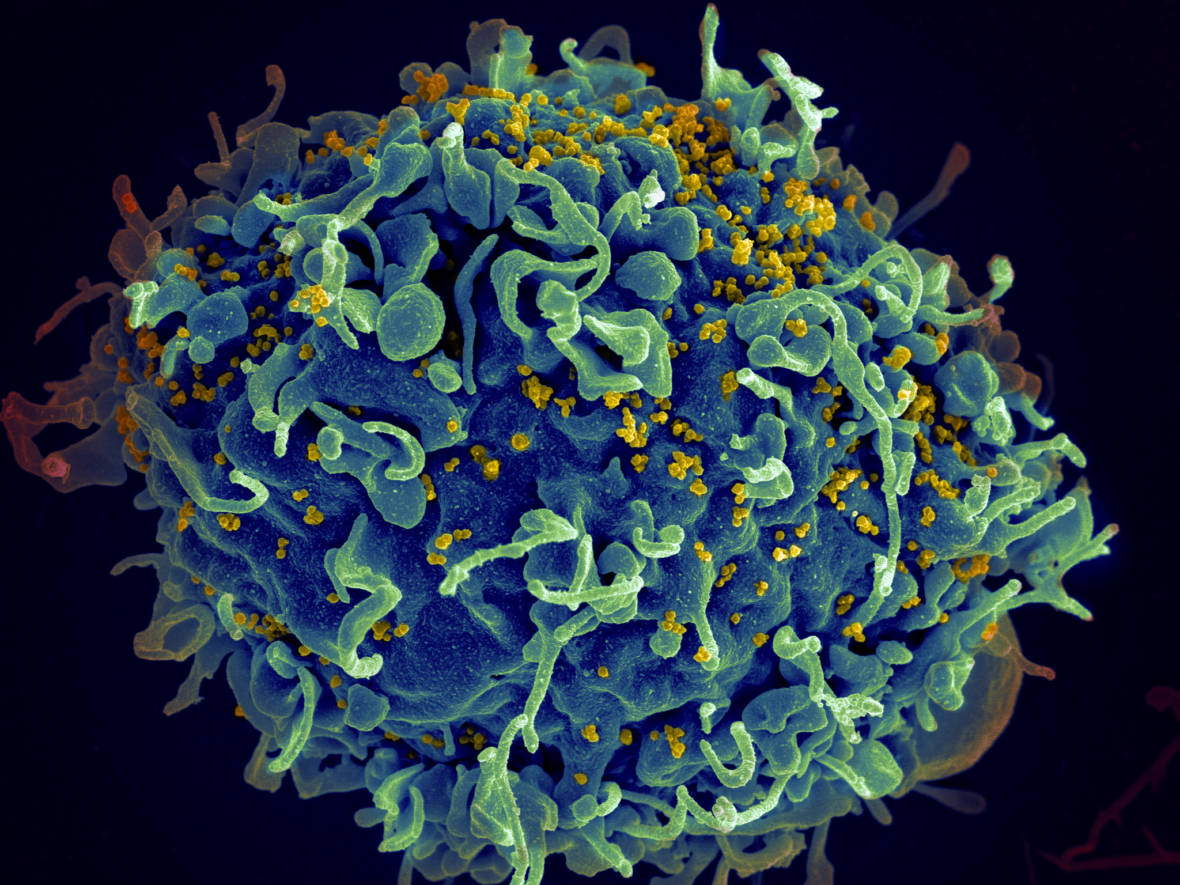
"caption": "This human T cell (blue) is under attack by HIV (yellow), the virus that causes AIDS. ",
"description": null,
"title": "HIV",
"credit": "Seth Pincus, Elizabeth Fischer and Austin Athman/NIH",
"status": "inherit",
"isLoading": false,
"fetchFailed": false
},
"futureofyou_427965": {
"type": "attachments",
"id": "futureofyou_427965",
"meta": {
"index": "attachments_1716263798",
"site": "futureofyou",
"id": "427965",
"found": true
},
"parent": 427935,
"imgSizes": {
"small": {
"file": "https://ww2.kqed.org/app/uploads/sites/13/2017/07/IMG_0797-520x693.jpg",
"width": 520,
"mimeType": "image/jpeg",
"height": 693
},
"twentyfourteen-full-width": {
"file": "https://ww2.kqed.org/app/uploads/sites/13/2017/07/IMG_0797-1038x576.jpg",
"width": 1038,
"mimeType": "image/jpeg",
"height": 576
},
"thumbnail": {
"file": "https://ww2.kqed.org/app/uploads/sites/13/2017/07/IMG_0797-160x213.jpg",
"width": 160,
"mimeType": "image/jpeg",
"height": 213
},
"fd-sm": {
"file": "https://ww2.kqed.org/app/uploads/sites/13/2017/07/IMG_0797-960x1280.jpg",
"width": 960,
"mimeType": "image/jpeg",
"height": 1280
},
"post-thumbnail": {
"file": "https://ww2.kqed.org/app/uploads/sites/13/2017/07/IMG_0797-672x372.jpg",
"width": 672,
"mimeType": "image/jpeg",
"height": 372
},
"xsmall": {
"file": "https://ww2.kqed.org/app/uploads/sites/13/2017/07/IMG_0797-375x500.jpg",
"width": 375,
"mimeType": "image/jpeg",
"height": 500
},
"kqedFullSize": {
"file": "https://ww2.kqed.org/app/uploads/sites/13/2017/07/IMG_0797.jpg",
"width": 2448,
"height": 3264
},
"large": {
"file": "https://ww2.kqed.org/app/uploads/sites/13/2017/07/IMG_0797-1020x1360.jpg",
"width": 1020,
"mimeType": "image/jpeg",
"height": 1360
},
"xlarge": {
"file": "https://ww2.kqed.org/app/uploads/sites/13/2017/07/IMG_0797-1180x1573.jpg",
"width": 1180,
"mimeType": "image/jpeg",
"height": 1573
},
"guest-author-50": {
"file": "https://ww2.kqed.org/app/uploads/sites/13/2017/07/IMG_0797-50x50.jpg",
"width": 50,
"mimeType": "image/jpeg",
"height": 50
},
"guest-author-96": {
"file": "https://ww2.kqed.org/app/uploads/sites/13/2017/07/IMG_0797-96x96.jpg",
"width": 96,
"mimeType": "image/jpeg",
"height": 96
},
"medium": {
"file": "https://ww2.kqed.org/app/uploads/sites/13/2017/07/IMG_0797-800x1067.jpg",
"width": 800,
"mimeType": "image/jpeg",
"height": 1067
},
"guest-author-64": {
"file": "https://ww2.kqed.org/app/uploads/sites/13/2017/07/IMG_0797-64x64.jpg",
"width": 64,
"mimeType": "image/jpeg",
"height": 64
},
"guest-author-32": {
"file": "https://ww2.kqed.org/app/uploads/sites/13/2017/07/IMG_0797-32x32.jpg",
"width": 32,
"mimeType": "image/jpeg",
"height": 32
},
"fd-lrg": {
"file": "https://ww2.kqed.org/app/uploads/sites/13/2017/07/IMG_0797-1920x2560.jpg",
"width": 1920,
"mimeType": "image/jpeg",
"height": 2560
},
"fd-med": {
"file": "https://ww2.kqed.org/app/uploads/sites/13/2017/07/IMG_0797-1180x1573.jpg",
"width": 1180,
"mimeType": "image/jpeg",
"height": 1573
},
"full-width": {
"file": "https://ww2.kqed.org/app/uploads/sites/13/2017/07/IMG_0797-1920x2560.jpg",
"width": 1920,
"mimeType": "image/jpeg",
"height": 2560
},
"detail": {
"file": "https://ww2.kqed.org/app/uploads/sites/13/2017/07/IMG_0797-150x150.jpg",
"width": 150,
"mimeType": "image/jpeg",
"height": 150
},
"medium_large": {
"file": "https://ww2.kqed.org/app/uploads/sites/13/2017/07/IMG_0797-768x1024.jpg",
"width": 768,
"mimeType": "image/jpeg",
"height": 1024
},
"guest-author-128": {
"file": "https://ww2.kqed.org/app/uploads/sites/13/2017/07/IMG_0797-128x128.jpg",
"width": 128,
"mimeType": "image/jpeg",
"height": 128
},
"xxsmall": {
"file": "https://ww2.kqed.org/app/uploads/sites/13/2017/07/IMG_0797-240x320.jpg",
"width": 240,
"mimeType": "image/jpeg",
"height": 320
}
},
"publishDate": 1500409209,
"modified": 1500409373,
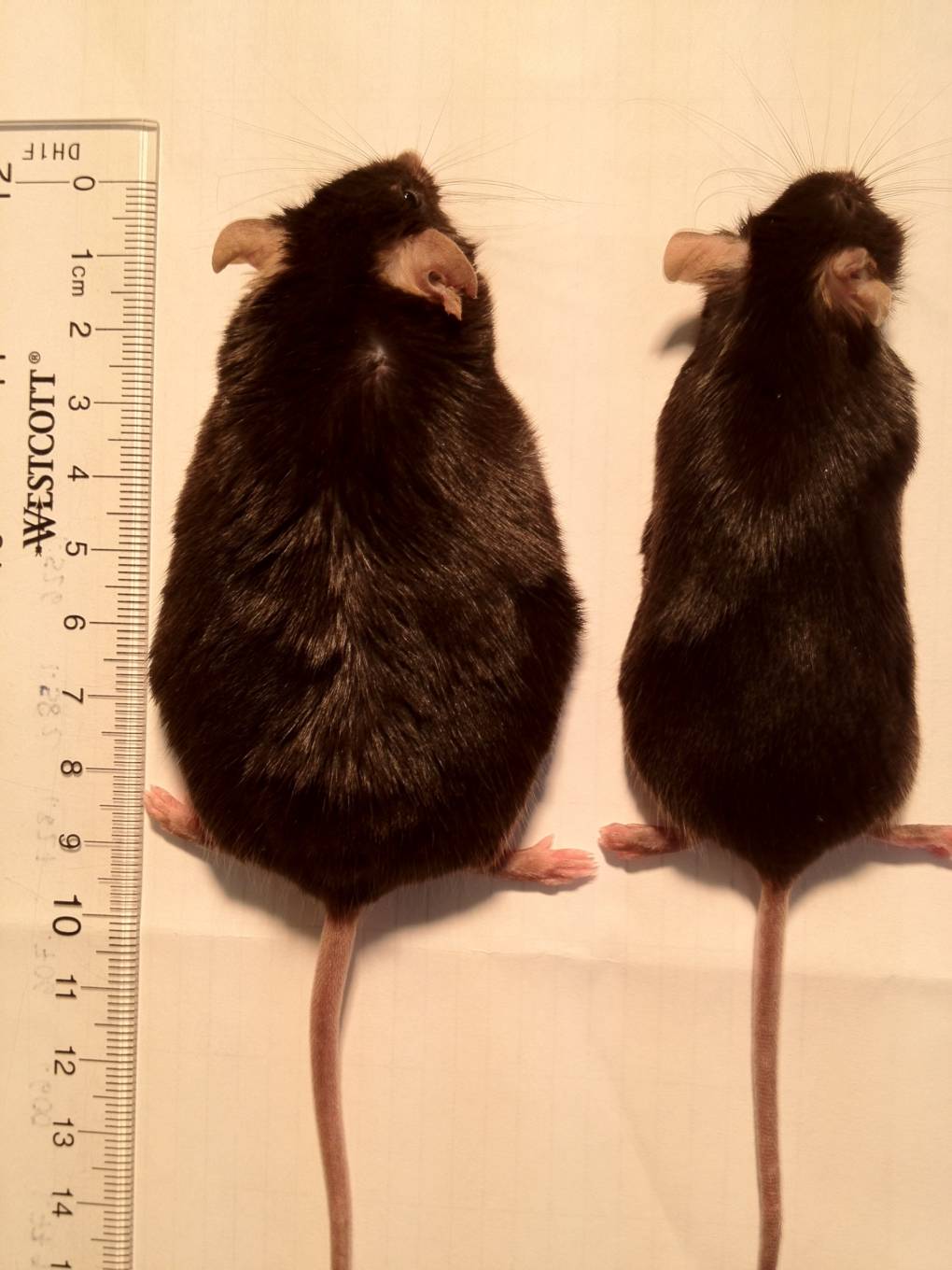
"caption": "Both of these mice ate the same high-fat diet. The one on the right was altered to remove its sense of smell. ",
"description": "Both of these mice ate the same high-fat diet. The one on the right was altered to remove its sense of smell. ",
"title": "mice obesity",
"credit": "Andrew Dillin and Celine Riera/UC Berkeley",
"status": "inherit",
"isLoading": false,
"fetchFailed": false
},
"futureofyou_425263": {
"type": "attachments",
"id": "futureofyou_425263",
"meta": {
"index": "attachments_1716263798",
"site": "futureofyou",
"id": "425263",
"found": true
},
"parent": 425262,
"imgSizes": {
"small": {
"file": "https://ww2.kqed.org/app/uploads/sites/13/2017/07/Screen-Shot-2017-07-13-at-9.49.43-AM-520x200.png",
"width": 520,
"mimeType": "image/png",
"height": 200
},
"twentyfourteen-full-width": {
"file": "https://ww2.kqed.org/app/uploads/sites/13/2017/07/Screen-Shot-2017-07-13-at-9.49.43-AM-1038x576.png",
"width": 1038,
"mimeType": "image/png",
"height": 576
},
"thumbnail": {
"file": "https://ww2.kqed.org/app/uploads/sites/13/2017/07/Screen-Shot-2017-07-13-at-9.49.43-AM-160x62.png",
"width": 160,
"mimeType": "image/png",
"height": 62
},
"fd-sm": {
"file": "https://ww2.kqed.org/app/uploads/sites/13/2017/07/Screen-Shot-2017-07-13-at-9.49.43-AM-960x370.png",
"width": 960,
"mimeType": "image/png",
"height": 370
},
"post-thumbnail": {
"file": "https://ww2.kqed.org/app/uploads/sites/13/2017/07/Screen-Shot-2017-07-13-at-9.49.43-AM-672x372.png",
"width": 672,
"mimeType": "image/png",
"height": 372
},
"xsmall": {
"file": "https://ww2.kqed.org/app/uploads/sites/13/2017/07/Screen-Shot-2017-07-13-at-9.49.43-AM-375x144.png",
"width": 375,
"mimeType": "image/png",
"height": 144
},
"kqedFullSize": {
"file": "https://ww2.kqed.org/app/uploads/sites/13/2017/07/Screen-Shot-2017-07-13-at-9.49.43-AM.png",
"width": 2000,
"height": 770
},
"large": {
"file": "https://ww2.kqed.org/app/uploads/sites/13/2017/07/Screen-Shot-2017-07-13-at-9.49.43-AM-1020x393.png",
"width": 1020,
"mimeType": "image/png",
"height": 393
},
"xlarge": {
"file": "https://ww2.kqed.org/app/uploads/sites/13/2017/07/Screen-Shot-2017-07-13-at-9.49.43-AM-1180x454.png",
"width": 1180,
"mimeType": "image/png",
"height": 454
},
"guest-author-50": {
"file": "https://ww2.kqed.org/app/uploads/sites/13/2017/07/Screen-Shot-2017-07-13-at-9.49.43-AM-50x50.png",
"width": 50,
"mimeType": "image/png",
"height": 50
},
"guest-author-96": {
"file": "https://ww2.kqed.org/app/uploads/sites/13/2017/07/Screen-Shot-2017-07-13-at-9.49.43-AM-96x96.png",
"width": 96,
"mimeType": "image/png",
"height": 96
},
"medium": {
"file": "https://ww2.kqed.org/app/uploads/sites/13/2017/07/Screen-Shot-2017-07-13-at-9.49.43-AM-800x308.png",
"width": 800,
"mimeType": "image/png",
"height": 308
},
"guest-author-64": {
"file": "https://ww2.kqed.org/app/uploads/sites/13/2017/07/Screen-Shot-2017-07-13-at-9.49.43-AM-64x64.png",
"width": 64,
"mimeType": "image/png",
"height": 64
},
"guest-author-32": {
"file": "https://ww2.kqed.org/app/uploads/sites/13/2017/07/Screen-Shot-2017-07-13-at-9.49.43-AM-32x32.png",
"width": 32,
"mimeType": "image/png",
"height": 32
},
"fd-lrg": {
"file": "https://ww2.kqed.org/app/uploads/sites/13/2017/07/Screen-Shot-2017-07-13-at-9.49.43-AM-1920x739.png",
"width": 1920,
"mimeType": "image/png",
"height": 739
},
"fd-med": {
"file": "https://ww2.kqed.org/app/uploads/sites/13/2017/07/Screen-Shot-2017-07-13-at-9.49.43-AM-1180x454.png",
"width": 1180,
"mimeType": "image/png",
"height": 454
},
"full-width": {
"file": "https://ww2.kqed.org/app/uploads/sites/13/2017/07/Screen-Shot-2017-07-13-at-9.49.43-AM-1920x739.png",
"width": 1920,
"mimeType": "image/png",
"height": 739
},
"detail": {
"file": "https://ww2.kqed.org/app/uploads/sites/13/2017/07/Screen-Shot-2017-07-13-at-9.49.43-AM-150x150.png",
"width": 150,
"mimeType": "image/png",
"height": 150
},
"medium_large": {
"file": "https://ww2.kqed.org/app/uploads/sites/13/2017/07/Screen-Shot-2017-07-13-at-9.49.43-AM-768x296.png",
"width": 768,
"mimeType": "image/png",
"height": 296
},
"guest-author-128": {
"file": "https://ww2.kqed.org/app/uploads/sites/13/2017/07/Screen-Shot-2017-07-13-at-9.49.43-AM-128x128.png",
"width": 128,
"mimeType": "image/png",
"height": 128
},
"xxsmall": {
"file": "https://ww2.kqed.org/app/uploads/sites/13/2017/07/Screen-Shot-2017-07-13-at-9.49.43-AM-240x92.png",
"width": 240,
"mimeType": "image/png",
"height": 92
}
},
"publishDate": 1499964647,
"modified": 1499964810,
"caption": "Scientists can now turn bacteria into living hard drives. The first video stored in and retrieved from the DNA of living cells was based on \"Sallie Gardner at a Gallop\" -- one of the very first moving pictures.",
"description": null,
"title": "Screen Shot 2017-07-13 at 9.49.43 AM",
"credit": "STAT",
"status": "inherit",
"isLoading": false,
"fetchFailed": false
},
"futureofyou_424272": {
"type": "attachments",
"id": "futureofyou_424272",
"meta": {
"index": "attachments_1716263798",
"site": "futureofyou",
"id": "424272",
"found": true
},
"parent": 418097,
"imgSizes": {
"small": {
"file": "https://ww2.kqed.org/app/uploads/sites/13/2017/07/AiraPhoto2-520x390.jpg",
"width": 520,
"mimeType": "image/jpeg",
"height": 390
},
"twentyfourteen-full-width": {
"file": "https://ww2.kqed.org/app/uploads/sites/13/2017/07/AiraPhoto2-1038x576.jpg",
"width": 1038,
"mimeType": "image/jpeg",
"height": 576
},
"thumbnail": {
"file": "https://ww2.kqed.org/app/uploads/sites/13/2017/07/AiraPhoto2-160x120.jpg",
"width": 160,
"mimeType": "image/jpeg",
"height": 120
},
"fd-sm": {
"file": "https://ww2.kqed.org/app/uploads/sites/13/2017/07/AiraPhoto2-960x720.jpg",
"width": 960,
"mimeType": "image/jpeg",
"height": 720
},
"post-thumbnail": {
"file": "https://ww2.kqed.org/app/uploads/sites/13/2017/07/AiraPhoto2-672x372.jpg",
"width": 672,
"mimeType": "image/jpeg",
"height": 372
},
"xsmall": {
"file": "https://ww2.kqed.org/app/uploads/sites/13/2017/07/AiraPhoto2-375x281.jpg",
"width": 375,
"mimeType": "image/jpeg",
"height": 281
},
"kqedFullSize": {
"file": "https://ww2.kqed.org/app/uploads/sites/13/2017/07/AiraPhoto2-e1499816256643.jpg",
"width": 1920,
"height": 1440
},
"large": {
"file": "https://ww2.kqed.org/app/uploads/sites/13/2017/07/AiraPhoto2-1020x765.jpg",
"width": 1020,
"mimeType": "image/jpeg",
"height": 765
},
"xlarge": {
"file": "https://ww2.kqed.org/app/uploads/sites/13/2017/07/AiraPhoto2-1180x885.jpg",
"width": 1180,
"mimeType": "image/jpeg",
"height": 885
},
"guest-author-50": {
"file": "https://ww2.kqed.org/app/uploads/sites/13/2017/07/AiraPhoto2-50x50.jpg",
"width": 50,
"mimeType": "image/jpeg",
"height": 50
},
"guest-author-96": {
"file": "https://ww2.kqed.org/app/uploads/sites/13/2017/07/AiraPhoto2-96x96.jpg",
"width": 96,
"mimeType": "image/jpeg",
"height": 96
},
"medium": {
"file": "https://ww2.kqed.org/app/uploads/sites/13/2017/07/AiraPhoto2-800x600.jpg",
"width": 800,
"mimeType": "image/jpeg",
"height": 600
},
"guest-author-64": {
"file": "https://ww2.kqed.org/app/uploads/sites/13/2017/07/AiraPhoto2-64x64.jpg",
"width": 64,
"mimeType": "image/jpeg",
"height": 64
},
"guest-author-32": {
"file": "https://ww2.kqed.org/app/uploads/sites/13/2017/07/AiraPhoto2-32x32.jpg",
"width": 32,
"mimeType": "image/jpeg",
"height": 32
},
"fd-lrg": {
"file": "https://ww2.kqed.org/app/uploads/sites/13/2017/07/AiraPhoto2-1920x1440.jpg",
"width": 1920,
"mimeType": "image/jpeg",
"height": 1440
},
"fd-med": {
"file": "https://ww2.kqed.org/app/uploads/sites/13/2017/07/AiraPhoto2-1180x885.jpg",
"width": 1180,
"mimeType": "image/jpeg",
"height": 885
},
"full-width": {
"file": "https://ww2.kqed.org/app/uploads/sites/13/2017/07/AiraPhoto2-1920x1440.jpg",
"width": 1920,
"mimeType": "image/jpeg",
"height": 1440
},
"detail": {
"file": "https://ww2.kqed.org/app/uploads/sites/13/2017/07/AiraPhoto2-150x150.jpg",
"width": 150,
"mimeType": "image/jpeg",
"height": 150
},
"medium_large": {
"file": "https://ww2.kqed.org/app/uploads/sites/13/2017/07/AiraPhoto2-768x576.jpg",
"width": 768,
"mimeType": "image/jpeg",
"height": 576
},
"guest-author-128": {
"file": "https://ww2.kqed.org/app/uploads/sites/13/2017/07/AiraPhoto2-128x128.jpg",
"width": 128,
"mimeType": "image/jpeg",
"height": 128
},
"xxsmall": {
"file": "https://ww2.kqed.org/app/uploads/sites/13/2017/07/AiraPhoto2-240x180.jpg",
"width": 240,
"mimeType": "image/jpeg",
"height": 180
}
},
"publishDate": 1499816225,
"modified": 1499871796,
"caption": "Dwight Sayer, National Federation of the Blind Veteran president, posing with Aira glasses at the NFB convention, July, 2016.",
"description": null,
"title": "AiraPhoto2",
"credit": "Courtesy of Aira",
"status": "inherit",
"isLoading": false,
"fetchFailed": false
},
"futureofyou_411009": {
"type": "attachments",
"id": "futureofyou_411009",
"meta": {
"index": "attachments_1716263798",
"site": "futureofyou",
"id": "411009",
"found": true
},
"parent": 411008,
"imgSizes": {
"small": {
"file": "https://ww2.kqed.org/app/uploads/sites/13/2017/06/drone-aed-beb044916a86b919c522d904e086f074ac73575b-520x390.jpe",
"width": 520,
"mimeType": "image/jpeg",
"height": 390
},
"twentyfourteen-full-width": {
"file": "https://ww2.kqed.org/app/uploads/sites/13/2017/06/drone-aed-beb044916a86b919c522d904e086f074ac73575b-1038x576.jpe",
"width": 1038,
"mimeType": "image/jpeg",
"height": 576
},
"thumbnail": {
"file": "https://ww2.kqed.org/app/uploads/sites/13/2017/06/drone-aed-beb044916a86b919c522d904e086f074ac73575b-160x120.jpe",
"width": 160,
"mimeType": "image/jpeg",
"height": 120
},
"fd-sm": {
"file": "https://ww2.kqed.org/app/uploads/sites/13/2017/06/drone-aed-beb044916a86b919c522d904e086f074ac73575b-960x720.jpe",
"width": 960,
"mimeType": "image/jpeg",
"height": 720
},
"post-thumbnail": {
"file": "https://ww2.kqed.org/app/uploads/sites/13/2017/06/drone-aed-beb044916a86b919c522d904e086f074ac73575b-672x372.jpe",
"width": 672,
"mimeType": "image/jpeg",
"height": 372
},
"xsmall": {
"file": "https://ww2.kqed.org/app/uploads/sites/13/2017/06/drone-aed-beb044916a86b919c522d904e086f074ac73575b-375x281.jpe",
"width": 375,
"mimeType": "image/jpeg",
"height": 281
},
"kqedFullSize": {
"file": "https://ww2.kqed.org/app/uploads/sites/13/2017/06/drone-aed-beb044916a86b919c522d904e086f074ac73575b-e1499796190890.jpe",
"width": 1920,
"height": 1440
},
"large": {
"file": "https://ww2.kqed.org/app/uploads/sites/13/2017/06/drone-aed-beb044916a86b919c522d904e086f074ac73575b-1020x765.jpe",
"width": 1020,
"mimeType": "image/jpeg",
"height": 765
},
"xlarge": {
"file": "https://ww2.kqed.org/app/uploads/sites/13/2017/06/drone-aed-beb044916a86b919c522d904e086f074ac73575b-1180x885.jpe",
"width": 1180,
"mimeType": "image/jpeg",
"height": 885
},
"guest-author-50": {
"file": "https://ww2.kqed.org/app/uploads/sites/13/2017/06/drone-aed-beb044916a86b919c522d904e086f074ac73575b-50x50.jpe",
"width": 50,
"mimeType": "image/jpeg",
"height": 50
},
"guest-author-96": {
"file": "https://ww2.kqed.org/app/uploads/sites/13/2017/06/drone-aed-beb044916a86b919c522d904e086f074ac73575b-96x96.jpe",
"width": 96,
"mimeType": "image/jpeg",
"height": 96
},
"medium": {
"file": "https://ww2.kqed.org/app/uploads/sites/13/2017/06/drone-aed-beb044916a86b919c522d904e086f074ac73575b-800x600.jpe",
"width": 800,
"mimeType": "image/jpeg",
"height": 600
},
"guest-author-64": {
"file": "https://ww2.kqed.org/app/uploads/sites/13/2017/06/drone-aed-beb044916a86b919c522d904e086f074ac73575b-64x64.jpe",
"width": 64,
"mimeType": "image/jpeg",
"height": 64
},
"guest-author-32": {
"file": "https://ww2.kqed.org/app/uploads/sites/13/2017/06/drone-aed-beb044916a86b919c522d904e086f074ac73575b-32x32.jpe",
"width": 32,
"mimeType": "image/jpeg",
"height": 32
},
"fd-lrg": {
"file": "https://ww2.kqed.org/app/uploads/sites/13/2017/06/drone-aed-beb044916a86b919c522d904e086f074ac73575b-1920x1440.jpe",
"width": 1920,
"mimeType": "image/jpeg",
"height": 1440
},
"fd-med": {
"file": "https://ww2.kqed.org/app/uploads/sites/13/2017/06/drone-aed-beb044916a86b919c522d904e086f074ac73575b-1180x885.jpe",
"width": 1180,
"mimeType": "image/jpeg",
"height": 885
},
"full-width": {
"file": "https://ww2.kqed.org/app/uploads/sites/13/2017/06/drone-aed-beb044916a86b919c522d904e086f074ac73575b-1920x1440.jpe",
"width": 1920,
"mimeType": "image/jpeg",
"height": 1440
},
"detail": {
"file": "https://ww2.kqed.org/app/uploads/sites/13/2017/06/drone-aed-beb044916a86b919c522d904e086f074ac73575b-150x150.jpe",
"width": 150,
"mimeType": "image/jpeg",
"height": 150
},
"medium_large": {
"file": "https://ww2.kqed.org/app/uploads/sites/13/2017/06/drone-aed-beb044916a86b919c522d904e086f074ac73575b-768x576.jpe",
"width": 768,
"mimeType": "image/jpeg",
"height": 576
},
"guest-author-128": {
"file": "https://ww2.kqed.org/app/uploads/sites/13/2017/06/drone-aed-beb044916a86b919c522d904e086f074ac73575b-128x128.jpe",
"width": 128,
"mimeType": "image/jpeg",
"height": 128
},
"xxsmall": {
"file": "https://ww2.kqed.org/app/uploads/sites/13/2017/06/drone-aed-beb044916a86b919c522d904e086f074ac73575b-240x180.jpe",
"width": 240,
"mimeType": "image/jpeg",
"height": 180
}
},
"publishDate": 1497629961,
"modified": 1499796206,
"caption": "Drones carrying automated external defibrillators got to the sites of previous cardiac arrest cases faster than ambulances had, according to test runs conducted by Swedish researchers.",
"description": "Drones carrying automated external defibrillators got to the sites of previous cardiac arrest cases faster than ambulances had, according to test runs conducted by Swedish researchers.",
"title": "Drones carrying automated external defibrillators got to the sites of previous cardiac arrest cases faster than ambulances had, according to test runs conducted by Swedish researchers.",
"credit": "Andreas Claesson/Courtesy of FlyPulse",
"status": "inherit",
"isLoading": false,
"fetchFailed": false
},
"futureofyou_367656": {
"type": "attachments",
"id": "futureofyou_367656",
"meta": {
"index": "attachments_1716263798",
"site": "futureofyou",
"id": "367656",
"found": true
},
"parent": 366983,
"imgSizes": {
"small": {
"file": "https://ww2.kqed.org/app/uploads/sites/13/2017/04/iStock-blood-520x433.jpg",
"width": 520,
"mimeType": "image/jpeg",
"height": 433
},
"twentyfourteen-full-width": {
"file": "https://ww2.kqed.org/app/uploads/sites/13/2017/04/iStock-blood-1038x576.jpg",
"width": 1038,
"mimeType": "image/jpeg",
"height": 576
},
"thumbnail": {
"file": "https://ww2.kqed.org/app/uploads/sites/13/2017/04/iStock-blood-160x133.jpg",
"width": 160,
"mimeType": "image/jpeg",
"height": 133
},
"fd-sm": {
"file": "https://ww2.kqed.org/app/uploads/sites/13/2017/04/iStock-blood-960x800.jpg",
"width": 960,
"mimeType": "image/jpeg",
"height": 800
},
"post-thumbnail": {
"file": "https://ww2.kqed.org/app/uploads/sites/13/2017/04/iStock-blood-672x372.jpg",
"width": 672,
"mimeType": "image/jpeg",
"height": 372
},
"xsmall": {
"file": "https://ww2.kqed.org/app/uploads/sites/13/2017/04/iStock-blood-375x313.jpg",
"width": 375,
"mimeType": "image/jpeg",
"height": 313
},
"kqedFullSize": {
"file": "https://ww2.kqed.org/app/uploads/sites/13/2017/04/iStock-blood.jpg",
"width": 1518,
"height": 1265
},
"large": {
"file": "https://ww2.kqed.org/app/uploads/sites/13/2017/04/iStock-blood-1020x850.jpg",
"width": 1020,
"mimeType": "image/jpeg",
"height": 850
},
"xlarge": {
"file": "https://ww2.kqed.org/app/uploads/sites/13/2017/04/iStock-blood-1180x983.jpg",
"width": 1180,
"mimeType": "image/jpeg",
"height": 983
},
"guest-author-50": {
"file": "https://ww2.kqed.org/app/uploads/sites/13/2017/04/iStock-blood-50x50.jpg",
"width": 50,
"mimeType": "image/jpeg",
"height": 50
},
"guest-author-96": {
"file": "https://ww2.kqed.org/app/uploads/sites/13/2017/04/iStock-blood-96x96.jpg",
"width": 96,
"mimeType": "image/jpeg",
"height": 96
},
"medium": {
"file": "https://ww2.kqed.org/app/uploads/sites/13/2017/04/iStock-blood-800x667.jpg",
"width": 800,
"mimeType": "image/jpeg",
"height": 667
},
"guest-author-64": {
"file": "https://ww2.kqed.org/app/uploads/sites/13/2017/04/iStock-blood-64x64.jpg",
"width": 64,
"mimeType": "image/jpeg",
"height": 64
},
"guest-author-32": {
"file": "https://ww2.kqed.org/app/uploads/sites/13/2017/04/iStock-blood-32x32.jpg",
"width": 32,
"mimeType": "image/jpeg",
"height": 32
},
"fd-med": {
"file": "https://ww2.kqed.org/app/uploads/sites/13/2017/04/iStock-blood-1180x983.jpg",
"width": 1180,
"mimeType": "image/jpeg",
"height": 983
},
"detail": {
"file": "https://ww2.kqed.org/app/uploads/sites/13/2017/04/iStock-blood-150x150.jpg",
"width": 150,
"mimeType": "image/jpeg",
"height": 150
},
"medium_large": {
"file": "https://ww2.kqed.org/app/uploads/sites/13/2017/04/iStock-blood-768x640.jpg",
"width": 768,
"mimeType": "image/jpeg",
"height": 640
},
"guest-author-128": {
"file": "https://ww2.kqed.org/app/uploads/sites/13/2017/04/iStock-blood-128x128.jpg",
"width": 128,
"mimeType": "image/jpeg",
"height": 128
},
"xxsmall": {
"file": "https://ww2.kqed.org/app/uploads/sites/13/2017/04/iStock-blood-240x200.jpg",
"width": 240,
"mimeType": "image/jpeg",
"height": 200
}
},
"publishDate": 1491512533,
"modified": 1491512586,
"caption": null,
"description": null,
"title": "blood donation, blood donor background",
"credit": "iStock",
"status": "inherit",
"isLoading": false,
"fetchFailed": false
},
"futureofyou_411019": {
"type": "attachments",
"id": "futureofyou_411019",
"meta": {
"index": "attachments_1716263798",
"site": "futureofyou",
"id": "411019",
"found": true
},
"parent": 411017,
"imgSizes": {
"small": {
"file": "https://ww2.kqed.org/app/uploads/sites/13/2017/06/baby-box-update-5_enl-e545fafca3617cf35afa183d494a03b6b21c4075-520x390.jpg",
"width": 520,
"mimeType": "image/jpeg",
"height": 390
},
"twentyfourteen-full-width": {
"file": "https://ww2.kqed.org/app/uploads/sites/13/2017/06/baby-box-update-5_enl-e545fafca3617cf35afa183d494a03b6b21c4075-1038x576.jpg",
"width": 1038,
"mimeType": "image/jpeg",
"height": 576
},
"thumbnail": {
"file": "https://ww2.kqed.org/app/uploads/sites/13/2017/06/baby-box-update-5_enl-e545fafca3617cf35afa183d494a03b6b21c4075-160x120.jpg",
"width": 160,
"mimeType": "image/jpeg",
"height": 120
},
"fd-sm": {
"file": "https://ww2.kqed.org/app/uploads/sites/13/2017/06/baby-box-update-5_enl-e545fafca3617cf35afa183d494a03b6b21c4075-960x720.jpg",
"width": 960,
"mimeType": "image/jpeg",
"height": 720
},
"post-thumbnail": {
"file": "https://ww2.kqed.org/app/uploads/sites/13/2017/06/baby-box-update-5_enl-e545fafca3617cf35afa183d494a03b6b21c4075-672x372.jpg",
"width": 672,
"mimeType": "image/jpeg",
"height": 372
},
"xsmall": {
"file": "https://ww2.kqed.org/app/uploads/sites/13/2017/06/baby-box-update-5_enl-e545fafca3617cf35afa183d494a03b6b21c4075-375x281.jpg",
"width": 375,
"mimeType": "image/jpeg",
"height": 281
},
"kqedFullSize": {
"file": "https://ww2.kqed.org/app/uploads/sites/13/2017/06/baby-box-update-5_enl-e545fafca3617cf35afa183d494a03b6b21c4075-e1498053778152.jpg",
"width": 1920,
"height": 1439
},
"large": {
"file": "https://ww2.kqed.org/app/uploads/sites/13/2017/06/baby-box-update-5_enl-e545fafca3617cf35afa183d494a03b6b21c4075-1020x764.jpg",
"width": 1020,
"mimeType": "image/jpeg",
"height": 764
},
"xlarge": {
"file": "https://ww2.kqed.org/app/uploads/sites/13/2017/06/baby-box-update-5_enl-e545fafca3617cf35afa183d494a03b6b21c4075-1180x884.jpg",
"width": 1180,
"mimeType": "image/jpeg",
"height": 884
},
"guest-author-50": {
"file": "https://ww2.kqed.org/app/uploads/sites/13/2017/06/baby-box-update-5_enl-e545fafca3617cf35afa183d494a03b6b21c4075-50x50.jpg",
"width": 50,
"mimeType": "image/jpeg",
"height": 50
},
"guest-author-96": {
"file": "https://ww2.kqed.org/app/uploads/sites/13/2017/06/baby-box-update-5_enl-e545fafca3617cf35afa183d494a03b6b21c4075-96x96.jpg",
"width": 96,
"mimeType": "image/jpeg",
"height": 96
},
"medium": {
"file": "https://ww2.kqed.org/app/uploads/sites/13/2017/06/baby-box-update-5_enl-e545fafca3617cf35afa183d494a03b6b21c4075-800x600.jpg",
"width": 800,
"mimeType": "image/jpeg",
"height": 600
},
"guest-author-64": {
"file": "https://ww2.kqed.org/app/uploads/sites/13/2017/06/baby-box-update-5_enl-e545fafca3617cf35afa183d494a03b6b21c4075-64x64.jpg",
"width": 64,
"mimeType": "image/jpeg",
"height": 64
},
"guest-author-32": {
"file": "https://ww2.kqed.org/app/uploads/sites/13/2017/06/baby-box-update-5_enl-e545fafca3617cf35afa183d494a03b6b21c4075-32x32.jpg",
"width": 32,
"mimeType": "image/jpeg",
"height": 32
},
"fd-lrg": {
"file": "https://ww2.kqed.org/app/uploads/sites/13/2017/06/baby-box-update-5_enl-e545fafca3617cf35afa183d494a03b6b21c4075-1920x1439.jpg",
"width": 1920,
"mimeType": "image/jpeg",
"height": 1439
},
"fd-med": {
"file": "https://ww2.kqed.org/app/uploads/sites/13/2017/06/baby-box-update-5_enl-e545fafca3617cf35afa183d494a03b6b21c4075-1180x884.jpg",
"width": 1180,
"mimeType": "image/jpeg",
"height": 884
},
"full-width": {
"file": "https://ww2.kqed.org/app/uploads/sites/13/2017/06/baby-box-update-5_enl-e545fafca3617cf35afa183d494a03b6b21c4075-1920x1439.jpg",
"width": 1920,
"mimeType": "image/jpeg",
"height": 1439
},
"detail": {
"file": "https://ww2.kqed.org/app/uploads/sites/13/2017/06/baby-box-update-5_enl-e545fafca3617cf35afa183d494a03b6b21c4075-150x150.jpg",
"width": 150,
"mimeType": "image/jpeg",
"height": 150
},
"medium_large": {
"file": "https://ww2.kqed.org/app/uploads/sites/13/2017/06/baby-box-update-5_enl-e545fafca3617cf35afa183d494a03b6b21c4075-768x576.jpg",
"width": 768,
"mimeType": "image/jpeg",
"height": 576
},
"guest-author-128": {
"file": "https://ww2.kqed.org/app/uploads/sites/13/2017/06/baby-box-update-5_enl-e545fafca3617cf35afa183d494a03b6b21c4075-128x128.jpg",
"width": 128,
"mimeType": "image/jpeg",
"height": 128
},
"xxsmall": {
"file": "https://ww2.kqed.org/app/uploads/sites/13/2017/06/baby-box-update-5_enl-e545fafca3617cf35afa183d494a03b6b21c4075-240x180.jpg",
"width": 240,
"mimeType": "image/jpeg",
"height": 180
}
},
"publishDate": 1497630055,
"modified": 1498053772,
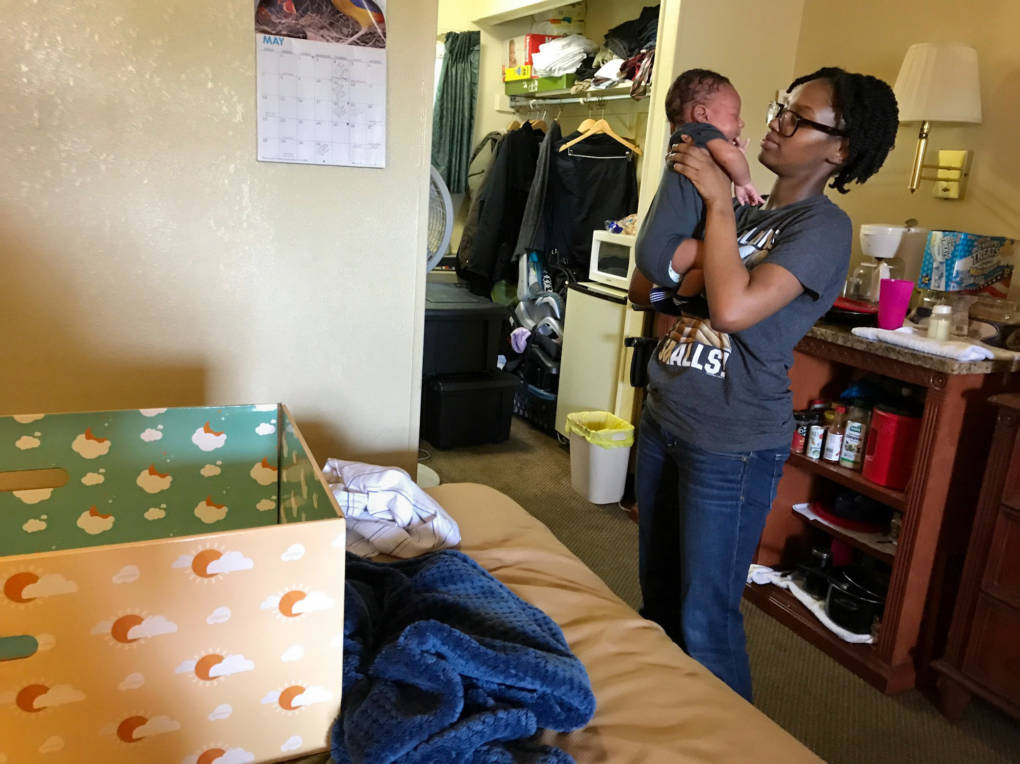
"caption": "New Jersey has been distributing baby boxes — cardboard containers that double as cribs or bassinets — to new parents since January. Maisha Watson is currently living in a motel outside Atlantic City, N.J., with her infant son, Solomon Murphy. With no room for a crib, Solomon sleeps in the baby box.",
"description": "New Jersey has been distributing baby boxes — cardboard containers that double as cribs or bassinets — to new parents since January. Maisha Watson is currently living in a motel outside Atlantic City, N.J., with her infant son, Solomon Murphy. With no room for a crib, Solomon sleeps in the baby",
"title": "New Jersey has been distributing baby boxes — cardboard containers that double as cribs or bassinets — to new parents since January. Maisha Watson is currently living in a motel outside Atlantic City, N.J., with her infant son, Solomon Murphy. With no room for a crib, Solomon sleeps in the baby box.",
"credit": "Rebecca Davis/NPR",
"status": "inherit",
"isLoading": false,
"fetchFailed": false
},
"futureofyou_302164": {
"type": "attachments",
"id": "futureofyou_302164",
"meta": {
"index": "attachments_1716263798",
"site": "futureofyou",
"id": "302164",
"found": true
},
"parent": 300937,
"imgSizes": {
"small": {
"file": "https://ww2.kqed.org/app/uploads/sites/13/2016/12/elizabethian-520x411.png",
"width": 520,
"mimeType": "image/png",
"height": 411
},
"twentyfourteen-full-width": {
"file": "https://ww2.kqed.org/app/uploads/sites/13/2016/12/elizabethian-1038x576.png",
"width": 1038,
"mimeType": "image/png",
"height": 576
},
"thumbnail": {
"file": "https://ww2.kqed.org/app/uploads/sites/13/2016/12/elizabethian-160x126.png",
"width": 160,
"mimeType": "image/png",
"height": 126
},
"fd-sm": {
"file": "https://ww2.kqed.org/app/uploads/sites/13/2016/12/elizabethian-960x759.png",
"width": 960,
"mimeType": "image/png",
"height": 759
},
"post-thumbnail": {
"file": "https://ww2.kqed.org/app/uploads/sites/13/2016/12/elizabethian-672x372.png",
"width": 672,
"mimeType": "image/png",
"height": 372
},
"xsmall": {
"file": "https://ww2.kqed.org/app/uploads/sites/13/2016/12/elizabethian-375x296.png",
"width": 375,
"mimeType": "image/png",
"height": 296
},
"kqedFullSize": {
"file": "https://ww2.kqed.org/app/uploads/sites/13/2016/12/elizabethian-e1481924158160.png",
"width": 800,
"height": 632
},
"large": {
"file": "https://ww2.kqed.org/app/uploads/sites/13/2016/12/elizabethian-1020x806.png",
"width": 1020,
"mimeType": "image/png",
"height": 806
},
"xlarge": {
"file": "https://ww2.kqed.org/app/uploads/sites/13/2016/12/elizabethian-1180x932.png",
"width": 1180,
"mimeType": "image/png",
"height": 932
},
"guest-author-50": {
"file": "https://ww2.kqed.org/app/uploads/sites/13/2016/12/elizabethian-50x50.png",
"width": 50,
"mimeType": "image/png",
"height": 50
},
"guest-author-96": {
"file": "https://ww2.kqed.org/app/uploads/sites/13/2016/12/elizabethian-96x96.png",
"width": 96,
"mimeType": "image/png",
"height": 96
},
"medium": {
"file": "https://ww2.kqed.org/app/uploads/sites/13/2016/12/elizabethian-800x632.png",
"width": 800,
"mimeType": "image/png",
"height": 632
},
"guest-author-64": {
"file": "https://ww2.kqed.org/app/uploads/sites/13/2016/12/elizabethian-64x64.png",
"width": 64,
"mimeType": "image/png",
"height": 64
},
"guest-author-32": {
"file": "https://ww2.kqed.org/app/uploads/sites/13/2016/12/elizabethian-32x32.png",
"width": 32,
"mimeType": "image/png",
"height": 32
},
"fd-med": {
"file": "https://ww2.kqed.org/app/uploads/sites/13/2016/12/elizabethian-1180x932.png",
"width": 1180,
"mimeType": "image/png",
"height": 932
},
"detail": {
"file": "https://ww2.kqed.org/app/uploads/sites/13/2016/12/elizabethian-150x150.png",
"width": 150,
"mimeType": "image/png",
"height": 150
},
"medium_large": {
"file": "https://ww2.kqed.org/app/uploads/sites/13/2016/12/elizabethian-768x607.png",
"width": 768,
"mimeType": "image/png",
"height": 607
},
"guest-author-128": {
"file": "https://ww2.kqed.org/app/uploads/sites/13/2016/12/elizabethian-128x128.png",
"width": 128,
"mimeType": "image/png",
"height": 128
},
"xxsmall": {
"file": "https://ww2.kqed.org/app/uploads/sites/13/2016/12/elizabethian-240x190.png",
"width": 240,
"mimeType": "image/png",
"height": 190
}
},
"publishDate": 1481923023,
"modified": 1482244679,
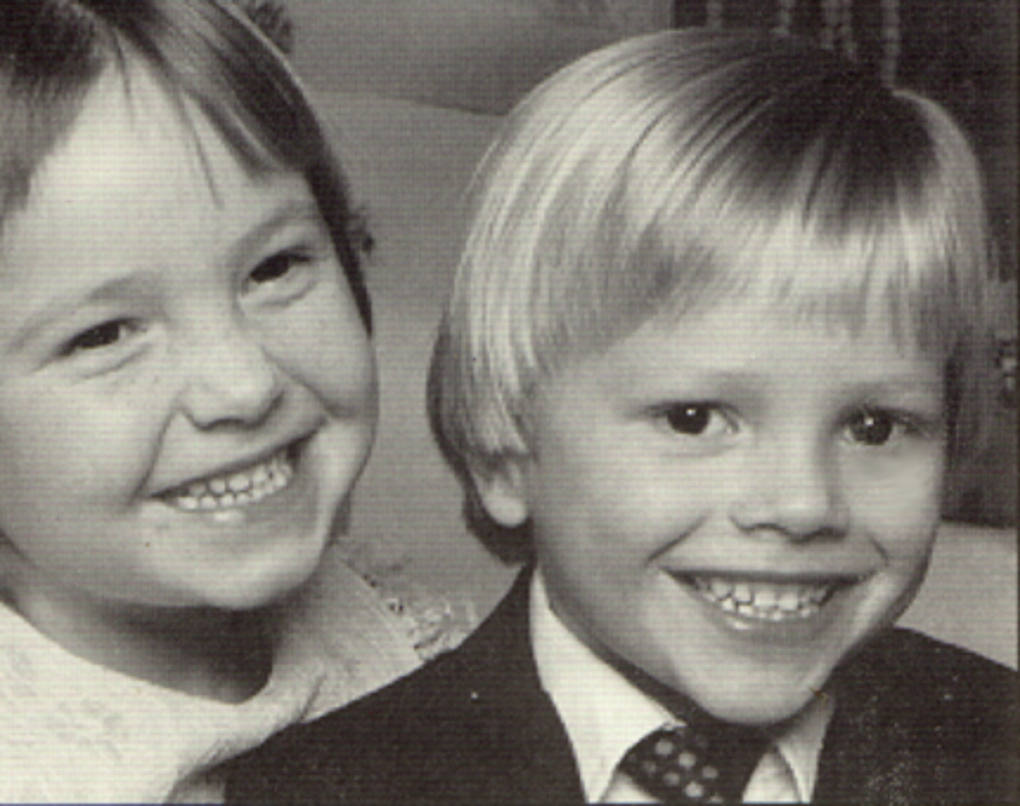
"caption": "Sister and brother Elizabeth and Ian Terry when they were diagnosed with PXE in 1994. ",
"description": null,
"title": "elizabethian",
"credit": "Sharon Terry",
"status": "inherit",
"isLoading": false,
"fetchFailed": false
},
"futureofyou_404000": {
"type": "attachments",
"id": "futureofyou_404000",
"meta": {
"index": "attachments_1716263798",
"site": "futureofyou",
"id": "404000",
"found": true
},
"parent": 391590,
"imgSizes": {
"small": {
"file": "https://ww2.kqed.org/app/uploads/sites/13/2017/06/propasthma-520x366.png",
"width": 520,
"mimeType": "image/png",
"height": 366
},
"thumbnail": {
"file": "https://ww2.kqed.org/app/uploads/sites/13/2017/06/propasthma-160x113.png",
"width": 160,
"mimeType": "image/png",
"height": 113
},
"post-thumbnail": {
"file": "https://ww2.kqed.org/app/uploads/sites/13/2017/06/propasthma-672x372.png",
"width": 672,
"mimeType": "image/png",
"height": 372
},
"xsmall": {
"file": "https://ww2.kqed.org/app/uploads/sites/13/2017/06/propasthma-375x264.png",
"width": 375,
"mimeType": "image/png",
"height": 264
},
"kqedFullSize": {
"file": "https://ww2.kqed.org/app/uploads/sites/13/2017/06/propasthma.png",
"width": 694,
"height": 488
},
"guest-author-50": {
"file": "https://ww2.kqed.org/app/uploads/sites/13/2017/06/propasthma-50x50.png",
"width": 50,
"mimeType": "image/png",
"height": 50
},
"guest-author-96": {
"file": "https://ww2.kqed.org/app/uploads/sites/13/2017/06/propasthma-96x96.png",
"width": 96,
"mimeType": "image/png",
"height": 96
},
"guest-author-64": {
"file": "https://ww2.kqed.org/app/uploads/sites/13/2017/06/propasthma-64x64.png",
"width": 64,
"mimeType": "image/png",
"height": 64
},
"detail": {
"file": "https://ww2.kqed.org/app/uploads/sites/13/2017/06/propasthma-150x150.png",
"width": 150,
"mimeType": "image/png",
"height": 150
},
"guest-author-32": {
"file": "https://ww2.kqed.org/app/uploads/sites/13/2017/06/propasthma-32x32.png",
"width": 32,
"mimeType": "image/png",
"height": 32
},
"guest-author-128": {
"file": "https://ww2.kqed.org/app/uploads/sites/13/2017/06/propasthma-128x128.png",
"width": 128,
"mimeType": "image/png",
"height": 128
},
"xxsmall": {
"file": "https://ww2.kqed.org/app/uploads/sites/13/2017/06/propasthma-240x169.png",
"width": 240,
"mimeType": "image/png",
"height": 169
}
},
"publishDate": 1496687067,
"modified": 1496687099,
"caption": "Screenshots of the Propeller app. ",
"description": null,
"title": "propasthma",
"credit": "Propeller Health",
"status": "inherit",
"isLoading": false,
"fetchFailed": false
},
"futureofyou_408533": {
"type": "attachments",
"id": "futureofyou_408533",
"meta": {
"index": "attachments_1716263798",
"site": "futureofyou",
"id": "408533",
"found": true
},
"parent": 401647,
"imgSizes": {
"small": {
"file": "https://ww2.kqed.org/app/uploads/sites/13/2017/06/frankenstein-520x347.jpg",
"width": 520,
"mimeType": "image/jpeg",
"height": 347
},
"twentyfourteen-full-width": {
"file": "https://ww2.kqed.org/app/uploads/sites/13/2017/06/frankenstein-1038x576.jpg",
"width": 1038,
"mimeType": "image/jpeg",
"height": 576
},
"thumbnail": {
"file": "https://ww2.kqed.org/app/uploads/sites/13/2017/06/frankenstein-160x107.jpg",
"width": 160,
"mimeType": "image/jpeg",
"height": 107
},
"fd-sm": {
"file": "https://ww2.kqed.org/app/uploads/sites/13/2017/06/frankenstein-960x640.jpg",
"width": 960,
"mimeType": "image/jpeg",
"height": 640
},
"post-thumbnail": {
"file": "https://ww2.kqed.org/app/uploads/sites/13/2017/06/frankenstein-672x372.jpg",
"width": 672,
"mimeType": "image/jpeg",
"height": 372
},
"xsmall": {
"file": "https://ww2.kqed.org/app/uploads/sites/13/2017/06/frankenstein-375x250.jpg",
"width": 375,
"mimeType": "image/jpeg",
"height": 250
},
"kqedFullSize": {
"file": "https://ww2.kqed.org/app/uploads/sites/13/2017/06/frankenstein-e1497297383323.jpg",
"width": 1920,
"height": 1280
},
"large": {
"file": "https://ww2.kqed.org/app/uploads/sites/13/2017/06/frankenstein-1020x680.jpg",
"width": 1020,
"mimeType": "image/jpeg",
"height": 680
},
"xlarge": {
"file": "https://ww2.kqed.org/app/uploads/sites/13/2017/06/frankenstein-1180x787.jpg",
"width": 1180,
"mimeType": "image/jpeg",
"height": 787
},
"guest-author-50": {
"file": "https://ww2.kqed.org/app/uploads/sites/13/2017/06/frankenstein-50x50.jpg",
"width": 50,
"mimeType": "image/jpeg",
"height": 50
},
"guest-author-96": {
"file": "https://ww2.kqed.org/app/uploads/sites/13/2017/06/frankenstein-96x96.jpg",
"width": 96,
"mimeType": "image/jpeg",
"height": 96
},
"medium": {
"file": "https://ww2.kqed.org/app/uploads/sites/13/2017/06/frankenstein-800x533.jpg",
"width": 800,
"mimeType": "image/jpeg",
"height": 533
},
"guest-author-64": {
"file": "https://ww2.kqed.org/app/uploads/sites/13/2017/06/frankenstein-64x64.jpg",
"width": 64,
"mimeType": "image/jpeg",
"height": 64
},
"guest-author-32": {
"file": "https://ww2.kqed.org/app/uploads/sites/13/2017/06/frankenstein-32x32.jpg",
"width": 32,
"mimeType": "image/jpeg",
"height": 32
},
"fd-lrg": {
"file": "https://ww2.kqed.org/app/uploads/sites/13/2017/06/frankenstein-1920x1280.jpg",
"width": 1920,
"mimeType": "image/jpeg",
"height": 1280
},
"fd-med": {
"file": "https://ww2.kqed.org/app/uploads/sites/13/2017/06/frankenstein-1180x787.jpg",
"width": 1180,
"mimeType": "image/jpeg",
"height": 787
},
"full-width": {
"file": "https://ww2.kqed.org/app/uploads/sites/13/2017/06/frankenstein-1920x1280.jpg",
"width": 1920,
"mimeType": "image/jpeg",
"height": 1280
},
"detail": {
"file": "https://ww2.kqed.org/app/uploads/sites/13/2017/06/frankenstein-150x150.jpg",
"width": 150,
"mimeType": "image/jpeg",
"height": 150
},
"medium_large": {
"file": "https://ww2.kqed.org/app/uploads/sites/13/2017/06/frankenstein-768x512.jpg",
"width": 768,
"mimeType": "image/jpeg",
"height": 512
},
"guest-author-128": {
"file": "https://ww2.kqed.org/app/uploads/sites/13/2017/06/frankenstein-128x128.jpg",
"width": 128,
"mimeType": "image/jpeg",
"height": 128
},
"xxsmall": {
"file": "https://ww2.kqed.org/app/uploads/sites/13/2017/06/frankenstein-240x160.jpg",
"width": 240,
"mimeType": "image/jpeg",
"height": 160
}
},
"publishDate": 1497297335,
"modified": 1497297412,
"caption": "Paging Dr. Frankenstein",
"description": "DARMSTADT, GERMANY - OCTOBER 19: A person dressed as Frankenstein's monster tries to scare visitors at Frankenstein castle on October 19, 2013 in Darmstadt, Germany. Grotesque monsters, howling werewolves, long-nosed witches and Frankenstein's monsters feature in the annual weekend event at the castle, which is now one of Europe's most popular Halloween events. The festival started in 1978 after American troops stationed at Rhein Mein Air Base decided to use the famous castle as a venue for hallowen celebrations. (Photo by Thomas Lohnes/Getty Images)",
"title": "Frankenstein Castle Celebrates Halloween",
"credit": "Thomas Lohnes/Getty Images",
"status": "inherit",
"isLoading": false,
"fetchFailed": false
},
"futureofyou_217336": {
"type": "attachments",
"id": "futureofyou_217336",
"meta": {
"index": "attachments_1716263798",
"site": "futureofyou",
"id": "217336",
"found": true
},
"parent": 217172,
"imgSizes": {
"twentyfourteen-full-width": {
"file": "https://ww2.kqed.org/app/uploads/sites/13/2016/08/NCIExtra3-1038x576.jpg",
"width": 1038,
"mimeType": "image/jpeg",
"height": 576
},
"thumbnail": {
"file": "https://ww2.kqed.org/app/uploads/sites/13/2016/08/NCIExtra3-400x300.jpg",
"width": 400,
"mimeType": "image/jpeg",
"height": 300
},
"fd-sm": {
"file": "https://ww2.kqed.org/app/uploads/sites/13/2016/08/NCIExtra3-960x720.jpg",
"width": 960,
"mimeType": "image/jpeg",
"height": 720
},
"post-thumbnail": {
"file": "https://ww2.kqed.org/app/uploads/sites/13/2016/08/NCIExtra3-672x372.jpg",
"width": 672,
"mimeType": "image/jpeg",
"height": 372
},
"kqedFullSize": {
"file": "https://ww2.kqed.org/app/uploads/sites/13/2016/08/NCIExtra3.jpg",
"width": 1279,
"height": 959
},
"large": {
"file": "https://ww2.kqed.org/app/uploads/sites/13/2016/08/NCIExtra3-1180x885.jpg",
"width": 1180,
"mimeType": "image/jpeg",
"height": 885
},
"guest-author-50": {
"file": "https://ww2.kqed.org/app/uploads/sites/13/2016/08/NCIExtra3-50x50.jpg",
"width": 50,
"mimeType": "image/jpeg",
"height": 50
},
"guest-author-96": {
"file": "https://ww2.kqed.org/app/uploads/sites/13/2016/08/NCIExtra3-96x96.jpg",
"width": 96,
"mimeType": "image/jpeg",
"height": 96
},
"medium": {
"file": "https://ww2.kqed.org/app/uploads/sites/13/2016/08/NCIExtra3-800x600.jpg",
"width": 800,
"mimeType": "image/jpeg",
"height": 600
},
"guest-author-64": {
"file": "https://ww2.kqed.org/app/uploads/sites/13/2016/08/NCIExtra3-64x64.jpg",
"width": 64,
"mimeType": "image/jpeg",
"height": 64
},
"guest-author-32": {
"file": "https://ww2.kqed.org/app/uploads/sites/13/2016/08/NCIExtra3-32x32.jpg",
"width": 32,
"mimeType": "image/jpeg",
"height": 32
},
"fd-med": {
"file": "https://ww2.kqed.org/app/uploads/sites/13/2016/08/NCIExtra3-1180x885.jpg",
"width": 1180,
"mimeType": "image/jpeg",
"height": 885
},
"detail": {
"file": "https://ww2.kqed.org/app/uploads/sites/13/2016/08/NCIExtra3-150x150.jpg",
"width": 150,
"mimeType": "image/jpeg",
"height": 150
},
"medium_large": {
"file": "https://ww2.kqed.org/app/uploads/sites/13/2016/08/NCIExtra3-768x576.jpg",
"width": 768,
"mimeType": "image/jpeg",
"height": 576
},
"guest-author-128": {
"file": "https://ww2.kqed.org/app/uploads/sites/13/2016/08/NCIExtra3-128x128.jpg",
"width": 128,
"mimeType": "image/jpeg",
"height": 128
}
},
"publishDate": 1470434623,
"modified": 1538437974,
"caption": "An image of cancer cells.",
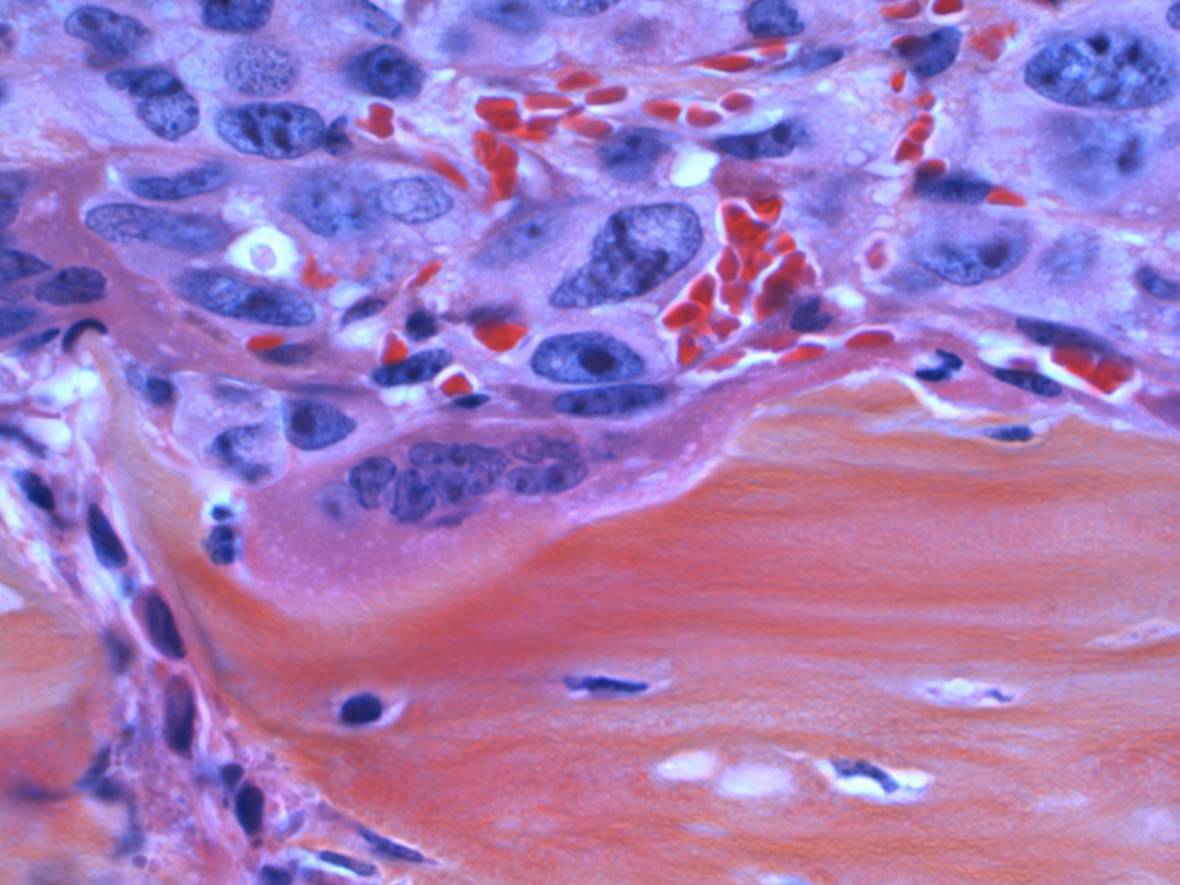
"description": "When cancer cells metastasize to the bone microenvironment from the primary site, they secrete factors that stimulate osteoclasts both to resorb mineralized bone matrix and release stored growth factors that further enhance the growth of cancer cells. This image shows a large multinucleated osteoclast (red) resorbing bone matrix (orange) adjacent to cancer cells (blue).",
"title": "NCIExtra3",
"credit": "Khalid Mohammad, Theresa Guise",
"status": "inherit",
"isLoading": false,
"fetchFailed": false
},
"futureofyou_325792": {
"type": "attachments",
"id": "futureofyou_325792",
"meta": {
"index": "attachments_1716263798",
"site": "futureofyou",
"id": "325792",
"found": true
},
"parent": 325407,
"imgSizes": {
"small": {
"file": "https://ww2.kqed.org/app/uploads/sites/13/2017/01/CRISPR800a-520x346.jpg",
"width": 520,
"mimeType": "image/jpeg",
"height": 346
},
"thumbnail": {
"file": "https://ww2.kqed.org/app/uploads/sites/13/2017/01/CRISPR800a-160x107.jpg",
"width": 160,
"mimeType": "image/jpeg",
"height": 107
},
"post-thumbnail": {
"file": "https://ww2.kqed.org/app/uploads/sites/13/2017/01/CRISPR800a-672x372.jpg",
"width": 672,
"mimeType": "image/jpeg",
"height": 372
},
"xsmall": {
"file": "https://ww2.kqed.org/app/uploads/sites/13/2017/01/CRISPR800a-375x250.jpg",
"width": 375,
"mimeType": "image/jpeg",
"height": 250
},
"kqedFullSize": {
"file": "https://ww2.kqed.org/app/uploads/sites/13/2017/01/CRISPR800a.jpg",
"width": 800,
"height": 533
},
"guest-author-50": {
"file": "https://ww2.kqed.org/app/uploads/sites/13/2017/01/CRISPR800a-50x50.jpg",
"width": 50,
"mimeType": "image/jpeg",
"height": 50
},
"guest-author-96": {
"file": "https://ww2.kqed.org/app/uploads/sites/13/2017/01/CRISPR800a-96x96.jpg",
"width": 96,
"mimeType": "image/jpeg",
"height": 96
},
"medium": {
"file": "https://ww2.kqed.org/app/uploads/sites/13/2017/01/CRISPR800a-800x533.jpg",
"width": 800,
"mimeType": "image/jpeg",
"height": 533
},
"guest-author-64": {
"file": "https://ww2.kqed.org/app/uploads/sites/13/2017/01/CRISPR800a-64x64.jpg",
"width": 64,
"mimeType": "image/jpeg",
"height": 64
},
"guest-author-32": {
"file": "https://ww2.kqed.org/app/uploads/sites/13/2017/01/CRISPR800a-32x32.jpg",
"width": 32,
"mimeType": "image/jpeg",
"height": 32
},
"detail": {
"file": "https://ww2.kqed.org/app/uploads/sites/13/2017/01/CRISPR800a-150x150.jpg",
"width": 150,
"mimeType": "image/jpeg",
"height": 150
},
"medium_large": {
"file": "https://ww2.kqed.org/app/uploads/sites/13/2017/01/CRISPR800a-768x512.jpg",
"width": 768,
"mimeType": "image/jpeg",
"height": 512
},
"guest-author-128": {
"file": "https://ww2.kqed.org/app/uploads/sites/13/2017/01/CRISPR800a-128x128.jpg",
"width": 128,
"mimeType": "image/jpeg",
"height": 128
},
"xxsmall": {
"file": "https://ww2.kqed.org/app/uploads/sites/13/2017/01/CRISPR800a-240x160.jpg",
"width": 240,
"mimeType": "image/jpeg",
"height": 160
}
},
"publishDate": 1485359305,
"modified": 1496263563,
"caption": null,
"description": null,
"title": "CRISPR800a",
"credit": "Wikipedia",
"status": "inherit",
"isLoading": false,
"fetchFailed": false
}
},
"audioPlayerReducer": {
"postId": "stream_live",
"isPaused": true,
"isPlaying": false,
"pfsActive": false,
"pledgeModalIsOpen": true,
"playerDrawerIsOpen": false,
"liveAudioPlayStartedAt": 0,
"liveAudioPlayContext": ""
},
"authorsReducer": {
"byline_futureofyou_430874": {
"type": "authors",
"id": "byline_futureofyou_430874",
"meta": {
"override": true
},
"slug": "byline_futureofyou_430874",
"name": "Marilynn Marchione\u003cbr />Associated Press",
"isLoading": false
},
"byline_futureofyou_427935": {
"type": "authors",
"id": "byline_futureofyou_427935",
"meta": {
"override": true
},
"slug": "byline_futureofyou_427935",
"name": "\u003cstrong>Nikki Inglis\u003c/strong> ",
"isLoading": false
},
"byline_futureofyou_425262": {
"type": "authors",
"id": "byline_futureofyou_425262",
"meta": {
"override": true
},
"slug": "byline_futureofyou_425262",
"name": "Hyacinth Empinado\u003c/br>\u003ca href=\"https://www.statnews.com/\">STAT\u003c/a>",
"isLoading": false
},
"byline_futureofyou_418097": {
"type": "authors",
"id": "byline_futureofyou_418097",
"meta": {
"override": true
},
"slug": "byline_futureofyou_418097",
"name": "Kara Platoni\u003cbr />Future of You",
"isLoading": false
},
"byline_futureofyou_411008": {
"type": "authors",
"id": "byline_futureofyou_411008",
"meta": {
"override": true
},
"slug": "byline_futureofyou_411008",
"name": "Courtney Columbus\u003cbr />NPR Shots",
"isLoading": false
},
"byline_futureofyou_366983": {
"type": "authors",
"id": "byline_futureofyou_366983",
"meta": {
"override": true
},
"slug": "byline_futureofyou_366983",
"name": "Dana Smith",
"isLoading": false
},
"byline_futureofyou_411017": {
"type": "authors",
"id": "byline_futureofyou_411017",
"meta": {
"override": true
},
"slug": "byline_futureofyou_411017",
"name": "Maureen Pao\u003cbr />NPR Shots",
"isLoading": false
},
"byline_futureofyou_391590": {
"type": "authors",
"id": "byline_futureofyou_391590",
"meta": {
"override": true
},
"slug": "byline_futureofyou_391590",
"name": "Andrew Wagner\u003cbr />PBS NewsHour",
"isLoading": false
},
"byline_futureofyou_401647": {
"type": "authors",
"id": "byline_futureofyou_401647",
"meta": {
"override": true
},
"slug": "byline_futureofyou_401647",
"name": "Kate Sheridan\u003cBR />\u003ca href=\"https://www.statnews.com/\">STAT\u003c/a>",
"isLoading": false
},
"byline_futureofyou_400200": {
"type": "authors",
"id": "byline_futureofyou_400200",
"meta": {
"override": true
},
"slug": "byline_futureofyou_400200",
"name": "Elana Fertig, Johns Hopkins University\u003cbr />The Conversation",
"isLoading": false
},
"byline_futureofyou_400898": {
"type": "authors",
"id": "byline_futureofyou_400898",
"meta": {
"override": true
},
"slug": "byline_futureofyou_400898",
"name": "\u003ca href=\"https://theconversation.com/profiles/ian-haydon-358660\">Ian Haydon\u003c/a>, University of Washington\u003cbr />The Conversation",
"isLoading": false
},
"lesleymcclurg": {
"type": "authors",
"id": "11229",
"meta": {
"index": "authors_1716337520",
"id": "11229",
"found": true
},
"name": "Lesley McClurg",
"firstName": "Lesley",
"lastName": "McClurg",
"slug": "lesleymcclurg",
"email": "lmcclurg@KQED.org",
"display_author_email": false,
"staff_mastheads": [
"news",
"science"
],
"title": "KQED Health Correspondent",
"bio": "Lesley McClurg is a health correspondent and fill-in host whose work is regularly rebroadcast on NPR and PBS programs. She’s earned multiple regional Emmy awards, a national and a regional Edward R. Murrow award, and was named Best Beat Reporter by the Association of Health Care Journalists. The Society of Professional Journalists has recognized her work several times, and the Society of Environmental Journalists spotlighted her coverage of California’s historic drought.\r\n\r\nBefore joining KQED in 2016, Lesley covered food and sustainability for Capital Public Radio, environmental issues for Colorado Public Radio, and reported for KUOW and KCTS 9 in Seattle. Away from the newsroom, she loves skiing with her daughter, mountain biking with her partner, and playing with Ollie, the family’s goldendoodle. On deadline, she runs almost entirely on chocolate chips.\r\n\r\n ",
"avatar": "https://secure.gravatar.com/avatar/bab49e972ea10c774fe0f5e29dba1722b158f7c0d58a360923d1389d380b2978?s=600&d=blank&r=g",
"twitter": "lesleywmcclurg",
"bluesky": null,
"facebook": null,
"instagram": null,
"linkedin": null,
"sites": [
{
"site": "arts",
"roles": [
"author"
]
},
{
"site": "news",
"roles": [
"editor"
]
},
{
"site": "futureofyou",
"roles": [
"editor"
]
},
{
"site": "stateofhealth",
"roles": [
"author"
]
},
{
"site": "science",
"roles": [
"editor"
]
},
{
"site": "quest",
"roles": [
"subscriber"
]
},
{
"site": "forum",
"roles": [
"administrator"
]
},
{
"site": "liveblog",
"roles": [
"author"
]
}
],
"headData": {
"title": "Lesley McClurg | KQED",
"description": "KQED Health Correspondent",
"ogImgSrc": "https://secure.gravatar.com/avatar/bab49e972ea10c774fe0f5e29dba1722b158f7c0d58a360923d1389d380b2978?s=600&d=blank&r=g",
"twImgSrc": "https://secure.gravatar.com/avatar/bab49e972ea10c774fe0f5e29dba1722b158f7c0d58a360923d1389d380b2978?s=600&d=blank&r=g"
},
"isLoading": false,
"link": "/author/lesleymcclurg"
}
},
"pagesReducer": {
"futureofyou_category_hopehype": {
"type": "terms",
"id": "futureofyou_1062",
"meta": {
"index": "terms_1716263798",
"site": "futureofyou",
"id": "1062",
"score": 13.896425
},
"featImg": null,
"name": "Hope/Hype",
"description": null,
"taxonomy": "category",
"headData": {
"twImgId": null,
"twTitle": null,
"ogTitle": null,
"ogImgId": null,
"twDescription": null,
"description": null,
"title": "Hope/Hype Archives | KQED Arts",
"ogDescription": null
},
"ttid": 1062,
"slug": "hopehype",
"isLoading": false,
"title": "Hope/Hype",
"pageMeta": {
"site": "futureofyou",
"WpPageTemplate": "page-topic-editorial",
"currentPage": 10
},
"blocks": [
{
"blockName": "kqed/post-list",
"attrs": {
"layout": "cardArticle2",
"query": "posts/futureofyou?category=hopehype",
"seeMore": false,
"paginated": true,
"page": 10
}
},
{
"blockName": "kqed/ad"
}
]
}
},
"pfsSessionReducer": {},
"postsReducer": {
"stream_live": {
"type": "live",
"id": "stream_live",
"audioUrl": "https://streams.kqed.org/kqedradio",
"title": "Live Stream",
"excerpt": "Live Stream information currently unavailable.",
"link": "/radio",
"featImg": "",
"label": {
"name": "KQED Live",
"link": "/"
}
},
"stream_kqedNewscast": {
"type": "posts",
"id": "stream_kqedNewscast",
"audioUrl": "https://www.kqed.org/.stream/anon/radio/RDnews/newscast.mp3?_=1",
"title": "KQED Newscast",
"featImg": "",
"label": {
"name": "88.5 FM",
"link": "/"
}
},
"futureofyou_430874": {
"type": "posts",
"id": "futureofyou_430874",
"meta": {
"index": "posts_1716263798",
"site": "futureofyou",
"id": "430874",
"score": null,
"sort": [
1500913920000
]
},
"parent": 0,
"labelTerm": {
"site": "futureofyou"
},
"blocks": [],
"publishDate": 1500913920,
"format": "standard",
"disqusTitle": "Child's HIV Infection Suppressed Without AIDS Drugs",
"title": "Child's HIV Infection Suppressed Without AIDS Drugs",
"headTitle": "KQED Future of You | KQED Science",
"content": "\u003cp>A South African girl born with the AIDS virus has kept her infection suppressed for more than eight years after stopping anti-HIV medicines — more evidence that early treatment can occasionally cause a long remission that, if it lasts, would be a form of cure.\u003c/p>\n\u003cp>Her case was revealed Monday at an \u003ca href=\"http://www.aidsinfo.nih.gov/\">AIDS\u003c/a> conference in Paris, where researchers also gave encouraging results from tests of shots every month or two instead of daily pills to treat HIV.\u003c/p>\n\u003cp>“That’s very promising” to help people stay on treatment, the U.S.’s top AIDS scientist, Dr. Anthony Fauci, said of the prospects for long-acting drugs.\u003c/p>\n\u003cp>Current treatments keep \u003ca href=\"http://medlineplus.gov/hivaids.html\">HIV\u003c/a> under control but must be taken lifelong. Only one person is thought to be cured — the so-called Berlin patient, a man who had a bone marrow transplant in 2007 from a donor with natural resistance to HIV.\u003c/p>\n\u003cp>But transplants are risky and impractical to try to cure the millions already infected. So some researchers have been aiming for the next best thing — long-term remission, when the immune system can control HIV without drugs even if signs of the virus remain.\u003c/p>\n\u003cp>[ad fullwidth]\u003c/p>\n\u003cp>Aggressive treatment soon after infection might enable that in some cases, and the South African girl is the third child who achieved a long remission after that approach.\u003c/p>\n\u003cp>She was in a \u003ca href=\"http://clinicaltrials.gov/ct2/show/NCT02788175\">study\u003c/a> sponsored by the agency Fauci heads, the National Institute of Allergy and Infectious Diseases, that previously found that early versus delayed treatment helped babies survive.\u003c/p>\n\u003cp>The girl, who researchers did not identify, started on HIV drugs when she was 2 months old and stopped 40 weeks later. Tests when she was 9 1/2 years old found signs of virus in a small number of immune system cells, but none capable of reproducing. The girl does not have a gene mutation that gives natural resistance to HIV infection, Fauci said, so her remission seems likely due to the early treatment.\u003c/p>\n\u003cp>The previous cases:\u003c/p>\n\u003cp>—A French teen who was born with HIV and is now around 20 has had her infection under control despite no HIV medicines since she was roughly 6 years old.\u003c/p>\n\u003cp>—A Mississippi baby born with HIV in 2010 suppressed her infection for 27 months after stopping treatment before it reappeared in her blood. She was able to get the virus under control again after treatment resumed.\u003c/p>\n\u003cp>At least a dozen adults also have had remissions lasting for years after stopping HIV medicines.\u003c/p>\n\u003cp>A study underway now is testing whether treating HIV-infected newborns within two days of birth can control the virus later after treatment stops. It started in 2014 in South America, Haiti, Africa and the United States, and some of the earliest participants might be able to try stopping treatment later this year.\u003c/p>\n\u003cp>Treatment might get easier if two large studies underway now confirm results reported Monday from a study testing a long-acting combo of two HIV drugs — Janssen’s rilpivirine and ViiV Healthcare’s cabotegravir.\u003c/p>\n\u003cp>Cabotegravir is experimental; rilpivirine is sold now as Edurant and used in combination with other drugs for treating certain types of HIV patients.\u003c/p>\n\u003cp>After initial treatment to get their virus under control, about 300 study participants were given either daily combination therapy pills or a shot every four or eight weeks of the long-acting drug duo to maintain control.\u003c/p>\n\u003cp>After nearly two years, 94 percent on eight-week shots, 87 percent on four-week shots and 84 percent on daily pills had their infections suppressed, with similar rates of side effects.\u003c/p>\n\u003cp>“The results were good regardless of whether people came monthly or every two months for their treatment. This has important policy implications,” said Dr. Linda-Gail Bekker, deputy director of the Desmond Tutu HIV Centre at the University of Cape Town in South Africa, and a co-leader of the conference.\u003c/p>\n\u003cp>The study was sponsored by the drugmakers. Results were published in the British medical journal \u003ca href=\"http://www.thelancet.com/journals/lancet/article/PIIS0140-6736(17)31917-7/fulltext?elsca1=tlpr\">Lancet.\u003c/a>\u003c/p>\n\u003cp>Two large studies aimed at winning approval to sell the treatment are testing the monthly shots. Janssen said in a statement that good results from eight-week shots warrant reconsidering the longer approach.\u003c/p>\n\u003cp>\u003c/p>\n\u003cp>If it works, “this will have a huge impact on how we manage that very important group of people who are not able to access and take drugs on a day-to-day basis,” such as those with mental health or drug abuse problems, said Dr. Steven Deeks, an AIDS specialist at the University of California, San Francisco.\u003c/p>\n\n",
"disqusIdentifier": "430874 https://ww2.kqed.org/futureofyou/?p=430874",
"disqusUrl": "https://ww2.kqed.org/futureofyou/2017/07/24/childs-hiv-infection-suppressed-without-aids-drugs/",
"stats": {
"hasVideo": false,
"hasChartOrMap": false,
"hasAudio": false,
"hasPolis": false,
"wordCount": 771,
"hasGoogleForm": false,
"hasGallery": false,
"hasHearkenModule": false,
"iframeSrcs": [],
"paragraphCount": 23
},
"modified": 1501110319,
"excerpt": "A South African girl born with the AIDS virus has kept her infection suppressed for more than eight years after stopping anti-HIV medicines. Current treatments keep HIV under control but must be taken lifelong. ",
"headData": {
"twImgId": "",
"twTitle": "",
"ogTitle": "",
"ogImgId": "",
"twDescription": "",
"description": "A South African girl born with the AIDS virus has kept her infection suppressed for more than eight years after stopping anti-HIV medicines. Current treatments keep HIV under control but must be taken lifelong. ",
"title": "Child's HIV Infection Suppressed Without AIDS Drugs | KQED",
"ogDescription": "",
"schema": {
"@context": "https://schema.org",
"@type": "Article",
"headline": "Child's HIV Infection Suppressed Without AIDS Drugs",
"datePublished": "2017-07-24T09:32:00-07:00",
"dateModified": "2017-07-26T16:05:19-07:00",
"image": "https://cdn.kqed.org/wp-content/uploads/2020/02/KQED-OG-Image@1x.png"
}
},
"guestAuthors": [],
"slug": "childs-hiv-infection-suppressed-without-aids-drugs",
"status": "publish",
"nprByline": "Marilynn Marchione\u003cbr />Associated Press",
"path": "/futureofyou/430874/childs-hiv-infection-suppressed-without-aids-drugs",
"audioTrackLength": null,
"parsedContent": [
{
"type": "contentString",
"content": "\u003cdiv class=\"post-body\">\u003cp>\u003cp>A South African girl born with the AIDS virus has kept her infection suppressed for more than eight years after stopping anti-HIV medicines — more evidence that early treatment can occasionally cause a long remission that, if it lasts, would be a form of cure.\u003c/p>\n\u003cp>Her case was revealed Monday at an \u003ca href=\"http://www.aidsinfo.nih.gov/\">AIDS\u003c/a> conference in Paris, where researchers also gave encouraging results from tests of shots every month or two instead of daily pills to treat HIV.\u003c/p>\n\u003cp>“That’s very promising” to help people stay on treatment, the U.S.’s top AIDS scientist, Dr. Anthony Fauci, said of the prospects for long-acting drugs.\u003c/p>\n\u003cp>Current treatments keep \u003ca href=\"http://medlineplus.gov/hivaids.html\">HIV\u003c/a> under control but must be taken lifelong. Only one person is thought to be cured — the so-called Berlin patient, a man who had a bone marrow transplant in 2007 from a donor with natural resistance to HIV.\u003c/p>\n\u003cp>But transplants are risky and impractical to try to cure the millions already infected. So some researchers have been aiming for the next best thing — long-term remission, when the immune system can control HIV without drugs even if signs of the virus remain.\u003c/p>\n\u003cp>\u003c/p>\u003c/div>",
"attributes": {
"named": {},
"numeric": []
}
},
{
"type": "component",
"content": "",
"name": "ad",
"attributes": {
"named": {
"label": "fullwidth"
},
"numeric": [
"fullwidth"
]
}
},
{
"type": "contentString",
"content": "\u003cdiv class=\"post-body\">\u003cp>\u003c/p>\n\u003cp>Aggressive treatment soon after infection might enable that in some cases, and the South African girl is the third child who achieved a long remission after that approach.\u003c/p>\n\u003cp>She was in a \u003ca href=\"http://clinicaltrials.gov/ct2/show/NCT02788175\">study\u003c/a> sponsored by the agency Fauci heads, the National Institute of Allergy and Infectious Diseases, that previously found that early versus delayed treatment helped babies survive.\u003c/p>\n\u003cp>The girl, who researchers did not identify, started on HIV drugs when she was 2 months old and stopped 40 weeks later. Tests when she was 9 1/2 years old found signs of virus in a small number of immune system cells, but none capable of reproducing. The girl does not have a gene mutation that gives natural resistance to HIV infection, Fauci said, so her remission seems likely due to the early treatment.\u003c/p>\n\u003cp>The previous cases:\u003c/p>\n\u003cp>—A French teen who was born with HIV and is now around 20 has had her infection under control despite no HIV medicines since she was roughly 6 years old.\u003c/p>\n\u003cp>—A Mississippi baby born with HIV in 2010 suppressed her infection for 27 months after stopping treatment before it reappeared in her blood. She was able to get the virus under control again after treatment resumed.\u003c/p>\n\u003cp>At least a dozen adults also have had remissions lasting for years after stopping HIV medicines.\u003c/p>\n\u003cp>A study underway now is testing whether treating HIV-infected newborns within two days of birth can control the virus later after treatment stops. It started in 2014 in South America, Haiti, Africa and the United States, and some of the earliest participants might be able to try stopping treatment later this year.\u003c/p>\n\u003cp>Treatment might get easier if two large studies underway now confirm results reported Monday from a study testing a long-acting combo of two HIV drugs — Janssen’s rilpivirine and ViiV Healthcare’s cabotegravir.\u003c/p>\n\u003cp>Cabotegravir is experimental; rilpivirine is sold now as Edurant and used in combination with other drugs for treating certain types of HIV patients.\u003c/p>\n\u003cp>After initial treatment to get their virus under control, about 300 study participants were given either daily combination therapy pills or a shot every four or eight weeks of the long-acting drug duo to maintain control.\u003c/p>\n\u003cp>After nearly two years, 94 percent on eight-week shots, 87 percent on four-week shots and 84 percent on daily pills had their infections suppressed, with similar rates of side effects.\u003c/p>\n\u003cp>“The results were good regardless of whether people came monthly or every two months for their treatment. This has important policy implications,” said Dr. Linda-Gail Bekker, deputy director of the Desmond Tutu HIV Centre at the University of Cape Town in South Africa, and a co-leader of the conference.\u003c/p>\n\u003cp>The study was sponsored by the drugmakers. Results were published in the British medical journal \u003ca href=\"http://www.thelancet.com/journals/lancet/article/PIIS0140-6736(17)31917-7/fulltext?elsca1=tlpr\">Lancet.\u003c/a>\u003c/p>\n\u003cp>Two large studies aimed at winning approval to sell the treatment are testing the monthly shots. Janssen said in a statement that good results from eight-week shots warrant reconsidering the longer approach.\u003c/p>\n\u003cp>\u003c/p>\n\u003cp>If it works, “this will have a huge impact on how we manage that very important group of people who are not able to access and take drugs on a day-to-day basis,” such as those with mental health or drug abuse problems, said Dr. Steven Deeks, an AIDS specialist at the University of California, San Francisco.\u003c/p>\n\n\u003c/div>\u003c/p>",
"attributes": {
"named": {},
"numeric": []
}
}
],
"link": "/futureofyou/430874/childs-hiv-infection-suppressed-without-aids-drugs",
"authors": [
"byline_futureofyou_430874"
],
"categories": [
"futureofyou_1062",
"futureofyou_1"
],
"tags": [
"futureofyou_1275",
"futureofyou_651",
"futureofyou_80"
],
"featImg": "futureofyou_157427",
"label": "futureofyou"
},
"futureofyou_427935": {
"type": "posts",
"id": "futureofyou_427935",
"meta": {
"index": "posts_1716263798",
"site": "futureofyou",
"id": "427935",
"score": null,
"sort": [
1500474610000
]
},
"parent": 0,
"labelTerm": {},
"blocks": [],
"publishDate": 1500474610,
"format": "standard",
"disqusTitle": "Is There a Direct Link Between the Sense of Smell and Obesity?",
"title": "Is There a Direct Link Between the Sense of Smell and Obesity?",
"headTitle": "KQED Future of You | KQED Science",
"content": "\u003cp>Molecular biologist Celine Riera was walking down a street in France earlier this month when she smelled freshly baked croissants.\u003c/p>\n\u003cp>“I wasn’t hungry,” she says, “but I had to have one.”\u003c/p>\n\u003cp>Riera’s scent cells began sending a message to her body: “Hey, Celine, you’re about to eat food. Get ready to store it as fat to use later.”\u003c/p>\n\u003caside class=\"pullquote alignright\">'It wasn’t known that the sense of smell was actually driving metabolic rate.'\u003ccite>Andrew Dillin, UC Berkeley\u003c/cite>\u003c/aside>\n\u003cp>But what if her scent cells never sent that signal? Is it possible she could eat that croissant and perhaps not store it as fat? Does our sense of smell direct our body’s decisions on when to store fat and when to burn it?\u003c/p>\n\u003cp>Riera’s latest research offers a start to answering just that.\u003c/p>\n\u003cp>[ad fullwidth]\u003c/p>\n\u003cp>Riera is the lead author on a study released this month from UC Berkeley’s Dillin Lab and published in Cell Metabolism. It found that mice who lost their sense of smell burned more energy and fat while eating the same amount of food as mice who could smell just fine.\u003c/p>\n\u003cp>\u003cstrong>Same Diet, Two Results\u003c/strong>\u003c/p>\n\u003cp>The study tested two groups of mice that had been genetically modified to be susceptible to diphtheria in the sensory receptors in their noses. Researchers injected one group with the diphtheria toxin, temporarily wiping out their sense of smell. Both groups of mice were then fed a high-fat diet. After 12 weeks, the mice who could smell weighed 16 percent more than those who couldn’t. And the difference was made up entirely of fat.\u003c/p>\n\u003cp>[contextly_sidebar id=\"ZCpjW5Z35Z4t8PosUMPhGWqsT1kZErLP\"]The mice who couldn’t smell also seemed to be protected from other consequences of high-fat diets, such as inflammation in fat tissues, and insulin resistance that can lead to diabetes.\u003c/p>\n\u003cp>In a second experiment, researchers allowed a group of mice with typical smell to eat a high-fat diet, then injected half of the obese mice with diphtheria toxin. After they lost their sense of smell, these mice lost weight and showed less insulin resistance.\u003c/p>\n\u003cfigure id=\"attachment_428936\" class=\"wp-caption alignnone\" style=\"max-width: 800px\">\u003cimg class=\"wp-image-428936 size-medium\" src=\"https://ww2.kqed.org/futureofyou/wp-content/uploads/sites/13/2017/07/best-immunos-MOE-2-800x393.jpg\" alt=\"On the left is a close-up of the inside of the nose of a mouse who can smell, while the right is a mouse who can't.\" width=\"800\" height=\"393\" srcset=\"https://ww2.kqed.org/app/uploads/sites/13/2017/07/best-immunos-MOE-2-800x393.jpg 800w, https://ww2.kqed.org/app/uploads/sites/13/2017/07/best-immunos-MOE-2-160x79.jpg 160w, https://ww2.kqed.org/app/uploads/sites/13/2017/07/best-immunos-MOE-2-768x378.jpg 768w, https://ww2.kqed.org/app/uploads/sites/13/2017/07/best-immunos-MOE-2-240x118.jpg 240w, https://ww2.kqed.org/app/uploads/sites/13/2017/07/best-immunos-MOE-2-375x184.jpg 375w, https://ww2.kqed.org/app/uploads/sites/13/2017/07/best-immunos-MOE-2-520x256.jpg 520w, https://ww2.kqed.org/app/uploads/sites/13/2017/07/best-immunos-MOE-2.jpg 952w\" sizes=\"(max-width: 800px) 100vw, 800px\">\u003cfigcaption class=\"wp-caption-text\">To test the effects of smell on weight gain, researchers knocked out the olfactory neurons (stained in red) of mice before feeding them a high-fat diet. On the left is a close-up of the inside of the nose of a mouse who can smell, while the right is a mouse who can't. \u003ccite>(Andrew Dillin and Celine Riera/UC Berkeley)\u003c/cite>\u003c/figcaption>\u003c/figure>\n\u003cp>In both experiments, the mice that couldn’t smell weren’t eating less, nor were they more physically active.\u003c/p>\n\u003cp>So why were the mice who couldn’t smell expending more energy? Researchers say the answer has to do with a link between scent and metabolism.\u003c/p>\n\u003cp>\u003cstrong>The Link Between Scent and Metabolism\u003c/strong>\u003c/p>\n\u003cp>“We know that smell was integrated with us eating,” says Andrew Dillin, professor of molecular and cell biology at UC Berkeley and head of the Dillin Lab. “It wasn’t known that the sense of smell was actually driving metabolic rate.”\u003c/p>\n\u003cp>In other words, research had already established that when we’re hungry, our body sends out hormones and other signals that turn up our sense of smell so we can more find food more easily, dulling it once we’re well-fed.\u003c/p>\n\u003caside class=\"pullquote alignright\">Maybe interfering with the sense of smell can offer an obesity treatment that's less invasive than weight-loss surgery.\u003c/aside>\n\u003cp>What Riera and colleagues discovered is that when we smell food, the scent also sets in motion a chain reaction of nerves, hormones and physiological functions that change our metabolism and tell our bodies to store the food we’re about to eat.\u003c/p>\n\u003cp>The mice who couldn’t smell showed signs of a revved-up metabolism and their energy-storing white fat was turning to brown fat, which is easier to burn. These clues led researchers to find that these mice had far more noradrenaline in their systems. Noradrenaline is one of those chemicals that makes you feel that “adrenaline rush.”\u003c/p>\n\u003cp>It turns out, knocking out the mice’s sense of smell sends a signal to the hypothalamus - the part of the brain that regulates metabolism - to activate the sympathetic nervous system. The sympathetic nervous system regulates the “fight, flight or freeze,” response, and it was causing the mice to burn more energy and fat.\u003c/p>\n\u003cp>\u003cstrong>Unanswered Questions\u003c/strong>\u003c/p>\n\u003cp>Dr. Robert Lustig, a professor of pediatrics in the Division of Endocrinology at UC San Francisco says he hasn’t seen any previous study demonstrate this link between smell and metabolism, but that when he saw it, he thought, “Well, that makes sense.”\u003c/p>\n\u003cp>Lustig researches metabolic disorders -- specifically, how the hypothalamus plays a role in obesity.\u003c/p>\n\u003cp>What’s novel about Riera’s study, he says, is that it provides experimental evidence that, at least in mice, there’s a direct link between smell and metabolism, resulting in weight gain or loss.\u003c/p>\n\u003cp>Lustig believes the pathway between smelling your food and gaining weight, at least in humans, probably goes through a cranial nerve called the vagus nerve.\u003c/p>\n\u003cp>“We know that smell activates the vagus nerve,” he says. “We know activating vagus nerve increases the amount of insulin. What we don’t know in humans is that the whole pathway is connected.”\u003c/p>\n\u003cp>Lustig says that question remains unanswered, and that the UC Berkeley study doesn’t examine whether the vagus nerve is involved.\u003c/p>\n\u003cp>\u003cstrong>Can This Help Humans?\u003c/strong>\u003c/p>\n\u003cp>So far, the link between smell and metabolism is confined to mice. It also only applies to preventing severe weight gain or facilitating weight loss in mice who are already obese. There's no evidence that knocking out the sense of smell affects the weight of average mice.\u003c/p>\n\u003cp>Riera, having completed her post-doctoral work at Berkeley, has just opened her own lab at Cedars-Sinai Medical Center in Los Angeles, where she plans to continue her work in mice and, perhaps someday, expand upon it in clinical research with humans.\u003c/p>\n\u003cp>She hopes to look at how these findings can be integrated into treatment for food addiction and binge-eating among some people with obesity. Maybe, Riera says, interfering with sense of smell can offer an obesity treatment that steps in to inhibit the food addiction, and does so in a manner less invasive than weight-loss surgery. So far, there isn’t a treatment that safely blocks smell for humans, but Riera believes the nose may hold the key to treating obesity.\u003c/p>\n\u003cp>[ad floatright]\u003c/p>\n\u003cp>“We think that with olfaction we find maybe a milder way to do that,” she says. “Maybe if you can find a way to block the olfactory input, it would help.”\u003c/p>\n\n",
"disqusIdentifier": "427935 https://ww2.kqed.org/futureofyou/?p=427935",
"disqusUrl": "https://ww2.kqed.org/futureofyou/2017/07/19/mice-who-cant-smell-eat-high-fat-diet-without-weight-gain/",
"stats": {
"hasVideo": false,
"hasChartOrMap": false,
"hasAudio": false,
"hasPolis": false,
"wordCount": 1153,
"hasGoogleForm": false,
"hasGallery": false,
"hasHearkenModule": false,
"iframeSrcs": [],
"paragraphCount": 32
},
"modified": 1500833933,
"excerpt": "UC Berkeley researchers establish a link between the sense of smell and metabolism in mice, hoping it may lead to a treatment for obesity.",
"headData": {
"twImgId": "",
"twTitle": "",
"ogTitle": "",
"ogImgId": "",
"twDescription": "",
"description": "UC Berkeley researchers establish a link between the sense of smell and metabolism in mice, hoping it may lead to a treatment for obesity.",
"title": "Is There a Direct Link Between the Sense of Smell and Obesity? | KQED",
"ogDescription": "",
"schema": {
"@context": "https://schema.org",
"@type": "Article",
"headline": "Is There a Direct Link Between the Sense of Smell and Obesity?",
"datePublished": "2017-07-19T07:30:10-07:00",
"dateModified": "2017-07-23T11:18:53-07:00",
"image": "https://cdn.kqed.org/wp-content/uploads/2020/02/KQED-OG-Image@1x.png"
}
},
"guestAuthors": [],
"slug": "mice-who-cant-smell-eat-high-fat-diet-without-weight-gain",
"status": "publish",
"nprByline": "\u003cstrong>Nikki Inglis\u003c/strong> ",
"source": "Hope/Hype",
"path": "/futureofyou/427935/mice-who-cant-smell-eat-high-fat-diet-without-weight-gain",
"audioTrackLength": null,
"parsedContent": [
{
"type": "contentString",
"content": "\u003cdiv class=\"post-body\">\u003cp>\u003cp>Molecular biologist Celine Riera was walking down a street in France earlier this month when she smelled freshly baked croissants.\u003c/p>\n\u003cp>“I wasn’t hungry,” she says, “but I had to have one.”\u003c/p>\n\u003cp>Riera’s scent cells began sending a message to her body: “Hey, Celine, you’re about to eat food. Get ready to store it as fat to use later.”\u003c/p>\n\u003caside class=\"pullquote alignright\">'It wasn’t known that the sense of smell was actually driving metabolic rate.'\u003ccite>Andrew Dillin, UC Berkeley\u003c/cite>\u003c/aside>\n\u003cp>But what if her scent cells never sent that signal? Is it possible she could eat that croissant and perhaps not store it as fat? Does our sense of smell direct our body’s decisions on when to store fat and when to burn it?\u003c/p>\n\u003cp>Riera’s latest research offers a start to answering just that.\u003c/p>\n\u003cp>\u003c/p>\u003c/div>",
"attributes": {
"named": {},
"numeric": []
}
},
{
"type": "component",
"content": "",
"name": "ad",
"attributes": {
"named": {
"label": "fullwidth"
},
"numeric": [
"fullwidth"
]
}
},
{
"type": "contentString",
"content": "\u003cdiv class=\"post-body\">\u003cp>\u003c/p>\n\u003cp>Riera is the lead author on a study released this month from UC Berkeley’s Dillin Lab and published in Cell Metabolism. It found that mice who lost their sense of smell burned more energy and fat while eating the same amount of food as mice who could smell just fine.\u003c/p>\n\u003cp>\u003cstrong>Same Diet, Two Results\u003c/strong>\u003c/p>\n\u003cp>The study tested two groups of mice that had been genetically modified to be susceptible to diphtheria in the sensory receptors in their noses. Researchers injected one group with the diphtheria toxin, temporarily wiping out their sense of smell. Both groups of mice were then fed a high-fat diet. After 12 weeks, the mice who could smell weighed 16 percent more than those who couldn’t. And the difference was made up entirely of fat.\u003c/p>\n\u003cp>\u003c/p>\u003cp>\u003c/p>\u003cp>The mice who couldn’t smell also seemed to be protected from other consequences of high-fat diets, such as inflammation in fat tissues, and insulin resistance that can lead to diabetes.\u003c/p>\n\u003cp>In a second experiment, researchers allowed a group of mice with typical smell to eat a high-fat diet, then injected half of the obese mice with diphtheria toxin. After they lost their sense of smell, these mice lost weight and showed less insulin resistance.\u003c/p>\n\u003cfigure id=\"attachment_428936\" class=\"wp-caption alignnone\" style=\"max-width: 800px\">\u003cimg class=\"wp-image-428936 size-medium\" src=\"https://ww2.kqed.org/futureofyou/wp-content/uploads/sites/13/2017/07/best-immunos-MOE-2-800x393.jpg\" alt=\"On the left is a close-up of the inside of the nose of a mouse who can smell, while the right is a mouse who can't.\" width=\"800\" height=\"393\" srcset=\"https://ww2.kqed.org/app/uploads/sites/13/2017/07/best-immunos-MOE-2-800x393.jpg 800w, https://ww2.kqed.org/app/uploads/sites/13/2017/07/best-immunos-MOE-2-160x79.jpg 160w, https://ww2.kqed.org/app/uploads/sites/13/2017/07/best-immunos-MOE-2-768x378.jpg 768w, https://ww2.kqed.org/app/uploads/sites/13/2017/07/best-immunos-MOE-2-240x118.jpg 240w, https://ww2.kqed.org/app/uploads/sites/13/2017/07/best-immunos-MOE-2-375x184.jpg 375w, https://ww2.kqed.org/app/uploads/sites/13/2017/07/best-immunos-MOE-2-520x256.jpg 520w, https://ww2.kqed.org/app/uploads/sites/13/2017/07/best-immunos-MOE-2.jpg 952w\" sizes=\"(max-width: 800px) 100vw, 800px\">\u003cfigcaption class=\"wp-caption-text\">To test the effects of smell on weight gain, researchers knocked out the olfactory neurons (stained in red) of mice before feeding them a high-fat diet. On the left is a close-up of the inside of the nose of a mouse who can smell, while the right is a mouse who can't. \u003ccite>(Andrew Dillin and Celine Riera/UC Berkeley)\u003c/cite>\u003c/figcaption>\u003c/figure>\n\u003cp>In both experiments, the mice that couldn’t smell weren’t eating less, nor were they more physically active.\u003c/p>\n\u003cp>So why were the mice who couldn’t smell expending more energy? Researchers say the answer has to do with a link between scent and metabolism.\u003c/p>\n\u003cp>\u003cstrong>The Link Between Scent and Metabolism\u003c/strong>\u003c/p>\n\u003cp>“We know that smell was integrated with us eating,” says Andrew Dillin, professor of molecular and cell biology at UC Berkeley and head of the Dillin Lab. “It wasn’t known that the sense of smell was actually driving metabolic rate.”\u003c/p>\n\u003cp>In other words, research had already established that when we’re hungry, our body sends out hormones and other signals that turn up our sense of smell so we can more find food more easily, dulling it once we’re well-fed.\u003c/p>\n\u003caside class=\"pullquote alignright\">Maybe interfering with the sense of smell can offer an obesity treatment that's less invasive than weight-loss surgery.\u003c/aside>\n\u003cp>What Riera and colleagues discovered is that when we smell food, the scent also sets in motion a chain reaction of nerves, hormones and physiological functions that change our metabolism and tell our bodies to store the food we’re about to eat.\u003c/p>\n\u003cp>The mice who couldn’t smell showed signs of a revved-up metabolism and their energy-storing white fat was turning to brown fat, which is easier to burn. These clues led researchers to find that these mice had far more noradrenaline in their systems. Noradrenaline is one of those chemicals that makes you feel that “adrenaline rush.”\u003c/p>\n\u003cp>It turns out, knocking out the mice’s sense of smell sends a signal to the hypothalamus - the part of the brain that regulates metabolism - to activate the sympathetic nervous system. The sympathetic nervous system regulates the “fight, flight or freeze,” response, and it was causing the mice to burn more energy and fat.\u003c/p>\n\u003cp>\u003cstrong>Unanswered Questions\u003c/strong>\u003c/p>\n\u003cp>Dr. Robert Lustig, a professor of pediatrics in the Division of Endocrinology at UC San Francisco says he hasn’t seen any previous study demonstrate this link between smell and metabolism, but that when he saw it, he thought, “Well, that makes sense.”\u003c/p>\n\u003cp>Lustig researches metabolic disorders -- specifically, how the hypothalamus plays a role in obesity.\u003c/p>\n\u003cp>What’s novel about Riera’s study, he says, is that it provides experimental evidence that, at least in mice, there’s a direct link between smell and metabolism, resulting in weight gain or loss.\u003c/p>\n\u003cp>Lustig believes the pathway between smelling your food and gaining weight, at least in humans, probably goes through a cranial nerve called the vagus nerve.\u003c/p>\n\u003cp>“We know that smell activates the vagus nerve,” he says. “We know activating vagus nerve increases the amount of insulin. What we don’t know in humans is that the whole pathway is connected.”\u003c/p>\n\u003cp>Lustig says that question remains unanswered, and that the UC Berkeley study doesn’t examine whether the vagus nerve is involved.\u003c/p>\n\u003cp>\u003cstrong>Can This Help Humans?\u003c/strong>\u003c/p>\n\u003cp>So far, the link between smell and metabolism is confined to mice. It also only applies to preventing severe weight gain or facilitating weight loss in mice who are already obese. There's no evidence that knocking out the sense of smell affects the weight of average mice.\u003c/p>\n\u003cp>Riera, having completed her post-doctoral work at Berkeley, has just opened her own lab at Cedars-Sinai Medical Center in Los Angeles, where she plans to continue her work in mice and, perhaps someday, expand upon it in clinical research with humans.\u003c/p>\n\u003cp>She hopes to look at how these findings can be integrated into treatment for food addiction and binge-eating among some people with obesity. Maybe, Riera says, interfering with sense of smell can offer an obesity treatment that steps in to inhibit the food addiction, and does so in a manner less invasive than weight-loss surgery. So far, there isn’t a treatment that safely blocks smell for humans, but Riera believes the nose may hold the key to treating obesity.\u003c/p>\n\u003cp>\u003c/p>\u003c/div>",
"attributes": {
"named": {},
"numeric": []
}
},
{
"type": "component",
"content": "",
"name": "ad",
"attributes": {
"named": {
"label": "floatright"
},
"numeric": [
"floatright"
]
}
},
{
"type": "contentString",
"content": "\u003cdiv class=\"post-body\">\u003cp>\u003c/p>\n\u003cp>“We think that with olfaction we find maybe a milder way to do that,” she says. “Maybe if you can find a way to block the olfactory input, it would help.”\u003c/p>\n\n\u003c/div>\u003c/p>",
"attributes": {
"named": {},
"numeric": []
}
}
],
"link": "/futureofyou/427935/mice-who-cant-smell-eat-high-fat-diet-without-weight-gain",
"authors": [
"byline_futureofyou_427935"
],
"categories": [
"futureofyou_1062",
"futureofyou_1"
],
"tags": [
"futureofyou_1275",
"futureofyou_1325",
"futureofyou_978",
"futureofyou_562",
"futureofyou_1324"
],
"collections": [
"futureofyou_1097"
],
"featImg": "futureofyou_427965",
"label": "source_futureofyou_427935"
},
"futureofyou_425262": {
"type": "posts",
"id": "futureofyou_425262",
"meta": {
"index": "posts_1716263798",
"site": "futureofyou",
"id": "425262",
"score": null,
"sort": [
1500408190000
]
},
"parent": 0,
"labelTerm": {
"site": "futureofyou"
},
"blocks": [],
"publishDate": 1500408190,
"format": "aside",
"disqusTitle": "Watch the First Movie Stored and Retrieved From DNA of Living Cells",
"title": "Watch the First Movie Stored and Retrieved From DNA of Living Cells",
"headTitle": "KQED Future of You | KQED Science",
"content": "\u003cp>\u003c!-- iframe plugin v.4.3 wordpress.org/plugins/iframe/ -->\u003cbr>\n\u003ciframe width=\"600\" height=\"338\" src=\"//content.jwplatform.com/players/Dg4gz7oc-jEuQjxp9.html\" frameborder=\"0\" scrolling=\"no\" class=\"iframe-class\">\u003c/iframe>\u003c/p>\n\u003cp>Forget iTunes or your old zipper case of DVDs. How about storing movies in a Petri dish of E. coli?\u003c/p>\n\u003cp>Researchers at Harvard Medical School and the Wyss Institute for Biologically Inspired Engineering have stored a short video in the DNA of bacteria and then retrieved it. It’s the first time a video has been recorded into living cells, and the development could have environmental applications.\u003c/p>\n\u003cp>“DNA is a great place to store information. Biology uses it quite effectively,” said Seth Shipman, a postdoctoral fellow at Harvard Medical School and first author of the study. “It’s compact, and it’s incredibly stable.”\u003c/p>\n\u003cp>Shipman and his colleagues encoded Eadweard Muybridge’s “Sallie Gardner at a Gallop,” otherwise known as “The Horse in Motion,” one of the earliest series of moving images ever created.\u003c/p>\n\u003cp>[ad fullwidth]\u003c/p>\n\u003cp>Their \u003ca href=\"https://www.nature.com/articles/doi:10.1038/nature23017\" target=\"_blank\" rel=\"noopener noreferrer\">study\u003c/a> was published in \u003cem>Nature\u003c/em> on Wednesday.\u003c/p>\n\u003cp>To get the DNA stored into the bacterial genome, researchers used the CRISPR-Cas system, a powerful gene-editing tool. The researchers chopped up each frame into single-colored pixels. They then created DNA codes that corresponded to each color and strung several codes together.\u003c/p>\n\u003cp>Each bacterium took in snippets of the video and stored it in their DNA. Taken together, the researchers were able to put the pieces back and play the video.\u003c/p>\n\u003cp>With this work, Shipman said they eventually want to create “molecular recorders,” which are living cells that could sense things in the environment, like toxins or heavy metals, and record and store that information within their DNA.\u003c/p>\n\u003cp>\u003c/p>\n\u003cp>\u003cem>This \u003ca href=\"https://www.statnews.com/2017/07/12/crispr-bacteria-video-harvard-wyss/\" target=\"_blank\">story\u003c/a> was originally published by STAT, an online publication of Boston Globe Media that covers health, medicine, and scientific discovery.\u003c/em> \u003c/p>\n\n",
"disqusIdentifier": "425262 https://ww2.kqed.org/futureofyou/?p=425262",
"disqusUrl": "https://ww2.kqed.org/futureofyou/2017/07/18/watch-the-first-movie-stored-and-retrieved-from-dna-of-living-cells/",
"stats": {
"hasVideo": false,
"hasChartOrMap": false,
"hasAudio": false,
"hasPolis": false,
"wordCount": 290,
"hasGoogleForm": false,
"hasGallery": false,
"hasHearkenModule": false,
"iframeSrcs": [],
"paragraphCount": 12
},
"modified": 1500509307,
"excerpt": "For the first time, a video has been recorded into living cells. The ability to store information in DNA could have environmental applications.",
"headData": {
"twImgId": "",
"twTitle": "",
"ogTitle": "",
"ogImgId": "",
"twDescription": "",
"description": "For the first time, a video has been recorded into living cells. The ability to store information in DNA could have environmental applications.",
"title": "Watch the First Movie Stored and Retrieved From DNA of Living Cells | KQED",
"ogDescription": "",
"schema": {
"@context": "https://schema.org",
"@type": "Article",
"headline": "Watch the First Movie Stored and Retrieved From DNA of Living Cells",
"datePublished": "2017-07-18T13:03:10-07:00",
"dateModified": "2017-07-19T17:08:27-07:00",
"image": "https://cdn.kqed.org/wp-content/uploads/2020/02/KQED-OG-Image@1x.png"
}
},
"guestAuthors": [],
"slug": "watch-the-first-movie-stored-and-retrieved-from-dna-of-living-cells",
"status": "publish",
"nprByline": "Hyacinth Empinado\u003c/br>\u003ca href=\"https://www.statnews.com/\">STAT\u003c/a>",
"path": "/futureofyou/425262/watch-the-first-movie-stored-and-retrieved-from-dna-of-living-cells",
"audioTrackLength": null,
"parsedContent": [
{
"type": "contentString",
"content": "\u003cdiv class=\"post-body\">\u003cp>\u003cp>\u003c!-- iframe plugin v.4.3 wordpress.org/plugins/iframe/ -->\u003cbr>\n\u003ciframe width=\"600\" height=\"338\" src=\"//content.jwplatform.com/players/Dg4gz7oc-jEuQjxp9.html\" frameborder=\"0\" scrolling=\"no\" class=\"iframe-class\">\u003c/iframe>\u003c/p>\n\u003cp>Forget iTunes or your old zipper case of DVDs. How about storing movies in a Petri dish of E. coli?\u003c/p>\n\u003cp>Researchers at Harvard Medical School and the Wyss Institute for Biologically Inspired Engineering have stored a short video in the DNA of bacteria and then retrieved it. It’s the first time a video has been recorded into living cells, and the development could have environmental applications.\u003c/p>\n\u003cp>“DNA is a great place to store information. Biology uses it quite effectively,” said Seth Shipman, a postdoctoral fellow at Harvard Medical School and first author of the study. “It’s compact, and it’s incredibly stable.”\u003c/p>\n\u003cp>Shipman and his colleagues encoded Eadweard Muybridge’s “Sallie Gardner at a Gallop,” otherwise known as “The Horse in Motion,” one of the earliest series of moving images ever created.\u003c/p>\n\u003cp>\u003c/p>\u003c/div>",
"attributes": {
"named": {},
"numeric": []
}
},
{
"type": "component",
"content": "",
"name": "ad",
"attributes": {
"named": {
"label": "fullwidth"
},
"numeric": [
"fullwidth"
]
}
},
{
"type": "contentString",
"content": "\u003cdiv class=\"post-body\">\u003cp>\u003c/p>\n\u003cp>Their \u003ca href=\"https://www.nature.com/articles/doi:10.1038/nature23017\" target=\"_blank\" rel=\"noopener noreferrer\">study\u003c/a> was published in \u003cem>Nature\u003c/em> on Wednesday.\u003c/p>\n\u003cp>To get the DNA stored into the bacterial genome, researchers used the CRISPR-Cas system, a powerful gene-editing tool. The researchers chopped up each frame into single-colored pixels. They then created DNA codes that corresponded to each color and strung several codes together.\u003c/p>\n\u003cp>Each bacterium took in snippets of the video and stored it in their DNA. Taken together, the researchers were able to put the pieces back and play the video.\u003c/p>\n\u003cp>With this work, Shipman said they eventually want to create “molecular recorders,” which are living cells that could sense things in the environment, like toxins or heavy metals, and record and store that information within their DNA.\u003c/p>\n\u003cp>\u003c/p>\n\u003cp>\u003cem>This \u003ca href=\"https://www.statnews.com/2017/07/12/crispr-bacteria-video-harvard-wyss/\" target=\"_blank\">story\u003c/a> was originally published by STAT, an online publication of Boston Globe Media that covers health, medicine, and scientific discovery.\u003c/em> \u003c/p>\n\n\u003c/div>\u003c/p>",
"attributes": {
"named": {},
"numeric": []
}
}
],
"link": "/futureofyou/425262/watch-the-first-movie-stored-and-retrieved-from-dna-of-living-cells",
"authors": [
"byline_futureofyou_425262"
],
"categories": [
"futureofyou_1062",
"futureofyou_1",
"futureofyou_73"
],
"tags": [
"futureofyou_94",
"futureofyou_80"
],
"featImg": "futureofyou_425263",
"label": "futureofyou"
},
"futureofyou_418097": {
"type": "posts",
"id": "futureofyou_418097",
"meta": {
"index": "posts_1716263798",
"site": "futureofyou",
"id": "418097",
"score": null,
"sort": [
1499877201000
]
},
"parent": 0,
"labelTerm": {},
"blocks": [],
"publishDate": 1499877201,
"format": "standard",
"disqusTitle": "Through Google Glass, Remote Helper Sees What Blind Person Can't",
"title": "Through Google Glass, Remote Helper Sees What Blind Person Can't",
"headTitle": "KQED Future of You | KQED Science",
"content": "\u003cp>The first thing I do is put on Google Glass, its tiny camera situated over my right eye.\u003c/p>\n\u003cp>A MiFi — a personal wireless hotspot — goes into my pocket. I pop in earbuds connected to a smartphone. Then I close my eyes. I am trying to simulate, for this demonstration, what it's like to navigate without being able to see.\u003c/p>\n\u003caside class=\"alignright\">Finding a cafe, describing a museum exhibit, or helping someone fold origami -- a new service guides blind people by connecting them with live agents who view their surroundings through smartglasses like Google Glass.\u003c/aside>\n\u003cp>All geared up, I am now ready for my test run. \u003ca href=\"https://aira.io/#service\" target=\"_blank\" rel=\"noopener noreferrer\">Aira\u003c/a>, based in San Diego, is a paid service that offers \"visual interpretation\" for the blind and visually impaired. With a smartphone app, Aira users connect with a remote agent who sees through any one of four types of smartglasses and describes the client's environment to her. Employees say the service, which became available in March, is like \u003ca href=\"https://www.theatlantic.com/business/archive/2016/04/onstar/480471/\" target=\"_blank\" rel=\"noopener noreferrer\">\u003cspan style=\"color: #24890d\">OnStar\u003c/span>\u003c/a>\u003cspan class=\"m-6819587429447741435apple-converted-space\"> \u003c/span>for the blind — or maybe like having your own personal “\u003ca href=\"http://24.wikia.com/wiki/Chloe_O%27Brian\" target=\"_blank\" rel=\"noopener noreferrer\">\u003cspan style=\"color: #24890d\">Chloe\u003c/span>\u003c/a>,” the intelligence analyst on the TV show \"24\" who often remotely assists hero Jack Bauer.\u003c/p>\n\u003cp>I summon \u003cem>my\u003c/em> Chloe using the Aira interface, which consists of a giant blue button. All I have to do is tap anywhere on the phone's display.\u003c/p>\n\u003cp>“Thank you for calling Aira,” a friendly voice says. “How can I help you?”\u003c/p>\n\u003cp>[ad fullwidth]\u003c/p>\n\u003cp>This is Andy Del Valle, my agent, and, for as long as I need him, my long-distance eyes. Del Valle — sitting in front of his laptop — can now see through my Google Glass feed. As I scan my surroundings, he sees Amy Bernal, the company’s vice president of customer experience, who has helped get me outfitted; then I lower my head so he can see the path before my feet.\u003c/p>\n\u003cp>Thanks to my GPS connection, Del Valle is also able to locate me using Google Maps. We’re on the campus of San Francisco State University, for me unfamiliar turf. I ask him to direct me to the nearest cafe.\u003c/p>\n\u003cp>Within seconds, he's produced a route.\u003c/p>\n\u003cp>Granted, we’re approximating the Aira experience; I’m a sighted person with no orientation and mobility training, and I'm not using a dog or cane, as regular users do. I am, to put it gently, perhaps not the most graceful mover Del Valle has ever assisted. But he is cheerful as he offers me directions, like to turn left toward 11 o’clock. As I walk, he offers environmental cues, telling me to turn when I feel the slope of the sidewalk level out, or when I can feel the sun as I emerge from a nearby building’s shadow.\u003c/p>\n\u003cp>I quickly grow to trust his voice in my ear.\u003c/p>\n\u003cp>After a short walk, I hear music and a cash register — we’ve arrived at our destination. I want to order an iced coffee; Del Valle asks me to turn so he can scan a posted menu.\u003c/p>\n\u003cfigure id=\"attachment_424306\" class=\"wp-caption alignleft\" style=\"max-width: 292px\">\u003ca href=\"https://ww2.kqed.org/futureofyou/wp-content/uploads/sites/13/2017/07/AiraPhoto1-e1499819013990.jpg\">\u003cimg class=\"wp-image-424306\" src=\"https://ww2.kqed.org/futureofyou/wp-content/uploads/sites/13/2017/07/AiraPhoto1-1020x1360.jpg\" alt=\"\" width=\"292\" height=\"390\">\u003c/a>\u003cfigcaption class=\"wp-caption-text\">Orientation and mobility specialist using Aira at the International Mobility Conference in 2016. (Courtesy Aira)\u003c/figcaption>\u003c/figure>\n\u003cp>“Taking picture,” an automated voice intones as Del Valle grabs a shot from the camera feed and zooms in. He also pulls up a more detailed menu online and gives me a rundown of options — espresso? Blended java drink? — and a headcount of how many people are in line.\u003c/p>\n\u003cp>Del Valle is among the 33 agents working that day, covering customers across the United States. The service runs from 4 a.m. to 10 p.m., Pacific time or 7 a.m.to 1 a.m. Eastern, and clients subscribe to a monthly plan or a package of minutes. (The monthly plans go from $89 to $329, depending on \u003ca href=\"https://aira.io/plans\" target=\"_blank\" rel=\"noopener noreferrer\">level of service\u003c/a>.\u003cstrong>) \u003c/strong>Each user gets a personal profile that lists details like allergies, so an agent can warn someone allergic to shellfish, for example, that there’s shrimp salad on the potluck table. The company says it has \"hundreds\" of clients.\u003c/p>\n\u003cp>Bernal, the customer experience VP, is also an agent, and she's set up shop for the afternoon in the campus’ special education department. The calls she fields run from the mundane (a man looking for a trash can while cleaning up after his guide dog) to the complicated (a lost woman with bad directions from a passerby can't find her bus stop.) “You'll never know until you pick up the call,” Bernal says.\u003c/p>\n\u003caside class=\"pullquote alignright\">'There are hundreds of thousands of very clever and efficient solutions that don’t involve sight.'\u003ccite>Bryan Bashin, LightHouse for the Blind and Visually Impaired\u003c/cite>\u003c/aside>\n\u003cp>Sometimes they get a strange one — Bernal recalls an agent being asked to help a user do origami, having to hastily grab some paper and fold along. But most are the stuff of ordinary life: setting up the cable box, checking the expiration date on the milk, matching a shirt and tie.\u003c/p>\n\u003cp>Tiffany Manosh, president of the River City Chapter of the National Federation of the Blind, in Sacramento, has been using Aira for about a year. She likes it for tasks that involve browsing, like shopping. Sure, she could ask a clerk for help, but “they go directly to whatever item we’ve asked for,” she says. “Well, what if I want to see maybe what’s on sale?”\u003c/p>\n\u003cp>At a natural history museum, she once had an agent describe the exhibits. A docent could have done that — if she’d booked one a month in advance. “Sighted people don’t have to do that, so why should we?” she asks. “Aira gives us the freedom to be able to really integrate and do things at our own time — when we want to, and where we want to go.” An agent even helped her find her father’s gravesite at Arlington National Cemetery. “It was a very emotional and just phenomenal feeling to be able to do it on my own time,” says Manosh.\u003c/p>\n\u003cp>Aira, based in San Diego, test-launched three years ago with 200 beta users. Among them was Victorville resident Michael Hingson, who has been blind since birth and recently became the company’s director of strategic sales. “Aira is not helping a blind person see,” Hingson says. “Aira is giving me information that the sighted world has not learned to provide to us.”\u003c/p>\n\u003cp>For example, on emails or websites, those who are visually impaired might use a screen reader that speaks the text aloud. For printed materials, they might try a phone app like the \u003ca href=\"http://www.knfbreader.com/\" target=\"_blank\" rel=\"noopener noreferrer\">KNFB Reader\u003c/a>, which translates text using optical character recognition. But those don’t cover everything. Hingson recalls trying to assemble a laundry cart and discovering the instructions were in pictures, which his reader couldn’t decipher. So he called Aira. The agent zoomed in on the cart’s bar code and found assembly instructions on the internet. In a half-hour, Hingson said, “I had a working laundry cart.”\u003c/p>\n\u003cp>Aira agents are trained to give factual information without offering advice, deferring to the user’s orientation and mobility training. “What I don’t want is an agent telling me it’s safe to cross the street — because the agent doesn't \u003cem>know\u003c/em> it’s safe to cross the street,” says Hingson. “That should be my choice.”\u003c/p>\n\u003cp>Learning to give the right information is a balancing act, says Bernal. “When agents first start, they feel like they have to say every little thing that is in any remote path of a user,” she says. But a person’s dog or cane will help them avoid obstacles. Instead, it might be more useful to offer social information, like where the empty seat in the room is, or whether the driver greeting you at the airport is smiling and waving you over.\u003c/p>\n\u003cp>https://www.youtube.com/watch?v=Jxkq-Ta0tv4&ab_channel=KansasCityStarVideo\u003c/p>\n\u003cp>\u003cstrong>Free Services\u003c/strong>\u003c/p>\n\u003cp>Bryan Bashin, CEO of the training and advocacy group \u003ca href=\"http://lighthouse-sf.org/\">LightHouse for the Blind and Visually Impaired\u003c/a>, in San Francisco, has tried Aira, and points out that while it’s the first such for-profit service, it’s not the first visual interpretation app.\u003c/p>\n\u003cp>Once the iPhone debuted, he says, “a lot of people had the same idea at the same time.” He sometimes uses \u003ca href=\"http://bemyeyes.com/\" target=\"_blank\" rel=\"noopener noreferrer\">Be My Eyes\u003c/a>, a free worldwide service powered by volunteers who assist by cellphone video chat. The free app \u003ca href=\"http://taptapseeapp.com/\" target=\"_blank\" rel=\"noopener noreferrer\">TapTapSee\u003c/a> identifies the content of still photos and speaks it aloud. And people can also improvise by simply Facetiming with friends or relatives. Bashin says these solutions are more accessible to low-income people than Aira’s paid service, although they lack some of the features — smartglasses, GPS mapping, agents trained to work with the blind. But what they all have in common, Bashin says, “is the world is still not 100 percent accessible for blind people.”\u003c/p>\n\u003cp>Bashin says that dialing a sighted person can be especially helpful when optical character readers fail, noting they are often thwarted by glare (think thermostat screens) or fancy script (think wine bottle labels or handwritten mail). But Bashin cautions against over-reliance on visual interpreters.\u003c/p>\n\u003cp>“When somebody first becomes blind, they think that the answers to the obstacles of blindness are to have someone see for you,” he says. Yet a person can skillfully use other senses, like touch and hearing, and low-tech solutions, like Braille. “There are hundreds of thousands of very clever and efficient solutions that don’t involve sight,” Bashin continues. “That’s what we teach at the LightHouse, and that’s what will get us through the day with a little bit of grace, so that we can reserve these technologies for when they really count. I'm a little bit afraid that new students will avoid learning what they need to learn to be competent blind people.”\u003c/p>\n\u003cp>While some Aira users prefer a paid agent — often for fear of imposing on others’ time — Bashin doesn't mind asking a stranger to steer him toward the check-in desk or describe what’s on the buffet, because that’s a social activity. “Yes, I’ll learn where the strawberries are, but I’ll also learn about \u003cem>them\u003c/em>. Now I’ve made a bridge to another person instead of isolating myself talking into a headset and some goggles,” he says.\u003c/p>\n\u003cp>But Manosh, from the Sacramento National Federation of the Blind chapter, disagrees that the service will encourage isolation or over-reliance. She calls Aira “a tool in my toolbox” that also includes her cane and her mobility training. “You don’t have to rely \u003cem>just\u003c/em> on it, and that’s the beauty of it,” she says.\u003c/p>\n\u003cfigure id=\"attachment_418103\" class=\"wp-caption aligncenter\" style=\"max-width: 640px\">\u003ca href=\"https://ww2.kqed.org/futureofyou/wp-content/uploads/sites/13/2017/06/Aira5.jpg\">\u003cimg class=\"wp-image-418103 size-large\" src=\"https://ww2.kqed.org/futureofyou/wp-content/uploads/sites/13/2017/06/Aira5-1020x680.jpg\" alt=\"\" width=\"640\" height=\"427\" srcset=\"https://ww2.kqed.org/app/uploads/sites/13/2017/06/Aira5-1020x680.jpg 1020w, https://ww2.kqed.org/app/uploads/sites/13/2017/06/Aira5-160x107.jpg 160w, https://ww2.kqed.org/app/uploads/sites/13/2017/06/Aira5-800x534.jpg 800w, https://ww2.kqed.org/app/uploads/sites/13/2017/06/Aira5-768x512.jpg 768w, https://ww2.kqed.org/app/uploads/sites/13/2017/06/Aira5-1180x787.jpg 1180w, https://ww2.kqed.org/app/uploads/sites/13/2017/06/Aira5-960x640.jpg 960w, https://ww2.kqed.org/app/uploads/sites/13/2017/06/Aira5-240x160.jpg 240w, https://ww2.kqed.org/app/uploads/sites/13/2017/06/Aira5-375x250.jpg 375w, https://ww2.kqed.org/app/uploads/sites/13/2017/06/Aira5-520x347.jpg 520w, https://ww2.kqed.org/app/uploads/sites/13/2017/06/Aira5.jpg 1600w\" sizes=\"(max-width: 640px) 100vw, 640px\">\u003c/a>\u003cfigcaption class=\"wp-caption-text\">Amy Bernal, Aira's vice president of customer experience, demonstrates what agents connected to the company's clients see on their screen -- a Google Map of the user's location with an inset of the video stream coming from their glasses or phone. (Kara Platoni/KQED)\u003c/figcaption>\u003c/figure>\n\u003caside class=\"pullquote alignright\">'I’ve had this experience where I’ve actually gone to an airport and thought ‘How do I know this airport? I’ve never been here before. You realize that you’ve been an agent for a user in an airport. You are like, ‘Oh, I’ve been in this terminal, but I haven’t \u003cem>been in this terminal\u003c/em>.’ It’s very déjà vu.'\u003ccite>Amy Bernal, Aira’s vice president of customer experience\u003c/cite>\u003c/aside>\n\u003cp>The next phase of Aira’s development will be to turn some tasks over to a machine. At first, Bernal says, the AI will likely assist the agent. Later, it might guide people through routine tasks, like daily commutes. Or it might replace agents in sensitive situations, while users are in restrooms or dealing with finances, for instance. (Currently, users can go into “privacy mode” with no video or audio, or hang up and call back.)\u003c/p>\n\u003cp>Hingson imagines sending a shopping list to Aira, and having the AI map his path through the store and check barcodes to confirm that he's grabbed the right items. He’d also like Aira integration with Facebook, so the system could use facial recognition to let him know if his friends are nearby.\u003c/p>\n\u003cp>For now, employees like Bernal are happy to assist with just about everything, although she notes that there’s one oddly sci-fi effect of seeing the world through someone else’s lenses.\u003c/p>\n\u003cp>[ad floatright]\u003c/p>\n\u003cp>“I’ve had this experience where I’ve actually gone to an airport and thought ‘How do I know this airport? I’ve never been here before,’ ” she says. “But you realize that you’ve been an agent for a user in an airport. You are like, ‘Oh, I’ve been in this terminal, but I haven’t \u003cem>been in this terminal\u003c/em>.’ It’s very déjà vu.”\u003c/p>\n\n",
"disqusIdentifier": "418097 https://ww2.kqed.org/futureofyou/?p=418097",
"disqusUrl": "https://ww2.kqed.org/futureofyou/2017/07/12/google-glass-feed-connects-the-blind-with-remote-human-guides/",
"stats": {
"hasVideo": true,
"hasChartOrMap": false,
"hasAudio": false,
"hasPolis": false,
"wordCount": 2315,
"hasGoogleForm": false,
"hasGallery": false,
"hasHearkenModule": false,
"iframeSrcs": [],
"paragraphCount": 34
},
"modified": 1510960658,
"excerpt": "Finding a cafe, describing a museum exhibit or helping someone fold origami -- a new service helps blind people navigate by linking them with live agents who view their surroundings through smartglasses like Google Glass.",
"headData": {
"twImgId": "",
"twTitle": "",
"ogTitle": "",
"ogImgId": "",
"twDescription": "",
"description": "Finding a cafe, describing a museum exhibit or helping someone fold origami -- a new service helps blind people navigate by linking them with live agents who view their surroundings through smartglasses like Google Glass.",
"title": "Through Google Glass, Remote Helper Sees What Blind Person Can't | KQED",
"ogDescription": "",
"schema": {
"@context": "https://schema.org",
"@type": "Article",
"headline": "Through Google Glass, Remote Helper Sees What Blind Person Can't",
"datePublished": "2017-07-12T09:33:21-07:00",
"dateModified": "2017-11-17T15:17:38-08:00",
"image": "https://cdn.kqed.org/wp-content/uploads/2020/02/KQED-OG-Image@1x.png"
}
},
"guestAuthors": [],
"slug": "google-glass-feed-connects-the-blind-with-remote-human-guides",
"status": "publish",
"nprByline": "Kara Platoni\u003cbr />Future of You",
"source": "KQED Future of You",
"path": "/futureofyou/418097/google-glass-feed-connects-the-blind-with-remote-human-guides",
"audioTrackLength": null,
"parsedContent": [
{
"type": "contentString",
"content": "\u003cdiv class=\"post-body\">\u003cp>\u003cp>The first thing I do is put on Google Glass, its tiny camera situated over my right eye.\u003c/p>\n\u003cp>A MiFi — a personal wireless hotspot — goes into my pocket. I pop in earbuds connected to a smartphone. Then I close my eyes. I am trying to simulate, for this demonstration, what it's like to navigate without being able to see.\u003c/p>\n\u003caside class=\"alignright\">Finding a cafe, describing a museum exhibit, or helping someone fold origami -- a new service guides blind people by connecting them with live agents who view their surroundings through smartglasses like Google Glass.\u003c/aside>\n\u003cp>All geared up, I am now ready for my test run. \u003ca href=\"https://aira.io/#service\" target=\"_blank\" rel=\"noopener noreferrer\">Aira\u003c/a>, based in San Diego, is a paid service that offers \"visual interpretation\" for the blind and visually impaired. With a smartphone app, Aira users connect with a remote agent who sees through any one of four types of smartglasses and describes the client's environment to her. Employees say the service, which became available in March, is like \u003ca href=\"https://www.theatlantic.com/business/archive/2016/04/onstar/480471/\" target=\"_blank\" rel=\"noopener noreferrer\">\u003cspan style=\"color: #24890d\">OnStar\u003c/span>\u003c/a>\u003cspan class=\"m-6819587429447741435apple-converted-space\"> \u003c/span>for the blind — or maybe like having your own personal “\u003ca href=\"http://24.wikia.com/wiki/Chloe_O%27Brian\" target=\"_blank\" rel=\"noopener noreferrer\">\u003cspan style=\"color: #24890d\">Chloe\u003c/span>\u003c/a>,” the intelligence analyst on the TV show \"24\" who often remotely assists hero Jack Bauer.\u003c/p>\n\u003cp>I summon \u003cem>my\u003c/em> Chloe using the Aira interface, which consists of a giant blue button. All I have to do is tap anywhere on the phone's display.\u003c/p>\n\u003cp>“Thank you for calling Aira,” a friendly voice says. “How can I help you?”\u003c/p>\n\u003cp>\u003c/p>\u003c/div>",
"attributes": {
"named": {},
"numeric": []
}
},
{
"type": "component",
"content": "",
"name": "ad",
"attributes": {
"named": {
"label": "fullwidth"
},
"numeric": [
"fullwidth"
]
}
},
{
"type": "contentString",
"content": "\u003cdiv class=\"post-body\">\u003cp>\u003c/p>\n\u003cp>This is Andy Del Valle, my agent, and, for as long as I need him, my long-distance eyes. Del Valle — sitting in front of his laptop — can now see through my Google Glass feed. As I scan my surroundings, he sees Amy Bernal, the company’s vice president of customer experience, who has helped get me outfitted; then I lower my head so he can see the path before my feet.\u003c/p>\n\u003cp>Thanks to my GPS connection, Del Valle is also able to locate me using Google Maps. We’re on the campus of San Francisco State University, for me unfamiliar turf. I ask him to direct me to the nearest cafe.\u003c/p>\n\u003cp>Within seconds, he's produced a route.\u003c/p>\n\u003cp>Granted, we’re approximating the Aira experience; I’m a sighted person with no orientation and mobility training, and I'm not using a dog or cane, as regular users do. I am, to put it gently, perhaps not the most graceful mover Del Valle has ever assisted. But he is cheerful as he offers me directions, like to turn left toward 11 o’clock. As I walk, he offers environmental cues, telling me to turn when I feel the slope of the sidewalk level out, or when I can feel the sun as I emerge from a nearby building’s shadow.\u003c/p>\n\u003cp>I quickly grow to trust his voice in my ear.\u003c/p>\n\u003cp>After a short walk, I hear music and a cash register — we’ve arrived at our destination. I want to order an iced coffee; Del Valle asks me to turn so he can scan a posted menu.\u003c/p>\n\u003cfigure id=\"attachment_424306\" class=\"wp-caption alignleft\" style=\"max-width: 292px\">\u003ca href=\"https://ww2.kqed.org/futureofyou/wp-content/uploads/sites/13/2017/07/AiraPhoto1-e1499819013990.jpg\">\u003cimg class=\"wp-image-424306\" src=\"https://ww2.kqed.org/futureofyou/wp-content/uploads/sites/13/2017/07/AiraPhoto1-1020x1360.jpg\" alt=\"\" width=\"292\" height=\"390\">\u003c/a>\u003cfigcaption class=\"wp-caption-text\">Orientation and mobility specialist using Aira at the International Mobility Conference in 2016. (Courtesy Aira)\u003c/figcaption>\u003c/figure>\n\u003cp>“Taking picture,” an automated voice intones as Del Valle grabs a shot from the camera feed and zooms in. He also pulls up a more detailed menu online and gives me a rundown of options — espresso? Blended java drink? — and a headcount of how many people are in line.\u003c/p>\n\u003cp>Del Valle is among the 33 agents working that day, covering customers across the United States. The service runs from 4 a.m. to 10 p.m., Pacific time or 7 a.m.to 1 a.m. Eastern, and clients subscribe to a monthly plan or a package of minutes. (The monthly plans go from $89 to $329, depending on \u003ca href=\"https://aira.io/plans\" target=\"_blank\" rel=\"noopener noreferrer\">level of service\u003c/a>.\u003cstrong>) \u003c/strong>Each user gets a personal profile that lists details like allergies, so an agent can warn someone allergic to shellfish, for example, that there’s shrimp salad on the potluck table. The company says it has \"hundreds\" of clients.\u003c/p>\n\u003cp>Bernal, the customer experience VP, is also an agent, and she's set up shop for the afternoon in the campus’ special education department. The calls she fields run from the mundane (a man looking for a trash can while cleaning up after his guide dog) to the complicated (a lost woman with bad directions from a passerby can't find her bus stop.) “You'll never know until you pick up the call,” Bernal says.\u003c/p>\n\u003caside class=\"pullquote alignright\">'There are hundreds of thousands of very clever and efficient solutions that don’t involve sight.'\u003ccite>Bryan Bashin, LightHouse for the Blind and Visually Impaired\u003c/cite>\u003c/aside>\n\u003cp>Sometimes they get a strange one — Bernal recalls an agent being asked to help a user do origami, having to hastily grab some paper and fold along. But most are the stuff of ordinary life: setting up the cable box, checking the expiration date on the milk, matching a shirt and tie.\u003c/p>\n\u003cp>Tiffany Manosh, president of the River City Chapter of the National Federation of the Blind, in Sacramento, has been using Aira for about a year. She likes it for tasks that involve browsing, like shopping. Sure, she could ask a clerk for help, but “they go directly to whatever item we’ve asked for,” she says. “Well, what if I want to see maybe what’s on sale?”\u003c/p>\n\u003cp>At a natural history museum, she once had an agent describe the exhibits. A docent could have done that — if she’d booked one a month in advance. “Sighted people don’t have to do that, so why should we?” she asks. “Aira gives us the freedom to be able to really integrate and do things at our own time — when we want to, and where we want to go.” An agent even helped her find her father’s gravesite at Arlington National Cemetery. “It was a very emotional and just phenomenal feeling to be able to do it on my own time,” says Manosh.\u003c/p>\n\u003cp>Aira, based in San Diego, test-launched three years ago with 200 beta users. Among them was Victorville resident Michael Hingson, who has been blind since birth and recently became the company’s director of strategic sales. “Aira is not helping a blind person see,” Hingson says. “Aira is giving me information that the sighted world has not learned to provide to us.”\u003c/p>\n\u003cp>For example, on emails or websites, those who are visually impaired might use a screen reader that speaks the text aloud. For printed materials, they might try a phone app like the \u003ca href=\"http://www.knfbreader.com/\" target=\"_blank\" rel=\"noopener noreferrer\">KNFB Reader\u003c/a>, which translates text using optical character recognition. But those don’t cover everything. Hingson recalls trying to assemble a laundry cart and discovering the instructions were in pictures, which his reader couldn’t decipher. So he called Aira. The agent zoomed in on the cart’s bar code and found assembly instructions on the internet. In a half-hour, Hingson said, “I had a working laundry cart.”\u003c/p>\n\u003cp>Aira agents are trained to give factual information without offering advice, deferring to the user’s orientation and mobility training. “What I don’t want is an agent telling me it’s safe to cross the street — because the agent doesn't \u003cem>know\u003c/em> it’s safe to cross the street,” says Hingson. “That should be my choice.”\u003c/p>\n\u003cp>Learning to give the right information is a balancing act, says Bernal. “When agents first start, they feel like they have to say every little thing that is in any remote path of a user,” she says. But a person’s dog or cane will help them avoid obstacles. Instead, it might be more useful to offer social information, like where the empty seat in the room is, or whether the driver greeting you at the airport is smiling and waving you over.\u003c/p>\u003c/p>\u003cp>\u003cspan class='utils-parseShortcode-shortcodes-__youtubeShortcode__embedYoutube'>\n \u003cspan class='utils-parseShortcode-shortcodes-__youtubeShortcode__embedYoutubeInside'>\n \u003ciframe\n loading='lazy'\n class='utils-parseShortcode-shortcodes-__youtubeShortcode__youtubePlayer'\n type='text/html'\n src='//www.youtube.com/embed/Jxkq-Ta0tv4'\n title='//www.youtube.com/embed/Jxkq-Ta0tv4'\n allowfullscreen='true'\n style='border:0;'>\u003c/iframe>\n \u003c/span>\n \u003c/span>\u003c/p>\u003cp>\u003cp>\u003cstrong>Free Services\u003c/strong>\u003c/p>\n\u003cp>Bryan Bashin, CEO of the training and advocacy group \u003ca href=\"http://lighthouse-sf.org/\">LightHouse for the Blind and Visually Impaired\u003c/a>, in San Francisco, has tried Aira, and points out that while it’s the first such for-profit service, it’s not the first visual interpretation app.\u003c/p>\n\u003cp>Once the iPhone debuted, he says, “a lot of people had the same idea at the same time.” He sometimes uses \u003ca href=\"http://bemyeyes.com/\" target=\"_blank\" rel=\"noopener noreferrer\">Be My Eyes\u003c/a>, a free worldwide service powered by volunteers who assist by cellphone video chat. The free app \u003ca href=\"http://taptapseeapp.com/\" target=\"_blank\" rel=\"noopener noreferrer\">TapTapSee\u003c/a> identifies the content of still photos and speaks it aloud. And people can also improvise by simply Facetiming with friends or relatives. Bashin says these solutions are more accessible to low-income people than Aira’s paid service, although they lack some of the features — smartglasses, GPS mapping, agents trained to work with the blind. But what they all have in common, Bashin says, “is the world is still not 100 percent accessible for blind people.”\u003c/p>\n\u003cp>Bashin says that dialing a sighted person can be especially helpful when optical character readers fail, noting they are often thwarted by glare (think thermostat screens) or fancy script (think wine bottle labels or handwritten mail). But Bashin cautions against over-reliance on visual interpreters.\u003c/p>\n\u003cp>“When somebody first becomes blind, they think that the answers to the obstacles of blindness are to have someone see for you,” he says. Yet a person can skillfully use other senses, like touch and hearing, and low-tech solutions, like Braille. “There are hundreds of thousands of very clever and efficient solutions that don’t involve sight,” Bashin continues. “That’s what we teach at the LightHouse, and that’s what will get us through the day with a little bit of grace, so that we can reserve these technologies for when they really count. I'm a little bit afraid that new students will avoid learning what they need to learn to be competent blind people.”\u003c/p>\n\u003cp>While some Aira users prefer a paid agent — often for fear of imposing on others’ time — Bashin doesn't mind asking a stranger to steer him toward the check-in desk or describe what’s on the buffet, because that’s a social activity. “Yes, I’ll learn where the strawberries are, but I’ll also learn about \u003cem>them\u003c/em>. Now I’ve made a bridge to another person instead of isolating myself talking into a headset and some goggles,” he says.\u003c/p>\n\u003cp>But Manosh, from the Sacramento National Federation of the Blind chapter, disagrees that the service will encourage isolation or over-reliance. She calls Aira “a tool in my toolbox” that also includes her cane and her mobility training. “You don’t have to rely \u003cem>just\u003c/em> on it, and that’s the beauty of it,” she says.\u003c/p>\n\u003cfigure id=\"attachment_418103\" class=\"wp-caption aligncenter\" style=\"max-width: 640px\">\u003ca href=\"https://ww2.kqed.org/futureofyou/wp-content/uploads/sites/13/2017/06/Aira5.jpg\">\u003cimg class=\"wp-image-418103 size-large\" src=\"https://ww2.kqed.org/futureofyou/wp-content/uploads/sites/13/2017/06/Aira5-1020x680.jpg\" alt=\"\" width=\"640\" height=\"427\" srcset=\"https://ww2.kqed.org/app/uploads/sites/13/2017/06/Aira5-1020x680.jpg 1020w, https://ww2.kqed.org/app/uploads/sites/13/2017/06/Aira5-160x107.jpg 160w, https://ww2.kqed.org/app/uploads/sites/13/2017/06/Aira5-800x534.jpg 800w, https://ww2.kqed.org/app/uploads/sites/13/2017/06/Aira5-768x512.jpg 768w, https://ww2.kqed.org/app/uploads/sites/13/2017/06/Aira5-1180x787.jpg 1180w, https://ww2.kqed.org/app/uploads/sites/13/2017/06/Aira5-960x640.jpg 960w, https://ww2.kqed.org/app/uploads/sites/13/2017/06/Aira5-240x160.jpg 240w, https://ww2.kqed.org/app/uploads/sites/13/2017/06/Aira5-375x250.jpg 375w, https://ww2.kqed.org/app/uploads/sites/13/2017/06/Aira5-520x347.jpg 520w, https://ww2.kqed.org/app/uploads/sites/13/2017/06/Aira5.jpg 1600w\" sizes=\"(max-width: 640px) 100vw, 640px\">\u003c/a>\u003cfigcaption class=\"wp-caption-text\">Amy Bernal, Aira's vice president of customer experience, demonstrates what agents connected to the company's clients see on their screen -- a Google Map of the user's location with an inset of the video stream coming from their glasses or phone. (Kara Platoni/KQED)\u003c/figcaption>\u003c/figure>\n\u003caside class=\"pullquote alignright\">'I’ve had this experience where I’ve actually gone to an airport and thought ‘How do I know this airport? I’ve never been here before. You realize that you’ve been an agent for a user in an airport. You are like, ‘Oh, I’ve been in this terminal, but I haven’t \u003cem>been in this terminal\u003c/em>.’ It’s very déjà vu.'\u003ccite>Amy Bernal, Aira’s vice president of customer experience\u003c/cite>\u003c/aside>\n\u003cp>The next phase of Aira’s development will be to turn some tasks over to a machine. At first, Bernal says, the AI will likely assist the agent. Later, it might guide people through routine tasks, like daily commutes. Or it might replace agents in sensitive situations, while users are in restrooms or dealing with finances, for instance. (Currently, users can go into “privacy mode” with no video or audio, or hang up and call back.)\u003c/p>\n\u003cp>Hingson imagines sending a shopping list to Aira, and having the AI map his path through the store and check barcodes to confirm that he's grabbed the right items. He’d also like Aira integration with Facebook, so the system could use facial recognition to let him know if his friends are nearby.\u003c/p>\n\u003cp>For now, employees like Bernal are happy to assist with just about everything, although she notes that there’s one oddly sci-fi effect of seeing the world through someone else’s lenses.\u003c/p>\n\u003cp>\u003c/p>\u003c/div>",
"attributes": {
"named": {},
"numeric": []
}
},
{
"type": "component",
"content": "",
"name": "ad",
"attributes": {
"named": {
"label": "floatright"
},
"numeric": [
"floatright"
]
}
},
{
"type": "contentString",
"content": "\u003cdiv class=\"post-body\">\u003cp>\u003c/p>\n\u003cp>“I’ve had this experience where I’ve actually gone to an airport and thought ‘How do I know this airport? I’ve never been here before,’ ” she says. “But you realize that you’ve been an agent for a user in an airport. You are like, ‘Oh, I’ve been in this terminal, but I haven’t \u003cem>been in this terminal\u003c/em>.’ It’s very déjà vu.”\u003c/p>\n\n\u003c/div>\u003c/p>",
"attributes": {
"named": {},
"numeric": []
}
}
],
"link": "/futureofyou/418097/google-glass-feed-connects-the-blind-with-remote-human-guides",
"authors": [
"byline_futureofyou_418097"
],
"categories": [
"futureofyou_452",
"futureofyou_1062",
"futureofyou_1",
"futureofyou_73"
],
"tags": [
"futureofyou_1130",
"futureofyou_1275",
"futureofyou_226"
],
"featImg": "futureofyou_424272",
"label": "source_futureofyou_418097"
},
"futureofyou_411008": {
"type": "posts",
"id": "futureofyou_411008",
"meta": {
"index": "posts_1716263798",
"site": "futureofyou",
"id": "411008",
"score": null,
"sort": [
1499796944000
]
},
"parent": 0,
"labelTerm": {
"site": "futureofyou"
},
"blocks": [],
"publishDate": 1499796944,
"format": "standard",
"disqusTitle": "Drones Beat Ambulance Response Times in Cardiac Arrest Study",
"title": "Drones Beat Ambulance Response Times in Cardiac Arrest Study",
"headTitle": "KQED Future of You | KQED Science",
"content": "\u003cp>Drones could soon be dropping off packages at customers' doors. But researchers in Sweden have drones in mind for a different, potentially lifesaving delivery: automated external defibrillators.\u003c/p>\n\u003cp>Using drones to carry AEDs to people who are in cardiac arrest could reduce the time between when patients go into cardiac arrest and when they receive the first shock from an AED, the researchers say.\u003c/p>\n\u003caside class=\"pullquote alignright\">'This is a really neat, innovative method to combat a problem that we have been struggling with for decades.'\u003ccite>Dr. Michael Kurz,\u003cbr>\nUniversity of Alabama-Birmingham\u003c/cite>\u003c/aside>\n\u003cp>The more time a person spends in cardiac arrest before being shocked with an AED, the lower the chance of survival. Shocking someone \u003ca href=\"http://www.nejm.org/doi/full/10.1056/NEJM200010263431701\">within three minutes\u003c/a> gives them the best shot.\u003c/p>\n\u003cp>More than 350,000 cardiac arrests happen across the U.S. in places other than hospitals each year, according to the \u003ca href=\"http://www.heart.org/HEARTORG/\">American Heart Association\u003c/a> — and a person's chance of surviving is about 1 in 10. Drone-delivered AEDs beat ambulance trip times to the scenes of cardiac arrests, the researchers say in a \u003ca href=\"http://jamanetwork.com/journals/jama/article-abstract/2631520\">letter\u003c/a> published recently in the \u003cem>Journal of the American Medical Association\u003c/em>.\u003c/p>\n\u003cp>Dr. Michael Kurz, an associate professor of emergency medicine at the University of Alabama-Birmingham and an American Heart Association volunteer, sees the potential for AED-carrying drones to help save lives. He says this is the first time he has seen published data on the use of drones to deliver AEDs.\u003c/p>\n\u003cp>[ad fullwidth]\u003c/p>\n\u003cp>\"This is a really neat, innovative method to combat a problem that we have been struggling with for decades,\" says \u003ca href=\"https://www.uab.edu/medicine/arc/118-area-2/45-mckurz\">Kurz\u003c/a>. \"It's the same reason we have public access to defibrillation. Airports, casinos, large public venues have AEDs on the wall because presumably, it would take a while for EMS to get there. This is, like, public-access defibrillation on steroids, where we just bring the defibrillator to you.\"\u003c/p>\n\u003cp>[contextly_sidebar id=\"gatYAEYDQBwiSmq5jW6ncpwOO8rmvj6R\"]The researchers used drones to deliver AEDs to places in a rural area of Sweden where people had gone into cardiac arrest between 2006 and 2014, says Stockholm-based Andreas Claesson, the letter's lead author as well as a paramedic and registered nurse.\u003c/p>\n\u003cp>In each of the 18 flights that the drones made, they beat the ambulance time. The median reduction in response time was about 16 1/2 minutes. And the median time from dispatch to drone launch was three seconds, while it took emergency medical services a median time of three minutes to hit the road.\u003c/p>\n\u003cp>Claesson says the idea to use drones to drop off AEDs came from an analysis that showed some people in rural Sweden had to wait about half an hour for EMS to arrive on the scene of an out-of-hospital cardiac arrest situation, leading to a survival rate was 0 percent, which he calls \"catastrophic.\"\u003c/p>\n\u003cp>The team used geographic information system mapping to pinpoint locations that would be most effective for the test flights, Claesson says, and drafted predefined flight corridors that avoided flying over residents' homes until the drones were about to land in yards.\u003c/p>\n\u003cp>But more research needs to be done before we start seeing AED-laden drones touching down at cardiac arrest scenes. \"We know nothing about bystander interaction,\" says Claesson.\u003c/p>\n\u003cp>One of his concerns: Sending an AED via drone means that there won't necessarily be a medical professional on-site.\u003c/p>\n\u003cp>The typical cardiac arrest patient is a 70-year-old man, he says, which means spouses — who may not be trained how to use an AED — would most likely be the ones using it in an emergency situation. But dispatchers could help coach people through the process of using an AED, Claesson says.\u003c/p>\n\u003cp>\"We know that health care professional CPR is better than layman [CPR]. But we still believe that if we can deliver a defibrillator within five minutes, the proportion of people with shockable rhythms could be pretty high,\" Claesson says.\u003c/p>\n\u003cp>AEDs have simple enough instructions that allow just about anyone to figure out how to use them effectively, says Kurz, whose daughter has a congenital heart disease and is in fourth grade.\u003c/p>\n\u003cp>He taught 400 of her classmates how to do CPR and use AEDs this year.\u003c/p>\n\u003cp>\"They're fourth-graders, so there's a certain amount of corralling that has to occur, but yeah, they do great,\" Kurz says.\u003c/p>\n\u003cp>Are you as AED-capable as a fourth-grader? The Red Cross has a \u003ca href=\"http://www.redcross.org/take-a-class/aed/using-an-aed/aed-steps\">step-by-step guide to using an AED\u003c/a>.\u003c/p>\n\u003cp>Claesson is planning a follow-up drone trial in Sweden next summer, when the local emergency medical services receive the most calls.\u003c/p>\n\u003cp>Kurz says future studies should go beyond analyzing response times and also examine patient survival rates.\u003c/p>\n\u003cp>\u003c/p>\n\u003cp>\"Now the idea of doing this in real life with real patients, when minutes matter, can be demonstrated.\"\u003c/p>\n\u003chr>\n\u003cdiv class=\"fullattribution\">Copyright 2017 NPR. To see more, visit http://www.npr.org/.\u003cimg src=\"https://www.google-analytics.com/__utm.gif?utmac=UA-5828686-4&utmdt=Could+Drones+Help+Save+People+In+Cardiac+Arrest%3F+&utme=8(APIKey)9(MDAxOTAwOTE4MDEyMTkxMDAzNjczZDljZA004)\">\u003c/div>\n\n",
"disqusIdentifier": "411008 https://ww2.kqed.org/futureofyou/?p=411008",
"disqusUrl": "https://ww2.kqed.org/futureofyou/2017/07/11/drones-beat-ambulance-response-times-in-cardiac-arrest-study/",
"stats": {
"hasVideo": false,
"hasChartOrMap": false,
"hasAudio": false,
"hasPolis": false,
"wordCount": 811,
"hasGoogleForm": false,
"hasGallery": false,
"hasHearkenModule": false,
"iframeSrcs": [],
"paragraphCount": 23
},
"modified": 1499796944,
"excerpt": "Drones carrying defibrillators beat ambulance times in a study in Sweden. But this has yet to be tried in real emergencies.",
"headData": {
"twImgId": "",
"twTitle": "",
"ogTitle": "",
"ogImgId": "",
"twDescription": "",
"description": "Drones carrying defibrillators beat ambulance times in a study in Sweden. But this has yet to be tried in real emergencies.",
"title": "Drones Beat Ambulance Response Times in Cardiac Arrest Study | KQED",
"ogDescription": "",
"schema": {
"@context": "https://schema.org",
"@type": "Article",
"headline": "Drones Beat Ambulance Response Times in Cardiac Arrest Study",
"datePublished": "2017-07-11T11:15:44-07:00",
"dateModified": "2017-07-11T11:15:44-07:00",
"image": "https://cdn.kqed.org/wp-content/uploads/2020/02/KQED-OG-Image@1x.png"
}
},
"guestAuthors": [],
"slug": "drones-beat-ambulance-response-times-in-cardiac-arrest-study",
"status": "publish",
"nprApiLink": "http://api.npr.org/query?id=532639836&apiKey=MDAxOTAwOTE4MDEyMTkxMDAzNjczZDljZA004",
"nprByline": "Courtney Columbus\u003cbr />NPR Shots",
"nprStoryDate": "Tue, 13 Jun 2017 11:34:00 -0400",
"nprLastModifiedDate": "Wed, 14 Jun 2017 16:06:03 -0400",
"nprHtmlLink": "http://www.npr.org/sections/health-shots/2017/06/13/532639836/could-drones-help-save-people-in-cardiac-arrest?ft=nprml&f=532639836",
"nprImageAgency": "Courtesy of FlyPulse",
"nprImageCredit": "Andreas Claesson",
"nprStoryId": "532639836",
"nprRetrievedStory": "1",
"nprPubDate": "Wed, 14 Jun 2017 16:06:00 -0400",
"path": "/futureofyou/411008/drones-beat-ambulance-response-times-in-cardiac-arrest-study",
"audioTrackLength": null,
"parsedContent": [
{
"type": "contentString",
"content": "\u003cdiv class=\"post-body\">\u003cp>\u003cp>Drones could soon be dropping off packages at customers' doors. But researchers in Sweden have drones in mind for a different, potentially lifesaving delivery: automated external defibrillators.\u003c/p>\n\u003cp>Using drones to carry AEDs to people who are in cardiac arrest could reduce the time between when patients go into cardiac arrest and when they receive the first shock from an AED, the researchers say.\u003c/p>\n\u003caside class=\"pullquote alignright\">'This is a really neat, innovative method to combat a problem that we have been struggling with for decades.'\u003ccite>Dr. Michael Kurz,\u003cbr>\nUniversity of Alabama-Birmingham\u003c/cite>\u003c/aside>\n\u003cp>The more time a person spends in cardiac arrest before being shocked with an AED, the lower the chance of survival. Shocking someone \u003ca href=\"http://www.nejm.org/doi/full/10.1056/NEJM200010263431701\">within three minutes\u003c/a> gives them the best shot.\u003c/p>\n\u003cp>More than 350,000 cardiac arrests happen across the U.S. in places other than hospitals each year, according to the \u003ca href=\"http://www.heart.org/HEARTORG/\">American Heart Association\u003c/a> — and a person's chance of surviving is about 1 in 10. Drone-delivered AEDs beat ambulance trip times to the scenes of cardiac arrests, the researchers say in a \u003ca href=\"http://jamanetwork.com/journals/jama/article-abstract/2631520\">letter\u003c/a> published recently in the \u003cem>Journal of the American Medical Association\u003c/em>.\u003c/p>\n\u003cp>Dr. Michael Kurz, an associate professor of emergency medicine at the University of Alabama-Birmingham and an American Heart Association volunteer, sees the potential for AED-carrying drones to help save lives. He says this is the first time he has seen published data on the use of drones to deliver AEDs.\u003c/p>\n\u003cp>\u003c/p>\u003c/div>",
"attributes": {
"named": {},
"numeric": []
}
},
{
"type": "component",
"content": "",
"name": "ad",
"attributes": {
"named": {
"label": "fullwidth"
},
"numeric": [
"fullwidth"
]
}
},
{
"type": "contentString",
"content": "\u003cdiv class=\"post-body\">\u003cp>\u003c/p>\n\u003cp>\"This is a really neat, innovative method to combat a problem that we have been struggling with for decades,\" says \u003ca href=\"https://www.uab.edu/medicine/arc/118-area-2/45-mckurz\">Kurz\u003c/a>. \"It's the same reason we have public access to defibrillation. Airports, casinos, large public venues have AEDs on the wall because presumably, it would take a while for EMS to get there. This is, like, public-access defibrillation on steroids, where we just bring the defibrillator to you.\"\u003c/p>\n\u003cp>\u003c/p>\u003cp>\u003c/p>\u003cp>The researchers used drones to deliver AEDs to places in a rural area of Sweden where people had gone into cardiac arrest between 2006 and 2014, says Stockholm-based Andreas Claesson, the letter's lead author as well as a paramedic and registered nurse.\u003c/p>\n\u003cp>In each of the 18 flights that the drones made, they beat the ambulance time. The median reduction in response time was about 16 1/2 minutes. And the median time from dispatch to drone launch was three seconds, while it took emergency medical services a median time of three minutes to hit the road.\u003c/p>\n\u003cp>Claesson says the idea to use drones to drop off AEDs came from an analysis that showed some people in rural Sweden had to wait about half an hour for EMS to arrive on the scene of an out-of-hospital cardiac arrest situation, leading to a survival rate was 0 percent, which he calls \"catastrophic.\"\u003c/p>\n\u003cp>The team used geographic information system mapping to pinpoint locations that would be most effective for the test flights, Claesson says, and drafted predefined flight corridors that avoided flying over residents' homes until the drones were about to land in yards.\u003c/p>\n\u003cp>But more research needs to be done before we start seeing AED-laden drones touching down at cardiac arrest scenes. \"We know nothing about bystander interaction,\" says Claesson.\u003c/p>\n\u003cp>One of his concerns: Sending an AED via drone means that there won't necessarily be a medical professional on-site.\u003c/p>\n\u003cp>The typical cardiac arrest patient is a 70-year-old man, he says, which means spouses — who may not be trained how to use an AED — would most likely be the ones using it in an emergency situation. But dispatchers could help coach people through the process of using an AED, Claesson says.\u003c/p>\n\u003cp>\"We know that health care professional CPR is better than layman [CPR]. But we still believe that if we can deliver a defibrillator within five minutes, the proportion of people with shockable rhythms could be pretty high,\" Claesson says.\u003c/p>\n\u003cp>AEDs have simple enough instructions that allow just about anyone to figure out how to use them effectively, says Kurz, whose daughter has a congenital heart disease and is in fourth grade.\u003c/p>\n\u003cp>He taught 400 of her classmates how to do CPR and use AEDs this year.\u003c/p>\n\u003cp>\"They're fourth-graders, so there's a certain amount of corralling that has to occur, but yeah, they do great,\" Kurz says.\u003c/p>\n\u003cp>Are you as AED-capable as a fourth-grader? The Red Cross has a \u003ca href=\"http://www.redcross.org/take-a-class/aed/using-an-aed/aed-steps\">step-by-step guide to using an AED\u003c/a>.\u003c/p>\n\u003cp>Claesson is planning a follow-up drone trial in Sweden next summer, when the local emergency medical services receive the most calls.\u003c/p>\n\u003cp>Kurz says future studies should go beyond analyzing response times and also examine patient survival rates.\u003c/p>\n\u003cp>\u003c/p>\n\u003cp>\"Now the idea of doing this in real life with real patients, when minutes matter, can be demonstrated.\"\u003c/p>\n\u003chr>\n\u003cdiv class=\"fullattribution\">Copyright 2017 NPR. To see more, visit http://www.npr.org/.\u003cimg src=\"https://www.google-analytics.com/__utm.gif?utmac=UA-5828686-4&utmdt=Could+Drones+Help+Save+People+In+Cardiac+Arrest%3F+&utme=8(APIKey)9(MDAxOTAwOTE4MDEyMTkxMDAzNjczZDljZA004)\">\u003c/div>\n\n\u003c/div>\u003c/p>",
"attributes": {
"named": {},
"numeric": []
}
}
],
"link": "/futureofyou/411008/drones-beat-ambulance-response-times-in-cardiac-arrest-study",
"authors": [
"byline_futureofyou_411008"
],
"categories": [
"futureofyou_1062",
"futureofyou_1"
],
"tags": [
"futureofyou_845"
],
"featImg": "futureofyou_411009",
"label": "futureofyou"
},
"futureofyou_366983": {
"type": "posts",
"id": "futureofyou_366983",
"meta": {
"index": "posts_1716263798",
"site": "futureofyou",
"id": "366983",
"score": null,
"sort": [
1498838441000
]
},
"parent": 0,
"labelTerm": {},
"blocks": [],
"publishDate": 1498838441,
"format": "standard",
"disqusTitle": "Blood From Young People May Be a Secret to Fighting Aging",
"title": "Blood From Young People May Be a Secret to Fighting Aging",
"headTitle": "KQED Future of You | KQED Science",
"content": "\u003cp>\u003cem>Originally published April 10, 2017\u003c/em>\u003c/p>\n\u003cp>A recent trend in anti-aging research sounds straight out of an episode of \"The Twilight Zone\"—or, if you’re younger than 40, the \"Twilight\" series. Scientists are infusing blood from young people into elderly individuals to improve health and delay the afflictions of aging.\u003c/p>\n\u003cp>It may sound creepy, but the potential health benefits of the practice are grounded in more than a decade of research. According to numerous animal studies from Stanford, UC Berkeley and Harvard, young blood can \u003ca href=\"http://science.sciencemag.org/content/344/6184/649\">rejuvenate aging muscles\u003c/a>, \u003ca href=\"http://www.cell.com/cell/abstract/S0092-8674(13)00456-X?_returnURL=http%3A%2F%2Flinkinghub.elsevier.com%2Fretrieve%2Fpii%2FS009286741300456X%3Fshowall%3Dtrue\">improve organ function\u003c/a>, help \u003ca href=\"http://www.nature.com/nature/journal/v477/n7362/full/nature10357.html\">generate new brain cells\u003c/a>, and even \u003ca href=\"http://www.nature.com/nm/journal/v20/n6/full/nm.3569.html\">improve cognition\u003c/a>. So far, these benefits have only been seen in mice.\u003c/p>\n\u003caside class=\"pullquote alignright\">'We’re trying to avoid creating expectations of a Eureka moment that we’ll have people who have severe Alzheimer’s disease acting as though they’re adolescents again.' \u003ccite>Joe McCracken, Alkahest\u003c/cite>\u003c/aside>\n\u003cp>Now, two Northern California startups, \u003ca href=\"http://www.alkahest.com/\">Alkahest\u003c/a> and \u003ca href=\"https://www.ambrosiaplasma.com/\">Ambrosia LLC\u003c/a>, are conducting the first studies that attempt to recreate these anti-aging effects in humans. The two companies are running separate clinical trials to infuse plasma from people under the age of 25 into older adults, in an attempt to reverse some of the negative effects of aging and treat age-related diseases.\u003c/p>\n\u003cp>Scientists think certain proteins in the blood either increase or decrease with aging and are behind age-related diseases such as dementia, diabetes and heart disease. Infusions of young blood may replenish helpful proteins that are lost over the years or block the production of damaging ones that typically increase with age.\u003c/p>\n\u003cp>[ad fullwidth]\u003c/p>\n\u003cp>Although Alkahest and Ambrosia were inspired by the same studies, their goals and approaches to research are very different.\u003c/p>\n\u003cp>\u003cstrong>The Academic\u003c/strong>\u003c/p>\n\u003cp>Stanford professor Tony Wyss-Coray co-founded San Carlos-based Alkahest in 2014, based on his \u003ca href=\"http://www.nature.com/nm/journal/v20/n6/abs/nm.3569.html\">findings\u003c/a> that transfusions of young blood into old mice improve learning and memory and promote the growth of new connections between cells in the hippocampus. That’s a key memory center located in the middle of the brain. Alkahest is now working to translate these benefits to patients with Alzheimer’s disease.\u003c/p>\n\u003cfigure id=\"attachment_368258\" class=\"wp-caption alignright\" style=\"max-width: 800px\">\u003ca href=\"https://ww2.kqed.org/futureofyou/wp-content/uploads/sites/13/2017/04/Wyss-Coray-2.jpg\">\u003cimg class=\"size-medium wp-image-368258\" src=\"https://ww2.kqed.org/futureofyou/wp-content/uploads/sites/13/2017/04/Wyss-Coray-2-800x600.jpg\" alt=\"STANFORD. CA., MAY 2, 2014--Dr. Tony Wyss-Coray, Professor of Neurology at Stanford School of Medicine in lab on Friday, May 2, 2014. ( Norbert von der Groeben/Stanford School of Medicine )\" width=\"800\" height=\"600\" srcset=\"https://ww2.kqed.org/app/uploads/sites/13/2017/04/Wyss-Coray-2-800x600.jpg 800w, https://ww2.kqed.org/app/uploads/sites/13/2017/04/Wyss-Coray-2-160x120.jpg 160w, https://ww2.kqed.org/app/uploads/sites/13/2017/04/Wyss-Coray-2-768x576.jpg 768w, https://ww2.kqed.org/app/uploads/sites/13/2017/04/Wyss-Coray-2-1020x765.jpg 1020w, https://ww2.kqed.org/app/uploads/sites/13/2017/04/Wyss-Coray-2-1180x885.jpg 1180w, https://ww2.kqed.org/app/uploads/sites/13/2017/04/Wyss-Coray-2-960x720.jpg 960w, https://ww2.kqed.org/app/uploads/sites/13/2017/04/Wyss-Coray-2-240x180.jpg 240w, https://ww2.kqed.org/app/uploads/sites/13/2017/04/Wyss-Coray-2-375x281.jpg 375w, https://ww2.kqed.org/app/uploads/sites/13/2017/04/Wyss-Coray-2-520x390.jpg 520w, https://ww2.kqed.org/app/uploads/sites/13/2017/04/Wyss-Coray-2.jpg 1200w\" sizes=\"(max-width: 800px) 100vw, 800px\">\u003c/a>\u003cfigcaption class=\"wp-caption-text\">Tony Wyss-Coray's clinical trial tested whether infusions of young blood are safe for patients with Alzheimer's disease; future trials may test whether the treatment would be beneficial. \u003ccite>(Norbert von der Groeben/Stanford School of Medicine)\u003c/cite>\u003c/figcaption>\u003c/figure>\n\u003cp>In 2014, Alkahest sponsored an FDA-approved \u003ca href=\"https://clinicaltrials.gov/ct2/show/NCT02256306\">clinical trial\u003c/a> at Stanford to give Alzheimer’s patients between the ages of 50 and 90 four small, weekly transfusions of plasma. The plasma is obtained from the \u003ca href=\"https://bloodcenter.stanford.edu/research/\">Stanford Blood Center\u003c/a>, which has a dedicated research arm that accepts blood donations specifically for Stanford clinical trials.\u003c/p>\n\u003cp>Joe McCracken, vice president of business development at Alkahest, says that for now, the study is focused on safety and feasibility rather than the efficacy of the treatment.\u003c/p>\n\u003cp>“We’re trying to avoid creating expectations of a Eureka moment that we’ll have people who have severe Alzheimer’s disease acting as though they’re adolescents again,” he says. “The expectation we have is that we will demonstrate that administration of young plasma to elderly patients with Alzheimer’s disease is safe.”\u003c/p>\n\u003cp>The patients are also undergoing memory assessments, brain scans and blood tests to detect any potential changes in disease symptoms. The trial has completed testing on all 18 patients, and McCracken hopes to publish the results by the end of the year. If all goes well, Alkahest plans to conduct a second, larger study to test for efficacy.\u003c/p>\n\u003cp>The company’s long-term goal is to identify the proteins in the blood that change with age, and then synthesize these factors into pharmaceutical drugs.\u003c/p>\n\u003cp>\u003cstrong>The Entrepreneur\u003c/strong>\u003c/p>\n\u003cp>Jesse Karmazin, CEO of Ambrosia, is taking an unconventional—and more controversial—approach to anti-aging research. Ambrosia, which has clinics in Monterey, California and Tampa, Florida, acts as a “pay-to-play” \u003ca href=\"https://clinicaltrials.gov/ct2/show/NCT02803554\">clinical trial\u003c/a>, giving one large plasma transfusion to anyone over the age of 35 for a fee of $8,000. The plasma is purchased from local blood banks, which often have a surplus of the material because hospitals typically only require red blood cells for medical procedures.\u003c/p>\n\u003cp>[contextly_sidebar id=\"Ge8xrkWvdt1iNqxT39StX0C8FxMNPAxq\"]Karmazin, who graduated from Stanford medical school, has gotten some heat for the price his participants are paying. He says his company has no investors, and without the fee the clinic and the study would be impossible. In contrast, Alkahest received a \u003ca href=\"http://www.grifols.com/en/web/international/view-news/-/new/grifols-to-make-a-major-equity-investment-in-alkahest\">$37.5 million investment in 2015 from Grifols\u003c/a>, a Spanish-based company that is the leading producer of blood- and plasma-based products.\u003c/p>\n\u003cp>“You don’t think about it, but you—or your insurance company—ultimately pay for the clinical trial over 20 years after the drug has been approved,” Karmazin says. “Companies patent the drug, they pay up front tens or even hundreds of millions of dollars [for a clinical trial], and then they hope to make a billion dollars over the next 20 years.”\u003c/p>\n\u003cp>Karmazin also justifies the cost of his study by saying that what people choose to do with their money is their decision.\u003c/p>\n\u003cp>“This amount of money for some people is nothing,” he says. “Not for me, I have $200,000 in loans.”\u003c/p>\n\u003cp>Ambrosia is analyzing data from its first 60 participants to look for changes in biomarkers of aging in the blood taken one month after treatment. The company doesn’t have any conclusive results yet.\u003c/p>\n\u003cp>It’s difficult to say whether Ambrosia’s study, as designed, is capable of producing conclusive results. Karmazin is accepting people with a vast range of ages and with different diseases or reasons for wanting the injection. That means the amount of data he gathers on any one condition will likely be limited and may not be useful.\u003c/p>\n\u003cp>\u003cstrong>The Question of Ethics\u003c/strong>\u003c/p>\n\u003cp>Neither company would comment on the work of the other, although Wyss-Coray took some shots in an article in \u003ca href=\"http://www.sciencemag.org/news/2016/08/young-blood-antiaging-trial-raises-questions\">\u003cem>Science\u003c/em>\u003c/a> last year, saying that Karmazin was “basically abusing people’s trust and the public excitement around” the research.\u003c/p>\n\u003cp>Bioethicist Karen Maschke from The Hastings Center, a research institute in New York, says the payment model of the Ambrosia trial “raises a lot of a red flags,” and that the design of the study sounds “very suspect.” She is particularly concerned that participants will think they are paying for a known therapy when in fact they are paying for an experimental and unproven procedure.\u003c/p>\n\u003cp>For his part, Karmazin says that he is \"totally transparent that it is experimental.” Consent documents for the trial do describe the procedure as experimental and do not guarantee any improvements.\u003c/p>\n\u003cp>There have been no serious adverse events from the transfusions reported by either company, and both researchers are optimistic the treatment will provide real benefits to patients.\u003c/p>\n\u003cp>[ad floatright]\u003c/p>\n\u003cp>\u003cem>Dana Smith is a freelance writer focusing on health and science, with a special interest in the brain. Her work has been featured in The Atlantic, The Guardian, Fast Company, Scientific American, Discover Magazine, and others. In a previous life, she received a Ph.D. in experimental psychology from the University of Cambridge. Find her on Twitter @smithdanag\u003c/em>\u003c/p>\n\n",
"disqusIdentifier": "366983 https://ww2.kqed.org/futureofyou/?p=366983",
"disqusUrl": "https://ww2.kqed.org/futureofyou/2017/06/30/blood-from-young-people-may-be-a-secret-to-fighting-aging/",
"stats": {
"hasVideo": false,
"hasChartOrMap": false,
"hasAudio": false,
"hasPolis": false,
"wordCount": 1226,
"hasGoogleForm": false,
"hasGallery": false,
"hasHearkenModule": false,
"iframeSrcs": [],
"paragraphCount": 29
},
"modified": 1498842196,
"excerpt": "Remember that study where scientists put blood from young mice into old mice and it reversed aging? Research has begun on humans.",
"headData": {
"twImgId": "",
"twTitle": "",
"ogTitle": "",
"ogImgId": "",
"twDescription": "",
"description": "Remember that study where scientists put blood from young mice into old mice and it reversed aging? Research has begun on humans.",
"title": "Blood From Young People May Be a Secret to Fighting Aging | KQED",
"ogDescription": "",
"schema": {
"@context": "https://schema.org",
"@type": "Article",
"headline": "Blood From Young People May Be a Secret to Fighting Aging",
"datePublished": "2017-06-30T09:00:41-07:00",
"dateModified": "2017-06-30T10:03:16-07:00",
"image": "https://cdn.kqed.org/wp-content/uploads/2020/02/KQED-OG-Image@1x.png"
}
},
"guestAuthors": [],
"slug": "blood-from-young-people-may-be-a-secret-to-fighting-aging",
"status": "publish",
"nprByline": "Dana Smith",
"source": "KQED Future of You",
"path": "/futureofyou/366983/blood-from-young-people-may-be-a-secret-to-fighting-aging",
"audioTrackLength": null,
"parsedContent": [
{
"type": "contentString",
"content": "\u003cdiv class=\"post-body\">\u003cp>\u003cp>\u003cem>Originally published April 10, 2017\u003c/em>\u003c/p>\n\u003cp>A recent trend in anti-aging research sounds straight out of an episode of \"The Twilight Zone\"—or, if you’re younger than 40, the \"Twilight\" series. Scientists are infusing blood from young people into elderly individuals to improve health and delay the afflictions of aging.\u003c/p>\n\u003cp>It may sound creepy, but the potential health benefits of the practice are grounded in more than a decade of research. According to numerous animal studies from Stanford, UC Berkeley and Harvard, young blood can \u003ca href=\"http://science.sciencemag.org/content/344/6184/649\">rejuvenate aging muscles\u003c/a>, \u003ca href=\"http://www.cell.com/cell/abstract/S0092-8674(13)00456-X?_returnURL=http%3A%2F%2Flinkinghub.elsevier.com%2Fretrieve%2Fpii%2FS009286741300456X%3Fshowall%3Dtrue\">improve organ function\u003c/a>, help \u003ca href=\"http://www.nature.com/nature/journal/v477/n7362/full/nature10357.html\">generate new brain cells\u003c/a>, and even \u003ca href=\"http://www.nature.com/nm/journal/v20/n6/full/nm.3569.html\">improve cognition\u003c/a>. So far, these benefits have only been seen in mice.\u003c/p>\n\u003caside class=\"pullquote alignright\">'We’re trying to avoid creating expectations of a Eureka moment that we’ll have people who have severe Alzheimer’s disease acting as though they’re adolescents again.' \u003ccite>Joe McCracken, Alkahest\u003c/cite>\u003c/aside>\n\u003cp>Now, two Northern California startups, \u003ca href=\"http://www.alkahest.com/\">Alkahest\u003c/a> and \u003ca href=\"https://www.ambrosiaplasma.com/\">Ambrosia LLC\u003c/a>, are conducting the first studies that attempt to recreate these anti-aging effects in humans. The two companies are running separate clinical trials to infuse plasma from people under the age of 25 into older adults, in an attempt to reverse some of the negative effects of aging and treat age-related diseases.\u003c/p>\n\u003cp>Scientists think certain proteins in the blood either increase or decrease with aging and are behind age-related diseases such as dementia, diabetes and heart disease. Infusions of young blood may replenish helpful proteins that are lost over the years or block the production of damaging ones that typically increase with age.\u003c/p>\n\u003cp>\u003c/p>\u003c/div>",
"attributes": {
"named": {},
"numeric": []
}
},
{
"type": "component",
"content": "",
"name": "ad",
"attributes": {
"named": {
"label": "fullwidth"
},
"numeric": [
"fullwidth"
]
}
},
{
"type": "contentString",
"content": "\u003cdiv class=\"post-body\">\u003cp>\u003c/p>\n\u003cp>Although Alkahest and Ambrosia were inspired by the same studies, their goals and approaches to research are very different.\u003c/p>\n\u003cp>\u003cstrong>The Academic\u003c/strong>\u003c/p>\n\u003cp>Stanford professor Tony Wyss-Coray co-founded San Carlos-based Alkahest in 2014, based on his \u003ca href=\"http://www.nature.com/nm/journal/v20/n6/abs/nm.3569.html\">findings\u003c/a> that transfusions of young blood into old mice improve learning and memory and promote the growth of new connections between cells in the hippocampus. That’s a key memory center located in the middle of the brain. Alkahest is now working to translate these benefits to patients with Alzheimer’s disease.\u003c/p>\n\u003cfigure id=\"attachment_368258\" class=\"wp-caption alignright\" style=\"max-width: 800px\">\u003ca href=\"https://ww2.kqed.org/futureofyou/wp-content/uploads/sites/13/2017/04/Wyss-Coray-2.jpg\">\u003cimg class=\"size-medium wp-image-368258\" src=\"https://ww2.kqed.org/futureofyou/wp-content/uploads/sites/13/2017/04/Wyss-Coray-2-800x600.jpg\" alt=\"STANFORD. CA., MAY 2, 2014--Dr. Tony Wyss-Coray, Professor of Neurology at Stanford School of Medicine in lab on Friday, May 2, 2014. ( Norbert von der Groeben/Stanford School of Medicine )\" width=\"800\" height=\"600\" srcset=\"https://ww2.kqed.org/app/uploads/sites/13/2017/04/Wyss-Coray-2-800x600.jpg 800w, https://ww2.kqed.org/app/uploads/sites/13/2017/04/Wyss-Coray-2-160x120.jpg 160w, https://ww2.kqed.org/app/uploads/sites/13/2017/04/Wyss-Coray-2-768x576.jpg 768w, https://ww2.kqed.org/app/uploads/sites/13/2017/04/Wyss-Coray-2-1020x765.jpg 1020w, https://ww2.kqed.org/app/uploads/sites/13/2017/04/Wyss-Coray-2-1180x885.jpg 1180w, https://ww2.kqed.org/app/uploads/sites/13/2017/04/Wyss-Coray-2-960x720.jpg 960w, https://ww2.kqed.org/app/uploads/sites/13/2017/04/Wyss-Coray-2-240x180.jpg 240w, https://ww2.kqed.org/app/uploads/sites/13/2017/04/Wyss-Coray-2-375x281.jpg 375w, https://ww2.kqed.org/app/uploads/sites/13/2017/04/Wyss-Coray-2-520x390.jpg 520w, https://ww2.kqed.org/app/uploads/sites/13/2017/04/Wyss-Coray-2.jpg 1200w\" sizes=\"(max-width: 800px) 100vw, 800px\">\u003c/a>\u003cfigcaption class=\"wp-caption-text\">Tony Wyss-Coray's clinical trial tested whether infusions of young blood are safe for patients with Alzheimer's disease; future trials may test whether the treatment would be beneficial. \u003ccite>(Norbert von der Groeben/Stanford School of Medicine)\u003c/cite>\u003c/figcaption>\u003c/figure>\n\u003cp>In 2014, Alkahest sponsored an FDA-approved \u003ca href=\"https://clinicaltrials.gov/ct2/show/NCT02256306\">clinical trial\u003c/a> at Stanford to give Alzheimer’s patients between the ages of 50 and 90 four small, weekly transfusions of plasma. The plasma is obtained from the \u003ca href=\"https://bloodcenter.stanford.edu/research/\">Stanford Blood Center\u003c/a>, which has a dedicated research arm that accepts blood donations specifically for Stanford clinical trials.\u003c/p>\n\u003cp>Joe McCracken, vice president of business development at Alkahest, says that for now, the study is focused on safety and feasibility rather than the efficacy of the treatment.\u003c/p>\n\u003cp>“We’re trying to avoid creating expectations of a Eureka moment that we’ll have people who have severe Alzheimer’s disease acting as though they’re adolescents again,” he says. “The expectation we have is that we will demonstrate that administration of young plasma to elderly patients with Alzheimer’s disease is safe.”\u003c/p>\n\u003cp>The patients are also undergoing memory assessments, brain scans and blood tests to detect any potential changes in disease symptoms. The trial has completed testing on all 18 patients, and McCracken hopes to publish the results by the end of the year. If all goes well, Alkahest plans to conduct a second, larger study to test for efficacy.\u003c/p>\n\u003cp>The company’s long-term goal is to identify the proteins in the blood that change with age, and then synthesize these factors into pharmaceutical drugs.\u003c/p>\n\u003cp>\u003cstrong>The Entrepreneur\u003c/strong>\u003c/p>\n\u003cp>Jesse Karmazin, CEO of Ambrosia, is taking an unconventional—and more controversial—approach to anti-aging research. Ambrosia, which has clinics in Monterey, California and Tampa, Florida, acts as a “pay-to-play” \u003ca href=\"https://clinicaltrials.gov/ct2/show/NCT02803554\">clinical trial\u003c/a>, giving one large plasma transfusion to anyone over the age of 35 for a fee of $8,000. The plasma is purchased from local blood banks, which often have a surplus of the material because hospitals typically only require red blood cells for medical procedures.\u003c/p>\n\u003cp>\u003c/p>\u003cp>\u003c/p>\u003cp>Karmazin, who graduated from Stanford medical school, has gotten some heat for the price his participants are paying. He says his company has no investors, and without the fee the clinic and the study would be impossible. In contrast, Alkahest received a \u003ca href=\"http://www.grifols.com/en/web/international/view-news/-/new/grifols-to-make-a-major-equity-investment-in-alkahest\">$37.5 million investment in 2015 from Grifols\u003c/a>, a Spanish-based company that is the leading producer of blood- and plasma-based products.\u003c/p>\n\u003cp>“You don’t think about it, but you—or your insurance company—ultimately pay for the clinical trial over 20 years after the drug has been approved,” Karmazin says. “Companies patent the drug, they pay up front tens or even hundreds of millions of dollars [for a clinical trial], and then they hope to make a billion dollars over the next 20 years.”\u003c/p>\n\u003cp>Karmazin also justifies the cost of his study by saying that what people choose to do with their money is their decision.\u003c/p>\n\u003cp>“This amount of money for some people is nothing,” he says. “Not for me, I have $200,000 in loans.”\u003c/p>\n\u003cp>Ambrosia is analyzing data from its first 60 participants to look for changes in biomarkers of aging in the blood taken one month after treatment. The company doesn’t have any conclusive results yet.\u003c/p>\n\u003cp>It’s difficult to say whether Ambrosia’s study, as designed, is capable of producing conclusive results. Karmazin is accepting people with a vast range of ages and with different diseases or reasons for wanting the injection. That means the amount of data he gathers on any one condition will likely be limited and may not be useful.\u003c/p>\n\u003cp>\u003cstrong>The Question of Ethics\u003c/strong>\u003c/p>\n\u003cp>Neither company would comment on the work of the other, although Wyss-Coray took some shots in an article in \u003ca href=\"http://www.sciencemag.org/news/2016/08/young-blood-antiaging-trial-raises-questions\">\u003cem>Science\u003c/em>\u003c/a> last year, saying that Karmazin was “basically abusing people’s trust and the public excitement around” the research.\u003c/p>\n\u003cp>Bioethicist Karen Maschke from The Hastings Center, a research institute in New York, says the payment model of the Ambrosia trial “raises a lot of a red flags,” and that the design of the study sounds “very suspect.” She is particularly concerned that participants will think they are paying for a known therapy when in fact they are paying for an experimental and unproven procedure.\u003c/p>\n\u003cp>For his part, Karmazin says that he is \"totally transparent that it is experimental.” Consent documents for the trial do describe the procedure as experimental and do not guarantee any improvements.\u003c/p>\n\u003cp>There have been no serious adverse events from the transfusions reported by either company, and both researchers are optimistic the treatment will provide real benefits to patients.\u003c/p>\n\u003cp>\u003c/p>\u003c/div>",
"attributes": {
"named": {},
"numeric": []
}
},
{
"type": "component",
"content": "",
"name": "ad",
"attributes": {
"named": {
"label": "floatright"
},
"numeric": [
"floatright"
]
}
},
{
"type": "contentString",
"content": "\u003cdiv class=\"post-body\">\u003cp>\u003c/p>\n\u003cp>\u003cem>Dana Smith is a freelance writer focusing on health and science, with a special interest in the brain. Her work has been featured in The Atlantic, The Guardian, Fast Company, Scientific American, Discover Magazine, and others. In a previous life, she received a Ph.D. in experimental psychology from the University of Cambridge. Find her on Twitter @smithdanag\u003c/em>\u003c/p>\n\n\u003c/div>\u003c/p>",
"attributes": {
"named": {},
"numeric": []
}
}
],
"link": "/futureofyou/366983/blood-from-young-people-may-be-a-secret-to-fighting-aging",
"authors": [
"byline_futureofyou_366983"
],
"categories": [
"futureofyou_452",
"futureofyou_1062",
"futureofyou_73"
],
"tags": [
"futureofyou_532",
"futureofyou_999",
"futureofyou_1241",
"futureofyou_1275",
"futureofyou_80"
],
"collections": [
"futureofyou_1097"
],
"featImg": "futureofyou_367656",
"label": "source_futureofyou_366983"
},
"futureofyou_411017": {
"type": "posts",
"id": "futureofyou_411017",
"meta": {
"index": "posts_1716263798",
"site": "futureofyou",
"id": "411017",
"score": null,
"sort": [
1498053860000
]
},
"parent": 0,
"labelTerm": {},
"blocks": [],
"publishDate": 1498053860,
"format": "standard",
"disqusTitle": "Baby Box Skeptics Say More Testing Needed",
"title": "Baby Box Skeptics Say More Testing Needed",
"headTitle": "KQED Future of You | KQED Science",
"content": "\u003cp>When Maisha Watson heard about baby boxes, her first reaction was: \"Why would I want to put my baby in a box?\"\u003c/p>\n\u003cp>She was talking with Marcia Virgil — \"Miss Marcia\" to her clients — a family support worker with the \u003ca href=\"http://www.snjpc.org/\">Southern New Jersey Perinatal Cooperative\u003c/a>.\u003c/p>\n\u003caside class=\"pullquote alignright\">'We're very concerned as pediatricians in adopting interventions for babies without thoroughly testing them, because historically we've been burned.'\u003c/aside>\n\u003cp>True, it's a cardboard box, Miss Marcia told her. But it's also a safe place for a baby to sleep: It comes with a firm mattress and a snug sheet, in line with \u003ca href=\"https://www.aap.org/en-us/about-the-aap/aap-press-room/pages/american-academy-of-pediatrics-announces-new-safe-sleep-recommendations-to-protect-against-sids.aspx\">American Academy of Pediatrics recommendations\u003c/a> meant to protect against sleep-related deaths, including sudden infant death syndrome, or SIDS.\u003c/p>\n\u003cp>Watson learned more, and now the mother of 1-month-old Solomon is a big fan. Solomon has slept in a baby box ever since he came home from the hospital.\u003c/p>\n\u003cp>That's because he's living with his mom and dad in a cramped motel room outside Atlantic City, N.J. Watson has lived here for about a year, after a bad car accident made it hard for her to work and stay in school.\u003c/p>\n\u003cp>[ad fullwidth]\u003c/p>\n\u003cp>There's no space for a crib or a bassinet. And Watson knows it's dangerous for a baby to sleep on a bed.\u003c/p>\n\u003cp>The box they're using is one of roughly 20,000 that New Jersey has given away since January as part of the first program to provide a box to every newborn in the state. Since then, Ohio, Alabama and Texas have started similar programs, with more on the way.\u003c/p>\n\u003cp>The idea is borrowed from Finland, where for decades, in exchange for a prenatal checkup, the government has given expectant mothers a \u003ca href=\"http://www.kela.fi/web/en/maternitypackage\">maternity package that includes a box that doubles as a crib\u003c/a>. With the new state-sponsored programs in the U.S., anyone who watches a series of online videos focused mainly on safe sleep — and then passes a short quiz — can get a box.\u003c/p>\n\u003cp>Supporters say the free, cheerfully decorated box is just a cool hook, and that the heart of the program is to teach all parents about simple, proven ways to help keep their babies safe while sleeping. Moms like Watson are already finding the boxes useful.\u003c/p>\n\u003cp>But skeptics say there haven't been enough studies or enough testing done on the boxes to prove whether they're safe or effective at preventing infant deaths.\u003c/p>\n\u003cp>The \u003ca href=\"https://www.aap.org/en-us/about-the-aap/Committees-Councils-Sections/Child-Death-Review/Pages/Safe-Sleep.aspx\">American Academy of Pediatrics notes\u003c/a>: \"Currently, there is insufficient data on the role cardboard boxes play in reducing infant mortality.\"\u003c/p>\n\u003cp>Moreover, there are unanswered questions about the boxes' safety, says Dr. Thomas Heygi, medical director of the \u003ca href=\"http://www.rwjms.rutgers.edu/sids/\">SIDS Center of New Jersey\u003c/a>.\u003c/p>\n\u003cp>For instance, he says, will bacterial growth increase if the cardboard gets wet? Or are there glues or emissions that could cause dermatitis or that babies could inhale?\u003c/p>\n\u003cp>Hegyi says enthusiasm for the boxes has outpaced the science. And that worries him, because there are many things that sounded like a good idea for newborns but ended up being dangerous, he says, citing \u003ca href=\"http://www.npr.org/sections/health-shots/2015/11/25/457285189/to-reduce-infant-deaths-doctors-call-for-a-ban-of-crib-bumpers\">crib bumpers as one example\u003c/a>.\u003c/p>\n\u003cp>\"We're very concerned as pediatricians in adopting interventions for babies without thoroughly testing them, because historically we've been burned,\" he says.\u003c/p>\n\u003cp>There is work underway to address safety and testing concerns. A task group of the independent standards organization ASTM International is looking at expanding the standards for bassinets to cover baby boxes.\u003c/p>\n\u003cp>The current ASTM bassinet standard already addresses issues such as sharp edges, small parts, finger entrapment and mattress suffocation hazards. The task group, which next meets later this month, is considering the development of requirements for additional hazards associated with baby boxes. In addition to the questions raised by Hegyi, the task group is considering issues such as the boxes' stability, handle strength and product integrity, among others.\u003c/p>\n\u003cp>But it will likely take at least a year before they're finalized and formally adopted.\u003c/p>\n\u003cp>In the meantime, the California-based Baby Box Company, which produces the boxes and videos used in the program, says it has tested the boxes against relevant bassinet standards and has posted \u003ca href=\"https://www.dropbox.com/sh/yzksxb53j4cdqoi/AABfbt0Vc-LXlJl96bsle3l9a?dl=0\">documentation of its voluntary safety testing\u003c/a> on its website.\u003c/p>\n\u003cp>Dr. Kathie McCans is chair of the New Jersey Child Fatality and Near Fatality Review Board, which is using a $40,000 federal grant to partner with the Baby Box Company for the state program.\u003c/p>\n\u003cp>McCans agrees that standards, regulations and more testing are needed. But she says the benefits of the baby box program's educational component outweigh potential risks.\u003c/p>\n\u003cp>\"How many babies should die while we wait for the Consumer Product Safety Commission to do testing?\" she says. \"The reality is, babies have died in bassinets, babies have died in cribs.\"\u003c/p>\n\u003cp>Proponents point to the long track record of Finland, which started distributing baby boxes in 1938, at a time when \u003ca href=\"http://www.stat.fi/til/ksyyt/2010/ksyyt_2010_2011-12-16_kat_007_en.html\">nearly one out of every 10 children\u003c/a> in the country died before age 1.\u003c/p>\n\u003cp>Finland now has one of the world's lowest infant mortality rates, but many say that's a result of improved medical care and social safety nets, not use of baby boxes. In fact, \u003ca href=\"https://www.nytimes.com/2017/05/24/well/family/put-your-baby-in-a-box-experts-advise-caution.html\">a recent survey\u003c/a> found that the majority of Finnish parents these days don't use the box as a crib.\u003c/p>\n\u003cp>But the Finnish government notes clearly that \u003ca href=\"http://www.kela.fi/web/en/maternity-package-2017/-/blogs/box-can-be-used-as-a-crib-\">the box can be used that way\u003c/a> — and was used that way more frequently in the past, when Finland was a less wealthy country.\u003c/p>\n\u003cp>Ultimately, McCans and other supporters say you can take or leave the baby box — just be sure to take the knowledge.\u003c/p>\n\u003cp>\"My hope is that we will not have people making the errors of putting a baby in a sleep surface that has blankets and pillows and crib bumpers, that everyone will know that every baby needs to be put to sleep on their back each and every time,\" she says.\u003c/p>\n\u003cp>In New Jersey, most sudden unexpected infant deaths are related to sleep — a baby sharing a bed with an adult, or being suffocated by a blanket.\u003c/p>\n\u003cp>[ad floatright]\u003c/p>\n\u003cp>Parents can do a lot to reduce the risk of SIDS, McCans says, and the goal is to spread that message — using a cute, free baby box as the incentive.\u003c/p>\n\u003chr>\n\u003cdiv class=\"fullattribution\">Copyright 2017 NPR. To see more, visit http://www.npr.org/.\u003cimg src=\"https://www.google-analytics.com/__utm.gif?utmac=UA-5828686-4&utmdt=As+Popularity+Of+Baby+Boxes+Grows%2C+Skeptics+Say+More+Testing+Is+Needed&utme=8(APIKey)9(MDAxOTAwOTE4MDEyMTkxMDAzNjczZDljZA004)\">\u003c/div>\n\n",
"disqusIdentifier": "411017 https://ww2.kqed.org/futureofyou/?p=411017",
"disqusUrl": "https://ww2.kqed.org/futureofyou/2017/06/21/baby-box-skeptics-say-more-testing-needed/",
"stats": {
"hasVideo": false,
"hasChartOrMap": false,
"hasAudio": false,
"hasPolis": false,
"wordCount": 1061,
"hasGoogleForm": false,
"hasGallery": false,
"hasHearkenModule": false,
"iframeSrcs": [],
"paragraphCount": 31
},
"modified": 1498054020,
"excerpt": "New mom Maisha Watson uses one of the 20,000 cardboard boxes given out so far in New Jersey. She's glad to have a safe spot for her son to sleep. But some question the boxes' safety and effectiveness.",
"headData": {
"twImgId": "",
"twTitle": "",
"ogTitle": "",
"ogImgId": "",
"twDescription": "",
"description": "New mom Maisha Watson uses one of the 20,000 cardboard boxes given out so far in New Jersey. She's glad to have a safe spot for her son to sleep. But some question the boxes' safety and effectiveness.",
"title": "Baby Box Skeptics Say More Testing Needed | KQED",
"ogDescription": "",
"schema": {
"@context": "https://schema.org",
"@type": "Article",
"headline": "Baby Box Skeptics Say More Testing Needed",
"datePublished": "2017-06-21T07:04:20-07:00",
"dateModified": "2017-06-21T07:07:00-07:00",
"image": "https://cdn.kqed.org/wp-content/uploads/2020/02/KQED-OG-Image@1x.png"
}
},
"guestAuthors": [],
"slug": "baby-box-skeptics-say-more-testing-needed",
"status": "publish",
"nprApiLink": "http://api.npr.org/query?id=532132906&apiKey=MDAxOTAwOTE4MDEyMTkxMDAzNjczZDljZA004",
"nprByline": "Maureen Pao\u003cbr />NPR Shots",
"nprStoryDate": "Mon, 12 Jun 2017 04:41:00 -0400",
"nprLastModifiedDate": "Mon, 12 Jun 2017 05:38:12 -0400",
"nprHtmlLink": "http://www.npr.org/sections/health-shots/2017/06/12/532132906/as-popularity-of-baby-boxes-grows-skeptics-say-more-testing-is-needed?ft=nprml&f=532132906",
"nprAudio": "https://ondemand.npr.org/anon.npr-mp3/npr/me/2017/06/20170612_me_as_popularity_of_baby_boxes_grows_skeptics_say_more_testing_is_needed.mp3?orgId=1&topicId=1066&d=288&p=3&story=532132906&t=progseg&e=532556633&seg=2&ft=nprml&f=532132906",
"nprImageAgency": "Rebecca Davis/NPR",
"source": "KQED Future of You",
"nprAudioM3u": "http://api.npr.org/m3u/1532557171-6297c9.m3u?orgId=1&topicId=1066&d=288&p=3&story=532132906&t=progseg&e=532556633&seg=2&ft=nprml&f=532132906",
"nprStoryId": "532132906",
"nprRetrievedStory": "1",
"nprPubDate": "Mon, 12 Jun 2017 08:35:00 -0400",
"path": "/futureofyou/411017/baby-box-skeptics-say-more-testing-needed",
"audioUrl": "https://ondemand.npr.org/anon.npr-mp3/npr/me/2017/06/20170612_me_as_popularity_of_baby_boxes_grows_skeptics_say_more_testing_is_needed.mp3?orgId=1&topicId=1066&d=288&p=3&story=532132906&t=progseg&e=532556633&seg=2&ft=nprml&f=532132906",
"audioTrackLength": null,
"parsedContent": [
{
"type": "contentString",
"content": "\u003cdiv class=\"post-body\">\u003cp>\u003cp>When Maisha Watson heard about baby boxes, her first reaction was: \"Why would I want to put my baby in a box?\"\u003c/p>\n\u003cp>She was talking with Marcia Virgil — \"Miss Marcia\" to her clients — a family support worker with the \u003ca href=\"http://www.snjpc.org/\">Southern New Jersey Perinatal Cooperative\u003c/a>.\u003c/p>\n\u003caside class=\"pullquote alignright\">'We're very concerned as pediatricians in adopting interventions for babies without thoroughly testing them, because historically we've been burned.'\u003c/aside>\n\u003cp>True, it's a cardboard box, Miss Marcia told her. But it's also a safe place for a baby to sleep: It comes with a firm mattress and a snug sheet, in line with \u003ca href=\"https://www.aap.org/en-us/about-the-aap/aap-press-room/pages/american-academy-of-pediatrics-announces-new-safe-sleep-recommendations-to-protect-against-sids.aspx\">American Academy of Pediatrics recommendations\u003c/a> meant to protect against sleep-related deaths, including sudden infant death syndrome, or SIDS.\u003c/p>\n\u003cp>Watson learned more, and now the mother of 1-month-old Solomon is a big fan. Solomon has slept in a baby box ever since he came home from the hospital.\u003c/p>\n\u003cp>That's because he's living with his mom and dad in a cramped motel room outside Atlantic City, N.J. Watson has lived here for about a year, after a bad car accident made it hard for her to work and stay in school.\u003c/p>\n\u003cp>\u003c/p>\u003c/div>",
"attributes": {
"named": {},
"numeric": []
}
},
{
"type": "component",
"content": "",
"name": "ad",
"attributes": {
"named": {
"label": "fullwidth"
},
"numeric": [
"fullwidth"
]
}
},
{
"type": "contentString",
"content": "\u003cdiv class=\"post-body\">\u003cp>\u003c/p>\n\u003cp>There's no space for a crib or a bassinet. And Watson knows it's dangerous for a baby to sleep on a bed.\u003c/p>\n\u003cp>The box they're using is one of roughly 20,000 that New Jersey has given away since January as part of the first program to provide a box to every newborn in the state. Since then, Ohio, Alabama and Texas have started similar programs, with more on the way.\u003c/p>\n\u003cp>The idea is borrowed from Finland, where for decades, in exchange for a prenatal checkup, the government has given expectant mothers a \u003ca href=\"http://www.kela.fi/web/en/maternitypackage\">maternity package that includes a box that doubles as a crib\u003c/a>. With the new state-sponsored programs in the U.S., anyone who watches a series of online videos focused mainly on safe sleep — and then passes a short quiz — can get a box.\u003c/p>\n\u003cp>Supporters say the free, cheerfully decorated box is just a cool hook, and that the heart of the program is to teach all parents about simple, proven ways to help keep their babies safe while sleeping. Moms like Watson are already finding the boxes useful.\u003c/p>\n\u003cp>But skeptics say there haven't been enough studies or enough testing done on the boxes to prove whether they're safe or effective at preventing infant deaths.\u003c/p>\n\u003cp>The \u003ca href=\"https://www.aap.org/en-us/about-the-aap/Committees-Councils-Sections/Child-Death-Review/Pages/Safe-Sleep.aspx\">American Academy of Pediatrics notes\u003c/a>: \"Currently, there is insufficient data on the role cardboard boxes play in reducing infant mortality.\"\u003c/p>\n\u003cp>Moreover, there are unanswered questions about the boxes' safety, says Dr. Thomas Heygi, medical director of the \u003ca href=\"http://www.rwjms.rutgers.edu/sids/\">SIDS Center of New Jersey\u003c/a>.\u003c/p>\n\u003cp>For instance, he says, will bacterial growth increase if the cardboard gets wet? Or are there glues or emissions that could cause dermatitis or that babies could inhale?\u003c/p>\n\u003cp>Hegyi says enthusiasm for the boxes has outpaced the science. And that worries him, because there are many things that sounded like a good idea for newborns but ended up being dangerous, he says, citing \u003ca href=\"http://www.npr.org/sections/health-shots/2015/11/25/457285189/to-reduce-infant-deaths-doctors-call-for-a-ban-of-crib-bumpers\">crib bumpers as one example\u003c/a>.\u003c/p>\n\u003cp>\"We're very concerned as pediatricians in adopting interventions for babies without thoroughly testing them, because historically we've been burned,\" he says.\u003c/p>\n\u003cp>There is work underway to address safety and testing concerns. A task group of the independent standards organization ASTM International is looking at expanding the standards for bassinets to cover baby boxes.\u003c/p>\n\u003cp>The current ASTM bassinet standard already addresses issues such as sharp edges, small parts, finger entrapment and mattress suffocation hazards. The task group, which next meets later this month, is considering the development of requirements for additional hazards associated with baby boxes. In addition to the questions raised by Hegyi, the task group is considering issues such as the boxes' stability, handle strength and product integrity, among others.\u003c/p>\n\u003cp>But it will likely take at least a year before they're finalized and formally adopted.\u003c/p>\n\u003cp>In the meantime, the California-based Baby Box Company, which produces the boxes and videos used in the program, says it has tested the boxes against relevant bassinet standards and has posted \u003ca href=\"https://www.dropbox.com/sh/yzksxb53j4cdqoi/AABfbt0Vc-LXlJl96bsle3l9a?dl=0\">documentation of its voluntary safety testing\u003c/a> on its website.\u003c/p>\n\u003cp>Dr. Kathie McCans is chair of the New Jersey Child Fatality and Near Fatality Review Board, which is using a $40,000 federal grant to partner with the Baby Box Company for the state program.\u003c/p>\n\u003cp>McCans agrees that standards, regulations and more testing are needed. But she says the benefits of the baby box program's educational component outweigh potential risks.\u003c/p>\n\u003cp>\"How many babies should die while we wait for the Consumer Product Safety Commission to do testing?\" she says. \"The reality is, babies have died in bassinets, babies have died in cribs.\"\u003c/p>\n\u003cp>Proponents point to the long track record of Finland, which started distributing baby boxes in 1938, at a time when \u003ca href=\"http://www.stat.fi/til/ksyyt/2010/ksyyt_2010_2011-12-16_kat_007_en.html\">nearly one out of every 10 children\u003c/a> in the country died before age 1.\u003c/p>\n\u003cp>Finland now has one of the world's lowest infant mortality rates, but many say that's a result of improved medical care and social safety nets, not use of baby boxes. In fact, \u003ca href=\"https://www.nytimes.com/2017/05/24/well/family/put-your-baby-in-a-box-experts-advise-caution.html\">a recent survey\u003c/a> found that the majority of Finnish parents these days don't use the box as a crib.\u003c/p>\n\u003cp>But the Finnish government notes clearly that \u003ca href=\"http://www.kela.fi/web/en/maternity-package-2017/-/blogs/box-can-be-used-as-a-crib-\">the box can be used that way\u003c/a> — and was used that way more frequently in the past, when Finland was a less wealthy country.\u003c/p>\n\u003cp>Ultimately, McCans and other supporters say you can take or leave the baby box — just be sure to take the knowledge.\u003c/p>\n\u003cp>\"My hope is that we will not have people making the errors of putting a baby in a sleep surface that has blankets and pillows and crib bumpers, that everyone will know that every baby needs to be put to sleep on their back each and every time,\" she says.\u003c/p>\n\u003cp>In New Jersey, most sudden unexpected infant deaths are related to sleep — a baby sharing a bed with an adult, or being suffocated by a blanket.\u003c/p>\n\u003cp>\u003c/p>\u003c/div>",
"attributes": {
"named": {},
"numeric": []
}
},
{
"type": "component",
"content": "",
"name": "ad",
"attributes": {
"named": {
"label": "floatright"
},
"numeric": [
"floatright"
]
}
},
{
"type": "contentString",
"content": "\u003cdiv class=\"post-body\">\u003cp>\u003c/p>\n\u003cp>Parents can do a lot to reduce the risk of SIDS, McCans says, and the goal is to spread that message — using a cute, free baby box as the incentive.\u003c/p>\n\u003chr>\n\u003cdiv class=\"fullattribution\">Copyright 2017 NPR. To see more, visit http://www.npr.org/.\u003cimg src=\"https://www.google-analytics.com/__utm.gif?utmac=UA-5828686-4&utmdt=As+Popularity+Of+Baby+Boxes+Grows%2C+Skeptics+Say+More+Testing+Is+Needed&utme=8(APIKey)9(MDAxOTAwOTE4MDEyMTkxMDAzNjczZDljZA004)\">\u003c/div>\n\n\u003c/div>\u003c/p>",
"attributes": {
"named": {},
"numeric": []
}
}
],
"link": "/futureofyou/411017/baby-box-skeptics-say-more-testing-needed",
"authors": [
"byline_futureofyou_411017"
],
"categories": [
"futureofyou_1062",
"futureofyou_1",
"futureofyou_73"
],
"tags": [
"futureofyou_1215",
"futureofyou_1217"
],
"featImg": "futureofyou_411019",
"label": "source_futureofyou_411017"
},
"futureofyou_300937": {
"type": "posts",
"id": "futureofyou_300937",
"meta": {
"index": "posts_1716263798",
"site": "futureofyou",
"id": "300937",
"score": null,
"sort": [
1497965457000
]
},
"parent": 0,
"labelTerm": {
"site": "futureofyou"
},
"blocks": [],
"publishDate": 1497965457,
"format": "audio",
"disqusTitle": "When Scientists Failed Them, Parents Unlocked Genetics of Kids’ Disease",
"title": "When Scientists Failed Them, Parents Unlocked Genetics of Kids’ Disease",
"headTitle": "KQED Future of You | KQED Science",
"content": "\u003cp>\u003ciframe src=\"https://embed.ted.com/talks/sharon_terry_science_didn_t_understand_my_kids_rare_disease_until_i_decided_to_study_it\" width=\"640\" height=\"360\" frameborder=\"0\" scrolling=\"no\" webkitallowfullscreen mozallowfullscreen allowfullscreen>\u003c/iframe>\u003c/p>\n\u003cp>\u003cem>Update June 20, 2017:\u003c/em> The video of Sharon Terry's talk at TEDMED has been released.\u003c/p>\n\u003cp>In the mid-1990s, Sharon Terry learned that her two young children had a rare genetic disease called \u003ca href=\"https://ghr.nlm.nih.gov/condition/pseudoxanthoma-elasticum\">pseudoxanthoma elasticum\u003c/a>, also known as Grönblad–Strandberg syndrome and more commonly called PXE.\u003c/p>\n\u003cp>PXE is a slow progressive disease that hardens connective tissue, causing loose, wrinkly skin in the neck, under the arms, around the groin and behind the knees.\u003c/p>\n\u003cp>“There was a moment of just complete devastation that my two beautiful, perfect, wonderful children had a disease that I didn’t understand,” Terry says.\u003c/p>\n\u003cp>[ad fullwidth]\u003c/p>\n\u003cp>\u003cstrong>Disillusioned by Experts\u003c/strong>\u003c/p>\n\u003cp>The good news was that the Boston family had time. Terry’s five- and seven-year-old might look elderly by the time they were 20, but they had several years before the disease triggered severe aging, obscured their vision or impaired their blood vessels.\u003c/p>\n\u003caside class=\"pullquote alignright\">'We're going to get you to come to us, and play by our rules. And our rule is, ‘You have to share with other scientists.’ \u003ccite>Sharon Terry\u003c/cite>\u003c/aside>\n\u003cp>The bad news was that doctors and researchers knew very little about PXE, and the little they did wasn't being shared across labs. Terry watched, furious, as one group of researchers extracted vials of blood from her children’s arms, only to have a different team of scientists poke and prod her kids for a new set of samples a few days later.\u003c/p>\n\u003cp>“We saw, over and over, intense competition,” says Terry. “We had to figure out how to get these scientists to play with each other.”\u003c/p>\n\u003cp>[audio src=\"hhttp://www.kqed.org/.stream/anon/radio/science/2016/12/WEBGeneticSupermom161219.mp3\" title=\"Listen to the radio story\" program=\"Future of You\" image=\"https://ww2.kqed.org/science/wp-content/uploads/sites/35/2017/05/SciencePlayer_BG.jpeg\"]\u003c/p>\n\u003cp>\u003cstrong>'Take the Bull By the Horns'\u003c/strong>\u003c/p>\n\u003cp>The family took an unconventional approach to orchestrating their children’s care, especially given that neither parent had a background in science. Terry has a master’s degree in religious studies. She was a college chaplain before she became a full-time mom. Her husband is a construction manager with a concentration in drafting from a trade school.\u003c/p>\n\u003cfigure id=\"attachment_302165\" class=\"wp-caption alignleft\" style=\"max-width: 433px\">\u003cimg class=\"wp-image-302165\" src=\"http://ww2.kqed.org/futureofyou/wp-content/uploads/sites/13/2016/12/2005-800x540.jpg\" alt=\"Sister and brother Elizabeth and Ian Terry in 2005.\" width=\"433\" height=\"292\" srcset=\"https://ww2.kqed.org/app/uploads/sites/13/2016/12/2005-800x540.jpg 800w, https://ww2.kqed.org/app/uploads/sites/13/2016/12/2005-160x108.jpg 160w, https://ww2.kqed.org/app/uploads/sites/13/2016/12/2005-768x518.jpg 768w, https://ww2.kqed.org/app/uploads/sites/13/2016/12/2005-240x162.jpg 240w, https://ww2.kqed.org/app/uploads/sites/13/2016/12/2005-375x253.jpg 375w, https://ww2.kqed.org/app/uploads/sites/13/2016/12/2005-520x351.jpg 520w, https://ww2.kqed.org/app/uploads/sites/13/2016/12/2005.jpg 900w\" sizes=\"(max-width: 433px) 100vw, 433px\">\u003cfigcaption class=\"wp-caption-text\">Sister and brother Elizabeth and Ian Terry in 2005. \u003ccite>(Sharon Terry)\u003c/cite>\u003c/figcaption>\u003c/figure>\n\u003cp>\"We decided that we had to take the bull by the horns and, first, learn what we could about the disease,\" Terry says. \"We quickly learned there really wasn't anything to learn about the disease.\"\u003c/p>\n\u003cp>Somehow the diligent couple convinced researchers at Harvard to lend them bench space to better understand the genetics driving PXE.\u003c/p>\n\u003cp>Every night the supermom and superdad spent six hours in a lab collecting blood and tissue samples, extracting DNA, and deciphering the code. Generous postdoctoral students tutored the couple until the wee hours of the morning. And, after a couple of years, Terry and her husband discovered the gene behind PXE.\u003c/p>\n\u003caside class=\"pullquote alignright\">'This year we actually have four different treatments that we think are going to be effective.'\u003ccite>Sharon Terry\u003c/cite>\u003c/aside>\n\u003cp>Eventually they built a diagnostic test and posted all of their data on an open online consortium, which Terry now runs, called \u003ca href=\"http://www.geneticalliance.org/advocacy\">Genetic Alliance\u003c/a>.\u003c/p>\n\u003cp>“Cats can be herded if you move their food,” says Terry. “And so we basically said the food is DNA and clinical histories. We're going to put that together, and we're going to get you to come to us, and play by our rules. And our rule is, ‘You have to share with other scientists.'\"\u003c/p>\n\u003cp>\u003cstrong>A Cure on the Horizon\u003c/strong>\u003c/p>\n\u003cp>Genetic Alliance offers a suite of tools to help other families who receive a devastating diagnosis. The advocacy organization offers advice on how to do scientific research, how to talk to kids about genetic disease and how to become an activist on Capitol Hill.\u003c/p>\n\u003cp>Terry’s children, now 27 and 29, are now closer to a cure than at any time since their diagnoses two decades ago.\u003c/p>\n\u003cp>“This year we actually have four different treatments that we think are going to be effective,” Terry says. “They've been effective in our mouse model. We're now looking at moving into human clinical trials for these treatments.”\u003c/p>\n\u003cp>\u003c/p>\n\u003cp>Terry hopes her story will inspire other families to take action when a doctor delivers crushing news. She recently shared her story on stage at the TEDMED health conference in Palm Springs.\u003c/p>\n\n",
"disqusIdentifier": "300937 http://ww2.kqed.org/futureofyou/?p=300937",
"disqusUrl": "https://ww2.kqed.org/futureofyou/2017/06/20/when-scientists-failed-them-parents-unlocked-genetics-of-kids-disease/",
"stats": {
"hasVideo": false,
"hasChartOrMap": false,
"hasAudio": true,
"hasPolis": false,
"wordCount": 759,
"hasGoogleForm": false,
"hasGallery": false,
"hasHearkenModule": false,
"iframeSrcs": [],
"paragraphCount": 23
},
"modified": 1520291651,
"excerpt": "With no background in science, these parents were able to identify the gene causing their childrens' rare disease.",
"headData": {
"twImgId": "",
"twTitle": "",
"ogTitle": "",
"ogImgId": "",
"twDescription": "",
"description": "With no background in science, these parents were able to identify the gene causing their childrens' rare disease.",
"title": "When Scientists Failed Them, Parents Unlocked Genetics of Kids’ Disease | KQED",
"ogDescription": "",
"schema": {
"@context": "https://schema.org",
"@type": "Article",
"headline": "When Scientists Failed Them, Parents Unlocked Genetics of Kids’ Disease",
"datePublished": "2017-06-20T06:30:57-07:00",
"dateModified": "2018-03-05T15:14:11-08:00",
"image": "https://cdn.kqed.org/wp-content/uploads/2020/02/KQED-OG-Image@1x.png"
}
},
"guestAuthors": [],
"slug": "when-scientists-failed-them-parents-unlocked-genetics-of-kids-disease",
"status": "publish",
"customPermalink": "2016/12/16/when-scientists-failed-them-parents-unlocked-genetics-of-kids-disease/",
"audioUrl": "http://www.kqed.org/.stream/anon/radio/science/2016/12/WEBGeneticSupermom161219.mp3",
"path": "/futureofyou/300937/when-scientists-failed-them-parents-unlocked-genetics-of-kids-disease",
"audioTrackLength": null,
"parsedContent": [
{
"type": "contentString",
"content": "\u003cdiv class=\"post-body\">\u003cp>\u003cp>\u003ciframe src=\"https://embed.ted.com/talks/sharon_terry_science_didn_t_understand_my_kids_rare_disease_until_i_decided_to_study_it\" width=\"640\" height=\"360\" frameborder=\"0\" scrolling=\"no\" webkitallowfullscreen mozallowfullscreen allowfullscreen>\u003c/iframe>\u003c/p>\n\u003cp>\u003cem>Update June 20, 2017:\u003c/em> The video of Sharon Terry's talk at TEDMED has been released.\u003c/p>\n\u003cp>In the mid-1990s, Sharon Terry learned that her two young children had a rare genetic disease called \u003ca href=\"https://ghr.nlm.nih.gov/condition/pseudoxanthoma-elasticum\">pseudoxanthoma elasticum\u003c/a>, also known as Grönblad–Strandberg syndrome and more commonly called PXE.\u003c/p>\n\u003cp>PXE is a slow progressive disease that hardens connective tissue, causing loose, wrinkly skin in the neck, under the arms, around the groin and behind the knees.\u003c/p>\n\u003cp>“There was a moment of just complete devastation that my two beautiful, perfect, wonderful children had a disease that I didn’t understand,” Terry says.\u003c/p>\n\u003cp>\u003c/p>\u003c/div>",
"attributes": {
"named": {},
"numeric": []
}
},
{
"type": "component",
"content": "",
"name": "ad",
"attributes": {
"named": {
"label": "fullwidth"
},
"numeric": [
"fullwidth"
]
}
},
{
"type": "contentString",
"content": "\u003cdiv class=\"post-body\">\u003cp>\u003c/p>\n\u003cp>\u003cstrong>Disillusioned by Experts\u003c/strong>\u003c/p>\n\u003cp>The good news was that the Boston family had time. Terry’s five- and seven-year-old might look elderly by the time they were 20, but they had several years before the disease triggered severe aging, obscured their vision or impaired their blood vessels.\u003c/p>\n\u003caside class=\"pullquote alignright\">'We're going to get you to come to us, and play by our rules. And our rule is, ‘You have to share with other scientists.’ \u003ccite>Sharon Terry\u003c/cite>\u003c/aside>\n\u003cp>The bad news was that doctors and researchers knew very little about PXE, and the little they did wasn't being shared across labs. Terry watched, furious, as one group of researchers extracted vials of blood from her children’s arms, only to have a different team of scientists poke and prod her kids for a new set of samples a few days later.\u003c/p>\n\u003cp>“We saw, over and over, intense competition,” says Terry. “We had to figure out how to get these scientists to play with each other.”\u003c/p>\n\u003cp>\u003c/p>\u003c/div>",
"attributes": {
"named": {},
"numeric": []
}
},
{
"type": "component",
"content": "",
"name": "audio",
"attributes": {
"named": {
"src": "hhttp://www.kqed.org/.stream/anon/radio/science/2016/12/WEBGeneticSupermom161219.mp3",
"title": "Listen to the radio story",
"program": "Future of You",
"image": "https://ww2.kqed.org/science/wp-content/uploads/sites/35/2017/05/SciencePlayer_BG.jpeg",
"label": ""
},
"numeric": []
}
},
{
"type": "contentString",
"content": "\u003cdiv class=\"post-body\">\u003cp>\u003c/p>\n\u003cp>\u003cstrong>'Take the Bull By the Horns'\u003c/strong>\u003c/p>\n\u003cp>The family took an unconventional approach to orchestrating their children’s care, especially given that neither parent had a background in science. Terry has a master’s degree in religious studies. She was a college chaplain before she became a full-time mom. Her husband is a construction manager with a concentration in drafting from a trade school.\u003c/p>\n\u003cfigure id=\"attachment_302165\" class=\"wp-caption alignleft\" style=\"max-width: 433px\">\u003cimg class=\"wp-image-302165\" src=\"http://ww2.kqed.org/futureofyou/wp-content/uploads/sites/13/2016/12/2005-800x540.jpg\" alt=\"Sister and brother Elizabeth and Ian Terry in 2005.\" width=\"433\" height=\"292\" srcset=\"https://ww2.kqed.org/app/uploads/sites/13/2016/12/2005-800x540.jpg 800w, https://ww2.kqed.org/app/uploads/sites/13/2016/12/2005-160x108.jpg 160w, https://ww2.kqed.org/app/uploads/sites/13/2016/12/2005-768x518.jpg 768w, https://ww2.kqed.org/app/uploads/sites/13/2016/12/2005-240x162.jpg 240w, https://ww2.kqed.org/app/uploads/sites/13/2016/12/2005-375x253.jpg 375w, https://ww2.kqed.org/app/uploads/sites/13/2016/12/2005-520x351.jpg 520w, https://ww2.kqed.org/app/uploads/sites/13/2016/12/2005.jpg 900w\" sizes=\"(max-width: 433px) 100vw, 433px\">\u003cfigcaption class=\"wp-caption-text\">Sister and brother Elizabeth and Ian Terry in 2005. \u003ccite>(Sharon Terry)\u003c/cite>\u003c/figcaption>\u003c/figure>\n\u003cp>\"We decided that we had to take the bull by the horns and, first, learn what we could about the disease,\" Terry says. \"We quickly learned there really wasn't anything to learn about the disease.\"\u003c/p>\n\u003cp>Somehow the diligent couple convinced researchers at Harvard to lend them bench space to better understand the genetics driving PXE.\u003c/p>\n\u003cp>Every night the supermom and superdad spent six hours in a lab collecting blood and tissue samples, extracting DNA, and deciphering the code. Generous postdoctoral students tutored the couple until the wee hours of the morning. And, after a couple of years, Terry and her husband discovered the gene behind PXE.\u003c/p>\n\u003caside class=\"pullquote alignright\">'This year we actually have four different treatments that we think are going to be effective.'\u003ccite>Sharon Terry\u003c/cite>\u003c/aside>\n\u003cp>Eventually they built a diagnostic test and posted all of their data on an open online consortium, which Terry now runs, called \u003ca href=\"http://www.geneticalliance.org/advocacy\">Genetic Alliance\u003c/a>.\u003c/p>\n\u003cp>“Cats can be herded if you move their food,” says Terry. “And so we basically said the food is DNA and clinical histories. We're going to put that together, and we're going to get you to come to us, and play by our rules. And our rule is, ‘You have to share with other scientists.'\"\u003c/p>\n\u003cp>\u003cstrong>A Cure on the Horizon\u003c/strong>\u003c/p>\n\u003cp>Genetic Alliance offers a suite of tools to help other families who receive a devastating diagnosis. The advocacy organization offers advice on how to do scientific research, how to talk to kids about genetic disease and how to become an activist on Capitol Hill.\u003c/p>\n\u003cp>Terry’s children, now 27 and 29, are now closer to a cure than at any time since their diagnoses two decades ago.\u003c/p>\n\u003cp>“This year we actually have four different treatments that we think are going to be effective,” Terry says. “They've been effective in our mouse model. We're now looking at moving into human clinical trials for these treatments.”\u003c/p>\n\u003cp>\u003c/p>\n\u003cp>Terry hopes her story will inspire other families to take action when a doctor delivers crushing news. She recently shared her story on stage at the TEDMED health conference in Palm Springs.\u003c/p>\n\n\u003c/div>\u003c/p>",
"attributes": {
"named": {},
"numeric": []
}
}
],
"link": "/futureofyou/300937/when-scientists-failed-them-parents-unlocked-genetics-of-kids-disease",
"authors": [
"11229"
],
"categories": [
"futureofyou_1060",
"futureofyou_1062",
"futureofyou_73",
"futureofyou_1064"
],
"tags": [
"futureofyou_141",
"futureofyou_1275",
"futureofyou_120",
"futureofyou_80",
"futureofyou_1148",
"futureofyou_656"
],
"featImg": "futureofyou_302164",
"label": "futureofyou"
},
"futureofyou_391590": {
"type": "posts",
"id": "futureofyou_391590",
"meta": {
"index": "posts_1716263798",
"site": "futureofyou",
"id": "391590",
"score": null,
"sort": [
1497369031000
]
},
"parent": 0,
"labelTerm": {},
"blocks": [],
"publishDate": 1497369031,
"format": "standard",
"disqusTitle": "Inhalers Plus Smartphones Meant Fewer Trips to ER, Hospital",
"title": "Inhalers Plus Smartphones Meant Fewer Trips to ER, Hospital",
"headTitle": "KQED Future of You | KQED Science",
"content": "\u003cp>Asthma attacks come with little warning and are often triggered by invisible particles in the air. Now, thanks to advances in Bluetooth technology, smartphones have become the newest weapon in the fight against asthma.\u003c/p>\n\u003caside class=\"pullquote alignright\">In one study, asthma-related hospitalizations dropped from 1.9 to 0 among 330 patients using the sensor. These patients also had 60 percent fewer asthma-related ER visits.\u003c/aside>\n\u003cp>Propeller Health, a Wisconsin-based company, \u003ca href=\"http://propellerhealth.com/\" target=\"_blank\" rel=\"noopener noreferrer\">wants to help\u003c/a> those with respiratory problems by supplementing medicine with technology. The firm has wired an inhaler with a Bluetooth transmitter to communicate with an asthma patient’s smartphone. This sensor activates when the inhaler is pressed, setting into motion a process that records the exact time and location of a patient’s asthma attack on a smartphone app. Doctors can view this data and see, not only how frequently the patient suffers attacks, but also tease apart the environmental factors that caused the distress.\u003c/p>\n\u003cp>“We see firsthand the value of collecting data, and so we see this as being the clear future of health care,” said Chris Hogg, the COO of Propeller Health. “[This technology] helps health care providers prioritize patients. With all the information coming off of the connected devices, [doctors] can really see who should be focused on.”\u003c/p>\n\u003cp>https://www.youtube.com/watch?v=KoQZS36CJzc\u003c/p>\n\u003cp>Smart inhalers are part of an emerging trend in medical technology known as “connected health.” Major tech firms have introduced ventures like Apple Health, a part of the iOS operating system that groups together biometric data recorded by apps and accessories. Meanwhile, medical equipment firms are installing internet connections on their devices, such as Continuous Positive Airway Pressure sleep machines, glucose meters and blood pressure monitors.\u003c/p>\n\u003cp>[ad fullwidth]\u003c/p>\n\u003cp>The Propeller sensor also sets out to manage medication schedules. On average, less than 50 percent of asthma patients take their medicine correctly, said Linda Neuhauser, a professor at University of California, Berkeley who researches asthma treatments.\u003c/p>\n\u003cp>[contextly_sidebar id=\"2J9aoXruEvErjns0VhyDOoSveLi92vLi\"]\"The inhaler tells you, and your health care provider, maybe your parent, if you’ve taken your medication today correctly,” Neuhauser continued. “We know that if you take it correctly, you can avoid an attack, going to the emergency department, or being hospitalized.”\u003c/p>\n\u003cp>A study conducted by Propeller and Dignity Health, a California hospital system, found that asthma-related hospitalizations dropped from 1.9 to 0 among 330 patients who had attached the sensor to their inhaler during an 11-month period. These participants also experienced 60 percent fewer asthma-related ER visits.\u003c/p>\n\u003cp>“There’s a community aspect to collecting data like this. When we have a lot of users in the same town, or same region, we can do a lot to help them,” Hogg said. “We start to see hot spots and trends over time.”\u003c/p>\n\u003cp>One of Propeller’s biggest tests of their system was in Louisville, Kentucky, where they gave 140 asthmatic individuals sensors for their inhaler, and they recorded 5,600 uses over two years. The study found that proximity to railroads and utilities were the two major causes of asthma attacks, but they also found that public common areas, such as schools and places of worship were also full of asthma triggers. After the test, Propeller gave the data to the city,\u003c/p>\n\u003cp>“They’re now making policy changes to improve emissions standards and clean the air, Hogg said.\u003c/p>\n\u003cp>It’s not cheap though. A standard albuterol inhaler costs $5 to $60, while the Propeller sensor has a unit cost of approximately $300. And while most connected health devices can be easily purchased online, the Propeller sensor is only available through a handful of health plans and sponsors. It is typically prescribed by a doctor.\u003c/p>\n\u003cp>Air quality monitors are another technological tool in the fight against asthma. One brand, Speck, has been used to research the causes of asthma attacks in the home.\u003c/p>\n\u003cp>\u003c/p>\n\u003cp>“The Speck monitor measures indoor air quality, and this is the first time that parents, and older children, have had an opportunity to get feedback about the air quality inside their homes,” Neuhauser said. “Otherwise you just do what you think is good, and you just hope you’re reducing the allergens and irritants that might trigger asthma.”\u003c/p>\n\n",
"disqusIdentifier": "391590 https://ww2.kqed.org/futureofyou/?p=391590",
"disqusUrl": "https://ww2.kqed.org/futureofyou/2017/06/13/inhalers-plus-smartphones-meant-fewer-trips-to-er-hospital/",
"stats": {
"hasVideo": true,
"hasChartOrMap": false,
"hasAudio": false,
"hasPolis": false,
"wordCount": 725,
"hasGoogleForm": false,
"hasGallery": false,
"hasHearkenModule": false,
"iframeSrcs": [],
"paragraphCount": 15
},
"modified": 1497370873,
"excerpt": "Thanks to advances in Bluetooth technology, smartphones have become the newest weapon in the fight against asthma.",
"headData": {
"twImgId": "",
"twTitle": "",
"ogTitle": "",
"ogImgId": "",
"twDescription": "",
"description": "Thanks to advances in Bluetooth technology, smartphones have become the newest weapon in the fight against asthma.",
"title": "Inhalers Plus Smartphones Meant Fewer Trips to ER, Hospital | KQED",
"ogDescription": "",
"schema": {
"@context": "https://schema.org",
"@type": "Article",
"headline": "Inhalers Plus Smartphones Meant Fewer Trips to ER, Hospital",
"datePublished": "2017-06-13T08:50:31-07:00",
"dateModified": "2017-06-13T09:21:13-07:00",
"image": "https://cdn.kqed.org/wp-content/uploads/2020/02/KQED-OG-Image@1x.png"
}
},
"guestAuthors": [],
"slug": "inhalers-plus-smartphones-meant-fewer-trips-to-er-hospital",
"status": "publish",
"customPermalink": "2017/06/05/asthma-bluetooth-smartphone/",
"nprByline": "Andrew Wagner\u003cbr />PBS NewsHour",
"source": "KQED Future of You",
"path": "/futureofyou/391590/inhalers-plus-smartphones-meant-fewer-trips-to-er-hospital",
"audioTrackLength": null,
"parsedContent": [
{
"type": "contentString",
"content": "\u003cdiv class=\"post-body\">\u003cp>\u003cp>Asthma attacks come with little warning and are often triggered by invisible particles in the air. Now, thanks to advances in Bluetooth technology, smartphones have become the newest weapon in the fight against asthma.\u003c/p>\n\u003caside class=\"pullquote alignright\">In one study, asthma-related hospitalizations dropped from 1.9 to 0 among 330 patients using the sensor. These patients also had 60 percent fewer asthma-related ER visits.\u003c/aside>\n\u003cp>Propeller Health, a Wisconsin-based company, \u003ca href=\"http://propellerhealth.com/\" target=\"_blank\" rel=\"noopener noreferrer\">wants to help\u003c/a> those with respiratory problems by supplementing medicine with technology. The firm has wired an inhaler with a Bluetooth transmitter to communicate with an asthma patient’s smartphone. This sensor activates when the inhaler is pressed, setting into motion a process that records the exact time and location of a patient’s asthma attack on a smartphone app. Doctors can view this data and see, not only how frequently the patient suffers attacks, but also tease apart the environmental factors that caused the distress.\u003c/p>\n\u003cp>“We see firsthand the value of collecting data, and so we see this as being the clear future of health care,” said Chris Hogg, the COO of Propeller Health. “[This technology] helps health care providers prioritize patients. With all the information coming off of the connected devices, [doctors] can really see who should be focused on.”\u003c/p>\u003c/p>\u003cp>\u003cspan class='utils-parseShortcode-shortcodes-__youtubeShortcode__embedYoutube'>\n \u003cspan class='utils-parseShortcode-shortcodes-__youtubeShortcode__embedYoutubeInside'>\n \u003ciframe\n loading='lazy'\n class='utils-parseShortcode-shortcodes-__youtubeShortcode__youtubePlayer'\n type='text/html'\n src='//www.youtube.com/embed/KoQZS36CJzc'\n title='//www.youtube.com/embed/KoQZS36CJzc'\n allowfullscreen='true'\n style='border:0;'>\u003c/iframe>\n \u003c/span>\n \u003c/span>\u003c/p>\u003cp>\u003cp>Smart inhalers are part of an emerging trend in medical technology known as “connected health.” Major tech firms have introduced ventures like Apple Health, a part of the iOS operating system that groups together biometric data recorded by apps and accessories. Meanwhile, medical equipment firms are installing internet connections on their devices, such as Continuous Positive Airway Pressure sleep machines, glucose meters and blood pressure monitors.\u003c/p>\n\u003cp>\u003c/p>\u003c/div>",
"attributes": {
"named": {},
"numeric": []
}
},
{
"type": "component",
"content": "",
"name": "ad",
"attributes": {
"named": {
"label": "fullwidth"
},
"numeric": [
"fullwidth"
]
}
},
{
"type": "contentString",
"content": "\u003cdiv class=\"post-body\">\u003cp>\u003c/p>\n\u003cp>The Propeller sensor also sets out to manage medication schedules. On average, less than 50 percent of asthma patients take their medicine correctly, said Linda Neuhauser, a professor at University of California, Berkeley who researches asthma treatments.\u003c/p>\n\u003cp>\u003c/p>\u003cp>\u003c/p>\u003cp>\"The inhaler tells you, and your health care provider, maybe your parent, if you’ve taken your medication today correctly,” Neuhauser continued. “We know that if you take it correctly, you can avoid an attack, going to the emergency department, or being hospitalized.”\u003c/p>\n\u003cp>A study conducted by Propeller and Dignity Health, a California hospital system, found that asthma-related hospitalizations dropped from 1.9 to 0 among 330 patients who had attached the sensor to their inhaler during an 11-month period. These participants also experienced 60 percent fewer asthma-related ER visits.\u003c/p>\n\u003cp>“There’s a community aspect to collecting data like this. When we have a lot of users in the same town, or same region, we can do a lot to help them,” Hogg said. “We start to see hot spots and trends over time.”\u003c/p>\n\u003cp>One of Propeller’s biggest tests of their system was in Louisville, Kentucky, where they gave 140 asthmatic individuals sensors for their inhaler, and they recorded 5,600 uses over two years. The study found that proximity to railroads and utilities were the two major causes of asthma attacks, but they also found that public common areas, such as schools and places of worship were also full of asthma triggers. After the test, Propeller gave the data to the city,\u003c/p>\n\u003cp>“They’re now making policy changes to improve emissions standards and clean the air, Hogg said.\u003c/p>\n\u003cp>It’s not cheap though. A standard albuterol inhaler costs $5 to $60, while the Propeller sensor has a unit cost of approximately $300. And while most connected health devices can be easily purchased online, the Propeller sensor is only available through a handful of health plans and sponsors. It is typically prescribed by a doctor.\u003c/p>\n\u003cp>Air quality monitors are another technological tool in the fight against asthma. One brand, Speck, has been used to research the causes of asthma attacks in the home.\u003c/p>\n\u003cp>\u003c/p>\n\u003cp>“The Speck monitor measures indoor air quality, and this is the first time that parents, and older children, have had an opportunity to get feedback about the air quality inside their homes,” Neuhauser said. “Otherwise you just do what you think is good, and you just hope you’re reducing the allergens and irritants that might trigger asthma.”\u003c/p>\n\n\u003c/div>\u003c/p>",
"attributes": {
"named": {},
"numeric": []
}
}
],
"link": "/futureofyou/391590/inhalers-plus-smartphones-meant-fewer-trips-to-er-hospital",
"authors": [
"byline_futureofyou_391590"
],
"categories": [
"futureofyou_1060",
"futureofyou_452",
"futureofyou_1062",
"futureofyou_1",
"futureofyou_73"
],
"tags": [
"futureofyou_147",
"futureofyou_1291",
"futureofyou_1275",
"futureofyou_1290"
],
"featImg": "futureofyou_404000",
"label": "source_futureofyou_391590"
},
"futureofyou_401647": {
"type": "posts",
"id": "futureofyou_401647",
"meta": {
"index": "posts_1716263798",
"site": "futureofyou",
"id": "401647",
"score": null,
"sort": [
1497297465000
]
},
"parent": 0,
"labelTerm": {
"site": "futureofyou"
},
"blocks": [],
"publishDate": 1497297465,
"format": "standard",
"disqusTitle": "Company Wants to Bring the Dead Back to Life (No, Really)",
"title": "Company Wants to Bring the Dead Back to Life (No, Really)",
"headTitle": "KQED Future of You | KQED Science",
"content": "\u003cp class=\"danger-zone\">For any given medical problem, it seems, there’s a research team trying to use stem cells to find a solution. In clinical trials to treat everything from \u003ca href=\"https://www.statnews.com/2016/06/16/stem-cell-diabetes-treatment/\">diabetes\u003c/a> to \u003ca href=\"https://www.statnews.com/2017/03/15/stem-cell-patients-blind-macular-degeneration/\">macular degeneration\u003c/a> to \u003ca href=\"https://www.statnews.com/2017/05/25/pipeline-als-treatments/\">ALS\u003c/a>, researchers are injecting the cells in efforts to cure patients.\u003c/p>\n\u003caside class=\"pullquote alignright\">'It’s not the absolute craziest thing I’ve ever heard, but I think the probability of that working is next to zero.'\u003c/aside>\n\u003cp>The idea of the trial, run by Philadelphia-based Bioquark, is to inject stem cells into the spinal cords of people who have been declared clinically brain-dead. The subjects will also receive an injected protein blend, electrical nerve stimulation, and laser therapy directed at the brain.But in one study expected to launch later this year, scientists hope to use stem cells in a new, highly controversial way — to reverse death.\u003c/p>\n\u003cp class=\"danger-zone\">The idea of the trial, run by Philadelphia-based Bioquark, is to inject stem cells into the spinal cords of people who have been declared clinically brain-dead. The subjects will also receive an injected protein blend, electrical nerve stimulation, and laser therapy directed at the brain.\u003c/p>\n\u003cp class=\"danger-zone\">The ultimate goal: to grow new neurons and spur them to connect to each other, and thereby bring the brain back to life.\u003c/p>\n\u003cp class=\"danger-zone\">“It’s our contention that there’s no single magic bullet for this, so to start with a single magic bullet makes no sense. Hence why we have to take a different approach,” said Ira Pastor, CEO of Bioquark.\u003c/p>\n\u003cp>[ad fullwidth]\u003c/p>\n\u003cp class=\"danger-zone\">But the scientific literature — scarce as it is — seems to show that even several magic bullets are unlikely to accomplish what Bioquark hopes it will.\u003c/p>\n\u003cp>This isn’t the first start for the trial. The study launched in Rudrapur, India, in April 2016 — but it never enrolled any patients. Regulators shut the study down in November 2016 because, according to \u003ca href=\"http://www.sciencemag.org/news/2016/11/experiment-raise-dead-blocked-india\" target=\"_blank\" rel=\"noopener noreferrer\">Science\u003c/a>, India’s Drug Controller General hadn’t cleared it.\u003c/p>\n\u003cp>Now, Pastor said, the company is in the final stages of finding a new location to host trials. The company will announce a trial in Latin America in coming months, Pastor told STAT.\u003c/p>\n\u003cp>If that trial mirrors the protocol for the \u003ca href=\"https://clinicaltrials.gov/ct2/show/NCT02742857\" target=\"_blank\" rel=\"noopener noreferrer\">halted Indian one\u003c/a>, it’ll aim to enroll 20 patients who’ll receive a barrage of treatments. First there’s the injection of stem cells isolated from the individual’s own fat or blood. Second, there’s a peptide formula injected into the spinal cord, purported to help nurture new neurons’ growth. (The company has tested the same concoction, called BQ-A, in animal models of melanoma, traumatic brain injuries, and skin wrinkling.) Third, there’s a regimen of nerve stimulation and laser therapy over 15 days to spur the neurons to form connections. Researchers will look to behavior and EEG for signs that the treatment is working.\u003c/p>\n\u003cp>But the process is fraught with questions. How do researchers complete trial paperwork when the person participating is, legally, dead? (In the United States, state laws most often define death as the irreversible loss of heart and lung or brain function.) If the person did regain brain activity, what kind of functional abilities would he or she have? Are families getting their hopes up for an incredibly long-shot cure?\u003c/p>\n\u003cp>Answers to most of those questions are still far off. “Of course, many folks are asking the ‘what comes next?’ question,” Pastor acknowledged. “While full recovery in such patients is indeed a long term vision of ours, and a possibility that we foresee with continued work along this path, it is not the core focus or primary endpoint of this first protocol.”\u003c/p>\n\u003ch2>\u003cstrong>Simply quirky or mostly quackery?\u003c/strong>\u003c/h2>\n\u003cp>No real template exists to know whether this approach might work — and it’s gotten some prominent backlash. Neurologist Dr. Ariane Lewis and bioethicist Arthur Caplan \u003ca href=\"https://www.ncbi.nlm.nih.gov/pmc/articles/PMC5118884/\" target=\"_blank\" rel=\"noopener noreferrer\">wrote in a 2016\u003c/a> editorial that the trial “borders on quackery,” “has no scientific foundation,” and gave families “a cruel, false hope for recovery.” (“Exploratory research programs of this nature are not false hope. They are a glimmer of hope,” Pastor \u003ca href=\"https://www.ncbi.nlm.nih.gov/pmc/articles/PMC5303606/\" target=\"_blank\" rel=\"noopener noreferrer\">responded\u003c/a>.)\u003c/p>\n\u003cp>The company hasn’t tested the full, four-pronged treatment, even in animal models. Studies have evaluated the treatments singly for other conditions — stroke, coma — but brain death is a quite different proposition.\u003c/p>\n\u003cp>Stem cell injections to the brain or spinal cord have shown some positive results for \u003ca href=\"https://clinicaltrials.gov/ct2/show/NCT01019733?term=stem+cell+brain&rank=4\" target=\"_blank\" rel=\"noopener noreferrer\">children with brain injuries\u003c/a>; trials using similar procedures to treat \u003ca href=\"https://clinicaltrials.gov/ct2/show/NCT01978821?term=stem+cell+brain&rank=13\" target=\"_blank\" rel=\"noopener noreferrer\">cerebral\u003c/a> \u003ca href=\"https://clinicaltrials.gov/ct2/show/NCT01763255?term=stem+cell+brain&rank=21\" target=\"_blank\" rel=\"noopener noreferrer\">palsy\u003c/a> and \u003ca href=\"https://clinicaltrials.gov/ct2/show/NCT02383654?term=stem+cell+brain&rank=37\" target=\"_blank\" rel=\"noopener noreferrer\">ALS\u003c/a> have also been completed. One \u003ca href=\"http://www.reneuron.com/clinical-trials/phase-ii-clinical-trial-in-stroke-disability-pisces-ii/\" target=\"_blank\" rel=\"noopener noreferrer\">small, uncontrolled study\u003c/a> of 21 stroke patients found that they recovered more mobility after they received an injection of donor stem cells into their brains.\u003c/p>\n\u003cp>On transcranial laser devices, the evidence is mixed. The approach has been shown to stimulate neuron growth in some animal studies. However, a high-profile Phase 3 study of one such device in humans was \u003ca href=\"http://stroke.ahajournals.org/content/45/11/3187.long\" target=\"_blank\" rel=\"noopener noreferrer\">halted\u003c/a> in 2014 after it showed no effect on 600 patients’ physical capabilities as they recovered from a stroke. \u003ca href=\"https://clinicaltrials.gov/ct2/show/NCT02645578?term=right+median+nerve+stimulation&rank=1\" target=\"_blank\" rel=\"noopener noreferrer\">Other\u003c/a> \u003ca href=\"https://clinicaltrials.gov/ct2/show/NCT02645578\" target=\"_blank\" rel=\"noopener noreferrer\">trials\u003c/a> to revive people from comas using laser therapy are underway.\u003c/p>\n\u003cp>The literature around electrical stimulation of the median nerve — which branches from the spinal cord down the arm and to the fingers — primarily consists of case studies. Dr. Ed Cooper wrote some of those papers, one of which described dozens of patients treated in his home state of North Carolina, including 12 who had a Glasgow Coma Score of 4 — an extremely low score on the scale. With time (and with the nerve stimulation), four of those 12 people made a “good recovery,” the paper described; others were left with minor or major disabilities after their coma.\u003c/p>\n\u003cp>But Cooper, an orthopedic surgeon by training who worked with neurosurgeons on the paper, said unequivocally that there is no way this technique could work on someone who is brain-dead. The technique, he said, relies on there being a functional brain stem — one of the structures that most motor neurons go through before connecting with the cortex proper. If there’s no functional brain stem, then it can’t work.\u003c/p>\n\u003cp>Pastor agreed — but he claimed the technique would work because there are “a small nest of cells” that still function in patients who are brain-dead.\u003c/p>\n\u003cp>Complicating such trials, there is no clear-cut confirmatory test for brain death — meaning a recovery in the trial might not be entirely due to the treatment. Some poisons and drugs, for instance, can make people look brain-dead. Bioquark plans to rely on local physicians in the trial’s host country to make the declaration. “We’re not doing the confirmatory work ourselves,” Pastor said, but each participant would have undergone a battery of tests considered appropriate by local authorities.\u003c/p>\n\u003cp>But a \u003ca href=\"http://www.neurology.org/content/74/23/1911.full\" target=\"_blank\" rel=\"noopener noreferrer\">survey of 38 papers\u003c/a> published over 13 years found that, if the American Academy of Neurology guidelines for brain death had been met, no brain-dead people have ever regained brain function.\u003c/p>\n\u003cp>Of Bioquark’s full protocol, “it’s not the absolute craziest thing I’ve ever heard, but I think the probability of that working is next to zero,” said Dr. Charles Cox, a pediatric surgeon who \u003ca href=\"https://clinicaltrials.gov/ct2/show/NCT00254722?term=stem+cell+brain&rank=10\" target=\"_blank\" rel=\"noopener noreferrer\">has done research\u003c/a> with mesenchymal stem cells — the type used in the trial — at the University of Texas Health Science Center at Houston. Cox is not involved in Bioquark’s work.\u003c/p>\n\u003cp>Some studies have found that cells from a part of the brain called the subventricular zone can grow in culture even after a person is declared dead, Cox said. However, it’s unlikely that the trial’s intended outcome — to have a stem cell treatment result in new neurons or connections — would actually happen. Neurons would likely struggle to survive, because blood flow to the brain is almost always lost in people who have been declared brain-dead, Cox said.\u003c/p>\n\u003cp>But Pastor thinks Bioquark’s protocol will work. “I give us a pretty good chance,” he said. “I just think it’s a matter of putting it all together and getting the right people and the right minds on it.”\u003c/p>\n\u003cp>Cox is less optimistic. “I think [someone reviving] would technically be a miracle,” he said. “I think the pope would technically call that a miracle.”\u003c/p>\n\u003cp>[ad floatright]\u003c/p>\n\u003cp>\u003cem>\u003cspan style=\"font-weight: 400\">This story was originally published by \u003ca href=\"https://www.statnews.com/\" target=\"_blank\" rel=\"noopener noreferrer\">STAT\u003c/a>, an online publication of Boston Globe Media that covers health, medicine, and scientific discovery. \u003c/span>\u003c/em>\u003c/p>\n\n",
"disqusIdentifier": "401647 https://ww2.kqed.org/futureofyou/?p=401647",
"disqusUrl": "https://ww2.kqed.org/futureofyou/2017/06/12/company-want-to-bring-the-dead-back-to-life-no-really/",
"stats": {
"hasVideo": false,
"hasChartOrMap": false,
"hasAudio": false,
"hasPolis": false,
"wordCount": 1501,
"hasGoogleForm": false,
"hasGallery": false,
"hasHearkenModule": false,
"iframeSrcs": [],
"paragraphCount": 22
},
"modified": 1497390822,
"excerpt": "But in one study expected to launch later this year, scientists hope to use stem cells in a new, highly controversial way — to reverse death.",
"headData": {
"twImgId": "",
"twTitle": "",
"ogTitle": "",
"ogImgId": "",
"twDescription": "",
"description": "But in one study expected to launch later this year, scientists hope to use stem cells in a new, highly controversial way — to reverse death.",
"title": "Company Wants to Bring the Dead Back to Life (No, Really) | KQED",
"ogDescription": "",
"schema": {
"@context": "https://schema.org",
"@type": "Article",
"headline": "Company Wants to Bring the Dead Back to Life (No, Really)",
"datePublished": "2017-06-12T12:57:45-07:00",
"dateModified": "2017-06-13T14:53:42-07:00",
"image": "https://cdn.kqed.org/wp-content/uploads/2020/02/KQED-OG-Image@1x.png"
}
},
"guestAuthors": [],
"slug": "company-want-to-bring-the-dead-back-to-life-no-really",
"status": "publish",
"nprByline": "Kate Sheridan\u003cBR />\u003ca href=\"https://www.statnews.com/\">STAT\u003c/a>",
"path": "/futureofyou/401647/company-want-to-bring-the-dead-back-to-life-no-really",
"audioTrackLength": null,
"parsedContent": [
{
"type": "contentString",
"content": "\u003cdiv class=\"post-body\">\u003cp>\u003cp class=\"danger-zone\">For any given medical problem, it seems, there’s a research team trying to use stem cells to find a solution. In clinical trials to treat everything from \u003ca href=\"https://www.statnews.com/2016/06/16/stem-cell-diabetes-treatment/\">diabetes\u003c/a> to \u003ca href=\"https://www.statnews.com/2017/03/15/stem-cell-patients-blind-macular-degeneration/\">macular degeneration\u003c/a> to \u003ca href=\"https://www.statnews.com/2017/05/25/pipeline-als-treatments/\">ALS\u003c/a>, researchers are injecting the cells in efforts to cure patients.\u003c/p>\n\u003caside class=\"pullquote alignright\">'It’s not the absolute craziest thing I’ve ever heard, but I think the probability of that working is next to zero.'\u003c/aside>\n\u003cp>The idea of the trial, run by Philadelphia-based Bioquark, is to inject stem cells into the spinal cords of people who have been declared clinically brain-dead. The subjects will also receive an injected protein blend, electrical nerve stimulation, and laser therapy directed at the brain.But in one study expected to launch later this year, scientists hope to use stem cells in a new, highly controversial way — to reverse death.\u003c/p>\n\u003cp class=\"danger-zone\">The idea of the trial, run by Philadelphia-based Bioquark, is to inject stem cells into the spinal cords of people who have been declared clinically brain-dead. The subjects will also receive an injected protein blend, electrical nerve stimulation, and laser therapy directed at the brain.\u003c/p>\n\u003cp class=\"danger-zone\">The ultimate goal: to grow new neurons and spur them to connect to each other, and thereby bring the brain back to life.\u003c/p>\n\u003cp class=\"danger-zone\">“It’s our contention that there’s no single magic bullet for this, so to start with a single magic bullet makes no sense. Hence why we have to take a different approach,” said Ira Pastor, CEO of Bioquark.\u003c/p>\n\u003cp>\u003c/p>\u003c/div>",
"attributes": {
"named": {},
"numeric": []
}
},
{
"type": "component",
"content": "",
"name": "ad",
"attributes": {
"named": {
"label": "fullwidth"
},
"numeric": [
"fullwidth"
]
}
},
{
"type": "contentString",
"content": "\u003cdiv class=\"post-body\">\u003cp>\u003c/p>\n\u003cp class=\"danger-zone\">But the scientific literature — scarce as it is — seems to show that even several magic bullets are unlikely to accomplish what Bioquark hopes it will.\u003c/p>\n\u003cp>This isn’t the first start for the trial. The study launched in Rudrapur, India, in April 2016 — but it never enrolled any patients. Regulators shut the study down in November 2016 because, according to \u003ca href=\"http://www.sciencemag.org/news/2016/11/experiment-raise-dead-blocked-india\" target=\"_blank\" rel=\"noopener noreferrer\">Science\u003c/a>, India’s Drug Controller General hadn’t cleared it.\u003c/p>\n\u003cp>Now, Pastor said, the company is in the final stages of finding a new location to host trials. The company will announce a trial in Latin America in coming months, Pastor told STAT.\u003c/p>\n\u003cp>If that trial mirrors the protocol for the \u003ca href=\"https://clinicaltrials.gov/ct2/show/NCT02742857\" target=\"_blank\" rel=\"noopener noreferrer\">halted Indian one\u003c/a>, it’ll aim to enroll 20 patients who’ll receive a barrage of treatments. First there’s the injection of stem cells isolated from the individual’s own fat or blood. Second, there’s a peptide formula injected into the spinal cord, purported to help nurture new neurons’ growth. (The company has tested the same concoction, called BQ-A, in animal models of melanoma, traumatic brain injuries, and skin wrinkling.) Third, there’s a regimen of nerve stimulation and laser therapy over 15 days to spur the neurons to form connections. Researchers will look to behavior and EEG for signs that the treatment is working.\u003c/p>\n\u003cp>But the process is fraught with questions. How do researchers complete trial paperwork when the person participating is, legally, dead? (In the United States, state laws most often define death as the irreversible loss of heart and lung or brain function.) If the person did regain brain activity, what kind of functional abilities would he or she have? Are families getting their hopes up for an incredibly long-shot cure?\u003c/p>\n\u003cp>Answers to most of those questions are still far off. “Of course, many folks are asking the ‘what comes next?’ question,” Pastor acknowledged. “While full recovery in such patients is indeed a long term vision of ours, and a possibility that we foresee with continued work along this path, it is not the core focus or primary endpoint of this first protocol.”\u003c/p>\n\u003ch2>\u003cstrong>Simply quirky or mostly quackery?\u003c/strong>\u003c/h2>\n\u003cp>No real template exists to know whether this approach might work — and it’s gotten some prominent backlash. Neurologist Dr. Ariane Lewis and bioethicist Arthur Caplan \u003ca href=\"https://www.ncbi.nlm.nih.gov/pmc/articles/PMC5118884/\" target=\"_blank\" rel=\"noopener noreferrer\">wrote in a 2016\u003c/a> editorial that the trial “borders on quackery,” “has no scientific foundation,” and gave families “a cruel, false hope for recovery.” (“Exploratory research programs of this nature are not false hope. They are a glimmer of hope,” Pastor \u003ca href=\"https://www.ncbi.nlm.nih.gov/pmc/articles/PMC5303606/\" target=\"_blank\" rel=\"noopener noreferrer\">responded\u003c/a>.)\u003c/p>\n\u003cp>The company hasn’t tested the full, four-pronged treatment, even in animal models. Studies have evaluated the treatments singly for other conditions — stroke, coma — but brain death is a quite different proposition.\u003c/p>\n\u003cp>Stem cell injections to the brain or spinal cord have shown some positive results for \u003ca href=\"https://clinicaltrials.gov/ct2/show/NCT01019733?term=stem+cell+brain&rank=4\" target=\"_blank\" rel=\"noopener noreferrer\">children with brain injuries\u003c/a>; trials using similar procedures to treat \u003ca href=\"https://clinicaltrials.gov/ct2/show/NCT01978821?term=stem+cell+brain&rank=13\" target=\"_blank\" rel=\"noopener noreferrer\">cerebral\u003c/a> \u003ca href=\"https://clinicaltrials.gov/ct2/show/NCT01763255?term=stem+cell+brain&rank=21\" target=\"_blank\" rel=\"noopener noreferrer\">palsy\u003c/a> and \u003ca href=\"https://clinicaltrials.gov/ct2/show/NCT02383654?term=stem+cell+brain&rank=37\" target=\"_blank\" rel=\"noopener noreferrer\">ALS\u003c/a> have also been completed. One \u003ca href=\"http://www.reneuron.com/clinical-trials/phase-ii-clinical-trial-in-stroke-disability-pisces-ii/\" target=\"_blank\" rel=\"noopener noreferrer\">small, uncontrolled study\u003c/a> of 21 stroke patients found that they recovered more mobility after they received an injection of donor stem cells into their brains.\u003c/p>\n\u003cp>On transcranial laser devices, the evidence is mixed. The approach has been shown to stimulate neuron growth in some animal studies. However, a high-profile Phase 3 study of one such device in humans was \u003ca href=\"http://stroke.ahajournals.org/content/45/11/3187.long\" target=\"_blank\" rel=\"noopener noreferrer\">halted\u003c/a> in 2014 after it showed no effect on 600 patients’ physical capabilities as they recovered from a stroke. \u003ca href=\"https://clinicaltrials.gov/ct2/show/NCT02645578?term=right+median+nerve+stimulation&rank=1\" target=\"_blank\" rel=\"noopener noreferrer\">Other\u003c/a> \u003ca href=\"https://clinicaltrials.gov/ct2/show/NCT02645578\" target=\"_blank\" rel=\"noopener noreferrer\">trials\u003c/a> to revive people from comas using laser therapy are underway.\u003c/p>\n\u003cp>The literature around electrical stimulation of the median nerve — which branches from the spinal cord down the arm and to the fingers — primarily consists of case studies. Dr. Ed Cooper wrote some of those papers, one of which described dozens of patients treated in his home state of North Carolina, including 12 who had a Glasgow Coma Score of 4 — an extremely low score on the scale. With time (and with the nerve stimulation), four of those 12 people made a “good recovery,” the paper described; others were left with minor or major disabilities after their coma.\u003c/p>\n\u003cp>But Cooper, an orthopedic surgeon by training who worked with neurosurgeons on the paper, said unequivocally that there is no way this technique could work on someone who is brain-dead. The technique, he said, relies on there being a functional brain stem — one of the structures that most motor neurons go through before connecting with the cortex proper. If there’s no functional brain stem, then it can’t work.\u003c/p>\n\u003cp>Pastor agreed — but he claimed the technique would work because there are “a small nest of cells” that still function in patients who are brain-dead.\u003c/p>\n\u003cp>Complicating such trials, there is no clear-cut confirmatory test for brain death — meaning a recovery in the trial might not be entirely due to the treatment. Some poisons and drugs, for instance, can make people look brain-dead. Bioquark plans to rely on local physicians in the trial’s host country to make the declaration. “We’re not doing the confirmatory work ourselves,” Pastor said, but each participant would have undergone a battery of tests considered appropriate by local authorities.\u003c/p>\n\u003cp>But a \u003ca href=\"http://www.neurology.org/content/74/23/1911.full\" target=\"_blank\" rel=\"noopener noreferrer\">survey of 38 papers\u003c/a> published over 13 years found that, if the American Academy of Neurology guidelines for brain death had been met, no brain-dead people have ever regained brain function.\u003c/p>\n\u003cp>Of Bioquark’s full protocol, “it’s not the absolute craziest thing I’ve ever heard, but I think the probability of that working is next to zero,” said Dr. Charles Cox, a pediatric surgeon who \u003ca href=\"https://clinicaltrials.gov/ct2/show/NCT00254722?term=stem+cell+brain&rank=10\" target=\"_blank\" rel=\"noopener noreferrer\">has done research\u003c/a> with mesenchymal stem cells — the type used in the trial — at the University of Texas Health Science Center at Houston. Cox is not involved in Bioquark’s work.\u003c/p>\n\u003cp>Some studies have found that cells from a part of the brain called the subventricular zone can grow in culture even after a person is declared dead, Cox said. However, it’s unlikely that the trial’s intended outcome — to have a stem cell treatment result in new neurons or connections — would actually happen. Neurons would likely struggle to survive, because blood flow to the brain is almost always lost in people who have been declared brain-dead, Cox said.\u003c/p>\n\u003cp>But Pastor thinks Bioquark’s protocol will work. “I give us a pretty good chance,” he said. “I just think it’s a matter of putting it all together and getting the right people and the right minds on it.”\u003c/p>\n\u003cp>Cox is less optimistic. “I think [someone reviving] would technically be a miracle,” he said. “I think the pope would technically call that a miracle.”\u003c/p>\n\u003cp>\u003c/p>\u003c/div>",
"attributes": {
"named": {},
"numeric": []
}
},
{
"type": "component",
"content": "",
"name": "ad",
"attributes": {
"named": {
"label": "floatright"
},
"numeric": [
"floatright"
]
}
},
{
"type": "contentString",
"content": "\u003cdiv class=\"post-body\">\u003cp>\u003c/p>\n\u003cp>\u003cem>\u003cspan style=\"font-weight: 400\">This story was originally published by \u003ca href=\"https://www.statnews.com/\" target=\"_blank\" rel=\"noopener noreferrer\">STAT\u003c/a>, an online publication of Boston Globe Media that covers health, medicine, and scientific discovery. \u003c/span>\u003c/em>\u003c/p>\n\n\u003c/div>\u003c/p>",
"attributes": {
"named": {},
"numeric": []
}
}
],
"link": "/futureofyou/401647/company-want-to-bring-the-dead-back-to-life-no-really",
"authors": [
"byline_futureofyou_401647"
],
"categories": [
"futureofyou_1062",
"futureofyou_1"
],
"tags": [
"futureofyou_680"
],
"featImg": "futureofyou_408533",
"label": "futureofyou"
},
"futureofyou_400200": {
"type": "posts",
"id": "futureofyou_400200",
"meta": {
"index": "posts_1716263798",
"site": "futureofyou",
"id": "400200",
"score": null,
"sort": [
1496852709000
]
},
"parent": 0,
"labelTerm": {
"site": "futureofyou"
},
"blocks": [],
"publishDate": 1496852709,
"format": "standard",
"disqusTitle": "A Netflix Approach to Treating Cancer",
"title": "A Netflix Approach to Treating Cancer",
"headTitle": "KQED Future of You | KQED Science",
"content": "\u003cp>Two years ago, former President Barack Obama announced the \u003ca href=\"https://obamawhitehouse.archives.gov/precision-medicine\">Precision Medicine initiative\u003c/a> in his State of the Union Address. The initiative aspired to a “new era of medicine” where disease treatments could be specifically tailored to each patient’s genetic code.\u003c/p>\n\u003cp>This resonated soundly in cancer medicine. Patients can already manage their cancer with therapies that target the specific genes that are altered in their particular tumor. For example, women with a type of breast cancer caused by the amplification of gene HER2 are often treated with a therapeutic called herceptin. Because these targeted therapeutics are specific to cancer cells, they tend to have fewer side effects than traditional cancer treatments with chemotherapy or radiation.\u003c/p>\n\u003cp>However, such treatments are not available for most cancer patients. In many cancers, the specific genetic alterations that are responsible for a cancer remain unknown. To create individualized cancer treatments, we must know more about the functional genetic alterations.\u003c/p>\n\u003cp>With data on cancer genetics growing rapidly, mathematics and statistics can now help unlock the hidden patterns in this data to find the genes that are responsible for an individual’s cancer. With this knowledge, physicians can select appropriate treatments that block the action of these genes to personalize therapies for individual patients. My research aims to improve precision medicine in cancer – by building on the same methods that have been used to find patterns in Netflix movie ratings.\u003c/p>\n\u003cp>\u003cstrong>Sifting Through the Data\u003c/strong>\u003c/p>\n\u003cp>[ad fullwidth]\u003c/p>\n\u003cp>Today, there is unprecedented public access to cancer genetics data. These data come from generous patients who donate their tumor samples for research. Scientists then apply sequencing technologies to measure the mutations and activity in each of the 20,000 genes in the human genome.\u003c/p>\n\u003cp>All these data are a direct result of the \u003ca href=\"http://www.nature.com/nature/journal/v431/n7011/full/nature03001.html\">Human Genome Project\u003c/a> in 2003. That project determined the sequence for all the genes that make up healthy human DNA. Since the completion of that project, the cost of sequencing the human genome has \u003ca href=\"http://www.nature.com/news/technology-the-1-000-genome-1.14901\">more than halved every year\u003c/a>, surpassing the growth of computing power described in \u003ca href=\"https://theconversation.com/moores-law-is-50-years-old-but-will-it-continue-44511\">Moore’s Law\u003c/a>. This cost reduction enables researches to collect unprecedented genetics data from cancer patients.\u003c/p>\n\u003cp>Most scientific studies on cancer genetics performed worldwide release their data to a centralized, public database provided by the U.S. National Institutes of Health (NIH) National Library of Medicine. The NIH National Cancer Institute and National Human Genome Research Institute have also freely released genetic data from over 11,000 tumors in 33 cancer types through a project called \u003ca href=\"https://cancergenome.nih.gov/\">The Cancer Genome Atlas.\u003c/a>\u003c/p>\n\u003cp>Every biological function – from extracting energy from food to healing a wound – results from activity in different combinations of genes. Cancers hijack the genes that enable people to grow to adulthood and that protect the body from the immune system. Researchers dub these the \u003ca href=\"http://www.cell.com/abstract/S0092-8674(11)00127-9\">“hallmarks of cancer.”\u003c/a> This so-called gene dysregulation enables a tumor to grow uncontrollably and form metastases in distant organs from the original tumor site.\u003c/p>\n\u003cp>Researchers are actively using these public data to find the set of gene alterations that are responsible for each tumor type. But this problem is not as simple is identifying a single dysregulated gene in each tumor. Hundreds, if not thousands, of the 20,000 genes in the human genome are dysregulated in cancer. The group of dysregulated genes varies in each patient’s tumor, with smaller sets of commonly reused genes enabling each cancer hallmark.\u003c/p>\n\u003cp>Precision medicine relies on finding the smaller groups of dysregulated genes that are responsible for biological function in each patient’s tumor. But, genes may have multiple biological functions in different contexts. Therefore, researchers must uncover a set of “overlapping” genes that have common functions in a set of cancer patients.\u003c/p>\n\u003cp>Linking gene status to function requires complex mathematics\u003cbr>\nand immense computing power. This knowledge is essential to predict of outcome to therapies that would block the function of these genes. So, how can we uncover those overlapping features to predict individual outcomes for patients?\u003c/p>\n\u003cp>\u003cstrong>What Netflix Can Teach Us\u003c/strong>\u003c/p>\n\u003cp>Fortunately for us, this problem has already been solved in computer science. The answer is a class of techniques called “matrix factorization” – and you’ve likely already interacted with these techniques in your everyday life.\u003c/p>\n\u003cp>In 2009, \u003ca href=\"http://www.netflixprize.com/index.html\">Netflix held ahow challenge\u003c/a> to personalize movie ratings for each Netflix user. On Netflix, each user has a distinct set of ratings of different movies. While two users may have similar tastes in movies, they may vary wildly in specific genres. Therefore, you cannot rely on comparing ratings from similar users.\u003c/p>\n\u003cp>Instead, a matrix factorization algorithm finds movies with similar ratings among a smaller group of users. The group of users will vary for each movie. The computer associates each user with a group of movies to a different extent, based upon their individual tastes. The relationships among users are referred to as “patterns.” These patterns are learned from the data, and may find common rankings unforeseen by movie genre alone – for example, users may share a preference for a particular director or actor.\u003c/p>\n\u003cfigure class=\"align-center zoomable\">\u003ca href=\"https://cdn.theconversation.com/files/164115/area14mp/image-20170405-20472-c764c6.png\">\u003cimg src=\"https://cdn.theconversation.com/files/164115/width754/image-20170405-20472-c764c6.png\" alt=\"\">\u003c/a>\u003cfigcaption>\u003cspan class=\"attribution\">\u003cspan class=\"source\">Genevieve Stein-O'Brien\u003c/span>, \u003ca class=\"license\" href=\"http://creativecommons.org/licenses/by/4.0/\">CC BY\u003c/a>\u003c/span>\u003c/figcaption>\u003c/figure>\n\u003cp>The same process can work in cancer. In this case, the measurements of gene dysregulation are analogous to movie ratings, movie genres to biological function and users to patients’ tumors. The computer searches across patient tumors to find patterns in gene dysregulation that cause the malignant biological function in each tumor.\u003c/p>\n\u003cp>\u003cstrong>From Movies to Tumors\u003c/strong>\u003c/p>\n\u003cp>The analogy between movie ratings and cancer genetics breaks down in the details. Unless they are minors, Netflix users are not constrained in the movies they watch. But, our bodies instead prefer to minimize the number of genes used for any single function. There are also substantial redundancies between genes. To protect a cell, one gene may easily substitute for another to serve a common function. Gene functions in cancer are even more complex. Tumors are also highly complex and rapidly evolving, depending upon random interactions between the cancer cells and the adjacent healthy organ.\u003c/p>\n\u003cp>To account for these complexities, we have developed a matrix factorization approach called \u003ca href=\"https://www.ncbi.nlm.nih.gov/pubmed/20810601\">Coordinated Gene Activity in Pattern Sets – or CoGAPS for short\u003c/a>. Our algorithm accounts for biology’s minimalism by incorporating as few genes as possible into the patterns for each tumor.\u003c/p>\n\u003cp>Different genes can also substitute for one another, each serving a similar function in a different context. To account for this, CoGAPS simultaneously estimates a statistic for the so-called “patterns” of gene function. This allows us to compute the probability of each gene being used in each biological function in a tumor.\u003c/p>\n\u003cp>For example, many patients take a targeted therapeutic called cetuximab to prolong survival in colorectal, pancreatic, lung and oral cancers. Our recent work found that these patterns can distinguish gene function in cancer cells that respond to the targeted therapeutic agent cetuximab from those that do not.\u003c/p>\n\u003cp>\u003cstrong>The Future\u003c/strong>\u003c/p>\n\u003cp>Unfortunately, cancer therapies that target genes usually cannot cure a patient’s disease. They can only delay progression for a few years. Most patients then relapse, with tumors that are no longer responsive to the treatment.\u003c/p>\n\u003cp>\u003ca href=\"http://www.impactjournals.com/oncotarget/index.php?journal=oncotarget&page=article&op=view&path%5B%5D=12075\">Our own recent work\u003c/a> found that the patterns that distinguish gene function in cells that are responsive to cetuximab include the very genes that give rise to resistance. Emerging immunotherapies are promising and appear to cure some cancers. Yet, far too often, patients with these treatments also relapse. New data that track the cancer genetics after treatment is essential to determine why patients no longer respond.\u003c/p>\n\u003cp>Along with these data, cancer biology also requires a new generation of scientists who can bridge mathematics and statistics to determine the genetic changes occurring over time in drug resistance. In other fields of mathematics, computer programs are able to forecast long-term outcomes. These models are used commonly in weather prediction and investment strategies.\u003c/p>\n\u003cp>In these fields and \u003ca href=\"http://journals.ametsoc.org/doi/abs/10.1175/2010MWR3515.1\">my own previous research\u003c/a>, we have found that updates to the models from large datasets – such as satellite data in the case of weather – improve long-term forecasts. We have all seen the effect of these updates, with weather predictions improving the closer that we are to a storm.\u003c/p>\n\u003cp>\u003cimg src=\"https://counter.theconversation.edu.au/content/74806/count.gif?distributor=republish-lightbox-basic\" alt=\"The Conversation\" width=\"1\" height=\"1\">Just as tools from computer science used can be adapted to both movie recommendations and cancer, the future generation of computational scientists will adopt prediction tools from an array of fields for precision medicine. Ultimately, with these computational tools, we hope to predict tumors’ response to therapy as commonly as we predict the weather, and perhaps more reliably.\u003c/p>\n\u003cp>\u003cem>\u003ca href=\"https://theconversation.com/profiles/elana-fertig-347632\">Elana Fertig\u003c/a>, Assistant Professor of Oncology Biostatistics and Bioinformatics, \u003cem>\u003ca href=\"http://theconversation.com/institutions/johns-hopkins-university-1256\">Johns Hopkins University\u003c/a>\u003c/em>\u003c/em>\u003c/p>\n\u003cp>[ad floatright]\u003c/p>\n\u003cp>\u003cem>This article was originally published on \u003ca href=\"http://theconversation.com\">The Conversation\u003c/a>. Read the \u003ca href=\"https://theconversation.com/what-netflix-can-teach-us-about-treating-cancer-74806\">original article\u003c/a>.\u003c/em>\u003c/p>\n\n",
"disqusIdentifier": "400200 https://ww2.kqed.org/futureofyou/?p=400200",
"disqusUrl": "https://ww2.kqed.org/futureofyou/2017/06/07/a-netflix-approach-to-treating-cancer/",
"stats": {
"hasVideo": false,
"hasChartOrMap": false,
"hasAudio": false,
"hasPolis": false,
"wordCount": 1462,
"hasGoogleForm": false,
"hasGallery": false,
"hasHearkenModule": false,
"iframeSrcs": [],
"paragraphCount": 32
},
"modified": 1496852928,
"excerpt": "The method Netflix uses to predict how much a user will enjoy a movie can also work for precision medicine, a researcher asserts.",
"headData": {
"twImgId": "",
"twTitle": "",
"ogTitle": "",
"ogImgId": "",
"twDescription": "",
"description": "The method Netflix uses to predict how much a user will enjoy a movie can also work for precision medicine, a researcher asserts.",
"title": "A Netflix Approach to Treating Cancer | KQED",
"ogDescription": "",
"schema": {
"@context": "https://schema.org",
"@type": "Article",
"headline": "A Netflix Approach to Treating Cancer",
"datePublished": "2017-06-07T09:25:09-07:00",
"dateModified": "2017-06-07T09:28:48-07:00",
"image": "https://cdn.kqed.org/wp-content/uploads/2020/02/KQED-OG-Image@1x.png"
}
},
"guestAuthors": [],
"slug": "a-netflix-approach-to-treating-cancer",
"status": "publish",
"nprByline": "Elana Fertig, Johns Hopkins University\u003cbr />The Conversation",
"path": "/futureofyou/400200/a-netflix-approach-to-treating-cancer",
"audioTrackLength": null,
"parsedContent": [
{
"type": "contentString",
"content": "\u003cdiv class=\"post-body\">\u003cp>\u003cp>Two years ago, former President Barack Obama announced the \u003ca href=\"https://obamawhitehouse.archives.gov/precision-medicine\">Precision Medicine initiative\u003c/a> in his State of the Union Address. The initiative aspired to a “new era of medicine” where disease treatments could be specifically tailored to each patient’s genetic code.\u003c/p>\n\u003cp>This resonated soundly in cancer medicine. Patients can already manage their cancer with therapies that target the specific genes that are altered in their particular tumor. For example, women with a type of breast cancer caused by the amplification of gene HER2 are often treated with a therapeutic called herceptin. Because these targeted therapeutics are specific to cancer cells, they tend to have fewer side effects than traditional cancer treatments with chemotherapy or radiation.\u003c/p>\n\u003cp>However, such treatments are not available for most cancer patients. In many cancers, the specific genetic alterations that are responsible for a cancer remain unknown. To create individualized cancer treatments, we must know more about the functional genetic alterations.\u003c/p>\n\u003cp>With data on cancer genetics growing rapidly, mathematics and statistics can now help unlock the hidden patterns in this data to find the genes that are responsible for an individual’s cancer. With this knowledge, physicians can select appropriate treatments that block the action of these genes to personalize therapies for individual patients. My research aims to improve precision medicine in cancer – by building on the same methods that have been used to find patterns in Netflix movie ratings.\u003c/p>\n\u003cp>\u003cstrong>Sifting Through the Data\u003c/strong>\u003c/p>\n\u003cp>\u003c/p>\u003c/div>",
"attributes": {
"named": {},
"numeric": []
}
},
{
"type": "component",
"content": "",
"name": "ad",
"attributes": {
"named": {
"label": "fullwidth"
},
"numeric": [
"fullwidth"
]
}
},
{
"type": "contentString",
"content": "\u003cdiv class=\"post-body\">\u003cp>\u003c/p>\n\u003cp>Today, there is unprecedented public access to cancer genetics data. These data come from generous patients who donate their tumor samples for research. Scientists then apply sequencing technologies to measure the mutations and activity in each of the 20,000 genes in the human genome.\u003c/p>\n\u003cp>All these data are a direct result of the \u003ca href=\"http://www.nature.com/nature/journal/v431/n7011/full/nature03001.html\">Human Genome Project\u003c/a> in 2003. That project determined the sequence for all the genes that make up healthy human DNA. Since the completion of that project, the cost of sequencing the human genome has \u003ca href=\"http://www.nature.com/news/technology-the-1-000-genome-1.14901\">more than halved every year\u003c/a>, surpassing the growth of computing power described in \u003ca href=\"https://theconversation.com/moores-law-is-50-years-old-but-will-it-continue-44511\">Moore’s Law\u003c/a>. This cost reduction enables researches to collect unprecedented genetics data from cancer patients.\u003c/p>\n\u003cp>Most scientific studies on cancer genetics performed worldwide release their data to a centralized, public database provided by the U.S. National Institutes of Health (NIH) National Library of Medicine. The NIH National Cancer Institute and National Human Genome Research Institute have also freely released genetic data from over 11,000 tumors in 33 cancer types through a project called \u003ca href=\"https://cancergenome.nih.gov/\">The Cancer Genome Atlas.\u003c/a>\u003c/p>\n\u003cp>Every biological function – from extracting energy from food to healing a wound – results from activity in different combinations of genes. Cancers hijack the genes that enable people to grow to adulthood and that protect the body from the immune system. Researchers dub these the \u003ca href=\"http://www.cell.com/abstract/S0092-8674(11)00127-9\">“hallmarks of cancer.”\u003c/a> This so-called gene dysregulation enables a tumor to grow uncontrollably and form metastases in distant organs from the original tumor site.\u003c/p>\n\u003cp>Researchers are actively using these public data to find the set of gene alterations that are responsible for each tumor type. But this problem is not as simple is identifying a single dysregulated gene in each tumor. Hundreds, if not thousands, of the 20,000 genes in the human genome are dysregulated in cancer. The group of dysregulated genes varies in each patient’s tumor, with smaller sets of commonly reused genes enabling each cancer hallmark.\u003c/p>\n\u003cp>Precision medicine relies on finding the smaller groups of dysregulated genes that are responsible for biological function in each patient’s tumor. But, genes may have multiple biological functions in different contexts. Therefore, researchers must uncover a set of “overlapping” genes that have common functions in a set of cancer patients.\u003c/p>\n\u003cp>Linking gene status to function requires complex mathematics\u003cbr>\nand immense computing power. This knowledge is essential to predict of outcome to therapies that would block the function of these genes. So, how can we uncover those overlapping features to predict individual outcomes for patients?\u003c/p>\n\u003cp>\u003cstrong>What Netflix Can Teach Us\u003c/strong>\u003c/p>\n\u003cp>Fortunately for us, this problem has already been solved in computer science. The answer is a class of techniques called “matrix factorization” – and you’ve likely already interacted with these techniques in your everyday life.\u003c/p>\n\u003cp>In 2009, \u003ca href=\"http://www.netflixprize.com/index.html\">Netflix held ahow challenge\u003c/a> to personalize movie ratings for each Netflix user. On Netflix, each user has a distinct set of ratings of different movies. While two users may have similar tastes in movies, they may vary wildly in specific genres. Therefore, you cannot rely on comparing ratings from similar users.\u003c/p>\n\u003cp>Instead, a matrix factorization algorithm finds movies with similar ratings among a smaller group of users. The group of users will vary for each movie. The computer associates each user with a group of movies to a different extent, based upon their individual tastes. The relationships among users are referred to as “patterns.” These patterns are learned from the data, and may find common rankings unforeseen by movie genre alone – for example, users may share a preference for a particular director or actor.\u003c/p>\n\u003cfigure class=\"align-center zoomable\">\u003ca href=\"https://cdn.theconversation.com/files/164115/area14mp/image-20170405-20472-c764c6.png\">\u003cimg src=\"https://cdn.theconversation.com/files/164115/width754/image-20170405-20472-c764c6.png\" alt=\"\">\u003c/a>\u003cfigcaption>\u003cspan class=\"attribution\">\u003cspan class=\"source\">Genevieve Stein-O'Brien\u003c/span>, \u003ca class=\"license\" href=\"http://creativecommons.org/licenses/by/4.0/\">CC BY\u003c/a>\u003c/span>\u003c/figcaption>\u003c/figure>\n\u003cp>The same process can work in cancer. In this case, the measurements of gene dysregulation are analogous to movie ratings, movie genres to biological function and users to patients’ tumors. The computer searches across patient tumors to find patterns in gene dysregulation that cause the malignant biological function in each tumor.\u003c/p>\n\u003cp>\u003cstrong>From Movies to Tumors\u003c/strong>\u003c/p>\n\u003cp>The analogy between movie ratings and cancer genetics breaks down in the details. Unless they are minors, Netflix users are not constrained in the movies they watch. But, our bodies instead prefer to minimize the number of genes used for any single function. There are also substantial redundancies between genes. To protect a cell, one gene may easily substitute for another to serve a common function. Gene functions in cancer are even more complex. Tumors are also highly complex and rapidly evolving, depending upon random interactions between the cancer cells and the adjacent healthy organ.\u003c/p>\n\u003cp>To account for these complexities, we have developed a matrix factorization approach called \u003ca href=\"https://www.ncbi.nlm.nih.gov/pubmed/20810601\">Coordinated Gene Activity in Pattern Sets – or CoGAPS for short\u003c/a>. Our algorithm accounts for biology’s minimalism by incorporating as few genes as possible into the patterns for each tumor.\u003c/p>\n\u003cp>Different genes can also substitute for one another, each serving a similar function in a different context. To account for this, CoGAPS simultaneously estimates a statistic for the so-called “patterns” of gene function. This allows us to compute the probability of each gene being used in each biological function in a tumor.\u003c/p>\n\u003cp>For example, many patients take a targeted therapeutic called cetuximab to prolong survival in colorectal, pancreatic, lung and oral cancers. Our recent work found that these patterns can distinguish gene function in cancer cells that respond to the targeted therapeutic agent cetuximab from those that do not.\u003c/p>\n\u003cp>\u003cstrong>The Future\u003c/strong>\u003c/p>\n\u003cp>Unfortunately, cancer therapies that target genes usually cannot cure a patient’s disease. They can only delay progression for a few years. Most patients then relapse, with tumors that are no longer responsive to the treatment.\u003c/p>\n\u003cp>\u003ca href=\"http://www.impactjournals.com/oncotarget/index.php?journal=oncotarget&page=article&op=view&path%5B%5D=12075\">Our own recent work\u003c/a> found that the patterns that distinguish gene function in cells that are responsive to cetuximab include the very genes that give rise to resistance. Emerging immunotherapies are promising and appear to cure some cancers. Yet, far too often, patients with these treatments also relapse. New data that track the cancer genetics after treatment is essential to determine why patients no longer respond.\u003c/p>\n\u003cp>Along with these data, cancer biology also requires a new generation of scientists who can bridge mathematics and statistics to determine the genetic changes occurring over time in drug resistance. In other fields of mathematics, computer programs are able to forecast long-term outcomes. These models are used commonly in weather prediction and investment strategies.\u003c/p>\n\u003cp>In these fields and \u003ca href=\"http://journals.ametsoc.org/doi/abs/10.1175/2010MWR3515.1\">my own previous research\u003c/a>, we have found that updates to the models from large datasets – such as satellite data in the case of weather – improve long-term forecasts. We have all seen the effect of these updates, with weather predictions improving the closer that we are to a storm.\u003c/p>\n\u003cp>\u003cimg src=\"https://counter.theconversation.edu.au/content/74806/count.gif?distributor=republish-lightbox-basic\" alt=\"The Conversation\" width=\"1\" height=\"1\">Just as tools from computer science used can be adapted to both movie recommendations and cancer, the future generation of computational scientists will adopt prediction tools from an array of fields for precision medicine. Ultimately, with these computational tools, we hope to predict tumors’ response to therapy as commonly as we predict the weather, and perhaps more reliably.\u003c/p>\n\u003cp>\u003cem>\u003ca href=\"https://theconversation.com/profiles/elana-fertig-347632\">Elana Fertig\u003c/a>, Assistant Professor of Oncology Biostatistics and Bioinformatics, \u003cem>\u003ca href=\"http://theconversation.com/institutions/johns-hopkins-university-1256\">Johns Hopkins University\u003c/a>\u003c/em>\u003c/em>\u003c/p>\n\u003cp>\u003c/p>\u003c/div>",
"attributes": {
"named": {},
"numeric": []
}
},
{
"type": "component",
"content": "",
"name": "ad",
"attributes": {
"named": {
"label": "floatright"
},
"numeric": [
"floatright"
]
}
},
{
"type": "contentString",
"content": "\u003cdiv class=\"post-body\">\u003cp>\u003c/p>\n\u003cp>\u003cem>This article was originally published on \u003ca href=\"http://theconversation.com\">The Conversation\u003c/a>. Read the \u003ca href=\"https://theconversation.com/what-netflix-can-teach-us-about-treating-cancer-74806\">original article\u003c/a>.\u003c/em>\u003c/p>\n\n\u003c/div>\u003c/p>",
"attributes": {
"named": {},
"numeric": []
}
}
],
"link": "/futureofyou/400200/a-netflix-approach-to-treating-cancer",
"authors": [
"byline_futureofyou_400200"
],
"categories": [
"futureofyou_1062",
"futureofyou_1",
"futureofyou_1064"
],
"tags": [
"futureofyou_103",
"futureofyou_1294",
"futureofyou_112"
],
"featImg": "futureofyou_217336",
"label": "futureofyou"
},
"futureofyou_400898": {
"type": "posts",
"id": "futureofyou_400898",
"meta": {
"index": "posts_1716263798",
"site": "futureofyou",
"id": "400898",
"score": null,
"sort": [
1496263793000
]
},
"parent": 0,
"labelTerm": {
"site": "futureofyou"
},
"blocks": [],
"publishDate": 1496263793,
"format": "aside",
"disqusTitle": "CRISPR: Research Showing Unexpected Mutations Causes Controversy",
"title": "CRISPR: Research Showing Unexpected Mutations Causes Controversy",
"headTitle": "KQED Future of You | KQED Science",
"content": "\u003ch1>\u003c/h1>\n\u003cp>A new research paper is stirring up controversy among scientists interested in using DNA editing to treat disease.\u003c/p>\n\u003cp>In a two-page article published in the journal Nature Methods on May 30, a group of six scientists \u003ca href=\"https://doi.org/10.1038/nmeth.4293\">report an alarming number of so-called “off-target mutations”\u003c/a> in mice that underwent an experimental gene repair therapy.\u003c/p>\n\u003cp>CRISPR, the hot new gene-editing technique that’s taken biology by storm, is \u003ca href=\"https://theconversation.com/beyond-just-promise-crispr-is-delivering-in-the-lab-today-77596\">no stranger to headlines\u003c/a>. What is unusual, however, is a scientific article so clearly describing a potentially fatal shortcoming of this promising technology.\u003c/p>\n\u003cp>The research community is digesting this news – with many experts suggesting flaws with the experiment, not the revolutionary technique.\u003c/p>\n\u003ch2>Unwanted DNA changes\u003c/h2>\n\u003cp>The research team sought to repair a genetic mutation known to cause a form of blindness in mice. This could be accomplished, \u003ca href=\"https://doi.org/10.1038/mt.2016.107\">they showed\u003c/a>, by changing just one DNA letter in the mouse genome.\u003c/p>\n\u003cp>[ad fullwidth]\u003c/p>\n\u003cp>They were able to successfully correct the targeted mutation in each of the two mice they treated. But they also observed an alarming number of additional DNA changes — more than 1,600 per mouse — in areas of the genome they did not intend to modify.\u003c/p>\n\u003cp>The authors attribute these unintended mutations to the experimental CRISPR-based gene editing therapy they used.\u003c/p>\n\u003cfigure class=\"align-center zoomable\">\u003ca href=\"https://cdn.theconversation.com/files/171677/area14mp/file-20170531-25652-1ke2711.png\">\u003cimg src=\"https://cdn.theconversation.com/files/171677/width754/file-20170531-25652-1ke2711.png\" alt=\"\">\u003c/a>\u003cfigcaption>\u003cspan class=\"caption\">Cas9, the CRISPR enzyme that snips DNA, in contact with its target.\u003c/span>\u003cbr>\n\u003cspan class=\"attribution\">\u003cspan class=\"source\">rcsb.org | PDB: 5FW2 | doi:10.2210/pdb5fw2/pdb\u003c/span>, \u003ca class=\"license\" href=\"http://creativecommons.org/licenses/by-nd/4.0/\">CC BY-ND\u003c/a>\u003c/span>\u003c/figcaption>\u003c/figure>\n\u003cp>\u003c/p>\n\u003cp>A central promise of CRISPR-based gene editing is its ability to pinpoint particular genes. But if this technology produces dangerous side effects by creating unexpected and unwanted mutations across the genome, that could hamper or even derail many of its applications.\u003c/p>\n\u003cp>Several previous research articles \u003ca href=\"https://doi.org/10.1038/nmeth.3408\">have reported off-target effects of CRISPR\u003c/a>, but far fewer than this group found.\u003c/p>\n\u003ch2>Reaction is skeptical\u003c/h2>\n\u003cp>The publicly traded biotech companies seeking to commercialize CRISPR-based gene therapies – \u003ca href=\"http://www.editasmedicine.com\">Editas Medicine\u003c/a>, \u003ca href=\"http://www.intelliatx.com\">Intellia Therapeutics\u003c/a> and \u003ca href=\"http://www.crisprtx.com\">Crispr Therapeutics\u003c/a> – \u003ca href=\"https://www.statnews.com/2017/05/30/crispr-stocks-off-target/\">all took immediate stock market hits\u003c/a> based on the news.\u003c/p>\n\u003cp>Experts in the field quickly responded.\u003c/p>\n\u003cp>“Either the enzyme is acting at near optimal efficiency or something fishy is going on here,” \u003ca href=\"https://twitter.com/JMTali/status/869742617839448064\">tweeted\u003c/a> Matthew Taliaferro, a postdoctoral fellow at MIT who \u003ca href=\"http://genes.mit.edu/burgelab/index.html\">studies gene expression and genetic disease\u003c/a>.\u003c/p>\n\u003cp>The Cas9 enzyme in the CRISPR system is what actually cuts DNA, leading to genetic changes. Unusually high levels of enzyme activity could account for the observed off-target mutations – more cutting equals more chances for the cell to mutate its DNA. Different labs use slightly different methods to try to ensure the right amount of cuts happen only where intended.\u003c/p>\n\u003cp>“Unusual methods were used,” \u003ca href=\"https://twitter.com/LluisMontoliu/status/869705549453119489https://twitter.com/LluisMontoliu/status/869705549453119489\">tweeted\u003c/a> Lluis Montoliu, who runs a lab at the Spanish National Centre for Biotechnology that specializes in \u003ca href=\"http://wwwuser.cnb.csic.es/%7Emontoliu/indexe.html\">editing mice genes using CRISPR\u003c/a>. He believes the authors used suboptimal molecular components in their injected CRISPR therapies – specifically a plasmid that causes cells to produce too much Cas9 enzyme – likely leading to the off-target effects they observed.\u003c/p>\n\u003cp>\u003ca href=\"//platform.twitter.com/widgets.js\">//platform.twitter.com/widgets.js\u003c/a>\u003c/p>\n\u003cp>\u003ca href=\"http://jcsmr.anu.edu.au/groups/groups/burgio-group\">Gaétan Burgio\u003c/a>, whose laboratory at the Australian National University is working to understand the role that cellular context plays on CRISPR efficiency, believes the paper’s central claim that CRISPR caused such an alarming number of off-target mutations is “\u003ca href=\"https://twitter.com/GaetanBurgio/status/869676177094393856\">not substantiated\u003c/a>.”\u003c/p>\n\u003cp>Burgio says there could be a range of reasons for seeing so many unexpected changes in the mice, including problems with accurately detecting DNA variation, the extremely small number of mice used, random events happening after Cas9 acted or, he concedes, problems with CRISPR itself.\u003c/p>\n\u003cp>Burgio has been editing the DNA of mice using CRISPR since 2014 and has never seen a comparable level of off-target mutation. He says he’s confident that additional research will refute these recent findings.\u003c/p>\n\u003ch2>Continuing CRISPR work\u003c/h2>\n\u003cp>Although the news of this two-mouse experiment fired up the science-focused parts of the Twittersphere, the issue it raises is not new to the field.\u003c/p>\n\u003cp>Researchers have known for a few years now that off-target mutations are likely given certain CRISPR protocols. More precise variants of the Cas9 enzyme \u003ca href=\"https://doi.org/10.1038/nature16526\">have been shown to improve targeting\u003c/a> in human tissue the lab.\u003c/p>\n\u003cp>Researchers have also focused on developing \u003ca href=\"https://doi.org/10.1101/gr.162339.113\">methods to more efficiently locate off-target mutations\u003c/a> in the animals they study.\u003c/p>\n\u003cp>\u003cimg src=\"https://counter.theconversation.edu.au/content/78638/count.gif?distributor=republish-lightbox-basic\" alt=\"The Conversation\" width=\"1\" height=\"1\">As scientists continue to hone the gene-editing technique, we recognize there’s still a way to go before CRISPR will be ready for safe and effective gene therapy in humans.\u003c/p>\n\u003cp>\u003ca href=\"https://theconversation.com/profiles/ian-haydon-358660\">Ian Haydon\u003c/a>, Doctoral Student in Biochemistry, \u003cem>\u003ca href=\"http://theconversation.com/institutions/university-of-washington-699\">University of Washington\u003c/a>\u003c/em>\u003c/p>\n\u003cp>\u003c/p>\n\u003cp>This article was originally published on \u003ca href=\"http://theconversation.com\">The Conversation\u003c/a>. Read the \u003ca href=\"http://theconversation.com/crispr-controversy-raises-questions-about-gene-editing-technique-78638\">original article\u003c/a>.\u003c/p>\n\n",
"disqusIdentifier": "400898 https://ww2.kqed.org/futureofyou/?p=400898",
"disqusUrl": "https://ww2.kqed.org/futureofyou/2017/05/31/crispr-research-showing-unexpected-mutations-causes-controversy/",
"stats": {
"hasVideo": false,
"hasChartOrMap": false,
"hasAudio": false,
"hasPolis": false,
"wordCount": 773,
"hasGoogleForm": false,
"hasGallery": false,
"hasHearkenModule": false,
"iframeSrcs": [],
"paragraphCount": 27
},
"modified": 1496263959,
"excerpt": "A new research study finds an alarming number of so-called 'off-target mutations” in mice that underwent CRISPR gene-editing. But some experts suggest the experiment was flawed.",
"headData": {
"twImgId": "",
"twTitle": "",
"ogTitle": "",
"ogImgId": "",
"twDescription": "",
"description": "A new research study finds an alarming number of so-called 'off-target mutations” in mice that underwent CRISPR gene-editing. But some experts suggest the experiment was flawed.",
"title": "CRISPR: Research Showing Unexpected Mutations Causes Controversy | KQED",
"ogDescription": "",
"schema": {
"@context": "https://schema.org",
"@type": "Article",
"headline": "CRISPR: Research Showing Unexpected Mutations Causes Controversy",
"datePublished": "2017-05-31T13:49:53-07:00",
"dateModified": "2017-05-31T13:52:39-07:00",
"image": "https://cdn.kqed.org/wp-content/uploads/2020/02/KQED-OG-Image@1x.png"
}
},
"guestAuthors": [],
"slug": "crispr-research-showing-unexpected-mutations-causes-controversy",
"status": "publish",
"nprByline": "\u003ca href=\"https://theconversation.com/profiles/ian-haydon-358660\">Ian Haydon\u003c/a>, University of Washington\u003cbr />The Conversation",
"path": "/futureofyou/400898/crispr-research-showing-unexpected-mutations-causes-controversy",
"audioTrackLength": null,
"parsedContent": [
{
"type": "contentString",
"content": "\u003cdiv class=\"post-body\">\u003cp>\u003ch1>\u003c/h1>\n\u003cp>A new research paper is stirring up controversy among scientists interested in using DNA editing to treat disease.\u003c/p>\n\u003cp>In a two-page article published in the journal Nature Methods on May 30, a group of six scientists \u003ca href=\"https://doi.org/10.1038/nmeth.4293\">report an alarming number of so-called “off-target mutations”\u003c/a> in mice that underwent an experimental gene repair therapy.\u003c/p>\n\u003cp>CRISPR, the hot new gene-editing technique that’s taken biology by storm, is \u003ca href=\"https://theconversation.com/beyond-just-promise-crispr-is-delivering-in-the-lab-today-77596\">no stranger to headlines\u003c/a>. What is unusual, however, is a scientific article so clearly describing a potentially fatal shortcoming of this promising technology.\u003c/p>\n\u003cp>The research community is digesting this news – with many experts suggesting flaws with the experiment, not the revolutionary technique.\u003c/p>\n\u003ch2>Unwanted DNA changes\u003c/h2>\n\u003cp>The research team sought to repair a genetic mutation known to cause a form of blindness in mice. This could be accomplished, \u003ca href=\"https://doi.org/10.1038/mt.2016.107\">they showed\u003c/a>, by changing just one DNA letter in the mouse genome.\u003c/p>\n\u003cp>\u003c/p>\u003c/div>",
"attributes": {
"named": {},
"numeric": []
}
},
{
"type": "component",
"content": "",
"name": "ad",
"attributes": {
"named": {
"label": "fullwidth"
},
"numeric": [
"fullwidth"
]
}
},
{
"type": "contentString",
"content": "\u003cdiv class=\"post-body\">\u003cp>\u003c/p>\n\u003cp>They were able to successfully correct the targeted mutation in each of the two mice they treated. But they also observed an alarming number of additional DNA changes — more than 1,600 per mouse — in areas of the genome they did not intend to modify.\u003c/p>\n\u003cp>The authors attribute these unintended mutations to the experimental CRISPR-based gene editing therapy they used.\u003c/p>\n\u003cfigure class=\"align-center zoomable\">\u003ca href=\"https://cdn.theconversation.com/files/171677/area14mp/file-20170531-25652-1ke2711.png\">\u003cimg src=\"https://cdn.theconversation.com/files/171677/width754/file-20170531-25652-1ke2711.png\" alt=\"\">\u003c/a>\u003cfigcaption>\u003cspan class=\"caption\">Cas9, the CRISPR enzyme that snips DNA, in contact with its target.\u003c/span>\u003cbr>\n\u003cspan class=\"attribution\">\u003cspan class=\"source\">rcsb.org | PDB: 5FW2 | doi:10.2210/pdb5fw2/pdb\u003c/span>, \u003ca class=\"license\" href=\"http://creativecommons.org/licenses/by-nd/4.0/\">CC BY-ND\u003c/a>\u003c/span>\u003c/figcaption>\u003c/figure>\n\u003cp>\u003c/p>\n\u003cp>A central promise of CRISPR-based gene editing is its ability to pinpoint particular genes. But if this technology produces dangerous side effects by creating unexpected and unwanted mutations across the genome, that could hamper or even derail many of its applications.\u003c/p>\n\u003cp>Several previous research articles \u003ca href=\"https://doi.org/10.1038/nmeth.3408\">have reported off-target effects of CRISPR\u003c/a>, but far fewer than this group found.\u003c/p>\n\u003ch2>Reaction is skeptical\u003c/h2>\n\u003cp>The publicly traded biotech companies seeking to commercialize CRISPR-based gene therapies – \u003ca href=\"http://www.editasmedicine.com\">Editas Medicine\u003c/a>, \u003ca href=\"http://www.intelliatx.com\">Intellia Therapeutics\u003c/a> and \u003ca href=\"http://www.crisprtx.com\">Crispr Therapeutics\u003c/a> – \u003ca href=\"https://www.statnews.com/2017/05/30/crispr-stocks-off-target/\">all took immediate stock market hits\u003c/a> based on the news.\u003c/p>\n\u003cp>Experts in the field quickly responded.\u003c/p>\n\u003cp>“Either the enzyme is acting at near optimal efficiency or something fishy is going on here,” \u003ca href=\"https://twitter.com/JMTali/status/869742617839448064\">tweeted\u003c/a> Matthew Taliaferro, a postdoctoral fellow at MIT who \u003ca href=\"http://genes.mit.edu/burgelab/index.html\">studies gene expression and genetic disease\u003c/a>.\u003c/p>\n\u003cp>The Cas9 enzyme in the CRISPR system is what actually cuts DNA, leading to genetic changes. Unusually high levels of enzyme activity could account for the observed off-target mutations – more cutting equals more chances for the cell to mutate its DNA. Different labs use slightly different methods to try to ensure the right amount of cuts happen only where intended.\u003c/p>\n\u003cp>“Unusual methods were used,” \u003ca href=\"https://twitter.com/LluisMontoliu/status/869705549453119489https://twitter.com/LluisMontoliu/status/869705549453119489\">tweeted\u003c/a> Lluis Montoliu, who runs a lab at the Spanish National Centre for Biotechnology that specializes in \u003ca href=\"http://wwwuser.cnb.csic.es/%7Emontoliu/indexe.html\">editing mice genes using CRISPR\u003c/a>. He believes the authors used suboptimal molecular components in their injected CRISPR therapies – specifically a plasmid that causes cells to produce too much Cas9 enzyme – likely leading to the off-target effects they observed.\u003c/p>\n\u003cp>\u003ca href=\"//platform.twitter.com/widgets.js\">//platform.twitter.com/widgets.js\u003c/a>\u003c/p>\n\u003cp>\u003ca href=\"http://jcsmr.anu.edu.au/groups/groups/burgio-group\">Gaétan Burgio\u003c/a>, whose laboratory at the Australian National University is working to understand the role that cellular context plays on CRISPR efficiency, believes the paper’s central claim that CRISPR caused such an alarming number of off-target mutations is “\u003ca href=\"https://twitter.com/GaetanBurgio/status/869676177094393856\">not substantiated\u003c/a>.”\u003c/p>\n\u003cp>Burgio says there could be a range of reasons for seeing so many unexpected changes in the mice, including problems with accurately detecting DNA variation, the extremely small number of mice used, random events happening after Cas9 acted or, he concedes, problems with CRISPR itself.\u003c/p>\n\u003cp>Burgio has been editing the DNA of mice using CRISPR since 2014 and has never seen a comparable level of off-target mutation. He says he’s confident that additional research will refute these recent findings.\u003c/p>\n\u003ch2>Continuing CRISPR work\u003c/h2>\n\u003cp>Although the news of this two-mouse experiment fired up the science-focused parts of the Twittersphere, the issue it raises is not new to the field.\u003c/p>\n\u003cp>Researchers have known for a few years now that off-target mutations are likely given certain CRISPR protocols. More precise variants of the Cas9 enzyme \u003ca href=\"https://doi.org/10.1038/nature16526\">have been shown to improve targeting\u003c/a> in human tissue the lab.\u003c/p>\n\u003cp>Researchers have also focused on developing \u003ca href=\"https://doi.org/10.1101/gr.162339.113\">methods to more efficiently locate off-target mutations\u003c/a> in the animals they study.\u003c/p>\n\u003cp>\u003cimg src=\"https://counter.theconversation.edu.au/content/78638/count.gif?distributor=republish-lightbox-basic\" alt=\"The Conversation\" width=\"1\" height=\"1\">As scientists continue to hone the gene-editing technique, we recognize there’s still a way to go before CRISPR will be ready for safe and effective gene therapy in humans.\u003c/p>\n\u003cp>\u003ca href=\"https://theconversation.com/profiles/ian-haydon-358660\">Ian Haydon\u003c/a>, Doctoral Student in Biochemistry, \u003cem>\u003ca href=\"http://theconversation.com/institutions/university-of-washington-699\">University of Washington\u003c/a>\u003c/em>\u003c/p>\n\u003cp>\u003c/p>\n\u003cp>This article was originally published on \u003ca href=\"http://theconversation.com\">The Conversation\u003c/a>. Read the \u003ca href=\"http://theconversation.com/crispr-controversy-raises-questions-about-gene-editing-technique-78638\">original article\u003c/a>.\u003c/p>\n\n\u003c/div>\u003c/p>",
"attributes": {
"named": {},
"numeric": []
}
}
],
"link": "/futureofyou/400898/crispr-research-showing-unexpected-mutations-causes-controversy",
"authors": [
"byline_futureofyou_400898"
],
"categories": [
"futureofyou_1062",
"futureofyou_1",
"futureofyou_1064"
],
"tags": [
"futureofyou_94"
],
"featImg": "futureofyou_325792",
"label": "futureofyou"
}
},
"podcastsReducer": {
"isFetching": false,
"fetchFailed": false,
"hasFetched": false,
"podcasts": {}
},
"radioProgramsReducer": {
"isFetching": false,
"fetchFailed": false,
"hasFetched": false,
"radioPrograms": {}
},
"radioSearchSegmentsReducer": {},
"programsReducer": {
"all-things-considered": {
"id": "all-things-considered",
"title": "All Things Considered",
"info": "Every weekday, \u003cem>All Things Considered\u003c/em> hosts Robert Siegel, Audie Cornish, Ari Shapiro, and Kelly McEvers present the program's trademark mix of news, interviews, commentaries, reviews, and offbeat features. Michel Martin hosts on the weekends.",
"airtime": "MON-FRI 1pm-2pm, 4:30pm-6:30pm\u003cbr />SAT-SUN 5pm-6pm",
"imageSrc": "https://cdn.kqed.org/wp-content/uploads/2024/04/All-Things-Considered-Podcast-Tile-360x360-1.jpg",
"officialWebsiteLink": "https://www.npr.org/programs/all-things-considered/",
"meta": {
"site": "news",
"source": "npr"
},
"link": "/radio/program/all-things-considered"
},
"american-suburb-podcast": {
"id": "american-suburb-podcast",
"title": "American Suburb: The Podcast",
"tagline": "The flip side of gentrification, told through one town",
"info": "Gentrification is changing cities across America, forcing people from neighborhoods they have long called home. Call them the displaced. Now those priced out of the Bay Area are looking for a better life in an unlikely place. American Suburb follows this migration to one California town along the Delta, 45 miles from San Francisco. But is this once sleepy suburb ready for them?",
"imageSrc": "https://cdn.kqed.org/wp-content/uploads/2024/04/American-Suburb-Podcast-Tile-703x703-1.jpg",
"officialWebsiteLink": "/news/series/american-suburb-podcast",
"meta": {
"site": "news",
"source": "kqed",
"order": 19
},
"link": "/news/series/american-suburb-podcast/",
"subscribe": {
"npr": "https://rpb3r.app.goo.gl/RBrW",
"apple": "https://itunes.apple.com/WebObjects/MZStore.woa/wa/viewPodcast?mt=2&id=1287748328",
"tuneIn": "https://tunein.com/radio/American-Suburb-p1086805/",
"rss": "https://ww2.kqed.org/news/series/american-suburb-podcast/feed/podcast",
"google": "https://podcasts.google.com/feed/aHR0cHM6Ly9mZWVkcy5tZWdhcGhvbmUuZm0vS1FJTkMzMDExODgxNjA5"
}
},
"baycurious": {
"id": "baycurious",
"title": "Bay Curious",
"tagline": "Exploring the Bay Area, one question at a time",
"info": "KQED’s new podcast, Bay Curious, gets to the bottom of the mysteries — both profound and peculiar — that give the Bay Area its unique identity. And we’ll do it with your help! You ask the questions. You decide what Bay Curious investigates. And you join us on the journey to find the answers.",
"imageSrc": "https://cdn.kqed.org/wp-content/uploads/2024/04/Bay-Curious-Podcast-Tile-703x703-1.jpg",
"imageAlt": "KQED Bay Curious",
"officialWebsiteLink": "/news/series/baycurious",
"meta": {
"site": "news",
"source": "kqed",
"order": 3
},
"link": "/podcasts/baycurious",
"subscribe": {
"apple": "https://podcasts.apple.com/us/podcast/bay-curious/id1172473406",
"npr": "https://www.npr.org/podcasts/500557090/bay-curious",
"rss": "https://ww2.kqed.org/news/category/bay-curious-podcast/feed/podcast",
"amazon": "https://music.amazon.com/podcasts/9a90d476-aa04-455d-9a4c-0871ed6216d4/bay-curious",
"stitcher": "https://www.stitcher.com/podcast/kqed/bay-curious",
"spotify": "https://open.spotify.com/show/6O76IdmhixfijmhTZLIJ8k"
}
},
"bbc-world-service": {
"id": "bbc-world-service",
"title": "BBC World Service",
"info": "The day's top stories from BBC News compiled twice daily in the week, once at weekends.",
"airtime": "MON-FRI 9pm-10pm, TUE-FRI 1am-2am",
"imageSrc": "https://cdn.kqed.org/wp-content/uploads/2024/04/BBC-World-Service-Podcast-Tile-360x360-1.jpg",
"officialWebsiteLink": "https://www.bbc.co.uk/sounds/play/live:bbc_world_service",
"meta": {
"site": "news",
"source": "BBC World Service"
},
"link": "/radio/program/bbc-world-service",
"subscribe": {
"apple": "https://itunes.apple.com/us/podcast/global-news-podcast/id135067274?mt=2",
"tuneIn": "https://tunein.com/radio/BBC-World-Service-p455581/",
"rss": "https://podcasts.files.bbci.co.uk/p02nq0gn.rss"
}
},
"californiareport": {
"id": "californiareport",
"title": "The California Report",
"tagline": "California, day by day",
"info": "KQED’s statewide radio news program providing daily coverage of issues, trends and public policy decisions.",
"imageSrc": "https://cdn.kqed.org/wp-content/uploads/2024/04/The-California-Report-Podcast-Tile-703x703-1.jpg",
"imageAlt": "KQED The California Report",
"officialWebsiteLink": "/californiareport",
"meta": {
"site": "news",
"source": "kqed",
"order": 8
},
"link": "/californiareport",
"subscribe": {
"apple": "https://podcasts.apple.com/us/podcast/kqeds-the-california-report/id79681292",
"amazon": "https://music.amazon.com/podcasts/26099305-72af-4542-9dde-ac1807fe36d5/kqed-s-the-california-report",
"npr": "https://www.npr.org/podcasts/432285393/the-california-report",
"stitcher": "https://www.stitcher.com/podcast/kqedfm-kqeds-the-california-report-podcast-8838",
"rss": "https://ww2.kqed.org/news/tag/tcram/feed/podcast"
}
},
"californiareportmagazine": {
"id": "californiareportmagazine",
"title": "The California Report Magazine",
"tagline": "Your state, your stories",
"info": "Every week, The California Report Magazine takes you on a road trip for the ears: to visit the places and meet the people who make California unique. The in-depth storytelling podcast from the California Report.",
"airtime": "FRI 4:30pm-5pm, 6:30pm-7pm, 11pm-11:30pm",
"imageSrc": "https://cdn.kqed.org/wp-content/uploads/2024/04/The-California-Report-Magazine-Podcast-Tile-703x703-1.jpg",
"imageAlt": "KQED The California Report Magazine",
"officialWebsiteLink": "/californiareportmagazine",
"meta": {
"site": "news",
"source": "kqed",
"order": 10
},
"link": "/californiareportmagazine",
"subscribe": {
"apple": "https://podcasts.apple.com/us/podcast/the-california-report-magazine/id1314750545",
"google": "https://podcasts.google.com/feed/aHR0cHM6Ly9mZWVkcy5tZWdhcGhvbmUuZm0vS1FJTkM3NjkwNjk1OTAz",
"npr": "https://www.npr.org/podcasts/564733126/the-california-report-magazine",
"stitcher": "https://www.stitcher.com/podcast/kqed/the-california-report-magazine",
"rss": "https://ww2.kqed.org/news/tag/tcrmag/feed/podcast"
}
},
"city-arts": {
"id": "city-arts",
"title": "City Arts & Lectures",
"info": "A one-hour radio program to hear celebrated writers, artists and thinkers address contemporary ideas and values, often discussing the creative process. Please note: tapes or transcripts are not available",
"imageSrc": "https://ww2.kqed.org/radio/wp-content/uploads/sites/50/2018/05/cityartsandlecture-300x300.jpg",
"officialWebsiteLink": "https://www.cityarts.net/",
"airtime": "SUN 1pm-2pm, TUE 10pm, WED 1am",
"meta": {
"site": "news",
"source": "City Arts & Lectures"
},
"link": "https://www.cityarts.net",
"subscribe": {
"tuneIn": "https://tunein.com/radio/City-Arts-and-Lectures-p692/",
"rss": "https://www.cityarts.net/feed/"
}
},
"closealltabs": {
"id": "closealltabs",
"title": "Close All Tabs",
"tagline": "Your irreverent guide to the trends redefining our world",
"info": "Close All Tabs breaks down how digital culture shapes our world through thoughtful insights and irreverent humor.",
"imageSrc": "https://cdn.kqed.org/wp-content/uploads/2025/02/CAT_2_Tile-scaled.jpg",
"imageAlt": "KQED Close All Tabs",
"officialWebsiteLink": "/podcasts/closealltabs",
"meta": {
"site": "news",
"source": "kqed",
"order": 1
},
"link": "/podcasts/closealltabs",
"subscribe": {
"apple": "https://podcasts.apple.com/us/podcast/close-all-tabs/id214663465",
"rss": "https://feeds.megaphone.fm/KQINC6993880386",
"amazon": "https://music.amazon.com/podcasts/92d9d4ac-67a3-4eed-b10a-fb45d45b1ef2/close-all-tabs",
"spotify": "https://open.spotify.com/show/6LAJFHnGK1pYXYzv6SIol6?si=deb0cae19813417c"
}
},
"code-switch-life-kit": {
"id": "code-switch-life-kit",
"title": "Code Switch / Life Kit",
"info": "\u003cem>Code Switch\u003c/em>, which listeners will hear in the first part of the hour, has fearless and much-needed conversations about race. Hosted by journalists of color, the show tackles the subject of race head-on, exploring how it impacts every part of society — from politics and pop culture to history, sports and more.\u003cbr />\u003cbr />\u003cem>Life Kit\u003c/em>, which will be in the second part of the hour, guides you through spaces and feelings no one prepares you for — from finances to mental health, from workplace microaggressions to imposter syndrome, from relationships to parenting. The show features experts with real world experience and shares their knowledge. Because everyone needs a little help being human.\u003cbr />\u003cbr />\u003ca href=\"https://www.npr.org/podcasts/510312/codeswitch\">\u003cem>Code Switch\u003c/em> offical site and podcast\u003c/a>\u003cbr />\u003ca href=\"https://www.npr.org/lifekit\">\u003cem>Life Kit\u003c/em> offical site and podcast\u003c/a>\u003cbr />",
"airtime": "SUN 9pm-10pm",
"imageSrc": "https://cdn.kqed.org/wp-content/uploads/2024/04/Code-Switch-Life-Kit-Podcast-Tile-360x360-1.jpg",
"meta": {
"site": "radio",
"source": "npr"
},
"link": "/radio/program/code-switch-life-kit",
"subscribe": {
"apple": "https://podcasts.apple.com/podcast/1112190608?mt=2&at=11l79Y&ct=nprdirectory",
"google": "https://podcasts.google.com/feed/aHR0cHM6Ly93d3cubnByLm9yZy9yc3MvcG9kY2FzdC5waHA_aWQ9NTEwMzEy",
"spotify": "https://open.spotify.com/show/3bExJ9JQpkwNhoHvaIIuyV",
"rss": "https://feeds.npr.org/510312/podcast.xml"
}
},
"commonwealth-club": {
"id": "commonwealth-club",
"title": "Commonwealth Club of California Podcast",
"info": "The Commonwealth Club of California is the nation's oldest and largest public affairs forum. As a non-partisan forum, The Club brings to the public airwaves diverse viewpoints on important topics. The Club's weekly radio broadcast - the oldest in the U.S., dating back to 1924 - is carried across the nation on public radio stations and is now podcasting. Our website archive features audio of our recent programs, as well as selected speeches from our long and distinguished history. This podcast feed is usually updated twice a week and is always un-edited.",
"airtime": "THU 10pm, FRI 1am",
"imageSrc": "https://cdn.kqed.org/wp-content/uploads/2024/04/Commonwealth-Club-Podcast-Tile-360x360-1.jpg",
"officialWebsiteLink": "https://www.commonwealthclub.org/podcasts",
"meta": {
"site": "news",
"source": "Commonwealth Club of California"
},
"link": "/radio/program/commonwealth-club",
"subscribe": {
"apple": "https://itunes.apple.com/us/podcast/commonwealth-club-of-california-podcast/id976334034?mt=2",
"google": "https://podcasts.google.com/feed/aHR0cDovL3d3dy5jb21tb253ZWFsdGhjbHViLm9yZy9hdWRpby9wb2RjYXN0L3dlZWtseS54bWw",
"tuneIn": "https://tunein.com/radio/Commonwealth-Club-of-California-p1060/"
}
},
"forum": {
"id": "forum",
"title": "Forum",
"tagline": "The conversation starts here",
"info": "KQED’s live call-in program discussing local, state, national and international issues, as well as in-depth interviews.",
"airtime": "MON-FRI 9am-11am, 10pm-11pm",
"imageSrc": "https://cdn.kqed.org/wp-content/uploads/2024/04/Forum-Podcast-Tile-703x703-1.jpg",
"imageAlt": "KQED Forum with Mina Kim and Alexis Madrigal",
"officialWebsiteLink": "/forum",
"meta": {
"site": "news",
"source": "kqed",
"order": 9
},
"link": "/forum",
"subscribe": {
"apple": "https://podcasts.apple.com/us/podcast/kqeds-forum/id73329719",
"google": "https://podcasts.google.com/feed/aHR0cHM6Ly9mZWVkcy5tZWdhcGhvbmUuZm0vS1FJTkM5NTU3MzgxNjMz",
"npr": "https://www.npr.org/podcasts/432307980/forum",
"stitcher": "https://www.stitcher.com/podcast/kqedfm-kqeds-forum-podcast",
"rss": "https://feeds.megaphone.fm/KQINC9557381633"
}
},
"freakonomics-radio": {
"id": "freakonomics-radio",
"title": "Freakonomics Radio",
"info": "Freakonomics Radio is a one-hour award-winning podcast and public-radio project hosted by Stephen Dubner, with co-author Steve Levitt as a regular guest. It is produced in partnership with WNYC.",
"imageSrc": "https://ww2.kqed.org/news/wp-content/uploads/sites/10/2018/05/freakonomicsRadio.png",
"officialWebsiteLink": "http://freakonomics.com/",
"airtime": "SUN 1am-2am, SAT 3pm-4pm",
"meta": {
"site": "radio",
"source": "WNYC"
},
"link": "/radio/program/freakonomics-radio",
"subscribe": {
"npr": "https://rpb3r.app.goo.gl/4s8b",
"apple": "https://itunes.apple.com/us/podcast/freakonomics-radio/id354668519",
"tuneIn": "https://tunein.com/podcasts/WNYC-Podcasts/Freakonomics-Radio-p272293/",
"rss": "https://feeds.feedburner.com/freakonomicsradio"
}
},
"fresh-air": {
"id": "fresh-air",
"title": "Fresh Air",
"info": "Hosted by Terry Gross, \u003cem>Fresh Air from WHYY\u003c/em> is the Peabody Award-winning weekday magazine of contemporary arts and issues. One of public radio's most popular programs, Fresh Air features intimate conversations with today's biggest luminaries.",
"airtime": "MON-FRI 7pm-8pm",
"imageSrc": "https://cdn.kqed.org/wp-content/uploads/2024/04/Fresh-Air-Podcast-Tile-360x360-1.jpg",
"officialWebsiteLink": "https://www.npr.org/programs/fresh-air/",
"meta": {
"site": "radio",
"source": "npr"
},
"link": "/radio/program/fresh-air",
"subscribe": {
"npr": "https://rpb3r.app.goo.gl/4s8b",
"apple": "https://itunes.apple.com/WebObjects/MZStore.woa/wa/viewPodcast?s=143441&mt=2&id=214089682&at=11l79Y&ct=nprdirectory",
"tuneIn": "https://tunein.com/radio/Fresh-Air-p17/",
"rss": "https://feeds.npr.org/381444908/podcast.xml"
}
},
"here-and-now": {
"id": "here-and-now",
"title": "Here & Now",
"info": "A live production of NPR and WBUR Boston, in collaboration with stations across the country, Here & Now reflects the fluid world of news as it's happening in the middle of the day, with timely, in-depth news, interviews and conversation. Hosted by Robin Young, Jeremy Hobson and Tonya Mosley.",
"airtime": "MON-THU 11am-12pm",
"imageSrc": "https://cdn.kqed.org/wp-content/uploads/2024/04/Here-And-Now-Podcast-Tile-360x360-1.jpg",
"officialWebsiteLink": "http://www.wbur.org/hereandnow",
"meta": {
"site": "news",
"source": "npr"
},
"link": "/radio/program/here-and-now",
"subsdcribe": {
"apple": "https://itunes.apple.com/WebObjects/MZStore.woa/wa/viewPodcast?mt=2&id=426698661",
"tuneIn": "https://tunein.com/radio/Here--Now-p211/",
"rss": "https://feeds.npr.org/510051/podcast.xml"
}
},
"hidden-brain": {
"id": "hidden-brain",
"title": "Hidden Brain",
"info": "Shankar Vedantam uses science and storytelling to reveal the unconscious patterns that drive human behavior, shape our choices and direct our relationships.",
"imageSrc": "https://ww2.kqed.org/radio/wp-content/uploads/sites/50/2018/05/hiddenbrain.jpg",
"officialWebsiteLink": "https://www.npr.org/series/423302056/hidden-brain",
"airtime": "SUN 7pm-8pm",
"meta": {
"site": "news",
"source": "NPR"
},
"link": "/radio/program/hidden-brain",
"subscribe": {
"apple": "https://itunes.apple.com/us/podcast/hidden-brain/id1028908750?mt=2",
"tuneIn": "https://tunein.com/podcasts/Science-Podcasts/Hidden-Brain-p787503/",
"rss": "https://feeds.npr.org/510308/podcast.xml"
}
},
"how-i-built-this": {
"id": "how-i-built-this",
"title": "How I Built This with Guy Raz",
"info": "Guy Raz dives into the stories behind some of the world's best known companies. How I Built This weaves a narrative journey about innovators, entrepreneurs and idealists—and the movements they built.",
"imageSrc": "https://ww2.kqed.org/news/wp-content/uploads/sites/10/2018/05/howIBuiltThis.png",
"officialWebsiteLink": "https://www.npr.org/podcasts/510313/how-i-built-this",
"airtime": "SUN 7:30pm-8pm",
"meta": {
"site": "news",
"source": "npr"
},
"link": "/radio/program/how-i-built-this",
"subscribe": {
"npr": "https://rpb3r.app.goo.gl/3zxy",
"apple": "https://itunes.apple.com/us/podcast/how-i-built-this-with-guy-raz/id1150510297?mt=2",
"tuneIn": "https://tunein.com/podcasts/Arts--Culture-Podcasts/How-I-Built-This-p910896/",
"rss": "https://feeds.npr.org/510313/podcast.xml"
}
},
"hyphenacion": {
"id": "hyphenacion",
"title": "Hyphenación",
"tagline": "Where conversation and cultura meet",
"info": "What kind of no sabo word is Hyphenación? For us, it’s about living within a hyphenation. Like being a third-gen Mexican-American from the Texas border now living that Bay Area Chicano life. Like Xorje! Each week we bring together a couple of hyphenated Latinos to talk all about personal life choices: family, careers, relationships, belonging … everything is on the table. ",
"imageSrc": "https://cdn.kqed.org/wp-content/uploads/2025/03/Hyphenacion_FinalAssets_PodcastTile.png",
"imageAlt": "KQED Hyphenación",
"officialWebsiteLink": "/podcasts/hyphenacion",
"meta": {
"site": "news",
"source": "kqed",
"order": 15
},
"link": "/podcasts/hyphenacion",
"subscribe": {
"apple": "https://podcasts.apple.com/us/podcast/hyphenaci%C3%B3n/id1191591838",
"spotify": "https://open.spotify.com/show/2p3Fifq96nw9BPcmFdIq0o?si=39209f7b25774f38",
"youtube": "https://www.youtube.com/c/kqedarts",
"amazon": "https://music.amazon.com/podcasts/6c3dd23c-93fb-4aab-97ba-1725fa6315f1/hyphenaci%C3%B3n",
"rss": "https://feeds.megaphone.fm/KQINC2275451163"
}
},
"jerrybrown": {
"id": "jerrybrown",
"title": "The Political Mind of Jerry Brown",
"tagline": "Lessons from a lifetime in politics",
"info": "The Political Mind of Jerry Brown brings listeners the wisdom of the former Governor, Mayor, and presidential candidate. Scott Shafer interviewed Brown for more than 40 hours, covering the former governor's life and half-century in the political game – and Brown has some lessons he'd like to share. ",
"imageSrc": "https://cdn.kqed.org/wp-content/uploads/2024/04/The-Political-Mind-of-Jerry-Brown-Podcast-Tile-703x703-1.jpg",
"imageAlt": "KQED The Political Mind of Jerry Brown",
"officialWebsiteLink": "/podcasts/jerrybrown",
"meta": {
"site": "news",
"source": "kqed",
"order": 18
},
"link": "/podcasts/jerrybrown",
"subscribe": {
"npr": "https://www.npr.org/podcasts/790253322/the-political-mind-of-jerry-brown",
"apple": "https://itunes.apple.com/us/podcast/id1492194549",
"rss": "https://ww2.kqed.org/news/series/jerrybrown/feed/podcast/",
"tuneIn": "http://tun.in/pjGcK",
"stitcher": "https://www.stitcher.com/podcast/kqed/the-political-mind-of-jerry-brown",
"spotify": "https://open.spotify.com/show/54C1dmuyFyKMFttY6X2j6r?si=K8SgRCoISNK6ZbjpXrX5-w",
"amazon": "https://music.amazon.com/podcasts/44420f75-3b0e-4301-ab3b-16da6b09e543/the-political-mind-of-jerry-brown"
}
},
"latino-usa": {
"id": "latino-usa",
"title": "Latino USA",
"airtime": "MON 1am-2am, SUN 6pm-7pm",
"info": "Latino USA, the radio journal of news and culture, is the only national, English-language radio program produced from a Latino perspective.",
"imageSrc": "https://ww2.kqed.org/radio/wp-content/uploads/sites/50/2018/04/latinoUsa.jpg",
"officialWebsiteLink": "http://latinousa.org/",
"meta": {
"site": "news",
"source": "npr"
},
"link": "/radio/program/latino-usa",
"subscribe": {
"npr": "https://rpb3r.app.goo.gl/xtTd",
"apple": "https://itunes.apple.com/WebObjects/MZStore.woa/wa/viewPodcast?s=143441&mt=2&id=79681317&at=11l79Y&ct=nprdirectory",
"tuneIn": "https://tunein.com/radio/Latino-USA-p621/",
"rss": "https://feeds.npr.org/510016/podcast.xml"
}
},
"marketplace": {
"id": "marketplace",
"title": "Marketplace",
"info": "Our flagship program, helmed by Kai Ryssdal, examines what the day in money delivered, through stories, conversations, newsworthy numbers and more. Updated Monday through Friday at about 3:30 p.m. PT.",
"airtime": "MON-FRI 4pm-4:30pm, MON-WED 6:30pm-7pm",
"imageSrc": "https://cdn.kqed.org/wp-content/uploads/2024/04/Marketplace-Podcast-Tile-360x360-1.jpg",
"officialWebsiteLink": "https://www.marketplace.org/",
"meta": {
"site": "news",
"source": "American Public Media"
},
"link": "/radio/program/marketplace",
"subscribe": {
"apple": "https://itunes.apple.com/WebObjects/MZStore.woa/wa/viewPodcast?s=143441&mt=2&id=201853034&at=11l79Y&ct=nprdirectory",
"tuneIn": "https://tunein.com/radio/APM-Marketplace-p88/",
"rss": "https://feeds.publicradio.org/public_feeds/marketplace-pm/rss/rss"
}
},
"masters-of-scale": {
"id": "masters-of-scale",
"title": "Masters of Scale",
"info": "Masters of Scale is an original podcast in which LinkedIn co-founder and Greylock Partner Reid Hoffman sets out to describe and prove theories that explain how great entrepreneurs take their companies from zero to a gazillion in ingenious fashion.",
"airtime": "Every other Wednesday June 12 through October 16 at 8pm (repeats Thursdays at 2am)",
"imageSrc": "https://cdn.kqed.org/wp-content/uploads/2024/04/Masters-of-Scale-Podcast-Tile-360x360-1.jpg",
"officialWebsiteLink": "https://mastersofscale.com/",
"meta": {
"site": "radio",
"source": "WaitWhat"
},
"link": "/radio/program/masters-of-scale",
"subscribe": {
"apple": "http://mastersofscale.app.link/",
"rss": "https://rss.art19.com/masters-of-scale"
}
},
"mindshift": {
"id": "mindshift",
"title": "MindShift",
"tagline": "A podcast about the future of learning and how we raise our kids",
"info": "The MindShift podcast explores the innovations in education that are shaping how kids learn. Hosts Ki Sung and Katrina Schwartz introduce listeners to educators, researchers, parents and students who are developing effective ways to improve how kids learn. We cover topics like how fed-up administrators are developing surprising tactics to deal with classroom disruptions; how listening to podcasts are helping kids develop reading skills; the consequences of overparenting; and why interdisciplinary learning can engage students on all ends of the traditional achievement spectrum. This podcast is part of the MindShift education site, a division of KQED News. KQED is an NPR/PBS member station based in San Francisco. You can also visit the MindShift website for episodes and supplemental blog posts or tweet us \u003ca href=\"https://twitter.com/MindShiftKQED\">@MindShiftKQED\u003c/a> or visit us at \u003ca href=\"/mindshift\">MindShift.KQED.org\u003c/a>",
"imageSrc": "https://cdn.kqed.org/wp-content/uploads/2024/04/Mindshift-Podcast-Tile-703x703-1.jpg",
"imageAlt": "KQED MindShift: How We Will Learn",
"officialWebsiteLink": "/mindshift/",
"meta": {
"site": "news",
"source": "kqed",
"order": 12
},
"link": "/podcasts/mindshift",
"subscribe": {
"apple": "https://podcasts.apple.com/us/podcast/mindshift-podcast/id1078765985",
"google": "https://podcasts.google.com/feed/aHR0cHM6Ly9mZWVkcy5tZWdhcGhvbmUuZm0vS1FJTkM1NzY0NjAwNDI5",
"npr": "https://www.npr.org/podcasts/464615685/mind-shift-podcast",
"stitcher": "https://www.stitcher.com/podcast/kqed/stories-teachers-share",
"spotify": "https://open.spotify.com/show/0MxSpNYZKNprFLCl7eEtyx"
}
},
"morning-edition": {
"id": "morning-edition",
"title": "Morning Edition",
"info": "\u003cem>Morning Edition\u003c/em> takes listeners around the country and the world with multi-faceted stories and commentaries every weekday. Hosts Steve Inskeep, David Greene and Rachel Martin bring you the latest breaking news and features to prepare you for the day.",
"airtime": "MON-FRI 3am-9am",
"imageSrc": "https://cdn.kqed.org/wp-content/uploads/2024/04/Morning-Edition-Podcast-Tile-360x360-1.jpg",
"officialWebsiteLink": "https://www.npr.org/programs/morning-edition/",
"meta": {
"site": "news",
"source": "npr"
},
"link": "/radio/program/morning-edition"
},
"onourwatch": {
"id": "onourwatch",
"title": "On Our Watch",
"tagline": "Deeply-reported investigative journalism",
"info": "For decades, the process for how police police themselves has been inconsistent – if not opaque. In some states, like California, these proceedings were completely hidden. After a new police transparency law unsealed scores of internal affairs files, our reporters set out to examine these cases and the shadow world of police discipline. On Our Watch brings listeners into the rooms where officers are questioned and witnesses are interrogated to find out who this system is really protecting. Is it the officers, or the public they've sworn to serve?",
"imageSrc": "https://cdn.kqed.org/wp-content/uploads/2024/04/On-Our-Watch-Podcast-Tile-703x703-1.jpg",
"imageAlt": "On Our Watch from NPR and KQED",
"officialWebsiteLink": "/podcasts/onourwatch",
"meta": {
"site": "news",
"source": "kqed",
"order": 11
},
"link": "/podcasts/onourwatch",
"subscribe": {
"apple": "https://podcasts.apple.com/podcast/id1567098962",
"google": "https://podcasts.google.com/feed/aHR0cHM6Ly9mZWVkcy5ucHIub3JnLzUxMDM2MC9wb2RjYXN0LnhtbD9zYz1nb29nbGVwb2RjYXN0cw",
"npr": "https://rpb3r.app.goo.gl/onourwatch",
"spotify": "https://open.spotify.com/show/0OLWoyizopu6tY1XiuX70x",
"tuneIn": "https://tunein.com/radio/On-Our-Watch-p1436229/",
"stitcher": "https://www.stitcher.com/show/on-our-watch",
"rss": "https://feeds.npr.org/510360/podcast.xml"
}
},
"on-the-media": {
"id": "on-the-media",
"title": "On The Media",
"info": "Our weekly podcast explores how the media 'sausage' is made, casts an incisive eye on fluctuations in the marketplace of ideas, and examines threats to the freedom of information and expression in America and abroad. For one hour a week, the show tries to lift the veil from the process of \"making media,\" especially news media, because it's through that lens that we see the world and the world sees us",
"airtime": "SUN 2pm-3pm, MON 12am-1am",
"imageSrc": "https://ww2.kqed.org/radio/wp-content/uploads/sites/50/2018/04/onTheMedia.png",
"officialWebsiteLink": "https://www.wnycstudios.org/shows/otm",
"meta": {
"site": "news",
"source": "wnyc"
},
"link": "/radio/program/on-the-media",
"subscribe": {
"apple": "https://itunes.apple.com/us/podcast/on-the-media/id73330715?mt=2",
"tuneIn": "https://tunein.com/radio/On-the-Media-p69/",
"rss": "http://feeds.wnyc.org/onthemedia"
}
},
"pbs-newshour": {
"id": "pbs-newshour",
"title": "PBS NewsHour",
"info": "Analysis, background reports and updates from the PBS NewsHour putting today's news in context.",
"airtime": "MON-FRI 3pm-4pm",
"imageSrc": "https://cdn.kqed.org/wp-content/uploads/2024/04/PBS-News-Hour-Podcast-Tile-360x360-1.jpg",
"officialWebsiteLink": "https://www.pbs.org/newshour/",
"meta": {
"site": "news",
"source": "pbs"
},
"link": "/radio/program/pbs-newshour",
"subscribe": {
"apple": "https://itunes.apple.com/us/podcast/pbs-newshour-full-show/id394432287?mt=2",
"tuneIn": "https://tunein.com/radio/PBS-NewsHour---Full-Show-p425698/",
"rss": "https://www.pbs.org/newshour/feeds/rss/podcasts/show"
}
},
"perspectives": {
"id": "perspectives",
"title": "Perspectives",
"tagline": "KQED's series of daily listener commentaries since 1991",
"info": "KQED's series of daily listener commentaries since 1991.",
"imageSrc": "https://cdn.kqed.org/wp-content/uploads/2025/01/Perspectives_Tile_Final.jpg",
"imageAlt": "KQED Perspectives",
"officialWebsiteLink": "/perspectives/",
"meta": {
"site": "radio",
"source": "kqed",
"order": 14
},
"link": "/perspectives",
"subscribe": {
"apple": "https://podcasts.apple.com/us/podcast/id73801135",
"npr": "https://www.npr.org/podcasts/432309616/perspectives",
"rss": "https://ww2.kqed.org/perspectives/category/perspectives/feed/",
"google": "https://podcasts.google.com/feed/aHR0cHM6Ly93dzIua3FlZC5vcmcvcGVyc3BlY3RpdmVzL2NhdGVnb3J5L3BlcnNwZWN0aXZlcy9mZWVkLw"
}
},
"planet-money": {
"id": "planet-money",
"title": "Planet Money",
"info": "The economy explained. Imagine you could call up a friend and say, Meet me at the bar and tell me what's going on with the economy. Now imagine that's actually a fun evening.",
"airtime": "SUN 3pm-4pm",
"imageSrc": "https://ww2.kqed.org/radio/wp-content/uploads/sites/50/2018/04/planetmoney.jpg",
"officialWebsiteLink": "https://www.npr.org/sections/money/",
"meta": {
"site": "news",
"source": "npr"
},
"link": "/radio/program/planet-money",
"subscribe": {
"npr": "https://rpb3r.app.goo.gl/M4f5",
"apple": "https://itunes.apple.com/us/podcast/planet-money/id290783428?mt=2",
"tuneIn": "https://tunein.com/podcasts/Business--Economics-Podcasts/Planet-Money-p164680/",
"rss": "https://feeds.npr.org/510289/podcast.xml"
}
},
"politicalbreakdown": {
"id": "politicalbreakdown",
"title": "Political Breakdown",
"tagline": "Politics from a personal perspective",
"info": "Political Breakdown is a new series that explores the political intersection of California and the nation. Each week hosts Scott Shafer and Marisa Lagos are joined with a new special guest to unpack politics -- with personality — and offer an insider’s glimpse at how politics happens.",
"airtime": "THU 6:30pm-7pm",
"imageSrc": "https://cdn.kqed.org/wp-content/uploads/2024/04/Political-Breakdown-2024-Podcast-Tile-703x703-1.jpg",
"imageAlt": "KQED Political Breakdown",
"officialWebsiteLink": "/podcasts/politicalbreakdown",
"meta": {
"site": "radio",
"source": "kqed",
"order": 5
},
"link": "/podcasts/politicalbreakdown",
"subscribe": {
"apple": "https://podcasts.apple.com/us/podcast/political-breakdown/id1327641087",
"amazon": "https://music.amazon.com/podcasts/e0c2d153-ad36-4c8d-901d-f1da6a724824/political-breakdown",
"npr": "https://www.npr.org/podcasts/572155894/political-breakdown",
"stitcher": "https://www.stitcher.com/podcast/kqed/political-breakdown",
"spotify": "https://open.spotify.com/show/07RVyIjIdk2WDuVehvBMoN",
"rss": "https://ww2.kqed.org/news/tag/political-breakdown/feed/podcast"
}
},
"possible": {
"id": "possible",
"title": "Possible",
"info": "Possible is hosted by entrepreneur Reid Hoffman and writer Aria Finger. Together in Possible, Hoffman and Finger lead enlightening discussions about building a brighter collective future. The show features interviews with visionary guests like Trevor Noah, Sam Altman and Janette Sadik-Khan. Possible paints an optimistic portrait of the world we can create through science, policy, business, art and our shared humanity. It asks: What if everything goes right for once? How can we get there? Each episode also includes a short fiction story generated by advanced AI GPT-4, serving as a thought-provoking springboard to speculate how humanity could leverage technology for good.",
"airtime": "SUN 2pm",
"imageSrc": "https://cdn.kqed.org/wp-content/uploads/2024/04/Possible-Podcast-Tile-360x360-1.jpg",
"officialWebsiteLink": "https://www.possible.fm/",
"meta": {
"site": "news",
"source": "Possible"
},
"link": "/radio/program/possible",
"subscribe": {
"apple": "https://podcasts.apple.com/us/podcast/possible/id1677184070",
"spotify": "https://open.spotify.com/show/730YpdUSNlMyPQwNnyjp4k"
}
},
"pri-the-world": {
"id": "pri-the-world",
"title": "PRI's The World: Latest Edition",
"info": "Each weekday, host Marco Werman and his team of producers bring you the world's most interesting stories in an hour of radio that reminds us just how small our planet really is.",
"airtime": "MON-FRI 2pm-3pm",
"imageSrc": "https://cdn.kqed.org/wp-content/uploads/2024/04/The-World-Podcast-Tile-360x360-1.jpg",
"officialWebsiteLink": "https://www.pri.org/programs/the-world",
"meta": {
"site": "news",
"source": "PRI"
},
"link": "/radio/program/pri-the-world",
"subscribe": {
"apple": "https://itunes.apple.com/us/podcast/pris-the-world-latest-edition/id278196007?mt=2",
"tuneIn": "https://tunein.com/podcasts/News--Politics-Podcasts/PRIs-The-World-p24/",
"rss": "http://feeds.feedburner.com/pri/theworld"
}
},
"radiolab": {
"id": "radiolab",
"title": "Radiolab",
"info": "A two-time Peabody Award-winner, Radiolab is an investigation told through sounds and stories, and centered around one big idea. In the Radiolab world, information sounds like music and science and culture collide. Hosted by Jad Abumrad and Robert Krulwich, the show is designed for listeners who demand skepticism, but appreciate wonder. WNYC Studios is the producer of other leading podcasts including Freakonomics Radio, Death, Sex & Money, On the Media and many more.",
"airtime": "SUN 12am-1am, SAT 2pm-3pm",
"imageSrc": "https://ww2.kqed.org/radio/wp-content/uploads/sites/50/2018/04/radiolab1400.png",
"officialWebsiteLink": "https://www.wnycstudios.org/shows/radiolab/",
"meta": {
"site": "science",
"source": "WNYC"
},
"link": "/radio/program/radiolab",
"subscribe": {
"apple": "https://itunes.apple.com/us/podcast/radiolab/id152249110?mt=2",
"tuneIn": "https://tunein.com/radio/RadioLab-p68032/",
"rss": "https://feeds.wnyc.org/radiolab"
}
},
"reveal": {
"id": "reveal",
"title": "Reveal",
"info": "Created by The Center for Investigative Reporting and PRX, Reveal is public radios first one-hour weekly radio show and podcast dedicated to investigative reporting. Credible, fact based and without a partisan agenda, Reveal combines the power and artistry of driveway moment storytelling with data-rich reporting on critically important issues. The result is stories that inform and inspire, arming our listeners with information to right injustices, hold the powerful accountable and improve lives.Reveal is hosted by Al Letson and showcases the award-winning work of CIR and newsrooms large and small across the nation. In a radio and podcast market crowded with choices, Reveal focuses on important and often surprising stories that illuminate the world for our listeners.",
"airtime": "SAT 4pm-5pm",
"imageSrc": "https://ww2.kqed.org/radio/wp-content/uploads/sites/50/2018/04/reveal300px.png",
"officialWebsiteLink": "https://www.revealnews.org/episodes/",
"meta": {
"site": "news",
"source": "npr"
},
"link": "/radio/program/reveal",
"subscribe": {
"apple": "https://itunes.apple.com/us/podcast/reveal/id886009669",
"tuneIn": "https://tunein.com/radio/Reveal-p679597/",
"rss": "http://feeds.revealradio.org/revealpodcast"
}
},
"rightnowish": {
"id": "rightnowish",
"title": "Rightnowish",
"tagline": "Art is where you find it",
"info": "Rightnowish digs into life in the Bay Area right now… ish. Journalist Pendarvis Harshaw takes us to galleries painted on the sides of liquor stores in West Oakland. We'll dance in warehouses in the Bayview, make smoothies with kids in South Berkeley, and listen to classical music in a 1984 Cutlass Supreme in Richmond. Every week, Pen talks to movers and shakers about how the Bay Area shapes what they create, and how they shape the place we call home.",
"imageSrc": "https://cdn.kqed.org/wp-content/uploads/2024/04/Rightnowish-Podcast-Tile-500x500-1.jpg",
"imageAlt": "KQED Rightnowish with Pendarvis Harshaw",
"officialWebsiteLink": "/podcasts/rightnowish",
"meta": {
"site": "arts",
"source": "kqed",
"order": 16
},
"link": "/podcasts/rightnowish",
"subscribe": {
"npr": "https://www.npr.org/podcasts/721590300/rightnowish",
"rss": "https://ww2.kqed.org/arts/programs/rightnowish/feed/podcast",
"apple": "https://podcasts.apple.com/us/podcast/rightnowish/id1482187648",
"stitcher": "https://www.stitcher.com/podcast/kqed/rightnowish",
"google": "https://podcasts.google.com/feed/aHR0cHM6Ly9mZWVkcy5tZWdhcGhvbmUuZm0vS1FJTkMxMjU5MTY3NDc4",
"spotify": "https://open.spotify.com/show/7kEJuafTzTVan7B78ttz1I"
}
},
"science-friday": {
"id": "science-friday",
"title": "Science Friday",
"info": "Science Friday is a weekly science talk show, broadcast live over public radio stations nationwide. Each week, the show focuses on science topics that are in the news and tries to bring an educated, balanced discussion to bear on the scientific issues at hand. Panels of expert guests join host Ira Flatow, a veteran science journalist, to discuss science and to take questions from listeners during the call-in portion of the program.",
"airtime": "FRI 11am-1pm",
"imageSrc": "https://cdn.kqed.org/wp-content/uploads/2024/04/Science-Friday-Podcast-Tile-360x360-1.jpg",
"officialWebsiteLink": "https://www.wnycstudios.org/shows/science-friday",
"meta": {
"site": "news",
"source": "npr"
},
"link": "/radio/program/science-friday",
"subscribe": {
"apple": "https://itunes.apple.com/WebObjects/MZStore.woa/wa/viewPodcast?s=143441&mt=2&id=73329284&at=11l79Y&ct=nprdirectory",
"tuneIn": "https://tunein.com/radio/Science-Friday-p394/",
"rss": "http://feeds.wnyc.org/science-friday"
}
},
"snap-judgment": {
"id": "snap-judgment",
"title": "Snap Judgment",
"tagline": "Real stories with killer beats",
"info": "The Snap Judgment radio show and podcast mixes real stories with killer beats to produce cinematic, dramatic radio. Snap's musical brand of storytelling dares listeners to see the world through the eyes of another. This is storytelling... with a BEAT!! Snap first aired on public radio stations nationwide in July 2010. Today, Snap Judgment airs on over 450 public radio stations and is brought to the airwaves by KQED & PRX.",
"airtime": "SAT 1pm-2pm, 9pm-10pm",
"imageSrc": "https://cdn.kqed.org/wp-content/uploads/2024/05/Snap-Judgment-Podcast-Tile-703x703-1.jpg",
"imageAlt": "KQED Snap Judgment",
"officialWebsiteLink": "https://snapjudgment.org",
"meta": {
"site": "arts",
"source": "kqed",
"order": 4
},
"link": "https://snapjudgment.org",
"subscribe": {
"apple": "https://podcasts.apple.com/us/podcast/snap-judgment/id283657561",
"npr": "https://www.npr.org/podcasts/449018144/snap-judgment",
"stitcher": "https://www.pandora.com/podcast/snap-judgment/PC:241?source=stitcher-sunset",
"spotify": "https://open.spotify.com/show/3Cct7ZWmxHNAtLgBTqjC5v",
"rss": "https://snap.feed.snapjudgment.org/"
}
},
"soldout": {
"id": "soldout",
"title": "SOLD OUT: Rethinking Housing in America",
"tagline": "A new future for housing",
"info": "Sold Out: Rethinking Housing in America",
"imageSrc": "https://cdn.kqed.org/wp-content/uploads/2024/04/Sold-Out-Podcast-Tile-703x703-1.jpg",
"imageAlt": "KQED Sold Out: Rethinking Housing in America",
"officialWebsiteLink": "/podcasts/soldout",
"meta": {
"site": "news",
"source": "kqed",
"order": 13
},
"link": "/podcasts/soldout",
"subscribe": {
"npr": "https://www.npr.org/podcasts/911586047/s-o-l-d-o-u-t-a-new-future-for-housing",
"apple": "https://podcasts.apple.com/us/podcast/introducing-sold-out-rethinking-housing-in-america/id1531354937",
"rss": "https://feeds.megaphone.fm/soldout",
"spotify": "https://open.spotify.com/show/38dTBSk2ISFoPiyYNoKn1X",
"stitcher": "https://www.stitcher.com/podcast/kqed/sold-out-rethinking-housing-in-america",
"tunein": "https://tunein.com/radio/SOLD-OUT-Rethinking-Housing-in-America-p1365871/"
}
},
"spooked": {
"id": "spooked",
"title": "Spooked",
"tagline": "True-life supernatural stories",
"info": "",
"imageSrc": "https://cdn.kqed.org/wp-content/uploads/2024/10/Spooked-Podcast-Tile-703x703-1.jpg",
"imageAlt": "KQED Spooked",
"officialWebsiteLink": "https://spookedpodcast.org/",
"meta": {
"site": "news",
"source": "kqed",
"order": 7
},
"link": "https://spookedpodcast.org/",
"subscribe": {
"apple": "https://podcasts.apple.com/us/podcast/spooked/id1279361017",
"npr": "https://www.npr.org/podcasts/549547848/snap-judgment-presents-spooked",
"spotify": "https://open.spotify.com/show/76571Rfl3m7PLJQZKQIGCT",
"rss": "https://feeds.simplecast.com/TBotaapn"
}
},
"tech-nation": {
"id": "tech-nation",
"title": "Tech Nation Radio Podcast",
"info": "Tech Nation is a weekly public radio program, hosted by Dr. Moira Gunn. Founded in 1993, it has grown from a simple interview show to a multi-faceted production, featuring conversations with noted technology and science leaders, and a weekly science and technology-related commentary.",
"airtime": "FRI 10pm",
"imageSrc": "https://cdn.kqed.org/wp-content/uploads/2024/04/Tech-Nation-Radio-Podcast-Tile-360x360-1.jpg",
"officialWebsiteLink": "http://technation.podomatic.com/",
"meta": {
"site": "science",
"source": "Tech Nation Media"
},
"link": "/radio/program/tech-nation",
"subscribe": {
"rss": "https://technation.podomatic.com/rss2.xml"
}
},
"ted-radio-hour": {
"id": "ted-radio-hour",
"title": "TED Radio Hour",
"info": "The TED Radio Hour is a journey through fascinating ideas, astonishing inventions, fresh approaches to old problems, and new ways to think and create.",
"airtime": "SUN 3pm-4pm, SAT 10pm-11pm",
"imageSrc": "https://ww2.kqed.org/radio/wp-content/uploads/sites/50/2018/04/tedRadioHour.jpg",
"officialWebsiteLink": "https://www.npr.org/programs/ted-radio-hour/?showDate=2018-06-22",
"meta": {
"site": "news",
"source": "npr"
},
"link": "/radio/program/ted-radio-hour",
"subscribe": {
"npr": "https://rpb3r.app.goo.gl/8vsS",
"apple": "https://itunes.apple.com/WebObjects/MZStore.woa/wa/viewPodcast?s=143441&mt=2&id=523121474&at=11l79Y&ct=nprdirectory",
"tuneIn": "https://tunein.com/radio/TED-Radio-Hour-p418021/",
"rss": "https://feeds.npr.org/510298/podcast.xml"
}
},
"thebay": {
"id": "thebay",
"title": "The Bay",
"tagline": "Local news to keep you rooted",
"info": "Host Devin Katayama walks you through the biggest story of the day with reporters and newsmakers.",
"imageSrc": "https://cdn.kqed.org/wp-content/uploads/2024/04/The-Bay-Podcast-Tile-703x703-1.jpg",
"imageAlt": "KQED The Bay",
"officialWebsiteLink": "/podcasts/thebay",
"meta": {
"site": "radio",
"source": "kqed",
"order": 2
},
"link": "/podcasts/thebay",
"subscribe": {
"apple": "https://podcasts.apple.com/us/podcast/the-bay/id1350043452",
"amazon": "https://music.amazon.com/podcasts/d800ea4c-7a2c-42f2-b861-edaf78a5db0b/the-bay",
"npr": "https://www.npr.org/podcasts/586725995/the-bay",
"stitcher": "https://www.stitcher.com/podcast/kqed/the-bay",
"spotify": "https://open.spotify.com/show/4BIKBKIujizLHlIlBNaAqQ",
"rss": "https://feeds.megaphone.fm/KQINC8259786327"
}
},
"thelatest": {
"id": "thelatest",
"title": "The Latest",
"tagline": "Trusted local news in real time",
"info": "",
"imageSrc": "https://cdn.kqed.org/wp-content/uploads/2025/05/The-Latest-2025-Podcast-Tile-703x703-1.jpg",
"imageAlt": "KQED The Latest",
"officialWebsiteLink": "/thelatest",
"meta": {
"site": "news",
"source": "kqed",
"order": 6
},
"link": "/thelatest",
"subscribe": {
"apple": "https://podcasts.apple.com/us/podcast/the-latest-from-kqed/id1197721799",
"npr": "https://www.npr.org/podcasts/1257949365/the-latest-from-k-q-e-d",
"spotify": "https://open.spotify.com/show/5KIIXMgM9GTi5AepwOYvIZ?si=bd3053fec7244dba",
"rss": "https://feeds.megaphone.fm/KQINC9137121918"
}
},
"theleap": {
"id": "theleap",
"title": "The Leap",
"tagline": "What if you closed your eyes, and jumped?",
"info": "Stories about people making dramatic, risky changes, told by award-winning public radio reporter Judy Campbell.",
"imageSrc": "https://cdn.kqed.org/wp-content/uploads/2024/04/The-Leap-Podcast-Tile-703x703-1.jpg",
"imageAlt": "KQED The Leap",
"officialWebsiteLink": "/podcasts/theleap",
"meta": {
"site": "news",
"source": "kqed",
"order": 17
},
"link": "/podcasts/theleap",
"subscribe": {
"apple": "https://podcasts.apple.com/us/podcast/the-leap/id1046668171",
"npr": "https://www.npr.org/podcasts/447248267/the-leap",
"stitcher": "https://www.stitcher.com/podcast/kqed/the-leap",
"spotify": "https://open.spotify.com/show/3sSlVHHzU0ytLwuGs1SD1U",
"rss": "https://ww2.kqed.org/news/programs/the-leap/feed/podcast"
}
},
"the-moth-radio-hour": {
"id": "the-moth-radio-hour",
"title": "The Moth Radio Hour",
"info": "Since its launch in 1997, The Moth has presented thousands of true stories, told live and without notes, to standing-room-only crowds worldwide. Moth storytellers stand alone, under a spotlight, with only a microphone and a roomful of strangers. The storyteller and the audience embark on a high-wire act of shared experience which is both terrifying and exhilarating. Since 2008, The Moth podcast has featured many of our favorite stories told live on Moth stages around the country. For information on all of our programs and live events, visit themoth.org.",
"airtime": "SAT 8pm-9pm and SUN 11am-12pm",
"imageSrc": "https://ww2.kqed.org/radio/wp-content/uploads/sites/50/2018/04/theMoth.jpg",
"officialWebsiteLink": "https://themoth.org/",
"meta": {
"site": "arts",
"source": "prx"
},
"link": "/radio/program/the-moth-radio-hour",
"subscribe": {
"apple": "https://itunes.apple.com/us/podcast/the-moth-podcast/id275699983?mt=2",
"tuneIn": "https://tunein.com/radio/The-Moth-p273888/",
"rss": "http://feeds.themoth.org/themothpodcast"
}
},
"the-new-yorker-radio-hour": {
"id": "the-new-yorker-radio-hour",
"title": "The New Yorker Radio Hour",
"info": "The New Yorker Radio Hour is a weekly program presented by the magazine's editor, David Remnick, and produced by WNYC Studios and The New Yorker. Each episode features a diverse mix of interviews, profiles, storytelling, and an occasional burst of humor inspired by the magazine, and shaped by its writers, artists, and editors. This isn't a radio version of a magazine, but something all its own, reflecting the rich possibilities of audio storytelling and conversation. Theme music for the show was composed and performed by Merrill Garbus of tUnE-YArDs.",
"airtime": "SAT 10am-11am",
"imageSrc": "https://cdn.kqed.org/wp-content/uploads/2024/04/The-New-Yorker-Podcast-Tile-360x360-1.jpg",
"officialWebsiteLink": "https://www.wnycstudios.org/shows/tnyradiohour",
"meta": {
"site": "arts",
"source": "WNYC"
},
"link": "/radio/program/the-new-yorker-radio-hour",
"subscribe": {
"apple": "https://itunes.apple.com/us/podcast/id1050430296",
"tuneIn": "https://tunein.com/podcasts/WNYC-Podcasts/New-Yorker-Radio-Hour-p803804/",
"rss": "https://feeds.feedburner.com/newyorkerradiohour"
}
},
"the-sam-sanders-show": {
"id": "the-sam-sanders-show",
"title": "The Sam Sanders Show",
"info": "One of public radio's most dynamic voices, Sam Sanders helped launch The NPR Politics Podcast and hosted NPR's hit show It's Been A Minute. Now, the award-winning host returns with something brand new, The Sam Sanders Show. Every week, Sam Sanders and friends dig into the culture that shapes our lives: what's driving the biggest trends, how artists really think, and even the memes you can't stop scrolling past. Sam is beloved for his way of unpacking the world and bringing you up close to fresh currents and engaging conversations. The Sam Sanders Show is smart, funny and always a good time.",
"airtime": "FRI 12-1pm AND SAT 11am-12pm",
"imageSrc": "https://cdn.kqed.org/wp-content/uploads/2025/11/The-Sam-Sanders-Show-Podcast-Tile-400x400-1.jpg",
"officialWebsiteLink": "https://www.kcrw.com/shows/the-sam-sanders-show/latest",
"meta": {
"site": "arts",
"source": "KCRW"
},
"link": "https://www.kcrw.com/shows/the-sam-sanders-show/latest",
"subscribe": {
"rss": "https://feed.cdnstream1.com/zjb/feed/download/ac/28/59/ac28594c-e1d0-4231-8728-61865cdc80e8.xml"
}
},
"the-splendid-table": {
"id": "the-splendid-table",
"title": "The Splendid Table",
"info": "\u003cem>The Splendid Table\u003c/em> hosts our nation's conversations about cooking, sustainability and food culture.",
"imageSrc": "https://cdn.kqed.org/wp-content/uploads/2024/04/The-Splendid-Table-Podcast-Tile-360x360-1.jpg",
"officialWebsiteLink": "https://www.splendidtable.org/",
"airtime": "SUN 10-11 pm",
"meta": {
"site": "radio",
"source": "npr"
},
"link": "/radio/program/the-splendid-table"
},
"this-american-life": {
"id": "this-american-life",
"title": "This American Life",
"info": "This American Life is a weekly public radio show, heard by 2.2 million people on more than 500 stations. Another 2.5 million people download the weekly podcast. It is hosted by Ira Glass, produced in collaboration with Chicago Public Media, delivered to stations by PRX The Public Radio Exchange, and has won all of the major broadcasting awards.",
"airtime": "SAT 12pm-1pm, 7pm-8pm",
"imageSrc": "https://ww2.kqed.org/radio/wp-content/uploads/sites/50/2018/04/thisAmericanLife.png",
"officialWebsiteLink": "https://www.thisamericanlife.org/",
"meta": {
"site": "news",
"source": "wbez"
},
"link": "/radio/program/this-american-life",
"subscribe": {
"apple": "https://itunes.apple.com/WebObjects/MZStore.woa/wa/viewPodcast?s=143441&mt=2&id=201671138&at=11l79Y&ct=nprdirectory",
"rss": "https://www.thisamericanlife.org/podcast/rss.xml"
}
},
"tinydeskradio": {
"id": "tinydeskradio",
"title": "Tiny Desk Radio",
"info": "We're bringing the best of Tiny Desk to the airwaves, only on public radio.",
"airtime": "SUN 8pm and SAT 9pm",
"imageSrc": "https://cdn.kqed.org/wp-content/uploads/2025/04/300x300-For-Member-Station-Logo-Tiny-Desk-Radio-@2x.png",
"officialWebsiteLink": "https://www.npr.org/series/g-s1-52030/tiny-desk-radio",
"meta": {
"site": "news",
"source": "npr"
},
"link": "/radio/program/tinydeskradio",
"subscribe": {
"rss": "https://feeds.npr.org/g-s1-52030/rss.xml"
}
},
"wait-wait-dont-tell-me": {
"id": "wait-wait-dont-tell-me",
"title": "Wait Wait... Don't Tell Me!",
"info": "Peter Sagal and Bill Kurtis host the weekly NPR News quiz show alongside some of the best and brightest news and entertainment personalities.",
"airtime": "SUN 10am-11am, SAT 11am-12pm, SAT 6pm-7pm",
"imageSrc": "https://cdn.kqed.org/wp-content/uploads/2024/04/Wait-Wait-Podcast-Tile-300x300-1.jpg",
"officialWebsiteLink": "https://www.npr.org/programs/wait-wait-dont-tell-me/",
"meta": {
"site": "news",
"source": "npr"
},
"link": "/radio/program/wait-wait-dont-tell-me",
"subscribe": {
"npr": "https://rpb3r.app.goo.gl/Xogv",
"apple": "https://itunes.apple.com/WebObjects/MZStore.woa/wa/viewPodcast?s=143441&mt=2&id=121493804&at=11l79Y&ct=nprdirectory",
"tuneIn": "https://tunein.com/radio/Wait-Wait-Dont-Tell-Me-p46/",
"rss": "https://feeds.npr.org/344098539/podcast.xml"
}
},
"weekend-edition-saturday": {
"id": "weekend-edition-saturday",
"title": "Weekend Edition Saturday",
"info": "Weekend Edition Saturday wraps up the week's news and offers a mix of analysis and features on a wide range of topics, including arts, sports, entertainment, and human interest stories. The two-hour program is hosted by NPR's Peabody Award-winning Scott Simon.",
"airtime": "SAT 5am-10am",
"imageSrc": "https://cdn.kqed.org/wp-content/uploads/2024/04/Weekend-Edition-Podcast-Tile-360x360-1.jpg",
"officialWebsiteLink": "https://www.npr.org/programs/weekend-edition-saturday/",
"meta": {
"site": "news",
"source": "npr"
},
"link": "/radio/program/weekend-edition-saturday"
},
"weekend-edition-sunday": {
"id": "weekend-edition-sunday",
"title": "Weekend Edition Sunday",
"info": "Weekend Edition Sunday features interviews with newsmakers, artists, scientists, politicians, musicians, writers, theologians and historians. The program has covered news events from Nelson Mandela's 1990 release from a South African prison to the capture of Saddam Hussein.",
"airtime": "SUN 5am-10am",
"imageSrc": "https://cdn.kqed.org/wp-content/uploads/2024/04/Weekend-Edition-Podcast-Tile-360x360-1.jpg",
"officialWebsiteLink": "https://www.npr.org/programs/weekend-edition-sunday/",
"meta": {
"site": "news",
"source": "npr"
},
"link": "/radio/program/weekend-edition-sunday"
}
},
"racesReducer": {},
"racesGenElectionReducer": {},
"racesGenElection2026Reducer": {},
"racesGenElection2026PresidentialReducer": {},
"radioSchedulesReducer": {},
"listsReducer": {
"posts/futureofyou?category=hopehype": {
"isFetching": false,
"latestQuery": {
"from": 108,
"size": 12
},
"vitalsOnly": false,
"totalRequested": 12,
"isLoading": false,
"isLoadingMore": true,
"total": {
"value": 292,
"relation": "eq"
},
"items": [
"futureofyou_430874",
"futureofyou_427935",
"futureofyou_425262",
"futureofyou_418097",
"futureofyou_411008",
"futureofyou_366983",
"futureofyou_411017",
"futureofyou_300937",
"futureofyou_391590",
"futureofyou_401647",
"futureofyou_400200",
"futureofyou_400898"
],
"complete": true
}
},
"recallGuideReducer": {
"intros": {},
"policy": {},
"candidates": {}
},
"savedArticleReducer": {
"articles": [],
"status": {}
},
"newslettersReducer": {
"isFetching": false,
"fetchFailed": false,
"hasFetched": false,
"newsletters": {},
"isSubscribing": false,
"isUnsubscribing": false,
"subscribedNewsletters": {}
},
"termsReducer": {
"about": {
"name": "About",
"type": "terms",
"id": "about",
"slug": "about",
"link": "/about",
"taxonomy": "site"
},
"arts": {
"name": "Arts & Culture",
"grouping": [
"arts",
"pop",
"trulyca"
],
"description": "KQED Arts provides daily in-depth coverage of the Bay Area's music, art, film, performing arts, literature and arts news, as well as cultural commentary and criticism.",
"type": "terms",
"id": "arts",
"slug": "arts",
"link": "/arts",
"taxonomy": "site"
},
"artschool": {
"name": "Art School",
"parent": "arts",
"type": "terms",
"id": "artschool",
"slug": "artschool",
"link": "/artschool",
"taxonomy": "site"
},
"bayareabites": {
"name": "KQED food",
"grouping": [
"food",
"bayareabites",
"checkplease"
],
"parent": "food",
"type": "terms",
"id": "bayareabites",
"slug": "bayareabites",
"link": "/food",
"taxonomy": "site"
},
"bayareahiphop": {
"name": "Bay Area Hiphop",
"type": "terms",
"id": "bayareahiphop",
"slug": "bayareahiphop",
"link": "/bayareahiphop",
"taxonomy": "site"
},
"campaign21": {
"name": "Campaign 21",
"type": "terms",
"id": "campaign21",
"slug": "campaign21",
"link": "/campaign21",
"taxonomy": "site"
},
"careers": {
"name": "Careers",
"type": "terms",
"id": "careers",
"slug": "careers",
"link": "/careers",
"taxonomy": "site"
},
"checkplease": {
"name": "KQED food",
"grouping": [
"food",
"bayareabites",
"checkplease"
],
"parent": "food",
"type": "terms",
"id": "checkplease",
"slug": "checkplease",
"link": "/food",
"taxonomy": "site"
},
"education": {
"name": "Education",
"grouping": [
"education"
],
"type": "terms",
"id": "education",
"slug": "education",
"link": "/education",
"taxonomy": "site"
},
"elections": {
"name": "Elections",
"type": "terms",
"id": "elections",
"slug": "elections",
"link": "/elections",
"taxonomy": "site"
},
"events": {
"name": "Events",
"type": "terms",
"id": "events",
"slug": "events",
"link": "/events",
"taxonomy": "site"
},
"event": {
"name": "Event",
"alias": "events",
"type": "terms",
"id": "event",
"slug": "event",
"link": "/event",
"taxonomy": "site"
},
"filmschoolshorts": {
"name": "Film School Shorts",
"type": "terms",
"id": "filmschoolshorts",
"slug": "filmschoolshorts",
"link": "/filmschoolshorts",
"taxonomy": "site"
},
"food": {
"name": "KQED food",
"grouping": [
"food",
"bayareabites",
"checkplease"
],
"type": "terms",
"id": "food",
"slug": "food",
"link": "/food",
"taxonomy": "site"
},
"forum": {
"name": "Forum",
"relatedContentQuery": "posts/forum?",
"parent": "news",
"type": "terms",
"id": "forum",
"slug": "forum",
"link": "/forum",
"taxonomy": "site"
},
"futureofyou": {
"name": "Future of You",
"grouping": [
"science",
"futureofyou"
],
"parent": "science",
"type": "terms",
"id": "futureofyou",
"slug": "futureofyou",
"link": "/futureofyou",
"taxonomy": "site"
},
"jpepinheart": {
"name": "KQED food",
"relatedContentQuery": "posts/food,bayareabites,checkplease",
"parent": "food",
"type": "terms",
"id": "jpepinheart",
"slug": "jpepinheart",
"link": "/food",
"taxonomy": "site"
},
"liveblog": {
"name": "Live Blog",
"type": "terms",
"id": "liveblog",
"slug": "liveblog",
"link": "/liveblog",
"taxonomy": "site"
},
"livetv": {
"name": "Live TV",
"parent": "tv",
"type": "terms",
"id": "livetv",
"slug": "livetv",
"link": "/livetv",
"taxonomy": "site"
},
"lowdown": {
"name": "The Lowdown",
"relatedContentQuery": "posts/lowdown?",
"parent": "news",
"type": "terms",
"id": "lowdown",
"slug": "lowdown",
"link": "/lowdown",
"taxonomy": "site"
},
"mindshift": {
"name": "Mindshift",
"parent": "news",
"description": "MindShift explores the future of education by highlighting the innovative – and sometimes counterintuitive – ways educators and parents are helping all children succeed.",
"type": "terms",
"id": "mindshift",
"slug": "mindshift",
"link": "/mindshift",
"taxonomy": "site"
},
"news": {
"name": "News",
"grouping": [
"news",
"forum"
],
"type": "terms",
"id": "news",
"slug": "news",
"link": "/news",
"taxonomy": "site"
},
"newsletters": {
"name": "newsletters",
"type": "terms",
"id": "newsletters",
"slug": "newsletters",
"link": "/newsletters",
"taxonomy": "site"
},
"perspectives": {
"name": "Perspectives",
"parent": "radio",
"type": "terms",
"id": "perspectives",
"slug": "perspectives",
"link": "/perspectives",
"taxonomy": "site"
},
"podcasts": {
"name": "Podcasts",
"type": "terms",
"id": "podcasts",
"slug": "podcasts",
"link": "/podcasts",
"taxonomy": "site"
},
"pop": {
"name": "Pop",
"parent": "arts",
"type": "terms",
"id": "pop",
"slug": "pop",
"link": "/pop",
"taxonomy": "site"
},
"pressroom": {
"name": "Pressroom",
"type": "terms",
"id": "pressroom",
"slug": "pressroom",
"link": "/pressroom",
"taxonomy": "site"
},
"quest": {
"name": "Quest",
"parent": "science",
"type": "terms",
"id": "quest",
"slug": "quest",
"link": "/quest",
"taxonomy": "site"
},
"radio": {
"name": "Radio",
"grouping": [
"forum",
"perspectives"
],
"description": "Listen to KQED Public Radio – home of Forum and The California Report – on 88.5 FM in San Francisco, 89.3 FM in Sacramento, 88.3 FM in Santa Rosa and 88.1 FM in Martinez.",
"type": "terms",
"id": "radio",
"slug": "radio",
"link": "/radio",
"taxonomy": "site"
},
"root": {
"name": "KQED",
"image": "https://ww2.kqed.org/app/uploads/2020/02/KQED-OG-Image@1x.png",
"imageWidth": 1200,
"imageHeight": 630,
"headData": {
"title": "KQED | News, Radio, Podcasts, TV | Public Media for Northern California",
"description": "KQED provides public radio, television, and independent reporting on issues that matter to the Bay Area. We’re the NPR and PBS member station for Northern California."
},
"type": "terms",
"id": "root",
"slug": "root",
"link": "/root",
"taxonomy": "site"
},
"science": {
"name": "Science",
"grouping": [
"science",
"futureofyou"
],
"description": "KQED Science brings you award-winning science and environment coverage from the Bay Area and beyond.",
"type": "terms",
"id": "science",
"slug": "science",
"link": "/science",
"taxonomy": "site"
},
"stateofhealth": {
"name": "State of Health",
"parent": "science",
"type": "terms",
"id": "stateofhealth",
"slug": "stateofhealth",
"link": "/stateofhealth",
"taxonomy": "site"
},
"support": {
"name": "Support",
"type": "terms",
"id": "support",
"slug": "support",
"link": "/support",
"taxonomy": "site"
},
"thedolist": {
"name": "The Do List",
"parent": "arts",
"type": "terms",
"id": "thedolist",
"slug": "thedolist",
"link": "/thedolist",
"taxonomy": "site"
},
"trulyca": {
"name": "Truly CA",
"grouping": [
"arts",
"pop",
"trulyca"
],
"parent": "arts",
"type": "terms",
"id": "trulyca",
"slug": "trulyca",
"link": "/trulyca",
"taxonomy": "site"
},
"tv": {
"name": "TV",
"type": "terms",
"id": "tv",
"slug": "tv",
"link": "/tv",
"taxonomy": "site"
},
"voterguide": {
"name": "Voter Guide",
"parent": "elections",
"alias": "elections",
"type": "terms",
"id": "voterguide",
"slug": "voterguide",
"link": "/voterguide",
"taxonomy": "site"
},
"guiaelectoral": {
"name": "Guia Electoral",
"parent": "elections",
"alias": "elections",
"type": "terms",
"id": "guiaelectoral",
"slug": "guiaelectoral",
"link": "/guiaelectoral",
"taxonomy": "site"
},
"futureofyou_category_hopehype": {
"isLoading": true
},
"futureofyou_1062": {
"type": "terms",
"id": "futureofyou_1062",
"meta": {
"index": "terms_1716263798",
"site": "futureofyou",
"id": "1062",
"found": true
},
"relationships": {},
"featImg": null,
"name": "Hope/Hype",
"description": null,
"taxonomy": "category",
"headData": {
"twImgId": null,
"twTitle": null,
"ogTitle": null,
"ogImgId": null,
"twDescription": null,
"description": null,
"title": "Hope/Hype Archives | KQED Arts",
"ogDescription": null
},
"ttid": 1062,
"slug": "hopehype",
"isLoading": false,
"link": "/futureofyou/category/hopehype"
},
"source_futureofyou_427935": {
"type": "terms",
"id": "source_futureofyou_427935",
"meta": {
"override": true
},
"name": "Hope/Hype",
"isLoading": false
},
"source_futureofyou_418097": {
"type": "terms",
"id": "source_futureofyou_418097",
"meta": {
"override": true
},
"name": "KQED Future of You",
"isLoading": false
},
"source_futureofyou_366983": {
"type": "terms",
"id": "source_futureofyou_366983",
"meta": {
"override": true
},
"name": "KQED Future of You",
"isLoading": false
},
"source_futureofyou_411017": {
"type": "terms",
"id": "source_futureofyou_411017",
"meta": {
"override": true
},
"name": "KQED Future of You",
"isLoading": false
},
"source_futureofyou_391590": {
"type": "terms",
"id": "source_futureofyou_391590",
"meta": {
"override": true
},
"name": "KQED Future of You",
"isLoading": false
},
"futureofyou_1": {
"type": "terms",
"id": "futureofyou_1",
"meta": {
"index": "terms_1716263798",
"site": "futureofyou",
"id": "1",
"found": true
},
"relationships": {},
"featImg": null,
"name": "KQED Future Of You",
"description": null,
"taxonomy": "category",
"headData": {
"twImgId": null,
"twTitle": null,
"ogTitle": null,
"ogImgId": null,
"twDescription": null,
"description": null,
"title": "KQED Future Of You Archives | KQED Arts",
"ogDescription": null
},
"ttid": 1,
"slug": "future-of-you",
"isLoading": false,
"link": "/futureofyou/category/future-of-you"
},
"futureofyou_1275": {
"type": "terms",
"id": "futureofyou_1275",
"meta": {
"index": "terms_1716263798",
"site": "futureofyou",
"id": "1275",
"found": true
},
"relationships": {},
"featImg": null,
"name": "featured",
"description": null,
"taxonomy": "tag",
"headData": {
"twImgId": null,
"twTitle": null,
"ogTitle": null,
"ogImgId": null,
"twDescription": null,
"description": null,
"title": "featured Archives | KQED Arts",
"ogDescription": null
},
"ttid": 1275,
"slug": "featured",
"isLoading": false,
"link": "/futureofyou/tag/featured"
},
"futureofyou_651": {
"type": "terms",
"id": "futureofyou_651",
"meta": {
"index": "terms_1716263798",
"site": "futureofyou",
"id": "651",
"found": true
},
"relationships": {},
"featImg": null,
"name": "HIV",
"description": null,
"taxonomy": "tag",
"headData": {
"twImgId": null,
"twTitle": null,
"ogTitle": null,
"ogImgId": null,
"twDescription": null,
"description": null,
"title": "HIV Archives | KQED Arts",
"ogDescription": null
},
"ttid": 651,
"slug": "hiv",
"isLoading": false,
"link": "/futureofyou/tag/hiv"
},
"futureofyou_80": {
"type": "terms",
"id": "futureofyou_80",
"meta": {
"index": "terms_1716263798",
"site": "futureofyou",
"id": "80",
"found": true
},
"relationships": {},
"featImg": null,
"name": "kqedscience",
"description": null,
"taxonomy": "tag",
"headData": {
"twImgId": null,
"twTitle": null,
"ogTitle": null,
"ogImgId": null,
"twDescription": null,
"description": null,
"title": "kqedscience Archives | KQED Arts",
"ogDescription": null
},
"ttid": 80,
"slug": "kqedscience",
"isLoading": false,
"link": "/futureofyou/tag/kqedscience"
},
"futureofyou_1325": {
"type": "terms",
"id": "futureofyou_1325",
"meta": {
"index": "terms_1716263798",
"site": "futureofyou",
"id": "1325",
"found": true
},
"relationships": {},
"featImg": null,
"name": "metabolism",
"description": null,
"taxonomy": "tag",
"headData": {
"twImgId": null,
"twTitle": null,
"ogTitle": null,
"ogImgId": null,
"twDescription": null,
"description": null,
"title": "metabolism Archives | KQED Arts",
"ogDescription": null
},
"ttid": 1325,
"slug": "metabolism",
"isLoading": false,
"link": "/futureofyou/tag/metabolism"
},
"futureofyou_978": {
"type": "terms",
"id": "futureofyou_978",
"meta": {
"index": "terms_1716263798",
"site": "futureofyou",
"id": "978",
"found": true
},
"relationships": {},
"featImg": null,
"name": "mice",
"description": null,
"taxonomy": "tag",
"headData": {
"twImgId": null,
"twTitle": null,
"ogTitle": null,
"ogImgId": null,
"twDescription": null,
"description": null,
"title": "mice Archives | KQED Arts",
"ogDescription": null
},
"ttid": 978,
"slug": "mice",
"isLoading": false,
"link": "/futureofyou/tag/mice"
},
"futureofyou_562": {
"type": "terms",
"id": "futureofyou_562",
"meta": {
"index": "terms_1716263798",
"site": "futureofyou",
"id": "562",
"found": true
},
"relationships": {},
"featImg": null,
"name": "obesity",
"description": null,
"taxonomy": "tag",
"headData": {
"twImgId": null,
"twTitle": null,
"ogTitle": null,
"ogImgId": null,
"twDescription": null,
"description": null,
"title": "obesity Archives | KQED Arts",
"ogDescription": null
},
"ttid": 562,
"slug": "obesity",
"isLoading": false,
"link": "/futureofyou/tag/obesity"
},
"futureofyou_1324": {
"type": "terms",
"id": "futureofyou_1324",
"meta": {
"index": "terms_1716263798",
"site": "futureofyou",
"id": "1324",
"found": true
},
"relationships": {},
"featImg": null,
"name": "smell",
"description": null,
"taxonomy": "tag",
"headData": {
"twImgId": null,
"twTitle": null,
"ogTitle": null,
"ogImgId": null,
"twDescription": null,
"description": null,
"title": "smell Archives | KQED Arts",
"ogDescription": null
},
"ttid": 1324,
"slug": "smell",
"isLoading": false,
"link": "/futureofyou/tag/smell"
},
"futureofyou_1097": {
"type": "terms",
"id": "futureofyou_1097",
"meta": {
"index": "terms_1716263798",
"site": "futureofyou",
"id": "1097",
"found": true
},
"relationships": {},
"featImg": null,
"name": "Hope/Hype",
"description": null,
"taxonomy": "collection",
"headData": {
"twImgId": null,
"twTitle": null,
"ogTitle": null,
"ogImgId": null,
"twDescription": null,
"description": null,
"title": "Hope/Hype Archives | KQED Arts",
"ogDescription": null
},
"ttid": 1097,
"slug": "hopehype",
"isLoading": false,
"link": "/futureofyou/collection/hopehype"
},
"futureofyou_73": {
"type": "terms",
"id": "futureofyou_73",
"meta": {
"index": "terms_1716263798",
"site": "futureofyou",
"id": "73",
"found": true
},
"relationships": {},
"featImg": null,
"name": "KQED News",
"description": null,
"taxonomy": "category",
"headData": {
"twImgId": null,
"twTitle": null,
"ogTitle": null,
"ogImgId": null,
"twDescription": null,
"description": null,
"title": "KQED News Archives | KQED Arts",
"ogDescription": null
},
"ttid": 73,
"slug": "kqed-news",
"isLoading": false,
"link": "/futureofyou/category/kqed-news"
},
"futureofyou_94": {
"type": "terms",
"id": "futureofyou_94",
"meta": {
"index": "terms_1716263798",
"site": "futureofyou",
"id": "94",
"found": true
},
"relationships": {},
"featImg": null,
"name": "CRISPR",
"description": null,
"taxonomy": "tag",
"headData": {
"twImgId": null,
"twTitle": null,
"ogTitle": null,
"ogImgId": null,
"twDescription": null,
"description": null,
"title": "CRISPR Archives | KQED Arts",
"ogDescription": null
},
"ttid": 94,
"slug": "crispr",
"isLoading": false,
"link": "/futureofyou/tag/crispr"
},
"futureofyou_452": {
"type": "terms",
"id": "futureofyou_452",
"meta": {
"index": "terms_1716263798",
"site": "futureofyou",
"id": "452",
"found": true
},
"relationships": {},
"featImg": null,
"name": "Health Policy",
"description": null,
"taxonomy": "category",
"headData": {
"twImgId": null,
"twTitle": null,
"ogTitle": null,
"ogImgId": null,
"twDescription": null,
"description": null,
"title": "Health Policy Archives | KQED Arts",
"ogDescription": null
},
"ttid": 452,
"slug": "health-policy",
"isLoading": false,
"link": "/futureofyou/category/health-policy"
},
"futureofyou_1130": {
"type": "terms",
"id": "futureofyou_1130",
"meta": {
"index": "terms_1716263798",
"site": "futureofyou",
"id": "1130",
"found": true
},
"relationships": {},
"featImg": null,
"name": "blindness",
"description": null,
"taxonomy": "tag",
"headData": {
"twImgId": null,
"twTitle": null,
"ogTitle": null,
"ogImgId": null,
"twDescription": null,
"description": null,
"title": "blindness Archives | KQED Arts",
"ogDescription": null
},
"ttid": 1130,
"slug": "blindness",
"isLoading": false,
"link": "/futureofyou/tag/blindness"
},
"futureofyou_226": {
"type": "terms",
"id": "futureofyou_226",
"meta": {
"index": "terms_1716263798",
"site": "futureofyou",
"id": "226",
"found": true
},
"relationships": {},
"featImg": null,
"name": "google glass",
"description": null,
"taxonomy": "tag",
"headData": {
"twImgId": null,
"twTitle": null,
"ogTitle": null,
"ogImgId": null,
"twDescription": null,
"description": null,
"title": "google glass Archives | KQED Arts",
"ogDescription": null
},
"ttid": 226,
"slug": "google-glass",
"isLoading": false,
"link": "/futureofyou/tag/google-glass"
},
"futureofyou_845": {
"type": "terms",
"id": "futureofyou_845",
"meta": {
"index": "terms_1716263798",
"site": "futureofyou",
"id": "845",
"found": true
},
"relationships": {},
"featImg": null,
"name": "drones",
"description": null,
"taxonomy": "tag",
"headData": {
"twImgId": null,
"twTitle": null,
"ogTitle": null,
"ogImgId": null,
"twDescription": null,
"description": null,
"title": "drones Archives | KQED Arts",
"ogDescription": null
},
"ttid": 845,
"slug": "drones",
"isLoading": false,
"link": "/futureofyou/tag/drones"
},
"futureofyou_532": {
"type": "terms",
"id": "futureofyou_532",
"meta": {
"index": "terms_1716263798",
"site": "futureofyou",
"id": "532",
"found": true
},
"relationships": {},
"featImg": null,
"name": "Aging",
"description": null,
"taxonomy": "tag",
"headData": {
"twImgId": null,
"twTitle": null,
"ogTitle": null,
"ogImgId": null,
"twDescription": null,
"description": null,
"title": "Aging Archives | KQED Arts",
"ogDescription": null
},
"ttid": 532,
"slug": "aging",
"isLoading": false,
"link": "/futureofyou/tag/aging"
},
"futureofyou_999": {
"type": "terms",
"id": "futureofyou_999",
"meta": {
"index": "terms_1716263798",
"site": "futureofyou",
"id": "999",
"found": true
},
"relationships": {},
"featImg": null,
"name": "Alzheimer's",
"description": null,
"taxonomy": "tag",
"headData": {
"twImgId": null,
"twTitle": null,
"ogTitle": null,
"ogImgId": null,
"twDescription": null,
"description": null,
"title": "Alzheimer's Archives | KQED Arts",
"ogDescription": null
},
"ttid": 999,
"slug": "alzheimers",
"isLoading": false,
"link": "/futureofyou/tag/alzheimers"
},
"futureofyou_1241": {
"type": "terms",
"id": "futureofyou_1241",
"meta": {
"index": "terms_1716263798",
"site": "futureofyou",
"id": "1241",
"found": true
},
"relationships": {},
"featImg": null,
"name": "blood",
"description": null,
"taxonomy": "tag",
"headData": {
"twImgId": null,
"twTitle": null,
"ogTitle": null,
"ogImgId": null,
"twDescription": null,
"description": null,
"title": "blood Archives | KQED Arts",
"ogDescription": null
},
"ttid": 1241,
"slug": "blood",
"isLoading": false,
"link": "/futureofyou/tag/blood"
},
"futureofyou_1215": {
"type": "terms",
"id": "futureofyou_1215",
"meta": {
"index": "terms_1716263798",
"site": "futureofyou",
"id": "1215",
"found": true
},
"relationships": {},
"featImg": null,
"name": "baby boxes",
"description": null,
"taxonomy": "tag",
"headData": {
"twImgId": null,
"twTitle": null,
"ogTitle": null,
"ogImgId": null,
"twDescription": null,
"description": null,
"title": "baby boxes Archives | KQED Arts",
"ogDescription": null
},
"ttid": 1215,
"slug": "baby-boxes",
"isLoading": false,
"link": "/futureofyou/tag/baby-boxes"
},
"futureofyou_1217": {
"type": "terms",
"id": "futureofyou_1217",
"meta": {
"index": "terms_1716263798",
"site": "futureofyou",
"id": "1217",
"found": true
},
"relationships": {},
"featImg": null,
"name": "pediatrics",
"description": null,
"taxonomy": "tag",
"headData": {
"twImgId": null,
"twTitle": null,
"ogTitle": null,
"ogImgId": null,
"twDescription": null,
"description": null,
"title": "pediatrics Archives | KQED Arts",
"ogDescription": null
},
"ttid": 1217,
"slug": "pediatrics",
"isLoading": false,
"link": "/futureofyou/tag/pediatrics"
},
"futureofyou_1060": {
"type": "terms",
"id": "futureofyou_1060",
"meta": {
"index": "terms_1716263798",
"site": "futureofyou",
"id": "1060",
"found": true
},
"relationships": {},
"featImg": null,
"name": "DIY Health",
"description": null,
"taxonomy": "category",
"headData": {
"twImgId": null,
"twTitle": null,
"ogTitle": null,
"ogImgId": null,
"twDescription": null,
"description": null,
"title": "DIY Health Archives | KQED Arts",
"ogDescription": null
},
"ttid": 1060,
"slug": "diy-health",
"isLoading": false,
"link": "/futureofyou/category/diy-health"
},
"futureofyou_1064": {
"type": "terms",
"id": "futureofyou_1064",
"meta": {
"index": "terms_1716263798",
"site": "futureofyou",
"id": "1064",
"found": true
},
"relationships": {},
"featImg": null,
"name": "Your Genes",
"description": null,
"taxonomy": "category",
"headData": {
"twImgId": null,
"twTitle": null,
"ogTitle": null,
"ogImgId": null,
"twDescription": null,
"description": null,
"title": "Your Genes Archives | KQED Arts",
"ogDescription": null
},
"ttid": 1064,
"slug": "your-genes",
"isLoading": false,
"link": "/futureofyou/category/your-genes"
},
"futureofyou_141": {
"type": "terms",
"id": "futureofyou_141",
"meta": {
"index": "terms_1716263798",
"site": "futureofyou",
"id": "141",
"found": true
},
"relationships": {},
"featImg": null,
"name": "disease",
"description": null,
"taxonomy": "tag",
"headData": {
"twImgId": null,
"twTitle": null,
"ogTitle": null,
"ogImgId": null,
"twDescription": null,
"description": null,
"title": "disease Archives | KQED Arts",
"ogDescription": null
},
"ttid": 141,
"slug": "disease",
"isLoading": false,
"link": "/futureofyou/tag/disease"
},
"futureofyou_120": {
"type": "terms",
"id": "futureofyou_120",
"meta": {
"index": "terms_1716263798",
"site": "futureofyou",
"id": "120",
"found": true
},
"relationships": {},
"featImg": null,
"name": "genetics",
"description": null,
"taxonomy": "tag",
"headData": {
"twImgId": null,
"twTitle": null,
"ogTitle": null,
"ogImgId": null,
"twDescription": null,
"description": null,
"title": "genetics Archives | KQED Arts",
"ogDescription": null
},
"ttid": 120,
"slug": "genetics",
"isLoading": false,
"link": "/futureofyou/tag/genetics"
},
"futureofyou_1148": {
"type": "terms",
"id": "futureofyou_1148",
"meta": {
"index": "terms_1716263798",
"site": "futureofyou",
"id": "1148",
"found": true
},
"relationships": {},
"featImg": null,
"name": "PXE",
"description": null,
"taxonomy": "tag",
"headData": {
"twImgId": null,
"twTitle": null,
"ogTitle": null,
"ogImgId": null,
"twDescription": null,
"description": null,
"title": "PXE Archives | KQED Arts",
"ogDescription": null
},
"ttid": 1148,
"slug": "pxe",
"isLoading": false,
"link": "/futureofyou/tag/pxe"
},
"futureofyou_656": {
"type": "terms",
"id": "futureofyou_656",
"meta": {
"index": "terms_1716263798",
"site": "futureofyou",
"id": "656",
"found": true
},
"relationships": {},
"featImg": null,
"name": "TedMed",
"description": null,
"taxonomy": "tag",
"headData": {
"twImgId": null,
"twTitle": null,
"ogTitle": null,
"ogImgId": null,
"twDescription": null,
"description": null,
"title": "TedMed Archives | KQED Arts",
"ogDescription": null
},
"ttid": 656,
"slug": "tedmed",
"isLoading": false,
"link": "/futureofyou/tag/tedmed"
},
"futureofyou_147": {
"type": "terms",
"id": "futureofyou_147",
"meta": {
"index": "terms_1716263798",
"site": "futureofyou",
"id": "147",
"found": true
},
"relationships": {},
"featImg": null,
"name": "asthma",
"description": null,
"taxonomy": "tag",
"headData": {
"twImgId": null,
"twTitle": null,
"ogTitle": null,
"ogImgId": null,
"twDescription": null,
"description": null,
"title": "asthma Archives | KQED Arts",
"ogDescription": null
},
"ttid": 147,
"slug": "asthma",
"isLoading": false,
"link": "/futureofyou/tag/asthma"
},
"futureofyou_1291": {
"type": "terms",
"id": "futureofyou_1291",
"meta": {
"index": "terms_1716263798",
"site": "futureofyou",
"id": "1291",
"found": true
},
"relationships": {},
"featImg": null,
"name": "Bluetooth",
"description": null,
"taxonomy": "tag",
"headData": {
"twImgId": null,
"twTitle": null,
"ogTitle": null,
"ogImgId": null,
"twDescription": null,
"description": null,
"title": "Bluetooth Archives | KQED Arts",
"ogDescription": null
},
"ttid": 1291,
"slug": "bluetooth",
"isLoading": false,
"link": "/futureofyou/tag/bluetooth"
},
"futureofyou_1290": {
"type": "terms",
"id": "futureofyou_1290",
"meta": {
"index": "terms_1716263798",
"site": "futureofyou",
"id": "1290",
"found": true
},
"relationships": {},
"featImg": null,
"name": "Propeller Health",
"description": null,
"taxonomy": "tag",
"headData": {
"twImgId": null,
"twTitle": null,
"ogTitle": null,
"ogImgId": null,
"twDescription": null,
"description": null,
"title": "Propeller Health Archives | KQED Arts",
"ogDescription": null
},
"ttid": 1290,
"slug": "propeller-health",
"isLoading": false,
"link": "/futureofyou/tag/propeller-health"
},
"futureofyou_680": {
"type": "terms",
"id": "futureofyou_680",
"meta": {
"index": "terms_1716263798",
"site": "futureofyou",
"id": "680",
"found": true
},
"relationships": {},
"featImg": null,
"name": "stem cells",
"description": null,
"taxonomy": "tag",
"headData": {
"twImgId": null,
"twTitle": null,
"ogTitle": null,
"ogImgId": null,
"twDescription": null,
"description": null,
"title": "stem cells Archives | KQED Arts",
"ogDescription": null
},
"ttid": 680,
"slug": "stem-cells",
"isLoading": false,
"link": "/futureofyou/tag/stem-cells"
},
"futureofyou_103": {
"type": "terms",
"id": "futureofyou_103",
"meta": {
"index": "terms_1716263798",
"site": "futureofyou",
"id": "103",
"found": true
},
"relationships": {},
"featImg": null,
"name": "cancer",
"description": null,
"taxonomy": "tag",
"headData": {
"twImgId": null,
"twTitle": null,
"ogTitle": null,
"ogImgId": null,
"twDescription": null,
"description": null,
"title": "cancer Archives | KQED Arts",
"ogDescription": null
},
"ttid": 103,
"slug": "cancer",
"isLoading": false,
"link": "/futureofyou/tag/cancer"
},
"futureofyou_1294": {
"type": "terms",
"id": "futureofyou_1294",
"meta": {
"index": "terms_1716263798",
"site": "futureofyou",
"id": "1294",
"found": true
},
"relationships": {},
"featImg": null,
"name": "Netflix",
"description": null,
"taxonomy": "tag",
"headData": {
"twImgId": null,
"twTitle": null,
"ogTitle": null,
"ogImgId": null,
"twDescription": null,
"description": null,
"title": "Netflix Archives | KQED Arts",
"ogDescription": null
},
"ttid": 1294,
"slug": "netflix",
"isLoading": false,
"link": "/futureofyou/tag/netflix"
},
"futureofyou_112": {
"type": "terms",
"id": "futureofyou_112",
"meta": {
"index": "terms_1716263798",
"site": "futureofyou",
"id": "112",
"found": true
},
"relationships": {},
"featImg": null,
"name": "precision medicine",
"description": null,
"taxonomy": "tag",
"headData": {
"twImgId": null,
"twTitle": null,
"ogTitle": null,
"ogImgId": null,
"twDescription": null,
"description": null,
"title": "precision medicine Archives | KQED Arts",
"ogDescription": null
},
"ttid": 112,
"slug": "precision-medicine",
"isLoading": false,
"link": "/futureofyou/tag/precision-medicine"
}
},
"userPermissionsReducer": {
"wpLoggedIn": false
},
"eventsReducer": {},
"fssReducer": {},
"tvDailyScheduleReducer": {},
"tvWeeklyScheduleReducer": {},
"tvPrimetimeScheduleReducer": {},
"tvMonthlyScheduleReducer": {},
"userAccountReducer": {
"user": {
"email": null,
"emailStatus": "EMAIL_UNVALIDATED",
"loggedStatus": "LOGGED_OUT",
"loggingChecked": false,
"articles": [],
"firstName": null,
"lastName": null,
"phoneNumber": null,
"fetchingMembership": false,
"membershipError": false,
"memberships": [
{
"id": null,
"startDate": null,
"firstName": null,
"lastName": null,
"familyNumber": null,
"memberNumber": null,
"memberSince": null,
"expirationDate": null,
"pfsEligible": false,
"isSustaining": false,
"membershipLevel": "Prospect",
"membershipStatus": "Non Member",
"lastGiftDate": null,
"renewalDate": null,
"lastDonationAmount": null
}
]
},
"authModal": {
"isOpen": false,
"view": "LANDING_VIEW"
},
"error": null
},
"youthMediaReducer": {},
"checkPleaseReducer": {
"filterData": {
"region": {
"key": "Restaurant Region",
"filters": [
"Any Region"
]
},
"cuisine": {
"key": "Restaurant Cuisine",
"filters": [
"Any Cuisine"
]
}
},
"restaurantDataById": {},
"restaurantIdsSorted": [],
"error": null
},
"userAgentReducer": {
"userAgent": "Mozilla/5.0 AppleWebKit/537.36 (KHTML, like Gecko; compatible; ClaudeBot/1.0; +claudebot@anthropic.com)",
"isBot": true
},
"requestOutcomesReducer": {
"notFound": []
}
}