window.__IS_SSR__=true
window.__INITIAL_STATE__={
"attachmentsReducer": {
"audio_0": {
"type": "attachments",
"id": "audio_0",
"imgSizes": {
"kqedFullSize": {
"file": "https://ww2.kqed.org/news/wp-content/themes/KQED-unified/img/audio_bgs/background0.jpg"
}
}
},
"audio_1": {
"type": "attachments",
"id": "audio_1",
"imgSizes": {
"kqedFullSize": {
"file": "https://ww2.kqed.org/news/wp-content/themes/KQED-unified/img/audio_bgs/background1.jpg"
}
}
},
"audio_2": {
"type": "attachments",
"id": "audio_2",
"imgSizes": {
"kqedFullSize": {
"file": "https://ww2.kqed.org/news/wp-content/themes/KQED-unified/img/audio_bgs/background2.jpg"
}
}
},
"audio_3": {
"type": "attachments",
"id": "audio_3",
"imgSizes": {
"kqedFullSize": {
"file": "https://ww2.kqed.org/news/wp-content/themes/KQED-unified/img/audio_bgs/background3.jpg"
}
}
},
"audio_4": {
"type": "attachments",
"id": "audio_4",
"imgSizes": {
"kqedFullSize": {
"file": "https://ww2.kqed.org/news/wp-content/themes/KQED-unified/img/audio_bgs/background4.jpg"
}
}
},
"placeholder": {
"type": "attachments",
"id": "placeholder",
"imgSizes": {
"thumbnail": {
"file": "https://cdn.kqed.org/wp-content/uploads/2024/12/KQED-Default-Image-816638274-2000x1333-1-160x107.jpg",
"width": 160,
"height": 107,
"mimeType": "image/jpeg"
},
"medium": {
"file": "https://cdn.kqed.org/wp-content/uploads/2024/12/KQED-Default-Image-816638274-2000x1333-1-800x533.jpg",
"width": 800,
"height": 533,
"mimeType": "image/jpeg"
},
"medium_large": {
"file": "https://cdn.kqed.org/wp-content/uploads/2024/12/KQED-Default-Image-816638274-2000x1333-1-768x512.jpg",
"width": 768,
"height": 512,
"mimeType": "image/jpeg"
},
"large": {
"file": "https://cdn.kqed.org/wp-content/uploads/2024/12/KQED-Default-Image-816638274-2000x1333-1-1020x680.jpg",
"width": 1020,
"height": 680,
"mimeType": "image/jpeg"
},
"1536x1536": {
"file": "https://cdn.kqed.org/wp-content/uploads/2024/12/KQED-Default-Image-816638274-2000x1333-1-1536x1024.jpg",
"width": 1536,
"height": 1024,
"mimeType": "image/jpeg"
},
"fd-lrg": {
"file": "https://cdn.kqed.org/wp-content/uploads/2024/12/KQED-Default-Image-816638274-2000x1333-1-1536x1024.jpg",
"width": 1536,
"height": 1024,
"mimeType": "image/jpeg"
},
"fd-med": {
"file": "https://cdn.kqed.org/wp-content/uploads/2024/12/KQED-Default-Image-816638274-2000x1333-1-1020x680.jpg",
"width": 1020,
"height": 680,
"mimeType": "image/jpeg"
},
"fd-sm": {
"file": "https://cdn.kqed.org/wp-content/uploads/2024/12/KQED-Default-Image-816638274-2000x1333-1-800x533.jpg",
"width": 800,
"height": 533,
"mimeType": "image/jpeg"
},
"post-thumbnail": {
"file": "https://cdn.kqed.org/wp-content/uploads/2024/12/KQED-Default-Image-816638274-2000x1333-1-672x372.jpg",
"width": 672,
"height": 372,
"mimeType": "image/jpeg"
},
"twentyfourteen-full-width": {
"file": "https://cdn.kqed.org/wp-content/uploads/2024/12/KQED-Default-Image-816638274-2000x1333-1-1038x576.jpg",
"width": 1038,
"height": 576,
"mimeType": "image/jpeg"
},
"xxsmall": {
"file": "https://cdn.kqed.org/wp-content/uploads/2024/12/KQED-Default-Image-816638274-2000x1333-1-160x107.jpg",
"width": 160,
"height": 107,
"mimeType": "image/jpeg"
},
"xsmall": {
"file": "https://cdn.kqed.org/wp-content/uploads/2024/12/KQED-Default-Image-816638274-2000x1333-1-672x372.jpg",
"width": 672,
"height": 372,
"mimeType": "image/jpeg"
},
"small": {
"file": "https://cdn.kqed.org/wp-content/uploads/2024/12/KQED-Default-Image-816638274-2000x1333-1-672x372.jpg",
"width": 672,
"height": 372,
"mimeType": "image/jpeg"
},
"xlarge": {
"file": "https://cdn.kqed.org/wp-content/uploads/2024/12/KQED-Default-Image-816638274-2000x1333-1-1020x680.jpg",
"width": 1020,
"height": 680,
"mimeType": "image/jpeg"
},
"full-width": {
"file": "https://cdn.kqed.org/wp-content/uploads/2024/12/KQED-Default-Image-816638274-2000x1333-1-1920x1280.jpg",
"width": 1920,
"height": 1280,
"mimeType": "image/jpeg"
},
"guest-author-32": {
"file": "https://cdn.kqed.org/wp-content/uploads/2025/01/KQED-Default-Image-816638274-1333x1333-1-160x160.jpg",
"width": 32,
"height": 32,
"mimeType": "image/jpeg"
},
"guest-author-50": {
"file": "https://cdn.kqed.org/wp-content/uploads/2025/01/KQED-Default-Image-816638274-1333x1333-1-160x160.jpg",
"width": 50,
"height": 50,
"mimeType": "image/jpeg"
},
"guest-author-64": {
"file": "https://cdn.kqed.org/wp-content/uploads/2025/01/KQED-Default-Image-816638274-1333x1333-1-160x160.jpg",
"width": 64,
"height": 64,
"mimeType": "image/jpeg"
},
"guest-author-96": {
"file": "https://cdn.kqed.org/wp-content/uploads/2025/01/KQED-Default-Image-816638274-1333x1333-1-160x160.jpg",
"width": 96,
"height": 96,
"mimeType": "image/jpeg"
},
"guest-author-128": {
"file": "https://cdn.kqed.org/wp-content/uploads/2025/01/KQED-Default-Image-816638274-1333x1333-1-160x160.jpg",
"width": 128,
"height": 128,
"mimeType": "image/jpeg"
},
"detail": {
"file": "https://cdn.kqed.org/wp-content/uploads/2025/01/KQED-Default-Image-816638274-1333x1333-1-160x160.jpg",
"width": 160,
"height": 160,
"mimeType": "image/jpeg"
},
"kqedFullSize": {
"file": "https://cdn.kqed.org/wp-content/uploads/2024/12/KQED-Default-Image-816638274-2000x1333-1.jpg",
"width": 2000,
"height": 1333
}
}
},
"futureofyou_437058": {
"type": "attachments",
"id": "futureofyou_437058",
"meta": {
"index": "attachments_1716263798",
"site": "futureofyou",
"id": "437058",
"found": true
},
"parent": 437054,
"imgSizes": {
"small": {
"file": "https://ww2.kqed.org/app/uploads/sites/13/2017/11/Madeux-520x273.jpg",
"width": 520,
"mimeType": "image/jpeg",
"height": 273
},
"thumbnail": {
"file": "https://ww2.kqed.org/app/uploads/sites/13/2017/11/Madeux-160x84.jpg",
"width": 160,
"mimeType": "image/jpeg",
"height": 84
},
"post-thumbnail": {
"file": "https://ww2.kqed.org/app/uploads/sites/13/2017/11/Madeux-672x372.jpg",
"width": 672,
"mimeType": "image/jpeg",
"height": 372
},
"xsmall": {
"file": "https://ww2.kqed.org/app/uploads/sites/13/2017/11/Madeux-375x197.jpg",
"width": 375,
"mimeType": "image/jpeg",
"height": 197
},
"kqedFullSize": {
"file": "https://ww2.kqed.org/app/uploads/sites/13/2017/11/Madeux.jpg",
"width": 857,
"height": 450
},
"guest-author-50": {
"file": "https://ww2.kqed.org/app/uploads/sites/13/2017/11/Madeux-50x50.jpg",
"width": 50,
"mimeType": "image/jpeg",
"height": 50
},
"guest-author-96": {
"file": "https://ww2.kqed.org/app/uploads/sites/13/2017/11/Madeux-96x96.jpg",
"width": 96,
"mimeType": "image/jpeg",
"height": 96
},
"medium": {
"file": "https://ww2.kqed.org/app/uploads/sites/13/2017/11/Madeux-800x420.jpg",
"width": 800,
"mimeType": "image/jpeg",
"height": 420
},
"guest-author-64": {
"file": "https://ww2.kqed.org/app/uploads/sites/13/2017/11/Madeux-64x64.jpg",
"width": 64,
"mimeType": "image/jpeg",
"height": 64
},
"guest-author-32": {
"file": "https://ww2.kqed.org/app/uploads/sites/13/2017/11/Madeux-32x32.jpg",
"width": 32,
"mimeType": "image/jpeg",
"height": 32
},
"detail": {
"file": "https://ww2.kqed.org/app/uploads/sites/13/2017/11/Madeux-150x150.jpg",
"width": 150,
"mimeType": "image/jpeg",
"height": 150
},
"medium_large": {
"file": "https://ww2.kqed.org/app/uploads/sites/13/2017/11/Madeux-768x403.jpg",
"width": 768,
"mimeType": "image/jpeg",
"height": 403
},
"guest-author-128": {
"file": "https://ww2.kqed.org/app/uploads/sites/13/2017/11/Madeux-128x128.jpg",
"width": 128,
"mimeType": "image/jpeg",
"height": 128
},
"xxsmall": {
"file": "https://ww2.kqed.org/app/uploads/sites/13/2017/11/Madeux-240x126.jpg",
"width": 240,
"mimeType": "image/jpeg",
"height": 126
}
},
"publishDate": 1510763977,
"modified": 1510764108,
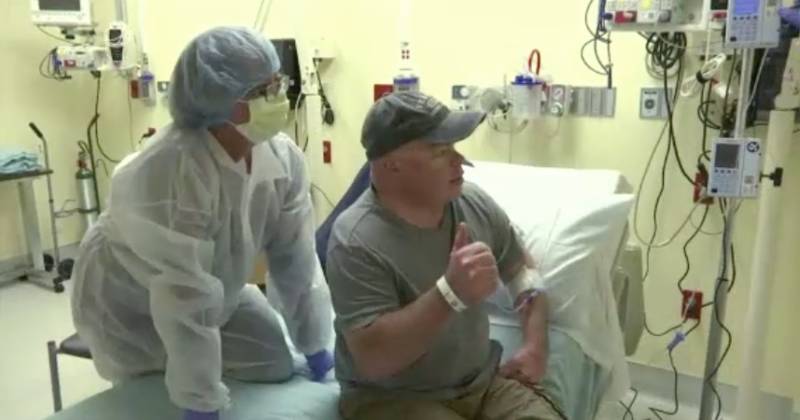
"caption": "Brian Madeux, 44, who has a metabolic disease called Hunter syndrome, has received billions of copies of a corrective gene and a genetic tool to cut his DNA in a precise spot.\n",
"description": null,
"title": "Madeux",
"credit": "AP video",
"status": "inherit",
"isLoading": false,
"fetchFailed": false
},
"futureofyou_436907": {
"type": "attachments",
"id": "futureofyou_436907",
"meta": {
"index": "attachments_1716263798",
"site": "futureofyou",
"id": "436907",
"found": true
},
"parent": 436409,
"imgSizes": {
"small": {
"file": "https://ww2.kqed.org/app/uploads/sites/13/2017/11/Aisen-Photo-520x347.jpg",
"width": 520,
"mimeType": "image/jpeg",
"height": 347
},
"twentyfourteen-full-width": {
"file": "https://ww2.kqed.org/app/uploads/sites/13/2017/11/Aisen-Photo-1038x576.jpg",
"width": 1038,
"mimeType": "image/jpeg",
"height": 576
},
"thumbnail": {
"file": "https://ww2.kqed.org/app/uploads/sites/13/2017/11/Aisen-Photo-160x107.jpg",
"width": 160,
"mimeType": "image/jpeg",
"height": 107
},
"fd-sm": {
"file": "https://ww2.kqed.org/app/uploads/sites/13/2017/11/Aisen-Photo-960x640.jpg",
"width": 960,
"mimeType": "image/jpeg",
"height": 640
},
"post-thumbnail": {
"file": "https://ww2.kqed.org/app/uploads/sites/13/2017/11/Aisen-Photo-672x372.jpg",
"width": 672,
"mimeType": "image/jpeg",
"height": 372
},
"xsmall": {
"file": "https://ww2.kqed.org/app/uploads/sites/13/2017/11/Aisen-Photo-375x250.jpg",
"width": 375,
"mimeType": "image/jpeg",
"height": 250
},
"kqedFullSize": {
"file": "https://ww2.kqed.org/app/uploads/sites/13/2017/11/Aisen-Photo-e1510179237902.jpg",
"width": 1920,
"height": 1280
},
"large": {
"file": "https://ww2.kqed.org/app/uploads/sites/13/2017/11/Aisen-Photo-1020x680.jpg",
"width": 1020,
"mimeType": "image/jpeg",
"height": 680
},
"xlarge": {
"file": "https://ww2.kqed.org/app/uploads/sites/13/2017/11/Aisen-Photo-1180x787.jpg",
"width": 1180,
"mimeType": "image/jpeg",
"height": 787
},
"guest-author-50": {
"file": "https://ww2.kqed.org/app/uploads/sites/13/2017/11/Aisen-Photo-50x50.jpg",
"width": 50,
"mimeType": "image/jpeg",
"height": 50
},
"guest-author-96": {
"file": "https://ww2.kqed.org/app/uploads/sites/13/2017/11/Aisen-Photo-96x96.jpg",
"width": 96,
"mimeType": "image/jpeg",
"height": 96
},
"medium": {
"file": "https://ww2.kqed.org/app/uploads/sites/13/2017/11/Aisen-Photo-800x533.jpg",
"width": 800,
"mimeType": "image/jpeg",
"height": 533
},
"guest-author-64": {
"file": "https://ww2.kqed.org/app/uploads/sites/13/2017/11/Aisen-Photo-64x64.jpg",
"width": 64,
"mimeType": "image/jpeg",
"height": 64
},
"guest-author-32": {
"file": "https://ww2.kqed.org/app/uploads/sites/13/2017/11/Aisen-Photo-32x32.jpg",
"width": 32,
"mimeType": "image/jpeg",
"height": 32
},
"fd-lrg": {
"file": "https://ww2.kqed.org/app/uploads/sites/13/2017/11/Aisen-Photo-1920x1280.jpg",
"width": 1920,
"mimeType": "image/jpeg",
"height": 1280
},
"fd-med": {
"file": "https://ww2.kqed.org/app/uploads/sites/13/2017/11/Aisen-Photo-1180x787.jpg",
"width": 1180,
"mimeType": "image/jpeg",
"height": 787
},
"full-width": {
"file": "https://ww2.kqed.org/app/uploads/sites/13/2017/11/Aisen-Photo-1920x1280.jpg",
"width": 1920,
"mimeType": "image/jpeg",
"height": 1280
},
"detail": {
"file": "https://ww2.kqed.org/app/uploads/sites/13/2017/11/Aisen-Photo-150x150.jpg",
"width": 150,
"mimeType": "image/jpeg",
"height": 150
},
"medium_large": {
"file": "https://ww2.kqed.org/app/uploads/sites/13/2017/11/Aisen-Photo-768x512.jpg",
"width": 768,
"mimeType": "image/jpeg",
"height": 512
},
"guest-author-128": {
"file": "https://ww2.kqed.org/app/uploads/sites/13/2017/11/Aisen-Photo-128x128.jpg",
"width": 128,
"mimeType": "image/jpeg",
"height": 128
},
"xxsmall": {
"file": "https://ww2.kqed.org/app/uploads/sites/13/2017/11/Aisen-Photo-240x160.jpg",
"width": 240,
"mimeType": "image/jpeg",
"height": 160
}
},
"publishDate": 1510178616,
"modified": 1510187108,
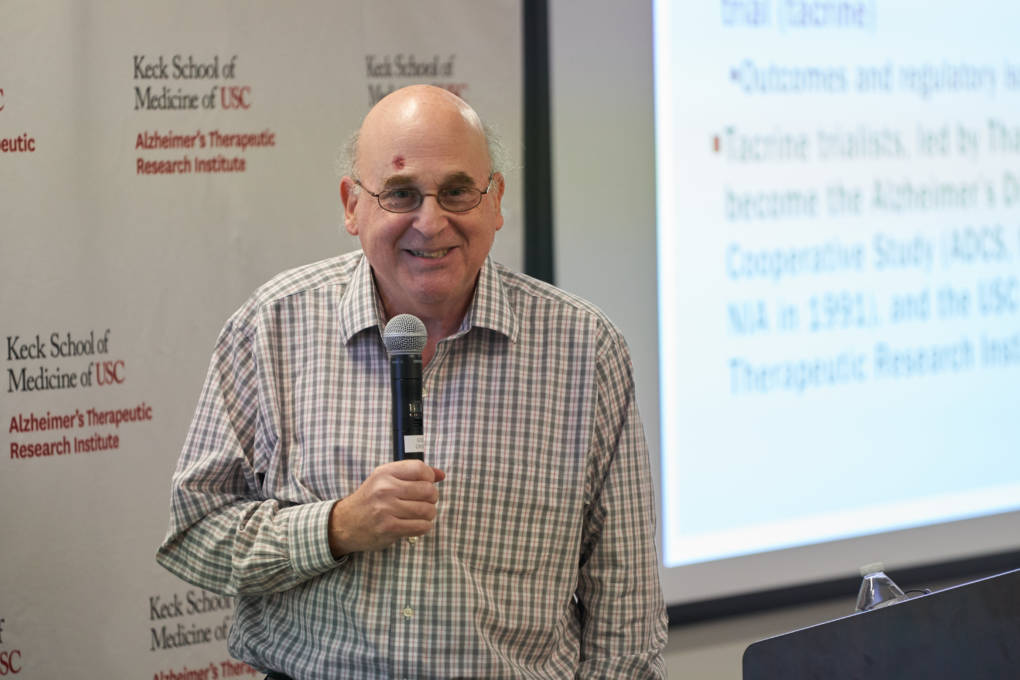
"caption": "Dr. Paul Aisen believes the so-called amyloid hypothesis of Alzheimer's disease is correct, but that the protein must be eradicated much earlier than previous clinical trials have tried.",
"description": null,
"title": "Aisen Photo",
"credit": "Keck School of Medicine of USC/John Riedy",
"status": "inherit",
"isLoading": false,
"fetchFailed": false
},
"futureofyou_436819": {
"type": "attachments",
"id": "futureofyou_436819",
"meta": {
"index": "attachments_1716263798",
"site": "futureofyou",
"id": "436819",
"found": true
},
"parent": 436058,
"imgSizes": {
"small": {
"file": "https://ww2.kqed.org/app/uploads/sites/13/2017/11/hepatitis-C-test-i-stock-e1509743583138-520x347.jpg",
"width": 520,
"mimeType": "image/jpeg",
"height": 347
},
"twentyfourteen-full-width": {
"file": "https://ww2.kqed.org/app/uploads/sites/13/2017/11/hepatitis-C-test-i-stock-e1509743583138-1038x576.jpg",
"width": 1038,
"mimeType": "image/jpeg",
"height": 576
},
"thumbnail": {
"file": "https://ww2.kqed.org/app/uploads/sites/13/2017/11/hepatitis-C-test-i-stock-e1509743583138-160x107.jpg",
"width": 160,
"mimeType": "image/jpeg",
"height": 107
},
"fd-sm": {
"file": "https://ww2.kqed.org/app/uploads/sites/13/2017/11/hepatitis-C-test-i-stock-e1509743583138-960x640.jpg",
"width": 960,
"mimeType": "image/jpeg",
"height": 640
},
"post-thumbnail": {
"file": "https://ww2.kqed.org/app/uploads/sites/13/2017/11/hepatitis-C-test-i-stock-e1509743583138-672x372.jpg",
"width": 672,
"mimeType": "image/jpeg",
"height": 372
},
"xsmall": {
"file": "https://ww2.kqed.org/app/uploads/sites/13/2017/11/hepatitis-C-test-i-stock-e1509743583138-375x250.jpg",
"width": 375,
"mimeType": "image/jpeg",
"height": 250
},
"kqedFullSize": {
"file": "https://ww2.kqed.org/app/uploads/sites/13/2017/11/hepatitis-C-test-i-stock-e1509743583138.jpg",
"width": 1920,
"height": 1280
},
"large": {
"file": "https://ww2.kqed.org/app/uploads/sites/13/2017/11/hepatitis-C-test-i-stock-e1509743583138-1020x680.jpg",
"width": 1020,
"mimeType": "image/jpeg",
"height": 680
},
"xlarge": {
"file": "https://ww2.kqed.org/app/uploads/sites/13/2017/11/hepatitis-C-test-i-stock-e1509743583138-1180x787.jpg",
"width": 1180,
"mimeType": "image/jpeg",
"height": 787
},
"guest-author-50": {
"file": "https://ww2.kqed.org/app/uploads/sites/13/2017/11/hepatitis-C-test-i-stock-e1509743583138-50x50.jpg",
"width": 50,
"mimeType": "image/jpeg",
"height": 50
},
"guest-author-96": {
"file": "https://ww2.kqed.org/app/uploads/sites/13/2017/11/hepatitis-C-test-i-stock-e1509743583138-96x96.jpg",
"width": 96,
"mimeType": "image/jpeg",
"height": 96
},
"medium": {
"file": "https://ww2.kqed.org/app/uploads/sites/13/2017/11/hepatitis-C-test-i-stock-e1509743583138-800x533.jpg",
"width": 800,
"mimeType": "image/jpeg",
"height": 533
},
"guest-author-64": {
"file": "https://ww2.kqed.org/app/uploads/sites/13/2017/11/hepatitis-C-test-i-stock-e1509743583138-64x64.jpg",
"width": 64,
"mimeType": "image/jpeg",
"height": 64
},
"guest-author-32": {
"file": "https://ww2.kqed.org/app/uploads/sites/13/2017/11/hepatitis-C-test-i-stock-e1509743583138-32x32.jpg",
"width": 32,
"mimeType": "image/jpeg",
"height": 32
},
"fd-lrg": {
"file": "https://ww2.kqed.org/app/uploads/sites/13/2017/11/hepatitis-C-test-i-stock-e1509743583138-1920x1280.jpg",
"width": 1920,
"mimeType": "image/jpeg",
"height": 1280
},
"fd-med": {
"file": "https://ww2.kqed.org/app/uploads/sites/13/2017/11/hepatitis-C-test-i-stock-e1509743583138-1180x787.jpg",
"width": 1180,
"mimeType": "image/jpeg",
"height": 787
},
"full-width": {
"file": "https://ww2.kqed.org/app/uploads/sites/13/2017/11/hepatitis-C-test-i-stock-e1509743583138-1920x1280.jpg",
"width": 1920,
"mimeType": "image/jpeg",
"height": 1280
},
"detail": {
"file": "https://ww2.kqed.org/app/uploads/sites/13/2017/11/hepatitis-C-test-i-stock-e1509743583138-150x150.jpg",
"width": 150,
"mimeType": "image/jpeg",
"height": 150
},
"medium_large": {
"file": "https://ww2.kqed.org/app/uploads/sites/13/2017/11/hepatitis-C-test-i-stock-e1509743583138-768x512.jpg",
"width": 768,
"mimeType": "image/jpeg",
"height": 512
},
"guest-author-128": {
"file": "https://ww2.kqed.org/app/uploads/sites/13/2017/11/hepatitis-C-test-i-stock-e1509743583138-128x128.jpg",
"width": 128,
"mimeType": "image/jpeg",
"height": 128
},
"xxsmall": {
"file": "https://ww2.kqed.org/app/uploads/sites/13/2017/11/hepatitis-C-test-i-stock-e1509743583138-240x160.jpg",
"width": 240,
"mimeType": "image/jpeg",
"height": 160
}
},
"publishDate": 1509743643,
"modified": 1509743669,
"caption": "Blood sample for hepatitis C virus testing.",
"description": null,
"title": "Hepatitis C testing",
"credit": "iStock",
"status": "inherit",
"isLoading": false,
"fetchFailed": false
},
"futureofyou_436721": {
"type": "attachments",
"id": "futureofyou_436721",
"meta": {
"index": "attachments_1716263798",
"site": "futureofyou",
"id": "436721",
"found": true
},
"parent": 436086,
"imgSizes": {
"small": {
"file": "https://ww2.kqed.org/app/uploads/sites/13/2017/10/PBSVRPain-520x295.jpg",
"width": 520,
"mimeType": "image/jpeg",
"height": 295
},
"thumbnail": {
"file": "https://ww2.kqed.org/app/uploads/sites/13/2017/10/PBSVRPain-160x91.jpg",
"width": 160,
"mimeType": "image/jpeg",
"height": 91
},
"post-thumbnail": {
"file": "https://ww2.kqed.org/app/uploads/sites/13/2017/10/PBSVRPain-658x372.jpg",
"width": 658,
"mimeType": "image/jpeg",
"height": 372
},
"xsmall": {
"file": "https://ww2.kqed.org/app/uploads/sites/13/2017/10/PBSVRPain-375x213.jpg",
"width": 375,
"mimeType": "image/jpeg",
"height": 213
},
"kqedFullSize": {
"file": "https://ww2.kqed.org/app/uploads/sites/13/2017/10/PBSVRPain.jpg",
"width": 658,
"height": 373
},
"guest-author-50": {
"file": "https://ww2.kqed.org/app/uploads/sites/13/2017/10/PBSVRPain-50x50.jpg",
"width": 50,
"mimeType": "image/jpeg",
"height": 50
},
"guest-author-96": {
"file": "https://ww2.kqed.org/app/uploads/sites/13/2017/10/PBSVRPain-96x96.jpg",
"width": 96,
"mimeType": "image/jpeg",
"height": 96
},
"guest-author-64": {
"file": "https://ww2.kqed.org/app/uploads/sites/13/2017/10/PBSVRPain-64x64.jpg",
"width": 64,
"mimeType": "image/jpeg",
"height": 64
},
"detail": {
"file": "https://ww2.kqed.org/app/uploads/sites/13/2017/10/PBSVRPain-150x150.jpg",
"width": 150,
"mimeType": "image/jpeg",
"height": 150
},
"guest-author-32": {
"file": "https://ww2.kqed.org/app/uploads/sites/13/2017/10/PBSVRPain-32x32.jpg",
"width": 32,
"mimeType": "image/jpeg",
"height": 32
},
"guest-author-128": {
"file": "https://ww2.kqed.org/app/uploads/sites/13/2017/10/PBSVRPain-128x128.jpg",
"width": 128,
"mimeType": "image/jpeg",
"height": 128
},
"xxsmall": {
"file": "https://ww2.kqed.org/app/uploads/sites/13/2017/10/PBSVRPain-240x136.jpg",
"width": 240,
"mimeType": "image/jpeg",
"height": 136
}
},
"publishDate": 1509405686,
"modified": 1509406300,
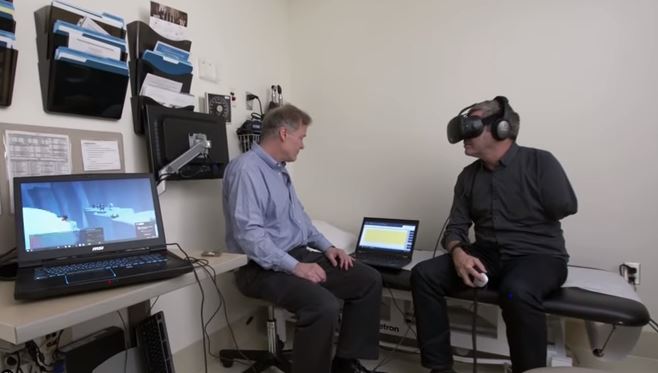
"caption": "PBS NewsHour correspondent Miles O'Brien using the 'SnowWorld' VR program to withstand pain from burning.",
"description": null,
"title": "PBSVRPain",
"credit": "PBS NewsHour",
"status": "inherit",
"isLoading": false,
"fetchFailed": false
},
"futureofyou_436440": {
"type": "attachments",
"id": "futureofyou_436440",
"meta": {
"index": "attachments_1716263798",
"site": "futureofyou",
"id": "436440",
"found": true
},
"parent": 436116,
"imgSizes": {
"small": {
"file": "https://ww2.kqed.org/app/uploads/sites/13/2017/10/Lucas-Linder-520x310.jpg",
"width": 520,
"mimeType": "image/jpeg",
"height": 310
},
"twentyfourteen-full-width": {
"file": "https://ww2.kqed.org/app/uploads/sites/13/2017/10/Lucas-Linder-1038x576.jpg",
"width": 1038,
"mimeType": "image/jpeg",
"height": 576
},
"thumbnail": {
"file": "https://ww2.kqed.org/app/uploads/sites/13/2017/10/Lucas-Linder-160x95.jpg",
"width": 160,
"mimeType": "image/jpeg",
"height": 95
},
"fd-sm": {
"file": "https://ww2.kqed.org/app/uploads/sites/13/2017/10/Lucas-Linder-960x571.jpg",
"width": 960,
"mimeType": "image/jpeg",
"height": 571
},
"post-thumbnail": {
"file": "https://ww2.kqed.org/app/uploads/sites/13/2017/10/Lucas-Linder-672x372.jpg",
"width": 672,
"mimeType": "image/jpeg",
"height": 372
},
"xsmall": {
"file": "https://ww2.kqed.org/app/uploads/sites/13/2017/10/Lucas-Linder-375x223.jpg",
"width": 375,
"mimeType": "image/jpeg",
"height": 223
},
"kqedFullSize": {
"file": "https://ww2.kqed.org/app/uploads/sites/13/2017/10/Lucas-Linder.jpg",
"width": 1040,
"height": 619
},
"large": {
"file": "https://ww2.kqed.org/app/uploads/sites/13/2017/10/Lucas-Linder-1020x607.jpg",
"width": 1020,
"mimeType": "image/jpeg",
"height": 607
},
"guest-author-50": {
"file": "https://ww2.kqed.org/app/uploads/sites/13/2017/10/Lucas-Linder-50x50.jpg",
"width": 50,
"mimeType": "image/jpeg",
"height": 50
},
"guest-author-96": {
"file": "https://ww2.kqed.org/app/uploads/sites/13/2017/10/Lucas-Linder-96x96.jpg",
"width": 96,
"mimeType": "image/jpeg",
"height": 96
},
"medium": {
"file": "https://ww2.kqed.org/app/uploads/sites/13/2017/10/Lucas-Linder-800x476.jpg",
"width": 800,
"mimeType": "image/jpeg",
"height": 476
},
"guest-author-64": {
"file": "https://ww2.kqed.org/app/uploads/sites/13/2017/10/Lucas-Linder-64x64.jpg",
"width": 64,
"mimeType": "image/jpeg",
"height": 64
},
"guest-author-32": {
"file": "https://ww2.kqed.org/app/uploads/sites/13/2017/10/Lucas-Linder-32x32.jpg",
"width": 32,
"mimeType": "image/jpeg",
"height": 32
},
"detail": {
"file": "https://ww2.kqed.org/app/uploads/sites/13/2017/10/Lucas-Linder-150x150.jpg",
"width": 150,
"mimeType": "image/jpeg",
"height": 150
},
"medium_large": {
"file": "https://ww2.kqed.org/app/uploads/sites/13/2017/10/Lucas-Linder-768x457.jpg",
"width": 768,
"mimeType": "image/jpeg",
"height": 457
},
"guest-author-128": {
"file": "https://ww2.kqed.org/app/uploads/sites/13/2017/10/Lucas-Linder-128x128.jpg",
"width": 128,
"mimeType": "image/jpeg",
"height": 128
},
"xxsmall": {
"file": "https://ww2.kqed.org/app/uploads/sites/13/2017/10/Lucas-Linder-240x143.jpg",
"width": 240,
"mimeType": "image/jpeg",
"height": 143
}
},
"publishDate": 1508952294,
"modified": 1508952525,
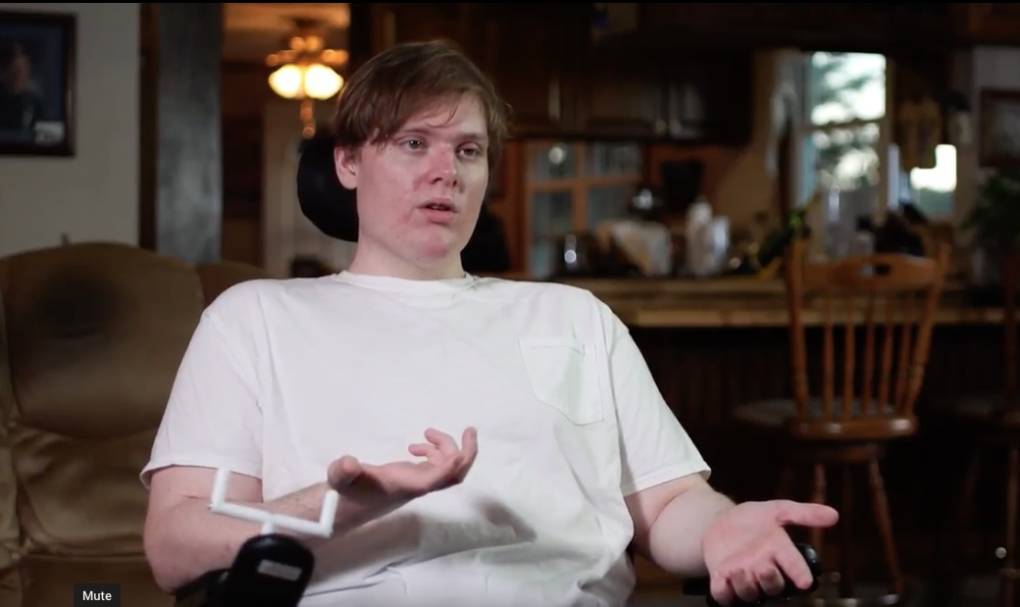
"caption": "Lucas Linder was in a car accident in 2016 that left him without the use of his hands or legs. After receiving 10 million stem cells as part of the SCiStar trial, he can throw a ball, type and use a soldering gun.",
"description": null,
"title": "Lucas Linder",
"credit": "Asterias Biotherapeutics",
"status": "inherit",
"isLoading": false,
"fetchFailed": false
},
"futureofyou_436216": {
"type": "attachments",
"id": "futureofyou_436216",
"meta": {
"index": "attachments_1716263798",
"site": "futureofyou",
"id": "436216",
"found": true
},
"parent": 435969,
"imgSizes": {
"small": {
"file": "https://ww2.kqed.org/app/uploads/sites/13/2017/10/ivf-520x347.jpg",
"width": 520,
"mimeType": "image/jpeg",
"height": 347
},
"twentyfourteen-full-width": {
"file": "https://ww2.kqed.org/app/uploads/sites/13/2017/10/ivf-1038x576.jpg",
"width": 1038,
"mimeType": "image/jpeg",
"height": 576
},
"thumbnail": {
"file": "https://ww2.kqed.org/app/uploads/sites/13/2017/10/ivf-160x107.jpg",
"width": 160,
"mimeType": "image/jpeg",
"height": 107
},
"fd-sm": {
"file": "https://ww2.kqed.org/app/uploads/sites/13/2017/10/ivf-960x640.jpg",
"width": 960,
"mimeType": "image/jpeg",
"height": 640
},
"post-thumbnail": {
"file": "https://ww2.kqed.org/app/uploads/sites/13/2017/10/ivf-672x372.jpg",
"width": 672,
"mimeType": "image/jpeg",
"height": 372
},
"xsmall": {
"file": "https://ww2.kqed.org/app/uploads/sites/13/2017/10/ivf-375x250.jpg",
"width": 375,
"mimeType": "image/jpeg",
"height": 250
},
"kqedFullSize": {
"file": "https://ww2.kqed.org/app/uploads/sites/13/2017/10/ivf-e1508276419107.jpg",
"width": 1920,
"height": 1280
},
"large": {
"file": "https://ww2.kqed.org/app/uploads/sites/13/2017/10/ivf-1020x680.jpg",
"width": 1020,
"mimeType": "image/jpeg",
"height": 680
},
"xlarge": {
"file": "https://ww2.kqed.org/app/uploads/sites/13/2017/10/ivf-1180x787.jpg",
"width": 1180,
"mimeType": "image/jpeg",
"height": 787
},
"guest-author-50": {
"file": "https://ww2.kqed.org/app/uploads/sites/13/2017/10/ivf-50x50.jpg",
"width": 50,
"mimeType": "image/jpeg",
"height": 50
},
"guest-author-96": {
"file": "https://ww2.kqed.org/app/uploads/sites/13/2017/10/ivf-96x96.jpg",
"width": 96,
"mimeType": "image/jpeg",
"height": 96
},
"medium": {
"file": "https://ww2.kqed.org/app/uploads/sites/13/2017/10/ivf-800x533.jpg",
"width": 800,
"mimeType": "image/jpeg",
"height": 533
},
"guest-author-64": {
"file": "https://ww2.kqed.org/app/uploads/sites/13/2017/10/ivf-64x64.jpg",
"width": 64,
"mimeType": "image/jpeg",
"height": 64
},
"guest-author-32": {
"file": "https://ww2.kqed.org/app/uploads/sites/13/2017/10/ivf-32x32.jpg",
"width": 32,
"mimeType": "image/jpeg",
"height": 32
},
"fd-lrg": {
"file": "https://ww2.kqed.org/app/uploads/sites/13/2017/10/ivf-1920x1280.jpg",
"width": 1920,
"mimeType": "image/jpeg",
"height": 1280
},
"fd-med": {
"file": "https://ww2.kqed.org/app/uploads/sites/13/2017/10/ivf-1180x787.jpg",
"width": 1180,
"mimeType": "image/jpeg",
"height": 787
},
"full-width": {
"file": "https://ww2.kqed.org/app/uploads/sites/13/2017/10/ivf-1920x1280.jpg",
"width": 1920,
"mimeType": "image/jpeg",
"height": 1280
},
"detail": {
"file": "https://ww2.kqed.org/app/uploads/sites/13/2017/10/ivf-150x150.jpg",
"width": 150,
"mimeType": "image/jpeg",
"height": 150
},
"medium_large": {
"file": "https://ww2.kqed.org/app/uploads/sites/13/2017/10/ivf-768x512.jpg",
"width": 768,
"mimeType": "image/jpeg",
"height": 512
},
"guest-author-128": {
"file": "https://ww2.kqed.org/app/uploads/sites/13/2017/10/ivf-128x128.jpg",
"width": 128,
"mimeType": "image/jpeg",
"height": 128
},
"xxsmall": {
"file": "https://ww2.kqed.org/app/uploads/sites/13/2017/10/ivf-240x160.jpg",
"width": 240,
"mimeType": "image/jpeg",
"height": 160
}
},
"publishDate": 1508276391,
"modified": 1508276452,
"caption": "Nurse assisting with egg retrieval procedure in theatre",
"description": null,
"title": "Nurse assisting with egg retrieval procedure",
"credit": "Image from monkeybusinessimages/iStock",
"status": "inherit",
"isLoading": false,
"fetchFailed": false
},
"futureofyou_436004": {
"type": "attachments",
"id": "futureofyou_436004",
"meta": {
"index": "attachments_1716263798",
"site": "futureofyou",
"id": "436004",
"found": true
},
"parent": 435986,
"imgSizes": {
"small": {
"file": "https://ww2.kqed.org/app/uploads/sites/13/2017/10/depression-520x347.jpg",
"width": 520,
"mimeType": "image/jpeg",
"height": 347
},
"twentyfourteen-full-width": {
"file": "https://ww2.kqed.org/app/uploads/sites/13/2017/10/depression-1038x576.jpg",
"width": 1038,
"mimeType": "image/jpeg",
"height": 576
},
"thumbnail": {
"file": "https://ww2.kqed.org/app/uploads/sites/13/2017/10/depression-160x107.jpg",
"width": 160,
"mimeType": "image/jpeg",
"height": 107
},
"fd-sm": {
"file": "https://ww2.kqed.org/app/uploads/sites/13/2017/10/depression-960x640.jpg",
"width": 960,
"mimeType": "image/jpeg",
"height": 640
},
"post-thumbnail": {
"file": "https://ww2.kqed.org/app/uploads/sites/13/2017/10/depression-672x372.jpg",
"width": 672,
"mimeType": "image/jpeg",
"height": 372
},
"xsmall": {
"file": "https://ww2.kqed.org/app/uploads/sites/13/2017/10/depression-375x250.jpg",
"width": 375,
"mimeType": "image/jpeg",
"height": 250
},
"kqedFullSize": {
"file": "https://ww2.kqed.org/app/uploads/sites/13/2017/10/depression-e1507755095260.jpg",
"width": 1920,
"height": 1280
},
"large": {
"file": "https://ww2.kqed.org/app/uploads/sites/13/2017/10/depression-1020x680.jpg",
"width": 1020,
"mimeType": "image/jpeg",
"height": 680
},
"xlarge": {
"file": "https://ww2.kqed.org/app/uploads/sites/13/2017/10/depression-1180x787.jpg",
"width": 1180,
"mimeType": "image/jpeg",
"height": 787
},
"guest-author-50": {
"file": "https://ww2.kqed.org/app/uploads/sites/13/2017/10/depression-50x50.jpg",
"width": 50,
"mimeType": "image/jpeg",
"height": 50
},
"guest-author-96": {
"file": "https://ww2.kqed.org/app/uploads/sites/13/2017/10/depression-96x96.jpg",
"width": 96,
"mimeType": "image/jpeg",
"height": 96
},
"medium": {
"file": "https://ww2.kqed.org/app/uploads/sites/13/2017/10/depression-800x533.jpg",
"width": 800,
"mimeType": "image/jpeg",
"height": 533
},
"guest-author-64": {
"file": "https://ww2.kqed.org/app/uploads/sites/13/2017/10/depression-64x64.jpg",
"width": 64,
"mimeType": "image/jpeg",
"height": 64
},
"guest-author-32": {
"file": "https://ww2.kqed.org/app/uploads/sites/13/2017/10/depression-32x32.jpg",
"width": 32,
"mimeType": "image/jpeg",
"height": 32
},
"fd-lrg": {
"file": "https://ww2.kqed.org/app/uploads/sites/13/2017/10/depression-1920x1280.jpg",
"width": 1920,
"mimeType": "image/jpeg",
"height": 1280
},
"fd-med": {
"file": "https://ww2.kqed.org/app/uploads/sites/13/2017/10/depression-1180x787.jpg",
"width": 1180,
"mimeType": "image/jpeg",
"height": 787
},
"full-width": {
"file": "https://ww2.kqed.org/app/uploads/sites/13/2017/10/depression-1920x1280.jpg",
"width": 1920,
"mimeType": "image/jpeg",
"height": 1280
},
"detail": {
"file": "https://ww2.kqed.org/app/uploads/sites/13/2017/10/depression-150x150.jpg",
"width": 150,
"mimeType": "image/jpeg",
"height": 150
},
"medium_large": {
"file": "https://ww2.kqed.org/app/uploads/sites/13/2017/10/depression-768x512.jpg",
"width": 768,
"mimeType": "image/jpeg",
"height": 512
},
"guest-author-128": {
"file": "https://ww2.kqed.org/app/uploads/sites/13/2017/10/depression-128x128.jpg",
"width": 128,
"mimeType": "image/jpeg",
"height": 128
},
"xxsmall": {
"file": "https://ww2.kqed.org/app/uploads/sites/13/2017/10/depression-240x160.jpg",
"width": 240,
"mimeType": "image/jpeg",
"height": 160
}
},
"publishDate": 1507754994,
"modified": 1520379926,
"caption": null,
"description": null,
"title": "My life is such a mess",
"credit": "KatarzynaBialasiewicz/iStock",
"status": "inherit",
"isLoading": false,
"fetchFailed": false
},
"futureofyou_435872": {
"type": "attachments",
"id": "futureofyou_435872",
"meta": {
"index": "attachments_1716263798",
"site": "futureofyou",
"id": "435872",
"found": true
},
"parent": 435869,
"imgSizes": {
"twentyfourteen-full-width": {
"file": "https://ww2.kqed.org/app/uploads/sites/13/2017/10/mouse_embryo_M-439x576.jpg",
"width": 439,
"mimeType": "image/jpeg",
"height": 576
},
"thumbnail": {
"file": "https://ww2.kqed.org/app/uploads/sites/13/2017/10/mouse_embryo_M-160x219.jpg",
"width": 160,
"mimeType": "image/jpeg",
"height": 219
},
"post-thumbnail": {
"file": "https://ww2.kqed.org/app/uploads/sites/13/2017/10/mouse_embryo_M-439x372.jpg",
"width": 439,
"mimeType": "image/jpeg",
"height": 372
},
"xsmall": {
"file": "https://ww2.kqed.org/app/uploads/sites/13/2017/10/mouse_embryo_M-375x513.jpg",
"width": 375,
"mimeType": "image/jpeg",
"height": 513
},
"kqedFullSize": {
"file": "https://ww2.kqed.org/app/uploads/sites/13/2017/10/mouse_embryo_M.jpg",
"width": 439,
"height": 601
},
"guest-author-50": {
"file": "https://ww2.kqed.org/app/uploads/sites/13/2017/10/mouse_embryo_M-50x50.jpg",
"width": 50,
"mimeType": "image/jpeg",
"height": 50
},
"guest-author-96": {
"file": "https://ww2.kqed.org/app/uploads/sites/13/2017/10/mouse_embryo_M-96x96.jpg",
"width": 96,
"mimeType": "image/jpeg",
"height": 96
},
"guest-author-64": {
"file": "https://ww2.kqed.org/app/uploads/sites/13/2017/10/mouse_embryo_M-64x64.jpg",
"width": 64,
"mimeType": "image/jpeg",
"height": 64
},
"detail": {
"file": "https://ww2.kqed.org/app/uploads/sites/13/2017/10/mouse_embryo_M-150x150.jpg",
"width": 150,
"mimeType": "image/jpeg",
"height": 150
},
"guest-author-32": {
"file": "https://ww2.kqed.org/app/uploads/sites/13/2017/10/mouse_embryo_M-32x32.jpg",
"width": 32,
"mimeType": "image/jpeg",
"height": 32
},
"guest-author-128": {
"file": "https://ww2.kqed.org/app/uploads/sites/13/2017/10/mouse_embryo_M-128x128.jpg",
"width": 128,
"mimeType": "image/jpeg",
"height": 128
},
"xxsmall": {
"file": "https://ww2.kqed.org/app/uploads/sites/13/2017/10/mouse_embryo_M-240x329.jpg",
"width": 240,
"mimeType": "image/jpeg",
"height": 329
}
},
"publishDate": 1507316279,
"modified": 1507316419,
"caption": "A mouse embryo just eight-and-a-half days old. ",
"description": null,
"title": "mouse_embryo_M",
"credit": "Kenneth Zaret, Fox Chase Cancer Center",
"status": "inherit",
"isLoading": false,
"fetchFailed": false
},
"futureofyou_243385": {
"type": "attachments",
"id": "futureofyou_243385",
"meta": {
"index": "attachments_1716263798",
"site": "futureofyou",
"id": "243385",
"found": true
},
"parent": 242687,
"imgSizes": {
"twentyfourteen-full-width": {
"file": "https://ww2.kqed.org/app/uploads/sites/13/2016/09/Neurosurgery-Stem-Cell-spine-patient-Kris-Boesen_04-1038x576.jpg",
"width": 1038,
"mimeType": "image/jpeg",
"height": 576
},
"thumbnail": {
"file": "https://ww2.kqed.org/app/uploads/sites/13/2016/09/Neurosurgery-Stem-Cell-spine-patient-Kris-Boesen_04-400x263.jpg",
"width": 400,
"mimeType": "image/jpeg",
"height": 263
},
"fd-sm": {
"file": "https://ww2.kqed.org/app/uploads/sites/13/2016/09/Neurosurgery-Stem-Cell-spine-patient-Kris-Boesen_04-960x631.jpg",
"width": 960,
"mimeType": "image/jpeg",
"height": 631
},
"post-thumbnail": {
"file": "https://ww2.kqed.org/app/uploads/sites/13/2016/09/Neurosurgery-Stem-Cell-spine-patient-Kris-Boesen_04-672x372.jpg",
"width": 672,
"mimeType": "image/jpeg",
"height": 372
},
"kqedFullSize": {
"file": "https://ww2.kqed.org/app/uploads/sites/13/2016/09/Neurosurgery-Stem-Cell-spine-patient-Kris-Boesen_04-e1507134542994.jpg",
"width": 1920,
"height": 1262
},
"large": {
"file": "https://ww2.kqed.org/app/uploads/sites/13/2016/09/Neurosurgery-Stem-Cell-spine-patient-Kris-Boesen_04-1180x775.jpg",
"width": 1180,
"mimeType": "image/jpeg",
"height": 775
},
"guest-author-50": {
"file": "https://ww2.kqed.org/app/uploads/sites/13/2016/09/Neurosurgery-Stem-Cell-spine-patient-Kris-Boesen_04-50x50.jpg",
"width": 50,
"mimeType": "image/jpeg",
"height": 50
},
"guest-author-96": {
"file": "https://ww2.kqed.org/app/uploads/sites/13/2016/09/Neurosurgery-Stem-Cell-spine-patient-Kris-Boesen_04-96x96.jpg",
"width": 96,
"mimeType": "image/jpeg",
"height": 96
},
"medium": {
"file": "https://ww2.kqed.org/app/uploads/sites/13/2016/09/Neurosurgery-Stem-Cell-spine-patient-Kris-Boesen_04-800x526.jpg",
"width": 800,
"mimeType": "image/jpeg",
"height": 526
},
"guest-author-64": {
"file": "https://ww2.kqed.org/app/uploads/sites/13/2016/09/Neurosurgery-Stem-Cell-spine-patient-Kris-Boesen_04-64x64.jpg",
"width": 64,
"mimeType": "image/jpeg",
"height": 64
},
"guest-author-32": {
"file": "https://ww2.kqed.org/app/uploads/sites/13/2016/09/Neurosurgery-Stem-Cell-spine-patient-Kris-Boesen_04-32x32.jpg",
"width": 32,
"mimeType": "image/jpeg",
"height": 32
},
"fd-lrg": {
"file": "https://ww2.kqed.org/app/uploads/sites/13/2016/09/Neurosurgery-Stem-Cell-spine-patient-Kris-Boesen_04-1920x1262.jpg",
"width": 1920,
"mimeType": "image/jpeg",
"height": 1262
},
"fd-med": {
"file": "https://ww2.kqed.org/app/uploads/sites/13/2016/09/Neurosurgery-Stem-Cell-spine-patient-Kris-Boesen_04-1180x775.jpg",
"width": 1180,
"mimeType": "image/jpeg",
"height": 775
},
"detail": {
"file": "https://ww2.kqed.org/app/uploads/sites/13/2016/09/Neurosurgery-Stem-Cell-spine-patient-Kris-Boesen_04-150x150.jpg",
"width": 150,
"mimeType": "image/jpeg",
"height": 150
},
"medium_large": {
"file": "https://ww2.kqed.org/app/uploads/sites/13/2016/09/Neurosurgery-Stem-Cell-spine-patient-Kris-Boesen_04-768x505.jpg",
"width": 768,
"mimeType": "image/jpeg",
"height": 505
},
"guest-author-128": {
"file": "https://ww2.kqed.org/app/uploads/sites/13/2016/09/Neurosurgery-Stem-Cell-spine-patient-Kris-Boesen_04-128x128.jpg",
"width": 128,
"mimeType": "image/jpeg",
"height": 128
}
},
"publishDate": 1473628370,
"modified": 1507134605,
"caption": "Kris Boesen, a spinal injury patient who received an injection of stem cells in a clinical trial, lifts weights last year.",
"description": "Lifting weights is part of Kris Boesen’s regular program of physical therapy. ",
"title": "Neurosurgery Stem Cell spine patient Kris Boesen_04",
"credit": "Greg Iger/Keck Medicine of USC)",
"status": "inherit",
"isLoading": false,
"fetchFailed": false
},
"futureofyou_435721": {
"type": "attachments",
"id": "futureofyou_435721",
"meta": {
"index": "attachments_1716263798",
"site": "futureofyou",
"id": "435721",
"found": true
},
"parent": 435719,
"imgSizes": {
"thumbnail": {
"file": "https://ww2.kqed.org/app/uploads/sites/13/2017/09/freestyle-libre-pro-reader-160x120.png",
"width": 160,
"mimeType": "image/png",
"height": 120
},
"post-thumbnail": {
"file": "https://ww2.kqed.org/app/uploads/sites/13/2017/09/freestyle-libre-pro-reader-509x372.png",
"width": 509,
"mimeType": "image/png",
"height": 372
},
"xsmall": {
"file": "https://ww2.kqed.org/app/uploads/sites/13/2017/09/freestyle-libre-pro-reader-375x281.png",
"width": 375,
"mimeType": "image/png",
"height": 281
},
"kqedFullSize": {
"file": "https://ww2.kqed.org/app/uploads/sites/13/2017/09/freestyle-libre-pro-reader.png",
"width": 509,
"height": 382
},
"guest-author-50": {
"file": "https://ww2.kqed.org/app/uploads/sites/13/2017/09/freestyle-libre-pro-reader-50x50.png",
"width": 50,
"mimeType": "image/png",
"height": 50
},
"guest-author-96": {
"file": "https://ww2.kqed.org/app/uploads/sites/13/2017/09/freestyle-libre-pro-reader-96x96.png",
"width": 96,
"mimeType": "image/png",
"height": 96
},
"guest-author-64": {
"file": "https://ww2.kqed.org/app/uploads/sites/13/2017/09/freestyle-libre-pro-reader-64x64.png",
"width": 64,
"mimeType": "image/png",
"height": 64
},
"detail": {
"file": "https://ww2.kqed.org/app/uploads/sites/13/2017/09/freestyle-libre-pro-reader-150x150.png",
"width": 150,
"mimeType": "image/png",
"height": 150
},
"guest-author-32": {
"file": "https://ww2.kqed.org/app/uploads/sites/13/2017/09/freestyle-libre-pro-reader-32x32.png",
"width": 32,
"mimeType": "image/png",
"height": 32
},
"guest-author-128": {
"file": "https://ww2.kqed.org/app/uploads/sites/13/2017/09/freestyle-libre-pro-reader-128x128.png",
"width": 128,
"mimeType": "image/png",
"height": 128
},
"xxsmall": {
"file": "https://ww2.kqed.org/app/uploads/sites/13/2017/09/freestyle-libre-pro-reader-240x180.png",
"width": 240,
"mimeType": "image/png",
"height": 180
}
},
"publishDate": 1506702624,
"modified": 1506702694,
"caption": null,
"description": null,
"title": "freestyle-libre-pro-reader",
"credit": "Image from Abbott",
"status": "inherit",
"isLoading": false,
"fetchFailed": false
},
"futureofyou_435681": {
"type": "attachments",
"id": "futureofyou_435681",
"meta": {
"index": "attachments_1716263798",
"site": "futureofyou",
"id": "435681",
"found": true
},
"parent": 435658,
"imgSizes": {
"small": {
"file": "https://ww2.kqed.org/app/uploads/sites/13/2017/09/Fauci-520x347.jpg",
"width": 520,
"mimeType": "image/jpeg",
"height": 347
},
"twentyfourteen-full-width": {
"file": "https://ww2.kqed.org/app/uploads/sites/13/2017/09/Fauci-1038x576.jpg",
"width": 1038,
"mimeType": "image/jpeg",
"height": 576
},
"thumbnail": {
"file": "https://ww2.kqed.org/app/uploads/sites/13/2017/09/Fauci-160x107.jpg",
"width": 160,
"mimeType": "image/jpeg",
"height": 107
},
"fd-sm": {
"file": "https://ww2.kqed.org/app/uploads/sites/13/2017/09/Fauci-960x641.jpg",
"width": 960,
"mimeType": "image/jpeg",
"height": 641
},
"post-thumbnail": {
"file": "https://ww2.kqed.org/app/uploads/sites/13/2017/09/Fauci-672x372.jpg",
"width": 672,
"mimeType": "image/jpeg",
"height": 372
},
"xsmall": {
"file": "https://ww2.kqed.org/app/uploads/sites/13/2017/09/Fauci-375x250.jpg",
"width": 375,
"mimeType": "image/jpeg",
"height": 250
},
"kqedFullSize": {
"file": "https://ww2.kqed.org/app/uploads/sites/13/2017/09/Fauci.jpg",
"width": 1279,
"height": 854
},
"large": {
"file": "https://ww2.kqed.org/app/uploads/sites/13/2017/09/Fauci-1020x681.jpg",
"width": 1020,
"mimeType": "image/jpeg",
"height": 681
},
"xlarge": {
"file": "https://ww2.kqed.org/app/uploads/sites/13/2017/09/Fauci-1180x788.jpg",
"width": 1180,
"mimeType": "image/jpeg",
"height": 788
},
"guest-author-50": {
"file": "https://ww2.kqed.org/app/uploads/sites/13/2017/09/Fauci-50x50.jpg",
"width": 50,
"mimeType": "image/jpeg",
"height": 50
},
"guest-author-96": {
"file": "https://ww2.kqed.org/app/uploads/sites/13/2017/09/Fauci-96x96.jpg",
"width": 96,
"mimeType": "image/jpeg",
"height": 96
},
"medium": {
"file": "https://ww2.kqed.org/app/uploads/sites/13/2017/09/Fauci-800x534.jpg",
"width": 800,
"mimeType": "image/jpeg",
"height": 534
},
"guest-author-64": {
"file": "https://ww2.kqed.org/app/uploads/sites/13/2017/09/Fauci-64x64.jpg",
"width": 64,
"mimeType": "image/jpeg",
"height": 64
},
"guest-author-32": {
"file": "https://ww2.kqed.org/app/uploads/sites/13/2017/09/Fauci-32x32.jpg",
"width": 32,
"mimeType": "image/jpeg",
"height": 32
},
"fd-med": {
"file": "https://ww2.kqed.org/app/uploads/sites/13/2017/09/Fauci-1180x788.jpg",
"width": 1180,
"mimeType": "image/jpeg",
"height": 788
},
"detail": {
"file": "https://ww2.kqed.org/app/uploads/sites/13/2017/09/Fauci-150x150.jpg",
"width": 150,
"mimeType": "image/jpeg",
"height": 150
},
"medium_large": {
"file": "https://ww2.kqed.org/app/uploads/sites/13/2017/09/Fauci-768x513.jpg",
"width": 768,
"mimeType": "image/jpeg",
"height": 513
},
"guest-author-128": {
"file": "https://ww2.kqed.org/app/uploads/sites/13/2017/09/Fauci-128x128.jpg",
"width": 128,
"mimeType": "image/jpeg",
"height": 128
},
"xxsmall": {
"file": "https://ww2.kqed.org/app/uploads/sites/13/2017/09/Fauci-240x160.jpg",
"width": 240,
"mimeType": "image/jpeg",
"height": 160
}
},
"publishDate": 1506617430,
"modified": 1506619858,
"caption": "Dr. Anthony Fauci, director of the U.S. National Institute of Allergy and Infectious Diseases, at the 9th IAS Conference on HIV Science in Paris, in July. ",
"description": null,
"title": "Fauci",
"credit": "Marcus Rose/International AIDS Society",
"status": "inherit",
"isLoading": false,
"fetchFailed": false
},
"futureofyou_435306": {
"type": "attachments",
"id": "futureofyou_435306",
"meta": {
"index": "attachments_1716263798",
"site": "futureofyou",
"id": "435306",
"found": true
},
"parent": 435304,
"imgSizes": {
"small": {
"file": "https://ww2.kqed.org/app/uploads/sites/13/2017/09/iStock-613147888-520x347.jpg",
"width": 520,
"mimeType": "image/jpeg",
"height": 347
},
"twentyfourteen-full-width": {
"file": "https://ww2.kqed.org/app/uploads/sites/13/2017/09/iStock-613147888-1038x576.jpg",
"width": 1038,
"mimeType": "image/jpeg",
"height": 576
},
"thumbnail": {
"file": "https://ww2.kqed.org/app/uploads/sites/13/2017/09/iStock-613147888-160x107.jpg",
"width": 160,
"mimeType": "image/jpeg",
"height": 107
},
"fd-sm": {
"file": "https://ww2.kqed.org/app/uploads/sites/13/2017/09/iStock-613147888-960x640.jpg",
"width": 960,
"mimeType": "image/jpeg",
"height": 640
},
"post-thumbnail": {
"file": "https://ww2.kqed.org/app/uploads/sites/13/2017/09/iStock-613147888-672x372.jpg",
"width": 672,
"mimeType": "image/jpeg",
"height": 372
},
"xsmall": {
"file": "https://ww2.kqed.org/app/uploads/sites/13/2017/09/iStock-613147888-375x250.jpg",
"width": 375,
"mimeType": "image/jpeg",
"height": 250
},
"kqedFullSize": {
"file": "https://ww2.kqed.org/app/uploads/sites/13/2017/09/iStock-613147888.jpg",
"width": 2121,
"height": 1414
},
"large": {
"file": "https://ww2.kqed.org/app/uploads/sites/13/2017/09/iStock-613147888-1020x680.jpg",
"width": 1020,
"mimeType": "image/jpeg",
"height": 680
},
"xlarge": {
"file": "https://ww2.kqed.org/app/uploads/sites/13/2017/09/iStock-613147888-1180x787.jpg",
"width": 1180,
"mimeType": "image/jpeg",
"height": 787
},
"guest-author-50": {
"file": "https://ww2.kqed.org/app/uploads/sites/13/2017/09/iStock-613147888-50x50.jpg",
"width": 50,
"mimeType": "image/jpeg",
"height": 50
},
"guest-author-96": {
"file": "https://ww2.kqed.org/app/uploads/sites/13/2017/09/iStock-613147888-96x96.jpg",
"width": 96,
"mimeType": "image/jpeg",
"height": 96
},
"medium": {
"file": "https://ww2.kqed.org/app/uploads/sites/13/2017/09/iStock-613147888-800x533.jpg",
"width": 800,
"mimeType": "image/jpeg",
"height": 533
},
"guest-author-64": {
"file": "https://ww2.kqed.org/app/uploads/sites/13/2017/09/iStock-613147888-64x64.jpg",
"width": 64,
"mimeType": "image/jpeg",
"height": 64
},
"guest-author-32": {
"file": "https://ww2.kqed.org/app/uploads/sites/13/2017/09/iStock-613147888-32x32.jpg",
"width": 32,
"mimeType": "image/jpeg",
"height": 32
},
"fd-lrg": {
"file": "https://ww2.kqed.org/app/uploads/sites/13/2017/09/iStock-613147888-1920x1280.jpg",
"width": 1920,
"mimeType": "image/jpeg",
"height": 1280
},
"fd-med": {
"file": "https://ww2.kqed.org/app/uploads/sites/13/2017/09/iStock-613147888-1180x787.jpg",
"width": 1180,
"mimeType": "image/jpeg",
"height": 787
},
"full-width": {
"file": "https://ww2.kqed.org/app/uploads/sites/13/2017/09/iStock-613147888-1920x1280.jpg",
"width": 1920,
"mimeType": "image/jpeg",
"height": 1280
},
"detail": {
"file": "https://ww2.kqed.org/app/uploads/sites/13/2017/09/iStock-613147888-150x150.jpg",
"width": 150,
"mimeType": "image/jpeg",
"height": 150
},
"medium_large": {
"file": "https://ww2.kqed.org/app/uploads/sites/13/2017/09/iStock-613147888-768x512.jpg",
"width": 768,
"mimeType": "image/jpeg",
"height": 512
},
"guest-author-128": {
"file": "https://ww2.kqed.org/app/uploads/sites/13/2017/09/iStock-613147888-128x128.jpg",
"width": 128,
"mimeType": "image/jpeg",
"height": 128
},
"xxsmall": {
"file": "https://ww2.kqed.org/app/uploads/sites/13/2017/09/iStock-613147888-240x160.jpg",
"width": 240,
"mimeType": "image/jpeg",
"height": 160
}
},
"publishDate": 1504648675,
"modified": 1504648740,
"caption": null,
"description": "Hands of a technician prepping the patient to draw blood",
"title": "Technician prepping a patient for a blood test",
"credit": "wingedwolf/iStockphoto",
"status": "inherit",
"isLoading": false,
"fetchFailed": false
}
},
"audioPlayerReducer": {
"postId": "stream_live",
"isPaused": true,
"isPlaying": false,
"pfsActive": false,
"pledgeModalIsOpen": true,
"playerDrawerIsOpen": false,
"liveAudioPlayStartedAt": 0,
"liveAudioPlayContext": ""
},
"authorsReducer": {
"byline_futureofyou_437054": {
"type": "authors",
"id": "byline_futureofyou_437054",
"meta": {
"override": true
},
"slug": "byline_futureofyou_437054",
"name": "Marilynn Marchione\u003cbr />Associated Press",
"isLoading": false
},
"byline_futureofyou_436409": {
"type": "authors",
"id": "byline_futureofyou_436409",
"meta": {
"override": true
},
"slug": "byline_futureofyou_436409",
"name": "Li Miao Lovett",
"isLoading": false
},
"byline_futureofyou_436058": {
"type": "authors",
"id": "byline_futureofyou_436058",
"meta": {
"override": true
},
"slug": "byline_futureofyou_436058",
"name": "Michelle Andrews\u003cbr />Kaiser Health News",
"isLoading": false
},
"byline_futureofyou_436086": {
"type": "authors",
"id": "byline_futureofyou_436086",
"meta": {
"override": true
},
"slug": "byline_futureofyou_436086",
"name": "PBS NewsHour",
"isLoading": false
},
"byline_futureofyou_436116": {
"type": "authors",
"id": "byline_futureofyou_436116",
"meta": {
"override": true
},
"slug": "byline_futureofyou_436116",
"name": "David Gorn\u003cbr />Future of You",
"isLoading": false
},
"byline_futureofyou_435969": {
"type": "authors",
"id": "byline_futureofyou_435969",
"meta": {
"override": true
},
"slug": "byline_futureofyou_435969",
"name": "Megan Thielking\u003cbr />\u003ca href=\"https://www.statnews.com/\">STAT\u003c/a>",
"isLoading": false
},
"byline_futureofyou_435986": {
"type": "authors",
"id": "byline_futureofyou_435986",
"meta": {
"override": true
},
"slug": "byline_futureofyou_435986",
"name": "Dana Smith\u003cbr />Future of You",
"isLoading": false
},
"byline_futureofyou_435869": {
"type": "authors",
"id": "byline_futureofyou_435869",
"meta": {
"override": true
},
"slug": "byline_futureofyou_435869",
"name": "Barry Starr\u003cbr />Future of You",
"isLoading": false
},
"byline_futureofyou_435766": {
"type": "authors",
"id": "byline_futureofyou_435766",
"meta": {
"override": true
},
"slug": "byline_futureofyou_435766",
"name": "David Gorn\u003cbr />Future of You",
"isLoading": false
},
"byline_futureofyou_435719": {
"type": "authors",
"id": "byline_futureofyou_435719",
"meta": {
"override": true
},
"slug": "byline_futureofyou_435719",
"name": "Linda A. Johnson\u003cbr />Associated Press",
"isLoading": false
},
"byline_futureofyou_435658": {
"type": "authors",
"id": "byline_futureofyou_435658",
"meta": {
"override": true
},
"slug": "byline_futureofyou_435658",
"name": "Anne-christine d'Adesky\u003cbr />Future of You",
"isLoading": false
},
"byline_futureofyou_435304": {
"type": "authors",
"id": "byline_futureofyou_435304",
"meta": {
"override": true
},
"slug": "byline_futureofyou_435304",
"name": "Sharon Begley\u003cbr />\u003ca href=\"https://www.statnews.com/2017/09/04/prostate-cancer-analysis/\">STAT\u003c/a>",
"isLoading": false
}
},
"pagesReducer": {
"futureofyou_category_hopehype": {
"type": "terms",
"id": "futureofyou_1062",
"meta": {
"index": "terms_1716263798",
"site": "futureofyou",
"id": "1062",
"score": 13.896381
},
"featImg": null,
"name": "Hope/Hype",
"description": null,
"taxonomy": "category",
"headData": {
"twImgId": null,
"twTitle": null,
"ogTitle": null,
"ogImgId": null,
"twDescription": null,
"description": null,
"title": "Hope/Hype Archives | KQED Arts",
"ogDescription": null
},
"ttid": 1062,
"slug": "hopehype",
"isLoading": false,
"title": "Hope/Hype",
"pageMeta": {
"site": "futureofyou",
"WpPageTemplate": "page-topic-editorial",
"currentPage": 8
},
"blocks": [
{
"blockName": "kqed/post-list",
"attrs": {
"layout": "cardArticle2",
"query": "posts/futureofyou?category=hopehype",
"seeMore": false,
"paginated": true,
"page": 8
}
},
{
"blockName": "kqed/ad"
}
]
}
},
"pfsSessionReducer": {},
"postsReducer": {
"stream_live": {
"type": "live",
"id": "stream_live",
"audioUrl": "https://streams.kqed.org/kqedradio",
"title": "Live Stream",
"excerpt": "Live Stream information currently unavailable.",
"link": "/radio",
"featImg": "",
"label": {
"name": "KQED Live",
"link": "/"
}
},
"stream_kqedNewscast": {
"type": "posts",
"id": "stream_kqedNewscast",
"audioUrl": "https://www.kqed.org/.stream/anon/radio/RDnews/newscast.mp3?_=1",
"title": "KQED Newscast",
"featImg": "",
"label": {
"name": "88.5 FM",
"link": "/"
}
},
"futureofyou_437054": {
"type": "posts",
"id": "futureofyou_437054",
"meta": {
"index": "posts_1716263798",
"site": "futureofyou",
"id": "437054",
"score": null,
"sort": [
1510765041000
]
},
"parent": 0,
"labelTerm": {},
"blocks": [],
"publishDate": 1510765041,
"format": "aside",
"disqusTitle": "In First, Scientists Try to Cure Man's Disease by Editing DNA Inside Body",
"title": "In First, Scientists Try to Cure Man's Disease by Editing DNA Inside Body",
"headTitle": "KQED Future of You | KQED Science",
"content": "\u003cp>https://www.youtube.com/watch?v=W-gUUB0ofVA&ab_channel=AssociatedPress\u003c/p>\n\u003cp>Scientists for the first time have tried editing a gene inside the body in a bold attempt to permanently change a person's DNA to cure a disease.\u003c/p>\n\u003cp>The experiment was done Monday in California on 44-year-old Brian Madeux. Through an IV, he received billions of copies of a corrective gene and a genetic tool to cut his DNA in a precise spot.\u003c/p>\n\u003cp>\"It's kind of humbling\" to be the first to test this, said Madeux, who has a metabolic disease called Hunter syndrome. \"I'm willing to take that risk. Hopefully it will help me and other people.\"\u003c/p>\n\u003cp>Signs of whether it's working may come in a month; tests will show for sure in three months.\u003c/p>\n\u003caside class=\"pullquote alignright\">'You’re really toying with Mother Nature.'\u003ccite>Dr. Eric Topol, Scripps Translational Science Institute\u003c/cite>\u003c/aside>\n\u003cp>If it's successful, it could give a major boost to the fledgling field of gene therapy . Scientists have edited people's genes before, altering cells in the lab that are then returned to patients. There also are gene therapies that don't involve editing DNA.\u003c/p>\n\u003cp>[ad fullwidth]\u003c/p>\n\u003cp>But these methods can only be used for a few types of diseases. Some give results that may not last. Some others supply a new gene like a spare part, but can't control where it inserts in the DNA, possibly causing a new problem like cancer.\u003c/p>\n\u003cp>This time, the gene tinkering is happening in a precise way inside the body. It's like sending a mini surgeon along to place the new gene in exactly the right location.\u003c/p>\n\u003cp>\"We cut your DNA, open it up, insert a gene, stitch it back up. Invisible mending,\" said Dr. Sandy Macrae, president of Sangamo Therapeutics, the California company testing this for two metabolic diseases and hemophilia. \"It becomes part of your DNA and is there for the rest of your life.\"\u003c/p>\n\u003cp>That also means there's no going back, no way to erase any mistakes the editing might cause.\u003c/p>\n\u003caside class=\"aligncenter\">\u003cem>Also from KQED Future of You:\u003c/em>\n\u003cul>\n\u003cli>\u003ca href=\"https://ww2.kqed.org/futureofyou/2017/10/31/the-crippling-ransomware-attack-on-kqed-the-inside-story/\" target=\"_blank\" rel=\"noopener\">The Crippling Ransomware Attack on an NPR Member Station\u003c/a>\u003c/li>\n\u003cli>\u003ca href=\"https://ww2.kqed.org/futureofyou/2017/11/13/the-difference-between-a-bully-and-a-true-alpha-male/\" target=\"_blank\" rel=\"noopener\">The Difference Between a Bully and a True Alpha Male\u003c/a>\u003c/li>\n\u003c/ul>\n\u003c/aside>\n\u003cp>\"You're really toying with Mother Nature\" and the risks can't be fully known, but the studies should move forward because these are incurable diseases, said one independent expert, Dr. Eric Topol of the Scripps Translational Science Institute in San Diego.\u003c/p>\n\u003cp>Protections are in place to help ensure safety, and animal tests were very encouraging, said Dr. Howard Kaufman, a Boston scientist on the National Institutes of Health panel that approved the studies.\u003c/p>\n\u003cp>He said gene editing's promise is too great to ignore. \"So far there's been no evidence that this is going to be dangerous,\" he said. \"Now is not the time to get scared.\"\u003c/p>\n\u003cp>\u003cstrong>Woe From Head to Toe\u003c/strong>\u003c/p>\n\u003cp>Fewer than 10,000 people worldwide have these metabolic diseases, partly because many die very young. Those with Madeux's condition, Hunter syndrome, lack a gene that makes an enzyme that breaks down certain carbohydrates. These build up in cells and cause havoc throughout the body.\u003c/p>\n\u003cp>Patients may have frequent colds and ear infections, distorted facial features, hearing loss, heart problems, breathing trouble, skin and eye problems, bone and joint flaws, bowel issues and brain and thinking problems.\u003c/p>\n\u003cp>\"Many are in wheelchairs ... dependent on their parents until they die,\" said Dr. Chester Whitley, a University of Minnesota genetics expert who plans to enroll patients in the studies.\u003c/p>\n\u003cp>Weekly IV doses of the missing enzyme can ease some symptoms, but cost $100,000 to $400,000 a year and don't prevent brain damage.\u003c/p>\n\u003cp>Madeux, who now lives near Phoenix, is engaged to a nurse, Marcie Humphrey. He met her 15 years ago in a study that tested this enzyme therapy at UCSF Benioff Children's Hospital Oakland, where the gene editing experiment took place.\u003c/p>\n\u003cp>He has had 26 operations for hernias, bunions, bones pinching his spinal column, and ear, eye and gall bladder problems.\u003c/p>\n\u003cp>\"It seems like I had a surgery every other year of my life\" and many procedures in between, he said. Last year he nearly died from a bronchitis and pneumonia attack. The disease had warped his airway, and \"I was drowning in my secretions, I couldn't cough it out.\"\u003cbr>\nMadeux has a chef's degree and was part owner of two restaurants in Utah, cooking for U.S. ski teams and celebrities, but now can't work in a kitchen or ride horses as he used to.\u003c/p>\n\u003cp>Gene editing won't fix damage he's already suffered, but he hopes it will stop the need for weekly enzyme treatments.\u003c/p>\n\u003cp>Initial studies will involve up to 30 adults to test safety, but the ultimate goal is to treat children very young, before much damage occurs.\u003c/p>\n\u003cp>\u003cstrong>How It Works\u003c/strong>\u003c/p>\n\u003cp>A gene-editing tool called CRISPR has gotten a lot of recent attention, but this study used a different one called zinc finger nucleases. They're like molecular scissors that seek and cut a specific piece of DNA.\u003c/p>\n\u003cp>The therapy has three parts: The new gene and two zinc finger proteins. DNA instructions for each part are placed in a virus that's been altered to not cause infection but to ferry them into cells. Billions of copies of these are given through a vein.\u003c/p>\n\u003cp>They travel to the liver, where cells use the instructions to make the zinc fingers and prepare the corrective gene. The fingers cut the DNA, allowing the new gene to slip in. The new gene then directs the cell to make the enzyme the patient lacked.\u003c/p>\n\u003cp>Only 1 percent of liver cells would have to be corrected to successfully treat the disease, said Madeux's physician and study leader, Dr. Paul Harmatz at the Oakland hospital.\u003c/p>\n\u003cp>\"How bulletproof is the technology? We're just learning,\" but safety tests have been very good, said Dr. Carl June, a University of Pennsylvania scientist who has done other gene therapy work but was not involved in this study.\u003c/p>\n\u003cp>\u003cstrong>What Could Go Wrong\u003c/strong>\u003c/p>\n\u003cp>Safety issues plagued some earlier gene therapies. One worry is that the virus might provoke an immune system attack. In 1999, 18-year-old Jesse Gelsinger died in a gene therapy study from that problem, but the new studies use a different virus that's proved much safer in other experiments.\u003c/p>\n\u003cp>Another worry is that inserting a new gene might have unforeseen effects on other genes. That happened years ago, when researchers used gene therapy to cure some cases of the immune system disorder called \"bubble boy\" disease. Several patients later developed leukemia because the new gene inserted into a place in the native DNA where it unintentionally activated a cancer gene.\u003c/p>\n\u003cp>\"When you stick a chunk of DNA in randomly, sometimes it works well, sometimes it does nothing and sometimes it causes harm,\" said Hank Greely, a Stanford University bioethicist. \"The advantage with gene editing is you can put the gene in where you want it.\"\u003c/p>\n\u003cp>Finally, some fear that the virus could get into other places like the heart, or eggs and sperm where it could affect future generations. Doctors say built-in genetic safeguards prevent the therapy from working anywhere but the liver, like a seed that only germinates in certain conditions.\u003c/p>\n\u003cp>This experiment is not connected to other, more controversial work being debated to try to edit genes in human embryos to prevent diseases before birth — changes that would be passed down from generation to generation.\u003c/p>\n\u003cp>\u003cstrong>Making History\u003c/strong>\u003c/p>\n\u003cp>Madeux's treatment was to have happened a week earlier, but a small glitch prevented it.\u003c/p>\n\u003cp>He and his fiancee returned to Arizona, but nearly didn't make it back to Oakland in time for the second attempt because their Sunday flight was canceled and no others were available until Monday, after the treatment was to take place.\u003c/p>\n\u003cp>Scrambling, they finally got a flight to Monterey, California, and a car service took them just over 100 miles north to Oakland.\u003c/p>\n\u003cp>On Monday he had the three-hour infusion, surrounded by half a dozen doctors, nurses and others wearing head-to-toe protective garb to lower the risk of giving him any germs. His doctor, Harmatz, spent the night at the hospital to help ensure his patient stayed well.\u003c/p>\n\u003cp>[ad floatright]\u003c/p>\n\u003cp>\"I'm nervous and excited,\" Madeux said as he prepared to leave the hospital. \"I've been waiting for this my whole life, something that can potentially cure me.\"\u003c/p>\n\n",
"disqusIdentifier": "437054 https://ww2.kqed.org/futureofyou/?p=437054",
"disqusUrl": "https://ww2.kqed.org/futureofyou/2017/11/15/first-attempt-to-edit-gene-inside-body-in-hopes-of-curing-mans-disease/",
"stats": {
"hasVideo": true,
"hasChartOrMap": false,
"hasAudio": false,
"hasPolis": false,
"wordCount": 1419,
"hasGoogleForm": false,
"hasGallery": false,
"hasHearkenModule": false,
"iframeSrcs": [],
"paragraphCount": 42
},
"modified": 1510789638,
"excerpt": "In Oakland, Monday, 44-year-old Brian Madeux received billions of copies of a corrective gene, plus a genetic tool to cut his DNA in a precise spot.",
"headData": {
"twImgId": "",
"twTitle": "",
"ogTitle": "",
"ogImgId": "",
"twDescription": "",
"description": "In Oakland, Monday, 44-year-old Brian Madeux received billions of copies of a corrective gene, plus a genetic tool to cut his DNA in a precise spot.",
"title": "In First, Scientists Try to Cure Man's Disease by Editing DNA Inside Body | KQED",
"ogDescription": "",
"schema": {
"@context": "https://schema.org",
"@type": "Article",
"headline": "In First, Scientists Try to Cure Man's Disease by Editing DNA Inside Body",
"datePublished": "2017-11-15T08:57:21-08:00",
"dateModified": "2017-11-15T15:47:18-08:00",
"image": "https://cdn.kqed.org/wp-content/uploads/2020/02/KQED-OG-Image@1x.png"
}
},
"guestAuthors": [],
"slug": "first-attempt-to-edit-gene-inside-body-in-hopes-of-curing-mans-disease",
"status": "publish",
"nprByline": "Marilynn Marchione\u003cbr />Associated Press",
"source": "KQED Future of You",
"path": "/futureofyou/437054/first-attempt-to-edit-gene-inside-body-in-hopes-of-curing-mans-disease",
"audioTrackLength": null,
"parsedContent": [
{
"type": "contentString",
"content": "\u003cdiv class=\"post-body\">\u003cp>\u003c/p>\u003cp>\u003cspan class='utils-parseShortcode-shortcodes-__youtubeShortcode__embedYoutube'>\n \u003cspan class='utils-parseShortcode-shortcodes-__youtubeShortcode__embedYoutubeInside'>\n \u003ciframe\n loading='lazy'\n class='utils-parseShortcode-shortcodes-__youtubeShortcode__youtubePlayer'\n type='text/html'\n src='//www.youtube.com/embed/W-gUUB0ofVA'\n title='//www.youtube.com/embed/W-gUUB0ofVA'\n allowfullscreen='true'\n style='border:0;'>\u003c/iframe>\n \u003c/span>\n \u003c/span>\u003c/p>\u003cp>\u003cp>Scientists for the first time have tried editing a gene inside the body in a bold attempt to permanently change a person's DNA to cure a disease.\u003c/p>\n\u003cp>The experiment was done Monday in California on 44-year-old Brian Madeux. Through an IV, he received billions of copies of a corrective gene and a genetic tool to cut his DNA in a precise spot.\u003c/p>\n\u003cp>\"It's kind of humbling\" to be the first to test this, said Madeux, who has a metabolic disease called Hunter syndrome. \"I'm willing to take that risk. Hopefully it will help me and other people.\"\u003c/p>\n\u003cp>Signs of whether it's working may come in a month; tests will show for sure in three months.\u003c/p>\n\u003caside class=\"pullquote alignright\">'You’re really toying with Mother Nature.'\u003ccite>Dr. Eric Topol, Scripps Translational Science Institute\u003c/cite>\u003c/aside>\n\u003cp>If it's successful, it could give a major boost to the fledgling field of gene therapy . Scientists have edited people's genes before, altering cells in the lab that are then returned to patients. There also are gene therapies that don't involve editing DNA.\u003c/p>\n\u003cp>\u003c/p>\u003c/div>",
"attributes": {
"named": {},
"numeric": []
}
},
{
"type": "component",
"content": "",
"name": "ad",
"attributes": {
"named": {
"label": "fullwidth"
},
"numeric": [
"fullwidth"
]
}
},
{
"type": "contentString",
"content": "\u003cdiv class=\"post-body\">\u003cp>\u003c/p>\n\u003cp>But these methods can only be used for a few types of diseases. Some give results that may not last. Some others supply a new gene like a spare part, but can't control where it inserts in the DNA, possibly causing a new problem like cancer.\u003c/p>\n\u003cp>This time, the gene tinkering is happening in a precise way inside the body. It's like sending a mini surgeon along to place the new gene in exactly the right location.\u003c/p>\n\u003cp>\"We cut your DNA, open it up, insert a gene, stitch it back up. Invisible mending,\" said Dr. Sandy Macrae, president of Sangamo Therapeutics, the California company testing this for two metabolic diseases and hemophilia. \"It becomes part of your DNA and is there for the rest of your life.\"\u003c/p>\n\u003cp>That also means there's no going back, no way to erase any mistakes the editing might cause.\u003c/p>\n\u003caside class=\"aligncenter\">\u003cem>Also from KQED Future of You:\u003c/em>\n\u003cul>\n\u003cli>\u003ca href=\"https://ww2.kqed.org/futureofyou/2017/10/31/the-crippling-ransomware-attack-on-kqed-the-inside-story/\" target=\"_blank\" rel=\"noopener\">The Crippling Ransomware Attack on an NPR Member Station\u003c/a>\u003c/li>\n\u003cli>\u003ca href=\"https://ww2.kqed.org/futureofyou/2017/11/13/the-difference-between-a-bully-and-a-true-alpha-male/\" target=\"_blank\" rel=\"noopener\">The Difference Between a Bully and a True Alpha Male\u003c/a>\u003c/li>\n\u003c/ul>\n\u003c/aside>\n\u003cp>\"You're really toying with Mother Nature\" and the risks can't be fully known, but the studies should move forward because these are incurable diseases, said one independent expert, Dr. Eric Topol of the Scripps Translational Science Institute in San Diego.\u003c/p>\n\u003cp>Protections are in place to help ensure safety, and animal tests were very encouraging, said Dr. Howard Kaufman, a Boston scientist on the National Institutes of Health panel that approved the studies.\u003c/p>\n\u003cp>He said gene editing's promise is too great to ignore. \"So far there's been no evidence that this is going to be dangerous,\" he said. \"Now is not the time to get scared.\"\u003c/p>\n\u003cp>\u003cstrong>Woe From Head to Toe\u003c/strong>\u003c/p>\n\u003cp>Fewer than 10,000 people worldwide have these metabolic diseases, partly because many die very young. Those with Madeux's condition, Hunter syndrome, lack a gene that makes an enzyme that breaks down certain carbohydrates. These build up in cells and cause havoc throughout the body.\u003c/p>\n\u003cp>Patients may have frequent colds and ear infections, distorted facial features, hearing loss, heart problems, breathing trouble, skin and eye problems, bone and joint flaws, bowel issues and brain and thinking problems.\u003c/p>\n\u003cp>\"Many are in wheelchairs ... dependent on their parents until they die,\" said Dr. Chester Whitley, a University of Minnesota genetics expert who plans to enroll patients in the studies.\u003c/p>\n\u003cp>Weekly IV doses of the missing enzyme can ease some symptoms, but cost $100,000 to $400,000 a year and don't prevent brain damage.\u003c/p>\n\u003cp>Madeux, who now lives near Phoenix, is engaged to a nurse, Marcie Humphrey. He met her 15 years ago in a study that tested this enzyme therapy at UCSF Benioff Children's Hospital Oakland, where the gene editing experiment took place.\u003c/p>\n\u003cp>He has had 26 operations for hernias, bunions, bones pinching his spinal column, and ear, eye and gall bladder problems.\u003c/p>\n\u003cp>\"It seems like I had a surgery every other year of my life\" and many procedures in between, he said. Last year he nearly died from a bronchitis and pneumonia attack. The disease had warped his airway, and \"I was drowning in my secretions, I couldn't cough it out.\"\u003cbr>\nMadeux has a chef's degree and was part owner of two restaurants in Utah, cooking for U.S. ski teams and celebrities, but now can't work in a kitchen or ride horses as he used to.\u003c/p>\n\u003cp>Gene editing won't fix damage he's already suffered, but he hopes it will stop the need for weekly enzyme treatments.\u003c/p>\n\u003cp>Initial studies will involve up to 30 adults to test safety, but the ultimate goal is to treat children very young, before much damage occurs.\u003c/p>\n\u003cp>\u003cstrong>How It Works\u003c/strong>\u003c/p>\n\u003cp>A gene-editing tool called CRISPR has gotten a lot of recent attention, but this study used a different one called zinc finger nucleases. They're like molecular scissors that seek and cut a specific piece of DNA.\u003c/p>\n\u003cp>The therapy has three parts: The new gene and two zinc finger proteins. DNA instructions for each part are placed in a virus that's been altered to not cause infection but to ferry them into cells. Billions of copies of these are given through a vein.\u003c/p>\n\u003cp>They travel to the liver, where cells use the instructions to make the zinc fingers and prepare the corrective gene. The fingers cut the DNA, allowing the new gene to slip in. The new gene then directs the cell to make the enzyme the patient lacked.\u003c/p>\n\u003cp>Only 1 percent of liver cells would have to be corrected to successfully treat the disease, said Madeux's physician and study leader, Dr. Paul Harmatz at the Oakland hospital.\u003c/p>\n\u003cp>\"How bulletproof is the technology? We're just learning,\" but safety tests have been very good, said Dr. Carl June, a University of Pennsylvania scientist who has done other gene therapy work but was not involved in this study.\u003c/p>\n\u003cp>\u003cstrong>What Could Go Wrong\u003c/strong>\u003c/p>\n\u003cp>Safety issues plagued some earlier gene therapies. One worry is that the virus might provoke an immune system attack. In 1999, 18-year-old Jesse Gelsinger died in a gene therapy study from that problem, but the new studies use a different virus that's proved much safer in other experiments.\u003c/p>\n\u003cp>Another worry is that inserting a new gene might have unforeseen effects on other genes. That happened years ago, when researchers used gene therapy to cure some cases of the immune system disorder called \"bubble boy\" disease. Several patients later developed leukemia because the new gene inserted into a place in the native DNA where it unintentionally activated a cancer gene.\u003c/p>\n\u003cp>\"When you stick a chunk of DNA in randomly, sometimes it works well, sometimes it does nothing and sometimes it causes harm,\" said Hank Greely, a Stanford University bioethicist. \"The advantage with gene editing is you can put the gene in where you want it.\"\u003c/p>\n\u003cp>Finally, some fear that the virus could get into other places like the heart, or eggs and sperm where it could affect future generations. Doctors say built-in genetic safeguards prevent the therapy from working anywhere but the liver, like a seed that only germinates in certain conditions.\u003c/p>\n\u003cp>This experiment is not connected to other, more controversial work being debated to try to edit genes in human embryos to prevent diseases before birth — changes that would be passed down from generation to generation.\u003c/p>\n\u003cp>\u003cstrong>Making History\u003c/strong>\u003c/p>\n\u003cp>Madeux's treatment was to have happened a week earlier, but a small glitch prevented it.\u003c/p>\n\u003cp>He and his fiancee returned to Arizona, but nearly didn't make it back to Oakland in time for the second attempt because their Sunday flight was canceled and no others were available until Monday, after the treatment was to take place.\u003c/p>\n\u003cp>Scrambling, they finally got a flight to Monterey, California, and a car service took them just over 100 miles north to Oakland.\u003c/p>\n\u003cp>On Monday he had the three-hour infusion, surrounded by half a dozen doctors, nurses and others wearing head-to-toe protective garb to lower the risk of giving him any germs. His doctor, Harmatz, spent the night at the hospital to help ensure his patient stayed well.\u003c/p>\n\u003cp>\u003c/p>\u003c/div>",
"attributes": {
"named": {},
"numeric": []
}
},
{
"type": "component",
"content": "",
"name": "ad",
"attributes": {
"named": {
"label": "floatright"
},
"numeric": [
"floatright"
]
}
},
{
"type": "contentString",
"content": "\u003cdiv class=\"post-body\">\u003cp>\u003c/p>\n\u003cp>\"I'm nervous and excited,\" Madeux said as he prepared to leave the hospital. \"I've been waiting for this my whole life, something that can potentially cure me.\"\u003c/p>\n\n\u003c/div>\u003c/p>",
"attributes": {
"named": {},
"numeric": []
}
}
],
"link": "/futureofyou/437054/first-attempt-to-edit-gene-inside-body-in-hopes-of-curing-mans-disease",
"authors": [
"byline_futureofyou_437054"
],
"categories": [
"futureofyou_452",
"futureofyou_1062",
"futureofyou_1",
"futureofyou_73",
"futureofyou_1064"
],
"tags": [
"futureofyou_1275",
"futureofyou_295",
"futureofyou_1209",
"futureofyou_80",
"futureofyou_1396"
],
"featImg": "futureofyou_437058",
"label": "source_futureofyou_437054"
},
"futureofyou_436409": {
"type": "posts",
"id": "futureofyou_436409",
"meta": {
"index": "posts_1716263798",
"site": "futureofyou",
"id": "436409",
"score": null,
"sort": [
1510591614000
]
},
"parent": 0,
"labelTerm": {},
"blocks": [],
"publishDate": 1510591614,
"format": "standard",
"disqusTitle": "Amyloid Approach to Alzheimer’s Has Repeatedly Failed. Early Intervention May Be Its Last Shot",
"title": "Amyloid Approach to Alzheimer’s Has Repeatedly Failed. Early Intervention May Be Its Last Shot",
"headTitle": "KQED Future of You | KQED Science",
"content": "\u003cp>Neuroscientist Paul Aisen has seen a lot of brains in patients afflicted with Alzheimer’s disease. In the tie-dye pattern characteristic of brain-imaging PET scans, researchers like Aisen are able to spot one of Alzheimer’s hallmarks: clumps of a certain type of protein that can be detected years before memory loss sets in.\u003c/p>\n\u003caside class=\"pullquote alignright\">'The amyloid story needs to be finished, and either it works or it doesn’t in the current trials.'\u003ccite>Dr. David Knopman, Mayo Clinic\u003c/cite>\u003c/aside>\n\u003cp>Long-term studies indicate this protein — known as amyloid beta — starts building up excessively in the brain 15 or 20 years \u003ca href=\"https://www.mayoclinic.org/medical-professionals/clinical-updates/neurosciences/preclinical-alzheimers-disease\" target=\"_blank\" rel=\"noopener\">before any signs \u003c/a>of memory loss or cognitive difficulties. Healthy brains are \u003ca href=\"https://www.ncbi.nlm.nih.gov/pubmed/24493463\" target=\"_blank\" rel=\"noopener\">generally free \u003c/a>from these fibers of accumulated amyloid that have been linked to brain cell damage seen in Alzheimer's patients.\u003c/p>\n\u003cp>About\u003ca href=\"https://www.alz.org/facts/\" target=\"_blank\" rel=\"noopener\"> 5.5 million Americans\u003c/a> currently have the disease, according to the Alzheimer's Association.\u003c/p>\n\u003cp>Researchers like Aisen, who teaches at the University of Southern California's Keck School of Medicine, are betting that the early targeting and destruction of amyloid proteins will stop the disease before it can wreak havoc on a patient’s mind, and even long before overt symptoms appear. It's a novel idea for tackling Alzheimer's, based on tools like brain-imaging PET scans and long-term studies that have tracked amyloid buildup along with declines in memory.\u003c/p>\n\u003cp>A group of clinical trials just underway or currently recruiting subjects will test this approach. If they fail, it could prove to be the nail in the coffin for treatment based on the \u003ca href=\"https://www.google.com/search?q=amyloid+hypothesis\" target=\"_blank\" rel=\"noopener\">amyloid hypothesis\u003c/a> -- the idea that eradicating amyloid plaque will prevent or cure the disease. Multiple trials targeting the protein after symptoms have already begun have shown \u003ca href=\"https://www.theatlantic.com/health/archive/2017/02/alzheimers-amyloid-hypothesis/517185/\" target=\"_blank\" rel=\"noopener\">disappointing results\u003c/a>, including Eli Lilly’s high-profile \u003ca href=\"https://ww2.kqed.org/futureofyou/2017/01/11/failure-of-experimental-alzheimers-drug-the-latest-blow-to-amyloid-hypothesis/\" target=\"_blank\" rel=\"noopener\">flop\u003c/a> last year with the drug solanezumab.\u003c/p>\n\u003cp>[ad fullwidth]\u003c/p>\n\u003cp>Dr. David Knopman, a clinician and researcher in cognitive disorders at the Mayo Clinic, thinks looking for drugs outside of amyloid targets “is critically important for the field.\" He mentions targeting the\u003ca href=\"http://blogs.sciencemag.org/pipeline/archives/2017/05/26/a-movement-towards-tau-in-alzheimers\" target=\"_blank\" rel=\"noopener\"> tau protein \u003c/a>as an approach researchers are excited about.\u003c/p>\n\u003cp>\"Even if an anti-amyloid agent did work,\" he says, \"there must be other processes downstream that could be more easily targeted or effective than amyloid.”\u003c/p>\n\u003cp>\u003cstrong>Amyloid, But Early\u003c/strong>\u003cbr>\n[contextly_sidebar id=\"cahpe4dxxqEqzeVeXObMxbAPDdMuyzx3\"]But according to Aisen, solanezumab is not dead yet. The problem with past trials, he believes, is they did not get to patients early enough.\u003c/p>\n\u003cp>“We strongly believe the effect will be greater in prevention trials that are underway, probably about 15 years earlier in the course of Alzheimer’s than the studies that were completed,\" he says.\u003c/p>\n\u003cp>This new crop of trials — five in total — have either recently begun or will soon get underway. Each trial is aiming to treat and prevent Alzheimer’s by targeting amyloid before cognitive symptoms ever develop.\u003c/p>\n\u003cp>Aisen is one of the lead scientists for the Anti-Amyloid Treatment in Asymptomatic Alzheimer’s (or A4) trial. As part of the trial, solanezumab will be given to seniors ages 65 to 85 who have elevated levels of amyloid plaque but no outward symptoms. Some of the 1,150 participants will receive the drug, an antibody that cleans up free-floating amyloid, over the course of four-and-a-half years, while others will get a placebo.\u003c/p>\n\u003cp>The participants will be monitored throughout for changes in memory and cognition, along with lab tests and brain imaging to detect physiological changes.\u003c/p>\n\u003cp>Another study known as the EARLY trial is still recruiting participants, ages 60 to 85, also healthy but at risk for Alzheimer's due to an elevated amyloid level or other factors. The treatment period lasts for four-and-a-half years with a drug that hampers the production of the protein. Both the A4 and the EARLY trials are coordinated by the \u003ca href=\"http://keck.usc.edu/atri/research/studies/\" target=\"_blank\" rel=\"noopener\">Alzheimer’s Therapeutic Research Institute\u003c/a>, which Aisen directs.\u003c/p>\n\u003cp>The \u003ca href=\"http://banneralz.org/research-clinical-trials/studies-currently-enrolling.aspx\" target=\"_blank\" rel=\"noopener\">Banner Alzheimer’s Institute\u003c/a> is conducting a trial on a different drug that also blocks the production of amyloid. Its Alzheimer’s Prevention Initiative program is still recruiting 1,300 participants worldwide for the trial, which will last 5 to 8 years. Known as the API Generation study, individuals ages 60 to 75 who are healthy but have a genetic profile that increases their risk for Alzheimer’s will be treated with one of two drugs. One targets amyloid in the brain for removal, and the other acts in a unique way that’s analogous to “the body being able to create its own vaccine,” says principal scientist Jessica Langbaum at Banner Alzheimer’s Institute.\u003c/p>\n\u003cp>Participants are selected based on a genetic risk factor known as APOE4, though they will not be made aware of this if they choose not to, says Langbaum. The study will also provide genetic counseling so that risk profiles aren’t misunderstood as prophecies of disease.\u003c/p>\n\u003cp>The Banner institute has created a registry called \u003ca href=\"http://banneralz.org/research-clinical-trials/genematch.aspx\" target=\"_blank\" rel=\"noopener\">GeneMatch\u003c/a> for Alzheimer's \u003ca href=\"http://banneralz.org/research-clinical-trials/studies-currently-enrolling.aspx\" target=\"_blank\" rel=\"noopener\">studies\u003c/a> currently enrolling people. These studies call for subjects as young as 40.\u003c/p>\n\u003cp>\u003cstrong>'Either It Works or It Doesn't'\u003c/strong>\u003c/p>\n\u003cp>In these three trials, even though the subjects have biochemical markers linked to the disease, the participants will not necessarily wind up with Alzheimer's.\u003c/p>\n\u003cp>Not so with two other two trials that are looking at a form of \u003ca href=\"https://www.mayoclinic.org/diseases-conditions/alzheimers-disease/in-depth/alzheimers/art-20048356\" target=\"_blank\" rel=\"noopener\">early onset Alzheimer’s. \u003c/a>These individuals all have one of a few rare genes in which the disease manifests before age 65, usually when people are in their 40s or 50s. About 5 percent of people with Alzheimer's fall into this category.\u003c/p>\n\u003cp>Will targeting amyloid in the asymptomatic stage keep dementia at bay? That’s the billion-dollar question. But it's going to take several years for the results to trickle in.\u003c/p>\n\u003cp>Says Knopman: \"The amyloid story needs to be finished, and either it works or it doesn't in the current trials.\"\u003c/p>\n\u003cp>\u003cem>Dr. Paul Aisen discusses early targeting of amyloid in 2014.\u003c/em>\u003c/p>\n\u003cp>\u003c/p>\n\u003cp>https://www.youtube.com/watch?v=99ysY7LOajQ\u003c/p>\n\n",
"disqusIdentifier": "436409 https://ww2.kqed.org/futureofyou/?p=436409",
"disqusUrl": "https://ww2.kqed.org/futureofyou/2017/11/13/new-trials-aim-to-stop-alzheimers-before-it-starts/",
"stats": {
"hasVideo": true,
"hasChartOrMap": false,
"hasAudio": false,
"hasPolis": false,
"wordCount": 1026,
"hasGoogleForm": false,
"hasGallery": false,
"hasHearkenModule": false,
"iframeSrcs": [],
"paragraphCount": 24
},
"modified": 1513096756,
"excerpt": "If the trials are unsuccessful, it could mean the end of the line for the idea that amyloid plaque is the real cause of the disease.",
"headData": {
"twImgId": "",
"twTitle": "",
"ogTitle": "",
"ogImgId": "",
"twDescription": "",
"description": "If the trials are unsuccessful, it could mean the end of the line for the idea that amyloid plaque is the real cause of the disease.",
"title": "Amyloid Approach to Alzheimer’s Has Repeatedly Failed. Early Intervention May Be Its Last Shot | KQED",
"ogDescription": "",
"schema": {
"@context": "https://schema.org",
"@type": "Article",
"headline": "Amyloid Approach to Alzheimer’s Has Repeatedly Failed. Early Intervention May Be Its Last Shot",
"datePublished": "2017-11-13T08:46:54-08:00",
"dateModified": "2017-12-12T08:39:16-08:00",
"image": "https://cdn.kqed.org/wp-content/uploads/2020/02/KQED-OG-Image@1x.png"
}
},
"guestAuthors": [],
"slug": "new-trials-aim-to-stop-alzheimers-before-it-starts",
"status": "publish",
"nprByline": "Li Miao Lovett",
"source": "KQED Future of You",
"path": "/futureofyou/436409/new-trials-aim-to-stop-alzheimers-before-it-starts",
"audioTrackLength": null,
"parsedContent": [
{
"type": "contentString",
"content": "\u003cdiv class=\"post-body\">\u003cp>\u003cp>Neuroscientist Paul Aisen has seen a lot of brains in patients afflicted with Alzheimer’s disease. In the tie-dye pattern characteristic of brain-imaging PET scans, researchers like Aisen are able to spot one of Alzheimer’s hallmarks: clumps of a certain type of protein that can be detected years before memory loss sets in.\u003c/p>\n\u003caside class=\"pullquote alignright\">'The amyloid story needs to be finished, and either it works or it doesn’t in the current trials.'\u003ccite>Dr. David Knopman, Mayo Clinic\u003c/cite>\u003c/aside>\n\u003cp>Long-term studies indicate this protein — known as amyloid beta — starts building up excessively in the brain 15 or 20 years \u003ca href=\"https://www.mayoclinic.org/medical-professionals/clinical-updates/neurosciences/preclinical-alzheimers-disease\" target=\"_blank\" rel=\"noopener\">before any signs \u003c/a>of memory loss or cognitive difficulties. Healthy brains are \u003ca href=\"https://www.ncbi.nlm.nih.gov/pubmed/24493463\" target=\"_blank\" rel=\"noopener\">generally free \u003c/a>from these fibers of accumulated amyloid that have been linked to brain cell damage seen in Alzheimer's patients.\u003c/p>\n\u003cp>About\u003ca href=\"https://www.alz.org/facts/\" target=\"_blank\" rel=\"noopener\"> 5.5 million Americans\u003c/a> currently have the disease, according to the Alzheimer's Association.\u003c/p>\n\u003cp>Researchers like Aisen, who teaches at the University of Southern California's Keck School of Medicine, are betting that the early targeting and destruction of amyloid proteins will stop the disease before it can wreak havoc on a patient’s mind, and even long before overt symptoms appear. It's a novel idea for tackling Alzheimer's, based on tools like brain-imaging PET scans and long-term studies that have tracked amyloid buildup along with declines in memory.\u003c/p>\n\u003cp>A group of clinical trials just underway or currently recruiting subjects will test this approach. If they fail, it could prove to be the nail in the coffin for treatment based on the \u003ca href=\"https://www.google.com/search?q=amyloid+hypothesis\" target=\"_blank\" rel=\"noopener\">amyloid hypothesis\u003c/a> -- the idea that eradicating amyloid plaque will prevent or cure the disease. Multiple trials targeting the protein after symptoms have already begun have shown \u003ca href=\"https://www.theatlantic.com/health/archive/2017/02/alzheimers-amyloid-hypothesis/517185/\" target=\"_blank\" rel=\"noopener\">disappointing results\u003c/a>, including Eli Lilly’s high-profile \u003ca href=\"https://ww2.kqed.org/futureofyou/2017/01/11/failure-of-experimental-alzheimers-drug-the-latest-blow-to-amyloid-hypothesis/\" target=\"_blank\" rel=\"noopener\">flop\u003c/a> last year with the drug solanezumab.\u003c/p>\n\u003cp>\u003c/p>\u003c/div>",
"attributes": {
"named": {},
"numeric": []
}
},
{
"type": "component",
"content": "",
"name": "ad",
"attributes": {
"named": {
"label": "fullwidth"
},
"numeric": [
"fullwidth"
]
}
},
{
"type": "contentString",
"content": "\u003cdiv class=\"post-body\">\u003cp>\u003c/p>\n\u003cp>Dr. David Knopman, a clinician and researcher in cognitive disorders at the Mayo Clinic, thinks looking for drugs outside of amyloid targets “is critically important for the field.\" He mentions targeting the\u003ca href=\"http://blogs.sciencemag.org/pipeline/archives/2017/05/26/a-movement-towards-tau-in-alzheimers\" target=\"_blank\" rel=\"noopener\"> tau protein \u003c/a>as an approach researchers are excited about.\u003c/p>\n\u003cp>\"Even if an anti-amyloid agent did work,\" he says, \"there must be other processes downstream that could be more easily targeted or effective than amyloid.”\u003c/p>\n\u003cp>\u003cstrong>Amyloid, But Early\u003c/strong>\u003cbr>\n\u003c/p>\u003cp>\u003c/p>\u003cp>But according to Aisen, solanezumab is not dead yet. The problem with past trials, he believes, is they did not get to patients early enough.\u003c/p>\n\u003cp>“We strongly believe the effect will be greater in prevention trials that are underway, probably about 15 years earlier in the course of Alzheimer’s than the studies that were completed,\" he says.\u003c/p>\n\u003cp>This new crop of trials — five in total — have either recently begun or will soon get underway. Each trial is aiming to treat and prevent Alzheimer’s by targeting amyloid before cognitive symptoms ever develop.\u003c/p>\n\u003cp>Aisen is one of the lead scientists for the Anti-Amyloid Treatment in Asymptomatic Alzheimer’s (or A4) trial. As part of the trial, solanezumab will be given to seniors ages 65 to 85 who have elevated levels of amyloid plaque but no outward symptoms. Some of the 1,150 participants will receive the drug, an antibody that cleans up free-floating amyloid, over the course of four-and-a-half years, while others will get a placebo.\u003c/p>\n\u003cp>The participants will be monitored throughout for changes in memory and cognition, along with lab tests and brain imaging to detect physiological changes.\u003c/p>\n\u003cp>Another study known as the EARLY trial is still recruiting participants, ages 60 to 85, also healthy but at risk for Alzheimer's due to an elevated amyloid level or other factors. The treatment period lasts for four-and-a-half years with a drug that hampers the production of the protein. Both the A4 and the EARLY trials are coordinated by the \u003ca href=\"http://keck.usc.edu/atri/research/studies/\" target=\"_blank\" rel=\"noopener\">Alzheimer’s Therapeutic Research Institute\u003c/a>, which Aisen directs.\u003c/p>\n\u003cp>The \u003ca href=\"http://banneralz.org/research-clinical-trials/studies-currently-enrolling.aspx\" target=\"_blank\" rel=\"noopener\">Banner Alzheimer’s Institute\u003c/a> is conducting a trial on a different drug that also blocks the production of amyloid. Its Alzheimer’s Prevention Initiative program is still recruiting 1,300 participants worldwide for the trial, which will last 5 to 8 years. Known as the API Generation study, individuals ages 60 to 75 who are healthy but have a genetic profile that increases their risk for Alzheimer’s will be treated with one of two drugs. One targets amyloid in the brain for removal, and the other acts in a unique way that’s analogous to “the body being able to create its own vaccine,” says principal scientist Jessica Langbaum at Banner Alzheimer’s Institute.\u003c/p>\n\u003cp>Participants are selected based on a genetic risk factor known as APOE4, though they will not be made aware of this if they choose not to, says Langbaum. The study will also provide genetic counseling so that risk profiles aren’t misunderstood as prophecies of disease.\u003c/p>\n\u003cp>The Banner institute has created a registry called \u003ca href=\"http://banneralz.org/research-clinical-trials/genematch.aspx\" target=\"_blank\" rel=\"noopener\">GeneMatch\u003c/a> for Alzheimer's \u003ca href=\"http://banneralz.org/research-clinical-trials/studies-currently-enrolling.aspx\" target=\"_blank\" rel=\"noopener\">studies\u003c/a> currently enrolling people. These studies call for subjects as young as 40.\u003c/p>\n\u003cp>\u003cstrong>'Either It Works or It Doesn't'\u003c/strong>\u003c/p>\n\u003cp>In these three trials, even though the subjects have biochemical markers linked to the disease, the participants will not necessarily wind up with Alzheimer's.\u003c/p>\n\u003cp>Not so with two other two trials that are looking at a form of \u003ca href=\"https://www.mayoclinic.org/diseases-conditions/alzheimers-disease/in-depth/alzheimers/art-20048356\" target=\"_blank\" rel=\"noopener\">early onset Alzheimer’s. \u003c/a>These individuals all have one of a few rare genes in which the disease manifests before age 65, usually when people are in their 40s or 50s. About 5 percent of people with Alzheimer's fall into this category.\u003c/p>\n\u003cp>Will targeting amyloid in the asymptomatic stage keep dementia at bay? That’s the billion-dollar question. But it's going to take several years for the results to trickle in.\u003c/p>\n\u003cp>Says Knopman: \"The amyloid story needs to be finished, and either it works or it doesn't in the current trials.\"\u003c/p>\n\u003cp>\u003cem>Dr. Paul Aisen discusses early targeting of amyloid in 2014.\u003c/em>\u003c/p>\n\u003cp>\u003c/p>\u003c/p>\u003cp>\u003cspan class='utils-parseShortcode-shortcodes-__youtubeShortcode__embedYoutube'>\n \u003cspan class='utils-parseShortcode-shortcodes-__youtubeShortcode__embedYoutubeInside'>\n \u003ciframe\n loading='lazy'\n class='utils-parseShortcode-shortcodes-__youtubeShortcode__youtubePlayer'\n type='text/html'\n src='//www.youtube.com/embed/99ysY7LOajQ'\n title='//www.youtube.com/embed/99ysY7LOajQ'\n allowfullscreen='true'\n style='border:0;'>\u003c/iframe>\n \u003c/span>\n \u003c/span>\u003c/p>\u003cp>\n\u003c/div>\u003c/p>",
"attributes": {
"named": {},
"numeric": []
}
}
],
"link": "/futureofyou/436409/new-trials-aim-to-stop-alzheimers-before-it-starts",
"authors": [
"byline_futureofyou_436409"
],
"categories": [
"futureofyou_452",
"futureofyou_1062",
"futureofyou_1",
"futureofyou_73"
],
"tags": [
"futureofyou_999",
"futureofyou_717",
"futureofyou_1275"
],
"collections": [
"futureofyou_1097"
],
"featImg": "futureofyou_436907",
"label": "source_futureofyou_436409"
},
"futureofyou_436058": {
"type": "posts",
"id": "futureofyou_436058",
"meta": {
"index": "posts_1716263798",
"site": "futureofyou",
"id": "436058",
"score": null,
"sort": [
1509743720000
]
},
"parent": 0,
"labelTerm": {
"site": "futureofyou"
},
"blocks": [],
"publishDate": 1509743720,
"format": "standard",
"disqusTitle": "Approval of Cheaper Hepatitis C Drug Will Likely Expand Treatment",
"title": "Approval of Cheaper Hepatitis C Drug Will Likely Expand Treatment",
"headTitle": "KQED Future of You | KQED Science",
"content": "\u003cp>Valerie Green is still waiting to be cured.\u003c/p>\n\u003cp>The Delaware resident was diagnosed with hepatitis C more than two years ago, but she doesn't qualify yet for the Medicaid program's criteria for treatment with a new class of highly effective but pricey drugs.\u003c/p>\n\u003cp>The recent \u003ca href=\"https://www.fda.gov/NewsEvents/Newsroom/PressAnnouncements/ucm570038.htm\">approval of a less expensive drug\u003c/a> that generally cures hepatitis C in just eight weeks may make it easier for more insurers and correctional facilities to expand treatment.\u003c/p>\n\u003cp>The drug, \u003ca href=\"https://www.mavyret.com/\">Mavyret\u003c/a>, is the first to be approved by the Food and Drug Administration that can cure all six genetic types of hepatitis C in about two months in patients who haven't previously been treated. Other approved drugs generally require 12 weeks to treat the disease and often aren't effective for all types of hepatitis C.\u003c/p>\n\u003cp>In addition, Mavyret's price tag of $26,400 for a course of treatment is significantly below that of other hepatitis C drugs whose sticker price ranges from about $55,000 to $95,000 to beat the disease. Patients and \u003ca href=\"https://www.macpac.gov/wp-content/uploads/2017/03/High-Cost-HCV-Drugs-in-Medicaid-Final-Report.pdf\">insurers often pay less\u003c/a>, however, through negotiated insurance discounts and rebates.\u003c/p>\n\u003cp>[ad fullwidth]\u003c/p>\n\u003cp>\"It certainly stands to reason that the continual march downward on cost would lead to continual opening up of criteria,\" says \u003ca href=\"http://medicaiddirectors.org/about/staff/\">Matt Salo\u003c/a>, executive director of the National Association of Medicaid Directors.\u003c/p>\n\u003cp>Hepatitis C \u003ca href=\"https://www.cdc.gov/hepatitis/hcv/cfaq.htm#cFAQ13\">is a viral liver infection\u003c/a> spread through blood that affects an estimated 3.5 million people in the United States. It can take years to cause problems. Many baby boomers who contracted it decades ago before blood was screened for the virus don't realize they have it until they develop liver disease. In addition, the growing heroin epidemic is adding to the problem as people become infected by \u003ca href=\"http://www.npr.org/sections/health-shots/2017/08/29/547054395/syringe-exchange-program-aims-to-slow-hepatitis-c-infections-in-alaska\">sharing contaminated needles\u003c/a>.\u003c/p>\n\u003cp>\"Direct-acting antiviral\" therapies like Harvoni, a once-a-day pill introduced in 2014 that generally cured hepatitis C in 12 weeks, are \u003ca href=\"http://www.cochrane.org/CD012143/LIVER_direct-acting-antivirals-chronic-hepatitis-c\">much more effective\u003c/a> than earlier treatments that required weekly interferon injections and multiple daily pills for nearly a year. But the newer regimens came at a price: $94,500, in Harvoni's case.\u003c/p>\n\u003cp>State Medicaid programs, which cover a high proportion of people with hepatitis C, \u003ca href=\"http://www.npr.org/sections/health-shots/2015/12/27/460086615/states-deny-pricey-hepatitis-c-drugs-to-most-medicaid-patients\">balked at the high prices\u003c/a>, even with the 23 percent drug discount the programs typically receive. Many threw up roadblocks to limit drug approval until the disease was advanced. Some required people to be drug- and alcohol-free for six months or more before treatment would be approved.\u003c/p>\n\u003cp>Those moves prompted advocates to push for better access, in some cases \u003ca href=\"https://khn.org/news/medicaid-private-insurers-begin-to-lift-curbs-on-pricey-hepatitis-c-drugs/\">filing suit\u003c/a> to force the programs to cover more people.\u003c/p>\n\u003cp>Faced with a lawsuit in Delaware, the state Medicaid program began loosening up treatment criteria this year, and in January will begin approving enrollees \u003ca href=\"https://www.chlpi.org/wp-content/uploads/2016/06/DMMA-Prior-Authorization-Policy.pdf\">regardless of the severity\u003c/a> of their disease.\u003c/p>\n\u003cp>The state joins more than a dozen others that no longer (or never did) restrict hepatitis C treatment based on disease severity, says \u003ca href=\"http://hls.harvard.edu/faculty/directory/11694/Costello\">Kevin Costello\u003c/a>, director of litigation at Harvard Law School's Center for Health Law and Policy Innovation, which has been a \u003ca href=\"https://www.chlpi.org/in-face-of-class-action-lawsuit-delaware-medicaid-removes-unlawful-restrictions-to-the-cure-for-the-hepatitis-c-virus/\">key player in litigation\u003c/a> in Delaware and other states.\u003c/p>\n\u003cp>It can't happen soon enough, says Green. She is 58 and believes she contracted the disease 31 years ago when she suffered complications during childbirth and required a blood transfusion. Although her liver isn't damaged, Green says, she has suffered with abdominal and joint pain, weight loss and fatigue for decades – all \u003ca href=\"https://www.cdc.gov/hepatitis/hcv/cfaq.htm#cFAQ41\">symptoms\u003c/a> her doctors attribute to the hepatitis C virus.\u003c/p>\n\u003cp>\"It's been a difficult fight for us Medicaid patients,\" she says.\u003c/p>\n\u003cp>People who are incarcerated face an even tougher battle to get treatment for hepatitis C. A recent study of state prisoners suggested that roughly \u003ca href=\"https://www.ncbi.nlm.nih.gov/pubmed/27702964\">17 percent of prisoners are infected\u003c/a> with hepatitis C, compared with about 1 percent of the general population.\u003c/p>\n\u003cp>Prisons have a duty not to be deliberately indifferent to the medical needs of incarcerated people. Prisons don't get the price discounts that the Medicaid programs have, and their budgets are fixed.\u003c/p>\n\u003cp>\"Administrators have to make do with what is there,\" says \u003ca href=\"https://sph.emory.edu/faculty/profile/#!aspauld\">Dr. Anne Spaulding\u003c/a>, an epidemiologist and associate professor at Emory University's public health school, who has worked as a medical director in corrections and published research on hepatitis C among prisoners.\u003c/p>\n\u003cp>Lawyers in a handful of states are pursuing class action lawsuits to force prisons to provide hepatitis C treatment. Mavyret may make a difference, says \u003ca href=\"https://www.law.upenn.edu/cf/faculty/drudovsk/\">David Rudovsky\u003c/a>, a civil rights lawyer who's litigating a class action lawsuit against the Pennsylvania Department of Corrections.\u003c/p>\n\u003cp>\"Everyone recognizes that it's going to make it easier to cover people,\" he says.\u003c/p>\n\u003cp>Coverage for drugs that treat hepatitis C is typically less problematic for people who have private insurance (though some obstacles remain). For example, Mavyret is one of seven hepatitis C drugs that are included in the 2018 \u003ca href=\"http://lab.express-scripts.com/lab/insights/drug-options/2018-national-preferred-formulary\">national preferred formulary\u003c/a> by Express Scripts, which manages the pharmacy benefits for 83 million people.\u003c/p>\n\u003cp>\"The benefit to patients and payers is the additional competition, which brings down costs across the class, thus resulting in greater access and affordability,\" says \u003ca href=\"http://lab.express-scripts.com/about/media-inquiries\">Jennifer Luddy\u003c/a>, director of corporate communications at Express Scripts.\u003c/p>\n\u003cp>\u003c/p>\n\u003cp>\u003cem>Kaiser Health News is an editorially independent news service that is part of the nonpartisan Henry J. Kaiser Family Foundation. Follow Michelle Andrews on Twitter: \u003c/em>\u003ca href=\"https://twitter.com/mandrews110\">@mandrews110\u003c/a>.\u003c/p>\n\u003cdiv class=\"fullattribution\">Copyright 2017 Kaiser Health News. To see more, visit \u003ca href=\"http://www.kaiserhealthnews.org/\">Kaiser Health News\u003c/a>.\u003cimg src=\"https://www.google-analytics.com/__utm.gif?utmac=UA-5828686-4&utmdt=FDA%27s+Approval+Of+A+Cheaper+Drug+For+Hepatitis+C+Will+Likely+Expand+Treatment&utme=8(APIKey)9(MDAxOTAwOTE4MDEyMTkxMDAzNjczZDljZA004)\">\u003c/div>\n\n",
"disqusIdentifier": "436058 https://ww2.kqed.org/futureofyou/?p=436058",
"disqusUrl": "https://ww2.kqed.org/futureofyou/2017/11/03/approval-of-cheaper-hepatitis-c-drug-will-likely-expand-treatment/",
"stats": {
"hasVideo": false,
"hasChartOrMap": false,
"hasAudio": false,
"hasPolis": false,
"wordCount": 892,
"hasGoogleForm": false,
"hasGallery": false,
"hasHearkenModule": false,
"iframeSrcs": [],
"paragraphCount": 24
},
"modified": 1509743720,
"excerpt": "Mavyret, recently approved by the Food And Drug Administration, can cure hepatitis C in eight weeks, at a cost of $26,400. Though still expensive, that's well below the price of other options.",
"headData": {
"twImgId": "",
"twTitle": "",
"ogTitle": "",
"ogImgId": "",
"twDescription": "",
"description": "Mavyret, recently approved by the Food And Drug Administration, can cure hepatitis C in eight weeks, at a cost of $26,400. Though still expensive, that's well below the price of other options.",
"title": "Approval of Cheaper Hepatitis C Drug Will Likely Expand Treatment | KQED",
"ogDescription": "",
"schema": {
"@context": "https://schema.org",
"@type": "Article",
"headline": "Approval of Cheaper Hepatitis C Drug Will Likely Expand Treatment",
"datePublished": "2017-11-03T14:15:20-07:00",
"dateModified": "2017-11-03T14:15:20-07:00",
"image": "https://cdn.kqed.org/wp-content/uploads/2020/02/KQED-OG-Image@1x.png"
}
},
"guestAuthors": [],
"slug": "approval-of-cheaper-hepatitis-c-drug-will-likely-expand-treatment",
"status": "publish",
"nprApiLink": "http://api.npr.org/query?id=555156577&apiKey=MDAxOTAwOTE4MDEyMTkxMDAzNjczZDljZA004",
"nprByline": "Michelle Andrews\u003cbr />Kaiser Health News",
"nprStoryDate": "Wed, 04 Oct 2017 05:00:16 -0400",
"nprLastModifiedDate": "Wed, 04 Oct 2017 13:30:45 -0400",
"nprHtmlLink": "http://www.npr.org/sections/health-shots/2017/10/04/555156577/fdas-approval-of-a-cheaper-drug-for-hepatitis-c-will-likely-expand-treatment?ft=nprml&f=555156577",
"nprImageAgency": "Science Source",
"nprImageCredit": "James Cavallini",
"nprStoryId": "555156577",
"nprRetrievedStory": "1",
"nprPubDate": "Wed, 04 Oct 2017 13:30:00 -0400",
"path": "/futureofyou/436058/approval-of-cheaper-hepatitis-c-drug-will-likely-expand-treatment",
"audioTrackLength": null,
"parsedContent": [
{
"type": "contentString",
"content": "\u003cdiv class=\"post-body\">\u003cp>\u003cp>Valerie Green is still waiting to be cured.\u003c/p>\n\u003cp>The Delaware resident was diagnosed with hepatitis C more than two years ago, but she doesn't qualify yet for the Medicaid program's criteria for treatment with a new class of highly effective but pricey drugs.\u003c/p>\n\u003cp>The recent \u003ca href=\"https://www.fda.gov/NewsEvents/Newsroom/PressAnnouncements/ucm570038.htm\">approval of a less expensive drug\u003c/a> that generally cures hepatitis C in just eight weeks may make it easier for more insurers and correctional facilities to expand treatment.\u003c/p>\n\u003cp>The drug, \u003ca href=\"https://www.mavyret.com/\">Mavyret\u003c/a>, is the first to be approved by the Food and Drug Administration that can cure all six genetic types of hepatitis C in about two months in patients who haven't previously been treated. Other approved drugs generally require 12 weeks to treat the disease and often aren't effective for all types of hepatitis C.\u003c/p>\n\u003cp>In addition, Mavyret's price tag of $26,400 for a course of treatment is significantly below that of other hepatitis C drugs whose sticker price ranges from about $55,000 to $95,000 to beat the disease. Patients and \u003ca href=\"https://www.macpac.gov/wp-content/uploads/2017/03/High-Cost-HCV-Drugs-in-Medicaid-Final-Report.pdf\">insurers often pay less\u003c/a>, however, through negotiated insurance discounts and rebates.\u003c/p>\n\u003cp>\u003c/p>\u003c/div>",
"attributes": {
"named": {},
"numeric": []
}
},
{
"type": "component",
"content": "",
"name": "ad",
"attributes": {
"named": {
"label": "fullwidth"
},
"numeric": [
"fullwidth"
]
}
},
{
"type": "contentString",
"content": "\u003cdiv class=\"post-body\">\u003cp>\u003c/p>\n\u003cp>\"It certainly stands to reason that the continual march downward on cost would lead to continual opening up of criteria,\" says \u003ca href=\"http://medicaiddirectors.org/about/staff/\">Matt Salo\u003c/a>, executive director of the National Association of Medicaid Directors.\u003c/p>\n\u003cp>Hepatitis C \u003ca href=\"https://www.cdc.gov/hepatitis/hcv/cfaq.htm#cFAQ13\">is a viral liver infection\u003c/a> spread through blood that affects an estimated 3.5 million people in the United States. It can take years to cause problems. Many baby boomers who contracted it decades ago before blood was screened for the virus don't realize they have it until they develop liver disease. In addition, the growing heroin epidemic is adding to the problem as people become infected by \u003ca href=\"http://www.npr.org/sections/health-shots/2017/08/29/547054395/syringe-exchange-program-aims-to-slow-hepatitis-c-infections-in-alaska\">sharing contaminated needles\u003c/a>.\u003c/p>\n\u003cp>\"Direct-acting antiviral\" therapies like Harvoni, a once-a-day pill introduced in 2014 that generally cured hepatitis C in 12 weeks, are \u003ca href=\"http://www.cochrane.org/CD012143/LIVER_direct-acting-antivirals-chronic-hepatitis-c\">much more effective\u003c/a> than earlier treatments that required weekly interferon injections and multiple daily pills for nearly a year. But the newer regimens came at a price: $94,500, in Harvoni's case.\u003c/p>\n\u003cp>State Medicaid programs, which cover a high proportion of people with hepatitis C, \u003ca href=\"http://www.npr.org/sections/health-shots/2015/12/27/460086615/states-deny-pricey-hepatitis-c-drugs-to-most-medicaid-patients\">balked at the high prices\u003c/a>, even with the 23 percent drug discount the programs typically receive. Many threw up roadblocks to limit drug approval until the disease was advanced. Some required people to be drug- and alcohol-free for six months or more before treatment would be approved.\u003c/p>\n\u003cp>Those moves prompted advocates to push for better access, in some cases \u003ca href=\"https://khn.org/news/medicaid-private-insurers-begin-to-lift-curbs-on-pricey-hepatitis-c-drugs/\">filing suit\u003c/a> to force the programs to cover more people.\u003c/p>\n\u003cp>Faced with a lawsuit in Delaware, the state Medicaid program began loosening up treatment criteria this year, and in January will begin approving enrollees \u003ca href=\"https://www.chlpi.org/wp-content/uploads/2016/06/DMMA-Prior-Authorization-Policy.pdf\">regardless of the severity\u003c/a> of their disease.\u003c/p>\n\u003cp>The state joins more than a dozen others that no longer (or never did) restrict hepatitis C treatment based on disease severity, says \u003ca href=\"http://hls.harvard.edu/faculty/directory/11694/Costello\">Kevin Costello\u003c/a>, director of litigation at Harvard Law School's Center for Health Law and Policy Innovation, which has been a \u003ca href=\"https://www.chlpi.org/in-face-of-class-action-lawsuit-delaware-medicaid-removes-unlawful-restrictions-to-the-cure-for-the-hepatitis-c-virus/\">key player in litigation\u003c/a> in Delaware and other states.\u003c/p>\n\u003cp>It can't happen soon enough, says Green. She is 58 and believes she contracted the disease 31 years ago when she suffered complications during childbirth and required a blood transfusion. Although her liver isn't damaged, Green says, she has suffered with abdominal and joint pain, weight loss and fatigue for decades – all \u003ca href=\"https://www.cdc.gov/hepatitis/hcv/cfaq.htm#cFAQ41\">symptoms\u003c/a> her doctors attribute to the hepatitis C virus.\u003c/p>\n\u003cp>\"It's been a difficult fight for us Medicaid patients,\" she says.\u003c/p>\n\u003cp>People who are incarcerated face an even tougher battle to get treatment for hepatitis C. A recent study of state prisoners suggested that roughly \u003ca href=\"https://www.ncbi.nlm.nih.gov/pubmed/27702964\">17 percent of prisoners are infected\u003c/a> with hepatitis C, compared with about 1 percent of the general population.\u003c/p>\n\u003cp>Prisons have a duty not to be deliberately indifferent to the medical needs of incarcerated people. Prisons don't get the price discounts that the Medicaid programs have, and their budgets are fixed.\u003c/p>\n\u003cp>\"Administrators have to make do with what is there,\" says \u003ca href=\"https://sph.emory.edu/faculty/profile/#!aspauld\">Dr. Anne Spaulding\u003c/a>, an epidemiologist and associate professor at Emory University's public health school, who has worked as a medical director in corrections and published research on hepatitis C among prisoners.\u003c/p>\n\u003cp>Lawyers in a handful of states are pursuing class action lawsuits to force prisons to provide hepatitis C treatment. Mavyret may make a difference, says \u003ca href=\"https://www.law.upenn.edu/cf/faculty/drudovsk/\">David Rudovsky\u003c/a>, a civil rights lawyer who's litigating a class action lawsuit against the Pennsylvania Department of Corrections.\u003c/p>\n\u003cp>\"Everyone recognizes that it's going to make it easier to cover people,\" he says.\u003c/p>\n\u003cp>Coverage for drugs that treat hepatitis C is typically less problematic for people who have private insurance (though some obstacles remain). For example, Mavyret is one of seven hepatitis C drugs that are included in the 2018 \u003ca href=\"http://lab.express-scripts.com/lab/insights/drug-options/2018-national-preferred-formulary\">national preferred formulary\u003c/a> by Express Scripts, which manages the pharmacy benefits for 83 million people.\u003c/p>\n\u003cp>\"The benefit to patients and payers is the additional competition, which brings down costs across the class, thus resulting in greater access and affordability,\" says \u003ca href=\"http://lab.express-scripts.com/about/media-inquiries\">Jennifer Luddy\u003c/a>, director of corporate communications at Express Scripts.\u003c/p>\n\u003cp>\u003c/p>\n\u003cp>\u003cem>Kaiser Health News is an editorially independent news service that is part of the nonpartisan Henry J. Kaiser Family Foundation. Follow Michelle Andrews on Twitter: \u003c/em>\u003ca href=\"https://twitter.com/mandrews110\">@mandrews110\u003c/a>.\u003c/p>\n\u003cdiv class=\"fullattribution\">Copyright 2017 Kaiser Health News. To see more, visit \u003ca href=\"http://www.kaiserhealthnews.org/\">Kaiser Health News\u003c/a>.\u003cimg src=\"https://www.google-analytics.com/__utm.gif?utmac=UA-5828686-4&utmdt=FDA%27s+Approval+Of+A+Cheaper+Drug+For+Hepatitis+C+Will+Likely+Expand+Treatment&utme=8(APIKey)9(MDAxOTAwOTE4MDEyMTkxMDAzNjczZDljZA004)\">\u003c/div>\n\n\u003c/div>\u003c/p>",
"attributes": {
"named": {},
"numeric": []
}
}
],
"link": "/futureofyou/436058/approval-of-cheaper-hepatitis-c-drug-will-likely-expand-treatment",
"authors": [
"byline_futureofyou_436058"
],
"categories": [
"futureofyou_1062",
"futureofyou_1"
],
"tags": [
"futureofyou_736",
"futureofyou_1387"
],
"featImg": "futureofyou_436819",
"label": "futureofyou"
},
"futureofyou_436086": {
"type": "posts",
"id": "futureofyou_436086",
"meta": {
"index": "posts_1716263798",
"site": "futureofyou",
"id": "436086",
"score": null,
"sort": [
1509406004000
]
},
"parent": 0,
"labelTerm": {},
"blocks": [],
"publishDate": 1509406004,
"format": "standard",
"disqusTitle": "Using Virtual Reality, Not Opioids, to Reduce Pain (Video)",
"title": "Using Virtual Reality, Not Opioids, to Reduce Pain (Video)",
"headTitle": "KQED Future of You | KQED Science",
"content": "\u003cp>As part of its series on the opioid crisis, PBS NewsHour's Miles O'Brien earlier this month looked at cutting-edge pain treatment that allows patients to take fewer pills. These non-pharmacological approaches include hypnosis, physical therapy and even virtual reality.\u003c/p>\n\u003cp>The VR program is known as SnowWorld, and it's used to treat burn patients. O'Brien himself suffers from chronic pain related to a phantom limb -- he \u003ca href=\"https://www.usatoday.com/story/life/people/2014/02/25/miles-o-brien-amputation/5817755/\" target=\"_blank\" rel=\"noopener\">lost part of his left arm\u003c/a> in 2014 after an accident involving TV gear. In the video below, you'll see O'Brien use SnowWorld to withstand painful heat applied to his forearm.\u003c/p>\n\u003cp>\"Intent on hurling snowballs at penguins. I didn't feel heat at all,\" O'Brien says.\u003c/p>\n\u003cp>And he didn't feel the phantom pain from his missing limb, either.\u003c/p>\n\u003cp>Watch:\u003c/p>\n\u003cp>[ad fullwidth]\u003c/p>\n\u003cp>\u003c/p>\n\u003cp>https://www.youtube.com/watch?v=DM9WrnvS8lM&ab_channel=PBSNewsHour\u003c/p>\n\n",
"disqusIdentifier": "436086 https://ww2.kqed.org/futureofyou/?p=436086",
"disqusUrl": "https://ww2.kqed.org/futureofyou/2017/10/30/pain-patients-ditch-opioids-using-virtual-reality-video/",
"stats": {
"hasVideo": true,
"hasChartOrMap": false,
"hasAudio": false,
"hasPolis": false,
"wordCount": 146,
"hasGoogleForm": false,
"hasGallery": false,
"hasHearkenModule": false,
"iframeSrcs": [],
"paragraphCount": 7
},
"modified": 1509406881,
"excerpt": "As part of its series on the opioid crisis, PBS NewsHour's Miles O'Brien earlier this month examined cutting-edge pain treatment that allows patients to take fewer pills.",
"headData": {
"twImgId": "",
"twTitle": "",
"ogTitle": "",
"ogImgId": "",
"twDescription": "",
"description": "As part of its series on the opioid crisis, PBS NewsHour's Miles O'Brien earlier this month examined cutting-edge pain treatment that allows patients to take fewer pills.",
"title": "Using Virtual Reality, Not Opioids, to Reduce Pain (Video) | KQED",
"ogDescription": "",
"schema": {
"@context": "https://schema.org",
"@type": "Article",
"headline": "Using Virtual Reality, Not Opioids, to Reduce Pain (Video)",
"datePublished": "2017-10-30T16:26:44-07:00",
"dateModified": "2017-10-30T16:41:21-07:00",
"image": "https://cdn.kqed.org/wp-content/uploads/2020/02/KQED-OG-Image@1x.png"
}
},
"guestAuthors": [],
"slug": "pain-patients-ditch-opioids-using-virtual-reality-video",
"status": "publish",
"nprByline": "PBS NewsHour",
"source": "Future of You",
"path": "/futureofyou/436086/pain-patients-ditch-opioids-using-virtual-reality-video",
"audioTrackLength": null,
"parsedContent": [
{
"type": "contentString",
"content": "\u003cdiv class=\"post-body\">\u003cp>\u003cp>As part of its series on the opioid crisis, PBS NewsHour's Miles O'Brien earlier this month looked at cutting-edge pain treatment that allows patients to take fewer pills. These non-pharmacological approaches include hypnosis, physical therapy and even virtual reality.\u003c/p>\n\u003cp>The VR program is known as SnowWorld, and it's used to treat burn patients. O'Brien himself suffers from chronic pain related to a phantom limb -- he \u003ca href=\"https://www.usatoday.com/story/life/people/2014/02/25/miles-o-brien-amputation/5817755/\" target=\"_blank\" rel=\"noopener\">lost part of his left arm\u003c/a> in 2014 after an accident involving TV gear. In the video below, you'll see O'Brien use SnowWorld to withstand painful heat applied to his forearm.\u003c/p>\n\u003cp>\"Intent on hurling snowballs at penguins. I didn't feel heat at all,\" O'Brien says.\u003c/p>\n\u003cp>And he didn't feel the phantom pain from his missing limb, either.\u003c/p>\n\u003cp>Watch:\u003c/p>\n\u003cp>\u003c/p>\u003c/div>",
"attributes": {
"named": {},
"numeric": []
}
},
{
"type": "component",
"content": "",
"name": "ad",
"attributes": {
"named": {
"label": "fullwidth"
},
"numeric": [
"fullwidth"
]
}
},
{
"type": "contentString",
"content": "\u003cdiv class=\"post-body\">\u003cp>\u003c/p>\n\u003cp>\u003c/p>\u003c/p>\u003cp>\u003cspan class='utils-parseShortcode-shortcodes-__youtubeShortcode__embedYoutube'>\n \u003cspan class='utils-parseShortcode-shortcodes-__youtubeShortcode__embedYoutubeInside'>\n \u003ciframe\n loading='lazy'\n class='utils-parseShortcode-shortcodes-__youtubeShortcode__youtubePlayer'\n type='text/html'\n src='//www.youtube.com/embed/DM9WrnvS8lM'\n title='//www.youtube.com/embed/DM9WrnvS8lM'\n allowfullscreen='true'\n style='border:0;'>\u003c/iframe>\n \u003c/span>\n \u003c/span>\u003c/p>\u003cp>\n\u003c/div>\u003c/p>",
"attributes": {
"named": {},
"numeric": []
}
}
],
"link": "/futureofyou/436086/pain-patients-ditch-opioids-using-virtual-reality-video",
"authors": [
"byline_futureofyou_436086"
],
"categories": [
"futureofyou_452",
"futureofyou_1062",
"futureofyou_1",
"futureofyou_1063"
],
"tags": [
"futureofyou_938",
"futureofyou_379",
"futureofyou_380",
"futureofyou_668"
],
"featImg": "futureofyou_436721",
"label": "source_futureofyou_436086"
},
"futureofyou_436116": {
"type": "posts",
"id": "futureofyou_436116",
"meta": {
"index": "posts_1716263798",
"site": "futureofyou",
"id": "436116",
"score": null,
"sort": [
1509032630000
]
},
"parent": 0,
"labelTerm": {},
"blocks": [],
"publishDate": 1509032630,
"format": "standard",
"disqusTitle": "Paralyzed Patients Regain Movement in Stem Cell Trial: Is It Too Early to Celebrate?",
"title": "Paralyzed Patients Regain Movement in Stem Cell Trial: Is It Too Early to Celebrate?",
"headTitle": "KQED Future of You | KQED Science",
"content": "\u003cp>If you've been reading about the\u003ca href=\"https://www.scistar-study.com/\" target=\"_blank\" rel=\"noopener\"> SCiStar\u003c/a> stem cell trial, you know the company's \u003ca href=\"http://asteriasbiotherapeutics.com/inv_news_releases_text.php?releaseid=2303887&date=October+02%2C+2017&title=Asterias+Announces+Two+Significant+Developments+for+Spinal+Cord+Injury+Program%3Chttp://asteriasbiotherapeutics.com/inv_news_releases_text.php?releaseid=2303887&date=October+02%2C+2017&title=Asterias+Announces+Two+Significant+Developments+for+Spinal+Cord+Injury+Program%3E\" target=\"_blank\" rel=\"noopener\">reports\u003c/a> of its initial results sound truly remarkable.\u003c/p>\n\u003caside class=\"alignright\">All six paralyzed patients in Phase II of the SCiStar trial have regained some movement, and 4 out of 6 have made significant gains.\u003c/aside>\n\u003cp>The trial is injecting \u003ca href=\"https://en.wikipedia.org/wiki/Oligodendrocyte_progenitor_cell\" target=\"_blank\" rel=\"noopener\">oligodendrocyte progenitor cells\u003c/a>, produced from human embryonic stem cells, into patients ages 18-69. These trial subjects have suffered recent spinal cord injuries in the neck, resulting in the loss of nearly all sensation and movement below the injury, as well as some paralysis of the arms and legs.\u003c/p>\n\u003cp class=\"p1\">\u003cspan class=\"s1\">The results so far: One year after six people with severe spinal cord injuries received a dose of more than 10 million stem cells, all six patients have progressed at least one motor level on both sides of their bodies, based on a widely used \u003c/span>\u003cspan class=\"s1\">\u003ca href=\"https://www.ncbi.nlm.nih.gov/pmc/articles/PMC3232636/\" target=\"_blank\" rel=\"noopener\">scale \u003c/a>\u003c/span>that measures the range of movement in various muscles.\u003c/p>\n\u003cp class=\"p1\">\u003cspan class=\"s1\">In addition, four of the patients jumped two levels on at least one side, and one patient advanced three. And two patients progressed two motor levels on both sides. \u003c/span>\u003c/p>\n\u003cp class=\"p1\">\u003cspan class=\"s1\">This is all according to Asterias Biotherapeutics, the company conducting the trial. Asterias also says\u003c/span> patients in this cohort showed improvement between the six-month and 12-month marks from the time they received the infusion of stem cells.\u003c/p>\n\u003caside class=\"pullquote alignright\">'The take-home message is that we can only hope to truly demonstrate efficacy in a randomized control trial.'\u003ccite>Dr. Edward Wirth, Asterias Biotherapeutics\u003c/cite>\u003c/aside>\n\u003cp>“Usually what you see is a plateau, and that’s not what we’re seeing here. They continued to improve,” said Dr. Charles Liu, an investigator on the study and director of the USC Neurorestoration Center. “It was a durable effect. And that’s incredibly exciting.”\u003c/p>\n\u003cp>[ad fullwidth]\u003c/p>\n\u003cp>\u003cspan class=\"s1\">The trial is legitimate. It’s partially funded by the\u003ca href=\"https://www.cirm.ca.gov/\" target=\"_blank\" rel=\"noopener\"> California Institute for Regenerative Medicine,\u003c/a> the state's stem cell agency; well-known spinal experts are participating; and the FDA has certified the treatment as one that preliminary clinical evidence indicates has the “potential to address unmet medical needs” related to a “serious or life-threatening disease or condition.” \u003c/span>\u003c/p>\n\u003cp>\u003cspan class=\"s1\">There have also been a steady stream of media reports about the possibility of a breakthrough, including our own \u003ca href=\"https://ww2.kqed.org/futureofyou/tag/spinal-injuries/\" target=\"_blank\" rel=\"noopener\">coverage \u003c/a>and a recent \u003ca href=\"http://discovermagazine.com/2017/oct/what-once--was-lost\" target=\"_blank\" rel=\"noopener\">feature\u003c/a> by Discover magazine and front-page\u003ca href=\"http://www.sfchronicle.com/health/article/Super-exciting-results-in-stem-cell-therapy-12245199.php\" target=\"_blank\" rel=\"noopener\"> story \u003c/a>from the San Francisco Chronicle.\u003c/span>\u003c/p>\n\u003cp>\u003cspan class=\"s1\">\"'Super exciting' results in stem cell therapy trial,\" was the headline, quoting Dr. Edward Wirth, the chief medical officer at Asterias.\u003c/span>\u003c/p>\n\u003cp>\u003cstrong>It's Still Early\u003c/strong>\u003c/p>\n\u003cp>Regaining two motor levels in spinocervical patients is significant. That level of improvement could mean the difference between full paralysis from the neck down, requiring a ventilator to breathe, versus regaining some arm, hand and finger movement, enabling patients to take care of many of life’s daily tasks unassisted.\u003c/p>\n\u003cp>Below is video of Kris Boesen, a patient in the trial who at the age of 20 was paralyzed from the neck down.\u003c/p>\n\u003cp>\"I couldn't drink, I couldn't feed myself, I couldn't text or pretty much do anything,\" he says. \"I was basically just existing.\"\u003c/p>\n\u003cp>But after the stem cell treatment, he says, \"I'm able to live my life.\"\u003c/p>\n\u003cp>https://www.youtube.com/watch?v=N0ZWqBWDoQI&ab_channel=AmericansforCures\u003c/p>\n\u003cp>Another trial patient, Lucas Lindner, was in a car accident that left him a quadriplegic, with no use of his hands or legs. After receiving the stem cells, he recovered to the point of being able to throw a ball, type and use a soldering gun.\u003c/p>\n\u003cp>https://www.youtube.com/watch?v=1DerDpM_FO4&ab_channel=AsteriasBiotherapeutics\u003c/p>\n\u003cp>These are compelling stories. And if the treatment really does work, it could provide hope to traumatic-injury patients who might otherwise show little progress or improvement in their paralysis.\u003c/p>\n\u003cp>But of course, the sample size we've seen so far is small — really small — just six patients. And it's true that some patients have been known to spontaneously recover some movement after spinal injuries without having received a cutting-edge stem cell treatment. Also, in this second phase of the trial, there is no control group. A double-blind, control-group study is planned in Phase III next year.\u003c/p>\n\u003caside class=\"pullquote alignright\">'As a scientist I think it’s very exciting.'\u003ccite>Oswald Steward, UC Irvine School of Medicine\u003c/cite>\u003c/aside>\n\u003cp>So we wondered, how can the people running the trial know, right now, that the level of improvement in their subjects is favorable to patients who haven't received the treatment, prompting such optimistic press releases? And how much excitement should anyone allow themselves over these early results?\u003c/p>\n\u003cp>\u003cstrong>Using Historical Data to Compare\u003c/strong>\u003c/p>\n\u003cp class=\"p1\">The likelihood of all six patients recovering to the degree they have on their own is unlikely, researchers say.\u003c/p>\n\u003cp class=\"p1\">“This is as good as you could hope at this point,” said USC's Liu, in March. “So far all the evidence is pointing in the right direction.\"\u003c/p>\n\u003cp>Asterias, based in Fremont, Calif., has tried to assess these early results by comparing the improvement in its cohort of patients to historical data from an estimated pool of 3,300 spinal injury victims in the \u003ca href=\"https://www.emsci.org/\" target=\"_blank\" rel=\"noopener\">European Multicenter Study about Spinal Cord Injury\u003c/a>. Asterias says the level of progress for its six subjects is about twice the rate of recovery patients saw in the European data, dating back to 2001.\u003c/p>\n\u003cp>\"The 12-month data showed 67% (4/6) of Cohort 2 (subjects) have recovered 2 or more motor levels on at least one side through 12 months, which is more than double the rates of recovery seen in both matched historical controls and published data in a similar population,\" the company wrote in an October \u003ca href=\"http://www.asteriasbiotherapeutics.com/inv_news_releases_text.php?releaseid=2303887&date=October+02%2C+2017&title=Asterias+Announces+Two+Significant+Developments+for+Spinal+Cord+Injury+Program\" target=\"_blank\" rel=\"noopener\">press release\u003c/a>.\u003c/p>\n\u003cp>But according to Oswald Steward, director of the Reeve-Irvine spinal cord research center at the UC Irvine School of Medicine, there are so many variables to be considered when you look at historical data, you really have to take any conclusions with a few grains of salt.\u003c/p>\n\u003cp>“It sounds good, but it’s not a control group, there’s no real data here,\" Steward says. \"It’s nice to give some background, to give you a sense of [comparative recovery rates], but that’s definitely the way I would put it.\"\u003c/p>\n\u003cp>Getting background information to give a rough framework of comparison is exactly what the company wanted to accomplish, according to \u003cspan class=\"s1\">Wirth, Asterias' chief medical officer.\u003c/span>\u003c/p>\n\u003cp>\u003cspan class=\"s1\">\"The take-home message is that we can only hope to truly demonstrate efficacy in a randomized control trial,\" he says. \u003c/span>\u003c/p>\n\u003cp>\u003cspan class=\"s1\">That's the plan in Phase\u003cstrong> \u003c/strong>III of the trial. \u003c/span>\u003cspan class=\"s1\">\"The historical controls are merely a temporary comparator to help us determine whether the ... program should move forward.\"\u003c/span>\u003c/p>\n\u003cp class=\"p1\">\u003cspan class=\"s1\">\u003cstrong>An Unusual Step\u003c/strong>\u003c/span>\u003c/p>\n\u003cp>Historical data is often used in cancer studies because of the fixed nature of outcomes in some cancer types, but it's unusual to see early-stage clinical trials in other areas use it as a comparison, says Karen Messer, chief of the Biostatistics and Bioinformatics division at the Moores Cancer Center at UC San Diego Health.\u003c/p>\n\u003cp>“Use of historical controls is common in early-phase cancer studies because they usually have small sample sizes and the end points are really well-defined,\" she says.\u003c/p>\n\u003cp>But spinal cord injury outcomes may be more varied, Messer says, so the results of an intervention wouldn't be as reliable.\u003c/p>\n\u003cp>“(T)here are a few things to watch for: Are the patients comparable? Has treatment changed? You want to make sure the response assessment is not subject to any judgment calls.”\u003c/p>\n\u003cp>Asterias mined the European historical data because it was the only large spinal-injury database with current information that could be licensed, Wirth said in an internal memo on the rationale and methods for compiling historical data.\u003c/p>\n\u003cp>In that memo, Wirth wrote that some variables are not included in the European database. These include MRI data on spinal cord lesions and the timing or quality of decompression, a bone-trimming surgery that makes more room for nerves. These differences in the data make direct comparisons harder.\u003c/p>\n\u003cp>Diana Miglioretti is a biostatistics professor at UC Davis. She says historical data is an interesting approach to frame a comparison.\u003c/p>\n\u003cp>“Obviously it isn’t as strong as a control group,” she says, “but if there aren’t major time trends, it can be a reasonable alternative.”\u003c/p>\n\u003cp>In other words, Miglioretti says, if outcomes haven't changed over time — due to improvements in treatment, for example — it's not out of the question that historical data can serve as a control.\u003c/p>\n\u003cp>But according to spinal cord researcher Steward, that’s the main concern about taking historical data on spinal injuries at face value .\u003c/p>\n\u003cp>“In the past we treated spinal injury differently,” Steward says. “For instance the amount of time people spend in rehab is a lot less than it was 10 years ago.”\u003c/p>\n\u003cp>\u003cstrong>Strong Anecdotal Statements\u003c/strong>\u003c/p>\n\u003cp>From Steward’s point of view, the real reason to get excited about the phenomenal initial results of this stem cell therapy is not the supporting historical data, but rather the anecdotal statements by the clinical researchers.\u003c/p>\n\u003cp>For instance, he points to the statements by Richard Fessler, the lead investigator of the Asterias trial and a professor of neurosurgery at Rush University Medical Center in Chicago. “I’ve been treating these kinds of patients for 30 years,” Fessler said in the San Francisco Chronicle story, “and I’ve never seen anything like this before.” (Fessler has no financial stake in Asterias, company officials say.)\u003c/p>\n\u003cp>“When someone like Fessler says 'I’ve never seen anything like that,' ” Steward says, “I spend more time listening to that than to historical data.”\u003c/p>\n\u003cp>Steward also points out that this stem cell therapy won’t help those with chronic spinal injuries, but says it could be a game-changer for newly injured patients.\u003c/p>\n\u003cp>“Still, this is huge,” he says. “Things are progressing in a positive way. No bad outcomes, and people seem to be improving in a way that may be unprecedented. As a scientist I think it’s very exciting.”\u003c/p>\n\u003cp>[ad floatright]\u003c/p>\n\u003cp>\u003cem>Jon Brooks contributed to this report.\u003c/em>\u003c/p>\n\n",
"disqusIdentifier": "436116 https://ww2.kqed.org/futureofyou/?p=436116",
"disqusUrl": "https://ww2.kqed.org/futureofyou/2017/10/26/paralyzed-patients-regain-movement-in-stem-cell-trial-is-it-too-early-to-celebrate/",
"stats": {
"hasVideo": true,
"hasChartOrMap": false,
"hasAudio": false,
"hasPolis": false,
"wordCount": 1744,
"hasGoogleForm": false,
"hasGallery": false,
"hasHearkenModule": false,
"iframeSrcs": [],
"paragraphCount": 43
},
"modified": 1509400539,
"excerpt": "A year after six patients with severe spinal cord injuries received a dose of 10 million stem cells, all six have progressed at least one motor level on both sides of their bodies. A closer look at the evidence ...",
"headData": {
"twImgId": "",
"twTitle": "",
"ogTitle": "",
"ogImgId": "",
"twDescription": "",
"description": "A year after six patients with severe spinal cord injuries received a dose of 10 million stem cells, all six have progressed at least one motor level on both sides of their bodies. A closer look at the evidence ...",
"title": "Paralyzed Patients Regain Movement in Stem Cell Trial: Is It Too Early to Celebrate? | KQED",
"ogDescription": "",
"schema": {
"@context": "https://schema.org",
"@type": "Article",
"headline": "Paralyzed Patients Regain Movement in Stem Cell Trial: Is It Too Early to Celebrate?",
"datePublished": "2017-10-26T08:43:50-07:00",
"dateModified": "2017-10-30T14:55:39-07:00",
"image": "https://cdn.kqed.org/wp-content/uploads/2020/02/KQED-OG-Image@1x.png"
}
},
"guestAuthors": [],
"slug": "paralyzed-patients-regain-movement-in-stem-cell-trial-is-it-too-early-to-celebrate",
"status": "publish",
"nprByline": "David Gorn\u003cbr />Future of You",
"source": "Future of You",
"path": "/futureofyou/436116/paralyzed-patients-regain-movement-in-stem-cell-trial-is-it-too-early-to-celebrate",
"audioTrackLength": null,
"parsedContent": [
{
"type": "contentString",
"content": "\u003cdiv class=\"post-body\">\u003cp>\u003cp>If you've been reading about the\u003ca href=\"https://www.scistar-study.com/\" target=\"_blank\" rel=\"noopener\"> SCiStar\u003c/a> stem cell trial, you know the company's \u003ca href=\"http://asteriasbiotherapeutics.com/inv_news_releases_text.php?releaseid=2303887&date=October+02%2C+2017&title=Asterias+Announces+Two+Significant+Developments+for+Spinal+Cord+Injury+Program%3Chttp://asteriasbiotherapeutics.com/inv_news_releases_text.php?releaseid=2303887&date=October+02%2C+2017&title=Asterias+Announces+Two+Significant+Developments+for+Spinal+Cord+Injury+Program%3E\" target=\"_blank\" rel=\"noopener\">reports\u003c/a> of its initial results sound truly remarkable.\u003c/p>\n\u003caside class=\"alignright\">All six paralyzed patients in Phase II of the SCiStar trial have regained some movement, and 4 out of 6 have made significant gains.\u003c/aside>\n\u003cp>The trial is injecting \u003ca href=\"https://en.wikipedia.org/wiki/Oligodendrocyte_progenitor_cell\" target=\"_blank\" rel=\"noopener\">oligodendrocyte progenitor cells\u003c/a>, produced from human embryonic stem cells, into patients ages 18-69. These trial subjects have suffered recent spinal cord injuries in the neck, resulting in the loss of nearly all sensation and movement below the injury, as well as some paralysis of the arms and legs.\u003c/p>\n\u003cp class=\"p1\">\u003cspan class=\"s1\">The results so far: One year after six people with severe spinal cord injuries received a dose of more than 10 million stem cells, all six patients have progressed at least one motor level on both sides of their bodies, based on a widely used \u003c/span>\u003cspan class=\"s1\">\u003ca href=\"https://www.ncbi.nlm.nih.gov/pmc/articles/PMC3232636/\" target=\"_blank\" rel=\"noopener\">scale \u003c/a>\u003c/span>that measures the range of movement in various muscles.\u003c/p>\n\u003cp class=\"p1\">\u003cspan class=\"s1\">In addition, four of the patients jumped two levels on at least one side, and one patient advanced three. And two patients progressed two motor levels on both sides. \u003c/span>\u003c/p>\n\u003cp class=\"p1\">\u003cspan class=\"s1\">This is all according to Asterias Biotherapeutics, the company conducting the trial. Asterias also says\u003c/span> patients in this cohort showed improvement between the six-month and 12-month marks from the time they received the infusion of stem cells.\u003c/p>\n\u003caside class=\"pullquote alignright\">'The take-home message is that we can only hope to truly demonstrate efficacy in a randomized control trial.'\u003ccite>Dr. Edward Wirth, Asterias Biotherapeutics\u003c/cite>\u003c/aside>\n\u003cp>“Usually what you see is a plateau, and that’s not what we’re seeing here. They continued to improve,” said Dr. Charles Liu, an investigator on the study and director of the USC Neurorestoration Center. “It was a durable effect. And that’s incredibly exciting.”\u003c/p>\n\u003cp>\u003c/p>\u003c/div>",
"attributes": {
"named": {},
"numeric": []
}
},
{
"type": "component",
"content": "",
"name": "ad",
"attributes": {
"named": {
"label": "fullwidth"
},
"numeric": [
"fullwidth"
]
}
},
{
"type": "contentString",
"content": "\u003cdiv class=\"post-body\">\u003cp>\u003c/p>\n\u003cp>\u003cspan class=\"s1\">The trial is legitimate. It’s partially funded by the\u003ca href=\"https://www.cirm.ca.gov/\" target=\"_blank\" rel=\"noopener\"> California Institute for Regenerative Medicine,\u003c/a> the state's stem cell agency; well-known spinal experts are participating; and the FDA has certified the treatment as one that preliminary clinical evidence indicates has the “potential to address unmet medical needs” related to a “serious or life-threatening disease or condition.” \u003c/span>\u003c/p>\n\u003cp>\u003cspan class=\"s1\">There have also been a steady stream of media reports about the possibility of a breakthrough, including our own \u003ca href=\"https://ww2.kqed.org/futureofyou/tag/spinal-injuries/\" target=\"_blank\" rel=\"noopener\">coverage \u003c/a>and a recent \u003ca href=\"http://discovermagazine.com/2017/oct/what-once--was-lost\" target=\"_blank\" rel=\"noopener\">feature\u003c/a> by Discover magazine and front-page\u003ca href=\"http://www.sfchronicle.com/health/article/Super-exciting-results-in-stem-cell-therapy-12245199.php\" target=\"_blank\" rel=\"noopener\"> story \u003c/a>from the San Francisco Chronicle.\u003c/span>\u003c/p>\n\u003cp>\u003cspan class=\"s1\">\"'Super exciting' results in stem cell therapy trial,\" was the headline, quoting Dr. Edward Wirth, the chief medical officer at Asterias.\u003c/span>\u003c/p>\n\u003cp>\u003cstrong>It's Still Early\u003c/strong>\u003c/p>\n\u003cp>Regaining two motor levels in spinocervical patients is significant. That level of improvement could mean the difference between full paralysis from the neck down, requiring a ventilator to breathe, versus regaining some arm, hand and finger movement, enabling patients to take care of many of life’s daily tasks unassisted.\u003c/p>\n\u003cp>Below is video of Kris Boesen, a patient in the trial who at the age of 20 was paralyzed from the neck down.\u003c/p>\n\u003cp>\"I couldn't drink, I couldn't feed myself, I couldn't text or pretty much do anything,\" he says. \"I was basically just existing.\"\u003c/p>\n\u003cp>But after the stem cell treatment, he says, \"I'm able to live my life.\"\u003c/p>\u003c/p>\u003cp>\u003cspan class='utils-parseShortcode-shortcodes-__youtubeShortcode__embedYoutube'>\n \u003cspan class='utils-parseShortcode-shortcodes-__youtubeShortcode__embedYoutubeInside'>\n \u003ciframe\n loading='lazy'\n class='utils-parseShortcode-shortcodes-__youtubeShortcode__youtubePlayer'\n type='text/html'\n src='//www.youtube.com/embed/N0ZWqBWDoQI'\n title='//www.youtube.com/embed/N0ZWqBWDoQI'\n allowfullscreen='true'\n style='border:0;'>\u003c/iframe>\n \u003c/span>\n \u003c/span>\u003c/p>\u003cp>\u003cp>Another trial patient, Lucas Lindner, was in a car accident that left him a quadriplegic, with no use of his hands or legs. After receiving the stem cells, he recovered to the point of being able to throw a ball, type and use a soldering gun.\u003c/p>\u003c/p>\u003cp>\u003cspan class='utils-parseShortcode-shortcodes-__youtubeShortcode__embedYoutube'>\n \u003cspan class='utils-parseShortcode-shortcodes-__youtubeShortcode__embedYoutubeInside'>\n \u003ciframe\n loading='lazy'\n class='utils-parseShortcode-shortcodes-__youtubeShortcode__youtubePlayer'\n type='text/html'\n src='//www.youtube.com/embed/1DerDpM_FO4'\n title='//www.youtube.com/embed/1DerDpM_FO4'\n allowfullscreen='true'\n style='border:0;'>\u003c/iframe>\n \u003c/span>\n \u003c/span>\u003c/p>\u003cp>\u003cp>These are compelling stories. And if the treatment really does work, it could provide hope to traumatic-injury patients who might otherwise show little progress or improvement in their paralysis.\u003c/p>\n\u003cp>But of course, the sample size we've seen so far is small — really small — just six patients. And it's true that some patients have been known to spontaneously recover some movement after spinal injuries without having received a cutting-edge stem cell treatment. Also, in this second phase of the trial, there is no control group. A double-blind, control-group study is planned in Phase III next year.\u003c/p>\n\u003caside class=\"pullquote alignright\">'As a scientist I think it’s very exciting.'\u003ccite>Oswald Steward, UC Irvine School of Medicine\u003c/cite>\u003c/aside>\n\u003cp>So we wondered, how can the people running the trial know, right now, that the level of improvement in their subjects is favorable to patients who haven't received the treatment, prompting such optimistic press releases? And how much excitement should anyone allow themselves over these early results?\u003c/p>\n\u003cp>\u003cstrong>Using Historical Data to Compare\u003c/strong>\u003c/p>\n\u003cp class=\"p1\">The likelihood of all six patients recovering to the degree they have on their own is unlikely, researchers say.\u003c/p>\n\u003cp class=\"p1\">“This is as good as you could hope at this point,” said USC's Liu, in March. “So far all the evidence is pointing in the right direction.\"\u003c/p>\n\u003cp>Asterias, based in Fremont, Calif., has tried to assess these early results by comparing the improvement in its cohort of patients to historical data from an estimated pool of 3,300 spinal injury victims in the \u003ca href=\"https://www.emsci.org/\" target=\"_blank\" rel=\"noopener\">European Multicenter Study about Spinal Cord Injury\u003c/a>. Asterias says the level of progress for its six subjects is about twice the rate of recovery patients saw in the European data, dating back to 2001.\u003c/p>\n\u003cp>\"The 12-month data showed 67% (4/6) of Cohort 2 (subjects) have recovered 2 or more motor levels on at least one side through 12 months, which is more than double the rates of recovery seen in both matched historical controls and published data in a similar population,\" the company wrote in an October \u003ca href=\"http://www.asteriasbiotherapeutics.com/inv_news_releases_text.php?releaseid=2303887&date=October+02%2C+2017&title=Asterias+Announces+Two+Significant+Developments+for+Spinal+Cord+Injury+Program\" target=\"_blank\" rel=\"noopener\">press release\u003c/a>.\u003c/p>\n\u003cp>But according to Oswald Steward, director of the Reeve-Irvine spinal cord research center at the UC Irvine School of Medicine, there are so many variables to be considered when you look at historical data, you really have to take any conclusions with a few grains of salt.\u003c/p>\n\u003cp>“It sounds good, but it’s not a control group, there’s no real data here,\" Steward says. \"It’s nice to give some background, to give you a sense of [comparative recovery rates], but that’s definitely the way I would put it.\"\u003c/p>\n\u003cp>Getting background information to give a rough framework of comparison is exactly what the company wanted to accomplish, according to \u003cspan class=\"s1\">Wirth, Asterias' chief medical officer.\u003c/span>\u003c/p>\n\u003cp>\u003cspan class=\"s1\">\"The take-home message is that we can only hope to truly demonstrate efficacy in a randomized control trial,\" he says. \u003c/span>\u003c/p>\n\u003cp>\u003cspan class=\"s1\">That's the plan in Phase\u003cstrong> \u003c/strong>III of the trial. \u003c/span>\u003cspan class=\"s1\">\"The historical controls are merely a temporary comparator to help us determine whether the ... program should move forward.\"\u003c/span>\u003c/p>\n\u003cp class=\"p1\">\u003cspan class=\"s1\">\u003cstrong>An Unusual Step\u003c/strong>\u003c/span>\u003c/p>\n\u003cp>Historical data is often used in cancer studies because of the fixed nature of outcomes in some cancer types, but it's unusual to see early-stage clinical trials in other areas use it as a comparison, says Karen Messer, chief of the Biostatistics and Bioinformatics division at the Moores Cancer Center at UC San Diego Health.\u003c/p>\n\u003cp>“Use of historical controls is common in early-phase cancer studies because they usually have small sample sizes and the end points are really well-defined,\" she says.\u003c/p>\n\u003cp>But spinal cord injury outcomes may be more varied, Messer says, so the results of an intervention wouldn't be as reliable.\u003c/p>\n\u003cp>“(T)here are a few things to watch for: Are the patients comparable? Has treatment changed? You want to make sure the response assessment is not subject to any judgment calls.”\u003c/p>\n\u003cp>Asterias mined the European historical data because it was the only large spinal-injury database with current information that could be licensed, Wirth said in an internal memo on the rationale and methods for compiling historical data.\u003c/p>\n\u003cp>In that memo, Wirth wrote that some variables are not included in the European database. These include MRI data on spinal cord lesions and the timing or quality of decompression, a bone-trimming surgery that makes more room for nerves. These differences in the data make direct comparisons harder.\u003c/p>\n\u003cp>Diana Miglioretti is a biostatistics professor at UC Davis. She says historical data is an interesting approach to frame a comparison.\u003c/p>\n\u003cp>“Obviously it isn’t as strong as a control group,” she says, “but if there aren’t major time trends, it can be a reasonable alternative.”\u003c/p>\n\u003cp>In other words, Miglioretti says, if outcomes haven't changed over time — due to improvements in treatment, for example — it's not out of the question that historical data can serve as a control.\u003c/p>\n\u003cp>But according to spinal cord researcher Steward, that’s the main concern about taking historical data on spinal injuries at face value .\u003c/p>\n\u003cp>“In the past we treated spinal injury differently,” Steward says. “For instance the amount of time people spend in rehab is a lot less than it was 10 years ago.”\u003c/p>\n\u003cp>\u003cstrong>Strong Anecdotal Statements\u003c/strong>\u003c/p>\n\u003cp>From Steward’s point of view, the real reason to get excited about the phenomenal initial results of this stem cell therapy is not the supporting historical data, but rather the anecdotal statements by the clinical researchers.\u003c/p>\n\u003cp>For instance, he points to the statements by Richard Fessler, the lead investigator of the Asterias trial and a professor of neurosurgery at Rush University Medical Center in Chicago. “I’ve been treating these kinds of patients for 30 years,” Fessler said in the San Francisco Chronicle story, “and I’ve never seen anything like this before.” (Fessler has no financial stake in Asterias, company officials say.)\u003c/p>\n\u003cp>“When someone like Fessler says 'I’ve never seen anything like that,' ” Steward says, “I spend more time listening to that than to historical data.”\u003c/p>\n\u003cp>Steward also points out that this stem cell therapy won’t help those with chronic spinal injuries, but says it could be a game-changer for newly injured patients.\u003c/p>\n\u003cp>“Still, this is huge,” he says. “Things are progressing in a positive way. No bad outcomes, and people seem to be improving in a way that may be unprecedented. As a scientist I think it’s very exciting.”\u003c/p>\n\u003cp>\u003c/p>\u003c/div>",
"attributes": {
"named": {},
"numeric": []
}
},
{
"type": "component",
"content": "",
"name": "ad",
"attributes": {
"named": {
"label": "floatright"
},
"numeric": [
"floatright"
]
}
},
{
"type": "contentString",
"content": "\u003cdiv class=\"post-body\">\u003cp>\u003c/p>\n\u003cp>\u003cem>Jon Brooks contributed to this report.\u003c/em>\u003c/p>\n\n\u003c/div>\u003c/p>",
"attributes": {
"named": {},
"numeric": []
}
}
],
"link": "/futureofyou/436116/paralyzed-patients-regain-movement-in-stem-cell-trial-is-it-too-early-to-celebrate",
"authors": [
"byline_futureofyou_436116"
],
"categories": [
"futureofyou_452",
"futureofyou_1062",
"futureofyou_1",
"futureofyou_73"
],
"tags": [
"futureofyou_1367",
"futureofyou_1222",
"futureofyou_1010",
"futureofyou_680"
],
"featImg": "futureofyou_436440",
"label": "source_futureofyou_436116"
},
"futureofyou_435969": {
"type": "posts",
"id": "futureofyou_435969",
"meta": {
"index": "posts_1716263798",
"site": "futureofyou",
"id": "435969",
"score": null,
"sort": [
1508276628000
]
},
"parent": 0,
"labelTerm": {
"site": "futureofyou",
"term": 54
},
"blocks": [],
"publishDate": 1508276628,
"format": "standard",
"disqusTitle": "Popular Fertility Test Doesn't Work, Study Says",
"title": "Popular Fertility Test Doesn't Work, Study Says",
"headTitle": "Future of You | KQED Future of You | KQED Science",
"content": "\u003cp>Tests that measure a woman’s “ovarian reserve” to estimate how many more years of fertility she has have grown increasingly popular. But a new study finds that levels of the hormones commonly tested aren’t tied to lower chances of getting pregnant.\u003c/p>\n\u003cp class=\"danger-zone\">The new research, published in the \u003cem>Journal of the American Medical Association\u003c/em>, looked at three markers: anti-Müllerian hormone (AMH), follicle-stimulating hormone (FSH), and inhibin B.\u003c/p>\n\u003caside class=\"pullquote alignright\">'Women with low values are going to have unnecessary anxiety, and women with high values may be incorrectly reassured.'\u003ccite>Dr. Anne Steiner, University of North Carolina\u003c/cite>\u003c/aside>\n\u003cp>That’s led to a boom in ovarian reserve testing, both in the clinic and with direct-to-consumer tests from companies. One startup, Modern Fertility, is pre-selling a new $149 fertility test that measures FSH, AMH, and other fertility hormones. The company says physicians will tally all those measures up and calculate a “fertility score.” Previous research has correlated levels of the three hormones with the number of eggs a woman has in her ovaries — a measure known as “ovarian reserve.” Studies have suggested that information could be used to predict how well a woman will respond to in vitro fertilization. But in recent years, as more women are delaying pregnancy until later ages, ovarian reserve tests have begun to be used as a way to test for future fertility.\u003c/p>\n\u003cp>“Women are already using these as fertility tests. Over the years, they’ve worked their way into being in the mainstream without evidence,” said Dr. Anne Steiner, a reproductive endocrinologist at the University of North Carolina and one of the study’s authors.\u003c/p>\n\u003cp>“As we get older, fertility becomes a giant egg-shaped question mark,” the company said in an August blog post announcing the test.\u003c/p>\n\u003cp>[ad fullwidth]\u003c/p>\n\u003cp>But the new study finds that looking at levels FSH, AMH, and inhibin B isn’t an answer to the question of fertility.\u003c/p>\n\u003cp>Steiner and her colleagues analyzed data from 750 women between ages 30 and 44 who didn’t have any known fertility problems, had been trying to get pregnant for three months or less, and lived with a male partner. Women who had lower levels of the biomarkers — indicating “diminished ovarian reserve” — weren’t any less likely to get pregnant in the first year than women who had higher levels of the biomarkers.\u003c/p>\n\u003cp>In other words, ovarian reserve tests run the risk of giving women an inaccurate impression of their future chances of having children.\u003c/p>\n\u003cp>“Women with low values are going to have unnecessary anxiety, and women with high values may be incorrectly reassured,” Steiner said. She added that women shouldn’t use the tests to decide whether to freeze their eggs.\u003c/p>\n\u003cp>The caveats: The outcome studied was getting pregnant, not carrying a healthy pregnancy fully to term. It also only followed women for the first year they were trying to get pregnant. And the researchers didn’t run any fertility tests on the partners of the women involved in the study — though Steiner pointed out that direct-to-consumer fertility tests only test women’s levels as well.\u003c/p>\n\u003cp>Dr. Stephen Collins of the Yale Fertility Center, who wasn’t affiliated with the study, said that with this evidence in hand, doctors and the makers of direct-to-consumer tests should be upfront about the evidence for FSH, AMH, and inhibin B tests to predict fertility in the short term.\u003c/p>\n\u003cp>“As practitioners, we need to recognize the limitations of the tests that we’re offering,” he said.\u003c/p>\n\u003cp>\u003c/p>\n\u003cp>\u003cem>\u003cspan style=\"font-weight: 400\">This \u003ca href=\"https://www.statnews.com/2017/10/10/ovarian-reserve-tests-fertility/\" target=\"_blank\" rel=\"noopener\">story\u003c/a> was originally published by STAT, an online publication of Boston Globe Media that covers health, medicine, and scientific discovery. \u003c/span>\u003c/em>\u003c/p>\n\n",
"disqusIdentifier": "435969 https://ww2.kqed.org/futureofyou/?p=435969",
"disqusUrl": "https://ww2.kqed.org/futureofyou/2017/10/17/ovarian-reserve-test-marketed-as-fertility-measure-doesnt-work-study/",
"stats": {
"hasVideo": false,
"hasChartOrMap": false,
"hasAudio": false,
"hasPolis": false,
"wordCount": 645,
"hasGoogleForm": false,
"hasGallery": false,
"hasHearkenModule": false,
"iframeSrcs": [],
"paragraphCount": 14
},
"modified": 1508342957,
"excerpt": "Tests that measure 'ovarian reserve' to estimate how many years of fertility women have left are increasingly popular. But a new study finds that levels of the hormones tested aren’t tied to lower chances of pregnancy.",
"headData": {
"twImgId": "",
"twTitle": "",
"ogTitle": "",
"ogImgId": "",
"twDescription": "",
"description": "Tests that measure 'ovarian reserve' to estimate how many years of fertility women have left are increasingly popular. But a new study finds that levels of the hormones tested aren’t tied to lower chances of pregnancy.",
"title": "Popular Fertility Test Doesn't Work, Study Says | KQED",
"ogDescription": "",
"schema": {
"@context": "https://schema.org",
"@type": "Article",
"headline": "Popular Fertility Test Doesn't Work, Study Says",
"datePublished": "2017-10-17T14:43:48-07:00",
"dateModified": "2017-10-18T09:09:17-07:00",
"image": "https://cdn.kqed.org/wp-content/uploads/2020/02/KQED-OG-Image@1x.png"
}
},
"guestAuthors": [],
"slug": "ovarian-reserve-test-marketed-as-fertility-measure-doesnt-work-study",
"status": "publish",
"nprByline": "Megan Thielking\u003cbr />\u003ca href=\"https://www.statnews.com/\">STAT\u003c/a>",
"path": "/futureofyou/435969/ovarian-reserve-test-marketed-as-fertility-measure-doesnt-work-study",
"audioTrackLength": null,
"parsedContent": [
{
"type": "contentString",
"content": "\u003cdiv class=\"post-body\">\u003cp>\u003cp>Tests that measure a woman’s “ovarian reserve” to estimate how many more years of fertility she has have grown increasingly popular. But a new study finds that levels of the hormones commonly tested aren’t tied to lower chances of getting pregnant.\u003c/p>\n\u003cp class=\"danger-zone\">The new research, published in the \u003cem>Journal of the American Medical Association\u003c/em>, looked at three markers: anti-Müllerian hormone (AMH), follicle-stimulating hormone (FSH), and inhibin B.\u003c/p>\n\u003caside class=\"pullquote alignright\">'Women with low values are going to have unnecessary anxiety, and women with high values may be incorrectly reassured.'\u003ccite>Dr. Anne Steiner, University of North Carolina\u003c/cite>\u003c/aside>\n\u003cp>That’s led to a boom in ovarian reserve testing, both in the clinic and with direct-to-consumer tests from companies. One startup, Modern Fertility, is pre-selling a new $149 fertility test that measures FSH, AMH, and other fertility hormones. The company says physicians will tally all those measures up and calculate a “fertility score.” Previous research has correlated levels of the three hormones with the number of eggs a woman has in her ovaries — a measure known as “ovarian reserve.” Studies have suggested that information could be used to predict how well a woman will respond to in vitro fertilization. But in recent years, as more women are delaying pregnancy until later ages, ovarian reserve tests have begun to be used as a way to test for future fertility.\u003c/p>\n\u003cp>“Women are already using these as fertility tests. Over the years, they’ve worked their way into being in the mainstream without evidence,” said Dr. Anne Steiner, a reproductive endocrinologist at the University of North Carolina and one of the study’s authors.\u003c/p>\n\u003cp>“As we get older, fertility becomes a giant egg-shaped question mark,” the company said in an August blog post announcing the test.\u003c/p>\n\u003cp>\u003c/p>\u003c/div>",
"attributes": {
"named": {},
"numeric": []
}
},
{
"type": "component",
"content": "",
"name": "ad",
"attributes": {
"named": {
"label": "fullwidth"
},
"numeric": [
"fullwidth"
]
}
},
{
"type": "contentString",
"content": "\u003cdiv class=\"post-body\">\u003cp>\u003c/p>\n\u003cp>But the new study finds that looking at levels FSH, AMH, and inhibin B isn’t an answer to the question of fertility.\u003c/p>\n\u003cp>Steiner and her colleagues analyzed data from 750 women between ages 30 and 44 who didn’t have any known fertility problems, had been trying to get pregnant for three months or less, and lived with a male partner. Women who had lower levels of the biomarkers — indicating “diminished ovarian reserve” — weren’t any less likely to get pregnant in the first year than women who had higher levels of the biomarkers.\u003c/p>\n\u003cp>In other words, ovarian reserve tests run the risk of giving women an inaccurate impression of their future chances of having children.\u003c/p>\n\u003cp>“Women with low values are going to have unnecessary anxiety, and women with high values may be incorrectly reassured,” Steiner said. She added that women shouldn’t use the tests to decide whether to freeze their eggs.\u003c/p>\n\u003cp>The caveats: The outcome studied was getting pregnant, not carrying a healthy pregnancy fully to term. It also only followed women for the first year they were trying to get pregnant. And the researchers didn’t run any fertility tests on the partners of the women involved in the study — though Steiner pointed out that direct-to-consumer fertility tests only test women’s levels as well.\u003c/p>\n\u003cp>Dr. Stephen Collins of the Yale Fertility Center, who wasn’t affiliated with the study, said that with this evidence in hand, doctors and the makers of direct-to-consumer tests should be upfront about the evidence for FSH, AMH, and inhibin B tests to predict fertility in the short term.\u003c/p>\n\u003cp>“As practitioners, we need to recognize the limitations of the tests that we’re offering,” he said.\u003c/p>\n\u003cp>\u003c/p>\n\u003cp>\u003cem>\u003cspan style=\"font-weight: 400\">This \u003ca href=\"https://www.statnews.com/2017/10/10/ovarian-reserve-tests-fertility/\" target=\"_blank\" rel=\"noopener\">story\u003c/a> was originally published by STAT, an online publication of Boston Globe Media that covers health, medicine, and scientific discovery. \u003c/span>\u003c/em>\u003c/p>\n\n\u003c/div>\u003c/p>",
"attributes": {
"named": {},
"numeric": []
}
}
],
"link": "/futureofyou/435969/ovarian-reserve-test-marketed-as-fertility-measure-doesnt-work-study",
"authors": [
"byline_futureofyou_435969"
],
"programs": [
"futureofyou_54"
],
"categories": [
"futureofyou_1060",
"futureofyou_1062",
"futureofyou_1"
],
"tags": [
"futureofyou_1275",
"futureofyou_283",
"futureofyou_1377",
"futureofyou_520"
],
"featImg": "futureofyou_436216",
"label": "futureofyou_54"
},
"futureofyou_435986": {
"type": "posts",
"id": "futureofyou_435986",
"meta": {
"index": "posts_1716263798",
"site": "futureofyou",
"id": "435986",
"score": null,
"sort": [
1507824804000
]
},
"parent": 0,
"labelTerm": {},
"blocks": [],
"publishDate": 1507824804,
"format": "standard",
"disqusTitle": "Capturing the Sound of Depression in the Human Voice",
"title": "Capturing the Sound of Depression in the Human Voice",
"headTitle": "KQED Future of You | KQED Science",
"content": "\u003cp>In any given year, nearly 1 in 5 adults in the U.S. suffer from a mental illness, yet fewer than half of those suffering receive treatment.\u003c/p>\n\u003caside class=\"alignright\">Signs of depression in the human voice might help to diagnose mental health problems\n\u003cul>\n\u003cli>Speaking lower, flatter and softer\u003c/li>\n\u003cli>Sounding labored, with more pauses, starts and stops\u003c/li>\n\u003cli>Sounding strained or breathy\u003c/li>\n\u003c/ul>\n\u003c/aside>\n\u003cp>In an attempt to fill that gap, companies are developing digital technology to help doctors diagnose, monitor and treat psychiatric disorders.\u003c/p>\n\u003cp>The behavioral health startup Ellipsis Health, based in San Francisco, uses machine learning to analyze audio recordings of conversations between doctors and patients during exams. The software works as a screening tool to flag patients whose speech matches the voice patterns of depressed individuals, alerting clinicians to follow up with a full diagnostic interview.\u003c/p>\n\u003cp>Meanwhile, Boston's \u003ca href=\"http://www.cogitocorp.com/\" target=\"_blank\" rel=\"noopener\">Cogito\u003c/a> has developed an app to use metadata from patients' phones to alert health care providers about sudden changes in behavior that might be linked to mental health.\u003c/p>\n\u003cp>\u003cstrong>Difficulty of Diagnosis\u003c/strong>\u003c/p>\n\u003cp>[ad fullwidth]\u003c/p>\n\u003cp>One reason for the lack of treatment for mental illness is that conditions like depression, anxiety and post‐traumatic stress disorder are difficult to diagnose.\u003c/p>\n\u003cp>There are no biological markers of mental illness that can be picked up in a blood test or a brain scan, so physicians must rely on patients’ self‐reports of their symptoms and on mental health questionnaires.\u003c/p>\n\u003cp>But self‐reporting and doctor observations can be highly subjective. Low energy, for example, can be a sign of depression, a normal response to a busy schedule, or an indicator of hypothyroidism. Subsequently, many physicians miss or misdiagnose psychiatric disorders; one \u003ca href=\"http://www.thelancet.com/journals/lancet/article/PIIS0140-6736(09)60879-5/abstract\" target=\"_blank\" rel=\"noopener\">study \u003c/a>found that primary care doctors correctly identify depression in patients only 50 percent of the time.\u003c/p>\n\u003cp>However, there are a few consistent physiological changes that take place in the body when something is off in your brain. Some researchers think these types of changes could be used as objective flags for mental illness.\u003c/p>\n\u003cp>\u003cstrong>It’s Not What You Say, But How You Say It\u003c/strong>\u003c/p>\n\u003cp>When someone is depressed, their range of pitch and volume drop, so they tend to speak \u003ca href=\"http://ieeexplore.ieee.org/document/7117386/?reload=true\" target=\"_blank\" rel=\"noopener\">lower, flatter and softer\u003c/a>. Speech also sounds labored, with more pauses, starts and stops. Another key indicator is the tension or relaxation of the vocal cords, which can make speech sound strained or breathy. Too much tension or relaxation has been linked to depression and \u003ca href=\"http://ieeexplore.ieee.org/document/7384418/\" target=\"_blank\" rel=\"noopener\">suicide risk\u003c/a>. Depressed patients’ tongues and breath may also become uncoordinated, resulting in a slight slurring of speech.\u003c/p>\n\u003cp>These types of vocal traits — called paraverbal features — are detectable in other mental illnesses too, including bipolar and post‐traumatic stress disorder.\u003c/p>\n\u003cp>Researchers have been studying these different paraverbal patterns for over a decade, but they’ve only recently been able to make use of them with the rise of advanced computer analytics. Some of the qualities are noticeable to a trained ear, but others are more subtle.\u003c/p>\n\u003cp>Computer algorithms can pick up on differences in tone that a human might miss, and they can also quantify them. This technology helps clinicians track patients over time by comparing individuals to their own baselines, particularly important if a person has a naturally deep or breathy voice that is not indicative of depression.\u003c/p>\n\u003cp>“There’s no doubt that paraverbal features can be helpful in making clinical diagnoses,” says Danielle Ramo, an assistant professor of psychiatry at UCSF who is not affiliated with either company. “To the extent that machines are able to take advantage of paraverbal features in communication, that is a step forward in using machines to inform clinical diagnoses or treatment planning.”\u003c/p>\n\u003cp>Ellipsis used these vocal traits to create its tool. The program was initially trained by taking millions of conversations between nondepressed individuals and mining them for key features in speech patterns, such as pitch, cadence and enunciation. Data scientists then added conversations, data from mental health questionnaires and clinical information, all from depressed patients. That trained the software to identify vocal features indicative of depression.\u003c/p>\n\u003cp>One potential benefit of the Ellipsis program is that it could alert physicians if their patients may be depressed, even if that’s not the reason they went to the doctor in the first place.\u003c/p>\n\u003cp>“There are a lot of problems in the process of screening for mental health disorders,\" says Mark Richman, medical director of the Disease Management Program at Northwell Health, a health network in Long Island and New York City that is in talks with Ellipsis to use its program. \"Some of that has to do with limited sensitivity of the tools that are used to do that, some of it has to do with limited time to address and identify mental health disorders.”\u003c/p>\n\u003cp>Richman says he hopes a tool like the one from Ellipsis will help doctors catch patients who might otherwise fall through the cracks, but without taking up valuable face time in the exam room.\u003c/p>\n\u003cp>Ellipsis founder and CEO Mainul Mondal says that making doctor appointments more efficient was a key focus for the company.\u003c/p>\n\u003cp>“People like talking to their health teams. They feel loyalty\u003cbr>\nand the trust is there, and they’re already having the conversations,” he says.\u003c/p>\n\u003cp>By capturing and utilizing the conversation — with the patient’s consent — clinicians could screen every patient for depression without taking up extra time, following up with only those who are flagged as high risk.\u003c/p>\n\u003cp>Integrating the software into the normal flow of a doctor’s visit is the next step, says Elizabeth Shriberg, the Ellipsis chief scientific officer. Including Northwell, Ellipsis is now in talks with other large health care providers around the country to introduce the program into exam rooms, the company says.\u003c/p>\n\u003cp>\u003cstrong>Monitoring From Afar\u003c/strong>\u003c/p>\n\u003cp>Other physicians want to use voice and behavior analysis technology to learn more about what happens to patients when they’re \u003cem>outside\u003c/em> the exam room.\u003c/p>\n\u003cfigure id=\"attachment_436000\" class=\"wp-caption alignright\" style=\"max-width: 248px\">\u003ca href=\"https://ww2.kqed.org/futureofyou/wp-content/uploads/sites/13/2017/10/companion-2-0-android-Home-1.png\">\u003cimg class=\"wp-image-436000 \" src=\"https://ww2.kqed.org/futureofyou/wp-content/uploads/sites/13/2017/10/companion-2-0-android-Home-1-800x1422.png\" alt=\"\" width=\"248\" height=\"441\" srcset=\"https://ww2.kqed.org/app/uploads/sites/13/2017/10/companion-2-0-android-Home-1-800x1422.png 800w, https://ww2.kqed.org/app/uploads/sites/13/2017/10/companion-2-0-android-Home-1-160x284.png 160w, https://ww2.kqed.org/app/uploads/sites/13/2017/10/companion-2-0-android-Home-1-768x1365.png 768w, https://ww2.kqed.org/app/uploads/sites/13/2017/10/companion-2-0-android-Home-1-1020x1813.png 1020w, https://ww2.kqed.org/app/uploads/sites/13/2017/10/companion-2-0-android-Home-1-1180x2098.png 1180w, https://ww2.kqed.org/app/uploads/sites/13/2017/10/companion-2-0-android-Home-1-960x1707.png 960w, https://ww2.kqed.org/app/uploads/sites/13/2017/10/companion-2-0-android-Home-1-240x427.png 240w, https://ww2.kqed.org/app/uploads/sites/13/2017/10/companion-2-0-android-Home-1-375x667.png 375w, https://ww2.kqed.org/app/uploads/sites/13/2017/10/companion-2-0-android-Home-1-520x924.png 520w, https://ww2.kqed.org/app/uploads/sites/13/2017/10/companion-2-0-android-Home-1.png 1440w\" sizes=\"(max-width: 248px) 100vw, 248px\">\u003c/a>\u003cfigcaption class=\"wp-caption-text\">Image from the dashboard of Cogito's Companion app, meant to diagnose depression and other mental health conditions. \u003ccite>(Cogito)\u003c/cite>\u003c/figcaption>\u003c/figure>\n\u003cp>“We often get data only when people come into a clinic … and we know that there's a lot that goes on, obviously, outside of the clinic walls,” says David Ahern, director of the program in Behavioral Informatics and eHealth at Brigham and Women’s Hospital in Boston. “It's this huge unmet need of both understanding the nature of a … mental health disorder as it evolves over time and the experience of patients over time.”\u003c/p>\n\u003cp>Ahern leads a \u003ca href=\"https://clinicaltrials.gov/ct2/show/NCT02167373?term=cogito&rank=1\" target=\"_blank\" rel=\"noopener\">clinical trial\u003c/a> testing the efficacy of Cogito's Companion app. Cogito was founded eight years ago as a spin-off from the MIT Media Lab in Boston. In addition to Companion, it makes software that gives real‐time feedback to customer call centers.\u003c/p>\n\u003cp>With patients' consent, the Companion app mines background metadata from their phone, including text frequency, call logs and geolocation. Using this data, the program creates a daily score for each patient, which is sent to their care team, alerting them if sudden changes in behavior might be linked to a decline in mental health. For example, if a patient starts to text less and has fewer or shorter calls, it may signal that they’re isolating themselves. Their caregiver can then reach out immediately to see if they are all right rather than having to wait until the next visit.\u003c/p>\n\u003cp>Patients also record a short audio diary a few times a week, which the app analyzes for nonverbal markers of depression, such as tenseness or breathiness, low pitch, volume or range. These results are also included in the patient’s daily score, giving the care team several objective measures of their mental state. In addition to depression, the app is also being \u003ca href=\"https://clinicaltrials.gov/ct2/show/NCT02742064?term=cogito&rank=2\" target=\"_blank\" rel=\"noopener\">tested\u003c/a> on patients with bipolar disorder and post‐traumatic disorder, with the goal of predicting the onset of acute psychiatric episodes and suicide risk.\u003c/p>\n\u003cp>Skyler Place, vice president of behavioral science at Cogito, says he hopes doctors will use the system to be more proactive, not just in patients’ mental health care, but in their overall quality of life. In another trial for veterans at risk for post‐traumatic stress disorder and suicide, clinicians were able to detect major lifestyle changes through the app, as when one person lost his job and another became homeless.\u003c/p>\n\u003cp>“While the original goal was suicide prevention, in addition to being able to capture that risk, it’s really able to provide an overall risk score for the veteran population, and the clinicians are able to then provide the right service to these veterans in the moment when they need them.”\u003c/p>\n\u003cp>\u003cstrong>Replacing Clinicians? Not so Fast\u003c/strong>\u003c/p>\n\u003cp>As with the adoption of many new technologies, users may be reasonably concerned about privacy. Both Cogito and Ellipsis say that all the proper precautions are taken to store and protect the data, and in many cases the content of the conversations or voice recordings is irrelevant and even discarded.\u003c/p>\n\u003cp>The voice screening software is also not perfect; Cogito’s is currently about 75 percent accurate at flagging mental illness\u003cstrong> \u003c/strong>as compared to clinical interviews with mental health professionals. Ellipsis declined to state how accurate its software is.\u003c/p>\n\u003cp>Adam Miner, a clinical psychologist and instructor at\u003cbr>\nStanford University, says that, “Clinicians regularly take into account patient's tone and vocal patterns when making diagnostic decisions. If a new technology can help measure, or compare patterns over time, there is the potential to add value.” However, he cautions, there are “risks in oversimplifying the complexity of medical diagnoses.”\u003c/p>\n\u003cp>The two companies were quick to emphasize that the technology is not a replacement for human clinicians, but simply an aid or tool, akin to a blood test or an electrocardiogram.\u003c/p>\n\u003cp>“It's a buddy for health teams,” says Mondal. “It is an adviser for behavioral health; you flag patients so health systems can intervene.” After a patient is flagged as needing additional attention, either before or after diagnosis, it is still up to the clinician to administer care, an interaction that hasn’t been disrupted by artificial intelligence.\u003c/p>\n\u003cp>[ad floatright]\u003c/p>\n\u003cp>Yet.\u003c/p>\n\n",
"disqusIdentifier": "435986 https://ww2.kqed.org/futureofyou/?p=435986",
"disqusUrl": "https://ww2.kqed.org/futureofyou/2017/10/12/capturing-the-sound-of-depression-in-the-human-voice/",
"stats": {
"hasVideo": false,
"hasChartOrMap": false,
"hasAudio": false,
"hasPolis": false,
"wordCount": 1722,
"hasGoogleForm": false,
"hasGallery": false,
"hasHearkenModule": false,
"iframeSrcs": [],
"paragraphCount": 40
},
"modified": 1507836868,
"excerpt": "One company aims to use data from patients' voices to diagnose depression, and another wants to look at patients' use of their smartphones to alert providers to possible changes in mental health.",
"headData": {
"twImgId": "",
"twTitle": "",
"ogTitle": "",
"ogImgId": "",
"twDescription": "",
"description": "One company aims to use data from patients' voices to diagnose depression, and another wants to look at patients' use of their smartphones to alert providers to possible changes in mental health.",
"title": "Capturing the Sound of Depression in the Human Voice | KQED",
"ogDescription": "",
"schema": {
"@context": "https://schema.org",
"@type": "Article",
"headline": "Capturing the Sound of Depression in the Human Voice",
"datePublished": "2017-10-12T09:13:24-07:00",
"dateModified": "2017-10-12T12:34:28-07:00",
"image": "https://cdn.kqed.org/wp-content/uploads/2020/02/KQED-OG-Image@1x.png"
}
},
"guestAuthors": [],
"slug": "capturing-the-sound-of-depression-in-the-human-voice",
"status": "publish",
"nprByline": "Dana Smith\u003cbr />Future of You",
"source": "Future of You",
"path": "/futureofyou/435986/capturing-the-sound-of-depression-in-the-human-voice",
"audioTrackLength": null,
"parsedContent": [
{
"type": "contentString",
"content": "\u003cdiv class=\"post-body\">\u003cp>\u003cp>In any given year, nearly 1 in 5 adults in the U.S. suffer from a mental illness, yet fewer than half of those suffering receive treatment.\u003c/p>\n\u003caside class=\"alignright\">Signs of depression in the human voice might help to diagnose mental health problems\n\u003cul>\n\u003cli>Speaking lower, flatter and softer\u003c/li>\n\u003cli>Sounding labored, with more pauses, starts and stops\u003c/li>\n\u003cli>Sounding strained or breathy\u003c/li>\n\u003c/ul>\n\u003c/aside>\n\u003cp>In an attempt to fill that gap, companies are developing digital technology to help doctors diagnose, monitor and treat psychiatric disorders.\u003c/p>\n\u003cp>The behavioral health startup Ellipsis Health, based in San Francisco, uses machine learning to analyze audio recordings of conversations between doctors and patients during exams. The software works as a screening tool to flag patients whose speech matches the voice patterns of depressed individuals, alerting clinicians to follow up with a full diagnostic interview.\u003c/p>\n\u003cp>Meanwhile, Boston's \u003ca href=\"http://www.cogitocorp.com/\" target=\"_blank\" rel=\"noopener\">Cogito\u003c/a> has developed an app to use metadata from patients' phones to alert health care providers about sudden changes in behavior that might be linked to mental health.\u003c/p>\n\u003cp>\u003cstrong>Difficulty of Diagnosis\u003c/strong>\u003c/p>\n\u003cp>\u003c/p>\u003c/div>",
"attributes": {
"named": {},
"numeric": []
}
},
{
"type": "component",
"content": "",
"name": "ad",
"attributes": {
"named": {
"label": "fullwidth"
},
"numeric": [
"fullwidth"
]
}
},
{
"type": "contentString",
"content": "\u003cdiv class=\"post-body\">\u003cp>\u003c/p>\n\u003cp>One reason for the lack of treatment for mental illness is that conditions like depression, anxiety and post‐traumatic stress disorder are difficult to diagnose.\u003c/p>\n\u003cp>There are no biological markers of mental illness that can be picked up in a blood test or a brain scan, so physicians must rely on patients’ self‐reports of their symptoms and on mental health questionnaires.\u003c/p>\n\u003cp>But self‐reporting and doctor observations can be highly subjective. Low energy, for example, can be a sign of depression, a normal response to a busy schedule, or an indicator of hypothyroidism. Subsequently, many physicians miss or misdiagnose psychiatric disorders; one \u003ca href=\"http://www.thelancet.com/journals/lancet/article/PIIS0140-6736(09)60879-5/abstract\" target=\"_blank\" rel=\"noopener\">study \u003c/a>found that primary care doctors correctly identify depression in patients only 50 percent of the time.\u003c/p>\n\u003cp>However, there are a few consistent physiological changes that take place in the body when something is off in your brain. Some researchers think these types of changes could be used as objective flags for mental illness.\u003c/p>\n\u003cp>\u003cstrong>It’s Not What You Say, But How You Say It\u003c/strong>\u003c/p>\n\u003cp>When someone is depressed, their range of pitch and volume drop, so they tend to speak \u003ca href=\"http://ieeexplore.ieee.org/document/7117386/?reload=true\" target=\"_blank\" rel=\"noopener\">lower, flatter and softer\u003c/a>. Speech also sounds labored, with more pauses, starts and stops. Another key indicator is the tension or relaxation of the vocal cords, which can make speech sound strained or breathy. Too much tension or relaxation has been linked to depression and \u003ca href=\"http://ieeexplore.ieee.org/document/7384418/\" target=\"_blank\" rel=\"noopener\">suicide risk\u003c/a>. Depressed patients’ tongues and breath may also become uncoordinated, resulting in a slight slurring of speech.\u003c/p>\n\u003cp>These types of vocal traits — called paraverbal features — are detectable in other mental illnesses too, including bipolar and post‐traumatic stress disorder.\u003c/p>\n\u003cp>Researchers have been studying these different paraverbal patterns for over a decade, but they’ve only recently been able to make use of them with the rise of advanced computer analytics. Some of the qualities are noticeable to a trained ear, but others are more subtle.\u003c/p>\n\u003cp>Computer algorithms can pick up on differences in tone that a human might miss, and they can also quantify them. This technology helps clinicians track patients over time by comparing individuals to their own baselines, particularly important if a person has a naturally deep or breathy voice that is not indicative of depression.\u003c/p>\n\u003cp>“There’s no doubt that paraverbal features can be helpful in making clinical diagnoses,” says Danielle Ramo, an assistant professor of psychiatry at UCSF who is not affiliated with either company. “To the extent that machines are able to take advantage of paraverbal features in communication, that is a step forward in using machines to inform clinical diagnoses or treatment planning.”\u003c/p>\n\u003cp>Ellipsis used these vocal traits to create its tool. The program was initially trained by taking millions of conversations between nondepressed individuals and mining them for key features in speech patterns, such as pitch, cadence and enunciation. Data scientists then added conversations, data from mental health questionnaires and clinical information, all from depressed patients. That trained the software to identify vocal features indicative of depression.\u003c/p>\n\u003cp>One potential benefit of the Ellipsis program is that it could alert physicians if their patients may be depressed, even if that’s not the reason they went to the doctor in the first place.\u003c/p>\n\u003cp>“There are a lot of problems in the process of screening for mental health disorders,\" says Mark Richman, medical director of the Disease Management Program at Northwell Health, a health network in Long Island and New York City that is in talks with Ellipsis to use its program. \"Some of that has to do with limited sensitivity of the tools that are used to do that, some of it has to do with limited time to address and identify mental health disorders.”\u003c/p>\n\u003cp>Richman says he hopes a tool like the one from Ellipsis will help doctors catch patients who might otherwise fall through the cracks, but without taking up valuable face time in the exam room.\u003c/p>\n\u003cp>Ellipsis founder and CEO Mainul Mondal says that making doctor appointments more efficient was a key focus for the company.\u003c/p>\n\u003cp>“People like talking to their health teams. They feel loyalty\u003cbr>\nand the trust is there, and they’re already having the conversations,” he says.\u003c/p>\n\u003cp>By capturing and utilizing the conversation — with the patient’s consent — clinicians could screen every patient for depression without taking up extra time, following up with only those who are flagged as high risk.\u003c/p>\n\u003cp>Integrating the software into the normal flow of a doctor’s visit is the next step, says Elizabeth Shriberg, the Ellipsis chief scientific officer. Including Northwell, Ellipsis is now in talks with other large health care providers around the country to introduce the program into exam rooms, the company says.\u003c/p>\n\u003cp>\u003cstrong>Monitoring From Afar\u003c/strong>\u003c/p>\n\u003cp>Other physicians want to use voice and behavior analysis technology to learn more about what happens to patients when they’re \u003cem>outside\u003c/em> the exam room.\u003c/p>\n\u003cfigure id=\"attachment_436000\" class=\"wp-caption alignright\" style=\"max-width: 248px\">\u003ca href=\"https://ww2.kqed.org/futureofyou/wp-content/uploads/sites/13/2017/10/companion-2-0-android-Home-1.png\">\u003cimg class=\"wp-image-436000 \" src=\"https://ww2.kqed.org/futureofyou/wp-content/uploads/sites/13/2017/10/companion-2-0-android-Home-1-800x1422.png\" alt=\"\" width=\"248\" height=\"441\" srcset=\"https://ww2.kqed.org/app/uploads/sites/13/2017/10/companion-2-0-android-Home-1-800x1422.png 800w, https://ww2.kqed.org/app/uploads/sites/13/2017/10/companion-2-0-android-Home-1-160x284.png 160w, https://ww2.kqed.org/app/uploads/sites/13/2017/10/companion-2-0-android-Home-1-768x1365.png 768w, https://ww2.kqed.org/app/uploads/sites/13/2017/10/companion-2-0-android-Home-1-1020x1813.png 1020w, https://ww2.kqed.org/app/uploads/sites/13/2017/10/companion-2-0-android-Home-1-1180x2098.png 1180w, https://ww2.kqed.org/app/uploads/sites/13/2017/10/companion-2-0-android-Home-1-960x1707.png 960w, https://ww2.kqed.org/app/uploads/sites/13/2017/10/companion-2-0-android-Home-1-240x427.png 240w, https://ww2.kqed.org/app/uploads/sites/13/2017/10/companion-2-0-android-Home-1-375x667.png 375w, https://ww2.kqed.org/app/uploads/sites/13/2017/10/companion-2-0-android-Home-1-520x924.png 520w, https://ww2.kqed.org/app/uploads/sites/13/2017/10/companion-2-0-android-Home-1.png 1440w\" sizes=\"(max-width: 248px) 100vw, 248px\">\u003c/a>\u003cfigcaption class=\"wp-caption-text\">Image from the dashboard of Cogito's Companion app, meant to diagnose depression and other mental health conditions. \u003ccite>(Cogito)\u003c/cite>\u003c/figcaption>\u003c/figure>\n\u003cp>“We often get data only when people come into a clinic … and we know that there's a lot that goes on, obviously, outside of the clinic walls,” says David Ahern, director of the program in Behavioral Informatics and eHealth at Brigham and Women’s Hospital in Boston. “It's this huge unmet need of both understanding the nature of a … mental health disorder as it evolves over time and the experience of patients over time.”\u003c/p>\n\u003cp>Ahern leads a \u003ca href=\"https://clinicaltrials.gov/ct2/show/NCT02167373?term=cogito&rank=1\" target=\"_blank\" rel=\"noopener\">clinical trial\u003c/a> testing the efficacy of Cogito's Companion app. Cogito was founded eight years ago as a spin-off from the MIT Media Lab in Boston. In addition to Companion, it makes software that gives real‐time feedback to customer call centers.\u003c/p>\n\u003cp>With patients' consent, the Companion app mines background metadata from their phone, including text frequency, call logs and geolocation. Using this data, the program creates a daily score for each patient, which is sent to their care team, alerting them if sudden changes in behavior might be linked to a decline in mental health. For example, if a patient starts to text less and has fewer or shorter calls, it may signal that they’re isolating themselves. Their caregiver can then reach out immediately to see if they are all right rather than having to wait until the next visit.\u003c/p>\n\u003cp>Patients also record a short audio diary a few times a week, which the app analyzes for nonverbal markers of depression, such as tenseness or breathiness, low pitch, volume or range. These results are also included in the patient’s daily score, giving the care team several objective measures of their mental state. In addition to depression, the app is also being \u003ca href=\"https://clinicaltrials.gov/ct2/show/NCT02742064?term=cogito&rank=2\" target=\"_blank\" rel=\"noopener\">tested\u003c/a> on patients with bipolar disorder and post‐traumatic disorder, with the goal of predicting the onset of acute psychiatric episodes and suicide risk.\u003c/p>\n\u003cp>Skyler Place, vice president of behavioral science at Cogito, says he hopes doctors will use the system to be more proactive, not just in patients’ mental health care, but in their overall quality of life. In another trial for veterans at risk for post‐traumatic stress disorder and suicide, clinicians were able to detect major lifestyle changes through the app, as when one person lost his job and another became homeless.\u003c/p>\n\u003cp>“While the original goal was suicide prevention, in addition to being able to capture that risk, it’s really able to provide an overall risk score for the veteran population, and the clinicians are able to then provide the right service to these veterans in the moment when they need them.”\u003c/p>\n\u003cp>\u003cstrong>Replacing Clinicians? Not so Fast\u003c/strong>\u003c/p>\n\u003cp>As with the adoption of many new technologies, users may be reasonably concerned about privacy. Both Cogito and Ellipsis say that all the proper precautions are taken to store and protect the data, and in many cases the content of the conversations or voice recordings is irrelevant and even discarded.\u003c/p>\n\u003cp>The voice screening software is also not perfect; Cogito’s is currently about 75 percent accurate at flagging mental illness\u003cstrong> \u003c/strong>as compared to clinical interviews with mental health professionals. Ellipsis declined to state how accurate its software is.\u003c/p>\n\u003cp>Adam Miner, a clinical psychologist and instructor at\u003cbr>\nStanford University, says that, “Clinicians regularly take into account patient's tone and vocal patterns when making diagnostic decisions. If a new technology can help measure, or compare patterns over time, there is the potential to add value.” However, he cautions, there are “risks in oversimplifying the complexity of medical diagnoses.”\u003c/p>\n\u003cp>The two companies were quick to emphasize that the technology is not a replacement for human clinicians, but simply an aid or tool, akin to a blood test or an electrocardiogram.\u003c/p>\n\u003cp>“It's a buddy for health teams,” says Mondal. “It is an adviser for behavioral health; you flag patients so health systems can intervene.” After a patient is flagged as needing additional attention, either before or after diagnosis, it is still up to the clinician to administer care, an interaction that hasn’t been disrupted by artificial intelligence.\u003c/p>\n\u003cp>\u003c/p>\u003c/div>",
"attributes": {
"named": {},
"numeric": []
}
},
{
"type": "component",
"content": "",
"name": "ad",
"attributes": {
"named": {
"label": "floatright"
},
"numeric": [
"floatright"
]
}
},
{
"type": "contentString",
"content": "\u003cdiv class=\"post-body\">\u003cp>\u003c/p>\n\u003cp>Yet.\u003c/p>\n\n\u003c/div>\u003c/p>",
"attributes": {
"named": {},
"numeric": []
}
}
],
"link": "/futureofyou/435986/capturing-the-sound-of-depression-in-the-human-voice",
"authors": [
"byline_futureofyou_435986"
],
"categories": [
"futureofyou_452",
"futureofyou_1062",
"futureofyou_1",
"futureofyou_73"
],
"tags": [
"futureofyou_849",
"futureofyou_592",
"futureofyou_734",
"futureofyou_1275",
"futureofyou_1375"
],
"featImg": "futureofyou_436004",
"label": "source_futureofyou_435986"
},
"futureofyou_435869": {
"type": "posts",
"id": "futureofyou_435869",
"meta": {
"index": "posts_1716263798",
"site": "futureofyou",
"id": "435869",
"score": null,
"sort": [
1507651211000
]
},
"parent": 0,
"labelTerm": {
"site": "futureofyou"
},
"blocks": [],
"publishDate": 1507651211,
"format": "aside",
"disqusTitle": "'Knockout' Studies Now Disabling Genes in Human Embryos",
"title": "'Knockout' Studies Now Disabling Genes in Human Embryos",
"headTitle": "KQED Future of You | KQED Science",
"content": "\u003cp>\u003cspan style=\"font-weight: 400\">The advantage to editing genes in embryos is that you have a good chance of having the edit adopted by all cells across the organism, something that \u003c/span>\u003cspan style=\"font-weight: 400\">is not true when the editing is done postnatally. \u003c/span>\u003c/p>\n\u003cp>\u003cspan style=\"font-weight: 400\">So one way scientists figure out what a gene does is by disabling it in an embryo and seeing what effect its removal has. \u003c/span>\u003c/p>\n\u003cfigure id=\"attachment_435872\" class=\"wp-caption alignright\" style=\"max-width: 439px\">\u003ca href=\"https://ww2.kqed.org/futureofyou/wp-content/uploads/sites/13/2017/10/mouse_embryo_M.jpg\">\u003cimg class=\"size-full wp-image-435872\" src=\"https://ww2.kqed.org/futureofyou/wp-content/uploads/sites/13/2017/10/mouse_embryo_M.jpg\" alt=\"\" width=\"439\" height=\"601\" srcset=\"https://ww2.kqed.org/app/uploads/sites/13/2017/10/mouse_embryo_M.jpg 439w, https://ww2.kqed.org/app/uploads/sites/13/2017/10/mouse_embryo_M-160x219.jpg 160w, https://ww2.kqed.org/app/uploads/sites/13/2017/10/mouse_embryo_M-240x329.jpg 240w, https://ww2.kqed.org/app/uploads/sites/13/2017/10/mouse_embryo_M-375x513.jpg 375w\" sizes=\"(max-width: 439px) 100vw, 439px\">\u003c/a>\u003cfigcaption class=\"wp-caption-text\">A mouse embryo just eight-and-a-half days old. \u003ccite>(Kenneth Zaret, Fox Chase Cancer Center)\u003c/cite>\u003c/figcaption>\u003c/figure>\n\u003cp>\u003cspan style=\"font-weight: 400\">If you disable or “knock out” a particular gene in the embryos of mice, for instance, and they \u003c/span>\u003cspan style=\"font-weight: 400\">don't develop eyes, odds are that gene was involved in making eyes. (Yes, those experiments \u003c/span>\u003ca href=\"https://www.ncbi.nlm.nih.gov/pmc/articles/PMC3504437/\" target=\"_blank\" rel=\"noopener\">\u003cspan style=\"font-weight: 400\">have been done\u003c/span>\u003c/a>\u003cspan style=\"font-weight: 400\">.)\u003c/span>\u003c/p>\n\u003cp>\u003cspan style=\"font-weight: 400\">Up until recently, mice were the most advanced organisms routinely used in gene knockout studies. Scientists would disable a gene in the rodents, see what happens, and extrapolate those results to people. Knocking out genes in mice has been useful in studying diseases like cancer, obesity and diabetes, says the National Human Genome Research Institute in this \u003c/span>\u003ca href=\"https://www.genome.gov/12514551/knockout-mice-fact-sheet/\" target=\"_blank\" rel=\"noopener\">\u003cspan style=\"font-weight: 400\">fact sheet\u003c/span>\u003c/a>\u003cspan style=\"font-weight: 400\">.\u003c/span>\u003c/p>\n\u003cp>\u003cspan style=\"font-weight: 400\">But of course, people aren’t mice. Numerous \u003c/span>\u003ca href=\"https://academic.oup.com/ilarjournal/article/43/2/66/646571/The-Mousetrap-What-We-Can-Learn-When-the-Mouse\" target=\"_blank\" rel=\"noopener\">\u003cspan style=\"font-weight: 400\">examples \u003c/span>\u003c/a>\u003cspan style=\"font-weight: 400\">exist of the eradication of \u003c/span>\u003cspan style=\"font-weight: 400\">equivalent genes in both species that result in different effects for each.\u003c/span>\u003c/p>\n\u003cp>[ad fullwidth]\u003c/p>\n\u003cp>\u003cspan style=\"font-weight: 400\">A recent \u003c/span>\u003ca href=\"https://www.ncbi.nlm.nih.gov/pubmed/28953884\" target=\"_blank\" rel=\"noopener\">\u003cspan style=\"font-weight: 400\">study\u003c/span>\u003c/a>\u003cspan style=\"font-weight: 400\"> on human development published in the journal \u003c/span>\u003ci>\u003cspan style=\"font-weight: 400\">Nature \u003c/span>\u003c/i>\u003cspan style=\"font-weight: 400\">describes an experiment by a team of scientists in London who used the gene-editing tool CRISPR-Cas9 to disable a gene called Oct4 in viable human embryos, an experiment that had previously been performed on mice. \u003c/span>\u003cspan style=\"font-weight: 400\">Oct4 was chosen because it is known to be\u003c/span> \u003cspan style=\"font-weight: 400\">critical to early development.\u003c/span>\u003c/p>\n\u003cp>As expected\u003cb>,\u003c/b>\u003cspan style=\"font-weight: 400\"> losing Oct4 was catastrophic for human embryo development. \u003c/span>What was less expected is that the effects were even more severe than had previously been seen in the embryos of mice.\u003c/p>\n\u003cp>\u003cspan style=\"font-weight: 400\">While none of the main types of cells present at the earliest stages of human embryos managed to develop properly, absent Oct4, that was not true of the mice embryos that lacked the gene. In those, the cells that go on to become the placenta survived. The conclusion: Oct 4 is instrumental in development of the placenta in humans, but not in mice.\u003c/span>\u003c/p>\n\u003cp>\u003cspan style=\"font-weight: 400\">The experiment helped uncover the specific function of the eradicated gene. Knock-out experiments like this one done in human embryos could one day lead to new treatments for infertility that may not have been discovered by relying only on mouse studies. \u003c/span>\u003c/p>\n\u003cp>\u003cb>Disabling a Human Gene\u003c/b>\u003c/p>\n\u003cp>\u003cspan style=\"font-weight: 400\">The Crick Institute study started out with 54 fertilized human eggs. The researchers microinjected 37 of these embryos with the best gene-editing tool available, Cas9, to target the Oct4 gene for destruction. The researchers also microinjected 17 embryos with untargeted Cas9 as a control, to make sure the effects were not due to the injection procedure itself. \u003c/span>\u003c/p>\n\u003cp>\u003cspan style=\"font-weight: 400\">At the earliest stages of development, human embryos with and without a working Oct4 gene behaved similarly. But later on, only 7 of the 37, or 19 percent, of the embryos without the gene went on to develop into a \u003ca href=\"https://www.britannica.com/science/blastocyst\" target=\"_blank\" rel=\"noopener\">blastocyst, \u003c/a>in which cells have grown and divided to number roughly 200. Meanwhile, 8 of the 17, or 47 percent, of the embryos that still contained the gene survived to become blastocysts.\u003c/span>\u003c/p>\n\u003cfigure id=\"attachment_435883\" class=\"wp-caption alignleft\" style=\"max-width: 246px\">\u003ca href=\"https://ww2.kqed.org/futureofyou/wp-content/uploads/sites/13/2017/10/Human_blastocyst.jpg\">\u003cimg class=\"wp-image-435883 size-full\" src=\"https://ww2.kqed.org/futureofyou/wp-content/uploads/sites/13/2017/10/Human_blastocyst.jpg\" alt=\"\" width=\"246\" height=\"247\" srcset=\"https://ww2.kqed.org/app/uploads/sites/13/2017/10/Human_blastocyst.jpg 246w, https://ww2.kqed.org/app/uploads/sites/13/2017/10/Human_blastocyst-160x161.jpg 160w, https://ww2.kqed.org/app/uploads/sites/13/2017/10/Human_blastocyst-240x241.jpg 240w, https://ww2.kqed.org/app/uploads/sites/13/2017/10/Human_blastocyst-32x32.jpg 32w, https://ww2.kqed.org/app/uploads/sites/13/2017/10/Human_blastocyst-50x50.jpg 50w, https://ww2.kqed.org/app/uploads/sites/13/2017/10/Human_blastocyst-64x64.jpg 64w, https://ww2.kqed.org/app/uploads/sites/13/2017/10/Human_blastocyst-96x96.jpg 96w, https://ww2.kqed.org/app/uploads/sites/13/2017/10/Human_blastocyst-128x128.jpg 128w, https://ww2.kqed.org/app/uploads/sites/13/2017/10/Human_blastocyst-150x150.jpg 150w\" sizes=\"(max-width: 246px) 100vw, 246px\">\u003c/a>\u003cfigcaption class=\"wp-caption-text\">A blastocyst is a hollow ball of cells. The outer layer develops into the placenta, and the inner cell mass goes on to become the organism itself. \u003ccite>(National Institutes of Health)\u003c/cite>\u003c/figcaption>\u003c/figure>\n\u003cp>\u003cspan style=\"font-weight: 400\">The other noteworthy result: Of the human embryos that made it to the blastocyst stage, absent Oct4, neither the blastocyst outer layer nor its inner mass developed properly. The outer cells usually go on to become the placenta, while the inner cells develop into a person. In mice, removal of Oct4 did not damage these proto-placenta cells.\u003c/span>\u003c/p>\n\u003cp>\u003cspan style=\"font-weight: 400\">The conclusion: Oct4 is not critical to the development of the placenta in mice, but it is in humans.\u003c/span>\u003c/p>\n\u003cp>\u003cstrong>Ethics of Human Gene Editing\u003c/strong>\u003c/p>\n\u003cp>Scientists created a stir recently after they successfully \u003ca href=\"https://medicalxpress.com/news/2017-08-early-gene-editing-success-inherited-diseases.html\" target=\"_blank\" rel=\"noopener\">edited DNA in a human embryo\u003c/a>\u003cstrong>\u003ca href=\"https://medicalxpress.com/news/2017-08-early-gene-editing-success-inherited-diseases.html\" target=\"_blank\" rel=\"noopener\"> \u003c/a>\u003c/strong>in order to correct a disease-causing mutation, the first time this has been done. The researchers used embryos that were viable but created expressly for use in the experiment. Most previous work on human embryos had been done on embryos that were incapable of developing into fetuses.\u003c/p>\n\u003cp>In the Oct4 experiment\u003cb>, \u003c/b>the embryos were donated by couples who had conceived via \u003ca href=\"http://www.mayoclinic.org/tests-procedures/in-vitro-fertilization/home/ovc-20206838\">in vitro fertilization\u003c/a> and would have otherwise been discarded, as \u003ca href=\"https://www.nytimes.com/2015/06/18/us/embryos-egg-donors-difficult-issues.html?_r=0\">surplus embryos\u003c/a> are often created in IVF to increase the odds of successfully conceiving a child. G\u003cspan style=\"font-weight: 400\">iven the severity of the loss of the Oct4 gene, they never would have developed into human beings, anyway.\u003c/span>\u003c/p>\n\u003caside class=\"pullquote alignright\">As gene-editing techniques progress, the ethics of editing embryonic DNA will come more into play.\u003c/aside>\n\u003cp>As gene-editing techniques progress, the ethics of editing embryonic DNA will come more into play. \u003cspan style=\"font-weight: 400\">Most scientists argue that at this time, no one should proceed if the embryo will go on to fully develop and be born. This proscription even includes gene editing that might cure a life-threatening genetic disease.\u003c/span> Why? The \u003ca href=\"http://www.cell.com/ajhg/fulltext/S0002-9297(17)30247-1\">arguments \u003c/a>include the continuing, high failure rate when even the best gene-editing techniques are applied, and the dangers of edits occurring at off-target locations in the genome. Both could result in birth defects or unintended consequences for the \u003ca href=\"https://en.wikipedia.org/wiki/Human_germline_engineering\" target=\"_blank\" rel=\"noopener\">human germline\u003c/a> — the genetic material that is heritable from one generation to the next.\u003c/p>\n\u003cp>\u003cspan style=\"font-weight: 400\">These views are consistent with a \u003c/span>\u003ca href=\"http://www.sciencemag.org/news/2017/02/us-panel-gives-yellow-light-human-embryo-editing\" target=\"_blank\" rel=\"noopener\">\u003cspan style=\"font-weight: 400\">report \u003c/span>\u003c/a>\u003cspan style=\"font-weight: 400\">from an international committee convened by the U.S. National Academy of Sciences and the National Academy of Medicine in Washington, D.C., which argues that the technology for human genome editing is not yet sophisticated enough to allow the editing of genes that can be passed on to offspring. When the technology \u003cem>is\u003c/em> ready, the NAS says, it should only be allowed under very specific circumstances, such as \u003c/span>a case of both parents who have a genetic disease and want to conceive a child\u003cb>.\u003c/b>\u003cspan style=\"font-weight: 400\"> (Here is a \u003c/span>\u003ca href=\"http://www.sciencemag.org/news/2017/02/us-panel-gives-yellow-light-human-embryo-editing\">\u003cspan style=\"font-weight: 400\">pro vs con discussion\u003c/span>\u003c/a>\u003cspan style=\"font-weight: 400\"> of human genome editing from \u003cem>Science\u003c/em>.)\u003c/span>\u003c/p>\n\u003cp>\u003cspan style=\"font-weight: 400\">But the fact is, like it or not, scientists now have the ability to edit the genes in a human fertilized egg. As capabilities increase, so will the moral stakes. The questions could soon be : When is it okay to fix broken genes in order to prevent life-threatening genetic diseases? And when is it not?\u003c/span>\u003c/p>\n\u003cp>\u003cspan style=\"font-weight: 400\">As CRISPR-Cas9 pioneer Jennifer Doudna has \u003c/span>\u003ca href=\"https://ww2.kqed.org/futureofyou/2017/08/31/as-human-gene-editing-advances-doudna-says-ethical-discussions-cant-wait/\">\u003cspan style=\"font-weight: 400\">counseled\u003c/span>\u003c/a>\u003cspan style=\"font-weight: 400\">, the ethical debates need to be kept current with the rapidly progressing technology. \u003c/span>\u003c/p>\n\u003cp>[ad floatright]\u003c/p>\n\u003cp>\u003cem>Dr. Barry Starr is a scientist in the\u003ca href=\"https://med.stanford.edu/genetics.html\"> Department of Genetics\u003c/a> at Stanford University. He runs the\u003ca href=\"https://med.stanford.edu/genetics/tech.html\"> Stanford at The Tech\u003c/a> program and the\u003ca href=\"http://genetics.thetech.org/\"> Understanding Genetics\u003c/a> website with\u003ca href=\"https://www.thetech.org/\"> The Tech Museum of Innovation\u003c/a> in San Jose, California. \u003c/em>\u003c/p>\n\n",
"disqusIdentifier": "435869 https://ww2.kqed.org/futureofyou/?p=435869",
"disqusUrl": "https://ww2.kqed.org/futureofyou/2017/10/10/disabling-genes-in-human-embryos-to-see-what-happens/",
"stats": {
"hasVideo": false,
"hasChartOrMap": false,
"hasAudio": false,
"hasPolis": false,
"wordCount": 1140,
"hasGoogleForm": false,
"hasGallery": false,
"hasHearkenModule": false,
"iframeSrcs": [],
"paragraphCount": 24
},
"modified": 1507739392,
"excerpt": "A recently published study used the gene-editing tool CRISPR-Cas9 to disable a gene in human embryos that's critical to human development.",
"headData": {
"twImgId": "",
"twTitle": "",
"ogTitle": "",
"ogImgId": "",
"twDescription": "",
"description": "A recently published study used the gene-editing tool CRISPR-Cas9 to disable a gene in human embryos that's critical to human development.",
"title": "'Knockout' Studies Now Disabling Genes in Human Embryos | KQED",
"ogDescription": "",
"schema": {
"@context": "https://schema.org",
"@type": "Article",
"headline": "'Knockout' Studies Now Disabling Genes in Human Embryos",
"datePublished": "2017-10-10T09:00:11-07:00",
"dateModified": "2017-10-11T09:29:52-07:00",
"image": "https://cdn.kqed.org/wp-content/uploads/2020/02/KQED-OG-Image@1x.png"
}
},
"guestAuthors": [],
"slug": "disabling-genes-in-human-embryos-to-see-what-happens",
"status": "publish",
"nprByline": "Barry Starr\u003cbr />Future of You",
"path": "/futureofyou/435869/disabling-genes-in-human-embryos-to-see-what-happens",
"audioTrackLength": null,
"parsedContent": [
{
"type": "contentString",
"content": "\u003cdiv class=\"post-body\">\u003cp>\u003cp>\u003cspan style=\"font-weight: 400\">The advantage to editing genes in embryos is that you have a good chance of having the edit adopted by all cells across the organism, something that \u003c/span>\u003cspan style=\"font-weight: 400\">is not true when the editing is done postnatally. \u003c/span>\u003c/p>\n\u003cp>\u003cspan style=\"font-weight: 400\">So one way scientists figure out what a gene does is by disabling it in an embryo and seeing what effect its removal has. \u003c/span>\u003c/p>\n\u003cfigure id=\"attachment_435872\" class=\"wp-caption alignright\" style=\"max-width: 439px\">\u003ca href=\"https://ww2.kqed.org/futureofyou/wp-content/uploads/sites/13/2017/10/mouse_embryo_M.jpg\">\u003cimg class=\"size-full wp-image-435872\" src=\"https://ww2.kqed.org/futureofyou/wp-content/uploads/sites/13/2017/10/mouse_embryo_M.jpg\" alt=\"\" width=\"439\" height=\"601\" srcset=\"https://ww2.kqed.org/app/uploads/sites/13/2017/10/mouse_embryo_M.jpg 439w, https://ww2.kqed.org/app/uploads/sites/13/2017/10/mouse_embryo_M-160x219.jpg 160w, https://ww2.kqed.org/app/uploads/sites/13/2017/10/mouse_embryo_M-240x329.jpg 240w, https://ww2.kqed.org/app/uploads/sites/13/2017/10/mouse_embryo_M-375x513.jpg 375w\" sizes=\"(max-width: 439px) 100vw, 439px\">\u003c/a>\u003cfigcaption class=\"wp-caption-text\">A mouse embryo just eight-and-a-half days old. \u003ccite>(Kenneth Zaret, Fox Chase Cancer Center)\u003c/cite>\u003c/figcaption>\u003c/figure>\n\u003cp>\u003cspan style=\"font-weight: 400\">If you disable or “knock out” a particular gene in the embryos of mice, for instance, and they \u003c/span>\u003cspan style=\"font-weight: 400\">don't develop eyes, odds are that gene was involved in making eyes. (Yes, those experiments \u003c/span>\u003ca href=\"https://www.ncbi.nlm.nih.gov/pmc/articles/PMC3504437/\" target=\"_blank\" rel=\"noopener\">\u003cspan style=\"font-weight: 400\">have been done\u003c/span>\u003c/a>\u003cspan style=\"font-weight: 400\">.)\u003c/span>\u003c/p>\n\u003cp>\u003cspan style=\"font-weight: 400\">Up until recently, mice were the most advanced organisms routinely used in gene knockout studies. Scientists would disable a gene in the rodents, see what happens, and extrapolate those results to people. Knocking out genes in mice has been useful in studying diseases like cancer, obesity and diabetes, says the National Human Genome Research Institute in this \u003c/span>\u003ca href=\"https://www.genome.gov/12514551/knockout-mice-fact-sheet/\" target=\"_blank\" rel=\"noopener\">\u003cspan style=\"font-weight: 400\">fact sheet\u003c/span>\u003c/a>\u003cspan style=\"font-weight: 400\">.\u003c/span>\u003c/p>\n\u003cp>\u003cspan style=\"font-weight: 400\">But of course, people aren’t mice. Numerous \u003c/span>\u003ca href=\"https://academic.oup.com/ilarjournal/article/43/2/66/646571/The-Mousetrap-What-We-Can-Learn-When-the-Mouse\" target=\"_blank\" rel=\"noopener\">\u003cspan style=\"font-weight: 400\">examples \u003c/span>\u003c/a>\u003cspan style=\"font-weight: 400\">exist of the eradication of \u003c/span>\u003cspan style=\"font-weight: 400\">equivalent genes in both species that result in different effects for each.\u003c/span>\u003c/p>\n\u003cp>\u003c/p>\u003c/div>",
"attributes": {
"named": {},
"numeric": []
}
},
{
"type": "component",
"content": "",
"name": "ad",
"attributes": {
"named": {
"label": "fullwidth"
},
"numeric": [
"fullwidth"
]
}
},
{
"type": "contentString",
"content": "\u003cdiv class=\"post-body\">\u003cp>\u003c/p>\n\u003cp>\u003cspan style=\"font-weight: 400\">A recent \u003c/span>\u003ca href=\"https://www.ncbi.nlm.nih.gov/pubmed/28953884\" target=\"_blank\" rel=\"noopener\">\u003cspan style=\"font-weight: 400\">study\u003c/span>\u003c/a>\u003cspan style=\"font-weight: 400\"> on human development published in the journal \u003c/span>\u003ci>\u003cspan style=\"font-weight: 400\">Nature \u003c/span>\u003c/i>\u003cspan style=\"font-weight: 400\">describes an experiment by a team of scientists in London who used the gene-editing tool CRISPR-Cas9 to disable a gene called Oct4 in viable human embryos, an experiment that had previously been performed on mice. \u003c/span>\u003cspan style=\"font-weight: 400\">Oct4 was chosen because it is known to be\u003c/span> \u003cspan style=\"font-weight: 400\">critical to early development.\u003c/span>\u003c/p>\n\u003cp>As expected\u003cb>,\u003c/b>\u003cspan style=\"font-weight: 400\"> losing Oct4 was catastrophic for human embryo development. \u003c/span>What was less expected is that the effects were even more severe than had previously been seen in the embryos of mice.\u003c/p>\n\u003cp>\u003cspan style=\"font-weight: 400\">While none of the main types of cells present at the earliest stages of human embryos managed to develop properly, absent Oct4, that was not true of the mice embryos that lacked the gene. In those, the cells that go on to become the placenta survived. The conclusion: Oct 4 is instrumental in development of the placenta in humans, but not in mice.\u003c/span>\u003c/p>\n\u003cp>\u003cspan style=\"font-weight: 400\">The experiment helped uncover the specific function of the eradicated gene. Knock-out experiments like this one done in human embryos could one day lead to new treatments for infertility that may not have been discovered by relying only on mouse studies. \u003c/span>\u003c/p>\n\u003cp>\u003cb>Disabling a Human Gene\u003c/b>\u003c/p>\n\u003cp>\u003cspan style=\"font-weight: 400\">The Crick Institute study started out with 54 fertilized human eggs. The researchers microinjected 37 of these embryos with the best gene-editing tool available, Cas9, to target the Oct4 gene for destruction. The researchers also microinjected 17 embryos with untargeted Cas9 as a control, to make sure the effects were not due to the injection procedure itself. \u003c/span>\u003c/p>\n\u003cp>\u003cspan style=\"font-weight: 400\">At the earliest stages of development, human embryos with and without a working Oct4 gene behaved similarly. But later on, only 7 of the 37, or 19 percent, of the embryos without the gene went on to develop into a \u003ca href=\"https://www.britannica.com/science/blastocyst\" target=\"_blank\" rel=\"noopener\">blastocyst, \u003c/a>in which cells have grown and divided to number roughly 200. Meanwhile, 8 of the 17, or 47 percent, of the embryos that still contained the gene survived to become blastocysts.\u003c/span>\u003c/p>\n\u003cfigure id=\"attachment_435883\" class=\"wp-caption alignleft\" style=\"max-width: 246px\">\u003ca href=\"https://ww2.kqed.org/futureofyou/wp-content/uploads/sites/13/2017/10/Human_blastocyst.jpg\">\u003cimg class=\"wp-image-435883 size-full\" src=\"https://ww2.kqed.org/futureofyou/wp-content/uploads/sites/13/2017/10/Human_blastocyst.jpg\" alt=\"\" width=\"246\" height=\"247\" srcset=\"https://ww2.kqed.org/app/uploads/sites/13/2017/10/Human_blastocyst.jpg 246w, https://ww2.kqed.org/app/uploads/sites/13/2017/10/Human_blastocyst-160x161.jpg 160w, https://ww2.kqed.org/app/uploads/sites/13/2017/10/Human_blastocyst-240x241.jpg 240w, https://ww2.kqed.org/app/uploads/sites/13/2017/10/Human_blastocyst-32x32.jpg 32w, https://ww2.kqed.org/app/uploads/sites/13/2017/10/Human_blastocyst-50x50.jpg 50w, https://ww2.kqed.org/app/uploads/sites/13/2017/10/Human_blastocyst-64x64.jpg 64w, https://ww2.kqed.org/app/uploads/sites/13/2017/10/Human_blastocyst-96x96.jpg 96w, https://ww2.kqed.org/app/uploads/sites/13/2017/10/Human_blastocyst-128x128.jpg 128w, https://ww2.kqed.org/app/uploads/sites/13/2017/10/Human_blastocyst-150x150.jpg 150w\" sizes=\"(max-width: 246px) 100vw, 246px\">\u003c/a>\u003cfigcaption class=\"wp-caption-text\">A blastocyst is a hollow ball of cells. The outer layer develops into the placenta, and the inner cell mass goes on to become the organism itself. \u003ccite>(National Institutes of Health)\u003c/cite>\u003c/figcaption>\u003c/figure>\n\u003cp>\u003cspan style=\"font-weight: 400\">The other noteworthy result: Of the human embryos that made it to the blastocyst stage, absent Oct4, neither the blastocyst outer layer nor its inner mass developed properly. The outer cells usually go on to become the placenta, while the inner cells develop into a person. In mice, removal of Oct4 did not damage these proto-placenta cells.\u003c/span>\u003c/p>\n\u003cp>\u003cspan style=\"font-weight: 400\">The conclusion: Oct4 is not critical to the development of the placenta in mice, but it is in humans.\u003c/span>\u003c/p>\n\u003cp>\u003cstrong>Ethics of Human Gene Editing\u003c/strong>\u003c/p>\n\u003cp>Scientists created a stir recently after they successfully \u003ca href=\"https://medicalxpress.com/news/2017-08-early-gene-editing-success-inherited-diseases.html\" target=\"_blank\" rel=\"noopener\">edited DNA in a human embryo\u003c/a>\u003cstrong>\u003ca href=\"https://medicalxpress.com/news/2017-08-early-gene-editing-success-inherited-diseases.html\" target=\"_blank\" rel=\"noopener\"> \u003c/a>\u003c/strong>in order to correct a disease-causing mutation, the first time this has been done. The researchers used embryos that were viable but created expressly for use in the experiment. Most previous work on human embryos had been done on embryos that were incapable of developing into fetuses.\u003c/p>\n\u003cp>In the Oct4 experiment\u003cb>, \u003c/b>the embryos were donated by couples who had conceived via \u003ca href=\"http://www.mayoclinic.org/tests-procedures/in-vitro-fertilization/home/ovc-20206838\">in vitro fertilization\u003c/a> and would have otherwise been discarded, as \u003ca href=\"https://www.nytimes.com/2015/06/18/us/embryos-egg-donors-difficult-issues.html?_r=0\">surplus embryos\u003c/a> are often created in IVF to increase the odds of successfully conceiving a child. G\u003cspan style=\"font-weight: 400\">iven the severity of the loss of the Oct4 gene, they never would have developed into human beings, anyway.\u003c/span>\u003c/p>\n\u003caside class=\"pullquote alignright\">As gene-editing techniques progress, the ethics of editing embryonic DNA will come more into play.\u003c/aside>\n\u003cp>As gene-editing techniques progress, the ethics of editing embryonic DNA will come more into play. \u003cspan style=\"font-weight: 400\">Most scientists argue that at this time, no one should proceed if the embryo will go on to fully develop and be born. This proscription even includes gene editing that might cure a life-threatening genetic disease.\u003c/span> Why? The \u003ca href=\"http://www.cell.com/ajhg/fulltext/S0002-9297(17)30247-1\">arguments \u003c/a>include the continuing, high failure rate when even the best gene-editing techniques are applied, and the dangers of edits occurring at off-target locations in the genome. Both could result in birth defects or unintended consequences for the \u003ca href=\"https://en.wikipedia.org/wiki/Human_germline_engineering\" target=\"_blank\" rel=\"noopener\">human germline\u003c/a> — the genetic material that is heritable from one generation to the next.\u003c/p>\n\u003cp>\u003cspan style=\"font-weight: 400\">These views are consistent with a \u003c/span>\u003ca href=\"http://www.sciencemag.org/news/2017/02/us-panel-gives-yellow-light-human-embryo-editing\" target=\"_blank\" rel=\"noopener\">\u003cspan style=\"font-weight: 400\">report \u003c/span>\u003c/a>\u003cspan style=\"font-weight: 400\">from an international committee convened by the U.S. National Academy of Sciences and the National Academy of Medicine in Washington, D.C., which argues that the technology for human genome editing is not yet sophisticated enough to allow the editing of genes that can be passed on to offspring. When the technology \u003cem>is\u003c/em> ready, the NAS says, it should only be allowed under very specific circumstances, such as \u003c/span>a case of both parents who have a genetic disease and want to conceive a child\u003cb>.\u003c/b>\u003cspan style=\"font-weight: 400\"> (Here is a \u003c/span>\u003ca href=\"http://www.sciencemag.org/news/2017/02/us-panel-gives-yellow-light-human-embryo-editing\">\u003cspan style=\"font-weight: 400\">pro vs con discussion\u003c/span>\u003c/a>\u003cspan style=\"font-weight: 400\"> of human genome editing from \u003cem>Science\u003c/em>.)\u003c/span>\u003c/p>\n\u003cp>\u003cspan style=\"font-weight: 400\">But the fact is, like it or not, scientists now have the ability to edit the genes in a human fertilized egg. As capabilities increase, so will the moral stakes. The questions could soon be : When is it okay to fix broken genes in order to prevent life-threatening genetic diseases? And when is it not?\u003c/span>\u003c/p>\n\u003cp>\u003cspan style=\"font-weight: 400\">As CRISPR-Cas9 pioneer Jennifer Doudna has \u003c/span>\u003ca href=\"https://ww2.kqed.org/futureofyou/2017/08/31/as-human-gene-editing-advances-doudna-says-ethical-discussions-cant-wait/\">\u003cspan style=\"font-weight: 400\">counseled\u003c/span>\u003c/a>\u003cspan style=\"font-weight: 400\">, the ethical debates need to be kept current with the rapidly progressing technology. \u003c/span>\u003c/p>\n\u003cp>\u003c/p>\u003c/div>",
"attributes": {
"named": {},
"numeric": []
}
},
{
"type": "component",
"content": "",
"name": "ad",
"attributes": {
"named": {
"label": "floatright"
},
"numeric": [
"floatright"
]
}
},
{
"type": "contentString",
"content": "\u003cdiv class=\"post-body\">\u003cp>\u003c/p>\n\u003cp>\u003cem>Dr. Barry Starr is a scientist in the\u003ca href=\"https://med.stanford.edu/genetics.html\"> Department of Genetics\u003c/a> at Stanford University. He runs the\u003ca href=\"https://med.stanford.edu/genetics/tech.html\"> Stanford at The Tech\u003c/a> program and the\u003ca href=\"http://genetics.thetech.org/\"> Understanding Genetics\u003c/a> website with\u003ca href=\"https://www.thetech.org/\"> The Tech Museum of Innovation\u003c/a> in San Jose, California. \u003c/em>\u003c/p>\n\n\u003c/div>\u003c/p>",
"attributes": {
"named": {},
"numeric": []
}
}
],
"link": "/futureofyou/435869/disabling-genes-in-human-embryos-to-see-what-happens",
"authors": [
"byline_futureofyou_435869"
],
"categories": [
"futureofyou_1062",
"futureofyou_1064"
],
"tags": [
"futureofyou_94",
"futureofyou_1275",
"futureofyou_120",
"futureofyou_80"
],
"featImg": "futureofyou_435872",
"label": "futureofyou"
},
"futureofyou_435766": {
"type": "posts",
"id": "futureofyou_435766",
"meta": {
"index": "posts_1716263798",
"site": "futureofyou",
"id": "435766",
"score": null,
"sort": [
1507134984000
]
},
"parent": 0,
"labelTerm": {},
"blocks": [],
"publishDate": 1507134984,
"format": "standard",
"disqusTitle": "Spinal Patients Continue Remarkable Recovery After Stem Cell Injections, Company Says",
"title": "Spinal Patients Continue Remarkable Recovery After Stem Cell Injections, Company Says",
"headTitle": "KQED Future of You | KQED Science",
"content": "\u003cp>Patients with spinal injuries have continued to heal long after they’ve received an initial injection of stem cells, \u003ca href=\"http://asteriasbiotherapeutics.com/inv_news_releases_text.php?releaseid=2303887&date=October+02%2C+2017&title=Asterias+Announces+Two+Significant+Developments+for+Spinal+Cord+Injury+Program%3Chttp://asteriasbiotherapeutics.com/inv_news_releases_text.php?releaseid=2303887&date=October+02%2C+2017&title=Asterias+Announces+Two+Significant+Developments+for+Spinal+Cord+Injury+Program%3E\">according to data\u003c/a> released Oct. 2 by the biotech company conducting a clinical trial on the treatment.\u003c/p>\n\u003caside class=\"pullquote alignright\">'The rate of recovery at 12 months is more than double the rates of recovery seen at 12 months in both matched historical controls (29%) and published data in a similar patient population (26%).'\u003ccite>Asterias Biotherapeutics\u003c/cite>\u003c/aside>\n\u003cp>One year after six patients with severe spinal injuries were dosed with 10 million stem cells, four in the group have recovered at least two full motor levels of movement on at least one side of their bodies. That degree of improvement, based on the International Standards for Neurological Classification of Spinal Cord Injury \u003ca href=\"https://www.ncbi.nlm.nih.gov/pmc/articles/PMC3232636/\" target=\"_blank\" rel=\"noopener\">scale\u003c/a>, is about twice the rate of recovery patients historically see, according to the company, Asterias Biotherapeutics of Fremont, California.\u003c/p>\n\u003cp>\"The rate of recovery at 12 months is more than double the rates of recovery seen at 12 months in both matched historical controls (29%) and published data in a similar patient population (26%),\" the company wrote in a press release.\u003c/p>\n\u003cp>According to Edward Wirth III, chief medical officer at Asterias, all six patients in the second cohort of the study progressed at least one motor level on one side; three patients improved two levels on one side; and one patient advanced three motor levels on one side. In addition, Wirth said, almost all the patients showed improvement on both sides of their bodies, and two of them jumped two motor levels on both sides.\u003c/p>\n\u003cp>Regaining two motor levels in spinocervical patients is significant. That could make the difference between full paralysis from the neck down, a condition that would require a ventilator to breathe, versus regaining some arm, hand and finger movement, allowing patients to take care of many of life’s daily tasks unassisted.\u003c/p>\n\u003cp>[ad fullwidth]\u003c/p>\n\u003cp>We reported \u003ca href=\"https://ww2.kqed.org/futureofyou/2016/09/23/stem-cells-may-have-restored-use-of-hands-and-arms-in-paralyzed-man/\">last year\u003c/a> on the striking initial results of this experimental phase 2 clinical trial, called \u003ca href=\"http://www.scistar-study.com/\">SCiStar.\u003c/a> The updated information suggests patients in this second cohort of the study not only received strong early benefit from the large single dose of stem cells, but that they have continued to improve over time.\u003c/p>\n\u003cp>Dr. Charles Liu, an investigator on the study and director of the USC Neurorestoration Center, has a patient in the second cohort of the trial, 21-year-old Kris Boesen of Fresno, whose substantial progress we first \u003ca href=\"https://ww2.kqed.org/futureofyou/2017/03/23/strong-stem-cell-therapy-results-for-paralyzed-patients-company-says/\">reported\u003c/a> in September 2016.\u003c/p>\n\u003cp>Liu says most spinal-injury patients, once they’ve gone through initial recovery, tend to remain at the same level of movement.\u003c/p>\n\u003cp>“They can get a little bit better, but there’s definitely a point of plateau,\" Liu says.\u003c/p>\n\u003cp>But the new data from the trial shows continued progress. At the \u003ca href=\"http://www.globenewswire.com/NewsRoom/AttachmentNg/5f3b3123-31c5-48ec-be59-dd0b842a21ca\">six-month mark\u003c/a>, for instance, only two of the patients attained two-motor-level-improvement. After 12 months, two more had attained the milestone.\u003c/p>\n\u003cp>“Usually what you see is a plateau and that’s not what we’re seeing here. They continued to improve,” Liu says. “It was a durable effect. And that’s incredibly exciting.”\u003c/p>\n\u003cp>The six people in the second cohort obviously represent a small sample size, and some patients do spontaneously recover from spinal injuries. But Liu believes now that the replication of Boesen's progress has occurred in multiple patients, it’s more difficult to write them off as outliers.\u003c/p>\n\u003cp>There are five cohorts of patients in the study. The first received 2 million stem cells, the second 10 million, and the third is still in the process of receiving 20 million. The patients who received 2 million stem cells showed some benefit from the treatment, but not nearly as much as the 10-million-cell cohort.\u003cb> \u003c/b>The fourth and fifth cohorts target a different level of spinal injury, using dosages of 10 million and 20 million cells.\u003c/p>\n\u003cp>Enrollment is completed for the first four rounds of the trial; the fifth cohort's enrollment has begun and is expected to be completed by the end of this year, Asterias officials said.\u003c/p>\n\u003cp>The San Francisco Chronicle also \u003ca href=\"http://www.sfgate.com/health/article/Super-exciting-results-in-stem-cell-therapy-12245199.php\" target=\"_blank\" rel=\"noopener\">wrote about the trial\u003c/a> this week, in a front-page article. Reporter Erin Allday spoke with Christopher Block, a 31-year-old patient in the SCiStar trial who had virtually no movement in his arms after he injured his spinal cord in a biking accident.\u003c/p>\n\u003cp>“About a month after my stem cells, I was able to begin feeding myself,” Block told the Chronicle. He can now raise himself out of his wheelchair and change his shirt, he said.\u003c/p>\n\u003cp>On Monday, Asterias announced that the FDA had granted its request for designation of its stem cell treatment as a regenerative medicine advanced therapy, or \u003ca href=\"https://www.fda.gov/BiologicsBloodVaccines/CellularGeneTherapyProducts/ucm537670.htm\" target=\"_blank\" rel=\"noopener\">RMAT\u003c/a>. One of the conditions of that designation is that preliminary clinical evidence indicates the treatment has \"potential to address unmet medical needs\" related to a \"serious or life-threatening disease or condition.\" The designation, which was created under the 21st Century Cures Act last year, was designed to accelerate review and approval by the FDA.\u003c/p>\n\u003cp>\u003c/p>\n\u003cp>SCiStar is partially funded by the California Institute for Regenerative Medicine, or CIRM, the publicly funded stem cell agency created by a state initiative in 2004.\u003c/p>\n\n",
"disqusIdentifier": "435766 https://ww2.kqed.org/futureofyou/?p=435766",
"disqusUrl": "https://ww2.kqed.org/futureofyou/2017/10/04/spinal-patients-continue-remarkable-recovery-after-stem-cell-injections-company-says/",
"stats": {
"hasVideo": false,
"hasChartOrMap": false,
"hasAudio": false,
"hasPolis": false,
"wordCount": 888,
"hasGoogleForm": false,
"hasGallery": false,
"hasHearkenModule": false,
"iframeSrcs": [],
"paragraphCount": 20
},
"modified": 1508868436,
"excerpt": "Patients with spinal injuries have continued to heal long after they’ve received an initial injection of stem cells, according to data released by the biotech company conducting a clinical trial on the treatment.",
"headData": {
"twImgId": "",
"twTitle": "",
"ogTitle": "",
"ogImgId": "",
"twDescription": "",
"description": "Patients with spinal injuries have continued to heal long after they’ve received an initial injection of stem cells, according to data released by the biotech company conducting a clinical trial on the treatment.",
"title": "Spinal Patients Continue Remarkable Recovery After Stem Cell Injections, Company Says | KQED",
"ogDescription": "",
"schema": {
"@context": "https://schema.org",
"@type": "Article",
"headline": "Spinal Patients Continue Remarkable Recovery After Stem Cell Injections, Company Says",
"datePublished": "2017-10-04T09:36:24-07:00",
"dateModified": "2017-10-24T11:07:16-07:00",
"image": "https://cdn.kqed.org/wp-content/uploads/2020/02/KQED-OG-Image@1x.png"
}
},
"guestAuthors": [],
"slug": "spinal-patients-continue-remarkable-recovery-after-stem-cell-injections-company-says",
"status": "publish",
"nprByline": "David Gorn\u003cbr />Future of You",
"source": "Future of You",
"path": "/futureofyou/435766/spinal-patients-continue-remarkable-recovery-after-stem-cell-injections-company-says",
"audioTrackLength": null,
"parsedContent": [
{
"type": "contentString",
"content": "\u003cdiv class=\"post-body\">\u003cp>\u003cp>Patients with spinal injuries have continued to heal long after they’ve received an initial injection of stem cells, \u003ca href=\"http://asteriasbiotherapeutics.com/inv_news_releases_text.php?releaseid=2303887&date=October+02%2C+2017&title=Asterias+Announces+Two+Significant+Developments+for+Spinal+Cord+Injury+Program%3Chttp://asteriasbiotherapeutics.com/inv_news_releases_text.php?releaseid=2303887&date=October+02%2C+2017&title=Asterias+Announces+Two+Significant+Developments+for+Spinal+Cord+Injury+Program%3E\">according to data\u003c/a> released Oct. 2 by the biotech company conducting a clinical trial on the treatment.\u003c/p>\n\u003caside class=\"pullquote alignright\">'The rate of recovery at 12 months is more than double the rates of recovery seen at 12 months in both matched historical controls (29%) and published data in a similar patient population (26%).'\u003ccite>Asterias Biotherapeutics\u003c/cite>\u003c/aside>\n\u003cp>One year after six patients with severe spinal injuries were dosed with 10 million stem cells, four in the group have recovered at least two full motor levels of movement on at least one side of their bodies. That degree of improvement, based on the International Standards for Neurological Classification of Spinal Cord Injury \u003ca href=\"https://www.ncbi.nlm.nih.gov/pmc/articles/PMC3232636/\" target=\"_blank\" rel=\"noopener\">scale\u003c/a>, is about twice the rate of recovery patients historically see, according to the company, Asterias Biotherapeutics of Fremont, California.\u003c/p>\n\u003cp>\"The rate of recovery at 12 months is more than double the rates of recovery seen at 12 months in both matched historical controls (29%) and published data in a similar patient population (26%),\" the company wrote in a press release.\u003c/p>\n\u003cp>According to Edward Wirth III, chief medical officer at Asterias, all six patients in the second cohort of the study progressed at least one motor level on one side; three patients improved two levels on one side; and one patient advanced three motor levels on one side. In addition, Wirth said, almost all the patients showed improvement on both sides of their bodies, and two of them jumped two motor levels on both sides.\u003c/p>\n\u003cp>Regaining two motor levels in spinocervical patients is significant. That could make the difference between full paralysis from the neck down, a condition that would require a ventilator to breathe, versus regaining some arm, hand and finger movement, allowing patients to take care of many of life’s daily tasks unassisted.\u003c/p>\n\u003cp>\u003c/p>\u003c/div>",
"attributes": {
"named": {},
"numeric": []
}
},
{
"type": "component",
"content": "",
"name": "ad",
"attributes": {
"named": {
"label": "fullwidth"
},
"numeric": [
"fullwidth"
]
}
},
{
"type": "contentString",
"content": "\u003cdiv class=\"post-body\">\u003cp>\u003c/p>\n\u003cp>We reported \u003ca href=\"https://ww2.kqed.org/futureofyou/2016/09/23/stem-cells-may-have-restored-use-of-hands-and-arms-in-paralyzed-man/\">last year\u003c/a> on the striking initial results of this experimental phase 2 clinical trial, called \u003ca href=\"http://www.scistar-study.com/\">SCiStar.\u003c/a> The updated information suggests patients in this second cohort of the study not only received strong early benefit from the large single dose of stem cells, but that they have continued to improve over time.\u003c/p>\n\u003cp>Dr. Charles Liu, an investigator on the study and director of the USC Neurorestoration Center, has a patient in the second cohort of the trial, 21-year-old Kris Boesen of Fresno, whose substantial progress we first \u003ca href=\"https://ww2.kqed.org/futureofyou/2017/03/23/strong-stem-cell-therapy-results-for-paralyzed-patients-company-says/\">reported\u003c/a> in September 2016.\u003c/p>\n\u003cp>Liu says most spinal-injury patients, once they’ve gone through initial recovery, tend to remain at the same level of movement.\u003c/p>\n\u003cp>“They can get a little bit better, but there’s definitely a point of plateau,\" Liu says.\u003c/p>\n\u003cp>But the new data from the trial shows continued progress. At the \u003ca href=\"http://www.globenewswire.com/NewsRoom/AttachmentNg/5f3b3123-31c5-48ec-be59-dd0b842a21ca\">six-month mark\u003c/a>, for instance, only two of the patients attained two-motor-level-improvement. After 12 months, two more had attained the milestone.\u003c/p>\n\u003cp>“Usually what you see is a plateau and that’s not what we’re seeing here. They continued to improve,” Liu says. “It was a durable effect. And that’s incredibly exciting.”\u003c/p>\n\u003cp>The six people in the second cohort obviously represent a small sample size, and some patients do spontaneously recover from spinal injuries. But Liu believes now that the replication of Boesen's progress has occurred in multiple patients, it’s more difficult to write them off as outliers.\u003c/p>\n\u003cp>There are five cohorts of patients in the study. The first received 2 million stem cells, the second 10 million, and the third is still in the process of receiving 20 million. The patients who received 2 million stem cells showed some benefit from the treatment, but not nearly as much as the 10-million-cell cohort.\u003cb> \u003c/b>The fourth and fifth cohorts target a different level of spinal injury, using dosages of 10 million and 20 million cells.\u003c/p>\n\u003cp>Enrollment is completed for the first four rounds of the trial; the fifth cohort's enrollment has begun and is expected to be completed by the end of this year, Asterias officials said.\u003c/p>\n\u003cp>The San Francisco Chronicle also \u003ca href=\"http://www.sfgate.com/health/article/Super-exciting-results-in-stem-cell-therapy-12245199.php\" target=\"_blank\" rel=\"noopener\">wrote about the trial\u003c/a> this week, in a front-page article. Reporter Erin Allday spoke with Christopher Block, a 31-year-old patient in the SCiStar trial who had virtually no movement in his arms after he injured his spinal cord in a biking accident.\u003c/p>\n\u003cp>“About a month after my stem cells, I was able to begin feeding myself,” Block told the Chronicle. He can now raise himself out of his wheelchair and change his shirt, he said.\u003c/p>\n\u003cp>On Monday, Asterias announced that the FDA had granted its request for designation of its stem cell treatment as a regenerative medicine advanced therapy, or \u003ca href=\"https://www.fda.gov/BiologicsBloodVaccines/CellularGeneTherapyProducts/ucm537670.htm\" target=\"_blank\" rel=\"noopener\">RMAT\u003c/a>. One of the conditions of that designation is that preliminary clinical evidence indicates the treatment has \"potential to address unmet medical needs\" related to a \"serious or life-threatening disease or condition.\" The designation, which was created under the 21st Century Cures Act last year, was designed to accelerate review and approval by the FDA.\u003c/p>\n\u003cp>\u003c/p>\n\u003cp>SCiStar is partially funded by the California Institute for Regenerative Medicine, or CIRM, the publicly funded stem cell agency created by a state initiative in 2004.\u003c/p>\n\n\u003c/div>\u003c/p>",
"attributes": {
"named": {},
"numeric": []
}
}
],
"link": "/futureofyou/435766/spinal-patients-continue-remarkable-recovery-after-stem-cell-injections-company-says",
"authors": [
"byline_futureofyou_435766"
],
"categories": [
"futureofyou_452",
"futureofyou_1062",
"futureofyou_1",
"futureofyou_73"
],
"tags": [
"futureofyou_1367",
"futureofyou_961",
"futureofyou_1275",
"futureofyou_1010",
"futureofyou_680"
],
"featImg": "futureofyou_243385",
"label": "source_futureofyou_435766"
},
"futureofyou_435719": {
"type": "posts",
"id": "futureofyou_435719",
"meta": {
"index": "posts_1716263798",
"site": "futureofyou",
"id": "435719",
"score": null,
"sort": [
1506702749000
]
},
"parent": 0,
"labelTerm": {
"site": "futureofyou"
},
"blocks": [],
"publishDate": 1506702749,
"format": "standard",
"disqusTitle": "Coming Soon: Continuous Glucose Monitoring, With No Finger Pricks",
"title": "Coming Soon: Continuous Glucose Monitoring, With No Finger Pricks",
"headTitle": "KQED Future of You | KQED Science",
"content": "\u003cp>U.S. regulators have approved the first continuous blood sugar monitor for diabetics that doesn't need backup finger prick tests.\u003c/p>\n\u003cp>Current models require users to test a drop of blood twice daily to calibrate, or adjust, the monitor.\u003c/p>\n\u003cp>The pain of finger sticks and the cost of testing supplies discourage many people from keeping close tabs on their blood sugar, which is needed to manage insulin use and adjust what they eat.\u003c/p>\n\u003cp>Abbott's new FreeStyle Libre Flash Glucose Monitoring System, approved Wednesday by the Food and Drug Administration, uses a small sensor attached to the upper arm. Patients wave a reader device over it to see the current blood sugar level and changes over the past eight hours.\u003c/p>\n\u003cp>Most of the 30 million Americans with diabetes use standard glucose meters, which require multiple finger pricks each day and only show current sugar level. More-accurate continuous glucose monitoring devices are used by about 345,000 Americans.\u003c/p>\n\u003cp>[ad fullwidth]\u003c/p>\n\u003cp>But most don't do the finger pricks to calibrate them and may get inaccurate readings, said Dr. Timothy Bailey, who helped test FreeStyle Libre.\u003c/p>\n\u003cp>\"We're able to lower blood sugar safely\" with this technology, said Bailey, director of the Advanced Metabolic Care and Research Institute in California. He receives consulting fees from various diabetes device makers.\u003c/p>\n\u003cp>Too-high blood sugar levels can damage organs and lead to heart attacks, strokes, blindness and amputations. Very low blood sugar can cause seizures, confusion and loss of consciousness.\u003c/p>\n\u003cp>Abbott's device was approved for adults with Type 1 or Type 2 diabetes and should be available in pharmacies within months. The company, based near Chicago, did not disclose the price of the reader or the sensors.\u003c/p>\n\u003cp>Abbott's system can't be used with an insulin pump, a device worn against the skin that allows users to inject insulin as needed, but the company is planning improvements to eventually enable that.\u003c/p>\n\u003cp>Rival Medtronic this spring launched a device in which the insulin pump automatically responds to blood sugar changes recorded by the sensor and either withholds or injects insulin as needed.\u003c/p>\n\u003cp>The pain of finger sticks and the cost of testing supplies discourage many people from keeping close tabs on their blood sugar, which is needed to manage insulin use and adjust what they eat.\u003c/p>\n\u003cp>Abbott's new FreeStyle Libre Flash Glucose Monitoring System, approved Wednesday by the Food and Drug Administration, uses a small sensor attached to the upper arm. Patients wave a reader device over it to see the current blood sugar level and changes over the past eight hours.\u003c/p>\n\u003cp>Most of the 30 million Americans with diabetes use standard glucose meters, which require multiple finger pricks each day and only show current sugar level. More-accurate continuous glucose monitoring devices are used by about 345,000 Americans.\u003c/p>\n\u003cp>But most don't do the finger pricks to calibrate them and may get inaccurate readings, said\u003cbr>\nDr. Timothy Bailey, who helped test FreeStyle Libre.\u003c/p>\n\u003cp>\"We're able to lower blood sugar safely\" with this technology, said Bailey, director of the Advanced Metabolic Care and Research Institute in California. He receives consulting fees from various diabetes device makers.\u003c/p>\n\u003cp>Too-high blood sugar levels can damage organs and lead to heart attacks, strokes, blindness and amputations. Very low blood sugar can cause seizures, confusion and loss of consciousness.\u003c/p>\n\u003cp>Abbott's device was approved for adults with Type 1 or Type 2 diabetes and should be available in pharmacies within months. The company, based near Chicago, did not disclose the price of the reader or the sensors.\u003c/p>\n\u003cp>Abbott's system can't be used with an insulin pump, a device worn against the skin that allows users to inject insulin as needed, but the company is planning improvements to eventually enable that.\u003c/p>\n\u003cp>\u003c/p>\n\u003cp>Rival Medtronic this spring launched a device in which the insulin pump automatically responds to blood sugar changes recorded by the sensor and either withholds or injects insulin as needed.\u003c/p>\n\n",
"disqusIdentifier": "435719 https://ww2.kqed.org/futureofyou/?p=435719",
"disqusUrl": "https://ww2.kqed.org/futureofyou/2017/09/29/coming-soon-continuous-glucose-monitoring-and-no-finger-pricks/",
"stats": {
"hasVideo": false,
"hasChartOrMap": false,
"hasAudio": false,
"hasPolis": false,
"wordCount": 659,
"hasGoogleForm": false,
"hasGallery": false,
"hasHearkenModule": false,
"iframeSrcs": [],
"paragraphCount": 22
},
"modified": 1506714872,
"excerpt": "U.S. regulators have approved the first continuous blood sugar monitor for diabetics that doesn't need backup finger prick tests.\r\n",
"headData": {
"twImgId": "",
"twTitle": "",
"ogTitle": "",
"ogImgId": "",
"twDescription": "",
"description": "U.S. regulators have approved the first continuous blood sugar monitor for diabetics that doesn't need backup finger prick tests.\r\n",
"title": "Coming Soon: Continuous Glucose Monitoring, With No Finger Pricks | KQED",
"ogDescription": "",
"schema": {
"@context": "https://schema.org",
"@type": "Article",
"headline": "Coming Soon: Continuous Glucose Monitoring, With No Finger Pricks",
"datePublished": "2017-09-29T09:32:29-07:00",
"dateModified": "2017-09-29T12:54:32-07:00",
"image": "https://cdn.kqed.org/wp-content/uploads/2020/02/KQED-OG-Image@1x.png"
}
},
"guestAuthors": [],
"slug": "coming-soon-continuous-glucose-monitoring-and-no-finger-pricks",
"status": "publish",
"nprByline": "Linda A. Johnson\u003cbr />Associated Press",
"path": "/futureofyou/435719/coming-soon-continuous-glucose-monitoring-and-no-finger-pricks",
"audioTrackLength": null,
"parsedContent": [
{
"type": "contentString",
"content": "\u003cdiv class=\"post-body\">\u003cp>\u003cp>U.S. regulators have approved the first continuous blood sugar monitor for diabetics that doesn't need backup finger prick tests.\u003c/p>\n\u003cp>Current models require users to test a drop of blood twice daily to calibrate, or adjust, the monitor.\u003c/p>\n\u003cp>The pain of finger sticks and the cost of testing supplies discourage many people from keeping close tabs on their blood sugar, which is needed to manage insulin use and adjust what they eat.\u003c/p>\n\u003cp>Abbott's new FreeStyle Libre Flash Glucose Monitoring System, approved Wednesday by the Food and Drug Administration, uses a small sensor attached to the upper arm. Patients wave a reader device over it to see the current blood sugar level and changes over the past eight hours.\u003c/p>\n\u003cp>Most of the 30 million Americans with diabetes use standard glucose meters, which require multiple finger pricks each day and only show current sugar level. More-accurate continuous glucose monitoring devices are used by about 345,000 Americans.\u003c/p>\n\u003cp>\u003c/p>\u003c/div>",
"attributes": {
"named": {},
"numeric": []
}
},
{
"type": "component",
"content": "",
"name": "ad",
"attributes": {
"named": {
"label": "fullwidth"
},
"numeric": [
"fullwidth"
]
}
},
{
"type": "contentString",
"content": "\u003cdiv class=\"post-body\">\u003cp>\u003c/p>\n\u003cp>But most don't do the finger pricks to calibrate them and may get inaccurate readings, said Dr. Timothy Bailey, who helped test FreeStyle Libre.\u003c/p>\n\u003cp>\"We're able to lower blood sugar safely\" with this technology, said Bailey, director of the Advanced Metabolic Care and Research Institute in California. He receives consulting fees from various diabetes device makers.\u003c/p>\n\u003cp>Too-high blood sugar levels can damage organs and lead to heart attacks, strokes, blindness and amputations. Very low blood sugar can cause seizures, confusion and loss of consciousness.\u003c/p>\n\u003cp>Abbott's device was approved for adults with Type 1 or Type 2 diabetes and should be available in pharmacies within months. The company, based near Chicago, did not disclose the price of the reader or the sensors.\u003c/p>\n\u003cp>Abbott's system can't be used with an insulin pump, a device worn against the skin that allows users to inject insulin as needed, but the company is planning improvements to eventually enable that.\u003c/p>\n\u003cp>Rival Medtronic this spring launched a device in which the insulin pump automatically responds to blood sugar changes recorded by the sensor and either withholds or injects insulin as needed.\u003c/p>\n\u003cp>The pain of finger sticks and the cost of testing supplies discourage many people from keeping close tabs on their blood sugar, which is needed to manage insulin use and adjust what they eat.\u003c/p>\n\u003cp>Abbott's new FreeStyle Libre Flash Glucose Monitoring System, approved Wednesday by the Food and Drug Administration, uses a small sensor attached to the upper arm. Patients wave a reader device over it to see the current blood sugar level and changes over the past eight hours.\u003c/p>\n\u003cp>Most of the 30 million Americans with diabetes use standard glucose meters, which require multiple finger pricks each day and only show current sugar level. More-accurate continuous glucose monitoring devices are used by about 345,000 Americans.\u003c/p>\n\u003cp>But most don't do the finger pricks to calibrate them and may get inaccurate readings, said\u003cbr>\nDr. Timothy Bailey, who helped test FreeStyle Libre.\u003c/p>\n\u003cp>\"We're able to lower blood sugar safely\" with this technology, said Bailey, director of the Advanced Metabolic Care and Research Institute in California. He receives consulting fees from various diabetes device makers.\u003c/p>\n\u003cp>Too-high blood sugar levels can damage organs and lead to heart attacks, strokes, blindness and amputations. Very low blood sugar can cause seizures, confusion and loss of consciousness.\u003c/p>\n\u003cp>Abbott's device was approved for adults with Type 1 or Type 2 diabetes and should be available in pharmacies within months. The company, based near Chicago, did not disclose the price of the reader or the sensors.\u003c/p>\n\u003cp>Abbott's system can't be used with an insulin pump, a device worn against the skin that allows users to inject insulin as needed, but the company is planning improvements to eventually enable that.\u003c/p>\n\u003cp>\u003c/p>\n\u003cp>Rival Medtronic this spring launched a device in which the insulin pump automatically responds to blood sugar changes recorded by the sensor and either withholds or injects insulin as needed.\u003c/p>\n\n\u003c/div>\u003c/p>",
"attributes": {
"named": {},
"numeric": []
}
}
],
"link": "/futureofyou/435719/coming-soon-continuous-glucose-monitoring-and-no-finger-pricks",
"authors": [
"byline_futureofyou_435719"
],
"categories": [
"futureofyou_1062"
],
"tags": [
"futureofyou_309",
"futureofyou_1366",
"futureofyou_128"
],
"featImg": "futureofyou_435721",
"label": "futureofyou"
},
"futureofyou_435658": {
"type": "posts",
"id": "futureofyou_435658",
"meta": {
"index": "posts_1716263798",
"site": "futureofyou",
"id": "435658",
"score": null,
"sort": [
1506621769000
]
},
"parent": 0,
"labelTerm": {
"site": "futureofyou"
},
"blocks": [],
"publishDate": 1506621769,
"format": "standard",
"disqusTitle": "Research Dampens Hopes of HIV Cure, Shows Progress on Remission Without Drugs",
"title": "Research Dampens Hopes of HIV Cure, Shows Progress on Remission Without Drugs",
"headTitle": "KQED Future of You | KQED Science",
"content": "\u003cp>In 2016, hopes ran high that an HIV cure may be just around the corner. An experimental approach known as “shock and kill” seemed \u003ca href=\"https://ww2.kqed.org/futureofyou/2016/12/17/new-hiv-studies-offer-fresh-hope-for-a-cure/\" target=\"_blank\" rel=\"noopener\">promising\u003c/a>. That treatment takes aim at dormant, undetected traces of the virus lingering within immune cells.\u003c/p>\n\u003cp>In recent months, however, those hopes have dampened.\u003c/p>\n\u003caside class=\"pullquote alignright\">'We are starting to see that control in an [antiretroviral-drug-free] system is attainable. I think that’s a more realistic goal to pursue, one that can benefit millions of people now living with this disease. For now, a cure is still proving elusive.'\u003ccite>Anthony Fauci, National Institute of Allergy and Infectious Diseases\u003c/cite>\u003c/aside>\n\u003cp>While shock and kill can effectively flush HIV from its hiding places in tissue reservoirs, some virus particles may still remain, new research shows. Now researchers are investigating why, in the hopes that the answer will point, if not to a cure, than at least to therapies that will ensure the long-term health of patients.\u003c/p>\n\u003cp>In March, scientists from the lab of veteran HIV-hunter Dr. Robert Siliciano published \u003ca href=\"http://jem.rupress.org/content/214/4/959\" target=\"_blank\" rel=\"noopener\">research \u003c/a>showing that dormant T cells harboring HIV particles will spread through cell division. The discovery was a surprise, because researchers long assumed such cells were inactive. By using a new DNA mapping technique, the Siliciano team found identical HIV fragments, called proviruses, in daughter T-cells.\u003c/p>\n\u003cp>“We knew before that the [HIV]reservoir is very long-lived,” said Siliciano\u003cstrong> \u003c/strong>in a \u003ca href=\"https://hub.jhu.edu/2017/05/31/hiv-aids-cure-latent-reservoirs/\">press release\u003c/a>. “Now it is clear that these cells aren't just sitting there but are dividing and replenishing themselves.\"\u003c/p>\n\u003cp>[ad fullwidth]\u003c/p>\n\u003cp>The standard tests that measure HIV replication, called viral load tests, aren’t sensitive enough to detect such stealth viral spread. Siliciano cautioned that even though the HIV pool may be tiny — a dormant virus particle here or there — it could, at least theoretically, retrigger an active HIV infection.\u003c/p>\n\u003cp>This sobering news has caused leading scientists to reconsider the challenge of eradicating every last trace of HIV in the body, the definition of a full cure. That task now seems much more daunting.\u003c/p>\n\u003cp>In a recent review of research on an AIDS cure, Dr. Anthony Fauci, head of the National Institutes of Allergy and Infectious Diseases, was characteristically blunt in assessing the challenges ahead. At this year's International AIDS Conference, held this July in Paris, he told an audience that a cure, though still a worthy goal, was “difficult to impossible.”\u003c/p>\n\u003cp>While antiretroviral, or ART, medication has significantly\u003ca href=\"http://www.bbc.com/news/health-39872530\" target=\"_blank\" rel=\"noopener\"> prolonged the lives\u003c/a> of those infected with HIV, the treatment is still out of reach to many globally. In addition, the drugs have side effects, and long-term health impacts for those in treatment are still unclear. A cure would also eliminate any fear of passing on the virus or seeing HIV bounce back.\u003c/p>\n\u003cp>The new developments do not mean that shock and kill is dead. However, the strategy may need to be combined with different approaches and weapons to eradicate the silent HIV pool. Already, new therapies, called \"lock and block,\" are being tried to prevent any viral escape from the reservoir to reduce risk of reinfection.\u003c/p>\n\u003cp>\u003cstrong>New Target in Sight: Long-Term Remission Without Drugs\u003c/strong>\u003c/p>\n\u003cp>In the meantime, Fauci was more excited by promising studies pointing to long-term remission without drugs as a viable treatment plan. A growing body of data shows that some people who initially take ART drugs and later go off them can remain healthy for months and even years. When these patients are tested for HIV infection, their viral load -- a measure of active infection -- is below detectable levels. This has led to the rise of new buzzwords in AIDS circles: “ART-free remission.”\u003c/p>\n\u003caside class=\"pullquote alignright\">'We knew before that the [HIV] reservoir is very long-lived. Now it is clear that these cells aren't just sitting there but are dividing and replenishing themselves.'\u003ccite>Robert Siliciano, Johns Hopkins University\u003c/cite>\u003c/aside>\n\u003cp>\"We are starting to see that control in an ART-free system is attainable,” said Fauci. “I think that’s a more realistic goal to pursue, one that can benefit millions of people now living with this disease. For now, a cure is still proving elusive.”\u003c/p>\n\u003cp>At this year’s International AIDS Conference, most media coverage focused on cases in which antiretroviral treatment has been interrupted with good results. One attention-grabbing study featured a South African child who appeared \u003ca href=\"http://programme.ias2017.org/Abstract/Abstract/5836\" target=\"_blank\" rel=\"noopener\">HIV-free\u003c/a> eight-and-a-half years after stopping medication.\u003c/p>\n\u003cp>Such long-term remission is not unheard of. Earlier studies have reported on a French teenager whose HIV viral load levels remain undetectable after 11 years. Other work has followed a subset of patients whose infection levels are similarly undetectable after more than four years. These cases were observed in studies; it's unknown how much they reflect what's happening in terms of larger populations. Shock and kill studies have found a wide range of viral rebound times in patients who go off ART.\u003c/p>\n\u003cp>In his AIDS conference roundup of cure research, Fauci noted that in studies where patients discontinue treatment, the average time for HIV to rebound has already more than doubled. Up until 2000, the virus reappeared within 7 to 14 days of a patient going off medication. Since that time through 2015, the average was 28 days. That’s due in part to better drugs, Fauci said. The increases may also be driven by patients receiving treatment soon after exposure to HIV, which may help maintain stronger immune systems.\u003c/p>\n\u003cp>“Every lab has a few patients who have a great deal of variability to time they rebound,” Fauci said. \"It may be two weeks in some people, or three months, or many months. What we are seeing is, tucked away in there, that people treated with good drugs could stop therapy and go for an extended time” without HIV coming back.\u003c/p>\n\u003cp>To Fauci, this pattern of increasing remission times, as we move through the third decade of AIDS, is an important finding. It may not be as sexy or definitive as attaining a cure, but remission without drugs would represent a welcome sea change for the 36.7 million people living with HIV, including the \u003ca href=\"http://www.unaids.org/en/resources/presscentre/pressreleaseandstatementarchive/2016/november/20161121_PR_get-on-the-fast-track\" target=\"_blank\" rel=\"noopener\">18 million\u003c/a> on daily ART pills.\u003c/p>\n\u003cp>Fauci's also excited about a monkey antibody, alpha4beta7, which has a close human equivalent: the FDA-approved drug vedolizumab that is used to treat Crohn's disease and ulcerative colitis. Fauci's team saw \"sustained remission\" in macaques which had been given the monkey antibody and which had been infected with a simian sister virus to HIV.\u003c/p>\n\u003cp>Fauci's lab is now completing a short study of vedolizumab plus ART in 17 patients and expects results by the end of October.\u003c/p>\n\u003cp>\u003cstrong>'The Devil You Know'\u003c/strong>\u003c/p>\n\u003cp>Many HIV/AIDS advocacy groups remain focused on cure research, and are grappling with the newly discovered impediments to shock and kill. All the same, remission without drugs is still a hot topic.\u003c/p>\n\u003cp>“I think a lot of people would like a remission,” said Jessica Salzwedel, who works in community literacy at the AIDS Vaccine Advocacy Coalition in New York.\u003c/p>\n\u003cp>She’s also seen a lot of excitement about long-acting injectable therapies, in which ART drugs are administered in a shot that can last four or eight weeks, instead of the regimen of daily pills patients now take.\u003c/p>\n\u003cp>Salzwedel feels people on ART may prefer the certainty of knowing HIV is being controlled rather than the question mark of going off ART during a research trial and waiting to see if the virus bounces back. For now, “It’s the devil you know versus the devil you don’t. Some people would rather live with a pill and know they are virally controlled.”\u003c/p>\n\u003cp>“We have to explore all avenues,\" summed up Fauci. \"But I think remission is a very viable way to go.”\u003c/p>\n\u003cp>[ad floatright]\u003c/p>\n\u003cp>\u003cem>Anne-christine d'Adesky is a longtime chronicler of HIV research. Her 90s-era AIDS memoir, \"The Pox Lover,\" was published in June.\u003c/em>\u003c/p>\n\n",
"disqusIdentifier": "435658 https://ww2.kqed.org/futureofyou/?p=435658",
"disqusUrl": "https://ww2.kqed.org/futureofyou/2017/09/28/research-dampens-hopes-of-hiv-cure-shows-progress-on-remission-without-drugs/",
"stats": {
"hasVideo": false,
"hasChartOrMap": false,
"hasAudio": false,
"hasPolis": false,
"wordCount": 1352,
"hasGoogleForm": false,
"hasGallery": false,
"hasHearkenModule": false,
"iframeSrcs": [],
"paragraphCount": 29
},
"modified": 1506714251,
"excerpt": "Last year hopes ran high an HIV cure may be near, but recent research has presented new stumbling blocks. Meanwhile, a positive trend: Relapse times have lengthened for those who stop taking medication.",
"headData": {
"twImgId": "",
"twTitle": "",
"ogTitle": "",
"ogImgId": "",
"twDescription": "",
"description": "Last year hopes ran high an HIV cure may be near, but recent research has presented new stumbling blocks. Meanwhile, a positive trend: Relapse times have lengthened for those who stop taking medication.",
"title": "Research Dampens Hopes of HIV Cure, Shows Progress on Remission Without Drugs | KQED",
"ogDescription": "",
"schema": {
"@context": "https://schema.org",
"@type": "Article",
"headline": "Research Dampens Hopes of HIV Cure, Shows Progress on Remission Without Drugs",
"datePublished": "2017-09-28T11:02:49-07:00",
"dateModified": "2017-09-29T12:44:11-07:00",
"image": "https://cdn.kqed.org/wp-content/uploads/2020/02/KQED-OG-Image@1x.png"
}
},
"guestAuthors": [],
"slug": "research-dampens-hopes-of-hiv-cure-shows-progress-on-remission-without-drugs",
"status": "publish",
"nprByline": "Anne-christine d'Adesky\u003cbr />Future of You",
"path": "/futureofyou/435658/research-dampens-hopes-of-hiv-cure-shows-progress-on-remission-without-drugs",
"audioTrackLength": null,
"parsedContent": [
{
"type": "contentString",
"content": "\u003cdiv class=\"post-body\">\u003cp>\u003cp>In 2016, hopes ran high that an HIV cure may be just around the corner. An experimental approach known as “shock and kill” seemed \u003ca href=\"https://ww2.kqed.org/futureofyou/2016/12/17/new-hiv-studies-offer-fresh-hope-for-a-cure/\" target=\"_blank\" rel=\"noopener\">promising\u003c/a>. That treatment takes aim at dormant, undetected traces of the virus lingering within immune cells.\u003c/p>\n\u003cp>In recent months, however, those hopes have dampened.\u003c/p>\n\u003caside class=\"pullquote alignright\">'We are starting to see that control in an [antiretroviral-drug-free] system is attainable. I think that’s a more realistic goal to pursue, one that can benefit millions of people now living with this disease. For now, a cure is still proving elusive.'\u003ccite>Anthony Fauci, National Institute of Allergy and Infectious Diseases\u003c/cite>\u003c/aside>\n\u003cp>While shock and kill can effectively flush HIV from its hiding places in tissue reservoirs, some virus particles may still remain, new research shows. Now researchers are investigating why, in the hopes that the answer will point, if not to a cure, than at least to therapies that will ensure the long-term health of patients.\u003c/p>\n\u003cp>In March, scientists from the lab of veteran HIV-hunter Dr. Robert Siliciano published \u003ca href=\"http://jem.rupress.org/content/214/4/959\" target=\"_blank\" rel=\"noopener\">research \u003c/a>showing that dormant T cells harboring HIV particles will spread through cell division. The discovery was a surprise, because researchers long assumed such cells were inactive. By using a new DNA mapping technique, the Siliciano team found identical HIV fragments, called proviruses, in daughter T-cells.\u003c/p>\n\u003cp>“We knew before that the [HIV]reservoir is very long-lived,” said Siliciano\u003cstrong> \u003c/strong>in a \u003ca href=\"https://hub.jhu.edu/2017/05/31/hiv-aids-cure-latent-reservoirs/\">press release\u003c/a>. “Now it is clear that these cells aren't just sitting there but are dividing and replenishing themselves.\"\u003c/p>\n\u003cp>\u003c/p>\u003c/div>",
"attributes": {
"named": {},
"numeric": []
}
},
{
"type": "component",
"content": "",
"name": "ad",
"attributes": {
"named": {
"label": "fullwidth"
},
"numeric": [
"fullwidth"
]
}
},
{
"type": "contentString",
"content": "\u003cdiv class=\"post-body\">\u003cp>\u003c/p>\n\u003cp>The standard tests that measure HIV replication, called viral load tests, aren’t sensitive enough to detect such stealth viral spread. Siliciano cautioned that even though the HIV pool may be tiny — a dormant virus particle here or there — it could, at least theoretically, retrigger an active HIV infection.\u003c/p>\n\u003cp>This sobering news has caused leading scientists to reconsider the challenge of eradicating every last trace of HIV in the body, the definition of a full cure. That task now seems much more daunting.\u003c/p>\n\u003cp>In a recent review of research on an AIDS cure, Dr. Anthony Fauci, head of the National Institutes of Allergy and Infectious Diseases, was characteristically blunt in assessing the challenges ahead. At this year's International AIDS Conference, held this July in Paris, he told an audience that a cure, though still a worthy goal, was “difficult to impossible.”\u003c/p>\n\u003cp>While antiretroviral, or ART, medication has significantly\u003ca href=\"http://www.bbc.com/news/health-39872530\" target=\"_blank\" rel=\"noopener\"> prolonged the lives\u003c/a> of those infected with HIV, the treatment is still out of reach to many globally. In addition, the drugs have side effects, and long-term health impacts for those in treatment are still unclear. A cure would also eliminate any fear of passing on the virus or seeing HIV bounce back.\u003c/p>\n\u003cp>The new developments do not mean that shock and kill is dead. However, the strategy may need to be combined with different approaches and weapons to eradicate the silent HIV pool. Already, new therapies, called \"lock and block,\" are being tried to prevent any viral escape from the reservoir to reduce risk of reinfection.\u003c/p>\n\u003cp>\u003cstrong>New Target in Sight: Long-Term Remission Without Drugs\u003c/strong>\u003c/p>\n\u003cp>In the meantime, Fauci was more excited by promising studies pointing to long-term remission without drugs as a viable treatment plan. A growing body of data shows that some people who initially take ART drugs and later go off them can remain healthy for months and even years. When these patients are tested for HIV infection, their viral load -- a measure of active infection -- is below detectable levels. This has led to the rise of new buzzwords in AIDS circles: “ART-free remission.”\u003c/p>\n\u003caside class=\"pullquote alignright\">'We knew before that the [HIV] reservoir is very long-lived. Now it is clear that these cells aren't just sitting there but are dividing and replenishing themselves.'\u003ccite>Robert Siliciano, Johns Hopkins University\u003c/cite>\u003c/aside>\n\u003cp>\"We are starting to see that control in an ART-free system is attainable,” said Fauci. “I think that’s a more realistic goal to pursue, one that can benefit millions of people now living with this disease. For now, a cure is still proving elusive.”\u003c/p>\n\u003cp>At this year’s International AIDS Conference, most media coverage focused on cases in which antiretroviral treatment has been interrupted with good results. One attention-grabbing study featured a South African child who appeared \u003ca href=\"http://programme.ias2017.org/Abstract/Abstract/5836\" target=\"_blank\" rel=\"noopener\">HIV-free\u003c/a> eight-and-a-half years after stopping medication.\u003c/p>\n\u003cp>Such long-term remission is not unheard of. Earlier studies have reported on a French teenager whose HIV viral load levels remain undetectable after 11 years. Other work has followed a subset of patients whose infection levels are similarly undetectable after more than four years. These cases were observed in studies; it's unknown how much they reflect what's happening in terms of larger populations. Shock and kill studies have found a wide range of viral rebound times in patients who go off ART.\u003c/p>\n\u003cp>In his AIDS conference roundup of cure research, Fauci noted that in studies where patients discontinue treatment, the average time for HIV to rebound has already more than doubled. Up until 2000, the virus reappeared within 7 to 14 days of a patient going off medication. Since that time through 2015, the average was 28 days. That’s due in part to better drugs, Fauci said. The increases may also be driven by patients receiving treatment soon after exposure to HIV, which may help maintain stronger immune systems.\u003c/p>\n\u003cp>“Every lab has a few patients who have a great deal of variability to time they rebound,” Fauci said. \"It may be two weeks in some people, or three months, or many months. What we are seeing is, tucked away in there, that people treated with good drugs could stop therapy and go for an extended time” without HIV coming back.\u003c/p>\n\u003cp>To Fauci, this pattern of increasing remission times, as we move through the third decade of AIDS, is an important finding. It may not be as sexy or definitive as attaining a cure, but remission without drugs would represent a welcome sea change for the 36.7 million people living with HIV, including the \u003ca href=\"http://www.unaids.org/en/resources/presscentre/pressreleaseandstatementarchive/2016/november/20161121_PR_get-on-the-fast-track\" target=\"_blank\" rel=\"noopener\">18 million\u003c/a> on daily ART pills.\u003c/p>\n\u003cp>Fauci's also excited about a monkey antibody, alpha4beta7, which has a close human equivalent: the FDA-approved drug vedolizumab that is used to treat Crohn's disease and ulcerative colitis. Fauci's team saw \"sustained remission\" in macaques which had been given the monkey antibody and which had been infected with a simian sister virus to HIV.\u003c/p>\n\u003cp>Fauci's lab is now completing a short study of vedolizumab plus ART in 17 patients and expects results by the end of October.\u003c/p>\n\u003cp>\u003cstrong>'The Devil You Know'\u003c/strong>\u003c/p>\n\u003cp>Many HIV/AIDS advocacy groups remain focused on cure research, and are grappling with the newly discovered impediments to shock and kill. All the same, remission without drugs is still a hot topic.\u003c/p>\n\u003cp>“I think a lot of people would like a remission,” said Jessica Salzwedel, who works in community literacy at the AIDS Vaccine Advocacy Coalition in New York.\u003c/p>\n\u003cp>She’s also seen a lot of excitement about long-acting injectable therapies, in which ART drugs are administered in a shot that can last four or eight weeks, instead of the regimen of daily pills patients now take.\u003c/p>\n\u003cp>Salzwedel feels people on ART may prefer the certainty of knowing HIV is being controlled rather than the question mark of going off ART during a research trial and waiting to see if the virus bounces back. For now, “It’s the devil you know versus the devil you don’t. Some people would rather live with a pill and know they are virally controlled.”\u003c/p>\n\u003cp>“We have to explore all avenues,\" summed up Fauci. \"But I think remission is a very viable way to go.”\u003c/p>\n\u003cp>\u003c/p>\u003c/div>",
"attributes": {
"named": {},
"numeric": []
}
},
{
"type": "component",
"content": "",
"name": "ad",
"attributes": {
"named": {
"label": "floatright"
},
"numeric": [
"floatright"
]
}
},
{
"type": "contentString",
"content": "\u003cdiv class=\"post-body\">\u003cp>\u003c/p>\n\u003cp>\u003cem>Anne-christine d'Adesky is a longtime chronicler of HIV research. Her 90s-era AIDS memoir, \"The Pox Lover,\" was published in June.\u003c/em>\u003c/p>\n\n\u003c/div>\u003c/p>",
"attributes": {
"named": {},
"numeric": []
}
}
],
"link": "/futureofyou/435658/research-dampens-hopes-of-hiv-cure-shows-progress-on-remission-without-drugs",
"authors": [
"byline_futureofyou_435658"
],
"categories": [
"futureofyou_1062",
"futureofyou_1"
],
"tags": [
"futureofyou_650",
"futureofyou_1364",
"futureofyou_1275",
"futureofyou_651",
"futureofyou_1365",
"futureofyou_1145"
],
"featImg": "futureofyou_435681",
"label": "futureofyou"
},
"futureofyou_435304": {
"type": "posts",
"id": "futureofyou_435304",
"meta": {
"index": "posts_1716263798",
"site": "futureofyou",
"id": "435304",
"score": null,
"sort": [
1505113273000
]
},
"parent": 0,
"labelTerm": {
"site": "futureofyou"
},
"blocks": [],
"publishDate": 1505113273,
"format": "standard",
"disqusTitle": "Analysis Claims Prostate Cancer Screenings Significantly Reduce Deaths. Not Everyone Agrees",
"title": "Analysis Claims Prostate Cancer Screenings Significantly Reduce Deaths. Not Everyone Agrees",
"headTitle": "KQED Future of You | KQED Science",
"content": "\u003cp>An analysis of two influential studies of prostate cancer screening concludes that the much-debated test “significantly” reduces deaths from the disease, suggesting that current recommendations against routine PSA screening might be steering men away from a lifesaving procedure.\u003c/p>\n\u003cp>The \u003ca href=\"http://annals.org/errors/404.aspx?aspxerrorpath=/aim/article/doi/10.7326/M16-2586\" target=\"_blank\" rel=\"noopener noreferrer\">analysis\u003c/a>, published Monday in Annals of Internal Medicine, drew wildly different reactions, as is often the case with research on PSA screenings. Some experts in cancer screening and statistics said its novel approach was “on shaky ground” and used a “completely unverifiable” methodology that they had “never seen before,” but others praised its “intriguing and innovative approach.” There was one area of agreement, however: “I imagine it’s going to generate some buzz,” said biostatistician Ted Karrison of the University of Chicago.\u003c/p>\n\u003cp>If the new analysis is correct, one of the influential PSA studies, called PLCO, reduced deaths from prostate cancer by 27 percent to 32 percent, not the zero percent that PLCO researchers themselves \u003ca href=\"http://onlinelibrary.wiley.com/doi/10.1002/cncr.30474/abstract\" target=\"_blank\" rel=\"noopener noreferrer\">found\u003c/a>. For a man in the U.S., the risk of dying of prostate cancer is about 2.5 percent. A mortality reduction of 30 percent would lower the death rate to 1.75 percent, said epidemiologist Ruth Etzioni of Fred Hutchinson Cancer Research Center, the study’s senior author.\u003c/p>\n\u003cp>“If a screening test reduces cancer mortality by 20 percent, it’s considered a successful test,” Etzioni said. “I think the [prostate-cancer] mortality reduction we calculate is a significant benefit. This is a screening test that saves lives.”\u003c/p>\n\u003caside class=\"pullquote alignright\">How experts view PSA\u003cbr>\nscreenings is shifting.\u003c/aside>\n\u003cp>Those gains come at some cost to health, though: For every life saved, she estimated, five men will be told they have cancer when in fact their abnormal cells would never grow, spread, or harm them. In \u003ca href=\"https://www.documentcloud.org/documents/3549521-Prostate-screening-understanding-risks-and.html\" target=\"_blank\" rel=\"noopener noreferrer\">other estimates\u003c/a>, such “overdiagnoses” outnumber lives saved by 50-to-1.\u003c/p>\n\u003cp>[ad fullwidth]\u003c/p>\n\u003cp>The new study lands amid another shift in how experts view PSA screening, which measures blood levels of a molecule sometimes associated with prostate cancer. In 2012 the U.S. Preventive Services Task Force, physicians who advise the federal government, recommended against routine PSA tests because of their many risks and tiny benefits. Among other drawbacks, the tests lead to overdiagnosis (meaning a biopsy finds malignant cells but they are so innocuous they would never harm, let alone kill, the man) as well as incontinence and impotence from treatment (including of harmless cancers).\u003c/p>\n\u003cp>In April, however, the task force \u003ca href=\"https://www.statnews.com/2017/04/11/prostate-cancer-screening/\">proposed\u003c/a> instead that men aged 55 to 69 discuss PSA’s pros and cons with their doctor and then decide what to do, factoring in that if 1,000 men get regular PSA screening for a decade it will save about \u003ca href=\"https://www.documentcloud.org/documents/3549521-Prostate-screening-understanding-risks-and.html\" target=\"_blank\" rel=\"noopener noreferrer\">one life\u003c/a>. (Older and younger men are still advised not to have routine screening.)\u003c/p>\n\u003cp>[contextly_sidebar id=\"sbxojTBwe8X1g15wTplDtKSQyEDwt7Rl\"]The rationale for the re-analysis led by Etzioni is that the PLCO study was a bit of a mess. It assigned half of its nearly 77,000 participants, men ages 55 to 74, to have yearly PSA tests and the other half to not do so. But 46 percent of the men in the no-PSA group had yearly PSAs anyway. As a result, when researchers counted deaths in each group, it wasn’t a clean comparison: Rather than comparing screened to unscreened men, they were comparing assigned-to-screening men to not-assigned-to-screening men.\u003c/p>\n\u003cp>The finding that assigned-to-screening men were no more likely to avoid death from prostate cancer might therefore have been because their screening behavior wasn’t different enough from the “unscreened” (but in fact partly screened) men’s, not because PSA screening doesn’t save lives.\u003c/p>\n\u003cp>In an effort to untangle that possibility, Etzioni and 21 co-authors from 10 countries created multiple mathematical models. They all rely on estimates of “lead time,” or how much sooner a cancer is detected because of PSA instead of because symptoms are detected. The models incorporated the records of all the PLCO men and ignored which group they’d been assigned to.\u003c/p>\n\u003cp>Bottom line: Screened men’s cancers were detected earlier than unscreened men’s, and more frequent screening advanced detection more. That moved some prostate cancers from too-advanced-to-treat to treatable, reducing prostate cancer mortality by 27 percent to 32 percent over 11 years, Etzioni and her colleagues conclude.\u003c/p>\n\u003cp>Researchers not involved in the study weren’t convinced. “The concern is that men in the no-screening group but who chose to get screened anyway might differ in important ways from men who stayed with no-screening,” Karrison said. They might be more health conscious or conscientious, or have other traits associated with longevity. If so, then those traits, not screening, might be responsible for their lower risk of dying from prostate cancer. Two prominent experts in cancer prevention and statistics agreed, but said they did not want to be publicly identified as criticizing the new analysis because some of its authors are colleagues of theirs.\u003c/p>\n\u003cp>Dr. Kenneth Lin of Georgetown University Medical Center, a former staffer at the USPSTF, said crediting PSA tests with reducing prostate cancer mortality by around 30 percent was probably an overstatement, especially since mathematical models are only models. An earlier \u003ca href=\"https://www.ncbi.nlm.nih.gov/books/NBK82308/\" target=\"_blank\" rel=\"noopener noreferrer\">one\u003c/a> for the PLCO study concluded that more men died in its screening group than in the don’t-get-screened group. “Models are models,” Lin said. “No matter how sophisticated, they shouldn’t trump data from real people who participated in the randomized trials” — which in PLCO found zero lives saved from PSA screening.\u003c/p>\n\u003cp>A researcher associated with the Preventive Services Task Force, but who was not permitted to speak to reporters while the group is finalizing its PSA recommendation, said the panel would incorporate the new paper in its analysis. “But honestly,” he said, “I don’t know that this adds a great deal to our understanding.”\u003c/p>\n\u003cp>\u003c/p>\n\u003cp>\u003ci>\u003cspan style=\"font-weight: 400\">This \u003ca href=\"https://www.statnews.com/2017/09/04/prostate-cancer-analysis/\" target=\"_blank\" rel=\"noopener noreferrer\">story \u003c/a>was originally published by STAT, an online publication of Boston Globe Media that covers health, medicine, and scientific discovery.\u003c/span>\u003c/i>\u003c/p>\n\n",
"disqusIdentifier": "435304 https://ww2.kqed.org/futureofyou/?p=435304",
"disqusUrl": "https://ww2.kqed.org/futureofyou/2017/09/11/a-new-study-claims-prostate-cancer-screenings-significantly-reduce-deaths-not-everyone-agrees/",
"stats": {
"hasVideo": false,
"hasChartOrMap": false,
"hasAudio": false,
"hasPolis": false,
"wordCount": 1052,
"hasGoogleForm": false,
"hasGallery": false,
"hasHearkenModule": false,
"iframeSrcs": [],
"paragraphCount": 17
},
"modified": 1505764472,
"excerpt": "An analysis of two influential studies of prostate cancer screening concludes that the much-debated test 'significantly' reduces deaths from the disease.",
"headData": {
"twImgId": "",
"twTitle": "",
"ogTitle": "",
"ogImgId": "",
"twDescription": "",
"description": "An analysis of two influential studies of prostate cancer screening concludes that the much-debated test 'significantly' reduces deaths from the disease.",
"title": "Analysis Claims Prostate Cancer Screenings Significantly Reduce Deaths. Not Everyone Agrees | KQED",
"ogDescription": "",
"schema": {
"@context": "https://schema.org",
"@type": "Article",
"headline": "Analysis Claims Prostate Cancer Screenings Significantly Reduce Deaths. Not Everyone Agrees",
"datePublished": "2017-09-11T00:01:13-07:00",
"dateModified": "2017-09-18T12:54:32-07:00",
"image": "https://cdn.kqed.org/wp-content/uploads/2020/02/KQED-OG-Image@1x.png"
}
},
"guestAuthors": [],
"slug": "a-new-study-claims-prostate-cancer-screenings-significantly-reduce-deaths-not-everyone-agrees",
"status": "publish",
"nprByline": "Sharon Begley\u003cbr />\u003ca href=\"https://www.statnews.com/2017/09/04/prostate-cancer-analysis/\">STAT\u003c/a>",
"path": "/futureofyou/435304/a-new-study-claims-prostate-cancer-screenings-significantly-reduce-deaths-not-everyone-agrees",
"audioTrackLength": null,
"parsedContent": [
{
"type": "contentString",
"content": "\u003cdiv class=\"post-body\">\u003cp>\u003cp>An analysis of two influential studies of prostate cancer screening concludes that the much-debated test “significantly” reduces deaths from the disease, suggesting that current recommendations against routine PSA screening might be steering men away from a lifesaving procedure.\u003c/p>\n\u003cp>The \u003ca href=\"http://annals.org/errors/404.aspx?aspxerrorpath=/aim/article/doi/10.7326/M16-2586\" target=\"_blank\" rel=\"noopener noreferrer\">analysis\u003c/a>, published Monday in Annals of Internal Medicine, drew wildly different reactions, as is often the case with research on PSA screenings. Some experts in cancer screening and statistics said its novel approach was “on shaky ground” and used a “completely unverifiable” methodology that they had “never seen before,” but others praised its “intriguing and innovative approach.” There was one area of agreement, however: “I imagine it’s going to generate some buzz,” said biostatistician Ted Karrison of the University of Chicago.\u003c/p>\n\u003cp>If the new analysis is correct, one of the influential PSA studies, called PLCO, reduced deaths from prostate cancer by 27 percent to 32 percent, not the zero percent that PLCO researchers themselves \u003ca href=\"http://onlinelibrary.wiley.com/doi/10.1002/cncr.30474/abstract\" target=\"_blank\" rel=\"noopener noreferrer\">found\u003c/a>. For a man in the U.S., the risk of dying of prostate cancer is about 2.5 percent. A mortality reduction of 30 percent would lower the death rate to 1.75 percent, said epidemiologist Ruth Etzioni of Fred Hutchinson Cancer Research Center, the study’s senior author.\u003c/p>\n\u003cp>“If a screening test reduces cancer mortality by 20 percent, it’s considered a successful test,” Etzioni said. “I think the [prostate-cancer] mortality reduction we calculate is a significant benefit. This is a screening test that saves lives.”\u003c/p>\n\u003caside class=\"pullquote alignright\">How experts view PSA\u003cbr>\nscreenings is shifting.\u003c/aside>\n\u003cp>Those gains come at some cost to health, though: For every life saved, she estimated, five men will be told they have cancer when in fact their abnormal cells would never grow, spread, or harm them. In \u003ca href=\"https://www.documentcloud.org/documents/3549521-Prostate-screening-understanding-risks-and.html\" target=\"_blank\" rel=\"noopener noreferrer\">other estimates\u003c/a>, such “overdiagnoses” outnumber lives saved by 50-to-1.\u003c/p>\n\u003cp>\u003c/p>\u003c/div>",
"attributes": {
"named": {},
"numeric": []
}
},
{
"type": "component",
"content": "",
"name": "ad",
"attributes": {
"named": {
"label": "fullwidth"
},
"numeric": [
"fullwidth"
]
}
},
{
"type": "contentString",
"content": "\u003cdiv class=\"post-body\">\u003cp>\u003c/p>\n\u003cp>The new study lands amid another shift in how experts view PSA screening, which measures blood levels of a molecule sometimes associated with prostate cancer. In 2012 the U.S. Preventive Services Task Force, physicians who advise the federal government, recommended against routine PSA tests because of their many risks and tiny benefits. Among other drawbacks, the tests lead to overdiagnosis (meaning a biopsy finds malignant cells but they are so innocuous they would never harm, let alone kill, the man) as well as incontinence and impotence from treatment (including of harmless cancers).\u003c/p>\n\u003cp>In April, however, the task force \u003ca href=\"https://www.statnews.com/2017/04/11/prostate-cancer-screening/\">proposed\u003c/a> instead that men aged 55 to 69 discuss PSA’s pros and cons with their doctor and then decide what to do, factoring in that if 1,000 men get regular PSA screening for a decade it will save about \u003ca href=\"https://www.documentcloud.org/documents/3549521-Prostate-screening-understanding-risks-and.html\" target=\"_blank\" rel=\"noopener noreferrer\">one life\u003c/a>. (Older and younger men are still advised not to have routine screening.)\u003c/p>\n\u003cp>\u003c/p>\u003cp>\u003c/p>\u003cp>The rationale for the re-analysis led by Etzioni is that the PLCO study was a bit of a mess. It assigned half of its nearly 77,000 participants, men ages 55 to 74, to have yearly PSA tests and the other half to not do so. But 46 percent of the men in the no-PSA group had yearly PSAs anyway. As a result, when researchers counted deaths in each group, it wasn’t a clean comparison: Rather than comparing screened to unscreened men, they were comparing assigned-to-screening men to not-assigned-to-screening men.\u003c/p>\n\u003cp>The finding that assigned-to-screening men were no more likely to avoid death from prostate cancer might therefore have been because their screening behavior wasn’t different enough from the “unscreened” (but in fact partly screened) men’s, not because PSA screening doesn’t save lives.\u003c/p>\n\u003cp>In an effort to untangle that possibility, Etzioni and 21 co-authors from 10 countries created multiple mathematical models. They all rely on estimates of “lead time,” or how much sooner a cancer is detected because of PSA instead of because symptoms are detected. The models incorporated the records of all the PLCO men and ignored which group they’d been assigned to.\u003c/p>\n\u003cp>Bottom line: Screened men’s cancers were detected earlier than unscreened men’s, and more frequent screening advanced detection more. That moved some prostate cancers from too-advanced-to-treat to treatable, reducing prostate cancer mortality by 27 percent to 32 percent over 11 years, Etzioni and her colleagues conclude.\u003c/p>\n\u003cp>Researchers not involved in the study weren’t convinced. “The concern is that men in the no-screening group but who chose to get screened anyway might differ in important ways from men who stayed with no-screening,” Karrison said. They might be more health conscious or conscientious, or have other traits associated with longevity. If so, then those traits, not screening, might be responsible for their lower risk of dying from prostate cancer. Two prominent experts in cancer prevention and statistics agreed, but said they did not want to be publicly identified as criticizing the new analysis because some of its authors are colleagues of theirs.\u003c/p>\n\u003cp>Dr. Kenneth Lin of Georgetown University Medical Center, a former staffer at the USPSTF, said crediting PSA tests with reducing prostate cancer mortality by around 30 percent was probably an overstatement, especially since mathematical models are only models. An earlier \u003ca href=\"https://www.ncbi.nlm.nih.gov/books/NBK82308/\" target=\"_blank\" rel=\"noopener noreferrer\">one\u003c/a> for the PLCO study concluded that more men died in its screening group than in the don’t-get-screened group. “Models are models,” Lin said. “No matter how sophisticated, they shouldn’t trump data from real people who participated in the randomized trials” — which in PLCO found zero lives saved from PSA screening.\u003c/p>\n\u003cp>A researcher associated with the Preventive Services Task Force, but who was not permitted to speak to reporters while the group is finalizing its PSA recommendation, said the panel would incorporate the new paper in its analysis. “But honestly,” he said, “I don’t know that this adds a great deal to our understanding.”\u003c/p>\n\u003cp>\u003c/p>\n\u003cp>\u003ci>\u003cspan style=\"font-weight: 400\">This \u003ca href=\"https://www.statnews.com/2017/09/04/prostate-cancer-analysis/\" target=\"_blank\" rel=\"noopener noreferrer\">story \u003c/a>was originally published by STAT, an online publication of Boston Globe Media that covers health, medicine, and scientific discovery.\u003c/span>\u003c/i>\u003c/p>\n\n\u003c/div>\u003c/p>",
"attributes": {
"named": {},
"numeric": []
}
}
],
"link": "/futureofyou/435304/a-new-study-claims-prostate-cancer-screenings-significantly-reduce-deaths-not-everyone-agrees",
"authors": [
"byline_futureofyou_435304"
],
"categories": [
"futureofyou_1062",
"futureofyou_1"
],
"tags": [
"futureofyou_103",
"futureofyou_1275",
"futureofyou_369",
"futureofyou_276"
],
"featImg": "futureofyou_435306",
"label": "futureofyou"
}
},
"podcastsReducer": {
"isFetching": false,
"fetchFailed": false,
"hasFetched": false,
"podcasts": {}
},
"radioProgramsReducer": {
"isFetching": false,
"fetchFailed": false,
"hasFetched": false,
"radioPrograms": {}
},
"radioSearchSegmentsReducer": {},
"programsReducer": {
"all-things-considered": {
"id": "all-things-considered",
"title": "All Things Considered",
"info": "Every weekday, \u003cem>All Things Considered\u003c/em> hosts Robert Siegel, Audie Cornish, Ari Shapiro, and Kelly McEvers present the program's trademark mix of news, interviews, commentaries, reviews, and offbeat features. Michel Martin hosts on the weekends.",
"airtime": "MON-FRI 1pm-2pm, 4:30pm-6:30pm\u003cbr />SAT-SUN 5pm-6pm",
"imageSrc": "https://cdn.kqed.org/wp-content/uploads/2024/04/All-Things-Considered-Podcast-Tile-360x360-1.jpg",
"officialWebsiteLink": "https://www.npr.org/programs/all-things-considered/",
"meta": {
"site": "news",
"source": "npr"
},
"link": "/radio/program/all-things-considered"
},
"american-suburb-podcast": {
"id": "american-suburb-podcast",
"title": "American Suburb: The Podcast",
"tagline": "The flip side of gentrification, told through one town",
"info": "Gentrification is changing cities across America, forcing people from neighborhoods they have long called home. Call them the displaced. Now those priced out of the Bay Area are looking for a better life in an unlikely place. American Suburb follows this migration to one California town along the Delta, 45 miles from San Francisco. But is this once sleepy suburb ready for them?",
"imageSrc": "https://cdn.kqed.org/wp-content/uploads/2024/04/American-Suburb-Podcast-Tile-703x703-1.jpg",
"officialWebsiteLink": "/news/series/american-suburb-podcast",
"meta": {
"site": "news",
"source": "kqed",
"order": 19
},
"link": "/news/series/american-suburb-podcast/",
"subscribe": {
"npr": "https://rpb3r.app.goo.gl/RBrW",
"apple": "https://itunes.apple.com/WebObjects/MZStore.woa/wa/viewPodcast?mt=2&id=1287748328",
"tuneIn": "https://tunein.com/radio/American-Suburb-p1086805/",
"rss": "https://ww2.kqed.org/news/series/american-suburb-podcast/feed/podcast",
"google": "https://podcasts.google.com/feed/aHR0cHM6Ly9mZWVkcy5tZWdhcGhvbmUuZm0vS1FJTkMzMDExODgxNjA5"
}
},
"baycurious": {
"id": "baycurious",
"title": "Bay Curious",
"tagline": "Exploring the Bay Area, one question at a time",
"info": "KQED’s new podcast, Bay Curious, gets to the bottom of the mysteries — both profound and peculiar — that give the Bay Area its unique identity. And we’ll do it with your help! You ask the questions. You decide what Bay Curious investigates. And you join us on the journey to find the answers.",
"imageSrc": "https://cdn.kqed.org/wp-content/uploads/2024/04/Bay-Curious-Podcast-Tile-703x703-1.jpg",
"imageAlt": "KQED Bay Curious",
"officialWebsiteLink": "/news/series/baycurious",
"meta": {
"site": "news",
"source": "kqed",
"order": 3
},
"link": "/podcasts/baycurious",
"subscribe": {
"apple": "https://podcasts.apple.com/us/podcast/bay-curious/id1172473406",
"npr": "https://www.npr.org/podcasts/500557090/bay-curious",
"rss": "https://ww2.kqed.org/news/category/bay-curious-podcast/feed/podcast",
"amazon": "https://music.amazon.com/podcasts/9a90d476-aa04-455d-9a4c-0871ed6216d4/bay-curious",
"stitcher": "https://www.stitcher.com/podcast/kqed/bay-curious",
"spotify": "https://open.spotify.com/show/6O76IdmhixfijmhTZLIJ8k"
}
},
"bbc-world-service": {
"id": "bbc-world-service",
"title": "BBC World Service",
"info": "The day's top stories from BBC News compiled twice daily in the week, once at weekends.",
"airtime": "MON-FRI 9pm-10pm, TUE-FRI 1am-2am",
"imageSrc": "https://cdn.kqed.org/wp-content/uploads/2024/04/BBC-World-Service-Podcast-Tile-360x360-1.jpg",
"officialWebsiteLink": "https://www.bbc.co.uk/sounds/play/live:bbc_world_service",
"meta": {
"site": "news",
"source": "BBC World Service"
},
"link": "/radio/program/bbc-world-service",
"subscribe": {
"apple": "https://itunes.apple.com/us/podcast/global-news-podcast/id135067274?mt=2",
"tuneIn": "https://tunein.com/radio/BBC-World-Service-p455581/",
"rss": "https://podcasts.files.bbci.co.uk/p02nq0gn.rss"
}
},
"californiareport": {
"id": "californiareport",
"title": "The California Report",
"tagline": "California, day by day",
"info": "KQED’s statewide radio news program providing daily coverage of issues, trends and public policy decisions.",
"imageSrc": "https://cdn.kqed.org/wp-content/uploads/2024/04/The-California-Report-Podcast-Tile-703x703-1.jpg",
"imageAlt": "KQED The California Report",
"officialWebsiteLink": "/californiareport",
"meta": {
"site": "news",
"source": "kqed",
"order": 8
},
"link": "/californiareport",
"subscribe": {
"apple": "https://podcasts.apple.com/us/podcast/kqeds-the-california-report/id79681292",
"amazon": "https://music.amazon.com/podcasts/26099305-72af-4542-9dde-ac1807fe36d5/kqed-s-the-california-report",
"npr": "https://www.npr.org/podcasts/432285393/the-california-report",
"stitcher": "https://www.stitcher.com/podcast/kqedfm-kqeds-the-california-report-podcast-8838",
"rss": "https://ww2.kqed.org/news/tag/tcram/feed/podcast"
}
},
"californiareportmagazine": {
"id": "californiareportmagazine",
"title": "The California Report Magazine",
"tagline": "Your state, your stories",
"info": "Every week, The California Report Magazine takes you on a road trip for the ears: to visit the places and meet the people who make California unique. The in-depth storytelling podcast from the California Report.",
"airtime": "FRI 4:30pm-5pm, 6:30pm-7pm, 11pm-11:30pm",
"imageSrc": "https://cdn.kqed.org/wp-content/uploads/2024/04/The-California-Report-Magazine-Podcast-Tile-703x703-1.jpg",
"imageAlt": "KQED The California Report Magazine",
"officialWebsiteLink": "/californiareportmagazine",
"meta": {
"site": "news",
"source": "kqed",
"order": 10
},
"link": "/californiareportmagazine",
"subscribe": {
"apple": "https://podcasts.apple.com/us/podcast/the-california-report-magazine/id1314750545",
"google": "https://podcasts.google.com/feed/aHR0cHM6Ly9mZWVkcy5tZWdhcGhvbmUuZm0vS1FJTkM3NjkwNjk1OTAz",
"npr": "https://www.npr.org/podcasts/564733126/the-california-report-magazine",
"stitcher": "https://www.stitcher.com/podcast/kqed/the-california-report-magazine",
"rss": "https://ww2.kqed.org/news/tag/tcrmag/feed/podcast"
}
},
"city-arts": {
"id": "city-arts",
"title": "City Arts & Lectures",
"info": "A one-hour radio program to hear celebrated writers, artists and thinkers address contemporary ideas and values, often discussing the creative process. Please note: tapes or transcripts are not available",
"imageSrc": "https://ww2.kqed.org/radio/wp-content/uploads/sites/50/2018/05/cityartsandlecture-300x300.jpg",
"officialWebsiteLink": "https://www.cityarts.net/",
"airtime": "SUN 1pm-2pm, TUE 10pm, WED 1am",
"meta": {
"site": "news",
"source": "City Arts & Lectures"
},
"link": "https://www.cityarts.net",
"subscribe": {
"tuneIn": "https://tunein.com/radio/City-Arts-and-Lectures-p692/",
"rss": "https://www.cityarts.net/feed/"
}
},
"closealltabs": {
"id": "closealltabs",
"title": "Close All Tabs",
"tagline": "Your irreverent guide to the trends redefining our world",
"info": "Close All Tabs breaks down how digital culture shapes our world through thoughtful insights and irreverent humor.",
"imageSrc": "https://cdn.kqed.org/wp-content/uploads/2025/02/CAT_2_Tile-scaled.jpg",
"imageAlt": "KQED Close All Tabs",
"officialWebsiteLink": "/podcasts/closealltabs",
"meta": {
"site": "news",
"source": "kqed",
"order": 1
},
"link": "/podcasts/closealltabs",
"subscribe": {
"apple": "https://podcasts.apple.com/us/podcast/close-all-tabs/id214663465",
"rss": "https://feeds.megaphone.fm/KQINC6993880386",
"amazon": "https://music.amazon.com/podcasts/92d9d4ac-67a3-4eed-b10a-fb45d45b1ef2/close-all-tabs",
"spotify": "https://open.spotify.com/show/6LAJFHnGK1pYXYzv6SIol6?si=deb0cae19813417c"
}
},
"code-switch-life-kit": {
"id": "code-switch-life-kit",
"title": "Code Switch / Life Kit",
"info": "\u003cem>Code Switch\u003c/em>, which listeners will hear in the first part of the hour, has fearless and much-needed conversations about race. Hosted by journalists of color, the show tackles the subject of race head-on, exploring how it impacts every part of society — from politics and pop culture to history, sports and more.\u003cbr />\u003cbr />\u003cem>Life Kit\u003c/em>, which will be in the second part of the hour, guides you through spaces and feelings no one prepares you for — from finances to mental health, from workplace microaggressions to imposter syndrome, from relationships to parenting. The show features experts with real world experience and shares their knowledge. Because everyone needs a little help being human.\u003cbr />\u003cbr />\u003ca href=\"https://www.npr.org/podcasts/510312/codeswitch\">\u003cem>Code Switch\u003c/em> offical site and podcast\u003c/a>\u003cbr />\u003ca href=\"https://www.npr.org/lifekit\">\u003cem>Life Kit\u003c/em> offical site and podcast\u003c/a>\u003cbr />",
"airtime": "SUN 9pm-10pm",
"imageSrc": "https://cdn.kqed.org/wp-content/uploads/2024/04/Code-Switch-Life-Kit-Podcast-Tile-360x360-1.jpg",
"meta": {
"site": "radio",
"source": "npr"
},
"link": "/radio/program/code-switch-life-kit",
"subscribe": {
"apple": "https://podcasts.apple.com/podcast/1112190608?mt=2&at=11l79Y&ct=nprdirectory",
"google": "https://podcasts.google.com/feed/aHR0cHM6Ly93d3cubnByLm9yZy9yc3MvcG9kY2FzdC5waHA_aWQ9NTEwMzEy",
"spotify": "https://open.spotify.com/show/3bExJ9JQpkwNhoHvaIIuyV",
"rss": "https://feeds.npr.org/510312/podcast.xml"
}
},
"commonwealth-club": {
"id": "commonwealth-club",
"title": "Commonwealth Club of California Podcast",
"info": "The Commonwealth Club of California is the nation's oldest and largest public affairs forum. As a non-partisan forum, The Club brings to the public airwaves diverse viewpoints on important topics. The Club's weekly radio broadcast - the oldest in the U.S., dating back to 1924 - is carried across the nation on public radio stations and is now podcasting. Our website archive features audio of our recent programs, as well as selected speeches from our long and distinguished history. This podcast feed is usually updated twice a week and is always un-edited.",
"airtime": "THU 10pm, FRI 1am",
"imageSrc": "https://cdn.kqed.org/wp-content/uploads/2024/04/Commonwealth-Club-Podcast-Tile-360x360-1.jpg",
"officialWebsiteLink": "https://www.commonwealthclub.org/podcasts",
"meta": {
"site": "news",
"source": "Commonwealth Club of California"
},
"link": "/radio/program/commonwealth-club",
"subscribe": {
"apple": "https://itunes.apple.com/us/podcast/commonwealth-club-of-california-podcast/id976334034?mt=2",
"google": "https://podcasts.google.com/feed/aHR0cDovL3d3dy5jb21tb253ZWFsdGhjbHViLm9yZy9hdWRpby9wb2RjYXN0L3dlZWtseS54bWw",
"tuneIn": "https://tunein.com/radio/Commonwealth-Club-of-California-p1060/"
}
},
"forum": {
"id": "forum",
"title": "Forum",
"tagline": "The conversation starts here",
"info": "KQED’s live call-in program discussing local, state, national and international issues, as well as in-depth interviews.",
"airtime": "MON-FRI 9am-11am, 10pm-11pm",
"imageSrc": "https://cdn.kqed.org/wp-content/uploads/2024/04/Forum-Podcast-Tile-703x703-1.jpg",
"imageAlt": "KQED Forum with Mina Kim and Alexis Madrigal",
"officialWebsiteLink": "/forum",
"meta": {
"site": "news",
"source": "kqed",
"order": 9
},
"link": "/forum",
"subscribe": {
"apple": "https://podcasts.apple.com/us/podcast/kqeds-forum/id73329719",
"google": "https://podcasts.google.com/feed/aHR0cHM6Ly9mZWVkcy5tZWdhcGhvbmUuZm0vS1FJTkM5NTU3MzgxNjMz",
"npr": "https://www.npr.org/podcasts/432307980/forum",
"stitcher": "https://www.stitcher.com/podcast/kqedfm-kqeds-forum-podcast",
"rss": "https://feeds.megaphone.fm/KQINC9557381633"
}
},
"freakonomics-radio": {
"id": "freakonomics-radio",
"title": "Freakonomics Radio",
"info": "Freakonomics Radio is a one-hour award-winning podcast and public-radio project hosted by Stephen Dubner, with co-author Steve Levitt as a regular guest. It is produced in partnership with WNYC.",
"imageSrc": "https://ww2.kqed.org/news/wp-content/uploads/sites/10/2018/05/freakonomicsRadio.png",
"officialWebsiteLink": "http://freakonomics.com/",
"airtime": "SUN 1am-2am, SAT 3pm-4pm",
"meta": {
"site": "radio",
"source": "WNYC"
},
"link": "/radio/program/freakonomics-radio",
"subscribe": {
"npr": "https://rpb3r.app.goo.gl/4s8b",
"apple": "https://itunes.apple.com/us/podcast/freakonomics-radio/id354668519",
"tuneIn": "https://tunein.com/podcasts/WNYC-Podcasts/Freakonomics-Radio-p272293/",
"rss": "https://feeds.feedburner.com/freakonomicsradio"
}
},
"fresh-air": {
"id": "fresh-air",
"title": "Fresh Air",
"info": "Hosted by Terry Gross, \u003cem>Fresh Air from WHYY\u003c/em> is the Peabody Award-winning weekday magazine of contemporary arts and issues. One of public radio's most popular programs, Fresh Air features intimate conversations with today's biggest luminaries.",
"airtime": "MON-FRI 7pm-8pm",
"imageSrc": "https://cdn.kqed.org/wp-content/uploads/2024/04/Fresh-Air-Podcast-Tile-360x360-1.jpg",
"officialWebsiteLink": "https://www.npr.org/programs/fresh-air/",
"meta": {
"site": "radio",
"source": "npr"
},
"link": "/radio/program/fresh-air",
"subscribe": {
"npr": "https://rpb3r.app.goo.gl/4s8b",
"apple": "https://itunes.apple.com/WebObjects/MZStore.woa/wa/viewPodcast?s=143441&mt=2&id=214089682&at=11l79Y&ct=nprdirectory",
"tuneIn": "https://tunein.com/radio/Fresh-Air-p17/",
"rss": "https://feeds.npr.org/381444908/podcast.xml"
}
},
"here-and-now": {
"id": "here-and-now",
"title": "Here & Now",
"info": "A live production of NPR and WBUR Boston, in collaboration with stations across the country, Here & Now reflects the fluid world of news as it's happening in the middle of the day, with timely, in-depth news, interviews and conversation. Hosted by Robin Young, Jeremy Hobson and Tonya Mosley.",
"airtime": "MON-THU 11am-12pm",
"imageSrc": "https://cdn.kqed.org/wp-content/uploads/2024/04/Here-And-Now-Podcast-Tile-360x360-1.jpg",
"officialWebsiteLink": "http://www.wbur.org/hereandnow",
"meta": {
"site": "news",
"source": "npr"
},
"link": "/radio/program/here-and-now",
"subsdcribe": {
"apple": "https://itunes.apple.com/WebObjects/MZStore.woa/wa/viewPodcast?mt=2&id=426698661",
"tuneIn": "https://tunein.com/radio/Here--Now-p211/",
"rss": "https://feeds.npr.org/510051/podcast.xml"
}
},
"hidden-brain": {
"id": "hidden-brain",
"title": "Hidden Brain",
"info": "Shankar Vedantam uses science and storytelling to reveal the unconscious patterns that drive human behavior, shape our choices and direct our relationships.",
"imageSrc": "https://ww2.kqed.org/radio/wp-content/uploads/sites/50/2018/05/hiddenbrain.jpg",
"officialWebsiteLink": "https://www.npr.org/series/423302056/hidden-brain",
"airtime": "SUN 7pm-8pm",
"meta": {
"site": "news",
"source": "NPR"
},
"link": "/radio/program/hidden-brain",
"subscribe": {
"apple": "https://itunes.apple.com/us/podcast/hidden-brain/id1028908750?mt=2",
"tuneIn": "https://tunein.com/podcasts/Science-Podcasts/Hidden-Brain-p787503/",
"rss": "https://feeds.npr.org/510308/podcast.xml"
}
},
"how-i-built-this": {
"id": "how-i-built-this",
"title": "How I Built This with Guy Raz",
"info": "Guy Raz dives into the stories behind some of the world's best known companies. How I Built This weaves a narrative journey about innovators, entrepreneurs and idealists—and the movements they built.",
"imageSrc": "https://ww2.kqed.org/news/wp-content/uploads/sites/10/2018/05/howIBuiltThis.png",
"officialWebsiteLink": "https://www.npr.org/podcasts/510313/how-i-built-this",
"airtime": "SUN 7:30pm-8pm",
"meta": {
"site": "news",
"source": "npr"
},
"link": "/radio/program/how-i-built-this",
"subscribe": {
"npr": "https://rpb3r.app.goo.gl/3zxy",
"apple": "https://itunes.apple.com/us/podcast/how-i-built-this-with-guy-raz/id1150510297?mt=2",
"tuneIn": "https://tunein.com/podcasts/Arts--Culture-Podcasts/How-I-Built-This-p910896/",
"rss": "https://feeds.npr.org/510313/podcast.xml"
}
},
"hyphenacion": {
"id": "hyphenacion",
"title": "Hyphenación",
"tagline": "Where conversation and cultura meet",
"info": "What kind of no sabo word is Hyphenación? For us, it’s about living within a hyphenation. Like being a third-gen Mexican-American from the Texas border now living that Bay Area Chicano life. Like Xorje! Each week we bring together a couple of hyphenated Latinos to talk all about personal life choices: family, careers, relationships, belonging … everything is on the table. ",
"imageSrc": "https://cdn.kqed.org/wp-content/uploads/2025/03/Hyphenacion_FinalAssets_PodcastTile.png",
"imageAlt": "KQED Hyphenación",
"officialWebsiteLink": "/podcasts/hyphenacion",
"meta": {
"site": "news",
"source": "kqed",
"order": 15
},
"link": "/podcasts/hyphenacion",
"subscribe": {
"apple": "https://podcasts.apple.com/us/podcast/hyphenaci%C3%B3n/id1191591838",
"spotify": "https://open.spotify.com/show/2p3Fifq96nw9BPcmFdIq0o?si=39209f7b25774f38",
"youtube": "https://www.youtube.com/c/kqedarts",
"amazon": "https://music.amazon.com/podcasts/6c3dd23c-93fb-4aab-97ba-1725fa6315f1/hyphenaci%C3%B3n",
"rss": "https://feeds.megaphone.fm/KQINC2275451163"
}
},
"jerrybrown": {
"id": "jerrybrown",
"title": "The Political Mind of Jerry Brown",
"tagline": "Lessons from a lifetime in politics",
"info": "The Political Mind of Jerry Brown brings listeners the wisdom of the former Governor, Mayor, and presidential candidate. Scott Shafer interviewed Brown for more than 40 hours, covering the former governor's life and half-century in the political game – and Brown has some lessons he'd like to share. ",
"imageSrc": "https://cdn.kqed.org/wp-content/uploads/2024/04/The-Political-Mind-of-Jerry-Brown-Podcast-Tile-703x703-1.jpg",
"imageAlt": "KQED The Political Mind of Jerry Brown",
"officialWebsiteLink": "/podcasts/jerrybrown",
"meta": {
"site": "news",
"source": "kqed",
"order": 18
},
"link": "/podcasts/jerrybrown",
"subscribe": {
"npr": "https://www.npr.org/podcasts/790253322/the-political-mind-of-jerry-brown",
"apple": "https://itunes.apple.com/us/podcast/id1492194549",
"rss": "https://ww2.kqed.org/news/series/jerrybrown/feed/podcast/",
"tuneIn": "http://tun.in/pjGcK",
"stitcher": "https://www.stitcher.com/podcast/kqed/the-political-mind-of-jerry-brown",
"spotify": "https://open.spotify.com/show/54C1dmuyFyKMFttY6X2j6r?si=K8SgRCoISNK6ZbjpXrX5-w",
"amazon": "https://music.amazon.com/podcasts/44420f75-3b0e-4301-ab3b-16da6b09e543/the-political-mind-of-jerry-brown"
}
},
"latino-usa": {
"id": "latino-usa",
"title": "Latino USA",
"airtime": "MON 1am-2am, SUN 6pm-7pm",
"info": "Latino USA, the radio journal of news and culture, is the only national, English-language radio program produced from a Latino perspective.",
"imageSrc": "https://ww2.kqed.org/radio/wp-content/uploads/sites/50/2018/04/latinoUsa.jpg",
"officialWebsiteLink": "http://latinousa.org/",
"meta": {
"site": "news",
"source": "npr"
},
"link": "/radio/program/latino-usa",
"subscribe": {
"npr": "https://rpb3r.app.goo.gl/xtTd",
"apple": "https://itunes.apple.com/WebObjects/MZStore.woa/wa/viewPodcast?s=143441&mt=2&id=79681317&at=11l79Y&ct=nprdirectory",
"tuneIn": "https://tunein.com/radio/Latino-USA-p621/",
"rss": "https://feeds.npr.org/510016/podcast.xml"
}
},
"marketplace": {
"id": "marketplace",
"title": "Marketplace",
"info": "Our flagship program, helmed by Kai Ryssdal, examines what the day in money delivered, through stories, conversations, newsworthy numbers and more. Updated Monday through Friday at about 3:30 p.m. PT.",
"airtime": "MON-FRI 4pm-4:30pm, MON-WED 6:30pm-7pm",
"imageSrc": "https://cdn.kqed.org/wp-content/uploads/2024/04/Marketplace-Podcast-Tile-360x360-1.jpg",
"officialWebsiteLink": "https://www.marketplace.org/",
"meta": {
"site": "news",
"source": "American Public Media"
},
"link": "/radio/program/marketplace",
"subscribe": {
"apple": "https://itunes.apple.com/WebObjects/MZStore.woa/wa/viewPodcast?s=143441&mt=2&id=201853034&at=11l79Y&ct=nprdirectory",
"tuneIn": "https://tunein.com/radio/APM-Marketplace-p88/",
"rss": "https://feeds.publicradio.org/public_feeds/marketplace-pm/rss/rss"
}
},
"masters-of-scale": {
"id": "masters-of-scale",
"title": "Masters of Scale",
"info": "Masters of Scale is an original podcast in which LinkedIn co-founder and Greylock Partner Reid Hoffman sets out to describe and prove theories that explain how great entrepreneurs take their companies from zero to a gazillion in ingenious fashion.",
"airtime": "Every other Wednesday June 12 through October 16 at 8pm (repeats Thursdays at 2am)",
"imageSrc": "https://cdn.kqed.org/wp-content/uploads/2024/04/Masters-of-Scale-Podcast-Tile-360x360-1.jpg",
"officialWebsiteLink": "https://mastersofscale.com/",
"meta": {
"site": "radio",
"source": "WaitWhat"
},
"link": "/radio/program/masters-of-scale",
"subscribe": {
"apple": "http://mastersofscale.app.link/",
"rss": "https://rss.art19.com/masters-of-scale"
}
},
"mindshift": {
"id": "mindshift",
"title": "MindShift",
"tagline": "A podcast about the future of learning and how we raise our kids",
"info": "The MindShift podcast explores the innovations in education that are shaping how kids learn. Hosts Ki Sung and Katrina Schwartz introduce listeners to educators, researchers, parents and students who are developing effective ways to improve how kids learn. We cover topics like how fed-up administrators are developing surprising tactics to deal with classroom disruptions; how listening to podcasts are helping kids develop reading skills; the consequences of overparenting; and why interdisciplinary learning can engage students on all ends of the traditional achievement spectrum. This podcast is part of the MindShift education site, a division of KQED News. KQED is an NPR/PBS member station based in San Francisco. You can also visit the MindShift website for episodes and supplemental blog posts or tweet us \u003ca href=\"https://twitter.com/MindShiftKQED\">@MindShiftKQED\u003c/a> or visit us at \u003ca href=\"/mindshift\">MindShift.KQED.org\u003c/a>",
"imageSrc": "https://cdn.kqed.org/wp-content/uploads/2024/04/Mindshift-Podcast-Tile-703x703-1.jpg",
"imageAlt": "KQED MindShift: How We Will Learn",
"officialWebsiteLink": "/mindshift/",
"meta": {
"site": "news",
"source": "kqed",
"order": 12
},
"link": "/podcasts/mindshift",
"subscribe": {
"apple": "https://podcasts.apple.com/us/podcast/mindshift-podcast/id1078765985",
"google": "https://podcasts.google.com/feed/aHR0cHM6Ly9mZWVkcy5tZWdhcGhvbmUuZm0vS1FJTkM1NzY0NjAwNDI5",
"npr": "https://www.npr.org/podcasts/464615685/mind-shift-podcast",
"stitcher": "https://www.stitcher.com/podcast/kqed/stories-teachers-share",
"spotify": "https://open.spotify.com/show/0MxSpNYZKNprFLCl7eEtyx"
}
},
"morning-edition": {
"id": "morning-edition",
"title": "Morning Edition",
"info": "\u003cem>Morning Edition\u003c/em> takes listeners around the country and the world with multi-faceted stories and commentaries every weekday. Hosts Steve Inskeep, David Greene and Rachel Martin bring you the latest breaking news and features to prepare you for the day.",
"airtime": "MON-FRI 3am-9am",
"imageSrc": "https://cdn.kqed.org/wp-content/uploads/2024/04/Morning-Edition-Podcast-Tile-360x360-1.jpg",
"officialWebsiteLink": "https://www.npr.org/programs/morning-edition/",
"meta": {
"site": "news",
"source": "npr"
},
"link": "/radio/program/morning-edition"
},
"onourwatch": {
"id": "onourwatch",
"title": "On Our Watch",
"tagline": "Deeply-reported investigative journalism",
"info": "For decades, the process for how police police themselves has been inconsistent – if not opaque. In some states, like California, these proceedings were completely hidden. After a new police transparency law unsealed scores of internal affairs files, our reporters set out to examine these cases and the shadow world of police discipline. On Our Watch brings listeners into the rooms where officers are questioned and witnesses are interrogated to find out who this system is really protecting. Is it the officers, or the public they've sworn to serve?",
"imageSrc": "https://cdn.kqed.org/wp-content/uploads/2024/04/On-Our-Watch-Podcast-Tile-703x703-1.jpg",
"imageAlt": "On Our Watch from NPR and KQED",
"officialWebsiteLink": "/podcasts/onourwatch",
"meta": {
"site": "news",
"source": "kqed",
"order": 11
},
"link": "/podcasts/onourwatch",
"subscribe": {
"apple": "https://podcasts.apple.com/podcast/id1567098962",
"google": "https://podcasts.google.com/feed/aHR0cHM6Ly9mZWVkcy5ucHIub3JnLzUxMDM2MC9wb2RjYXN0LnhtbD9zYz1nb29nbGVwb2RjYXN0cw",
"npr": "https://rpb3r.app.goo.gl/onourwatch",
"spotify": "https://open.spotify.com/show/0OLWoyizopu6tY1XiuX70x",
"tuneIn": "https://tunein.com/radio/On-Our-Watch-p1436229/",
"stitcher": "https://www.stitcher.com/show/on-our-watch",
"rss": "https://feeds.npr.org/510360/podcast.xml"
}
},
"on-the-media": {
"id": "on-the-media",
"title": "On The Media",
"info": "Our weekly podcast explores how the media 'sausage' is made, casts an incisive eye on fluctuations in the marketplace of ideas, and examines threats to the freedom of information and expression in America and abroad. For one hour a week, the show tries to lift the veil from the process of \"making media,\" especially news media, because it's through that lens that we see the world and the world sees us",
"airtime": "SUN 2pm-3pm, MON 12am-1am",
"imageSrc": "https://ww2.kqed.org/radio/wp-content/uploads/sites/50/2018/04/onTheMedia.png",
"officialWebsiteLink": "https://www.wnycstudios.org/shows/otm",
"meta": {
"site": "news",
"source": "wnyc"
},
"link": "/radio/program/on-the-media",
"subscribe": {
"apple": "https://itunes.apple.com/us/podcast/on-the-media/id73330715?mt=2",
"tuneIn": "https://tunein.com/radio/On-the-Media-p69/",
"rss": "http://feeds.wnyc.org/onthemedia"
}
},
"pbs-newshour": {
"id": "pbs-newshour",
"title": "PBS NewsHour",
"info": "Analysis, background reports and updates from the PBS NewsHour putting today's news in context.",
"airtime": "MON-FRI 3pm-4pm",
"imageSrc": "https://cdn.kqed.org/wp-content/uploads/2024/04/PBS-News-Hour-Podcast-Tile-360x360-1.jpg",
"officialWebsiteLink": "https://www.pbs.org/newshour/",
"meta": {
"site": "news",
"source": "pbs"
},
"link": "/radio/program/pbs-newshour",
"subscribe": {
"apple": "https://itunes.apple.com/us/podcast/pbs-newshour-full-show/id394432287?mt=2",
"tuneIn": "https://tunein.com/radio/PBS-NewsHour---Full-Show-p425698/",
"rss": "https://www.pbs.org/newshour/feeds/rss/podcasts/show"
}
},
"perspectives": {
"id": "perspectives",
"title": "Perspectives",
"tagline": "KQED's series of daily listener commentaries since 1991",
"info": "KQED's series of daily listener commentaries since 1991.",
"imageSrc": "https://cdn.kqed.org/wp-content/uploads/2025/01/Perspectives_Tile_Final.jpg",
"imageAlt": "KQED Perspectives",
"officialWebsiteLink": "/perspectives/",
"meta": {
"site": "radio",
"source": "kqed",
"order": 14
},
"link": "/perspectives",
"subscribe": {
"apple": "https://podcasts.apple.com/us/podcast/id73801135",
"npr": "https://www.npr.org/podcasts/432309616/perspectives",
"rss": "https://ww2.kqed.org/perspectives/category/perspectives/feed/",
"google": "https://podcasts.google.com/feed/aHR0cHM6Ly93dzIua3FlZC5vcmcvcGVyc3BlY3RpdmVzL2NhdGVnb3J5L3BlcnNwZWN0aXZlcy9mZWVkLw"
}
},
"planet-money": {
"id": "planet-money",
"title": "Planet Money",
"info": "The economy explained. Imagine you could call up a friend and say, Meet me at the bar and tell me what's going on with the economy. Now imagine that's actually a fun evening.",
"airtime": "SUN 3pm-4pm",
"imageSrc": "https://ww2.kqed.org/radio/wp-content/uploads/sites/50/2018/04/planetmoney.jpg",
"officialWebsiteLink": "https://www.npr.org/sections/money/",
"meta": {
"site": "news",
"source": "npr"
},
"link": "/radio/program/planet-money",
"subscribe": {
"npr": "https://rpb3r.app.goo.gl/M4f5",
"apple": "https://itunes.apple.com/us/podcast/planet-money/id290783428?mt=2",
"tuneIn": "https://tunein.com/podcasts/Business--Economics-Podcasts/Planet-Money-p164680/",
"rss": "https://feeds.npr.org/510289/podcast.xml"
}
},
"politicalbreakdown": {
"id": "politicalbreakdown",
"title": "Political Breakdown",
"tagline": "Politics from a personal perspective",
"info": "Political Breakdown is a new series that explores the political intersection of California and the nation. Each week hosts Scott Shafer and Marisa Lagos are joined with a new special guest to unpack politics -- with personality — and offer an insider’s glimpse at how politics happens.",
"airtime": "THU 6:30pm-7pm",
"imageSrc": "https://cdn.kqed.org/wp-content/uploads/2024/04/Political-Breakdown-2024-Podcast-Tile-703x703-1.jpg",
"imageAlt": "KQED Political Breakdown",
"officialWebsiteLink": "/podcasts/politicalbreakdown",
"meta": {
"site": "radio",
"source": "kqed",
"order": 5
},
"link": "/podcasts/politicalbreakdown",
"subscribe": {
"apple": "https://podcasts.apple.com/us/podcast/political-breakdown/id1327641087",
"amazon": "https://music.amazon.com/podcasts/e0c2d153-ad36-4c8d-901d-f1da6a724824/political-breakdown",
"npr": "https://www.npr.org/podcasts/572155894/political-breakdown",
"stitcher": "https://www.stitcher.com/podcast/kqed/political-breakdown",
"spotify": "https://open.spotify.com/show/07RVyIjIdk2WDuVehvBMoN",
"rss": "https://ww2.kqed.org/news/tag/political-breakdown/feed/podcast"
}
},
"possible": {
"id": "possible",
"title": "Possible",
"info": "Possible is hosted by entrepreneur Reid Hoffman and writer Aria Finger. Together in Possible, Hoffman and Finger lead enlightening discussions about building a brighter collective future. The show features interviews with visionary guests like Trevor Noah, Sam Altman and Janette Sadik-Khan. Possible paints an optimistic portrait of the world we can create through science, policy, business, art and our shared humanity. It asks: What if everything goes right for once? How can we get there? Each episode also includes a short fiction story generated by advanced AI GPT-4, serving as a thought-provoking springboard to speculate how humanity could leverage technology for good.",
"airtime": "SUN 2pm",
"imageSrc": "https://cdn.kqed.org/wp-content/uploads/2024/04/Possible-Podcast-Tile-360x360-1.jpg",
"officialWebsiteLink": "https://www.possible.fm/",
"meta": {
"site": "news",
"source": "Possible"
},
"link": "/radio/program/possible",
"subscribe": {
"apple": "https://podcasts.apple.com/us/podcast/possible/id1677184070",
"spotify": "https://open.spotify.com/show/730YpdUSNlMyPQwNnyjp4k"
}
},
"pri-the-world": {
"id": "pri-the-world",
"title": "PRI's The World: Latest Edition",
"info": "Each weekday, host Marco Werman and his team of producers bring you the world's most interesting stories in an hour of radio that reminds us just how small our planet really is.",
"airtime": "MON-FRI 2pm-3pm",
"imageSrc": "https://cdn.kqed.org/wp-content/uploads/2024/04/The-World-Podcast-Tile-360x360-1.jpg",
"officialWebsiteLink": "https://www.pri.org/programs/the-world",
"meta": {
"site": "news",
"source": "PRI"
},
"link": "/radio/program/pri-the-world",
"subscribe": {
"apple": "https://itunes.apple.com/us/podcast/pris-the-world-latest-edition/id278196007?mt=2",
"tuneIn": "https://tunein.com/podcasts/News--Politics-Podcasts/PRIs-The-World-p24/",
"rss": "http://feeds.feedburner.com/pri/theworld"
}
},
"radiolab": {
"id": "radiolab",
"title": "Radiolab",
"info": "A two-time Peabody Award-winner, Radiolab is an investigation told through sounds and stories, and centered around one big idea. In the Radiolab world, information sounds like music and science and culture collide. Hosted by Jad Abumrad and Robert Krulwich, the show is designed for listeners who demand skepticism, but appreciate wonder. WNYC Studios is the producer of other leading podcasts including Freakonomics Radio, Death, Sex & Money, On the Media and many more.",
"airtime": "SUN 12am-1am, SAT 2pm-3pm",
"imageSrc": "https://ww2.kqed.org/radio/wp-content/uploads/sites/50/2018/04/radiolab1400.png",
"officialWebsiteLink": "https://www.wnycstudios.org/shows/radiolab/",
"meta": {
"site": "science",
"source": "WNYC"
},
"link": "/radio/program/radiolab",
"subscribe": {
"apple": "https://itunes.apple.com/us/podcast/radiolab/id152249110?mt=2",
"tuneIn": "https://tunein.com/radio/RadioLab-p68032/",
"rss": "https://feeds.wnyc.org/radiolab"
}
},
"reveal": {
"id": "reveal",
"title": "Reveal",
"info": "Created by The Center for Investigative Reporting and PRX, Reveal is public radios first one-hour weekly radio show and podcast dedicated to investigative reporting. Credible, fact based and without a partisan agenda, Reveal combines the power and artistry of driveway moment storytelling with data-rich reporting on critically important issues. The result is stories that inform and inspire, arming our listeners with information to right injustices, hold the powerful accountable and improve lives.Reveal is hosted by Al Letson and showcases the award-winning work of CIR and newsrooms large and small across the nation. In a radio and podcast market crowded with choices, Reveal focuses on important and often surprising stories that illuminate the world for our listeners.",
"airtime": "SAT 4pm-5pm",
"imageSrc": "https://ww2.kqed.org/radio/wp-content/uploads/sites/50/2018/04/reveal300px.png",
"officialWebsiteLink": "https://www.revealnews.org/episodes/",
"meta": {
"site": "news",
"source": "npr"
},
"link": "/radio/program/reveal",
"subscribe": {
"apple": "https://itunes.apple.com/us/podcast/reveal/id886009669",
"tuneIn": "https://tunein.com/radio/Reveal-p679597/",
"rss": "http://feeds.revealradio.org/revealpodcast"
}
},
"rightnowish": {
"id": "rightnowish",
"title": "Rightnowish",
"tagline": "Art is where you find it",
"info": "Rightnowish digs into life in the Bay Area right now… ish. Journalist Pendarvis Harshaw takes us to galleries painted on the sides of liquor stores in West Oakland. We'll dance in warehouses in the Bayview, make smoothies with kids in South Berkeley, and listen to classical music in a 1984 Cutlass Supreme in Richmond. Every week, Pen talks to movers and shakers about how the Bay Area shapes what they create, and how they shape the place we call home.",
"imageSrc": "https://cdn.kqed.org/wp-content/uploads/2024/04/Rightnowish-Podcast-Tile-500x500-1.jpg",
"imageAlt": "KQED Rightnowish with Pendarvis Harshaw",
"officialWebsiteLink": "/podcasts/rightnowish",
"meta": {
"site": "arts",
"source": "kqed",
"order": 16
},
"link": "/podcasts/rightnowish",
"subscribe": {
"npr": "https://www.npr.org/podcasts/721590300/rightnowish",
"rss": "https://ww2.kqed.org/arts/programs/rightnowish/feed/podcast",
"apple": "https://podcasts.apple.com/us/podcast/rightnowish/id1482187648",
"stitcher": "https://www.stitcher.com/podcast/kqed/rightnowish",
"google": "https://podcasts.google.com/feed/aHR0cHM6Ly9mZWVkcy5tZWdhcGhvbmUuZm0vS1FJTkMxMjU5MTY3NDc4",
"spotify": "https://open.spotify.com/show/7kEJuafTzTVan7B78ttz1I"
}
},
"science-friday": {
"id": "science-friday",
"title": "Science Friday",
"info": "Science Friday is a weekly science talk show, broadcast live over public radio stations nationwide. Each week, the show focuses on science topics that are in the news and tries to bring an educated, balanced discussion to bear on the scientific issues at hand. Panels of expert guests join host Ira Flatow, a veteran science journalist, to discuss science and to take questions from listeners during the call-in portion of the program.",
"airtime": "FRI 11am-1pm",
"imageSrc": "https://cdn.kqed.org/wp-content/uploads/2024/04/Science-Friday-Podcast-Tile-360x360-1.jpg",
"officialWebsiteLink": "https://www.wnycstudios.org/shows/science-friday",
"meta": {
"site": "news",
"source": "npr"
},
"link": "/radio/program/science-friday",
"subscribe": {
"apple": "https://itunes.apple.com/WebObjects/MZStore.woa/wa/viewPodcast?s=143441&mt=2&id=73329284&at=11l79Y&ct=nprdirectory",
"tuneIn": "https://tunein.com/radio/Science-Friday-p394/",
"rss": "http://feeds.wnyc.org/science-friday"
}
},
"snap-judgment": {
"id": "snap-judgment",
"title": "Snap Judgment",
"tagline": "Real stories with killer beats",
"info": "The Snap Judgment radio show and podcast mixes real stories with killer beats to produce cinematic, dramatic radio. Snap's musical brand of storytelling dares listeners to see the world through the eyes of another. This is storytelling... with a BEAT!! Snap first aired on public radio stations nationwide in July 2010. Today, Snap Judgment airs on over 450 public radio stations and is brought to the airwaves by KQED & PRX.",
"airtime": "SAT 1pm-2pm, 9pm-10pm",
"imageSrc": "https://cdn.kqed.org/wp-content/uploads/2024/05/Snap-Judgment-Podcast-Tile-703x703-1.jpg",
"imageAlt": "KQED Snap Judgment",
"officialWebsiteLink": "https://snapjudgment.org",
"meta": {
"site": "arts",
"source": "kqed",
"order": 4
},
"link": "https://snapjudgment.org",
"subscribe": {
"apple": "https://podcasts.apple.com/us/podcast/snap-judgment/id283657561",
"npr": "https://www.npr.org/podcasts/449018144/snap-judgment",
"stitcher": "https://www.pandora.com/podcast/snap-judgment/PC:241?source=stitcher-sunset",
"spotify": "https://open.spotify.com/show/3Cct7ZWmxHNAtLgBTqjC5v",
"rss": "https://snap.feed.snapjudgment.org/"
}
},
"soldout": {
"id": "soldout",
"title": "SOLD OUT: Rethinking Housing in America",
"tagline": "A new future for housing",
"info": "Sold Out: Rethinking Housing in America",
"imageSrc": "https://cdn.kqed.org/wp-content/uploads/2024/04/Sold-Out-Podcast-Tile-703x703-1.jpg",
"imageAlt": "KQED Sold Out: Rethinking Housing in America",
"officialWebsiteLink": "/podcasts/soldout",
"meta": {
"site": "news",
"source": "kqed",
"order": 13
},
"link": "/podcasts/soldout",
"subscribe": {
"npr": "https://www.npr.org/podcasts/911586047/s-o-l-d-o-u-t-a-new-future-for-housing",
"apple": "https://podcasts.apple.com/us/podcast/introducing-sold-out-rethinking-housing-in-america/id1531354937",
"rss": "https://feeds.megaphone.fm/soldout",
"spotify": "https://open.spotify.com/show/38dTBSk2ISFoPiyYNoKn1X",
"stitcher": "https://www.stitcher.com/podcast/kqed/sold-out-rethinking-housing-in-america",
"tunein": "https://tunein.com/radio/SOLD-OUT-Rethinking-Housing-in-America-p1365871/"
}
},
"spooked": {
"id": "spooked",
"title": "Spooked",
"tagline": "True-life supernatural stories",
"info": "",
"imageSrc": "https://cdn.kqed.org/wp-content/uploads/2024/10/Spooked-Podcast-Tile-703x703-1.jpg",
"imageAlt": "KQED Spooked",
"officialWebsiteLink": "https://spookedpodcast.org/",
"meta": {
"site": "news",
"source": "kqed",
"order": 7
},
"link": "https://spookedpodcast.org/",
"subscribe": {
"apple": "https://podcasts.apple.com/us/podcast/spooked/id1279361017",
"npr": "https://www.npr.org/podcasts/549547848/snap-judgment-presents-spooked",
"spotify": "https://open.spotify.com/show/76571Rfl3m7PLJQZKQIGCT",
"rss": "https://feeds.simplecast.com/TBotaapn"
}
},
"tech-nation": {
"id": "tech-nation",
"title": "Tech Nation Radio Podcast",
"info": "Tech Nation is a weekly public radio program, hosted by Dr. Moira Gunn. Founded in 1993, it has grown from a simple interview show to a multi-faceted production, featuring conversations with noted technology and science leaders, and a weekly science and technology-related commentary.",
"airtime": "FRI 10pm",
"imageSrc": "https://cdn.kqed.org/wp-content/uploads/2024/04/Tech-Nation-Radio-Podcast-Tile-360x360-1.jpg",
"officialWebsiteLink": "http://technation.podomatic.com/",
"meta": {
"site": "science",
"source": "Tech Nation Media"
},
"link": "/radio/program/tech-nation",
"subscribe": {
"rss": "https://technation.podomatic.com/rss2.xml"
}
},
"ted-radio-hour": {
"id": "ted-radio-hour",
"title": "TED Radio Hour",
"info": "The TED Radio Hour is a journey through fascinating ideas, astonishing inventions, fresh approaches to old problems, and new ways to think and create.",
"airtime": "SUN 3pm-4pm, SAT 10pm-11pm",
"imageSrc": "https://ww2.kqed.org/radio/wp-content/uploads/sites/50/2018/04/tedRadioHour.jpg",
"officialWebsiteLink": "https://www.npr.org/programs/ted-radio-hour/?showDate=2018-06-22",
"meta": {
"site": "news",
"source": "npr"
},
"link": "/radio/program/ted-radio-hour",
"subscribe": {
"npr": "https://rpb3r.app.goo.gl/8vsS",
"apple": "https://itunes.apple.com/WebObjects/MZStore.woa/wa/viewPodcast?s=143441&mt=2&id=523121474&at=11l79Y&ct=nprdirectory",
"tuneIn": "https://tunein.com/radio/TED-Radio-Hour-p418021/",
"rss": "https://feeds.npr.org/510298/podcast.xml"
}
},
"thebay": {
"id": "thebay",
"title": "The Bay",
"tagline": "Local news to keep you rooted",
"info": "Host Devin Katayama walks you through the biggest story of the day with reporters and newsmakers.",
"imageSrc": "https://cdn.kqed.org/wp-content/uploads/2024/04/The-Bay-Podcast-Tile-703x703-1.jpg",
"imageAlt": "KQED The Bay",
"officialWebsiteLink": "/podcasts/thebay",
"meta": {
"site": "radio",
"source": "kqed",
"order": 2
},
"link": "/podcasts/thebay",
"subscribe": {
"apple": "https://podcasts.apple.com/us/podcast/the-bay/id1350043452",
"amazon": "https://music.amazon.com/podcasts/d800ea4c-7a2c-42f2-b861-edaf78a5db0b/the-bay",
"npr": "https://www.npr.org/podcasts/586725995/the-bay",
"stitcher": "https://www.stitcher.com/podcast/kqed/the-bay",
"spotify": "https://open.spotify.com/show/4BIKBKIujizLHlIlBNaAqQ",
"rss": "https://feeds.megaphone.fm/KQINC8259786327"
}
},
"thelatest": {
"id": "thelatest",
"title": "The Latest",
"tagline": "Trusted local news in real time",
"info": "",
"imageSrc": "https://cdn.kqed.org/wp-content/uploads/2025/05/The-Latest-2025-Podcast-Tile-703x703-1.jpg",
"imageAlt": "KQED The Latest",
"officialWebsiteLink": "/thelatest",
"meta": {
"site": "news",
"source": "kqed",
"order": 6
},
"link": "/thelatest",
"subscribe": {
"apple": "https://podcasts.apple.com/us/podcast/the-latest-from-kqed/id1197721799",
"npr": "https://www.npr.org/podcasts/1257949365/the-latest-from-k-q-e-d",
"spotify": "https://open.spotify.com/show/5KIIXMgM9GTi5AepwOYvIZ?si=bd3053fec7244dba",
"rss": "https://feeds.megaphone.fm/KQINC9137121918"
}
},
"theleap": {
"id": "theleap",
"title": "The Leap",
"tagline": "What if you closed your eyes, and jumped?",
"info": "Stories about people making dramatic, risky changes, told by award-winning public radio reporter Judy Campbell.",
"imageSrc": "https://cdn.kqed.org/wp-content/uploads/2024/04/The-Leap-Podcast-Tile-703x703-1.jpg",
"imageAlt": "KQED The Leap",
"officialWebsiteLink": "/podcasts/theleap",
"meta": {
"site": "news",
"source": "kqed",
"order": 17
},
"link": "/podcasts/theleap",
"subscribe": {
"apple": "https://podcasts.apple.com/us/podcast/the-leap/id1046668171",
"npr": "https://www.npr.org/podcasts/447248267/the-leap",
"stitcher": "https://www.stitcher.com/podcast/kqed/the-leap",
"spotify": "https://open.spotify.com/show/3sSlVHHzU0ytLwuGs1SD1U",
"rss": "https://ww2.kqed.org/news/programs/the-leap/feed/podcast"
}
},
"the-moth-radio-hour": {
"id": "the-moth-radio-hour",
"title": "The Moth Radio Hour",
"info": "Since its launch in 1997, The Moth has presented thousands of true stories, told live and without notes, to standing-room-only crowds worldwide. Moth storytellers stand alone, under a spotlight, with only a microphone and a roomful of strangers. The storyteller and the audience embark on a high-wire act of shared experience which is both terrifying and exhilarating. Since 2008, The Moth podcast has featured many of our favorite stories told live on Moth stages around the country. For information on all of our programs and live events, visit themoth.org.",
"airtime": "SAT 8pm-9pm and SUN 11am-12pm",
"imageSrc": "https://ww2.kqed.org/radio/wp-content/uploads/sites/50/2018/04/theMoth.jpg",
"officialWebsiteLink": "https://themoth.org/",
"meta": {
"site": "arts",
"source": "prx"
},
"link": "/radio/program/the-moth-radio-hour",
"subscribe": {
"apple": "https://itunes.apple.com/us/podcast/the-moth-podcast/id275699983?mt=2",
"tuneIn": "https://tunein.com/radio/The-Moth-p273888/",
"rss": "http://feeds.themoth.org/themothpodcast"
}
},
"the-new-yorker-radio-hour": {
"id": "the-new-yorker-radio-hour",
"title": "The New Yorker Radio Hour",
"info": "The New Yorker Radio Hour is a weekly program presented by the magazine's editor, David Remnick, and produced by WNYC Studios and The New Yorker. Each episode features a diverse mix of interviews, profiles, storytelling, and an occasional burst of humor inspired by the magazine, and shaped by its writers, artists, and editors. This isn't a radio version of a magazine, but something all its own, reflecting the rich possibilities of audio storytelling and conversation. Theme music for the show was composed and performed by Merrill Garbus of tUnE-YArDs.",
"airtime": "SAT 10am-11am",
"imageSrc": "https://cdn.kqed.org/wp-content/uploads/2024/04/The-New-Yorker-Podcast-Tile-360x360-1.jpg",
"officialWebsiteLink": "https://www.wnycstudios.org/shows/tnyradiohour",
"meta": {
"site": "arts",
"source": "WNYC"
},
"link": "/radio/program/the-new-yorker-radio-hour",
"subscribe": {
"apple": "https://itunes.apple.com/us/podcast/id1050430296",
"tuneIn": "https://tunein.com/podcasts/WNYC-Podcasts/New-Yorker-Radio-Hour-p803804/",
"rss": "https://feeds.feedburner.com/newyorkerradiohour"
}
},
"the-sam-sanders-show": {
"id": "the-sam-sanders-show",
"title": "The Sam Sanders Show",
"info": "One of public radio's most dynamic voices, Sam Sanders helped launch The NPR Politics Podcast and hosted NPR's hit show It's Been A Minute. Now, the award-winning host returns with something brand new, The Sam Sanders Show. Every week, Sam Sanders and friends dig into the culture that shapes our lives: what's driving the biggest trends, how artists really think, and even the memes you can't stop scrolling past. Sam is beloved for his way of unpacking the world and bringing you up close to fresh currents and engaging conversations. The Sam Sanders Show is smart, funny and always a good time.",
"airtime": "FRI 12-1pm AND SAT 11am-12pm",
"imageSrc": "https://cdn.kqed.org/wp-content/uploads/2025/11/The-Sam-Sanders-Show-Podcast-Tile-400x400-1.jpg",
"officialWebsiteLink": "https://www.kcrw.com/shows/the-sam-sanders-show/latest",
"meta": {
"site": "arts",
"source": "KCRW"
},
"link": "https://www.kcrw.com/shows/the-sam-sanders-show/latest",
"subscribe": {
"rss": "https://feed.cdnstream1.com/zjb/feed/download/ac/28/59/ac28594c-e1d0-4231-8728-61865cdc80e8.xml"
}
},
"the-splendid-table": {
"id": "the-splendid-table",
"title": "The Splendid Table",
"info": "\u003cem>The Splendid Table\u003c/em> hosts our nation's conversations about cooking, sustainability and food culture.",
"imageSrc": "https://cdn.kqed.org/wp-content/uploads/2024/04/The-Splendid-Table-Podcast-Tile-360x360-1.jpg",
"officialWebsiteLink": "https://www.splendidtable.org/",
"airtime": "SUN 10-11 pm",
"meta": {
"site": "radio",
"source": "npr"
},
"link": "/radio/program/the-splendid-table"
},
"this-american-life": {
"id": "this-american-life",
"title": "This American Life",
"info": "This American Life is a weekly public radio show, heard by 2.2 million people on more than 500 stations. Another 2.5 million people download the weekly podcast. It is hosted by Ira Glass, produced in collaboration with Chicago Public Media, delivered to stations by PRX The Public Radio Exchange, and has won all of the major broadcasting awards.",
"airtime": "SAT 12pm-1pm, 7pm-8pm",
"imageSrc": "https://ww2.kqed.org/radio/wp-content/uploads/sites/50/2018/04/thisAmericanLife.png",
"officialWebsiteLink": "https://www.thisamericanlife.org/",
"meta": {
"site": "news",
"source": "wbez"
},
"link": "/radio/program/this-american-life",
"subscribe": {
"apple": "https://itunes.apple.com/WebObjects/MZStore.woa/wa/viewPodcast?s=143441&mt=2&id=201671138&at=11l79Y&ct=nprdirectory",
"rss": "https://www.thisamericanlife.org/podcast/rss.xml"
}
},
"tinydeskradio": {
"id": "tinydeskradio",
"title": "Tiny Desk Radio",
"info": "We're bringing the best of Tiny Desk to the airwaves, only on public radio.",
"airtime": "SUN 8pm and SAT 9pm",
"imageSrc": "https://cdn.kqed.org/wp-content/uploads/2025/04/300x300-For-Member-Station-Logo-Tiny-Desk-Radio-@2x.png",
"officialWebsiteLink": "https://www.npr.org/series/g-s1-52030/tiny-desk-radio",
"meta": {
"site": "news",
"source": "npr"
},
"link": "/radio/program/tinydeskradio",
"subscribe": {
"rss": "https://feeds.npr.org/g-s1-52030/rss.xml"
}
},
"wait-wait-dont-tell-me": {
"id": "wait-wait-dont-tell-me",
"title": "Wait Wait... Don't Tell Me!",
"info": "Peter Sagal and Bill Kurtis host the weekly NPR News quiz show alongside some of the best and brightest news and entertainment personalities.",
"airtime": "SUN 10am-11am, SAT 11am-12pm, SAT 6pm-7pm",
"imageSrc": "https://cdn.kqed.org/wp-content/uploads/2024/04/Wait-Wait-Podcast-Tile-300x300-1.jpg",
"officialWebsiteLink": "https://www.npr.org/programs/wait-wait-dont-tell-me/",
"meta": {
"site": "news",
"source": "npr"
},
"link": "/radio/program/wait-wait-dont-tell-me",
"subscribe": {
"npr": "https://rpb3r.app.goo.gl/Xogv",
"apple": "https://itunes.apple.com/WebObjects/MZStore.woa/wa/viewPodcast?s=143441&mt=2&id=121493804&at=11l79Y&ct=nprdirectory",
"tuneIn": "https://tunein.com/radio/Wait-Wait-Dont-Tell-Me-p46/",
"rss": "https://feeds.npr.org/344098539/podcast.xml"
}
},
"weekend-edition-saturday": {
"id": "weekend-edition-saturday",
"title": "Weekend Edition Saturday",
"info": "Weekend Edition Saturday wraps up the week's news and offers a mix of analysis and features on a wide range of topics, including arts, sports, entertainment, and human interest stories. The two-hour program is hosted by NPR's Peabody Award-winning Scott Simon.",
"airtime": "SAT 5am-10am",
"imageSrc": "https://cdn.kqed.org/wp-content/uploads/2024/04/Weekend-Edition-Podcast-Tile-360x360-1.jpg",
"officialWebsiteLink": "https://www.npr.org/programs/weekend-edition-saturday/",
"meta": {
"site": "news",
"source": "npr"
},
"link": "/radio/program/weekend-edition-saturday"
},
"weekend-edition-sunday": {
"id": "weekend-edition-sunday",
"title": "Weekend Edition Sunday",
"info": "Weekend Edition Sunday features interviews with newsmakers, artists, scientists, politicians, musicians, writers, theologians and historians. The program has covered news events from Nelson Mandela's 1990 release from a South African prison to the capture of Saddam Hussein.",
"airtime": "SUN 5am-10am",
"imageSrc": "https://cdn.kqed.org/wp-content/uploads/2024/04/Weekend-Edition-Podcast-Tile-360x360-1.jpg",
"officialWebsiteLink": "https://www.npr.org/programs/weekend-edition-sunday/",
"meta": {
"site": "news",
"source": "npr"
},
"link": "/radio/program/weekend-edition-sunday"
}
},
"racesReducer": {},
"racesGenElectionReducer": {},
"racesGenElection2026Reducer": {},
"racesGenElection2026PresidentialReducer": {},
"radioSchedulesReducer": {},
"listsReducer": {
"posts/futureofyou?category=hopehype": {
"isFetching": false,
"latestQuery": {
"from": 84,
"size": 12
},
"vitalsOnly": false,
"totalRequested": 12,
"isLoading": false,
"isLoadingMore": true,
"total": {
"value": 292,
"relation": "eq"
},
"items": [
"futureofyou_437054",
"futureofyou_436409",
"futureofyou_436058",
"futureofyou_436086",
"futureofyou_436116",
"futureofyou_435969",
"futureofyou_435986",
"futureofyou_435869",
"futureofyou_435766",
"futureofyou_435719",
"futureofyou_435658",
"futureofyou_435304"
],
"complete": true
}
},
"recallGuideReducer": {
"intros": {},
"policy": {},
"candidates": {}
},
"savedArticleReducer": {
"articles": [],
"status": {}
},
"newslettersReducer": {
"isFetching": false,
"fetchFailed": false,
"hasFetched": false,
"newsletters": {},
"isSubscribing": false,
"isUnsubscribing": false,
"subscribedNewsletters": {}
},
"termsReducer": {
"about": {
"name": "About",
"type": "terms",
"id": "about",
"slug": "about",
"link": "/about",
"taxonomy": "site"
},
"arts": {
"name": "Arts & Culture",
"grouping": [
"arts",
"pop",
"trulyca"
],
"description": "KQED Arts provides daily in-depth coverage of the Bay Area's music, art, film, performing arts, literature and arts news, as well as cultural commentary and criticism.",
"type": "terms",
"id": "arts",
"slug": "arts",
"link": "/arts",
"taxonomy": "site"
},
"artschool": {
"name": "Art School",
"parent": "arts",
"type": "terms",
"id": "artschool",
"slug": "artschool",
"link": "/artschool",
"taxonomy": "site"
},
"bayareabites": {
"name": "KQED food",
"grouping": [
"food",
"bayareabites",
"checkplease"
],
"parent": "food",
"type": "terms",
"id": "bayareabites",
"slug": "bayareabites",
"link": "/food",
"taxonomy": "site"
},
"bayareahiphop": {
"name": "Bay Area Hiphop",
"type": "terms",
"id": "bayareahiphop",
"slug": "bayareahiphop",
"link": "/bayareahiphop",
"taxonomy": "site"
},
"campaign21": {
"name": "Campaign 21",
"type": "terms",
"id": "campaign21",
"slug": "campaign21",
"link": "/campaign21",
"taxonomy": "site"
},
"careers": {
"name": "Careers",
"type": "terms",
"id": "careers",
"slug": "careers",
"link": "/careers",
"taxonomy": "site"
},
"checkplease": {
"name": "KQED food",
"grouping": [
"food",
"bayareabites",
"checkplease"
],
"parent": "food",
"type": "terms",
"id": "checkplease",
"slug": "checkplease",
"link": "/food",
"taxonomy": "site"
},
"education": {
"name": "Education",
"grouping": [
"education"
],
"type": "terms",
"id": "education",
"slug": "education",
"link": "/education",
"taxonomy": "site"
},
"elections": {
"name": "Elections",
"type": "terms",
"id": "elections",
"slug": "elections",
"link": "/elections",
"taxonomy": "site"
},
"events": {
"name": "Events",
"type": "terms",
"id": "events",
"slug": "events",
"link": "/events",
"taxonomy": "site"
},
"event": {
"name": "Event",
"alias": "events",
"type": "terms",
"id": "event",
"slug": "event",
"link": "/event",
"taxonomy": "site"
},
"filmschoolshorts": {
"name": "Film School Shorts",
"type": "terms",
"id": "filmschoolshorts",
"slug": "filmschoolshorts",
"link": "/filmschoolshorts",
"taxonomy": "site"
},
"food": {
"name": "KQED food",
"grouping": [
"food",
"bayareabites",
"checkplease"
],
"type": "terms",
"id": "food",
"slug": "food",
"link": "/food",
"taxonomy": "site"
},
"forum": {
"name": "Forum",
"relatedContentQuery": "posts/forum?",
"parent": "news",
"type": "terms",
"id": "forum",
"slug": "forum",
"link": "/forum",
"taxonomy": "site"
},
"futureofyou": {
"name": "Future of You",
"grouping": [
"science",
"futureofyou"
],
"parent": "science",
"type": "terms",
"id": "futureofyou",
"slug": "futureofyou",
"link": "/futureofyou",
"taxonomy": "site"
},
"jpepinheart": {
"name": "KQED food",
"relatedContentQuery": "posts/food,bayareabites,checkplease",
"parent": "food",
"type": "terms",
"id": "jpepinheart",
"slug": "jpepinheart",
"link": "/food",
"taxonomy": "site"
},
"liveblog": {
"name": "Live Blog",
"type": "terms",
"id": "liveblog",
"slug": "liveblog",
"link": "/liveblog",
"taxonomy": "site"
},
"livetv": {
"name": "Live TV",
"parent": "tv",
"type": "terms",
"id": "livetv",
"slug": "livetv",
"link": "/livetv",
"taxonomy": "site"
},
"lowdown": {
"name": "The Lowdown",
"relatedContentQuery": "posts/lowdown?",
"parent": "news",
"type": "terms",
"id": "lowdown",
"slug": "lowdown",
"link": "/lowdown",
"taxonomy": "site"
},
"mindshift": {
"name": "Mindshift",
"parent": "news",
"description": "MindShift explores the future of education by highlighting the innovative – and sometimes counterintuitive – ways educators and parents are helping all children succeed.",
"type": "terms",
"id": "mindshift",
"slug": "mindshift",
"link": "/mindshift",
"taxonomy": "site"
},
"news": {
"name": "News",
"grouping": [
"news",
"forum"
],
"type": "terms",
"id": "news",
"slug": "news",
"link": "/news",
"taxonomy": "site"
},
"newsletters": {
"name": "newsletters",
"type": "terms",
"id": "newsletters",
"slug": "newsletters",
"link": "/newsletters",
"taxonomy": "site"
},
"perspectives": {
"name": "Perspectives",
"parent": "radio",
"type": "terms",
"id": "perspectives",
"slug": "perspectives",
"link": "/perspectives",
"taxonomy": "site"
},
"podcasts": {
"name": "Podcasts",
"type": "terms",
"id": "podcasts",
"slug": "podcasts",
"link": "/podcasts",
"taxonomy": "site"
},
"pop": {
"name": "Pop",
"parent": "arts",
"type": "terms",
"id": "pop",
"slug": "pop",
"link": "/pop",
"taxonomy": "site"
},
"pressroom": {
"name": "Pressroom",
"type": "terms",
"id": "pressroom",
"slug": "pressroom",
"link": "/pressroom",
"taxonomy": "site"
},
"quest": {
"name": "Quest",
"parent": "science",
"type": "terms",
"id": "quest",
"slug": "quest",
"link": "/quest",
"taxonomy": "site"
},
"radio": {
"name": "Radio",
"grouping": [
"forum",
"perspectives"
],
"description": "Listen to KQED Public Radio – home of Forum and The California Report – on 88.5 FM in San Francisco, 89.3 FM in Sacramento, 88.3 FM in Santa Rosa and 88.1 FM in Martinez.",
"type": "terms",
"id": "radio",
"slug": "radio",
"link": "/radio",
"taxonomy": "site"
},
"root": {
"name": "KQED",
"image": "https://ww2.kqed.org/app/uploads/2020/02/KQED-OG-Image@1x.png",
"imageWidth": 1200,
"imageHeight": 630,
"headData": {
"title": "KQED | News, Radio, Podcasts, TV | Public Media for Northern California",
"description": "KQED provides public radio, television, and independent reporting on issues that matter to the Bay Area. We’re the NPR and PBS member station for Northern California."
},
"type": "terms",
"id": "root",
"slug": "root",
"link": "/root",
"taxonomy": "site"
},
"science": {
"name": "Science",
"grouping": [
"science",
"futureofyou"
],
"description": "KQED Science brings you award-winning science and environment coverage from the Bay Area and beyond.",
"type": "terms",
"id": "science",
"slug": "science",
"link": "/science",
"taxonomy": "site"
},
"stateofhealth": {
"name": "State of Health",
"parent": "science",
"type": "terms",
"id": "stateofhealth",
"slug": "stateofhealth",
"link": "/stateofhealth",
"taxonomy": "site"
},
"support": {
"name": "Support",
"type": "terms",
"id": "support",
"slug": "support",
"link": "/support",
"taxonomy": "site"
},
"thedolist": {
"name": "The Do List",
"parent": "arts",
"type": "terms",
"id": "thedolist",
"slug": "thedolist",
"link": "/thedolist",
"taxonomy": "site"
},
"trulyca": {
"name": "Truly CA",
"grouping": [
"arts",
"pop",
"trulyca"
],
"parent": "arts",
"type": "terms",
"id": "trulyca",
"slug": "trulyca",
"link": "/trulyca",
"taxonomy": "site"
},
"tv": {
"name": "TV",
"type": "terms",
"id": "tv",
"slug": "tv",
"link": "/tv",
"taxonomy": "site"
},
"voterguide": {
"name": "Voter Guide",
"parent": "elections",
"alias": "elections",
"type": "terms",
"id": "voterguide",
"slug": "voterguide",
"link": "/voterguide",
"taxonomy": "site"
},
"guiaelectoral": {
"name": "Guia Electoral",
"parent": "elections",
"alias": "elections",
"type": "terms",
"id": "guiaelectoral",
"slug": "guiaelectoral",
"link": "/guiaelectoral",
"taxonomy": "site"
},
"futureofyou_category_hopehype": {
"isLoading": true
},
"futureofyou_1062": {
"type": "terms",
"id": "futureofyou_1062",
"meta": {
"index": "terms_1716263798",
"site": "futureofyou",
"id": "1062",
"found": true
},
"relationships": {},
"featImg": null,
"name": "Hope/Hype",
"description": null,
"taxonomy": "category",
"headData": {
"twImgId": null,
"twTitle": null,
"ogTitle": null,
"ogImgId": null,
"twDescription": null,
"description": null,
"title": "Hope/Hype Archives | KQED Arts",
"ogDescription": null
},
"ttid": 1062,
"slug": "hopehype",
"isLoading": false,
"link": "/futureofyou/category/hopehype"
},
"source_futureofyou_437054": {
"type": "terms",
"id": "source_futureofyou_437054",
"meta": {
"override": true
},
"name": "KQED Future of You",
"isLoading": false
},
"source_futureofyou_436409": {
"type": "terms",
"id": "source_futureofyou_436409",
"meta": {
"override": true
},
"name": "KQED Future of You",
"isLoading": false
},
"source_futureofyou_436086": {
"type": "terms",
"id": "source_futureofyou_436086",
"meta": {
"override": true
},
"name": "Future of You",
"isLoading": false
},
"source_futureofyou_436116": {
"type": "terms",
"id": "source_futureofyou_436116",
"meta": {
"override": true
},
"name": "Future of You",
"isLoading": false
},
"source_futureofyou_435986": {
"type": "terms",
"id": "source_futureofyou_435986",
"meta": {
"override": true
},
"name": "Future of You",
"isLoading": false
},
"source_futureofyou_435766": {
"type": "terms",
"id": "source_futureofyou_435766",
"meta": {
"override": true
},
"name": "Future of You",
"isLoading": false
},
"futureofyou_452": {
"type": "terms",
"id": "futureofyou_452",
"meta": {
"index": "terms_1716263798",
"site": "futureofyou",
"id": "452",
"found": true
},
"relationships": {},
"featImg": null,
"name": "Health Policy",
"description": null,
"taxonomy": "category",
"headData": {
"twImgId": null,
"twTitle": null,
"ogTitle": null,
"ogImgId": null,
"twDescription": null,
"description": null,
"title": "Health Policy Archives | KQED Arts",
"ogDescription": null
},
"ttid": 452,
"slug": "health-policy",
"isLoading": false,
"link": "/futureofyou/category/health-policy"
},
"futureofyou_1": {
"type": "terms",
"id": "futureofyou_1",
"meta": {
"index": "terms_1716263798",
"site": "futureofyou",
"id": "1",
"found": true
},
"relationships": {},
"featImg": null,
"name": "KQED Future Of You",
"description": null,
"taxonomy": "category",
"headData": {
"twImgId": null,
"twTitle": null,
"ogTitle": null,
"ogImgId": null,
"twDescription": null,
"description": null,
"title": "KQED Future Of You Archives | KQED Arts",
"ogDescription": null
},
"ttid": 1,
"slug": "future-of-you",
"isLoading": false,
"link": "/futureofyou/category/future-of-you"
},
"futureofyou_73": {
"type": "terms",
"id": "futureofyou_73",
"meta": {
"index": "terms_1716263798",
"site": "futureofyou",
"id": "73",
"found": true
},
"relationships": {},
"featImg": null,
"name": "KQED News",
"description": null,
"taxonomy": "category",
"headData": {
"twImgId": null,
"twTitle": null,
"ogTitle": null,
"ogImgId": null,
"twDescription": null,
"description": null,
"title": "KQED News Archives | KQED Arts",
"ogDescription": null
},
"ttid": 73,
"slug": "kqed-news",
"isLoading": false,
"link": "/futureofyou/category/kqed-news"
},
"futureofyou_1064": {
"type": "terms",
"id": "futureofyou_1064",
"meta": {
"index": "terms_1716263798",
"site": "futureofyou",
"id": "1064",
"found": true
},
"relationships": {},
"featImg": null,
"name": "Your Genes",
"description": null,
"taxonomy": "category",
"headData": {
"twImgId": null,
"twTitle": null,
"ogTitle": null,
"ogImgId": null,
"twDescription": null,
"description": null,
"title": "Your Genes Archives | KQED Arts",
"ogDescription": null
},
"ttid": 1064,
"slug": "your-genes",
"isLoading": false,
"link": "/futureofyou/category/your-genes"
},
"futureofyou_1275": {
"type": "terms",
"id": "futureofyou_1275",
"meta": {
"index": "terms_1716263798",
"site": "futureofyou",
"id": "1275",
"found": true
},
"relationships": {},
"featImg": null,
"name": "featured",
"description": null,
"taxonomy": "tag",
"headData": {
"twImgId": null,
"twTitle": null,
"ogTitle": null,
"ogImgId": null,
"twDescription": null,
"description": null,
"title": "featured Archives | KQED Arts",
"ogDescription": null
},
"ttid": 1275,
"slug": "featured",
"isLoading": false,
"link": "/futureofyou/tag/featured"
},
"futureofyou_295": {
"type": "terms",
"id": "futureofyou_295",
"meta": {
"index": "terms_1716263798",
"site": "futureofyou",
"id": "295",
"found": true
},
"relationships": {},
"featImg": null,
"name": "gene editing",
"description": null,
"taxonomy": "tag",
"headData": {
"twImgId": null,
"twTitle": null,
"ogTitle": null,
"ogImgId": null,
"twDescription": null,
"description": null,
"title": "gene editing Archives | KQED Arts",
"ogDescription": null
},
"ttid": 295,
"slug": "gene-editing",
"isLoading": false,
"link": "/futureofyou/tag/gene-editing"
},
"futureofyou_1209": {
"type": "terms",
"id": "futureofyou_1209",
"meta": {
"index": "terms_1716263798",
"site": "futureofyou",
"id": "1209",
"found": true
},
"relationships": {},
"featImg": null,
"name": "gene therapy",
"description": null,
"taxonomy": "tag",
"headData": {
"twImgId": null,
"twTitle": null,
"ogTitle": null,
"ogImgId": null,
"twDescription": null,
"description": null,
"title": "gene therapy Archives | KQED Arts",
"ogDescription": null
},
"ttid": 1209,
"slug": "gene-therapy",
"isLoading": false,
"link": "/futureofyou/tag/gene-therapy"
},
"futureofyou_80": {
"type": "terms",
"id": "futureofyou_80",
"meta": {
"index": "terms_1716263798",
"site": "futureofyou",
"id": "80",
"found": true
},
"relationships": {},
"featImg": null,
"name": "kqedscience",
"description": null,
"taxonomy": "tag",
"headData": {
"twImgId": null,
"twTitle": null,
"ogTitle": null,
"ogImgId": null,
"twDescription": null,
"description": null,
"title": "kqedscience Archives | KQED Arts",
"ogDescription": null
},
"ttid": 80,
"slug": "kqedscience",
"isLoading": false,
"link": "/futureofyou/tag/kqedscience"
},
"futureofyou_1396": {
"type": "terms",
"id": "futureofyou_1396",
"meta": {
"index": "terms_1716263798",
"site": "futureofyou",
"id": "1396",
"found": true
},
"relationships": {},
"featImg": null,
"name": "zinc finger nuclease",
"description": null,
"taxonomy": "tag",
"headData": {
"twImgId": null,
"twTitle": null,
"ogTitle": null,
"ogImgId": null,
"twDescription": null,
"description": null,
"title": "zinc finger nuclease Archives | KQED Arts",
"ogDescription": null
},
"ttid": 1396,
"slug": "zinc-finger-nuclease",
"isLoading": false,
"link": "/futureofyou/tag/zinc-finger-nuclease"
},
"futureofyou_999": {
"type": "terms",
"id": "futureofyou_999",
"meta": {
"index": "terms_1716263798",
"site": "futureofyou",
"id": "999",
"found": true
},
"relationships": {},
"featImg": null,
"name": "Alzheimer's",
"description": null,
"taxonomy": "tag",
"headData": {
"twImgId": null,
"twTitle": null,
"ogTitle": null,
"ogImgId": null,
"twDescription": null,
"description": null,
"title": "Alzheimer's Archives | KQED Arts",
"ogDescription": null
},
"ttid": 999,
"slug": "alzheimers",
"isLoading": false,
"link": "/futureofyou/tag/alzheimers"
},
"futureofyou_717": {
"type": "terms",
"id": "futureofyou_717",
"meta": {
"index": "terms_1716263798",
"site": "futureofyou",
"id": "717",
"found": true
},
"relationships": {},
"featImg": null,
"name": "clinical trials",
"description": null,
"taxonomy": "tag",
"headData": {
"twImgId": null,
"twTitle": null,
"ogTitle": null,
"ogImgId": null,
"twDescription": null,
"description": null,
"title": "clinical trials Archives | KQED Arts",
"ogDescription": null
},
"ttid": 717,
"slug": "clinical-trials",
"isLoading": false,
"link": "/futureofyou/tag/clinical-trials"
},
"futureofyou_1097": {
"type": "terms",
"id": "futureofyou_1097",
"meta": {
"index": "terms_1716263798",
"site": "futureofyou",
"id": "1097",
"found": true
},
"relationships": {},
"featImg": null,
"name": "Hope/Hype",
"description": null,
"taxonomy": "collection",
"headData": {
"twImgId": null,
"twTitle": null,
"ogTitle": null,
"ogImgId": null,
"twDescription": null,
"description": null,
"title": "Hope/Hype Archives | KQED Arts",
"ogDescription": null
},
"ttid": 1097,
"slug": "hopehype",
"isLoading": false,
"link": "/futureofyou/collection/hopehype"
},
"futureofyou_736": {
"type": "terms",
"id": "futureofyou_736",
"meta": {
"index": "terms_1716263798",
"site": "futureofyou",
"id": "736",
"found": true
},
"relationships": {},
"featImg": null,
"name": "hepatitis c",
"description": null,
"taxonomy": "tag",
"headData": {
"twImgId": null,
"twTitle": null,
"ogTitle": null,
"ogImgId": null,
"twDescription": null,
"description": null,
"title": "hepatitis c Archives | KQED Arts",
"ogDescription": null
},
"ttid": 736,
"slug": "hepatitis-c",
"isLoading": false,
"link": "/futureofyou/tag/hepatitis-c"
},
"futureofyou_1387": {
"type": "terms",
"id": "futureofyou_1387",
"meta": {
"index": "terms_1716263798",
"site": "futureofyou",
"id": "1387",
"found": true
},
"relationships": {},
"featImg": null,
"name": "Mavyret",
"description": null,
"taxonomy": "tag",
"headData": {
"twImgId": null,
"twTitle": null,
"ogTitle": null,
"ogImgId": null,
"twDescription": null,
"description": null,
"title": "Mavyret Archives | KQED Arts",
"ogDescription": null
},
"ttid": 1387,
"slug": "mavyret",
"isLoading": false,
"link": "/futureofyou/tag/mavyret"
},
"futureofyou_1063": {
"type": "terms",
"id": "futureofyou_1063",
"meta": {
"index": "terms_1716263798",
"site": "futureofyou",
"id": "1063",
"found": true
},
"relationships": {},
"featImg": null,
"name": "Virtual Reality",
"description": null,
"taxonomy": "category",
"headData": {
"twImgId": null,
"twTitle": null,
"ogTitle": null,
"ogImgId": null,
"twDescription": null,
"description": null,
"title": "Virtual Reality Archives | KQED Arts",
"ogDescription": null
},
"ttid": 1063,
"slug": "virtual-reality",
"isLoading": false,
"link": "/futureofyou/category/virtual-reality"
},
"futureofyou_938": {
"type": "terms",
"id": "futureofyou_938",
"meta": {
"index": "terms_1716263798",
"site": "futureofyou",
"id": "938",
"found": true
},
"relationships": {},
"featImg": null,
"name": "opioids",
"description": null,
"taxonomy": "tag",
"headData": {
"twImgId": null,
"twTitle": null,
"ogTitle": null,
"ogImgId": null,
"twDescription": null,
"description": null,
"title": "opioids Archives | KQED Arts",
"ogDescription": null
},
"ttid": 938,
"slug": "opioids",
"isLoading": false,
"link": "/futureofyou/tag/opioids"
},
"futureofyou_379": {
"type": "terms",
"id": "futureofyou_379",
"meta": {
"index": "terms_1716263798",
"site": "futureofyou",
"id": "379",
"found": true
},
"relationships": {},
"featImg": null,
"name": "pain",
"description": null,
"taxonomy": "tag",
"headData": {
"twImgId": null,
"twTitle": null,
"ogTitle": null,
"ogImgId": null,
"twDescription": null,
"description": null,
"title": "pain Archives | KQED Arts",
"ogDescription": null
},
"ttid": 379,
"slug": "pain",
"isLoading": false,
"link": "/futureofyou/tag/pain"
},
"futureofyou_380": {
"type": "terms",
"id": "futureofyou_380",
"meta": {
"index": "terms_1716263798",
"site": "futureofyou",
"id": "380",
"found": true
},
"relationships": {},
"featImg": null,
"name": "virtual reality",
"description": null,
"taxonomy": "tag",
"headData": {
"twImgId": null,
"twTitle": null,
"ogTitle": null,
"ogImgId": null,
"twDescription": null,
"description": null,
"title": "virtual reality Archives | KQED Arts",
"ogDescription": null
},
"ttid": 380,
"slug": "virtual-reality",
"isLoading": false,
"link": "/futureofyou/tag/virtual-reality"
},
"futureofyou_668": {
"type": "terms",
"id": "futureofyou_668",
"meta": {
"index": "terms_1716263798",
"site": "futureofyou",
"id": "668",
"found": true
},
"relationships": {},
"featImg": null,
"name": "VR",
"description": null,
"taxonomy": "tag",
"headData": {
"twImgId": null,
"twTitle": null,
"ogTitle": null,
"ogImgId": null,
"twDescription": null,
"description": null,
"title": "VR Archives | KQED Arts",
"ogDescription": null
},
"ttid": 668,
"slug": "vr",
"isLoading": false,
"link": "/futureofyou/tag/vr"
},
"futureofyou_1367": {
"type": "terms",
"id": "futureofyou_1367",
"meta": {
"index": "terms_1716263798",
"site": "futureofyou",
"id": "1367",
"found": true
},
"relationships": {},
"featImg": null,
"name": "Asterias",
"description": null,
"taxonomy": "tag",
"headData": {
"twImgId": null,
"twTitle": null,
"ogTitle": null,
"ogImgId": null,
"twDescription": null,
"description": null,
"title": "Asterias Archives | KQED Arts",
"ogDescription": null
},
"ttid": 1367,
"slug": "asterias",
"isLoading": false,
"link": "/futureofyou/tag/asterias"
},
"futureofyou_1222": {
"type": "terms",
"id": "futureofyou_1222",
"meta": {
"index": "terms_1716263798",
"site": "futureofyou",
"id": "1222",
"found": true
},
"relationships": {},
"featImg": null,
"name": "SciSTAR",
"description": null,
"taxonomy": "tag",
"headData": {
"twImgId": null,
"twTitle": null,
"ogTitle": null,
"ogImgId": null,
"twDescription": null,
"description": null,
"title": "SciSTAR Archives | KQED Arts",
"ogDescription": null
},
"ttid": 1222,
"slug": "scistar",
"isLoading": false,
"link": "/futureofyou/tag/scistar"
},
"futureofyou_1010": {
"type": "terms",
"id": "futureofyou_1010",
"meta": {
"index": "terms_1716263798",
"site": "futureofyou",
"id": "1010",
"found": true
},
"relationships": {},
"featImg": null,
"name": "spinal injuries",
"description": null,
"taxonomy": "tag",
"headData": {
"twImgId": null,
"twTitle": null,
"ogTitle": null,
"ogImgId": null,
"twDescription": null,
"description": null,
"title": "spinal injuries Archives | KQED Arts",
"ogDescription": null
},
"ttid": 1010,
"slug": "spinal-injuries",
"isLoading": false,
"link": "/futureofyou/tag/spinal-injuries"
},
"futureofyou_680": {
"type": "terms",
"id": "futureofyou_680",
"meta": {
"index": "terms_1716263798",
"site": "futureofyou",
"id": "680",
"found": true
},
"relationships": {},
"featImg": null,
"name": "stem cells",
"description": null,
"taxonomy": "tag",
"headData": {
"twImgId": null,
"twTitle": null,
"ogTitle": null,
"ogImgId": null,
"twDescription": null,
"description": null,
"title": "stem cells Archives | KQED Arts",
"ogDescription": null
},
"ttid": 680,
"slug": "stem-cells",
"isLoading": false,
"link": "/futureofyou/tag/stem-cells"
},
"futureofyou_54": {
"type": "terms",
"id": "futureofyou_54",
"meta": {
"index": "terms_1716263798",
"site": "futureofyou",
"id": "54",
"found": true
},
"relationships": {},
"featImg": null,
"name": "Future of You",
"description": null,
"taxonomy": "program",
"headData": {
"twImgId": null,
"twTitle": null,
"ogTitle": null,
"ogImgId": null,
"twDescription": null,
"description": null,
"title": "Future of You Archives | KQED Arts",
"ogDescription": null
},
"ttid": 54,
"slug": "future-of-you",
"isLoading": false,
"link": "/futureofyou/program/future-of-you"
},
"futureofyou_1060": {
"type": "terms",
"id": "futureofyou_1060",
"meta": {
"index": "terms_1716263798",
"site": "futureofyou",
"id": "1060",
"found": true
},
"relationships": {},
"featImg": null,
"name": "DIY Health",
"description": null,
"taxonomy": "category",
"headData": {
"twImgId": null,
"twTitle": null,
"ogTitle": null,
"ogImgId": null,
"twDescription": null,
"description": null,
"title": "DIY Health Archives | KQED Arts",
"ogDescription": null
},
"ttid": 1060,
"slug": "diy-health",
"isLoading": false,
"link": "/futureofyou/category/diy-health"
},
"futureofyou_283": {
"type": "terms",
"id": "futureofyou_283",
"meta": {
"index": "terms_1716263798",
"site": "futureofyou",
"id": "283",
"found": true
},
"relationships": {},
"featImg": null,
"name": "fertility",
"description": null,
"taxonomy": "tag",
"headData": {
"twImgId": null,
"twTitle": null,
"ogTitle": null,
"ogImgId": null,
"twDescription": null,
"description": null,
"title": "fertility Archives | KQED Arts",
"ogDescription": null
},
"ttid": 283,
"slug": "fertility",
"isLoading": false,
"link": "/futureofyou/tag/fertility"
},
"futureofyou_1377": {
"type": "terms",
"id": "futureofyou_1377",
"meta": {
"index": "terms_1716263798",
"site": "futureofyou",
"id": "1377",
"found": true
},
"relationships": {},
"featImg": null,
"name": "ovarian reserve tests",
"description": null,
"taxonomy": "tag",
"headData": {
"twImgId": null,
"twTitle": null,
"ogTitle": null,
"ogImgId": null,
"twDescription": null,
"description": null,
"title": "ovarian reserve tests Archives | KQED Arts",
"ogDescription": null
},
"ttid": 1377,
"slug": "ovarian-reserve-tests",
"isLoading": false,
"link": "/futureofyou/tag/ovarian-reserve-tests"
},
"futureofyou_520": {
"type": "terms",
"id": "futureofyou_520",
"meta": {
"index": "terms_1716263798",
"site": "futureofyou",
"id": "520",
"found": true
},
"relationships": {},
"featImg": null,
"name": "pregnancy",
"description": null,
"taxonomy": "tag",
"headData": {
"twImgId": null,
"twTitle": null,
"ogTitle": null,
"ogImgId": null,
"twDescription": null,
"description": null,
"title": "pregnancy Archives | KQED Arts",
"ogDescription": null
},
"ttid": 520,
"slug": "pregnancy",
"isLoading": false,
"link": "/futureofyou/tag/pregnancy"
},
"futureofyou_849": {
"type": "terms",
"id": "futureofyou_849",
"meta": {
"index": "terms_1716263798",
"site": "futureofyou",
"id": "849",
"found": true
},
"relationships": {},
"featImg": null,
"name": "artificial intelligence",
"description": null,
"taxonomy": "tag",
"headData": {
"twImgId": null,
"twTitle": null,
"ogTitle": null,
"ogImgId": null,
"twDescription": null,
"description": null,
"title": "artificial intelligence Archives | KQED Arts",
"ogDescription": null
},
"ttid": 849,
"slug": "artificial-intelligence",
"isLoading": false,
"link": "/futureofyou/tag/artificial-intelligence"
},
"futureofyou_592": {
"type": "terms",
"id": "futureofyou_592",
"meta": {
"index": "terms_1716263798",
"site": "futureofyou",
"id": "592",
"found": true
},
"relationships": {},
"featImg": null,
"name": "depression",
"description": null,
"taxonomy": "tag",
"headData": {
"twImgId": null,
"twTitle": null,
"ogTitle": null,
"ogImgId": null,
"twDescription": null,
"description": null,
"title": "depression Archives | KQED Arts",
"ogDescription": null
},
"ttid": 592,
"slug": "depression",
"isLoading": false,
"link": "/futureofyou/tag/depression"
},
"futureofyou_734": {
"type": "terms",
"id": "futureofyou_734",
"meta": {
"index": "terms_1716263798",
"site": "futureofyou",
"id": "734",
"found": true
},
"relationships": {},
"featImg": null,
"name": "diagnostics",
"description": null,
"taxonomy": "tag",
"headData": {
"twImgId": null,
"twTitle": null,
"ogTitle": null,
"ogImgId": null,
"twDescription": null,
"description": null,
"title": "diagnostics Archives | KQED Arts",
"ogDescription": null
},
"ttid": 734,
"slug": "diagnostics",
"isLoading": false,
"link": "/futureofyou/tag/diagnostics"
},
"futureofyou_1375": {
"type": "terms",
"id": "futureofyou_1375",
"meta": {
"index": "terms_1716263798",
"site": "futureofyou",
"id": "1375",
"found": true
},
"relationships": {},
"featImg": null,
"name": "voice data",
"description": null,
"taxonomy": "tag",
"headData": {
"twImgId": null,
"twTitle": null,
"ogTitle": null,
"ogImgId": null,
"twDescription": null,
"description": null,
"title": "voice data Archives | KQED Arts",
"ogDescription": null
},
"ttid": 1375,
"slug": "voice-data",
"isLoading": false,
"link": "/futureofyou/tag/voice-data"
},
"futureofyou_94": {
"type": "terms",
"id": "futureofyou_94",
"meta": {
"index": "terms_1716263798",
"site": "futureofyou",
"id": "94",
"found": true
},
"relationships": {},
"featImg": null,
"name": "CRISPR",
"description": null,
"taxonomy": "tag",
"headData": {
"twImgId": null,
"twTitle": null,
"ogTitle": null,
"ogImgId": null,
"twDescription": null,
"description": null,
"title": "CRISPR Archives | KQED Arts",
"ogDescription": null
},
"ttid": 94,
"slug": "crispr",
"isLoading": false,
"link": "/futureofyou/tag/crispr"
},
"futureofyou_120": {
"type": "terms",
"id": "futureofyou_120",
"meta": {
"index": "terms_1716263798",
"site": "futureofyou",
"id": "120",
"found": true
},
"relationships": {},
"featImg": null,
"name": "genetics",
"description": null,
"taxonomy": "tag",
"headData": {
"twImgId": null,
"twTitle": null,
"ogTitle": null,
"ogImgId": null,
"twDescription": null,
"description": null,
"title": "genetics Archives | KQED Arts",
"ogDescription": null
},
"ttid": 120,
"slug": "genetics",
"isLoading": false,
"link": "/futureofyou/tag/genetics"
},
"futureofyou_961": {
"type": "terms",
"id": "futureofyou_961",
"meta": {
"index": "terms_1716263798",
"site": "futureofyou",
"id": "961",
"found": true
},
"relationships": {},
"featImg": null,
"name": "CIRM",
"description": null,
"taxonomy": "tag",
"headData": {
"twImgId": null,
"twTitle": null,
"ogTitle": null,
"ogImgId": null,
"twDescription": null,
"description": null,
"title": "CIRM Archives | KQED Arts",
"ogDescription": null
},
"ttid": 961,
"slug": "cirm",
"isLoading": false,
"link": "/futureofyou/tag/cirm"
},
"futureofyou_309": {
"type": "terms",
"id": "futureofyou_309",
"meta": {
"index": "terms_1716263798",
"site": "futureofyou",
"id": "309",
"found": true
},
"relationships": {},
"featImg": null,
"name": "diabetes",
"description": null,
"taxonomy": "tag",
"headData": {
"twImgId": null,
"twTitle": null,
"ogTitle": null,
"ogImgId": null,
"twDescription": null,
"description": null,
"title": "diabetes Archives | KQED Arts",
"ogDescription": null
},
"ttid": 309,
"slug": "diabetes",
"isLoading": false,
"link": "/futureofyou/tag/diabetes"
},
"futureofyou_1366": {
"type": "terms",
"id": "futureofyou_1366",
"meta": {
"index": "terms_1716263798",
"site": "futureofyou",
"id": "1366",
"found": true
},
"relationships": {},
"featImg": null,
"name": "Freestyle Libre",
"description": null,
"taxonomy": "tag",
"headData": {
"twImgId": null,
"twTitle": null,
"ogTitle": null,
"ogImgId": null,
"twDescription": null,
"description": null,
"title": "Freestyle Libre Archives | KQED Arts",
"ogDescription": null
},
"ttid": 1366,
"slug": "freestyle-libre",
"isLoading": false,
"link": "/futureofyou/tag/freestyle-libre"
},
"futureofyou_128": {
"type": "terms",
"id": "futureofyou_128",
"meta": {
"index": "terms_1716263798",
"site": "futureofyou",
"id": "128",
"found": true
},
"relationships": {},
"featImg": null,
"name": "glucose monitoring",
"description": null,
"taxonomy": "tag",
"headData": {
"twImgId": null,
"twTitle": null,
"ogTitle": null,
"ogImgId": null,
"twDescription": null,
"description": null,
"title": "glucose monitoring Archives | KQED Arts",
"ogDescription": null
},
"ttid": 128,
"slug": "glucose-monitoring",
"isLoading": false,
"link": "/futureofyou/tag/glucose-monitoring"
},
"futureofyou_650": {
"type": "terms",
"id": "futureofyou_650",
"meta": {
"index": "terms_1716263798",
"site": "futureofyou",
"id": "650",
"found": true
},
"relationships": {},
"featImg": null,
"name": "AIDS",
"description": null,
"taxonomy": "tag",
"headData": {
"twImgId": null,
"twTitle": null,
"ogTitle": null,
"ogImgId": null,
"twDescription": null,
"description": null,
"title": "AIDS Archives | KQED Arts",
"ogDescription": null
},
"ttid": 650,
"slug": "aids",
"isLoading": false,
"link": "/futureofyou/tag/aids"
},
"futureofyou_1364": {
"type": "terms",
"id": "futureofyou_1364",
"meta": {
"index": "terms_1716263798",
"site": "futureofyou",
"id": "1364",
"found": true
},
"relationships": {},
"featImg": null,
"name": "antiretrovirals",
"description": null,
"taxonomy": "tag",
"headData": {
"twImgId": null,
"twTitle": null,
"ogTitle": null,
"ogImgId": null,
"twDescription": null,
"description": null,
"title": "antiretrovirals Archives | KQED Arts",
"ogDescription": null
},
"ttid": 1364,
"slug": "antiretrovirals",
"isLoading": false,
"link": "/futureofyou/tag/antiretrovirals"
},
"futureofyou_651": {
"type": "terms",
"id": "futureofyou_651",
"meta": {
"index": "terms_1716263798",
"site": "futureofyou",
"id": "651",
"found": true
},
"relationships": {},
"featImg": null,
"name": "HIV",
"description": null,
"taxonomy": "tag",
"headData": {
"twImgId": null,
"twTitle": null,
"ogTitle": null,
"ogImgId": null,
"twDescription": null,
"description": null,
"title": "HIV Archives | KQED Arts",
"ogDescription": null
},
"ttid": 651,
"slug": "hiv",
"isLoading": false,
"link": "/futureofyou/tag/hiv"
},
"futureofyou_1365": {
"type": "terms",
"id": "futureofyou_1365",
"meta": {
"index": "terms_1716263798",
"site": "futureofyou",
"id": "1365",
"found": true
},
"relationships": {},
"featImg": null,
"name": "International AIDS Conference",
"description": null,
"taxonomy": "tag",
"headData": {
"twImgId": null,
"twTitle": null,
"ogTitle": null,
"ogImgId": null,
"twDescription": null,
"description": null,
"title": "International AIDS Conference Archives | KQED Arts",
"ogDescription": null
},
"ttid": 1365,
"slug": "international-aids-conference",
"isLoading": false,
"link": "/futureofyou/tag/international-aids-conference"
},
"futureofyou_1145": {
"type": "terms",
"id": "futureofyou_1145",
"meta": {
"index": "terms_1716263798",
"site": "futureofyou",
"id": "1145",
"found": true
},
"relationships": {},
"featImg": null,
"name": "shock and kill",
"description": null,
"taxonomy": "tag",
"headData": {
"twImgId": null,
"twTitle": null,
"ogTitle": null,
"ogImgId": null,
"twDescription": null,
"description": null,
"title": "shock and kill Archives | KQED Arts",
"ogDescription": null
},
"ttid": 1145,
"slug": "shock-and-kill",
"isLoading": false,
"link": "/futureofyou/tag/shock-and-kill"
},
"futureofyou_103": {
"type": "terms",
"id": "futureofyou_103",
"meta": {
"index": "terms_1716263798",
"site": "futureofyou",
"id": "103",
"found": true
},
"relationships": {},
"featImg": null,
"name": "cancer",
"description": null,
"taxonomy": "tag",
"headData": {
"twImgId": null,
"twTitle": null,
"ogTitle": null,
"ogImgId": null,
"twDescription": null,
"description": null,
"title": "cancer Archives | KQED Arts",
"ogDescription": null
},
"ttid": 103,
"slug": "cancer",
"isLoading": false,
"link": "/futureofyou/tag/cancer"
},
"futureofyou_369": {
"type": "terms",
"id": "futureofyou_369",
"meta": {
"index": "terms_1716263798",
"site": "futureofyou",
"id": "369",
"found": true
},
"relationships": {},
"featImg": null,
"name": "prostate",
"description": null,
"taxonomy": "tag",
"headData": {
"twImgId": null,
"twTitle": null,
"ogTitle": null,
"ogImgId": null,
"twDescription": null,
"description": null,
"title": "prostate Archives | KQED Arts",
"ogDescription": null
},
"ttid": 369,
"slug": "prostate",
"isLoading": false,
"link": "/futureofyou/tag/prostate"
},
"futureofyou_276": {
"type": "terms",
"id": "futureofyou_276",
"meta": {
"index": "terms_1716263798",
"site": "futureofyou",
"id": "276",
"found": true
},
"relationships": {},
"featImg": null,
"name": "screening",
"description": null,
"taxonomy": "tag",
"headData": {
"twImgId": null,
"twTitle": null,
"ogTitle": null,
"ogImgId": null,
"twDescription": null,
"description": null,
"title": "screening Archives | KQED Arts",
"ogDescription": null
},
"ttid": 276,
"slug": "screening",
"isLoading": false,
"link": "/futureofyou/tag/screening"
}
},
"userPermissionsReducer": {
"wpLoggedIn": false
},
"eventsReducer": {},
"fssReducer": {},
"tvDailyScheduleReducer": {},
"tvWeeklyScheduleReducer": {},
"tvPrimetimeScheduleReducer": {},
"tvMonthlyScheduleReducer": {},
"userAccountReducer": {
"user": {
"email": null,
"emailStatus": "EMAIL_UNVALIDATED",
"loggedStatus": "LOGGED_OUT",
"loggingChecked": false,
"articles": [],
"firstName": null,
"lastName": null,
"phoneNumber": null,
"fetchingMembership": false,
"membershipError": false,
"memberships": [
{
"id": null,
"startDate": null,
"firstName": null,
"lastName": null,
"familyNumber": null,
"memberNumber": null,
"memberSince": null,
"expirationDate": null,
"pfsEligible": false,
"isSustaining": false,
"membershipLevel": "Prospect",
"membershipStatus": "Non Member",
"lastGiftDate": null,
"renewalDate": null,
"lastDonationAmount": null
}
]
},
"authModal": {
"isOpen": false,
"view": "LANDING_VIEW"
},
"error": null
},
"youthMediaReducer": {},
"checkPleaseReducer": {
"filterData": {
"region": {
"key": "Restaurant Region",
"filters": [
"Any Region"
]
},
"cuisine": {
"key": "Restaurant Cuisine",
"filters": [
"Any Cuisine"
]
}
},
"restaurantDataById": {},
"restaurantIdsSorted": [],
"error": null
},
"userAgentReducer": {
"userAgent": "Mozilla/5.0 AppleWebKit/537.36 (KHTML, like Gecko; compatible; ClaudeBot/1.0; +claudebot@anthropic.com)",
"isBot": true
},
"requestOutcomesReducer": {
"notFound": []
}
}