window.__IS_SSR__=true
window.__INITIAL_STATE__={
"attachmentsReducer": {
"audio_0": {
"type": "attachments",
"id": "audio_0",
"imgSizes": {
"kqedFullSize": {
"file": "https://ww2.kqed.org/news/wp-content/themes/KQED-unified/img/audio_bgs/background0.jpg"
}
}
},
"audio_1": {
"type": "attachments",
"id": "audio_1",
"imgSizes": {
"kqedFullSize": {
"file": "https://ww2.kqed.org/news/wp-content/themes/KQED-unified/img/audio_bgs/background1.jpg"
}
}
},
"audio_2": {
"type": "attachments",
"id": "audio_2",
"imgSizes": {
"kqedFullSize": {
"file": "https://ww2.kqed.org/news/wp-content/themes/KQED-unified/img/audio_bgs/background2.jpg"
}
}
},
"audio_3": {
"type": "attachments",
"id": "audio_3",
"imgSizes": {
"kqedFullSize": {
"file": "https://ww2.kqed.org/news/wp-content/themes/KQED-unified/img/audio_bgs/background3.jpg"
}
}
},
"audio_4": {
"type": "attachments",
"id": "audio_4",
"imgSizes": {
"kqedFullSize": {
"file": "https://ww2.kqed.org/news/wp-content/themes/KQED-unified/img/audio_bgs/background4.jpg"
}
}
},
"placeholder": {
"type": "attachments",
"id": "placeholder",
"imgSizes": {
"thumbnail": {
"file": "https://cdn.kqed.org/wp-content/uploads/2024/12/KQED-Default-Image-816638274-2000x1333-1-160x107.jpg",
"width": 160,
"height": 107,
"mimeType": "image/jpeg"
},
"medium": {
"file": "https://cdn.kqed.org/wp-content/uploads/2024/12/KQED-Default-Image-816638274-2000x1333-1-800x533.jpg",
"width": 800,
"height": 533,
"mimeType": "image/jpeg"
},
"medium_large": {
"file": "https://cdn.kqed.org/wp-content/uploads/2024/12/KQED-Default-Image-816638274-2000x1333-1-768x512.jpg",
"width": 768,
"height": 512,
"mimeType": "image/jpeg"
},
"large": {
"file": "https://cdn.kqed.org/wp-content/uploads/2024/12/KQED-Default-Image-816638274-2000x1333-1-1020x680.jpg",
"width": 1020,
"height": 680,
"mimeType": "image/jpeg"
},
"1536x1536": {
"file": "https://cdn.kqed.org/wp-content/uploads/2024/12/KQED-Default-Image-816638274-2000x1333-1-1536x1024.jpg",
"width": 1536,
"height": 1024,
"mimeType": "image/jpeg"
},
"fd-lrg": {
"file": "https://cdn.kqed.org/wp-content/uploads/2024/12/KQED-Default-Image-816638274-2000x1333-1-1536x1024.jpg",
"width": 1536,
"height": 1024,
"mimeType": "image/jpeg"
},
"fd-med": {
"file": "https://cdn.kqed.org/wp-content/uploads/2024/12/KQED-Default-Image-816638274-2000x1333-1-1020x680.jpg",
"width": 1020,
"height": 680,
"mimeType": "image/jpeg"
},
"fd-sm": {
"file": "https://cdn.kqed.org/wp-content/uploads/2024/12/KQED-Default-Image-816638274-2000x1333-1-800x533.jpg",
"width": 800,
"height": 533,
"mimeType": "image/jpeg"
},
"post-thumbnail": {
"file": "https://cdn.kqed.org/wp-content/uploads/2024/12/KQED-Default-Image-816638274-2000x1333-1-672x372.jpg",
"width": 672,
"height": 372,
"mimeType": "image/jpeg"
},
"twentyfourteen-full-width": {
"file": "https://cdn.kqed.org/wp-content/uploads/2024/12/KQED-Default-Image-816638274-2000x1333-1-1038x576.jpg",
"width": 1038,
"height": 576,
"mimeType": "image/jpeg"
},
"xxsmall": {
"file": "https://cdn.kqed.org/wp-content/uploads/2024/12/KQED-Default-Image-816638274-2000x1333-1-160x107.jpg",
"width": 160,
"height": 107,
"mimeType": "image/jpeg"
},
"xsmall": {
"file": "https://cdn.kqed.org/wp-content/uploads/2024/12/KQED-Default-Image-816638274-2000x1333-1-672x372.jpg",
"width": 672,
"height": 372,
"mimeType": "image/jpeg"
},
"small": {
"file": "https://cdn.kqed.org/wp-content/uploads/2024/12/KQED-Default-Image-816638274-2000x1333-1-672x372.jpg",
"width": 672,
"height": 372,
"mimeType": "image/jpeg"
},
"xlarge": {
"file": "https://cdn.kqed.org/wp-content/uploads/2024/12/KQED-Default-Image-816638274-2000x1333-1-1020x680.jpg",
"width": 1020,
"height": 680,
"mimeType": "image/jpeg"
},
"full-width": {
"file": "https://cdn.kqed.org/wp-content/uploads/2024/12/KQED-Default-Image-816638274-2000x1333-1-1920x1280.jpg",
"width": 1920,
"height": 1280,
"mimeType": "image/jpeg"
},
"guest-author-32": {
"file": "https://cdn.kqed.org/wp-content/uploads/2025/01/KQED-Default-Image-816638274-1333x1333-1-160x160.jpg",
"width": 32,
"height": 32,
"mimeType": "image/jpeg"
},
"guest-author-50": {
"file": "https://cdn.kqed.org/wp-content/uploads/2025/01/KQED-Default-Image-816638274-1333x1333-1-160x160.jpg",
"width": 50,
"height": 50,
"mimeType": "image/jpeg"
},
"guest-author-64": {
"file": "https://cdn.kqed.org/wp-content/uploads/2025/01/KQED-Default-Image-816638274-1333x1333-1-160x160.jpg",
"width": 64,
"height": 64,
"mimeType": "image/jpeg"
},
"guest-author-96": {
"file": "https://cdn.kqed.org/wp-content/uploads/2025/01/KQED-Default-Image-816638274-1333x1333-1-160x160.jpg",
"width": 96,
"height": 96,
"mimeType": "image/jpeg"
},
"guest-author-128": {
"file": "https://cdn.kqed.org/wp-content/uploads/2025/01/KQED-Default-Image-816638274-1333x1333-1-160x160.jpg",
"width": 128,
"height": 128,
"mimeType": "image/jpeg"
},
"detail": {
"file": "https://cdn.kqed.org/wp-content/uploads/2025/01/KQED-Default-Image-816638274-1333x1333-1-160x160.jpg",
"width": 160,
"height": 160,
"mimeType": "image/jpeg"
},
"kqedFullSize": {
"file": "https://cdn.kqed.org/wp-content/uploads/2024/12/KQED-Default-Image-816638274-2000x1333-1.jpg",
"width": 2000,
"height": 1333
}
}
},
"futureofyou_31439": {
"type": "attachments",
"id": "futureofyou_31439",
"meta": {
"index": "attachments_1716263798",
"site": "futureofyou",
"id": "31439",
"found": true
},
"parent": 31438,
"imgSizes": {
"twentyfourteen-full-width": {
"file": "https://ww2.kqed.org/app/uploads/sites/13/2015/08/PoppyField-1038x576.jpg",
"width": 1038,
"mimeType": "image/jpeg",
"height": 576
},
"thumbnail": {
"file": "https://ww2.kqed.org/app/uploads/sites/13/2015/08/PoppyField-400x224.jpg",
"width": 400,
"mimeType": "image/jpeg",
"height": 224
},
"fd-sm": {
"file": "https://ww2.kqed.org/app/uploads/sites/13/2015/08/PoppyField-960x537.jpg",
"width": 960,
"mimeType": "image/jpeg",
"height": 537
},
"post-thumbnail": {
"file": "https://ww2.kqed.org/app/uploads/sites/13/2015/08/PoppyField-672x372.jpg",
"width": 672,
"mimeType": "image/jpeg",
"height": 372
},
"kqedFullSize": {
"file": "https://ww2.kqed.org/app/uploads/sites/13/2015/08/PoppyField.jpg",
"width": 1920,
"height": 1074
},
"large": {
"file": "https://ww2.kqed.org/app/uploads/sites/13/2015/08/PoppyField-1180x660.jpg",
"width": 1180,
"mimeType": "image/jpeg",
"height": 660
},
"guest-author-96": {
"file": "https://ww2.kqed.org/app/uploads/sites/13/2015/08/PoppyField-96x96.jpg",
"width": 96,
"mimeType": "image/jpeg",
"height": 96
},
"medium": {
"file": "https://ww2.kqed.org/app/uploads/sites/13/2015/08/PoppyField-800x448.jpg",
"width": 800,
"mimeType": "image/jpeg",
"height": 448
},
"guest-author-64": {
"file": "https://ww2.kqed.org/app/uploads/sites/13/2015/08/PoppyField-64x64.jpg",
"width": 64,
"mimeType": "image/jpeg",
"height": 64
},
"guest-author-32": {
"file": "https://ww2.kqed.org/app/uploads/sites/13/2015/08/PoppyField-32x32.jpg",
"width": 32,
"mimeType": "image/jpeg",
"height": 32
},
"fd-lrg": {
"file": "https://ww2.kqed.org/app/uploads/sites/13/2015/08/PoppyField-1920x1074.jpg",
"width": 1920,
"mimeType": "image/jpeg",
"height": 1074
},
"fd-med": {
"file": "https://ww2.kqed.org/app/uploads/sites/13/2015/08/PoppyField-1180x660.jpg",
"width": 1180,
"mimeType": "image/jpeg",
"height": 660
},
"detail": {
"file": "https://ww2.kqed.org/app/uploads/sites/13/2015/08/PoppyField-75x75.jpg",
"width": 75,
"mimeType": "image/jpeg",
"height": 75
},
"guest-author-128": {
"file": "https://ww2.kqed.org/app/uploads/sites/13/2015/08/PoppyField-128x128.jpg",
"width": 128,
"mimeType": "image/jpeg",
"height": 128
}
},
"publishDate": 1440693524,
"modified": 1441061249,
"caption": "Poppies aren't the only source of opiates anymore now that Stanford scientists have manipulated the yeast we use to make beer, wine, and bread to make opiates for us.",
"description": null,
"title": "PoppyField",
"credit": null,
"status": "inherit",
"isLoading": false,
"fetchFailed": false
},
"futureofyou_28722": {
"type": "attachments",
"id": "futureofyou_28722",
"meta": {
"index": "attachments_1716263798",
"site": "futureofyou",
"id": "28722",
"found": true
},
"parent": 28721,
"imgSizes": {
"twentyfourteen-full-width": {
"file": "https://ww2.kqed.org/app/uploads/sites/13/2015/08/vomit-face-b07cb97b0d4786faa70e43dc1becd2d0a10b6214-1038x576.jpg",
"width": 1038,
"mimeType": "image/jpeg",
"height": 576
},
"thumbnail": {
"file": "https://ww2.kqed.org/app/uploads/sites/13/2015/08/vomit-face-b07cb97b0d4786faa70e43dc1becd2d0a10b6214-400x300.jpg",
"width": 400,
"mimeType": "image/jpeg",
"height": 300
},
"fd-sm": {
"file": "https://ww2.kqed.org/app/uploads/sites/13/2015/08/vomit-face-b07cb97b0d4786faa70e43dc1becd2d0a10b6214-960x720.jpg",
"width": 960,
"mimeType": "image/jpeg",
"height": 720
},
"post-thumbnail": {
"file": "https://ww2.kqed.org/app/uploads/sites/13/2015/08/vomit-face-b07cb97b0d4786faa70e43dc1becd2d0a10b6214-672x372.jpg",
"width": 672,
"mimeType": "image/jpeg",
"height": 372
},
"kqedFullSize": {
"file": "https://ww2.kqed.org/app/uploads/sites/13/2015/08/vomit-face-b07cb97b0d4786faa70e43dc1becd2d0a10b6214.jpg",
"width": 1998,
"height": 1499
},
"large": {
"file": "https://ww2.kqed.org/app/uploads/sites/13/2015/08/vomit-face-b07cb97b0d4786faa70e43dc1becd2d0a10b6214-1180x885.jpg",
"width": 1180,
"mimeType": "image/jpeg",
"height": 885
},
"guest-author-96": {
"file": "https://ww2.kqed.org/app/uploads/sites/13/2015/08/vomit-face-b07cb97b0d4786faa70e43dc1becd2d0a10b6214-96x96.jpg",
"width": 96,
"mimeType": "image/jpeg",
"height": 96
},
"medium": {
"file": "https://ww2.kqed.org/app/uploads/sites/13/2015/08/vomit-face-b07cb97b0d4786faa70e43dc1becd2d0a10b6214-800x600.jpg",
"width": 800,
"mimeType": "image/jpeg",
"height": 600
},
"guest-author-64": {
"file": "https://ww2.kqed.org/app/uploads/sites/13/2015/08/vomit-face-b07cb97b0d4786faa70e43dc1becd2d0a10b6214-64x64.jpg",
"width": 64,
"mimeType": "image/jpeg",
"height": 64
},
"guest-author-32": {
"file": "https://ww2.kqed.org/app/uploads/sites/13/2015/08/vomit-face-b07cb97b0d4786faa70e43dc1becd2d0a10b6214-32x32.jpg",
"width": 32,
"mimeType": "image/jpeg",
"height": 32
},
"fd-lrg": {
"file": "https://ww2.kqed.org/app/uploads/sites/13/2015/08/vomit-face-b07cb97b0d4786faa70e43dc1becd2d0a10b6214-1920x1440.jpg",
"width": 1920,
"mimeType": "image/jpeg",
"height": 1440
},
"fd-med": {
"file": "https://ww2.kqed.org/app/uploads/sites/13/2015/08/vomit-face-b07cb97b0d4786faa70e43dc1becd2d0a10b6214-1180x885.jpg",
"width": 1180,
"mimeType": "image/jpeg",
"height": 885
},
"detail": {
"file": "https://ww2.kqed.org/app/uploads/sites/13/2015/08/vomit-face-b07cb97b0d4786faa70e43dc1becd2d0a10b6214-75x75.jpg",
"width": 75,
"mimeType": "image/jpeg",
"height": 75
},
"guest-author-128": {
"file": "https://ww2.kqed.org/app/uploads/sites/13/2015/08/vomit-face-b07cb97b0d4786faa70e43dc1becd2d0a10b6214-128x128.jpg",
"width": 128,
"mimeType": "image/jpeg",
"height": 128
}
},
"publishDate": 1440168867,
"modified": 1440169073,
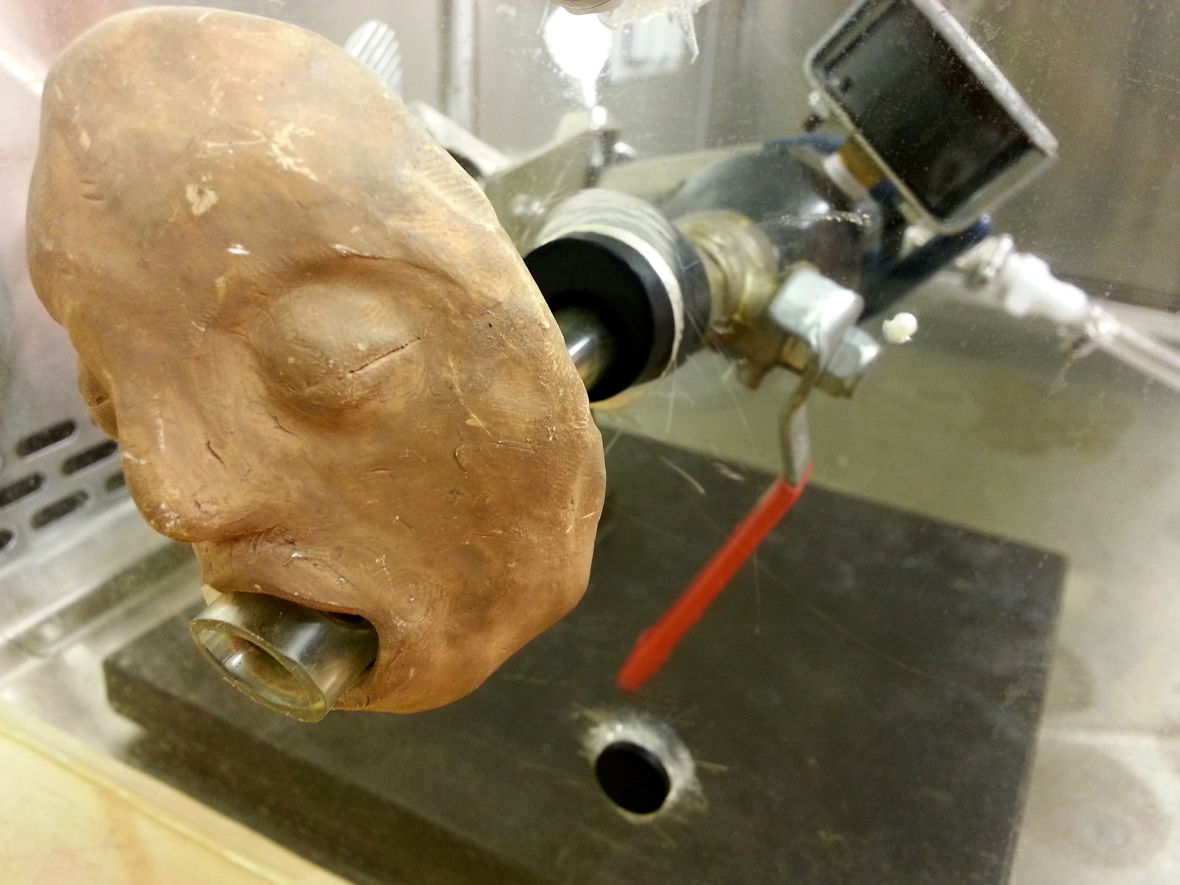
"caption": "The vomit machine.",
"description": "The vomit machine.",
"title": "The vomit machine.",
"credit": "Courtesy of Grace Tung-Thompson",
"status": "inherit",
"isLoading": false,
"fetchFailed": false
},
"futureofyou_28013": {
"type": "attachments",
"id": "futureofyou_28013",
"meta": {
"index": "attachments_1716263798",
"site": "futureofyou",
"id": "28013",
"found": true
},
"parent": 27622,
"imgSizes": {
"twentyfourteen-full-width": {
"file": "https://ww2.kqed.org/app/uploads/sites/13/2015/08/Eye_disease_simulation_diabetic_retinopathy-1024x576.jpg",
"width": 1024,
"mimeType": "image/jpeg",
"height": 576
},
"thumbnail": {
"file": "https://ww2.kqed.org/app/uploads/sites/13/2015/08/Eye_disease_simulation_diabetic_retinopathy-400x267.jpg",
"width": 400,
"mimeType": "image/jpeg",
"height": 267
},
"fd-sm": {
"file": "https://ww2.kqed.org/app/uploads/sites/13/2015/08/Eye_disease_simulation_diabetic_retinopathy-960x640.jpg",
"width": 960,
"mimeType": "image/jpeg",
"height": 640
},
"post-thumbnail": {
"file": "https://ww2.kqed.org/app/uploads/sites/13/2015/08/Eye_disease_simulation_diabetic_retinopathy-672x372.jpg",
"width": 672,
"mimeType": "image/jpeg",
"height": 372
},
"kqedFullSize": {
"file": "https://ww2.kqed.org/app/uploads/sites/13/2015/08/Eye_disease_simulation_diabetic_retinopathy.jpg",
"width": 1024,
"height": 683
},
"guest-author-96": {
"file": "https://ww2.kqed.org/app/uploads/sites/13/2015/08/Eye_disease_simulation_diabetic_retinopathy-96x96.jpg",
"width": 96,
"mimeType": "image/jpeg",
"height": 96
},
"medium": {
"file": "https://ww2.kqed.org/app/uploads/sites/13/2015/08/Eye_disease_simulation_diabetic_retinopathy-800x534.jpg",
"width": 800,
"mimeType": "image/jpeg",
"height": 534
},
"guest-author-64": {
"file": "https://ww2.kqed.org/app/uploads/sites/13/2015/08/Eye_disease_simulation_diabetic_retinopathy-64x64.jpg",
"width": 64,
"mimeType": "image/jpeg",
"height": 64
},
"detail": {
"file": "https://ww2.kqed.org/app/uploads/sites/13/2015/08/Eye_disease_simulation_diabetic_retinopathy-75x75.jpg",
"width": 75,
"mimeType": "image/jpeg",
"height": 75
},
"guest-author-32": {
"file": "https://ww2.kqed.org/app/uploads/sites/13/2015/08/Eye_disease_simulation_diabetic_retinopathy-32x32.jpg",
"width": 32,
"mimeType": "image/jpeg",
"height": 32
},
"guest-author-128": {
"file": "https://ww2.kqed.org/app/uploads/sites/13/2015/08/Eye_disease_simulation_diabetic_retinopathy-128x128.jpg",
"width": 128,
"mimeType": "image/jpeg",
"height": 128
}
},
"publishDate": 1440025485,
"modified": 1440089905,
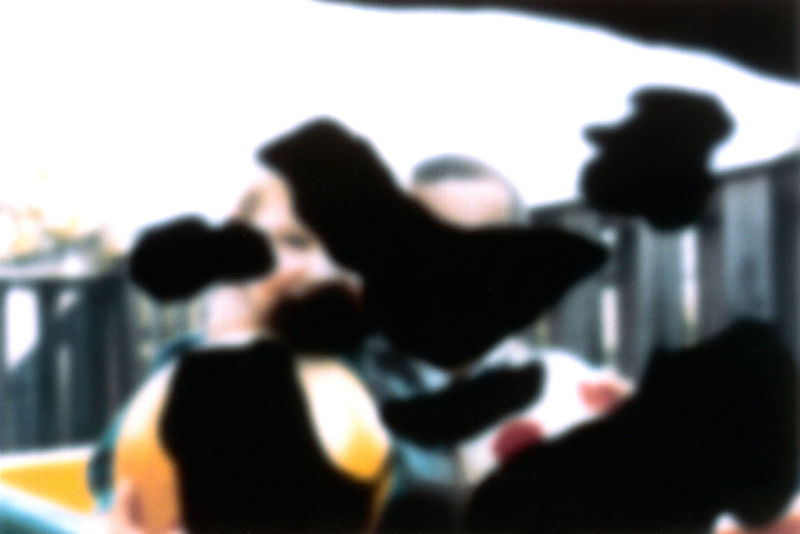
"caption": "A scene of two children as it might be viewed by a person with diabetic retinopathy.",
"description": null,
"title": "Robo Eye Doctor",
"credit": "National Institutes of Health",
"status": "inherit",
"isLoading": false,
"fetchFailed": false
},
"futureofyou_24645": {
"type": "attachments",
"id": "futureofyou_24645",
"meta": {
"index": "attachments_1716263798",
"site": "futureofyou",
"id": "24645",
"found": true
},
"parent": 24644,
"imgSizes": {
"twentyfourteen-full-width": {
"file": "https://ww2.kqed.org/app/uploads/sites/13/2015/08/telehealth-1038x576.jpg",
"width": 1038,
"mimeType": "image/jpeg",
"height": 576
},
"thumbnail": {
"file": "https://ww2.kqed.org/app/uploads/sites/13/2015/08/telehealth-400x266.jpg",
"width": 400,
"mimeType": "image/jpeg",
"height": 266
},
"fd-sm": {
"file": "https://ww2.kqed.org/app/uploads/sites/13/2015/08/telehealth-960x638.jpg",
"width": 960,
"mimeType": "image/jpeg",
"height": 638
},
"post-thumbnail": {
"file": "https://ww2.kqed.org/app/uploads/sites/13/2015/08/telehealth-672x372.jpg",
"width": 672,
"mimeType": "image/jpeg",
"height": 372
},
"kqedFullSize": {
"file": "https://ww2.kqed.org/app/uploads/sites/13/2015/08/telehealth.jpg",
"width": 4912,
"height": 3264
},
"large": {
"file": "https://ww2.kqed.org/app/uploads/sites/13/2015/08/telehealth-1180x784.jpg",
"width": 1180,
"mimeType": "image/jpeg",
"height": 784
},
"guest-author-96": {
"file": "https://ww2.kqed.org/app/uploads/sites/13/2015/08/telehealth-96x96.jpg",
"width": 96,
"mimeType": "image/jpeg",
"height": 96
},
"medium": {
"file": "https://ww2.kqed.org/app/uploads/sites/13/2015/08/telehealth-800x532.jpg",
"width": 800,
"mimeType": "image/jpeg",
"height": 532
},
"guest-author-64": {
"file": "https://ww2.kqed.org/app/uploads/sites/13/2015/08/telehealth-64x64.jpg",
"width": 64,
"mimeType": "image/jpeg",
"height": 64
},
"guest-author-32": {
"file": "https://ww2.kqed.org/app/uploads/sites/13/2015/08/telehealth-32x32.jpg",
"width": 32,
"mimeType": "image/jpeg",
"height": 32
},
"fd-lrg": {
"file": "https://ww2.kqed.org/app/uploads/sites/13/2015/08/telehealth-1920x1276.jpg",
"width": 1920,
"mimeType": "image/jpeg",
"height": 1276
},
"fd-med": {
"file": "https://ww2.kqed.org/app/uploads/sites/13/2015/08/telehealth-1180x784.jpg",
"width": 1180,
"mimeType": "image/jpeg",
"height": 784
},
"detail": {
"file": "https://ww2.kqed.org/app/uploads/sites/13/2015/08/telehealth-75x75.jpg",
"width": 75,
"mimeType": "image/jpeg",
"height": 75
},
"guest-author-128": {
"file": "https://ww2.kqed.org/app/uploads/sites/13/2015/08/telehealth-128x128.jpg",
"width": 128,
"mimeType": "image/jpeg",
"height": 128
}
},
"publishDate": 1439311968,
"modified": 1439312027,
"caption": "Therapy provided by phone is lowering rates of anxiety and depression for older people.",
"description": null,
"title": "telehealth",
"credit": "Brooke Hoyer / Flickr ",
"status": "inherit",
"isLoading": false,
"fetchFailed": false
},
"futureofyou_22042": {
"type": "attachments",
"id": "futureofyou_22042",
"meta": {
"index": "attachments_1716263798",
"site": "futureofyou",
"id": "22042",
"found": true
},
"parent": 22005,
"imgSizes": {
"twentyfourteen-full-width": {
"file": "https://ww2.kqed.org/app/uploads/sites/13/2015/08/3d-printer-1038x576.jpg",
"width": 1038,
"mimeType": "image/jpeg",
"height": 576
},
"thumbnail": {
"file": "https://ww2.kqed.org/app/uploads/sites/13/2015/08/3d-printer-400x300.jpg",
"width": 400,
"mimeType": "image/jpeg",
"height": 300
},
"fd-sm": {
"file": "https://ww2.kqed.org/app/uploads/sites/13/2015/08/3d-printer-960x720.jpg",
"width": 960,
"mimeType": "image/jpeg",
"height": 720
},
"post-thumbnail": {
"file": "https://ww2.kqed.org/app/uploads/sites/13/2015/08/3d-printer-672x372.jpg",
"width": 672,
"mimeType": "image/jpeg",
"height": 372
},
"kqedFullSize": {
"file": "https://ww2.kqed.org/app/uploads/sites/13/2015/08/3d-printer.jpg",
"width": 3244,
"height": 2433
},
"large": {
"file": "https://ww2.kqed.org/app/uploads/sites/13/2015/08/3d-printer-1180x885.jpg",
"width": 1180,
"mimeType": "image/jpeg",
"height": 885
},
"guest-author-96": {
"file": "https://ww2.kqed.org/app/uploads/sites/13/2015/08/3d-printer-96x96.jpg",
"width": 96,
"mimeType": "image/jpeg",
"height": 96
},
"medium": {
"file": "https://ww2.kqed.org/app/uploads/sites/13/2015/08/3d-printer-800x600.jpg",
"width": 800,
"mimeType": "image/jpeg",
"height": 600
},
"guest-author-64": {
"file": "https://ww2.kqed.org/app/uploads/sites/13/2015/08/3d-printer-64x64.jpg",
"width": 64,
"mimeType": "image/jpeg",
"height": 64
},
"guest-author-32": {
"file": "https://ww2.kqed.org/app/uploads/sites/13/2015/08/3d-printer-32x32.jpg",
"width": 32,
"mimeType": "image/jpeg",
"height": 32
},
"fd-lrg": {
"file": "https://ww2.kqed.org/app/uploads/sites/13/2015/08/3d-printer-1920x1440.jpg",
"width": 1920,
"mimeType": "image/jpeg",
"height": 1440
},
"fd-med": {
"file": "https://ww2.kqed.org/app/uploads/sites/13/2015/08/3d-printer-1180x885.jpg",
"width": 1180,
"mimeType": "image/jpeg",
"height": 885
},
"detail": {
"file": "https://ww2.kqed.org/app/uploads/sites/13/2015/08/3d-printer-75x75.jpg",
"width": 75,
"mimeType": "image/jpeg",
"height": 75
},
"guest-author-128": {
"file": "https://ww2.kqed.org/app/uploads/sites/13/2015/08/3d-printer-128x128.jpg",
"width": 128,
"mimeType": "image/jpeg",
"height": 128
}
},
"publishDate": 1438803162,
"modified": 1438819745,
"caption": "A trifecta of 3-D printers: A Replicator, MakerBot and a PrinterBot.",
"description": null,
"title": "3d printer",
"credit": "Alan Levine/Flickr ",
"status": "inherit",
"isLoading": false,
"fetchFailed": false
},
"futureofyou_18554": {
"type": "attachments",
"id": "futureofyou_18554",
"meta": {
"index": "attachments_1716263798",
"site": "futureofyou",
"id": "18554",
"found": true
},
"parent": 18550,
"imgSizes": {
"thumbnail": {
"file": "https://ww2.kqed.org/app/uploads/sites/13/2015/07/lihong-wang_wide-16ebac08b8cf175ff7d6486f5f5c2971a69dc98d-s800-c85-400x225.jpg",
"width": 400,
"mimeType": "image/jpeg",
"height": 225
},
"post-thumbnail": {
"file": "https://ww2.kqed.org/app/uploads/sites/13/2015/07/lihong-wang_wide-16ebac08b8cf175ff7d6486f5f5c2971a69dc98d-s800-c85-672x372.jpg",
"width": 672,
"mimeType": "image/jpeg",
"height": 372
},
"kqedFullSize": {
"file": "https://ww2.kqed.org/app/uploads/sites/13/2015/07/lihong-wang_wide-16ebac08b8cf175ff7d6486f5f5c2971a69dc98d-s800-c85.jpg",
"width": 800,
"height": 449
},
"guest-author-96": {
"file": "https://ww2.kqed.org/app/uploads/sites/13/2015/07/lihong-wang_wide-16ebac08b8cf175ff7d6486f5f5c2971a69dc98d-s800-c85-96x96.jpg",
"width": 96,
"mimeType": "image/jpeg",
"height": 96
},
"medium": {
"file": "https://ww2.kqed.org/app/uploads/sites/13/2015/07/lihong-wang_wide-16ebac08b8cf175ff7d6486f5f5c2971a69dc98d-s800-c85-800x449.jpg",
"width": 800,
"mimeType": "image/jpeg",
"height": 449
},
"guest-author-64": {
"file": "https://ww2.kqed.org/app/uploads/sites/13/2015/07/lihong-wang_wide-16ebac08b8cf175ff7d6486f5f5c2971a69dc98d-s800-c85-64x64.jpg",
"width": 64,
"mimeType": "image/jpeg",
"height": 64
},
"detail": {
"file": "https://ww2.kqed.org/app/uploads/sites/13/2015/07/lihong-wang_wide-16ebac08b8cf175ff7d6486f5f5c2971a69dc98d-s800-c85-75x75.jpg",
"width": 75,
"mimeType": "image/jpeg",
"height": 75
},
"guest-author-32": {
"file": "https://ww2.kqed.org/app/uploads/sites/13/2015/07/lihong-wang_wide-16ebac08b8cf175ff7d6486f5f5c2971a69dc98d-s800-c85-32x32.jpg",
"width": 32,
"mimeType": "image/jpeg",
"height": 32
},
"guest-author-128": {
"file": "https://ww2.kqed.org/app/uploads/sites/13/2015/07/lihong-wang_wide-16ebac08b8cf175ff7d6486f5f5c2971a69dc98d-s800-c85-128x128.jpg",
"width": 128,
"mimeType": "image/jpeg",
"height": 128
}
},
"publishDate": 1438099387,
"modified": 1438099400,
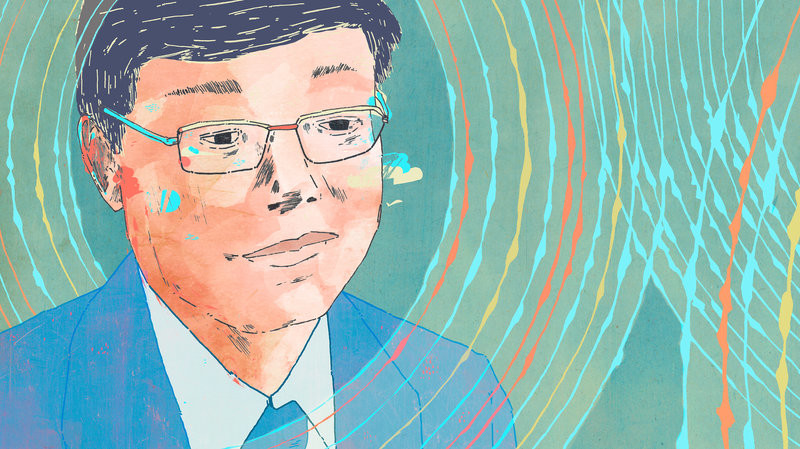
"caption": "Lihong Wang uses light and sound to create highly detailed images of the living brain.",
"description": null,
"title": "lihong-wang_wide-16ebac08b8cf175ff7d6486f5f5c2971a69dc98d-s800-c85",
"credit": "Chris Nickels for NPR",
"status": "inherit",
"isLoading": false,
"fetchFailed": false
},
"futureofyou_14361": {
"type": "attachments",
"id": "futureofyou_14361",
"meta": {
"index": "attachments_1716263798",
"site": "futureofyou",
"id": "14361",
"found": true
},
"parent": 14360,
"imgSizes": {
"twentyfourteen-full-width": {
"file": "https://ww2.kqed.org/app/uploads/sites/13/2015/07/Longevity-1038x576.jpg",
"width": 1038,
"mimeType": "image/jpeg",
"height": 576
},
"thumbnail": {
"file": "https://ww2.kqed.org/app/uploads/sites/13/2015/07/Longevity-400x225.jpg",
"width": 400,
"mimeType": "image/jpeg",
"height": 225
},
"fd-sm": {
"file": "https://ww2.kqed.org/app/uploads/sites/13/2015/07/Longevity-960x540.jpg",
"width": 960,
"mimeType": "image/jpeg",
"height": 540
},
"post-thumbnail": {
"file": "https://ww2.kqed.org/app/uploads/sites/13/2015/07/Longevity-672x372.jpg",
"width": 672,
"mimeType": "image/jpeg",
"height": 372
},
"kqedFullSize": {
"file": "https://ww2.kqed.org/app/uploads/sites/13/2015/07/Longevity.jpg",
"width": 1920,
"height": 1080
},
"large": {
"file": "https://ww2.kqed.org/app/uploads/sites/13/2015/07/Longevity-1180x664.jpg",
"width": 1180,
"mimeType": "image/jpeg",
"height": 664
},
"guest-author-96": {
"file": "https://ww2.kqed.org/app/uploads/sites/13/2015/07/Longevity-96x96.jpg",
"width": 96,
"mimeType": "image/jpeg",
"height": 96
},
"medium": {
"file": "https://ww2.kqed.org/app/uploads/sites/13/2015/07/Longevity-800x450.jpg",
"width": 800,
"mimeType": "image/jpeg",
"height": 450
},
"guest-author-64": {
"file": "https://ww2.kqed.org/app/uploads/sites/13/2015/07/Longevity-64x64.jpg",
"width": 64,
"mimeType": "image/jpeg",
"height": 64
},
"guest-author-32": {
"file": "https://ww2.kqed.org/app/uploads/sites/13/2015/07/Longevity-32x32.jpg",
"width": 32,
"mimeType": "image/jpeg",
"height": 32
},
"fd-lrg": {
"file": "https://ww2.kqed.org/app/uploads/sites/13/2015/07/Longevity-1400x788.jpg",
"width": 1400,
"mimeType": "image/jpeg",
"height": 788
},
"fd-med": {
"file": "https://ww2.kqed.org/app/uploads/sites/13/2015/07/Longevity-1180x664.jpg",
"width": 1180,
"mimeType": "image/jpeg",
"height": 664
},
"detail": {
"file": "https://ww2.kqed.org/app/uploads/sites/13/2015/07/Longevity-75x75.jpg",
"width": 75,
"mimeType": "image/jpeg",
"height": 75
},
"guest-author-128": {
"file": "https://ww2.kqed.org/app/uploads/sites/13/2015/07/Longevity-128x128.jpg",
"width": 128,
"mimeType": "image/jpeg",
"height": 128
}
},
"publishDate": 1437162734,
"modified": 1437162775,
"caption": "Why we all get older at about the same rate is still not well understood.",
"description": null,
"title": "Longevity",
"credit": null,
"status": "inherit",
"isLoading": false,
"fetchFailed": false
},
"futureofyou_13148": {
"type": "attachments",
"id": "futureofyou_13148",
"meta": {
"index": "attachments_1716263798",
"site": "futureofyou",
"id": "13148",
"found": true
},
"parent": 13130,
"imgSizes": {
"twentyfourteen-full-width": {
"file": "https://ww2.kqed.org/app/uploads/sites/13/2015/07/bruce-1038x576.jpg",
"width": 1038,
"mimeType": "image/jpeg",
"height": 576
},
"thumbnail": {
"file": "https://ww2.kqed.org/app/uploads/sites/13/2015/07/bruce-400x300.jpg",
"width": 400,
"mimeType": "image/jpeg",
"height": 300
},
"fd-sm": {
"file": "https://ww2.kqed.org/app/uploads/sites/13/2015/07/bruce-960x720.jpg",
"width": 960,
"mimeType": "image/jpeg",
"height": 720
},
"post-thumbnail": {
"file": "https://ww2.kqed.org/app/uploads/sites/13/2015/07/bruce-672x372.jpg",
"width": 672,
"mimeType": "image/jpeg",
"height": 372
},
"kqedFullSize": {
"file": "https://ww2.kqed.org/app/uploads/sites/13/2015/07/bruce.jpg",
"width": 1632,
"height": 1224
},
"large": {
"file": "https://ww2.kqed.org/app/uploads/sites/13/2015/07/bruce-1180x885.jpg",
"width": 1180,
"mimeType": "image/jpeg",
"height": 885
},
"guest-author-96": {
"file": "https://ww2.kqed.org/app/uploads/sites/13/2015/07/bruce-96x96.jpg",
"width": 96,
"mimeType": "image/jpeg",
"height": 96
},
"medium": {
"file": "https://ww2.kqed.org/app/uploads/sites/13/2015/07/bruce-800x600.jpg",
"width": 800,
"mimeType": "image/jpeg",
"height": 600
},
"guest-author-64": {
"file": "https://ww2.kqed.org/app/uploads/sites/13/2015/07/bruce-64x64.jpg",
"width": 64,
"mimeType": "image/jpeg",
"height": 64
},
"guest-author-32": {
"file": "https://ww2.kqed.org/app/uploads/sites/13/2015/07/bruce-32x32.jpg",
"width": 32,
"mimeType": "image/jpeg",
"height": 32
},
"fd-med": {
"file": "https://ww2.kqed.org/app/uploads/sites/13/2015/07/bruce-1180x885.jpg",
"width": 1180,
"mimeType": "image/jpeg",
"height": 885
},
"detail": {
"file": "https://ww2.kqed.org/app/uploads/sites/13/2015/07/bruce-75x75.jpg",
"width": 75,
"mimeType": "image/jpeg",
"height": 75
},
"guest-author-128": {
"file": "https://ww2.kqed.org/app/uploads/sites/13/2015/07/bruce-128x128.jpg",
"width": 128,
"mimeType": "image/jpeg",
"height": 128
}
},
"publishDate": 1436834255,
"modified": 1436834332,
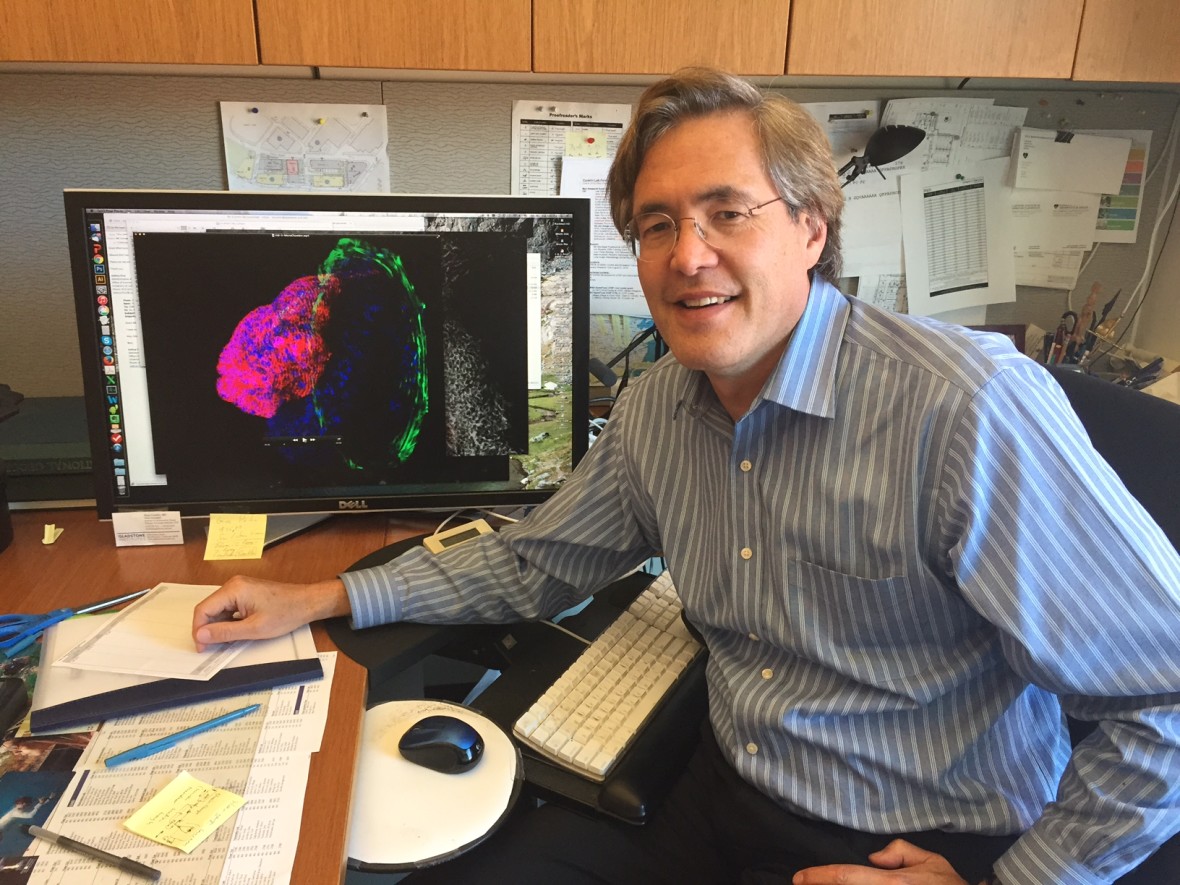
"caption": "Dr. Bruce Conklin demonstrates the new system at his offices at the Gladstone Institute ",
"description": null,
"title": "bruce",
"credit": "Christina Farr / KQED",
"status": "inherit",
"isLoading": false,
"fetchFailed": false
},
"futureofyou_8615": {
"type": "attachments",
"id": "futureofyou_8615",
"meta": {
"index": "attachments_1716263798",
"site": "futureofyou",
"id": "8615",
"found": true
},
"parent": 7146,
"imgSizes": {
"twentyfourteen-full-width": {
"file": "https://ww2.kqed.org/app/uploads/sites/13/2015/06/glucose-999x576.jpg",
"width": 999,
"mimeType": "image/jpeg",
"height": 576
},
"thumbnail": {
"file": "https://ww2.kqed.org/app/uploads/sites/13/2015/06/glucose-400x256.jpg",
"width": 400,
"mimeType": "image/jpeg",
"height": 256
},
"fd-sm": {
"file": "https://ww2.kqed.org/app/uploads/sites/13/2015/06/glucose-960x615.jpg",
"width": 960,
"mimeType": "image/jpeg",
"height": 615
},
"post-thumbnail": {
"file": "https://ww2.kqed.org/app/uploads/sites/13/2015/06/glucose-672x372.jpg",
"width": 672,
"mimeType": "image/jpeg",
"height": 372
},
"kqedFullSize": {
"file": "https://ww2.kqed.org/app/uploads/sites/13/2015/06/glucose.jpg",
"width": 999,
"height": 640
},
"guest-author-96": {
"file": "https://ww2.kqed.org/app/uploads/sites/13/2015/06/glucose-96x96.jpg",
"width": 96,
"mimeType": "image/jpeg",
"height": 96
},
"medium": {
"file": "https://ww2.kqed.org/app/uploads/sites/13/2015/06/glucose-800x513.jpg",
"width": 800,
"mimeType": "image/jpeg",
"height": 513
},
"guest-author-64": {
"file": "https://ww2.kqed.org/app/uploads/sites/13/2015/06/glucose-64x64.jpg",
"width": 64,
"mimeType": "image/jpeg",
"height": 64
},
"detail": {
"file": "https://ww2.kqed.org/app/uploads/sites/13/2015/06/glucose-75x75.jpg",
"width": 75,
"mimeType": "image/jpeg",
"height": 75
},
"guest-author-32": {
"file": "https://ww2.kqed.org/app/uploads/sites/13/2015/06/glucose-32x32.jpg",
"width": 32,
"mimeType": "image/jpeg",
"height": 32
},
"guest-author-128": {
"file": "https://ww2.kqed.org/app/uploads/sites/13/2015/06/glucose-128x128.jpg",
"width": 128,
"mimeType": "image/jpeg",
"height": 128
}
},
"publishDate": 1435682644,
"modified": 1435682683,
"caption": " The sensors can be drawn on almost any surface, even a leaf.",
"description": null,
"title": "glucose",
"credit": "Amay Bandodkar",
"status": "inherit",
"isLoading": false,
"fetchFailed": false
},
"stateofhealth_35624": {
"type": "attachments",
"id": "stateofhealth_35624",
"meta": {
"index": "attachments_1716263798",
"site": "stateofhealth",
"id": "35624",
"found": true
},
"parent": 35574,
"imgSizes": {
"twentyfourteen-full-width": {
"file": "https://ww2.kqed.org/app/uploads/sites/27/2015/06/iStock_000017435404_Large-1038x576.jpg",
"width": 1038,
"mimeType": "image/jpeg",
"height": 576
},
"thumbnail": {
"file": "https://ww2.kqed.org/app/uploads/sites/27/2015/06/iStock_000017435404_Large-400x293.jpg",
"width": 400,
"mimeType": "image/jpeg",
"height": 293
},
"fd-sm": {
"file": "https://ww2.kqed.org/app/uploads/sites/27/2015/06/iStock_000017435404_Large-960x703.jpg",
"width": 960,
"mimeType": "image/jpeg",
"height": 703
},
"post-thumbnail": {
"file": "https://ww2.kqed.org/app/uploads/sites/27/2015/06/iStock_000017435404_Large-672x372.jpg",
"width": 672,
"mimeType": "image/jpeg",
"height": 372
},
"kqedFullSize": {
"file": "https://ww2.kqed.org/app/uploads/sites/27/2015/06/iStock_000017435404_Large.jpg",
"width": 2591,
"height": 1897
},
"large": {
"file": "https://ww2.kqed.org/app/uploads/sites/27/2015/06/iStock_000017435404_Large-1440x1054.jpg",
"width": 1440,
"mimeType": "image/jpeg",
"height": 1054
},
"guest-author-96": {
"file": "https://ww2.kqed.org/app/uploads/sites/27/2015/06/iStock_000017435404_Large-96x96.jpg",
"width": 96,
"mimeType": "image/jpeg",
"height": 96
},
"medium": {
"file": "https://ww2.kqed.org/app/uploads/sites/27/2015/06/iStock_000017435404_Large-800x586.jpg",
"width": 800,
"mimeType": "image/jpeg",
"height": 586
},
"guest-author-64": {
"file": "https://ww2.kqed.org/app/uploads/sites/27/2015/06/iStock_000017435404_Large-64x64.jpg",
"width": 64,
"mimeType": "image/jpeg",
"height": 64
},
"guest-author-32": {
"file": "https://ww2.kqed.org/app/uploads/sites/27/2015/06/iStock_000017435404_Large-32x32.jpg",
"width": 32,
"mimeType": "image/jpeg",
"height": 32
},
"fd-med": {
"file": "https://ww2.kqed.org/app/uploads/sites/27/2015/06/iStock_000017435404_Large-1180x864.jpg",
"width": 1180,
"mimeType": "image/jpeg",
"height": 864
},
"detail": {
"file": "https://ww2.kqed.org/app/uploads/sites/27/2015/06/iStock_000017435404_Large-75x75.jpg",
"width": 75,
"mimeType": "image/jpeg",
"height": 75
},
"guest-author-128": {
"file": "https://ww2.kqed.org/app/uploads/sites/27/2015/06/iStock_000017435404_Large-128x128.jpg",
"width": 128,
"mimeType": "image/jpeg",
"height": 128
}
},
"publishDate": 1433969935,
"modified": 1433978237,
"caption": "Prilosec is one of several medications in a class of drugs called proton pump inhibitors associated with an increased risk of heart attack.",
"description": "One of the drugs in question is Prilosec, which is available over the counter. ",
"title": "Prilosec OTC on white background",
"credit": "Getty Images",
"status": "inherit",
"isLoading": false,
"fetchFailed": false
},
"futureofyou_4268": {
"type": "attachments",
"id": "futureofyou_4268",
"meta": {
"index": "attachments_1716263798",
"site": "futureofyou",
"id": "4268",
"found": true
},
"parent": 4265,
"imgSizes": {
"twentyfourteen-full-width": {
"file": "https://ww2.kqed.org/app/uploads/sites/13/2015/06/Samples-in-80-C-freezer10_SCAN-960x720-960x576.jpg",
"width": 960,
"mimeType": "image/jpeg",
"height": 576
},
"thumbnail": {
"file": "https://ww2.kqed.org/app/uploads/sites/13/2015/06/Samples-in-80-C-freezer10_SCAN-960x720-400x300.jpg",
"width": 400,
"mimeType": "image/jpeg",
"height": 300
},
"fd-sm": {
"file": "https://ww2.kqed.org/app/uploads/sites/13/2015/06/Samples-in-80-C-freezer10_SCAN-960x720-960x720.jpg",
"width": 960,
"mimeType": "image/jpeg",
"height": 720
},
"post-thumbnail": {
"file": "https://ww2.kqed.org/app/uploads/sites/13/2015/06/Samples-in-80-C-freezer10_SCAN-960x720-672x372.jpg",
"width": 672,
"mimeType": "image/jpeg",
"height": 372
},
"kqedFullSize": {
"file": "https://ww2.kqed.org/app/uploads/sites/13/2015/06/Samples-in-80-C-freezer10_SCAN-960x720.jpg",
"width": 960,
"height": 720
},
"guest-author-96": {
"file": "https://ww2.kqed.org/app/uploads/sites/13/2015/06/Samples-in-80-C-freezer10_SCAN-960x720-96x96.jpg",
"width": 96,
"mimeType": "image/jpeg",
"height": 96
},
"medium": {
"file": "https://ww2.kqed.org/app/uploads/sites/13/2015/06/Samples-in-80-C-freezer10_SCAN-960x720-800x600.jpg",
"width": 800,
"mimeType": "image/jpeg",
"height": 600
},
"guest-author-64": {
"file": "https://ww2.kqed.org/app/uploads/sites/13/2015/06/Samples-in-80-C-freezer10_SCAN-960x720-64x64.jpg",
"width": 64,
"mimeType": "image/jpeg",
"height": 64
},
"detail": {
"file": "https://ww2.kqed.org/app/uploads/sites/13/2015/06/Samples-in-80-C-freezer10_SCAN-960x720-75x75.jpg",
"width": 75,
"mimeType": "image/jpeg",
"height": 75
},
"guest-author-32": {
"file": "https://ww2.kqed.org/app/uploads/sites/13/2015/06/Samples-in-80-C-freezer10_SCAN-960x720-32x32.jpg",
"width": 32,
"mimeType": "image/jpeg",
"height": 32
},
"guest-author-128": {
"file": "https://ww2.kqed.org/app/uploads/sites/13/2015/06/Samples-in-80-C-freezer10_SCAN-960x720-128x128.jpg",
"width": 128,
"mimeType": "image/jpeg",
"height": 128
}
},
"publishDate": 1434383049,
"modified": 1434383102,
"caption": "Massachusetts-based Open Biome sells frozen poop to doctors performing fecal transplants. (Open Biome)",
"description": "Massachusetts-based Open Biome sells frozen poop to doctors performing fecal transplants. (Open Biome)",
"title": "Future of Fecal",
"credit": null,
"status": "inherit",
"isLoading": false,
"fetchFailed": false
},
"futureofyou_3463": {
"type": "attachments",
"id": "futureofyou_3463",
"meta": {
"index": "attachments_1716263798",
"site": "futureofyou",
"id": "3463",
"found": true
},
"parent": 3461,
"imgSizes": {
"twentyfourteen-full-width": {
"file": "https://ww2.kqed.org/app/uploads/sites/13/2015/05/molecules-1038x576.jpg",
"width": 1038,
"mimeType": "image/jpeg",
"height": 576
},
"thumbnail": {
"file": "https://ww2.kqed.org/app/uploads/sites/13/2015/05/molecules-400x265.jpg",
"width": 400,
"mimeType": "image/jpeg",
"height": 265
},
"fd-sm": {
"file": "https://ww2.kqed.org/app/uploads/sites/13/2015/05/molecules-960x636.jpg",
"width": 960,
"mimeType": "image/jpeg",
"height": 636
},
"post-thumbnail": {
"file": "https://ww2.kqed.org/app/uploads/sites/13/2015/05/molecules-672x372.jpg",
"width": 672,
"mimeType": "image/jpeg",
"height": 372
},
"kqedFullSize": {
"file": "https://ww2.kqed.org/app/uploads/sites/13/2015/05/molecules.jpg",
"width": 3651,
"height": 2418
},
"large": {
"file": "https://ww2.kqed.org/app/uploads/sites/13/2015/05/molecules-1180x781.jpg",
"width": 1180,
"mimeType": "image/jpeg",
"height": 781
},
"guest-author-96": {
"file": "https://ww2.kqed.org/app/uploads/sites/13/2015/05/molecules-96x96.jpg",
"width": 96,
"mimeType": "image/jpeg",
"height": 96
},
"medium": {
"file": "https://ww2.kqed.org/app/uploads/sites/13/2015/05/molecules-800x530.jpg",
"width": 800,
"mimeType": "image/jpeg",
"height": 530
},
"guest-author-64": {
"file": "https://ww2.kqed.org/app/uploads/sites/13/2015/05/molecules-64x64.jpg",
"width": 64,
"mimeType": "image/jpeg",
"height": 64
},
"guest-author-32": {
"file": "https://ww2.kqed.org/app/uploads/sites/13/2015/05/molecules-32x32.jpg",
"width": 32,
"mimeType": "image/jpeg",
"height": 32
},
"fd-med": {
"file": "https://ww2.kqed.org/app/uploads/sites/13/2015/05/molecules-1180x781.jpg",
"width": 1180,
"mimeType": "image/jpeg",
"height": 781
},
"detail": {
"file": "https://ww2.kqed.org/app/uploads/sites/13/2015/05/molecules-75x75.jpg",
"width": 75,
"mimeType": "image/jpeg",
"height": 75
},
"guest-author-128": {
"file": "https://ww2.kqed.org/app/uploads/sites/13/2015/05/molecules-128x128.jpg",
"width": 128,
"mimeType": "image/jpeg",
"height": 128
}
},
"publishDate": 1432682324,
"modified": 1432745057,
"caption": "The interaction between molecules in the body governs everything from immunity to memory.",
"description": null,
"title": "molecules",
"credit": "Alan Bloom/Flickr",
"status": "inherit",
"isLoading": false,
"fetchFailed": false
}
},
"audioPlayerReducer": {
"postId": "stream_live",
"isPaused": true,
"isPlaying": false,
"pfsActive": false,
"pledgeModalIsOpen": true,
"playerDrawerIsOpen": false,
"liveAudioPlayStartedAt": 0,
"liveAudioPlayContext": ""
},
"authorsReducer": {
"byline_futureofyou_28721": {
"type": "authors",
"id": "byline_futureofyou_28721",
"meta": {
"override": true
},
"slug": "byline_futureofyou_28721",
"name": "Katherine Hobson",
"isLoading": false
},
"byline_futureofyou_24644": {
"type": "authors",
"id": "byline_futureofyou_24644",
"meta": {
"override": true
},
"slug": "byline_futureofyou_24644",
"name": "Lisa Gillespie, Kaiser Health News ",
"isLoading": false
},
"byline_futureofyou_18550": {
"type": "authors",
"id": "byline_futureofyou_18550",
"meta": {
"override": true
},
"slug": "byline_futureofyou_18550",
"name": "Jon Hamilton",
"isLoading": false
},
"amystanden": {
"type": "authors",
"id": "210",
"meta": {
"index": "authors_1716337520",
"id": "210",
"found": true
},
"name": "Amy Standen",
"firstName": "Amy",
"lastName": "Standen",
"slug": "amystanden",
"email": "astanden@kqed.org",
"display_author_email": false,
"staff_mastheads": [],
"title": "KQED Contributor",
"bio": "Amy Standen (@amystanden) is co-host of #\u003ca href=\"https://ww2.kqed.org/news/programs/the-leap\">TheLeapPodcast\u003c/a> (subscribe on iTunes or Stitcher!) and host of KQED and PBSDigital Studios' science video series, \u003ca href=\"https://www.youtube.com/user/KQEDDeepLook\">Deep Look\u003c/a>. Her science radio stories appear on KQED and NPR.\r\n\r\nEmail her at astanden@kqed.org",
"avatar": "https://secure.gravatar.com/avatar/3d021b72de685a788b0487b059d0a6a1?s=600&d=blank&r=g",
"twitter": null,
"facebook": null,
"instagram": null,
"linkedin": null,
"sites": [
{
"site": "news",
"roles": [
"subscriber"
]
},
{
"site": "futureofyou",
"roles": [
"subscriber"
]
},
{
"site": "stateofhealth",
"roles": [
"subscriber"
]
},
{
"site": "science",
"roles": []
},
{
"site": "quest",
"roles": [
"subscriber"
]
}
],
"headData": {
"title": "Amy Standen | KQED",
"description": "KQED Contributor",
"ogImgSrc": "https://secure.gravatar.com/avatar/3d021b72de685a788b0487b059d0a6a1?s=600&d=blank&r=g",
"twImgSrc": "https://secure.gravatar.com/avatar/3d021b72de685a788b0487b059d0a6a1?s=600&d=blank&r=g"
},
"isLoading": false,
"link": "/author/amystanden"
},
"lisaaliferis": {
"type": "authors",
"id": "240",
"meta": {
"index": "authors_1716337520",
"id": "240",
"found": true
},
"name": "Lisa Aliferis",
"firstName": "Lisa",
"lastName": "Aliferis",
"slug": "lisaaliferis",
"email": "laliferis@kqed.org",
"display_author_email": false,
"staff_mastheads": [],
"title": "KQED Contributor",
"bio": "Lisa Aliferis is the founding editor of KQED's \u003cem>State of Health\u003c/em> blog. Since 2011, she's been writing and editing stories for the site. Before taking up blogging, she toiled for many years (more than we can count) producing health stories for television, including\u003cem> Dateline NBC\u003c/em> and San Francisco's CBS affiliate, KPIX-TV. She also wrote up a \u003ca title=\"http://www.kqed.org/news/health/obamacare/obamacare-guide.jsp\" href=\"http://www.kqed.org/news/health/obamacare/obamacare-guide.jsp\">handy guide to the Affordable Care Act\u003c/a>, especially for Californians. Her work has been honored for many awards. Most recently she was a finalist for \"Best Topical Reporting\" from the Online News Association. You can follow her on Twitter: \u003ca title=\"https://twitter.com/laliferis\" href=\"https://twitter.com/laliferis\">@laliferis\u003c/a>",
"avatar": "https://secure.gravatar.com/avatar/86c339d5cdcb0dcd2b6cf5d7c3f5886b?s=600&d=mm&r=g",
"twitter": "laliferis",
"facebook": null,
"instagram": null,
"linkedin": null,
"sites": [
{
"site": "news",
"roles": [
"subscriber"
]
},
{
"site": "futureofyou",
"roles": [
"subscriber"
]
},
{
"site": "stateofhealth",
"roles": [
"subscriber"
]
},
{
"site": "science",
"roles": [
"subscriber"
]
},
{
"site": "food",
"roles": []
}
],
"headData": {
"title": "Lisa Aliferis | KQED",
"description": "KQED Contributor",
"ogImgSrc": "https://secure.gravatar.com/avatar/86c339d5cdcb0dcd2b6cf5d7c3f5886b?s=600&d=mm&r=g",
"twImgSrc": "https://secure.gravatar.com/avatar/86c339d5cdcb0dcd2b6cf5d7c3f5886b?s=600&d=mm&r=g"
},
"isLoading": false,
"link": "/author/lisaaliferis"
},
"cfarr": {
"type": "authors",
"id": "3252",
"meta": {
"index": "authors_1716337520",
"id": "3252",
"found": true
},
"name": "Christina Farr",
"firstName": "Christina",
"lastName": "Farr",
"slug": "cfarr",
"email": "cfarr@kqed.org",
"display_author_email": false,
"staff_mastheads": [],
"title": "KQED Contributor",
"bio": "Christina Farr (\u003ca href=\"https://twitter.com/chrissyfarr\">@chrissyfarr\u003c/a>) is the former editor and host of Future of You. She was previously with Reuters, covering digital health and Apple and before that, she reported for Venture Beat. Christina was born and raised in London and has graduate degrees from University of London and the Stanford School of Journalism. Farr’s work has appeared in a variety of publications, including the New York Times, the Daily Telegraph, the Bay Citizen and SFGate.com. She has appeared as a featured expert on NBC, ABC and Reuters TV, among others, and frequently speaks at health and technology conferences. She is also co-founder of Ladies Who Vino, a networking group for women in technology and business.",
"avatar": "https://secure.gravatar.com/avatar/22c63869a7901c61c15e204391c1261d?s=600&d=blank&r=g",
"twitter": null,
"facebook": null,
"instagram": null,
"linkedin": null,
"sites": [
{
"site": "futureofyou",
"roles": [
"administrator"
]
},
{
"site": "stateofhealth",
"roles": [
"author"
]
},
{
"site": "science",
"roles": []
}
],
"headData": {
"title": "Christina Farr | KQED",
"description": "KQED Contributor",
"ogImgSrc": "https://secure.gravatar.com/avatar/22c63869a7901c61c15e204391c1261d?s=600&d=blank&r=g",
"twImgSrc": "https://secure.gravatar.com/avatar/22c63869a7901c61c15e204391c1261d?s=600&d=blank&r=g"
},
"isLoading": false,
"link": "/author/cfarr"
},
"dr-barry-starr": {
"type": "authors",
"id": "6177",
"meta": {
"index": "authors_1716337520",
"id": "6177",
"found": true
},
"name": "Dr. Barry Starr",
"firstName": "Dr. Barry",
"lastName": "Starr",
"slug": "dr-barry-starr",
"email": "bstarr@thetech.org",
"display_author_email": false,
"staff_mastheads": [],
"title": "KQED Contributor",
"bio": "Dr. Barry Starr (\u003ca href=\"https://twitter.com/geneticsboy\">@geneticsboy\u003c/a>) is a Geneticist-in-Residence at The Tech Museum of Innovation in San Jose, CA and runs their Stanford at The Tech program. The program is part of an ongoing collaboration between the \u003ca href=\"http://genetics.stanford.edu/\">Stanford Department of Genetics\u003c/a> and \u003ca href=\"http://www.thetech.org/\">The Tech Museum of Innovation\u003c/a>. Together these two partners created the \u003ca href=\"http://www.thetech.org/exhibits/permanent/index.php?sGalKey=gtwt&galKey=lt\">Genetics: Technology with a Twist\u003c/a> exhibition.\r\n\r\nYou can also see \u003ca href=\"https://ww2.kqed.org/science/author/dr-barry-starr/\">additional posts by Barry at KQED Science\u003c/a>, and read his \u003ca href=\"http://science.kqed.org/quest/author/dr-barry-starr/\">previous contributions\u003c/a> to \u003ca href=\"http://science.kqed.org/quest/\">QUEST\u003c/a>, a project dedicated to exploring the Science of Sustainability.",
"avatar": "https://secure.gravatar.com/avatar/4a5680e4c642ea0f0f3041af16018969?s=600&d=blank&r=g",
"twitter": "geneticsboy",
"facebook": null,
"instagram": null,
"linkedin": null,
"sites": [
{
"site": "futureofyou",
"roles": []
},
{
"site": "science",
"roles": [
"author"
]
},
{
"site": "quest",
"roles": [
"subscriber"
]
}
],
"headData": {
"title": "Dr. Barry Starr | KQED",
"description": "KQED Contributor",
"ogImgSrc": "https://secure.gravatar.com/avatar/4a5680e4c642ea0f0f3041af16018969?s=600&d=blank&r=g",
"twImgSrc": "https://secure.gravatar.com/avatar/4a5680e4c642ea0f0f3041af16018969?s=600&d=blank&r=g"
},
"isLoading": false,
"link": "/author/dr-barry-starr"
},
"mpickett": {
"type": "authors",
"id": "6616",
"meta": {
"index": "authors_1716337520",
"id": "6616",
"found": true
},
"name": "Mallory Pickett",
"firstName": "Mallory",
"lastName": "Pickett",
"slug": "mpickett",
"email": "mallorypickett@gmail.com",
"display_author_email": false,
"staff_mastheads": [],
"title": null,
"bio": "Mallory Pickett is an intern with KQED Science, where she mostly contributes to Deep Look. Before coming to KQED Mallory was a chemist, studying climate change and ocean acidification in her graduate studies at UC San Diego and Scripps Institution of Oceanography. Now she works as a freelance science and environmental reporter in Berkeley, California, and is also a student at the UC Berkeley Graduate School of Journalism.",
"avatar": "https://secure.gravatar.com/avatar/76041fb6f98596f1792b3673c61c09be?s=600&d=blank&r=g",
"twitter": null,
"facebook": null,
"instagram": null,
"linkedin": null,
"sites": [
{
"site": "futureofyou",
"roles": [
"author"
]
},
{
"site": "science",
"roles": [
"author"
]
}
],
"headData": {
"title": "Mallory Pickett | KQED",
"description": null,
"ogImgSrc": "https://secure.gravatar.com/avatar/76041fb6f98596f1792b3673c61c09be?s=600&d=blank&r=g",
"twImgSrc": "https://secure.gravatar.com/avatar/76041fb6f98596f1792b3673c61c09be?s=600&d=blank&r=g"
},
"isLoading": false,
"link": "/author/mpickett"
},
"cqgarling": {
"type": "authors",
"id": "8627",
"meta": {
"index": "authors_1716337520",
"id": "8627",
"found": true
},
"name": "Caleb Garling",
"firstName": "Caleb",
"lastName": "Garling",
"slug": "cqgarling",
"email": "cqgarling@gmail.com",
"display_author_email": false,
"staff_mastheads": [],
"title": null,
"bio": null,
"avatar": "https://secure.gravatar.com/avatar/a5fba7796a63027255c7a25861a557ac?s=600&d=blank&r=g",
"twitter": null,
"facebook": null,
"instagram": null,
"linkedin": null,
"sites": [
{
"site": "futureofyou",
"roles": [
"author"
]
}
],
"headData": {
"title": "Caleb Garling | KQED",
"description": null,
"ogImgSrc": "https://secure.gravatar.com/avatar/a5fba7796a63027255c7a25861a557ac?s=600&d=blank&r=g",
"twImgSrc": "https://secure.gravatar.com/avatar/a5fba7796a63027255c7a25861a557ac?s=600&d=blank&r=g"
},
"isLoading": false,
"link": "/author/cqgarling"
}
},
"pagesReducer": {
"futureofyou_category_hopehype": {
"type": "terms",
"id": "futureofyou_1062",
"meta": {
"index": "terms_1716263798",
"site": "futureofyou",
"id": "1062",
"score": 13.896425
},
"featImg": null,
"name": "Hope/Hype",
"description": null,
"taxonomy": "category",
"headData": {
"twImgId": null,
"twTitle": null,
"ogTitle": null,
"ogImgId": null,
"twDescription": null,
"description": null,
"title": "Hope/Hype Archives | KQED Arts",
"ogDescription": null
},
"ttid": 1062,
"slug": "hopehype",
"isLoading": false,
"title": "Hope/Hype",
"pageMeta": {
"site": "futureofyou",
"WpPageTemplate": "page-topic-editorial",
"currentPage": 24
},
"blocks": [
{
"blockName": "kqed/post-list",
"attrs": {
"layout": "cardArticle2",
"query": "posts/futureofyou?category=hopehype",
"seeMore": false,
"paginated": true,
"page": 24
}
},
{
"blockName": "kqed/ad"
}
]
}
},
"pfsSessionReducer": {},
"postsReducer": {
"stream_live": {
"type": "live",
"id": "stream_live",
"audioUrl": "https://streams.kqed.org/kqedradio",
"title": "Live Stream",
"excerpt": "Live Stream information currently unavailable.",
"link": "/radio",
"featImg": "",
"label": {
"name": "KQED Live",
"link": "/"
}
},
"stream_kqedNewscast": {
"type": "posts",
"id": "stream_kqedNewscast",
"audioUrl": "https://www.kqed.org/.stream/anon/radio/RDnews/newscast.mp3?_=1",
"title": "KQED Newscast",
"featImg": "",
"label": {
"name": "88.5 FM",
"link": "/"
}
},
"futureofyou_31438": {
"type": "posts",
"id": "futureofyou_31438",
"meta": {
"index": "posts_1716263798",
"site": "futureofyou",
"id": "31438",
"score": null,
"sort": [
1441124484000
]
},
"parent": 0,
"labelTerm": {
"site": "futureofyou"
},
"blocks": [],
"publishDate": 1441124484,
"format": "standard",
"disqusTitle": "Move Over Poppies, Genetically Engineered Yeast Can Now Make Painkillers Too",
"title": "Move Over Poppies, Genetically Engineered Yeast Can Now Make Painkillers Too",
"headTitle": "KQED Future of You | KQED Science",
"content": "\u003cp>Back in 2007, the New York Times shared\u003ca href=\"http://www.nytimes.com/2007/09/10/health/10pain.html?pagewanted=all&_r=0\"> the story\u003c/a> of Zainabu Sesay, a woman dying of breast cancer. She suffered in terrible pain until the day she died because she had no access to the painkillers that we here in the West take for granted. And she is not alone.\u003c/p>\n\u003cp>As of 2012, an astonishing \u003ca href=\"http://www.who.int/medicines/areas/quality_safety/ACMP_BrNote_PainGLs_EN_Apr2012.pdf\">5.5 billion people\u003c/a> had limited or no access to the painkillers that can deal with the sort of pain that Zainabu endured. And that's one reason why a recent \u003ca href=\"http://www.ncbi.nlm.nih.gov/pubmed/26272907\">report\u003c/a> out in the prestigious journal \u003ca href=\"http://www.sciencemag.org/\">Science\u003c/a> is so important.\u003c/p>\n\u003cp>In this report, published earlier this month, a group of Stanford researchers led by \u003ca href=\"https://med.stanford.edu/profiles/christina-smolke\">Dr. Christina Smolke\u003c/a> engineered yeast to make small amounts of an opiate called hydrocodone from sugar. This may ultimately provide an alternative to poppies for developing painkillers, such as morphine.\u003c/p>\n\u003cp>While this yeast makes too little of the opiate to be useful right now, it shouldn’t take too long to coax it into making more.\u003c/p>\n\u003cp>When asked how long it would take to get the yeast to make the 100,000 times more hydrocodone it needs to be competitive with the current crop of poppies, Dr. Smolke said the process \"will be ready for scale up and competitive with poppies in about 2 years.\" But the product won't be ready to enter the market for some time after that.\u003c/p>\n\u003cp>[ad fullwidth]\u003c/p>\n\u003cp>In other words, we are potentially just a few years away from being able to get opiates from giant vats, instead of from the fields of Afghanistan and Tasmania. And if researchers can get yeast to make it even more cheaply than current procedures, then these medicines may become more accessible to sufferers worldwide.\u003c/p>\n\u003cp>This isn’t the only benefit to making opiates in yeast. Because we can manipulate the genetics of yeast so easily, scientists may be able to more quickly discover new opiates with different and hopefully better properties. Perhaps we will be able to discover less addictive opiates in a shorter time now that we make them in yeast.\u003c/p>\n\u003cfigure id=\"attachment_31892\" class=\"wp-caption alignright\" style=\"max-width: 500px\">\u003ca href=\"http://ww2.kqed.org/futureofyou/wp-content/uploads/sites/13/2015/08/WalterWhiteWall.jpg\">\u003cimg class=\"size-full wp-image-31892\" src=\"http://ww2.kqed.org/futureofyou/wp-content/uploads/sites/13/2015/08/WalterWhiteWall.jpg\" alt=\"Researchers are doing all they can to keep opiate making strains out of the wrong hands. (Jaroh)\" width=\"500\" height=\"491\" srcset=\"https://ww2.kqed.org/app/uploads/sites/13/2015/08/WalterWhiteWall.jpg 500w, https://ww2.kqed.org/app/uploads/sites/13/2015/08/WalterWhiteWall-400x393.jpg 400w, https://ww2.kqed.org/app/uploads/sites/13/2015/08/WalterWhiteWall-32x32.jpg 32w, https://ww2.kqed.org/app/uploads/sites/13/2015/08/WalterWhiteWall-64x64.jpg 64w, https://ww2.kqed.org/app/uploads/sites/13/2015/08/WalterWhiteWall-75x75.jpg 75w\" sizes=\"(max-width: 500px) 100vw, 500px\">\u003c/a>\u003cfigcaption class=\"wp-caption-text\">Researchers are doing all they can to keep opiate making strains out of the wrong hands. (\u003ca href=\"https://www.flickr.com/photos/jaroh/10810122433\">Jaroh\u003c/a>)\u003c/figcaption>\u003c/figure>\n\u003cp>If scientists can develop a less addictive opiate, this would have a huge global impact. One of the major hurdles in getting people in many countries access to painkillers like morphine is the widespread fear of addiction.\u003c/p>\n\u003cp>But this isn't a perfect solution. Yeast cranking out opiates conjures up an image of Walter White from \u003ca href=\"http://www.amc.com/shows/breaking-bad\">Breaking Bad\u003c/a> growing this strain for some drug cartel somewhere. The only difference would be that the expertise needed in this case would be biology rather than chemistry.\u003c/p>\n\u003cp>The Stanford researchers have done everything in their power to make it difficult for someone to get ahold of this yeast strain. They have also started a dialogue on how best to deal with the pitfalls of this kind of “\u003ca href=\"http://syntheticbiology.org/FAQ.html\">synthetic biology\u003c/a>.”\u003c/p>\n\u003cp>It is a good idea to have these discussions but they shouldn't mask the real good synthetic biology can do. In the very near future we will be using it to discover, improve, and/or make lots of different medicines to treat a wide variety of illnesses. The benefits are almost certainly worth the risks.\u003c/p>\n\u003cp>\u003cstrong>Genetic Tour de Force\u003c/strong>\u003c/p>\n\u003cp>Synthetic biology is essentially the process of engineering living things to perform tasks they can’t do naturally. An early primitive example is \u003ca href=\"http://genetics.thetech.org/ask/ask348\">making human insulin in bacteria\u003c/a>. These engineered bacteria have been around for decades and have been a boon for people suffering from diabetes.\u003c/p>\n\u003cp>These bacteria were tricky to engineer in the 1970’s, but would be pretty straightforward nowadays. In fact, the hope is that eventually engineering-living things will be \u003ca href=\"http://www.ncbi.nlm.nih.gov/books/NBK84446/\">as easy to as creating electrical circuits\u003c/a>.\u003c/p>\n\u003cp>Basically in this \"plug and play\" world, scientists would be able to order sets of standardized biological parts and connect them together to create intricate biological pathways. They'd simply have to grab a circuit they needed off the shelf and plug it into their organism rather than having to make the circuit from scratch.\u003c/p>\n\u003cfigure id=\"attachment_31889\" class=\"wp-caption aligncenter\" style=\"max-width: 800px\">\u003ca href=\"http://ww2.kqed.org/futureofyou/wp-content/uploads/sites/13/2015/08/Circuitry.jpg\">\u003cimg class=\"size-full wp-image-31889\" src=\"http://ww2.kqed.org/futureofyou/wp-content/uploads/sites/13/2015/08/Circuitry.jpg\" alt=\"We can't make biological circuits as easily as we can elctronic ones. At least not yet. (Wikimedia Commons)\" width=\"800\" height=\"600\" srcset=\"https://ww2.kqed.org/app/uploads/sites/13/2015/08/Circuitry.jpg 800w, https://ww2.kqed.org/app/uploads/sites/13/2015/08/Circuitry-400x300.jpg 400w\" sizes=\"(max-width: 800px) 100vw, 800px\">\u003c/a>\u003cfigcaption class=\"wp-caption-text\">We can't make biological circuits as easily as we can electronic ones. At least not yet. (\u003ca href=\"https://upload.wikimedia.org/wikipedia/commons/2/21/Roland_TR-77_circuitry.jpg\">Wikimedia Commons\u003c/a>)\u003c/figcaption>\u003c/figure>\n\u003cp>There are even \u003ca href=\"https://en.wikipedia.org/wiki/BioBrick\">groups\u003c/a> already creating standardized parts that can be combined to create complicated biological pathways. But making opiates in yeast is just too complicated for this “plug and play” model of genetic engineering.\u003c/p>\n\u003cp>When asked about applying these methods to problems of this magnitude, Dr. Smolke said that it would be some time before \"things at this scale and complexity are plug and play.\"\u003c/p>\n\u003cp>\"For pathways of this complexity there are many unknowns that are encountered,\" she added.\u003c/p>\n\u003cp>In other words, there is just too much going on in a cell and everything is too interconnected to be able to plug and play the 23 genes from rat, various poppies, bacteria and yeast needed to make the opiate hydrocodone in yeast. And it could be quite a while before making something this complicated becomes a trivial task.\u003c/p>\n\u003cp>For example, a key step in the process required the yeast to tweak a molecule called \u003ca href=\"https://en.wikipedia.org/wiki/Reticuline\">(S)-reticuline\u003c/a>. Poppies can do this but scientists didn’t know how they did it. The gene hadn’t been discovered yet that performed this task.\u003c/p>\n\u003cp>So to make this complicated circuit, these researchers had to actually discover and synthesize this new gene. There is no way to get a standardized part from something that hasn’t even been discovered yet! And this is just one example.\u003c/p>\n\u003cp>It took the researchers ten years to get this far. So for now, synthetic biology at this scale is more 'artisan creation' than 'assembly-line.'\u003c/p>\n\u003cp>But scientists keep getting better and better at engineering new traits into living things. And now that researchers have a toehold with a yeast strain that can make at least some hydrocodone, they can work on increasing production -- this is likely an easier task.\u003c/p>\n\u003cp>\u003c/p>\n\u003cp>My hope is that yeast-made opiates will soon be in a hospital near you, and eventually throughout the world.\u003c/p>\n\n",
"disqusIdentifier": "31438 http://ww2.kqed.org/futureofyou/?p=31438",
"disqusUrl": "https://ww2.kqed.org/futureofyou/2015/09/01/move-over-poppies-genetically-engineered-yeast-can-now-make-painkillers-too/",
"stats": {
"hasVideo": false,
"hasChartOrMap": false,
"hasAudio": false,
"hasPolis": false,
"wordCount": 1056,
"hasGoogleForm": false,
"hasGallery": false,
"hasHearkenModule": false,
"iframeSrcs": [],
"paragraphCount": 26
},
"modified": 1477274446,
"excerpt": "Stanford researchers have engineered humble yeast to make opiates which may help pain sufferers worldwide.",
"headData": {
"twImgId": "",
"twTitle": "",
"ogTitle": "",
"ogImgId": "",
"twDescription": "",
"description": "Stanford researchers have engineered humble yeast to make opiates which may help pain sufferers worldwide.",
"title": "Move Over Poppies, Genetically Engineered Yeast Can Now Make Painkillers Too | KQED",
"ogDescription": "",
"schema": {
"@context": "https://schema.org",
"@type": "Article",
"headline": "Move Over Poppies, Genetically Engineered Yeast Can Now Make Painkillers Too",
"datePublished": "2015-09-01T09:21:24-07:00",
"dateModified": "2016-10-23T19:00:46-07:00",
"image": "https://cdn.kqed.org/wp-content/uploads/2020/02/KQED-OG-Image@1x.png"
}
},
"guestAuthors": [],
"slug": "move-over-poppies-genetically-engineered-yeast-can-now-make-painkillers-too",
"status": "publish",
"path": "/futureofyou/31438/move-over-poppies-genetically-engineered-yeast-can-now-make-painkillers-too",
"audioTrackLength": null,
"parsedContent": [
{
"type": "contentString",
"content": "\u003cdiv class=\"post-body\">\u003cp>\u003cp>Back in 2007, the New York Times shared\u003ca href=\"http://www.nytimes.com/2007/09/10/health/10pain.html?pagewanted=all&_r=0\"> the story\u003c/a> of Zainabu Sesay, a woman dying of breast cancer. She suffered in terrible pain until the day she died because she had no access to the painkillers that we here in the West take for granted. And she is not alone.\u003c/p>\n\u003cp>As of 2012, an astonishing \u003ca href=\"http://www.who.int/medicines/areas/quality_safety/ACMP_BrNote_PainGLs_EN_Apr2012.pdf\">5.5 billion people\u003c/a> had limited or no access to the painkillers that can deal with the sort of pain that Zainabu endured. And that's one reason why a recent \u003ca href=\"http://www.ncbi.nlm.nih.gov/pubmed/26272907\">report\u003c/a> out in the prestigious journal \u003ca href=\"http://www.sciencemag.org/\">Science\u003c/a> is so important.\u003c/p>\n\u003cp>In this report, published earlier this month, a group of Stanford researchers led by \u003ca href=\"https://med.stanford.edu/profiles/christina-smolke\">Dr. Christina Smolke\u003c/a> engineered yeast to make small amounts of an opiate called hydrocodone from sugar. This may ultimately provide an alternative to poppies for developing painkillers, such as morphine.\u003c/p>\n\u003cp>While this yeast makes too little of the opiate to be useful right now, it shouldn’t take too long to coax it into making more.\u003c/p>\n\u003cp>When asked how long it would take to get the yeast to make the 100,000 times more hydrocodone it needs to be competitive with the current crop of poppies, Dr. Smolke said the process \"will be ready for scale up and competitive with poppies in about 2 years.\" But the product won't be ready to enter the market for some time after that.\u003c/p>\n\u003cp>\u003c/p>\u003c/div>",
"attributes": {
"named": {},
"numeric": []
}
},
{
"type": "component",
"content": "",
"name": "ad",
"attributes": {
"named": {
"label": "fullwidth"
},
"numeric": [
"fullwidth"
]
}
},
{
"type": "contentString",
"content": "\u003cdiv class=\"post-body\">\u003cp>\u003c/p>\n\u003cp>In other words, we are potentially just a few years away from being able to get opiates from giant vats, instead of from the fields of Afghanistan and Tasmania. And if researchers can get yeast to make it even more cheaply than current procedures, then these medicines may become more accessible to sufferers worldwide.\u003c/p>\n\u003cp>This isn’t the only benefit to making opiates in yeast. Because we can manipulate the genetics of yeast so easily, scientists may be able to more quickly discover new opiates with different and hopefully better properties. Perhaps we will be able to discover less addictive opiates in a shorter time now that we make them in yeast.\u003c/p>\n\u003cfigure id=\"attachment_31892\" class=\"wp-caption alignright\" style=\"max-width: 500px\">\u003ca href=\"http://ww2.kqed.org/futureofyou/wp-content/uploads/sites/13/2015/08/WalterWhiteWall.jpg\">\u003cimg class=\"size-full wp-image-31892\" src=\"http://ww2.kqed.org/futureofyou/wp-content/uploads/sites/13/2015/08/WalterWhiteWall.jpg\" alt=\"Researchers are doing all they can to keep opiate making strains out of the wrong hands. (Jaroh)\" width=\"500\" height=\"491\" srcset=\"https://ww2.kqed.org/app/uploads/sites/13/2015/08/WalterWhiteWall.jpg 500w, https://ww2.kqed.org/app/uploads/sites/13/2015/08/WalterWhiteWall-400x393.jpg 400w, https://ww2.kqed.org/app/uploads/sites/13/2015/08/WalterWhiteWall-32x32.jpg 32w, https://ww2.kqed.org/app/uploads/sites/13/2015/08/WalterWhiteWall-64x64.jpg 64w, https://ww2.kqed.org/app/uploads/sites/13/2015/08/WalterWhiteWall-75x75.jpg 75w\" sizes=\"(max-width: 500px) 100vw, 500px\">\u003c/a>\u003cfigcaption class=\"wp-caption-text\">Researchers are doing all they can to keep opiate making strains out of the wrong hands. (\u003ca href=\"https://www.flickr.com/photos/jaroh/10810122433\">Jaroh\u003c/a>)\u003c/figcaption>\u003c/figure>\n\u003cp>If scientists can develop a less addictive opiate, this would have a huge global impact. One of the major hurdles in getting people in many countries access to painkillers like morphine is the widespread fear of addiction.\u003c/p>\n\u003cp>But this isn't a perfect solution. Yeast cranking out opiates conjures up an image of Walter White from \u003ca href=\"http://www.amc.com/shows/breaking-bad\">Breaking Bad\u003c/a> growing this strain for some drug cartel somewhere. The only difference would be that the expertise needed in this case would be biology rather than chemistry.\u003c/p>\n\u003cp>The Stanford researchers have done everything in their power to make it difficult for someone to get ahold of this yeast strain. They have also started a dialogue on how best to deal with the pitfalls of this kind of “\u003ca href=\"http://syntheticbiology.org/FAQ.html\">synthetic biology\u003c/a>.”\u003c/p>\n\u003cp>It is a good idea to have these discussions but they shouldn't mask the real good synthetic biology can do. In the very near future we will be using it to discover, improve, and/or make lots of different medicines to treat a wide variety of illnesses. The benefits are almost certainly worth the risks.\u003c/p>\n\u003cp>\u003cstrong>Genetic Tour de Force\u003c/strong>\u003c/p>\n\u003cp>Synthetic biology is essentially the process of engineering living things to perform tasks they can’t do naturally. An early primitive example is \u003ca href=\"http://genetics.thetech.org/ask/ask348\">making human insulin in bacteria\u003c/a>. These engineered bacteria have been around for decades and have been a boon for people suffering from diabetes.\u003c/p>\n\u003cp>These bacteria were tricky to engineer in the 1970’s, but would be pretty straightforward nowadays. In fact, the hope is that eventually engineering-living things will be \u003ca href=\"http://www.ncbi.nlm.nih.gov/books/NBK84446/\">as easy to as creating electrical circuits\u003c/a>.\u003c/p>\n\u003cp>Basically in this \"plug and play\" world, scientists would be able to order sets of standardized biological parts and connect them together to create intricate biological pathways. They'd simply have to grab a circuit they needed off the shelf and plug it into their organism rather than having to make the circuit from scratch.\u003c/p>\n\u003cfigure id=\"attachment_31889\" class=\"wp-caption aligncenter\" style=\"max-width: 800px\">\u003ca href=\"http://ww2.kqed.org/futureofyou/wp-content/uploads/sites/13/2015/08/Circuitry.jpg\">\u003cimg class=\"size-full wp-image-31889\" src=\"http://ww2.kqed.org/futureofyou/wp-content/uploads/sites/13/2015/08/Circuitry.jpg\" alt=\"We can't make biological circuits as easily as we can elctronic ones. At least not yet. (Wikimedia Commons)\" width=\"800\" height=\"600\" srcset=\"https://ww2.kqed.org/app/uploads/sites/13/2015/08/Circuitry.jpg 800w, https://ww2.kqed.org/app/uploads/sites/13/2015/08/Circuitry-400x300.jpg 400w\" sizes=\"(max-width: 800px) 100vw, 800px\">\u003c/a>\u003cfigcaption class=\"wp-caption-text\">We can't make biological circuits as easily as we can electronic ones. At least not yet. (\u003ca href=\"https://upload.wikimedia.org/wikipedia/commons/2/21/Roland_TR-77_circuitry.jpg\">Wikimedia Commons\u003c/a>)\u003c/figcaption>\u003c/figure>\n\u003cp>There are even \u003ca href=\"https://en.wikipedia.org/wiki/BioBrick\">groups\u003c/a> already creating standardized parts that can be combined to create complicated biological pathways. But making opiates in yeast is just too complicated for this “plug and play” model of genetic engineering.\u003c/p>\n\u003cp>When asked about applying these methods to problems of this magnitude, Dr. Smolke said that it would be some time before \"things at this scale and complexity are plug and play.\"\u003c/p>\n\u003cp>\"For pathways of this complexity there are many unknowns that are encountered,\" she added.\u003c/p>\n\u003cp>In other words, there is just too much going on in a cell and everything is too interconnected to be able to plug and play the 23 genes from rat, various poppies, bacteria and yeast needed to make the opiate hydrocodone in yeast. And it could be quite a while before making something this complicated becomes a trivial task.\u003c/p>\n\u003cp>For example, a key step in the process required the yeast to tweak a molecule called \u003ca href=\"https://en.wikipedia.org/wiki/Reticuline\">(S)-reticuline\u003c/a>. Poppies can do this but scientists didn’t know how they did it. The gene hadn’t been discovered yet that performed this task.\u003c/p>\n\u003cp>So to make this complicated circuit, these researchers had to actually discover and synthesize this new gene. There is no way to get a standardized part from something that hasn’t even been discovered yet! And this is just one example.\u003c/p>\n\u003cp>It took the researchers ten years to get this far. So for now, synthetic biology at this scale is more 'artisan creation' than 'assembly-line.'\u003c/p>\n\u003cp>But scientists keep getting better and better at engineering new traits into living things. And now that researchers have a toehold with a yeast strain that can make at least some hydrocodone, they can work on increasing production -- this is likely an easier task.\u003c/p>\n\u003cp>\u003c/p>\n\u003cp>My hope is that yeast-made opiates will soon be in a hospital near you, and eventually throughout the world.\u003c/p>\n\n\u003c/div>\u003c/p>",
"attributes": {
"named": {},
"numeric": []
}
}
],
"link": "/futureofyou/31438/move-over-poppies-genetically-engineered-yeast-can-now-make-painkillers-too",
"authors": [
"6177"
],
"categories": [
"futureofyou_1062"
],
"tags": [
"futureofyou_155",
"futureofyou_80",
"futureofyou_580",
"futureofyou_579",
"futureofyou_578",
"futureofyou_581"
],
"featImg": "futureofyou_31439",
"label": "futureofyou"
},
"futureofyou_28721": {
"type": "posts",
"id": "futureofyou_28721",
"meta": {
"index": "posts_1716263798",
"site": "futureofyou",
"id": "28721",
"score": null,
"sort": [
1440176405000
]
},
"parent": 0,
"labelTerm": {
"site": "futureofyou"
},
"blocks": [],
"publishDate": 1440176405,
"format": "standard",
"disqusTitle": "Scientists Create Vomiting Machine to Learn How Norovirus Spreads",
"title": "Scientists Create Vomiting Machine to Learn How Norovirus Spreads",
"headTitle": "KQED Future of You | KQED Science",
"content": "\u003cp>Norovirus is a huge public health problem, sickening \u003ca href=\"http://www.cdc.gov/norovirus/trends-outbreaks.html\">as many as 21 million people a year\u003c/a> in the U.S. But for all the gastric distress it causes, there are still some basic, unanswered questions about the virus.\u003c/p>\n\u003cp>One biggie: When an ill person vomits, does norovirus become aerosolized? That is, can an ill person's vomiting launch tiny viral particles into the air, where they might waft into your mouth or onto surfaces that you would later touch?\u003c/p>\n\u003caside class=\"pullquote alignright\">A person sick with norovirus can spread billions of infectious particles, and only 18 are enough to make another person ill.\u003ccite>Centers for Disease Prevention and Control\u003c/cite>\u003c/aside>\n\u003cp>If you're now grossed out, you have good reason. Studies of the infection patterns that occur in outbreaks suggest that norovirus can indeed be aerosolized. And now there's some experimental evidence to add to that.\u003c/p>\n\u003cp>Researchers at North Carolina State and Wake Forest universities wanted to know what happens to norovirus when it's vomited out.\u003c/p>\n\u003cp>\"We first talked to a gastroenterologist and looked through the literature about what's known about vomiting,\" says \u003ca href=\"http://fbns.ncsu.edu/faculty-directory/lee-ann-jaykus/\">Lee-Ann Jaykus\u003c/a>, a food microbiologist at N.C. State and an author of the study. Not as much as you might think, it turns out. So the researchers worked with a civil engineer to construct a one-quarter scale vomiting device based on what \u003cem>is\u003c/em> known about pressure, volume and other vomit metrics.\u003c/p>\n\u003cp>[ad fullwidth]\u003c/p>\n\u003cp>The device allowed the researchers to control the volume, viscosity and pressure of the simulated vomiting incidents. Jell-O instant pudding was added to make the lab vomit thicker.\u003c/p>\n\u003cp>Then they ran a series of experiments, changing the variables to simulate a range of vomiting behavior. They even ran one series of incidents with post-vomit retches.\u003c/p>\n\u003cfigure id=\"attachment_28726\" class=\"wp-caption aligncenter\" style=\"max-width: 800px\">\u003cimg class=\"size-medium wp-image-28726\" src=\"http://ww2.kqed.org/futureofyou/wp-content/uploads/sites/13/2015/08/vomit-machine-1_custom-aa79d2130a323c615c415048d9e664e284beeeea-s800-c85-800x495.jpg\" alt=\"The vomit machine and vomit chamber.\" width=\"800\" height=\"495\" srcset=\"https://ww2.kqed.org/app/uploads/sites/13/2015/08/vomit-machine-1_custom-aa79d2130a323c615c415048d9e664e284beeeea-s800-c85.jpg 800w, https://ww2.kqed.org/app/uploads/sites/13/2015/08/vomit-machine-1_custom-aa79d2130a323c615c415048d9e664e284beeeea-s800-c85-400x248.jpg 400w\" sizes=\"(max-width: 800px) 100vw, 800px\">\u003cfigcaption class=\"wp-caption-text\">The vomit machine and vomit chamber. \u003ccite>(Courtesy of Grace Tung-Thompson)\u003c/cite>\u003c/figcaption>\u003c/figure>\n\u003cp>Though they conducted the experiments in a sealed Plexiglas box under a biosafety hood, norovirus was still too dangerous to use. A person sick with norovirus can spread billions of infectious particles, and only 18 are enough to make another person ill, the Centers for Disease Control and Prevention \u003ca href=\"http://www.cdc.gov/norovirus/hcp/clinical-overview.html\">says\u003c/a>.\u003c/p>\n\u003cp>So the researchers enlisted a harmless stand-in, a bacteriophage that is often used in place of norovirus in experiments. Only a fraction of virus particles were aerosolized during a typical vomiting incident. But there were definitely enough to make you sick.\u003c/p>\n\u003cp>The results \u003ca href=\"http://journals.plos.org/plosone/article?id=10.1371/journal.pone.0134277\">appear\u003c/a> in the journal \u003cem>PLOS ONE\u003c/em>.\u003c/p>\n\u003cp>Another \u003ca href=\"http://www.ncbi.nlm.nih.gov/pubmed/25900175\">recent study\u003c/a> collected air samples from eight health care facilities during norovirus outbreaks and found viral particles outside patient rooms.\u003c/p>\n\u003cp>\"Taken together, they start to paint a pretty good picture of why norovirus is so atrociously infectious,\" says \u003ca href=\"http://healthcare.utah.edu/fad/mddetail.php?physicianID=u0028338\">Andrew Pavia\u003c/a>, chief of the division of pediatric infectious diseases at the University of Utah and a spokesman for the Infectious Diseases Society of America.\u003c/p>\n\u003cp>Of course, though the researchers did their best to simulate human vomiting, they didn't do a complete mock-up of the human digestive system. (A robot named \u003ca href=\"http://www.npr.org/sections/health-shots/2013/01/04/168608466/as-norovirus-rages-a-robot-named-vomiting-larry-gets-a-closeup\">Vomiting Larry\u003c/a> is more anatomically accurate, but is less precise with regard to pressure, says Pavia.) And while the bacteriophage was chosen because of its similarity to norovirus, it may not behave the same way when aerosolized, he says.\u003c/p>\n\u003cp>\u003c/p>\n\u003cp>\u003cem>Katherine Hobson is a freelance health and science writer based in Brooklyn, N.Y. She's on Twitter: \u003c/em>\u003ca href=\"https://twitter.com/katherinehobson\">@katherinehobson\u003c/a>\u003c/p>\n\u003cdiv class=\"fullattribution\">Copyright 2015 NPR. To see more, visit http://www.npr.org/.\u003cimg src=\"http://www.google-analytics.com/__utm.gif?utmac=UA-5828686-4&utmdt=Scientists+Create+Vomiting+Machine+To+Learn+How+Norovirus+Spreads&utme=8(APIKey)9(MDAxOTAwOTE4MDEyMTkxMDAzNjczZDljZA004)\" alt=\"\">\u003c/div>\n\n",
"disqusIdentifier": "28721 http://ww2.kqed.org/futureofyou/?p=28721",
"disqusUrl": "https://ww2.kqed.org/futureofyou/2015/08/21/scientists-create-vomiting-machine-to-learn-how-norovirus-spreads/",
"stats": {
"hasVideo": false,
"hasChartOrMap": false,
"hasAudio": false,
"hasPolis": false,
"wordCount": 567,
"hasGoogleForm": false,
"hasGallery": false,
"hasHearkenModule": false,
"iframeSrcs": [],
"paragraphCount": 16
},
"modified": 1477279802,
"excerpt": "To investigate whether norovirus particles might form an infectious aerosol spray when a sick person vomits, researchers built a simulator that uses Jell-O instant pudding in explosive experiments.",
"headData": {
"twImgId": "",
"twTitle": "",
"ogTitle": "",
"ogImgId": "",
"twDescription": "",
"description": "To investigate whether norovirus particles might form an infectious aerosol spray when a sick person vomits, researchers built a simulator that uses Jell-O instant pudding in explosive experiments.",
"title": "Scientists Create Vomiting Machine to Learn How Norovirus Spreads | KQED",
"ogDescription": "",
"schema": {
"@context": "https://schema.org",
"@type": "Article",
"headline": "Scientists Create Vomiting Machine to Learn How Norovirus Spreads",
"datePublished": "2015-08-21T10:00:05-07:00",
"dateModified": "2016-10-23T20:30:02-07:00",
"image": "https://cdn.kqed.org/wp-content/uploads/2020/02/KQED-OG-Image@1x.png"
}
},
"guestAuthors": [],
"slug": "scientists-create-vomiting-machine-to-learn-how-norovirus-spreads",
"status": "publish",
"nprApiLink": "http://api.npr.org/query?id=432770292&apiKey=MDAxOTAwOTE4MDEyMTkxMDAzNjczZDljZA004",
"nprByline": "Katherine Hobson",
"nprStoryDate": "Wed, 19 Aug 2015 14:04:00 -0400",
"nprLastModifiedDate": "Thu, 20 Aug 2015 16:58:33 -0400",
"nprHtmlLink": "http://www.npr.org/sections/health-shots/2015/08/19/432770292/scientists-create-vomiting-machine-to-learn-how-norovirus-spreads?ft=nprml&f=432770292",
"nprStoryId": "432770292",
"nprRetrievedStory": "1",
"nprPubDate": "Thu, 20 Aug 2015 16:58:00 -0400",
"path": "/futureofyou/28721/scientists-create-vomiting-machine-to-learn-how-norovirus-spreads",
"audioTrackLength": null,
"parsedContent": [
{
"type": "contentString",
"content": "\u003cdiv class=\"post-body\">\u003cp>\u003cp>Norovirus is a huge public health problem, sickening \u003ca href=\"http://www.cdc.gov/norovirus/trends-outbreaks.html\">as many as 21 million people a year\u003c/a> in the U.S. But for all the gastric distress it causes, there are still some basic, unanswered questions about the virus.\u003c/p>\n\u003cp>One biggie: When an ill person vomits, does norovirus become aerosolized? That is, can an ill person's vomiting launch tiny viral particles into the air, where they might waft into your mouth or onto surfaces that you would later touch?\u003c/p>\n\u003caside class=\"pullquote alignright\">A person sick with norovirus can spread billions of infectious particles, and only 18 are enough to make another person ill.\u003ccite>Centers for Disease Prevention and Control\u003c/cite>\u003c/aside>\n\u003cp>If you're now grossed out, you have good reason. Studies of the infection patterns that occur in outbreaks suggest that norovirus can indeed be aerosolized. And now there's some experimental evidence to add to that.\u003c/p>\n\u003cp>Researchers at North Carolina State and Wake Forest universities wanted to know what happens to norovirus when it's vomited out.\u003c/p>\n\u003cp>\"We first talked to a gastroenterologist and looked through the literature about what's known about vomiting,\" says \u003ca href=\"http://fbns.ncsu.edu/faculty-directory/lee-ann-jaykus/\">Lee-Ann Jaykus\u003c/a>, a food microbiologist at N.C. State and an author of the study. Not as much as you might think, it turns out. So the researchers worked with a civil engineer to construct a one-quarter scale vomiting device based on what \u003cem>is\u003c/em> known about pressure, volume and other vomit metrics.\u003c/p>\n\u003cp>\u003c/p>\u003c/div>",
"attributes": {
"named": {},
"numeric": []
}
},
{
"type": "component",
"content": "",
"name": "ad",
"attributes": {
"named": {
"label": "fullwidth"
},
"numeric": [
"fullwidth"
]
}
},
{
"type": "contentString",
"content": "\u003cdiv class=\"post-body\">\u003cp>\u003c/p>\n\u003cp>The device allowed the researchers to control the volume, viscosity and pressure of the simulated vomiting incidents. Jell-O instant pudding was added to make the lab vomit thicker.\u003c/p>\n\u003cp>Then they ran a series of experiments, changing the variables to simulate a range of vomiting behavior. They even ran one series of incidents with post-vomit retches.\u003c/p>\n\u003cfigure id=\"attachment_28726\" class=\"wp-caption aligncenter\" style=\"max-width: 800px\">\u003cimg class=\"size-medium wp-image-28726\" src=\"http://ww2.kqed.org/futureofyou/wp-content/uploads/sites/13/2015/08/vomit-machine-1_custom-aa79d2130a323c615c415048d9e664e284beeeea-s800-c85-800x495.jpg\" alt=\"The vomit machine and vomit chamber.\" width=\"800\" height=\"495\" srcset=\"https://ww2.kqed.org/app/uploads/sites/13/2015/08/vomit-machine-1_custom-aa79d2130a323c615c415048d9e664e284beeeea-s800-c85.jpg 800w, https://ww2.kqed.org/app/uploads/sites/13/2015/08/vomit-machine-1_custom-aa79d2130a323c615c415048d9e664e284beeeea-s800-c85-400x248.jpg 400w\" sizes=\"(max-width: 800px) 100vw, 800px\">\u003cfigcaption class=\"wp-caption-text\">The vomit machine and vomit chamber. \u003ccite>(Courtesy of Grace Tung-Thompson)\u003c/cite>\u003c/figcaption>\u003c/figure>\n\u003cp>Though they conducted the experiments in a sealed Plexiglas box under a biosafety hood, norovirus was still too dangerous to use. A person sick with norovirus can spread billions of infectious particles, and only 18 are enough to make another person ill, the Centers for Disease Control and Prevention \u003ca href=\"http://www.cdc.gov/norovirus/hcp/clinical-overview.html\">says\u003c/a>.\u003c/p>\n\u003cp>So the researchers enlisted a harmless stand-in, a bacteriophage that is often used in place of norovirus in experiments. Only a fraction of virus particles were aerosolized during a typical vomiting incident. But there were definitely enough to make you sick.\u003c/p>\n\u003cp>The results \u003ca href=\"http://journals.plos.org/plosone/article?id=10.1371/journal.pone.0134277\">appear\u003c/a> in the journal \u003cem>PLOS ONE\u003c/em>.\u003c/p>\n\u003cp>Another \u003ca href=\"http://www.ncbi.nlm.nih.gov/pubmed/25900175\">recent study\u003c/a> collected air samples from eight health care facilities during norovirus outbreaks and found viral particles outside patient rooms.\u003c/p>\n\u003cp>\"Taken together, they start to paint a pretty good picture of why norovirus is so atrociously infectious,\" says \u003ca href=\"http://healthcare.utah.edu/fad/mddetail.php?physicianID=u0028338\">Andrew Pavia\u003c/a>, chief of the division of pediatric infectious diseases at the University of Utah and a spokesman for the Infectious Diseases Society of America.\u003c/p>\n\u003cp>Of course, though the researchers did their best to simulate human vomiting, they didn't do a complete mock-up of the human digestive system. (A robot named \u003ca href=\"http://www.npr.org/sections/health-shots/2013/01/04/168608466/as-norovirus-rages-a-robot-named-vomiting-larry-gets-a-closeup\">Vomiting Larry\u003c/a> is more anatomically accurate, but is less precise with regard to pressure, says Pavia.) And while the bacteriophage was chosen because of its similarity to norovirus, it may not behave the same way when aerosolized, he says.\u003c/p>\n\u003cp>\u003c/p>\n\u003cp>\u003cem>Katherine Hobson is a freelance health and science writer based in Brooklyn, N.Y. She's on Twitter: \u003c/em>\u003ca href=\"https://twitter.com/katherinehobson\">@katherinehobson\u003c/a>\u003c/p>\n\u003cdiv class=\"fullattribution\">Copyright 2015 NPR. To see more, visit http://www.npr.org/.\u003cimg src=\"http://www.google-analytics.com/__utm.gif?utmac=UA-5828686-4&utmdt=Scientists+Create+Vomiting+Machine+To+Learn+How+Norovirus+Spreads&utme=8(APIKey)9(MDAxOTAwOTE4MDEyMTkxMDAzNjczZDljZA004)\" alt=\"\">\u003c/div>\n\n\u003c/div>\u003c/p>",
"attributes": {
"named": {},
"numeric": []
}
}
],
"link": "/futureofyou/28721/scientists-create-vomiting-machine-to-learn-how-norovirus-spreads",
"authors": [
"byline_futureofyou_28721"
],
"categories": [
"futureofyou_1062"
],
"tags": [
"futureofyou_34",
"futureofyou_80",
"futureofyou_568",
"futureofyou_125"
],
"featImg": "futureofyou_28722",
"label": "futureofyou"
},
"futureofyou_27622": {
"type": "posts",
"id": "futureofyou_27622",
"meta": {
"index": "posts_1716263798",
"site": "futureofyou",
"id": "27622",
"score": null,
"sort": [
1440091922000
]
},
"parent": 0,
"labelTerm": {
"site": "futureofyou",
"term": 308
},
"blocks": [],
"publishDate": 1440091922,
"format": "standard",
"disqusTitle": "This Robo Eye Doctor May Help Patients With Diabetes Keep Sight",
"title": "This Robo Eye Doctor May Help Patients With Diabetes Keep Sight",
"headTitle": "Diabetes Management | KQED Future of You | KQED Science",
"content": "\u003cp>Would you trust an algorithm to make a medical diagnosis?\u003c/p>\n\u003cp>In the past six months, hundreds of the most talented data scientists from all over the world\u003ca href=\"https://www.kaggle.com/c/diabetic-retinopathy-detection\"> \u003c/a>\u003ca href=\"https://www.kaggle.com/c/diabetic-retinopathy-detection\">entered a competition\u003c/a>, sponsored by the \u003ca href=\"http://www.chcf.org/\">California Healthcare Foundation\u003c/a>, to build just such an algorithm. The winner, Benjamin Graham, a professor of statistics from the University of Warwick, developed a computer program that rivaled human experts in identifying signs of diabetic retinopathy from an eye scan.\u003c/p>\n\u003cp>Health experts say this could have major implications for the 347 million people who have diabetes worldwide. Diabetic retinopathy affects 40 to 45 percent of people with diabetes. Without treatment, it often leads to severe vision loss. Early detection can make a huge difference, and an algorithm could step in where resources are scarce.\u003c/p>\n\u003caside class=\"pullquote alignright\">\"At some point in the near future we’ll be limited less by what technology can do and more by people’s willingness to trust it.”\u003ccite>Anthony Goldbloom,\u003cbr>\nCEO, Kaggle\u003c/cite>\u003c/aside>\n\u003cp>\"There has been this dream in our community to develop an algorithm that can read images of the retina,\" said Jorge Cuadros. He's a clinical professor in the department of optometry at the University of California, Berkeley, and the CEO of \u003ca href=\"https://www.eyepacs.org/home\">Eyepacs\u003c/a>, a clinical application for exchanging eye-related information. Cuadros has been exploring algorithms and their utility for diabetic retinopathy for more than a decade.\u003c/p>\n\u003cp>According to Cuadros, connecting patients with diabetes to the right treatment has proven to be an ongoing public health challenge, particularly in rural and low-income communities. Among other things, he added, a computer algorithm could do the vital work of \"triaging\" by prioritizing the patients most at risk of the disease, when there's a giant pile of eye scans.\u003c/p>\n\u003cp>[ad fullwidth]\u003c/p>\n\u003cp>The algorithm could also help human specialists avoid making mistakes. Graham's winning algorithm had an \"agreement rate\" that was roughly 10 percent higher than a human-only approach. What this means is that the algorithm and a human expert were more likely to agree on a diagnosis than two human experts.\u003c/p>\n\u003cp>\"At some point in the near future we'll be limited less by what technology can do and more by people's willingness to trust it,\" said Anthony Goldbloom, cofounder and CEO of \u003ca href=\"https://www.kaggle.com\">Kaggle\u003c/a>, a San Francisco-based web startup that hosted the competition.\u003c/p>\n\u003cp>\u003cstrong style=\"line-height: 1.5\">Smarter than Humans \u003c/strong>\u003c/p>\n\u003cp>Cuadros had his doubts when he initially learned about the competition, which kicked off in February of this year.\u003c/p>\n\u003cfigure id=\"attachment_28014\" class=\"wp-caption alignright\" style=\"max-width: 800px\">\u003ca href=\"http://ww2.kqed.org/futureofyou/wp-content/uploads/sites/13/2015/08/goldbloom.jpg\">\u003cimg class=\"size-medium wp-image-28014\" src=\"http://ww2.kqed.org/futureofyou/wp-content/uploads/sites/13/2015/08/goldbloom-800x600.jpg\" alt=\"Anthony Goldbloom is cofounder and CEO of Kaggle.\" width=\"800\" height=\"600\" srcset=\"https://ww2.kqed.org/app/uploads/sites/13/2015/08/goldbloom-800x600.jpg 800w, https://ww2.kqed.org/app/uploads/sites/13/2015/08/goldbloom-400x300.jpg 400w, https://ww2.kqed.org/app/uploads/sites/13/2015/08/goldbloom-1180x885.jpg 1180w, https://ww2.kqed.org/app/uploads/sites/13/2015/08/goldbloom-1920x1440.jpg 1920w, https://ww2.kqed.org/app/uploads/sites/13/2015/08/goldbloom-960x720.jpg 960w\" sizes=\"(max-width: 800px) 100vw, 800px\">\u003c/a>\u003cfigcaption class=\"wp-caption-text\">Anthony Goldbloom is cofounder and CEO of Kaggle. \u003ccite>(Christina Farr/KQED)\u003c/cite>\u003c/figcaption>\u003c/figure>\n\u003cp>\"I wondered whether an algorithm could be as good as a human,\" he said.\u003c/p>\n\u003cp>But a new wave of tools had emerged in recent years that use sophisticated machine-learning technology for medical diagnosis. In recent years, startups like \u003ca href=\"http://www.enlitic.com/\">Entilic\u003c/a> and \u003ca href=\"https://www.cellscope.com/\">Cellscope\u003c/a> have developed sophisticated technology to find signs of diseases like cancer from patients' medical images.\u003c/p>\n\u003cp>So Cuadros, through his work at Eyepacs, agreed to provide thousands of anonymous eye scans to the data scientists. These images had already been graded by one or more human experts as sight-threatening or not.\u003c/p>\n\u003cp>Graham differentiated between the scans by leveraging neural networks, a branch of machine-learning that teaches a computer to map the function of the brain. \"The winner applied this technique to develop the algorithm in ways that would not have been possible five years ago,\" said Goldbloom.\u003c/p>\n\u003cp>According to Cuadros, human specialists get it right about 90 percent of the time. The error rate is in often due to tiredness or problems with the quality of the image.\u003c/p>\n\u003cp>\"What was so amazing is that there was a very high correlation between the algorithm and the human experts,\" Cuadros said. \"But when there was a disagreement, sometimes the algorithm got it right and the humans were wrong.\"\u003c/p>\n\u003cp>\u003cstrong>What's Next for the Algorithm?\u003c/strong>\u003c/p>\n\u003cp>New programs have \u003ca href=\"http://www.chcf.org/projects/2009/diabetic-retinopathy-screening\">p\u003c/a>\u003ca href=\"http://www.chcf.org/projects/2009/diabetic-retinopathy-screening\">opped up\u003c/a> in rural parts of California in recent years to incorporate screening into primary care visits, with results interpreted remotely by ophthalmologists via an eye scan. One immediate use for the algorithm is to notify photographers in real-time whether they need to retake the image.\u003c/p>\n\u003cfigure id=\"attachment_28015\" class=\"wp-caption alignright\" style=\"max-width: 398px\">\u003cimg class=\" wp-image-28015\" src=\"http://ww2.kqed.org/futureofyou/wp-content/uploads/sites/13/2015/08/Blausen_0312_DiabeticRetinopathy-800x600.png\" alt=\"An illustration depicting diabetic retinopathy\" width=\"398\" height=\"299\" srcset=\"https://ww2.kqed.org/app/uploads/sites/13/2015/08/Blausen_0312_DiabeticRetinopathy-800x600.png 800w, https://ww2.kqed.org/app/uploads/sites/13/2015/08/Blausen_0312_DiabeticRetinopathy-400x300.png 400w, https://ww2.kqed.org/app/uploads/sites/13/2015/08/Blausen_0312_DiabeticRetinopathy-960x720.png 960w, https://ww2.kqed.org/app/uploads/sites/13/2015/08/Blausen_0312_DiabeticRetinopathy.png 1024w\" sizes=\"(max-width: 398px) 100vw, 398px\">\u003cfigcaption class=\"wp-caption-text\">An illustration depicting diabetic retinopathy ne immediate use for the algorithm is to notify photographers or clinicians when they should retake the eye-scan in real-time. \u003ccite>( Blausen.com staff / Wikiversity Journal of Medicine )\u003c/cite>\u003c/figcaption>\u003c/figure>\n\u003cp>But it remains to be seen whether the algorithm will make its way into clinical practice as a diagnostic tool that will replace or support human specialists. The next step is a more formal clinical trial to convince other decision-makers in the medical community. The trial will include 1,000 patients and will kick off later in the year.\u003c/p>\n\u003cp>Cuadros hopes the algorithm may ultimately prove useful in places where \"virtually zero percent of patients with diabetes get retinal exams.\" In North Africa, for instance, nonprofit groups are leveraging telemedicine services so providers anywhere in the world can look at people's eye scans. But the limiting factor is that a high-quality Internet connection is required. \"In future, these clinics would only need the algorithm and an inexpensive retinal camera,\" he said.\u003c/p>\n\u003cp>Globally, the algorithm could potentially alert a human specialist to look more closely at one scan over another. It may also be useful in nudging primary care providers when a patient needs to see a retinal specialist immediately, rather than a regular eye doctor.\u003c/p>\n\u003cp>\u003c/p>\n\u003cp>The regulatory climate is far more tricky in the U.S., Cuadros said, as there are barriers to computers performing eye exams without a human specialist present. \"Unless this policy changes,\" he said, \"there will be fewer incentives for clinics to rely on the algorithm.\"\u003c/p>\n\n",
"disqusIdentifier": "27622 http://ww2.kqed.org/futureofyou/?p=27622",
"disqusUrl": "https://ww2.kqed.org/futureofyou/2015/08/20/this-robo-eye-doctor-may-help-patients-with-diabetes-keep-sight/",
"stats": {
"hasVideo": false,
"hasChartOrMap": false,
"hasAudio": false,
"hasPolis": false,
"wordCount": 1006,
"hasGoogleForm": false,
"hasGallery": false,
"hasHearkenModule": false,
"iframeSrcs": [],
"paragraphCount": 23
},
"modified": 1477279838,
"excerpt": "Some of the world's most talented data scientists participated in a competition to develop a computer program that could identify signs of diabetic retinopathy from an eye scan.",
"headData": {
"twImgId": "",
"twTitle": "",
"ogTitle": "",
"ogImgId": "",
"twDescription": "",
"description": "Some of the world's most talented data scientists participated in a competition to develop a computer program that could identify signs of diabetic retinopathy from an eye scan.",
"title": "This Robo Eye Doctor May Help Patients With Diabetes Keep Sight | KQED",
"ogDescription": "",
"schema": {
"@context": "https://schema.org",
"@type": "Article",
"headline": "This Robo Eye Doctor May Help Patients With Diabetes Keep Sight",
"datePublished": "2015-08-20T10:32:02-07:00",
"dateModified": "2016-10-23T20:30:38-07:00",
"image": "https://cdn.kqed.org/wp-content/uploads/2020/02/KQED-OG-Image@1x.png"
}
},
"guestAuthors": [],
"slug": "this-robo-eye-doctor-may-help-patients-with-diabetes-keep-sight",
"status": "publish",
"path": "/futureofyou/27622/this-robo-eye-doctor-may-help-patients-with-diabetes-keep-sight",
"audioTrackLength": null,
"parsedContent": [
{
"type": "contentString",
"content": "\u003cdiv class=\"post-body\">\u003cp>\u003cp>Would you trust an algorithm to make a medical diagnosis?\u003c/p>\n\u003cp>In the past six months, hundreds of the most talented data scientists from all over the world\u003ca href=\"https://www.kaggle.com/c/diabetic-retinopathy-detection\"> \u003c/a>\u003ca href=\"https://www.kaggle.com/c/diabetic-retinopathy-detection\">entered a competition\u003c/a>, sponsored by the \u003ca href=\"http://www.chcf.org/\">California Healthcare Foundation\u003c/a>, to build just such an algorithm. The winner, Benjamin Graham, a professor of statistics from the University of Warwick, developed a computer program that rivaled human experts in identifying signs of diabetic retinopathy from an eye scan.\u003c/p>\n\u003cp>Health experts say this could have major implications for the 347 million people who have diabetes worldwide. Diabetic retinopathy affects 40 to 45 percent of people with diabetes. Without treatment, it often leads to severe vision loss. Early detection can make a huge difference, and an algorithm could step in where resources are scarce.\u003c/p>\n\u003caside class=\"pullquote alignright\">\"At some point in the near future we’ll be limited less by what technology can do and more by people’s willingness to trust it.”\u003ccite>Anthony Goldbloom,\u003cbr>\nCEO, Kaggle\u003c/cite>\u003c/aside>\n\u003cp>\"There has been this dream in our community to develop an algorithm that can read images of the retina,\" said Jorge Cuadros. He's a clinical professor in the department of optometry at the University of California, Berkeley, and the CEO of \u003ca href=\"https://www.eyepacs.org/home\">Eyepacs\u003c/a>, a clinical application for exchanging eye-related information. Cuadros has been exploring algorithms and their utility for diabetic retinopathy for more than a decade.\u003c/p>\n\u003cp>According to Cuadros, connecting patients with diabetes to the right treatment has proven to be an ongoing public health challenge, particularly in rural and low-income communities. Among other things, he added, a computer algorithm could do the vital work of \"triaging\" by prioritizing the patients most at risk of the disease, when there's a giant pile of eye scans.\u003c/p>\n\u003cp>\u003c/p>\u003c/div>",
"attributes": {
"named": {},
"numeric": []
}
},
{
"type": "component",
"content": "",
"name": "ad",
"attributes": {
"named": {
"label": "fullwidth"
},
"numeric": [
"fullwidth"
]
}
},
{
"type": "contentString",
"content": "\u003cdiv class=\"post-body\">\u003cp>\u003c/p>\n\u003cp>The algorithm could also help human specialists avoid making mistakes. Graham's winning algorithm had an \"agreement rate\" that was roughly 10 percent higher than a human-only approach. What this means is that the algorithm and a human expert were more likely to agree on a diagnosis than two human experts.\u003c/p>\n\u003cp>\"At some point in the near future we'll be limited less by what technology can do and more by people's willingness to trust it,\" said Anthony Goldbloom, cofounder and CEO of \u003ca href=\"https://www.kaggle.com\">Kaggle\u003c/a>, a San Francisco-based web startup that hosted the competition.\u003c/p>\n\u003cp>\u003cstrong style=\"line-height: 1.5\">Smarter than Humans \u003c/strong>\u003c/p>\n\u003cp>Cuadros had his doubts when he initially learned about the competition, which kicked off in February of this year.\u003c/p>\n\u003cfigure id=\"attachment_28014\" class=\"wp-caption alignright\" style=\"max-width: 800px\">\u003ca href=\"http://ww2.kqed.org/futureofyou/wp-content/uploads/sites/13/2015/08/goldbloom.jpg\">\u003cimg class=\"size-medium wp-image-28014\" src=\"http://ww2.kqed.org/futureofyou/wp-content/uploads/sites/13/2015/08/goldbloom-800x600.jpg\" alt=\"Anthony Goldbloom is cofounder and CEO of Kaggle.\" width=\"800\" height=\"600\" srcset=\"https://ww2.kqed.org/app/uploads/sites/13/2015/08/goldbloom-800x600.jpg 800w, https://ww2.kqed.org/app/uploads/sites/13/2015/08/goldbloom-400x300.jpg 400w, https://ww2.kqed.org/app/uploads/sites/13/2015/08/goldbloom-1180x885.jpg 1180w, https://ww2.kqed.org/app/uploads/sites/13/2015/08/goldbloom-1920x1440.jpg 1920w, https://ww2.kqed.org/app/uploads/sites/13/2015/08/goldbloom-960x720.jpg 960w\" sizes=\"(max-width: 800px) 100vw, 800px\">\u003c/a>\u003cfigcaption class=\"wp-caption-text\">Anthony Goldbloom is cofounder and CEO of Kaggle. \u003ccite>(Christina Farr/KQED)\u003c/cite>\u003c/figcaption>\u003c/figure>\n\u003cp>\"I wondered whether an algorithm could be as good as a human,\" he said.\u003c/p>\n\u003cp>But a new wave of tools had emerged in recent years that use sophisticated machine-learning technology for medical diagnosis. In recent years, startups like \u003ca href=\"http://www.enlitic.com/\">Entilic\u003c/a> and \u003ca href=\"https://www.cellscope.com/\">Cellscope\u003c/a> have developed sophisticated technology to find signs of diseases like cancer from patients' medical images.\u003c/p>\n\u003cp>So Cuadros, through his work at Eyepacs, agreed to provide thousands of anonymous eye scans to the data scientists. These images had already been graded by one or more human experts as sight-threatening or not.\u003c/p>\n\u003cp>Graham differentiated between the scans by leveraging neural networks, a branch of machine-learning that teaches a computer to map the function of the brain. \"The winner applied this technique to develop the algorithm in ways that would not have been possible five years ago,\" said Goldbloom.\u003c/p>\n\u003cp>According to Cuadros, human specialists get it right about 90 percent of the time. The error rate is in often due to tiredness or problems with the quality of the image.\u003c/p>\n\u003cp>\"What was so amazing is that there was a very high correlation between the algorithm and the human experts,\" Cuadros said. \"But when there was a disagreement, sometimes the algorithm got it right and the humans were wrong.\"\u003c/p>\n\u003cp>\u003cstrong>What's Next for the Algorithm?\u003c/strong>\u003c/p>\n\u003cp>New programs have \u003ca href=\"http://www.chcf.org/projects/2009/diabetic-retinopathy-screening\">p\u003c/a>\u003ca href=\"http://www.chcf.org/projects/2009/diabetic-retinopathy-screening\">opped up\u003c/a> in rural parts of California in recent years to incorporate screening into primary care visits, with results interpreted remotely by ophthalmologists via an eye scan. One immediate use for the algorithm is to notify photographers in real-time whether they need to retake the image.\u003c/p>\n\u003cfigure id=\"attachment_28015\" class=\"wp-caption alignright\" style=\"max-width: 398px\">\u003cimg class=\" wp-image-28015\" src=\"http://ww2.kqed.org/futureofyou/wp-content/uploads/sites/13/2015/08/Blausen_0312_DiabeticRetinopathy-800x600.png\" alt=\"An illustration depicting diabetic retinopathy\" width=\"398\" height=\"299\" srcset=\"https://ww2.kqed.org/app/uploads/sites/13/2015/08/Blausen_0312_DiabeticRetinopathy-800x600.png 800w, https://ww2.kqed.org/app/uploads/sites/13/2015/08/Blausen_0312_DiabeticRetinopathy-400x300.png 400w, https://ww2.kqed.org/app/uploads/sites/13/2015/08/Blausen_0312_DiabeticRetinopathy-960x720.png 960w, https://ww2.kqed.org/app/uploads/sites/13/2015/08/Blausen_0312_DiabeticRetinopathy.png 1024w\" sizes=\"(max-width: 398px) 100vw, 398px\">\u003cfigcaption class=\"wp-caption-text\">An illustration depicting diabetic retinopathy ne immediate use for the algorithm is to notify photographers or clinicians when they should retake the eye-scan in real-time. \u003ccite>( Blausen.com staff / Wikiversity Journal of Medicine )\u003c/cite>\u003c/figcaption>\u003c/figure>\n\u003cp>But it remains to be seen whether the algorithm will make its way into clinical practice as a diagnostic tool that will replace or support human specialists. The next step is a more formal clinical trial to convince other decision-makers in the medical community. The trial will include 1,000 patients and will kick off later in the year.\u003c/p>\n\u003cp>Cuadros hopes the algorithm may ultimately prove useful in places where \"virtually zero percent of patients with diabetes get retinal exams.\" In North Africa, for instance, nonprofit groups are leveraging telemedicine services so providers anywhere in the world can look at people's eye scans. But the limiting factor is that a high-quality Internet connection is required. \"In future, these clinics would only need the algorithm and an inexpensive retinal camera,\" he said.\u003c/p>\n\u003cp>Globally, the algorithm could potentially alert a human specialist to look more closely at one scan over another. It may also be useful in nudging primary care providers when a patient needs to see a retinal specialist immediately, rather than a regular eye doctor.\u003c/p>\n\u003cp>\u003c/p>\n\u003cp>The regulatory climate is far more tricky in the U.S., Cuadros said, as there are barriers to computers performing eye exams without a human specialist present. \"Unless this policy changes,\" he said, \"there will be fewer incentives for clinics to rely on the algorithm.\"\u003c/p>\n\n\u003c/div>\u003c/p>",
"attributes": {
"named": {},
"numeric": []
}
}
],
"link": "/futureofyou/27622/this-robo-eye-doctor-may-help-patients-with-diabetes-keep-sight",
"authors": [
"3252"
],
"series": [
"futureofyou_308"
],
"categories": [
"futureofyou_1062"
],
"tags": [
"futureofyou_309",
"futureofyou_566",
"futureofyou_80",
"futureofyou_567",
"futureofyou_565"
],
"featImg": "futureofyou_28013",
"label": "futureofyou_308"
},
"futureofyou_24644": {
"type": "posts",
"id": "futureofyou_24644",
"meta": {
"index": "posts_1716263798",
"site": "futureofyou",
"id": "24644",
"score": null,
"sort": [
1439312278000
]
},
"parent": 0,
"labelTerm": {
"site": "futureofyou"
},
"blocks": [],
"publishDate": 1439312278,
"format": "standard",
"disqusTitle": "Telephone Therapy is Helping Older People In Underserved Rural Areas",
"title": "Telephone Therapy is Helping Older People In Underserved Rural Areas",
"headTitle": "KQED Future of You | KQED Science",
"content": "\u003cp>Therapy provided over the phone lowered symptoms of anxiety and depression among older adults in rural areas with a lack of mental health services, a new study shows.\u003c/p>\n\u003cp>The option is important, one expert said, because seniors often have increased need for treatment as they cope with the effects of disease and the emotional tolls of aging and loss.\u003c/p>\n\u003cp>“Almost all older adults have one chronic medical condition, and most of these have been found to be significantly associated with anxiety disorder,” Eric Lenze, a psychiatrist and professor at the Washington University School of Medicine in St. Louis, said in an interview.\u003c/p>\n\u003cp>\u003ca href=\"http://archpsyc.jamanetwork.com/article.aspx?articleid=2423199\">The study\u003c/a>, by researchers at Wake Forest University and published this month in JAMA Psychiatry, examined 141 people over the age of 60 living in rural counties in North Carolina who were experiencing excessive and uncontrollable worry that is brought on by a condition called generalized anxiety disorder.\u003c/p>\n\u003cp>The participants had up to 11 phone sessions between January 2011 and October, 2013. Half of them received cognitive behavioral therapy, which focused on the recognition of anxiety symptoms, relaxation techniques, problem solving and other coping techniques. The other study participants got a less intensive phone therapy in which mental health professionals provided support for participants to discuss their feelings but offered no suggestions for coping.\u003c/p>\n\u003cp>[ad fullwidth]\u003c/p>\n\u003cp>The researchers found that severity of the patients’ worries declined in both groups, but the patients getting cognitive therapy had a significantly higher reduction of symptoms from generalized anxiety disorder and depressive symptoms.\u003c/p>\n\u003cp>Yet many seniors could face barriers getting that therapy because Medicare has stringent requirements for eligibility for these kinds of phone therapies, according to Lenze, who wrote \u003ca href=\"http://archpsyc.jamanetwork.com/article.aspx?articleid=2423198\">an editorial accompanying the study\u003c/a>. Lenze argued that phone therapy is a good alternative to drugs that are often prescribed for anxiety and depression but can make seniors sleepy and disoriented and lead to injuries.\u003c/p>\n\u003cp>“This demonstrates that [therapy] is just as effective as in-person psychotherapy and reimbursing for it would be a way to increase the reach of mental health care that in a concrete way would allow someone to get treatment for actual problems, not just medicating and ending up in the emergency room with a hip fracture,” Lenze said.\u003c/p>\n\u003cp>He said he treats some geriatric patients who drive from 100 miles away and doesn’t offer phone sessions because of the payment issue.\u003c/p>\n\u003cp>Medicare only pays for telehealth services done in rural areas with provider shortages; patients cannot do a phone call in their home, but must drive to a physician’s office or hospital to connect with the mental health professional at another site, he said.\u003c/p>\n\u003cp>“The reason it isn’t evolving is because it’s trapped in the law that isn’t evolving with modern medicine,” said Joel White, executive director of the Health IT Now Coalition, which is \u003ca href=\"http://khn.org/news/medicare-slow-to-adopt-telemedicine-due-to-cost-concerns/\">urging Medicare to loosen its strict limits on telemedicine\u003c/a>.\u003c/p>\n\u003cp>Many states have also implemented some roadblocks for telephone therapy with laws requiring that anyone giving medical care must be licensed in the state where the patient resides. Reps. Frank Pallone, D-N.J., and Devin Nunes, R-Calif., offered a bill in July that would allow providers licensed in one state to provide care in another state electronically.\u003c/p>\n\u003cp>The Association of State and Provincial Psychology Boards is working on model legislation to recommend to states next year that would allow psychologists to practice by phone across state lines without having to pay a hefty licensing fee.\u003c/p>\n\u003cp>\u003c/p>\n\u003cp>\u003cem>This story originally ran on\u003ca href=\"http://www.kaiserhealthnews.org/\"> Kaiser Health News\u003c/a> (KHN), a nonprofit national health policy news service. \u003c/em>\u003c/p>\n\n",
"disqusIdentifier": "24644 http://ww2.kqed.org/futureofyou/?p=24644",
"disqusUrl": "https://ww2.kqed.org/futureofyou/2015/08/11/telephone-therapy-is-helping-older-people-in-underserved-rural-areas/",
"stats": {
"hasVideo": false,
"hasChartOrMap": false,
"hasAudio": false,
"hasPolis": false,
"wordCount": 611,
"hasGoogleForm": false,
"hasGallery": false,
"hasHearkenModule": false,
"iframeSrcs": [],
"paragraphCount": 16
},
"modified": 1477280058,
"excerpt": "A new study, by researchers at Wake Forest University and published in JAMA Psychiatry, found lower rates of anxiety and depression among older people in rural areas who talk to their therapist via phone. ",
"headData": {
"twImgId": "",
"twTitle": "",
"ogTitle": "",
"ogImgId": "",
"twDescription": "",
"description": "A new study, by researchers at Wake Forest University and published in JAMA Psychiatry, found lower rates of anxiety and depression among older people in rural areas who talk to their therapist via phone. ",
"title": "Telephone Therapy is Helping Older People In Underserved Rural Areas | KQED",
"ogDescription": "",
"schema": {
"@context": "https://schema.org",
"@type": "Article",
"headline": "Telephone Therapy is Helping Older People In Underserved Rural Areas",
"datePublished": "2015-08-11T09:57:58-07:00",
"dateModified": "2016-10-23T20:34:18-07:00",
"image": "https://cdn.kqed.org/wp-content/uploads/2020/02/KQED-OG-Image@1x.png"
}
},
"guestAuthors": [],
"slug": "telephone-therapy-is-helping-older-people-in-underserved-rural-areas",
"status": "publish",
"nprByline": "Lisa Gillespie, Kaiser Health News ",
"path": "/futureofyou/24644/telephone-therapy-is-helping-older-people-in-underserved-rural-areas",
"audioTrackLength": null,
"parsedContent": [
{
"type": "contentString",
"content": "\u003cdiv class=\"post-body\">\u003cp>\u003cp>Therapy provided over the phone lowered symptoms of anxiety and depression among older adults in rural areas with a lack of mental health services, a new study shows.\u003c/p>\n\u003cp>The option is important, one expert said, because seniors often have increased need for treatment as they cope with the effects of disease and the emotional tolls of aging and loss.\u003c/p>\n\u003cp>“Almost all older adults have one chronic medical condition, and most of these have been found to be significantly associated with anxiety disorder,” Eric Lenze, a psychiatrist and professor at the Washington University School of Medicine in St. Louis, said in an interview.\u003c/p>\n\u003cp>\u003ca href=\"http://archpsyc.jamanetwork.com/article.aspx?articleid=2423199\">The study\u003c/a>, by researchers at Wake Forest University and published this month in JAMA Psychiatry, examined 141 people over the age of 60 living in rural counties in North Carolina who were experiencing excessive and uncontrollable worry that is brought on by a condition called generalized anxiety disorder.\u003c/p>\n\u003cp>The participants had up to 11 phone sessions between January 2011 and October, 2013. Half of them received cognitive behavioral therapy, which focused on the recognition of anxiety symptoms, relaxation techniques, problem solving and other coping techniques. The other study participants got a less intensive phone therapy in which mental health professionals provided support for participants to discuss their feelings but offered no suggestions for coping.\u003c/p>\n\u003cp>\u003c/p>\u003c/div>",
"attributes": {
"named": {},
"numeric": []
}
},
{
"type": "component",
"content": "",
"name": "ad",
"attributes": {
"named": {
"label": "fullwidth"
},
"numeric": [
"fullwidth"
]
}
},
{
"type": "contentString",
"content": "\u003cdiv class=\"post-body\">\u003cp>\u003c/p>\n\u003cp>The researchers found that severity of the patients’ worries declined in both groups, but the patients getting cognitive therapy had a significantly higher reduction of symptoms from generalized anxiety disorder and depressive symptoms.\u003c/p>\n\u003cp>Yet many seniors could face barriers getting that therapy because Medicare has stringent requirements for eligibility for these kinds of phone therapies, according to Lenze, who wrote \u003ca href=\"http://archpsyc.jamanetwork.com/article.aspx?articleid=2423198\">an editorial accompanying the study\u003c/a>. Lenze argued that phone therapy is a good alternative to drugs that are often prescribed for anxiety and depression but can make seniors sleepy and disoriented and lead to injuries.\u003c/p>\n\u003cp>“This demonstrates that [therapy] is just as effective as in-person psychotherapy and reimbursing for it would be a way to increase the reach of mental health care that in a concrete way would allow someone to get treatment for actual problems, not just medicating and ending up in the emergency room with a hip fracture,” Lenze said.\u003c/p>\n\u003cp>He said he treats some geriatric patients who drive from 100 miles away and doesn’t offer phone sessions because of the payment issue.\u003c/p>\n\u003cp>Medicare only pays for telehealth services done in rural areas with provider shortages; patients cannot do a phone call in their home, but must drive to a physician’s office or hospital to connect with the mental health professional at another site, he said.\u003c/p>\n\u003cp>“The reason it isn’t evolving is because it’s trapped in the law that isn’t evolving with modern medicine,” said Joel White, executive director of the Health IT Now Coalition, which is \u003ca href=\"http://khn.org/news/medicare-slow-to-adopt-telemedicine-due-to-cost-concerns/\">urging Medicare to loosen its strict limits on telemedicine\u003c/a>.\u003c/p>\n\u003cp>Many states have also implemented some roadblocks for telephone therapy with laws requiring that anyone giving medical care must be licensed in the state where the patient resides. Reps. Frank Pallone, D-N.J., and Devin Nunes, R-Calif., offered a bill in July that would allow providers licensed in one state to provide care in another state electronically.\u003c/p>\n\u003cp>The Association of State and Provincial Psychology Boards is working on model legislation to recommend to states next year that would allow psychologists to practice by phone across state lines without having to pay a hefty licensing fee.\u003c/p>\n\u003cp>\u003c/p>\n\u003cp>\u003cem>This story originally ran on\u003ca href=\"http://www.kaiserhealthnews.org/\"> Kaiser Health News\u003c/a> (KHN), a nonprofit national health policy news service. \u003c/em>\u003c/p>\n\n\u003c/div>\u003c/p>",
"attributes": {
"named": {},
"numeric": []
}
}
],
"link": "/futureofyou/24644/telephone-therapy-is-helping-older-people-in-underserved-rural-areas",
"authors": [
"byline_futureofyou_24644"
],
"categories": [
"futureofyou_1062"
],
"tags": [
"futureofyou_469",
"futureofyou_230",
"futureofyou_80",
"futureofyou_547"
],
"featImg": "futureofyou_24645",
"label": "futureofyou"
},
"futureofyou_22005": {
"type": "posts",
"id": "futureofyou_22005",
"meta": {
"index": "posts_1716263798",
"site": "futureofyou",
"id": "22005",
"score": null,
"sort": [
1438876812000
]
},
"parent": 0,
"labelTerm": {
"site": "futureofyou"
},
"blocks": [],
"publishDate": 1438876812,
"format": "standard",
"disqusTitle": "Why 3D Printing has 'Tremendous Potential' for Big Pharma",
"title": "Why 3D Printing has 'Tremendous Potential' for Big Pharma",
"headTitle": "KQED Future of You | KQED Science",
"content": "\u003cp>Earlier this week, the federal Food and Drug Administration \u003ca href=\"http://www.npr.org/sections/thetwo-way/2015/08/04/429341196/your-pill-is-printing-fda-approves-first-3d-printed-drug\">gave approval for the first time \u003c/a>to a pharmaceutical company developing a pill made by a 3-D printer.\u003c/p>\n\u003cp>The drug, Spritam, was developed by a company called Aprecia Pharmaceuticals, to help patients control seizures brought on by epilepsy. Spritam is expected to hit the market in the first months of 2016.\u003c/p>\n\u003cp>I've written before about the \u003ca href=\"http://ww2.kqed.org/futureofyou/2015/06/05/at-autodesk-makers-explore-how-3-d-printing-is-transforming-medicine/\">rise of 3-D printing in medicine\u003c/a> and its range of potential applications. 3-D printing has been around since the 1980s, but in recent years the medical sector has found some exciting new biological applications for the technology, from prosthetic limbs to living tissue.\u003c/p>\n\u003cp>And 3-D printing offers new options to pharmaceutical companies. By leveraging the technology, \u003ca href=\"https://www.aprecia.com/pdf/2015_08_03_Spritam_FDA_Approval_Press_Release.pdf\">Aprecia\u003c/a> said it was able to make a more concentrated pill, meaning patients can access a high-strength dose in a single sip of liquid. Aprecia spokesperson Jennifer Zieverink said the 3-D printed version of the drug dissolves more easily with a sip of water.\u003c/p>\n\u003cfigure id=\"attachment_22044\" class=\"wp-caption alignright\" style=\"max-width: 800px\">\u003cimg class=\"size-medium wp-image-22044\" src=\"http://ww2.kqed.org/futureofyou/wp-content/uploads/sites/13/2015/08/spritam-800x376.jpg\" alt=\"The drug Spritam is the first to be approved by the FDA that was manufactured using 3D printing \" width=\"800\" height=\"376\" srcset=\"https://ww2.kqed.org/app/uploads/sites/13/2015/08/spritam-800x376.jpg 800w, https://ww2.kqed.org/app/uploads/sites/13/2015/08/spritam-400x188.jpg 400w, https://ww2.kqed.org/app/uploads/sites/13/2015/08/spritam-1180x555.jpg 1180w, https://ww2.kqed.org/app/uploads/sites/13/2015/08/spritam-1920x903.jpg 1920w, https://ww2.kqed.org/app/uploads/sites/13/2015/08/spritam-960x451.jpg 960w\" sizes=\"(max-width: 800px) 100vw, 800px\">\u003cfigcaption class=\"wp-caption-text\">Spritam is the first drug to be approved by the FDA that was manufactured using 3-D printing. \u003ccite>(Aprecia Pharmaceuticals)\u003c/cite>\u003c/figcaption>\u003c/figure>\n\u003cp>Zieverink said the company has received calls from other pharma companies that are interested in developing their own 3-D printed drugs. She said that Aprecia has three other candidates for 3-D printing in the pipeline.\u003c/p>\n\u003cp>[ad fullwidth]\u003c/p>\n\u003cp>To find out how 3-D printing might transform drug development, or benefit patients, I spoke with Bonnie I. Scott, a Washington D.C.-based lawyer specializing in health and life sciences. Scott, who works for the firm Epstein Becker & Green, has been following the intersection of 3-D printing and medicine closely, and has written a series of \u003ca href=\"http://www.pharmamedtechinsights.com/2014/11/3-d-printed-devices-pose-layers-of-regulatory-questions/\">blog posts on the topic\u003c/a>. This interview with Scott has been edited for brevity.\u003c/p>\n\u003cp>\u003cstrong>Why does the FDA's opinion about 3-D printing matter? \u003c/strong>\u003c/p>\n\u003cp>Drug companies can't reach the market unless they get approval from the FDA. It won't reach you, the patient, unless the FDA agrees that it's safe.\u003c/p>\n\u003cp>\u003cb>Have any other 3-D printed medical applications received FDA approval?\u003c/b>\u003c/p>\n\u003cp>Much of the conversation over the last couple of years has surrounded 3-D printed medical devices. The FDA has already cleared several, including knee, facial and cranial implants for reconstruction procedures, and more recently, a titanium bone tether plate\u003ca href=\"http://3dprint.com/41701/3d-printing-and-foot-deformity/\"> for the treatment of bunions\u003c/a>.\u003c/p>\n\u003cp>\u003cstrong>Do you have a sense for how the agency views 3-D printing? \u003c/strong>\u003c/p>\n\u003cp>Last fall, the FDA held a public workshop to discuss the technical challenges and patient safety concerns surrounding 3-D printed devices. An FDA official recently noted that the agency sees 3-D printing as a manufacturing technology that is 'not something exotic from what [it's] seen before.'\u003c/p>\n\u003cp>That means that the FDA views these 3-D printed devices as not significantly different to existing devices on the market. What is different is the manufacturing. Now, it seems that one of FDA’s main concerns is understanding the technology and manufacturing component.\u003c/p>\n\u003cfigure id=\"attachment_22045\" class=\"wp-caption aligncenter\" style=\"max-width: 800px\">\u003cimg class=\"size-medium wp-image-22045\" src=\"http://ww2.kqed.org/futureofyou/wp-content/uploads/sites/13/2015/08/Screen-Shot-2015-08-05-at-1.01.40-PM-800x470.png\" alt=\"A graphic that shows how the 3D printed version of the drug was developed \" width=\"800\" height=\"470\" srcset=\"https://ww2.kqed.org/app/uploads/sites/13/2015/08/Screen-Shot-2015-08-05-at-1.01.40-PM-800x470.png 800w, https://ww2.kqed.org/app/uploads/sites/13/2015/08/Screen-Shot-2015-08-05-at-1.01.40-PM-400x235.png 400w, https://ww2.kqed.org/app/uploads/sites/13/2015/08/Screen-Shot-2015-08-05-at-1.01.40-PM.png 932w\" sizes=\"(max-width: 800px) 100vw, 800px\">\u003cfigcaption class=\"wp-caption-text\">A graphic that shows how the 3-D printed version of the drug was developed \u003ccite>(Aprecia Pharmaceuticals)\u003c/cite>\u003c/figcaption>\u003c/figure>\n\u003cp>\u003cstrong>Do you anticipate that people will start printing their own drugs and medical devices?\u003c/strong>\u003c/p>\n\u003cp>I think it's possible, but it's far off. The kind of trajectory it may follow is to start with the traditional manufacturing environment, then move into the pharmacy space -- the pharmacist would have a 3-D printer to combine pills, for instance -- and once the kinks are worked out it might be used at home. Of course, there would still need to be some kind of screening process and buy-in from the doctor, pharmacist and patient to make sure everyone is on the same page.\u003c/p>\n\u003cp>\u003cb>Do you see this opening the door for other drug makers? \u003c/b>\u003c/p>\n\u003cp>3-D printed drugs and devices hold great promise for providing patient-specific treatments. Even though FDA has yet to solidify a regulatory stance on its evaluation of these products, innovators show no sign of slowing their development efforts.\u003c/p>\n\u003cp>\u003cstrong>It's interesting that a relative newcomer in the pharma space received FDA approval first. When will big pharma catch up? \u003c/strong>\u003c/p>\n\u003cp>In this case, it's a race to the finish line. Smaller firms can move quicker and show that 3-D printing could be cost-effective and beneficial for patients. Once it has traction, larger companies will take note.\u003c/p>\n\u003cp>\u003cb>What does this mean for the future of personalized treatment?\u003c/b>\u003c/p>\n\u003cp>3-D printing has tremendous potential in the pharmaceutical industry, and the technology will likely be utilized in that space down the road.\u003c/p>\n\u003cp>3-D printing could allow pharmacists to adapt medication doses specifically to patient needs (such as age, race, gender) and adjust those doses as needed. It also opens the door for producing new formulations of drugs, which could be particularly helpful for patients with multiple conditions. For example, a pharmacist could make one pill with multiple active ingredients. Reducing the amount of pills a patient has to take from ten to one may significantly improve medication compliance.\u003c/p>\n\u003cp>\u003c/p>\n\u003cp>It might be a useful tool for children with complex medical conditions to comply with medicine -- it could open the door for things like pills that could be modeled in the shape of a cute animal, or something else that would be easier for kids.\u003c/p>\n\n",
"disqusIdentifier": "22005 http://ww2.kqed.org/futureofyou/?p=22005",
"disqusUrl": "https://ww2.kqed.org/futureofyou/2015/08/06/why-3d-printing-has-tremendous-potential-for-big-pharma/",
"stats": {
"hasVideo": false,
"hasChartOrMap": false,
"hasAudio": false,
"hasPolis": false,
"wordCount": 919,
"hasGoogleForm": false,
"hasGallery": false,
"hasHearkenModule": false,
"iframeSrcs": [],
"paragraphCount": 25
},
"modified": 1477280094,
"excerpt": "Earlier this week, federal regulators gave its first green-light to a pharmaceutical company developing a 3-D printed pill. What are the implications for patients? ",
"headData": {
"twImgId": "",
"twTitle": "",
"ogTitle": "",
"ogImgId": "",
"twDescription": "",
"description": "Earlier this week, federal regulators gave its first green-light to a pharmaceutical company developing a 3-D printed pill. What are the implications for patients? ",
"title": "Why 3D Printing has 'Tremendous Potential' for Big Pharma | KQED",
"ogDescription": "",
"schema": {
"@context": "https://schema.org",
"@type": "Article",
"headline": "Why 3D Printing has 'Tremendous Potential' for Big Pharma",
"datePublished": "2015-08-06T09:00:12-07:00",
"dateModified": "2016-10-23T20:34:54-07:00",
"image": "https://cdn.kqed.org/wp-content/uploads/2020/02/KQED-OG-Image@1x.png"
}
},
"guestAuthors": [],
"slug": "why-3d-printing-has-tremendous-potential-for-big-pharma",
"status": "publish",
"path": "/futureofyou/22005/why-3d-printing-has-tremendous-potential-for-big-pharma",
"audioTrackLength": null,
"parsedContent": [
{
"type": "contentString",
"content": "\u003cdiv class=\"post-body\">\u003cp>\u003cp>Earlier this week, the federal Food and Drug Administration \u003ca href=\"http://www.npr.org/sections/thetwo-way/2015/08/04/429341196/your-pill-is-printing-fda-approves-first-3d-printed-drug\">gave approval for the first time \u003c/a>to a pharmaceutical company developing a pill made by a 3-D printer.\u003c/p>\n\u003cp>The drug, Spritam, was developed by a company called Aprecia Pharmaceuticals, to help patients control seizures brought on by epilepsy. Spritam is expected to hit the market in the first months of 2016.\u003c/p>\n\u003cp>I've written before about the \u003ca href=\"http://ww2.kqed.org/futureofyou/2015/06/05/at-autodesk-makers-explore-how-3-d-printing-is-transforming-medicine/\">rise of 3-D printing in medicine\u003c/a> and its range of potential applications. 3-D printing has been around since the 1980s, but in recent years the medical sector has found some exciting new biological applications for the technology, from prosthetic limbs to living tissue.\u003c/p>\n\u003cp>And 3-D printing offers new options to pharmaceutical companies. By leveraging the technology, \u003ca href=\"https://www.aprecia.com/pdf/2015_08_03_Spritam_FDA_Approval_Press_Release.pdf\">Aprecia\u003c/a> said it was able to make a more concentrated pill, meaning patients can access a high-strength dose in a single sip of liquid. Aprecia spokesperson Jennifer Zieverink said the 3-D printed version of the drug dissolves more easily with a sip of water.\u003c/p>\n\u003cfigure id=\"attachment_22044\" class=\"wp-caption alignright\" style=\"max-width: 800px\">\u003cimg class=\"size-medium wp-image-22044\" src=\"http://ww2.kqed.org/futureofyou/wp-content/uploads/sites/13/2015/08/spritam-800x376.jpg\" alt=\"The drug Spritam is the first to be approved by the FDA that was manufactured using 3D printing \" width=\"800\" height=\"376\" srcset=\"https://ww2.kqed.org/app/uploads/sites/13/2015/08/spritam-800x376.jpg 800w, https://ww2.kqed.org/app/uploads/sites/13/2015/08/spritam-400x188.jpg 400w, https://ww2.kqed.org/app/uploads/sites/13/2015/08/spritam-1180x555.jpg 1180w, https://ww2.kqed.org/app/uploads/sites/13/2015/08/spritam-1920x903.jpg 1920w, https://ww2.kqed.org/app/uploads/sites/13/2015/08/spritam-960x451.jpg 960w\" sizes=\"(max-width: 800px) 100vw, 800px\">\u003cfigcaption class=\"wp-caption-text\">Spritam is the first drug to be approved by the FDA that was manufactured using 3-D printing. \u003ccite>(Aprecia Pharmaceuticals)\u003c/cite>\u003c/figcaption>\u003c/figure>\n\u003cp>Zieverink said the company has received calls from other pharma companies that are interested in developing their own 3-D printed drugs. She said that Aprecia has three other candidates for 3-D printing in the pipeline.\u003c/p>\n\u003cp>\u003c/p>\u003c/div>",
"attributes": {
"named": {},
"numeric": []
}
},
{
"type": "component",
"content": "",
"name": "ad",
"attributes": {
"named": {
"label": "fullwidth"
},
"numeric": [
"fullwidth"
]
}
},
{
"type": "contentString",
"content": "\u003cdiv class=\"post-body\">\u003cp>\u003c/p>\n\u003cp>To find out how 3-D printing might transform drug development, or benefit patients, I spoke with Bonnie I. Scott, a Washington D.C.-based lawyer specializing in health and life sciences. Scott, who works for the firm Epstein Becker & Green, has been following the intersection of 3-D printing and medicine closely, and has written a series of \u003ca href=\"http://www.pharmamedtechinsights.com/2014/11/3-d-printed-devices-pose-layers-of-regulatory-questions/\">blog posts on the topic\u003c/a>. This interview with Scott has been edited for brevity.\u003c/p>\n\u003cp>\u003cstrong>Why does the FDA's opinion about 3-D printing matter? \u003c/strong>\u003c/p>\n\u003cp>Drug companies can't reach the market unless they get approval from the FDA. It won't reach you, the patient, unless the FDA agrees that it's safe.\u003c/p>\n\u003cp>\u003cb>Have any other 3-D printed medical applications received FDA approval?\u003c/b>\u003c/p>\n\u003cp>Much of the conversation over the last couple of years has surrounded 3-D printed medical devices. The FDA has already cleared several, including knee, facial and cranial implants for reconstruction procedures, and more recently, a titanium bone tether plate\u003ca href=\"http://3dprint.com/41701/3d-printing-and-foot-deformity/\"> for the treatment of bunions\u003c/a>.\u003c/p>\n\u003cp>\u003cstrong>Do you have a sense for how the agency views 3-D printing? \u003c/strong>\u003c/p>\n\u003cp>Last fall, the FDA held a public workshop to discuss the technical challenges and patient safety concerns surrounding 3-D printed devices. An FDA official recently noted that the agency sees 3-D printing as a manufacturing technology that is 'not something exotic from what [it's] seen before.'\u003c/p>\n\u003cp>That means that the FDA views these 3-D printed devices as not significantly different to existing devices on the market. What is different is the manufacturing. Now, it seems that one of FDA’s main concerns is understanding the technology and manufacturing component.\u003c/p>\n\u003cfigure id=\"attachment_22045\" class=\"wp-caption aligncenter\" style=\"max-width: 800px\">\u003cimg class=\"size-medium wp-image-22045\" src=\"http://ww2.kqed.org/futureofyou/wp-content/uploads/sites/13/2015/08/Screen-Shot-2015-08-05-at-1.01.40-PM-800x470.png\" alt=\"A graphic that shows how the 3D printed version of the drug was developed \" width=\"800\" height=\"470\" srcset=\"https://ww2.kqed.org/app/uploads/sites/13/2015/08/Screen-Shot-2015-08-05-at-1.01.40-PM-800x470.png 800w, https://ww2.kqed.org/app/uploads/sites/13/2015/08/Screen-Shot-2015-08-05-at-1.01.40-PM-400x235.png 400w, https://ww2.kqed.org/app/uploads/sites/13/2015/08/Screen-Shot-2015-08-05-at-1.01.40-PM.png 932w\" sizes=\"(max-width: 800px) 100vw, 800px\">\u003cfigcaption class=\"wp-caption-text\">A graphic that shows how the 3-D printed version of the drug was developed \u003ccite>(Aprecia Pharmaceuticals)\u003c/cite>\u003c/figcaption>\u003c/figure>\n\u003cp>\u003cstrong>Do you anticipate that people will start printing their own drugs and medical devices?\u003c/strong>\u003c/p>\n\u003cp>I think it's possible, but it's far off. The kind of trajectory it may follow is to start with the traditional manufacturing environment, then move into the pharmacy space -- the pharmacist would have a 3-D printer to combine pills, for instance -- and once the kinks are worked out it might be used at home. Of course, there would still need to be some kind of screening process and buy-in from the doctor, pharmacist and patient to make sure everyone is on the same page.\u003c/p>\n\u003cp>\u003cb>Do you see this opening the door for other drug makers? \u003c/b>\u003c/p>\n\u003cp>3-D printed drugs and devices hold great promise for providing patient-specific treatments. Even though FDA has yet to solidify a regulatory stance on its evaluation of these products, innovators show no sign of slowing their development efforts.\u003c/p>\n\u003cp>\u003cstrong>It's interesting that a relative newcomer in the pharma space received FDA approval first. When will big pharma catch up? \u003c/strong>\u003c/p>\n\u003cp>In this case, it's a race to the finish line. Smaller firms can move quicker and show that 3-D printing could be cost-effective and beneficial for patients. Once it has traction, larger companies will take note.\u003c/p>\n\u003cp>\u003cb>What does this mean for the future of personalized treatment?\u003c/b>\u003c/p>\n\u003cp>3-D printing has tremendous potential in the pharmaceutical industry, and the technology will likely be utilized in that space down the road.\u003c/p>\n\u003cp>3-D printing could allow pharmacists to adapt medication doses specifically to patient needs (such as age, race, gender) and adjust those doses as needed. It also opens the door for producing new formulations of drugs, which could be particularly helpful for patients with multiple conditions. For example, a pharmacist could make one pill with multiple active ingredients. Reducing the amount of pills a patient has to take from ten to one may significantly improve medication compliance.\u003c/p>\n\u003cp>\u003c/p>\n\u003cp>It might be a useful tool for children with complex medical conditions to comply with medicine -- it could open the door for things like pills that could be modeled in the shape of a cute animal, or something else that would be easier for kids.\u003c/p>\n\n\u003c/div>\u003c/p>",
"attributes": {
"named": {},
"numeric": []
}
}
],
"link": "/futureofyou/22005/why-3d-printing-has-tremendous-potential-for-big-pharma",
"authors": [
"3252"
],
"categories": [
"futureofyou_1062"
],
"tags": [
"futureofyou_411",
"futureofyou_552",
"futureofyou_80"
],
"featImg": "futureofyou_22042",
"label": "futureofyou"
},
"futureofyou_18550": {
"type": "posts",
"id": "futureofyou_18550",
"meta": {
"index": "posts_1716263798",
"site": "futureofyou",
"id": "18550",
"score": null,
"sort": [
1438099560000
]
},
"parent": 0,
"labelTerm": {
"site": "futureofyou"
},
"blocks": [],
"publishDate": 1438099560,
"format": "standard",
"disqusTitle": "A Scientist Deploys Light and Sound to Reveal the Brain",
"title": "A Scientist Deploys Light and Sound to Reveal the Brain",
"headTitle": "KQED Future of You | KQED Science",
"content": "\u003cp>Lihong Wang creates the sort of medical technology you'd expect to find on the starship Enterprise.\u003c/p>\n\u003cp>Wang, a professor of biomedical engineering at Washington University in St. Louis, has already helped develop instruments that can detect individual cancer cells in the bloodstream and oxygen consumption deep within the body. He has also created a camera that shoots at 100 billion frames a second, fast enough to freeze an object traveling at the speed of light.\u003c/p>\n\u003cp>\"It's really about turning some of these ideas that we thought were science fiction into fact,\" says \u003ca href=\"http://www.nibib.nih.gov/about-nibib/staff/richard-conroy\">Richard Conroy\u003c/a>, who directs the Division of Applied Science & Technology at the National Institute of Biomedical Imaging and Bioengineering.\u003c/p>\n\u003cp>Wang's ultimate goal is to use a combination of light and sound to solve the mysteries of the human brain. The brain is a \"magical black box we still don't understand,\" he says.\u003c/p>\n\u003cp>Wang describes himself as a toolmaker. And when President Obama unveiled his \u003ca href=\"http://www.npr.org/sections/health-shots/2013/04/02/176060875/obama-s-brain-map-plan-a-most-audacious-project\">BRAIN initiative\u003c/a> a couple of years ago to accelerate efforts to understand how we think and learn and remember, Wang realized that brain researchers really needed a tool he'd been working on for years.\u003c/p>\n\u003cp>[ad fullwidth]\u003c/p>\n\u003cp>\"We want to conquer the brain,\" \u003ca href=\"http://bme.wustl.edu/people/Pages/faculty-bio.aspx?faculty=19\">Wang\u003c/a> says. \"But even for a mouse brain, which is only a few millimeters thick, we really don't have a technique that allows us to see throughout the whole brain.\"\u003c/p>\n\u003cp>Current brain-imaging techniques such as functional MRI or PET scans all have drawbacks. They're slow, or not sharp enough, or they can only see things near the surface.\u003c/p>\n\u003cp>So Wang has been developing another approach, one he believes will be fast enough to monitor brain activity in real time and sharp enough to reveal an individual brain cell.\u003c/p>\n\u003cp>Wang's initial idea was to use light. There was a problem, though — one that's obvious if you hold your hand up to a light bulb. When light enters the body, it starts bouncing around.\u003c/p>\n\u003cfigure id=\"attachment_18556\" class=\"wp-caption aligncenter\" style=\"max-width: 800px\">\u003cimg class=\"size-medium wp-image-18556\" src=\"http://ww2.kqed.org/futureofyou/wp-content/uploads/sites/13/2015/07/laser-1_custom-fc17ee201db1c2ba9294b981d9ef20d7556924d7-s800-c85-800x533.jpg\" alt=\"A nanosecond pulsed laser beam starts the photoacoustic imaging process.\" width=\"800\" height=\"533\" srcset=\"https://ww2.kqed.org/app/uploads/sites/13/2015/07/laser-1_custom-fc17ee201db1c2ba9294b981d9ef20d7556924d7-s800-c85.jpg 800w, https://ww2.kqed.org/app/uploads/sites/13/2015/07/laser-1_custom-fc17ee201db1c2ba9294b981d9ef20d7556924d7-s800-c85-400x267.jpg 400w\" sizes=\"(max-width: 800px) 100vw, 800px\">\u003cfigcaption class=\"wp-caption-text\">A nanosecond pulsed laser beam starts the photoacoustic imaging process. \u003ccite>(Geoff Story/Courtesy of Washington University in St. Louis)\u003c/cite>\u003c/figcaption>\u003c/figure>\n\u003cp>\"This is why we can't even see our own bone in the hands,\" Wang says. \"Because light, after, like, a millimeter, it becomes hopeless to get a very good sharp image.\"\u003c/p>\n\u003cp>Wang thought he had a solution. It involved sound. Sound waves don't bounce around much in the body, which is why an ultrasound can show a growing fetus.\u003c/p>\n\u003cp>But ultrasound images are blurry, sometimes so blurry it's hard to tell a boy from a girl. So Wang began experimenting with a technique that blends the speed and precision of light with the penetrating ability of sound. It's called photoacoustic imaging.\u003c/p>\n\u003cp>\"We're combining the strengths of two forms of energy, light and sound, in a single form of imaging,\" Wang says.\u003c/p>\n\u003cp>In the past few years, photoacoustic imaging has become a very big deal in the scientific world. And so has Wang.\u003c/p>\n\u003cp>Last year, he published more than 50 scientific papers. So far his research has attracted nearly $50 million in grant funding. And Caltech was impressed enough to lure him away from Washington University. His lab will be moved from St. Louis to Pasadena over the next year.\u003c/p>\n\u003cp>In the meantime, Wang seems to be everywhere, delivering speeches, leading meetings and sitting on scientific advisory boards. \"It's really nonstop, right? You have to sleep, but then, other than that, you try to work all the time,\" he says.\u003c/p>\n\u003cp>Wang has so many projects going that his lab now has teams working on four different floors of one research building at Washington University.\u003c/p>\n\u003cp>One of those projects is Wang's latest photoacoustic microscope, which occupies much of a metal workbench the size of a pingpong table. Jinyang Liang, a postdoc, shows me how the device turns light into sound and sound into images of a living brain.\u003c/p>\n\u003cp>\"So that big guy, metal box there, is a laser,\" Liang tells me. During an experiment, the laser generates pulses of light that travel through a maze of mirrors and filters before reaching an anesthetized mouse on the other side of the table.\u003c/p>\n\u003cp>Once the pulses of light enter the mouse's skull and brain, they start to bounce around. But enough light energy gets through to cause molecules of brain tissue to vibrate. And those vibrations produce distinctive sound waves.\u003c/p>\n\u003cp>So light goes into the brain, and sounds come out. And just a few months ago, those sounds allowed a lab team to create high-speed, highly detailed, three-dimensional images of a mouse brain at work. \"When I first saw that, I was amazed,\" Liang says.\u003c/p>\n\u003cp>So was Richard Conroy at the National Institute of Biomedical Imaging and Bioengineering. He says he's often amazed by Wang, who has been funded by the institute for more than a decade.\u003c/p>\n\u003cp>\"He's one of these unique people who's able to take technologies and ideas from one field and apply them to a different field,\" Conroy says. \"So, for example, his work trying to target light at individual cells within the body — that's really borrowing ideas from astronomy.\"\u003c/p>\n\u003cp>Photoacoustic imaging can do more than reveal the brain, Conroy says. Wang's lab has helped develop systems that use the technique to show tumors of the breast and skin, and even detect individual cancer cells in the bloodstream.\u003c/p>\n\u003cp>And Conroy says that's just the beginning. \"It's research that really pushes the limits of our understanding of how to image in space and time,\" he says.\u003c/p>\n\u003cp>And that could eventually lead to devices as futuristic as the medical tricorder on the starship Enterprise, Conroy says. \"It would be great to have a device like they had in \u003cem>Star Trek\u003c/em>. You could just lie there, the beam of light would pass over you, it would be able to tell everything that was wrong with you.\"\u003c/p>\n\u003cp>Photoacoustic imaging can't do that yet. It still hasn't been used on a human brain. But Wang says he follows a simple rule in his lab: \"Never say impossible.\"\u003c/p>\n\u003cp>And for Wang, that approach seems to work. A couple of years ago, he got some very special funding from the National Institutes of Health. \"This is a grant that gives you unbridled funds for you to do anything you see fit, essentially,\" he says. \"So we were really emboldened to explore very new directions.\"\u003c/p>\n\u003cp>One of those directions involved a camera. The goal was to build the fastest camera ever — a camera so fast it could take pictures of light itself.\u003c/p>\n\u003cp>Wang picked a small team that included Jinyang Liang, an expert in optics. \"We thought, man, I mean, it sounds crazy, but can we see the propagation of light? Because that's literally the fastest object in the universe,\" Liang says.\u003c/p>\n\u003cp>Wang suggested an approach to achieve this seemingly impossible feat. And about six months later, the team was showing their boss the first movie ever of a pulse of light reflecting off a mirror.\u003c/p>\n\u003cp>\"At the moment, I feel like he is speechless because, you know, no one has ever seen this before,\" Liang says.\u003c/p>\n\u003cp>Wang recalls being awed, but not exactly surprised. \"Science really has no limit, you know,\" he says. \"The minute that you reach one limit, you are trying to break it, trying to reach the next limit.\"\u003c/p>\n\u003cp>[ad floatright]\u003c/p>\n\u003cp>And for Wang, that next limit lies somewhere inside the black box that is the human brain.\u003c/p>\n\u003cdiv class=\"fullattribution\">\u003cem>Copyright 2015 NPR. To see more, visit http://www.npr.org/.\u003cimg src=\"http://www.google-analytics.com/__utm.gif?utmac=UA-5828686-4&utmdt=A+Scientist+Deploys+Light+And+Sound+To+Reveal+The+Brain&utme=8(APIKey)9(MDAxOTAwOTE4MDEyMTkxMDAzNjczZDljZA004)\" alt=\"\">\u003c/em>\u003c/div>\n\n",
"disqusIdentifier": "18550 http://ww2.kqed.org/futureofyou/?p=18550",
"disqusUrl": "https://ww2.kqed.org/futureofyou/2015/07/28/a-scientist-deploys-light-and-sound-to-reveal-the-brain/",
"stats": {
"hasVideo": false,
"hasChartOrMap": false,
"hasAudio": false,
"hasPolis": false,
"wordCount": 1267,
"hasGoogleForm": false,
"hasGallery": false,
"hasHearkenModule": false,
"iframeSrcs": [],
"paragraphCount": 36
},
"modified": 1477280363,
"excerpt": "Try to look inside the brain, and you're not going to get very far. But photoacoustic imaging may be a solution for the shortcomings of conventional imaging. It uses lasers to make the brain sing.",
"headData": {
"twImgId": "",
"twTitle": "",
"ogTitle": "",
"ogImgId": "",
"twDescription": "",
"description": "Try to look inside the brain, and you're not going to get very far. But photoacoustic imaging may be a solution for the shortcomings of conventional imaging. It uses lasers to make the brain sing.",
"title": "A Scientist Deploys Light and Sound to Reveal the Brain | KQED",
"ogDescription": "",
"schema": {
"@context": "https://schema.org",
"@type": "Article",
"headline": "A Scientist Deploys Light and Sound to Reveal the Brain",
"datePublished": "2015-07-28T09:06:00-07:00",
"dateModified": "2016-10-23T20:39:23-07:00",
"image": "https://cdn.kqed.org/wp-content/uploads/2020/02/KQED-OG-Image@1x.png"
}
},
"guestAuthors": [],
"slug": "a-scientist-deploys-light-and-sound-to-reveal-the-brain",
"status": "publish",
"nprApiLink": "http://api.npr.org/query?id=425068015&apiKey=MDAxOTAwOTE4MDEyMTkxMDAzNjczZDljZA004",
"nprByline": "Jon Hamilton",
"nprStoryDate": "Mon, 27 Jul 2015 03:57:00 -0400",
"nprLastModifiedDate": "Tue, 28 Jul 2015 08:10:39 -0400",
"nprHtmlLink": "http://www.npr.org/sections/health-shots/2015/07/27/425068015/a-scientist-deploys-light-and-sound-to-reveal-the-brain?ft=nprml&f=425068015",
"nprAudio": "http://pd.npr.org/anon.npr-mp3/npr/me/2015/07/20150727_me_a_scientist_deploys_light_and_sound_to_reveal_the_brain.mp3?orgId=1&topicId=1128&d=409&p=3&story=425068015&t=progseg&e=426670248&seg=7&ft=nprml&f=425068015",
"nprAudioM3u": "http://api.npr.org/m3u/1426674391-182a3e.m3u?orgId=1&topicId=1128&d=409&p=3&story=425068015&t=progseg&e=426670248&seg=7&ft=nprml&f=425068015",
"nprStoryId": "425068015",
"nprRetrievedStory": "1",
"nprPubDate": "Tue, 28 Jul 2015 08:10:00 -0400",
"path": "/futureofyou/18550/a-scientist-deploys-light-and-sound-to-reveal-the-brain",
"audioUrl": "http://pd.npr.org/anon.npr-mp3/npr/me/2015/07/20150727_me_a_scientist_deploys_light_and_sound_to_reveal_the_brain.mp3?orgId=1&topicId=1128&d=409&p=3&story=425068015&t=progseg&e=426670248&seg=7&ft=nprml&f=425068015",
"audioTrackLength": null,
"parsedContent": [
{
"type": "contentString",
"content": "\u003cdiv class=\"post-body\">\u003cp>\u003cp>Lihong Wang creates the sort of medical technology you'd expect to find on the starship Enterprise.\u003c/p>\n\u003cp>Wang, a professor of biomedical engineering at Washington University in St. Louis, has already helped develop instruments that can detect individual cancer cells in the bloodstream and oxygen consumption deep within the body. He has also created a camera that shoots at 100 billion frames a second, fast enough to freeze an object traveling at the speed of light.\u003c/p>\n\u003cp>\"It's really about turning some of these ideas that we thought were science fiction into fact,\" says \u003ca href=\"http://www.nibib.nih.gov/about-nibib/staff/richard-conroy\">Richard Conroy\u003c/a>, who directs the Division of Applied Science & Technology at the National Institute of Biomedical Imaging and Bioengineering.\u003c/p>\n\u003cp>Wang's ultimate goal is to use a combination of light and sound to solve the mysteries of the human brain. The brain is a \"magical black box we still don't understand,\" he says.\u003c/p>\n\u003cp>Wang describes himself as a toolmaker. And when President Obama unveiled his \u003ca href=\"http://www.npr.org/sections/health-shots/2013/04/02/176060875/obama-s-brain-map-plan-a-most-audacious-project\">BRAIN initiative\u003c/a> a couple of years ago to accelerate efforts to understand how we think and learn and remember, Wang realized that brain researchers really needed a tool he'd been working on for years.\u003c/p>\n\u003cp>\u003c/p>\u003c/div>",
"attributes": {
"named": {},
"numeric": []
}
},
{
"type": "component",
"content": "",
"name": "ad",
"attributes": {
"named": {
"label": "fullwidth"
},
"numeric": [
"fullwidth"
]
}
},
{
"type": "contentString",
"content": "\u003cdiv class=\"post-body\">\u003cp>\u003c/p>\n\u003cp>\"We want to conquer the brain,\" \u003ca href=\"http://bme.wustl.edu/people/Pages/faculty-bio.aspx?faculty=19\">Wang\u003c/a> says. \"But even for a mouse brain, which is only a few millimeters thick, we really don't have a technique that allows us to see throughout the whole brain.\"\u003c/p>\n\u003cp>Current brain-imaging techniques such as functional MRI or PET scans all have drawbacks. They're slow, or not sharp enough, or they can only see things near the surface.\u003c/p>\n\u003cp>So Wang has been developing another approach, one he believes will be fast enough to monitor brain activity in real time and sharp enough to reveal an individual brain cell.\u003c/p>\n\u003cp>Wang's initial idea was to use light. There was a problem, though — one that's obvious if you hold your hand up to a light bulb. When light enters the body, it starts bouncing around.\u003c/p>\n\u003cfigure id=\"attachment_18556\" class=\"wp-caption aligncenter\" style=\"max-width: 800px\">\u003cimg class=\"size-medium wp-image-18556\" src=\"http://ww2.kqed.org/futureofyou/wp-content/uploads/sites/13/2015/07/laser-1_custom-fc17ee201db1c2ba9294b981d9ef20d7556924d7-s800-c85-800x533.jpg\" alt=\"A nanosecond pulsed laser beam starts the photoacoustic imaging process.\" width=\"800\" height=\"533\" srcset=\"https://ww2.kqed.org/app/uploads/sites/13/2015/07/laser-1_custom-fc17ee201db1c2ba9294b981d9ef20d7556924d7-s800-c85.jpg 800w, https://ww2.kqed.org/app/uploads/sites/13/2015/07/laser-1_custom-fc17ee201db1c2ba9294b981d9ef20d7556924d7-s800-c85-400x267.jpg 400w\" sizes=\"(max-width: 800px) 100vw, 800px\">\u003cfigcaption class=\"wp-caption-text\">A nanosecond pulsed laser beam starts the photoacoustic imaging process. \u003ccite>(Geoff Story/Courtesy of Washington University in St. Louis)\u003c/cite>\u003c/figcaption>\u003c/figure>\n\u003cp>\"This is why we can't even see our own bone in the hands,\" Wang says. \"Because light, after, like, a millimeter, it becomes hopeless to get a very good sharp image.\"\u003c/p>\n\u003cp>Wang thought he had a solution. It involved sound. Sound waves don't bounce around much in the body, which is why an ultrasound can show a growing fetus.\u003c/p>\n\u003cp>But ultrasound images are blurry, sometimes so blurry it's hard to tell a boy from a girl. So Wang began experimenting with a technique that blends the speed and precision of light with the penetrating ability of sound. It's called photoacoustic imaging.\u003c/p>\n\u003cp>\"We're combining the strengths of two forms of energy, light and sound, in a single form of imaging,\" Wang says.\u003c/p>\n\u003cp>In the past few years, photoacoustic imaging has become a very big deal in the scientific world. And so has Wang.\u003c/p>\n\u003cp>Last year, he published more than 50 scientific papers. So far his research has attracted nearly $50 million in grant funding. And Caltech was impressed enough to lure him away from Washington University. His lab will be moved from St. Louis to Pasadena over the next year.\u003c/p>\n\u003cp>In the meantime, Wang seems to be everywhere, delivering speeches, leading meetings and sitting on scientific advisory boards. \"It's really nonstop, right? You have to sleep, but then, other than that, you try to work all the time,\" he says.\u003c/p>\n\u003cp>Wang has so many projects going that his lab now has teams working on four different floors of one research building at Washington University.\u003c/p>\n\u003cp>One of those projects is Wang's latest photoacoustic microscope, which occupies much of a metal workbench the size of a pingpong table. Jinyang Liang, a postdoc, shows me how the device turns light into sound and sound into images of a living brain.\u003c/p>\n\u003cp>\"So that big guy, metal box there, is a laser,\" Liang tells me. During an experiment, the laser generates pulses of light that travel through a maze of mirrors and filters before reaching an anesthetized mouse on the other side of the table.\u003c/p>\n\u003cp>Once the pulses of light enter the mouse's skull and brain, they start to bounce around. But enough light energy gets through to cause molecules of brain tissue to vibrate. And those vibrations produce distinctive sound waves.\u003c/p>\n\u003cp>So light goes into the brain, and sounds come out. And just a few months ago, those sounds allowed a lab team to create high-speed, highly detailed, three-dimensional images of a mouse brain at work. \"When I first saw that, I was amazed,\" Liang says.\u003c/p>\n\u003cp>So was Richard Conroy at the National Institute of Biomedical Imaging and Bioengineering. He says he's often amazed by Wang, who has been funded by the institute for more than a decade.\u003c/p>\n\u003cp>\"He's one of these unique people who's able to take technologies and ideas from one field and apply them to a different field,\" Conroy says. \"So, for example, his work trying to target light at individual cells within the body — that's really borrowing ideas from astronomy.\"\u003c/p>\n\u003cp>Photoacoustic imaging can do more than reveal the brain, Conroy says. Wang's lab has helped develop systems that use the technique to show tumors of the breast and skin, and even detect individual cancer cells in the bloodstream.\u003c/p>\n\u003cp>And Conroy says that's just the beginning. \"It's research that really pushes the limits of our understanding of how to image in space and time,\" he says.\u003c/p>\n\u003cp>And that could eventually lead to devices as futuristic as the medical tricorder on the starship Enterprise, Conroy says. \"It would be great to have a device like they had in \u003cem>Star Trek\u003c/em>. You could just lie there, the beam of light would pass over you, it would be able to tell everything that was wrong with you.\"\u003c/p>\n\u003cp>Photoacoustic imaging can't do that yet. It still hasn't been used on a human brain. But Wang says he follows a simple rule in his lab: \"Never say impossible.\"\u003c/p>\n\u003cp>And for Wang, that approach seems to work. A couple of years ago, he got some very special funding from the National Institutes of Health. \"This is a grant that gives you unbridled funds for you to do anything you see fit, essentially,\" he says. \"So we were really emboldened to explore very new directions.\"\u003c/p>\n\u003cp>One of those directions involved a camera. The goal was to build the fastest camera ever — a camera so fast it could take pictures of light itself.\u003c/p>\n\u003cp>Wang picked a small team that included Jinyang Liang, an expert in optics. \"We thought, man, I mean, it sounds crazy, but can we see the propagation of light? Because that's literally the fastest object in the universe,\" Liang says.\u003c/p>\n\u003cp>Wang suggested an approach to achieve this seemingly impossible feat. And about six months later, the team was showing their boss the first movie ever of a pulse of light reflecting off a mirror.\u003c/p>\n\u003cp>\"At the moment, I feel like he is speechless because, you know, no one has ever seen this before,\" Liang says.\u003c/p>\n\u003cp>Wang recalls being awed, but not exactly surprised. \"Science really has no limit, you know,\" he says. \"The minute that you reach one limit, you are trying to break it, trying to reach the next limit.\"\u003c/p>\n\u003cp>\u003c/p>\u003c/div>",
"attributes": {
"named": {},
"numeric": []
}
},
{
"type": "component",
"content": "",
"name": "ad",
"attributes": {
"named": {
"label": "floatright"
},
"numeric": [
"floatright"
]
}
},
{
"type": "contentString",
"content": "\u003cdiv class=\"post-body\">\u003cp>\u003c/p>\n\u003cp>And for Wang, that next limit lies somewhere inside the black box that is the human brain.\u003c/p>\n\u003cdiv class=\"fullattribution\">\u003cem>Copyright 2015 NPR. To see more, visit http://www.npr.org/.\u003cimg src=\"http://www.google-analytics.com/__utm.gif?utmac=UA-5828686-4&utmdt=A+Scientist+Deploys+Light+And+Sound+To+Reveal+The+Brain&utme=8(APIKey)9(MDAxOTAwOTE4MDEyMTkxMDAzNjczZDljZA004)\" alt=\"\">\u003c/em>\u003c/div>\n\n\u003c/div>\u003c/p>",
"attributes": {
"named": {},
"numeric": []
}
}
],
"link": "/futureofyou/18550/a-scientist-deploys-light-and-sound-to-reveal-the-brain",
"authors": [
"byline_futureofyou_18550"
],
"categories": [
"futureofyou_1062"
],
"tags": [
"futureofyou_56",
"futureofyou_138",
"futureofyou_80",
"futureofyou_543",
"futureofyou_544"
],
"featImg": "futureofyou_18554",
"label": "futureofyou"
},
"futureofyou_14360": {
"type": "posts",
"id": "futureofyou_14360",
"meta": {
"index": "posts_1716263798",
"site": "futureofyou",
"id": "14360",
"score": null,
"sort": [
1437676767000
]
},
"parent": 0,
"labelTerm": {
"site": "futureofyou"
},
"blocks": [],
"publishDate": 1437676767,
"format": "standard",
"disqusTitle": "Understanding Aging to Live Longer",
"title": "Understanding Aging to Live Longer",
"headTitle": "KQED Future of You | KQED Science",
"content": "\u003cp>Humans keep living longer and longer lives but the simple fixes like washing our hands or having decent indoor plumbing are behind us. To keep making gains, we are going to have to do some hard work and figure out why we all age at a pretty similar rate.\u003c/p>\n\u003cp>If we can figure that out, then we can work on either short circuiting the things that make us old and/or stalling the harmful effects of aging. This is what makes a \u003ca href=\"http://www.necsi.edu/research/evoeco/programmed.pdf\">\u003cu>\u003cspan style=\"color: #0066cc\">new study\u003c/span>\u003c/u>\u003c/a> out in the journal Physical Review Letters so interesting.\u003c/p>\n\u003cp>In this study, Justin Werfel, of the New England Complex Systems Institute, and his coworkers use mathematical modeling to show that nature selects for a species’ average life expectancy. This is exciting because one possible conclusion from this work is that we are programmed genetically to live a set number of years.\u003c/p>\n\u003cp>In other words, at some point a genetic program is switched on that causes aging to accelerate. The body gives up repairing itself and starts to break down. If we can find some way to delay or even turn off the switch, then maybe we can live for a significantly longer amount of time.\u003c/p>\n\u003cp>OK let’s get to work finding these genetic programs right? Not so fast. It turns out that we don't really have a good handle on why we age at the rate we do. Right now there are three main competing theories all with plenty of evidence to back each of them up.\u003c/p>\n\u003cp>[ad fullwidth]\u003c/p>\n\u003cp>\u003cstrong>Three Ways to Age\u003c/strong>\u003c/p>\n\u003cp>It is perhaps a bit surprising to realize that scientists still don't know why we age when we do. We know what aging is—the build up of DNA damage over time that makes us grow more frail and sickly as we get older.\u003c/p>\n\u003cfigure id=\"attachment_15403\" class=\"wp-caption alignright\" style=\"max-width: 500px\">\u003ca href=\"http://ww2.kqed.org/futureofyou/wp-content/uploads/sites/13/2015/07/DNArepair.jpg\">\u003cimg class=\"size-full wp-image-15403\" src=\"http://ww2.kqed.org/futureofyou/wp-content/uploads/sites/13/2015/07/DNArepair.jpg\" alt=\"Aging happens because the body fails to repair DNA damage fast enough. (Wikimedia Commons)\" width=\"500\" height=\"642\" srcset=\"https://ww2.kqed.org/app/uploads/sites/13/2015/07/DNArepair.jpg 500w, https://ww2.kqed.org/app/uploads/sites/13/2015/07/DNArepair-400x514.jpg 400w, https://ww2.kqed.org/app/uploads/sites/13/2015/07/DNArepair-467x600.jpg 467w\" sizes=\"(max-width: 500px) 100vw, 500px\">\u003c/a>\u003cfigcaption class=\"wp-caption-text\">Aging happens because the body fails to repair DNA damage fast enough. (\u003ca href=\"https://upload.wikimedia.org/wikipedia/commons/4/46/DNA_Repair.jpg\">Wikimedia Commons\u003c/a>)\u003c/figcaption>\u003c/figure>\n\u003cp>What we don't know is why it happens at around the same rate in all of us. As I said, right now there are at least three big theories on why we all get old like we do. Which theory is right will determine how best to win the war on aging. (Or at least win a few more battles.)\u003c/p>\n\u003cp>The first of these models is the most appealing because it gives us the best chance to live a really long time. In this one, we are programmed to live a certain number of years. If we can tweak this programming, we might live for a very, very long time.\u003c/p>\n\u003cp>With the other two models we will have to keep making small incremental improvements in our life expectancy. One says that we all age at about the same rate because we all build up mutations at the same rate. The other one says that we all have some genes that are really helpful when we are young but hammer us when we get old.\u003c/p>\n\u003cp>Neither of these has the magic bullet appeal of the programmed aging model. And neither pushes the boundaries of human life to the several century mark.\u003c/p>\n\u003cp>With both of these we need to figure out lots of little tweaks throughout out our cells and bodies to add more years to our lives. These would definitely involve a long slog!\u003c/p>\n\u003cp>So we need to figure out why we get old to figure out how to slow it down. The current study can support the idea that we are programmed to die but there is still a lot of work to do.\u003c/p>\n\u003cp>\u003cstrong>Selecting Mortality\u003c/strong>\u003c/p>\n\u003cp>The new study, as I mentioned, used mathematical models to show that nature selects for species with a certain life span depending on the resources available. One way this is a cool result is that it confirms yet again that there is more to natural selection than what is best for the individual. If only the individual was important, then we would all be immortal (or as close as possible).\u003c/p>\n\u003cp>The authors of the study propose that this longevity selection might have to do with competing for resources with your descendants. If you live too long, you will eat up all the food that should have gone to your kids and their kids.\u003c/p>\n\u003cp>Because your DNA will be more successful if your descendants are more successful, there is a balance between living longer and dying at the right time. Each species finds a different balance point.\u003c/p>\n\u003cp>What this study doesn’t necessarily do is say how a species gets to that balance point. It is possible that there is a program that turns on at a certain time that results in us all dying at around the same time but there are certainly other possible explanations.\u003c/p>\n\u003cp>It might be that there is a gene that is so great for us when we are young and fertile that we all have it. But that same gene causes us to have problems at around the same time later in life meaning we all start to break down around the same time.\u003c/p>\n\u003cp>Or it could be that a species reaches that perfect life span by how well it corrects its DNA damage. Consistent with this, there is some evidence that longer lived species are better able to fix any genetic errors more easily.\u003c/p>\n\u003cp>As you can see, we still have a lot to learn about why we age. And once we figure it out, maybe we can do something to live a whole lot longer. I am keeping my fingers crossed.\u003c/p>\n\u003cp>\u003ca href=\"http://www.necsi.edu/research/evoeco/programmed.pdf\">Article on natural selection and programed death\u003c/a>\u003c/p>\n\u003cp>\u003c/p>\n\u003cp>\u003ca href=\"http://benthamscience.com/journal/abstracts.php?journalID=cas&articleID=130528\"> Article arguing against programed death in people \u003c/a>\u003c/p>\n\n",
"disqusIdentifier": "14360 http://ww2.kqed.org/futureofyou/?p=14360",
"disqusUrl": "https://ww2.kqed.org/futureofyou/2015/07/23/understanding-aging-to-live-longer/",
"stats": {
"hasVideo": false,
"hasChartOrMap": false,
"hasAudio": false,
"hasPolis": false,
"wordCount": 949,
"hasGoogleForm": false,
"hasGallery": false,
"hasHearkenModule": false,
"iframeSrcs": [],
"paragraphCount": 24
},
"modified": 1477280350,
"excerpt": "A new study sheds light on why we age. The findings may eventually help us stall the harmful effects of aging.",
"headData": {
"twImgId": "",
"twTitle": "",
"ogTitle": "",
"ogImgId": "",
"twDescription": "",
"description": "A new study sheds light on why we age. The findings may eventually help us stall the harmful effects of aging.",
"title": "Understanding Aging to Live Longer | KQED",
"ogDescription": "",
"schema": {
"@context": "https://schema.org",
"@type": "Article",
"headline": "Understanding Aging to Live Longer",
"datePublished": "2015-07-23T11:39:27-07:00",
"dateModified": "2016-10-23T20:39:10-07:00",
"image": "https://cdn.kqed.org/wp-content/uploads/2020/02/KQED-OG-Image@1x.png"
}
},
"guestAuthors": [],
"slug": "understanding-aging-to-live-longer",
"status": "publish",
"path": "/futureofyou/14360/understanding-aging-to-live-longer",
"audioTrackLength": null,
"parsedContent": [
{
"type": "contentString",
"content": "\u003cdiv class=\"post-body\">\u003cp>\u003cp>Humans keep living longer and longer lives but the simple fixes like washing our hands or having decent indoor plumbing are behind us. To keep making gains, we are going to have to do some hard work and figure out why we all age at a pretty similar rate.\u003c/p>\n\u003cp>If we can figure that out, then we can work on either short circuiting the things that make us old and/or stalling the harmful effects of aging. This is what makes a \u003ca href=\"http://www.necsi.edu/research/evoeco/programmed.pdf\">\u003cu>\u003cspan style=\"color: #0066cc\">new study\u003c/span>\u003c/u>\u003c/a> out in the journal Physical Review Letters so interesting.\u003c/p>\n\u003cp>In this study, Justin Werfel, of the New England Complex Systems Institute, and his coworkers use mathematical modeling to show that nature selects for a species’ average life expectancy. This is exciting because one possible conclusion from this work is that we are programmed genetically to live a set number of years.\u003c/p>\n\u003cp>In other words, at some point a genetic program is switched on that causes aging to accelerate. The body gives up repairing itself and starts to break down. If we can find some way to delay or even turn off the switch, then maybe we can live for a significantly longer amount of time.\u003c/p>\n\u003cp>OK let’s get to work finding these genetic programs right? Not so fast. It turns out that we don't really have a good handle on why we age at the rate we do. Right now there are three main competing theories all with plenty of evidence to back each of them up.\u003c/p>\n\u003cp>\u003c/p>\u003c/div>",
"attributes": {
"named": {},
"numeric": []
}
},
{
"type": "component",
"content": "",
"name": "ad",
"attributes": {
"named": {
"label": "fullwidth"
},
"numeric": [
"fullwidth"
]
}
},
{
"type": "contentString",
"content": "\u003cdiv class=\"post-body\">\u003cp>\u003c/p>\n\u003cp>\u003cstrong>Three Ways to Age\u003c/strong>\u003c/p>\n\u003cp>It is perhaps a bit surprising to realize that scientists still don't know why we age when we do. We know what aging is—the build up of DNA damage over time that makes us grow more frail and sickly as we get older.\u003c/p>\n\u003cfigure id=\"attachment_15403\" class=\"wp-caption alignright\" style=\"max-width: 500px\">\u003ca href=\"http://ww2.kqed.org/futureofyou/wp-content/uploads/sites/13/2015/07/DNArepair.jpg\">\u003cimg class=\"size-full wp-image-15403\" src=\"http://ww2.kqed.org/futureofyou/wp-content/uploads/sites/13/2015/07/DNArepair.jpg\" alt=\"Aging happens because the body fails to repair DNA damage fast enough. (Wikimedia Commons)\" width=\"500\" height=\"642\" srcset=\"https://ww2.kqed.org/app/uploads/sites/13/2015/07/DNArepair.jpg 500w, https://ww2.kqed.org/app/uploads/sites/13/2015/07/DNArepair-400x514.jpg 400w, https://ww2.kqed.org/app/uploads/sites/13/2015/07/DNArepair-467x600.jpg 467w\" sizes=\"(max-width: 500px) 100vw, 500px\">\u003c/a>\u003cfigcaption class=\"wp-caption-text\">Aging happens because the body fails to repair DNA damage fast enough. (\u003ca href=\"https://upload.wikimedia.org/wikipedia/commons/4/46/DNA_Repair.jpg\">Wikimedia Commons\u003c/a>)\u003c/figcaption>\u003c/figure>\n\u003cp>What we don't know is why it happens at around the same rate in all of us. As I said, right now there are at least three big theories on why we all get old like we do. Which theory is right will determine how best to win the war on aging. (Or at least win a few more battles.)\u003c/p>\n\u003cp>The first of these models is the most appealing because it gives us the best chance to live a really long time. In this one, we are programmed to live a certain number of years. If we can tweak this programming, we might live for a very, very long time.\u003c/p>\n\u003cp>With the other two models we will have to keep making small incremental improvements in our life expectancy. One says that we all age at about the same rate because we all build up mutations at the same rate. The other one says that we all have some genes that are really helpful when we are young but hammer us when we get old.\u003c/p>\n\u003cp>Neither of these has the magic bullet appeal of the programmed aging model. And neither pushes the boundaries of human life to the several century mark.\u003c/p>\n\u003cp>With both of these we need to figure out lots of little tweaks throughout out our cells and bodies to add more years to our lives. These would definitely involve a long slog!\u003c/p>\n\u003cp>So we need to figure out why we get old to figure out how to slow it down. The current study can support the idea that we are programmed to die but there is still a lot of work to do.\u003c/p>\n\u003cp>\u003cstrong>Selecting Mortality\u003c/strong>\u003c/p>\n\u003cp>The new study, as I mentioned, used mathematical models to show that nature selects for species with a certain life span depending on the resources available. One way this is a cool result is that it confirms yet again that there is more to natural selection than what is best for the individual. If only the individual was important, then we would all be immortal (or as close as possible).\u003c/p>\n\u003cp>The authors of the study propose that this longevity selection might have to do with competing for resources with your descendants. If you live too long, you will eat up all the food that should have gone to your kids and their kids.\u003c/p>\n\u003cp>Because your DNA will be more successful if your descendants are more successful, there is a balance between living longer and dying at the right time. Each species finds a different balance point.\u003c/p>\n\u003cp>What this study doesn’t necessarily do is say how a species gets to that balance point. It is possible that there is a program that turns on at a certain time that results in us all dying at around the same time but there are certainly other possible explanations.\u003c/p>\n\u003cp>It might be that there is a gene that is so great for us when we are young and fertile that we all have it. But that same gene causes us to have problems at around the same time later in life meaning we all start to break down around the same time.\u003c/p>\n\u003cp>Or it could be that a species reaches that perfect life span by how well it corrects its DNA damage. Consistent with this, there is some evidence that longer lived species are better able to fix any genetic errors more easily.\u003c/p>\n\u003cp>As you can see, we still have a lot to learn about why we age. And once we figure it out, maybe we can do something to live a whole lot longer. I am keeping my fingers crossed.\u003c/p>\n\u003cp>\u003ca href=\"http://www.necsi.edu/research/evoeco/programmed.pdf\">Article on natural selection and programed death\u003c/a>\u003c/p>\n\u003cp>\u003c/p>\n\u003cp>\u003ca href=\"http://benthamscience.com/journal/abstracts.php?journalID=cas&articleID=130528\"> Article arguing against programed death in people \u003c/a>\u003c/p>\n\n\u003c/div>\u003c/p>",
"attributes": {
"named": {},
"numeric": []
}
}
],
"link": "/futureofyou/14360/understanding-aging-to-live-longer",
"authors": [
"6177"
],
"categories": [
"futureofyou_1062",
"futureofyou_1064"
],
"tags": [
"futureofyou_532",
"futureofyou_533",
"futureofyou_534"
],
"featImg": "futureofyou_14361",
"label": "futureofyou"
},
"futureofyou_13130": {
"type": "posts",
"id": "futureofyou_13130",
"meta": {
"index": "posts_1716263798",
"site": "futureofyou",
"id": "13130",
"score": null,
"sort": [
1436895286000
]
},
"parent": 0,
"labelTerm": {
"site": "futureofyou"
},
"blocks": [],
"publishDate": 1436895286,
"format": "standard",
"disqusTitle": "Bay Area Scientists Develop Mini Human Heart Chamber in a Dish",
"title": "Bay Area Scientists Develop Mini Human Heart Chamber in a Dish",
"headTitle": "KQED Future of You | KQED Science",
"content": "\u003cp>Bay Area scientists have developed a new method to test drugs that are likely to be dangerous for pregnant women and cause heart defects in the fetus.\u003c/p>\n\u003cp>Researchers from UC Berkeley and the Gladstone Institutes, an affiliate of the University of California, San Francisco, grew beating heart tissue from stem cells -- essentially a mini human heart chamber in a dish. Stem cells have the potential to become any type of cell in the human body.\u003c/p>\n\u003cp>The researchers intend to use the system to screen medications intended for pregnant women to detect whether they will likely do any harm to the fetus. Among the most commonly-reported birth defects involve the heart.\u003c/p>\n\u003cp>Birth defects affect three percent of babies born in the United States every year, according to the Centers for Disease Control and Prevention. Birth defects are one of the most common causes of infant deaths.\u003c/p>\n\u003cp>[Watch the video below for a demo.]\u003c/p>\n\u003cp>In 2014, scientists in the UK developed a \u003ca href=\"http://www.theguardian.com/science/2014/feb/02/stem-cell-research-heart-disease-long-qt\">similar model\u003c/a> to convert skin cells into beating heart cells in a petri dish. Previously, doctors would have needed to surgically remove heart tissue from patients to test new treatments, which is invasive and not practical.\u003c/p>\n\u003cp>[ad fullwidth]\u003c/p>\n\u003cp>It's still early days for the technology, but the Gladstone Institutes' Dr. Bruce Conklin said the researchers have already tested whether the system could detect any problems with the drug Thalidomide. Thalidomide was prescribed widely in the 1960s for morning sickness but was later withdrawn for causing thousands of birth defects.\u003c/p>\n\u003cp>The system proved effective in this early experiment. Normal doses of the drug led to myriad problems, such as lower heart beat rate, compared with heart tissue that had not been exposed to the drug.\u003c/p>\n\u003cp>\"Thalidomide was tested in animals,\" said Dr. Conklin, whose research specializes in human genetics that lead to cardiovascular diseases. \"If they had a human model system in the 1960s, they could have caught it.\"\u003c/p>\n\u003cp>Since the Thalidomide disaster, Dr. Conklin said it has been very difficult for pharmaceutical companies to get drugs approved for pregnant women. \"They are so cautious,\" he said. But artificially grown, in vitro, miniature organs -- known as \"organoids\" -- could prove effective as a means to test drugs for potential birth defects.\u003c/p>\n\u003cp>The researchers say that this technology may replace animal models. Today, researchers will dissect animals at different stages of development to study how organs form. But one of the many drawbacks to testing on animals is that a mouse or pig may respond differently to a drug than a human subject.\u003c/p>\n\u003cp>In the future, the researchers say the technology can be adapted to other human organs. Dr. Conklin said he expects that a similar model will benefit cancer patients, who experience cardiac issues as a side effect of medication.\u003c/p>\n\u003cp>The results of their research were published this week in the science journal \u003cem>Nature Communications\u003c/em>.\u003c/p>\n\u003cp>\u003c/p>\n\u003cp>[youtube https://www.youtube.com/watch?v=18-qE1s-Kys]\u003c/p>\n\n",
"disqusIdentifier": "13130 http://ww2.kqed.org/futureofyou/?p=13130",
"disqusUrl": "https://ww2.kqed.org/futureofyou/2015/07/14/bay-area-scientists-develop-mini-human-heart-chamber-in-a-dish/",
"stats": {
"hasVideo": true,
"hasChartOrMap": false,
"hasAudio": false,
"hasPolis": false,
"wordCount": 503,
"hasGoogleForm": false,
"hasGallery": false,
"hasHearkenModule": false,
"iframeSrcs": [],
"paragraphCount": 16
},
"modified": 1477280926,
"excerpt": "Bay Area scientists have developed a human heart chamber out of stem cells to test drugs for pregnant women.",
"headData": {
"twImgId": "",
"twTitle": "",
"ogTitle": "",
"ogImgId": "",
"twDescription": "",
"description": "Bay Area scientists have developed a human heart chamber out of stem cells to test drugs for pregnant women.",
"title": "Bay Area Scientists Develop Mini Human Heart Chamber in a Dish | KQED",
"ogDescription": "",
"schema": {
"@context": "https://schema.org",
"@type": "Article",
"headline": "Bay Area Scientists Develop Mini Human Heart Chamber in a Dish",
"datePublished": "2015-07-14T10:34:46-07:00",
"dateModified": "2016-10-23T20:48:46-07:00",
"image": "https://cdn.kqed.org/wp-content/uploads/2020/02/KQED-OG-Image@1x.png"
}
},
"guestAuthors": [],
"slug": "bay-area-scientists-develop-mini-human-heart-chamber-in-a-dish",
"status": "publish",
"path": "/futureofyou/13130/bay-area-scientists-develop-mini-human-heart-chamber-in-a-dish",
"audioTrackLength": null,
"parsedContent": [
{
"type": "contentString",
"content": "\u003cdiv class=\"post-body\">\u003cp>\u003cp>Bay Area scientists have developed a new method to test drugs that are likely to be dangerous for pregnant women and cause heart defects in the fetus.\u003c/p>\n\u003cp>Researchers from UC Berkeley and the Gladstone Institutes, an affiliate of the University of California, San Francisco, grew beating heart tissue from stem cells -- essentially a mini human heart chamber in a dish. Stem cells have the potential to become any type of cell in the human body.\u003c/p>\n\u003cp>The researchers intend to use the system to screen medications intended for pregnant women to detect whether they will likely do any harm to the fetus. Among the most commonly-reported birth defects involve the heart.\u003c/p>\n\u003cp>Birth defects affect three percent of babies born in the United States every year, according to the Centers for Disease Control and Prevention. Birth defects are one of the most common causes of infant deaths.\u003c/p>\n\u003cp>[Watch the video below for a demo.]\u003c/p>\n\u003cp>In 2014, scientists in the UK developed a \u003ca href=\"http://www.theguardian.com/science/2014/feb/02/stem-cell-research-heart-disease-long-qt\">similar model\u003c/a> to convert skin cells into beating heart cells in a petri dish. Previously, doctors would have needed to surgically remove heart tissue from patients to test new treatments, which is invasive and not practical.\u003c/p>\n\u003cp>\u003c/p>\u003c/div>",
"attributes": {
"named": {},
"numeric": []
}
},
{
"type": "component",
"content": "",
"name": "ad",
"attributes": {
"named": {
"label": "fullwidth"
},
"numeric": [
"fullwidth"
]
}
},
{
"type": "contentString",
"content": "\u003cdiv class=\"post-body\">\u003cp>\u003c/p>\n\u003cp>It's still early days for the technology, but the Gladstone Institutes' Dr. Bruce Conklin said the researchers have already tested whether the system could detect any problems with the drug Thalidomide. Thalidomide was prescribed widely in the 1960s for morning sickness but was later withdrawn for causing thousands of birth defects.\u003c/p>\n\u003cp>The system proved effective in this early experiment. Normal doses of the drug led to myriad problems, such as lower heart beat rate, compared with heart tissue that had not been exposed to the drug.\u003c/p>\n\u003cp>\"Thalidomide was tested in animals,\" said Dr. Conklin, whose research specializes in human genetics that lead to cardiovascular diseases. \"If they had a human model system in the 1960s, they could have caught it.\"\u003c/p>\n\u003cp>Since the Thalidomide disaster, Dr. Conklin said it has been very difficult for pharmaceutical companies to get drugs approved for pregnant women. \"They are so cautious,\" he said. But artificially grown, in vitro, miniature organs -- known as \"organoids\" -- could prove effective as a means to test drugs for potential birth defects.\u003c/p>\n\u003cp>The researchers say that this technology may replace animal models. Today, researchers will dissect animals at different stages of development to study how organs form. But one of the many drawbacks to testing on animals is that a mouse or pig may respond differently to a drug than a human subject.\u003c/p>\n\u003cp>In the future, the researchers say the technology can be adapted to other human organs. Dr. Conklin said he expects that a similar model will benefit cancer patients, who experience cardiac issues as a side effect of medication.\u003c/p>\n\u003cp>The results of their research were published this week in the science journal \u003cem>Nature Communications\u003c/em>.\u003c/p>\n\u003cp>\u003c/p>\n\u003cp>\u003c/p>\u003cp>\u003cspan class='utils-parseShortcode-shortcodes-__youtubeShortcode__embedYoutube'>\n \u003cspan class='utils-parseShortcode-shortcodes-__youtubeShortcode__embedYoutubeInside'>\n \u003ciframe\n loading='lazy'\n class='utils-parseShortcode-shortcodes-__youtubeShortcode__youtubePlayer'\n type='text/html'\n src='//www.youtube.com/embed/18-qE1s-Kys'\n title='//www.youtube.com/embed/18-qE1s-Kys'\n allowfullscreen='true'\n style='border:0;'>\u003c/iframe>\n \u003c/span>\n \u003c/span>\u003c/p>\u003cp>\u003c/p>\n\n\u003c/div>\u003c/p>",
"attributes": {
"named": {},
"numeric": []
}
}
],
"link": "/futureofyou/13130/bay-area-scientists-develop-mini-human-heart-chamber-in-a-dish",
"authors": [
"3252"
],
"categories": [
"futureofyou_1062"
],
"tags": [
"futureofyou_519",
"futureofyou_138",
"futureofyou_66",
"futureofyou_279",
"futureofyou_80",
"futureofyou_520",
"futureofyou_113"
],
"featImg": "futureofyou_13148",
"label": "futureofyou"
},
"futureofyou_7146": {
"type": "posts",
"id": "futureofyou_7146",
"meta": {
"index": "posts_1716263798",
"site": "futureofyou",
"id": "7146",
"score": null,
"sort": [
1435683491000
]
},
"parent": 0,
"labelTerm": {
"site": "futureofyou"
},
"blocks": [],
"publishDate": 1435683491,
"format": "standard",
"disqusTitle": "This 'Smart Pen' Could Revolutionize Diabetes Treatment",
"title": "This 'Smart Pen' Could Revolutionize Diabetes Treatment",
"headTitle": "KQED Future of You | KQED Science",
"content": "\u003cp>Diabetes runs in Amay Bandodkar’s family. He remembers watching his grandmother, who suffered from Type 2 diabetes, draw blood from her finger every few hours for glucose tests. The process got harder as she grew older, and in her final years Bandodkar says it hurt to watch.\u003c/p>\n\u003cp>“She was really skinny, and sometimes she would have to prick over and over to find a vein,” he recalls. “I could see the pain she was in.”\u003c/p>\n\u003cp class=\"p1\">\u003cspan class=\"s1\">Now a graduate student in the engineering department at \u003ca href=\"https://ucsd.edu/\">\u003cspan class=\"s2\">UC San Diego\u003c/span>\u003c/a>, Bandodkar and his adviser, Professor Joseph Wang, have developed products that could have spared her pain: \u003c/span>\u003cspan class=\"s3\">glucose sensors that are cheap, non-invasive, and renewable, applied using a regular ballpoint pen or stuck on like a temporary tattoo.\u003c/span>\u003c/p>\n\u003cp class=\"p1\">\u003cspan class=\"s1\">These new sensors make testing blood sugar as easy as signing your name, and \u003c/span>\u003cspan class=\"s2\">have\u003c/span>\u003cspan class=\"s1\"> the potential to revolutionize a multibillion dollar industry. \u003c/span>\u003c/p>\n\u003cp>\u003cstrong>The Glucose Gold Rush\u003c/strong>\u003c/p>\n\u003cfigure id=\"attachment_8616\" class=\"wp-caption alignright\" style=\"max-width: 290px\">\u003cimg class=\" wp-image-8616\" src=\"http://ww2.kqed.org/futureofyou/wp-content/uploads/sites/13/2015/06/Glucose-1-400x600.jpg\" alt=\"The renewable glucose sensor that looks like a temporary tattoo, and is just as easy to apply and remove\" width=\"290\" height=\"435\" srcset=\"https://ww2.kqed.org/app/uploads/sites/13/2015/06/Glucose-1-400x600.jpg 400w, https://ww2.kqed.org/app/uploads/sites/13/2015/06/Glucose-1.jpg 600w\" sizes=\"(max-width: 290px) 100vw, 290px\">\u003cfigcaption class=\"wp-caption-text\">The renewable glucose sensor that looks like a temporary tattoo, and is just as easy to apply and remove \u003ccite>(Amay Bandodkar)\u003c/cite>\u003c/figcaption>\u003c/figure>\n\u003cp>The glucose self-monitoring industry has exploded as Type 2 diabetes proliferated over the past thirty years. Diabetes diagnoses \u003ca href=\"http://www.cdc.gov/diabetes/statistics/prev/national/figage.htm\">doubled between 1980 and 2011\u003c/a>\u003ca href=\"#_ftn1\" name=\"_ftnref1\">\u003c/a>, while sales of glucose monitoring products grew by over 12 percent annually from 1994 to 2006. Today, the industry is \u003ca href=\"http://www.ncbi.nlm.nih.gov/pmc/articles/PMC2769893/\">worth over $8 billion\u003c/a>\u003ca href=\"#_ftn2\" name=\"_ftnref2\">. \u003c/a>\u003c/p>\n\u003cp>[ad fullwidth]\u003c/p>\n\u003cp>The disease isn’t going anywhere — \u003ca href=\"http://www.cdc.gov/diabetes/data/statistics/2014statisticsreport.html\">one in eleven Americans has it\u003c/a>, and the Centers for Disease Control and Prevention projects this number will climb to \u003ca href=\"http://www.cdc.gov/media/pressrel/2010/r101022.html\">one in three by 2050\u003c/a>\u003ca href=\"#_ftn4\" name=\"_ftnref4\"> \u003c/a>— as a result of poor nutrition and a lack of exercise.\u003c/p>\n\u003cp>“The worst thing about diabetes is that it has no cure,” Bandodkar says. “You can only manage it.” But for patients, keeping a close eye on blood sugar levels is key.\u003c/p>\n\u003cp>\u003ca href=\"http://ww2.kqed.org/futureofyou/2015/05/12/everyone-should-track-their-blood-sugar-not-just-people-with-diabetes-like-me/\">\u003cem>[Related: Everyone Should Track Their Blood Sugar -- Not Just People With Diabetes Like Me]\u003c/em>\u003c/a>\u003c/p>\n\u003cp>Type II diabetics are encouraged to test their glucose levels regularly, as often as every few hours, like Bandodkar’s grandmother had to.\u003c/p>\n\u003cp>The standard tool for these tests is a disposable sensor strip. The strips are plated with gold film, can only be used once, and \u003ca href=\"http://www.ncbi.nlm.nih.gov/pubmed/22235952\">cost about a dollar each\u003c/a>. Surveys of patients with diabetes have shown that the cost of the strips, and the inconvenience of replacing them, is a \u003ca href=\"http://www.sciencedirect.com/science/article/pii/S1499267110410084;%20http://care.diabetesjournals.org/content/26/8/2294.short\">significant barrier to responsible monitoring\u003c/a>\u003ca href=\"#_ftn6\" name=\"_ftnref6\">.\u003c/a>\u003c/p>\n\u003cp>“You have to throw [the strips] away,” Bandodkar says. “If we could make a reusable sensor that would be one way to reduce the cost.”\u003c/p>\n\u003cp>So, he and Wang set out to find a renewable sensor. The bio-catalytic enzymatic roller pens they came up with (“biocatalytic pens” for short) could be the next generation of glucose testing for the masses: reusable, customizable, and cheap.\u003c/p>\n\u003cp>\u003cstrong>Smart Ink\u003c/strong>\u003c/p>\n\u003cp>The biocatalytic pen uses ink with glucose-oxidase, an enzyme that reacts selectively with glucose.\u003c/p>\n\u003caside class=\"pullquote alignright\">““The worst thing about diabetes is that it has no cure. You can only manage it.\"\u003cbr>\n\u003ccite>Amay Bandodkar, a graduate student at UC San Diego\u003cbr>\n\u003c/cite>\u003c/aside>\n\u003cp class=\"p1\">\u003cspan class=\"s1\">A sensor can be applied right onto a patient’s skin using a temporary tattoo, and the glucose oxidase will react with glucose just under their skin\u003c/span>\u003cspan class=\"s2\">. The reaction generates an electric current that a chip, stuck onto their skin, reads and transmits to a laptop via Bluetooth. \u003c/span>\u003cspan class=\"s1\">Or, a pen can be used to draw a renewable sensor onto an electrode. In this case the patient would still supply a drop of blood for testing on the electrode.\u003c/span>\u003c/p>\n\u003cp class=\"p1\">\u003cspan class=\"s1\">One pen can generate 500 sensors, and the accuracy of the glucose measurements in the \u003c/span>\u003cspan class=\"s2\">pen and tattoo methods \u003c/span>\u003cspan class=\"s1\">are already comparable to the glucose strips in use today.\u003c/span>\u003c/p>\n\u003cp class=\"p1\">There are still some challenges to overcome, mostly in the stability and storage of the ink (which so far only keeps for three weeks in an extra-cold refrigerator), but Bandodkar will begin working with doctors in the next few months on a large-scale human trial.\u003c/p>\n\u003cp>He’s not the only one looking to shake up the glucose monitoring status quo.\u003c/p>\n\u003cp>\u003ca href=\"http://www.dexcom.com/\">Dexcom\u003c/a>, also based in San Diego, has a system using a tiny wire inserted under a patient’s skin that make continuous glucose measurements. Google is even getting in on the game, with a\u003ca href=\"http://www.technologyreview.com/news/529196/what-else-could-smart-contact-lenses-do/\"> smart contact lens\u003c/a> it’s developing with pharma giant Novartis that would take and transmit continuous glucose measurements.\u003c/p>\n\u003cp>But the comparatively low-tech pens and tattoos are much cheaper than these methods, which Bandodkar hopes will help make life easier for diabetes patients who now rely on glucose testing strips.\u003c/p>\n\u003cp>The bio-ink technology also has a host of other applications, because ink could be made for almost any chemical that reacts with an enzyme, and drawn on any surface. Bandodkar and Wang have formulated an ink to measure levels of common air pollutants that can be drawn onto tree leaves, or other natural surfaces, to cheaply monitor local pollution.\u003c/p>\n\u003cp>The sneakiness of a sensor hidden in a ballpoint pen also has military utility.\u003c/p>\n\u003cp>“For defense, you wouldn’t want your enemy to know you [deployed] a chemical sensor,” Bandodkar says. An armed person could take the pen and draw a sensor onto any surface to stealthily detect chemical weapons.\u003c/p>\n\u003cp>\u003cstrong>Some Science is Personal\u003c/strong>\u003c/p>\n\u003cp>But among all the exciting applications of the pens, glucose-sensing remains Bandodkar’s priority, and not for the potential commercial gains. His grandmother wasn’t the only one in his family to suffer from diabetes: his mom also suffers from Type 2 diabetes.\u003c/p>\n\u003cp>“When I told my mom I was working on this, she was so happy,” he says. The potential to help her and millions of others keeps him motivated, but he doesn’t let personal investment cloud his scientific rigor.\u003c/p>\n\u003cp>“You have your emotional attachment, and on the other side you have your scientific yes or no, is it working or not,” he says.\u003c/p>\n\u003cp>[ad floatright]\u003c/p>\n\u003cp>So far, the answer seems to be a definitive ‘yes.’ More work needs to be done, but glucose-sensing pens may be only two or three years away from commercial availability. It’s too late to help Bandodkar’s grandmother, who passed away several years ago, but he can still help his mother — \u003ca href=\"https://www.idf.org/worlddiabetesday/toolkit/gp/facts-figures\">and 400 million others \u003c/a>\u003ca href=\"#_ftn7\" name=\"_ftnref7\">\u003c/a>— save their blood and money.\u003c/p>\n\n",
"disqusIdentifier": "7146 http://ww2.kqed.org/futureofyou/?p=7146",
"disqusUrl": "https://ww2.kqed.org/futureofyou/2015/06/30/this-smart-pen-could-revolutionize-diabetes-treatment/",
"stats": {
"hasVideo": false,
"hasChartOrMap": false,
"hasAudio": false,
"hasPolis": false,
"wordCount": 1079,
"hasGoogleForm": false,
"hasGallery": false,
"hasHearkenModule": false,
"iframeSrcs": [],
"paragraphCount": 26
},
"modified": 1477281281,
"excerpt": "Graduate students at UC San Diego developed a 'bio ink-pen,' which makes testing blood sugar as easy as signing your name. ",
"headData": {
"twImgId": "",
"twTitle": "",
"ogTitle": "",
"ogImgId": "",
"twDescription": "",
"description": "Graduate students at UC San Diego developed a 'bio ink-pen,' which makes testing blood sugar as easy as signing your name. ",
"title": "This 'Smart Pen' Could Revolutionize Diabetes Treatment | KQED",
"ogDescription": "",
"schema": {
"@context": "https://schema.org",
"@type": "Article",
"headline": "This 'Smart Pen' Could Revolutionize Diabetes Treatment",
"datePublished": "2015-06-30T09:58:11-07:00",
"dateModified": "2016-10-23T20:54:41-07:00",
"image": "https://cdn.kqed.org/wp-content/uploads/2020/02/KQED-OG-Image@1x.png"
}
},
"guestAuthors": [],
"slug": "this-smart-pen-could-revolutionize-diabetes-treatment",
"status": "publish",
"path": "/futureofyou/7146/this-smart-pen-could-revolutionize-diabetes-treatment",
"audioTrackLength": null,
"parsedContent": [
{
"type": "contentString",
"content": "\u003cdiv class=\"post-body\">\u003cp>\u003cp>Diabetes runs in Amay Bandodkar’s family. He remembers watching his grandmother, who suffered from Type 2 diabetes, draw blood from her finger every few hours for glucose tests. The process got harder as she grew older, and in her final years Bandodkar says it hurt to watch.\u003c/p>\n\u003cp>“She was really skinny, and sometimes she would have to prick over and over to find a vein,” he recalls. “I could see the pain she was in.”\u003c/p>\n\u003cp class=\"p1\">\u003cspan class=\"s1\">Now a graduate student in the engineering department at \u003ca href=\"https://ucsd.edu/\">\u003cspan class=\"s2\">UC San Diego\u003c/span>\u003c/a>, Bandodkar and his adviser, Professor Joseph Wang, have developed products that could have spared her pain: \u003c/span>\u003cspan class=\"s3\">glucose sensors that are cheap, non-invasive, and renewable, applied using a regular ballpoint pen or stuck on like a temporary tattoo.\u003c/span>\u003c/p>\n\u003cp class=\"p1\">\u003cspan class=\"s1\">These new sensors make testing blood sugar as easy as signing your name, and \u003c/span>\u003cspan class=\"s2\">have\u003c/span>\u003cspan class=\"s1\"> the potential to revolutionize a multibillion dollar industry. \u003c/span>\u003c/p>\n\u003cp>\u003cstrong>The Glucose Gold Rush\u003c/strong>\u003c/p>\n\u003cfigure id=\"attachment_8616\" class=\"wp-caption alignright\" style=\"max-width: 290px\">\u003cimg class=\" wp-image-8616\" src=\"http://ww2.kqed.org/futureofyou/wp-content/uploads/sites/13/2015/06/Glucose-1-400x600.jpg\" alt=\"The renewable glucose sensor that looks like a temporary tattoo, and is just as easy to apply and remove\" width=\"290\" height=\"435\" srcset=\"https://ww2.kqed.org/app/uploads/sites/13/2015/06/Glucose-1-400x600.jpg 400w, https://ww2.kqed.org/app/uploads/sites/13/2015/06/Glucose-1.jpg 600w\" sizes=\"(max-width: 290px) 100vw, 290px\">\u003cfigcaption class=\"wp-caption-text\">The renewable glucose sensor that looks like a temporary tattoo, and is just as easy to apply and remove \u003ccite>(Amay Bandodkar)\u003c/cite>\u003c/figcaption>\u003c/figure>\n\u003cp>The glucose self-monitoring industry has exploded as Type 2 diabetes proliferated over the past thirty years. Diabetes diagnoses \u003ca href=\"http://www.cdc.gov/diabetes/statistics/prev/national/figage.htm\">doubled between 1980 and 2011\u003c/a>\u003ca href=\"#_ftn1\" name=\"_ftnref1\">\u003c/a>, while sales of glucose monitoring products grew by over 12 percent annually from 1994 to 2006. Today, the industry is \u003ca href=\"http://www.ncbi.nlm.nih.gov/pmc/articles/PMC2769893/\">worth over $8 billion\u003c/a>\u003ca href=\"#_ftn2\" name=\"_ftnref2\">. \u003c/a>\u003c/p>\n\u003cp>\u003c/p>\u003c/div>",
"attributes": {
"named": {},
"numeric": []
}
},
{
"type": "component",
"content": "",
"name": "ad",
"attributes": {
"named": {
"label": "fullwidth"
},
"numeric": [
"fullwidth"
]
}
},
{
"type": "contentString",
"content": "\u003cdiv class=\"post-body\">\u003cp>\u003c/p>\n\u003cp>The disease isn’t going anywhere — \u003ca href=\"http://www.cdc.gov/diabetes/data/statistics/2014statisticsreport.html\">one in eleven Americans has it\u003c/a>, and the Centers for Disease Control and Prevention projects this number will climb to \u003ca href=\"http://www.cdc.gov/media/pressrel/2010/r101022.html\">one in three by 2050\u003c/a>\u003ca href=\"#_ftn4\" name=\"_ftnref4\"> \u003c/a>— as a result of poor nutrition and a lack of exercise.\u003c/p>\n\u003cp>“The worst thing about diabetes is that it has no cure,” Bandodkar says. “You can only manage it.” But for patients, keeping a close eye on blood sugar levels is key.\u003c/p>\n\u003cp>\u003ca href=\"http://ww2.kqed.org/futureofyou/2015/05/12/everyone-should-track-their-blood-sugar-not-just-people-with-diabetes-like-me/\">\u003cem>[Related: Everyone Should Track Their Blood Sugar -- Not Just People With Diabetes Like Me]\u003c/em>\u003c/a>\u003c/p>\n\u003cp>Type II diabetics are encouraged to test their glucose levels regularly, as often as every few hours, like Bandodkar’s grandmother had to.\u003c/p>\n\u003cp>The standard tool for these tests is a disposable sensor strip. The strips are plated with gold film, can only be used once, and \u003ca href=\"http://www.ncbi.nlm.nih.gov/pubmed/22235952\">cost about a dollar each\u003c/a>. Surveys of patients with diabetes have shown that the cost of the strips, and the inconvenience of replacing them, is a \u003ca href=\"http://www.sciencedirect.com/science/article/pii/S1499267110410084;%20http://care.diabetesjournals.org/content/26/8/2294.short\">significant barrier to responsible monitoring\u003c/a>\u003ca href=\"#_ftn6\" name=\"_ftnref6\">.\u003c/a>\u003c/p>\n\u003cp>“You have to throw [the strips] away,” Bandodkar says. “If we could make a reusable sensor that would be one way to reduce the cost.”\u003c/p>\n\u003cp>So, he and Wang set out to find a renewable sensor. The bio-catalytic enzymatic roller pens they came up with (“biocatalytic pens” for short) could be the next generation of glucose testing for the masses: reusable, customizable, and cheap.\u003c/p>\n\u003cp>\u003cstrong>Smart Ink\u003c/strong>\u003c/p>\n\u003cp>The biocatalytic pen uses ink with glucose-oxidase, an enzyme that reacts selectively with glucose.\u003c/p>\n\u003caside class=\"pullquote alignright\">““The worst thing about diabetes is that it has no cure. You can only manage it.\"\u003cbr>\n\u003ccite>Amay Bandodkar, a graduate student at UC San Diego\u003cbr>\n\u003c/cite>\u003c/aside>\n\u003cp class=\"p1\">\u003cspan class=\"s1\">A sensor can be applied right onto a patient’s skin using a temporary tattoo, and the glucose oxidase will react with glucose just under their skin\u003c/span>\u003cspan class=\"s2\">. The reaction generates an electric current that a chip, stuck onto their skin, reads and transmits to a laptop via Bluetooth. \u003c/span>\u003cspan class=\"s1\">Or, a pen can be used to draw a renewable sensor onto an electrode. In this case the patient would still supply a drop of blood for testing on the electrode.\u003c/span>\u003c/p>\n\u003cp class=\"p1\">\u003cspan class=\"s1\">One pen can generate 500 sensors, and the accuracy of the glucose measurements in the \u003c/span>\u003cspan class=\"s2\">pen and tattoo methods \u003c/span>\u003cspan class=\"s1\">are already comparable to the glucose strips in use today.\u003c/span>\u003c/p>\n\u003cp class=\"p1\">There are still some challenges to overcome, mostly in the stability and storage of the ink (which so far only keeps for three weeks in an extra-cold refrigerator), but Bandodkar will begin working with doctors in the next few months on a large-scale human trial.\u003c/p>\n\u003cp>He’s not the only one looking to shake up the glucose monitoring status quo.\u003c/p>\n\u003cp>\u003ca href=\"http://www.dexcom.com/\">Dexcom\u003c/a>, also based in San Diego, has a system using a tiny wire inserted under a patient’s skin that make continuous glucose measurements. Google is even getting in on the game, with a\u003ca href=\"http://www.technologyreview.com/news/529196/what-else-could-smart-contact-lenses-do/\"> smart contact lens\u003c/a> it’s developing with pharma giant Novartis that would take and transmit continuous glucose measurements.\u003c/p>\n\u003cp>But the comparatively low-tech pens and tattoos are much cheaper than these methods, which Bandodkar hopes will help make life easier for diabetes patients who now rely on glucose testing strips.\u003c/p>\n\u003cp>The bio-ink technology also has a host of other applications, because ink could be made for almost any chemical that reacts with an enzyme, and drawn on any surface. Bandodkar and Wang have formulated an ink to measure levels of common air pollutants that can be drawn onto tree leaves, or other natural surfaces, to cheaply monitor local pollution.\u003c/p>\n\u003cp>The sneakiness of a sensor hidden in a ballpoint pen also has military utility.\u003c/p>\n\u003cp>“For defense, you wouldn’t want your enemy to know you [deployed] a chemical sensor,” Bandodkar says. An armed person could take the pen and draw a sensor onto any surface to stealthily detect chemical weapons.\u003c/p>\n\u003cp>\u003cstrong>Some Science is Personal\u003c/strong>\u003c/p>\n\u003cp>But among all the exciting applications of the pens, glucose-sensing remains Bandodkar’s priority, and not for the potential commercial gains. His grandmother wasn’t the only one in his family to suffer from diabetes: his mom also suffers from Type 2 diabetes.\u003c/p>\n\u003cp>“When I told my mom I was working on this, she was so happy,” he says. The potential to help her and millions of others keeps him motivated, but he doesn’t let personal investment cloud his scientific rigor.\u003c/p>\n\u003cp>“You have your emotional attachment, and on the other side you have your scientific yes or no, is it working or not,” he says.\u003c/p>\n\u003cp>\u003c/p>\u003c/div>",
"attributes": {
"named": {},
"numeric": []
}
},
{
"type": "component",
"content": "",
"name": "ad",
"attributes": {
"named": {
"label": "floatright"
},
"numeric": [
"floatright"
]
}
},
{
"type": "contentString",
"content": "\u003cdiv class=\"post-body\">\u003cp>\u003c/p>\n\u003cp>So far, the answer seems to be a definitive ‘yes.’ More work needs to be done, but glucose-sensing pens may be only two or three years away from commercial availability. It’s too late to help Bandodkar’s grandmother, who passed away several years ago, but he can still help his mother — \u003ca href=\"https://www.idf.org/worlddiabetesday/toolkit/gp/facts-figures\">and 400 million others \u003c/a>\u003ca href=\"#_ftn7\" name=\"_ftnref7\">\u003c/a>— save their blood and money.\u003c/p>\n\n\u003c/div>\u003c/p>",
"attributes": {
"named": {},
"numeric": []
}
}
],
"link": "/futureofyou/7146/this-smart-pen-could-revolutionize-diabetes-treatment",
"authors": [
"6616"
],
"categories": [
"futureofyou_1060",
"futureofyou_1062"
],
"tags": [
"futureofyou_138",
"futureofyou_477",
"futureofyou_128",
"futureofyou_453",
"futureofyou_80",
"futureofyou_480",
"futureofyou_479",
"futureofyou_478"
],
"featImg": "futureofyou_8615",
"label": "futureofyou"
},
"stateofhealth_35574": {
"type": "posts",
"id": "stateofhealth_35574",
"meta": {
"index": "posts_1716263798",
"site": "stateofhealth",
"id": "35574",
"score": null,
"sort": [
1433970553000
]
},
"parent": 0,
"labelTerm": {
"site": "stateofhealth"
},
"blocks": [],
"publishDate": 1433970553,
"format": "standard",
"disqusTitle": "Stanford 'Big Data' Study Links Common Heartburn Drugs with Heart Attack Risk",
"title": "Stanford 'Big Data' Study Links Common Heartburn Drugs with Heart Attack Risk",
"headTitle": "State of Health | KQED News",
"content": "\u003cp>Some of the most commonly used drugs in the world to treat heartburn are associated with a 16 to 20 percent increased risk of heart attack, a large data mining study of electronic health records from Stanford researchers shows.\u003c/p>\n\u003cp>The class of drugs, called proton pump inhibitors or PPIs, are sold under the name Prilosec and Nexium, among others. These drugs are available by prescription as well as over the counter and generate an estimated $13 billion in annual sales globally.\u003c/p>\n\u003cp>More than 20 million Americans use a PPI, according to the study, which was published online in \u003ca href=\"http://journals.plos.org/plosone/article?id=10.1371/journal.pone.0124653\" target=\"_blank\">Plos One. \u003c/a>\u003c/p>\n\u003cp>Dr. Nick Leeper, a cardiologist at Stanford and senior author of the study, stressed the research could not prove causation, \"but I will say the association looks to be fairly compelling. What we have seen in this study is that PPI usage is very clearly associated with increased risk of heart attack.\" He said that only a randomized control trial, where patients either get the drug or a placebo, could prove causation.\u003c/p>\n\u003cp>Still, the increased risk is \"above baseline\" Leeper said. So if your personal risk is low -- let's use 1 in 1,000 as an example -- then increasing that risk 20 percent now makes your risk 1.2 in 1,000. The concern is that when that increased risk is multiplied across the millions of people taking the drug, some of whom are likely to be at higher risk of a heart attack.\u003c/p>\n\u003cp>[ad fullwidth]\u003c/p>\n\u003cp>\u003cstrong>Combing Through Doctors' Notes\u003c/strong>\u003c/p>\n\u003cp>The researchers used a novel research technique. They designed algorithms to comb through the electronic health records (EHRs) of 3 million people across different data sets. This analysis looked beyond checked boxes that doctors often complain about when discussing EHRs.\u003c/p>\n\u003cp>\"We figured out a way to analyze the notes that doctors write about their patients during the course of care,\" said Nigam Shah, a study author and professor of bioinformatics at Stanford, \"and created a data structure which we (could) then analyze for associations that may have clinical significance.\"\u003c/p>\n\u003cp>Doctors have known that people who take a PPI and also take the anti-platelet drug clopidogrel, known commercially as Plavix, are at increased risk of heart attack. This study excluded those patients and found the association among people not taking the second drug. The study did not show increased risk of heart attack in people taking a drug that fights heartburn in a different way, called an H2 blocker. That drug is sold under the name Zantac or Pepcid, among others.\u003c/p>\n\u003cp>The authors theorize that PPIs alter the metabolism of nitric oxide, which helps to regulate blood vessel function. \"It's widely accepted that having reduced levels of nitric oxide is a bad thing and is associated with risks for cardiovascular events,\" Leeper said.\u003c/p>\n\u003cp>Still, he cautioned that the research can only generate a hypothesis, which needs to be confirmed through additional studies.\u003c/p>\n\u003cp>Barb Kochanowski is vice president of regulatory and scientific affairs with the Consumer Healthcare Products Association, a trade group for over-the-counter drug manufacturers. In a statement, she said that millions of consumers use these drugs. As with all over-the-counter medications, she said, \"consumers should read the label and follow directions closely to understand what the medicine is used for, to ensure appropriate dosing and to avoid drug interactions.\"\u003c/p>\n\u003cp>AstraZeneca, maker of Nexium, also issued a statement noting that all its medicines \"are generally safe and effective when used in accordance with the label. ... AstraZeneca was not consulted during the research and we cannot comment further on this data.\"\u003c/p>\n\u003cp>\u003cstrong>New Tool for Drug Safety Surveillance\u003c/strong>\u003c/p>\n\u003cp>Leeper stressed that this study should not be seen as critical of pharmaceutical companies, which \"simply can't identify every harm,\" he said. \"That's why we think these new approaches, where you can have post-approval surveillance, pharmacovigilance, this is where we really have the potential to figure out who's at risk, who's not, who's going to have an adverse outcome, who should be on different medicines.\"\u003c/p>\n\u003cp>Other industries such as banking and airlines have been \"learning from the behavior and response of their customers\" for years, Shah said.\u003c/p>\n\u003cp>\"Health care is one of the few areas of the economy where we don't learn from routine (visits). You go in with acid reflux. I go in with acid reflux, 50,000 people go in with acid reflux, but the evidence on which doctors are making decisions are based on the 500 or 1,000 people who were enrolled in the randomized control trial. Why would we not learn from the collective record of what patients had and what doctors did to them that we're already collecting in the electronic health record?\"\u003c/p>\n\u003cp>Dr. Bob Wachter is chief of the division of hospital medicine at UC San Francisco Medical Center and author of \"\u003ca href=\"http://www.amazon.com/The-Digital-Doctor-Medicines-Computer/dp/0071849467\" target=\"_blank\">The Digital Doctor\u003c/a>.\" He was not involved in the research.\u003c/p>\n\u003cp>He said the study \"is a big deal clinically\" and provides \"reasonably strong evidence\" that PPIs can cause harm.\u003c/p>\n\u003cp>He also had praise for the methods used -- sifting through doctors' actual notes from millions of patient encounters. \"It's a little surprising that this is novel in health care, when you think about Google's ability to read text or plagiarism detectors. It's now commonplace to sift through natural language and analyze it in the rest of our lives, but it's new in medicine.\"\u003c/p>\n\u003cp>Six years ago just 10 percent of doctors and hospitals used electronic health records, he said. Today, that number has shot up to 75 percent, after the federal government's stimulus package included $30 billion to incentivize providers to adapt electronic health records systems.\u003c/p>\n\u003cp>Wachter said the implementation of health records has \"been somewhat maligned.\" But, \"it's clear that the promise of computerization is real.\"\u003c/p>\n\u003cp>\u003cstrong>Check With Your Doctor\u003c/strong>\u003c/p>\n\u003cp>Yet Dr. Alan Go, director of the Comprehensive Clinical Research Unit at Kaiser's Division of Research in Oakland, found the association between PPIs and heart attack risk to be \"very weak overall\" in the study.\u003c/p>\n\u003cp>\"More rigorous data are needed before we make a clinical recommendation to stop using these medications,\" he said.\u003c/p>\n\u003cp>He cautioned that the study did not look at the full range of variables that could affect the result -- what researchers call \"confounders.\" For example, behavior and lifestyle of individual patients were not accounted for.\u003c/p>\n\u003cp>Still, all the doctors interviewed for this article agreed that this news provides a reminder that patients should check with their doctor about whether the need for a PPI is really there.\u003c/p>\n\u003cp>Study authors Shah and Leeper say that if this technology -- electronic health records combined with data-combing algorithms -- had been developed sooner, the association between PPIs and heart attack risk would have been identified in the year 2000.\u003c/p>\n\u003cp>[ad floatright]\u003c/p>\n\u003cp>\"And so we could have started a prospective study back then to figure out the truth,\" Leeper said.\u003c/p>\n\n",
"disqusIdentifier": "35574 http://ww2.kqed.org/stateofhealth/?p=35574",
"disqusUrl": "https://ww2.kqed.org/stateofhealth/2015/06/10/stanford-big-data-study-links-common-heartburn-drugs-with-heart-attack-risk/",
"stats": {
"hasVideo": false,
"hasChartOrMap": false,
"hasAudio": false,
"hasPolis": false,
"wordCount": 1171,
"hasGoogleForm": false,
"hasGallery": false,
"hasHearkenModule": false,
"iframeSrcs": [],
"paragraphCount": 31
},
"modified": 1434576035,
"excerpt": "The drugs include some of the most commonly prescribed medications, such as Prilosec and Nexium.",
"headData": {
"twImgId": "",
"twTitle": "",
"ogTitle": "",
"ogImgId": "",
"twDescription": "",
"description": "The drugs include some of the most commonly prescribed medications, such as Prilosec and Nexium.",
"title": "Stanford 'Big Data' Study Links Common Heartburn Drugs with Heart Attack Risk | KQED",
"ogDescription": "",
"schema": {
"@context": "https://schema.org",
"@type": "Article",
"headline": "Stanford 'Big Data' Study Links Common Heartburn Drugs with Heart Attack Risk",
"datePublished": "2015-06-10T14:09:13-07:00",
"dateModified": "2015-06-17T14:20:35-07:00",
"image": "https://cdn.kqed.org/wp-content/uploads/2020/02/KQED-OG-Image@1x.png"
}
},
"guestAuthors": [],
"slug": "stanford-big-data-study-links-common-heartburn-drugs-with-heart-attack-risk",
"status": "publish",
"path": "/stateofhealth/35574/stanford-big-data-study-links-common-heartburn-drugs-with-heart-attack-risk",
"audioTrackLength": null,
"parsedContent": [
{
"type": "contentString",
"content": "\u003cdiv class=\"post-body\">\u003cp>\u003cp>Some of the most commonly used drugs in the world to treat heartburn are associated with a 16 to 20 percent increased risk of heart attack, a large data mining study of electronic health records from Stanford researchers shows.\u003c/p>\n\u003cp>The class of drugs, called proton pump inhibitors or PPIs, are sold under the name Prilosec and Nexium, among others. These drugs are available by prescription as well as over the counter and generate an estimated $13 billion in annual sales globally.\u003c/p>\n\u003cp>More than 20 million Americans use a PPI, according to the study, which was published online in \u003ca href=\"http://journals.plos.org/plosone/article?id=10.1371/journal.pone.0124653\" target=\"_blank\">Plos One. \u003c/a>\u003c/p>\n\u003cp>Dr. Nick Leeper, a cardiologist at Stanford and senior author of the study, stressed the research could not prove causation, \"but I will say the association looks to be fairly compelling. What we have seen in this study is that PPI usage is very clearly associated with increased risk of heart attack.\" He said that only a randomized control trial, where patients either get the drug or a placebo, could prove causation.\u003c/p>\n\u003cp>Still, the increased risk is \"above baseline\" Leeper said. So if your personal risk is low -- let's use 1 in 1,000 as an example -- then increasing that risk 20 percent now makes your risk 1.2 in 1,000. The concern is that when that increased risk is multiplied across the millions of people taking the drug, some of whom are likely to be at higher risk of a heart attack.\u003c/p>\n\u003cp>\u003c/p>\u003c/div>",
"attributes": {
"named": {},
"numeric": []
}
},
{
"type": "component",
"content": "",
"name": "ad",
"attributes": {
"named": {
"label": "fullwidth"
},
"numeric": [
"fullwidth"
]
}
},
{
"type": "contentString",
"content": "\u003cdiv class=\"post-body\">\u003cp>\u003c/p>\n\u003cp>\u003cstrong>Combing Through Doctors' Notes\u003c/strong>\u003c/p>\n\u003cp>The researchers used a novel research technique. They designed algorithms to comb through the electronic health records (EHRs) of 3 million people across different data sets. This analysis looked beyond checked boxes that doctors often complain about when discussing EHRs.\u003c/p>\n\u003cp>\"We figured out a way to analyze the notes that doctors write about their patients during the course of care,\" said Nigam Shah, a study author and professor of bioinformatics at Stanford, \"and created a data structure which we (could) then analyze for associations that may have clinical significance.\"\u003c/p>\n\u003cp>Doctors have known that people who take a PPI and also take the anti-platelet drug clopidogrel, known commercially as Plavix, are at increased risk of heart attack. This study excluded those patients and found the association among people not taking the second drug. The study did not show increased risk of heart attack in people taking a drug that fights heartburn in a different way, called an H2 blocker. That drug is sold under the name Zantac or Pepcid, among others.\u003c/p>\n\u003cp>The authors theorize that PPIs alter the metabolism of nitric oxide, which helps to regulate blood vessel function. \"It's widely accepted that having reduced levels of nitric oxide is a bad thing and is associated with risks for cardiovascular events,\" Leeper said.\u003c/p>\n\u003cp>Still, he cautioned that the research can only generate a hypothesis, which needs to be confirmed through additional studies.\u003c/p>\n\u003cp>Barb Kochanowski is vice president of regulatory and scientific affairs with the Consumer Healthcare Products Association, a trade group for over-the-counter drug manufacturers. In a statement, she said that millions of consumers use these drugs. As with all over-the-counter medications, she said, \"consumers should read the label and follow directions closely to understand what the medicine is used for, to ensure appropriate dosing and to avoid drug interactions.\"\u003c/p>\n\u003cp>AstraZeneca, maker of Nexium, also issued a statement noting that all its medicines \"are generally safe and effective when used in accordance with the label. ... AstraZeneca was not consulted during the research and we cannot comment further on this data.\"\u003c/p>\n\u003cp>\u003cstrong>New Tool for Drug Safety Surveillance\u003c/strong>\u003c/p>\n\u003cp>Leeper stressed that this study should not be seen as critical of pharmaceutical companies, which \"simply can't identify every harm,\" he said. \"That's why we think these new approaches, where you can have post-approval surveillance, pharmacovigilance, this is where we really have the potential to figure out who's at risk, who's not, who's going to have an adverse outcome, who should be on different medicines.\"\u003c/p>\n\u003cp>Other industries such as banking and airlines have been \"learning from the behavior and response of their customers\" for years, Shah said.\u003c/p>\n\u003cp>\"Health care is one of the few areas of the economy where we don't learn from routine (visits). You go in with acid reflux. I go in with acid reflux, 50,000 people go in with acid reflux, but the evidence on which doctors are making decisions are based on the 500 or 1,000 people who were enrolled in the randomized control trial. Why would we not learn from the collective record of what patients had and what doctors did to them that we're already collecting in the electronic health record?\"\u003c/p>\n\u003cp>Dr. Bob Wachter is chief of the division of hospital medicine at UC San Francisco Medical Center and author of \"\u003ca href=\"http://www.amazon.com/The-Digital-Doctor-Medicines-Computer/dp/0071849467\" target=\"_blank\">The Digital Doctor\u003c/a>.\" He was not involved in the research.\u003c/p>\n\u003cp>He said the study \"is a big deal clinically\" and provides \"reasonably strong evidence\" that PPIs can cause harm.\u003c/p>\n\u003cp>He also had praise for the methods used -- sifting through doctors' actual notes from millions of patient encounters. \"It's a little surprising that this is novel in health care, when you think about Google's ability to read text or plagiarism detectors. It's now commonplace to sift through natural language and analyze it in the rest of our lives, but it's new in medicine.\"\u003c/p>\n\u003cp>Six years ago just 10 percent of doctors and hospitals used electronic health records, he said. Today, that number has shot up to 75 percent, after the federal government's stimulus package included $30 billion to incentivize providers to adapt electronic health records systems.\u003c/p>\n\u003cp>Wachter said the implementation of health records has \"been somewhat maligned.\" But, \"it's clear that the promise of computerization is real.\"\u003c/p>\n\u003cp>\u003cstrong>Check With Your Doctor\u003c/strong>\u003c/p>\n\u003cp>Yet Dr. Alan Go, director of the Comprehensive Clinical Research Unit at Kaiser's Division of Research in Oakland, found the association between PPIs and heart attack risk to be \"very weak overall\" in the study.\u003c/p>\n\u003cp>\"More rigorous data are needed before we make a clinical recommendation to stop using these medications,\" he said.\u003c/p>\n\u003cp>He cautioned that the study did not look at the full range of variables that could affect the result -- what researchers call \"confounders.\" For example, behavior and lifestyle of individual patients were not accounted for.\u003c/p>\n\u003cp>Still, all the doctors interviewed for this article agreed that this news provides a reminder that patients should check with their doctor about whether the need for a PPI is really there.\u003c/p>\n\u003cp>Study authors Shah and Leeper say that if this technology -- electronic health records combined with data-combing algorithms -- had been developed sooner, the association between PPIs and heart attack risk would have been identified in the year 2000.\u003c/p>\n\u003cp>\u003c/p>\u003c/div>",
"attributes": {
"named": {},
"numeric": []
}
},
{
"type": "component",
"content": "",
"name": "ad",
"attributes": {
"named": {
"label": "floatright"
},
"numeric": [
"floatright"
]
}
},
{
"type": "contentString",
"content": "\u003cdiv class=\"post-body\">\u003cp>\u003c/p>\n\u003cp>\"And so we could have started a prospective study back then to figure out the truth,\" Leeper said.\u003c/p>\n\n\u003c/div>\u003c/p>",
"attributes": {
"named": {},
"numeric": []
}
}
],
"link": "/stateofhealth/35574/stanford-big-data-study-links-common-heartburn-drugs-with-heart-attack-risk",
"authors": [
"240"
],
"categories": [
"stateofhealth_2407",
"stateofhealth_13"
],
"tags": [
"stateofhealth_461"
],
"featImg": "stateofhealth_35624",
"label": "stateofhealth"
},
"futureofyou_4265": {
"type": "posts",
"id": "futureofyou_4265",
"meta": {
"index": "posts_1716263798",
"site": "futureofyou",
"id": "4265",
"score": null,
"sort": [
1434383370000
]
},
"parent": 0,
"labelTerm": {
"site": "futureofyou",
"term": 54
},
"blocks": [],
"publishDate": 1434383370,
"format": "audio",
"disqusTitle": "In Future Fecal Transplants, \"The Tool Won't Be Stool\"",
"title": "In Future Fecal Transplants, \"The Tool Won't Be Stool\"",
"headTitle": "Future of You | KQED Future of You | KQED Science",
"content": "\u003cp>http://www.kqed.org/.stream/anon/radio/science/2015/06/Science_fecal_transplants.mp3\u003cbr>\nSeven years ago, a patient asked Neil Stollman, a gastroenterologist in Oakland, to do something so “absurd,” he says, he was tempted to turn her down immediately: to transplant feces from one person to another, using a colonoscopy tube.\u003c/p>\n\u003cp>“I said, 'No. What, are you crazy? I’m not putting poop in someone’s tush,'” recalls Stollman.\u003c/p>\n\u003cp>Still, Stollman had to admit it wasn’t an \u003cem>entirely\u003c/em> crazy idea.\u003c/p>\n\u003cp>The patient had C. diff, a disabling intestinal infection that kills about 15,000 people a year. C. diff is often picked up in hospitals or after heavy rounds of antibiotics.\u003c/p>\n\u003cfigure id=\"attachment_45978\" class=\"wp-caption alignleft\" style=\"max-width: 200px\">\u003ca href=\"http://ww2.kqed.org/science/wp-content/uploads/sites/35/2015/06/Neil-head-shot-new-better.jpg\">\u003cimg class=\" wp-image-45978\" src=\"http://ww2.kqed.org/science/wp-content/uploads/sites/35/2015/06/Neil-head-shot-new-better-800x1200.jpg\" alt=\"Neil Stollman, an Oakland-based gastroenterologist, was one of the first doctors to perform fecal transplants. (Neil Stollman)\" width=\"200\" height=\"300\">\u003c/a>\u003cfigcaption class=\"wp-caption-text\">Neil Stollman, an Oakland-based gastroenterologist, was one of the first doctors in the Bay Area to perform fecal transplants. (Neil Stollman)\u003c/figcaption>\u003c/figure>\n\u003cp>C. diff is caused by bad bacteria in the gut. So, Stollman says, once he \"got over the absolute ick-ness of it,\" it seemed logical that you might cure C. diff with good bacteria donated from a healthy person. The easiest place to find millions of live human gut bacteria? Poop.\u003c/p>\n\u003cp>[ad fullwidth]\u003c/p>\n\u003cp>The transplant worked. Stollman’s patient was cured.\u003c/p>\n\u003cp>Today, fecal transplants are widely accepted as an effective therapy for C. diff.\u003c/p>\n\u003cp>A handful of companies, including the Massachusetts-based \u003ca href=\"http://www.openbiome.org/\">Open Biome\u003c/a>, have sprung up to try and make the procedure more palatable, by providing pre-screened donor poop, or frozen poop pills that obviate the need for the tube. Meanwhile, about 70 clinical trials are in process to see what else fecal transplants might cure, but researchers say they haven’t seen the kind of slam dunk effect they do with C. diff.\u003c/p>\n\u003caside class=\"pullquote alignright\">“You have no idea what the life span of this microbe is going to be in that person's gut. It may be there for the rest of their life.”\u003ccite>Justin Sonnenburg, Stanford University\u003c/cite>\u003c/aside>\n\u003cp>And some researchers -- including Stollman -- say there’s got to be a better method, even for C. diff.\u003c/p>\n\u003cp>“This is a community of hundreds to thousands of species of microorganisms, so there’s just so much about it that we don’t understand,” says Justin Sonnenburg, a Stanford researcher and author of \u003cem>The Good Gut: Taking Control of Your Weight, Your Mood, and your Long Term Health\u003c/em>.\u003c/p>\n\u003cp>Sonnenburg calls fecal transplants a kitchen-sink approach. Rather than pinpointing specific bacteria in the patient’s gut, the transplant largely replaces it with trillions of live bacteria, many of whose functions are still unknown. They could make the patient sicker.\u003c/p>\n\u003cp>And remember, they’re alive. The whole idea of dosage kind of flies out the window.\u003c/p>\n\u003cp>“You have no idea what the life span of this microbe is going to be in that person's gut,” says Sonnenburg. “It may be there for the rest of their life.”\u003c/p>\n\u003cfigure id=\"attachment_45981\" class=\"wp-caption alignleft\" style=\"max-width: 395px\">\u003ca href=\"http://ww2.kqed.org/science/wp-content/uploads/sites/35/2015/06/IMG_0089.jpg\">\u003cimg class=\" wp-image-45981\" src=\"http://ww2.kqed.org/science/wp-content/uploads/sites/35/2015/06/IMG_0089-800x600.jpg\" alt=\"Peter DiLaura is CEO of Second Genome in South Francisco.\" width=\"395\" height=\"296\">\u003c/a>\u003cfigcaption class=\"wp-caption-text\">Peter DiLaura is CEO of Second Genome in South Francisco.\u003c/figcaption>\u003c/figure>\n\u003cp>In South San Francisco, a company called \u003ca href=\"http://www.secondgenome.com/\">Second Genome\u003c/a> is looking for a way around that problem.\u003c/p>\n\u003cp>CEO Peter DiLaura opens a freezer full of glass vials. They’re samples of poop, naturally, but also samples from other microbial communities, such as the bacteria and other organisms that live on our skin.\u003c/p>\n\u003cp>Second Genome collects samples from hundreds of people with specific diseases, like for example, inflammatory bowel disease, or IBD.\u003c/p>\n\u003cp>Using $100,000 Illumina gene sequencers, researchers scan the patients' microbiota to look for commonalities. Perhaps some bacteria are more prevalent, or conspicuously absent, in people who have the disease.\u003c/p>\n\u003cp>The next question, says DiLaura, is what those specific bacteria are doing.\u003c/p>\n\u003cp>“What are they secreting? And how do the things that they secrete affect the human biology of that disease?”\u003c/p>\n\u003cfigure id=\"attachment_45983\" class=\"wp-caption alignright\" style=\"max-width: 479px\">\u003ca href=\"http://ww2.kqed.org/science/wp-content/uploads/sites/35/2015/06/IMG_0071.jpg\">\u003cimg class=\" wp-image-45983\" src=\"http://ww2.kqed.org/science/wp-content/uploads/sites/35/2015/06/IMG_0071.jpg\" alt=\"At Second Genome, hundreds of stool samples from patients with IBD and other diseases are stored in freezers. (Amy Standen/KQED)\" width=\"479\" height=\"359\">\u003c/a>\u003cfigcaption class=\"wp-caption-text\">At Second Genome, hundreds of stool samples from patients with IBD and other diseases are stored in freezers. (Amy Standen/KQED)\u003c/figcaption>\u003c/figure>\n\u003cp>Maybe there are chemicals out there that could target -- actually zero in on -- those specific bacteria.\u003c/p>\n\u003cp>The goal is a drug that blocks the damaging effects of the microbiome in inflammatory bowel disease. Second Genome's first drug is currently in Phase 1 clinical trials, which are designed to show whether a product is safe. Subsequent phases, in a process that could take several years or longer, test for efficacy.\u003c/p>\n\u003cp>Unlike antibiotics, which kill bacteria largely indiscriminately, these drugs would feed certain bacteria and starve others. And because there’s no actual, live bacteria involved, there’s less of a concern about dosage.\u003c/p>\n\u003cp>If it works, says Dr. Neil Stollman, in Oakland, one day in the not-so-distant future, “the tool won’t be stool.”\u003c/p>\n\u003cp>That is, live poop might eventually be replaced with something a lot more like a pill. Inert. Odorless. Something the FDA could regulate and doctors could prescribe.\u003c/p>\n\u003cp>\u003c/p>\n\u003cp>Of course that’d put Stollman out of the fecal transplant business. He says that is fine with him.\u003c/p>\n\n",
"disqusIdentifier": "4265 http://ww2.kqed.org/futureofyou/?p=4265",
"disqusUrl": "https://ww2.kqed.org/futureofyou/2015/06/15/in-future-fecal-transplants-the-tool-wont-be-stool/",
"stats": {
"hasVideo": false,
"hasChartOrMap": false,
"hasAudio": true,
"hasPolis": false,
"wordCount": 838,
"hasGoogleForm": false,
"hasGallery": false,
"hasHearkenModule": false,
"iframeSrcs": [],
"paragraphCount": 26
},
"modified": 1477281685,
"excerpt": "Researchers are seeking a treatment a bit less yucky, and more targeted, than the live bacteria in poop.",
"headData": {
"twImgId": "",
"twTitle": "",
"ogTitle": "",
"ogImgId": "",
"twDescription": "",
"description": "Researchers are seeking a treatment a bit less yucky, and more targeted, than the live bacteria in poop.",
"title": "In Future Fecal Transplants, \"The Tool Won't Be Stool\" | KQED",
"ogDescription": "",
"schema": {
"@context": "https://schema.org",
"@type": "Article",
"headline": "In Future Fecal Transplants, \"The Tool Won't Be Stool\"",
"datePublished": "2015-06-15T08:49:30-07:00",
"dateModified": "2016-10-23T21:01:25-07:00",
"image": "https://cdn.kqed.org/wp-content/uploads/2020/02/KQED-OG-Image@1x.png"
}
},
"guestAuthors": [],
"slug": "in-future-fecal-transplants-the-tool-wont-be-stool",
"status": "publish",
"path": "/futureofyou/4265/in-future-fecal-transplants-the-tool-wont-be-stool",
"audioUrl": "http://www.kqed.org/.stream/anon/radio/science/2015/06/Science_fecal_transplants.mp3",
"audioDuration": null,
"audioTrackLength": null,
"parsedContent": [
{
"type": "contentString",
"content": "\u003cdiv class=\"post-body\">\u003cp>\u003cp>http://www.kqed.org/.stream/anon/radio/science/2015/06/Science_fecal_transplants.mp3\u003cbr>\nSeven years ago, a patient asked Neil Stollman, a gastroenterologist in Oakland, to do something so “absurd,” he says, he was tempted to turn her down immediately: to transplant feces from one person to another, using a colonoscopy tube.\u003c/p>\n\u003cp>“I said, 'No. What, are you crazy? I’m not putting poop in someone’s tush,'” recalls Stollman.\u003c/p>\n\u003cp>Still, Stollman had to admit it wasn’t an \u003cem>entirely\u003c/em> crazy idea.\u003c/p>\n\u003cp>The patient had C. diff, a disabling intestinal infection that kills about 15,000 people a year. C. diff is often picked up in hospitals or after heavy rounds of antibiotics.\u003c/p>\n\u003cfigure id=\"attachment_45978\" class=\"wp-caption alignleft\" style=\"max-width: 200px\">\u003ca href=\"http://ww2.kqed.org/science/wp-content/uploads/sites/35/2015/06/Neil-head-shot-new-better.jpg\">\u003cimg class=\" wp-image-45978\" src=\"http://ww2.kqed.org/science/wp-content/uploads/sites/35/2015/06/Neil-head-shot-new-better-800x1200.jpg\" alt=\"Neil Stollman, an Oakland-based gastroenterologist, was one of the first doctors to perform fecal transplants. (Neil Stollman)\" width=\"200\" height=\"300\">\u003c/a>\u003cfigcaption class=\"wp-caption-text\">Neil Stollman, an Oakland-based gastroenterologist, was one of the first doctors in the Bay Area to perform fecal transplants. (Neil Stollman)\u003c/figcaption>\u003c/figure>\n\u003cp>C. diff is caused by bad bacteria in the gut. So, Stollman says, once he \"got over the absolute ick-ness of it,\" it seemed logical that you might cure C. diff with good bacteria donated from a healthy person. The easiest place to find millions of live human gut bacteria? Poop.\u003c/p>\n\u003cp>\u003c/p>\u003c/div>",
"attributes": {
"named": {},
"numeric": []
}
},
{
"type": "component",
"content": "",
"name": "ad",
"attributes": {
"named": {
"label": "fullwidth"
},
"numeric": [
"fullwidth"
]
}
},
{
"type": "contentString",
"content": "\u003cdiv class=\"post-body\">\u003cp>\u003c/p>\n\u003cp>The transplant worked. Stollman’s patient was cured.\u003c/p>\n\u003cp>Today, fecal transplants are widely accepted as an effective therapy for C. diff.\u003c/p>\n\u003cp>A handful of companies, including the Massachusetts-based \u003ca href=\"http://www.openbiome.org/\">Open Biome\u003c/a>, have sprung up to try and make the procedure more palatable, by providing pre-screened donor poop, or frozen poop pills that obviate the need for the tube. Meanwhile, about 70 clinical trials are in process to see what else fecal transplants might cure, but researchers say they haven’t seen the kind of slam dunk effect they do with C. diff.\u003c/p>\n\u003caside class=\"pullquote alignright\">“You have no idea what the life span of this microbe is going to be in that person's gut. It may be there for the rest of their life.”\u003ccite>Justin Sonnenburg, Stanford University\u003c/cite>\u003c/aside>\n\u003cp>And some researchers -- including Stollman -- say there’s got to be a better method, even for C. diff.\u003c/p>\n\u003cp>“This is a community of hundreds to thousands of species of microorganisms, so there’s just so much about it that we don’t understand,” says Justin Sonnenburg, a Stanford researcher and author of \u003cem>The Good Gut: Taking Control of Your Weight, Your Mood, and your Long Term Health\u003c/em>.\u003c/p>\n\u003cp>Sonnenburg calls fecal transplants a kitchen-sink approach. Rather than pinpointing specific bacteria in the patient’s gut, the transplant largely replaces it with trillions of live bacteria, many of whose functions are still unknown. They could make the patient sicker.\u003c/p>\n\u003cp>And remember, they’re alive. The whole idea of dosage kind of flies out the window.\u003c/p>\n\u003cp>“You have no idea what the life span of this microbe is going to be in that person's gut,” says Sonnenburg. “It may be there for the rest of their life.”\u003c/p>\n\u003cfigure id=\"attachment_45981\" class=\"wp-caption alignleft\" style=\"max-width: 395px\">\u003ca href=\"http://ww2.kqed.org/science/wp-content/uploads/sites/35/2015/06/IMG_0089.jpg\">\u003cimg class=\" wp-image-45981\" src=\"http://ww2.kqed.org/science/wp-content/uploads/sites/35/2015/06/IMG_0089-800x600.jpg\" alt=\"Peter DiLaura is CEO of Second Genome in South Francisco.\" width=\"395\" height=\"296\">\u003c/a>\u003cfigcaption class=\"wp-caption-text\">Peter DiLaura is CEO of Second Genome in South Francisco.\u003c/figcaption>\u003c/figure>\n\u003cp>In South San Francisco, a company called \u003ca href=\"http://www.secondgenome.com/\">Second Genome\u003c/a> is looking for a way around that problem.\u003c/p>\n\u003cp>CEO Peter DiLaura opens a freezer full of glass vials. They’re samples of poop, naturally, but also samples from other microbial communities, such as the bacteria and other organisms that live on our skin.\u003c/p>\n\u003cp>Second Genome collects samples from hundreds of people with specific diseases, like for example, inflammatory bowel disease, or IBD.\u003c/p>\n\u003cp>Using $100,000 Illumina gene sequencers, researchers scan the patients' microbiota to look for commonalities. Perhaps some bacteria are more prevalent, or conspicuously absent, in people who have the disease.\u003c/p>\n\u003cp>The next question, says DiLaura, is what those specific bacteria are doing.\u003c/p>\n\u003cp>“What are they secreting? And how do the things that they secrete affect the human biology of that disease?”\u003c/p>\n\u003cfigure id=\"attachment_45983\" class=\"wp-caption alignright\" style=\"max-width: 479px\">\u003ca href=\"http://ww2.kqed.org/science/wp-content/uploads/sites/35/2015/06/IMG_0071.jpg\">\u003cimg class=\" wp-image-45983\" src=\"http://ww2.kqed.org/science/wp-content/uploads/sites/35/2015/06/IMG_0071.jpg\" alt=\"At Second Genome, hundreds of stool samples from patients with IBD and other diseases are stored in freezers. (Amy Standen/KQED)\" width=\"479\" height=\"359\">\u003c/a>\u003cfigcaption class=\"wp-caption-text\">At Second Genome, hundreds of stool samples from patients with IBD and other diseases are stored in freezers. (Amy Standen/KQED)\u003c/figcaption>\u003c/figure>\n\u003cp>Maybe there are chemicals out there that could target -- actually zero in on -- those specific bacteria.\u003c/p>\n\u003cp>The goal is a drug that blocks the damaging effects of the microbiome in inflammatory bowel disease. Second Genome's first drug is currently in Phase 1 clinical trials, which are designed to show whether a product is safe. Subsequent phases, in a process that could take several years or longer, test for efficacy.\u003c/p>\n\u003cp>Unlike antibiotics, which kill bacteria largely indiscriminately, these drugs would feed certain bacteria and starve others. And because there’s no actual, live bacteria involved, there’s less of a concern about dosage.\u003c/p>\n\u003cp>If it works, says Dr. Neil Stollman, in Oakland, one day in the not-so-distant future, “the tool won’t be stool.”\u003c/p>\n\u003cp>That is, live poop might eventually be replaced with something a lot more like a pill. Inert. Odorless. Something the FDA could regulate and doctors could prescribe.\u003c/p>\n\u003cp>\u003c/p>\n\u003cp>Of course that’d put Stollman out of the fecal transplant business. He says that is fine with him.\u003c/p>\n\n\u003c/div>\u003c/p>",
"attributes": {
"named": {},
"numeric": []
}
}
],
"link": "/futureofyou/4265/in-future-fecal-transplants-the-tool-wont-be-stool",
"authors": [
"210"
],
"programs": [
"futureofyou_54"
],
"categories": [
"futureofyou_1062",
"futureofyou_1064"
],
"tags": [
"futureofyou_440",
"futureofyou_439",
"futureofyou_80"
],
"featImg": "futureofyou_4268",
"label": "futureofyou_54"
},
"futureofyou_3461": {
"type": "posts",
"id": "futureofyou_3461",
"meta": {
"index": "posts_1716263798",
"site": "futureofyou",
"id": "3461",
"score": null,
"sort": [
1432747832000
]
},
"parent": 0,
"labelTerm": {
"site": "futureofyou",
"term": 172
},
"blocks": [],
"publishDate": 1432747832,
"format": "standard",
"disqusTitle": "Startup Harnesses Supercomputers to Seek Cures",
"title": "Startup Harnesses Supercomputers to Seek Cures",
"headTitle": "Contributor | KQED Future of You | KQED Science",
"content": "\u003cp>Few natural phenomena are trickier to understand than the interactions between molecules in the body. They govern everything from immunity to motion to memory.\u003c/p>\n\u003cp>Researchers can spend decades just trying to understand how and why one particular drug or protein interacts with another.\u003c/p>\n\u003cp>A young company called \u003ca href=\"http://www.atomwise.com/\">Atomwise \u003c/a>is employing high-powered computing to help answer some of these questions, in the hope of completing the task exponentially faster than clinical research ever might.\u003c/p>\n\u003cp>\"Initially we didn't think about it as a business,\" says Atomwise's chief executive officer Abraham Heifets. \"We were thinking about it in terms of the science.\"\u003c/p>\n\u003cp>In March, the company graduated from Silicon Valley business incubator \u003ca href=\"https://www.ycombinator.com/\">Y Combinator\u003c/a>, yet it's also working with partners like \u003ca href=\"http://www.ibm.com/us/en/\">IBM\u003c/a> and \u003ca href=\"http://www.dal.ca/\">Dalhousie University.\u003c/a> Heifets hopes to leverage algorithms that learn as they operate, to predict which drugs interact with biological molecules and from that, to develop new treatments.\u003c/p>\n\u003caside class=\"pullquote alignright\">“There's a lot of skepticism. People have been trying to solve this problem for years.\"\u003cbr>\n\u003ccite>Abraham Heifets, Atomwise CEO\u003c/cite>\u003c/aside>\n\u003cp>Molecules, especially proteins, create complicated structures that interact with one another like giant, 3-D puzzle pieces. The teeth of any piece can change depending on temperature, salinity, nearby molecules and a host of other factors.\u003c/p>\n\u003cp>[ad fullwidth]\u003c/p>\n\u003cp>Heifets makes the analogy that understanding molecular interactions can be like trying to tune your radio to the right station, except you have millions of knobs instead of one. For decades, scientists have hoped that computers could someday tackle this sea of variables. Only recently have the advances in computer processing shown that dream could come true.\u003c/p>\n\u003cp>Biopharma companies screen millions of molecules all the time to see which ones will inhibit a given disease target, and only a small minority of them do, says Professor Michael Goldberg of Harvard Medical School's \u003ca href=\"http://www.dana-farber.org/\">Dana Farber Cancer Institute\u003c/a>.\u003c/p>\n\u003cp>[contextly_sidebar id=\"SN48JuSCbAT5ooHgc5sOYKIBGLXc6E7Y\"]\"The ability to increase the efficiency with which drug screens are performed would be greatly desirable,\" Goldberg says.\u003c/p>\n\u003cp>Recently, Atomwise used an IBM supercomputer to screen 7,000 drugs that might be effective in treating Ebola. During a pandemic, anything that can save time will inevitably save lives. The company found a short list of potential drugs -- not previously thought useful for the disease -- and is now moving to further tests.\u003c/p>\n\u003cp>In a recent hunt for drugs that would inhibit two proteins believed responsible for spreading multiple sclerosis, Atomwise's software chewed through 8.2 million molecules and ranked them for which was most likely to affect the targeted proteins. Lab researchers then tested the top 50 molecules and found that nine of them bound to the protein, making them great suspects for further experimentation. (Note: Just because it binds to the protein doesn't mean it's useful in treating the disease.)\u003c/p>\n\u003caside class=\"pullquote alignright\">“The ability to increase the efficiency with which drug screens are performed would be greatly desirable.\"\u003cbr>\n\u003ccite>Michael Goldberg, Harvard Medical School\u003c/cite>\u003c/aside>\n\u003cp>That quick triage through millions of molecules is where Heifets hopes Atomwise can prove most useful. But Heifets acknowledges that the four-person company has a long way to go, to prove its approach works.\u003c/p>\n\u003cp>\"There's a lot of skepticism,\" he says. \"People have been trying to solve this problem for years.\"\u003c/p>\n\u003cp>Heifets had been working on high-performance data processing at IBM before co-founding Atomwise in 2012. With increased investment dollars available for leveraging computers to recognize language and imagery -- and process that data in useful ways -- Heifets is making the bet that computing has finally hit that tipping point where it can predict molecular interactions.\u003c/p>\n\u003cp>The company is now working with its third software iteration. To align interests with potential partners, the company does the analysis work for free. Atomwise doesn't operate labs, only software, and will take a royalty if their partners find a drug that generates revenue.\u003c/p>\n\u003cp>\u003c/p>\n\u003cp>\"The kind of work that we're doing takes a very long time to build out,\" Heifets says.\u003c/p>\n\n",
"disqusIdentifier": "3461 http://ww2.kqed.org/futureofyou/?p=3461",
"disqusUrl": "https://ww2.kqed.org/futureofyou/2015/05/27/startup-harnesses-supercomputers-to-seek-cures/",
"stats": {
"hasVideo": false,
"hasChartOrMap": false,
"hasAudio": false,
"hasPolis": false,
"wordCount": 689,
"hasGoogleForm": false,
"hasGallery": false,
"hasHearkenModule": false,
"iframeSrcs": [],
"paragraphCount": 18
},
"modified": 1477282361,
"excerpt": "Atomwise is leveraging the power of artificial intelligence to discover new drugs. ",
"headData": {
"twImgId": "",
"twTitle": "",
"ogTitle": "",
"ogImgId": "",
"twDescription": "",
"description": "Atomwise is leveraging the power of artificial intelligence to discover new drugs. ",
"title": "Startup Harnesses Supercomputers to Seek Cures | KQED",
"ogDescription": "",
"schema": {
"@context": "https://schema.org",
"@type": "Article",
"headline": "Startup Harnesses Supercomputers to Seek Cures",
"datePublished": "2015-05-27T10:30:32-07:00",
"dateModified": "2016-10-23T21:12:41-07:00",
"image": "https://cdn.kqed.org/wp-content/uploads/2020/02/KQED-OG-Image@1x.png"
}
},
"guestAuthors": [],
"slug": "startup-harnesses-supercomputers-to-seek-cures",
"status": "publish",
"path": "/futureofyou/3461/startup-harnesses-supercomputers-to-seek-cures",
"audioTrackLength": null,
"parsedContent": [
{
"type": "contentString",
"content": "\u003cdiv class=\"post-body\">\u003cp>\u003cp>Few natural phenomena are trickier to understand than the interactions between molecules in the body. They govern everything from immunity to motion to memory.\u003c/p>\n\u003cp>Researchers can spend decades just trying to understand how and why one particular drug or protein interacts with another.\u003c/p>\n\u003cp>A young company called \u003ca href=\"http://www.atomwise.com/\">Atomwise \u003c/a>is employing high-powered computing to help answer some of these questions, in the hope of completing the task exponentially faster than clinical research ever might.\u003c/p>\n\u003cp>\"Initially we didn't think about it as a business,\" says Atomwise's chief executive officer Abraham Heifets. \"We were thinking about it in terms of the science.\"\u003c/p>\n\u003cp>In March, the company graduated from Silicon Valley business incubator \u003ca href=\"https://www.ycombinator.com/\">Y Combinator\u003c/a>, yet it's also working with partners like \u003ca href=\"http://www.ibm.com/us/en/\">IBM\u003c/a> and \u003ca href=\"http://www.dal.ca/\">Dalhousie University.\u003c/a> Heifets hopes to leverage algorithms that learn as they operate, to predict which drugs interact with biological molecules and from that, to develop new treatments.\u003c/p>\n\u003caside class=\"pullquote alignright\">“There's a lot of skepticism. People have been trying to solve this problem for years.\"\u003cbr>\n\u003ccite>Abraham Heifets, Atomwise CEO\u003c/cite>\u003c/aside>\n\u003cp>Molecules, especially proteins, create complicated structures that interact with one another like giant, 3-D puzzle pieces. The teeth of any piece can change depending on temperature, salinity, nearby molecules and a host of other factors.\u003c/p>\n\u003cp>\u003c/p>\u003c/div>",
"attributes": {
"named": {},
"numeric": []
}
},
{
"type": "component",
"content": "",
"name": "ad",
"attributes": {
"named": {
"label": "fullwidth"
},
"numeric": [
"fullwidth"
]
}
},
{
"type": "contentString",
"content": "\u003cdiv class=\"post-body\">\u003cp>\u003c/p>\n\u003cp>Heifets makes the analogy that understanding molecular interactions can be like trying to tune your radio to the right station, except you have millions of knobs instead of one. For decades, scientists have hoped that computers could someday tackle this sea of variables. Only recently have the advances in computer processing shown that dream could come true.\u003c/p>\n\u003cp>Biopharma companies screen millions of molecules all the time to see which ones will inhibit a given disease target, and only a small minority of them do, says Professor Michael Goldberg of Harvard Medical School's \u003ca href=\"http://www.dana-farber.org/\">Dana Farber Cancer Institute\u003c/a>.\u003c/p>\n\u003cp>\u003c/p>\u003cp>\u003c/p>\u003cp>\"The ability to increase the efficiency with which drug screens are performed would be greatly desirable,\" Goldberg says.\u003c/p>\n\u003cp>Recently, Atomwise used an IBM supercomputer to screen 7,000 drugs that might be effective in treating Ebola. During a pandemic, anything that can save time will inevitably save lives. The company found a short list of potential drugs -- not previously thought useful for the disease -- and is now moving to further tests.\u003c/p>\n\u003cp>In a recent hunt for drugs that would inhibit two proteins believed responsible for spreading multiple sclerosis, Atomwise's software chewed through 8.2 million molecules and ranked them for which was most likely to affect the targeted proteins. Lab researchers then tested the top 50 molecules and found that nine of them bound to the protein, making them great suspects for further experimentation. (Note: Just because it binds to the protein doesn't mean it's useful in treating the disease.)\u003c/p>\n\u003caside class=\"pullquote alignright\">“The ability to increase the efficiency with which drug screens are performed would be greatly desirable.\"\u003cbr>\n\u003ccite>Michael Goldberg, Harvard Medical School\u003c/cite>\u003c/aside>\n\u003cp>That quick triage through millions of molecules is where Heifets hopes Atomwise can prove most useful. But Heifets acknowledges that the four-person company has a long way to go, to prove its approach works.\u003c/p>\n\u003cp>\"There's a lot of skepticism,\" he says. \"People have been trying to solve this problem for years.\"\u003c/p>\n\u003cp>Heifets had been working on high-performance data processing at IBM before co-founding Atomwise in 2012. With increased investment dollars available for leveraging computers to recognize language and imagery -- and process that data in useful ways -- Heifets is making the bet that computing has finally hit that tipping point where it can predict molecular interactions.\u003c/p>\n\u003cp>The company is now working with its third software iteration. To align interests with potential partners, the company does the analysis work for free. Atomwise doesn't operate labs, only software, and will take a royalty if their partners find a drug that generates revenue.\u003c/p>\n\u003cp>\u003c/p>\n\u003cp>\"The kind of work that we're doing takes a very long time to build out,\" Heifets says.\u003c/p>\n\n\u003c/div>\u003c/p>",
"attributes": {
"named": {},
"numeric": []
}
}
],
"link": "/futureofyou/3461/startup-harnesses-supercomputers-to-seek-cures",
"authors": [
"8627"
],
"series": [
"futureofyou_172"
],
"categories": [
"futureofyou_1062"
],
"tags": [
"futureofyou_378",
"futureofyou_376",
"futureofyou_80",
"futureofyou_373",
"futureofyou_377"
],
"featImg": "futureofyou_3463",
"label": "futureofyou_172"
}
},
"podcastsReducer": {
"isFetching": false,
"fetchFailed": false,
"hasFetched": false,
"podcasts": {}
},
"radioProgramsReducer": {
"isFetching": false,
"fetchFailed": false,
"hasFetched": false,
"radioPrograms": {}
},
"radioSearchSegmentsReducer": {},
"programsReducer": {
"all-things-considered": {
"id": "all-things-considered",
"title": "All Things Considered",
"info": "Every weekday, \u003cem>All Things Considered\u003c/em> hosts Robert Siegel, Audie Cornish, Ari Shapiro, and Kelly McEvers present the program's trademark mix of news, interviews, commentaries, reviews, and offbeat features. Michel Martin hosts on the weekends.",
"airtime": "MON-FRI 1pm-2pm, 4:30pm-6:30pm\u003cbr />SAT-SUN 5pm-6pm",
"imageSrc": "https://cdn.kqed.org/wp-content/uploads/2024/04/All-Things-Considered-Podcast-Tile-360x360-1.jpg",
"officialWebsiteLink": "https://www.npr.org/programs/all-things-considered/",
"meta": {
"site": "news",
"source": "npr"
},
"link": "/radio/program/all-things-considered"
},
"american-suburb-podcast": {
"id": "american-suburb-podcast",
"title": "American Suburb: The Podcast",
"tagline": "The flip side of gentrification, told through one town",
"info": "Gentrification is changing cities across America, forcing people from neighborhoods they have long called home. Call them the displaced. Now those priced out of the Bay Area are looking for a better life in an unlikely place. American Suburb follows this migration to one California town along the Delta, 45 miles from San Francisco. But is this once sleepy suburb ready for them?",
"imageSrc": "https://cdn.kqed.org/wp-content/uploads/2024/04/American-Suburb-Podcast-Tile-703x703-1.jpg",
"officialWebsiteLink": "/news/series/american-suburb-podcast",
"meta": {
"site": "news",
"source": "kqed",
"order": 19
},
"link": "/news/series/american-suburb-podcast/",
"subscribe": {
"npr": "https://rpb3r.app.goo.gl/RBrW",
"apple": "https://itunes.apple.com/WebObjects/MZStore.woa/wa/viewPodcast?mt=2&id=1287748328",
"tuneIn": "https://tunein.com/radio/American-Suburb-p1086805/",
"rss": "https://ww2.kqed.org/news/series/american-suburb-podcast/feed/podcast",
"google": "https://podcasts.google.com/feed/aHR0cHM6Ly9mZWVkcy5tZWdhcGhvbmUuZm0vS1FJTkMzMDExODgxNjA5"
}
},
"baycurious": {
"id": "baycurious",
"title": "Bay Curious",
"tagline": "Exploring the Bay Area, one question at a time",
"info": "KQED’s new podcast, Bay Curious, gets to the bottom of the mysteries — both profound and peculiar — that give the Bay Area its unique identity. And we’ll do it with your help! You ask the questions. You decide what Bay Curious investigates. And you join us on the journey to find the answers.",
"imageSrc": "https://cdn.kqed.org/wp-content/uploads/2024/04/Bay-Curious-Podcast-Tile-703x703-1.jpg",
"imageAlt": "KQED Bay Curious",
"officialWebsiteLink": "/news/series/baycurious",
"meta": {
"site": "news",
"source": "kqed",
"order": 3
},
"link": "/podcasts/baycurious",
"subscribe": {
"apple": "https://podcasts.apple.com/us/podcast/bay-curious/id1172473406",
"npr": "https://www.npr.org/podcasts/500557090/bay-curious",
"rss": "https://ww2.kqed.org/news/category/bay-curious-podcast/feed/podcast",
"amazon": "https://music.amazon.com/podcasts/9a90d476-aa04-455d-9a4c-0871ed6216d4/bay-curious",
"stitcher": "https://www.stitcher.com/podcast/kqed/bay-curious",
"spotify": "https://open.spotify.com/show/6O76IdmhixfijmhTZLIJ8k"
}
},
"bbc-world-service": {
"id": "bbc-world-service",
"title": "BBC World Service",
"info": "The day's top stories from BBC News compiled twice daily in the week, once at weekends.",
"airtime": "MON-FRI 9pm-10pm, TUE-FRI 1am-2am",
"imageSrc": "https://cdn.kqed.org/wp-content/uploads/2024/04/BBC-World-Service-Podcast-Tile-360x360-1.jpg",
"officialWebsiteLink": "https://www.bbc.co.uk/sounds/play/live:bbc_world_service",
"meta": {
"site": "news",
"source": "BBC World Service"
},
"link": "/radio/program/bbc-world-service",
"subscribe": {
"apple": "https://itunes.apple.com/us/podcast/global-news-podcast/id135067274?mt=2",
"tuneIn": "https://tunein.com/radio/BBC-World-Service-p455581/",
"rss": "https://podcasts.files.bbci.co.uk/p02nq0gn.rss"
}
},
"californiareport": {
"id": "californiareport",
"title": "The California Report",
"tagline": "California, day by day",
"info": "KQED’s statewide radio news program providing daily coverage of issues, trends and public policy decisions.",
"imageSrc": "https://cdn.kqed.org/wp-content/uploads/2024/04/The-California-Report-Podcast-Tile-703x703-1.jpg",
"imageAlt": "KQED The California Report",
"officialWebsiteLink": "/californiareport",
"meta": {
"site": "news",
"source": "kqed",
"order": 8
},
"link": "/californiareport",
"subscribe": {
"apple": "https://podcasts.apple.com/us/podcast/kqeds-the-california-report/id79681292",
"amazon": "https://music.amazon.com/podcasts/26099305-72af-4542-9dde-ac1807fe36d5/kqed-s-the-california-report",
"npr": "https://www.npr.org/podcasts/432285393/the-california-report",
"stitcher": "https://www.stitcher.com/podcast/kqedfm-kqeds-the-california-report-podcast-8838",
"rss": "https://ww2.kqed.org/news/tag/tcram/feed/podcast"
}
},
"californiareportmagazine": {
"id": "californiareportmagazine",
"title": "The California Report Magazine",
"tagline": "Your state, your stories",
"info": "Every week, The California Report Magazine takes you on a road trip for the ears: to visit the places and meet the people who make California unique. The in-depth storytelling podcast from the California Report.",
"airtime": "FRI 4:30pm-5pm, 6:30pm-7pm, 11pm-11:30pm",
"imageSrc": "https://cdn.kqed.org/wp-content/uploads/2024/04/The-California-Report-Magazine-Podcast-Tile-703x703-1.jpg",
"imageAlt": "KQED The California Report Magazine",
"officialWebsiteLink": "/californiareportmagazine",
"meta": {
"site": "news",
"source": "kqed",
"order": 10
},
"link": "/californiareportmagazine",
"subscribe": {
"apple": "https://podcasts.apple.com/us/podcast/the-california-report-magazine/id1314750545",
"google": "https://podcasts.google.com/feed/aHR0cHM6Ly9mZWVkcy5tZWdhcGhvbmUuZm0vS1FJTkM3NjkwNjk1OTAz",
"npr": "https://www.npr.org/podcasts/564733126/the-california-report-magazine",
"stitcher": "https://www.stitcher.com/podcast/kqed/the-california-report-magazine",
"rss": "https://ww2.kqed.org/news/tag/tcrmag/feed/podcast"
}
},
"city-arts": {
"id": "city-arts",
"title": "City Arts & Lectures",
"info": "A one-hour radio program to hear celebrated writers, artists and thinkers address contemporary ideas and values, often discussing the creative process. Please note: tapes or transcripts are not available",
"imageSrc": "https://ww2.kqed.org/radio/wp-content/uploads/sites/50/2018/05/cityartsandlecture-300x300.jpg",
"officialWebsiteLink": "https://www.cityarts.net/",
"airtime": "SUN 1pm-2pm, TUE 10pm, WED 1am",
"meta": {
"site": "news",
"source": "City Arts & Lectures"
},
"link": "https://www.cityarts.net",
"subscribe": {
"tuneIn": "https://tunein.com/radio/City-Arts-and-Lectures-p692/",
"rss": "https://www.cityarts.net/feed/"
}
},
"closealltabs": {
"id": "closealltabs",
"title": "Close All Tabs",
"tagline": "Your irreverent guide to the trends redefining our world",
"info": "Close All Tabs breaks down how digital culture shapes our world through thoughtful insights and irreverent humor.",
"imageSrc": "https://cdn.kqed.org/wp-content/uploads/2025/02/CAT_2_Tile-scaled.jpg",
"imageAlt": "KQED Close All Tabs",
"officialWebsiteLink": "/podcasts/closealltabs",
"meta": {
"site": "news",
"source": "kqed",
"order": 1
},
"link": "/podcasts/closealltabs",
"subscribe": {
"apple": "https://podcasts.apple.com/us/podcast/close-all-tabs/id214663465",
"rss": "https://feeds.megaphone.fm/KQINC6993880386",
"amazon": "https://music.amazon.com/podcasts/92d9d4ac-67a3-4eed-b10a-fb45d45b1ef2/close-all-tabs",
"spotify": "https://open.spotify.com/show/6LAJFHnGK1pYXYzv6SIol6?si=deb0cae19813417c"
}
},
"code-switch-life-kit": {
"id": "code-switch-life-kit",
"title": "Code Switch / Life Kit",
"info": "\u003cem>Code Switch\u003c/em>, which listeners will hear in the first part of the hour, has fearless and much-needed conversations about race. Hosted by journalists of color, the show tackles the subject of race head-on, exploring how it impacts every part of society — from politics and pop culture to history, sports and more.\u003cbr />\u003cbr />\u003cem>Life Kit\u003c/em>, which will be in the second part of the hour, guides you through spaces and feelings no one prepares you for — from finances to mental health, from workplace microaggressions to imposter syndrome, from relationships to parenting. The show features experts with real world experience and shares their knowledge. Because everyone needs a little help being human.\u003cbr />\u003cbr />\u003ca href=\"https://www.npr.org/podcasts/510312/codeswitch\">\u003cem>Code Switch\u003c/em> offical site and podcast\u003c/a>\u003cbr />\u003ca href=\"https://www.npr.org/lifekit\">\u003cem>Life Kit\u003c/em> offical site and podcast\u003c/a>\u003cbr />",
"airtime": "SUN 9pm-10pm",
"imageSrc": "https://cdn.kqed.org/wp-content/uploads/2024/04/Code-Switch-Life-Kit-Podcast-Tile-360x360-1.jpg",
"meta": {
"site": "radio",
"source": "npr"
},
"link": "/radio/program/code-switch-life-kit",
"subscribe": {
"apple": "https://podcasts.apple.com/podcast/1112190608?mt=2&at=11l79Y&ct=nprdirectory",
"google": "https://podcasts.google.com/feed/aHR0cHM6Ly93d3cubnByLm9yZy9yc3MvcG9kY2FzdC5waHA_aWQ9NTEwMzEy",
"spotify": "https://open.spotify.com/show/3bExJ9JQpkwNhoHvaIIuyV",
"rss": "https://feeds.npr.org/510312/podcast.xml"
}
},
"commonwealth-club": {
"id": "commonwealth-club",
"title": "Commonwealth Club of California Podcast",
"info": "The Commonwealth Club of California is the nation's oldest and largest public affairs forum. As a non-partisan forum, The Club brings to the public airwaves diverse viewpoints on important topics. The Club's weekly radio broadcast - the oldest in the U.S., dating back to 1924 - is carried across the nation on public radio stations and is now podcasting. Our website archive features audio of our recent programs, as well as selected speeches from our long and distinguished history. This podcast feed is usually updated twice a week and is always un-edited.",
"airtime": "THU 10pm, FRI 1am",
"imageSrc": "https://cdn.kqed.org/wp-content/uploads/2024/04/Commonwealth-Club-Podcast-Tile-360x360-1.jpg",
"officialWebsiteLink": "https://www.commonwealthclub.org/podcasts",
"meta": {
"site": "news",
"source": "Commonwealth Club of California"
},
"link": "/radio/program/commonwealth-club",
"subscribe": {
"apple": "https://itunes.apple.com/us/podcast/commonwealth-club-of-california-podcast/id976334034?mt=2",
"google": "https://podcasts.google.com/feed/aHR0cDovL3d3dy5jb21tb253ZWFsdGhjbHViLm9yZy9hdWRpby9wb2RjYXN0L3dlZWtseS54bWw",
"tuneIn": "https://tunein.com/radio/Commonwealth-Club-of-California-p1060/"
}
},
"forum": {
"id": "forum",
"title": "Forum",
"tagline": "The conversation starts here",
"info": "KQED’s live call-in program discussing local, state, national and international issues, as well as in-depth interviews.",
"airtime": "MON-FRI 9am-11am, 10pm-11pm",
"imageSrc": "https://cdn.kqed.org/wp-content/uploads/2024/04/Forum-Podcast-Tile-703x703-1.jpg",
"imageAlt": "KQED Forum with Mina Kim and Alexis Madrigal",
"officialWebsiteLink": "/forum",
"meta": {
"site": "news",
"source": "kqed",
"order": 9
},
"link": "/forum",
"subscribe": {
"apple": "https://podcasts.apple.com/us/podcast/kqeds-forum/id73329719",
"google": "https://podcasts.google.com/feed/aHR0cHM6Ly9mZWVkcy5tZWdhcGhvbmUuZm0vS1FJTkM5NTU3MzgxNjMz",
"npr": "https://www.npr.org/podcasts/432307980/forum",
"stitcher": "https://www.stitcher.com/podcast/kqedfm-kqeds-forum-podcast",
"rss": "https://feeds.megaphone.fm/KQINC9557381633"
}
},
"freakonomics-radio": {
"id": "freakonomics-radio",
"title": "Freakonomics Radio",
"info": "Freakonomics Radio is a one-hour award-winning podcast and public-radio project hosted by Stephen Dubner, with co-author Steve Levitt as a regular guest. It is produced in partnership with WNYC.",
"imageSrc": "https://ww2.kqed.org/news/wp-content/uploads/sites/10/2018/05/freakonomicsRadio.png",
"officialWebsiteLink": "http://freakonomics.com/",
"airtime": "SUN 1am-2am, SAT 3pm-4pm",
"meta": {
"site": "radio",
"source": "WNYC"
},
"link": "/radio/program/freakonomics-radio",
"subscribe": {
"npr": "https://rpb3r.app.goo.gl/4s8b",
"apple": "https://itunes.apple.com/us/podcast/freakonomics-radio/id354668519",
"tuneIn": "https://tunein.com/podcasts/WNYC-Podcasts/Freakonomics-Radio-p272293/",
"rss": "https://feeds.feedburner.com/freakonomicsradio"
}
},
"fresh-air": {
"id": "fresh-air",
"title": "Fresh Air",
"info": "Hosted by Terry Gross, \u003cem>Fresh Air from WHYY\u003c/em> is the Peabody Award-winning weekday magazine of contemporary arts and issues. One of public radio's most popular programs, Fresh Air features intimate conversations with today's biggest luminaries.",
"airtime": "MON-FRI 7pm-8pm",
"imageSrc": "https://cdn.kqed.org/wp-content/uploads/2024/04/Fresh-Air-Podcast-Tile-360x360-1.jpg",
"officialWebsiteLink": "https://www.npr.org/programs/fresh-air/",
"meta": {
"site": "radio",
"source": "npr"
},
"link": "/radio/program/fresh-air",
"subscribe": {
"npr": "https://rpb3r.app.goo.gl/4s8b",
"apple": "https://itunes.apple.com/WebObjects/MZStore.woa/wa/viewPodcast?s=143441&mt=2&id=214089682&at=11l79Y&ct=nprdirectory",
"tuneIn": "https://tunein.com/radio/Fresh-Air-p17/",
"rss": "https://feeds.npr.org/381444908/podcast.xml"
}
},
"here-and-now": {
"id": "here-and-now",
"title": "Here & Now",
"info": "A live production of NPR and WBUR Boston, in collaboration with stations across the country, Here & Now reflects the fluid world of news as it's happening in the middle of the day, with timely, in-depth news, interviews and conversation. Hosted by Robin Young, Jeremy Hobson and Tonya Mosley.",
"airtime": "MON-THU 11am-12pm",
"imageSrc": "https://cdn.kqed.org/wp-content/uploads/2024/04/Here-And-Now-Podcast-Tile-360x360-1.jpg",
"officialWebsiteLink": "http://www.wbur.org/hereandnow",
"meta": {
"site": "news",
"source": "npr"
},
"link": "/radio/program/here-and-now",
"subsdcribe": {
"apple": "https://itunes.apple.com/WebObjects/MZStore.woa/wa/viewPodcast?mt=2&id=426698661",
"tuneIn": "https://tunein.com/radio/Here--Now-p211/",
"rss": "https://feeds.npr.org/510051/podcast.xml"
}
},
"hidden-brain": {
"id": "hidden-brain",
"title": "Hidden Brain",
"info": "Shankar Vedantam uses science and storytelling to reveal the unconscious patterns that drive human behavior, shape our choices and direct our relationships.",
"imageSrc": "https://ww2.kqed.org/radio/wp-content/uploads/sites/50/2018/05/hiddenbrain.jpg",
"officialWebsiteLink": "https://www.npr.org/series/423302056/hidden-brain",
"airtime": "SUN 7pm-8pm",
"meta": {
"site": "news",
"source": "NPR"
},
"link": "/radio/program/hidden-brain",
"subscribe": {
"apple": "https://itunes.apple.com/us/podcast/hidden-brain/id1028908750?mt=2",
"tuneIn": "https://tunein.com/podcasts/Science-Podcasts/Hidden-Brain-p787503/",
"rss": "https://feeds.npr.org/510308/podcast.xml"
}
},
"how-i-built-this": {
"id": "how-i-built-this",
"title": "How I Built This with Guy Raz",
"info": "Guy Raz dives into the stories behind some of the world's best known companies. How I Built This weaves a narrative journey about innovators, entrepreneurs and idealists—and the movements they built.",
"imageSrc": "https://ww2.kqed.org/news/wp-content/uploads/sites/10/2018/05/howIBuiltThis.png",
"officialWebsiteLink": "https://www.npr.org/podcasts/510313/how-i-built-this",
"airtime": "SUN 7:30pm-8pm",
"meta": {
"site": "news",
"source": "npr"
},
"link": "/radio/program/how-i-built-this",
"subscribe": {
"npr": "https://rpb3r.app.goo.gl/3zxy",
"apple": "https://itunes.apple.com/us/podcast/how-i-built-this-with-guy-raz/id1150510297?mt=2",
"tuneIn": "https://tunein.com/podcasts/Arts--Culture-Podcasts/How-I-Built-This-p910896/",
"rss": "https://feeds.npr.org/510313/podcast.xml"
}
},
"hyphenacion": {
"id": "hyphenacion",
"title": "Hyphenación",
"tagline": "Where conversation and cultura meet",
"info": "What kind of no sabo word is Hyphenación? For us, it’s about living within a hyphenation. Like being a third-gen Mexican-American from the Texas border now living that Bay Area Chicano life. Like Xorje! Each week we bring together a couple of hyphenated Latinos to talk all about personal life choices: family, careers, relationships, belonging … everything is on the table. ",
"imageSrc": "https://cdn.kqed.org/wp-content/uploads/2025/03/Hyphenacion_FinalAssets_PodcastTile.png",
"imageAlt": "KQED Hyphenación",
"officialWebsiteLink": "/podcasts/hyphenacion",
"meta": {
"site": "news",
"source": "kqed",
"order": 15
},
"link": "/podcasts/hyphenacion",
"subscribe": {
"apple": "https://podcasts.apple.com/us/podcast/hyphenaci%C3%B3n/id1191591838",
"spotify": "https://open.spotify.com/show/2p3Fifq96nw9BPcmFdIq0o?si=39209f7b25774f38",
"youtube": "https://www.youtube.com/c/kqedarts",
"amazon": "https://music.amazon.com/podcasts/6c3dd23c-93fb-4aab-97ba-1725fa6315f1/hyphenaci%C3%B3n",
"rss": "https://feeds.megaphone.fm/KQINC2275451163"
}
},
"jerrybrown": {
"id": "jerrybrown",
"title": "The Political Mind of Jerry Brown",
"tagline": "Lessons from a lifetime in politics",
"info": "The Political Mind of Jerry Brown brings listeners the wisdom of the former Governor, Mayor, and presidential candidate. Scott Shafer interviewed Brown for more than 40 hours, covering the former governor's life and half-century in the political game – and Brown has some lessons he'd like to share. ",
"imageSrc": "https://cdn.kqed.org/wp-content/uploads/2024/04/The-Political-Mind-of-Jerry-Brown-Podcast-Tile-703x703-1.jpg",
"imageAlt": "KQED The Political Mind of Jerry Brown",
"officialWebsiteLink": "/podcasts/jerrybrown",
"meta": {
"site": "news",
"source": "kqed",
"order": 18
},
"link": "/podcasts/jerrybrown",
"subscribe": {
"npr": "https://www.npr.org/podcasts/790253322/the-political-mind-of-jerry-brown",
"apple": "https://itunes.apple.com/us/podcast/id1492194549",
"rss": "https://ww2.kqed.org/news/series/jerrybrown/feed/podcast/",
"tuneIn": "http://tun.in/pjGcK",
"stitcher": "https://www.stitcher.com/podcast/kqed/the-political-mind-of-jerry-brown",
"spotify": "https://open.spotify.com/show/54C1dmuyFyKMFttY6X2j6r?si=K8SgRCoISNK6ZbjpXrX5-w",
"amazon": "https://music.amazon.com/podcasts/44420f75-3b0e-4301-ab3b-16da6b09e543/the-political-mind-of-jerry-brown"
}
},
"latino-usa": {
"id": "latino-usa",
"title": "Latino USA",
"airtime": "MON 1am-2am, SUN 6pm-7pm",
"info": "Latino USA, the radio journal of news and culture, is the only national, English-language radio program produced from a Latino perspective.",
"imageSrc": "https://ww2.kqed.org/radio/wp-content/uploads/sites/50/2018/04/latinoUsa.jpg",
"officialWebsiteLink": "http://latinousa.org/",
"meta": {
"site": "news",
"source": "npr"
},
"link": "/radio/program/latino-usa",
"subscribe": {
"npr": "https://rpb3r.app.goo.gl/xtTd",
"apple": "https://itunes.apple.com/WebObjects/MZStore.woa/wa/viewPodcast?s=143441&mt=2&id=79681317&at=11l79Y&ct=nprdirectory",
"tuneIn": "https://tunein.com/radio/Latino-USA-p621/",
"rss": "https://feeds.npr.org/510016/podcast.xml"
}
},
"marketplace": {
"id": "marketplace",
"title": "Marketplace",
"info": "Our flagship program, helmed by Kai Ryssdal, examines what the day in money delivered, through stories, conversations, newsworthy numbers and more. Updated Monday through Friday at about 3:30 p.m. PT.",
"airtime": "MON-FRI 4pm-4:30pm, MON-WED 6:30pm-7pm",
"imageSrc": "https://cdn.kqed.org/wp-content/uploads/2024/04/Marketplace-Podcast-Tile-360x360-1.jpg",
"officialWebsiteLink": "https://www.marketplace.org/",
"meta": {
"site": "news",
"source": "American Public Media"
},
"link": "/radio/program/marketplace",
"subscribe": {
"apple": "https://itunes.apple.com/WebObjects/MZStore.woa/wa/viewPodcast?s=143441&mt=2&id=201853034&at=11l79Y&ct=nprdirectory",
"tuneIn": "https://tunein.com/radio/APM-Marketplace-p88/",
"rss": "https://feeds.publicradio.org/public_feeds/marketplace-pm/rss/rss"
}
},
"masters-of-scale": {
"id": "masters-of-scale",
"title": "Masters of Scale",
"info": "Masters of Scale is an original podcast in which LinkedIn co-founder and Greylock Partner Reid Hoffman sets out to describe and prove theories that explain how great entrepreneurs take their companies from zero to a gazillion in ingenious fashion.",
"airtime": "Every other Wednesday June 12 through October 16 at 8pm (repeats Thursdays at 2am)",
"imageSrc": "https://cdn.kqed.org/wp-content/uploads/2024/04/Masters-of-Scale-Podcast-Tile-360x360-1.jpg",
"officialWebsiteLink": "https://mastersofscale.com/",
"meta": {
"site": "radio",
"source": "WaitWhat"
},
"link": "/radio/program/masters-of-scale",
"subscribe": {
"apple": "http://mastersofscale.app.link/",
"rss": "https://rss.art19.com/masters-of-scale"
}
},
"mindshift": {
"id": "mindshift",
"title": "MindShift",
"tagline": "A podcast about the future of learning and how we raise our kids",
"info": "The MindShift podcast explores the innovations in education that are shaping how kids learn. Hosts Ki Sung and Katrina Schwartz introduce listeners to educators, researchers, parents and students who are developing effective ways to improve how kids learn. We cover topics like how fed-up administrators are developing surprising tactics to deal with classroom disruptions; how listening to podcasts are helping kids develop reading skills; the consequences of overparenting; and why interdisciplinary learning can engage students on all ends of the traditional achievement spectrum. This podcast is part of the MindShift education site, a division of KQED News. KQED is an NPR/PBS member station based in San Francisco. You can also visit the MindShift website for episodes and supplemental blog posts or tweet us \u003ca href=\"https://twitter.com/MindShiftKQED\">@MindShiftKQED\u003c/a> or visit us at \u003ca href=\"/mindshift\">MindShift.KQED.org\u003c/a>",
"imageSrc": "https://cdn.kqed.org/wp-content/uploads/2024/04/Mindshift-Podcast-Tile-703x703-1.jpg",
"imageAlt": "KQED MindShift: How We Will Learn",
"officialWebsiteLink": "/mindshift/",
"meta": {
"site": "news",
"source": "kqed",
"order": 12
},
"link": "/podcasts/mindshift",
"subscribe": {
"apple": "https://podcasts.apple.com/us/podcast/mindshift-podcast/id1078765985",
"google": "https://podcasts.google.com/feed/aHR0cHM6Ly9mZWVkcy5tZWdhcGhvbmUuZm0vS1FJTkM1NzY0NjAwNDI5",
"npr": "https://www.npr.org/podcasts/464615685/mind-shift-podcast",
"stitcher": "https://www.stitcher.com/podcast/kqed/stories-teachers-share",
"spotify": "https://open.spotify.com/show/0MxSpNYZKNprFLCl7eEtyx"
}
},
"morning-edition": {
"id": "morning-edition",
"title": "Morning Edition",
"info": "\u003cem>Morning Edition\u003c/em> takes listeners around the country and the world with multi-faceted stories and commentaries every weekday. Hosts Steve Inskeep, David Greene and Rachel Martin bring you the latest breaking news and features to prepare you for the day.",
"airtime": "MON-FRI 3am-9am",
"imageSrc": "https://cdn.kqed.org/wp-content/uploads/2024/04/Morning-Edition-Podcast-Tile-360x360-1.jpg",
"officialWebsiteLink": "https://www.npr.org/programs/morning-edition/",
"meta": {
"site": "news",
"source": "npr"
},
"link": "/radio/program/morning-edition"
},
"onourwatch": {
"id": "onourwatch",
"title": "On Our Watch",
"tagline": "Deeply-reported investigative journalism",
"info": "For decades, the process for how police police themselves has been inconsistent – if not opaque. In some states, like California, these proceedings were completely hidden. After a new police transparency law unsealed scores of internal affairs files, our reporters set out to examine these cases and the shadow world of police discipline. On Our Watch brings listeners into the rooms where officers are questioned and witnesses are interrogated to find out who this system is really protecting. Is it the officers, or the public they've sworn to serve?",
"imageSrc": "https://cdn.kqed.org/wp-content/uploads/2024/04/On-Our-Watch-Podcast-Tile-703x703-1.jpg",
"imageAlt": "On Our Watch from NPR and KQED",
"officialWebsiteLink": "/podcasts/onourwatch",
"meta": {
"site": "news",
"source": "kqed",
"order": 11
},
"link": "/podcasts/onourwatch",
"subscribe": {
"apple": "https://podcasts.apple.com/podcast/id1567098962",
"google": "https://podcasts.google.com/feed/aHR0cHM6Ly9mZWVkcy5ucHIub3JnLzUxMDM2MC9wb2RjYXN0LnhtbD9zYz1nb29nbGVwb2RjYXN0cw",
"npr": "https://rpb3r.app.goo.gl/onourwatch",
"spotify": "https://open.spotify.com/show/0OLWoyizopu6tY1XiuX70x",
"tuneIn": "https://tunein.com/radio/On-Our-Watch-p1436229/",
"stitcher": "https://www.stitcher.com/show/on-our-watch",
"rss": "https://feeds.npr.org/510360/podcast.xml"
}
},
"on-the-media": {
"id": "on-the-media",
"title": "On The Media",
"info": "Our weekly podcast explores how the media 'sausage' is made, casts an incisive eye on fluctuations in the marketplace of ideas, and examines threats to the freedom of information and expression in America and abroad. For one hour a week, the show tries to lift the veil from the process of \"making media,\" especially news media, because it's through that lens that we see the world and the world sees us",
"airtime": "SUN 2pm-3pm, MON 12am-1am",
"imageSrc": "https://ww2.kqed.org/radio/wp-content/uploads/sites/50/2018/04/onTheMedia.png",
"officialWebsiteLink": "https://www.wnycstudios.org/shows/otm",
"meta": {
"site": "news",
"source": "wnyc"
},
"link": "/radio/program/on-the-media",
"subscribe": {
"apple": "https://itunes.apple.com/us/podcast/on-the-media/id73330715?mt=2",
"tuneIn": "https://tunein.com/radio/On-the-Media-p69/",
"rss": "http://feeds.wnyc.org/onthemedia"
}
},
"pbs-newshour": {
"id": "pbs-newshour",
"title": "PBS NewsHour",
"info": "Analysis, background reports and updates from the PBS NewsHour putting today's news in context.",
"airtime": "MON-FRI 3pm-4pm",
"imageSrc": "https://cdn.kqed.org/wp-content/uploads/2024/04/PBS-News-Hour-Podcast-Tile-360x360-1.jpg",
"officialWebsiteLink": "https://www.pbs.org/newshour/",
"meta": {
"site": "news",
"source": "pbs"
},
"link": "/radio/program/pbs-newshour",
"subscribe": {
"apple": "https://itunes.apple.com/us/podcast/pbs-newshour-full-show/id394432287?mt=2",
"tuneIn": "https://tunein.com/radio/PBS-NewsHour---Full-Show-p425698/",
"rss": "https://www.pbs.org/newshour/feeds/rss/podcasts/show"
}
},
"perspectives": {
"id": "perspectives",
"title": "Perspectives",
"tagline": "KQED's series of daily listener commentaries since 1991",
"info": "KQED's series of daily listener commentaries since 1991.",
"imageSrc": "https://cdn.kqed.org/wp-content/uploads/2025/01/Perspectives_Tile_Final.jpg",
"imageAlt": "KQED Perspectives",
"officialWebsiteLink": "/perspectives/",
"meta": {
"site": "radio",
"source": "kqed",
"order": 14
},
"link": "/perspectives",
"subscribe": {
"apple": "https://podcasts.apple.com/us/podcast/id73801135",
"npr": "https://www.npr.org/podcasts/432309616/perspectives",
"rss": "https://ww2.kqed.org/perspectives/category/perspectives/feed/",
"google": "https://podcasts.google.com/feed/aHR0cHM6Ly93dzIua3FlZC5vcmcvcGVyc3BlY3RpdmVzL2NhdGVnb3J5L3BlcnNwZWN0aXZlcy9mZWVkLw"
}
},
"planet-money": {
"id": "planet-money",
"title": "Planet Money",
"info": "The economy explained. Imagine you could call up a friend and say, Meet me at the bar and tell me what's going on with the economy. Now imagine that's actually a fun evening.",
"airtime": "SUN 3pm-4pm",
"imageSrc": "https://ww2.kqed.org/radio/wp-content/uploads/sites/50/2018/04/planetmoney.jpg",
"officialWebsiteLink": "https://www.npr.org/sections/money/",
"meta": {
"site": "news",
"source": "npr"
},
"link": "/radio/program/planet-money",
"subscribe": {
"npr": "https://rpb3r.app.goo.gl/M4f5",
"apple": "https://itunes.apple.com/us/podcast/planet-money/id290783428?mt=2",
"tuneIn": "https://tunein.com/podcasts/Business--Economics-Podcasts/Planet-Money-p164680/",
"rss": "https://feeds.npr.org/510289/podcast.xml"
}
},
"politicalbreakdown": {
"id": "politicalbreakdown",
"title": "Political Breakdown",
"tagline": "Politics from a personal perspective",
"info": "Political Breakdown is a new series that explores the political intersection of California and the nation. Each week hosts Scott Shafer and Marisa Lagos are joined with a new special guest to unpack politics -- with personality — and offer an insider’s glimpse at how politics happens.",
"airtime": "THU 6:30pm-7pm",
"imageSrc": "https://cdn.kqed.org/wp-content/uploads/2024/04/Political-Breakdown-2024-Podcast-Tile-703x703-1.jpg",
"imageAlt": "KQED Political Breakdown",
"officialWebsiteLink": "/podcasts/politicalbreakdown",
"meta": {
"site": "radio",
"source": "kqed",
"order": 5
},
"link": "/podcasts/politicalbreakdown",
"subscribe": {
"apple": "https://podcasts.apple.com/us/podcast/political-breakdown/id1327641087",
"amazon": "https://music.amazon.com/podcasts/e0c2d153-ad36-4c8d-901d-f1da6a724824/political-breakdown",
"npr": "https://www.npr.org/podcasts/572155894/political-breakdown",
"stitcher": "https://www.stitcher.com/podcast/kqed/political-breakdown",
"spotify": "https://open.spotify.com/show/07RVyIjIdk2WDuVehvBMoN",
"rss": "https://ww2.kqed.org/news/tag/political-breakdown/feed/podcast"
}
},
"possible": {
"id": "possible",
"title": "Possible",
"info": "Possible is hosted by entrepreneur Reid Hoffman and writer Aria Finger. Together in Possible, Hoffman and Finger lead enlightening discussions about building a brighter collective future. The show features interviews with visionary guests like Trevor Noah, Sam Altman and Janette Sadik-Khan. Possible paints an optimistic portrait of the world we can create through science, policy, business, art and our shared humanity. It asks: What if everything goes right for once? How can we get there? Each episode also includes a short fiction story generated by advanced AI GPT-4, serving as a thought-provoking springboard to speculate how humanity could leverage technology for good.",
"airtime": "SUN 2pm",
"imageSrc": "https://cdn.kqed.org/wp-content/uploads/2024/04/Possible-Podcast-Tile-360x360-1.jpg",
"officialWebsiteLink": "https://www.possible.fm/",
"meta": {
"site": "news",
"source": "Possible"
},
"link": "/radio/program/possible",
"subscribe": {
"apple": "https://podcasts.apple.com/us/podcast/possible/id1677184070",
"spotify": "https://open.spotify.com/show/730YpdUSNlMyPQwNnyjp4k"
}
},
"pri-the-world": {
"id": "pri-the-world",
"title": "PRI's The World: Latest Edition",
"info": "Each weekday, host Marco Werman and his team of producers bring you the world's most interesting stories in an hour of radio that reminds us just how small our planet really is.",
"airtime": "MON-FRI 2pm-3pm",
"imageSrc": "https://cdn.kqed.org/wp-content/uploads/2024/04/The-World-Podcast-Tile-360x360-1.jpg",
"officialWebsiteLink": "https://www.pri.org/programs/the-world",
"meta": {
"site": "news",
"source": "PRI"
},
"link": "/radio/program/pri-the-world",
"subscribe": {
"apple": "https://itunes.apple.com/us/podcast/pris-the-world-latest-edition/id278196007?mt=2",
"tuneIn": "https://tunein.com/podcasts/News--Politics-Podcasts/PRIs-The-World-p24/",
"rss": "http://feeds.feedburner.com/pri/theworld"
}
},
"radiolab": {
"id": "radiolab",
"title": "Radiolab",
"info": "A two-time Peabody Award-winner, Radiolab is an investigation told through sounds and stories, and centered around one big idea. In the Radiolab world, information sounds like music and science and culture collide. Hosted by Jad Abumrad and Robert Krulwich, the show is designed for listeners who demand skepticism, but appreciate wonder. WNYC Studios is the producer of other leading podcasts including Freakonomics Radio, Death, Sex & Money, On the Media and many more.",
"airtime": "SUN 12am-1am, SAT 2pm-3pm",
"imageSrc": "https://ww2.kqed.org/radio/wp-content/uploads/sites/50/2018/04/radiolab1400.png",
"officialWebsiteLink": "https://www.wnycstudios.org/shows/radiolab/",
"meta": {
"site": "science",
"source": "WNYC"
},
"link": "/radio/program/radiolab",
"subscribe": {
"apple": "https://itunes.apple.com/us/podcast/radiolab/id152249110?mt=2",
"tuneIn": "https://tunein.com/radio/RadioLab-p68032/",
"rss": "https://feeds.wnyc.org/radiolab"
}
},
"reveal": {
"id": "reveal",
"title": "Reveal",
"info": "Created by The Center for Investigative Reporting and PRX, Reveal is public radios first one-hour weekly radio show and podcast dedicated to investigative reporting. Credible, fact based and without a partisan agenda, Reveal combines the power and artistry of driveway moment storytelling with data-rich reporting on critically important issues. The result is stories that inform and inspire, arming our listeners with information to right injustices, hold the powerful accountable and improve lives.Reveal is hosted by Al Letson and showcases the award-winning work of CIR and newsrooms large and small across the nation. In a radio and podcast market crowded with choices, Reveal focuses on important and often surprising stories that illuminate the world for our listeners.",
"airtime": "SAT 4pm-5pm",
"imageSrc": "https://ww2.kqed.org/radio/wp-content/uploads/sites/50/2018/04/reveal300px.png",
"officialWebsiteLink": "https://www.revealnews.org/episodes/",
"meta": {
"site": "news",
"source": "npr"
},
"link": "/radio/program/reveal",
"subscribe": {
"apple": "https://itunes.apple.com/us/podcast/reveal/id886009669",
"tuneIn": "https://tunein.com/radio/Reveal-p679597/",
"rss": "http://feeds.revealradio.org/revealpodcast"
}
},
"rightnowish": {
"id": "rightnowish",
"title": "Rightnowish",
"tagline": "Art is where you find it",
"info": "Rightnowish digs into life in the Bay Area right now… ish. Journalist Pendarvis Harshaw takes us to galleries painted on the sides of liquor stores in West Oakland. We'll dance in warehouses in the Bayview, make smoothies with kids in South Berkeley, and listen to classical music in a 1984 Cutlass Supreme in Richmond. Every week, Pen talks to movers and shakers about how the Bay Area shapes what they create, and how they shape the place we call home.",
"imageSrc": "https://cdn.kqed.org/wp-content/uploads/2024/04/Rightnowish-Podcast-Tile-500x500-1.jpg",
"imageAlt": "KQED Rightnowish with Pendarvis Harshaw",
"officialWebsiteLink": "/podcasts/rightnowish",
"meta": {
"site": "arts",
"source": "kqed",
"order": 16
},
"link": "/podcasts/rightnowish",
"subscribe": {
"npr": "https://www.npr.org/podcasts/721590300/rightnowish",
"rss": "https://ww2.kqed.org/arts/programs/rightnowish/feed/podcast",
"apple": "https://podcasts.apple.com/us/podcast/rightnowish/id1482187648",
"stitcher": "https://www.stitcher.com/podcast/kqed/rightnowish",
"google": "https://podcasts.google.com/feed/aHR0cHM6Ly9mZWVkcy5tZWdhcGhvbmUuZm0vS1FJTkMxMjU5MTY3NDc4",
"spotify": "https://open.spotify.com/show/7kEJuafTzTVan7B78ttz1I"
}
},
"science-friday": {
"id": "science-friday",
"title": "Science Friday",
"info": "Science Friday is a weekly science talk show, broadcast live over public radio stations nationwide. Each week, the show focuses on science topics that are in the news and tries to bring an educated, balanced discussion to bear on the scientific issues at hand. Panels of expert guests join host Ira Flatow, a veteran science journalist, to discuss science and to take questions from listeners during the call-in portion of the program.",
"airtime": "FRI 11am-1pm",
"imageSrc": "https://cdn.kqed.org/wp-content/uploads/2024/04/Science-Friday-Podcast-Tile-360x360-1.jpg",
"officialWebsiteLink": "https://www.wnycstudios.org/shows/science-friday",
"meta": {
"site": "news",
"source": "npr"
},
"link": "/radio/program/science-friday",
"subscribe": {
"apple": "https://itunes.apple.com/WebObjects/MZStore.woa/wa/viewPodcast?s=143441&mt=2&id=73329284&at=11l79Y&ct=nprdirectory",
"tuneIn": "https://tunein.com/radio/Science-Friday-p394/",
"rss": "http://feeds.wnyc.org/science-friday"
}
},
"snap-judgment": {
"id": "snap-judgment",
"title": "Snap Judgment",
"tagline": "Real stories with killer beats",
"info": "The Snap Judgment radio show and podcast mixes real stories with killer beats to produce cinematic, dramatic radio. Snap's musical brand of storytelling dares listeners to see the world through the eyes of another. This is storytelling... with a BEAT!! Snap first aired on public radio stations nationwide in July 2010. Today, Snap Judgment airs on over 450 public radio stations and is brought to the airwaves by KQED & PRX.",
"airtime": "SAT 1pm-2pm, 9pm-10pm",
"imageSrc": "https://cdn.kqed.org/wp-content/uploads/2024/05/Snap-Judgment-Podcast-Tile-703x703-1.jpg",
"imageAlt": "KQED Snap Judgment",
"officialWebsiteLink": "https://snapjudgment.org",
"meta": {
"site": "arts",
"source": "kqed",
"order": 4
},
"link": "https://snapjudgment.org",
"subscribe": {
"apple": "https://podcasts.apple.com/us/podcast/snap-judgment/id283657561",
"npr": "https://www.npr.org/podcasts/449018144/snap-judgment",
"stitcher": "https://www.pandora.com/podcast/snap-judgment/PC:241?source=stitcher-sunset",
"spotify": "https://open.spotify.com/show/3Cct7ZWmxHNAtLgBTqjC5v",
"rss": "https://snap.feed.snapjudgment.org/"
}
},
"soldout": {
"id": "soldout",
"title": "SOLD OUT: Rethinking Housing in America",
"tagline": "A new future for housing",
"info": "Sold Out: Rethinking Housing in America",
"imageSrc": "https://cdn.kqed.org/wp-content/uploads/2024/04/Sold-Out-Podcast-Tile-703x703-1.jpg",
"imageAlt": "KQED Sold Out: Rethinking Housing in America",
"officialWebsiteLink": "/podcasts/soldout",
"meta": {
"site": "news",
"source": "kqed",
"order": 13
},
"link": "/podcasts/soldout",
"subscribe": {
"npr": "https://www.npr.org/podcasts/911586047/s-o-l-d-o-u-t-a-new-future-for-housing",
"apple": "https://podcasts.apple.com/us/podcast/introducing-sold-out-rethinking-housing-in-america/id1531354937",
"rss": "https://feeds.megaphone.fm/soldout",
"spotify": "https://open.spotify.com/show/38dTBSk2ISFoPiyYNoKn1X",
"stitcher": "https://www.stitcher.com/podcast/kqed/sold-out-rethinking-housing-in-america",
"tunein": "https://tunein.com/radio/SOLD-OUT-Rethinking-Housing-in-America-p1365871/"
}
},
"spooked": {
"id": "spooked",
"title": "Spooked",
"tagline": "True-life supernatural stories",
"info": "",
"imageSrc": "https://cdn.kqed.org/wp-content/uploads/2024/10/Spooked-Podcast-Tile-703x703-1.jpg",
"imageAlt": "KQED Spooked",
"officialWebsiteLink": "https://spookedpodcast.org/",
"meta": {
"site": "news",
"source": "kqed",
"order": 7
},
"link": "https://spookedpodcast.org/",
"subscribe": {
"apple": "https://podcasts.apple.com/us/podcast/spooked/id1279361017",
"npr": "https://www.npr.org/podcasts/549547848/snap-judgment-presents-spooked",
"spotify": "https://open.spotify.com/show/76571Rfl3m7PLJQZKQIGCT",
"rss": "https://feeds.simplecast.com/TBotaapn"
}
},
"tech-nation": {
"id": "tech-nation",
"title": "Tech Nation Radio Podcast",
"info": "Tech Nation is a weekly public radio program, hosted by Dr. Moira Gunn. Founded in 1993, it has grown from a simple interview show to a multi-faceted production, featuring conversations with noted technology and science leaders, and a weekly science and technology-related commentary.",
"airtime": "FRI 10pm",
"imageSrc": "https://cdn.kqed.org/wp-content/uploads/2024/04/Tech-Nation-Radio-Podcast-Tile-360x360-1.jpg",
"officialWebsiteLink": "http://technation.podomatic.com/",
"meta": {
"site": "science",
"source": "Tech Nation Media"
},
"link": "/radio/program/tech-nation",
"subscribe": {
"rss": "https://technation.podomatic.com/rss2.xml"
}
},
"ted-radio-hour": {
"id": "ted-radio-hour",
"title": "TED Radio Hour",
"info": "The TED Radio Hour is a journey through fascinating ideas, astonishing inventions, fresh approaches to old problems, and new ways to think and create.",
"airtime": "SUN 3pm-4pm, SAT 10pm-11pm",
"imageSrc": "https://ww2.kqed.org/radio/wp-content/uploads/sites/50/2018/04/tedRadioHour.jpg",
"officialWebsiteLink": "https://www.npr.org/programs/ted-radio-hour/?showDate=2018-06-22",
"meta": {
"site": "news",
"source": "npr"
},
"link": "/radio/program/ted-radio-hour",
"subscribe": {
"npr": "https://rpb3r.app.goo.gl/8vsS",
"apple": "https://itunes.apple.com/WebObjects/MZStore.woa/wa/viewPodcast?s=143441&mt=2&id=523121474&at=11l79Y&ct=nprdirectory",
"tuneIn": "https://tunein.com/radio/TED-Radio-Hour-p418021/",
"rss": "https://feeds.npr.org/510298/podcast.xml"
}
},
"thebay": {
"id": "thebay",
"title": "The Bay",
"tagline": "Local news to keep you rooted",
"info": "Host Devin Katayama walks you through the biggest story of the day with reporters and newsmakers.",
"imageSrc": "https://cdn.kqed.org/wp-content/uploads/2024/04/The-Bay-Podcast-Tile-703x703-1.jpg",
"imageAlt": "KQED The Bay",
"officialWebsiteLink": "/podcasts/thebay",
"meta": {
"site": "radio",
"source": "kqed",
"order": 2
},
"link": "/podcasts/thebay",
"subscribe": {
"apple": "https://podcasts.apple.com/us/podcast/the-bay/id1350043452",
"amazon": "https://music.amazon.com/podcasts/d800ea4c-7a2c-42f2-b861-edaf78a5db0b/the-bay",
"npr": "https://www.npr.org/podcasts/586725995/the-bay",
"stitcher": "https://www.stitcher.com/podcast/kqed/the-bay",
"spotify": "https://open.spotify.com/show/4BIKBKIujizLHlIlBNaAqQ",
"rss": "https://feeds.megaphone.fm/KQINC8259786327"
}
},
"thelatest": {
"id": "thelatest",
"title": "The Latest",
"tagline": "Trusted local news in real time",
"info": "",
"imageSrc": "https://cdn.kqed.org/wp-content/uploads/2025/05/The-Latest-2025-Podcast-Tile-703x703-1.jpg",
"imageAlt": "KQED The Latest",
"officialWebsiteLink": "/thelatest",
"meta": {
"site": "news",
"source": "kqed",
"order": 6
},
"link": "/thelatest",
"subscribe": {
"apple": "https://podcasts.apple.com/us/podcast/the-latest-from-kqed/id1197721799",
"npr": "https://www.npr.org/podcasts/1257949365/the-latest-from-k-q-e-d",
"spotify": "https://open.spotify.com/show/5KIIXMgM9GTi5AepwOYvIZ?si=bd3053fec7244dba",
"rss": "https://feeds.megaphone.fm/KQINC9137121918"
}
},
"theleap": {
"id": "theleap",
"title": "The Leap",
"tagline": "What if you closed your eyes, and jumped?",
"info": "Stories about people making dramatic, risky changes, told by award-winning public radio reporter Judy Campbell.",
"imageSrc": "https://cdn.kqed.org/wp-content/uploads/2024/04/The-Leap-Podcast-Tile-703x703-1.jpg",
"imageAlt": "KQED The Leap",
"officialWebsiteLink": "/podcasts/theleap",
"meta": {
"site": "news",
"source": "kqed",
"order": 17
},
"link": "/podcasts/theleap",
"subscribe": {
"apple": "https://podcasts.apple.com/us/podcast/the-leap/id1046668171",
"npr": "https://www.npr.org/podcasts/447248267/the-leap",
"stitcher": "https://www.stitcher.com/podcast/kqed/the-leap",
"spotify": "https://open.spotify.com/show/3sSlVHHzU0ytLwuGs1SD1U",
"rss": "https://ww2.kqed.org/news/programs/the-leap/feed/podcast"
}
},
"the-moth-radio-hour": {
"id": "the-moth-radio-hour",
"title": "The Moth Radio Hour",
"info": "Since its launch in 1997, The Moth has presented thousands of true stories, told live and without notes, to standing-room-only crowds worldwide. Moth storytellers stand alone, under a spotlight, with only a microphone and a roomful of strangers. The storyteller and the audience embark on a high-wire act of shared experience which is both terrifying and exhilarating. Since 2008, The Moth podcast has featured many of our favorite stories told live on Moth stages around the country. For information on all of our programs and live events, visit themoth.org.",
"airtime": "SAT 8pm-9pm and SUN 11am-12pm",
"imageSrc": "https://ww2.kqed.org/radio/wp-content/uploads/sites/50/2018/04/theMoth.jpg",
"officialWebsiteLink": "https://themoth.org/",
"meta": {
"site": "arts",
"source": "prx"
},
"link": "/radio/program/the-moth-radio-hour",
"subscribe": {
"apple": "https://itunes.apple.com/us/podcast/the-moth-podcast/id275699983?mt=2",
"tuneIn": "https://tunein.com/radio/The-Moth-p273888/",
"rss": "http://feeds.themoth.org/themothpodcast"
}
},
"the-new-yorker-radio-hour": {
"id": "the-new-yorker-radio-hour",
"title": "The New Yorker Radio Hour",
"info": "The New Yorker Radio Hour is a weekly program presented by the magazine's editor, David Remnick, and produced by WNYC Studios and The New Yorker. Each episode features a diverse mix of interviews, profiles, storytelling, and an occasional burst of humor inspired by the magazine, and shaped by its writers, artists, and editors. This isn't a radio version of a magazine, but something all its own, reflecting the rich possibilities of audio storytelling and conversation. Theme music for the show was composed and performed by Merrill Garbus of tUnE-YArDs.",
"airtime": "SAT 10am-11am",
"imageSrc": "https://cdn.kqed.org/wp-content/uploads/2024/04/The-New-Yorker-Podcast-Tile-360x360-1.jpg",
"officialWebsiteLink": "https://www.wnycstudios.org/shows/tnyradiohour",
"meta": {
"site": "arts",
"source": "WNYC"
},
"link": "/radio/program/the-new-yorker-radio-hour",
"subscribe": {
"apple": "https://itunes.apple.com/us/podcast/id1050430296",
"tuneIn": "https://tunein.com/podcasts/WNYC-Podcasts/New-Yorker-Radio-Hour-p803804/",
"rss": "https://feeds.feedburner.com/newyorkerradiohour"
}
},
"the-sam-sanders-show": {
"id": "the-sam-sanders-show",
"title": "The Sam Sanders Show",
"info": "One of public radio's most dynamic voices, Sam Sanders helped launch The NPR Politics Podcast and hosted NPR's hit show It's Been A Minute. Now, the award-winning host returns with something brand new, The Sam Sanders Show. Every week, Sam Sanders and friends dig into the culture that shapes our lives: what's driving the biggest trends, how artists really think, and even the memes you can't stop scrolling past. Sam is beloved for his way of unpacking the world and bringing you up close to fresh currents and engaging conversations. The Sam Sanders Show is smart, funny and always a good time.",
"airtime": "FRI 12-1pm AND SAT 11am-12pm",
"imageSrc": "https://cdn.kqed.org/wp-content/uploads/2025/11/The-Sam-Sanders-Show-Podcast-Tile-400x400-1.jpg",
"officialWebsiteLink": "https://www.kcrw.com/shows/the-sam-sanders-show/latest",
"meta": {
"site": "arts",
"source": "KCRW"
},
"link": "https://www.kcrw.com/shows/the-sam-sanders-show/latest",
"subscribe": {
"rss": "https://feed.cdnstream1.com/zjb/feed/download/ac/28/59/ac28594c-e1d0-4231-8728-61865cdc80e8.xml"
}
},
"the-splendid-table": {
"id": "the-splendid-table",
"title": "The Splendid Table",
"info": "\u003cem>The Splendid Table\u003c/em> hosts our nation's conversations about cooking, sustainability and food culture.",
"imageSrc": "https://cdn.kqed.org/wp-content/uploads/2024/04/The-Splendid-Table-Podcast-Tile-360x360-1.jpg",
"officialWebsiteLink": "https://www.splendidtable.org/",
"airtime": "SUN 10-11 pm",
"meta": {
"site": "radio",
"source": "npr"
},
"link": "/radio/program/the-splendid-table"
},
"this-american-life": {
"id": "this-american-life",
"title": "This American Life",
"info": "This American Life is a weekly public radio show, heard by 2.2 million people on more than 500 stations. Another 2.5 million people download the weekly podcast. It is hosted by Ira Glass, produced in collaboration with Chicago Public Media, delivered to stations by PRX The Public Radio Exchange, and has won all of the major broadcasting awards.",
"airtime": "SAT 12pm-1pm, 7pm-8pm",
"imageSrc": "https://ww2.kqed.org/radio/wp-content/uploads/sites/50/2018/04/thisAmericanLife.png",
"officialWebsiteLink": "https://www.thisamericanlife.org/",
"meta": {
"site": "news",
"source": "wbez"
},
"link": "/radio/program/this-american-life",
"subscribe": {
"apple": "https://itunes.apple.com/WebObjects/MZStore.woa/wa/viewPodcast?s=143441&mt=2&id=201671138&at=11l79Y&ct=nprdirectory",
"rss": "https://www.thisamericanlife.org/podcast/rss.xml"
}
},
"tinydeskradio": {
"id": "tinydeskradio",
"title": "Tiny Desk Radio",
"info": "We're bringing the best of Tiny Desk to the airwaves, only on public radio.",
"airtime": "SUN 8pm and SAT 9pm",
"imageSrc": "https://cdn.kqed.org/wp-content/uploads/2025/04/300x300-For-Member-Station-Logo-Tiny-Desk-Radio-@2x.png",
"officialWebsiteLink": "https://www.npr.org/series/g-s1-52030/tiny-desk-radio",
"meta": {
"site": "news",
"source": "npr"
},
"link": "/radio/program/tinydeskradio",
"subscribe": {
"rss": "https://feeds.npr.org/g-s1-52030/rss.xml"
}
},
"wait-wait-dont-tell-me": {
"id": "wait-wait-dont-tell-me",
"title": "Wait Wait... Don't Tell Me!",
"info": "Peter Sagal and Bill Kurtis host the weekly NPR News quiz show alongside some of the best and brightest news and entertainment personalities.",
"airtime": "SUN 10am-11am, SAT 11am-12pm, SAT 6pm-7pm",
"imageSrc": "https://cdn.kqed.org/wp-content/uploads/2024/04/Wait-Wait-Podcast-Tile-300x300-1.jpg",
"officialWebsiteLink": "https://www.npr.org/programs/wait-wait-dont-tell-me/",
"meta": {
"site": "news",
"source": "npr"
},
"link": "/radio/program/wait-wait-dont-tell-me",
"subscribe": {
"npr": "https://rpb3r.app.goo.gl/Xogv",
"apple": "https://itunes.apple.com/WebObjects/MZStore.woa/wa/viewPodcast?s=143441&mt=2&id=121493804&at=11l79Y&ct=nprdirectory",
"tuneIn": "https://tunein.com/radio/Wait-Wait-Dont-Tell-Me-p46/",
"rss": "https://feeds.npr.org/344098539/podcast.xml"
}
},
"weekend-edition-saturday": {
"id": "weekend-edition-saturday",
"title": "Weekend Edition Saturday",
"info": "Weekend Edition Saturday wraps up the week's news and offers a mix of analysis and features on a wide range of topics, including arts, sports, entertainment, and human interest stories. The two-hour program is hosted by NPR's Peabody Award-winning Scott Simon.",
"airtime": "SAT 5am-10am",
"imageSrc": "https://cdn.kqed.org/wp-content/uploads/2024/04/Weekend-Edition-Podcast-Tile-360x360-1.jpg",
"officialWebsiteLink": "https://www.npr.org/programs/weekend-edition-saturday/",
"meta": {
"site": "news",
"source": "npr"
},
"link": "/radio/program/weekend-edition-saturday"
},
"weekend-edition-sunday": {
"id": "weekend-edition-sunday",
"title": "Weekend Edition Sunday",
"info": "Weekend Edition Sunday features interviews with newsmakers, artists, scientists, politicians, musicians, writers, theologians and historians. The program has covered news events from Nelson Mandela's 1990 release from a South African prison to the capture of Saddam Hussein.",
"airtime": "SUN 5am-10am",
"imageSrc": "https://cdn.kqed.org/wp-content/uploads/2024/04/Weekend-Edition-Podcast-Tile-360x360-1.jpg",
"officialWebsiteLink": "https://www.npr.org/programs/weekend-edition-sunday/",
"meta": {
"site": "news",
"source": "npr"
},
"link": "/radio/program/weekend-edition-sunday"
}
},
"racesReducer": {},
"racesGenElectionReducer": {},
"racesGenElection2026Reducer": {},
"racesGenElection2026PresidentialReducer": {},
"radioSchedulesReducer": {},
"listsReducer": {
"posts/futureofyou?category=hopehype": {
"isFetching": false,
"latestQuery": {
"from": 276,
"size": 12
},
"vitalsOnly": false,
"totalRequested": 12,
"isLoading": false,
"isLoadingMore": true,
"total": {
"value": 292,
"relation": "eq"
},
"items": [
"futureofyou_31438",
"futureofyou_28721",
"futureofyou_27622",
"futureofyou_24644",
"futureofyou_22005",
"futureofyou_18550",
"futureofyou_14360",
"futureofyou_13130",
"futureofyou_7146",
"stateofhealth_35574",
"futureofyou_4265",
"futureofyou_3461"
],
"complete": true
}
},
"recallGuideReducer": {
"intros": {},
"policy": {},
"candidates": {}
},
"savedArticleReducer": {
"articles": [],
"status": {}
},
"newslettersReducer": {
"isFetching": false,
"fetchFailed": false,
"hasFetched": false,
"newsletters": {},
"isSubscribing": false,
"isUnsubscribing": false,
"subscribedNewsletters": {}
},
"termsReducer": {
"about": {
"name": "About",
"type": "terms",
"id": "about",
"slug": "about",
"link": "/about",
"taxonomy": "site"
},
"arts": {
"name": "Arts & Culture",
"grouping": [
"arts",
"pop",
"trulyca"
],
"description": "KQED Arts provides daily in-depth coverage of the Bay Area's music, art, film, performing arts, literature and arts news, as well as cultural commentary and criticism.",
"type": "terms",
"id": "arts",
"slug": "arts",
"link": "/arts",
"taxonomy": "site"
},
"artschool": {
"name": "Art School",
"parent": "arts",
"type": "terms",
"id": "artschool",
"slug": "artschool",
"link": "/artschool",
"taxonomy": "site"
},
"bayareabites": {
"name": "KQED food",
"grouping": [
"food",
"bayareabites",
"checkplease"
],
"parent": "food",
"type": "terms",
"id": "bayareabites",
"slug": "bayareabites",
"link": "/food",
"taxonomy": "site"
},
"bayareahiphop": {
"name": "Bay Area Hiphop",
"type": "terms",
"id": "bayareahiphop",
"slug": "bayareahiphop",
"link": "/bayareahiphop",
"taxonomy": "site"
},
"campaign21": {
"name": "Campaign 21",
"type": "terms",
"id": "campaign21",
"slug": "campaign21",
"link": "/campaign21",
"taxonomy": "site"
},
"careers": {
"name": "Careers",
"type": "terms",
"id": "careers",
"slug": "careers",
"link": "/careers",
"taxonomy": "site"
},
"checkplease": {
"name": "KQED food",
"grouping": [
"food",
"bayareabites",
"checkplease"
],
"parent": "food",
"type": "terms",
"id": "checkplease",
"slug": "checkplease",
"link": "/food",
"taxonomy": "site"
},
"education": {
"name": "Education",
"grouping": [
"education"
],
"type": "terms",
"id": "education",
"slug": "education",
"link": "/education",
"taxonomy": "site"
},
"elections": {
"name": "Elections",
"type": "terms",
"id": "elections",
"slug": "elections",
"link": "/elections",
"taxonomy": "site"
},
"events": {
"name": "Events",
"type": "terms",
"id": "events",
"slug": "events",
"link": "/events",
"taxonomy": "site"
},
"event": {
"name": "Event",
"alias": "events",
"type": "terms",
"id": "event",
"slug": "event",
"link": "/event",
"taxonomy": "site"
},
"filmschoolshorts": {
"name": "Film School Shorts",
"type": "terms",
"id": "filmschoolshorts",
"slug": "filmschoolshorts",
"link": "/filmschoolshorts",
"taxonomy": "site"
},
"food": {
"name": "KQED food",
"grouping": [
"food",
"bayareabites",
"checkplease"
],
"type": "terms",
"id": "food",
"slug": "food",
"link": "/food",
"taxonomy": "site"
},
"forum": {
"name": "Forum",
"relatedContentQuery": "posts/forum?",
"parent": "news",
"type": "terms",
"id": "forum",
"slug": "forum",
"link": "/forum",
"taxonomy": "site"
},
"futureofyou": {
"name": "Future of You",
"grouping": [
"science",
"futureofyou"
],
"parent": "science",
"type": "terms",
"id": "futureofyou",
"slug": "futureofyou",
"link": "/futureofyou",
"taxonomy": "site"
},
"jpepinheart": {
"name": "KQED food",
"relatedContentQuery": "posts/food,bayareabites,checkplease",
"parent": "food",
"type": "terms",
"id": "jpepinheart",
"slug": "jpepinheart",
"link": "/food",
"taxonomy": "site"
},
"liveblog": {
"name": "Live Blog",
"type": "terms",
"id": "liveblog",
"slug": "liveblog",
"link": "/liveblog",
"taxonomy": "site"
},
"livetv": {
"name": "Live TV",
"parent": "tv",
"type": "terms",
"id": "livetv",
"slug": "livetv",
"link": "/livetv",
"taxonomy": "site"
},
"lowdown": {
"name": "The Lowdown",
"relatedContentQuery": "posts/lowdown?",
"parent": "news",
"type": "terms",
"id": "lowdown",
"slug": "lowdown",
"link": "/lowdown",
"taxonomy": "site"
},
"mindshift": {
"name": "Mindshift",
"parent": "news",
"description": "MindShift explores the future of education by highlighting the innovative – and sometimes counterintuitive – ways educators and parents are helping all children succeed.",
"type": "terms",
"id": "mindshift",
"slug": "mindshift",
"link": "/mindshift",
"taxonomy": "site"
},
"news": {
"name": "News",
"grouping": [
"news",
"forum"
],
"type": "terms",
"id": "news",
"slug": "news",
"link": "/news",
"taxonomy": "site"
},
"newsletters": {
"name": "newsletters",
"type": "terms",
"id": "newsletters",
"slug": "newsletters",
"link": "/newsletters",
"taxonomy": "site"
},
"perspectives": {
"name": "Perspectives",
"parent": "radio",
"type": "terms",
"id": "perspectives",
"slug": "perspectives",
"link": "/perspectives",
"taxonomy": "site"
},
"podcasts": {
"name": "Podcasts",
"type": "terms",
"id": "podcasts",
"slug": "podcasts",
"link": "/podcasts",
"taxonomy": "site"
},
"pop": {
"name": "Pop",
"parent": "arts",
"type": "terms",
"id": "pop",
"slug": "pop",
"link": "/pop",
"taxonomy": "site"
},
"pressroom": {
"name": "Pressroom",
"type": "terms",
"id": "pressroom",
"slug": "pressroom",
"link": "/pressroom",
"taxonomy": "site"
},
"quest": {
"name": "Quest",
"parent": "science",
"type": "terms",
"id": "quest",
"slug": "quest",
"link": "/quest",
"taxonomy": "site"
},
"radio": {
"name": "Radio",
"grouping": [
"forum",
"perspectives"
],
"description": "Listen to KQED Public Radio – home of Forum and The California Report – on 88.5 FM in San Francisco, 89.3 FM in Sacramento, 88.3 FM in Santa Rosa and 88.1 FM in Martinez.",
"type": "terms",
"id": "radio",
"slug": "radio",
"link": "/radio",
"taxonomy": "site"
},
"root": {
"name": "KQED",
"image": "https://ww2.kqed.org/app/uploads/2020/02/KQED-OG-Image@1x.png",
"imageWidth": 1200,
"imageHeight": 630,
"headData": {
"title": "KQED | News, Radio, Podcasts, TV | Public Media for Northern California",
"description": "KQED provides public radio, television, and independent reporting on issues that matter to the Bay Area. We’re the NPR and PBS member station for Northern California."
},
"type": "terms",
"id": "root",
"slug": "root",
"link": "/root",
"taxonomy": "site"
},
"science": {
"name": "Science",
"grouping": [
"science",
"futureofyou"
],
"description": "KQED Science brings you award-winning science and environment coverage from the Bay Area and beyond.",
"type": "terms",
"id": "science",
"slug": "science",
"link": "/science",
"taxonomy": "site"
},
"stateofhealth": {
"name": "State of Health",
"parent": "science",
"type": "terms",
"id": "stateofhealth",
"slug": "stateofhealth",
"link": "/stateofhealth",
"taxonomy": "site"
},
"support": {
"name": "Support",
"type": "terms",
"id": "support",
"slug": "support",
"link": "/support",
"taxonomy": "site"
},
"thedolist": {
"name": "The Do List",
"parent": "arts",
"type": "terms",
"id": "thedolist",
"slug": "thedolist",
"link": "/thedolist",
"taxonomy": "site"
},
"trulyca": {
"name": "Truly CA",
"grouping": [
"arts",
"pop",
"trulyca"
],
"parent": "arts",
"type": "terms",
"id": "trulyca",
"slug": "trulyca",
"link": "/trulyca",
"taxonomy": "site"
},
"tv": {
"name": "TV",
"type": "terms",
"id": "tv",
"slug": "tv",
"link": "/tv",
"taxonomy": "site"
},
"voterguide": {
"name": "Voter Guide",
"parent": "elections",
"alias": "elections",
"type": "terms",
"id": "voterguide",
"slug": "voterguide",
"link": "/voterguide",
"taxonomy": "site"
},
"guiaelectoral": {
"name": "Guia Electoral",
"parent": "elections",
"alias": "elections",
"type": "terms",
"id": "guiaelectoral",
"slug": "guiaelectoral",
"link": "/guiaelectoral",
"taxonomy": "site"
},
"futureofyou_category_hopehype": {
"isLoading": true
},
"futureofyou_1062": {
"type": "terms",
"id": "futureofyou_1062",
"meta": {
"index": "terms_1716263798",
"site": "futureofyou",
"id": "1062",
"found": true
},
"relationships": {},
"featImg": null,
"name": "Hope/Hype",
"description": null,
"taxonomy": "category",
"headData": {
"twImgId": null,
"twTitle": null,
"ogTitle": null,
"ogImgId": null,
"twDescription": null,
"description": null,
"title": "Hope/Hype Archives | KQED Arts",
"ogDescription": null
},
"ttid": 1062,
"slug": "hopehype",
"isLoading": false,
"link": "/futureofyou/category/hopehype"
},
"futureofyou_155": {
"type": "terms",
"id": "futureofyou_155",
"meta": {
"index": "terms_1716263798",
"site": "futureofyou",
"id": "155",
"found": true
},
"relationships": {},
"featImg": null,
"name": "genetic engineering",
"description": null,
"taxonomy": "tag",
"headData": {
"twImgId": null,
"twTitle": null,
"ogTitle": null,
"ogImgId": null,
"twDescription": null,
"description": null,
"title": "genetic engineering Archives | KQED Arts",
"ogDescription": null
},
"ttid": 155,
"slug": "genetic-engineering",
"isLoading": false,
"link": "/futureofyou/tag/genetic-engineering"
},
"futureofyou_80": {
"type": "terms",
"id": "futureofyou_80",
"meta": {
"index": "terms_1716263798",
"site": "futureofyou",
"id": "80",
"found": true
},
"relationships": {},
"featImg": null,
"name": "kqedscience",
"description": null,
"taxonomy": "tag",
"headData": {
"twImgId": null,
"twTitle": null,
"ogTitle": null,
"ogImgId": null,
"twDescription": null,
"description": null,
"title": "kqedscience Archives | KQED Arts",
"ogDescription": null
},
"ttid": 80,
"slug": "kqedscience",
"isLoading": false,
"link": "/futureofyou/tag/kqedscience"
},
"futureofyou_580": {
"type": "terms",
"id": "futureofyou_580",
"meta": {
"index": "terms_1716263798",
"site": "futureofyou",
"id": "580",
"found": true
},
"relationships": {},
"featImg": null,
"name": "morphine",
"description": null,
"taxonomy": "tag",
"headData": {
"twImgId": null,
"twTitle": null,
"ogTitle": null,
"ogImgId": null,
"twDescription": null,
"description": null,
"title": "morphine Archives | KQED Arts",
"ogDescription": null
},
"ttid": 580,
"slug": "morphine",
"isLoading": false,
"link": "/futureofyou/tag/morphine"
},
"futureofyou_579": {
"type": "terms",
"id": "futureofyou_579",
"meta": {
"index": "terms_1716263798",
"site": "futureofyou",
"id": "579",
"found": true
},
"relationships": {},
"featImg": null,
"name": "opiates",
"description": null,
"taxonomy": "tag",
"headData": {
"twImgId": null,
"twTitle": null,
"ogTitle": null,
"ogImgId": null,
"twDescription": null,
"description": null,
"title": "opiates Archives | KQED Arts",
"ogDescription": null
},
"ttid": 579,
"slug": "opiates",
"isLoading": false,
"link": "/futureofyou/tag/opiates"
},
"futureofyou_578": {
"type": "terms",
"id": "futureofyou_578",
"meta": {
"index": "terms_1716263798",
"site": "futureofyou",
"id": "578",
"found": true
},
"relationships": {},
"featImg": null,
"name": "synthetic biology",
"description": null,
"taxonomy": "tag",
"headData": {
"twImgId": null,
"twTitle": null,
"ogTitle": null,
"ogImgId": null,
"twDescription": null,
"description": null,
"title": "synthetic biology Archives | KQED Arts",
"ogDescription": null
},
"ttid": 578,
"slug": "synthetic-biology",
"isLoading": false,
"link": "/futureofyou/tag/synthetic-biology"
},
"futureofyou_581": {
"type": "terms",
"id": "futureofyou_581",
"meta": {
"index": "terms_1716263798",
"site": "futureofyou",
"id": "581",
"found": true
},
"relationships": {},
"featImg": null,
"name": "yeast",
"description": null,
"taxonomy": "tag",
"headData": {
"twImgId": null,
"twTitle": null,
"ogTitle": null,
"ogImgId": null,
"twDescription": null,
"description": null,
"title": "yeast Archives | KQED Arts",
"ogDescription": null
},
"ttid": 581,
"slug": "yeast",
"isLoading": false,
"link": "/futureofyou/tag/yeast"
},
"futureofyou_34": {
"type": "terms",
"id": "futureofyou_34",
"meta": {
"index": "terms_1716263798",
"site": "futureofyou",
"id": "34",
"found": true
},
"relationships": {},
"featImg": null,
"name": "Future of You",
"description": null,
"taxonomy": "tag",
"headData": {
"twImgId": null,
"twTitle": null,
"ogTitle": null,
"ogImgId": null,
"twDescription": null,
"description": null,
"title": "Future of You Archives | KQED Arts",
"ogDescription": null
},
"ttid": 34,
"slug": "future-of-you",
"isLoading": false,
"link": "/futureofyou/tag/future-of-you"
},
"futureofyou_568": {
"type": "terms",
"id": "futureofyou_568",
"meta": {
"index": "terms_1716263798",
"site": "futureofyou",
"id": "568",
"found": true
},
"relationships": {},
"featImg": null,
"name": "norovirus",
"description": null,
"taxonomy": "tag",
"headData": {
"twImgId": null,
"twTitle": null,
"ogTitle": null,
"ogImgId": null,
"twDescription": null,
"description": null,
"title": "norovirus Archives | KQED Arts",
"ogDescription": null
},
"ttid": 568,
"slug": "norovirus",
"isLoading": false,
"link": "/futureofyou/tag/norovirus"
},
"futureofyou_125": {
"type": "terms",
"id": "futureofyou_125",
"meta": {
"index": "terms_1716263798",
"site": "futureofyou",
"id": "125",
"found": true
},
"relationships": {},
"featImg": null,
"name": "NPR",
"description": null,
"taxonomy": "tag",
"headData": {
"twImgId": null,
"twTitle": null,
"ogTitle": null,
"ogImgId": null,
"twDescription": null,
"description": null,
"title": "NPR Archives | KQED Arts",
"ogDescription": null
},
"ttid": 125,
"slug": "npr",
"isLoading": false,
"link": "/futureofyou/tag/npr"
},
"futureofyou_308": {
"type": "terms",
"id": "futureofyou_308",
"meta": {
"index": "terms_1716263798",
"site": "futureofyou",
"id": "308",
"found": true
},
"relationships": {},
"featImg": null,
"name": "Diabetes Management",
"description": null,
"taxonomy": "series",
"headData": {
"twImgId": null,
"twTitle": null,
"ogTitle": null,
"ogImgId": null,
"twDescription": null,
"description": null,
"title": "Diabetes Management Archives | KQED Arts",
"ogDescription": null
},
"ttid": 308,
"slug": "diabetes-management",
"isLoading": false,
"link": "/futureofyou/series/diabetes-management"
},
"futureofyou_309": {
"type": "terms",
"id": "futureofyou_309",
"meta": {
"index": "terms_1716263798",
"site": "futureofyou",
"id": "309",
"found": true
},
"relationships": {},
"featImg": null,
"name": "diabetes",
"description": null,
"taxonomy": "tag",
"headData": {
"twImgId": null,
"twTitle": null,
"ogTitle": null,
"ogImgId": null,
"twDescription": null,
"description": null,
"title": "diabetes Archives | KQED Arts",
"ogDescription": null
},
"ttid": 309,
"slug": "diabetes",
"isLoading": false,
"link": "/futureofyou/tag/diabetes"
},
"futureofyou_566": {
"type": "terms",
"id": "futureofyou_566",
"meta": {
"index": "terms_1716263798",
"site": "futureofyou",
"id": "566",
"found": true
},
"relationships": {},
"featImg": null,
"name": "diabetic retinopathy",
"description": null,
"taxonomy": "tag",
"headData": {
"twImgId": null,
"twTitle": null,
"ogTitle": null,
"ogImgId": null,
"twDescription": null,
"description": null,
"title": "diabetic retinopathy Archives | KQED Arts",
"ogDescription": null
},
"ttid": 566,
"slug": "diabetic-retinopathy",
"isLoading": false,
"link": "/futureofyou/tag/diabetic-retinopathy"
},
"futureofyou_567": {
"type": "terms",
"id": "futureofyou_567",
"meta": {
"index": "terms_1716263798",
"site": "futureofyou",
"id": "567",
"found": true
},
"relationships": {},
"featImg": null,
"name": "robo doctor",
"description": null,
"taxonomy": "tag",
"headData": {
"twImgId": null,
"twTitle": null,
"ogTitle": null,
"ogImgId": null,
"twDescription": null,
"description": null,
"title": "robo doctor Archives | KQED Arts",
"ogDescription": null
},
"ttid": 567,
"slug": "robo-doctor",
"isLoading": false,
"link": "/futureofyou/tag/robo-doctor"
},
"futureofyou_565": {
"type": "terms",
"id": "futureofyou_565",
"meta": {
"index": "terms_1716263798",
"site": "futureofyou",
"id": "565",
"found": true
},
"relationships": {},
"featImg": null,
"name": "vision",
"description": null,
"taxonomy": "tag",
"headData": {
"twImgId": null,
"twTitle": null,
"ogTitle": null,
"ogImgId": null,
"twDescription": null,
"description": null,
"title": "vision Archives | KQED Arts",
"ogDescription": null
},
"ttid": 565,
"slug": "vision",
"isLoading": false,
"link": "/futureofyou/tag/vision"
},
"futureofyou_469": {
"type": "terms",
"id": "futureofyou_469",
"meta": {
"index": "terms_1716263798",
"site": "futureofyou",
"id": "469",
"found": true
},
"relationships": {},
"featImg": null,
"name": "health policy",
"description": null,
"taxonomy": "tag",
"headData": {
"twImgId": null,
"twTitle": null,
"ogTitle": null,
"ogImgId": null,
"twDescription": null,
"description": null,
"title": "health policy Archives | KQED Arts",
"ogDescription": null
},
"ttid": 469,
"slug": "health-policy",
"isLoading": false,
"link": "/futureofyou/tag/health-policy"
},
"futureofyou_230": {
"type": "terms",
"id": "futureofyou_230",
"meta": {
"index": "terms_1716263798",
"site": "futureofyou",
"id": "230",
"found": true
},
"relationships": {},
"featImg": null,
"name": "Kaiser Health News",
"description": null,
"taxonomy": "tag",
"headData": {
"twImgId": null,
"twTitle": null,
"ogTitle": null,
"ogImgId": null,
"twDescription": null,
"description": null,
"title": "Kaiser Health News Archives | KQED Arts",
"ogDescription": null
},
"ttid": 230,
"slug": "kaiser-health-news",
"isLoading": false,
"link": "/futureofyou/tag/kaiser-health-news"
},
"futureofyou_547": {
"type": "terms",
"id": "futureofyou_547",
"meta": {
"index": "terms_1716263798",
"site": "futureofyou",
"id": "547",
"found": true
},
"relationships": {},
"featImg": null,
"name": "mobile health",
"description": null,
"taxonomy": "tag",
"headData": {
"twImgId": null,
"twTitle": null,
"ogTitle": null,
"ogImgId": null,
"twDescription": null,
"description": null,
"title": "mobile health Archives | KQED Arts",
"ogDescription": null
},
"ttid": 547,
"slug": "mobile-health",
"isLoading": false,
"link": "/futureofyou/tag/mobile-health"
},
"futureofyou_411": {
"type": "terms",
"id": "futureofyou_411",
"meta": {
"index": "terms_1716263798",
"site": "futureofyou",
"id": "411",
"found": true
},
"relationships": {},
"featImg": null,
"name": "3-D printing",
"description": null,
"taxonomy": "tag",
"headData": {
"twImgId": null,
"twTitle": null,
"ogTitle": null,
"ogImgId": null,
"twDescription": null,
"description": null,
"title": "3-D printing Archives | KQED Arts",
"ogDescription": null
},
"ttid": 411,
"slug": "3-d-printing",
"isLoading": false,
"link": "/futureofyou/tag/3-d-printing"
},
"futureofyou_552": {
"type": "terms",
"id": "futureofyou_552",
"meta": {
"index": "terms_1716263798",
"site": "futureofyou",
"id": "552",
"found": true
},
"relationships": {},
"featImg": null,
"name": "drug",
"description": null,
"taxonomy": "tag",
"headData": {
"twImgId": null,
"twTitle": null,
"ogTitle": null,
"ogImgId": null,
"twDescription": null,
"description": null,
"title": "drug Archives | KQED Arts",
"ogDescription": null
},
"ttid": 552,
"slug": "drug",
"isLoading": false,
"link": "/futureofyou/tag/drug"
},
"futureofyou_56": {
"type": "terms",
"id": "futureofyou_56",
"meta": {
"index": "terms_1716263798",
"site": "futureofyou",
"id": "56",
"found": true
},
"relationships": {},
"featImg": null,
"name": "brain",
"description": null,
"taxonomy": "tag",
"headData": {
"twImgId": null,
"twTitle": null,
"ogTitle": null,
"ogImgId": null,
"twDescription": null,
"description": null,
"title": "brain Archives | KQED Arts",
"ogDescription": null
},
"ttid": 56,
"slug": "brain",
"isLoading": false,
"link": "/futureofyou/tag/brain"
},
"futureofyou_138": {
"type": "terms",
"id": "futureofyou_138",
"meta": {
"index": "terms_1716263798",
"site": "futureofyou",
"id": "138",
"found": true
},
"relationships": {},
"featImg": null,
"name": "futureofyou",
"description": null,
"taxonomy": "tag",
"headData": {
"twImgId": null,
"twTitle": null,
"ogTitle": null,
"ogImgId": null,
"twDescription": null,
"description": null,
"title": "futureofyou Archives | KQED Arts",
"ogDescription": null
},
"ttid": 138,
"slug": "futureofyou",
"isLoading": false,
"link": "/futureofyou/tag/futureofyou"
},
"futureofyou_543": {
"type": "terms",
"id": "futureofyou_543",
"meta": {
"index": "terms_1716263798",
"site": "futureofyou",
"id": "543",
"found": true
},
"relationships": {},
"featImg": null,
"name": "light",
"description": null,
"taxonomy": "tag",
"headData": {
"twImgId": null,
"twTitle": null,
"ogTitle": null,
"ogImgId": null,
"twDescription": null,
"description": null,
"title": "light Archives | KQED Arts",
"ogDescription": null
},
"ttid": 543,
"slug": "light",
"isLoading": false,
"link": "/futureofyou/tag/light"
},
"futureofyou_544": {
"type": "terms",
"id": "futureofyou_544",
"meta": {
"index": "terms_1716263798",
"site": "futureofyou",
"id": "544",
"found": true
},
"relationships": {},
"featImg": null,
"name": "sound",
"description": null,
"taxonomy": "tag",
"headData": {
"twImgId": null,
"twTitle": null,
"ogTitle": null,
"ogImgId": null,
"twDescription": null,
"description": null,
"title": "sound Archives | KQED Arts",
"ogDescription": null
},
"ttid": 544,
"slug": "sound",
"isLoading": false,
"link": "/futureofyou/tag/sound"
},
"futureofyou_1064": {
"type": "terms",
"id": "futureofyou_1064",
"meta": {
"index": "terms_1716263798",
"site": "futureofyou",
"id": "1064",
"found": true
},
"relationships": {},
"featImg": null,
"name": "Your Genes",
"description": null,
"taxonomy": "category",
"headData": {
"twImgId": null,
"twTitle": null,
"ogTitle": null,
"ogImgId": null,
"twDescription": null,
"description": null,
"title": "Your Genes Archives | KQED Arts",
"ogDescription": null
},
"ttid": 1064,
"slug": "your-genes",
"isLoading": false,
"link": "/futureofyou/category/your-genes"
},
"futureofyou_532": {
"type": "terms",
"id": "futureofyou_532",
"meta": {
"index": "terms_1716263798",
"site": "futureofyou",
"id": "532",
"found": true
},
"relationships": {},
"featImg": null,
"name": "Aging",
"description": null,
"taxonomy": "tag",
"headData": {
"twImgId": null,
"twTitle": null,
"ogTitle": null,
"ogImgId": null,
"twDescription": null,
"description": null,
"title": "Aging Archives | KQED Arts",
"ogDescription": null
},
"ttid": 532,
"slug": "aging",
"isLoading": false,
"link": "/futureofyou/tag/aging"
},
"futureofyou_533": {
"type": "terms",
"id": "futureofyou_533",
"meta": {
"index": "terms_1716263798",
"site": "futureofyou",
"id": "533",
"found": true
},
"relationships": {},
"featImg": null,
"name": "DNA damage",
"description": null,
"taxonomy": "tag",
"headData": {
"twImgId": null,
"twTitle": null,
"ogTitle": null,
"ogImgId": null,
"twDescription": null,
"description": null,
"title": "DNA damage Archives | KQED Arts",
"ogDescription": null
},
"ttid": 533,
"slug": "dna-damage",
"isLoading": false,
"link": "/futureofyou/tag/dna-damage"
},
"futureofyou_534": {
"type": "terms",
"id": "futureofyou_534",
"meta": {
"index": "terms_1716263798",
"site": "futureofyou",
"id": "534",
"found": true
},
"relationships": {},
"featImg": null,
"name": "living longer",
"description": null,
"taxonomy": "tag",
"headData": {
"twImgId": null,
"twTitle": null,
"ogTitle": null,
"ogImgId": null,
"twDescription": null,
"description": null,
"title": "living longer Archives | KQED Arts",
"ogDescription": null
},
"ttid": 534,
"slug": "living-longer",
"isLoading": false,
"link": "/futureofyou/tag/living-longer"
},
"futureofyou_519": {
"type": "terms",
"id": "futureofyou_519",
"meta": {
"index": "terms_1716263798",
"site": "futureofyou",
"id": "519",
"found": true
},
"relationships": {},
"featImg": null,
"name": "dish",
"description": null,
"taxonomy": "tag",
"headData": {
"twImgId": null,
"twTitle": null,
"ogTitle": null,
"ogImgId": null,
"twDescription": null,
"description": null,
"title": "dish Archives | KQED Arts",
"ogDescription": null
},
"ttid": 519,
"slug": "dish",
"isLoading": false,
"link": "/futureofyou/tag/dish"
},
"futureofyou_66": {
"type": "terms",
"id": "futureofyou_66",
"meta": {
"index": "terms_1716263798",
"site": "futureofyou",
"id": "66",
"found": true
},
"relationships": {},
"featImg": null,
"name": "Gladstone",
"description": null,
"taxonomy": "tag",
"headData": {
"twImgId": null,
"twTitle": null,
"ogTitle": null,
"ogImgId": null,
"twDescription": null,
"description": null,
"title": "Gladstone Archives | KQED Arts",
"ogDescription": null
},
"ttid": 66,
"slug": "gladstone",
"isLoading": false,
"link": "/futureofyou/tag/gladstone"
},
"futureofyou_279": {
"type": "terms",
"id": "futureofyou_279",
"meta": {
"index": "terms_1716263798",
"site": "futureofyou",
"id": "279",
"found": true
},
"relationships": {},
"featImg": null,
"name": "heart",
"description": null,
"taxonomy": "tag",
"headData": {
"twImgId": null,
"twTitle": null,
"ogTitle": null,
"ogImgId": null,
"twDescription": null,
"description": null,
"title": "heart Archives | KQED Arts",
"ogDescription": null
},
"ttid": 279,
"slug": "heart",
"isLoading": false,
"link": "/futureofyou/tag/heart"
},
"futureofyou_520": {
"type": "terms",
"id": "futureofyou_520",
"meta": {
"index": "terms_1716263798",
"site": "futureofyou",
"id": "520",
"found": true
},
"relationships": {},
"featImg": null,
"name": "pregnancy",
"description": null,
"taxonomy": "tag",
"headData": {
"twImgId": null,
"twTitle": null,
"ogTitle": null,
"ogImgId": null,
"twDescription": null,
"description": null,
"title": "pregnancy Archives | KQED Arts",
"ogDescription": null
},
"ttid": 520,
"slug": "pregnancy",
"isLoading": false,
"link": "/futureofyou/tag/pregnancy"
},
"futureofyou_113": {
"type": "terms",
"id": "futureofyou_113",
"meta": {
"index": "terms_1716263798",
"site": "futureofyou",
"id": "113",
"found": true
},
"relationships": {},
"featImg": null,
"name": "ucsf",
"description": null,
"taxonomy": "tag",
"headData": {
"twImgId": null,
"twTitle": null,
"ogTitle": null,
"ogImgId": null,
"twDescription": null,
"description": null,
"title": "ucsf Archives | KQED Arts",
"ogDescription": null
},
"ttid": 113,
"slug": "ucsf",
"isLoading": false,
"link": "/futureofyou/tag/ucsf"
},
"futureofyou_1060": {
"type": "terms",
"id": "futureofyou_1060",
"meta": {
"index": "terms_1716263798",
"site": "futureofyou",
"id": "1060",
"found": true
},
"relationships": {},
"featImg": null,
"name": "DIY Health",
"description": null,
"taxonomy": "category",
"headData": {
"twImgId": null,
"twTitle": null,
"ogTitle": null,
"ogImgId": null,
"twDescription": null,
"description": null,
"title": "DIY Health Archives | KQED Arts",
"ogDescription": null
},
"ttid": 1060,
"slug": "diy-health",
"isLoading": false,
"link": "/futureofyou/category/diy-health"
},
"futureofyou_477": {
"type": "terms",
"id": "futureofyou_477",
"meta": {
"index": "terms_1716263798",
"site": "futureofyou",
"id": "477",
"found": true
},
"relationships": {},
"featImg": null,
"name": "glucose",
"description": null,
"taxonomy": "tag",
"headData": {
"twImgId": null,
"twTitle": null,
"ogTitle": null,
"ogImgId": null,
"twDescription": null,
"description": null,
"title": "glucose Archives | KQED Arts",
"ogDescription": null
},
"ttid": 477,
"slug": "glucose",
"isLoading": false,
"link": "/futureofyou/tag/glucose"
},
"futureofyou_128": {
"type": "terms",
"id": "futureofyou_128",
"meta": {
"index": "terms_1716263798",
"site": "futureofyou",
"id": "128",
"found": true
},
"relationships": {},
"featImg": null,
"name": "glucose monitoring",
"description": null,
"taxonomy": "tag",
"headData": {
"twImgId": null,
"twTitle": null,
"ogTitle": null,
"ogImgId": null,
"twDescription": null,
"description": null,
"title": "glucose monitoring Archives | KQED Arts",
"ogDescription": null
},
"ttid": 128,
"slug": "glucose-monitoring",
"isLoading": false,
"link": "/futureofyou/tag/glucose-monitoring"
},
"futureofyou_453": {
"type": "terms",
"id": "futureofyou_453",
"meta": {
"index": "terms_1716263798",
"site": "futureofyou",
"id": "453",
"found": true
},
"relationships": {},
"featImg": null,
"name": "healthpolicy",
"description": null,
"taxonomy": "tag",
"headData": {
"twImgId": null,
"twTitle": null,
"ogTitle": null,
"ogImgId": null,
"twDescription": null,
"description": null,
"title": "healthpolicy Archives | KQED Arts",
"ogDescription": null
},
"ttid": 453,
"slug": "healthpolicy",
"isLoading": false,
"link": "/futureofyou/tag/healthpolicy"
},
"futureofyou_480": {
"type": "terms",
"id": "futureofyou_480",
"meta": {
"index": "terms_1716263798",
"site": "futureofyou",
"id": "480",
"found": true
},
"relationships": {},
"featImg": null,
"name": "mallory pickett",
"description": null,
"taxonomy": "tag",
"headData": {
"twImgId": null,
"twTitle": null,
"ogTitle": null,
"ogImgId": null,
"twDescription": null,
"description": null,
"title": "mallory pickett Archives | KQED Arts",
"ogDescription": null
},
"ttid": 480,
"slug": "mallory-pickett",
"isLoading": false,
"link": "/futureofyou/tag/mallory-pickett"
},
"futureofyou_479": {
"type": "terms",
"id": "futureofyou_479",
"meta": {
"index": "terms_1716263798",
"site": "futureofyou",
"id": "479",
"found": true
},
"relationships": {},
"featImg": null,
"name": "san diego",
"description": null,
"taxonomy": "tag",
"headData": {
"twImgId": null,
"twTitle": null,
"ogTitle": null,
"ogImgId": null,
"twDescription": null,
"description": null,
"title": "san diego Archives | KQED Arts",
"ogDescription": null
},
"ttid": 479,
"slug": "san-diego",
"isLoading": false,
"link": "/futureofyou/tag/san-diego"
},
"futureofyou_478": {
"type": "terms",
"id": "futureofyou_478",
"meta": {
"index": "terms_1716263798",
"site": "futureofyou",
"id": "478",
"found": true
},
"relationships": {},
"featImg": null,
"name": "smart pen",
"description": null,
"taxonomy": "tag",
"headData": {
"twImgId": null,
"twTitle": null,
"ogTitle": null,
"ogImgId": null,
"twDescription": null,
"description": null,
"title": "smart pen Archives | KQED Arts",
"ogDescription": null
},
"ttid": 478,
"slug": "smart-pen",
"isLoading": false,
"link": "/futureofyou/tag/smart-pen"
},
"stateofhealth_2407": {
"type": "terms",
"id": "stateofhealth_2407",
"meta": {
"index": "terms_1716263798",
"site": "stateofhealth",
"id": "2407",
"found": true
},
"relationships": {},
"featImg": null,
"name": "Digital Health",
"description": null,
"taxonomy": "category",
"headData": {
"twImgId": null,
"twTitle": null,
"ogTitle": null,
"ogImgId": null,
"twDescription": null,
"description": null,
"title": "Digital Health Archives | KQED Arts",
"ogDescription": null
},
"ttid": 2418,
"slug": "digital-health",
"isLoading": false,
"link": "/stateofhealth/category/digital-health"
},
"stateofhealth_13": {
"type": "terms",
"id": "stateofhealth_13",
"meta": {
"index": "terms_1716263798",
"site": "stateofhealth",
"id": "13",
"found": true
},
"relationships": {},
"featImg": null,
"name": "Tests & Treatments",
"description": "Information and new research about advances in discovering and treating diseases and conditions.",
"taxonomy": "category",
"headData": {
"twImgId": null,
"twTitle": null,
"ogTitle": null,
"ogImgId": null,
"twDescription": null,
"description": "Information and new research about advances in discovering and treating diseases and conditions.",
"title": "Tests & Treatments Archives | KQED Arts",
"ogDescription": null
},
"ttid": 13,
"slug": "tests-treatments",
"isLoading": false,
"link": "/stateofhealth/category/tests-treatments"
},
"stateofhealth_461": {
"type": "terms",
"id": "stateofhealth_461",
"meta": {
"index": "terms_1716263798",
"site": "stateofhealth",
"id": "461",
"found": true
},
"relationships": {},
"featImg": null,
"name": "Science",
"description": null,
"taxonomy": "tag",
"headData": {
"twImgId": null,
"twTitle": null,
"ogTitle": null,
"ogImgId": null,
"twDescription": null,
"description": null,
"title": "Science Archives | KQED Arts",
"ogDescription": null
},
"ttid": 462,
"slug": "science",
"isLoading": false,
"link": "/stateofhealth/tag/science"
},
"futureofyou_54": {
"type": "terms",
"id": "futureofyou_54",
"meta": {
"index": "terms_1716263798",
"site": "futureofyou",
"id": "54",
"found": true
},
"relationships": {},
"featImg": null,
"name": "Future of You",
"description": null,
"taxonomy": "program",
"headData": {
"twImgId": null,
"twTitle": null,
"ogTitle": null,
"ogImgId": null,
"twDescription": null,
"description": null,
"title": "Future of You Archives | KQED Arts",
"ogDescription": null
},
"ttid": 54,
"slug": "future-of-you",
"isLoading": false,
"link": "/futureofyou/program/future-of-you"
},
"futureofyou_440": {
"type": "terms",
"id": "futureofyou_440",
"meta": {
"index": "terms_1716263798",
"site": "futureofyou",
"id": "440",
"found": true
},
"relationships": {},
"featImg": null,
"name": "c. diff",
"description": null,
"taxonomy": "tag",
"headData": {
"twImgId": null,
"twTitle": null,
"ogTitle": null,
"ogImgId": null,
"twDescription": null,
"description": null,
"title": "c. diff Archives | KQED Arts",
"ogDescription": null
},
"ttid": 440,
"slug": "c-diff",
"isLoading": false,
"link": "/futureofyou/tag/c-diff"
},
"futureofyou_439": {
"type": "terms",
"id": "futureofyou_439",
"meta": {
"index": "terms_1716263798",
"site": "futureofyou",
"id": "439",
"found": true
},
"relationships": {},
"featImg": null,
"name": "fecal transplant",
"description": null,
"taxonomy": "tag",
"headData": {
"twImgId": null,
"twTitle": null,
"ogTitle": null,
"ogImgId": null,
"twDescription": null,
"description": null,
"title": "fecal transplant Archives | KQED Arts",
"ogDescription": null
},
"ttid": 439,
"slug": "fecal-transplant",
"isLoading": false,
"link": "/futureofyou/tag/fecal-transplant"
},
"futureofyou_172": {
"type": "terms",
"id": "futureofyou_172",
"meta": {
"index": "terms_1716263798",
"site": "futureofyou",
"id": "172",
"found": true
},
"relationships": {},
"featImg": null,
"name": "Contributor",
"description": null,
"taxonomy": "series",
"headData": {
"twImgId": null,
"twTitle": null,
"ogTitle": null,
"ogImgId": null,
"twDescription": null,
"description": null,
"title": "Contributor Archives | KQED Arts",
"ogDescription": null
},
"ttid": 172,
"slug": "contributor",
"isLoading": false,
"link": "/futureofyou/series/contributor"
},
"futureofyou_378": {
"type": "terms",
"id": "futureofyou_378",
"meta": {
"index": "terms_1716263798",
"site": "futureofyou",
"id": "378",
"found": true
},
"relationships": {},
"featImg": null,
"name": "Atomwise",
"description": null,
"taxonomy": "tag",
"headData": {
"twImgId": null,
"twTitle": null,
"ogTitle": null,
"ogImgId": null,
"twDescription": null,
"description": null,
"title": "Atomwise Archives | KQED Arts",
"ogDescription": null
},
"ttid": 378,
"slug": "atomwise",
"isLoading": false,
"link": "/futureofyou/tag/atomwise"
},
"futureofyou_376": {
"type": "terms",
"id": "futureofyou_376",
"meta": {
"index": "terms_1716263798",
"site": "futureofyou",
"id": "376",
"found": true
},
"relationships": {},
"featImg": null,
"name": "heifets",
"description": null,
"taxonomy": "tag",
"headData": {
"twImgId": null,
"twTitle": null,
"ogTitle": null,
"ogImgId": null,
"twDescription": null,
"description": null,
"title": "heifets Archives | KQED Arts",
"ogDescription": null
},
"ttid": 376,
"slug": "heifets",
"isLoading": false,
"link": "/futureofyou/tag/heifets"
},
"futureofyou_373": {
"type": "terms",
"id": "futureofyou_373",
"meta": {
"index": "terms_1716263798",
"site": "futureofyou",
"id": "373",
"found": true
},
"relationships": {},
"featImg": null,
"name": "molecules",
"description": null,
"taxonomy": "tag",
"headData": {
"twImgId": null,
"twTitle": null,
"ogTitle": null,
"ogImgId": null,
"twDescription": null,
"description": null,
"title": "molecules Archives | KQED Arts",
"ogDescription": null
},
"ttid": 373,
"slug": "molecules",
"isLoading": false,
"link": "/futureofyou/tag/molecules"
},
"futureofyou_377": {
"type": "terms",
"id": "futureofyou_377",
"meta": {
"index": "terms_1716263798",
"site": "futureofyou",
"id": "377",
"found": true
},
"relationships": {},
"featImg": null,
"name": "supercomputers",
"description": null,
"taxonomy": "tag",
"headData": {
"twImgId": null,
"twTitle": null,
"ogTitle": null,
"ogImgId": null,
"twDescription": null,
"description": null,
"title": "supercomputers Archives | KQED Arts",
"ogDescription": null
},
"ttid": 377,
"slug": "supercomputers",
"isLoading": false,
"link": "/futureofyou/tag/supercomputers"
}
},
"userPermissionsReducer": {
"wpLoggedIn": false
},
"eventsReducer": {},
"fssReducer": {},
"tvDailyScheduleReducer": {},
"tvWeeklyScheduleReducer": {},
"tvPrimetimeScheduleReducer": {},
"tvMonthlyScheduleReducer": {},
"userAccountReducer": {
"user": {
"email": null,
"emailStatus": "EMAIL_UNVALIDATED",
"loggedStatus": "LOGGED_OUT",
"loggingChecked": false,
"articles": [],
"firstName": null,
"lastName": null,
"phoneNumber": null,
"fetchingMembership": false,
"membershipError": false,
"memberships": [
{
"id": null,
"startDate": null,
"firstName": null,
"lastName": null,
"familyNumber": null,
"memberNumber": null,
"memberSince": null,
"expirationDate": null,
"pfsEligible": false,
"isSustaining": false,
"membershipLevel": "Prospect",
"membershipStatus": "Non Member",
"lastGiftDate": null,
"renewalDate": null,
"lastDonationAmount": null
}
]
},
"authModal": {
"isOpen": false,
"view": "LANDING_VIEW"
},
"error": null
},
"youthMediaReducer": {},
"checkPleaseReducer": {
"filterData": {
"region": {
"key": "Restaurant Region",
"filters": [
"Any Region"
]
},
"cuisine": {
"key": "Restaurant Cuisine",
"filters": [
"Any Cuisine"
]
}
},
"restaurantDataById": {},
"restaurantIdsSorted": [],
"error": null
},
"userAgentReducer": {
"userAgent": "Mozilla/5.0 AppleWebKit/537.36 (KHTML, like Gecko; compatible; ClaudeBot/1.0; +claudebot@anthropic.com)",
"isBot": true
},
"requestOutcomesReducer": {
"notFound": []
}
}