window.__IS_SSR__=true
window.__INITIAL_STATE__={
"attachmentsReducer": {
"audio_0": {
"type": "attachments",
"id": "audio_0",
"imgSizes": {
"kqedFullSize": {
"file": "https://ww2.kqed.org/news/wp-content/themes/KQED-unified/img/audio_bgs/background0.jpg"
}
}
},
"audio_1": {
"type": "attachments",
"id": "audio_1",
"imgSizes": {
"kqedFullSize": {
"file": "https://ww2.kqed.org/news/wp-content/themes/KQED-unified/img/audio_bgs/background1.jpg"
}
}
},
"audio_2": {
"type": "attachments",
"id": "audio_2",
"imgSizes": {
"kqedFullSize": {
"file": "https://ww2.kqed.org/news/wp-content/themes/KQED-unified/img/audio_bgs/background2.jpg"
}
}
},
"audio_3": {
"type": "attachments",
"id": "audio_3",
"imgSizes": {
"kqedFullSize": {
"file": "https://ww2.kqed.org/news/wp-content/themes/KQED-unified/img/audio_bgs/background3.jpg"
}
}
},
"audio_4": {
"type": "attachments",
"id": "audio_4",
"imgSizes": {
"kqedFullSize": {
"file": "https://ww2.kqed.org/news/wp-content/themes/KQED-unified/img/audio_bgs/background4.jpg"
}
}
},
"placeholder": {
"type": "attachments",
"id": "placeholder",
"imgSizes": {
"thumbnail": {
"file": "https://cdn.kqed.org/wp-content/uploads/2024/12/KQED-Default-Image-816638274-2000x1333-1-160x107.jpg",
"width": 160,
"height": 107,
"mimeType": "image/jpeg"
},
"medium": {
"file": "https://cdn.kqed.org/wp-content/uploads/2024/12/KQED-Default-Image-816638274-2000x1333-1-800x533.jpg",
"width": 800,
"height": 533,
"mimeType": "image/jpeg"
},
"medium_large": {
"file": "https://cdn.kqed.org/wp-content/uploads/2024/12/KQED-Default-Image-816638274-2000x1333-1-768x512.jpg",
"width": 768,
"height": 512,
"mimeType": "image/jpeg"
},
"large": {
"file": "https://cdn.kqed.org/wp-content/uploads/2024/12/KQED-Default-Image-816638274-2000x1333-1-1020x680.jpg",
"width": 1020,
"height": 680,
"mimeType": "image/jpeg"
},
"1536x1536": {
"file": "https://cdn.kqed.org/wp-content/uploads/2024/12/KQED-Default-Image-816638274-2000x1333-1-1536x1024.jpg",
"width": 1536,
"height": 1024,
"mimeType": "image/jpeg"
},
"fd-lrg": {
"file": "https://cdn.kqed.org/wp-content/uploads/2024/12/KQED-Default-Image-816638274-2000x1333-1-1536x1024.jpg",
"width": 1536,
"height": 1024,
"mimeType": "image/jpeg"
},
"fd-med": {
"file": "https://cdn.kqed.org/wp-content/uploads/2024/12/KQED-Default-Image-816638274-2000x1333-1-1020x680.jpg",
"width": 1020,
"height": 680,
"mimeType": "image/jpeg"
},
"fd-sm": {
"file": "https://cdn.kqed.org/wp-content/uploads/2024/12/KQED-Default-Image-816638274-2000x1333-1-800x533.jpg",
"width": 800,
"height": 533,
"mimeType": "image/jpeg"
},
"post-thumbnail": {
"file": "https://cdn.kqed.org/wp-content/uploads/2024/12/KQED-Default-Image-816638274-2000x1333-1-672x372.jpg",
"width": 672,
"height": 372,
"mimeType": "image/jpeg"
},
"twentyfourteen-full-width": {
"file": "https://cdn.kqed.org/wp-content/uploads/2024/12/KQED-Default-Image-816638274-2000x1333-1-1038x576.jpg",
"width": 1038,
"height": 576,
"mimeType": "image/jpeg"
},
"xxsmall": {
"file": "https://cdn.kqed.org/wp-content/uploads/2024/12/KQED-Default-Image-816638274-2000x1333-1-160x107.jpg",
"width": 160,
"height": 107,
"mimeType": "image/jpeg"
},
"xsmall": {
"file": "https://cdn.kqed.org/wp-content/uploads/2024/12/KQED-Default-Image-816638274-2000x1333-1-672x372.jpg",
"width": 672,
"height": 372,
"mimeType": "image/jpeg"
},
"small": {
"file": "https://cdn.kqed.org/wp-content/uploads/2024/12/KQED-Default-Image-816638274-2000x1333-1-672x372.jpg",
"width": 672,
"height": 372,
"mimeType": "image/jpeg"
},
"xlarge": {
"file": "https://cdn.kqed.org/wp-content/uploads/2024/12/KQED-Default-Image-816638274-2000x1333-1-1020x680.jpg",
"width": 1020,
"height": 680,
"mimeType": "image/jpeg"
},
"full-width": {
"file": "https://cdn.kqed.org/wp-content/uploads/2024/12/KQED-Default-Image-816638274-2000x1333-1-1920x1280.jpg",
"width": 1920,
"height": 1280,
"mimeType": "image/jpeg"
},
"guest-author-32": {
"file": "https://cdn.kqed.org/wp-content/uploads/2025/01/KQED-Default-Image-816638274-1333x1333-1-160x160.jpg",
"width": 32,
"height": 32,
"mimeType": "image/jpeg"
},
"guest-author-50": {
"file": "https://cdn.kqed.org/wp-content/uploads/2025/01/KQED-Default-Image-816638274-1333x1333-1-160x160.jpg",
"width": 50,
"height": 50,
"mimeType": "image/jpeg"
},
"guest-author-64": {
"file": "https://cdn.kqed.org/wp-content/uploads/2025/01/KQED-Default-Image-816638274-1333x1333-1-160x160.jpg",
"width": 64,
"height": 64,
"mimeType": "image/jpeg"
},
"guest-author-96": {
"file": "https://cdn.kqed.org/wp-content/uploads/2025/01/KQED-Default-Image-816638274-1333x1333-1-160x160.jpg",
"width": 96,
"height": 96,
"mimeType": "image/jpeg"
},
"guest-author-128": {
"file": "https://cdn.kqed.org/wp-content/uploads/2025/01/KQED-Default-Image-816638274-1333x1333-1-160x160.jpg",
"width": 128,
"height": 128,
"mimeType": "image/jpeg"
},
"detail": {
"file": "https://cdn.kqed.org/wp-content/uploads/2025/01/KQED-Default-Image-816638274-1333x1333-1-160x160.jpg",
"width": 160,
"height": 160,
"mimeType": "image/jpeg"
},
"kqedFullSize": {
"file": "https://cdn.kqed.org/wp-content/uploads/2024/12/KQED-Default-Image-816638274-2000x1333-1.jpg",
"width": 2000,
"height": 1333
}
}
},
"futureofyou_24739": {
"type": "attachments",
"id": "futureofyou_24739",
"meta": {
"index": "attachments_1716263798",
"site": "futureofyou",
"id": "24739",
"found": true
},
"parent": 24721,
"imgSizes": {
"twentyfourteen-full-width": {
"file": "https://ww2.kqed.org/app/uploads/sites/13/2015/08/Lully-slats-area-rug-1038x576.jpg",
"width": 1038,
"mimeType": "image/jpeg",
"height": 576
},
"thumbnail": {
"file": "https://ww2.kqed.org/app/uploads/sites/13/2015/08/Lully-slats-area-rug-400x300.jpg",
"width": 400,
"mimeType": "image/jpeg",
"height": 300
},
"fd-sm": {
"file": "https://ww2.kqed.org/app/uploads/sites/13/2015/08/Lully-slats-area-rug-960x720.jpg",
"width": 960,
"mimeType": "image/jpeg",
"height": 720
},
"post-thumbnail": {
"file": "https://ww2.kqed.org/app/uploads/sites/13/2015/08/Lully-slats-area-rug-672x372.jpg",
"width": 672,
"mimeType": "image/jpeg",
"height": 372
},
"kqedFullSize": {
"file": "https://ww2.kqed.org/app/uploads/sites/13/2015/08/Lully-slats-area-rug.jpg",
"width": 1500,
"height": 1125
},
"large": {
"file": "https://ww2.kqed.org/app/uploads/sites/13/2015/08/Lully-slats-area-rug-1180x885.jpg",
"width": 1180,
"mimeType": "image/jpeg",
"height": 885
},
"guest-author-96": {
"file": "https://ww2.kqed.org/app/uploads/sites/13/2015/08/Lully-slats-area-rug-96x96.jpg",
"width": 96,
"mimeType": "image/jpeg",
"height": 96
},
"medium": {
"file": "https://ww2.kqed.org/app/uploads/sites/13/2015/08/Lully-slats-area-rug-800x600.jpg",
"width": 800,
"mimeType": "image/jpeg",
"height": 600
},
"guest-author-64": {
"file": "https://ww2.kqed.org/app/uploads/sites/13/2015/08/Lully-slats-area-rug-64x64.jpg",
"width": 64,
"mimeType": "image/jpeg",
"height": 64
},
"guest-author-32": {
"file": "https://ww2.kqed.org/app/uploads/sites/13/2015/08/Lully-slats-area-rug-32x32.jpg",
"width": 32,
"mimeType": "image/jpeg",
"height": 32
},
"fd-med": {
"file": "https://ww2.kqed.org/app/uploads/sites/13/2015/08/Lully-slats-area-rug-1180x885.jpg",
"width": 1180,
"mimeType": "image/jpeg",
"height": 885
},
"detail": {
"file": "https://ww2.kqed.org/app/uploads/sites/13/2015/08/Lully-slats-area-rug-75x75.jpg",
"width": 75,
"mimeType": "image/jpeg",
"height": 75
},
"guest-author-128": {
"file": "https://ww2.kqed.org/app/uploads/sites/13/2015/08/Lully-slats-area-rug-128x128.jpg",
"width": 128,
"mimeType": "image/jpeg",
"height": 128
}
},
"publishDate": 1439329773,
"modified": 1439490805,
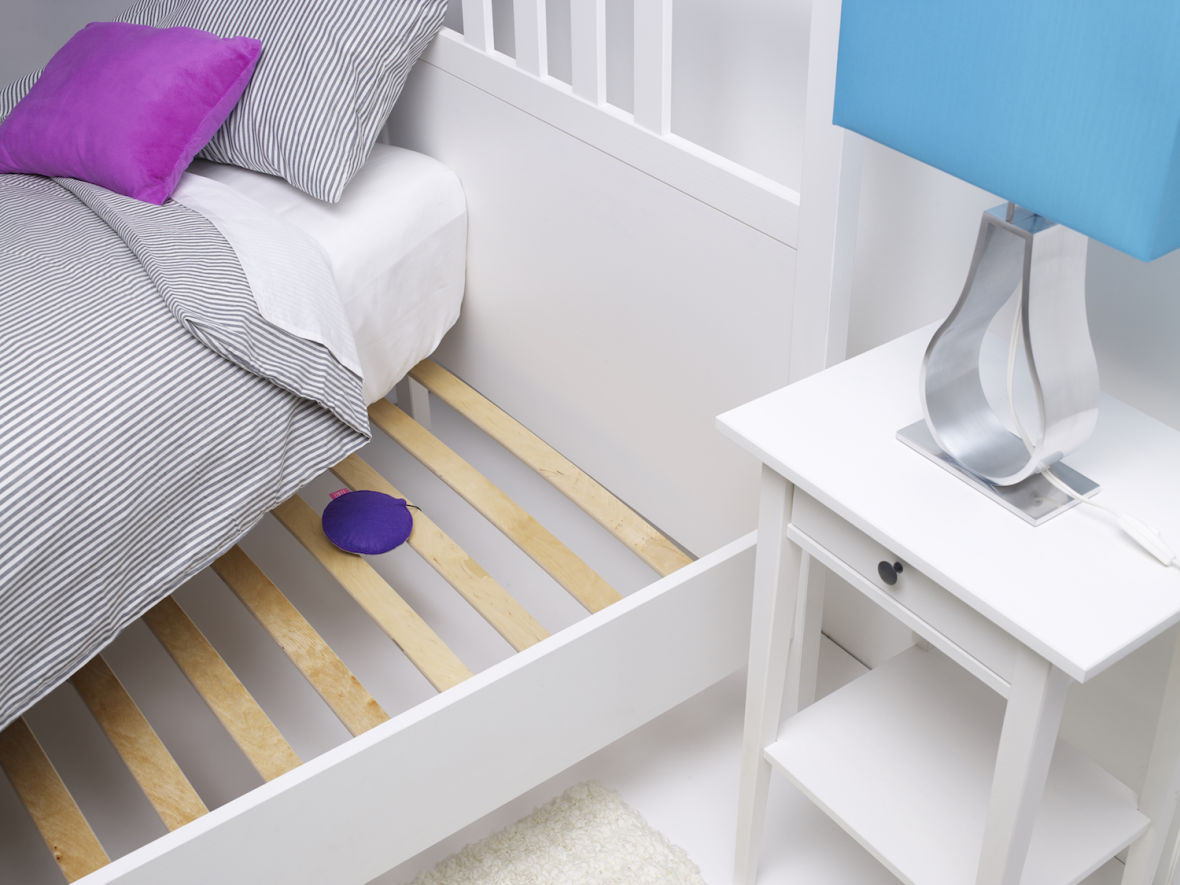
"caption": "Lully prevents a child from entering a period of unhealthy deep sleep that can cause night terrors.",
"description": null,
"title": "Lully slats area rug",
"credit": "Lully Sleep",
"status": "inherit",
"isLoading": false,
"fetchFailed": false
},
"futureofyou_23001": {
"type": "attachments",
"id": "futureofyou_23001",
"meta": {
"index": "attachments_1716263798",
"site": "futureofyou",
"id": "23001",
"found": true
},
"parent": 22981,
"imgSizes": {
"twentyfourteen-full-width": {
"file": "https://ww2.kqed.org/app/uploads/sites/13/2015/08/bargain-hunt-1038x576.jpg",
"width": 1038,
"mimeType": "image/jpeg",
"height": 576
},
"thumbnail": {
"file": "https://ww2.kqed.org/app/uploads/sites/13/2015/08/bargain-hunt-400x267.jpg",
"width": 400,
"mimeType": "image/jpeg",
"height": 267
},
"fd-sm": {
"file": "https://ww2.kqed.org/app/uploads/sites/13/2015/08/bargain-hunt-960x642.jpg",
"width": 960,
"mimeType": "image/jpeg",
"height": 642
},
"post-thumbnail": {
"file": "https://ww2.kqed.org/app/uploads/sites/13/2015/08/bargain-hunt-672x372.jpg",
"width": 672,
"mimeType": "image/jpeg",
"height": 372
},
"kqedFullSize": {
"file": "https://ww2.kqed.org/app/uploads/sites/13/2015/08/bargain-hunt.jpg",
"width": 1200,
"height": 802
},
"large": {
"file": "https://ww2.kqed.org/app/uploads/sites/13/2015/08/bargain-hunt-1180x789.jpg",
"width": 1180,
"mimeType": "image/jpeg",
"height": 789
},
"guest-author-96": {
"file": "https://ww2.kqed.org/app/uploads/sites/13/2015/08/bargain-hunt-96x96.jpg",
"width": 96,
"mimeType": "image/jpeg",
"height": 96
},
"medium": {
"file": "https://ww2.kqed.org/app/uploads/sites/13/2015/08/bargain-hunt-800x535.jpg",
"width": 800,
"mimeType": "image/jpeg",
"height": 535
},
"guest-author-64": {
"file": "https://ww2.kqed.org/app/uploads/sites/13/2015/08/bargain-hunt-64x64.jpg",
"width": 64,
"mimeType": "image/jpeg",
"height": 64
},
"guest-author-32": {
"file": "https://ww2.kqed.org/app/uploads/sites/13/2015/08/bargain-hunt-32x32.jpg",
"width": 32,
"mimeType": "image/jpeg",
"height": 32
},
"fd-med": {
"file": "https://ww2.kqed.org/app/uploads/sites/13/2015/08/bargain-hunt-1180x789.jpg",
"width": 1180,
"mimeType": "image/jpeg",
"height": 789
},
"detail": {
"file": "https://ww2.kqed.org/app/uploads/sites/13/2015/08/bargain-hunt-75x75.jpg",
"width": 75,
"mimeType": "image/jpeg",
"height": 75
},
"guest-author-128": {
"file": "https://ww2.kqed.org/app/uploads/sites/13/2015/08/bargain-hunt-128x128.jpg",
"width": 128,
"mimeType": "image/jpeg",
"height": 128
}
},
"publishDate": 1438985985,
"modified": 1438986067,
"caption": "You can bargain hunt for almost anything these days -- how about health procedures? ",
"description": null,
"title": "bargain hunt",
"credit": "Mikael Leppä / Flickr ",
"status": "inherit",
"isLoading": false,
"fetchFailed": false
},
"futureofyou_22071": {
"type": "attachments",
"id": "futureofyou_22071",
"meta": {
"index": "attachments_1716263798",
"site": "futureofyou",
"id": "22071",
"found": true
},
"parent": 21516,
"imgSizes": {
"twentyfourteen-full-width": {
"file": "https://ww2.kqed.org/app/uploads/sites/13/2015/08/doctors-1038x576.jpg",
"width": 1038,
"mimeType": "image/jpeg",
"height": 576
},
"thumbnail": {
"file": "https://ww2.kqed.org/app/uploads/sites/13/2015/08/doctors-400x300.jpg",
"width": 400,
"mimeType": "image/jpeg",
"height": 300
},
"fd-sm": {
"file": "https://ww2.kqed.org/app/uploads/sites/13/2015/08/doctors-960x720.jpg",
"width": 960,
"mimeType": "image/jpeg",
"height": 720
},
"post-thumbnail": {
"file": "https://ww2.kqed.org/app/uploads/sites/13/2015/08/doctors-672x372.jpg",
"width": 672,
"mimeType": "image/jpeg",
"height": 372
},
"kqedFullSize": {
"file": "https://ww2.kqed.org/app/uploads/sites/13/2015/08/doctors.jpg",
"width": 1600,
"height": 1200
},
"large": {
"file": "https://ww2.kqed.org/app/uploads/sites/13/2015/08/doctors-1180x885.jpg",
"width": 1180,
"mimeType": "image/jpeg",
"height": 885
},
"guest-author-96": {
"file": "https://ww2.kqed.org/app/uploads/sites/13/2015/08/doctors-96x96.jpg",
"width": 96,
"mimeType": "image/jpeg",
"height": 96
},
"medium": {
"file": "https://ww2.kqed.org/app/uploads/sites/13/2015/08/doctors-800x600.jpg",
"width": 800,
"mimeType": "image/jpeg",
"height": 600
},
"guest-author-64": {
"file": "https://ww2.kqed.org/app/uploads/sites/13/2015/08/doctors-64x64.jpg",
"width": 64,
"mimeType": "image/jpeg",
"height": 64
},
"guest-author-32": {
"file": "https://ww2.kqed.org/app/uploads/sites/13/2015/08/doctors-32x32.jpg",
"width": 32,
"mimeType": "image/jpeg",
"height": 32
},
"fd-med": {
"file": "https://ww2.kqed.org/app/uploads/sites/13/2015/08/doctors-1180x885.jpg",
"width": 1180,
"mimeType": "image/jpeg",
"height": 885
},
"detail": {
"file": "https://ww2.kqed.org/app/uploads/sites/13/2015/08/doctors-75x75.jpg",
"width": 75,
"mimeType": "image/jpeg",
"height": 75
},
"guest-author-128": {
"file": "https://ww2.kqed.org/app/uploads/sites/13/2015/08/doctors-128x128.jpg",
"width": 128,
"mimeType": "image/jpeg",
"height": 128
}
},
"publishDate": 1438808550,
"modified": 1438808577,
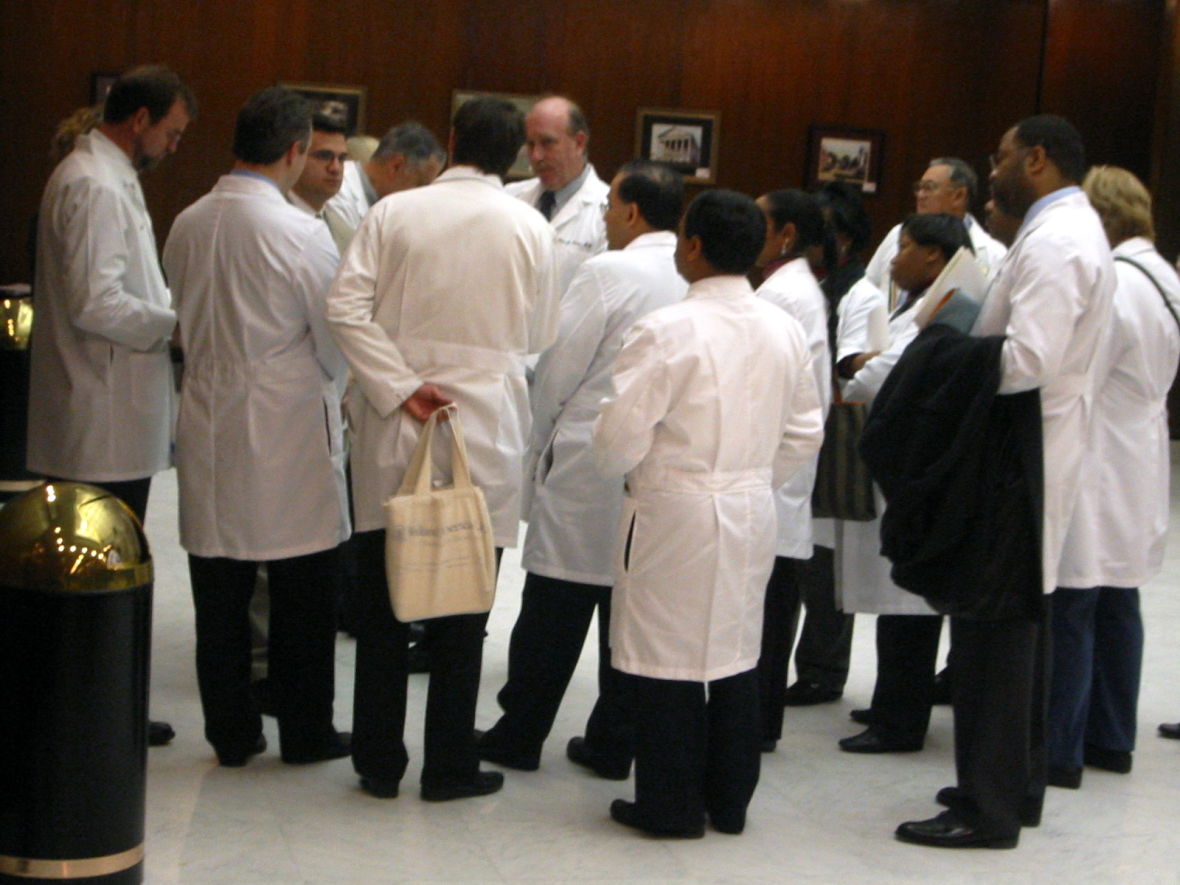
"caption": "New websites want to help you find the right doctor ",
"description": null,
"title": "doctors",
"credit": "Waldo Jaquith / Flickr",
"status": "inherit",
"isLoading": false,
"fetchFailed": false
},
"futureofyou_18576": {
"type": "attachments",
"id": "futureofyou_18576",
"meta": {
"index": "attachments_1716263798",
"site": "futureofyou",
"id": "18576",
"found": true
},
"parent": 18239,
"imgSizes": {
"thumbnail": {
"file": "https://ww2.kqed.org/app/uploads/sites/13/2015/07/woman-jogger-jogging-sport-large-400x267.jpg",
"width": 400,
"mimeType": "image/jpeg",
"height": 267
},
"post-thumbnail": {
"file": "https://ww2.kqed.org/app/uploads/sites/13/2015/07/woman-jogger-jogging-sport-large-672x372.jpg",
"width": 672,
"mimeType": "image/jpeg",
"height": 372
},
"kqedFullSize": {
"file": "https://ww2.kqed.org/app/uploads/sites/13/2015/07/woman-jogger-jogging-sport-large.jpg",
"width": 825,
"height": 550
},
"guest-author-96": {
"file": "https://ww2.kqed.org/app/uploads/sites/13/2015/07/woman-jogger-jogging-sport-large-96x96.jpg",
"width": 96,
"mimeType": "image/jpeg",
"height": 96
},
"medium": {
"file": "https://ww2.kqed.org/app/uploads/sites/13/2015/07/woman-jogger-jogging-sport-large-800x533.jpg",
"width": 800,
"mimeType": "image/jpeg",
"height": 533
},
"guest-author-64": {
"file": "https://ww2.kqed.org/app/uploads/sites/13/2015/07/woman-jogger-jogging-sport-large-64x64.jpg",
"width": 64,
"mimeType": "image/jpeg",
"height": 64
},
"detail": {
"file": "https://ww2.kqed.org/app/uploads/sites/13/2015/07/woman-jogger-jogging-sport-large-75x75.jpg",
"width": 75,
"mimeType": "image/jpeg",
"height": 75
},
"guest-author-32": {
"file": "https://ww2.kqed.org/app/uploads/sites/13/2015/07/woman-jogger-jogging-sport-large-32x32.jpg",
"width": 32,
"mimeType": "image/jpeg",
"height": 32
},
"guest-author-128": {
"file": "https://ww2.kqed.org/app/uploads/sites/13/2015/07/woman-jogger-jogging-sport-large-128x128.jpg",
"width": 128,
"mimeType": "image/jpeg",
"height": 128
}
},
"publishDate": 1438100563,
"modified": 1438100717,
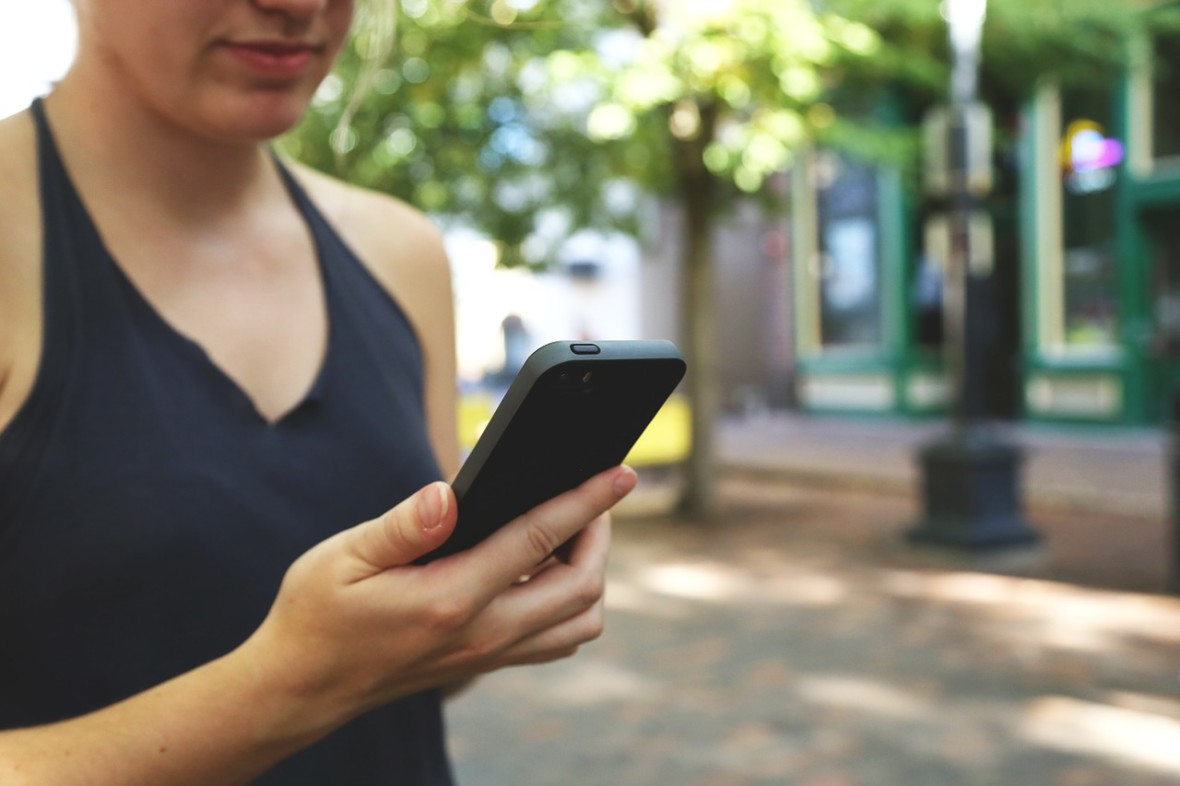
"caption": "NYU researchers are launching a new public health study that leverages \"quantified self\" data ",
"description": null,
"title": "woman-jogger-jogging-sport-large",
"credit": "Pexels.com",
"status": "inherit",
"isLoading": false,
"fetchFailed": false
},
"futureofyou_18645": {
"type": "attachments",
"id": "futureofyou_18645",
"meta": {
"index": "attachments_1716263798",
"site": "futureofyou",
"id": "18645",
"found": true
},
"parent": 18627,
"imgSizes": {
"twentyfourteen-full-width": {
"file": "https://ww2.kqed.org/app/uploads/sites/13/2015/07/eric-topol-1038x576.jpg",
"width": 1038,
"mimeType": "image/jpeg",
"height": 576
},
"thumbnail": {
"file": "https://ww2.kqed.org/app/uploads/sites/13/2015/07/eric-topol-400x267.jpg",
"width": 400,
"mimeType": "image/jpeg",
"height": 267
},
"fd-sm": {
"file": "https://ww2.kqed.org/app/uploads/sites/13/2015/07/eric-topol-960x640.jpg",
"width": 960,
"mimeType": "image/jpeg",
"height": 640
},
"post-thumbnail": {
"file": "https://ww2.kqed.org/app/uploads/sites/13/2015/07/eric-topol-672x372.jpg",
"width": 672,
"mimeType": "image/jpeg",
"height": 372
},
"kqedFullSize": {
"file": "https://ww2.kqed.org/app/uploads/sites/13/2015/07/eric-topol.jpg",
"width": 3518,
"height": 2346
},
"large": {
"file": "https://ww2.kqed.org/app/uploads/sites/13/2015/07/eric-topol-1180x787.jpg",
"width": 1180,
"mimeType": "image/jpeg",
"height": 787
},
"guest-author-96": {
"file": "https://ww2.kqed.org/app/uploads/sites/13/2015/07/eric-topol-96x96.jpg",
"width": 96,
"mimeType": "image/jpeg",
"height": 96
},
"medium": {
"file": "https://ww2.kqed.org/app/uploads/sites/13/2015/07/eric-topol-800x533.jpg",
"width": 800,
"mimeType": "image/jpeg",
"height": 533
},
"guest-author-64": {
"file": "https://ww2.kqed.org/app/uploads/sites/13/2015/07/eric-topol-64x64.jpg",
"width": 64,
"mimeType": "image/jpeg",
"height": 64
},
"guest-author-32": {
"file": "https://ww2.kqed.org/app/uploads/sites/13/2015/07/eric-topol-32x32.jpg",
"width": 32,
"mimeType": "image/jpeg",
"height": 32
},
"fd-lrg": {
"file": "https://ww2.kqed.org/app/uploads/sites/13/2015/07/eric-topol-1400x934.jpg",
"width": 1400,
"mimeType": "image/jpeg",
"height": 934
},
"fd-med": {
"file": "https://ww2.kqed.org/app/uploads/sites/13/2015/07/eric-topol-1180x787.jpg",
"width": 1180,
"mimeType": "image/jpeg",
"height": 787
},
"detail": {
"file": "https://ww2.kqed.org/app/uploads/sites/13/2015/07/eric-topol-75x75.jpg",
"width": 75,
"mimeType": "image/jpeg",
"height": 75
},
"guest-author-128": {
"file": "https://ww2.kqed.org/app/uploads/sites/13/2015/07/eric-topol-128x128.jpg",
"width": 128,
"mimeType": "image/jpeg",
"height": 128
}
},
"publishDate": 1438116551,
"modified": 1438116607,
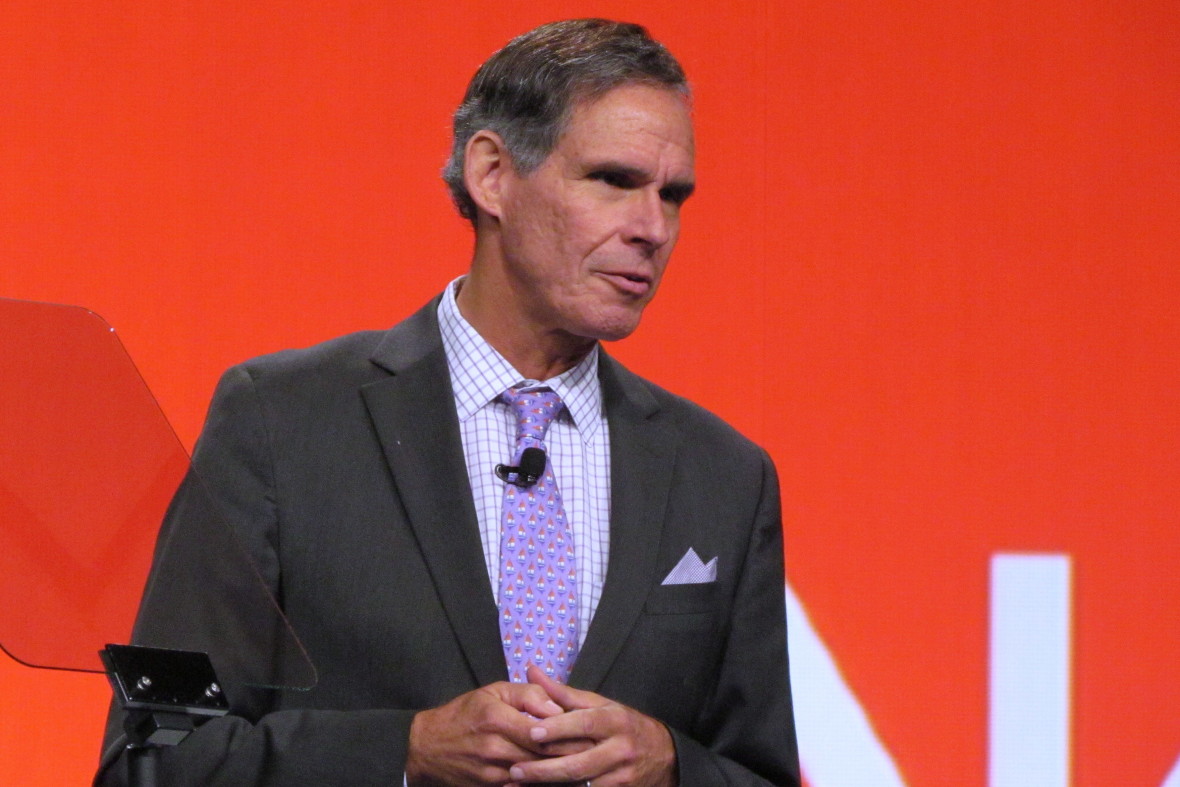
"caption": "Dr. Eric Topol, a cardiologist, geneticist and author, sees promise in digital health. ",
"description": null,
"title": "eric topol",
"credit": " Ed Uthman/ Flickr",
"status": "inherit",
"isLoading": false,
"fetchFailed": false
},
"futureofyou_18197": {
"type": "attachments",
"id": "futureofyou_18197",
"meta": {
"index": "attachments_1716263798",
"site": "futureofyou",
"id": "18197",
"found": true
},
"parent": 18178,
"imgSizes": {
"twentyfourteen-full-width": {
"file": "https://ww2.kqed.org/app/uploads/sites/13/2015/07/smartphone-mole-1038x576.jpg",
"width": 1038,
"mimeType": "image/jpeg",
"height": 576
},
"thumbnail": {
"file": "https://ww2.kqed.org/app/uploads/sites/13/2015/07/smartphone-mole-400x267.jpg",
"width": 400,
"mimeType": "image/jpeg",
"height": 267
},
"fd-sm": {
"file": "https://ww2.kqed.org/app/uploads/sites/13/2015/07/smartphone-mole-960x640.jpg",
"width": 960,
"mimeType": "image/jpeg",
"height": 640
},
"post-thumbnail": {
"file": "https://ww2.kqed.org/app/uploads/sites/13/2015/07/smartphone-mole-672x372.jpg",
"width": 672,
"mimeType": "image/jpeg",
"height": 372
},
"kqedFullSize": {
"file": "https://ww2.kqed.org/app/uploads/sites/13/2015/07/smartphone-mole.jpg",
"width": 1280,
"height": 853
},
"large": {
"file": "https://ww2.kqed.org/app/uploads/sites/13/2015/07/smartphone-mole-1180x786.jpg",
"width": 1180,
"mimeType": "image/jpeg",
"height": 786
},
"guest-author-96": {
"file": "https://ww2.kqed.org/app/uploads/sites/13/2015/07/smartphone-mole-96x96.jpg",
"width": 96,
"mimeType": "image/jpeg",
"height": 96
},
"medium": {
"file": "https://ww2.kqed.org/app/uploads/sites/13/2015/07/smartphone-mole-800x533.jpg",
"width": 800,
"mimeType": "image/jpeg",
"height": 533
},
"guest-author-64": {
"file": "https://ww2.kqed.org/app/uploads/sites/13/2015/07/smartphone-mole-64x64.jpg",
"width": 64,
"mimeType": "image/jpeg",
"height": 64
},
"guest-author-32": {
"file": "https://ww2.kqed.org/app/uploads/sites/13/2015/07/smartphone-mole-32x32.jpg",
"width": 32,
"mimeType": "image/jpeg",
"height": 32
},
"fd-med": {
"file": "https://ww2.kqed.org/app/uploads/sites/13/2015/07/smartphone-mole-1180x786.jpg",
"width": 1180,
"mimeType": "image/jpeg",
"height": 786
},
"detail": {
"file": "https://ww2.kqed.org/app/uploads/sites/13/2015/07/smartphone-mole-75x75.jpg",
"width": 75,
"mimeType": "image/jpeg",
"height": 75
},
"guest-author-128": {
"file": "https://ww2.kqed.org/app/uploads/sites/13/2015/07/smartphone-mole-128x128.jpg",
"width": 128,
"mimeType": "image/jpeg",
"height": 128
}
},
"publishDate": 1438025951,
"modified": 1538667343,
"caption": null,
"description": null,
"title": "smartphone mole",
"credit": "Pixa Bay/ Creative Commons",
"status": "inherit",
"isLoading": false,
"fetchFailed": false
},
"futureofyou_15488": {
"type": "attachments",
"id": "futureofyou_15488",
"meta": {
"index": "attachments_1716263798",
"site": "futureofyou",
"id": "15488",
"found": true
},
"parent": 14022,
"imgSizes": {
"twentyfourteen-full-width": {
"file": "https://ww2.kqed.org/app/uploads/sites/13/2015/07/andi-1024x576.jpg",
"width": 1024,
"mimeType": "image/jpeg",
"height": 576
},
"thumbnail": {
"file": "https://ww2.kqed.org/app/uploads/sites/13/2015/07/andi-400x267.jpg",
"width": 400,
"mimeType": "image/jpeg",
"height": 267
},
"fd-sm": {
"file": "https://ww2.kqed.org/app/uploads/sites/13/2015/07/andi-960x640.jpg",
"width": 960,
"mimeType": "image/jpeg",
"height": 640
},
"post-thumbnail": {
"file": "https://ww2.kqed.org/app/uploads/sites/13/2015/07/andi-672x372.jpg",
"width": 672,
"mimeType": "image/jpeg",
"height": 372
},
"kqedFullSize": {
"file": "https://ww2.kqed.org/app/uploads/sites/13/2015/07/andi.jpg",
"width": 1024,
"height": 683
},
"guest-author-96": {
"file": "https://ww2.kqed.org/app/uploads/sites/13/2015/07/andi-96x96.jpg",
"width": 96,
"mimeType": "image/jpeg",
"height": 96
},
"medium": {
"file": "https://ww2.kqed.org/app/uploads/sites/13/2015/07/andi-800x534.jpg",
"width": 800,
"mimeType": "image/jpeg",
"height": 534
},
"guest-author-64": {
"file": "https://ww2.kqed.org/app/uploads/sites/13/2015/07/andi-64x64.jpg",
"width": 64,
"mimeType": "image/jpeg",
"height": 64
},
"detail": {
"file": "https://ww2.kqed.org/app/uploads/sites/13/2015/07/andi-75x75.jpg",
"width": 75,
"mimeType": "image/jpeg",
"height": 75
},
"guest-author-32": {
"file": "https://ww2.kqed.org/app/uploads/sites/13/2015/07/andi-32x32.jpg",
"width": 32,
"mimeType": "image/jpeg",
"height": 32
},
"guest-author-128": {
"file": "https://ww2.kqed.org/app/uploads/sites/13/2015/07/andi-128x128.jpg",
"width": 128,
"mimeType": "image/jpeg",
"height": 128
}
},
"publishDate": 1437420251,
"modified": 1437420267,
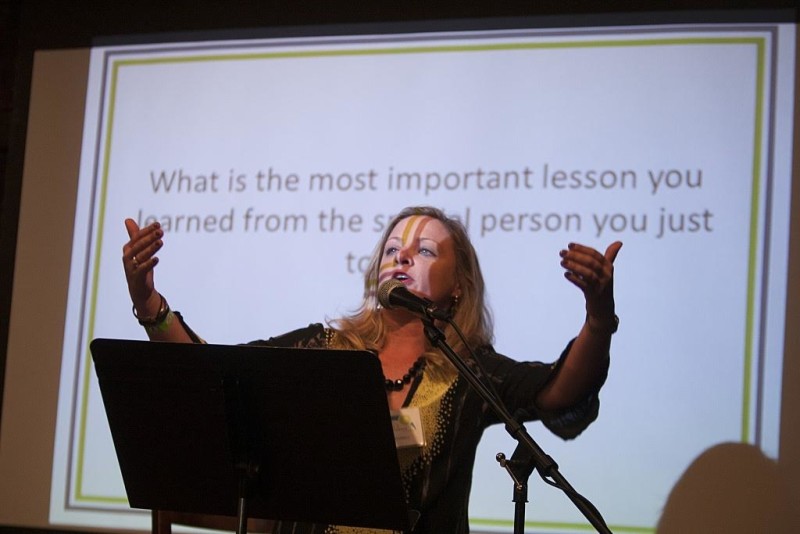
"caption": "Life Matters Media Co-Founder Randi Belisomo talks about the importance of advance health care planning in Chicago. ",
"description": null,
"title": "andi",
"credit": "David Pierini ",
"status": "inherit",
"isLoading": false,
"fetchFailed": false
},
"futureofyou_13690": {
"type": "attachments",
"id": "futureofyou_13690",
"meta": {
"index": "attachments_1716263798",
"site": "futureofyou",
"id": "13690",
"found": true
},
"parent": 13651,
"imgSizes": {
"thumbnail": {
"file": "https://ww2.kqed.org/app/uploads/sites/13/2015/07/propublica-400x300.jpg",
"width": 400,
"mimeType": "image/jpeg",
"height": 300
},
"post-thumbnail": {
"file": "https://ww2.kqed.org/app/uploads/sites/13/2015/07/propublica-640x372.jpg",
"width": 640,
"mimeType": "image/jpeg",
"height": 372
},
"kqedFullSize": {
"file": "https://ww2.kqed.org/app/uploads/sites/13/2015/07/propublica.jpg",
"width": 640,
"height": 480
},
"guest-author-96": {
"file": "https://ww2.kqed.org/app/uploads/sites/13/2015/07/propublica-96x96.jpg",
"width": 96,
"mimeType": "image/jpeg",
"height": 96
},
"guest-author-64": {
"file": "https://ww2.kqed.org/app/uploads/sites/13/2015/07/propublica-64x64.jpg",
"width": 64,
"mimeType": "image/jpeg",
"height": 64
},
"detail": {
"file": "https://ww2.kqed.org/app/uploads/sites/13/2015/07/propublica-75x75.jpg",
"width": 75,
"mimeType": "image/jpeg",
"height": 75
},
"guest-author-32": {
"file": "https://ww2.kqed.org/app/uploads/sites/13/2015/07/propublica-32x32.jpg",
"width": 32,
"mimeType": "image/jpeg",
"height": 32
},
"guest-author-128": {
"file": "https://ww2.kqed.org/app/uploads/sites/13/2015/07/propublica-128x128.jpg",
"width": 128,
"mimeType": "image/jpeg",
"height": 128
}
},
"publishDate": 1436991930,
"modified": 1437000019,
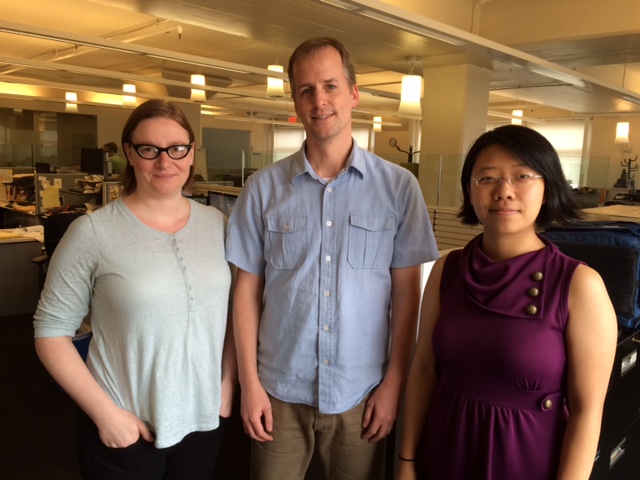
"caption": "The reporters at ProPublica who spearheaded the Surgeon Scorecard. Left to Right: Olga Pierce, Marshall Allen, Sisi Wei.",
"description": null,
"title": "propublica",
"credit": "ProPublica ",
"status": "inherit",
"isLoading": false,
"fetchFailed": false
},
"futureofyou_8615": {
"type": "attachments",
"id": "futureofyou_8615",
"meta": {
"index": "attachments_1716263798",
"site": "futureofyou",
"id": "8615",
"found": true
},
"parent": 7146,
"imgSizes": {
"twentyfourteen-full-width": {
"file": "https://ww2.kqed.org/app/uploads/sites/13/2015/06/glucose-999x576.jpg",
"width": 999,
"mimeType": "image/jpeg",
"height": 576
},
"thumbnail": {
"file": "https://ww2.kqed.org/app/uploads/sites/13/2015/06/glucose-400x256.jpg",
"width": 400,
"mimeType": "image/jpeg",
"height": 256
},
"fd-sm": {
"file": "https://ww2.kqed.org/app/uploads/sites/13/2015/06/glucose-960x615.jpg",
"width": 960,
"mimeType": "image/jpeg",
"height": 615
},
"post-thumbnail": {
"file": "https://ww2.kqed.org/app/uploads/sites/13/2015/06/glucose-672x372.jpg",
"width": 672,
"mimeType": "image/jpeg",
"height": 372
},
"kqedFullSize": {
"file": "https://ww2.kqed.org/app/uploads/sites/13/2015/06/glucose.jpg",
"width": 999,
"height": 640
},
"guest-author-96": {
"file": "https://ww2.kqed.org/app/uploads/sites/13/2015/06/glucose-96x96.jpg",
"width": 96,
"mimeType": "image/jpeg",
"height": 96
},
"medium": {
"file": "https://ww2.kqed.org/app/uploads/sites/13/2015/06/glucose-800x513.jpg",
"width": 800,
"mimeType": "image/jpeg",
"height": 513
},
"guest-author-64": {
"file": "https://ww2.kqed.org/app/uploads/sites/13/2015/06/glucose-64x64.jpg",
"width": 64,
"mimeType": "image/jpeg",
"height": 64
},
"detail": {
"file": "https://ww2.kqed.org/app/uploads/sites/13/2015/06/glucose-75x75.jpg",
"width": 75,
"mimeType": "image/jpeg",
"height": 75
},
"guest-author-32": {
"file": "https://ww2.kqed.org/app/uploads/sites/13/2015/06/glucose-32x32.jpg",
"width": 32,
"mimeType": "image/jpeg",
"height": 32
},
"guest-author-128": {
"file": "https://ww2.kqed.org/app/uploads/sites/13/2015/06/glucose-128x128.jpg",
"width": 128,
"mimeType": "image/jpeg",
"height": 128
}
},
"publishDate": 1435682644,
"modified": 1435682683,
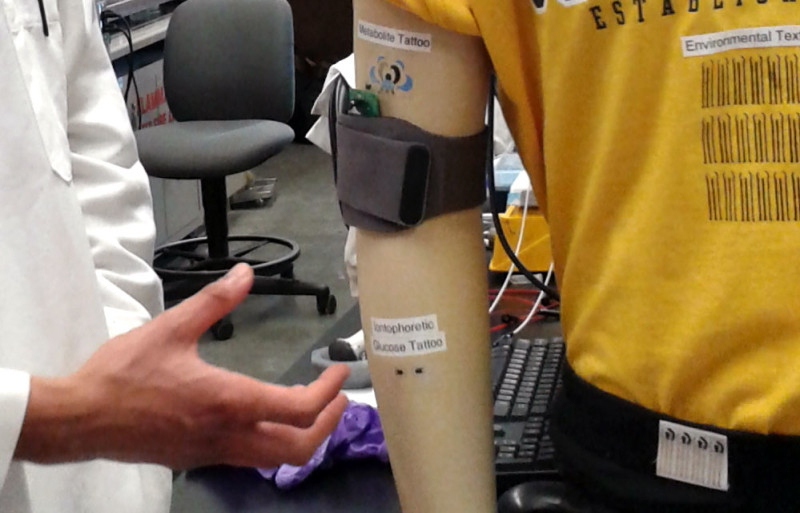
"caption": " The sensors can be drawn on almost any surface, even a leaf.",
"description": null,
"title": "glucose",
"credit": "Amay Bandodkar",
"status": "inherit",
"isLoading": false,
"fetchFailed": false
},
"futureofyou_7182": {
"type": "attachments",
"id": "futureofyou_7182",
"meta": {
"index": "attachments_1716263798",
"site": "futureofyou",
"id": "7182",
"found": true
},
"parent": 7105,
"imgSizes": {
"twentyfourteen-full-width": {
"file": "https://ww2.kqed.org/app/uploads/sites/13/2015/06/Child_and_Mother_USE-THIS-1038x576.jpg",
"width": 1038,
"mimeType": "image/jpeg",
"height": 576
},
"thumbnail": {
"file": "https://ww2.kqed.org/app/uploads/sites/13/2015/06/Child_and_Mother_USE-THIS-400x267.jpg",
"width": 400,
"mimeType": "image/jpeg",
"height": 267
},
"fd-sm": {
"file": "https://ww2.kqed.org/app/uploads/sites/13/2015/06/Child_and_Mother_USE-THIS-960x640.jpg",
"width": 960,
"mimeType": "image/jpeg",
"height": 640
},
"post-thumbnail": {
"file": "https://ww2.kqed.org/app/uploads/sites/13/2015/06/Child_and_Mother_USE-THIS-672x372.jpg",
"width": 672,
"mimeType": "image/jpeg",
"height": 372
},
"kqedFullSize": {
"file": "https://ww2.kqed.org/app/uploads/sites/13/2015/06/Child_and_Mother_USE-THIS.jpg",
"width": 1080,
"height": 720
},
"guest-author-96": {
"file": "https://ww2.kqed.org/app/uploads/sites/13/2015/06/Child_and_Mother_USE-THIS-96x96.jpg",
"width": 96,
"mimeType": "image/jpeg",
"height": 96
},
"medium": {
"file": "https://ww2.kqed.org/app/uploads/sites/13/2015/06/Child_and_Mother_USE-THIS-800x533.jpg",
"width": 800,
"mimeType": "image/jpeg",
"height": 533
},
"guest-author-64": {
"file": "https://ww2.kqed.org/app/uploads/sites/13/2015/06/Child_and_Mother_USE-THIS-64x64.jpg",
"width": 64,
"mimeType": "image/jpeg",
"height": 64
},
"detail": {
"file": "https://ww2.kqed.org/app/uploads/sites/13/2015/06/Child_and_Mother_USE-THIS-75x75.jpg",
"width": 75,
"mimeType": "image/jpeg",
"height": 75
},
"guest-author-32": {
"file": "https://ww2.kqed.org/app/uploads/sites/13/2015/06/Child_and_Mother_USE-THIS-32x32.jpg",
"width": 32,
"mimeType": "image/jpeg",
"height": 32
},
"guest-author-128": {
"file": "https://ww2.kqed.org/app/uploads/sites/13/2015/06/Child_and_Mother_USE-THIS-128x128.jpg",
"width": 128,
"mimeType": "image/jpeg",
"height": 128
}
},
"publishDate": 1435363760,
"modified": 1435363800,
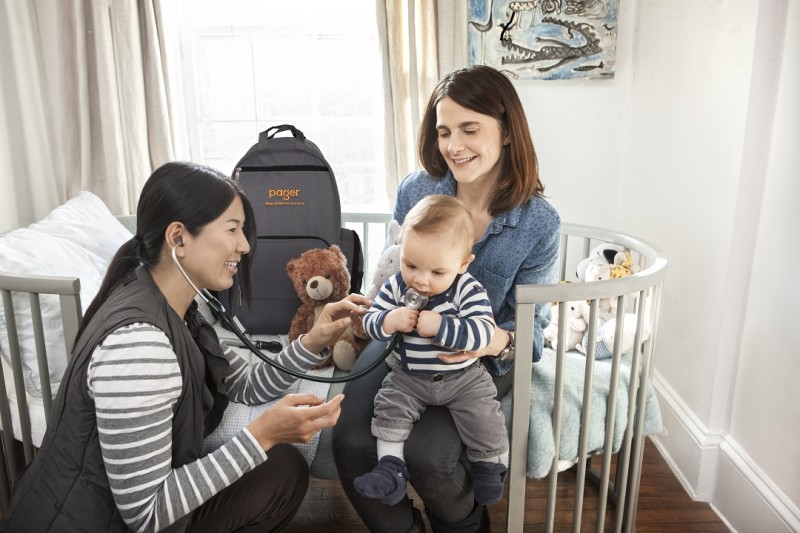
"caption": "A nurse with Pager makes a visit to a mother and child. (Pager)",
"description": null,
"title": "Home Healthcare",
"credit": null,
"status": "inherit",
"isLoading": false,
"fetchFailed": false
},
"futureofyou_6719": {
"type": "attachments",
"id": "futureofyou_6719",
"meta": {
"index": "attachments_1716263798",
"site": "futureofyou",
"id": "6719",
"found": true
},
"parent": 6467,
"imgSizes": {
"twentyfourteen-full-width": {
"file": "https://ww2.kqed.org/app/uploads/sites/13/2015/06/Unknown-1038x576.jpeg",
"width": 1038,
"mimeType": "image/jpeg",
"height": 576
},
"thumbnail": {
"file": "https://ww2.kqed.org/app/uploads/sites/13/2015/06/Unknown-400x267.jpeg",
"width": 400,
"mimeType": "image/jpeg",
"height": 267
},
"fd-sm": {
"file": "https://ww2.kqed.org/app/uploads/sites/13/2015/06/Unknown-960x640.jpeg",
"width": 960,
"mimeType": "image/jpeg",
"height": 640
},
"post-thumbnail": {
"file": "https://ww2.kqed.org/app/uploads/sites/13/2015/06/Unknown-672x372.jpeg",
"width": 672,
"mimeType": "image/jpeg",
"height": 372
},
"kqedFullSize": {
"file": "https://ww2.kqed.org/app/uploads/sites/13/2015/06/Unknown.jpeg",
"width": 4569,
"height": 3046
},
"large": {
"file": "https://ww2.kqed.org/app/uploads/sites/13/2015/06/Unknown-1180x787.jpeg",
"width": 1180,
"mimeType": "image/jpeg",
"height": 787
},
"guest-author-96": {
"file": "https://ww2.kqed.org/app/uploads/sites/13/2015/06/Unknown-96x96.jpeg",
"width": 96,
"mimeType": "image/jpeg",
"height": 96
},
"medium": {
"file": "https://ww2.kqed.org/app/uploads/sites/13/2015/06/Unknown-800x533.jpeg",
"width": 800,
"mimeType": "image/jpeg",
"height": 533
},
"guest-author-64": {
"file": "https://ww2.kqed.org/app/uploads/sites/13/2015/06/Unknown-64x64.jpeg",
"width": 64,
"mimeType": "image/jpeg",
"height": 64
},
"guest-author-32": {
"file": "https://ww2.kqed.org/app/uploads/sites/13/2015/06/Unknown-32x32.jpeg",
"width": 32,
"mimeType": "image/jpeg",
"height": 32
},
"fd-med": {
"file": "https://ww2.kqed.org/app/uploads/sites/13/2015/06/Unknown-1180x787.jpeg",
"width": 1180,
"mimeType": "image/jpeg",
"height": 787
},
"detail": {
"file": "https://ww2.kqed.org/app/uploads/sites/13/2015/06/Unknown-75x75.jpeg",
"width": 75,
"mimeType": "image/jpeg",
"height": 75
},
"guest-author-128": {
"file": "https://ww2.kqed.org/app/uploads/sites/13/2015/06/Unknown-128x128.jpeg",
"width": 128,
"mimeType": "image/jpeg",
"height": 128
}
},
"publishDate": 1435253303,
"modified": 1435253323,
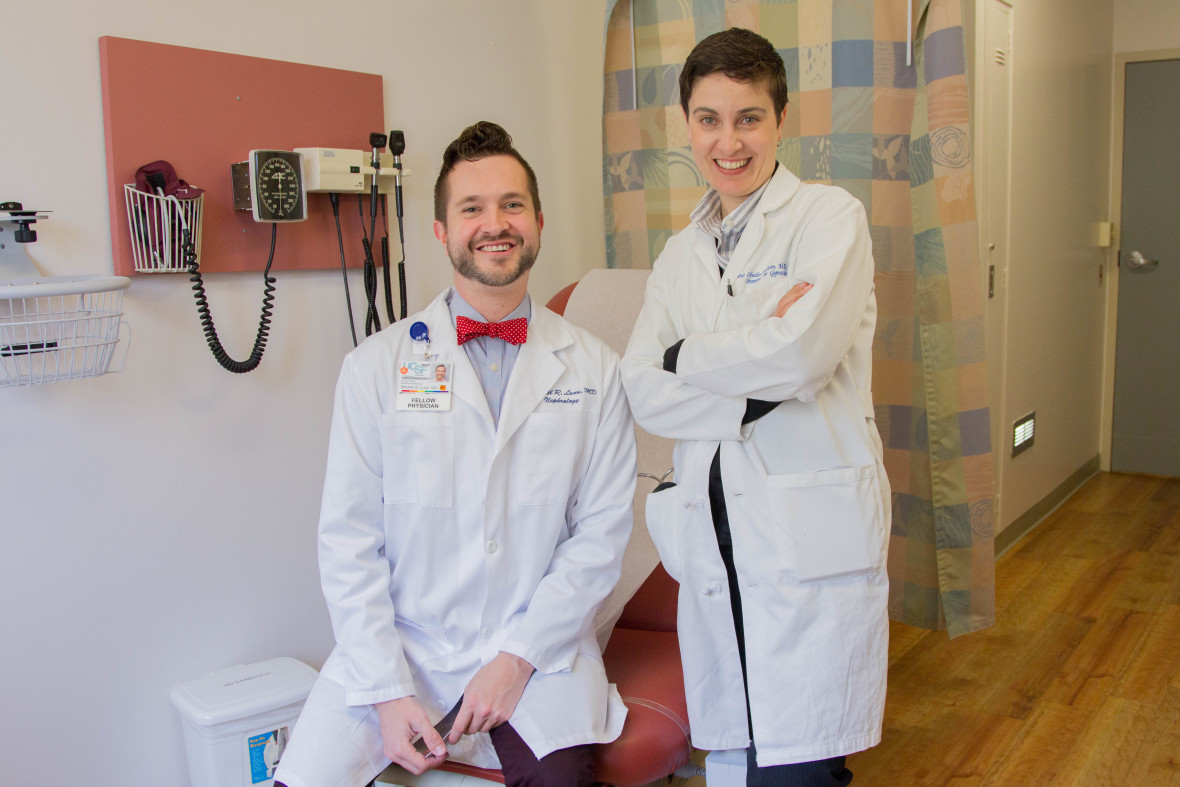
"caption": "Obstetrics and Gynecology physician Juno Obedin-Maliver, MD, MPH, and nephrologist Mitchell Lunn, MD, are authors of the PRIDE study.",
"description": null,
"title": "PRIDE STUDY",
"credit": "UCSF ",
"status": "inherit",
"isLoading": false,
"fetchFailed": false
},
"futureofyou_6096": {
"type": "attachments",
"id": "futureofyou_6096",
"meta": {
"index": "attachments_1716263798",
"site": "futureofyou",
"id": "6096",
"found": true
},
"parent": 6095,
"imgSizes": {
"twentyfourteen-full-width": {
"file": "https://ww2.kqed.org/app/uploads/sites/13/2015/06/fitnet-1_wide-a0b68242e5349d1f52f8ee56c52cc0948cbddc49-1038x576.jpg",
"width": 1038,
"mimeType": "image/jpeg",
"height": 576
},
"thumbnail": {
"file": "https://ww2.kqed.org/app/uploads/sites/13/2015/06/fitnet-1_wide-a0b68242e5349d1f52f8ee56c52cc0948cbddc49-400x225.jpg",
"width": 400,
"mimeType": "image/jpeg",
"height": 225
},
"fd-sm": {
"file": "https://ww2.kqed.org/app/uploads/sites/13/2015/06/fitnet-1_wide-a0b68242e5349d1f52f8ee56c52cc0948cbddc49-960x540.jpg",
"width": 960,
"mimeType": "image/jpeg",
"height": 540
},
"post-thumbnail": {
"file": "https://ww2.kqed.org/app/uploads/sites/13/2015/06/fitnet-1_wide-a0b68242e5349d1f52f8ee56c52cc0948cbddc49-672x372.jpg",
"width": 672,
"mimeType": "image/jpeg",
"height": 372
},
"kqedFullSize": {
"file": "https://ww2.kqed.org/app/uploads/sites/13/2015/06/fitnet-1_wide-a0b68242e5349d1f52f8ee56c52cc0948cbddc49.jpg",
"width": 1136,
"height": 639
},
"guest-author-96": {
"file": "https://ww2.kqed.org/app/uploads/sites/13/2015/06/fitnet-1_wide-a0b68242e5349d1f52f8ee56c52cc0948cbddc49-96x96.jpg",
"width": 96,
"mimeType": "image/jpeg",
"height": 96
},
"medium": {
"file": "https://ww2.kqed.org/app/uploads/sites/13/2015/06/fitnet-1_wide-a0b68242e5349d1f52f8ee56c52cc0948cbddc49-800x450.jpg",
"width": 800,
"mimeType": "image/jpeg",
"height": 450
},
"guest-author-64": {
"file": "https://ww2.kqed.org/app/uploads/sites/13/2015/06/fitnet-1_wide-a0b68242e5349d1f52f8ee56c52cc0948cbddc49-64x64.jpg",
"width": 64,
"mimeType": "image/jpeg",
"height": 64
},
"detail": {
"file": "https://ww2.kqed.org/app/uploads/sites/13/2015/06/fitnet-1_wide-a0b68242e5349d1f52f8ee56c52cc0948cbddc49-75x75.jpg",
"width": 75,
"mimeType": "image/jpeg",
"height": 75
},
"guest-author-32": {
"file": "https://ww2.kqed.org/app/uploads/sites/13/2015/06/fitnet-1_wide-a0b68242e5349d1f52f8ee56c52cc0948cbddc49-32x32.jpg",
"width": 32,
"mimeType": "image/jpeg",
"height": 32
},
"guest-author-128": {
"file": "https://ww2.kqed.org/app/uploads/sites/13/2015/06/fitnet-1_wide-a0b68242e5349d1f52f8ee56c52cc0948cbddc49-128x128.jpg",
"width": 128,
"mimeType": "image/jpeg",
"height": 128
}
},
"publishDate": 1435079468,
"modified": 1435079468,
"caption": null,
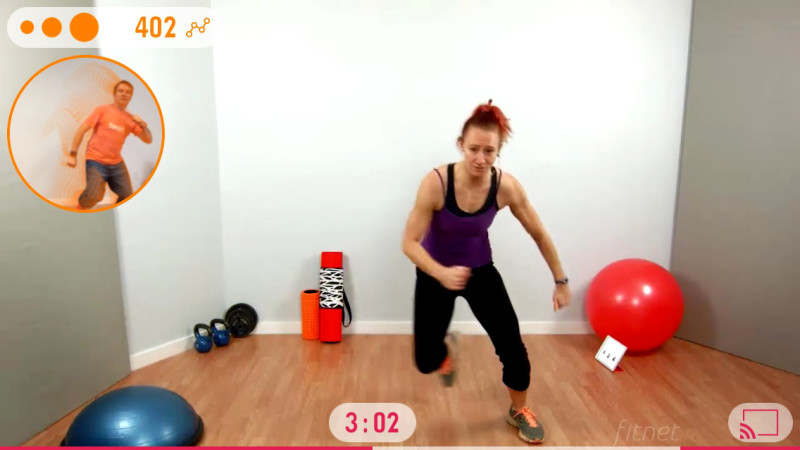
"description": "In the current version of the Fitnet App, the camera of an exerciser's smartphone captures data from him (upper left), while a prerecorded trainer guides him through a workout. A clock (bottom center) shows elapsed time. The orange dots (upper left) indicate he's following her routine well, as judged by the camera and phone's app. The app can also estimate the exerciser's number of steps.",
"title": "In the current version of the Fitnet App, the camera of an exerciser's smartphone captures data from him (upper left), while a prerecorded trainer guides him through a workout. A clock (bottom center) shows elapsed time. The orange dots (upper left) indicate he's following her routine well, as judged by the camera and phone's app. The app can also estimate the exerciser's number of steps.",
"credit": null,
"status": "inherit",
"isLoading": false,
"fetchFailed": false
}
},
"audioPlayerReducer": {
"postId": "stream_live",
"isPaused": true,
"isPlaying": false,
"pfsActive": false,
"pledgeModalIsOpen": true,
"playerDrawerIsOpen": false,
"liveAudioPlayStartedAt": 0,
"liveAudioPlayContext": ""
},
"authorsReducer": {
"byline_futureofyou_22981": {
"type": "authors",
"id": "byline_futureofyou_22981",
"meta": {
"override": true
},
"slug": "byline_futureofyou_22981",
"name": "Rebecca Plevin, KPCC",
"isLoading": false
},
"byline_futureofyou_21516": {
"type": "authors",
"id": "byline_futureofyou_21516",
"meta": {
"override": true
},
"slug": "byline_futureofyou_21516",
"name": "Rebecca Plevin",
"isLoading": false
},
"byline_futureofyou_18239": {
"type": "authors",
"id": "byline_futureofyou_18239",
"meta": {
"override": true
},
"slug": "byline_futureofyou_18239",
"name": "Ernesto Ramirez ",
"isLoading": false
},
"byline_futureofyou_6095": {
"type": "authors",
"id": "byline_futureofyou_6095",
"meta": {
"override": true
},
"slug": "byline_futureofyou_6095",
"name": "Alison Bruzek",
"isLoading": false
},
"cfarr": {
"type": "authors",
"id": "3252",
"meta": {
"index": "authors_1716337520",
"id": "3252",
"found": true
},
"name": "Christina Farr",
"firstName": "Christina",
"lastName": "Farr",
"slug": "cfarr",
"email": "cfarr@kqed.org",
"display_author_email": false,
"staff_mastheads": [],
"title": "KQED Contributor",
"bio": "Christina Farr (\u003ca href=\"https://twitter.com/chrissyfarr\">@chrissyfarr\u003c/a>) is the former editor and host of Future of You. She was previously with Reuters, covering digital health and Apple and before that, she reported for Venture Beat. Christina was born and raised in London and has graduate degrees from University of London and the Stanford School of Journalism. Farr’s work has appeared in a variety of publications, including the New York Times, the Daily Telegraph, the Bay Citizen and SFGate.com. She has appeared as a featured expert on NBC, ABC and Reuters TV, among others, and frequently speaks at health and technology conferences. She is also co-founder of Ladies Who Vino, a networking group for women in technology and business.",
"avatar": "https://secure.gravatar.com/avatar/22c63869a7901c61c15e204391c1261d?s=600&d=blank&r=g",
"twitter": null,
"facebook": null,
"instagram": null,
"linkedin": null,
"sites": [
{
"site": "futureofyou",
"roles": [
"administrator"
]
},
{
"site": "stateofhealth",
"roles": [
"author"
]
},
{
"site": "science",
"roles": []
}
],
"headData": {
"title": "Christina Farr | KQED",
"description": "KQED Contributor",
"ogImgSrc": "https://secure.gravatar.com/avatar/22c63869a7901c61c15e204391c1261d?s=600&d=blank&r=g",
"twImgSrc": "https://secure.gravatar.com/avatar/22c63869a7901c61c15e204391c1261d?s=600&d=blank&r=g"
},
"isLoading": false,
"link": "/author/cfarr"
},
"mpickett": {
"type": "authors",
"id": "6616",
"meta": {
"index": "authors_1716337520",
"id": "6616",
"found": true
},
"name": "Mallory Pickett",
"firstName": "Mallory",
"lastName": "Pickett",
"slug": "mpickett",
"email": "mallorypickett@gmail.com",
"display_author_email": false,
"staff_mastheads": [],
"title": null,
"bio": "Mallory Pickett is an intern with KQED Science, where she mostly contributes to Deep Look. Before coming to KQED Mallory was a chemist, studying climate change and ocean acidification in her graduate studies at UC San Diego and Scripps Institution of Oceanography. Now she works as a freelance science and environmental reporter in Berkeley, California, and is also a student at the UC Berkeley Graduate School of Journalism.",
"avatar": "https://secure.gravatar.com/avatar/76041fb6f98596f1792b3673c61c09be?s=600&d=blank&r=g",
"twitter": null,
"facebook": null,
"instagram": null,
"linkedin": null,
"sites": [
{
"site": "futureofyou",
"roles": [
"author"
]
},
{
"site": "science",
"roles": [
"author"
]
}
],
"headData": {
"title": "Mallory Pickett | KQED",
"description": null,
"ogImgSrc": "https://secure.gravatar.com/avatar/76041fb6f98596f1792b3673c61c09be?s=600&d=blank&r=g",
"twImgSrc": "https://secure.gravatar.com/avatar/76041fb6f98596f1792b3673c61c09be?s=600&d=blank&r=g"
},
"isLoading": false,
"link": "/author/mpickett"
},
"oguntoyinbo": {
"type": "authors",
"id": "8629",
"meta": {
"index": "authors_1716337520",
"id": "8629",
"found": true
},
"name": "Lekan Oguntoyinbo",
"firstName": "Lekan",
"lastName": "Oguntoyinbo",
"slug": "oguntoyinbo",
"email": "oguntoyinbo@gmail.com",
"display_author_email": false,
"staff_mastheads": [],
"title": null,
"bio": null,
"avatar": "https://secure.gravatar.com/avatar/c75fd5524989753ca6d7d2e1ecffd0d8?s=600&d=blank&r=g",
"twitter": null,
"facebook": null,
"instagram": null,
"linkedin": null,
"sites": [
{
"site": "futureofyou",
"roles": [
"author"
]
}
],
"headData": {
"title": "Lekan Oguntoyinbo | KQED",
"description": null,
"ogImgSrc": "https://secure.gravatar.com/avatar/c75fd5524989753ca6d7d2e1ecffd0d8?s=600&d=blank&r=g",
"twImgSrc": "https://secure.gravatar.com/avatar/c75fd5524989753ca6d7d2e1ecffd0d8?s=600&d=blank&r=g"
},
"isLoading": false,
"link": "/author/oguntoyinbo"
},
"dgaitan": {
"type": "authors",
"id": "8630",
"meta": {
"index": "authors_1716337520",
"id": "8630",
"found": true
},
"name": "Dan Gaitan",
"firstName": "Daniel",
"lastName": "Gaitan",
"slug": "dgaitan",
"email": "dan.m.gaitan@gmail.com",
"display_author_email": false,
"staff_mastheads": [],
"title": null,
"bio": null,
"avatar": "https://secure.gravatar.com/avatar/9169ab96dc41aa0629c4cf50567d6150?s=600&d=blank&r=g",
"twitter": null,
"facebook": null,
"instagram": null,
"linkedin": null,
"sites": [
{
"site": "futureofyou",
"roles": [
"author"
]
}
],
"headData": {
"title": "Dan Gaitan | KQED",
"description": null,
"ogImgSrc": "https://secure.gravatar.com/avatar/9169ab96dc41aa0629c4cf50567d6150?s=600&d=blank&r=g",
"twImgSrc": "https://secure.gravatar.com/avatar/9169ab96dc41aa0629c4cf50567d6150?s=600&d=blank&r=g"
},
"isLoading": false,
"link": "/author/dgaitan"
}
},
"pagesReducer": {
"futureofyou_category_diy-health": {
"type": "terms",
"id": "futureofyou_1060",
"meta": {
"index": "terms_1716263798",
"site": "futureofyou",
"id": "1060",
"score": 13.896381
},
"featImg": null,
"name": "DIY Health",
"description": null,
"taxonomy": "category",
"headData": {
"twImgId": null,
"twTitle": null,
"ogTitle": null,
"ogImgId": null,
"twDescription": null,
"description": null,
"title": "DIY Health Archives | KQED Arts",
"ogDescription": null
},
"ttid": 1060,
"slug": "diy-health",
"isLoading": false,
"title": "DIY Health",
"pageMeta": {
"site": "futureofyou",
"WpPageTemplate": "page-topic-editorial",
"currentPage": 22
},
"blocks": [
{
"blockName": "kqed/post-list",
"attrs": {
"layout": "cardArticle2",
"query": "posts/futureofyou?category=diy-health",
"seeMore": false,
"paginated": true,
"page": 22
}
},
{
"blockName": "kqed/ad"
}
]
}
},
"pfsSessionReducer": {},
"postsReducer": {
"stream_live": {
"type": "live",
"id": "stream_live",
"audioUrl": "https://streams.kqed.org/kqedradio",
"title": "Live Stream",
"excerpt": "Live Stream information currently unavailable.",
"link": "/radio",
"featImg": "",
"label": {
"name": "KQED Live",
"link": "/"
}
},
"stream_kqedNewscast": {
"type": "posts",
"id": "stream_kqedNewscast",
"audioUrl": "https://www.kqed.org/.stream/anon/radio/RDnews/newscast.mp3?_=1",
"title": "KQED Newscast",
"featImg": "",
"label": {
"name": "88.5 FM",
"link": "/"
}
},
"futureofyou_24721": {
"type": "posts",
"id": "futureofyou_24721",
"meta": {
"index": "posts_1716263798",
"site": "futureofyou",
"id": "24721",
"score": null,
"sort": [
1439491266000
]
},
"parent": 0,
"labelTerm": {
"site": "futureofyou"
},
"blocks": [],
"publishDate": 1439491266,
"format": "standard",
"disqusTitle": "This Pod-Sized Device Helps Stop Children's Night Terrors",
"title": "This Pod-Sized Device Helps Stop Children's Night Terrors",
"headTitle": "KQED Future of You | KQED Science",
"content": "\u003cp>For two years, Bill and Clare Lloyd heard the sound of their daughter Jenna's crying and screaming night after night. The next morning, Jenna would have no memory of the incident.\u003c/p>\n\u003cp>Jenna started experiencing night terrors, sometimes known as sleep terrors, at the age of seven. Bill Lloyd recalled how Jenna would thrash around and shout, or sit up and semi-lucidly stare through him, rather than at him.\u003c/p>\n\u003cp>Night terrors \u003ca href=\"http://www.mayoclinic.org/diseases-conditions/night-terrors/basics/symptoms/con-20032552\">affect a small percentage of children\u003c/a>, around three to six percent. They are not the same thing as nightmares, which are far more common, as they occur in the first hours of deep sleep and the child won't remember it the next day.\u003c/p>\n\u003cp>\"The night terrors didn't seem to impact her very much, or at all,\" said Bill Lloyd, who lives in San Jose, Calif. and works as a financial advisor at Merrill Lynch. \"But it was very disconcerting for her parents.\"\u003c/p>\n\u003cp>Jenna, who is now 10-years-old, no longer experiences night terrors. It's possible that she grew out of them naturally, as many children do. But her parents chalk it up to a $99 bluetooth-enabled device called \u003ca href=\"http://www.lullysleep.com/\">Lully\u003c/a> that they began using about six months ago.\u003c/p>\n\u003cp>[ad fullwidth]\u003c/p>\n\u003cp>The Lloyd's were among the first people to try the device, which launched to the public in mid-July of this year.\u003c/p>\n\u003cp>[Watch a video below to see how Lully works.]\u003c/p>\n\u003cp>The pod-shaped Lully is designed to be placed under the child's mattress. It pairs with a mobile app, which parents use to program information about the child's sleep history, including their typical bedtime and the time that they typically experience a night terror. If the child stays up late or goes to bed early, the parent can adjust the mobile app accordingly.\u003c/p>\n\u003cp>The white pod vibrates for about three minutes, and keeps the child from entering the \"troubling deep sleep\" that can result in a night terror.\u003c/p>\n\u003cp>Timing is everything, as \"waking the child up during the night terror can make it worse,\" said Teresa Stewart, a sleep consultant and child development specialist from Boston, Mass., whose own daughter experienced night terrors for years.\u003c/p>\n\u003cp>Lully was invented by Andy Rink, a physician and Varun Boriah, a mechanical engineer, who met during their fellowship year at \u003ca href=\"http://biodesign.stanford.edu/bdn/index.jsp\">Stanford's Biodesign program\u003c/a>.\u003c/p>\n\u003cp>The pair spent months studying \"scheduled awakenings,\" a method for alleviating night terrors that dates back to the 1980s. In order for the approach to work, parents must awaken the child themselves before the night terror.\u003c/p>\n\u003cp>Rink said many parents did not stick it out as it's a rigorous program. But new mobile and sensor-based technology could be used to rouse the child awake so they don't have to.\u003c/p>\n\u003cp>According to Stewart, another benefit to using the technology is that it can be stressful for parents to take on the full responsibility for weeks or months. \"Sometimes children feed off that stress and they begin to experience anxiety about going to bed,\" she said.\u003c/p>\n\u003cp>The device has been tested in a year-long clinical study at Stanford University. Rink claims that Lully was able to reduce night terrors by 90 percent, and the device did not affect the child's quality of sleep or daytime functioning.\u003c/p>\n\u003cp>The Lully team is considering applying the technology to help children with other sleep-related disorders, including bed wetting and sleepwalking. But for now, Rink said they are focused on improving the technology so it can predict when a child is about to experience a sleep terror, rather than relying on a parent's best guess.\u003c/p>\n\u003cp>For the Lloyd family, Lully is still a work in progress (their early version of the product won't let them download the app to multiple iPhones, for instance), but it represents a significant step forward from having to wake their daughter up each night.\u003c/p>\n\u003cp>\"Finally, we can put our daughter to bed and not worry she's going to wake up screaming and crying,\" he said.\u003c/p>\n\u003cp>\u003c/p>\n\u003cp>[youtube https://www.youtube.com/watch?v=oZ7Oc0hjxZ4]\u003c/p>\n\n",
"disqusIdentifier": "24721 http://ww2.kqed.org/futureofyou/?p=24721",
"disqusUrl": "https://ww2.kqed.org/futureofyou/2015/08/13/this-pod-sized-device-helps-stop-childrens-night-terrors/",
"stats": {
"hasVideo": true,
"hasChartOrMap": false,
"hasAudio": false,
"hasPolis": false,
"wordCount": 725,
"hasGoogleForm": false,
"hasGallery": false,
"hasHearkenModule": false,
"iframeSrcs": [],
"paragraphCount": 21
},
"modified": 1477279963,
"excerpt": "Clare and Bill Lloyd from San Jose, Calif. said the Lully system helped alleviate their daughter's night terrors. ",
"headData": {
"twImgId": "",
"twTitle": "",
"ogTitle": "",
"ogImgId": "",
"twDescription": "",
"description": "Clare and Bill Lloyd from San Jose, Calif. said the Lully system helped alleviate their daughter's night terrors. ",
"title": "This Pod-Sized Device Helps Stop Children's Night Terrors | KQED",
"ogDescription": "",
"schema": {
"@context": "https://schema.org",
"@type": "Article",
"headline": "This Pod-Sized Device Helps Stop Children's Night Terrors",
"datePublished": "2015-08-13T11:41:06-07:00",
"dateModified": "2016-10-23T20:32:43-07:00",
"image": "https://cdn.kqed.org/wp-content/uploads/2020/02/KQED-OG-Image@1x.png"
}
},
"guestAuthors": [],
"slug": "this-pod-sized-device-helps-stop-childrens-night-terrors",
"status": "publish",
"path": "/futureofyou/24721/this-pod-sized-device-helps-stop-childrens-night-terrors",
"audioTrackLength": null,
"parsedContent": [
{
"type": "contentString",
"content": "\u003cdiv class=\"post-body\">\u003cp>\u003cp>For two years, Bill and Clare Lloyd heard the sound of their daughter Jenna's crying and screaming night after night. The next morning, Jenna would have no memory of the incident.\u003c/p>\n\u003cp>Jenna started experiencing night terrors, sometimes known as sleep terrors, at the age of seven. Bill Lloyd recalled how Jenna would thrash around and shout, or sit up and semi-lucidly stare through him, rather than at him.\u003c/p>\n\u003cp>Night terrors \u003ca href=\"http://www.mayoclinic.org/diseases-conditions/night-terrors/basics/symptoms/con-20032552\">affect a small percentage of children\u003c/a>, around three to six percent. They are not the same thing as nightmares, which are far more common, as they occur in the first hours of deep sleep and the child won't remember it the next day.\u003c/p>\n\u003cp>\"The night terrors didn't seem to impact her very much, or at all,\" said Bill Lloyd, who lives in San Jose, Calif. and works as a financial advisor at Merrill Lynch. \"But it was very disconcerting for her parents.\"\u003c/p>\n\u003cp>Jenna, who is now 10-years-old, no longer experiences night terrors. It's possible that she grew out of them naturally, as many children do. But her parents chalk it up to a $99 bluetooth-enabled device called \u003ca href=\"http://www.lullysleep.com/\">Lully\u003c/a> that they began using about six months ago.\u003c/p>\n\u003cp>\u003c/p>\u003c/div>",
"attributes": {
"named": {},
"numeric": []
}
},
{
"type": "component",
"content": "",
"name": "ad",
"attributes": {
"named": {
"label": "fullwidth"
},
"numeric": [
"fullwidth"
]
}
},
{
"type": "contentString",
"content": "\u003cdiv class=\"post-body\">\u003cp>\u003c/p>\n\u003cp>The Lloyd's were among the first people to try the device, which launched to the public in mid-July of this year.\u003c/p>\n\u003cp>[Watch a video below to see how Lully works.]\u003c/p>\n\u003cp>The pod-shaped Lully is designed to be placed under the child's mattress. It pairs with a mobile app, which parents use to program information about the child's sleep history, including their typical bedtime and the time that they typically experience a night terror. If the child stays up late or goes to bed early, the parent can adjust the mobile app accordingly.\u003c/p>\n\u003cp>The white pod vibrates for about three minutes, and keeps the child from entering the \"troubling deep sleep\" that can result in a night terror.\u003c/p>\n\u003cp>Timing is everything, as \"waking the child up during the night terror can make it worse,\" said Teresa Stewart, a sleep consultant and child development specialist from Boston, Mass., whose own daughter experienced night terrors for years.\u003c/p>\n\u003cp>Lully was invented by Andy Rink, a physician and Varun Boriah, a mechanical engineer, who met during their fellowship year at \u003ca href=\"http://biodesign.stanford.edu/bdn/index.jsp\">Stanford's Biodesign program\u003c/a>.\u003c/p>\n\u003cp>The pair spent months studying \"scheduled awakenings,\" a method for alleviating night terrors that dates back to the 1980s. In order for the approach to work, parents must awaken the child themselves before the night terror.\u003c/p>\n\u003cp>Rink said many parents did not stick it out as it's a rigorous program. But new mobile and sensor-based technology could be used to rouse the child awake so they don't have to.\u003c/p>\n\u003cp>According to Stewart, another benefit to using the technology is that it can be stressful for parents to take on the full responsibility for weeks or months. \"Sometimes children feed off that stress and they begin to experience anxiety about going to bed,\" she said.\u003c/p>\n\u003cp>The device has been tested in a year-long clinical study at Stanford University. Rink claims that Lully was able to reduce night terrors by 90 percent, and the device did not affect the child's quality of sleep or daytime functioning.\u003c/p>\n\u003cp>The Lully team is considering applying the technology to help children with other sleep-related disorders, including bed wetting and sleepwalking. But for now, Rink said they are focused on improving the technology so it can predict when a child is about to experience a sleep terror, rather than relying on a parent's best guess.\u003c/p>\n\u003cp>For the Lloyd family, Lully is still a work in progress (their early version of the product won't let them download the app to multiple iPhones, for instance), but it represents a significant step forward from having to wake their daughter up each night.\u003c/p>\n\u003cp>\"Finally, we can put our daughter to bed and not worry she's going to wake up screaming and crying,\" he said.\u003c/p>\n\u003cp>\u003c/p>\n\u003cp>\u003c/p>\u003cp>\u003cspan class='utils-parseShortcode-shortcodes-__youtubeShortcode__embedYoutube'>\n \u003cspan class='utils-parseShortcode-shortcodes-__youtubeShortcode__embedYoutubeInside'>\n \u003ciframe\n loading='lazy'\n class='utils-parseShortcode-shortcodes-__youtubeShortcode__youtubePlayer'\n type='text/html'\n src='//www.youtube.com/embed/oZ7Oc0hjxZ4'\n title='//www.youtube.com/embed/oZ7Oc0hjxZ4'\n allowfullscreen='true'\n style='border:0;'>\u003c/iframe>\n \u003c/span>\n \u003c/span>\u003c/p>\u003cp>\u003c/p>\n\n\u003c/div>\u003c/p>",
"attributes": {
"named": {},
"numeric": []
}
}
],
"link": "/futureofyou/24721/this-pod-sized-device-helps-stop-childrens-night-terrors",
"authors": [
"3252"
],
"categories": [
"futureofyou_1060"
],
"tags": [
"futureofyou_80",
"futureofyou_560",
"futureofyou_547",
"futureofyou_561"
],
"featImg": "futureofyou_24739",
"label": "futureofyou"
},
"futureofyou_22981": {
"type": "posts",
"id": "futureofyou_22981",
"meta": {
"index": "posts_1716263798",
"site": "futureofyou",
"id": "22981",
"score": null,
"sort": [
1439220729000
]
},
"parent": 0,
"labelTerm": {
"site": "futureofyou"
},
"blocks": [],
"publishDate": 1439220729,
"format": "standard",
"disqusTitle": "Think Twice Before You Bargain Hunt for Health Procedures Online",
"title": "Think Twice Before You Bargain Hunt for Health Procedures Online",
"headTitle": "KQED Future of You | KQED Science",
"content": "\u003cp>\u003ca href=\"http://www.scpr.org/blogs/health/2015/08/05/18054/bargain-hunt-for-health-care-procedures-but-use-ca/\">This post originally appeared on KPCC’s consumer health blog, Impatient.\u003c/a>\u003c/p>\n\u003cp>Shopping for things like hotel reservations is pretty easy these days.\u003c/p>\n\u003cp>There are a lot of websites that allow you to compare options by price and other factors. Some sites – like \u003ca href=\"http://www.priceline.com/home/\">Priceline \u003c/a>- even let you do the online version of haggling: You name the price you're willing to pay and the site matches you with a hotel willing to accept your bid.\u003c/p>\n\u003cp>Some entrepreneurs are now trying to adapt this approach to the health care field, where it's been notoriously difficult to shop around. It's a development that's being welcomed – with some caution – by people who advocate for transparency in the health care marketplace.\u003c/p>\n\u003cp>\"This approach is the type of thing that the health care market needs,\" says Dr. Peter Ubel, a professor at Duke University. \"With more and more people in the U.S. paying more and more out of pocket for their health care, they need to be more like regular consumers, where they're looking around for price and quality.\"\u003c/p>\n\u003cp>[ad fullwidth]\u003c/p>\n\u003cp>Overall, these new sites that bill themselves as being like Priceline for health care \"give consumers more power,\" Ubel says. But, he and others warn, with more power comes more responsibility on the part of the consumer.\u003c/p>\n\u003cp>\u003cstrong>A Win-Win\u003c/strong>\u003c/p>\n\u003cp>Take the Los Angeles-based start-up company\u003ca href=\"https://www.zendyhealth.com/\"> ZendyHealth\u003c/a>.\u003c/p>\n\u003cp>The site allows you to choose a procedure from a list of medical services, like CT or MRI scans. It will tell you the average price for that procedure. You can then suggest the price that you're willing to pay, and providers can choose whether to accept the bid. If you undergo the procedure, you can either pay in cash or use funds from your health savings account, if you have a high-deductible health plan.\u003c/p>\n\u003cp>Another site, \u003ca href=\"http://www.medibid.com/\">MediBid\u003c/a>, lets you post a request for a procedure. Doctors and facilities can then bid on your request.\u003c/p>\n\u003cp>Dr. Vish Banthia, with more than 10 years of experience in head and neck surgery, as well as facial, plastic and reconstructive surgery, is ZendyHealth's chief medical officer. He says he developed the site in response to two problems he'd repeatedly witnessed: Patients were sometimes\u003ca href=\"http://www.scpr.org/blogs/health/2015/05/14/18029/high-deductibles-force-people-to-skip-care-study-f/\"> skipping recommended tests or treatments\u003c/a> because they couldn't afford them. Meanwhile, he says, providers were facing the high costs of staying in business.\u003c/p>\n\u003cp>ZendyHealth, then, is a win-win for patients and providers, he says: Patients can get a deal on certain procedures and providers can try to fill their appointment slots.\u003c/p>\n\u003cp>\"A patient can't input a ridiculously low amount, and of course providers have the right to not accept these prices if it doesn't make sense for them,\" Banthia says. But \"for most of the requests that are being made by the customers on our site, we're able to fulfill them because it makes sense for the provider to accept.\"\u003c/p>\n\u003cp>\u003cstrong>Comparison Shopping \u003c/strong>\u003c/p>\n\u003cp>The experts I spoke with for this story agree that consumers should be cautious when using these types of tools to shop for health care. In fact, they say, there are several steps consumers should take before using one of these sites.\u003c/p>\n\u003cp>Say your doctor is recommending you get an MRI scan. First, experts say, it's worth finding out how much the procedure should cost in your area.\u003c/p>\n\u003cp>If you have insurance, start by checking with your insurance company how much the procedure would cost if you went through your plan. It's also a good idea to check sites like \u003ca href=\"https://www.healthcarebluebook.com/page_Default.aspx\">Healthcare Bluebook\u003c/a>, which estimate the price of procedures in your area, or KPCC's and KQED's \u003ca href=\"http://www.scpr.org/price-check\">PriceCheck\u003c/a>, which shows the range of prices charged by facilities in your area, what patients have paid and what insurers have covered.\u003c/p>\n\u003cp>After doing that research, you could check out sites like ZendyHealth or MediBid to see if they offer deeper discounts.\u003c/p>\n\u003cp>\"If it really looks like from one of these sites that the deal might be better, then you might be able to go in with eyes wider open,\" says Suzanne Delbanco, executive director of\u003ca href=\"http://www.catalyzepaymentreform.org/\"> Catalyst for Payment Reform\u003c/a>, which works on behalf of large employers and other health care purchasers to promote higher-value care in the U.S.\u003c/p>\n\u003cp>\"I would certainly do some comparison shopping before assuming that these sites are offering something better than you might get through the normal means,\" she adds.\u003c/p>\n\u003cp>\u003cstrong>'Price Isn't Everything' \u003c/strong>\u003c/p>\n\u003cp>Experts stress that bargain hunting for medical care is a complex endeavor: When shopping for health care, consumers should not just consider price, but also the quality of the facility, its doctors and the services provided.\u003c/p>\n\u003cp>\"Price isn't everything,\" Ubel says. \"Sometimes you can pay too little for something and end up with something that's very low quality.\"\u003c/p>\n\u003cp>So how do you know if that bargain MRI is worth it?\u003c/p>\n\u003cp>Leah Binder, president and CEO of the \u003ca href=\"http://www.leapfroggroup.org/\">Leapfrog Group\u003c/a>, recommends doing your due diligence by asking for a facility's infection rates, requesting documentation of its board certification and licensure, and researching other quality measures.\u003c/p>\n\u003cp>\"Try to get some confirmation that this provider is good,\" Binder says. \"That's a very critical element – you're entrusting your health and life to this person, so you need to know that they can do a good job for you.\"\u003c/p>\n\u003cp>On its website, ZendyHealth says it has a Medical Advisory Board that screens for top class, highly rated, certified providers and selectively adds them to its provider network.\u003c/p>\n\u003cp>Binder still has concerns about who might end up being listed on these types of sites.\u003c/p>\n\u003cp>\"We don't know who is going to put their services out into a market like this - it could be some fraudulent providers, it could be some very bad providers who can't get business elsewhere, so we certainly have to be afraid of that,\" Binder says.\u003c/p>\n\u003cp>\"On the other hand, I'm hopeful that it's a sign that we're going to change the way consumers access health care,\" she says. \"As soon as consumers are out there looking at both price and quality and making deliberate decisions about providers based on those things, we will change the way health care is delivered. It will change everything.\"\u003c/p>\n\u003cp>Banthia of ZendyHealth points out that his company isn't trying to encourage people to shop around for cheaper prices for care, \"we're just simply taking the entire process of what's been going on between patients and providers and making it more efficient.\"\u003c/p>\n\u003cp>[ad floatright]\u003c/p>\n\u003cp>\u003cem>Have you tried negotiating the cost of your health care? Tell us about your experience in the comments section below or email Impatient@scpr.org.\u003c/em>\u003c/p>\n\n",
"disqusIdentifier": "22981 http://ww2.kqed.org/futureofyou/?p=22981",
"disqusUrl": "https://ww2.kqed.org/futureofyou/2015/08/10/think-twice-before-you-bargain-hunt-for-health-care-procedures/",
"stats": {
"hasVideo": false,
"hasChartOrMap": false,
"hasAudio": false,
"hasPolis": false,
"wordCount": 1124,
"hasGoogleForm": false,
"hasGallery": false,
"hasHearkenModule": false,
"iframeSrcs": [],
"paragraphCount": 34
},
"modified": 1477280067,
"excerpt": "Consumers should be cautious when using new online tools to shop for health care, experts say. ",
"headData": {
"twImgId": "",
"twTitle": "",
"ogTitle": "",
"ogImgId": "",
"twDescription": "",
"description": "Consumers should be cautious when using new online tools to shop for health care, experts say. ",
"title": "Think Twice Before You Bargain Hunt for Health Procedures Online | KQED",
"ogDescription": "",
"schema": {
"@context": "https://schema.org",
"@type": "Article",
"headline": "Think Twice Before You Bargain Hunt for Health Procedures Online",
"datePublished": "2015-08-10T08:32:09-07:00",
"dateModified": "2016-10-23T20:34:27-07:00",
"image": "https://cdn.kqed.org/wp-content/uploads/2020/02/KQED-OG-Image@1x.png"
}
},
"guestAuthors": [],
"slug": "think-twice-before-you-bargain-hunt-for-health-care-procedures",
"status": "publish",
"nprByline": "Rebecca Plevin, KPCC",
"path": "/futureofyou/22981/think-twice-before-you-bargain-hunt-for-health-care-procedures",
"audioTrackLength": null,
"parsedContent": [
{
"type": "contentString",
"content": "\u003cdiv class=\"post-body\">\u003cp>\u003cp>\u003ca href=\"http://www.scpr.org/blogs/health/2015/08/05/18054/bargain-hunt-for-health-care-procedures-but-use-ca/\">This post originally appeared on KPCC’s consumer health blog, Impatient.\u003c/a>\u003c/p>\n\u003cp>Shopping for things like hotel reservations is pretty easy these days.\u003c/p>\n\u003cp>There are a lot of websites that allow you to compare options by price and other factors. Some sites – like \u003ca href=\"http://www.priceline.com/home/\">Priceline \u003c/a>- even let you do the online version of haggling: You name the price you're willing to pay and the site matches you with a hotel willing to accept your bid.\u003c/p>\n\u003cp>Some entrepreneurs are now trying to adapt this approach to the health care field, where it's been notoriously difficult to shop around. It's a development that's being welcomed – with some caution – by people who advocate for transparency in the health care marketplace.\u003c/p>\n\u003cp>\"This approach is the type of thing that the health care market needs,\" says Dr. Peter Ubel, a professor at Duke University. \"With more and more people in the U.S. paying more and more out of pocket for their health care, they need to be more like regular consumers, where they're looking around for price and quality.\"\u003c/p>\n\u003cp>\u003c/p>\u003c/div>",
"attributes": {
"named": {},
"numeric": []
}
},
{
"type": "component",
"content": "",
"name": "ad",
"attributes": {
"named": {
"label": "fullwidth"
},
"numeric": [
"fullwidth"
]
}
},
{
"type": "contentString",
"content": "\u003cdiv class=\"post-body\">\u003cp>\u003c/p>\n\u003cp>Overall, these new sites that bill themselves as being like Priceline for health care \"give consumers more power,\" Ubel says. But, he and others warn, with more power comes more responsibility on the part of the consumer.\u003c/p>\n\u003cp>\u003cstrong>A Win-Win\u003c/strong>\u003c/p>\n\u003cp>Take the Los Angeles-based start-up company\u003ca href=\"https://www.zendyhealth.com/\"> ZendyHealth\u003c/a>.\u003c/p>\n\u003cp>The site allows you to choose a procedure from a list of medical services, like CT or MRI scans. It will tell you the average price for that procedure. You can then suggest the price that you're willing to pay, and providers can choose whether to accept the bid. If you undergo the procedure, you can either pay in cash or use funds from your health savings account, if you have a high-deductible health plan.\u003c/p>\n\u003cp>Another site, \u003ca href=\"http://www.medibid.com/\">MediBid\u003c/a>, lets you post a request for a procedure. Doctors and facilities can then bid on your request.\u003c/p>\n\u003cp>Dr. Vish Banthia, with more than 10 years of experience in head and neck surgery, as well as facial, plastic and reconstructive surgery, is ZendyHealth's chief medical officer. He says he developed the site in response to two problems he'd repeatedly witnessed: Patients were sometimes\u003ca href=\"http://www.scpr.org/blogs/health/2015/05/14/18029/high-deductibles-force-people-to-skip-care-study-f/\"> skipping recommended tests or treatments\u003c/a> because they couldn't afford them. Meanwhile, he says, providers were facing the high costs of staying in business.\u003c/p>\n\u003cp>ZendyHealth, then, is a win-win for patients and providers, he says: Patients can get a deal on certain procedures and providers can try to fill their appointment slots.\u003c/p>\n\u003cp>\"A patient can't input a ridiculously low amount, and of course providers have the right to not accept these prices if it doesn't make sense for them,\" Banthia says. But \"for most of the requests that are being made by the customers on our site, we're able to fulfill them because it makes sense for the provider to accept.\"\u003c/p>\n\u003cp>\u003cstrong>Comparison Shopping \u003c/strong>\u003c/p>\n\u003cp>The experts I spoke with for this story agree that consumers should be cautious when using these types of tools to shop for health care. In fact, they say, there are several steps consumers should take before using one of these sites.\u003c/p>\n\u003cp>Say your doctor is recommending you get an MRI scan. First, experts say, it's worth finding out how much the procedure should cost in your area.\u003c/p>\n\u003cp>If you have insurance, start by checking with your insurance company how much the procedure would cost if you went through your plan. It's also a good idea to check sites like \u003ca href=\"https://www.healthcarebluebook.com/page_Default.aspx\">Healthcare Bluebook\u003c/a>, which estimate the price of procedures in your area, or KPCC's and KQED's \u003ca href=\"http://www.scpr.org/price-check\">PriceCheck\u003c/a>, which shows the range of prices charged by facilities in your area, what patients have paid and what insurers have covered.\u003c/p>\n\u003cp>After doing that research, you could check out sites like ZendyHealth or MediBid to see if they offer deeper discounts.\u003c/p>\n\u003cp>\"If it really looks like from one of these sites that the deal might be better, then you might be able to go in with eyes wider open,\" says Suzanne Delbanco, executive director of\u003ca href=\"http://www.catalyzepaymentreform.org/\"> Catalyst for Payment Reform\u003c/a>, which works on behalf of large employers and other health care purchasers to promote higher-value care in the U.S.\u003c/p>\n\u003cp>\"I would certainly do some comparison shopping before assuming that these sites are offering something better than you might get through the normal means,\" she adds.\u003c/p>\n\u003cp>\u003cstrong>'Price Isn't Everything' \u003c/strong>\u003c/p>\n\u003cp>Experts stress that bargain hunting for medical care is a complex endeavor: When shopping for health care, consumers should not just consider price, but also the quality of the facility, its doctors and the services provided.\u003c/p>\n\u003cp>\"Price isn't everything,\" Ubel says. \"Sometimes you can pay too little for something and end up with something that's very low quality.\"\u003c/p>\n\u003cp>So how do you know if that bargain MRI is worth it?\u003c/p>\n\u003cp>Leah Binder, president and CEO of the \u003ca href=\"http://www.leapfroggroup.org/\">Leapfrog Group\u003c/a>, recommends doing your due diligence by asking for a facility's infection rates, requesting documentation of its board certification and licensure, and researching other quality measures.\u003c/p>\n\u003cp>\"Try to get some confirmation that this provider is good,\" Binder says. \"That's a very critical element – you're entrusting your health and life to this person, so you need to know that they can do a good job for you.\"\u003c/p>\n\u003cp>On its website, ZendyHealth says it has a Medical Advisory Board that screens for top class, highly rated, certified providers and selectively adds them to its provider network.\u003c/p>\n\u003cp>Binder still has concerns about who might end up being listed on these types of sites.\u003c/p>\n\u003cp>\"We don't know who is going to put their services out into a market like this - it could be some fraudulent providers, it could be some very bad providers who can't get business elsewhere, so we certainly have to be afraid of that,\" Binder says.\u003c/p>\n\u003cp>\"On the other hand, I'm hopeful that it's a sign that we're going to change the way consumers access health care,\" she says. \"As soon as consumers are out there looking at both price and quality and making deliberate decisions about providers based on those things, we will change the way health care is delivered. It will change everything.\"\u003c/p>\n\u003cp>Banthia of ZendyHealth points out that his company isn't trying to encourage people to shop around for cheaper prices for care, \"we're just simply taking the entire process of what's been going on between patients and providers and making it more efficient.\"\u003c/p>\n\u003cp>\u003c/p>\u003c/div>",
"attributes": {
"named": {},
"numeric": []
}
},
{
"type": "component",
"content": "",
"name": "ad",
"attributes": {
"named": {
"label": "floatright"
},
"numeric": [
"floatright"
]
}
},
{
"type": "contentString",
"content": "\u003cdiv class=\"post-body\">\u003cp>\u003c/p>\n\u003cp>\u003cem>Have you tried negotiating the cost of your health care? Tell us about your experience in the comments section below or email Impatient@scpr.org.\u003c/em>\u003c/p>\n\n\u003c/div>\u003c/p>",
"attributes": {
"named": {},
"numeric": []
}
}
],
"link": "/futureofyou/22981/think-twice-before-you-bargain-hunt-for-health-care-procedures",
"authors": [
"byline_futureofyou_22981"
],
"categories": [
"futureofyou_1060"
],
"tags": [
"futureofyou_554",
"futureofyou_193",
"futureofyou_34",
"futureofyou_80"
],
"featImg": "futureofyou_23001",
"label": "futureofyou"
},
"futureofyou_21516": {
"type": "posts",
"id": "futureofyou_21516",
"meta": {
"index": "posts_1716263798",
"site": "futureofyou",
"id": "21516",
"score": null,
"sort": [
1438793823000
]
},
"parent": 0,
"labelTerm": {
"site": "futureofyou"
},
"blocks": [],
"publishDate": 1438793823,
"format": "standard",
"disqusTitle": "Frustrated Looking for a Doctor? These Websites Aim to Help",
"title": "Frustrated Looking for a Doctor? These Websites Aim to Help",
"headTitle": "KQED Future of You | KQED Science",
"content": "\u003cp>\u003cem>\u003ca href=\"http://www.scpr.org/blogs/health/2015/07/29/18052/looking-for-a-doctor-word-of-mouth-data-both-helpf/\">This post originally appeared on KPCC's consumer health blog, Impatient.\u003c/a>\u003c/em>\u003c/p>\n\u003cp>My friend Sarah Rothbard recently started a new job. That meant switching insurance plans and finding a primary care doctor in her network that she liked.\u003c/p>\n\u003cp>And that proved to be a challenging task, even though she took a textbook approach to finding a doctor:\u003c/p>\n\u003cul>\n\u003cli>She tried asking friends for recommendations.\u003c/li>\n\u003cli>When that didn't work, she went to the website of her insurance company, Aetna, and searched for in-network doctors near her home or work.\u003c/li>\n\u003cli>She checked out where the doctors went to medical school and when they graduated, and cross-referenced this information with online reviews.\u003c/li>\n\u003c/ul>\n\u003cp>\"I'm a pretty meticulous planner, so when I plan a vacation, I'll Google it, then I'll ask friends and I'll also go to TripAdvisor,\" Rothbard, 31, says. \"I thought I would do this kind of thing for finding a doctor and it didn't really work out that way.\"\u003c/p>\n\u003cfigure id=\"attachment_21572\" class=\"wp-caption aligncenter\" style=\"max-width: 736px\">\u003cimg class=\"size-medium wp-image-21572\" src=\"http://ww2.kqed.org/futureofyou/wp-content/uploads/sites/13/2015/08/109389-full-736x600.jpg\" alt=\"Looking for the right doctor can be a frustrating procces\" width=\"736\" height=\"600\" srcset=\"https://ww2.kqed.org/app/uploads/sites/13/2015/08/109389-full-736x600.jpg 736w, https://ww2.kqed.org/app/uploads/sites/13/2015/08/109389-full-400x326.jpg 400w, https://ww2.kqed.org/app/uploads/sites/13/2015/08/109389-full-960x783.jpg 960w, https://ww2.kqed.org/app/uploads/sites/13/2015/08/109389-full.jpg 1024w\" sizes=\"(max-width: 736px) 100vw, 736px\">\u003cfigcaption class=\"wp-caption-text\">Looking for the right doctor can be a frustrating process \u003ccite>(Sybren Stüvel via Flickr Creative Commons)\u003c/cite>\u003c/figcaption>\u003c/figure>\n\u003cp>She eventually selected a doctor based on her research, but after visiting his office, she decided he was not the right fit for her.\u003c/p>\n\u003cp>[ad fullwidth]\u003c/p>\n\u003cp>\u003cstrong>Data \"Inadequate\" \u003c/strong>\u003c/p>\n\u003cp>Finding a high-quality primary care doctor that you like and is covered by your insurance is a challenge. That's even true for other doctors, admits Dr. Bob Wachter, professor and interim chairman of the UC San Francisco Department of Medicine.\u003c/p>\n\u003cp>\"I think the data that are available to patients to help them make these decisions are really inadequate,\" Wachter says. He adds that he runs a department of some 700 doctors and \"even in my position, I don't have any great way of figuring out who's really good at what they do.\"\u003c/p>\n\u003cp>That being said, Wachter says there are some basic things to do when searching for a high-quality doctor:\u003c/p>\n\u003cul>\n\u003cli>Check whether the doctor went through reputable training programs\u003c/li>\n\u003cli>Ensure the doctor is board-certified in his or her specialty\u003c/li>\n\u003cli>Check online review sites, but take the feedback with a grain of salt.\u003c/li>\n\u003c/ul>\n\u003cp>\"There are doctors who have wonderful bedside manner and get terrific reviews and yet are dangerous,\" Wachter cautions. \"And there are other doctors who are a little bit grumpy, who are really terrific technically at surgery or cognitively.\"\u003c/p>\n\u003cp>\"When you're looking at the online reviews, chances are you're really getting a snapshot into their bedside manner, which is clearly important but not the only thing you care about.\"\u003c/p>\n\u003cp>Consumer Reports also offers \u003ca href=\"http://www.consumerreports.org/cro/2014/09/how-to-choose-a-doctor/index.htm\">these tips\u003c/a> for finding a doctor.\u003c/p>\n\u003cp>\u003cstrong>Some Websites Offer More Data \u003c/strong>\u003c/p>\n\u003cp>Rothbard and Wachter are not alone in this struggle. In fact, it's spurred the development of at least two startup companies that aim to empower patients to connect with high quality, in-network doctors that they like and trust.\u003c/p>\n\u003cp>Through \u003ca href=\"https://www.zocdoc.com/\">ZocDoc\u003c/a>, you can search for a type of doctor, filtered by zip code and your insurance carrier. A list of doctors pops up; you can then click on their individual profiles to get information about their medical education, hospital affiliations, board certifications and which insurance plans they accept. You can also see how other ZocDoc users reviewed the doctor.\u003c/p>\n\u003cp>Another cool thing about ZocDoc: You can book an appointment with a doctor through the site.\u003c/p>\n\u003cp>With \u003ca href=\"https://betterdoctor.com/\">BetterDoctor\u003c/a>, you can search for doctors by specialty and location. Again, a list of doctors pops up; you can check out their individual profiles to learn about their medical education and specialties, as well as patients' Yelp reviews.\u003c/p>\n\u003caside class=\"pullquote alignright\">“Why should it be that I get more information about buying a car or a refrigerator than trying to find a doctor for my cancer or my heart disease?\"\u003cbr>\n\u003ccite>Bob Wachter, professor and interim chairman of the UC San Francisco Department of Medicine.\u003c/cite>\u003c/aside>\n\u003cp>The site also integrates data from the \u003ca href=\"http://www.cms.gov/\">Centers for Medicare and Medicaid Services\u003c/a> regarding how often other physicians refer patients to this particular doctor and how often the doctor performs certain procedures.\u003c/p>\n\u003cp>I asked Wachter to look at both sites and he liked what he saw. He called the emergence of sites like these a \"healthy trend\" toward making quality and safety data more accessible to patients.\u003c/p>\n\u003cp>\"Why should it be that I get more information about buying a car or a refrigerator than trying to find a doctor for my cancer or my heart disease,\" Wachter says. \"It's crazy but it's changing very, very quickly.\"\u003c/p>\n\u003cp>\u003cstrong>'Word-of-Mouth Trumps All'\u003c/strong>\u003c/p>\n\u003cp>Back to my friend Sarah Rothbard: Not satisfied with the doctor she had selected, she went back to the drawing board. This time, she got a recommendation from one of her new colleagues.\u003c/p>\n\u003cp>\"When you're overwhelmed, word-of-mouth trumps all,\" says Rothbard, noting that she hasn't yet visited the new physician. \"I think when it comes to finding a doctor, it pretty quickly becomes overwhelming.\"\u003c/p>\n\u003cp>I ran this idea by Ari Tulla, co-founder and CEO of BetterDoctor. He says his site provides a sort of second opinion during the doctor search.\u003c/p>\n\u003cp>\"I'm a huge believer of peer recommendations and word-of-mouth,\" Tulla says. \"I think BetterDoctor and other tools are good at augmenting it.\"\u003c/p>\n\u003cp>\u003c/p>\n\u003cp>\u003cem>Have you had trouble finding a doctor or specialist that you like? What strategies have you used to find a doctor? Tell me all about it in the comments section below or e-mail me at Impatient@scpr.org.\u003c/em>\u003c/p>\n\n",
"disqusIdentifier": "21516 http://ww2.kqed.org/futureofyou/?p=21516",
"disqusUrl": "https://ww2.kqed.org/futureofyou/2015/08/05/frustrated-looking-for-a-doctor-these-websites-aim-to-help/",
"stats": {
"hasVideo": false,
"hasChartOrMap": false,
"hasAudio": false,
"hasPolis": false,
"wordCount": 915,
"hasGoogleForm": false,
"hasGallery": false,
"hasHearkenModule": false,
"iframeSrcs": [],
"paragraphCount": 28
},
"modified": 1477280100,
"excerpt": "Finding a high-quality doctor that you like and is covered by your insurance can be a challenge. At least two sites are offering data to help you make a choice.",
"headData": {
"twImgId": "",
"twTitle": "",
"ogTitle": "",
"ogImgId": "",
"twDescription": "",
"description": "Finding a high-quality doctor that you like and is covered by your insurance can be a challenge. At least two sites are offering data to help you make a choice.",
"title": "Frustrated Looking for a Doctor? These Websites Aim to Help | KQED",
"ogDescription": "",
"schema": {
"@context": "https://schema.org",
"@type": "Article",
"headline": "Frustrated Looking for a Doctor? These Websites Aim to Help",
"datePublished": "2015-08-05T09:57:03-07:00",
"dateModified": "2016-10-23T20:35:00-07:00",
"image": "https://cdn.kqed.org/wp-content/uploads/2020/02/KQED-OG-Image@1x.png"
}
},
"guestAuthors": [],
"slug": "frustrated-looking-for-a-doctor-these-websites-aim-to-help",
"status": "publish",
"nprByline": "Rebecca Plevin",
"path": "/futureofyou/21516/frustrated-looking-for-a-doctor-these-websites-aim-to-help",
"audioTrackLength": null,
"parsedContent": [
{
"type": "contentString",
"content": "\u003cdiv class=\"post-body\">\u003cp>\u003cp>\u003cem>\u003ca href=\"http://www.scpr.org/blogs/health/2015/07/29/18052/looking-for-a-doctor-word-of-mouth-data-both-helpf/\">This post originally appeared on KPCC's consumer health blog, Impatient.\u003c/a>\u003c/em>\u003c/p>\n\u003cp>My friend Sarah Rothbard recently started a new job. That meant switching insurance plans and finding a primary care doctor in her network that she liked.\u003c/p>\n\u003cp>And that proved to be a challenging task, even though she took a textbook approach to finding a doctor:\u003c/p>\n\u003cul>\n\u003cli>She tried asking friends for recommendations.\u003c/li>\n\u003cli>When that didn't work, she went to the website of her insurance company, Aetna, and searched for in-network doctors near her home or work.\u003c/li>\n\u003cli>She checked out where the doctors went to medical school and when they graduated, and cross-referenced this information with online reviews.\u003c/li>\n\u003c/ul>\n\u003cp>\"I'm a pretty meticulous planner, so when I plan a vacation, I'll Google it, then I'll ask friends and I'll also go to TripAdvisor,\" Rothbard, 31, says. \"I thought I would do this kind of thing for finding a doctor and it didn't really work out that way.\"\u003c/p>\n\u003cfigure id=\"attachment_21572\" class=\"wp-caption aligncenter\" style=\"max-width: 736px\">\u003cimg class=\"size-medium wp-image-21572\" src=\"http://ww2.kqed.org/futureofyou/wp-content/uploads/sites/13/2015/08/109389-full-736x600.jpg\" alt=\"Looking for the right doctor can be a frustrating procces\" width=\"736\" height=\"600\" srcset=\"https://ww2.kqed.org/app/uploads/sites/13/2015/08/109389-full-736x600.jpg 736w, https://ww2.kqed.org/app/uploads/sites/13/2015/08/109389-full-400x326.jpg 400w, https://ww2.kqed.org/app/uploads/sites/13/2015/08/109389-full-960x783.jpg 960w, https://ww2.kqed.org/app/uploads/sites/13/2015/08/109389-full.jpg 1024w\" sizes=\"(max-width: 736px) 100vw, 736px\">\u003cfigcaption class=\"wp-caption-text\">Looking for the right doctor can be a frustrating process \u003ccite>(Sybren Stüvel via Flickr Creative Commons)\u003c/cite>\u003c/figcaption>\u003c/figure>\n\u003cp>She eventually selected a doctor based on her research, but after visiting his office, she decided he was not the right fit for her.\u003c/p>\n\u003cp>\u003c/p>\u003c/div>",
"attributes": {
"named": {},
"numeric": []
}
},
{
"type": "component",
"content": "",
"name": "ad",
"attributes": {
"named": {
"label": "fullwidth"
},
"numeric": [
"fullwidth"
]
}
},
{
"type": "contentString",
"content": "\u003cdiv class=\"post-body\">\u003cp>\u003c/p>\n\u003cp>\u003cstrong>Data \"Inadequate\" \u003c/strong>\u003c/p>\n\u003cp>Finding a high-quality primary care doctor that you like and is covered by your insurance is a challenge. That's even true for other doctors, admits Dr. Bob Wachter, professor and interim chairman of the UC San Francisco Department of Medicine.\u003c/p>\n\u003cp>\"I think the data that are available to patients to help them make these decisions are really inadequate,\" Wachter says. He adds that he runs a department of some 700 doctors and \"even in my position, I don't have any great way of figuring out who's really good at what they do.\"\u003c/p>\n\u003cp>That being said, Wachter says there are some basic things to do when searching for a high-quality doctor:\u003c/p>\n\u003cul>\n\u003cli>Check whether the doctor went through reputable training programs\u003c/li>\n\u003cli>Ensure the doctor is board-certified in his or her specialty\u003c/li>\n\u003cli>Check online review sites, but take the feedback with a grain of salt.\u003c/li>\n\u003c/ul>\n\u003cp>\"There are doctors who have wonderful bedside manner and get terrific reviews and yet are dangerous,\" Wachter cautions. \"And there are other doctors who are a little bit grumpy, who are really terrific technically at surgery or cognitively.\"\u003c/p>\n\u003cp>\"When you're looking at the online reviews, chances are you're really getting a snapshot into their bedside manner, which is clearly important but not the only thing you care about.\"\u003c/p>\n\u003cp>Consumer Reports also offers \u003ca href=\"http://www.consumerreports.org/cro/2014/09/how-to-choose-a-doctor/index.htm\">these tips\u003c/a> for finding a doctor.\u003c/p>\n\u003cp>\u003cstrong>Some Websites Offer More Data \u003c/strong>\u003c/p>\n\u003cp>Rothbard and Wachter are not alone in this struggle. In fact, it's spurred the development of at least two startup companies that aim to empower patients to connect with high quality, in-network doctors that they like and trust.\u003c/p>\n\u003cp>Through \u003ca href=\"https://www.zocdoc.com/\">ZocDoc\u003c/a>, you can search for a type of doctor, filtered by zip code and your insurance carrier. A list of doctors pops up; you can then click on their individual profiles to get information about their medical education, hospital affiliations, board certifications and which insurance plans they accept. You can also see how other ZocDoc users reviewed the doctor.\u003c/p>\n\u003cp>Another cool thing about ZocDoc: You can book an appointment with a doctor through the site.\u003c/p>\n\u003cp>With \u003ca href=\"https://betterdoctor.com/\">BetterDoctor\u003c/a>, you can search for doctors by specialty and location. Again, a list of doctors pops up; you can check out their individual profiles to learn about their medical education and specialties, as well as patients' Yelp reviews.\u003c/p>\n\u003caside class=\"pullquote alignright\">“Why should it be that I get more information about buying a car or a refrigerator than trying to find a doctor for my cancer or my heart disease?\"\u003cbr>\n\u003ccite>Bob Wachter, professor and interim chairman of the UC San Francisco Department of Medicine.\u003c/cite>\u003c/aside>\n\u003cp>The site also integrates data from the \u003ca href=\"http://www.cms.gov/\">Centers for Medicare and Medicaid Services\u003c/a> regarding how often other physicians refer patients to this particular doctor and how often the doctor performs certain procedures.\u003c/p>\n\u003cp>I asked Wachter to look at both sites and he liked what he saw. He called the emergence of sites like these a \"healthy trend\" toward making quality and safety data more accessible to patients.\u003c/p>\n\u003cp>\"Why should it be that I get more information about buying a car or a refrigerator than trying to find a doctor for my cancer or my heart disease,\" Wachter says. \"It's crazy but it's changing very, very quickly.\"\u003c/p>\n\u003cp>\u003cstrong>'Word-of-Mouth Trumps All'\u003c/strong>\u003c/p>\n\u003cp>Back to my friend Sarah Rothbard: Not satisfied with the doctor she had selected, she went back to the drawing board. This time, she got a recommendation from one of her new colleagues.\u003c/p>\n\u003cp>\"When you're overwhelmed, word-of-mouth trumps all,\" says Rothbard, noting that she hasn't yet visited the new physician. \"I think when it comes to finding a doctor, it pretty quickly becomes overwhelming.\"\u003c/p>\n\u003cp>I ran this idea by Ari Tulla, co-founder and CEO of BetterDoctor. He says his site provides a sort of second opinion during the doctor search.\u003c/p>\n\u003cp>\"I'm a huge believer of peer recommendations and word-of-mouth,\" Tulla says. \"I think BetterDoctor and other tools are good at augmenting it.\"\u003c/p>\n\u003cp>\u003c/p>\n\u003cp>\u003cem>Have you had trouble finding a doctor or specialist that you like? What strategies have you used to find a doctor? Tell me all about it in the comments section below or e-mail me at Impatient@scpr.org.\u003c/em>\u003c/p>\n\n\u003c/div>\u003c/p>",
"attributes": {
"named": {},
"numeric": []
}
}
],
"link": "/futureofyou/21516/frustrated-looking-for-a-doctor-these-websites-aim-to-help",
"authors": [
"byline_futureofyou_21516"
],
"categories": [
"futureofyou_1060",
"futureofyou_452"
],
"tags": [
"futureofyou_259",
"futureofyou_270",
"futureofyou_80"
],
"featImg": "futureofyou_22071",
"label": "futureofyou"
},
"futureofyou_18239": {
"type": "posts",
"id": "futureofyou_18239",
"meta": {
"index": "posts_1716263798",
"site": "futureofyou",
"id": "18239",
"score": null,
"sort": [
1438707616000
]
},
"parent": 0,
"labelTerm": {
"site": "futureofyou"
},
"blocks": [],
"publishDate": 1438707616,
"format": "standard",
"disqusTitle": "Sharing Your Fitness Tracker Data? 'Pace' Yourself",
"title": "Sharing Your Fitness Tracker Data? 'Pace' Yourself",
"headTitle": "KQED Future of You | KQED Science",
"content": "\u003cp>\u003cem>Ernesto Ramirez is a program director at \u003ca href=\"http://quantifiedself.com/aboutqs-labs/\">Quantified Self Labs\u003c/a> and a PhD candidate in a Joint Doctoral Program in Public Health at San Diego State University and the University of California, San Diego.\u003c/em>\u003c/p>\n\u003cp class=\"p1\">\u003cspan class=\"s1\">Recently, I laced up my running shoes, connected my bluetooth headphones, turned on my Spotify playlist, and hit “Go Running” on my Runkeeper mobile app. About an hour later, the app notified me that I had run six miles at a decent pace of around eight minutes per mile.\u003c/span>\u003c/p>\n\u003cp>\u003cimg class=\"aligncenter size-full wp-image-18577\" src=\"http://ww2.kqed.org/futureofyou/wp-content/uploads/sites/13/2015/07/1-BtZdcexFcasFSVVHZsZg8g.png\" alt=\"1-BtZdcexFcasFSVVHZsZg8g\" width=\"637\" height=\"267\" srcset=\"https://ww2.kqed.org/app/uploads/sites/13/2015/07/1-BtZdcexFcasFSVVHZsZg8g.png 637w, https://ww2.kqed.org/app/uploads/sites/13/2015/07/1-BtZdcexFcasFSVVHZsZg8g-400x168.png 400w\" sizes=\"(max-width: 637px) 100vw, 637px\">\u003c/p>\n\u003cp class=\"p1\">\u003cspan class=\"s1\">Founded in 2008, Runkeeper is designed to assist individuals who want to track their activities with precision, whether that is walking, running, hiking, or cycling. If you’re moving outdoors, Runkeeper and similar mobile apps, such as Strava or MapMyRun, use your smartphone’s GPS to pinpoint exactly where you are and how fast you’re moving. With all that data, you can train for your next marathon, discover new routes, and now, thanks to efforts by New York University researchers, take part in advancing public health.\u003c/span>\u003c/p>\n\u003cp class=\"p1\">\u003cspan class=\"s1\">This month, Dr. Rumi Chunara and her colleagues at NYU launched a study called \u003ca href=\"https://keeping-pace.chunaralab.com/\">Keeping Pace\u003c/a>, which is supported by the Robert Wood Johnson Foundation. Over the next few months they will enroll participants who are willing to share their geo-located exercise data from Runkeeper. Because Runkeeper keeps a log of not only what you did, but where you did it, researchers hope to use the large amount of aggregated data to better understand physical activity patterns in communities around the United States.\u003c/span>\u003c/p>\n\u003cp>[ad fullwidth]\u003c/p>\n\u003cp class=\"p1\">\u003cspan class=\"s1\">[Disclosure: QS Labs also has funding from the Robert Wood Johnson Foundation.]\u003c/span>\u003c/p>\n\u003cp class=\"p1\">\u003cspan class=\"s1\">“Typically, this type of research takes a long time and includes long, arduous surveys or giving out GPS devices to participants,” said Dr. Chunara. “But with this type of data from apps people already use, we will be able to understand how the environment and exercise are related over more rapid and longer time periods.”\u003c/span>\u003c/p>\n\u003cp class=\"p1\">\u003cspan class=\"s1\">By analyzing the data, the research team hopes to understand differences in exercise choice between commuting and recreational activities, variation in activities among neighborhoods, and where people spend their time while being active.\u003c/span>\u003c/p>\n\u003cp class=\"p1\">\u003cspan class=\"s1\">Participants who enroll in Keeping Pace will be asked to complete a short demographic survey and then connect their Runkeeper account so researchers can access the type of activities they do and the GPS-based map associated with the activity.\u003c/span>\u003c/p>\n\u003cp class=\"p1\">\u003cstrong>\u003cspan class=\"s1\">The Genesis for Keeping Pace\u003c/span>\u003c/strong>\u003c/p>\n\u003cp class=\"p1\">\u003cspan class=\"s1\">A few years ago, Dr. Rumi Chunara was at a meeting hosted by the \u003ca href=\"http://www.hhs.gov/\">U.S. Department of Health and Human Services \u003c/a>in Washington D.C.. She was invited to present and speak with colleagues about the growing importance of citizen science and crowdsourced data. There she met Jason Bobe, executive director of \u003ca href=\"http://personalgenomes.org/\">PersonalGenomes.org\u003c/a>, a project that hosts publicly-available health and genetic data.\u003c/span>\u003c/p>\n\u003cp class=\"p1\">\u003cspan class=\"s1\">Bobe and Chunara chatted about some of their common interests in creating new models for research participation. This year, when it came to build out the infrastructure for the Keeping Pace study, Chunara decided to get back in touch with Bobe and his colleagues, who were now developing a project called \u003ca href=\"http://openhumans.org/\">OpenHumans.org\u003c/a>.\u003c/span>\u003c/p>\n\u003cp class=\"p1\">\u003cspan class=\"s1\">Open Humans represents a new way of thinking about research studies, participants, and the data being transferred between the two. The mission is to make health-related data available for researchers and scientists to mine for discoveries. Bobe has previously described it as “\u003ca href=\"http://www.reuters.com/article/2015/03/24/us-health-openhumans-idUSKBN0MK0CR20150324\">like open-sourcing your body\u003c/a>.”\u003c/span>\u003c/p>\n\u003cp class=\"p1\">\u003cspan class=\"s1\">The two teams, Open Humans and Dr. Chunara’s lab at NYU, worked together to develop an easy method for individuals to let researchers access their Runkeeper data, and also maintain control over where and how that data flowed. It sounds like a lot of work, but it takes no more than five minutes for a participant to complete.\u003c/span>\u003c/p>\n\u003cp class=\"p1\">\u003cstrong>\u003cspan class=\"s1\">An Explosion of Health Data\u003c/span>\u003c/strong>\u003c/p>\n\u003cp class=\"p1\">\u003cspan class=\"s1\">It’s an exciting time for public health researchers. Thanks to the proliferation of sensors, wearables and smartphones, we are generating a vast amount of data about our lives. Meanwhile, the federal government is setting aside millions in funding for projects like the \u003ca href=\"http://www.nih.gov/precisionmedicine/\">Precision Medicine Initiative\u003c/a>, which are aimed at deriving insights from all this health and genetic data. \u003c/span>\u003c/p>\n\u003cp class=\"p1\">\u003cspan class=\"s1\">But what about the individuals who create that valuable data? People, like myself, who strap on their phones when they go out for a run or log onto a website to report their flu symptoms? What do they have a right to in regards to their data? This is the question many researchers and scientific institutions are still grappling with. But some have already taken a stand.\u003c/span>\u003c/p>\n\u003cp class=\"p1\">\u003cspan class=\"s1\">Dr. Chunara and her colleagues chose to work with Open Humans because they shared the same perspective — that the individual should ultimately be in control of their data.\u003c/span>\u003c/p>\n\u003cp class=\"p1\">\u003cspan class=\"s1\">The researchers are approaching the study with a different approach in mind. But as with any study, recruitment is a challenge. Dr. Chunara and her colleagues hope to enroll a thousand individuals by the end of summer. But it remains to be seen whether people really want to “open source” their personal data and engage in this new type of research. \u003c/span>\u003c/p>\n\u003cp>\u003c/p>\n\u003cp class=\"p1\">\u003cspan class=\"s1\">Today, Keeping Pace is the first study to use Open Humans for data access and management for a research study. If successful, researchers may not only learn about exercise and the environment, but also about how studies that place an emphasis on participants’ data access and control may engage the public in new ways.\u003c/span>\u003c/p>\n\u003csection class=\" section--body\">\n\u003cdiv class=\"section-content\">\n\u003cdiv class=\"section-inner layoutSingleColumn\">\n\u003cp class=\"graf--p graf--last\">\u003cem>\u003cstrong class=\"markup--strong markup--p-strong\">Keeping Pace is currently enrolling participants. If you’re a Runkeeper user and want to contribute your data to research, \u003c/strong>\u003ca class=\"markup--anchor markup--p-anchor\" href=\"https://keeping-pace.chunaralab.com/\" rel=\"nofollow\">\u003cstrong class=\"markup--strong markup--p-strong\">please visit the study website\u003c/strong>\u003c/a>\u003cstrong class=\"markup--strong markup--p-strong\"> to learn more.\u003c/strong>\u003c/em>\u003c/p>\n\u003c/div>\n\u003c/div>\n\u003c/section>\n\n",
"disqusIdentifier": "18239 http://ww2.kqed.org/futureofyou/?p=18239",
"disqusUrl": "https://ww2.kqed.org/futureofyou/2015/08/04/sharing-your-fitness-tracker-data-pace-yourself/",
"stats": {
"hasVideo": false,
"hasChartOrMap": false,
"hasAudio": false,
"hasPolis": false,
"wordCount": 961,
"hasGoogleForm": false,
"hasGallery": false,
"hasHearkenModule": false,
"iframeSrcs": [],
"paragraphCount": 4
},
"modified": 1477280108,
"excerpt": "Researchers from New York University hope to use a large amount of aggregated data from the app, Runkeeper to better understand physical activity patterns in communities around the United States. ",
"headData": {
"twImgId": "",
"twTitle": "",
"ogTitle": "",
"ogImgId": "",
"twDescription": "",
"description": "Researchers from New York University hope to use a large amount of aggregated data from the app, Runkeeper to better understand physical activity patterns in communities around the United States. ",
"title": "Sharing Your Fitness Tracker Data? 'Pace' Yourself | KQED",
"ogDescription": "",
"schema": {
"@context": "https://schema.org",
"@type": "Article",
"headline": "Sharing Your Fitness Tracker Data? 'Pace' Yourself",
"datePublished": "2015-08-04T10:00:16-07:00",
"dateModified": "2016-10-23T20:35:08-07:00",
"image": "https://cdn.kqed.org/wp-content/uploads/2020/02/KQED-OG-Image@1x.png"
}
},
"guestAuthors": [],
"slug": "sharing-your-fitness-tracker-data-pace-yourself",
"status": "publish",
"nprByline": "Ernesto Ramirez ",
"path": "/futureofyou/18239/sharing-your-fitness-tracker-data-pace-yourself",
"audioTrackLength": null,
"parsedContent": [
{
"type": "contentString",
"content": "\u003cdiv class=\"post-body\">\u003cp>\u003cp>\u003cem>Ernesto Ramirez is a program director at \u003ca href=\"http://quantifiedself.com/aboutqs-labs/\">Quantified Self Labs\u003c/a> and a PhD candidate in a Joint Doctoral Program in Public Health at San Diego State University and the University of California, San Diego.\u003c/em>\u003c/p>\n\u003cp class=\"p1\">\u003cspan class=\"s1\">Recently, I laced up my running shoes, connected my bluetooth headphones, turned on my Spotify playlist, and hit “Go Running” on my Runkeeper mobile app. About an hour later, the app notified me that I had run six miles at a decent pace of around eight minutes per mile.\u003c/span>\u003c/p>\n\u003cp>\u003cimg class=\"aligncenter size-full wp-image-18577\" src=\"http://ww2.kqed.org/futureofyou/wp-content/uploads/sites/13/2015/07/1-BtZdcexFcasFSVVHZsZg8g.png\" alt=\"1-BtZdcexFcasFSVVHZsZg8g\" width=\"637\" height=\"267\" srcset=\"https://ww2.kqed.org/app/uploads/sites/13/2015/07/1-BtZdcexFcasFSVVHZsZg8g.png 637w, https://ww2.kqed.org/app/uploads/sites/13/2015/07/1-BtZdcexFcasFSVVHZsZg8g-400x168.png 400w\" sizes=\"(max-width: 637px) 100vw, 637px\">\u003c/p>\n\u003cp class=\"p1\">\u003cspan class=\"s1\">Founded in 2008, Runkeeper is designed to assist individuals who want to track their activities with precision, whether that is walking, running, hiking, or cycling. If you’re moving outdoors, Runkeeper and similar mobile apps, such as Strava or MapMyRun, use your smartphone’s GPS to pinpoint exactly where you are and how fast you’re moving. With all that data, you can train for your next marathon, discover new routes, and now, thanks to efforts by New York University researchers, take part in advancing public health.\u003c/span>\u003c/p>\n\u003cp class=\"p1\">\u003cspan class=\"s1\">This month, Dr. Rumi Chunara and her colleagues at NYU launched a study called \u003ca href=\"https://keeping-pace.chunaralab.com/\">Keeping Pace\u003c/a>, which is supported by the Robert Wood Johnson Foundation. Over the next few months they will enroll participants who are willing to share their geo-located exercise data from Runkeeper. Because Runkeeper keeps a log of not only what you did, but where you did it, researchers hope to use the large amount of aggregated data to better understand physical activity patterns in communities around the United States.\u003c/span>\u003c/p>\n\u003cp>\u003c/p>\u003c/div>",
"attributes": {
"named": {},
"numeric": []
}
},
{
"type": "component",
"content": "",
"name": "ad",
"attributes": {
"named": {
"label": "fullwidth"
},
"numeric": [
"fullwidth"
]
}
},
{
"type": "contentString",
"content": "\u003cdiv class=\"post-body\">\u003cp>\u003c/p>\n\u003cp class=\"p1\">\u003cspan class=\"s1\">[Disclosure: QS Labs also has funding from the Robert Wood Johnson Foundation.]\u003c/span>\u003c/p>\n\u003cp class=\"p1\">\u003cspan class=\"s1\">“Typically, this type of research takes a long time and includes long, arduous surveys or giving out GPS devices to participants,” said Dr. Chunara. “But with this type of data from apps people already use, we will be able to understand how the environment and exercise are related over more rapid and longer time periods.”\u003c/span>\u003c/p>\n\u003cp class=\"p1\">\u003cspan class=\"s1\">By analyzing the data, the research team hopes to understand differences in exercise choice between commuting and recreational activities, variation in activities among neighborhoods, and where people spend their time while being active.\u003c/span>\u003c/p>\n\u003cp class=\"p1\">\u003cspan class=\"s1\">Participants who enroll in Keeping Pace will be asked to complete a short demographic survey and then connect their Runkeeper account so researchers can access the type of activities they do and the GPS-based map associated with the activity.\u003c/span>\u003c/p>\n\u003cp class=\"p1\">\u003cstrong>\u003cspan class=\"s1\">The Genesis for Keeping Pace\u003c/span>\u003c/strong>\u003c/p>\n\u003cp class=\"p1\">\u003cspan class=\"s1\">A few years ago, Dr. Rumi Chunara was at a meeting hosted by the \u003ca href=\"http://www.hhs.gov/\">U.S. Department of Health and Human Services \u003c/a>in Washington D.C.. She was invited to present and speak with colleagues about the growing importance of citizen science and crowdsourced data. There she met Jason Bobe, executive director of \u003ca href=\"http://personalgenomes.org/\">PersonalGenomes.org\u003c/a>, a project that hosts publicly-available health and genetic data.\u003c/span>\u003c/p>\n\u003cp class=\"p1\">\u003cspan class=\"s1\">Bobe and Chunara chatted about some of their common interests in creating new models for research participation. This year, when it came to build out the infrastructure for the Keeping Pace study, Chunara decided to get back in touch with Bobe and his colleagues, who were now developing a project called \u003ca href=\"http://openhumans.org/\">OpenHumans.org\u003c/a>.\u003c/span>\u003c/p>\n\u003cp class=\"p1\">\u003cspan class=\"s1\">Open Humans represents a new way of thinking about research studies, participants, and the data being transferred between the two. The mission is to make health-related data available for researchers and scientists to mine for discoveries. Bobe has previously described it as “\u003ca href=\"http://www.reuters.com/article/2015/03/24/us-health-openhumans-idUSKBN0MK0CR20150324\">like open-sourcing your body\u003c/a>.”\u003c/span>\u003c/p>\n\u003cp class=\"p1\">\u003cspan class=\"s1\">The two teams, Open Humans and Dr. Chunara’s lab at NYU, worked together to develop an easy method for individuals to let researchers access their Runkeeper data, and also maintain control over where and how that data flowed. It sounds like a lot of work, but it takes no more than five minutes for a participant to complete.\u003c/span>\u003c/p>\n\u003cp class=\"p1\">\u003cstrong>\u003cspan class=\"s1\">An Explosion of Health Data\u003c/span>\u003c/strong>\u003c/p>\n\u003cp class=\"p1\">\u003cspan class=\"s1\">It’s an exciting time for public health researchers. Thanks to the proliferation of sensors, wearables and smartphones, we are generating a vast amount of data about our lives. Meanwhile, the federal government is setting aside millions in funding for projects like the \u003ca href=\"http://www.nih.gov/precisionmedicine/\">Precision Medicine Initiative\u003c/a>, which are aimed at deriving insights from all this health and genetic data. \u003c/span>\u003c/p>\n\u003cp class=\"p1\">\u003cspan class=\"s1\">But what about the individuals who create that valuable data? People, like myself, who strap on their phones when they go out for a run or log onto a website to report their flu symptoms? What do they have a right to in regards to their data? This is the question many researchers and scientific institutions are still grappling with. But some have already taken a stand.\u003c/span>\u003c/p>\n\u003cp class=\"p1\">\u003cspan class=\"s1\">Dr. Chunara and her colleagues chose to work with Open Humans because they shared the same perspective — that the individual should ultimately be in control of their data.\u003c/span>\u003c/p>\n\u003cp class=\"p1\">\u003cspan class=\"s1\">The researchers are approaching the study with a different approach in mind. But as with any study, recruitment is a challenge. Dr. Chunara and her colleagues hope to enroll a thousand individuals by the end of summer. But it remains to be seen whether people really want to “open source” their personal data and engage in this new type of research. \u003c/span>\u003c/p>\n\u003cp>\u003c/p>\n\u003cp class=\"p1\">\u003cspan class=\"s1\">Today, Keeping Pace is the first study to use Open Humans for data access and management for a research study. If successful, researchers may not only learn about exercise and the environment, but also about how studies that place an emphasis on participants’ data access and control may engage the public in new ways.\u003c/span>\u003c/p>\n\u003csection class=\" section--body\">\n\u003cdiv class=\"section-content\">\n\u003cdiv class=\"section-inner layoutSingleColumn\">\n\u003cp class=\"graf--p graf--last\">\u003cem>\u003cstrong class=\"markup--strong markup--p-strong\">Keeping Pace is currently enrolling participants. If you’re a Runkeeper user and want to contribute your data to research, \u003c/strong>\u003ca class=\"markup--anchor markup--p-anchor\" href=\"https://keeping-pace.chunaralab.com/\" rel=\"nofollow\">\u003cstrong class=\"markup--strong markup--p-strong\">please visit the study website\u003c/strong>\u003c/a>\u003cstrong class=\"markup--strong markup--p-strong\"> to learn more.\u003c/strong>\u003c/em>\u003c/p>\n\u003c/div>\n\u003c/div>\n\u003c/section>\n\n\u003c/div>\u003c/p>",
"attributes": {
"named": {},
"numeric": []
}
}
],
"link": "/futureofyou/18239/sharing-your-fitness-tracker-data-pace-yourself",
"authors": [
"byline_futureofyou_18239"
],
"categories": [
"futureofyou_1060"
],
"tags": [
"futureofyou_546",
"futureofyou_138",
"futureofyou_80",
"futureofyou_545"
],
"featImg": "futureofyou_18576",
"label": "futureofyou"
},
"futureofyou_18627": {
"type": "posts",
"id": "futureofyou_18627",
"meta": {
"index": "posts_1716263798",
"site": "futureofyou",
"id": "18627",
"score": null,
"sort": [
1438358401000
]
},
"parent": 0,
"labelTerm": {
"site": "futureofyou"
},
"blocks": [],
"publishDate": 1438358401,
"format": "audio",
"disqusTitle": "Inside Dr. Eric Topol's 'Modern Black Bag'",
"title": "Inside Dr. Eric Topol's 'Modern Black Bag'",
"headTitle": "KQED Future of You | KQED Science",
"content": "\u003cp>\u003cstrong>Listen to the talk:\u003c/strong>\u003cbr>\nhttp://www.kqed.org/.stream/anon/radio/science/2015/07/Topoltalk.mp3\u003c/p>\n\u003cp>In the not-so-distant past, it was the fashion for doctors to carry black bags filled with stethoscopes, blood pressure cuffs and other gadgets.\u003c/p>\n\u003cp>Eric Topol, a cardiologist and chief academic officer at Scripps Health is one of the few doctors whose black bag isn't gathering dust. But Topol's black bag is no relic of the past: It contains an assortment of the latest wearable devices and gizmos. He describes it as \"exponentially more powerful\" than an equivalent bag from a century ago.\u003c/p>\n\u003cp class=\"p1\">\u003cspan class=\"s1\">I met with Topol at a KQED event in San Francisco hosted by \u003ca href=\"https://rockhealth.com/\">\u003cspan class=\"s2\">Rock Health\u003c/span>\u003c/a>, an early-stage venture firm that invests in digital health. Topol is a cardiologist and geneticist who has written several books about how technology — and the smartphone, in particular — is changing medicine.\u003c/span>\u003c/p>\n\u003cp>Within minutes, Topol granted me a peek inside his black bag and described its contents: A heart health monitor from \u003ca href=\"alivecor.com\">AliveCor\u003c/a> that attaches to an iPhone; a miniature scanning device called the \u003ca href=\"https://www.scanadu.com/scout/\">Scanadu Scout\u003c/a> that measures body temperature and blood pressure in a matter of seconds, a coin-shaped sensor that tracks blood sugar levels, and an early-stage prototype of a wristwatch that monitors blood pressure.\u003c/p>\n\u003cfigure id=\"attachment_18646\" class=\"wp-caption aligncenter\" style=\"max-width: 800px\">\u003cimg class=\"size-medium wp-image-18646\" src=\"http://ww2.kqed.org/futureofyou/wp-content/uploads/sites/13/2015/07/topol-2-800x600.jpg\" alt='Dr. Eric Topol shows me his \"modern black bag\" ' width=\"800\" height=\"600\" srcset=\"https://ww2.kqed.org/app/uploads/sites/13/2015/07/topol-2-800x600.jpg 800w, https://ww2.kqed.org/app/uploads/sites/13/2015/07/topol-2-400x300.jpg 400w, https://ww2.kqed.org/app/uploads/sites/13/2015/07/topol-2-1180x885.jpg 1180w, https://ww2.kqed.org/app/uploads/sites/13/2015/07/topol-2-1400x1050.jpg 1400w, https://ww2.kqed.org/app/uploads/sites/13/2015/07/topol-2-960x720.jpg 960w\" sizes=\"(max-width: 800px) 100vw, 800px\">\u003cfigcaption class=\"wp-caption-text\">Dr. Eric Topol opens up his\"modern black bag\" \u003ccite>(Christina Farr / KQED)\u003c/cite>\u003c/figcaption>\u003c/figure>\n\u003cp>Topol is no ordinary doctor. \u003ca href=\"http://www.nytimes.com/2015/02/15/books/review/the-patient-will-see-you-now-by-eric-topol.html?_r=0\">The New York Times described him\u003c/a> as a \"digital geek\" with an \"enthusiasm for all things wireless [that] would make any Wired subscriber proud.\" While many of his physician colleagues are skeptical about all this new medical technology, he is already recommending that his patients use some of the new tools to monitor their vitals between visits. In Topol's view, that's the basis for a new kind of dialogue between doctor and patient: One where you and I can take a far more active role.\u003c/p>\n\u003cp>[ad fullwidth]\u003c/p>\n\u003cp>Here are some of the highlights from our talk. Note: The conversation was recorded for broadcast and will air on KQED on September 23rd at 8pm PT.\u003c/p>\n\u003cp>\u003cstrong>On The Hype and Promise of Digital Health \u003c/strong>\u003c/p>\n\u003cp>Five years ago, few people saw potential in digital health. But in 2014, \u003ca href=\"http://rockhealth.com/2015/01/digital-health-funding-tops-4-1b-2014-year-review/\">investment in the space topped $4.1 billion\u003c/a> as technology entered health care in a big way.\u003c/p>\n\u003cp>Topol was one of the earliest physicians to publicly praise the new medical technology, and try it out in his own practice. One of the key benefits, he says, is the ability to keep an eye on patients once they've left the hospital. Patients with cardiac issues, for instance, can pickup an \u003ca href=\"alivecor.com\">Alivecor\u003c/a> mobile electrocardiogram, which fits onto a smartphone, and regularly check their heart function for signs of distress.\u003c/p>\n\u003cfigure id=\"attachment_18953\" class=\"wp-caption alignright\" style=\"max-width: 348px\">\u003cimg class=\" wp-image-18953\" src=\"http://ww2.kqed.org/futureofyou/wp-content/uploads/sites/13/2015/07/topol-1-450x600.jpg\" alt=\"Eric Topol at the Rock Health offices in San Francisco \" width=\"348\" height=\"464\" srcset=\"https://ww2.kqed.org/app/uploads/sites/13/2015/07/topol-1-450x600.jpg 450w, https://ww2.kqed.org/app/uploads/sites/13/2015/07/topol-1-400x533.jpg 400w, https://ww2.kqed.org/app/uploads/sites/13/2015/07/topol-1-885x1180.jpg 885w, https://ww2.kqed.org/app/uploads/sites/13/2015/07/topol-1-1920x2560.jpg 1920w, https://ww2.kqed.org/app/uploads/sites/13/2015/07/topol-1-1180x1573.jpg 1180w, https://ww2.kqed.org/app/uploads/sites/13/2015/07/topol-1-960x1280.jpg 960w\" sizes=\"(max-width: 348px) 100vw, 348px\">\u003cfigcaption class=\"wp-caption-text\">Eric Topol at the Rock Health offices in San Francisco \u003ccite>(Christina Farr / KQED )\u003c/cite>\u003c/figcaption>\u003c/figure>\n\u003cp>Throughout our conversation, Topol shared stories of patients who were able to avoid a deadly outcome by using a mobile medical tool. \u003ca href=\"http://medcitynews.com/2015/07/topol-apple-watch-helps-colleagues-patient-self-diagnose-heart-condition/\">One of his patients \u003c/a>came into his office and requested to be fit with a pacemaker. This patient said he had been feeling dizzy with a fluctuating heart rate, which he was monitoring with his Apple Watch. After performing a Google search of these symptoms, the patient guessed that it might be sick sinus syndrome That diagnosis proved to be accurate.\u003c/p>\n\u003cp>That's all well and good, but it's still early days for mobile health. What are the potential drawbacks of using these tools?\u003c/p>\n\u003cp>For one thing, not every digital health company takes patient privacy all that seriously. Unlike Apple, many companies make money by selling your data to third parties, including pharmaceutical companies, advertisers and marketers.\u003c/p>\n\u003cp>Moreover, many of the new systems that store your data are not secure. Topol recently shared a graphic on Twitter showing that a patient in the U.S. is five times more likely to have their medical record hacked than to access it at all. (In July, just a few months after he shared that stat, hackers broke into UCLA and accessed computers with medical records of 4.5 million people.)\u003c/p>\n\u003cp>https://twitter.com/EricTopol/status/617325499094708224\u003c/p>\n\u003cp>One of the limitations of his latest book, \"The Patient Will See You Now,\" is that it doesn't grapple with the issue of whether some patients will misinterpret the data and diagnose themselves with all manner of ills. Topol does concede that mobile health isn't for everyone -- he refers to those who are addicted to Google searching symptoms as \"anxious and wired\" and \"cyber-chondriacs.\" But he thinks that \"most people will do well,\" and use these tools in moderation.\u003c/p>\n\u003cp>\u003cb>On Medical Paternalism\u003c/b>\u003c/p>\n\u003cp>Topol has observed that many doctors today maintain the view that patients shouldn't have much of a voice. \u003ca href=\"http://www.goodhousekeeping.com/health/wellness/news/a31841/doctors-not-telling-patients-alzheimers/\">In the 1960s, many doctors wouldn't tell their patients they had cancer\u003c/a>, fearing they would get too distressed. It wasn't until the 1980s that the AMA and other groups included the notion of \u003ca href=\"http://www.ama-assn.org/ama/pub/physician-resources/medical-ethics/code-medical-ethics/opinion808.page?\">\"informed consent\"\u003c/a> in their code of ethics.\u003c/p>\n\u003cp>https://twitter.com/rvaughnmd/status/440225195131826176\u003c/p>\n\u003cp>In 2012, three medical institutions agreed to conduct an experimen\u003ca href=\"http://www.healthcareitnews.com/news/opennotes-not-software-package-movement\">t called \"Open Notes,\" \u003c/a>which involved doctors sharing their notes with patients. According to Topol, some physicians feared that patients would be horrified to see \"obese\" scrawled in their notes, or they might misinterpret medical jargon like \"SOB.\" But the experiment proved to be a success. Despite these positive results, more recent surveys show that many doctors are still reluctant to share their notes with patients.\u003c/p>\n\u003cp>\u003cstrong>On That Time He Gave Stephen Colbert an Ear Exam\u003c/strong>\u003c/p>\n\u003cp>Many doctors across the country are still tentative about digital health. But Topol is one of its most avid and earliest supporters. In 2013, he showed off the armory of mobile medical devices in his black bag on the Colbert Show. On live television, he examined Stephen Colbert's heart and \u003ca href=\"http://medcitynews.com/2013/03/eric-topol-gives-stephen-colbert-ear-exam-heart-attack-ringtones-and-other-colbert-highlights/\">performed an ear exam \u003c/a>using a mobile otoscope from CellScope.\u003c/p>\n\u003cp>\"The best part was using a handheld device to examine his [Colbert's] heart -- he had to bare his chest on TV. I told Colbert he had an aortic aneurysm to have some fun. Unfortunately, much of that was edited out,\" Topol said.\u003c/p>\n\u003cp>[youtube https://www.youtube.com/watch?v=-4iZQYlygno]\u003c/p>\n\u003cp>\u003cstrong>On the Reign of the Quitbits \u003c/strong>\u003c/p>\n\u003cp>The market is flooded with devices that serve the \"worried well,\" meaning those who are perfectly healthy but are constantly unnerved about getting sick. This set might rush to adopt new devices, such as the Fitbit (which Topol refers to as a \"Quitbit\"), \u003ca href=\"http://www.fool.com/investing/general/2015/06/24/1-red-flag-that-fitbit-inc-investors-cant-ignore.aspx\">but they don't use them for long\u003c/a>. Topol hopes that Silicon Valley will divert its attention away from building tools for the worried well and instead focus on \"devices that are giving clinically relevant information.\"\u003c/p>\n\u003cp>But there are barriers to entry for those who are developing true medical devices. These entrepreneurs will need to gain clearance from the U.S. Food and Drug Administration. This process can take months, and sometimes years.\u003c/p>\n\u003cp>\u003cstrong>On His Bad Luck on Flights\u003c/strong>\u003c/p>\n\u003cp>\"If you see me getting on your flight, reconsider. I seem to have some bad luck in this regard,\" Topol said. He's only slightly kidding. On three occasions in recent years, he's made an emergency diagnosis in the air. Fortunately, his black bag was on hand.\u003c/p>\n\u003cp>In one case, he used an Alivecor to make a \"very quick diagnosis\" that a patient was having a heart attack. The plane made an emergency landing. In his book, 'The Patient Will See You Now,' he recalls another emergency situation where he checked a patient's ECG in the air, as well as performing a cardiac ultrasound and taking their blood pressure -- and concluded that the patient was fine. He writes that in the future, a doctor's intervention wouldn't be required: \"All that was needed were the tools to collect the data.\" This might be taking it a bit far. I would argue that mobile health will improve the doctor-patient relationship, but it isn't going to replace the doctor anytime.\u003c/p>\n\u003cp>[ad floatright]\u003c/p>\n\u003cp>https://twitter.com/EricTopol/status/600848164267110400\u003c/p>\n\n",
"disqusIdentifier": "18627 http://ww2.kqed.org/futureofyou/?p=18627",
"disqusUrl": "https://ww2.kqed.org/futureofyou/2015/07/31/inside-dr-eric-topols-modern-black-bag/",
"stats": {
"hasVideo": true,
"hasChartOrMap": false,
"hasAudio": true,
"hasPolis": false,
"wordCount": 1362,
"hasGoogleForm": false,
"hasGallery": false,
"hasHearkenModule": false,
"iframeSrcs": [],
"paragraphCount": 29
},
"modified": 1477280213,
"excerpt": "KQED spoke with Dr. Eric Topol, a cardiologist and author, at an event hosted by Rock Health. Here are some of the highlights from our wide-ranging conversation about how mobile technology is changing health care. ",
"headData": {
"twImgId": "",
"twTitle": "",
"ogTitle": "",
"ogImgId": "",
"twDescription": "",
"description": "KQED spoke with Dr. Eric Topol, a cardiologist and author, at an event hosted by Rock Health. Here are some of the highlights from our wide-ranging conversation about how mobile technology is changing health care. ",
"title": "Inside Dr. Eric Topol's 'Modern Black Bag' | KQED",
"ogDescription": "",
"schema": {
"@context": "https://schema.org",
"@type": "Article",
"headline": "Inside Dr. Eric Topol's 'Modern Black Bag'",
"datePublished": "2015-07-31T09:00:01-07:00",
"dateModified": "2016-10-23T20:36:53-07:00",
"image": "https://cdn.kqed.org/wp-content/uploads/2020/02/KQED-OG-Image@1x.png"
}
},
"guestAuthors": [],
"slug": "inside-dr-eric-topols-modern-black-bag",
"status": "publish",
"path": "/futureofyou/18627/inside-dr-eric-topols-modern-black-bag",
"audioUrl": "http://www.kqed.org/.stream/anon/radio/science/2015/07/Topoltalk.mp3",
"audioDuration": null,
"audioTrackLength": null,
"parsedContent": [
{
"type": "contentString",
"content": "\u003cdiv class=\"post-body\">\u003cp>\u003cp>\u003cstrong>Listen to the talk:\u003c/strong>\u003cbr>\u003c/p>\u003c/div>",
"attributes": {
"named": {},
"numeric": []
}
},
{
"type": "component",
"content": "",
"name": "audioLink",
"attributes": {
"named": {
"src": "http://www.kqed.org/.stream/anon/radio/science/2015/07/Topoltalk.mp3"
},
"numeric": []
}
},
{
"type": "contentString",
"content": "\u003cdiv class=\"post-body\">\u003cp>\u003cp>In the not-so-distant past, it was the fashion for doctors to carry black bags filled with stethoscopes, blood pressure cuffs and other gadgets.\u003c/p>\n\u003cp>Eric Topol, a cardiologist and chief academic officer at Scripps Health is one of the few doctors whose black bag isn't gathering dust. But Topol's black bag is no relic of the past: It contains an assortment of the latest wearable devices and gizmos. He describes it as \"exponentially more powerful\" than an equivalent bag from a century ago.\u003c/p>\n\u003cp class=\"p1\">\u003cspan class=\"s1\">I met with Topol at a KQED event in San Francisco hosted by \u003ca href=\"https://rockhealth.com/\">\u003cspan class=\"s2\">Rock Health\u003c/span>\u003c/a>, an early-stage venture firm that invests in digital health. Topol is a cardiologist and geneticist who has written several books about how technology — and the smartphone, in particular — is changing medicine.\u003c/span>\u003c/p>\n\u003cp>Within minutes, Topol granted me a peek inside his black bag and described its contents: A heart health monitor from \u003ca href=\"alivecor.com\">AliveCor\u003c/a> that attaches to an iPhone; a miniature scanning device called the \u003ca href=\"https://www.scanadu.com/scout/\">Scanadu Scout\u003c/a> that measures body temperature and blood pressure in a matter of seconds, a coin-shaped sensor that tracks blood sugar levels, and an early-stage prototype of a wristwatch that monitors blood pressure.\u003c/p>\n\u003cfigure id=\"attachment_18646\" class=\"wp-caption aligncenter\" style=\"max-width: 800px\">\u003cimg class=\"size-medium wp-image-18646\" src=\"http://ww2.kqed.org/futureofyou/wp-content/uploads/sites/13/2015/07/topol-2-800x600.jpg\" alt='Dr. Eric Topol shows me his \"modern black bag\" ' width=\"800\" height=\"600\" srcset=\"https://ww2.kqed.org/app/uploads/sites/13/2015/07/topol-2-800x600.jpg 800w, https://ww2.kqed.org/app/uploads/sites/13/2015/07/topol-2-400x300.jpg 400w, https://ww2.kqed.org/app/uploads/sites/13/2015/07/topol-2-1180x885.jpg 1180w, https://ww2.kqed.org/app/uploads/sites/13/2015/07/topol-2-1400x1050.jpg 1400w, https://ww2.kqed.org/app/uploads/sites/13/2015/07/topol-2-960x720.jpg 960w\" sizes=\"(max-width: 800px) 100vw, 800px\">\u003cfigcaption class=\"wp-caption-text\">Dr. Eric Topol opens up his\"modern black bag\" \u003ccite>(Christina Farr / KQED)\u003c/cite>\u003c/figcaption>\u003c/figure>\n\u003cp>Topol is no ordinary doctor. \u003ca href=\"http://www.nytimes.com/2015/02/15/books/review/the-patient-will-see-you-now-by-eric-topol.html?_r=0\">The New York Times described him\u003c/a> as a \"digital geek\" with an \"enthusiasm for all things wireless [that] would make any Wired subscriber proud.\" While many of his physician colleagues are skeptical about all this new medical technology, he is already recommending that his patients use some of the new tools to monitor their vitals between visits. In Topol's view, that's the basis for a new kind of dialogue between doctor and patient: One where you and I can take a far more active role.\u003c/p>\n\u003cp>\u003c/p>\u003c/div>",
"attributes": {
"named": {},
"numeric": []
}
},
{
"type": "component",
"content": "",
"name": "ad",
"attributes": {
"named": {
"label": "fullwidth"
},
"numeric": [
"fullwidth"
]
}
},
{
"type": "contentString",
"content": "\u003cdiv class=\"post-body\">\u003cp>\u003c/p>\n\u003cp>Here are some of the highlights from our talk. Note: The conversation was recorded for broadcast and will air on KQED on September 23rd at 8pm PT.\u003c/p>\n\u003cp>\u003cstrong>On The Hype and Promise of Digital Health \u003c/strong>\u003c/p>\n\u003cp>Five years ago, few people saw potential in digital health. But in 2014, \u003ca href=\"http://rockhealth.com/2015/01/digital-health-funding-tops-4-1b-2014-year-review/\">investment in the space topped $4.1 billion\u003c/a> as technology entered health care in a big way.\u003c/p>\n\u003cp>Topol was one of the earliest physicians to publicly praise the new medical technology, and try it out in his own practice. One of the key benefits, he says, is the ability to keep an eye on patients once they've left the hospital. Patients with cardiac issues, for instance, can pickup an \u003ca href=\"alivecor.com\">Alivecor\u003c/a> mobile electrocardiogram, which fits onto a smartphone, and regularly check their heart function for signs of distress.\u003c/p>\n\u003cfigure id=\"attachment_18953\" class=\"wp-caption alignright\" style=\"max-width: 348px\">\u003cimg class=\" wp-image-18953\" src=\"http://ww2.kqed.org/futureofyou/wp-content/uploads/sites/13/2015/07/topol-1-450x600.jpg\" alt=\"Eric Topol at the Rock Health offices in San Francisco \" width=\"348\" height=\"464\" srcset=\"https://ww2.kqed.org/app/uploads/sites/13/2015/07/topol-1-450x600.jpg 450w, https://ww2.kqed.org/app/uploads/sites/13/2015/07/topol-1-400x533.jpg 400w, https://ww2.kqed.org/app/uploads/sites/13/2015/07/topol-1-885x1180.jpg 885w, https://ww2.kqed.org/app/uploads/sites/13/2015/07/topol-1-1920x2560.jpg 1920w, https://ww2.kqed.org/app/uploads/sites/13/2015/07/topol-1-1180x1573.jpg 1180w, https://ww2.kqed.org/app/uploads/sites/13/2015/07/topol-1-960x1280.jpg 960w\" sizes=\"(max-width: 348px) 100vw, 348px\">\u003cfigcaption class=\"wp-caption-text\">Eric Topol at the Rock Health offices in San Francisco \u003ccite>(Christina Farr / KQED )\u003c/cite>\u003c/figcaption>\u003c/figure>\n\u003cp>Throughout our conversation, Topol shared stories of patients who were able to avoid a deadly outcome by using a mobile medical tool. \u003ca href=\"http://medcitynews.com/2015/07/topol-apple-watch-helps-colleagues-patient-self-diagnose-heart-condition/\">One of his patients \u003c/a>came into his office and requested to be fit with a pacemaker. This patient said he had been feeling dizzy with a fluctuating heart rate, which he was monitoring with his Apple Watch. After performing a Google search of these symptoms, the patient guessed that it might be sick sinus syndrome That diagnosis proved to be accurate.\u003c/p>\n\u003cp>That's all well and good, but it's still early days for mobile health. What are the potential drawbacks of using these tools?\u003c/p>\n\u003cp>For one thing, not every digital health company takes patient privacy all that seriously. Unlike Apple, many companies make money by selling your data to third parties, including pharmaceutical companies, advertisers and marketers.\u003c/p>\n\u003cp>Moreover, many of the new systems that store your data are not secure. Topol recently shared a graphic on Twitter showing that a patient in the U.S. is five times more likely to have their medical record hacked than to access it at all. (In July, just a few months after he shared that stat, hackers broke into UCLA and accessed computers with medical records of 4.5 million people.)\u003c/p>\u003c/p>\u003c/div>",
"attributes": {
"named": {},
"numeric": []
}
},
{
"type": "component",
"content": "",
"name": "singleTwitterStatus",
"attributes": {
"named": {
"id": "617325499094708224"
},
"numeric": []
}
},
{
"type": "contentString",
"content": "\u003cdiv class=\"post-body\">\u003cp>\n\u003cp>One of the limitations of his latest book, \"The Patient Will See You Now,\" is that it doesn't grapple with the issue of whether some patients will misinterpret the data and diagnose themselves with all manner of ills. Topol does concede that mobile health isn't for everyone -- he refers to those who are addicted to Google searching symptoms as \"anxious and wired\" and \"cyber-chondriacs.\" But he thinks that \"most people will do well,\" and use these tools in moderation.\u003c/p>\n\u003cp>\u003cb>On Medical Paternalism\u003c/b>\u003c/p>\n\u003cp>Topol has observed that many doctors today maintain the view that patients shouldn't have much of a voice. \u003ca href=\"http://www.goodhousekeeping.com/health/wellness/news/a31841/doctors-not-telling-patients-alzheimers/\">In the 1960s, many doctors wouldn't tell their patients they had cancer\u003c/a>, fearing they would get too distressed. It wasn't until the 1980s that the AMA and other groups included the notion of \u003ca href=\"http://www.ama-assn.org/ama/pub/physician-resources/medical-ethics/code-medical-ethics/opinion808.page?\">\"informed consent\"\u003c/a> in their code of ethics.\u003c/p>\u003c/p>\u003c/div>",
"attributes": {
"named": {},
"numeric": []
}
},
{
"type": "component",
"content": "",
"name": "singleTwitterStatus",
"attributes": {
"named": {
"id": "440225195131826176"
},
"numeric": []
}
},
{
"type": "contentString",
"content": "\u003cdiv class=\"post-body\">\u003cp>\n\u003cp>In 2012, three medical institutions agreed to conduct an experimen\u003ca href=\"http://www.healthcareitnews.com/news/opennotes-not-software-package-movement\">t called \"Open Notes,\" \u003c/a>which involved doctors sharing their notes with patients. According to Topol, some physicians feared that patients would be horrified to see \"obese\" scrawled in their notes, or they might misinterpret medical jargon like \"SOB.\" But the experiment proved to be a success. Despite these positive results, more recent surveys show that many doctors are still reluctant to share their notes with patients.\u003c/p>\n\u003cp>\u003cstrong>On That Time He Gave Stephen Colbert an Ear Exam\u003c/strong>\u003c/p>\n\u003cp>Many doctors across the country are still tentative about digital health. But Topol is one of its most avid and earliest supporters. In 2013, he showed off the armory of mobile medical devices in his black bag on the Colbert Show. On live television, he examined Stephen Colbert's heart and \u003ca href=\"http://medcitynews.com/2013/03/eric-topol-gives-stephen-colbert-ear-exam-heart-attack-ringtones-and-other-colbert-highlights/\">performed an ear exam \u003c/a>using a mobile otoscope from CellScope.\u003c/p>\n\u003cp>\"The best part was using a handheld device to examine his [Colbert's] heart -- he had to bare his chest on TV. I told Colbert he had an aortic aneurysm to have some fun. Unfortunately, much of that was edited out,\" Topol said.\u003c/p>\n\u003cp>\u003c/p>\u003cp>\u003cspan class='utils-parseShortcode-shortcodes-__youtubeShortcode__embedYoutube'>\n \u003cspan class='utils-parseShortcode-shortcodes-__youtubeShortcode__embedYoutubeInside'>\n \u003ciframe\n loading='lazy'\n class='utils-parseShortcode-shortcodes-__youtubeShortcode__youtubePlayer'\n type='text/html'\n src='//www.youtube.com/embed/-4iZQYlygno'\n title='//www.youtube.com/embed/-4iZQYlygno'\n allowfullscreen='true'\n style='border:0;'>\u003c/iframe>\n \u003c/span>\n \u003c/span>\u003c/p>\u003cp>\u003c/p>\n\u003cp>\u003cstrong>On the Reign of the Quitbits \u003c/strong>\u003c/p>\n\u003cp>The market is flooded with devices that serve the \"worried well,\" meaning those who are perfectly healthy but are constantly unnerved about getting sick. This set might rush to adopt new devices, such as the Fitbit (which Topol refers to as a \"Quitbit\"), \u003ca href=\"http://www.fool.com/investing/general/2015/06/24/1-red-flag-that-fitbit-inc-investors-cant-ignore.aspx\">but they don't use them for long\u003c/a>. Topol hopes that Silicon Valley will divert its attention away from building tools for the worried well and instead focus on \"devices that are giving clinically relevant information.\"\u003c/p>\n\u003cp>But there are barriers to entry for those who are developing true medical devices. These entrepreneurs will need to gain clearance from the U.S. Food and Drug Administration. This process can take months, and sometimes years.\u003c/p>\n\u003cp>\u003cstrong>On His Bad Luck on Flights\u003c/strong>\u003c/p>\n\u003cp>\"If you see me getting on your flight, reconsider. I seem to have some bad luck in this regard,\" Topol said. He's only slightly kidding. On three occasions in recent years, he's made an emergency diagnosis in the air. Fortunately, his black bag was on hand.\u003c/p>\n\u003cp>In one case, he used an Alivecor to make a \"very quick diagnosis\" that a patient was having a heart attack. The plane made an emergency landing. In his book, 'The Patient Will See You Now,' he recalls another emergency situation where he checked a patient's ECG in the air, as well as performing a cardiac ultrasound and taking their blood pressure -- and concluded that the patient was fine. He writes that in the future, a doctor's intervention wouldn't be required: \"All that was needed were the tools to collect the data.\" This might be taking it a bit far. I would argue that mobile health will improve the doctor-patient relationship, but it isn't going to replace the doctor anytime.\u003c/p>\n\u003cp>\u003c/p>\u003c/div>",
"attributes": {
"named": {},
"numeric": []
}
},
{
"type": "component",
"content": "",
"name": "ad",
"attributes": {
"named": {
"label": "floatright"
},
"numeric": [
"floatright"
]
}
},
{
"type": "contentString",
"content": "\u003cdiv class=\"post-body\">\u003cp>\u003c/p>\u003c/p>\u003c/div>",
"attributes": {
"named": {},
"numeric": []
}
},
{
"type": "component",
"content": "",
"name": "singleTwitterStatus",
"attributes": {
"named": {
"id": "600848164267110400"
},
"numeric": []
}
},
{
"type": "contentString",
"content": "\u003cdiv class=\"post-body\">\u003cp>\n\n\u003c/div>\u003c/p>",
"attributes": {
"named": {},
"numeric": []
}
}
],
"link": "/futureofyou/18627/inside-dr-eric-topols-modern-black-bag",
"authors": [
"3252"
],
"categories": [
"futureofyou_1060"
],
"tags": [
"futureofyou_26",
"futureofyou_138",
"futureofyou_80",
"futureofyou_547",
"futureofyou_339",
"futureofyou_25"
],
"featImg": "futureofyou_18645",
"label": "futureofyou"
},
"futureofyou_18178": {
"type": "posts",
"id": "futureofyou_18178",
"meta": {
"index": "posts_1716263798",
"site": "futureofyou",
"id": "18178",
"score": null,
"sort": [
1438184507000
]
},
"parent": 0,
"labelTerm": {
"site": "futureofyou"
},
"blocks": [],
"publishDate": 1438184507,
"format": "standard",
"disqusTitle": "Your Smartphone as Dermatologist: Fast, Cheap...and Often Wrong",
"title": "Your Smartphone as Dermatologist: Fast, Cheap...and Often Wrong",
"headTitle": "KQED Future of You | KQED Science",
"content": "\u003cp>We are often told that the best protection against melanoma skin cancer is staying out of the sun. But the other defense is detection. Spotted early, melanoma is easily treated. Found too late and it's potentially fatal.\u003c/p>\n\u003cp>This year, \u003ca href=\"http://www.cancer.org/cancer/skincancer-melanoma/detailedguide/melanoma-skin-cancer-key-statistics\">some seventy-three thousand\u003c/a> Americans will be diagnosed with melanoma. The disease kills almost ten thousand of these people.\u003c/p>\n\u003cp>That's why doctors recommend that patients undergo frequent skin checks, especially for those who are prone to developing worrisome moles. Bryce Zaffarano, a 23 year-old physical therapy student in Denver, is one of these people. His first encounter with melanoma was when he was just 16-years-old, when he noticed a dark spot on his chest.\u003c/p>\n\u003cp>“It was concerning,” he says, “but I was like, okay, I’m destined,” — both his mother and uncle had been diagnosed with melanomas, and Zaffarano, like them, had spent most of his childhood in the sun.\u003c/p>\n\u003cfigure id=\"attachment_18234\" class=\"wp-caption alignright\" style=\"max-width: 399px\">\u003cimg class=\" wp-image-18234\" src=\"http://ww2.kqed.org/futureofyou/wp-content/uploads/sites/13/2015/07/bryce-750x600.jpg\" alt=\"ryce Zaffarano, a high-risk melanoma patient, still enjoys outdoor activities, like triathlons.\" width=\"399\" height=\"319\" srcset=\"https://ww2.kqed.org/app/uploads/sites/13/2015/07/bryce-750x600.jpg 750w, https://ww2.kqed.org/app/uploads/sites/13/2015/07/bryce-400x320.jpg 400w, https://ww2.kqed.org/app/uploads/sites/13/2015/07/bryce-960x768.jpg 960w, https://ww2.kqed.org/app/uploads/sites/13/2015/07/bryce.jpg 1000w\" sizes=\"(max-width: 399px) 100vw, 399px\">\u003cfigcaption class=\"wp-caption-text\">Bryce Zaffarano, a high-risk melanoma patient, still enjoys outdoor activities like triathlons. \u003ccite>(Jorts Photography/Craig Ricke)\u003c/cite>\u003c/figcaption>\u003c/figure>\n\u003cp>The doctors removed his mole right away, catching it early enough. Now, Zaffarano visits the dermatologist every three months for an all-over body check, an appointment he has kept faithfully for the past seven years. He’s already had one more scare he was glad the doctors spotted right away: another melanoma, this time on his lower back.\u003c/p>\n\u003cp>[ad fullwidth]\u003c/p>\n\u003cp>But those who don't have an existing relationship with a dermatologist may face challenges booking an appointment. The average wait-time for a dermatologist across the country is over four weeks, up from just three weeks in 2009. \u003ca href=\"http://www.merritthawkins.com/uploadedFiles/MerrittHawkings/Surveys/mha2014waitsurvPDF.pdf\">In some cities, like Boston, the average wait is three months. \u003c/a>\u003c/p>\n\u003cp>Now, some companies are trying to capitalize on impatient patients, offering a fast-paced alternative to old-fashioned doctors: smartphones. Why wait months for an hour-long dermatologist appointment, if an app can do the job?\u003c/p>\n\u003cp>\u003cstrong>Missing the Obvious \u003c/strong>\u003c/p>\n\u003cp>There are 39 mobile applications for Apple and Android platforms currently on the market that claim to diagnose or screen for melanoma using images of moles you take with your phone. Some use automated analysis of the photos, similar to popular apps like LeafSnap or MealSnap that use computer vision to identify plant species or food calories. Others claim photos are analyzed by licensed dermatologists.\u003c/p>\n\u003cp>Snapping photos of concerning spots and getting instant feedback may sound convenient but doctors warn about over-reliance on these apps. Laura Ferris, a dermatologist at the University of Pittsburgh, said she had heard of these dermatologist-impersonating apps, but didn’t think many people were actually using them -- until patients starting asking questions.\u003c/p>\n\u003cp>Ferris and two of her students decided to see if the apps worked. They tested four of the most popular apps on the market for accuracy using 188 images of skin lesions, of which 60 were melanomas, and asked the apps to diagnose them as benign or malignant. The results were troubling: three out of four of the apps misclassified 30 percent or more of melanomas as benign. The fourth app, which relied on a dermatologist analyzing the photos, was more accurate, but it cost $5 per lesion evaluated.\u003c/p>\n\u003cp>These photos were “very obvious melanomas,” Ferris says, but the team found that the computer couldn't recognize them.\u003c/p>\n\u003cp>Ferris says the inaccuracy of these apps is especially dangerous for people who feel they can’t afford the time and money to visit to the dermatologist. An incorrect diagnosis via an app would be dangerous for patients who need to get in to the doctor quickly.\u003c/p>\n\u003cp>In more recent years, other studies have questioned the legitimacy of mobile dermatology apps. A review \u003ca href=\"http://onlinelibrary.wiley.com/doi/10.1111/bjd.13665/full\">published last month in the British Journal of Dermatology\u003c/a> found that melanoma detection apps have potential but are largely inaccurate. The majority not been vetted by dermatologists, and make false promises.\u003c/p>\n\u003cp>“No tool is perfect [and] no drug is perfect. But people need to be able to make informed decisions,” Ferris says. “[These apps] need to have data to backup the claims that they’re making.” Right now, there's no watchdog organization that can prove to both doctors and patients that this data is accurate.\u003c/p>\n\u003cp>\u003cb>Wanted: A Mobile Health Watchdog \u003c/b>\u003c/p>\n\u003cp>This lack of clinical evidence is not unique to the so-called melanoma-detection apps. \u003ca href=\"http://www.ncbi.nlm.nih.gov/pmc/articles/PMC3875901/\">A 2013 paper in the Journal of Medical Internet Research\u003c/a> found that of the approximately 295 cancer-focused (prevention, education, or diagnostic) apps on the market, very few had been evaluated by medical professionals. Likewise, a \u003ca href=\"http://www.ncbi.nlm.nih.gov/pubmed/22646729\">2012 paper on colorectal smartphone apps\u003c/a> found that nearly all the available apps lacked scientific or medical input.\u003c/p>\n\u003cp>The problem is that many health apps don’t have any more restrictions than dating or gaming apps. The FDA only regulates mobile apps that attach to a medical device, or that transform a mobile phone into a medical device.\u003c/p>\n\u003cp>The Federal Trade Commission has taken a more active role than the FDA in policing melanoma-finding smartphone apps. \u003ca href=\"https://www.ftc.gov/system/files/documents/cases/complaint.pdf\">In February of this year, it challenged two companies,\u003c/a> MelApp and Mole Detective, for making false advertising that they could diagnose melanoma accurately. The claim with MelApp was just settled in April, and and the company was fined over $17,000.\u003c/p>\n\u003cp>\u003ca href=\"http://www.reuters.com/article/2014/06/10/mobilephone-healthcare-idUSL1N0OG2JO20140610\">For now, it's largely up to consumers\u003c/a> to decide whether an app developer can be trusted. Ferris warns that it's not enough to give these apps a stamp of approval just because they appear in the App Store.\u003c/p>\n\u003cp>\u003cstrong>A Tool for the Future?\u003c/strong>\u003c/p>\n\u003cp>The skeptical reception from dermatologists and researchers like Ferris doesn’t seem to have deterred app developers.\u003c/p>\n\u003caside class=\"pullquote alignright\">“[These apps] have to have data to backup the claims that they’re making.\"\u003cbr>\n\u003ccite>Laura Ferris, a dermatologist at the University of Pittsburgh\u003c/cite>\u003c/aside>\n\u003cp>Professor Xiaojing Yuan, who studies computer vision in the engineering department at the University of Houston, is in the process of commercializing a fully-automated smartphone tool she’s developed to detect melanoma.\u003c/p>\n\u003cp>Yuan stresses that the app is a screening tool that informs patients whether or not they should worry about a mole -- and isn't intended to replace a doctor. “Diagnosis is a strong word,” she says.\u003c/p>\n\u003cp>But the tool is intended to help patients decide whether or not to visit the dermatologist, which is exactly the decision Ferris is worried about.\u003c/p>\n\u003cp>Yuan admits there are several challenges to using computer vision technology to screen for skin conditions: Melanomas can vary a lot, and the difference between healthy skin and cancerous tissue can be hard even for dermatologists to determine. Moreover, Yuan has to contend with the relative poor quality of smartphone photos as compared to those taken in a doctor’s office.\u003c/p>\n\u003cp>Challenges aside, Yuan claims her tool performs much better than those currently on the market — but she would never recommend that it replace dermatologists altogether. Not yet, at least.\u003c/p>\n\u003cp>\u003cstrong>Establishing a Connection\u003c/strong>\u003c/p>\n\u003cp>And although she’s skeptical of many of the apps she’s tested, Ferris is still excited about the potential of using technology in her practice.\u003c/p>\n\u003cp>She’s especially interested in the emerging field of \"telemedicine\" companies that use smartphones to connect dermatologists to patients in remote areas. Some of the other doctors in her practice are currently testing out telemedicine products.\u003c/p>\n\u003cp>What's most important for Ferris is establishing a real connection between a human doctor and patient -- both in the diagnosis and in the follow-up. This rings true for Zaffarano.\u003c/p>\n\u003cp>[ad floatright]\u003c/p>\n\u003cp>“When there have been problems, they [dermatologists] have taken immediate action,” he said. It’s inconvenient to spend 45 minutes naked in the doctor’s office every three months, but he’s too skeptical of these smartphone apps to trust them with his life.\u003c/p>\n\n",
"disqusIdentifier": "18178 http://ww2.kqed.org/futureofyou/?p=18178",
"disqusUrl": "https://ww2.kqed.org/futureofyou/2015/07/29/your-smartphone-as-dermatologist-fast-cheap-and-often-wrong/",
"stats": {
"hasVideo": false,
"hasChartOrMap": false,
"hasAudio": false,
"hasPolis": false,
"wordCount": 1350,
"hasGoogleForm": false,
"hasGallery": false,
"hasHearkenModule": false,
"iframeSrcs": [],
"paragraphCount": 34
},
"modified": 1477280252,
"excerpt": "Mobile health apps that claim to diagnose diseases like melanoma may seem convenient. But they are largely unregulated, often inaccurate, and doctors warn that reliance on them could be dangerous.",
"headData": {
"twImgId": "",
"twTitle": "",
"ogTitle": "",
"ogImgId": "",
"twDescription": "",
"description": "Mobile health apps that claim to diagnose diseases like melanoma may seem convenient. But they are largely unregulated, often inaccurate, and doctors warn that reliance on them could be dangerous.",
"title": "Your Smartphone as Dermatologist: Fast, Cheap...and Often Wrong | KQED",
"ogDescription": "",
"schema": {
"@context": "https://schema.org",
"@type": "Article",
"headline": "Your Smartphone as Dermatologist: Fast, Cheap...and Often Wrong",
"datePublished": "2015-07-29T08:41:47-07:00",
"dateModified": "2016-10-23T20:37:32-07:00",
"image": "https://cdn.kqed.org/wp-content/uploads/2020/02/KQED-OG-Image@1x.png"
}
},
"guestAuthors": [],
"slug": "your-smartphone-as-dermatologist-fast-cheap-and-often-wrong",
"status": "publish",
"path": "/futureofyou/18178/your-smartphone-as-dermatologist-fast-cheap-and-often-wrong",
"audioTrackLength": null,
"parsedContent": [
{
"type": "contentString",
"content": "\u003cdiv class=\"post-body\">\u003cp>\u003cp>We are often told that the best protection against melanoma skin cancer is staying out of the sun. But the other defense is detection. Spotted early, melanoma is easily treated. Found too late and it's potentially fatal.\u003c/p>\n\u003cp>This year, \u003ca href=\"http://www.cancer.org/cancer/skincancer-melanoma/detailedguide/melanoma-skin-cancer-key-statistics\">some seventy-three thousand\u003c/a> Americans will be diagnosed with melanoma. The disease kills almost ten thousand of these people.\u003c/p>\n\u003cp>That's why doctors recommend that patients undergo frequent skin checks, especially for those who are prone to developing worrisome moles. Bryce Zaffarano, a 23 year-old physical therapy student in Denver, is one of these people. His first encounter with melanoma was when he was just 16-years-old, when he noticed a dark spot on his chest.\u003c/p>\n\u003cp>“It was concerning,” he says, “but I was like, okay, I’m destined,” — both his mother and uncle had been diagnosed with melanomas, and Zaffarano, like them, had spent most of his childhood in the sun.\u003c/p>\n\u003cfigure id=\"attachment_18234\" class=\"wp-caption alignright\" style=\"max-width: 399px\">\u003cimg class=\" wp-image-18234\" src=\"http://ww2.kqed.org/futureofyou/wp-content/uploads/sites/13/2015/07/bryce-750x600.jpg\" alt=\"ryce Zaffarano, a high-risk melanoma patient, still enjoys outdoor activities, like triathlons.\" width=\"399\" height=\"319\" srcset=\"https://ww2.kqed.org/app/uploads/sites/13/2015/07/bryce-750x600.jpg 750w, https://ww2.kqed.org/app/uploads/sites/13/2015/07/bryce-400x320.jpg 400w, https://ww2.kqed.org/app/uploads/sites/13/2015/07/bryce-960x768.jpg 960w, https://ww2.kqed.org/app/uploads/sites/13/2015/07/bryce.jpg 1000w\" sizes=\"(max-width: 399px) 100vw, 399px\">\u003cfigcaption class=\"wp-caption-text\">Bryce Zaffarano, a high-risk melanoma patient, still enjoys outdoor activities like triathlons. \u003ccite>(Jorts Photography/Craig Ricke)\u003c/cite>\u003c/figcaption>\u003c/figure>\n\u003cp>The doctors removed his mole right away, catching it early enough. Now, Zaffarano visits the dermatologist every three months for an all-over body check, an appointment he has kept faithfully for the past seven years. He’s already had one more scare he was glad the doctors spotted right away: another melanoma, this time on his lower back.\u003c/p>\n\u003cp>\u003c/p>\u003c/div>",
"attributes": {
"named": {},
"numeric": []
}
},
{
"type": "component",
"content": "",
"name": "ad",
"attributes": {
"named": {
"label": "fullwidth"
},
"numeric": [
"fullwidth"
]
}
},
{
"type": "contentString",
"content": "\u003cdiv class=\"post-body\">\u003cp>\u003c/p>\n\u003cp>But those who don't have an existing relationship with a dermatologist may face challenges booking an appointment. The average wait-time for a dermatologist across the country is over four weeks, up from just three weeks in 2009. \u003ca href=\"http://www.merritthawkins.com/uploadedFiles/MerrittHawkings/Surveys/mha2014waitsurvPDF.pdf\">In some cities, like Boston, the average wait is three months. \u003c/a>\u003c/p>\n\u003cp>Now, some companies are trying to capitalize on impatient patients, offering a fast-paced alternative to old-fashioned doctors: smartphones. Why wait months for an hour-long dermatologist appointment, if an app can do the job?\u003c/p>\n\u003cp>\u003cstrong>Missing the Obvious \u003c/strong>\u003c/p>\n\u003cp>There are 39 mobile applications for Apple and Android platforms currently on the market that claim to diagnose or screen for melanoma using images of moles you take with your phone. Some use automated analysis of the photos, similar to popular apps like LeafSnap or MealSnap that use computer vision to identify plant species or food calories. Others claim photos are analyzed by licensed dermatologists.\u003c/p>\n\u003cp>Snapping photos of concerning spots and getting instant feedback may sound convenient but doctors warn about over-reliance on these apps. Laura Ferris, a dermatologist at the University of Pittsburgh, said she had heard of these dermatologist-impersonating apps, but didn’t think many people were actually using them -- until patients starting asking questions.\u003c/p>\n\u003cp>Ferris and two of her students decided to see if the apps worked. They tested four of the most popular apps on the market for accuracy using 188 images of skin lesions, of which 60 were melanomas, and asked the apps to diagnose them as benign or malignant. The results were troubling: three out of four of the apps misclassified 30 percent or more of melanomas as benign. The fourth app, which relied on a dermatologist analyzing the photos, was more accurate, but it cost $5 per lesion evaluated.\u003c/p>\n\u003cp>These photos were “very obvious melanomas,” Ferris says, but the team found that the computer couldn't recognize them.\u003c/p>\n\u003cp>Ferris says the inaccuracy of these apps is especially dangerous for people who feel they can’t afford the time and money to visit to the dermatologist. An incorrect diagnosis via an app would be dangerous for patients who need to get in to the doctor quickly.\u003c/p>\n\u003cp>In more recent years, other studies have questioned the legitimacy of mobile dermatology apps. A review \u003ca href=\"http://onlinelibrary.wiley.com/doi/10.1111/bjd.13665/full\">published last month in the British Journal of Dermatology\u003c/a> found that melanoma detection apps have potential but are largely inaccurate. The majority not been vetted by dermatologists, and make false promises.\u003c/p>\n\u003cp>“No tool is perfect [and] no drug is perfect. But people need to be able to make informed decisions,” Ferris says. “[These apps] need to have data to backup the claims that they’re making.” Right now, there's no watchdog organization that can prove to both doctors and patients that this data is accurate.\u003c/p>\n\u003cp>\u003cb>Wanted: A Mobile Health Watchdog \u003c/b>\u003c/p>\n\u003cp>This lack of clinical evidence is not unique to the so-called melanoma-detection apps. \u003ca href=\"http://www.ncbi.nlm.nih.gov/pmc/articles/PMC3875901/\">A 2013 paper in the Journal of Medical Internet Research\u003c/a> found that of the approximately 295 cancer-focused (prevention, education, or diagnostic) apps on the market, very few had been evaluated by medical professionals. Likewise, a \u003ca href=\"http://www.ncbi.nlm.nih.gov/pubmed/22646729\">2012 paper on colorectal smartphone apps\u003c/a> found that nearly all the available apps lacked scientific or medical input.\u003c/p>\n\u003cp>The problem is that many health apps don’t have any more restrictions than dating or gaming apps. The FDA only regulates mobile apps that attach to a medical device, or that transform a mobile phone into a medical device.\u003c/p>\n\u003cp>The Federal Trade Commission has taken a more active role than the FDA in policing melanoma-finding smartphone apps. \u003ca href=\"https://www.ftc.gov/system/files/documents/cases/complaint.pdf\">In February of this year, it challenged two companies,\u003c/a> MelApp and Mole Detective, for making false advertising that they could diagnose melanoma accurately. The claim with MelApp was just settled in April, and and the company was fined over $17,000.\u003c/p>\n\u003cp>\u003ca href=\"http://www.reuters.com/article/2014/06/10/mobilephone-healthcare-idUSL1N0OG2JO20140610\">For now, it's largely up to consumers\u003c/a> to decide whether an app developer can be trusted. Ferris warns that it's not enough to give these apps a stamp of approval just because they appear in the App Store.\u003c/p>\n\u003cp>\u003cstrong>A Tool for the Future?\u003c/strong>\u003c/p>\n\u003cp>The skeptical reception from dermatologists and researchers like Ferris doesn’t seem to have deterred app developers.\u003c/p>\n\u003caside class=\"pullquote alignright\">“[These apps] have to have data to backup the claims that they’re making.\"\u003cbr>\n\u003ccite>Laura Ferris, a dermatologist at the University of Pittsburgh\u003c/cite>\u003c/aside>\n\u003cp>Professor Xiaojing Yuan, who studies computer vision in the engineering department at the University of Houston, is in the process of commercializing a fully-automated smartphone tool she’s developed to detect melanoma.\u003c/p>\n\u003cp>Yuan stresses that the app is a screening tool that informs patients whether or not they should worry about a mole -- and isn't intended to replace a doctor. “Diagnosis is a strong word,” she says.\u003c/p>\n\u003cp>But the tool is intended to help patients decide whether or not to visit the dermatologist, which is exactly the decision Ferris is worried about.\u003c/p>\n\u003cp>Yuan admits there are several challenges to using computer vision technology to screen for skin conditions: Melanomas can vary a lot, and the difference between healthy skin and cancerous tissue can be hard even for dermatologists to determine. Moreover, Yuan has to contend with the relative poor quality of smartphone photos as compared to those taken in a doctor’s office.\u003c/p>\n\u003cp>Challenges aside, Yuan claims her tool performs much better than those currently on the market — but she would never recommend that it replace dermatologists altogether. Not yet, at least.\u003c/p>\n\u003cp>\u003cstrong>Establishing a Connection\u003c/strong>\u003c/p>\n\u003cp>And although she’s skeptical of many of the apps she’s tested, Ferris is still excited about the potential of using technology in her practice.\u003c/p>\n\u003cp>She’s especially interested in the emerging field of \"telemedicine\" companies that use smartphones to connect dermatologists to patients in remote areas. Some of the other doctors in her practice are currently testing out telemedicine products.\u003c/p>\n\u003cp>What's most important for Ferris is establishing a real connection between a human doctor and patient -- both in the diagnosis and in the follow-up. This rings true for Zaffarano.\u003c/p>\n\u003cp>\u003c/p>\u003c/div>",
"attributes": {
"named": {},
"numeric": []
}
},
{
"type": "component",
"content": "",
"name": "ad",
"attributes": {
"named": {
"label": "floatright"
},
"numeric": [
"floatright"
]
}
},
{
"type": "contentString",
"content": "\u003cdiv class=\"post-body\">\u003cp>\u003c/p>\n\u003cp>“When there have been problems, they [dermatologists] have taken immediate action,” he said. It’s inconvenient to spend 45 minutes naked in the doctor’s office every three months, but he’s too skeptical of these smartphone apps to trust them with his life.\u003c/p>\n\n\u003c/div>\u003c/p>",
"attributes": {
"named": {},
"numeric": []
}
}
],
"link": "/futureofyou/18178/your-smartphone-as-dermatologist-fast-cheap-and-often-wrong",
"authors": [
"6616"
],
"categories": [
"futureofyou_1060"
],
"tags": [
"futureofyou_542",
"futureofyou_138",
"futureofyou_80",
"futureofyou_541"
],
"featImg": "futureofyou_18197",
"label": "futureofyou"
},
"futureofyou_14022": {
"type": "posts",
"id": "futureofyou_14022",
"meta": {
"index": "posts_1716263798",
"site": "futureofyou",
"id": "14022",
"score": null,
"sort": [
1437421310000
]
},
"parent": 0,
"labelTerm": {
"site": "futureofyou"
},
"blocks": [],
"publishDate": 1437421310,
"format": "standard",
"disqusTitle": "The Final Frontier: Entrepreneurs Move Into End of Life Planning",
"title": "The Final Frontier: Entrepreneurs Move Into End of Life Planning",
"headTitle": "KQED Future of You | KQED Science",
"content": "\u003cp>When 40-year-old investment banker Thatcher Bell decided to review his end-of-life care wishes and important medical and legal documents with his wife and mother, he expected awkward and confusing exchanges that would last for hours.\u003c/p>\n\u003cp>But the New York-based father of two signed up for a new online service called \u003ca href=\"https://www.everplans.com/\">Everplans\u003c/a> and was pleasantly surprised how it helped him to initiate those conversations and make them a little less difficult and scary.\u003c/p>\n\u003cp>“I’m married, have a couple kids and somehow along the way became an adult,” he says. Although he is healthy, Bell said he wanted his final wishes documented, because death may come at anytime and without warning.\u003c/p>\n\u003cp>“I had put together a will and so forth, but my wife and mother would ask me, ‘Where is this piece of information in case something should happen?’ I never had a great answer,\" he said.\u003c/p>\n\u003cp>Bell joined Everplans in 2014 and uses the service to store information his family-members may need in case of serious illness or incapacity. They can view that information via a smartphone or desktop computer.\u003c/p>\n\u003cp>[ad fullwidth]\u003c/p>\n\u003cp>“Talking about this stuff, even gathering the relevant information, definitely isn’t fun,” he says. \"But I thought the product did a pretty good job of prompting me to fill stuff out in kind-of a spoon-fed fashion.”\u003c/p>\n\u003cp>N\u003cstrong>ew Apps and Services\u003c/strong>\u003c/p>\n\u003cp>People planning for their end-of-life care and looking to store medical, legal and financial documents have a host of new online services vying for the attention of the baby boomer population.\u003c/p>\n\u003cp>Most online planning services, or “storage vaults,” help people identify and upload advance health care directives to be quickly and easily accessed by loved ones. An advance directive, which may take the form of a living will or power of attorney, can help ensure one’s medical wishes are honored by emergency medical providers and physicians.\u003c/p>\n\u003cp>If these products inspire people of all backgrounds to carefully consider their end-of-life wishes, \"such a product can be of immense value,\" said Randi Belisomo, a Chicago-based journalist and co-founder of \u003ca href=\"http://www.lifemattersmedia.org\">Life Matters Media\u003c/a>, a nonprofit providing content related to end-of-life decision-making.\u003c/p>\n\u003cp>But Belisomo says online planning services are not for everyone – because there is no “right way” for a person to spend their final days or “one size fits all” advance directive.\u003c/p>\n\u003cp>\u003ca href=\"https://www.everplans.com\">Everplans\u003c/a> cofounder Abby Schneiderman said she wants conversations about end-of-life care and death to become as common and accepted as talk about weddings or babies.\u003c/p>\n\u003cp>The Everplans website provides step-by-step guides for end-of-life planning and advice for attending funerals, religious burials and caring for seriously ill loved ones, among other things.\u003c/p>\n\u003cp>The idea came to Schneiderman in the spring of 2010, when she was planning for her wedding.\u003c/p>\n\u003cp>“There are plenty of online resources for the bride-to-be or parent-to-be and even retirement, but after that it started to get empty,\" she said. \"There didn't seem to be any modern or sophisticated resources guiding people through end-of-life planning, but end-of-life affects everybody.”\u003c/p>\n\u003cp>On Everplans, people appoint trusted loved ones as “deputies” who are able to view documents from any Internet-capable device. Full-access to the site costs $75 per year. Schneiderman said the company just added a new section for people to pass on things like family histories, genealogies, photos or even recipes.\u003c/p>\n\u003cp>Similar to Everplans, San Francisco-based \u003ca href=\"https://estateassist.com\">Estate Assist\u003c/a> provides a digital space for people to upload and store passwords, photos and financial documents for online or offline use.\u003c/p>\n\u003cp>Founder Woodrow Levin was inspired to create Estate Assist nearly a decade ago, after witnessing his father struggle to find paperwork after grandmother’s death.\u003c/p>\n\u003cp>“(Estate Assist) protects your financial and digital assets, as well as important life documents, such as life insurance, 401(K), bank account, brokerage account,” he says. Estate Assist keeps all that information secure and updated. In case of death, that information is sent to pre-approved loved ones and financial advisors.\u003c/p>\n\u003cp>Levin declined to state how many people pay for the service, which launched in 2014. It costs $99 ($149 with identity theft protection) per year or 9.95 per month ($14.95 with identity theft protection).\u003c/p>\n\u003cp>\u003cstrong>Changing the Conversation Around Death\u003cbr>\n\u003c/strong>\u003c/p>\n\u003cp>As America’s 65 and older population expands to 72 million by 2030, roughly 20 percent of the total population, the “Silver Tsunami” coincides with the rapid growth of online storage, or “cloud.”\u003c/p>\n\u003cp>“We're starting to get over the complete reluctance to understand death as a natural part of life and bring it more into conversation,” says Kerry Shannon, chief executive officer and founder of Chicago-based \u003ca href=\"https://www.finalroadmap.com\">Final Roadmap\u003c/a>, one of the growing number of Internet services for end-of-life planning.\u003c/p>\n\u003cp>“I give baby boomer women a lot of credit for this. They changed the way we address childbirth – from doing just what the doctor says and being asleep and going along – to being an active participant,\" she said. \"I see them largely doing the same thing around end of life, as they look at their parents and know what they don't want their parents to go through and what they want for themselves.”\u003c/p>\n\u003cp>Final Roadmap provides a set of tools to guide people through end-of-life planning. Those who sign up complete six different sections of the toolkit: medical care, legal and financial, physical death, visitation and services, messages for loved ones after death (attach letters, messages and videos) and notifications. Members may change or supplement these sections at any time. It costs a one-time fee of $249.\u003c/p>\n\u003cp>But Ronette Leal McCarthy, and end-of-life care advocate and legal counsel to Chicago-based \u003ca href=\"http://www.elementscremation.com\">Elements: The Cremation Company\u003c/a>, cautions against relying solely on digital technology, especially from newer companies that may not be around in five or 10 years.\u003c/p>\n\u003cp>“A lot of these online companies are maybe three or four years old, in their infancy. I think that if you are going to utilize any online digital company you need to have some sort of paper backup,” she says. “You still need paper somewhere. You need an original copy stored somewhere.”\u003c/p>\n\u003cp>Although 90 percent of Americans say it is important to have end of life conversations with their loved ones, less than one-third have had such conversations, said McCarthy.\u003c/p>\n\u003cp>“No product can replace the value of a thoughtful conversation with family members about these plans, and the value of this conversation transcends the sharing of care choices,” Life Matters Media's Belisomo said.\u003c/p>\n\u003cp>[ad floatright]\u003c/p>\n\u003cp>\u003cstrong>\u003cem>Disclosure: Daniel Gaitan is content producer for \u003c/em>\u003c/strong>\u003ca href=\"http://www.lifemattersmedia.org\">Life Matters Media\u003c/a>\u003cstrong>\u003cem>.\u003c/em>\u003c/strong>\u003c/p>\n\n",
"disqusIdentifier": "14022 http://ww2.kqed.org/futureofyou/?p=14022",
"disqusUrl": "https://ww2.kqed.org/futureofyou/2015/07/20/the-final-frontier-entrepreneurs-move-into-end-of-life-planning/",
"stats": {
"hasVideo": false,
"hasChartOrMap": false,
"hasAudio": false,
"hasPolis": false,
"wordCount": 1158,
"hasGoogleForm": false,
"hasGallery": false,
"hasHearkenModule": false,
"iframeSrcs": [],
"paragraphCount": 32
},
"modified": 1477280827,
"excerpt": "Most online planning services, or “storage vaults,” help people identify and upload advance health care directives to be quickly and easily accessed by loved ones. ",
"headData": {
"twImgId": "",
"twTitle": "",
"ogTitle": "",
"ogImgId": "",
"twDescription": "",
"description": "Most online planning services, or “storage vaults,” help people identify and upload advance health care directives to be quickly and easily accessed by loved ones. ",
"title": "The Final Frontier: Entrepreneurs Move Into End of Life Planning | KQED",
"ogDescription": "",
"schema": {
"@context": "https://schema.org",
"@type": "Article",
"headline": "The Final Frontier: Entrepreneurs Move Into End of Life Planning",
"datePublished": "2015-07-20T12:41:50-07:00",
"dateModified": "2016-10-23T20:47:07-07:00",
"image": "https://cdn.kqed.org/wp-content/uploads/2020/02/KQED-OG-Image@1x.png"
}
},
"guestAuthors": [],
"slug": "the-final-frontier-entrepreneurs-move-into-end-of-life-planning",
"status": "publish",
"path": "/futureofyou/14022/the-final-frontier-entrepreneurs-move-into-end-of-life-planning",
"audioTrackLength": null,
"parsedContent": [
{
"type": "contentString",
"content": "\u003cdiv class=\"post-body\">\u003cp>\u003cp>When 40-year-old investment banker Thatcher Bell decided to review his end-of-life care wishes and important medical and legal documents with his wife and mother, he expected awkward and confusing exchanges that would last for hours.\u003c/p>\n\u003cp>But the New York-based father of two signed up for a new online service called \u003ca href=\"https://www.everplans.com/\">Everplans\u003c/a> and was pleasantly surprised how it helped him to initiate those conversations and make them a little less difficult and scary.\u003c/p>\n\u003cp>“I’m married, have a couple kids and somehow along the way became an adult,” he says. Although he is healthy, Bell said he wanted his final wishes documented, because death may come at anytime and without warning.\u003c/p>\n\u003cp>“I had put together a will and so forth, but my wife and mother would ask me, ‘Where is this piece of information in case something should happen?’ I never had a great answer,\" he said.\u003c/p>\n\u003cp>Bell joined Everplans in 2014 and uses the service to store information his family-members may need in case of serious illness or incapacity. They can view that information via a smartphone or desktop computer.\u003c/p>\n\u003cp>\u003c/p>\u003c/div>",
"attributes": {
"named": {},
"numeric": []
}
},
{
"type": "component",
"content": "",
"name": "ad",
"attributes": {
"named": {
"label": "fullwidth"
},
"numeric": [
"fullwidth"
]
}
},
{
"type": "contentString",
"content": "\u003cdiv class=\"post-body\">\u003cp>\u003c/p>\n\u003cp>“Talking about this stuff, even gathering the relevant information, definitely isn’t fun,” he says. \"But I thought the product did a pretty good job of prompting me to fill stuff out in kind-of a spoon-fed fashion.”\u003c/p>\n\u003cp>N\u003cstrong>ew Apps and Services\u003c/strong>\u003c/p>\n\u003cp>People planning for their end-of-life care and looking to store medical, legal and financial documents have a host of new online services vying for the attention of the baby boomer population.\u003c/p>\n\u003cp>Most online planning services, or “storage vaults,” help people identify and upload advance health care directives to be quickly and easily accessed by loved ones. An advance directive, which may take the form of a living will or power of attorney, can help ensure one’s medical wishes are honored by emergency medical providers and physicians.\u003c/p>\n\u003cp>If these products inspire people of all backgrounds to carefully consider their end-of-life wishes, \"such a product can be of immense value,\" said Randi Belisomo, a Chicago-based journalist and co-founder of \u003ca href=\"http://www.lifemattersmedia.org\">Life Matters Media\u003c/a>, a nonprofit providing content related to end-of-life decision-making.\u003c/p>\n\u003cp>But Belisomo says online planning services are not for everyone – because there is no “right way” for a person to spend their final days or “one size fits all” advance directive.\u003c/p>\n\u003cp>\u003ca href=\"https://www.everplans.com\">Everplans\u003c/a> cofounder Abby Schneiderman said she wants conversations about end-of-life care and death to become as common and accepted as talk about weddings or babies.\u003c/p>\n\u003cp>The Everplans website provides step-by-step guides for end-of-life planning and advice for attending funerals, religious burials and caring for seriously ill loved ones, among other things.\u003c/p>\n\u003cp>The idea came to Schneiderman in the spring of 2010, when she was planning for her wedding.\u003c/p>\n\u003cp>“There are plenty of online resources for the bride-to-be or parent-to-be and even retirement, but after that it started to get empty,\" she said. \"There didn't seem to be any modern or sophisticated resources guiding people through end-of-life planning, but end-of-life affects everybody.”\u003c/p>\n\u003cp>On Everplans, people appoint trusted loved ones as “deputies” who are able to view documents from any Internet-capable device. Full-access to the site costs $75 per year. Schneiderman said the company just added a new section for people to pass on things like family histories, genealogies, photos or even recipes.\u003c/p>\n\u003cp>Similar to Everplans, San Francisco-based \u003ca href=\"https://estateassist.com\">Estate Assist\u003c/a> provides a digital space for people to upload and store passwords, photos and financial documents for online or offline use.\u003c/p>\n\u003cp>Founder Woodrow Levin was inspired to create Estate Assist nearly a decade ago, after witnessing his father struggle to find paperwork after grandmother’s death.\u003c/p>\n\u003cp>“(Estate Assist) protects your financial and digital assets, as well as important life documents, such as life insurance, 401(K), bank account, brokerage account,” he says. Estate Assist keeps all that information secure and updated. In case of death, that information is sent to pre-approved loved ones and financial advisors.\u003c/p>\n\u003cp>Levin declined to state how many people pay for the service, which launched in 2014. It costs $99 ($149 with identity theft protection) per year or 9.95 per month ($14.95 with identity theft protection).\u003c/p>\n\u003cp>\u003cstrong>Changing the Conversation Around Death\u003cbr>\n\u003c/strong>\u003c/p>\n\u003cp>As America’s 65 and older population expands to 72 million by 2030, roughly 20 percent of the total population, the “Silver Tsunami” coincides with the rapid growth of online storage, or “cloud.”\u003c/p>\n\u003cp>“We're starting to get over the complete reluctance to understand death as a natural part of life and bring it more into conversation,” says Kerry Shannon, chief executive officer and founder of Chicago-based \u003ca href=\"https://www.finalroadmap.com\">Final Roadmap\u003c/a>, one of the growing number of Internet services for end-of-life planning.\u003c/p>\n\u003cp>“I give baby boomer women a lot of credit for this. They changed the way we address childbirth – from doing just what the doctor says and being asleep and going along – to being an active participant,\" she said. \"I see them largely doing the same thing around end of life, as they look at their parents and know what they don't want their parents to go through and what they want for themselves.”\u003c/p>\n\u003cp>Final Roadmap provides a set of tools to guide people through end-of-life planning. Those who sign up complete six different sections of the toolkit: medical care, legal and financial, physical death, visitation and services, messages for loved ones after death (attach letters, messages and videos) and notifications. Members may change or supplement these sections at any time. It costs a one-time fee of $249.\u003c/p>\n\u003cp>But Ronette Leal McCarthy, and end-of-life care advocate and legal counsel to Chicago-based \u003ca href=\"http://www.elementscremation.com\">Elements: The Cremation Company\u003c/a>, cautions against relying solely on digital technology, especially from newer companies that may not be around in five or 10 years.\u003c/p>\n\u003cp>“A lot of these online companies are maybe three or four years old, in their infancy. I think that if you are going to utilize any online digital company you need to have some sort of paper backup,” she says. “You still need paper somewhere. You need an original copy stored somewhere.”\u003c/p>\n\u003cp>Although 90 percent of Americans say it is important to have end of life conversations with their loved ones, less than one-third have had such conversations, said McCarthy.\u003c/p>\n\u003cp>“No product can replace the value of a thoughtful conversation with family members about these plans, and the value of this conversation transcends the sharing of care choices,” Life Matters Media's Belisomo said.\u003c/p>\n\u003cp>\u003c/p>\u003c/div>",
"attributes": {
"named": {},
"numeric": []
}
},
{
"type": "component",
"content": "",
"name": "ad",
"attributes": {
"named": {
"label": "floatright"
},
"numeric": [
"floatright"
]
}
},
{
"type": "contentString",
"content": "\u003cdiv class=\"post-body\">\u003cp>\u003c/p>\n\u003cp>\u003cstrong>\u003cem>Disclosure: Daniel Gaitan is content producer for \u003c/em>\u003c/strong>\u003ca href=\"http://www.lifemattersmedia.org\">Life Matters Media\u003c/a>\u003cstrong>\u003cem>.\u003c/em>\u003c/strong>\u003c/p>\n\n\u003c/div>\u003c/p>",
"attributes": {
"named": {},
"numeric": []
}
}
],
"link": "/futureofyou/14022/the-final-frontier-entrepreneurs-move-into-end-of-life-planning",
"authors": [
"8630"
],
"categories": [
"futureofyou_1060"
],
"tags": [
"futureofyou_527",
"futureofyou_453",
"futureofyou_528"
],
"featImg": "futureofyou_15488",
"label": "futureofyou"
},
"futureofyou_13651": {
"type": "posts",
"id": "futureofyou_13651",
"meta": {
"index": "posts_1716263798",
"site": "futureofyou",
"id": "13651",
"score": null,
"sort": [
1437051603000
]
},
"parent": 0,
"labelTerm": {
"site": "futureofyou"
},
"blocks": [],
"publishDate": 1437051603,
"format": "standard",
"disqusTitle": "What You Need to Know About the New Surgeon Scorecard App",
"title": "What You Need to Know About the New Surgeon Scorecard App",
"headTitle": "KQED Future of You | KQED Science",
"content": "\u003cp>In need of a knee replacement, prostate resection or gall bladder removal? Now, you can search the \u003ca href=\"https://projects.propublica.org/surgeons/\">Surgeon Scorecard\u003c/a>, a new app from the nonprofit newsroom \u003ca href=\"https://www.propublica.org/\">ProPublica\u003c/a>, that lists the complication rates of surgeons across the United States.\u003c/p>\n\u003cp>ProPublica found half of all hospitals in America have uneven performances among their surgical staff: They have some surgeons with low complication rates and some with high rates. Therefore, it may not be enough for patients to select a well-respected academic hospital and simply hope for the best.\u003c/p>\n\u003cp>At first glance, the app is an impressive feat of data journalism, a three-year project. It includes just shy of 17,000 surgeons, and pulls data from more than 63,000 Medicare patients who were readmitted with complications between 2009 and 2013. The database also includes roughly 3,400 deaths during that period.\u003c/p>\n\u003cfigure id=\"attachment_13677\" class=\"wp-caption aligncenter\" style=\"max-width: 1090px\">\u003ca href=\"http://ww2.kqed.org/futureofyou/wp-content/uploads/sites/13/2015/07/Screen-Shot-2015-07-15-at-1.05.15-PM.png\">\u003cimg class=\"size-full wp-image-13677\" src=\"http://ww2.kqed.org/futureofyou/wp-content/uploads/sites/13/2015/07/Screen-Shot-2015-07-15-at-1.05.15-PM.png\" alt=\"Surgeons at St Mary's Medical Center in San Francisco ranked by complication rate.\" width=\"1090\" height=\"577\" srcset=\"https://ww2.kqed.org/app/uploads/sites/13/2015/07/Screen-Shot-2015-07-15-at-1.05.15-PM.png 1090w, https://ww2.kqed.org/app/uploads/sites/13/2015/07/Screen-Shot-2015-07-15-at-1.05.15-PM-400x212.png 400w, https://ww2.kqed.org/app/uploads/sites/13/2015/07/Screen-Shot-2015-07-15-at-1.05.15-PM-800x423.png 800w, https://ww2.kqed.org/app/uploads/sites/13/2015/07/Screen-Shot-2015-07-15-at-1.05.15-PM-960x508.png 960w\" sizes=\"(max-width: 1090px) 100vw, 1090px\">\u003c/a>\u003cfigcaption class=\"wp-caption-text\">Surgeons at St Mary's Medical Center in San Francisco ranked by complication rate. \u003ccite>(Screen Shot from ProPublica)\u003c/cite>\u003c/figcaption>\u003c/figure>\n\u003cp>The ProPublica team of Marshall Allen, Olga Pierce and Sisi Wei told KQED they crunched an expansive data set from the federal Centers for Medicare and Medicaid Services, which administers the programs. Then they cross-referenced that data with a number of other sources. CMS agreed to provide this data to ProPublica, with strict limits on sharing the raw data to protect patient privacy.\u003c/p>\n\u003cp>The app includes information about some limitations of the data and about \u003ca href=\"https://www.propublica.org/article/surgeon-level-risk-short-methodology\">the methodology \u003c/a>used to calculate surgical complication rates. The authors stress that they took a conservative approach -- no rate is reported if the surgeon performed that procedure fewer than 20 times, for instance.\u003c/p>\n\u003cp>[ad fullwidth]\u003c/p>\n\u003cp>\"We wouldn't have been able to come up with our methods alone,\" Pierce said. \"We were helped a lot by people who advised us on the best way to use the data.\" The help included a panel of medical experts.\u003c/p>\n\u003cp>\u003cstrong>How Should You Use the App? \u003c/strong>\u003c/p>\n\u003cp>Pierce and Wei say the app is already proving popular with patients, but they declined to disclose how many are using it. They expect that, like other health-transparency tools, it will gain traffic over time.\u003c/p>\n\u003cp>The first thing the ProPublica team wants you to know is the app is \u003cem>not \u003c/em>designed as a be-all and end-all solution. The team recommends patients and their family members use the app as a starting point when researching to find the right surgeon. Some patients may have a gut instinct about a physician, and all patients benefit from asking deeper questions before committing to a procedure.\u003c/p>\n\u003cp>The team said they hope the Surgeon Scorecard will prompt patients and surgeons to have a frank conversation about potential complications. Wei recommends patients ask their surgeon how many procedures they've performed and whether they know their own complication rate.\u003c/p>\n\u003cp>But don't try to catch your surgeon in a lie by comparing your surgeon's response to the scorecard. The Surgeon Scorecard is by no means definitive and includes some gaping holes. CMS barred ProPublica from reporting the exact number of complications if it's between one and ten. The app also doesn't include hospital stays paid for by private insurance or other government programs, like Medicaid.\u003c/p>\n\u003cp>Patient advocates stressed to KQED that the Surgeon Scorecard is just one data point to combine with many others, including transparency tools, online community forums and more. For example, Regina Holliday, a medical advocate from Grantsville, Maryland, suggests patients find out what kind of rehabilitation services are provided after a knee or hip replacement.\u003c/p>\n\u003cfigure id=\"attachment_13692\" class=\"wp-caption aligncenter\" style=\"max-width: 800px\">\u003cimg class=\"size-medium wp-image-13692\" src=\"http://ww2.kqed.org/futureofyou/wp-content/uploads/sites/13/2015/07/Screen-Shot-2015-07-15-at-1.30.04-PM-800x359.png\" alt=\"A search of knee replacement performance at hospitals within 25 miles of San Francisco\" width=\"800\" height=\"359\" srcset=\"https://ww2.kqed.org/app/uploads/sites/13/2015/07/Screen-Shot-2015-07-15-at-1.30.04-PM-800x359.png 800w, https://ww2.kqed.org/app/uploads/sites/13/2015/07/Screen-Shot-2015-07-15-at-1.30.04-PM-400x179.png 400w, https://ww2.kqed.org/app/uploads/sites/13/2015/07/Screen-Shot-2015-07-15-at-1.30.04-PM-960x431.png 960w, https://ww2.kqed.org/app/uploads/sites/13/2015/07/Screen-Shot-2015-07-15-at-1.30.04-PM.png 1157w\" sizes=\"(max-width: 800px) 100vw, 800px\">\u003cfigcaption class=\"wp-caption-text\">A search of knee replacement performance at hospitals within 25 miles of San Francisco.\u003c/figcaption>\u003c/figure>\n\u003cp>Patients should also do some digging about whether it's worth getting the procedure at all, particularly if they've heard from only one doctor. And, as Holliday points out, the data don't touch on whether the procedure was successful from the point of view of former patients.\u003c/p>\n\u003cp>\u003cstrong>Is it Fair to Surgeons?\u003c/strong>\u003c/p>\n\u003cp>The scorecard has gotten positive and negative reviews from the medical community. Some physicians vehemently believe it's not useful to report a surgeon's history of complication rates at all -- and that \u003ca href=\"https://medium.com/@justinmclachlan/propublica-s-surgeonscorecard-should-be-retracted-361055589f5a\">the scorecard should be retracted\u003c/a>.\u003c/p>\n\u003cp>Meanwhile, one anonymous physician raved about the Surgeon Scorecard to\u003ca href=\"http://histalk2.com/\"> a health care blog\u003c/a>, arguing it would set them apart from less talented rivals who were reaping in cash.\u003c/p>\n\u003cp>Others take a more nuanced view.\u003c/p>\n\u003cp>Dr. Bob Wachter, Professor and Interim Chairman of the Department of Medicine at the University of California, San Francisco, said measuring quality is an imperfect science. He does acknowledge, though, that it is useful for patients.\u003c/p>\n\u003cp>In an interview, Dr. Wachter raised a number of concerns about how surgeons are portrayed in the app:\u003c/p>\n\u003cul>\n\u003cli>\u003cstrong>It's not always the surgeon's fault\u003c/strong>: The outcome of a procedure may have less to do with the surgeon and more to do with the hospital system in which they work (which includes the pharmacists, nurses and hospital leadership.) Moreover, a bad outcome may be a result of a patient failing to take their medication due to a lack of support or a psychiatric condition.\u003c/li>\n\u003cli>\u003cstrong>Some surgeons take on risky cases\u003c/strong>: The data may be skewed against surgeons who take on tricky cases, which are more likely to lead to bad outcomes. It requires a lot of data about a particular case to make sense of the ultimate outcome.\u003c/li>\n\u003cli>\u003cstrong>Some surgeons work at hospitals that care for the very sick and the very poor: \u003c/strong>Some hospitals are regularly referred patients that no others will take. Some patients may also lack social services after they've been discharged, and are more likely to be readmitted.\u003c/li>\n\u003cli>\u003cstrong>Some surgeons have a conservative practice style:\u003c/strong> They may readmit patients more regularly just to monitor them. Although, it may be possible to screen for this by checking the length of the hospital stay.\u003c/li>\n\u003c/ul>\n\u003cp>The team at ProPublica did acknowledge these points and said they took pains to mitigate them in the following ways:\u003c/p>\n\u003cul>\n\u003cli>They did not list complications when they spotted patients who \"looked unusual in some way.\" They also scanned patient records for evidence of comorbidities, like obesity and diabetes -- and did not include these patients in the database.\u003c/li>\n\u003cli>They factored the \"hospital effect\" into the model, meaning that if a hospital is known to release patients without thorough discharge instructions, it may not be the surgeon's fault.\u003c/li>\n\u003cli>They examined the number of days when a patient was readmitted. If the bulk of those stays were three days or longer, that suggested a deeper complication, rather than a conservative approach.\u003c/li>\n\u003cli>They factored into their model the socio-economic status of patients, using \u003ca href=\"http://www.cms.gov/Medicare/Medicare-Fee-for-Service-Payment/InpatientRehabFacPPS/SSIData.html\">SSI data\u003c/a>. There are still be some gaps in this data, however, like the patient's mental state.\u003c/li>\n\u003c/ul>\n\u003cp>The reporters approached the project with the philosophy that surgeons' actions have a major effect on patient outcomes -- and therefore the good and bad actors should be called out. They reference the American College of Surgeons' statement of principles, saying surgeons are responsible for a patient’s entire course of care.\u003c/p>\n\u003cp>\"I will say that surgeons may not be directly responsible, but they do have a lot of power to address these things,\" Pierce said.\u003c/p>\n\u003cp>\u003cstrong>Other Limitations and Concerns\u003c/strong>\u003c/p>\n\u003cp>The most notable hole in ProPublica's data is that they only include Medicare patients. Another important limitation is their reliance on procedure codes. There is a great deal of variation in how hospitals code, \u003ca href=\"http://medicaleconomics.modernmedicine.com/medical-economics/content/tags/centers-medicare-and-medicaid-services/medicare-billing-problems-codi?page=full\">including some that even coded the wrong surgery. \u003c/a>\u003c/p>\n\u003cfigure id=\"attachment_13693\" class=\"wp-caption alignright\" style=\"max-width: 640px\">\u003ca href=\"http://ww2.kqed.org/futureofyou/wp-content/uploads/sites/13/2015/07/propublica2.jpg\">\u003cimg class=\"size-full wp-image-13693\" src=\"http://ww2.kqed.org/futureofyou/wp-content/uploads/sites/13/2015/07/propublica2.jpg\" alt=\"The reporting team at ProPublica's headquarters in New York City. \" width=\"640\" height=\"480\" srcset=\"https://ww2.kqed.org/app/uploads/sites/13/2015/07/propublica2.jpg 640w, https://ww2.kqed.org/app/uploads/sites/13/2015/07/propublica2-400x300.jpg 400w\" sizes=\"(max-width: 640px) 100vw, 640px\">\u003c/a>\u003cfigcaption class=\"wp-caption-text\">The reporting team at ProPublica's headquarters in New York City. \u003ccite>(ProPublica )\u003c/cite>\u003c/figcaption>\u003c/figure>\n\u003cp>As Wachter points out, another limitation is that some complications do not lead to readmission or death, and therefore may not be included in the Surgeon Scorecard.\u003c/p>\n\u003cp>Another widely-held concern among doctors and patient advocates is that some physicians may view the Surgeon Scorecard as a benchmark -- if it continues to be popular -- and will opt against taking on tricky cases.\u003c/p>\n\u003cp>\"It's possible that surgeons get frustrated and don't want to stick their neck out in the future,\" said Julia Hallisy, a San Francisco-based patient advocate.\u003c/p>\n\u003cp>\u003cstrong>Next Steps\u003c/strong>\u003c/p>\n\u003cp>Limitations aside, it's important to note that a project like this one would not have been possible a decade ago when hospitals across the country were still relying on paper records. With health systems slowly digitizing, such transparency projects that include thousands, if not millions, of data-sets are now feasible.\u003c/p>\n\u003cp>ProPublica is currently negotiating with states to release similar data, which would include all payers. Currently, it's difficult to follow a specific patient across hospital visits when they have different insurers.\u003c/p>\n\u003cp>In coming months, the team plans to update the data-set with more recent complication rates, and make changes based on the initial feedback and concerns. They're eager to hear from you.\u003c/p>\n\u003cp>[ad floatright]\u003c/p>\n\u003cp>\u003cem>Have you used the Surgeon Scorecard? Got any concerns to share? Contact the team on Twitter using the hashtag #surgeonscorecard.\u003c/em>\u003c/p>\n\n",
"disqusIdentifier": "13651 http://ww2.kqed.org/futureofyou/?p=13651",
"disqusUrl": "https://ww2.kqed.org/futureofyou/2015/07/16/what-you-need-to-know-about-the-new-surgeon-scorecard-app/",
"stats": {
"hasVideo": false,
"hasChartOrMap": false,
"hasAudio": false,
"hasPolis": false,
"wordCount": 1551,
"hasGoogleForm": false,
"hasGallery": false,
"hasHearkenModule": false,
"iframeSrcs": [],
"paragraphCount": 34
},
"modified": 1477280901,
"excerpt": "Considering using the Surgeon Scorecard? KQED spoke with a dozen patient advocates, surgeons and medical experts, as well as the team at ProPublica. Here are the pros and cons.",
"headData": {
"twImgId": "",
"twTitle": "",
"ogTitle": "",
"ogImgId": "",
"twDescription": "",
"description": "Considering using the Surgeon Scorecard? KQED spoke with a dozen patient advocates, surgeons and medical experts, as well as the team at ProPublica. Here are the pros and cons.",
"title": "What You Need to Know About the New Surgeon Scorecard App | KQED",
"ogDescription": "",
"schema": {
"@context": "https://schema.org",
"@type": "Article",
"headline": "What You Need to Know About the New Surgeon Scorecard App",
"datePublished": "2015-07-16T06:00:03-07:00",
"dateModified": "2016-10-23T20:48:21-07:00",
"image": "https://cdn.kqed.org/wp-content/uploads/2020/02/KQED-OG-Image@1x.png"
}
},
"guestAuthors": [],
"slug": "what-you-need-to-know-about-the-new-surgeon-scorecard-app",
"status": "publish",
"path": "/futureofyou/13651/what-you-need-to-know-about-the-new-surgeon-scorecard-app",
"audioTrackLength": null,
"parsedContent": [
{
"type": "contentString",
"content": "\u003cdiv class=\"post-body\">\u003cp>\u003cp>In need of a knee replacement, prostate resection or gall bladder removal? Now, you can search the \u003ca href=\"https://projects.propublica.org/surgeons/\">Surgeon Scorecard\u003c/a>, a new app from the nonprofit newsroom \u003ca href=\"https://www.propublica.org/\">ProPublica\u003c/a>, that lists the complication rates of surgeons across the United States.\u003c/p>\n\u003cp>ProPublica found half of all hospitals in America have uneven performances among their surgical staff: They have some surgeons with low complication rates and some with high rates. Therefore, it may not be enough for patients to select a well-respected academic hospital and simply hope for the best.\u003c/p>\n\u003cp>At first glance, the app is an impressive feat of data journalism, a three-year project. It includes just shy of 17,000 surgeons, and pulls data from more than 63,000 Medicare patients who were readmitted with complications between 2009 and 2013. The database also includes roughly 3,400 deaths during that period.\u003c/p>\n\u003cfigure id=\"attachment_13677\" class=\"wp-caption aligncenter\" style=\"max-width: 1090px\">\u003ca href=\"http://ww2.kqed.org/futureofyou/wp-content/uploads/sites/13/2015/07/Screen-Shot-2015-07-15-at-1.05.15-PM.png\">\u003cimg class=\"size-full wp-image-13677\" src=\"http://ww2.kqed.org/futureofyou/wp-content/uploads/sites/13/2015/07/Screen-Shot-2015-07-15-at-1.05.15-PM.png\" alt=\"Surgeons at St Mary's Medical Center in San Francisco ranked by complication rate.\" width=\"1090\" height=\"577\" srcset=\"https://ww2.kqed.org/app/uploads/sites/13/2015/07/Screen-Shot-2015-07-15-at-1.05.15-PM.png 1090w, https://ww2.kqed.org/app/uploads/sites/13/2015/07/Screen-Shot-2015-07-15-at-1.05.15-PM-400x212.png 400w, https://ww2.kqed.org/app/uploads/sites/13/2015/07/Screen-Shot-2015-07-15-at-1.05.15-PM-800x423.png 800w, https://ww2.kqed.org/app/uploads/sites/13/2015/07/Screen-Shot-2015-07-15-at-1.05.15-PM-960x508.png 960w\" sizes=\"(max-width: 1090px) 100vw, 1090px\">\u003c/a>\u003cfigcaption class=\"wp-caption-text\">Surgeons at St Mary's Medical Center in San Francisco ranked by complication rate. \u003ccite>(Screen Shot from ProPublica)\u003c/cite>\u003c/figcaption>\u003c/figure>\n\u003cp>The ProPublica team of Marshall Allen, Olga Pierce and Sisi Wei told KQED they crunched an expansive data set from the federal Centers for Medicare and Medicaid Services, which administers the programs. Then they cross-referenced that data with a number of other sources. CMS agreed to provide this data to ProPublica, with strict limits on sharing the raw data to protect patient privacy.\u003c/p>\n\u003cp>The app includes information about some limitations of the data and about \u003ca href=\"https://www.propublica.org/article/surgeon-level-risk-short-methodology\">the methodology \u003c/a>used to calculate surgical complication rates. The authors stress that they took a conservative approach -- no rate is reported if the surgeon performed that procedure fewer than 20 times, for instance.\u003c/p>\n\u003cp>\u003c/p>\u003c/div>",
"attributes": {
"named": {},
"numeric": []
}
},
{
"type": "component",
"content": "",
"name": "ad",
"attributes": {
"named": {
"label": "fullwidth"
},
"numeric": [
"fullwidth"
]
}
},
{
"type": "contentString",
"content": "\u003cdiv class=\"post-body\">\u003cp>\u003c/p>\n\u003cp>\"We wouldn't have been able to come up with our methods alone,\" Pierce said. \"We were helped a lot by people who advised us on the best way to use the data.\" The help included a panel of medical experts.\u003c/p>\n\u003cp>\u003cstrong>How Should You Use the App? \u003c/strong>\u003c/p>\n\u003cp>Pierce and Wei say the app is already proving popular with patients, but they declined to disclose how many are using it. They expect that, like other health-transparency tools, it will gain traffic over time.\u003c/p>\n\u003cp>The first thing the ProPublica team wants you to know is the app is \u003cem>not \u003c/em>designed as a be-all and end-all solution. The team recommends patients and their family members use the app as a starting point when researching to find the right surgeon. Some patients may have a gut instinct about a physician, and all patients benefit from asking deeper questions before committing to a procedure.\u003c/p>\n\u003cp>The team said they hope the Surgeon Scorecard will prompt patients and surgeons to have a frank conversation about potential complications. Wei recommends patients ask their surgeon how many procedures they've performed and whether they know their own complication rate.\u003c/p>\n\u003cp>But don't try to catch your surgeon in a lie by comparing your surgeon's response to the scorecard. The Surgeon Scorecard is by no means definitive and includes some gaping holes. CMS barred ProPublica from reporting the exact number of complications if it's between one and ten. The app also doesn't include hospital stays paid for by private insurance or other government programs, like Medicaid.\u003c/p>\n\u003cp>Patient advocates stressed to KQED that the Surgeon Scorecard is just one data point to combine with many others, including transparency tools, online community forums and more. For example, Regina Holliday, a medical advocate from Grantsville, Maryland, suggests patients find out what kind of rehabilitation services are provided after a knee or hip replacement.\u003c/p>\n\u003cfigure id=\"attachment_13692\" class=\"wp-caption aligncenter\" style=\"max-width: 800px\">\u003cimg class=\"size-medium wp-image-13692\" src=\"http://ww2.kqed.org/futureofyou/wp-content/uploads/sites/13/2015/07/Screen-Shot-2015-07-15-at-1.30.04-PM-800x359.png\" alt=\"A search of knee replacement performance at hospitals within 25 miles of San Francisco\" width=\"800\" height=\"359\" srcset=\"https://ww2.kqed.org/app/uploads/sites/13/2015/07/Screen-Shot-2015-07-15-at-1.30.04-PM-800x359.png 800w, https://ww2.kqed.org/app/uploads/sites/13/2015/07/Screen-Shot-2015-07-15-at-1.30.04-PM-400x179.png 400w, https://ww2.kqed.org/app/uploads/sites/13/2015/07/Screen-Shot-2015-07-15-at-1.30.04-PM-960x431.png 960w, https://ww2.kqed.org/app/uploads/sites/13/2015/07/Screen-Shot-2015-07-15-at-1.30.04-PM.png 1157w\" sizes=\"(max-width: 800px) 100vw, 800px\">\u003cfigcaption class=\"wp-caption-text\">A search of knee replacement performance at hospitals within 25 miles of San Francisco.\u003c/figcaption>\u003c/figure>\n\u003cp>Patients should also do some digging about whether it's worth getting the procedure at all, particularly if they've heard from only one doctor. And, as Holliday points out, the data don't touch on whether the procedure was successful from the point of view of former patients.\u003c/p>\n\u003cp>\u003cstrong>Is it Fair to Surgeons?\u003c/strong>\u003c/p>\n\u003cp>The scorecard has gotten positive and negative reviews from the medical community. Some physicians vehemently believe it's not useful to report a surgeon's history of complication rates at all -- and that \u003ca href=\"https://medium.com/@justinmclachlan/propublica-s-surgeonscorecard-should-be-retracted-361055589f5a\">the scorecard should be retracted\u003c/a>.\u003c/p>\n\u003cp>Meanwhile, one anonymous physician raved about the Surgeon Scorecard to\u003ca href=\"http://histalk2.com/\"> a health care blog\u003c/a>, arguing it would set them apart from less talented rivals who were reaping in cash.\u003c/p>\n\u003cp>Others take a more nuanced view.\u003c/p>\n\u003cp>Dr. Bob Wachter, Professor and Interim Chairman of the Department of Medicine at the University of California, San Francisco, said measuring quality is an imperfect science. He does acknowledge, though, that it is useful for patients.\u003c/p>\n\u003cp>In an interview, Dr. Wachter raised a number of concerns about how surgeons are portrayed in the app:\u003c/p>\n\u003cul>\n\u003cli>\u003cstrong>It's not always the surgeon's fault\u003c/strong>: The outcome of a procedure may have less to do with the surgeon and more to do with the hospital system in which they work (which includes the pharmacists, nurses and hospital leadership.) Moreover, a bad outcome may be a result of a patient failing to take their medication due to a lack of support or a psychiatric condition.\u003c/li>\n\u003cli>\u003cstrong>Some surgeons take on risky cases\u003c/strong>: The data may be skewed against surgeons who take on tricky cases, which are more likely to lead to bad outcomes. It requires a lot of data about a particular case to make sense of the ultimate outcome.\u003c/li>\n\u003cli>\u003cstrong>Some surgeons work at hospitals that care for the very sick and the very poor: \u003c/strong>Some hospitals are regularly referred patients that no others will take. Some patients may also lack social services after they've been discharged, and are more likely to be readmitted.\u003c/li>\n\u003cli>\u003cstrong>Some surgeons have a conservative practice style:\u003c/strong> They may readmit patients more regularly just to monitor them. Although, it may be possible to screen for this by checking the length of the hospital stay.\u003c/li>\n\u003c/ul>\n\u003cp>The team at ProPublica did acknowledge these points and said they took pains to mitigate them in the following ways:\u003c/p>\n\u003cul>\n\u003cli>They did not list complications when they spotted patients who \"looked unusual in some way.\" They also scanned patient records for evidence of comorbidities, like obesity and diabetes -- and did not include these patients in the database.\u003c/li>\n\u003cli>They factored the \"hospital effect\" into the model, meaning that if a hospital is known to release patients without thorough discharge instructions, it may not be the surgeon's fault.\u003c/li>\n\u003cli>They examined the number of days when a patient was readmitted. If the bulk of those stays were three days or longer, that suggested a deeper complication, rather than a conservative approach.\u003c/li>\n\u003cli>They factored into their model the socio-economic status of patients, using \u003ca href=\"http://www.cms.gov/Medicare/Medicare-Fee-for-Service-Payment/InpatientRehabFacPPS/SSIData.html\">SSI data\u003c/a>. There are still be some gaps in this data, however, like the patient's mental state.\u003c/li>\n\u003c/ul>\n\u003cp>The reporters approached the project with the philosophy that surgeons' actions have a major effect on patient outcomes -- and therefore the good and bad actors should be called out. They reference the American College of Surgeons' statement of principles, saying surgeons are responsible for a patient’s entire course of care.\u003c/p>\n\u003cp>\"I will say that surgeons may not be directly responsible, but they do have a lot of power to address these things,\" Pierce said.\u003c/p>\n\u003cp>\u003cstrong>Other Limitations and Concerns\u003c/strong>\u003c/p>\n\u003cp>The most notable hole in ProPublica's data is that they only include Medicare patients. Another important limitation is their reliance on procedure codes. There is a great deal of variation in how hospitals code, \u003ca href=\"http://medicaleconomics.modernmedicine.com/medical-economics/content/tags/centers-medicare-and-medicaid-services/medicare-billing-problems-codi?page=full\">including some that even coded the wrong surgery. \u003c/a>\u003c/p>\n\u003cfigure id=\"attachment_13693\" class=\"wp-caption alignright\" style=\"max-width: 640px\">\u003ca href=\"http://ww2.kqed.org/futureofyou/wp-content/uploads/sites/13/2015/07/propublica2.jpg\">\u003cimg class=\"size-full wp-image-13693\" src=\"http://ww2.kqed.org/futureofyou/wp-content/uploads/sites/13/2015/07/propublica2.jpg\" alt=\"The reporting team at ProPublica's headquarters in New York City. \" width=\"640\" height=\"480\" srcset=\"https://ww2.kqed.org/app/uploads/sites/13/2015/07/propublica2.jpg 640w, https://ww2.kqed.org/app/uploads/sites/13/2015/07/propublica2-400x300.jpg 400w\" sizes=\"(max-width: 640px) 100vw, 640px\">\u003c/a>\u003cfigcaption class=\"wp-caption-text\">The reporting team at ProPublica's headquarters in New York City. \u003ccite>(ProPublica )\u003c/cite>\u003c/figcaption>\u003c/figure>\n\u003cp>As Wachter points out, another limitation is that some complications do not lead to readmission or death, and therefore may not be included in the Surgeon Scorecard.\u003c/p>\n\u003cp>Another widely-held concern among doctors and patient advocates is that some physicians may view the Surgeon Scorecard as a benchmark -- if it continues to be popular -- and will opt against taking on tricky cases.\u003c/p>\n\u003cp>\"It's possible that surgeons get frustrated and don't want to stick their neck out in the future,\" said Julia Hallisy, a San Francisco-based patient advocate.\u003c/p>\n\u003cp>\u003cstrong>Next Steps\u003c/strong>\u003c/p>\n\u003cp>Limitations aside, it's important to note that a project like this one would not have been possible a decade ago when hospitals across the country were still relying on paper records. With health systems slowly digitizing, such transparency projects that include thousands, if not millions, of data-sets are now feasible.\u003c/p>\n\u003cp>ProPublica is currently negotiating with states to release similar data, which would include all payers. Currently, it's difficult to follow a specific patient across hospital visits when they have different insurers.\u003c/p>\n\u003cp>In coming months, the team plans to update the data-set with more recent complication rates, and make changes based on the initial feedback and concerns. They're eager to hear from you.\u003c/p>\n\u003cp>\u003c/p>\u003c/div>",
"attributes": {
"named": {},
"numeric": []
}
},
{
"type": "component",
"content": "",
"name": "ad",
"attributes": {
"named": {
"label": "floatright"
},
"numeric": [
"floatright"
]
}
},
{
"type": "contentString",
"content": "\u003cdiv class=\"post-body\">\u003cp>\u003c/p>\n\u003cp>\u003cem>Have you used the Surgeon Scorecard? Got any concerns to share? Contact the team on Twitter using the hashtag #surgeonscorecard.\u003c/em>\u003c/p>\n\n\u003c/div>\u003c/p>",
"attributes": {
"named": {},
"numeric": []
}
}
],
"link": "/futureofyou/13651/what-you-need-to-know-about-the-new-surgeon-scorecard-app",
"authors": [
"3252"
],
"categories": [
"futureofyou_1060"
],
"tags": [
"futureofyou_469",
"futureofyou_453",
"futureofyou_270",
"futureofyou_80",
"futureofyou_523",
"futureofyou_524"
],
"featImg": "futureofyou_13690",
"label": "futureofyou"
},
"futureofyou_7146": {
"type": "posts",
"id": "futureofyou_7146",
"meta": {
"index": "posts_1716263798",
"site": "futureofyou",
"id": "7146",
"score": null,
"sort": [
1435683491000
]
},
"parent": 0,
"labelTerm": {
"site": "futureofyou"
},
"blocks": [],
"publishDate": 1435683491,
"format": "standard",
"disqusTitle": "This 'Smart Pen' Could Revolutionize Diabetes Treatment",
"title": "This 'Smart Pen' Could Revolutionize Diabetes Treatment",
"headTitle": "KQED Future of You | KQED Science",
"content": "\u003cp>Diabetes runs in Amay Bandodkar’s family. He remembers watching his grandmother, who suffered from Type 2 diabetes, draw blood from her finger every few hours for glucose tests. The process got harder as she grew older, and in her final years Bandodkar says it hurt to watch.\u003c/p>\n\u003cp>“She was really skinny, and sometimes she would have to prick over and over to find a vein,” he recalls. “I could see the pain she was in.”\u003c/p>\n\u003cp class=\"p1\">\u003cspan class=\"s1\">Now a graduate student in the engineering department at \u003ca href=\"https://ucsd.edu/\">\u003cspan class=\"s2\">UC San Diego\u003c/span>\u003c/a>, Bandodkar and his adviser, Professor Joseph Wang, have developed products that could have spared her pain: \u003c/span>\u003cspan class=\"s3\">glucose sensors that are cheap, non-invasive, and renewable, applied using a regular ballpoint pen or stuck on like a temporary tattoo.\u003c/span>\u003c/p>\n\u003cp class=\"p1\">\u003cspan class=\"s1\">These new sensors make testing blood sugar as easy as signing your name, and \u003c/span>\u003cspan class=\"s2\">have\u003c/span>\u003cspan class=\"s1\"> the potential to revolutionize a multibillion dollar industry. \u003c/span>\u003c/p>\n\u003cp>\u003cstrong>The Glucose Gold Rush\u003c/strong>\u003c/p>\n\u003cfigure id=\"attachment_8616\" class=\"wp-caption alignright\" style=\"max-width: 290px\">\u003cimg class=\" wp-image-8616\" src=\"http://ww2.kqed.org/futureofyou/wp-content/uploads/sites/13/2015/06/Glucose-1-400x600.jpg\" alt=\"The renewable glucose sensor that looks like a temporary tattoo, and is just as easy to apply and remove\" width=\"290\" height=\"435\" srcset=\"https://ww2.kqed.org/app/uploads/sites/13/2015/06/Glucose-1-400x600.jpg 400w, https://ww2.kqed.org/app/uploads/sites/13/2015/06/Glucose-1.jpg 600w\" sizes=\"(max-width: 290px) 100vw, 290px\">\u003cfigcaption class=\"wp-caption-text\">The renewable glucose sensor that looks like a temporary tattoo, and is just as easy to apply and remove \u003ccite>(Amay Bandodkar)\u003c/cite>\u003c/figcaption>\u003c/figure>\n\u003cp>The glucose self-monitoring industry has exploded as Type 2 diabetes proliferated over the past thirty years. Diabetes diagnoses \u003ca href=\"http://www.cdc.gov/diabetes/statistics/prev/national/figage.htm\">doubled between 1980 and 2011\u003c/a>\u003ca href=\"#_ftn1\" name=\"_ftnref1\">\u003c/a>, while sales of glucose monitoring products grew by over 12 percent annually from 1994 to 2006. Today, the industry is \u003ca href=\"http://www.ncbi.nlm.nih.gov/pmc/articles/PMC2769893/\">worth over $8 billion\u003c/a>\u003ca href=\"#_ftn2\" name=\"_ftnref2\">. \u003c/a>\u003c/p>\n\u003cp>[ad fullwidth]\u003c/p>\n\u003cp>The disease isn’t going anywhere — \u003ca href=\"http://www.cdc.gov/diabetes/data/statistics/2014statisticsreport.html\">one in eleven Americans has it\u003c/a>, and the Centers for Disease Control and Prevention projects this number will climb to \u003ca href=\"http://www.cdc.gov/media/pressrel/2010/r101022.html\">one in three by 2050\u003c/a>\u003ca href=\"#_ftn4\" name=\"_ftnref4\"> \u003c/a>— as a result of poor nutrition and a lack of exercise.\u003c/p>\n\u003cp>“The worst thing about diabetes is that it has no cure,” Bandodkar says. “You can only manage it.” But for patients, keeping a close eye on blood sugar levels is key.\u003c/p>\n\u003cp>\u003ca href=\"http://ww2.kqed.org/futureofyou/2015/05/12/everyone-should-track-their-blood-sugar-not-just-people-with-diabetes-like-me/\">\u003cem>[Related: Everyone Should Track Their Blood Sugar -- Not Just People With Diabetes Like Me]\u003c/em>\u003c/a>\u003c/p>\n\u003cp>Type II diabetics are encouraged to test their glucose levels regularly, as often as every few hours, like Bandodkar’s grandmother had to.\u003c/p>\n\u003cp>The standard tool for these tests is a disposable sensor strip. The strips are plated with gold film, can only be used once, and \u003ca href=\"http://www.ncbi.nlm.nih.gov/pubmed/22235952\">cost about a dollar each\u003c/a>. Surveys of patients with diabetes have shown that the cost of the strips, and the inconvenience of replacing them, is a \u003ca href=\"http://www.sciencedirect.com/science/article/pii/S1499267110410084;%20http://care.diabetesjournals.org/content/26/8/2294.short\">significant barrier to responsible monitoring\u003c/a>\u003ca href=\"#_ftn6\" name=\"_ftnref6\">.\u003c/a>\u003c/p>\n\u003cp>“You have to throw [the strips] away,” Bandodkar says. “If we could make a reusable sensor that would be one way to reduce the cost.”\u003c/p>\n\u003cp>So, he and Wang set out to find a renewable sensor. The bio-catalytic enzymatic roller pens they came up with (“biocatalytic pens” for short) could be the next generation of glucose testing for the masses: reusable, customizable, and cheap.\u003c/p>\n\u003cp>\u003cstrong>Smart Ink\u003c/strong>\u003c/p>\n\u003cp>The biocatalytic pen uses ink with glucose-oxidase, an enzyme that reacts selectively with glucose.\u003c/p>\n\u003caside class=\"pullquote alignright\">““The worst thing about diabetes is that it has no cure. You can only manage it.\"\u003cbr>\n\u003ccite>Amay Bandodkar, a graduate student at UC San Diego\u003cbr>\n\u003c/cite>\u003c/aside>\n\u003cp class=\"p1\">\u003cspan class=\"s1\">A sensor can be applied right onto a patient’s skin using a temporary tattoo, and the glucose oxidase will react with glucose just under their skin\u003c/span>\u003cspan class=\"s2\">. The reaction generates an electric current that a chip, stuck onto their skin, reads and transmits to a laptop via Bluetooth. \u003c/span>\u003cspan class=\"s1\">Or, a pen can be used to draw a renewable sensor onto an electrode. In this case the patient would still supply a drop of blood for testing on the electrode.\u003c/span>\u003c/p>\n\u003cp class=\"p1\">\u003cspan class=\"s1\">One pen can generate 500 sensors, and the accuracy of the glucose measurements in the \u003c/span>\u003cspan class=\"s2\">pen and tattoo methods \u003c/span>\u003cspan class=\"s1\">are already comparable to the glucose strips in use today.\u003c/span>\u003c/p>\n\u003cp class=\"p1\">There are still some challenges to overcome, mostly in the stability and storage of the ink (which so far only keeps for three weeks in an extra-cold refrigerator), but Bandodkar will begin working with doctors in the next few months on a large-scale human trial.\u003c/p>\n\u003cp>He’s not the only one looking to shake up the glucose monitoring status quo.\u003c/p>\n\u003cp>\u003ca href=\"http://www.dexcom.com/\">Dexcom\u003c/a>, also based in San Diego, has a system using a tiny wire inserted under a patient’s skin that make continuous glucose measurements. Google is even getting in on the game, with a\u003ca href=\"http://www.technologyreview.com/news/529196/what-else-could-smart-contact-lenses-do/\"> smart contact lens\u003c/a> it’s developing with pharma giant Novartis that would take and transmit continuous glucose measurements.\u003c/p>\n\u003cp>But the comparatively low-tech pens and tattoos are much cheaper than these methods, which Bandodkar hopes will help make life easier for diabetes patients who now rely on glucose testing strips.\u003c/p>\n\u003cp>The bio-ink technology also has a host of other applications, because ink could be made for almost any chemical that reacts with an enzyme, and drawn on any surface. Bandodkar and Wang have formulated an ink to measure levels of common air pollutants that can be drawn onto tree leaves, or other natural surfaces, to cheaply monitor local pollution.\u003c/p>\n\u003cp>The sneakiness of a sensor hidden in a ballpoint pen also has military utility.\u003c/p>\n\u003cp>“For defense, you wouldn’t want your enemy to know you [deployed] a chemical sensor,” Bandodkar says. An armed person could take the pen and draw a sensor onto any surface to stealthily detect chemical weapons.\u003c/p>\n\u003cp>\u003cstrong>Some Science is Personal\u003c/strong>\u003c/p>\n\u003cp>But among all the exciting applications of the pens, glucose-sensing remains Bandodkar’s priority, and not for the potential commercial gains. His grandmother wasn’t the only one in his family to suffer from diabetes: his mom also suffers from Type 2 diabetes.\u003c/p>\n\u003cp>“When I told my mom I was working on this, she was so happy,” he says. The potential to help her and millions of others keeps him motivated, but he doesn’t let personal investment cloud his scientific rigor.\u003c/p>\n\u003cp>“You have your emotional attachment, and on the other side you have your scientific yes or no, is it working or not,” he says.\u003c/p>\n\u003cp>[ad floatright]\u003c/p>\n\u003cp>So far, the answer seems to be a definitive ‘yes.’ More work needs to be done, but glucose-sensing pens may be only two or three years away from commercial availability. It’s too late to help Bandodkar’s grandmother, who passed away several years ago, but he can still help his mother — \u003ca href=\"https://www.idf.org/worlddiabetesday/toolkit/gp/facts-figures\">and 400 million others \u003c/a>\u003ca href=\"#_ftn7\" name=\"_ftnref7\">\u003c/a>— save their blood and money.\u003c/p>\n\n",
"disqusIdentifier": "7146 http://ww2.kqed.org/futureofyou/?p=7146",
"disqusUrl": "https://ww2.kqed.org/futureofyou/2015/06/30/this-smart-pen-could-revolutionize-diabetes-treatment/",
"stats": {
"hasVideo": false,
"hasChartOrMap": false,
"hasAudio": false,
"hasPolis": false,
"wordCount": 1079,
"hasGoogleForm": false,
"hasGallery": false,
"hasHearkenModule": false,
"iframeSrcs": [],
"paragraphCount": 26
},
"modified": 1477281281,
"excerpt": "Graduate students at UC San Diego developed a 'bio ink-pen,' which makes testing blood sugar as easy as signing your name. ",
"headData": {
"twImgId": "",
"twTitle": "",
"ogTitle": "",
"ogImgId": "",
"twDescription": "",
"description": "Graduate students at UC San Diego developed a 'bio ink-pen,' which makes testing blood sugar as easy as signing your name. ",
"title": "This 'Smart Pen' Could Revolutionize Diabetes Treatment | KQED",
"ogDescription": "",
"schema": {
"@context": "https://schema.org",
"@type": "Article",
"headline": "This 'Smart Pen' Could Revolutionize Diabetes Treatment",
"datePublished": "2015-06-30T09:58:11-07:00",
"dateModified": "2016-10-23T20:54:41-07:00",
"image": "https://cdn.kqed.org/wp-content/uploads/2020/02/KQED-OG-Image@1x.png"
}
},
"guestAuthors": [],
"slug": "this-smart-pen-could-revolutionize-diabetes-treatment",
"status": "publish",
"path": "/futureofyou/7146/this-smart-pen-could-revolutionize-diabetes-treatment",
"audioTrackLength": null,
"parsedContent": [
{
"type": "contentString",
"content": "\u003cdiv class=\"post-body\">\u003cp>\u003cp>Diabetes runs in Amay Bandodkar’s family. He remembers watching his grandmother, who suffered from Type 2 diabetes, draw blood from her finger every few hours for glucose tests. The process got harder as she grew older, and in her final years Bandodkar says it hurt to watch.\u003c/p>\n\u003cp>“She was really skinny, and sometimes she would have to prick over and over to find a vein,” he recalls. “I could see the pain she was in.”\u003c/p>\n\u003cp class=\"p1\">\u003cspan class=\"s1\">Now a graduate student in the engineering department at \u003ca href=\"https://ucsd.edu/\">\u003cspan class=\"s2\">UC San Diego\u003c/span>\u003c/a>, Bandodkar and his adviser, Professor Joseph Wang, have developed products that could have spared her pain: \u003c/span>\u003cspan class=\"s3\">glucose sensors that are cheap, non-invasive, and renewable, applied using a regular ballpoint pen or stuck on like a temporary tattoo.\u003c/span>\u003c/p>\n\u003cp class=\"p1\">\u003cspan class=\"s1\">These new sensors make testing blood sugar as easy as signing your name, and \u003c/span>\u003cspan class=\"s2\">have\u003c/span>\u003cspan class=\"s1\"> the potential to revolutionize a multibillion dollar industry. \u003c/span>\u003c/p>\n\u003cp>\u003cstrong>The Glucose Gold Rush\u003c/strong>\u003c/p>\n\u003cfigure id=\"attachment_8616\" class=\"wp-caption alignright\" style=\"max-width: 290px\">\u003cimg class=\" wp-image-8616\" src=\"http://ww2.kqed.org/futureofyou/wp-content/uploads/sites/13/2015/06/Glucose-1-400x600.jpg\" alt=\"The renewable glucose sensor that looks like a temporary tattoo, and is just as easy to apply and remove\" width=\"290\" height=\"435\" srcset=\"https://ww2.kqed.org/app/uploads/sites/13/2015/06/Glucose-1-400x600.jpg 400w, https://ww2.kqed.org/app/uploads/sites/13/2015/06/Glucose-1.jpg 600w\" sizes=\"(max-width: 290px) 100vw, 290px\">\u003cfigcaption class=\"wp-caption-text\">The renewable glucose sensor that looks like a temporary tattoo, and is just as easy to apply and remove \u003ccite>(Amay Bandodkar)\u003c/cite>\u003c/figcaption>\u003c/figure>\n\u003cp>The glucose self-monitoring industry has exploded as Type 2 diabetes proliferated over the past thirty years. Diabetes diagnoses \u003ca href=\"http://www.cdc.gov/diabetes/statistics/prev/national/figage.htm\">doubled between 1980 and 2011\u003c/a>\u003ca href=\"#_ftn1\" name=\"_ftnref1\">\u003c/a>, while sales of glucose monitoring products grew by over 12 percent annually from 1994 to 2006. Today, the industry is \u003ca href=\"http://www.ncbi.nlm.nih.gov/pmc/articles/PMC2769893/\">worth over $8 billion\u003c/a>\u003ca href=\"#_ftn2\" name=\"_ftnref2\">. \u003c/a>\u003c/p>\n\u003cp>\u003c/p>\u003c/div>",
"attributes": {
"named": {},
"numeric": []
}
},
{
"type": "component",
"content": "",
"name": "ad",
"attributes": {
"named": {
"label": "fullwidth"
},
"numeric": [
"fullwidth"
]
}
},
{
"type": "contentString",
"content": "\u003cdiv class=\"post-body\">\u003cp>\u003c/p>\n\u003cp>The disease isn’t going anywhere — \u003ca href=\"http://www.cdc.gov/diabetes/data/statistics/2014statisticsreport.html\">one in eleven Americans has it\u003c/a>, and the Centers for Disease Control and Prevention projects this number will climb to \u003ca href=\"http://www.cdc.gov/media/pressrel/2010/r101022.html\">one in three by 2050\u003c/a>\u003ca href=\"#_ftn4\" name=\"_ftnref4\"> \u003c/a>— as a result of poor nutrition and a lack of exercise.\u003c/p>\n\u003cp>“The worst thing about diabetes is that it has no cure,” Bandodkar says. “You can only manage it.” But for patients, keeping a close eye on blood sugar levels is key.\u003c/p>\n\u003cp>\u003ca href=\"http://ww2.kqed.org/futureofyou/2015/05/12/everyone-should-track-their-blood-sugar-not-just-people-with-diabetes-like-me/\">\u003cem>[Related: Everyone Should Track Their Blood Sugar -- Not Just People With Diabetes Like Me]\u003c/em>\u003c/a>\u003c/p>\n\u003cp>Type II diabetics are encouraged to test their glucose levels regularly, as often as every few hours, like Bandodkar’s grandmother had to.\u003c/p>\n\u003cp>The standard tool for these tests is a disposable sensor strip. The strips are plated with gold film, can only be used once, and \u003ca href=\"http://www.ncbi.nlm.nih.gov/pubmed/22235952\">cost about a dollar each\u003c/a>. Surveys of patients with diabetes have shown that the cost of the strips, and the inconvenience of replacing them, is a \u003ca href=\"http://www.sciencedirect.com/science/article/pii/S1499267110410084;%20http://care.diabetesjournals.org/content/26/8/2294.short\">significant barrier to responsible monitoring\u003c/a>\u003ca href=\"#_ftn6\" name=\"_ftnref6\">.\u003c/a>\u003c/p>\n\u003cp>“You have to throw [the strips] away,” Bandodkar says. “If we could make a reusable sensor that would be one way to reduce the cost.”\u003c/p>\n\u003cp>So, he and Wang set out to find a renewable sensor. The bio-catalytic enzymatic roller pens they came up with (“biocatalytic pens” for short) could be the next generation of glucose testing for the masses: reusable, customizable, and cheap.\u003c/p>\n\u003cp>\u003cstrong>Smart Ink\u003c/strong>\u003c/p>\n\u003cp>The biocatalytic pen uses ink with glucose-oxidase, an enzyme that reacts selectively with glucose.\u003c/p>\n\u003caside class=\"pullquote alignright\">““The worst thing about diabetes is that it has no cure. You can only manage it.\"\u003cbr>\n\u003ccite>Amay Bandodkar, a graduate student at UC San Diego\u003cbr>\n\u003c/cite>\u003c/aside>\n\u003cp class=\"p1\">\u003cspan class=\"s1\">A sensor can be applied right onto a patient’s skin using a temporary tattoo, and the glucose oxidase will react with glucose just under their skin\u003c/span>\u003cspan class=\"s2\">. The reaction generates an electric current that a chip, stuck onto their skin, reads and transmits to a laptop via Bluetooth. \u003c/span>\u003cspan class=\"s1\">Or, a pen can be used to draw a renewable sensor onto an electrode. In this case the patient would still supply a drop of blood for testing on the electrode.\u003c/span>\u003c/p>\n\u003cp class=\"p1\">\u003cspan class=\"s1\">One pen can generate 500 sensors, and the accuracy of the glucose measurements in the \u003c/span>\u003cspan class=\"s2\">pen and tattoo methods \u003c/span>\u003cspan class=\"s1\">are already comparable to the glucose strips in use today.\u003c/span>\u003c/p>\n\u003cp class=\"p1\">There are still some challenges to overcome, mostly in the stability and storage of the ink (which so far only keeps for three weeks in an extra-cold refrigerator), but Bandodkar will begin working with doctors in the next few months on a large-scale human trial.\u003c/p>\n\u003cp>He’s not the only one looking to shake up the glucose monitoring status quo.\u003c/p>\n\u003cp>\u003ca href=\"http://www.dexcom.com/\">Dexcom\u003c/a>, also based in San Diego, has a system using a tiny wire inserted under a patient’s skin that make continuous glucose measurements. Google is even getting in on the game, with a\u003ca href=\"http://www.technologyreview.com/news/529196/what-else-could-smart-contact-lenses-do/\"> smart contact lens\u003c/a> it’s developing with pharma giant Novartis that would take and transmit continuous glucose measurements.\u003c/p>\n\u003cp>But the comparatively low-tech pens and tattoos are much cheaper than these methods, which Bandodkar hopes will help make life easier for diabetes patients who now rely on glucose testing strips.\u003c/p>\n\u003cp>The bio-ink technology also has a host of other applications, because ink could be made for almost any chemical that reacts with an enzyme, and drawn on any surface. Bandodkar and Wang have formulated an ink to measure levels of common air pollutants that can be drawn onto tree leaves, or other natural surfaces, to cheaply monitor local pollution.\u003c/p>\n\u003cp>The sneakiness of a sensor hidden in a ballpoint pen also has military utility.\u003c/p>\n\u003cp>“For defense, you wouldn’t want your enemy to know you [deployed] a chemical sensor,” Bandodkar says. An armed person could take the pen and draw a sensor onto any surface to stealthily detect chemical weapons.\u003c/p>\n\u003cp>\u003cstrong>Some Science is Personal\u003c/strong>\u003c/p>\n\u003cp>But among all the exciting applications of the pens, glucose-sensing remains Bandodkar’s priority, and not for the potential commercial gains. His grandmother wasn’t the only one in his family to suffer from diabetes: his mom also suffers from Type 2 diabetes.\u003c/p>\n\u003cp>“When I told my mom I was working on this, she was so happy,” he says. The potential to help her and millions of others keeps him motivated, but he doesn’t let personal investment cloud his scientific rigor.\u003c/p>\n\u003cp>“You have your emotional attachment, and on the other side you have your scientific yes or no, is it working or not,” he says.\u003c/p>\n\u003cp>\u003c/p>\u003c/div>",
"attributes": {
"named": {},
"numeric": []
}
},
{
"type": "component",
"content": "",
"name": "ad",
"attributes": {
"named": {
"label": "floatright"
},
"numeric": [
"floatright"
]
}
},
{
"type": "contentString",
"content": "\u003cdiv class=\"post-body\">\u003cp>\u003c/p>\n\u003cp>So far, the answer seems to be a definitive ‘yes.’ More work needs to be done, but glucose-sensing pens may be only two or three years away from commercial availability. It’s too late to help Bandodkar’s grandmother, who passed away several years ago, but he can still help his mother — \u003ca href=\"https://www.idf.org/worlddiabetesday/toolkit/gp/facts-figures\">and 400 million others \u003c/a>\u003ca href=\"#_ftn7\" name=\"_ftnref7\">\u003c/a>— save their blood and money.\u003c/p>\n\n\u003c/div>\u003c/p>",
"attributes": {
"named": {},
"numeric": []
}
}
],
"link": "/futureofyou/7146/this-smart-pen-could-revolutionize-diabetes-treatment",
"authors": [
"6616"
],
"categories": [
"futureofyou_1060",
"futureofyou_1062"
],
"tags": [
"futureofyou_138",
"futureofyou_477",
"futureofyou_128",
"futureofyou_453",
"futureofyou_80",
"futureofyou_480",
"futureofyou_479",
"futureofyou_478"
],
"featImg": "futureofyou_8615",
"label": "futureofyou"
},
"futureofyou_7105": {
"type": "posts",
"id": "futureofyou_7105",
"meta": {
"index": "posts_1716263798",
"site": "futureofyou",
"id": "7105",
"score": null,
"sort": [
1435595363000
]
},
"parent": 0,
"labelTerm": {
"site": "futureofyou",
"term": 172
},
"blocks": [],
"publishDate": 1435595363,
"format": "standard",
"disqusTitle": "These Apps Bring Doctors and Nurses to Your Door",
"title": "These Apps Bring Doctors and Nurses to Your Door",
"headTitle": "Contributor | KQED Future of You | KQED Science",
"content": "\u003cp>Each day, emergency room physician Kim Henderson travels by foot, cab or subway throughout New York City’s five boroughs to tend to her patients. Sometimes she treats sore throats or minor lacerations. She recently journeyed to uptown Manhattan to remove stitches from the forehead of an elderly person who’d injured herself in a fall.\u003c/p>\n\u003cp>“I literally did it at her bedside,” Henderson says.\u003c/p>\n\u003cp>Henderson was an emergency medicine physician for 12 years, and now works full-time for \u003ca href=\"https://pager.com/\">Pager\u003c/a>—the company produces a smartphone app that dispatches physicians right to your doorstep for a fee of $50 per visit.\u003c/p>\n\u003caside class=\"pullquote alignright\">\"Why disrupt their entire day or pull them out in the cold when you can go to their bedside?\"\u003ccite>Kim Henderson, physician\u003c/cite>\u003c/aside>\n\u003cp>She says the app keeps people from going to the emergency room for minor treatments. And that saves money for patients who don’t need to be paying for the extra services and facility fees of emergency care.\u003c/p>\n\u003cp>“There are definitely certain patients that belong in the hospital emergency room,” Henderson says. “But someone with a sore throat or minor laceration can just as easily be treated in the comfort of their own home. So why disrupt their entire day or pull them out in the cold when you can go to their bedside? It’s a better model.”\u003c/p>\n\u003cp>[ad fullwidth]\u003c/p>\n\u003cp>The era of physician house calls may be returning. Several smartphone apps have emerged in the past 18 months that bring doctors and other medical professionals directly to your home.\u003c/p>\n\u003cp>Pager is currently available in New York City, but officials say it will expand to two unnamed West Coast cities this summer. \u003ca href=\"http://getheal.com/\">Heal\u003c/a>, which began in Los Angeles and has spread to San Francisco, charges a flat fee of $99 to bring doctors or pediatricians to your doorstep, for consultations of 20 to 60 minutes. \u003ca href=\"https://www.curbsidecare.co/\">Curbside Care\u003c/a> offers house calls from doctors and nurse practitioners in the Philadelphia area. And \u003ca href=\"http://www.go2nurse.com/\">Go2Nurse\u003c/a>, which operates in Chicago and Milwaukee, offers a range of services that include in-home pregnancy care.\u003c/p>\n\u003cfigure id=\"attachment_7199\" class=\"wp-caption alignright\" style=\"max-width: 445px\">\u003ca href=\"http://ww2.kqed.org/futureofyou/wp-content/uploads/sites/13/2015/06/Mom_and_Daughter_USE-THIS.jpg\">\u003cimg class=\" wp-image-7199\" src=\"http://ww2.kqed.org/futureofyou/wp-content/uploads/sites/13/2015/06/Mom_and_Daughter_USE-THIS.jpg\" alt=\"A Pager nurse makes a home visit. (Pager)\" width=\"445\" height=\"429\" srcset=\"https://ww2.kqed.org/app/uploads/sites/13/2015/06/Mom_and_Daughter_USE-THIS.jpg 797w, https://ww2.kqed.org/app/uploads/sites/13/2015/06/Mom_and_Daughter_USE-THIS-400x386.jpg 400w, https://ww2.kqed.org/app/uploads/sites/13/2015/06/Mom_and_Daughter_USE-THIS-622x600.jpg 622w, https://ww2.kqed.org/app/uploads/sites/13/2015/06/Mom_and_Daughter_USE-THIS-32x32.jpg 32w\" sizes=\"(max-width: 445px) 100vw, 445px\">\u003c/a>\u003cfigcaption class=\"wp-caption-text\">A Pager nurse makes a home visit. (Pager)\u003c/figcaption>\u003c/figure>\n\u003cp>Pager’s team of medical professionals currently includes 20 physicians and 15 nurses. Toby Hervey, general manager and part of the founding team at Pager, says when the company launched a year ago, the initial goal was to serve patients on evenings and weekends in Manhattan. It didn’t take long before Pager expanded to cover all five boroughs.\u003c/p>\n\u003cp>Hervey says he and his founding partners conceived of Pager to help fix what they see as a broken healthcare system.\u003c/p>\n\u003cp>“As a country, we spend \u003ca href=\"http://stats.oecd.org/index.aspx?DataSetCode=HEALTH_STAT\">more per capita on health care\u003c/a> than any other developed country,” Hervey says. “People are using emergency care as their health system.”\u003c/p>\n\u003cp>Hervey says one of Pager’s founders, Oscar Salazar, was a founder of Uber, and influenced the company’s approach.\u003c/p>\n\u003cp>“We have some of that Uber DNA, where we are technology driven and there’s a direct connection between doctors and patients,” he says. “We saw a really bad experience for the consumer and decided to use technology to fix and create a better delivery of care.”\u003c/p>\n\u003cp>Edward Ben-Alec, chief technical officer and a founder of Go2Nurse, says he and his founding partners were similarly motivated by a desire to improve the healthcare system. Go2Nurse started serving customers in September 2014, and currently operates in the Chicago and Milwaukee metro areas.\u003c/p>\n\u003caside class=\"pullquote alignleft\">The benefit of telemedicine is a ten-fold increase in efficiency. House calls do not have the same magnitude of efficiency.\u003ccite>Pat Basu, Doctors on Demand\u003c/cite>\u003c/aside>\n\u003cp>Although the original intent of Go2Nurse was to be an on-demand smartphone service for nurses, it has since evolved into a business focused primarily on case management: tasks like follow up, education and compliance. As a result of this shift in strategy, Go2Nurse usually gets paid by insurance companies and seldom needs to collect payments directly from patients.\u003c/p>\n\u003cp>“Mostly our nurses get involved in making sure patients get everything they need and that money is not wasted in the process,” says Ben-Alec.\u003c/p>\n\u003cp>Case management is a huge industry in the U.S., with \u003ca href=\"https://www.ibisworld.com/industry/medical-case-management-services.html\">$6 billion in annual revenue\u003c/a>, according to market researcher IBISWorld.\u003c/p>\n\u003cp>But not all tech-driven medicine is moving into house calls. Pat Basu is chief medical officer of \u003ca href=\"http://www.doctorondemand.com/\">Doctor on Demand\u003c/a>, the world’s largest video provider of medical doctors and assorted medical professionals. He says his company has no plans for expanding into that arena\u003c/p>\n\u003cp>\u003c/p>\n\u003cp>“The benefit of telemedicine at the patient level and national level is a ten-fold increase in operational efficiency,” Basu says. “House calls—even if it is the best example of in-patient care—does not have the same magnitude of efficiency. If a patient calls from Sacramento, my doctor can take care of them. House calls are really hard to operationalize. In telemedicine, with some common ailments like urinary tract infections and pink eye, meeting the doctor (in person) is not really necessary.”\u003c/p>\n\n",
"disqusIdentifier": "7105 http://ww2.kqed.org/futureofyou/?p=7105",
"disqusUrl": "https://ww2.kqed.org/futureofyou/2015/06/29/these-apps-bring-doctors-and-nurses-to-your-door/",
"stats": {
"hasVideo": false,
"hasChartOrMap": false,
"hasAudio": false,
"hasPolis": false,
"wordCount": 863,
"hasGoogleForm": false,
"hasGallery": false,
"hasHearkenModule": false,
"iframeSrcs": [],
"paragraphCount": 20
},
"modified": 1477281234,
"excerpt": "New apps aim to cut emergency room visits and improve care by bringing doctors and nurses to your home.",
"headData": {
"twImgId": "",
"twTitle": "",
"ogTitle": "",
"ogImgId": "",
"twDescription": "",
"description": "New apps aim to cut emergency room visits and improve care by bringing doctors and nurses to your home.",
"title": "These Apps Bring Doctors and Nurses to Your Door | KQED",
"ogDescription": "",
"schema": {
"@context": "https://schema.org",
"@type": "Article",
"headline": "These Apps Bring Doctors and Nurses to Your Door",
"datePublished": "2015-06-29T09:29:23-07:00",
"dateModified": "2016-10-23T20:53:54-07:00",
"image": "https://cdn.kqed.org/wp-content/uploads/2020/02/KQED-OG-Image@1x.png"
}
},
"guestAuthors": [],
"slug": "these-apps-bring-doctors-and-nurses-to-your-door",
"status": "publish",
"path": "/futureofyou/7105/these-apps-bring-doctors-and-nurses-to-your-door",
"audioTrackLength": null,
"parsedContent": [
{
"type": "contentString",
"content": "\u003cdiv class=\"post-body\">\u003cp>\u003cp>Each day, emergency room physician Kim Henderson travels by foot, cab or subway throughout New York City’s five boroughs to tend to her patients. Sometimes she treats sore throats or minor lacerations. She recently journeyed to uptown Manhattan to remove stitches from the forehead of an elderly person who’d injured herself in a fall.\u003c/p>\n\u003cp>“I literally did it at her bedside,” Henderson says.\u003c/p>\n\u003cp>Henderson was an emergency medicine physician for 12 years, and now works full-time for \u003ca href=\"https://pager.com/\">Pager\u003c/a>—the company produces a smartphone app that dispatches physicians right to your doorstep for a fee of $50 per visit.\u003c/p>\n\u003caside class=\"pullquote alignright\">\"Why disrupt their entire day or pull them out in the cold when you can go to their bedside?\"\u003ccite>Kim Henderson, physician\u003c/cite>\u003c/aside>\n\u003cp>She says the app keeps people from going to the emergency room for minor treatments. And that saves money for patients who don’t need to be paying for the extra services and facility fees of emergency care.\u003c/p>\n\u003cp>“There are definitely certain patients that belong in the hospital emergency room,” Henderson says. “But someone with a sore throat or minor laceration can just as easily be treated in the comfort of their own home. So why disrupt their entire day or pull them out in the cold when you can go to their bedside? It’s a better model.”\u003c/p>\n\u003cp>\u003c/p>\u003c/div>",
"attributes": {
"named": {},
"numeric": []
}
},
{
"type": "component",
"content": "",
"name": "ad",
"attributes": {
"named": {
"label": "fullwidth"
},
"numeric": [
"fullwidth"
]
}
},
{
"type": "contentString",
"content": "\u003cdiv class=\"post-body\">\u003cp>\u003c/p>\n\u003cp>The era of physician house calls may be returning. Several smartphone apps have emerged in the past 18 months that bring doctors and other medical professionals directly to your home.\u003c/p>\n\u003cp>Pager is currently available in New York City, but officials say it will expand to two unnamed West Coast cities this summer. \u003ca href=\"http://getheal.com/\">Heal\u003c/a>, which began in Los Angeles and has spread to San Francisco, charges a flat fee of $99 to bring doctors or pediatricians to your doorstep, for consultations of 20 to 60 minutes. \u003ca href=\"https://www.curbsidecare.co/\">Curbside Care\u003c/a> offers house calls from doctors and nurse practitioners in the Philadelphia area. And \u003ca href=\"http://www.go2nurse.com/\">Go2Nurse\u003c/a>, which operates in Chicago and Milwaukee, offers a range of services that include in-home pregnancy care.\u003c/p>\n\u003cfigure id=\"attachment_7199\" class=\"wp-caption alignright\" style=\"max-width: 445px\">\u003ca href=\"http://ww2.kqed.org/futureofyou/wp-content/uploads/sites/13/2015/06/Mom_and_Daughter_USE-THIS.jpg\">\u003cimg class=\" wp-image-7199\" src=\"http://ww2.kqed.org/futureofyou/wp-content/uploads/sites/13/2015/06/Mom_and_Daughter_USE-THIS.jpg\" alt=\"A Pager nurse makes a home visit. (Pager)\" width=\"445\" height=\"429\" srcset=\"https://ww2.kqed.org/app/uploads/sites/13/2015/06/Mom_and_Daughter_USE-THIS.jpg 797w, https://ww2.kqed.org/app/uploads/sites/13/2015/06/Mom_and_Daughter_USE-THIS-400x386.jpg 400w, https://ww2.kqed.org/app/uploads/sites/13/2015/06/Mom_and_Daughter_USE-THIS-622x600.jpg 622w, https://ww2.kqed.org/app/uploads/sites/13/2015/06/Mom_and_Daughter_USE-THIS-32x32.jpg 32w\" sizes=\"(max-width: 445px) 100vw, 445px\">\u003c/a>\u003cfigcaption class=\"wp-caption-text\">A Pager nurse makes a home visit. (Pager)\u003c/figcaption>\u003c/figure>\n\u003cp>Pager’s team of medical professionals currently includes 20 physicians and 15 nurses. Toby Hervey, general manager and part of the founding team at Pager, says when the company launched a year ago, the initial goal was to serve patients on evenings and weekends in Manhattan. It didn’t take long before Pager expanded to cover all five boroughs.\u003c/p>\n\u003cp>Hervey says he and his founding partners conceived of Pager to help fix what they see as a broken healthcare system.\u003c/p>\n\u003cp>“As a country, we spend \u003ca href=\"http://stats.oecd.org/index.aspx?DataSetCode=HEALTH_STAT\">more per capita on health care\u003c/a> than any other developed country,” Hervey says. “People are using emergency care as their health system.”\u003c/p>\n\u003cp>Hervey says one of Pager’s founders, Oscar Salazar, was a founder of Uber, and influenced the company’s approach.\u003c/p>\n\u003cp>“We have some of that Uber DNA, where we are technology driven and there’s a direct connection between doctors and patients,” he says. “We saw a really bad experience for the consumer and decided to use technology to fix and create a better delivery of care.”\u003c/p>\n\u003cp>Edward Ben-Alec, chief technical officer and a founder of Go2Nurse, says he and his founding partners were similarly motivated by a desire to improve the healthcare system. Go2Nurse started serving customers in September 2014, and currently operates in the Chicago and Milwaukee metro areas.\u003c/p>\n\u003caside class=\"pullquote alignleft\">The benefit of telemedicine is a ten-fold increase in efficiency. House calls do not have the same magnitude of efficiency.\u003ccite>Pat Basu, Doctors on Demand\u003c/cite>\u003c/aside>\n\u003cp>Although the original intent of Go2Nurse was to be an on-demand smartphone service for nurses, it has since evolved into a business focused primarily on case management: tasks like follow up, education and compliance. As a result of this shift in strategy, Go2Nurse usually gets paid by insurance companies and seldom needs to collect payments directly from patients.\u003c/p>\n\u003cp>“Mostly our nurses get involved in making sure patients get everything they need and that money is not wasted in the process,” says Ben-Alec.\u003c/p>\n\u003cp>Case management is a huge industry in the U.S., with \u003ca href=\"https://www.ibisworld.com/industry/medical-case-management-services.html\">$6 billion in annual revenue\u003c/a>, according to market researcher IBISWorld.\u003c/p>\n\u003cp>But not all tech-driven medicine is moving into house calls. Pat Basu is chief medical officer of \u003ca href=\"http://www.doctorondemand.com/\">Doctor on Demand\u003c/a>, the world’s largest video provider of medical doctors and assorted medical professionals. He says his company has no plans for expanding into that arena\u003c/p>\n\u003cp>\u003c/p>\n\u003cp>“The benefit of telemedicine at the patient level and national level is a ten-fold increase in operational efficiency,” Basu says. “House calls—even if it is the best example of in-patient care—does not have the same magnitude of efficiency. If a patient calls from Sacramento, my doctor can take care of them. House calls are really hard to operationalize. In telemedicine, with some common ailments like urinary tract infections and pink eye, meeting the doctor (in person) is not really necessary.”\u003c/p>\n\n\u003c/div>\u003c/p>",
"attributes": {
"named": {},
"numeric": []
}
}
],
"link": "/futureofyou/7105/these-apps-bring-doctors-and-nurses-to-your-door",
"authors": [
"8629"
],
"series": [
"futureofyou_172"
],
"categories": [
"futureofyou_1060"
],
"tags": [
"futureofyou_542",
"futureofyou_481",
"futureofyou_80"
],
"featImg": "futureofyou_7182",
"label": "futureofyou_172"
},
"futureofyou_6467": {
"type": "posts",
"id": "futureofyou_6467",
"meta": {
"index": "posts_1716263798",
"site": "futureofyou",
"id": "6467",
"score": null,
"sort": [
1435258893000
]
},
"parent": 0,
"labelTerm": {
"site": "futureofyou"
},
"blocks": [],
"publishDate": 1435258893,
"format": "standard",
"disqusTitle": "UCSF to Use Apple's ResearchKit for LGBT Health Study",
"title": "UCSF to Use Apple's ResearchKit for LGBT Health Study",
"headTitle": "KQED Future of You | KQED Science",
"content": "\u003cp>Mitchell Lunn and Juno Obedin-Maliver, both clinical fellows at the University of California, San Francisco, have spent the past decade studying the health problems that many lesbian, gay, bisexual, transgender and queer identified people face.\u003c/p>\n\u003cp>Their biggest challenge is the lack of population health data about LGBTQ people.\u003c/p>\n\u003cp>The researchers hope that an iPhone app can change that.\u003c/p>\n\u003cp>The new app for iOS, called PRIDE, will ask LQBTQ participants about their health history and concerns. Their answers will inform a longer-term study, which kicks off in January of 2016.\u003c/p>\n\u003cp>The app debuts in the App Store, today, just ahead of a much anticipated \u003ca href=\"http://www.npr.org/sections/itsallpolitics/2015/06/25/417112332/heres-how-the-supreme-court-could-rule-today-on-same-sex-marriage\">Supreme Court ruling\u003c/a> which could decide the fate of millions of same-sex couples in the U.S. June is also Pride month, with celebrations taking place all over the country.\u003c/p>\n\u003cp>[ad fullwidth]\u003c/p>\n\u003cp>\"We know that there are health disparities, but we don't have the data to drive clinical practice and public health priorities,\" said Obedin-Maliver, who also practices as a resident physician in Obstetrics and Gynecology.\u003c/p>\n\u003cp>For example, about \u003ca href=\"http://www.buzzfeed.com/tonymerevick/lgbt-communities-spend-an-estimated-79-billion-per-year-on-c#.jqVyw32YeV\">one in three people from the LGBTQ community\u003c/a> smokes, which is a far higher rate than the average U.S. adult population. Therefore, scientists assume that a higher number of LGBTQ people die from cancer and other diseases that are linked to smoking -- but they do not have a way to prove it.\u003c/p>\n\u003cp>Progress has been slow on that front. \u003ca href=\"http://thefenwayinstitute.org/documents/lgbthealthreportbriefembargoed.pdf\">The Institute of Medicine\u003c/a> in 2011 issued a report finding that LGBT people “have unique health experiences and needs, but as a nation, we do not know exactly what these experiences and needs are.” It wasn't until 2013 that the Centers for Disease Control and Prevention’s annual \u003ca href=\"http://www.cdc.gov/nchs/data/nhsr/nhsr077.pdf\">National Health Interview Survey\u003c/a> included a question about sexual orientation.\u003c/p>\n\u003cp>\u003cstrong>Privacy and Security Concerns\u003c/strong>\u003c/p>\n\u003cp>The researchers found support for their app from Apple employees, who helped connect the team with a mobile design firm.\u003c/p>\n\u003cp>Apple's company's chief executive Tim Cook has emerged in recent years as an outspoken advocate of LGBTQ rights. In a \u003ca href=\"http://www.bloomberg.com/news/articles/2014-10-30/tim-cook-speaks-up\">\u003cem>Bloomberg BusinessWeek\u003c/em> op-ed\u003c/a> published last October, Cook said he doesn't consider himself an activist but is \"proud to be gay.\"\u003c/p>\n\u003cp>The app integrates with Apple's new service, \u003ca href=\"http://www.apple.com/researchkit/?sr=hotnews.rss\">ResearchKit,\u003c/a> which makes it easier for clinical researchers and developers to develop mobile apps that gather data from participants -- with their consent.\u003c/p>\n\u003caside class=\"pullquote alignright\">\"In order for the community to thrive -- not just survive -- we need to incorporate LGBTQ people into all facets of life, including health and research.\"\u003cbr>\n\u003ccite>Juno Obedin-Maliver, clinical fellow at UCSF \u003c/cite>\u003c/aside>\n\u003cp>The first five ResearchKit apps focused on Parkinson's Disease, breast cancer, diabetes, asthma and heart disease. This is the first ResearchKit-powered app targeted to gathering data about population health, rather than a specific disease.\u003c/p>\n\u003cp>\"When Apple launched ResearchKit [last month], we reached out to the team at Apple to ask whether we could think about modifying it to make it more of a tool to engage the community,\" Lunn explained. \"They were very excited.\"\u003c/p>\n\u003cp>Some potential participants may be concerned about sharing their sexual orientation and gender identity with an app. Lunn said they built the app with security and privacy in mind -- it is HIPAA-compliant and includes \"military grade encryption,\" he said.\u003c/p>\n\u003cp>The data will only be available to researchers from UCSF for now. But it may later be shared with researchers in an \"aggregate and de-identified way,\" meaning first name, social security number and contact information will not be visible.\u003c/p>\n\u003cp>\u003cstrong>Thrive, Not Just Survive\u003c/strong>\u003c/p>\n\u003cp>Lunn and Obedin-Maliver say this is the first national public health study focused on LGBTQ people.\u003c/p>\n\u003cp>Other researchers say this kind of data is desperately needed. National cancer registries, \u003ca href=\"http://seer.cancer.gov/registries/\">like SEER\u003c/a>, do not include questions about sexual orientation and gender identity.\u003c/p>\n\u003cp>\"I really need this data,\" said Liz Margolies, founder and executive director of the National LGBT Cancer Network.\u003c/p>\n\u003cp>\"The federal government should be making sure this data is collected, but it takes years. In the meantime, it is very difficult to get funding.\"\u003c/p>\n\u003cp>The study will also highlight some of the discrimination that LGBTQ people face during their treatment. Recent research found that 55 percent of lesbian and gay patients and 70 percent of transgender patients \u003ca href=\"http://www.lambdalegal.org/publications/when-health-care-isnt-caring\">felt they had experienced\u003c/a> discrimination or substandard care.\u003c/p>\n\u003cp>\"In order for the community to thrive -- not just survive -- we need to incorporate LGBTQ people into all facets of life, including health and research,\" said Obedin-Maliver.\u003c/p>\n\u003cp>\u003c/p>\n\u003cp>\"We need to understand their needs in their own words and voices.\"\u003c/p>\n\n",
"disqusIdentifier": "6467 http://ww2.kqed.org/futureofyou/?p=6467",
"disqusUrl": "https://ww2.kqed.org/futureofyou/2015/06/25/ucsf-to-use-apples-research-kit-for-lgbt-health-study/",
"stats": {
"hasVideo": false,
"hasChartOrMap": false,
"hasAudio": false,
"hasPolis": false,
"wordCount": 798,
"hasGoogleForm": false,
"hasGallery": false,
"hasHearkenModule": false,
"iframeSrcs": [],
"paragraphCount": 26
},
"modified": 1477281370,
"excerpt": "The research team behind PRIDE, a new iPhone app, say this is the first national public health study focused on the gay and lesbian community.",
"headData": {
"twImgId": "",
"twTitle": "",
"ogTitle": "",
"ogImgId": "",
"twDescription": "",
"description": "The research team behind PRIDE, a new iPhone app, say this is the first national public health study focused on the gay and lesbian community.",
"title": "UCSF to Use Apple's ResearchKit for LGBT Health Study | KQED",
"ogDescription": "",
"schema": {
"@context": "https://schema.org",
"@type": "Article",
"headline": "UCSF to Use Apple's ResearchKit for LGBT Health Study",
"datePublished": "2015-06-25T12:01:33-07:00",
"dateModified": "2016-10-23T20:56:10-07:00",
"image": "https://cdn.kqed.org/wp-content/uploads/2020/02/KQED-OG-Image@1x.png"
}
},
"guestAuthors": [],
"slug": "ucsf-to-use-apples-research-kit-for-lgbt-health-study",
"status": "publish",
"path": "/futureofyou/6467/ucsf-to-use-apples-research-kit-for-lgbt-health-study",
"audioTrackLength": null,
"parsedContent": [
{
"type": "contentString",
"content": "\u003cdiv class=\"post-body\">\u003cp>\u003cp>Mitchell Lunn and Juno Obedin-Maliver, both clinical fellows at the University of California, San Francisco, have spent the past decade studying the health problems that many lesbian, gay, bisexual, transgender and queer identified people face.\u003c/p>\n\u003cp>Their biggest challenge is the lack of population health data about LGBTQ people.\u003c/p>\n\u003cp>The researchers hope that an iPhone app can change that.\u003c/p>\n\u003cp>The new app for iOS, called PRIDE, will ask LQBTQ participants about their health history and concerns. Their answers will inform a longer-term study, which kicks off in January of 2016.\u003c/p>\n\u003cp>The app debuts in the App Store, today, just ahead of a much anticipated \u003ca href=\"http://www.npr.org/sections/itsallpolitics/2015/06/25/417112332/heres-how-the-supreme-court-could-rule-today-on-same-sex-marriage\">Supreme Court ruling\u003c/a> which could decide the fate of millions of same-sex couples in the U.S. June is also Pride month, with celebrations taking place all over the country.\u003c/p>\n\u003cp>\u003c/p>\u003c/div>",
"attributes": {
"named": {},
"numeric": []
}
},
{
"type": "component",
"content": "",
"name": "ad",
"attributes": {
"named": {
"label": "fullwidth"
},
"numeric": [
"fullwidth"
]
}
},
{
"type": "contentString",
"content": "\u003cdiv class=\"post-body\">\u003cp>\u003c/p>\n\u003cp>\"We know that there are health disparities, but we don't have the data to drive clinical practice and public health priorities,\" said Obedin-Maliver, who also practices as a resident physician in Obstetrics and Gynecology.\u003c/p>\n\u003cp>For example, about \u003ca href=\"http://www.buzzfeed.com/tonymerevick/lgbt-communities-spend-an-estimated-79-billion-per-year-on-c#.jqVyw32YeV\">one in three people from the LGBTQ community\u003c/a> smokes, which is a far higher rate than the average U.S. adult population. Therefore, scientists assume that a higher number of LGBTQ people die from cancer and other diseases that are linked to smoking -- but they do not have a way to prove it.\u003c/p>\n\u003cp>Progress has been slow on that front. \u003ca href=\"http://thefenwayinstitute.org/documents/lgbthealthreportbriefembargoed.pdf\">The Institute of Medicine\u003c/a> in 2011 issued a report finding that LGBT people “have unique health experiences and needs, but as a nation, we do not know exactly what these experiences and needs are.” It wasn't until 2013 that the Centers for Disease Control and Prevention’s annual \u003ca href=\"http://www.cdc.gov/nchs/data/nhsr/nhsr077.pdf\">National Health Interview Survey\u003c/a> included a question about sexual orientation.\u003c/p>\n\u003cp>\u003cstrong>Privacy and Security Concerns\u003c/strong>\u003c/p>\n\u003cp>The researchers found support for their app from Apple employees, who helped connect the team with a mobile design firm.\u003c/p>\n\u003cp>Apple's company's chief executive Tim Cook has emerged in recent years as an outspoken advocate of LGBTQ rights. In a \u003ca href=\"http://www.bloomberg.com/news/articles/2014-10-30/tim-cook-speaks-up\">\u003cem>Bloomberg BusinessWeek\u003c/em> op-ed\u003c/a> published last October, Cook said he doesn't consider himself an activist but is \"proud to be gay.\"\u003c/p>\n\u003cp>The app integrates with Apple's new service, \u003ca href=\"http://www.apple.com/researchkit/?sr=hotnews.rss\">ResearchKit,\u003c/a> which makes it easier for clinical researchers and developers to develop mobile apps that gather data from participants -- with their consent.\u003c/p>\n\u003caside class=\"pullquote alignright\">\"In order for the community to thrive -- not just survive -- we need to incorporate LGBTQ people into all facets of life, including health and research.\"\u003cbr>\n\u003ccite>Juno Obedin-Maliver, clinical fellow at UCSF \u003c/cite>\u003c/aside>\n\u003cp>The first five ResearchKit apps focused on Parkinson's Disease, breast cancer, diabetes, asthma and heart disease. This is the first ResearchKit-powered app targeted to gathering data about population health, rather than a specific disease.\u003c/p>\n\u003cp>\"When Apple launched ResearchKit [last month], we reached out to the team at Apple to ask whether we could think about modifying it to make it more of a tool to engage the community,\" Lunn explained. \"They were very excited.\"\u003c/p>\n\u003cp>Some potential participants may be concerned about sharing their sexual orientation and gender identity with an app. Lunn said they built the app with security and privacy in mind -- it is HIPAA-compliant and includes \"military grade encryption,\" he said.\u003c/p>\n\u003cp>The data will only be available to researchers from UCSF for now. But it may later be shared with researchers in an \"aggregate and de-identified way,\" meaning first name, social security number and contact information will not be visible.\u003c/p>\n\u003cp>\u003cstrong>Thrive, Not Just Survive\u003c/strong>\u003c/p>\n\u003cp>Lunn and Obedin-Maliver say this is the first national public health study focused on LGBTQ people.\u003c/p>\n\u003cp>Other researchers say this kind of data is desperately needed. National cancer registries, \u003ca href=\"http://seer.cancer.gov/registries/\">like SEER\u003c/a>, do not include questions about sexual orientation and gender identity.\u003c/p>\n\u003cp>\"I really need this data,\" said Liz Margolies, founder and executive director of the National LGBT Cancer Network.\u003c/p>\n\u003cp>\"The federal government should be making sure this data is collected, but it takes years. In the meantime, it is very difficult to get funding.\"\u003c/p>\n\u003cp>The study will also highlight some of the discrimination that LGBTQ people face during their treatment. Recent research found that 55 percent of lesbian and gay patients and 70 percent of transgender patients \u003ca href=\"http://www.lambdalegal.org/publications/when-health-care-isnt-caring\">felt they had experienced\u003c/a> discrimination or substandard care.\u003c/p>\n\u003cp>\"In order for the community to thrive -- not just survive -- we need to incorporate LGBTQ people into all facets of life, including health and research,\" said Obedin-Maliver.\u003c/p>\n\u003cp>\u003c/p>\n\u003cp>\"We need to understand their needs in their own words and voices.\"\u003c/p>\n\n\u003c/div>\u003c/p>",
"attributes": {
"named": {},
"numeric": []
}
}
],
"link": "/futureofyou/6467/ucsf-to-use-apples-research-kit-for-lgbt-health-study",
"authors": [
"3252"
],
"categories": [
"futureofyou_1060"
],
"tags": [
"futureofyou_235",
"futureofyou_542",
"futureofyou_474",
"futureofyou_469",
"futureofyou_470",
"futureofyou_473",
"futureofyou_472",
"futureofyou_294"
],
"featImg": "futureofyou_6719",
"label": "futureofyou"
},
"futureofyou_6095": {
"type": "posts",
"id": "futureofyou_6095",
"meta": {
"index": "posts_1716263798",
"site": "futureofyou",
"id": "6095",
"score": null,
"sort": [
1435079561000
]
},
"parent": 0,
"labelTerm": {
"site": "futureofyou"
},
"blocks": [],
"publishDate": 1435079561,
"format": "standard",
"disqusTitle": "Fitness App Aims to Deliver Live Feedback From a Personal Trainer 24/7",
"title": "Fitness App Aims to Deliver Live Feedback From a Personal Trainer 24/7",
"headTitle": "KQED Future of You | KQED Science",
"content": "\u003cp>It would be easier to exercise, I've told myself, if I had a personal trainer. Maybe one that came to my house. Whenever I wanted. For free.\u003c/p>\n\u003cp>My dream of a live trainer who won't judge my outfit and is available at my beck and call — like a \u003ca href=\"http://www.jillianmichaels.com/fit/\">Jillian Michaels\u003c/a> who knows my name — is being developed as an app called \u003ca href=\"http://fit.net/\">Fitnet\u003c/a>.\u003c/p>\n\u003cp>It falls within a family of apps that deliver prerecorded videos from personal trainers to your palm, like \u003ca href=\"https://itunes.apple.com/us/app/nike+-training-club/id301521403?mt=8\">Nike+ Training Club\u003c/a> or \u003ca href=\"http://www.fitorbit.com/\">FitOrbit\u003c/a>. But, unlike the others, Fitnet is trying to deliver that trainer in real time — coaching you, via smartphone or tablet, while you exercise.\u003c/p>\n\u003cp>I tried the early version myself in my living room. I placed the phone angled toward me on the floor while a video of an appropriately enthusiastic woman coached me, like any other exercise video would do. As I lifted and hopped through the six-minute \"Fire & Ice Workout,\" my phone's camera was watching. Fitnet's algorithm analyzed how well I was doing.\u003c/p>\n\u003cp>That's similar to existing technology like the \u003ca href=\"http://www.nytimes.com/2012/06/03/magazine/how-kinect-spawned-a-commercial-ecosystem.html\">Microsoft Kinect\u003c/a>. But with Fitnet, that's just the beginning.\u003c/p>\n\u003cp>[ad fullwidth]\u003c/p>\n\u003cp>The next phase of the app will drop the camera analytics, and instead will use wearables like a \u003ca href=\"https://www.fitbit.com/\">Fitbit\u003c/a> or \u003ca href=\"https://jawbone.com/\">Jawbone\u003c/a> to send data in real time to a personal trainer, according to \u003ca href=\"https://www.linkedin.com/in/bsummers\">Bob Summers\u003c/a>, CEO of Fitnet. There would be an actual person watching me (and likely hundreds of others), advising each of us how to get the best stretch.\u003c/p>\n\u003cp>Fitnet's algorithm is intended to help personal trainers determine who needs help at that moment by processing participants' exercise data simultaneously.\u003c/p>\n\u003cp>The real-time feedback to exercisers will give someone using the app an experience that feels more like an in-person session with a coach, says \u003ca href=\"https://www.linkedin.com/pub/joe-barnhart/7/1/151\">Joe Barnhart\u003c/a>, a master trainer with the National Association for Fitness Certification. \"When you're one-on-one with a client, it needs to be interactive,\" he says.\u003c/p>\n\u003cp>For the low price of \"free,\" Fitnet will certainly beat the average hourly rate trainers charge, which can range from $45 to $200 per hour, according to Barnhart. (Eventually, the developers hope the app will make money through extras — like offering users the chance to take part in a social fitness challenge for $1.99 per month.)\u003c/p>\n\u003cp>Fitnet is partially funded by the National Science Foundation, which has a project called \u003ca href=\"https://www.geni.net/\">GENI\u003c/a> that explores innovative applications. GENI is a nationwide gigabit network hosted by computer researchers — essentially a giant cloud computing network, kind of like Amazon or Google, which researchers can use to develop applications that need superfast Internet speeds. GENI offers \"Internet 2\" with speeds 40 to 100 times faster than current broadband.\u003c/p>\n\u003cp>Fitnet is being used to test whether real-time interaction is possible on a faster, next-generation Internet. It's a lot more complicated than a group video chat, explains Summers, and it requires an infrastructure like GENI's to test.\u003c/p>\n\u003cp>\"We don't appear to be very aggressive in this country about providing bandwidth to users at an affordable price, and I think this is holding us back from being able to develop these kinds of applications,\" says \u003ca href=\"https://search.vt.edu/search/person.html?person=1326785\">Mark Gardner\u003c/a>, a network research manager at Virginia Tech and one of Fitnet's research partners on the NSF grant.\u003c/p>\n\u003cp>But there are pockets of the country with superfast Internet — like Kansas City, Missouri, which was involved in the rollout of Google Fiber — that give broadband enthusiasts hope. Summers is optimistic that a real-time streaming trainer — with all of the buff, but none of the buffering — will be available in three to five years.\u003c/p>\n\u003cp>\u003c/p>\n\u003cp>\"It seems pretty clear that our future is more Internet and faster Internet,\" Summers says. \"We feel health and fitness will drive the demand.\"\u003c/p>\n\u003cdiv class=\"fullattribution\">\u003cem>Copyright 2015 NPR. To see more, visit http://www.npr.org/.\u003cimg src=\"http://www.google-analytics.com/__utm.gif?utmac=UA-5828686-4&utmdt=Fitness+App+Aims+To+Deliver+Live+Feedback+From+A+Personal+Trainer+24%2F7&utme=8(APIKey)9(MDAxOTAwOTE4MDEyMTkxMDAzNjczZDljZA004)\" alt=\"\">\u003c/em>\u003c/div>\n\n",
"disqusIdentifier": "6095 http://ww2.kqed.org/futureofyou/?p=6095",
"disqusUrl": "https://ww2.kqed.org/futureofyou/2015/06/23/fitness-app-aims-to-deliver-live-feedback-from-a-personal-trainer-247/",
"stats": {
"hasVideo": false,
"hasChartOrMap": false,
"hasAudio": false,
"hasPolis": false,
"wordCount": 654,
"hasGoogleForm": false,
"hasGallery": false,
"hasHearkenModule": false,
"iframeSrcs": [],
"paragraphCount": 16
},
"modified": 1477281395,
"excerpt": "The Fitnet app uses your phone's camera to analyze your workout and give feedback. Next step is a live trainer on the other end. The hitch: Your Internet speed likely needs to be 40 times faster.",
"headData": {
"twImgId": "",
"twTitle": "",
"ogTitle": "",
"ogImgId": "",
"twDescription": "",
"description": "The Fitnet app uses your phone's camera to analyze your workout and give feedback. Next step is a live trainer on the other end. The hitch: Your Internet speed likely needs to be 40 times faster.",
"title": "Fitness App Aims to Deliver Live Feedback From a Personal Trainer 24/7 | KQED",
"ogDescription": "",
"schema": {
"@context": "https://schema.org",
"@type": "Article",
"headline": "Fitness App Aims to Deliver Live Feedback From a Personal Trainer 24/7",
"datePublished": "2015-06-23T10:12:41-07:00",
"dateModified": "2016-10-23T20:56:35-07:00",
"image": "https://cdn.kqed.org/wp-content/uploads/2020/02/KQED-OG-Image@1x.png"
}
},
"guestAuthors": [],
"slug": "fitness-app-aims-to-deliver-live-feedback-from-a-personal-trainer-247",
"status": "publish",
"nprApiLink": "http://api.npr.org/query?id=415827286&apiKey=MDAxOTAwOTE4MDEyMTkxMDAzNjczZDljZA004",
"nprByline": "Alison Bruzek",
"nprStoryDate": "Sun, 21 Jun 2015 07:03:00 -0400",
"nprLastModifiedDate": "Tue, 23 Jun 2015 07:31:53 -0400",
"nprHtmlLink": "http://www.npr.org/sections/health-shots/2015/06/21/415827286/fitness-app-aims-to-deliver-live-feedback-from-a-personal-trainer-24-7?ft=nprml&f=415827286",
"nprStoryId": "415827286",
"nprRetrievedStory": "1",
"nprPubDate": "Tue, 23 Jun 2015 07:31:00 -0400",
"path": "/futureofyou/6095/fitness-app-aims-to-deliver-live-feedback-from-a-personal-trainer-247",
"audioTrackLength": null,
"parsedContent": [
{
"type": "contentString",
"content": "\u003cdiv class=\"post-body\">\u003cp>\u003cp>It would be easier to exercise, I've told myself, if I had a personal trainer. Maybe one that came to my house. Whenever I wanted. For free.\u003c/p>\n\u003cp>My dream of a live trainer who won't judge my outfit and is available at my beck and call — like a \u003ca href=\"http://www.jillianmichaels.com/fit/\">Jillian Michaels\u003c/a> who knows my name — is being developed as an app called \u003ca href=\"http://fit.net/\">Fitnet\u003c/a>.\u003c/p>\n\u003cp>It falls within a family of apps that deliver prerecorded videos from personal trainers to your palm, like \u003ca href=\"https://itunes.apple.com/us/app/nike+-training-club/id301521403?mt=8\">Nike+ Training Club\u003c/a> or \u003ca href=\"http://www.fitorbit.com/\">FitOrbit\u003c/a>. But, unlike the others, Fitnet is trying to deliver that trainer in real time — coaching you, via smartphone or tablet, while you exercise.\u003c/p>\n\u003cp>I tried the early version myself in my living room. I placed the phone angled toward me on the floor while a video of an appropriately enthusiastic woman coached me, like any other exercise video would do. As I lifted and hopped through the six-minute \"Fire & Ice Workout,\" my phone's camera was watching. Fitnet's algorithm analyzed how well I was doing.\u003c/p>\n\u003cp>That's similar to existing technology like the \u003ca href=\"http://www.nytimes.com/2012/06/03/magazine/how-kinect-spawned-a-commercial-ecosystem.html\">Microsoft Kinect\u003c/a>. But with Fitnet, that's just the beginning.\u003c/p>\n\u003cp>\u003c/p>\u003c/div>",
"attributes": {
"named": {},
"numeric": []
}
},
{
"type": "component",
"content": "",
"name": "ad",
"attributes": {
"named": {
"label": "fullwidth"
},
"numeric": [
"fullwidth"
]
}
},
{
"type": "contentString",
"content": "\u003cdiv class=\"post-body\">\u003cp>\u003c/p>\n\u003cp>The next phase of the app will drop the camera analytics, and instead will use wearables like a \u003ca href=\"https://www.fitbit.com/\">Fitbit\u003c/a> or \u003ca href=\"https://jawbone.com/\">Jawbone\u003c/a> to send data in real time to a personal trainer, according to \u003ca href=\"https://www.linkedin.com/in/bsummers\">Bob Summers\u003c/a>, CEO of Fitnet. There would be an actual person watching me (and likely hundreds of others), advising each of us how to get the best stretch.\u003c/p>\n\u003cp>Fitnet's algorithm is intended to help personal trainers determine who needs help at that moment by processing participants' exercise data simultaneously.\u003c/p>\n\u003cp>The real-time feedback to exercisers will give someone using the app an experience that feels more like an in-person session with a coach, says \u003ca href=\"https://www.linkedin.com/pub/joe-barnhart/7/1/151\">Joe Barnhart\u003c/a>, a master trainer with the National Association for Fitness Certification. \"When you're one-on-one with a client, it needs to be interactive,\" he says.\u003c/p>\n\u003cp>For the low price of \"free,\" Fitnet will certainly beat the average hourly rate trainers charge, which can range from $45 to $200 per hour, according to Barnhart. (Eventually, the developers hope the app will make money through extras — like offering users the chance to take part in a social fitness challenge for $1.99 per month.)\u003c/p>\n\u003cp>Fitnet is partially funded by the National Science Foundation, which has a project called \u003ca href=\"https://www.geni.net/\">GENI\u003c/a> that explores innovative applications. GENI is a nationwide gigabit network hosted by computer researchers — essentially a giant cloud computing network, kind of like Amazon or Google, which researchers can use to develop applications that need superfast Internet speeds. GENI offers \"Internet 2\" with speeds 40 to 100 times faster than current broadband.\u003c/p>\n\u003cp>Fitnet is being used to test whether real-time interaction is possible on a faster, next-generation Internet. It's a lot more complicated than a group video chat, explains Summers, and it requires an infrastructure like GENI's to test.\u003c/p>\n\u003cp>\"We don't appear to be very aggressive in this country about providing bandwidth to users at an affordable price, and I think this is holding us back from being able to develop these kinds of applications,\" says \u003ca href=\"https://search.vt.edu/search/person.html?person=1326785\">Mark Gardner\u003c/a>, a network research manager at Virginia Tech and one of Fitnet's research partners on the NSF grant.\u003c/p>\n\u003cp>But there are pockets of the country with superfast Internet — like Kansas City, Missouri, which was involved in the rollout of Google Fiber — that give broadband enthusiasts hope. Summers is optimistic that a real-time streaming trainer — with all of the buff, but none of the buffering — will be available in three to five years.\u003c/p>\n\u003cp>\u003c/p>\n\u003cp>\"It seems pretty clear that our future is more Internet and faster Internet,\" Summers says. \"We feel health and fitness will drive the demand.\"\u003c/p>\n\u003cdiv class=\"fullattribution\">\u003cem>Copyright 2015 NPR. To see more, visit http://www.npr.org/.\u003cimg src=\"http://www.google-analytics.com/__utm.gif?utmac=UA-5828686-4&utmdt=Fitness+App+Aims+To+Deliver+Live+Feedback+From+A+Personal+Trainer+24%2F7&utme=8(APIKey)9(MDAxOTAwOTE4MDEyMTkxMDAzNjczZDljZA004)\" alt=\"\">\u003c/em>\u003c/div>\n\n\u003c/div>\u003c/p>",
"attributes": {
"named": {},
"numeric": []
}
}
],
"link": "/futureofyou/6095/fitness-app-aims-to-deliver-live-feedback-from-a-personal-trainer-247",
"authors": [
"byline_futureofyou_6095"
],
"categories": [
"futureofyou_1060"
],
"tags": [
"futureofyou_467",
"futureofyou_138",
"futureofyou_80",
"futureofyou_163"
],
"featImg": "futureofyou_6096",
"label": "futureofyou"
}
},
"podcastsReducer": {
"isFetching": false,
"fetchFailed": false,
"hasFetched": false,
"podcasts": {}
},
"radioProgramsReducer": {
"isFetching": false,
"fetchFailed": false,
"hasFetched": false,
"radioPrograms": {}
},
"radioSearchSegmentsReducer": {},
"programsReducer": {
"all-things-considered": {
"id": "all-things-considered",
"title": "All Things Considered",
"info": "Every weekday, \u003cem>All Things Considered\u003c/em> hosts Robert Siegel, Audie Cornish, Ari Shapiro, and Kelly McEvers present the program's trademark mix of news, interviews, commentaries, reviews, and offbeat features. Michel Martin hosts on the weekends.",
"airtime": "MON-FRI 1pm-2pm, 4:30pm-6:30pm\u003cbr />SAT-SUN 5pm-6pm",
"imageSrc": "https://cdn.kqed.org/wp-content/uploads/2024/04/All-Things-Considered-Podcast-Tile-360x360-1.jpg",
"officialWebsiteLink": "https://www.npr.org/programs/all-things-considered/",
"meta": {
"site": "news",
"source": "npr"
},
"link": "/radio/program/all-things-considered"
},
"american-suburb-podcast": {
"id": "american-suburb-podcast",
"title": "American Suburb: The Podcast",
"tagline": "The flip side of gentrification, told through one town",
"info": "Gentrification is changing cities across America, forcing people from neighborhoods they have long called home. Call them the displaced. Now those priced out of the Bay Area are looking for a better life in an unlikely place. American Suburb follows this migration to one California town along the Delta, 45 miles from San Francisco. But is this once sleepy suburb ready for them?",
"imageSrc": "https://cdn.kqed.org/wp-content/uploads/2024/04/American-Suburb-Podcast-Tile-703x703-1.jpg",
"officialWebsiteLink": "/news/series/american-suburb-podcast",
"meta": {
"site": "news",
"source": "kqed",
"order": 19
},
"link": "/news/series/american-suburb-podcast/",
"subscribe": {
"npr": "https://rpb3r.app.goo.gl/RBrW",
"apple": "https://itunes.apple.com/WebObjects/MZStore.woa/wa/viewPodcast?mt=2&id=1287748328",
"tuneIn": "https://tunein.com/radio/American-Suburb-p1086805/",
"rss": "https://ww2.kqed.org/news/series/american-suburb-podcast/feed/podcast",
"google": "https://podcasts.google.com/feed/aHR0cHM6Ly9mZWVkcy5tZWdhcGhvbmUuZm0vS1FJTkMzMDExODgxNjA5"
}
},
"baycurious": {
"id": "baycurious",
"title": "Bay Curious",
"tagline": "Exploring the Bay Area, one question at a time",
"info": "KQED’s new podcast, Bay Curious, gets to the bottom of the mysteries — both profound and peculiar — that give the Bay Area its unique identity. And we’ll do it with your help! You ask the questions. You decide what Bay Curious investigates. And you join us on the journey to find the answers.",
"imageSrc": "https://cdn.kqed.org/wp-content/uploads/2024/04/Bay-Curious-Podcast-Tile-703x703-1.jpg",
"imageAlt": "KQED Bay Curious",
"officialWebsiteLink": "/news/series/baycurious",
"meta": {
"site": "news",
"source": "kqed",
"order": 3
},
"link": "/podcasts/baycurious",
"subscribe": {
"apple": "https://podcasts.apple.com/us/podcast/bay-curious/id1172473406",
"npr": "https://www.npr.org/podcasts/500557090/bay-curious",
"rss": "https://ww2.kqed.org/news/category/bay-curious-podcast/feed/podcast",
"amazon": "https://music.amazon.com/podcasts/9a90d476-aa04-455d-9a4c-0871ed6216d4/bay-curious",
"stitcher": "https://www.stitcher.com/podcast/kqed/bay-curious",
"spotify": "https://open.spotify.com/show/6O76IdmhixfijmhTZLIJ8k"
}
},
"bbc-world-service": {
"id": "bbc-world-service",
"title": "BBC World Service",
"info": "The day's top stories from BBC News compiled twice daily in the week, once at weekends.",
"airtime": "MON-FRI 9pm-10pm, TUE-FRI 1am-2am",
"imageSrc": "https://cdn.kqed.org/wp-content/uploads/2024/04/BBC-World-Service-Podcast-Tile-360x360-1.jpg",
"officialWebsiteLink": "https://www.bbc.co.uk/sounds/play/live:bbc_world_service",
"meta": {
"site": "news",
"source": "BBC World Service"
},
"link": "/radio/program/bbc-world-service",
"subscribe": {
"apple": "https://itunes.apple.com/us/podcast/global-news-podcast/id135067274?mt=2",
"tuneIn": "https://tunein.com/radio/BBC-World-Service-p455581/",
"rss": "https://podcasts.files.bbci.co.uk/p02nq0gn.rss"
}
},
"californiareport": {
"id": "californiareport",
"title": "The California Report",
"tagline": "California, day by day",
"info": "KQED’s statewide radio news program providing daily coverage of issues, trends and public policy decisions.",
"imageSrc": "https://cdn.kqed.org/wp-content/uploads/2024/04/The-California-Report-Podcast-Tile-703x703-1.jpg",
"imageAlt": "KQED The California Report",
"officialWebsiteLink": "/californiareport",
"meta": {
"site": "news",
"source": "kqed",
"order": 8
},
"link": "/californiareport",
"subscribe": {
"apple": "https://podcasts.apple.com/us/podcast/kqeds-the-california-report/id79681292",
"amazon": "https://music.amazon.com/podcasts/26099305-72af-4542-9dde-ac1807fe36d5/kqed-s-the-california-report",
"npr": "https://www.npr.org/podcasts/432285393/the-california-report",
"stitcher": "https://www.stitcher.com/podcast/kqedfm-kqeds-the-california-report-podcast-8838",
"rss": "https://ww2.kqed.org/news/tag/tcram/feed/podcast"
}
},
"californiareportmagazine": {
"id": "californiareportmagazine",
"title": "The California Report Magazine",
"tagline": "Your state, your stories",
"info": "Every week, The California Report Magazine takes you on a road trip for the ears: to visit the places and meet the people who make California unique. The in-depth storytelling podcast from the California Report.",
"airtime": "FRI 4:30pm-5pm, 6:30pm-7pm, 11pm-11:30pm",
"imageSrc": "https://cdn.kqed.org/wp-content/uploads/2024/04/The-California-Report-Magazine-Podcast-Tile-703x703-1.jpg",
"imageAlt": "KQED The California Report Magazine",
"officialWebsiteLink": "/californiareportmagazine",
"meta": {
"site": "news",
"source": "kqed",
"order": 10
},
"link": "/californiareportmagazine",
"subscribe": {
"apple": "https://podcasts.apple.com/us/podcast/the-california-report-magazine/id1314750545",
"google": "https://podcasts.google.com/feed/aHR0cHM6Ly9mZWVkcy5tZWdhcGhvbmUuZm0vS1FJTkM3NjkwNjk1OTAz",
"npr": "https://www.npr.org/podcasts/564733126/the-california-report-magazine",
"stitcher": "https://www.stitcher.com/podcast/kqed/the-california-report-magazine",
"rss": "https://ww2.kqed.org/news/tag/tcrmag/feed/podcast"
}
},
"city-arts": {
"id": "city-arts",
"title": "City Arts & Lectures",
"info": "A one-hour radio program to hear celebrated writers, artists and thinkers address contemporary ideas and values, often discussing the creative process. Please note: tapes or transcripts are not available",
"imageSrc": "https://ww2.kqed.org/radio/wp-content/uploads/sites/50/2018/05/cityartsandlecture-300x300.jpg",
"officialWebsiteLink": "https://www.cityarts.net/",
"airtime": "SUN 1pm-2pm, TUE 10pm, WED 1am",
"meta": {
"site": "news",
"source": "City Arts & Lectures"
},
"link": "https://www.cityarts.net",
"subscribe": {
"tuneIn": "https://tunein.com/radio/City-Arts-and-Lectures-p692/",
"rss": "https://www.cityarts.net/feed/"
}
},
"closealltabs": {
"id": "closealltabs",
"title": "Close All Tabs",
"tagline": "Your irreverent guide to the trends redefining our world",
"info": "Close All Tabs breaks down how digital culture shapes our world through thoughtful insights and irreverent humor.",
"imageSrc": "https://cdn.kqed.org/wp-content/uploads/2025/02/CAT_2_Tile-scaled.jpg",
"imageAlt": "KQED Close All Tabs",
"officialWebsiteLink": "/podcasts/closealltabs",
"meta": {
"site": "news",
"source": "kqed",
"order": 1
},
"link": "/podcasts/closealltabs",
"subscribe": {
"apple": "https://podcasts.apple.com/us/podcast/close-all-tabs/id214663465",
"rss": "https://feeds.megaphone.fm/KQINC6993880386",
"amazon": "https://music.amazon.com/podcasts/92d9d4ac-67a3-4eed-b10a-fb45d45b1ef2/close-all-tabs",
"spotify": "https://open.spotify.com/show/6LAJFHnGK1pYXYzv6SIol6?si=deb0cae19813417c"
}
},
"code-switch-life-kit": {
"id": "code-switch-life-kit",
"title": "Code Switch / Life Kit",
"info": "\u003cem>Code Switch\u003c/em>, which listeners will hear in the first part of the hour, has fearless and much-needed conversations about race. Hosted by journalists of color, the show tackles the subject of race head-on, exploring how it impacts every part of society — from politics and pop culture to history, sports and more.\u003cbr />\u003cbr />\u003cem>Life Kit\u003c/em>, which will be in the second part of the hour, guides you through spaces and feelings no one prepares you for — from finances to mental health, from workplace microaggressions to imposter syndrome, from relationships to parenting. The show features experts with real world experience and shares their knowledge. Because everyone needs a little help being human.\u003cbr />\u003cbr />\u003ca href=\"https://www.npr.org/podcasts/510312/codeswitch\">\u003cem>Code Switch\u003c/em> offical site and podcast\u003c/a>\u003cbr />\u003ca href=\"https://www.npr.org/lifekit\">\u003cem>Life Kit\u003c/em> offical site and podcast\u003c/a>\u003cbr />",
"airtime": "SUN 9pm-10pm",
"imageSrc": "https://cdn.kqed.org/wp-content/uploads/2024/04/Code-Switch-Life-Kit-Podcast-Tile-360x360-1.jpg",
"meta": {
"site": "radio",
"source": "npr"
},
"link": "/radio/program/code-switch-life-kit",
"subscribe": {
"apple": "https://podcasts.apple.com/podcast/1112190608?mt=2&at=11l79Y&ct=nprdirectory",
"google": "https://podcasts.google.com/feed/aHR0cHM6Ly93d3cubnByLm9yZy9yc3MvcG9kY2FzdC5waHA_aWQ9NTEwMzEy",
"spotify": "https://open.spotify.com/show/3bExJ9JQpkwNhoHvaIIuyV",
"rss": "https://feeds.npr.org/510312/podcast.xml"
}
},
"commonwealth-club": {
"id": "commonwealth-club",
"title": "Commonwealth Club of California Podcast",
"info": "The Commonwealth Club of California is the nation's oldest and largest public affairs forum. As a non-partisan forum, The Club brings to the public airwaves diverse viewpoints on important topics. The Club's weekly radio broadcast - the oldest in the U.S., dating back to 1924 - is carried across the nation on public radio stations and is now podcasting. Our website archive features audio of our recent programs, as well as selected speeches from our long and distinguished history. This podcast feed is usually updated twice a week and is always un-edited.",
"airtime": "THU 10pm, FRI 1am",
"imageSrc": "https://cdn.kqed.org/wp-content/uploads/2024/04/Commonwealth-Club-Podcast-Tile-360x360-1.jpg",
"officialWebsiteLink": "https://www.commonwealthclub.org/podcasts",
"meta": {
"site": "news",
"source": "Commonwealth Club of California"
},
"link": "/radio/program/commonwealth-club",
"subscribe": {
"apple": "https://itunes.apple.com/us/podcast/commonwealth-club-of-california-podcast/id976334034?mt=2",
"google": "https://podcasts.google.com/feed/aHR0cDovL3d3dy5jb21tb253ZWFsdGhjbHViLm9yZy9hdWRpby9wb2RjYXN0L3dlZWtseS54bWw",
"tuneIn": "https://tunein.com/radio/Commonwealth-Club-of-California-p1060/"
}
},
"forum": {
"id": "forum",
"title": "Forum",
"tagline": "The conversation starts here",
"info": "KQED’s live call-in program discussing local, state, national and international issues, as well as in-depth interviews.",
"airtime": "MON-FRI 9am-11am, 10pm-11pm",
"imageSrc": "https://cdn.kqed.org/wp-content/uploads/2024/04/Forum-Podcast-Tile-703x703-1.jpg",
"imageAlt": "KQED Forum with Mina Kim and Alexis Madrigal",
"officialWebsiteLink": "/forum",
"meta": {
"site": "news",
"source": "kqed",
"order": 9
},
"link": "/forum",
"subscribe": {
"apple": "https://podcasts.apple.com/us/podcast/kqeds-forum/id73329719",
"google": "https://podcasts.google.com/feed/aHR0cHM6Ly9mZWVkcy5tZWdhcGhvbmUuZm0vS1FJTkM5NTU3MzgxNjMz",
"npr": "https://www.npr.org/podcasts/432307980/forum",
"stitcher": "https://www.stitcher.com/podcast/kqedfm-kqeds-forum-podcast",
"rss": "https://feeds.megaphone.fm/KQINC9557381633"
}
},
"freakonomics-radio": {
"id": "freakonomics-radio",
"title": "Freakonomics Radio",
"info": "Freakonomics Radio is a one-hour award-winning podcast and public-radio project hosted by Stephen Dubner, with co-author Steve Levitt as a regular guest. It is produced in partnership with WNYC.",
"imageSrc": "https://ww2.kqed.org/news/wp-content/uploads/sites/10/2018/05/freakonomicsRadio.png",
"officialWebsiteLink": "http://freakonomics.com/",
"airtime": "SUN 1am-2am, SAT 3pm-4pm",
"meta": {
"site": "radio",
"source": "WNYC"
},
"link": "/radio/program/freakonomics-radio",
"subscribe": {
"npr": "https://rpb3r.app.goo.gl/4s8b",
"apple": "https://itunes.apple.com/us/podcast/freakonomics-radio/id354668519",
"tuneIn": "https://tunein.com/podcasts/WNYC-Podcasts/Freakonomics-Radio-p272293/",
"rss": "https://feeds.feedburner.com/freakonomicsradio"
}
},
"fresh-air": {
"id": "fresh-air",
"title": "Fresh Air",
"info": "Hosted by Terry Gross, \u003cem>Fresh Air from WHYY\u003c/em> is the Peabody Award-winning weekday magazine of contemporary arts and issues. One of public radio's most popular programs, Fresh Air features intimate conversations with today's biggest luminaries.",
"airtime": "MON-FRI 7pm-8pm",
"imageSrc": "https://cdn.kqed.org/wp-content/uploads/2024/04/Fresh-Air-Podcast-Tile-360x360-1.jpg",
"officialWebsiteLink": "https://www.npr.org/programs/fresh-air/",
"meta": {
"site": "radio",
"source": "npr"
},
"link": "/radio/program/fresh-air",
"subscribe": {
"npr": "https://rpb3r.app.goo.gl/4s8b",
"apple": "https://itunes.apple.com/WebObjects/MZStore.woa/wa/viewPodcast?s=143441&mt=2&id=214089682&at=11l79Y&ct=nprdirectory",
"tuneIn": "https://tunein.com/radio/Fresh-Air-p17/",
"rss": "https://feeds.npr.org/381444908/podcast.xml"
}
},
"here-and-now": {
"id": "here-and-now",
"title": "Here & Now",
"info": "A live production of NPR and WBUR Boston, in collaboration with stations across the country, Here & Now reflects the fluid world of news as it's happening in the middle of the day, with timely, in-depth news, interviews and conversation. Hosted by Robin Young, Jeremy Hobson and Tonya Mosley.",
"airtime": "MON-THU 11am-12pm",
"imageSrc": "https://cdn.kqed.org/wp-content/uploads/2024/04/Here-And-Now-Podcast-Tile-360x360-1.jpg",
"officialWebsiteLink": "http://www.wbur.org/hereandnow",
"meta": {
"site": "news",
"source": "npr"
},
"link": "/radio/program/here-and-now",
"subsdcribe": {
"apple": "https://itunes.apple.com/WebObjects/MZStore.woa/wa/viewPodcast?mt=2&id=426698661",
"tuneIn": "https://tunein.com/radio/Here--Now-p211/",
"rss": "https://feeds.npr.org/510051/podcast.xml"
}
},
"hidden-brain": {
"id": "hidden-brain",
"title": "Hidden Brain",
"info": "Shankar Vedantam uses science and storytelling to reveal the unconscious patterns that drive human behavior, shape our choices and direct our relationships.",
"imageSrc": "https://ww2.kqed.org/radio/wp-content/uploads/sites/50/2018/05/hiddenbrain.jpg",
"officialWebsiteLink": "https://www.npr.org/series/423302056/hidden-brain",
"airtime": "SUN 7pm-8pm",
"meta": {
"site": "news",
"source": "NPR"
},
"link": "/radio/program/hidden-brain",
"subscribe": {
"apple": "https://itunes.apple.com/us/podcast/hidden-brain/id1028908750?mt=2",
"tuneIn": "https://tunein.com/podcasts/Science-Podcasts/Hidden-Brain-p787503/",
"rss": "https://feeds.npr.org/510308/podcast.xml"
}
},
"how-i-built-this": {
"id": "how-i-built-this",
"title": "How I Built This with Guy Raz",
"info": "Guy Raz dives into the stories behind some of the world's best known companies. How I Built This weaves a narrative journey about innovators, entrepreneurs and idealists—and the movements they built.",
"imageSrc": "https://ww2.kqed.org/news/wp-content/uploads/sites/10/2018/05/howIBuiltThis.png",
"officialWebsiteLink": "https://www.npr.org/podcasts/510313/how-i-built-this",
"airtime": "SUN 7:30pm-8pm",
"meta": {
"site": "news",
"source": "npr"
},
"link": "/radio/program/how-i-built-this",
"subscribe": {
"npr": "https://rpb3r.app.goo.gl/3zxy",
"apple": "https://itunes.apple.com/us/podcast/how-i-built-this-with-guy-raz/id1150510297?mt=2",
"tuneIn": "https://tunein.com/podcasts/Arts--Culture-Podcasts/How-I-Built-This-p910896/",
"rss": "https://feeds.npr.org/510313/podcast.xml"
}
},
"hyphenacion": {
"id": "hyphenacion",
"title": "Hyphenación",
"tagline": "Where conversation and cultura meet",
"info": "What kind of no sabo word is Hyphenación? For us, it’s about living within a hyphenation. Like being a third-gen Mexican-American from the Texas border now living that Bay Area Chicano life. Like Xorje! Each week we bring together a couple of hyphenated Latinos to talk all about personal life choices: family, careers, relationships, belonging … everything is on the table. ",
"imageSrc": "https://cdn.kqed.org/wp-content/uploads/2025/03/Hyphenacion_FinalAssets_PodcastTile.png",
"imageAlt": "KQED Hyphenación",
"officialWebsiteLink": "/podcasts/hyphenacion",
"meta": {
"site": "news",
"source": "kqed",
"order": 15
},
"link": "/podcasts/hyphenacion",
"subscribe": {
"apple": "https://podcasts.apple.com/us/podcast/hyphenaci%C3%B3n/id1191591838",
"spotify": "https://open.spotify.com/show/2p3Fifq96nw9BPcmFdIq0o?si=39209f7b25774f38",
"youtube": "https://www.youtube.com/c/kqedarts",
"amazon": "https://music.amazon.com/podcasts/6c3dd23c-93fb-4aab-97ba-1725fa6315f1/hyphenaci%C3%B3n",
"rss": "https://feeds.megaphone.fm/KQINC2275451163"
}
},
"jerrybrown": {
"id": "jerrybrown",
"title": "The Political Mind of Jerry Brown",
"tagline": "Lessons from a lifetime in politics",
"info": "The Political Mind of Jerry Brown brings listeners the wisdom of the former Governor, Mayor, and presidential candidate. Scott Shafer interviewed Brown for more than 40 hours, covering the former governor's life and half-century in the political game – and Brown has some lessons he'd like to share. ",
"imageSrc": "https://cdn.kqed.org/wp-content/uploads/2024/04/The-Political-Mind-of-Jerry-Brown-Podcast-Tile-703x703-1.jpg",
"imageAlt": "KQED The Political Mind of Jerry Brown",
"officialWebsiteLink": "/podcasts/jerrybrown",
"meta": {
"site": "news",
"source": "kqed",
"order": 18
},
"link": "/podcasts/jerrybrown",
"subscribe": {
"npr": "https://www.npr.org/podcasts/790253322/the-political-mind-of-jerry-brown",
"apple": "https://itunes.apple.com/us/podcast/id1492194549",
"rss": "https://ww2.kqed.org/news/series/jerrybrown/feed/podcast/",
"tuneIn": "http://tun.in/pjGcK",
"stitcher": "https://www.stitcher.com/podcast/kqed/the-political-mind-of-jerry-brown",
"spotify": "https://open.spotify.com/show/54C1dmuyFyKMFttY6X2j6r?si=K8SgRCoISNK6ZbjpXrX5-w",
"amazon": "https://music.amazon.com/podcasts/44420f75-3b0e-4301-ab3b-16da6b09e543/the-political-mind-of-jerry-brown"
}
},
"latino-usa": {
"id": "latino-usa",
"title": "Latino USA",
"airtime": "MON 1am-2am, SUN 6pm-7pm",
"info": "Latino USA, the radio journal of news and culture, is the only national, English-language radio program produced from a Latino perspective.",
"imageSrc": "https://ww2.kqed.org/radio/wp-content/uploads/sites/50/2018/04/latinoUsa.jpg",
"officialWebsiteLink": "http://latinousa.org/",
"meta": {
"site": "news",
"source": "npr"
},
"link": "/radio/program/latino-usa",
"subscribe": {
"npr": "https://rpb3r.app.goo.gl/xtTd",
"apple": "https://itunes.apple.com/WebObjects/MZStore.woa/wa/viewPodcast?s=143441&mt=2&id=79681317&at=11l79Y&ct=nprdirectory",
"tuneIn": "https://tunein.com/radio/Latino-USA-p621/",
"rss": "https://feeds.npr.org/510016/podcast.xml"
}
},
"marketplace": {
"id": "marketplace",
"title": "Marketplace",
"info": "Our flagship program, helmed by Kai Ryssdal, examines what the day in money delivered, through stories, conversations, newsworthy numbers and more. Updated Monday through Friday at about 3:30 p.m. PT.",
"airtime": "MON-FRI 4pm-4:30pm, MON-WED 6:30pm-7pm",
"imageSrc": "https://cdn.kqed.org/wp-content/uploads/2024/04/Marketplace-Podcast-Tile-360x360-1.jpg",
"officialWebsiteLink": "https://www.marketplace.org/",
"meta": {
"site": "news",
"source": "American Public Media"
},
"link": "/radio/program/marketplace",
"subscribe": {
"apple": "https://itunes.apple.com/WebObjects/MZStore.woa/wa/viewPodcast?s=143441&mt=2&id=201853034&at=11l79Y&ct=nprdirectory",
"tuneIn": "https://tunein.com/radio/APM-Marketplace-p88/",
"rss": "https://feeds.publicradio.org/public_feeds/marketplace-pm/rss/rss"
}
},
"masters-of-scale": {
"id": "masters-of-scale",
"title": "Masters of Scale",
"info": "Masters of Scale is an original podcast in which LinkedIn co-founder and Greylock Partner Reid Hoffman sets out to describe and prove theories that explain how great entrepreneurs take their companies from zero to a gazillion in ingenious fashion.",
"airtime": "Every other Wednesday June 12 through October 16 at 8pm (repeats Thursdays at 2am)",
"imageSrc": "https://cdn.kqed.org/wp-content/uploads/2024/04/Masters-of-Scale-Podcast-Tile-360x360-1.jpg",
"officialWebsiteLink": "https://mastersofscale.com/",
"meta": {
"site": "radio",
"source": "WaitWhat"
},
"link": "/radio/program/masters-of-scale",
"subscribe": {
"apple": "http://mastersofscale.app.link/",
"rss": "https://rss.art19.com/masters-of-scale"
}
},
"mindshift": {
"id": "mindshift",
"title": "MindShift",
"tagline": "A podcast about the future of learning and how we raise our kids",
"info": "The MindShift podcast explores the innovations in education that are shaping how kids learn. Hosts Ki Sung and Katrina Schwartz introduce listeners to educators, researchers, parents and students who are developing effective ways to improve how kids learn. We cover topics like how fed-up administrators are developing surprising tactics to deal with classroom disruptions; how listening to podcasts are helping kids develop reading skills; the consequences of overparenting; and why interdisciplinary learning can engage students on all ends of the traditional achievement spectrum. This podcast is part of the MindShift education site, a division of KQED News. KQED is an NPR/PBS member station based in San Francisco. You can also visit the MindShift website for episodes and supplemental blog posts or tweet us \u003ca href=\"https://twitter.com/MindShiftKQED\">@MindShiftKQED\u003c/a> or visit us at \u003ca href=\"/mindshift\">MindShift.KQED.org\u003c/a>",
"imageSrc": "https://cdn.kqed.org/wp-content/uploads/2024/04/Mindshift-Podcast-Tile-703x703-1.jpg",
"imageAlt": "KQED MindShift: How We Will Learn",
"officialWebsiteLink": "/mindshift/",
"meta": {
"site": "news",
"source": "kqed",
"order": 12
},
"link": "/podcasts/mindshift",
"subscribe": {
"apple": "https://podcasts.apple.com/us/podcast/mindshift-podcast/id1078765985",
"google": "https://podcasts.google.com/feed/aHR0cHM6Ly9mZWVkcy5tZWdhcGhvbmUuZm0vS1FJTkM1NzY0NjAwNDI5",
"npr": "https://www.npr.org/podcasts/464615685/mind-shift-podcast",
"stitcher": "https://www.stitcher.com/podcast/kqed/stories-teachers-share",
"spotify": "https://open.spotify.com/show/0MxSpNYZKNprFLCl7eEtyx"
}
},
"morning-edition": {
"id": "morning-edition",
"title": "Morning Edition",
"info": "\u003cem>Morning Edition\u003c/em> takes listeners around the country and the world with multi-faceted stories and commentaries every weekday. Hosts Steve Inskeep, David Greene and Rachel Martin bring you the latest breaking news and features to prepare you for the day.",
"airtime": "MON-FRI 3am-9am",
"imageSrc": "https://cdn.kqed.org/wp-content/uploads/2024/04/Morning-Edition-Podcast-Tile-360x360-1.jpg",
"officialWebsiteLink": "https://www.npr.org/programs/morning-edition/",
"meta": {
"site": "news",
"source": "npr"
},
"link": "/radio/program/morning-edition"
},
"onourwatch": {
"id": "onourwatch",
"title": "On Our Watch",
"tagline": "Deeply-reported investigative journalism",
"info": "For decades, the process for how police police themselves has been inconsistent – if not opaque. In some states, like California, these proceedings were completely hidden. After a new police transparency law unsealed scores of internal affairs files, our reporters set out to examine these cases and the shadow world of police discipline. On Our Watch brings listeners into the rooms where officers are questioned and witnesses are interrogated to find out who this system is really protecting. Is it the officers, or the public they've sworn to serve?",
"imageSrc": "https://cdn.kqed.org/wp-content/uploads/2024/04/On-Our-Watch-Podcast-Tile-703x703-1.jpg",
"imageAlt": "On Our Watch from NPR and KQED",
"officialWebsiteLink": "/podcasts/onourwatch",
"meta": {
"site": "news",
"source": "kqed",
"order": 11
},
"link": "/podcasts/onourwatch",
"subscribe": {
"apple": "https://podcasts.apple.com/podcast/id1567098962",
"google": "https://podcasts.google.com/feed/aHR0cHM6Ly9mZWVkcy5ucHIub3JnLzUxMDM2MC9wb2RjYXN0LnhtbD9zYz1nb29nbGVwb2RjYXN0cw",
"npr": "https://rpb3r.app.goo.gl/onourwatch",
"spotify": "https://open.spotify.com/show/0OLWoyizopu6tY1XiuX70x",
"tuneIn": "https://tunein.com/radio/On-Our-Watch-p1436229/",
"stitcher": "https://www.stitcher.com/show/on-our-watch",
"rss": "https://feeds.npr.org/510360/podcast.xml"
}
},
"on-the-media": {
"id": "on-the-media",
"title": "On The Media",
"info": "Our weekly podcast explores how the media 'sausage' is made, casts an incisive eye on fluctuations in the marketplace of ideas, and examines threats to the freedom of information and expression in America and abroad. For one hour a week, the show tries to lift the veil from the process of \"making media,\" especially news media, because it's through that lens that we see the world and the world sees us",
"airtime": "SUN 2pm-3pm, MON 12am-1am",
"imageSrc": "https://ww2.kqed.org/radio/wp-content/uploads/sites/50/2018/04/onTheMedia.png",
"officialWebsiteLink": "https://www.wnycstudios.org/shows/otm",
"meta": {
"site": "news",
"source": "wnyc"
},
"link": "/radio/program/on-the-media",
"subscribe": {
"apple": "https://itunes.apple.com/us/podcast/on-the-media/id73330715?mt=2",
"tuneIn": "https://tunein.com/radio/On-the-Media-p69/",
"rss": "http://feeds.wnyc.org/onthemedia"
}
},
"pbs-newshour": {
"id": "pbs-newshour",
"title": "PBS NewsHour",
"info": "Analysis, background reports and updates from the PBS NewsHour putting today's news in context.",
"airtime": "MON-FRI 3pm-4pm",
"imageSrc": "https://cdn.kqed.org/wp-content/uploads/2024/04/PBS-News-Hour-Podcast-Tile-360x360-1.jpg",
"officialWebsiteLink": "https://www.pbs.org/newshour/",
"meta": {
"site": "news",
"source": "pbs"
},
"link": "/radio/program/pbs-newshour",
"subscribe": {
"apple": "https://itunes.apple.com/us/podcast/pbs-newshour-full-show/id394432287?mt=2",
"tuneIn": "https://tunein.com/radio/PBS-NewsHour---Full-Show-p425698/",
"rss": "https://www.pbs.org/newshour/feeds/rss/podcasts/show"
}
},
"perspectives": {
"id": "perspectives",
"title": "Perspectives",
"tagline": "KQED's series of daily listener commentaries since 1991",
"info": "KQED's series of daily listener commentaries since 1991.",
"imageSrc": "https://cdn.kqed.org/wp-content/uploads/2025/01/Perspectives_Tile_Final.jpg",
"imageAlt": "KQED Perspectives",
"officialWebsiteLink": "/perspectives/",
"meta": {
"site": "radio",
"source": "kqed",
"order": 14
},
"link": "/perspectives",
"subscribe": {
"apple": "https://podcasts.apple.com/us/podcast/id73801135",
"npr": "https://www.npr.org/podcasts/432309616/perspectives",
"rss": "https://ww2.kqed.org/perspectives/category/perspectives/feed/",
"google": "https://podcasts.google.com/feed/aHR0cHM6Ly93dzIua3FlZC5vcmcvcGVyc3BlY3RpdmVzL2NhdGVnb3J5L3BlcnNwZWN0aXZlcy9mZWVkLw"
}
},
"planet-money": {
"id": "planet-money",
"title": "Planet Money",
"info": "The economy explained. Imagine you could call up a friend and say, Meet me at the bar and tell me what's going on with the economy. Now imagine that's actually a fun evening.",
"airtime": "SUN 3pm-4pm",
"imageSrc": "https://ww2.kqed.org/radio/wp-content/uploads/sites/50/2018/04/planetmoney.jpg",
"officialWebsiteLink": "https://www.npr.org/sections/money/",
"meta": {
"site": "news",
"source": "npr"
},
"link": "/radio/program/planet-money",
"subscribe": {
"npr": "https://rpb3r.app.goo.gl/M4f5",
"apple": "https://itunes.apple.com/us/podcast/planet-money/id290783428?mt=2",
"tuneIn": "https://tunein.com/podcasts/Business--Economics-Podcasts/Planet-Money-p164680/",
"rss": "https://feeds.npr.org/510289/podcast.xml"
}
},
"politicalbreakdown": {
"id": "politicalbreakdown",
"title": "Political Breakdown",
"tagline": "Politics from a personal perspective",
"info": "Political Breakdown is a new series that explores the political intersection of California and the nation. Each week hosts Scott Shafer and Marisa Lagos are joined with a new special guest to unpack politics -- with personality — and offer an insider’s glimpse at how politics happens.",
"airtime": "THU 6:30pm-7pm",
"imageSrc": "https://cdn.kqed.org/wp-content/uploads/2024/04/Political-Breakdown-2024-Podcast-Tile-703x703-1.jpg",
"imageAlt": "KQED Political Breakdown",
"officialWebsiteLink": "/podcasts/politicalbreakdown",
"meta": {
"site": "radio",
"source": "kqed",
"order": 5
},
"link": "/podcasts/politicalbreakdown",
"subscribe": {
"apple": "https://podcasts.apple.com/us/podcast/political-breakdown/id1327641087",
"amazon": "https://music.amazon.com/podcasts/e0c2d153-ad36-4c8d-901d-f1da6a724824/political-breakdown",
"npr": "https://www.npr.org/podcasts/572155894/political-breakdown",
"stitcher": "https://www.stitcher.com/podcast/kqed/political-breakdown",
"spotify": "https://open.spotify.com/show/07RVyIjIdk2WDuVehvBMoN",
"rss": "https://ww2.kqed.org/news/tag/political-breakdown/feed/podcast"
}
},
"possible": {
"id": "possible",
"title": "Possible",
"info": "Possible is hosted by entrepreneur Reid Hoffman and writer Aria Finger. Together in Possible, Hoffman and Finger lead enlightening discussions about building a brighter collective future. The show features interviews with visionary guests like Trevor Noah, Sam Altman and Janette Sadik-Khan. Possible paints an optimistic portrait of the world we can create through science, policy, business, art and our shared humanity. It asks: What if everything goes right for once? How can we get there? Each episode also includes a short fiction story generated by advanced AI GPT-4, serving as a thought-provoking springboard to speculate how humanity could leverage technology for good.",
"airtime": "SUN 2pm",
"imageSrc": "https://cdn.kqed.org/wp-content/uploads/2024/04/Possible-Podcast-Tile-360x360-1.jpg",
"officialWebsiteLink": "https://www.possible.fm/",
"meta": {
"site": "news",
"source": "Possible"
},
"link": "/radio/program/possible",
"subscribe": {
"apple": "https://podcasts.apple.com/us/podcast/possible/id1677184070",
"spotify": "https://open.spotify.com/show/730YpdUSNlMyPQwNnyjp4k"
}
},
"pri-the-world": {
"id": "pri-the-world",
"title": "PRI's The World: Latest Edition",
"info": "Each weekday, host Marco Werman and his team of producers bring you the world's most interesting stories in an hour of radio that reminds us just how small our planet really is.",
"airtime": "MON-FRI 2pm-3pm",
"imageSrc": "https://cdn.kqed.org/wp-content/uploads/2024/04/The-World-Podcast-Tile-360x360-1.jpg",
"officialWebsiteLink": "https://www.pri.org/programs/the-world",
"meta": {
"site": "news",
"source": "PRI"
},
"link": "/radio/program/pri-the-world",
"subscribe": {
"apple": "https://itunes.apple.com/us/podcast/pris-the-world-latest-edition/id278196007?mt=2",
"tuneIn": "https://tunein.com/podcasts/News--Politics-Podcasts/PRIs-The-World-p24/",
"rss": "http://feeds.feedburner.com/pri/theworld"
}
},
"radiolab": {
"id": "radiolab",
"title": "Radiolab",
"info": "A two-time Peabody Award-winner, Radiolab is an investigation told through sounds and stories, and centered around one big idea. In the Radiolab world, information sounds like music and science and culture collide. Hosted by Jad Abumrad and Robert Krulwich, the show is designed for listeners who demand skepticism, but appreciate wonder. WNYC Studios is the producer of other leading podcasts including Freakonomics Radio, Death, Sex & Money, On the Media and many more.",
"airtime": "SUN 12am-1am, SAT 2pm-3pm",
"imageSrc": "https://ww2.kqed.org/radio/wp-content/uploads/sites/50/2018/04/radiolab1400.png",
"officialWebsiteLink": "https://www.wnycstudios.org/shows/radiolab/",
"meta": {
"site": "science",
"source": "WNYC"
},
"link": "/radio/program/radiolab",
"subscribe": {
"apple": "https://itunes.apple.com/us/podcast/radiolab/id152249110?mt=2",
"tuneIn": "https://tunein.com/radio/RadioLab-p68032/",
"rss": "https://feeds.wnyc.org/radiolab"
}
},
"reveal": {
"id": "reveal",
"title": "Reveal",
"info": "Created by The Center for Investigative Reporting and PRX, Reveal is public radios first one-hour weekly radio show and podcast dedicated to investigative reporting. Credible, fact based and without a partisan agenda, Reveal combines the power and artistry of driveway moment storytelling with data-rich reporting on critically important issues. The result is stories that inform and inspire, arming our listeners with information to right injustices, hold the powerful accountable and improve lives.Reveal is hosted by Al Letson and showcases the award-winning work of CIR and newsrooms large and small across the nation. In a radio and podcast market crowded with choices, Reveal focuses on important and often surprising stories that illuminate the world for our listeners.",
"airtime": "SAT 4pm-5pm",
"imageSrc": "https://ww2.kqed.org/radio/wp-content/uploads/sites/50/2018/04/reveal300px.png",
"officialWebsiteLink": "https://www.revealnews.org/episodes/",
"meta": {
"site": "news",
"source": "npr"
},
"link": "/radio/program/reveal",
"subscribe": {
"apple": "https://itunes.apple.com/us/podcast/reveal/id886009669",
"tuneIn": "https://tunein.com/radio/Reveal-p679597/",
"rss": "http://feeds.revealradio.org/revealpodcast"
}
},
"rightnowish": {
"id": "rightnowish",
"title": "Rightnowish",
"tagline": "Art is where you find it",
"info": "Rightnowish digs into life in the Bay Area right now… ish. Journalist Pendarvis Harshaw takes us to galleries painted on the sides of liquor stores in West Oakland. We'll dance in warehouses in the Bayview, make smoothies with kids in South Berkeley, and listen to classical music in a 1984 Cutlass Supreme in Richmond. Every week, Pen talks to movers and shakers about how the Bay Area shapes what they create, and how they shape the place we call home.",
"imageSrc": "https://cdn.kqed.org/wp-content/uploads/2024/04/Rightnowish-Podcast-Tile-500x500-1.jpg",
"imageAlt": "KQED Rightnowish with Pendarvis Harshaw",
"officialWebsiteLink": "/podcasts/rightnowish",
"meta": {
"site": "arts",
"source": "kqed",
"order": 16
},
"link": "/podcasts/rightnowish",
"subscribe": {
"npr": "https://www.npr.org/podcasts/721590300/rightnowish",
"rss": "https://ww2.kqed.org/arts/programs/rightnowish/feed/podcast",
"apple": "https://podcasts.apple.com/us/podcast/rightnowish/id1482187648",
"stitcher": "https://www.stitcher.com/podcast/kqed/rightnowish",
"google": "https://podcasts.google.com/feed/aHR0cHM6Ly9mZWVkcy5tZWdhcGhvbmUuZm0vS1FJTkMxMjU5MTY3NDc4",
"spotify": "https://open.spotify.com/show/7kEJuafTzTVan7B78ttz1I"
}
},
"science-friday": {
"id": "science-friday",
"title": "Science Friday",
"info": "Science Friday is a weekly science talk show, broadcast live over public radio stations nationwide. Each week, the show focuses on science topics that are in the news and tries to bring an educated, balanced discussion to bear on the scientific issues at hand. Panels of expert guests join host Ira Flatow, a veteran science journalist, to discuss science and to take questions from listeners during the call-in portion of the program.",
"airtime": "FRI 11am-1pm",
"imageSrc": "https://cdn.kqed.org/wp-content/uploads/2024/04/Science-Friday-Podcast-Tile-360x360-1.jpg",
"officialWebsiteLink": "https://www.wnycstudios.org/shows/science-friday",
"meta": {
"site": "news",
"source": "npr"
},
"link": "/radio/program/science-friday",
"subscribe": {
"apple": "https://itunes.apple.com/WebObjects/MZStore.woa/wa/viewPodcast?s=143441&mt=2&id=73329284&at=11l79Y&ct=nprdirectory",
"tuneIn": "https://tunein.com/radio/Science-Friday-p394/",
"rss": "http://feeds.wnyc.org/science-friday"
}
},
"snap-judgment": {
"id": "snap-judgment",
"title": "Snap Judgment",
"tagline": "Real stories with killer beats",
"info": "The Snap Judgment radio show and podcast mixes real stories with killer beats to produce cinematic, dramatic radio. Snap's musical brand of storytelling dares listeners to see the world through the eyes of another. This is storytelling... with a BEAT!! Snap first aired on public radio stations nationwide in July 2010. Today, Snap Judgment airs on over 450 public radio stations and is brought to the airwaves by KQED & PRX.",
"airtime": "SAT 1pm-2pm, 9pm-10pm",
"imageSrc": "https://cdn.kqed.org/wp-content/uploads/2024/05/Snap-Judgment-Podcast-Tile-703x703-1.jpg",
"imageAlt": "KQED Snap Judgment",
"officialWebsiteLink": "https://snapjudgment.org",
"meta": {
"site": "arts",
"source": "kqed",
"order": 4
},
"link": "https://snapjudgment.org",
"subscribe": {
"apple": "https://podcasts.apple.com/us/podcast/snap-judgment/id283657561",
"npr": "https://www.npr.org/podcasts/449018144/snap-judgment",
"stitcher": "https://www.pandora.com/podcast/snap-judgment/PC:241?source=stitcher-sunset",
"spotify": "https://open.spotify.com/show/3Cct7ZWmxHNAtLgBTqjC5v",
"rss": "https://snap.feed.snapjudgment.org/"
}
},
"soldout": {
"id": "soldout",
"title": "SOLD OUT: Rethinking Housing in America",
"tagline": "A new future for housing",
"info": "Sold Out: Rethinking Housing in America",
"imageSrc": "https://cdn.kqed.org/wp-content/uploads/2024/04/Sold-Out-Podcast-Tile-703x703-1.jpg",
"imageAlt": "KQED Sold Out: Rethinking Housing in America",
"officialWebsiteLink": "/podcasts/soldout",
"meta": {
"site": "news",
"source": "kqed",
"order": 13
},
"link": "/podcasts/soldout",
"subscribe": {
"npr": "https://www.npr.org/podcasts/911586047/s-o-l-d-o-u-t-a-new-future-for-housing",
"apple": "https://podcasts.apple.com/us/podcast/introducing-sold-out-rethinking-housing-in-america/id1531354937",
"rss": "https://feeds.megaphone.fm/soldout",
"spotify": "https://open.spotify.com/show/38dTBSk2ISFoPiyYNoKn1X",
"stitcher": "https://www.stitcher.com/podcast/kqed/sold-out-rethinking-housing-in-america",
"tunein": "https://tunein.com/radio/SOLD-OUT-Rethinking-Housing-in-America-p1365871/"
}
},
"spooked": {
"id": "spooked",
"title": "Spooked",
"tagline": "True-life supernatural stories",
"info": "",
"imageSrc": "https://cdn.kqed.org/wp-content/uploads/2024/10/Spooked-Podcast-Tile-703x703-1.jpg",
"imageAlt": "KQED Spooked",
"officialWebsiteLink": "https://spookedpodcast.org/",
"meta": {
"site": "news",
"source": "kqed",
"order": 7
},
"link": "https://spookedpodcast.org/",
"subscribe": {
"apple": "https://podcasts.apple.com/us/podcast/spooked/id1279361017",
"npr": "https://www.npr.org/podcasts/549547848/snap-judgment-presents-spooked",
"spotify": "https://open.spotify.com/show/76571Rfl3m7PLJQZKQIGCT",
"rss": "https://feeds.simplecast.com/TBotaapn"
}
},
"tech-nation": {
"id": "tech-nation",
"title": "Tech Nation Radio Podcast",
"info": "Tech Nation is a weekly public radio program, hosted by Dr. Moira Gunn. Founded in 1993, it has grown from a simple interview show to a multi-faceted production, featuring conversations with noted technology and science leaders, and a weekly science and technology-related commentary.",
"airtime": "FRI 10pm",
"imageSrc": "https://cdn.kqed.org/wp-content/uploads/2024/04/Tech-Nation-Radio-Podcast-Tile-360x360-1.jpg",
"officialWebsiteLink": "http://technation.podomatic.com/",
"meta": {
"site": "science",
"source": "Tech Nation Media"
},
"link": "/radio/program/tech-nation",
"subscribe": {
"rss": "https://technation.podomatic.com/rss2.xml"
}
},
"ted-radio-hour": {
"id": "ted-radio-hour",
"title": "TED Radio Hour",
"info": "The TED Radio Hour is a journey through fascinating ideas, astonishing inventions, fresh approaches to old problems, and new ways to think and create.",
"airtime": "SUN 3pm-4pm, SAT 10pm-11pm",
"imageSrc": "https://ww2.kqed.org/radio/wp-content/uploads/sites/50/2018/04/tedRadioHour.jpg",
"officialWebsiteLink": "https://www.npr.org/programs/ted-radio-hour/?showDate=2018-06-22",
"meta": {
"site": "news",
"source": "npr"
},
"link": "/radio/program/ted-radio-hour",
"subscribe": {
"npr": "https://rpb3r.app.goo.gl/8vsS",
"apple": "https://itunes.apple.com/WebObjects/MZStore.woa/wa/viewPodcast?s=143441&mt=2&id=523121474&at=11l79Y&ct=nprdirectory",
"tuneIn": "https://tunein.com/radio/TED-Radio-Hour-p418021/",
"rss": "https://feeds.npr.org/510298/podcast.xml"
}
},
"thebay": {
"id": "thebay",
"title": "The Bay",
"tagline": "Local news to keep you rooted",
"info": "Host Devin Katayama walks you through the biggest story of the day with reporters and newsmakers.",
"imageSrc": "https://cdn.kqed.org/wp-content/uploads/2024/04/The-Bay-Podcast-Tile-703x703-1.jpg",
"imageAlt": "KQED The Bay",
"officialWebsiteLink": "/podcasts/thebay",
"meta": {
"site": "radio",
"source": "kqed",
"order": 2
},
"link": "/podcasts/thebay",
"subscribe": {
"apple": "https://podcasts.apple.com/us/podcast/the-bay/id1350043452",
"amazon": "https://music.amazon.com/podcasts/d800ea4c-7a2c-42f2-b861-edaf78a5db0b/the-bay",
"npr": "https://www.npr.org/podcasts/586725995/the-bay",
"stitcher": "https://www.stitcher.com/podcast/kqed/the-bay",
"spotify": "https://open.spotify.com/show/4BIKBKIujizLHlIlBNaAqQ",
"rss": "https://feeds.megaphone.fm/KQINC8259786327"
}
},
"thelatest": {
"id": "thelatest",
"title": "The Latest",
"tagline": "Trusted local news in real time",
"info": "",
"imageSrc": "https://cdn.kqed.org/wp-content/uploads/2025/05/The-Latest-2025-Podcast-Tile-703x703-1.jpg",
"imageAlt": "KQED The Latest",
"officialWebsiteLink": "/thelatest",
"meta": {
"site": "news",
"source": "kqed",
"order": 6
},
"link": "/thelatest",
"subscribe": {
"apple": "https://podcasts.apple.com/us/podcast/the-latest-from-kqed/id1197721799",
"npr": "https://www.npr.org/podcasts/1257949365/the-latest-from-k-q-e-d",
"spotify": "https://open.spotify.com/show/5KIIXMgM9GTi5AepwOYvIZ?si=bd3053fec7244dba",
"rss": "https://feeds.megaphone.fm/KQINC9137121918"
}
},
"theleap": {
"id": "theleap",
"title": "The Leap",
"tagline": "What if you closed your eyes, and jumped?",
"info": "Stories about people making dramatic, risky changes, told by award-winning public radio reporter Judy Campbell.",
"imageSrc": "https://cdn.kqed.org/wp-content/uploads/2024/04/The-Leap-Podcast-Tile-703x703-1.jpg",
"imageAlt": "KQED The Leap",
"officialWebsiteLink": "/podcasts/theleap",
"meta": {
"site": "news",
"source": "kqed",
"order": 17
},
"link": "/podcasts/theleap",
"subscribe": {
"apple": "https://podcasts.apple.com/us/podcast/the-leap/id1046668171",
"npr": "https://www.npr.org/podcasts/447248267/the-leap",
"stitcher": "https://www.stitcher.com/podcast/kqed/the-leap",
"spotify": "https://open.spotify.com/show/3sSlVHHzU0ytLwuGs1SD1U",
"rss": "https://ww2.kqed.org/news/programs/the-leap/feed/podcast"
}
},
"the-moth-radio-hour": {
"id": "the-moth-radio-hour",
"title": "The Moth Radio Hour",
"info": "Since its launch in 1997, The Moth has presented thousands of true stories, told live and without notes, to standing-room-only crowds worldwide. Moth storytellers stand alone, under a spotlight, with only a microphone and a roomful of strangers. The storyteller and the audience embark on a high-wire act of shared experience which is both terrifying and exhilarating. Since 2008, The Moth podcast has featured many of our favorite stories told live on Moth stages around the country. For information on all of our programs and live events, visit themoth.org.",
"airtime": "SAT 8pm-9pm and SUN 11am-12pm",
"imageSrc": "https://ww2.kqed.org/radio/wp-content/uploads/sites/50/2018/04/theMoth.jpg",
"officialWebsiteLink": "https://themoth.org/",
"meta": {
"site": "arts",
"source": "prx"
},
"link": "/radio/program/the-moth-radio-hour",
"subscribe": {
"apple": "https://itunes.apple.com/us/podcast/the-moth-podcast/id275699983?mt=2",
"tuneIn": "https://tunein.com/radio/The-Moth-p273888/",
"rss": "http://feeds.themoth.org/themothpodcast"
}
},
"the-new-yorker-radio-hour": {
"id": "the-new-yorker-radio-hour",
"title": "The New Yorker Radio Hour",
"info": "The New Yorker Radio Hour is a weekly program presented by the magazine's editor, David Remnick, and produced by WNYC Studios and The New Yorker. Each episode features a diverse mix of interviews, profiles, storytelling, and an occasional burst of humor inspired by the magazine, and shaped by its writers, artists, and editors. This isn't a radio version of a magazine, but something all its own, reflecting the rich possibilities of audio storytelling and conversation. Theme music for the show was composed and performed by Merrill Garbus of tUnE-YArDs.",
"airtime": "SAT 10am-11am",
"imageSrc": "https://cdn.kqed.org/wp-content/uploads/2024/04/The-New-Yorker-Podcast-Tile-360x360-1.jpg",
"officialWebsiteLink": "https://www.wnycstudios.org/shows/tnyradiohour",
"meta": {
"site": "arts",
"source": "WNYC"
},
"link": "/radio/program/the-new-yorker-radio-hour",
"subscribe": {
"apple": "https://itunes.apple.com/us/podcast/id1050430296",
"tuneIn": "https://tunein.com/podcasts/WNYC-Podcasts/New-Yorker-Radio-Hour-p803804/",
"rss": "https://feeds.feedburner.com/newyorkerradiohour"
}
},
"the-sam-sanders-show": {
"id": "the-sam-sanders-show",
"title": "The Sam Sanders Show",
"info": "One of public radio's most dynamic voices, Sam Sanders helped launch The NPR Politics Podcast and hosted NPR's hit show It's Been A Minute. Now, the award-winning host returns with something brand new, The Sam Sanders Show. Every week, Sam Sanders and friends dig into the culture that shapes our lives: what's driving the biggest trends, how artists really think, and even the memes you can't stop scrolling past. Sam is beloved for his way of unpacking the world and bringing you up close to fresh currents and engaging conversations. The Sam Sanders Show is smart, funny and always a good time.",
"airtime": "FRI 12-1pm AND SAT 11am-12pm",
"imageSrc": "https://cdn.kqed.org/wp-content/uploads/2025/11/The-Sam-Sanders-Show-Podcast-Tile-400x400-1.jpg",
"officialWebsiteLink": "https://www.kcrw.com/shows/the-sam-sanders-show/latest",
"meta": {
"site": "arts",
"source": "KCRW"
},
"link": "https://www.kcrw.com/shows/the-sam-sanders-show/latest",
"subscribe": {
"rss": "https://feed.cdnstream1.com/zjb/feed/download/ac/28/59/ac28594c-e1d0-4231-8728-61865cdc80e8.xml"
}
},
"the-splendid-table": {
"id": "the-splendid-table",
"title": "The Splendid Table",
"info": "\u003cem>The Splendid Table\u003c/em> hosts our nation's conversations about cooking, sustainability and food culture.",
"imageSrc": "https://cdn.kqed.org/wp-content/uploads/2024/04/The-Splendid-Table-Podcast-Tile-360x360-1.jpg",
"officialWebsiteLink": "https://www.splendidtable.org/",
"airtime": "SUN 10-11 pm",
"meta": {
"site": "radio",
"source": "npr"
},
"link": "/radio/program/the-splendid-table"
},
"this-american-life": {
"id": "this-american-life",
"title": "This American Life",
"info": "This American Life is a weekly public radio show, heard by 2.2 million people on more than 500 stations. Another 2.5 million people download the weekly podcast. It is hosted by Ira Glass, produced in collaboration with Chicago Public Media, delivered to stations by PRX The Public Radio Exchange, and has won all of the major broadcasting awards.",
"airtime": "SAT 12pm-1pm, 7pm-8pm",
"imageSrc": "https://ww2.kqed.org/radio/wp-content/uploads/sites/50/2018/04/thisAmericanLife.png",
"officialWebsiteLink": "https://www.thisamericanlife.org/",
"meta": {
"site": "news",
"source": "wbez"
},
"link": "/radio/program/this-american-life",
"subscribe": {
"apple": "https://itunes.apple.com/WebObjects/MZStore.woa/wa/viewPodcast?s=143441&mt=2&id=201671138&at=11l79Y&ct=nprdirectory",
"rss": "https://www.thisamericanlife.org/podcast/rss.xml"
}
},
"tinydeskradio": {
"id": "tinydeskradio",
"title": "Tiny Desk Radio",
"info": "We're bringing the best of Tiny Desk to the airwaves, only on public radio.",
"airtime": "SUN 8pm and SAT 9pm",
"imageSrc": "https://cdn.kqed.org/wp-content/uploads/2025/04/300x300-For-Member-Station-Logo-Tiny-Desk-Radio-@2x.png",
"officialWebsiteLink": "https://www.npr.org/series/g-s1-52030/tiny-desk-radio",
"meta": {
"site": "news",
"source": "npr"
},
"link": "/radio/program/tinydeskradio",
"subscribe": {
"rss": "https://feeds.npr.org/g-s1-52030/rss.xml"
}
},
"wait-wait-dont-tell-me": {
"id": "wait-wait-dont-tell-me",
"title": "Wait Wait... Don't Tell Me!",
"info": "Peter Sagal and Bill Kurtis host the weekly NPR News quiz show alongside some of the best and brightest news and entertainment personalities.",
"airtime": "SUN 10am-11am, SAT 11am-12pm, SAT 6pm-7pm",
"imageSrc": "https://cdn.kqed.org/wp-content/uploads/2024/04/Wait-Wait-Podcast-Tile-300x300-1.jpg",
"officialWebsiteLink": "https://www.npr.org/programs/wait-wait-dont-tell-me/",
"meta": {
"site": "news",
"source": "npr"
},
"link": "/radio/program/wait-wait-dont-tell-me",
"subscribe": {
"npr": "https://rpb3r.app.goo.gl/Xogv",
"apple": "https://itunes.apple.com/WebObjects/MZStore.woa/wa/viewPodcast?s=143441&mt=2&id=121493804&at=11l79Y&ct=nprdirectory",
"tuneIn": "https://tunein.com/radio/Wait-Wait-Dont-Tell-Me-p46/",
"rss": "https://feeds.npr.org/344098539/podcast.xml"
}
},
"weekend-edition-saturday": {
"id": "weekend-edition-saturday",
"title": "Weekend Edition Saturday",
"info": "Weekend Edition Saturday wraps up the week's news and offers a mix of analysis and features on a wide range of topics, including arts, sports, entertainment, and human interest stories. The two-hour program is hosted by NPR's Peabody Award-winning Scott Simon.",
"airtime": "SAT 5am-10am",
"imageSrc": "https://cdn.kqed.org/wp-content/uploads/2024/04/Weekend-Edition-Podcast-Tile-360x360-1.jpg",
"officialWebsiteLink": "https://www.npr.org/programs/weekend-edition-saturday/",
"meta": {
"site": "news",
"source": "npr"
},
"link": "/radio/program/weekend-edition-saturday"
},
"weekend-edition-sunday": {
"id": "weekend-edition-sunday",
"title": "Weekend Edition Sunday",
"info": "Weekend Edition Sunday features interviews with newsmakers, artists, scientists, politicians, musicians, writers, theologians and historians. The program has covered news events from Nelson Mandela's 1990 release from a South African prison to the capture of Saddam Hussein.",
"airtime": "SUN 5am-10am",
"imageSrc": "https://cdn.kqed.org/wp-content/uploads/2024/04/Weekend-Edition-Podcast-Tile-360x360-1.jpg",
"officialWebsiteLink": "https://www.npr.org/programs/weekend-edition-sunday/",
"meta": {
"site": "news",
"source": "npr"
},
"link": "/radio/program/weekend-edition-sunday"
}
},
"racesReducer": {},
"racesGenElectionReducer": {},
"racesGenElection2026Reducer": {},
"racesGenElection2026PresidentialReducer": {},
"radioSchedulesReducer": {},
"listsReducer": {
"posts/futureofyou?category=diy-health": {
"isFetching": false,
"latestQuery": {
"from": 252,
"size": 12
},
"vitalsOnly": false,
"totalRequested": 12,
"isLoading": false,
"isLoadingMore": true,
"total": {
"value": 290,
"relation": "eq"
},
"items": [
"futureofyou_24721",
"futureofyou_22981",
"futureofyou_21516",
"futureofyou_18239",
"futureofyou_18627",
"futureofyou_18178",
"futureofyou_14022",
"futureofyou_13651",
"futureofyou_7146",
"futureofyou_7105",
"futureofyou_6467",
"futureofyou_6095"
],
"complete": true
}
},
"recallGuideReducer": {
"intros": {},
"policy": {},
"candidates": {}
},
"savedArticleReducer": {
"articles": [],
"status": {}
},
"newslettersReducer": {
"isFetching": false,
"fetchFailed": false,
"hasFetched": false,
"newsletters": {},
"isSubscribing": false,
"isUnsubscribing": false,
"subscribedNewsletters": {}
},
"termsReducer": {
"about": {
"name": "About",
"type": "terms",
"id": "about",
"slug": "about",
"link": "/about",
"taxonomy": "site"
},
"arts": {
"name": "Arts & Culture",
"grouping": [
"arts",
"pop",
"trulyca"
],
"description": "KQED Arts provides daily in-depth coverage of the Bay Area's music, art, film, performing arts, literature and arts news, as well as cultural commentary and criticism.",
"type": "terms",
"id": "arts",
"slug": "arts",
"link": "/arts",
"taxonomy": "site"
},
"artschool": {
"name": "Art School",
"parent": "arts",
"type": "terms",
"id": "artschool",
"slug": "artschool",
"link": "/artschool",
"taxonomy": "site"
},
"bayareabites": {
"name": "KQED food",
"grouping": [
"food",
"bayareabites",
"checkplease"
],
"parent": "food",
"type": "terms",
"id": "bayareabites",
"slug": "bayareabites",
"link": "/food",
"taxonomy": "site"
},
"bayareahiphop": {
"name": "Bay Area Hiphop",
"type": "terms",
"id": "bayareahiphop",
"slug": "bayareahiphop",
"link": "/bayareahiphop",
"taxonomy": "site"
},
"campaign21": {
"name": "Campaign 21",
"type": "terms",
"id": "campaign21",
"slug": "campaign21",
"link": "/campaign21",
"taxonomy": "site"
},
"careers": {
"name": "Careers",
"type": "terms",
"id": "careers",
"slug": "careers",
"link": "/careers",
"taxonomy": "site"
},
"checkplease": {
"name": "KQED food",
"grouping": [
"food",
"bayareabites",
"checkplease"
],
"parent": "food",
"type": "terms",
"id": "checkplease",
"slug": "checkplease",
"link": "/food",
"taxonomy": "site"
},
"education": {
"name": "Education",
"grouping": [
"education"
],
"type": "terms",
"id": "education",
"slug": "education",
"link": "/education",
"taxonomy": "site"
},
"elections": {
"name": "Elections",
"type": "terms",
"id": "elections",
"slug": "elections",
"link": "/elections",
"taxonomy": "site"
},
"events": {
"name": "Events",
"type": "terms",
"id": "events",
"slug": "events",
"link": "/events",
"taxonomy": "site"
},
"event": {
"name": "Event",
"alias": "events",
"type": "terms",
"id": "event",
"slug": "event",
"link": "/event",
"taxonomy": "site"
},
"filmschoolshorts": {
"name": "Film School Shorts",
"type": "terms",
"id": "filmschoolshorts",
"slug": "filmschoolshorts",
"link": "/filmschoolshorts",
"taxonomy": "site"
},
"food": {
"name": "KQED food",
"grouping": [
"food",
"bayareabites",
"checkplease"
],
"type": "terms",
"id": "food",
"slug": "food",
"link": "/food",
"taxonomy": "site"
},
"forum": {
"name": "Forum",
"relatedContentQuery": "posts/forum?",
"parent": "news",
"type": "terms",
"id": "forum",
"slug": "forum",
"link": "/forum",
"taxonomy": "site"
},
"futureofyou": {
"name": "Future of You",
"grouping": [
"science",
"futureofyou"
],
"parent": "science",
"type": "terms",
"id": "futureofyou",
"slug": "futureofyou",
"link": "/futureofyou",
"taxonomy": "site"
},
"jpepinheart": {
"name": "KQED food",
"relatedContentQuery": "posts/food,bayareabites,checkplease",
"parent": "food",
"type": "terms",
"id": "jpepinheart",
"slug": "jpepinheart",
"link": "/food",
"taxonomy": "site"
},
"liveblog": {
"name": "Live Blog",
"type": "terms",
"id": "liveblog",
"slug": "liveblog",
"link": "/liveblog",
"taxonomy": "site"
},
"livetv": {
"name": "Live TV",
"parent": "tv",
"type": "terms",
"id": "livetv",
"slug": "livetv",
"link": "/livetv",
"taxonomy": "site"
},
"lowdown": {
"name": "The Lowdown",
"relatedContentQuery": "posts/lowdown?",
"parent": "news",
"type": "terms",
"id": "lowdown",
"slug": "lowdown",
"link": "/lowdown",
"taxonomy": "site"
},
"mindshift": {
"name": "Mindshift",
"parent": "news",
"description": "MindShift explores the future of education by highlighting the innovative – and sometimes counterintuitive – ways educators and parents are helping all children succeed.",
"type": "terms",
"id": "mindshift",
"slug": "mindshift",
"link": "/mindshift",
"taxonomy": "site"
},
"news": {
"name": "News",
"grouping": [
"news",
"forum"
],
"type": "terms",
"id": "news",
"slug": "news",
"link": "/news",
"taxonomy": "site"
},
"newsletters": {
"name": "newsletters",
"type": "terms",
"id": "newsletters",
"slug": "newsletters",
"link": "/newsletters",
"taxonomy": "site"
},
"perspectives": {
"name": "Perspectives",
"parent": "radio",
"type": "terms",
"id": "perspectives",
"slug": "perspectives",
"link": "/perspectives",
"taxonomy": "site"
},
"podcasts": {
"name": "Podcasts",
"type": "terms",
"id": "podcasts",
"slug": "podcasts",
"link": "/podcasts",
"taxonomy": "site"
},
"pop": {
"name": "Pop",
"parent": "arts",
"type": "terms",
"id": "pop",
"slug": "pop",
"link": "/pop",
"taxonomy": "site"
},
"pressroom": {
"name": "Pressroom",
"type": "terms",
"id": "pressroom",
"slug": "pressroom",
"link": "/pressroom",
"taxonomy": "site"
},
"quest": {
"name": "Quest",
"parent": "science",
"type": "terms",
"id": "quest",
"slug": "quest",
"link": "/quest",
"taxonomy": "site"
},
"radio": {
"name": "Radio",
"grouping": [
"forum",
"perspectives"
],
"description": "Listen to KQED Public Radio – home of Forum and The California Report – on 88.5 FM in San Francisco, 89.3 FM in Sacramento, 88.3 FM in Santa Rosa and 88.1 FM in Martinez.",
"type": "terms",
"id": "radio",
"slug": "radio",
"link": "/radio",
"taxonomy": "site"
},
"root": {
"name": "KQED",
"image": "https://ww2.kqed.org/app/uploads/2020/02/KQED-OG-Image@1x.png",
"imageWidth": 1200,
"imageHeight": 630,
"headData": {
"title": "KQED | News, Radio, Podcasts, TV | Public Media for Northern California",
"description": "KQED provides public radio, television, and independent reporting on issues that matter to the Bay Area. We’re the NPR and PBS member station for Northern California."
},
"type": "terms",
"id": "root",
"slug": "root",
"link": "/root",
"taxonomy": "site"
},
"science": {
"name": "Science",
"grouping": [
"science",
"futureofyou"
],
"description": "KQED Science brings you award-winning science and environment coverage from the Bay Area and beyond.",
"type": "terms",
"id": "science",
"slug": "science",
"link": "/science",
"taxonomy": "site"
},
"stateofhealth": {
"name": "State of Health",
"parent": "science",
"type": "terms",
"id": "stateofhealth",
"slug": "stateofhealth",
"link": "/stateofhealth",
"taxonomy": "site"
},
"support": {
"name": "Support",
"type": "terms",
"id": "support",
"slug": "support",
"link": "/support",
"taxonomy": "site"
},
"thedolist": {
"name": "The Do List",
"parent": "arts",
"type": "terms",
"id": "thedolist",
"slug": "thedolist",
"link": "/thedolist",
"taxonomy": "site"
},
"trulyca": {
"name": "Truly CA",
"grouping": [
"arts",
"pop",
"trulyca"
],
"parent": "arts",
"type": "terms",
"id": "trulyca",
"slug": "trulyca",
"link": "/trulyca",
"taxonomy": "site"
},
"tv": {
"name": "TV",
"type": "terms",
"id": "tv",
"slug": "tv",
"link": "/tv",
"taxonomy": "site"
},
"voterguide": {
"name": "Voter Guide",
"parent": "elections",
"alias": "elections",
"type": "terms",
"id": "voterguide",
"slug": "voterguide",
"link": "/voterguide",
"taxonomy": "site"
},
"guiaelectoral": {
"name": "Guia Electoral",
"parent": "elections",
"alias": "elections",
"type": "terms",
"id": "guiaelectoral",
"slug": "guiaelectoral",
"link": "/guiaelectoral",
"taxonomy": "site"
},
"futureofyou_category_diy-health": {
"isLoading": true
},
"futureofyou_1060": {
"type": "terms",
"id": "futureofyou_1060",
"meta": {
"index": "terms_1716263798",
"site": "futureofyou",
"id": "1060",
"found": true
},
"relationships": {},
"featImg": null,
"name": "DIY Health",
"description": null,
"taxonomy": "category",
"headData": {
"twImgId": null,
"twTitle": null,
"ogTitle": null,
"ogImgId": null,
"twDescription": null,
"description": null,
"title": "DIY Health Archives | KQED Arts",
"ogDescription": null
},
"ttid": 1060,
"slug": "diy-health",
"isLoading": false,
"link": "/futureofyou/category/diy-health"
},
"futureofyou_80": {
"type": "terms",
"id": "futureofyou_80",
"meta": {
"index": "terms_1716263798",
"site": "futureofyou",
"id": "80",
"found": true
},
"relationships": {},
"featImg": null,
"name": "kqedscience",
"description": null,
"taxonomy": "tag",
"headData": {
"twImgId": null,
"twTitle": null,
"ogTitle": null,
"ogImgId": null,
"twDescription": null,
"description": null,
"title": "kqedscience Archives | KQED Arts",
"ogDescription": null
},
"ttid": 80,
"slug": "kqedscience",
"isLoading": false,
"link": "/futureofyou/tag/kqedscience"
},
"futureofyou_560": {
"type": "terms",
"id": "futureofyou_560",
"meta": {
"index": "terms_1716263798",
"site": "futureofyou",
"id": "560",
"found": true
},
"relationships": {},
"featImg": null,
"name": "lully",
"description": null,
"taxonomy": "tag",
"headData": {
"twImgId": null,
"twTitle": null,
"ogTitle": null,
"ogImgId": null,
"twDescription": null,
"description": null,
"title": "lully Archives | KQED Arts",
"ogDescription": null
},
"ttid": 560,
"slug": "lully",
"isLoading": false,
"link": "/futureofyou/tag/lully"
},
"futureofyou_547": {
"type": "terms",
"id": "futureofyou_547",
"meta": {
"index": "terms_1716263798",
"site": "futureofyou",
"id": "547",
"found": true
},
"relationships": {},
"featImg": null,
"name": "mobile health",
"description": null,
"taxonomy": "tag",
"headData": {
"twImgId": null,
"twTitle": null,
"ogTitle": null,
"ogImgId": null,
"twDescription": null,
"description": null,
"title": "mobile health Archives | KQED Arts",
"ogDescription": null
},
"ttid": 547,
"slug": "mobile-health",
"isLoading": false,
"link": "/futureofyou/tag/mobile-health"
},
"futureofyou_561": {
"type": "terms",
"id": "futureofyou_561",
"meta": {
"index": "terms_1716263798",
"site": "futureofyou",
"id": "561",
"found": true
},
"relationships": {},
"featImg": null,
"name": "stanford",
"description": null,
"taxonomy": "tag",
"headData": {
"twImgId": null,
"twTitle": null,
"ogTitle": null,
"ogImgId": null,
"twDescription": null,
"description": null,
"title": "stanford Archives | KQED Arts",
"ogDescription": null
},
"ttid": 561,
"slug": "stanford",
"isLoading": false,
"link": "/futureofyou/tag/stanford"
},
"futureofyou_554": {
"type": "terms",
"id": "futureofyou_554",
"meta": {
"index": "terms_1716263798",
"site": "futureofyou",
"id": "554",
"found": true
},
"relationships": {},
"featImg": null,
"name": "bargain",
"description": null,
"taxonomy": "tag",
"headData": {
"twImgId": null,
"twTitle": null,
"ogTitle": null,
"ogImgId": null,
"twDescription": null,
"description": null,
"title": "bargain Archives | KQED Arts",
"ogDescription": null
},
"ttid": 554,
"slug": "bargain",
"isLoading": false,
"link": "/futureofyou/tag/bargain"
},
"futureofyou_193": {
"type": "terms",
"id": "futureofyou_193",
"meta": {
"index": "terms_1716263798",
"site": "futureofyou",
"id": "193",
"found": true
},
"relationships": {},
"featImg": null,
"name": "comparison shop",
"description": null,
"taxonomy": "tag",
"headData": {
"twImgId": null,
"twTitle": null,
"ogTitle": null,
"ogImgId": null,
"twDescription": null,
"description": null,
"title": "comparison shop Archives | KQED Arts",
"ogDescription": null
},
"ttid": 193,
"slug": "comparison-shop",
"isLoading": false,
"link": "/futureofyou/tag/comparison-shop"
},
"futureofyou_34": {
"type": "terms",
"id": "futureofyou_34",
"meta": {
"index": "terms_1716263798",
"site": "futureofyou",
"id": "34",
"found": true
},
"relationships": {},
"featImg": null,
"name": "Future of You",
"description": null,
"taxonomy": "tag",
"headData": {
"twImgId": null,
"twTitle": null,
"ogTitle": null,
"ogImgId": null,
"twDescription": null,
"description": null,
"title": "Future of You Archives | KQED Arts",
"ogDescription": null
},
"ttid": 34,
"slug": "future-of-you",
"isLoading": false,
"link": "/futureofyou/tag/future-of-you"
},
"futureofyou_452": {
"type": "terms",
"id": "futureofyou_452",
"meta": {
"index": "terms_1716263798",
"site": "futureofyou",
"id": "452",
"found": true
},
"relationships": {},
"featImg": null,
"name": "Health Policy",
"description": null,
"taxonomy": "category",
"headData": {
"twImgId": null,
"twTitle": null,
"ogTitle": null,
"ogImgId": null,
"twDescription": null,
"description": null,
"title": "Health Policy Archives | KQED Arts",
"ogDescription": null
},
"ttid": 452,
"slug": "health-policy",
"isLoading": false,
"link": "/futureofyou/category/health-policy"
},
"futureofyou_259": {
"type": "terms",
"id": "futureofyou_259",
"meta": {
"index": "terms_1716263798",
"site": "futureofyou",
"id": "259",
"found": true
},
"relationships": {},
"featImg": null,
"name": "doctor",
"description": null,
"taxonomy": "tag",
"headData": {
"twImgId": null,
"twTitle": null,
"ogTitle": null,
"ogImgId": null,
"twDescription": null,
"description": null,
"title": "doctor Archives | KQED Arts",
"ogDescription": null
},
"ttid": 259,
"slug": "doctor",
"isLoading": false,
"link": "/futureofyou/tag/doctor"
},
"futureofyou_270": {
"type": "terms",
"id": "futureofyou_270",
"meta": {
"index": "terms_1716263798",
"site": "futureofyou",
"id": "270",
"found": true
},
"relationships": {},
"featImg": null,
"name": "kqednews",
"description": null,
"taxonomy": "tag",
"headData": {
"twImgId": null,
"twTitle": null,
"ogTitle": null,
"ogImgId": null,
"twDescription": null,
"description": null,
"title": "kqednews Archives | KQED Arts",
"ogDescription": null
},
"ttid": 270,
"slug": "kqednews",
"isLoading": false,
"link": "/futureofyou/tag/kqednews"
},
"futureofyou_546": {
"type": "terms",
"id": "futureofyou_546",
"meta": {
"index": "terms_1716263798",
"site": "futureofyou",
"id": "546",
"found": true
},
"relationships": {},
"featImg": null,
"name": "ernestoramirez",
"description": null,
"taxonomy": "tag",
"headData": {
"twImgId": null,
"twTitle": null,
"ogTitle": null,
"ogImgId": null,
"twDescription": null,
"description": null,
"title": "ernestoramirez Archives | KQED Arts",
"ogDescription": null
},
"ttid": 546,
"slug": "ernestoramirez",
"isLoading": false,
"link": "/futureofyou/tag/ernestoramirez"
},
"futureofyou_138": {
"type": "terms",
"id": "futureofyou_138",
"meta": {
"index": "terms_1716263798",
"site": "futureofyou",
"id": "138",
"found": true
},
"relationships": {},
"featImg": null,
"name": "futureofyou",
"description": null,
"taxonomy": "tag",
"headData": {
"twImgId": null,
"twTitle": null,
"ogTitle": null,
"ogImgId": null,
"twDescription": null,
"description": null,
"title": "futureofyou Archives | KQED Arts",
"ogDescription": null
},
"ttid": 138,
"slug": "futureofyou",
"isLoading": false,
"link": "/futureofyou/tag/futureofyou"
},
"futureofyou_545": {
"type": "terms",
"id": "futureofyou_545",
"meta": {
"index": "terms_1716263798",
"site": "futureofyou",
"id": "545",
"found": true
},
"relationships": {},
"featImg": null,
"name": "quantifiedself",
"description": null,
"taxonomy": "tag",
"headData": {
"twImgId": null,
"twTitle": null,
"ogTitle": null,
"ogImgId": null,
"twDescription": null,
"description": null,
"title": "quantifiedself Archives | KQED Arts",
"ogDescription": null
},
"ttid": 545,
"slug": "quantifiedself",
"isLoading": false,
"link": "/futureofyou/tag/quantifiedself"
},
"futureofyou_26": {
"type": "terms",
"id": "futureofyou_26",
"meta": {
"index": "terms_1716263798",
"site": "futureofyou",
"id": "26",
"found": true
},
"relationships": {},
"featImg": null,
"name": "digital health",
"description": null,
"taxonomy": "tag",
"headData": {
"twImgId": null,
"twTitle": null,
"ogTitle": null,
"ogImgId": null,
"twDescription": null,
"description": null,
"title": "digital health Archives | KQED Arts",
"ogDescription": null
},
"ttid": 26,
"slug": "digital-health",
"isLoading": false,
"link": "/futureofyou/tag/digital-health"
},
"futureofyou_339": {
"type": "terms",
"id": "futureofyou_339",
"meta": {
"index": "terms_1716263798",
"site": "futureofyou",
"id": "339",
"found": true
},
"relationships": {},
"featImg": null,
"name": "rock health",
"description": null,
"taxonomy": "tag",
"headData": {
"twImgId": null,
"twTitle": null,
"ogTitle": null,
"ogImgId": null,
"twDescription": null,
"description": null,
"title": "rock health Archives | KQED Arts",
"ogDescription": null
},
"ttid": 339,
"slug": "rock-health",
"isLoading": false,
"link": "/futureofyou/tag/rock-health"
},
"futureofyou_25": {
"type": "terms",
"id": "futureofyou_25",
"meta": {
"index": "terms_1716263798",
"site": "futureofyou",
"id": "25",
"found": true
},
"relationships": {},
"featImg": null,
"name": "wearables",
"description": null,
"taxonomy": "tag",
"headData": {
"twImgId": null,
"twTitle": null,
"ogTitle": null,
"ogImgId": null,
"twDescription": null,
"description": null,
"title": "wearables Archives | KQED Arts",
"ogDescription": null
},
"ttid": 25,
"slug": "wearables",
"isLoading": false,
"link": "/futureofyou/tag/wearables"
},
"futureofyou_542": {
"type": "terms",
"id": "futureofyou_542",
"meta": {
"index": "terms_1716263798",
"site": "futureofyou",
"id": "542",
"found": true
},
"relationships": {},
"featImg": null,
"name": "apps",
"description": null,
"taxonomy": "tag",
"headData": {
"twImgId": null,
"twTitle": null,
"ogTitle": null,
"ogImgId": null,
"twDescription": null,
"description": null,
"title": "apps Archives | KQED Arts",
"ogDescription": null
},
"ttid": 542,
"slug": "apps",
"isLoading": false,
"link": "/futureofyou/tag/apps"
},
"futureofyou_541": {
"type": "terms",
"id": "futureofyou_541",
"meta": {
"index": "terms_1716263798",
"site": "futureofyou",
"id": "541",
"found": true
},
"relationships": {},
"featImg": null,
"name": "melanoma",
"description": null,
"taxonomy": "tag",
"headData": {
"twImgId": null,
"twTitle": null,
"ogTitle": null,
"ogImgId": null,
"twDescription": null,
"description": null,
"title": "melanoma Archives | KQED Arts",
"ogDescription": null
},
"ttid": 541,
"slug": "melanoma",
"isLoading": false,
"link": "/futureofyou/tag/melanoma"
},
"futureofyou_527": {
"type": "terms",
"id": "futureofyou_527",
"meta": {
"index": "terms_1716263798",
"site": "futureofyou",
"id": "527",
"found": true
},
"relationships": {},
"featImg": null,
"name": "everplans",
"description": null,
"taxonomy": "tag",
"headData": {
"twImgId": null,
"twTitle": null,
"ogTitle": null,
"ogImgId": null,
"twDescription": null,
"description": null,
"title": "everplans Archives | KQED Arts",
"ogDescription": null
},
"ttid": 527,
"slug": "everplans",
"isLoading": false,
"link": "/futureofyou/tag/everplans"
},
"futureofyou_453": {
"type": "terms",
"id": "futureofyou_453",
"meta": {
"index": "terms_1716263798",
"site": "futureofyou",
"id": "453",
"found": true
},
"relationships": {},
"featImg": null,
"name": "healthpolicy",
"description": null,
"taxonomy": "tag",
"headData": {
"twImgId": null,
"twTitle": null,
"ogTitle": null,
"ogImgId": null,
"twDescription": null,
"description": null,
"title": "healthpolicy Archives | KQED Arts",
"ogDescription": null
},
"ttid": 453,
"slug": "healthpolicy",
"isLoading": false,
"link": "/futureofyou/tag/healthpolicy"
},
"futureofyou_528": {
"type": "terms",
"id": "futureofyou_528",
"meta": {
"index": "terms_1716263798",
"site": "futureofyou",
"id": "528",
"found": true
},
"relationships": {},
"featImg": null,
"name": "online service",
"description": null,
"taxonomy": "tag",
"headData": {
"twImgId": null,
"twTitle": null,
"ogTitle": null,
"ogImgId": null,
"twDescription": null,
"description": null,
"title": "online service Archives | KQED Arts",
"ogDescription": null
},
"ttid": 528,
"slug": "online-service",
"isLoading": false,
"link": "/futureofyou/tag/online-service"
},
"futureofyou_469": {
"type": "terms",
"id": "futureofyou_469",
"meta": {
"index": "terms_1716263798",
"site": "futureofyou",
"id": "469",
"found": true
},
"relationships": {},
"featImg": null,
"name": "health policy",
"description": null,
"taxonomy": "tag",
"headData": {
"twImgId": null,
"twTitle": null,
"ogTitle": null,
"ogImgId": null,
"twDescription": null,
"description": null,
"title": "health policy Archives | KQED Arts",
"ogDescription": null
},
"ttid": 469,
"slug": "health-policy",
"isLoading": false,
"link": "/futureofyou/tag/health-policy"
},
"futureofyou_523": {
"type": "terms",
"id": "futureofyou_523",
"meta": {
"index": "terms_1716263798",
"site": "futureofyou",
"id": "523",
"found": true
},
"relationships": {},
"featImg": null,
"name": "propublica",
"description": null,
"taxonomy": "tag",
"headData": {
"twImgId": null,
"twTitle": null,
"ogTitle": null,
"ogImgId": null,
"twDescription": null,
"description": null,
"title": "propublica Archives | KQED Arts",
"ogDescription": null
},
"ttid": 523,
"slug": "propublica",
"isLoading": false,
"link": "/futureofyou/tag/propublica"
},
"futureofyou_524": {
"type": "terms",
"id": "futureofyou_524",
"meta": {
"index": "terms_1716263798",
"site": "futureofyou",
"id": "524",
"found": true
},
"relationships": {},
"featImg": null,
"name": "surgeon scorecard",
"description": null,
"taxonomy": "tag",
"headData": {
"twImgId": null,
"twTitle": null,
"ogTitle": null,
"ogImgId": null,
"twDescription": null,
"description": null,
"title": "surgeon scorecard Archives | KQED Arts",
"ogDescription": null
},
"ttid": 524,
"slug": "surgeon-scorecard",
"isLoading": false,
"link": "/futureofyou/tag/surgeon-scorecard"
},
"futureofyou_1062": {
"type": "terms",
"id": "futureofyou_1062",
"meta": {
"index": "terms_1716263798",
"site": "futureofyou",
"id": "1062",
"found": true
},
"relationships": {},
"featImg": null,
"name": "Hope/Hype",
"description": null,
"taxonomy": "category",
"headData": {
"twImgId": null,
"twTitle": null,
"ogTitle": null,
"ogImgId": null,
"twDescription": null,
"description": null,
"title": "Hope/Hype Archives | KQED Arts",
"ogDescription": null
},
"ttid": 1062,
"slug": "hopehype",
"isLoading": false,
"link": "/futureofyou/category/hopehype"
},
"futureofyou_477": {
"type": "terms",
"id": "futureofyou_477",
"meta": {
"index": "terms_1716263798",
"site": "futureofyou",
"id": "477",
"found": true
},
"relationships": {},
"featImg": null,
"name": "glucose",
"description": null,
"taxonomy": "tag",
"headData": {
"twImgId": null,
"twTitle": null,
"ogTitle": null,
"ogImgId": null,
"twDescription": null,
"description": null,
"title": "glucose Archives | KQED Arts",
"ogDescription": null
},
"ttid": 477,
"slug": "glucose",
"isLoading": false,
"link": "/futureofyou/tag/glucose"
},
"futureofyou_128": {
"type": "terms",
"id": "futureofyou_128",
"meta": {
"index": "terms_1716263798",
"site": "futureofyou",
"id": "128",
"found": true
},
"relationships": {},
"featImg": null,
"name": "glucose monitoring",
"description": null,
"taxonomy": "tag",
"headData": {
"twImgId": null,
"twTitle": null,
"ogTitle": null,
"ogImgId": null,
"twDescription": null,
"description": null,
"title": "glucose monitoring Archives | KQED Arts",
"ogDescription": null
},
"ttid": 128,
"slug": "glucose-monitoring",
"isLoading": false,
"link": "/futureofyou/tag/glucose-monitoring"
},
"futureofyou_480": {
"type": "terms",
"id": "futureofyou_480",
"meta": {
"index": "terms_1716263798",
"site": "futureofyou",
"id": "480",
"found": true
},
"relationships": {},
"featImg": null,
"name": "mallory pickett",
"description": null,
"taxonomy": "tag",
"headData": {
"twImgId": null,
"twTitle": null,
"ogTitle": null,
"ogImgId": null,
"twDescription": null,
"description": null,
"title": "mallory pickett Archives | KQED Arts",
"ogDescription": null
},
"ttid": 480,
"slug": "mallory-pickett",
"isLoading": false,
"link": "/futureofyou/tag/mallory-pickett"
},
"futureofyou_479": {
"type": "terms",
"id": "futureofyou_479",
"meta": {
"index": "terms_1716263798",
"site": "futureofyou",
"id": "479",
"found": true
},
"relationships": {},
"featImg": null,
"name": "san diego",
"description": null,
"taxonomy": "tag",
"headData": {
"twImgId": null,
"twTitle": null,
"ogTitle": null,
"ogImgId": null,
"twDescription": null,
"description": null,
"title": "san diego Archives | KQED Arts",
"ogDescription": null
},
"ttid": 479,
"slug": "san-diego",
"isLoading": false,
"link": "/futureofyou/tag/san-diego"
},
"futureofyou_478": {
"type": "terms",
"id": "futureofyou_478",
"meta": {
"index": "terms_1716263798",
"site": "futureofyou",
"id": "478",
"found": true
},
"relationships": {},
"featImg": null,
"name": "smart pen",
"description": null,
"taxonomy": "tag",
"headData": {
"twImgId": null,
"twTitle": null,
"ogTitle": null,
"ogImgId": null,
"twDescription": null,
"description": null,
"title": "smart pen Archives | KQED Arts",
"ogDescription": null
},
"ttid": 478,
"slug": "smart-pen",
"isLoading": false,
"link": "/futureofyou/tag/smart-pen"
},
"futureofyou_172": {
"type": "terms",
"id": "futureofyou_172",
"meta": {
"index": "terms_1716263798",
"site": "futureofyou",
"id": "172",
"found": true
},
"relationships": {},
"featImg": null,
"name": "Contributor",
"description": null,
"taxonomy": "series",
"headData": {
"twImgId": null,
"twTitle": null,
"ogTitle": null,
"ogImgId": null,
"twDescription": null,
"description": null,
"title": "Contributor Archives | KQED Arts",
"ogDescription": null
},
"ttid": 172,
"slug": "contributor",
"isLoading": false,
"link": "/futureofyou/series/contributor"
},
"futureofyou_481": {
"type": "terms",
"id": "futureofyou_481",
"meta": {
"index": "terms_1716263798",
"site": "futureofyou",
"id": "481",
"found": true
},
"relationships": {},
"featImg": null,
"name": "house calls",
"description": null,
"taxonomy": "tag",
"headData": {
"twImgId": null,
"twTitle": null,
"ogTitle": null,
"ogImgId": null,
"twDescription": null,
"description": null,
"title": "house calls Archives | KQED Arts",
"ogDescription": null
},
"ttid": 481,
"slug": "house-calls",
"isLoading": false,
"link": "/futureofyou/tag/house-calls"
},
"futureofyou_235": {
"type": "terms",
"id": "futureofyou_235",
"meta": {
"index": "terms_1716263798",
"site": "futureofyou",
"id": "235",
"found": true
},
"relationships": {},
"featImg": null,
"name": "Apple",
"description": null,
"taxonomy": "tag",
"headData": {
"twImgId": null,
"twTitle": null,
"ogTitle": null,
"ogImgId": null,
"twDescription": null,
"description": null,
"title": "Apple Archives | KQED Arts",
"ogDescription": null
},
"ttid": 235,
"slug": "apple",
"isLoading": false,
"link": "/futureofyou/tag/apple"
},
"futureofyou_474": {
"type": "terms",
"id": "futureofyou_474",
"meta": {
"index": "terms_1716263798",
"site": "futureofyou",
"id": "474",
"found": true
},
"relationships": {},
"featImg": null,
"name": "cancer network",
"description": null,
"taxonomy": "tag",
"headData": {
"twImgId": null,
"twTitle": null,
"ogTitle": null,
"ogImgId": null,
"twDescription": null,
"description": null,
"title": "cancer network Archives | KQED Arts",
"ogDescription": null
},
"ttid": 474,
"slug": "cancer-network",
"isLoading": false,
"link": "/futureofyou/tag/cancer-network"
},
"futureofyou_470": {
"type": "terms",
"id": "futureofyou_470",
"meta": {
"index": "terms_1716263798",
"site": "futureofyou",
"id": "470",
"found": true
},
"relationships": {},
"featImg": null,
"name": "LGBTQ",
"description": null,
"taxonomy": "tag",
"headData": {
"twImgId": null,
"twTitle": null,
"ogTitle": null,
"ogImgId": null,
"twDescription": null,
"description": null,
"title": "LGBTQ Archives | KQED Arts",
"ogDescription": null
},
"ttid": 470,
"slug": "lgbtq",
"isLoading": false,
"link": "/futureofyou/tag/lgbtq"
},
"futureofyou_473": {
"type": "terms",
"id": "futureofyou_473",
"meta": {
"index": "terms_1716263798",
"site": "futureofyou",
"id": "473",
"found": true
},
"relationships": {},
"featImg": null,
"name": "Lunn",
"description": null,
"taxonomy": "tag",
"headData": {
"twImgId": null,
"twTitle": null,
"ogTitle": null,
"ogImgId": null,
"twDescription": null,
"description": null,
"title": "Lunn Archives | KQED Arts",
"ogDescription": null
},
"ttid": 473,
"slug": "lunn",
"isLoading": false,
"link": "/futureofyou/tag/lunn"
},
"futureofyou_472": {
"type": "terms",
"id": "futureofyou_472",
"meta": {
"index": "terms_1716263798",
"site": "futureofyou",
"id": "472",
"found": true
},
"relationships": {},
"featImg": null,
"name": "PRIDE",
"description": null,
"taxonomy": "tag",
"headData": {
"twImgId": null,
"twTitle": null,
"ogTitle": null,
"ogImgId": null,
"twDescription": null,
"description": null,
"title": "PRIDE Archives | KQED Arts",
"ogDescription": null
},
"ttid": 472,
"slug": "pride",
"isLoading": false,
"link": "/futureofyou/tag/pride"
},
"futureofyou_294": {
"type": "terms",
"id": "futureofyou_294",
"meta": {
"index": "terms_1716263798",
"site": "futureofyou",
"id": "294",
"found": true
},
"relationships": {},
"featImg": null,
"name": "research",
"description": null,
"taxonomy": "tag",
"headData": {
"twImgId": null,
"twTitle": null,
"ogTitle": null,
"ogImgId": null,
"twDescription": null,
"description": null,
"title": "research Archives | KQED Arts",
"ogDescription": null
},
"ttid": 294,
"slug": "research",
"isLoading": false,
"link": "/futureofyou/tag/research"
},
"futureofyou_467": {
"type": "terms",
"id": "futureofyou_467",
"meta": {
"index": "terms_1716263798",
"site": "futureofyou",
"id": "467",
"found": true
},
"relationships": {},
"featImg": null,
"name": "fitness",
"description": null,
"taxonomy": "tag",
"headData": {
"twImgId": null,
"twTitle": null,
"ogTitle": null,
"ogImgId": null,
"twDescription": null,
"description": null,
"title": "fitness Archives | KQED Arts",
"ogDescription": null
},
"ttid": 467,
"slug": "fitness",
"isLoading": false,
"link": "/futureofyou/tag/fitness"
},
"futureofyou_163": {
"type": "terms",
"id": "futureofyou_163",
"meta": {
"index": "terms_1716263798",
"site": "futureofyou",
"id": "163",
"found": true
},
"relationships": {},
"featImg": null,
"name": "wellness",
"description": null,
"taxonomy": "tag",
"headData": {
"twImgId": null,
"twTitle": null,
"ogTitle": null,
"ogImgId": null,
"twDescription": null,
"description": null,
"title": "wellness Archives | KQED Arts",
"ogDescription": null
},
"ttid": 163,
"slug": "wellness",
"isLoading": false,
"link": "/futureofyou/tag/wellness"
}
},
"userPermissionsReducer": {
"wpLoggedIn": false
},
"eventsReducer": {},
"fssReducer": {},
"tvDailyScheduleReducer": {},
"tvWeeklyScheduleReducer": {},
"tvPrimetimeScheduleReducer": {},
"tvMonthlyScheduleReducer": {},
"userAccountReducer": {
"user": {
"email": null,
"emailStatus": "EMAIL_UNVALIDATED",
"loggedStatus": "LOGGED_OUT",
"loggingChecked": false,
"articles": [],
"firstName": null,
"lastName": null,
"phoneNumber": null,
"fetchingMembership": false,
"membershipError": false,
"memberships": [
{
"id": null,
"startDate": null,
"firstName": null,
"lastName": null,
"familyNumber": null,
"memberNumber": null,
"memberSince": null,
"expirationDate": null,
"pfsEligible": false,
"isSustaining": false,
"membershipLevel": "Prospect",
"membershipStatus": "Non Member",
"lastGiftDate": null,
"renewalDate": null,
"lastDonationAmount": null
}
]
},
"authModal": {
"isOpen": false,
"view": "LANDING_VIEW"
},
"error": null
},
"youthMediaReducer": {},
"checkPleaseReducer": {
"filterData": {
"region": {
"key": "Restaurant Region",
"filters": [
"Any Region"
]
},
"cuisine": {
"key": "Restaurant Cuisine",
"filters": [
"Any Cuisine"
]
}
},
"restaurantDataById": {},
"restaurantIdsSorted": [],
"error": null
},
"userAgentReducer": {
"userAgent": "Mozilla/5.0 AppleWebKit/537.36 (KHTML, like Gecko; compatible; ClaudeBot/1.0; +claudebot@anthropic.com)",
"isBot": true
},
"requestOutcomesReducer": {
"notFound": []
}
}