How Should a Nation Treat Its Military?
Airdate: Monday, November 9, 2026 at 10 am
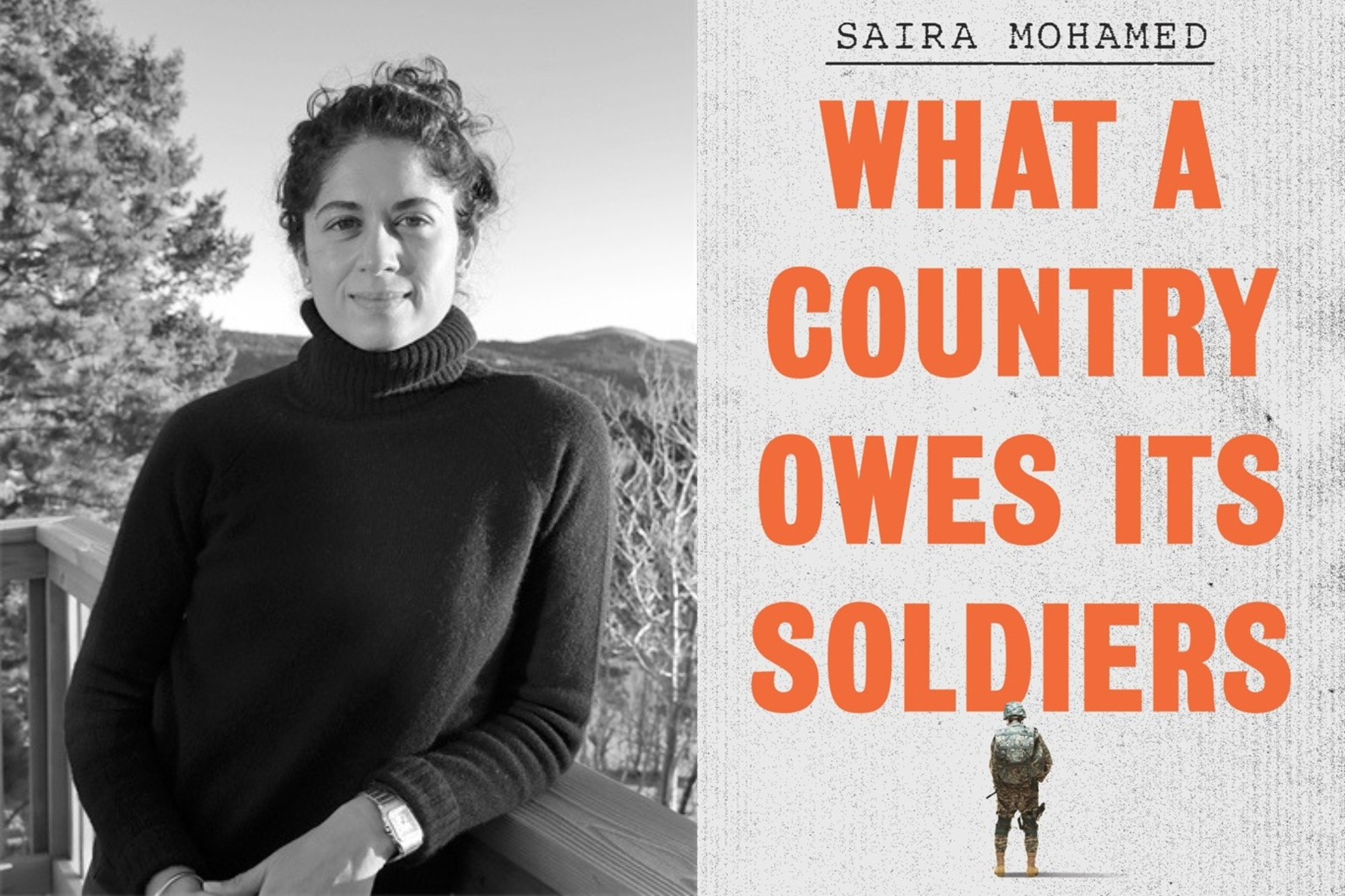
What do we owe those who risk their lives for our country? UC Berkeley law professor Saira Mohamed argues that the government fails to protect service members from preventable injuries, unlawful orders and unnecessary wars — and that the law often shields those responsible. We talk to Mohamed about why soldiers have so few legal protections while serving and how the U.S. could better fulfill its obligations to those in uniform. Her new book is “What a Country Owes Its Soldiers.”
Guest:
- Saira Mohamed, author of “What a Country Owes Its Soldiers” and a professor at UC Berkeley Law
Episode Transcript
This is a computer-generated transcript. While our team has reviewed it, there may be errors.
Mina Kim: Welcome to Forum. I’m Mina Kim. Amid wars with no clear limits or apparent goals, and extended deployments with no clear end that cause safety concerns and severe mental health struggles on ships or bases, one can reasonably ask what a nation’s responsibility is to the soldiers it puts in harm’s way. UC Berkeley Professor Saira Mohamed says that the U.S. falls short of its professed sacred obligation to care for service members, not only when they return home, but also in the context of their work as soldiers. In a new book, Mohamed offers a way forward. It’s called What a Country Owes Its Soldiers. And Saira Mohamed joins me now, Agnes Roddy-Robb Chair in Jurisprudence, Ethics and Social Responsibility, and Professor of Law at UC Berkeley. Welcome to Forum.
Saira Mohamed: Thank you for having me.
Mina Kim: So, Saira, you’re quick to point out that it certainly feels like we respect our military service members. I guess when we’re thinking about the things that we do and say and are expected to do and say culturally, can you talk about some of those things?
Saira Mohamed: Absolutely. We do have a strong culture of respect for the military, admiration for the military. Our leaders often talk about a sacred obligation to the military. But when we look at what that means, we do come up short in a number of ways.
Sometimes when people talk about this respect and admiration and obligation to the military, what they’re really talking about is an obligation that they think exists toward veterans. And they’re not thinking about obligations during the course of their service. And so what I really wanted to dig into is what these obligations really are and why we don’t think about them so readily when we do think about our service members, especially because in this country we do profess that respect, while we also seem to ignore a lot of what they’re experiencing.
Mina Kim: What are some of the key obligations that we have to soldiers that we probably don’t really reflect on?
Saira Mohamed: One of the most basic ideas that I’m trying to put forward right now is that we owe an obligation to soldiers that’s no different from the obligation that we owe to every person. And the government does have an obligation to reasonably protect the lives and safety and health of every person, and that includes even soldiers, even in the course of their work.
And so that means not exposing them to danger unnecessarily. It means not exposing them to physical risks and also psychological and moral danger that they could be experiencing in the course of military service, whether that means in combat or in training.
Mina Kim: You seem to anticipate the pushback that, well, this is what they signed up for. You write, “Some readers might be thinking about this, all land somewhere between the inevitable and the obvious. Being treated as an instrument is just what it means to serve in the military.” So what is your response to that?
Saira Mohamed: Absolutely. Military service is necessarily dangerous. We all know that, but not every danger of military service is necessary.
So if we look at just the last few years, we can see hundreds of deaths and more injuries that service members have experienced in the course of avoidable accidents in training. Now, that word “accident” is one that I even want to pause on, because what we’re talking about here aren’t just aberrations. They’re not just slips. These are routine failures in maintenance of equipment or failures to train service members to use the equipment that they’re given.
These are failures that even the military says are preventable. And people are dying. They’re losing their lives. They’re suffering incredibly for the kind of conduct that we should be and could be avoiding with some greater oversight.
Mina Kim: I want to bring listeners into the conversation. Listeners, what do you think? Do we, or does our government, do enough to respect and care for our service members, not just veterans, but those who are currently serving? You can email Forum at kqed.org, find us on Discord, Bluesky, Facebook, or Instagram at KQED Forum, or call us at 866-733-6786. Again, 866-733-6786. Are you a member of the military? How do these ideas that Saira’s putting forward resonate with you?
Saira, you talk about the deaths of nine service members near San Clemente Island in 2020 when a Marine Corps vehicle sank. What happened?
Saira Mohamed: So, in the summer of 2020, there was a routine training exercise happening down in Southern California, off the coast of San Clemente Island near San Diego. And a group of service members, Marines and sailors, were in an amphibious assault vehicle doing their training.
And there had been some problems with this fleet of vehicles that were engaged in this training exercise. So there were already a couple of them that had been taken out of service during the exercise. And then one of these vehicles started to take on water. And the water kept rising, and the water kept coming in from multiple spots in this vehicle. And the vehicle sank, and nine service members died.
These were teenagers. The oldest of them was 22 years old. And in the aftermath of this horrible incident, there were investigations done about what happened. And there was an investigation that said the key moment here was when the commander of this vehicle didn’t immediately order an evacuation at the moment that the vehicle started to take on water.
But it didn’t stop there. It went on to find systemic causes for this incident. This was a vehicle that had been deadlined, meaning it was sort of shuttled off into the parking lot, not used in a year because it needed some repairs. The transmission was leaking oil, the bilge pump stopped working.
When these individuals were trying to get out of this vehicle, they were trying to save their own lives. They couldn’t open the handle of a rear hatch because the handle was broken. And we know that we were, in some ways, perversely lucky that that was the only vehicle that sank that day, because there were these two others that had been grounded from the exercise besides that.
So we could point to one key moment, but this is not about one unique moment. This is a much larger problem of the military and the government’s failure to keep up these vehicles.
This isn’t just about the equipment, too. These individuals weren’t properly trained for this exercise. So most of them hadn’t completed the required training that they were supposed to have done prior to doing this, these certifications that are necessary to show that they’re capable of engaging in this particular training exercise. Eight of the nine victims hadn’t done their required certification for escape from a submerged vehicle.
I mean, literally, the experience that they had. It is not just tragic, right? To suggest that it’s tragic might suggest that this is an accident, that there’s nothing that could have been done. But there’s absolutely something that could’ve been done.
And so when I talk about what it is that a country owes its soldiers, we do owe them better than this. We owe them equipment that is properly maintained. We owe them time to actually do these required certifications, the trainings, so that they can perform their service as they ought to.
Mina Kim: Does a soldier have any legal recourse against the government for an injury like this caused by, you know, the litany of things you just laid out?
Saira Mohamed: They do not. So this is one of the most troubling sort of additional features of these serious lapses in oversight and protection for soldiers.
You know, if this kind of thing happened to a civilian in, you know, a regular job, they or their survivors might bring a lawsuit against the employer, right, and say, like, this is negligence on the part of the employer. They need to pay some damages.
Now, of course, that’s not going to bring your loved ones back, but when employers are forced to pay these kinds of judgments, what they do is they try harder, right? They try harder so that this doesn’t happen in the future.
Now, for military service members, there is a rule. It’s called the Feres Doctrine. It’s this very strange, obscure rule that says that military service members can’t sue the government for injuries that arise out of or are sustained in the course of military service.
Now, this came out of a 1950 case. And you might hear these words and think, well, this sounds like maybe it makes sense. You know, it would be odd if a service member could sue the government for being injured in the course of combat, right? Like, that’s just part of the job.
But that’s not what this rule means. Over the years, it has been interpreted to say that soldiers can’t sue the government for essentially anything that happens in the course of their military service.
So this means medical malpractice, right? So one of the initial cases involved a man who had surgery at a military hospital. And a couple months later, he had to have another surgery again on his abdomen, and surgeons found a towel inside of him that had been left in the first surgery. And the Supreme Court says, nope, you can’t sue here for medical malpractice because that injury was sustained in the course of military service.
Over the years, this rule has been used to block individuals from suing the government for sexual assault, for injuries that a person received when they were secretly being experimented on through an intelligence program that was giving military service members LSD without their knowledge.
An Army nurse was subject to harassment and threats from a civilian coworker at a military hospital. She complained to her superiors. She told them that she was in danger. They did nothing. And that person attacked her at work.
Now, if she was a civilian nurse, she absolutely could have filed a lawsuit. Because she was in the military, she couldn’t do anything.
Mina Kim: When can the Feres rule itself be overruled? Like, maybe if you have to prove that it was deliberate or something like that, which I imagine is a very high bar.
Saira Mohamed: No, even for deliberate malfeasance, there is still a bar. So one case that actually got a good bit of attention — a lot of people don’t know about this rule — but there was a case a few years ago involving a West Point cadet, a student, who was trying to file a lawsuit against the superintendent of the school. And there, the military found they had actually violated their own rules, but still no lawsuit.
Mina Kim: We’re talking with Saira Mohamed about what a country owes its soldiers and giving us a better understanding about how the U.S. government has chosen to interpret, especially in the legal context, its obligations to soldiers and, in that way, has fallen short of them, says Saira Mohamed.
We’ll have more with her and you, listeners, after the break. Stay with us. This is Forum. I’m Mina Kim.
You’re listening to Forum. I’m Mina Kim. We’re talking to Saira about the obligations the U.S. government has to its soldiers while they’re serving and why Saira Mohamed thinks they’re falling short of their obligations. Her book is What a Country Owes Its Soldiers, and Saira Mohamed is Agnes Roddy-Robb Chair in Jurisprudence, Ethics and Social Responsibility and Professor of Law at UC Berkeley Law.
And you, our listeners, are joining the conversation at 866-733-6786, at the email address [email protected], and on our social channels, Discord, Bluesky, Facebook, or Instagram. We’re at KQED Forum.
Do you think we or our government does enough to respect and care for our service members? Are you a member of the military or a veteran? How do these ideas resonate with you, the ones that Saira is putting forward? And what questions do you have for Saira about the cases she looked at to determine that a country needs to do more to fulfill its sacred obligation to the soldiers it puts in harm’s way?
Let me go to Christine in Rohnert Park, who’s on the line. Christine, go ahead.
Christine: Hi there. Thank you to the author for bringing, illuminating this extremely important dialogue about an issue that is, in my opinion, ignored.
My husband served in Iraq and was wounded in Iraq from an IED. He was a machine gunner and airborne and military police, so they would patrol Baghdad and surrounding areas daily. And they were ordered to patrol at the same time on the same route. And IEDs were the weapon of choice, so consequently they were wounded and killed. And according to him, they lost half of his company through the IED attack.
So they went to their commanding officers about this, requesting that they could change their time of departure and change their route. And they were refused over and over again and never given a reason why. So they were literally going out knowing it was a suicide. So they had to disobey orders to protect themselves.
Mina Kim: Oh, Christine. Thank you for sharing that about your husband’s situation. I really appreciate it. Saira, your thoughts about what Christine is bringing up here? And I’m just curious if this is the type of situation where, I know you’re saying that the Feres Doctrine, for example, does not allow for any sort of recourse in almost all cases, but is there anything that can be done at the state level?
Saira Mohamed: Thank you, Christine, for sharing this experience, and thanks to your family for your service. This is devastating to hear, and this experience is one that is all too common.
What can be done about it? I think it’s a moment when we can think about mobilizing to try to protect service members, to protect them from these kinds of experiences. They absolutely shouldn’t be exposed to this kind of routine danger. They shouldn’t have to refuse orders in order to get some reasonable safety in their missions.
You know, the Feres Doctrine is something that has been around for so long. There are many of us, scholars, advocates, judges even, who say this thing is outrageous, and it can be changed. It can be changed by Congress. It could be possibly changed by the courts.
We have one recent decision by a California court that said that sexual assault can never be considered incident to service. But I think we should be relying on Congress here also to amend this law.
If members of Congress really take seriously our obligations to service members, and I think they should, this isn’t just a moral obligation. It’s a real legal obligation. They should be amending Feres so that activities that aren’t just a normal part of military service absolutely can find their way to accountability in the courts.
Mina Kim: The other thing that Christine’s story brings up is, what is the scope of a soldier’s duty to refuse to carry out orders?
Saira Mohamed: So, service members have an obligation to refuse to carry out illegal orders, and they are absolutely prohibited from refusing to carry out the lawful ones. And they can be prosecuted for refusing to carry out those lawful orders.
So the experience that Christine is describing, there is no good answer for people in that situation, right? The service members are facing risk of death if they carry out these orders, and they’re facing the risk of prosecution if they don’t.
So a lot of people think about this, you know, duty to disobey illegal orders. You know, a lot of people might know about it from the Nuremberg trials. You have to disobey an illegal order. You can’t rely on the fact that there is an order in order to defend yourself if you’ve done something illegal.
What we think about less is the incredibly difficult position that service members are put in when they have to decide whether to disobey an illegal order or not. And we don’t think enough about the responsibility and really the wrongdoing of the people who are giving orders that involve committing crimes.
Mina Kim: Mm-hmm. Let me go to Tim in Iowa. Tim, join us. You’re on.
Tim: Hi, how are you? Can you hear me?
Mina Kim: I can. Yeah.
Tim: And great discussion. I appreciate that. In the ’60s, during the Vietnam War, people rebelled against the mission. And so I think the lesson that our leadership learned these days when we started these wars after 9/11 was, support your troops. So we say thank you for your service, and we don’t focus on the mission so much.
And what you’re saying, it’s moral injury when we have that loss of confidence in our leadership and the mission, the changing rules. It is confusing. This is the real issue, not to diminish the accidents and things that happen. That’s, you know, par for the course, though tragic.
And I think the bigger issue is the moral injury, not just on the service members, but on us as citizens too. Supporting these things because our leadership told us to do that, but at the same time kind of not really understanding: What does victory look like? Who are the enemies? Why is it always changing?
And the people who want to be honorably serving, they’re getting very confused sometimes too as to, well, what does honor look like in America in 2026, et cetera, et cetera.
Mina Kim: Thank you so much. I am so glad you brought up the concept of moral injury. We actually did a program about this not that long ago, but Saira, if you could just remind our listeners what moral injury is, and then also, if you can talk about it in the context of a superior as well, sort of violating their obligation to not order things that would cause that kind of injury.
Saira Mohamed: Yeah, thank you, Tim, for bringing up this idea of moral injury. So moral injury is the suffering that a person experiences when they have experienced a betrayal of what’s right by a person who has authority over them.
So we can think about service members who are ordered to commit crimes, feeling betrayed by their superiors, because those superiors, their commanders, they’re supposed to be people that are taking care of their subordinates. They are legally obligated to be providing for the morale and well-being of their subordinates, and they’re legally obligated to be operating in accordance with the law, in accordance with the law of war, in accordance with U.S. laws.
And there is really deep suffering, as Tim describes, when a person is being ordered to do something that they know isn’t right, but they’re also in this situation where they don’t necessarily know whether they can disobey or not. They’re getting this order from somebody who they’ve been trained to trust, maybe even admire, right? Trust is so important in our military.
And we have had a number of periods in our recent history when people in leadership have gone to great lengths to try to muddy the waters in terms of what’s legal and what’s illegal.
So we could think of the torture memos in the early 2000s, right, that say actually these things that we all actually know are torture aren’t really torture. You know, torture is only organ failure, and so we should be using these kinds of methods.
I think we’re in the middle of this right now, where we have well over 200 people who have been killed by U.S. military forces on boats in the Caribbean, in the Pacific, and the administration insists that these are lawful killings in the context of war. Every legal expert that I know understands that there is no war, that these aren’t lawful, that these are circumstances that amount to murder.
But I think for a service member who’s being given these orders, this is probably very confusing. And I think that in some cases, leaders are trying to make this confusing.
Mina Kim: Sorry, forgive me, but actions with regard to the war in Iran as well, the killing of schoolchildren.
Saira Mohamed: Absolutely. So that is a really devastating example of both the rules being violated and moral injury on the part of service members.
You know, Tim referred to service members joining the military because they want to contribute to the country, right? They think that they’re doing the right thing. We can think about the oath that people are taking to protect the Constitution and to enter into the military, and then learn that you’re being used to kill schoolchildren or you’re used to killing innocent people.
This is a devastating experience, and it’s one that I think we should be holding superiors responsible for.
So to go back to your question, you know, when we think about these circumstances of orders, killing people on boats, torturing detainees, typically our conversation as a nation goes to the responsibility of the people who are at a low level, whether they’re going to disobey, why are they not disobeying. We very rarely talk about the people who are giving those orders.
And they are responsible. They’re responsible not only for those crimes that take place, the torture, the murder, they’re responsible for violating their own obligations that they have toward the people under their command.
So when they command their subordinates to commit a crime, they are actually committing a crime themselves under our military criminal code. Very few people know this. We never talk about it. And I think it’s time to bring back a robust discussion about the wrongdoing that our leaders are undertaking when they’re ordering subordinates to commit crimes.
Mina Kim: You examine Abu Ghraib, and you talk about the legal reckoning there and how it largely missed the superiors, essentially.
Saira Mohamed: Absolutely. So low-level people were punished. We do not see superiors being punished in the context of Abu Ghraib or the larger torture program that was developed during that time that was being led at the highest levels of government.
We really let leaders off the hook, both in the law and in our culture. You know, I don’t think we ever were talking about the betrayal of that position of authority on the part of our leaders.
Mina Kim: Leslie in Berkeley writes, “My uncle was a Navy pilot in World War II. Flying back to base after his first eight-hour flight out as head of a squadron, he received an order to return, for there was reported Japanese artillery nearby. The planes went back out only to come under immediate attack. My uncle went down in flames. My aunt was able to obtain access to confidential records and learn that the military order to send her brother and his squadron out was illegal, a government error. My uncle’s body was never found. I was born less than a year later and oddly felt the grief my mother carried. My grandfather sent the Purple Heart his son received posthumously back to D.C.”
Just the broad ripple on so many when things like this occur.
Saira Mohamed: Yeah, thank you for sharing this, and I’m so sorry for your family’s loss. There is such a broad ripple.
Earlier, Tim also mentioned the moral injury on the part of citizens. And I think what we can take from these comments is a real understanding that the experience of military service members isn’t just confined to those individuals, and it shouldn’t be. It affects their families. It affects our communities. It should affect all of us.
Because every action that’s undertaken by the military, it’s done in all of our names. And we should be taking an interest, just as a matter of our democratic responsibility, in what our military is experiencing and what our leaders are asking the military to do.
Mina Kim: Can a soldier be both responsible for committing a crime and a victim of the commander who ordered it?
Saira Mohamed: Absolutely. So there is no singular category of victim or perpetrator. A person can be both.
And when I think about, say, individuals who have participated in torture or other kinds of abuses, we might see in these people that they are both perpetrators of crimes and that they’re victims of their own commander’s misconduct too. And we need to be comfortable with the idea that a person can be both of those things.
So when I talk about the obligations of leaders toward their subordinates, not to order them to commit crimes, their own responsibility for violating those obligations, I don’t want to suggest that the person who actually carries out the crimes is innocent or that they should be completely protected, right, just because somebody’s ordered them to do something. Absolutely not.
I think the responsibility and accountability is important. It’s necessary. It’s part of the law. But at the same time, we can understand that there are obligations that are being violated there, right?
So, you know, when a person is ordered to engage in torture, you know, when Donald Rumsfeld said to interrogators, “You gotta take the gloves off,” right? That does not excuse the people who did indeed take those gloves off. But it also should highlight to us that those words, that encouragement, “Take the gloves off,” that is wrongdoing, and that causes serious damage.
Mina Kim: We’re talking with Saira Mohamed, professor of law at Berkeley Law and author of the new book, What a Country Owes Its Soldiers, examining the obligations the U.S. government has to soldiers while they’re serving and how it’s falling short. 866-733-6786 is the number to call. Email [email protected] or find us on Discord, Bluesky, Facebook, or Instagram at KQED Forum.
Scott in San Jose writes, “My father, a Korean War veteran, was opposed to my joining the military. He talked to me about the Feres Doctrine, and we watched the war movie Breaker Morant. His ultimate point was that soldiers are not people, but tools to be discarded if those in power find it convenient.”
You reference repeatedly in the book the understanding of soldiers as cannon fodder.
Saira Mohamed: Yeah, this idea of cannon fodder is one that’s been with us for so long, and in some ways it might sound like an idea from the past. Like, you know, it’s from these olden times when, you know, as Napoleon is said to have remarked, soldiers are made to be killed.
And now we might think, well, we do respect our soldiers, right? We thank them for their service. So, you know, we put them on a pedestal, we treat them as heroes, because we don’t think of them as cannon fodder anymore.
And I do think, Scott, that, you know, what we see in our practices, what we see in our laws is a continuing comfort with treating military personnel as tools, as cannon fodder.
And we see this in some ways, right? We’re obviously not sending them to their death in the way that we might think about in those Napoleonic times. But we do see them being exposed to danger, to physical harms, to psychological harms, to unnecessary wars. And we see our country doing it callously.
I also think that can change, though, because we do have a country in which we profess our respect for the military. I’m hearing from callers, right, that we have people who have served, people who are in military families. I think we do have a great population of people who really care about the military.
And what we need to do is stop taking for granted the idea that military service members can be treated however the government wants once they’ve signed up for service. It’s not a blank check. It’s not a free pass for the government. It’s a relationship of obligation and protection. And that’s really what we need to see realized.
Mina Kim: We’ll have more with Saira Mohamed after the break.
Listeners, you’re listening to Forum. I’m Mina Kim.
You’re listening to Forum. I’m Mina Kim. We’re talking about what the U.S. owes its soldiers and about the ways the country could rethink its obligations to those who serve in the military. We’re with Saira Mohamed, Agnes Roddy-Robb Chair in Jurisprudence, Ethics and Social Responsibility and Professor of Law at UC Berkeley Law.
Her new book is What a Country Owes Its Soldiers. She’ll also be speaking at the Commonwealth Club in San Francisco on November 16th at 5:30 p.m., and at Litquake on Wednesday, November 18th at 7 p.m.
And you, our listeners, what do you think? Do we or does our government do enough to respect and care for our service members? Are you a member of the military or a veteran? How do these ideas that Saira is putting forward about the nation’s obligations and how it falls short resonate with you, or do you disagree? Are there moments when you have felt particularly well served by the government? What questions do you have for Saira about her book?
866-733-6786, the number. The email address is [email protected]. Find us on Discord, Bluesky, Facebook, or Instagram at KQED Forum.
Noel writes on Discord, “I can see the moral injury happening with Hegseth at the helm.”
Joan writes, “What can the new Congress do for soldiers to ensure their safety, proper training, proper medical care, and anything else that needs attention? And who besides Pete Hegseth should be held to account?”
I want to get into those things, but related to what you were talking about just before the break, when we were talking about sort of the dehumanization of soldiers, cannon fodder, and so on. Interestingly, what we’ve seen with Pete Hegseth is almost like a superhumanization, I think, is the word that you have used to describe how he talks about soldiers as warriors, soldiers who can handle anything that can be thrown their way. What do you see as the effect of this?
Saira Mohamed: I think the effect is dehumanization. So superhumanization or subhumanization, right? He’s turning soldiers into something other than people.
He calls them warriors. I mean, he said what we do in the military is kill people and break things for a living, right? He is really trying to take away the humanity of service members. He’s trying to take away their humanity in a number of ways by calling them warriors.
He’s trying to purge people from the military because they do have features of their lives, their personalities, right, their own humanity that he’s trying to get rid of.
Now, that word dehumanization might startle some people when I say it, because typically when we hear it, we’re thinking about situations in which we’re making people seem like they’re less than human. So often you might hear this word in relation to genocides, for example, right, calling people cockroaches, as was done in the Rwandan genocide.
But treating people as something bigger than human also is another way of dehumanizing them. And when we treat service members as killing machines, or even when we treat them as these otherworldly heroes, we’re separating them from the rest of society.
So that also is another way of keeping our public and even our laws from recognizing them as people who are actually owed an obligation by their government.
Mina Kim: Hegseth has also put forward a very specific form of hypermasculinity. How does that also contribute to soldiers’ ability to be able to bring forward concerns and complaints?
Saira Mohamed: Yeah, absolutely. So this hypermasculinity, as you describe, is, I think, part and parcel of the broader effort that he’s making to try to reshape the military into an institution that doesn’t have to play by any rules.
So this idea that, you know, the people who are serving in our military are just killing machines. He has also fired the top lawyers in the services, he has sidelined lawyers, he has called rules of engagement stupid, he describes lawyers as roadblocks, he equates rules, laws really, with this kind of feminization of the military.
And so these two efforts really go hand in hand, and they’re all wrong. And they’re wrong even according to the military itself.
So there’s a former Nuremberg prosecutor named Telford Taylor who wrote something actually during the Vietnam War. And he said, the laws of war, they exist not only to protect the civilians, right, the people who are harmed, the people who lose their lives in conflict. They also exist to protect the service members themselves from the corrosive effect of mortal combat.
He said, if soldiers have to fight these wars with no rules, right, no holds barred, no restraints on the things that they are asked to do, they will not be able to lead a functioning, happy life in society, right?
These rules exist to protect them. And those words appear even in our own military manuals under the heading of the purpose of the laws of war.
These rules are not holding soldiers back. They’re protecting them. And that is where Pete Hegseth’s ideas about the masculine ideal of the military, his idea about the problems of law and lawyers, it is all wrong, and it is really hurting the service members.
Mina Kim: Thomas writes, “What were the reactions among veterans that the missions they were sent on were immoral, unnecessary, or illegal? The few I’ve talked to about this just can’t go there. I can’t help but feel that what they did in Iraq in particular led directly to the epidemic of suicides among those veterans.”
Saira Mohamed: Absolutely. We have a devastating epidemic of suicides among veterans, and this, I think, can’t be separated from these feelings of betrayal, these feelings of real confusion and devastation about what these wars were for, about the lies that were told by leadership, the things that these people were asked to do.
And this is one of the many reasons I think we need to take seriously what this country owes our service members, right? This isn’t just about kind of ideas of legal protection. This is life or death for these people.
And we owe every person who’s going to join the military a promise that their lives will be used well. This isn’t just a moral promise. It’s not a sacred obligation, like some leaders say. This is a real obligation. It’s a legal obligation. And for the sake of their lives and this whole country, we need to be living up to that.
Mina Kim: Tim writes, “There are many rules of war, from Geneva to others, that are being ignored, especially since 9/11. There are groups like Veterans for Peace that try to bring these abuses to light. We as people must demand a better, more honorable use of our military.”
We’ve talked a lot about how the government can violate soldiers’ rights through individual orders, but you also talk about it in the context of sending them into an unlawful war, generally. So what rights do officers have to refuse to be deployed to a particular war that they disagree with, or that they view as illegal?
Saira Mohamed: They have no rights to refuse to deploy to a war that is illegal.
So this is a little strange, because we know that soldiers have an obligation to disobey illegal orders, but they can’t disobey an order to participate in an illegal war. In fact, they can be prosecuted for refusing to deploy to an illegal war, and many service members have been.
So we do have a right of conscientious objection in this country, but that’s a right of opting out of military service for opposition to war altogether. Like a pacifist can be a conscientious objector.
And interestingly, there’s been kind of a rise in conscientious objection, people who over the last year or so have come to realize that they are indeed opposed to war altogether.
But for a person who is opposed only, say, to an illegal war, that person has no opportunity to opt out once they’re in military service.
And this is really crucial because a lot of people will talk about our military being an all-volunteer force since 1973, when we ended the draft. And yes, it’s voluntary in the sense that a person joins the military by choice. But once a person is in the military, they can’t just leave their job the way another person can.
They have very long service contracts, and beyond that, they are prohibited from just opting out of service based on the illegality of a war.
Mina Kim: Jimmy in San Francisco writes, “I’m an Army veteran, 26 years of service with three Iraq deployments. The professor’s work highly resonates with me. I continue to wrestle with the relationship between the military and our government. I am so grateful for her work. It is a conversation I never had the ability to articulate, and I can’t wait to purchase the book.”
Thank you for those comments, and thank you for your service.
Saira Mohamed: Thank you so much, Jimmy, for that.
Mina Kim: I wonder about, you know, our nation’s ability to really understand people’s military service once it especially became an all-volunteer military. What do you think about that? Where do you stand with regard to, you know, drafts and so on? And, you know, whether voluntary military service has had both positives but also consequences?
Saira Mohamed: It has had some negative consequences. The military is so separated from other parts of society. It’s very highly respected. So public opinion polls show people trust the military, they admire the military, but the average American doesn’t really know much about the military, too.
It’s a tiny portion of the population. And, you know, typically the people who know anything about the military and the people who join the military are the ones who have family members in the military or they might live near a base or a reserve center.
And over the last 25 years of these wars, we have really developed this kind of “thank you for your service” culture, right, where we profess this admiration for the military but don’t really know much about what they’re doing. There isn’t much public engagement.
We can look at the war in Iran right now. I think there is greater concern that’s being expressed about this war, about what we’re doing there. But we haven’t seen a lot of that over the last many years.
And in some ways, this admiration for service members has kind of subbed in for actually thinking about what they do. So we put them up on a pedestal, but that pedestal is so far out of reach that we can’t even see them. Right? We don’t know what their work actually looks like. We don’t see them as teachers or cousins or friends.
And this is very different from what the military looked like during the time of a draft. You know, so military service was more spread out across the country.
At the same time, I don’t want to idealize what the draft looked like during Vietnam. That was a draft that was, by and large, a system of deferments. It was a system that really privileged people who could manage to get out of military service through different forms of access.
And so I don’t think bringing back a draft is necessarily going to fix all our problems. That’s in part also because when people talk about bringing back the draft, they often say, this is a way to restore a sense of civic obligation among the population.
And what I really want to think about is restoring a sense of government obligation to all people, including service members, right? That’s the obligation that I think we really need to understand is more robust.
Mina Kim: Then we go to caller Troy. And first, for my listeners, you are listening to Forum. I’m Mina Kim. Troy in San Pedro, go ahead. You’re on.
Troy: Oh, yes. Hi. I really appreciate you having this conversation. I am a veteran of several branches. I started a long time ago as a private in the Army. I got a GI Bill. They paid for me to go to med school. I went back into the Air Force and eventually United States Public Health Service, where I retired in 2020.
I saw a lot of soldiers, airmen that came back from these wars we had, and my job was to integrate them back into society.
So I had a questionnaire I would have the troops asked, or the airmen asked, and it would be basically: Do you feel sad? Do you feel like hurting yourself? And they would answer no, and I knew their colleagues, so I knew they were telling a lie.
And the reason why they answered untruthfully was because it was against the culture to answer, “Yes, I feel bad. Yes, I want to hurt myself.” And some of these people end up hurting themselves.
I felt partly responsible, but it wasn’t me. It was a culture. The culture of the military is, for instance, Marines say, if you’re hurt, if you’re in pain, it’s weakness leaving the body. You have to be tough, but you have to be realistic. When someone’s hurt, you have to treat them.
And it’s the opposite in the military. If you go to sick hall, meaning you’re hurt, and you’re on your job in the military, they discourage you from going.
And I know this because I was a private, I was a sergeant, and I became an officer, and I was responsible for people, and I took care of people. But my colleagues fought me tooth and nail because I cared.
And so, yes, I was an outlier. I was an oxymoron. I mean, I was the pacifist that was in the military. But I just wanted to put that out there because there’s a lot of servicemen and women that hurt themselves because they don’t get the help they need. So thank you for this conversation.
Saira Mohamed: Troy, thank you so much for the call. Thank you, Troy, and thanks for all that you’ve given of yourself to this country.
I think that’s absolutely right, that the culture is a real challenge here. And I think if we can better understand that the government does have these obligations to take care of people in the military, that can at least help to chip away at this idea that needing protection, demanding that protection from the government, is a sign of weakness.
That’s not weakness. That’s just wanting to be able to do your job well, right? That’s expecting the basic obligations of the government to be fulfilled. And I think all of us throughout the country can help make that happen if we can understand service members just as regular people, right? They’re not these otherworldly heroes, they’re not superhuman, they’re not machines. They’re people just like the rest of us.
Mina Kim: We just have two minutes left, but Alex writes, “Drones and AI further degrade the value of humans during war insofar as they remove much of the heroism from the process and leave only death and destruction.” Does this worry you, Saira?
Saira Mohamed: It does worry me. It also, as I think about technological developments that are happening so quickly, in some ways that raises new questions, but in some ways it’s also just the same questions we’ve always been answering.
So, you know, when we look back at the kind of increased use of drones, there was suddenly a feeling that, you know, using drones could really protect service members from danger.
And, of course, what was discovered by journalists and researchers is that the people who are operating drones were experiencing that moral injury, that PTSD, when they were, say, watching the victims of a drone attack, you know, observing their lives for weeks on end and then learning, after carrying out an attack on them, that there had been a mistake in the targeting or that there were children killed at the same time that this person was ultimately attacked and killed.
So, you know, the technological developments, they change some of the specific questions, but the dehumanization of war is a constant.
Mina Kim: This is Nurbeyts: “What are the most impactful things civilians can do, both virtually and in person, on a day-to-day basis to help veterans feel supported and people who serve in the military?”
Saira Mohamed: I think engage with them as real people and take an interest in what the military is doing. So I think this is the best way that we can really help service members and veterans.
So let’s all think about what we’re doing at this war in Iran, right? This is using their lives. This isn’t just about gas prices. This is about their lives, their safety, their health, their families.
Um, and this government owes an obligation to every person in the military to only use military force when it is lawful and necessary.
Mina Kim: Saira Mohamed of UC Berkeley Law. The book is What a Country Owes Its Soldiers. Thank you.
Saira Mohamed: Thank you, Mina.
Mina Kim: My thanks to Susie Britton for producing this segment, and especially our listeners. Thank you so much for sharing your stories. You’re listening to Forum. I’m Mina Kim.
Announcer: Funds for the production of Forum are provided by the Jenerosity Family Fund and the members of KQED.