Trump’s Deal with Putin, and the Fate of Ukraine
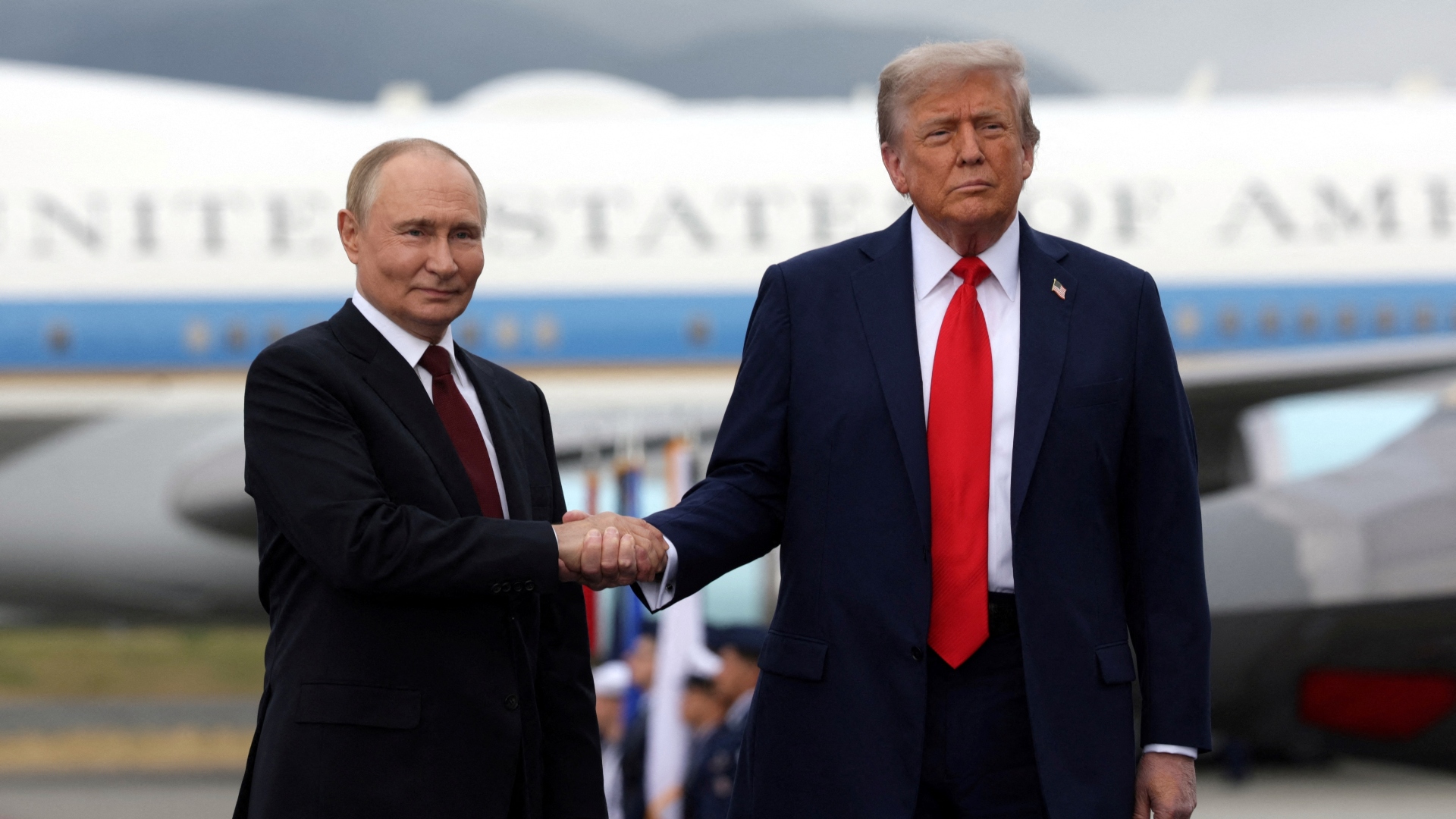
Airdate: Monday, November 2, 2026 at 10 am
In the past month, President Trump has cut a deal with Russian President Vladimir Putin to import Russian diesel fuel to the US, lifted sanctions on Russia’s energy industry and pressured Ukraine to halt drone strikes on Russian refineries. Critics say it’s an attempt to lower U.S. gas prices ahead of the midterm elections and a betrayal of Ukraine, as the embattled country prepares for a difficult winter. We’ll talk about what Washington’s pivot toward Russia means for Ukraine’s future.
Guests:
- Illia Ponomarenko, journalist and author, “The Land of Tears and Hope: The Ukrainian Story” – Former defense and security reporter, The Kyiv Post; co-founder, The Kyiv Independent. He has covered the war in eastern Ukraine since the conflict’s beginning, as well as Russia’s full-scale invasion of Ukraine since 2022
- Simon Shuster, staff writer, Atlantic Magazine – author, “The Showman: Inside the Invasion That Shook the World and Made a Leader of Volodymyr Zelensky”
- Michael McFaul, professor of political science; Director of the Freeman Spogli Institute for International Studies, Stanford University; former U.S. Ambassador to Russia
Episode Transcript
This is a computer-generated transcript. While our team has reviewed it, there may be errors.
Mina Kim: Welcome to Forum. I’m Mina Kim. With freezing winter weather approaching Ukraine, millions face a loss of heat and electricity as Russian missile and drone attacks target the country’s energy infrastructure. Recent U.S. actions have only made the coming winter harder by throwing an economic lifeline to Russia to continue its attacks in the form of a U.S.-Russia diesel deal and the easing of sanctions. This comes after cutting economic and military aid to Ukraine.
Joining me now to talk about the impact of these recent events, Simon Schuster is a staff writer at The Atlantic, and author of The Showman: Inside the Russian Invasion of Ukraine That Shook the World and Made a Leader of Volodymyr Zelensky. Simon, thanks so much for being with us.
Simon Shuster: Thank you so much. Great to be with you.
Mina Kim: Illia Ponomarenko is also with us, a journalist and author of the forthcoming book, The Land of Tears and Hope: The Ukrainian Story. He’s also a former defense and security reporter for the Kyiv Post and co-founder of The Kyiv Independent. Illia, glad to have you back with us, too.
Illia Ponomarenko: Hello. Thanks for having me, too.
Mina Kim: And Michael McFaul is with us, former U.S. ambassador to Russia, director of the Freeman Spogli Institute for International Studies at Stanford, and author of Autocrats vs. Democrats. Ambassador McFaul, glad to have you join us as well.
Michael McFaul: Thanks for having me.
Mina Kim: I’ll start with you, Ambassador, because I’ve just been so curious how you’ve taken in President Trump’s actions this past month, knowing that you have long warned of Vladimir Putin’s ability to play the long game.
Michael McFaul: Well, I want to be honest with you. When President Trump was reelected and he promised to end the war in a day, and then he put together a team to try to end it, I applauded that. I want to be honest about that. And I even supported the idea to talk to the Russian side. You can’t mediate and end a war just talking to one side.
But if you look now, two years in — and it’s almost been two years — it’s pretty clear to me that ending the war is not their first objective, and maybe not even an objective, because what you see instead is concessions to Putin. And if we’re being generous, maybe those concessions will lead to him agreeing to a ceasefire. But they don’t even try.
I mean, I’ve negotiated with Putin. I’ve negotiated with the Russians. I’ve done it in the government, on the other side of the table, by the way, with the entire team that Mr. Witkoff and Mr. Kushner sit across from: Mr. Lavrov, the foreign minister; Ushakov, foreign policy advisor; Kirill Dmitriev. They were all in the government when I was ambassador many, many years ago.
And, you know, Diplomacy 101 is if you give one side something, you should get something of value to you and your national interests in return. And what I see instead is just concession after concession after concession. This latest — you just summarized what happened in the last several weeks — and nothing in return, nothing that gets us closer to ending the war in Ukraine.
So I’ve had to readjust my evaluation and think that maybe they just want to do business with these Russians. They’re using their time to do that, and the Ukraine war is just kind of in the way.
Mina Kim: That was my next question. When you said objectives, is the objective not to end the war? What do you think the objective is? And do you think it is, in fact, business deals and making sure that allies of the government and of President Trump are able to make lucrative deals with Russia?
Michael McFaul: Well, there’s just been some fantastic reporting showing that they keep trying to figure out ways to make money. So first, we learned about an idea that Lukoil, the Russian company, would sell its assets abroad, and somebody would make some money on that. Then we heard that Americans want to buy Nord Stream 2.
These are all people tied or closely affiliated with the Trump administration and the Trump family. Just this morning, The Wall Street Journal — again, fantastic reporters, and you have some of them on right now. We’ve had some great reporting. We want to, like, we’re going to go around the sanctions and start pumping gas because it’ll be owned by an American. So that’s a cute way to get around it to make money.
Kirill Dmitriev, remember, he’s not a diplomat. He’s the head of the Russian Investment Fund, their sovereign wealth fund. He’s floated trillions of dollars in joint ventures that can be done between Americans and Russians.
Now, their theory or alibi is, if we make these business incentives for Putin, that’s going to create some kind of momentum for him to end the war. But I just don’t see any evidence of that causal relationship between promising him and giving him — as you pointed out, some of them have already been done, the diesel deal — and him changing his positions. He hasn’t changed any of his positions since the full-scale invasion in 2022.
So either they’re not really trying, they have ulterior motives, or they’re just naive in their strategy. But either way, it is not helping to end the war in Ukraine.
Mina Kim: Yes. And before I turn to Illia, I just wanted to ask you what you feel have been the most consequential things that the U.S. has done with regard to Ukraine’s ability to defend itself, Ukraine’s position.
Michael McFaul: Well, first and foremost, we went from being the largest donor to Ukraine to now the back of the pack. You know, we give zero economic and military assistance, which I just find atrocious. I find it immoral. I find that not in America’s national interests. And, by the way, most Americans agree with me, not Trump. But that was definitely consequential for their ability to fight the war.
Now, Trump allows American companies to make money off of the war in Ukraine, and I’m emphasizing that, right? He allows them to sell weapons to Europeans that give them to Ukrainians.
But the second biggest problem, of course, are — and Illia’s here, he can report from the ground — there’s just this massive deficit of these interceptors for Patriot missile systems, the PAC-3. Why there’s been such a deficit, I think, needs more explanation, going way back, even before the Trump administration.
But the second thing is that Trump launched his war in Iran, where they used a lot of these missiles, these interceptors, and they’re not available now to protect Ukrainian civilians.
And then the third one, of course, although it’s been restored, and again, I’ll defer to Illia for the specifics. But when we had either Elon Musk or the White House — they both point fingers at the other — cut off access to Starlink and Starshield, you know, Ukrainian drones just dropped out of the air, and Ukrainians died as a result of that unilateral decision made by someone. I could go on, but those would be my thoughts.
Mina Kim: So, Illia, what events have garnered the strongest reactions among the Ukrainian people and had the most consequential effects?
Illia Ponomarenko: When it comes to things like this story over Starlink, Starshield, yeah. You know, in Ukraine, it was one of many, many things that occur on a daily basis. Almost every hour, it feels like, that spark outrage, that spark questions, simple shrugging of shoulders and basic and very simple lack of understanding of what is going on and where the virality of this world has come to.
If we have this way when it comes to these problems with Starlink, Starshield, we have a lot of things saying that, for instance, the defenses against jet interceptors, against jet drones launched by hundreds and thousands by Russians against Kyiv, against many other places, had been jammed and interrupted by this shutdown.
So when we’re talking about things like problems with the communication with Starlink, Starshield, when we’re talking about the things that we already mentioned with the Patriot interceptors, we’re not simply talking about political problems and arguing and business issues and possible or impossible breaches of terms of use. We’re talking about simple lives on the ground.
So we just decided to switch off these communications, and drones could not be launched to intercept the death coming from above on very people, usual people just like you and me here in Ukraine.
Mina Kim: And so, as a Ukrainian, as somebody who is living this, how do you feel personally about what has happened this past month? And, if you’re able to generalize, how do everyday Ukrainians feel about their relationship with the U.S., the U.S. as a Ukrainian ally, when you put all that together — the Starlink and then these recent events in October?
Illia Ponomarenko: Well, I would take this liberty to again underline this feeling of being lost in understanding what has happened to the world in general in terms of basic moral values and things like this, because a lot of things that we see in the news every day, it feels like day switches with the night in this regard.
And it’s especially painful that we’re seeing this from the side of what seemed to be our biggest backer of all time, of a country that has always been seen by Ukrainians here in Ukraine as a sort of a moral beacon. And that’s probably a very idealized view of the United States, but, you know, Ukrainians add some things that felt unshakable and unbelievable to change in this world. And one of them was the simple bilateral support of the United States in this war, which felt absolutely despicable in this world.
Yet a lot of things changed. A lot of moral grounds have been shaken, and many people here in Ukraine, when they are reading the news and when they contemplate the reasons behind this, just trying to answer the question, for the sake of what is all this happening, this moral picture of the world gets upside down. We have really no serious answers to this.
Mina Kim: We have one minute, Simon, before the break, but we can, of course, you can say more afterward. But one of the things that you point out was how much the events of this past October really upended Ukraine’s strategy to wear down Russia economically.
Simon Shuster: That’s right. I think the key element there was the Ukrainian campaign of strikes against Russian oil refineries. And that is what Donald Trump stepped in to save.
Now, the Ukrainians have resumed their strikes in defiance of Donald Trump and the American position. They’ve resumed striking the Russian refineries, but that is going to deepen the rift between Ukraine and the United States. And I think it could also cause certainly a danger of further American betrayals and punishment of the Ukrainians, whether it’s communication cutoffs or cutting intelligence sharing.
So there’s still a lot that Donald Trump can do to punish the Ukrainians, but Ukraine is forging ahead.
Mina Kim: We’re talking about the impact of recent U.S. actions moving toward Russia and away from Ukraine with Simon Schuster of The Atlantic, Illia Ponomarenko, journalist and author of the forthcoming book, The Land of Tears and Hope, and with former ambassador to Russia Michael McFaul. We’ll have more with them and with you listeners after the break. Stay with us. This is Forum.
I’m Mina Kim. You’re listening to Forum. We’re talking about what Ukraine faces this winter, with increasing attacks on civilians and its energy infrastructure, coupled with recent U.S. actions and an embrace of Russia and Vladimir Putin and his aims.
We’re talking about it with former ambassador to Russia Michael McFaul, Illia Ponomarenko, a journalist and author, co-founder of The Kyiv Independent, and Simon Schuster, a staff writer at The Atlantic who’s been covering October extensively and beyond. Of course, he wrote a book about Volodymyr Zelensky called The Showman: Inside the Russian Invasion of Ukraine That Shook the World and Made a Leader of Volodymyr Zelensky.
Listeners, what’s your reaction to recent U.S. moves toward Russia and Vladimir Putin? What questions or concerns do you have about it? Are these actions influencing your midterm vote? How much of a priority for you is the U.S.’s continued support of Ukraine?
You can email Forum at kqed.org, find us on Discord, Bluesky, Facebook or Instagram at KQED Forum. You can call us at 866-733-6786, 866-733-6786.
So one of the things I wanted to dig deeper into with you, and I’ll start with you, Simon, is just why the turn, right? Why has Trump’s treatment of Volodymyr Zelensky changed so dramatically? We’ve talked a little bit about how he’s moved toward Putin, but why away from Zelensky, Simon?
Simon Shuster: Well, a couple of things. I do think that Trump thought it would be an easy win for him to essentially pressure and intimidate Zelensky into accepting a truce on Russia’s terms. He’s been trying to push for that for almost two years now, starting, I think, with a moment that many of your listeners will remember: the clash between Zelensky and Donald Trump in the Oval Office in February 2025.
So we’ve seen these tactics of Trump attempting to get Ukraine to accept some kind of peace deal that he can then hold up as a demonstration of his dealmaking abilities, his abilities as a peacemaker.
But Ukraine is not playing along. President Zelensky has consistently demanded security guarantees that would ensure Russia does not attack again after some kind of peace deal. And he’s insisted on not giving up Ukrainian territory to the Russians without a fight. These are positions that the Ukrainian people demand he take.
And, of course, that’s gotten frustrating for Trump. And I think he’s basically given up on the idea that he’s going to end this quickly, that he is going to muscle the Ukrainians into doing something that they don’t want. And he’s turned to another source of potential wins for him, as he sees it. And those are business deals with the Russians.
Of course, yeah, he seems to have calculated that heading into the midterm elections here in the U.S., if he could demonstrate to his base that, look, I’m bending over backwards to get diesel prices down for you. I’m even getting the Russians to help me out. He thinks that there is a contingent in the U.S. electorate that’s going to see that as positive, as a win for Donald Trump.
I am not sure that kind of electorate exists. As Ambassador McFaul pointed out, it is an unpopular position to make deals with Vladimir Putin. Vladimir Putin is not very popular in the United States. But Trump seems to have made that political calculation.
Mina Kim: And would it offer — I mean, does the diesel deal even offer any substantial relief to the U.S. in the root cause of, yeah, straight-up oil prices and the war in Iran?
Simon Shuster: That’s right. Yeah, the cause of the diesel, the oil price shock and the fuel prices is the war in Iran. So this is sort of helping out around the edges. Maybe Trump can hold it up as something he’s doing to try to bring the prices down. But I don’t see the voters seeing that as a win.
Mina Kim: And how much has his frustration, Simon, over the war in Iran contributed to his turn on Zelensky?
Simon Shuster: Yeah, I think it’s quite important. You know, Zelensky needs these interceptor rockets, the Patriot system, as Ambassador McFaul was saying, and, you know, they’re all tied up in the war in Iran.
I think another frustration for Trump is that, you know, it’s very clear in the war in Iran that Ukrainian technology can actually be very helpful to the U.S. forces fighting there, because Ukraine has come up with various technical solutions to the kinds of drones that Iran uses to attack American bases in the Middle East and, in some cases, to kill American servicemen.
Ukraine is offering that technology to the Americans, but for whatever reasons, I think partly to do with American pride, I think, or Trump’s pride, he does not want to accept that help from the Ukrainian side. And that’s quite sad, and I think quite damaging to U.S. forces in the Middle East.
Mina Kim: Ambassador McFaul, we’re seeing headlines about how the U.S. has approved a sale of 500 Patriot missiles to Ukraine. What should we understand about how quickly that could offer substantial relief to intercept the kinds of missiles from Russia?
Michael McFaul: Well, so that was good news, you know, State Department approval. But from what I understand, those missiles are not going to get there for months, if not years. So we should not get too excited that this is coming to the rescue for the Ukrainians.
Again, as I said before, I think there’s a bigger story here as to why there’s such a deficit of Patriots in the United States fighting forces in general. That goes back years.
But I want to be clear: I’m glad it went forward, but it will not get there in time, most certainly not for the winter. When I talk to Ukrainians, which I do pretty much every single day, everybody says this is going to be the worst winter ever in the history of this tragic war.
Mina Kim: What would you say to a listener like MJ, though, who writes on Bluesky: “If we’re short on essential munitions, why would we give them away to Ukraine? We like Ukraine, but their freedom is not essential to our national security. Before the invasion, Congress was concerned about Ukrainian corruption. Now it’s led by a sitcom star who has suspended elections. Normal.”
Michael McFaul: Thoughts? I radically disagree with many of the assumptions in that question. Let’s just be clear. President Zelensky is the democratically elected president of Ukraine. Putin is the dictator, the imperialist dictator of Russia.
Elections have been suspended under law. There’s a law in Ukraine, the martial law. It’s not like he suspended them himself. That’s been done. And there’s popular support for that. Again, Illia can jump in, but it’s pretty clear Ukrainians don’t want to hold an election during a war when they can’t have free and fair elections.
Number two, just for American national interests, I think it is profoundly naive to think, “Oh, that war over there, we don’t have a dog in that fight. Let’s just pull back and think about what we care about.”
That should sound familiar to people that know American history. That’s exactly what America Firsters said in the 1930s. They said it about when the Japanese went into China, and they said, “Oh, we don’t — that’s not our problem.” And then the Nazis and the Soviets both went into Poland in 1939, and they said, “Well, that’s not our fight. That’s our fight.” And that turned out to be really naive.
And so I think if we help to stop the Russian forces in Ukraine, we prevent having to fight them in Latvia, Lithuania or Estonia.
And to this point about the fantastic advances in terms of their drone systems, I know some of these companies personally. I know the leaders of them, and we should be adopting them. I think that is a great move for America. A lot cheaper, by the way, than buying these expensive Trump boats that Trump wants.
But the Russian army’s gotten a lot better, too. Illia already mentioned this new drone, this Geran-5. It is a horrible weapon that our allies are not prepared to fight against. And so we should try to help stop this army in Ukraine so that we don’t have to fight them in Latvia or Lithuania.
And, by the way, the whole world’s watching what we do. If we pull away and throw the Ukrainians under the bus, our friends in Taiwan are watching that. Our allies around the world are watching. That is not a world that I want to live in, where everybody is wondering whether America is committed to defending the free world.
So I think it’s actually in America’s national interest to help Ukraine fight back this imperial invasion.
Mina Kim: Let me go to caller Stephen in Sonoma. Stephen, go ahead. You’re on.
Caller (Stephen): I couldn’t agree more. I think the American people, for the most part, are aghast at what’s happening and the betrayal of this administration of the Ukrainian people and of Ukraine.
I don’t see very many polls with regard to the election tomorrow that put Ukraine in, but I think it’s a factor because I think people are just embarrassed beyond belief that we could be doing this to an ally and could be basically, you know, putting business deals with Russians about people who are striving for democracy.
You know, it’s not always so clear, but I think for the most part Americans are pretty decent people, and they believe that democracy is important, and they believe in countries that adopt democratic principles and fight for them.
And I think to see that all sold out by this administration over a buck, or a couple bucks, or for enriching Witkoff and Kushner and all the rest, I think people are appalled, and I think it will be one of the factors in the rout that’s going to happen tomorrow. Thank you.
Mina Kim: Stephen, thanks. Agnieszka writes, “I wanted to make sure it’s emphasized in any discussion about Ukrainian-American relationships that there’s a history there. The U.S. guaranteed protection to Ukraine if they dissolved their nuclear program. This was a monumental promise, and our country lacks integrity by not holding up its side of the bargain.”
We’ve also talked about that, too, in past shows.
Jeff writes on Discord: “I’m disappointed in what a weapons laboratory the war in Ukraine has become. I think both Western and Asian powers should be far more interested in ending the war if it wasn’t giving them a steady stream of weapons efficacy data. The U.S. top 0.01%, saturated with weapons dealers, is of course also interested in continuation of the war.”
So Jeff is suggesting one of the incentives that people have not to have this war go by. But, Illia, I think it’s also sort of referencing the fact that the U.S. — that Ukraine has had to be very innovative in the way that it uses weapons with an enemy like Russia, with an attacker like Russia.
I’m wondering if you could just talk about, you know, is there hope in that for how to approach what is to come? You know, as Michael McFaul was describing, right, a new drone and so forth, new technology that can be even more disastrous and fatal for Ukraine.
Illia Ponomarenko: At all stages, the entire Russian-Ukrainian war was about Ukraine finding a way, no matter what, to make another step forward. It’s always, always happening since day one and up to this day. There’s always a pile of obstacles and Ukraine trying to squeeze through these obstacles and find new ground to step on.
It goes about things like the swarms of jet-powered Russian drones. It goes about ballistic missiles that are insured with impunity for the Russian side, for Russian strikes. We’ve been doing this for years, and I guess at some point, at some percentage, we would manage to find some sort of a solution to mitigate all these problems, such as the lack of Patriot interceptors.
I know, for instance, I’m seeing these numbers just in front of my eyes. In October, this month, October, the Ukrainian Air Force reported that Russians attacked Ukraine with over 4,800 jet-powered and usual drones. That’s not including over 100 ballistic missiles and thousands of smaller cruise missiles and other things.
And with all those things, Ukraine had to develop a small and cheap and very fast-produced interceptor drone.
When it comes to things like lack of ballistic missiles, what the Ukrainian military do is they try to scare the ballistic systems of Russia in Russian territory, or strike them, or keep them away from striking. So it somehow mitigates the catastrophic effect of the lack of all those things.
I spend a lot of time outside Kyiv and Kyiv Oblast, and most of the time — much of the time, especially when it comes to September and October this year — the sky over Kyiv, the sky of Kyiv Oblast, is a never-ending, constant air battle.
Because Ukrainian pilots on F-16 aircraft, in particular, spend days and days and nights just hunting Russian cruise missiles and also jet-powered drones, just hunting them in the skies with cannons. Because there are not enough means to shoot them down with surface-to-air systems. So they naturally shoot them in the air, just old style.
But we must understand that what you can mitigate with great heroism and also inventiveness is only a very small part of the solution. And we are indeed facing the most terrible winter, which, by the way, most Ukrainians are getting prepared for.
Mina Kim: Tell me what you are facing, how Ukrainians are getting prepared for what I think even Ambassador McFaul categorizes as the most brutal winter yet in his pieces to The Dispatch and to Foreign Affairs. What are you doing, and what are you expecting to see this winter, Illia?
Illia Ponomarenko: Well, given the complete lack of ballistic interceptors, or near-complete lack of ballistic interceptors, I think what we’re talking about this winter is very severe heating problems, especially when it comes to large cities, especially when it comes to Kyiv.
Very likely, there are problems with sewage systems. Same goes for centralized water supply, especially in large cities, especially in — so we’re talking about a situation in which populations of large cities, especially Kyiv, Odesa, Kharkiv, probably Kyiv, they have to learn how to live in the most autonomous way, in the most independent way from centralized providers of basic comforts and utilities here in Kyiv.
What I consider a good side of this is that most Ukrainians have no illusions regarding what’s coming. Most Ukrainians, as we have seen from polls, have no intentions to give up or demand a capitulation from their government, from the leadership, because of this lack of comfort and probable severe issues with basic utilities.
So people are buying, using technologies, buying things like power generators, switching to power generators, switching to autonomous communications, such as those very Starlinks, as much as they can, considering their financial capabilities.
So I would say that the most basic model is for everybody here to ascertain their means and opportunities and to use modern technologies and the perks of modern economy and open borders to make themselves as independent from centralized grids as possible, particularly by buying houses out in the countryside with autonomous old-style heating and all those things. So, yeah.
Mina Kim: Simon, what are you hearing with regard to the resolve of the Ukrainian people and what they would want with regard to negotiating an end to this war? Are the people that you are speaking to saying the same thing that Illia is expressing, with regard to no capitulation, with regard to not giving up territory, and so on?
Simon Shuster: Well, I would separate it into two categories. So among my friends and the regular civilians that I talk to in Kyiv, including my family — I have a lot of family in Odesa — the exhaustion and the fear of this winter is very high. The fear of how difficult this winter will be. It’s a level of depression and anxiety that I haven’t seen before in the war.
The other category: the people I talk to in the Zelensky administration, the negotiators that are dealing with the Americans and the European diplomats, and the military. So they did have a strategy to bring Russia to the table by force. They were implementing that strategy. A centerpiece, we’ve already talked about, is the oil refineries, but I’ve also been talking to a lot of military officials and senior officials in the Zelensky administration about other ways that Ukraine can hit Russia back, by striking its airports, by striking its data centers.
So Ukraine does still have cards to play. The big variable now is how hard the U.S. tries to rein the Ukrainians in.
Mina Kim: We’re talking to Simon Schuster, Illia Ponomarenko, and Ambassador Michael McFaul. More with them and you listeners. Stay with us. This is Forum.
I’m Mina Kim. Now, listeners, we’re talking about the impact of recent U.S. moves toward Russia and away from Ukraine, and what your reaction is to that. What questions or concerns do you have about it? Are they influencing your midterm vote? How much of a priority for you is it that the U.S. continue its support of Ukraine? What do you think recent U.S. events mean for Putin and for Russia’s position in all of this?
The email address is [email protected]. Find us on Discord, Bluesky, Facebook or Instagram at KQED Forum. Call us at 866-733-6786.
Barbara in Sunnyvale writes, “I’m deeply ashamed of my country for our betrayal of Ukraine. We promised to defend them when they gave up their nuclear weapons left over from the Soviet era. Ukraine is a democracy which was brazenly invaded by a much bigger country.”
Rodney in Milpitas is on the phone. Rodney, go ahead. You’re on.
Caller (Rodney): Yes, I just want to say I think it’s hypocritical. You know, we’re sitting there buying this diesel over there, and we’re sitting now watching these people, women and children, you know, get bombed in Ukraine. And I feel very, very, very sorry for them.
And I guarantee you most Americans support Ukraine. I support Ukraine, and I’m hoping that, you know, the next administration, whoever it is, just turns this thing around and just gives them as much support as they possibly can, because I really, really believe that democracy should stand, should stand very strong. And I’m very proud of those people in Ukraine. Thank you for taking my call.
Mina Kim: Thank you, Rodney, for sharing where you’re at. Ambassador McFaul, of course, tomorrow is midterm Election Day here in the U.S. And I’m wondering what you think, especially if the blue wave materializes, could happen — if there would be any way to sort of, rather than restrain Ukraine, as Simon brought up, restrain the administration’s actions against Ukraine.
Michael McFaul: Well, first, just to underscore, before we get to what might happen after tomorrow, the data on this is just overwhelming. It’s not a partisan thing to say that Americans don’t like Putin. We don’t have many polls in America where 80% of us agree. Eighty percent of us agree he’s a bad guy. So Trump is really out of step with his own society in pulling back support from Ukraine. You just heard from your callers just now.
And, you know, I’ve been on the road. I have a book that came out about a year ago called Autocrats vs. Democrats. I’ve been to 17 states, given over 60 talks, and 12 red states. And I want to tell you anecdotally, I hear exactly what you’re hearing from your callers on the road.
This notion that Americans are just about transactions — no, there’s a lot of Americans who think that we should be on the side of good versus evil. And this is an imperial invasion of a country fighting for its sovereignty. We fought against an empire 250 years ago, so I think there’s a big sentiment out there.
Now, how does it translate after parliamentary elections? I’m using that word on purpose because we’re a presidential system. The president has a lot of power over foreign policy, and I’ve worked at the White House. I can tell you that’s true.
But I think the idea of doing these audacious deals to enrich Americans, allegedly to help end the war, that’s going to be a lot harder to do once President Trump becomes a lame duck.
Secondly, I think, and I hope — and I’ve talked to members of Congress in both houses that plan to do this — there will be new bills put forth to renew American assistance. Now, the president can veto them. He has that power, but they’re going to challenge him to do that.
Third, there’s going to be new legislation, at least proposed — whether he signs it into law is a different thing — to put greater constraints on these disruptions with Starlink and Starshield that we just talked about.
Fourth, we’re going to have investigative power that we have not had. The U.S. Congress has not been playing its role, that they have these constitutional powers with regard to foreign policy, and that they’ve done virtually nothing to interrogate the stuff we’ve been talking about. That, I’m predicting with great certainty, at least in the House of Representatives, will change.
And so we’ll have a better understanding of these mysterious questions we’ve been trying to ask: Why these reversals? Why now? We’ll have hearings, and I think that will be good. It doesn’t mean it’s going to change everything overnight, but I think the pendulum will shift.
Mina Kim: I think you’re answering Joan’s question, who writes, “What could the election results have on what’s happening in Washington? If the House flips, what effect could a Democrat-controlled House have on the war?”
And one of the questions also that’s been asked is what Kathy is writing here, Simon. Kathy writes, “Does Elon Musk have financial or business relationships with any entity that is based out of Russia?”
I know you did some digging into the outages of Starlink and the incredible disruptions it had for Ukrainians on the battlefield. What can you tell us quickly about where Elon Musk is in all of this?
Simon Shuster: Thank you. That’s right. And in our last piece in The Atlantic, I did look very closely at the motivations that Elon Musk has in his dealings with Ukraine and Russia.
One of the things that often goes unreported is just how much money he has been making, and SpaceX has been making, on the Starlink terminals that are operating in the war zone. One expert told me there’s about 250,000 of them there. Those are not free. Various services. But it’s all to say that, you know, Musk’s motivations here are quite — they go well beyond geopolitics or strategy. There’s also money involved for him.
Starlink is a very lucrative kind of cash cow for SpaceX, and he needs that income to continue coming in. So I think that could make him think twice about pulling the plug on Ukraine. And, you know, the other consideration for him — sorry.
Mina Kim: Sorry, can I interrupt you there? Then do you think pulling the plug on Ukraine was part of the way to show the value of his system so that he could jack up the price of it?
Simon Shuster: Yes. So it could be, as we reported, part of a kind of elaborate upsell. Our sources, U.S. officials, told us that when U.S. military officials came to SpaceX and asked, “Hey, what is going on in Ukraine? Why are there these disruptions?” they were told that by upgrading to a higher contract, a different contract, those issues could be resolved.
So there’s also a lot of money at play in all of this, and that’s worth keeping in mind as we look at the kind of geostrategic maneuvering as well.
Mina Kim: Yeah. Well, Illia, let me ask you: How closely are Ukrainians following the U.S.’s midterm elections, and how much faith are they putting in the idea that, even with a party change in the House of Representatives, they can trust the U.S. again?
Illia Ponomarenko: I would say that Ukrainians do follow, probably not as closely as an average American, but still much more closely than they could ever imagine, because there are little to no illusions about the fact that in many ways the future and the next months and years of what’s going to happen to Ukraine depend on what are we going to see tomorrow or the day after tomorrow.
I 100% agree with Ambassador McFaul, who says that in many ways Ukrainians put their hopes on the Trump administration being bogged down in numerous investigations, in numerous problems and clashes with the new Congress, but also in the trade between his wants and the Congress’s desire to resume helping Ukraine, in trade with President Trump.
So that’s what, I guess, the Ukrainian expert community and also the near community puts a lot of hope on.
But when it comes to the trust, I’m not going to lie to you. It’s that in Ukraine, among ordinary Ukrainians, the emotions are high when it comes to the United States, the United States as a nation, as a government system, because, like I said, we used to look up to the United States as the idealized beacon of hope, beacon of stability, leadership, also of moral values, of checks and balances, as an idealized model of what government should look like.
And frankly, when most of the Ukrainians see what’s happening in the United States, the face of the United States and these endless charades in front of the crowd, when they hear their dearest fights for the most basic survival and the most basic values being thrown down, with some of the filthiest and wildest words and facial expressions imaginable, given the black-and-white nature of this war and this conflict, of course, it’s not getting any closer in terms of Ukrainian attitude toward the United States and Americans.
Unfortunately, I have to say this. But at the same time, we as journalists, as opinion leaders, as people who have some sort of audience in Ukraine, I feel like it would be very fair to keep telling our compatriots and the world in general that we are surprised that so many Americans — 60 to 70% of Americans, according to polls — still support Ukraine, still have strong feelings about it. And, moreover, they do this after all these years in our time.
Which is something that I could hardly believe, that so many people will still care after five years of war, an extremely hard, complicated war on the other side of the globe, which is something that should be appreciated, in my point of view.
And, of course, as we go out and talk to the outside world on social media, for instance, I also feel like we absolutely need to encourage and say, be thankful, vocally thankful toward people who do still do things for Ukraine in the U.S. Congress, in the corridors of power, usual people who do volunteer help or who still seem to care.
Because, as we have seen with this outrage regarding Starlink, and particularly with this story of humanitarian rescue of people starving in the town of Oleshky under Russian occupation, which also happened with U.S. assistance, too, outrage helps. Publicity helps. The support of public opinion in the United States also really helps. It simply works.
So that’s why we are thankful to people who still care.
Mina Kim: Paul writes, “Mr. Trump should be required to register as an agent of a foreign government if he’s going to make deals more advantageous to Russia than to the U.S.”
Let me remind listeners, you’re listening to Forum. I’m Mina Kim.
So, in the meantime, looking ahead, Michael McFaul — Ambassador McFaul — Putin has proposed sort of trilateral talks between the U.S., China and Russia in mid-November at an Asia-Pacific Economic Summit. I’m wondering if you could just help us understand what his motivations are here and whether or not you think that will even happen.
Michael McFaul: Well, the motivations, of course, are to get everybody who agrees on one side. And, you know, when I saw that, I was like, who’s representing the Ukrainian side at that table? Where are the Europeans? Where are Ukrainians?
People say this is Yalta, too, but at least at Yalta you had representatives from the West. There’d be no representatives from the Ukrainian position.
I think it might happen, but I don’t think it’ll be that consequential. Um, and in particular, Xi Jinping — you know, I just wrote a book about China, Russia and America, and people talk about China is going to dominate the world and they’re going to be doing this and that, and everybody’s going to call on China to mediate things.
They’ve done very little to put pressure on Putin. Xi Jinping is the one guy that could put pressure on Putin to wrap this up and just get a ceasefire in place. And I’ve been deeply disappointed with their diplomacy. They could be doing a lot more, and if they did, the world would look to them as a leader, and they’re missing that opportunity right now.
Mina Kim: And then, you know, in December, Simon, there is the G20 summit, which President Trump has invited Putin to attend. What can you tell us about that? And what could potentially happen there?
Simon Shuster: Yeah, I’ve talked to President Zelensky’s team about that. They are very keen to participate, really, in any format. If it’s in Miami at Trump’s golf course and Putin shows up, Zelensky believes that he can look Putin in the eyes and try to come to terms. That’s part of his confidence as a communicator, whether that’s misplaced confidence. We can only tell once those two leaders sit down.
The problem is Putin has refused to engage in any way, in any serious way, in peace talks. And all he’s doing with Trump right now, in terms of diplomacy, is buying the Russians more time to continue their war and continue trying to advance along the front line.
So, yes, there will be some kind of summit at the G20. We don’t know if Putin will show up. But the consistent lesson that I think the White House should have taken by now is that Putin is the missing piece. Putin is the one refusing to engage in any peace talks.
And I think giving him concessions, making economic deals with him, will not encourage him to come to the table in peace talks, because at least until the end of winter, the Russians seem to see their opportunity to really break the back of Ukraine, to really break the will of the Ukrainian people to fight on.
I don’t think they’ll succeed, but that is Putin’s strategy, and Trump, with his recent diplomatic efforts and his recent dealmaking with the Russians, is only helping Putin advance that strategy.
Mina Kim: Right, but what would Zelensky offer or negotiate on?
Simon Shuster: I mean, the territory is still a big question. Um, this has been a point of contention for a long time in the war. The Russians want to seize all of eastern Ukraine. The Ukrainians say no. If we give you that territory, then you will just use it as a launching ground for further invasion, to renew the invasion and try again to seize Kyiv.
That’s where the security guarantees are so important, from the United States and the Europeans, to put in place guarantees that will really prevent Russia from attacking again in the future. That’s what Zelensky wants to see, and that’s what he’s just not getting from the Americans.
Mina Kim: And Ambassador McFaul, do you think Putin will come? Do you think he would negotiate with Zelensky at the G20 in mid-December?
Michael McFaul: Well, I think he’ll come because this is the rehabilitation of Vladimir Putin. He used to be a pariah, and now everybody’s inviting him everywhere. So he’ll come.
He will not sit down with President Zelensky. He fears that meeting. He’s avoided that. Zelensky says anytime, anyplace except Moscow, and Putin has not talked to him.
And tragically, you know, to underscore, Putin thinks that time is on his side. He will just stay patient. He’ll keep fighting, and he’ll keep killing Ukrainians.
He’s losing on the front line. I want to emphasize that. He is not winning on the front line. Ukrainians are actually winning on the front line.
So he’s resorting instead to terrorism of Ukrainian civilians, based on the strategy that that will force Zelensky to capitulate.
But to underscore what both of my colleagues have said, I think Illia said it, you know, the data is pretty clear. And everybody, if you want to go look at it yourself, Google KIIS. It’s one of the leading polling companies in Ukraine.
Ukrainians are not willing to give up those territories that you’re just talking about in eastern Ukraine because they understand that that means what happened to them in 2014, when they gave up land and then they got the full-scale invasion. Why should they give up these critical cities now when it would just lead to more war later?
So Putin thinks time is on his side, and we should want time not to be on his side. And that means helping Ukrainians with more weapons and imposing more sanctions on the Russians. And I hope after the election tomorrow, more Americans will begin to agree with me about that, including in Washington.
Mina Kim: Is the strong position of the Democrats the one thing that’s giving you, I guess, short-term hope? What are you seeing on the horizon with regard to just Western democracies? I’m thinking about Joyce’s comment here. Joyce writes, “I truly believe that Ukraine’s survival and Putin’s withdrawal is crucial to European, USA, and world peace.”
Michael McFaul: So, a couple of things. One, Ukrainians are fighting, and we should admire them, even under these circumstances.
Two, we pulled the plug on assistance to Ukraine, and the Europeans stepped up, and they’re still there. They’re not going away.
Yeah, that’s a whole other show. We’re going to see more attacks in Russia because there’s new technologies coming on board. And if they’re not constrained by appeasing President Trump, that I think could also change the balance of power in this war.
Mina Kim: Michael McFaul, former ambassador to Russia, director of the Freeman Spogli Institute for International Studies at Stanford, author of Autocrats vs. Democrats. Illia Ponomarenko, check out his book when it comes out, The Land of Tears and Hope: The Ukrainian Story. Really appreciate having you on as well, Illia. And Simon Schuster of The Atlantic. Check out his reporting there; he’s been covering all of this extensively.
My thanks to all of you for joining us. My thanks, too, to our listeners for sharing where they’re at and their questions. My thanks as well to Jared Sport for producing today’s segment.
You’ve been listening to Forum. I’m Mina Kim.
Announcer: Funds for the production of Forum are provided by the Jenerosity Family Fund and the members of KQED.