Newsom Considers Commuting Death Row Sentences
Airdate: Tuesday, October 13, 2026 at 10 AM
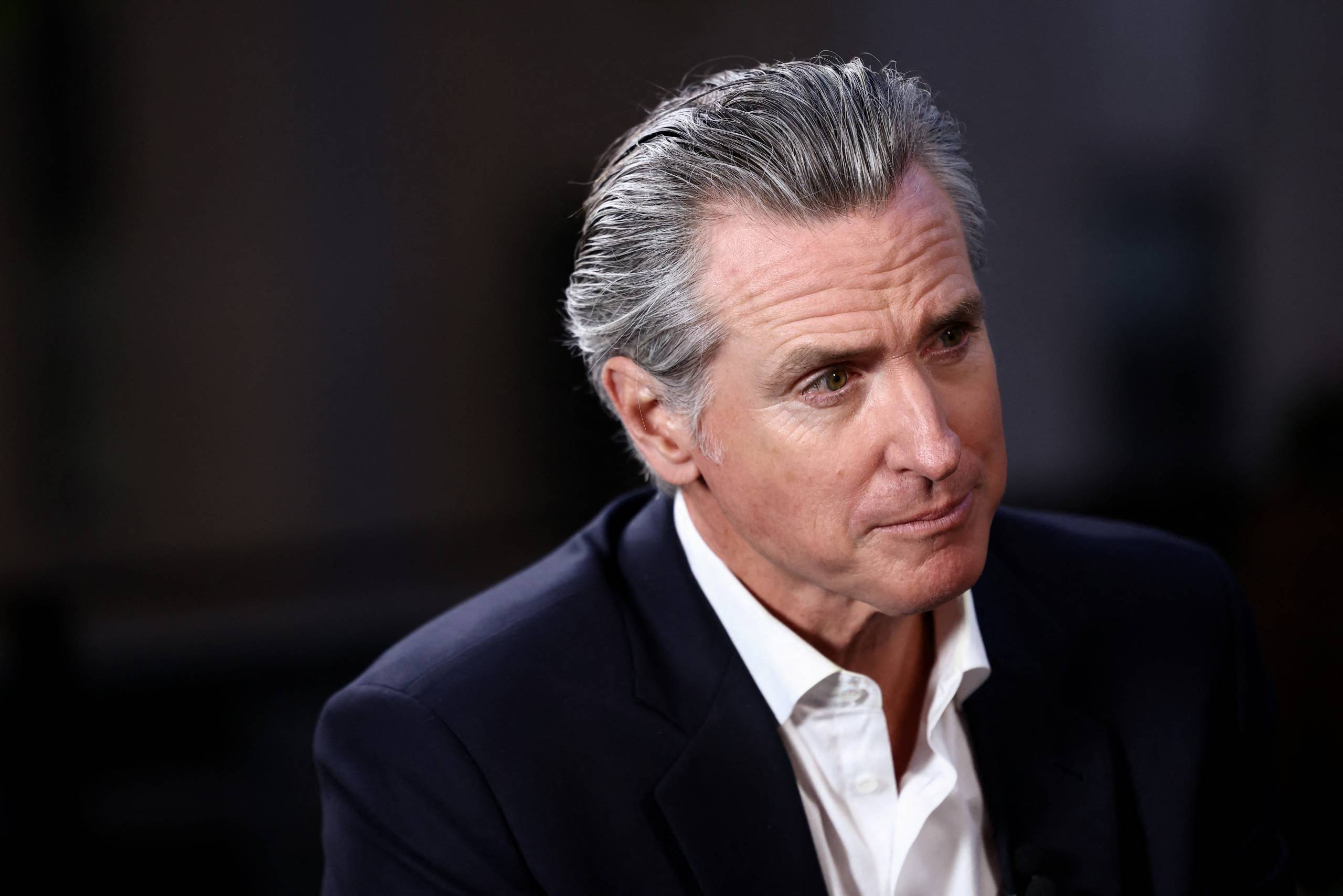
Amid the news of Tennessee’s botched execution of Christa Pike and the Pentagon saying it will live-stream its execution of an army psychiatrist convicted of a mass shooting, Gov. Gavin Newsom is said to be considering commuting the sentences of the 563 people currently on death row in California. The state is home to a quarter of all American prisoners awaiting the death penalty, though a moratorium on executions has been in place since 2019. We’ll talk about what factors Newsom is weighing and hear how commuting death penalty sentences could affect Newsom’s national political profile and the broader conversation about capital punishment in the United States.
Guests:
- Natasha Minsker, facilitator, California Anti Death Penalty Coalition
- Maurice Chammah, staff writer, The Marshall Project
- Alexa Hansen, founder, Victim Advocate Angels
Episode Transcript
This is a computer-generated transcript. While our team has reviewed it, there may be errors.
Mina Kim: Welcome to Forum. I’m Mina Kim. With 563 prisoners on death row, California has a quarter of the nation’s population sentenced to death. And Governor Gavin Newsom is facing pressure to address this before he leaves office. In 2019, Newsom put a moratorium on executions, in part, he said then, out of concern over wrongful convictions.
Gavin Newsom: I can’t be party to that. I wouldn’t be able to sleep at night.
Mina Kim: Now, advocates want him to commute those death sentences as he prepares to step down in January. Here he is on his podcast this month.
Gavin Newsom: I have to prepare for my own conscience, my rocking chair test. Do I commute the largest death row in the Western Hemisphere?
Mina Kim: For more, I am joined by Maurice Chammah, a writer at The Marshall Project. Welcome, Maurice.
Maurice Chammah: Hi. Thanks for having me.
Mina Kim: So what would it mean if Newsom did this? I mean, I imagine it would not mean that suddenly 563 people are released from prison.
Maurice Chammah: No, absolutely not. And in fact, all these folks who were previously on death row in California were transferred to the general population some years ago. So they’re effectively living out their lives in prison already, and that’s what they would continue to do if their sentences were commuted. They would all presumably get life sentences without the possibility of parole, but they would no longer be under the threat of execution under a future governor.
Mina Kim: So why would Newsom do this now? Why would it make sense for him to do this?
Maurice Chammah: Well, he said that it has to do with his own sense of morality. I mean, he’s about to leave office and leave the governorship, and so it’s sort of his last chance to take this major swing against the death penalty, which is a policy area where he’s been very clear for pretty much his entire time in office.
So this would be the chance, basically, to land that blow against the punishment before he leaves. But, of course, there are also the political pros he could maybe get out of it as he prepares to run, as we all kind of imagine he will, for president.
Mina Kim: Yes, the political pros. I imagine there are also political cons to this.
Maurice Chammah: Oh, absolutely. I mean, the attack ads really write themselves. You can imagine a Republican running against him saying, “Look at all these people whom a jury sentenced to death, whom the people of California wanted to see executed, and Newsom deprived them of that chance.”
Mina Kim: Could he do this with just a stroke of a pen in California?
Maurice Chammah: He can’t. He can do it for over a hundred of these people, but California has some quirks in its laws such that the California Supreme Court would actually have to approve all of these commutations, make sure that there’s no conflict of interest, the way that you hear about in Washington with the president. But the folks that I’ve talked to in my reporting suggest that that is likely to happen. So if Newsom goes for it, he can expect the court to hopefully play along.
Mina Kim: Yeah. And will he, I guess, is the question. You noted sort of his moral convictions on this, or his personal convictions, as he stated them. But what is his history on this issue? What has he done?
Maurice Chammah: Well, in the last month, he has apparently told some people close to him, according to reporting by The New York Times, that he’s explicitly considering doing it. And that didn’t surprise me, because really his whole time in office, he has pushed against the death penalty.
So right after he came into office, about eight years ago, he declared a moratorium on executions, which meant that people were still on death row and still technically could face execution. But he actually had the execution chamber at San Quentin Prison, outside San Francisco, ripped down, basically. There were these photos of a lethal injection gurney and a chair that had been in a gas chamber literally being hoisted onto trucks and driven away. And the symbolism of that was quite clear.
Mina Kim: You also note that he’s expressed concern over the death penalty’s geographic arbitrariness in California. In what ways?
Maurice Chammah: Well, what we mean by that — and I should say this is based on a data analysis that my colleague at The Marshall Project, Jill Castellano, did — is that whether you are sentenced to death if you commit a homicide has less to do with the severity of the homicide itself and more to do with where you committed it.
So if you committed a homicide these days in Riverside County, California, you are, I think, four times more likely to receive a death sentence than in Los Angeles. This reflects years and years of data. Now, which counties are more committed to death sentences shifts over time. It is entirely based on who has been elected in that county to be the district attorney and also whether jurors in those counties agree to sentence people to death.
But the outcome is that whether someone goes to death row is much more a product of geography. Critics of the death penalty tend to say this is arbitrary, that it shouldn’t matter where you live, and that the idea of the death penalty, really, in its foundations, was to have a little bit more clarity, a little more sense of justice around who is sentenced to death and who is not.
Mina Kim: We’re talking with Maurice Chammah. We want to hear from you, listeners. Do you think Governor Gavin Newsom will commute the sentences of California’s death row population? And would you support that or not? What questions do you have about the way California handles death penalty cases?
You can email [email protected], find us on Discord, Bluesky, Facebook, or Instagram at KQED Forum. And you can call us at 866-733-6786, 866-733-6786.
So, Maurice, as Newsom is mulling this over, there are things happening nationally that are really bringing this issue of capital punishment to the forefront of people’s minds. One of them is that Secretary of Defense Pete Hegseth has confirmed that the execution of a former Army psychiatrist who killed 13 people at Fort Hood in 2009 will be carried out by firing squad and live-streamed to the public. Is this reflective of anything broader in the public, or just a reflection of the administration?
Maurice Chammah: No, I think the death penalty increasingly, over the last five to 10 years, has kind of come back into the national foreground. Those who remember the 1980s and ’90s will remember that the death penalty was in the national news all the time. There were a lot of prominent cases. George W. Bush was running for president in 2000, and he had overseen lots of executions in Texas. This was central to my own early years.
And what I see now, basically, is a return to a debate. The death penalty has managed to kind of go quiet, but it’s been there all along. You know, there’s under 40, let’s say, but more than 20 executions most years. And a lot of those executions are done by lethal injection. They’re done sort of behind the scenes, behind the closed doors of prisons in just a handful of states.
And so it’s easy for most Americans to kind of ignore the death penalty and really only engage with it when a particularly gruesome crime is reported on in the news or there’s a high-profile case, right?
But now you’re seeing both sides of the political aisle see a certain amount of political value in bringing the death penalty to the foreground again. On the one hand, you have the Trump administration, which really promotes a highly punitive response to crime and a much stronger sense of state control, a sense of spectacle, seeing value in carrying out an execution by firing squad, which is, of course, much bloodier than lethal injection, and doing it live-streamed, as they’re claiming they’re going to do.
And then even the states that try to keep executions behind closed doors are having trouble because of this growing difficulty carrying out lethal injections. So a couple of weeks ago — it already seems like ancient news now — Christa Pike became one of the first, or the first, person to survive an execution, really raising questions about the efficacy of how we’ve been doing it.
Mina Kim: Yeah, and questions, I think, about our nation’s ability to actually carry out executions safely or effectively.
Maurice Chammah: Yeah, and the humanity of doing so, right? I think for a long time, lethal injections looked like these quiet medical procedures, and so we could pretend that it’s not kind of painful and gruesome to kill someone.
But now that the lethal injections are not working as they had been planned, and there’s a turn back toward methods like gas chambers and firing squads, there’s sort of a sense of the veil coming off of the death penalty, and the country really having to decide and reckon more clearly with: Do we want to kill people, and this is what it looks like?
Mina Kim: And can we just step back first? I mean, can you tell me what your reaction was when you heard the announcement about an execution open to the public and live-streamed online?
Maurice Chammah: Yeah, it struck me as a step into the past, into the deep past. So, of course, live-streaming and the internet are recent phenomena, but it was about a hundred years ago that executions were regularly held in public, and there were stories of tens of thousands of people all going to see someone hang in scenes that really looked very, very close to lynchings, which were, of course, illegal but also carried out in public, and also carried out with the consent, usually, of the local leadership, usually against Black Americans.
And this firing squad is against a Muslim American. So really, my first reaction was, wow, I feel like I’ve stepped into 100 years ago.
Mina Kim: Yeah. Well, it’s certainly drawn a lot of reaction. Senator Lisa Murkowski of Alaska said, “I would expect this” — meaning a live-streamed execution — “from terrorists and dictators, but not here in America. It would give this individual, who deserves no further notoriety, the martyrdom he seeks.”
We have listeners weighing in. This listener, Douglas on Discord, writes, “From a personal viewpoint, the death penalty has always felt like a political response to a criminal act. It’s often used for political reasons, both to the wider audience and to end the lives of dissidents.”
Another listener writes, “Given our history of unequal justice and false convictions, I am 100% against the death penalty.” And that’s from Discord user Steve.
MJ on Bluesky writes, “Commuting everyone on death row would be equivalent to Trump’s pardoning every January 6th arrestee. Some murders were too heinous to deserve mercy. Commutation should take place on a case-by-case basis, not wholesale.”
Let me ask you this: Given the number, the very large number of people, would it be possible for Newsom and a team to be able to look at each individual case and determine whether or not that someone’s sentence should be commuted?
Maurice Chammah: Technically speaking, absolutely. This is what governors typically do. But practically speaking, there just isn’t time, right? You imagine the depth and complexity of these cases.
I’m thinking of just one in particular, a man facing a death sentence in California, Kevin Cooper, whose case has been in the news over the last 10 to 20 years. And that is one where there are lots of questions about his guilt. It has been evaluated over and over again by courts, by a commission Newsom appointed, and to this day, there’s still debate around, you know, did they get it right or not?
So you just imagine that kind of debate playing out in more than 500 cases, and Newsom has really run out the clock there.
Mina Kim: We’re talking with Maurice Chammah about Governor Newsom considering whether to commute the sentences of the more than 560 prisoners currently on death row in California, and we’re hearing your thoughts and reactions to it as well. Maurice Chammah, staff writer at The Marshall Project. We’ll have more with him and you listeners after the break. Stay with us. This is Forum. I’m Mina Kim.
Welcome back to Forum. I’m Mina Kim. Listeners, we’re talking about whether Governor Gavin Newsom will commute the sentences of the more than 560 prisoners currently on death row in California. He’s been grappling with it publicly as he prepares to leave office.
Maurice Chammah is with us, a staff writer at The Marshall Project, and so are you, our listeners. Join the conversation at 866-733-6786, at the email address [email protected], and on Discord, Bluesky, Facebook, and Instagram, on our social channels at KQED Forum.
Let me go to caller Laura in San Bernardino. Laura, go ahead. You’re on.
Laura: Hi. Um, yeah, my name is Laura. I am from San Bernardino. I’m actually a wife. My husband is on death row. He has been there for 25 years.
So I am absolutely for universal clemency, and not just for my husband, but for everybody. I just want to give a little background. My husband was found guilty, and the judge and the district attorney knew that he had not killed anybody, but they tied him in due to enhancements with the others, the typical defendants. So this happens often, and I don’t think that should be punished by execution, obviously.
And in my county, San Bernardino County, and in Riverside County, we have, like, the highest numbers of Latino and Black men on death row. So there’s a big racial bias right there, right? And we know this is happening.
And the other thing is, 70% of people on death row don’t even have lawyers, the habeas lawyers. So my husband’s been on death row for 25 years, and we haven’t even had a direct appeal yet to try and rectify this.
Mina Kim: You know, Laura, thank you so much for coming on and sharing your story and connection to this. I really appreciate it. Maurice, it sounds like Laura’s underscoring especially your point earlier about geographic arbitrariness.
Maurice Chammah: And racial arbitrariness. So another piece of this story is that, in the last few years, a coalition of civil rights groups has mounted a lawsuit basically claiming that the California death penalty system is full of racial disparities.
They have gotten these academic studies that show that Black people are up to 8.7 times more likely to be sentenced to death than others convicted on similar charges, and Latino people are 6.2 times more likely.
So in addition to this idea of geographic arbitrariness, there’s also floating around Newsom — and Newsom knows this — an idea that the death penalty in California falls harder on people of color.
Mina Kim: Well, we’re going to get some reaction now to this news from two others who are very invested in the outcome of this as well. Let me start with Natasha Minsker, facilitator of the California Anti-Death Penalty Coalition and an attorney. Natasha, thanks so much for joining us.
Natasha Minsker: Thank you for having me.
Mina Kim: So your group is calling on Newsom to commute before he ends his term. Why?
Natasha Minsker: We are at an inflection point on the death penalty here in this nation. As Maurice noted, a couple of weeks ago, we had this terrible, torturous, failed execution in Tennessee, followed by the announcement, Mina, as you noted, that the federal government intends to carry out a firing squad execution and live-stream this event.
Together, these events have ripped the veneer off the idea that the death penalty in the United States can be carried out in a dignified or humane manner. We have seen through these events the last few weeks the reality that the death penalty is an act of violence, and we cannot end violence by responding with more violence.
Here in California, we are living in limbo. We have the largest death row in the Western Hemisphere. We have not carried out an execution in more than 20 years. And let’s be honest, we’re not going to carry out an execution. There’s really no legal or practical way for us to do that.
So why do we keep lying and promising victims that we’re going to do something that’s going to bring them healing when we are not going to, and it is not going to help?
Mina Kim: What do you mean by there is no legal or practical way to carry them out?
Natasha Minsker: Well, I think the events in Tennessee demonstrated to us that the idea that it is a simple procedure to kill someone through lethal injection is absolutely not true.
We’ve had botched executions here in California. We’ve never had someone survive, but we’ve had significantly botched executions where people were tortured to death. And that’s why executions were originally halted 20 years ago. The federal courts found that the way California was carrying out executions amounted to cruel and inhumane treatment and violated the Constitution.
So that’s initially why our executions were put on hold. And then Governor Newsom came into office in 2019 and put the moratorium in place.
We have seen state after state have botched executions and try to switch to other execution procedures. This has been going on for decades. Every new execution procedure we attempt has its own problems.
So we don’t have a way of carrying out executions properly. Medical professionals refuse to participate in executions for ethical reasons. The companies that control the lethal injection drugs refuse to sell them to states for execution purposes, so the states have to buy these drugs on the gray market or make them themselves.
So we know that there’s no easy way to kill someone, and it’s never going to be a clean or humane process. We really need to stop trying.
Mina Kim: You have also noted that timing is of the essence, not only because you have an outgoing governor who is against the death penalty, but also because timing is of the essence for the state Supreme Court. Can you talk about why?
Natasha Minsker: As Maurice explained, in California, the process is not a simple, one-step process. For example, when Governor Ryan in Illinois commuted all death sentences, there had been a dozen governors who had commuted death sentences in their states. In most of those states, the governors have the power to act unilaterally.
Here in California, there’s a process that involves the Supreme Court, and the governor needs to act in time for the Supreme Court to go through its process and do its due diligence.
Mina Kim: Do you think realistically the Supreme Court would have the time to go through two-thirds of the cases on California’s death row?
Natasha Minsker: If the governor presents this as a universal action, where he’s commuting all death sentences, and the reason he is acting is because of the problems with the death penalty, then yes, absolutely. The presentation of the request for the Supreme Court’s approval of the clemency action is based on one argument, which is that the death penalty is inhumane and unjust and that we should not have anyone under sentence of death in California any longer.
You asked if there would be time for the court to review the cases one by one. The biggest problem here is that, as the caller pointed out, 70% of the people on death row don’t have a lawyer or funding for their legal team to work on their case. So for 70% of the cases, there’s no advocate there to present the case for why that person should be commuted.
This is one of the most significant disparities we have in the death penalty here in California. We’re living in this limbo.
Mina Kim: What have you estimated, Natasha, is the cost of all of this to Californians in dollars?
Natasha Minsker: Great question. And it’s not my estimate. It’s the Legislative Analyst’s Office, which does these official estimates here in California, and they’ve told us that we spend $150 million every year on the death penalty in California, for a system that everyone agrees has failed us.
Mina Kim: Natasha Minsker is an attorney and facilitator of the California Anti-Death Penalty Coalition. I really appreciate you coming on. Thank you very much.
I want to bring into the conversation now Alexa Hansen, founder of the organization Victim Advocate Angels. Alexa, thanks so much for being on. I was very sorry to learn about your sister. Tell us about your organization and your connection to this work.
Alexa Hansen: Absolutely. Thank you so much for having me. So I’m the founder and CEO of Victim Advocate Angels, a nonprofit organization created by survivors for survivors of homicide and other violent crimes. We provide emotional support, courtroom advocacy, guidance through the criminal justice system, and a voice for families who often feel very defeated and forgotten.
I founded this organization after my little sister, as you mentioned, who was 28 years old. She was raped, beaten, and then burned alive in 2018, leaving behind her nine-year-old son, whom I adopted.
Through that experience, I saw firsthand just how broken our justice system can be and how little support victims and their families actually receive. Families like mine are left trying to navigate the incredibly complicated system while experiencing the most traumatic experience of their lives that they’re ever going to face.
I realized that the system meant to deliver justice often leaves survivors feeling forgotten and unheard and forced to fight for themselves, which, again, should never be the case. During the hardest and most traumatic times of our lives, we didn’t receive the support and guidance or help that we desperately needed.
And I can’t change what my family went through, but I can make sure other families facing the same unimaginable loss don’t have to fight that battle alone. Victims’ voices are the least heard throughout this entire ordeal, and that’s why we do what we do, because victims deserve more than justice in a courtroom. They deserve support, compassion, and someone standing beside them every step of the way.
Mina Kim: So, Alexa, what was your reaction to the news of the governor considering commutations?
Alexa Hansen: So it wasn’t necessarily a shock for us. You know, we live in California, and so the laws are ever-changing for us, unfortunately. Again, the victims are always the last voice to be heard.
I believe the death penalty should remain an option for the most extreme and horrific crimes, because for some surviving families, it represents a level of accountability that life without parole simply doesn’t carry in the same way.
And I think for a lot of families that I represent — I’ve worked with hundreds of families — I have not heard one yet say that they would not want to have the death sentence carried out in their cases. Now, we do understand that that’s not always going to be the case. There is a level of things that need to be met to get to that death sentence, so it’s not always even going to be on the table for a lot of these families.
So when we heard that that was going to be taken away, it’s kind of like, excuse me? Taking away the ultimate accountability for some of the most egregious crimes that can possibly be there. So it was like a punch to the gut for these families.
Mina Kim: Alexa, I’ve often heard from people who are also against the death penalty as an option that it is unfair to victims to be in a system where there is so much uncertainty, so much dysfunction with regard to actually being able to carry out these sentences, and that it would be better to know it’s not going to happen than to be in limbo. Is that how you feel?
Alexa Hansen: Um, I don’t necessarily think that that really resonates with families. And the reason for that is that we are forever in limbo until that person is no longer here.
I think for people who have not walked through what we have walked through, they don’t really understand that, because no matter what the sentence is, whether it’s death or life without parole or 25 to life, no matter what, if that person is still alive, we are still faced with appeals. We’re still faced with their sentences getting commuted, et cetera, et cetera. You could go down that line.
So it doesn’t matter what that sentence is. But for us, the finality of a death sentence carries a lot more weight and accountability than life without parole and other sentences, where once you commute a death sentence, it then gets dropped down to life without parole or, in certain circumstances, it could be dropped down to time served.
There have even been cases that have gone from a death sentence to, “We’re going to give you 30 to life, but you’ve already done that, so we’re going to go ahead and just let you out.”
So for us, the accountability, like I said, comes with showing we’re giving you the max sentence, the most punishable sentence available by law, which is the death sentence. Now, if they can come up with a different sentence that is not the death penalty, that is not life without parole, that has that same severity, then that could be something that victims and their families could sit better with.
But when it comes to this, it’s just, like I said, a slap in the face to these victims and these families that have had to sit through all of this time and time again, and will continue to have to do that no matter what the sentence is, until that person is no longer here.
Mina Kim: Alexa, you’ve talked about how victims are often the least heard. What do you think people don’t understand about what it’s like to be a victim advocate in California, with California’s troubled system?
Alexa Hansen: Yeah, I think the biggest thing is that there’s a lack of empathy and a lack of people really truly understanding what it’s like to sit in that seat.
Almost every family that I’ve worked with has sat in a courtroom over 30 or 40 times. People don’t understand it can take years to even get to a trial. And once you get to that trial, then what? Then you get to the sentencing. And then again, when that sentence happens, then what? Then there’s the appeal process. Then there’s all these things that come with that.
What they’re not understanding is that this type of grief is different from any other grief that anyone will ever experience. I consider it to be like a scab that can’t heal because it keeps getting picked at.
So there’s no guarantee for that family. Like I said, if that person is still alive, if they are found guilty, a jury trial has happened, there’s been a lot of weight put on that, and they sat through that. It’s getting picked at and picked at.
So even once that trial is over, now, again, we’re facing the appeal process. How long are they actually going to be in jail? The early release programs that keep happening. We’re faced with all of those, the parole board hearings, all of these things. That scab keeps getting picked.
So there’s no true healing. There’s no true closure for any of these families because it keeps getting picked at. Until that person is no longer here, that scab is going to continuously be picked at, whether they’re in jail, whether they reform, whatever the case may be, they’re still here.
If that person is indeed the person who did that act, it’s never going to make it okay. They’ll never actually have any closure or anything like that. And that’s the hard part that people don’t understand. You know, they say, “It’s been 20 years. Why haven’t you moved on?” It’s been 30 years. How are you still grieving?
It’s because our scab is continuously being picked at. It’s not like being in a car accident or having cancer, where there are still so many questions that are answered. And then there’s, again, that person’s still here, so there’s never any finality for us.
Mina Kim: Alexa Hansen, founder of Victim Advocate Angels. Thank you so much for talking with us as well.
Alexa Hansen: Absolutely. Thank you so much.
Mina Kim: We also have listeners weighing in. Listener Carolyn in Redwood City writes, “Claiming that life without the possibility of parole is an adequate substitute is wrong. There are many vicious murderers who had their death sentences changed to life who’ve been released from prison. Ted Bundy couldn’t victimize any more women because he was executed, and we were all saved from repeated board appearances and repeated court appeals.”
Another listener, Moira, writes, “Killing people is wrong. I deeply support Newsom in commuting all the death sentences. A caller compared this to the January 6th pardon. No, these people got a pardon and were able to leave jail. Those on death row would still serve their life sentences. One innocent person killed by our society is too many. We should not have the state in the business of killing ever. People are imperfect. The system is imperfect. Death is final and cannot be reversed.”
Maurice, where are Californians when it comes to the death penalty? Has there been recent polling on this?
Maurice Chammah: No, not that recent. About 10 years ago, Californians had an opportunity to abolish the death penalty, and they chose not to. This was Prop 62, and it was defeated 53 to 46.
But then, three years later, in 2019, there was a poll, and 41% of Californians said they preferred the death penalty, while 48% said they preferred life in prison. Obviously, those numbers don’t add up to 100, and 2019 was — what is that, seven years ago? So it really is hard to know what Californians would say today if given another chance to consider the death penalty.
Mina Kim: Well, we definitely appreciate listeners telling us what you would say today, at 866-733-6786, at the email address [email protected], and on our social channels on Discord, Bluesky, Facebook, or Instagram.
Also tell us if you think Governor Newsom will do it, based on the way that he’s been behaving, and whether or not you would support commuting the sentences of all of California’s death row population: 563 prisoners in total, 18 of whom are women.
What questions do you have about the way California handles death penalty cases? And have recent news events affected the way you think about capital punishment or attitudes toward it in America? We’ll have more after the break. Stay with us. I’m Mina Kim. This is Forum.
I’m Mina Kim. Governor Gavin Newsom is considering commuting all 563 death row sentences in California. And here he is grappling with the issue on his podcast recently with Bryan Stevenson.
Gavin Newsom: What do you say? And I’m getting all those people in my ear: “Don’t do it, don’t do it. Politics.” That’s the best I can do is the politics. But also the victims. What do I say?
When I did the moratorium, I met with victims. And I’ll never forget, they didn’t know why they were meeting me. And I will never forget one well-known father, a wonderful man. I’ll never forget. It still stings me today. He got up, said how disgusted he was with me, and walked out. And he said much more than that. And just, what do I say to the victims?
Mina Kim: You, our listeners, are joining the conversation at 866-733-6786, on our social channels at KQED Forum, and at the email address [email protected].
Violet in Monterey is with us. Violet, go ahead.
Violet: Hi, my name is Violet, and my daughter was murdered in October of 2021. And the part when it comes to the death penalty reminds me of what we say when we pledge allegiance to the flag: “Justice for all.” That should include the victims. That should include the ones that were murdered. That should include the ones who are suffering, left behind.
And the fact that some of these commentators, some of these people who make careers out of supporting getting people off the death penalty, is absolutely sickening. They’re not taking into consideration the suffering that they claim the prisoners would get. They’re not taking into consideration the families. They’re not taking into consideration their children.
I have an 11-year-old daughter who refused to go to school because she wanted to come with me on October 1st to the Capitol to advocate for herself and her rights when she lost her sister, so that she does not have to face the person who killed her sister again.
And these are the problems that people are not seeing. They’re not seeing our pain. There’s no numbers supporting victims’ families. All they see are the numbers of the prisoners. I mean, the fact that there’s empathy for these prisoners, that there is empathy and there’s talk about the torture that they go through, being euthanized, being shot. They’re not taking into consideration the torture —
Mina Kim: Well, Violet, I’m so sorry to hear about your daughter, and I really appreciate your call. Let me go next to caller Curtis in Richmond, who’s on the line with us. Curtis, go ahead. You’re on.
Curtis: Yes. I definitely empathize with victims. There’s no question about it. But when you have a judicial system that is arbitrarily biased, racially motivated, the numbers are three to one if the victim is white and the perpetrator is Black, three to five to one. They’re automatically going to, if there’s any inkling of a special circumstance, make one up, add one, and it’s just lopsided.
In my particular case, the jury was rigged, period. And they do this in California regularly. You know, the DAs have their regular conferences, yearly conferences, and they get together and say, “Hey, this is where you get a conviction.” You know, you just leave Blacks, minorities, and Jews off of juries because they empathize with anybody that, at the time I was with the trial, anybody that may get gassed. Understandable why Jewish Americans feel this way.
Mina Kim: Curtis, am I right that you told our screener that you were on death row?
Curtis: Yes, yes. I came from jeopardy. Yes, in my case, nearly 40 years. My conviction was vacated because my jury had just been rigged. It was plain and simple, and it took nearly 30-plus years to go before a tribunal that would see what actually happened.
I went to the state Supreme Court. They had this mantra that, hey, if — what do they call it? I had a word for it. At any rate, it meant, you know, it doesn’t matter whether you’re guilty or not. The jury finds you guilty, so you’re guilty. It’s just that simple.
It was a saying for it, they coined the phrase throughout the U.S. But believe me, all victims do have the right to be heard, do have a right for retribution. I agree with that wholeheartedly. But there’s just so much injustice within the justice system.
Mina Kim: Yeah, Curtis, I can’t thank you enough as well for calling. All of these people with direct and profound experiences, I really do appreciate it a lot.
Maurice, based on what Curtis is saying, what do we know about the number of people on death row who’ve been wrongly convicted?
Maurice Chammah: Frankly, we don’t know that number for California. And part of it is that California’s court system has been so clogged with these cases, in the ways that we described earlier in this hour, because there is such underfunding for defense lawyers.
I don’t certainly feel confident saying what number of innocent people have been exonerated — or, I’m sorry, are innocent. But that said, the national picture is that about 2% of all people sentenced to death since the early 1970s have been exonerated, basically by the courts finding them innocent.
Again, in California, it’s about half that number proportionally, about 1%. But to me, that’s less a function of California having fewer innocent people on death row and more a function of the courts kind of struggling to make their way through all these cases.
Mina Kim: Well, Jerome in Alameda writes, “The fact that such a judgment is invariably made by human beings, and human beings are capable of error, is the real deal breaker for my condoning the death penalty. Think of all the prisoners who’ve been discovered to be innocent via DNA tests. Putting someone to death is the ultimate irreversible decision. I can’t support it.”
Listener Chris asks, “Years ago, I read about how much it cost to jail a prisoner for life versus death row with appeals, et cetera. Are there current statistics on this?”
What can you tell us, Maurice, about how much it costs? You know, is it less expensive to execute people or for them to live out their lives in prison?
Maurice Chammah: No, it’s actually much more expensive to seek the death penalty against someone. This is kind of a hidden element, I think, in the story of the death penalty, but it can cost millions and millions of dollars in every case.
I saw one analysis from the Habeas Corpus Resource Center, which represents people on death row in California, saying that it would cost more than half a billion dollars to resolve all of the death penalty cases in California.
And that’s because, in order to really weed out those people who may be innocent or whose constitutional rights were strongly violated through, let’s say, racism in jury selection or a defense lawyer who really didn’t do their job at trial, in order to weed out all those cases, it takes a lot of back-and-forth between prosecutors and defense lawyers on appeal. And lawyers cost money. Over the course of years, those costs really balloon and far outstrip what it would cost to house someone in prison for the rest of their lives.
Mina Kim: Yeah, and you note that California has spent some $6 billion on a death penalty system since ’78 that has executed 13 people.
Natasha suggested, also, that the botched execution attempts of Christa Pike are reflective of broader issues with that. Is she right that California has had botched executions? And has the state changed the system since?
Maurice Chammah: It is my understanding that there were botched executions that were litigated over in the ’90s in California. And obviously, because Newsom has, and governors before him have, stopped carrying out executions, it’s impossible to just sort of go right back to how things were done in the 1990s.
California would have to start from scratch in carrying out executions, and it would be subject to all of the difficulties that we’ve seen state after state have.
Some states have decided to carry out lethal injections, where you have problems of people like Christa Pike surviving those execution attempts, or other people sort of screaming and groaning from the gurney.
And then you have other states that have attempted executions that have a lower likelihood of being botched, like firing squads, but then, of course, bring with them a whole host of other issues in terms of just the cultural squeamishness about the grisly realities of death.
Mina Kim: Let me go to caller Andrea in Point Richmond. Andrea, go ahead. You’re on.
Andrea: Yes. Thank you. As I told the screener, my husband was murdered 14 and a half years ago on the driveway of our Berkeley home. I witnessed part of this.
The perpetrator was an unmedicated paranoid schizophrenic who was apprehended within an hour. He’s now serving 35 years in Napa State. My life has been destroyed, shattered by this young man, but I cannot imagine wanting to witness his death. It will not bring anyone back or stop him from murdering someone else.
Our legal system, our mental health care system, our society in general, our racial and economic inequality, I believe, are responsible. No one should be executed. Because they killed, we kill, and that doesn’t make sense. It makes us killers as well.
Mina Kim: Andrea, I’m very sorry to learn about your husband, and I really appreciate you coming on to share your story as well.
There are definitely very varied views in the victim community, Maurice, as I’m sure you’ve encountered as well, right?
Maurice Chammah: Oh, absolutely. We’ve already actually seen some victims in the Nidal Hasan case, the potential live-streamed execution, saying that they abhor that.
But I’ve also seen a lot of people who want a death sentence and, over the course of decades, feel like that death sentence has really kind of been a lie from society to them, right? They were promised this outcome, and 10, 20, 30 years go by, and society can’t deliver it.
And it’s not because people aren’t sympathetic and don’t believe in the death penalty. It’s because we balance that, as a country, against people’s constitutional rights and working through making sure innocent people aren’t executed, making sure these are done legally and don’t really look like extrajudicial killings, right?
It takes a lot of time and money, and we as a society have really not delivered that. So many victim families are coming to be opposed to the death penalty, both on moral and religious grounds and also because they feel like the state is just not capable of it.
Mina Kim: Let me remind listeners, you’re listening to Forum. I’m Mina Kim.
Well, listener Vanessa writes, “My father was murdered when I was a child. His murderers were sentenced to death originally. Then the sentences were reduced to life without parole for one and life with the possibility of parole for another. The one with the possibility of parole was released after 30 years, which was devastating because every other year up until that point, I was in court fighting for justice for my father.
“I think people don’t understand the pain that you go through, and your guest who described it as a scab that is always picked, that is absolutely spot-on. I will never have relief until these men are dead.”
Maurice, how does America compare with other countries in its approach to capital punishment, would you say?
Maurice Chammah: It’s a great question. So the United States is relatively alone among Western democracies in having the death penalty. The death penalty is, of course, very common in China, Iran, Saudi Arabia, and Afghanistan. But we are really out of step with, let’s say, the Western European countries, where they haven’t had the death penalty in decades — France, England, Germany, what have you.
And what you see in those countries is not a large-scale victims’ rights movement to bring it back. You see actually more resources for victims to kind of heal from these crimes and deal with them, as opposed to the kind of promise of the death penalty that is never delivered.
There was actually one study. So I should say that we don’t even have to look that far away to compare the United States. We can just compare states with the death penalty, like California, Texas, and Florida, to the many states here that just don’t have it at all: Michigan, Minnesota, Wisconsin.
And there’s been a little bit of academic study of victim families between these states in homicide cases. And it’s found, basically, that when the death penalty is handed out, it can remove or impede the ability of victim families to deal with the case and find healing because, again, like our guest said, the scab is being picked over and over and over by appeals.
Whereas in states — Minnesota, in one study I’m thinking of — where somebody is sentenced to life without parole, the victim’s family really can believe that the person will never get out of prison and heal in whatever ways they need to.
Mina Kim: It’s been interesting to see the national polling with regard to the death penalty. I think there was a Gallup poll last year that showed that 52% of Americans support the death penalty as a punishment for murder, but that’s actually significantly down from the mid-’90s, when it was as high as 80%.
That said, though, as you talk about states, there are states that look like they’re moving in that direction. I spoke with Elizabeth Bruenig a while ago about states that are starting to ramp up the number of executions they’re doing. Is that true?
Maurice Chammah: I think that is true. So for every Gavin Newsom, a Democratic governor who is against the death penalty, you have red-state governors like Ron DeSantis in Florida and Greg Abbott in my state, Texas, who believe in the death penalty and also believe that it’s politically advantageous to them to really try to serve that 52% of Americans who believe in the death penalty.
I think they’re also taking their cues a little bit from President Trump, who has proven himself the most pro-death-penalty president in maybe not all of American history, but certainly in the last hundred-plus years.
And his open support for the death penalty, I think, is trickling down to state leaders who say, “I want to get the same political value as the president out of this.” And DeSantis, I think, is really the standard-bearer. They are ramping up executions in Florida, which carried out, I think, more than a dozen last year, way up from years prior.
Mina Kim: Let me see if I can squeeze in David quickly in Santa Rosa. David, your question?
David: Yes, so I’m curious to know whether there’s anything other than politics at play here, because I’m generally a Gavin supporter, but this seems like a political move just before the election, since it’s not going to change any future sentences to death row.
Mina Kim: Your thoughts on that, Maurice?
Maurice Chammah: Yeah, I mean, I think Newsom would say it’s all he can do, right? That it’s ultimately the California voters who would have to abolish the death penalty.
I also think that it’s pretty typical for governors to do this on their way out of office, regardless of what next office they’re seeking. But certainly Newsom is open to the criticism that he could have done this five, six, seven, eight years ago and is only now doing it, suspiciously close to a presidential run.
Mina Kim: Yeah. Listen, Lubov wants us to clarify before the show’s over that a commutation and a pardon are two very different things. A commuted sentence only eliminates the execution, but not confinement. A pardon frees people from incarceration and releases them from confinement. Newsom leaves them in prison. Trump lets them out to threaten.
Again, we did clarify that at the very top of the show, but appreciate Lubov wanting us to do that again.
And Maurice, really appreciate you coming on to explain all of this to us. Thank you.
Maurice Chammah: It’s my pleasure. Thanks for having me.
Mina Kim: Maurice Chammah is a staff writer at The Marshall Project. My thanks as well to Natasha Minsker, attorney and facilitator of the California Anti-Death Penalty Coalition, and to Alexa Hansen, founder of Victim Advocate Angels, and also to our listeners who called in today with such closeness to this topic.
Kayla Mihaljevic produced today’s segment. You’ve been listening to Forum. I’m Mina Kim.
Announcer: Funds for the production of Forum are provided by the Jenerosity Family Fund and the members of KQED.