California Governor Candidate Steve Hilton Takes Your Questions
Airdate: Monday, October 5, 2026 at 10 AM
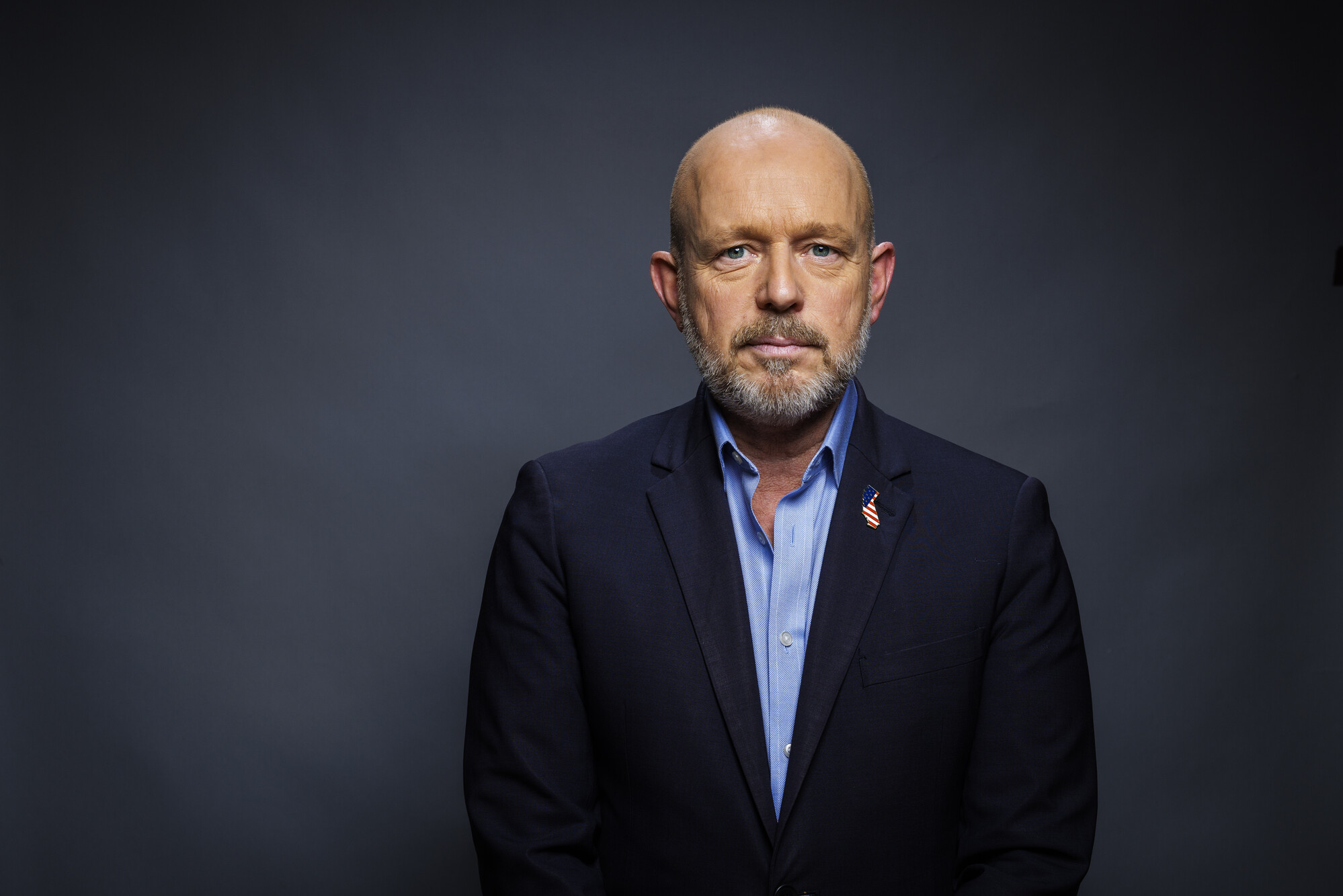
Republican candidate for governor Steve Hilton says California needs a dramatic break from years of Democratic party rule. He wants to slash income taxes, build new cities, overhaul homelessness policy, expand energy production and rethink California’s approach to immigration and regulation. Polls show him well behind Democrat Xavier Becerra, but is he shifting the boundaries of political debate in the state? We talk with Steve Hilton about his case for a California reset.
Guests:
- Steve Hilton, California’s Republican candidate for governor
- Marisa Lagos, KQED political correspondent and Political Breakdown co-host
Episode Transcript
This is a computer-generated transcript. While our team has reviewed it, there may be errors.
Mina Kim: Welcome to Forum. I’m Mina Kim. We’ll be talking this hour with Republican candidate for California governor, Steve Hilton. And while we try to make the connection with him, we are joined now by KQED politics correspondent, Marisa Lagos. Hi, Marisa.
Marisa Lagos: Hey, Mina. Good morning.
Mina Kim: Give me the latest in terms of the status in the race right now, where it stands. We’ve seen some polls showing that Javier Becerra has a very significant lead in this race, but Hilton’s camp has said that they have their own polling that shows that the race is much closer than that. Tell us where things stand.
Marisa Lagos: Well, I mean, you have to start with where things stand from a voter registration perspective, which is that Democrats outnumber Republicans nearly two to one. We haven’t seen a Republican win statewide in 20 years. So public polling is showing Becerra with a lead of around 18 to 25 points, depending on the poll. I haven’t seen Hilton’s internal numbers, but it would be a pretty remarkable feat for any Republican to really come close in a statewide race. We’ve just seen such partisanship, such polarization in recent years.
And, like I said, even pre-dating that, I would say 20 years ago was the last time Arnold Schwarzenegger and Steve Poizner won statewide. So it’s definitely Becerra’s to lose. But Hilton has, I think, been making a lot of media appearances. There was that CNN debate last week, and he’s really trying to make his case that Democrats have been in charge for 20 years, and it’s time for a change.
Mina Kim: And very much making his case in comparison to Newsom, right? That has been a focal point of the campaign, trying to distinguish and set himself apart very differently from the way that Newsom has run his governorship.
Marisa Lagos: Absolutely, and trying to really yoke Javier Becerra to Newsom and his administration. Becerra is a former attorney general, state attorney general. But most of his service has really been national. We saw him in Congress for decades, and then, of course, he was HHS secretary, Health and Human Services, under Biden.
And he’s been, quite frankly, very vague in the way he’s campaigned, especially, I think, since he won the primary in June. And so it’s interesting, I think, to hear Hilton really try to say, “Look, this is going to be more of the same.” I don’t think it’s an unfair accusation to make, but it’s hard because, as reporters covering this, we really haven’t heard a lot of specificity from Becerra about how he would or wouldn’t differ from the current governor.
Mina Kim: Thank you very much for joining us.
Yeah, well, I understand that Steve Hilton is connected with us now. And unlike Becerra, Hilton’s signature proposals for California include slashing state income taxes and bringing gas to $3 a gallon. And the Trump-endorsed candidate insists you can dislike the president and still vote for him.
He’s a native of Britain and former advisor to Prime Minister David Cameron before coming to the U.S., where he was a pundit for Fox News.
Listeners, what are your questions for Steve Hilton, who’s here with us till 10:40? The number to call is 866-733-6786. You can also post on our social channels at KQED Forum or email [email protected].
Steve Hilton, welcome to the show.
Steve Hilton: Fantastic to be with you, Mina, and to join you again. It’s a while since we last talked. I think it was when I had a book out that we were discussing a while ago, and now things have changed a lot, but it’s wonderful to be back. I love the show. I’m a Bay Area native and love listening to Forum, and so it’s a great honor to be on Forum. Thank you.
Mina Kim: Oh, well, thank you very much for saying that. Actually, this is the first time, I believe, you and I have talked, but you may have been on Forum before. But I am so curious. You know, I just read just a little bit of your bio, but you’ve never held elected office. So tell me why you want to be governor of California and what you feel qualifies you most, Steve.
Steve Hilton: Well, the reason is that this beautiful state where I’ve made my life, raised my family, taught at Stanford University, started a business, I feel there’s nowhere better than California, but everyone can see that it’s going off the rails.
In many ways, we have the highest cost of living in the country, housing costs, which are driving millions of people to leave the state. In a way, that’s the biggest indictment of where we’ve gotten after 16 years of trying it. One way is so many people are leaving this incredible state of ours.
Now, most of my career has been in business, but I also have experience in government as a reformer, back in the day before moving to California, as a senior advisor to Prime Minister David Cameron in a coalition government with another party, the Liberal Democrats.
And so I’ve got a combination, I think, of the experience that we need to shake up the system in Sacramento. We’ve got a system that clearly isn’t working, especially for those on lower income, small business owners, working people who are really struggling.
I’ve been up and down the state. Frankly, unlike my opponent, I’ve been to every single one of our 58 counties in the last year and a half. We’ve done hundreds and hundreds of events, town halls. I’ve met thousands and thousands of people. They’re really at breaking point, honestly, in terms of cost and the difficulty of just existing in California. Something needs to change.
And I think also there’s a simple point, which is, after 16 years of one party running everything, I think adding some balance into our politics is a very important aspect of what this race is all about.
Mina Kim: Yeah. So let’s talk about your proposals around affordability. You would eliminate state income tax on the first $150,000 of income, which your own campaign has acknowledged would reduce state revenue by as much as $65 billion. So what gets cut to make up for that?
Steve Hilton: Well, that number in our estimate of the cost includes the two parts of my tax plan. The first is, as you mentioned, eliminating state income tax for the first $150,000 of income. And the second component of the tax plan is, above that, a flat tax of 8%.
And the combination of those things, I see it as pro-worker and pro-growth, because one of the problems in California is that we’re driving out businesses and investment. It’s one of the reasons we have the highest unemployment rate of all 50 states, as well as the highest poverty rate.
But these are things that need to be done in sequence. The priority is the working-class tax cut, the first $150,000 of state income. The cost of achieving that is about $25 billion.
To directly answer your question, we’ve published an outline of how we’ll get there. It’s called Operation Zero Waste, and we will need to reduce the budget. Now, remember, the budget of the state of California has more than doubled in the last 10 years. Ten years ago, it was $170 billion. This year, it’s just over $350 billion. That’s more than double, even as our population has declined by around two million on net. And so there’s plenty of—
The first item that will be cut is high-speed rail. I think people can see that that is, that whatever its intentions, is not going anywhere. It’s just continuing to drain money that can be better spent by returning it to people to give them some relief.
The second thing that we will do is a 5% efficiency saving across all government departments. That is very common in the private sector. People are regularly asked to do more with less, and that is something that’s never been applied to our government. It’s one of the reasons the budgets have gotten so bloated.
The third aspect is to reduce the amount that we spend, especially through nonprofits and various developers, on homelessness in terms of permanent supportive housing units that are often coming in at a million dollars per unit, billions of dollars being — the state auditor found $24 billion that couldn’t be tracked in those programs.
So that gets us more than beyond the $25 billion that is needed to fund the working-class tax cut. And I think it’s something that is desperately needed.
Final point I’d just make is the median income in California, the midpoint of earnings for an individual, is $65,000. People start paying income tax at 9.3%, just over $70,000, even as in many counties in California the official level for low income is $100,000 or more. It’s really not fair to be taxing people who can barely survive on what they make at these high rates.
Mina Kim: One is that, so what positions in this efficiency cut do you see as cuttable? Because 5% across all departments is a big cut.
Steve Hilton: Well, it’s not in the context of a 100% increase, which is what we’ve had in the last 10 years, even as, I say, the population of the state has declined and most would agree that services have deteriorated.
And so what you see in our government now is a lot of bloat and bureaucracy that’s actually adding to the problems of running a business. I mean, I’ll give you an example. The number of state employees under Gavin Newsom has increased from about 215,000 to 255,000, even as everything gets more bureaucratic. The burdens on business are just unbearable for many.
That’s why so many businesses are leaving. It’s just so hard to do anything in California. Everything costs so much, takes so long. We’ve just grown the size of the government to a point where it’s crushing job creation, innovation and entrepreneurialism, making everything so expensive that the whole equation isn’t adding up. We’ve got to try something different.
Mina Kim: How would cutting taxes for wealthy Californians, which is what your flat tax would do, right? You were suggesting around 8%, whereas right now higher incomes pay 10 to 12 or so. That would be a significant revenue loss. Do the wealthy need a tax cut?
Steve Hilton: We need jobs in California. We’ve got the highest unemployment rate in the country. We’ve got the worst business climate in the country according to Chief Executive Magazine, that carries out an annual survey of business conditions. For the last decade or more, I think it is, we’ve been ranked 50th out of 50 states.
And you can see everywhere you go. Businesses just closing, moving out of state. We are losing to states like Texas in particular, and Arizona and Nevada, and jobs aren’t being created here.
Look at NVIDIA, for example. Fantastic Bay Area success story, great company. Last year announced a half trillion dollars of investment in the United States, none of it in California. High-end manufacturing, great jobs, the kind of jobs that we would want here. They’re not coming here because we’re driving away business, jobs, investment and opportunity with a combination of tax rates and regulations that just make it — and another factor is litigation, because the lawsuit risk in California is completely crazy.
And so something’s got to change. We can’t go on like this.
I’ve made a speech to the Commonwealth Club a couple of weeks ago, and I put it in stark terms. I really, if we don’t wake up and change direction, we are heading towards a serious economic cliff in California because the exodus of business that we’ve seen in the last few years will turn into a stampede.
And if you look at particular industries, it’s especially concerning. You look at the entertainment industry in Los Angeles, the agriculture industry, farmers, the cost going up and so on. It’s just really — and you look at the fact that electric bills are the highest everywhere except Hawaii, gas and diesel, the highest in the country. We’re doing almost everything we can to drive away jobs, investment and opportunities. The opposite of what we need to be doing.
Mina Kim: We’re talking with Republican candidate for governor of California, Steve Hilton, about what he would do and what he thinks California needs. And you, our listeners, can join the conversation, 866-733-6786, on Discord, BlueSky, Facebook or Instagram, and at the email address [email protected]. More after the break.
I’m Mina Kim.
Welcome back to Forum. I’m Mina Kim. Steve Hilton is a political strategist, entrepreneur, former advisor to British Prime Minister David Cameron. He was also a former political commentator for Fox News, where he hosted a show until 2023 called The Next Revolution. He also happens to be Republican candidate for governor of California.
And you, our listeners, are sharing your questions and comments for Steve.
Joyce in Stockton writes: “In England, your Big Society ideas for public service were basically considered failure, such as libraries being run by volunteers, cutting 90% of the civil service. All these ideas did nothing to help the average British citizen. Did you learn anything from those failures, or do you plan on using the same Big Society ideas here in California, such as closing the DMV? Where will the funding to continue the services come from?”
You did say, Steve, that you want to eliminate the DMV. Also, if elected, you’d cap the annual vehicle registration fee to a flat fee of $73. You know, registration fees don’t just go to DMV administration, but to highway maintenance, local transportation projects, the CHP. So how would those things get funded?
Steve Hilton: So there’s a couple of points. First of all, again, let’s remember why we need to do something. People are being crushed by these registration rates. I mean, I just was in a town hall near San Diego on Saturday night, and people were shouting out how much they’re paying: $500, $600, $800. Guy just over $1,000 for a pickup truck. Just crazy amounts when you consider that other states’ registration fees are mostly under $100.
The young guy I was talking to at an event we did in Pasadena on Friday was telling me that his car was, you know, $400 here. In Massachusetts, $60 in Massachusetts, $60 for two years. And so there’s something not adding up again.
And it’s just very, very important that we understand that it’s no good just talking about affordability and the cost of living. You’ve actually got to reduce the amount that people pay for things. That’s what we mean when we say reducing the cost of living. And the simplest, quickest, most direct way to put more money in people’s pockets is for the government to take less out in the first place.
That’s why capping vehicle registration at what is the current rate, that when you get your registration, that is the current flat registration rate of $73, is so important.
Now, that means that the total revenue to the DMV would be reduced from about $11 billion to $2.7 billion. The biggest single item there is, as you mentioned, funding of CHP, California Highway Patrol. I think it’s an anomaly, but that’s funded out of vehicle registration. That’s not how it’s done in most states. Most states don’t have a standalone DMV. We’re one of only about 10 states that do it that way.
And so, first, the biggest item is CHP, and that needs to be transferred to the general fund and funded just like other important public services that we have. The remainder of the functions will be carried out as they are in most other states in America, through a combination of county offices and other parts of the government. You don’t need a standalone bureaucracy.
When you talk about highway maintenance, that’s another example of where we’ve just got to change the way we do things. I was speaking to a lady who runs a construction company. They build roads. She pointed out to me that it costs four times as much to build the exact same equivalent piece of road in California as it does in Texas. Why? Because we load up the process with all sorts of—
Mina Kim: Hi, Steve, we’re struggling a little bit with your connection. Go ahead, and we’ll see if we can keep it stable.
Steve Hilton: I don’t know if you heard how far we got with that.
Mina Kim: Yes, I did hear it. Really, what I want to know, though, is those various functions, whether they’re funded by the general fund or not, where would the money to fund them come from?
Steve Hilton: Well, we pay the highest taxes in the country already.
Mina Kim: But you’re talking about reducing taxes, so tax revenues. So how would we fund the difference?
Steve Hilton: We reduce the cost. It costs four times as much to build — it’s, as someone who does it for a living, they build roads — costs four times as much in California as in Texas. The quality of the roads in Texas is higher. We are rated 40th on some measures, 49th out of 50 for road quality, on others 50th out of 50. And so on everywhere you look in California, you just say, look, it’s not working.
We’re paying the most and we get the worst results. I think the reason for that is that over 16 years of one party running everything, especially if you go to Sacramento, you’ve got a system there where special interests, lobbyists, various groups have extracted what they need from the legislative process. They’ve piled on all sorts of regulations and deals that suit them, but actually make the whole process of doing anything, running anything, building anything, incredibly expensive.
And so we’ve got to get things back into a more sensible position where we’re getting more value for the taxes that we pay. That includes reducing the budget, but it includes doing things more efficiently in our government. It’s time we try to do that instead of constantly saying we need more money, we need more money.
Mina Kim: Well, Jessica writes, “The state currently outsources many state services and jobs. What action would Mr. Hilton propose to return state jobs into the state? Please do not say what’s wrong, just provide your plan,” says Jessica.
Steve Hilton: I’m not sure what is meant by state jobs. I think that we need — the real priority is jobs for people across the board in California. As I said, we have the highest unemployment rate in America. That’s shameful for a state that prides itself on our economic vibrancy and innovation ecosystem. All those great things that I want to see more of. It’s what we’re known for, and yet the engine isn’t working.
We’re not creating the jobs for regular people. We’ve got the highest unemployment rate. If you look at labor force participation in California, the proportion of working-age adults who are actually working right now, it’s around about just 61%, something like that. At its peak in California, it’s been nearly 70%.
And so something just — we’ve got to turn around this economy. It’s not working for regular working people. And the reason is that everything has become too bureaucratic, too expensive, and we’ve got to cut those things back so that we actually make sure we create the conditions for businesses of all kinds to grow and create jobs and opportunity.
That’s where the jobs are going to be coming from, not from the government, but from businesses.
Mina Kim: Well, Heather writes, “I was impressed with your debate and love a lot of your common-sense policies, especially around housing and cutting wasteful spending. I am concerned, though, about protecting the ocean and California coastline. Please discuss what your plans are for protecting the environment.”
Steve Hilton: Yes, I love that question because it’s a real priority for me. I’ve always thought of myself as an environmentalist. It’s been — and it’s one of the reasons we all love California. The modern environmental movement was started here in California. It is a really important part of the soul and spirit of our state, and it is a huge priority for me.
And I think that the answer is to make sure that we again prioritize environmental protection without doing things that I think damage that by reducing the resources that we have to protect the environment. If our economy isn’t growing enough, then we won’t have the ability to do that.
I wrote a book in 2015, More Human: Designing a World Where People Come First, and the theme of the book was decentralizing power, putting power in people’s hands, in local communities’ hands and so on. It’s been a real theme of everything I’ve argued for in my career.
But there’s a chapter in there called “Nature,” which really captures how strongly I feel about protecting our environment. Just to give you one specific example, I’ve laid out a plan for a massive new program to expand our Conservation Corps program in California, planting 3 billion new trees, restoring ecosystems, wetlands and so on, as a better, more sustainable way of actually meeting our carbon reduction climate goals.
Mina Kim: So you said you want to scrap California’s current climate policies. Do you accept the state’s goal of reaching net-zero greenhouse gas emissions, or would you abandon that?
Steve Hilton: I don’t think that the goal itself is something that, you know, I think we could go way beyond it if we do things the right way in terms of innovation and changing the way we think about this policy.
For example, at the moment, the climate policy is not particularly meeting any climate goals. It’s certainly having no impact on global temperatures. And in many ways, the policies associated with the net-zero target are actually increasing carbon emissions.
I’ll give you a couple of examples. Because of that plan, we’re now shutting down domestic oil production, but we’re not really reducing the amount we use. We’re just substituting imports. So we’re now doing the crazy thing of shipping oil. I mean, we used to produce most of the oil that we use for transportation and energy and so on here in our own state. We have abundant oil reserves, some say the second largest in the world. We used to produce most of it here. Now we’re importing nearly 80%.
We’re shipping oil halfway around the world on giant supertankers running on bunker fuel, the most polluting form of transportation fuel, increasing carbon emissions. Because we’re shipping oil in from Iraq, which is one of our top providers. We’re actually increasing production in the Amazon rainforest in Brazil and Ecuador to meet our needs because we’ve shut down domestic production.
Another example is wildfire management. Because we’ve had — if you look at one of the really bad wildfires, for example, 2019, that released more CO2 than the previous 20 years of climate policy actually saved.
So what I’m looking for are sensible ways of meeting those goals without massively increasing costs for California workers and small business.
Mina Kim: So given what you’re saying about oil production, how would you get to $3 gas? It’s another big part of your affordability plan. You say you’d get rid of California’s gas tax, but that’s about 63 cents, and gas is about $6.40 now. So then how would you get to the other, you know, $2.07 or so?
Steve Hilton: Actually, funny enough, that was stated in the debate by the moderators. I didn’t really want to quibble with them, but that’s actually not part of my plan because the governor doesn’t have the power to do that. I’d ask the legislature to reduce the gas tax. In fact, one of my Democrat — and two of my Democrat colleagues in the primary, Antonio Villaraigosa and Matt Mahan, mayor of San Jose, both had the same approach. We’re actually pretty aligned on energy policy.
There are really four drivers of the fact that we’ve got the highest gas prices in the country.
The first is the gas tax. As I said, I’ll ask the legislature to reduce that or suspend it, but I can’t control that myself.
The second is what you might think of as hidden gas taxes, things like the Low Carbon Fuel Standard and the cap-and-invest program, which actually do more to raise the price. That involves, for example, that funds importing ethanol from Iowa to mix with our fuel here. Doesn’t make any sense to me.
The third are the regulations that are somewhat outdated on the production of our energy resources here. If you look at the cost, for example, to refine gasoline here compared to other states, it’s about twice as high. That adds to the cost. And I don’t think there’s any reason we can’t — now we’ve got much more modern and efficient car technology. I think that — and even Gavin Newsom has acknowledged that, for example, this year in relation to the winter blend and when that comes in.
And then the fourth component is what we’ve been discussing, which is reducing the cost of imports. So we’re not shipping oil halfway around the world. We’re actually just using what we’ve got here.
All those things taken together can get us towards $3 gas. You’ve got to remember, before the Iran war, before the Iran war, 40 states in America had gas at $3 or below, most of them without any oil reserves whatsoever.
So I think it’s just — it’s not going to happen overnight, of course, but we can certainly — right now, our gas prices, whereas the average across the country is about $4.40, here in California it’s like $6.40 today. That’s entirely due to policies that we can change here in California.
Mina Kim: Well, the spikes we’re seeing today are tied to the U.S. war with Iran and the lack of oil getting through the Strait of Hormuz. And as you talk about it, it would require dealing with climate regulations, refining capacity, and also one of the things is surcharges by the oil industry itself. So yes, it would definitely not happen overnight.
I’m wondering if you could respond to Richard, though, who writes, “It’s very easy to yell waste, business leaving and the rest. But Hilton, can you tell us exactly what his plan is, unless it’s hiring Elon Musk to do his deeds?”
I think one of the things that people are frustrated by is this sense of, there’s always this, yes, we need to get rid of waste, fraud and abuse. And that would allow for all the types of, you know, things that I would like to be able to do with regard to cutting taxes and reducing the revenue that we’re asking from everyday people to come into the state government. But I think people are really hungry for specifics with regard to what bureaucrats, what departments, where do you see those things?
Steve Hilton: Yeah. For example, we have four separate — I’ve mentioned some of them — high-speed rail, that’s one. Secondly, if you look at the — we have four separate agencies regulating electricity and energy: the Energy Commission, the Public Utilities Commission, CARB, the California Air Resources Board, and CAISO, the Independent System Operator running the grid.
If you add it all up, which we did in the report that was published during the course of the campaign, that’s 35 times the number of people regulating energy and electricity as neighboring states, all run by Democrats. So this is not a partisan point. It’s just we’ve ended up with way too much of this going on.
So the proposal there is to merge those functions into one slimmed-down regulator. That’s just a specific example.
And by the way, this work was carried out under — this is not a new problem for California, let me put it this way. Jerry Brown was very frustrated by this. Jerry Brown was constantly complaining about the amount of legislation that was coming out of the legislature and each of all of it adding to the kind of bloat in government.
The previous Republican governor, Governor Schwarzenegger, set up something called the California Performance Review to look at how this could be done. He didn’t actually end up with the time to implement it. In fact, one of the people involved in that is now working for me on this process.
It’s a very detailed, painstaking process, and we are going through that right now because I want to make sure we are ready on day one to actually start making these changes.
Mina Kim: Well, I know you need to leave us shortly, and I’m wondering if maybe you could stay for a couple of minutes beyond 10:40, just because we got started a touch late.
But we are getting a couple questions along these lines from our listeners. For example, you know, listener Rob writes, “The fundamental problem for me is that a vote for Steve Hilton is a vote for MAGA. Regardless of the nuance in Mr. Hilton’s rhetoric, Republicanism equals MAGA.”
And David writes, “He’s a Trumper with an accent.”
So talk to me about how, you know, you actively sought Donald Trump’s endorsement, received it, but you’re running ads telling voters they can dislike Trump and still support him. So how are you breaking with the president, especially on his signature issues, including immigration, which is another one that listener Gregory would like to know.
Steve Hilton: I totally understand that. I really do. There are millions of Californians who are really hungry for change in our state, who accept all the arguments that I’m making about how we need to get things back on track and politically balanced, but who are not fans of the president, to put it mildly.
But just one specific thing: I didn’t seek his endorsement at all, and that was a complete surprise and unexpected. Now, I’m not trying to run away from it. I just wanted to clarify that I didn’t actually ask for it or seek it in any way.
But it’s clear that I’m running as a Republican. And I think the most important thing for people to understand about me is that I am my own person. I’m an independent-minded person. That’s who I’ve always been. That’s how I was considered an outsider and a disruptor in UK politics.
Most of my career in business has been that way. When I hosted my show on Fox News, I would regularly attack Republicans. I had a segment called “Swamp Watch,” which was calling out corruption in politics, and my targets were politicians on all sides. I got quite a lot of flak for that, frankly.
And so I think people can see from my track record that I’m independent-minded in every way. I started a business called Crowdpac, which is a tech company here in the Bay Area, explicitly aimed — I mean, the mission statement of the company was to make it easier for independent and independent-minded candidates to run for office without relying on big donors and the party machines. That’s always been who I am.
Specifically in terms of some of the president’s signature positions, I’ve been very clear, for example, about the 2020 election, that I’ve never questioned the result of that election.
As policy suggestions come up in relation to California, where I disagree, I have already said so. I’ve spoken out against the cuts to UC funding, for example. I’ve spoken out against the idea of the federal government taking stakes in the AI companies and so on. There are many examples.
I will be my own person and put California first.
Mina Kim: Let’s get to more of those right after the break. We’re talking with Republican candidate for California governor, Steve Hilton. Stay with us.
Welcome back to Forum. I’m Mina Kim. We’re talking this hour about Republican candidate Steve Hilton, with Steve Hilton, about how he would change California, the things that he sees wrong with it, the policies that we’ve heard so much about. He is explaining to us.
One of the things before the break was a listener saying had questions about your position on immigration. Earlier in the campaign, Steve, you said you supported 100% cooperation with ICE. After everything you’ve seen about how ICE operates, do you still feel this way?
Steve Hilton: Well, I think there’s two different aspects to it. It’s cooperation, which I think is the way to achieve the second part of this, which is lowering the temperature.
Nobody wants to see — I don’t want to see anything like the scenes that we saw in Minneapolis, for example, most notoriously also in Maine, and including the riots we saw, the violence we saw in Los Angeles last summer. All of that is something that none of us want to see.
And I think that we’ve got to calm it down and have enforcement of our immigration laws. I think most people agree it’s reasonable to have control of the border. It’s important to make sure that people who are in the country unlawfully who’ve committed crimes need to be removed.
That is something that the vast majority of people agree with, and that is actually allowed for within California sanctuary state law, SB 54. Gavin Newsom has pointed that out, that actually the sanctuary state law itself provides for cooperation, but it’s not really happening in a way that’s reliable.
And I think that’s one of the reasons that we see the kind of enforcement actions that actually — no, I don’t want to see. I agree with people who look at some of the way that this is happening. So that is not how it should be handled.
Mina Kim: So then are you changing your position? I’m just curious if you are changing your position on whether or not California police should help with ICE’s mass deportation program, given what you just said, that it’s clear currently constituted has clearly not been targeting just dangerous criminals, but people with no criminal history and even people who entered legally and are in the process of establishing permanent legal status.
Steve Hilton: Well, you know, again, as governor, you’ve got to follow the law. I mean, I can’t change the laws unilaterally that have been passed and signed into law in California. And the sanctuary state law provides for cooperation when it’s — and, you know, actually in a broad range of areas, including people who have committed or been suspected of committing dangerous and violent crimes.
And that’s the type of cooperation that I think we need to achieve in a peaceful and orderly manner, not in a chaotic manner, not in a violent manner, just in a way that actually works. And we’re not seeing that today.
And that, for example — and just as a result of that, you’re seeing regularly reports of violent crimes that could have been avoided if we’d have just had that kind of sensible cooperation. Just in the Bay Area a few weeks ago, there was one in Sacramento the other week.
These are things that can be avoided and should be avoided. And so I think that my basic point is I would follow the law, the California law.
Mina Kim: So you would not attempt to dismantle or overhaul it, as you indicated in the past?
Steve Hilton: No. What I pointed out is that there’s a federal challenge to it in the federal courts, to the sanctuary state law. I don’t agree with the sanctuary state law, but there are many laws that have been passed, for obvious reasons, I don’t agree with.
Mina Kim: Yes, I guess, forgive me, but just yes or no: Do you think California police should now — should local authorities cooperate with ICE right now?
Steve Hilton: Well, it depends. It depends on the nature of the—
Mina Kim: Given the way that it’s shown itself to be behaving?
Steve Hilton: Well, I think when you — it’s just such a fraught issue because if you listen to Tom Homan, and I think Tom Homan, for example, someone I’ve known for many years, has been reorienting the focus towards the areas where you’ve got broad public support: dangerous criminals or criminals generally. That is what they are saying that they are doing.
And one of the points I make is that actually to have a governor who has a good relationship with many people in the federal government is a useful thing because you’ve got a basis of trust in which to say, this is what I would do as governor, not just theoretically.
What I would actually do is call them up and say, “Tom, what is your strategy in California? What is the plan? Are we agreed that we want to lower the temperature? We don’t want to see violent raids and enforcement actions that put communities on edge. Let’s — you know, we’ve got a law here in California, the sanctuary state law. Whatever I may think of it, I can’t change it. Let us work together cooperatively.”
Mina Kim: Listener Rolfe writes, “I think Steve Hilton makes a lot of sense and he might be able to earn my vote, but our current president is an anchor around his neck. To earn my vote, he would need to acknowledge the existential threat to democracy that Trump represents and show that he would be willing to fight. He has an opportunity to say that now.”
Steve Hilton: Well, I am absolutely ready to fight against anything that I think will harm California.
Mina Kim: Do you think he is an existential threat to democracy?
Steve Hilton: No, I think he’s democratically elected. Now, he’s going to be there for another two years. And there may be a Democrat president after that. And my attitude would be the same, which is, as governor, my job will be to represent the interests of every Californian strongly, regardless of who’s in the White House.
And by the way, I think that one of the things I will fight for very strongly is more control over our own affairs in California. Because I think that you’ve seen a lot of centralization that goes against both the spirit and the letter of the U.S. Constitution, particularly the 10th Amendment.
We’ve got way too much, you know, bossing around of what we do in California from the federal government. And so I will fight very strongly for our ability to make our own decisions on a wide range of issues.
And I will stand up to any president, including this one, who gets in the way of what I think is in the best interest of California.
Mina Kim: RJ writes, “How would you solve homelessness in California?” Housing is one issue we have not gotten to yet.
Steve Hilton: Yeah, it’s such a terrible — I mean, just think about how many years now we’ve been experiencing this. I spend a lot of time on it. I’ve been out on the streets with homeless people in San Francisco and Skid Row, really hearing the stories.
And the first point is that we can’t allow people to continue to live in those conditions. We wouldn’t allow someone we love to live like that, and we shouldn’t accept it for anybody else.
Now, the fact is that most studies — there was a USC one, I think, recently, or UCLA and others — have shown that around 80% of the people who are on the streets suffer from mental health problems, severe ones in many cases, or addiction issues.
And it doesn’t really matter whether they developed those problems as a result of becoming homeless, because of the dangerous, toxic, stressful conditions of living on the streets — you’re the target for criminal drug gangs and so on — or whether you became homeless because of those things.
The fact is we’ve got to help you get your life back on track. That’s never going to happen if you’re living on the street. It just can’t happen.
And so the first step, and I’m going to be announcing this with a real prototype that we want to get going near San Diego, is to create safe, secure triage centers away from the areas where homelessness is concentrated.
So you can put people in safe conditions that suit their needs, separate, put people in the right housing and shelter for their needs.
Right now, with a lot of shelter, you’ve got someone with psychosis right next to a single mom with kids, right next to an elderly couple. It’s just a mess, and we’ve got to create more space to get people out of those conditions on the street.
Then get them into the rehab that they need if it’s a drug question, or into mental health treatment, which we need to massively expand in California. And I will do that by asking the federal government for a waiver from what’s known as the IMD rule, Institutions for Mental Disease, that limits Medicaid reimbursement for mental health to any facility with 16 beds or less, which really inhibits our ability to offer large-scale, compassionate and effective mental health care.
Mina Kim: These are proposals that don’t sound too dissimilar from what Gavin Newsom has tried to do, and currently the federal government is blocking federal funding for homelessness agencies and the like.
Steve Hilton: Well, I don’t think we’ve been forceful enough in the first part of it, which is you’ve got to get people off the streets. And I think there’s been a reluctance to do that. And also a failure to provide the next step, like where do people go?
I’ll give you a specific example. In Skid Row, a lot of the conversations I had with homeless people there say, “I don’t want to go to the shelter. They won’t let me bring my dog.”
And that may sound to some people a silly thing, but for someone, if that’s the barrier, then that’s something we’ve got to listen to and take seriously.
So we’ve got to create places where people can go and start the process of getting their lives back on track, but they have to go. They cannot be left on the streets year after year after year.
And I think there’s a reluctance to really make that happen in the current system, and I just think that’s something I would change.
By the way, working with local leaders, I don’t think this — and you see with Mayor Lurie in San Francisco, Daniel, who I’ve known for many years, making some real progress there. And I need to learn from that and apply those kinds of models around the state.
But we’ve got to do it with urgency. I mean, we really can’t let this go on any longer.
Mina Kim: We’re talking with Steve Hilton, Republican candidate for governor of California, at 866-733-6786, at the email address [email protected]. Listeners, to join our conversation, you can also post on Discord, BlueSky, Facebook or Instagram at KQED Forum.
John writes, “Mr. Hilton talks about increasing state oil production. What about accelerating the transition to electrification of buildings, vehicles and industry?” Your plans around that?
Steve Hilton: Yeah, I think I’m all for that, but in a way that doesn’t massively increase people’s costs.
Right now we have the highest gas prices in the country, the second-highest electric bills. And one of the reasons for that is that we’ve got a policy framework around electricity generation that is way too narrow and limited. It focuses almost entirely on large-scale solar and wind.
We’ve actually disincentivized rooftop solar, reducing the benefits to residents to install solar panels. That’s crazy to me.
We’re also putting barriers in the way of other forms of renewable electricity generation, like geothermal, for example. In Sonoma County, you’ve got great potential there that’s not being tapped. Up in Modoc County in the far northeast, we could be massive in geothermal there. Down in Imperial County near the Salton Sea, we’ve got artificial caps on the amount of geothermal power we can generate.
Same with hydropower, which is also insane when we think about all the amazing resources we could have both to help with our water supply situation and use it to generate electricity at the same time.
So yes, in terms of electrification, but that has to be accompanied by a policy that reduces the cost of electricity. We are more than double the national average right now, and that’s not sustainable.
Mina Kim: Let me remind listeners, you are listening to Forum. I’m Mina Kim.
There is concern among our listeners, too. They’re raising concerns about data centers. There’s definitely bipartisan pushback on them, concerns about their energy and water use combined with mixed feelings about AI, as we have seen.
Would you support restricting or imposing limits on the development of data centers?
Steve Hilton: I think that we need to make sure that they — and the simple way I think about it is that they need to be givers, not takers, both in terms of the resources that they consume.
Electricity is one major concern, but I think we can expand our electricity supply in the ways I’ve outlined, and we should do that anyway, and that would help with the data center issue.
Same with water. We need to build more water storage so that we don’t have this attitude, which I think applies to a lot of our natural resource questions in California, of scarcity, where instead of expanding the amount available with an attitude of abundance, which is what I favor, we’re talking about rationing what we have, and that causes some of these problems.
So I want to expand the amount of electricity and water that we have available, and that would mean that there’s less concern.
But also the next generation of data centers, as I understand, is going to be more focused on air-cooled rather than water-cooled. So some innovation may be helping with some of that, but there’s some very real issues we need—
Mina Kim: But what sources of energy, then, to meet the—
Steve Hilton: As I’ve said, we need to expand other forms of renewable energy. We also need geothermal and hydro. We need to reincentivize rooftop solar, which I am a strong supporter of.
And I think we can use our existing fleet of natural gas-fired power stations. Right now they’re running at 10% to maybe 15% of capacity, and that’s a source of reliable, affordable power.
Mina Kim: But it’s also a massive source of CO2.
Steve Hilton: Well, not if you balance it with the other renewable expansion that I’d like to see, and, of course, nuclear power. That’s not going to happen quickly, but I think it was crazy to pass the law that we did banning nuclear power when it’s a reliable, carbon-free option.
Many other countries, like France, for example, have been very successful with nuclear. And that’s what I’d like to see here.
So I think there’s — we just need to, I think the whole story for me is this is California, right? We are the state where, better than anywhere else in the world, we can build anything, make anything, do anything, invent anything, grow anything.
And we need to get back to that kind of attitude. Rather than, at the moment, I think we’ve got a kind of somewhat narrow, restrictive view of things.
And I really buy into that abundance agenda that Ezra Klein and Derek Thompson laid out. My only critique, really, would be to say, if you want to achieve abundance, then really we’ve got to change policy direction. And I think most of the things that I’ve laid out are in line with that attitude.
Build more housing, provide more electricity, more water, grow more, build more, do more, create more jobs. That’s California.
I want us to grow and be an expansive place where people are moving back here to follow their dreams, not leaving to do that in other states.
Mina Kim: Well, Michaela in San Francisco is on the line. Thanks for waiting, Michaela. Go ahead.
Caller: Mr. Hilton, with all due respect, I think you’re a much better philosopher than you are a politician. The job of being a governor means you have to do stuff, make it happen.
And from my listening to you, I like your words, but I’m involved with homelessness in San Francisco, and it costs a bloody ton of money. And it requires a different approach, open mind, new thinking, et cetera, et cetera, and you just — you declare that it’s going to happen, and it’s not going to happen that way.
And I also have questions about individual autonomy. Pets are simple, relatively speaking, but there are many people who suffer from chronic trauma that have distinctive, very hard-to-change personal needs. And you’re not — you’re not very soft and fuzzy.
Steve Hilton: Well, I know, I understand that. I mean, earlier on, there was a question that came in about Big Society, which presented a kind of what I would call a caricature of my reform agenda back in the UK, which I was trying to advance, which became known as the Big Society.
But actually, at the heart of it was what you’ve just talked about, which is understanding that many of these intractable social problems are really complicated because they’re human-level. That’s why I wrote my book, More Human, and actually, if you read that book, it’s not just philosophy. It’s actual practical — yes, it does express a point of view about how we should go about helping people and helping to solve problems in a more human way, but it also has a plan for how we make that happen.
Most of my career has been in business, actually doing things, starting companies, running businesses, managing budgets. I’m a doer. That’s mostly what I make.
If you look at the ballot, it’s the words next to my name: small-business owner, running restaurants. That is not easy. These are really, really — you know, most — I’m very — actually, one of the things I always say when people say, “Well, what, you know, you’re a Republican, why should we vote for you?”
So look, in the end, I am very pragmatic. I am a problem solver by nature. I’m not an ideologue. I don’t want to tell anyone how to live. I want everyone to be able to live in a way that’s affordable and safe and lets them do their thing.
In California, and specifically on homelessness, I deeply understand what you’re saying, and that’s why I think we’ve got to get away from these top-down, kind of, you know, bureaucratic ways of doing things and take it from the bottom up. That’s what I want to do. That is exactly right.
Mina Kim: Well, Steve, I really appreciate you coming to talk with us today. We’re at the end of the hour, believe it or not. And I do appreciate you staying longer with us. Thank you.
Steve Hilton: Thank you very much. It’s always great to talk to you. Thank you.
Mina Kim: Thank you, Steve Hilton, Republican candidate for governor of California. My thanks as well to our listeners for their questions and their comments and concerns and their hopes for the next governor of the state of California. My thanks to Susie Britton for producing this segment.
You’ve been listening to Forum. I’m Mina Kim.
Announcer: Funds for the production of Forum are provided by the Generosity Family Fund and the members of KQED.